


DiamondCentric
-
Posts
2,631 -
Joined
-
Last visited
Never
Content Type
Profiles
Forums
Events
News
Tutorials & Help
Major League Baseball Videos
Guides & Resources
Store
Downloads
Gallery
Everything posted by DiamondCentric
-

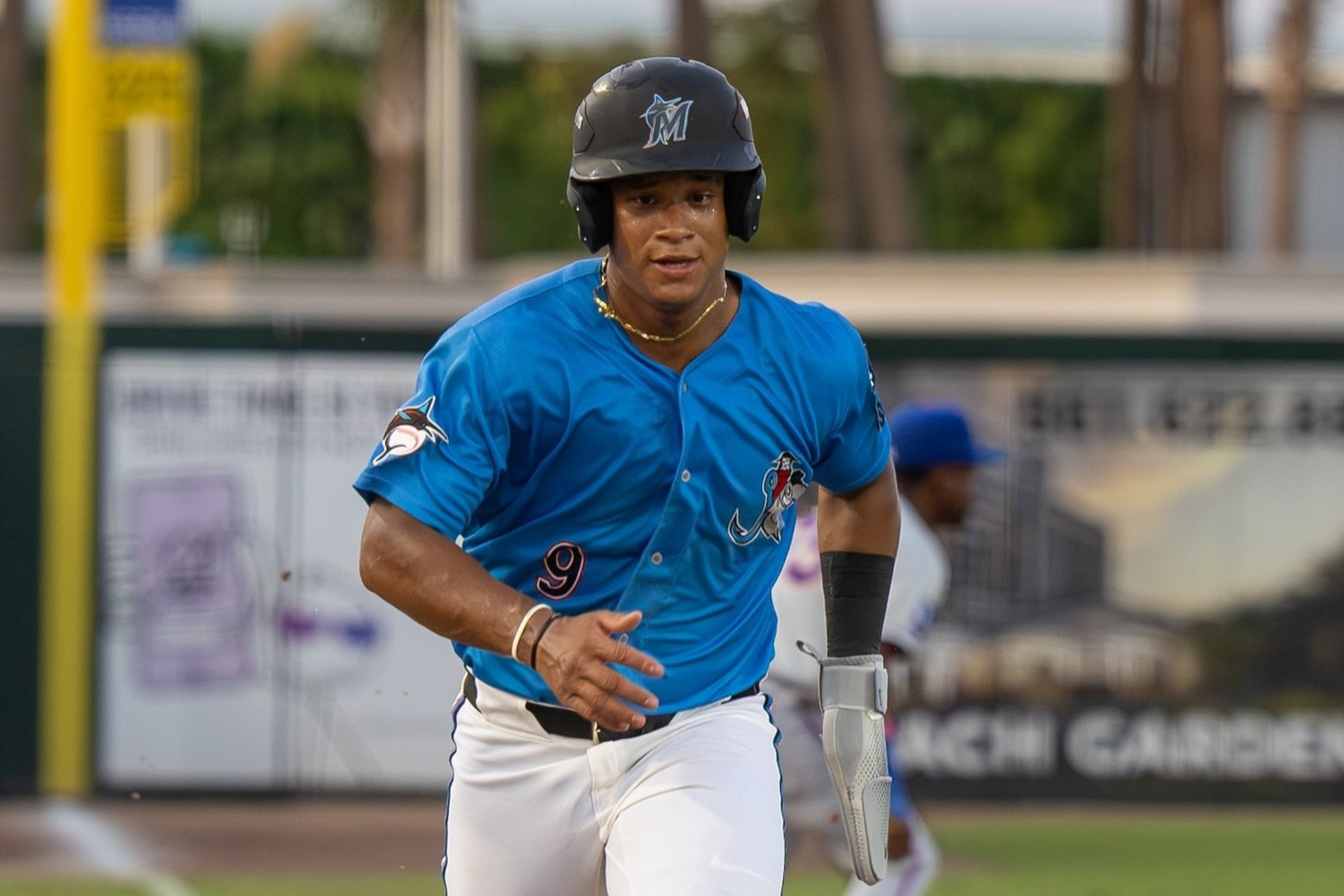 The Miami Marlins welcomed 21 new players to their organization via the 2026 MLB Draft. Historically, they have been quick to test draftees in official Minor League Baseball games shortly after signing them, but the process has been different this summer. As of Tuesday, only three members of the 2026 class have suited up for Marlins MiLB affiliates, and Fish On First has learned that none of the pitchers are expected to take the mound against minor league competition until 2027. Here’s an update on what we've seen thus far. SS Jacob Lombard (Round 1): Lombard continues to be an above-average hitter with the Low-A Jupiter Hammerheads. Through fourteen games, he has a .241/.382/.407 slash line. Lombard has recorded thirteen hits, three home runs, twelve RBIs, ten walks, eleven runs scored, eight stolen bases, and a .789 OPS. The first-rounder is Jupiter's primary shortstop, but he has also made one start at second base during each series. LHP Ethan Kleinschmit (Round 2): No MiLB games yet RHP Ryan Peterson (Competitive Balance Round B): No MiLB games yet SS Cam Kozeal (Round 3): Kozeal's numbers are unchanged from last week because he's currently on the injured list. He has a .214/.313/.405 slash line in ten games for the Hammerheads. Kozeal has recorded nine hits, two doubles, two home runs, three RBIs, six walks, six runs scored, and a .718 OPS. OF Wessley Roberson (Round 4): No MiLB games yet LHP Trey Beard (Round 5): No MiLB games yet RHP Cole Selvig (Round 6): No MiLB games yet SS Eric Guevara (Round 7): It's been a very encouraging stretch for Guevara to begin his pro career, slashing .292/.414/.542 in eight Low-A games. That is despite constantly being at a platoon disadvantage (only one plate appearance against left-handed pitching). Guevara has recorded seven hits, two home runs, six RBIs, five walks, seven runs scored, two stolen bases, and a .956 OPS. Although announced as a shortstop at the draft, he has found a temporary defensive home at third base. 1B Rintaro Sasaki (Round 8): No MiLB games yet 3B Nic Tolbert (Round 9): No MiLB games yet RHP Zach Peters (Round 10): No MiLB games yet RHP Fabio Bundi (Round 11): No MiLB games yet RHP Bane Barker (Round 12): No MiLB games yet RHP Connor Benge (Round 13): No MiLB games yet RHP Tyler Kapa (Round 14): No MiLB games yet RHP Colin Linder (Round 15): No MiLB games yet RHP Porter Buursema (Round 16): No MiLB games yet RHP Duke McCarron (Round 17): No MiLB games yet OF Jatniel McCloud (Round 18): No MiLB games yet RHP Jackson Mitchell (Round 19): No MiLB games yet RHP Joey Lawson (Round 20): No MiLB games yet View the full article
 -
The Baseball Gods Have Not Been Kind to Andrew Morris Lately
DiamondCentric posted an article in Twins Daily
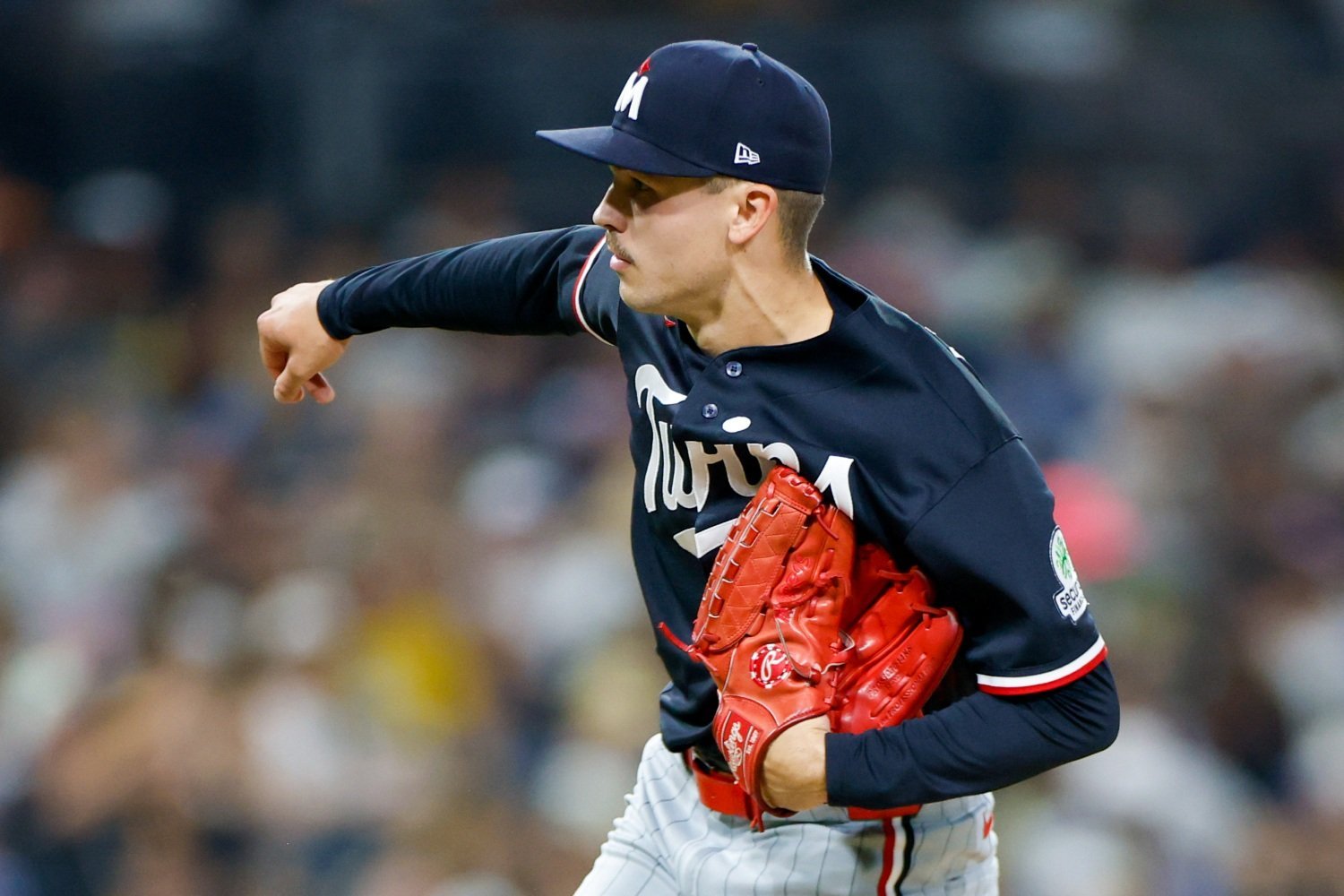 As a rookie, Andrew Morris has turned into an anchor of the Twins’ bullpen. After entering the season as a starter with the St. Paul Saints, he transitioned to a relief role in the majors and quickly established himself as a reliable option. In 60 1/3 innings this season, Morris has posted a 3.43 ERA while putting together some extremely impressive contact-quality numbers. His barrel rate and average exit velocity both rank in the 91st percentile or better among major-league pitchers, while his hard-hit rate sits in the 85th percentile. As a result of that hard-contact suppression, his expected ERA is even better at 3.10. The underlying data suggests Morris has pitched better than his surface-level numbers indicate, and lately, that has become especially important. Morris has allowed at least three runs in two of his last three outings, with both appearances coming at particularly unfortunate times for the Twins. On August 16, he surrendered three earned runs in the eighth inning against the Phillies. Philadelphia entered the inning trailing by just one run and ultimately completed a sweep of the Twins. Then, on Saturday in San Diego, Morris allowed four runs in one inning and absorbed the 7-5 loss. Once again, his outing allowed the opposing team to take the lead, and once again, the Twins wound up being swept. It would be easy to look at those two performances and place the blame on Morris. After all, he was the pitcher on the mound when the games started slipping away. But not so fast! The amount of bad luck Morris has run into in those two outings is almost unbelievable. For starters, three of the four runs he allowed against the Padres were unearned. There was a catcher interference call and a fielding error involved in the inning. Otherwise, the Twins could well have escaped with the lead intact. Morris actually looked pretty good. Only two of the seven balls put in play against him were hard-hit, and he generated five whiffs on just 19 pitches. San Diego was aggressive at the plate, putting a number of softly-hit balls into places where the Twins weren't able to make plays and capitalizing on the defensive mistakes that ensued. Morris, meanwhile, pounded the strike zone and continued attacking hitters. The three-run inning against Philadelphia followed a similar pattern. All three of those runs were earned, so there isn't the same defensive caveat to make. But only one of the seven balls put in play against Morris was hard-hit. He did what he was supposed to do, filling up the zone and mixing his pitches, while avoiding the authoritative contact that typically leads to big innings. Instead, a handful of bloopers and ground balls found their way through the infield. That doesn't make the results any less frustrating for the Twins. Runs count the same regardless of how hard the ball was hit, and Morris was still responsible for getting out of those innings. But there is a meaningful difference between a pitcher getting knocked around and a pitcher giving up a series of softly hit balls that happen to find holes. Morris is much closer to the latter. Since his promotion to the majors, it seems like Morris has consistently pitched better than his results would indicate. The underlying metrics back that up, the eye test backs that up (at least MY eye test), and these two recent outings are further examples of what's been happening throughout his rookie season. The kind of contact he’s inducing is extremely impressive for a young pitcher who wasn't even expected to be a major-league reliever when the season began. His ability to limit hard contact has been one of the biggest reasons he's carved out a role in the Twins' bullpen, and there isn't much reason to believe that skill is suddenly going to disappear because of a couple of ugly box scores. Sometimes, baseball is just going to baseball. Balls are going to find holes, defensive mistakes are going to extend innings, and aggressive hitters are going to poke soft contact into places where nobody is standing. Right now, Morris is dealing with more of that than he probably deserves. Sooner or later, that batted-ball luck should turn in his favor. When it does, the results should start looking a lot more like the pitcher Morris has actually been than the numbers from a couple of frustrating outings might suggest. However, there's one crucial caveat to any praise of Morris: he's allowing those batted balls to happen in the first place. This is why high-leverage relievers usually run high whiff and strikeout rates. If you can't miss bats, you become more susceptible to bad defense and bad luck. Morris induces weak contact, but it would be better if he simply allowed less of it. Two tough outings don't invalidate a strong rookie season. Morris has to find a way to rack up strikeouts, though, or he'll never graduate to relief ace status. View the full article
 -
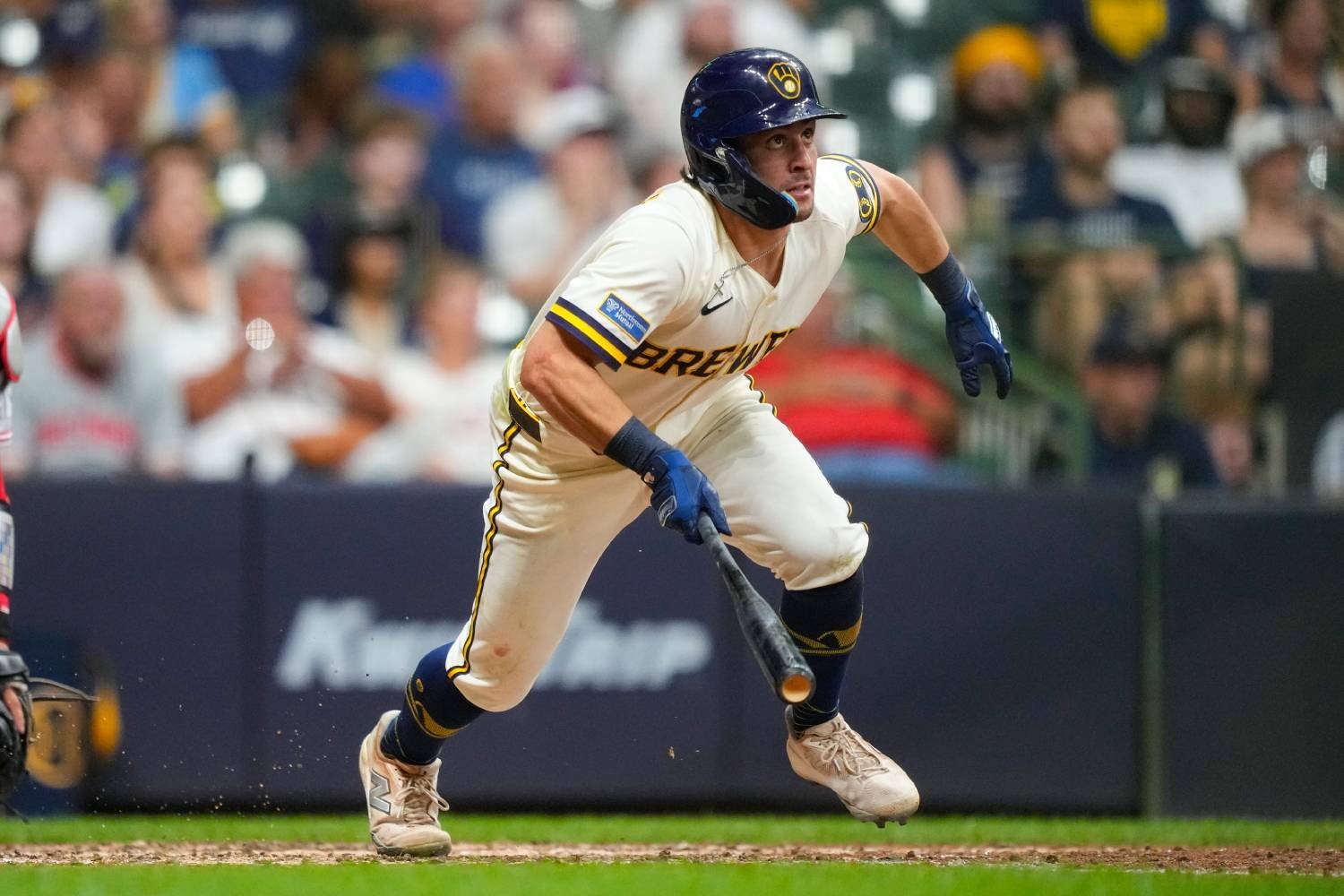 The summer of Sal is back in action. Right fielder Sal Frelick was activated from the 10-day injured list Tuesday by the Milwaukee Brewers. Infielder-outfielder Jonathan Ornelas was designated for assignment. Also, left-handed reliever JoJo Romero (appendectomy) and right-hander Abner Uribe (right forearm flexor strain) were sent to the High-A Wisconsin Timber Rattlers to begin a rehab assignment. Romero was acquired from the St. Louis Cardinals at the trade deadline. Frelick has been out since July 18 due to a strained right shoulder. A terrific defender, Frelick has not been as big of an offensive contributor this season, putting up a .236/.301/.330 slash line with four homers, 34 RBIs and six steals in 90 games. Last year, Frelick had a career season with a slash line of .288/.351/.405 with 12 homers, 63 RBIs and 19 stolen bases in 142 games. Ornelas was a stopgap solution as the Brewers had injuries on the infield. He was acquired in an Aug. 15 trade with the A's for cash and played in three games, going 2-for-9 with an RBI and a run scored. View the full article
 -
 Blue Jays Affiliate Overview (August 22-24) Triple-A Buffalo Bisons Series vs Lehigh Valley IronPigs (Philadelphia Phillies): 2-3 Season Record: 62-63 Double-A New Hampshire Fisher Cats Series vs Erie SeaWolves (Detroit Tigers): 2-4 Season Record: 54-64 High-A Vancouver Canadians Series vs Eugene Emeralds (San Francisco Giants): 3-3 Season Record: 57-63 Single-A Dunedin Blue Jays Series vs Clearwater Threshers (Philadelphia Phillies): 4-2 Season Record: 56-60 FCL Blue Jays: Season Complete DSL Blue Jays Blue Week Record: 0-1 (Season Complete) Season Record: 20-35 DSL Blue Jays Red Week Record: 2-1 (Season Complete) Season Record: 34-18 Triple-A Buffalo Bisons Season Record: 62-63 Series vs Lehigh Valley IronPigs (Philadelphia Phillies) August 23: After a rainout on Saturday, Buffalo had an offensive explosion on Sunday. Five of the nine batters in the starting lineup had multiple hits, including Sean Keys, who continued to display his skills as he pushes for a promotion back to the big leagues. For the game, Keys went 4-for-5, with four singles, two RBI, and two runs scored. C.J. Stubbs launched his eighth home run of the season, a two-run blast in the second inning; it had an exit velocity of 108.1 mph and went 402 feet to center. Rudy Martin Jr. followed the Stubbs long ball with one of his own, a solo shot to center. In the third, it was Peyton Williams who continued to stay hot after his promotion to Triple A, ripping an RBI single to center that scored Keys and increased the Buffalo lead to 5-2. In the fourth, Jay Harry and Keys added to the lead with RBI singles, and Yohendrick Piñango provided a two-RBI single to break the game open for Buffalo. Williams would cap off the scoring with another RBI single in the sixth. Ricky Tiedemann pitched out of the bullpen, throwing just one inning, but did walk two before he escaped the self-made jam. Buffalo cruised to a 10-2 win. Double-A New Hampshire Season Record: 54-64 Series vs Erie SeaWolves (Detroit Tigers) August 22: It was a rough day on Saturday for the New Hampshire Fisher Cats against the Erie SeaWolves. Jackson Wentworth got the start for the Fisher Cats and was hit around early and often. He gave up runs in the first and second innings on solo home runs. In the fifth and sixth innings, Erie launched two more home runs to take command of the game for good. Peyton Graham hit his second home run of the game. On the offensive side, Alexis Hernandez had a double, and Aaron Parker added a single in the game. Those two hits were all the team could get out of the Erie pitchers. Kenny Serwa shut them down over seven innings himself. New Hampshire lost this one 7-0. August 23: Nolan Perry got the start in the Sunday game between New Hampshire and Erie. It was a rough day for Perry, who pitched 3.2 innings but gave up four hits and three runs. The damage was done by giving up two home runs in the second and fourth innings. Down by three, Dub Gleed launched his 10th Double-A home run in the sixth inning, a solo shot to put New Hampshire in the scoring column. A passed ball later in the inning scored Alexis Hernandez. Erie would push out in front with a two-run single and an RBI groundout in the eighth inning. Cutter Coffey brought in the last Fisher Cats run in the ninth inning on a sacrifice fly. New Hampshire lost this one 6-3. High-A Vancouver Season Record: 57-63 Series vs Eugene Emeralds (San Francisco Giants) August 22: The Canadians threatened early, and with runners at the corners, Ryan Sprock hit a sac fly to make it a 1-0 ballgame. Troy Guthrie once again took the mound and gave five innings of work, tying his season high of eight strikeouts and allowing two runs to score. The Canadians had a big third inning to take the lead for good, as Maddox Latta broke the tie with an RBI single, then Max Viera hit yet another grand slam to make it five runs scored that inning. The Canadians added another run as Latta hit his eighth homer of the season, and despite Gilberto Batista giving up a homer of his own, the Canadians were able to win handily, 9-3. August 23: The game remained even as both starters went into the sixth inning without allowing a run. Landen Maroudis went into the sixth inning for the second time this season before getting taken out for Reece Wissinger, who ended up allowing four earned runs. The Canadians were down five runs, and although Gable Mitchell and David Calabrese both hit homers in the ninth inning, they could not fully catch up, as they lost 6-4. Single-A Dunedin Season Record: 56-60 Series vs Clearwater Threshers (Philadelphia Phillies) August 22: Red-hot Jake Cook started this game with his fifth homer of the year. Ryan Cooney drove in a run on a single that inning to make it a two-run lead. Brandon Barriera continued his scoreless streak, as he went four innings without allowing a single run to make it 13 ⅓ innings without allowing a run. That earned him a promotion to Vancouver. Raimundo De Los Santos knocked in two runs in two innings to make it a four-run lead, but the rehabbing Joe Mantiply gave up five runs and four hits in the fifth inning. Jake Bennett continued to hit for power, as he hit his first triple of the season to take the lead right back in the sixth, then Cooney had his second RBI of the night with a sac fly for some insurance. Aldo Gaxiola had homer number 14 on the season to make it a three-run game, and De Los Santos had his third RBI to make it nine runs scored for Dunedin. Brayden Heidel struck out four despite walking four in nearly three innings to keep the Threshers from scoring, and Reese Bassinger got the save as the Jays won 9-6. August 23: Cancelled FCL Blue Jays Season Record: 38-20 Season Completed DSL Blue Jays Blue Season Record: 20-35 Season Completed DSL Blue Jays Red Season Record: 33-18 Playoffs (2-1) August 22: Saturday was the final game of the DSL playoff pool play, with BJR starting the day 2-0 in their prior games. It would be a pitchers' duel for much of the game. BJR got quality performances from Abrahan Diaz and Cristhian Espinosa, who combined to throw 5.2 scoreless innings. The Royals Fortuna (ROF) team took the lead in the bottom seventh with an RBI single, but BJR answered right back with a sacrifice fly by Frelian Flores in the top half of the eighth. ROF answered with a sacrifice fly of their own in the bottom of the eighth inning. Down one with one out in the ninth, Gabriel Porras tripled, then Samuel Orellana singled to left and tied the game. Later in the inning, Elian Reyes singled, scoring Orellana, but Darwin Nuñez was thrown out on a play at the plate. BJR went into the bottom of the ninth with a one-run lead. After the first two batters for ROF walked, Jaider Suarez laid down a sacrifice bunt, but BJR catcher Diego Arce made an errant throw to first base, allowing both runners to score. BJR lost 4-3 on the walk-off error. To pour salt on the fresh wound, BJR finished pool play 2-1, tying ROF. Unfortunately for BJR, the tiebreaker to move on was the head-to-head matchup (which they just lost on the error). As a result of the tiebreaker, BJR was eliminated from the playoffs, and their season ended in heartbreaking fashion. View the full article
 -
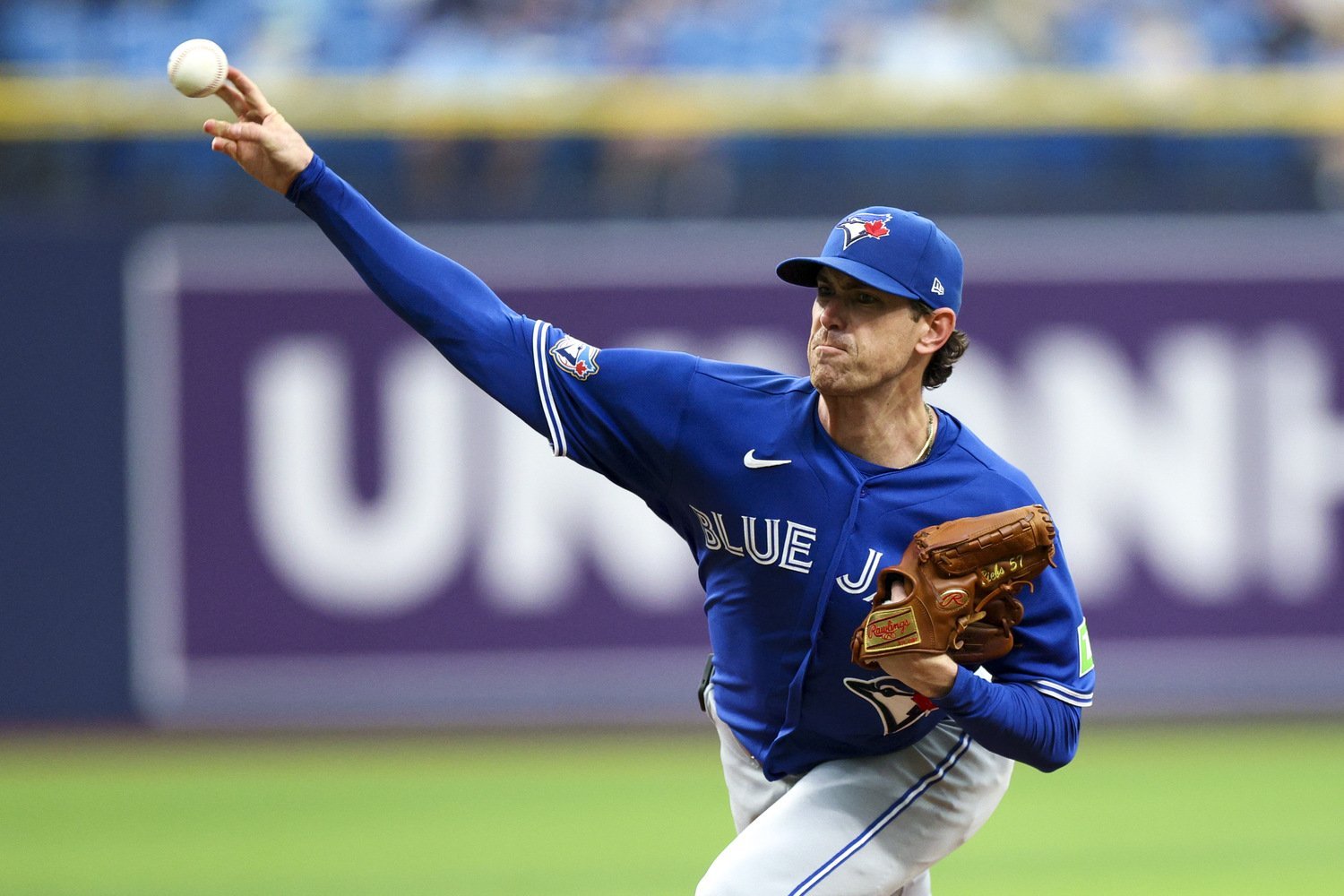 The Blue Jays have placed Shane Bieber on the 15-day injured list with right teres major inflammation. Chad Dallas has been recalled to take his place on the active roster. With just over a month left in the 2026 regular season, there's no small chance this marks the end of Bieber's tenure with the Blue Jays. He will be a free agent at the end of the year. Toronto is still in the postseason picture, sitting just two games back of the final Wild Card spot, but pulling off a comeback will be even harder without Bieber in the rotation. The 2020 AL Cy Young winner dominated the Yankees and Rays in his last two starts. Dylan Cease and José Soriano are a strong top two, but now the Jays will have to rely even more heavily on 42-year-old Max Scherzer and the just-off-the-IL Spencer Arrighetti. They'll also hope that Jameson Taillon and Trey Yesavage can return from the IL at some point in September. Of course, Bieber himself could return in September too, but we won't know more about the severity of his injury until the team provides an update. View the full article
 -
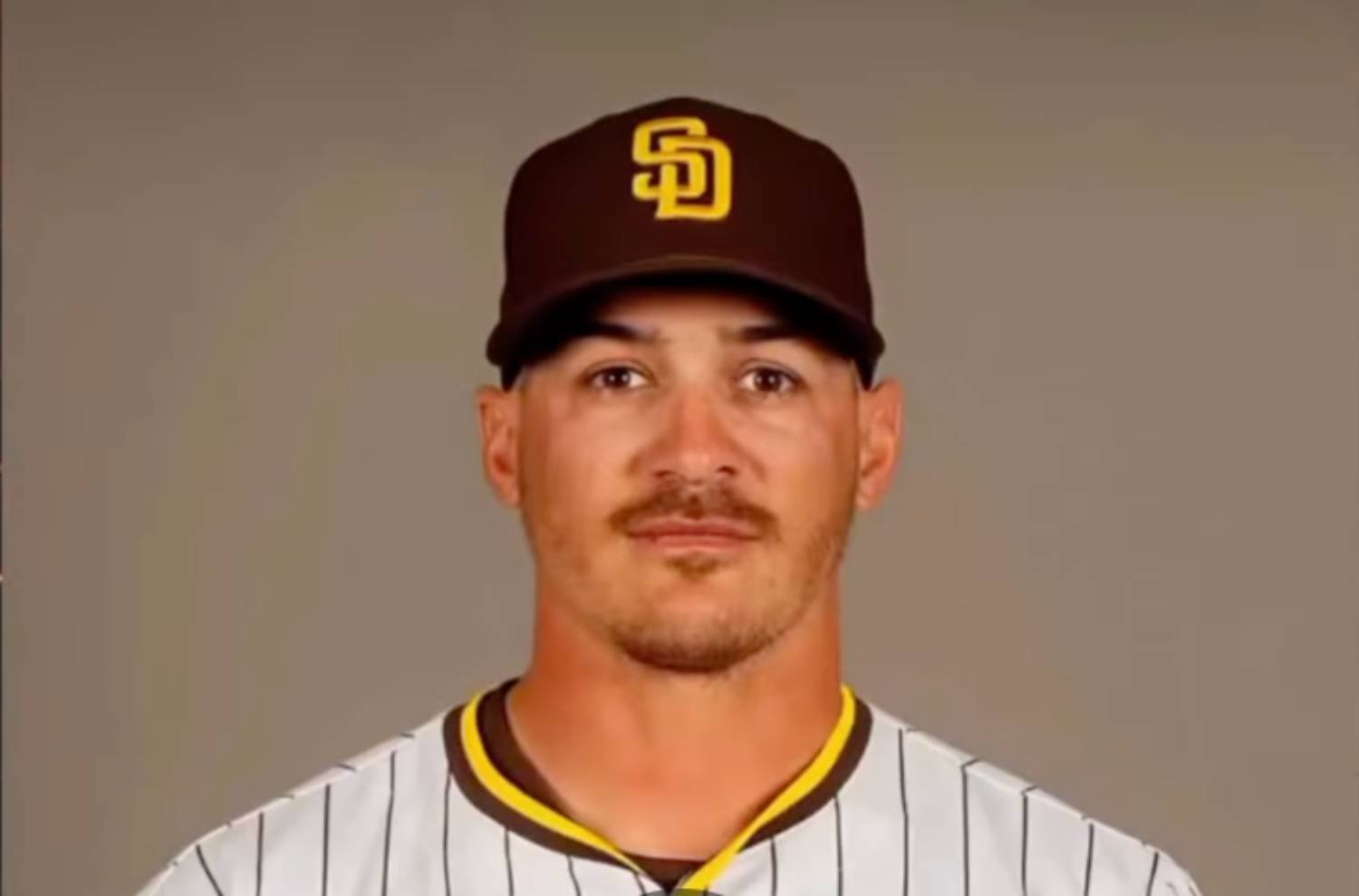 The San Diego Padres' minor-league catching coordinator who was detained by U.S. Immigration and Customs Enforcement a little more than a week ago is back home with his family. Oswaldo Pirela was released on bond Monday from a detention facility in El Paso, Texas, according to Dennis Lin of The Athletic. Pirelas, 34, was taken into custody at the El Paso airport Aug. 16 as he was returning to his home in Peoria, Ariz., after a trip to watch the Triple-A El Paso Chihuahuas, the Padres' top minor-league affiliate. Peoria is also the site of the Padres' minor-league headquarters and spring training facility. While Pirela, a native of Venezuela, apparently does have a work visa, he did not have his paperwork on him when confronted by ICE agents. The Department of Homeland Security contends that Pirela was granted permission to be in the U.S. in 2014 until that expired Feb. 10, 2018. This is the third season Pirela has worked for the Padres. He was a catcher in the Texas Rangers' minor-league system from 2009-11. View the full article
 -
The Twins' Collection of Lefty Bats Has Reached the Breaking Point
DiamondCentric posted an article in Twins Daily
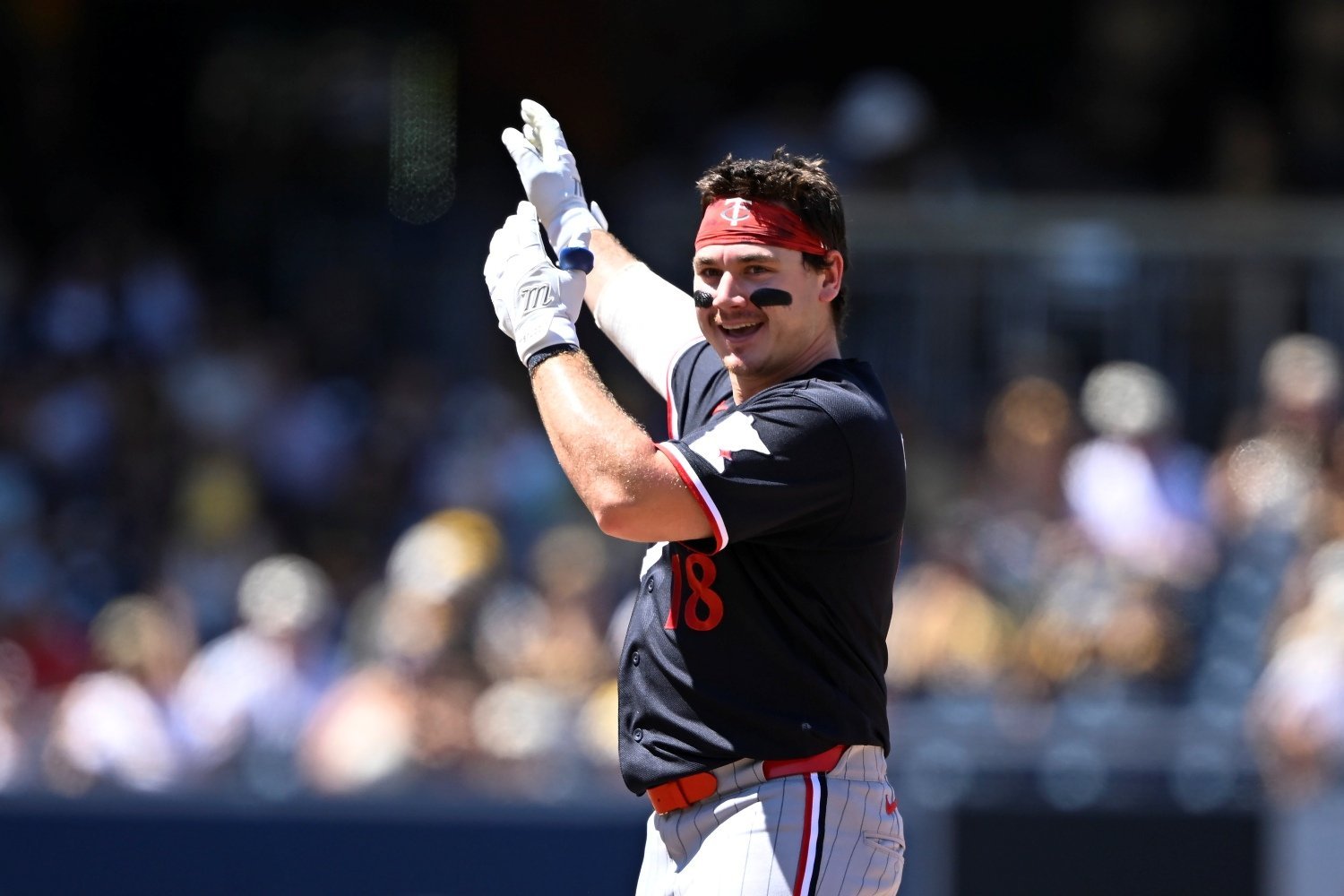 The Twins should be in the news with several other teams who are calling up top prospects for the playoff push. Instead, the Twins don’t have room—or at least, don’t want to make room—on the MLB roster for Walker Jenkins. Intentionally or not, the front office has spent over a year setting itself up for this exact scenario. The Twins' hoarding of left-handed hitting outfielders is not a new development. The team seems to be constantly searching for more players of this type. As a result, the big-league roster is poorly built, lacking right-handed hitting complements as the team tries to stuff as many left-handed hitters onto the active roster as they can. It's also led to a lack of opportunity for deserving players. Last season’s trade deadline made plenty of negative headlines, but an underrated decision worth criticism was the team’s decision to target three more left-handed-hitting outfielders as they conducted their fire sale. There was zero reason to add in this way, as the major and minor leagues were already oversaturated with these types of players. The team then chose to tender a contract to Trevor Larnach in the offseason and carry James Outman on the Opening Day roster, ensuring they were 10+ deep in that department. The first problem, in a day-to-day sense, is an obvious one: The roster is not equipped to hit left-handed pitching. Not only do they lack internal options to platoon, but they also didn’t target players in the offseason to address this problem. Josh Bell and Victor Caratini are switch-hitters who have historically been better from the left side. This roster-building choice is a big reason the Twins are in the bottom third of the league against southpaws, even with their season-long OPS in those matchups being inflated by uncharacteristic success in the first few weeks of the season. At the individual player level, targeting so many left-handed hitters has created a mess that the front office has to clean up this offseason. After Alan Roden made up half of the Louis Varland trade return, the team optioned him to Triple-A at 26 years old. Why? Because parting with James Outman, who hasn’t posted a .600 OPS since 2023, was out of the question. They couldn’t afford to let a left-handed hitting outfielder get away without seeing him perform as a below-replacement-level player for a third season in a row. Now that Roden is finally on the MLB roster, the way they’ve built it has left him with almost no opportunity. Starting two games per week or so, the Twins don’t even have consistent at-bats for him against right-handed pitching a year after acquiring him in his physical prime. As he struggles to capitalize on his few chances to perform, the team is weighing whether it’s time to swap him out for another left-handed hitter. It’s difficult to imagine calling up someone like Jenkins without completely pulling the plug on Roden, so he can play every day. The Twins are struggling to make this decision, and it’s understandable. A much-maligned trade to acquire Roden has only looked worse and worse over the last year. Demoting him may be the end of his time with the Twins, and they’re not going to recoup anything close to the value they invested in him. Trading away Varland and giving up on half of the return after just over 100 plate appearances would be a terrible look for the Twins’ decision-makers. Meanwhile in Triple-A, Jenkins continues to mash. A halfway functional roster would have made room for him some time ago, but not the Minnesota Twins. Emmanuel Rodriguez is another problem the Twins have to solve. After missing part of the season yet again, he’s healthy and performing, and is out of minor league options next season. This means he’ll have to make the Opening Day roster without taking a single at-bat at the MLB level. It will be yet another left-handed hitting outfielder for the Twins to split playing time between. Also worth noting, Matt Wallner would have likely earned one last shot on a normal MLB roster after posting a .928 OPS in St. Paul with 20+ homers and a reduced strikeout rate. Instead, there is quite literally no path for him back to the MLB roster this season. Hendry Mendez is another left-handed outfielder acquired at the trade deadline. He’s talented enough to carve out an MLB role for himself someday, but if he remains with the Twins, it may require four or five injuries for him to even have a chance. The Twins’ obsession with left-handed hitters has come back to bite them in a major way in 2026, and this is just the beginning. Their choices have limited the offense's ceiling all season and are now limiting their ability to call up top prospects to provide a jolt to the roster when they need it most. They won’t be able to stash four or five left-handed hitters in Triple-A in 2027, and the MLB roster will already be full with them even if they can somehow restrain themselves from acquiring even more over the offseason. For the betterment of the roster, and in the best interest of their individual players, the Twins need to figure out how to get their left-handed hitting logjam under control. Do you agree? View the full article
 -
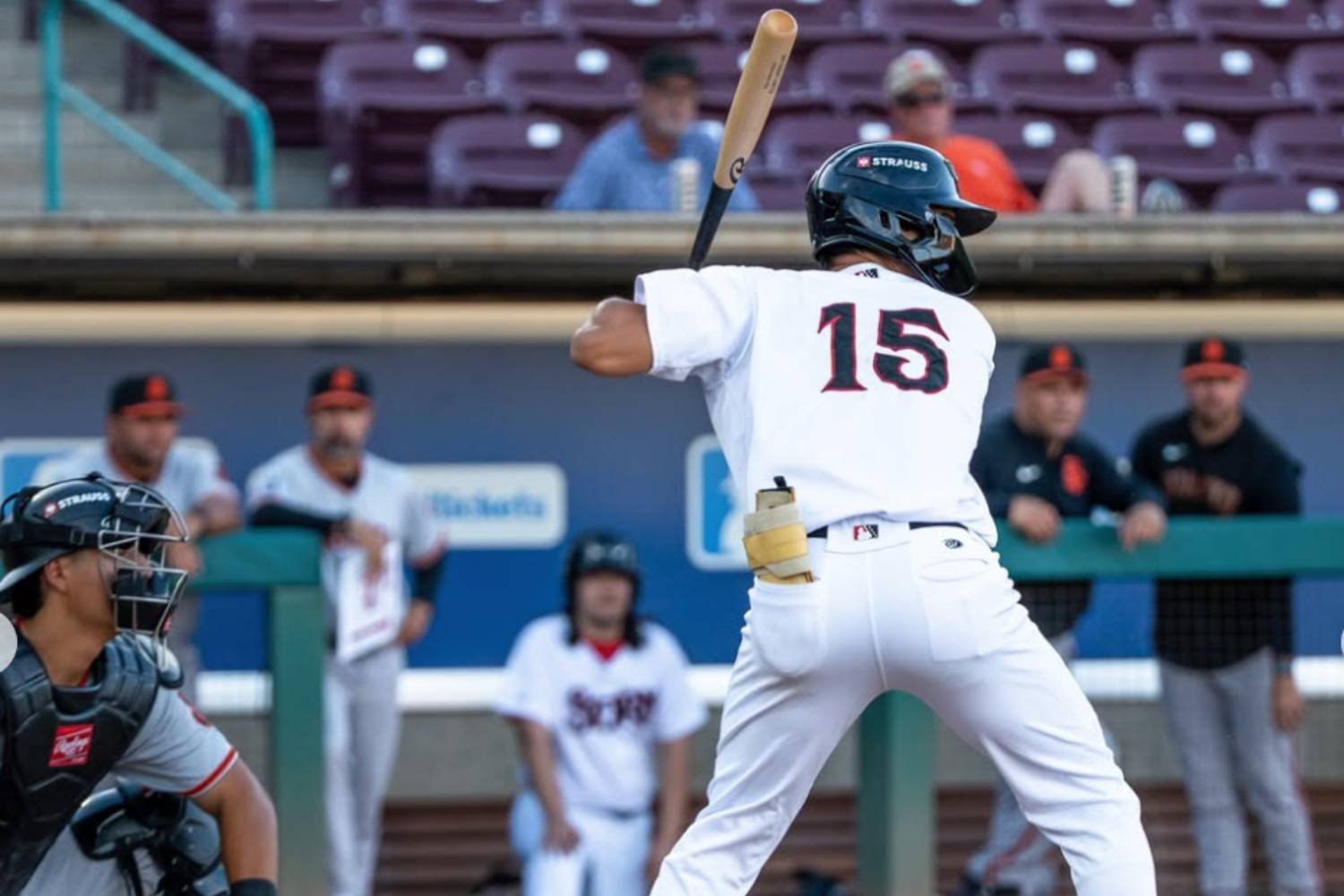 Let's check in on the San Diego Padres prospects who made a mark in the last week (check out Padres Mission's latest Top 20 rankings as well!). Elliot Lascelles, SS, Low-A Lake Elsinore Storm Season stats: .412/.545/.588, 5 games, 2 R, 1 2B, 1 3B, 0 HR, 1 RBI, 5 BB, 3 K, 1 SB, 0 CS The Padres' second-round draft pick this year couldn't have made much of a bigger splash in his pro debut last week. The 18-year-old shortstop out of Toronto went 3-for-4 with a triple and a stolen base in his first game, including a single in his first plate appearance Tuesday against the San Jose Giants. He had a hit in each of his first four games and finished his first week 7-for-17 with the slash line above. The hit tool was always going to be Lascelles' carrying tool. This past spring, his team had a tour of Arizona and faced minor-league pitching, putting up a .389 batting average with four extra-base hits in 59 games. After getting acclimated to the Padres' system in Arizona for a couple of weeks, Lascelles became the Padres' highest-drafted player this year to make his debut. As his pre-draft scouting report indicated, he has a good eye at the plate and doesn't chase much. With the Storm, he had back-to-back two-walk games and five overall, while striking out three times, two in Sunday's game in which Lascelles went 0-for-4 as Lake Elsinore had just two hits. The Storm have two more weeks in the regular season and then at least one series in the California League postseason after winning the South Division title in the first half. Bradley Frye, IF, High-A Fort Wayne TinCaps Season stats: .279/.377/.391, 99 games, 77 runs, 15 2B, 4 3B, 5 HR, 52 RBI, 48 BB, 89 K, 30 SB, 7 CS After having a good run to begin his first full season in pro ball at Low-A Lake Elsinore, Frye was promoted to High-A Fort Wayne and just had a tremendous week. The 24-year-old, signed as an undrafted free agent last summer out of Mercer, had a .417/.481/.708 (10-for-24) slash line, scoring seven runs and driving in seven. He had two three-hit games last week. That earned him Midwest League Player of the Week honors, joining Alex McCoy as the only TinCaps to win the award this year. Frye had a slash line of .274/.373/.366 in 84 games, with three homers, 43 RBIs and 25 steals at Lake Elsinore. He was promoted Aug. 5 and, in 15 games, has posted a .313/.400/.542 slash line with two of his five homers this year, nine RBIs and five stolen bases in 15 games with the TinCaps. While seeing most of his time at third base this year, he has the versatility to play shortstop and second base, something that will enhance his value as his career progresses. Kannon Kemp, RHP, High-A Fort Wayne TinCaps Season stats: 1-2, 5.45 ERA, 11 games (7 starts), 34⅔ IP, 43 H, 23 R, 21 ER, 13 BB, 26 K, .303 opponent average The 21-year-old right-handed starter, an eighth-round draft choice 2023, had his start to 2026 delayed by a strained left oblique. After 18 games (10 starts) in 2025, including 13 at Low-A Lake Elsinore, he didn't make his season debut until June 18 in the Arizona Complex League, then skipped the Storm and went right to High-A Fort Wayne on July 7. He has appeared in eight games (four starts) for the TinCaps, with a 4.66 ERA in 29 innings, with an 8.3% walk rate and 16.7% strikeout rate. The oblique was the second notable injury Kemp has had since being drafted. He didn't make his pro debut until 2025 due to surgery on his right shoulder in 2024 after reporting to spring camp and feeling discomfort. The Padres showed confidence in Kemp's promise and progress by not even making a couple starts at Lake Elsinore before joining the TinCaps. He will have two more starts before the TinCaps' season wraps up. Albert Fabian, OF, Double-A San Antonio Missions Season stats: .268/.320/.421, 92 games, 35 R, 15 2B, 2 3B, 10 HR, 48 RBI, 27 BB, 68 K, 9 SB, 2 CS One of the steady contributors for Double-A San Antonio all season, the 24-year-old had a nice week, posting a .400/.423/.680 with four doubles, a homer and four RBIs in six games. Fabian's biggest hit came Sunday, when he hit his 10th homer of the season in the ninth inning. That two-run homer would represent the only runs the Padres' four full-season affiliates would score that day. Fabian started the week off Tuesday with his second four-hit game of the season, then had a three-hit game Wednesday. This is part of a strong finish to the season for Fabian, who is slashing .338/.372/.507 in August. He returned to the Padres after becoming a minor-league free agent after 2025 and will have that same choice this offseason. This has been his first full season with the Missions after an injury and rehab limited him to a total of 62 games last year. Eric Yost, RHP, Double-A San Antonio Missions Season stats: 7-2, 3.59 ERA, 21 games (15 starts), 1 save (1 chance) 92⅔ IP, 71 H, 38 R, 37 ER, 50 BB, 90 K, .216 opponent average The 23-year-old right-handed starter is coming off one of his best performances of the season. In Wednesday's 3-2 victory over the Northwest Arkansas Naturals, Yost made just his sixth relief appearance, following left-hander Luis Gutierrez, who made his fourth Double-A start and ninth of the season as he comes back from a shoulder injury. But what a relief appearance it was. Yost went a season-high 6⅓ innings and didn't allow a run or a walk, giving up four hits and striking out six. Yost, Padres Mission's No. 16 prospect, has been really good this season. His 3.59 ERA would lead the Texas League, but he is about three innings shy of qualifying for the leaderboard, missing because of a spot start he made for Triple-A El Paso. But the 2023 17th-round draft choice, while not having a big-time strikeout total (16th in the Texas League), limits contact with a .216 opponent average, which again would lead the league if he qualified. He is eligible for the Rule 5 draft this offseason and a candidate to be protected. View the full article
 -
Michael Conforto's Total Reinvention Through Timing
DiamondCentric posted an article in North Side Baseball
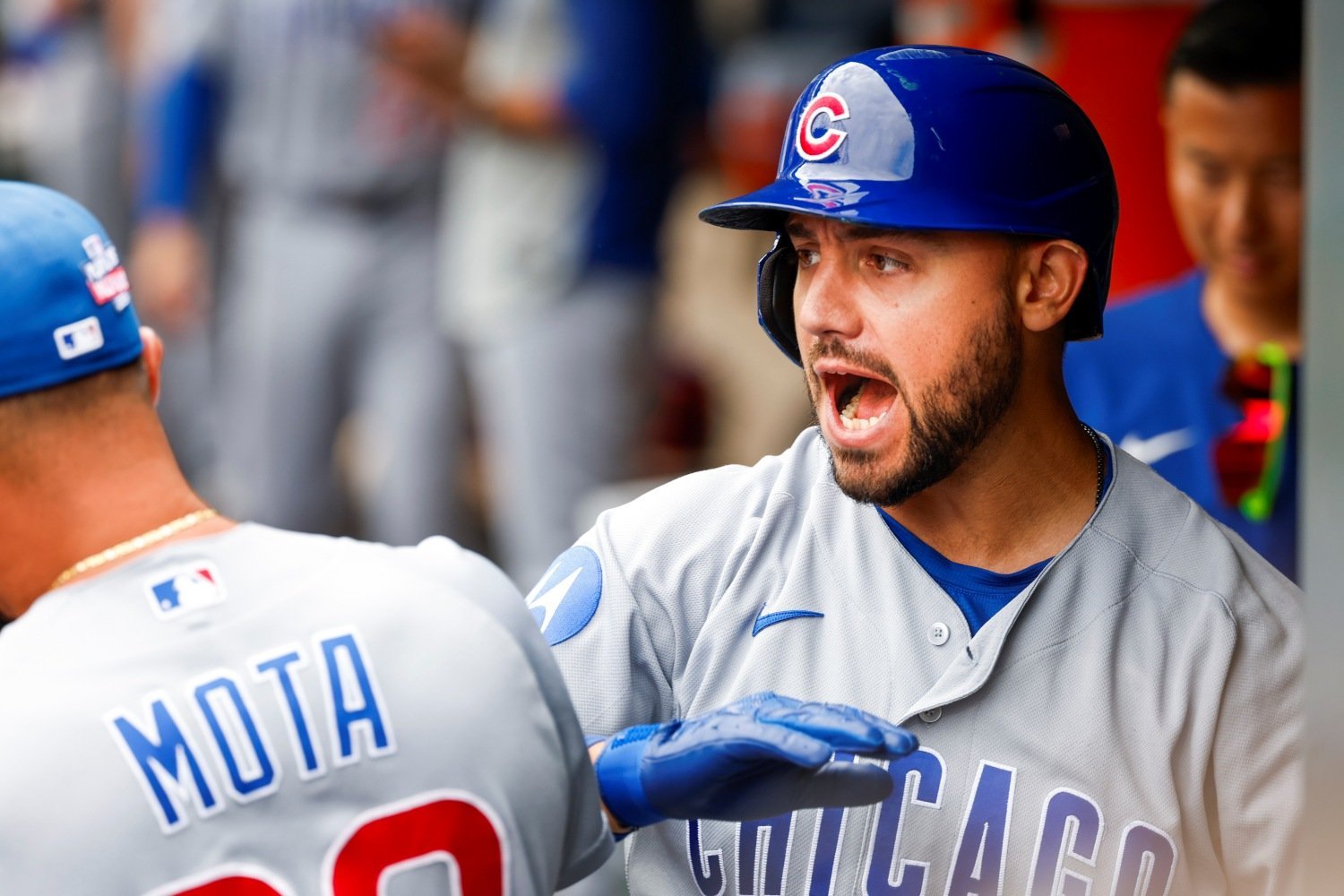 At some point in every baseball career, it's time to reckon with Father Time. You've been playing a child's game for a lavish living for years, now, and in so doing, you've racked up a heavy debt to the arbiter of aging and entropy. He'll let you run up a tab for a while, unremarked-upon, but you both know the bill must eventually be paid. If you try to escape him, he'll take out your knees. (Actually, he'll do that either way, but work with me.) If you ignore his collection calls, you're liable to embarrass yourself. It's best to set up a payment plan, so there are fewer surprises on both sides. For a hitter, that means giving up a bit of the bat speed that made you an elite prospect in this game; a bit of the selectivity that made you an elite player once you reached the highest level of competition on Earth; or both. You give back when Time only loaned you, and you learn to live by your wits—to succeed using what talent remains with you and what you've learned over all these years doing the hardest thing to do in team sports. It's Michael Conforto's time, already. Yes, it's too early. Yes, he's only 33 years old. Yes, I'm 37, so I feel hopelessly old writing this, and maybe you feel hopelessly old reading it. But that's the game now. Everyone throws 100 and everyone has a fourth pitch (a fourth! Like 10 minutes ago, they didn't all even have three!). Being 33 means it's time to start paying back Father Time for once having let you defy the laws of physics by, you know, hitting those pitches 400-plus feet, without major tradeoffs. Really, of course, Conforto started his repayment last year, when he hit a measly .199/.305/.333 for the Dodgers and practically fell out of the league. He's always been a good and fairly balanced hitter, but last year—despite still having pretty darn good bat speed and showing excellent plate discipline, in terms of swinging at strikes but laying off non-strikes—he became a fairly one-dimensional one, and a bad one. Try explaining this, then: Conforto has given up 1.3 MPH of bat speed this season, plunging from markedly above-average to barely so. He's swinging at more pitches outside the zone than he did last year, and whiffing more often than he did last year. But he's also hitting .232/.326/.473. He is, once again, a robust left-handed bat, and he's come up with a bunch of huge hits for the Cubs. That only works if you're very, very smart—very willing to adapt, and to change your plan to achieve what's required of you. Let's talk about how Conforto, specifically, has achieved it. Changes like this are built from the ground up, at least metaphorically. They start when you dig in in the box, and they accelerate with every preparatory breath and movement and they really accelerate once you start your load and unleash your swing. So, first, we need to look into what Conforto's looking for. Even several months ago, that was impossible, but now, it's not. Earlier this season, Statcast released new swing timing data, which lends us insight into how a hitter is timing and aiming their swing. How Conforto is timing and aiming his has changed this year. One way we can see what a hitter is planning at the plate is by seeing how often they're late on the fastball. Conforto has been late on heaters markedly less often this season than he was last year. That means he's sitting on that velocity band. Relatedly, he's also centering the ball on his barrel better, and specifically getting tied up less often. The ball doesn't run in onto the label of his bat as much as it did in the past. Note, though, that Conforto has also been underneath fastballs more this year than last. That's the unmistakable evidence of Father Time getting his installments. You can time yourself to the heater and swing with conviction, but when you lose that little bit of bat speed, you end up underneath the ball even when you're ostensibly on time. All of that is ok, because here's the thing: timing himself to pull the fastball isn't only about hitting the fastball. Conforto's been early more often against breaking stuff, which is just what you'd expect. But there are two mitigating factors that ameliorate the problems he should be experiencing because of that earliness. First, he's not always sitting on the fastball. As we just saw, he's never late on the heater. Occasionally, though, he knows to hunt a breaking pitch, so there's a bifurcation between the swings on which he's fooled on the breaking ball and the ones on which he guessed right. It's a more pronounced bifurcation than in the past, and it's allowed him to be more productive. The second mitigating factor is that Conforto's swing is on plane with the breaking ball more consistently this year. He's actually whiffing more on those pitches than he did in 2025, but until you get to two strikes, a whiff is just a strike. Last season, Conforto was often rolling over breaking stuff and making contact with it, but only weakly, and on the ground. This year, as you can see in the right-hand image above, he's swinging over the top of breaking pitches much less often, and clipping the bottom half of the ball much more frequently. All of that is good news. It's easy to see that Conforto is hitting the ball in the air more this year (65.9% of his batted balls, up from 58.0%) and that he's pulling it more (46.4%, up from 38.0%). From that information, you'd assume he's pulling it in the air more often, specifically, and you'd be very right (29.7% of his batted balls, nearly doubling last year's 16.0%). But to understand how he's achieved that, we have to know the above. We also have to know the below. Conforto's swing hasn't dramatically changed this year. In fact, the movements are all virtually identical to what they were a year ago, except that he's that little bit less explosive and less aggressive in throwing his weight into the swing. Mostly, the changes in where the ball is going and on what trajectory all come from timing his swing differently. To understand that, check out the first moment at which his swing began to work uphill through the ball in each season. There's very, very little difference to observe—just that his toros stays back slightly better and his arms are slightly more extended this season. Now, here's where his swing finished at contact in each season. Despite the lower bat speed, as you can see, his arms are more extended this season; his bat is working slightly more steeply uphill; and his barrel is oriented toward the pull field. These are composite images across pitch types, so we know there's more nuance than meets the eye, but Conforto is going and getting the ball this season. Locking in more often for the fastball means catching that pitch out front more, and when he gets a breaking or offspeed pitch, he'll usually pull that, too. Compared to last season, his swing is a bit flatter, especially late in its arc, and that works in his favor; it keeps his barrel lined up with pitches that would have dipped underneath it last year. Mechanically, not much is different. Even the alterations in body position at key points in the swing have to do mostly with timing. But timing, in hitting, is everything, and timing is a trick you can learn while borrowing those great gifts from Father Time, so that you can keep tinkering with it even as you're forced to pay him back. Conforto's contact point has moved more than four inches farther in front of his body, as a result of changes in what he's looking for and how he times his swing. Swinging slower but catching the ball farther out front constitutes a pretty complete reinvention for a hitter. It's a testament to Conforto's talent and to his work ethic that he's made this one work, using almost nothing but experience and an understanding of timing honed by an entire lifetime in the batter's box. The Cubs, who would be far worse off without his fits-and-starts heroics, have to be delighted with the way he's repaid their investment, too. View the full article
 -
 Alex and Maddie sit down and discuss Rafael Devers’ homecoming. As always, they answer your forum questions and debate whether Jahmai Jones or Eli White is a better bench piece. They rank Johnny Damon, Manny Ramirez, and Devers in order of who should be booed the loudest in their return to Fenway. They congratulate Nick Sogard on his first home run. Finally, they discuss Trevor Story’s imminent return to the team. (They didn’t notice he was gone in the first place.) Listen on Apple Podcasts: https://podcasts.apple.com/us/podcast/the-talk-sox-podcast/id1783204104 Listen on Spotify: https://open.spotify.com/show/3qPrPXEngu0CxgTmlf0ynm Listen on iHeartRadio: https://www.iheart.com/podcast/263-the-talk-sox-podcast-244591331/ Listen on Pocket Casts: https://pca.st/4tmd121v Watch on YouTube: https://www.youtube.com/@talksox View the full article
 -
Five Royals Relievers Trying to Earn Their Spot on 2027 Roster
DiamondCentric posted an article in Royals Keep
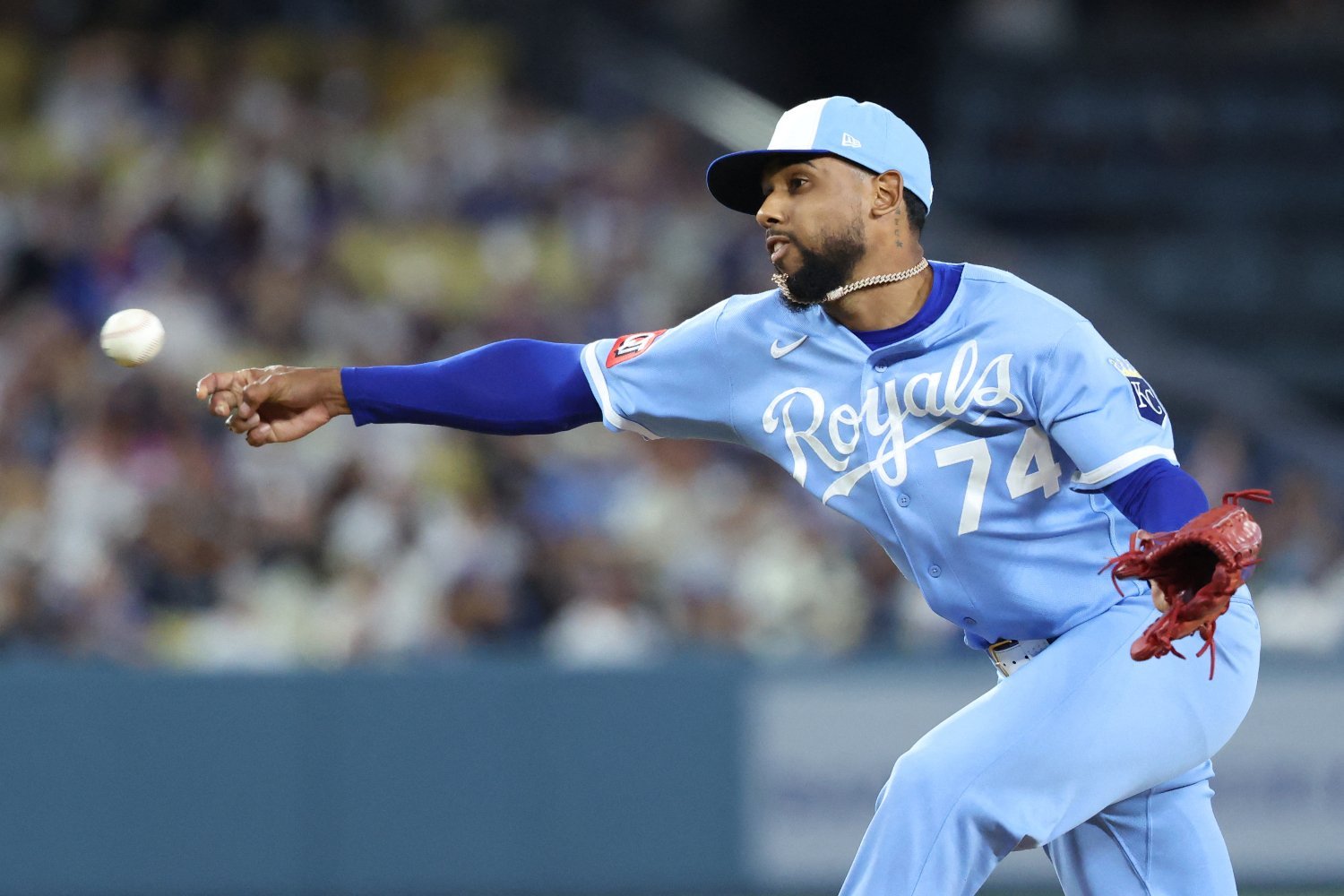 The Kansas City Royals have been on a hot streak, winning eight straight games, including all seven at home last week against the Athletics (four games) and Tigers (three games). The Royals' playoff chances remain slim at 57-74, with Fangraphs putting their odds at 0.1%. That said, it's been exciting to see Kansas City play better baseball lately, with the hope that they can transition this momentum to 2027. One area that the Royals need to improve in 2027 is the bullpen, and that's putting it lightly. According to Fangraphs, the Royals rank 29th in bullpen ERA, 30th in WHIP, 28th in BB/9, 28th in K/9, 28th in H/9, and 30th in HR/9. The Royals have shuffled the bullpen to address these issues. Matt Strahm is no longer on this roster. Lucas Erceg is in Triple-A Omaha. The Royals have also promoted many relievers and given them opportunities to prove their mettle at the MLB level. Some have worked out, some have not, but fans can appreciate that Royals President of Baseball Operations JJ Picollo is at least trying to find short-term solutions. Right now, there are a few relievers who can be penciled in for 2027, as long as they stay healthy. Steven Cruz and Nate Pearson have emerged as key late-inning relievers for the Royals, as they have rotated between closing opportunities. Alex Lange will likely be back, especially since he won't be a free agent until 2029. John Schreiber could also be back, especially if he agrees to a cheap, one-year deal. However, the rest of the bullpen? That's up for grabs, which means 4-5 spots could be open next spring. While some Royals fans would like 4-5 new names to fill in those gaps, the reality is that the Royals will need to find some internal solutions to step up and provide production in relief. Let's take a look at five Royals relievers who are getting opportunities right now and could earn at least invites to Spring Training in 2027 if they can finish the 2026 campaign strong. Mason Black, RHP The Royals acquired Black from the Giants last year with the hope that he could find a spot in Kansas City as either a spot starter or long reliever. He got off to a good start with the Royals, with a 3.57 ERA in 17.2 IP before the All-Star Break. Unfortunately, he's faded as of late, as his ERA has been 6.17 in 11.2 IP in the second half. Overall, Black's ERA is up to 4.60, and his WHIP has also risen to 1.70 in 16 appearances and 29.1 IP. While Black has done a good job of flooding the strike zone (61st percentile) and showing strong pitch extensions (64th percentile), his lackluster K%, BB%, CSW%, and GB% don't exactly bode well for future success (and his 6.71 FIP confirms that). The 26-year-old former Lehigh product will be out of Minor League options next year, so the Royals will have to decide on keeping or non-tendering him this offseason. While the Statcast percentile isn't great, Black's arsenal is intriguing, as he sports a seven-pitch mix. Even though he has only one above-average pitch on a TJ Stuff+ end, that sheer arsenal volume gives him an advantage, especially when he's locating effectively. His sweeper, which he throws 21.7% of the time, may be his best pitch, though he could do a better job of generating chases (15.8%) and whiffs (16.7%). It does sport some intriguing spin (2,618 RPM) and horizontal movement, and when it's located properly, it can produce nasty whiffs like this one below in Texas against Ezequiel Duran. NHlLdk9fWGw0TUFRPT1fRHdOV0FGMEdVd2NBWFFBSFVRQUhVQVpSQUZoV1d3VUFWZ1JRVkFBQVVnY0VCd2RR.mp4 It feels unlikely that the Royals will keep Black on the roster for 2027, especially with him being out of Minor League options next year. That said, if he can bounce back after a rough outing on Sunday, he could get back in the bullpen discussion, though he may need to condense or enhance his pitch mix a bit to be more effective, like he was in the first half. Connor Thomas, LHP Thomas only pitched two games with the Atlanta Braves before getting designated for assignment on July 29th. The Athletics claimed the lefty off waivers, but they optioned him to Triple-A, and they ended up designating him for assignment on August 1st. The Royals promptly moved on Thomas, claiming him on waivers on August 4th. In three outings, the 28-year-old lefty has been one of the better performers lately in the Royals bullpen. He hasn't allowed a run, and he's also posting a 0.67 WHIP and 25% K-BB%. In addition to a strong CSW% (35%), he also has limited hard contact (25%), generated groundballs (75% GB%), and produced a lot of whiffs (34.8% whiff%). Thomas is doing this too despite mediocre extension (25th percentile) and TJ Stuff+ (24th percentile). Thomas has a five-pitch mix, with his cutter, sweeper, and four-seamer as his most-used pitches, each at 20% or higher. His overall TJ Stuff+ is 98, as illustrated below in his TJ Stuff+ summary with the Royals. The pitch that sticks out the most from Thomas is his changeup, which he has thrown 17.5% of the time. In addition to being his best pitch on a TJ Stuff+ end, it also generates a lot of chase (66.7%) and whiff (40%). When located down, the offspeed pitch can generate some good swings and misses, like this one against the Athletics' Zack Gelof on August 20th. ZzZ3cVlfWGw0TUFRPT1fVndkV0JsSlJYd2NBQzFNS0F3QUhVbGRRQUZnQlZGSUFWMVJYQTFZRENBZFZCUVFB.mp4 Thomas has three Minor League options, so the Royals may not have to move too fast with him this offseason. Nonetheless, with Daniel Lynch IV moving to the rotation, Thomas has stepped up as the lone lefty reliever in the Royals bullpen. He could solidify that spot in 2027 if he continues this pace. Jose Cuas, RHP Cuas has been an intriguing reliever for the Royals in 2026, which wasn't expected when they picked him up shortly before Spring Training started. The 32-year-old righty was formerly a reliever in the Royals organization in 2022 and 2023 before being traded to the Cubs for outfielder Nelson Velazquez at the Trade Deadline. He posted a 3.58 ERA in 2022 and a 4.54 ERA in 2023 with the Royals, which isn't anything spectacular. He was better with the Cubs in 2023 (3.04 ERA), but he struggled on the North Side in 2024 and landed with the Blue Jays later that year. After posting a 7.71 ERA with both teams, the Blue Jays released him, and he spent most of last season in the Braves and Phillies minor league systems. After posting a 0.73 ERA with Águilas Cibaeñas in the Dominican Winter League, the Royals gave him a Minor League deal, and it was expected that he would be bullpen depth in Omaha. However, in 12 appearances and 13 IP, he has produced a 2.08 ERA, 2.79 FIP, 1.69 WHIP, and 10.2% K-BB%. Cuas is known for his sidearm delivery, his ability to mess with hitters' timing (he does a lot of Luis Tiant impressions on the mound), and his ability to limit barrels (96th percentile) and hard contact (80th percentile hard-hit%). He also has a solid 26.6% whiff rate and 23.7% K%, which offset his mediocre CSW% (18th percentile) and walk rate (12th percentile). While he is a sidearmer, he relies heavily on his four-seamer, which he throws 37.2% of the time. Despite lacking elite velocity or stuff, it's been extremely effective at generating chases and whiffs. Even though it averages 92.1 MPH and has a 100 TJ Stuff+ mark, the four-seamer is producing a 34.4% chase% and 32% whiff%. It is also allowing a .341 xwOBACON, the second-best mark of his five pitches in that category. Cuas does a great job of hammering the four-seamer up in the zone with just enough rise and movement that forces hitters to chase and miss on the pitch, like Brett Callahan below on Sunday. eHl3b1ZfWGw0TUFRPT1fVkFWVkJRVU1YbE1BQ1ZBQVZ3QUhCd1JSQUZsVVVWTUFWRllIVkZjTkJ3SUFVd3RT.mp4 The nice thing about Cuas is that he's cheap and he's expendable, so if he doesn't produce, the Royals could easily let him go. He'll be out of Minor League options next year, so the Royals will have to be confident in his ability to stay in the bullpen long term in 2027. That's hard to say, especially since he has only pitched 12 times this year and has been optioned to Omaha quite a bit. Nonetheless, Cuas is producing, and that merits consideration for 2027, even if his spot is far from guaranteed. Carlos Duran, RHP Duran made his Royals debut last week against the Athletics (one of his former teams), and it was a tale of two outings. In his first appearance, he allowed no runs on one hit and struck out one in an inning of work. He ended up getting his first career win in the outing and was part of the postgame interview with Bobby Witt Jr., who hit a walk-off single to beat the A's. The second outing was much less effective, unfortunately. Duran only recorded one out and allowed two runs on one hit and three walks (he struck out none). The former Dodger, who was traded for Kris Bubic at the Trade Deadline, just couldn't find the strike zone. As a result, he was optioned back to Omaha after the outing. It's a small sample, but his Statcast percentiles raise some concerns and offer some encouragement. Obviously, the command and control are concerns, but he showcased strong fastball velocity (61st percentile) and extension (64th percentile). He also did a good job of generating groundballs (80%) and limiting hard contact in his two outings as well. Thus, when he's throwing the ball in the zone, at least he's not getting whacked. Looking at his four-pitch mix via TJ Stuff+, his slider was his best offering, with an 111 TJ Stuff+. He threw it 22.9%, his third-most used offering behind his four-seamer and sinker. The pitch struggled to find the zone and generate much chase, but it did produce a 50% whiff rate, the best mark of any of his four pitches in that category. The slider is a high-spin offering (2,615 RPM), and when he located it properly, he generated a punchout of the Athletics' Donovan Walton on August 18th. QXc3RDNfWGw0TUFRPT1fQWxCU1VGUUNWZ0lBRFZzQ0JBQUhBd1plQUZnR1ZGa0FCQVJXQlFRQUNBcFZWUVpR.mp4 The interesting part of Duran's profile is that his extension on his secondary pitches (6.3 feet) was far below his four-seamer (6.6) and sinker (6.7) extension. That makes him susceptible not only to inconsistency on his pitches, but perhaps to tipping off batters as well. My guess is the Royals sent him to Triple-A to work on that extension, which will hopefully improve his control and make him more effective when he returns to the Royals once the roster expands in September. Easton McGee, RHP McGee didn't have a great stint with the Royals, which explains why he is back in Omaha. In four outings and 5.1 IP, he produced an 11.81 ERA, 2.63 WHIP, 7.41 FIP, and 10.3% K-BB%. However, the percentiles are much better than what the overall lines suggest. The former Brewers arm produced a lot of chase (38.1% O-Swing%), swinging strikes (13.4%), limited hard contact (30% hard-hit rate), and sported great extension on his pitches (82nd percentile). The problem was the barrels (21st percentile), lackluster CSW (22nd percentile), and that the TJ Stuff+ didn't profile well (7th percentile). In terms of the latter, McGee relies on the four-seamer WAY too much. Not only was it his most-thrown pitch with the Royals, but it also profiled the worst TJ Stuff+ wise of his six offerings. I would love to see what McGee could look like if he cut out the four-seamer, increased the sinker and cutter usage, and maybe threw the changeup more. His sinker had a 96 TJ Stuff+ with the Royals, which is nine points better than his four-seamer. He also had a zone rate of 75% with the offering, much better than the 36.4% zone rate of his four-seamer. Relying on his sinker more could give him fewer whiffs on fastball pitches, but could help his breaking and offspeed offerings in that category. Here's an example of his curveball generating a swinging strikeout of Alex Bregman on August 9th at Kauffman Stadium. b0d3dzNfWGw0TUFRPT1fQkZBRFVGSlJWVlFBQ1ZvR0JRQUhWVkJXQUZsUlYxY0FCUU5XVTFBRkJnTmNBVkVB.mp4 I look at McGee as a pitcher with a similar profile to James McArthur, who didn't have a good four-seamer, but relied on a sinker to generate groundball outs and his breaking offerings to generate whiffs. He used that successfully at the end of 2023 and the start of 2024. While I wouldn't put McGee in as a high-leverage reliever in 2027, I think it isn't out of the question to think that, with some pitch mix adjustments, he could be an effective middle-innings guy who could thrive with the four-seamer out of the equation. View the full article
 -
Ethan Salas Is Raking — Do the Padres Have Room for Him?
DiamondCentric posted an article in Padres Mission
 Ethan Salas is absolutely raking at Triple-A, and his bat may have created a problem San Diego didn’t expect to have this late in the season. Do the Padres really have room for their top prospect in September? View the full article
 -
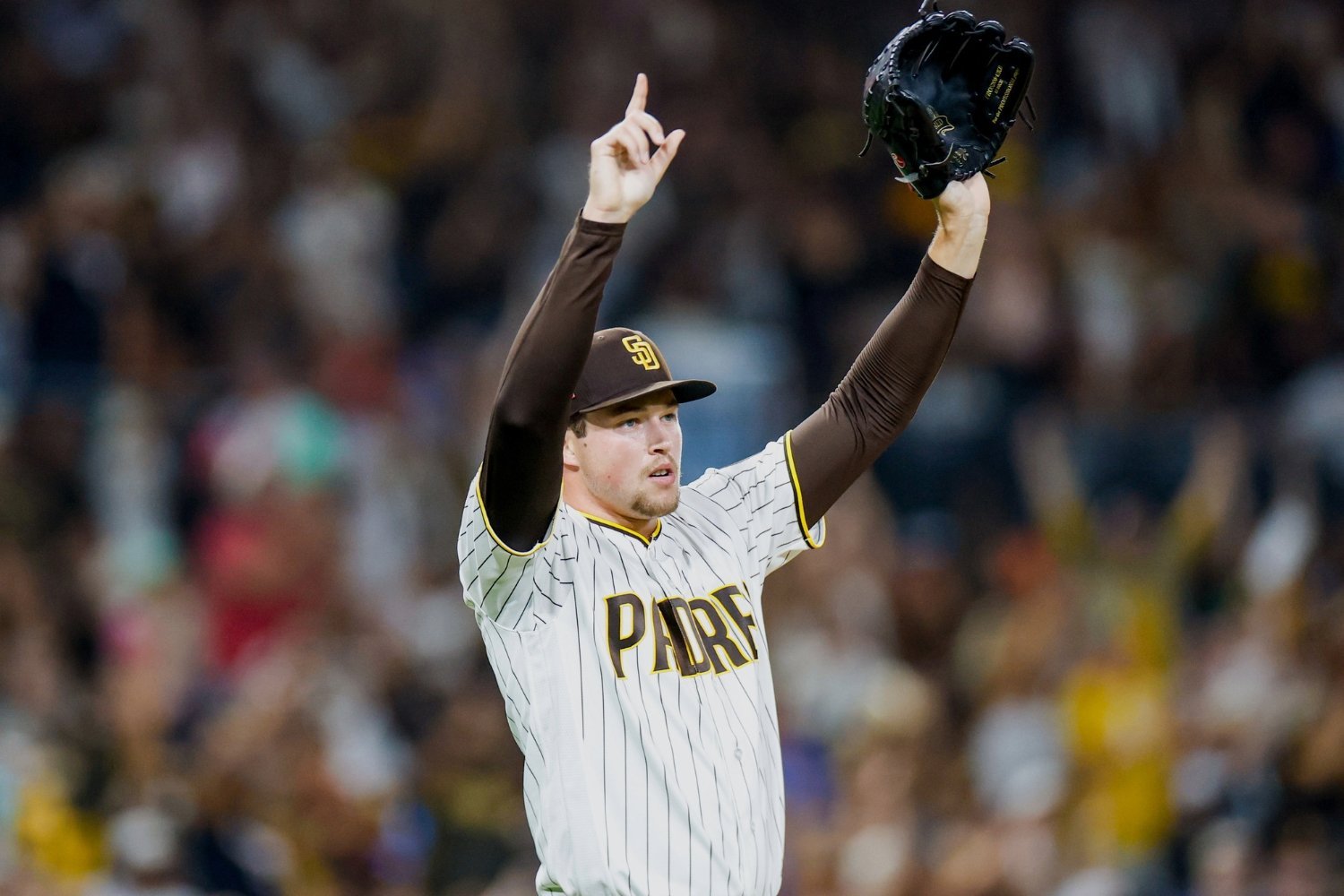 The San Diego Padres' two-game lead for the final Wild Card spot is in no small part thanks to Mason Miller’s brilliance. He leads all qualified relievers in ERA (0.83), xERA (1.42), FIP (0.60), xFIP (1.46), WAR (3.3), K% (48.3%), K%-BB% (39.0%), and WPA (4.16). Pick a relevant statistic, and Miller is either the runaway leader or right at the top. He’s nails personified and is now only a month away from the greatest relief season in MLB history. Judging relief value is a bit different than position players and starters. While WAR does a great job tabulating the best starters, its context neutrality misses the mark out of the bullpen. For relievers, context is everything. You don’t bring in your closer with one out in the eighth in a one-run game with runners on first and second so he can let those inherited runners score while preserving a 0.00 ERA. No, you bring them in to put out the fire, shut the door, and put the kids to bed. Since individual relievers throw far fewer innings than they used to, Willie Hernandez’s 8.58 WPA in 1984 is about as untouchable a statistic as there is. Over 80 appearances and 140 innings, he posted a 1.90 ERA and brought home the Cy Young and MVP for his work—clearly, the players weren’t the only ones using questionable substances in the ‘80s. By WPA, Miller’s 4.16 figure only ranks 114th all-time, but that doesn’t mean he isn’t in the midst of an all-time season. His K% ranks fifth among non-2020 reliever seasons, and his FIP is staring down history. Among qualified relievers, Mason Miller’s 0.60 FIP is the best single-season mark ever. Which, unsurprisingly, means it’s the lowest single-season FIP (minimum 50 innings) ever recorded. Let that sink in. There have been 26,508 individual seasons and counting where a pitcher has reached 50 innings pitched, and Miller has, by one measure, been the most effective pitcher ever. Now, his grasp on the single most effective relief season isn’t as inevitable as he is. Craig Kimbrel’s 2012 season saw him post a 0.78 FIP, and there’s one big thing keeping Miller in the top spot: he has yet to allow a home run. FIP, short for Fielding Independent Pitching, principally takes the three things pitchers control—strikeouts, walks, and home runs—to spit out an ERA-like figure (and for FanGraphs, WAR). However, out of those three statistics, home run rate is by far the least predictive. This is why xFIP, which uses a league-average home run to flyball rate, is generally more predictive of future performance than FIP, especially when analyzing small samples. In terms of xFIP, which only goes back to 2002, if you remove 2020 from the sample, Miller’s 1.46 xFIP ranks sixth. That being said, Statcast only has Miller’s expected home runs allowed total at 0.6, so it’s not like he’s riding his luck to the top spot in history. On top of staring down FIP history, Miller has a very outside chance of claiming the top (non-2020) relief ERA season. That mark, held by Zach Britton, sits at a 0.54 ERA from 2016. Over the course of 67 innings, Britton allowed four earned runs, which means Miller, who’s at five earned runs in 54.1 innings, would have to close the season on a 29.2-inning scoreless streak to catch Britton. Even though the Padres are in the thick of a playoff race, it'd be insane to ride Miller that hard ahead of October. When chasing history, the odds are always stacked against you. If Miller had allowed a single home run this season, his FIP would stand at 0.84, which would rank second all-time to Kimbrel’s. But that doesn’t mean he’s one home run away from being out of the race. If Miller continues to pitch as frequently and just as well based on strikeout and walk rate, but does allow a single home run, he’d end the season with a 0.80 FIP in 67.1 innings. That’d still be second all-time, but he could conceivably make up some lost points of FIP by racking up strikeouts at an even higher rate, or, more likely, limiting his walks. The silver lining is that Miller’s lead on adjusted FIP is a bit more secure. Adjusted FIP takes a player’s FIP compared to the league average, where 100 is league average. Miller’s mark of 14, also the best figure ever, is five points ahead of Eric Gagne’s 19 from 2003 in second. At the end of the day, I doubt Miller cares if he sets the single-season FIP or adjusted FIP record. The Padres are fighting for a playoff spot, and a run here or there doesn’t matter so long as they win. That being said, if for some reason you want late-game situations to be even more stressful, you can root for the Padres and Miller’s chase of history. View the full article
 -
 Twins right-handed pitcher Adrian Bohorquez was just promoted from Cedar Rapids to Double-A Wichita. He's in the middle of a hot streak, striking out a ton of batters thanks to electric stuff and a decreased walk rate. What role might he occupy if he maintains his improved strike throwing? What does his pitch mix look like? Bohorquez is another sleeper arm for the Twins, who need starters to develop in the middle levels of the MiLB system. View the full article
 -
David Hamilton Just Can't Seem to Get It Quite Right
DiamondCentric posted an article in Brewer Fanatic
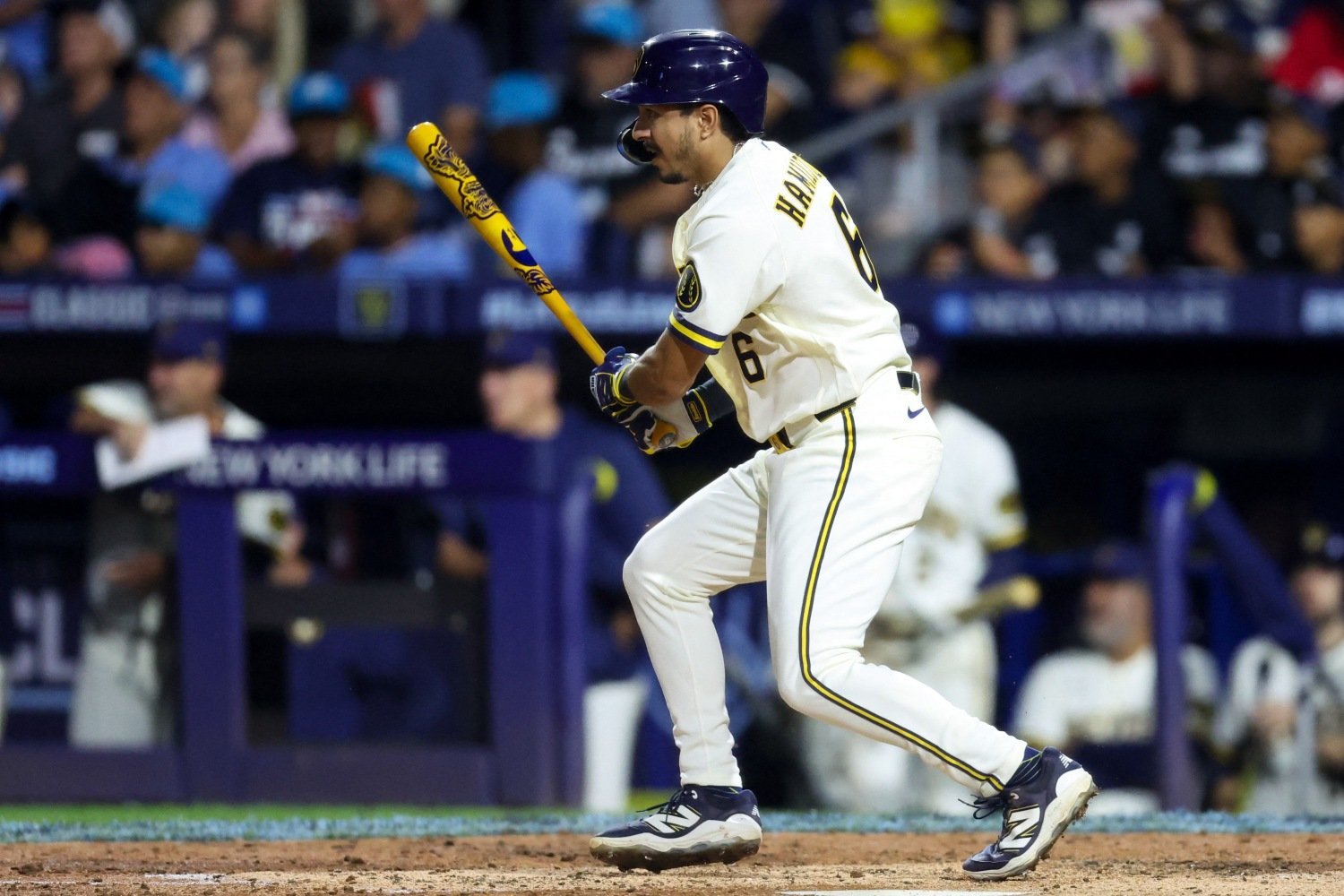 If you wanted to sum up David Hamilton's 2026 season in one play, you could do much worse than the ground ball Sean Murphy hit during the Brewers' loss to the team from near(ish) Atlanta in MLB's Little League Classic Sunday night in Williamsport, Penn. It was a tricky play. With runners on the corners and two outs, the slow-footed catcher hit a slow bouncer toward third base. Hamilton had been playing deep and guarding the line, respecting Murphy's ability to hit the ball hard and the risk of a second run scoring should he hit a double into the corner. That left a lot of ground for the speedy infielder to cover, but because Murphy moves so poorly, it should have been a relatively easy play. Hamilton got to the ball in fine shape—but then, things crashed to an ugly halt. Having taken a slightly errant angle on a ball that died faster than he'd expected on the soft turf of the Williamsport infield, Hamilton tried to come to a two-footed stop and pick the ball up with both hands. It was a late adjustment in response to that initial misread, but it made for an awkward stop—and his feet simply went out from under him. A big chunk of turf gave way, too, making clear that the player alone wasn't at fault. He'd had to adjust because of the field conditions; the conditions further betrayed him and put him on the seat of his pants. A run scored, and the inning continued. M3k2ampfV0ZRVkV3dEdEUT09X0F3a0RBUUlDWGxZQURsdFJCUUFBQWxKZkFBTURBQVFBQjFjTUJ3VlRVZ2RSVmxaUQ==.mp4 The metaphor for Hamilton's season was almost overwhelming. He started in a position from which he had a chance to succeed, and it was undoubtedly the best position for the team, but it asked a lot of him. He didn't make the play correctly, but he also paid a heavier price than seemed fair. That's what it's been like to watch him all year. The Brewers brought him in with a role in mind, and he's filled that role. He hasn't thrived in it, though, partially because it's not a role in which anyone is likely to thrive; partially because he hasn't quite held up his end of the bargain; and partially because of some rotten luck. While the Brewers have a tried-and-true system for the development and optimization of a certain type of player, Hamilton has proved not to be a perfect fit for that system. He's been left with some developmental whiplash, even at a phase of his career where 'development' ceases to be the word a player wants to associate with their progress. He's been asked to become more patient, hit more line drives, catch the ball deeper in the hitting zone and make more contact; he's managed that. However, he's lost what little pop he had in the process, and the gains in his plate discipline (on an outcome basis) haven't been what the Brewers surely hoped they would be. He's not walking enough to justify the way he's altered his swing itself. Part of the blame for that, though, falls on Hamilton, who has joined Team Swing Decisions and not made materially better ones. Meanwhile, in the field, he's been a colossal disappointment. The play above encapsulates some of the issue. Yes, the ball slowed down more than he expected, and yes, the softness of the ground makes that diamond different from most big-league infields. Had he turned his body correctly and charged the ball straight-on, though, he would have been able to deal with both complications and get the out. Stopping that way and fielding that ball with two hands is precisely the wrong way to do it; that needs to be an on-the-run, one-handed pick, be it barehand or glove. Hamilton took an initial angle that left him a smaller window in which he could field the ball that way, so when it was slower than he thought, he had to change to a more difficult form of playmaking. That's been his defense this year in a nutshell. You can see the special tools, but the fundamentals are often wrong by just enough to cause disaster. His throws are strong, but not always accurate. His range is excellent, but his hands aren't as quick or as soft as you would guess. The only place where Hamilton has come as advertised is on the bases, and even there, he hasn't been quite as aggressive or as efficient as the team might have hoped. Pat Murphy was effusive about Hamilton's potential in the spring, in a way that always seemed a bit too rosy for a player who had gotten so close to 30 without having a breakthrough. Sure enough, Hamilton hasn't delivered on that potential, even though you can still see it there, waiting to be tapped. Not all of that is Hamilton's fault. Playing mostly as a platoon option at two different positions that are each demanding, he's been denied any easy routine. He also dealt with an elbow issue for much of the season, and then tried to manage and rehab both that injury and his hamstring strain once the latter force him onto the injured list. He's tough, and he's worked hard for the team. The results haven't been there, but the club hasn't been disappointed in his work ethic or willingness to do what they ask of him. Still, one has to hope better days lie ahead for him. The Brewers need as many of their roster pieces functioning at a high level as is possible, come the postseason. Their patience with Hamilton could yet pay huge dividends, because the player Murphy described and envisioned earlier this year does peek out now and then, and he can be a game-wrecker—especially offensively. If he never takes to the difficult jobs he's been given, he could depart this winter, with the team sliding Joey Ortiz into that role next season as they make way for Jesús Made. For now, though, Hamilton remains in the medium-term plans. Thus, he needs to overcome the things the universe keeps putting in his way and make some good things happen. View the full article
 -
Twins Ride One-Game Winning Streak Back Into Playoff Picture
DiamondCentric posted an article in Twins Daily
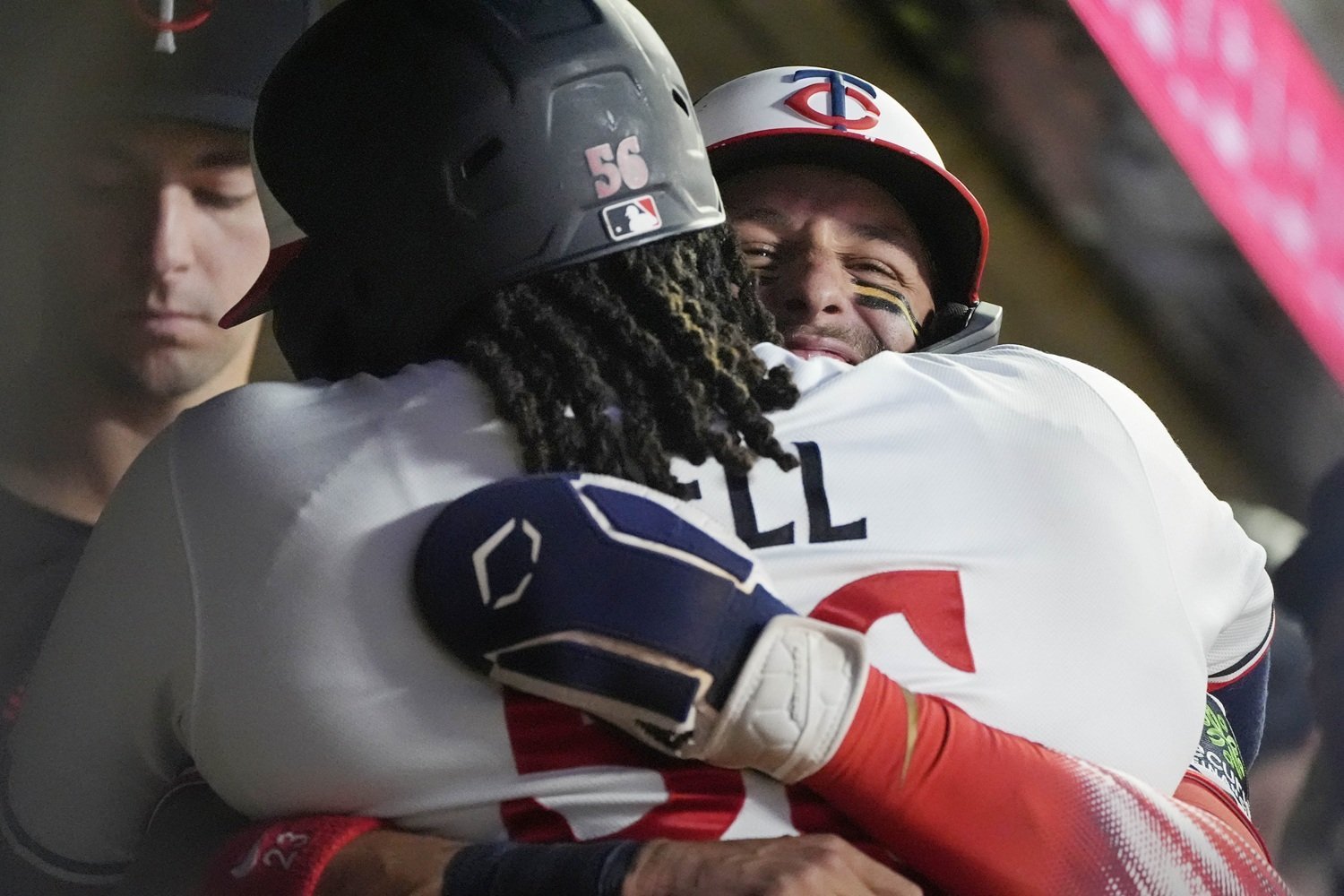 There are few things more beautiful in baseball than a long winning streak. Three games. Five games. Seven games. Maybe even one of those ridiculous 10-game streaks that makes everyone start using phrases like “October baseball” and “playing their best baseball at the right time.” The Minnesota Twins have decided to try something different. One. Just one game. And somehow, it worked. After spending the better part of the second-half reminding everyone why consistency is important, the Twins won one game and thrust the club right back into the American League playoff picture. Because this is the 2026 American League, where apparently nobody wants to win enough games to make the postseason race comfortable. The Twins can lose three straight, get swept by a contending team, blow a five-run lead, and generally make their fans question every life decision that led them to spend three hours watching baseball. Then they win one game. Suddenly, everyone needs to check the standings. Again. And again. And again. Wait, We're in Second? There is a particular moment every Twins fan has experienced this season. You open the standings expecting to see something unpleasant. Instead, you see Minnesota in second place. You refresh. Still second. You check another website. Still second. You begin wondering if the website is broken. It isn't. The American League has been that chaotic. Minnesota’s sub-.500 record is more than good enough to stay in the Wild Card race. The Twins have gone from looking like a team that might be better off thinking about 2027 to a team that is apparently allowed to have meaningful games in August because several other American League clubs have collectively decided that winning baseball games is optional. Jeremy Zoll has spent much of the season preaching patience and resilience. “We’ve been really consistent in our inconsistency,” Zoll said. “There have been some stretches where we’ve played good baseball, some stretches where we’ve played bad baseball, and then there have been stretches where we’ve looked at the standings and realized none of it apparently matters. To be sitting in second place after winning one game is a credit to the entire organization. We’re really proud of that.” But one win? Bounce back. That is the official terminology. Byron Buxton Is Back, Therefore Everything Is Fine Byron Buxton returned from the injured list, giving the Twins one of their most important players back for the stretch run. This is another important part of the Minnesota mathematical formula. Step 1: Get Buxton back. Step 2: Win one game. Step 3: Look at the standings. Step 4: Become irrationally optimistic. Step 5: Repeat. And, naturally, this is where someone will say something about momentum. Momentum is a fascinating concept in baseball. It apparently lasts exactly 24 hours. Derek Shelton Has Seen This Movie Before Manager Derek Shelton has spent his first season in Minnesota trying to navigate a roster that has provided roughly the same amount of stability as a folding chair on a frozen lake. At one point, the Twins look like legitimate contenders. Then they lose several games. Then the offense disappears. Then the bullpen implodes. Then they win twice. Then everyone checks the standings. “We’re not looking at the standings,” Shelton said. “Someone told me we’re in second place, but I assumed they were talking about the second-place team in the International League. If we’re actually in the American League playoff picture after playing the way we’ve played lately, I’d prefer nobody investigate how that happened. We’ll just keep winning every once in a while and see where that takes us.” That is the most ridiculous part of all of this. The Twins have played some genuinely bad baseball recently. They have looked inconsistent. They have struggled to string together quality performances. They are still below .500. And yet, here they are. Within striking distance. Still alive. The American League has created the perfect environment for a team like Minnesota. There are enough flawed clubs, enough mediocre records and enough nightly chaos that a team can spend two weeks playing poorly and still emerge from the other side with a legitimate postseason argument. All Minnesota had to do was win a couple of games. Apparently, that's enough. The Twins don't need a 10-game winning streak. They don't need to suddenly look like the 1998 Yankees. They don't even necessarily need to look good. They just need to keep winning one game at a time while waiting for everyone else to make sure the playoff door remains slightly open. So, congratulations, Twins fans. The team is back in the playoff picture. The winning streak is alive. The standings are confusing. Second place is within sight. And optimism has officially returned. At least until the next game. View the full article
 -
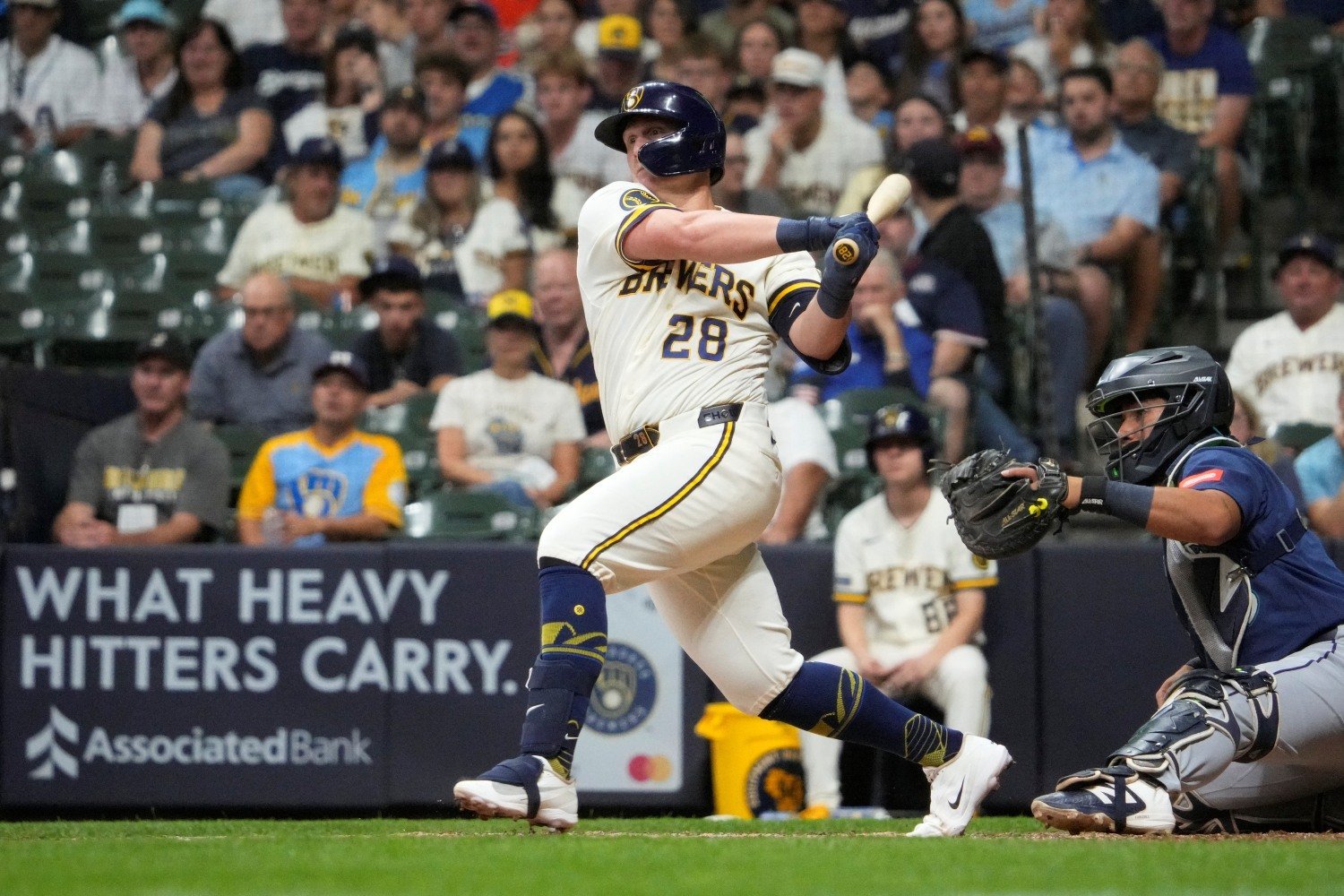 The Brewers have one of the best defenses in the major leagues. Their run-prevention unit has given them chances to win as consistently as that of any other team. But teams don’t win purely by stopping the other team from scoring; they need to score runs. Milwaukee’s offense tends to run hot and cold. The team banks on its elite defense and strong pitching to push through to win every night. What would a lineup that maximized Milwaukee’s offense look like? Let’s go position by position. Catcher: William Contreras Contreras struggled for a bit after the All-Star break, but he's since heated up and delivered big for the team. Even after his slump, he could still match his 2025 totals. In fact, his batting average this season is higher than it was when he was playing through a finger injury. Contreras is the team’s best choice on both the offensive and defensive sides of the ball. He has two Silver Slugger awards, two top-20 MVP finishes, and two All-Star Game appearances to prove it, but it's also a choice made easy by the lack of an appealing alternative. And in this particular exercise... First Base: Gary Sánchez What? No Jake Bauers or Andrew Vaughn? Well, this is about assembling the most potent offensive lineup, and the cold corner isn't the place where either of the team's regulars provide the most relative offensive punch, adjusted for the position. Sánchez therefore gets the call at first base, where he filled in when Vaughn and Jackson Chourio were both out with hand injuries earlier this season. He's perhaps the team’s most potent threat in terms of home runs per at-bat, and the Crew may need that sudden jolt against the Dodgers in the playoffs. Second Base: Brice Turang Turang, like Contreras, is the best choice for both offense and defense at his position. Like Contreras, he’s become a complete ballplayer, after initially being seen as simply a solid starter whose main tools were speed and defense. Since the start of the 2025 season, Turang has become arguably the team’s most well-rounded offensive threat. Shortstop: Cooper Pratt Pratt is much like Turang was when he came up. There are no doubts about his defense or speed. However, he always had a higher offensive floor. Indeed, in his rookie season, he’s delivered an 88 OPS+, compared to Turang’s 61 in his rookie campaign in 2023. He’s also got some serious power potential. Third Base: Andrew Vaughn Vaughn’s made some occasional appearances at third base this season, but also saw some action at the hot corner during his first few years with the Chicago White Sox. He’s not likely to win a Gold Glove there, but in 13 games and six starts, he’s been competent, and it gets a 134 OPS+ bat into the lineup. Left Field: Jake Bauers Bauers has arguably been the team’s MVP this season, leading the Crew in home runs, RBIs and extra-base hits. In this case, where he isn’t an offensive liability, we can account a little bit for his defense. Thus, he will be in left field. Center Field: Garrett Mitchell Mitchell has shown what he can do when he’s healthy, posting career highs in many offensive categories. He’s also quite good defensively, and no liability in center field. The power and speed will help Milwaukee extend lineups; he's the kind of presence that increases the frequency of both single tallies and crooked numbers. Right Field: Jackson Chourio Chourio is seen as the Brewers’ franchise player of the 2020s, and he’s actually improved in some key stats from his first two seasons (OBP in particular), even if the counting stats are down due to his fractured hand taking him to the injured list for the first portion of the 2026 season. Lately, he's been as indispensable as any bat other than Bauers. Designated Hitter: Christian Yelich Yes, he’s having arguably the worst year of his career, but Yelich is still arguably the team’s best option at DH. The big reason: He’s posting an .806 OPS with runners on base, and like Contreras, he’s turned things around a bit in recent games (.800 OPS from August 16-22). He remains the heart and soul of this Brewers team. Overview Some of these decisions might seem out of the box, but none of these starters are entirely incompetent defensively at these positions. In addition, if the team needs to boost their defense to protect a lead, the option is always there to bring Joey Ortiz, David Hamilton, Sal Frelick or Luis Lara in. Milwaukee can field a devastating offense if it wants to. It's unlikely we'd ever see this exact configuration, no matter what, because there are context questions that have to define what a "best offensive lineup" looks like. Against lefties, Vaughn and Sánchez have to be on the field to say the best lineup is present. Against righties, it's much easier to make a case for Ortiz over Vaughn, for instance. But the thought exercise reveals the blend of depth, impact and versatility Pat Murphy has celebrated so openly, ever since spring training. View the full article
 -
The Case For Tyler Tolbert Being In The Royals' 2027 Plans
DiamondCentric posted an article in Royals Keep
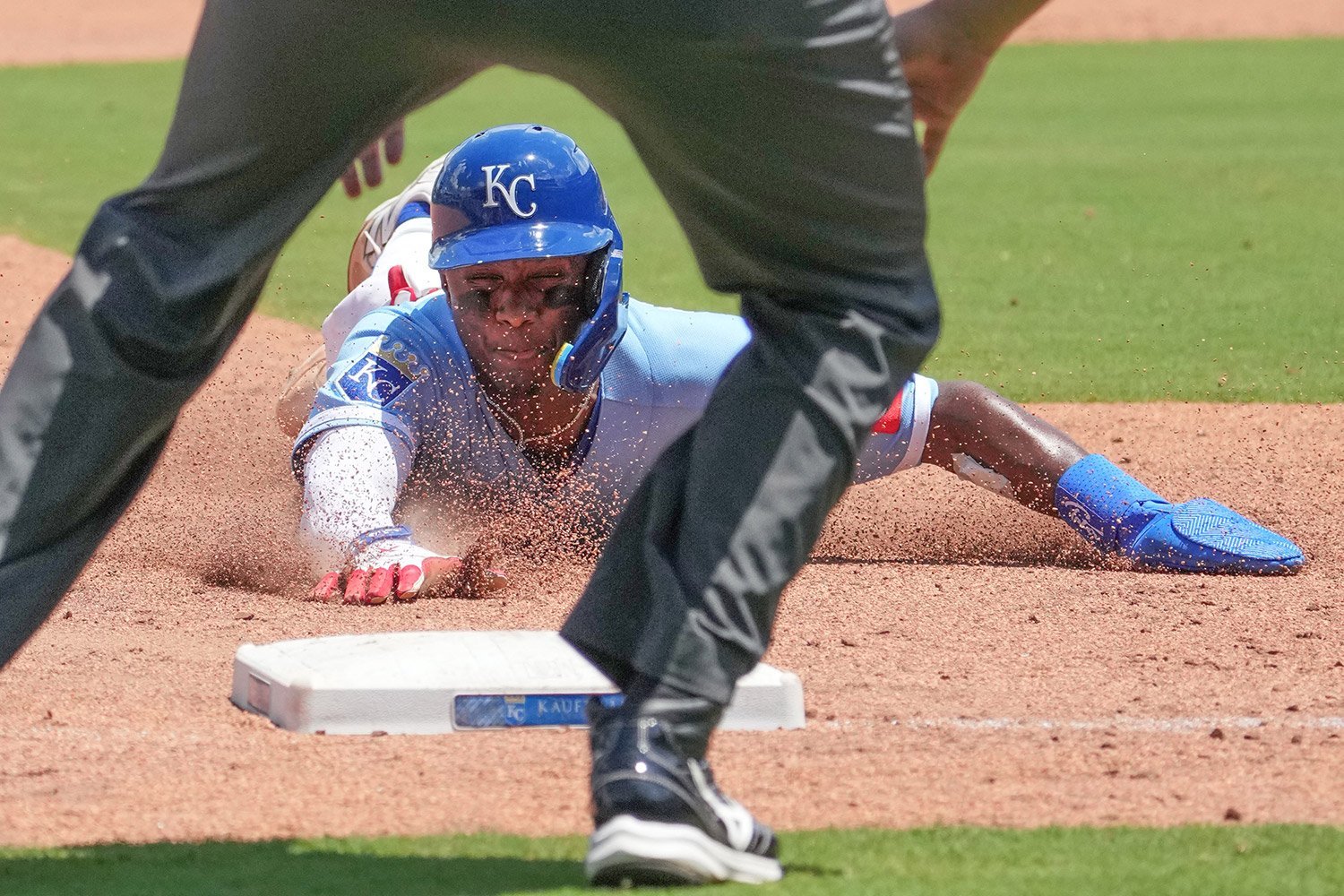 Seven months from now — March 27, 2027, to be precise — the Kansas City Royals will open their 2027 season by hosting the Minnesota Twins at Kauffman Stadium. How different from this season’s underperforming, injury-riddled roster that day’s team will look remains to be seen, but the disappointment that is 2026 means some familiar faces won’t be at The K when the 2027 campaign kicks off. Don’t expect Tyler Tolbert to be among the castoffs. Although winning an everyday job is unlikely, the swift Tolbert should be a shoo-in for a key utility role as the Royals try to rebound and put any lingering bad memories of the 2026 season behind them. To be sure, and despite the naysayers who decry his obvious power deficiency at the plate, Tolbert has earned at least another year. Here’s why. Tyler Tolbert Is Putting Together Another Good Season For The Royals To understand why Tolbert will be back is to understand how well he’s performed since breaking into the majors last season. He debuted late in the Royals’ fourth game, an 11-1 beatdown of Milwaukee, but struck out in his only at-bat. Not until his 14th appearance of the season did he get his first big league hit, and it took him another 10 games to get his second. Fortunately, Tolbert came around and finished his 64-game rookie season with serviceable numbers — in 57 trips to the plate, he slashed .280/.321/.380. But his speed added considerable value. Tolbert stole 21 bases, a total less than only Bobby Witt Jr.’s 38 and Maikel Garcia’s 23, and was caught stealing just twice. He’s even better this season. Through Sunday's action, Tolbert was slashing .286/.356/.775 with a 117 wRC+ in 61 games and 122 plate appearances. Per Baseball Savant, he’s walking more (9.0 BB% this season compared to last year’s 1.8) and striking out less (18 K% in 2026, 19.3 in 2025). And he hasn’t slowed down on the basepaths. The base he swiped Thursday gave him 18 steals for the season — only three times has he been gunned down — so he’s a cinch to finish with more steals than last season. That speed (Baseball Savant places his sprint speed in the 93rd percentile) also serves Tolbert well defensively, especially in the outfield where it’s enabled him to make some spectacular plays and avoid even a single error in 27 appearances. Tolbert also checks another critical box — versatility, an asset near and dear to general manager J.J. Picollo’s heart, and one to which he pays close attention when considering his roster construction options. This year, Tolbert has played every outfield position, spent time at second, third, and shortstop, and even pitched five times. He’s not an overwhelmingly good defender anywhere, but he can hold his own everywhere. Blocking Tolbert’s path to an everyday job, however, is his glaring shortage of power. He’s homered only four times in the majors; the 10 home runs he hit at Double-A Northwest Arkansas in 2023 offer some hope for improvement, but not much. He also doesn’t drive in many runs — only 14 so far in two big league seasons — but that’s excusable considering his primary role as a reserve, and the fact he’s come to the plate with runners in scoring position only 48 times. What Does Tyler Tolbert’s Royals Future Look Like? Good. Although his bat isn’t powerful or his glove stellar, his speed, ability to punch hits, knack for getting on base, and versatility will keep him in the majors. Unless another team so covets what he gives the Royals and makes an offer for him Picollo finds too attractive to reject, Tolbert will be at The K next Opening Day. View the full article
 -
Should the Cubs Call Up Catcher Owen Ayers in September?
DiamondCentric posted an article in North Side Baseball
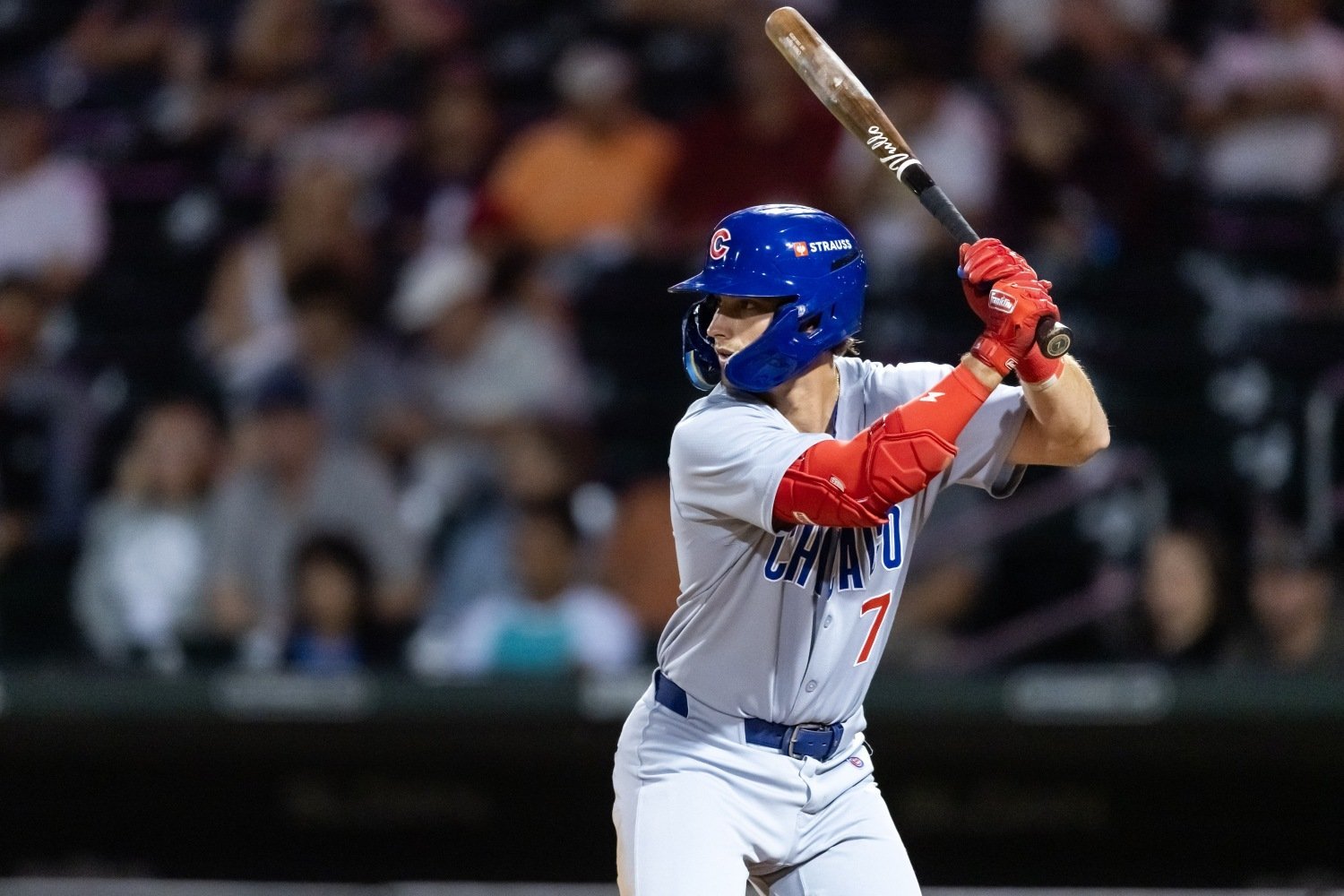 If not for Josiah Hartshorn becoming the first Cubs teenage farmhand to knock 20 round trippers in a season since Corey Patterson, Owen Ayers would be an easy pick for the organization's Minor League Hitter of the Year. Despite Hartshorn's heroics, you can make a strong argument that Ayers deserves the accolades, considering the rocket ship the former 19th-round pick has been on and how good he's been at every level. As the season winds down, the switch-hitting catcher has done so well that he may earn an even more sought-after prize: a major-league call-up when rosters' expand to 28 players on September 1. Being called up would be a dream come true for any young player; it has to be. It's the culmination of years of hard work. It's reward for all of the training, practice, blood, sweat and tears. If that isn't enough, it comes with a nifty raise to MLB's league-minimum salary, which is just under $800,000 a year. Ayers signed for $50,000 in 2024, so even a four-week stay on the roster this fall would roughly double his career earnings. The Cubs can't make decisions based on their desire to help dreams come true, though. The call has to be grounded in logistical considerations, as the team tries to make the most of its roster. The Case for Cubs to Call Up Owen Ayers Ayers is a player the Chicago Cubs really like. We can see this just based on how they have handled him over the last 365 days. First, they sent him to the Arizona Fall League, an early signal that this wasn't your run-of-the-mill late-round pick. They also acted decisively each time the catcher showed he was too good for a level this season, promoting him from High-A South Bend to Double-A Knoxville after just 11 games, and again from Knoxville to Triple-A Iowa after just 65 more. At the trade deadline, they reportedly made him a sticking point in trade negotiations, opting instead to trade other top prospects Jefferson Rojas and Moisés Ballesteros. It's fair to guess that the team has him in their plans at the MLB level come the 2027 season; they wouldn't have made him such an important factor at the deadline if they didn't. While it's impossible to know exactly what the plan is, it's fair to assume that it includes the 25-year-old getting a very real chance to make the Cubs out of spring training. If that's the case, it wouldn't be surprising to see the Cubs give him a 30-day trial period in September. He wouldn't be asked to do a lot as the third catcher, but it would give him a leg up on the upcoming year. While he may not be catching guys in game a lot, it's likely that he would get work on the side to build rapport with the team's pitching staff before turning the keys to the kingdom over to him. The team has made clear that they like to give young players a taste of the big-league life. In other recent Septembers, they've called up Pete Crow-Armstrong, Ballesteros, Owen Caissie, and Kevin Alcántara to acclimate them to the roster, while limiting their playing time with an eye toward the future. From a roster-construction perspective, it would make sense, too. Currently, the team has no viable first-base backup option. Pedro Ramírez filled in there a few days ago, but is now needed at second base. The injury that stopped Tyler Austin's season before it began really derailed the Cubs' hopes to have a backup or platoon option for Michael Busch. Ayers has history playing first dating back to his time in college, allowing him to fill a need the team has right now. Having a third catcher can also give you more choices, like using Carson Kelly as the DH against certain lefties. It can allow you to pinch-run for Kelly or Miguel Amaya, knowing you have some flexibility left after that move. The Case Against Cubs Calling Up Owen Ayers Not all pertinent factors point toward this move, though. First, you don't have to add him in September. Ayers, despite his age, is not eligible to be selected in the Rule 5 draft this offseason. The Cubs could keep him off the 40-man roster all offseason, allowing them to protect other players, instead. Spots on the 40-man are always valuable during the winter, and that will only be more true in what's sure to be a freneic and disrupted offseason this year. Relatedly, with the CBA set to expire this December and a lockout looming, another aspect of the call-up needs to be considered. Players who have not been added to the 40-man roster can play minor-league baseball next spring and start spring training on time, even if the MLBPA is locked out. This could mean anything from a couple extra weeks of work at the team facility to a month of extra games the big-leaguers won't get to participate in, but either way, calling Ayers up next month would expose him to the vagaries of the labor battle. Leaving him in Iowa (where he can also play every day, or nearly so) would shield him from that. Should the Cubs Call Up Owen Ayers? While there is no definitive answer, I think calling up Ayers makes sense. Catcher is a position like no other; building trust through reps can never start too soon. Having an eye toward 2027, in that regard, is a good thing. While it's possible that Kelly will remain with the Cubs in 2027 (and beyond), he's a free agent this winter. The team has to make a succession plan, and then adapt that plan if he unexpectedly sticks around on a new deal. Using the 40-man spot is a real factor, but the team has plenty of flotsam on that list right now that they can turn into jetsam. They might lose a player like BJ Murray in the Rule 5 Draft as a result of using a 40-man spot on Ayers sooner than is needed, but that's not likely to be a big loss. Another sticking point: it might not even matter. In 2021, just five years ago, we saw a similar issue at hand; the prior CBA expired in December and the league just flat-out cancelled the Rule 5 draft. It may not actually matter if the Cubs expose someone like Murray in the draft; if there's no draft, he's not going anywhere, anyway. The labor questions are too big and unwieldy to govern a decision like this. Instead, it should come down to whether the team thinks that's the best use of their extra roster spot for a position player, and to whether they think being with the parent club is the best thing for Ayers's development. Ultimately, I think the balance tips in favor of the Cubs' calling up Ayers, as long as he's the planned "next up" to fill Kelly's spot in 2027. He'd get invaluable time with the pitchers he'll be working with; provide the Cubs options off the bench; and get a chance to gel with the clubhouse. This likely offsets any concern about the Rule 5 draft and 40-man considerations. And if the Cubs end up calling up someone like James Triantos instead? It's not the end of the world, and would be fine. It does keep the roster picture uncluttered. It may give Ayers some reps during a lockout. And it's not like the Cubs' fates are going to be shifted that greatly by the 14th hitter on the roster, whoever it is. With just a week to go before these decisions need to be made, we'll see which side the team actually sits on shortly. But if the team does give Ayers a chance in September, it will be a fun little peek into the future of the team at the catching position. View the full article
 -
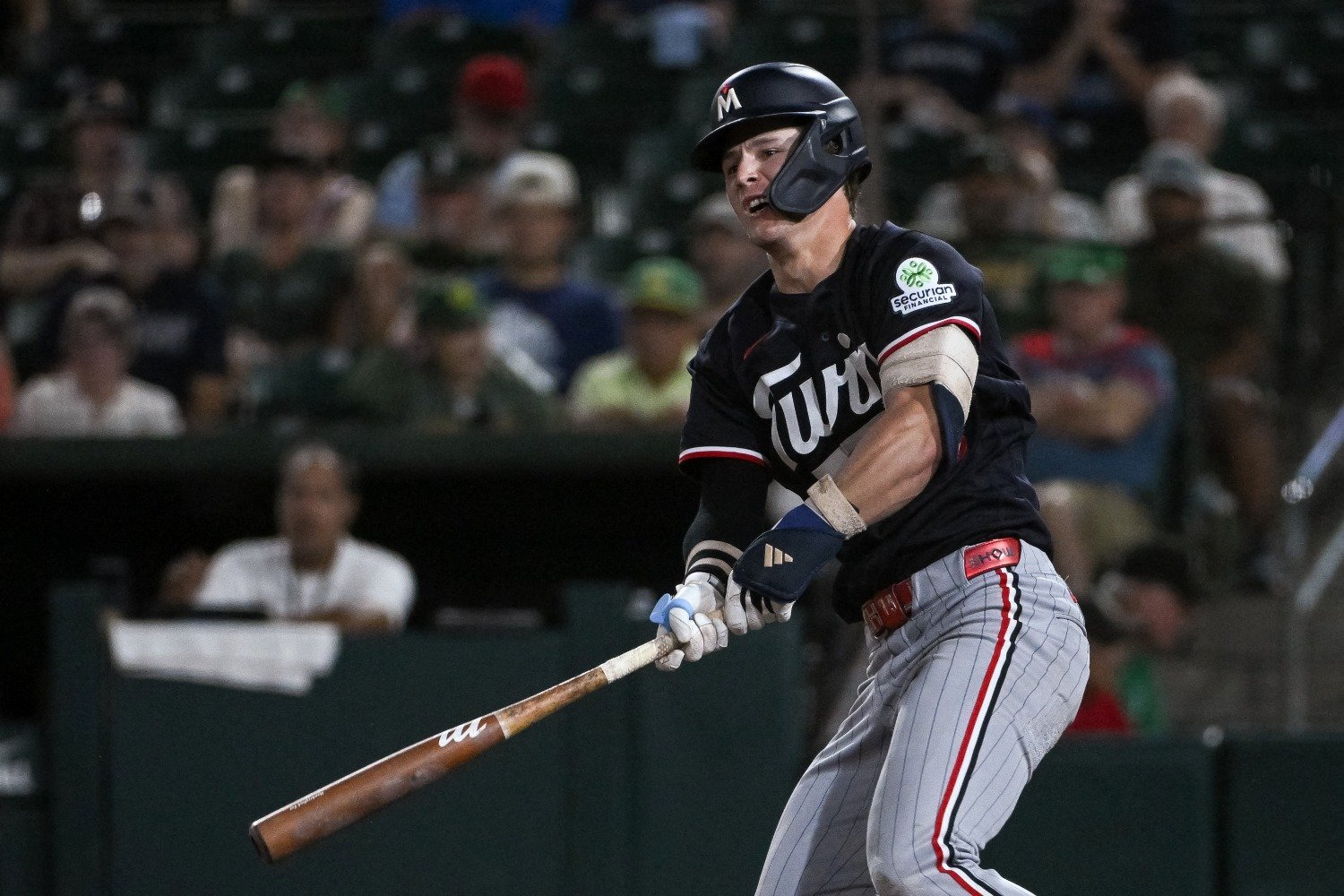 Since the moment Luke Keaschall arrived in the majors, fans have wanted him to be a star. He can really, really hit, and everyone loves a guy who can really, really hit. Keaschall also happens to be handsome and proudly scrappy, using the Rocky theme as his walkup music and hustling for doubles in a way that isn't eyewash but also will never be mistaken for a languid glide. He was bound to be a fan favorite, but most Twins fans—and all Twins fans who remember Michael Cuddyer and Nick Punto with the clear eyes of hindsight, and most modern baseball fans, really—were wary of making him one simply because he could hit for average. A bit more is asked of the modern star. In fact, a bit more is demanded. We've gotten very good at measuring and evaluating performance in baseball, which has made the game smarter and more efficient. It's made sneakily good players rich and worse players a bit less rich. It's allowed teams like (and sometimes even including) the Twins to compete with bigger-market, bigger-spending behemoths. It's sanded off many a rough edge. One of those rough edges, though, is a thing worth missing a little bit. Along the way, the game has grown terrifically impatient with the good little hitter who can't field any position worth a damn. This used to be a fairly common and well-tolerated archetype. It has become an extremely rare creature. Who Are the Best Good-Hit, Bad-Glove Players in Baseball History? As it happens, there are exactly 50 players who have had at least one season since 1969 in which they: Played at least 50 games at a position other than first base or DH, signaling that they had some real defensive responsibilities; Posted an isolated power (ISO) figure under .150, meaning they didn't get much value from sheer slugging; Amassed at least 2.5 offensive Wins Above Replacement (oWAR), according to Baseball Reference, evidence of real difference-making ability at the plate; and Gave back at least 1.5 WAR via lousy defense, or below-average defense at a not-very-important position (-1.5 dWAR or worse). It's a wonderful list, so before diving deeper into the subject, let's savor it together. Query Results Table Rk Player Count From To Ind. Seasons Link 1 Lou Brock 4 1970 1973 Seasons List 2 José Cardenal 3 1970 1975 Seasons List 3 Tommy Harper 3 1969 1972 Seasons List 4 Derek Jeter 2 2005 2007 Seasons List 5 Roger Cedeño 2 1999 2001 Seasons List 6 Derek Bell 2 1994 1995 Seasons List 7 Brett Butler 2 1993 1995 Seasons List 8 Tony Gwynn 2 1989 1995 Seasons List 9 Phil Bradley 2 1986 1989 Seasons List 10 Jorge Orta 2 1976 1977 Seasons List 11 Ralph Garr 2 1972 1977 Seasons List 12 Carlos May 2 1970 1972 Seasons List 13 Luke Keaschall 1 2026 2026 Seasons List 14 Alec Bohm 1 2022 2022 Seasons List 15 Yandy Díaz 1 2022 2022 Seasons List 16 Josh Rojas 1 2021 2021 Seasons List 17 Brad Miller 1 2015 2015 Seasons List 18 Dexter Fowler 1 2014 2014 Seasons List 19 Jose Altuve 1 2012 2012 Seasons List 20 Nick Markakis 1 2010 2010 Seasons List 21 Chris Coghlan 1 2009 2009 Seasons List 22 Felipe López 1 2006 2006 Seasons List 23 Matt Lawton 1 2004 2004 Seasons List 24 Ray Durham 1 1999 1999 Seasons List 25 Steve Finley 1 1995 1995 Seasons List Rk Player Count From To Ind. Seasons Link 26 Tim Raines 1 1995 1995 Seasons List 27 Dion James 1 1993 1993 Seasons List 28 Robin Yount 1 1986 1986 Seasons List 29 Keith Moreland 1 1985 1985 Seasons List 30 Gary Matthews 1 1984 1984 Seasons List 31 Lonnie Smith 1 1984 1984 Seasons List 32 César Cedeño 1 1982 1982 Seasons List 33 Steve Kemp 1 1982 1982 Seasons List 34 Al Cowens 1 1979 1979 Seasons List 35 Ken Landreaux 1 1979 1979 Seasons List 36 Dwayne Murphy 1 1979 1979 Seasons List 37 Dan Ford 1 1978 1978 Seasons List 38 Gene Richards 1 1978 1978 Seasons List 39 Alan Bannister 1 1977 1977 Seasons List 40 Ron LeFlore 1 1977 1977 Seasons List 41 Ken Griffey 1 1976 1976 Seasons List 42 Johnny Grubb 1 1976 1976 Seasons List 43 Ken Singleton 1 1976 1976 Seasons List 44 Rusty Staub 1 1976 1976 Seasons List 45 Bobby Murcer 1 1975 1975 Seasons List 46 Don Baylor 1 1974 1974 Seasons List 47 Billy Williams 1 1973 1973 Seasons List 48 Pat Kelly 1 1972 1972 Seasons List 49 Richie Scheinblum 1 1972 1972 Seasons List 50 Ron Hunt 1 1970 1970 Seasons List Provided by Stathead: Found with Stathead. See Full Results. Generated 8/24/2026. There are a couple of old friends here; it's nice to see old friends. Are you old enough to remember Dan Ford? In his last season with the Twins, he was this level of good wood but hard leather. Maybe Matt Lawton is more in your wheelhouse, though. He could really hit, in his prime, but boy, he could be a butcher in the outfield, too, right? It's easy to make this list longer. Just remove the limit on ISO. What I wanted, though, was to see whether and to what extent we've lost the not-so-slugging guy who can rake, but can't play defense no matter where you put him. Back when defensive assessments relied mostly on error counts and the eye test, to be sure, more poor fielders stayed on the field, especially if they benefited from the halo effect of being good hitters. Back then, though, teams also didn't always know a good hitter from a bad one. A guy might rack up a high but empty batting average and play for quite a while, despite not really adding much to the offense. Keaschall isn't that kind of player. He can genuinely hit, and he genuinely makes the lineup better, especially now that he's hitting at the top of it. He just can't help—or even avoid hurting—the team when it's the other team's turn at bat. Historically, most of the players who get the chance to play in such a one-sided role do so either at a position where defense doesn't matter much (first base or DH) or in a league where you have to accept some tradeoffs. For instance, in the NL, some teams used to be willing to absorb a bad defender in left field to avoid having two weak spots in their lineup, since the pitchers then had to bat for themselves. Being great early in your career also bought you the right to get old (gracefully or not) while still playing a position you could no longer handle, especially if the alternative was losing a job altogether. Thence come the many entries for Lou Brock, and the pair for Derek Jeter. For a long time, though, there were also a couple of guys in the league at any given time who were dreadful defenders even in their 20s, but who nonetheless held onto everyday jobs. The above list contains prime seasons from Jose Altuve, Ken Griffey Sr., and Lonnie Smith. Chris Coghlan won the 2009 NL Rookie of the Year Award as a crack-and-clank guy: lots of solid contact, lots of ugly plays in the field. By and large, that player type has now been completely excised from the game. José Cardenal's career would be in real jeopardy if he came up today, rather than in the 1960s. Derek Bell's would be on the ropes, if he hadn't come up in the 1990s. Analytics sometimes make the perfect the enemy of the good, by highlighting what players do poorly and making those shortcomings their defining characteristics. However, neither teams nor fans are entirely wrong to think that way, in an era like this one. Cardenal (1970, 1973) and Bell (1994-95) had multiple seasons as excellent hitters and atrocious defenders, but each did that in the shadow of expansion years. There were five seasons in which the league had at least three crack-and-clank dudes: 1970, 1972, 1976, 1977 and 1979. The combination of uncertainty about defensive value and the thinning-out of talent pools via expansion in 1969 and 1977 made those profiles viable in those years. It's been almost 30 years since MLB last expanded; the league doesn't have as much use for Keaschall types right now. How Luke Keaschall is Achieving More Power Still, on balance, I think Keaschall deserves a bit of a break. He's a terrible defender. He's never going to not be a terrible defender. His nickname should be Boulder; it captures both his sturdy physique and his rock-hard hands. He's not going to show up next spring and be a good outfielder, even if he puts in considerable work this winter. There's nothing he does well in the field. He might come off this list next season, anyway, though, because his power is beginning to blossom. Over the last month, his ISO is .180—forget .150. His bat speed is up this season. Psrtially because of that (and partially because he's figured out how opponents want to attack him), he's learned how to get his bat working uphill more at contact and to pull the ball more consistently, while still utilizing his steep swing to get on top of the ball deep in the hitting zone and drive some pitches to right field. Here's a visualization of his swing at the contact point last year, via Statcast: Here's the same dataviz for 2026. Note the more upright body position, more powerful extension of the arms, the orientation of the bat, and that higher bat speed. Loosen the original crack-and-clank parameters I laid out to allow any ISO under .200, and some names you're much more comfortable with appear on the list in their 20s. Randy Arozarena had a great year in 2022. Shin-Soo Choo had one in 2012. And in 2004 and 2005, another right-handed hitter who was always hit-over-power and offense-over-defense slots into the list: Michael Young. That might just be the perfect comparator for Keaschall. He's a man out of time, but he can still find his way to being an above-average player. The Twins will have to accept some red on the run-prevention side of the ledger to realize his full overall value, but Keaschall is trending toward being a Young-like player: someone who can compete for batting titles and produce moderate power, with athleticism that augments the offensive profile—even if the glove never seems to find any benefit from it. As a lover of many player profiles slowly going extinct under modern pressure to be perfect, I'm rooting for one more crack-and-clank guy to make good. View the full article
 -
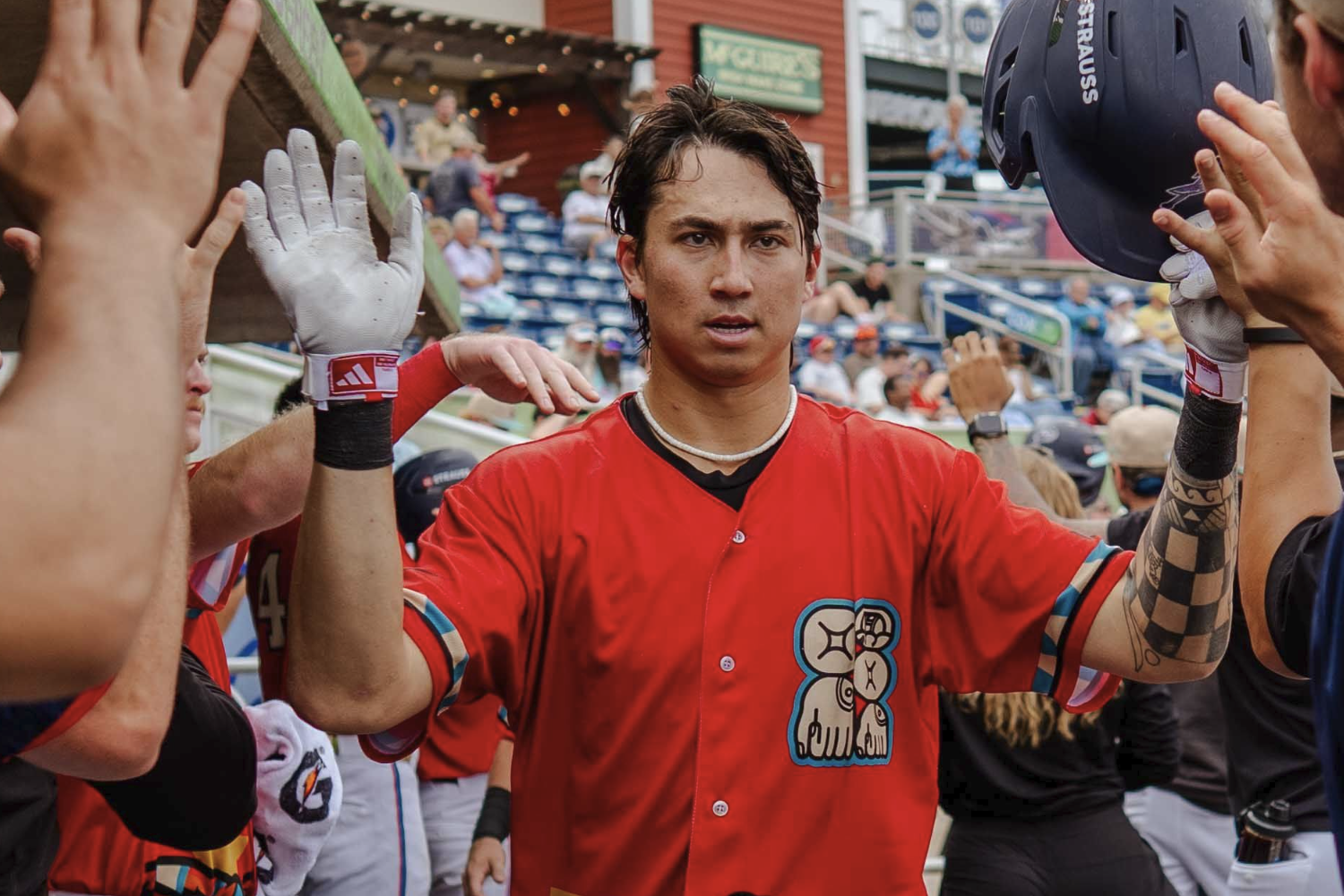 We learned on Monday that the Arizona Fall League season will begin on October 3 with Miami Marlins prospects being assigned to the Glendale Desert Dogs. The identities of those prospects haven't been announced yet, but Fish On First is hard at work gathering that information. FOF farm director Alex Carver already has confirmed two of them. The full Marlins delegation is expected to include seven or eight players. Keep in mind, the group is subject to change in the event of injuries that may occur down the stretch of the minor league season. As the details trickle out, I will fill this page with quick hits on each participant, listed in order of how I personally rank them as prospects. INF Aiva Arquette Current MiLB level: Double-A It's a rare treat to see a consensus Top 100 MLB prospect like Aiva Arquette in the AFL (he ranks sixth on the FOF Top 30). The main reason he will be playing in the desert, like most of his teammates, is to make up for games spent on the injured list during the regular season. He enters Tuesday with only 49 games played in 2026 due to two separate IL stints. The former first-round pick has a .257/.311/.476 slash line with 11 home runs and 14 stolen bases with High-A Beloit and Double-A Pensacola. He's mainly been used at shortstop with a handful of appearances at both second base and third base. Arquette will turn 23 in October, making him about one year older than the average AFL batter has been in recent seasons. It's a low-pressure environment, but he'll be expected to perform well. LHP Emmett Olson Current MiLB level: High-A Emmett Olson has logged just 10 innings since returning to the mound following Tommy John surgery. Across parts of four MiLB seasons (all in the Marlins organization), the lefty has a 3.62 ERA in 35 games (33 starts) with solid peripherals. Olson will likely be a member of Glendale's rotation, making one start per week. View the full article
 -
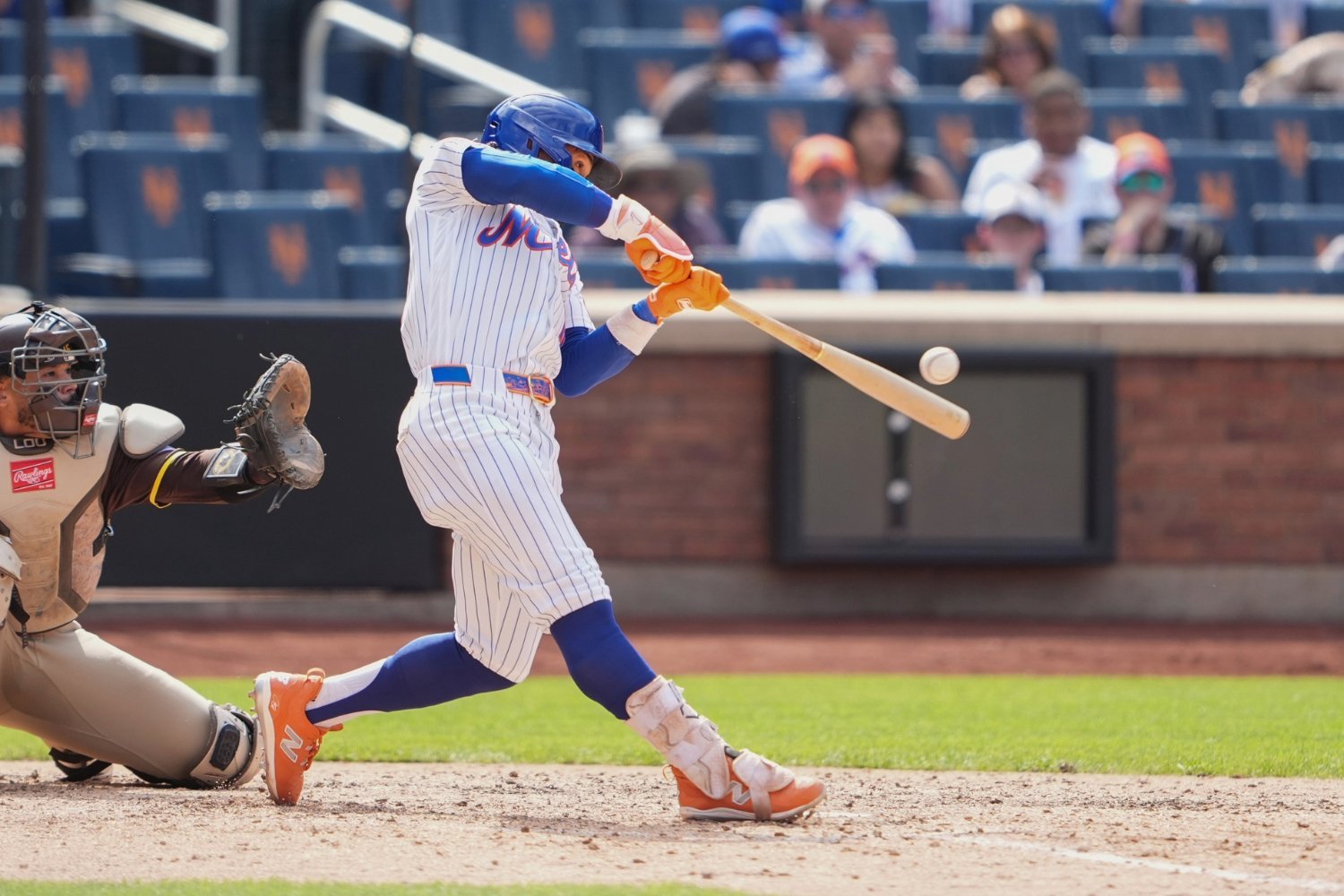 The New York Mets own a winning record in August and are producing their best OPS (.775) in any month of this season. They have done it without a single plate appearance from Juan Soto, who last played on July 24 before going on the injured list. The Mets have risen from a disappointing first half of the season, when they averaged .234/.303/.381 with 4.1 runs scored per game, to a notable resurgence of .245/.320/.425 with 4.5 runs scored per game in the second half. Many factors have combined for the team’s offensive improvements, but one of the most important has been the recovery of Francisco Lindor’s power. After coming off the injured list in late June, Lindor needed to work to get his swing back after a notable loss of power during his 105 plate appearances between March and April. In that first stretch, he posted a 91 wRC+ and just a .355 slugging percentage. The rhythm and impact of his swing at the plate have changed since then. Let’s explore how he has done it. Period PA wRC+ SLG HR/FB Pull% Oppo% HardHit% O-Contact% Before IL 105 91 .355 6.5% 45.9% 27.0% 43.2% 61.1% After IL 213 120 .454 14.9% 50.3% 21.0% 51.0% 66.0% as LHB (After IL) 146 120 .438 14.3% 46.4% 20.6% 53.6% 63.4% as RHB (After IL) 67 103 .450 13.8% 54.9% 25.5% 43.1% 71.7% It would be enough to simply look at his 120 wRC+ to say that the adjustments have been considerable in this comparison. Now, look at the drop in his HR/FB rate to 6.5% before going on the injured list. Since returning to action, it has risen to 14.9%, an average that is closer to his career mark (14.3%) in the majors. His HardHit% also increased by 7.8 percentage points and his slugging is almost .100 points higher. How has he done it? As the batted-ball metrics suggest, Lindor has regained the power in his swing when he pulls pitches. His Pull% rate has increased by 4.4 percentage points, while his Oppo% has dropped 6 points. He is also doing it with a greater reach in his swing, as he is making contact with more pitches outside the strike zone. Of course, that does not fully guarantee that those pitches Lindor is reaching can be turned into productive hits. That is why the more interesting question is to discover how he has awakened his power. To do that, I set out to compare how he was producing with his swing when pulling pitches before and after going on the injured list. On the left, we have his heat map before going on the injured list, and on the right, the stretch since he returned to the lineup. I took all the plate appearances in which Lindor hit against a left-hander, since the samples as a right-handed batter were very small during March and April. As you can see, there are several notable differences there; Lindor has been making better contact against pitches on the inner part of the plate, especially in the middle. At this point, I think his bat speed has been key. In June, during the week Lindor played after returning from the injured list, he averaged 71.0 mph on his swing and a FastSw% of 8.1%. In July, when he began to find his rhythm and regained his confidence with more playing time, he rose to 27.4%. This August, he is averaging 24.3%. That recovery of power when pulling pitches can hardly be separated from a better identification of the pitches he needs to attack. Let’s look here at which pitches he is hitting better. Francisco Lindor – Before vs After IL Pull Comparison Pitch Type xSLG (Before) xSLG (After) Diff xSLG Hard Hit% (Before) Hard Hit% (After) Diff Hard Hit% Four Seamer .802 .625 -.177 46.7% 65.0% +18.3% Changeup .575 .592 +.017 40.0% 53.3% +13.3% Sinker .076 1.501 +1.425 0.0% 77.8% +77.8% Slider .423 .896 +.473 100.0% 77.8% -22.2% Cutter .781 .821 +.040 33.3% 71.4% +38.1% Split Finger -- .293 -- -- 25.0% -- Curveball .102 1.694 +1.592 0.0% 66.7% +66.7% Sweeper -- .150 -- -- 33.3% -- Knuckle Curve 2.213 .245 -1.968 100.0% 0.0% -100.0% The .177-point drop in xSLG against four-seamers deserves caution because the March/April sample was much smaller. But the 18.3-point increase in HardHit% shows that the contact has been much more solid after his return. Still, this only accounts for so much of his production. Let's look at the inverse situation (i.e., his impact when he does not manage to pull pitches). The graph on the left belongs to his non-pulled contact, with the graph on the right the same as above just for visual reference. With the pitches Lindor could not pull, you can notice the drop in his xwOBA averages against high pitches and pitches tight inside the strike zone. However, I find it interesting that his swing continues to have life against pitches on the outside corner, both in the upper and lower parts. Overall, hitting left-handed, Lindor has posted a .403 ISO this season when he pulls pitches. Even without being the best version of himself, his recovery has been notable since returning to action. In that stretch, the Mets have played to .500 (25-25), and although there is no hope that they will return to the postseason this year, seeing Lindor doing Lindor things at the plate is a promising sign for the future. View the full article
 -
 Some of the biggest walk-off hits in Florida/Miami Marlins history have come courtesy of Édgar Rentería. On this day 30 years ago, Rentería collected his first walk-off hit. Rentería’s single in the bottom of the ninth completed the comeback as the Florida Marlins rallied past the Cincinnati Reds, 6-5. The Marlins were on the short end of a 5-2 score as they came to bat in the bottom of the sixth inning at Joe Robbie Stadium on Aug. 25, 1996. Cincinnati starter Mike Remlinger had not allowed a run since the first inning, but that all changed with two swings of the bat. Greg Colbrunn led off the inning with a solo home run to cut the lead to 5-3. After working the count full, Jeff Conine followed with a solo shot of his own. Just like that, Florida was within one and Remlinger’s night was over. Reliever Héctor Carrasco retired the first six Marlins he faced, but in the bottom of the eighth, the right-hander had lost command of the strike zone. With Florida still down 5-4, Rentería was able to draw a lead-off walk. Rentería then advanced to second on a wild pitch, to third on a Colbrunn groundout and later scored the tying run on another wild pitch. A single by Conine would end Carrasco’s evening, but Jeff Shaw promptly inducted a pair of flyouts. After a scoreless top of the ninth from Florida’s Robb Nen, Lee Smith came on to pitch for the Reds in the bottom of the inning. Joe Orsulak started the inning with a sharp single to centerfield but was quickly erased when Bob Natal grounded into a double play. With extra innings seemingly inevitable, the Marlins made Smith work. Jesús Tavárez worked a seven-pitch at-bat before doubling to right-center. Luis Castillo followed by drawing a six-pitch walk. The Reds turned to Jeff Brantley to try to get Rentería for the elusive third out. Brantley’s first pitch was a ball. His second was rolled into left field, scoring Tavárez for the winning run. Despite trailing for most of the night, the Marlins did draw first blood with two runs in the bottom of the first. After Castillo scored the game’s first run on a wild pitch, Devon White singled home Colbrunn to make it 2-0. The Reds took the lead on Willie Greene’s grand slam in the top of the third before adding to it on a Bret Boone RBI single in the fifth. Cincinnati may have lost, but it did outhit the Marlins, 12-7. Hal Morris finished with three of those hits. Conine had two of the seven hits for Florida. As for Rentería, he would famously have the walk-off single in Game 7 of the 1997 World Series that delivered the Marlins their first title. Earlier that postseason, he had the walk-off hit to beat the San Francisco Giants in Game 1 of the National Division Series -- the first playoff game in Marlins history. His first walk-off hit, however, came in a thrilling win over the Reds and on this day three decades ago. View the full article
 -
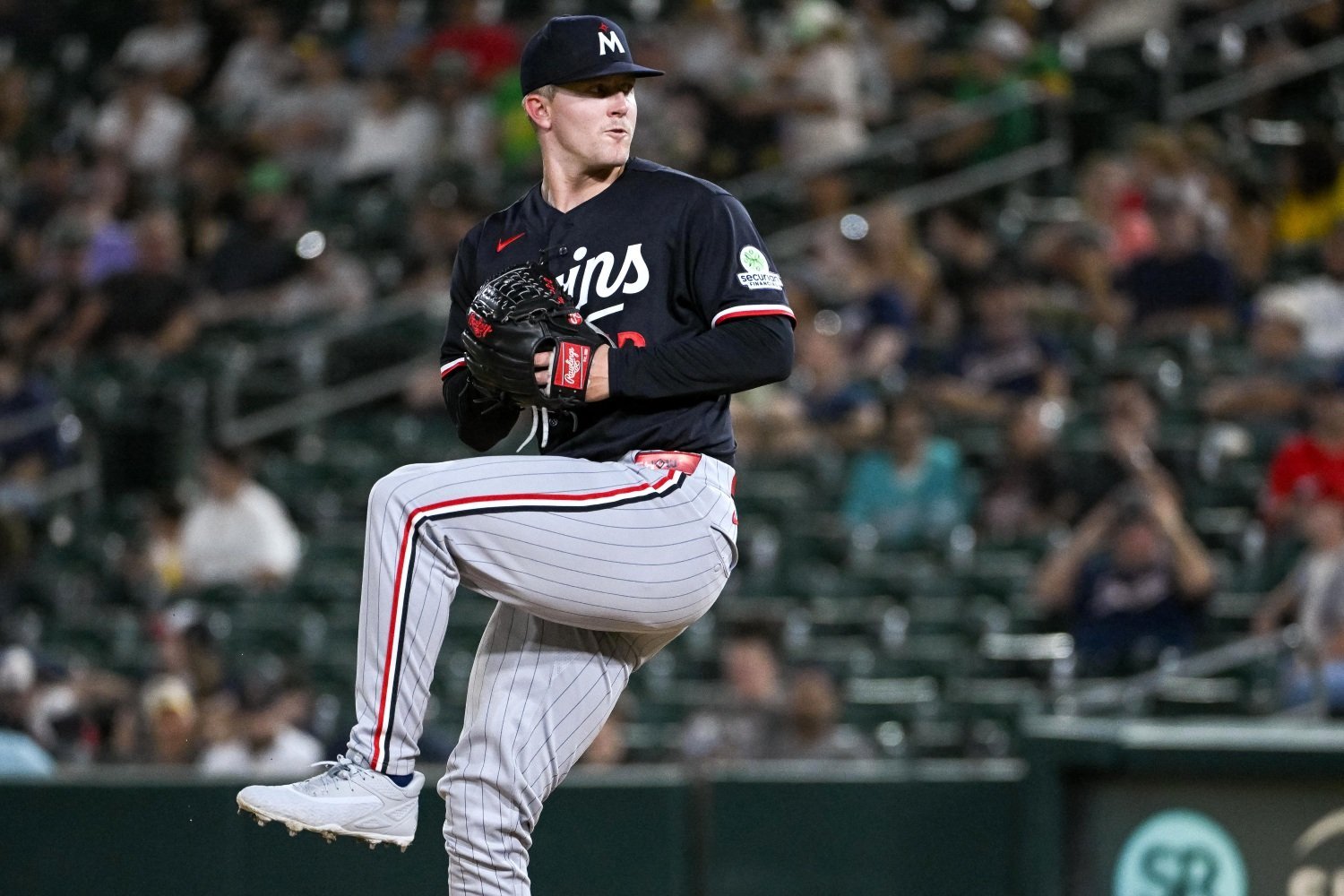 Box Score SP: Zebby Matthews 7 IP, 6 H, 1 ER, 7 K, 1 BB (105 pitches, 70 strikes) HR: Ryan Kreidler (6) Top 3 WPA: Matthews 0.21, Bell 0.13, Kreidler 0.11 Win Probability Chart (via FanGraphs): After being swept by the San Diego Padres over the weekend, Minnesota saw its playoff odds cut in half, dropping from around 40% to just 20%, according to FanGraphs. (Baseball Prospectus put them even lower Monday morning—down around 12%.) With their postseason hopes hanging in the balance, the Twins traveled to West Sacramento to face an Athletics team with the worst record in the American League. The last time the Twins were swept, they responded by sweeping the Atlanta Braves. This time, they were hoping for a similar rebound. Minnesota ran into a struggling Jeffrey Springs, who came in with a 6.02 ERA. Considering the Twins' season-long struggles against left-handed pitching, there was still plenty of reason to wonder which offense would show up, but those concerns were quickly put to rest. Byron Buxton drew a walk to start a first-inning rally. Ryan Jeffers followed with a single, and Josh Bell continued his excellent month of August by ripping a double off the top of the wall in left-center. The ball missed being a home run by roughly an inch, but it still brought Buxton home to give the Twins an early 1-0 lead. The Twins added another run in the third inning when Bell grounded into a fielder's choice, bringing home Buxton. Minnesota then really began to pull away in the fourth, when Ryan Kreidler launched a solo home run, his sixth of the season and first since June 28. A massive hit for the hometown kid who had lots of friends and family at the game. Kody Clemens followed with an RBI single, extending the lead to 4-1 and chasing Springs. The Twins broke the game open in the sixth inning after loading the bases and putting pressure on the A's bullpen. Luke Keaschall came through with a two-run double down the third-base line, giving Minnesota a 6-1 lead. Bell followed with a sacrifice fly for his third RBI of the night. It was Bell's team-leading 17th RBI of August and brought him to 80 on the season, continuing what has been an impressive month at the plate for the switch hitter. Minnesota kept its foot on the gas into the late innings. In the eighth, Clemens picked up another RBI single, scoring Buxton and giving the center fielder four runs scored on the night. Buxton went 3-for-4 in what was a massive game as he had been struggling mightily since returning from the injured list two weeks ago. A couple batters later, Kaelen Culpepper added an RBI single to cap a four-hit night and push his batting average to .340 on the season, an impressive start to his young major-league career. By the time the night was over, the Twins had collected 15 hits and scored nine runs, with every batter in the starting lineup recording at least one hit. It was the kind of offensive performance that has been frustratingly elusive of late, making it even more encouraging to see Minnesota put everything together. While the offense stole the show, Zebby Matthews quietly delivered one of his best outings of the season. Matthews didn't need to be great to win, but he was, anyway, tossing seven innings and allowing just one earned run (on an infield single) and striking out seven. He generated 23 swings and misses, a season high, and followed up another solid start with a second straight strong outing. That offers some encouraging signs of consistency from a pitcher who hasn't been able to find much of it this season. Yoendrys Gómez was called upon to close out the game in a non-save opportunity, having not pitched since August 19. After getting two quick outs, however, Gómez ran into trouble. A single and a walk put two runners on. Back-to-back-to-back doubles from Jeff McNeil, Zack Gelof and Lawrence Butler suddenly turned a 9-1 game into a 9-6 contest. What looked like an opportunity to give the back end of the bullpen a much-needed night off quickly became a somewhat sticky situation. The Twins were forced to bring in Andrew Morris to record the final out, and he did just that (on one single pitch), securing the 9-6 victory. It wasn't the clean finish the Twins envisioned when they built an eight-run lead, but the important part was getting the win. After a weekend in San Diego that threatened to derail their season, the Twins got exactly the kind of offensive response they needed. Minnesota improved to 64-68 on the season and, with the Guardians also winning, remains two games behind Cleveland for the third and final American League Wild Card spot. The White Sox lost 11-2 to the Rangers, meanwhile, bringing the Twins to within 4.5 games of first place in the AL Central. Now they need to do it again. What's Next The Twins will look to take the series on Tuesday against Athletics rookie Gage Jump. Minnesota will send Taj Bradley to the mound. First pitch is scheduled for 8:40 p.m. Central. Postgame Interviews Bullpen Usage Chart THUR FRI SAT SUN MON TOT Adams 0 17 0 34 0 51 Nance 0 0 27 0 16 43 Rogers 0 11 0 15 0 26 Morris 0 0 19 0 1 20 Gomez 0 0 0 0 20 20 Hoffman 0 0 0 17 0 17 Funderburk 0 0 0 17 0 17 Minter 0 0 8 0 0 8 View the full article
 -
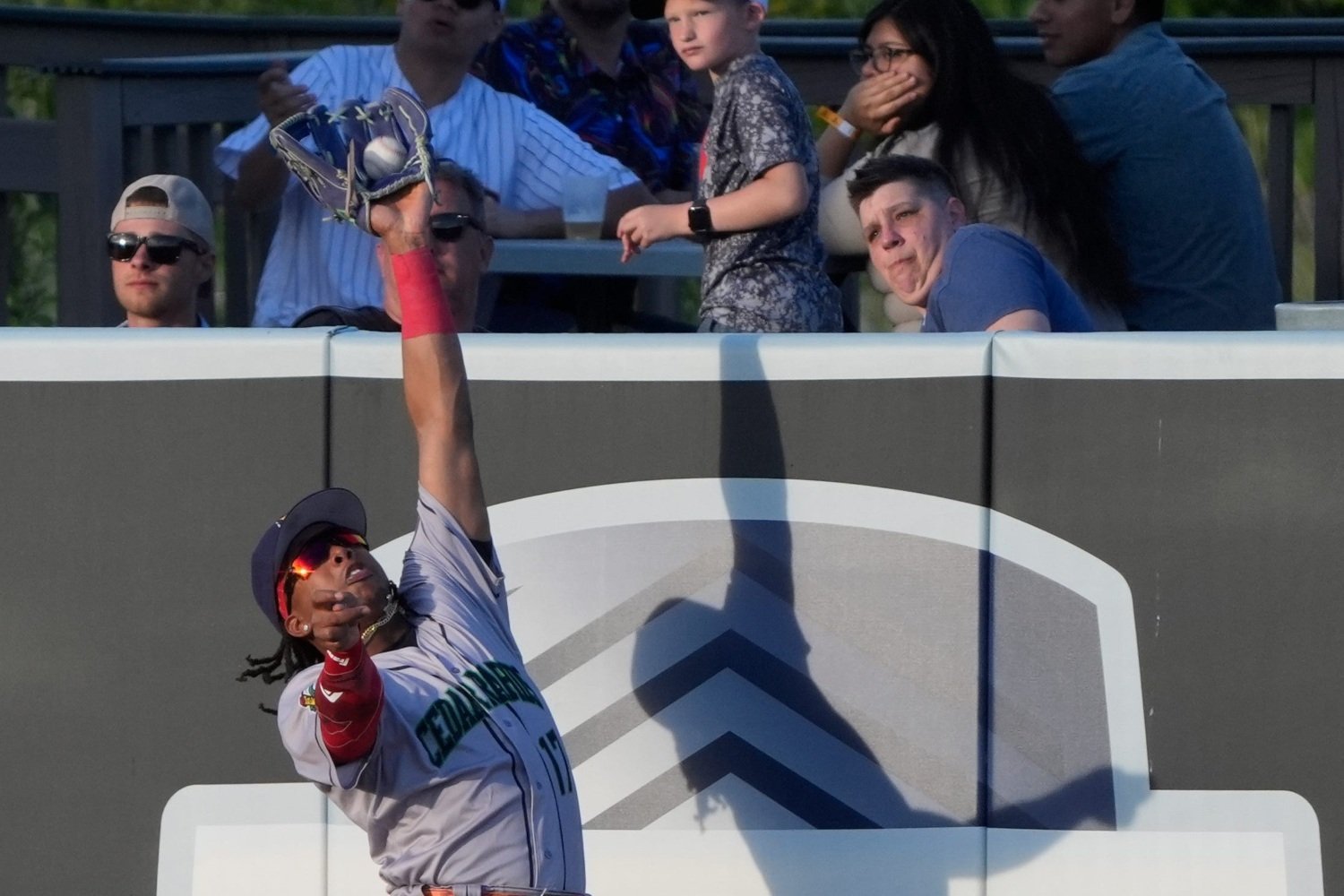 The baseball season has passed the trade deadline, and the playoff push is in full effect. It's time to look at the shakeups on Twins Daily's latest prospect ranking list. One notable prospect left the organization via trade, and the recent draft picks have gotten some time under their belt, as well, giving us an early glimpse at what they look like as professionals. 1. Walker Jenkins, OF, AAA (Previously #1) 2. Vahn Lackey, C, A (Previously #2) 3. Kaelen Culpepper, SS, MLB (Previously #3) 4. Marek Houston, SS, AA (Previously #5) 5. Riley Quick, RHP, AA (Previously #6) 6. Emmanuel Rodriguez, OF, AAA (Previously #5) 7. Hendry Mendez, OF, AAA (Previously #10) 8. Eduardo Tait, C, A+ (Previously #7) 9. Gabriel Gonzalez, OF/1B, AAA (Previously #11) 10. Charlee Soto, RHP, A+ (Previously #12) 11. Carson Tinney, C, A (Previously #13) 12. Brandon Winokur, 3B/CF, AA (Previously #15) 13. Khadim Diaw, C/OF, AA (Previously #14) 14. Ethan Wachsmann, RHP, FCL (Previously #20) 15. Ryan Gallagher, RHP, AAA (Previously #18) 16. Brett Renfrow, RHP, FCL (Previously #16) 17. James Ellwanger, RHP, A (Previously #19) 18. Quentin Young, SS/3B, A (Previously #17) 19. Yasser Mercedes, OF, A+ (Previously Unranked) 20. Enrique Jimenez, C, A+ (Previously Unranked) In the updated rankings, 18 of the 20 names will look the same, while two new names appear. Room was made for the new names through Kendry Rojas’s graduation from the list. Rojas has now tossed 29 2/3 innings for the Twins while appearing in 12 games, although the left-hander is currently on the IL with the Saints. Dasan Hill left the Twins as the centerpiece of the trade for reliever Jeff Hoffman. Hill was No. 9 on our list before the trade and has joined Toronto’s High-A affiliate. Those subtractions created room for outfielder Yasser Mercedes and catcher Enrique Jimenez to land in the final two spots on the list. Top Risers Right-handed hurler Ethan Wachsmann took the biggest jump (six spots) in this edition of the prospect rankings. He hasn’t even thrown a pitch for a Twins affiliate after being drafted in the 3rd round (79th overall) of this year's draft. As Wachsmann progresses through the Twins system, he'll need to learn to harness great raw tools and a fastball capable of hitting triple digits. Looking at the clay that's there to be molded, it's obvious why Wachsmann is thought highly enough of (at 18 years of age) to make the jump to No. 14. Three other prospects jumped three spots from their previous ranking. The highest-ranked of the bunch is outfielder Hendry Mendez, now at No. 7. Mendez has continued to produce at the plate in 63 games since his mid-season promotion to Triple-A St. Paul. The 22-year-old has hit .278/.378/.413 at the highest level of minor-league ball. Mendez is reaching a point where it's simply his batting handedness (left-handed) and primary position (outfield) holding him back from a call-up. At No. 12 is third baseman and outfielder Brandon Winokur. After starting the season at High-A, Winokur has now played 30 games at Double-A Wichita, where he's hit .262/.329/.448. Winokur’s offensive output plummeted to begin the month of August, but the 21-year-old has rebounded. He now holds a .706 OPS since the beginning of the month. Hopefully, this is the beginning of the adjustment trend we saw from the right-handed slugger-in-training as he adjusted to Low-A. Righty Ryan Gallagher ranks 15th. He had been pitching very well for the Saints until last week. In his two most recent games, Gallagher has allowed five and nine earned runs, respectively. Just before that, however, Gallagher went 5 ⅔ innings, allowed three hits, one earned run, one walk, and struck out seven batters. He held a 2.30 ERA and had 31 strikeouts to eight walks in his first handful of starts coming out of the All-Star break. This was an encouraging development from a rough initial introduction to the Triple-A level. Now, let’s hope that the most recent stretch isn’t a true regression to early-season Gallagher, but rather a blip on the radar. Overall, as a guy who isn’t going to wow with his velocity, Gallagher continues to check boxes and put himself in position to be considered for the major-league roster at some point. New Additions: 19. OF Yasser Mercedes, High-A Cedar Rapids Kernels Mercedes has, from the beginning, profiled as a power hitter. He's had to adjust to each level as he has advanced through the Twins system. After tearing up the DSL, it took Mercedes time to adjust to Low-A competition. To begin this season, Mercedes adjusted just fine, hitting .321/.439/.642, including six home runs and 11 stolen bases. Mercedes's bat has cooled again after a promotion to High-A Cedar Rapids. If he follows his normal developmental trajectory, he should rebound in time. What's really boosted Mercedes’s prospect stock is the fact that he's become a much better defensive fielder than was expected. He has moved himself from a projection as a power-hitting corner outfielder to having fringe center field capabilities. At the very least, this more athletic version of him looks like it could translate to above-average defense in a corner. A key stat to keep an eye on with Mercedes is his strikeout rate. In Low-A from 2025 to this season (2026), he improved it from 25.1% to 21.4%. In his first go-around at High-A, his strikeout rate has jumped back up to 29.1%. Considering that Mercedes is young for the level, it's an area of growth the Twins will be watching, to see if he can overcome it once again. 20. C Enrique Jimenez, High-A Cedar Rapids After struggling with a finger injury early in the season, Jimenez returned to Low-A Fort Myers and put together a solid stretch. In 11 games, the 20-year-old catcher hit .314/.490/.514 for Fort Myers and earned a promotion to High-A Cedar Rapids. In 24 games there, he's still working to adjust to the new level, hitting .205/.340/.375. As a hitter, Jimenez hasn’t displayed great power and looks to be more of a line-drive hitter. Crucially, he commands the zone well and is willing to take walks, as evidenced by a 26.5% walk rate at Low-A and 20.7% across both levels of A ball he has played at this season. Defensively, Jimenez has proven to be a decent catcher, but long-term, the stocky catcher may become a candidate to move off the position. That could be even more true, as several catchers across the Twins system have quickly surrounded Jimenez. Considering where Jimenez is in terms of age and level, he has plenty of time to prove that defensive projection wrong and improve his craft behind the plate. The tough break for Jimenez and the Twins is that he looks to be done for the season, after experiencing a significant strain in his left hamstring. His season was cut short, but it's a testament to the progress he made that his prospect status hasn't taken a hit. View the full article
