


DiamondCentric
-
Posts
2,631 -
Joined
-
Last visited
Never
Content Type
Profiles
Forums
Events
MLB News, Rumors & Analysis
DiamondCentric Tutorials & Help
Major League Baseball Videos
MLB Fan Guides & Resources
Store
Downloads
Gallery
Everything posted by DiamondCentric
-

Twins Waste No Time Offering Derek Falvey His Favorite Players Back
DiamondCentric posted an article in Twins Daily
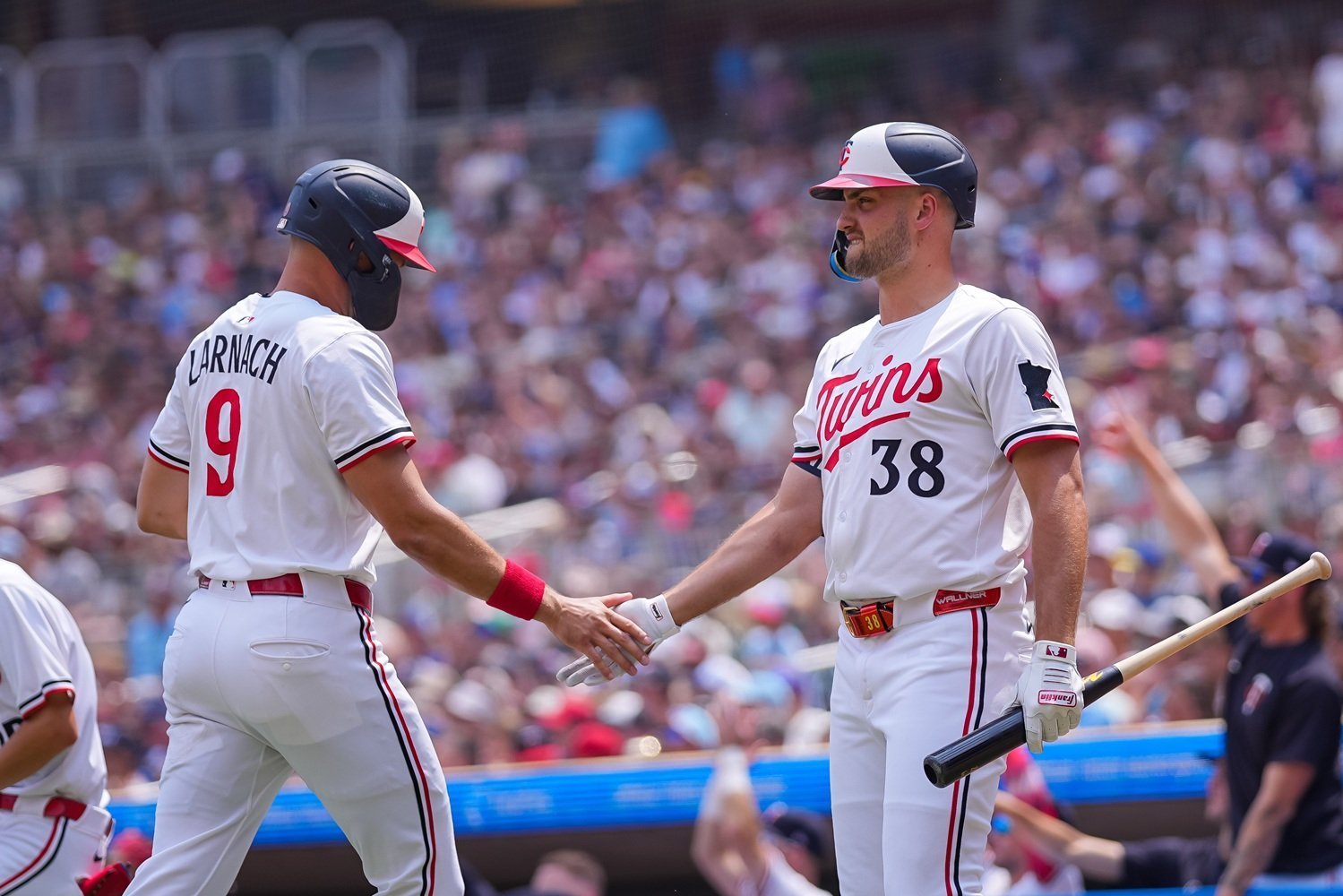 There are certain relationships in baseball that never truly go away. A former executive can leave an organization. A player can fall out of favor. An entire fan base can move on. But apparently, Jeremy Zoll was not going to let Derek Falvey get too far down the hallway at Citi Field before reminding him about some of his favorite Twins. According to sources, Zoll immediately called Falvey after the Mets hired him and presented a trade proposal. Royce Lewis. Trevor Larnach. Matt Wallner. All three players have experienced varying degrees of uncertainty in Minnesota. All three have also shown enough talent to make another organization believe there is something worth unlocking. And if there is one thing Falvey knows, it is these players. “Jeremy called me pretty quickly,” Falvey said. “I didn't even have my Mets email set up yet. I thought it was David Stearns calling me about onboarding.” Instead, it was Zoll. “Derek,” Zoll allegedly said, “how do you feel about bringing a few old friends to New York?” One Man's Trash... To be clear, calling these three players “trash” would be wildly unfair. Lewis has tremendous upside, even if his career has taken a series of frustrating turns. Larnach has shown stretches of being a legitimate middle-of-the-order bat. Wallner has demonstrated the kind of power that makes you wonder why every team doesn't simply give him 600 plate appearances and see what happens. That last part is particularly important. Because what better place to rediscover your confidence than New York? Nothing says “career reset” quite like joining a Mets organization that has spent the last several years providing baseball fans with an annual reminder that having the highest payroll does not necessarily guarantee having the highest win total. Falvey, naturally, sees the opportunity. “I know those guys,” the fictional Falvey said. “I know what they can do. I know what they can't do. I know what their strengths are. I know what their weaknesses are. And I know exactly how many times each of them has made me think, 'We should probably give him another chance.'” The Mets' Side of the Deal The Mets, meanwhile, apparently have no idea what they are getting themselves into. But that has never stopped them before. One Mets executive was reportedly intrigued by the package. “We asked Derek if he had any players he really believed in,” the anonymous Mets executive said. “He gave us three names. We asked if they were available. He said, 'Well, technically.' So here we are.” There is also the matter of cost. The Twins would presumably want something in return, although sources could not confirm whether the Mets would be sending prospects, cash considerations, a player to be named later, or a strongly worded letter explaining why New York should not have to pay for the players. One Mets source suggested the front office was comfortable with the risk. “We've had worse ideas,” the source said. When asked for an example, the source declined to comment. A Fresh Start for Everyone There is something poetic about the potential reunion. Falvey gets three players he knows. Lewis gets a new organization. Larnach gets a new organization. Wallner gets a new organization. And the Twins get to see whether their former president of baseball operations can somehow make all three players productive somewhere else. That final part is perhaps the most important. Because if Lewis goes to New York and becomes an All-Star, Larnach settles into the middle of the order, and Wallner becomes a 40-homer cult hero, Twins fans will have approximately 11 minutes before someone asks why Minnesota didn't simply keep all three. If they struggle, meanwhile, Minnesota will have successfully traded three players nobody wanted for the privilege of watching Falvey struggle with three players everybody once wanted. That's the beauty of baseball. Nobody is ever actually wrong. They just haven't waited long enough. As for Zoll, he apparently remains confident the deal makes sense. “I think Derek would appreciate what we're doing here,” Zoll said. “We're giving him three players he knows, three players he believes in and three players he can now be blamed for.” The Mets are reportedly still reviewing the paperwork. Mostly because nobody in New York can figure out whether Minnesota actually included Wallner's bat or simply the rights to discuss how good he could be. There is also some disagreement over whether Lewis, Larnach and Wallner are being acquired as players or as part of a larger Derek Falvey nostalgia package. Either way, the Mets are excited. After all, if there is one thing New York has proven over the years, it is that nothing fixes a roster quite like acquiring a few talented players who just need a change of scenery. And if that doesn't work? Well, there is always next July. At which point Zoll can call Falvey again. View the full article
-
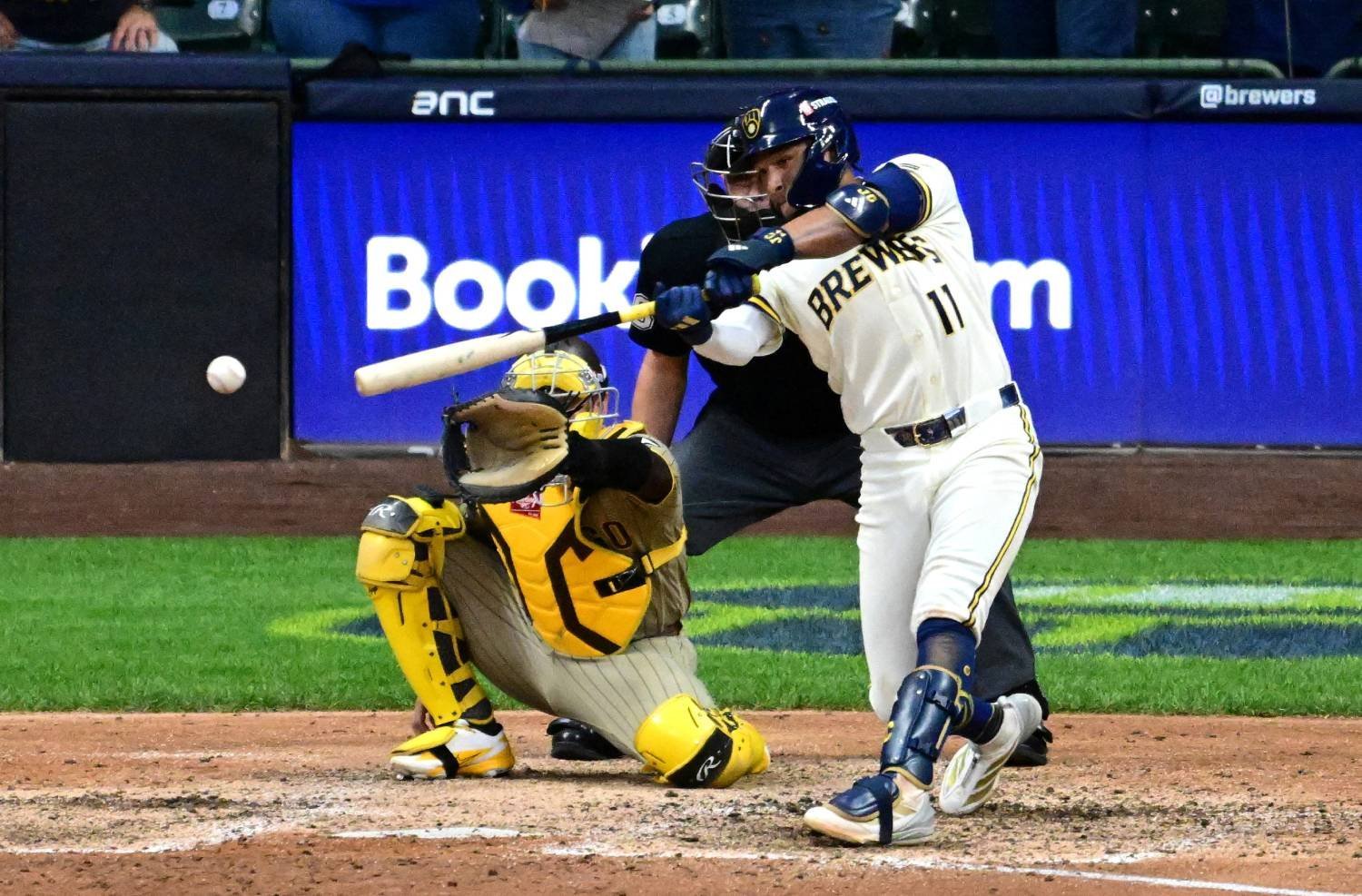 The Milwaukee Brewers are running it back with the same 26-player roster they opened the postseason with. There were no changes to the Brewers' roster for the NL Championship Series, which begins Sunday with Game 1 at American Family Field (7:08 p.m., Fox). The Brewers are sending right-hander Jacob Misiorowski to the mound against Dodgers left-hander Tarik Skubal. That means an even split of position players and pitchers (13-13) for the best-of-seven. Also, the umpires for the NLCS were announced. Here is how the umps line up for Game 1: Edwin Moscoso behind the plate, crew chief Mark Wegner at first, Ryan Additon at second, Alan Porter at third, David Rackley in left field and John Tumpane in right field. Chris Segal sits out Game 1 but will be behind the plate for Game 2. View the full article
-
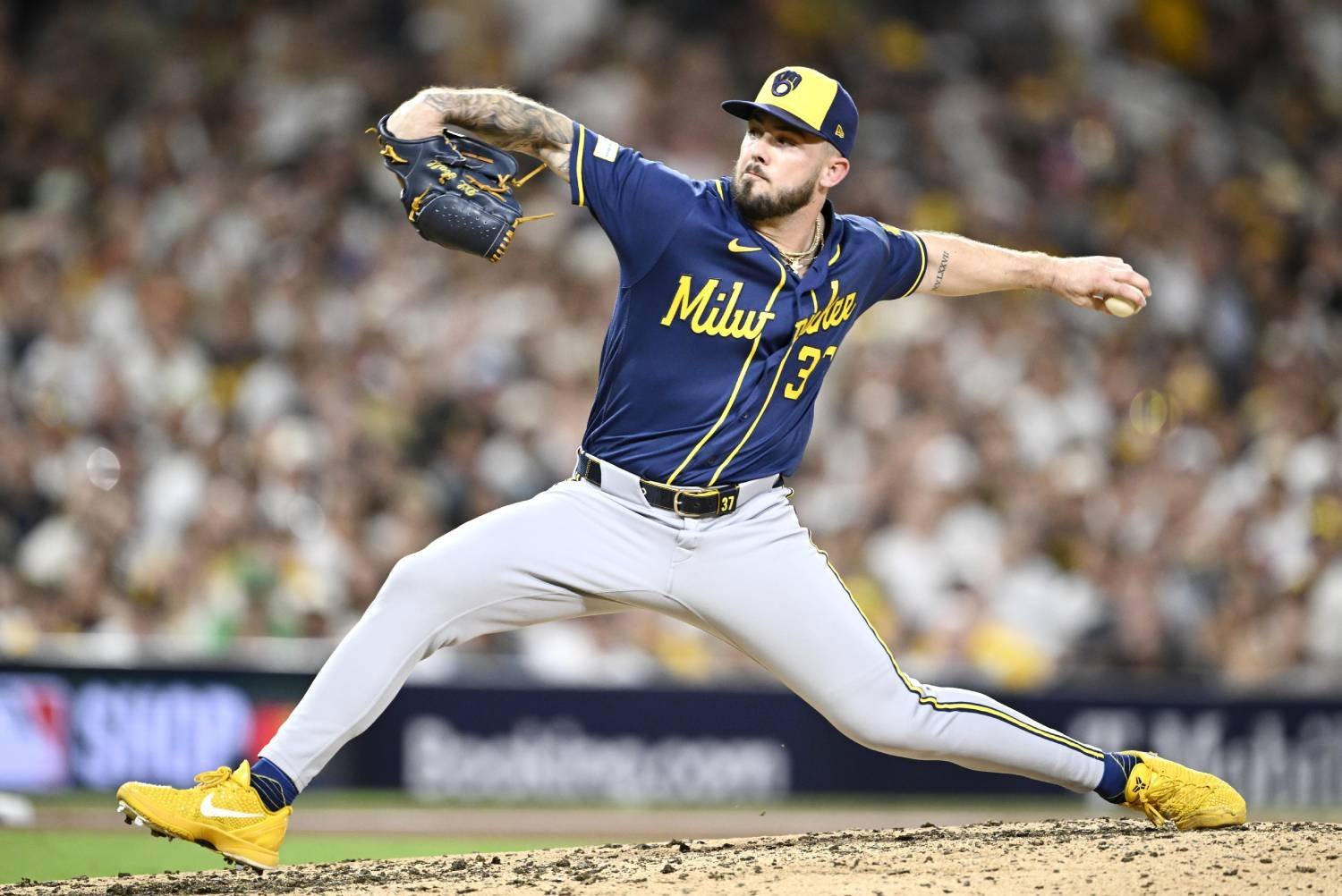 There is no question that the Milwaukee Brewers' pitching staff as a whole is better-equipped heading into the NL Championship Series this year than it was last year against the same opponent, the powerful Los Angeles Dodgers. Not only is that from a health angle, but from a weapons perspective, too. Specifically, the Brewers are stocked up on quality left-handed pitchers to attack the Dodgers' top bats, most of which are left-handed. While only one of the Brewers' probable starters—Jacob Misiorowski, Logan Henderson, Dustin May and Robert Gasser—is a lefty (Gasser), the Brewers are expected to have five left-handers in the bullpen. Expect to see a lot not only of Aaron Ashby, who led the Crew in regular-season appearances with 75, but of DL Hall, JoJo Romero, Shane Drohan, and Kyle Harrison. Romero was acquired from the St. Louis Cardinals at the trade deadline for these situations, but Hall has emerged into some leverage use, which was on display in the NL Division Series against the San Diego Padres. After not being on the postseason roster in 2025 as he finished the year on the injured list with a strained right oblique, he got three late outs in Game 1 against the Padres, setting up right-hander Trevor Megill, then notched four outs in the Game 3 loss, with right-hander Abner Uribe finishing. Drohan and Harrison, acquired in the spring from the Boston Red Sox, did not pitch in the NLDS and will be making their postseason debuts. All have had key roles for the Brewers at some time during the regular season, with perhaps the exception of Hall. But Hall has now had two postseason appearances, setting him up for his spots against the Dodgers. Which brings us to the Dodgers. Shohei Ohtani, Freddie Freeman, Max Muncy, Kyle Tucker. Those are the Dodgers' left-handed bats, with Tommy Edman a switch-hitter. With the youth of most of the Brewers' lefties, there isn't much of a track record to go off of. Ashby has faced Ohtani six times (2-for-4, two RBIs, walk, sacrifice fly), while holding the other three to 0-for-3 with two walks and a hit-by-pitch. Romero has more experience vs. that quartet, with Freeman going 2-for-8 with a double and a walk, Tucker 1-for-2 with a walk and a hit-by-pitch, and Muncy 0-for-5. He has kept Ohtani in check thus far at 1-for-8 with four strikeouts. Those are already fairly small sample sizes. Against lefties, Dodgers left-handed hitters have a .249/.325/.427 (.752 OPS) slash line, while putting up a .260/.353/.431 (.784 OPS) mark against righties. With the variety of lefties, manager Pat Murphy and pitching coach Chris Hook will be able to deploy their southpaws at different times and spread out the matchups so some don't get too repetitive over a seven-game series. Of course, that probably doesn't apply to Ashby and Romero, who will be used in more crucial situations regardless of inning. Hall and Drohan will be next up in the pecking order, with the Brewers carefully picking Harrison's situations. He has looked better in his more recent relief appearances after struggling in the aftermath of being removed from the rotation. The starts by Misiorowski and Henderson in the first two games will be particularly important in limiting the exposure of the left-handed relievers. Not that the Brewers are banking on this, but Ohtani's current status as looking rather mortal will also play into who faces who and when. Murphy might be more willing to roll with a right-hander to finish off an inning vs. Ohtani rather than automatically bringing in a lefty, even for an out. The four-time MVP, who earned NLCS MVP for his incredible two-way performance in the clinching Game 4 a year ago, went just 2-for-13 in the Dodgers' four-game NL Division Series win over Atlanta and hasn't homered since Aug. 18, during which Ohtani is 13-for-83 (.157). That span includes a stint on the 15-day injured list near the end of the regular season. But Ohtani, like Freeman, Muncy and Tucker, can get hot and be a force at any time. That is one reason why the Dodgers are the two-time defending World Series champs. Last year, the Brewers had Ashby, Gasser and Jared Koenig as lefties in the bullpen, one fewer than this year. Ashby was used as an opener twice, basically wasting his value. Gasser was used for two outs, while Koenig was in three of the four games, pitching four innings. This year, though, the Brewers are better armed to take on that challenge. They will need that as the series is unlikely to be a repeat of last year's sweep. View the full article
-
San Diego Padres Minor-League Hitters of the Year: 2026
DiamondCentric posted an article in Padres Mission
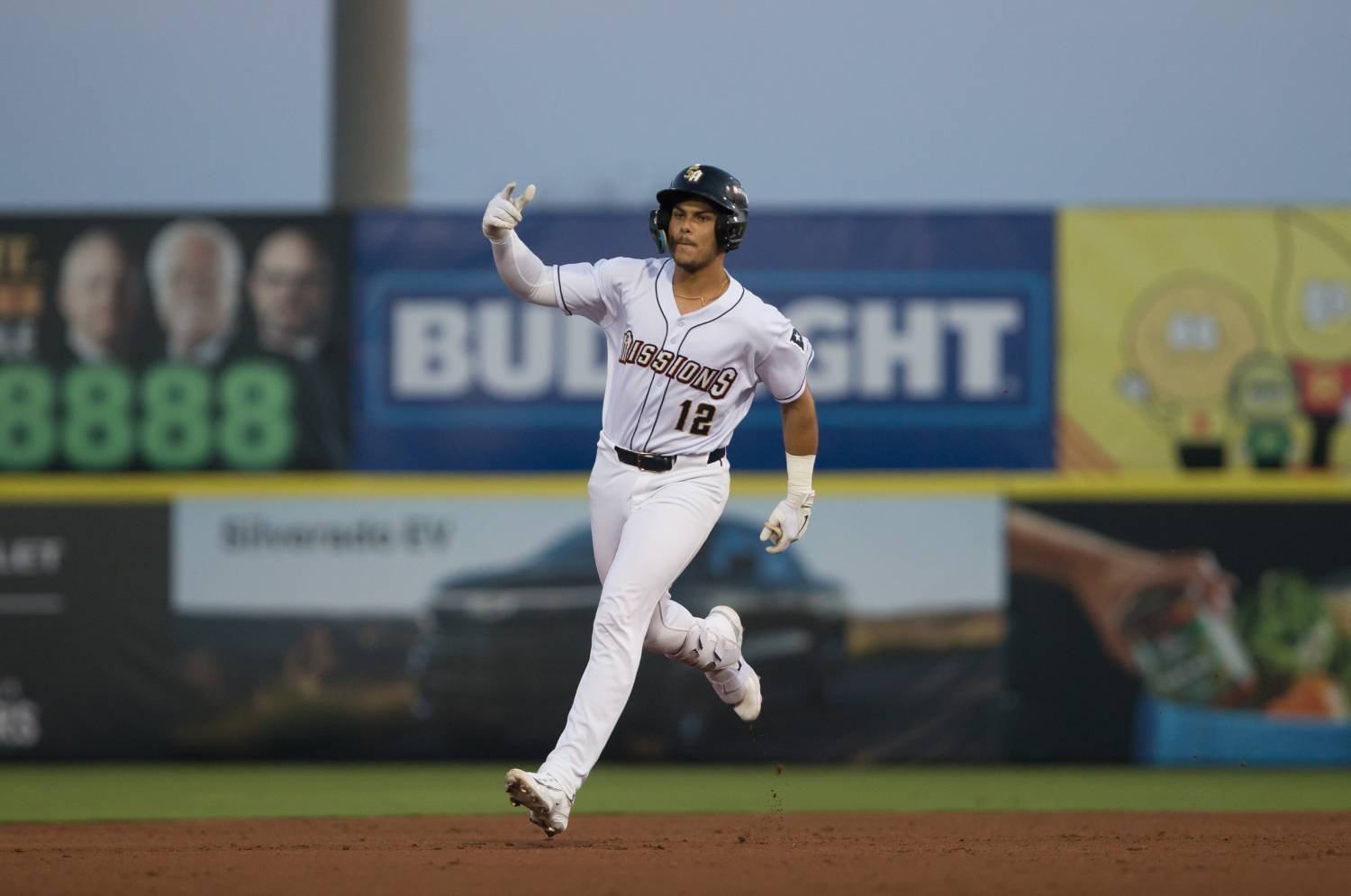 There are so many different factors when deciding who to pick as an organization’s hitter of the year. Sure, you can choose based on who had the best batting average, but that is only one piece of the equation. To me, it came down to expectations and performance, as well as the level the players were at. A variety of hitters, from MLB journeymen to top prospects, starred in the San Diego Padres organization this season. Only a few spots were available for the best players on this list, so keep in mind all of the criteria from above. 2026 Padres Mission Minor-League Hitters of the Year We'll kick things off with a number of honorable mentions, many of whom greatly improved their standing within the organization in 2026. Nick Solak, 1B-OF, Triple-A El Paso Season stats: .311/.376/.487, 116 games, 89 R, 28 2B, 2 3B, 16 HR, 80 RBI, 39 BB, 63 K, 7 SB, 2 CS Carlos Rodriguez, OF, Triple-A El Paso Season stats: .308/.375/.416, 124 games, 62 R, 18 2B, 8 3B, 6 HR, 77 RBI, 55 BB, 61 K, 23 SB, 6 CS Ryan Wideman, CF, Low-A Lake Elsinore, High-A Fort Wayne Season stats: .286/.350/.406, 109 games, 73 R, 24 2B, 6 3B, 6 HR, 34 BB, 103 K, 65 SB, 22 CS Qrey Lott, OF, Low-A Lake Elsinore Season stats: .282/.393/.452, 95 games, 60 R, 14 2B, 2 3B, 8 HR, 42 RBI, 29 BB, 84 K, 27 SB, 5 CS Dawson Willis, CIF-CF, Arizona Complex League, Low-A Lake Elsinore Season stats: .270/.367/.506, 65 games, 46 R, 16 2B, 5 3B, 10 HR, 39 RBI, 26 SB, 4 CS 5. Jake Cunningham, OF, High-A Fort Wayne, Double-A San Antonio Season stats: .283/.369/.516, 96 games, 60 R, 18 2B, 2 3B, 19 HR, 61 RBI, 44 BB, 120 K, 10 SB, 6 CS A fifth-round draft pick by the Baltimore Orioles in 2023, Cunningham was released last year after playing in just 76 games due to injury. The 24-year-old found a home with the Padres and showed he was a power threat to be taken seriously; he had three multi-homer games, including blasting three for the High-A Fort Wayne TinCaps on June 5. Cunningham finished tied for the Padres’ system lead in homers with 19 and produced an .885 OPS. After a good showing with Fort Wayne, Cunningham was bumped up to Double-A San Antonio on June 23 and raised his game, slashing .301/.370/.459 with four homers and 26 RBIs in 39 contests. While drawing more than his share of walks (11.3% rate), he also strikes out quite often (30.8%). After being a minor-league free agent following his release last year, Cunningham will be on the market again this offseason. If he returns to the Padres, he likely begins 2027 with the Missions. Notably, he is also eligible for the Rule 5 draft this offseason, but it'd be a shock to see him put on the Padres’ 40-man roster or selected to another MLB roster. 4. Luke Cantwell, 1B, Low-A Lake Elsinore, High-A Fort Wayne Season stats: .289/.429/.443, 81 games, 51 R, 51 R, 19 2B, 1 3B, 6 HR, 47 RBI, 52 BB, 73 K, 6 SB, 4 CS Selected in the 20th round of the 2025 draft out of Pitt, the 23-year-old showed a nice ability with the bat during his first full pro season. The left-handed hitter was really good to begin the season with the Low-A Lake Elsinore Storm, posting a .328/.475/.496 with just two homers and 30 RBIs in 40 games. One of those homers was an inside-the-parker, which he also did following a promotion to High-A Fort Wayne. With the TinCaps, he struggled at the plate with a .250/.386/.391 slash line, but he did hit four homers. As a first baseman, Cantwell doesn’t provide the typical power from the position, but if he can show consistency at the plate in 2027, that would bode well for his future. Cantwell also has a good eye, drawing 51 walks and leading the Padres’ system in on-base percentage for anyone with at least 300 plate appearances (.429). Following his second-half slump, it wouldn’t be surprising to see him return to Fort Wayne to begin 2027, but the Padres could also push him up to Double-A San Antonio. 3. Alex McCoy, LF, High-A Fort Wayne, Double-A San Antonio Season stats: .278/.355/.467, 123 games, 74 R, 31 2B, 1 3B, 19 HR, 71 RBI, 50 BB, 142 K An undrafted free agent signed out of Hofstra in 2025, the 24-year-old saw his profile skyrocket this year due to producing some of the highest exit velocities in all of baseball. The 6-foot-5, 240-pounder showed an all-around hitting ability, tying for the homer lead in the Padres’ system while finishing second with 31 doubles. He hit 27 of those doubles for High-A Fort Wayne, a total that led the Midwest League, before an Aug. 14 promotion to the Double-A San Antonio Missions. Those are many of the reasons McCoy went from not being on Padres Mission’s Top 20 prospects list to finishing the season at No. 8. McCoy put up a .314/.360/.467 slash line in 25 games with the Missions, showing a nice ability to adjust to a tougher level of pitching. With this being his first full pro season, he did have a bad habit of striking out. He finished second in the Padres’ system with 142 K’s, which yielded a 26.2% strikeout rate, though he also drew 50 walks for a 9.2% rate (a solid mark). The big man can also steal a few bags, swiping 24 in 33 tries. McCoy will play in the Arizona Fall League, where he will continue to build on an impressive 2026. He figures to start 2027 where he finished this year, at Double-A San Antonio. 2. Kerrington Cross, 3B-1B, Low-A Lake Elsinore, High-A Fort Wayne, Double-A San Antonio Season stats: .277/.414/.500, 115 games, 78 R, 26 2B, 2 3B, 18 HR, 64 RBI, 80 BB, 111 K, 21 SB, 7 CS Another position player in his first full pro season, the 2025 seventh-round draft choice out of Cincinnati has a terrific eye at the plate as evidenced by his 80 walks, which led the Padres’ system, in 115 games. How does that compare to the big boys? Xander Bogaerts leads the Friars with 77 walks in 152 games. Cross also put together a .914 OPS, which also led the system (200 minimum plate appearances). His 18 homers were third in the Padres’ system. Cross also had a stellar start to the season at Low-A Lake Elsinore, posting a slash line of .313/.467/.608 (1.075 OPS), with 11 homers, 43 RBIs and 17 stolen bases in 58 games. He earned a midseason promotion to High-A Fort Wayne, where the sledding was a bit tougher: he slashed just .239/.365/.392 with six homers and 18 RBIs in 52 games. He did get a final-week call-up to Double-A San Antonio, where he went 6-for-20 (.300/.364/.500) with a homer and three RBIs. He will need to sharpen up his defense to remain at third, with a move to first possible. The Padres could push Cross to start the season at Double-A San Antonio, unless they want to see him have success at High-A Fort Wayne before advancing him. 1. Ethan Salas, C, Double-A San Antonio, Triple-A El Paso Season stats: .296/.374/.448, 96 games, 54 R, 19 2B, 2 3B, 10 HR, 61 RBI, 47 BB, 58 K, 17 SB, 8 CS The 20-year-old wunderkind put everything together this season and took himself all the way to the MLB roster. Following a 2025 season in which he missed all but 10 games due to a stress reaction in his low back, Salas was the best hitter the Padres had in their system in 2026. Sure, there were others who had higher homer totals, better OPS figures, or more RBIs, but the young catcher realized a lot of the potential the Friars envisioned when they signed him to a then-record bonus of $5.6 million in 2023. He has played most of his four years in the Padres' system as the team's No. 1 prospect, as he has been at Padres Mission. Salas, who had slipped in all of the national Top 100 rankings due to missing all that time last year and a poor offensive season in 2024, started his season at Double-A San Antonio as a 19-year-old, where he was playing against guys an average of four years older than he was. All he did in 72 games was put up a slash line of .286/.361/.417 with seven homers and 37 RBIs, as well as 14 steals in 20 chances. After turning 20, he played in his second Futures Game. Just a couple weeks after that, Salas was promoted to the Triple-A El Paso Chihuahuas, where he was even better against players roughly eight years his elder. There, he slashed .326/.410/.539 with three homers and 24 RBIs in 24 games, walking more times than he struck out (14-10). That was enough for the Padres to bring him up for his MLB debut when rosters expanded Sept. 1. While at times seeming like the organization might be pushing the young backstop too hard, promoting him up to Double-A as a 17-year-old in his debut season and then watching him struggle at High-A Fort Wayne in 2024 (.206/.288/.311 in 111 games), the work Salas did while recovering from his back injury last year and in the offseason paid off handsomely. He should be a fixture in the big leagues moving forward and is in the mix to be the Opening Day catcher next year. View the full article
-
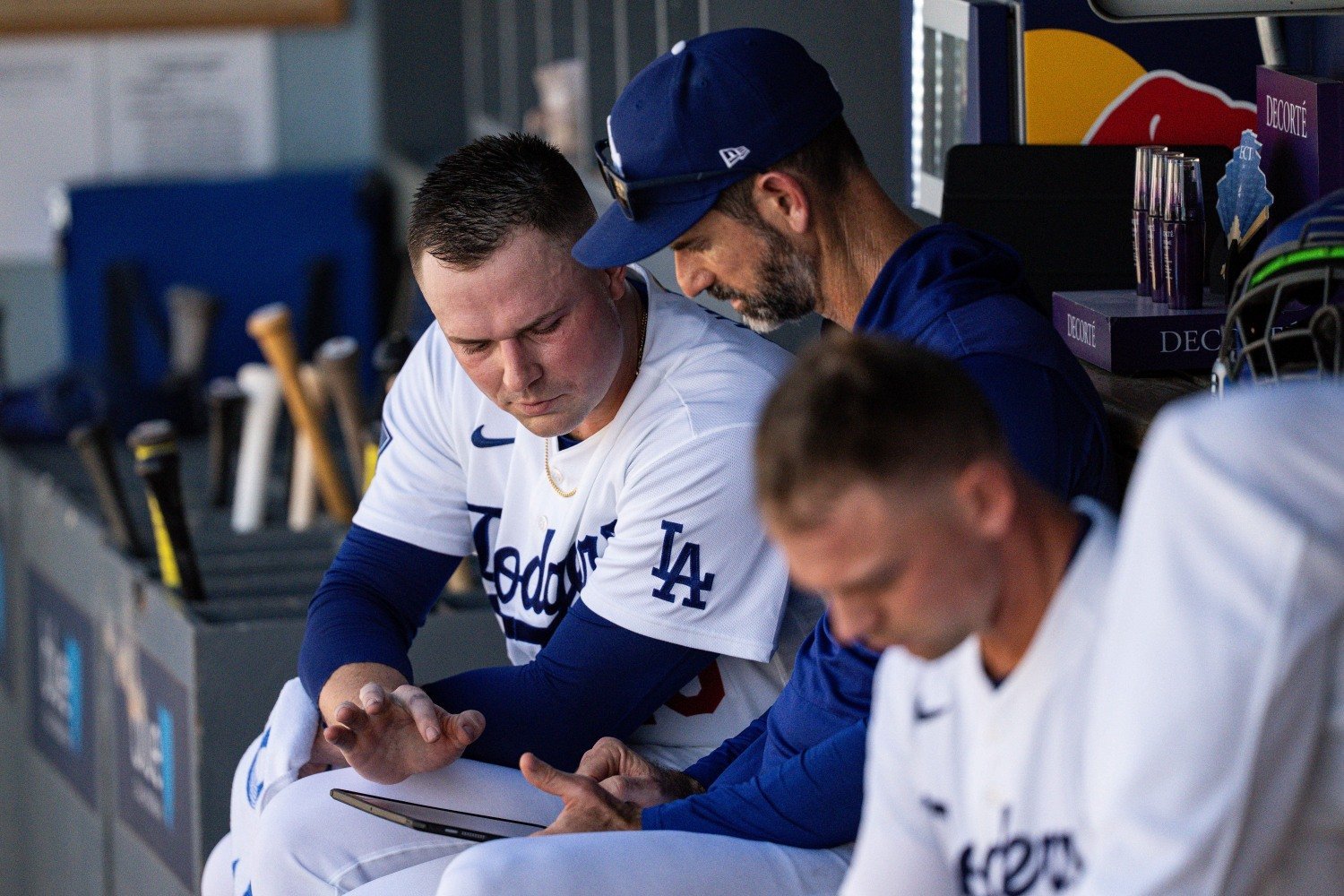 As games against Tarik Skubal go, the Brewers did well in 2026. They faced him twice, and though he got 18 outs in each appearance, the Crew also collected seven hits in each. They scored six runs, although one was unearned and another came home after he'd departed the game. It wasn't like they had his number and knocked him out of the box early—that only happened to Skubal once all year, really—but Milwaukee put up a good fight against him. It's always dangerous to extrapolate from previous experience when predicting the future, and that goes extra for baseball. Overindex on matchup history, and you can convince yourself that something very meaningful affected a recent batch of outcomes, when really, what occurred fell within the normal range that all players (and teams) experience. On the other hand, though, there's something to learn from everything you do and everything that happens to you. Let's run down a few things we can (and can't) learn from the two starts Skubal made against the Brewers this season, as the team gets ready to face him again. The Batting Order of Theseus Of all the things to know about those games and how they relate to this one, the most important is this: On April 23, Brandon Lockridge, Luis Matos, Blake Perkins and Luis Rengifo were in the lineup. On August 16, Lockridge and Jonathan Ornelas both started. That's a good reminder of several things, not least of which is that no team enters a playoff series as the same club they were all season. There is no "club they were all season". You never step into the same river or onto the same diamond twice. Change is a constant in life, but even more of one in baseball. For that matter, it's unlikely that the at-bats David Hamilton had against Skubal in April will matter much, either, for reasons we'll discuss more in a bit. Both times Skubal started against Milwaukee in the regular season, Gary Sánchez was in the middle of the lineup, and Christian Yelich and Garrett Mitchell were on the bench. Will that be true here in October? It's not guaranteed. The top-line results above, then, probably aren't as important as what we can glean from actually watching the games. Therefore, I went back to watch every pitch Skubal threw in those games. Get His Feet Moving There are a whole lot of pitchers who land in a more off-balance or unathletic position than Skubal. He's ready to field his position when he finishes delivering the ball—at least in theory. In practice, he's had some notable gaffes when forced to scramble after slow rollers and bunts over the years. Knowing that, the Brewers showed bunt (whether or not they even offered, let alone touched it or got it down) seven times in April and three times in August. Of all those bluffs and real attempts, only one (by Contreras, pulled back, in April) was by one of the players likely to start Sunday night. They were almost all effective, though, either at throwing Skubal off slightly and inducing a ball in a count when he clearly wanted to throw a strike; inviting him to throw a hittable pitch immediately afterward; or creating chaos by actually getting the bunt down. In the sixth inning of the game in Detroit in April, Hamilton had a bunt single, and Lockridge followed immediately with a sacrifice bunt that he showed late, which turned into a single when no Tigers player got to first base in time to get him. First baseman Spencer Torkelson had come in to field the ball; Skubal didn't break directly enough to cover the bag. The Tigers' corner infielders are much younger and faster than the Dodgers', too. Though neither Freddie Freeman nor Max Muncy is any slouch defensively, the best way for an offense to test each is to lay down a bunt or two. Freeman and Muncy are a combined 73 years old, and they run like it. Skubal isn't quick off the mound, though he lands in position to handle anything hit sharply back to him. Brice Turang, Luis Lara, Sal Frelick and Garrett Mitchell should at least show bunt a few times. How Aggressive is Too Aggressive? As most Brewers fans already know, no team in the league swings less often than the Brewers. That's situation-dependent, of course, but not entirely so. On the first pitch of at-bats, the league swings about 30% of the time, on average. The Brewers were second-least aggressive on the first pitch this year, offering just 28.2% of the time. Against pitchers whom they expect to fill up the zone and whom they know to have swing-and-miss stuff, though, the team changes tack. In 51 plate appearances against Skubal, they swung at the first pitch 24 times. Early swings against strike-throwing strikeout pitchers are good. They mitigate the chances of striking out, and indeed, the Brewers only fanned 12 times in those 51 plate appearances. That's not pretty (23.5% strikeout rate), but Skubal would typically punch out 15 or 16 batters in the same number of at-bats. It seemed that they had a good idea of how he would attack them, too. When he tried to get ahead with an out-of-zone changeup or a slider, they laid off. Their swings early were concentrated on his fastball. When right-handed batters got into deep counts, they started sitting on his changeup, with some success. Lefties stayed locked in on the heater. That's a good overall plan. Slightly less aggressiveness might be in order this time, though—not much, but slightly less. In August, the team worked Skubal hard and got his pitch count elevated early. He made it through six innings only because Dave Roberts was willing to push him. The hook will come slightly quicker Sunday night, so if they can get him to 80 pitches after four innings, they'll have a good chance of getting to hit against the Dodgers' middle relievers before the night is out. Besides, the approach they took this regular season was clearly (although slightly) overcooked. Most of their swings didn't produce balls in play, anyway. They'd have done just as well for themselves in those individual at-bats by taking the pitch, and they wouldn't have risked a quick out. It's Not the Same Joey Ortiz The really good news for Milwaukee is the player who looked worst against Skubal in both games. William Contreras had good swings against him. So did Turang, and Jackson Chourio. Pratt still hasn't seen him live, because he was on the injured list when the August start happened, but Andrew Vaughn and Jake Bauers both swung well in that game at Dodger Stadium. The one guy who looked utterly stumped, despite what seems to have been a solid gameplan, was Joey Ortiz. Unlike Contreras and Chourio, Ortiz seemed utterly unable to read the changeup. He chased that pitch repeatedly, and he got bullied by Skubal's fastball when the lefty sped him back up. Ortiz had a terrific resurgance after Pratt was called up and the team moved him to third base, but he looked as bad in August as he did in April, when it came to Skubal. By contrast, Hamilton had a hard-hit ball and the aforementioned bunt single back in April. Looking only at these games, you could make a case for starting Hamilton over Ortiz. However, underlying data tells us that Ortiz made a bigger change at the tail end of the year than the ones he made in the middle, and it should render him better able to handle Skubal this time. Ortiz's contact point moved about 5 inches farther in front of his body in September than it had been throughout the season. His attack angle (the vertical angle at which the barrel is traveling at contact, relative to the ground) shot up, and his attack direction swung sharply to the pull side. Ortiz is wired way, way better to hit Skubal right now than he was two months ago. On the whole, perhaps one can argue that the Brewers are less well-equipped, at least to get to Skubal the way they did in each of those previous outings. Perkins had a key double in the April game. The two bunts were pivotal, as was a misplayed grounder in the game in August. This team became more conventional as the season wore on, and while that might make them better-prepared for the playoffs as a whole, it did sap some of the quirky magic their offense ran on for the previous year or two. On balance, though, you'd rather have this Brewers team facing Skubal than any previous version, from April, August or any other time. Whether they all start or not, this will be the first time Chourio, Vaughn, Sánchez and Pratt are all available to play in the same game against the southpaw. Ortiz made meaningful improvements, and the power that Bauers, Contreras and Turang are capable of makes the lineup dangerous. They scored enough to make Skubal's teams work and to get him out of the game before Out No. 19 both times they saw him this year. To win Game 1, they need to do that again. They're unlikely to do it the same way, but they have avenues to that level of success open before them. View the full article
-
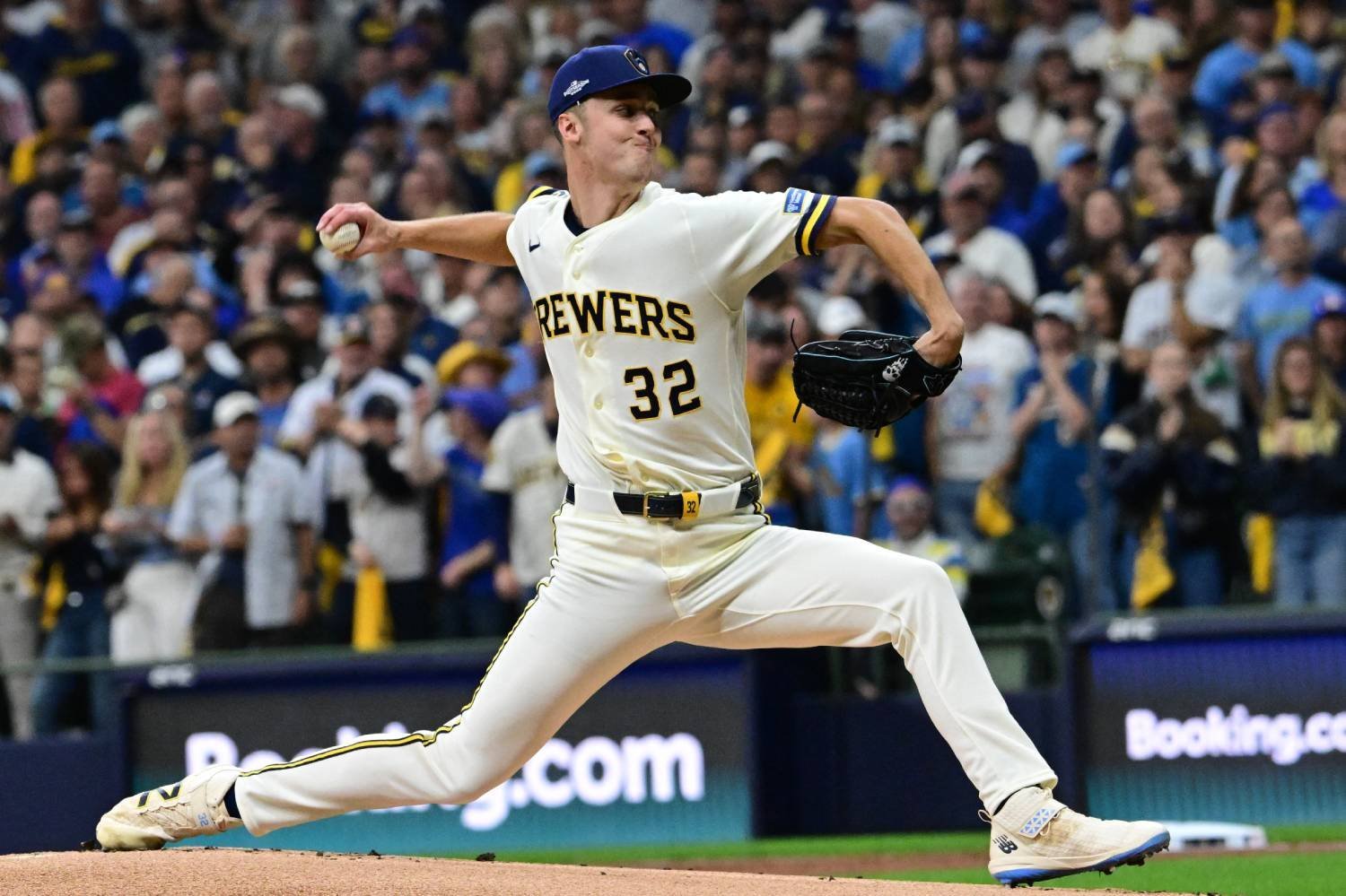 A matchup that has been anticipated since the first day of spring training is finally here. The Milwaukee Brewers vs. the Los Angeles Dodgers in Game 1 of the NL Championship Series. MLB's best team in the regular season vs. the two-time defending World Series champions in a repeat of last year's NLCS. And the starting pitchers are the perfect ones to begin this best-of-seven series. For the Brewers, that means right-hander Jacob Misiorowski. In his first full season in MLB, the Miz has taken his game to levels only dreamed of by Crew fans. Misiorowski is the presumptive NL Cy Young Award winner after going 16-5 and leading MLB in ERA (1.80), FIP (2.17), strikeouts (252) and WHIP (0.802). He had a 6.6% walk rate and 37.9% strikeout rate. Misiorowski faced the Dodgers once this year, on the Brewers' last West Coast road trip. That was Aug. 15 at Dodger Stadium, a 4-1 Brewers victory in which Misiorowski went six innings, allowing a run on five hits with a walk and six strikeouts. Of course, Misiorowski had a dominant performance in Game 4 of last year's NLCS, but that one came out of the bullpen. With left-hander Aaron Ashby used as an opener, Misiorowski came on in the first and went five innings, striking out nine and allowing two runs (one earned) on three hits and one walk. With just two regular-season games against Misiorowski (one last year), the Dodgers have limited exposure to Misiorowski. Four-time MVP Shohei Ohtani is 2-for-5 with a solo homer and a walk. The only other Dodger with multiple hits vs. the Miz is backup outfielder Alex Call, who had both in this year's meeting. Jacob Misiorowski vs. Los Angeles Dodgers: Current Batters Table Rk Player B PA AB H 2B 3B HR RBI BB SO BA OBP SLG OPS SH SF IBB HBP GIDP 1 Mookie Betts R 6 6 1 0 0 0 0 0 2 .167 .167 .167 .333 0 0 0 0 0 2 Freddie Freeman L 6 6 0 0 0 0 0 0 3 .000 .000 .000 .000 0 0 0 0 0 3 Shohei Ohtani L 6 5 2 0 1 1 2 1 2 .400 .500 1.400 1.900 0 0 0 0 0 4 Andy Pages R 6 6 0 0 0 0 0 0 1 .000 .000 .000 .000 0 0 0 0 0 5 Tommy Edman B 3 3 0 0 0 0 0 0 1 .000 .000 .000 .000 0 0 0 0 0 6 Max Muncy L 3 2 0 0 0 0 0 1 1 .000 .333 .000 .333 0 0 0 0 0 7 Alex Call R 2 2 2 0 0 0 0 0 0 1.000 1.000 1.000 2.000 0 0 0 0 0 8 Hunter Feduccia L 2 2 1 0 0 0 0 0 0 .500 .500 .500 1.000 0 0 0 0 0 9 Teoscar Hernández R 2 2 1 0 0 0 0 0 1 .500 .500 .500 1.000 0 0 0 0 0 10 Miguel Rojas R 2 2 1 1 0 0 0 0 0 .500 .500 1.000 1.500 0 0 0 0 0 11 Dalton Rushing L 2 2 1 0 0 0 0 0 1 .500 .500 .500 1.000 0 0 0 0 0 12 Kyle Tucker L 2 1 0 0 0 0 0 1 0 .000 .500 .000 .500 0 0 0 0 0 Provided by Stathead: Found with Stathead. See Full Results. Generated 10/10/2026. Meanwhile, the Brewers' task will be to solve two-time reigning AL Cy Young Award winner Tarik Skubal. While there won't be a third consecutive Cy Young in Skubal's future, the left-hander still was very good this year. Between the Detroit Tigers and Dodgers, who acquired him over a push from the Brewers at the trade deadline, Skubal had a 2.72 ERA (2.51 FIP) in 26 appearances with a 4.4% walk rate and 30% strikeout rate. Skubal missed a handful of starts in May as he had a new procedure called a nanoneedle to remove a bone chip from his left elbow. Skubal faced the Brewers twice this year, once with the Tigers and once with the Dodgers. In his Dodgers outing, Skubal went six innings, giving up two runs (one earned) on seven hits and two walks with strikeouts on Aug. 16. The Brewers got four runs off him in six-plus innings, allowing seven hits with no walks and five RBIs. There are a few players with some small success vs. Skubal. William Contreras is 3-for-8 with a double, Jackson Chourio is 3-for-9 with a double, and Jake Bauers is 3-for-3 with an RBI. The bullpens for both teams should be in fine shape with three days off between series. Tarik Skubal vs. Milwaukee Brewers: Current Batters Table Rk Player B PA AB H 2B 3B HR RBI BB SO BA OBP SLG OPS SH SF IBB HBP GIDP 1 Gary Sánchez R 19 16 2 1 0 0 1 2 7 .125 .263 .188 .451 0 0 0 1 0 2 Joey Ortiz R 11 11 0 0 0 0 0 0 8 .000 .000 .000 .000 0 0 0 0 0 3 Jackson Chourio R 9 9 3 1 0 0 0 0 3 .333 .333 .444 .778 0 0 0 0 0 4 William Contreras R 9 8 3 1 0 0 0 1 0 .375 .444 .500 .944 0 0 0 0 1 5 Brice Turang L 8 8 2 0 1 0 1 0 4 .250 .250 .500 .750 0 0 0 0 0 6 Brandon Lockridge R 6 5 1 0 0 0 0 1 3 .200 .333 .200 .533 0 0 0 0 0 7 Sal Frelick L 4 4 0 0 0 0 0 0 1 .000 .000 .000 .000 0 0 0 0 1 8 Jake Bauers L 3 3 3 0 0 0 1 0 0 1.000 1.000 1.000 2.000 0 0 0 0 0 9 Luis Lara B 3 3 0 0 0 0 0 0 0 .000 .000 .000 .000 0 0 0 0 0 10 Garrett Mitchell L 3 3 0 0 0 0 0 0 1 .000 .000 .000 .000 0 0 0 0 0 11 David Hamilton L 2 2 1 0 0 0 0 0 0 .500 .500 .500 1.000 0 0 0 0 0 12 Bo Naylor L 2 2 0 0 0 0 0 0 0 .000 .000 .000 .000 0 0 0 0 0 13 Christian Yelich L 2 2 0 0 0 0 0 0 1 .000 .000 .000 .000 0 0 0 0 0 14 Bryse Wilson R 1 1 0 0 0 0 0 0 0 .000 .000 .000 .000 0 0 0 0 0 Provided by Stathead: Found with Stathead. See Full Results. Generated 10/10/2026. View the full article
-
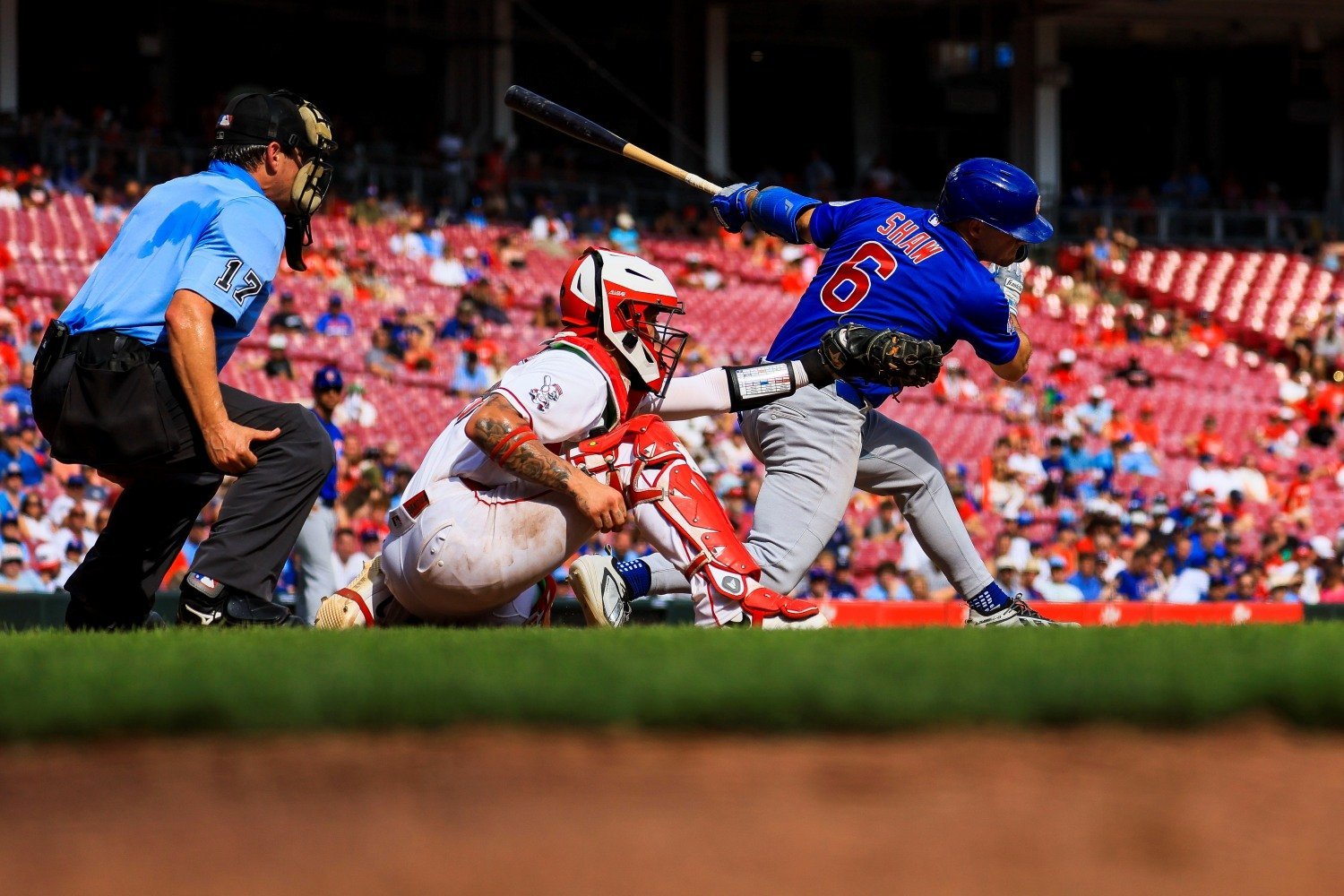 Most of the Cubs' offseason spending this winter will have to go toward remaking their pitching staff. They need to sign multiple starting pitchers and fix their mess of a bullpen. They can't afford, in other words, to splurge on their outfield, even as they reckon with the likely departures of Seiya Suzuki and Ian Happ. They'll have to spend enough to address one of the corner outfield vacancies (even if it be by re-signing one of those incumbents), but they can't go outside the organization to fill both. One of Pedro Ramírez and Matt Shaw almost has to become a regular corner outfielder next year, or else they'll need to platoon. That's not an exciting proposition, though. Neither player has yet showed the degree of overall offensive competence you want from a corner outfielder. Each has at least some chance to be a plus defender out there, but to realize it, the team would have to sacrifice the value either can provide via versatility. The upside of the duo is real, but tapping into it will require some careful evaluation. Let's weigh the options by examining the two. A Mess of a Player: Matt Shaw's Approach and Swing Problems In 202 plate appearances in 2026, Shaw hit .237/.327/.410. He walked a little over 10% of the time and his strikeout rate was a healthy 17%, but overall, that production was the result of good luck. Shaw mostly hit the ball to the big part of the field. He didn't hit it hard very often. He hit a couple of wall-scraping home runs and a couple of doubles that fell in when they shouldn't have. He got some infield hits that resulted primarily from dumb luck. The process underlying his results was poor. To wit, in 2026, only one hitter in the league took a lower percentage of their swings on balls in the middle of the zone, vertically, than did Shaw: Javier Báez. It's jarring to lay the name of any player walking as much as Shaw did side-by-side with Báez's, but that's where he fell. Shaw got lucky to walk that much, of course. He swung less often at pitches inside the zone than an average batter does (60%, against a league average of 67%) and more often at ones outside the zone than an average batter does (32.5%, against an average just under 29%). But beyond swinging at the wrong pitches, he erred by not knowing what pitch he was even looking for. Shaw has a greater capacity for manipulating his bat path than a typical hitter. His average tilt on low pitches was about 16° steeper than on high ones, a disparity greater than all but four other hitters: Luis Arraez, Gavin Sheets, Jake Mangum and Marcell Ozuna. Just on the other side of Shaw on that leaderboard are Ildemaro Vargas, Ernie Clement, Ryan O'Hearn and Andrew Benintendi. As those names suggest, that maneuverability of the bat is a sign of a good hit tool. The raw tool goes for naught, though, if not accompanied by good swing decisions. If the Cubs are to trust Shaw with full-time duty, they'll need to see him make better ones. Having that bendable swing means one can better cover the zone from high to low, so Shaw doesn't need to approach his at-bats like (say) Alex Bregman. The Cubs' veteran third baseman (and Shaw's usurper at the hot corner) took 71% of his swings this year at pitches in that middle vertical segment, better than all but three other hitters in the league. Bregman has average flexibility in his swing tilt and (like Shaw) maintains his bat speed better than an average hitter when he has to change his tilt for a low or high pitch, but he stays locked in on that most productive band. Shaw can be more flexible, but he must be more selective than he was this year, or he'll never make the most of his talent. Too Flat? The Outlier Swing of Pedro Ramírez There's nothing (or at least, much less) wrong with Ramírez's swing decisions. He chases about as often as Shaw, but is much more aggressive within the zone. He put up almost identical numbers to Shaw's this season, despite being a year younger; not having played in the majors the previous season; and getting very sporadic playing time. All of that speaks in his favor. So does the fact that he stayed healthy this year, while Shaw was unable to do so. On the other hand, there are reasons to worry about Ramírez's swing, especially from the left side—the swing he'll need to use at least 70% of the time to be a regular in the bigs. Only two left-handed batters (Ildemaro Vargas, again, and backup Padres infielder Sung-Mun Song) had flatter swings than Ramírez this season. Not all flat swings are bad, but swings with more tilt give a player a wider range of pitches and timing signatures on which they can succeed. Ramírez catches the ball much farther in front of his body than do Vargas or Song, too. That part is good. Flat swings work best when a batter gets the ball out front, centering it up. Over time, though, swings that flat tend to produce too many balls that aren't centered. Ramírez hit too many high, harmless fly balls and too many grounders, especially from the left side. There's more to like about Ramírez's development in 2026 than about Shaw's, offensively. His shortcomings are at least as pronounced as Shaw's right now, though. Barring a swing change, Ramírez will struggle to produce at the level the Cubs should want from a left or right fielder for the foreseeable future. About the Leather Say Shaw cleans up his approach a bit, and say Ramírez's swing can be adjusted slightly. In that case, they would form a strong timeshare at the plate, with Shaw taking slightly more than the usual short side of a platoon. The question of their overall value, then, would come down to the defense. So, in turn, does the question of which one deserves more time, if a platoon isn't on the cards. Shaw is faster. He adjusted tolerably well to right field, but between his injuries and the improvement of Suzuki as a defender, he ended up playing very little there. Ramírez, however, played almost exclusively on the infield in the majors, and even his minor-league career has been spent on the dirt. He runs well, for a stocky infielder, but he has no experience to speak of in either left or right field. Neither player is likely to be more than average in the outfield next year. In the long run, that could change, but the team needs to see at least one of them thrive with the bat in order to determine whether that wait is worth it. Kevin Alcántara is still around, for now, but he'll be out of options next spring, and he's been given no runway from which to gather developmental momentum and lift off. It's not at all clear that the Cubs were wrong to deny him that playing time. In 935 plate appearances over parts of three seasons at Triple-A Iowa, he's been fairly static. He walks about 12% of the time and he's slugged .482, but that league inflates power numbers, so the latter is not impressive. The former comes at the cost of a strikeout rate pushing 30%. He's toolsy, but Alcántara might never make enough contact (or lift the ball enough) to play productively in the bigs. He's much more likely to play above-average defense in a corner than either Shaw or Ramírez, but the bat can't be trusted. To build a good enough lineup in 2027, the Cubs have to spend some money for an outfield bat. They also have to achieve an overdue homegrown improvement, though. If they can't, their offense and defense will backslide, and whatever pitching upgrades they manage will have to work overtime to offset the degradation. View the full article
-
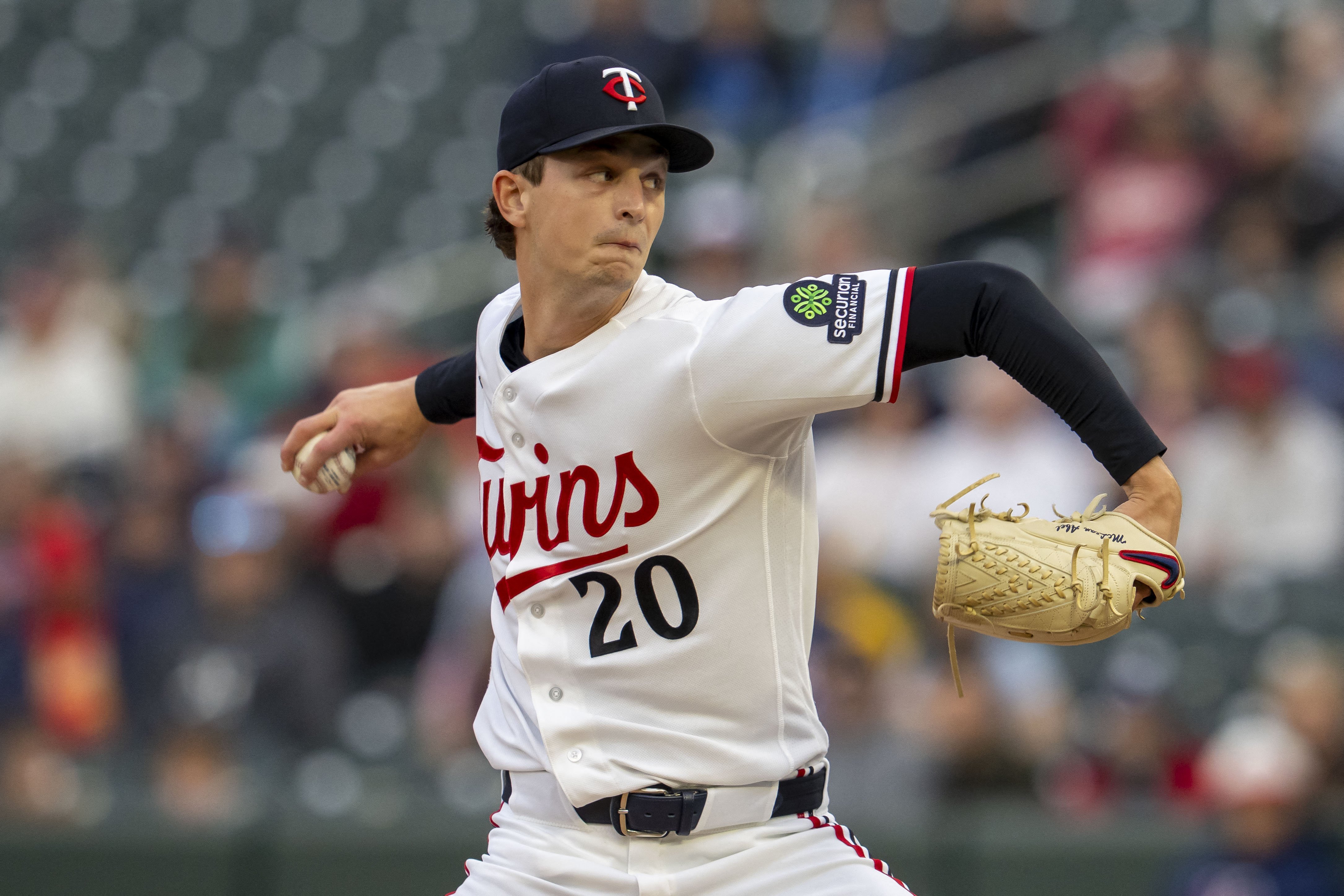 Despite hanging around in a historically bad AL Central for a good chunk of the season, much of 2026 felt as though the biggest goal was taking steps toward determining the next core of the Minnesota Twins' roster. While we saw steps toward this goal, it felt like we missed out on seeing the full potential of several players who could be a part of the next competitive Twins’ team. There are three players in particular we wish we’d seen more of in 2026. Mick Abel After surprisingly winning an opening-day roster spot, Mick Abel flashed his dominant stuff for a brief period before being shut down by an elbow injury for the remainder of the season. His last start on April 14 was seven shutout innings with 10 Ks against Boston. The Twins hoped Abel could be a future rotation piece, with his performance the biggest question mark. Now, health will be a factor moving forward as well. The good news is that Abel is on track to be fully healthy for the start of 2027, and he should have every opportunity to open the season in the rotation. If he can reach his ceiling of a playoff-caliber starting pitcher, the Twins' rotation would be the strength of the team next season. It would also make the Jhoan Durán trade look much better, considering former top prospect Eduardo Tait, with whom Abel was acquired, has had a very disappointing tenure so far in the Twins’ organization. Alan Roden It’s hard to say what Alan Roden’s role will be with the Twins moving forward, or even whether he’ll remain with the team through the offseason at all. After he was acquired at the 2025 trade deadline, the team seemed to believe in his on-base ability and defense in the corner outfield, but injuries may have disrupted their plans for him, and his left-handedness at the plate makes him an odd fit for the roster. Though he posted fewer than 100 plate appearances at the MLB level this season, his production was encouraging, and his skillset should be useful to the Twins if they can fit him on the roster. Alan Roden is barely more of a known commodity than much younger players like Emmanuel Rodriguez and Walker Jenkins. He has fewer than 250 MLB plate appearances as a soon-to-be 27-year-old, and he’ll be competing with several top prospects for playing time who play the same position and also hit left-handed. He has a history of playing first base, a position the team doesn’t have any immediate answers at. Still, his offensive profile doesn’t fit that of your typical corner infielder, and it’s unclear whether his bat can meet the higher standards of a position at the bottom of the defensive spectrum. It would be nice to have more data on Roden at the MLB level at this point in his career. Emmanuel Rodriguez We likely would have seen Rodriguez much earlier this season, but injuries once again prevented him from playing anything close to a full season. He has yet to appear in even 100 games in a single season and was healthy for just 71 between the minor and major leagues in 2026. His swing-and-miss profile is still a red flag at the MLB level, but his plate discipline and ability to impact the baseball showed up in his brief 13-game debut. Rodriguez is out of options in 2027, meaning he is essentially a lock to make the opening day roster. There’s no denying his talent, but consistency will be the big question in 2027, both in his ability to stay on the field and in making enough contact at the plate. It would be great to have a better idea of what to expect from Rodriguez next season, as giving him more time in St. Paul will not be an option. Instead, the Twins will have to count on Rodriguez to keep himself afloat, with little data to support their hopes. It would be nice if the Twins missing the playoffs yet again in 2026 came with more clarity on some of their potential future contributors. While we did see some positive developments and questions about the future answered, there were certainly a handful of players we’d have liked more answers on. Are there any other players you’d have liked to see more from in 2026? Let us know below! View the full article
-
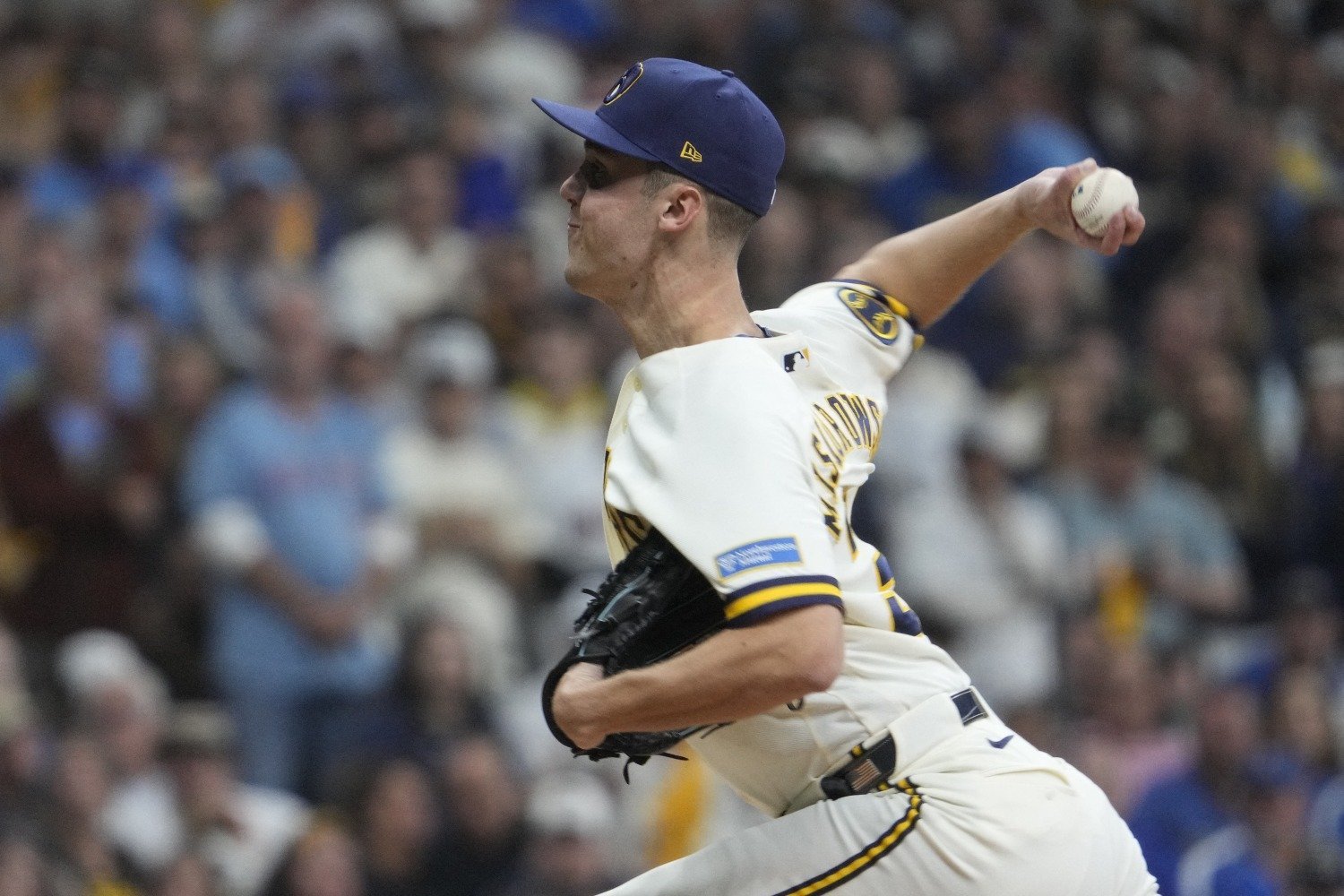 After posting a 1.80 ERA and 3.47 FIP against the Padres in the NLDS, the Brewers' pitching staff faces a more daunting assignment against the Dodgers in a rematch of last year's NLCS. That, at least, is how it looks at first glance. The Padres were a capable offense, finishing the regular season with a 102 wRC+, but the Dodgers' 111 wRC+ ranked second in baseball. Season-long numbers can be misleading for projecting a playoff series, though. The Padres entered October hot, ranking second with a 119 wRC+ in the second half. The Dodgers will make the Brewers work for every out, but the Padres already did that for most of the NLDS. In that sense, Los Angeles won't be a new challenge. It won't be from a matchup-specific perspective, either. During that second-half surge, the Padres led the league with a .358 xwOBA and 0.57 runs per 100 pitches against fastballs. The Brewers' pitching coaches prioritize fastballs because they're easiest to throw for strikes; no team has thrown fastballs with a higher percentage of their total offerings since 2023. Facing a team that was crushing fastballs, the Brewers stuck to their approach. After throwing fastballs 66.4% of the time in the regular season, they threw them 64.9% of the time in the NLDS. It worked swimmingly, as the Padres managed just a .294 wOBA against those heaters. They face a similar matchup against the Dodgers, who were easily the best fastball hitters in baseball this year. Even during a second-half dropoff, their .356 wOBA against heaters trailed only the Padres. Team FB wOBA FB xwOBA FB Run Value/100 Dodgers .363 .370 0.397 Cubs .355 .346 0.306 Brewers .361 .350 0.201 Rockies .353 .340 0.152 Tigers .352 .360 0.141 If the NLDS was any indication, the Brewers won't back down from throwing fastballs to fastball hitters. "By executing pitches, that stops offenses," Pat Murphy said before a team workout on Saturday afternoon. "We're still going to pitch to our strengths, and we're going to try to go—it's like any other fight. It's like, styles matter, but we can only do what we can do." Leaning on each pitcher's strengths is the correct starting point. The Brewers boast some of baseball's best fastballs. Jacob Misiorowski's four-seamer led all pitches in run value this year, and Logan Henderson's four-seamer was 19th. They also have plenty of excellent secondary pitches, which means they have room to maximize matchups by using velocity more strategically. Here's how the hitters the Brewers are most likely to see in the NLCS fared against different pitch types from right-handed pitchers (minimum 80 pitches per pitch type), measured with expected wOBA: body { font-family: Arial, Helvetica, sans-serif; margin: 0; padding: 10px; } table { border-collapse: collapse; font-size: 20px; color: #000; white-space: nowrap; } th, td { border: 1px solid #d0d0d0; padding: 4px 8px; height: 22px; font-weight: normal; text-align: center; } /* Bold header row */ th { font-weight: bold; background-color: #fff; text-align: center; } /* Column widths */ th:first-child, td:first-child { min-width: 165px; } th:nth-child(2), td:nth-child(2) { min-width: 35px; } th:not(:first-child):not(:nth-child(2)), td:not(:first-child):not(:nth-child(2)) { min-width: 135px; } /* Green heatmap */ .g1 { background-color: #edf6f2; } .g2 { background-color: #d4ebe1; } .g3 { background-color: #b7e1d0; } .g4 { background-color: #9bd5bc; } .g5 { background-color: #7bc9a6; } .g6 { background-color: #57b98d; } /* Red heatmap */ .r1 { background-color: #fce2e2; } .r2 { background-color: #fbcaca; } .r3 { background-color: #f9a1a1; } .r4 { background-color: #fa7777; } .r5 { background-color: #ff0000; } /* Force every empty data cell to gray */ td.empty, td:empty { background: #d3d3d3 !important; } /* Neutral cell with a value */ .n { background-color: #fff; } Hitter Side Four-Seam FB Sinker Cutter Curveball Slider Sweeper Changeup Splitter Mookie Betts R .347 .422 .301 .271 .376 Tommy Edman L .254 .372 .431 .234 .286 .286 Freddie Freeman L .391 .371 .463 .340 .374 .343 .352 Teoscar Hernandez R .353 .344 .313 .275 .136 .405 Max Muncy L .450 .442 .472 .270 .340 .098 .314 .201 Shohei Ohtani L .416 .550 .498 .295 .404 .423 .346 .279 Andy Pages R .296 .339 .436 .270 .319 .396 Miguel Rojas R .316 .288 .278 Dalton Rushing L .341 .343 .419 .464 .285 Will Smith R .507 .487 .591 .280 .271 Kyle Tucker L .350 .429 .370 .347 .301 .263 .269 .234 Here's that same breakdown against left-handed pitchers: body { font-family: Arial, Helvetica, sans-serif; margin: 0; padding: 10px; } table { border-collapse: collapse; font-size: 20px; color: #000; white-space: nowrap; } th, td { border: 1px solid #d0d0d0; padding: 4px 8px; height: 22px; font-weight: normal; text-align: center; } /* Bold header row */ th { font-weight: bold; background-color: #fff; text-align: center; } /* Column widths */ th:first-child, td:first-child { min-width: 165px; } th:nth-child(2), td:nth-child(2) { min-width: 35px; } th:not(:first-child):not(:nth-child(2)), td:not(:first-child):not(:nth-child(2)) { min-width: 135px; } /* Green heatmap */ .g1 { background-color: #edf6f2; } .g2 { background-color: #d4ebe1; } .g3 { background-color: #b7e1d0; } .g4 { background-color: #9bd5bc; } .g5 { background-color: #7bc9a6; } .g6 { background-color: #57b98d; } /* Red heatmap */ .r1 { background-color: #fce2e2; } .r2 { background-color: #fbcaca; } .r3 { background-color: #f9a1a1; } .r4 { background-color: #fa7777; } .r5 { background-color: #ff0000; } /* Gray background for all empty cells */ td.empty, td:empty { background: #d3d3d3 !important; } Hitter Side Four-Seam FB Sinker Cutter Curveball Slider Sweeper Changeup Mookie Betts R .379 .394 .273 .170 .351 Tommy Edman R .259 .103 .277 Freddie Freeman L .304 .328 .469 .311 .209 Teoscar Hernandez R .413 .573 .300 .268 .361 Max Muncy L .386 .341 .310 Shohei Ohtani L .266 .533 .261 .318 .579 Andy Pages R .407 .488 .461 .369 .272 Miguel Rojas R .303 .372 .328 .442 .242 Dalton Rushing L .220 .419 Will Smith R .361 .409 Kyle Tucker L .401 .292 .243 .328 .490 This is an incomplete, imperfect snapshot. Pitch-specific xwOBA only looks at pitches that ended a plate appearance, so it ignores productive takes, called strikes, and whiffs that occur earlier in counts. Still, it's a decent starting point for scouting reports. A few things stand out. Most Dodgers hitters punish sinkers, regardless of pitcher handedness. That shouldn't preclude some of the Brewers' best sinkerballers (Antonio Senzatela, Abner Uribe, Aaron Ashby) from throwing their primary fastballs, but their multi-fastball guys (Robert Gasser, Shane Drohan, Dustin May, Chad Patrick) may want to lean toward other pitches. On the flip side, many Los Angeles hitters struggle against short sliders. That means Drohan and DL Hall could play big roles in the series. Uribe has also gone more slider-heavy in certain matchups over the last two years, and this could be one of them. To advance to their first World Series since 1982, the Brewers must beat the Dodgers with their best on both sides of the ball. Misiorowski shouldn't suddenly become a junkballer, and the relievers behind him shouldn't pitch scared. But when the Brewers have the arsenal to adapt, they should consider mixing things up if the Dodgers' swings call for more secondaries. "We can't worry about changing what we do," Murphy said. "We just have to go in and be a little better at the things we do." View the full article
-
 Jack and Spencer recap the Brewers' victory over the Padres in the NLDS and preview the NLCS rematch with the Dodgers. Apple Podcasts: https://podcasts.apple.com/us/podcast/the-brewer-fanatic-podcast/id1740648724 Spotify: https://open.spotify.com/show/5CY8mWsQayqjDXqw9OT2Td iHeartRadio: https://www.iheart.com/podcast/263-the-brewer-fanatic-podcast-166534588/ Pocket Casts: https://pca.st/ommzz627 Watch On YouTube: https://www.youtube.com/@brewerfanatic View the full article
-
Why these players don't fit on Marlins moving forward
DiamondCentric posted an article in Fish On First
 The Miami Marlins do not need to overhaul their roster this offseason, but at the very least, notable role players could be on their way out. After catching up on the ongoing MLB postseason, AJ Ramos, Isaac Azout and Ely Sussman take turns selecting members of the 2026 team who are candidates to be traded or simply released in favor of better, more complementary pieces. You can find Fish Unfiltered and Fish On First LIVE on the Fish On First YouTube channel, Apple Podcasts, Spotify or wherever else you get your pods. Players mentioned on the show who could be gone from Miami by Opening Day include Deyvison De Los Santos, Xavier Edwards, Pete Fairbanks, Andrew Nardi, Agustín Ramírez, Esteury Ruiz and Tyler Zuber. View the full article
-
A Cubs Fan's Guide To Rooting For the White Sox In October
DiamondCentric posted an article in North Side Baseball
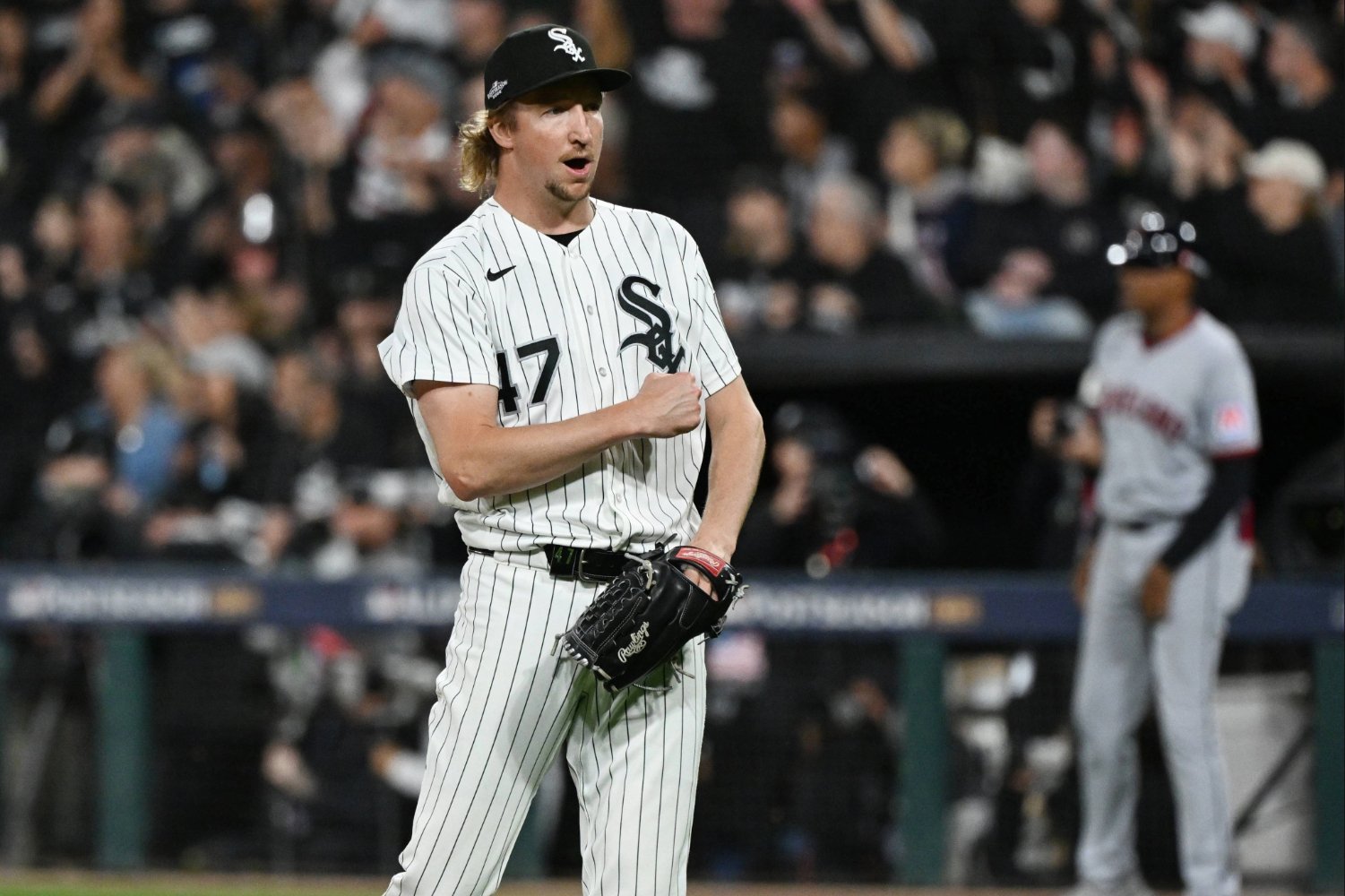 As the league prepares for the LCS in both the American League and National League, the Chicago Cubs are where they were since late Wednesday night of last week (and where they will be for the foreseeable future): not playing baseball. Of course, this is incredibly disappointing for a team that had two different ten-game winning streaks, scored the most runs in all of baseball, and employs the soon-to-be-named 2026 NL MVP, Pete Crow-Armstrong. But, if you watched the Cubs in September, who went 11-15 during the month, you cannot be surprised at all by the result. Overall, they were an offense first team that scraped by with a pitching staff that ranked toward the bottom of the league in nearly every statistical category. This was a team that scored over five runs once in the final week of the season and could not even manage to push more than two runners across the plate in each game during their final homestand against Miami. It is completely beyond my comprehension that they felt they deserved to pop champagne after the final home win of the year after they choked away the top seed in the Wild Card race and finished a colossal 14 games back of the Brewers. It was irrational to believe that the Cubs team we saw in September would walk into Petco Park and put up a decent fight against the hottest team in baseball. The Padres were the hungry wolf, and the Cubs were the sheep with two broken legs, and that is exactly how that series played out. For the rest of October, there are two things Cubs fans can do: turn off baseball completely and put their faith in the hamstring of Caleb Williams, or root for the continuation of the best story in baseball on Saturday. Going into this season, the leading narratives were the Dodgers’ quest for a three-peat, Aaron Judge’s push for a third straight AL MVP, or even how a college coach would perform as an MLB manager with no professional experience. Nobody, outside of maybe the Bridgeport lifers, was anticipating a booming return to relevancy for the Chicago White Sox after three 100-loss seasons. Now, that team is set to go back to Cleveland to play in the only Game 5 of the divisional round, and Cubs fans should hope for another celebration from the visiting team at Progressive Field, ten years after the Cubs made history there. Don’t get me wrong. There are reasons why a Cubs fan would not want to see the White Sox advance to their first ALCS since 2005. Maybe you are from the far northwest suburbs and not really a baseball fan, but you grew up being told you have to pick a side. Maybe you are from Davenport and a diehard Iowa Cubs fan, or from Knoxville and a Smokies season ticket holder that doesn’t know much about the major leagues outside of how the Cubs and the players you got to watch in the minors are performing. If you fall into one of those buckets, I understand, but I also feel sympathy for you because the 2026 White Sox are one of the most unusually fun teams we have seen in the sport in some time. The White Sox are embracing the youth movement, which is something that Cubs fans should know to appreciate more than anyone, considering their World Series win on the backs of position players 26 and under. In comparison, the White Sox have six regular starters in the lineup 26 and under, which is the same amount as the 2016 Cubs. We saw the longball on full display on the South Side this year, with three players hitting over 30 home runs, something no other team can say for themselves this season. One of those guys is Japanese phenom Munetaka Murakami, who managed to make the White Sox Japan’s second favorite MLB team behind the Dodgers. With an interview like this, its impossible to be a baseball fan and not love this guy. Also, remember the sad Miguel Vargas meme? Well, he isn’t sad anymore. He was the team leader in bWAR with 5.4 and smacked 33 bombs in what was the breakout season many thought he would never have after being moved from the Dodgers in the Michael Kopech trade. Then there’s Tristan Peters, a guy the Sox acquired from the Rays for cash considerations, and Sam Antonacci, a mid-ranked infield prospect, combining for 6.1 bWAR and joining top prospect Braden Montgomery in what could be one of baseball’s best outfields for years to come. The White Sox also employ a guy giving Nico Hoerner a run for his money as the best second baseman in Chicago–Chase Meidroth slashed .276/.350/.415 and finished fourth in bWAR at the position. Oh, and the White Sox aren’t paying any of these guys over $20 million a year. No matter which Chicago team you cheer for, you have a right to have been upset by the pitching staff at various points of the season. As such, have to admit that what second year manager Will Venable is doing with the White Sox pitching staff is pretty damn impressive. The opener/bullpen game strategy has become a regular occurrence over the last few seasons, and the Cubs went with Andrew Kittredge as an opener in the 2026 NLWC, but the strategy the Sox are using is unheard of until now. This is a team that is fighting for the ALCS with only one real starting pitcher in Sean Burke. This is an all-hands-on-deck approach the likes of which we have never seen before. For the most part, it has worked in all their road playoff games so far. We will see if their undefined pitching staff has one more game of brilliance in them to propel them to Tampa Bay on Monday. As a Chicagoan, this is good for the city. There is no other way to put it. If you love Chicago, no matter if you live in Pilsen, Gold Coast, Logan Square or up in Andersonville, there is a team with your city’s name on it looking to do something historic. If you want to be a bitter Cubs fan because your team fell flat on their face with a top-five payroll, an owner who seemingly cares more about Nashville-ifying Wrigleyville, and a GM who strives for 89 wins, then fine, go cheer for the Guardians or the Dodgers or whoever. If Anthony Rizzo can embrace what the Sox are doing, then you should too. It is great for the game, it is great for the city, and caring about October baseball is much better than not. View the full article
-
What Could the Twins’ Next City Connect Uniform Look Like?
DiamondCentric posted an article in Twins Daily
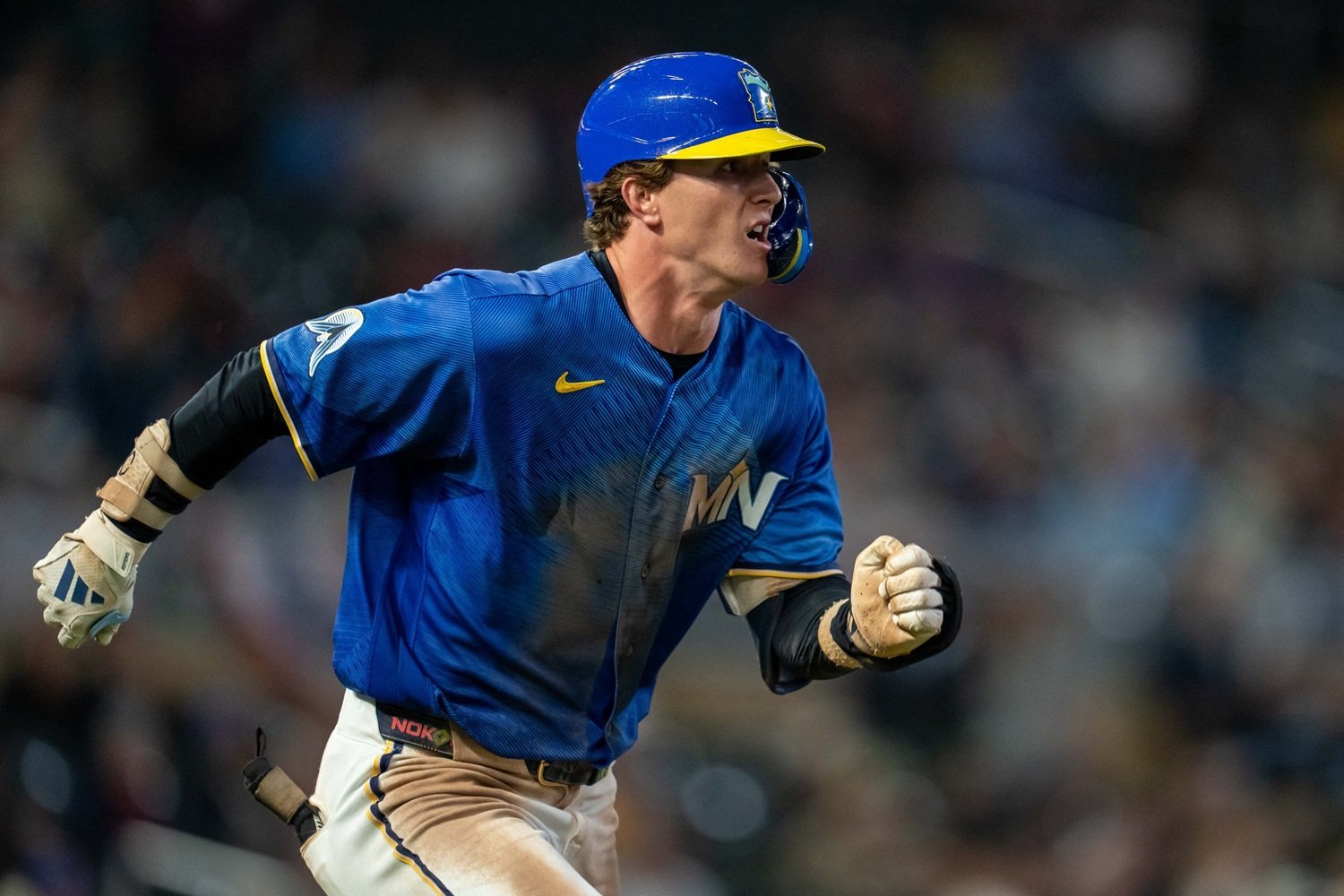 The Minnesota Twins were the final team in Major League Baseball to introduce their first City Connect uniforms. That debut came in June 2024, giving Minnesota a chance to showcase a different side of its identity through a uniform designed to stand apart from the team's traditional navy, red, and white color scheme. MLB's City Connect program gives teams an opportunity to experiment with designs that connect their franchises to the communities they represent. These uniforms typically have a three-year lifespan in a team's on-field rotation before becoming eligible for retirement or replacement. With Minnesota's original design approaching that window, the organization could soon have an opportunity to start fresh. The Twins have plenty of options. They could lean into Minnesota's musical history, embrace the state's famously cold winters, celebrate the region's brewing traditions, or build a design around the relationship between Minneapolis and St. Paul. Whatever direction the organization chooses, the next version should offer something distinctive. The first uniform already told a story about Minnesota's lakes. What other parts of the state's identity could inspire the next chapter? Looking Back at the Twins' First City Connect Uniform The Twins officially introduced their Nike MLB City Connect uniforms on June 10, 2024, becoming the final MLB team to unveil an initial design. Rather than focusing exclusively on Minneapolis and St. Paul, Minnesota's design celebrated the state's identity as the Land of 10,000 Lakes. The uniform featured an azure-blue multidimensional ripple pattern with black striations, creating a visual connection to the water that defines so much of Minnesota's landscape. Yellow, pink, and white piping provided sunset-inspired accents, while additional gold and yellow details helped the design stand apart from the team's traditional uniforms. The chest featured a wave-like "MN" script with a North Star, while a common loon appeared on the sleeve. The bird's design incorporated a North Star into its head and beak, adding another Minnesota-specific detail. The cap featured a state-shaped insignia, and the underside of the brim included northern lights imagery and a Lake Minnetonka topographical map. The uniform's original look included blue pants when it debuted in 2024. Minnesota made a change for the 2025 season, switching to white pants with yellow and navy piping. The design provided a different look for the franchise while connecting the team's identity to the natural beauty of the state. Still, a replacement would give Minnesota an opportunity to explore a different theme rather than simply adjusting the existing ripple pattern. So, what could the Twins do next? A Prince-Themed Uniform Minnesota has a strong connection to one of the most influential musicians in American history. Prince was born in Minneapolis, built his career in the Twin Cities, and remains a major part of the region's cultural identity. The Minnesota Timberwolves have already demonstrated how a professional sports team can incorporate Prince's legacy into a special uniform. Their purple-themed City Edition jerseys offered a recognizable tribute to the legendary performer, using a color closely associated with his image. The Twins could take a similar approach. A deep purple base could immediately separate the new uniform from the team's traditional colors. Black accents, subtle purple-on-purple patterns, and carefully placed gold details could create a distinctive look without making the jersey feel overly complicated. The design could also incorporate Minneapolis references connected to Prince's career. Minnesota has hosted Prince-themed nights at Target Field, so the concept would not come out of nowhere. The organization already recognizes the connection between the musician and the community. A Prince-inspired uniform could also give the Twins a recognizable identity beyond baseball. Music is an important part of Minnesota's cultural history, and few artists are more closely associated with the state. The challenge would be balancing the tribute with the team's own identity. A successful design would honor Prince without simply copying the Timberwolves' approach. Purple could be the starting point, but the Twins would need distinctive lettering and details to make the uniform their own. An Iced-Out Minnesota Design Minnesota winters are a defining part of life in the state. Snow, freezing temperatures, and icy conditions are familiar experiences for residents, making a cold-weather theme another possible direction. The Buffalo Bills offered an example of this concept with their icy "Cold Front" Nike Rivalries uniform for 2025. An all-white design can communicate a winter theme immediately, and Minnesota could draw inspiration from a similar visual approach. Imagine the Twins wearing a primarily white uniform with icy blue accents, silver details, and subtle snowflake or frozen-water patterns. A frosted version of the team's lettering could add texture without overwhelming the overall design. There is an obvious connection between Minnesota and winter, and the uniform could become an easy way to celebrate that part of the state's identity. The Twins could also incorporate northern lights imagery, connecting the frozen landscape to another recognizable Minnesota feature. There is one potential drawback: baseball is played primarily during the warmer months. A winter-inspired uniform might feel less connected to the experience of attending a game in July than a design built around the state's lakes or summer traditions. Still, a winter theme would provide a dramatic visual departure from the original City Connect uniform. The Twins would not need to make the design look cold from head to toe, either. A white base with icy blue accents could strike the right balance between a distinctive theme and a uniform that looks appropriate on a baseball field. A Vintage Grain Belt and Neon Retro Look Minnesota's identity is not limited to lakes and winter weather. The Twin Cities also have a rich history of breweries, neighborhood gathering places, and distinctive neon signage. A vintage-inspired City Connect uniform could celebrate that history with a cream or malt-colored base, retro lettering, and carefully selected colors drawn from historic brewery signs. The result could feel like a throwback to mid-20th-century Minneapolis and St. Paul without simply reproducing one of the Twins' previous uniforms. Grain Belt's recognizable brewing history could serve as a visual starting point. Rather than turning the jersey into a direct advertisement for a beer brand, the Twins could draw inspiration from the era's typography, neon colors, and graphic design. Picture a cream-colored jersey with navy and red details, a retro script across the chest, and subtle neon-inspired accents along the sleeves. A vintage-style Minnesota or Twin Cities emblem could complete the look. This approach would connect the team to the region's history while offering something different from the nature-focused original. It could also appeal to fans who enjoy the intersection of sports, local history, and retro design. The key would be avoiding a uniform that looks too much like a historical costume. A modern cut and a restrained color palette could make the concept feel contemporary while still honoring the past. Of the potential directions, a vintage Grain Belt-inspired design could offer one of the most natural connections to the Twin Cities' history. It would be rooted in local culture without relying on the same imagery used in the first City Connect release. The Twin Cities Bridge and River Theme The Twins' name creates an opportunity that few other franchises have. Minneapolis and St. Paul are separate cities with distinct identities, but together they form the region that supports the organization. The original City Connect uniform focused on Minnesota as a whole. A new version could narrow its attention to the Twin Cities and the Mississippi River that runs through the region. A powder-blue base could represent the river, while navy sleeves could provide a backdrop for stylized Minneapolis and St. Paul skylines. An arched "The Cities" script could draw inspiration from historic local bridges, tying the design to the architecture that connects the region. This concept would give the Twins a chance to celebrate both cities rather than emphasizing only one. It could also create a uniform with a clear visual identity that differs from the team's traditional designs. The details would be important. The Minneapolis skyline has recognizable modern features, while St. Paul offers a different architectural character and a historic downtown feel. A design incorporating both could communicate the relationship between the cities without overcrowding the jersey. The Mississippi River could serve as the central visual element, linking the two skylines and providing a natural connection to the original uniform's water theme. However, the overall design should feel like a new concept rather than a minor variation on the ripple pattern. A powder-blue jersey with navy sleeves, a unique script, and subtle bridge-inspired details could accomplish that goal. It would be a uniform built specifically around the region the Twins call home. Which Direction Should the Twins Choose? The Twins have several ways to approach their next City Connect uniform, and each offers a different connection to Minnesota. A Prince-themed design would celebrate one of the state's most influential cultural figures. An iced-out uniform would embrace Minnesota's winter identity. A vintage Grain Belt-inspired look would connect the team to the region's history, while a Twin Cities bridge and river design would focus directly on the two communities that share the franchise. The original City Connect uniform established a clear connection to Minnesota's lakes. A replacement should build on that success by telling a different story, not simply recycling the same imagery with a few updated colors. The three-year rotation window gives the organization a natural opportunity to reconsider its approach. If the Twins decide to introduce a new design, the best option will be one that feels unmistakably Minnesota while offering fans something they cannot get from the team's regular uniforms. What direction should the Twins take with their next City Connect uniform? Would you prefer a Prince tribute, an icy winter design, a vintage neon look, or a uniform celebrating Minneapolis and St. Paul? Leave a comment and start the discussion. View the full article
-
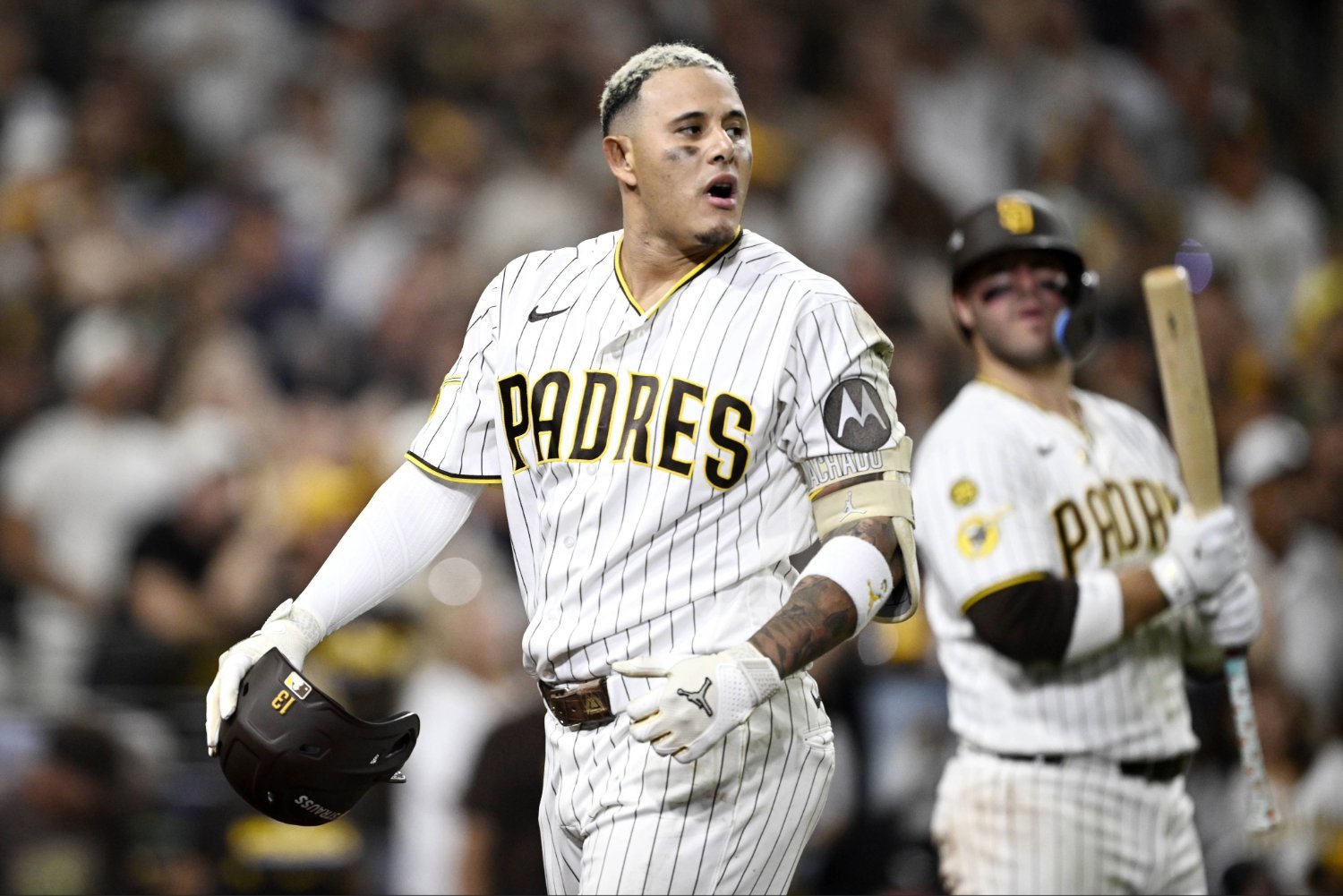 The old baseball adage is, generally, that pitching and defense win championships. The San Diego Padres and their lineup just gave a lot of credibility to that idea, but not necessarily in a way in which they may have hoped. For most of the second half of the season, the Padres boasted one of the league's top lineups. They were tied for second in the league in runs scored (343) & on-base percentage (ironically, at .343), second in collective wRC+ (119), and fifth in power output (.168 ISO), while also pacing the other 29 teams in batting average (.270). That offensive prowess carried into postseason baseball almost immediately. Fernando Tatis Jr. & Manny Machado homered in the first inning of Game 1 of their Wild Card Series against the Chicago Cubs, with the Padres cruising to an 8-0 win. They added four more runs in Game 2's 4-1 victory that propelled them into a National League Division Series matchup with the Milwaukee Brewers. That's when the first-half iteration of the team's offense began to reemerge. The first half version of the Padres was a team that ranked 29th in wRC+ (90). They were the league's worst offensive team in runs scored (379) and sat at the bottom of the league in batting average (.226) & on-base percentage (.302) while sitting 25th in ISO (.144). Struggles from key players exacerbated their woes, leading to the consistent sputtering we saw from the lineup through the first 96 games of the season. An above-average strikeout rate and far too much groundball contact compounded with a variety of other factors to stifle any hope of consistency. Sound familiar? Now, the caveat in all of this is that this is a four-game stretch we're talking about against the team with the league's best record. The nature of Major League Baseball's playoffs is that you need a whole lot of fortune to succeed within a small sample. Of course, you can also take some control of your fortune by executing within that small sample. The Padres failed to do so, reverting back to their first-half form across four games. As a team, the Padres slashed .181/.278/.236 across 145 NLDS plate appearances. Their collective wRC+ was just 54. They struck out 22.1 percent of the time. They hit the ball on the ground 48.4 percent of the time, with an ISO of only .055. Their 30.2 percent hard-hit rate was nine points lower than the one they had turned in during the season's second half. It all led to just 10 runs across four games after dropping a dozen in the Wild Card Round. And no individual seemed to be immune to the struggle. Tatis had just two hits in the quartet of games, one of which was a home run that momentarily leveled Game 4. Xander Bogaerts & Jake Cronenworth each matched his hit total, with Jackson Merrill contributing only three to the effort. Only Manny Machado, who spent most of 2026 as a power-only bat, added more than three hits to the mix. Tatis, Cronenworth, and Machado all featured groundball rates of at least 50 percent (Tatis was over 60) while Merrill struck out more than 35 percent of the time. There was never a chance here, despite how close some of these contests were. Again, it's a small sample, and the Brewers boasted one of the league's highest-performing pitching staffs throughout the regular season. But for a team with a rotation that was built to tread water and not dominate games and a bullpen bordering on overworked, the offense had to buck the adage and drive the team's success in the Division Series. They didn't do that, which is reflected both in their inability to make contact and the ball ending up on the ground as much as it did. In other words, in a series where three of the games were decided by one run and the fourth featured a 3-1 final score, the efforts of the offense were simply not enough. View the full article
-
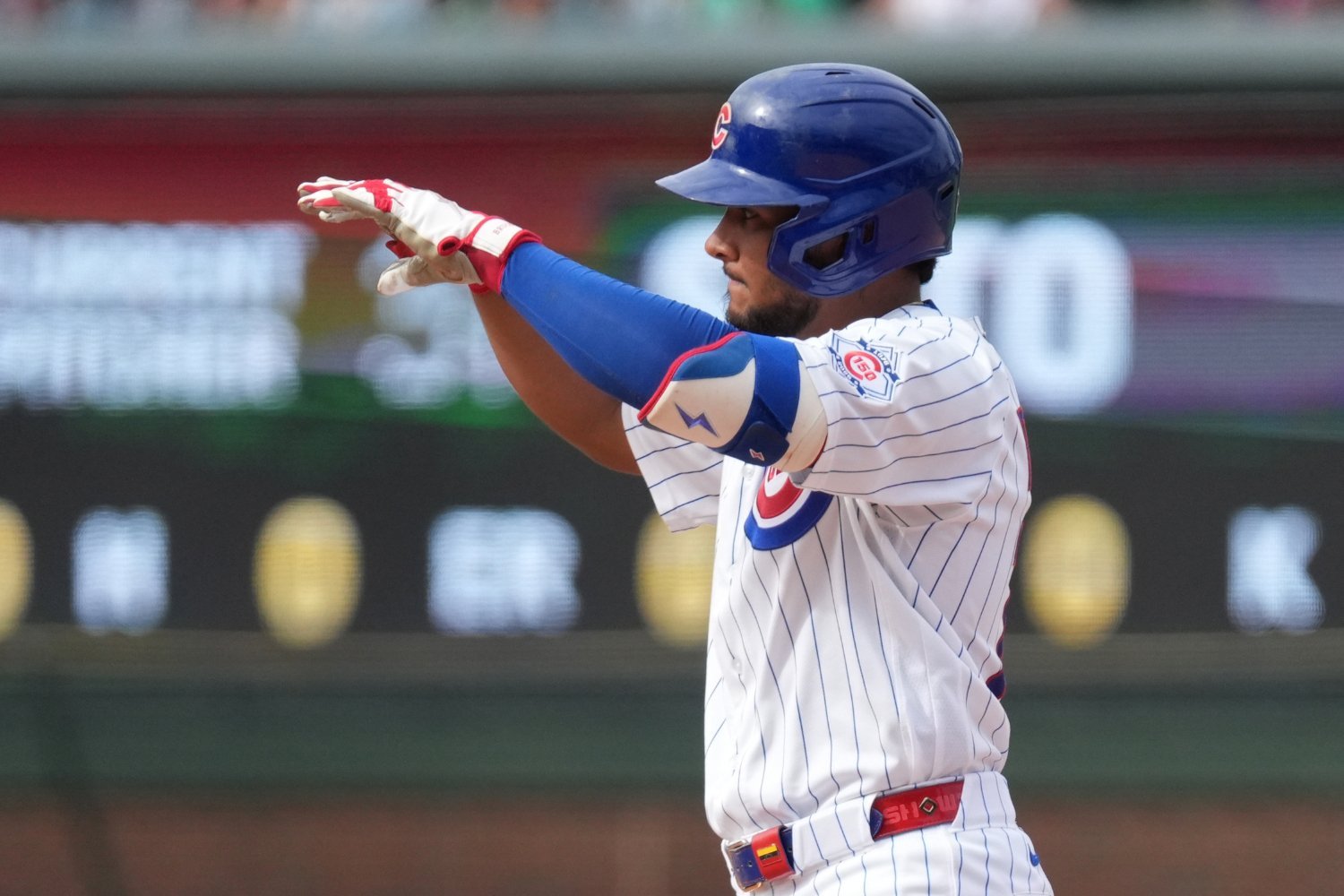 The Chicago Cubs experienced plenty of roster movement throughout the 2026 season, whether it was through trades, injuries, or major-league promotions. One of those call-ups was infielder Pedro Ramirez, who quickly went from a promising prospect to a regular contributor at the big-league level. Ramírez entered the season ranked as North Side Baseball's No. 7 prospect, but his strong start to the year quickly propelled him up to No. 3. His performance earned him a call-up to the majors in late May, giving him an opportunity to show what he could do against the highest level of pitching. He appeared in 80 games between his promotion and the end of the regular season, hitting .261 with a .321 on-base percentage and a .723 OPS. He also finished with a 100 wRC+, meaning he was essentially the blueprint for a league-average hitter when accounting for park and league factors. For a 22-year-old making his first extended appearance in the majors, that's a pretty solid starting point. However, Ramírez's rookie campaign was far from a linear progression, and there were some noticeable ups and downs along the way. After posting an 84 wRC+ in June, he broke out in July with a 169 mark, showcasing what he’s capable of when things are clicking. He followed that up with a slightly above-average month in August before struggling considerably in September. That type of inconsistency isn't particularly surprising for a young player adjusting to major-league pitching. There are going to be stretches where things click and others where the game speeds up a little, especially as the league gets more tape and begins to adjust to a young hitter. As such, when we take a step back and examine Ramírez's underlying numbers over the course of the season, they look like those of a young player who is still finding his footing. His expected batting average sat at just .242, while his expected slugging percentage was .342, roughly 60 points below his actual mark. Both his average exit velocity and hard-hit rate also finished slightly below league average, which isn't particularly surprising given that power has never been the primary selling point of his offensive profile. There’s certainly room for improvement in that department, but those numbers shouldn't overshadow what Ramírez accomplished during his first taste of the majors. For starters, he proved to be a quality defender at both second and third base. With Nico Hoerner and Alex Bregman occupying those positions for much of the season, Ramírez wasn't always able to find consistent playing time at either spot. Still, he showed that he could move around the infield and provide value where the Cubs needed him. Third base might not be his ideal long-term home, as his arm strength could limit his ability to handle the position every day. Second base appears to be the more likely landing spot moving forward, but his versatility is certainly an asset. Having a young infielder who can handle multiple positions gives Craig Counsell some additional flexibility when putting together his lineup and managing injuries throughout a long season. And while Ramírez still has some work to do offensively, the bat-to-ball skills that helped make him such a highly regarded prospect did translate to the major leagues. His in-zone contact rate sat at 90% and he avoided excessive whiffs and strikeouts, which is an important foundation for a hitter who doesn't necessarily need to rely on home runs to generate offensive value. Ramírez's chase rate did climb a fair amount after moving from Triple-A to the majors, however. Pitch recognition and patience will be key areas of development for him moving forward, since someone with meager bat speed and barrel rates won't be doing much damage on pitches outside the zone. One other development worth monitoring is how frequently he put the ball in the air during his rookie season. His fly-ball rate reached 39%, a notable increase from the 25% to 30% range he posted throughout the previous couple of seasons in the minors. That doesn't necessarily mean he's going to develop into a power hitter overnight, but it's an interesting change in his batted-ball profile. As he continues to get bigger and stronger, that increased fly ball rate could eventually translate into more extra-base hits and greater offensive production. And there's already some evidence that he can do damage in that area—Ramírez was routinely producing extra-base hits during his time with Triple-A Iowa, averaging roughly one every other game this season. Add it all up, and I think it's hard to consider Ramírez's first major-league season as anything other than a success. His overall numbers weren't spectacular, and the second half of the year showed that he still has plenty to learn. But he also demonstrated that he can hold his own against big-league pitching while providing the Cubs with a capable defender who can handle multiple infield positions. At just 22 years old, Ramírez has plenty of time to make the necessary adjustments. If his rookie season is any indication, the Cubs have unearthed another valuable young piece who can contribute to their lineup for years to come. View the full article
-
Kane Kepley’s Breakout 2026: Speed, Defense & Elite Contact
DiamondCentric posted an article in North Side Baseball
 Despite being diminutive in stature, Kane Kepley packed a punch in the Cubs system in 2026. The second-year pro out of North Carolina established himself as a speed and defense threat with some of the best contact in the minor leagues. View the full article
-
 For as much grief as the Twins’ front office gets for the 2025 trade deadline and the firesale that followed, there have been some big wins to come out of it. And right now, none is bigger than Taj Bradley. Bradley came over from Tampa Bay in a one-for-one swap for Griffin Jax, a move that didn’t look particularly promising during the right-hander’s first few weeks in Minnesota. In his first 31 1/3 innings with Minnesota, he posted a 6.61 ERA and 4.73 FIP. With those numbers in mind, there was some speculation heading into 2026 about whether he was cut out to be a big league starter. As it turns out, it may have been a little premature to ask that question about a 24-year-old pitcher. Bradley exploded out of the gates this season, recording at least seven strikeouts and allowing one or fewer earned runs in three of his first four starts. While there were some inconsistencies scattered throughout the year, which is to be expected from a young pitcher, it was an impressive campaign for the right-hander. He finished the season with a 3.73 ERA across 178 1/3 innings, establishing himself as one of the more intriguing young arms in baseball. He was also one of just 13 pitchers to record 200 or more strikeouts this season, making it abundantly clear why the Twins wanted him in the first place. The guy’s filthy. Bradley’s 27.4% strikeout rate ranked in the 83rd percentile among big league pitchers, and he has the kind of raw stuff that gives him a chance to become a legitimate frontline starter. While he doesn’t have the deepest arsenal in the league, what he has works, and it can be incredibly difficult for opposing hitters to handle when he’s executing. Coming from a steep, over-the-top arm angle, Bradley’s four-seam fastball doesn’t feature a ton of horizontal movement, but it gets plenty of rise through the zone. That profile can be difficult for hitters to handle, particularly when the pitch is located properly and arrives at 97 mph. That fastball also provides an excellent foundation for his secondary offerings, allowing Bradley to keep hitters off balance and generate plenty of swings and misses. All three of his secondaries, the splitter, cutter and curveball, generated whiff rates north of 36% this season. Bradley’s underlying stuff metrics back that up, too. He finished the year with a 110 Stuff+ grade, with 100 representing league average. Among pitchers who threw at least 100 innings, that mark was tied for the 10th-highest in baseball. There’s a lot to like about that combination, and we saw the results throughout the season. Bradley has the ability to shut down an opposing lineup on any given night, and when his fastball is working alongside his secondaries, he can look every bit like the kind of starter teams want leading their rotations. The foundation for that kind of pitcher is very much there. Now, the next step is finding more consistency and polishing some of the finer details of his game. And that starts with his command. Over the course of the year, there were far too many times when it felt like Bradley had no idea where the ball was going. Whether it was a splitter that bounced five feet in front of home plate, a fastball to the backstop or a meatball right down the middle, his control was an issue at times. Some of that is reflected in the underlying numbers. Bradley’s hard-hit rate and average exit velocity against both ranked in just the third percentile among big league pitchers, while his walk rate ranked in the 27th percentile. Those numbers suggest there is still plenty of room for improvement, particularly when it comes to limiting damaging contact and putting himself in better counts. If Bradley is going to continue developing into the pitcher we saw flashes of this season, those areas need to improve. Fortunately, there are some relatively clear places for him to start. For one, Bradley needs to do a better job of consistently elevating his four-seam fastball. Hitters recorded an average exit velocity of 93 mph against that pitch, in large part because he left it over the heart of the plate far too often. Getting the four-seamer up in the zone more frequently, while allowing his secondary offerings to work below it, could make a significant difference. If Bradley can consistently execute that approach, he should be able to get more weak contact and swings and misses without needing to overhaul an arsenal that already works. It could also help him generate more chases outside the strike zone, an area where there’s room for growth. If Bradley can establish his fastball up in the zone while starting his splitter, cutter and curveball around the heart of the plate before getting them to dive below it, hitters will have a much tougher time distinguishing between pitches. That approach is particularly difficult to handle from Bradley’s over-the-top arm angle, which creates an uncomfortable look for hitters and helps his pitches play off one another. For as many swing-and-misses as he generated this season, opposing hitters didn’t expand the zone against him nearly as much as they could have. Getting hitters to chase is an important part of pitching at the highest level, and it could be one of the things that takes Bradley’s game to another level. With his stuff, he doesn’t necessarily need to make dramatic changes. He just needs to become more reliable with his execution and take advantage of the weapons he already has. Overall, it was a really promising year for Bradley. The Twins got to see the upside of what he can become, and with a little more consistency, he has a ton of potential. Considering the jump he made from 2025 to 2026, there’s plenty of reason to believe Bradley can take another meaningful step forward in 2027. He has the raw stuff to be a difference-maker, and another year of development could help him turn those flashes of dominance into something more routine. And if Bradley can take that next step alongside Pablo López and Joe Ryan, assuming both return healthy, the Twins could have a darn good top half of their rotation heading into next season. For a team that has plenty of questions to answer after another disappointing year, having a young starter like Bradley emerge as a legitimate rotation piece is a pretty significant win. The Jax trade may have drawn plenty of criticism at the time, but Bradley is quickly giving the Twins a reason to feel good about what they got in return. View the full article
-
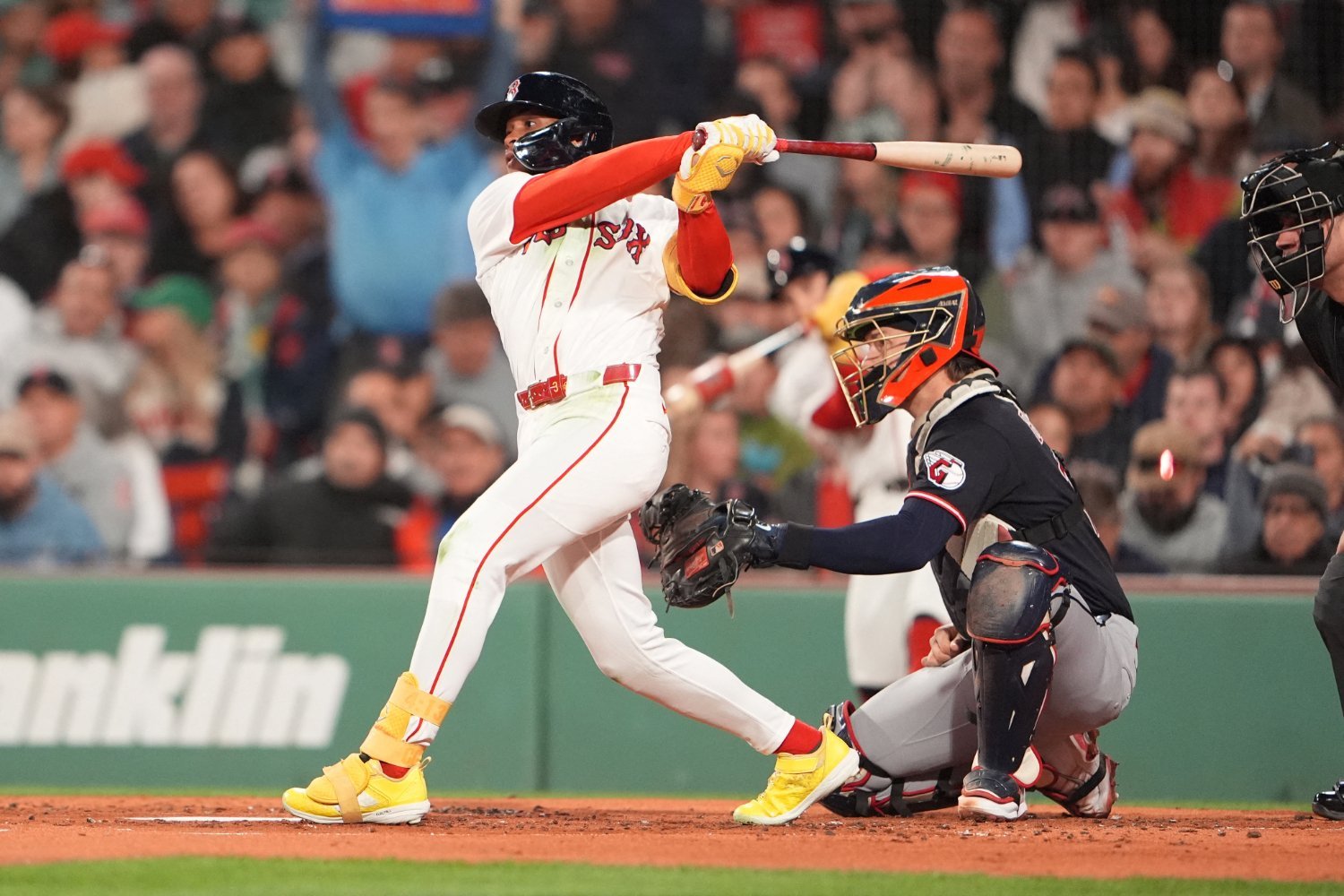 As the common sports saying goes: defense wins championships. Of course, the Boston Red Sox didn’t win a championship this year, but center fielder Ceddanne Rafaela continued to show why he’s one of the best defensive players in baseball. The 25-year-old finished in the 99th percentile in Outs Above Average with +17 and ranked in the 93rd percentile in arm strength. Add in his elite sprint speed, and it’s clear that the center fielder brings tremendous value to Boston with his glove. But while his defense has always been his calling card, there were some promising signs at the plate in 2026 as Rafaela put together the best offensive season of his big-league career. Across 576 plate appearances, he hit .283 with a .319 on-base percentage and a .761 OPS. All three marks were career highs, and his 113 OPS+ made him an above-average offensive contributor for the first time in his major-league career. His performance was strong enough to earn him a spot on the American League All-Star roster, albeit as an injury replacement for Aaron Judge. Based on those numbers, it would appear as though Rafaela unlocked something at the plate. But did he actually? There’s a significant disparity between his surface-level production and what his underlying metrics suggest. While his batting average finished at .283, his expected batting average sat at just .249. His expected slugging percentage also finished more than 80 points below his actual mark. There’s a reason for a gap that large, and in Rafaela’s case, it comes down to the quality of contact he made throughout the season. Despite better final results, he actually made noticeably weaker contact in 2026 than he did a year ago. His average exit velocity dropped from 88.3 MPH in 2025 to 86.3 MPH this season. His hard-hit rate also declined from 39% to 32%, the lowest mark of his career thus far.. Those aren’t exactly the numbers you want to see from a hitter coming off a career year. While Rafaela made significant strides in the box score, the process behind that production suggests he benefited from quite a bit of good fortune along the way. On top of that, Rafaela chased pitches outside the strike zone more than almost any other hitter in baseball, offering at more than 45% of the pitches he saw outside the zone. Though that's par for the course with him, that's still a difficult approach to sustain, especially when a hitter isn’t making consistently strong contact. It’s tough to do damage on pitches outside the strike zone, and Rafaela’s aggressive approach, combined with his declining quality of contact, helps explain why his expected numbers fell so far behind his actual production. If you looked only at the advanced metrics, you might come away believing Rafaela’s 2026 season was a fluke. However, I’m not entirely convinced that’s the case. To play devil’s advocate against my own analysis, there are plenty of hitters who produce in the major leagues despite underlying numbers that suggest otherwise. Some players simply find ways to get the job done, and there are reasons to believe Rafaela could be one of those hitters. For starters, his line drive rate increased significantly this season, rising from 17.2% in 2025 to 22.8% in 2026. That’s an important development for a hitter who relies on putting the ball in play, as line drives give him more opportunities to find gaps and generate hits without needing to consistently hit the ball over the fence. Likewise, Rafaela also used the entire field more frequently than he had in previous seasons. Rather than relying as heavily on pulling the ball, he showed a greater willingness to spread his contact around the diamond. For a player with his skill set, that’s a valuable adjustment that might not be fully reflected in traditional quality-of-contact metrics. His contact numbers offer another reason for optimism. Although Rafaela became even more aggressive outside the strike zone, his contact rates both inside and outside the zone improved compared to 2025. There's something to be said for merely getting the bat on the ball more frequently. Of course, making contact isn't the same as making quality contact. Rafaela’s declining exit velocity and hard-hit rate remain legitimate concerns, and his approach could become a problem if pitchers find ways to exploit his aggressiveness. Still, the combination of a higher line drive rate, a more balanced approach and improved contact rates gives us something beyond simple good fortune to point toward. Those changes make me believe there could be more substance to his offensive improvement than the expected statistics suggest. If he can establish himself as a league-average hitter, that's an excellent outcome for the Red Sox. A center fielder who provides elite defense, possesses tremendous athleticism, and contributes an average bat is an incredibly valuable player for a team hoping to compete in the American League. Rafaela doesn't need to post an OPS approaching .800 to be an important piece of this roster; if he can continue hitting line drives and making contact at the rate he did this season, he'll provide plenty of value. There are still areas of his offensive game that need work, particularly his tendency to chase pitches outside the zone and his ability to consistently make hard contact. Those concerns shouldn't be ignored simply because he put together a productive season. If his quality of contact doesn't improve, some regression is certainly possible. But there's a difference between expecting Rafaela to maintain every bit of his 2026 production and believing he can be a capable major-league hitter moving forward. The underlying numbers suggest the former might be difficult, but the adjustments he made at the plate provide some optimism about the latter. View the full article
-
 The Brewers know how quickly a series against the Dodgers can get away from them. In the 2025 NLCS, Milwaukee fell behind 0-2 as the Dodgers' rotation stifled an offense that struggled to find its footing, particularly at home. They can't afford a repeat. The challenge starts with four formidable starters: Tarik Skubal, Yoshinobu Yamamoto, Blake Snell and Tyler Glasnow. They offer an intimidating mix of power, deception, command and movement, with few easy at-bats available to left- or right-handed batters, There is no single formula for beating them. Against Skubal, the Brewers must punish mistakes without chasing his best pitches. Against Snell, patience and deep counts could be the key. Yamamoto demands precision in the swing decision, while Glasnow presents a different test of discipline against elite velocity and devastating breaking balls. Milwaukee won't have many opportunities to do damage. The challenge is making those that come count, and ensuring the series doesn't get away from them before they find their footing. Today, let's take a look at how best to attack the two hurlers who'll toe the rubber in the series-opening games at Uecker Field in Milwaukee. Game 1 Starter: Tarik Skubal The reigning two-time Cy Young Award winner in the American League, Tarik Skubal is one of the most dominant pitchers in the sport. Possessing a 1.97 ERA in seven postseason starts and averaging six and a half innings per outing, Skubal's combination of an overpowering fastball and a deadly changeup leads his pitch mix to both right- and left-handers, and allows him to manipulate timing, break barrels, and get a lot of swing-and-miss—usually. The good news is, Skubal's last start showed perhaps his most hittable pitch shapes since his first game back from injury. If we compare his playoff starts in 2025 with his start against the Braves in the National League Division Series, the stuff ratings are significantly down, not because of velocity, but because of their shape: Skubal had less ride on his four-seam fastball; less vertical and horizontal movement on his signature changeup; and less sink on his sinker. The results were intriguing. He generated virtually no meaningful swing-and-miss with his fastballs, while the sinker was hit harder than usual, even if much of that contact stayed on the ground. In fact, every pitch type Skubal threw against the Braves averaged more than 90 MPH in exit velocity. He largely survived by avoiding barrels and keeping the ball away from optimal launch angles. If it seems like I'm picking at hairs here, I am. Skubal is still an overpowering monster when he's at his best, and the Brewers will need timely hitting (perhaps one big swing) to put runs on the board against him. That being said, if they're going to do damage, they'll need to capitalize on fastballs over the heart of the plate. Skubal isn't going to beat himself with walks. If Milwaukee is passive, he'll attack this lineup with an 80th-percentile zone rate and a 94th-percentile in-zone swing-and-miss rate. If the Brewers get too aggressive, they'll run into his 97th-percentile chase rate. They need to thread the needle: be aggressive enough to punish a fastball in the zone, but disciplined enough to avoid chasing the pitches that make Skubal so difficult to hit. That challenge looks slightly different depending on which side of the plate a hitter occupies. Skubal is more predictable against left-handed hitters, opening with a sinker or four-seam fastball roughly 75% of the time. The sinker has been particularly effective, boring in on the hands and generating weak contact, but lefties have been able to do damage against the four-seamer. It carries a .541 expected weighted on-base average on contact (xwOBACON), a substantial figure: Skubal can still generate plenty of swing-and-miss with the four-seamer at the top of the zone, but when he leaves it over the middle of the plate, the Brewers need to be ready to attack. It's one of the easiest pitches to barrel against him, particularly compared with the sinker and changeup, which Skubal typically uses to generate hard contact on the ground. Expect Milwaukee to use a balanced lineup. Skubal's high arm angle makes him less deceptive against same-side hitters than most pitchers, giving left-handed hitters a better chance to see the ball out of his hand. Right-handed hitters see more of the four-seam/changeup combination, and Skubal is comfortable throwing the changeup in any count. It's an incredible swing-and-miss pitch, but it can be hit when hitters are sitting on it. Right-handers have barreled the pitch at a 9.2% clip. That's not a particularly high number, but it's enough to represent an opportunity when Skubal misses his spot. Beyond that, Milwaukee may simply have to wait for him to make a mistake with his breaking ball. The Brewers have already shown they can make Skubal work. In the middle of August, they scored two runs (only one earned) across seven innings against him, collecting seven hits and two walks. Their approach was straightforward: largely ignore the changeup and sit on his fastballs. The changeup was the only pitch against which Skubal recorded a swing-and-miss rate above 20%. That patience will be vital again. Milwaukee doesn't need to beat Skubal by chasing his best pitches. They need to make him work, stay off the changeup when they're not in a position to drive it, and wait for the fastball or a mistake pitch they can punish. Swing decisions will be a vital component, and when they get an opportunity to drive the ball, they can't afford to miss. There won't be many such opportunities; nobody said this would be easy. Game 2 Starter: Yoshinobu Yamamoto You could argue that, in an elimination game, there isn't a pitcher in baseball you'd rather have taking the rubber than Yoshinobu Yamamoto. With his complete pitch mix, impeccable command, and feel for manipulating both spin and velocity, Yamamoto is what you'd get if you designed a pitcher in a laboratory. That doesn't make him unhittable, but it does make him an incredible challenge to solve. Yamamoto finished the regular season with a 0.87 WHIP, backed by the command to work in the shadow areas of the strike zone without leaving pitches over the heart of the plate. His splitter was his most frequently-used offering, generating ample chase while proving effective against both left- and right-handed hitters. More than 80% of the pitches hitters see will be some variation of his fastball or splitter, but it's the way this particular four-pitch mix works together that makes him so difficult to handle. The pitches tunnel off one another, disrupting a hitter's timing and making it difficult to find the barrel consistently. Yamamoto has allowed three or more runs in just eight starts this season. Only one of those outings lasted fewer than six innings, and he surrendered no more than six hits in any of them. Two featured four walks, which certainly contributed to the damage, while the other six saw him issue no more than two free passes. Seven of those eight starts also included a home run allowed. So, what does that tell us about how to approach him? Scoring against Yamamoto often requires a combination of timely hitting and capitalizing on the few mistakes he makes. The Brewers may need to string together hits with runners in scoring position, or punish a mistake with a home run when they have men aboard. Yamamoto doesn't hand out many free passes, so opportunities to build a big inning will be limited. When runners do reach, the Brewers will need to make those opportunities count. One potential vulnerability stands out this season: the four-seam fastball. Looking at expected slugging by pitch type, the damage against his four-seamer has increased. Yamamoto has allowed 20 home runs this year, with 14 coming off his splitter or four-seamer. When hitters square up the four-seamer, it tends to be in the air, so damage is always a possibility. The splitter presents a different kind of opportunity. Its movement is influenced in part by seam-shifted wake effects, making its behavior hard to glean from simple spin measurements. Even with Yamamoto's exceptional feel for the pitch, the occasional mistake can leave a splitter in a hitter's wheelhouse. That's the kind of offering a hitter can turn on; Christian Yelich comes to mind as someone who has done damage against hittable changeups and splitters this season. The theme here is clear: the Brewers' swing decisions will have to be impeccable, particularly against Yamamoto's splitter and four-seamer. If they can identify a four-seam fastball that leaks into the heart of the plate, there's an opportunity to do damage. His four-seamer has allowed a 61% hard-hit rate, a .290 expected batting average, and a .775 expected slugging average. Those are numbers the Brewers can look to exploit, provided they can distinguish a hittable fastball from one designed to catch the edge. That's the challenge with Yamamoto. Even when he misses his spot, he has the pitch mix and feel to disrupt a hitter's timing and limit the damage. The Brewers will need patience without passivity—the discipline to recognize when a mistake is there to be hit. It will be a devilish game of cat-and-mouse. If they can't access the long ball, it could be a troublesome day at the office. Can the Brewers Really Dent One of the Best Rotations in Postseason History? The Brewers aren't going to bludgeon the Dodgers' rotation with their raw talent. No one has shown the ability to do that. They may not get many opportunities to do damage. But they don't need to. The key to beating the aces of the Dodgers is to stay aggressive and swing with conviction. The strikes will be there. You can't help these two out by expanding the zone, but when the hittable fastball is there, you can't be late for it or underneath it. Last year, this group—less Skubal, but with Shohei Ohtani more or less at his best on the mound—mowed the Brewers down. The team will have to prove they're better, but also that they're capable of withstanding great pitching and making the mental and physical adjustments required to turn the pressure way up when those pitchers falter. How would you go about hitting Skubal and Yamamoto? Join the discussion below. Come back early this week, as we break down Blake Snell and Tyler Glasnow in similar ways. View the full article
-
Grading Every 2026 Royals Player: Outfielders & Designated Hitters
DiamondCentric posted an article in Royals Keep
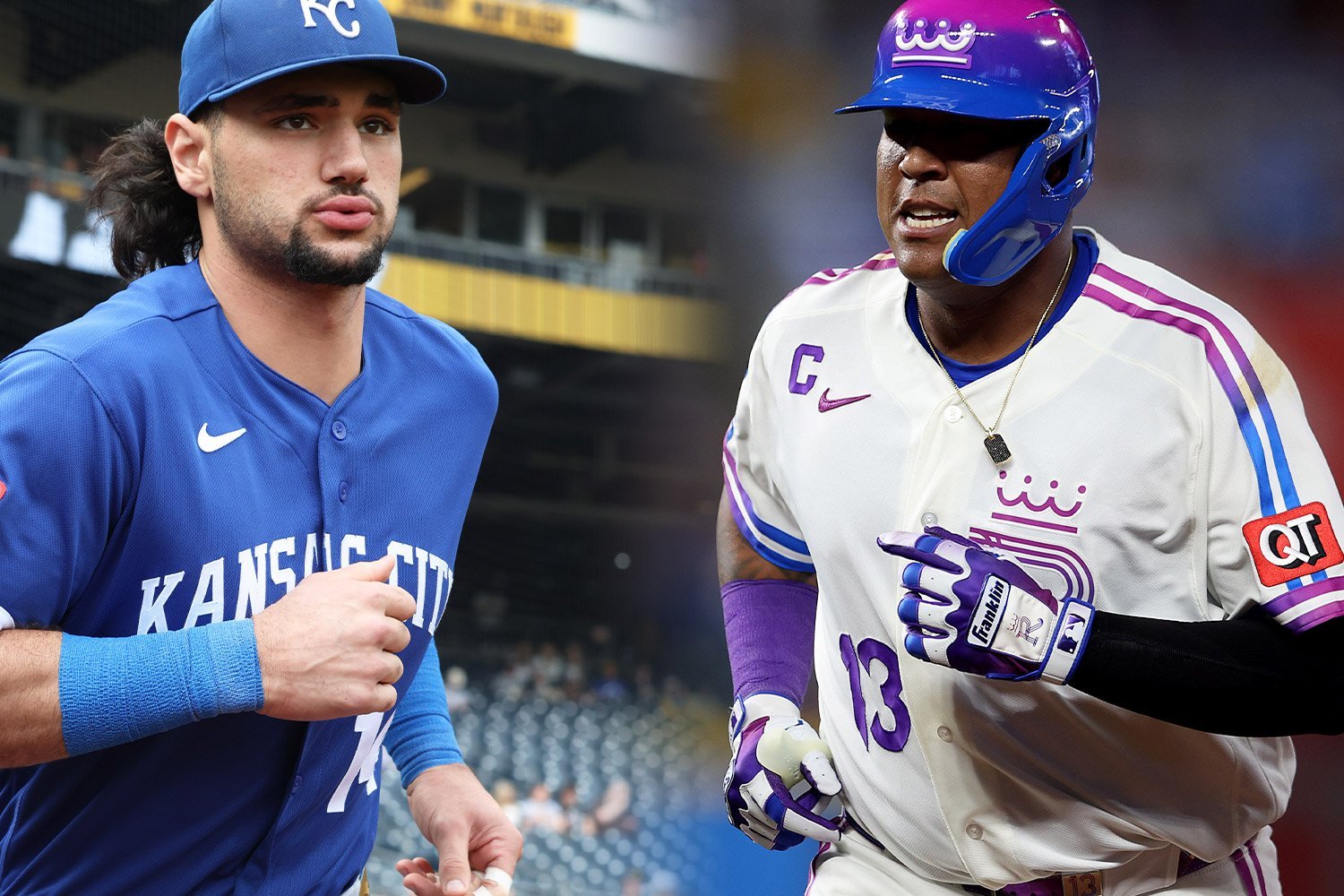 With the 2026 season behind us, it’s time to review each player's performance. This series will also look at infielders, starting pitchers, and relief pitchers. The Royals fielded 11 different players in the outfield, eight of whom will be reviewed here as primary outfielders, and the other three will be graded with the infielders. Eleven outfielders is a noticeable decrease from the 17(!) outfielders that the Royals trotted out in 2025. With this year’s group much more consistent than the previous year, did the consistency translate to good grades? Below you will find the eight primary outfielders and one primary designated hitter listed in order of most to least plate appearances with a few lines to explain their grades. Salvador Perez: D Perez has officially ceded the catching role to Carter Jensen with 44 appearances behind the plate. Only four qualified hitters had a lower wRC+ than Perez’s mark of 77, and only Bobby Witt Jr. had more plate appearances than Perez. His slash line of .229/.274/.383 all became new career lows. A team that had playoff aspirations in 2026 needs more production from the DH position. The only thing saving his grade was that he became the franchise leader in home runs by hitting home run #318 in July. Jac Caglianone: A Caglianone had an excellent bounce-back after a rookie season that did not live up to expectations. He led all Royals in batting average (.289), slugging percentage (.494), weighted on-base average (.360), and wRC+ (129). Caglianone proved that he can be a middle-of-the-order threat in a major-league lineup. The next step in his progression is to become more consistent and avoid months like May and July where he had an OPS of .638 and .614, respectively. While Caglianone is not expected to be an elite fielder, there can be more improvement in his fielding, though that is admittedly nitpicking. Isaac Collins: C While the trade for Collins was graded a B-, his performance this season is graded on a different rubric. The Royals needed every left fielder, but Collins left a lot to be desired at the plate. His 83 wRC+ ranked second-to-last among qualified left fielders, and his .320 OBP is a significant drop from his .368 mark in 2025 with the Brewers. General manager J.J. Picollo mentioned that the team will look for offensive upgrades in the outfield, which would imply Collins’s role with the 2027 Royals may be in jeopardy. Lane Thomas: A Thomas was brought in to be a platoon option for Kyle Isbel but was forced into a bigger role when Isbel landed on the injured list. Without the stability that Thomas offered, the Royals’ center field situation would likely have been much worse. His slash line of .232/.326/.393 with a 101 wRC+ helped make him an attractive trade piece, and he was ultimately sent to the Atlanta Braves. The Royals received a couple of minor-league pitchers in return. This was probably the best-case scenario for a one-year rental player on a team out of the playoff picture. Kyle Isbel: D+ Isbel missed a large chunk of the season with plantar fasciitis. When healthy, his production at the plate was poor. He slashed .224/.268/.323 with a 61 wRC+. While his defense is still solidly above league-average, he saw regression in his fielding run value and, most notably, his arm strength. Since 2022, his arm strength has decreased each year and reached 81.2 mph, which places him in the 27th percentile. With his defense trending in the wrong direction, the Royals would prefer more output from the plate. Unless he can prove to be a bigger threat at the plate, Isbel may also be displaced by potential outfield acquisitions this coming offseason. Starling Marte: F Marte was signed to offer a platoon option for Caglianone in right field against left-handed starters. However, by only a couple of months into the season, Caglianone was outpacing Marte’s lefty splits. He slashed a career low of .242/.298/.314 across 168 plate appearances. With no defined role in the offense, Marte was released on August 15th. John Rave: B- Rave saw limited opportunities at the major-league level with only 161 plate appearances. He slashed .232/.314/.430 with a 105 wRC+ and 1.0 fWAR, which is a noticeable improvement from his rookie season in 2025, and finished the season with hits in eight of his last nine appearances. It is difficult to grade a player with limited opportunities, but his production in Triple-A Omaha makes it difficult not to give him opportunities in the majors. Kameron Misner: D Misner showed promising signs with strong performances in Omaha, slashing .286/.378/.563 with a 137 wRC+. However, he was not able to continue that level of production in the majors, where he slashed .220/.256/.244 with a 37 wRC+. Unlike Rave, his Triple-A performance did not translate well to Kansas City, and he was designated for assignment in July. Matthew Lugo: Incomplete Lugo only had 15 plate appearances in 2026 and reached base three times. It is nearly impossible to grade a player with such a low sample size, but if he had hit the ground running when called upon, the Royals would have found a way to give him more opportunities late in the season. What do you think about my grades? Who would you grade differently? Share your thoughts in the comments, and check back soon to read about more Royals grades. View the full article
-
 The Miami Marlins will not renew the contract of Marlins.TV play-by-play announcer Kyle Sielaff, sources tell Fish On First. Sielaff served as the organization’s lead television voice for the past two seasons after spending the previous three seasons on radio. Radio voice Jack McMullen will take over Sielaff’s role, working most of his games alongside analyst Gaby Sanchez. The Marlins believe McMullen has significant potential. The 29-year-old was hired in 2025, replacing Sielaff on the radio. Before joining Miami, he worked for the Indianapolis Indians, the Triple-A affiliate of the Pittsburgh Pirates. The Illinois native is also calling college football games on The CW this season, adding to his television play-by-play experience. Outside of broadcasting, McMullen works for Just Baseball, podcasting as one of the hosts of the Just Baseball Show and The Call Up. The Marlins originally named Sielaff their lead television play-by-play announcer to replace Paul Severino. Sielaff held the job during a transitionary period for the club's broadcasting model, as 2025 was their final season on FanDuel Sports Network and 2026 was the debut of Marlins.TV, with games being produced and distributed in collaboration with Major League Baseball. Before transitioning to TV, Sielaff spent 12 years with the Marlins Radio Network, serving in various roles before becoming the lead play-by-play voice in 2023-24. Additionally, analysts Rod Allen and Jeff Nelson and pregame/postgame host Craig Minervini will not return to Miami’s broadcasts. Nelson had been with the organization since 2022, calling games alongside both Severino and Sielaff. He brought a more old-school approach to the broadcast, rarely citing analytics or newer baseball terminology, which the Marlins have increasingly embraced under baseball operations president Peter Bendix. Minervini completed his 25th season with the organization. He had worn many different hats along the way, most frequently being utilized for studio coverage. Similar to Allen, his role had been reduced, with fewer games and no longer any radio play-by-play assignments. As previously announced, Tommy Hutton has retired. Hutton had been Miami's TV analyst for the majority of home games. Expected to remain with the organization’s TV broadcast team alongside Sanchez and McMullen are Kelly Saco and Jeremy Taché (sideline reporters), as well as AJ Ramos and Craig Mish (pregame and postgame hosts). The organization has mended its relationship with play-by-play veteran Rich Waltz, as observed during Waltz's cameo in the booth during the 2026 season finale. However, reuniting with him on a full-time basis was not an option, sources tell FOF. View the full article
-
 The Brewers have beaten the Padres 3-1 in the NLDS and are headed on to face the LA Dodgers once more Apple Podcasts: https://podcasts.apple.com/us/podcast/the-brewer-fanatic-podcast/id1740648724 Spotify: https://open.spotify.com/show/5CY8mWsQayqjDXqw9OT2Td iHeartRadio: https://www.iheart.com/podcast/263-the-brewer-fanatic-podcast-166534588/ Pocket Casts: https://pca.st/ommzz627 Watch On YouTube: https://www.youtube.com/@brewerfanatic View the full article
-
How Can Eduardo Tait Regain Top-100 Prospect Status?
DiamondCentric posted an article in Twins Daily
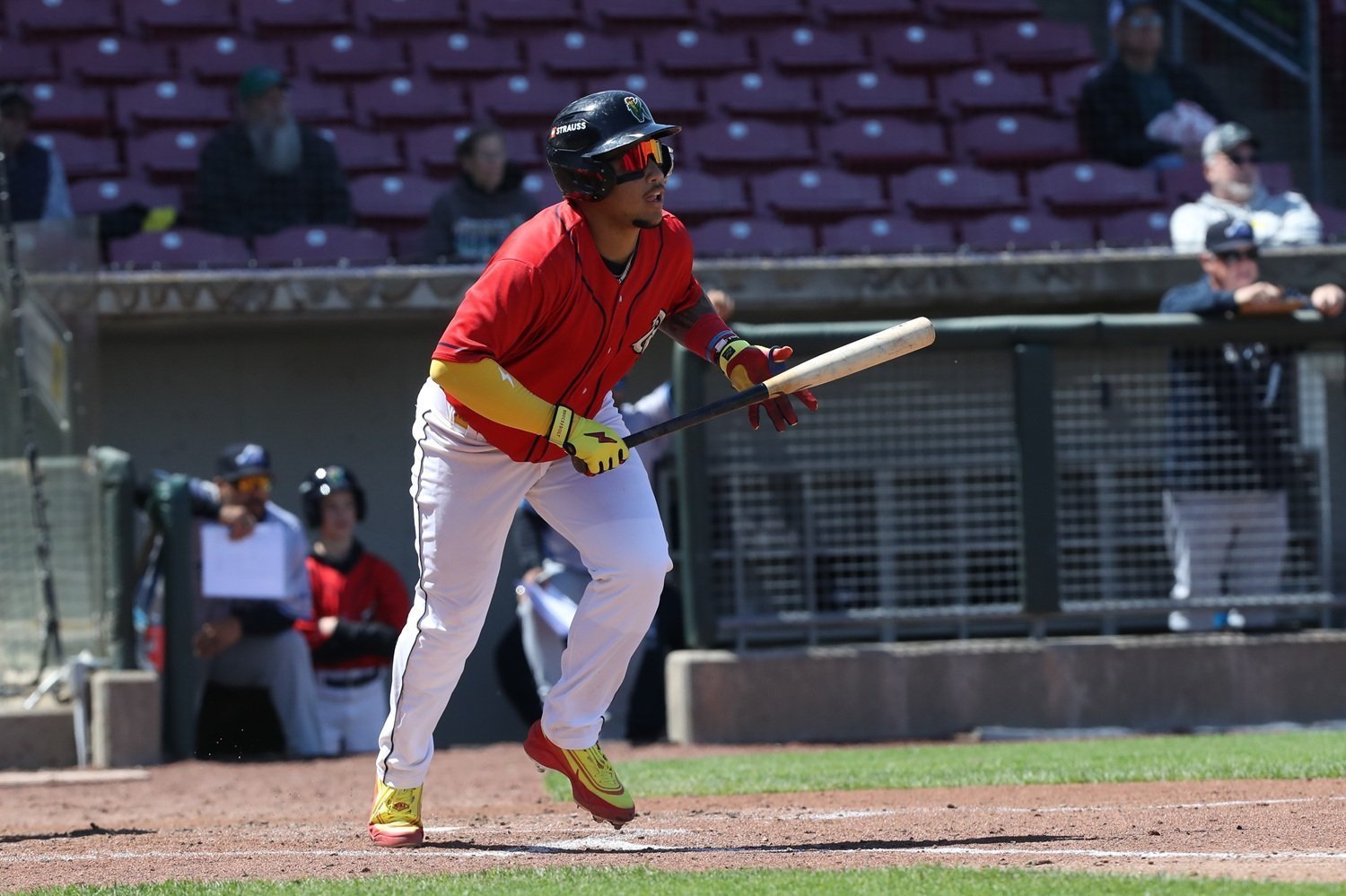 Eduardo Tait entered the 2026 season with plenty of momentum. The catcher was one of the key pieces the Minnesota Twins acquired in the July 2025 trade that sent Jhoan Duran to the Philadelphia Phillies, and evaluators quickly recognized the upside that made him one of the more intriguing prospects in the deal. Both MLB Pipeline and Baseball Prospectus ranked Tait among their top 100 prospects entering the 2026 season. That distinction is unlikely to carry over into the offseason after a disappointing first full campaign with the Twins organization. That does not mean Tait's prospect stock is finished. Tait still has considerable upside and comes in at No. 8 on the current Twins Daily Top 20 prospects. He also won't turn 20 until next season. There is plenty of time for him to get back on the prospect map, but his 2027 season will be important. So, what went wrong in 2026, and what does Tait need to do to get back into the Top 100? The Good and Bad of Tait's Bat Tait spent all of his first full season in his new organization with High-A Cedar Rapids. He did so at just 19 years old, more than three years younger than the average hitter in the Midwest League. Tait still managed to finish sixth in the league with 22 home runs. The power that made him an attractive prospect remains very real, particularly when he gets the barrel out in front and turns on a pitch to his pull side. Unfortunately, the rest of his offensive profile took a step backward. Tait has always been an aggressive hitter. Earlier in his career, that aggressiveness could be viewed as both a blessing and a curse. He chased too often, but he also made enough contact to keep his strikeout totals under control. There was optimism that his approach would continue to mature as he gained experience against better pitching. That didn't happen in 2026. Tait continued to chase at a high rate, around 35 percent, while his strikeout rate increased and his walk rate declined. Neither change was catastrophic on its own, but the combination worked against him throughout the season. He finished with 119 strikeouts compared to just 35 walks. That translated into a .221 batting average, a .699 OPS and a 74 wRC+. For a player whose offensive value will need to carry a significant portion of his prospect profile, those numbers are difficult to overlook. The power is the reason to remain optimistic. The approach is the reason to remain cautious. The Defensive Question There are also questions on the other side of the ball. Tait's receiving remains an area that needs improvement, and that adds another layer to the evaluation. His offensive struggles would be easier to overlook if he were clearly establishing himself as a long-term catcher. Instead, there are still questions about whether he can develop into a reliable defender behind the plate. That is particularly important because catcher is one of the most difficult positions for a young player to master. Catchers aren't simply learning how to hit professional pitching while developing their defensive skills. They're also learning how to manage a pitching staff, call games, receive pitches, control the running game and handle the physical demands of catching on a regular basis. That development can take time. Tait's age gives the Twins plenty of reasons to be patient. But patience doesn't eliminate the need for progress. At some point, Tait needs to demonstrate that he can handle the defensive responsibilities of the position while producing enough offensively to justify keeping him there. Otherwise, his future becomes much more complicated. The Catcher Question This is ultimately the biggest question surrounding Tait's prospect status. If he can remain a catcher, the offensive potential becomes much more exciting. A 20-year-old catcher with legitimate 20-plus homer power still has a path toward becoming an impact player, even if there are significant flaws in his approach. If he has to move to first base or designated hitter, the standard becomes much higher. A first baseman or DH needs to hit. There is no way around it. The defensive value associated with playing catcher can help offset some offensive inconsistency. That same luxury doesn't exist at first base or designated hitter. If Tait eventually moves away from catching, his offensive production will need to take a significant step forward for him to remain a high-end prospect. That's why the Twins need to continue giving him opportunities behind the plate while working with him on the receiving and game-calling aspects of the position. There is no reason to make a decision on his long-term defensive home at age 19. Plenty of Time, But Work to Do Tait's 2026 season was a reminder that prospect development isn't always linear. He entered the year as a Top-100 prospect and finished it with legitimate questions surrounding both his offensive approach and defensive future. Still, the ingredients that made him an intriguing prospect haven't disappeared. He's young. He has legitimate power. He plays a premium defensive position. And he has another full offseason to work on the weaknesses exposed during his first year in the Twins organization. The path back to the Top 100 is fairly straightforward, even if executing it won't be easy. The Twins don't need Tait to be a finished product in 2027. They need to see progress. At 20 years old, there is still plenty of time for him to provide it. Can Tait be back in the top-100 prospect conversation by the end of 2027? What will be the biggest key for him next season? Leave a comment and start the discussion. View the full article
-
Blake Mitchell Is One Of Baseball’s Most Unique Prospects
DiamondCentric posted an article in Royals Keep
 Blake Mitchell had the best statistical season of his pro career in 2026, showcasing rare power, patience and athleticism for a catcher. But his alarming contact issues leave a major question about whether all of that talent will translate to the majors.View the full article
-
 With no games this week, the Cubs fan forums remained active as members discussed the team's future. This week's Forum Friday highlights four threads: the Cubs' post-season performance and offseason plans, non-Cub playoff chatter, the 2026 Cubs' offensive struggles, and the 2026 AFL season's standout players. Are you exhausted by algorithmic internet "discussion"? Tired of seeing posts that are meant only to anger you, bait you into a response, or find yet another way to extract your personal data? Come join the conversation on the human-moderated North Side Baseball forums, where you can talk Cubs baseball without the constant barrage of misinformation, hot takes and loudmouths. Joining is free: create an account at diamondcentric.net, then use that same login here to comment. Cubs Pre-Offseason Mega Thread Cubs fans debated the team's post-season performance and future direction, focusing on the challenges of competing with the Brewers, the need for farm system reinforcements, and the value of current players like Pete Crow-Armstrong and Dansby Swanson. Commenters questioned the feasibility of achieving 97+ wins, discussed potential trades and free agent moves, and debated whether the Brewers' success was sustainable. There was disagreement on whether the Cubs should prioritize defense or strikeouts, with some arguing for a reset and others defending the current strategy. Non-Cub Playoff Megathread Chit-Chat Commenters discussed various non-Cub playoff games, expressing mixed feelings about teams like the Braves, Brewers, and Padres. They noted the Braves' 3-run home run in the 8th and criticized Atlanta's empty seats. Some expressed hope for the Dodgers and Rays in the NLCS, while others debated the Padres-Dodgers matchup. There was discussion about the Yankees' pitching and the possibility of MLB reseeding the playoffs. Members were split on whether a missed home run by the Padres would have changed the game's outcome. The 2026 Cubs Were Always a Two- (or Three-)Man Show at the Plate This thread discusses the 2026 Cubs' playoff collapse, focusing on their offensive struggles despite strong regular-season stats. Members debated the roles of key players like Seiya, Suzuki, and Happ, with some arguing that the team's reliance on a few stars left them vulnerable. Commenters split on whether the Cubs should re-sign Suzuki or let Happ go, with some emphasizing defensive value and others prioritizing offense. Most agreed the team needs offensive upgrades but faced challenges in free agency. AFL 2026 Discusses the 2026 AFL season, focusing on players like Dominick Reid, Kade Snell, and John Cabral. Commenters note Reid's expected 5 ERA, Snell's .900+ OPS, and Cabral's 101.3 mph fastball. There's interest in Cabral's high walk rate and Rujano's 95.8 mph average. Most agree the AFL is hitter-friendly, with varying player experience, and highlight Cabral's potential based on his velocity. It's another great day to be a Cubs fan at North Side Baseball! View the full article
