


DiamondCentric
-
Posts
2,631 -
Joined
-
Last visited
Never
Content Type
Profiles
Forums
Events
MLB News, Rumors & Analysis
DiamondCentric Tutorials & Help
Major League Baseball Videos
MLB Fan Guides & Resources
Store
Downloads
Gallery
Everything posted by DiamondCentric
-
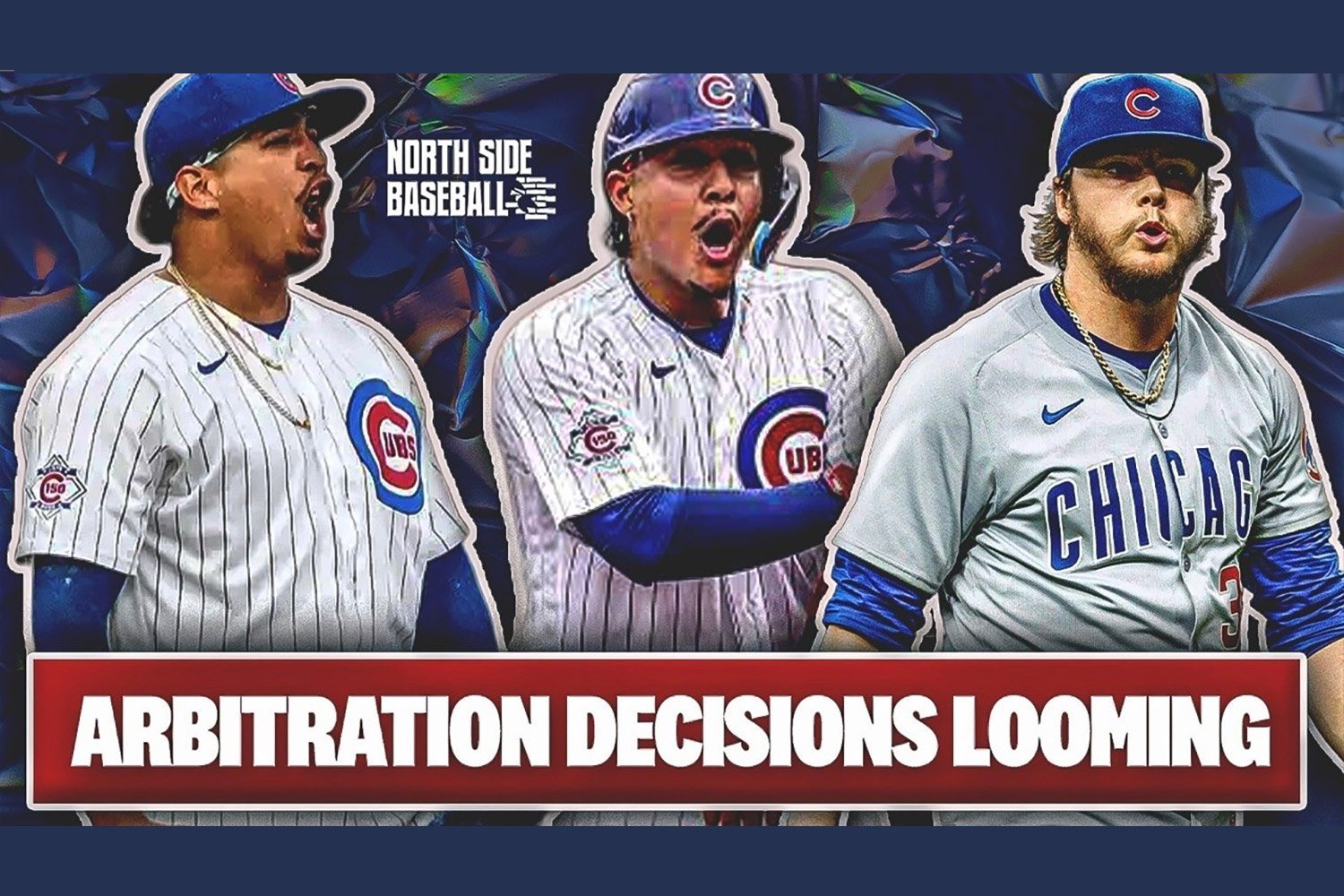 How would you summarize the season for the Chicago Cubs? Today, we do just that and talk about some looming arbitration decisions for Jed Hoyer and Co., including some tough decisions revolving around Justin Steele. Listen on Apple Podcasts: https://podcasts.apple.com/us/podcast/the-north-side-baseball-podcast/id1798599313 Listen on Spotify: https://open.spotify.com/show/75wMGhBwlrDDYPt3kaF453 Listen on iHeartRadio: https://www.iheart.com/podcast/263-the-north-side-baseball-po-268998437/ Listen on Pocket Casts: https://pca.st/eey7h6ih Watch on YouTube: https://www.youtube.com/@northsidebaseball View the full article
-

Left Is Right: Brewers’ Southpaws Came Up Huge in NLCS Game 3
DiamondCentric posted an article in Brewer Fanatic
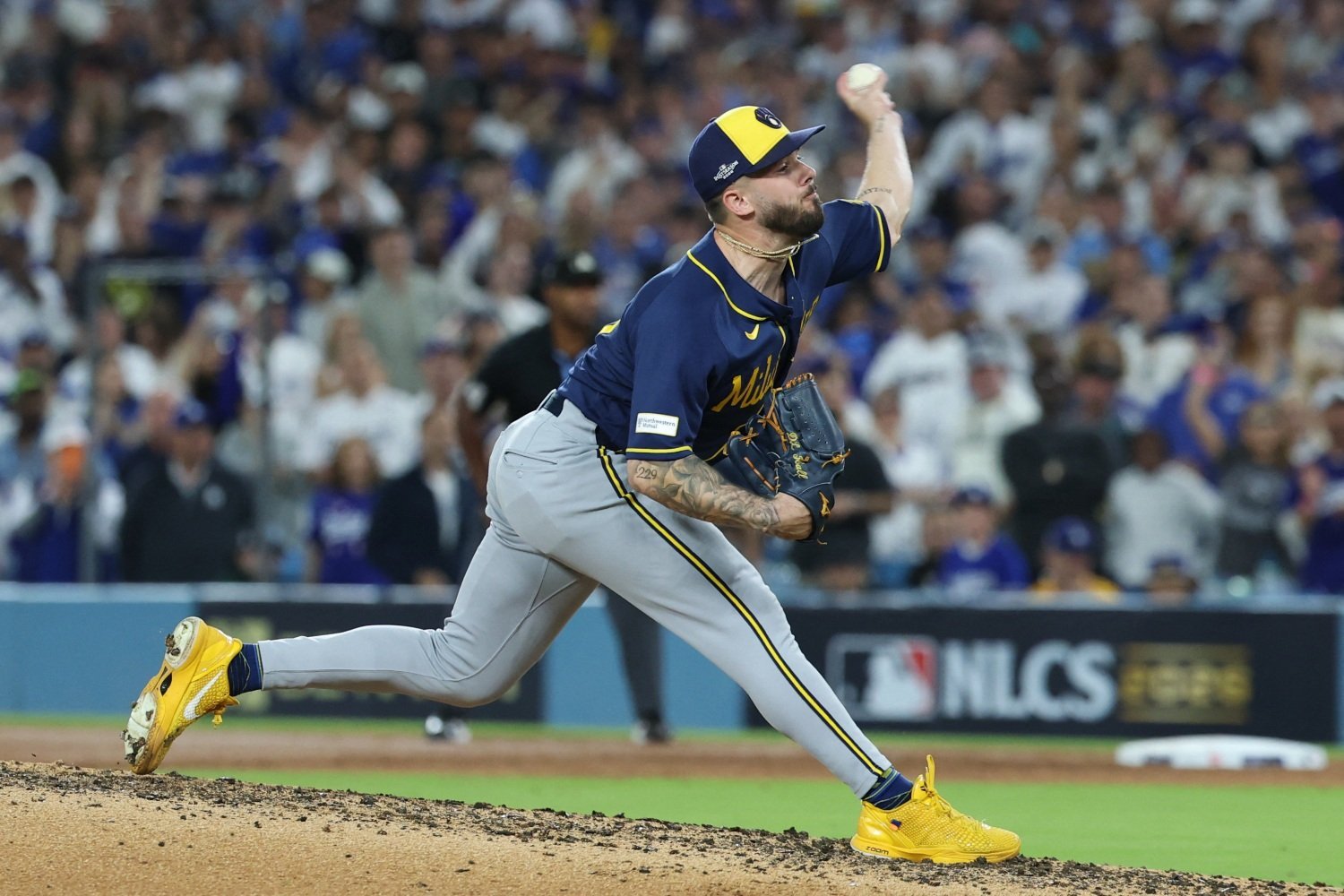 It’s crazy the difference matchups can make. In the NLDS against San Diego, Pat Murphy rarely leaned on his left-handed arms against a right-handed-heavy Padres offense. But in the NLCS, it has been a much different story, and that was extremely evident in Game 3. Left-hander Robert Gasser got the nod for Milwaukee to start the game, making the biggest start of his career. He was pitching in the championship series, on the road, against a lineup full of future Hall of Famers and All-Stars. Yet, it looked like just another Wednesday for him. Gasser fired five shutout innings, allowing just three hits and a walk while striking out three. It wasn’t the flashiest outing; he didn’t overpower the Dodgers’ lineup or rack up a ton of swing-and-miss. But he did his job, and he did it extremely well. One of the biggest keys to his success was his ability to get ahead of hitters. Gasser threw first-pitch strikes to 14 of the 20 batters he faced, consistently putting himself in favorable counts and allowing him to dictate the at-bat. Against a lineup as talented as Los Angeles’s, that can make all the difference. As we discussed before the appearance (and as he's been doing more often down the stretch), Gasser leaned heavily on his sinker. There was a clear focus on getting the pitch inside against left-handed hitters and letting it run away from righties. That approach helped him keep the Dodgers off balance, particularly when paired with his sweeper, which has been his primary pitch throughout his career. To be fair, there was some good fortune involved on the sinkers the Dodgers put in play. Not every ball found a hole, and Gasser benefited from some good defense. But that doesn’t take away from the effectiveness of his overall approach. By establishing the sinker, Gasser created opportunities for his sweeper to do damage. The breaking ball generated whiffs on 50% of swings against it, giving him a reliable weapon when he needed to finish an at-bat. After spreading his pitch selection across his entire arsenal throughout the year, he concentrated on those two offerings in Game 3. A whopping 82% of his pitches were either a sinker or a sweeper, a significant departure from his usual approach. The adjustment worked, and it gave Milwaukee exactly what they needed from their starter. Gasser kept the Dodgers off the scoreboard, limited their opportunities and handed the ball over with the Brewers in position to win a critical postseason game. Gasser wasn’t the only left-hander who was brilliant for Milwaukee, either. After a rough appearance from Abner Uribe, Murphy called on DL Hall, and boy, did he deliver. Hall entered in the bottom of the sixth with one out and a pair of runners in scoring position. The Dodgers had a golden opportunity to add to their 2-1 lead, but Hall made sure that didn’t happen. He struck out Enrique Hernandez and Tommy Edman to end the inning, escaping a dangerous situation without allowing a run. That was a huge pick-me-up for Milwaukee, and it proved to be even bigger when the Brewers took the lead in the top of the seventh. Hall’s night wasn’t done, though. He returned for a 1-2-3 seventh inning against the top of the Dodgers’ order, continuing to keep their offense in check. He then retired Kyle Tucker and Max Muncy in the eighth before a Shohei Ohtani single brought his night to an end. Hall was excellent. He generated whiffs on four of his 28 pitches, while only two of the six balls put in play against him were hit hard. Just like Gasser, Hall consistently got himself into pitcher-friendly counts, getting ahead of six of the eight batters he faced. That ability to work ahead allowed him to put pressure on hitters and get them to chase pitches outside the strike zone. Rather than allowing the Dodgers to settle into comfortable at-bats, he forced them to swing at his pitches and capitalize on opportunities when they presented themselves. Considering the situation he entered, Hall's ability to shut down the Dodgers was especially impressive. He inherited a high-leverage mess in the sixth, escaped without allowing a run, and then continued to shut down one of baseball’s most dangerous lineups. Game 3 of the NLCS felt incredibly on-brand for Brewers baseball. They threw strikes, played strong defense, and came through with timely hitting. It was a complete team effort, and Milwaukee is now just one win away from a trip to the World Series. That game goes in a much different direction without Gasser’s strong start and Hall’s ability to retire seven consecutive Dodgers after entering with runners in scoring position. The two left-handers attacked hitters, made the necessary adjustments and delivered when Milwaukee needed them most. The Brewers' ability to get contributions beyond their stars has been a significant part of their success, and Game 3 was another example of that. Against the Padres, Milwaukee had limited opportunities to lean on its left-handed arms. Against the Dodgers, those same arms have become a major advantage. View the full article
-
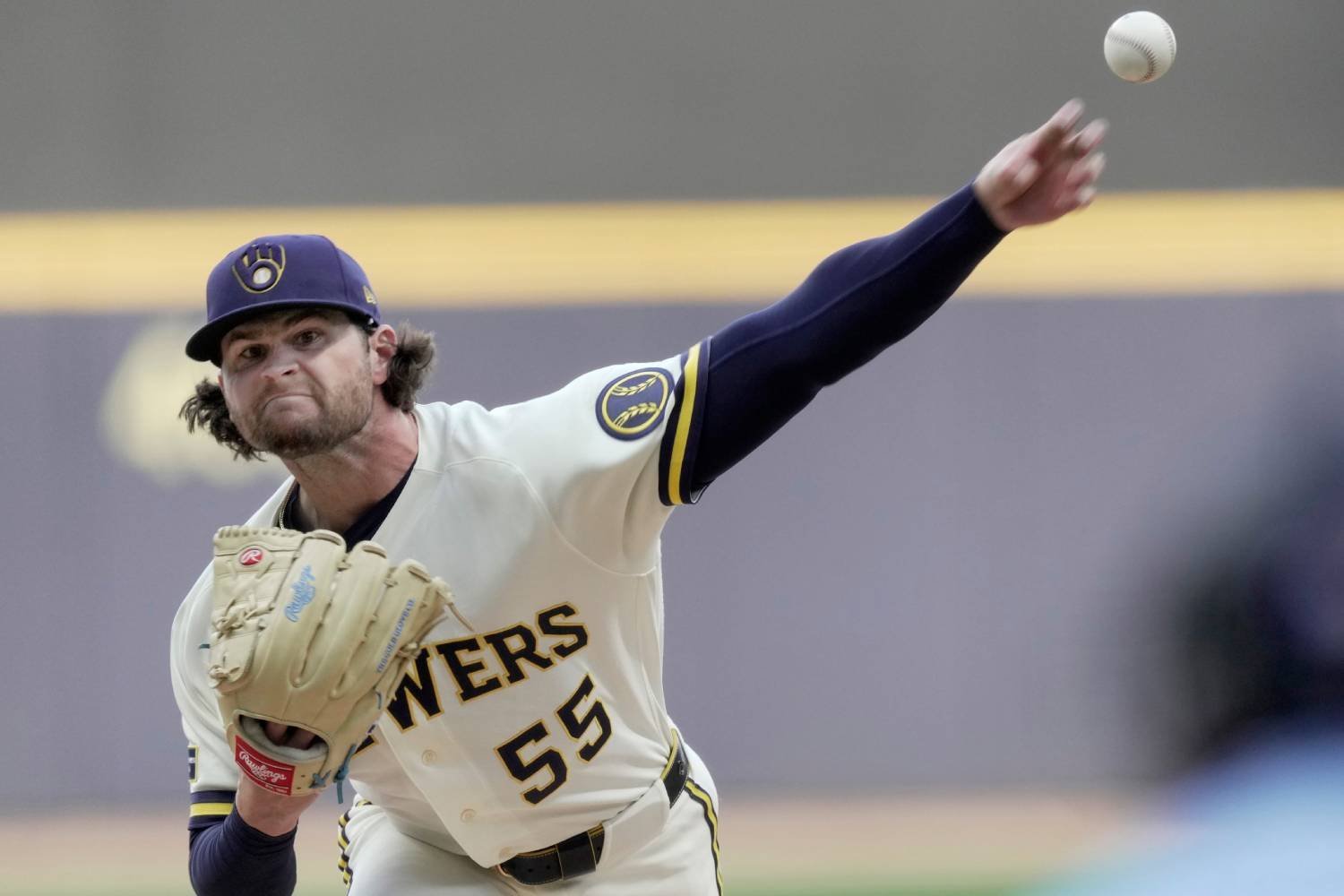 For the first time in 44 years, the Milwaukee Brewers are one win away from advancing to the second World Series in franchise history. Rookie left-hander Shane Drohan gets the call to start what could be a monumental game for the Crew, who have a 3-0 lead over the two-time defending World Series champion Los Angeles Dodgers in the best-of-seven series. This will be Drohan's postseason debut despite being on the roster throughout the NL Division Series and the NLCS. With that, it is not expected that Drohan, who made his MLB debut in early April, goes deep in this game. Perhaps one time through the order and then with a quick hook from there. Another candidate to see early action is right-hander Dustin May, a former Dodger, who could also give the Brewers multiple innings before getting to the leverage arms in the bullpen. Acquired from the Boston Red Sox in the Caleb Durbin deal, Drohan has appeared in 33 games for the Brewers, making 19 starts. He has a 3.73 FIP (4.19 ERA) with an 8.3% walk rate and 23.7% strikeout rate, both fairly average by MLB standards. His last appearance was in the regular-season finale, when he pitched 1⅔ innings of relief against the St. Louis Cardinals on Sept. 27. He didn't allow a run or a hit while striking out two. That came three days after a 2⅔-inning start against the Philadelphia Phillies in which he gave up a run on three hits with two walks and two strikeouts. Drohan faced the Dodgers three times this season, two early relief outings and then an August start. In the two May games out of the bullpen, Drohan pitched a combined 4⅓ innings, allowing three runs (two earned) on three hits and two walks with seven strikeouts. In his Aug. 13 start, Drohan went 5⅓ innings and gave up three runs on three hits and three walks with five strikeouts in a 5-4 Brewers victory. Thus, the Dodgers have a small sample size vs. Drohan. None of the 11 players on the Dodgers' roster have more than one hit against the rookie, although Andy Pages hit a two-run homer in the May 24 relief appearance and Kyle Tucker a two-run triple in the same game. Drohan has struck out Freddie Freeman twice, perhaps one reason he is getting the start. Shane Drohan vs. Los Angeles Dodgers: Current Batters Table Rk Player B PA AB H 2B 3B HR RBI BB SO BA OBP SLG OPS SH SF IBB HBP GIDP 1 Andy Pages R 6 6 1 0 0 1 2 0 2 .167 .167 .667 .833 0 0 0 0 0 2 Freddie Freeman L 5 4 0 0 0 0 0 1 2 .000 .200 .000 .200 0 0 0 0 0 3 Kyle Tucker L 5 4 1 0 1 0 2 1 1 .250 .400 .750 1.150 0 0 0 0 0 4 Teoscar Hernández R 4 4 1 0 0 0 0 0 1 .250 .250 .250 .500 0 0 0 0 0 5 Shohei Ohtani L 4 4 1 1 0 0 0 0 1 .250 .250 .500 .750 0 0 0 0 0 6 Miguel Rojas R 4 3 0 0 0 0 0 1 0 .000 .250 .000 .250 0 0 0 0 1 7 Tommy Edman B 3 2 0 0 0 0 0 1 1 .000 .333 .000 .333 0 0 0 0 0 8 Mookie Betts R 2 1 0 0 0 0 0 1 1 .000 .500 .000 .500 0 0 0 0 0 9 Kiké Hernández R 2 2 0 0 0 0 0 0 2 .000 .000 .000 .000 0 0 0 0 0 10 Dalton Rushing L 2 2 1 0 0 0 0 0 0 .500 .500 .500 1.000 0 0 0 0 0 11 Max Muncy L 1 1 0 0 0 0 0 0 0 .000 .000 .000 .000 0 0 0 0 0 Provided by Stathead: Found with Stathead. See Full Results. Generated 10/15/2026. For the first time in this series, the Brewers will not be facing a starting pitcher who has either won two Cy Young Awards or a World Series MVP. But don't overlook right-hander Tyler Glasnow, who has a repertoire that is every bit as good as the three starters who preceded him in the NLCS. The 6-foot-8 Glasnow missed a good chunk of this season with lower-back spasms, but did post a 2.74 FIP (3.53 ERA) in 13 starts with an 8.7% walk rate and very good 34% strikeout rate. He started the clinching Game 4 of the NL Division Series vs. Atlanta, going 4⅔ innings, allowing a run on a hit, but walking five and striking out five. He made six appearances for the Dodgers in last year's postseason, three in relief. While Glasnow didn't face the Crew this year, he did pitch against them twice last year and nine times in his career. Last year, he struck out 11 over 11 innings, giving up two runs (one earned) on six hits and four walks. For his career, Glasnow has a 4.55 ERA in 31⅔ innings, walking 22 and striking out 37. All but three of those appearances came with the Pittsburgh Pirates, including four relief outings. The other three have been starts with the Dodgers. Christian Yelich has seen Glasnow the most, but is just 1-for-14 with seven strikeouts. Backup catcher Gary Sanchez is 3-for 12 with seven strikeouts, while starting catcher William Contreras is 0-for-9 with three punchouts. Brice Turang has some success, going 3-for-8. Jake Bauers has homered for his lone hit in seven plate appearances. The Brewers, who finished with the second-fewest homers in MLB this season, have outhomered the Dodgers 5-0 in the NLCS. Tyler Glasnow vs. Milwaukee Brewers: Current Batters Table Rk Player B PA AB H 2B 3B HR RBI BB SO BA OBP SLG OPS SH SF IBB HBP GIDP 1 Christian Yelich L 14 14 1 0 0 0 0 0 7 .071 .071 .071 .143 0 0 0 0 0 2 Gary Sánchez R 13 12 3 1 0 0 0 1 7 .250 .308 .333 .641 0 0 0 0 0 3 William Contreras R 10 9 0 0 0 0 0 1 3 .000 .100 .000 .100 0 0 0 0 0 4 Brice Turang L 8 8 3 0 0 0 0 0 1 .375 .375 .375 .750 0 0 0 0 0 5 Jake Bauers L 7 6 1 0 0 1 1 1 2 .167 .286 .667 .952 0 0 0 0 0 6 Jackson Chourio R 7 7 1 0 0 0 0 0 3 .143 .143 .143 .286 0 0 0 0 0 7 Sal Frelick L 5 5 0 0 0 0 0 0 3 .000 .000 .000 .000 0 0 0 0 0 8 Joey Ortiz R 4 4 0 0 0 0 0 0 2 .000 .000 .000 .000 0 0 0 0 0 9 Garrett Mitchell L 3 2 0 0 0 0 0 1 1 .000 .333 .000 .333 0 0 0 0 0 10 Bo Naylor L 3 3 1 1 0 0 1 0 0 .333 .333 .667 1.000 0 0 0 0 0 Provided by Stathead: Found with Stathead. See Full Results. Generated 10/15/2026. View the full article
-
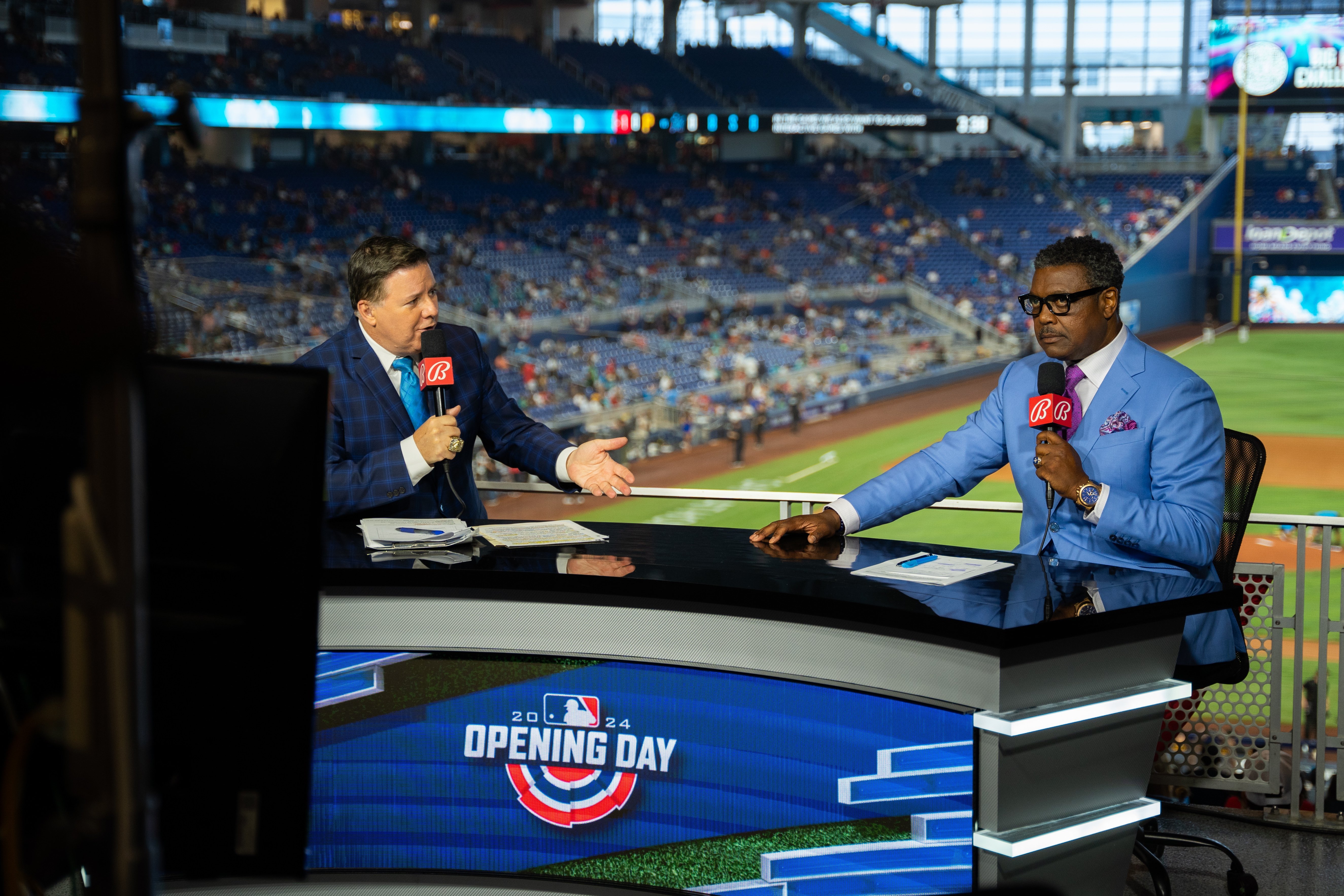 In case you haven't heard, the Miami Marlins have made some changes to their broadcasting team entering 2027. They have ignited an absolute firestorm in Marlins social media circles. In short, it's easy to see the Marlins wanting to improve their broadcasts. Based on his fine work this year, it's equally easy to see how Jack McMullen could be seen as an elite broadcasting asset that had to be kept no matter what. Unfortunately, it's also easy to understand how the Marlins remain an easy target any time they do something that could be argued—fairly or not—to involve finances. On top of that, even the most objective and seasoned journalists in this market could still be feeling pretty raw after a summer full of financially driven South Florida media firings. The main reason this off-the-field matter has commanded so much attention is that the Marlins don't win. The last time the Marlins even had consecutive winning seasons was 2008-09. They've never made the playoffs in consecutive years. If you throw out 2020, Bruce Sherman has only had one winning season in nearly a decade of ownership. Suffice it to say, DJ Khaled didn't have the Marlins in mind when he dropped All I Do Is Win. Meanwhile, the Marlins are right near the bottom of MLB in terms of payroll, just like the Guardians and Rays. Even the Brewers are being outspent by most other teams. Yet all three are still playing in October. Cleveland and Milwaukee have had more winning seasons in the past decade than Miami has had in their entire history. Tampa is one short of tying that mark. Would those clubs would receive this much flack if they culled their broadcasting crews? Zero chance. Higher spending even without winning results would save the Marlins a lot of the fire they receive, and the timing of the news also worked to their detriment. Had it come deeper in the offseason following roster improvements or extensions for core players, it'd be a less prominent story. Let this be a reminder that the baseball operations department is but one branch of a major league organization. It's clear to everyone that things are getting better in Miami. The Marlins outscored their opponents in 2026 for the first time in 16 years, practically all of their veteran talent is under club control for next season and more standout prospects are on the cusp of debuting. Yet until that starts resulting in consistent winning, playoff-caliber seasons? They will continue not to get the benefit of the doubt. Winning is the cure-all for this team, far more than any broadcasting or spending change. The sooner that happens, the better. View the full article
-
 The San Diego Padres have tapped the international market once again. Right-hander Tatsuya Nogami has signed a minor-league contract with the Padres, according to his transactions page. Nogami is a 20-year-old from Japan. The Padres still have money in their international budget for 2026. Not much is known about Nogami. There is some info about a player of the same name that seems to line up with Nogami on this page, which has been translated. Nogami is 6-foot-2 and 175 pounds who was up to 90 mph in high school. He throws a four-seamer, cutter, slider, curve and splitter. Certainly a player who will need some development. The signing period runs through Dec. 15. Next year's signing period begins Jan. 15, although there is a possibility that is affected by the collective-bargaining agreement negotiations as an international draft is possible. View the full article
-
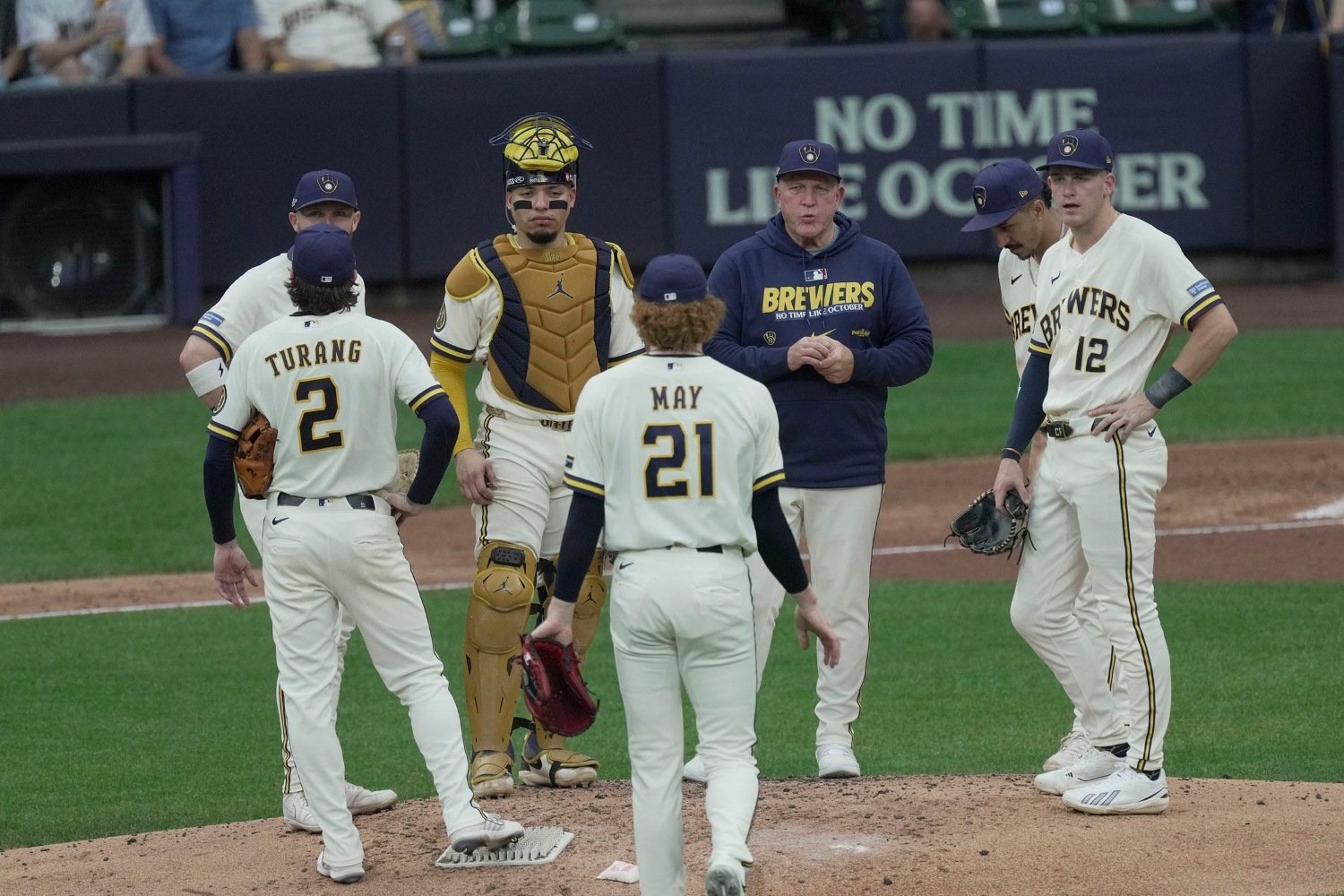 In his postgame press conference after Game 3 of the 2026 National League Championship Series, Pat Murphy didn't even bother to announce a starting pitcher for Game 4. "There will be pitching, yes," he quipped, when asked about it by reporters. That's as glib a retort as A.J. Hinch offered two years ago, when asked what his plans were for a pitching staff that was very much a patchwork behind Cy Young-caliber ace Tarik Skubal. Hinch then called his plan "pitching chaos," which is roughly what Murphy will have in mind when Game 4 begins Thursday night. Starters Jacob Misiorowski and Robert Gasser are entirely off-limits for this game. Logan Henderson, who started Game 2 on Monday and would pitch again in Game 6 if the series goes that far, will appear only if the contest stretches deep into extra innings. Abner Uribe should be down, and DL Hall threw 28 pitches in a heroic effort in Game 3, so he should be used only in one specific, extremely limited situation, which we'll discuss later. The other eight pitchers on the team's roster all need to be wearing their spikes, though, and none should bother settlinjg too deep into a chair in the visitors' bullpen. Here's a sketch of the plan that makes the most sense for Milwaukee during this potential clincher. The Tone-Setter: Dustin May Over half the pitchers who will be truly available to Murphy Thursday night are comfortable starting games. Shane Drohan, Kyle Harrison and Dustin May were starters for much of the season. Chad Patrick has started 29 games in the majors, though only six of them came this year. Antonio Senzatela turned a corner when he transitioned to relief, but that was just this season; the lion's share of his career has been spent in the rotation. Thus, comfort with toeing the rubber to start the game is only a minor concern here. Murphy has the luxury of choosing his starter on the basis of matchups, because whoever starts, they'll be around for no more than (and perhaps much less than) three innings. May is the clear choice. He cleaned up the mess Henderson had made for himself in the fifth inning of Game 2 almost perfectly, and it was because the pocket of the lineup against which he pitched was perfect for him. Mookie Betts, Freddie Freeman and Teoscar Hernández are the most likely top three in the Dodgers order in Game 4. They're the same trio May faced and beat in Game 2, and that's not a coincidence. He has the arsenal to handle those three—especially Freeman, against whom you would rather have a good four-seamer even from a righty than a sinker, even from a lefty. May is a bad matchup, from the Brewers' perspective, for only one important Dodgers batter: Max Muncy. If possible, Murphy should get 3-5 outs from May and get him out of the game before he faces Muncy. If that's not possible, the hope, at least, should be to face him with no one on base. At some point in the game, via usage of his bench or otherwise, Dave Roberts will get a good matchup out of that lineup spot. It's ok if it's right away. May just needs to throw unreservedly, touching 100 miles per hour again, and let his teammates take over quite early. It's Time: Shane Drohan Here's the distribution of outs recorded by the 13 pitchers who have been on the roster in each of the first two rounds of the postseason for the Brewers, through NLCS Game 3: Aaron Ashby - 28 Logan Henderson - 27 Robert Gasser - 27 Jacob Misiorowski - 25 Abner Uribe - 19 Trevor Megill - 17 DL Hall - 16 Dustin May - 12 JoJo Romero - 10 Antonio Senzatela - 5 That list is only 10 names long because, so far, Shane Drohan, Kyle Harrison and Chad Patrick have been completely left out of the action. That's understandable. Nearly every game the team has played has been close; nearly every at-bat has been potentially pivotal. Murphy has diminished trust in Harrison (who only began to look like his first-half self in small ways at the tail end of the season, after a long period of struggle) and Patrick (who got very erratic down the stretch). Drohan, though, has been left out almost by accidents of circumstance. It's not terribly hard to find a fit for Drohan against the Dodgers lineup, especially if Roberts writes out a card predicated on getting to May. Shohei Ohtani and Max Muncy are vulnerable to the sinker that fronted Drohan's arsenal late in the season. If and when he goes back to the four-seamer to attack some of the right-handed bats he sees, a walk or two might result, but that's fine. This won't be a long appearance. The goal should be 3-6 outs, depending on how things go. Drohan is the no-brainer complement to May and the counterpunch to any attempt by Roberts to stack the lineup against the righty. A Mid-Game Neutralizer: Antonio Senzatela Yet to appear in this round, Senzatela enters this game as almost a secret weapon for Murphy. The Dodgers know him, because he pitched a long time in their division and was there even this season, as a reliever, and Muncy and Andy Pages each took him deep this season. However, he struck Pages out the other two times he saw him. Senzatela is a good matchup, from the Brewers' perspective, for both Teoscar and Enrique Hernández, and a tolerable one for Ohtani and Will Smith. Murphy should avoid having him face either Betts or Freeman, but there's room for him to cut out a chunk of Los Angeles's lineup and give the team a bridge inning without suffering any damage. His tenure with Milwaukee hasn't been especially satisfying so far, but he could be part of sewing up the pennant, thanks to his recent adjustments. The Pure Situationals: Kyle Harrison, Chad Patrick, and JoJo Romero It's always wise to start with a clear plan. There are few versions of this game in which May, Drohan and Senzatela should not pitch, so they should be the first three arms to whom Murphy turns. With any luck, he'll gain valuable information about the game before it's time to lift the third of those guys. Maybe one of them will have quickly blown up; that would be ok. The Brewers have tons of breathing room in the series. Maybe they'll sail unexpectedly through 16 outs, while the Brewers put five runs on the board. That, obviously, would be ideal. Either way, Murphy should know more about the game (and, therefore, what the rest of the night should look like) by the middle of the contest. Depending on what he learns, he's likely to turn to one of Harrison, Patrick and Romero next. Patrick has the clearest set of use cases, though they diverge in a fascinating way. They are: The game is getting away from the Brewers, and Murphy needs someone to cover innings. Patrick is the safest bet to get him from Out No. 13 to Out No. 24, if it's one of those nights where the team is down four runs early and there's no sign of life from the offense. This feels unlikely, but it's an option. More broadly, Patrick is the right guy to use if the Brewers are down and need multiple innings of work. The team needs to get out Pages or either Hernández, in a jam. Those players struggle against pitch mixes like Patrick's, and he should be able to rescue the Crew if needed—but it needs to be a situation where getting that one batter can swing the game and end the inning. Romero is a natural fit against this lineup, but he has to be a targeted weapon deployed against the right lefty batter. Freeman's bat path makes him dangerous against even fellow lefties, if their heater is a sinker like Romero's. In Game 2, he pitched against Ohtani, Smith and Muncy. That's the pocket where he fits better. Harrison, by contrast, is the right guy to go after Freeman—if Murphy and the Brewers believe he can throw strikes and achieve the ride on the heater that made him great for the first half of this year. The working version of Gravitron is perfect to neutralizing Freeman, but the Brewers have to have confidence (based on feedback and data from his side sessions since he last pitched in a competitive environment) that he can throw the same fastball he threw early this year before they give him the ball to get an important out. This is where Hall comes back into the conversation. He worked hard in Game 3, and saving him for a potential Game 5 makes some sense; the rest of the bullpen will be coming off some significant work. If Freeman should come up in a key spot with two outs, though, Hall should be ready. He can do what Harrison can do, but he also has a wider array of ways to get outs, and the team has (or should have) much more faith in him to be the guy they expect and need when he steps on the rubber. He can't be asked for another three or four outs, after what he did Wednesday night, but in the right very limited spot, he could still be useful, pushing Harrison deeper into the cabinet. How Many Outs Can You Get: Aaron Ashby and Trevor Megill Murphy gave the ball to Megill for a four-out save in Game 3. If at all possible, he should restrict his closer to three outs (and one "up") in Game 4, so the name of the game is to get to the end of the eighth inning with the lead and without calling on the big fella. That responsibility will fall to Ashby, who pitched a lot in Games 1 and 2 but got the night off Wednesday and is now on two days' rest. It's reasonable to guess that Milwaukee will ask him for six outs. Murphy might even go for nine, if much of the above goes poorly or he wants to hold Drohan back in case of extra frames. Expect to see Ashby early, and if there's any way to do so, Murphy will simply go straight from his most trusted lefty to his closer. This is just one roadmap to a pennant. At this point, the Brewers have a bunch of them. Game 4 might be the ugliest of the series to date. It will be the toughest slog for Milwaukee. But it might also be a showcase of their depth and their teamwork. It's hard to imagine a more fitting way for this particular club to finally make it to the World Series. View the full article
-
Drafting our favorite free agent pitcher targets for the Marlins
DiamondCentric posted an article in Fish On First
 One of the reasons why the Miami Marlins couldn't quite call themselves "contenders" in 2026 was their pitching staff was too thin. With MLB free agency beginning shortly, AJ Ramos, Kevin Barral, Isaac Azout and Ely Sussman take turns picking potential reinforcements for Miami's starting rotation and bullpen. After signing Pete Fairbanks, Chris Paddack and John King from last winter's free agent class, there's nowhere to go but up! You can find Fish Unfiltered and Fish On First LIVE on the Fish On First YouTube channel, Apple Podcasts, Spotify or wherever else you get your pods. AJ highlighted Patrick Sandoval and Steven Okert Kevin highlighted Robbie Ray and Adrián Morejón Isaac highlighted Sean Newcomb and Aaron Civale Ely highlighted Shane Bieber and Dustin May View the full article
-
Javier Assad Remains the Cubs' Ultimate Swiss Army Knife
DiamondCentric posted an article in North Side Baseball
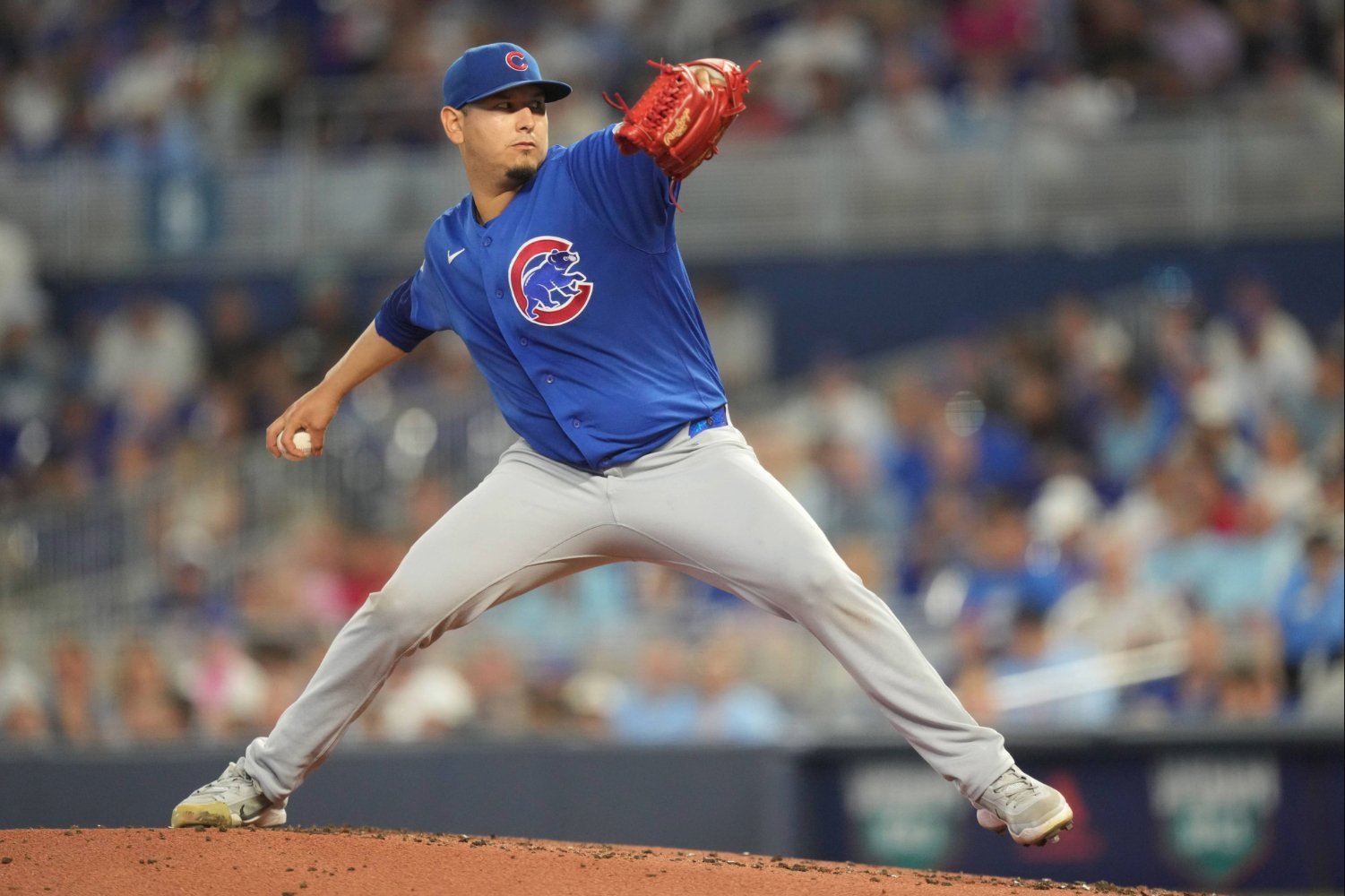 Javier Assad doesn't possess the flashiest of skill sets among members of the Chicago Cubs pitching staff. His results aren't even close to the most impressive. But 2026 reaffirmed that Assad is every bit the type of pitcher that the Cubs or any other staff in baseball needs to hold in their employ. In the last few seasons, we've seen a couple of different iterations of Javier Assad as far as his role goes. In 2023, he was the swingman making 10 starts within 32 overall appearances. The following year, he was a full-time starter, taking the ball 29 times in that capacity. The 2025 season was largely a wash due to an oblique injury, but 2026 saw him return to his '23 ways by shifting between various roles as needed. By season's end, Assad had made 28 appearances but only 11 starts (94.1 innings in total). His ERA sat at 3.63 with a career-best 7.1 percent walk rate. As a starter, Assad threw 56.2 innings to a 3.49 ERA against 37.2 innings & a 3.82 ERA in relief. His strikeout rate was quite similar regardless of role while his walk rate was improved slightly in relief as opposed to starting (7.9 BB% as a starter, 6.0 percent as a reliever). That's not that much variance overall, but what allowed Assad to find that type of steadiness is here: I'm not pitching Assad as some sort of hidden gem amongst Cub pitchers from a performance standpoint or declaring his role needs to be larger. Instead, this illustrates exactly what makes Assad as well-suited for his 2026 role as he is: limiting baserunners and getting groundball contact. It helps that Assad is as sinker-forward as he is (42 percent usage rate). That'll play against either handedness, though it's worth noting he used it less against lefties in favor of a blend that also relied heavily on a cutter and four-seamer. In general, though, he was able to use the sinker and cutter to generate groundball rates over 50 percent in total, with the cutter leading the way against left-handed hitters (47.4 percent). The sinker itself was particularly adept at avoiding the barrel, with a Barrel% of just 4.2 against hitters of either handedness. The beauty of this skill set is in its simplicity. There aren't necessarily more strikeouts waiting to be uncovered in Assad's game. He doesn't need to spend the offseason searching for more velocity. Instead, that ability to generate groundballs and avoid opposing barrels is exactly what he should continue to be. And if the Cubs want to keep him in this very swing man role, especially if it means they can decline their club option on Colin Rea, then that seems like a perfectly worthwhile outcome as they build their staff for next season. View the full article
-
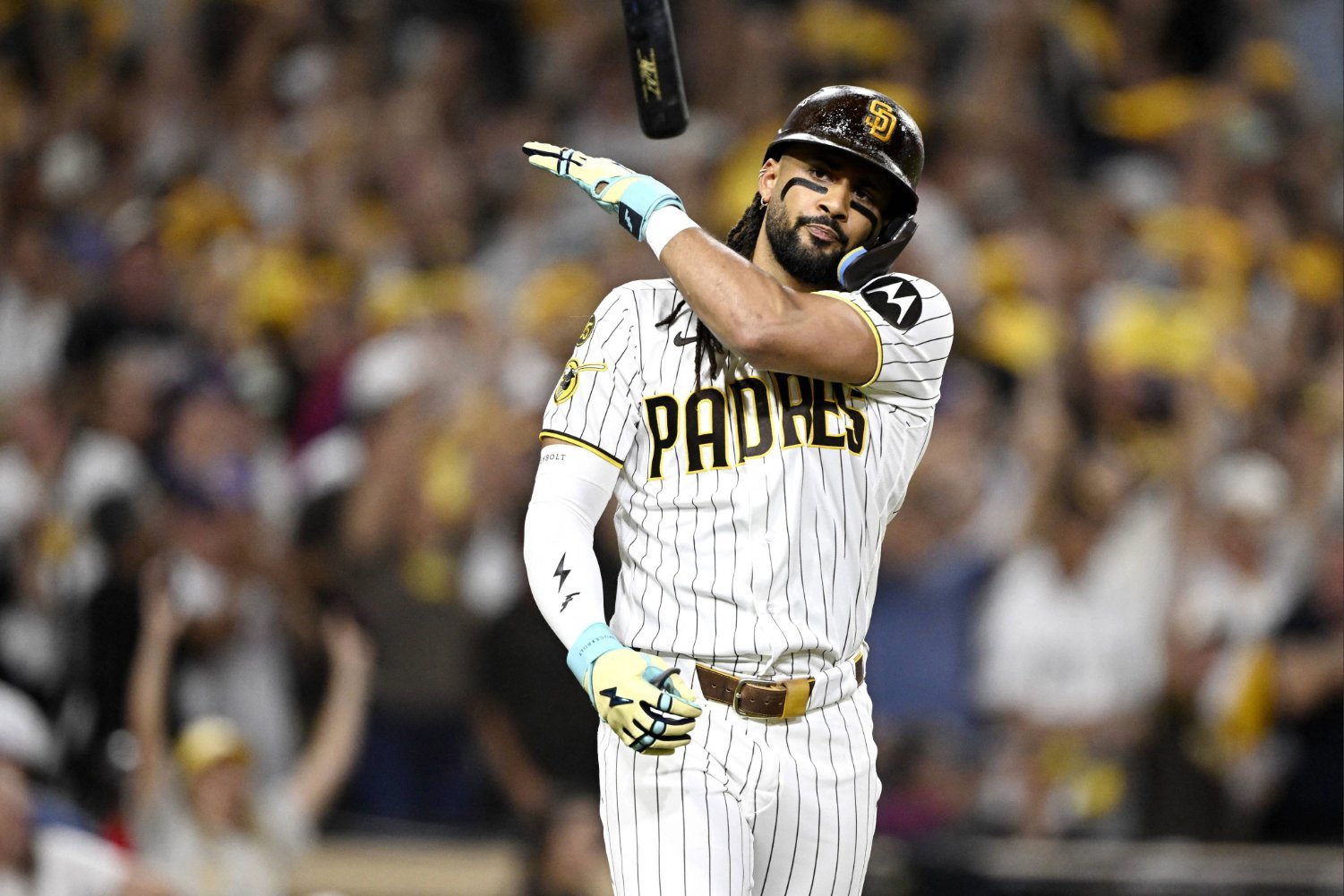 The 2026 season was an... interesting one offensively for the San Diego Padres. Some familiar faces had productive seasons, while a newcomer emerged as a key piece in the middle of the lineup. And while the Friars ultimately had several hitters worthy of consideration, three stood out above the rest. Before we get to them, though, let's take a look at a couple of guys who just missed the cut. Honorable Mentions Manny Machado (158 G): .217/.303/.407 (.710 OPS), 22 2B, 30 HR, 98 wRC+, 91 RBIs, 11.2% BB, 21.3% K Gavin Sheets (125 G): .212/.313/.397 (.710 OPS), 16 2B, 17 HR, 102 wRC+, 11.7% BB, 20.3% K Padres Mission's Best Padres Hitters of the Year (2026) No. 3: CF Jackson Merrill 2026 Stats (158 G): .254/.303/.440 (.743 OPS), 26 2B, 5 3B, 26 HR, 27 SB, 105 wRC+, 6.4% BB, 21.8% K Jackson Merrill's 2026 season was very much a tale of two halves. The young center fielder struggled mightily during the first half of the season, posting just a .628 OPS and a 76 wRC+. But something clicked after the All-Star break, and Merrill looked much more like the hitter Padres fans expected to see. After the break, his OPS ballooned to .909, while his wRC+ jumped all the way to 148. He was logging an extra-base hit in nearly every other game during the second half, and he also cut his strikeout rate by more than two percentage points. That turnaround helped him finish the year with a .254/.303/.440 slash line, 26 doubles, five triples, 26 home runs and 27 stolen bases. The stolen bases added another element to a Padres lineup that had plenty of power, giving Merrill a way to impact games even when he wasn't driving the ball. Unfortunately for the center fielder, these rankings take the entire season into account. His second half was excellent, but his first half was simply too poor to overlook. If we're only looking at what Merrill did after the All-Star break, he would have a very strong case to move up this list. Instead, he lands at No. 3. No. 2: 1B Ty France 2026 Stats (133 G): .295/.363/.502 (.865 OPS), 24 2B, 21 HR, 141 wRC+, 7.4% BB, 21.6% K Ty France was one of the biggest surprises of the year for San Diego. After signing for “just” $1.35 million in February, France quickly settled in as the Padres' everyday first baseman. And boy, did they need his bat. He slashed .295/.363/.502 with 24 doubles and 21 home runs across 133 games, finishing the year with an .865 OPS and a 141 wRC+. His OPS mark led the team, and he quickly established himself as one of the most steady and reliable pieces in Craig Stammen's lineup. Much like Merrill and the player coming in at No. 1, France was even better in the second half, helping the Padres make their push toward the postseason. The difference, however, is that France was already very good before the All-Star break. His .815 first-half OPS was still that of a quality middle-of-the-lineup bat, whereas Merrill's .628 mark over the same stretch was borderline unplayable. France never had to completely reinvent himself. He was simply a consistently productive hitter from the beginning of the season through the end. I don't think anyone saw this kind of year coming from the veteran slugger when he signed in February. The Padres were looking for an affordable option at first base, and instead, they got one of their best offensive players. That performance earned France Hitter of the Year runner-up honors. Padres' Hitter of the Year: RF Fernando Tatis Jr. 2026 Stats (159 G): .289/.358/.470 (.828 OPS), 32 2B, 3 3B, 25 HR, 38 SB, 131 wRC+, 9.1% BB, 18.5% K Fernando Tatis Jr. didn't hit his first home run of the season until May 30. And yet, somehow, he still finished the year with 25 home runs and an OPS well above .800. He hit .289/.358/.470 with 32 doubles and three triples across 159 games. He also comfortably led the team with 38 stolen bases, giving him another way to impact the game even when the power wasn't quite there. And just like Merrill and France, Tatis really came alive in the second half. After posting a .713 OPS during the first half, that number skyrocketed to .996 after the All-Star break. In 64 second-half games, he hit 20 home runs and recorded 35 total extra-base hits while posting a 94.5 MPH average exit velocity. That's the version of the face of the franchise Padres fans were waiting for. While France's overall slash line was better than Tatis', as they say, the best ability is availability. It's not that France wasn't available, but Tatis missed just three games all season. That durability, combined with his production and ability to impact the game on the basepaths, makes him a fitting choice for this award. View the full article
-
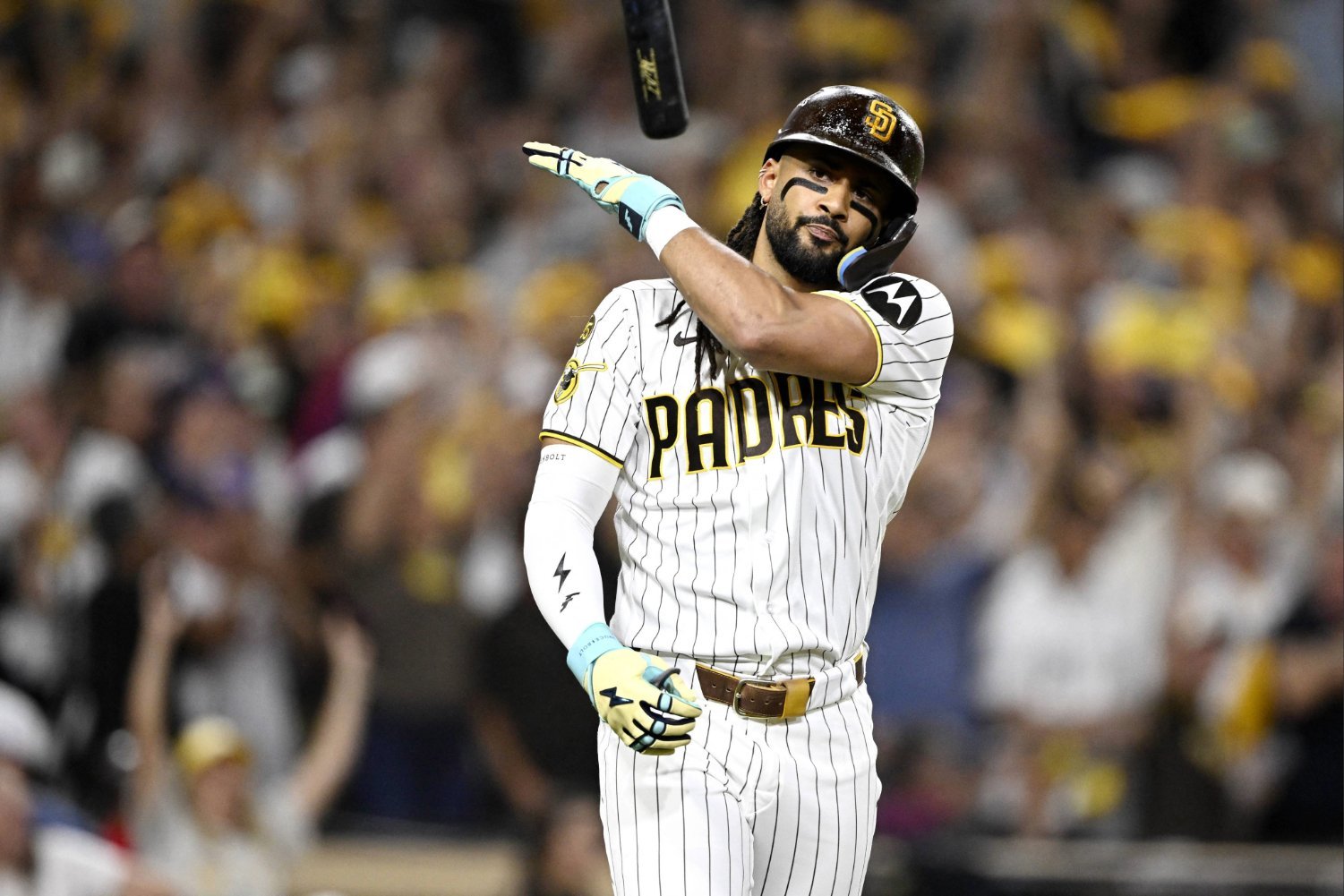 The 2026 season was an... interesting one offensively for the San Diego Padres. Some familiar faces had productive seasons, while a newcomer emerged as a key piece in the middle of the lineup. And while the Friars ultimately had several hitters worthy of consideration, three stood out above the rest. Before we get to them, though, let's take a look at a couple of guys who just missed the cut. Honorable Mentions Manny Machado (158 G): .217/.303/.407 (.710 OPS), 22 2B, 30 HR, 98 wRC+, 91 RBIs, 11.2% BB, 21.3% K Gavin Sheets (125 G): .212/.313/.397 (.710 OPS), 16 2B, 17 HR, 102 wRC+, 11.7% BB, 20.3% K Padres Mission's Best Padres Hitters of the Year (2026) No. 3: CF Jackson Merrill 2026 Stats (158 G): .254/.303/.440 (.743 OPS), 26 2B, 5 3B, 26 HR, 27 SB, 105 wRC+, 6.4% BB, 21.8% K Jackson Merrill's 2026 season was very much a tale of two halves. The young center fielder struggled mightily during the first half of the season, posting just a .628 OPS and a 76 wRC+. But something clicked after the All-Star break, and Merrill looked much more like the hitter Padres fans expected to see. After the break, his OPS ballooned to .909, while his wRC+ jumped all the way to 148. He was logging an extra-base hit in nearly every other game during the second half, and he also cut his strikeout rate by more than two percentage points. That turnaround helped him finish the year with a .254/.303/.440 slash line, 26 doubles, five triples, 26 home runs and 27 stolen bases. The stolen bases added another element to a Padres lineup that had plenty of power, giving Merrill a way to impact games even when he wasn't driving the ball. Unfortunately for the center fielder, these rankings take the entire season into account. His second half was excellent, but his first half was simply too poor to overlook. If we're only looking at what Merrill did after the All-Star break, he would have a very strong case to move up this list. Instead, he lands at No. 3. No. 2: 1B Ty France 2026 Stats (133 G): .295/.363/.502 (.865 OPS), 24 2B, 21 HR, 141 wRC+, 7.4% BB, 21.6% K Ty France was one of the biggest surprises of the year for San Diego. After signing for “just” $1.35 million in February, France quickly settled in as the Padres' everyday first baseman. And boy, did they need his bat. He slashed .295/.363/.502 with 24 doubles and 21 home runs across 133 games, finishing the year with an .865 OPS and a 141 wRC+. His OPS mark led the team, and he quickly established himself as one of the most steady and reliable pieces in Craig Stammen's lineup. Much like Merrill and the player coming in at No. 1, France was even better in the second half, helping the Padres make their push toward the postseason. The difference, however, is that France was already very good before the All-Star break. His .815 first-half OPS was still that of a quality middle-of-the-lineup bat, whereas Merrill's .628 mark over the same stretch was borderline unplayable. France never had to completely reinvent himself. He was simply a consistently productive hitter from the beginning of the season through the end. I don't think anyone saw this kind of year coming from the veteran slugger when he signed in February. The Padres were looking for an affordable option at first base, and instead, they got one of their best offensive players. That performance earned France Hitter of the Year runner-up honors. Padres' Hitter of the Year: RF Fernando Tatis Jr. 2026 Stats (159 G): .289/.358/.470 (.828 OPS), 32 2B, 3 3B, 25 HR, 38 SB, 131 wRC+, 9.1% BB, 18.5% K Fernando Tatis Jr. didn't hit his first home run of the season until May 30. And yet, somehow, he still finished the year with 25 home runs and an OPS well above .800. He hit .289/.358/.470 with 32 doubles and three triples across 159 games. He also comfortably led the team with 38 stolen bases, giving him another way to impact the game even when the power wasn't quite there. And just like Merrill and France, Tatis really came alive in the second half. After posting a .713 OPS during the first half, that number skyrocketed to .996 after the All-Star break. In 64 second-half games, he hit 20 home runs and recorded 35 total extra-base hits while posting a 94.5 MPH average exit velocity. That's the version of the face of the franchise Padres fans were waiting for. While France's overall slash line was better than Tatis', as they say, the best ability is availability. It's not that France wasn't available, but Tatis missed just three games all season. That durability, combined with his production and ability to impact the game on the basepaths, makes him a fitting choice for this award. View the full article
-
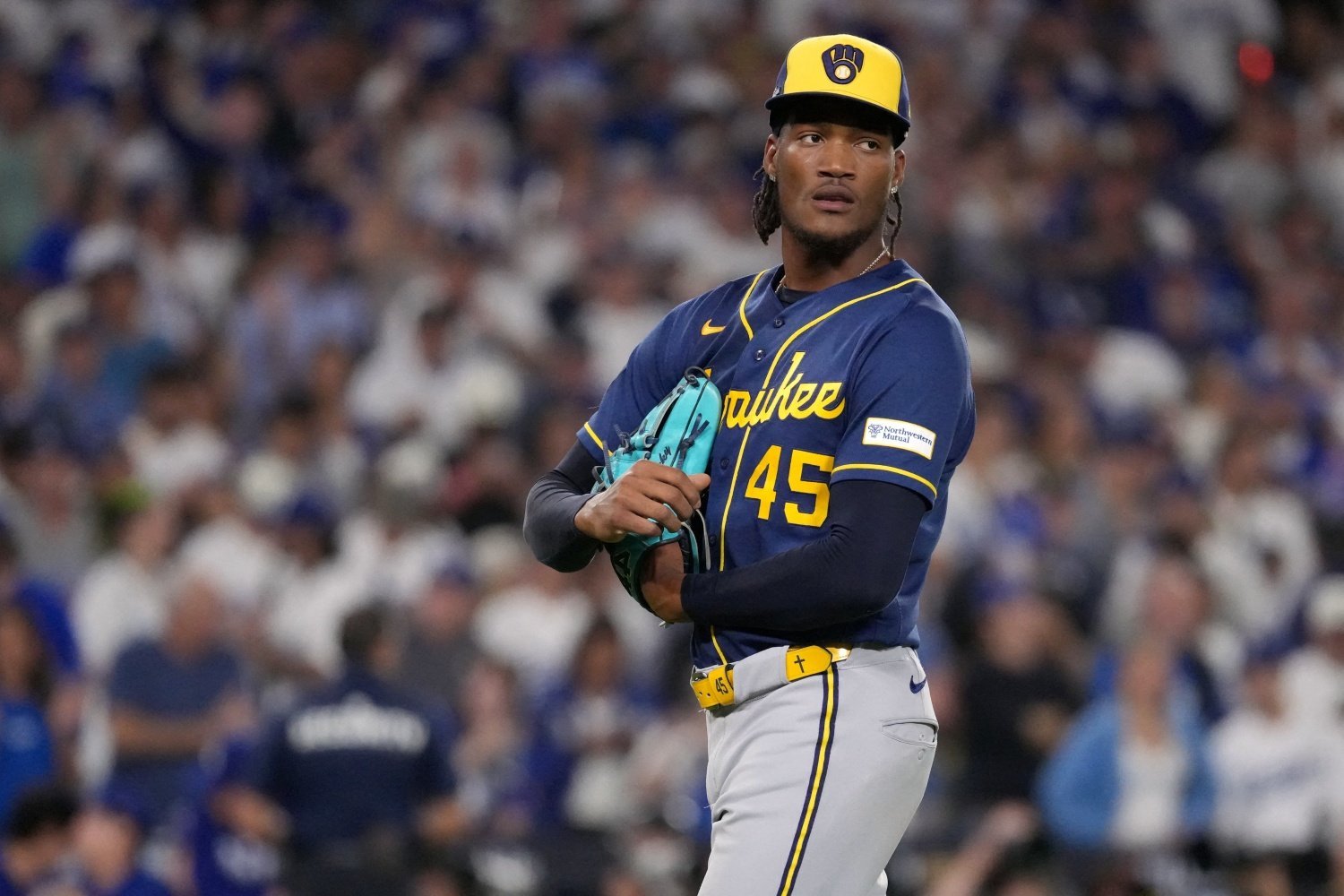 For the past two seasons, Abner Uribe has been Pat Murphy's iron man. Uribe pitched 75 times last regular season, and while he pitched only 61 games this year (because he spent 20 days on the injured list with a forearm strain), he pitched more often on a rate basis. It's no surprise, then, that Murphy has floored the gas pedal with Uribe this postseason, pitching him in all seven of the Brewers' October games so far. On the surface, it worked through the first six games, as Uribe tossed six scoreless innings. Results can be deceptive in a small sample, though. Uribe pitched poorly in all four of his Division Series outings; he threw just 37.9% of his pitches in the strike zone; issued two walks and a hit-by-pitch against just one strikeout; and nearly allowed a game-tying home run in Game 4 that Garrett Mitchell robbed. His 9.22 xERA and 6.33 SIERA described his performance more accurately than his 3 ⅔ scoreless innings. Uribe's slider command was particularly non-competitive throughout the series. Uribe turned the page with two dominant outings to start the NLCS, but the chickens came home to roost in Game 3. He looked like his NLDS self, but the Dodgers didn't bail him out with bad chases and poorly placed contact, as the Padres (and Lady Luck) did. Handed a 1-0 lead in the bottom of the sixth, Uribe walked the bases loaded with one out, then left a first-pitch sinker down the middle that Will Smith roped for a go-ahead double. Murphy and the Brewers' pitching coaches managed the inning poorly. It was an awkward lineup pocket for Uribe. If a runner reached, the Dodgers had left-handers Kyle Tucker and Shohei Ohtani due up, and Max Muncy was also likely to pinch-hit. The Brewers had southpaw DL Hall and righty Chad Patrick warming in the bullpen, but they stuck with the erratic Uribe for Ohtani and Smith. After the game, Murphy told reporters that he wanted the Uribe vs. Smith matchup, but the way the inning unfolded, that wasn't an acceptable rationale. Using Uribe at some point wasn't unreasonable. Because of team off days between games and series, he's pitched seven times in the last 12 days. That's a heavy but manageable workload in a small sample. He can't continue at that rate for the rest of the postseason, though. Few relievers can stay sharp while pitching more often than not, and Uribe already hasn't been sharp. If they have a lead in Game 4, Murphy and the Brewers should go full throttle to finish an NLCS sweep. Winning in four games would give them a full week off before Game 1 of the World Series to reset and stack their cards. Uribe should be the one pitcher off-limits. With a 3-0 series lead, he shouldn't pitch again in Los Angeles. Given his wildness, they should watch closely when he does return to action. The postseason is the time to push the envelope with workloads. When few future games are guaranteed, saving players for future games isn't worth it. There should still be limits in non-elimination games, though. Murphy pushed his iron man too hard on Wednesday, and he's about to do the same with his cumulative workload—unless he throttles back and learns to trust another pitcher or two in his relief corps. View the full article
-
Can Free Agent-to-Be Alec Bohm Fit at First Base for the Twins?
DiamondCentric posted an article in Twins Daily
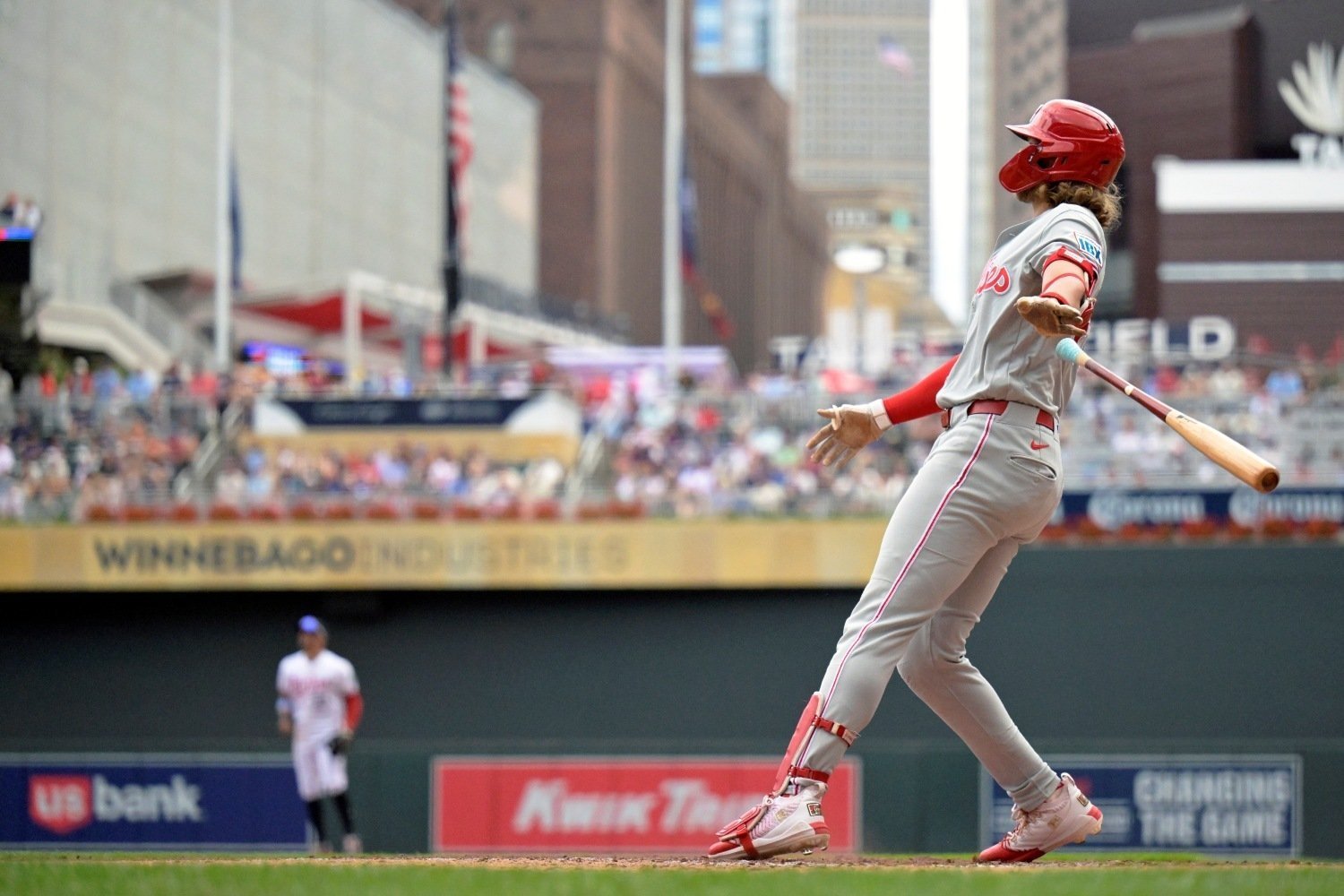 The Minnesota Twins need to earmark some money for free-agent spending on offensive upgrades this winter, especially with pending free agents Ryan Jeffers and Josh Bell heading out the door. First base could be a low-friction place to find some help, as the club weighs its future with Royce Lewis. Alec Bohm could be an intriguing option. MLB.com’s Mark Feinsand recently identified the Twins as a potential landing spot for the veteran infielder, who is entering free agency after spending his career with the Philadelphia Phillies. Bohm offers a right-handed bat, experience at first and third base, and a track record of driving in runs. However, his uneven 2026 performance makes it difficult to determine whether he would represent a significant upgrade over Lewis. Bohm's Up-and-Down 2026 Season The Phillies selected Bohm in the first round of the 2018 MLB Draft, and he developed into a regular contributor for a Philadelphia team that reached the postseason for a fifth straight time in 2026. His season, however, featured some significant highs and lows. Bohm appeared in 155 games, hitting .249/.315/.383 with 15 home runs, 88 RBIs, and 58 runs scored. His .698 OPS translated to an 87 OPS+, while his 0.2 fWAR indicated that his overall contributions were limited. Those numbers don't tell the entire story of his season. Bohm struggled badly out of the gate, batting .159/.227/.206 with one home run and 15 RBIs through his first 35 games. A .171 batting average on balls in play contributed to his difficult start, although his overall production was undeniably disappointing. There was personal turmoil hanging over him, as he battled his own parents over a financial dispute that eventually led to a lawsuit. The 30-year-old began turning things around on May 9. Over his final 120 games, Bohm hit .274/.340/.433 with 14 home runs and 73 RBIs. He also delivered a go-ahead home run in Game 2 of the Wild Card Series, extending the Phillies' season before they were eliminated by Atlanta in Game 3. There is a reason to believe Bohm can be a productive major-league hitter. He's been an above-average hitter in four of the last five campaigns, and if you take out those early struggles in 2026, he was above-average this year, too. Still, his disappointing overall numbers in 2026 leave questions about how much offensive value he would bring to his next team. Why Bohm Could Fit in Minnesota First base is an obvious position for the Twins to evaluate as they begin planning for 2027. Lewis handled approximately half of the team's at-bats at the position last season, but his future with Minnesota is uncertain. He finished 2026 hitting .227 with a .287 on-base percentage and a .667 OPS across 463 at-bats. He added 15 home runs and 57 RBIs, numbers that fell short of what the Twins needed from one of their potential middle-of-the-order hitters. His injury history also complicates the decision. Lewis has endured two torn ACLs during his career, and although he appeared in 125 games in 2026, Minnesota must consider whether it can count on him to remain available over a full season. According to MLB Trade Rumors' arbitration projections, Lewis is expected to earn approximately $5.1 million in 2027. The Twins could decide that money is better allocated elsewhere, particularly if they believe a different player would provide greater availability and a more reliable offensive contribution. Bohm could fill that role. He boasts a much stronger track record of staying in the lineup. His ability to handle both corners of the infield would also provide manager Derek Shelton with additional lineup flexibility. Perhaps his most appealing trait is his performance against left-handed pitching. Bohm posted an .816 OPS against lefties in 2026, giving Minnesota a right-handed hitter who could address a potential weakness in its lineup. The Twins need players who can improve specific areas of the roster without limiting their financial flexibility. If Bohm is willing to accept a one-year contract to rebuild his value, Minnesota could take a relatively short-term chance on a player who has demonstrated an ability to produce runs. He's likely to cost more than Lewis, but he's also likely to be a better player. Would Bohm Make Sense for the Twins? Bohm deserves consideration, but the terms of a potential contract would determine whether he makes sense for Minnesota. The Twins could use a right-handed hitter who performs well against left-handed pitching. Bohm's experience at first and third base would give the team some flexibility, in case of an injury to Brooks Lee. However, Minnesota should not view Bohm as an automatic upgrade simply because he's coming off a more productive season than Lewis. Bohm's overall offensive performance was modest, and his limited power could be a concern if the Twins are seeking a clear improvement at first base. A one-year contract would make the most sense. It would give Bohm an opportunity to reestablish his value, while allowing Minnesota to avoid a long-term commitment to a player coming off an inconsistent season. Ultimately, the Twins need to determine whether Bohm's second-half turnaround represents the production they can expect moving forward. If his asking price remains reasonable, he could be a useful addition. If the bidding becomes expensive, Minnesota would be better served looking for a first baseman who offers more offensive upside. The Twins have several ways to address first base this winter. Bohm could be one of them, but the decision should come down to whether his expected production justifies the investment. Should the Twins target Bohm? Leave a comment and start the discussion. View the full article
-
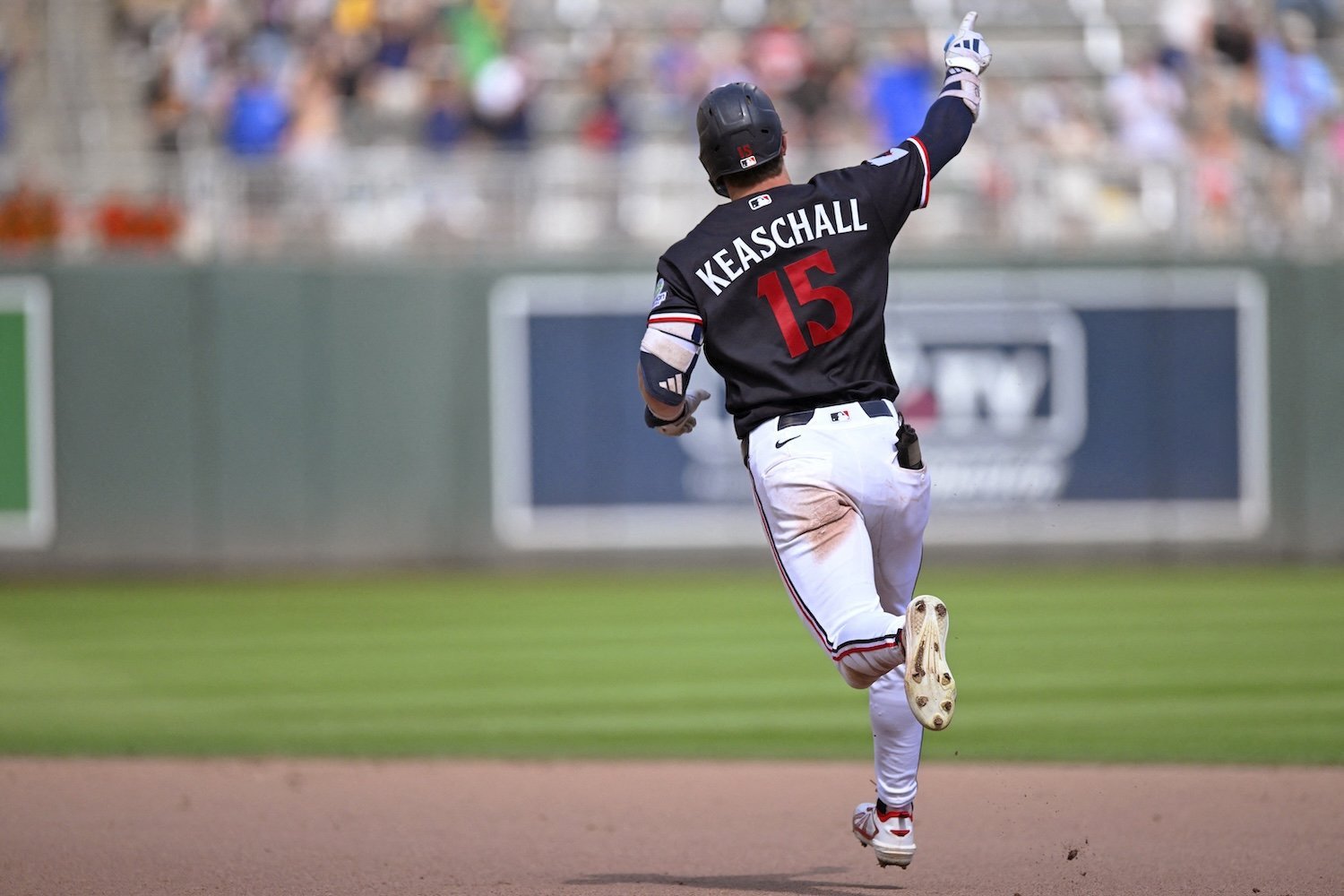 There was no prototypical team MVP this season. Essentially no one on the roster met the standard of putting together a campaign that was both exceptional and complete, and that sort of tells the story of this year's 77-win team. With that said, in Twins Daily's voting, there was a clear-cut choice: Luke Keaschall edged the field by a fairly healthy margin to earn our nod as the best and most impactful player on the 2026 Twins. We'll cover why shortly, but first let's take a look at the balloting results, and the cases for the other candidates who fell short. Twins Daily 2026 MVP Results Luke Keaschall (31 pts) Byron Buxton (22 pts) Taj Bradley (18 pts) Kody Clemens (17) Brooks Lee (8) Also receiving votes: Joe Ryan (4), Ryan Jeffers (4), Josh Bell (1) Within these results, you can see some indicators of different preferences and styles. Bell, Lee and Clemens excelled in the more traditional categories, ranking first, second and third respectively in RBIs, and also in the top four for home runs. These were the steadiest producers all year long. But it would be hard to describe any of their seasons as "exceptional" — none finished with an OPS+ above 110, or with even three Wins Above Replacement. On the flip side, you have a number of players who were very exceptional, but only for stretches of the season. Ryan and Jeffers played like All-Stars for much of the first half, but missed significant time with injuries and slumped into the finish line. Buxton was an even starker example of this dynamic, making his second consecutive All-Star team and playing at a borderline MVP-caliber level before his hip injury first sidelined him in late July. It was not pretty the rest of the way: .179/.304/.231 with no homers and one RBI in 46 plate appearances in August, then nothing in September. Still, his exemplary work up until that point was enough to make him runner-up in our voting. To me, the strongest case outside of Keaschall was Bradley, who I ranked No. 1 in my own personal ballot. His was healthy, he was a horse, and he was impactful: 31 starts, 178.1 IP, 3.82 FIP, 205 strikeouts. He led the team with 4.4 bWAR and the Twins went 18-13 with him on the mound. But I get that a 3.73 ERA doesn't exactly scream "elite," and also many people are reluctant to prioritize pitchers in MVP voting since they get their own award, which is fair. So it feels like almost a process of elimination that elevates Keaschall to the top. With that said, I don't want to undersell the quality of his season, and I won't. Let's dig into the performance that made Keaschall deserving of our top award for the 2026 team. Recovering From a Slow Start Keaschall was drawing big buzz entering this season, coming off a rookie year that drew plenty of praise (including TD's Rookie of the Year nod). MLB Network's Matt Vasgersian, for example, named him as a preseason AL MVP candidate. But a cold start threw some chilly water on the Keaschall hype train. The 23-year-old slumped through the first month, finishing April with a .217/.267/.275 slash line. Derek Shelton took it in stride. “The least of my concerns right now is Luke Keaschall,” he said in the early going. Smart man. Keaschall turned a corner right around the start of May and never looked back, slashing .301/.402/.446 with 24 doubles, four triples, nine homers and 13 steals in 489 plate appearances after the end of April. His offensive game was particularly potent in the second half; from July 1st through the end of the year, Keaschall ranked sixth in baseball with a .406 wOBA, trailing only Yordan Alvarez and Pete Alonso among AL hitters. The recovery was enough to make Keaschall's overall numbers for the season quite strong. His 120 OPS+ was best for any Twins hitter with 450+ plate appearances, and his 3.0 fWAR led the club. Taking the Lead The biggest development of Keaschall's season, from the team's perspective, was his entrenchment of the leadoff spot. He opened the year batting third, then got knocked down to the lower part of the order due to his early struggles. Despite Shelton's stated confidence, it took a long stretch of sustained excellent performance to convince the manager to shift Keaschall back toward the top of the lineup. On August 17th, Keaschall made his first career start in the leadoff spot, and from there, he didn't budge. With the exception of one late-season start in the two-hole behind leadoff man Walker Jenkins, Keaschall hit leadoff in every game after mid-August. It's tough to see him moving anywhere else. Keaschall is an ideal leadoff man, capable of taking good at-bats, hitting for average, drawing walks, and running the bases. He set a new franchise record getting hit by 23 pitches. His on-base percentage from May 1st onward (.402) ranked second only to Alvarez among AL hitters. Keaschall is a natural atop the order. And his move there coincided with another one defensively that helped greatly bolster his overall value. Finding a Defensive Home One of the biggest factors working against Keaschall in this conversation, aside from the slow start, is his defensive impact. For much of the season, it was hugely negative. He spent the first half at second base and was among the worst fielders in the league there. In July the Twins tried shifting him to center and it was beyond ugly. But in mid-August, at almost the exact same time he switched to leading off, Keaschall relocated permanently to right field and immediately looked a lot better. There were still some moments of inexperience on display — odd reads, questionable throws — but Keaschall was a reasonably effective right fielder at worst. Per Defensive Runs Saved, he was worth plus-1 runs in 450 innings there after posting a negative-4 in 630 innings at second. The damage done by his glove in the first half can't be ignored, and in a stronger team MVP field it might have cost Keaschall the top spot. But again, there was no perfect player on this year's Twins. What excites me most is that down the stretch, he basically was that. Bigger Things to Come? Once Keaschall settled in as everyday leadoff hitter and right fielder, he was phenomenal. From August 17th through the end of the year he was a top-20 MLB player in fWAR. The power emergence was a particularly encouraging development: In August and September, Keaschall homered six times with 22 extra-base hits and a .524 slugging percentage. Through the end of July he had four home runs and a .344 SLG. A guy who holds his own defensively while batting over .300 with elite on-base skills AND some power? That's not only a worthy team MVP, but a potential league MVP. We didn't see that player all year, but we consistently saw it in the second half and that's what really cemented Keaschall's case. Who's your pick for team MVP? I'd love to hear your thoughts in the comments. View the full article
-
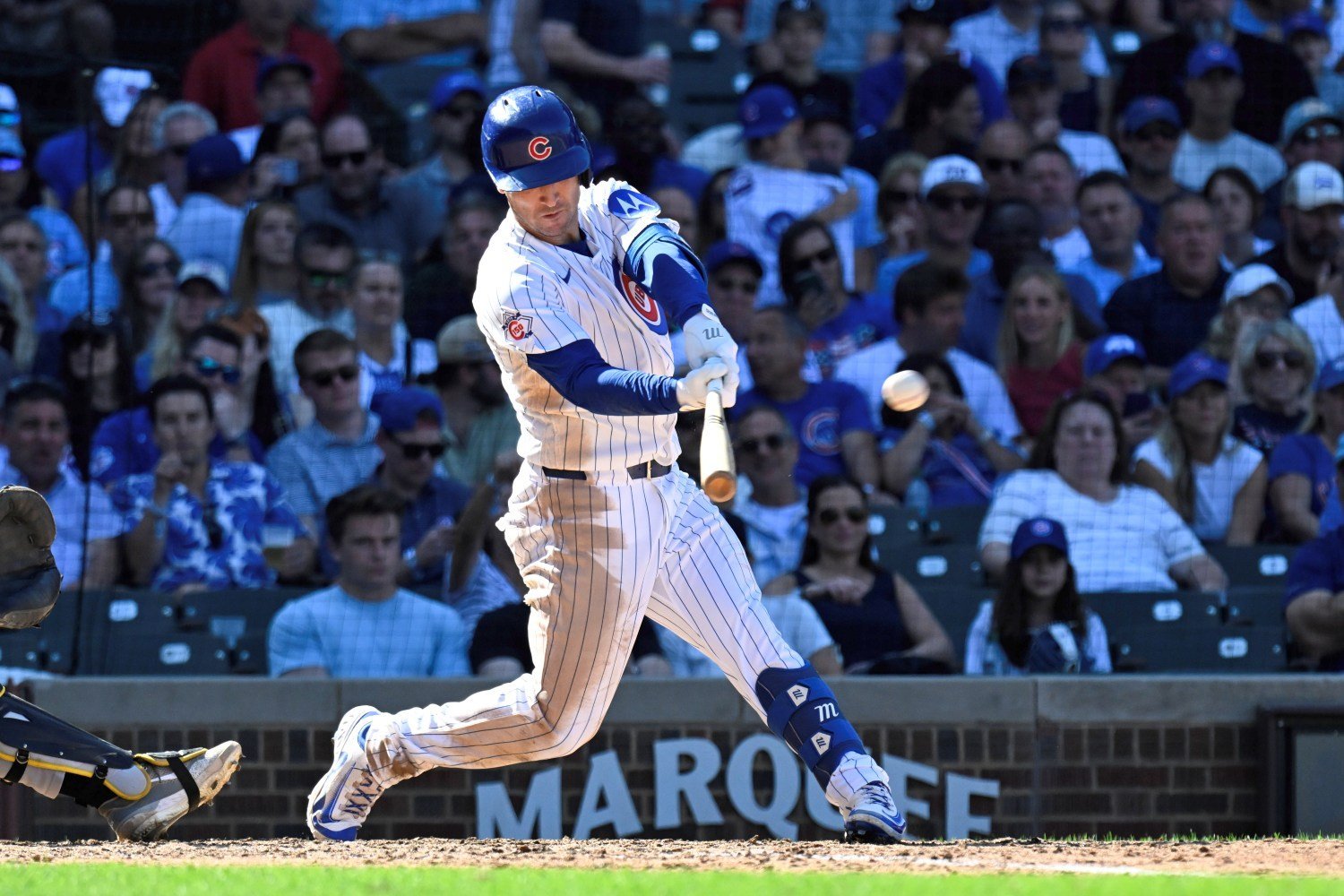 When Alex Bregman signed a five-year deal with the Chicago Cubs last offseason, the hope was that he'd stabilize the hot corner for the duration of that contract, while adding a playoff-tested persona to the mix. Just about all of that happened, but perhaps not in the way that one might have expected. Signing Bregman marked the second time the Cubs have attempted to solidify the third base position with a multi-year solution lately, and their first earnest attempt to do so since Isaac Paredes in 2024. Matt Shaw's offensive ceiling proved too low for the team to consider it for a second consecutive season, so the Cubs turned to a player they had reportedly coveted before he signed with the Boston Red Sox ahead of the 2025 campaign: Bregman. Considering the team's recent experience with Paredes—also a right-handed hitterwhose swing has been carefully engineered to produce, but one whose power was ultimately stifled by playing home games at Wrigley Field—there were questions about whether Bregman would fit well at his new home park. As a more gap-oriented hitter than his predecessor, though, the concern always should been muted. The team would just have to be patient as he rode out some highs and lows, which proved to be more exaggerated than usual. The book on Bregman based on his career splits has long been that he's a steady bat early in the season, with the power manifesting at a later date. These are his month-to-month lines, including 2026: March/April: .261 AVG, .361 OBP, .148 ISO, 117 wRC+ May: .258 AVG, .344 OBP, .203 ISO, 121 wRC+ June: .259 AVG, .361 OBP, .195 ISO, 128 wRC+ July: .261 AVG, .350 OBP, .225 ISO, 130 wRC+ August: .320 AVG, .402 OBP, .248 ISO, 167 wRC+ September: .260 AVG, .357 OBP, .219 ISO, 120 wRC+ In a general sense, that's exactly the type of sequence in which Bregman operated in his first year with the Cubs. The difference lied in the fact that the power was below even his typically modest output in the early-going, leading to some genuine questions about how the five-year deal he signed would look before long. This is how things went for Bregman in 2026, specifically: March/April: .258 AVG, .350 OBP, .113 ISO, 104 wRC+ May: .261 AVG, .331 OBP, .096 ISO, 94 wRC+ June: .200 AVG, .348 OBP, .100 ISO, 92 wRC+ July: .263 AVG, .330 OBP, .232 ISO, 127 wRC+ August: .296 AVG, .364 OBP, .365 ISO, 177 wRC+ September: .319 AVG, .427 OBP, .333 ISO, 195 wRC+ With the exception of June's average being stifled by a mere .211 batting average on balls in play, there was never a month in which Bregman was outright bad. He had some bat path issues and other mechanical adjustments in which he was mired that led to plenty of variance in his ability (or lack thereof) to elevate the baseball, regardless of how much he was squaring up the ball. When it got figured out, though—as it always has throughout his career—it reached heights seldom seen even within his typical career pattern. The power output was absolutely massive, and part of what landed Bregman so high up the 2026 leaderboard for position player value. At the end of June, Bregman ranked 72nd among qualifying position players in fWAR (1.6) and 110th in wRC+ (97). By the end of July, he was 50th (2.4) and 91st (104) in the two categories, respectively. Once the power came into play, though, Bregman skyrocketed up the league's ranks. Those last two months catapulted him to a seventh-place finish in fWAR (5.5) and a 29th-place ranking in wRC+. As for those potential issues as a righty navigating Wrigley Field, this is how Bregman's hits were distributed in 2026: That gap-to-gap ability certainly came into play, with Bregman's ability to reach the outfield wall in places beyond down the line working to his advantage. While it may be unreasonable to expect that type of power output to happen over a two-month stretch again, Bregman's nature as a cerebral hitter was always going to lead to an appropriate adjustment—even if that adjustment took longer than most of us might've liked. The other important thing within all of this is that Bregman played very good defense in 2026. While there are questions about how he'll handle the position in the latter portion of the deal (given that he'll be 33 early next season), his 9 Outs Above Average were second at the position this year. Considering where the offense landed when it was done, Bregman ended the 2026 season as the best third baseman in baseball. While he may not turn in another season like he did this year, Bregman has plenty working in his favor. He has a short swing that relies on efficiency to generate valuable contact of all kinds, rather than fast swings to garner power. He has a sharp eye at the plate, in a way that allows him to maximize contact, rather than relying on walks to generate value. Those qualities set him apart from some of the other hitters in this lineup. Factor in the intangible qualities that the team was hoping he'd add as a veteran of numerous playoff runs, and he offers at least one position that doesn't have to be a concern for the next handful of seasons, aging curve be damned. View the full article
-
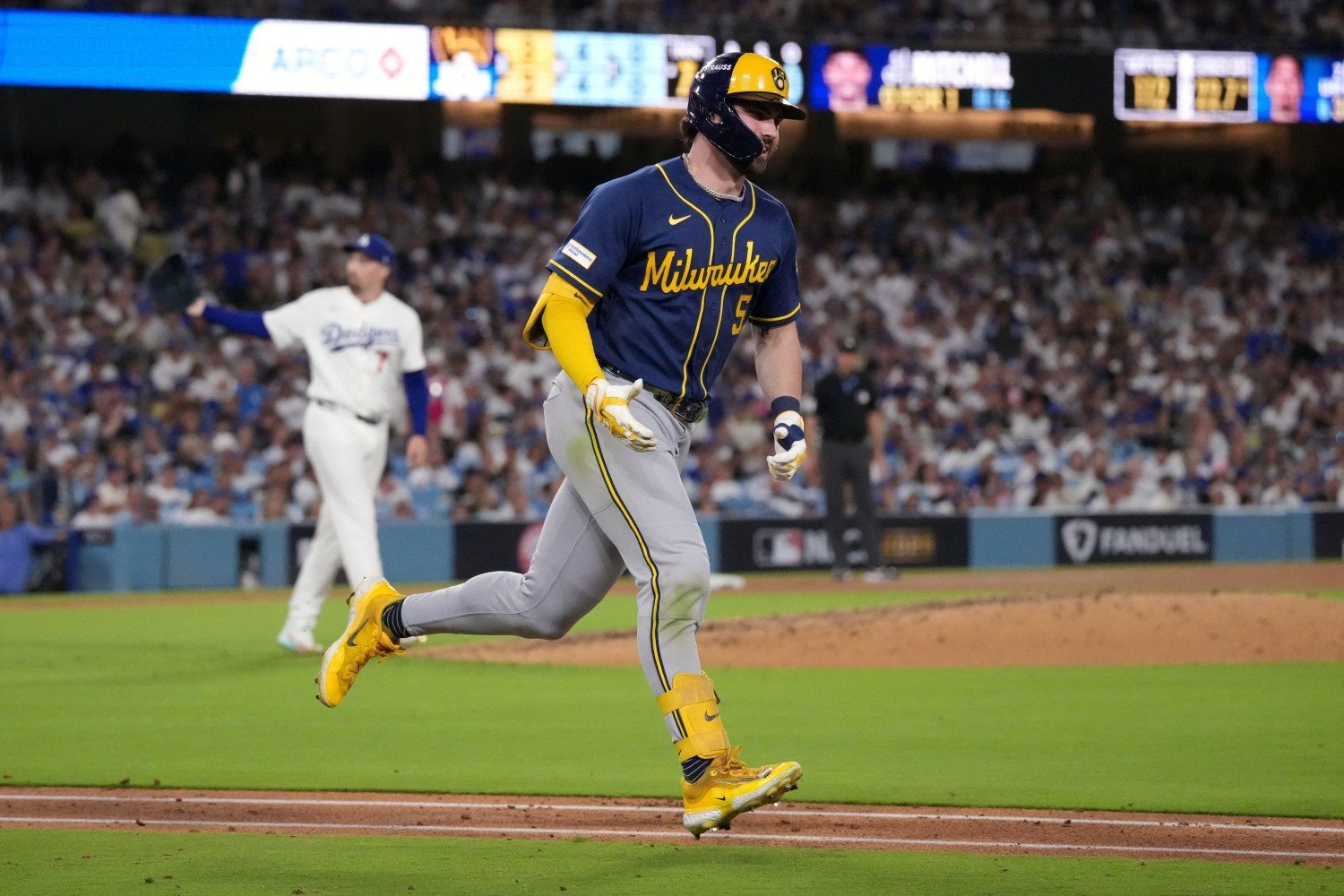 Playoff baseball is a different game. It trades in the six-month marathon of the regular season for a four-week sprint to win three or four short series. Teams face the best defenses and elite pitching, with dominant relievers throwing a greater share of innings. That’s why the run environment changes in October. Hits become harder to come by, and manufacturing runs becomes even more challenging. This isn’t reflected only in overall offense (teams have scored 3.48 runs per game this postseason, a full run lower than in the regular season), but also in performance with runners on base. Since 2021, hitting with runners in scoring position has consistently dipped in October, and the rate of runners left on base has increased by about five percentage points in four of six seasons, including this year. Season RISP OPS (Regular Season) LOB% (Regular Season) RISP OPS (Postseason) LOB% (Postseason) 2021 .755 72.1% .735 74.3% 2022 .741 72.6% .685 77.2% 2023 .755 71.9% .717 77.7% 2024 .741 72.1% .692 74.8% 2025 .745 72.3% .732 77.1% 2026 .743 72.3% .648 76.8% The Brewers have been no exception. They led baseball in OPS with runners in scoring position this year, but entering Game 3 of the NLCS, they had stranded significantly more runners in scoring position in the postseason. That hasn’t been because they stopped having the same patient, smart at-bats they did in the regular season. The Brewers were actually making more contact, hitting the ball harder, and drawing more walks with runners in scoring position. They'd simply run into better pitching, better defense, and tough luck in a small sample. Split RISP wOBA LOB% RISP xwOBA RISP BB% RISP K% Regular Season .344 67.8% .320 11.8% 21.8% Postseason .313 80.0% .335 15.5% 15.5% This is why home runs become even more critical to success in October. You don’t get many mistake pitches against the game’s best arms, so you have to make them count. There’s also no time for bad luck to even out in a short series, but a ball hit well over the fence will never find a glove and will score at least one run. That’s why the Brewers, who scored the second-most runs but hit the second-fewest homers in baseball, once again faced questions about how their offense would fare. Their pressure-centric brand of baseball—stacking singles and walks and moving runners a base or two at a time—doesn’t work as well in the postseason, and it hasn’t this year. To make a deep run, they needed to hit more home runs. They’ve done just that. After leaving the yard three times in a Game 3 comeback win, Milwaukee tied the Dodgers as the team with the most homers this postseason. The Brewers have hit eight long balls this October, including five in this series. The Braves, Guardians, and White Sox have also played seven games this October. The Braves hit six home runs, the Guardians have hit five, and the White Sox hit four. Most of those home runs have redirected momentum toward the Brewers. In Game 1 of the NLDS, Jackson Chourio’s two-run blast off Robbie Ray tied it after Jacob Misiorowski’s shaky start, and William Contreras’s solo shot a few innings later was the game-winning run. Brice Turang and Contreras hit game-tying homers in Games 1 and 2 against the Dodgers. On Wednesday, the Brewers scored all but one run against a dominant Blake Snell on home runs. Chourio blasted Snell’s first pitch to give them an early lead, and Jake Bauers and Garrett Mitchell chased him with back-to-back blasts in a comeback seventh inning. That inning epitomized what the Brewers needed to do to get over the hump this October: execute their existing approach to grind down opposing pitchers, then crush the mistake pitch when they got it. Snell cruised through six innings on 81 pitches, and Abner Uribe had squandered a 1-0 lead and a great Robert Gasser start in an erratic bottom of the sixth. With the heart of the order due up, the Brewers needed long plate appearances and a big swing. Andrew Vaughn led off the seventh with a seven-pitch walk, not swinging until the count reached 3-2. That brought up Bauers, who worked a 12-pitch walk to help chase Yoshinobu Yamamoto in the third inning of Game 2. Bauers didn’t swing until Snell’s fourth pitch, a 2-1 changeup, then began fouling off secondary pitches while waiting for a mistake fastball. By the 10th pitch, Snell was running out of steam; he hung a slider right down the middle, and although Bauers was early, he got a bat on it and hooked it foul down the right-field line. The next pitch was even worse: a four-seamer right down the middle. It was a questionable pitch call after Bauers was ahead of a center-cut slider, but it was even worse execution. It was the kind of mistake a pitcher makes when he’s on fumes. On the 11th pitch of another grueling fight, Bauers got the fastball he’d been waiting for, and he didn’t miss it. With a screaming 412-foot fly ball to right and a bat toss, the Brewers had the lead. Snell’s next pitch to Garrett Mitchell was a non-competitive fastball that missed inside, followed by a changeup down the middle. Mitchell made even louder contact than Bauers, crushing a 428-foot blast that ended the left-hander’s night. The Brewers didn’t look back, as DL Hall and Trevor Megill retired 11 of the last 12 hitters they faced, putting Milwaukee one win away from the pennant. Against tough postseason pitching, the Brewers have (predictably) chased more in October, but most of their rallies have started with spurts of the patience that made them great in the regular season. The difference-maker has been hitting home runs when they force mistakes with those pesky at-bats. The Brewers have married their scrappy approach with the extra slug they needed to win in October, and it’s brought them to the precipice of their second World Series appearance. View the full article
-
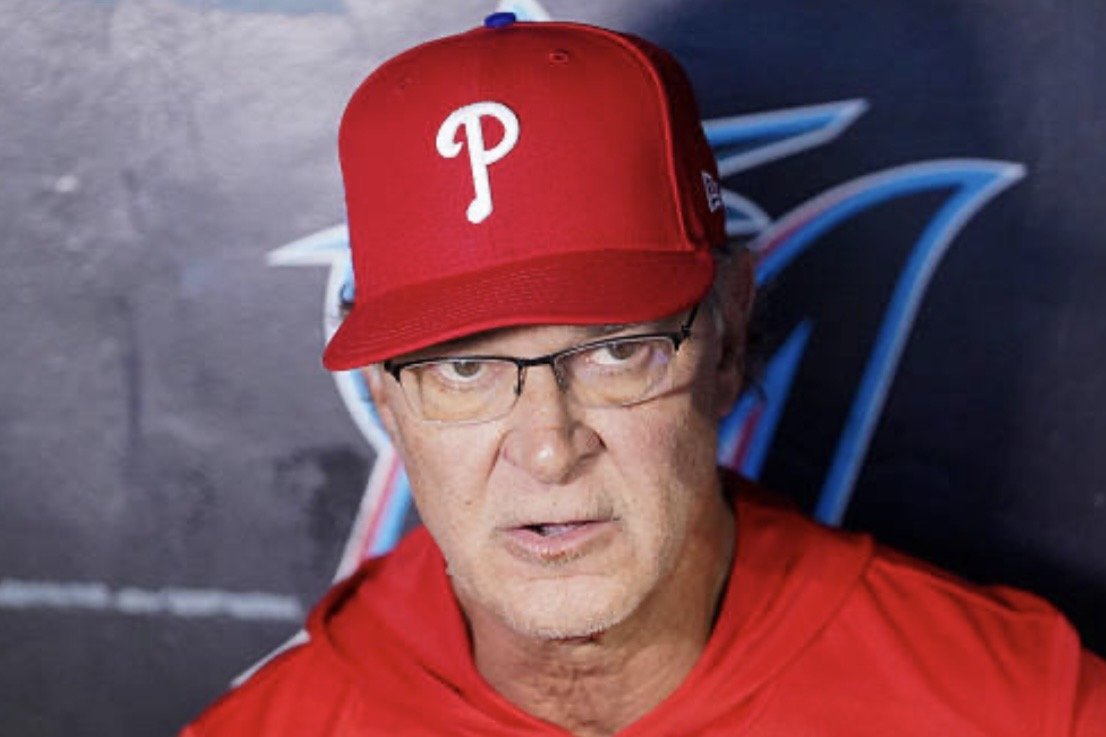 Don Mattingly had the longest managerial tenure in Miami Marlins history, holding the position from 2016-22. It seemed as though that would likely be his last opportunity to serve as an MLB skipper, but then a Philadelphia Phillies team with high expectations got off to a dreadful 9-19 start this season. That's when they fired Rob Thomson and elevated Mattingly from his bench coach role to interim manager. Nearly two weeks after the Phillies were knocked out by the Atlanta Braves in the National League Wild Card Series, they have decided to take off the interim label. signing him to a two-year contract that runs through the 2028 season. Mattingly, 65, is second-oldest active manager in the league, trailing only Pat Murphy of the Milwaukee Brewers (67). Certainly worth noting, the Phillies’ general manager is Mattingly’s son, Preston. Given that glaring conflict of interest, it’s safe to assume his boss, Dave Dombrowski, was the one who made the ultimate decision. According to Bob Nightengale of USA Today, Dombrowski targeted Alex Cora as his manager twice—after Thomson was fired and again following the Phillies’ postseason elimination. Cora, who’s still being paid by his previous employer, the Boston Red Sox, has opted to sit out the 2027 season. View the full article
-
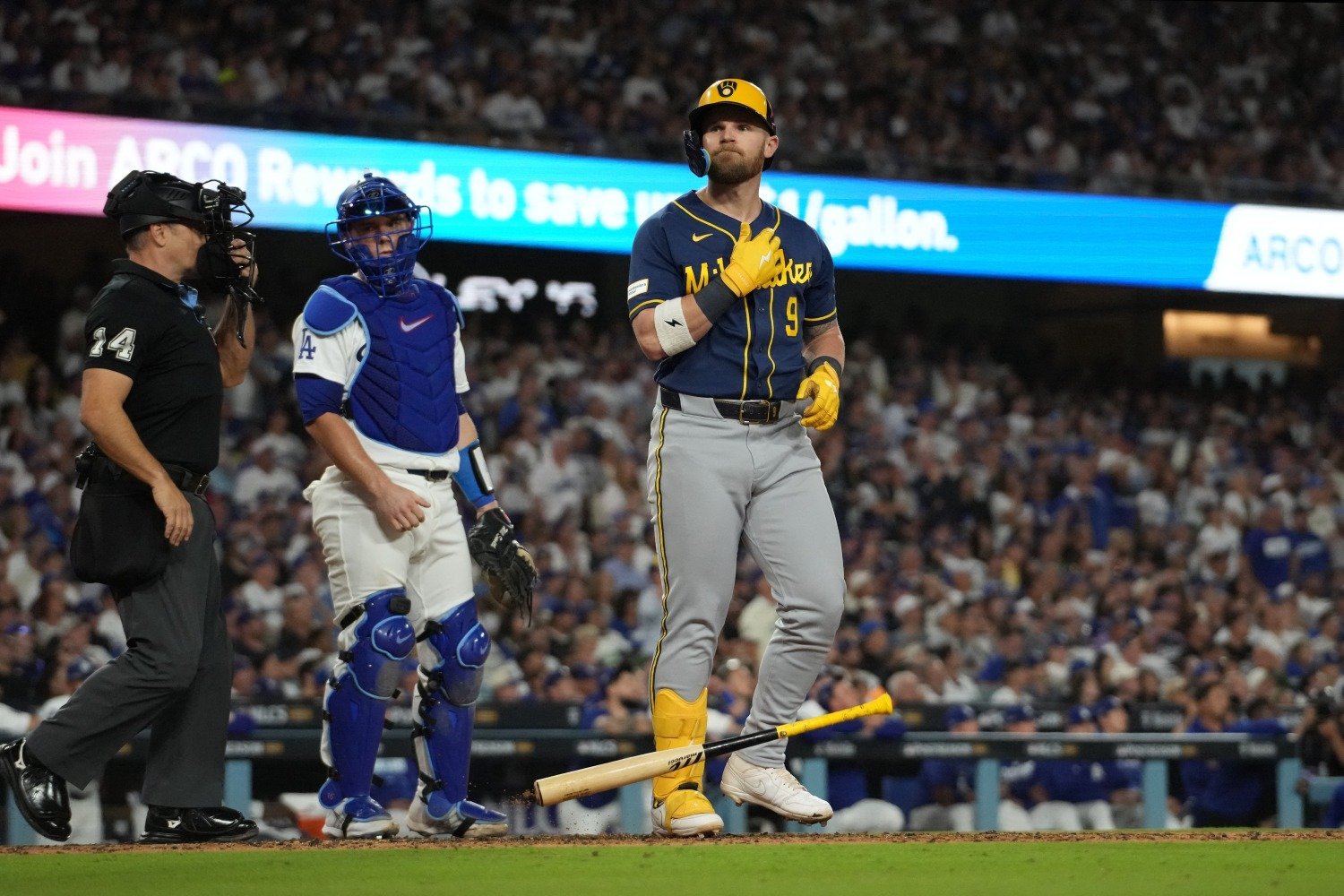 Everyone who loves the Milwaukee Brewers will remember Jake Bauers's at-bat in the seventh inning Wednesday night for the rest of their lives. Many of them might forget Andrew Vaughn's, but let's all agree to delay that for as long as possible. When the Dodgers scored two runs in the bottom of the sixth inning of Game 3 in the NLCS, it looked like a possible turning point—like a moment, even, when a series the Brewers had controlled almost breezily to that point might get away from them quickly. Vaughn led off the following frame against cruising Los Angeles starter Blake Snell, needing to reassert the Brewers' ability to compete with the ferocity of Snell's stuff. To his credit, Vaughn understood his assignment. He didn't take the bat off his shoulder until the sixth pitch of his at-bat. Snell started him with a high fastball, then slipped a biting slider past him to even the count at 1-1. He missed low, then high with a changeup, but on 3-1, he landed one in the bottom part of the zone. If Vaughn had been even a tiny bit too anxious to make something happen, he might well have made an out on that pitch. A pitcher as good as Snell can sometimes use a hitter-friendly count against you; his changeup is nasty enough to induce a weak tapper and well-commanded enough to find the zone when he needs it to. By taking that pitch, Vaughn forced the tiring twirler to throw him another strike. Snell answered with a high heater, well-calibrated to play off the trio of changeups he'd just thrown, and he got the chase he wanted. Vaughn fouled it off, though, earning a seventh offering in the sequence. Frustrated in his primary plan for getting the Brewers designated hitter, Snell tried to drop a curveball in and freeze him for strike three, but he missed badly. That one (unlike a couple of earlier takes) was an easy swing decision for Vaughn, He accepted his walk. That brought up Bauers, who had already authored one of the great at-bats in the team's postseason lore, just two days earlier. This time, he had the advantage of facing the starter for a third time, but he also faced a major disadvantage: Snell is a lefty. In his (regular-season) career, Snell has held left-handed batters to a .191/.281/.298 line. In 940 plate appearances, they've only hit 15 home runs against him. The matchup of Snell against lefty batters was so intimidating that Vaughn had started the game, rather than team captain Christian Yelich (who took over at first base, as a pinch-runner). He has four out pitches against lefties. He's a buzzsaw. Bauers watched a first-pitch slider go by, right in the heart of the zone. You could understand why he didn't chase it. In a way, it was as wise and brilliant a take as Vaughn not swinging at the 3-1 pitch. Called strikes can be wins for the batter; they're sometimes signs of a well-organized approach. One couldn't help but wince a little, though. Shoot. Got one to hit. Might not get another. In truth, you can almost always get another pitch to hit, but every one you miss makes earning the next tougher. You have to move into a slightly defensive mindset. Bauers watched a changeup in the dirt and a fastball that dipped below the zone, after missing his chance to ambush Snell, and the count move to 2-1. Next, Snell went with a dangerous but dazzling pitch: changeup, left-on-left, risking running into Bauers's barrel on the belief that the pitch would move enough to elude it. The two-time Cy Young winner won his bet. Bauers didn't sit and wait; he was geared up for a hittable 2-1 pitch. He unloaded, but he missed; Snell had out-executed him. Once it's 2-2, when the tying run is on base and it's getting late, you're not allowed to keep thinking as aggressively as Bauers was when he took a pass at that 2-1 changeup. Dutifully, Bauers went to work proecting the zone. Snell threw a slider, then a curveball, each moving away from him but with plenty of the strike zone. Bauers was trying desperately to stay ready and on time for the fastball, so he merely fouled off each pitch, but at least he managed that; he made contact and stayed alive. Pitch No. 7 was a fastball inside, reminding Bauers not to get too comfortable looking for spin away. That pitch missed the inner edge by about six inches, but it was a good shot, anyway. Had it grabbed the plate, Bauers would have been out. He was fooled, and he then knew he would need to cover the whole zone. On the other hand, the count had run full, so at least Snell no longer had much margin for error, either. He tried climbing the ladder again, and the same thing that had just played out with Vaughn happened with Bauers. Snell's fastball sailed well above the zone, but not so high that the defensive hitter could let it go. As Vaughn had done, Bauers spoiled it. Unlike Vaughn, though, Bauers didn't then get an easy free pass. Snell is more comfortable pitching to lefties. He went back to that left-on-left changeup on the next pitch, and it fooled Bauers; he barely stayed alive. Pitch No. 10 is when you knew Snell was in trouble. It was a slider, and it wasn't terribly located, but Bauers was figuring things out. He couldn't stay back enough to keep it fair, but the backspin fly ball he hit down the right-field line almost had home run distance. It was a heart-in-your-throat moment, no matter which side you were on. The next pitch was in almost the same spot, but a little closer to the middle of the plate, and a bit harder. It was, if we can be blunt, a meatball. It begged to be hit. Bauers did to it what any good power hitter must do, and the game context would have made it one of the biggest homers in Brewers history, no matter what. What made it really impressive, though, was that he got that pitch at all. Bauers, who got that first-pitch cookie and let it go and who was facing one of the toughest lefties in recent memory, worked around some terrific execution from that pitcher and another missed chance to earn a second truly hittable pitch, and when it came, he was ready. If Vaughn hadn't reached first (where Yelich then sapped some of Snell's attention, and carried the tying run around the bases when Bauers finally went deep), this homer wouldn't have meant as much as it did. Both the team's first basemen were heroes in the inning. It was Bauers, though, who worked more assiduously and overcame better opposition, and then who didn't merely pass the baton, but earned the right to flip the bat, instead. Two pitches later, Garrett Mitchell put a second exclamation point behind the one Bauers had just affixed to the team's rally. It was an excellent example of the Brewers' malleable relentlessness. Vaughn offered exacting plate discipline and situational awareness. Yelich showed the value of the team's depth and its athleticism. Bauers took the same relentless at-bat as Vaughn, but punctuated it with a display of prodigious talent that would have been beyond Vaughn. Mitchell had some of that to offer, too, and he unleashed it when he saw his opponent reeling and needing a break. When you want the Brewers to play quickly, they'll slow the game down. When you're in the mood to gratefully accept their patience and the slow development of their rallies, they'll suddenly strike. It was, really, a three-turn barrage that finally broke the Dodgers and rescued Game 3 for the Crew. But it's Bauers whom we'll always celebrate, and rightfully so. As the broadcasters on each Brewers game have rehashed so often, he nearly walked away from the game before his breakout came. Even once he took a major step forward, he knew he needed to take more. He showed up this spring having made big adjustments, and he's ridden those changes through a star-caliber season. That at-bat was a microcosm of everything about Bauers. The same way he had to work doggedly to get another pitch to hammer, he had to show perseverance and intelligence and passion to earn this larger second chance. The Brewers specialize in finding and holding onto players with the right mix of those things, and of helping them find those things within themselves. Bauers's whole career has felt like an 11- or 12-pitch at-bat, but until now, it wasn't quite clear whether it would be a noble effort or a true triumph. No longer must anyone wonder about that. The Milwaukee Brewers need 27 more outs (and a few more runs) to win the National League pennant for the first time. They've gotten here by being patient at the right times, pesky at the right times, and overwhelmingly good at almost all times. After watching Vaughn, Bauers and Mitchell bat late in Game 3, anyone coming late to the party has gotten a rapid catch-up. Yes, it's like this all the time. No, no moment was quite like the one when Bauers connected and gave the NLCS its final big twist. View the full article
-
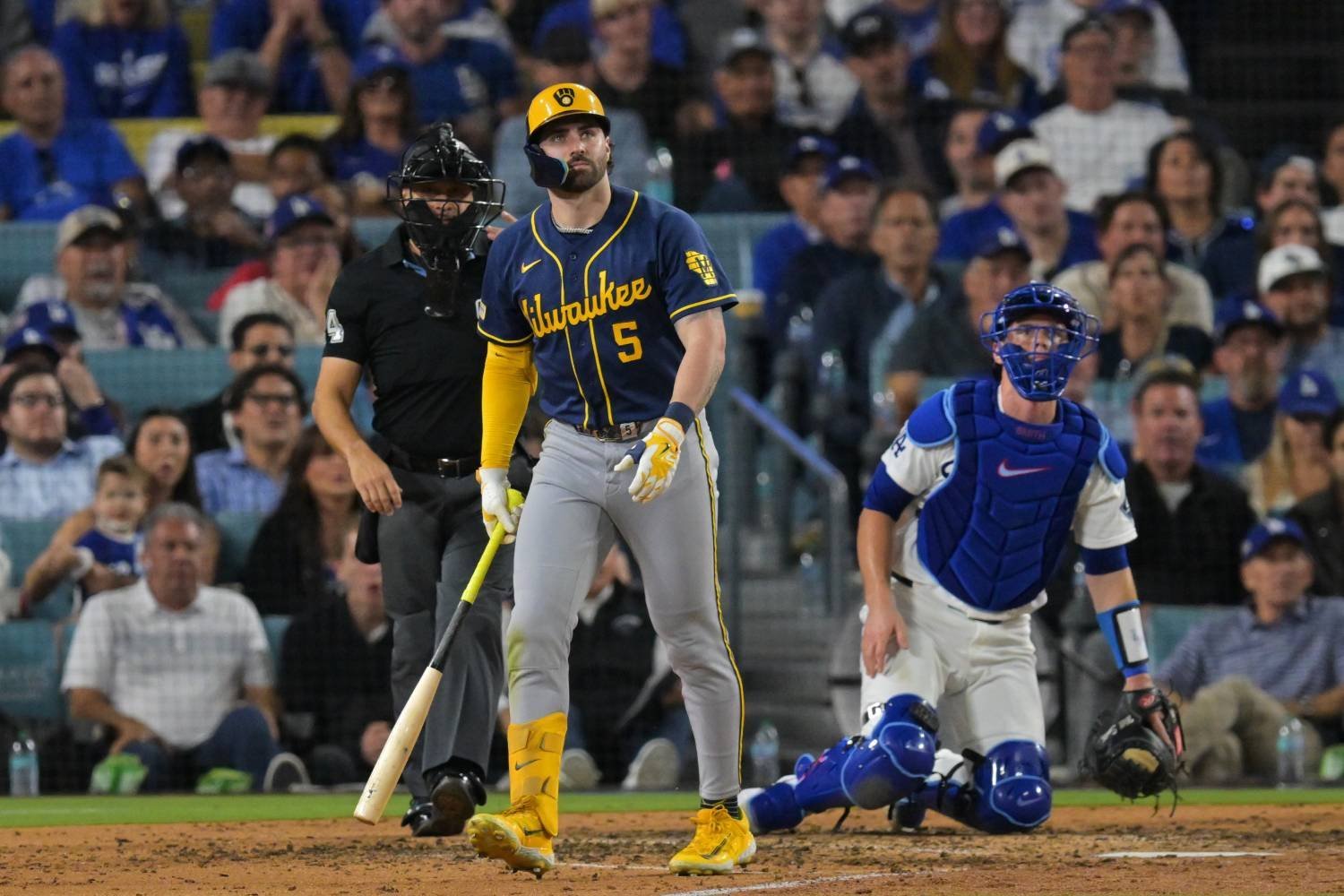 Do you remember the scene from “A Christmas Story” where something possessed Ralphie to beat the ever-living snot out of Scut Farkus, the neighborhood bully? Ralphie was walking dejectedly, when he was smucked in the face with a snowball from Farkus. As Farkus and his toady, Grover Dill, sat atop the abandoned body of an automobile, Ralphie removed his glasses and wiped the snow from his right eye. Tears were welling up in Ralphie’s eyes as Farkus hopped down and approached his helpless victim, ready to hurl more insults and do more damage. Farkus’ taunts continued. Then, Ralphie snapped into puncher’s mode, jumping Farkus and landing haymaker after haymaker until the table was turned. Farkus was the one crying as Ralphie let loose a few bad words as the pummeling continued. Well, the Milwaukee Brewers were sick and tired of taking punches from baseball’s bully in recent years. Their egos were left battered by the Dodgers’ sweep in the 2025 NL Championship Series. This year, they punched back. And how. Now, the Brewers lead the 2026 NL Championship series three games to none following a 6-2 victory in Game 3 at Dodger Stadium, the site of the final two games of last year's sweep. You hear baseball people talk about shutdown innings. That is when a pitcher needs to shut down the opposing team’s offense after his team scores a run. The thought is that it provides momentum for the offense to score more. It might be something from the great baseball book of things that might be true, but the Brewers didn’t want to test that theory. With every punch the Dodgers have landed in the first three games, the Brewers have hit back. They weren’t always body blows, but they prevented a shutdown inning. The only time it didn’t happen was Game 1. After the Dodgers scored in the second inning for a 1-0 lead, the Brewers didn’t score until the fourth inning, then again in the fifth for a 2-1 win. But after that, each time the Dodgers crossed the plate in Games 2 and 3, the Brewers did so the next half-inning. In Game 2, that was William Contreras answering the Dodgers’ run in the top of the first with an RBI single. Christian Yelich following Jake Bauers’ epic walk with a two-run bases-loaded single after the Dodgers had taken a 2-1 lead in the top of the third. After Los Angeles got two in the fifth, the Crew bounced back with Contreras’ big solo homer to tie it 4-4, then took the lead in the sixth thanks to Contreras and went on to record a 7-4 victory. But Game 3 was the biggest punch yet. This time, it was the Brewers who struck first on Jackson Chourio’s first-pitch homer. After being held scoreless for five innings by left-handed starter Robert Gasser, the Dodgers took advantage of a wobbly Abner Uribe to score twice in the bottom of the sixth. The thought was everywhere. This is when the mighty Dodgers were about to step on the throat of the small-market Brewers. There was another punch left in the Brewers. Andrew Vaughn drew a seven-pitch leadoff walk against Dodgers left-hander Blake Snell, who had been tremendous up to this point, allowing just two hits while missing a lot of bats en route to nine strikeouts. Christian Yelich ran for Vaughn and had a front-row seat for another fantastic plate appearance by Bauers. This time, it was only 11 pitches and five foul balls in six pitches before the decisive one was thrown. This time, it wasn’t a curveball in the dirt and a walk. Bauers got a four-seamer in every batter’s happy spot, right down the middle and a bit up. Bauers turned on it and deposited it in the right-field bleachers, giving a look into the Brewers’ dugout as he flipped his bat away. A 2-1 deficit was now a 3-2 lead with the two-run shot. For good measure, Garrett Mitchell, two pitches later, did the same thing and a 4-2 advantage. The team that doesn't hit homers went back-to-back to send the champs to the ropes. The Brewers made it 5-2 in the eighth and added another in the ninth. The Dodgers haven’t struck back once after the Brewers scored in any inning of these three games. The Brewers have scored in 10 innings without being hit back. Brewers pitching has complemented the offense and turned in shutdown innings. Because of that, the Brewers are now one victory away from making history. Not only would they be going back to the World Series for the first time since that memorable 1982 team, but they would be ending the reign of the best team money could buy, the two-time defending World Series champion Dodgers who were looking to become the third franchise to win three in a row. But they need to keep their guard up for one more game. You never know when a champion is going to get up off the mat. View the full article
-
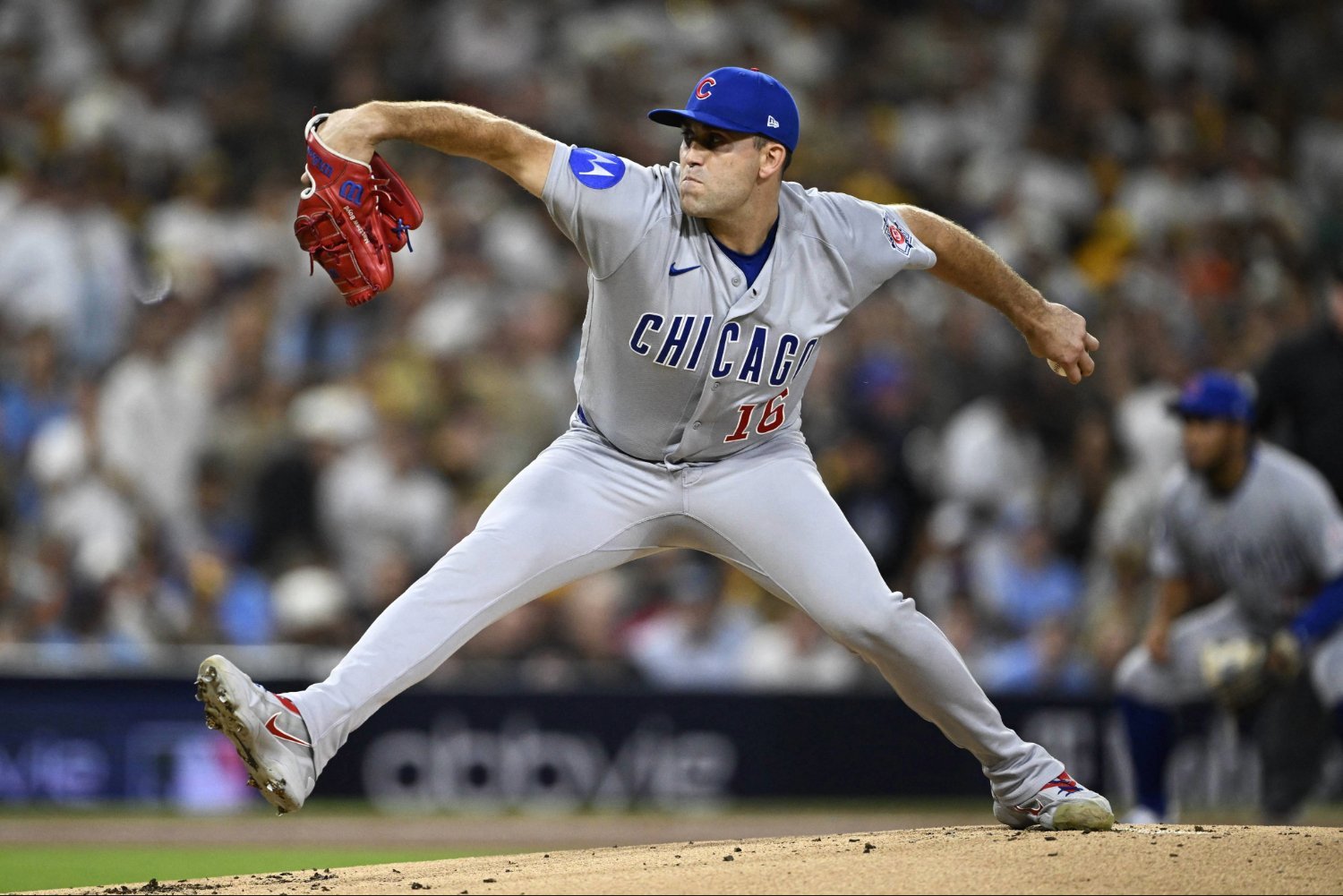 It was a year filled with injuries for the Chicago Cubs' pitching staff, and that included left-hander Matthew Boyd. The veteran starter had two separate stints on the injured list, first with a bicep strain in April and later with a torn meniscus that occurred while trying to sit down and play with his kids. Those injuries limited Boyd to just 126 2/3 innings this season, making it difficult to find much consistency throughout the year. And while his final numbers weren't necessarily bad, his 2026 campaign was a tale of two halves, albeit in a somewhat unexpected way. Boyd was limited to just 46 innings before the All-Star break, posting a 4.50 ERA during that stretch. After the break, he recorded a 3.57 ERA across 80 2/3 innings, resembling the pitcher we came to know throughout his breakout 2025 season. On the surface, it would be easy to attribute that improvement to Boyd getting healthier and finding his rhythm following his early-season injuries. And to some extent, that might be true. However, a closer look at the underlying numbers tells a much different story. Despite his first-half ERA being nearly a full run higher than his second-half mark, Boyd's first-half FIP was actually a full run lower. His strikeout rate dropped significantly after the All-Star break, going from 24% in the first half to an ugly 15.1% in the second half. Boyd also walked batters at a higher rate after the break. So, while he did a better job of keeping runs off the scoreboard, the underlying process behind those results was considerably worse. That's not to say the southpaw wasn't a useful piece of Chicago's rotation, but the difference between his ERA and FIP throughout the season suggests there might have been some good fortune involved in his second-half results. When looking at his season as a whole, he finished with a 3.91 ERA and a 4.21 FIP. Those numbers aren't terrible for a middle-of-the-rotation starter, especially one who missed time with multiple injuries. Still, several of his underlying metrics regressed from where they were in 2025. The most notable decline came in the swing-and-miss department. Neither Boyd's whiff rate nor his strikeout rate was particularly impressive last season, but both took another step backward in 2026. His whiff rate dropped from the 30th percentile to the 26th percentile, while his strikeout rate fell from the 41st percentile to the 23rd percentile. That decline is worth monitoring, particularly for a pitcher who doesn't necessarily overpower hitters with elite velocity. Speaking of which, part of the problem could be traced to Boyd's four-seam fastball, which averaged roughly half a mile per hour less than it did in 2025. That might not sound like a significant difference, but even a small drop in velocity can matter when a pitcher is already working on the margins. When hitters don't have to respect velocity as much, they can become more aggressive against other offerings. And for Boyd, that could have contributed to the struggles he experienced generating swings and misses. His changeup, which serves as his primary secondary offering, also wasn't as effective as it had been previously. Hitters put the pitch in play more frequently, and Boyd generated fewer swings and misses with it. Yet without the ability to keep the opposition more honest with a more threatening heater, the changeup may never recover its previous lethality. Of course, the injuries certainly played a role in these struggles, too. It's difficult to separate the effects of a disrupted season from a genuine decline in performance, especially when a pitcher spends time recovering and trying to regain his normal workload. Still, the Cubs will need to pay attention to those numbers when evaluating Boyd's future with the organization. Despite the decline in his swing-and-miss numbers, Boyd wasn't without areas of improvement. His quality-of-contact metrics were better than they were in 2025. His hard-hit rate declined slightly, while both his barrel rate and average exit velocity allowed went down as well. He also generated ground balls more frequently, giving him another way to limit opposing offenses when he wasn't missing bats. Those improvements don't erase the concerns surrounding his declining strikeout rate, but they do provide some reasons for optimism. Boyd still showed that he could be an effective major-league starter, even if his path to getting outs looked a little different this season. The question is whether those positive signs will be enough to offset the decline in his ability to miss bats moving forward. Boyd's future in Chicago will largely depend on how both sides approach his mutual option for the 2027 season. The option is valued at $15 million, although the effective cost for the Cubs would be closer to $13 million because $2 million is attached via a buyout if either side declines the option. For Chicago, that's a reasonable price for a proven middle-of-the-rotation starter. Even with the concerns surrounding Boyd's 2026 performance, finding a comparable arm on a one-year deal in free agency could prove difficult. The lefty, however, will likely decline his side of the option and test the free-agent market. Whether there's mutual interest in a reunion remains to be seen. The Cubs will have to determine how much they trust Boyd to remain healthy and whether his underlying performance suggests there's room for a bounce-back in the future. But if the 2026 season taught Chicago anything, it's that you can never have too many quality arms. View the full article
-
How the Twins Turned ABS Challenges Into a Competitive Advantage
DiamondCentric posted an article in Twins Daily
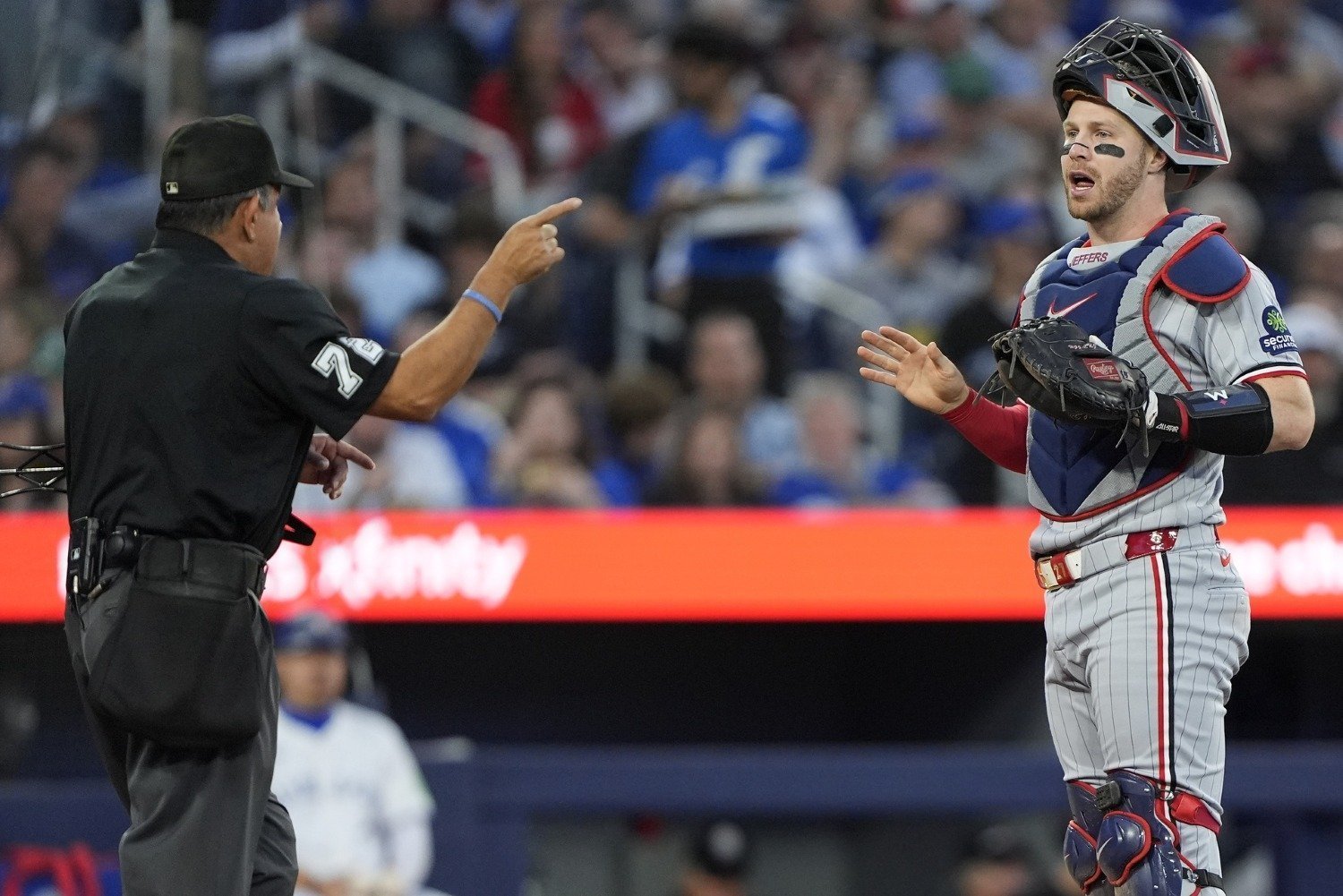 The Minnesota Twins found plenty of success with one of Major League Baseball’s biggest rule changes in 2026. In the first regular season to feature the automated ball-strike (ABS) challenge system, Minnesota led all 30 teams in overturned calls and ranked among the league’s best in several important statistical categories. The Twins recorded 246 successful challenges, giving them the most overturned calls in baseball. Their ability to recognize borderline pitches and make timely challenges helped create advantages for both hitters and pitchers throughout the season. Minnesota’s Hitters Made Their Challenges Count The Twins’ offensive contributions stood out across the league. According to Statcast, Minnesota’s successful batter challenges generated a league-best 3.8 runs above average. Those challenges also had a direct impact on plate appearances. Twins hitters successfully challenged calls that would have resulted in 20 strikeouts, while gaining an MLB-leading 22 walks. In a sport where individual plate appearances can influence the outcome of a game, those extra opportunities provided tangible value. Luke Keaschall and Austin Martin were particularly effective at using the system to their advantage. Keaschall finished with an 18-15 record on his challenges, but his overall success rate only tells part of the story. He erased a league-high eight strikeouts and earned five walks through successful challenges, with the latter total also leading MLB. His willingness to challenge questionable calls helped him turn potential outs into opportunities to reach base. Martin posted an 11-9 record on his challenges. While his overall numbers were not as eye-catching as Keaschall’s, Martin frequently used the system in high-leverage situations. The timing of a challenge can be just as important as the final success rate, particularly when a single pitch can change the direction of an inning. Twins Catchers Excelled Behind the Plate Minnesota's success was not limited to its hitters. Ryan Jeffers and Victor Caratini established themselves as two of the league's most effective catchers when it came to challenging ball-strike decisions. The Twins ranked second in MLB by generating 4.8 runs above average through catcher-initiated challenges. Those successful challenges resulted in 52 additional strikeouts for Minnesota pitchers while eliminating 21 walks for opposing hitters. Jeffers recorded a 61% success rate across 108 challenges. He ranked sixth among MLB catchers by turning 23 at-bats that could have continued into strikeouts. He also tied for second among catchers by taking away 10 walks through successful challenges. Caratini was even more active, making 127 challenges while posting a 59% success rate. His challenge total reflected a willingness to contest borderline pitches, giving Minnesota additional opportunities to reverse decisions that favored opposing hitters. Like Jeffers, Caratini turned 23 at-bats into strikeouts through successful challenges. He also eliminated seven walks, contributing to the Twins’ strong overall performance behind the plate. Together, the two catchers demonstrated how the ABS system could become an important defensive tool. Catchers had to identify questionable calls quickly, decide whether a challenge was worthwhile, and make that decision before the opportunity disappeared. Minnesota's results suggest Jeffers and Caratini handled those responsibilities effectively. Not Every Challenge Worked in Minnesota’s Favor Although the Twins excelled overall, their players did not enjoy the same success when challenging pitches as hitters. Jeffers finished 8-for-13 on his challenges at the plate, producing -0.5 runs above average. Caratini went 3-for-7, resulting in -0.4 runs above average. Those figures created an interesting contrast. Both catchers were highly effective at challenging calls from behind the plate, but neither generated positive value when challenging pitches as a batter. Their results also highlight an important distinction in evaluating the system. A player’s ability to recognize a questionable call while catching does not necessarily translate into the same success when standing in the batter’s box. What MLB Learned From Year One Across the league, 54% of challenges resulted in successful overturned calls during ABS’s inaugural regular season. Batters won 49% of their challenges, while fielders, primarily catchers, were successful 58% of the time. The difference between those percentages suggests that catchers had an early advantage in identifying calls worth challenging. However, the system's first season also provided hitters with a new way to contest decisions that previously would have stood without review. For Minnesota, the results were especially encouraging. The Twins led MLB with 246 overturned calls, generated 3.8 runs above average through batter challenges, and ranked second with 4.8 runs above average through catcher challenges. The challenge system was only one part of a long baseball season, but the Twins showed how effectively a team could use it to gain an edge. With Keaschall and Martin contributing at the plate and Jeffers and Caratini excelling behind it, Minnesota made ABS an important part of its on-field approach in the system's first year. What stood out in the MLB’s first year of ABS? Can Minnesota continue to find a tactical advantage next season? Leave a comment and start the discussion. View the full article
-
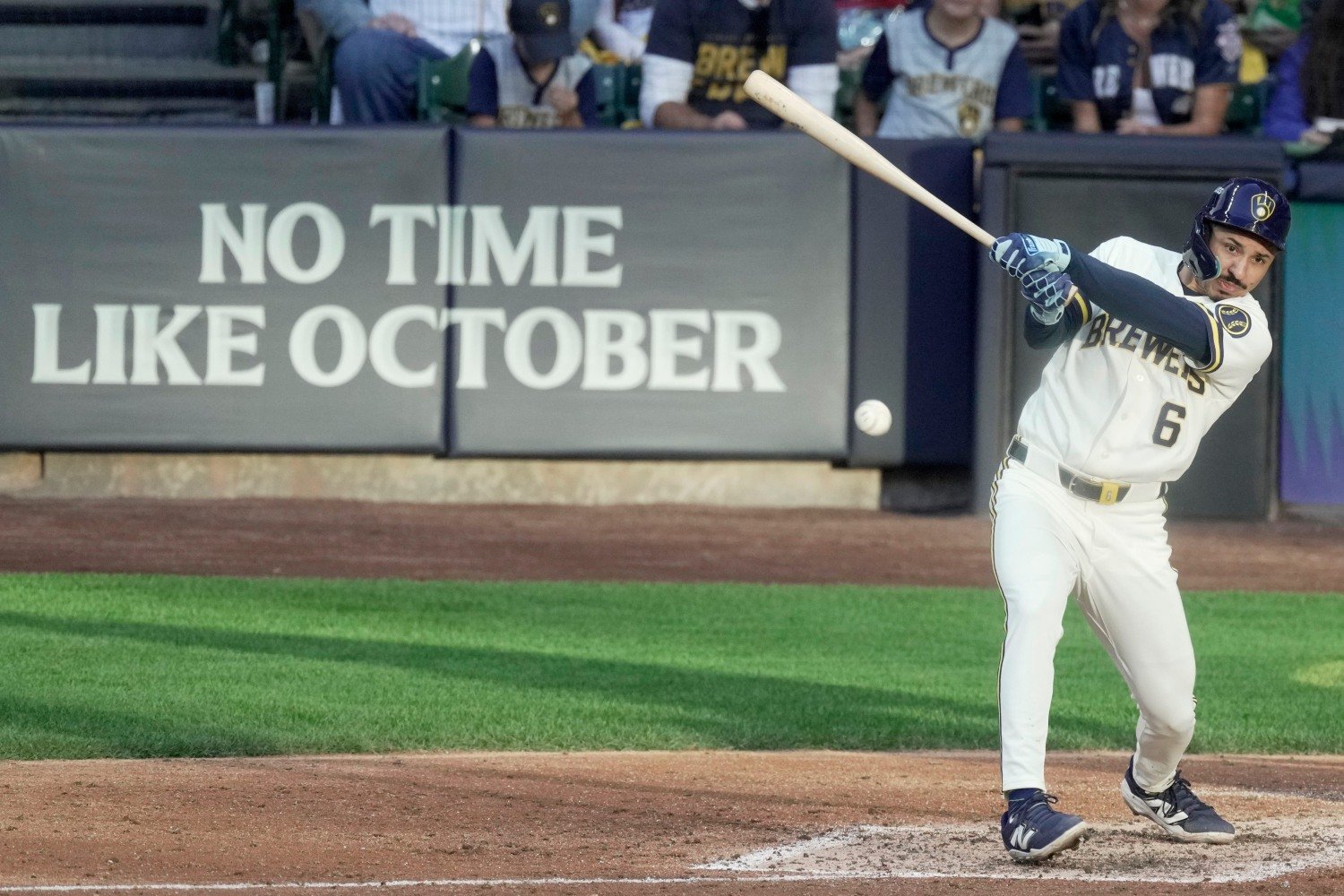 Throughout the regular season, the Milwaukee Brewers were one of the most disciplined offenses in the major leagues. They led baseball with a .341 on-base percentage and drew the second-most walks of any club. The approach that helped them put together an impressive regular season has carried over into October. Among all playoff teams, Milwaukee owns the highest on-base percentage, at .363. They’re drawing walks, putting their bats on the ball, and refusing to give opposing pitchers easy outs. It’s an approach that’s served them well all year, and in Game 3, it’s going to have to continue. The Dodgers turn to left-hander Blake Snell, a two-time Cy Young Award winner who’s been a key piece of their rotation (when healthy) over the last two years. He’s one of the most talented pitchers in baseball, and he’s historically been solid in the postseason. Across 86 1/3 career postseason innings, Snell owns a 3.23 ERA with 107 strikeouts. When he’s on, he can be nearly impossible to hit. But as dominant as Snell can be, he’s also capable of struggling to find the strike zone, and that inconsistency could give the Brewers an opportunity to take advantage. Snell’s command issues were on full display during his first postseason start in the NLDS. He made it through just 3 2/3 innings, allowing three hits and one earned run. Those numbers might not look particularly concerning, but the five walks he allowed do. That’s a recipe for trouble, especially against a lineup that thrives on working deep counts and capitalizing on mistakes. That’s where Milwaukee has a chance to win the game. The Brewers don’t need to string together a bunch of hits to put pressure on Snell. If they remain patient, avoid chasing pitches outside the zone, and force him to throw strikes, Milwaukee should have opportunities to get runners on base and put the Dodgers in uncomfortable situations. Of course, being patient doesn't mean watching every pitch go by. The Brewers still need to capitalize if Snell leaves a pitch out over the heart of the plate. But by making him work through at-bats and refusing to give away outs, they can force him to expend more pitches than he'd like. Milwaukee already showed how effective that approach can be against Los Angeles on Monday. They knocked out Yoshinobu Yamamoto after just 2 2/3 innings of work, forcing the Dodgers to turn to their bullpen much earlier than anticipated. Though known for his efficiency and ability to consistently work deep into games, Yamamoto couldn't survive the Brewers' approach. They fought off pitches, extended at-bats, and made him work for every out. Snell presents a different challenge. He's more of a wild card, capable of cruising through seven innings or struggling to make it through four, as he did in the NLDS. That unpredictability makes it difficult to know exactly what Milwaukee will get. But if the Brewers can force Snell into another short outing, it could have a significant impact on the game, as well as the rest of the series. Ideally, Milwaukee would complete the sweep and take the series in four games. Unfortunately, that's probably not the likeliest outcome against a Dodgers team with this much talent. If Los Angeles manages to extend the series, bullpen usage and pitching decisions could become increasingly important. If the Brewers aren't able to complete the sweep, the two teams will have three games over the next three days. Should the series go the distance (which still wouldn't be surprising, given the talent on both sides), they would wind up playing each other five more times over the next six days. That's a lot of baseball in a very short period, and it puts more pressure on both managers to manage their pitching staffs carefully. For Milwaukee, forcing Snell out of the game early could create opportunities to exploit the Dodgers' bullpen and potentially put Los Angeles in a very difficult position for the remainder of the series. Every additional inning the Dodgers' relievers have to cover tonight could make a difference in the days ahead. The same goes for the Brewers' pitching staff, of course. Milwaukee will need to be mindful of their own bullpen usage, especially if this series stretches beyond four games. Forcing Dave Roberts to make difficult decisions with his starters and relievers could give the Brew Crew a valuable advantage down the stretch. On paper, tonight feels like a matchup that favors Milwaukee's offense. A patient lineup that consistently draws walks is going up against a pitcher who has struggled with command throughout his career. But, of course, baseball isn't won and lost in spreadsheets. Snell has the stuff to dominate even the most disciplined lineups, and the Dodgers have plenty of ways to counter Milwaukee's approach. The Brewers need to continue doing what they've done so well all year. Make Snell work, be selective at the plate, foul off tough pitches, and force the Dodgers to make a move earlier than they'd like. If they can do that, it'll give them an opportunity to take advantage of Snell's weaknesses and put pressure on Los Angeles from the opening inning. If that approach forces the Dodgers to dig deeper into their bullpen than they planned, the benefits could extend well beyond tonight's game. View the full article
-
Jake Bauers is the Key to Brewers Finishing Off Dodgers
DiamondCentric posted an article in Brewer Fanatic
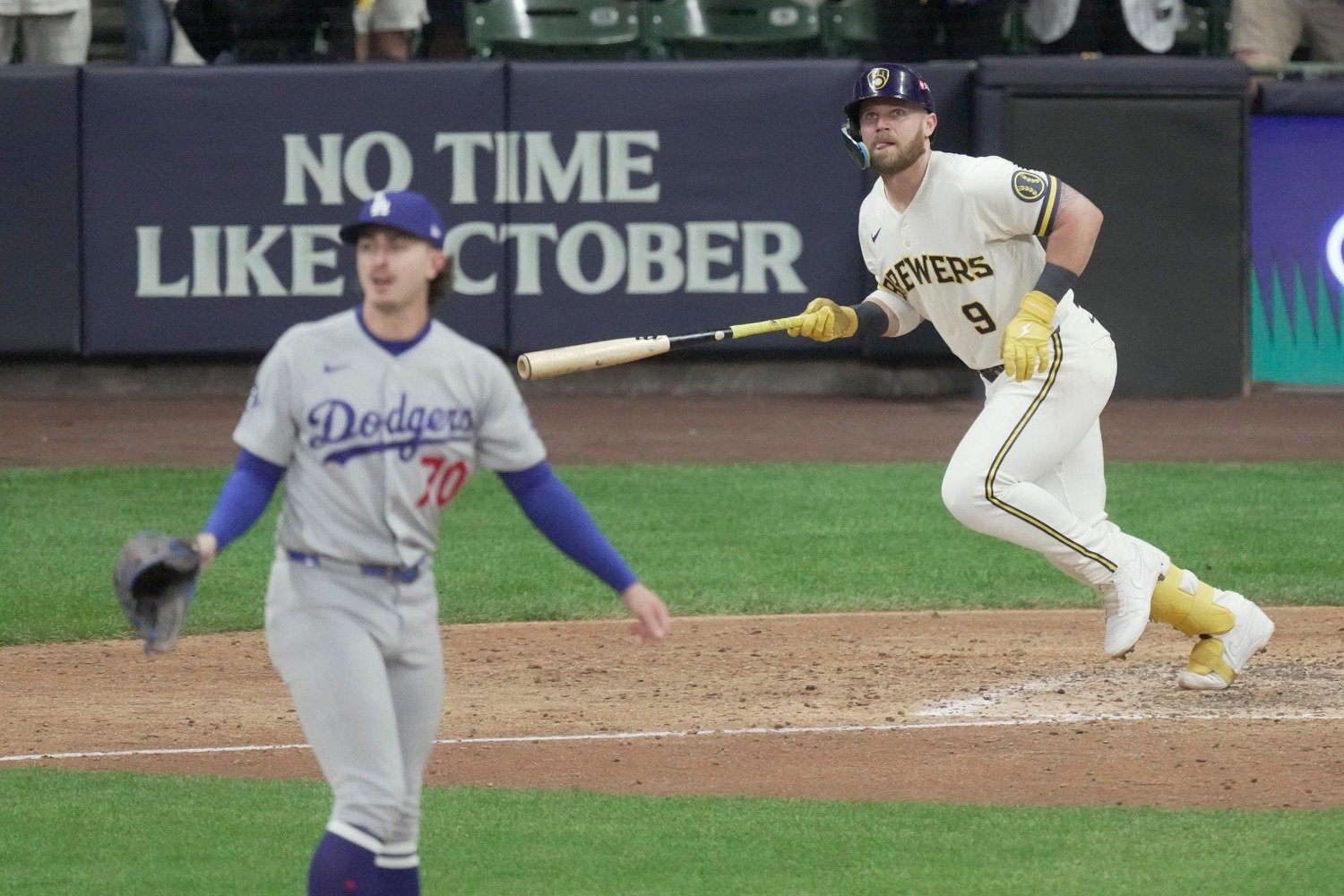 Outside of Jacob Misiorowski in the rotation, the Brewers don’t have a full-fledged superstar on their team. They have a few players who are just below that line, though, and that fraternity has a new member this year. The Crew took Games 1 and 2 of the NLCS over the Dodgers and are on the doorstep of their first National League pennant. The linchpin of the lineup that might finally get that monkey off their back is Jake Bauers. Game 1's Recipe for Success Was Not Sustainable Milwaukee edged out Los Angeles 2-1 in the NLCS opener. While a Brice Turang equalizer of a solo homer, a Luis Lara go-ahead base hit and a lockdown bullpen can clearly lead to a win, it’s not feasible to expect the Dodgers to score just one run a game throughout the series. The Brewers’ offense was second in MLB with 5.1 runs per game, but the Dodgers weren’t far behind, at 4.9 (fourth-best). Playoff games have a reputation for being more pitcher-friendly, as there are more breaks built in for arms to stay fresh, but Los Angeles still managed to score 14 runs (3.5 per game) in a 3-1 series win over the Atlanta Braves to get here. They scored four times in Game 2, too. The Brewers needed to hit well to win that game, and they'll need to do so again to get to the World Series. Bauers’s Career Year That Bauers drew a crucial walk (on 12 pitches, against the great Yoshinobu Yamamoto) is one of the most improbable pages in the storybook of this playoff run to date—unless you've been paying close attention to his breakout 2026 campaign. He was on five teams over the course of six years, but has since found some stability in Milwaukee. Entering the 2026 season, Bauers had 58 home runs over 613 career games; last season brought the first real evidence that he could hit enough to hold onto a full-time role. This year, though, the 31-year-old slugger has hit a new gear. His 28 round-trippers and 86 runs batted in set career highs by wide margins, as Bauers went from a fringe-starter to an everyday contributor with 144 games played. He posted a .389 on-base percentage, playing the Brewers’ brand of baseball to perfection and serving as a true reinforcer in the middle of the lineup. Every championship aspirant needs a thumper. Bauers, who paced the team in homers and had 50 extra-base hits, is just that. Numbers Don’t Lie So where did this power surge come for Bauers, and how is he doing it? For one, he’s working with the same major-league coaching staff for the third consecutive year. Before this stint in the Cream City, he hasn’t had that luxury of continuity. Take a look under the hood, and he isn’t doing this by accident. According to Baseball Savant, Bauers is hitting the baseball on the screws. He ranked in the top 10 percent of major-league hitters in hard-hit percentage, average exit velocity, barrel percentage, sweet-spot percentage and bat speed. The last of those cruised up to a career-best 76.5 miles per hour this year, but one of the real keys is that his launch angle is down to 12.1 degrees. Two years ago, it was at 22.6°. What were popouts or deep flyouts last year more often got out of the ballpark this season, as Bauers found the right trajectory more often. The Knockout Blow What makes Bauers so important to the Brewers’ success? Look no further than last year’s NLCS showdown, a 4-0 sweep for the Dodgers. Shohei Ohtani went 3-for-3 with three homers and a walk in Game 4. Milwaukee can be pesky, and Bauers can be part of that. He kept the line moving in Game 2, and it was Christian Yelich who delivered the scoreboard-flipping hit. Sooner or later, though, there’s going to come a point where they have to put up a crooked number and swing momentum to put the Dodgers away with authority. The most efficient way to do that is through one big swing, and Bauers is the most likely candidate to get that job done. View the full article
-
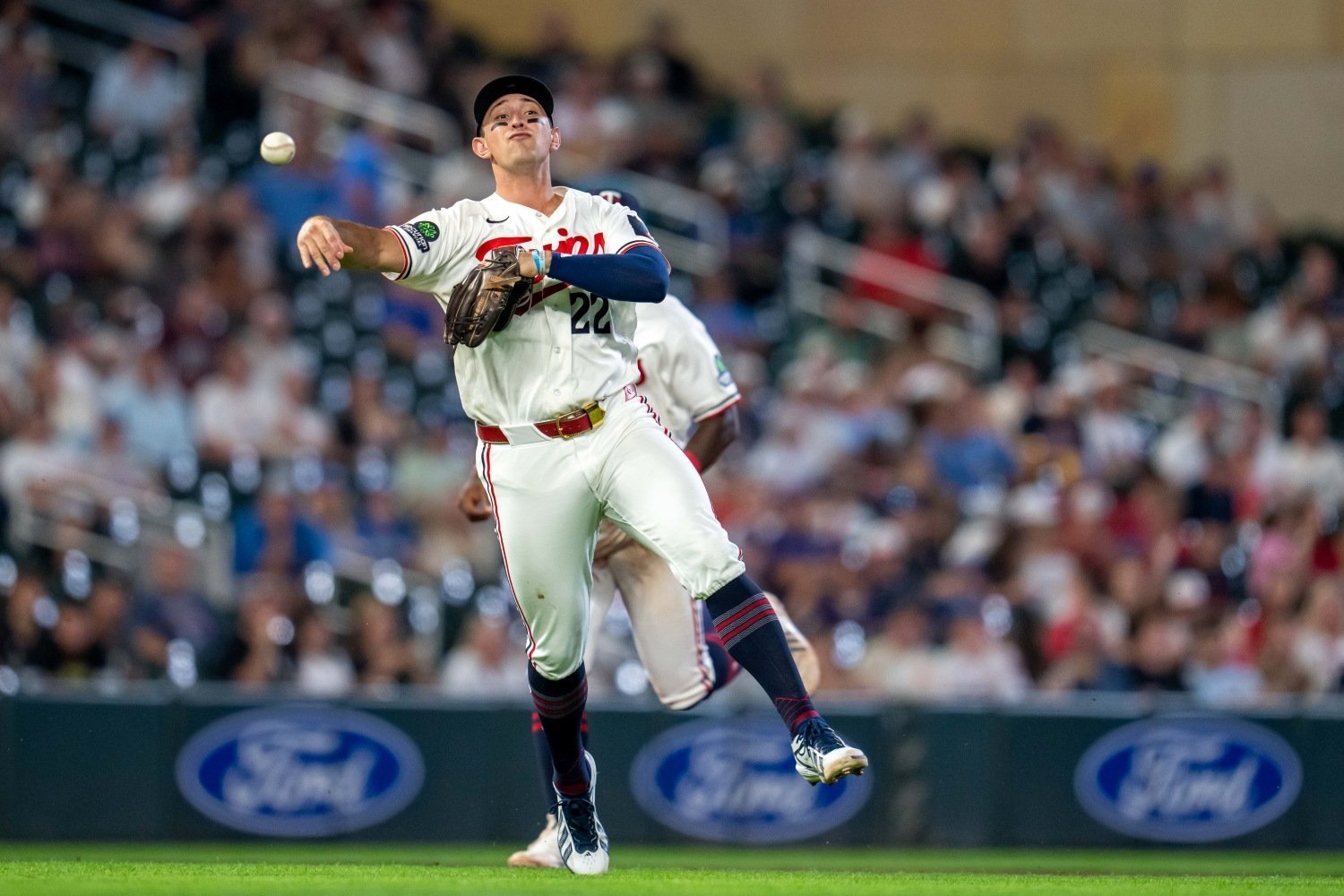 Brooks Lee has earned a spot among the American League’s best defensive players. The Minnesota Twins infielder was named one of three finalists for the 2026 Rawlings Gold Glove Award at third base on Wednesday. Lee is joined by Boston Red Sox infielder Caleb Durbin and Kansas City Royals infielder Nick Loftin. The winners will be announced on ESPN on Sunday, November 1. Lee's nomination is particularly impressive considering how his defensive season began. After spending most of his first two big-league seasons at shortstop, he struggled at the position again in 2026. A move across the infield helped change his season, turning a potential defensive liability into a player receiving recognition for his work with the glove. A Position Change Makes a Difference Lee entered professional baseball as a shortstop and continued to receive opportunities at the position after reaching the majors. However, the early returns were not encouraging. He finished both 2024 and 2025 with a minus-3 Fielding Run Value (FRV), a Statcast metric that measures a defender's contribution compared with an average player. The struggles continued into 2026. Lee posted -6 Outs Above Average (OAA) in limited action at shortstop, making it difficult for the Twins to justify keeping him there as his primary position. The club needed to find a better defensive fit for the young infielder. Third base provided that opportunity. Lee excelled after moving to the hot corner, recording +6 OAA during the 2026 season. The improvement was substantial, especially when compared with his previous results at shortstop. The position change also gave the Twins a clearer picture of Lee's potential moving forward. His defensive performance at third base suggests he could become a long-term option at the position, provided he continues to build on the progress he made this season. A Difficult Competition Lee's Gold Glove candidacy comes with some formidable competition. Durbin appears to be the favorite after an impressive defensive campaign with Boston. At the most recent SABR Defensive Index update, Durbin posted an 8.8 SDI, nearly three times Loftin's mark in second place. Durbin also recorded plus-6 FRV and plus-6 OAA at third base. Those numbers give him a compelling case to take home the award. Loftin is another worthy finalist, making this a competitive group. Lee's nomination, however, represents an important milestone in his development. After entering the season with questions about his defense, he established himself as a credible candidate for one of baseball's most recognized individual defensive awards. Twins manager Derek Shelton has expressed confidence that Lee can become a Gold Glove winner at third base. This season's finalist selection offers evidence that such an outcome is realistic. The next step could be giving Lee a full season at third base in 2027. A consistent role would allow him to continue developing his instincts, improve his familiarity with the position, and demonstrate that his defensive success can be sustained over an entire campaign. Lee might not win his first Gold Glove this year, particularly with Durbin's strong credentials. Still, becoming a finalist is a significant achievement for a player whose season began with defensive concerns. View the full article
-
 The 2026 Rawlings Gold Glove Award finalists have been announced, and the New York Mets have three nominations to celebrate. First up is rookie pitcher Nolan McLean, who did an excellent job fielding his position on the mound. He finished third among all NL pitchers with +4 Defensive Runs Saved, though he did make three errors on the season. His competition is Chris Sale (Braves) and Michael McGreevy (Cardinals). Next is "backup" catcher Luis Torrens, who continues to supply tremendous value from behind the plate. Despite playing fewer than 700 innings at the position this year, he ranked second among all NL backstops with +12 DRS and +9 Fielding Run Value. The other finalists are Gabriel Moreno (Diamondbacks) and Freddy Fermin (Padres). Last but certainly not least we have rookie outfielder Carson Benge, who can add yet another feather to his cap after an all-around brilliant rookie year. He finished fourth among NL right fielders in DRS (+6) and second in FRV (+6), though his lackluster range (-1 Out Above Average) might have hurt his case with voters. The winners will be revealed on Nov. 1. View the full article
-
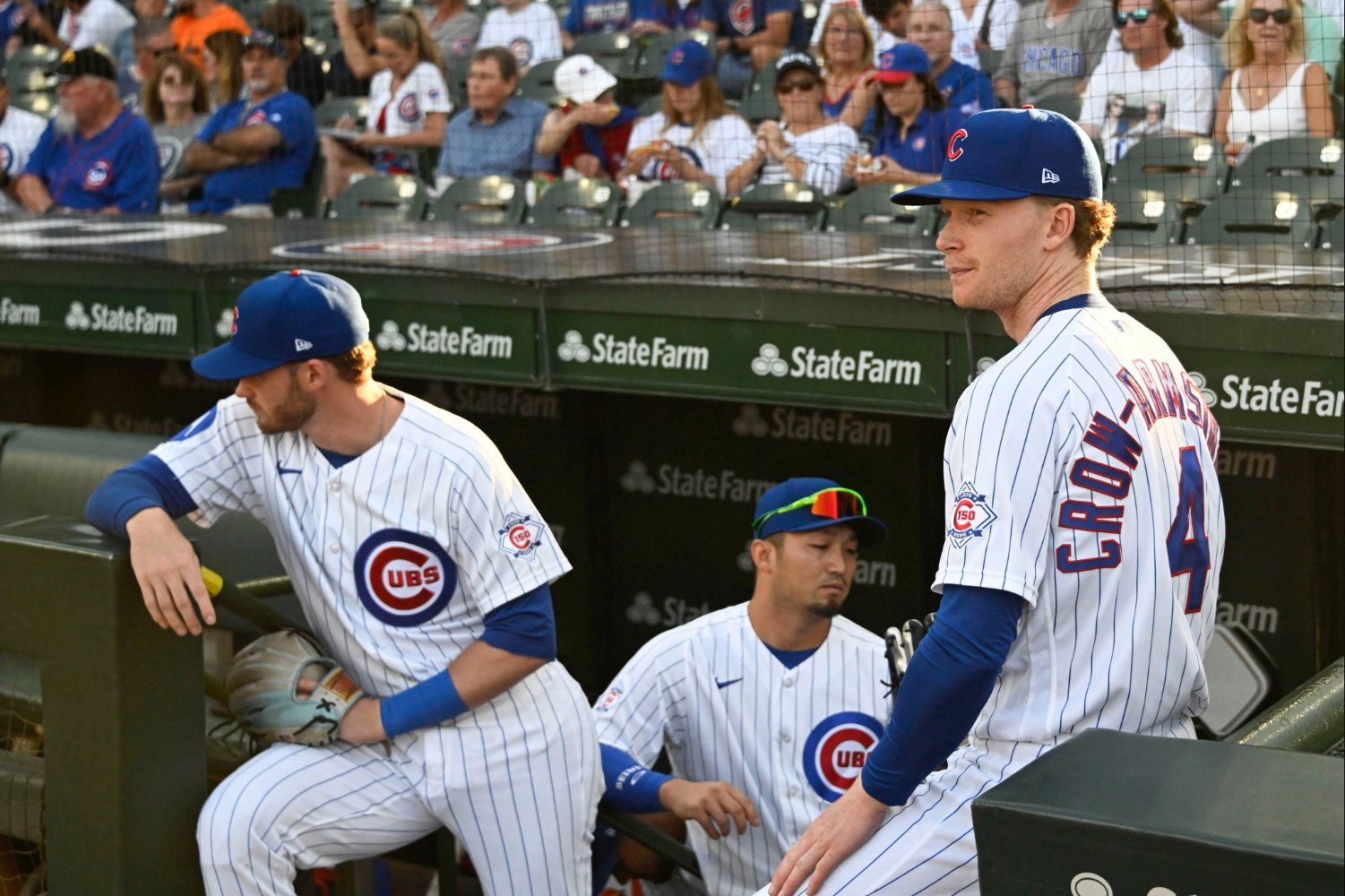 Earlier today, Rawlings announced the 2026 Gold Glove finalists. The Chicago Cubs were well represented with five players: CF: Pete Crow Armstrong (previously won in '25) 3B: Alex Bregman (previously won in '24) SS: Dansby Swanson (previously won '22-23) LF: Ian Happ (previously won '22-25 ) RF: Seiya Suzuki (first nomination) Should we be surprised? Not really. This past season, no team played better defense than the Cubs. Among the plethora of defensive stats, they led the league in FRV (76), OAA (74), and DRS (115). Notably, second baseman Nico Hoerner (9 OAA & FRV each) was excluded, but he had to fill in at shortstop for Dansby Swanson’s oblique injury. The most unexpected nominee was Seiya Suzuki. In his walk season, he upped his defensive game. Among NL right fielders, he ranked first in FRV (8) and DRS (14) and second in OAA (3). Keep in mind, Suzuki played in the same league as Diamondbacks speedster Corbin Carroll and is six years older than him. This is Suzuki's first Gold Glove nomination in the majors. As a member of the Hiroshima Toyo Carp, he had previously won five NPB Gold Gloves Awards. The winners will be announced on Sunday, November 1 at 7:30 p.m. CT on ESPN. View the full article
