


DiamondCentric
-
Posts
2,631 -
Joined
-
Last visited
Never
Content Type
Profiles
Forums
Events
MLB News, Rumors & Analysis
DiamondCentric Tutorials & Help
Major League Baseball Videos
MLB Fan Guides & Resources
Store
Downloads
Gallery
Everything posted by DiamondCentric
-

3 Cubs Prospects Who Might Be On The Move This Winter
DiamondCentric posted an article in North Side Baseball
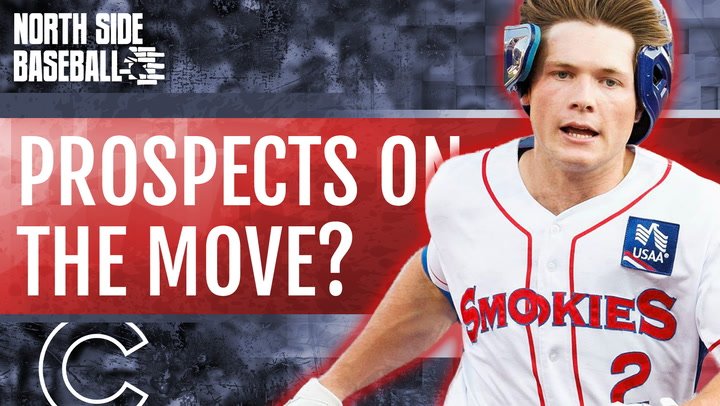 The Cubs could look to their farm system for help this offseason, and Kane Kepley, Ethan Conrad, and Jaxon Wiggins are three names to watch. Could one of them help bring an established big leaguer to Chicago? View the full article
-
How the Brewers Remade Their Offense to Win in October
DiamondCentric posted an article in Brewer Fanatic
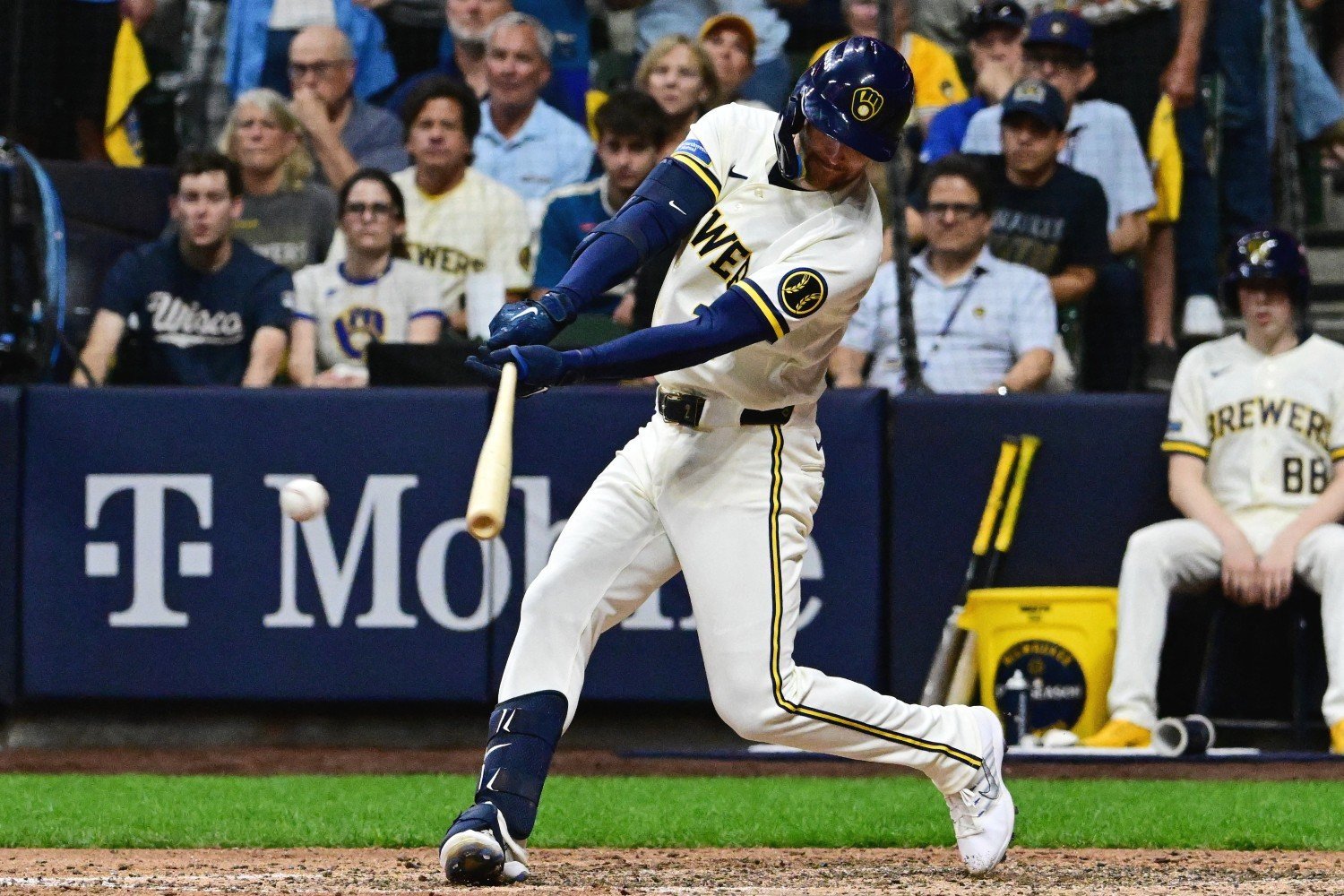 Maybe the best place to start is with Brice Turang. He's where the story of the 2026 Brewers' dominance seemed to kick off, at least on the offensive side. Turang finished 2025 on a tremendous hot streak, when he began turning on the ball just often enough—not often, still, but just often enough—to produce above-average power for the first time in his career. When he returned in 2026, though, he'd paired that minor adjustment with a bigger one: steeper swing tilt, which wasn't costing him any bat speed but allowed him to generate loft more easily. For the first several weeks of the season, he hit like a potential MVP. Turang went into a funk after that, though. Some poor swing decisions crept in. Developing that slightly altered approach that made him more dangerous was one thing. Maintaining it turned out to be another, harder thing. That's the nature of hitting in the major leagues. The cycle of adjustment and counteradjustment can never stop. Meanwhile, his teammates were still playing a brand of offensive baseball that better matched what Turang was like pre-swing change. With Jackson Chourio and Andrew Vaughn each sidelined by hand injuries early in the season, the lineup had almost no power much of the time. No matter; they made it work. Their isolated power (ISO, the difference between one's slugging average and their batting average) was .123 in April and .112 in May; the league's ISO was .156. But the Brewers walked a lot, stole a lot of bases, and strung together hits with runners in scoring position—that, most of all. For what felt like the umpteenth year in a row, they were defying the gravity of the game and hitting better with men on base or in scoring position than anyone else in the league. It started to get widespread attention. It became, literally, a national story. By the time Ben Lindbergh's story at The Ringer came out on June 15, though, the team had already made a subtle but important change. They were famous for their patience, and for their opportunism. They were famous for letting the ball travel (i.e., contacting it deeper in the hitting zone) and for going the other way. Lindbergh's story laid out those traits as part of the team's way of coming up with all those clutch hits, and that was true—except that the team was already abandoning that strategy. As we discussed above with Turang, you can't let opponents know what you're doing until you're ready to stop doing it. The Brewers had already seen some teams start pitching them differently in big situations, and when they started getting calls with inquiries like Lindbergh's, they knew it was time to change up. More importantly, though, they had been talking all along about a lurking problem with their magic formula: it was nautralized by the caliber and style of pitching they would see in the playoffs. The clutchness and situational hitting of the Brewers dates back to Craig Counsell's tenure, but so does their legacy of October frustration. Counsell's only series win in the playoffs came in 2018. When Pat Murphy took over in 2024, there was no immediate change. Even in 2025, the team only eked out a Division Series triumph over the Cubs, then got swept by the Dodgers. They needed to do something differently, this time, if they wanted to get over the hump and turn from a great regular-season team into a championship-caliber playoff team. One key figure in that endeavor would be Daniel Vogelbach, the round, ribald, utterly beloved new hitting coach. As a player, Vogelbach was famous for his take-and-rake approach, letting his patience border on passivity but proving dangerous when he did cut loose a swing. The Brewers hired him in early January, and by the beginning of March, he was like the Pied Piper for many of the team's hitters. He didn't try to impart his own hitting approach on the squad; that would have been a foolish way for (say) Sal Frelick to hit. He did, however, start them down the path toward unlocking more pop. In June, the Brewers stopped being runners-in-scoring position superheroes, and they've never really resumed that. When it matters most, their hitters still show the ability to return to the approach they once had, because each has only changed what they're looking to do in small ways. Those changes are real, though, and to commit to them with enough conviction to make them work, they've each had to give up a little bit of that opposite-field, let-it-travel, find-grass game. By margins you could fail to notice (and which the Brewers hoped, all along, opponents would), they're getting more dangerous, if a hair less well-rounded. Their June ISO was .190, and it's only dipped back under .154 in one month since. Every hitter had to make a slightly different adjustment. Garrett Mitchell moved his contact point forward about an inch and a half, and became about 2° less oriented to the opposite field at contact. He still hits the ball on the ground too often to be a true slugger, but through the midpoint of May, he had just one home run, and his stat line was being propped up almost entirely by walks. Since then, he's walked considerably less, but he hit 10 home runs and batted .277/.358/.446 the rest of the regular season. Famously, in the playoffs, he's belted two huge home runs and a triple. With Mitchell, it's catching the ball farther out front and getting around it a bit more, which means being slightly more aggressive. For other Brewers, though, it's less about the horizontal angle of the bat at contact and more about whether it's working uphill enough at that point. Turang, Jake Bauers and (once he came back from that broken finger) Chourio all steadily raised their average attack angles as the season went on. That generally means you're catching the ball farther out front, too; it's just a different adjustment than Mitchell's. Nor does a steeper attack angle have to mean that. For Bauers, it did, by about the same amount as Mitchell. For Chourio, working uphill more didn't require being earlier and getting the ball farther in front. Instead, it was about changing what he was looking for and how he shaped his 'A' swings. Which thing any individual needs to do depends on their typical timing signature and their swing plane, plus their feel for contact. One size most certainly does not fit all. One piece at a time, the Brewers became more capable of turning on a plus fastball—or taking one out of the park to center field, as Turang did in NLCS Game 1. Murphy had a hand in the adjustments; he's always involved in discussions about the team's broader offensive philosophy. Vogelbach became the fulcrum of the shift, though. He and the other hitting coaches on staff helped players understand why the team was slightly altering a gameplan that had worked well for so long, then tailored the course of adjustments to each guy. Most of the responsibility for the transformation fell on veterans—an odd word, in most clubhouses, for a player as young as Chourio or Turang or as seemingly little-established as Mitchell or Bauers. Those guys have that role on this team, though. The team called up Cooper Pratt and Luis Lara during the season. They relied on Joey Ortiz for lots of defensive value, and on William Contreras for leadership and gameplanning with the pitching staff. They needed to be able to let those players focus on other duties. The shift in how this offense works would have to come from the guys whose main job is hitting. Speaking of which: Christian Yelich. Already close with Vogelbach dating back to their time as teammates, Yelich was the first to attach himself to the new hitting coach and make clear how much he would trust him, early in spring training. That facilitated much of the change Vogelbach effected in other players over the course of the season. Trust would be paramount in doing a few things differently without losing what had made the club great, and Yelich's leadership ensured that that trust would be there. This isn't about the narrative of which you've already read too much—the theory that only hitting the long ball works in the playoffs, because great pitchers never give up three hits in a row. It's not about reducing the team's reliance on sequencing, per se. Instead, it's about handling the specific types of pitching that become pervasive in October. The Brewers' old team approach was great for 162 games. They didn't ditch it; they still have some of that DNA in the lineup right now. That approach ensured they would get to the tournament. Once the tournament began, though, they knew they would need hitters who had been tuned and trained to punish even great hurlers, and 'punishing' them has to include extra-base hits, as well as key walks and walkoff singles. Each change was small, but several Brewers made them, and the cumulative effect of their changes has been big. They might not be the clutchest team in history, anymore, in terms of a batting average with runners in scoring position. As the Dodgers and Padres have already learned, though, they're clutch in another, more vital way. View the full article
-
Arbitrary Thoughts: Keeping Daniel Lynch Is A No-Brainer
DiamondCentric posted an article in Royals Keep
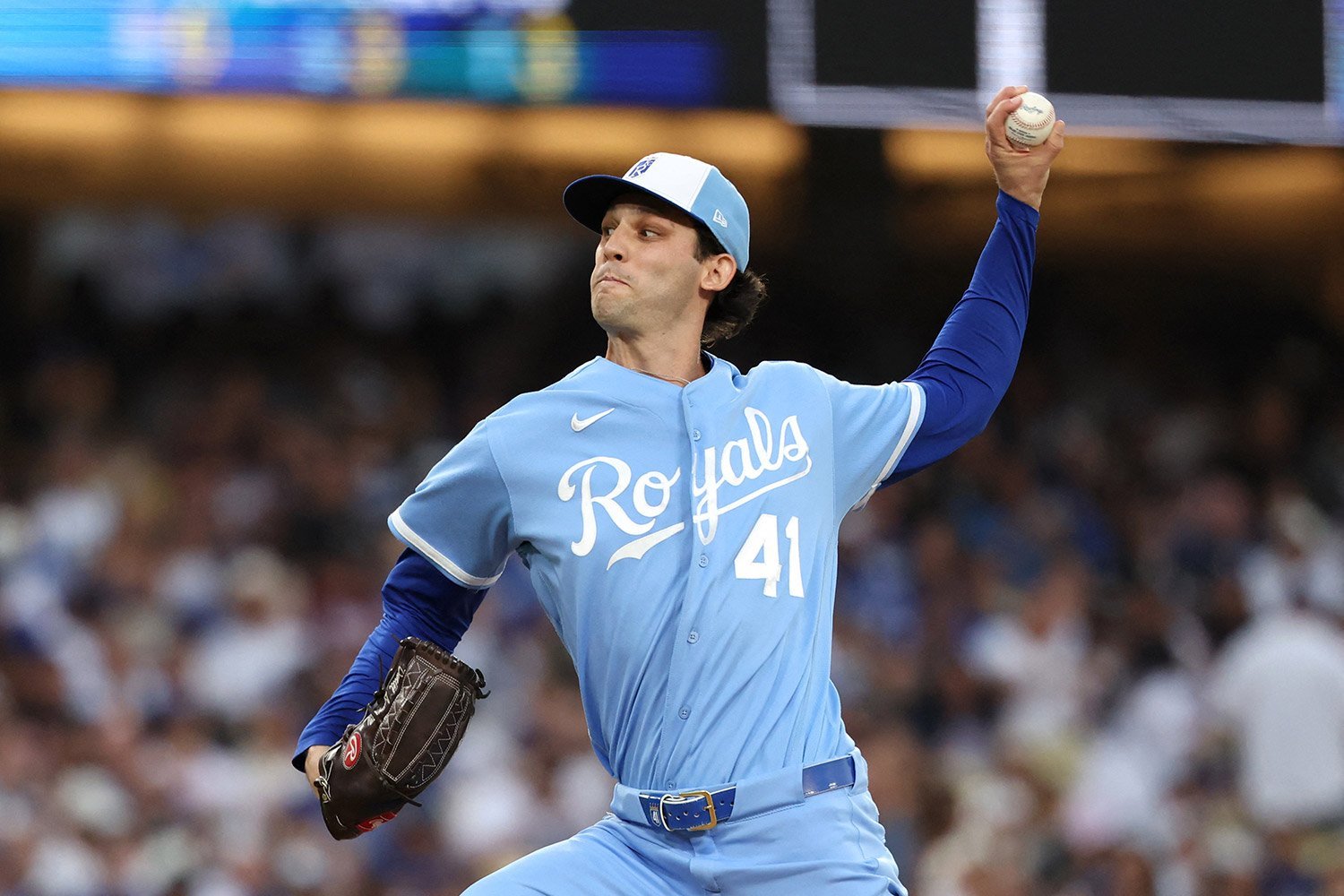 Daniel Lynch IV, LHP Age on Opening Day 2027: 30 Service Time: 4.136 2024 Salary: $202,878 2025 Salary: $782,500 2026 Salary: $1,025,000 2027 MLB Trade Rumor Estimate: $1,800,000 Lynch Background Lynch was drafted by the Royals in the first round of the 2018 MLB June Amateur Draft as a starting pitcher. Lynch struggled to find success as a major-league starter after his 2021 debut. In 2023, he battled strains in his left rotator cuff and shoulder that limited him to only nine appearances. Through the end of 2023, his career stats were headlined by a 5.18 ERA in 51 appearances. Though he showed flashes of talent with promising starts, Lynch was never able to become the reliable starter the Royals envisioned for him. Following his injury-plagued 2023 season, Lynch began spending more time in the bullpen in 2024, often as a long reliever and averaging just over two innings per appearance. He returned to the bullpen in 2025 and posted a 3.16 ERA over 73 appearances across both seasons. By 2026, Lynch had been fully integrated into the bullpen and established himself as a key member. Lynch's 2026 Season 56 G, 86 IP, 73 H, 26 BB, 56 K, 4.08 ERA, 1.151 WHIP Lynch became one of the few bright spots in an otherwise disappointing Royals bullpen in 2026. Through August, Lynch had a 1.96 ERA across 46 innings pitched with a 3.06 FIP. His season, however, took a turn when Lynch shifted back to the rotation in early August. As a Reliever: With many of the Royals’ starters landing on the injured list with season-ending injuries, someone needed to join the rotation, and Lynch got the nod. Unfortunately, he was not nearly as effective as a starting pitcher. Lynch made 10 starts to close out the season. In those starts, he posted a 6.53 ERA and a 6.18 FIP over 40 innings. As a Starter: A few of his metrics stayed steady as his roles changed. His walk rate, ground-ball rate, and chase rate all remained relatively level. Notably, his strikeout rate and whiff rate dropped. With batters making more contact, batters were putting the ball in play more often and causing damage on the base paths. One possible explanation for this change could be the decrease in extension from 6.7 feet to 6.4 feet. Shorter extension gives hitters slightly more time to track the ball out of a pitcher’s hand. Though his fastball velocity remained steady, the decrease in perceived velocity from the hitter’s perspective could have contributed to his lowered ability to induce swings and misses. Royals Depth at his Position (Relief Pitcher) 40-man roster: Steven Cruz, Jose Cuas, Connor Thomas, Connor Seabold, Carlos Duran, Beck Way, Nolan Hoffman, Spencer Mivens, Easton McGee Arbitration Eligible: Nick Mears, Alex Lange, Nate Pearson, James McArthur, Lucas Erceg, Anthony Gose 2027 Club Option: Carlos Estévez Triple-A: Tyler Guerrero, Augusto Mendieta, Shane Panzini, Luke Little, Ben Sears, Chazz Martinez, Brandon Johnson, Oscar Rayo Double-A: Dennis Colleran Jr., Kamden Edge, L.P. Langevin, Zachary Cawyer, Tomas Molsky, Chase Jessee, Nate Ackenhausen, Chase Isbell, Christian Chamberlain, Dash Albus, Yimi Presina Why the Royals Should Offer Him Arbitration While Lynch was in the bullpen, he was undoubtedly their best reliever, albeit regression and injury from Erceg and Estevez, respectively, also contributed to that fact. JJ Picollo said that addressing the bullpen was a top priority, and that getting rid of a top performer from last year’s group would leave the front office with another role to fill. It is reasonable to think a return to the bullpen for Lynch would likely result in performances similar to his production out of the bullpen rather than as a starter. Lynch’s history certainly suggests he adapts well to the routine of the bullpen. Why the Royals Should Non-Tender Him The Royals could be worried about Lynch’s regression as a starter to finish the season. If the Royals believe there are signs the regression was not solely due to the change in role, they might believe it is time to cut their losses on their former first-round draft pick. In the same response about the bullpen, Picollo mentioned the lack of a set closer and a setup man. Even though moments where the bullpen was performing at its worst, Lynch was almost never called upon in save opportunities and only intermittently in a setup role. While Lynch was good compared to other Royals relievers in 2026, he should be compared to all potential alternatives, and his FIP exceeding his ERA could indicate regression even with a return to the bullpen. Prediction: The Royals Keep Lynch To be honest, that reasoning for not tendering Lynch was not particularly compelling. Lynch was the Royals’ best reliever when in the bullpen and should definitely find a home back there in 2027. While he does not necessarily fit into a classic closer or reliever role, Lynch worked well as a fireman for the Royals. In 2027, he allowed only four of 20 inherited runners to score when entering games in the middle of a jam. Including 2025, he allowed 14.6% of inherited runners to score, which is less than half the MLB average of 31.6% over the past two seasons. This valuable skill should be welcomed back to the bullpen with open arms in 2027. What do you think the Royals should do with Lynch? Leave a comment and start the discussion. View the full article
-
The Minnesota Twins Pitching Revolution Will Be Televised
DiamondCentric posted an article in Twins Daily
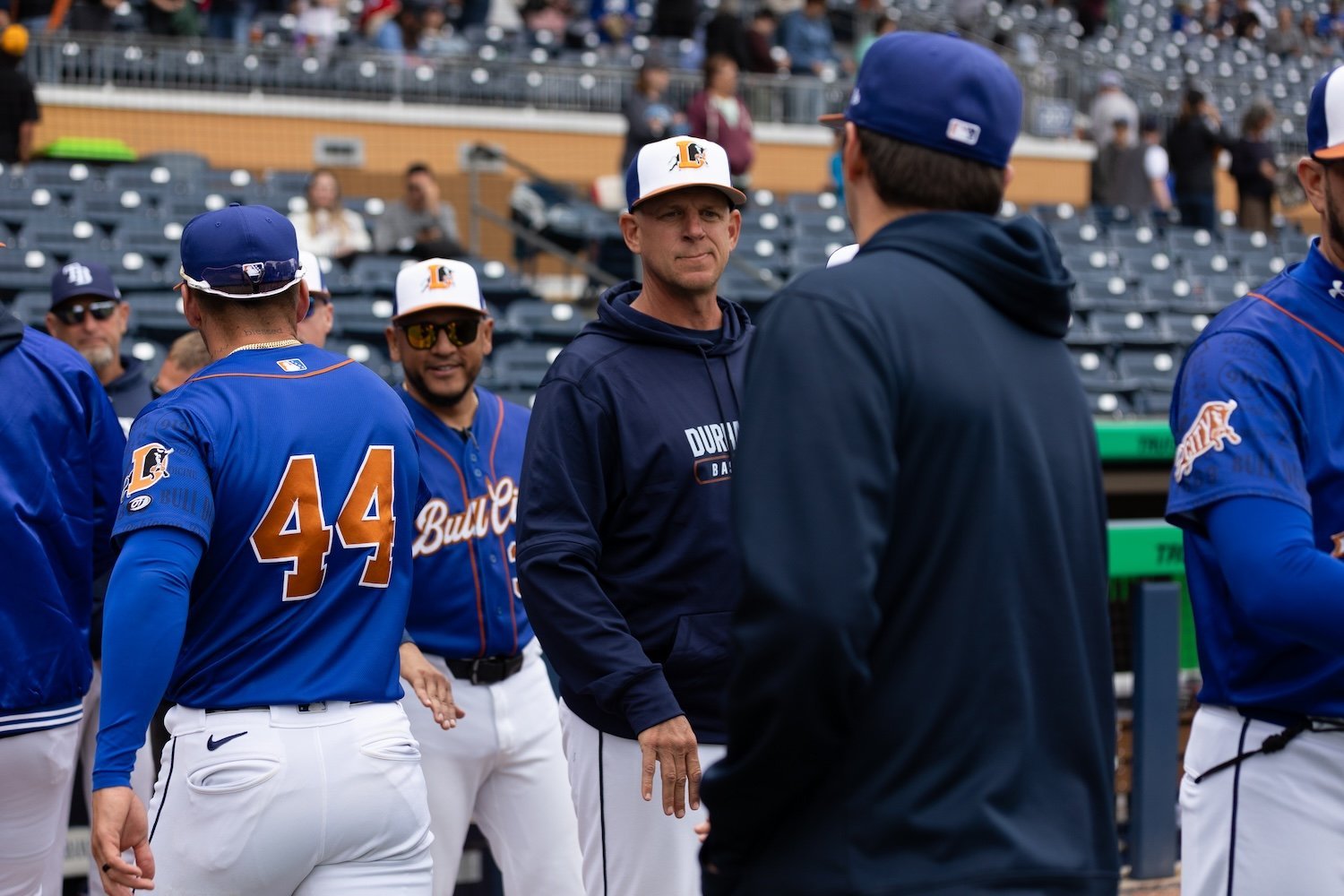 Last Wednesday, the Minnesota Twins named Brian Reith as their new pitching coach, replacing long-time predecessor Pete Maki. Operating under the same title for the Durham Bulls (Tampa’s Triple-A affiliate) for the past five seasons, Reith draws little fanfare himself. As a minor league pitching coach over the past half-decade, he is not well known among those who primarily follow the majors. Instead, his appeal lies entirely in the parent club he developed pitchers for, with many having a Pavlov’s dog-type positive reaction to seeing “Rays.” Justifiably so. Tampa has been a pioneer in the analytical revolution, often assembling competitive rosters with one of the lowest payrolls in baseball. There is a particular shine around the organization as they just clinched a World Series berth, operating as one of the final three clubs remaining alongside other small-market darlings in Cleveland and Milwaukee. The Rays have been particularly keen on maximizing their pitching talent, deploying the AL’s second-best pitching staff of the 2020s, according to FanGraphs' Wins Above Replacement (fWAR). Despite the stereotype that small-market teams maximize pitching talent through international free agency and the draft, Tampa’s success stems from being hyperactive in the trade market. For example, their best starting pitcher (Drew Rasmussen) was acquired from Milwaukee in 2021. The rest of their four-pitcher starting rotation (Freddy Peralta, Griffin Jax, and Nick Martinez) were also acquired through trade or free agency in the past year-and-a-half. Also, elite closer Bryan Baker was acquired in a trade with Baltimore in July, 2025, with the rest of the bullpen being entirely comprised of external additions, sans 2020 draft selection Ian Seymour. This level of hyperactivity on the trade market is the product of the club’s president of baseball operations, Erik Neander, and the front office. It is impossible to know whether Twins top baseball executive Jeremy Zoll will operate similarly this offseason. If he does, however, his new pitching coach will be equipped to maximize those additions' strengths, having played an integral role in Tampa’s pitching development the past half-season. As I’m sure you’ve heard countless times, Joe Ryan and Taj Bradley worked with Reith in Durham. Again, it is impossible to know what impact he will have on their respective 2027 campaigns. Bradley thrived under Maki’s guidance in 2026, so there’s no guarantee he will take another step forward based on familiarity alone. Yet what Reith will bring to Minnesota was best summed up by another former Durham Bull, Garrett Acton, whom I spoke with in early August when Minnesota was at Rate Field facing the Chicago White Sox. Acton repeatedly referred to the concept of “2K” and “pre-2K,” like in the following quote: “(We prioritized) tightening up the arsenal," Acton noted when discussing what changes Maki and former assistant pitching coach Luis Ramirez made to his arsenal upon joining the Twins last season. "But the emphasis was still the same. Dominate the strike zone pre-2K, be able to expand, and use my best pitch 2K.” So, “Dominate the strike zone pre-2K” means attacking the strike zone before reaching two strikes. Subsequently, “2K” means a pitcher has reached two strikes and is trying to strike out the hitter. Again, Acton noted this was Maki’s and Ramirez’s preferred approach. Yet, he likely first developed this approach when Reith was his pitching coach in 2025. Counts are the most important element of baseball. There is an unquantifiable advantage to a pitcher starting an at-bat with an 0-1 count rather than a 1-0 count. Attacking the zone pre-two-strike counts and using your best pitch in two-strike counts have been Tampa’s organizational modus operandi for pitching over the past half-decade, and there’s no doubt Reith will bring that philosophy to Minnesota. On the surface, throwing strikes early and often is a simple concept. Every pitcher and pitching coach knows what they should be doing. But the first strike needs to be executed—easier said than done. Again, Twins pitchers knew they needed to throw strikes last season. There’s no doubt Maki communicated that. Yet, the club surrendered the fifth-most walks, playing a primary role in the Maki-led unit being one of the worst pitching staffs in baseball last season. What Reith is expected to be better at than Maki is deciding what arsenal changes need to be implemented and how and when to communicate them effectively. Tampa’s success is largely rooted in encouraging pitchers to take the path of least resistance, opting for simplicity over over-complication. They are transcendentalist pitching developers, inspired by Henry David Thoreau: simplify, simplify. For example, this will look like Bradley leaning heavily on his elite cutter; Ryan trusting his fastball even more; and Jeff Hoffman spamming his slider. Not every pitcher needs to tinker with a fastball variant all the time—Reith knows that. Don't be mistaken. Tampa’s simplicity isn’t rooted in being luddites. They have embraced advanced metrics and cutting-edge pitching technology. However, they communicate their desired results in an exceptionally simple manner and reduce the threat of miscommunication. For example, Tampa catchers place their glove in the middle of the strike zone for every pitch. One can expect Victor Caratini and whichever backstop joins him in 2027 to do the same. Instead of scrambling pitchers' brains with stringent location zones, they are encouraged to throw at the glove, leaning into their strengths. If Reith can effectively bring Tampa’s pitching philosophy, he could immediately drastically improve Minnesota’s pitching staff, potentially unlocking newfound success for the club’s top starters in Ryan, Bradley, and Pablo López while helping young starters Connor Prielipp and Zebby Matthews develop into steady, above-average arms. The same goes for the bullpen, which will again rely heavily on Hoffman, Andrew Morris, and another former Reith prodigee (Yoendrys Gómez) in high-leverage situations. Maximizing these arms could be the most consequential factor in Minnesota’s ability to earn its first postseason berth since 2023. View the full article
-
The Royals Keep Minor League Awards: Columbia Fireflies
DiamondCentric posted an article in Royals Keep
 The Columbia Fireflies had a peculiar season, leaning heavily on 2025 Draft picks and recently signed International talent. While they didn't make the Carolina League postseason, they had the second-best record of the Royals' full-season affiliates at 64-65. The Fireflies roster looked much more impressive at the start of the year, with Kendry Chourio as the ace of the Columbia rotation. As expected, however, he was promoted to Quad Cities, and the rotation simply didn't have the juice it did earlier in the season when he anchored it. Offensively, catcher Brooks Bryan, a 2025 8th-round draft pick out of Troy, showed promise, hitting .319 with a .902 OPS. That said, injury limited him to just 33 games and 119 plate appearances. Thankfully, Bryan is getting more at-bats in the Arizona Fall League, and he's looked impressive, as shown by his first AFL home run on Tuesday. One has to wonder what the Fireflies' playoff chances would've looked like if those two stayed in Columbia all season (like Blake Mitchell and David Shields in Quad Cities). Even though roster turnover was more common in Columbia than Quad Cities, the Fireflies were one of the more intriguing teams to follow in the Royals system. The talent is still raw, but some high-upside players from this group could impact the Royals' 40-man roster in 3-4 years. Three players who earned Royals Keep awards come from the 2025 MLB Draft, and another was a highly touted 2024 International signing out of the Dominican Republic. Royals fans shouldn't be surprised if these four make noise in the Midwest League in 2027, perhaps pushing for call-ups to the Northwest League by season's end. For those who are just discovering this Royals Keep Minor League Awards series, you can find previous posts below: Omaha Storm Chasers Northwest Arkansas Naturals Quad Cities River Bandits Hitter of the Year: Josh Hammond, SS Hammond, the 28th overall pick in the 2025 MLB Draft, had a solid professional debut in Columbia as a 19-year-old regular infielder. In 110 games and 487 plate appearances, he slashed .286/.354/.389 with a .743 OPS. The power waned a bit, especially in the second half of the season. His ISO was just .103, and he hit only five home runs. That said, he showed solid contact skills, a decent plate approach (0.49 BB/K ratio), and excellent baserunning (25 stolen bases) and defense. As a result, the Royals organization awarded him the Alex Gordon Heart and Hustle Award. Power is a concern, but Hammond showed all the other skills you would want to see from a top prospect in his first MLB experience. Hammond didn't whiff (91st percentile Whiff%) and didn't strike out much either (77th percentile K%) in Columbia. For a young player in their first full-season professional experience, that contact ability is encouraging, as it should follow him as he moves up the Royals' system. He'll likely get bigger and stronger this offseason, which will help him handle a full Minor League season better in 2027 (most likely in High-A Quad Cities). Power matures as a player gets older, so Hammond has plenty of time to develop it. Now, will Hammond be a 30+ HR hitter? Most likely not. However, with his speed, defense, and contact, he could develop into a 20+ HR hitter, which would be incredibly valuable for an infielder who can play third, shortstop, and second base at the Major League level (maybe the outfield as well, if necessary). The numbers aren't gaudy, but the scouting reports, combined with decent numbers, were encouraging signs for Hammond as he enters this offseason. Many experts view Hammond as a Top-5 prospect in the Royals system and a Top-100 guy. So Royals fans should look forward to what the 20-year-old does in Quad Cities, as he could jump up the prospect rankings next year if his power matures in the Midwest League. Pitcher of the Year: Michael Lombardi, RHP A second-round pick in the 2025 MLB Draft out of Tulane, Lombardi made the transition to full-time pitching for the first time in his baseball career. The 22-year-old Green Wave product was a two-way player in college and only pitched 42 innings in his final season at Tulane in 2024. Lombardi thrived after moving to full-time pitching. He led all Fireflies pitchers with 124 strikeouts despite pitching only 88 innings. For context, Darwin Rodriguez, Jose Gutierrez, and Shane Van Dam all threw more innings than Lombardi, but they didn't come close to the Tulane product's strikeout total. In swing-and-miss, Lombardi was Columbia's best pitcher. His 68th-percentile O-Swing%, 93rd-percentile K%, and 59th-percentile whiff% only confirmed that. In addition to leading the Fireflies, Lombardi led all the Carolina League in strikeouts, despite not hitting the 100-inning mark this season. Lombardi broke down late in the year, which is why we didn't see a late-season call-up to Quad Cities. In 55.1 IP from April to June, he posted a 2.44 ERA, posted a 36.3% K%, and a 21.5%% K-BB%. However, from July to the end of the season, his ERA inflated to 5.79, his K% fell to 25.5%, and his K-BB% also regressed to 14.1%. He just wasn't efficient after June, which led to shorter outings and fewer strikeouts. Lombardi's no question a thrower who can rack up strikeouts. That should guarantee him a bullpen role in the near future, at the very least. That said, can Lombardi clean up the command and become more efficient in 2027? If he wants to stay a starter in Quad Cities and beyond, he will need to improve that command, or he'll be relegated to the bullpen sooner rather than later. Biggest Riser: Yandel Ricardo, SS/2B Ricard is our No. 11 prospect at Royals Keep, and fellow infielder Hammond seemed to overshadow Ricardo for most of last year. However, the Dominican product demonstrated that he needs to be taken more seriously as a prospect. In 109 games and 458 plate appearances, the 2024 international signing slashed .266/.351/.398 with a .750 OPS. He also hit seven home runs, stole 27 bases, and posted a 0.53 BB/K ratio. In many ways, Ricardo was just as good as Hammond, if not better, in many areas (and he was just as old as Hammond). Even though he didn't hit for tremendous power (.132 ISO), Ricardo has a ton of natural power in his frame. When he locked in and connected, he could put serious exit velocity behind balls, as this one below shows. Now, Ricardo's defense isn't as elite as Hammond's, and Ricardo's base stealing could be more efficient (caught 16 times last year). However, the Dominican product has five-tool talent and could be a utility player who can play not just every infield position, but outfield as well. The tools are legitimate, and you could argue Ricardo is a Top-10 prospect in the Royals system today. Ricardo has shown a strong ability to bounce back in the Minors, which speaks to his makeup and attitude. He had a tough first month in 2026 and struggled in a limited 2025 stint with Columbia (.547 OPS in 200 PA). However, he locked in, adopted an "all-fields" hitting approach, and delivered in bunches in 2026 with the Fireflies. If he can carry this approach and mindset to High-A Quad Cities in 2027, he could be on track to join the Royals' 40-man roster by December 2028, when he is Rule-5 eligible. However, a strong 2027 could prompt the Royals to add him to the roster by Spring Training in 2028, putting him ahead of schedule for his MLB debut. Most Intriguing Prospect: Sean Gamble, OF The Royals' first selection in the 2025 MLB Draft had a brutal start in Columbia. In 46 games in April and May, he hit .149 with a .474 OPS, a 0.36 BB/K ratio, and a .074 ISO. He struggled to make consistent contact and didn't hit for much power either. At one point, the rookie outfielder seemed destined for a demotion to the Complex League. However, the Fireflies showed patience with Gamble, and it paid off in June and July. In 190 plate appearances in June and July, Gamble hit .268 with a .788 OPS, a 0.52 BB/K ratio, and a .134 ISO. He seemed like a much different hitter during those two months and, at times, arguably looked better than Hammond, especially in power. In addition to hitting seven home runs in 2026, he also scored 62 runs and stole 38 bases on 45 attempts. Gamble also played strong outfield defense and could be a Gold Glove-caliber center fielder, a major asset for the Royals, especially with Kyle Isbel's future murky after this season. Gamble did fade in August and September. In 96 plate appearances, he hit .198 with a .629 OPS and .123 ISO. The BB/K ratio was still strong at 0.52, and the BABIP was low at .263 over those last two months. Thus, it may have been an issue of Gamble running out of gas down the stretch, much like his draft classmate Hammond. The former IMG Academy product adds intrigue to this Royals system, even as our No. 5 Royals prospect. His overall numbers from last season aren't great (6th-percentile wOBA and 25th-percentile TJ Bat+). However, he looked like a much different player from June to the end of the year, and he showed confidence in August and September, even though the numbers weren't impressive. Gamble was a key part of a Fireflies team that fought for playoff position until the very end. The big question for Gamble in 2027 is whether he can avoid a slow start in Quad Cities. If he can, Gamble may prove to be a Top-3 prospect because of his strong defensive and baserunning tools. If he can't? Then Gamble may just be another example of a failed first-round Royals Draft Pick, which has been far too common since 2015. View the full article
-
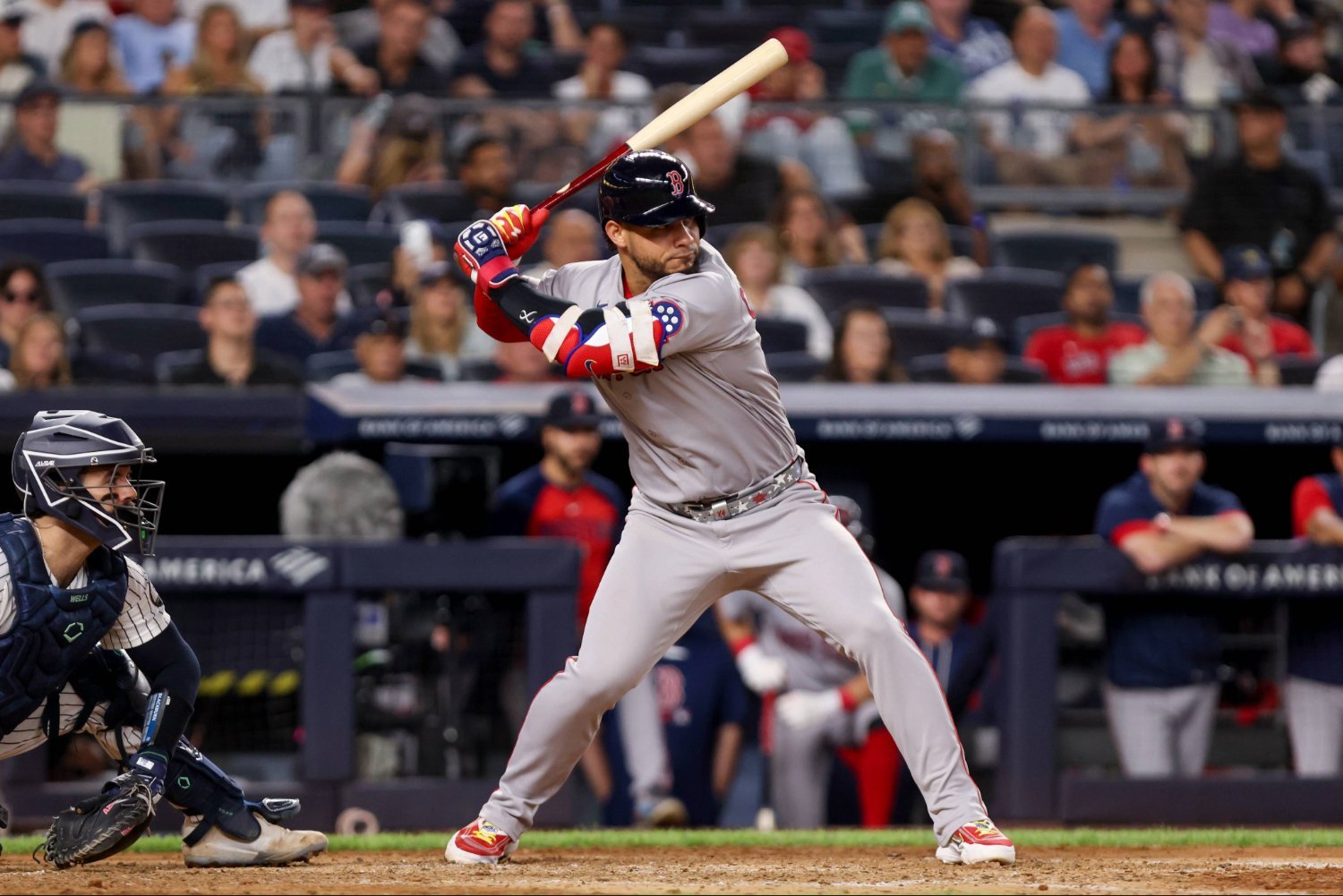 Willson Contreras' 2026 season ended with a walk in the ninth inning of Game 2 of the Wild Card Series against New York Yankees closer David Bednar. He finished that fateful elimination night for the Boston Red Sox going 2-for-2, reaching base in all four of his plate appearances. One at-bat earlier, in the sixth inning, he had hit a home run to right field at Yankee Stadium against Max Fried, breaking a streak of 26⅔ consecutive innings in which the Red Sox had gone without scoring a run in the postseason against New York. As usual, in those games when no Red Sox hitter could get a hit, Contreras put together quality at-bats. Since arriving in the organization, he became the leader the team needed on and off the field, and he did it throughout the year while overcoming injuries and difficult moments, such as the team's bewildering start during the first half of the season, which cost Alex Cora and his coaching staff their jobs. For Contreras, without a doubt, it was the best season of his career. That sounds great, especially because it was his first year as a Red Sox player, and we should not forget that it was also only his second year since he began the transition to first base during his final contract year with the St. Louis Cardinals. His defense was above average and, although he finished in the 64th percentile in OAA, down from the 92nd percentile he recorded in 2025, he improved in important areas such as First Base Receiving, which had been at -2 during his first experience at the cold corner. Now, where Contreras made the real difference was in his offensive impact, which went beyond his leadership with the Red Sox. He did not have inconsistent months. His lowest wRC+ was 103 in August, when the discomfort in his left hamstring kept getting worse. We also cannot forget that he was hit by a 95.4 mph pitch from Dodgers pitcher Will Klein. All of this ended with him being placed on the injured list on August 31, after which he missed 12 games. From that point on, the second half of the season became a challenge for the Venezuelan first baseman. After returning, he was hit by another pitch on September 17 and was sidelined again until the 27th, when he played Boston's final game of the regular season as the designated hitter against the Cubs. A month earlier, in July, Contreras was on fire and produced a .323/.488/.629 slash line, with five home runs, 14 RBIs, a 206 wRC+, and a 1.117 OPS. His drop to a .715 OPS in August was the only time his OPS fell below .856. But then he bounced back and maintained his pace, leading the offensive production during the comeback that changed the Red Sox's season, when they went 27-3 between July 3 and August 7. His first half of the season was the best of his career, after setting personal bests with 89 hits, 20 home runs, 38 extra-base hits, and 61 RBIs. That performance earned him his fourth All-Star Game selection at 34 years old and a spot in the Home Run Derby, where he was eliminated in the semifinals (9-8) during a memorable battle against Philadelphia Phillies slugger Kyle Schwarber. Contreras' second half of the season was also solid, featuring a 143 wRC+. His offensive consistency helped propel the team into the playoffs and allowed him to record several personal milestones. He finished in MLB's 99th percentile in batting value, 96th in bat speed, 95th in xwOBA, 90th in barrels, and 89th in xSLG, with 27 home runs, 81 RBIs, 59 walks, a .386 on-base percentage, a .902 OPS, and 4.0 fWAR. His OPS was the second-best in the American League, and he led all first basemen with a 152 wRC+. The reason he finished second in fWAR was the offensive explosion by Baltimore Orioles first baseman Pete Alonso (4.3 fWAR), who caught fire at the plate with 20 home runs and 44 RBIs in his final 41 games between August and September. That production was part of a late-season stretch that also cost Houston Astros designated hitter Yordan Alvarez the Triple Crown. Contreras also stood out beyond his power and determination at the plate: he took a big step forward in on-base percentage, and I think that was what took his season to another level. For the first time in his entire career, he became an extreme pull hitter, with a 54.3 Pull%, a reasonable figure given the particularities of playing half his season at Fenway Park. But the turning point was not just about home runs, as Contreras hit 14 at home and 13 on the road. What stood out most was the consistency with which he adopted his new approach, accompanied by greater plate discipline, to finish the season with an elite on-base percentage and the second-highest BABIP (.336) among first basemen across the major leagues. Contreras' swing speed was another of his fundamental tools: he finished 10th overall in bat speed, at 77 mph. Once again, his results against fastballs were devastating, giving him his fifth consecutive season with at least 10 home runs. If we did not count the pandemic-shortened 2020 season, then it would be six seasons, since Contreras hit 13 home runs in 2019 and destroyed fastballs with a .512 xSLG. Given his high bat speed, opponents threw him more off-speed pitches than ever (14.8%), but he responded with a .301 batting average and a .504 xSLG against such offerings, despite his high 41.3% whiff rate. So, the league's adjustment was not enough in that area, and pitchers often opted to throw him more breaking pitches, against which his contact production fell to a .226 xBA, with a 35.3 K%. Even so, Contreras has recorded a .449 and .452 xSLG against breaking pitches over the last two seasons, so it is likely that his approach for next season will involve working to reduce his problems against that type of pitch. Contreras has a guaranteed contract through 2027 and a club option for 2028. Although repeating this impact at age 35 will be a challenge, his projections are encouraging. For that reason, the Red Sox's priority must be keeping him healthy across a full campaign, lest they lose one of the best power hitters from their lineup. View the full article
-
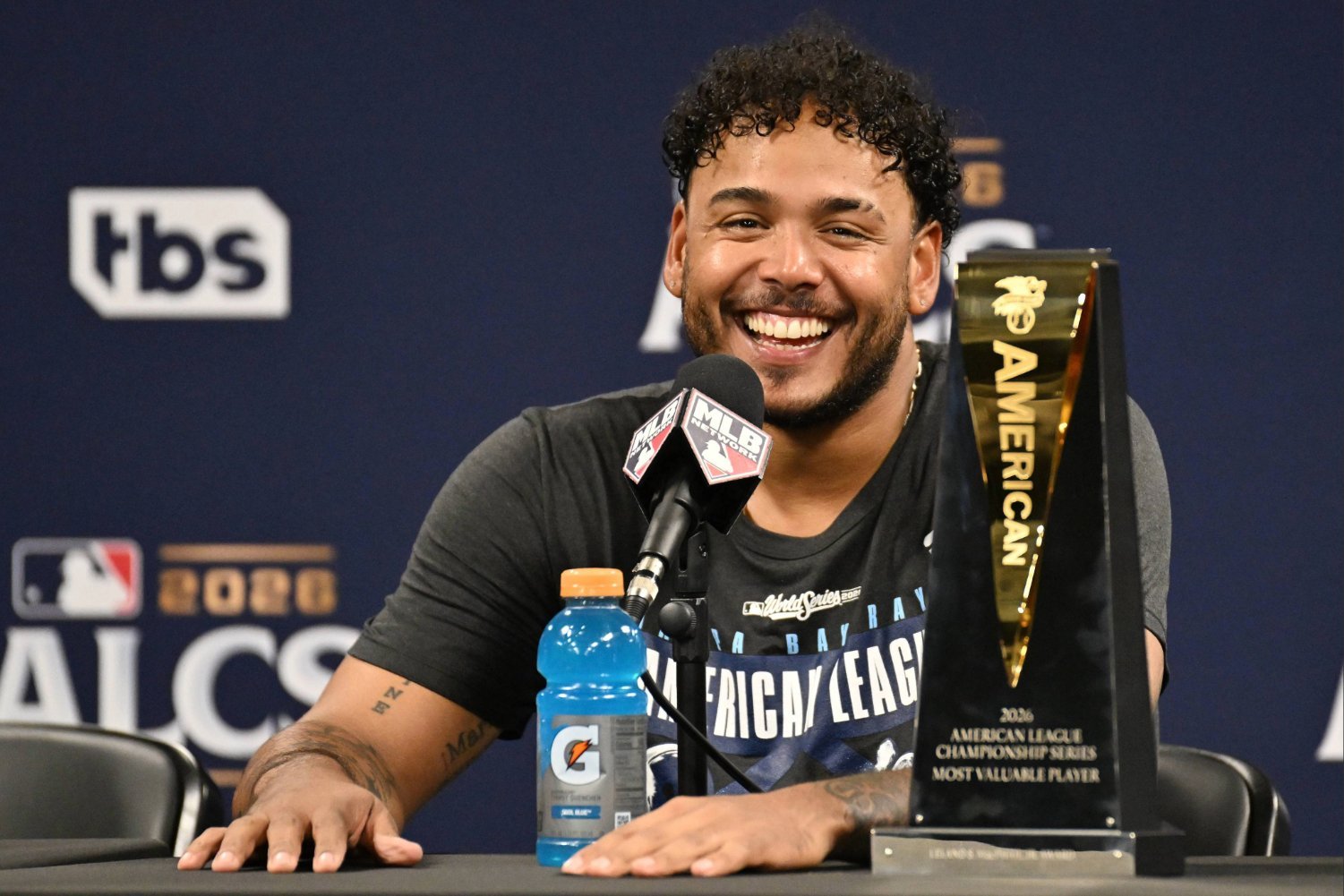 The Tampa Bay Rays are headed to the World Series in large part thanks to Freddy Peralta’s exceptional pitching. In two starts and a relief appearance against the Cleveland Guardians in the American League Championship Series, totaling 12 innings, he allowed one solitary run. Unsurprisingly, he was named the ALCS MVP, and it has made New York Mets fans sick to their stomach. Peralta’s time in Queens was a microcosm of the Mets’ season. Reunited with David Stearns from their days in Milwaukee, it took a pair of top-100 prospects to pry him from the Brewers, but that’s the cost of landing an ace. The expectations were rightly through the roof. With Peralta near the top of the rotation, the Mets looked like a complete team, capable of making a deep postseason run, and then, almost instantly, the bed had been crapped. Peralta was ineffective. The highly paid stars were injured. The Mets were toast. And the selloff began. While the Mets were able to recoup a solid bit of prospect capital from the Rays for Peralta, it still stings watching him carve up hitters in a different uniform. It's also become impossible not to think, “Why couldn’t we have just gotten this guy?” The truth is, the Mets did get this version of Peralta. To explain, I’m going to show you three different pitchers, and I want you to choose which one you’d prefer. 3 Mysterious Pitchers IP K% BB% Barrel% Pitcher 1 113.2 22.10% 9.40% 5.20% Pitcher 2 55.1 19.70% 6.90% 7.00% Pitcher 3 16.2 17.40% 10.10% 8.10% Unless you’re a madman, you’re definitely not taking Pitcher 3, and while you could argue for Pitcher 2 thanks to that lower walk rate, I think most people would reasonably land on Pitcher 1. Okay, now for the big reveal. They’re all Freddy Peralta. Pitcher 1 was Peralta with the Mets. Pitcher 2 was Peralta with the Rays in the regular season. And Pitcher 3 is Peralta in the postseason. I’m sure you’re wondering how this is possible, and the answer is quite simple. Preventing runs is largely out of your control. The only things pitchers really control are their strikeouts, walks, and batted ball quality. This is why Fielder Independent Pitching (FIP) is such a useful tool for analysis. And of those three indicators, home run suppression (batted ball quality) is the least stable. So, let’s take a look at how Peralta’s fortunes changed in the areas out of his control upon joining the Rays. Freddy Peralta and the Things You Can't Control ERA BABIP LOB% HR/FB% xFIP Mets Peralta 4.99 0.313 68.4% 13.0% 4.25 Rays Peralta 3.25 0.232 77.1% 7.8% 4.62 Playoff Peralta 1.08 0.229 96.8% 3.4% 5.73 *xFIP assumes a league-average HR/FB%, usually around 12%* There’s a compelling case that Peralta has actually pitched worse since leaving the Mets. When you throw in the fact that his fly-ball rate skyrocketed from 38.3% to 49.7% upon joining the Rays, and is at 59.2% in the playoffs, that 1.08 ERA looks like divine intervention akin to Angels in the Outfield. I’ve seen them, you’ve seen them, but it's all just noise. The Rays did this for Freddy Peralta; the Rays did that which the Mets could not. Did the Rays also tell him to strike out fewer batters and give up more barrels? Because that’d be a pretty bad plan. I’m not suggesting that the Rays asking him to raise his arm angle, as we pointed out on July 30, having him pitch out of the stretch, and everything else weren’t good ideas, but it didn’t fix him. If it had fixed him, he would have recaptured his 28.2% K% from last season, not seen it drop. The Rays didn’t fix much of anything for Freddy Peralta from an underlying performance standpoint; they just got the regression to the mean. I’m glad for him as he is set to enter free agency, but no organization worth its salt will look at his time with the Rays and offer him a $200 million contract. It’s easy to punch down at the Mets, but this narrative crumbles under the most basic level of scrutiny. Most of pitching is down to things you can’t control, which is why the greats are control freaks. View the full article
-
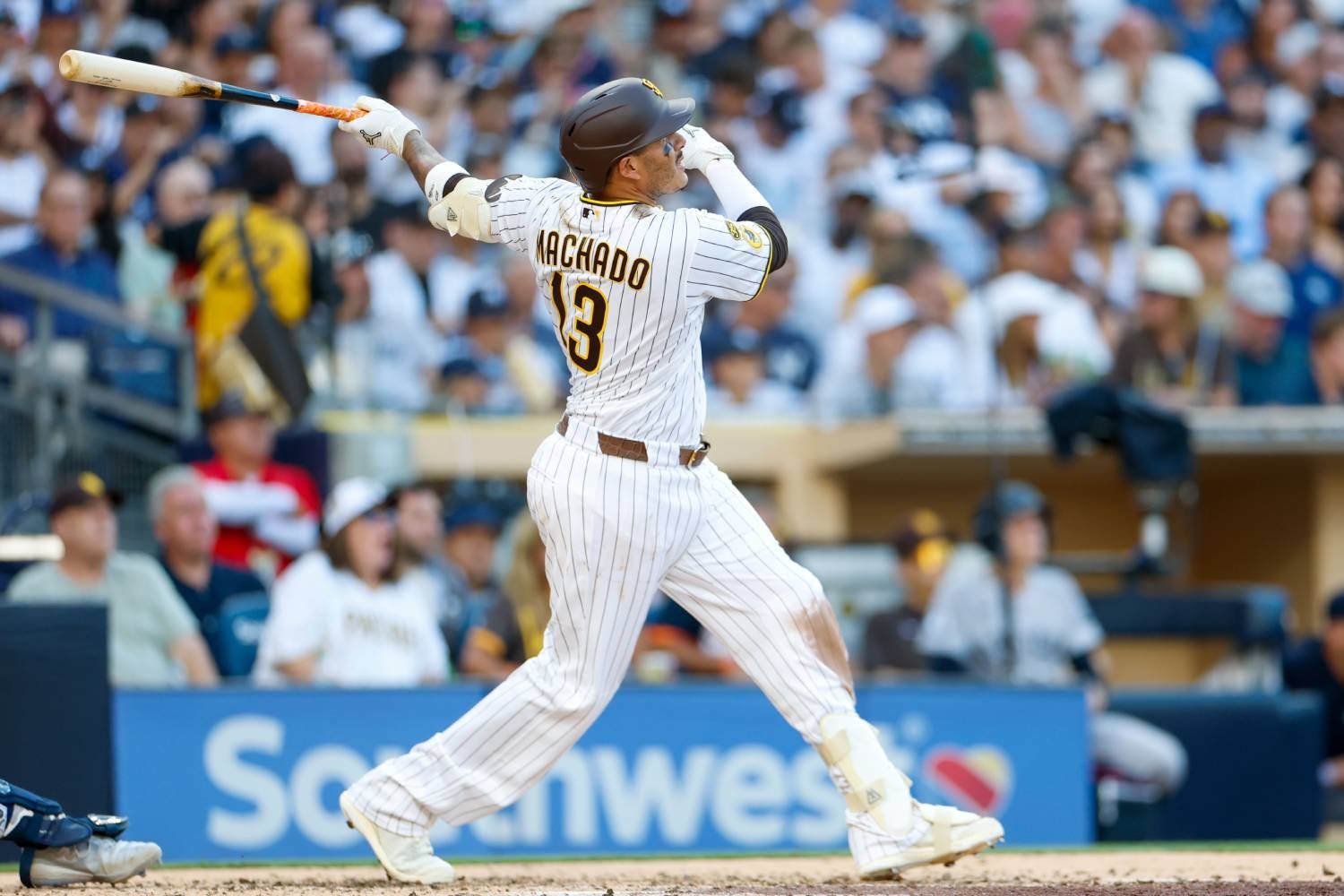 For as much as anyone wants to criticize the season Manny Machado had for the San Diego Padres this season, there are three things you could count on the superstar third baseman for in 2026: being in the lineup every day. home runs, and tremendous defense. There is a fourth that also needs to be included, but it has nothing to do with statistics. The seven-time All-Star is the unquestioned leader of this group. Sure, you can count Fernando Tatis Jr. as a big part of what makes the Padres tick, but it is Machado's presence that helps give the Friars their daily bearings and edge. Just look at the role he played when he stood up at a team dinner in his hometown of Miami in late July and implored his teammates to step up in the remainder of the season, which is exactly what they did. As far as what he did on the field, Machado hit 30 homers, the fourth time in eight seasons as a Padre he has reached that mark (make it seven if you take away the pandemic-shortened 2020), to reach 399 for his career, the 62nd player in MLB history to hit that many. His four 30-homer campaigns as a Friar tied Adrian Gonzalez for the most in club history and gave him eight in his career, the third active player to do that (Nolan Arenado and Kyle Schwarber). He also hit some round-number career milestones with his 1,200th RBI, 400th double and 2,000th game. Machado also moved past Garry Templeton (1,135) for second in Padres history in career hits. Machado was only out of the lineup four times, continuing a trend of always being available. Putting aside the 2023 season in which he sustained a fractured hand and played in 138 of 162 games, Machado has only missed 44 other games for the Padres, with his 159 games last year and 158 this year his highest totals in the brown and gold and most since playing all 162 in 2018. Always known as a very good defender, Machado's play slipped in 2025, but rebounded with a force this year. Machado led the NL third basemen with 16 errors last year, but committed just three in 2026 as he led the hot corner with an MLB-best .990 fielding percentage. Two of those errors came within the Friars' first 26 games of the season, which gave way to a stretch of 62 games without an error before finishing with 63 errorless games. He also led all third baseman with +12 Outs Above Average. His range was in the 96th percentile after being in the eighth in 2025 and 40th in 2024. He also has a remarkable accuracy with his throws. As for what he didn't do well, that showed up in his ability to simply get hits, not that hitting a baseball is easy. For the first time since his rookie season, Machado was considered a below-average hitter. That is based on OPS+, where he had a mark of 97 this season (100 is average). That is as a result of his slash line of .217/.303/.407. That .217 batting average sticks out like a sore thumb on Machado's ledger. His previous low-water mark was .256 in 2019, his first season with the Padres. Even that year, Machado finished with a 110 OPS+. He struck a career-worst 144 times this year, but did draw a career-best 76 walks. He also had 22 doubles after reaching 30 in four of the previous five years. And he hit into an NL-worst 22 double plays, tied with Freddie Freeman of the Los Angeles Dodgers, a category he has led MLB in twice with the Padres (but not this year, as that title went to Junior Caminero of the Tampa Bay Rays with 26). All of this is to say... what exactly? Chalk this season from a batting average perspective as a one-off. He showed up in the postseason, going 7-for-20 with a pair doubles and a homer (nearly another in his final at-bat), including 4-for-13 vs. the Milwaukee Brewers in the NL Division Series. Just like he did for this season on defense, Machado will figure out what went wrong at the plate and have it sorted out in 2027. View the full article
-
Brewers' Matt Kleine Up For Astros' General Manager Job
DiamondCentric posted an article in Brewer Fanatic
 With the success the Milwaukee Brewers have had in recent seasons, it is only natural for other teams to come calling when they have vacancies, whether it is in the front office or the coaching staff. Matt Kleine, the Brewers' assistant general manager, has been a popular name the last two years. Kleine is "a serious candidate" to take over the Houston Astros' baseball operations, according to USA Today's Bob Nightengale. The Astros terminated the contract of general manager Dana Brown on Aug. 24. Brown's deal was scheduled to expire following the season. Kleine has been the top assistant to president of baseball operations Matt Arnold. He joined the Brewers as a scout in 2007, following a brief internship with the Astros. Kleine climbed his way up the ladder and has been a member of the baseball ops staff since 2014. He became the assistant GM after the 2023 season. Kleine will have to figure out whether he wants the top job while working for an owner, Jim Crane, who has been heavy-handed in personnel moves. View the full article
-
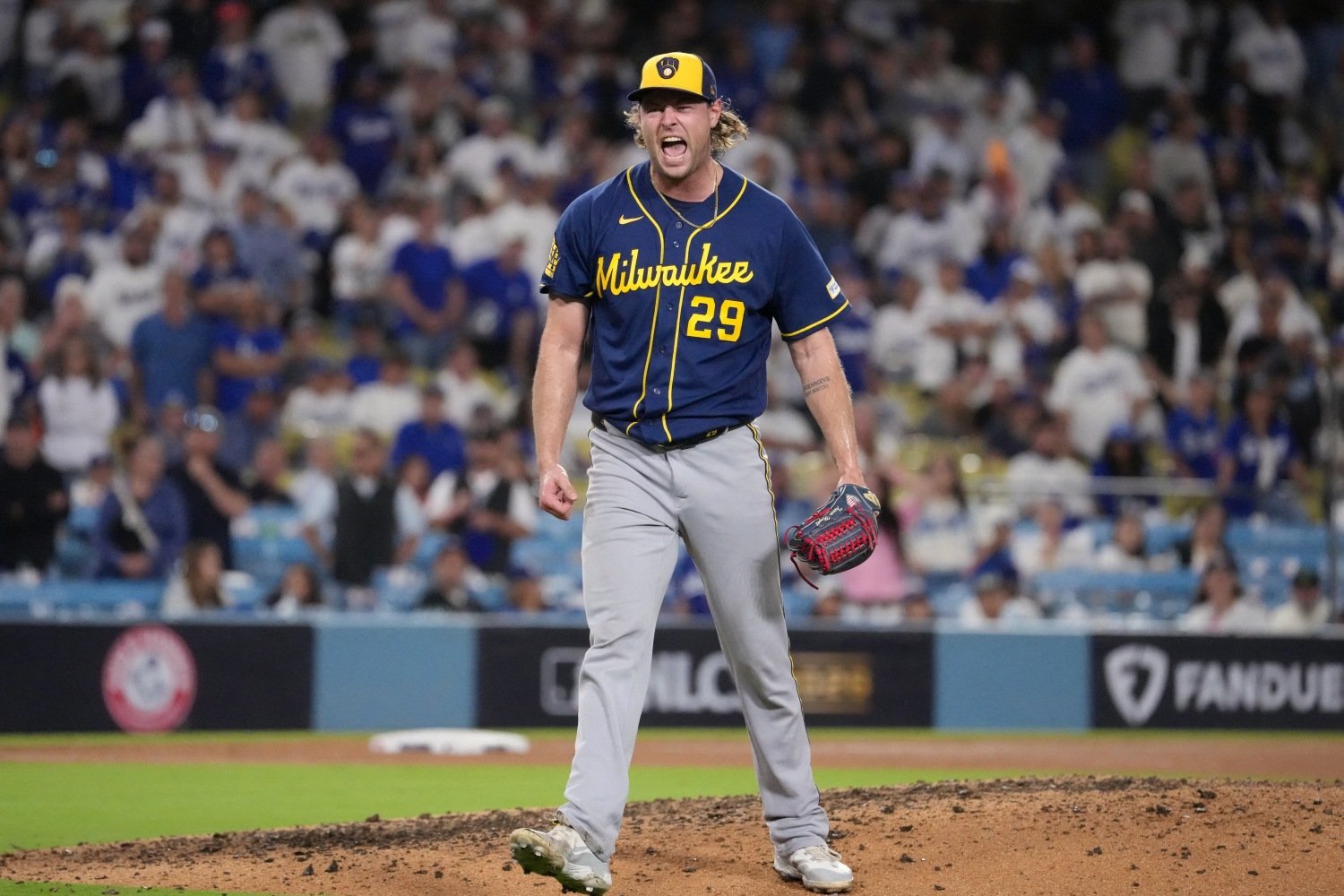 On April 30, 2023, the Milwaukee Brewers and Minnesota Twins struck a trade that didn't generate much excitement from either fan base. Milwaukee acquired right-handed reliever Trevor Megill in exchange for cash considerations and a player to be named later, who eventually turned out to be Taylor Floyd. At the time, Megill was a 29-year-old with just 68 2/3 career innings under his belt. It seemed unlikely to pay huge dividends for either side. Then, the Brewers' pitching factory got their hands on Megill, and the rest is history. Megill has developed into one of baseball's most reliable late-inning relievers, establishing himself as a legitimate shutdown closer. Since the start of the 2024 season, he's converted 81 of 93 save opportunities, with the saves total tied for the sixth-most in baseball during that span. He's also finished every season with an ERA of 2.72 or lower, and his underlying numbers suggest he's been every bit as good as his results indicate. He’s been just as effective on the biggest stage, allowing only one run across 13 career postseason innings. He fills up the strike zone, gets hitters to chase pitches outside of it, and generates plenty of swings and misses. Even more impressively, he's accomplished all of this with just two pitches in his arsenal. So, what have the Brewers done to turn Megill into one of the game's better closers? What I like most about Milwaukee's approach is that they haven't forced Megill to completely overhaul his skill set. Instead, they've made some small adjustments, allowing his existing strengths to play up. One of the biggest changes has been his pitch mix. Before joining the Brewers, Megill regularly threw a slider, but he abandoned the pitch after arriving in Milwaukee. Since then, he's relied almost exclusively on his four-seam fastball and curveball. When Megill first arrived in Milwaukee, his curveball averaged around 83 MPH. It now sits closer to 88. That increase in velocity has come at the expense of some of the pitch's movement, but the results speak for themselves. In 2022, the season before he was traded, his curveball generated a whiff rate of just 28.6%. Since joining the Brewers, that number has climbed to at least 46.5% in every season. That's a massive jump, and it starts with how his pitches work together. Megill already had a fairly steep arm angle (around 51°) before the trade. The Brewers have taken that a step further, pushing him up to approximately 54°. That adjustment has helped his four-seam fastball play up, particularly in the upper part of the strike zone. Typically, pitchers with more over-the-top arm angles generate significant vertical movement on their four-seamers. Megill had struggled to get that kind of movement out of his fastball, but Milwaukee has helped him add roughly 2.5 inches of rise. That might not sound like much, but imagine the width of a baseball bat. Two-and-a-half inches can be the difference between squaring up a pitch and missing it entirely. Now that hitters have to respect the movement on Megill's fastball, his curveball has become even more effective. He can start both pitches in similar locations, making it difficult for hitters to distinguish between them before it's too late, and the relatively small velocity gap between the two only adds to the deception. That's really been the name of Megill's game over the last four years. With only two pitches to work with, he has to keep hitters guessing, and he's done an excellent job of making that limited arsenal work. His bat-tracking data illustrate just how effective he's been. Hitters rarely square him up, even when they're able to get the timing right. They're often on top of his curveball or swinging underneath his four-seamer, struggling to make quality contact against either pitch. The curveball has been particularly difficult to recognize, with hitters frequently getting out in front of it. That combination of deception, velocity, and movement has made Megill incredibly difficult to barrel up, and it showed in his results. He allowed just one home run and 10 total extra-base hits all season. You don't need a six-pitch arsenal to succeed in the major leagues. Sometimes, you just need two pitches that work together, and Megill is the perfect example. He throws hard, fills up the strike zone, and keeps hitters off balance. Milwaukee hasn't reinvented him so much as refined what makes him effective, and those adjustments have turned an inexpensive acquisition into one of baseball's most dependable closers. Now, Megill is Pat Murphy's guy in the ninth inning for a Brewers team just four wins from a championship. Not a bad return for cash considerations and a player to be named later. View the full article
-
The Twins Have Ground to Make Up in Baseball Analytics
DiamondCentric posted an article in Twins Daily
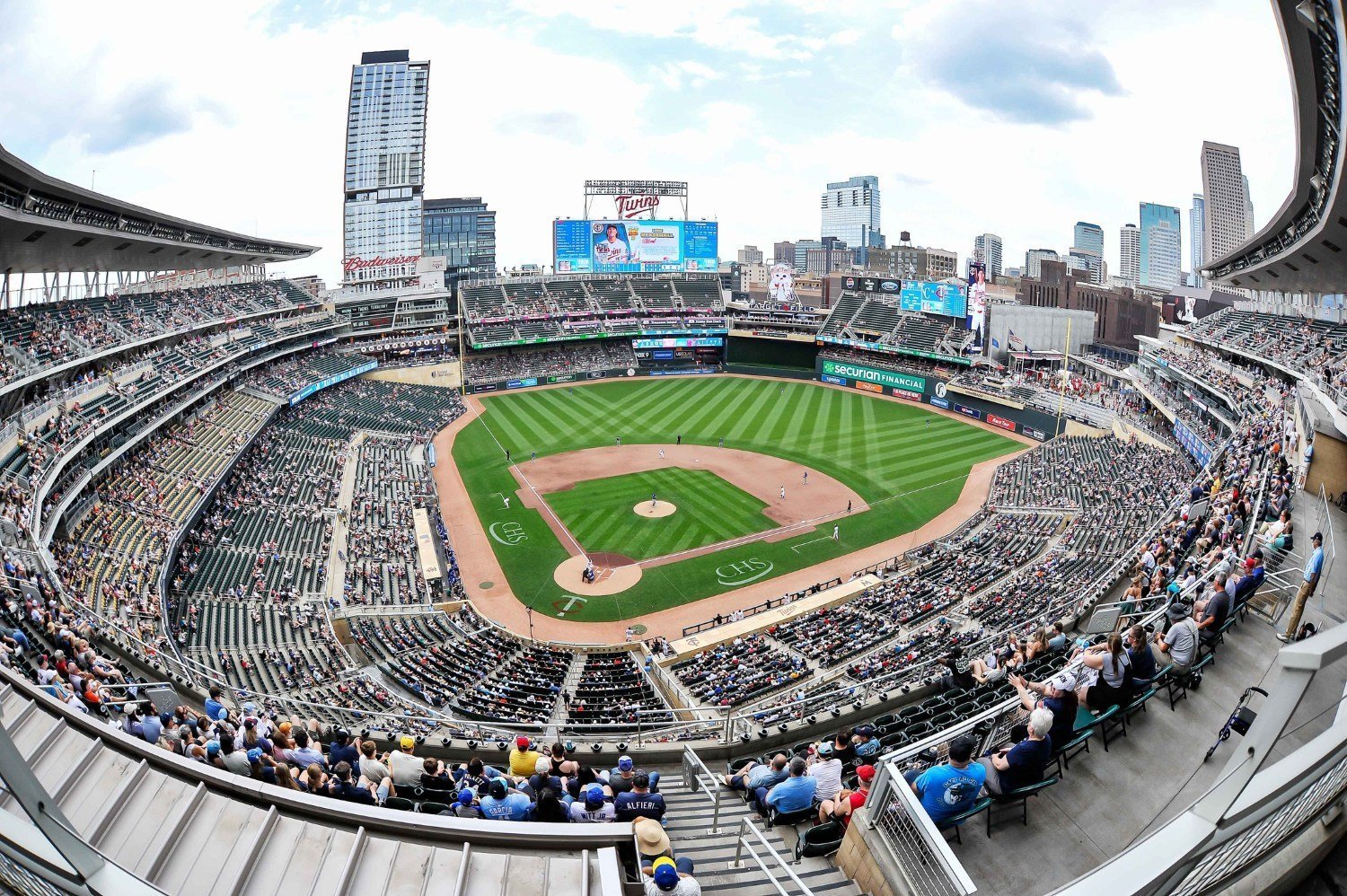 The Twins have plenty of areas to address this offseason. After reducing payroll and moving on from several key figures in baseball operations, the organization needs to find ways to improve its roster without spending like baseball's biggest-market teams. One potential area for improvement might not involve signing a single player. Analytics departments have become an increasingly important part of modern baseball operations. Teams use their staffs to evaluate players, develop pitching strategies, improve player performance, and help make decisions throughout the organization. The best departments combine traditional baseball knowledge with data analysis, engineering, research and development, and quantitative sports science. A recent look at MLB analytics staffing shows a notable trend among the teams remaining in the postseason. Several clubs have invested heavily in these departments, while Minnesota sits below the league average. The Twins cannot expect to solve every problem by hiring more analysts, but this is an area where additional investment could help the organization make up ground. The Postseason Teams Invest in Analytics The Milwaukee Brewers have built one of baseball's largest analytics departments, with 46 employees. That total ranks second in MLB, trailing only the Philadelphia Phillies, who lead the league with 51. The Tampa Bay Rays have 39 employees, while the Cleveland Guardians have 30. All four organizations sit above the league average of 28.5 analytics employees. These departments include more than employees whose job titles contain the word analyst. Baseball analytics and research-and-development personnel work alongside engineers, department leaders, embedded analysts, and quantitative sports scientists. Each role can contribute to a team's ability to evaluate information and translate it into practical decisions on the field. The staffing numbers do not prove that a team will win more games simply because it employs more analysts. For instance, the Blue Jays, Tigers, and Mets all rank among MLB’s top-10 in analytics staff, but that trio all missed the playoffs. A larger department can still make mistakes, and a smaller department can be effective when its personnel are talented and its processes are sound. Still, the numbers show that several successful organizations have made analytics a significant part of their baseball operations infrastructure. Minnesota currently has 27 employees in its analytics department, ranking 17th in baseball. That puts the Twins below the league average of 28.5. The final three teams remaining in the postseason average 38.3 analytics employees, a difference of more than 11 employees per organization. That gap is worth examining. Minnesota does not necessarily need to match the Phillies' 51 employees, but the Twins should consider whether their current staffing level gives them the resources needed to compete with organizations that have made analytics a major priority. Minnesota Has Cut Back in Other Areas The analytics discussion comes at a time when the Twins have made difficult decisions about spending across baseball operations. Minnesota has operated with a reduced payroll compared with recent seasons, and its approach to roster construction has increasingly emphasized finding value rather than paying for established talent. Those financial decisions affect more than the players on the field. Baseball operations departments need the resources to evaluate trade targets, identify undervalued free agents, develop prospects, improve player performance, and make decisions about the roster's long-term direction. When an organization reduces spending, it needs to be careful not to weaken the infrastructure that helps it spend wisely. The Twins have experienced significant changes in their baseball operations leadership, including the departure of Derek Falvey and a transition to a new decision-making structure. When he was hired, Falvey was tasked with building Minnesota’s analytics department. Leadership changes can create opportunities to rethink how the organization operates, but they also make it important to maintain the people and processes that help turn information into better decisions. Analytics cannot replace good scouting, strong player development, or experienced baseball leadership. It should complement those areas. A larger analytics department could give Minnesota more capacity to investigate questions that currently compete for limited staff time, work more closely with coaches and players, and build better systems for evaluating talent. That last point matters for a team operating with financial constraints. The Twins need to find players who outperform their contracts, identify weaknesses before they become expensive problems, and develop internal options rather than relying on the free-agent market to fill every roster hole. An effective analytics department can help with all three tasks. It cannot guarantee that every acquisition works or every prospect develops, but it can give the organization more information and better tools when making decisions. A More Affordable Way to Close the Gap One of the most compelling arguments for investing in analytics is the relative cost. Adding several analytics employees would cost money, but it would not necessarily require the same financial commitment as improving the major-league roster through free agency. Consider the cost of adding a middle reliever. Even a modest free-agent contract can cost a team several million dollars for one season. That player might provide valuable innings, but there is no guarantee he will perform as expected. A few additional analytics employees could cost less than that single roster addition, depending on their roles and experience, while contributing to decisions that affect multiple players and potentially several seasons. The value is not simply about finding the next inexpensive reliever. An expanded department could help the Twins evaluate bullpen options, identify pitchers whose underlying numbers suggest untapped potential, and develop more individualized approaches to pitch selection and workload management. Those same resources could help the organization evaluate hitters, improve defensive positioning, and support player development throughout the minor leagues. Analytics staff members also do not need to produce an immediate return in the form of wins. Their work can influence decisions across the organization, from amateur scouting and international acquisitions to major-league roster construction. That creates the potential for a broader return than spending a similar amount on one player. Of course, hiring additional employees does not automatically make an organization smarter. Minnesota would need to identify the areas where its current department lacks capacity, recruit people with the right expertise, and make sure its analysts work closely with scouts, coaches, and players. Adding staff without a clear plan would simply increase expenses. The Twins should also avoid treating analytics headcount as a competition in which the team with the most employees automatically wins. The quality of the staff, the information available to it, and the organization's willingness to act on its findings matter more than the raw total. Still, a department with 27 employees operating below the league average may have opportunities to expand its capabilities. Minnesota does not need to double its staff overnight. Targeted additions in research and development, engineering, or quantitative sports science could address specific needs without creating an enormous new expense. Like payroll, analytics staffing is one input in a much larger equation. Coaching, scouting, player development, front-office leadership, and the players themselves still matter more collectively than any single department's headcount. A well-funded analytics operation cannot overcome poor decisions across the rest of the organization. But the opposite is also true. A team with a limited payroll needs every advantage it can find. If Minnesota intends to compete with organizations that consistently identify undervalued players and maximize their existing talent, it should make sure its own baseball operations staff has the resources to do that work. The Brewers, Rays, and Guardians offer useful examples of organizations that have invested in analytics while operating under different financial circumstances than baseball's wealthiest clubs. Their staffing numbers do not explain their entire success, but they reinforce the idea that teams can invest in their infrastructure even when they cannot spend without limits on the major-league roster. The Twins have ground to make up. Their 27 analytics employees put them below the league average, while the final three postseason teams average 38.3. Closing that gap would not guarantee Minnesota a postseason run, but it could improve the organization's ability to make better decisions with the resources it has. If the Twins are serious about building a sustainable contender, expanding their analytics department deserves a place in the offseason conversation. Spending millions on one more reliever might help solve a single roster problem. Investing in the right people behind the scenes could help the organization solve problems across the entire roster. For a team looking to maximize every dollar, that is an opportunity worth exploring. Should the Twins invest more in their analytics department? Leave a comment and start the discussion. View the full article
-
 A disappointing season and a crowded group of young position players have put Gabriel Gonzalez at a crossroads, and the Twins may be better off turning the former top prospect into a piece that can help them win now. View the full article
-
 Kansas City has some tough calls to make before the non-tender deadline. Which players should stay, and who could be on their way out? Discussed in this video are Kyle Isbel, Nate Pearson, Nick Mears, Alex Lange, Daniel Lynch IV, Michael Massey, Anthony Gose, James McArthur, Randy Dobnak, Lucas Erceg, and Alec Marsh. View the full article
-
 Trevor Megill was an unproven reliever who struggled in Minnesota before he arrived in Milwaukee. Three years later, the Brewers have one of baseball's best closers, thanks to a few key adjustments. View the full article
-
 Howard Johnson was a major league third baseman from 1982 to 1995. Johnson is best remembered for his unique combination of power hitting and speed. He became one of the most dynamic switch-hitters of his era, particularly during his peak years with the New York Mets. View the full article
-
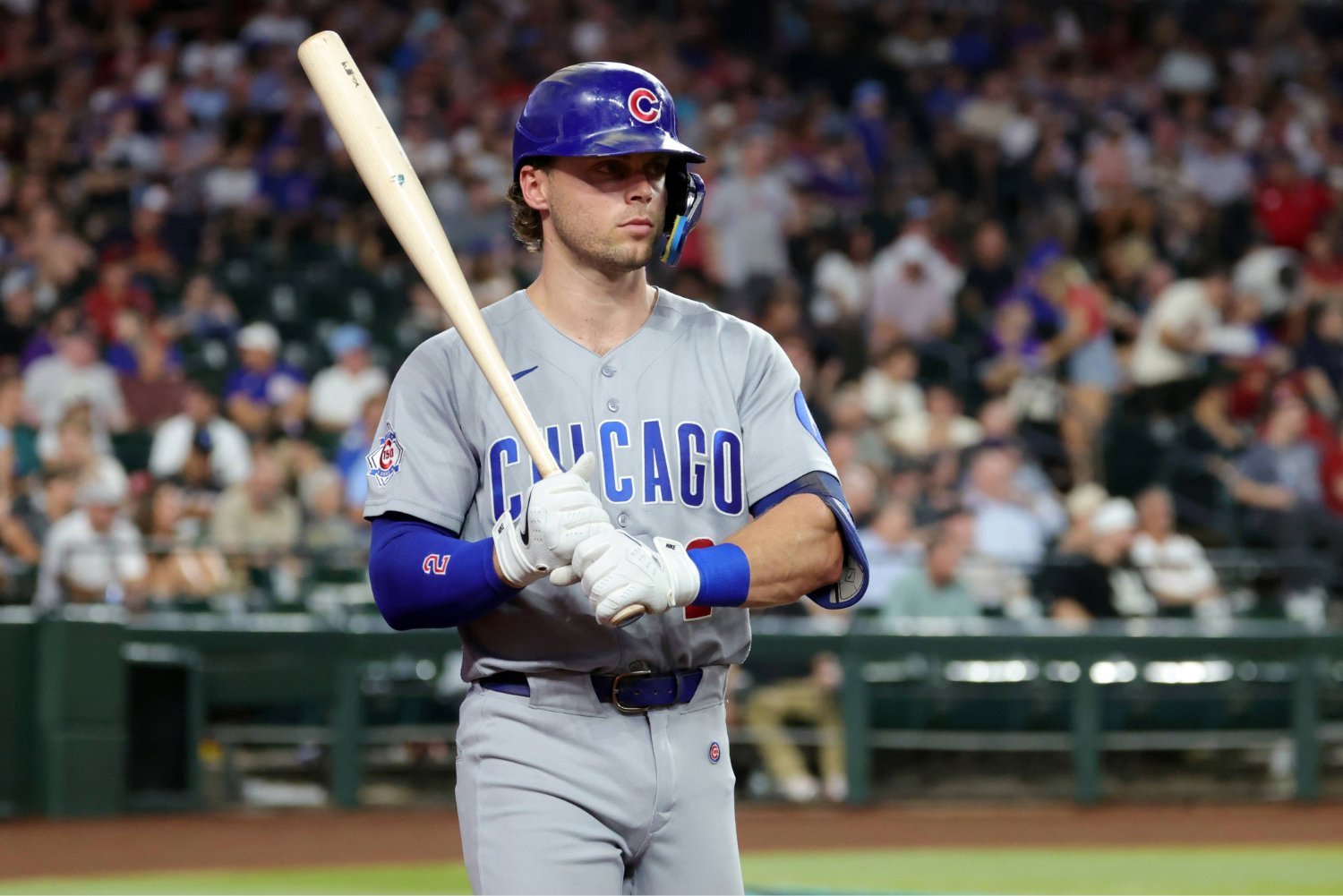 Entering the 2026 season, there was little clarity on the future of longtime starting second baseman Nico Hoerner. After being drafted by the Chicago Cubs in the first round of the 2018 draft, he's become a mainstay of the Wrigley Field infield. His most recent extension (signed in 2024), which bought out his arbitration years, was set to expire at the end of the season and it was hard to tell if the team would look to extend another one of their infielders. Over the last two years his name had even come up in trade rumors, and while those don't seem to have gone far, it highlights that his future was at the very least in some doubt at. Things changed on March 29, when the then-28-year-old signed a six year, $141 million dollar extension to keep him in the Windy City for the bulk of his career. Immediately, Hoerner responded with one of the best months of his career, posting a sterling .291/.370/.449 line (good for a 130 wRC+) through April. It looked like he had unlocked a new gear, flashing some added power to go along with his Gold Glove defense. On May 6, things were going so well that the Chicago Sun-Times called him the "MVP" of the young season. Things hit a snag, however, as Hoerner went into a prolonged slump for much of the rest of the first half, finishing with a wRC+ that was below 80 at the All-Star Break. While he found some more juice in the second half, the overall numbers never fully rebounded, resulting in the worst full-season offensive year of his career. So, what went wrong? And more importantly, should the Cubs (and you) be concerned? First off, I think if we asked Hoerner about his 2026 season, he would be the first to tell you that it wasn't good enough. He admitted as much on July 24th this year; "I haven't produced," the second baseman said in an interview for MLB.com. "I haven't helped the team score runs." If he pulled up his own FanGraphs' page, he may even point you to his 74 wRC+ with runners in scoring position, or his 76 wRC+ in high-leverage as proof. But I think it's also important to remember that Hoerner is the ultimate competitor; he's not going to give himself a break regardless. I also wouldn't be surprised to learn that his standards for himself are so high that they're next-to-impossible to live up to. It's very hard to get to the highest levels of this sport, even harder to stay, and harder yet to have fully earned a $141 million dollar extension. Being ultra competitive is certainly one way to push yourself to get there, and more importantly, to stay there. But let me give everyone a moment of relief: The Cubs' Gold Glove second baseman was essentially the same guy in 2026 as he was in 2025 when he posted a 110 wRC+ and had a career high 4.8 fWAR. Below you'll see a chart comparing his two seasons and they are shockingly similar. In fact, his expected wOBA are identical between the two seasons. The two places that really stand out are his batting average and his BABIP. His batting average was 33 points lower from year to year, which is likely due to his BABIP being 38 points lower. Your first reaction may be to think that there is a reason for his BABIP dropping, which is exactly what you should think in instances like this. If a hitter is suddenly making worse contact, you can expect less balls to find their way down safely, and looking for that data will help to tell us whether this is simply luck or earned. However, that expected data is trying to tell us something that a deeper dive into his overall profile confirms: we should probably relax. Nico Hoerner's demise does not appear to be upon us. One place we can see this is simply in his expected batting average. Despite hitting .263 on the year, his expected batting average was .297. Much like the second baseman's xwOBA, it's literally identical to his actual batting average the season before. And the reason why is clear when we compare his overall profile from 2026 to years past: there's almost nothing separating him. He is a shockingly consistent player. So, what's the cause for the sharp difference in what we should have expected and what happened? It's most likely just a combination of balls finding gloves and bad variance. "Bad luck" can be a tough sell to some, but in this case, I'm not seeing any massive red flags moving forward. That's not to say that it was all perfect; anecdotally, we all remember really ugly plate appearances, times in which he probably could have (and should have) done better in a specific moment, or even weeks where it just wasn't clicking. But those are all normal ebbs and flows for any MLB player. When you take a 500-foot look at his season, zooming all the way out he looks just fine. He made about the same amount of contact, swung at the same amount of strikes, and hit the ball about as well as he's ever hit them. That isn't to say there aren't areas of improvement that can help him moving forward, though. One thing you can usually count on Hoerner to do is hit fastballs really well. Last year; not so much. Both in terms of actual production (.268 wOBA) and theoretical production (.319 xwOBA), he wasn't "right." A dive under the hood shows that he's just getting under the ball far too often on fastballs and is popping them up a bit too often. Pop-ups are akin to an automatic out, as much as a strikeout is in almost every case. He had 61 cases of making "poor/under" contact on four-seams last year which was third-most in the league. This is an area of his game he can clean up. Despite the struggles offensively, Hoerner remains an excellent defender, posting a +4 in DRS and a +9 OAA at second. While his DRS was a bit low compared to 2025, his OAA was exactly what it was in 2024 and I'm inclined to believe OAA over DRS anyway. He was not nearly as good at shortstop, but that's to be expected as he rounds out his 20s; his arm was never really strong enough for the position to begin with, though he did fill in for the injured Swanson admirably down the stretch. Baserunning-wise, he was yet again a positive force on the bases. He stole a few less bases, but this is mostly due to being on base less on the year. He still provided the team with nearly +4 runs of baserunning value according to Fangraphs, while his sprint speed stayed relatively the same as it's been. Eventually he'll slow down here, but there seems to be nothing imminent suggesting a decline in this phase of his game. Final Grade: C+ Ultimately, it's a little tricky to grade Hoerner's season on the whole. Regardless of the processes, he didn't provide a ton of offensive value for a good deal of the year. And while it's almost assuredly that bad variance is the primary culprit, it doesn't retroactively put runs on the board, either. Defensively, he was generally as good as ever and remains a positive on the bases, so despite the 88 wRC+, he was still worth 2.8 fWAR (which allowed him to finish tied for 10th in the league at his position) in total. So, while it may be hard to give a fair grade for 2026, I remain confident in him moving forward, remain happy with the extension, and expect he'll be much more like the guy he was between 2023-25. View the full article
-
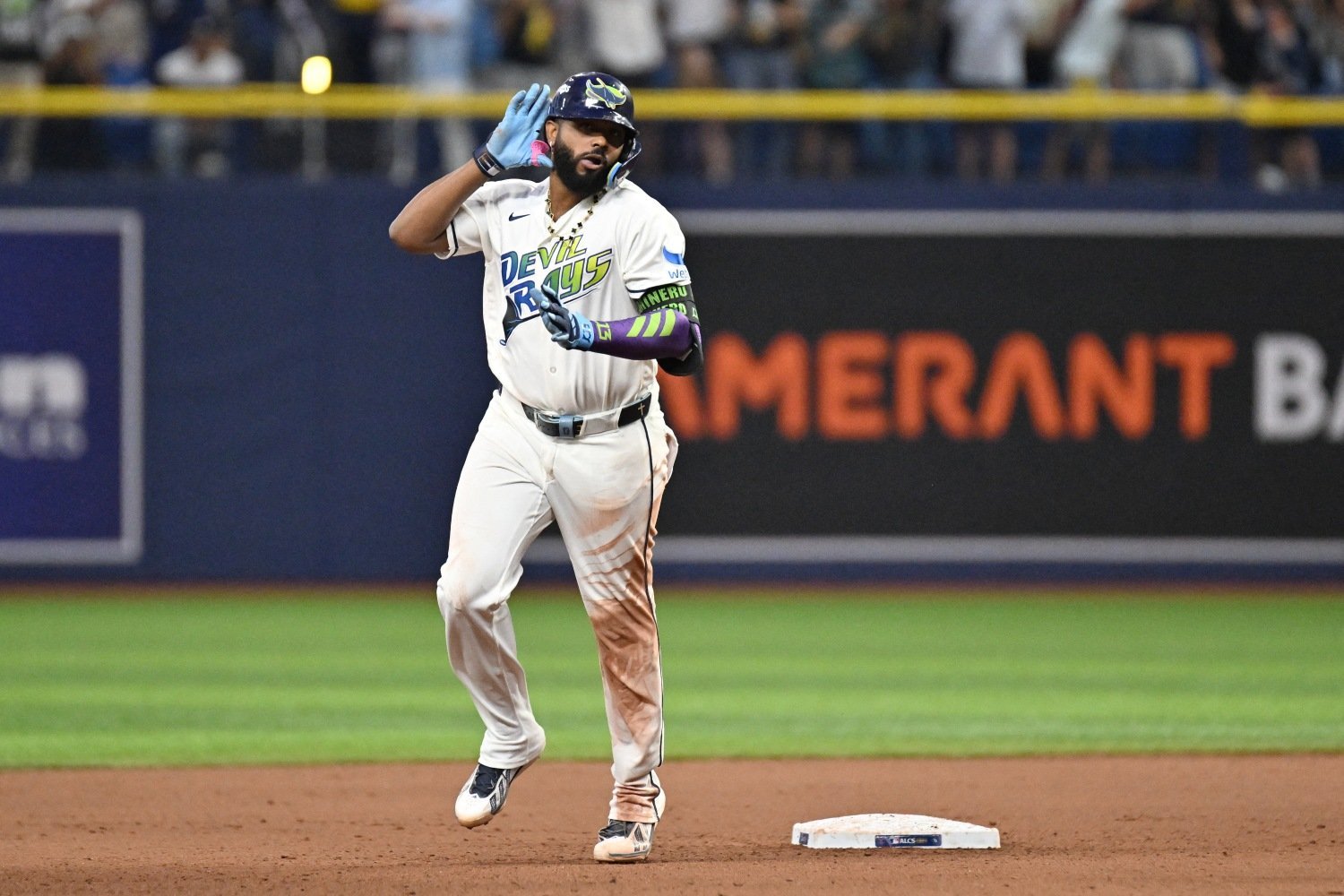 The Rays’ offense is everything the general public thinks the Brewers are, and more. They have perhaps the fastest player in baseball in Chandler Simpson; one of the quickest bats in the league in Yandy Díaz; and Junior Caminero, a young power hitter who crushes fastballs with extreme prejudice and launched 41 home runs in the regular season. There’s also Jonathan Aranda, an underappreciated left-handed hitter who excels at putting the ball in the air, and Victor Mesa Jr., who posted a 155 wRC+ after the trade deadline. There are names in this lineup you might not know well, but don’t mistake obscurity for a lack of firepower. There’s sneaky power beyond Caminero, and an offensive approach that (as Sal Frelick puts it) is happy to “drag you to hell.” The Rays’ run prevention is just as electric. Sublime defense complements a rotation built around Drew Rasmussen, Freddy Peralta and Nick Martinez, creating a unit that will make life difficult for the Brewers if they can’t keep the offense in check. So how, exactly, can Milwaukee silence the most dangerous threats in the Rays’ lineup? Junior Caminero: Can They Keep the Ball Down and Capitalize On His Youth? Caminero’s power has been a defining feature of the Rays’ offense; he averaged roughly one home run every four games during the regular season. It’s difficult to imagine him going through this series without making a few loud connections, but the Brewers may have an opportunity to limit his impact. Caminero was red-hot in the first half of the season, but his 121 wRC+ since the trade deadline suggests he has become a more manageable threat. More importantly, his postseason chase rates have climbed considerably above their regular-season levels. For a hitter who can change a game with one swing, that aggressiveness presents an opportunity for Milwaukee: make him chase, get him into unfavorable counts, and use his eagerness to hunt fastballs against him. The first priority is understanding where Caminero’s power is most dangerous. His relationship with the four-seam fastball is particularly striking: he has posted a 68% hard-hit rate and a 19% barrel rate against the pitch, consistently elevating four-seamers with authority. His 32% ground-ball rate against them explains why they have been such a problem for opposing pitchers. Challenging him with a conventional four-seamer is asking for trouble. However, Caminero has also shown a tendency to chase four-seamers above the strike zone. He can still punish mistakes up there, but pitchers with the kind of fastball characteristics possessed by Jacob Misiorowski and Logan Henderson have a better chance of beating him at the top of the zone. Varying the fastball shape offers another route to limiting his power. Although Caminero hits the ball hard against most pitch types, certain fastball variants can encourage weaker contact and keep the ball on the ground. His 60% ground-ball rate against sinkers is particularly encouraging, although that approach may be more useful for right-handed pitchers than left-handers. By changing his eye level and preventing him from sitting on one fastball shape, Milwaukee can make it harder for Caminero to generate the elevated contact that makes him so dangerous. That's where the Brewers’ left-handed relief options become particularly interesting. Caminero has shown some vulnerability against non-fastballs from left-handed pitchers; the chart below illustrates how opposing pitchers have approached him this season. For Milwaukee’s left-handed relievers, the game plan should be straightforward: minimize hittable fastballs and use secondary pitches to disrupt his timing. Caminero’s weighted on-base average (wOBA) against sinkers and four-seamers is monstrous, but opposing pitchers have found success with cutters that break in on his hands, alongside sliders, curveballs and changeups that catch him out in front. With Caminero showing an increased willingness to chase this postseason, those pitches become even more important. Aaron Ashby and DL Hall have the weapons to attack him away from his preferred fastball locations and force him to prove he can lay off pitches outside the zone. Trevor Megill could also have a role to play. Caminero has struggled against right-handed curveballs this season, posting a .231 wOBA against them, which makes Megill’s knuckle-curve an intriguing weapon. But the same principle applies: the secondary pitch has be tantalizing enough to induce a swing from a guy who's locked in on the fastball. In a high-leverage situation, a misplaced heater could be exactly what the Rays slugger is waiting for. The postseason numbers reinforce the case for this approach. Caminero did begin making better contact toward the end of the ALCS, but his chase rates have climbed sharply compared with the regular season. He's still capable of punishing pitches in the strike zone, and his ability to barrel up a fastball has not disappeared. The concern is what happens when his aggressiveness takes him outside the zone. The Brewers have to force him to do so. A World Series offers the biggest stage of Caminero’s career, and the heightened anticipation could encourage him to force the issue in search of a defining moment. We've seen how postseason pressure can affect even the most talented young hitters. Changeups have generated a 36% put-away rate this postseason, offering a compelling reason for Milwaukee to lean on them either to get ahead or to finish off an overeager bat. Yandy Díaz: One Of The Most Complete Hitters In Baseball As modern leadoff hitters go, you could hardly ask for more than Yandy Díaz. He rarely swings and misses, has one of the flattest swing paths in baseball, and hits the ball as hard as just about anyone. The one notable limitation is his lack of swing-plane tilt, which makes it difficult for him to consistently elevate the ball. Almost everything else in his batted-ball profile is exactly what you would want from a hitter at the top of the lineup. And when Díaz does get the ball in the air, it leaves in a hurry. How do the Brewers attack a hitter who combines elite contact ability with such consistent hard contact? The first avenue is velocity. While Mesa and Caminero have had relatively little trouble turning around fastballs at 97 MPH and above, Díaz has been noticeably less effective against that level of velocity. He's managed just a .233 expected batting average and a -2.9 run value per 100 pitches against these fastballs. He can still hit them hard, but the extra velocity appears to hurry his swing and leave him late on the ball, producing more ground-ball contact. For Milwaukee, that creates an opportunity to use premium velocity not necessarily to generate whiffs, but to limit the quality of Díaz’s contact. Trying to stop Díaz from hitting the ball hard is unlikely to work. He handles a wide range of pitch types effectively and can drive the ball to all fields. He also rarely strikes out, although his desire to put the ball in play can make him susceptible to chasing pitches outside the zone. The Brewers’ best approach may therefore be to lean into their familiar fastball-heavy strategy and focus on the shape and location of their pitches, rather than trying to overpower him outright. Four-seamers and cutters are particularly interesting options. Díaz’s relatively flat swing can make it difficult for him to consistently lift these pitches, creating opportunities for ground balls that Milwaukee’s infield can turn into outs. His results against both left- and right-handed pitching support that approach, with the curveball, four-seamer and cutter producing his lowest wOBA figures among the pitch types shown below. There is, however, an intriguing wrinkle in Díaz’s platoon splits. Despite his effectiveness against pitchers from either side, he has reverse platoon splits, and his batted-ball profile against left-handed pitching is particularly interesting. He barrels the ball less often against southpaws, even though he walks more frequently and hits the ball harder overall against them. That combination makes the matchup a little more complicated than the surface numbers suggest: less frequent barrelled contact does not necessarily mean weaker contact overall. Diaz has also unleashed on left-handed breaking balls this year, and it's one category of pitches that he's been able to lift with regularity. For the Brewers, those splits could influence how they deploy their bullpen when Díaz and Jonathan Aranda come to the plate in close succession. A left-handed reliever may offer an appealing matchup against both hitters, particularly given that Caminero has been effective against pitchers from either side. The goal, though, should remain the same, regardless of who takes the mound: limit Díaz’s ability to elevate the ball, use velocity and fastball movement to encourage ground-ball contact, and trust the defense to turn those opportunities into outs. His post-season performance has mirrored Caminero's thus far. More chase, more swing-and-miss (especially on the four-seam fastball, which pitchers have kept up above the strike zone) and some prodigious chase on breaking pitches as well. The results have been there, but the raw stuff in the Brewers rotation and bullpen may be able to exploit this in a similar way that Gavin Williams and the Guardians staff managed. Jonathan Aranda - The Unheralded Weapon Often sandwiched between Díaz and Caminero in the Rays’ lineup, Aranda can be overshadowed by the bigger names around him. That would be a mistake. He's been one of Tampa Bay’s most productive hitters this postseason, leading the team with a .447 expected wOBA, almost 50% higher than his actual wOBA. Aranda’s strength lies in his ability to elevate at optimal launch angles, generally between 10° and 30°, producing consistent outfield contact despite relatively modest bat speed and some swing-and-miss concerns. Those concerns are real. Aranda struck out more than 24% of the time during the regular season, and that rate has climbed to 27% in the postseason. But when he makes contact, the quality is often excellent. He combines good barrel control with strong exit velocities, while showing a particular aptitude for punishing breaking balls. For opposing pitchers, the challenge is finding a way to exploit his tendency to miss without allowing him to turn a mistake into damaging contact. His regular-season pitch splits explain where that opportunity lies. As the chart above shows, Aranda was particularly effective against sliders, curveballs and sweepers, while his approach suggests a willingness to attack pitches in the strike zone. His swing path is almost the opposite of Díaz’s: where Díaz struggles to consistently elevate the ball, Aranda’s steeper bat path allows him to get underneath pitches in the lower part of the zone, particularly breaking balls. That makes it difficult to beat him simply by working down. However, there is a more exploitable weakness at the top of the strike zone. That's where the Brewers should look to attack. Four-seam fastballs with strong velocity and movement characteristics can challenge Aranda in a part of the zone where his swing is less effective, offering Milwaukee a way to limit his ability to generate the elevated contact that makes him dangerous. When turning to breaking pitches, right-handed pitchers should look to work down and in, changing his eye level after establishing the fastball above the zone. The objective is to prevent Aranda from settling into the lower part of the strike zone, where his swing path allows him to do considerable damage. The difficulty is that the Rays’ lineup rarely allows pitchers to focus on one hitter in isolation. A four-seam-heavy approach might be effective against Aranda, only to leave a pitcher in an uncomfortable matchup against Caminero, whose power against fastballs makes him particularly dangerous if those pitches drift into the heart of the zone. With the three-batter minimum also limiting the Brewers’ ability to make immediate pitching changes, the top of Tampa Bay’s lineup presents a difficult sequence of contrasting strengths and weaknesses. Where one hitter struggles, the next may thrive, forcing Milwaukee to weigh the best matchup across several plate appearances rather than simply attacking each batter individually. There is one particularly interesting option in a high-leverage situation. Aranda posted a .198 wOBA against left-handed four-seam fastballs during the regular season, making that combination an appealing way to attack him with the game on the line. The problem is that Milwaukee does not have an abundance of left-handed relievers who rely primarily on that pitch. Ashby, JoJo Romero and DL Hall, for example, feature sinkers as their primary fastballs, playing into Aranda’s strengths rather than exploiting his weakness. If the Brewers find themselves facing Aranda with the game in the balance, identifying a left-handed pitcher capable of challenging him with an effective four-seamer could be crucial, especially for a team who typically prefers sinkers and cutters from their pitching staff. The Margin for Error is Slim The Rays’ lineup presents a difficult puzzle for the Brewers, because there is no single approach that neatly solves it. A fastball-heavy approach that works against Aranda can leave a pitcher exposed to Caminero, while a strategy designed to induce ground balls from Díaz may not translate as neatly to the hitters around him. The Brewers will need to think beyond individual matchups and consider how each plate appearance shapes the next. Fortunately for Milwaukee, the underlying numbers suggest there are opportunities to exploit. The key will be executing those plans without leaving pitches in locations where these hitters can do their most damaging work. It's a very different challenge than that posed by the Dodgers. The Los Angeles lineup adored four-seam fastballs, whereas the Rays (aside from Caminero) typically feast more on sinkers, which isn't as strong a matchup for this Brewers bullpen—although it may lend itself to their starting pitchers if they can find their best form for the World Series. Covering all of the bases in this match-up is going to be difficult. Against a lineup with such differing profiles from its biggest hitters, the margin for error is slim. But if Milwaukee can consistently attack the right weaknesses while avoiding the strengths that make this offense dangerous, it has a path to keeping the Rays in check when the stakes are highest. View the full article
-
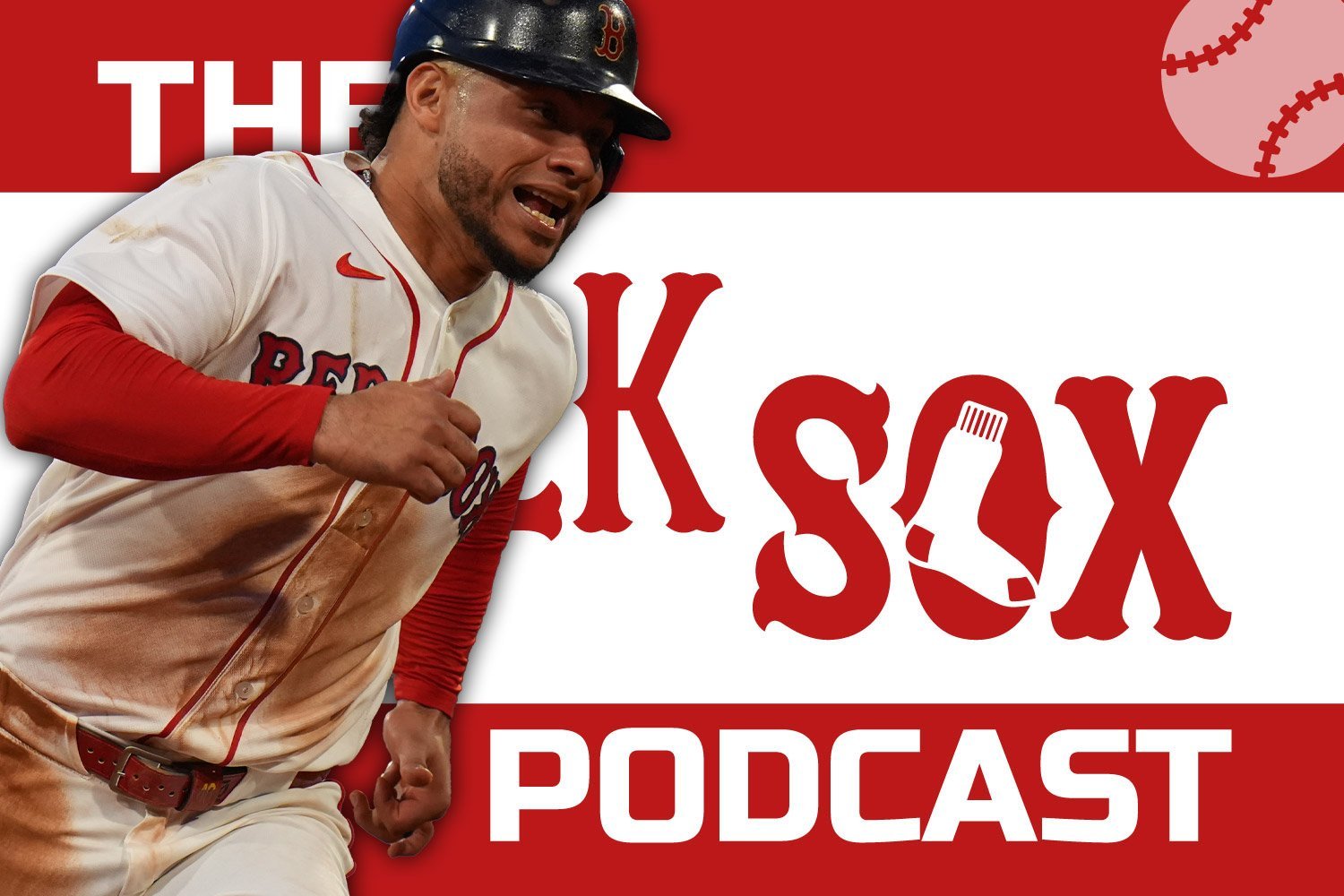 Alex and Maddie are joined by The Athletic's Jen McCaffrey to discuss all things Red Sox! They talk through the perception of the Red Sox's front office across the league and why other teams keep poaching Assistant General Managers from Boston, why Willson Contreras is more than just an on-field leader of the team, if the Sox have a local blindspot for talent, why the timing of Chad Tracy's contract makes sense, and which MLB ballpark has the best press box. Listen on Apple Podcasts: https://podcasts.apple.com/us/podcast/the-talk-sox-podcast/id1783204104 Listen on Spotify: https://open.spotify.com/show/3qPrPXEngu0CxgTmlf0ynm Listen on iHeartRadio: https://www.iheart.com/podcast/263-the-talk-sox-podcast-244591331/ Listen on Pocket Casts: https://pca.st/4tmd121v Watch on YouTube: https://www.youtube.com/@talksox View the full article
-
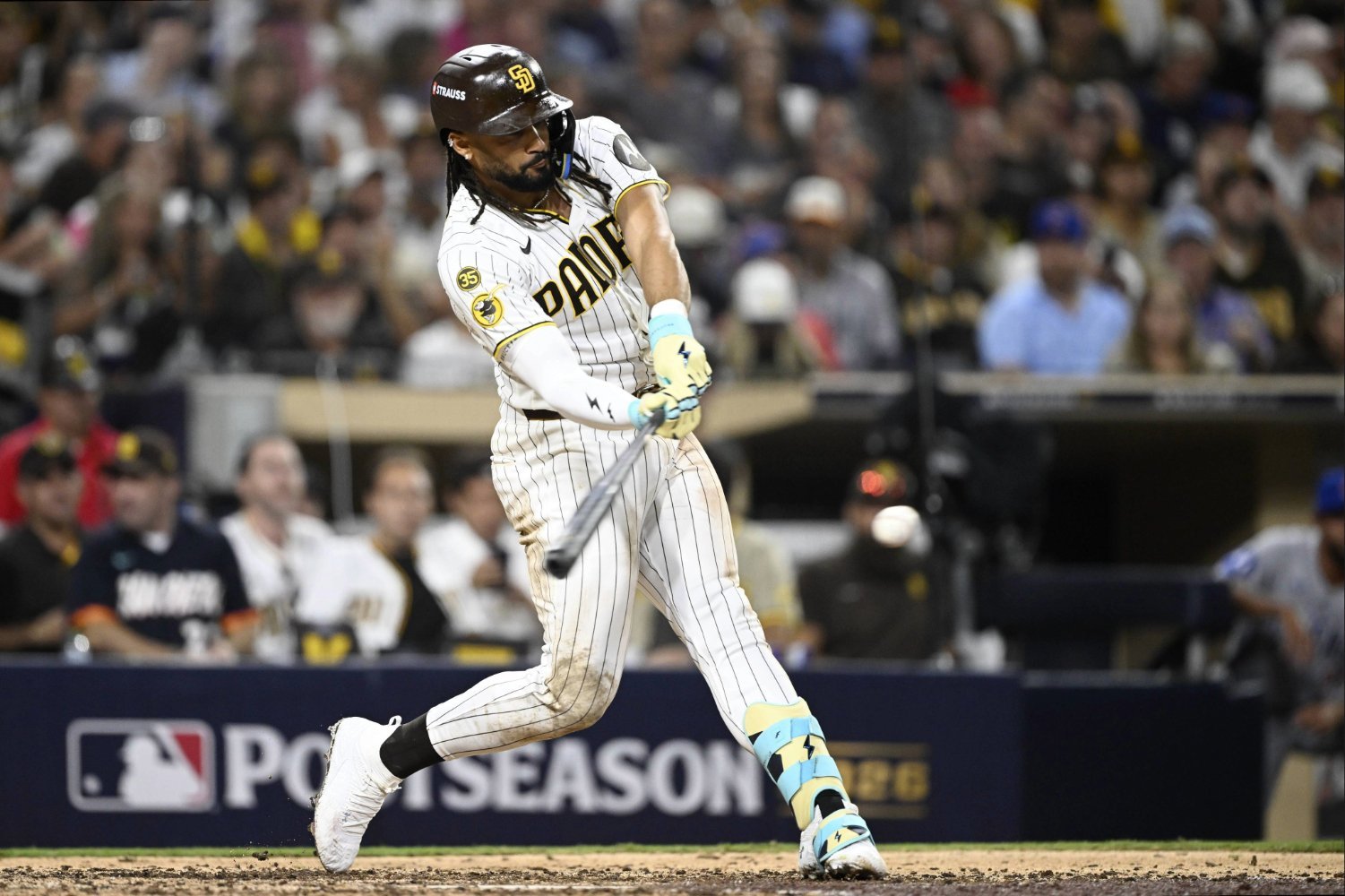 There have been times in the last few years where it looked like Fernando Tatis Jr. was going to get back to the form of the superstar the San Diego Padres had in 2021. You know, before the various injuries and the suspension and the early struggles that come naturally with an extended absence from the sport. But in each of those instances, there was something missing. In 2023, Tatis played in 141 games but was unable to reestablish himself as a power threat. His 2021 ISO, for example, was at .328. By comparison, the first full season of return featured a final figure of just .191. Sure, he hit 25 home runs, but there wasn't the broad impact that the team had grown accustomed to seeing prior to the tumultuous 2021-22 stretch. The following year, Tatis got back to the gaps a bit more in the form of a .216 ISO, but hit fewer homers (21) and didn't offer much on the bases (11 steals) while only appearing in 102 games due to a stress reaction in his right leg. Last season was when we started the stardom again; Tatis went for 25 homers and 32 steals and exceeded six fWAR. At the same time, that WAR figure was somewhat propped up by his defense while his offensive output was pillared by his production in the first and last month of the year, including 15 of his home runs. In between, however, there were some mechanical issues that stifled him at the plate, with the hope being that a strong end to the year would put him on track for the first superstar season we'd seen from him in a half-decade in 2026. That didn't happen... at least at first. Tatis endured the worst power outage of his career at the onset of this past season. He didn't hit a home run until May 30, and he didn't hit another until June 10. His ISO in the first month of the season read just .036 followed by a .069 mark in May. As those first balls sailed over the outfield wall, though, the power began to reemerge. From there, Fernando Tatis Jr. was back. From the start of June through the end of the season, the only position player in all of Major League Baseball who recorded a higher fWAR than Tatis in that stretch was Pete Crow-Armstrong, who spent that entire stretch living on another planet. While not on that level of outlier, Tatis paced the rest of the league in fWAR (4.8) while ranking in the top 10 in homers (24), steals (also 24), and wRC+ (152). What is perhaps most encouraging is that his percentile distribution indicates that it wasn't just a matter of a few months, but an entire season in which he actually mashed: While he needed to finalize whatever mechanical adjustments began during his 2025 slog in order to find more elevation, Tatis really did spend the entire season making quality contact and continuing the improvements in contact ability and strikeout avoidance that we saw him make last season. Combined with his usual brand of exceptional defense, which was forced to the keystone on occasion in 2026, it all worked together to catapult him back into the top of the league ranks for position players. Regardless of how things transpired for the Padres or for other members of their "core," the value of this development cannot be overstated. Simply put, it was the most important thing to happen for this franchise in 2026. A superstar capable of turning in a 25-homer, 38-steal season with only a single homer to speak of in the first two months is absolutely capable of even more. That's the player that this franchise built everything around, and as long as he's in form, this is a team that can continue to remain in playoff contention for years to come. View the full article
-
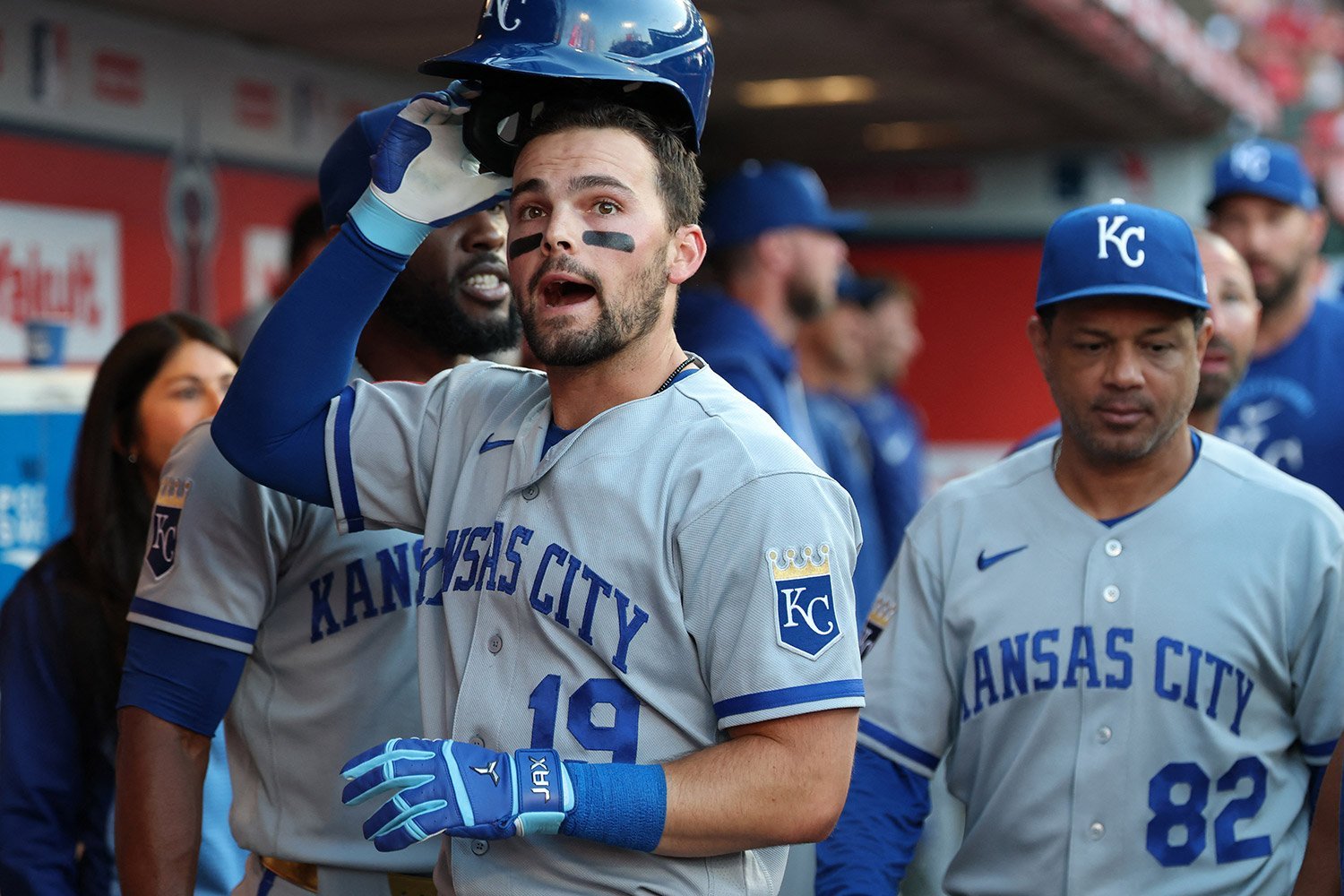 Michael Massey, 2B 2023 Salary: $722,850 2024 Salary: $757,000 2025 Salary: $790,250 2026 Salary: $1,570,000 (First Year of Arbitration) Massey Background Michael Massey was drafted 109th overall by the Royals in the 4th round of the 2019 MLB Draft. Massey has a strong line drive swing that helped propel him through the minor leagues quickly, making his MLB debut in July of 2022. After a strong rookie performance in the back half of the 2022 season, Massey played over 100 games in both 2023 and 2024, showing his power-hitting capabilities with 15 home runs in 2023 and 14 in 2024, along with an above-average OPS+ of 108. Unfortunately, his career hit a bump in the road during the 2025 season, as he was plagued by injuries, including a high ankle sprain, a fractured wrist, and chronic lower back tightness. These issues sidelined him for most of the 2025 season, during which he played only 77 games and posted a slash line of .244/.268/.313 (.581 OPS). Based on that slash line, his power numbers were clearly down from prior years, as he hit only 3 home runs and finished with a wRC+ well below average at 57, according to FanGraphs. In his first year of arbitration, Massey settled with the front office on a $1.57 million salary for the 2026 season, and he made the most of it with a good comeback year. This past season, he had his health back and played in 131 games for the Royals. He logged a career-best slash line of .272/.303/.428 (.731 OPS) with a 2.3 fWAR, proving himself to be a solid everyday player. In addition to his success at the plate, he was also a strong defender for the Royals this past season, finishing the year with +11 Outs Above Average (OAA), which ranked second in the American League. Massey is a finalist for the 2026 American League Gold Glove Award. 2026 Stats: 131 G, 452 PA, .272/.303/.428 (.731), 13 HR, 25 2B, 1 3B, 50 RBI, 4.6 BB%, 16.6 K% Royals Depth At Second Base Nick Loftin: 40-man roster Jonathan India: 40-man roster (If the Royals resign him, unrestricted free agent) Josh Rojas: 40-man roster (If the Royals resign him, unrestricted free agent) Tyler Tolbert: 40-man roster Minor Leagues: Javi Vaz, Peyton Wilson Considering the Royals are highly unlikely to re-sign Jonathan India or Josh Rojas, the primary alternative depth at second base would be Nick Loftin, who can play virtually anywhere as a great utility player. Like Massey, Loftin also showed his elite defensive abilities, finishing the year as an American League Gold Glove finalist (3B). Beyond Loftin, the 40-man roster features another utility option in Tyler Tolbert, who is fully capable of manning second base but is primarily used for his speed on the basepaths and in the outfield. I would not consider Tolbert a true threat to Massey's everyday role at second base. Further down the pipeline, Javier Vaz represents homegrown infield depth; however, he does not possess the major league power that Massey has at the plate. Since the other internal options behind Massey are either versatile bench pieces or unproven prospects, Massey's top spot on the depth chart remains undisputed. Why the Royals Should Offer Him Arbitration Tendering Michael Massey a contract this offseason is a must for the Royals front office. In his second year of arbitration and after an impressive comeback season in 2026, Massey is projected to earn between $3.2 and $3.5 million in 2027. For a team looking to get back into the playoffs and valuing high-quality defensive play, tendering Massey a contract in this range would be a great bargain for Gold Glove talent. Massey does offer above-average offensive production for a traditionally weak-hitting position. Among all American League second basemen in 2026 with 450 or more plate appearances, he finished 3rd in batting average (.272) and 4th in slugging percentage (.428). High-level two-way middle infielders are difficult and expensive to acquire on the open market. Letting a player like Massey walk over a modest $3 million contract would be a step backward for the organization. Why the Royals Should Non-Tender Him While Massey's .272 batting average was productive, his overall offensive value was exactly at league average, posting a wRC+ of 100 this past season. He is also a player who does not draw many walks, as he has posted a BB% of around 5% each year since being called up to the majors. Because he rarely draws walks, his on-base percentage tends to be lower than others'. If he were to experience a regression in contact and batting averages in 2027, his offensive value could drop substantially due to a lack of walks. Massey Prediction This decision should be straightforward for J.J. Picollo and the Royals' front office. Expect the Royals to tender Massey a 2027 contract in the $3.2-$3.5 million range. Massey enters the winter with massive leverage and a secure roster spot. A long-term contract extension may be discussed later on, but for now he should be entering 2027 as the Royals' everyday second baseman. View the full article
-
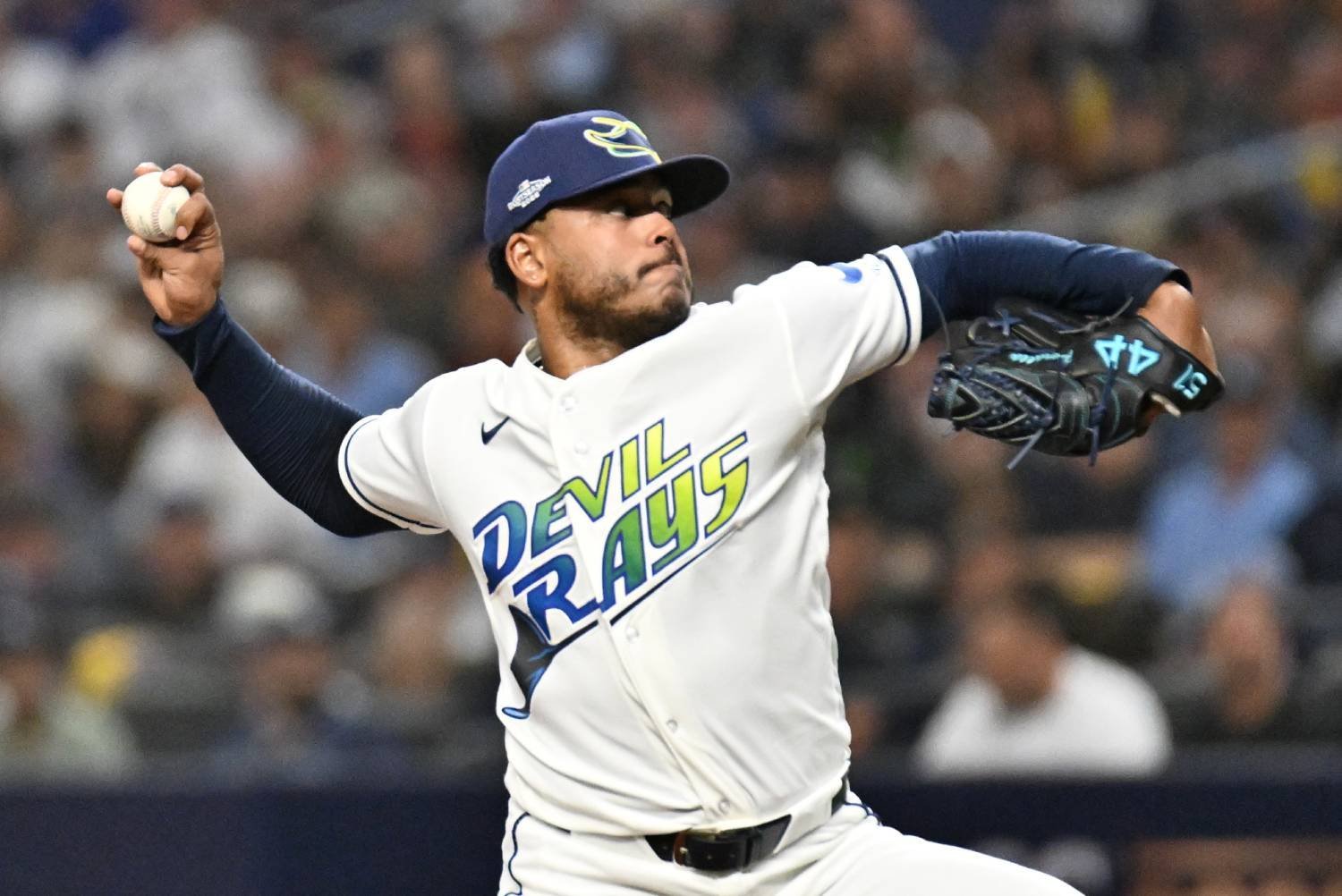 When the Milwaukee Brewers look over the scouting report of the Tampa Bay Rays before the World Series begins Friday, they will see a mirror image of themself. Both teams had the best record in their respective league. Both teams feature an offense that likes to pressure the other team’s defense. Both teams have an excellent No. 1 starting pitcher with solid options after. Both teams have tremendous bullpens. Both teams play defense at a high level. The two carbon copies, considered among the most intelligent front offices in MLB, should be in store to put together an entertaining World Series, where—you know what is coming next—both teams are seeking their first championship. The Rays, who came into existence in 1998, are in their third World Series, having lost in 2008 to the Philadelphia Phillies in five games and in 2020 to the Los Angeles Dodgers in six games. The Brewers, as we all know, are in just their second World Series since joining MLB as the Seattle Pilots in 1969. Their only other trip came in 1982, when the Crew lost to the St. Louis Cardinals in seven games. On Monday, the Rays punched their ticket by beating the Cleveland Guardians 7-3 to take the AL Championship Series in six games. That was four days following the Brewers’ four-game sweep of the two-time reigning World Series champion Dodgers. The franchises are tied together in several ways. Matt Arnold, currently the Crew’s president of baseball operations, came to the Brewers under David Stearns’ new regime after the 2015 season from the Rays, where he was part of a front office with Erik Neander, Tampa Bay’s current POBO. Both worked under Andrew Friedman, who led the Rays’ front office until leaving for the Dodgers in October 2014. Arnold took over the Brewers’ operation after the 2022 season, while Neander was elevated to the top job with the Rays in September 2021. No wonder the two teams have so many similarities. Develop pitching, make shrewd trades, look for the advantages on the edges and wherever else they can find them. There are player connections, too. Most prominently, right-handed starter Freddy Peralta was developed into a top-level pitcher by the Brewers after being acquired from the Seattle Mariners. The Brewers spun Peralta off before this season to the New York Mets in exchange for infielder-center fielder Jett Williams and right-handed starter Brandon Sproat. But Peralta struggled with the Mets to the tune of a 4.99 ERA in 22 starts. The Mets, in the midst of a bad season, shipped Peralta to the Rays at the trade deadline. All the Rays did was fix what ailed Peralta, who then put up a 3.25 ERA in 10 regular season starts. This postseason, he has allowed just two runs over 16⅔ innings. He won twice in the ALCS, including Monday’s clincher, to be named series MVP. Peralta could pitch Saturday's Game 2 of the World Series at American Family Field or Game 3 back at Tropicana Field. There is another former Brewer who plays a prominent role for the Rays. That is right-hander Drew Rasmussen. Remember him? He was part of the return the Rays received when the Brewers acquired shortstop Willy Adames during the 2021 season. The Brewers have a former Ray in first baseman Jake Bauers, the NLCS MVP. Bauers, drafted by the San Diego Padres in 2013, was shipped to the Rays in a massive three-time trade in December 2014 headlined by Trea Turner eventually going to the Washington Nationals. As far as this year’s Rays team, there is one noteworthy difference between them and the Brewers. It is the ability to hit home runs. It isn’t a pronounced difference as the Rays hit 169 in the regular season, ranking 22nd, to the Brewers’ 154, which tied for next-to-last with the Los Angeles Angels. The difference comes in the form of superstar third baseman Junior Caminero, who tied for the fourth-most homers in MLB this season with 42 (also: Yordan Alvarez of the Houston Astros). First baseman Jonathan Aranda and designated hitter Yandy Diaz each had 22. The Brewers also had three players with 20 homers in Bauers (26), Jackson Chourio (25) and Brice Turang (21). While neither team truly relies on the homer, they use speed and contact to manufacture offense. The Rays had a team slash line of .258/.326/.402 for the eighth-best OPS of .728 and the 12th-most runs, while the Brewers had a .258/.341/.403 slash line and the No. 3 OPS of .744 and the second-most runs. Diaz (.293/.359/.446) and Aranda (.274/.358/.434) hold down the top of the batting order while Caminero (.276/.360/.524) anchors the middle. The rest of the Rays’ hitters juggle lineup positions. The biggest wild card of the Rays’ offense is Chandler Simpson. The left fielder is probably the fastest player in MLB and has put together a .306/.333/.356 slash line with no homers. He had 118 bolts (times where his sprint speed was 30 feet per second) in 359 competitive runs and holds the fastest home-to-first average speed of 3.97 seconds, the only one under 4 seconds. The Brewers’ David Hamilton is tied for second in home-to-first speed at 4.04 seconds and has 66 bolts in 132 competitive runs. Rasmussen has blossomed into an ace, going 16-5 with a 2.67 ERA, with a 26.8% strikeout rate to go along with a career-best 4.8% walk rate. The two other starters the Rays feature are right-handers Nick Martinez and Griffin Jax. Martinez is a proven veteran who went 15-6 with a 3.10 ERA and an excellent 3.6% walk rate and 15.1% strikeout rate. Jax, acquired from the Minnesota Twins at last year’s deadline, had been a reliever all his career until converting to a starter during the season. He had a 3.53 ERA with 7.6% walk rate and 25.3% strikeout rate. The bullpen is led by All-Star right-handed closer Bryan Baker, who tied for the MLB lead with 41 saves and hasn’t blown one since May. He had saves in the first six Rays wins of this offseason and finished off Game 6 of the ALCS, a non-save situation in a 7-3 victory. He is as lockdown as they come this season. Other arms to know are right-hander Kevin Kelly (2.44 ERA, 3.9% BB rate, 22.6% K rate), left-hander Cam Booser (1.98 ERA, 3.9%, 29.6%) and right-hander Ian Seymour (3.88 ERA, 6.5%, 28.7%). You might get confused by the names of two Rays. Those would be Taylor Walls and Tyler Wells. Walls is the standout shortstop who hasn’t hit much (.222/.309/.298), while Wells will be an arm you should see a few times in the series. One final important showdown will be between the team mascots. While the Brewers have Bernie Brewer perched in his chalet out in left field, the Rays have DJ Kitty—not even a ray—who started as a viral scoreboard feature and now has a costumed cousin. There are two other Rays mascots. One is Raymond, who has been with the team since its inception. It looks more like a manatee-walrus combo than a manta ray. The other is Stinger, who acts as a guide to the touch tanks for the real rays at Tropicana Field. View the full article
-
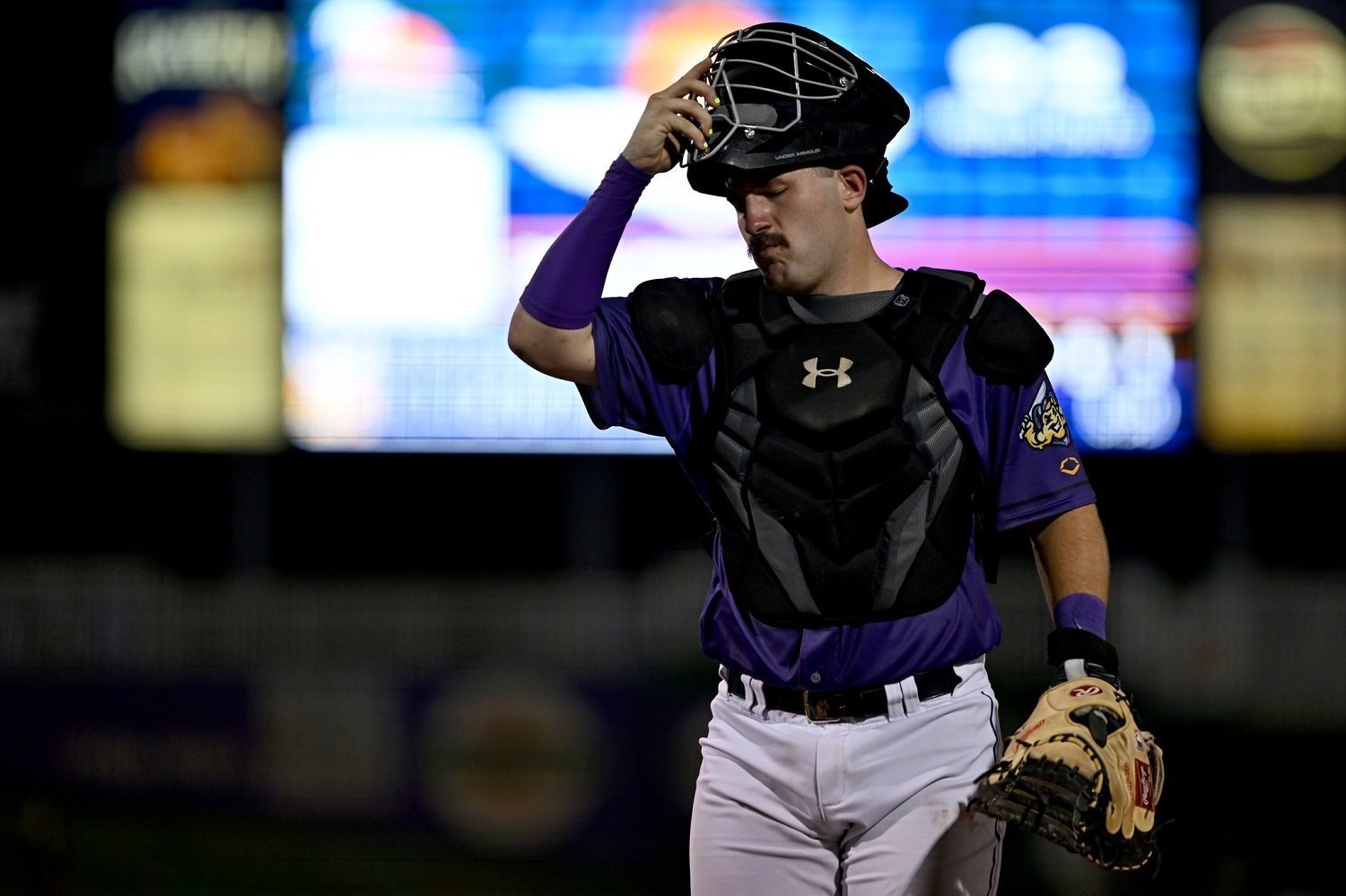 The Twins have experienced their share of unusual prospect stories, but few have been as complicated as Derek Bender's departure. The former sixth-round pick went from a promising college hitter to one of baseball's most controversial minor league players in a matter of months. Allegations that he tipped pitches to opposing hitters led to his release in September 2024 and a season-long suspension from affiliated baseball. That suspension has ended, and Bender has continued playing professionally while attempting to revive his career. He spent the 2025 and 2026 seasons with the Brockton Rox of the independent Frontier League, putting together increasingly impressive offensive numbers. However, his return to affiliated baseball remains an open question. A Promising Prospect's Time in Minnesota Ends The Twins selected Bender with the 188th overall pick in the sixth round of the 2024 MLB Draft. The catcher attended Coastal Carolina University, where he hit .326/.408/.570 with 32 home runs over three seasons. Bender made his professional debut with the Fort Myers Mighty Mussels, Minnesota's Single A affiliate. In 19 games, he hit .200/.273/.333 with two home runs and eight RBI across 60 at bats. His professional career took an unexpected turn during a Florida State League doubleheader against the Lakeland Flying Tigers on September 6, 2024. Reports alleged that Bender told opposing hitters which pitches his teammate, pitcher Ross Dunn, was preparing to throw. The allegations raised questions about Bender's intentions and his relationship with teammates. The Twins released him later that month, ending his time with the organization only a few months after selecting him in the draft. Bender Denies the Allegations In a February 2025 interview with The Athletic, Bender challenged the central accusation against him. Asked directly whether he had given pitches away to opposing hitters, he responded, “No.” He reinforced his position, saying, “And I’ll live with this until the day I die. I never gave pitches away. I never tried to give the opposing team an advantage against my own team.” Bender also acknowledged the physical and mental exhaustion he experienced near the end of the season. He described conversations with teammates about mistakes and the grind of a long season, including the shared feeling that “everybody’s ready to go home.” His comments offered insight into his mindset, but they did not resolve the disagreement over what happened during the doubleheader. Bender maintained that he never intentionally helped opposing hitters, while MLB ultimately disciplined him. MLB's Investigation and Suspension Bender missed the entire 2025 affiliated season after MLB suspended him for his “conduct.” The league did not publicly identify the specific violation that led to the punishment. A league source told The Athletic that MLB had examined a potential violation of Rule 21(a), which covers intentionally losing games. A confirmed violation could have resulted in a lifetime ban. Instead, the league and the MLB Players Association reached an agreement that allowed Bender to return to affiliated baseball after serving a season-long suspension. Investigators also found no evidence of gambling involvement. Because MLB did not publicly announce a formal finding establishing the precise violation, questions remained about the details of the case. The consequences, however, were significant. Bender lost his opportunity to play in an affiliated organization throughout 2025 and needed another place to continue his career. Finding Success in Independent Baseball Bender joined the Brockton Rox of the Frontier League, allowing him to keep playing while serving his suspension from affiliated baseball. He appeared in 92 games during the 2025 season, hitting .282 with 11 home runs and 54 RBI. He improved considerably in 2026, batting .322/.403/.528 with 21 home runs and 17 doubles in 101 games. His .930 OPS represented a significant step forward. Independent league statistics do not guarantee success in affiliated baseball, but Bender has established a larger body of recent work than he had when his time with Minnesota ended. After struggling in a small sample during his professional debut, he has become a productive offensive player in Brockton. An Opportunity to Return In December 2025, MLB confirmed that Bender had completed his discipline and was eligible to sign with any affiliated organization. He also issued an apology through the MLB Players Association, acknowledging the impact of the situation without directly addressing whether he had tipped pitches. “After further reflection, I would like to apologize to the Minnesota Twins organization, my former teammates and coaches, and the fans, for my actions at the conclusion of the 2024 season,” Bender said. He also addressed the personal challenges he had faced, explaining, “Over the past year, I have been working hard, both on and off the field, to become the best player and teammate I can be.” The statement offered a different tone from his earlier comments. Bender continued to deny intentionally giving away pitches while expressing regret about how the end of his Twins tenure unfolded. His reinstatement removed one major obstacle, but it did not guarantee another organization would offer him a contract. Teams must weigh his offensive production against the circumstances surrounding his release and suspension. As a catcher, rebuilding trust with pitchers and teammates would be an important consideration. Bender has expressed a renewed commitment to continuing his career. “This whole situation made me fall out of love with baseball,” he said. “But I realized that I want to win more baseball games in my career. I love baseball. I love winning. I love being a part of a team.” His future now depends on whether an affiliated organization is willing to give him another opportunity. His performance in Brockton has demonstrated offensive potential, but his next step remains uncertain. For the Twins, Bender's story is a reminder of how quickly a promising draft selection can become a complicated organizational decision. Minnesota selected him based on his college production, only to see his tenure end before he had a meaningful opportunity to establish himself in the minor leagues. The allegations were serious, Bender denied them, and MLB imposed a season long suspension without publicly announcing a specific violation. Now eligible to return, Bender has a chance to move forward. Whether a team will give him that opportunity remains to be seen. Will another affiliated organization give Bender a second-chance? Leave a comment and start the discussion. View the full article
-
 The San Diego Padres had no shortage of good stories in 2026, but the best one might've been the return of Ty France to the organization. A Southern California native that attended San Diego State University and was drafted by the Padres in 2017 before being traded to Seattle in 2020 finally returned to the organization on a minor-league deal prior to spring training. The years in between saw France serve as something of a hired gun, having been moved at consecutive trade deadlines in 2024 and 2025 with offensive results that were largely middling and defensive ones that ascended to Gold Glove heights. The Padres' roster construction at the onset of the season ran into a couple of issues that left France's actual status with the team a bit unclear. For one, they had a number of players who fit at least a somewhat similar profile in that they were corner defenders, whether on the infield or outfield. For another, they simply had a large number of bodies overall, with that volume leaving the potential for France's stay with the organization to be short-lived. Nevertheless, an injury to Sung-Mun Song cleared up a spot and France was able to secure a spot courtesy of a strong spring performance. From there, it was all the way up. Not only did the veteran slugger turn in a strong season that represented his best since that first full year in Seattle back in 2021, he was one of the team's most essential players, as many of their core stars worked through various struggles and others fought through injury. All told, France locked down the first base gig previously thought to be Gavin Sheets' for the taking and turned in a .295/.363/.502 line with a career-high 7.4 percent walk rate and 141 wRC+. There was some batted ball fortune in there, as France went for a .342 BABIP, but good things tend to happen when you sit in the 84th percentile in hard-hit rate (47.4 percent). He was also able to elevate that quality contact, with a 40.9 percent groundball rate that served as his lowest over a full season. So, while one might expect a bit of regression his next time out, it may not be all that severe if that gains he made in quality contact hold up. The defense represents another element that made France such a valuable addition to the Padres. His +7 Outs Above Average were second only to Atlanta's Matt Olson among first basemen, with a Fielding Run Value o+10 that doubled last season's total. His first base receiving, now measurable by OAA, checked in at +5 after being at -3 last year. [The only area in which he wasn't above average was on high throws given his shorter stature for a first baseman.] His reliability with the glove helped the Friars ascend from being a below-average defensive team in 2025 to one of the best defensive teams in the sport this season. All of this would seem to make it an easy call as to whether or not Ty France should return for another season in San Diego in 2027. The defensive component alone carries plenty of value, even if the offensive impact was only occasional. But if France is able to turn in another season remotely close to what he did in 2026, then that's the kind of supplementary piece that this team absolutely needs to keep in place. Of course, that has to come at the right price for an organization that—while now under new ownership—seems to be constantly up against some sort of budget threshold. However, I can't imagine that a first baseman that'll be 33 next season will be looking for a contract with many years attached, with the actual value being the far larger sticking point. Regardless, France's 2026 season was, without question, enough to earn him a starting gig in 2027, whether in San Diego or somewhere else. View the full article
-
 The smaller the strike zone gets, the tougher the job of pitching becomes. That's self-evident. At first, though, one might be tempted to think that was solely because throwing strikes is harder (and walks are, therefore, more plentiful) when pitching to a smaller zone. It's not so. There's another layer of danger for a pitcher who has to throw to a smaller zone, consisting of the fact that the hitter also has a smaller zone to cover. That can produce more confident takes and more aggressive swings. It makes it harder to hunt whiffs and harder to limit hard contact. Every lost inch at the edges of the zone increases the importance of raw stuff. To succeed when the zone is small, you have to be able to dominate the batter. Infamously, the 2026 Cubs couldn't do that. Injuries and the shortcomings of their development infrastructure left them with a skeletal pitching staff for much of the season. According to StuffPro, from Baseball Prospectus, the Cubs were 21st in the majors. According to both Stuff+ and PitchingBot, which are published at FanGraphs, they were 24th. The team absolutely must be better in 2027, with specific regard to throwing hard, missing bats and overwhelming batters within that smaller zone. It's the only way they can get where they're trying to go. Here are five pitchers who could be available this winter, who have the stuff to be of help in this regard. Adrian Morejon, LHRP, Free Agent The Cubs have gotten lots of chances to see Morejon's dominance up close. Most recently, he mowed them down over two scoreless innings in Game 2 of the Wild Card Series. That must have been particularly painful for them, because they've long loved and prized Morejon. If the front office had had its druthers, he'd have been pitching for them, instead of against, in each of the last two Octobers. With the very definition of a power sinker (average velocity: 99.5 MPH), Morejon dominated this year. He racked up a career-best 30.4% strikeout rate, while keeping the ball on the ground exceptionally well. He wasn't available at the end of the Padres' loss to the Brewers in the NLDS, with what the team characterized as a "sticky" shoulder, so he heads into free agency with a slight cloud hanging over him, but if he's healthy, the Cubs need to be in on him. He's one of just six pitchers who posted a better StuffPro than Cubs righty Ryan Zeferjahn in 2026. Adding him would give them the scary back end of the bullpen they've lacked for several seasons now. Michael Petersen, RHRP, Marlins A tower of power, Petersen is 6-foot-7 and throws from an overhand slot, making him very different from Daniel Palencia and Zeferjahn. He would introduce a new element into the Cubs' bullpen, despite having a pretty similar arsenal to Palencia's and Zeferjahn's, on the surface. He leans heavily on a four-seam fastball, which hums in at 98 MPH with plus carry at the top of the zone. Off that, he spins a wicked, hard slider. He's a late bloomer, 32 years old but still under long-term team control, so the Marlins won't be motivated sellers. Players like this are always available, though, to a team who decides to buy into what they do well. Petersen fanned 30.1% of the batters he faced in 2026. The Cubs should try to be the team who buys into the raw stuff, at least gauging the asking price the perpetually rebuilding Marlins affix to him. Jacob deGrom, RHSP, Rangers Petersen is the quintessential under-the-radar guy. deGrom practically is the radar, he's so much on it. A trade for him would look about as different from a deal for Petersen as is possible, too. At the last moment, the Rangers tried to make deGrom available at the trade deadline, but he rejected a trade to the Atlanta suburbs. He might be just as stubborn this winter, but the Cubs should swoop in and make an inquiry. There's one guaranteed year left on deGrom's contract, which will pay him $37 million at age 38. That's a big cost, and deGrom has a long injury history to go with the hefty salary. Texas might therefore be ready and willing to move him again this winter, and though he wouldn't come free, his acquisition cost would (however surprising this might sound) be considerably lower than that of Petersen, at least in terms of young players. Even as he hurtles toward 40, deGrom throws 97 and has that buzzsaw of a 91-MPH slider, and he fanned 30.1% of the hitters he saw in 2026. He's worth the risk and the expense. Dustin May, RHSP, Free Agent Anyone following the Brewers this month has seen the downside of May. The upside is there, too, but it's harder to see. He throws 97, with both a four-seamer and a sinker, and he adds three breaking pitches with swing-and-miss potential: hard cutter, sweeper, and curveball. It's a deep arsenal of plus stuff; that's why the Brewers traded for him in August. His command has been the big problem. He gave up some gut-punch homers down the stretch (and one in the NLCS) because of poor sequencing and/or location. He'll be less than a marquee free agent at the end of the World Series, but the raw stuff is still very good. With the right pitching coach, he might be able to put together a full season that looks more like his strong first half of this year, with the Cardinals. AJ Blubaugh, RHP, Astros This is one of those rare chances, in the modern game, to sneak in and take advantage of a club that's truly stupid. Almost every team is getting smarter by the day, but in Houston, they've chosen to turn away from the advances they made in the past. They're an organization in chaos, which might leave Blubaugh available to a smart executive. He was strictly a reliever for the team in 2026, but he racked up 96 innings by often working multiple frames. His sweeper and changeup are both plus-plus pitches, and when working in shortish bursts, he throws 96 MPH. He'd be a candidate for a move back to the starting rotation, but failing that, he'd also be extremely valuable in the role he filled for Houston this year. The Astros are in disarray; the Cubs could benefit from it. One way or another, the Cubs must bring in better arms this winter—not just better, overall, but livelier and more capable of beating hitters inside the zone, regardless of its size. There are plenty of pitchers who could help them do so, but these five stand out as opportunities they must explore. View the full article
-
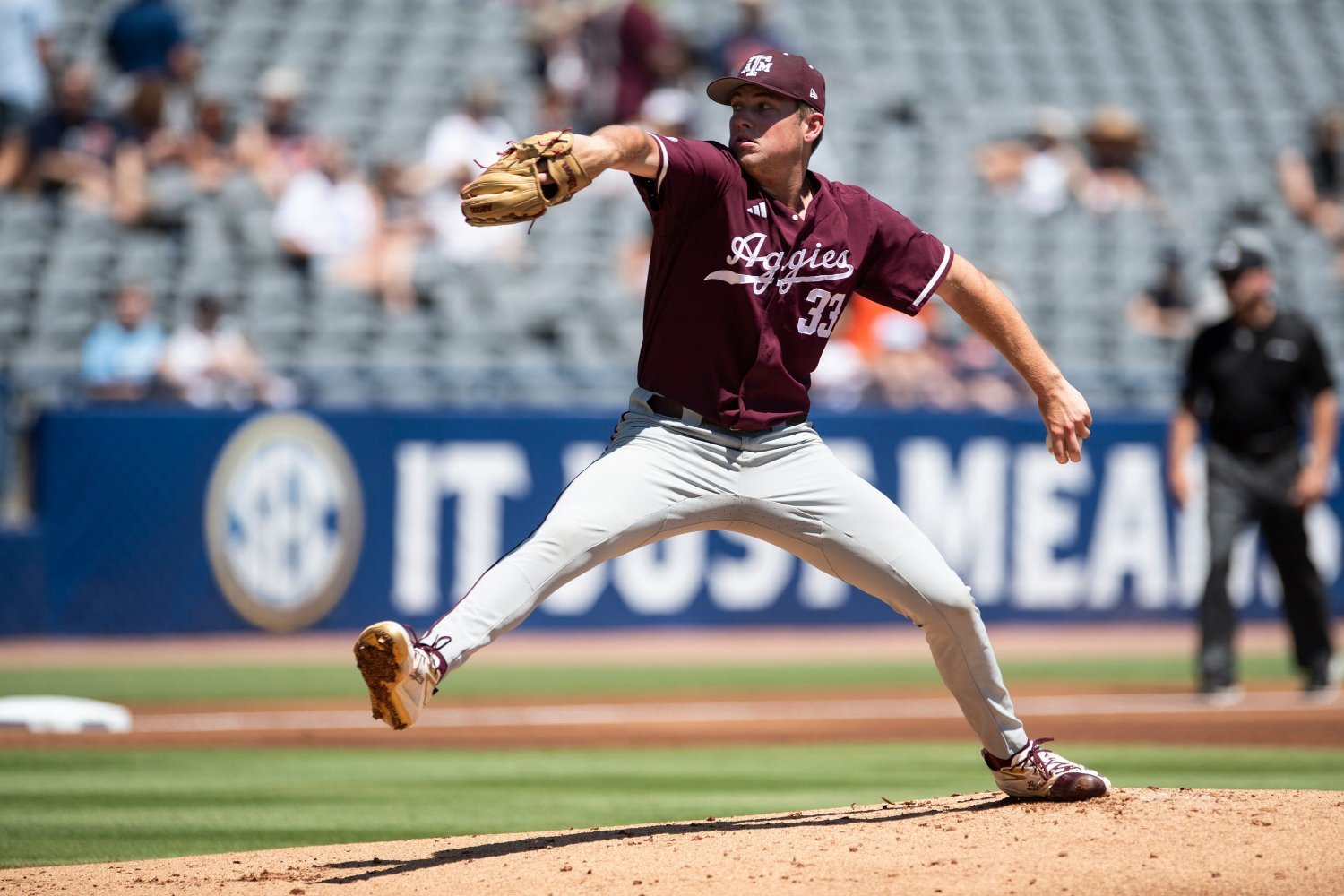 Week two of the Arizona Fall League just concluded, with the Surprise Saguaros improving their record to 8-4. After a slow start in week one, many Royals prospects performed much better in week two, seemingly adjusting to the pitching and Arizona environment. Each week during the AFL season, we will recap the top Royals prospect performances at Royals Keep. If you missed our Week 1 edition, you can find it here. Let's break down the top Royals hitting and pitching standouts from this last week of AFL play. Hitting: Rose, Charles, and Gomez Have Standout Weeks Royals hitters from October 12-19: Brooks Bryan, C: 10 AB, .100/.182/.100, 1 H, 1 RBI, 2 R, 1 BB, 2 K. Zion Rose, OF: 10 AB, .500/.688/.800, 5 H, 5 RBI, 6 R, 4 BB, 4 K, 1 HR, 1 SB. Austin Charles, 3B/SS: .333/.300/.889, 3 H, 5 RBI, 2 R, 0 BB, 4 K, 1 3B, 1 HR. Angeibel Gomez, OF: 7 AB, .286/.444/.571, 2 H, 1 RB, 2 R, 2 BB, 1 K, 1 3B. After a strong week one performance, Bryan cooled off a bit. He went 1-for-10, drew a walk, and scored two runs. However, the other Royals position-player prospects excelled at the plate in Arizona this past week. Rose was the biggest standout this week with five hits and five RBI. He hit his first AFL home run, a grand slam against the Desert Dogs on October 15th. After finally showing power last week, Rose also displayed his trademark plate approach. He struck out four times but walked four times, posting an insane .688 OBP. The former Louisville product is looking increasingly comfortable at the plate, which should set him up for a return to High-A Quad Cities in 2027, with the hope of an early promotion to Double-A. Charles has been one of the most intriguing prospects in the Royals' system, as I talked about in the Quad Cities awards piece on Royals Keep last week. Like Rose, the 22-year-old infielder had a slow start in week one, but he is starting to lock things down at the plate, as shown by a much stronger week two. He hit .333 with three hits, five RBI, a triple, and a home run. Even though his average is .172 and his OPS is .581, Charles is definitely trending in the right direction at the plate. The power and upside remain legitimate. Lastly, after a rough three-strikeout debut, the 17-year-old Gomez is locked in at the plate. In seven at-bats, he hit .286 with a .444 OBP, two hits, two walks, and two runs scored. He also struck out only once, showing how much more comfortable he is at the plate now that the "AFL hype" has died down a bit. The Royals' top international prospect also collected his first extra-base hit on October 14th, a triple. The power is starting to develop, and Gomez seems more willing to let loose with his swing after looking a little nervous in his first couple of games. Doing this despite being younger than most high school seniors is impressive and could signal he's ready for a High-A call-up in 2027, which is wild to think about. Pitching: Lamkin Bounces Back Royals pitchers from October 12-19: Justin Lamkin: 1 G, 4 IP, 2.25 ERA, 0.75 WHIP, 1 H, 1 R, 2 BB, 3 K. Josh Hansell: 2 G, 1.2 IP, 0.00 ERA, 2.40 WHIP, 1 H, 0 R, 3 BB, 4 K. Hiro Wyatt: 1 G, 1.2 IP, 27.00 ERA, 4.80 WHIP, 4 H, 5 R, 4 BB, 2 K. Steven Zobac: 1 G, 1.2 IP, 21.60 ERA, 3.00 WHIP, 1 H, 4 R, 4 BB, 2 K. Frank Mozzicato: 1 G, 0.1 IP, 0.00 ERA, 0.00 WHIP, 0 H, 0 R, 0 BB, 1 K. The Royals' pitchers had a mixed week in the AFL. Hansell, Wyatt, and Zobac all struggled with control, allowing 11 walks in five innings. Hansell avoided damage (no earned runs allowed), while Wyatt and Zobac weren't as fortunate. Together, the two pitchers allowed nine runs. Zobac is the most concerning, especially since he is on the 40-man roster. Although he was coming off an injury the previous season, he had a mediocre campaign in Double-A Northwest Arkansas (4.85 ERA in 42.2 IP). In his last AFL outing against Peoria, he generated whiffs (35.3% whiff rate) but struggled with control and inducing chases. If Zobac doesn't turn things around this fall, he could lose his 40-man roster spot by Spring Training. At 26, he doesn't have much time to show what he can do in the Minors. Moving to the bullpen full-time may be his best bet not only to keep his 40-man roster spot, but also to earn a spot on the active roster at some point in 2027. His three-pitch mix fits better in the bullpen anyways. On a positive note, Lamkin bounced back with a nice performance on October 15th against the Glendale Desert Dogs. After giving up five runs in three innings in his AFL debut, he allowed only one run in four innings in this latest outing. Lamkin did an excellent job of generating whiffs (30.8% whiff rate) and minimizing hard contact (.311 xwOBACON), which was his MO in Quad Cities and Northwest Arkansas last year and at Texas A&M previously. That said, his stuff hasn't profiled well so far this fall, via TJ Stuff+ metrics. In his last outing, he had an 88 TJ Stuff+ overall, including an 81 TJ Stuff+ on his four-seamer, which is EXTREMELY subpar. Some Statcast metrics have been a little off this fall at some ballparks, which could explain Lamkin's lackluster stuff numbers. However, this will be something to watch in 2027, especially as he returns to Double-A Northwest Arkansas. If the stuff remains subpar, he'll likely be closer to a Daniel Lynch IV type than a Cole Ragans type. With the Royals rotation so decimated by injuries last year, it would be nice for Lamkin to profile closer to the latter than the former, especially if they want to return to the postseason in 2027. Adding Lamkin to the Kansas City rotation mix next year would help a team that needs success from its homegrown arms. View the full article
