


DiamondCentric
-
Posts
2,631 -
Joined
-
Last visited
Never
Content Type
Profiles
Forums
Events
News
Tutorials & Help
Major League Baseball Videos
Guides & Resources
Store
Downloads
Gallery
Everything posted by DiamondCentric
-
 Sweet Lou Hennessy and Theo Tollefson go over recent developments surrounding the Minnesota Twins, an explosive incident in the press box and mailbox questions from the audience. Listen using Apple Podcasts: https://podcasts.apple.com/us/podcast/the-twins-off-daily-podcast/id1741266056 Listen using Spotify: https://open.spotify.com/show/4tb78XlurcPTYYSsARdbD7 Listen using iHeartRadio: https://www.iheart.com/podcast/263-the-twins-off-daily-podcas-167548600/ Listen using Pocket Casts: https://pca.st/nvclbt0w Watch on YouTube: https://www.youtube.com/@twinsdaily View the full article
 -
 Randy & Steve are back on to talk questionable vibes after a brutal San Diego Padres road trip. They break down the impact of the week on the wild card, talk about Ethan Salas’ debut, and break down the five worst things that happened to the Padres over the last week. From there, they project what things look like in the week ahead as the Padres continue their pursuit of a wild card spot, but this time from back outside of the picture. Listen on Apple Podcasts: https://podcasts.apple.com/us/podcast/padres-mission-podcast/id1896922834 Listen on Spotify: https://open.spotify.com/show/033xclmydmbLmEp0exYuYz Listen on iHeartRadio: https://www.iheart.com/podcast/1333-padres-mission-podcast-336930560 Watch on YouTube: https://www.youtube.com/@padresmission View the full article
 -
 You can listen by downloading us from: iTunes, Spotify, YouTube, iHeartRadio, Stitcher, GleemanAndTheGeek.com, or by clicking this link, or by watching/listening below. 0:00 Intro 0:48 Twenty-two games left and a 3-3 homestand that wasn't enough 2:02 Playoff odds at nine percent, and the 14-8 finish they'd need 4:30 Resilient, or unable to handle success 6:38 Trying to avoid a third straight second-half collapse under an all-new regime 9:45 Now or never, starting with the White Sox in Chicago 11:47 The early-season bullpen and infield defense that cost them 13:00 Opponents' bad defense has handed the Twins 20-plus runs 14:33 The bad bullpen was the plan, and the plan worked 20:34 Byron Buxton says he needs hip surgery 23:48 When playing through pain stops helping the team 27:08 The 2023 knee surgery that bought Buxton three good years 32:17 First impressions of Walker Jenkins after a week 35:23 Why Culpepper hit right away and Jenkins hasn't 40:26 Why Jenkins is batting ninth, and where he belongs later 42:51 Watching a pennant race and the future at the same time 46:54 The last times the Twins got to do both at once 51:32 Garrett Acton up, Ben Ross up, Kyler Fedko released 55:43 Shelton explains why Emmanuel Rodriguez stayed at Triple-A 1:02:42 Joe Ryan's rehab start, and whether he skips the second one 1:08:51 What the final three weeks do to Joe Ryan's trade value 1:11:03 Connor Prielipp's workload, and stuff that hasn't faded 1:14:45 Andrew Morris opens a game, and his future in the bullpen 1:20:25 Matt Canterino pitches for the first time since 2022 1:26:00 The Angels sell for $4 billion after twenty years of failure 1:26:45 What the Padres sale should teach Tom Pohlad 1:31:40 Are the Twins suddenly worth $2.3 billion? 1:38:35 Back Monday on Patreon View the full article
 -
 Jack is covering the team at Wrigley Field, so Ryan Topp is filling in with Spencer. They discuss Logan Henderson's dominance, Jacob Misiorowksi's mound issues, how the offense is trending heading toward the playoffs, and much more. Apple Podcasts: https://podcasts.apple.com/us/podcast/the-brewer-fanatic-podcast/id1740648724 Spotify: https://open.spotify.com/show/5CY8mWsQayqjDXqw9OT2Td iHeartRadio: https://www.iheart.com/podcast/263-the-brewer-fanatic-podcast-166534588/ Pocket Casts: https://pca.st/ommzz627 Watch On YouTube: https://www.youtube.com/@brewerfanatic View the full article
 -

There’s a Real Path for Vahn Lackey to Reach the Twins Next Season
DiamondCentric posted an article in Twins Daily
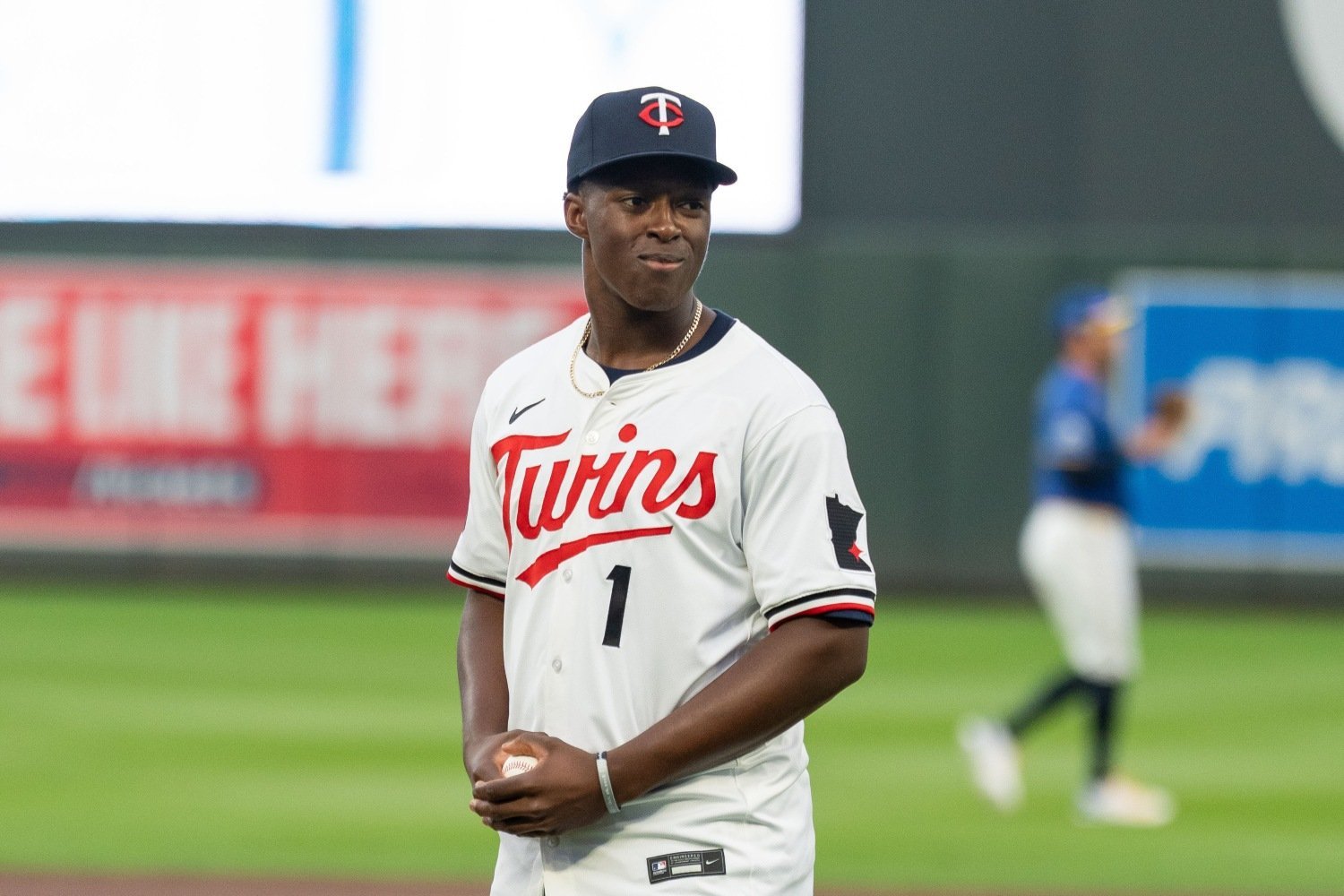 Well-rounded catchers are extremely rare. It’s one thing to find a catcher who can hit; it’s another to find one who’s legit behind the plate. Finding a catcher who can do both at a high level is difficult, because the types of athleticism that each facet of the job requires don't overlap perfectly, and because of the immense amount of practice, development and preparation that each set of skills requires, independent of one another. That’s exactly what the Twins’ first-round draft pick, Vahn Lackey, has the chance to turn into, though. Since making his professional debut in late July, Lackey has done just about everything you could ask a 21-year-old catcher to do. It’s still extremely early, and he’s only played in the lower levels of the minor leagues, but Lackey is turning heads as a pro the same way he did late in his collegiate career. Across his first 103 professional plate appearances, Lackey is hitting just .224. That number doesn’t exactly jump off the page. But once you start digging deeper, it becomes pretty clear why there should be plenty of excitement surrounding what he’s doing. Despite the low batting average, Lackey owns an absurd .417 on-base percentage and a strong .435 slugging average. He’s already logged eight extra-base hits and seven stolen bases, showcasing the impressive athleticism that helped make him such an intriguing prospect. He also has already drawn 23 walks, compared to just 21 strikeouts. The patience and discipline he has shown have been remarkable. Making the jump from college baseball to professional baseball is difficult for just about every player. The pitching is better, and young hitters are forced to adjust quickly. It’s common to see a player's plate discipline lag behind early, as they get used to facing more advanced arms. But not Lackey. His chase rate is sitting at around 20%. If pitchers aren’t going to attack him—which they haven’t done much so far—he isn’t going to give them strikes. Obviously, there is still a long way to go. Lackey will need to continue proving that he can handle better competition as he climbs through the farm system. But based on what we’ve seen so far, it’s hard not to wonder just how quickly the Twins could move him. There’s a chance Vahn Lackey is the Twins’ everyday catcher at this time next year. That might sound a little aggressive. The Twins have been fairly deliberate with some of their top prospects this season, and Lackey has been in pro ball for a month. But there are a couple of reasons why this possibility isn’t completely crazy. For one, odds are pretty good that Ryan Jeffers is currently playing his final month as a Twin. Jeffers is set to become a free agent after this season, and considering the way he's performed, he’s going to get paid. It’s hard to imagine the Twins being the team willing to give him a huge salary over multiple seasons, given the way they approach the catcher spot. They could always give him the qualifying offer, which would be worth roughly $24 million, but it's unlikely. The only scenario where it would make sense is if the Twins knew for a fact that Jeffers was going to turn it down. In that case, Minnesota would receive a compensatory draft pick. If Jeffers leaves, the Twins would still have Victor Caratini and Alex Jackson around next season. That would give them a couple of experienced options behind the plate, but things can change quickly. Injuries and trades happen, and the Twins have also carried three catchers for a good portion of this season. There’s certainly a path for Lackey to force his way into the conversation. Unlike some of the other top prospects in the organization, Lackey could be fast-tracked. The Twins have slow-played some of their best prospects this season, but Lackey is a different profile than guys like Walker Jenkins and Kaelen Culpepper. Culpepper was a first-round pick himself, but he wasn’t selected third overall like Lackey. Historically, it’s fairly common to see players drafted that high out of college move through the minor leagues quickly and make their major-league debut the following season. Jenkins was also a top-five pick, but his situation was obviously different. He was drafted out of high school, so the Twins needed to give him more time to develop before throwing him into the major leagues. Even so, Jenkins is now in the majors at just 21 years old. Lackey will obviously have to continue producing at a high level if a major-league promotion is even going to be in the conversation next season. The Twins aren't going to rush him just because of where he was drafted. His production so far (in however small a sample size) makes the conversation worth having, though. He's already shown the ability to control the strike zone, get on base, hit for extra bases, and steal bases. He brings athleticism you don't see from many players at the position, and if his defensive tools continue developing the way the Twins believe they can, Minnesota could have something special on its hands. It might not be the likeliest outcome. Plenty of things would have to go right over the next year. But I absolutely think there is a world where Vahn Lackey is the Twins’ everyday catcher 12 months from now. After what we’ve seen from him so far, it’s becoming harder and harder not to get excited about that possibility. View the full article
 -
 Chicago Cubs Transactions No Roster Moves Hearn's Bases-Clearing Double Sends Iowa Past Columbus The Iowa Cubs scored all four of their runs over the seventh and eighth innings and beat the Columbus Clippers, 4-2. Iowa finished with eight hits and five walks, and left six runners on base. Starter Evan Taylor gave Iowa 2 2/3 scoreless innings, allowing one hit and one walk while striking out three. Jaxon Wiggins followed with 1 1/3 innings, allowing two hits and one walk with one strikeout. Jayden Murray worked two innings, allowed one hit and one walk, struck out three, and earned the win. Antoine Kelly struck out two and did not allow a hit. Eduarniel Núñez allowed two runs on two hits and struck out two. Ethan Roberts allowed one hit, struck out two, and picked up the save. Iowa pitchers struck out 13. Iowa broke through in the seventh. Chas McCormick walked, Jordan Nwogu singled, and James Triantos was hit by a pitch to load the bases. Ethan Hearn then doubled to center field to score all three runners. The Cubs added a run in the eighth. Owen Ayers walked, McCormick singled, and Kevin Alcántara singled to center field to bring Ayers home for a 4-0 lead. Columbus answered with two runs in the bottom of the eighth on a pair of solo home runs, both charged to Núñez. Hearn led the offense with two hits, a double, and three RBI. McCormick had two hits and a walk, and Nwogu added two hits. Alcántara had a hit, a walk, and an RBI. Iowa Cubs Notable Defense Owen Ayers threw out two runners attempting to steal, one at second base and one at third base. Iowa Cubs Hitting Player AB R H RBI BB K Justin Dean 5 0 0 0 0 1 Owen Miller 4 0 1 0 0 1 Owen Ayers 3 1 0 0 1 1 Chas McCormick 3 1 2 0 1 1 Kevin Alcántara 3 0 1 1 1 0 Jordan Nwogu 4 1 2 0 0 0 James Triantos 2 1 0 0 1 1 Ethan Hearn 4 0 2 3 0 1 Hayden Cantrelle 3 0 0 0 1 2 Iowa Cubs Pitching Player IP H R ER BB K HR Evan Taylor 2 2/3 1 0 0 1 3 0 Jaxon Wiggins 1 1/3 2 0 0 1 1 0 Jayden Murray 2 1 0 0 1 3 0 Antoine Kelly 1 0 0 0 0 2 0 Eduarniel Núñez 1 2 2 2 0 2 2 Ethan Roberts 1 1 0 0 0 2 0 Knoxville's Early Lead Vanishes In Lopsided Loss To Chattanooga The Knoxville Smokies took an early lead, then gave up 13 unanswered runs in a 13-3 loss to the Chattanooga Lookouts. Knoxville collected 11 hits and three doubles, but the Smokies struck out 15 times and left 13 runners on base. Jake Knapp started and threw five scoreless innings, allowing three hits, walking none, and striking out four. Jackson Brockett allowed seven runs, six earned, on two hits and four walks, struck out one, and took the loss. Vince Reilly recorded one out and allowed two runs on one hit and a walk. Yenrri Rojas allowed four runs on three hits, including a home run, over 1 2/3 innings, walking two and striking out one. Kenyi Perez allowed one hit and struck out two. Knoxville built its lead in the third. Miguel Useche and Andy Garriola singled, and after a fly out, Carter Trice doubled to left field to score Useche. Alex Madera singled to score Garriola, and Dom Krupinski singled to score Trice for a 3-0 lead. Chattanooga cut the deficit to 3-2 in the sixth on a pair of ground outs, then sent 13 batters to the plate and scored 10 runs in the seventh to take a 12-3 lead. The Lookouts added another run in the eighth. Garriola finished with three hits. Trice had two hits, a double, and an RBI. Madera had two hits, a walk, and an RBI. Krupinski had a hit and an RBI. Leadoff hitter Kane Kepley doubled and struck out three times. Knoxville Smokies Notable Defense Alex Madera, Karson Simas, and Edgar Alvarez turned a double play in the second inning. Kane Kepley threw in from center field in the third inning to cut down a runner trying to reach second base, with Madera, Alvarez, and Simas handling the relay. Knoxville Smokies Hitting Player AB R H RBI BB K Kane Kepley 5 0 1 0 0 3 Alex Ramírez 4 0 0 0 1 0 Miguel Useche 5 1 1 0 0 3 Andy Garriola 5 1 3 0 0 0 Edgar Alvarez 3 0 1 0 1 1 Colin Hynek 1 0 0 0 0 1 Carter Trice 5 1 2 1 0 1 Alex Madera 4 0 2 1 1 2 Dom Krupinski 3 0 1 1 0 2 Karson Simas 4 0 0 0 0 2 Knoxville Smokies Pitching Player IP H R ER BB K HR Jake Knapp 5 3 0 0 0 4 0 Jackson Brockett 1 2 7 6 4 1 0 Vince Reilly 1/3 1 2 2 1 0 0 Yenrri Rojas 1 2/3 3 4 4 2 1 1 Kenyi Perez 1 1 0 0 0 2 0 Kade Snell's Walk-Off Homer Lifts South Bend Over Cedar Rapids Kade Snell hit a three-run home run in the bottom of the ninth inning to give the South Bend Cubs a 7-5 win over the Cedar Rapids Kernels. South Bend finished with nine hits, three doubles, and a home run, and left three runners on base. Nazier Mulé started and allowed two runs on three hits over 3 1/3 innings, walking six and striking out five. Jackson Kirkpatrick followed with 1 2/3 innings, allowed no hits, walked two, and struck out three. Adam Stone allowed three runs, two earned, on five hits over 2 1/3 innings and struck out three. Ethan Bell allowed one hit over 1 2/3 innings, struck out five, and earned the win. South Bend took the lead in the third. Michael Hallquist doubled, leadoff hitter Leonel Espinoza singled him home, and Alexey Lumpuy doubled to right field to score Espinoza for a 2-1 lead. Cedar Rapids tied the game in the fourth, and South Bend went back in front in the seventh when Michael Gupton singled home Reginald Preciado. The Kernels scored three runs in the eighth to lead 5-3, with the last of those runs coming home on a wild pitch. Logan Poteet's ground out brought South Bend within 5-4. In the ninth, Matt Halbach reached on catcher's interference and Preciado walked. Snell then homered to left field. Halbach finished with two hits and two runs scored. Espinoza had a hit, a walk, an RBI, and two runs scored. Snell had a hit, a home run, and three RBI. Lumpuy, Poteet, and Gupton each had a hit and an RBI. South Bend Cubs Notable Defense South Bend turned two double plays. Michael Hallquist and Brennan Hudson turned the first in the opening inning, and Matt Halbach, Jose Escobar, and Hudson turned another in the third. South Bend was charged with one error, a fielding error by left fielder Michael Gupton in the eighth inning. South Bend Cubs Hitting Player AB R H RBI BB K Leonel Espinoza 3 2 1 1 1 0 Alexey Lumpuy 4 0 1 1 0 2 Logan Poteet 4 0 1 1 0 2 Jose Escobar 4 0 0 0 0 1 Matt Halbach 3 1 2 0 0 0 Brennan Hudson 3 0 0 0 0 2 Josiah Hartshorn 1 0 0 0 0 1 Reginald Preciado 3 2 1 0 1 0 Michael Hallquist 2 1 1 0 1 0 Kade Snell 1 1 1 3 0 0 Michael Gupton 3 0 1 1 0 1 South Bend Cubs Pitching Player IP H R ER BB K HR Nazier Mulé 3 1/3 3 2 2 6 5 0 Jackson Kirkpatrick 1 2/3 0 0 0 2 3 0 Adam Stone 2 1/3 5 3 2 0 3 0 Ethan Bell 1 2/3 1 0 0 0 5 0 Caden Sorrell's Three-Run Homer Carries Myrtle Beach Past Columbia Caden Sorrell hit a three-run home run in the third inning, and the Myrtle Beach Pelicans beat the Columbia Fireflies, 5-1. Myrtle Beach finished with six hits and three walks, and left six runners on base. Kevin Camacho started and allowed one run on six hits over five innings, walking one and striking out six, and he earned the win. Fenuel James allowed one hit and one walk over three scoreless innings, and he struck out four. Jhon Cabral struck out two and did not allow a hit. The Pelicans scored first in the third. Leadoff hitter Juan Tomas singled, Corey Nunez reached on a throwing error, and Sorrell homered to right field for a 3-0 lead. Columbia got a run back in the fourth on a solo home run, the only run Myrtle Beach pitching allowed. Myrtle Beach added a run in the fifth. Nunez doubled, and he scored on a wild pitch during Jhoander Irigoyen's walk for a 4-1 lead. The Pelicans made it 5-1 in the seventh. Jan Luis Reyes and Tomas singled, and Reyes scored on a wild pitch. Tomas finished with two hits and a run scored. Nunez had a double, a hit by pitch, and two runs scored. Sorrell had a hit, a home run, and three RBI. Darlyn De Leon and Reyes each had a hit. Myrtle Beach Pelicans Notable Defense Corey Nunez, Alexis Hernandez, and Ivan Cespedes turned a double play in the second inning. Myrtle Beach Pelicans Hitting Player AB R H RBI BB K Juan Tomas 4 1 2 0 0 0 Corey Nunez 3 2 1 0 0 0 Caden Sorrell 4 1 1 3 0 2 Jhoander Irigoyen 3 0 0 0 1 0 Alexis Hernandez 3 0 0 0 1 1 Derik Alcantara 3 0 0 0 1 1 Darlyn De Leon 4 0 1 0 0 0 Ivan Cespedes 4 0 0 0 0 4 Jan Luis Reyes 3 1 1 0 0 1 Myrtle Beach Pelicans Pitching Player IP H R ER BB K HR Kevin Camacho 5 6 1 1 1 6 1 Fenuel James 3 1 0 0 1 4 0 Jhon Cabral 1 0 0 0 0 2 0 Top-20 Prospect Performance Josiah Hartshorn: 0-for-1, K Cade Townsend: DNP Jaxon Wiggins: 1 1/3 IP, 2 H, 0 R, 1 BB, 1 K Owen Ayers: 0-for-3, BB, K Kane Kepley: 1-for-5, 2B, 3 K Ethan Conrad: DNP Caden Sorrell: 1-for-4, HR, 3 RBI, 2 K Kaleb Wing: DNP Myles Bailey: DNP Brooks Caple: DNP James Triantos: 0-for-2, BB, HBP, K Will Sanders: DNP Juan Cabada: DNP Jostin Florentino: DNP Derniche Valdez: DNP Grant Kipp: DNP Jose Escobar: 0-for-4, K Ariel Armas: DNP Fernando Cruz: DNP Brandon Birdsell: DNP View the full article
 -
Robbie Ray’s Biggest Flaw Could Cost The Padres In October
DiamondCentric posted an article in Padres Mission
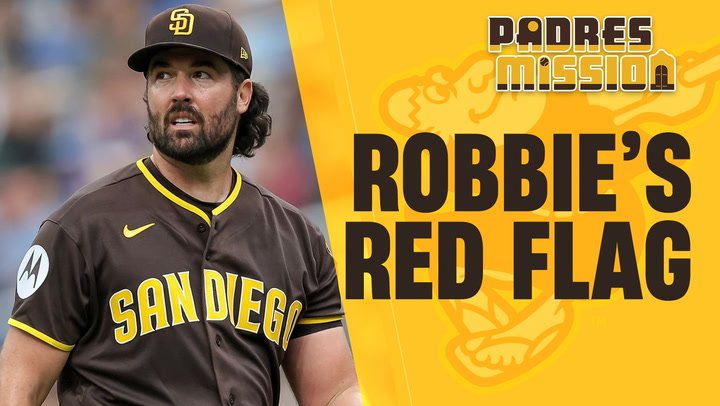 Robbie Ray has pitched well during his first month with the Padres. But his continued struggles with walks could become a much bigger problem if San Diego reaches October. View the full article
 -
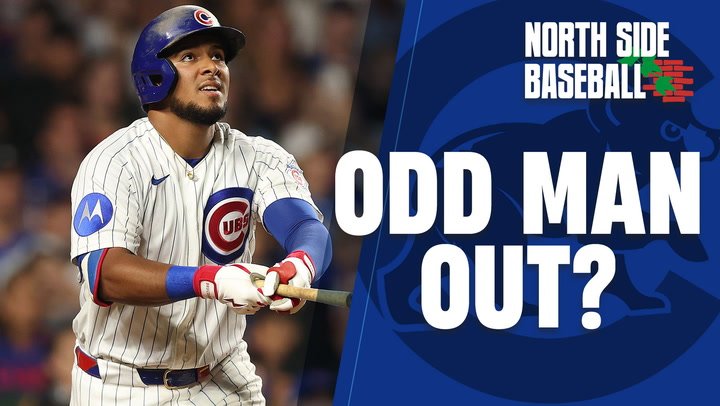 Pedro Ramírez’s rookie season has been a success, but the Cubs’ crowded roster could leave one of their best stories of the year watching from the sidelines in October. View the full article
 -
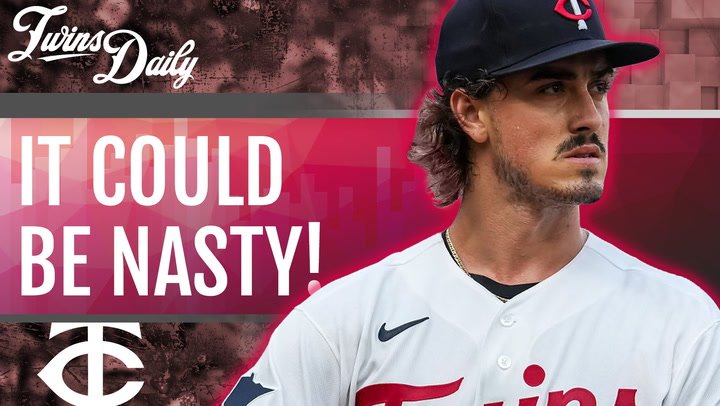 Pablo López, Joe Ryan, Taj Bradley, Mick Abel, Connor Prielipp, and Zebby Matthews give the Twins an incredibly talented group of starting pitchers heading into 2027. If Minnesota can get healthy and its young arms keep developing, this rotation could be one of the best in baseball. View the full article
 -
 Ronald Hernandez is wrapping up a second consecutive full season with High-A Brooklyn. Not what you want if you have major league ambitions. At least Season 2 will have the memory of a huge game at the end of it. Hernandez went 5-for-5 with two home runs and six RBIs as Brooklyn hammered Frederick 12-5 on Thursday. He singled in the first inning, singled home a run in the third, popped a three-run homer in the fifth that put the Cyclones ahead to stay, singled in the seventh and lifted a two-run homer in a five-run eighth. The switch hitter went deep from both sides of the plate. The performance ended an 0-for-19 slump (per Cyclones radio) and bumped up Hernandez's season slash line to .208/.339/.338 (.677 OPS, 83 wRC+), with 10 home runs in 446 plate appearances. The OBP gets a big boost from 68 walks. Hernandez repeated High-A for his third full year in the Mets’ organization and sixth season in pro ball. The 22-year-old Venezuelan was one of two minor leaguers obtained by New York from the Miami Marlins in exchange for reliever David Robertson at the 2023 trade deadline. Infield prospect Marco Vargas was the other player in the deal. He is finishing the year at Double-A Binghamton as a 21-year-old. Elsewhere in the organization: Syracuse scattered nine hits in a 4-0 shutout of Rochester. Tobias Myers picked up a vulture win in relief after coming on for starter Xzavion Curry with two outs in the fifth. Binghamton allowed 21 hits in a 17-5 loss to New Hampshire. JT Benson homered AND pitched a scoreless top of the ninth. Jamari Baylor hit his first home run for the Rumble Ponies. St. Lucie surrendered the lead late and lost to Jupiter 5-3. The Hammerheads scored twice in the seventh to go ahead. Ryan Tayman ended a triple shy of the cycle and drove in two runs. New York Mets Transactions New York Mets designated C Shawn Ross for assignment. New York Mets claimed RHP Cameron Weston off waivers from Baltimore Orioles. New York Mets optioned RHP Cameron Weston to Syracuse Mets. Myers Gets The Big Out As Syracuse Blanks Rochester The right-hander came in with the tying runs on base in a 2-0 game. He got Phillip Glasser to fly out to end the threat. Myers went back out for the sixth and seventh. He allowed a hit, struck out three and walked none. He handed the game over to Chayce McDermott, who got the final six outs. McDermott struck out five as he worked around three hits. Syracuse got those two runs in the second on an infield error and an RBI single by D’Andre Smith. It added a run in the bottom of the fifth on a single by Ryan Clifford, who was playing for the first time since Aug. 16. He had been on the team’s development list. The fourth run came on back-to-back doubles by MJ Melendez and Eric Wagaman in the seventh. Curry allowed five and two walks over 4 2/3 innings. He struck out one. Syracuse Batting Player AB R H RBI BB K D'Andre Smith 3 0 2 1 2 0 Émilien Pitre 5 0 0 0 0 2 Ronny Mauricio 5 0 1 0 0 2 MJ Melendez 4 2 2 0 0 1 Eric Wagaman 3 0 1 1 1 0 Vidal Bruján 3 1 2 0 1 0 Ryan Clifford 2 1 1 1 2 1 Hayden Senger 3 0 1 0 0 0 Zack Short 3 0 0 0 1 1 Syracuse Pitching Player IP H R ER BB K HR Xzavion Curry 4 2/3 5 0 0 2 1 0 Tobias Myers 2 1/3 1 0 0 0 3 0 Chayce McDermott 2 3 0 0 0 5 0 Binghamton Blown Out Early The Ponies trailed 10-0 after 3 1/2 innings as New Hampshire put up five runs each in the third and fourth. Binghamton tried to mount a comeback in the bottom of the fourth. Benson drove in Eli Serrano III with a single and Baylor followed with a three-run homer. Benson hit a solo home run two innings later for Binghamton’s final run, but by that time, the Fisher Cats had put up three-run innings in the fifth and sixth, so it made the score 16-5. New Hampshire closed its scoring with a run in the eighth. Will Watson started and took the loss. He gave up five runs on seven hits over 2 1/3 innings, with a walk and three strikeouts. The Rumble Ponies’ bullpen absorbed the rest of the punishment. Benson allowed only a walk as he registered a game finished. Baylor finished 3-for-4, while Benson went 2-for-4. Binghamton Batting Player AB R H RBI BB K Jefferson Rojas 4 0 0 0 1 0 Jacob Reimer 5 0 1 0 0 2 Chris Suero 4 0 0 0 1 1 Eli Serrano III 4 1 1 0 1 1 John Bay 4 0 1 0 0 1 Corey Collins 4 1 1 0 0 1 JT Benson 4 2 2 2 0 1 Jamari Baylor 4 1 3 3 0 0 Vincent Perozo 3 0 0 0 1 1 Binghamton Pitching Player IP H R ER BB K HR Will Watson 2 1/3 7 5 5 1 3 1 Brendan Girton 1 3 4 4 1 0 1 Dakota Hawkins 1 2/3 6 4 4 0 1 1 Bryce Conley 2 3 3 3 2 2 0 Gabriel Rodriguez 1 2 1 1 1 2 1 JT Benson 1 0 0 0 1 0 0 Hernandez The Hero In Cyclones’ Comeback Brooklyn trailed 5-3 entering the bottom of the fifth. It ended the frame leading 7-5, thanks mostly to Hernandez. Aiden Robbins singled and Trey Snyder walked with one out to set the table for him. Batting right-handed, Hernandez followed with a drive to left-center for a sudden lead. Elwis Mijares, Parker Carlson and Ryan Dollar combined for four scoreless innings out of the bullpen after Joel Diaz and Gregori Louis combined to give up five runs and seven hits. Brooklyn Batting Player AB R H RBI BB K Elian Peña 5 0 0 0 0 2 Aidan Smith 5 1 2 1 0 1 Aiden Robbins 4 1 1 0 1 2 Trey Snyder 3 3 1 1 2 0 Ronald Hernandez 5 3 5 6 0 0 John Spikerman 3 3 1 0 2 1 Colin Houck 5 0 1 1 0 4 Antonio Jimenez 4 0 2 0 1 2 Alejandro Urias 5 1 3 2 0 1 Brooklyn Pitching Player IP H R ER BB K HR Joel Díaz 3 1/3 4 2 2 2 2 0 Gregori Louis 1 2/3 3 3 3 0 1 1 Elwis Mijares 2 1 0 0 1 2 0 Parker Carlson 1 0 0 0 0 2 0 Ryan Dollar 1 1 0 0 1 2 0 Tayman's Big Game Wasted Tayman gave St. Lucie a 1-0 lead in the bottom of the first when he doubled home Jake Ogden, who had walked to lead off the inning. He hit a solo home run in the sixth to put the Mets in front 3-2. In between, Ogden tied the game 2-2 in the third when he stole home on the front end of a double steal with Bruin Agbayani. Jupiter moved in front in the seventh with a double, a wild pitch, walk, a stolen base and a two-run single. It added an insurance run in the ninth on a run-scoring double. Nathan Hall started and went 2 1/3 innings. He was charged with two runs on two hits, walked one and struck out three. Camden Lohman took the loss after allowing Jupiter’s runs in the seventh. St. Lucie Batting Player AB R H RBI BB K Jake Ogden 3 2 1 0 1 1 Bruin Agbayani 4 0 1 0 0 2 Jeremy Rodriguez 1 0 0 0 0 0 Ryan Tayman 4 1 3 2 0 0 Kuhio Aloy 3 0 0 0 1 1 Julio Zayas 4 0 0 0 0 2 Jack Toomey 3 0 1 0 1 2 Reed Stallman 3 0 0 0 1 2 Branny De Oleo 4 0 0 0 0 3 Vladi Gomez 2 0 0 0 2 0 St. Lucie Pitching Player IP H R ER BB K HR Nathan Hall 2 1/3 2 2 2 1 3 0 Owen Woodward 2 2/3 2 0 0 1 3 0 Camden Lohman 1 2/3 4 2 2 2 1 0 Brett Banks 1 1/3 0 0 0 0 0 0 Miguel Mejias 1 2 1 1 0 1 0 Top-20 Prospect Performance Jonah Tong: DNP Jack Wenninger: DNP Elian Peña: 0-for-5, 2 K Mitch Voit: DNP Ryan Clifford: 1-for-2, RBI, 2 BB, K Nick Morabito: MLB Jonathan Santucci: DNP Carson Wiggins: DNP Jacob Reimer: 1-for-5, 2 K Aiden Robbins: 1-for-4, BB, 2 K Randy Guzman: DNP Wandy Asigen: DNP Chris Suero: 0-for-4, BB, K Jefferson Rojas: 0-for-4, BB Will Watson: 2 1/3 IP, 7 H, 5 R, 5 ER, 1 BB, 3 K, HR, L Shane Sdao: DNP Eli Serrano III: 1-for-4, BB, K Antonio Jimenez: 2-for-4, BB, 2 K Émilien Pitre: 0-for-5, 2 K Dylan Ross: DNP View the full article
 -
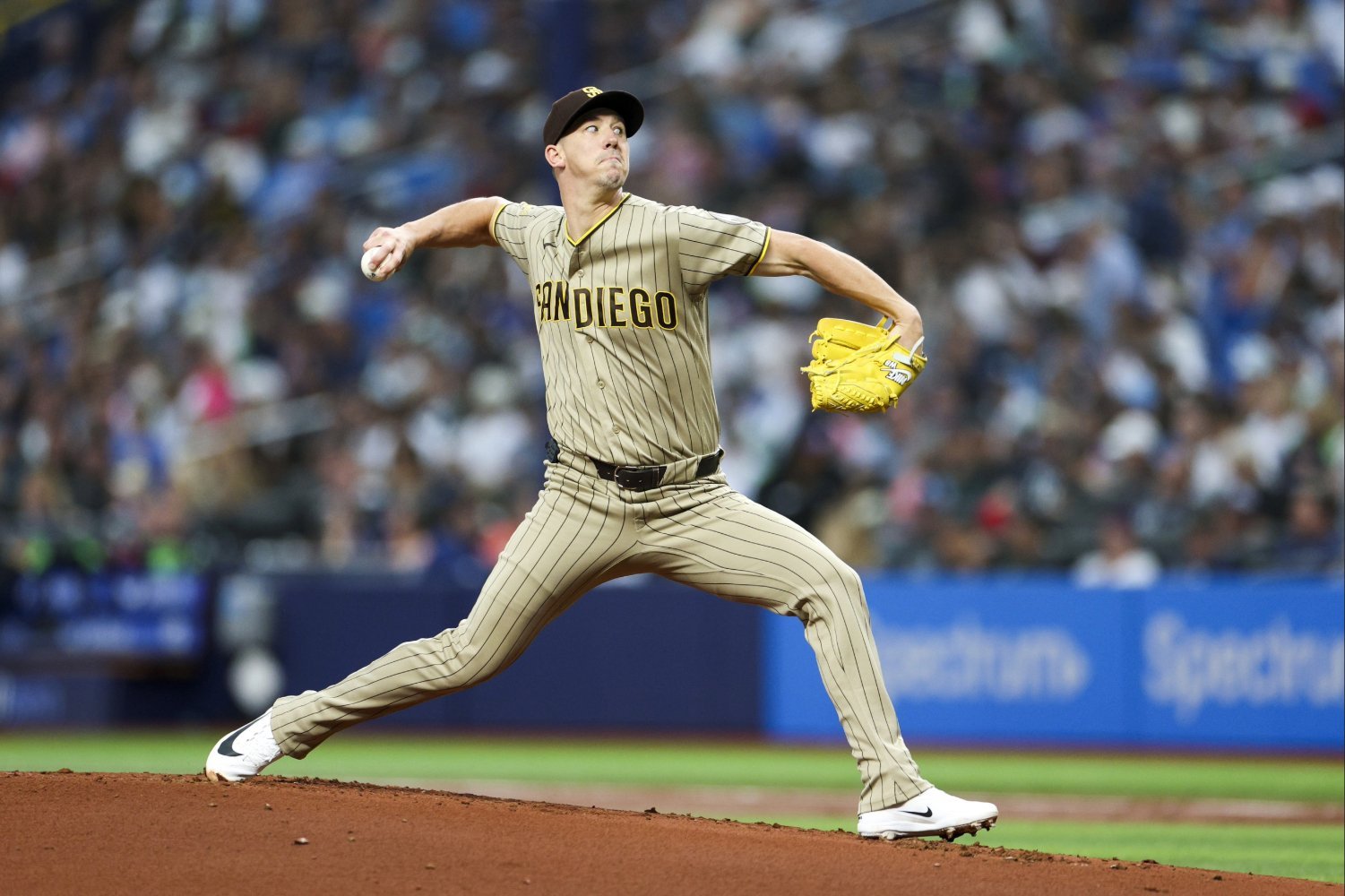 If we stop only at Walker Buehler’s 4.66 ERA, it would be enough to worry us down the stretch, with the San Diego Padres fighting for a Wild Card spot. I don’t like to blame ERA, though, since no statistic can tell the entire story of a pitcher in a single number. Buehler’s case is very interesting. Despite his high ERA, the Padres are 18-9 in games he has started. If we take away his three worst consecutive starts of the entire season, when he allowed 20 runs in 11 innings between July 1 and July 11, his ERA drops to 3.59. At that point, it gets pretty close to the 3.19 ERA he has posted over 42 ⅓ innings in his last eight starts. His inconsistencies in July reflected the problems that have followed the right-hander: his inability to stay ahead in the count and the problems that have affected his fastball and changeup. As the season has progressed, his strategy has changed. In April, the slider was his main weapon under pressure in decisive counts. Then, the sweeper took that place. In June, he switched to the cutter. In July, he went back to the slider after allowing three home runs and a .758 xSLG with the changeup. In August, his knuckle curve took control, while the sinker returned to dominating. In August, hitters posted a 32.7 O-Swing% against Buehler, his highest rate in any month this season. The overall results were encouraging, as he allowed the second-lowest wOBA (.308) of the entire year—only behind the .305 he allowed in June. But nothing summarizes Buehler’s season as a starter this year better than his performances when the pressure is highest. That was one of his best characteristics as a Dodgers pitcher, and it still seems that he can get an extra gear in the biggest moments. I extended the research I started when I wrote about Michael King’s improvements last week, and Buehler’s results really surprised me. I chose only the games involving teams that, if the regular season ended today, would have secured a direct postseason or Wild Card spot in the National League. They would be: the Milwaukee Brewers, Los Angeles Dodgers, Atlanta Braves, Chicago Cubs, Philadelphia Phillies and San Diego Padres. I chose all the games between them and filtered for pitchers who have faced at least 120 batters. There are 16 pitchers who meet that criterion. Take a look at the xFIP leaders: Jacob Misiorowski (MIL), 2.34 Chris Sale (ATL), 2.58 Yoshinobu Yamamoto (LAD), 2.64 Cristopher Sánchez (PHI), 2.71 Kyle Harrison (MIL), 3.44 Michael King (SDP), 3.71 Shota Imanaga (CHC), 3.71 Bryce Elder (ATL), 3.71 Most of the Game 1 postseason starters are in that top eight. There are other pitchers like Zack Wheeler (3.45) and Shane Drohan (3.19) who have been dominant, but they did not qualify because they have not faced enough batters. Now comes the point that will probably surprise you. Among so many top-level pitchers, Buehler also has a place when it comes to pitching under pressure. Name Tm G IP TBF AVG BABIP K-BB% HR/FB ERA xERA xFIP Jacob Misiorowski MIL 7 46 168 .151 .235 30.4% 2.6% 0.78 1.67 2.34 Walker Buehler SDP 7 37 155 .188 .214 7.7% 9.1% 4.38 4.03 4.98 Yoshinobu Yamamoto LAD 7 44 2/3 171 .192 .265 23.4% 10.7% 1.21 2.81 2.64 Chris Sale ATL 8 52 2/3 207 .201 .291 28.5% 4.3% 1.37 2.45 2.58 Michael King SDP 6 36 148 .206 .281 14.9% 0.0% 2.00 3.47 3.71 Justin Wrobleski LAD 7 43 1/3 180 .220 .232 17.2% 17.9% 5.19 4.40 4.08 Kyle Harrison MIL 7 37 2/3 157 .248 .281 22.9% 20.0% 3.82 3.15 3.44 Emmet Sheehan LAD 6 29 2/3 126 .250 .311 20.6% 13.5% 4.25 3.47 3.82 Bryce Elder ATL 5 30 2/3 131 .262 .309 13.0% 10.7% 4.70 4.64 3.71 Shota Imanaga CHC 7 41 171 .267 .306 16.4% 12.2% 4.17 3.83 3.71 Roki Sasaki LAD 7 31 2/3 145 .274 .278 5.5% 21.4% 6.25 6.33 5.33 Colin Rea CHC 7 32 1/3 146 .277 .313 9.6% 13.9% 5.29 5.71 4.48 Griffin Canning SDP 8 27 126 .284 .325 10.3% 16.7% 8.00 4.99 4.87 Aaron Nola PHI 7 35 155 .289 .327 15.5% 21.4% 6.69 4.65 3.86 Cristopher Sánchez PHI 7 42 1/3 187 .290 .368 20.9% 15.6% 3.19 3.75 2.71 Randy Vásquez SDP 7 27 130 .361 .333 0.8% 18.5% 8.00 11.97 6.39 Behind Miz, Buehler is the pitcher with the lowest batting average allowed and, even more strikingly, the lowest BABIP (.214) on the entire list. He has done it so far by leaving the opposition with the lowest line-drive rate (9.8%) in the group while still getting himself into trouble: he trails only Roki Sasaki (12.4 BB%) with a 12.3 BB% rate. Buehler has pitched at this level by solving many difficult situations, but also by getting himself into trouble because of his lack of command. Even so, he has not shied away from the toughest moments, holding the opposition to a .214/.267/.429 line in high-leverage situations. In 18 of his 27 starts, Buehler has completed at least five innings. In 21 instances, he has allowed three or fewer runs. He has been a more reliable arm than his peripheral numbers show. And, most importantly of all, he continues to show that he can compete under pressure. At this point in the season, that ability is what the Padres need most if they want to compete in October. View the full article
 -
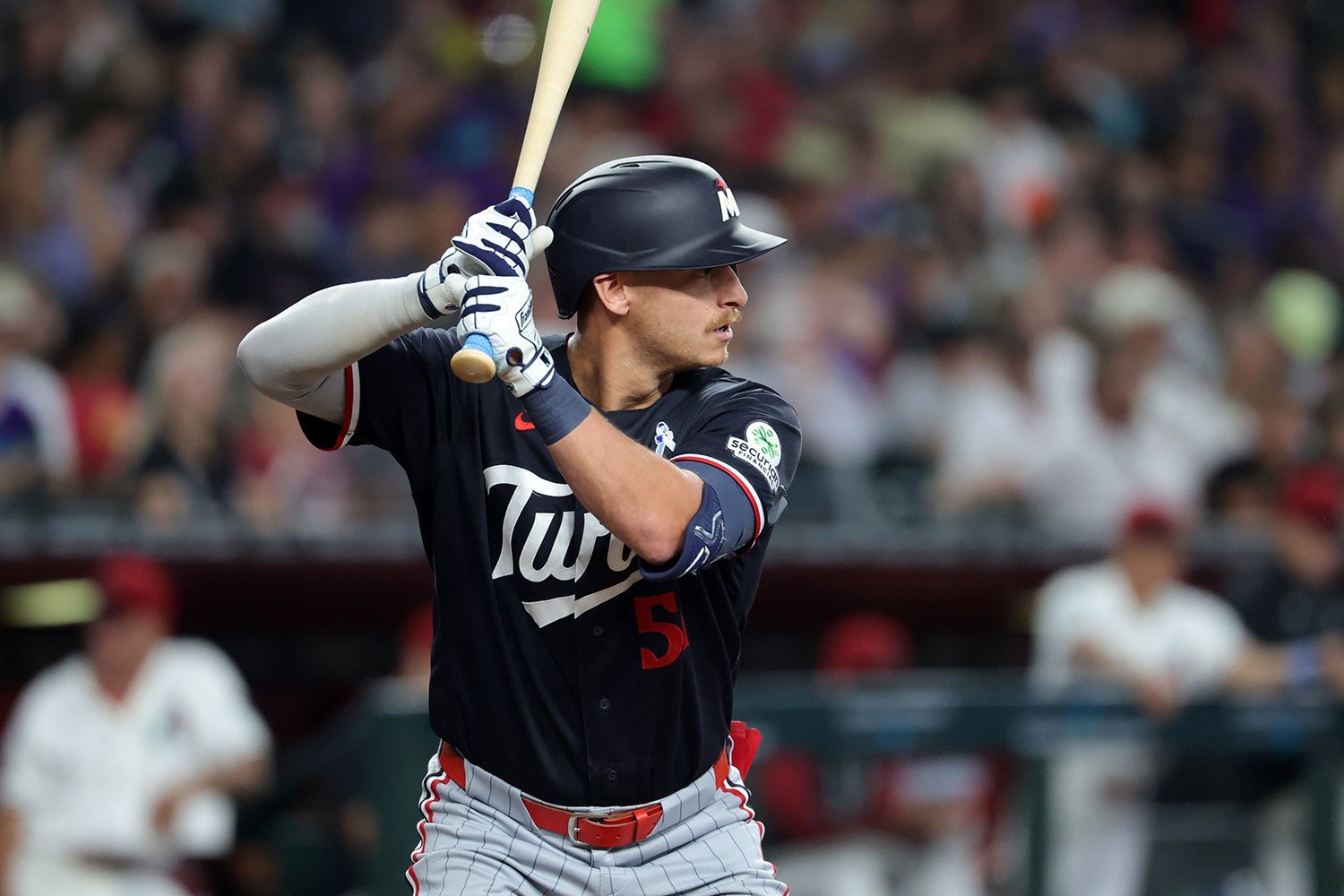 The Twins released OF Kyler Fedko after he was designated for assignment on September 1. Fedko made his major league debut earlier this year, playing in 14 games at the major league level. In those 14 games, he had 16 at-bats but did not get his first major league hit. Fedko did walk twice and has one RBI to go along with eight strikeouts in 19 plate appearances. He played 75 games with Triple-A St. Paul, with a slash line of .274/.362/.545, good for a .908 OPS with 17 home runs and 10 stolen bases. Fedko has signed a minor league deal with the Pittsburgh Pirates and will rehab his torn ACL in Bradenton, where the Pirates' Single-A team plays. View the full article
 -
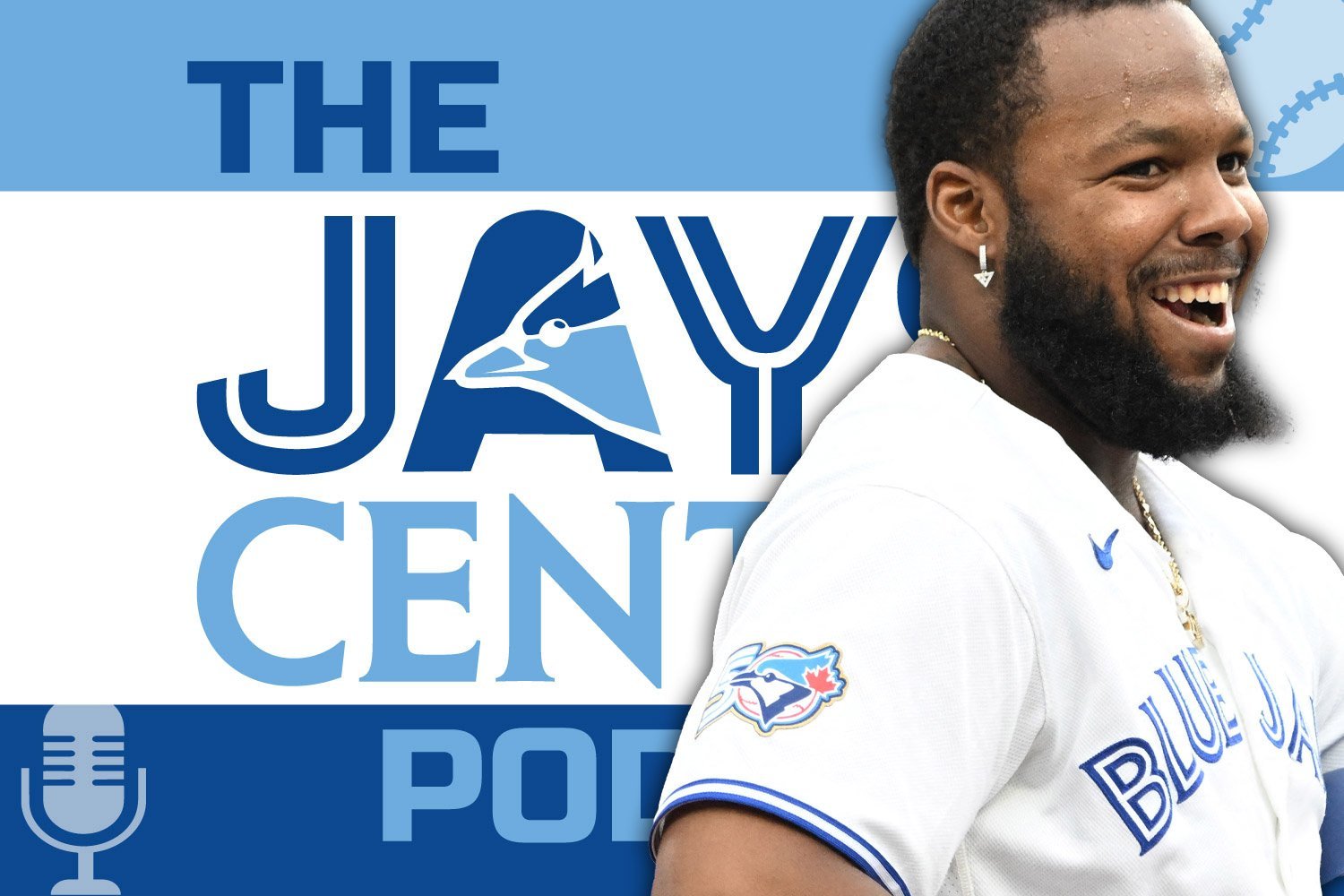 Welcome back, Vladimir Guerrero Jr. We've missed you. Vladimir Guerrero Jr.had his best moment of the season, driving in 5 runs to help the Blue Jays win a CRUCIAL series against the Guardians, pushing them into the driver's seat in the AL Wild Card picture. In this episode, we discuss the differences we've seen from Vlad and some other hitters who have shown us signs of life. Then take a look at Spencer Arrighetti's recent start: are we seeing a new version of Dylan Cease? And what in the world is going on with Ernie Clement? All that and so much more! Please subscribe for more Toronto Blue Jays analysis, news, rumors, prospect coverage, and more. Be sure to visit our website, where you will find the most comprehensive Blue Jays site on the internet. Listen on Apple Podcasts: https://podcasts.apple.com/us/podcast/the-jays-centre-podcast/id1846108462 Listen on Spotify: https://open.spotify.com/show/3Bi7SzfpcqMo5xYWnbCeoL Listen on iHeartRadio: https://www.iheart.com/podcast/263-the-jays-centre-podcast-300304824/ Listen on Pocket Casts: https://pca.st/2qk9wqxd Watch on YouTube: https://www.youtube.com/@jayscentre View the full article
 -
 You might be searching for the words to describe Wednesday's 11-6 loss to Detroit. "Gutpunch" and "kick in the teeth" and potentially even "worst loss of the season," if this site's founder deems it so on his next podcast. That combination of bad loss plus improbable comeback plus blown win in extras really makes it a marvel of sadness. In short, you may have been left speechless. Fortunately, I'm here on Fridays, and I can offer you the following metaphors, figures of speech, and bitter, angry sentences to use at the water cooler or in your group chats. These phrases are free to use for all Twins Daily readers. MAN, THAT LOSS WAS LIKE: An inch-long splinter under your fingernail. Watching a Rob Schneider film. Watching a Rob Schneider film while getting an inch-long splinter under your fingernail. Harassing a lady bartender in front of Jack Reacher, telling Jack Reacher to mind his own business, then finding yourself hurtling through a chair, hardwood table, and plate-glass window. Getting hit in the face with sadness. One of last year's losses. Finding a $100 bill on the street, thinking about how cool it is to find a $100 bill on the street, when all of a sudden the wind blows it out of your hand and it blows right into the hand of Joe Pohlad, who lights it on fire because paper money is for poor people. Watching J.J. McCarthy throw a touch pass. Watching J.J. McCarthy throw a touch pass to Rob Schneider. Listening to Gleeman and Hayes argue about a prospect at a loved one's funeral. Listening to Gleeman and Hayes argue about a prospect at your funeral. They're in the casket with you. It's a tight fit, but this discussion about Emmanuel Rodriguez is not going to wait. Bonnes does an ad read for BetterHelp. Being a godless Chicago White Sox fan before this year. We hope these provide some level of relief in this difficult time. Image license here. View the full article
 -
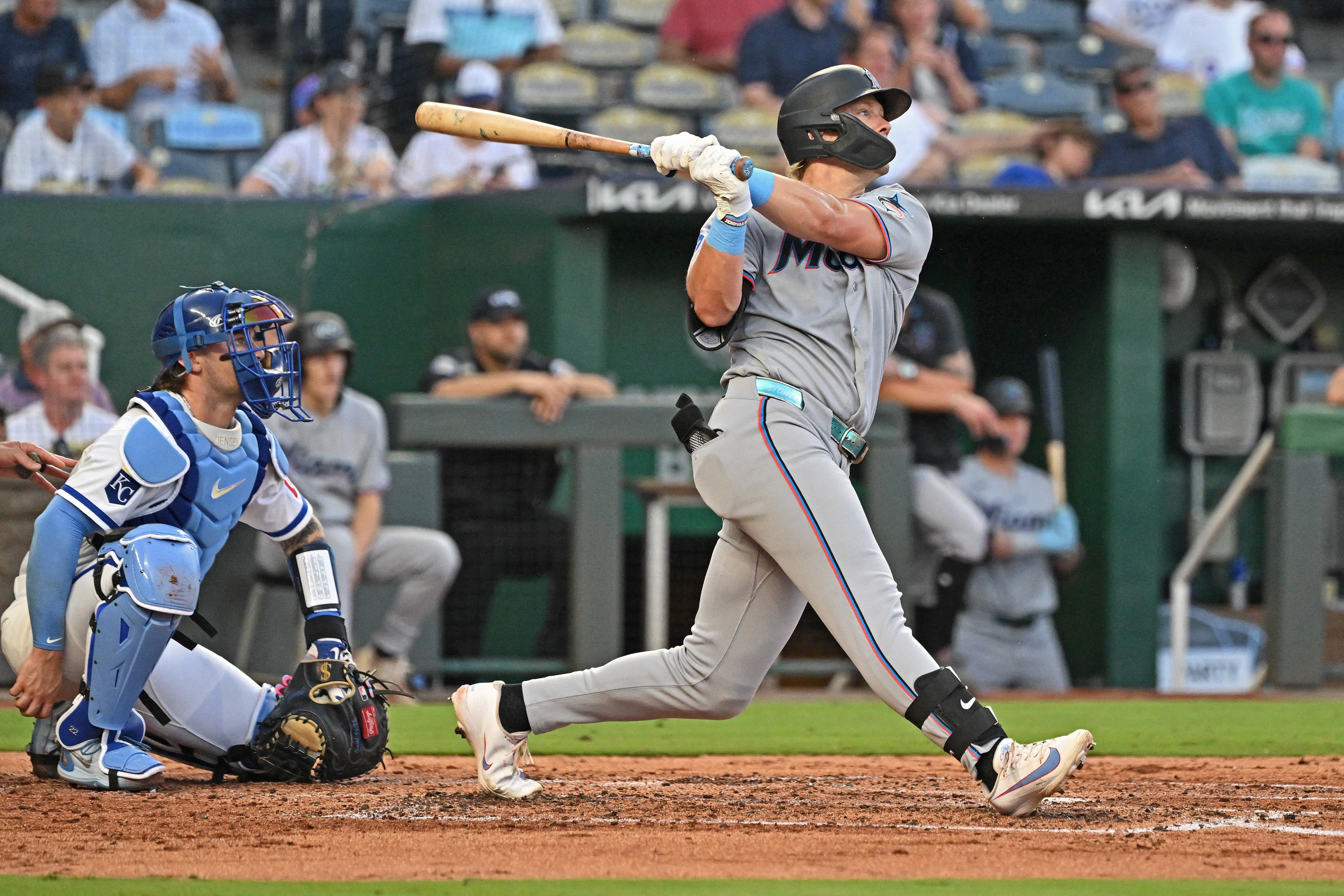 Given where the Marlins stand, dropping any game this late in the season hurts. Losing a crucial contest and your star, though? That's a gut punch. Alas, Clayton McCullough and his club had to live out that exact nightmare scenario on Tuesday night. Minutes before their eventual 7-3 loss at the hands of the Royals, news broke that All-Star and middle of the order bat, Kyle Stowers, was removed due to left hamstring tightness. If you're at all familiar with Stowers' injury history in 2026 especially, such a report is about as troubling as it gets. The 28-year-old missed the first 21 games of the season with a right hamstring strain before doing the same to his left in early August. While a diagnosis foretold a roughly four week absence, Stowers returned less than two weeks later. Now, it's that same left leg that seems to have reared its head again, although the true severity won't be known until sometime before first pitch on Friday. The inciting incident came in the top of the seventh with the Marlins trailing by just a run. On the first pitch he saw, Stowers took a 93 mph fastball from Craig Kimbrel off the foot. While trying to get out of the way, he made an awkward movement with his left leg and looked to be in visible pain while shaking it off. Stowers stayed in the game to run the bases, but exited before heading back out to the field. ZFh2V3FfQjFOTUJnVkFFbGRmRlJGYkFraENXRk1SX0R3QllWVmNOQUFJQUFRQUNWQUFIQUFaUUFBQUJWbFFBQ2daUUJRRU5VMWRXQUFvRQ==.mp4 The cruelest part of it all? Stowers looked especially good running the bases in the aforementioned early part of the ballgame, hustling out of the box to collect a double. Additionally, the veteran appeared to be ramping up at the plate at the perfect time, collecting four hits—including two home runs—and three RBI. If Stowers were to see IL time, he wouldn't be eligible to return until halfway through the month, a few days after his right-side infield mate, Xavier Edwards. Seeing the hypothetical reps at first base in his absence would likely be Griffin Conine and the newly recalled Deyvison De Los Santos against southpaws. As for the game itself, Miami wasted no time getting on the board. Three runs in four innings—including long balls from Heriberto Hernández and Agustín Ramírez—had McCullough's bunch sitting pretty against All-Star Michael Wacha. To their dismay, the six hits they collected early would be all they could muster against a settled in Wacha and three Royal relievers the rest of the way. Five unanswered runs from the home team, spearheaded by a three-RBI night from the scorching hot Carter Jensen, were more than enough to salvage the finale. Finishing what seemed to be a favorable road trip 3-4 and returning to three games out of the final Wild Card spot in the National League, Miami returns home for a true test as they welcome the 79-62 Cubs. Janson Junk faces off against Shota Imanaga in Friday night's opener at 7:10 pm ET. View the full article
 -
Brice Turang is in a Tailspin. Can He Get Right By October?
DiamondCentric posted an article in Brewer Fanatic
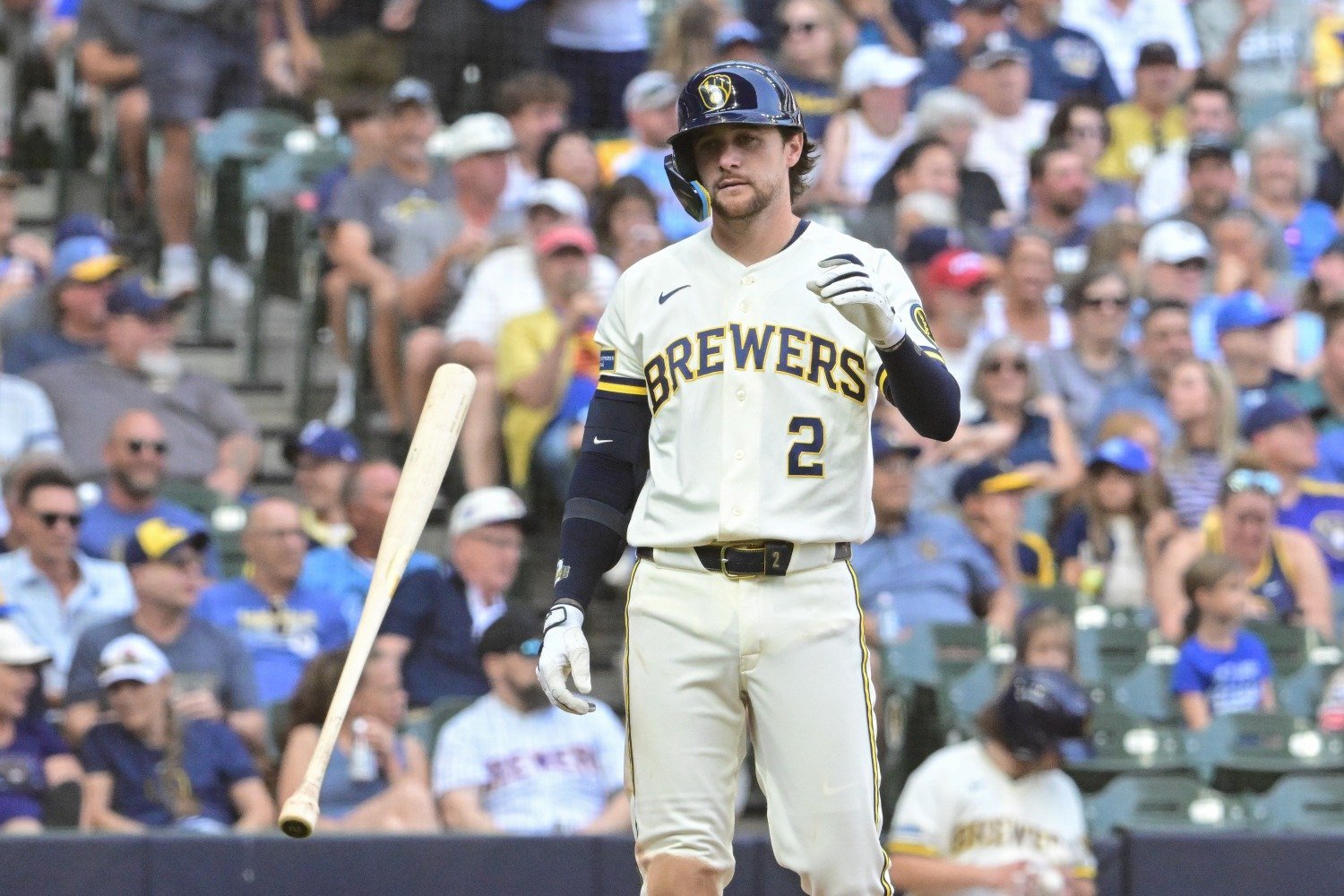 There have been long stretches of this season in which Brice Turang looked like a credible MVP candidate. He had a .922 OPS through the midpoint of May. Thereafter, he batted .225/.302/.400 for a month and a half, but he rebounded with a thunderous .911 OPS in July. Combine that production (even considering the valley between the two peaks) with his defense at second base, and it was hard to find five players doing more for their teams, in either league. Since the beginning of August, though, he hasn't been that guy at all. Turang went 0-for-4 with three strikeouts in a series-ending loss to the Cubs in Chicago Thursday night, bringing his line since August 1 down to .174/.262/.239. In 124 plate appearances over that span, he's struck out 29.8% of the time, and there's been no power to compensate for all those whiffs. He's a mess up there. The reason isn't some grand mystery, of course. Turang is playing hurt. He missed four games in the middle of last month with a knee injury that the team acknowledges has been nagging him for some time. Manager Pat Murphy said the problem didn't look unduly concerning on an MRI scan, and that it can be fixed via rest, but the few games Turang took off certainly weren't enough to fix his problems. No one is 100% healthy come September, but the Crew's star second baseman is dealing with more than fatigue and soreness. It's not one of the first body parts you think of as compromising a player's operation, but in hitting, the back knee is important. When a batter engages their load and begins their stride, the back leg has to provide stability and dynamism at the same time. The back hip powers the swing by initiating the rotation that gives every cut its speed and danger, but that can only happen if the whole back leg is in a position to move powerfully and quickly. It becomes responsible for power and balance—for rotation and direction. If it's compromised, you're going to be in a world of hurt as a hitter. Here's Turang hitting a home run to center field on a breaking ball low and away, from earlier this season. Watch his back leg work. Watch the way it kicks out behind him as part of the swing, helping him stay through the ball and extend to get the barrel to it, surviving the pull toward pulling off the ball because it's coming in slower than if this had been a fastball. eHl3cURfWGw0TUFRPT1fRHdsVkFsY0FCUVlBWFFNQkF3QUhVQThFQUFBTldsa0FCMVVNQmdBRUJ3WldCd01B.mp4 Now, compare that to this swing at a similar pitch, from the Little League Classic last month. The same kick is there, in the end, but it's not as certain or as aggressive; his back side isn't providing the same drive or keeping him through the ball as well. He's just a bit early and a bit inside the ball, resulting in a lazy flyout. He pulled off it, and although you wouldn't initially guess so, a part of the reason lies in the balkiness of his back knee. It's harder to stay in your back leg as long, or to avoid crashing forward or spinning off the ball, if that leg isn't fully healthy. M3k2ampfV0ZRVkV3dEdEUT09X0F3TlJVRlVHWGxRQUNGRUNVQUFBQWdVRkFGZ0ZVVmNBQVZZRVZBRUVDUVJYVXdJQw==.mp4 This affects him on other types of pitches, too. Here are two side-by-side comparisons of Turang as an opponent delivered a four-seam fastball up and away. In the shots on the left, he's about to line a double down the left-field line. In the ones on the right, he's about to swing under the ball for strike three. If you're thinking that Turang is a bit later getting his foot down on the right, you're correct. His leg kick has a bit more of a hitch and hover in it right now than it did early in the season, when he was very smooth up and down with the front foot. That's the big culprit in messing up his address of this type of pitch lately; he's late from the very start. You can also see his front shoulder leaking open a hair sooner and his hands coming forward earlier, on the right. Those flaws, too, bear some relationship to the knee issue, but let's not overly excuse Turang here. Another part of the blame for that mistake falls on Turang himself; he's gotten worse at staying back and trusting his hands recently. That shows up on video, but it also shows up in his plate discipline. Here's his rolling average for both weighted on-base average (wOBA, a holistic measurement of offensive efficacy) and out-of-zone swing rate (O-Swing%) for the season. When he's maintained a tight strike zone, he's performed very well. When he's gotten anxious or struggled with pitch recognition, he's gone in the tank. It doesn't take a knee injury to explain that; most hitters go through streaks and slumps because of swing decisions. Lately, Turang's have been bad, so he's slumping, rather than streaking. It's reassuring to see the way those two lines move with respect to one another, in a way. It tells us that if Turang gets back to "ball-striking it well," as Murphy would say, he'll regain much of his lost production. That phrase is confusing; Murphy isn't talking about striking the ball. He means distinguishing balls from strikes. Since I brought it up, though, let's talk about striking the ball, too. We've already seen evidence, above, that Turang is striking it less cleanly of late, specifically because of his injury. Let's see how his wOBA moves in concert with his hard-hit rate. Yikes. This is less encouraging, because Turang's hard-hit rate has trended in one direction pretty much all year. He came out of the gates on a well-documented power binge, seeming to have carried over what clicked for him late in 2025, but ever since, he's steadily lost the ability to drive the ball. His bat speed has ticked down slightly; the frequency with which he squares the ball up (and the extent to which he does so, on average) has ticked down even more. That could just be the result of an unhappy coincidence: Turang is hurt, and he's making bad swing decisions. Put those two things together, and you get less damaging contact. But there's one more thing to consider, which can be seen as cause, effect, or (most likely) some of each in this accursed equation: timing. Here's the visual profile of Turang's timing against fastballs in each month of the season, save September. The key takeaway comes from the middle panel. In the first four months of the season, Turang had one mode for timing against the fastball; the curve that showed the distribution of his timings against individual heaters rose and fell on each side of one peak. In August, however, his distribution was bimodal, meaning there were two peaks. One is more precisely on time than the peaks for the other months, which sounds good, but isn't. (More on that in a minute.) The other is later on the ball than the peaks for the other months, which is as bad as it sounds. The smaller, left-hand peak is heaters on which Turang was quite late and was likely to whiff. That one on the right is also trouble, though, for two reasons. First, it tells us that Turang is no longer looking for and reacting to the fastball with conviction. Instead, he's sometimes cheating toward the heater, and therefore getting to it with his barrel farther around than it is when he swings best and most freely. Second, Turang's swing is naturally oriented to the opposite field, as much as that of any hitter in the majors. When he's right, he's going to stay in that later part of the "on-time" area on the chart above. If he's getting the barrel truly square to heaters regularly, it not only signals less coverage of the pitcher's other pitchers, but tells us he's probably not barreling the ball. Here's the same set of images for breaking balls, month by month. Much, much more often than earlier in the season, Turang is running out of bat for the breaking ball lately. That goes back to what we looked at with the lower-half mechanics above. He's not able to sustain a full-speed swing without pulling off the ball, or flattening out his swing. As a result, he's either pulling off the ball and flailing at a pitch that eludes the end of his bat or swinging right over that pitch, unable to dip the barrel smartly into it. Hitting people talk about hitters being caught in-between all the time. Turang is a classic case right now. He's been early on breaking and offspeed stuff far, far more often recently than earlier in the year. He's trying to time up the fastball and cover the rest of what he might see from a pitcher, but neither his approach nor his body are up to that task. He's late on too many fastballs, and way early on the other stuff when he really commits himself to being on time for the heat. The adaptability of his swing is gone; so is his genius as a hitter. The Brewers have ample breathing room in the division, but not much in the race for a first-round postseason bye. They'd prefer to sew up home-field advantage before having anyone rest up for the playoffs. In Turang's case, though, it makes some sense to pull the trigger now. Shelving him for two weeks should still give the team a good chance to claim a bye. After all, he's not helping them right now. Taking him off his feet and letting the knee heal now would also mean some time to get the timing back afterward, before the postseason begins. It's not very likely to happen. In situations like these, teams and players almost exclusively choose to keep having the player play through the problem. I don't think this is a situation where anyone needs to be viewed as wrong or at fault, either. Injuries are an unfortunate and inevitable part of professional sports. They can't always be perfeclty managed, until they no longer cause a problem. They are, themselves, problems, and sometimes you just have to live an imperfect life as happily and productively as your circumstances allow. Turang might not heal up in two weeks off, anyway; this malady might need an offseason to get better. He might even need offseason surgery to address it. Sitting for that long might exacerbate his timing issues and affect his conditioning for defense and baserunning. There are drawbacks to the "let him get fully healthy" plan that fans and pundits are too quick to dismiss. I still believe it would be the best course in Turang's case, but the team and player know more about his specific case than I do. Failing a stint on the IL, Turang should focus on tightening his zone and swinging with conviction. The better he gets ahead in counts, the more accurately he'll be able to guess what pitch is coming next, which should ameliorate some of his timing issues. There are solutions to pursue even while he remains hurt. The question, though, is whether it's possible he can be his best self even while hurt—and whether, if not, it's worth giving up part of the season to see if he shed that injury before the games become do-or-die. View the full article
 -
 Akil Baddoo’s late three-run homer completed Nashville’s comeback win. Andrew Fischer homered, but Biloxi lost by a run. Wisconsin was short-staffed in defeat, while Wilson conceded many two-out runs in their loss. Transactions: INF/OF Jihwan Bae transferred to AAA Nashville’s 60-day injured list from 7-day injured list Game Action: Nashville Pre-Game Media Notes Final: Nashville 7, Louisville (Reds) 6 Box Score Via the Sounds, game details, and we encourage readers to always review affiliate write-ups as part of their Link Report routine: Akil Baddoo Hits Go-Ahead Homer as Sounds Win Third Straight - All Nine Starters Record a Hit for Nashville A 40.6 MPH infield single off the bat of OF Tyler Black with two outs, nobody on and the Sounds trailing 6-2 in the bottom of the 6th inning was apparently the spark required to unlock the Nashville offense en route to a 7-6 come-from-behind victory. OF Akil Baddoo’s three-run blast in the following frame registered at 106.3 MPH, giving Nashville the only lead it would require behind a strong bullpen effort. Prior to that blast, OF Brandon Lockridge (1-for-4, walk, 2 RBIs) and 2B Ethan Murray (1-for-3, double, HBP, RBI) had come through with clutch two-out hits to keep the Sounds in the game. RHP Kaleb Bowman, RHP Blake Holub (1 IP, 0 R, 2 Ks), LHP Jared Koenig (1 IP, 0 R, 0 Ks) and RHP Cameron Wagoner (1 IP, 0 R, 1 K) shut Louisville out over the final four frames, with Bowman bouncing back after allowing three runs in the 5th inning, including a two-run shot to old friend Orlando Arcia. In the 9th inning, a two-out infield single and stolen base gave Louisville a chance against Wagoner, but he struck out Noelvi Marte on five pitches to preserve the victory. Every Nashville batter collected at least one base knock, as the squad out-hit the Bats 11-8, with 3B Brock Wilken (2-for-5, double) and C Andrick Nava (2-for-4, RBI in his first game since August 1) leading the way. Each of Wilken, Nava, Lockridge, Murray, 1B Blake Burke (1-for-3, triple, walk) and SS Jonathan Ornelas (1-for-3, walk) reached base twice. Sounds’ Extras: RHP Carlos Rodriguez (2 IP, 3 R, 2 H, 2 BB, 3 Ks) got the short start and RHP Brandon Sproat (2 IP, 0 R, 2 H, 2 BB, 2 Ks) tossed two scoreless frames, with Sproat doing a better job of getting out of trouble. The game started after a 31-minute rain delay. Louisville coach Peterson Plaz must have been determined to exit on schedule, as he was ejected in the 4th inning after Sproat picked off a baserunner. Koenig’s first six sinkers topped out at 91.6 MPH, but his last two sinkers reached 93.4 and 93.1. Friday’s outlook: RHP Tyson Hardin gets the chance to deliver Nashville a fourth consecutive victory at Louisville, which would clinch the series for the Sounds. Biloxi Pre-Game Media Notes Final: Birmingham (White Sox) 3, Biloxi 2 Box Score Via the Shuckers’ website, game details: Letson Ties Career High with 9 Strikeouts, Fischer Blasts Homer in Shuckers Loss - Fischer pulls into tie for the 8th-most home runs in a season in Minor League Baseball’s Modern Era After back-to-back one-run victories at home, Biloxi found itself on the opposite side of the ledger in this nail-biter, but starting RHP Bishop Letson (4 2/3 IP, 2 R, 4 H, 4 BB, 9 Ks) and 1B Andrew Fischer (1-for-3, HR, 2 walks, 2 RBIs) reinforced their prospect pedigree. The Shuckers out-hit their opponents 7-5 and had fewer errors (2 vs. 1), but a 1-for-10 evening with runners in scoring position led to 12 stranded baserunners, including at least one every inning from the 2nd through the 9th frames. Fischer was thrown out trying to go from 1st to 3rd to end the 7th inning, while pinch runner Dylan O’Rae was gunned down at home on an infield grounder in the 8th inning. Shuckers’ Extras: RHP Ryan Birchard struck out 3 of 5 batters faced but conceded the game-winning run in the top of the 9th inning, done in by a walk, stolen base, infield single to the catcher and run-scoring wild pitch. DH Mike Boeve (1-for-1, 3 walks) reached base four times, while each of C Matt Wood (2-for-4), OF Braylon Payne (1-for-4, walk), OF Josh Adamczewski (1-for-4, walk) and OF Damon Keith (1-for-3, double, walk) came aboard twice. Middle relievers LHP Jesus Broca (1 1/3 IP, 0 R, 0 H, 0 BB, 1 K) and RHP Travis Smith (2 IP, 0 R, 0 H, 2 BB, 3 Ks) were solid, including Broca stranding two baserunners inherited from Letson in the 5th inning. Friday’s outlook: RHP Jaron DeBerry is the scheduled starter, as Biloxi seeks a 3-1 home series advantage with a victory. Wisconsin Pre-Game Media Notes Final: Beloit (Marlins) 4, Wisconsin 1 Box Score Via the Timber Rattlers’ website, game details: Beloit Snaps Rattlers Winning Streak Wisconsin’s staff, including position player Luiyin Alastre (2 IP, 0 R, 1 K in relief), helped overcome the late scratch of scheduled starter Jayden Dubanewicz, but the offense came up short on Thursday. Unfortunately, another concern arose in the bottom of the 6th inning, when LHP Bjorn Johnson exited after facing just two batters. Johnson, who’s been dominant since mid-May (1.31 ERA with 26 Ks in prior 20 2/3 IP), had pitched two innings two days prior. While both teams struggled with runners in scoring position (Wisconsin 2-for-10, 12 stranded; Beloit 2-for-11, 10 stranded), the Sky Carp’s four extra base hits were critical (vs. one for Wisconsin). RHP Joshua Quezada (2 1/3 IP, 1 R, 1 H, 0 BB, 6 Ks) was a standout performer for the Timber Rattlers, stranding two baserunners for spot starter RHP Chandler Welch (2 2/3 IP, 2 R, 3 H, 4 BB, 1 HBP, 3 Ks) and striking out 6 of 8 batters faced. Welch had reached a season-high 71 pitches before coming out in the third inning. Timber Rattlers’ Extras: 1B Tayden Hall (2-for-4, double) had a multi-hit game and the team’s only extra-base hit, but he also flew out with the bases load to end the top of the 7th inning. DH Daniel Dickinson joined him with two hits (2-for-4, walk), while stealing his 56th base. Similar to Johnson, RHP Tanner Perry (2/3 IP, 0 R, 0 Ks) had also thrown two innings two days prior, but he got the call to finish out Johnson’s inning before giving way to Alastre for the final two frames. Leading 4-1 as they prepared to face position player Alastre for a second frame, Sky Carp hitting coach Michael Ryan was ejected to start the bottom of the 8th inning. Friday’s outlook: LHP Andrew Healy gets the start, as Wisconsin seeks to boost their series lead to 3 games to 1. Wilson Pre-Game Media Notes Final: Fredericksburg (Nationals) 7, Wilson 3 Box Score Via the Warbirds’ website, game details: Warbirds Beaten by Nationals After Big Seventh Inning - Mills Stays Hot with Homer The squad battled valiantly for six innings, grabbing a 1st inning lead on C Rylan Mills’ two-run blast, then knotting the contest 3-3 on 2B Moises Polanco’s two-out RBI single in the 6th inning. Starting RHP Luke Roupe (4 IP, 3 R, 4 H, 4 BB, 4 Ks) was solid through three innings but conceded two runs while trying to get the final out of the 4th inning. RHP Diustin Mayorquin (2 2/3 IP, 4 R, 3 H, 3 BB, 5 Ks) then emulated him by retiring the first six batters he faced in relief, only to issue three consecutive walks (and four runs) while attempting to get the last out of the 7th inning. That’s now nine consecutive losses for Wilson, with three games remaining on their inaugural baseball campaign, as they struggle to hang onto their well-earned winning record (now 64-63 on the season). Warbirds’ Extras: Hitting 9th, Polanco (2-for-4, RBI) was the team’s only player to register a multi-hit game, though each of OF Pedro Ibarguen (1-for-2, 2 walks), Mills (1-for-4, HR, walk, 2 RBIs), DH Kevin Garcia (1-for-3, walk) and SS Filippo Di Turi (1-for-4, HBP) reached base at least twice. RHP Andrew Gaines came in with a bang (first pitch HBP) but ultimately put up a good line in relief: 1 1/3 IP, 0 R, 2 Ks. SS Trey Ebel was out of the lineup for the second consecutive game, while OF Handelfry Encarnacion missed his fifth straight contest. Hopefully they’ll both return to action before Wilson’s season ends this Sunday. Friday’s outlook: 19-year-old RHP Dariel Jaquez (9.00 ERA with 26 Ks in 28 ACL innings) is slated to make his Low-A debut, as Wilson need a win to snap their nine-game skid. We hope that you enjoy the Minor League Link Report. On Friday, Wilson kicks off the four-game minor league slate at 5:35pm CST. The Milwaukee Brewers also play at the Reds at 5:10pm CST. Organizational Scoreboard including starting pitcher info, game times, MiLB TV links, and box scores Current Milwaukee Brewers Organization Batting Stats and Depth Current Milwaukee Brewers Organization Pitching Stats and Depth View the full article
 -
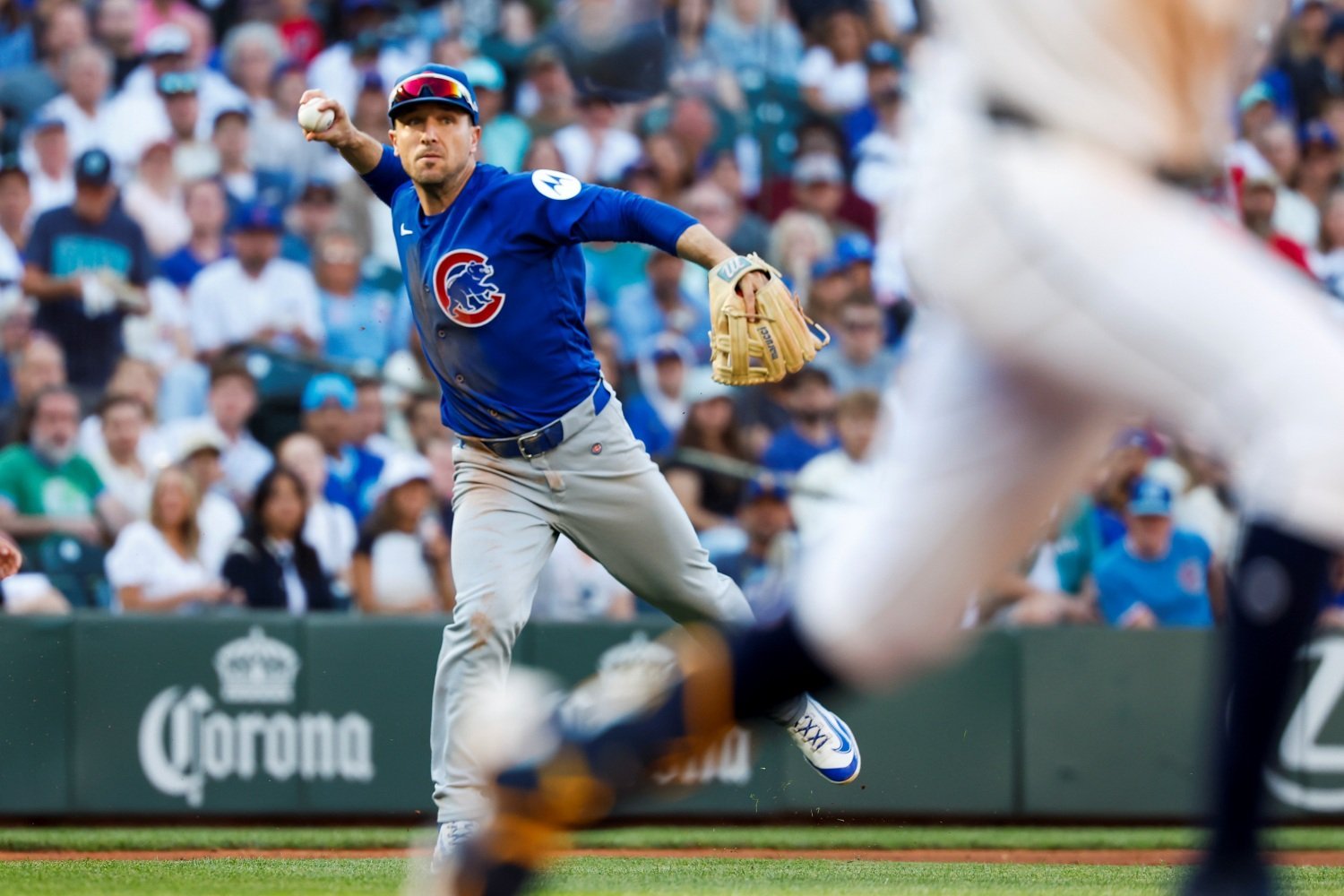 William Contreras didn't hit it correctly, but he hit it hard. In the top of the eighth inning Thursday night, Ryan Zeferjahn had gotten the first two outs easily, and he fired a 98-MPH sinker that ran in and down toward Contreras on the first pitch. Overeager, Contreras swung hard but (inevitably) topped the ball, hitting it almost straight down in front of his own left foot. It left his bat at over 90 MPH, but most of that energy went straight into the ground. However, in the unseasonable September heat and near the end of the game, the area around home plate was hard and bouncy. The ball shot 30 feet in the air and sailed down the third-base line. Nine times out of 10, that batted ball is foul, but something about the spin and the bounce kept this one fair. It didn't land until it was about 10 feet past the third-base bag, and when it did, it was still fair. It was the kind of oddball schtoinker that threatens to be the spark from which a wildfire rally starts. Fortunately for the Cubs, Alex Bregman was there. Bregman read the soaring bouncer perfectly, picking a short hop on the run and throwing almost immediately across the diamond to retire Contreras and end the inning. It looked like a good play; it was actually a great one. That's pretty much par for the course for Bregman this year. As I wrote two months ago, his defense has never been better, but the places and ways in which he's improved are so subtle that they're often missable. He doesn't look like the second-best defensive third baseman in the game every time he takes the field, but that's what he's been this season. He's mostly been good at third throughout his career, but somehow, at age 32, he's improving, instead of losing value with the leather. Dansby Swanson and Bregman communicate and cooperate brilliantly on the left side of the infield, but that's only part of the story. Bregman has learned to better utilize his tools on defense, too. He's playing a bit deeper and a half-step closer to the line this year than last season, and after two years of improving mostly on the strength of cleaning up plays to his right, he's now excelling by ranging well to his left. As the above attests, though, he can still get to and play balls on the line, too. Playing deeper is the real key to everything. It means he has more time to flag balls down and more momentum behind him when he goes from fielding the ball to throwing it. Speaking of throwing it, though, that's the most fun change to observe. A few years ago, Bregman has a good chance to field the ball above, but throwing out the runner is a lot more iffy. He's not a big guy; he still doesn't have even average raw arm strength. However, he's gotten a whole lot more accurate—including knowing when to put more oomph on one, and when bouncing the throw makes sense or doesn't. Beginning in 2024, Bregman cleaned up his throws to first. His on-target rate (the percentage of his throws that arrive within a five-foot fan around first base and between 1 and 7 feet above the ground) is a career-best 84.5% this season; he was in the mid-70s from 2021 through 2023. On plays like the one he made Thursday night, even if Bregman got the tricky footwork and pick right, past versions of him wouldn't have made life so easy for his first baseman; there's a good chance the runner would have ended up being safe. In the modern game, almost no one is better than ever at age 32. So far, though, it looks like Bregman might be the exception. His makeup is off the charts; that's always been part of the appeal. Watching him make plays like that one (amid one of the hottest streaks of his career at the plate, no less), however, it gets easier to remember that makeup isn't just about keeping the clubhouse a happy place. Bregman's focused, intelligent, obsessive work has made him worth 13 Defensive Runs Saved this year. That's as big a reason why the Cubs are a virtual lock to make the playoffs as the fact that he's broken out of his early offensive funk and become the third heat of the Chicago offense. He's winning games for the team in every way possible. View the full article
 -
 Drew Beam struck out nine over eight innings as Northwest Arkansas beat Arkansas 4-1, and Zachary Cawyer added a scoreless inning for the save. Henry Williams matched him with six scoreless innings in Omaha's 7-1 win, backed by home runs from Gavin Cross, Brett Squires, and Carson Roccaforte. David Shields allowed three runs in four innings as Quad Cities fell 5-3 despite Jose Cerice's two-run homer. Connor Rasmussen homered for Columbia, which lost 5-1 at Myrtle Beach. Kansas City Royals Transactions No Roster Moves Three Homers And Four Unearned Runs Carry Omaha Past St. Paul The Omaha Storm Chasers hit three home runs and took advantage of three St. Paul errors in a 7-1 win. Squires opened the scoring with a solo home run, his 25th, in the first. The third inning turned on defense. Luca Tresh singled, Omar Hernandez reached on a fielding error, and Cross hit into a fielder's choice that a throwing error by the shortstop turned into two runs. Roccaforte added a solo home run, his fourth, in the fourth. Omaha built the lead again in the fifth. Hernandez singled, Cross doubled him to third, and Alejo Lopez reached on a fielder's choice on which the shortstop threw the ball away again, scoring Hernandez. Squires drove in Cross with a sacrifice fly. Cross closed the scoring with his 17th home run in the seventh. Cross finished 2-for-4 with a double, a home run, two runs, and one strikeout. Squires went 1-for-3 with two runs batted in. Hernandez was 1-for-3 and scored twice. Roccaforte went 1-for-4 with three strikeouts. Omaha left four runners on base and went 0-for-7 with runners in scoring position. Williams, our August Pitcher of the Month for Omaha at Royals Keep, handled the start, working six scoreless innings on four hits and one walk with seven strikeouts for a quality start. Luke Little gave up a solo home run in his inning of work, allowing one hit and one walk with a strikeout. Lucas Erceg allowed a hit and a walk without a run and struck out one. Ben Sears allowed one hit and one walk and did not give up a run. The Storm Chasers are now 60-72. Player AB R H RBI BB K Gavin Cross 4 2 2 1 0 1 Alejo Lopez 4 0 0 0 0 2 Brett Squires 3 1 1 2 0 0 Abraham Toro 3 0 0 0 1 0 Carson Roccaforte 4 1 1 1 0 3 Peyton Wilson 4 0 1 0 0 1 Jacob Berry 4 0 0 0 0 0 Luca Tresh 4 1 1 0 0 0 Omar Hernandez 3 2 1 0 0 0 Player IP H R ER BB K HR Henry Williams 6 4 0 0 1 7 0 Luke Little 1 1 1 1 1 1 1 Lucas Erceg 1 1 0 0 1 1 0 Ben Sears 1 1 0 0 1 0 0 Beam's Nine Strikeouts Carry Northwest Arkansas To A 4-1 Win Beam gave the Northwest Arkansas Naturals eight innings and the bullpen only three outs to get in a 4-1 win at Arkansas. The Naturals scored first in the fourth. Sam Kulasingam singled, moved to third on a groundout, and scored on a Daniel Vazquez sacrifice fly. The sixth was the decisive inning. Luke Pelzer singled to open it and stole second. He moved to third on a groundout and scored on a Vazquez double. Justin Johnson followed with a run-scoring single, and Northwest Arkansas led 3-1. The Naturals tacked on in the eighth. Kulasingam doubled, Vazquez reached on a fielding error, and Johnson reached on a throwing error by the third baseman as Kulasingam came home. Pelzer went 2-for-4 with a run scored. Kulasingam was 2-for-4 with a double and two runs. Vazquez went 1-for-3 with a double and two runs batted in. Johnson was 1-for-4 with a run batted in and two strikeouts. Johnson also flashed some leather at the hot corner. Northwest Arkansas struck out 12 times, left five runners on base, and went 2-for-8 with runners in scoring position. Beam allowed three hits and one earned run over eight innings, walked nobody, and struck out nine. The only damage against him was a solo home run, and the outing qualified as a quality start. Cawyer finished it with a scoreless inning, walking one and striking out one for his sixth save. With the win, the Naturals improved to 54-73 this season. Player AB R H RBI BB K Luke Pelzer 4 1 2 0 0 1 Sam Kulasingam 4 2 2 0 0 1 Spencer Nivens 4 0 0 0 0 1 Daniel Vazquez 3 1 1 2 0 0 Justin Johnson 4 0 1 1 0 2 Connor Scott 4 0 0 0 0 1 Canyon Brown 4 0 0 0 0 1 Alberto Rodriguez 3 0 0 0 1 3 Angel Acosta 4 0 0 0 0 2 Player IP H R ER BB K HR Drew Beam 8 3 1 1 0 9 1 Zachary Cawyer 1 0 0 0 1 1 0 Cerice's Two-Run Homer Not Enough For Quad Cities At Peoria The Quad Cities River Bandits managed three hits in a 5-3 loss at Peoria. Quad Cities struck first in the fourth. Blake Mitchell was hit by a pitch, and Jose Cerice followed with a two-run home run, his sixth. Peoria answered with three runs in the bottom half on a run-scoring double and a two-run home run, then added two more in the sixth on another two-run home run. The River Bandits got one back in the eighth. Stone Russell walked, Nolan Sailors reached on a fielder's choice and advanced on a fielding error, and Asbel Gonzalez grounded into a force out that moved Russell to third. Russell scored on a wild pitch during a Mitchell walk. Ramon Ramirez then grounded into a double play to end the threat. Cerice went 1-for-4 with the home run and two runs batted in. Austin Charles was 1-for-4 with a double. Tyriq Kemp went 1-for-3 with a walk. Mitchell drew two walks and scored a run. Quad Cities drew five walks, struck out 15 times, went 1-for-5 with runners in scoring position, and left six runners on base. Shields, the Royals' No. 2 prospect, took the loss, allowing three runs on three hits over four innings with no walks and five strikeouts, with a home run accounting for two of the runs. Ethan McElvain gave up two runs on two hits in two innings with three strikeouts and a home run allowed. Yimi Presinal allowed a hit and a walk without a run and struck out one. Jackson Cleveland struck out three in a scoreless inning without allowing a baserunner. The River Bandits are now 68-56 and sit in second place in the West Division of the Midwest League. Player AB R H RBI BB K Nolan Sailors 3 0 0 0 1 2 Asbel Gonzalez 4 0 0 0 0 2 Blake Mitchell 1 1 0 0 2 1 Ramon Ramirez 4 0 0 0 0 2 Jose Cerice 4 1 1 2 0 1 Austin Charles 4 0 1 0 0 2 Tyriq Kemp 3 0 1 0 1 1 Erick Torres 3 0 0 0 0 1 Stone Russell 3 1 0 0 1 3 Player IP H R ER BB K HR David Shields 4 3 3 3 0 5 1 Ethan McElvain 2 2 2 2 0 3 1 Yimi Presinal 1 1 0 0 1 1 0 Jackson Cleveland 1 0 0 0 0 3 0 Rasmussen's Home Run Accounts For Columbia's Only Run The Columbia Fireflies had seven hits and one run in a 5-1 loss at Myrtle Beach. The third inning decided it. With two outs and nobody on, a single put a runner aboard, a throwing error by third baseman Ivan Sosa put a second runner on, and a three-run home run followed. None of the three runs were earned. Rasmussen answered in the fourth with a solo home run, his fifth, and that was the extent of the Columbia offense. Myrtle Beach added a run in the fifth on a bases-loaded walk that came home on a wild pitch, and another in the seventh on a bases-loaded hit by pitch. Rasmussen finished 2-for-3 with a walk, a run scored, and a run batted in. Gabriel Silva was 1-for-2 with a double. Henry Ramos, JC Vanek, Sean Gamble, and Sosa each had a hit. The Fireflies struck out 12 times, went 0-for-6 with runners in scoring position, and left eight runners on base. Ryan McDonagh took the loss, giving up three unearned runs on two hits over three innings with a walk, two strikeouts, and a home run allowed. Alberto Toribio allowed one run on two hits in three innings, walking two and striking out four. Andy Basora gave up a run on two hits in his inning. Grant Fontenot struck out two in a scoreless inning without allowing a hit or a walk. The Fireflies are back to .500 at 64-64, good for 5th in the South Division of the Carolina League. Player AB R H RBI BB K Henry Ramos 4 0 1 0 0 1 JC Vanek 3 0 1 0 0 0 Roni Cabrera 1 0 0 0 0 1 Camden Johnson 2 0 0 0 1 1 Sean Gamble 4 0 1 0 0 2 Jhosmmel Zue 2 0 0 0 0 1 Gabriel Silva 2 0 1 0 0 0 Connor Rasmussen 3 1 2 1 1 0 Tyson Moran 4 0 0 0 0 2 Ricson Gonzalez 4 0 0 0 0 2 Ivan Sosa 4 0 1 0 0 2 Player IP H R ER BB K HR Ryan McDonagh 3 2 3 0 1 2 1 Alberto Toribio 3 2 1 1 2 4 0 Andy Basora 1 2 1 1 0 1 0 Grant Fontenot 1 0 0 0 0 2 0 Top-20 Prospect Performance Kendry Chourio: DNP David Shields: 4 IP, 3 H, 3 R, 3 ER, 0 BB, 5 K Josh Hammond: DNP Blake Mitchell: 0-for-1, 2 BB, K Sean Gamble: 1-for-4, 2 K Ramon Ramirez: 0-for-4, 2 K Zion Rose: DNP Asbel Gonzalez: 0-for-4, 2 K Carson Roccaforte: 1-for-4, HR, RBI, 3 K Taylor Rabe: DNP Yandel Ricardo: DNP Justin Lamkin: DNP Drew Beam: 8 IP, 3 H, 1 R, 1 ER, 0 BB, 9 K Michael Lombardi: DNP Jack Slightom: DNP Felix Arronde: DNP Angeibel Gomez: DNP Ben Kudrna: DNP Steven Zobac: DNP Blake Wolters: DNP View the full article
 -
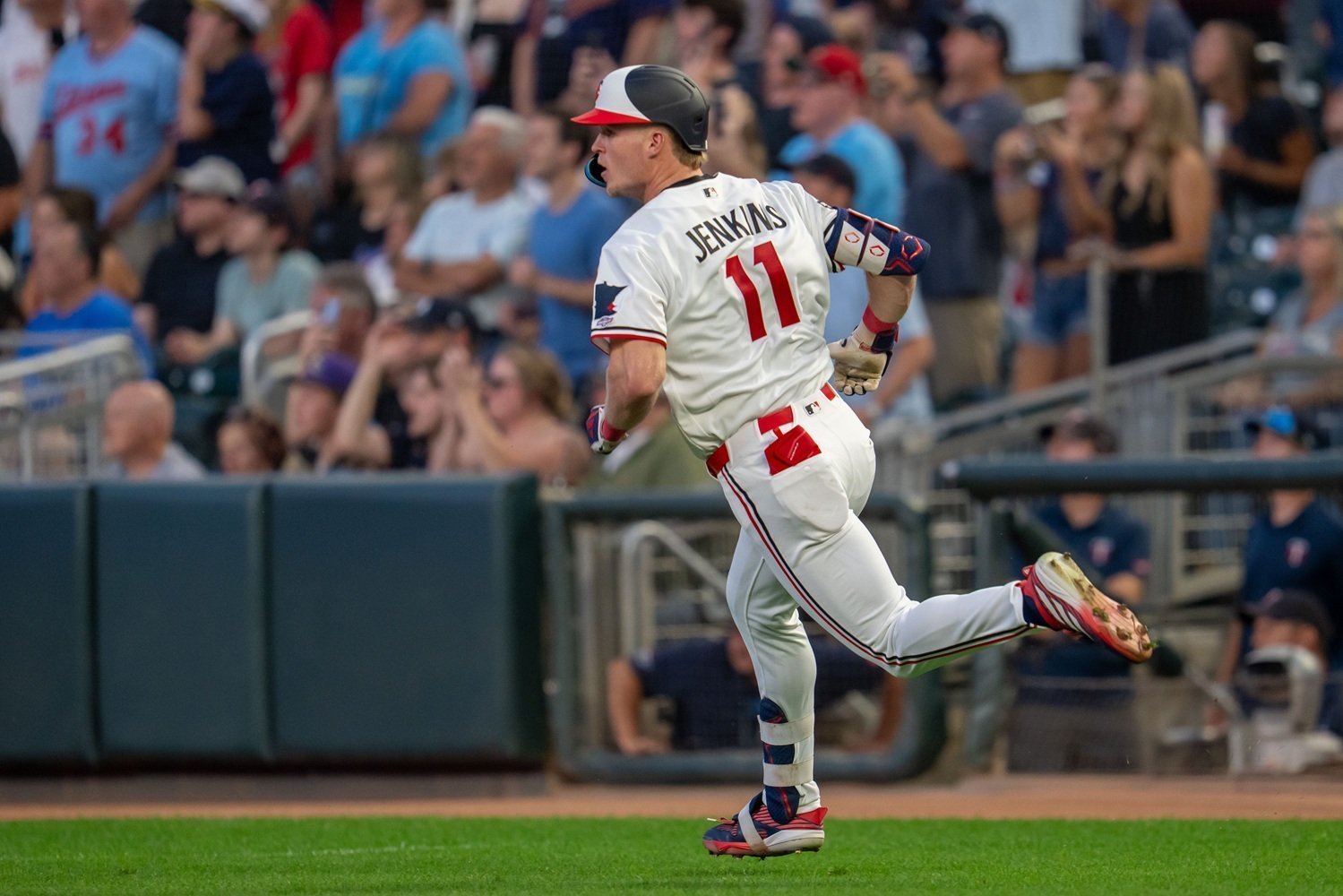 Not every prospect can live up to the hype. That's always been true in baseball, but it feels even more relevant in the modern game. Today, every at-bat can be watched, every swing can be dissected, and nearly every performance can be tracked in real time. A prospect can go from an unknown quantity to a household name in a matter of months. The Minnesota Twins have had their share of highly touted prospects in the Target Field era over the past decade and a half. Some became stars. Others became solid big leaguers. Some never came close to reaching the expectations placed upon them. For this list, I'm looking at the Twins' top prospects as they were viewed at the time, rather than how their careers ultimately unfolded. This isn't a ranking of the best big-league players. It is an attempt to put each prospect's hype into historical context. The rankings below are based primarily on each player's peak standing on major prospect lists. Honorable Mentions OF Trevor Larnach: Larnach was one of the organization's premier prospects after being selected 20th overall in 2018. His combination of power and patience made him one of the more intriguing bats in the system, but injuries and inconsistency prevented him from reaching the same prospect heights as those on this list. SS Nick Gordon: The fifth overall pick in 2014, Gordon immediately became one of the more recognizable names in the Twins' system. His prospect stock fluctuated as he moved through the minors, but his draft pedigree and shortstop potential earned him consideration. RHP Kyle Gibson: Gibson was one of the Twins' top pitching prospects after being selected in the first round of the 2009 draft. Much of his prospect hype came during the early part of the following decade as he moved quickly through the Minnesota farm system. 10. OF Max Kepler Peak Ranking: #30 by Baseball America (2016) Kepler doesn't immediately jump off the page when discussing the Twins' all-time prospect rankings, but his placement here is a testament to how much depth Minnesota has had in its farm system. The German outfielder was an international signing who steadily climbed through the organization. By 2016, Baseball America viewed him as the No. 30 prospect in baseball. Kepler's combination of size, athleticism, defensive ability and emerging power made him one of the more intriguing young players in the organization. He jumped up national rankings after posting a .947 OPS at Double-A as a 22 year old. He wasn't viewed as a future superstar on the level of some players higher on this list, but he was considered a legitimate top-30 prospect in the sport. 9. OF Aaron Hicks Peak Ranking: #19 by Baseball America (2010) Hicks was one of the first Twins prospects of this era to generate significant national attention. Selected 14th overall in the 2008 draft, Hicks developed a reputation as an athletic center fielder with impressive tools. His speed, defensive ability and switch-hitting potential gave scouts plenty to dream on. By 2010, Baseball America ranked him No. 19 overall. That ranking reflected the belief that Hicks could become an impact two-way center fielder. He eventually reached the majors with Minnesota before finding his best success later in his career with the Yankees. 8. SS Austin Martin Peak Ranking: #19 by Baseball America (2021) Martin arrived in Minnesota with plenty of prospect pedigree. The Twins acquired him from Toronto as part of the return for José Berríos at the 2021 trade deadline. He had been selected fifth overall by the Blue Jays in 2020 and entered the Twins' organization as a player with a strong offensive reputation based on his college experience. Baseball America ranked Martin as the No. 19 prospect in baseball in 2021. The former Vanderbilt standout's combination of contact ability, plate discipline and athleticism made him an intriguing prospect, even as questions about his ultimate defensive home remained. 7. OF Emmanuel Rodriguez Peak Ranking: #17 by Baseball Prospectus (2025) Rodriguez represents one of the more recent additions to this list. The Twins signed him as an international free agent in 2019, and his offensive potential quickly made him one of the organization's most exciting prospects. His combination of raw power, plate discipline and athleticism allowed him to climb national prospect rankings despite some questions about his long-term defensive home. By 2025, Baseball Prospectus ranked Rodriguez No. 17 overall. There was legitimate belief that Rodriguez possessed some of the best offensive upside in the Twins' system. However injuries have slowed his development and he has yet to debut. 6. RHP José Berríos Peak Ranking: #17 by Baseball Prospectus (2016) Berríos was one of the most highly regarded pitching prospects in the Twins system during the early 2010s. Minnesota selected him 32nd overall in 2012, and he quickly began climbing prospect rankings. His fastball, breaking ball and athletic delivery gave scouts the ingredients of a potential frontline starter. By 2016, Baseball Prospectus ranked Berríos No. 17 overall. Unlike some names on this list, Berríos ultimately came relatively close to meeting his prospect expectations. He became a durable major-league starter and earned multiple All-Star selections after establishing himself in Minnesota. 5. OF Alex Kirilloff Peak Ranking: #9 by MLB Pipeline (2019) Kirilloff was viewed as one of the best pure hitters in the minor leagues. The Twins selected him 15th overall in 2016, and he immediately began making a name for himself. After missing significant time with an elbow injury, Kirilloff returned to the field and quickly reminded everyone why Minnesota had been so excited about his offensive potential with a .970 OPS in 2018. By 2019, MLB Pipeline ranked him ninth overall. Kirilloff's combination of hitting ability, power and offensive polish made him look like a potential middle-of-the-order cornerstone. He was one of the rare Twins prospects who entered the top 10 nationally before reaching the majors. Unfortunately, injuries forced him to retire early. 4. SS Royce Lewis Peak Ranking: #5 by MLB Pipeline (2019) The Twins selected Lewis first overall in 2017, and the expectations were enormous from the beginning. His athleticism immediately stood out. Lewis had plus speed, impressive defensive tools and the potential to develop into a dynamic offensive player. As he moved through the minors, his tools continued to make him one of the most exciting prospects in baseball. MLB Pipeline ranked Lewis No. 5 overall in 2019. At that point, the Twins had a potential franchise shortstop developing in their system. Injuries would dramatically alter his development path, but that doesn't change how highly he was regarded before reaching the majors. 3. 3B Miguel Sanó Peak Ranking: #4 by MLB Pipeline (2014) Few Twins prospects generated as much excitement as Sanó. Signed out of the Dominican Republic, Sanó quickly became known for his enormous raw power. His physical tools were impossible to ignore, and scouts believed he had the potential to become one of baseball's most dangerous power hitters. MLB Pipeline ranked him No. 4 overall in 2014. There were questions about his strikeout rate and defensive home, but the offensive upside was so significant that those concerns didn't prevent Sanó from reaching the top tier of the prospect rankings. For a period of time, Sanó looked like the potential centerpiece of the next great Twins lineup. 2. OF Walker Jenkins Peak Ranking: #3 by MLB Pipeline (2025) Jenkins doesn't have the longest track record on this list, but his prospect pedigree is undeniable. The Twins selected Jenkins fifth overall in 2023, and he immediately began showing why Minnesota believed he could become a cornerstone player. His combination of hitting ability, power, athleticism and defensive potential gave him one of the highest ceilings in the organization. By 2025, MLB Pipeline ranked Jenkins No. 3 overall. More importantly, it wasn't based on one loud tool. Jenkins' profile was remarkably well-rounded, giving evaluators confidence that he could become an impact major-league player. The hype surrounding Jenkins has been enormous, and it puts him in rare company in Twins history. 1. OF Byron Buxton Peak Ranking: #1 by Baseball America, Baseball Prospectus and MLB Pipeline (2014) There is really only one choice for the top spot. Buxton wasn't simply one of the best prospects in Twins history. He was considered the best prospect in all of baseball. The Twins selected him second overall in 2012, and his combination of elite speed, center-field defense, athleticism and emerging offensive ability quickly pushed him toward the top of every prospect ranking. In 2014, all three major prospect publications agreed: Baseball America, Baseball Prospectus and MLB Pipeline ranked Buxton No. 1 overall. That's an extraordinary level of consensus. Prospect rankings can vary significantly from one publication to another. One evaluator might love a player's power while another questions the hit tool. Buxton didn't have that problem. Across the industry, there was widespread belief that he possessed the tools to become a franchise-changing player. He eventually became an All-Star and one of the most dynamic players in the sport, even if injuries prevented him from reaching the consistent superstar production many envisioned. And that is ultimately what makes this exercise interesting. The question isn't who had the best Twins career. It's who generated the most excitement before their career had been written. By that standard, Buxton’s unanimous No. 1 ranking remains the benchmark. Walker Jenkins came close to reaching that level before his major-league debut, and he will still be considered a prospect this winter. There’s a chance he could move up this list before next season, but it’s already difficult to ignore what he has accomplished throughout his professional career. How would you rank the prospects of the Target Field era? Leave a comment and start the discussion. View the full article
 -
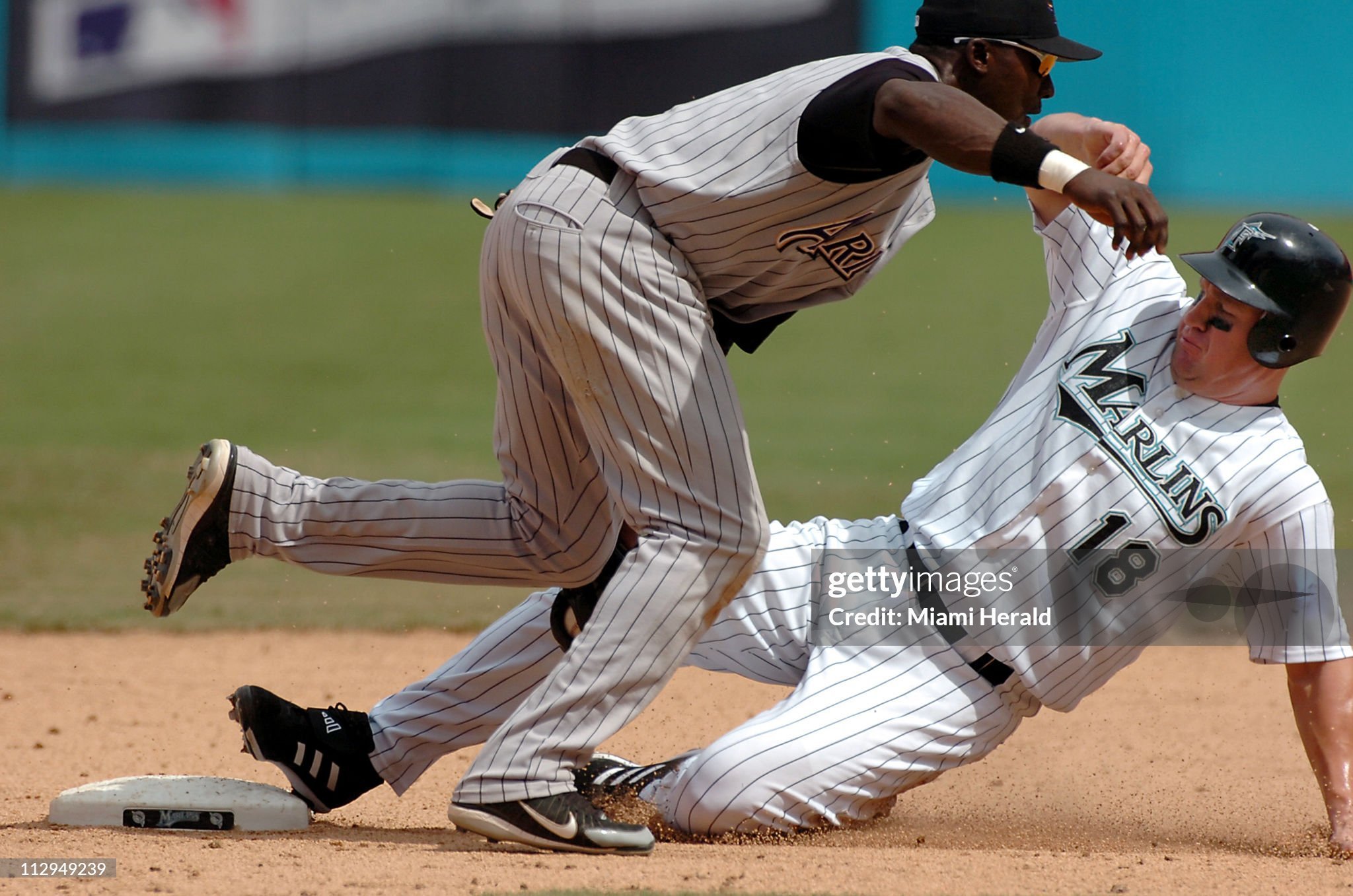 With a three-game sweep of the Milwaukee Brewers to open the month of September 2006, the Florida Marlins became the first team in Major League Baseball history to get back to .500 after falling 20 games below earlier in the season. The very next night, they became the first team to get over .500 after falling 20 games below. They did so on this day 20 years ago and in improbable fashion. Down five runs in the sixth, the Marlins scored eight unanswered runs to stun the Arizona Diamondbacks in a Labor Day matinee, 8-5. As the Marlins came to bat in the bottom of the sixth at Dolphins Stadium on Sept. 4, 2006, they had managed just one hit off Arizona starter Enrique González. Trailing 5-0, Florida would take the lead with six runs in the inning. Each of them scored with two outs. Alfredo Amézaga singled to open the inning but after Jeremy Hermida hit into a fielder’s choice and Hanley Ramírez flied out, it looked to be another quiet inning. Instead, Florida responded with five straight hits. One pitch after Dan Uggla singled, Miguel Cabrera broke up the shutout with an RBI single to cut the lead to 5-1. Not known for his speed, Josh Willingham followed by legging out an infield hit to load the bases. Mike Jacobs then cut the lead to 5-3 with a two-run single. Arizona stuck with González, which proved to be a mistake. Ahead in the count of Joe Borchard, González left one out over the plate and the Florida right fielder crushed it to right-center field for the go-ahead three-run home run. What had been a 5-0 deficit when the inning started had become a 6-5 lead for the Marlins. After Renyel Pinto stranded the tying run at third in the top of the seventh, Uggla put the exclamation point on the comeback with a two-run homer in the bottom of the frame. Taylor Tankersley and Joe Borowski each worked 1-2-3 innings to slam the door on the Diamondbacks. For Arizona, most of the offense came early. The Diamondbacks plated four runs in the first against Florida starter Brian Moehler with two coming on a double by Conor Jackson. The Diamondbacks extended the lead to 5-0 on Eric Byrnes’ solo home run to lead off the fifth. Despite having just one hit through six innings, Amézaga, Uggla and Jacobs each finished the night with two. Byrnes and Orlando Hudson each had two hits for Arizona. While Borowski picked up the save for the Marlins, Randy Messenger worked a 1-2-3 sixth to earn the win. In addition to getting over .500 for the first time, the five-run comeback served as the biggest of the season for the Marlins. It came on this day two decades ago. View the full article
 -
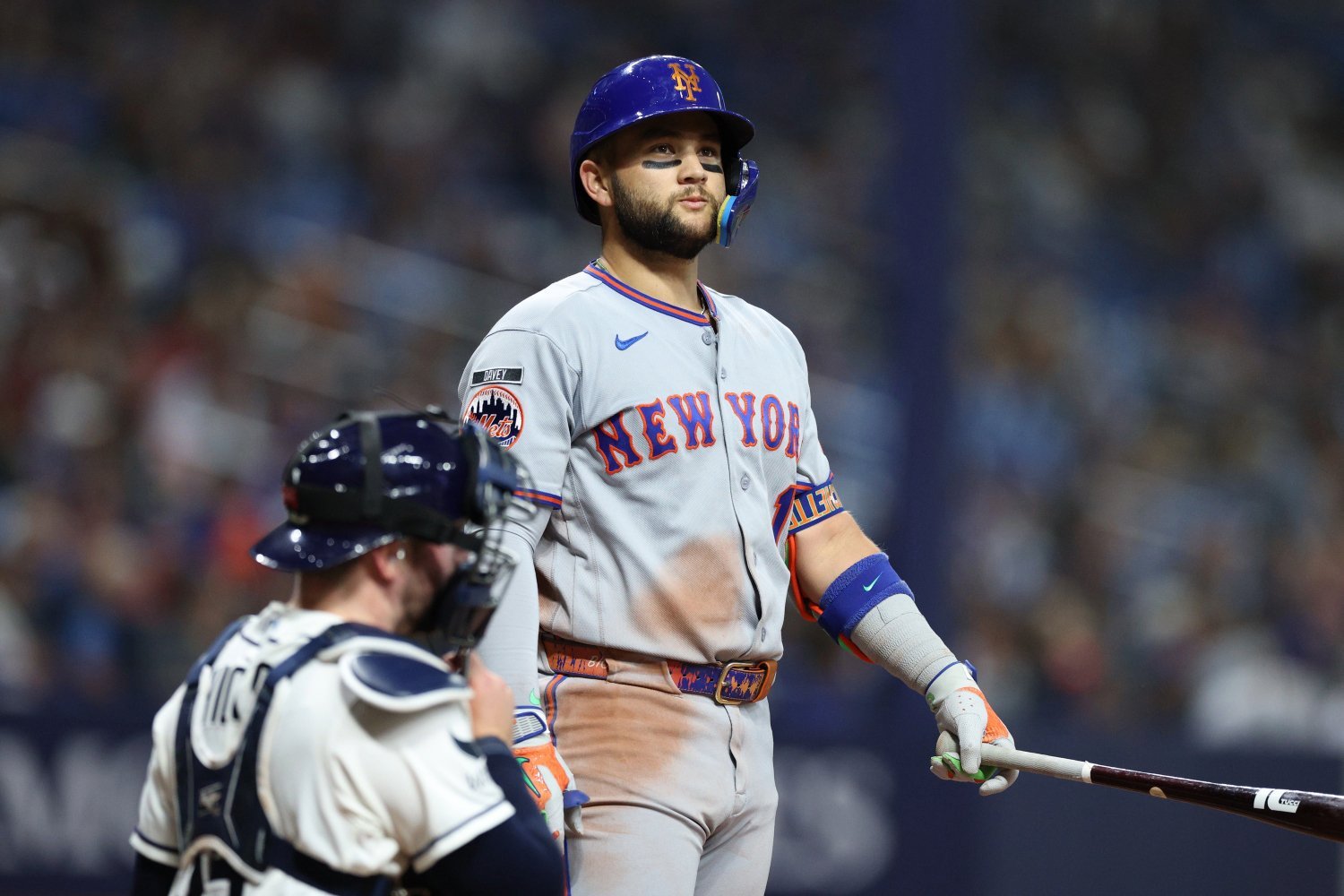 Fresh off writing the New York Mets’ hitters of the month piece for August, an odd detail caught my eye: Bo Bichette had an excellent 135 wRC+ in August, but managed to produce a negative win probability added (WPA). This isn’t a cause for alarm, but it is interesting. Those stats (wRC+ and WPA) are strongly correlated because hitting well is good for winning, so I figured further investigation was necessary. There are a few ways a hitter can hit well without helping his team’s chances of winning. The first is to rarely come up with runners on base or in scoring position. As great as a leadoff double is, the single that knocks them in improves your chances of winning more. The second is doing damage when the game is not close. If you’re up eight or down eight in the late innings, even a grand slam doesn’t change your odds all that much. The third is not having many leverage opportunities. And somehow, Bichette managed a trifecta. Of Bichette’s 109 plate appearances in August, 69 came with no runners on, and only 23 came with runners in scoring position. To make matters worse, Bichette saved his slugging for when the bases were empty. All four of his home runs, five of his seven doubles, and his lone triple came with no runners on. Bo Bichette Bases Empty Men On Total PA 69 40 109 1B 7 10 17 2B 5 2 7 3B 1 0 1 HR 4 0 4 BB 6 3 9 SO 14 6 20 Ave 0.270 0.324 0.290 OBP 0.333 0.375 0.349 Slugging 0.571 0.378 0.500 BB% 8.70% 7.50% 8.26% K% 20.29% 15.00% 18.35% On top of having no one on, three of Bichette’s August home runs came with the Mets up by at least three runs. And his lone home run to break a deadlock was in the first inning, when a 1-0 lead is the most vulnerable. Finally, Bichette’s average Leverage Index (0.89) for the month ranked 178th out of 190 qualified hitters. Now, that doesn’t necessarily doom you to a low WPA, as Alex Bregman had an identical Leverage Index and led baseball in WPA for August, but he posted a 177 wRC+ and hit three home runs in a single game twice. Opportunity is a big driver in context-based statistics, and Bichette didn’t really have the chance to shine. His -0.03 WPA was mostly driven by his 120th-ranked +1.75 win advancement, not his 60th-ranked -1.78 loss advancement. He wasn’t awful in leverage situations; he just didn’t have enough of them. This isn't proof that Bichette is some unclutch stiff who can only get it done when the pressure is off. He’s a career 118 wRC+ hitter with a positive clutch score, after all. However, even when a good hitter has it going, if the opportunities and sequencing are off, their impact on winning can be limited. I’ll stress: don’t hate the player, hate the game. Because that’s just baseball. View the full article
 -
 August may have been the most confusing month of Boston Red Sox baseball we have witnessed thus far in 2026. After July saw the Sox bludgeon the rest of the league, August started no different, sweeping the heavily favored Los Angeles Dodgers in L.A. and the Chicago White Sox, who are en route to a first-round bye in the MLB playoffs. Then seemingly out of nowhere, just as easily as Boston had rattled off another nine-game win streak, they began racking up losses, which included a five-game losing streak and three straight series losses to the lowly Athletics, Blue Jays, and Pirates. Nowhere was this inconsistent month more on display than the final week in the Bronx, where the Sox squared off with the Yankees in a pivotal four-game set that had all sorts of playoff ramifications on the line. The Sox were sloppy, the Yankees took three of four, and a bitter taste was left in fans' mouths of what could have been as Boston finished the month 17-12. Looking back, there were definitely plenty of eye opening performances, both good and bad across the offense, rotation and bullpen. Let’s dive in to how they each graded out for August. Grading Every Red Sox Player In August Offense For the second month in a row, the Red Sox tried to add some offensive thump to their lineup, and for the second month in a row, it hasn’t seemed to work out. July of course saw the addition of Curtis Mead, only to have him suffer a fractured wrist just two at-bats into his Red Sox tenure. For August, it was the addition of Adley Rutschman who looked to be the missing piece to the puzzle once he returned from a wrist inflammation injury. Once again, though, that wasn’t the case as when he did return, Rutschman posted an unsightly .170 average, .499 OPS, and season high 25.4 K% in 15 games before once again being bit by the injury bug, this time with an elbow hyperextension. Funnily enough the key to unlocking Boston’s offensive outburst came internally, specifically from the reincarnation of Ted Williams, aka ‘The Mick’, aka Mickey Gasper, who went on a month-long tear so prolific he can be spoken in the same breath as Barry Bonds and the aforementioned Williams. To go along with the six home runs, 13 RBIs, and team-high 329 wRC+, Gasper posted a 1.671 OPS, good for the third highest in a calendar month behind Bonds’ 1.828 in April of 2004 and Williams’ 2.314 in September of 1957. Add in a .270/.369/.432/.801 line with three homers, 10 RBIs, and clutch at-bats from Nick Sogard and an even more impressive .474/.600/.684/1.284 from Jahmai Jones, and the “Next Man Up” mentality continued to shine through for the Sox in August. The returns to form for Wilyer Abreu (.971 OPS, 163 wRC+, 7 HR, 17 RBI) and Jarren Duran (.789 OPS, 103 wRC+, 6 HR, 12 RBI) after rough months in July, along with the continued success of Caleb Durbin (.726 OPS, 106 wRC+, 18 RBI) and Ceddanne Rafaela (.276 AVG, 4 HR, 16 RBI), helped to to cover the rough stretches of play from Rutschman and Willson Contreras who produced a season low .217/.330/.386/.715 with a 102 wRC+. August was also capped off by the returns of Roman Anthony and Trevor Story, who quickly silenced any questions of if there would be any rust after missing so much time, combining to go 8-for-16 with three RBIs, doubles, and runs scored. Minus a few hiccups, this was the Red Sox's best offensive performance of the season by far. It’s promising to see they continue to improve as we get deeper into the campaign, so much so that Boston ranked outside of the top-10 league wide in August in just strikeouts, stolen bases, HardHit%, and Barrel%. Diving specifically into their AL rankings, they finished the month first in OBP, SLG, OPS, wRC+, runs, hits, doubles (led all MLB), and WAR, with top-three finishes in AVG, BAbIP, K%, BB%, HRs, triples, and walks as well. With so many elite numbers, it’s pretty easy to determine Boston’s offensive grade for August. Final Grade: A+ Position Players Name Mar / Apr May June July August Wilyer Abreu A+ B C+ C A- Roman Anthony D N/A N/A N/A A Willson Contreras A A+ B A+ D+ Jarren Duran F A D- D+ C+ Caleb Durbin D+ D A+ A- B+ Mickey Gasper N/A A+ D N/A A+ Jahmai Jones N/A N/A N/A A+ A+ Andruw Monasterio C D+ D A+ C- Ceddanne Rafaela B A A- A+ B+ Adley Rutschman N/A N/A N/A N/A F Anthony Seigler N/A N/A A+ C C Nick Sogard N/A B- N/A C A- Trevor Story D- D N/A N/A A Eli White N/A N/A N/A N/A C- Connor Wong B- B A C D Masataka Yoshida B- C+ D A- A Rotation If there was one glaring question coming out of last month’s MLB Trade Deadline it was: Why did the Red Sox not add an additional starter for depth? A perfectly valid question after that lack of depth ended up partly being their undoing in last year’s postseason. As we head into September, that lack of depth could very well be their undoing once again. As has been the case for a while now, Payton Tolle and Sonny Gray continue to carry this rotation. Tolle bounced back from a lackluster July to dominate August to the tune of a 2-0 record with a 3.00 ERA, .225 average against, and impressive 31.2 strikeout and 7.1 walk percentages across 36.0 innings pitched. Gray was just as good, if not better, posting a 2.40 ERA, .250 average against and 3.28 FIP to go along with six- and seven-inning shutout performances over the White Sox and Pirates, respectively. Boston’s rotation problems stem from the lefty trio of Jake Bennett, Patrick Sandoval, and Ranger Suárez. After a brilliant July, it’s clear Bennett has hit a rookie wall, as prior to his bounce back, six-shutout-innings start against the Yankees to close out the month, he had allowed 14 earned runs with a .323 BAbIP in 22.0 innings. Here’s hoping that the Yankees start got him back on track. The same hope goes out to Sandoval, who outside of his one run over 5.1 innings outing in the Bronx, had seen his constant flirting with danger finally catch up to him in his four prior outings, allowing 13 earned runs and a .419 BAbIP while walking 12 in 20.2 innings. The Red Sox's real concern, however, should stem from their $130 million dollar man who’s pitching like anything but recently. Suárez hasn’t looked right since coming off the IL, particularly with his command which was once his biggest strength, now quickly turning to a growing problem. To go along with a season-worst 5.70 ERA and 5.46 FIP, his strikeout percentage plummeted to 13.1%, while his walk percentage ballooned to a glaring 10.3%. Add in the four hit batters in just August alone (he hadn't hit more than two in any month prior) and it may be time to hit the panic button on who was expected to be Boston’s most dependable arm in the big spots down the stretch when he was first signed. While Gray and Tolle dazzled once again, their individual performances can only do so much to keep the rotation grade afloat with how much Bennett, Sandoval, and Suárez struggled. The cause for concern is definitely there with what’s looking like a tired set of arms as we head into September. Final Grade: B- Pitchers Name Mar / Apr May June July August Jake Bennett N/A C A A+ C Sonny Gray C+ A+ A+ B+ A Patrick Sandoval N/A N/A N/A B C- Ranger Suárez B+ B- A+ B- F Payton Tolle B A+ B+ B- A- Bullpen Boston’s rotation isn’t the only area where the cracks are starting to form. After operating as arguably the best in baseball for July, the bullpen has appeared to come back down to earth as well, finishing as a middle of the pack squad with rop-10 league-wide finishes in innings pitched, opponent average, WHIP, FIP, BB%, BABIP, walk rate, and WAR. For context, the bullpen was in the top-10 in every category except strikeouts (11th) in July. The usual suspects were still as dependable as ever, with Aroldis Chapman a perfect 4-for-4 in save opportunities and holding opposing hitters to a .133 average in nine outings, and Garrett Whitlock posting an 1.80 ERA, .050 FIP, and .176 average against in five appearances. Greg Weissert also continued what’s quietly turned into a sneaky solid season, with a 3.24 ERA and .258 opponents average of his own. What Breslow lacks in being able to acquire impact bats, he makes up for in finding impact arms, as he did with Alec Gamboa prior to the season and Erik Miller at the deadline. Gamboa continued his surprising brilliance out of the pen, tossing 11.0 scoreless innings with a .167 average against and 2.5 BB%. As for Miller, he looks like one of the biggest deadline moves league-wide, as he worked to an 0.79 ERA, .190 average against and season-best 41.7 strikeout and 6.3 walk percentages in 11.1 innings. Much like the faltering trio of rotation arms, there are three relievers that should be ringing alarm bells for Boston. Justin Slaten has once again found himself on the injured list with right elbow inflammation, marking not only his second trip to the IL this season, but the second time he’s hit it with right elbow inflammation dating back to 2024 when he missed 36 games with the injury. And if fatigue may be setting in with the likes of Bennett, Sandoval, and Suárez, the same can be said about Jovani Moran and Tyron Guerrero, the latter of which has also found his way to the IL with shoulder inflammation. Both have seem to have taken a page out of Suárez’s book in terms of lack of command, with Moran seeing his K% drop to a season low 20.0% and BB% jump to 15.4%; Guerrero followed suit with a season-worst 12.3 K% and 7.0 BB%. As we head into September and the injuries begin to pile up, the Red Sox will need to tread carefully with a bullpen that is beginning to look overworked. Their depth has been tested thus far to mixed reviews, with Wyatt Olds (0 ER, .167 AVG against in 6.0 innings) looking solid and Raymond Burgos (5.84 ERA, .234 Opp. AVG, 12.1 IP) being okay in spots. Right now, the questions and concerns surrounding the bullpen aren’t as glaring as the ones pertaining to the rotation, leaving the 'pen with a slightly better grade. Final Grade: B Pitchers Name Mar / Apr May June July August Brayan Bello F B+ F A+ B Raymond Burgos N/A N/A N/A N/A C- Aroldis Chapman A A+ D A+ A Alec Gamboa N/A A A A A+ Tyron Guerrero N/A C A+ A+ D Seth Martinez N/A N/A N/A N/A C Erik Miller N/A N/A N/A N/A A+ Jovani Morán A C+ B A D Wyatt Olds N/A N/A N/A N/A A+ Justin Slaten A- B+ D A+ C Greg Weissert D- C- C A- B+ Garrett Whitlock B+ B A+ A+ A+ View the full article
 -
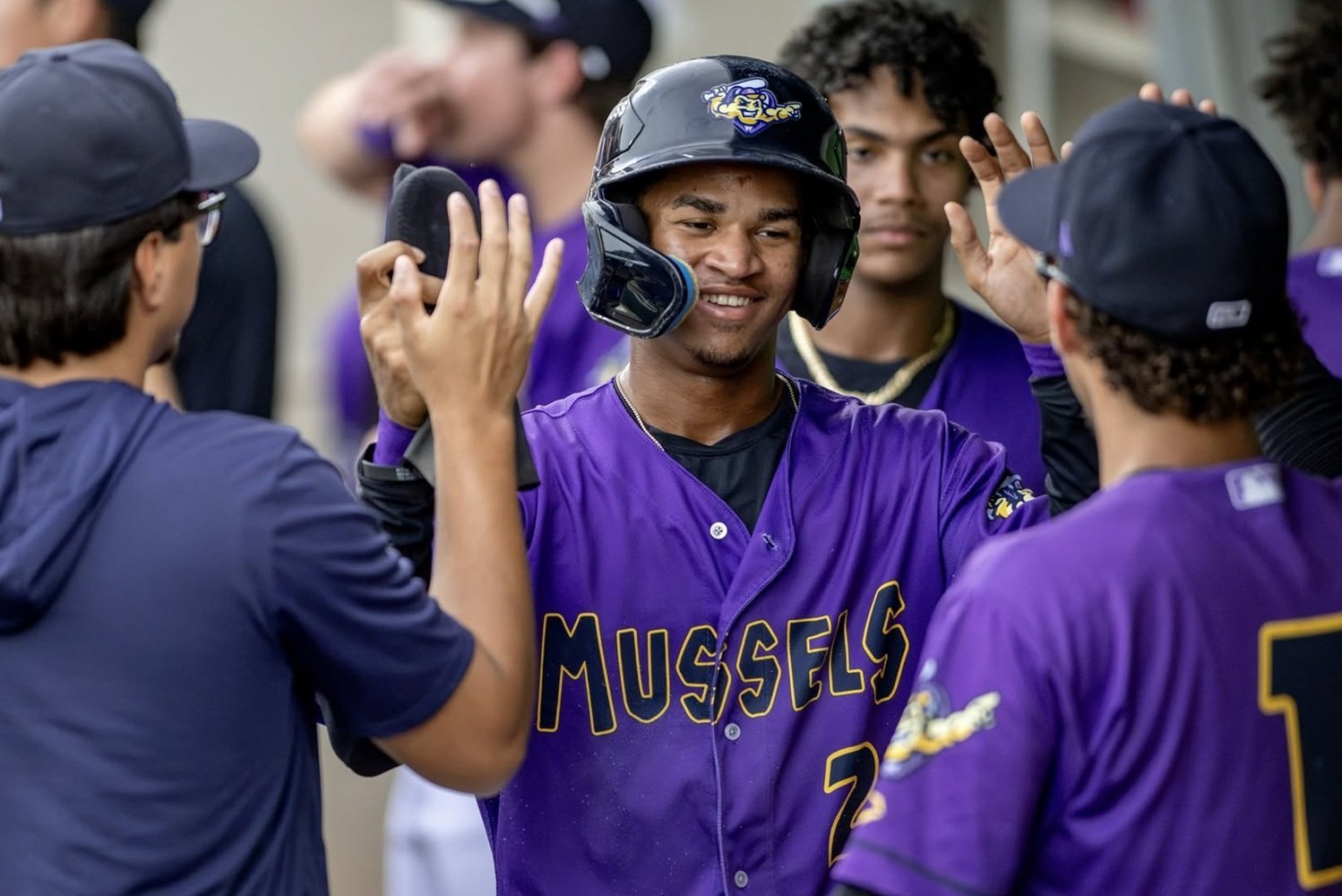 TRANSACTIONS Fort Myers moved RHP Cristian Hernandez to the Development List. He started Game 1 of the Mussels doubleheader on Thursday and tossed three innings. RHPs Max Bayles and Tyler Bryan were assigned to the Mussels from the FCL Twins. Bayles was the Twins 7th-round pick in July out of Santa Clara. Bryan is a non-drafted free agent who pitched collegiately at the University of Houston earlier this year. The Twins signed him on July 22nd and he’s been hanging out, getting his work in at the Twins minor league complex. SAINTS SENTINEL St. Paul 1, Omaha 7 Box Score Cody Morissette hit his 15th Saints home run, a solo shot in the top of the seventh inning. It was the lone run scored by the Saints. The Saints had seven of their hitters with one hit each. They had four walks (three of them by the two batters that went hitless). Aaron Sabato had a single and a walk. David Banuelos walked twice. Alan Roden had a single and was hit by a pitch. Veteran German Marquez was charged with six runs on six hits (including two home runs) over the first six innings. However, just two of the runs were earned thanks to three errors by infielders. Alejandro Hidalgo gave up one run on one hit (a solo homer) over two innings. He walked one and had two strikeouts. WIND SURGE WISDOM Wichita 2, Tulsa 8 Box Score Cory Lewis started for Wichita and worked the first four innings. He gave up two runs (1 earned) on three hits and two walks. He also had six strikeouts. Hunter Gregory came on and gave up three runs on four hits (including two home runs) in the fifth inning. Sam Armstrong gave up three runs on two hits (both homers) and a hit batter over the final three innings. He had five strikeouts. In the top of the fifth inning, Khadim Diaw hit his third home run with Wichita to make it a 2-1 ballgame. In the top of the eighth inning, Brandon Winokur, Garrett Spain, and Kyle DeBarge singled to give the Wind Surge their second run. Of course, by that time, they were down 8-2. Khadim Diaw went 3-for-5 with his third home run. Brandon Winokur was 3-for-5 as well. Marek Houston went 2-for-5. Caden Kendle was 2-for-4. KERNELS NUGGETS Cedar Rapids 5, South Bend 7 Box Score The Kernels got a Quality Start from Reed Moring. The 2025 draft pick gave up two runs on five hits. He had seven strikeouts to go with zero walks. Sixty-one of his 81 pitches (75.3%) were strikes. Finnegin Wall gave up two runs (1 earned) on three hits and two walks in the seventh inning. The Kernels actually scored first. In the top of the first inning, Jacob McCombs scored on a double play ball. In the top of the fourth inning, Jose Salas tripled and then scored on a Byron Chourio single to tie the game at 2-2. The Cubs took the lead at 3-2 through seven innings. Salas started the top of the eighth inning with a single. He moved to second on a groundout and then stole third base. Irvin Nunez singled to drive in Salas and make it 3-3. Yilber Herrera followed with a single. After a pitching change and a strikeout, Vahn Lackey singled to left field to drive in Nunez. Herrera then scored on a wild pitch to give the Kernels a 5-3 lead. Wall faced one batter in the top of the eighth before exiting the game. Yehizon Sanchez came in and that runner scored to make it 5-4. Sanchez then gave up a three-run walk off home run in the bottom of the ninth inning and the Cubs had a win. Yasser Mercedes went 2-for-4 with a walk. Salas was 2-for-5 with a triple. He also stole a base. Vahn Lackey was 1-for-3 with two walks, and he stole his fourth and fifth bases. MIGHTY MATTERS Game 1: Fort Myers 3, Clearwater 9 Box Score The Mussels fell behind early in Game 1 on Thursday. Cristian Hernandez started and gave up three runs on five hits and four walks over three innings. He struck out two. However, Melvin Rodriguez came in for the fourth inning, and he gave up six runs on four hits, a walk, and two hit batters and recorded just two outs. Rainer Marin got the final out of the fourth inning (after allowing two of three inherited runners to score. He also got two outs in the fifth inning, but he gave up a hit and three walks but no runs. Nick McAuliffe got the final out of the fifth inning. Max Bayles became the first 2026 draft pick to pitch in a game this season. He walked three but struck out one in a scoreless inning. The Mussels got on the scoreboard in the top of the third inning. Merphy Hernandez drove in Bryan Acuna with a single to center. At the time, it cut the deficit to 3-1. In the top of the sixth inning, Charlie Scholvin walked. Hernandez hit a double to push Scholvin to third base. Carson Tinney walked to load the bases. Scholvin scored on a wild pitch. With two outs, Quentin Young singled to drive in Hernandez with the third and final run. Hernandez went 2-for-3 with his sixth double. Game 2: Fort Myers 5, Clearwater 6 Box Score Game 2 was wonderful for the Mussels, well, for the first 6 1/2 of the seven innings. Matthew Dalquist started and tossed four scoreless innings. He gave up one hit, walked one and had six strikeouts. Tyler Bryan came on for his professional debut. In 1 2/3 innings, he gave up one hit and two walks but kept the Threshers scoreless. Hendry Chivilli got the final out of the bottom of the sixth. Colby Turner led off the top of the second inning with his third home run. Bryce Fowler followed with a single. With one out, Jimmy Keenan knocked his first professional home run to give his team a 3-0 lead. Ricardo Paez led off the top of the fifth inning with a walk. He went to third on a Merphy Hernandez double. Carson Tinney walked to load the bases. Isaiah Lane walked to make it 4-0. Colby Turner was hit by a pitch which made it 5-0. Heading into the bottom of the seventh inning. Chivilli was back on the mound. The leadoff man reached on an error. That was followed by a ground out. A walk was followed with a line-drive single to lead the bases. Another single and the Threshers were on the board, down 5-1. A wild pitch made it 5-2. Another single made it 5-3. That ended Chivilli’s day. Jake Covey entered the game. A stolen base put runners on second and third. A single to right drove in both runs and the score was tied at 5-5. Two more singles and the game was over, the Mussels being walked off 6-5. The Mussels scored their five runs on seven hits and five walks. Merphy Hernandez led the way again. He was 3-for-4 with his seventh double. He also stole his 49th and 50th bases. Ricardo Paez had a single and a walk. The Mussels went 0-for-6 with runners in scoring position with six left on base. PLAYERS OF THE DAY Hitter(s) of the Day Khadim Diaw (Wichita): 3-for-5, HR(3), 1 R, 1 RBI, K Merphy Hernandez (Fort Myers): 5-for-7, 2-2B(7), 2 R, RBI, 2-SB(50), CS(11) Pitcher(s) of the Day Reed Moring (Cedar Rapids): 6 IP, 5 H, 2 ER, 0 BB, 7 K, 81 pitches, 61 strikes (75.3%). PROSPECT SUMMARY Check out the Prospect Tracker for much more on our Twins Top 20 prospects. See how they did today. #2 - C Vahn Lackey (Cedar Rapids) - 1-for-3, 2 BB, RBI, K, 2-SB(5) (batted second, played catcher) #4 - SS Marek Houston (Wichita) - 2-for-5, K (batted first, played SS) #6 - OF Emmanuel Rodriguez (St. Paul) - 1-for-5, 2 K (batted first, played LF) #11 - C Carson Tinney (Fort Myers) - Game 1: 0-for-2, BB (batted second, DHd); Game 2: 0-for-3, BB, K (batted second, played catcher) #12 - 3B/CF Brandon Winokur (Wichita) - 3-for-5, R (batted third, played 3B) #13 - C/OF Khadim Diaw (Wichita) - 3-for-5, HR(3), R, RBI, K (batted second, played catcher) #18 - 3B/SS Quentin Young (Ft. Myers) - Game 1: 1-for-3, RBI (batted fifth, played 3B); Game 2: 0-for-3, 3 K (batted sixth, played SS) #19 - OF Yasser Mercedes (Cedar Rapids) - 2-for-4, BB, 2 K, (batted third, played RF) UPCOMING PROBABLES Friday, September 4 St. Paul @ Omaha (6:35 pm CT) - LHP Aaron Rozek (3-5, 4.10 ERA) Wichita @ Tulsa (7:00 pm CT) - RHP Preston Johnson (1-3, 3.94 ERA) Cedar Rapids @ South Bend (6:05 pm CT) - RHP Merit Jones (0-1, 6.14 ERA) Ft. Myers @ Clearwater (5:30 pm CT) - RHP Matt Barr (0-1, 6.75 ERA) CURRENT W-L Records Minnesota Twins: 67-73 St. Paul Saints: 76-58 Wichita Wind Surge: 51-76 (Final Game 9/13) Cedar Rapids Kernels: 47-80 (Final Game 9/6) Fort Myers Mighty Mussels: 67-58 (Final Game 9/6) FCL Twins: 33-26 (Season Complete) DSL Twins: 19-35 (Season Complete) Please feel free to ask questions about the teams, the rosters, and discuss today’s games, or anything else Twins minor-league related! View the full article
 -
What are your Marlins vs. Cubs series predictions?
DiamondCentric posted an article in Fish On First
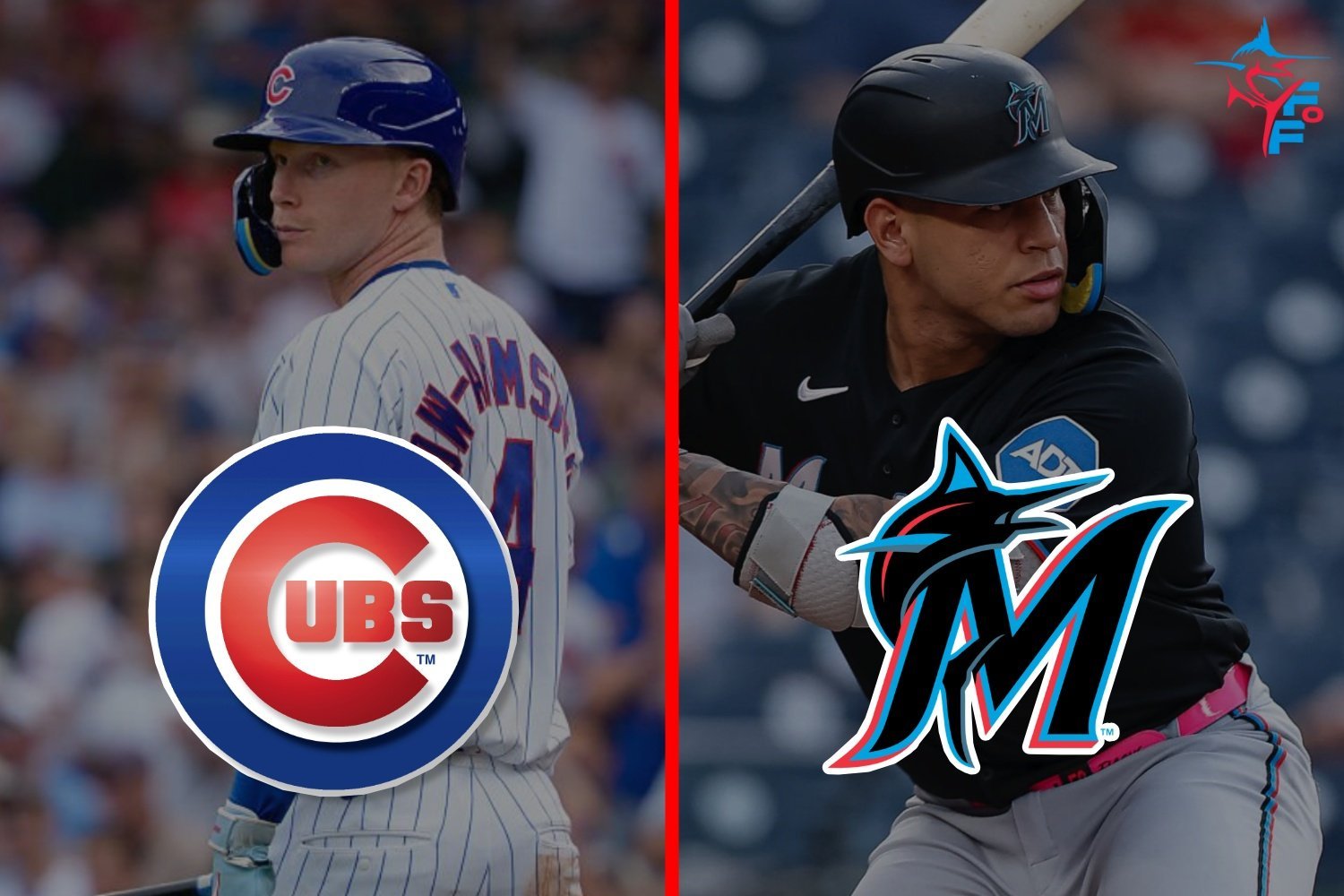 Once again in 2026, I will be monitoring Miami Marlins predictions from our valued SuperSubs, Fish On First staffers and livestream guests. Individual article pages like this one will be created prior to every Marlins series and featured prominently on the FOF site. Consistent participation is key if you want to win this annual contest. Submissions only take a few seconds. Scoring system A "perfect" series is worth three points: Earn one point for predicting which team will win the upcoming series Earn one point for predicting the precise number of victories for each team Earn one point for predicting the “Series MVP” who accumulated the highest win probability added (WPA) during the series as calculated by FanGraphs (could pick a player from either team) FOF SuperSub David Fernandez is currently atop the 2026 season leaderboard, which will be updated between every Marlins series. If you are a SuperSub, leave a comment with your Prediction Time picks on this page, or join the Marlins Discord Server and submit there. We'll feature them on the upcoming Fish On First LIVE episode and track your points throughout the season! Any picks submitted prior to the first pitch of the series opener will be counted. If you are not a SuperSub, please consider signing up here to support the FOF staff. Series preview notes Probable starting pitchers: RHP Janson Junk (MIA) vs. LHP Shota Imanaga (CHC) on Friday RHP Ryan Gusto (MIA) vs. TBD (CHC) on Saturday RHP Tyler Phillips (MIA) vs. TBD (CHC) on Sunday The Marlins rank 15th in MLB with a 100 wRC+ and 14th in MLB with a 4.05 FIP. They are 4-6 in their last 10 games and have a 42-27 record at home this season. The following Marlins players are on the injured list: Anthony Bender (15-day IL), Xavier Edwards (10-day IL), Pete Fairbanks (15-day IL), Ronny Henriquez (60-day IL), William Kempner (60-day IL), Adam Mazur (60-day IL), Andrew Nardi (60-day IL) and Robby Snelling (60-day IL). The Cubs rank first in MLB with a 115 wRC+ and 27th in MLB with a 4.71 FIP. They are 4-6 in their last 10 games and have a 38-31 record on the road this season. The following Cubs players are on the injured list: Tyler Austin (60-day IL), Ben Brown (60-day IL), Edward Cabrera (15-day IL), Hunter Harvey (60-day IL), Porter Hodge (60-day IL), Gavin Hollowell (15-day IL), Cade Horton (60-day IL), Riley Martin (60-day IL), Phil Maton (60-day IL), Shelby Miller (60-day IL), Justin Steele (60-day IL) and Dansby Swanson (10-day IL). View the full article
