


DiamondCentric
-
Posts
2,631 -
Joined
-
Last visited
Never
Content Type
Profiles
Forums
Events
News
Tutorials & Help
Major League Baseball Videos
Guides & Resources
Store
Downloads
Gallery
Everything posted by DiamondCentric
-

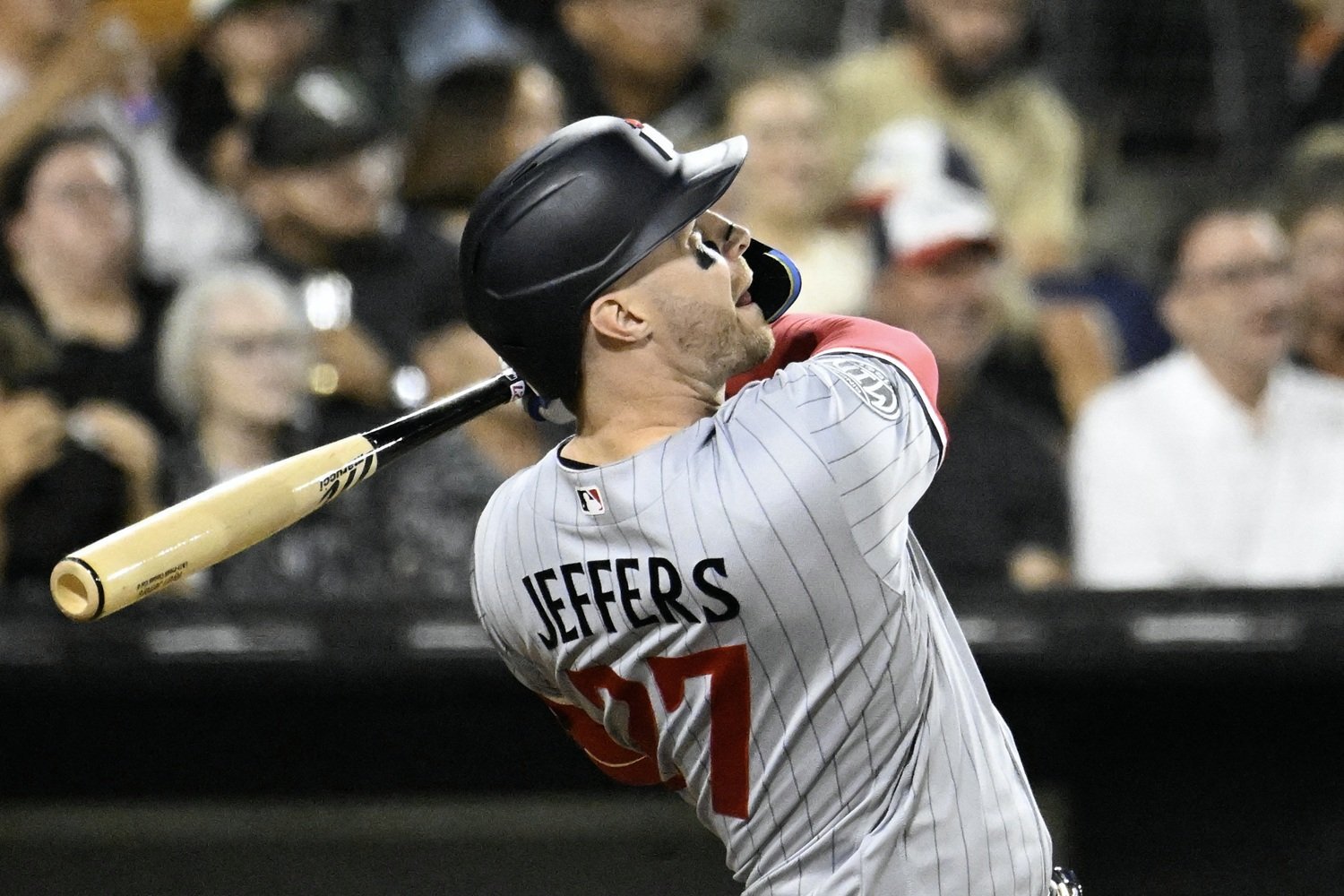 Box Score SP: Taj Bradley - 5.0 IP, 4 H, 4 ER, 2 BB, 6 K (80 pitches, 52 strikes (65%)) Home Runs: Ryan Jeffers (14) Top 3 WPA: Jeffers (0.25), Jeff Hoffman (0.12), Kody Funderburk & Yeondrys Gomez (0.09) Win Probability Chart (via FanGraphs) The Twins hadn't won on a Saturday since July 25th, and they lost the season series and any hopes of the AL Central division to the White Sox on Friday night. They faced a tough left-handed starter in Anthony Kay, and needed a victory to keep any mirage of a chance in the Wild Card race. Taj Bradley was tasked with starting strong and keeping hope alive for one more day. Something had to give on Saturday night in the South Side of Chicago, who would it be? Bradley Bends First The Twins started the game off quietly in order against Kay in the top of the first, but the White Sox were loud in their half of the inning. Bradley gave up a leadoff walk to Sam Antonacci, and two batters later he gave up a fly ball to Munetaka Murakami that would have been an out in 25 ballparks across the league. Unfortunately at Rate Field, it scraped the back of the left field wall to put the Twins in a 2-0 hole for his 30th homer of the year. That might have been bad luck on a good pitch, but two batters later Bradley grooved an 0-2 cutter down the middle, and Colson Montgomery launched his 31st homer of the year. Just like that, the Twins were facing an uphill battle yet again. Kay Breaks Eventually The Twins failed to log a hit in the first three innings, but the newly minted number two hitter Kaelen Culpepper took care of that to lead off the fourth with a single. Ryan Jeffers went down looking, but Josh Bell went down and roped a double to the gap in left to put runners on second and third with one out. After failing yet again Friday night with runners in scoring position, the White Sox probably felt like they had the Twins right where they wanted them. Royce Lewis didn't get a hit, but he refused to swing outside the zone, and he took his walk, moving the responsibility/opportunity down the line. Kody Clemens delivered the first Twins run of the game with a fielder's choice grounder and some good hustle. Brooks Lee batted right-handed, and stayed on a low fastball with two strikes to golf a double down the left field line. Bell came home to make it a 3-2 game, but that's where the rally ended. Until the top of the fifth, that is. That's when Ryan Kreidler took one (barely) for the team off of his elbow guard, and Luke Keaschall laced a single to right. Culpepper exchanged places by getting Kreidler tagged out on a grounder to third. Miguel Vargas cried foul (and in pain) as he smacked Kreidler's helmet in a throw attempt to first. After a short delay, Ryan Jeffers almost dented a human in the left field bleachers. 5-3 Minnesota! Bell laced another single up the middle, and that chased Kay as the White Sox continue to operate their games as if they are actually still in a playoff race. Kay's night was over in the fifth, and the stingy Chicago bullpen took over. Bradley Gives Little, Then a Little After Montgomery's blast in the first, Bradley more than settled down. He put the White Sox on lockdown, retiring the next 10 batters that he faced. Now staked to a two-run lead, Taj immediately lost that streak when Chase Meidroth accelerated a 98-mph fastball back up the middle for a leadoff single. Bradley got the next two men, but Meidroth snuck his way to second base on a spiked offspeed pitch. Antonacci walked, and suddenly Vargas was up as the go-ahead run in a story that Twins fans had watched too many times to be funny anymore. Vargas delivered, but luckily for Bradley and the Twins it was only a run-scoring single. Taj struck out the dangerous Murakami on a heater, and the Twins escaped the fifth inning still ahead at 5-4. Apparently the Twins are acting like they are in a playoff race too, as Derek Shelton pulled Bradley after only 80 pitches after five innings. Taj got burned early, held the line in the middle, and escaped late but left in line for the win if the Twins bullpen could keep the Chicago bats silent. The Bullpen Battle Winner Is...? Kody Funderburk held the line in the bottom of the sixth thanks to some slick catches from Keaschall in right. Then Culpepper added some insurance in the next inning. After missing a booming home run off of an off-speed pitch by mere feet on the wrong side of the left field foul pole, Kaelen stayed with a 96 mph fastball and deposited it down the right field line for a 6-4 Twins lead. Jeff Hoffman got the next four outs. A.J. Minter struck out the dangerous Murakami but surrendered a two-out double to Randal Grichuk to put the tying run, named Montgomery Colson, in the batter's box in the bottom of the eighth. The Twins added Minter at the trade deadline to get quality left-handed batters out in close games, and 95-mph of high cheese later, that is what he did. The game migrated into the ninth inning with the Twins still nursing a 6-4 advantage. The Twins couldn't push across any more insurance, so it was up to Yoendrys Gomez to lock down the ninth and to win back what was lost yesterday in the playoff race. Lewis dug out a Lee throw for out number one, Gomez swept away Meidroth on three pitches, and Lewis let the third out peacefully fall down into his glove for a well-earned victory. What’s Next? The Twins look to take their first series on the road since July 5 at Yankee Stadium. Twins righty Bailey Ober (7-4, 4.37 ERA) looks to deliver his second quality start against the South Siders in a week, after taking a no-decision last Saturday on one run over five frames. The White Sox have yet to name their starter for the last game of the season series. First pitch is scheduled for 5:20pm CDT, and will require a Peacock/NBCSN to watch from the comforts of your devices. Postgame Interviews Bullpen Usage Spreadsheet TUE WED THU FRI SAT TOT Acton 39 0 0 18 0 57 Funderburk 0 29 0 0 11 40 Minter 0 17 0 0 18 35 Nance 0 33 0 0 0 33 Hoffman 0 12 0 0 17 29 Morris 29 0 0 0 0 29 Rogers 0 7 0 19 0 26 Gomez 0 15 0 0 7 22 Adams 9 3 0 0 0 12 View the full article
 -
 Blue Jays Affiliate Overview (September 3-4) Triple-A Buffalo Bisons Series vs Worcester Red Sox (Boston Red Sox): 0-3 Season Record: 64-70 Double-A New Hampshire Fisher Cats Series vs Birmingham Rumble Ponies (New York Mets): 1-3 Season Record: 57-71 High-A Vancouver Canadians Series vs Tri-City Dust Devils (Los Angeles Angels): 3-1 Season Record: 64-66 Single-A Dunedin Blue Jays Series vs Tampa Tarpons (New York Yankees): 1-3 Season Record: 61-65 FCL Blue Jays: Season Complete DSL Blue Jays Blue: Season Complete DSL Blue Jays Red: Season Complete Triple-A Buffalo Bisons Season Record: 64-70 Series vs Worcester Red Sox (Boston Red Sox) September 3/4: Thursday's game against Worcester would span two days, after the game was suspended and finished up on Friday. Romy Gonzalez would get Worcester on the scoreboard first, knocking a single off of Buffalo starter John Klein to left and scoring Mikey Romero. The Bisons answered quickly. Rhylan Thomas and Josh Kasevich opened up the bottom of the first with singles. The base hits were followed by Yohendrick Piñango grounding into a double play, which scored Thomas and tied the game up at one. Klein got into more trouble in the second, coughing up two RBI singles. After yet another single, given up by Klein in the fourth, Daniel Guerra came into the game and was lights out. Guerra would get two flyouts and a groundout to strand the runner on the basepaths. In his second inning of work, Guerra would give up two singles to open the frame, before inducing a lineout and two groundouts to escape the jam. His fastball was 94-95 mph in his first inning of work, but was routinely 96-97 mph in his second frame. The game continued on with neither team doing much of anything until Buffalo got a walk from Kasevich, a single from Yohendrick Piñango, and a sacrifice fly by Davis Schneider in the eighth inning. In the bottom of the ninth, Buffalo loaded the bases up with walks, and then Schneider drew a bases-loaded walk to tie the game and send it into extra innings. Before the 10th inning would start, the game was delayed and then suspended due to rain. On Friday, the game would resume, and Buffalo probably wished it didn't. Vinny Capra hit a three-run home run in the top of the tenth for Worcester and only got an RBI single by Carlos Mendoza. Buffalo fell 6-4 in a game spanning two days. September 4: A day that started out bad for Buffalo, with losing the suspended game, would get much, much worse when the regularly scheduled game started. CJ Van Eyk was on the mound and struggled, to say the least. Van Eyk gave up 11 hits on the day and fought jam after jam throughout his start. In the first inning, a sacrifice fly by Worcester put Buffalo in a hole early. An RBI groundout in the third extended the Buffalo deficit, but it was a monster fourth inning that crushed the Bisons. Worcester cranked out a three-run home run and a two-run home run in the frame and put Buffalo down 7-0. On the flip side, Worcester's starter John Holobetz was too much for the Buffalo lineup. Holobetz threw six innings and only gave up three singles and three walks. The Red Sox bullpen threw three hitless innings to follow Holobetz and secured the shutout. Buffalo even resorted to pitching catcher William Simoneit in the ninth inning; he only gave up one run. Buffalo lost big, 10-0. Double-A New Hampshire Season Record: 57-71 Series vs Birmingham Rumble Ponies (New York Mets) September 3: The Thursday game between New Hampshire and Binghamton became the Dub Gleed show. The Fisher Cats started hitting and never slowed down, with Gleed as the centerpiece of just about everything that went on. In the third inning, Eric Snow and Dub Gleed had RBI singles before Carter Cunningham launched a three-run blast for a home run. The next inning saw much of the same, with Adrian Pinto hitting an RBI single and then Gleed crushed a three-run home run himself. Aaron Parker would cap off the inning with a huge home run of his own as well. Up 10-0, New Hampshire put it on repeat, as they continued hitting. Pinto and Gleed added RBI singles in the fifth, as Victor Arias, Edward Duran, and Pinto again added runs in the sixth inning. Cutter Coffey finished things in the eighth inning with a home run to put New Hampshire up easily in this one. New Hampshire won this one 17-5 on the back of their 21 hits and six walks. September 4: The Friday game between New Hampshire and Binghamton was a much different one from the previous day. Nolan Perry was on the mound and had his best all-around performance at Double-A for the Fisher Cats. Perry took a no-hitter across his five innings, only allowing two walks and didn't give up a run. He struck out eight as his swing-and-miss stuff was finally showing at the level. Unfortunately, the bats were not as equally good. Alexis Hernandez had a double, and Mathieu Vallee, Carter Cunningham, and Eric Snow contributed singles. That was the extent of the Fisher Cats' offense. In the eighth inning, Binghamton ended up with a hit-by-pitch, a walk, and then a double by Mitch Voit to score two runs. New Hampshire lost this one 2-0, even though they outhit Binghamton four hits to two. High-A Vancouver Season Record: 64-66 Series vs Tri-City Dust Devils (Los Angeles Angels) September 3: There may be a bit of a hangover after the Canadians clinched the playoffs, as they got blown out by the Dust Devils. Troy Guthrie struggled to miss bats, as in 4.1 innings pitched, he gave up 11 hits, only striking out three batters and allowing seven runs, with six of them being earned. The offense struggled to score despite having 11 runners in scoring position; they were only able to get home three runs, with two of them coming from a Jean Joseph homer. Brandon Barriera also didn’t miss many bats, striking out one batter in three innings of work, and was hurt by some shaky defense as he allowed three runs, but only one of them was earned. This was a tough loss at 10-3. September 4: This looked like a lost cause early on, as Landen Maroudis gave up a first-inning three-run homer to Kevyn Castillo. Dameury Pena knocked in a run on a groundout, and Austin Smith brought it within one with an RBI single in the third, but a five-run inning from the Dust Devils seemingly put this game out of reach. JoJo Parker started off a rally in the sixth inning, however, as his RBI double broke open the floodgates. Jake Casey’s 12th homer of the year brought the lead to just three, then Gable Mitchell was hit by a pitch with the bases loaded to make it a four-run inning. Gilberto Batista gave up a solo shot to Adrian Placencia to make it a three-run lead again, but Casey hit a sac fly the next inning, then Maddox Latta brought the lead to just one with an RBI single, and David Calabrese took the lead with a two-run homer. Batista gave up his second homer to make it an even game in the seventh, and that lasted through the ninth, leading to extra innings. Reece Wissinger was awesome, allowing just one hit in three innings of work, striking out three batters, and that helped the Canadians take the win in the tenth, as Ryan Sprock walked with the bases loaded, Jaxson West then drove in a run on a single, before Daumery Pena capped it off with another RBI single. The Canadians won this barn burner 13-10 in extras. Single-A Dunedin Season Record: 61-65 Series vs Tampa Tarpons (New York Yankees) September 3, Game 1: Miguel Pantoja was nearly able to work his way around five walks, as he pitched 3.1 innings, allowing two runs due to a two-run shot in the fourth inning. The Jays scored the first run, however, as a throwing error on a stolen base attempt and a wild pitch allowed Enmanuel Bonilla to cross home plate. Brayden Heidel struggled in relief after replacing Pantoja; the lead grew to four runs as he gave up six hits, including two homers in the sixth inning, which resulted in three earned runs. Jake Bennett hit his sixth homer of the season in the seventh inning to cut the lead in half, but with the game being the first of a doubleheader, there was not enough room to complete the comeback, in a 5-3 loss for the D-Jays. September 3, Game 2: The second game of the doubleheader was a whimper from the D-Jays, although both teams only allowed two hits each, Carson Messina almost walked the Tarpons’ entire lineup with seven walks. Despite those walks, he was mostly able to prevent hits, with the biggest one being in the second inning: an RBI double that scored one batter, before Messina walked in another run. The Jays weren’t nearly as patient, as they only had two walks, and despite getting some runners on base, they kept on killing rallies with inning-ending double plays. They fell to the Tarpons 2-0. September 4: Some solid pitching and hitting led to a good outcome for the D-Jays. Victor Espiritu and Josh Winckowski pitched four scoreless innings combined, only allowing two hits and striking out seven. Aldo Gaxiola and Ryan Cooney both drove in runs in the top of the fourth inning to take the lead, and Jack Nedrow made a throwing error to allow one run to score in the fifth, but Brayden Martin’s insurance RBI single ended up making the difference, as in the seventh inning Luke Pettitte homered off of Nedrow to make it a one-run game. Rehabbing RJ Schreck helped the Jays score extra insurance with a homer, and some shaky pitching and defense allowed two more runs to score on a wild pitch and throwing error. Reese Bassinger did give up a homer in the bottom of the ninth, but the Jays still pulled away with this one, 6-3. FCL Blue Jays Season Record: 38-20 Season Completed DSL Blue Jays Blue Season Record: 20-35 Season Completed DSL Blue Jays Red Season Record: 33-18 Playoffs: 2-1 Season Completed View the full article
 -
 Chicago Cubs Minor League Report (September 5) Affiliate Overview Triple-A Iowa Cubs Series at Columbus Clippers (Cleveland Guardians): Clippers lead, 3-1 Season Record: 57–76-1 Double-A Knoxville Smokies Series vs. Chattanooga Lookouts (Cincinnati Reds): Tied, 2-2 Season Record: 69–60 High-A South Bend Cubs Series vs. Cedar Rapids Kernels (Minnesota Twins): Cubs lead, 4-0 Season Record: 76–50 Single-A Myrtle Beach Pelicans Series vs. Columbia Fireflies (Kansas City Royals): Pelicans lead, 3-1 Season Record: 50–77 Triple-A: Iowa Cubs Season Record: 57–76-1 Series Opponent: Columbus Clippers (72-61) Series Standing: Trail, 3-1 Sept. 4: The Iowa Cubs dropped their contest to the Columbus Clippers, 7-1, on Friday night at Huntington Park. Ben Cowles (2-for-4) put the Cubs in front with an RBI-double in the third but the Clippers immediately grabbed the lead for good with two runs in the home half of the frame. Columbus would then put the game away with two runs in the seventh and three more in the eighth to cruise to the win. Braxton Garrett got the start on the mound for Iowa and took the loss, falling to 5-6 on the season. Garrett allowed two runs on three hits over 4 2/3 innings of work, walked three and struck out five. Edward Cabrera made his second rehab appearance with the I-Cubs, again coming out of the bullpen, and gave up four runs on three hits in just 2/3 of an inning, walked two and whiffed one. Cowles’ two hits were the only hits from the Iowa offense in the ballgame, as they took just two at-bats with runners in scoring position, going 0-for-2. Double-A: Knoxville Smokies Season Record: 69–60 Series Opponent: Chattanooga Lookouts (58–72) Series Standing: Tied, 2-2 Sept. 4: The Knoxville Smokies evened their series vs. the Chattanooga Lookouts with an 8-3 victory on Friday night at Covenant Health Park. Alex Ramírez (1-for-5) led off the game with a solo blast, his 14th of the season, to give the Smokies an early lead but the Lookouts quickly tied the game with a run in the second. Knoxville went back in front in the third on Edgar Alvarez’ (1-for-3) RBI-double but again Chattanooga had an answer with a run in the fourth to make it 2-2. The visitors would take the lead with a run in the sixth but the Smokies scored three runs in the home half of the frame to make it 5-3. Alex Madera (4-for-4) doubled home a pair and came around to score on Drew Bowser’s (1-for-4) RBI-single. Miguel Useche’s (1-for-3) RBI-double and Ariel Armas’ (1-for-4) RBI-groundout in the seventh made it 7-3 and Karson Simas added to the lead with an RBI-double in the eighth to make it 8-3. Luis Martinez-Gomez got the start on the mound for Knoxville and took no decision. Martinez-Gomez allowed two runs, one earned, on two hits over three innings of work, walked two and struck out three. High-A: South Bend Cubs Season Record: 76–50 Series Opponent: Cedar Rapids Kernels (47–81) Series Standing: Lead, 4-0 Sept. 4: The South Bend Cubs earned a series victory by winning their fourth-straight game over the Cedar Rapids Kernels, 14-3, on Friday night at Four Winds Field. The Cubs took a 4-0 lead in the first, highlighted by a two-run double from Alexey Lumpuy (5-for-5). Justin Stransky (0-for-1) made it 5-0 in the third with his second sacrifice fly of the ballgame. The Kernels made it 5-3 after scoring twice in the fourth and one more in the fifth but South Bend broke the game open with seven runs in the seventh. Kade Snell (1-for-5) started the scoring with a fielder’s-choice RBI and Matt Halbach (2-for-3) drew a walk with the bases loaded two batters later to bring in a run. Lumpuy picked up an RBI on a single, which was followed by another bases-loaded walk, this time drawn by Stransky. Brennan Hudson (1-for-5) then delivered the biggest hit of the inning, a bases-clearing double to bring home three runs. The Cubs added two more in the eighth, as Lumpuy tallied hit No. 5 and RBI No. 4 on a double and Stransky earned his fourth RBI of the ballgame on his third sacrifice fly to make it 14-3. Alfredo Romero got the start on the mound for the Cubs and took no decision. Romero allowed two runs, one earned, on three hits over 3 1/3 innings of work, walked three and struck out four. Single-A: Myrtle Beach Pelicans Season Record: 50–77 Series Opponent: Columbia Fireflies (64–65) Series Standing: Lead, 3-1 Sept. 4: The Myrtle Beach Pelicans earned at least a series split by winning their third-straight game over the Columbia Fireflies, 7-2, on Friday night at Pelicans Ballpark. The Fireflies took a 2-0 lead in the first but the Pelicans were able to cut that lead in half with a run in the second on Ivan Cespedes’ (0-for-3) RBI-groundout. Juan Tomas’ (1-for-4) first-career home run in the fifth made it 2-2. Myrtle Beach then took the lead for good with five runs in the seventh to make it 7-2. Darlyn De Leon (1-for-5) put the Pelicans in front with an RBI-single and came around to score on Alexis Hernandez’ (1-for-3) two-run single. Corey Nunez added a run on an RBI-fielder’s choice, with another run scoring on an error on the play. Riely Hunsaker got the start on the mound for Myrtle Beach and took no decision. Hunsaker allowed two runs, one earned, on four hits over five innings of work, walked two and struck out four. Luis Mata and Victor Zarraga each tossed two shutout innings in relief and neither allowed a hit. View the full article
 -
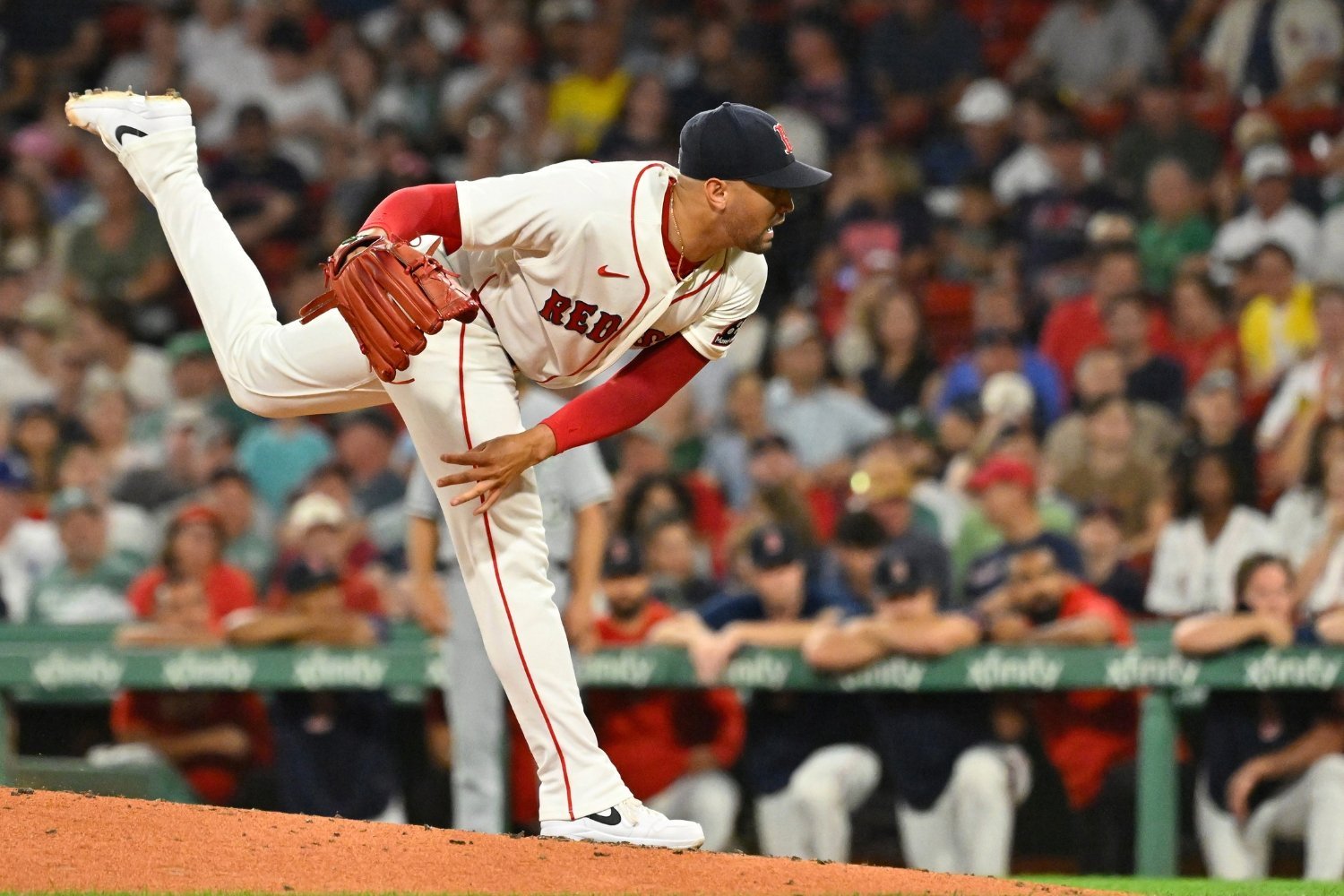 Has the magic of the changeup disappeared? Is the workload and pressure too much? Has the league made adjustments and is the improvement in velocity not enough? Those are some of the questions surrounding Boston Red Sox left-hander Jovani Morán, who is in the midst of a serious second-half slide. Morán posted a 3.83 xFIP in 25 outings during that initial stretch, but since the All-Star break, that average has risen to 4.78 and his opponents’ OPS has increased from .550 to .788. To analyze the reasons for his inefficiency, we have to begin by remembering one key point: Morán pitched only four innings in 2025 due to Tommy John surgery that kept him out for the remainder of the season. The last season in which he had seen action was 2023, when he appeared in 43 games and posted an 83 ERA+ with the Minnesota Twins. This year he has been back with Boston, and has already matched his career-high of 43 appearances, although with a heavier workload, with 58 ⅓ innings, surpassing the 42 ⅓ innings he pitched in 2023. So, for 29-year-old Morán, this season has been a story of overcoming adversity. His changeup is back and has been lethal, generating a 48.8 whiff rate, and his fastball, although it has lost some velocity, has held opposing hitters to a .152 batting average. Even with this decline in the second half of the season, Morán still remains in the 95th percentile in HardHit%, the 91st in whiff rate, and the 89th in xBA, which demonstrates his ability to limit hard contact and balls put in play. But this profile was not built easily. Morán had to earn his opportunities and make his way into one of the most dominant and stable bullpens in the majors this year. The Red Sox gave him some secondary roles until he earned their trust. Of his 43 relief appearances, Morán has appeared in 22 of them to protect leads or keep the score tied. His other 21 appearances have come in situations when the team was trailing, with 16 of them from the sixth inning onward, and 12 when the opponent had a lead of three or more runs. In other words, throughout the year, Boston has used him in both roles, and the statistics show that Morán has been able to handle the pressure. Of course, he has had to deal with several difficult situations, and in three of his worst failures, the Red Sox were unable to recover. Date Entered Exited Team Opp Result Inngs Dec DR IR IS IP H R ER HR BB SO BF ERA FIP 20/4/2026 6t --- 0 out tie 6t 1-3 0 out d1 BOS DET W, 8-6 6-6 1 0 0 0 1 1 1 0 2 0 3 2.03 3.17 12/5/2026 1t --- 0 out tie 1t 3 out d1 BOS PHI L, 1-2 GS-1 L(0-1) 1 - - 1 1 1 1 1 0 2 4 3.18 5.17 23/5/2026 1t --- 0 out tie 1t 3 out d2 BOS MIN L, 2-4 GS-1 L(0-2) 2 - - 1 3 2 2 0 0 1 6 3.38 4.26 31/7/2026 5b 1-- 2 out a1 6b 1-- 0 out d1 BOS @ LAD W, 9-4 5-6 2 1 1 1/3 3 1 1 1 0 0 4 2.84 3.82 19/8/2026 10t -2- 0 out tie 10t 3 out d2 BOS ARI L, 6-7 (10) 10-GF(10) L(2-3) 1 0 0 1 1 2 1 0 3 0 6 3.06 4.04 The first two losses came in the first half of the season, when Morán was tested as an opener. It was not the team’s best moment, and in the end the offense could not erase the early deficit. Then came a failure against the Los Angeles Dodgers, when Morán left a changeup in the middle of the zone and Shohei Ohtani hit a home run that gave the Dodgers a 4-3 lead in the bottom of the fifth. The Red Sox came back with a five-run rally in the seventh, and Morán’s misstep did not hurt the team. The most recent story was on August 19, when Morán entered to pitch in the 10th inning and allowed a couple of runs after issuing three walks to six batters. That summarizes his most difficult moments so far this season, but the statistics show that, in general, he has been able to overcome the pressure. Player Split Year sOPS+ ERA G GS IP SO/9 SO/BB BA OBP SLG OPS Erik Miller Late & Close 2026 25 0.00 8 0 9 16.0 4.0 .156 .270 .156 .427 Garrett Whitlock Late & Close 2026 27 1.32 36 0 34 10.6 13.3 .179 .197 .248 .445 Jovani Morán Late & Close 2026 30 0.73 12 0 12.1 11.0 1.7 .119 .275 .167 .441 Danny Coulombe Late & Close 2026 56 5.14 12 0 7 3.9 1.5 .240 .296 .240 .536 Aroldis Chapman Late & Close 2026 70 2.06 44 0 39.1 11.4 3.1 .196 .277 .315 .591 Brayan Bello Late & Close 2026 79 1.59 5 0 5.2 6.4 1.3 .238 .333 .286 .619 Greg Weissert Late & Close 2026 104 3.48 14 0 10.1 7.8 2.3 .275 .356 .350 .706 Tyron Guerrero Late & Close 2026 122 4.80 21 0 15 5.4 3.0 .300 .344 .433 .777 Justin Slaten Late & Close 2026 126 5.40 24 0 18.1 13.3 5.4 .276 .321 .474 .795 After Erik Miller and Garret Whitlock, Morán has allowed the lowest sOPS+ in the entire bullpen in leverage situations, with a 0.73 ERA and the lowest batting average allowed. This is an interesting aspect that explains how Morán has responded in his role, but it still does not answer our question about what has caused his inconsistencies. The answer is in workload management, and it is more revealing than I expected. SPLIT G IP H R ER HR BF ERA BA OBP SLG OPS K9 BB9 K/BB 20+ Pitches 22 28 2/3 21 16 16 7 123 5.02 .198 .301 .406 .706 9.10 4.39 4.71 1-20 Pitches 21 12 2/3 6 3 3 0 49 2.13 .140 .224 .186 .411 9.94 3.55 6.39 0-1 Days of Rest 13 13 16 12 11 5 66 7.62 .296 .415 .611 1.026 9.00 7.62 1.38 Here are the two turning points that connect with our concerns about his workload: when Morán throws between one and 20 pitches, his opponents have posted a .411 OPS with a 6.39 K/BB. That story of dominance changes considerably once he surpasses the 20-pitch threshold, with seven home runs allowed and a .706 OPS against 123 batters. The following situation reinforces the workload problem even further: In 13 outings between consecutive appearances or with one day of rest, Morán has been at his most vulnerable. In those spots, he's running a 7.62 ERA, a 1.026 OPS allowed and only a 1.38 K/BB. In 12 appearances during the month of August, Morán posted a 5.79 ERA and a 6.38 FIP, with 13 strikeouts, 10 walks and three home runs allowed in 14 innings. Only three of those relief appearances came on consecutive days, including the worst of all, when he allowed five runs and two home runs in 1 ⅓ innings against the New York Yankees on August 30. In the end, Morán closed the month without allowing runs in nine of his 12 relief appearances, but in only two of them, against the Pirates and the Yankees, he ended up allowing eight runs. That last image, I believe, best illustrates Morán’s battle to maintain the consistency of his pitches, and showed that the high volume of work is weighing on him at the end of the season. Even with the recent loss of Tayron Guerrero to the injured list, the Red Sox have ways to handle high-pressure situations in the bullpen; giving the southpaw a chance to rest a little more will benefit the team greatly in the playoffs. View the full article
 -
Vahn Lackey Is Already On A Fast Track To The Majors
DiamondCentric posted an article in Twins Daily
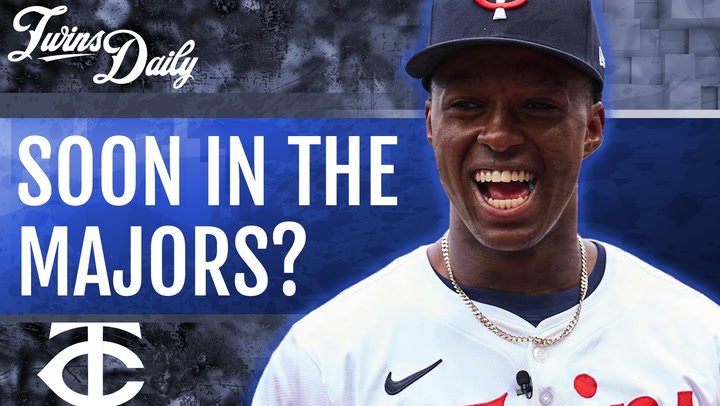 The Twins may have found something special in Vahn Lackey, their first-round pick in the 2026 MLB Draft. Lackey's combination of plate discipline, athleticism, and offensive upside is already showing up early in his professional career. View the full article
 -
 It took until the final weekend of the Class A season, but Shane Sdao made his professional debut after being drafted by the New York Mets in the fourth round this summer. The left-hander out of Texas A&M University pitched the second inning of St. Lucie's 10-6 home victory over Jupiter on Friday. He struck out three, but only after allowing a double and a home run to his first two batters. Fifth-round selection Peyton Prescott made his pro debut ahead of Sdao. The right-hander started and worked a scoreless top of the first, with two strikeouts. Seventh-round selection Aidan Keenan pitched a scoreless third and fourth, striking out three as he worked around three hits. Another 2026 draftee, 11th-round outfielder Kuhio Aloy, had the key hit. He launched a grand slam in the bottom of the first to give St. Lucie a 4-0 lead. That was the first of four Mets home runs in the game. Yovanny Rodriguez went deep twice and Branny De Oleo homered once. St. Lucie built a 10-2 lead through six innings. Elsewhere in the organization: Syracuse split a doubleheader with Rochester. It lost Game 1 5-0 and won Game 2 7-4 in nine innings on Hayden Senger’s walk-off three-run homer. Binghamton got a two-run double from Mitch Voit in the eighth inning to edge New Hampshire 2-0. Four Rumble Ponies pitchers combined on a four-hit shutout. Brooklyn melted down in the eighth inning and lost 9-5 to Frederick. The Keys scored seven runs in the frame to erase a 5-1 Cyclones lead. New York Mets Transactions No Roster Moves Syracuse Goes Down Quietly In Opener The Mets were held to three hits in Game 1 and could not respond after Rochester broke through late. Émilien Pitre singled in the first, Senger singled in the third, and MJ Melendez hit a ground-rule double in the seventh. Syracuse never had more than one runner on base in an inning. Jack Wenninger started and worked four-plus innings. He left after allowing a single and a double to the first two batters in the fifth in a 0-0 game. Dan Hammer came in and allowed those inherited runners to score. A groundout brought in the first run, and a fielder’s choice brought home the second. Rochester put the game away in the sixth against Hammer. The Red Wings got the first two batters on with a walk and a single, and after an infield popout, a three-run homer made it 5-0. Syracuse Batting Player AB R H RBI BB K D'Andre Smith 3 0 0 0 0 2 Émilien Pitre 3 0 1 0 0 1 Ronny Mauricio 3 0 0 0 0 3 MJ Melendez 2 0 1 0 1 0 Eric Wagaman 3 0 0 0 0 0 Vidal Bruján 3 0 0 0 0 1 Ryan Clifford 2 0 0 0 0 1 Nick Lorusso 2 0 0 0 0 0 Hayden Senger 2 0 1 0 0 1 Totals 23 0 3 0 1 9 Syracuse Pitching Player IP H R ER BB K HR Jack Wenninger 4 4 2 2 3 5 0 Dan Hammer 1 1/3 2 3 3 1 0 1 Saul Garcia 1 2/3 0 0 0 0 1 0 Senger Walk-Off Caps Wild Finish, Salvages Split The final seven runs of this game scored in extra innings. Each team scored twice in the eighth before Senger produced the final three in the ninth with an opposite-field drive to right-center field, scoring Eric Wagaman and Jose Ramos ahead of him. St. Lucie's seven pitchers combined to strike out 17 in a dominating bullpen game. St. Lucie Batting Player AB R H RBI BB K Boston Baro 5 2 2 1 0 1 Branny De Oleo 3 2 1 2 1 1 Yovanny Rodriguez 3 3 2 2 1 1 Kuhio Aloy 3 1 1 4 1 1 Jack Toomey 4 0 0 0 0 1 Julio Zayas 4 0 0 0 0 2 Jeremy Rodriguez 2 2 0 0 2 0 Vladi Gomez 3 0 0 0 1 0 Yunior Amparo 3 0 1 1 1 1 Totals 30 10 7 10 7 8 St. Lucie Pitching Player IP H R ER BB K HR Peyton Prescott 1 0 0 0 1 2 0 Shane Sdao 1 3 2 2 0 3 1 Aidan Keenan 2 3 0 0 0 3 0 AJ Krodel 1 1/3 1 0 0 2 2 0 Nate Isler 1 1 3 3 2 2 0 Tyler McLoughlin 1 1/3 1 1 1 1 3 1 Zack Mack 1 1/3 1 0 0 0 2 0 Top-20 Prospect Performance Jonah Tong: DNP Jack Wenninger: 4 IP, 4 H, 2 R, 2 ER, 3 BB, 5 K, L Elian Pena: DNP Mitch Voit: 1-for-4, 2B, 2 RBI, K Ryan Clifford: 0-for-5, K Nick Morabito: DNP Jonathan Santucci: DNP Carson Wiggins: DNP Jacob Reimer: 0-for-4, 2 K Aiden Robbins: 0-for-3, BB, 2 K Randy Guzman: DNP Wandy Asigen: DNP Chris Suero: 0-for-4, 2 K Jefferson Rojas: 0-for-2, 2 BB, K Will Watson: DNP Shane Sdao: 1 IP, 3 H, 2 R, 2 ER, 0 BB, 3 K, HR Eli Serrano III: DNP Antonio Jimenez: 1-for-3, 2 K Emilien Pitre: 1-for-4, 2 K Dylan Ross: 1 IP, 3 H, 2 R, 1 ER, 0 BB, 1 K, HR View the full article
 -
 Let's take a look at how the Boston Red Sox's farm system did on Friday. Triple-A Worcester Red Sox Series @ Buffalo Bisons (Toronto Blue Jays): 3-0 Season Record: 69-61 The WooSox played a game and a half on Friday, completing the remainder of Thursday’s game. They swept the pair, improving to a four-game win streak. In the completion of Thursday’s game, which was suspended in the 10th inning, Worcester won behind a clutch three-run performance in extras. After the late resumption, veteran reliever Seth Martinez was called upon to preserve the three-run lead. Martinez got off to a hot start, striking out the first two batters he faced. But then, Martinez faltered. With the extra-innings runner at second base, Carlos Mendoza smoked a line drive to shallow right field, scoring Jay Harry as the Bisons inched closer. However, Martinez would shut down any sort of comeback, forcing a groundout to seal the win. The Worcester offense was the story to watch as the game resumed. Kristian Campbell led off the inning by drawing a walk, giving the WooSox two baserunners with Anthony Siegler automatically on second. Seigler advanced to third on an Allan Castro flyout before Vinny Capra did some damage. Capra swung on and hammered a three-run line drive home run to left field, giving Worcester a 6-3 lead that carried them to a win. With vibes high coming off the clutch performance, Worcester cruised to a 10-0 win in the day’s second game. John Holobetz got the start for Worcester, spinning a six-inning gem that kept Buffalo scoreless. Holobetz allowed three hits and issued three walks, striking out four as he stymied the Bisons offense. The strong performance would carry over as Tyler Samaniego entered in the seventh frame. Samaniego walked one and struck out another before Patrick Halligan took over. Halligan was perfect in the eighth, striking out a pair and keeping the shutout alive. Looking to close out a terrific bullpen performance, Osvaldo Berrios took the ninth inning of the shutout. Berrios was perfect as well, keeping Buffalo at three total hits and just seven baserunners all game. Worcester’s offense was even more unstoppable than the bullpen. The bats registered a staggering 19 hits and converted for 10 runs. Nathan Hickey went 3-for-4 with three RBIs, Worcester’s clear MVP. Franklin Arias went 4-for-6 with an RBI as his average increased to .317 with a .860 OPS. With two runners in scoring position in the first, Arias scored on a Nate Eaton sac fly. The early lead grew in the third inning when Seigler drove in Tsung-Che Cheng on a groundout. Hickey broke the game wide open an inning later, driving in Castro and Capra on a deep three-run blast. Ward decided he wanted in on the fun later in the inning, slapping his fourth homer of the season to right center as Cheng scored again. With a 7-0 lead in the seventh, Tomás Nido stepped to the dish with the bases-loaded. Nido hit a sharp base-hit past the shortstop as Eaton scored. Later in the inning, Castro would score as Ward reached on a fielding error. Holding a formidable lead late, Arias put a bow on the blowout. His ninth Triple-A double and fourth hit of the game scored Hickey as Worcester reached 10 runs. Double-A Portland Sea Dogs Series @ Chesapeake Baysox (Baltimore Orioles): 1-3 Season Record: 65-64 Portland went 51-42 with Arias on the roster. Since the top prospect’s promotion to Triple-A, Portland has gone a middling 14-20. The Sea Dogs’ struggles continued to pile up on Friday as they fell in a low-scoring contest. Morgan McSweeney got the start on Friday. McSweeney let up six hits in four frames, but was able to limit the Baysox to just two runs. He walked one and struck out four before Jeremy Wu-Yelland took over. Wu-Yelland entered in the fifth, throwing two one-run frames. He let up two hits and an unearned run as Chesapeake built on their lead ever so slightly. His four strikeouts matched McSweeney as he walked one as well. Joe Vogatsky was called upon to finish the contest, and he turned in the most successful outing of the day from any Portland pitcher. He let up one run and struck out a pair as he kept the Baysox scoreless, giving Portland a late chance. Unfortunately for Vogatsky and the rest of the team, Portland’s offense struggled through Friday’s contest. The Sea Dogs had 10 opportunities with RISP, but failed to do any damage. Henry Godbout was the biggest standout for Portland, tallying three hits and claiming responsibility for its only RBI. The run was too little and it came too late. With runners on the corners in the eighth inning, Godbout laced a single through the infield. Ahbram Liendo crossed home, but the efforts were in vain as Portland fell 3-1. High-A Greenville Drive Series @ Bowling Green Hot Rods (Tampa Bay Rays): 2-2 Season Record: 58-69 Greenville lost on a walk-off despite an excellent combined effort from the pitching staff. It was the Drive’s second one-run loss in two days and the offense let multiple opportunities pass it by. Yordanny Monegro started for the second time this season, part of a rehab assignment from Double-A. He turned in two so-so frames but struck out four. He allowed two runs on a pair of hits and issued one walk. Shea Sprague entered in the third inning, taking on a bulk relief role. Sprague let up five hits but was otherwise excellent, shutting down the Hot Rods and punching out seven batters. Aaron Nixon took the final 2⅓ innings of Friday’s game, but he wasn’t as dominant as Sprague. With the game tied going into the tenth inning, Nixon recorded one out before giving up a walk-off single as Greenville lost the game. The Drive did a decent job getting on base, totaling nine baserunners, but struggled to make them count. Greenville went 2-for-12 with RISP, stranding seven as they passed up countless opportunities to change the outcome of Friday’s game. Gerardo Rodriguez and Stanley Tucker were each responsible for an RBI as Jake Schaffner led the team with two hits. Each of the Drive’s runs came in the third inning as they tied the ballgame. Tucker got the Drive on the board with his third homer of the year, a solo shot, to right center. Later in the frame, Rodriguez drove Schaffner home on a line drive single to center. It was all that Greenville could muster, falling by one in a game that could have gone its way plenty of times. Low-A Salem RidgeYaks Series vs. Hull City Howlers (Cleveland Guardians): 3-1 Season Record: 55-74 With just three games left to play in the 2026 season, Salem entered Friday’s game eager to set itself up to win its final series of the season. Salem did just that, racking up 11 runs en route to a seven-run win. Cam Padgett made what will likely be the last start of his season, spinning 3⅔ shutout innings. He walked one and gave up four hits, striking out five as he got Salem off to a good start. Carson Revay came in next, succeeding Padgett in solid fashion as Hull City got on the board. Over 1⅔ innings, Revay allowed one run on a pair of hits, walking one as well. He struck out two before Nicolas De La Cruz entered. De La Cruz won his seventh game of the season, allowing one run and issuing a walk across 2⅓ innings. He struck out four as he won Friday’s honors. Harry Blum took the final 1⅓ frames, allowing a pair of runs to score before he stopped the bleeding. He walked one and gave up two hits, but had plenty of insurance runs to back him up. Josue Brito and Kleyver Salazar were responsible for most of Salem’s offense, combining for five of the Yaks’ nine RBIs. Salazar went 4-for-4 with two RBIs as Brito went 1-for-4 with three RBIs. Salazar got the Yaks on the board in the third inning, grabbing a one-run lead. With two runners on, Salazar blooped a single to right as Wills Maginnis scored. Brito, the very next batter, would bring in Salazar and Colton Coates with a three-run homer. Adonys Guzman stepped to the plate following Brito, launching a home run of his own. The back-to-back blasts gave Salem an early five-run advantage. In the fifth, Salem would strike again. Starlyn Nunez drove in Salazar on an RBI double to right before Anderson Fermin hit a double of his own, scoring Nunez and Guzman. Owning a seven-run lead in the sixth, Salazar would add one more. He hit a single to left field that scored Maginnis for a second time. Salazar and Coates would score on a fielding error later in the inning as Avinson Pinto reached, giving the Yaks an insurmountable nine-run lead that they held until the end. View the full article
 -
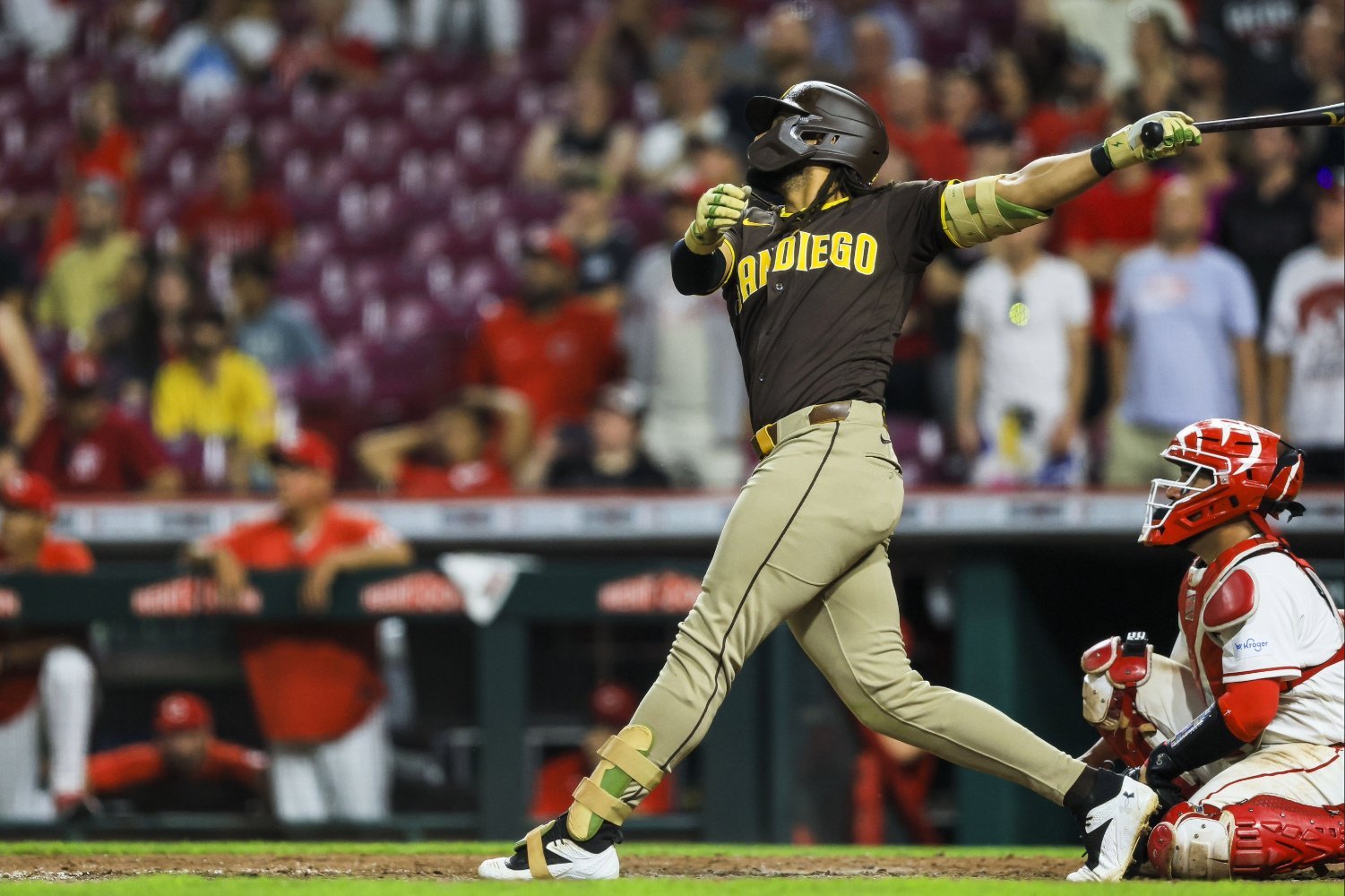 The month of August was a promising one for the San Diego Padres. They went 17-11 and made a statement to the league with a three-game sweep of the National League-leading Milwaukee Brewers. The team ended the month holding a narrow lead for the final NL wild-card spot. While the Padres have often relied on a strong bullpen and streaky offense this season, August featured a more balanced effort as several hitters began to find their stride. With the Friars entering the final stretch of the regular season, maintaining that consistency will be critical if it hopes to fend off a crowded wild-card race. While several hitters have played a role in that improved consistency, these three offensive performances stood out as essential to the team's success in August. Ranking Padres' Best Hitters In August #3: Ty France An unsung contributor in the Padres lineup, France has been one of the team’s most consistent offensive players throughout the season. He has hit below .280 in just one month this year and continued that consistency in August, batting above .300 for the second consecutive month. France hit .303/.400/.434 with a .834 OPS in August while recording 30 hits, three home runs and 11 RBIs. Batting primarily out of the cleanup spot, he has represented a reliable presence in the middle of San Diego’s lineup. His .370 wOBA ranks among the top 7% of hitters in the league, highlighting the value he has provided a hit-or-miss offense and strengthening the argument for the team to extend him before his one-year contract expires. #2: Jackson Merrill Jackson Merrill finding his swing heading into the final stretch of the regular season could be exactly what the Padres need at the right time. After a quiet start to the season, Merrill began showing signs of life in July and carried that momentum into August. After batting .300 in the former month, Merrill followed it by hitting .260/.316/.538 with an .854 OPS and seven home runs in the latter. While his batting average took a dip, his power and run production took a significant step forward. Merrill led the team with 22 RBIs during the month, ranking among the top seven hitters in the league. Despite his overall struggles earlier in the season, Merrill has kept his clutch gene. With runners in scoring position, he is batting .286 with three home runs and 42 RBIs. The Padres' decision to move him from third to fifth in the lineup has played into his strength as a run producer, as he recently eclipsed 70 RBIs. #1: Fernando Tatis Jr. It’s hard to believe that Fernando Tatis Jr. went without a home run through the first two months of the season. After a disappointing start, Tatis has been the catalyst for the Padres getting back into the National League wild-card race. Since the All-Star break, Tatis has lead the team with 14 home runs and August marked his strongest performance of the season. He hit nine home runs during the month, his most in a single month since 2021, trailing only NL MVP favorite Pete Crow-Armstrong in the Senior Circuit. Tatis’ 48.9% hard-hit rate ranked among the top 10 in the league, but his improved plate approach may be even more encouraging. He chased pitched outside the strike zone at just a 22.6% rate, his lowest mark of the season, while missing on only 9.5% of his swings at pitches in the zone. The combination of improved discipline and consistent hard contact has helped fuel his elite form. If Tatis can maintain that approach, his production will be a major factor in the Padres' postseason push. View the full article
 -
 Jacob Berry's sacrifice fly in the tenth pushed Omaha past St. Paul 3-2, backed by hitless relief from Carlos Duran and Ethan Bosacker. Quad Cities scored three in the ninth to win 6-4 on Nolan Sailors' two-run single, with Kendry Chourio allowing one run to start. Spencer Nivens had three hits in Northwest Arkansas' 13-5 loss, where Dennis Colleran Jr. threw two scoreless innings. Camden Johnson had two hits and drove in a run for Columbia. Kansas City Royals Transactions Kansas City Royals sent LF Drew Waters outright to Omaha Storm Chasers. Jacob Berry Walks Off St. Paul In The Tenth For Omaha The Omaha Storm Chasers beat the St. Paul Saints 3-2 in ten innings, scoring the winning run without a hit in the final frame. Omaha finished with eight hits, six walks, and eleven runners left on base. Peyton Wilson went 1-for-5 with a double, two RBI, and two strikeouts. Jacob Berry went 2-for-4 with a double and an RBI. Abraham Toro drew three walks and scored a run, while Alejo Lopez went 1-for-4 and scored. Omaha broke through in the seventh. Jorge Alfaro was hit by a pitch, Brandon Drury singled to left, and Colton Becker came on to run. Lopez bunted into a force play that retired Alfaro at third, and Gavin Cross struck out. Wilson then doubled to center to score Becker and Lopez for a 2-1 lead. St. Paul tied it in the eighth after a fielding error by Berry put a runner in scoring position. In the tenth, Abraham Toro started as the zombie runner at second. Carson Roccaforte was intentionally walked, Luca Tresh moved both runners up with a sacrifice bunt, and Berry lifted a sacrifice fly to center to bring Toro home. John Means started and worked three innings, giving up one run on four hits with no walks and three strikeouts. He was helped by some stellar defense, including this play from Cross, which saved a run. Hunter Patteson followed with 4 1/3 innings, allowing an unearned run on four hits with no walks and four strikeouts. Scott Alexander gave up a hit over 2/3 of an inning without allowing a run. Carlos Duran struck out one in a hitless inning, and Ethan Bosacker did the same to earn the win. The Storm Chasers were able to win despite stranding 11 runners and going 1-for-9 with runners in scoring position. Omaha is now 61-72 this season. Player AB R H RBI BB K Gavin Cross 5 0 1 0 0 1 Peyton Wilson 5 0 1 2 0 2 Abraham Toro 2 1 0 0 3 0 Carson Roccaforte 4 0 0 0 1 2 Luca Tresh 4 0 1 0 0 1 Jacob Berry 4 0 2 1 0 0 Jorge Alfaro 3 0 1 0 0 1 Brandon Drury 2 0 1 0 1 1 Colton Becker 0 1 0 0 1 0 Alejo Lopez 4 1 1 0 0 0 Player IP H R ER BB K HR John Means 3 4 1 1 0 3 1 Hunter Patteson 4 1/3 4 1 0 0 4 0 Scott Alexander 2/3 1 0 0 0 0 0 Carlos Duran 1 0 0 0 0 1 0 Ethan Bosacker 1 0 0 0 0 1 0 Nivens Collects Three Hits In Northwest Arkansas Loss The Northwest Arkansas Naturals lost 13-5 to the Arkansas Travelers, falling behind early and never closing the gap. Northwest Arkansas had eight hits, two walks, and six runners left on base. Spencer Nivens went 3-for-4 with two RBI. Connor Scott went 2-for-4 with a double and a run scored. Justin Johnson went 1-for-4 with a home run, his twelfth, and an RBI. Hyungchan Um added a hit, and Daniel Vazquez had one as well. The fifth inning brought the only sustained pressure from Northwest Arkansas. Alberto Rodriguez was hit by a pitch, Angel Acosta walked, and Javier Vaz struck out. Sam Kulasingam walked to load the bases. A balk brought Rodriguez home and moved Acosta to third and Kulasingam to second, and Nivens singled to center to score both. That cut the deficit to 7-3. Northwest Arkansas added a run in the sixth when Scott doubled, Um singled him to third, and Rodriguez hit a sacrifice fly to center. Grant Gambrell started and lasted 1 1/3 innings, allowing three runs on two hits with two walks and two strikeouts. Brandon Johnson went 2 1/3 innings and gave up two runs on three hits with three walks and five strikeouts. Tommy Molsky recorded two outs and was charged with six runs, five earned, on four hits with two walks and one strikeout. Anthony Simonelli allowed two runs over 1 2/3 innings with two strikeouts and no walks. Colleran Jr. closed with two scoreless innings, giving up four hits with no walks and four strikeouts. The Naturals went 2-for-5 and left six runners on base. Northwest Arkansas fell to 54-74. Player AB R H RBI BB K Javier Vaz 5 0 0 0 0 1 Sam Kulasingam 4 1 0 0 1 1 Spencer Nivens 4 0 3 2 0 1 Daniel Vazquez 4 0 1 0 0 0 Justin Johnson 4 1 1 1 0 1 Connor Scott 4 1 2 0 0 0 Hyungchan Um 4 0 1 0 0 1 Alberto Rodriguez 2 1 0 1 0 2 Angel Acosta 3 1 0 0 1 1 Player IP H R ER BB K HR Grant Gambrell 1 1/3 2 3 3 2 2 0 Brandon Johnson 2 1/3 3 2 2 3 5 0 Tommy Molsky 2/3 4 6 5 2 1 1 Anthony Simonelli 1 2/3 3 2 2 0 2 1 Dennis Colleran Jr. 2 4 0 0 0 4 0 Sailors Drives In Two In The Ninth As Quad Cities Wins The Quad Cities River Bandits scored three times in the ninth inning to beat the Peoria Chiefs 6-4 and clinch a spot in the Midwest League postseason. Quad Cities collected six hits and two walks and left five runners on base. Zion Rose went 2-for-5 with an RBI. Blake Mitchell went 1-for-3 with a home run, a walk, and an RBI. Nolan Sailors had one hit in five at-bats with two RBI and four strikeouts. Austin Charles went 1-for-4 and scored, and Ben North scored twice while drawing a walk. The eighth put Quad Cities in front. North reached on a fielding error, stole second, and moved to third on a throwing error. Zion Rose then singled to left to bring him home for a 3-2 lead. Unfortunately, Peoria answered with two home runs in the bottom half to lead 4-3. The ninth settled it for the River Bandits. Jose Cerice was hit by a pitch, and Charles singled to right. Tyriq Kemp moved both runners up with a sacrifice bunt, and Erick Torres lined out. Ben North walked to load the bases, and Nolan Sailors singled to left to score Cerice and Charles. North then came home on a Rose ground ball for the final margin. No. 1 prospect Chourio started and threw three innings, allowing one run on two hits with one walk and three strikeouts. Rob Hensey gave up one run on one hit over two innings with two strikeouts and no walks. Dash Albus worked 1 2/3 innings without allowing a run, giving up one hit with two strikeouts. Kamden Edge allowed two runs on two hits over 1 1/3 innings with a walk and a strikeout, and earned the win. L.P. Langevin struck out one in a hitless inning for the save. The River Bandits went 3-for-8 with runners in scoring position and stranded five runners on base. Quad Cities is now 69-56. Player AB R H RBI BB K Nolan Sailors 5 0 1 2 0 4 Zion Rose 5 0 2 1 0 0 Blake Mitchell 3 1 1 1 1 1 Ramon Ramirez 4 0 0 0 0 1 Jose Cerice 2 2 0 0 0 1 Austin Charles 4 1 1 0 0 0 Tyriq Kemp 3 0 0 0 0 0 Erick Torres 4 0 1 1 0 0 Ben North 3 2 0 0 1 1 Player IP H R ER BB K HR Kendry Chourio 3 2 1 1 1 3 1 Rob Hensey 2 1 1 1 0 2 0 Dash Albus 1 2/3 1 0 0 0 2 0 Kamden Edge 1 1/3 2 2 2 1 1 2 L.P. Langevin 1 0 0 0 0 1 0 Columbia Takes An Early Lead But Falls At Myrtle Beach The Columbia Fireflies scored twice in the first inning and did not score again, losing 7-2 to the Myrtle Beach Pelicans. Columbia managed four hits and five walks and left nine runners on base. Johnson went 2-for-3 with an RBI and a run scored. Henry Ramos went 1-for-4 with a walk and scored a run. Ricson Gonzalez had a hit and a walk, and Tyson Moran and Jhonayker Ugarte each drew a walk. Leadoff hitter Henry Ramos aside, the top of the order produced little, and Josh Hammond went 0-for-5 with a strikeout. Columbia got everything in the first inning. Henry Ramos walked, and Josh Hammond struck out. Camden Johnson lined a single to center to bring Ramos home. Roni Cabrera struck out, and Daniel Lopez reached on a throwing error that allowed Johnson to score for a 2-0 lead. Myrtle Beach chipped away with single runs in the second and fifth, then broke the game open with five in the seventh. That inning began with a single and a walk around a groundout, an RBI single, and another walk to load the bases. A two-run single followed, extended by a throwing error by Ramos, and a fielder's choice with a throwing error by Moran brought in two more. Despite those issues, the Fireflies did receive some stellar defense from Johnson at shortstop in this game. Coleman Picard started and gave up two runs, one earned, over 5 1/3 innings on five hits with one walk and five strikeouts. Dalton Hill was charged with five runs, four earned, on three hits in one inning with two walks and one strikeout. Yeri Perez recorded two outs with two strikeouts and two walks, allowing no hits. Brandon Herbold finished with a hitless inning and two strikeouts. The Fireflies struggled with ducks on the pond, going 1-for-12 with runners in scoring position and leaving nine runners on base. Columbia is now 64-65 this season. Player AB R H RBI BB K Henry Ramos 4 1 1 0 1 1 Josh Hammond 5 0 0 0 0 1 Camden Johnson 3 1 2 1 0 0 Roni Cabrera 2 0 0 0 0 1 Daniel Lopez 2 0 0 0 1 0 Connor Rasmussen 4 0 0 0 0 0 Ricson Gonzalez 3 0 1 0 1 1 Tyson Moran 3 0 0 0 1 0 Jhonayker Ugarte 3 0 0 0 1 1 Player IP H R ER BB K HR Coleman Picard 5 1/3 5 2 1 1 5 1 Dalton Hill 1 3 5 4 2 1 0 Yeri Perez 2/3 0 0 0 2 2 0 Brandon Herbold 1 0 0 0 0 2 0 Top-20 Prospect Performance Kendry Chourio: 3 IP, 2 H, 1 R, 1 ER, 1 BB, 3 K, HR David Shields: DNP Josh Hammond: 0-for-5, 1 K Blake Mitchell: 1-for-3, HR, 1 BB, 1 K Sean Gamble: DNP Ramon Ramirez: 0-for-4, 1 K Zion Rose: 2-for-5 Asbel Gonzalez: DNP Carson Roccaforte: 0-for-4, 1 BB, 2 K Taylor Rabe: DNP Yandel Ricardo: DNP Justin Lamkin: DNP Drew Beam: DNP Michael Lombardi: DNP Jack Slightom: DNP Felix Arronde: DNP Angeibel Gomez: DNP Ben Kudrna: DNP Steven Zobac: DNP Blake Wolters: DNP View the full article
 -
Twins Daily Minor League Hitter of the Month: August 2026
DiamondCentric posted an article in Twins Daily
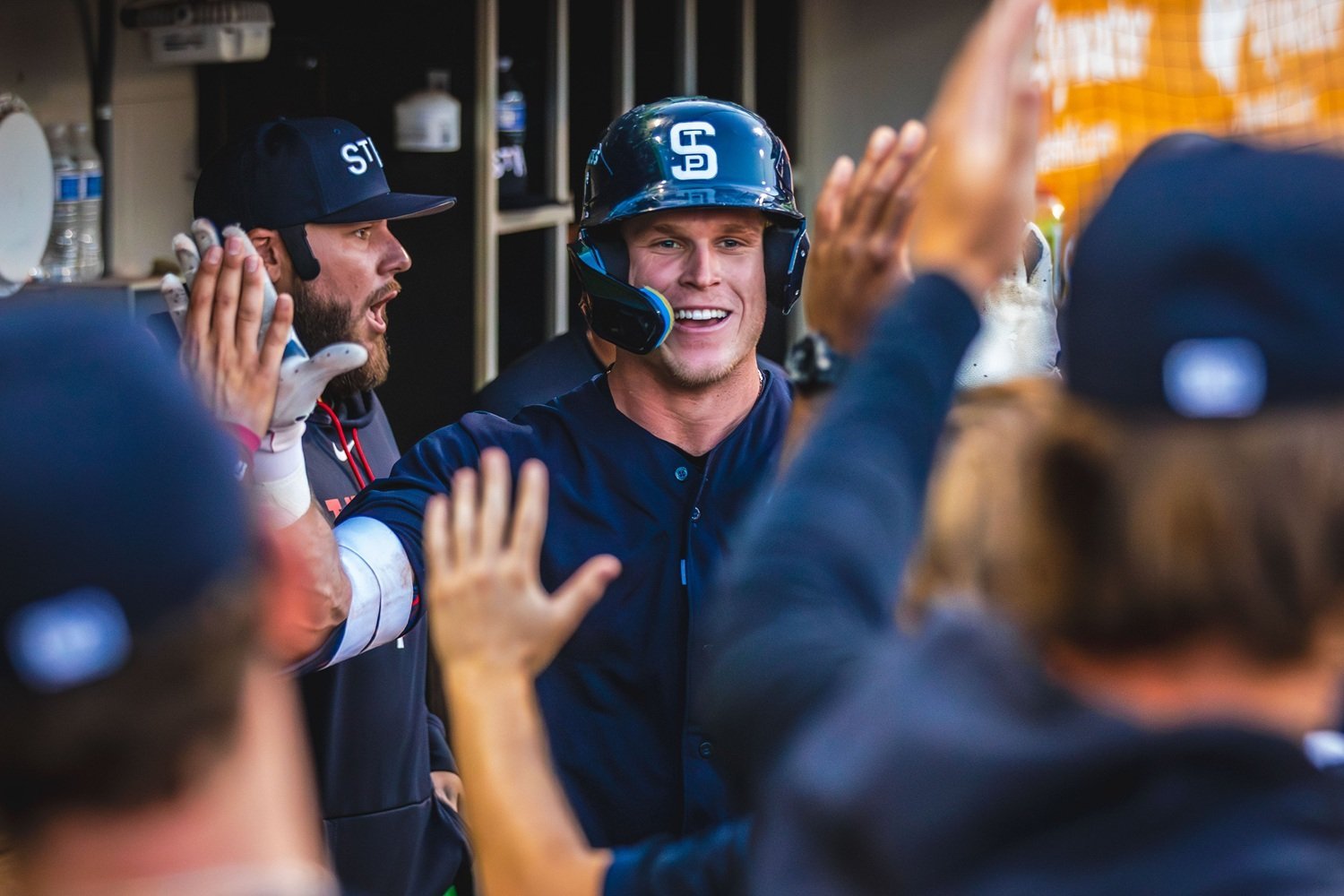 August was a nice month for hitters across the Minnesota Twins minor league organization. Several members of the 2026 draft class began playing and did pretty well in Fort Myers. In addition, several prospects signed internationally in recent years made a name of themselves. That's why, before jumping into the Top 6 hitters of the month, spend a couple of minutes checking out how these nine Honorable Mentions did. Honorable Mention: Garrett Spain (Wind Surge): 24 G, 24-for-86, .279/.394/.512 (.906), 2-2B, 6 HR, 13 R, 15 RBI, 16 BB, 29 K. 8/10 SB. Vahn Lackey (Mighty Mussels/Kernels): 18 G, 17-for-67, .254/.433/.493 (.926), 3-2B, 2-3B, 3 HR, 16 R, 14 RBI, 2- BB. 19 L. 6/7 SB. Danny De Andrade (Kernels): 23 G, 21-for-79, .266/.376/.506 (.882) with 5-2B, 3B, 4 HR, 16 R, 8 RBI, 12 BB, 31 K, 1/1 SB. Byron Chourio (Kernels): 21 G, 18-for-60, .300/.386/.517 (.903) with 4-2B, 3 HR, 10 R, 15 RBI, 7 BB, 15 K, 6/6 SB. Ramiro Dominguez (Mighty Mussels/Kernels): 19 G, 19-for-68, .279/.393/.485 (.878) with 6-2B, 3B, 2-HR, 14 R, 15 RBI, 12 BB, 14 K, 7/8 SB. Carson Tinney (Mussels): 17 G, 14-for-60, .233/.395/.617 (1.012) with 2-2B, 7 HR, 23 R, 12 RBI, 15 BB, 20 K, 1/1 SB Merphy Hernandez (Mussels): 16 G, 19-for-58, .328/.418/.483 (.901) with 2B, 3B, 2-HR, 15 R, 12 RBI, 7 BB, 12 K, 18/23 SB. Colby Turner (Mussels): 19 G, 24-for-71, .338/.422/.521 (.943) with 5-2B, 3B, 2 HR, 14 R, 20 RBI, 8 BB, 15 K, 6/6 SB. Kala’i Rosario STP: 16 G, 14-for-53, .255/.339/.673 (1.012), 3-2B, 1-HR, 6-HR, 13 R, 7 RBI, 6 BB, 16 K, 1/1-SB Top 6 Twins Minor League Hitters in August 6th Place Infielder Isaiah Lane Fort Myers Mighty Mussels .346/.470/.596 (1.066) 17 G, 18-for-52, 4-2B, 3-3B, HR, 8 R, 13 RBI, 13 BB, 14 K, 3/5 SB. Several of the Twins 2026 draft picks are off to a fast start in the organization. The best performance of the month by a 2026 draft pick came from their 13th round pick, Isaiah Lane from Hope International University (NAIA). He had a year at Oklahoma. His sophomore season was at San Diego, and he was a preseason All-WCC player going into his junior season. However, in early February, he was no longer part of the Toreros roster and went to HIU where he put up huge numbers. Lane has played second base and shortstop primarily for the Mussels. In 17 games, he put up solid numbers and found himself hitting near the top of the lineup. Eight extra base hits is nice, but he showed his power/speed combination with the three triples. 5th Place Infielder Jake Rucker (26) Wichita Wind Surge .314/.443/.614 (1.057) 21 G, 22-for-70, 6-2B, 5-HR, 17 R, 17 RBI, 14 BB, 19 K, 2/3 SB Rucker missed time earlier in the season due to injury. He completed his rehab in Fort Myers with a series against his younger brother, and both did very well. Rucker was activated by the Wind Surge and just kept raking. Half of his hits were extra base hits. He walked a ton. And you know you’re getting great defense. Rucker is a veteran in the organization. He was the Twins seventh round pick in the 2021 draft. On September 1, he was called up to St. Paul. 4th Place First Baseman JP Smith (21) Fort Myers Mighty Mussels (2 games), Cedar Rapids Kernels (24 games) .284/.434/.557 (.991) 26 G, 25-for-88, 3-2B, 7-HR, 20 R, 18 RBI, 22 BB, 18 K, 2/3 SB As always, the idea is generally that when I player moves up the organizational ladder, it should be more difficult. However, JP Smith looked comfortable and confident right from the start after his promotion to the Kernels. After hitting 15 homers for Fort Myers this season, he had six with the Kernels in just 24 games. His final Mussels homer was a walkoff in extra innings. He had a double in his first Kernels game and then homered in three straight games including a grand slam in that third game. Smith joined the Twins organization a year ago when they made him their 17th round draft pick out of Sacramento State. 3rd Place Infielder/Outfielder Luis Fragoza (19) Fort Myers Mighty Mussels (10 games), Cedar Rapids Kernels (8 games) .389/.548/.667 (1.215) 18 G, 21-for-54, with 3-2B, 4 HR, 18 R, 12 RBI, 15 BB, 21 K, 7/7 SB. Coming into this season, the 19-year-old had a total of two home runs in his career. He hit one in the DSL in 2024, and he hit one last season in the FCL. He began the 2026 season with 10 games in the FCL, but he was moved up to Fort Myers quickly. Then in 59 games for the Mussels, Fragoza raked. He hit .322/.398/.607 (1.005) with 18 doubles and 14 home runs. He also had 15 stolen bases. Midway through the month of August, he earned a second promotion, this one to High-A Cedar Rapids. Things have been much more difficult for him, as you would expect of a player more than two years young than league average. 2nd Place Outfielder Caden Kendle (24) Wichita Wind Surge .333/.402/.701 (1.103), 22 G, 29-for-87, 8-2B, 8-HR, 17 R, 22 RBI, 8 BB, 28 K, 4/5 SB Sometimes something just clicks, and that certainly happened for Caden Kendle this season. He was the Twins fifth-round pick in 2024 out of UC-Irvine. The Twins were aggressive with him in 2025, pushing him directly to Cedar Rapids where he held his own. He hit .236 with a .705 OPS. He returned to the Kernels to start the season and quietly played well. For the Kernels, he hit .288/.406/.510 (.916) with eight doubles and five homers. He spent some time on the injured list, and when he came back, he was an all-new player. He was quickly promoted to Double-A Wichita and in July, he hit .423/.500/.606 (1.106) with seven doubles and two homers. He finished second to Marek Houston for Player of the Month. So, how did he follow it up? In 22 August games, he hit .333/.402/.701 (1.103) with eight doubles and eight home runs. And yet, here again you see him at #2 in the monthly rankings. Hey, it’s not easy to be named a Twins Daily Minor League Hitter of the Month. 1st Place Outfielder Walker Jenkins (21) St. Paul Saints .411/.488/.795 (1.283) 18 G, 30-for-73, 2-2B, 1-3B, 8-HR, 16 R, 13 RBI, 11 BB, 14 K, 7/9-SB. It’s been another season in which Walker Jenkins missed some time due to stints on the injured list, but in each case, he has come back strong. He was having a solid season coming into August. A decent case for calling him up to the big league a month earlier could ave made some sense. But for all prospects, the ideal scenario is for them to show certain things before being deemed “fully ready.” Remember, the goal isn’t to get them to the big leagues quickly, it’s to get them ready to stay there. To that point, Jenkins was seen as having good power potential, but we hadn’t seen a lot of that in games. Then came August. On August 2nd, his first August game, he had three hits at Omaha. His next game was two days later at CHS Field against the Louisville Bats. He had three more hits. Two days later, he homered twice, the first time he had done that in a game as a professional. On August 8th, he had two hits, including a triple. On August 11th, he was 1-for-3 in the Field of Dreams game. The next night in Des Moines, he had two hits. And then he followed that with a three-hit game and another home run. The following series was in Columbus. He had two hits in the first game. In the second game, he hit two home runs again. Three days later, he had another two-homer game. He was called up to the Twins on August 27th and made his debut at Target Field on the 28th. He ended his Saints month with an eight-game hitting streak during which he went 14-for-31 (.452) with five home runs. In his first week in the big leagues, Jenkins has had some great moments, and he's had some rough situations. To his credit, Derek Shelton continues to put him (and Kaelen Culpepper) in the lineup every day. Culpepper is thriving. Jenkins is struggling, but the tools are all there. He takes quality plate appearances, he seems to find barrels often, and we can dream on his potential. View the full article
 -
Torii Hunter’s Twins Return Came With One Big Regret
DiamondCentric posted an article in Twins Daily
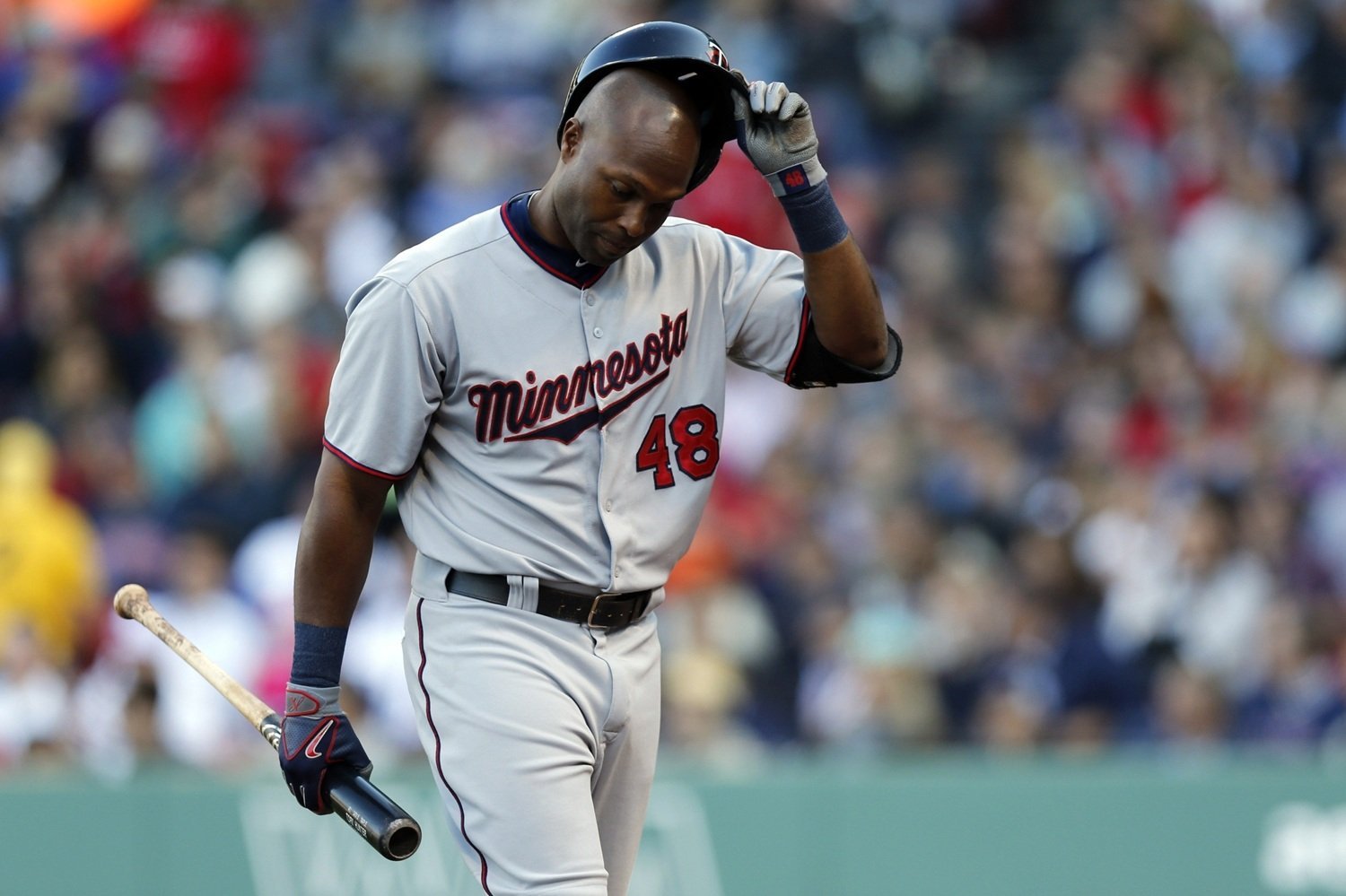 Torii Hunter had one final decision to make in the winter of 2014. After spending the first 11 seasons of his career with the Minnesota Twins, Hunter had already established himself as one of the most important players of his generation. He had left Minnesota as a free agent following the 2007 season, built an All-Star-caliber career with the Los Angeles Angels and Detroit Tigers, and reached the postseason multiple times. At age 39, though, Hunter had to decide where he wanted to play his final season. The Twins wanted him back. So did the Kansas City Royals, who were coming off a trip to the World Series. Looking back more than a decade later, Hunter still wonders what might have happened if he had chosen differently. Hunter recently appeared on the To The Majors podcast with Kevin Pillar and Cody Allen, where he revealed just how seriously he considered joining Kansas City. “I had a decision to make, and guess what the decision was: should I go to the Royals, or should I go to the Twins?” Hunter said. On paper, the Royals certainly presented an appealing option. Kansas City had just reached the World Series in 2014 and had a young core that looked capable of competing for years. Eric Hosmer, Mike Moustakas and Lorenzo Cain were emerging stars, while Alex Gordon remained one of the game's better two-way outfielders. Still, the Twins found a way to make their pitch more personal. One Last Chapter in Minnesota Hunter's relationship with the Twins was complicated. Minnesota drafted him in the first round of the 1993 MLB Draft, and he eventually became one of the most recognizable players in franchise history. But after the 2007 season, the Twins allowed him to leave in free agency. Hunter signed with the Angels and continued to thrive. When the opportunity came to return to Minnesota seven years later, there was understandably some hesitation. Hunter mentioned in the podcast that his wife didn't want to go back to Minnesota after the way his first tenure ended. Hunter also had a legitimate chance to join a Royals team that had just played for a championship. Then Mike Herman, who was part of the Twins' communications staff during Hunter's original Twins tenure, gave Hunter another reason to come home. He told Hunter that one more season with Minnesota could help cement his legacy among the franchise's all-time leaders. That argument worked. “He was like, ‘Hey, come back, and you’ve got an opportunity to be in the top five in every category with the Twins, and you’ll go down in history or whatever. And we love you,’” Hunter recalled. The Twins weren't simply selling him on another season of baseball. They were selling him on the chance to finish his career where it started. Hunter ultimately chose Minnesota. And while the 2015 Twins didn't reach the postseason, Hunter had a productive final season. He hit .286 with 22 doubles, 22 home runs and 81 RBIs while providing the veteran presence expected from a player entering his age-40 season. More importantly, he got the ending he wanted. Hunter retired as a Twin. The Part That Still Bugs Him There was just one problem. The Twins came remarkably close to making the postseason that year. Minnesota entered the final weekend of the 2015 season with a chance to secure an American League Wild Card spot. The Royals were also waiting at Target Field, having already established themselves as one of the American League's best teams. Then everything fell apart for the Twins. Kansas City swept Minnesota. The Royals secured the top seed in the American League, while the Twins watched their postseason hopes disappear. Kansas City eventually went all the way, defeating the New York Mets in the World Series. And that is where Hunter's alternate-history question comes into play. “If I would have chose the Royals, would I have won my World Series?” Hunter said. It's an understandable question. Hunter reached the postseason eight times during his career but never won a championship. He had plenty of opportunities, including multiple playoff runs with the Angels and Tigers, but a World Series ring remained missing from his résumé. Had he signed with Kansas City, Hunter could have been part of the team that finally broke through. Instead, he spent his final season chasing the Twins' playoff dream. And that dream ended at the hands of the very team he could have joined. The Right Decision for the Wrong Outcome? There is no way to know whether Hunter would have won a championship with Kansas City. Baseball doesn't work that way. One player doesn't guarantee a World Series, and an alternate decision can create an entirely different series of events. But from the Twins' perspective, Hunter's story is still significant. Minnesota wasn't the obvious baseball choice in that winter. The Royals had just reached the World Series, while the Twins were coming off a 92-loss season in 2014. Yet, the Twins had something Kansas City couldn't offer. They could give Hunter the opportunity to finish his career where it began. Hunter took that opportunity. He got to play in the new Target Field, a stadium that had been little more than a plan when he left Minnesota. He got to return to the clubhouse, reconnect with the organization, and officially retire as a member of the Twins. More than a decade later, Hunter can still wonder about the alternate ending. For Twins fans, though, there is something fitting about how it actually played out. Hunter started his career in Minnesota. He became a star in Minnesota. He left, built a borderline Hall of Fame-caliber résumé elsewhere and then came back for one final season. And when he walked away from the game, he did so wearing a Twins uniform. The World Series ring never came. But Hunter's place in Twins history was secure. What stands out about Hunter’s decision? Would the Twins have been better or worse without him in 2015? Leave a comment and start the discussion, View the full article
 -
 Such a weird evening - an amazing rally by the Sounds, a brutal walkoff loss for the T-Rats, and the Warbirds were manhandled to an extreme. A Biloxi rainout saved us from additional drama. Transactions: Wisconsin Timber Rattlers activated SS Brady Ebel from the 7-day injured list. RHP Thomas Conrad assigned to Wisconsin Timber Rattlers from Wilson Warbirds. Nashville Pre-Game Media Notes (unavailable) Final: Nashville 5, Louisville (Reds) 4 Box Score and Game Log Via the Sounds, game details, and we encourage readers to always review affiliate write-ups as part of their Link Report routine: Sounds Walk off Bats with Five-Run Ninth Sure, we'll get to that amazing 9th inning rally in a moment, but how about this guy? No doubt at some point a big leaguer in 2027: The linked game summary detailed things well, here's video evidence: Not to be overlooked is the scoreless 9th from Brett Wichrowski, given the final rally's results. Nice job by Max Herz, filling in for Jeff Hem Friday and Saturday, on those calls. Shuckers, Barons Postponed Due to Rain on Friday Night Game rescheduled as part of a doubleheader on Saturday, beginning at 4:35 p.m. Wisconsin Pre-Game Media Notes (download link) Final: Beloit (Marlins) 12, Wisconsin 11 Box Score and Game Log Via the Timber Rattlers, game details: Wisconsin Lets One Get Away at Beloit As always, the level of detail from Chris Mehring is appreciated in the linked road game recap, which includes multiple highlights via the team's "X" feed. Chris called this puzzling: Not sure I've seen a play quite like this (and to be fair, still haven't as the video cuts off), but this play did not shine well for Luiyin Alastre. That just can't happen. After watching how the Nashville game ended, here's the balancing act to even things out on the night (unfortunately). If you didn't yet, please go back and catch both elements of Luis Castillo's night (offense and defense), a fine season for sure and thinking out loud that perhaps Luis is rewarded with a Fall League stint this year. It wasn't ideal (a net 9.00 ERA in the one-game sample rarely is), but RHP Thomas Conrad did manage to complete four innings in his High-A debut. Wilson Pre-Game Media Notes Final: Fredericksburg (Nationals) 24, Wilson 2 Box Score and Game Log Warbirds Downed in Largest Defeat of the Season - Polanco Records Multi-Hit Game When the Fredericksburg own game recap starts with the sentence, "This game was over from the start", one knows trouble is ahead. But that being said, the T-Rats were up 6-0 after the top of the 1st, right? There was an odd dichotomy to affiliate games Friday. The two wild pitch endings (good and bad), the two nutso first innings (good and bad, though both final results bad), good thing Biloxi was rained out as who knows what the Shuckers may have thrown into the odd mix. There is not a single clip of video from a positive Wilson perspective from this game. However, as might be expected, the home team lined up seven clips from their "X" feed. If that's not enough for you, the Nats' video page totaled eleven clips in all, which we believe sets a Link Report high for 2026. This was our forum thread title setting up the day Friday AM: Wilson (Nine-Game Skid) is Drifting out to Sea, Right Tom Hanks? That set up a fun little discussion to kick off the thread. So yes, losing streak now at double digits? Remember how poorly, especially offensively, the Warbirds kicked off their inaugural season? April was a quagmire. Now the back end has been a disaster. Wilson is now 64-64, so much goodness did happen between May and mid-August, but this weekend will determine if the team finishes at, above or below .500 for the season. This was the full-season ball debut for 19-year-old RHP Dariel Jaquez, who missed all of 2025 due to injury. He didn't escape the fateful 1st, pulled after 36 pitches. However, Jaquez deserved better, at least as catcher Kevin Garcia would admit here: By far, Wilson's most effective pitcher was backup C/1B Eric Martinez, who has been called upon for mound duty three times since August 18th. As his pitching game log will show, he's been darn effective! This pitch burned him, but we'll highlight it regardless: Evening action throughout the system on Saturday night, with the Biloxi doubleheader kicking off at 4:35 Central. Hope your start of the Labor Day weekend is wonderful! Organizational Scoreboard including starting pitcher info, game times, MiLB TV links, and box scores Current Milwaukee Brewers Organization Batting Stats and Depth Current Milwaukee Brewers Organization Pitching Stats and Depth View the full article
 -
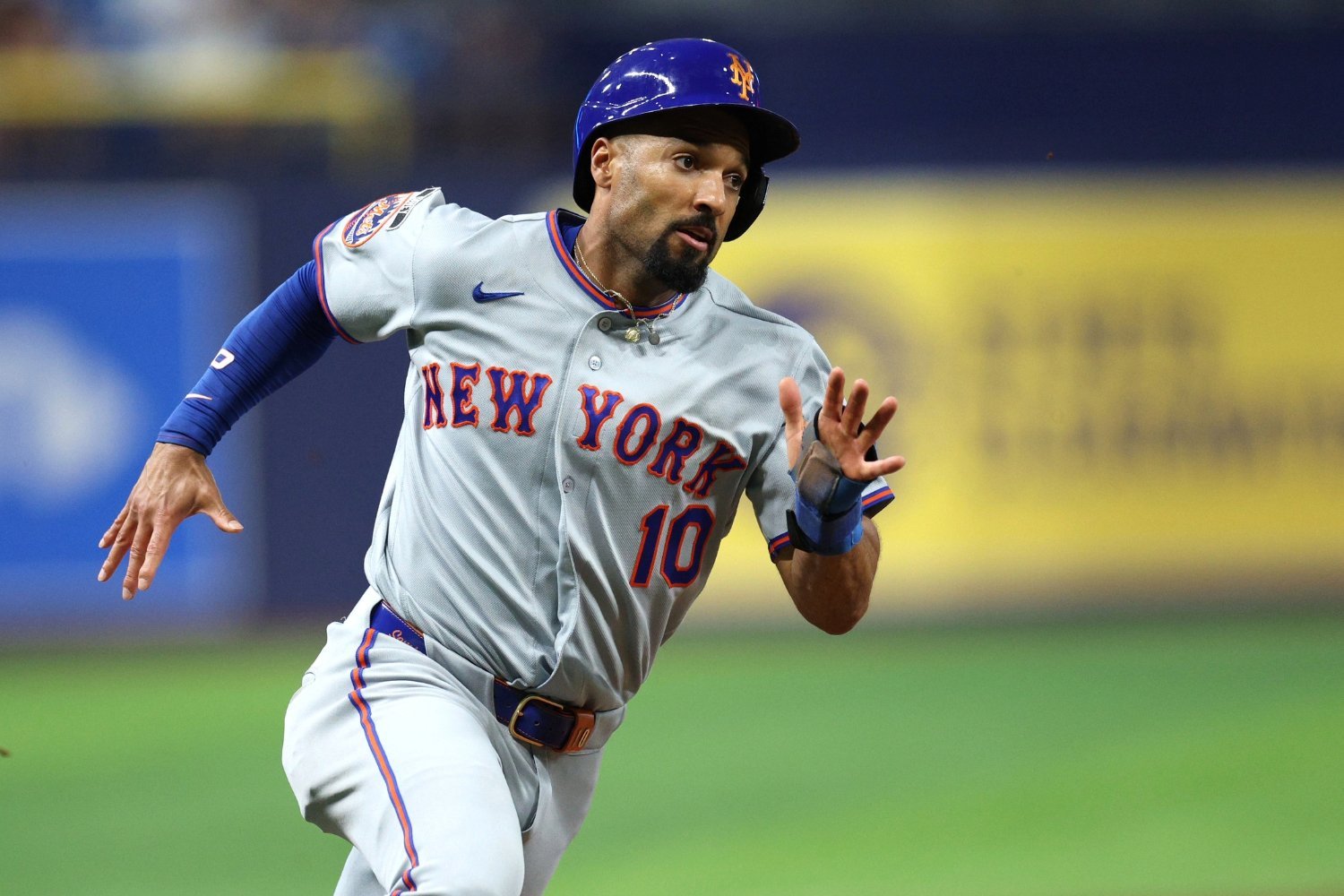 There's no way around it: The New York Mets’ bet on Marcus Semien has been a failure. Semien, a three-time All-Star, two-time Gold Glove winner, two-time Silver Slugger and third-place finisher in AL MVP voting in 2019, 2021 and 2023, arrived with high expectations, but in his age-35 season, he is having one of the worst seasons by a second baseman in franchise history. Just a couple of seasons ago, before arriving in Queens, Semien had one of the best seasons by a second baseman in Texas Rangers history. He recorded the second-highest fWAR (6.5), behind only Ian Kinsler (7.3 in 2011), and combined something unprecedented: 100 RBIs with 122 runs scored. This year, the story has been the complete opposite. Semien has 0.0 fWAR—he was at -0.2 before a strong series against the Rays earlier this week—along with just a 77 wRC+ and a 20.8 K% rate. Season Name Team G PA HR R RBI SB BB% K% ISO BABIP AVG OBP SLG wOBA wRC+ BsR Off Def WAR 1979 Doug Flynn NYM 157 580 4 35 61 0 2.9% 7.9% .074 .258 .243 .265 .317 .256 55 -1.1 -31.6 -3.7 -1.6 1978 Doug Flynn NYM 156 572 0 37 36 3 5.2% 8.7% .053 .260 .237 .277 .289 .253 57 -1.3 -28.4 -2.5 -1.3 1981 Doug Flynn NYM 105 343 1 24 20 1 3.2% 5.5% .071 .233 .222 .247 .292 .236 45 -0.5 -21.1 6 -0.5 1974 Felix Millan NYM 136 585 1 50 33 5 5.3% 2.4% .042 .272 .268 .317 .311 .293 82 0.7 -11 -10.8 -0.3 1962 Charlie Neal NYM 136 579 11 59 58 2 9.7% 15.5% .128 .293 .260 .330 .388 .322 90 -2.8 -10.1 -10.4 -0.1 2026 Marcus Semien NYM 120 467 14 44 44 10 8.1% 20.8% .130 .248 .218 .283 .348 .281 77 1.4 -11.8 -3.7 0.0 His fWAR is the sixth-lowest among qualified second basemen in Mets history, and he is likely to fall even further by the end of the regular season. At this point, his batting average is the lowest of the group, and he also has the highest strikeout rate. Edgardo Alfonzo still owns the best fWAR season (6.4) by a second baseman in franchise history since his unforgettable 2000 campaign, when the Mets faced the New York Yankees for the World Series title in the memorable Subway Series. Since then, only two second basemen have surpassed the 3.0 fWAR mark: Jeff McNeil in 2022 (5.5) and Daniel Murphy in 2013 (3.1). The Mets expected Semien to be the next name on that list, but those hopes have been broken, at least this year. Semien’s high strikeout rates are not something that comes as a surprise in his offensive performance. However, his loss of power is only one problem within his imbalance at the plate, as his performance in most offensive areas, including his .248 BABIP, .130 ISO and 77 wRC+, is trending toward the worst of his career. The problems are not limited to his offense, either, as Semien is also costing the Mets runs on the bases, while his -2 DRS is the only negative mark of his career in qualified seasons since he began playing second base regularly for the Blue Jays in 2021. Behind all of the inconsistencies, Semien still has the ability to produce with his swing against high velocity. Since 2022, he leads the league with 15 home runs among second basemen with at least 100 PA against fastballs that reached 96 mph or higher, and he has the fourth-highest xSLG (.425) in the rankings. That xSLG remains elite, as he produced a .455 mark in 2025 and .442 this year, ranking second and third in the majors at his position, respectively. Instead, the major breakdowns in his swing have come when opponents throw him breaking balls. Overall, they have done so 38.3% of the time, but when they get Semien into two-strike counts, breaking balls become the opposing pitchers’ most effective weapon, with a higher usage rate (44.2%). Semien’s swing has not been able to respond with enough impact, failing to find the formula to stop his biggest challenge at the plate. Year % PA HR SO% HR% BA xBA SLG xSLG xwOBA EV Whiff% PutAway% 2022 35.1 236 7 21.2% 3.0% .275 .234 .440 .356 .278 83.8 28 17.1 2023 33.4 233 7 19.7% 3.0% .272 .232 .451 .373 .291 86 26.5 15.4 2024 34.1 211 5 22.7% 2.4% .213 .199 .340 .284 .239 83.2 30.9 17.5 2025 31.7 158 5 24.7% 3.2% .213 .222 .383 .366 .292 85.5 28.6 17.8 2026 38.3 168 1 29.2% 0.6% .128 .184 .147 .251 .217 80.8 31.6 21.1 This is the year in which opponents have thrown Semien more breaking balls than ever before in his career, and the results are already visible: his swing has fallen into the worst slump of his career. The two biggest breakdowns in his offense have come in power-related metrics. His HR% has fallen from an average around 3.0% to 0.6%, and his slugging percentage has dropped from .383 to .147. Semien arrived in New York in exchange for Brandon Nimmo, and the Mets took on the remaining $72 million of his contract. The investment has been a failure so far. If the idea is to move on from him, New York will have limited options, starting with finding a team willing to take on the $46 million he would still be owed between 2027 and 2028. Otherwise, they will have to bet on Semien again in his age-36 season and work to make sure his adjustments can overcome what has been an undeniable display of total decline. View the full article
 -
 One of just 10 players to hit 100 home runs as a member of the Florida/Miami Marlins, Preston Wilson’s power was undeniable. In four full seasons with the Florida Marlins, Wilson hit at least 23 home runs every season. His only career walk-off blast, however, came on this day 25 years ago. Wilson worked a six-pitch at-bat before going the other way for a walk-off three-run home run as Florida rallied past the Chicago Cubs, 7-6. The Marlins had trailed by as many as four runs as they came to bat in the bottom of the ninth at Pro Player Stadium on Sept. 5, 2001. With Florida trailing 6-4, the Cubs turned to right-hander Tom Gordon, a former All-Star for the Boston Red Sox, to try to close it out. Pinch hitter John Mabry singled to open the inning and give the Marlins hope. After Luis Castillo hit into a fielder’s choice, Derrek Lee was hit by a pitch to put the tying run on base. Following a Cliff Floyd flyout, it was all up to Wilson. Regularly among baseball’s leaders in strikeouts, it wasn’t like Wilson to work long at-bats, but against Gordon, that’s what he did. Wilson fouled off a pair of two-strike pitches before getting a fastball up and on the outer half of the plate. Wilson was able to stay back and line it the other way and into the fifth row in right field for the walk-off blast. It was Gordon’s first blown save in nearly three months. For much of the night, late-game drama seemed unlikely. A two-run single by Ricky Gutiérrez and a two-run home run by Ron Coomer in the second inning gave Chicago an early 4-0 lead. The Marlins finally broke up the shutout on Kevin Millar’s RBI double in the sixth but the Cubs went back up by four with a run in the top of the eighth on Gutiérrez’s third RBI of the night. Florida got back into it with three runs in the bottom of the eighth. After Wilson reached on an error to score Floyd, Millar’s two-run homer made it 5-4. Eric Young’s RBI double in the top of the ninth looked to provide some insurance as it extended the Cubs’ lead to 6-4. With 104 home runs as a member of the club, Wilson ranks 10th on the Marlins’ all-time home run list. His only walk-off shot came against a three-time All-Star and on this day a quarter-century ago. View the full article
 -
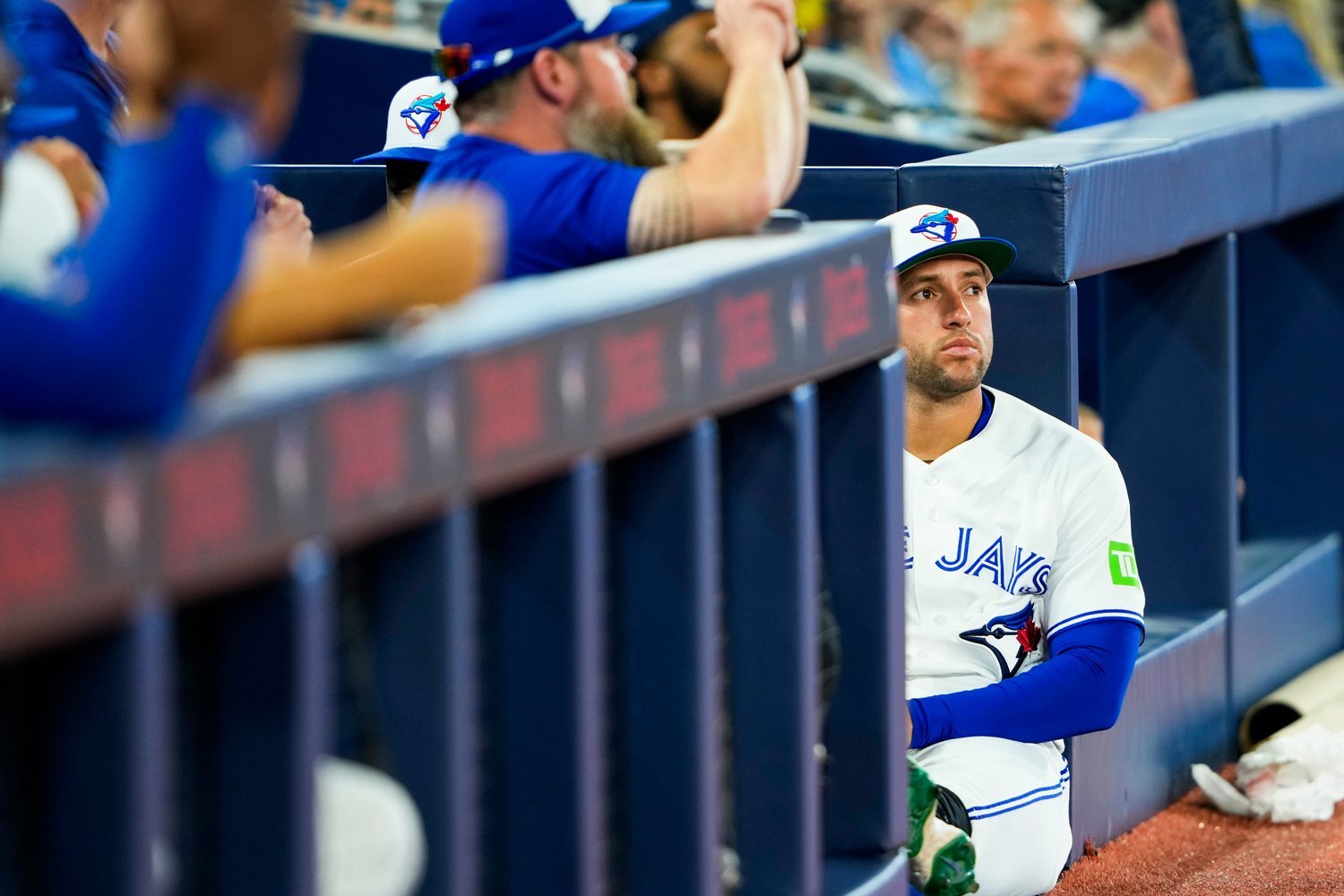 George Springer takes some wild swings. There have been several moments over the past month when Springer has loaded up at the plate, taken a big swing, and fallen over or gone down to one knee after coming up empty. But those wild swings aren’t limited to the batter's box; his offensive profile has fluctuated from season to season and month to month. His last three seasons are a perfect example of that. Springer has gone from a player who looked like his skills were declining at a rapid pace to bouncing back and having a career season at age 35, finishing third in the majors in wRC+. Even in his 2026 season, the Blue Jays have seen a bit of both of those players: For most players in baseball history, declining rapidly as they approach their mid-30s has been a sign that the end is closer than we think. Father Time is undefeated, after all. So which George Springer is the real George Springer? First, his 2025 season wasn’t a fluke. It was a true resurgence in every way. He led the team in wRC+, home runs, fWAR, and even stolen bases. He went back to mashing the fastball, and his contributions helped push the Blue Jays all the way back to the World Series. Then 2026 started, and the narrative shifted. Springer started ice cold; he posted a wRC+ of 97 in March/April and then just 75 in May. All the skills that made him look like an elite hitter seemed to have suddenly disappeared: His OPS dropped (.956 →.648) His xwOBA dropped (.404 → .304) His chase rate rose (20.4% → 27.9%) His walks dropped (11.8%→8.6%) and strikeouts rose (18.9%→19.4%) It started to feel like this was the real George Springer, and 2025 was starting to feel like a distant memory, raising concerns about the veteran slugger's performance. There are many reasons a hitter could go into a massive slump: age finally catching up, confidence being shot, issues outside the diamond, or injuries. Many things can affect a person's performance at work, and baseball players are no exception. Springer dealt with a toe injury in April that kept him on the IL for 17 days, which likely explains part of his early-season struggles. He also went on paternity leave on July 1, stepping away from the team for several days as he and his family welcomed their new child. Maybe it comes down to finally being healthy, or maybe it's his newfound dad strength. But George Springer has found his groove again. Since the All-Star break, Springer's stats have soared. His .867 OPS is second on the team. His .376 wOBA is also second on the team. And while the 29.9% chase rate is still high, it's second-best among qualified Blue Jays hitters. The walks have remained roughly the same, but the strikeouts have dropped to 15.2% from 20.1% in the first half. So what exactly has led to the turnaround? The first place to look is his swing decisions. Springer's swing rate has risen in the second half (47.8% to 49.7%). However, he was swinging a lot in April and May when he was struggling (51.1% in both months), so his increased swing rate is not directly correlated with his success. The more likely explanation is that he’s swinging more at pitches over the heart of the plate, and he’s making more contact on those pitches when he does swing: When hitters make contact on pitches at the heart of the zone, they're hitting .346 league-wide, with a .607 slugging percentage and a .403 wOBA. It's generally a good idea to swing more often at pitches over the middle of the plate, and that’s exactly what Springer has been doing lately. Swinging at the pitches you can do more damage with is always a good idea, but quality of contact matters too. You can make all the right decisions, but if you're hitting soft groundballs or routine flyballs, that doesn't help at all. In July, it looked like the resurgence was officially back on. Springer made a change in his approach: he started swinging more at pitches over the heart of the plate, chased pitches out of the zone less, and had his best month in terms of quality of contact: Metric April May June July Heart Swing% 77.1% 80.2% 75.0% 81.7% Heart BIP/Swings 42.6% 50.6% 44.8% 55.2% Chase Swing% 19.0% 15.4% 15.5% 10.5% Avg. Exit Velocity 88.2 87.6 88.8 90.6 Hard-Hit% 42.2% 35.4% 36.8% 48.1% Barrel% 8.9% 7.6% 5.9% 9.3% If Springer had simply posted a 147 wRC+ in July while his underlying metrics looked the same, then it could be dismissed as just a hot month, but almost every indicator of his process improved significantly. His improvement wasn’t isolated to just one statistic. His approach, contact, swing speed, and batted-ball profile all moved in the same direction. It was starting to look like 2025 George Springer was back. In August, the surface-level numbers would back that up: an .858 OPS, a 141 wRC+, nine extra-base hits, and even four stolen bases to boot, but while the results were good, the peripheral data tell a different story. The hard contact, which spiked in July and was key to his 2025 success, took a step back. His bat speed dropped from 74.0 mph down to 72.8, and with it, so did the exit velocity, hard-hit rate, and barrel rate: Pair the lower quality of contact with the fact that he’s been putting the ball on the ground much more often (his GB rate is up from 38.9% to 50.7%), and it doesn't look good for Springer. Softer contact and balls pounded into the dirt don't usually lead to a successful stat line. The key to Springer's success may have less to do with how he’s hitting the ball and more to do with what happens after he makes contact. His BABIP jumped from .280 in July all the way to .373 in August, meaning far more of his batted balls were falling in for hits despite the decline in quality of contact. It was happening against various pitch types, too: Aside from a massive spike in May against off-speed pitches, Springer's BABIP was dramatically higher in August. Given the decline in his quality of contact, the elevated BABIP explains why his surface-level stats remain elevated. There’s more that goes into BABIP than simply balls finding holes. Line drives are harder to catch and typically produce higher BABIPs, but that doesn’t explain Springer’s August spike. His line drive rate jumped to 22.2% in July when his BABIP was .280, before falling back to 15.9% in August when his BABIP soared to .373. So if that’s not it, batted ball distribution may have an answer. But looking at that data, the numbers seem similar there too: July: Pull: 37.0% Straightaway: 42.6% Oppo: 20.4% August: Pull: 39.1% Straightaway: 39.1% Oppo: 21.7% With his spray profile remaining relatively similar, this really feels like Springer’s hot August was being driven disproportionately by BABIP instead of improved contact quality, coming off a July in which his underlying contact numbers really did take a leap forward. That said, this is more about looking forward than looking backward. The Blue Jays are playing winning baseball at the moment and find themselves in the thick of the Wild Card race in the final month of the season. Springer’s August showed that his numbers can stay strong even when the underlying numbers aren’t, but July showed there is still another level to his game. The larger sample still suggests that Springer is more likely to be the player we’ve seen for most of the season than the one who put up a 147 wRC+ in July. But July provided real evidence that his first-half numbers didn’t tell the whole story. The approach changed, the quality of contact improved, and for one month, he looked much more like the hitter who had a career year at age 35. Even if the BABIP remains high, and history suggests his stats will regress to the mean, it doesn’t mean it's going to happen right away. There’s nothing that says regression is going to come for him tomorrow, and at the end of the day, whether a hit is a soft groundball that finds a hole or a 110+ mph rocket of a line drive, they’re essentially the same thing in the scorebook. So even if the stat line (and the swings) still look wild at times, Springer’s bat is helping the Blue Jays win games right now, at a time the team needs it most. For a team fighting for its playoff life, that's all that matters. This article was written prior to the Blue Jays' game on Friday, September 4. View the full article
 -
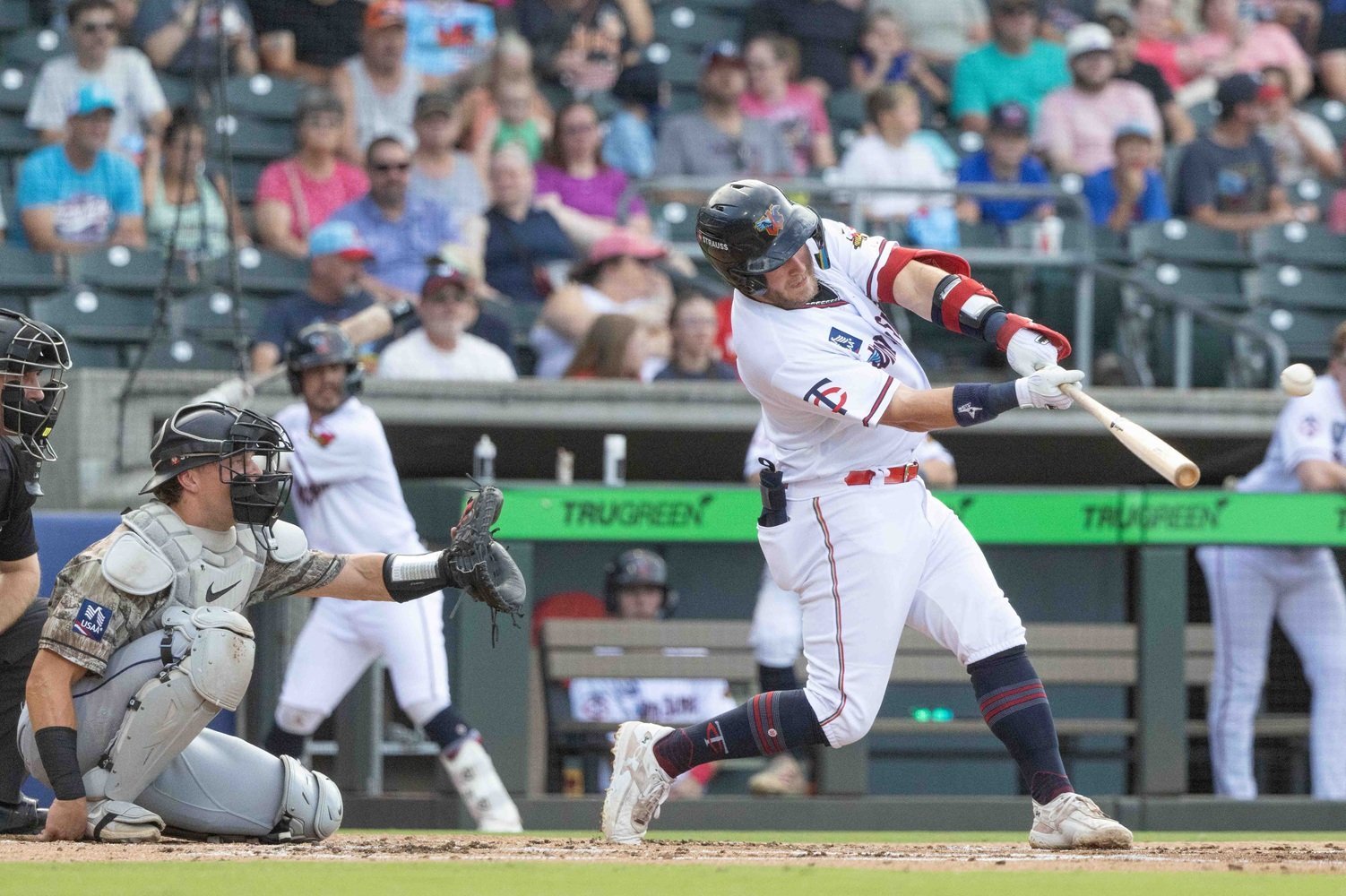 TRANSACTIONS Fort Myers moved RHP Matthew Dalquist to the development list. That makes room for RHP Thomas Burns to be added to the Mussels roster. SAINTS SENTINEL St. Paul 2, Omaha 3 (10 innings) Box Score Kala’i Rosario got things going for the Saints with an opposite field home run, his eighth since joining the Saints. Lefty Aaron Rozek made arguably his best start of the season on Friday night He tossed six scoreless innings. He gave up four hits, walked three and had three strikeouts. Matt Bowman came in and gave up two runs on two hits and a walk. He struck out two batters. With one out in the top of the eighth inning, Matt Wallner reached on a two-base error and went to third on a groundout. Cody Morissette came through with an RBI single to make it 2-2. Marco Raya tossed two scoreless innings, the eighth and the ninth innings. He gave up two hits and a walk, but he struck out three batters. The Saints went scoreless in the top of the 10th inning. Julian Merryweather came in for the bottom of the 10th. They intentionally walked the leadoff man to set up a potential double play ball. However, the next batter sacrificed himself with a bunt that put runners on second and third with one out. Jacob Berry lined a ball into the gap in left-center field. Emmanuel Rodriguez raced it down and made a very nice sliding-diving catch. But it left no chance for a throw home and the Storm Chasers took the 3-2 win. Hendry Mendez went 2-for-4 with his 11th double. Cody Morissette went 2-for-4 with his 15th double and stole his ninth base. Noah Cardenas went 2-for-4. Tanner Schobel knocked his 15th double, and Tristan Gray hit his fourth double. WIND SURGE WISDOM Wichita 4, Tulsa 7 Box Score A five-run sixth inning for Tulsa was more than enough for them to take the Friday night win. Preston Johnson started for the Surge. In four innings, he gave up one run on three hits. He walked three and struck out seven batters. Darren Bowen came on for the fifth inning and started the sixth. He gave up six runs on four hits and three walks in 1 1/3 innings. Kyle Bischoff allowed an inherited runner to score. He gave up a hit and walked two but got two outs to close out the sixth inning. Jaylen Nowlin and Mitch Mueller each threw a scoreless inning and struck out one batter. Andrew Cossetti went 2-for-3 with a walk. He hit his career-high 18th home run of the season. Jaime Ferrer hit his 13th double and drove in the team’s first run. In the eighth inning, Marek Houston hit his seventh Wichita home run, a two-run shot that ended the team’s scoring for the day. KERNELS NUGGETS Cedar Rapids 3, South Bend 14 Box Score South Bend jumped ahead early with a four-run first. The Kernels cut the deficit to 5-3 in the fifth inning. However, a seven-run seventh allowed the Cubs to run away with a win. Merit Jones started and gave up five runs on six hits and a walk over four innings. He had four strikeouts. Ivran Romero gave up five runs on four hits, two walks and a hit batter in 2 1/3 innings. Cole Peschl gave up four runs on six hits and a walk in one inning. Mike Hilker got the final two outs. The Kernels scored their three runs on seven hits and five walks. They had no extra base hits. Byron Chourio went 2-for-4 with a walk and two stolen bases. Yasser Mercedes walked twice. Irvin Nunez went 1-for-2 with a walk. MIGHTY MATTERS Fort Myers 9, Clearwater 13 Box Score In a bit of a back-and-forth game, the Mussels scored a run in the top of the seventh that gave them a 6-4 lead. Unfortunately, they were outscored 9-3 over the game’s final two innings. With two outs in the top of the third inning, Colby Turner and Poncho Ruiz hit back-to-back singles. Isaiah Lane tripled to drive in two runs and give the team a 2-0 lead. Bryce Fowler led off the top of the fourth inning with a single and went to second when Yovanny Duran walked. With two outs, Charlie Scholvin drove in Fowler with a single. Turner singled to drive in Duran. Ruiz drove in Scholvin with another single, and the Mussels held a 5-1 lead. Leading 5-4, the Mussels added a run in the top of the seventh. Poncho Ruiz and Bryan Acuna walked, and a Bryce Fowler drove in Ruiz with the sixth run. Matt Barr started and gave up four runs on five hits and two walks in 3 1/3 innings. Brad Rudis gave up one hit and one walk in a scoreless 1 2/3 innings. Thomas Burns came in for the bottom of the sixth inning to make his professional debut. The first two batters he faced hit singles. However, Burns got a ground ball double play and a strikeout to end the inning. Burns went out to start the bottom of the seventh inning. He walked the first three batters he faced before giving up a bases-clearing double. Adam Falinski came in and after a passed ball and a single, Burns' line was complete. He was charged with four runs on three hits and three walks. Heading into the eighth inning, the Mussels were down 9-6. However, in the top of the eighth inning, Charlie Scholvin and Colby Turner were hit by pitches to start the inning. Then Mussel manager Jordan Smith went to his bench and called on Jimmy Keenan. The non-drafted free agent came through with a three-run homer that tied the game at 9-9. It was his second home run. Falinski gave up five runs on five hits and two walks in 1 2/3 innings. He had two strikeouts, but the two home runs certainly hurt. Aidan Russell came in and got the final out. Poncho Ruiz went 2-for-3 with a walk. Colby Turner went 2-for-4 with two hit batters. Bryce Fowler went 2-for-4 with a walk. Charlie Scholvin was 2-for-4 and was hit by a pitch. Isaiah Lane was 1-for-4 with two walks, his fourth triple, and two RBI. Yovanny Duran and Hideki Prather were both 1-for-3 with a walk and a double. PLAYERS OF THE DAY Hitter(s) of the Day Andrew Cossetti (Wichita): 2-for-3, BB, HR(18), 2 R, RBI Pitcher(s) of the Day Aaron Rozek (St. Paul): 6 IP, 4 H, 0 ER, 3 BB, 3 K, 75 pitches, 47 strikes (62.7%). PROSPECT SUMMARY Check out the Prospect Tracker for much more on our Twins Top 20 prospects. See how they did today. #1 - OF Walker Jenkins (Minnesota) - 0-for-3, BB (batted ninth, played CF) #3 - IF Kaelen Culpepper (Minnesota) - 1-for-3, BB, SB(1) (batted eighth, played SS) #4 - SS Marek Houston (Wichita) - 1-for-4, HR(7), R, 2 RBI (batted first, played SS) #6 - OF Emmanuel Rodriguez (St. Paul) - 0-for-5, K (batted first, played CF) #7 - OF Hendry Mendez (St. Paul) - 2-for-4, 2B(11) (batted fourth, played LF) #8 - C Eduardo Tait (Cedar Rapids) - 1-for-5, RBI (batted third, played Catcher) #9 - 1B/OF Gabriel Gonzalez (Minnesota) - 0-for-2, K (pinch hit, played LF) #12 - 3B/CF Brandon Winokur (Wichita) - 0-for-4, 3 K (batted third, played CF) #19 - OF Yasser Mercedes (Cedar Rapids) - 0-for-3, 2 BB, K, (batted second, played DH) UPCOMING PROBABLES Saturday, September 5 St. Paul @ Omaha (6:05 pm CT) - RHP Jack Anderson (5-4, 4.29 ERA) Wichita @ Tulsa (7:00 pm CT) - RHP Riley Quick (0-2, 5.79 ERA) Cedar Rapids @ South Bend (6:05 pm CT) - RHP Justin Mitrovich (2-1, 4.00 ERA) Ft. Myers @ Clearwater (5:30 pm CT) - RHP Jason Reitz (0-2, 2.76 ERA) CURRENT W-L Records Minnesota Twins: 67-74 St. Paul Saints: 76-59 Wichita Wind Surge: 51-77 (Final Game 9/13) Cedar Rapids Kernels: 47-81 (Final Game 9/6) Fort Myers Mighty Mussels: 67-59 (Final Game 9/6) FCL Twins: 33-26 (Season Complete) DSL Twins: 19-35 (Season Complete) Please feel free to ask questions about the teams, the rosters, and discuss today’s games, or anything else Twins minor-league related! View the full article
 -
 The four full-season affiliates of the San Diego Padres went 3-1 on Friday with the Triple-A El Paso Chihuahuas falling to Las Vegas 8-5, the Double-A San Antonio Missions rallied past Midland 8-7, the High-A Fort Wayne TinCaps beat Lansing 8-6 and the Low-A Lake Elsinore Storm rolled past Inland Empire 12-3. Padres Minor-League Transactions None. Two Solo HRs Not Enough For Chihuahuas Bryce Johnson and Nick Solak homered, but the host Triple-A El Paso Chihuahuas gave up three runs in the sixth that proved to be the difference in an 8-5 loss to the Las Vegas Aviators. Johnson, Solak, Mason McCoy and Will Wagner each had two hits for the Chihuahuas, with Johnson drawing the team's only walk. Johnson also had two RBIs. Chihuahuas left-handed starter Jagger Haynes (Padres Mission's No. 13 prospect) allowed four runs in just 2⅓ innings on eight hits and a walk with two strikeouts. Solak hit a solo homer in the second inning, his 16th of the season, while Johnson hit his solo shot in the seventh, his second of the year. Trailing 4-1 entering the bottom of the fourth, the Chihuahuas tied it as Rodolfo Duran brought in a run when he reached on an error, then Clay Dungan and Johnson had RBI singles. But the RockHounds regained control with a three-run sixth and another in the seventh. EP1_0904.mp4 EP2_0904.mp4 Player AB R H RBI BB K Mason McCoy, SS 5 0 2 0 0 2 Gage Workman, LF 5 0 0 0 0 0 Carlos Rodríguez, DH 4 0 1 0 0 1 Nick Solak, RF 4 1 2 1 0 1 Nick Pratto, 1B 4 1 1 0 0 1 Will Wagner, 2B 4 1 2 0 0 0 Rodolfo Durán, C 4 1 0 0 0 2 Clay Dungan, 3B 4 0 1 1 0 1 Bryce Johnson, CF 3 1 2 2 1 0 Player IP H R ER BB K HR Jagger Haynes 2 1/3 8 4 4 1 2 0 Garrett Hawkins 2 1/3 1 0 0 1 3 0 J.P. France 1 1/3 3 3 3 1 3 0 Hans Crouse 1 1 1 1 0 0 1 Ty Adcock 1 1 0 0 0 1 0 José Leclerc 1 0 0 0 2 1 0 Braedon Karpathios Has 4 More RBIs, 2 In 8th, As Missions Win Braedon Karpathios continued his RBI binge by driving in four, with his two-run single in the eighth the host Double-A San Antonio Missions squeaked past the Midland RockHounds 8-7. Karpathios (Padres Mission's No. 9 prospect) has had two four-RBI games and one five-RBI performance in the first four games of this season. He was already the Missions' RBI leader, but now has 13 of his 73 this week. Karpathios had two doubles as part of his three-hit game. Tirso Ornelas had two hits, including a homer, and two RBIs for the Missions, who trailed 6-1 after the top of the fifth. Missions left-handed starter Fernando Sanchez allowed four runs over 3⅔ innings on six hits and three walks with a pair of strikeouts. Right-hander Sadrac Franco gave up two runs in 1⅓ innings, while right-hander Carlos Medina pitched two scoreless innings in his Double-A debut after also pitching at Low-A Lake Elsinore and High-A Fort Wayne this year. Right-hander Josh Mallitz gave up a run in two innings. Down 6-1 entering the bottom of the fifth, the Missions scored four times. Karpathios drove in two with his 20th homer of the season, then Brendan Durfee scored on a wild pitch and Ornelas' 32nd double of the year brought in Karpathios. Romeo Sanabria tied the game with an RBI single with two outs in the seventh that scored Karpathios. The RockHounds pushed across a run in the top of the seventh, then the Missions went to work in the bottom half. With one out, Luis Verdugo and Wyatt Hoffman singled, prompting a pitching change. Alex McCoy (Padres Mission's No. 8 prospect) walked to load the bases, setting up Karpathios' single to right through a drawn-in infield, with Verdugo scoring easily and Hoffman diving headfirst to beat the throw home with the go-ahead run. Mallitz worked around a walk and a single to finish this one off. SA_0904.mp4 Player AB R H RBI BB K Braedon Karpathios, CF 5 2 3 4 0 1 Albert Fabian, RF 5 0 0 0 0 3 Tirso Ornelas, LF 5 1 2 2 0 0 Romeo Sanabria, DH 2 0 1 1 1 1 Kai Roberts, DH 0 0 0 0 0 0 Ryan Jackson, 3B 4 0 0 0 0 1 Jack Costello, 1B 4 0 0 0 0 1 Luis Verdugo, SS 3 2 2 0 1 0 Wyatt Hoffman, 2B 4 2 2 0 0 2 Brendan Durfee, C 2 1 0 0 1 1 Alex McCoy, PH 0 0 0 0 1 0 Anthony Vilar, C 0 0 0 0 0 0 Player IP H R ER BB K HR Fernando Sanchez 3 2/3 6 4 4 3 2 0 Sadrac Franco 1 1/3 4 2 2 0 1 0 Carlos Medina 2 1 0 0 1 1 0 Josh Mallitz 2 4 1 1 1 1 0 Carlos Rodriguez Homers, Has 3 Hits, 3 RBIs In TinCaps' Triumph Carlos Rodriguez went 3-for-3 with a homer and three RBIs as the High-A Fort Wayne TinCaps used early offense to produce an 8-6 victory over the host Lansing Lugnuts. Rodriguez also had a walk and scored twice, reaching base in all four of his plate appearances, during his second three-hit performance in his last three games. Luke Cantwell went 2-for-3 with a walk and three runs scored, while Lamar King Jr. (Padres Mission's No. 10 prospect) had two hits, an RBI and a run scored for the TinCaps. The TinCaps used three right-handed pitchers going three innings each. Nick Falter made his first start in 39 games of his debut season, allowing two runs (one earned) on just one hit with two walks and three strikeouts. Isaiah Lowe also gave up a pair of runs on six hits and three walks with two strikeouts and Miguel Alvarez also allowed two runs on six hits and a walk with two strikeouts. Alvarez earned his first save at the High-A level after having two last year in the Dominican Summer League. He has pitched for four teams this year: DSL, Arizona Complex League, Low-A Lake Elsinore and the TinCaps. Rodriguez's homer was a two-run shot with two outs in the top of the second inning, his seventh of the season bringing home Cantwell, who had doubled with one out. Ryan Gerety and Rosman Verdugo had back-to-back doubles in the third to put the TinCaps up 3-1. They made it 6-2 in the fourth when Rodriguez singled home Cantwell, then scored along with King when Kasen Wells reached on a throwing by the third baseman. Two more runs were added when Kerrington Cross and Cantwell walked with one out and King had an RBI single. After Rodriguez walked to load the bases, Dylan Grego grounded into a run-scoring forceout. FW_0904.mp4 Player AB R H RBI BB K Kasen Wells, CF 4 0 1 0 1 1 Ryan Gerety, LF 4 1 1 0 1 1 Rosman Verdugo, SS 5 0 1 1 0 2 Kerrington Cross, 3B 3 1 0 0 2 2 Luke Cantwell, 1B 3 3 2 0 1 0 Lamar King Jr., DH 4 1 2 1 0 2 Carlos Rodriguez, C 3 2 3 3 1 0 Dylan Grego, 2B 4 0 0 1 0 0 Conner Westenburg, RF 4 0 0 0 0 2 Player IP H R ER BB K HR Nick Falter 3 1 2 1 2 3 0 Isaiah Lowe 3 6 2 2 3 2 0 Miguel Alvarez 3 6 2 2 1 2 0 Jorge Quintana, Dawson Willis Have Inside-The-Park HRs In Storm Win Jorge Quintana and Dawson Willis each hit inside-the-park homers and drove in three runs, while Ty Harvey also had three RBIs as the host Low-A Lake Elsinore Storm cruised to a 12-3 win over the Inland Empire 66ers. Storm left-handed starter Kruz Schoolcraft (Padres Mission's No. 4 prospect) went five innings, allowing two runs on three hits and three walks with three strikeouts. Left-hander Adler Cecil struck out five over 2⅔ innings, giving him 107 this year in 61⅔ innings. He allowed one run on three hits and walked two. Harvey (Padres Mission's No. 5 prospect) went 3-for-5 with a run scored, while Quintana and Willis each had two hits, with Quintana scoring twice. Fourth-round draft pick Alex Conover had two hits, two RBIs and two runs scored, while Jose Verdugo had two hits and two runs scored. Eighth-round draft pick Sean Fitzpatrick struck out four in 1⅓ shutout innings in the best of his three pro outings, allowing two hits. The Storm jumped out to a 3-0 lead in the bottom of the first as Conver had an RBI single and Quintana slapped an opposite-field grounder inside the third-base line and down into the corner, where it got past the left fielder, allowing Quintana to score standing up for his eighth homer this year. Conover scored on the play. With one out in the fourth, Willis hit a deep fly ball that bounced off the wall in left and ricocheted back toward the infield. Willis slowed down coming around third but was waved home, diving in headfirst with his sixth homer of the season for a 4-2 lead. The Storm got four more in the fifth as Harvey had an RBI single, Quintana scored on a wild pitch and Willis had a two-run double. Harvey added a two-run single in the sixth to make it 10-2, then Conover had a run-scoring double and Quintana an RBI single in the eighth. LE1_0904.mp4 LE2_0904.mp4 Player AB R H RBI BB K Elliot Lascelles, SS 4 2 1 0 0 1 Jose Verdugo, SS 3 2 2 0 1 0 Nu'u Contrades, 2B 1 1 1 0 0 0 Alex Conover, LF 5 2 2 2 0 1 Jorge Quintana, 3B 3 2 2 3 2 0 Ty Harvey, DH 5 1 3 3 0 2 Jesmaylin Arias, RF 4 1 0 0 0 1 Joe Tiroly, RF 1 0 0 0 0 0 Dawson Willis, 1B 4 1 2 3 0 1 Truitt Madonna, C 4 0 0 0 0 3 Qrey Lott, CF 3 0 0 0 1 0 Player IP H R ER BB K HR Kruz Schoolcraft 5 3 2 2 3 3 0 Adler Cecil 2 2/3 3 1 1 2 5 0 Sean Fitzpatrick 1 1/3 2 0 0 0 4 0 Padres Mission's Top 20 Prospect Performance Ethan Salas, C: DNP Ryan Wideman, CF: On injured list Coleman Borthwick, RHP: DNP Kruz Schoolcraft, LHP: 5 IP, 3 H, 2 R, 2 ER, 3 BB, 3 K Ty Harvey, C: 3-for-5, 3 RBI, 2 K Kale Fountain, OF: Injured, out for season Jorge Quintana, SS: 2-for-3, HR, 3 RBI, 2 BB Alex McCoy, LF: 0-for-0, BB Braedon Karpathios, RF: 3-for-5, 2 2B, 4 RBI, K Lamar King Jr., C: 2-for-4, RBI, 2 K Elliot Lascelles, SS: 1-for-4, K Tucker Musgrove, RHP: On injured list Jagger Haynes, LHP: 2⅓ IP, 8 H, 4 R, 4 ER, 1 BB, 2 K Jake Cunningham, OF: DNP Truitt Madonna, C: 0-for-4, 3 K Eric Yost, RHP: DNP Winyer Chourio, RHP: DNP Jesus Castro, RHP: DNP Michael Salina, RHP: On injured season Rosman Verdugo, SS: 1-for-5, 2B, RBI, 2 K View the full article
 -
Twins 1, White Sox 4: Little Good on the North Side of Chicago
DiamondCentric posted an article in Twins Daily
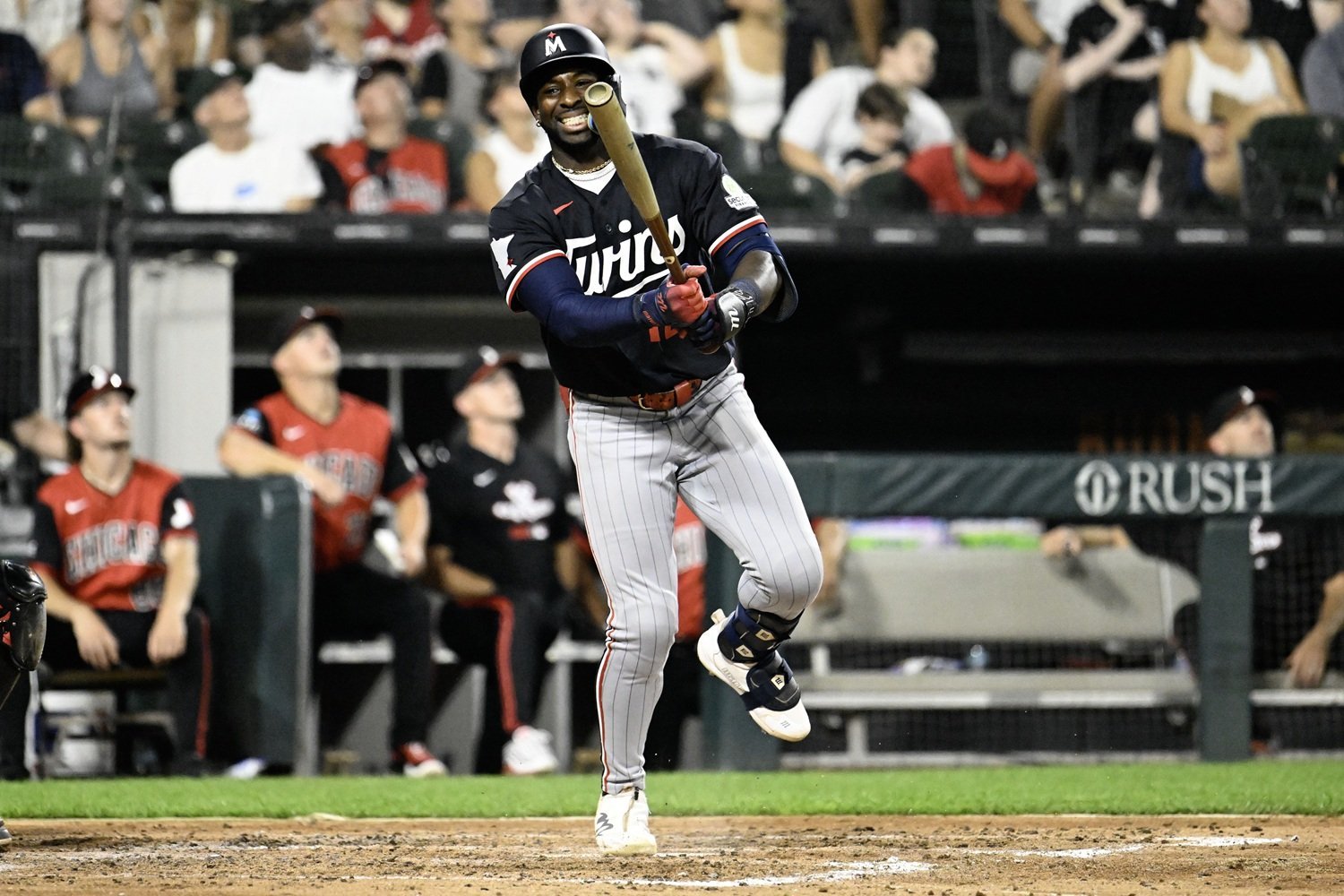 Box Score Zebby Matthews: 5 IP, 4 H, 4 ER, 1 BB, 4 K Home Runs: Josh Bell (18) Bottom 3 WPA: Zebby Matthews (-.180), Luke Keaschall (-.110), Ryan Jeffers (-.090) Win Probability Chart (via FanGraphs) Good and bad. Yin and yang. However you like to interpret the internal battle in all of us, the concept is never more apparent than in a Zebby Matthew start. One day, excellence; another, the ugly flipside of a hurler with a penchant for homers. Seemingly a preference for punishment. His last start against the White Sox nearly resulted in a complete game shutout, while Friday’s affair resulted in turned heads, exalted cheers from the home crowd, and roaring music accompanying a plethora of home run trots. First, the first: an initial blast by Miguel Vargas in the game’s opening frame, a tone setter. Then, a Braden Montgomery shot in the second. Chicago skipped the third - how kind of them - just to return in the fourth with a two-run long ball off the bat of Colson Montgomery, who’s already developing a Twin-killing reputation early in his young career. The 4-0 deficit was already a tough endeavor, and it was made worse by the Big Bad Wolf standing on the mound for the White Sox: Erick Fedde. The monster. A 6’4” 205-pound terror of finesse pitching that no lineup bearing a Twins insignia can figure out, no matter their makeup. He would shut out the 1927 Yankees, if they bore Minnesota jerseys. And he worked his magic once more, surrendering a scattering of baserunners across five innings, but holding the team scoreless as they once more struggled to find the big hit against him. Or against anyone, for that matter. The lively, young offense that pulverized the Tigers, and necessitated an unchanged lineup for nearly a week, showed little vigor. Fedde begat Hagen Smith, who begat Bryan Hudson, all of whom were anathema to Minnesota on Friday. Their collection of singles and walks proved impotent, contrasted with Chicago’s three mighty dingers. Finally, some action arrived in the ninth against the best White Sox pitcher of the night. Go figure. Josh Bell launched a thunderous solo home run, and Royce Lewis doubled after a Gabriel Gonzalez ground out. Another worm-burner by Kaelen Culpepper gave the Twins one final out. Walker Jenkins walked, and Luke Keaschall hit an ordinary fly ball to right to end Minnesota's tepid rally. Notes: Post-Game Interview: What’s Next? The Twins and White Sox meet at Guaranteed Rate Field for a Saturday brouhaha, with Taj Bradley scheduled to start opposite left-hander Anthony Kay. First pitch is at 6:10 PM. Bullpen Usage Spreadsheet MON TUE WED THUR FRI TOT Nance 26 0 33 0 0 59 Acton 0 39 0 0 18 57 Morris 0 29 0 0 0 29 Funderburk 0 0 29 0 0 29 Rogers 0 0 7 0 19 26 Minter 0 0 17 0 0 17 Gomez 0 0 15 0 0 15 Hoffman 0 0 13 0 0 13 Adams 0 9 3 0 0 12 View the full article
 -
Twins 1, White Sox 4: Little Good on the South Side of Chicago
DiamondCentric posted an article in Twins Daily
 Box Score Zebby Matthews: 5 IP, 4 H, 4 ER, 1 BB, 4 K Home Runs: Josh Bell (18) Bottom 3 WPA: Zebby Matthews (-.180), Luke Keaschall (-.110), Ryan Jeffers (-.090) Win Probability Chart (via FanGraphs) Good and bad. Yin and yang. However you like to interpret the internal battle in all of us, the concept is never more apparent than in a Zebby Matthew start. One day, excellence; another, the ugly flipside of a hurler with a penchant for homers. Seemingly a preference for punishment. His last start against the White Sox nearly resulted in a complete game shutout, while Friday’s affair resulted in turned heads, exalted cheers from the home crowd, and roaring music accompanying a plethora of home run trots. First, the first: an initial blast by Miguel Vargas in the game’s opening frame, a tone setter. Then, a Braden Montgomery shot in the second. Chicago skipped the third - how kind of them - just to return in the fourth with a two-run long ball off the bat of Colson Montgomery, who’s already developing a Twin-killing reputation early in his young career. The 4-0 deficit was already a tough endeavor, and it was made worse by the Big Bad Wolf standing on the mound for the White Sox: Erick Fedde. The monster. A 6’4” 205-pound terror of finesse pitching that no lineup bearing a Twins insignia can figure out, no matter their makeup. He would shut out the 1927 Yankees, if they bore Minnesota jerseys. And he worked his magic once more, surrendering a scattering of baserunners across five innings, but holding the team scoreless as they once more struggled to find the big hit against him. Or against anyone, for that matter. The lively, young offense that pulverized the Tigers, and necessitated an unchanged lineup for nearly a week, showed little vigor. Fedde begat Hagen Smith, who begat Bryan Hudson, all of whom were anathema to Minnesota on Friday. Their collection of singles and walks proved impotent, contrasted with Chicago’s three mighty dingers. Finally, some action arrived in the ninth against the best White Sox pitcher of the night. Go figure. Josh Bell launched a thunderous solo home run, and Royce Lewis doubled after a Gabriel Gonzalez ground out. Another worm-burner by Kaelen Culpepper gave the Twins one final out. Walker Jenkins walked, and Luke Keaschall hit an ordinary fly ball to right to end Minnesota's tepid rally. Notes: Post-Game Interview: What’s Next? The Twins and White Sox meet at Guaranteed Rate Field for a Saturday brouhaha, with Taj Bradley scheduled to start opposite left-hander Anthony Kay. First pitch is at 6:10 PM. Bullpen Usage Spreadsheet MON TUE WED THUR FRI TOT Nance 26 0 33 0 0 59 Acton 0 39 0 0 18 57 Morris 0 29 0 0 0 29 Funderburk 0 0 29 0 0 29 Rogers 0 0 7 0 19 26 Minter 0 0 17 0 0 17 Gomez 0 0 15 0 0 15 Hoffman 0 0 13 0 0 13 Adams 0 9 3 0 0 12 View the full article
 -
Make-or-break Marlins homestand; Leo Jiménez finally gone
DiamondCentric posted an article in Fish On First
 Fish On First staffers react to the latest Miami Marlins series and prepare you for what lies ahead. Friday's show was hosted by Ely Sussman and featured panelists Alex Krutchik and Sean Millerick. The following topics were covered: Leo Jiménez designated for assignment Heriberto Hernández's steady power production Graham Pauley, Deyvison De Los Santos getting opportunities NL Wild Card race updates Previewing and predicting the next series against the Chicago Cubs You can find Fish Unfiltered and Fish On First LIVE on the Fish On First YouTube channel, Apple Podcasts, Spotify or wherever else you get your pods. Our next FOF LIVE episode will be on Sunday at approximately 6:30 p.m. ET following the Marlins-Cubs series finale. View the full article
 -
Padres Minor-League Pitchers of the Month: August 2026
DiamondCentric posted an article in Padres Mission
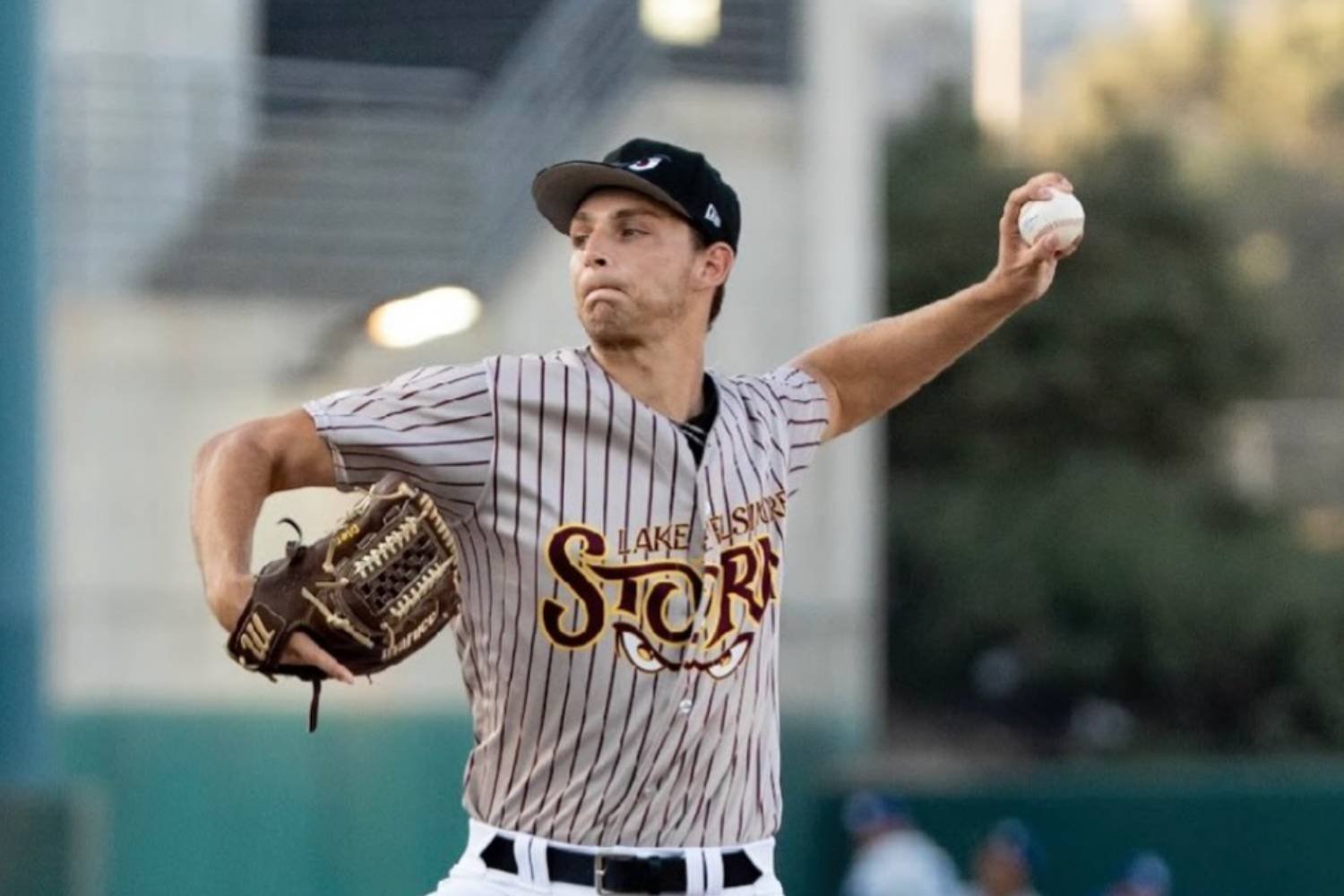 The minor-league season is entering it final weeks, so some pitchers are having their innings curtailed while others are still building following injuries that might have gotten their seasons off the late starts. Here are the ones who stood out in August in the San Diego Padres' farm system. Ranking Padres' Best Minor-League Pitchers In August Honorable Mention: RHP Hunter Stratton, RHP, Triple-A El Paso Chihuahuas August stats: 0-1, 1.54, 9 games (all relief), 0 saves (2 chances), 11⅔ IP, 11 H, 4 R, 2 ER, 7 BB, 12 K, .250 opponent average An under-the-radar acquisition at the trade deadline, the right-handed reliever was picked up in exchange for another promising reliever in right-hander Andrew Moore. Stratton has 62 games of MLB experience and would be an option if the Padres need an injury replacement in September. Stratton has been dealt twice this year, going to the Pirates from Atlanta for catcher Joey Bart. The 29-year-old has been very good since joining Triple-A El Paso, not allowing a run in his first seven appearances, before allowing one Wednesday and then three (one earned) Friday. He doesn’t put up big strikeout numbers (12 in 11⅔ innings) and did walk seven. Honorable Mention: RHP Josh Mallitz, Double-A San Antonio Missions August stats: 1-0, 2.45 ERA, 9 games (all relief), 2 saves (3 chances), 14⅔ IP, 12 H, 5 R, 4 ER, 6 BB, 13 K, .240 opponent average The 24-year-old right-hander continues to be one of the most consistent pitchers in the Padres’ system. An undrafted free agent who was signed out of Mississippi in 2024, Mallitz is usually good for multiple innings each time he takes the mound. Seven of his nine outings in August required getting more than three outs, with Mallitz going 2⅓ on Aug. 13. He has a just-above-average 26.4% strikeout rate for the season and his 10% walk rate is the highest of his three seasons. 3. Ian Koenig, RHP, Triple-A El Paso Chihuahuas August stats: 2-1, 3.52 ERA, 5 games (all starts), 30⅔ IP, 25 H, 12 R, 12 ER, 5 BB, 26 K, .219 opponent average The right-handed starter made his Triple-A debut Friday in a month where he has logged the most innings of the season. The 25-year-old went five innings and allowed two runs against the Oklahoma City Comets in a 5-4 loss in a game that featured Los Angeles Dodgers catcher Will Smith going 0-for-3 on a rehab assignment. He got Smith to pop up, ground out and strike out. That was his shortest outing of August. His other four for Double-A San Antonio were all six innings or more, including seven shutout innings Aug. 11 against the Frisco RoughRiders. He gave up five hits and a walk while striking out four. It was the third time Koenig has made it through seven innings this season. He is the only Missions pitcher to make it seven innings. Koenig, an undrafted free agent who signed in 2022, was promoted after leading the Texas League in innings with 121⅓. One of his biggest issues is allowing home runs. Koenig has given up 20 in 126⅓ innings after allowing 17 in 103⅓ last year at High-A Fort Wayne. He went seven innings twice in 2025 and will finish this season around 150 innings depending on if he gets three or four starts in the final three weeks of the Triple-A season. His previous best was the 103⅓ from last year. 2. Brandon Langley, RHP, High-A Fort Wayne TinCaps August stats: 2-0, 2.57 ERA, 1 save (2 chances), 14 IP, 12 H, 4 R, 4 ER, 9 BB, 22 K, .235 opponent average In his first pro season since signing as an undrafted free agent last summer, the 21-year-old right-hander has been a solid reliever this season, with the usual bumps along the way. He spent the entire season at Low-A Lake Elsinore until getting promoted to High-A Fort Wayne last week. His first two outings with the TinCaps against the Great Lakes Loons were really good, both of the two-inning variety and facing just one over the minimum combined in the four innings. He struck out four in one game and three in the other, while not allowing a hit and walking one. The rest of his month wasn't shabby, either. In 10 games and 12 innings with the Storm, Langley allowed four runs on 12 hits and eight hits and 15 strikeouts. As with any first-year pro, he has had trouble with walks, putting up a 15.5% walk rate, though he's countered that with a nice 28.4% strikeout rate. With this being the last week of the TinCaps' season, Langley is likely to return to High-A next season following an offseason of working on what his coaches want him to adjust. 1. Adler Cecil, LHP, Low-A Lake Elsinore Storm August stats: 1-0, 3.38 ERA, 4 games (1 start), 13⅓ IP, 7 H, 11 R, 5 ER, 11 BB, 27 K, .149 opponent average A 19th-round draft choice in 2023 out of Temecula Valley High School, just down the road from Lake Elsinore, Cecil has certainly increased his visibility since coming up to the Storm at the end of July. The Padres have a love of young left-handers and Cecil certainly fits the bill. The 6-foot-4, 160-pounder has been handled with care as he comes back from Tommy John surgery, which took him out of the entire 2025 season. But since returning, he has been on fire. This month alone, he struck out 27 in just 13⅓ innings, a total that led the entire Padres system. He is tied for the third-most strikeouts in the pipeline for the season with 102 while his innings total (59) is much less than the two above him. That translates to a strikeout rate of 39.5%. While Adler doesn't (yet) have that type of velocity, Milwaukee Brewers right-hander Jacob Misiorowski is at 38.9% this year. In his most recent game, he struck out eight in 3⅔ innings against the Rancho Cucamonga Quakes. His other three outings had strikeout totals of six, seven and six while pitching 2⅔, four and three innings, respectively. He has reached five innings twice this season, both while in the Arizona Complex League, and twice struck out 10, once in five innings and the other in four. Adler was a project coming out of high school, with Baseball America ranking him as the No. 488 prospect (taken by the Padres with the 581st selection). He has two or maybe three appearances left this season depending on how the Storm do in the postseason after winning the California League's South Division first-half championship. They will play the Ontario Tower Buzzers, the second-half South champ, in the best-of-three semifinals next week. Cecil is likely to move up to High-A Fort Wayne next season. View the full article
 -
 While there is a huge qualifier to this announcement, it still deserves its proper space. The Milwaukee Brewers will begin Cactus League play on Feb. 19 with a home game at American Family Fields of Phoenix against the Los Angeles Angels. The Crew will play 32 exhibition games, 15 at home. All 30 teams will play that same day. The Brewers will conclude Cactus League play with games March 22-23 against the rival Chicago Cubs at Sloan Park in Mesa, Ariz., before opening the 2027 season at home vs. the Angels on March 25. And now for the line that has to be included with any story about the start of the 2027 MLB season: Everything is dependent on owners and the MLB Players Association reaching a deal on a new collective bargaining agreement. The last time the owners locked out the players was 2022, with an agreement reached March 10, just three weeks before the scheduled start of the regular season. View the full article
 -
 Yes, we know the caveat to this story. But still, this is what is going on as of now. The San Diego Padres will open Cactus League play against their Peoria Sports Complex co-tenant, the Seattle Mariners, on Feb. 19. That will technically be a road game. The Friars' first home game will be the next day against the Arizona Diamondbacks. All 30 MLB teams will play Feb. 19. Wrapping up Cactus League play, the Padres will host the Mariners on March 22. There will be one split-squad game, Feb. 26 against the two Chicago teams, at home vs. the Cubs and on the road against the White Sox (Camelback Ranch in Glendale, Ariz.). Times will be announced at a later time as will report dates for pitchers and catchers as well as position players for workouts in Peoria, Ariz. The caveat, of course, is whether owners and the MLB Players Association will have agreed to a new collective bargaining agreement in time to have a normal spring training. In 2022, the two sides agreed to a new CBA on March 10, three weeks before the scheduled Opening Day. In 2027, Opening Day is scheduled for March 25, when the Padres are to take on the D'backs at Petco Park. This will be the first spring training for new owners Jose E. Feliciano and Kwanza Jones. View the full article
 -
Toronto Blue Jays Pitchers of the Month - August 2026
DiamondCentric posted an article in Jays Centre
 In part fueled by the trade deadline, the Jays used more pitchers in August than in any previous month of the season. New acquisitions José Soriano and Spencer Arrighetti made their Blue Jays debuts, and so did long-time Blue Jays prospect Ricky Tiedemann. August also saw the final innings pitched for the beloved Kevin Gausman and less-beloved Jeff Hoffman. Soriano flirted with the official rankings for this PotM list, but he will have to settle for Honourable Mention status. He made five starts and threw the third-most innings (28.1) of anyone on the Jays staff, settling for a 2-1 record behind a 3.73 FIP and 0.4 fWAR. Spencer Miles and Louis Varland have both made a number of appearances on our PotM lists, and maybe it’s voter fatigue, or maybe it’s the ebbs and flows of a long season, but they are both on the outside looking in this time around. Miles pitched the most innings of anyone (13.1) this month without giving up a home run, and Varland picked up seven saves, bringing his season total to 31, but he was also saddled with his first blown save of the season. No. 3: Shane Bieber 24.1 IP, 2.59 ERA, 22 K, 6 BB, 0.5 fWAR Shane Bieber only made four starts in August, but he was the only Jays pitcher to pick up more than two wins. Wins aren’t everything, certainly, and are arguably the worst metric through which to measure a pitcher. BUT making quality starts and sticking around long enough to pick up a win in a season where the bullpen has been extremely taxed, and the offense has been (at times) stagnant is an important thing. Bieber’s last start (7 IP, 7 K, 0 ER) was not only his best of the season, it was the ninth best start by Game Score of any Jay this season. No. 2: Max Scherzer 32.1 IP, 3.68 FIP, 28 K, 12 BB, 0.6 fWAR Speaking of Game Score, Max Scherzer had the best start of the month by that metric. Going seven innings of one-hit ball with only one walk against 10 Ks facing Seattle in arguably his best regular season start as a Jay – Scherzer wasn’t surprised. He also moved into ninth place on the all-time strikeout list in that start, bypassing Gaylord Perry’s 3,534. Earlier in the month, he entered the top 10 after moving beyond Walter Johnson. Scherzer is now only 19 Ks behind the technically active, but currently IL’d, Justin Verlander for the eighth spot on that list. Also worth noting that Scherzer threw the most innings of any Toronto pitcher this month. Again, as we focus on optimizing the wear on the bullpen down the stretch, the workhorses are really showing their worth. No. 1: Dylan Cease 31 IP, 2.03 ERA, 43 K, 0.8 fWAR Sticking with the Game Score theme, Dylan Cease has half of the Jays' top 10 Game Scores this season. Only one of them came in August, but his continued dominance and steady hand have not only kept him in the Cy Young conversation, but the team in the playoff picture. In August, Cease made four quality starts, picked up a pair of wins and continued to lead the American League in strikeouts. Bryan Jaeger touted the contract that brought Cease here, and while it may not be the primary accolade he’s chasing, Cease is now our back-to-back PotM for the first time in his career. View the full article
 -
 It is the first weekend of September, and the Chicago Cubs are sputtering. After splitting a home series that was a must-win affair against the Milwaukee Brewers, any hopes of regaining a division lead have vanished completely. They have also dropped behind the Phillies in the Wild Card standings, and while they still hold a four-and-a-half game lead over the Diamondbacks for the second spot, the margin for error is shrinking. Although it isn’t time to press the panic button, the Cubs are in danger of dropping their fourth consecutive series. The bats have done their job, but the pitching staff as a whole has a 4.44 xERA since since the start of August, which ranks 26th overall. The front office has built a pitching staff for 2026 that has contained more questions than answers, and while the trade deadline additions have added some clarity to the playoff starting rotation, there is still enough ambiguity to keep fans skeptical about how far this club can go. The question we will be diving into here is one that was asked in the postseason last year, and again in the offseason: What is Craig Counsell supposed to do with Shota Imanaga? After Sunday’s home loss to the Reds, where Imanaga gave up three long balls for the second time in his last four starts, Counsell was quoted as saying, "If you look at the season he’s having, he’s having a pretty decent season," and when asked about if his role in the postseason was in jeopardy, he doubled down and added "I wouldn’t say that at all, no. We need Shota. We need Shota to be good for us. So we gotta work at helping him be better." It sounds like Counsell still has confidence, but it's not too early to think about other options. The Shota Imanaga Problem Imanaga’s third go-round with the Cubs has been healthier than last season’s effort, when he suffered a strained hamstring in May, costing him a month. He still made 25 starts, but he clearly was not the All-Star caliber pitcher who earned Rookie of the Year votes and down-ballot Cy Young love in 2024. He made two postseason starts, and while he pitched okay versus the Padres in the Wild Card Round, he infamously could not make it out of the third inning in his start against the Brewers in the NLDS, allowing four earned runs and a pair of homers. As aforementioned, the home runs have been the glaring hole in his game for 2026. His 33 home runs allowed currently lead the major leagues (tied with Jeffrey Springs of the Athletics). He has allowed more than one homer in eight of his 27 starts, and 19 of those 33 allowed happened at Wrigley Field. Imanaga has a chase (35%) and whiff (29.2%) rate well above league average, and a walk percentage bordering on elite at 5.7%, which should normally inspire confidence. However, after looking at the potential playoff opponents he might face, he could be doomed in any scenario that involves him starting a game. As it stands today, the Cubs would be in Philadelphia for the Wild Card Round. Forget about the lefty-on-lefty matchup; Kyle Schwarber and Bryce Harper would have no problem connecting on Shota’s low-90s fastball that tends to sit in the top of the strike zone. Should the Cubs’ slide continue to where they fall to the third Wild Card spot, they would likely match up with the Dodgers or Braves, which would be as bleak as it could get. The silver lining here is that, barring injury, he would not need to start a playoff game in the three-game wild card series with Clay Holmes, Matthew Boyd, and Jevin Gausman ahead of him, but should the Cubs advance, here are the potential pivots from an Imanaga start. Plan A: Piggyback Game The Mariners tinkered with this idea throughout the early parts of the season, using two different starters for about three innings a piece. Instead of starting Imanaga with a short leash, the plan from the beginning would be to let him work through the lineup once or twice before pulling him in the middle innings. In his first time through the batting order, opponents are hitting .211 with a .654 OPS, which is more than serviceable. The Cubs’ high-powered offense could jump out to an early lead in this timeframe before handing the ball to another starter. Who that would be is a tough question, though. The healthy options on the roster are currently Colin Rea and Javier Assad. Rea has pitched well of late with a 3.06 ERA in his last seven games and switching the handedness of the pitcher would make the opposing manager have to make a few key decisions earlier than expected. Assad is once again putting together a solid, underrated season while bouncing between Chicago and Iowa. He has a 3.46 ERA in 22 games while starting ten of them. Before being optioned again, he threw three innings of two-hit, shutout ball versus the White Sox after entering in the fifth inning. Anything that Rea can do, Assad should be able to do a bit better. The most interesting option would be Edward Cabrera, who is currently rehabbing a blister. He is expected to land in the bullpen upon his return, but it is unclear whether he can be depended on for longer outings. Plan B: David Peterson Peterson has pitched well over the second half of the season, and his 0.6 fWAR is tied for the team lead among starters. In eight starts, which is tied with Imanaga for second on the team, he has a ho-hum 4.21 xERA but with an xFIP of 3.55. He has only one less strikeout than Imanaga since the All-Star break, and outside of Clay Holmes, he has been their best at keeping the ball in the yard. Opposing hitters have a .307 BABIP against Peterson, which is probably higher than it should be considering how good the Cubs' defense is. For what it's worth, didn’t allow a run over 5.1 innings of work against the Phillies in the 2024 NLDS. It is clear that neither of these options would be better than Imanaga at the top of his game, and realistically, he will most likely be starting game four of a five-game playoff series. If any pitcher on this staff can string together a run of four straight quality starts, this is the guy. He started the year pitching like an All-Star, and could do that again as the weather starts to cool down and the hot summer air stops affecting fly balls as much. As long as he is healthy, he will have a shot at redemption in the postseason. View the full article
