


DiamondCentric
-
Posts
2,631 -
Joined
-
Last visited
Never
Content Type
Profiles
Forums
Events
News
Tutorials & Help
Major League Baseball Videos
Guides & Resources
Store
Downloads
Gallery
Everything posted by DiamondCentric
-

More Velo, Better Stuff: Nolan Perry's Breakout Return
DiamondCentric posted an article in Jays Centre
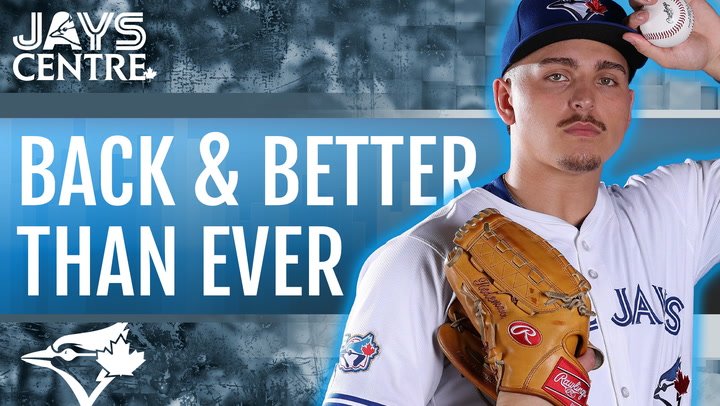 Nolan Perry was out of sight, out of mind in 2025, recovering from Tommy John surgery. In 2026, he came back with better velocity and better stuff, featuring on the back end of industry top 100 prospect lists by season's end. View the full article
 -
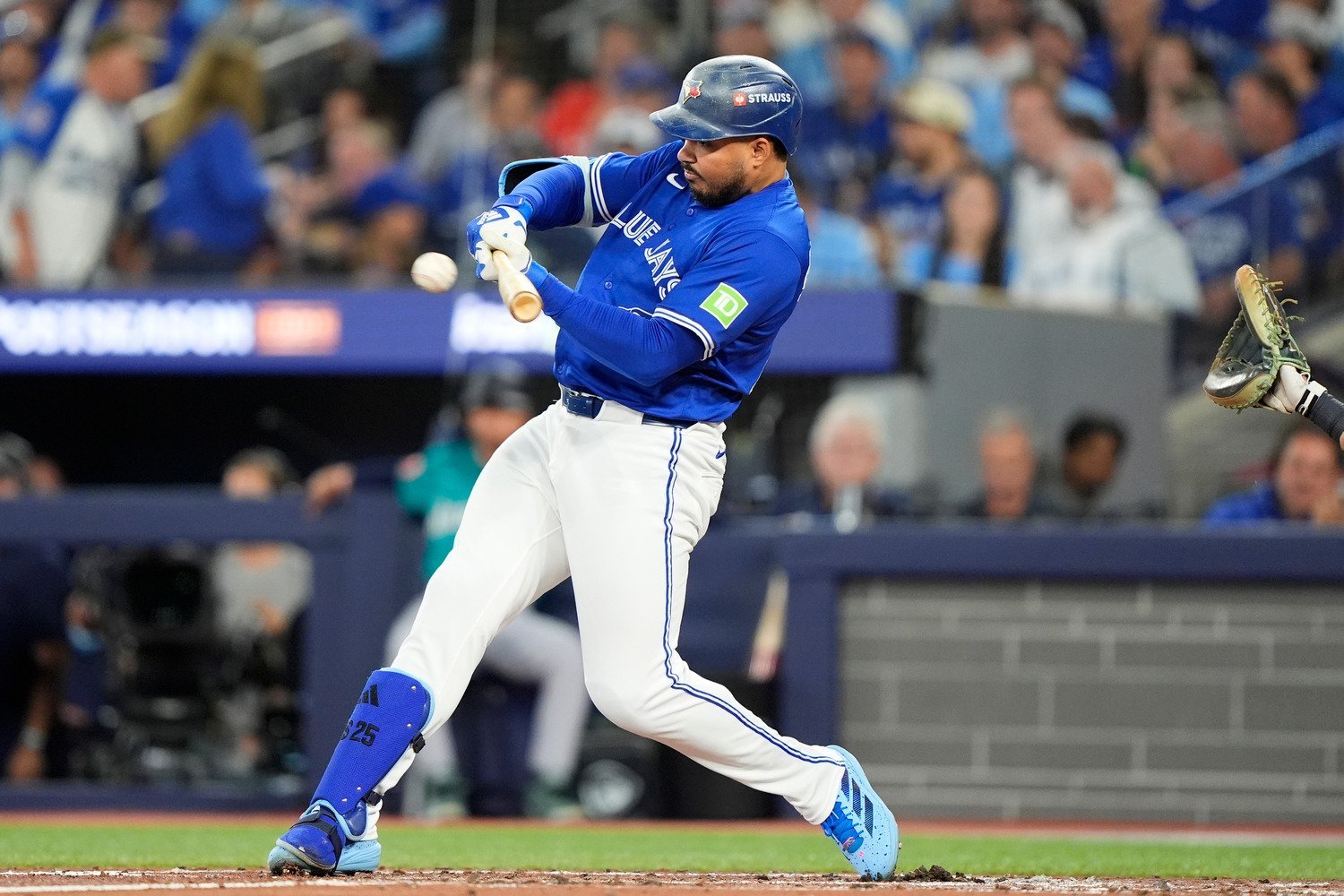 The Blue Jays are in the midst of a tight battle for the final Wild Card spot. They trail the Cleveland Guardians, who have the spot, by one game, while the Texas Rangers and Baltimore Orioles are close behind. The last 15 games will be a fight, although the Blue Jays have one of the easier remaining schedules in the league. They also have an advantage with a series against the Rangers and two against the Orioles. However, the Blue Jays just wasted an optimal chance to gain ground by losing two of three games to the Athletics, who are 59-88. Both losses came on days that the Guardians lost as well, so the Jays didn't lose ground, but they blew a chance to take the driver’s seat. The team has been plagued by injuries all season. The injured list currently includes 13 players (nine pitchers). There's light at the end of the tunnel, though. If the team earns a postseason berth, reinforcements could be on the way. Trey Yesavage and Shane Bieber may return by the end of September, and Anthony Santander has started a rehab assignment. Cody Ponce, who tore his ACL in his first start, was expected to miss the rest of the season, but his recovery could have him healthy enough to make a late October return. Jameson Taillon returned to the 15-day injured list on September 5 with right elbow inflammation. It's his second IL stint since being traded to Toronto on August 2, so how he recovers will determine if his season is over or if he can make a postseason return. Blue Jays Ideal Postseason Roster: The Pitching Staff Roster Decision Yesavage: In Arrighetti: Out In an ideal, healthy world, if the Blue Jays can find their way into the postseason, what could their roster look like? On the pitching staff, Yesavage would join Dylan Cease and José Soriano to form a three-man rotation for the Wild Card round. Bieber and Max Scherzer would move to the bullpen or be left off the roster. Spencer Arrighetti is an obvious choice to leave off the postseason roster. He's struggled since being acquired at the trade deadline, posting an 8.04 ERA over 15 2/3 innings. Roster Decision Bieber: In Lorenzen: Out Bieber has made only 11 starts this year after missing the first 78 games of the season due to elbow inflammation. He also returned to the injured list on August 25 after suffering a teres major injury. His limited availability this season makes a bullpen role the best fit. The righty is expected to be a week and a half behind Yesavage's timeline, according to MLB.com’s Keegan Matheson. So, Bieber won’t have as much time to get stretched out. Removing swingman Michael Lorenzen from the roster would make space for Toronto to reinstate Bieber. Roster Decision Scherzer: Stays In Tiedemann: Out Scherzer has pitched better since the All-Star break, posting a 3.76 ERA, compared to a 10.23 first-half ERA. He has also posted a 20 percent strikeout rate and held batters to a .204 batting average, compared to first-half figures of 13.7 percent and .303, respectively. Scherzer’s fiery personality could be infectious for a team taking on the No. 3 seed in a short postseason series. Scherzer is already on the active roster, but rosters expanded from 26 to 28 players in September, meaning another pitcher would still need to be removed to keep Scherzer around and get down to 13 arms. The final postseason roster decision comes down to Paul Sewald, Brendon Little, and Ricky Tiedemann, and that decision will be based on who the Blue Jays face. However, they wouldn’t need four left-handed relievers – including Little, Tiedemann, Mason Fluharty and Joe Mantiply – for a three-game series. Considering that, I’d leave Tiedemann off the roster. He’s pitched well in his brief MLB debut, but I’d prefer a pitcher with experience in the postseason. Little was awful to start the season, posting a 27.00 ERA over 4 2/3 innings, which led to him being sent down to Triple-A Buffalo on April 5, where he spent the next three months. The lefty did get recalled for a day on June 19, but after allowing four earned runs in an inning of work, he was demoted back to Buffalo the next day. Whatever tweaks Little made have paid off, as he’s only allowed an earned run in four of his 19 appearances since being recalled again on July 20. He's also held teams to just one run in three of those four outings, posting a 2.70 ERA in the second half of the season. I'd leave Taillon off of the postseason roster to give him more time to recover. The bullpen is good enough that the righty isn't a "must-have" addition. The 13 pitchers who’d make this best-case-scenario postseason roster would be: Cease Soriano Yesavage Scherzer Bieber Louis Varland Tyler Rogers Braydon Fisher Spencer Miles Fluharty Mantiply Little Sewald Blue Jays Ideal Postseason Roster: The Position Players Roster Decision Santander: In Keys: Out The offense will look similar in the postseason, except if Santander can return. As a switch-hitter, he’d likely replace Jesús Sánchez in the batting order, who has had struggles defensively this season. Santander could go to right field because of his strong arm, and Nathan Lukes would shift to left. However, the Blue Jays might also choose to put less strain on Santander’s body and have him DH, since he’s missed the entire season after undergoing shoulder labrum surgery in March. George Springer has DH-ed in 105 of the 107 games he’s played in this season, playing left field in the other two. It isn’t ideal having Springer in left field, but if that’s the best way to keep Santander healthy through the postseason, then that’s what the Blue Jays need to do. Last season, Santander returned in late September after missing 100 games with shoulder inflammation. However, his return was short-lived: he was removed from the roster before Game 4 of the ALCS because of a back injury, ending his season. If he returns, he should replace Sean Keys on the active roster. Santander would also need to be re-added to the 40-man roster, but who to remove there is a separate discussion. The Final Roster Decision The last player to remove to get to 13 hitters would come down to Charles McAdoo or Josh Smith. I’d keep Smith, as he gives the Blue Jays more MLB experience, and he's played every position besides catcher over his five-year career. Smith struggled at the plate with the Texas Rangers this season, posting a .571 OPS over 154 plate appearances. He’s turned it around in 50 plate appearances with the Blue Jays (1.025 OPS), though. If the opposing team has quite a few southpaws in the bullpen, then McAdoo makes sense to have another right-handed bat off the bench. However, Brandon Valenzuela as a switch-hitter gives Toronto the luxury of not needing a set number of left- or right-handed bats on the bench. If he pinch-hits, then you lose your backup catcher for the remainder of the game, though. The 13 batters who’d make this best-case-scenario postseason roster would be: Brett Bateman Springer Vladimir Guerrero Jr. Alejandro Kirk Lukes Kazuma Okamoto Andrés Giménez Ernie Clement Myles Straw Sánchez Santander Smith Valenzuela View the full article
 -
Braylon Payne is Starting to Look Like a Superstar in the Making
DiamondCentric posted an article in Brewer Fanatic
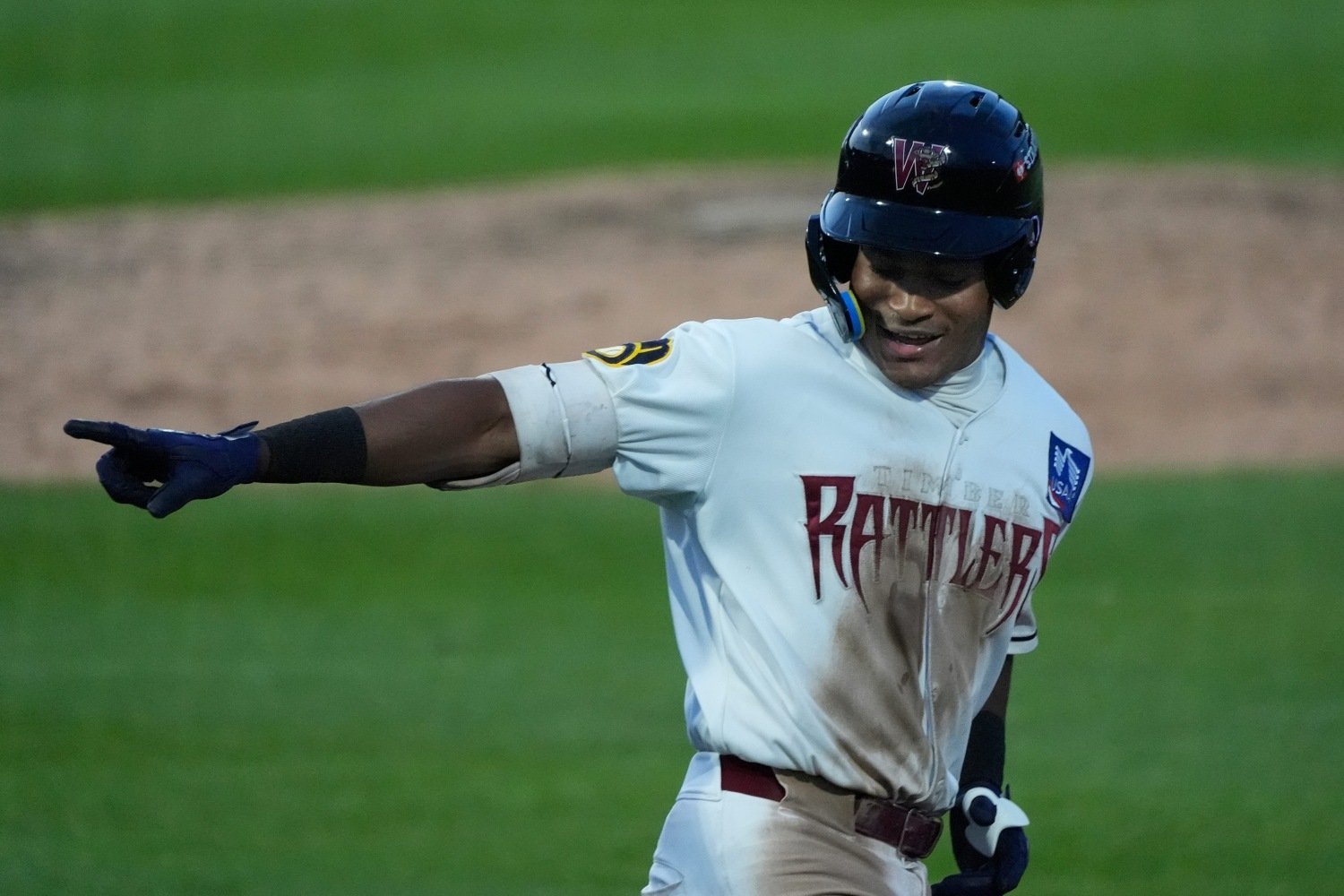 Over the last decade or so, the Milwaukee Brewers have done a sensational job of identifying young talent and developing legitimate big-league contributors. Jackson Chourio and Brice Turang are two of the best recent examples, with both homegrown prospects turning into key pieces of Milwaukee’s roster. There are plenty of other young players who could soon follow that path. Jesús Made, Luis Lara and Cooper Pratt are all highly-regarded young talents within the organization, but there’s another name with legitimate superstar potential beginning to shine through: outfielder Braylon Payne. Payne was Milwaukee’s first-round pick in the 2024 MLB Draft and currently ranks as the No. 4 prospect in the organization, according to the Brewer Fanatic community. Considering he was just 17 years old when he made his professional debut, it’s pretty remarkable how quickly he has moved through the minor leagues. You certainly wouldn’t have known Payne was that young based on how he's played. He posted a .910 OPS at High-A Wisconsin, before earning a promotion to Double-A on his 20th birthday. It’s uncommon for a player that young to even reach Double-A, let alone immediately find success against significantly more advanced pitching—but that’s exactly what Payne has done. He’s currently slashing .289/.337/.482 with an .812 OPS at Double-A. Those numbers are a step down from what he produced at High-A, which is completely understandable given the added difficulty of the competition, but there are actually some areas where Payne has improved since making the jump. Most notably, he’s striking out less often. That's one of the more important things to watch with Payne moving forward. Bat-to-ball ability has been one of the big concerns surrounding him as a professional. He struck out in roughly 30% of his plate appearances at High-A, which is a fairly concerning number even when accounting for his age. That number has dropped to 28% at Double-A. That’s obviously not some massive decrease, and there’s still plenty of room for Payne to improve in that area. However, some context is important. The jump from High-A to Double-A is widely regarded as the toughest jump in the minor leagues, as hitters are facing better stuff, more advanced pitchers and fewer mistakes to take advantage of. For Payne to actually make more contact against that level of competition is a really encouraging sign, and it’s especially important because he’s the type of player you really don’t want getting himself out. There aren’t many players in the minor leagues who possess the raw tools that Payne has. In his 98 games between the two levels this season, he has hit 25 home runs and stolen 25 bases. Payne has always been an elite runner. He entered the 2024 Draft as one of the fastest players in the class, and that speed gives him an obvious weapon that can impact the game in multiple ways. He can take extra bases, steal bags and could provide above-average defense in center field. But the power development is what has taken his profile to another level. Payne hit just eight home runs in 78 games during the 2025 season. He was always capable of driving the ball into the gaps, but there were questions about whether he would develop enough power to become a consistent home run threat. This year has gone a long way toward answering that question. If Payne’s power breakout is legitimate, we’re talking about a player who could realistically have a 30-30 ceiling at the major-league level while providing at least average defense in the outfield. That’s not just a good player; that’s a potential superstar. Of course, it’s far too early to say with any certainty that Payne will become that type of player. He’s still just 20 years old, has plenty of development ahead of him and must prove that he can consistently make enough contact to maximize those impressive tools. The strikeout rate remains the biggest thing standing between Payne and that incredibly high ceiling. But man, it’s hard not to be excited about his future. If he can continue to bring that number down while maintaining the power and speed he's shown this season, his overall offensive profile could become extremely dangerous. There are plenty of prospects who can do one or two things really well. There aren’t nearly as many who combine elite speed with legitimate power potential at such a young age. Payne has already shown flashes of being able to do both, and now he’s starting to show signs that the biggest weakness in his game may be improving as well. The Brewers have already turned Chourio and Turang into stars, and they have plenty of other young talent coming through the organization. Payne has a chance to be the next big name in that group. If he can get the swing-and-miss just a little more under control, I don’t think it’s crazy to say that Payne has the potential to become a superstar. View the full article
 -
 Red Sox Affiliate Recap (September 9) Triple-A Worcester Red Sox Season Record: 71-63 The WooSox bounced back with an 8-3 victory on the road against the Lehigh Valley IronPigs (Philadelphia Phillies). Worcester’s offense was phenomenal, collecting 14 hits as a group. Five hitters had multi-hit games; Allan Castro and Vinny Capra each ended the game with three knocks and an RBI. Castro brought in Franklin Arias (who tallied two hits) with a soft-hit single in the fourth and Capra put this game to bed in the ninth with a solo blast. With two runners aboard, Nathan Hickey smacked a base-clearing triple to bring home Capra and Tyler McDonough, who also hammered a sharp line-drive RBI single beforehand, bringing in Mikey Romero, another WooSox batter with multiple hits. Along with Hickey, Nate Baez had a two-RBI night; a hard-hit groundball through the middle brought in two runs. Other than a rough eighth inning, Worcester’s pitching staff was excellent. Jedixson Paez made his first minor league start since the aftermath of his Boston debut. The 22-year-old was solid through 3 ⅓ innings, striking out four batters and giving up just four hits and no earned runs. Noah Song followed up with 2 ⅔ no-hit innings with three punchouts. John Brebbia struggled in the eighth but still got through it without the game getting out of hand, giving up three runs on four hits. Angel Bastardo finished off the game with a clean-handed ninth inning with one strikeout. Standout Performances: Vinny Capra: 3-for-5, HR, 2 R, RBI Allan Castro: 3-for-5, R, RBI, SB Franklin Arias: 2-for-3, 2B, R, 2 BB Double-A Portland Sea Dogs Season Record: 68-65 One rough inning ended with the Sea Dogs losing 5-2 to the Binghamton Rumble Ponies (New York Mets). Portland's pitching staff should not get all the blame, since the offense scored only two runs on six hits and three walks. The top of the lineup Justin Gonzales, Will Turner, and Brooks Brannon all ended their nights hitless. Henry Godbout had two knocks to extend his multi-hit streak to five games, but his teammates were not able to bring him home. In the 2025 offseason, Boston traded away infielder Vaughn Grissom for outfielder Isaiah Jackson. In his first season with a new club, the former eighth-rounder from Arizona State has been outstanding. Along with his 21 homers, his elite defensive tools earned him a promotion to Double-A Portland. In his first start, Jackson crushed a double in the right field gap, bringing in Ronald Rosario. Hayden Mullins deserves some flowers in his six-inning start. Despite not having the best command, the southpaw battled and gave up just one run with five strikeouts. The results of this outing and what he has done over the last month are catching Boston fans' attention for what is to come in the future. Griffin Kilander was outstanding through the final two innings, recording four punchouts and just one hit allowed. Standout Performance: Hayden Mullins: 6 IP, 5 H, 1 ER, 2 BB, 5 K View the full article
 -
 Chicago Cubs Transactions No Roster Moves Alcántara Drives In Two As Iowa Drops A 7-3 Decision To Toledo Iowa scored in two of the last four innings but could not climb out of an early hole in a 7-3 loss to Toledo. Jordan Wicks allowed four runs on six hits over 3 2/3 innings, walking three and striking out five. Three of those runs came in the second inning, when two singles and a walk set up a three-run home run. Toledo added a run in the fourth on a double. Evan Taylor struck out the only batter he faced. Edward Cabrera allowed one run on two hits with a strikeout over two innings. Gavin Hollowell gave up a hit in a scoreless inning. Tyler Ferguson allowed two runs on three hits. Eduarniel Núñez walked one and struck out one in a scoreless inning. The Iowa offense finally answered in the sixth. Owen Miller opened the inning with a double, and Owen Ayers followed with an RBI double to left. Ayers moved to third on a wild pitch, and Kevin Alcántara singled him home to cut the deficit to 5-2. Iowa got one more in the eighth. Chas McCormick drew a walk, and Alcántara doubled him in for a 7-3 score. Alcántara finished 2-for-4 with a double and two RBI. Ayers went 2-for-4 with a double, a run, and an RBI. Jordan Nwogu had two hits, and Miller had a double and a walk. Iowa collected eight hits, three doubles, and no home runs, struck out seven times, and left seven runners on base. Player AB R H RBI BB K James Triantos, 2B 5 0 0 0 0 2 Owen Miller, 3B 3 1 1 0 1 1 Owen Ayers, C 4 1 2 1 0 0 Chas McCormick, CF 3 1 0 0 1 1 Kevin Alcántara, 1B 4 0 2 2 0 0 Jordan Nwogu, LF 4 0 2 0 0 0 Ben Cowles, SS 4 0 0 0 0 0 Ethan Hearn, DH 4 0 1 0 0 2 Justin Dean, RF 4 0 0 0 0 1 Totals 35 3 8 3 2 7 Player IP H R ER BB K HR Jordan Wicks (L, 2-11) 3 2/3 6 4 4 3 5 1 Evan Taylor 1/3 0 0 0 0 1 0 Edward Cabrera 2 2 1 1 0 1 0 Gavin Hollowell 1 1 0 0 0 0 0 Tyler Ferguson 1 3 2 2 0 0 0 Eduarniel Núñez 1 1 0 0 1 1 0 Totals 9 13 7 7 4 8 1 Notable Defense Owen Ayers threw out a runner trying to steal second base. Owen Miller stayed busy at third with a barehanded toss and a diving catch. Knoxville Ties It In The Eighth Before A Ninth-Inning Loss At Birmingham Knoxville tied the game in the eighth inning and then lost 4-3 in the ninth on an unearned run at Birmingham. Kevin Valdez allowed two runs on three hits over five innings, walking one and striking out four. Both runs came on solo home runs in the fourth. Jacob Wallace allowed one run on two hits over two innings, walking one and striking out one. Frankie Scalzo Jr. allowed one unearned run on two hits over 1 1/3 innings with a walk and took the loss. The Smokies scored first. Kane Kepley singled, advanced on a throwing error, and stole third. Andy Garriola then singled him home for a 1-0 lead. Knoxville pushed the lead to 2-0 in the fourth. Garriola singled, Ariel Armas and Alex Madera both walked to load the bases, and Garriola came home on a wild pitch. Birmingham answered with two solo home runs in the bottom of the inning and took a 3-2 lead in the sixth. The Smokies drew even in the eighth. Miguel Useche singled and was lifted for pinch runner Dom Krupinski, who moved to second on a groundout, stole third, and scored on Edgar Alvarez's sacrifice fly. Birmingham won it in the ninth on a single, a stolen base, a throwing error, and a wild pitch. Garriola finished 2-for-4 with a run and an RBI. Kepley, Useche, Alvarez, and Karson Simas each had a hit, and Madera drew two walks. Knoxville totaled six hits and no home runs, struck out 11 times, and left eight runners on base. Player AB R H RBI BB K Alex Ramírez, RF 4 0 0 0 1 1 Kane Kepley, CF 4 1 1 0 0 1 Miguel Useche, C 4 0 1 0 0 3 Dom Krupinski, PR 0 1 0 0 0 0 Colin Hynek, C 0 0 0 0 0 0 Andy Garriola, LF 4 1 2 1 0 1 Edgar Alvarez, 1B 3 0 1 1 0 0 Ariel Armas, DH 3 0 0 0 1 1 Alex Madera, 3B 2 0 0 0 2 2 Karson Simas, SS 4 0 1 0 0 2 Drew Bowser, 2B 3 0 0 0 0 0 Totals 31 3 6 2 4 11 Player IP H R ER BB K HR Kevin Valdez 5 3 2 2 1 4 2 Jacob Wallace 2 2 1 1 1 1 0 Frankie Scalzo Jr. (L, 4-2) 1 1/3 2 1 0 1 0 0 Totals 8 1/3 7 4 3 3 5 2 Notable Defense Knoxville turned a double play started by Alex Madera and finished by Drew Bowser and Edgar Alvarez. The Smokies were charged with one error, a throwing error in the ninth that moved the winning run to third base. South Bend's Day Off The South Bend Cubs did not play. Game 2 of the Western Division Championship Series is scheduled for tonight at 7:05 p.m. Top-20 Prospect Performance Josiah Hartshorn: DNP Cade Townsend: DNP Jaxon Wiggins: DNP Owen Ayers: 2-for-4, 2B, RBI Kane Kepley: 1-for-4, 1 K Ethan Conrad: DNP Caden Sorrell: DNP Kaleb Wing: DNP Myles Bailey: DNP Brooks Caple: DNP James Triantos: 0-for-5, 2 K Will Sanders: DNP Juan Cabada: DNP Jostin Florentino: DNP Derniche Valdez: DNP Grant Kipp: DNP Jose Escobar: DNP Ariel Armas: 0-for-3, BB, 1 K Fernando Cruz: DNP Brandon Birdsell: DNP View the full article
 -
 Jonathan Santucci finished his 2026 season strong. The Syracuse left-hander held St. Paul to one hit, a solo home run, over five innings Wednesday, with six strikeouts and no walks. He threw 50 strikes and 17 balls, a rare 3:1 ratio. He left the game in line for the win with Syracuse leading 4-1, but the bullpen blew the lead in the seventh and the Mets eventually lost 5-4 on a bases-loaded walk in the ninth. With the no-decision, Santucci finished with a 1-2 record in seven Triple-A starts after being promoted from Double-A Binghamton in August. More importantly, his key rates with Syracuse were mixed: a 27.6 strikeout rate, a 13.4 walk rate (2.06 K:BB ratio), and a 3.7 percent home run rate over 29 innings. Overall, Santucci threw 119 2/3 innings over 26 starts in his age-23 season, to go with 117 2/3 innings in 25 games (23 starts) in 2025. At some point, he'll need to bump up his workload substantially. Mets fans will hope it happens in 2027 and Santucci joins the homegrown rotation core of Nolan McLean, Christian Scott, Zac Thornton and Jonah Tong. With Brooklyn and St. Lucie having finished their seasons Sunday, the only Mets minor-league affiliates still playing are Syracuse and Binghamton. The Rumble Ponies are wrapping up their season this weekend at Portland. They're still mathematically alive in the second-half title race in the Eastern League's Northeast Division. They defeated the Sea Dogs 5-2 Wednesday after scoring four runs in the seventh to break a 1-1 tie. Corey Collins had the key hit, a two-run home run. New York Mets Transactions No Roster Moves Syracuse Wastes Early Lead In Loss Syracuse built a four-run cushion in the first three innings, and Santucci proved more than capable of holding it. Check out this sharp slider which produced a swinging strikeout: Jamari Baylor was then hit by a pitch and stole second. After a strikeout, Marco Vargas singled to right to score Baylor for a 5-1 lead. Rojas, Suero and Bay had two hits each. Suero extended his team lead with his 37th steal. The catcher/outfielder is fifth in the Eastern League in that category. Five Binghamton pitchers held Portland to six hits. Will Watson started and allowed a run on three hits over 3 1/3 innings, walking two and striking out three. Carlos Guzman got the final two outs in the fourth, both on strikeouts. Ryan Dollar earned the win with two scoreless innings, allowing a hit and fanning four. Bryce Conley threw a scoreless seventh and eighth before handing it over to Bryce Jenkins, who allowed an unearned run in the ninth before finishing the game. Binghamton Batting .Player AB R H RBI BB K Marco Vargas 4 0 1 1 0 1 Jefferson Rojas 4 1 2 0 0 0 Jacob Reimer 3 0 1 1 1 1 Chris Suero 4 1 2 0 0 1 Eli Serrano III 4 0 0 0 0 1 John Bay 3 1 2 1 1 1 Corey Collins 4 1 2 2 0 1 Jamari Baylor 3 1 0 0 0 1 Vincent Perozo 4 0 0 0 0 3 Binghamton Pitching Player IP H R ER BB K HR Will Watson 3 1/3 3 1 1 2 3 0 Carlos Guzman 2/3 0 0 0 0 2 0 Ryan Dollar 2 1 0 0 0 4 0 Bryce Conley 2 0 0 0 1 2 0 Bryce Jenkins 1 2 1 0 0 1 0 Top-20 Prospect Performance Jonah Tong: MLB Jack Wenninger: DNP Elian Pena: DNP Mitch Voit: DNP Ryan Clifford: 1-for-4, HR, 2 RBI, K Nick Morabito: MLB Jonathan Santucci: 5 IP, 5 H, 1 R, 1 ER, 0 BB, 6 K Carson Wiggins: DNP Jacob Reimer: 1-for-3, RBI, BB, K Aiden Robbins: DNP Randy Guzman: DNP Wandy Asigen: DNP Chris Suero: 2-for-4, R, SB, K Jefferson Rojas: 2-for-4, 2B, R Will Watson: 3 1/3 IP, 3 H, 1 R, 1 ER, 2 BB, 3 K Shane Sdao: DNP Eli Serrano III: 0-for-4, K Antonio Jimenez: DNP Émilien Pitre: 0-for-4, BB, K Dylan Ross: DNP View the full article
 -
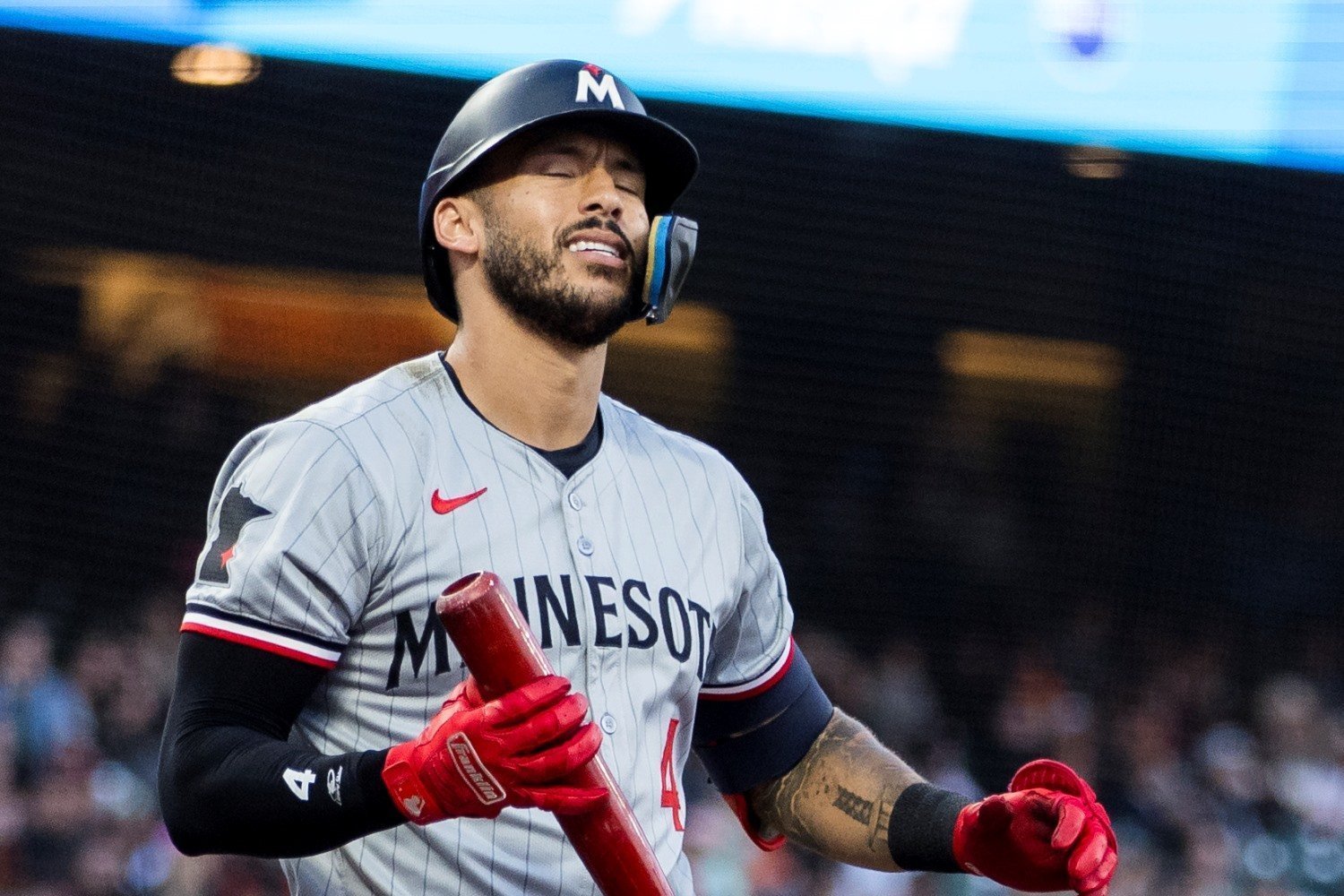 There is something uniquely frustrating about watching a baseball season slip away. For the Minnesota Twins, that frustration has become a familiar feeling. Over the last three seasons, the club has managed to turn promising or at least competitive first halves into increasingly disappointing finishes. The circumstances have been different each year, but the result has been remarkably similar: the Twins entered the second half with some level of hope and eventually found themselves watching the postseason from home. The 2024 collapse was fueled by a front office that stood pat. The 2025 collapse was accelerated by a front office that did the exact opposite. And in 2026, Minnesota tried to buy its way out of trouble, only to discover that being on the fringes of a terrible American League does not necessarily mean a team is truly a contender. So which collapse was the worst? Here is how the last three rank. 3. 2025 Twins First half: 47-49 (.490), Second half: 23-43 (.348) The 2025 Twins deserve the benefit of one important piece of context. By the time the season reached the trade deadline, Minnesota's direction had changed dramatically. The front office went from trying to compete to conducting one of the largest firesales in recent MLB history. The Twins ultimately traded 10 Major League players in a matter of days, including Carlos Correa, Jhoan Duran, Griffin Jax, Willi Castro, Harrison Bader, Ty France, Louis Varland, Brock Stewart, Danny Coulombe and Chris Paddack. That makes this collapse the easiest one to explain. Minnesota was already a .500 team at the break, so there was plenty to criticize about the season. But once the organization decided it was no longer interested in winning in 2025, expecting the club to suddenly put together a strong second half was unrealistic. The Twins went 23-43 after the break, finishing 18 games behind the Cleveland Guardians in the AL Central and 17 games out of the Wild Card. That is ugly. But it was also the inevitable result of the organization's decision-making. The 2025 season was less a collapse than it was a controlled demolition. 2. 2024 Twins First half: 54-42 (.563), Second half: 28-38 (.424) This one still hurts. The 2024 Twins had legitimate reasons to believe they could make another postseason run. They were coming off a 2023 playoff appearance, had a strong first half and appeared to have a roster capable of competing in the American League Central. Then came the trade deadline. Minnesota largely stood still. The Twins' lone addition was reliever Trevor Richards from Toronto. They did not add the starting pitcher many believed they needed, and they did not make the type of aggressive move that could have strengthened a team already dealing with injuries and roster weaknesses. The organization defended its decision. The clubhouse, however, was less enthusiastic about the lack of activity with some players being “disheartened.” That made the subsequent collapse even more frustrating. Minnesota went 54-42 before the All-Star break, winning 56.3% of its games. Afterward, the club went 28-38, winning only 42.4% of its games. The Twins stumbled all the way to the finish line, losing nine of their final 11 games. They finished 10.5 games behind the Guardians and four games out of the final Wild Card spot. This was a team that had postseason expectations and needed help. Instead, the organization essentially bet that what it already had would be enough. It wasn't. The 2024 collapse earns second place because the opportunity was there. Minnesota had a competitive team, had just demonstrated it could win in October and was in position to make the roster better. The decision to do nothing meaningful at the deadline became much harder to defend once the season disappeared. 1. 2026 Twins First half: 48-49 (.495), Second half: 21-28 (.429) This year's collapse ranks first because the Twins actually tried to prevent it. That makes it more frustrating. Minnesota entered the 2026 deadline sitting near the edge of the American League playoff race. Rather than selling, the front office bought. The Twins added Dean Kremer, A.J. Minter and Jeff Hoffman, while also choosing to keep impending free agents such as Ryan Jeffers and Josh Bell. The strategy made sense on paper. There was a pathway to October. The problem may have been that the American League was so mediocre that the Twins mistook proximity for contention. Minnesota was only 48-49 at the All-Star break, hardly the record of a dominant playoff club. Still, a weak league created an opportunity, and the Twins decided to take it. Since then, they have gone 21-28. That is a .429 winning percentage—hardly the kind of second-half surge necessary for a team trying to climb into the postseason. Entering Thursday, Minnesota sits 6.5 games out of first place in the AL Central and 4.5 games out of the final Wild Card spot. That's why 2026 takes the top spot. The Twins spent assets to make this team better. They kept players rather than cashing them in. They reinforced the bullpen and rotation. They decided that this was a season worth chasing. And yet, the results have barely changed. The Verdict These three collapses tell three very different stories. In 2024, the Twins failed to act when they had a legitimate chance. In 2025, they acted decisively, but they acted by dismantling the roster. In 2026, they acted like contenders and received results that looked more like those of a team that should have sold. The 2025 collapse was the worst statistically, but there was at least an explanation for it. The front office made a conscious decision to prioritize the future over the present. The 2024 collapse may have been the most painful because the Twins were close enough to make a difference but chose not to push their chips into the middle. The 2026 collapse is the most concerning because the organization did push its chips forward. Minnesota believed this team had enough to compete. Now, with the postseason slipping further away by the day, the Twins have to determine whether they misread the roster, misread the American League or simply underestimated how difficult it would be to turn a fringe contender into an actual playoff team. How would you rank the last three collapses? Leave a comment and start the discussion. View the full article
 -
 Blue Jays Affiliate Overview (September 8-9) Triple-A Buffalo Bisons Series vs Charlotte Knights (Chicago White Sox): 0-2 Season Record: 65-73 Double-A New Hampshire Fisher Cats Series vs Harrisburg Senators (Washington Senators): 0-1 Season Record: 58-73 High-A Vancouver Canadians Championship Series vs Eugene Emeralds (San Francisco Giants): 2-0 Season Record: 64-66 Single-A Dunedin Blue Jays: Season Complete FCL Blue Jays: Season Complete DSL Blue Jays Blue: Season Complete DSL Blue Jays Red: Season Complete Triple-A Buffalo Bisons Season Record: 65-73 Series vs Charlotte Knights (Chicago White Sox) September 8: On Tuesday, Buffalo opened up a new series, this one against the Charlotte Knights. With Drew Thorpe on the mound opposing Bisons hitters, the optimism was high for a good offensive game against a soft-tossing right-handed pitcher. What unfolded was anything but success for the Buffalo bats. Thorpe got plenty of whiffs from Buffalo hitters and induced a bunch of ground balls, all with elite changeups and well-placed fastballs. Yohendrick Piñango, Jay Harry, and Josh Kasevich all fell victim to Thorpe's changeup, while Lenyn Sosa whiffed and struck out on a rare slider. While Buffalo hitters were lost at the plate, their pitching was somewhat solid. Josh Stephan started and almost had a quality start, giving up four runs across six innings of work. Tim Elko and Junior Perez each homered off of Stephen. As the game rolled into the ninth inning, Charlotte held a 4-0 lead and was coasting. In the ninth, Rhylan Thomas singled and Kasevich doubled to get a rally going. Piñango would ground out and score Thomas from third base. Unfortunately for Buffalo, that would be all they would get, as they lost 4-1. September 9: Wednesday was a day for Buffalo's offense to rebound after not doing much of anything on Tuesday against Charlotte. Rudy Martin Jr. started the game right for the Bisons, smacking a solo home run in the top of the first inning. Buffalo's pitching was going well, getting three scoreless innings from Lazaro Estrada. Pat Gallagher came on to replace Estrada and immediately got into trouble, coughing up a two-run home run in the fourth and an RBI single in the fifth. Martin was locked in, though, ripping another home run in the top of the eighth, this one a two-run blast. Davis Schneider followed it with a solo shot of his own, giving Buffalo the 4-3 lead after the top of the eighth. Unfortunately for the Bisons, all of the great production they got from Martin at the plate was wiped out in the bottom of the eighth. Elko hit a ball to Martin in center for a sacrifice fly, but Martin would commit a throwing error on the play and allow a second run to score. The second run gave Charlotte the lead that they would not relinquish. Buffalo fell 5-4 on the error from Martin, wiping out his two-home run game. Double-A New Hampshire Season Record: 58-73 Series vs Harrisburg Senators (Washington Senators) September 8: New Hampshire kicked off a series with the Harrisburg Senators on Tuesday night. Johnny King was on the mound getting the start, and he saw some really good moments and then hit a few bumps in the road. King hit the first batter and gave up a double later in the inning, but was able to strike out three batters in the first: Eli Willits, Devin Fitz-Gerald, and Ethan Petry. In the second, a walk was then followed by a short home run to the opposite field by T.J. White on a pitch over the plate. Two seeing-eye singles later in the inning were erased by a lineout and a double-play groundout. In the third, King was back on track, getting a groundout and two more strikeouts. The fourth inning saw some bumps again as the Senators started with a single, double, and single for two more runs and finished King's day with a lineout. Peyton Williams homered in the ninth inning for New Hampshire, their lone run on just four hits. New Hampshire lost this one 11-1. September 9: Cancelled High-A Vancouver Season Record: 64-66 Championship Series vs Eugene Emeralds (San Francisco Giants) September 8: The Vancouver Canadians had the best record in the second half of the season, and that earned them the right to face the best team in the first half of the season, the Eugene Emeralds. Dasan Hill took the pill for game one, and he pitched a near-clean first inning, but he faced trouble in the second inning, as Jean Joseph made a fielding error then a throwing error on the same play. Hill gave up two doubles to allow two runs to score before finally getting out of the inning, striking out two more batters to bring his total to four. Holden Wilkerson replaced Hill in the third inning, and he did not pitch great, giving up six hits and three walks. In the third inning, he gave up another run, putting the Canadians down three. Maddox Latta got the Canadians on the board with a sac fly in the bottom of that inning, then in the fifth inning, Austin Smith came up to the plate with the bases loaded and hit a towering grand slam to take the lead! Wilkerson gave up the lead right back as Charlie Muniz hit a three-run homer in the sixth, and Wilkerson’s inherited run ended up scoring as Jack Eshleman gave up an RBI single to make it a two-run lead for Eugene. David Calabrese started a rally in the bottom of the sixth with a triple, then Jaxson West hit a clutch double to bring the lead to one, and then the Jays Centre number one prospect JoJo Parker tied it up with a double of his own. Eshleman kept the game tied over the next two innings, and after Jaxson West advanced to third on an error in the eighth, Ryan Sprock knocked in the winning run with a sac fly. Bradley Wilson finished the game off with the save after walking the first batter, getting a lineout, then two strikeouts to scrape by with the win in Game 1, 8-7. September 9: Troy Guthrie took the mound in Game 2 and was excellent for the Canadians, as he struck out seven batters over five innings of work. The Canadians had themselves an early one-run lead after a Gable Mitchell sac fly in the second inning, but Guthrie made a mistake pitch after allowing a batter to reach on a single, as Cam Maldonado took him deep to give the Emeralds the lead. The Canadians regularly had traffic on the bases, as they got into scoring position in almost every inning, but runs could not score due to some untimely double plays. They finally broke through in the fifth inning, as Maddox Latta hit an RBI single to even the game up. Brandon Barriera replaced Guthrie in the sixth and had a quick 1-2-3 inning, and the Canadians got some help from the Emeralds as a wild pitch gave them the lead, and a clutch Ryan Sprock single doubled it that same inning. However, once again with the bases loaded, the Canadians made an out. Barriera came back out in the seventh, and he pitched the opposite of his first inning, walking two batters and loading the bases without getting an out. Reece Wissinger came in a tough spot; he struck out the first batter, although he allowed a run to come home on a sac fly. Wissinger got a hard grounder that Dameury Pena was able to knock down, but an errant throw allowed the batter to reach first, scoring another run and evening the game right back up. Then, Wissinger got the final out to end the inning. The game continued to be tied at four as both bullpens kept runners from scoring, and Wissinger went two more scoreless innings. Carson Myers was able to prevent the ghost runner from advancing in the 10th inning, getting two flyouts and a groundout, giving the Canadians a great chance to walk it off. Dariel Ramon came in to pinch-run as the ghost runner, and Calabrese almost walked it off with a drive to deep center field, but was able to advance Ramon to third as the center fielder made a great diving catch. Mitchell got ahead with some good takes, but Ryan Slater got him to two strikes. Mitchell fouled off some tough pitches to stay alive, and then hit a deep fly ball to right field to score the winning run with a walk-off sac fly as the C’s won the second game of the series to be one game away from winning the whole thing! Single-A Dunedin Season Record: 62-66 Season Completed FCL Blue Jays Season Record: 38-20 Season Completed DSL Blue Jays Blue Season Record: 20-35 Season Completed DSL Blue Jays Red Season Record: 33-18 Playoffs (2-1) Season Completed Transactions 09/09/26 Toronto Blue Jays sent RF Anthony Santander on a rehab assignment to Buffalo Bisons. 09/08/26 Buffalo Bisons activated RF Rudy Martin Jr. from the 7-day IL. 09/08/26 Buffalo Bisons transferred RHP Tanner Andrews from the 7-day IL to the 60-day IL. 09/08/26 Buffalo Bisons activated C Shawn Ross. 09/08/26 Buffalo Bisons activated LF RJ Schreck from the 60-day IL. 09/08/26 1B Peyton Williams assigned to New Hampshire Fisher Cats from Buffalo Bisons. 09/08/26 RHP Gage Stanifer assigned to Buffalo Bisons from New Hampshire Fisher Cats. 09/08/26 Dunedin Blue Jays placed SS Owen Gregg on the full-season IL. 09/08/26 SS Josh Rivera assigned to New Hampshire Fisher Cats. 09/08/26 New Hampshire Fisher Cats transferred C Jacob Sharp from the 7-day IL to the 60-day IL. 09/08/26 Vancouver Canadians transferred RHP Dylan Watts from the 7-day IL to the 60-day IL. View the full article
 -
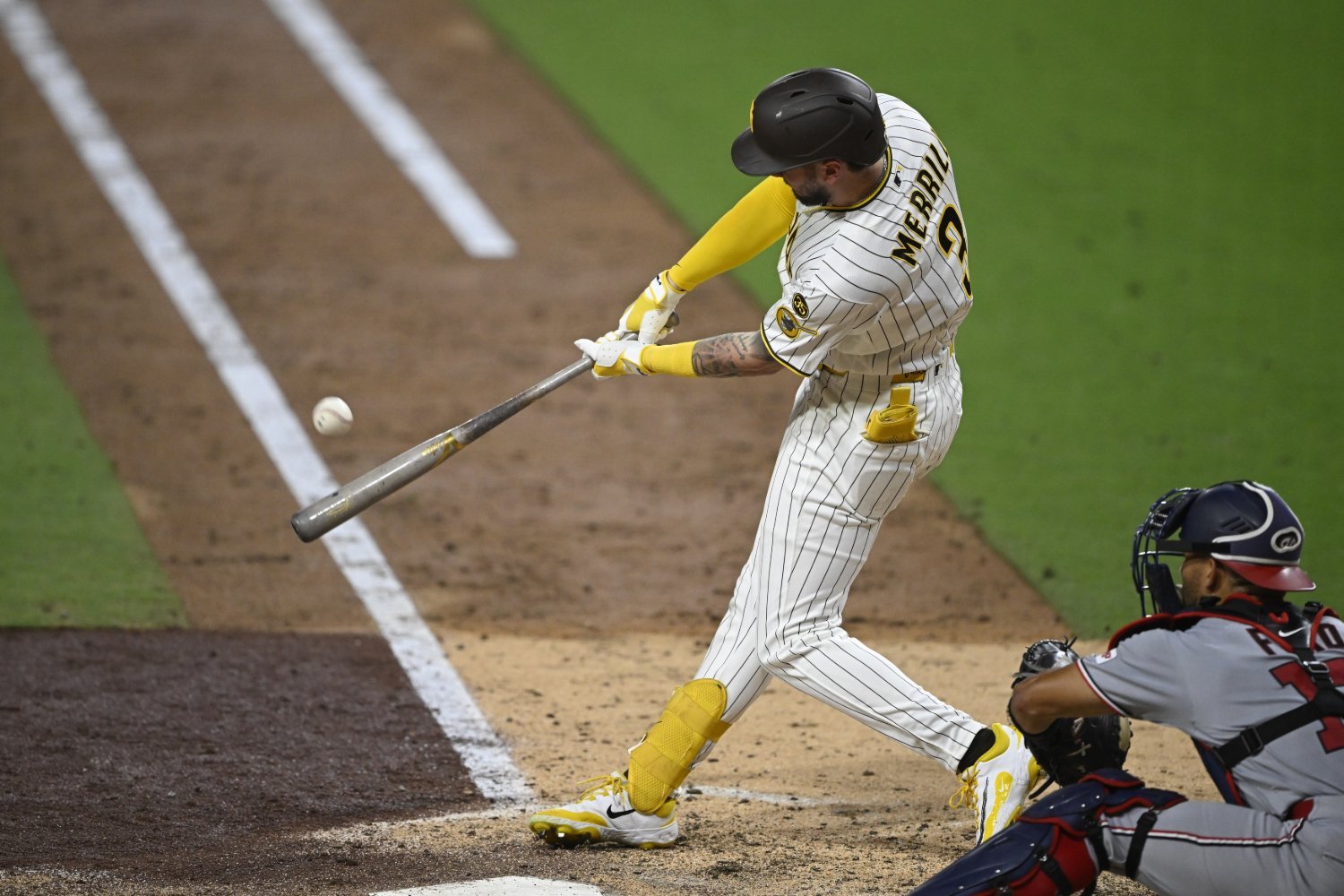 Jackson Merrill looked like one of baseball's future superstars after his breakout 2024 campaign at just 21 years old. But since that point, there has been a lot more up-and-down in his game. After posting an .826 OPS in 2024, that number dropped to .774 during an injury-riddled 2025 campaign. And this season, it has dropped again, with Merrill sitting at just a .701 OPS. His recent stretch certainly isn't helping anything. His season as a whole has been all over the place. He really struggled over the first few months, looking nothing like the player who burst onto the scene as one of the best young hitters in baseball two years ago. But then, he got hot in July and August and started to look more like himself again. Now, he's back in a slump. Since August 13, Merrill is hitting just .179 over 88 plate appearances, with a .611 OPS. His strikeout rate has also jumped well above normal to 26.1%. Obviously, this is someone the Padres really need producing, especially at this point in the year. They're making a push for the Wild Card, and Merrill is supposed to be one of the players capable of carrying this offense. That production simply hasn't been there lately. So how does he snap out of it? As ridiculous as it may sound, I think Merrill's best course of action might be to keep on doing what he's doing. Because despite what the surface-level numbers would tell you, there’s a lot that he's doing well right now. The quality of contact Merrill has generated during this rough stretch has actually been awesome. His average exit velocity over those 88 plate appearances sits at 94.2 MPH. Now, it's not like average exit velocity alone tells you everything. You can hit a 100+ MPH pop-up, after all, and that isn't exactly helping anyone. But Merrill isn't just hitting the ball hard; he's finding barrels. His barrel rate during this stretch is up over 14%. Barrels are essentially the ideal combination of exit velocity and launch angle, and they're the easiest way for hitters to consistently produce extra-base contact. A 14% barrel rate is crazy. Merrill's season-long barrel rate of 12% is already extremely impressive, but when a hitter is barreling the ball at an even higher rate than that, he should be producing at a much higher level than a .611 OPS. And the expected numbers would certainly agree. Merrill's expected batting average during this rough stretch sits at .262, which is 83 points higher than his actual .179 mark. His expected slugging percentage is even more eye-opening at .507, 161 points higher than what he's actually produced. Put those numbers together, and the underlying data suggests Merrill is hitting the ball more like an .850 OPS player. Instead, he's producing an OPS that is just barely above .600. That's a pretty massive difference. He’s hitting the ball well, the results just haven't followed. Now, for what it's worth, there has been one notable change in Merrill's batted-ball profile during this stretch. His fly-ball rate has climbed all the way up to 51%. Over the course of his career, that number has been closer to 41%, so that's a pretty sizable jump. And an increase in fly balls doesn't always work for every hitter. Sometimes, a player starts trying to elevate the ball more often and simply turns hard line drives into fly-ball outs. On the surface, you could argue that this has been part of the problem for Merrill, considering the actual production simply hasn't been there. But again, it comes back to the quality of contact. If Merrill was hitting more fly balls while his exit velocity and barrel rate were declining, that would be a much bigger concern. But that's not what is happening. He's hitting the ball harder than ever during this recent stretch and producing barrels at an extremely high rate. At some point, you would expect that to turn into more results. Baseball has a funny way of evening things out over time. It's extremely unfortunate that Merrill is going through this slump now, as the Padres make their push for a Wild Card spot. This is when they need their best players to be at their best, and the recent production from one of their most important hitters simply hasn't been good enough. But the encouraging part is that there doesn't appear to be much reason for Merrill to completely overhaul his approach. If anything, he might just need to keep doing what he's doing. View the full article
 -
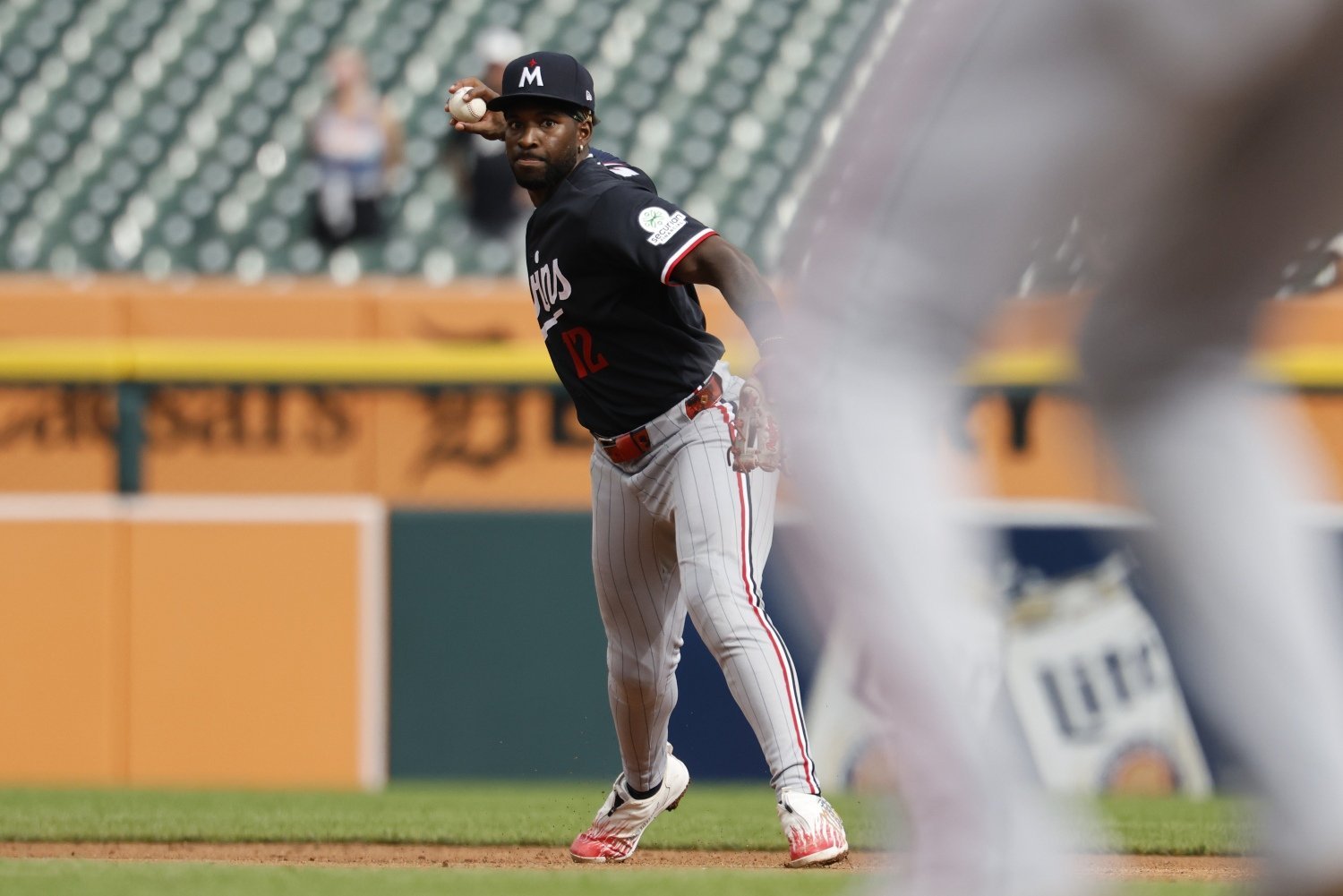 The Twins could have an interesting decision to make in the middle infield over the next two seasons. On one side, they have Kaelen Culpepper, their first-round pick in the 2024 MLB Draft, who broke out offensively in his first full season with the organization. On the other, there’s Marek Houston, their 2025 first-round pick and a rapidly rising prospect who has established himself as the best defensive prospect in the Twins’ system. Both players have the athleticism and defensive ability to play shortstop, and both have the potential to become everyday major leaguers. With Houston continuing to climb through the minors and Culpepper already getting his first taste of the majors, who should actually play the position long-term? There’s a pretty strong case for either player. Houston’s defensive reputation is well-deserved. He has the range, athleticism, instincts and hands to become an elite defender at the major-league level, and his continued offensive development has made him one of the most intriguing prospects in the organization. Culpepper, meanwhile, has already shown that he can handle the position. The 21st overall pick has gotten off to a hot start in the majors, posting a .755 OPS in 111 plate appearances. That’s obviously a small sample, but it’s an encouraging start, particularly considering his offensive development over the past year. When the Twins drafted Culpepper out of Kansas State, his glove was further along than his bat. He had impressive range, a strong arm and plus speed, giving him the tools to stick at shortstop while his offense developed. That development has started to happen. Culpepper posted a 20/20 season in his first full year in the minors, showing legitimate power and speed potential. If that production carries over to the majors, he could offer something particularly valuable: an above-average offensive profile from the shortstop position. Given Houston's reputation as the better overall defender, the natural assumption would be to put him at shortstop and move Culpepper elsewhere. After all, shortstop is a premium defensive position, and you generally want your best defender playing there. But I don’t think it’s quite that simple. Culpepper has an important advantage in this particular comparison: his arm. He's looked like an above-league-average defender since reaching the majors, and his arm strength gives him a particularly good chance to remain at shortstop. If Culpepper and Houston ultimately have similar range and athleticism, I’d rather put the stronger arm at short. Throws from deep in the hole and across the diamond can be difficult even for major-league defenders, making arm strength one of the more important tools at the position. That doesn’t diminish Houston’s defensive ability. It simply means that his skillset could be just as valuable at second base, where his range and athleticism would allow him to cover plenty of ground without putting as much emphasis on his arm. Culpepper doesn’t have to move simply because Houston is coming. The Twins could keep Culpepper at shortstop and let Houston take over at second, allowing both players to maximize what they do best. Houston might ultimately be the better defender, and if he develops into the elite defender many expect him to become, there will be plenty of arguments for putting him at short. But Culpepper has already demonstrated that he can handle the position, and his stronger arm gives him a compelling case to stay there in the short term. When Houston first comes up, Brooks Lee is still likely to be the team's third baseman, but after just a year or two, it's likely that Lee will move on to another organization, and then Culpepper could slide to the hot corner, while Houston crosses the keystone. If he becomes an above-average hitter while remaining a capable defender at shortstop, the Twins would be getting a well-rounded player at a premium position. Houston could then bring his defensive ability to second base, where he could become one of the best defenders at the position. That combination could be special. Culpepper and Houston have the potential to become one of the best young middle-infield tandems in the league, particularly if both reach their respective ceilings. Rather than viewing Houston’s emergence as a reason to move Culpepper, the Twins could view it as an opportunity to put two talented players on the field together. Of course, there’s still plenty that needs to happen first. Culpepper has been in the majors for all of a month, while Houston still has to finish his development in the minors and prove that his defensive ability will translate against major-league hitters and baserunners. But based on the tools both players currently possess, I think the better fit is fairly clear. If their range and athleticism are similar, give Culpepper the shortstop job because of his stronger arm. Let Houston’s defensive ability shine at second base. The Twins could have two legitimate long-term middle infielders without either player having to sacrifice his strengths. And if everything breaks right, Culpepper at shortstop and Houston at second could give Minnesota one heck of a young middle infield. View the full article
 -
Is Austin Charles Ready for His Breakout As a Prospect?
DiamondCentric posted an article in Royals Keep
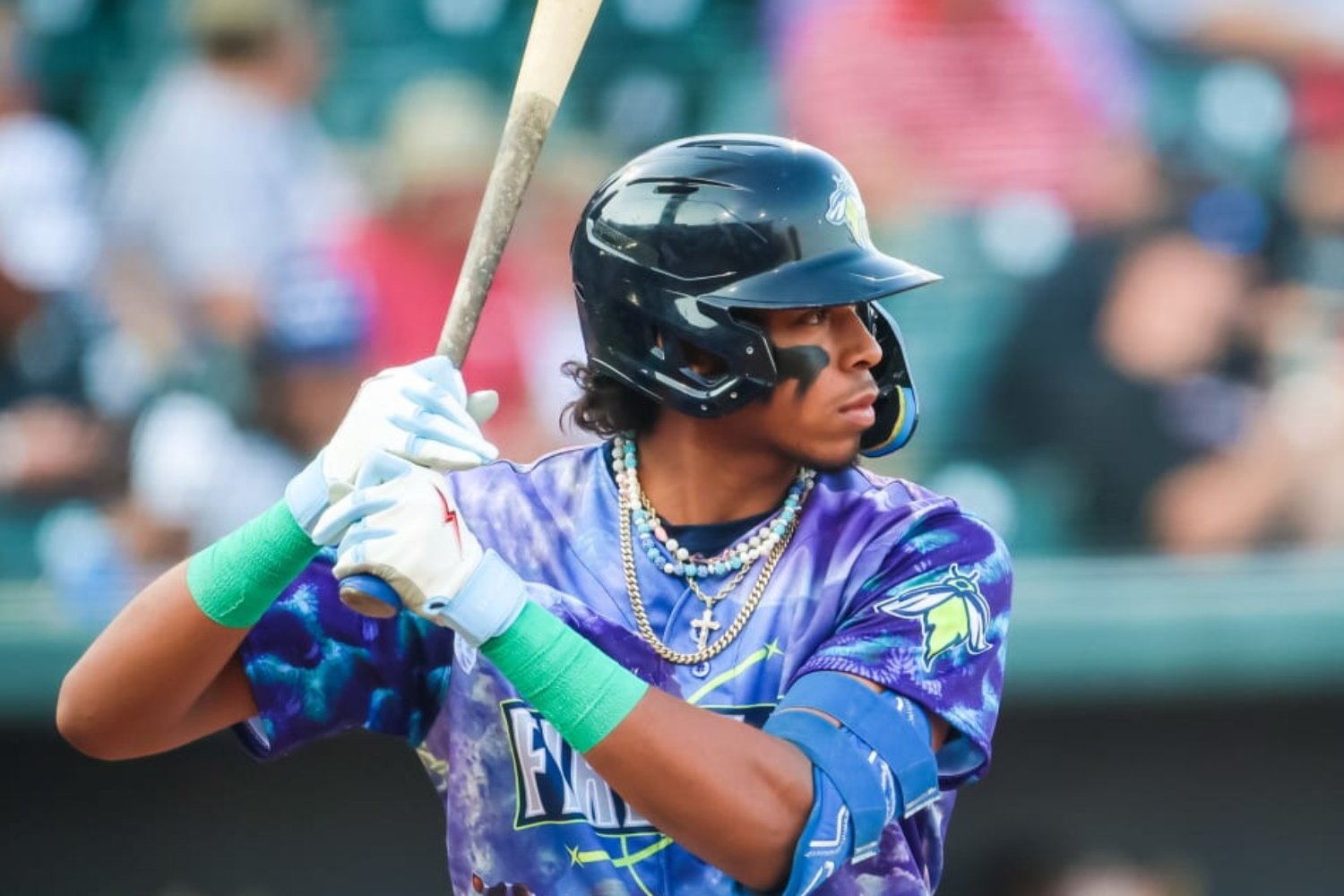 The Quad Cities River Bandits won game one of their Midwest League playoff game against the South Bend Cubs 8-3. While David Shields and the River Bandits bullpen provided a stellar performance on the mound, the real star of the game was shortstop Austin Charles. The 22-year-old went three-for-five in Tuesday's win, which included five RBI, three coming on a three-run home run hit in the bottom of the seventh. It's been an interesting season for Charles, who got off to a hot start in Quad Cities before suffering a brutal injury that sidelined him for most of the season. However, since returning, Charles hasn't missed a beat and may be one of the most intriguing prospects in the Royals system, especially given his tools and size (he's 6'5, 215 pounds). Thus, let's take a look at Charles, what he's done this year, and what Royals fans can expect from the former 20th-round pick, who will be eligible for the Rule 5 Draft in December. Charles Was Putting Up a Career Year Until Unfortunate Injury At the start of the 2026 season, it seemed like Charles was on track for a promotion to Double-A Northwest Arkansas. From April 7 to May 19, Charles slashed .306/.377/.491 with an .868 OPS and 124 wRC+ in 108 plate appearances. Not only did he hit three home runs, but he also scored 20 runs, collected 19 RBI, and stole eight bases on nine attempts. Charles also demonstrated strong contact skills at the plate, posting a 0.44 BB/K ratio in his 30-game sample. Unfortunately, Charles suffered a core injury that required stomach and hip surgery during his game on May 19th. The injury not only placed him on the 60-Day IL but also required surgery that would keep him out for most of the season. It was a disappointing break for Charles, who only played 59 games in High-A in 2025 due to missed time on the IL from a similar injury. The former UC-Santa Barbara commit recovered quickly enough to return by the end of the 2026 season. In 15 games and 63 plate appearances, Charles slashed .246/.306/.491 with a .798 OPS and 99 wRC+. He did cut the strikeout rate down a bit (14.3%), though the BB/K ratio remained identical to his pre-injury mark. The power numbers were also better after he came back from injury. Charles hit four home runs and posted a .246 ISO, the latter being better than his .185 ISO before he went on the 60-Day IL. Not only did the numbers look impressive for Charles in his 45-game sample this season with the River Bandits, but the Statcast percentiles also demonstrated that he was making progress as a hitter against Midwest League pitching, especially regarding pulling the ball in the air. Charles' 16.7% pull-air% ranked in the 71st percentile, which is a solid mark. He also ranked in the 68th percentile in wOBA (.357) and the 67th percentile in TJ Bat+ (111). His only lackluster Statcast category was BB%, which ranked in the 18th percentile. Conversely, his K% ranked in the 76th percentile, which made up for his low BB%. What's intriguing about Charles is that he hasn't just shown polish as a hitter, but he has also been a strong defender at shortstop. Even though he may look out of place as a 6'5 shortstop, he is athletic for his size and moves well side-to-side. He's also shown excellent arm strength, which suggests he could at least move to third base if shortstop doesn't work out long-term. Even though Charles did make eight errors in 40 games played at shortstop, it's those spectacular plays that give him upside as an infielder, though it's unlikely that he will ever reach the levels of Bobby Witt Jr. or Maikel Garcia, system-developed infielders who have won Gold Gloves at the Major League level. What Is Charles' Outlook in 2027 and Beyond? Charles initially cracked our Top-20 at Royals Keep midway through this year, but he dropped out after missing time due to his injury and the arrival of a few prospects from the 2026 MLB Draft class (as well as Angeibel Gomez from the DSL). However, I don't think it's out of the question to think that Charles could return to the Top 20 by Spring Training next year. MLB Pipeline ranked him No. 15 in the Royals system in 2025, but he's currently unranked in their most recent rankings. Here's what Pipeline had to say about Charles in their 2025 scouting report: The 2024 season with the Fireflies is a glimpse of what Charles can do when fully healthy. In 117 games and 481 plate appearances that season, he slashed .257/.353/.386 with a .739 OPS and 117 wRC+. He also hit 10 home runs, scored 62 runs, collected 64 RBI, and stole 36 bases on 43 attempts. The power wasn't quite there yet, but the speed was, and he showed that he could make decent contact, as evidenced by his 0.40 BB/K ratio. Some of the highlights from his 2024 season with the Fireflies showed his tantalizing potential as a 21-year-old, and why he was seen as a "dark-horse" prospect in the Royals system at the time, even though he wasn't selected highly in the 2022 MLB Draft (though Kansas City did give him an overslot $429,500 signing bonus). When it comes to what to expect from Charles in 2027, it's a little hazy, though I think Royals fans should be optimistic about his outlook overall as a prospect. It wouldn't be surprising for the Royals to have him debut in Double-A ball in 2027, especially after his strong performance in limited action. While he has just 104 games in High-A ball, a .241/.304/.384 slash and .687 OPS in 418 High-A plate appearances is more than respectable. Furthermore, High-A ball would just be a tune-up for him in 2027, and considering Charles will be Rule 5-eligible this December, the Royals cannot afford to waste time with him. On a positive note, Charles' injury probably prevents him from being selected in the Rule 5 Draft (if one happens at all this year due to the pending lockout). While Charles is talented, he hasn't played above High-A ball, and it's unlikely any team could keep him on the active roster for an entire season. So while it's a setback for Charles, the injury buys the Royals another year to add him to the 40-man roster. It will be interesting to see how Charles adjusts to Double-A ball and what the opportunity could look like for him with the Naturals. He should have ample opportunity to play, at least at third base, especially with Justin Johnson and Sam Kulasingam likely graduating to Triple-A Omaha next year. Daniel Vazquez, another former Top-20 prospect, will probably repeat Double-A, which makes it tough for Charles to matriculate to shortstop next season. However, Vazquez may be on a fast track next year, though his bat seems limited in terms of upside based on his performance in Northwest Arkansas this year. It hasn't been an easy two seasons for Charles in Quad Cities. Injuries have robbed him of a lot of playing time, especially this year. That said, Charles has come back strong after returning from the IL, and I think that will merit him a promotion to Double-A in 2027, especially if he continues to do well in the Midwest League playoffs. It also wouldn't be surprising to see Charles get a stint in the Arizona Fall League in order to get him more at-bats. At 22 years old, he's not that far off age-wise from much of the competition. The River Bandits play again on Thursday in South Bend in game two of the series. Hopefully, Charles can lead the River Bandits to another victory and boost his prospect stock for 2027 even more. View the full article
 -
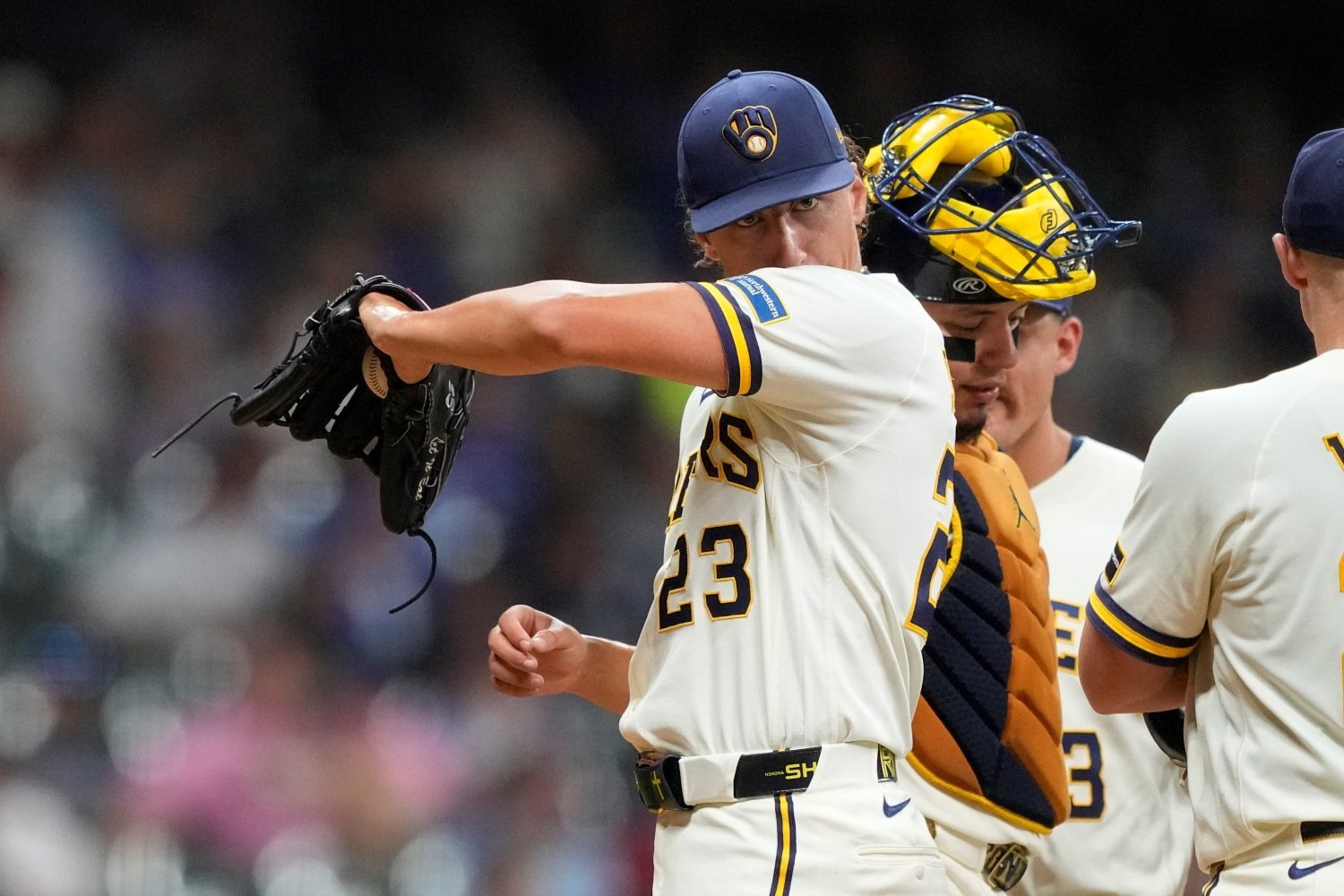 Brandon Sproat’s audition for a postseason bullpen role did not go well. In fact, it went so poorly that it might be a one-and-done opportunity. In Sproat's return to the big leagues after last month’s demotion to Triple-A, Pat Murphy tasked the former starter with recording the final six outs against the Cubs with a seven-run lead on Wednesday night. He only recorded four of those outs, issuing four walks and hitting a batter. Before long, Abner Uribe was facing pinch-hitter BJ Murray as the tying run, with the dangerous Pete Crow-Armstrong on deck. Uribe struck out Murray to extinguish the fire and close out a three-game sweep. Despite a trio of statement wins against the Brewers’ top division rival, however, Murphy’s postgame presser carried a mixed tone. His offense had backed off the gas pedal after scoring six early runs against Kevin Gausman, and Sproat’s poor performance nearly made it costly. “It’s unacceptable,” Murphy said. “You’ve got to throw the ball over the plate to be a major-league pitcher.” That was already a recurring issue for Sproat, who walked 11.6% of batters faced before his demotion. It was even worse in Nashville, where he posted a 12.8% walk rate and threw just 42% of his pitches in the strike zone. Because of his electric stuff, Sproat struck out 34.6% of opponents and pitched to a 3.18 xERA against less disciplined hitters, but there was no improvement from a process standpoint. It wasn’t for a lack of effort. The development staff in Nashville tried simplifying things for Sproat to get him back into the zone, leaning more on his straight four-seamer and relying less on the new cutter that had the worst run value of any pitch in his arsenal this year. In a two-inning relief appearance before his call-up, 67% of Sproat’s pitches were four-seamers or curveballs. That’s a simple, vertical sequence that he can tunnel by aiming both pitches right down the middle. That approach often turns converted starters into successful relievers. Getting less cute with pitch usage and command can free a pitcher mentally and physically. By throwing their two or three best pitches at max effort anywhere in the strike zone, things can click into place pretty easily. The Brewers have recently seen it work for Chad Patrick and Shane Drohan. It doesn’t address Sproat’s biggest issue: letting things get out of hand quickly after a bad sequence or plate appearance. He showed brief flashes of dominance in nearly every start, but he was prone to big innings, and when something disrupted his rhythm on the mound, he couldn’t recalibrate. That’s what did him in on Wednesday. Sproat walked Crow-Armstrong on eight pitches to open the inning. The adage is that leadoff walks will haunt defenses, but the real turning point was when Sproat attempted to pick off Crow-Armstrong in a situation where every team would give him second base on defensive indifference. Andrew Vaughn was not holding the runner, so Sproat’s throw sailed into foul territory. The floodgates opened from there: a wild pitch as part of a five-pitch walk, a third walk to load the bases, an Alex Bregman strikeout, then a run-scoring walk. “I knew he was nervous,” Murphy said. “No matter what, you can’t let it snowball like that.” “It’s a game of highs and lows,” William Contreras said. “I don’t know if he’s out there trying to do more than what he is. We all know who he is in this room. We’ve seen plenty of him this season. He’s helped us this season. But it’s a hard game whenever you’re trying to do more than maybe what you’re capable of.” Until that part of Sproat’s game is resolved, he’ll keep running into similar issues in any role. For now, he’ll almost certainly head back to Nashville in exchange for a fresh arm. Given his upside, it’s still hard to rule him out for a postseason roster spot, but that won’t happen until Sproat proves he can stay poised and course-correct during an outing. Time is running out for that to happen in 2026. View the full article
 -
You're Not Imagining It: Seiya Suzuki is Bad at Sliding
DiamondCentric posted an article in North Side Baseball
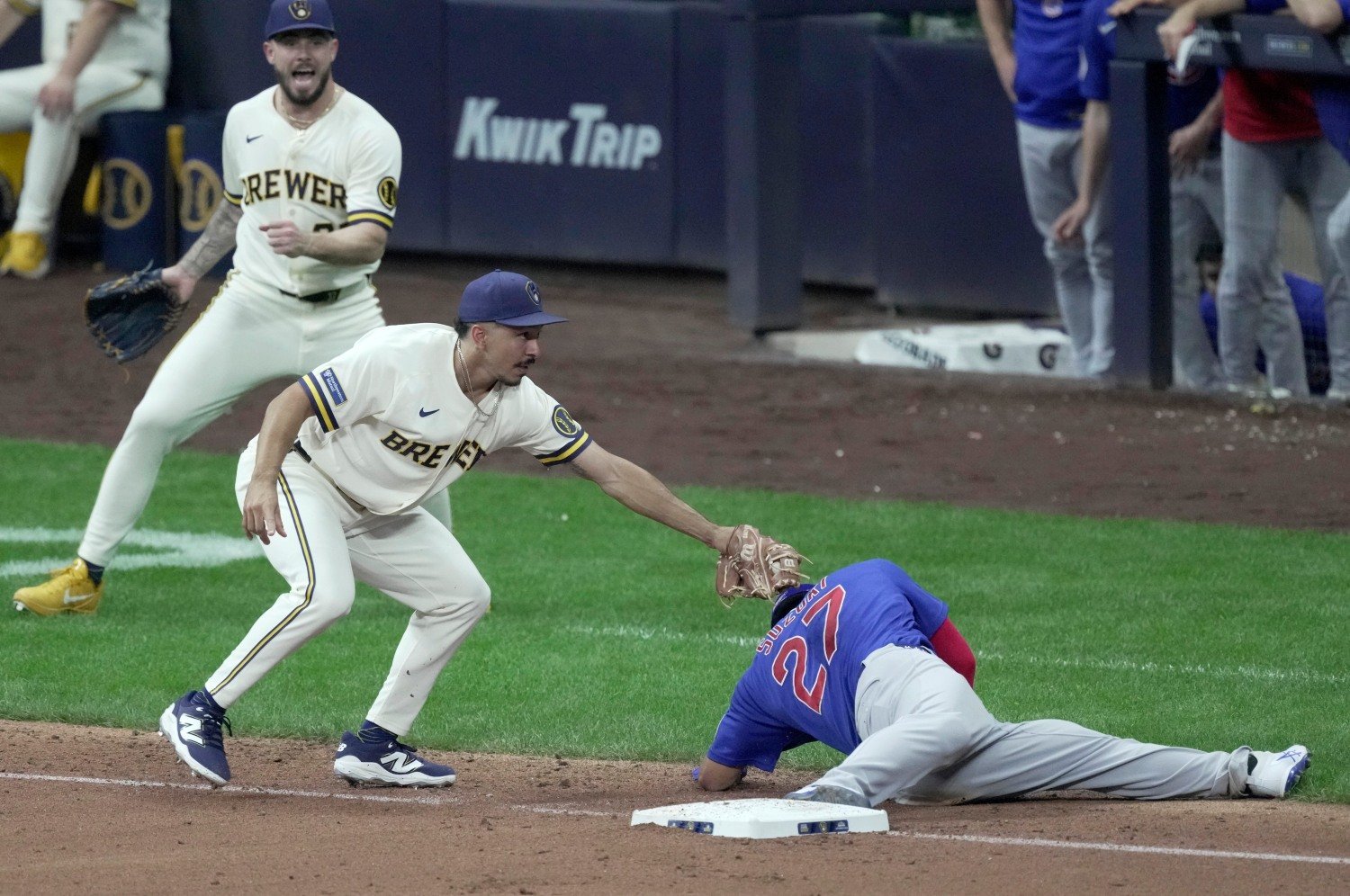 The Cubs aren’t as good a baserunning team this season as they were last season. In fact, in all likelihood, they are going to post their worst season on the bases since 2021, according to the baserunning runs statistic at Baseball Savant. By that framework's reckoning, they've been worth 5 baserunning runs this season, which is seventh in baseball. Last season, their 8 baserunning runs was fifth in MLB, and they were third in 2024, having been worth 14 runs on the bases. We’re not talking about a massive difference. In fact, it's well worth noting that Baseball Reference (which uses slightly different methods to measure baserunning) has them at 10 baserunning runs this year, leading the league and exceeding their 4 from last year. Still, I thought this was somewhat curious, given that the Cubs have had mostly the same personnel for those three seasons. One thing on which the metrics agree is that this year's team is downright pedestrian, except for Pete Crow-Armstrong, so someone else on the roster must be slipping a bit. The culprit behind the decrease this season has been Seiya Suzuki, among other players. Last season, the Japanese outfielder was worth -1 runs on the bases. This year, he is down to -3, which is 11th-worst among qualified players. I first noticed this stat on Tuesday night, probably an hour or so before this happened: akR3T1dfVjBZQUhRPT1fQjFSV1VsTlFYMUFBREFGUkJRQUhCUWRSQUFNTlZWY0FBRkZXVXdkUVZRQUVVbEJV.mp4 Suzuki beat the throw to the base, but was out because he overslid the bag. Did that feel a little familiar to anybody else? It should. This also happened, just last month: WERaOFhfV0ZRVkV3dEdEUT09X0JnWUhBRjBOVndzQUNRQlFCd0FIVndVQ0FBTlVWMWNBQVZNRkNBb0ZVQVZjQ1ZZRQ==.mp4 That safe call was challenged by the Yankees, and of course, the call was overturned. Suzuki slid off the base. Does anyone else remember this play from June? TDY1cWJfVjBZQUhRPT1fRGdJREFBWlJVUWNBQVFZQkJRQUhVZ0pXQUFNQ1dnY0FBQVFHQjFZQ0FBc0VWbFpW.mp4 I think there was a case to be made for just running through home plate, and it doesn’t look like anyone is directing Suzuki on where to slide from behind the plate. (Right at the end of the clip, Nico Hoerner appears in the bottom right corner. He was the on-deck batter, and it's likely he was giving Suzuki direction from offscreen, given where he'd placed himself. The position wasn't perfect for reading the play or communicating to his teammate, though.) Even so, I can’t help but think that a well-executed headfirst slide would have resulted in him being safe. A dive to the outside of the base would have forced the catcher to bring the tag down into the runner, rather than just applying the tag at the level at which he caught the ball, and that just might have bought Suzuki the extra quarter-second or so that he needed to get in there. Those three plays, alone, are responsible for a majority of Suzuki’s negative baserunning value this season. It feels like all three could have been avoided with a headfirst slide, or even just a better feetfirst slide. At first, I wondered if he's always been bad at this, and I had just never noticed. Then, I remembered that he missed the start of the season after sustaining an injury in the World Baseball Classic. The injury was on this play: There’s a headfirst slide! I don’t want to presume to know his mind, but it’s very possible that this has informed the way they he has slid (or hasn’t) this season. So, I went back into some old footage to see if he used to be any better at this. You be the judge: S3JrMEJfWGw0TUFRPT1fVndFSEIxSldVQUlBQVFFRVhnQUFBMVFEQUZrQlVWa0FCbElBQTFaWEFBUlJBd3BU.mp4 There he is sliding off the base way back in 2022. And here’s one more, for good measure, from last season. He slid feetfirst, and was eventually called out on the replay because Xander Bogaerts tagged him on his helmet. Despite sliding feet first, Suzuki only first contacted the base with his hands, when his feet were well past the base, on the right-hand side. Seems to me like another instance where a better slide might have generated a better result: TkFkVkJfWGw0TUFRPT1fVndoU0JWQUFVMUFBREZkUUJRQUhVZzRFQUZoUUJ3SUFCQU5UQ0FjTUFsWUdWQVZV.mp4 I’m not sure that Suzuki is nervous to slide headfirst, so much as he's just not very good at sliding in general. I can’t prove this. I’d have to go through a lot of other mundane baserunning footage to do so, and the evidence would surely be muddled, anyway. But it sure feels like he's out as a result of a poor slide more often than anyone else on the Cubs. This season, at least, it's cost the team dearly on three separate occasions. To pay homage to Dr. Doofenshmirtz from Phineas and Ferb, that might not feel like a lot, but it is weird that it’s happened thrice. What we can quantify is that those three times have resulted in Suzuki grading out as one of the least valuable baserunners in baseball. Sliding is hard, and it can be dangerous! He’s experienced both of those things in just one season. I sympathize with that. But it sure can be frustrating to watch sometimes. View the full article
 -
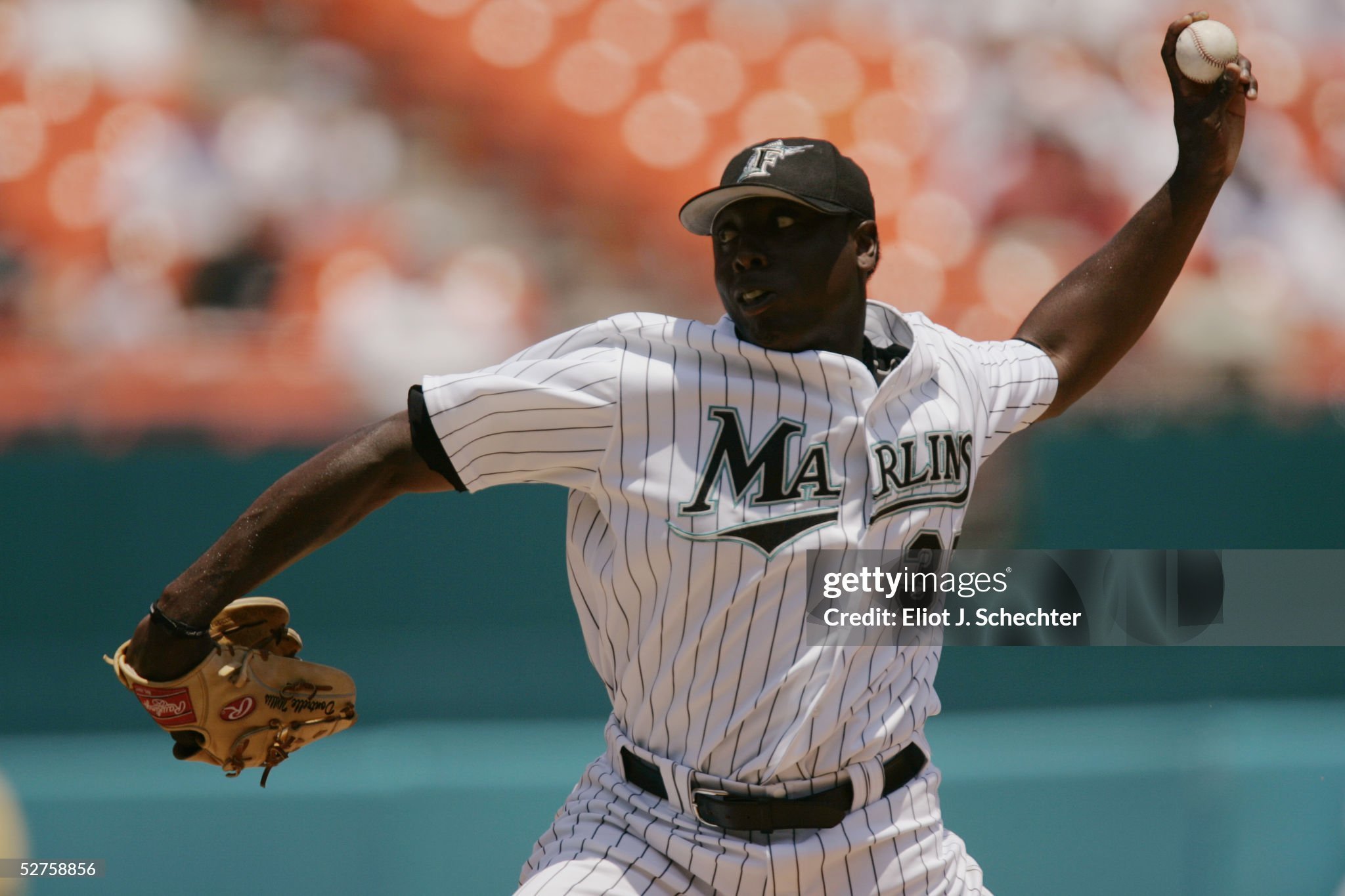 In 34 years as a franchise, no pitcher threw more shutouts for the Florida/Miami Marlins than A.J. Burnett. Dontrelle Willis, however, did throw as many. On this day 20 years ago, Willis tied Burnett’s club record with his eighth career shutout. Willis allowed just three hits and tied a career-high with 12 strikeouts in the Florida Marlins’ 3-0 win over the Philadelphia Phillies. Willis was looking for his fifth straight quality start as he took the Dolphins Stadium mound on Sept. 10, 2006. The Florida lefty struck out both Jimmy Rollins and Chase Utley during a 1-2-3 first inning. By the time Willis returned to the hill, he had a 2-0 lead. The Marlins drew first blood in the bottom of the first on an RBI single from Miguel Cabrera that scored Hanley Ramírez. Dan Uggla scored to make it 2-0 on a sacrifice fly from Wes Helms later in the inning. Helms added a second sacrifice fly in the seventh. The biggest threat for Philadelphia came in the top of the second as Ryan Howard singled and Jeff Conine walked to open the inning. Willis responded by striking out Pat Burrell and Chris Coste before getting Abraham Núñez to line out to end the inning. After hitting Shane Victorino with two outs in the third, Willis faced the minimum over the final six innings, utilizing double plays in the fourth and fifth innings. Willis retired the final 13 batters he faced. For the day, Willis threw 122 pitches. He was ultra efficient during the middle innings, throwing just nine pitches in the fourth inning, five in the fifth and 10 in the sixth. Willis struck out Utley for the third time to end the contest. He also fanned Chris Coste three times in the win. Despite just the three runs, Florida finished with 10 hits and chased Phillies starter Cole Hamels after just four innings. Ramírez led the Marlins with three hits. Cabrera and catcher Matt Treanor each added a pair of knocks. Howard had two of the three hits for Philadelphia. After leading the National League with five shutouts in 2005, Willis’ gem against the Phillies would be his lone shutout of 2006. No one knew it at the time, but it would also be his final home victory as a member of the Marlins. It came on this day two decades ago. View the full article
 -
Kody Clemens's Only Shortcomings Have Really Been Other People's
DiamondCentric posted an article in Twins Daily
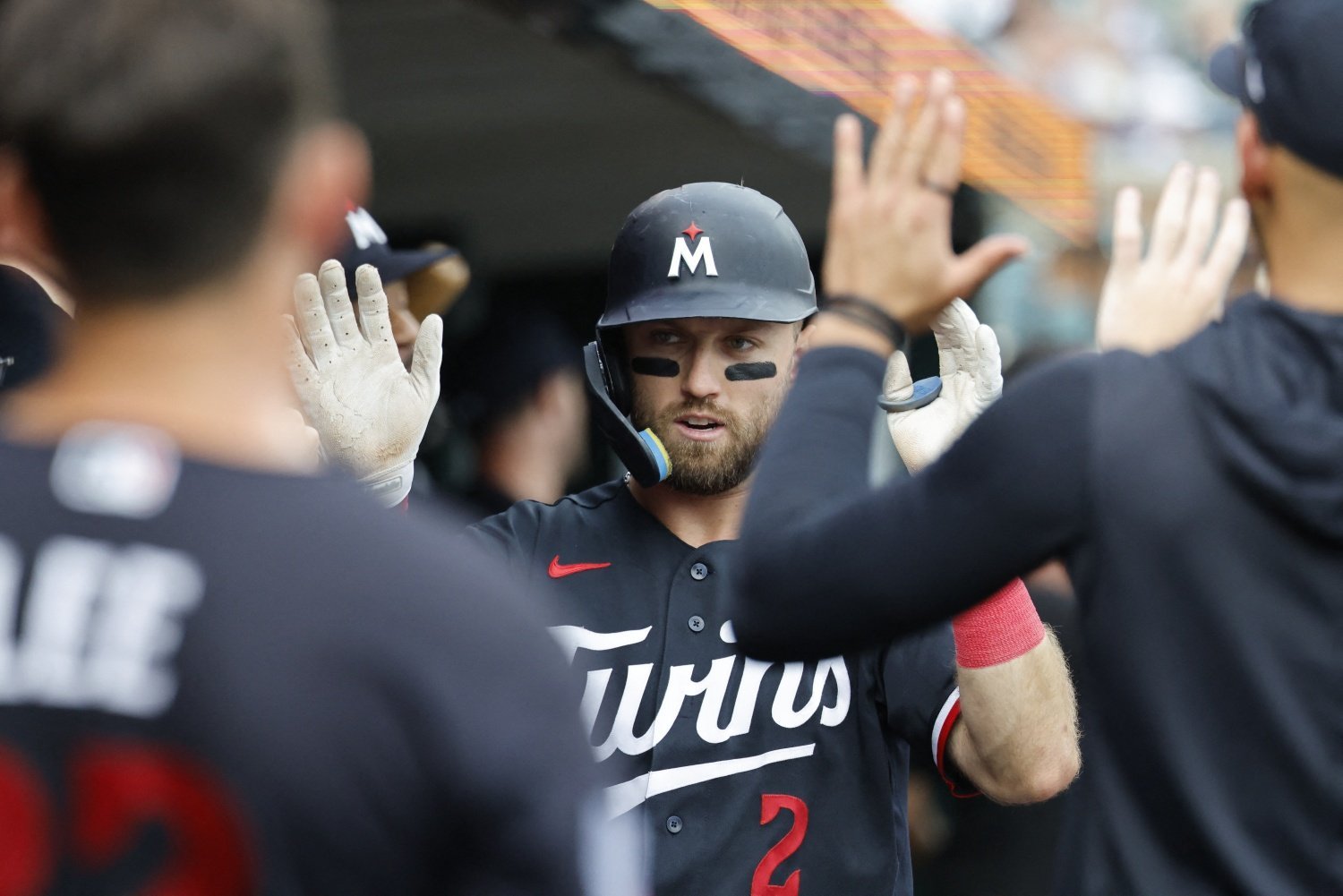 Much has been asked of Kody Clemens this season, and he's answered the call as well and as often as he could. When it became clear that the team would not trust Josh Bell or Victor Caratini with regular playing time at first base, Clemens played there for a while, even though it might be his worst defensive position. When injuries and poor performances piled up in the outfield, Clemens trotted out there, even covering center field for a short time—despite being 30 years old and lacking the raw athleticism that position demands in the modern game. He's faced more left-handed pitchers than he should, because the roster lacks good right-handed lefty-mashers. He's batted third more often than he should, because the roster has lacked offensive firepower whenever Byron Buxton and/or Ryan Jeffers were at less than their best. Through it all, Clemens has had not only the best season of his career, but a downright good one—the kind of campaign that seemed like it would never come for the late-blooming son of an early-blooming Hall of Fame hurler. He's gone from forgettable utility man to valuable super-utility man, and while he was asked to be too many things to the 2026 Twins, he delivered more than could possibly have been expected. After homering in consecutive games upon his latest return to Detroit (his first pro organization), he has 26 of those on the season, and he leads the American League with six triples. The only way to be disappointed in his .241/.302/.475 batting line is to dwell way too much on the middle number. On a properly outfitted contending team, Clemens would bat fifth or sixth on most days, and he would enjoy the platoon advantage at least 80% of the time. Twenty-five lefty batters with at least 300 plate appearances already this year have faced righty hurlers at least that often; over half of that group have had the platoon edge 85% of the time or more. Clemens hangs in better against left-handed pitchers than most lefty batters do, and his numbers wouldn't be massively inflated by seeing righties at a much higher rate, but he's only had the platoon advantage 73.6% of the time this year. He's also batted third a plurality of the time, and in over half the Twins' games this year (75), he's started in one of the top four spots in the batting order. Let Clemens rack up 137 plate appearances against southpaws, and his numbers are going to look unsexy. Ask him to hit in one of the most important spots in the lineup, and he's going to feel underwhelming. The Twins have asked more of him than should be asked of this type of player. Next season, they need to have a more robust set of right-handed hitters, and they need a more stable, impressive top half of the batting order. None of that is Clemens's problem, though. He's performed magnificently—more than well enough to get this team to October, if the rest of the roster (or the front office responsible for building it) had done its job. When Clemens succeeds, there seems to be a sense that disaster is right around the corner. When he fails, everyone seems to nod with self-satisfaction. He's been branded streaky; he's been branded lucky; and he's been branded as an undisciplined hitter. None of that is particularly accurate, though. Here's a look at Clemens's rolling weighted on-base average (wOBA) in 100-plate appearance increments for the whole season. I'm betting you expected more than one trough, where he was substantially worse than a league-average hitter. That's the narrative. The reality is that, despite that oddly lefty-heavy stretch of the schedule early and the cold start it begot him, Clemens has been steadily and solidly above-average, save for one prolonged slump. That slump could not have come at a worse time—it comprised almost the whole month of August. But it's just one letdown. To whatever extent Clemens must bear the blame for letting the team collapse during their nightmare month, he deserves at least that much credit for keeping them afloat in June and July. Lately, he's right back where he was for most of the season, and while you'd love to see a player go through a whole campaign without slumping, hardly anyone does so. Bell was just as bad for just as long early in the season. Buxton's production fell off a cliff after he began dealing with injuries in late June. Jeffers wasn't the same for the first month-plus after his return from the IL. You can look at players beyond the Twins, and the same story unfolds: slumps are inevitable. Good players survive them and produce well around them. That's what Clemens has done. As for his approach, it's true that Clemens doesn't walk very often, and that's a bit unfortunate, because his batted-ball profile will never yield a very high batting average on balls in play. He's an extreme pull hitter, especially on the ground; that makes it easy to defend him by shading the infield to the right. He's a fairly extreme fly-ball hitter, and fly balls fall in for hits less often than grounders sneak through for them. Clemens's batted balls spray around the field somewhat like Max Kepler's did for years at Target Field; we know how that worked out for Kepler. Therefore, it's essential that Clemens be ready to pounce, and to drive the first good pitch he gets in a count. He's done much better at that this year; it's his big step forward. He got beaten by four-seam fastballs consistently in 2025. Here's what his spray chart against them looked like: If you're a true pull hitter, every fly ball to center and the opposite way is a small defeat. Pitchers were beating Clemens last season with the heater. He didn't whiff at a catastrophic rate against them; he just didn't get the barrel around and through them. That's changed. According to FanGraphs, Clemens has been 8.0 runs better at the plate this year than he was in 2025. According to Baseball Savant, he's been 20 runs better on four-seamers than he was last year. You do the math. Clemens has sold out for the heater a bit, because you can't get very far in the modern game without getting your barrel cleanly to the ball even when the pitcher comes at you with their best heater. It's cost him a bit in other places, but look at all the rewards he's reaped. He hit four homers against four-seamers last season, including one that snuck out to left-center. He's hit a whopping 13 dingers against such pitches in 2026, because he's sat on that pitch with greater conviction and gotten started early enough to do so. That's what he did on the one homer in the bunch that went to left field, too—the one he hit Wednesday. He knew Keider Montero would throw him a first-pitch heater, and he rode it out, albeit not in the direction in which he usually does that kind of damage. To do that, you have to have conviction based not only on the pitch type, but on the count. That's been key to Clemens's breakout, but it's also why his on-base percentage is never likely to be that high. He swung at fewer than 20% of the first pitches he saw during his stints in the big leagues in 2023 and 2024. That figure rose to almost 30% last year, but it's ticked up again in 2026. In particular, after being more patient early, he's gotten particularly assertive—though he's moderated that slightly of late. Here are his month-by-month first-pitch swing rates for this year. March/April: 24.4% May: 38.6% June: 32.4% July: 37.4% August: 33.3% September: 28.9% Clemens does have a decent feel for the zone, but his swing is not especially adaptable. He has good hand-eye coordination, but not the freakish, bendable violence of movement that allows hitters to hammer pitches even when they're fooled isn't there. Swinging early in counts is the cure for that. Pitchers tend to be more predictable in those early counts, and Clemens can swing without worrying as much about a whiff. That produces more squared-up balls and fewer mishits. It just denies him the chance to get ahead in counts often and work walks. At home at second base, Clemens has a clear defensive fit for next season. He's also proved he can hit in the big leagues—not hit enough to stay in the bigs, but really hit in the bigs, in a way that moves a team forward toward a playoff berth. He needs a bit more rest and protection from bad matchups, and he needs better teammates. There's a ceiling here; Clemens will never be an All-Star. This season has been a monumental success for him, though, and the Twins should enter the offseason with as much conviction as Clemens now takes to the batter's box: to get him further down the lineup, but not to push him out of it. View the full article
 -
 Bishop Letson struck out nine in a dominant start for victorious Biloxi, supported by homers from Braylon Payne and Mike Boeve. Things went awry in the 6th inning for Coleman Crow and Nashville in their defeat. Transactions: LHP Rob Zastryzny sent on rehab assignment to AAA Nashville Game Action: Nashville Pre-Game Media Notes Final: Durham (Rays) 10, Nashville 2 Box Score Via the Sounds’ website, game details and we encourage readers to review affiliate write-ups as part of their Link Report routine: Sounds Suffer 10-2 Loss to Durham - Jeferson Quero recorded his fifth career 2+ double game and 24th multi-hit game this season The final score suggests a blow-out, but starting RHP Coleman Crow (6 IP, 6 R, 7 H, 3 BB, 3 Ks) and Nashville were leading 2-1 with two outs in the bottom of the 6th inning when things fell apart: run-scoring balk, two runs scored on a 1B Blake Burke error (which was so close to a great play against old friend Jadher Areinamo), two-run homer. From there, the game got out of hand against the Sounds’ bullpen and shoddy defense (two more errors) before the team even collected its next hit: a Burke (2-for-4) double while trailing 10-2 in the 8th inning. Seven Nashville hitters registered at least one hit, led by Burke and DH Jeferson Quero (2-for-4, 2 doubles, RBI). 3B Brock Wilken (1-for-4, RBI) also drove in a run, as he works to get his batting average above the Mendoza Line (.197 AVG, .705 OPS). Sounds’ Extras: Rehabbing LHP Rob Zastryzny’s first outing since July 11 was a mixed bag (2/3 IP, 2 R, 2 H, 0 BB, 1 K): hard hit single, called strikeout, ground ball out, hard hit double the other way. LHP Jared Koenig was effective (1 IP, 0 R, 1 K), though his velocity once again was only limited to the final batter he faced (94.7mph sinker, after not touching 92mph on the prior three batters). Thursday’s outlook: Although a starter is yet to be named, RHPs Tyson Hardin, Carlos Rodriguez and Lyon Richardson are possible options, as Nashville seek to grab a 2-1 series lead at Durham. Biloxi Pre-Game Media Notes Final: Biloxi 9, Pensacola (Marlins) 2 Box Score Via the Shuckers’ website, game details: Made Makes History, Letson Locks Down Blue Wahoos in Shuckers Victory - Biloxi Bounces Back to Beat Pensacola 21-year-old starting RHP Bishop Letson (6 1/3 IP, 1 R, 4 H, 1 BB, 9 Ks) turned in his third consecutive solid start, only allowing one hit (and zero runs) over his final 5 2/3 innings pitched. The big question both teams are probably asking is whether Letson will be as dominant next week when these same two teams square off in the Southern League playoffs. On the offensive side, OF Braylon Payne went 1-for-5 with 3 Ks, but was still a key catalyst, reaching base on a strikeout-wild pitch and scoring in the first inning, then breaking a 1-1 deadlock with his 26th dinger of 2026, a solo shot with two outs in the top of the fifth frame. DH Mike Boeve (1-for-2, HR, 2 walks, 3 RBIs) reached base three times, delivering the big two-out, three-run homer to give Letson and the Shuckers breathing room in the sixth inning. Things tightened up against RHP Travis Smith (1 2/3 IP, 1 R, 3 H, 1 BB, 0 Ks) in the bottom of the 8th inning, but he induced an inning-ending force out with the score 5-2 and the potential game-tying batter at the plate. OF Josh Adamczewski (1-for-2, double, 3 walks, RBI) extended his hitting streak to 12 games with an RBI double in a four-run ninth inning, while 3B Eric Bitonti (1-for-3, walk, 2 RBIs) also had a run-scoring hit in that outburst. Of course, 19-year-old SS Jesus Made (2-for-5, triple, RBI) continues to deservedly grab headlines for his impressive 2026 campaign. Shuckers’ Extras: Minor League home run leader 1B Andrew Fischer has not hit one out over his last three games, but he’s reached base seven times in that span (2-for-10, 5 walks, 3 Ks). INF/OF Dylan O’Rae has not started a game since August 29, but he’s now up to 59 stolen bases this season after pinch running and stealing a base in the eighth inning. His only plate appearances since his last start came as an injury substitute on September 5. Hopefully he’ll be back at the plate contributing hits soon. More video highlights are available at Biloxi’s ‘X’ feed. Thursday’s outlook: 24-year old RHP Jaron DeBerry (4.50 ERA, 1.35 WHIP, 9.8 K/9 in 124 IP) gets the start, as Biloxi also aim to take a 2-1 road series lead. We hope that you enjoy the Minor League Link Report. On Thursday, Nashville (5:45pm CST) and Biloxi (6:05pm CST) are right back in action. The Milwaukee Brewers have the day off before hosting the Reds. Organizational Scoreboard including starting pitcher info, game times, MiLB TV links, and box scores Current Milwaukee Brewers Organization Batting Stats and Depth Current Milwaukee Brewers Organization Pitching Stats and Depth View the full article
 -
 His ability and talent to impact the game is something that has quickly turned Carson Benge into one of the most interesting young players in the entire league. He has stood out as a player with elite defensive and speed tools, standing out for the power and accuracy of his arm in the outfield (100th percentile in Arm Value and 99th in Arm Strength). His ability and explosiveness on the bases has taken him to the 92nd percentile. Offensively, Benge has displayed a brilliant ability to elevate the ball at the ideal angle (82nd percentile in LA Sweet Spot %), which supports an outstanding expected batting average (xBA) in the 89th percentile. No matter how high the expectations around a top prospect are before debuting, reaching Benge’s accumulated playing time and doing it with that impact constitutes a very difficult challenge for a rookie, especially in New York. Benge has done it since he debuted and is on his way to completing an unprecedented season in franchise history. Have you ever wondered how many rookie hitters 23 or younger have achieved a 20-20 season with the Mets? The answer is simple: no one has achieved it yet. It is likely that the name Darryl Strawberry came to your mind—it happened to me too. Strawberry, in his season at 21 years old when he won the Rookie of the Year Award in 1983, hit 26 home runs, but finished with 19 stolen bases. Player bWAR Place Season Age WAR G PA HR RBI SB BB SO BA OBP SLG OPS OPS+ Carson Benge 2.7 2026 23 2.7 137 566 16 54 20 40 123 .276 .334 .416 .750 109 Darryl Strawberry 2.6 ROY-1 1983 21 2.6 122 473 26 74 19 47 128 .257 .336 .512 .848 134 A.J. Ewing 2.6 2026 21 2.6 101 416 8 30 22 39 108 .242 .316 .359 .674 88 Lee Mazzilli 1.2 1977 22 1.2 159 618 6 46 22 72 72 .250 .340 .339 .679 88 Gregg Jefferies 0.7 ROY-3 1989 21 0.7 141 559 12 56 21 39 46 .258 .314 .392 .706 106 Benge could be the first 20-20 player in Mets history if he gets those four home runs he is missing. He leads the ranking so far in bWAR and has the highest batting average. I am also excited to see that A.J. Ewing also appears here, but his power has still not been able to make enough of an impact. I do not rule out the possibilities of Benge being able to achieve it, but his adjustments after June suggest that he has focused more on expanding his ability to make contact. In a way, that is even more interesting to me, since Benge has gotten this far with that philosophy and, even so, has had interesting flashes of power. Eleven of his 16 home runs came in the first half of the season, when he hit .263/.326/.402, with a 104 wRC+. That performance has taken a very interesting jump, as Benge has improved to .301/.350/.446 with a 120 wRC+ since the All-Star break. The major adjustment that changed the course of his season was when breaking balls stopped limiting his contact. It all began after June. Split Pitches PA HR K% BB% BA OBP SLG OPS BABIP Hard Hit% Apr - Jun vs Breakings 379 91 2 34.1% 3.3% .198 .242 .291 .533 .283 38.2% Jul - Sep/Oct. vs Breakings 263 62 2 22.6% 1.6% .233 .258 .417 .675 .273 43.5% Apr - Jun vs Fastballs 833 199 6 17.1% 9.5% .298 .372 .427 .799 .341 42.3% Jul - Sep/Oct. vs Fastballs 508 119 4 18.5% 11.8% .365 .445 .510 .955 .436 31.3% Benge reduced his strikeout rate by 11.5 percentage points, and by improving his contact, his slugging jumped from .291 to .417 against breaking balls. His Hard-Hit% rate also had an increase (up 5.3 points) and within the adjustment process, this led pitchers to stop throwing him so many breakers. Benge’s contact has improved against fastballs, with a jump from a .799 OPS to .955 from July to date, while his BABIP has reached its highest point (.436). In fact, if we considering his stats against any given pitch, Benge’s BABIP (.366) also stands out as the seventh-highest among all qualified left-handed hitters since July. Even this month, when Benge’s OPS has fallen to .586 — his second-lowest this year after the .525 in April — his BABIP (.313) still does not seem to have collapsed. Everything responds to the way he has managed to make adjustments and know what his job is. He has no holes against any profile: he has a 103 wRC+ and .340 BABIP against left-handed pitchers, and a 112 wRC+ with .331 BABIP against right-handers. He has gotten at least one hit in 94 of his 139 games, with 35 of them recording at least one hit and a walk. He has been a young force that has been able to exceed the expectations of his prospect profile and still continues to show that he can improve. Even if Benge does not make history as the first rookie 23 or younger with a 20-20 season, he has already become one of the players with the most influence on the future direction of the Mets. View the full article
 -
Carter Johnson 2026 Marlins Minor League Highlights
DiamondCentric posted an article in Fish On First
 Here is the best of Carter Johnson's season with the Low-A Jupiter Hammerheads and High-A Beloit Sky Carp, a much-needed breakout for the former second-round draft pick. View the full article
 -
 It must be pretty weird to be Connor Wong. By all accounts, he's a great teammate and a hard-working player, but he’s the lone piece left of the ill-fated trade that sent Mookie Betts to the Dodgers. We’re not going to rehash that at this point, but his baseball legacy will forever be attached to one of the greatest right fielders in Boston Red Sox history. Unfortunately for Wong, he’s playing himself into joining past teammates Alex Verdugo and Jeter Downs in the MLB unemployment line at the conclusion of the 2026 season. Going into the All-Star break, Wong was a fine backup catcher who ended up making far more starts than anyone anticipated due to the struggles that Carlos Narvaez was having at the plate. When the league took a pause for the Midsummer Classic, Wong was slashing .288/.385/.387 with 15 RBIs, one home run, a 121 wRC+, and a 0.5 fWAR. He was passable offensively and a dependable, if uninspiring, catcher behind the dish. On the season, he’s challenged 23 pitches that he believed were called incorrectly and had 16 of them overturned, good for a 70% success rate. If this keen eye behind the dish was still coupled with a league-average hitter, fans would be perfectly fine playing out the string with Wong catching every few games. Unfortunately for the veteran backstop, things have gone south since the league resumed play in July. For the second half of the season, Wong is slashing .172/.217/.310 with nine RBIs, three home runs, a 41 wRC+, and a team worst -0.5 fWAR. If we look at his overall defensive numbers, there’s not much to be excited about there either. His most favorable defensive metric is his blocks above average at +2, which is good for the 66th percentile. His caught stealing above average is a -2, good for the 14th percentile. His pop time is averaging 1.97 seconds, good for the 23rd percentile, and his framing runs comes in at a -7, which puts him in the third overall percentile in the league. To put it simply, the second half of the season has been a slog for Wong. He’s made errors in big situations, having struggled to corral pitches that have high velocity behind them. Wong has been penciled in as the personal catcher for both Sonny Gray and Payton Tolle after the team traded Narvaez at the trade deadline, but both pitchers have recently begun throwing to newcomer Adley Rutschman. It's telling that the shift to a different catcher has been so quick, especially with the new face nursing an elbow injury that kept him sidelined for a few games earlier this month. The biggest question now is: What can the Red Sox do with Wong moving forward? Don’t be shocked to see him DFA’d as the team navigates through the late fall months before the lockout hits in December, but doesn't solve the problem in the here and now. It would be considered a fairly drastic move by some, but it wouldn’t shock me at all to see Wong optioned to Worcester once Willson Contreras comes off the injured list later this week, paving the way for the Goateed Menace himself, Mickey Gasper, to slide into a hybrid DH/backup first baseman/backup catcher role through the end of the season. Due to Wong’s defensive downturn, they're both grading out in a fairly similar manner behind the dish. To maximize offense and roster spots, perhaps a demotion is warranted. Connor Wong has likely run out of goodwill in Boston, but that shouldn’t come as a surprise to anyone who has watched most of his career here. It’s time for the Red Sox to move on from the lone remaining piece of the Betts trade, with the goal of replenishing their catching depth in the offseason. View the full article
 -
 For most of the franchise's existence, the Toronto Blue Jays have either comfortably qualified for the playoffs or fallen out of contention before the final week. But every so often, their season has come down to the final days, final innings and sometimes even a final out. Some of those endings remain among the most thrilling moments in franchise history. Others still sting. From the epic collapse of 1987 to the playoff races of recent years, these are the regular season finishes that generated the most excitement and heartbreak before October ever began. 1. 1987: The Collapse That Defined a Generation With just seven games remaining, Toronto owned a 3.5-game lead over the Detroit Tigers and had already accumulated 96 victories. The division title seemed all but secured. Instead, the unthinkable happened. The Blue Jays lost seven consecutive games. The season's final game on Oct. 4 remains burned into the memory of many Canadian baseball fans. Jimmy Key was brilliant, allowing only three hits. Unfortunately, one of them was a Larry Herndon solo home run in the second inning. Detroit won 1-0, captured the division and sent Toronto home. The Blue Jays finished 96-66. No wild cards back then. No playoffs. 2. 2015: The Week That Ended a 22-Year Drought Technically, the Blue Jays had already clinched before the final day of the season. Yet, no discussion of dramatic regular season finishes is complete without mentioning one of the most exciting stretch runs in franchise history. Toronto entered August looking like a playoff hopeful. The additions of David Price, Troy Tulowitzki, Ben Revere and LaTroy Hawkins transformed the roster. Combined with an explosive offence featuring Josh Donaldson, José Bautista and Edwin Encarnación, the club surged past the Yankees in one of the most memorable pennant chases in team history. When the Jays finally clinched the AL East on Sept. 30, it ended a 22-year postseason drought. 3. 1989: Winning the East on the Final Weekend The 1989 Blue Jays authored one of the most exciting September drives in franchise history. Toronto spent much of the season chasing Baltimore before surging late. The division race remained tight into the final weekend, creating palpable tension throughout the city. The Jays ultimately overtook the Orioles and secured the American League East crown. The finishing stretch seemed to prove to both the roster and its fans that lessons had been learned from the heartbreak of 1987. Two years after collapsing down the stretch, Toronto delivered. 4. 2016: Clinching in Boston and Setting Up October Magic If 1987 was the franchise's greatest regular-season heartbreak, 2016 stands among its most satisfying finishes. One year after José Bautista's unforgettable bat flip season, the Blue Jays again found themselves locked in a tight postseason race entering the final week. The pressure mounted as Toronto stumbled, losing four of five games at a critical moment. They entered the final day of the season in Boston knowing they needed one more win to lock down home-field advantage for the American League Wild Card Game. Aaron Sanchez took the mound and delivered one of the best starts of his career. Troy Tulowitzki broke up a scoreless tie with a go-ahead RBI single in the eighth inning. Roberto Osuna earned the save, securing a 2-1 victory. The importance of the win wasn't fully appreciated until two days later. Because Toronto earned home-field advantage, the Wild Card showdown against Baltimore was played at Rogers Centre rather than Camden Yards. That game produced Edwin Encarnación's legendary extra-inning walk-off home run, one of the defining moments in franchise history. 5. 2021: Ninety-One Wins and Nothing To Show for It Playing much of the season away from Toronto because of pandemic-related restrictions, the Blue Jays still finished with a 91-71 record. Vladimir Guerrero Jr. nearly won the Triple Crown. Robbie Ray captured the Cy Young Award. Marcus Semien set a record for home runs by a second baseman. Entering the final weekend, four AL East teams remained in the playoff race. The Blue Jays needed virtually everything to go right. The Jays did their part, but the Yankees and Red Sox kept winning. Toronto missed the postseason by a single game despite recording 91 victories, the highest win total ever by a Blue Jays team that failed to qualify for the playoffs. With a strong September, the Jays repeatedly put themselves back into contention. Yet the hole dug earlier in the season proved too deep. 6. 1990: So Close, Yet Not Quite The 1990 season shared more than a few similarities with 1987. The Blue Jays entered the season's final day still alive in the American League East race. The path was difficult but possible. Toronto needed help and needed to win. While the Blue Jays battled the Baltimore Orioles, the Boston Red Sox defeated the Chicago White Sox to secure the division title. Minutes later, Toronto's own game slipped away when closer Tom Henke surrendered a ninth-inning home run. The loss punctuated a frustrating finish in which Toronto dropped six of its final eight games. A crucial late-season series against Boston had already shifted momentum, giving the Red Sox an opening. 7. 1985: The Original Breakthrough After unsuccessfully chasing the Tigers in 1984, the Blue Jays spent 1985 battling for first place from Opening Day onward. They nearly relinquished the division title down the stretch to a surging Yankees squad. On Oct. 6, 1985, Toronto defeated the Yankees at Exhibition Stadium to secure the franchise's first division title, completing a remarkable journey from expansion club to legitimate contender. 8. 2023: Sneaking Into October The 2023 season ended with relief more than celebration. Toronto entered its final series against the Tampa Bay Rays needing one final push to lock down an American League Wild Card berth. The opportunity was there to clinch on the field, but the Blue Jays stumbled at the finish line. A 7-5 loss to the Rays on Sept. 29 left their postseason status unresolved and forced players, coaches and fans to turn their attention to the out-of-town scoreboard. The next day, Toronto officially secured a playoff spot thanks to help from the Arizona Diamondbacks, who defeated the Houston Astros. The Blue Jays reached October for the third time in four years, but the accomplishment felt more like survival than triumph. 9. 1998: The End of an Era Not every memorable ending involves a playoff berth or a dramatic collapse. The 1998 season marked the final chapter of the Blue Jays' championship era. Just five years removed from winning back-to-back World Series titles, the Jays remained mathematically alive late into September but could never truly gain ground. When the season ended with an 88-74 record, Toronto finished third behind New York and Boston. In most divisions, that record would have made for a compelling race. In the AL East, it left the Jays watching from home. Over 50 years, the Blue Jays have experienced nearly every kind of regular season ending imaginable. They have celebrated division titles, ended historic droughts and punched tickets to October in dramatic fashion. They have also endured crushing collapses, near misses and seasons that unravelled. By the end of this month, the franchise will have another season to reflect upon. One that started with such promise, felt like it was slipping away and culminated with… Well, we’ll have to see whether or not 2026 makes this list next year. View the full article
 -
 Only two of the San Diego Padres' full-season affiliates were in action Wednesday, going 1-1. The Triple-A El Paso Chihuahuas prevailed 4-2 over Tacoma and the Double-A San Antonio Missions lost to Midland 6-2. The Low-A Lake Elsinore Storm resume the best-of-three California League Division Series on Thursday, looking to sweep the Ontario Tower Buzzers. Padres Minor-League Transactions None. Chihuahuas' Insurance Pays Dividends In Win; Ian Koenig Goes 6 Shutout Nick Pratto homered to ignite a three-run ninth inning, Mason McCoy went 5-for-6 and right-hander Hunter Stratton survived a rocky bottom of the ninth as the Triple-A El Paso Chihuahuas beat the host Tacoma Rainiers 4-2. Padres designated hitter Miguel Andujar went 0-for-4 in his second rehab game as he comes back from a fractured right wrist. Chihuahuas right-handed starter Ian Koenig went six shutout innings, allowing five hits while striking out four and walking none. Right-hander Logan Gillaspie added two shutout innings on one hit and striking out one. Following the three-run top of the ninth, Stratton was handed a 4-0 lead. Stratton got a groundout to begin the ninth, then gave up a single to Andy Ibanez and a two-run homer to Connor Joe. But he recovered to retire Patrick Wisdom and Nolan Jones. For eight innings, it looked as if the Chihuahuas' run in the first would stand up for a victory. That run came when McCoy singled, Andujar hit into a fielder's choice on which McCoy reached second when the second baseman dropped the throw at second. After a flyout, Nick Solak doubled home McCoy. The Chihuahuas would tack on three runs in the ninth. Pratto hit the second pitch of the ninth off the scoreboard in right-center, his 12th of the season and seventh with the Chihuahuas. After a strikeout, Rodolfo Duran singled to center, Gage Workman walked and Braedon Karpathios (Pades Mission's No. 9 prospect) reached on an error by the shortstop to load the bases. McCoy's fifth hit of the game brought in the third run of the game and prompted a pitching change. Marcos Castanon singled home Karpathios to make it 4-0. EP1_0909.mp4 EP2_0909.mp4 Player AB R H RBI BB K Mason McCoy 6 1 5 1 0 1 Miguel Andujar 4 0 0 0 0 0 Marcos Castañon 2 0 1 1 0 1 Carlos Rodríguez 4 0 2 0 2 0 Nick Solak 3 0 1 1 2 0 Nick Pratto 4 1 1 1 1 1 Will Wagner 1 0 0 0 0 1 Clay Dungan 3 0 0 0 0 3 Anthony Vilar 1 0 0 0 0 1 Rodolfo Durán 4 0 1 0 0 1 Gage Workman 4 1 1 0 1 1 Braedon Karpathios 5 1 1 0 0 2 Totals 41 4 13 4 6 12 Player IP H R ER BB K HR Ian Koenig 6 5 0 0 0 4 0 Logan Gillaspie 2 1 0 0 0 1 0 Hunter Stratton 1 2 2 2 0 0 1 Totals 9 8 2 2 0 5 1 Missions' Rough Eighth Inning Boosts RockHounds While pitching dominated on both sides, it was a bad eighth inning that cost the Double-A San Antonio Missions in a 6-2 loss to the Amarillo RockHounds. Oswaldo Linares hit a solo homer for the Missions, who outhit the RockHounds 7-6. Linares' third homer of the season and first for the Missions, putting San Antonio up 2-1. The Missions' first run—and first of the game—came in the sixth when Tirso Ornelas and Romeo Sanabria had leadoff singles to put runners on the corners. Luis Verdugo grounded into a double play that plated Ornelas. Missions right-hander Abraham Parra, in his final start of the season, pitched five shutout innings, allowing three hits and three walks while striking out five. Left-hander Igor Gil gave up a solo homer and struck out three over two innings. Right-hander Johan Moreno, however, didn't record an out in the eighth, surrendering five runs on two hits and two walks, giving up a two-run homer to cap the scoring in the inning and the game. SA_0909.mp4 Player AB R H RBI BB K Kai Roberts 5 0 1 0 0 3 Alex McCoy 3 0 1 0 2 0 Tirso Ornelas 4 1 1 0 1 1 Romeo Sanabria 3 0 1 0 1 1 Luis Verdugo 3 0 1 0 1 0 Justin DeCriscio 3 0 0 0 0 1 Kerrington Cross 4 0 1 0 0 0 Wyatt Hoffman 3 0 0 0 1 1 Oswaldo Linares 3 1 1 1 1 0 Totals 31 2 7 1 7 7 Player IP H R ER BB K HR Abraham Parra 5 3 0 0 3 5 0 Igor Gil 2 1 1 1 0 3 1 Johan Moreno 0 2 5 5 2 0 1 Will Varmette 1 0 0 0 0 1 0 Totals 8 6 6 6 5 9 2 Kruz Schoolcraft Gets Nod As Storm Eye Playoff Sweep The Low-A Lake Elsinore Storm will go for a sweep of the best-of-three California League Division Series on Thursday against the Ontario Tower Buzzers. Left-hander Kruz Schoolcraft (Padres Mission's No. 4 prospect) will start for the Storm, winners of the South Division's first-half title who will host Game 2 at The Diamond at 6:05 p.m. Schoolcraft is 3-7 with a 5.90 ERA in 22 starts this season. The Storm won Game 1 10-9 after scoring four runs in the top of the ninth, then watching the Tower Buzzers get six in the bottom half. Padres Mission's Top 20 Prospect Performance Ethan Salas: 0-for-2, 1 K Ryan Wideman: On injured list Coleman Borthwick: DNP Kruz Schoolcraft: DNP Ty Harvey: DNP Kale Fountain: Injured, out for season Jorge Quintana: DNP Alex McCoy: 1-for-3, 2 BB Braedon Karpathios: 1-for-5, 2 K Lamar King Jr.: DNP Elliot Lascelles: DNP Tucker Musgrove: On injured list Jagger Haynes: DNP Jake Cunningham: DNP Truitt Madonna: DNP Eric Yost: DNP Winyer Chourio: DNP Jesus Castro: DNP Michael Salina: On injured list Rosman Verdugo: DNP View the full article
 -
 Drew Beam turned in a quality start for Northwest Arkansas, allowing three runs over six innings with five strikeouts, but the Naturals fell 10-1. Omaha lost 9-1 at Indianapolis, though Luke Little, Matt Moore, Ben Sears, and Lucas Erceg combined for 4 1/3 scoreless innings out of the bullpen. Carson Roccaforte went 2-for-4 with a double for the Storm Chasers, and Daniel Vazquez doubled home the only run Northwest Arkansas scored in the opening inning. Kansas City Royals Transactions Kansas City Royals sent RHP James McArthur on a rehab assignment to Northwest Arkansas Naturals. Omaha Bullpen Holds The Line After Early Damage In 9-1 Loss Henry Williams was charged with nine runs on nine hits over 3 2/3 innings, walking three and striking out three in an eight-run loss in Indianapolis. Indianapolis scored five times in the first inning. Two walks opened the frame, a single loaded the bases, a sacrifice fly brought in the first run, an RBI single made it 2-0, and a three-run home run pushed the lead to 5-0. Two more runs scored in the third on a two-run double with two outs, and two more came in the fourth on a solo home run and an RBI single. The Omaha bullpen held Indianapolis scoreless over the final 4 1/3 innings. Little allowed no hits and struck out one over 1 1/3 innings. Moore struck out three in one inning. Sears walked one in one inning of work. Lucas Erceg struck out two in his inning. The Storm Chasers collected nine hits and scored once. Roccaforte went 2-for-4 with a double, and Peyton Wilson went 2-for-4 with a double. Omaha's run came in the sixth. Roccaforte, the Royals' No. 9 prospect, doubled with one out, moved no further on a flyout, and scored on a Jorge Alfaro single. Abraham Toro added a double, and leadoff man Alejo Lopez had a hit and a walk. Omaha struck out eight times, drew one walk, went 2-for-7 with runners in scoring position, and left eight runners on base. The loss dropped the Storm Chasers' record to 63-74. Player AB R H RBI BB K Alejo Lopez, SS 3 0 1 0 1 0 Abraham Toro, 3B 3 0 1 0 0 1 Colton Becker, 3B 1 0 0 0 0 0 Gavin Cross, LF 4 0 0 0 0 2 Drew Waters, RF 4 0 1 0 0 2 Carson Roccaforte, CF 4 1 2 0 0 1 Peyton Wilson, 2B 4 0 2 0 0 1 Jorge Alfaro, 1B 4 0 1 1 0 1 Omar Hernandez, C 4 0 1 0 0 0 Javier Vaz, DH 4 0 0 0 0 0 Player IP H R ER BB K HR Henry Williams 3 2/3 9 9 9 3 3 2 Luke Little 1 1/3 0 0 0 0 1 0 Matt Moore 1 0 0 0 0 3 0 Ben Sears 1 0 0 0 1 0 0 Lucas Erceg 1 0 0 0 0 2 0 Beam Delivers Quality Start In Northwest Arkansas Loss Beam, the Royals' No. 13 prospect, allowed three runs on five hits over six innings, walking two and striking out five in a quality start. He was helped in the fifth inning by some quality defense, especially from center fielder Luke Pelzer. Two of the runs he allowed came on home runs, including a two-run shot in the fourth inning that put Tulsa ahead 3-1. Northwest Arkansas answered in the first. Tulsa opened the game with a solo home run, and the Naturals came back with two outs in the bottom half. Spencer Nivens singled to left, and cleanup hitter Vazquez doubled to center to bring him home and tie the game 1-1. That was the last run the Naturals scored. The game broke open in the seventh, in favor of the Drillers. McArthur, on a rehab assignment and pitching for the first time since 2024, retired the first two batters, then gave up a solo home run, a single, and an RBI single. Anthony Simonelli entered after McArthur and allowed an RBI double before ending the frame, and Tulsa led 6-1. McArthur was charged with three runs on three hits over 2/3 of an inning. Former first-round pick Frank Mozzicato gave up four runs on one hit and four walks over one inning, striking out two, with a solo home run and then four consecutive walks, the last forcing in a run. The latter performance was disappointing to see, considering Mozzicato was pitching much better in relief since August 8th. Brandon Johnson recorded the last three outs and struck out two, though two runners he inherited came home on a ground-rule double. Northwest Arkansas finished with five hits and one walk against nine strikeouts, went 2-for-8 with runners in scoring position, and left five runners on base. Connor Scott tripled to open the seventh and was stranded there. Player AB R H RBI BB K Luke Pelzer, CF 4 0 0 0 0 2 Sam Kulasingam, DH 4 0 1 0 0 1 Spencer Nivens, LF 4 1 1 0 0 1 Daniel Vazquez, SS 3 0 1 1 1 0 Justin Johnson, 3B 4 0 0 0 0 1 Connor Scott, 1B 4 0 1 0 0 1 Canyon Brown, C 3 0 0 0 0 0 Connor Rasmussen, 2B 3 0 0 0 0 2 Alberto Rodriguez, RF 3 0 1 0 0 1 Player IP H R ER BB K HR Drew Beam 6 5 3 3 2 5 2 James McArthur 2/3 3 3 3 0 1 1 Anthony Simonelli 1/3 1 0 0 0 0 0 Frank Mozzicato 1 1 4 4 4 2 1 Brandon Johnson 1 1 0 0 0 2 0 Top-20 Prospect Performance Kendry Chourio: DNP David Shields: DNP Josh Hammond: DNP Blake Mitchell: DNP Sean Gamble: DNP Ramon Ramirez: DNP Zion Rose: DNP Asbel Gonzalez: DNP Carson Roccaforte: 2-for-4, 2B, K Taylor Rabe: DNP Yandel Ricardo: DNP Justin Lamkin: DNP Drew Beam: 6 IP, 5 H, 3 R, 3 ER, 2 BB, 5 K Michael Lombardi: DNP Jack Slightom: DNP Felix Arronde: DNP Angeibel Gomez: DNP Ben Kudrna: DNP Steven Zobac: DNP Blake Wolters: DNP View the full article
 -
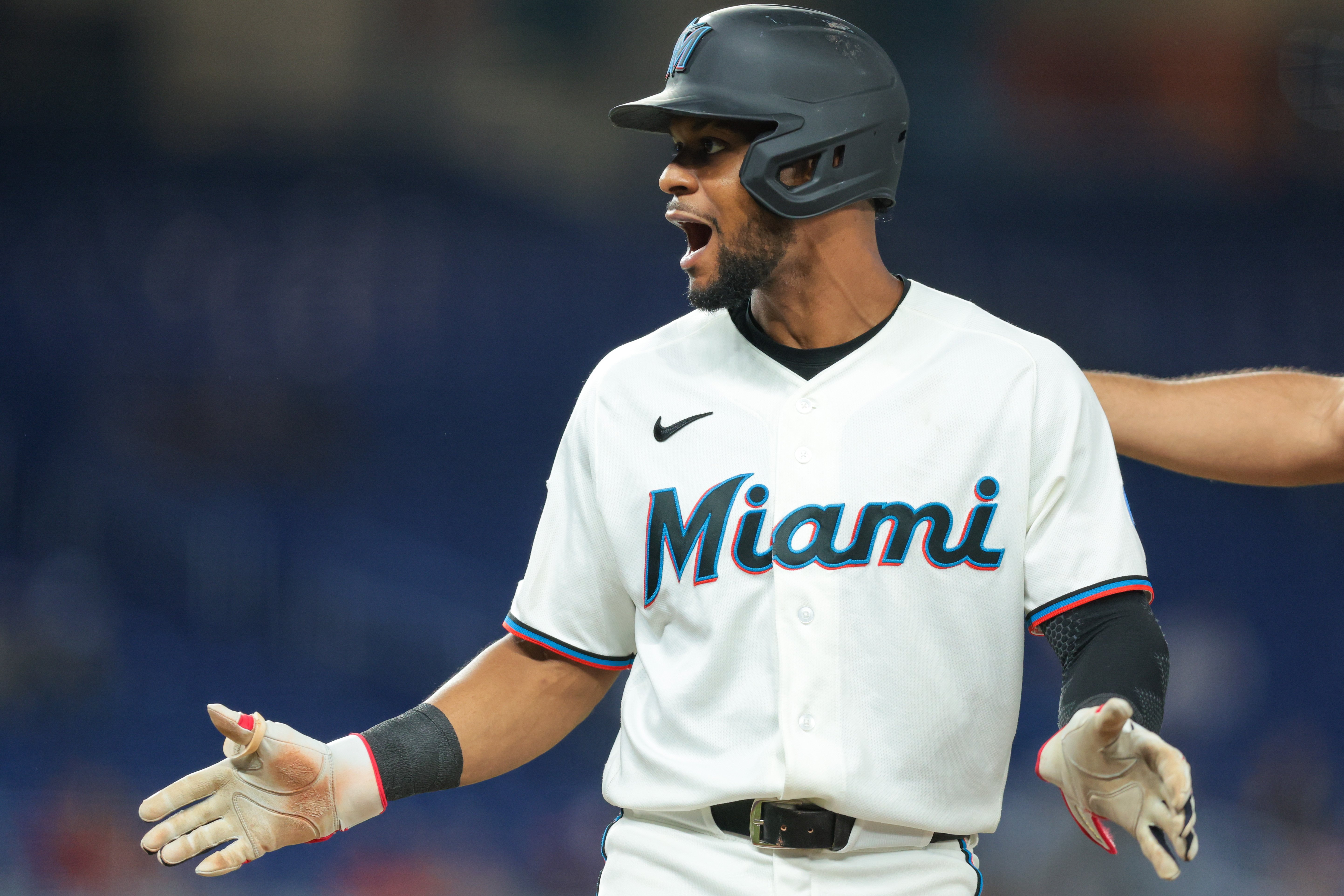 MIAMI, FL - Last season when the New York Mets were fighting for their playoff lives, the Miami Marlins took two out of three games, eliminating the Mets from the 2025 postseason. One year later, the Marlins, six games back of the final National League Wild Card, are swept by the Mets in one of the craziest games ever played at loanDepot park, a 15-14 Mets win. "Disappointing how this homestand has gone to this point," Marlins manager Clayton McCullough said. "You could say you saw some dejection in there. It's 8-0 early like that, not the the hand that we wanted, but it was the one that we were dealt. You saw how they they finished last night and again tonight. No one can question this group's willingness to hang in there and continue to go until it's done because they just continually show that. Unfortunately, we were down big early, tied it, got down again, and continued to go." According to FanGraphs, the Marlins postseason chances are at zero. They aren't officially eliminated, sitting 6.5 games out of the final National League Wild Card spot, but with games against the Los Angeles Dodgers (88-57), Arizona Diamondbacks (78-68), San Diego Padres (78-68) and the Atlanta Braves (85-61), it is highly unlikely that the Marlins make the playoffs in 2026. Janson Junk, who started for the Marlins, surrendered all eight runs on Wednesday night. The Mets scored six in the top of the second and former Marlin Christopher Morel hit his first home run of the season in the ensuing inning. "I didn't do a good job setting the tone today," Junk said. "I was competing out there, making good pitches and they just put balls where guys weren't at, and it was unfortunate, kind of frustrating on my end." The Marlins scored three runs in the bottom of the fourth inning and five in the bottom of the sixth to tie the game. Back-to-back RBI singles from Graham Pauley and Joe Mack got Miami on the board in the fourth. Then in the sixth, Owen Caissie hit his 14th home run of the season along with RBI from Griffin Conine, Otto Lopez and Jakob Marsee to even things up. The Mets countered right away with a six-run top of the seventh inning. Francisco Lindor, who hit a home run in game two of the series, went deep in what ended up being a 14-8 lead for the Mets. Joe Mack hit his 13th home run of the season in the bottom of the frame and RBI from both Owen Caissie and Graham Pauley in the eighth made it a 15-11 game. Going into Wednesday's game, the Marlins bullpen had tossed 179 1/3 innings since the All-Star break, 18th most in baseball. After having one of the lowest bullpen ERAs in baseball during the first half of the season, it now sits at 4.62 since July 17. On Wednesday, the Marlins went with seven relievers who combined to throw 124 pitches. Of those seven pitchers, only three of them threw over 20 pitches and one threw under 10 pitches. The Marlins won't have the services of Sandy Alcantara and Eury Pérez during the upcoming series against the Los Angeles Dodgers, but an off day on Thursday should somewhat help. In the bottom of the ninth inning, the Marlins tacked on three more runs, but it wouldn't be enough as the Fish fell by a final score of 15-14. Both teams combined for 35 hits and 29 runs. This marked the third time in team history the Marlins have lost when scoring 14 or more runs. Both other occasions happened in 2008. The Marlins have an off day on Thursday before welcoming the LA Dodgers. Ryan Gusto will take the mound opposite of Blake Snell on Friday at 7:10 pm. View the full article
 -
Twins Minor League Report (9/9): St. Paul Walks this Way (Off)
DiamondCentric posted an article in Twins Daily
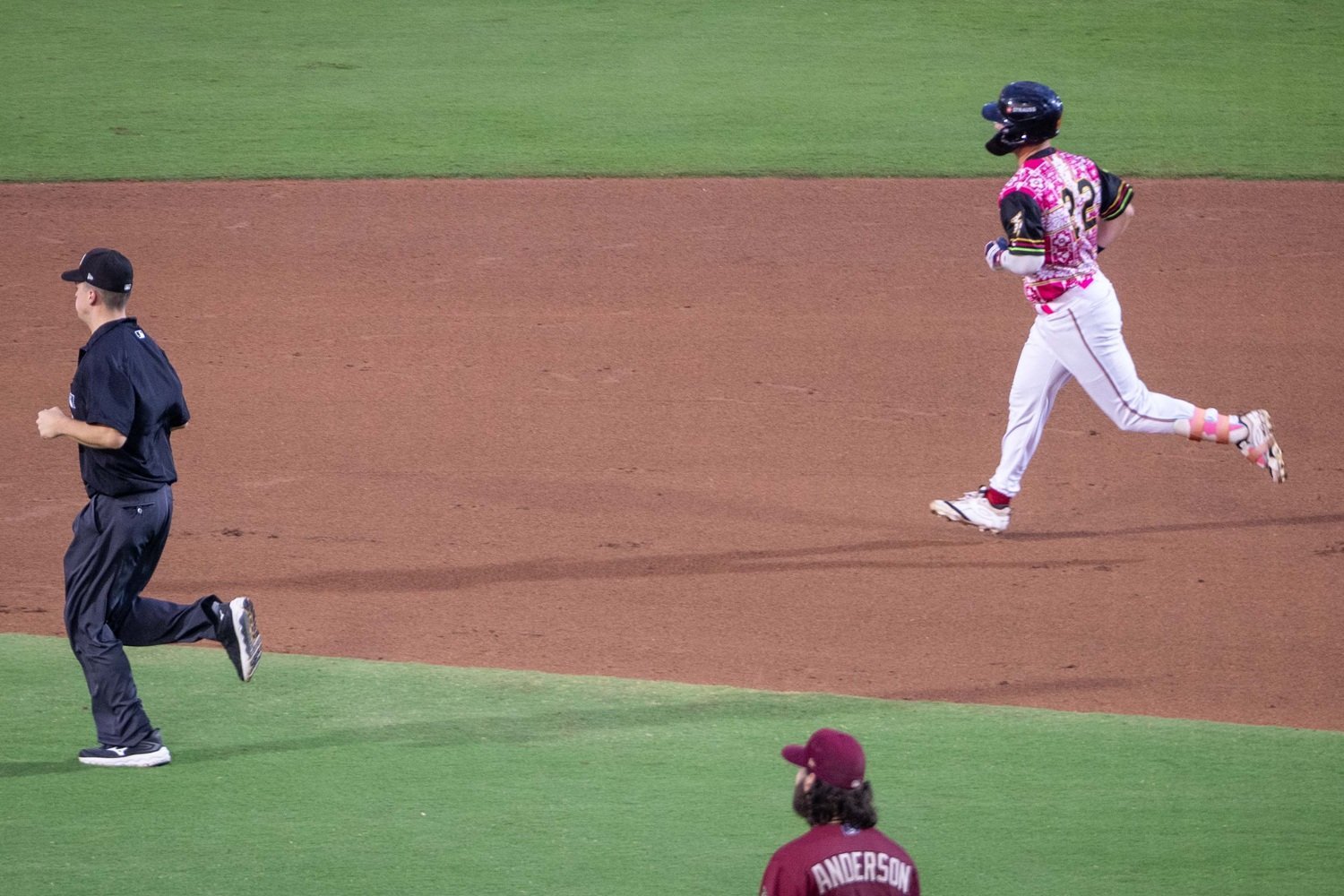 TRANSACTIONS No moves were made on Wednesday. Saints Sentinel St. Paul 5, Syracuse 4 Box Score Germán Márquez: 4 IP, 7 H, 4 ER, 2 BB, 2 K HR: Cody Morissette (16) Multi-hit games: Austin Martin (2-for-4, 3B, R, 2 RBI), Alan Roden (2-for-4, BB), Matt Wallner (2-for-4, 2B, RBI, BB) The Saints won on a walk-off on Wednesday. Matters that begin poorly may not always end so; just ask the Saints. Germán Márquez didn’t have it. His 2018 version a distant memory. The Mets struck for two in the second, and returned for a duplicate pair in the third, dropping a flurry of hits on the starter, as he exited the fourth ragged, tattered, and out of the game. But the Saints had some rally in them—and it all started with one swing. Cody Morissette, unrelated to Alanis, presumably. Though the owner of a swing far twitchier than his more famous surnamed Canadian. He’s slashing .357/.419/.857 in September thanks to hacks like this, in which he swatted a high fastball the other way for a solo homer. A Matt Wallner fielder’s choice in the sixth added a second run. Then, a critical hit from a familiar face. Austin Martin stepped to the plate with two on in the seventh, and delivered the goods with a well-placed gapper, splitting the center and left fielder with precision, scoring two as he dashed into third. An assist goes to Syracuse’s Jose Ramos and his alligator arms. Well, the “walk-off” hint was more literal than you may have thought it was. St. Paul started the ninth with two hits and an intentional walk, putting them in a perfect place for a potential poaching of a win. Aaron Sabato struck out. So it goes. Matt Wallner worked the count full. The 3-2 fastball thudded dully in the dirt. Hey, anti-climaticism counts all the same. Trent Baker, Garrett Acton, and Eric Orze combined to pitch five shutout innings out of the bullpen. They struck out three and allowed a trio of hits. Rehabbing big leaguer Austin Martin went 2-for-4 with a triple, a run scored, and two RBIs. It was his second game played in his rehab assignment. The Mets are the Mets. Their second-ranked prospect, pitcher Jonathan Santucci, tossed five innings with one earned run, striking out six. Wind Surge Wisdom Wichita 5, Frisco 7 Box Score Preston Johnson: 4 IP, 4 H, 2 ER, 1 BB, 2 K HR: Graham Brown (5) Multi-hit games: Kyle DeBarge (2-for-3, R, BB), Graham Brown (2-for-4, HR, 2B, 2 R, 3 RBI) The Wind Surge came up short on Wednesday. Matters that start well may not always end so; just ask the Wind Surge. Wichita loaded the bases in the first and pushed a run across with a Jaime Ferrer walk. The lead held for the three innings—the best frames pitched by Preston Johnson on the day. He struck out two and navigated minor trouble in the third. Then, trouble brewed. Two quick outs in the fourth portended runs. Two scored to swallow what would turn out to be Wichita’s only lead of the day. A Graham Brown blast in the bottom of the frame knotted things, yet the respite turned sour quickly. Darren Bowen replaced Johnson and couldn’t escape the fifth: he surrendered a menagerie of action, totaling four hits, a hit by pitch, a steal of home, and a wild pitch. Four runs scored. Frisco added one more in the seventh, an unnecessary luxury, as Wichita’s three-run volley in the eighth left the team two runs short of a tie. Brown brought in a pair with a double, his second extra-base hit of the day, and Quinn McDaniel singled in one more. Garrett Spain, Caden Kendle, and Brandon Winokur went down 1-2-3 in the ninth to end the game. MLB’s ninth-ranked prospect, infielder Sebastian Walcott, DH’d for the RoughRiders on Wednesday. He went 1-5, with two strikeouts. Kernels Nuggets The Kernels season has ended. Come back in 2027 to read more about them. Mussel Matters The Mighty Mussels season has ended. Come back in 2027 to read more about them. TWINS DAILY PLAYERS OF THE DAY Twins Daily Minor League Pitcher of the Day – Trent Baker Twins Daily Minor League Hitter of the Day – Graham Brown PROSPECT SUMMARY Here’s a look at how the Twins Daily Top 20 Twins Prospects performed: #1 – Walker Jenkins (Twins) - 0-2, BB, 2 K #3 – Kaelen Culpepper (Twins) - 0-4 #4 – Marek Houston (Wichita) - 1-3, R, 2 BB, K #6 – Emmanuel Rodriguez (St. Paul) - 1-4, 2 R, BB, 2 K #7 – Hendry Mendez (St. Paul) - 1-1 #12 – Brandon Winokur (Wichita) - 0-5, 2 K THURSDAY’S PROBABLE STARTERS Syracuse @ St. Paul (6:37 PM) - RHP Jack Anderson Frisco @ Wichita (6:35 PM) - RHP Ty Langenberg View the full article
 -
Should Derek Shelton Return as Manager of the Twins in 2027?
DiamondCentric posted an article in Twins Daily
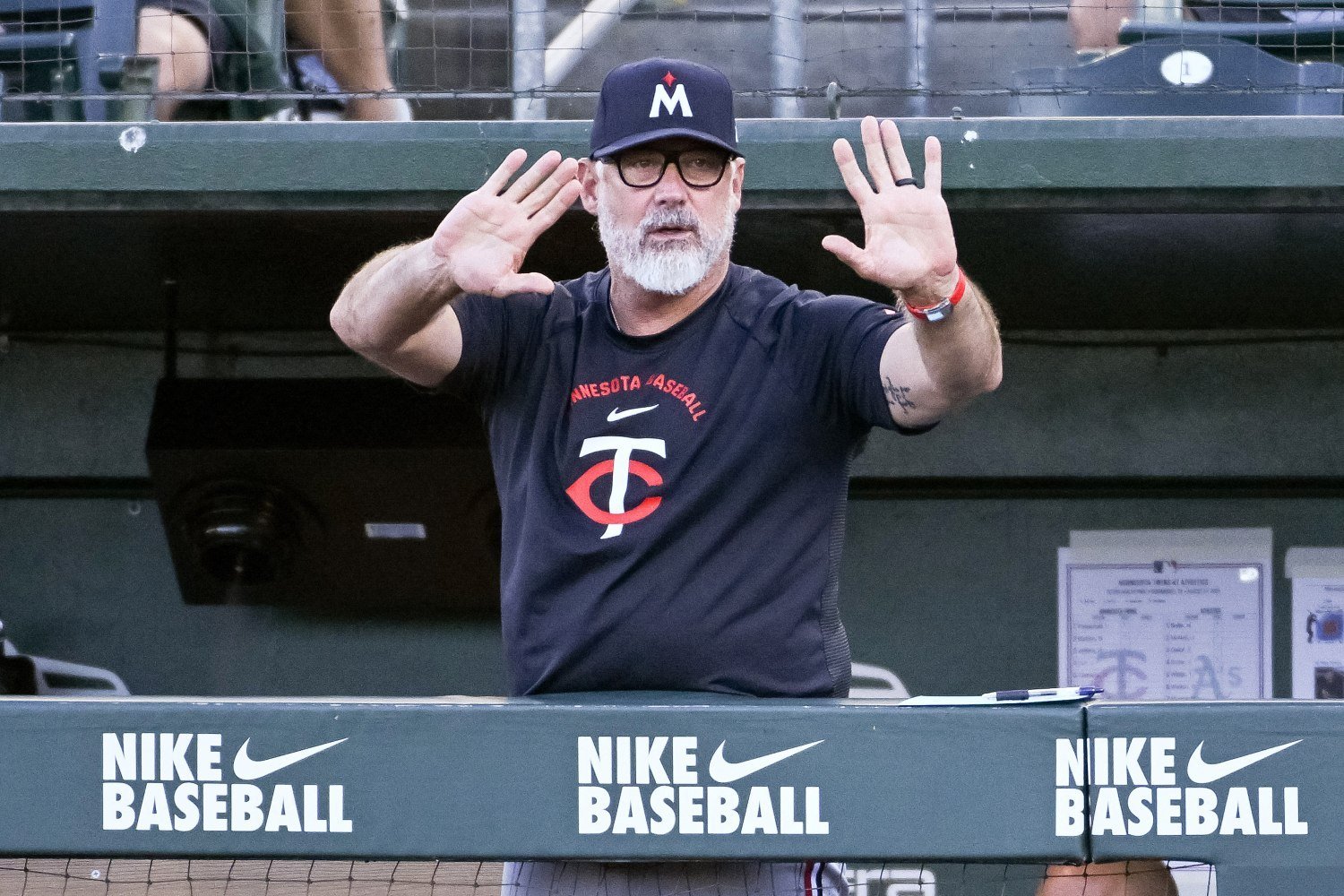 As the Twins close out another disappointing season (though, at least, one that raised expectations and began cementing the cornerstones for the next generation), there will be plenty of blame to go around. As the team decides on its future, there's one gigantic question they will have to answer: Should manager Derek Shelton return for a second year? The Twins changed operations over the offseason at the levels of ownership (sort of), general manager, and practically half the roster, in addition to Shelton replacing former skipper Rocco Baldelli. Originally perceived as a placeholder choice by Derek Falvey to provide stability for a rebuilding year, Shelton kept a steady hand on the helm as the team undertook significant roster changes within the season. He's made a case to return for a second season. Let's evaluate that case. Shelton did sign a standard multi-year deal, but that has never guaranteed a manager's return. If Jeremy Zoll wants to put his own preferred pick in place—there are names like Alex Cora and Rob Thomson out there, not to mention Albert Pujols making a case, but it's just as likely that Zoll would prefer to install a less famous person he knows well—he should have the power to do so. As any intelligent baseball fan knows, evaluating managers is a tricky business. Front offices shape the roster and spearhead game-planning, which often affects the set of choices a manager has even when writing out the lineup card or making moves within a game. For example, Shelton has relied less on pinch-hitting than his predecessor (usually) did. During the 2023 season, Baldelli's tactics led to 397 plate appearances by players who did not start that game. That number fell to 356 in 2024, then plummeted to 236 last season. Under Shelton, there have been just 211 plate appearances for substitutes so far. He's gone to the bench much less often, but Baldelli had also bent in that direction before departing the job. A weak bench naturally begets a greater reliance on one's starters; it's no surprise that Shelton hasn't wanted to use Alex Jackson or Ryan Kreidler especially aggressively. That influence from front offices is a confounding factor in judging skippers. So is the often errant public perception that shapes narratives around them. Noisy online fans often referred to Baldelli’s “quick hook" with starters, but Shelton has run his rotation much as the previous skipper did—and that’s despite more rookie pitchers who could use the slack, and a pretty atrocious bullpen who could not be trusted. All told, the two managers differ little in how often they use pinch-hitters and in how much of their pitching staff's workload lands on their starters. Rocco Baldelli (Average Between 2019 and 2025) Derek Shelton (2026) Pinch Hitting % 4.3% 3.8% Starter IP % 57.8% 59.4% A better sign of unique improvement for a manager comes in the form of player development. A lot of ideas might come from the front office, but it’s often left to the coaches to get those ideas into the players. Here, Shelton has done well, after it seemed an entire generation had gone bust. Luke Keaschall and Royce Lewis emerged from their early slumps. Josh Bell looked cooked early in the season, but has gotten back on track with an .818 OPS since the start of June. Brooks Lee naturally slid from shortstop to third base and currently leads the team in Win Probability Added. Andrew Morris went from a shaky starter to a solid set-up man. Kody Clemens has 25 home runs. Perhaps the only thing a manager can really do is manage the vibes. Defining that success depends on how the players feel, rather than on any fan perception. From reporting, Baldelli was certainly laid-back, but Shelton isn’t exactly a drill sergeant. As he told the media in a recent scrum, “One of the things I'm most proud of with the culture of our group is [that] I really don't have to say much to them. They handle themselves extremely well." That hasn’t led to any complaints—Zoll brought in veterans like Bell and Taylor Rogers to assist the young talent—but a different tack will be needed next season, as the team gets much, much younger. Kaelen Culpepper and Walker Jenkins are already in the mix. Next year, another handful of rookies could replace departing veterans. FanGraphs projected the Twins for 77 wins for the season. With just under two dozen to go, they are likely to end up at… 77 or so wins. That’s not a successful season, but it’s hard to say Shelton did anything to cause whatever failure one ascribes to the club. The schizophrenic feeling of the season—a running problem for this team for multiple years now—feels impossible to solve. Could a different manager break that spell? If the Twins bring back Shelton, I won’t be surprised or aggrieved. As long as Shelton stops yelling at robots, I don’t think he did much wrong that cannot be placed at the feet of the front office. But there is always an opportunity cost. As the Twins reshape for a new generation, the club could transform the feeling in and outside the clubhouse. The organization's churn has created some momentum; it might be wise to sustain that by continuing to make changes. View the full article
