


DiamondCentric
-
Posts
2,631 -
Joined
-
Last visited
Never
Content Type
Profiles
Forums
Events
News
Tutorials & Help
Major League Baseball Videos
Guides & Resources
Store
Downloads
Gallery
Everything posted by DiamondCentric
-

Ty France Back With Padres, Activated From Paternity List
DiamondCentric posted an article in Padres Mission
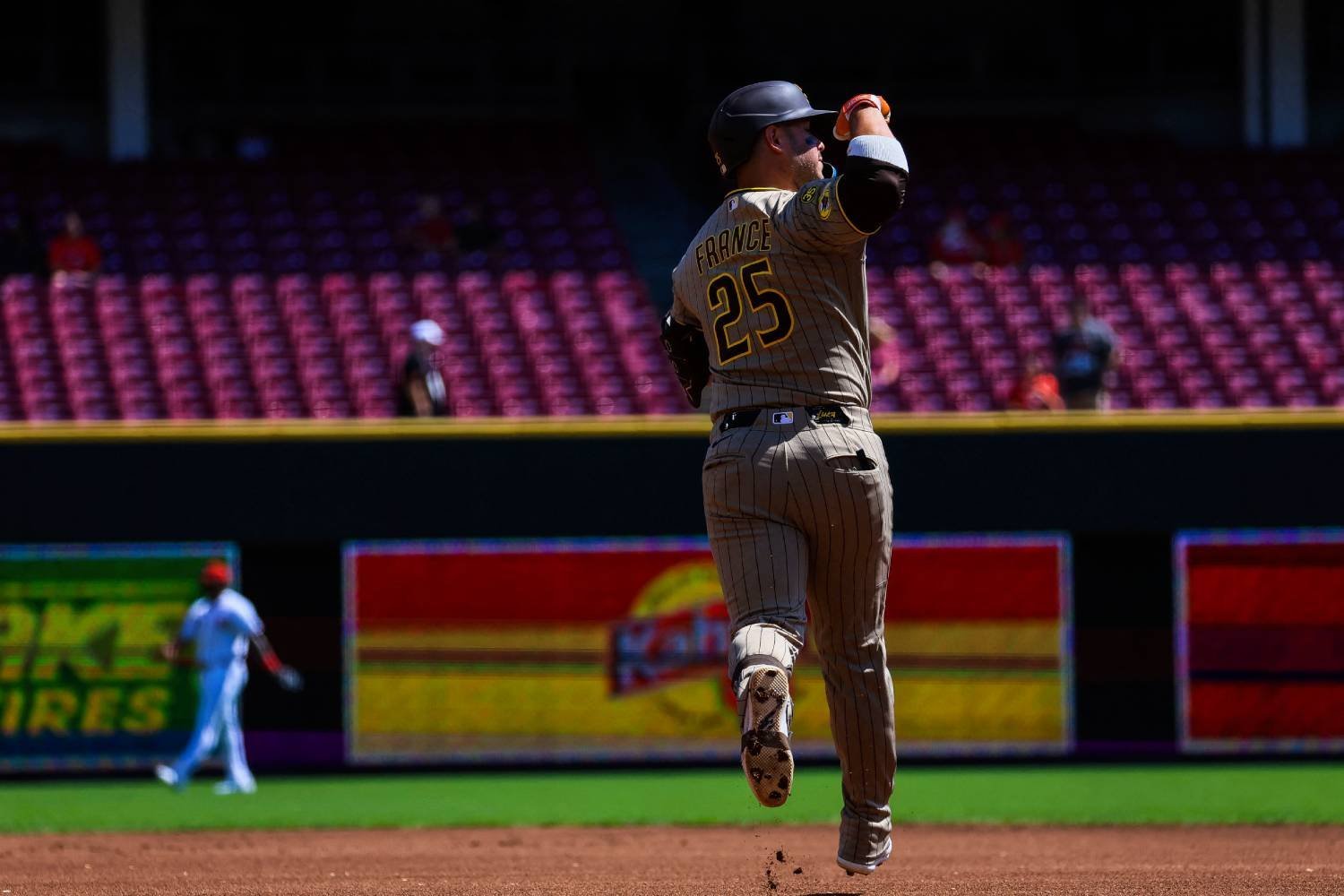 Get ready for a little bit of dad strength this week. First baseman Ty France was activated from the paternity list Monday by the San Diego Padres. France and his wife, Magdalena, were expecting twins. The couple also have a 2-year-old son, Luka. France is expected to be in the lineup for Monday's series opener against the Colorado Rockies in Denver. The Friars have a 2½-game lead for the third and final NL wild card over the Arizona Diamondbacks. To make room for France, infielder Mason McCoy was optioned back to Triple-A El Paso for the final week of the Chihuahuas' season. McCoy came up Friday for the three-game series against the San Francisco Giants, but did not play. France has been a boon for the Padres this year, compiling a .294/.363/.510 slash line with 20 homers, matching his career best, 63 RBIs and anchoring the defense at first base. There could be two more activations coming, perhaps Monday or during the Rockies series. Those would be designated hitter-left fielder Miguel Andujar, who has been on a rehab assignment at El Paso, and right-handed reliever Jason Adam, who made a rehab appearance Sunday for the Chihuahuas. View the full article
 -
 Chicago Cubs Minor League Report (September 14) Affiliate Overview Triple-A Iowa Cubs Series vs. Toledo Mud Hens (Detroit Tigers): Mud Hens win, 3-2 Season Record: 59–81-1 Double-A Knoxville Smokies Series at Birmingham Barons (Chicago White Sox): Barons win, 4-2 Season Record: 73–64 High-A South Bend Cubs 2026 Season Record: 77–51 Single-A Myrtle Beach Pelicans 2026 Season Record: 50–77 Triple-A: Iowa Cubs Season Record: 59–81-1 Series Opponent: Toledo Mud Hens (69-73) Series Standing: Lose, 3-2 Sept. 13: The Iowa Cubs claimed a 2-1 victory over the Toledo Mud Hens on Sunday at Principal Park in the team’s final home game of the season. The Mud Hens took a 1-0 lead in the first but Jordan Nwogu (1-for-3) would give the Cubs the lead for good in the second with a two-run homer, his third at Triple-A. The 2-1 score would hold the rest of the way as Iowa starter Kohl Franklin turned in five innings of one-run ball to earn the win and improve to 1-1 on the year. Franklin gave up two hits, walked one and struck out five. The Iowa bullpen combined for four shutout frames, with Shelby Miller (1.0 IP), Jaxon Wiggins (1.0 IP), Jayden Murray (0.2 IP) and Gabe Klobosits (1.1 IP) yielding just two hits to go along with three walks and three strikeouts. Klobosits finished the ballgame to record his fourth save of the campaign. The I-Cubs offense was held to just five hits in the contest, with Chas McCormick being the lone batter to record a multi-hit effort, going a perfect 3-for-3. Double-A: Knoxville Smokies Season Record: 73–64 Series Opponent: Birmingham Barons (61–77) Series Standing: Lose, 4-2 Sept. 13: The Knoxville Smokies were blanked in their regular season finale by the Birmingham Barons, 7-0, on Sunday at Regions Field. The Barons took a 1-0 lead in second and later made it 3-0 after scoring one run in both the fifth and the sixth. Birmingham then broke the game open with four in the seventh to make it 7-0. The Smokies offense was held to just two hits in the contest, with Kane Kepley (1-for-4) and Andy Garriola (1-for-4) picking up the knocks. Connor Schultz got the start on the mound and took the loss, falling to 5-5 on the year. Schultz allowed one run on five hits over five innings of work, walked one and struck out two. High-A: South Bend Cubs 2026 Season Record: 77–51 The South Bend Cubs season came to an end on Thursday, falling to the Quad City River Bandits in game 2 of the Midwest League Division Series. The Cubs finished the regular season with a 77-51 record, a league best mark. Single-A: Myrtle Beach Pelicans 2026 Season Record: 50–77 The Myrtle Beach Pelicans’ season came to an end on September 4 after both of their contests on September 5 and September 6 were rained out. The Pelicans finished the 2026 season with a 50-77 record. View the full article
 -
 The Brewers clinched another postseason berth on Friday night! Jack and Spencer break down what positive trends for the offense could mean in October, as well as some negative trends for key pitches. Apple Podcasts: https://podcasts.apple.com/us/podcast/the-brewer-fanatic-podcast/id1740648724 Spotify: https://open.spotify.com/show/5CY8mWsQayqjDXqw9OT2Td iHeartRadio: https://www.iheart.com/podcast/263-the-brewer-fanatic-podcast-166534588/ Pocket Casts: https://pca.st/ommzz627 Watch On YouTube: https://www.youtube.com/@brewerfanatic View the full article
 -
Will Twins Pitching Coach Pete Maki Be the Fall Guy?
DiamondCentric posted an article in Twins Daily
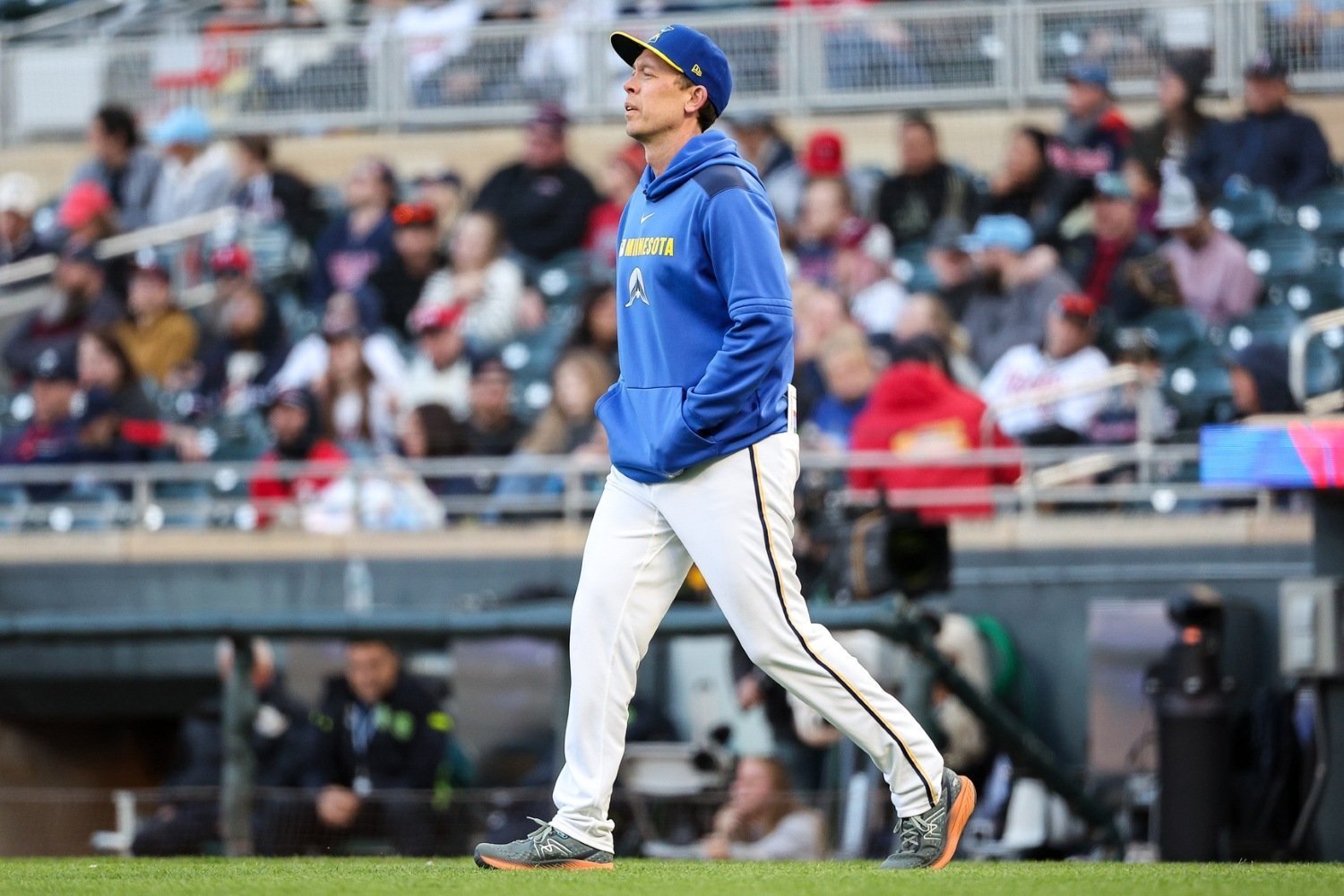 There were plenty of changes coming to the Minnesota Twins last winter. The front office changed. The manager changed. Much of the coaching staff changed. The organization entered the 2026 season determined to take a different direction after consecutive second-half collapses. One of the few members of the major-league coaching staff who survived that purge was pitching coach Pete Maki. That decision made sense. Maki has been with the organization since 2017, initially working as the minor-league pitching coordinator before joining the major-league staff as bullpen coach in 2021. When Wes Johnson left during the 2022 season, Maki took over as pitching coach. But as the Twins' 2026 season has unfolded, it's fair to ask whether Maki should survive another organizational reset. That isn't an indictment of one person. Pitching coaches don't determine the talent available to them. They don't control injuries. They don't decide which pitchers are acquired, developed, promoted, or designated for assignment. Eventually, though, results have to dictate decisions. Unfavorable Circumstances Maki entered this season with one enormous problem before Opening Day even arrived. Pablo López was lost to Tommy John surgery, removing the Twins' most established starting pitcher from the equation. Suddenly, Maki was tasked with helping several young pitchers navigate major league rotations while simultaneously trying to construct a bullpen without an established closer or proven setup man. That is a difficult assignment for any pitching coach. The Twins cycled through young starters, reclamation projects and inexperienced relievers. Injuries created additional complications with players like Mick Abel, David Festa, Cole Sands, and Anthony Banda. The organization also asked pitchers who had spent relatively little time in the majors to take on increasingly important roles. There were going to be growing pains. Still, there have been some legitimate successes. Positive Signs Taj Bradley is probably the clearest example. Bradley leads the Twins' pitching staff in rWAR and owns the highest strikeout rate among the team's starting pitchers. Considering the number of young arms Minnesota has relied upon, watching Bradley establish himself as the staff's most valuable pitcher is an important development. Then there is Yoendrys Gómez. The Twins made relatively small adjustments to Gómez's release and pitch mix, and the results were significant enough to turn him into one of the team's most important bullpen pieces during the first half. Gómez essentially became the pitcher the Twins needed when there wasn't an obvious answer for the ninth inning. His ability to absorb important innings kept the bullpen together for stretches of the season. Those developments deserve credit. Inconsistent Results Other pitchers provide a more complicated picture. Connor Prielipp took on a significantly larger workload than he had previously handled, reaching a career high in innings. That is an important developmental milestone for a young pitcher. But the results weren't particularly good. For the season, Prielipp has a -0.3 rWAR, an 80 ERA+, and a -1.70 WPA, illustrating just how much his innings hurt the Twins. Andrew Morris offers another example. For a while, Morris looked like he had the potential to become a dominant setup option. The Twins appeared to have found another important bullpen piece. Then things unraveled down the stretch with his second-half OPS allowed rising by over 150 points. Morris ultimately sits with a -1.14 WPA, turning what looked like a potential success story into another question mark. And then there is Simeon Woods Richardson. Woods Richardson was once viewed as one of the organization's promising young starting pitchers. Instead, he became effectively unplayable (-1.3 rWAR) and eventually was lost on waivers. That is a particularly difficult development for a coaching and development staff to explain. Numbers are Difficult to Ignore The bigger concern isn't necessarily one pitcher. It is the overall trend. Since 2024, Twins pitchers rank 25th in MLB in WPA and 25th in ERA. They rank 26th in Barrel% and 20th in home runs allowed per nine innings. Those aren't numbers that can simply be dismissed as a bad month or an unfortunate stretch. There is certainly a personnel component. A pitching coach can only work with the pitchers the organization gives him. If the front office doesn't provide enough major league-caliber arms, no pitching coach is going to turn a collection of replacement-level pitchers into an elite staff. The Twins have also dealt with significant injuries. López missed most of 2026. Other pitchers have cycled in and out of the rotation. The bullpen has lacked stability. All of that matters. But the results have been bad, and they have continued to be bad. At some point, the organization has to determine whether the problem is primarily personnel or whether its pitching development and coaching processes aren't producing enough improvement. Not Everything Shows Up in the Numbers There is another side of this discussion that shouldn't be ignored. Being a pitching coach is about much more than ERA, strikeout rate or WPA. Maki is responsible for building relationships with pitchers, preparing them for starts, helping relievers prepare for unpredictable workloads, communicating with the manager and front office, identifying mechanical issues, studying opposing hitters and helping pitchers make adjustments. Some of the most important work happens behind closed doors. A pitcher might credit a coach for helping him make a mechanical adjustment that doesn't immediately show up in his statistics. A young player might develop confidence because of the relationship he has built with his coach. A struggling pitcher might avoid a complete collapse because someone on the staff knows how to reach him. None of that appears on a leaderboard. It would be unfair to evaluate Maki exclusively through the team's pitching statistics. It would also be unfair to ignore those statistics entirely. Is Maki the Fall Guy? The Twins don't need to make Maki the scapegoat for their pitching problems. But they do need to evaluate him honestly. Maki has been the organization's major league pitching coach since 2022. He has now had multiple seasons to establish his system, work with the organization's pitchers and help shape the development of young arms. There have been successes. There have also been too many failures. If the Twins believe the problem is simply a lack of talent, then the solution should be improving the talent around Maki. If they believe the pitching infrastructure is working but injuries and roster construction have undermined it, then Maki deserves another opportunity. If, however, the organization believes its pitchers aren't improving enough under the current system, then changing the pitching coach should be part of the conversation. That doesn't mean Maki is a bad coach. It means the Twins need to decide whether he is the right coach for what comes next. The organization is already facing plenty of difficult questions this offseason. The pitching staff will be one of the biggest. Pete Maki should be one of them. Should Maki be on the hot seat this winter? Leave a comment and start the discussion. View the full article
 -
Luis Lara, Sal Frelick and the Striking of a Delicate Balance
DiamondCentric posted an article in Brewer Fanatic
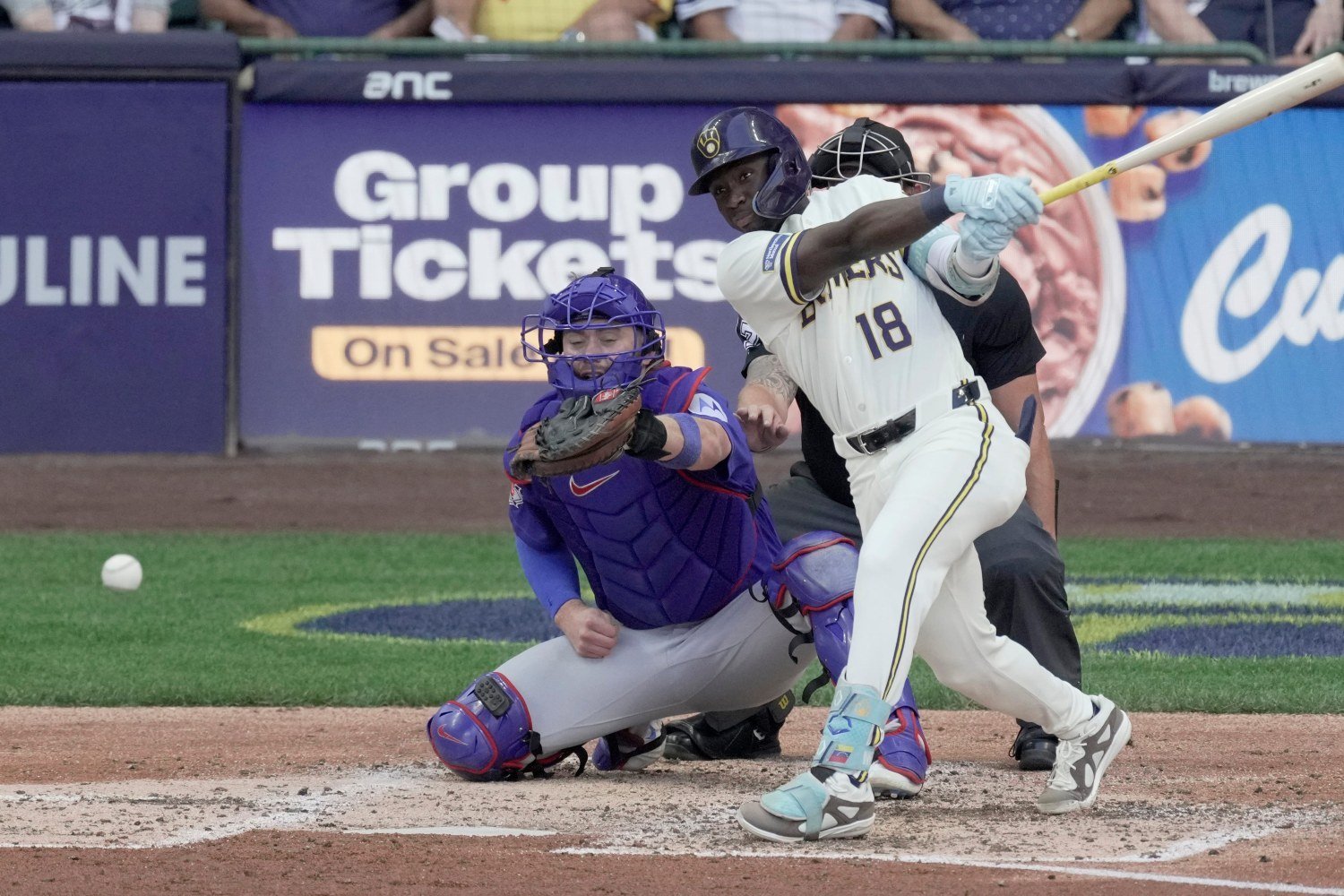 Over his first 50 days in the major leagues, Luis Lara got 125 plate appearances. He wasn't quite an everyday player, but he got ample opportunities, thanks in large part to the absence of Sal Frelick. The injured Frelick left a breach into which the team plugged their freshly extended rookie, and Lara's speed, defense and feel for hitting got a chance to shine. In that span, he batted .259/.328/.375, with a 9.6% walk rate and a 19.2% strikeout rate. That was in addition to numerous impressive catches in the outfield. Frelick returned from the injured list on August 26, which was welcome news for the Brewers. Though still young by the standards of most teams, Frelick is a respected part of the Milwaukee clubhouse and a relatively veteran presence in what is always a youth-centered squad. He's not having as good a year as he had in 2025, and Pat Murphy runs his roster as a (moderated) meritocracy, so Frelick hasn't gotten his full-time, no-questions-asked gig back since his activation, but he's been treated almost as a regular. In the last 18 days, he has 48 plate appearances, despite batting .205 with little patience or power. The Brewers' schedule has been peculiarly heavy with left-handed opposing starters, but in the 10 games in which they've seen righties, Frelick has seven starts. That's pushed Lara into a part-time gig. He has more trips to the plate than Frelick over the last not-quite three weeks, but just barely so. More to the point, that playing time has been divided almost perfectly evenly by the handedness of the opposing pitcher. Lara has 26 plate appearances against righties and 25 against lefties since Frelick's return; he had 91 trips against righties and 34 against lefties before that. Normally, a switch-hitter gets about 70% of their plate appearances against righties, unless the league is actively trying to turn them around. In this case, the reason for the egalitarian platoon balance is Frelick, a lefty batter whom Murphy is using mostly against righty pitchers. That Garrett Mitchell (the other candidate for any kind of playing-time reduction in the outfield) is also a lefty bat makes it even more likely that Lara will remain in this unusual role for a player of his profile. If this were a permanent state of affairs, that would be a problem. Lara is a better hitter from the left side. In the majors, he's batting .272/.350/.369 against righties, and .236/.288/.309 against lefties. That's why, since being constricted this way, he's batting just .261 and slugging .283. To his immense credit, though, the rookie has adjusted and developed a working ad hoc plate approach, which has allowed him to maintain a .333 OBP over this span. For a guy whose main source of value is his glove; who has two swings to maintain and much to learn about handling big-league pitching; who isn't playing every day; and who is being asked to bat more often than usual from his weaker side, that's a huge achievement. Some of the credit goes to Murphy and the coaching staff. They consistently outperform the rest of the league when it comes to onboarding rookies and keeping them engaged and successful even when their usage isn't conducive to that, in a vacuum. Lara has profited from the way the team counsels its young batters to be patient and use the opposite field, but he's also shown solid bat speed from his weaker side—particularly given the irregularity of his opportunities. The final fortnight should offer a glimpse into the Brewers' plans for the postseason. Presumably, they'll see a few more right-handed starters over that stretch, and whether Lara gets meaningful run against them (at the expense of Frelick or Mitchell) will be worth watching. For now, though, his high-value role as a late-inning defensive weapon and source of just enough offense to tilt a few games in the Crew's favor casts both the youngster and his organization in a favorable light. View the full article
 -
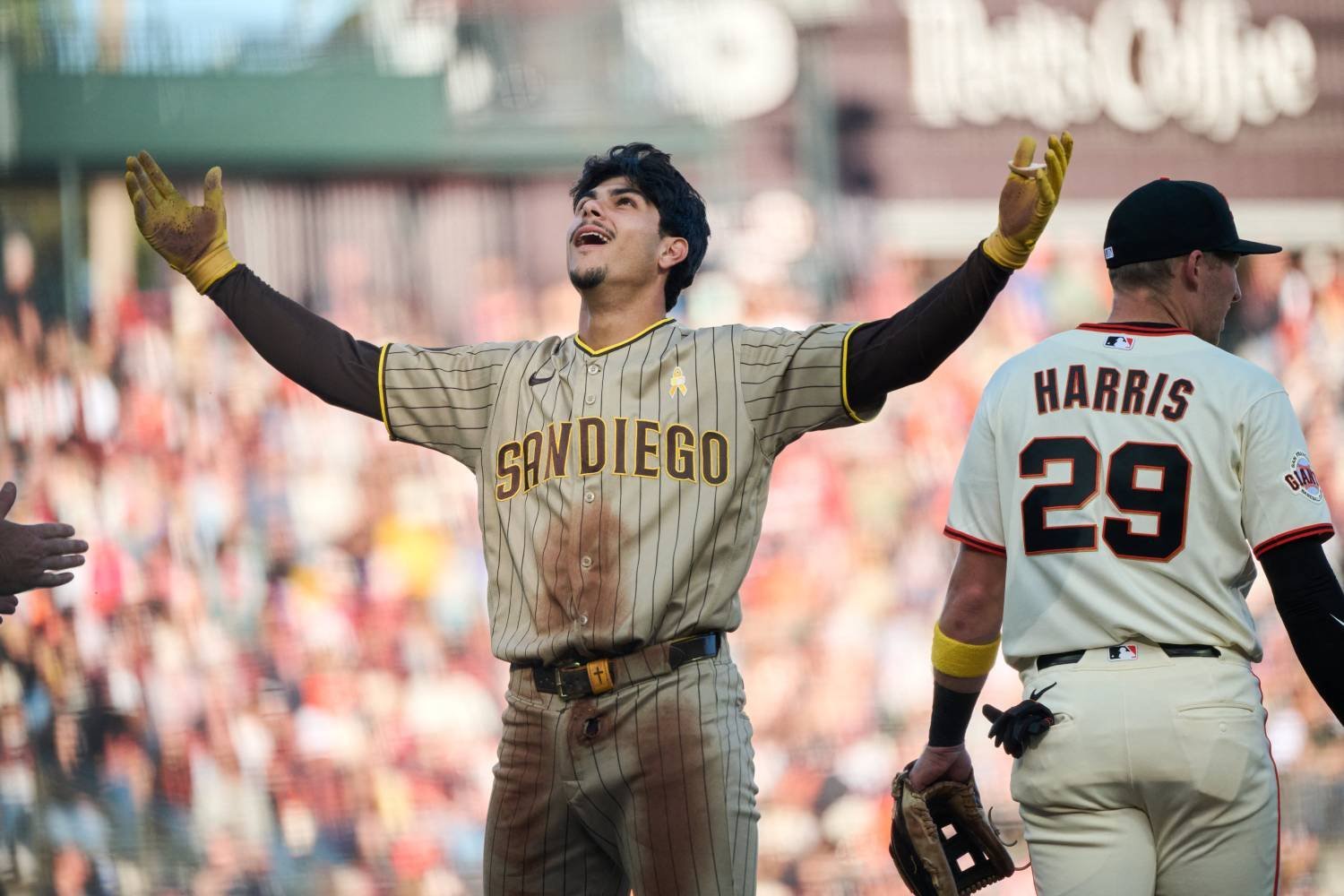 San Diego Padres Weekly Snapshot Record last week: 6-0 Runs scored last week: 37 Runs allowed last week: 23 (season run differential: plus-22) Scores Game 144 (Monday): Padres 3, Nationals 2 Game 145 (Tuesday): Padres 5, Nationals 4 Game 146 (Wednesday): Padres 9, Nationals 2 Thursday: Off. Game 147 (Friday): Padres 7, Giants 5 Game 148 (Saturday): Padres 7, Giants 6 Game 149 (Sunday): Padres 6, Giants 4 Week in Review and Highlights Nationals series Game 1: Right-hander Nick Pivetta returned to the Padres' rotation surprisingly early and gave the Friars a boost with his terrific performance. Pivetta, who hadn't pitched since leaving an April 12 start with a flexor injury in his right elbow, returned by throwing five shutout innings in a 3-2 victory over the Washington Nationals. The victory kept the Padres a half-game behind the Arizona Diamondbacks in the battle for the third and final NL wild-card berth. Pivetta returned after making just two rehab starts after he walked off the mound Aug. 4 after his elbow didn't feel right in his initial rehab assignment. Other than having an issue with being sharp, Pivetta did more than what the Padres expected him to against one of the top offenses in MLB. He retired the first seven batters he faced and 15 of 17 overall, giving up just two hits while striking out two. The Nats were aggressive but didn't generate much in the way of quality contact, aside from the second batter of the game lining out to Jackson Merrill as he crashed into the center-field wall and a double off the wall by James Wood in the third inning. The offense did just enough. Fernando Tatis Jr. and Merrill each had three hits with Manny Machado adding two. Merrill also drove in a pair of runs. Merrill had an RBI single in the first inning to stake Pivetta to an early lead, then the Padres added two more in the third on singles by Machado and Merrill. Tatis and Merrill each stole a base, too. One Pivetta left, the Nats got their runs. Those came courtesy of a two-run homer by Dylan Crews off left-hander Kyle Hart, who had allowed just two runs in his previous seven outings. Right-hander Bradgley Rodriguez and left-hander Adrian Morejon took care of the seventh and eighth without incident, then superstar Mason Miller closed out the ninth, allowing a one-out hit while striking out two for his 34th save. Game 2: It might not have been the best win of the season, but it was certainly the most important to date. Faced with the prospect of going down 1½ games in the NL wild-card race with the D'backs already posting a victory, the Padres got off the floor with a run in the seventh and four in the eighth to steal a 5-4 victory over the Nationals. That kept the Friars within a half-game of the D'backs for the third and final NL wild-card spot. To be clear, this is a two-team race for one spot, with an outside chance of the two teams ahead of the D'backs in the wild-card race having the potential of making all three of those seeds an open competition. The Padres are five games clear of the Pittsburgh Pirates, the No. 5 team in the NL wild-card standings. Meanwhile, the Chicago Cubs are three games ahead of D'backs and the Philadelphia Phillies 3½. But this game went from being on the verge of an embarrassing and regrettable loss to a thrilling victory. The Nats have the second-worst bullpen ERA in MLB and this was a bullpen game for them. The only bullpen technically worse than the Nats is the A's, who play in a slightly juiced atmosphere of a minor-league ballpark. Which made the start of the game that much more concerning. The mish-mash group of relievers held the Padres to just a fifth-inning Luis Campusano single through six innings. Two more hits and a wild pitch set up Merrill's sacrifice fly in the seventh. In the eighth and facing a left-hander in just his third MLB game, the Padres drew three walks to begin the inning. The Nats went deeper into their bullpen and brought in another lefty who was making his seventh MLB appearance. Pinch-hitter Austin Hays lofted a sac fly to make it 4-2, then, after a passed ball put runners on second and third, Machado bounced a single just past the pitcher and into center that scored two, tying the game 4-4. Ty France followed with a single that sent Machado to second. With two outs, Campusano lofted a broken-bat single into the Bermuda Triangle of right-center that brought in Machado with the decisive run. From the pitching side, it was a good performance. Critically, right-hander Casey Mize turned in a decent start after three stinkers that had many questioning his spot in the rotation. Mize went 5⅔ innings, allowing two runs on four hits and a walk while striking out seven, the most since he came over at the trade deadline. Right-hander Randy Vasquez, in his first relief appearance since getting bumped from the rotation with Pivetta's return, was called upon with runners on first and second and two outs. He gave up an 0-1 two-run double that put the Nats up 3-0, then a flyout to end the inning before a 1-2-3 seventh. Left-hander Yuki Matsui gave up a homer in the eighth to make it 4-1, with right-hander David Morgan to get the final out with a runner on second. That left the ninth to Morejon, with Miller down after pitching the previous two games and three of the last four. Morejon had the same workload as Miller in the previous four games, but his arm was in a better spot to close this one out, which he did with a perfect ninth for his third save of the year. Game 3: You most definitely aren't getting a two-homer, six-RBI game from Merrill even once a week for the rest of the season. But as long as the Padres are getting a productive Merrill, they should be in a good spot once the regular season comes to an end. However, Merrill did do that in the series finale against the Nationals, leading to a 9-2 victory and completing a three-game sweep. The D'backs lost, meaning the Friars are once again in the No. 3 NL wild-card spot, a half-game ahead of Arizona and 2½ behind the Chicago Cubs, who hold the No. 2 wild-card position. If you are curious, the half-game between the Padres and D'backs will remain until the Padres conclude a four-game series against the Colorado Rockies next week. Merrill had been slumping before hitting his previous homer before Wednesday, which came July 26 vs. the Pittsburgh Pirates. In the 13 games since, Merrill has had six multihit games, capped by the 4-for-5, two-homer performance that led to a career-best six RBIs. That also included a triple, making him the third Padre to have two homers and a triple in the same game (Greg Vaughn 1988, Ryan Klesko 2001). Merrill got his triple first and helped erase the Nationals' early 2-0 lead. After France had an RBI single in the third, Merrill ripped a liner just to the right of the 396-foot sign in center that Jacob Young nearly caught as he smashed into the wall. Two runs scored on the play for a 3-2 Padres lead. In the fourth, Samad Taylor had his team-high fourth bunt single that led to an error by the pitcher, scoring a run. Tatis added an RBI single to make it 5-2. Merrill then lofted his 23rd homer of the season, a two-run shot, to left in the fifth for a 7-2 advantage. He added his 24th, another two-run blast, into the bullpen in left-center. Pitching had a weird hiccup, but it ended up playing out well. Right-handed starter Walker Buehler retired the first six batters he faced, then allowed a leadoff homer to Keibert Ruiz in the third. A walk, Nasim Nunez's MLB-leading 46th steal, Young's single and a walk to Wood loaded the bases. Crews singled home a run for a 2-0 lead. After a popout for the first out, manager Craig Stammen came out to the mound. He had forgotten that pitching coach Rueben Niebla had already made a visit in the inning. Stammen said he had intended to remove Buehler, but changed his mind as he walked out and wanted to see how his right-hander felt. Buehler had to exit, with Hart coming in and retiring the next two hitters. Hart went 2⅓ innings, Morgan one-third, Matsui one inning, left-hander Wandy Peralta two innings and right-hander Griffin Canning the ninth, with none of the five relievers allowing a run and only one hit. Giants series Game 1: Whew. This was one of those games where you could pull the hair out of your head. It was a rout early and should have been worse. Then it got tight and then even tighter at the very end. Still, the Padres did just enough to escape with a 7-5 victory over the San Francisco Giants. With their fifth straight win, the Padres maintained their half-game lead over the D'backs for the third and final NL wild-card spot and pulled within 2½ of the Phillies for the No. 2 position. Style points don't matter at this time of year, just the bottom line. Save the various debates for elsewhere. This one started very promising as Dustin Harris and Fermin drove in runs in the top of the second. A five-run third featured an RBI double by Campusano, a two-run double by Xander Bogaerts, Harris' run-scoring triple and another RBI double, this one by Fermin. The bottom of the order had a big role in building a 7-1 lead. There were opportunities to add on, but those were not taken advantage of, which would come back to haunt the Friars. Padres left-handed starter Robbie Ray was doing good things through four innings, but fell apart in the fifth. A double and two walks loaded the bases for Giants superstar Rafael Devers, who blasted a grand slam to trim the Friars lead to 7-5. While another day off would have been good for the Padres' primary bullpen arms, the slam put the A Team into action. Matsui, Morejon and Rodriguez retired nine of the 10 batters they faced, setting up Miller. But Miller was sharp. He did get help with a terrific sliding catch by left fielder Jase Bowen in foul territory for the first out on the first pitch. After a strikeout, Miller issued a six-pitch walk and then a bunt single caught the Padres off-guard, putting two runners on and bringing Devers up again. But Miller couldn't get Devers to bite any of the three sliders he threw before walking him on five pitches to load the bases. Rookie slugger Bryce Eldridge was next and Miller fell behind 2-0 before coming back with three straight sliders, then punching out Eldridge when he dotted a 102.8 mph four-seamer at the bottom outside corner of the zone. Game 2: Similar song, different day. While the Padres' offense again put up a good day, there were glitches on the pitching side that made this one closer than it needed to be. It wasn't Michael King's fault as the right-hander turned in his seventh straight quality start despite yielding a pair of homers, while Merrill and Tatis went deep again as the Padres pulled out a 7-6 victory, their sixth in a row. With the D'backs losing to the Texas Rangers, the Padres finally have their biggest lead while holding the final NL wild-card position. They are 1½ up on the D'backs while now also trailing the Phillies by that same margin for the No. 2 spot. However, the Padres lose the tiebreaker to the Phillies, so would need to surpass them. The dynamic duo of Morejon and Miller were needed again to come up big, which they did. After King turned in a good seven innings, allowing three runs and the two long balls, Rodriguez came in and had his worst outing of the season. The 22-year-old rookie gave up two homers himself and three runs without recording an out in the eighth that reduced the Friars' lead to 7-6. Morejon sprung into action to face the Giants' two best power hitters in Devers, who had homered earlier, and Eldridge. The left-hander won the battle, striking out both sluggers, then getting a tapper back to the mound. Miller took care of the ninth, striking out two of the three batters he faced for his 36th save. After Devers took King deep for a two-run shot in the first, Harris, inserted into the No. 2 spot in the lineup for the first time, continued to be a surprising contributor when he followed two singles and a walk by grounding a single through the hole to left to tie it 2-2. King gave up his second homer in the bottom of the second before the Padres' offense used the slow-drip method to take control of the game. They scored single runs in each of the next five innings as Merrill hit his 25th homer, Harris a sacrifice fly, Jake Cronenworth an RBI single, Tatis his 21st homer and Tatis again when he reached on an error in the seventh to make it 7-3. After Rodriguez's blowup, the overworked but still effective Morejon and Miller came to the rescue once again. Morejon has pitched in six of the last seven games and Miller five of those seven (there was a team day off in there). Game 3: Facing a second last-place team of the week, the Padres did what they should have done and swept both. Although neither was a walk in the park, the Padres now find themselves in their best postseason position of the season entering the final 13 games. Pivetta made his second start and still wasn't sharp, while Machado homered, Tatis had three hits and two RBIs and 20-year-old Ethan Salas notched his first MLB hit as the Friars made due without their top bullpen arms in a 6-4 victory over the Giants. After back-to-back three-game sweeps extended their winning streak to seven games, the Padres are now 2½ games clear of the D'backs, who lost again, and just 1½ games behind the Phillies and Cubs for the No. 1 (and 2) NL wild-card spots. The Padres jumped on Giants ace right-hander Logan Webb for six runs over five innings, five of those runs coming in the first two innings. Merrill had a two-run double in the first, Tatis had an RBI single and Machado cracked his 27th homer, a two-run shot, in the second. Salas finally secured his first MLB hit in the fourth inning. It was a long fly ball that caromed off the tall wall in right field at Oracle Park and he displayed his speed, sliding into third base with a triple. It was his first hit after an 0-for-15 start to his career. That more than offset the two-run homer Pivetta gave up in the bottom of the second. Pivetta made it through four innings, allowing five hits and no walks while punching out five. It was another positive step for Pivetta, who probably could have used another rehab start or two had the Padres not been in the thick of a heated postseason race. With the usual late bullpen arms unavailable, Stammen had to map out a different path to the finish. That involved Hart, Morgan and Peralta getting to the eighth inning, where Vasquez stepped into the setup role and overcame two walks to put up a clean inning. Who would close? Matsui took on that role, one he held in Japan. He allowed a two-out single in securing his first save of the season and second in his Padres career. Now, the Padres continue their seven-game road trip with four against the Colorado Rockies, another team they need to handle like they did the Nationals and Giants if they want to lock up their postseason berth and improve their seeding. Marvelous Mason Miller Some of the amazing stats for the Padres' closer: Season stats: 5-2, 1.14 ERA, 60 games, 36 saves (38 chances), 63⅓ IP, 31 H, 11 R, 8 ER, 23 BB, 117 K, .144 opponent average Thus far in September, has converted all four save opportunities. Of the 18 outs he has recorded, 13 have been via strikeouts. With his appearance Saturday, tied his career high for games in a season with 60, the same number he had last year between the A's and Padres. Random Stats The Padres officially passed the 3 million mark in attendance with the Labor Day matinee, the second team in MLB to do so (the Los Angeles Dodgers are the other). Monday also marked the 59th time in 73 home games they had a crowd of 40,000 or better. With the first of his two hits Tuesday vs. the Nationals, Manny Machado moved into second place in Padres history for career hits, passing Garry Templeton's 1,135. Of course, he has a ways to go to catch the legendary Tony Gwynn, who has 3,141. The temperature at first pitch Wednesday was 95, the hottest in Padres history. The previous high was 93 on Sept. 10, 2015, vs. the Colorado Rockies. Fernando Tatis Jr. had three hits Wednesday to surpass his previous career high for hits in a season. That game gave Tatis 161 hits, two more than he had in 2025. He had 148 in 2023, the year after he returned from a performance-enhancing drug suspension, and 135 in 2021, when he finished third in NL MVP voting. Tatis is also on track to play in a career high number of games. He had 155 last year and is at 147 following this weekend. Jackson Merrill hit his 25th homer of the year Saturday, making him the fourth player in Padres history to have 25 homers and 25 steals in a season. The others are Reggie Sanders (1999), Wil Myers (2016) and Tatis (2021, 2023, 2025). Michael King has 17 quality starts this season. The Padres have 34. At 20 years, 140 days, Ethan Salas is the youngest player to triple for their first MLB hit since a guy named Manny Machado (20 years, 34 days) did it Sept. 8, 2012. Transactions Monday: Activated RHP Nick Pivetta from the 60-day injured list. Monday: Optioned RHP Jhony Brito to El Paso Chihuahuas. Monday: Designated C Blake Hunt for assignment. Tuesday: Sent DH Miguel Andujar on a rehab assignment to Triple-A El Paso Chihuahuas. Tuesday: Signed free agent RHP Trevor Gott to a minor-league contract and assigned him to Triple-A El Paso Chihuahuas. Tuesday: Released C Blake Hunt. Friday: Placed 1B Ty France on the paternity list. Friday: Recalled IF Mason McCoy from Triple-A El Paso Chihuahuas. Sunday: Sent RHP Jason Adam on a rehab assignment to Triple-A El Paso Chihuahuas. Website Highlights Slight cracks are forming in Morejon's armor — Randy Holt Lineup reinforcements could soon be on their way for Padres — Steve Drumwright Campusano's defensive growth goes beyond his arm — Randy Holt Pivetta's triumphant return cause for celebration (and a little skepticism) — Steve Drumwright Merrill is slumping again, but his numbers are lying to Padres — Sam Caulder Padres' remaining schedule should set up a thrilling finish — Sam Caulder Looking Ahead Monday: Padres (Casey Mize) at Rockies (Tomoyuki Sugano), 5:40 p.m. Tuesday: Padres (Walker Buehler) at Rockies (TBA), 5:40 p.m. Wednesday: Padres (Robbie Ray) at Rockies (Mason Adams), 5:40 p.m. Thursday: Padres (Michael King) at Rockies (Tanner Gordon), 1:10 p.m. Friday: Marlins (Nick Pivetta) at Padres, 6:40 p.m Saturday: Marlins (Casey Mize) at Padres, 5:40 p.m Sunday: Marlins (Walker Buehler) at Padres, 1:10 p.m View the full article
 -
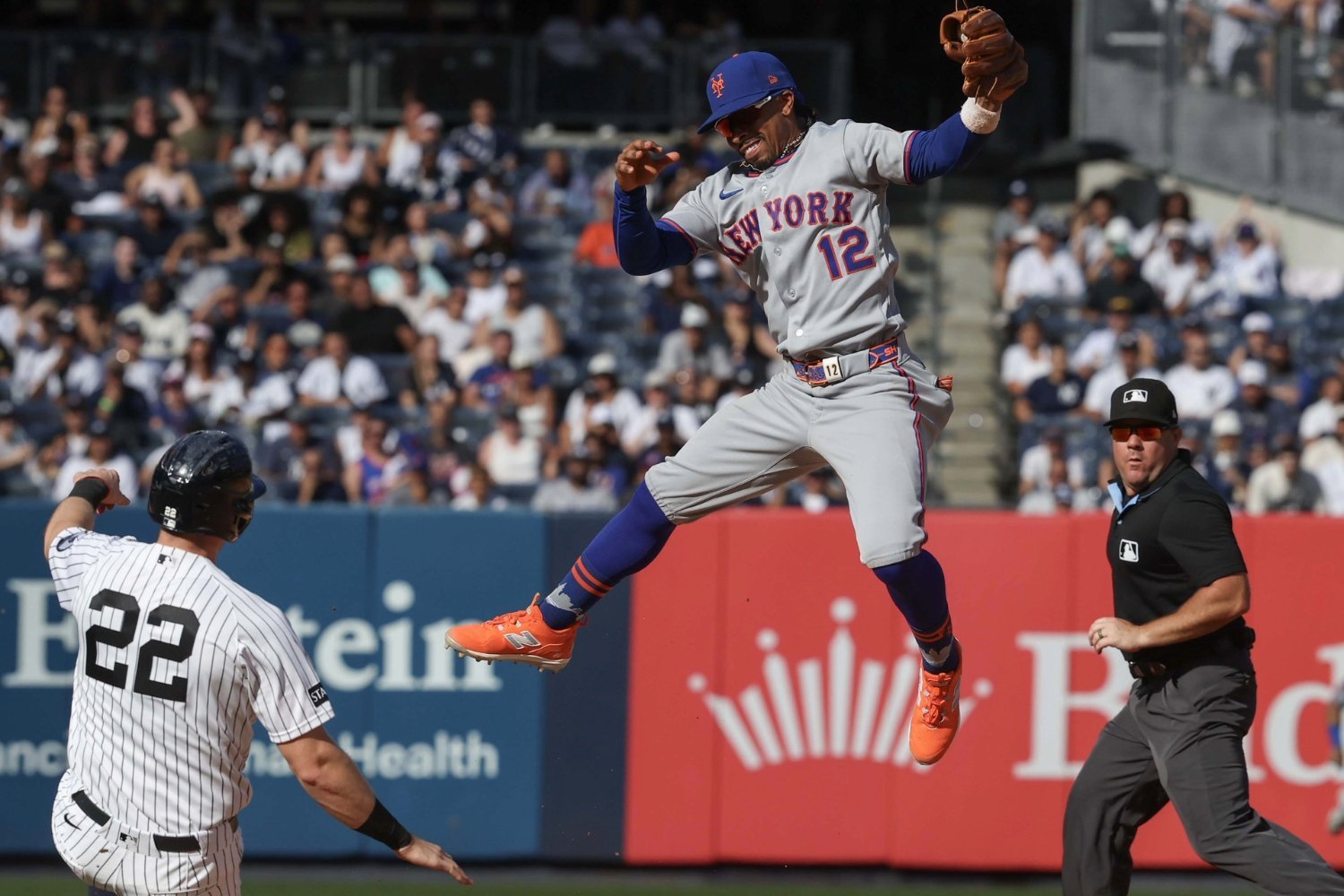 New York Mets Weekly Snapshot Record Last Week: 4-2 Runs Scored Last Week: 47 Runs Surrendered Last Week: 33 Standings 5th in NL East (69-80) 12.0 games back of the NL Wild Card (E-1) Transactions September 7: Recalled RHP Jonah Tong from Triple-A Syracuse. September 7: Optioned RHP Justin Hagenman to Triple-A Syracuse. September 8: Sent LHP Cionel Pérez on a rehab assignment to Double-A Binghamton. September 11: Recalled RHP Jack Weisenburger from Triple-A Syracuse. September 11: Designated RHP Chris Devenski for assignment. Scores Game 144: NYM 9, MIA 4 Game 145: NYM 7, MIA 5 Game 146: NYM 15, MIA 14 Game 147: NYY 6, NYM 4 Game 148: NYM 12, NYY 2 Game 149: NYY 2, NYM 0 Series Breakdown/Highlights Marlins Series: The Mets entered Miami having won four of their previous six games and continued their strong September by sweeping the Marlins. Jonah Tong returned to the rotation for Monday's opener and picked up his second major league victory in a 9-4 win. New York pounded out 16 hits and scored in five of the first six innings. Tong surrendered all four Miami runs in the second but settled down afterward, finishing five innings with seven strikeouts. The Mets' offense immediately answered Miami's four-run inning and continued adding on, giving the bullpen more than enough breathing room to finish the victory. The Mets used the long ball to win Tuesday's game 7-5. Francisco Lindor opened the game with a leadoff homer before Juan Soto launched a three-run shot and Brett Baty added a 426-foot solo homer, with all three coming against Sandy Alcantara. Sean Manaea was perfect through five innings before Miami finally got to him for four runs in the sixth. The Marlins made another push in the ninth, but Kodai Senga struck out the final two batters to record his seventh save and give New York its third consecutive victory. Wednesday's finale was one of the wildest games of the Mets' season. New York exploded for six runs in the second and built an 8-0 lead, only for Miami to erase the entire deficit and tie the game at eight in the sixth. Instead of folding, the Mets answered with another six-run inning in the seventh, capped by Francisco Lindor's three-run homer. Luis Torrens finished with four RBIs, while Christopher Morel went 3-for-4 with three RBIs after replacing an injured Brett Baty. Miami nearly erased another huge deficit by scoring six of the final seven runs, but Tobias Myers recorded the final two outs to preserve a remarkable 15-14 victory and complete the sweep. Yankees Series: Following Thursday's off day, the Mets headed to Yankee Stadium for the final Subway Series of 2026. The weekend began on the 25th anniversary of the September 11 attacks and ended with the Yankees taking two of three, although the Mets delivered one of their most dominant victories of the season in between. The Yankees jumped on Nolan McLean early in Friday's opener. Spencer Jones drove home the first run before Cody Bellinger launched a three-run homer in the second to give the Yankees a 4-1 advantage. Ben Rice added a solo homer in the fifth, and McLean finished with five runs allowed on 10 hits over five innings. The Mets attempted to rally behind RBIs from A.J. Ewing and Marcus Semien, with Ewing adding a solo homer in the ninth, but the comeback fell short in a 6-4 loss that snapped their four-game winning streak. The Mets responded Saturday by delivering a statement 12-2 victory against Gerrit Cole and the Yankees. Francisco Lindor immediately set the tone with a leadoff home run before Luis Torrens hit a two-run homer in the second and Carson Benge went deep in the third. Benge added an RBI single in the fifth, Juan Soto homered in his return to Yankee Stadium, and Torrens added another RBI double. Lindor then put an exclamation point on the afternoon with a grand slam in the eighth, giving him five RBIs and two homers in the game. Jared Young added New York's sixth homer in the ninth as the Mets handed the Yankees one of their most lopsided losses of the season. Unfortunately for the Mets, Sunday's rubber game went in the opposite direction. Yankees starter Cam Schlittler held New York to one hit over six scoreless innings, striking out eight and lowering his ERA to 1.95. Brett Baty's double was the Mets' only hit of the afternoon against Schlittler. Christian Scott pitched well enough to keep New York in the game, allowing only three hits and two runs over six innings while striking out seven, including Aaron Judge three times. But solo homers from Ben Rice and Austin Wells accounted for all the Yankees needed as the Mets were shut out 2-0, their 14th shutout loss of the season. Website Highlights Sean Manaea’s Biggest Problem Is Now A Bigger Mets Problem New York Mets Minor-League Pitchers of the Month: August 2026 How Carson Benge’s Adjustments Have Put Him on the Verge of a Historic Mets Rookie Season Looking Ahead September 14: vs. Baltimore Orioles — 7:10 p.m. September 15: vs. Baltimore Orioles — 7:10 p.m. September 16: vs. Baltimore Orioles — 7:10 p.m. September 17: vs. Philadelphia Phillies — 7:15 p.m. September 18: vs. Philadelphia Phillies — 7:15 p.m. September 19: vs. Philadelphia Phillies — 4:10 p.m. September 20: vs. Philadelphia Phillies — 1:10 p.m. View the full article
 -
Red Sox Week in Review: Immaculate Tolle Ends the Week on a High Note
DiamondCentric posted an article in Talk Sox
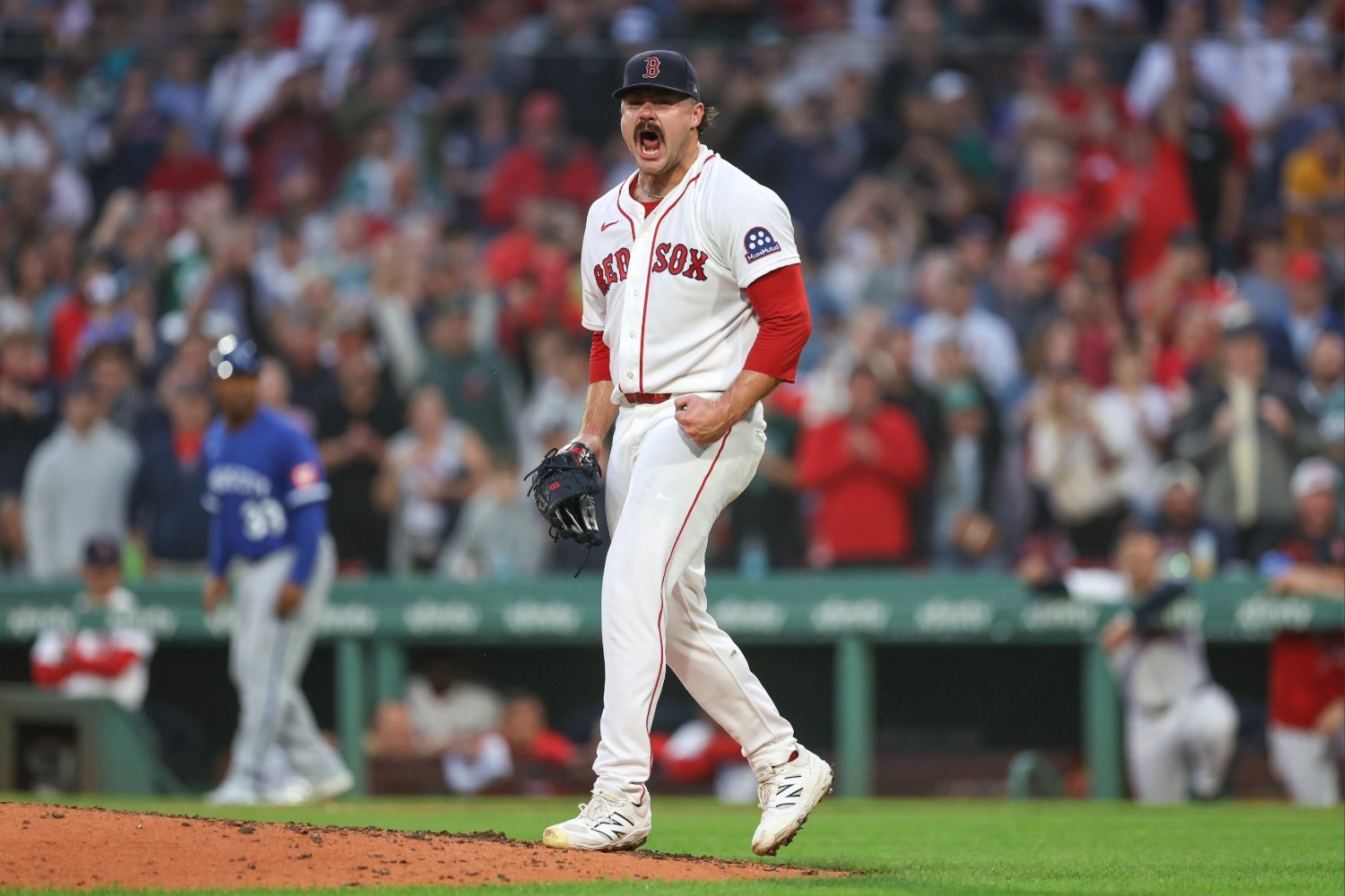 Boston Red Sox Weekly Snapshot Record Last Week: 3-3 Runs Scored Last Week: 21 Runs Surrendered Last Week: 19 Standings 3rd in AL East 8.5 GB First Place 2nd in AL Wild Card 4.5 GB First Place Transactions 09/08/26: Boston Red Sox sent RHP Tanner Houck on a rehab assignment to Portland Sea Dogs. 09/11/26: Boston Red Sox recalled 2B Anthony Seigler from Worcester Red Sox. 09/11/26: Boston Red Sox placed CF Eli White on the 10-day injured list retroactive to September 9, 2026. Right foot ligament injury. 09/11/26: Boston Red Sox sent 1B Willson Contreras on a rehab assignment to Portland Sea Dogs. 09/13/26: Boston Red Sox placed 2B Anthony Seigler on the 10-day injured list. Right wrist inflammation 09/13/26: Boston Red Sox activated 1B Willson Contreras from the 10-day injured list. Scores Game 141: BOS 5, LAA 2 Game 142: BOS 1, LAA 6 Game 143: BOS 4, LAA 6 Game 144: BOS 2, KC 3 Game 145: BOS 5, KC 1 Game 146: BOS , KC Series Breakdown/Highlights Angels Series: I’ve said on the Talk Sox Podcast that the Red Sox typically play up or down to their competition. That was more than evident in the series against the Angels. The Sox took game one, but it wasn’t the prettiest of games. Brayan Bello was given his first start in months and performed quite well. He tossed five innings of zero-run, four-hit, two-walk, and seven-strikeout baseball. He was followed up in relief by Wyatt Olds, Alex Gamboa, and Garrett Whitlock. The relievers combined for eight strikeouts on the night. On offense, Adley Rutschman knocked a three0run home run while Jarren Duran provided a solo blast. Eli White contributed the other RBI on the night. Game two was pretty ugly if we’re being honest. The Sox ran into one of the best starters in the American League in Reid Detmers and couldn’t do much with the bats against him. The lone RBI came off the bat of Nick Sogard. Wilyer Abreu and Trevor Story added the only other hits for the Sox on the night. Defensively, Patrick Sandoval was forced to stay in the game for six innings of four-run baseball. He struck out seven and only walked two, but the writing seems to be on the wall for the southpaw as the postseason rapidly approaches. The final game of the series saw Jake Bennett turn in his worst performance of the season. He tossed 5.1 innings, allowed six earned runs (including three home runs), while walking one and only striking out two. He was followed up by Olds, Jovani Moran, and Gamboa, but the offense couldn’t quite get the Sox back into the game. Roman Anthony and Abreu both homered while newly recalled Nate Eaton contributed the other RBI on the night. Royals Series: The series against the Royals started out in similar fashion to the ending of the Angels series. Sonny Gray turned in a quality start, tossing six innings of three-run baseball, but the bats couldn’t get the Sox in the lead down the stretch. Erik Miller, Greg Weissert, and Moran shut the door on the game. The Goateed Menace Mickey Gasper contributed a home run while Abreu drove in the other run. Game two was a different story. Ranger Suarez turned in his second long outing in a row, tossing seven innings while striking out eight and only allowing one earned run on a home run. Arguably more impressive, we saw Whitlock turn in his best outing this season with three strikeouts in the eighth inning and Aroldis Chapman came in to slam the door shut. There was no long ball for the Sox this game, but Abreu, Rutschman, Sogard, and a thawing Caleb Durbin all drove in runs in the victory. Game three saw Willson Contreras return to the lineup after playing two rehab games with the Sea Dogs to get his feet back under him. The story of the game was the first inning, though. Therein, rookie Payton Tolle tossed the first immaculate inning for the Red Sox since 2021. He finished his outing at six innings while allowing zero earned runs, four hits, one walk, and seven strikeouts. Miller, Whitlock, Weissert, and Chapman closed the game out with Miller allowing one earned run on the day. Offensively, Durbin socked a home run to the top of the Green Monster and showed signs that he’s heating back up for a second straight game. Anthony started to come alive this series and helped secure the win with a late inning RBI while Trevor Story drove in two as well to help put the Sox in the win column and secure the series victory. Website Highlights Connor Wong has Runs His Course in Boston by Alex Mayes How Brayan Bello Found a Way to Make His Arsenal Work Again by Yirsandy Rodriguez Emulating Nico Hoerner May be Nick Sogard’s Best Path Forward by Maddie Landis Looking Ahead 09/14/26: Off Day 09/15/26: Red Sox (Patrick Sandoval) @ Rangers (TBD): 8:05 PM EDT 09/16/26: Red Sox (Jake Bennett) @ Rangers (TBD): 8:05 PM EDT 09/17/26: Red Sox (Sonny Gray) @ Rangers (TBD): 8:05 PM EDT 09/18/26: Red Sox @ Rays: 7:10 PM EDT 09/19/26: Red Sox @ Rays: 4:10 PM EDT 09/20/26: Red Sox @ Rays: 1:40 PM EDT View the full article
 -
 As if things couldn't get any more demoralizing after a series loss in Sacramento last week, the Jays opened their crucial weekend set against the Orioles with another loss that was never particularly close. Yet, here they stand, back to .500 after winning on Saturday and Sunday to end the week on a positive note. They hit five home runs across those two games, including Vladimir Guerrero Jr.'s first at the Rogers Centre since Game 6 of last year's ALCS. Entering Monday, they're a game back of the Guardians for the final Wild Card spot, tiebreaker in hand with 12 games to go. Pitching 3. Dylan Cease: Samuel Basallo Strikeout, Top 1, 9/13 (+7.4% WPA) The Blue Jays' ace had to pull off quite the tightrope act to escape the 1st inning on Sunday after loading the bases with nobody out. Naturally, he struck out the next three hitters and kept the game scoreless. By WPA, the most significant of these punchouts was Basallo's because it resulted in the second out of the inning, making it impossible for the next batter to make an out and still drive in a run. 2. Louis Varland: Jonah Heim Lineout, Bot 9, 9/7 (+9.6% WPA) Last Monday night at Sutter Health Park was about the most human Varland has looked in his spectacular 2026 season. What made the Athletics' eventual walk-off win especially painful for the Jays was the fact that Varland, despite walking the number seven hitter and allowing four players to reach during the inning, was just one out away from sending the game to extras after Heim tagged this changeup straight into the glove of Brett Bateman in center field. 1. Louis Varland: Alika Williams Bunt Force Out, Bot 9, 9/7 (+9.6% WPA) It's not like everything went exactly how the A's drew it up on Monday either. With the first two men on base, Williams tried to bunt the winning run over to third, but he put just a little too much on it, and Guerrero was ready, charging in from first and firing a cannon to force Darell Hernaiz at third. For how much of a struggle it's been with the bat, Guerrero has easily had the best season of his career defensively. Hitting 3. George Springer: Solo HR, Bot 5, 9/13 (+15.6% WPA) With nobody on and two outs in the bottom of the fifth, it was Springer who started the dinger parade with the first of three consecutive home runs the Blue Jays would hit off Trevor Rogers. Behind in the count 1-0, Rogers tried to drop a changeup on the lower outside corner but left it a tad high. Springer stayed on it, getting just enough of it to send it into Baltimore's bullpen in right field. 2. Andrés Giménez: RBI Double, Top 7, 9/7 (+21.2% WPA) Before anything that happened in the bottom of the ninth was possible last Monday, the Blue Jays nearly mounted a remarkable comeback thanks almost entirely to Giménez, who continues to deliver in high-leverage despite poor offensive stats overall. With Jacob Lopez nearing the end of the line, Giménez, the tying run, stayed on a two-strike fastball from the lefty and sent it on a line into the opposite-field corner to score Nathan Lukes. 1. Andrés Giménez: Solo HR, Top 9, 9/7 (+35.3% WPA) Had the Jays completed the comeback, Giménez's effort would've been talked about a lot more. Both of his pivotal extra-base hits in the later innings came against lefty pitching. On for the save, Hogan Harris threw a slow, looping curveball that stayed on the corner down and in, playing right into Giménez's bat path. The shortstop launched it beyond the bullpens in right-center field, and even though it was quickly rendered moot, he became an unlikely hero by making the game close. View the full article
 -
 Syracuse did not get any home runs from MJ Melendez on Sunday, as his weekend longball tear ended at four in two games. But they did have Hayden Senger and Billy Amick go deep, and those two supplied more than half the Mets’ offense. Unfortunately for the Mets, three St. Paul batters went yard to account for all the Saints’ runs. The last one delivered a two-run blast that proved to be the difference in a 6-5 St. Paul victory. Syracuse led 4-1 after four innings, but St. Paul put up a five-spot in the bottom of the fifth, on a three-run homer and a two-run shot. Amick homered in the ninth to get the Mets closer. Senger opened the scoring with a two-run shot. Syracuse was the lone Mets affiliate in action Sunday. Binghamton’s scheduled season finale at Portland was canceled because of rain. The game will not be made up, as the Eastern League regular season has concluded. New York Mets Transactions No Roster Moves Syracuse Beaten At Powerball In Series Finale The Mets struck first in the third. Ryan Clifford tripled to right field, and Senger followed with a two-run homer, his 12th of the season. Amick homered in back-to-back games to end the series and went deep three times in all against his former organization, the Minnesota Twins. He left the Twin Cities with eight homers in 19 games for Syracuse, 15 in 31 games as a Mets minor leaguer, and 38 for the season. Hagenman allowed two hits over four innings, with two walks and one strikeout. After Lambert and Metoyer stumbled, Zach Franklin, Jefry Yan, and Saul Garcia combined for three scoreless innings. Yan struck out three in his inning. Syracuse Batting Player AB R H RBI BB K D'Andre Smith 3 0 0 0 1 1 Émilien Pitre 3 0 0 0 1 1 Ronny Mauricio 4 0 0 0 0 1 MJ Melendez 3 1 0 0 1 1 Vidal Bruján 3 1 0 0 1 1 Eric Wagaman 4 0 1 1 0 1 Billy Amick 4 1 1 1 0 1 Ryan Clifford 3 1 1 0 1 1 Hayden Senger 3 1 1 2 0 2 Syracuse Pitching Player IP H R ER BB K HR Justin Hagenman 4 2 1 1 2 1 1 Ryan Lambert 2/3 1 4 4 2 1 1 Brian Metoyer 1/3 1 1 1 0 0 1 Zach Franklin 1 0 0 0 1 1 0 Jefry Yan 1 0 0 0 1 3 0 Saul Garcia 1 1 0 0 0 0 0 Top-20 Prospect Performance Jonah Tong: MLB Jack Wenninger: DNP Elian Pena: DNP Mitch Voit: DNP Ryan Clifford: 1-for-3, 3B, BB, K Nick Morabito: MLB Jonathan Santucci: DNP Carson Wiggins: DNP Jacob Reimer: DNP Aiden Robbins: DNP Randy Guzman: DNP Wandy Asigen: DNP Chris Suero: DNP Jefferson Rojas: DNP Will Watson: DNP Shane Sdao: DNP Eli Serrano III: DNP Antonio Jimenez: DNP Émilien Pitre: 0-for-3, BB, K Dylan Ross: DNP View the full article
 -
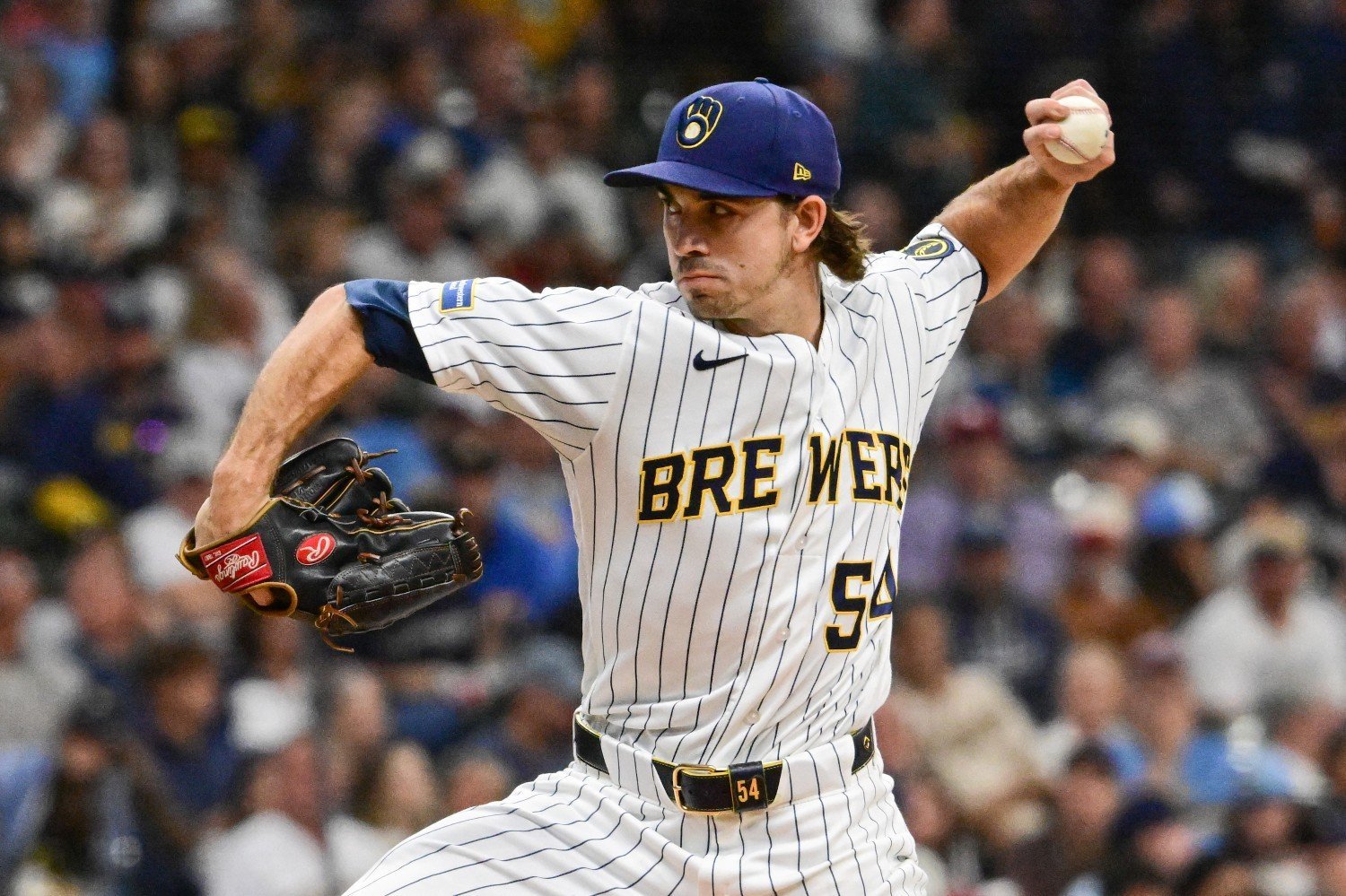 The Brewers have qualified for the playoffs in eight of the last nine seasons, and are once again sailing through September with one of baseball's best records. But the next two weeks aren't really about winning as many games as possible. They're about making sure the right 26 players are available (and properly positioned) when October begins. Milwaukee can carry 26 players to the NLDS (or the Wild Card series, should they lose their grip on a bye through that round, but let's stay optimistic). Against the Cubs in 2025, the Brewers carried 12 pitchers and 14 position players, but there is a wrinkle in there. The schedule afforded an extra day of rest (between Games 1 and 2) during last year's series, meaning the Brewers only needed three traditional starters, and they used that opportunity to bring an extra positional player for versatility in match-ups and defensive coverage, This season, the Brewers will need four starting pitchers, unless they pitch on shorter rest (which is unlikely), so we should anticipate an even split of 13 position players and 13 pitchers. Position Players (13) This appears to be one of the easier position player groups to predict going into October in recent memory. Last season, we wondered if Garrett Mitchell would return on time. There was also the Jesse Winker curveball in 2023. No such dilemmas loom right now. Barring injury, the players should look something like: Catcher: William Contreras, Gary Sánchez First Base: Jake Bauers, Andrew Vaughn Second Base: Brice Turang Shortstop: Cooper Pratt Third Base: Joey Ortiz, David Hamilton Outfield: Jackson Chourio, Garrett Mitchell, Luis Lara, Sal Frelick Designated Hitter: Christian Yelich Any deviation from that would be a major surprise. Hamilton is unlikely to be starting games unless a particularly strong match-up presents itself, but his pinch-running and defensive versatility would be assets off the bench. Against a left-handed starter, Bauers's ability to play the outfield gives Pat Murphy another way to get Contreras, Vaughn and potentially Sánchez into the same lineup without sacrificing defensive flexibility. Alternatively, they might lean toward Luis Lara and the premium defensive outfield corps they now have with Mitchell and Chourio—more so with the volume of fly ball pitchers they have lined up to start games. With this group, the Brewers have versatility, pinch-hitting thump and defensive quality that will allow them to adapt to any game situation as and when required. Pitchers (12) Now, we come to something a little less concrete, but the Brewers made a move this week to suggest an answer to at least one question. They now have Jacob Misiorowski, Logan Henderson and Dustin May lined up as the first three pieces of their potential NLDS rotation. The Brewers' decision to move May to Friday is particularly interesting, because it lines him up behind Misiorowski and Henderson. That looks like an attempt to establish the order they want to use in a potential NLDS. It isn't definitive evidence of the playoff rotation, but it is the clearest clue we've been given. They did not do this for Robert Gasser, which leads me to think the starting pitching plan is to go for the above as starters (with a shorter leash for May) and a bullpen game in Game 4 that features a long relief arm, similar to how Misiorowski was used in 2025. Gasser's performance of late, especially the first time through an order, deserves this spot, but it could be matchup dependant: he has an .800 opponents' OPS this season when facing right-handed hitters, compared to a .577 against lefties. That split makes Gasser particularly interesting as a bulk option, rather than an automatic Game 4 starter. If Milwaukee can deploy him against a lineup pocket that leans left-handed, his recent form becomes much more attractive. Either way, he should pitch multiple innings in that game. In short, the Brewers' biggest postseason roster decision may not be who makes the team, but how they distribute innings. It should look something like this: Game 1: Jacob Misiorowski Game 2: Logan Henderson Game 3: Dustin May Game 4: Robert Gasser Then: Right-Handed Matchup Relief: Antonio Senzatela Right-Handed Matchup Relief: Chad Patrick Left-Handed Matchup Relief: JoJo Romero Left-Handed Matchup Relief: DL Hall Left-Handed Matchup Relief: Shane Drohan Jack of All Trades: Aaron Ashby Set-up: Abner Uribe Closer: Trevor Megill Senzatela has given up a lot of hard contact since joining the Brewers, but he and Patrick are strong middle-relief arms to go to against a right-handed pocket of hitters the likes of which the Chicago Cubs field regularly. Ashby is probably the most uncomfortable name on this list, but he's also one of the hardest to leave off. The stuff plays in October, and Murphy has already demonstrated that he isn't afraid to use Ashby outside of traditional bullpen roles or inning assignments. The upside still outweighs the downside, but Milwaukee has to avoid giving hitters too many looks at him throughout the series. It has to be quality, not quantity, for Ashby in 2026. As for Uribe and Megill, there's no question how the game looks if the Brewers have a lead through seven innings. The 26th man You'll notice that I've only mentioned 12 pitchers. The last spot is most likely to go to Grant Anderson, an uncomfortable at-bat for right-handers, but he's faced some problems with left-handed hitters this year and would be a great place for a manager to bring left-handed bats off the bench. Anderson would be a strong weapon for a trio such as Seiya Suzuki, Alex Bregman and Tyrone Taylor, for instance—but pinch-hit specialist Michael Conforto could thwart even a well-made plan if Anderson is trapped in the game by the three-batter minimum rule. Alternatively, they could bring a third catcher in Bo Naylor. This allows for more liberal, aggressive use of Sánchez as a bench bat or even a starting option against left-handers, filling the DH spot. That would allow the Brewers to put Vaughn, Contreras, Bauers and Sánchez into the same line-up against a southpaw starter—something that will be tempting against teams like the Phillies, who have Jesús Luzardo and Cristopher Sánchez leading their rotation. One of their wild card arms is more likely, of course. It's unlikely that Brandon Woodruff is ready to go in the playoffs, especially the NLDS, but who knows. Then you have a unique arm like Coleman Crow, who could expose hitters with susceptibility to spin or breaking pitches. Perhaps Kyle Harrison rediscovers his confidence and command out of the bullpen, to the point where the Brewers trust him in the postseason. The only spot I'm genuinely undecided on is the 26th man, but Anderson gets the nod because his ability to attack right-handed pockets gives Murphy another matchup weapon without forcing a major change to the pitching plan. All in all, the postseason roster should look like this: Would you agree? Or would you go in a different direction? let us know your thoughts in the comments below! View the full article
 -
 Boston Red Sox Affiliate Recap Triple-A Worcester Red Sox Series @ Lehigh Valley IronPigs (Philadelphia Phillies): 3-3 Season Record: 73-65 The WooSox salvaged a series split behind a clutch ninth inning, winning 8-7. Gage Ziehl took the bump in Sunday’s series finale, but struggled towards the end of a 5⅔ inning appearance. He was scoreless through three, but then disaster struck. He let up four runs on five hits, but displayed excellent control. He didn’t issue a walk, a trend that would continue throughout Sunday’s outing from the WooSox staff. He struck out eight before Noah Song took the final out of the sixth frame. Song struggled, allowing two runs on two hits in the abbreviated outing. Tyler Samaniego got the call next, allowing one more run on two hits as he struck out one. Sam McWilliams took the final two frames of Sunday’s contest in perfect fashion, striking out a pair. The WooSox bats were on fire, with all but one batter recording a hit. Allan Castro’s two-homer performance paved the way for the win. Four players, Castro, Vinny Capra, Franklin Arias, and Tsung-Che Cheng, recorded multi-hit games. Cheng got the WooSox started with a two-run shot in the second inning, his eighth of the year, as Mikey Romero crossed home. An inning later, Capra launched a homer of his own, giving Worcester a three-run lead. But the WooSox weren’t done. One batter later, Arias crushed a ball to deep left center as the lead grew. Arias’s homer flew 439 feet as the top prospect quelled any doubts about a lack of power. In the fourth, Max Ferguson scored Cheng on a soft single to short. After letting up six unanswered runs, Castro responded with his first homer of the night, tying the ball game with a deep drive to right center. After Leigh retook the lead, Castro played hero once more. His second homer of the game, this time with Capra aboard, gave Worcester a one-run lead in the top of the ninth that proved to be the difference. Double-A Portland Sea Dogs Series vs. Binghamton Rumble Ponies (New York Mets): 4-1 Season Record: 71-65 Portland’s final game of the season was cancelled due to inclement weather. View the full article
 -
Cubs Week in Review: Losses That Felt Avoidable Pile Up
DiamondCentric posted an article in North Side Baseball
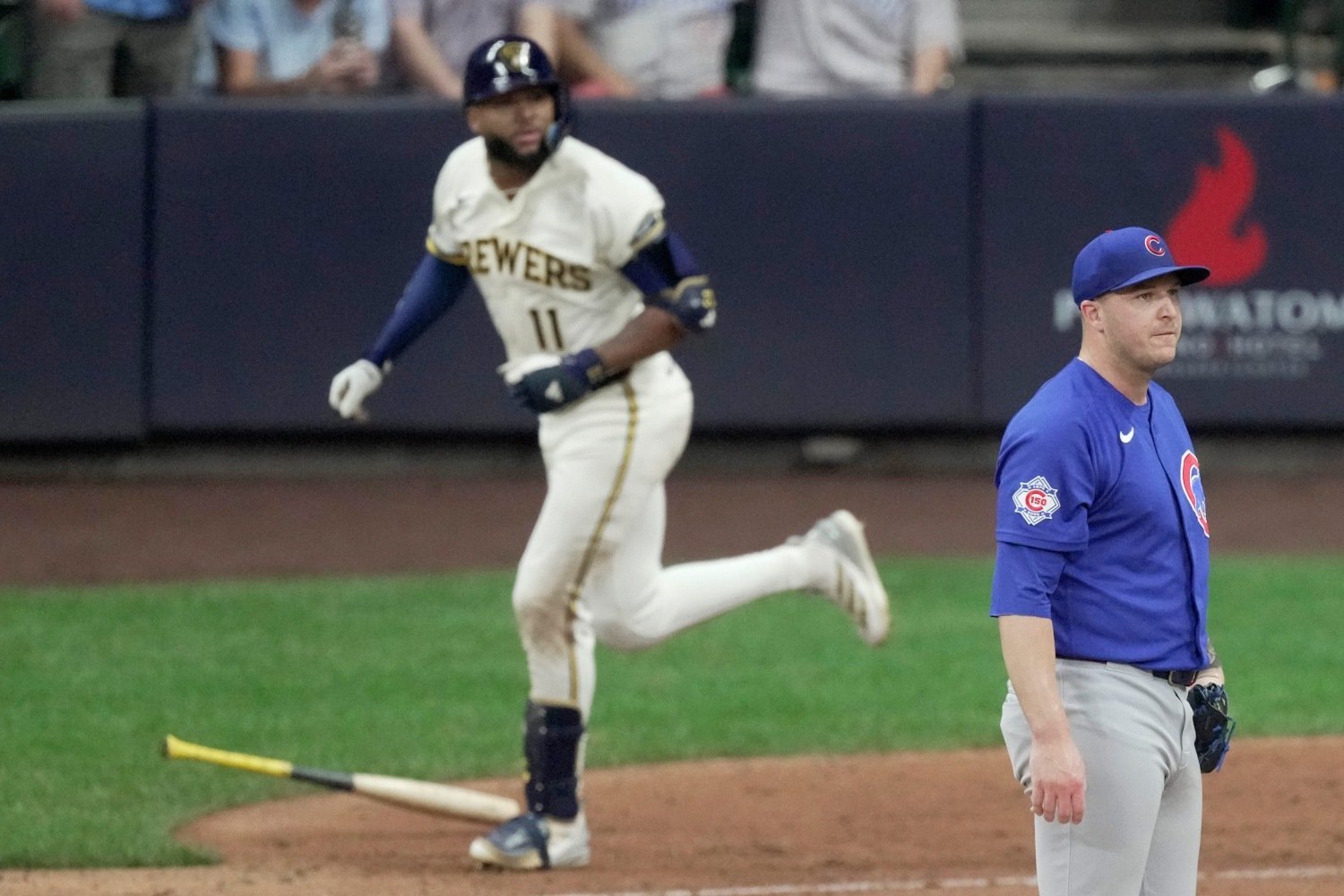 Be it the MVP heroics of center fielder Pete Crow-Armstrong or the club's penchant for rattling off big wins versus bigger opponents, we want more out of the 150th edition of the Chicago Cubs. In addition to a squandered chance at a sweep opposite the lowly Pirates, the Cubs failed last week's litmus test in Milwaukee, against the mighty Brewers. Matthew Boyd and his Cubs squad opened a pivotal week of baseball at American Family Field. With memories of their four-game split with the Crew at Wrigley the previous week still fresh in their minds, Chicago looked for ways to beat Pat Murphy's team in the opener. They didn't find them. Though matching Milwaukee in total hits (six apiece), the visitors couldn't keep pace in the most important column on the scoreboard. The Crew strung together the most critical hits in the home half of the eighth inning, including a two-run single off the bat of Jackson Chourio that wrecked reliever Ryan Zeferjahn's appearance. This was just the latest in a seemingly unending string of bullpen blowups for the city's North Side club, who dropped the contest 4-3—although, arguably, it was Counsell leaving Boyd in to become embroiled in trouble in that eighth inning that cost the team. On Tuesday, a subpar outing from David Peterson led the Cubs toward an excruciating 10-inning loss, their third straight. A valiant effort from the bullpen was derailed by a heart-wrenching blown save from the typically solid Jacob Webb. Chourio struck the tide-turning blow again, and Luis Lara walked off Chicago in the 10th. Getting swept at the hands of any squad is bad, but when that group is the standard by which yours is endlessly measured and found wanting, it lingers a bit more. Kevin Gausman was brought in at this summer's trade deadline to be a stopper. He was unable to fulfill that role in the final matchup versus the Cubs' division rival. Despite a furious five-run 9th-inning rally which saw the tying run step into the batter's box for Chicago, Counsell's lineup wasn't able to do much versus Milwaukee's pitching staff. After starter Logan Henderson sailed through the first five innings, his bullpen picked up roughly where he left off until the aforementioned final frame of regulation. The North Siders limped out of town with their tails between their legs. A day off Thursday delivered a much-needed reset ahead of the Cubs' final Friday 1:20 PM game of the regular season. This one was the opener of a three-game tilt with the Pittsburgh Pirates. After going missing for most of the week, the club's potent offense returned dramatically, featuring production from some of its biggest names. Alex Bregman, Seiya Suzuki, Michael Busch, and Crow-Armstrong all tallied big knocks in a 12-2 thumping. While the big run total was cathartic, Shota Imanaga's 10th win of the campaign was arguably the most heartening, coming in at six full innings of stellar work. Enjoying the fruits of someone else's bullpen collapse for once, the Cubs were the beneficiaries of a tight 4-3 victory over the Buccos in which Don Kelly's club walked in both the tying and eventual winning run for Chicago. The victory earned the North Siders their first series win since the middle of August, when they thwarted the White Sox in the Wrigley Field portion of the Crosstown Classic. There would be no sweep to make up for the one up north, though. Just as several of the Cubs' recent opponents have done, the Pirates strung together clutch hits, chasing Boyd in the sixth inning and pushing across the go-ahead tallies against reliever Aaron Civale. Ill-timed grounders and a stiff wind gusting throughout the Friendly Confines kept Chicago from a much-needed sweep. Cubs faithful should take solace in a clean appearance from Daniel Palencia, just as they did with Miguel Amaya's two-run blast to left field. For the day, though, all was in vain. With 12 games remaining, the Cubs face the unenviable task of stacking up wins not only in the hopes of clinching a second-straight playoff berth, but also of staving off the red-hot Phillies to lock up the top Wild Card spot and home-field advantage. It's there for the taking, but will the North Siders take it? View the full article
 -
3 Reasons There’s No Way the Twins Trade Joe Ryan This Winter
DiamondCentric posted an article in Twins Daily
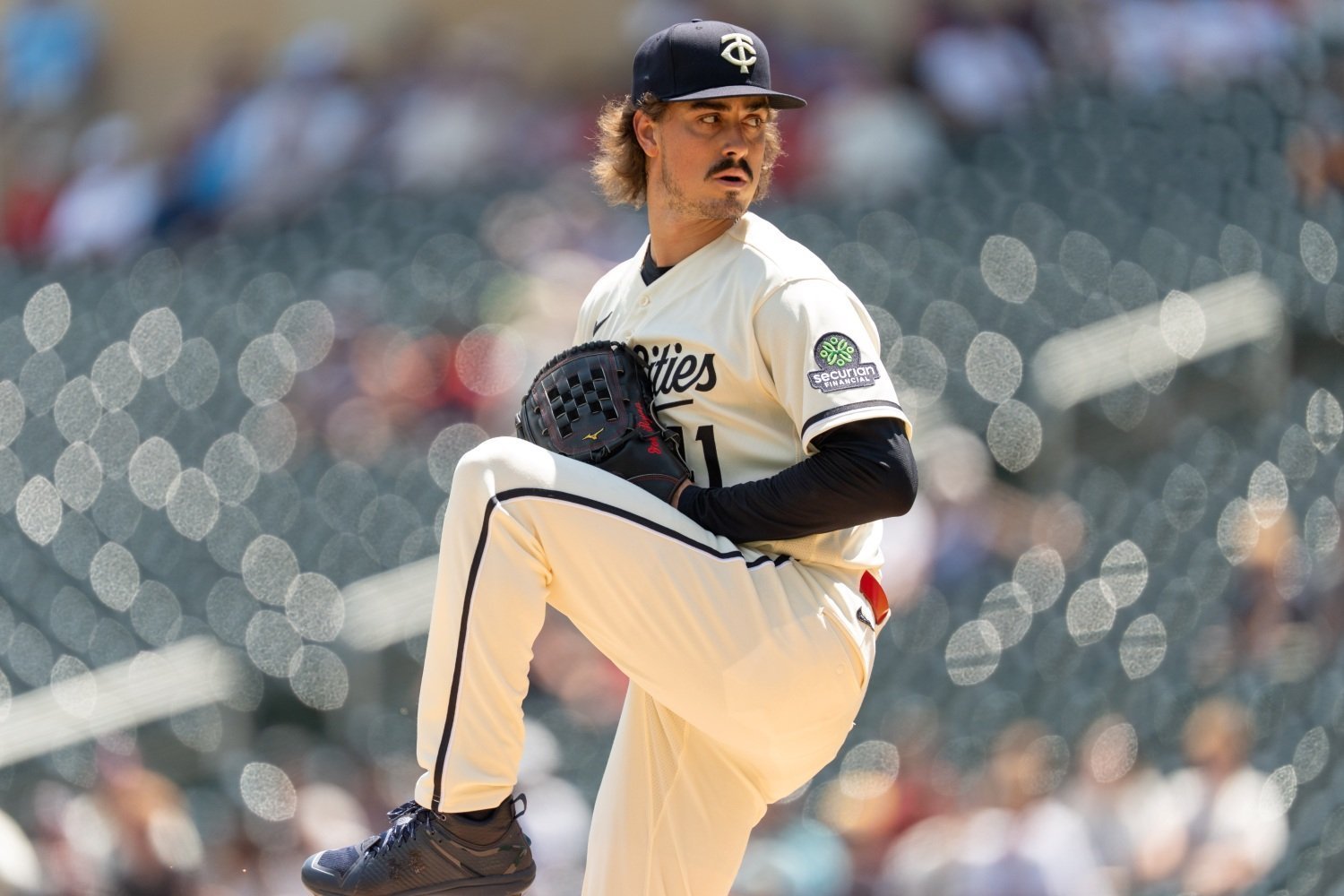 Joe Ryan's name has been tied to trade rumors for more than a year. Those rumors really picked up steam after the Minnesota Twins began their trade deadline firesale in 2025, when it became clear that the organization was willing to move established players in exchange for future assets. At one point last summer, the speculation even got out of hand. One national outlet posted on social media that Ryan had been traded to the Boston Red Sox. That report turned out to be false, and Ryan remained in Minnesota. Now, Ryan is headed to the final year of team control in 2027. That's only going to put his name back into the national trade conversation this winter. A starting pitcher with Ryan's track record should generate plenty of interest around baseball. However, there are three major reasons why the Twins are unlikely to trade him this offseason. 1. His Second-Half Performance is a Problem Ryan has pitched like an All-Star during the first halves of seasons throughout his career. The problem has been keeping that level of performance going once the calendar flips to the second half. Before All-Star breaks, Ryan owns a 3.17 ERA and 1.01 WHIP, while holding opposing hitters to a .632 OPS. Those are excellent numbers for a starting pitcher. His second-half numbers tell a very different story. Ryan has a 4.99 ERA and 1.22 WHIP after the All-Star break, with opponents posting a .780 OPS against him. There are legitimate explanations for some of that difference. Ryan has dealt with injuries and has tried to pitch through some of them, which has undoubtedly affected his performance. Still, the results matter. If the Twins were trying to trade Ryan at the height of his value, they would want to point toward his first-half dominance. Unfortunately, opposing teams are going to look at the entire body of work, including the recurring second-half struggles. That makes it harder for Minnesota to get the kind of return it would need to justify trading him. 2. His Injury Diagnosis is Still Unclear Ryan's health creates another problem for the Twins. After struggling through multiple starts coming out of the All-Star break, initial reports indicated that Ryan was dealing with a dead-arm issue. Minnesota eventually placed him on the injured list with (officially) a glute injury. There's an obvious disconnect here. Either Ryan's maladies were more generalized at first, or the glute issue that eventually sidelined him was separate from an arm problem that has gone unmentioned since. That doesn't mean Ryan wasn't legitimately dealing with an injury. It does, however, create uncertainty about exactly what has been affecting his performance and whether there is something more going on physically. That type of uncertainty dings a player's trade value. Teams considering trading significant prospects for Ryan will want confidence that they are acquiring the pitcher who dominated opposing hitters during the first half of the season. If there are questions about his health, his mechanics, or why his performance has declined so dramatically in the second half, those questions will be reflected in trade offers. The Twins aren't going to get maximum value for Ryan while those questions remain unanswered. 3. The Looming Lockout Could Apply a Pinch The current Collective Bargaining Agreement expires on December 1. If the two sides fail to reach a new agreement, another lockout could begin. That creates an interesting dynamic for the offseason. The last time baseball faced a lockout following the 2021 season, there was a flurry of activity before the deadline. Free agents signed contracts, teams completed major trades, and front offices tried to get as much business done as possible before the transaction freeze began. There could be another rush this winter. That might seem like a reason for the Twins to move Ryan quickly. If teams know a lockout is coming, they could be more aggressive about completing trades before December 1. But that doesn't necessarily mean Ryan's value will be at its peak. In fact, all of the other factors could work against Minnesota. Teams know Ryan is entering his final year of team control. They know about his second-half struggles. The Twins might receive plenty of calls about Ryan. That doesn't mean they'll receive an offer worth accepting. There's a major difference between having a market for a player and getting the type of return you need to trade him. Ryan's Trade Value Is Probably at a Low Point Put all three factors together, and Ryan's trade value is probably at a low point. He remains a talented starting pitcher with a proven track record, and there's no question that other teams will be interested. But Minnesota isn't going to trade him simply because another team is interested. The Twins need a significant return if they're going to give up one of their best starting pitchers. This winter probably isn't the time to make that move. Instead, the more likely scenario is that Minnesota holds onto Ryan and gives him another opportunity to prove himself. If he puts together another dominant first half in 2027, his trade value could look dramatically different at next year's trade deadline. The Twins have already shown that they're willing to make difficult trades when the return makes sense. But Ryan's current combination of inconsistent second-half performance, injury uncertainty and an approaching CBA deadline doesn't create an ideal selling opportunity. His name will almost certainly appear in trade rumors all winter. That doesn't mean the Twins will actually trade him. Will the Twins trade Ryan this winter? Leave a comment and start the discussion. View the full article
 -
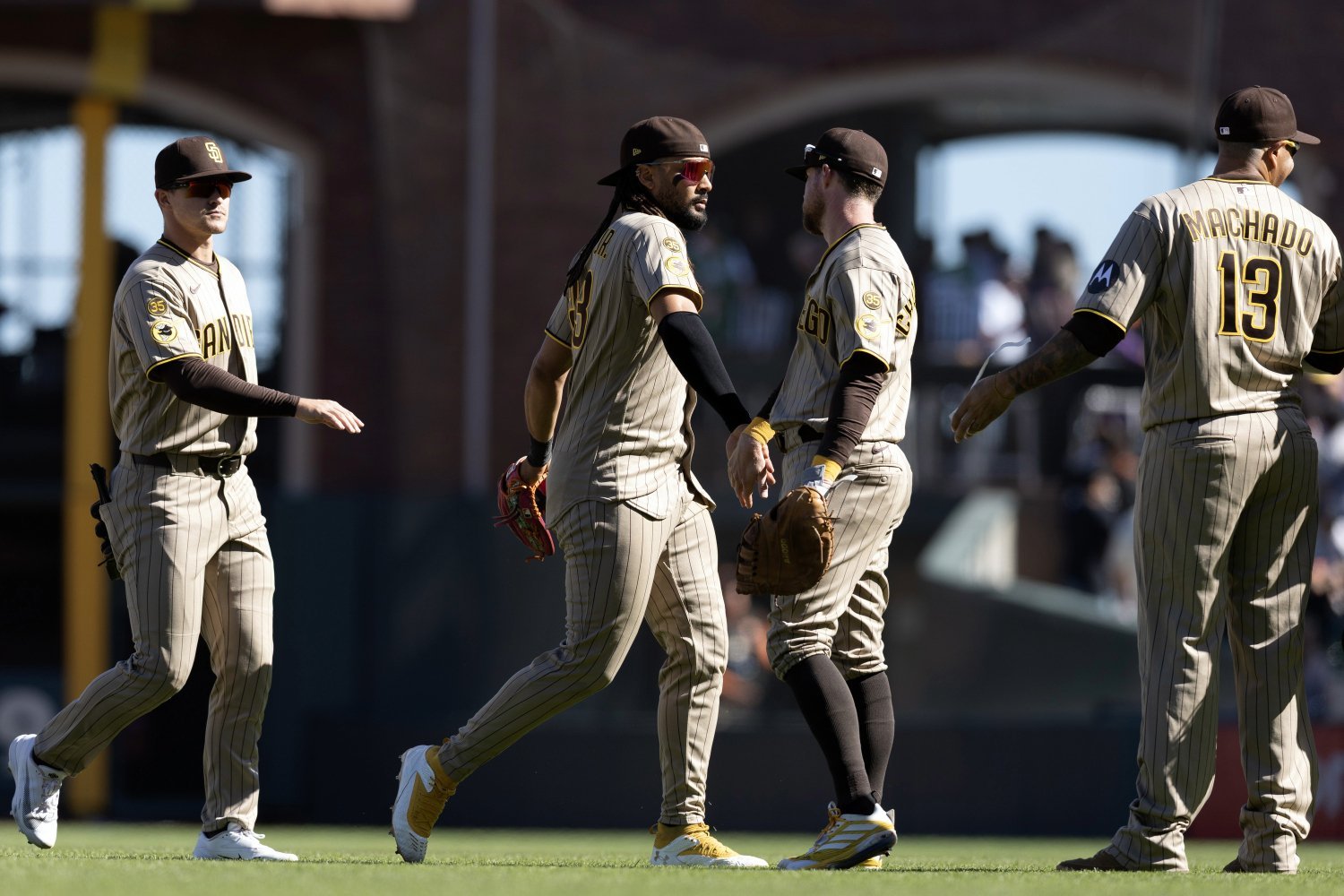 The San Diego Padres have spent all year demonstrating their abilities in each aspect of the game, showing that they are prepared for October baseball once again. Unfortunately, fans have been limited in witnessing each surge of production unite to create the high-caliber squad they are capable of. With the Pittsburgh Pirates sitting 5.5 games behind the Arizona Diamondbacks, the playoff picture can be reasonably narrowed down to seven teams in the National League. With consistent playoff exits over recent years, it is worth examining the Padres' best hopes in reaching the Fall Classic in 2026. San Diego will be tasked with facing off against a powerful National League threat, regardless of their position come the end of September. The Los Angeles Dodgers, Milwaukee Brewers, and Atlanta Braves sit atop of their respective divisions with the Philadelphia Phillies, Chicago Cubs, and Arizona Diamondbacks threatening the playoff picture. Funnily enough, the Padres may currently be in the most favorable position that is reasonably possible. Barring an uncharacteristic cold streak from the National League's top contenders, the Friars are likely to possess a Wild Card position. With the Philadelphia Phillies and Chicago Cubs existing as two of the most recent victors over San Diego across recent years, the Padres hope to take on the challenge of defeating Atlanta in October. Remember, after eliminating them last year at home, Chicago possesses a 5-1 record in 2026 against the Padres. The Phillies have supplemented the suffering after sweeping San Diego twice in the 2026 season. Accompanied by the NL's leading home run and MVP candidates in Philadelphia and Chicago, perhaps it's best if the Padres avoid both altogether. Now, we turn our heads to the highest-potential opponents. The Atlanta Braves are 5-5 over their last ten and have functioned as a fully healthy lineup, a sight rare to be seen. Still, they may be the best hope for San Diego. The Padres won the season series against the Braves with a 4-3 record, although it appears home-field advantage serves as a huge advantage in this scenario. Atlanta won the season series 3-1 at home, while San Diego swept the Braves 3-0 at Petco Park. Atlanta has cooled down offensively, sitting 24th in the league with a .233 average across the past month. In the past week, we've seen Michael King match Blake Snell's quality start streak of seven from his Cy Young year, giving the Padres a reliable game one starter in October. Over the past two weeks, the Padres have slightly revitalized their offensive production sitting seventh in the league with a .262 team average. Win a potential series victory over Atlanta, and the Padres would face off against the league's most-feared starting lineup in the Los Angeles Dodgers. Despite not playing a truly dominant brand of baseball in the second half, the Dodgers remain as a force to be reckoned with and the majority of teams hope to avoid Los Angeles as long as possible. Yet the timing of a Dodgers matchup could line up as the most advantageous for a Padres World Series run. The Dodgers currently rank in the bottom half of the league over the past 30 days in terms of hits. With Shohei Ohtani hitting the IL, they're operating well below peak capacity. Even though Ohtani is set to return before the playoffs, he'll probably be less than 100%, which might be all that the Padres' terrific bullpen needs to stay attached to their division rival. The playoff picture is likely to be decided within the final games of the season, as the Padres and Diamondbacks continue to alternate spots for the final NL Wild Card. With a three-game set lined up for the last series of the season, the Friars are in a strong position to control their own destiny, setting up some early round clashes with the Braves and Dodgers. View the full article
 -
Aiva Arquette 2026 Marlins Minor League Highlights
DiamondCentric posted an article in Fish On First
 Here is the best of Aiva Arquette's season with the High-A Beloit Sky Carp and Double-A Pensacola Blue Wahoos. View the full article
 -
Can The Cubs Bullpen Turn It Around In Time?
DiamondCentric posted an article in North Side Baseball
 The Chicago Cubs' 2026 season has been one of the biggest roller coaster rides any fan could experience. The Cubs' hot-and-cold nature gives pause for concern entering the postseason. But after a catastrophic week by the Chicago Cubs bullpen, this unit is due for a turnaround; can it happen just in time for a deep October run?View the full article
 -
The Most Important Game for the Blue Jays Tonight Isn’t in Toronto
DiamondCentric posted an article in Jays Centre
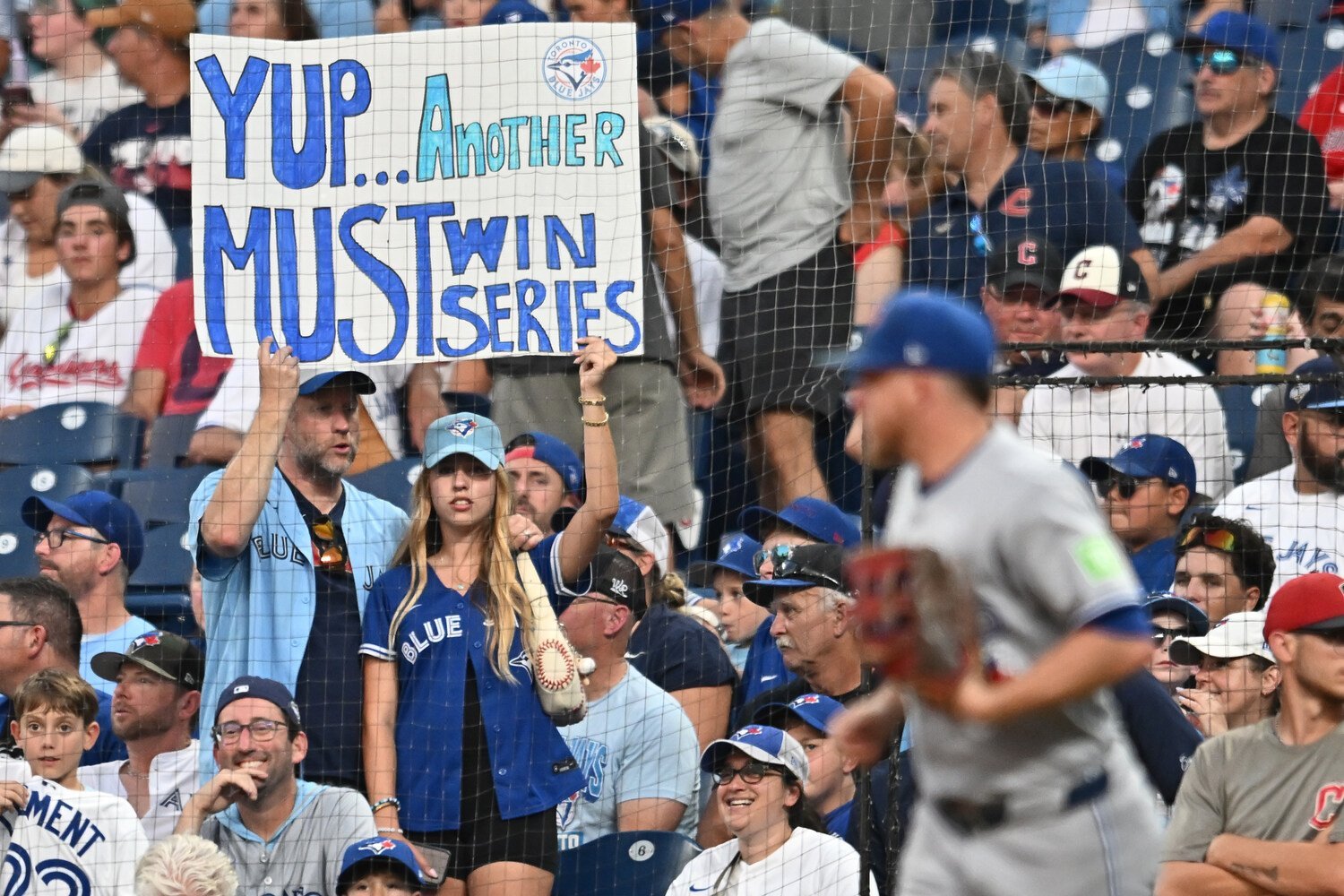 The Blue Jays welcome the Tigers to the Rogers Centre tonight for a three-game series. It's a must-win matchup for Toronto, in the same way every game from here on out feels like a must-win. Yet, there is arguably an even more meaningful series for the Blue Jays taking place a few hundred kilometers south, near the shores of Lake Erie. Over the next three days, the Guardians will face the White Sox at Progressive Field in Cleveland. If the White Sox take at least two of three from the Guardians while the Blue Jays take at least two of three from the Tigers, Toronto will be back in a Wild Card spot with nine games left to play. That's because the Jays only need to finish with the same record as the Guardians to beat them out for a postseason berth. A tie goes to the Blue Jays; they secured the season series earlier this month. Here's the problem. In their last 30 games, the Guardians are 18-12. Among AL teams, only the Yankees have a better record in that span. The White Sox, on the other hand, are two games below .500 in their last 30. They're five games below .500 in their last 15. That has brought Cleveland within half a game of the division lead. If the Guardians win this series, they will move ahead of the White Sox in the AL Central. If they sweep, they will move ahead in the division and secure the season-series tiebreaker. In that case, Chicago becomes the team to beat in the Wild Card race. And unfortunately for the Blue Jays, they lost their season series to the White Sox. So, the Guardians taking over in the AL Central would essentially push the Blue Jays an extra game back in the Wild Card standings. A tie with Cleveland gets Toronto into the playoffs, but a tie with Chicago won't cut it. When the White Sox swept the Blue Jays in April, it felt like a frustrating loss to a team the Blue Jays really should have beaten. It was a missed opportunity to get ahead. Now, losing that series might decide the Blue Jays' season. As for where the Blue Jays stand against their other Wild Card opponents, they have already lost the season series to the Rangers, which makes their three-game set in Arlington this weekend (yet another) must-win. Meanwhile, they need to win their series against the Orioles next week to clinch that tiebreaker. Finally, the Jays tied their season series with the Astros 3-3, which means that if the Rangers sneak ahead of the Astros in the AL West and it comes down to Houston and Toronto in the Wild Card, a Blue Jays-Astros tie would be decided by the two teams' records within their own divisions. The Blue Jays currently have the edge there; they own a 25-24 record in the AL East, compared to Houston's 22-24 record in the West. However, the Astros have six games left against the Mariners and A's to change that. View the full article
 -
 Royce Lewis’ difficult 2026 season took another frustrating turn on Sunday. The Minnesota Twins announced that Lewis exited Sunday’s 9-2 loss to the Cleveland Guardians after five innings because of left shoulder soreness. Lewis made a diving play to record the final out of the fourth inning at first base, and it appears that play caused the issue to flare up again. Lewis remained in the game for the bottom of the fourth, where he flew out to right field in his final at-bat. Victor Caratini replaced Lewis at first base to begin the sixth inning. Following the game, Twins manager Derek Shelton said Lewis aggravated the soreness during the defensive play that ended the fourth inning. “Two pitches before he had the F9, I think he kind of tweaked it a little bit again,” Shelton said. “He’s day to day, and we’ll kind of see how he is tomorrow.” The injury is another concern for a player who has struggled to find consistency throughout the 2026 season. Lewis has appeared in 114 games for Minnesota, hitting .230/.297/.391 (.6880 with 14 home runs and 53 RBI. It has been a particularly challenging year for Lewis after the Twins gave him a reset in the minor leagues earlier this season. Minnesota sent Lewis to Triple-A in an effort to get him regular at-bats and allow him to work through some of the issues that had plagued him at the major-league level. The reset provided some reason for optimism, but Lewis has struggled to maintain any momentum since returning to Minnesota. His recent stretch has been especially difficult. Lewis has hit just one home run since August 7, and over his last 131 plate appearances, he has slashed .228/.267/.317 for a .584 OPS. He has struck out 34 times during that span while drawing only seven walks. Those numbers help put Sunday's injury into a larger context. Lewis was already trying to find his footing at the plate, and now the Twins will have to wait and see whether his shoulder soreness forces him to miss additional time. For a player Minnesota once viewed as a potential cornerstone of its lineup, the 2026 season has been filled with more questions than answers. The Twins will hope Sunday's issue is minor and that Lewis can get back on the field quickly. For now, though, Lewis is officially day-to-day. View the full article
 -
 The batted-ball data says Seiya Suzuki should be having a worse season. He's down almost 3 miles per hour in average exit velocity. He's hitting the ball on the ground more often, and he's hitting it hard less often. He still takes excellent at-bats—his walk rate is up to a very strong 13.2%, with a career-high 77 total free passes, and his strikeout rate is very slightly down—but if he were doing everything the same (and if luck were treating him exactly as it has for the previous few years), we'd expect to see much less production from Suzuki this year than in 2024 or 2025. If you're reading this, though, you probably already know that that's not how things are actually going. Suzuki is hitting a tremendous .269/.369/.477, right in line with his output in 2023 and 2024 and a tick better than his more power-focused 2025 numbers. Baseball Prospectus's DRC+, which estimates a players deserved contribution based on production and process, has him at 122 this year (where 100 is average and higher is better); that's the best mark of his career. That advanced metric, then, doesn't think he's merely gotten lucky. According to Baseball Savant (powered by Statcast), however, his expected weighted on-base average (xwOBA) is just .341, the lowest he's posted since 2022 and a far cry from his .369 actual wOBA. Which is it, then? Has he gotten lucky when he's put the ball in play, or made material changes to produce similar results despite worse contact quality? There are multiple ways to answer that, and even if you pin down one of those answers, it can be a bit double-edged. Still, let's dig into one. Opponents have struggled to defend Suzuki more than any other hitter in baseball, according to Baseball Savant. He's gotten 8 runs of value from fielders not getting to balls as well as they do against average batters. He has a .324 BABIP this year, which is virtually identical to his .328 career mark, but remember, he's hit the ball less hard (and hit it hard less often) this year than in the past, so these two data points fit together neatly. Despite less impressive contact, Suzuki is enjoying very similar results, because fielders aren't getting to the balls he hits and converting them into outs as well as defensive metrics would expect. In the past, we would call this a pretty straightforward case of a player getting lucky. Bloop singles are the very emblem of good luck at the plate, and without a doubt, Suzuki has more of those this year. OTdETlZfWGw0TUFRPT1fQVZWU1VBSlFWZ1FBQVZGVVVBQUhWUUFFQUFCUVYxSUFBd01HQVZZRkJGRUFBZ1VI.mp4 Ah, but not all bloop singles are created equal. Some of them are pure luck, but most of them contain at least some amount of earned value. You made contact, rather than whiffing. Maybe you've also demonstrated sufficient power or directional hitting ability to have forced the defense to position itself in a way that made them less likely to catch the ball you hit. And maybe you also have a swing that's hard to read, or which produces some batted balls that are much harder to catch than they appear. Though Suzuki isn't whiffing less often on a per-swing basis than in the past, he is striking out less often than in the past, so he gets a little bit of credit for hits like the one above, based on that. Fouling the ball off more often and chasing outside the zone slightly less often (along with a bit more proactivity early in counts) has produced more balls in play, and even mishit balls in play have more expected value than whiffs. Mishit balls are exactly what's happening more for Suzuki this year, too. Importantly, he hasn't lost any bat speed. Instead, he's just squaring the ball up less well and less often. Here's a comparison of his 2024, 2025 and 2026 seasons via the FanGraphs Squared Up Explorer tool. This charts the efficiency of his contact (the percentage of the possible exit velocity produced by a given swing, given the speed of the swing and of the incoming pitch) against the launch angle of his batted balls. The bubble sizes show the frequency of balls fitting that pairing of efficiency and launch. The pink highlighted band shows the ideal range for launch angle if one wants to hit a home run. When Suzuki first entered the league, he was one of the best hitters in baseball at producing exit velocity and squaring the ball up. You can see how far outside the black curve showing the league average Suzuki's curves arced for 2024 (in blue) and 2025 (in yellow) sit. In 2024, however, his best contact came on low line drives. (That was also true in 2022 and 2023; we just don't have complete data for those years.) Last season, Suzuki focused a bit more on elevating with his most squared-up swings, which is how he topped 30 home runs for the first time since coming to the United States. That cost him a bit of contact efficiency, but it increased his production efficiency. This year, however, his squared-up rate is way, way down. His bat speed is almost identical to what it was in the past, but he's hitting it less hard because he's hitting it less squarely. His best contact is back to coming on low liners, and he's hitting a lot of his fly balls extremely inefficiently. For the most part, that's bad news. Sometimes, though, that tendency yields unexpected value for the batter, and it's not all about luck. Suzuki's bat speed being intact means he can still split a gap with the best of them when he connects cleanly, so defenses have to respect his power and play deep against him in the outfield. Thus, when he hits balls like the one above, they're more likely to fall in than they would be for other players, based purely on where defenders begin the play. Even after one accounts for where the fielders were, though, there's an effect left over: it's hard to react accurately to a full swing from an established slugger that produces an otherwise harmless little flare or fly. MTZOV3JfV0ZRVkV3dEdEUT09X0JWQUVWVndNQlZBQVdsTUZWQUFIQkZjRUFGaFVVQUlBQkFRQ0JBTUdDQUJTQndWVA==.mp4 It's one thing when a player gets under a ball like this. That ball will carry another 25 feet or so and be an easy catch for the center fielder. What seems to be throwing off defenders, this season, is that on many of the swings on which he's underneath the ball like this, Suzuki is also missing the center of the barrel. In this case, as you can see if you freeze the video when he makes contact, the ball is well off the barrel, toward the handle. His swing wouldn't tell you he was jammed, but the result in terms of where on the bat he met the ball is the same as if he had been. You've probably heard outfielders say this before: it's hard to read a full swing that produces less than a full-strength hit. Again, then, Suzuki is making some of his own luck. That's because his swing has changed, in a subtle but essential way. Suzuki has more tilt in his swing this year. On average, as he's about to make contact, his barrel is slightly more downhill from his hands than in the past. That's helpful, because it tends to produce more solid contact—but it can also generate more foul balls when your timing isn't quite right, rather than a pop-up or a whiff. It even occasionally yields a hit on a ball that seems to have no business being one, because that tilt allows one to fillet the ball the other way. TDY1V09fWGw0TUFRPT1fQVFaWkFsRUdVZ2NBWEFNREJRQUhWVklBQUZnQkFWTUFWMUFEQWxBR0FnUlFCQVZY.mp4 As part of that swing change, though, Suzuki has also oriented himself to lifting and pulling the ball even more than he did last year. That's a mild surprise, right? Way back at the beginning of this, we observed that he's actually hitting a few more grounders this season. He's not getting more balls in the air, and his pull/spray profile hasn't changed, but the orientation of his bat as it moves through the zone has. His average attack angle is steeper; his average attack direction has turned toward the pull field. Take a look at his timing profile on swings that produce balls in play this year, compared to the last two. Two key things stand out (although, again, they're subtle). Suzuki's timing (in terms of the horizontal orientation of the barrel at contact, expressed here in the middle panel) tends more toward being early this year. That goes hand-in-hand with the greater pull orientation we just talked about. What we're really seeing is that he still mostly tries to meet the ball squarely, but sometimes gets around the ball quite a bit. That's not because he's swinging early more often than in 2025, per se; it's because he's putting more of the balls on which he's early in play. He's hitting more balls that are classified as having tied him up (the left-hand panel). The differences look very small in these visuals, but they're a bit bigger than they appear. More often, this season, Suzuki is hitting ball somewhere other than the center of his barrel, and that variable controls exit velocity more than the other timing elements in these data, so it makes sense that he's seen a decline in exit velocity this year. Specifically, he's getting it slightly up toward the handle more, as we saw in the clip above. What if we isolate balls in play on which Suzuki was classified as being early, by this reckoning? Here's the same set of charts with that filter in place. Ah! Suzuki is more likely to have barreled up the ball when he's early this year: not over or under it even by a little, not as likely to hit it off the end of the bat as in the past. This is firm evidence of what was implied (but not confirmed) by the simple attack angle and attack direction data: Suzuki's geared himself to pull the ball this year, more than ever. Disaggregating his batted-ball data down to buckets based on both directionality and trajectory tells the story pretty clearly. Suzuki's exit velocity on ground balls up the middle is way down this year; it's down almost as much on grounders the other way. He's found no value by hitting those grounders back through the box, but interestingly, he's had a ton of success with so-called "back-side grounders". He's shot several grounders through that side of the infield this season, in addition to the liners over first basemen's heads. You have to feel for defenses. Here's Suzuki's infield slice chart—where he hit his grounders—in 2025: Here's the same for 2026: Even more than in the past, he's an extreme pull hitter on the ground. You have to shade your infielders that way, too, because unlike on other grounders, Suzuki's exit velocity on pulled grounders is right in line with the last two years—and he's not hitting them down as sharply. Instead, he's hitting more one-hop rockets that require some bunching on the left side and the second baseman to curl toward the base to cover the middle of the diamond. That leaves the right side wide-open. The pattern is the same with line drives. Suzuki is hitting them (almost) as hard as ever when he pulls them, and they're even lower, top-spin liners, harder to defend. To center and right, however, he's hitting his liners much less hard than in the past. That should hurt him, but in reality, he's finding tons of value on those batted balls, because defenses can't populate the areas of the field where those balls go. TUFYOTNfVjBZQUhRPT1fQUFJQVUxUlJCd1lBRFFNRlVRQUhWQUFEQUFBTlVRSUFCZ1FCQlZaV0FnRUhVMUFI.mp4 On fly balls, little has changed for him, really. All his lost exit velocity is on grounders and liners, and a bit on opposite-field flies. The slightly altered orientation of his swing means that when he pulls fly balls or hits them to center, they usually still have as much juice as they used to. When they don't, he's benefiting from the fact that they usually do, as we saw on those high fly-ball singles against the Nationals and Mariners. There are a few more instances in which Suzuki has cut down his swing to go the other way. Here, you can see his bat speed histograms for 2025 and 2026 layered over each other. The 2026 bars are green; the 2025 ones are blue. Where the green bars are higher, then, he's swinging more in that bat-speed band than he did last season. As you can see, despite being capable of swinging just as hard as ever, Suzuki has more swings below 70 MPH this year, by a noticeable margin. That's where some of those singles the other way and to center come from, too. All told, it's been a deeply impressive season for Suzuki, who has quietly been excellent and would be more loudly celebrated if not for the superb campaigns of Pete Crow-Armstrong and Alex Bregman. Heading into his mid-30s, the slugger looks as physically capable as ever, but smarter, too—enough so that, even as he stands on the edge of what is usually a bat-speed cliff, he might have found ways to thrive for years to come. If he's getting lucky, he's doing a very good job of covering it. This looks more like a player making their own luck, through wile and guile as well as tremendous talent. View the full article
 -
 There is an interesting difference that seems to divide Nick Loftin’s profile into two types of hitter: the positive one, when he comes to the plate with runners in scoring position, and the negative one, when he has the challenge of getting on base with the bases empty. Loftin, who is having the best offensive season of his career, has posted a 117 wRC+ with RISP and 78 when there are no runners on base. However, and this is what we will explore further, he has created that difference with almost the same walk rate, only 3.4% fewer strikeouts, an ISO of .135 (RISP) and .133 (Empty). The only notable differences have been in OPS (.782 vs. .637) and wRC+. Now, across the league during that same span, there are only 10 hitters with a larger differential than Loftin’s 39 wRC+ gap who have posted a 78 wRC+ or lower with the bases empty since 2025. Let’s now focus on the environment where Loftin plays to look at other Royals hitters. Player EMPTY wRC+ RISP wRC+ Dif. EMPTY wOBA RISP wOBA Dif. EMPTY ISO RISP ISO Dif. Nick Loftin 78 117 39 .285 .342 .057 .133 .135 .002 Salvador Perez 72 99 27 .276 .315 .039 .176 .170 -.006 Bobby Witt Jr. 130 137 7 .360 .370 .010 .189 .206 .017 Jac Caglianone 95 91 -4 .309 .304 -.005 .182 .171 -.011 Kyle Isbel 83 76 -7 .293 .283 -.010 .120 .054 -.066 Carter Jensen 107 95 -12 .328 .310 -.018 .236 .119 -.117 Vinnie Pasquantino 109 90 -19 .330 .303 -.027 .193 .182 -.011 Maikel Garcia 133 108 -25 .365 .329 -.036 .175 .102 -.073 Michael Massey 94 45 -49 .308 .238 -.070 .127 .096 -.031 Among the Royals, there has been no hitter with at least a 100 wRC+ who has been more effective with RISP compared to his wRC+ with the bases empty. Salvador Pérez’s profile comes closest, and it is notable that, as has also happened with Loftin, his ISO in both situations has been similar, as has his wOBA. Bobby Witt Jr.’s stability shows what the elite standard between both situations should be. Jac Caglianone, Kyle Isbel and Carter Jensen have been fairly even in both situations, while it is surprising to see Michael Massey with the biggest drop on the team. This completes Loftin’s entire profile in both situations, year by year. Season Situational BB% K% AVG OBP SLG OPS ISO BABIP wRC+ 2023 Men In Scoring 13.3% 6.7% .455 .533 .545 1.079 .091 .455 196 2023 Bases Empty 5.1% 20.5% .189 .231 .216 .447 .027 .241 19 2024 Men In Scoring 13.5% 13.5% .200 .297 .200 .497 .000 .222 47 2024 Bases Empty 12.6% 16.5% .146 .262 .180 .442 .034 .181 33 2025 Men In Scoring 13.2% 10.5% .300 .395 .433 .828 .133 .321 128 2025 Bases Empty 4.4% 15.9% .176 .212 .306 .518 .130 .184 37 2026 Men In Scoring 9.6% 15.4% .259 .343 .388 .731 .129 .282 104 2026 Bases Empty 11.3% 17.3% .232 .325 .365 .689 .133 .275 95 Total Men In Scoring 11.3% 13.4% .269 .359 .372 .731 .103 .292 105 Total Bases Empty 9.5% 17.1% .197 .278 .300 .578 .103 .230 62 In each of his four MLB seasons, Loftin has been a much more productive hitter with RISP. The difference, as we saw earlier, has been mostly in his ability to make contact and produce, with a higher BABIP (.292) and a major improvement in wRC+ (105 vs. 62). Now, the inevitable question here is how Loftin has managed to be a more consistent hitter in RISP situations, where the pressure is supposed to increase. The chart offers an interesting clue. Loftin expands his attack zone with RISP: the percentage of his swings inside the zone drops from 88% to 78%, while he nearly doubles his chase of pitches outside the zone, rising from 12% to 22%. And that is where the difference that explains a good part of his production appears, as his batting average goes from .214 with the bases empty to .279 with RISP, dominating the middle and inner part of the strike zone. This is a very curious case and, often, examples like this make me think about the many times I have seen a hitter succeed when he is sure of what he wants to look for at the plate and how he protects his comfort zone. We can see many results in the statistics, but only by watching the game and every body expression from hitters can we often understand what he was looking for, what pitch really took him out of his approach and what was a bad decision. I have never thought that missing a pitch is a bad decision when the hitter is trying his best swing, even if he ends up missing by several inches. The more serious decision problem comes with those pitches the hitter decided to attack at the last moment and that clearly left him without an answer. Loftin, in general, has proven to himself that his approach with RISP is much better than in at-bats with the bases empty where he usually sees more pitches and is less aggressive. So far, his track record shows that over the last two seasons, that philosophy has not given him results. Instead, when producing matters most, he has been one of the Royals’ most consistent hitters. Sometimes that’s simply how it happens: we should never look only at what a hitter’s or pitcher’s overall numbers show us. In Loftin’s case, I think there is something more interesting than his career numbers: understanding why his best version appears when he has runners in scoring position. And perhaps the answer lies in something as simple as knowing what he wants to look for at the plate and sticking with that decision until the end. View the full article
 -
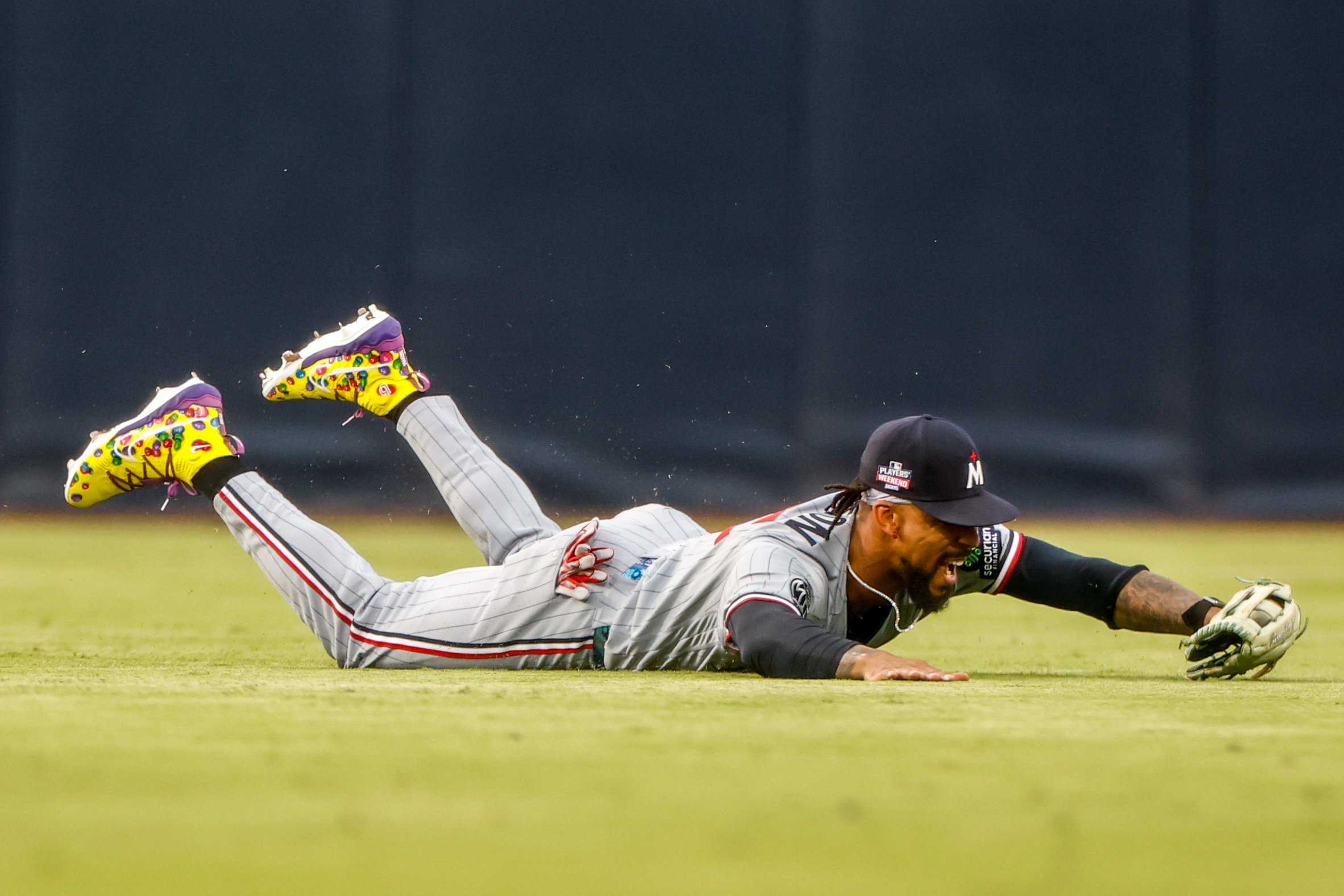 Back in spring training, Byron Buxton was asked by KSTP report Alec Ausmus if he envisioned himself moving anywhere other than center field. "No, not really," Buxton replied. "I mean, if someone else come here and is faster than me, then I will move over, but until then, I ain't going nowhere. Like … that is home for me." Well, no one faster has come along as of yet. In fact, Walker Jenkins, who has taken over center field for the final stretch for the Twins, is a below-average runner according to Statcast, and a far cry from Buxton's blazing 97th percentile sprint speed. But as the team looks ahead to 2027, the planning and decision criteria at center field might need to be a little more involved than "who can run the fastest." Buxton's desire to remain in center field is perfectly understandable. He's been an All-Star at the position in back-to-back years. When on the field, he still impacts games positively on defense. And the last time he tried moving away from center, during the 2023 season when physical limitations ruled out a defensive role, was the low point of his career. It's well established that some players aren't that well suited for designated hitter. They hit better when engaged on the defensive side rather than sitting on the bench for long spells between every at-bat. There's a fair chance Buxton is one of those players, even if he hasn't said so outright. That 2023 campaign was a trying one offensively, with Buxton batting .207 with a .311 wOBA. Of course, you wonder how much the health situation hindered his production. Heading into 2027, the Twins have a new set of outfielders set to take the reins, and we saw all in the lineup together for the first time on Sunday: Emmanuel Rodriguez in left, Jenkins in center, Luke Keaschall in right. The presence of this players on next year's team feels non-negotiable. Rodriguez has to be on the active roster coming out of spring training due to being out of options. Jenkins could theoretically start back in the minors, but I wouldn't expect it unless he really struggles in camp. And while Keaschall is not necessarily locked into an outfield role, the Twins have shown no appetite for using him in the infield since June. There are ways you could shift things around to facilitate a return to center field for Buxton. Rodriguez could open the season in a backup role. Jenkins could open the season in Triple-A. Keaschall could relocate to second base again, or spend most of his time as DH. But all of these moves would feel like kicking the can down the road, in ways that aren't even necessarily beneficial short-term, for the sake of bowing to the will of a 33-year-old player nearing the end of his contract. Don't get me wrong, I don't have a problem with the Twins giving Buxton a large say in his handling. He's earned that. But at the end of the day, Minnesota's decision-makers have to do what's best for the team, and it's future. Importantly, moving Buxton off center field also might be what's best for him. Increasingly, the hip injury that plagued him throughout this 2026 season and ultimately cut it short was flaring up while he played the outfield. On August 21st, he made a sensational diving catch in San Diego but was in clear discomfort afterward, hunching on the field for several moments before gingerly trotting off. Buxton remained in the game against San Diego, but four days later in Sacramento, he was unable to bend over and pick up a rolling ball in the gap. He lumbered off the field in pain, and that proved to be the end of his season. We're all hoping that Buxton's upcoming surgery, scheduled for later this week, does much to resolve the hip issues that have repeatedly bothered him over the years. But either way, drop-offs in the second half have become the norm for him over many years. If the Twins have true aspirations of stepping forward into legitimate contention next year, keeping Buck going in August and September will be imperative. As it happens, the DH spot is one of the few on next year's team that is completely open. Josh Bell, who has started 117 of 149 games there for the Twins this year, is headed for free agency and unlikely to return. Buxton, who made the second-most DH starts this year with 20, is a natural successor — especially because his pre-injury offensive production would look great there. That sets up some sensitive but necessary conversations between Buxton and the Twins this offseason. He has earned a meaningful voice in how the final years of his career take shape, but the organization also owes it to him (and itself) to seriously consider whether leaving center field behind gives him the best chance to stay healthy, productive and on the field when the games matter most. View the full article
 -
 Tanner Jones and Jordan Woods combined for 7 2/3 scoreless innings as Quad Cities shut out Dayton, with Blake Mitchell driving in a run. Sam Kulasingam singled home Connor Rasmussen in the ninth to give Northwest Arkansas a walk-off win, and Shane Panzini and Caden Monke combined for six strikeouts. Omaha scored four runs in the first inning at Indianapolis behind Drew Waters and Carson Roccaforte, but the Storm Chasers lost by a run. Kansas City Royals Transactions No Roster Moves Four-Run First Is Not Enough As Omaha Falls In Indianapolis Omaha scored four runs in the first inning, did not score after the third, and lost 6-5 in Indianapolis. Maikel Garcia opened the game with a single, and Waters followed with a run-scoring single. Brett Squires hit a ground-rule double, Roccaforte singled in two runs, and Peyton Wilson doubled home Roccaforte for a 4-0 lead. Roccaforte, the Royals' No. 9 prospect, also stole a base, giving him a 30 HR-30 SB season between Double-A and Triple-A this season. He is the first Royals Minor League player to accomplish this feat. Indianapolis answered with four runs in the second inning. Waters led off the third with his 14th home run, and that was the last run the Storm Chasers scored. Omaha collected 12 hits and four walks, struck out 11 times, went 3-for-8 with runners in scoring position, and left seven runners on base. Squires went 3-for-4 with a double. Waters was 2-for-4 with the home run, two RBI, and a walk. Roccaforte was 2-for-3 with two RBI and a walk, and Garcia added two hits. Ryan Ramsey started and worked four innings, giving up seven hits and five runs, walking four, and striking out two. Ben Sears and Connor Seabold followed with an inning apiece and did not allow a run. Luke Little struck out three in a scoreless inning. In the next inning, Carlos Duran struck out three without allowing a run. Scott Alexander retired one batter, allowed two hits and a run, and took the loss to fall to 0-2. Indianapolis won it with a walk-off single by former Padres and Nationals top prospect Robert Hassell III in the ninth inning. The Storm Chasers are now 64-77. Player AB R H RBI BB K Maikel Garcia 4 1 2 0 0 1 Colton Becker 1 0 0 0 0 1 Gavin Cross 5 0 1 0 0 3 Drew Waters 4 2 2 2 1 1 Brett Squires 4 1 3 0 0 0 Carson Roccaforte 3 1 2 2 1 1 Peyton Wilson 3 0 1 1 1 1 Jacob Berry 4 0 1 0 0 2 Omar Hernandez 4 0 0 0 0 1 Alejo Lopez 3 0 0 0 1 0 Player IP H R ER BB K HR Ryan Ramsey 4 7 5 5 4 2 1 Ben Sears 1 1 0 0 0 0 0 Connor Seabold 1 0 0 0 1 0 0 Luke Little 1 0 0 0 0 3 0 Carlos Duran 1 0 0 0 0 3 0 Scott Alexander 1/3 2 1 1 0 1 0 Kulasingam Walks It Off As Naturals Edge Tulsa Northwest Arkansas beat Tulsa 5-4 on a walk-off single by Sam Kulasingam. Angel Acosta opened the ninth inning with a walk and was replaced by pinch-runner Rasmussen. Ricson Gonzalez moved him to second base with a sacrifice bunt. Leadoff man Luke Pelzer was intentionally walked, and Kulasingam lined a single to center field to score Rasmussen. The Naturals had built their lead in the fourth inning. Daniel Vazquez singled, moved to third base on a fly out, and scored on a sacrifice fly by Justin Johnson. Alberto Rodriguez then tripled, and Acosta singled him in for a 3-2 lead. Johnson added to the Naturals' scoring by doubling home Spencer Nivens in the eighth inning. Tulsa scored twice in the ninth inning to tie the game, which set up Northwest Arkansas' comeback efforts in the bottom of the ninth to close out the 2026 season. Northwest Arkansas finished with 11 hits, three doubles, and a triple, went 4-for-13 with runners in scoring position, and left eight runners on base. Vazquez went 2-for-4 with a double and scored twice. Rodriguez was 2-for-4 with the triple and an RBI. Johnson was 1-for-3 with a double and two RBIs. On the pitching end, Ethan Bosacker started and allowed three hits and one run over three innings, with no walks and three strikeouts. Augusto Mendieta gave up a home run and one run over two innings, with one walk and two strikeouts. Panzini worked two scoreless innings with one hit, two walks, and three strikeouts. Monke struck out three and walked one in a scoreless inning. Dennis Colleran Jr. allowed a home run and two runs in one inning, blowing the save, but picked up the win to improve to 3-1. The Naturals finish the 2026 campaign with a 57-79 record. Player AB R H RBI BB K Luke Pelzer 4 0 1 0 1 2 Sam Kulasingam 5 0 1 1 0 0 Spencer Nivens 4 1 1 0 0 0 Daniel Vazquez 4 2 2 0 0 0 Connor Scott 4 0 1 0 0 0 Justin Johnson 3 0 1 2 0 2 Alberto Rodriguez 4 1 2 1 0 1 Angel Acosta 3 0 1 1 1 0 Connor Rasmussen 0 1 0 0 0 0 Ricson Gonzalez 3 0 1 0 0 1 Player IP H R ER BB K HR Ethan Bosacker 3 3 1 1 0 3 0 Augusto Mendieta 2 2 1 1 1 2 1 Shane Panzini 2 1 0 0 2 3 0 Caden Monke 1 0 0 0 1 3 0 Dennis Colleran Jr. 1 1 2 2 2 0 1 Four Quad Cities Pitchers Combine To Shut Out Dayton Four Quad Cities pitchers held Dayton without a run in a 4-0 win in Game One of the Midwest League Championship at Modern Woodsman Park in Davenport, Iowa. They are one win away from taking the series and the title. The River Bandits scored twice in the first inning to set the tone. Asbel Gonzalez singled, Zion Rose walked, and Mitchell reached on a fielder's choice that was followed by a fielding error, which let Gonzalez score. Ramon Ramirez then hit a sacrifice fly that brought in Rose. In the third inning, Derlin Figueroa and Jose Cerice singled, and Nolan Sailors laid down a sacrifice bunt that scored Figueroa. Gonzalez walked in the fourth inning and came home on a double by Mitchell. Quad Cities managed only five hits, but the River Bandits drew eight walks, struck out 11 times, went 2-for-9 with runners in scoring position, and left 11 runners on base. The River Bandits didn't have a ton of offensive standouts in this one, but they did take advantage of the Dragons' questionable control on the mound. Gonzalez went 1-for-2 with three walks and scored twice. Mitchell was 1-for-5 with a double and an RBI. Jones started Game One for the River Bandits and allowed two hits over 4 2/3 innings without giving up a run, walking three and striking out three. Kamden Edge retired the only batter he faced. Woods worked three innings, gave up four hits and one walk, struck out four, did not allow a run, and earned the win. L.P. Langevin struck out three in a hitless, walkless inning to close it out. Dayton was held to six hits and committed the game's only error. The River Bandits are up 1-0 and are one win away from winning the best-of-three series. Game Two will be Tuesday, September 15th in Dayton. Player AB R H RBI BB K Asbel Gonzalez 2 2 1 0 3 1 Zion Rose 4 1 1 0 1 0 Blake Mitchell 5 0 1 1 0 2 Ramon Ramirez 3 0 0 1 0 3 Derlin Figueroa 2 1 1 0 2 1 Jose Cerice 4 0 1 0 0 2 Nolan Sailors 2 0 0 1 1 2 Austin Charles 4 0 0 0 0 0 Tyriq Kemp 3 0 0 0 1 0 Player IP H R ER BB K HR Tanner Jones 4 2/3 2 0 0 3 3 0 Kamden Edge 1/3 0 0 0 0 0 0 Jordan Woods 3 4 0 0 1 4 0 L.P. Langevin 1 0 0 0 0 3 0 Top-20 Prospect Performance Kendry Chourio: DNP David Shields: DNP Josh Hammond: DNP Blake Mitchell: 1-for-5, 2B, 2 K Sean Gamble: DNP Ramon Ramirez: 0-for-3, 3 K Zion Rose: 1-for-4 Asbel Gonzalez: 1-for-2, K Carson Roccaforte: 2-for-3, K Taylor Rabe: DNP Yandel Ricardo: DNP Justin Lamkin: DNP Drew Beam: DNP Michael Lombardi: DNP Jack Slightom: DNP Felix Arronde: DNP Angeibel Gomez: DNP Ben Kudrna: DNP Steven Zobac: DNP Blake Wolters: DNP View the full article
 -
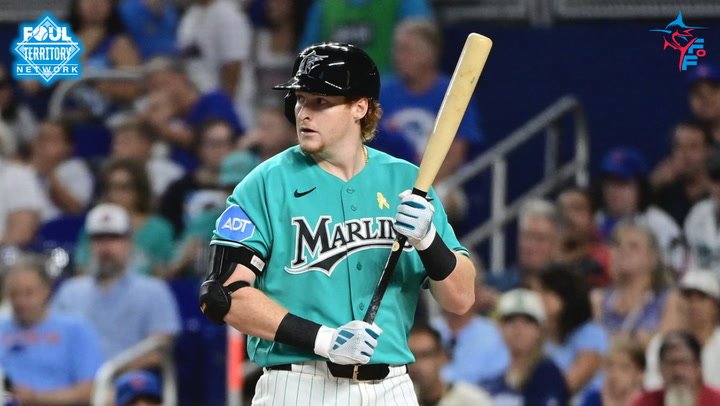 Fish On First LIVE discusses Owen Caissie's outlook for 2027 coming off a season that featured multiple IL stints and a ton of strikeouts, but also glimpses of his impressive power. View the full article
 -
The Blue Jays Have Some Tough Outfield Decisions Ahead
DiamondCentric posted an article in Jays Centre
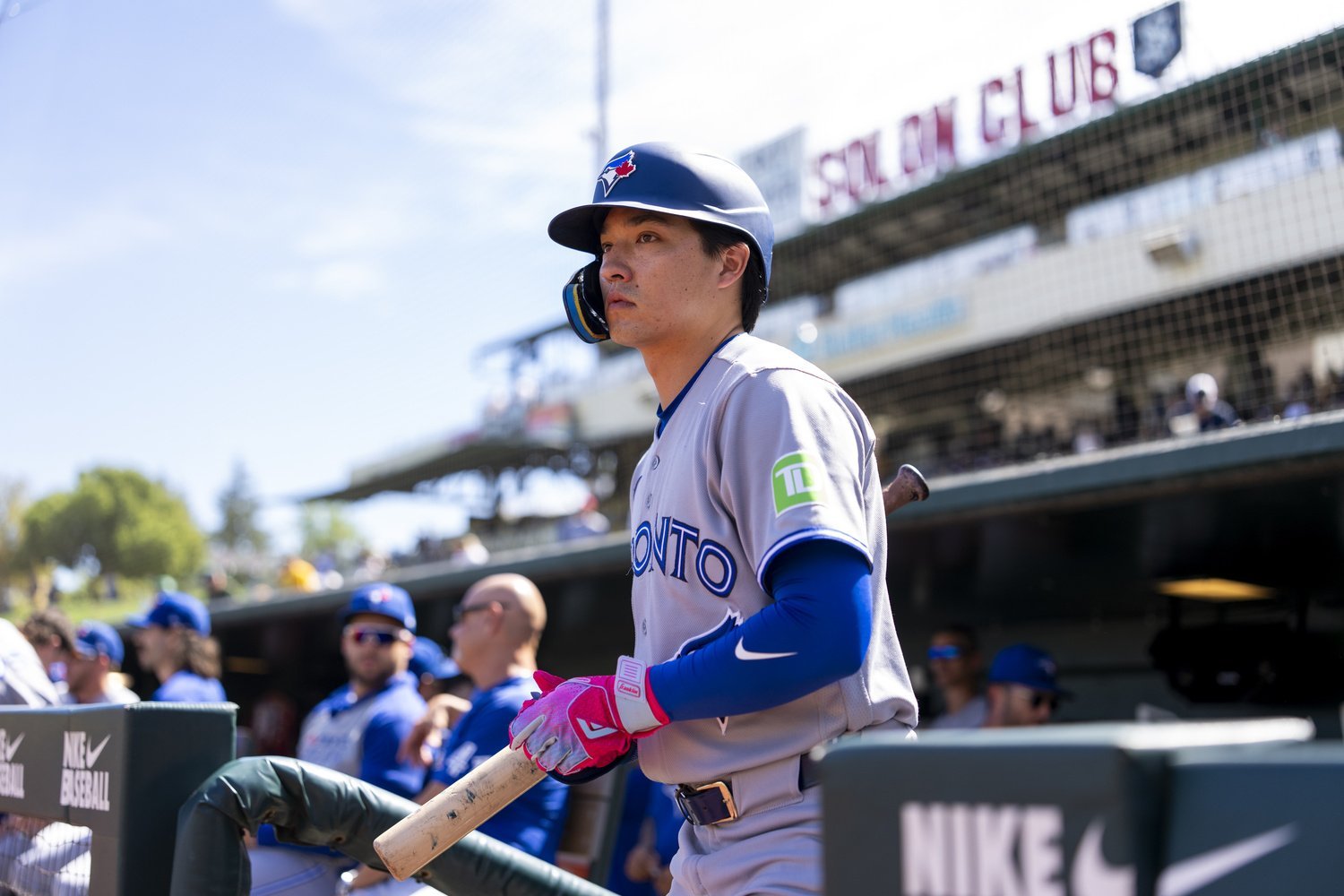 The Blue Jays' outfield group has been a revolving door all season. At times, the team has used its outfield spots to add offence, turning to bat-first players whose defence left something to be desired. At other times, the Blue Jays have gone in the opposite direction, relying on players whose speed and defence make up for what their shortcomings may be at the plate. Then there are the group of players who simply haven’t been able to stay on the field this season, leaving their place in the 2027 picture up in the air. While the Blue Jays are doing everything they can to secure a Wild Card spot in the final weeks of the season (and that remains the team's top priority), the bigger picture here is still worth watching. The Blue Jays already have a crowded group of outfielders going into 2027. With the team recently DFAing Jesús Sánchez, the picture has gotten a little clearer, but plenty of decisions remain. Here’s a look at the players who could factor into next season's outfield and what they need to show the Blue Jays down the stretch. Stats from before games on Saturday, September 12. Players With a Clear Path to a Role in 2027 Brett Bateman Stats in 2026: .339/.402/.424, 1 HR, 138 wRC+ 1.5 fWAR Contract Status: Pre-Arbitration, Free Agent in 2033 Brett Bateman has been a revelation for the Blue Jays since coming over from the Cubs at the deadline. Since he made his debut on August 7, he’s leading the team in fWAR. John Schneider has shown faith in the young center fielder, hitting him leadoff against both right- and left-handers. Even when the games matter most, Bateman has earned his manager's trust. For the rest of the 2026 season, Bateman needs to continue down the same path he’s on. His elite center field defence and 87th-percentile sprint speed give him a high floor, even if the bat isn’t at this level long-term, and he has put himself firmly in the 2027 conversation. Has he shown enough already to be the team's starting center fielder next season, or will the Blue Jays be cautious with their young outfielder and start him in the minors? His performance in the remaining weeks could help answer that question. Nathan Lukes Stats in 2026: .274/.322/.390, 10 HR, 102 wRC+, 1.8 fWAR Contract Status: Entering First Year of Arbitration, Free Agent in 2031 Nathan Lukes has almost quietly been one of the most productive outfielders for the Blue Jays this season. After dealing with injuries and vertigo early in the year, Lukes has hit well. John Schneider views him as a top-of-the-order bat against right-handed pitching (115 wRC+ vs. right-handers), and he has been producing as a league-average hitter who plays above-average defence. Lukes doesn’t have much to prove for the rest of the season, as the Blue Jays know what they have with the 31-year-old. But there have been subtle signs of slowing down with the bat: the strikeouts have risen (13.7% in 2025 to 14.6% in 2026), the walks have dropped (8.7% to 5.2%), and some of the quality-of-contact metrics have declined as well. Now that Lukes is entering his arbitration years and becoming more expensive for the team, the Blue Jays may think they can find similar production elsewhere. For now, though, Lukes looks likely to be back for 2027; the question is whether he is an everyday player or someone the Blue Jays strictly use off the bench to face right-handed pitching. Myles Straw Stats in 2026: .236/.299/.346, 3 HR, 82 wRC+, 0.8 fWAR Contract Status: Club Options for 2027 and 2028, $8 and $8.5 million, respectively Myles Straw has been exactly what the 2026 Blue Jays expected. Coming off a 2025 year in which he was a pleasant surprise, he’s essentially been the same player. Elite defence in all three outfield spots and 96th-percentile sprint speed are the tools he brings to the table. The bat will never be a strength for the 31-year-old outfielder, but he finds ways to contribute on the offensive side when he can. His outlook for 2027 is interesting. The Blue Jays do have club options for $8 million in 2027 and $8.5 million in 2028. On the free agent market, players with Straw's skill set historically haven’t gone for that much money, but the Blue Jays have an interesting choice to make. Do they continue to sacrifice offence in the outfield to keep their elite defence intact? Is it worth sacrificing a bench spot for a player who is out of options, with all the other outfielders set to return next season? It's an intriguing debate, and one the Blue Jays will certainly have internally, factoring in how important a presence he’s been in the Blue Jays clubhouse. It won’t be an easy decision. Anthony Santander Stats in 2026: N/A Contract Status: Under Contract Through 2029, Club Option for 2030 The Blue Jays are still waiting for impact from their big free agent signing prior to the 2025 season. After a sub-par first season, Anthony Santander injured his shoulder in spring training and has been out since. He has started playing in rehab games and, barring another setback, it does seem like he’ll get some playing time in the final weeks of the season. Showing the Blue Jays that he’s healthy and can hit will go a long way toward the team feeling confident about his future in 2027. With George Springer set to be a free agent at season's end, the DH spot opens, and Santander is the likeliest candidate for the role. This is still no guarantee; he needs to prove he’s healthy, and even when he’s been on the field as a Blue Jay, he hasn't been that productive (.565 OPS in 54 games). The Blue Jays will also likely be looking for impact bats this offseason, and the easiest spot to add one may be in the DH role. If that’s the case, Santander will be getting an extended look in the outfield, a place where, historically, he hasn't been that good. The Blue Jays need power in the worst way, and Santander is one of the few players on the roster who could provide it. But if he can't produce, Toronto could find itself in a similar situation to the one it just faced with Sánchez: his bat wasn't producing enough to justify the defensive shortcomings that came with it. Addison Barger Stats in 2026: .045/.214/.091, 0 HR, 1 wRC+, 0.0 fWAR (nine games played) Contract Status: Entering Final Pre-Arbitration Season, Free Agent in 2031 Like Santander, Addison Barger’s 2026 season has been mired in injuries. He dealt with ankle injuries early in the year that kept him out for over a month, returned for one game, then developed elbow inflammation that effectively ended his 2026 season. Barger’s key for the rest of the year is simple: He has to focus on getting healthy. If he does, his previous performance gives the Blue Jays plenty of reason to believe he can reclaim an important role in 2027. He was a key part of the 2025 season and playoff run, and with Kazuma Okamoto locked in as a regular at third base, the majority of Barger’s playing time is likely to come in right field. After he missed almost all of 2026, simply getting back on the field and showing that last year’s version of Barger is still there would be a major step forward, and he can be the impact bat the Blue Jays offence desperately needs going forward. Josh Smith 2026 Stats: .223/.312/.352, 6 HR, 90 wRC+, 0.3 fWAR Contract Status: Entering Second Year of Arbitration, Free Agent in 2029 Josh Smith has been the Blue Jays' best offensive player since coming over at the trade deadline. All things considered, he’s likely going to be spending more time in the infield than the outfield, but he has played nine games in left field, and notably, he was the first one out there after the Sánchez DFA, showing the Blue Jays want to get his bat in the lineup more. Because of his versatility, Smith isn’t necessarily competing with the other outfielders for playing time. His ability to move between the infield and the outfield will continue to be a great tool for John Schneider to have, particularly if his bat keeps improving. The Wild Cards Charles McAdoo 2026 Stats: .250/.299/.350, 2 HR, 83 wRC+, 0.2 fWAR (28 games played) Contract Status: Pre-Arbitration, Free Agent in 2031 Like Smith, Charles McAdoo will likely see most of his playing time in the infield, but he’s shown he’s been able to stand out there in the outfield and play a corner in a pinch. McAdoo has been a nice surprise, from being sent down to the complex league in 2025 to having a resurgence and having some moments in the majors this year. All things equal, he likely starts 2027 in the minors and will have to wait for his turn to come back to the big leagues. Yohendrick Piñango 2026 Stats: .260/.306/.396, 5 HR, 97 wRC+, -0.1 fWAR (58 games played) Contract Status: Pre-Arbitration, Free Agent in 2032 Yohendrick Piñango had his moments early for the 2026 Blue Jays, hitting five home runs and providing a spark at times. Poor outfield defence is the biggest obstacle he needs to overcome, and until that gets better, it's going to be hard to see him be a regular every day outfielder. He’ll likely start the season at Buffalo and offer some corner outfield depth, with the chance to make an impact at some point later in the season. Davis Schneider 2026 Stats: .142/.295/.274, 3 HR, 70 wRC+, -0.3 fWAR (62 games played) Contract Status: Entering Final Pre-Arbitration Season, Free Agent 2031 Davis Schneider’s 2026 season has been quite ugly. After being a fan favourite and having a massive home run in the 2025 World Series, he’s been up and down between Toronto and Buffalo and hasn’t gotten it going at the big-league level. 2027 feels like a make-or-break season for the 27-year-old; if he puts together another year like this one, the team may want to use his 40-man roster spot for someone else. More Names To Know Jonatan Clase, RJ Schreck, Rudy Martin Jr., Carter Cunningham, Jake Casey Once the dust settles and the Blue Jays’ season comes to a close, the team will have to take a deep look at its roster and build a team that can compete in 2027. Before any trades or free agent decisions are made, Toronto already has a crowded outfield, with more players than available spots. The same was true coming into the 2026 season, but injuries forced the Blue Jays’ hand and opened the door for players who may not have otherwise gotten an opportunity. Depth across all positions is always a good thing, but it can quickly become a roster crunch when everyone is healthy. With two weeks to go in the regular season, these outfielders are playing for more than just their playoff lives. They’re also playing for a chance to show the Blue Jays that they deserve one of those spots when the 2027 season begins. View the full article
