


DiamondCentric
-
Posts
2,631 -
Joined
-
Last visited
Never
Content Type
Profiles
Forums
Events
News
Tutorials & Help
Major League Baseball Videos
Guides & Resources
Store
Downloads
Gallery
Everything posted by DiamondCentric
-

Kaelen Culpepper Heads To Injured List With Return Possible
DiamondCentric posted an article in Twins Daily
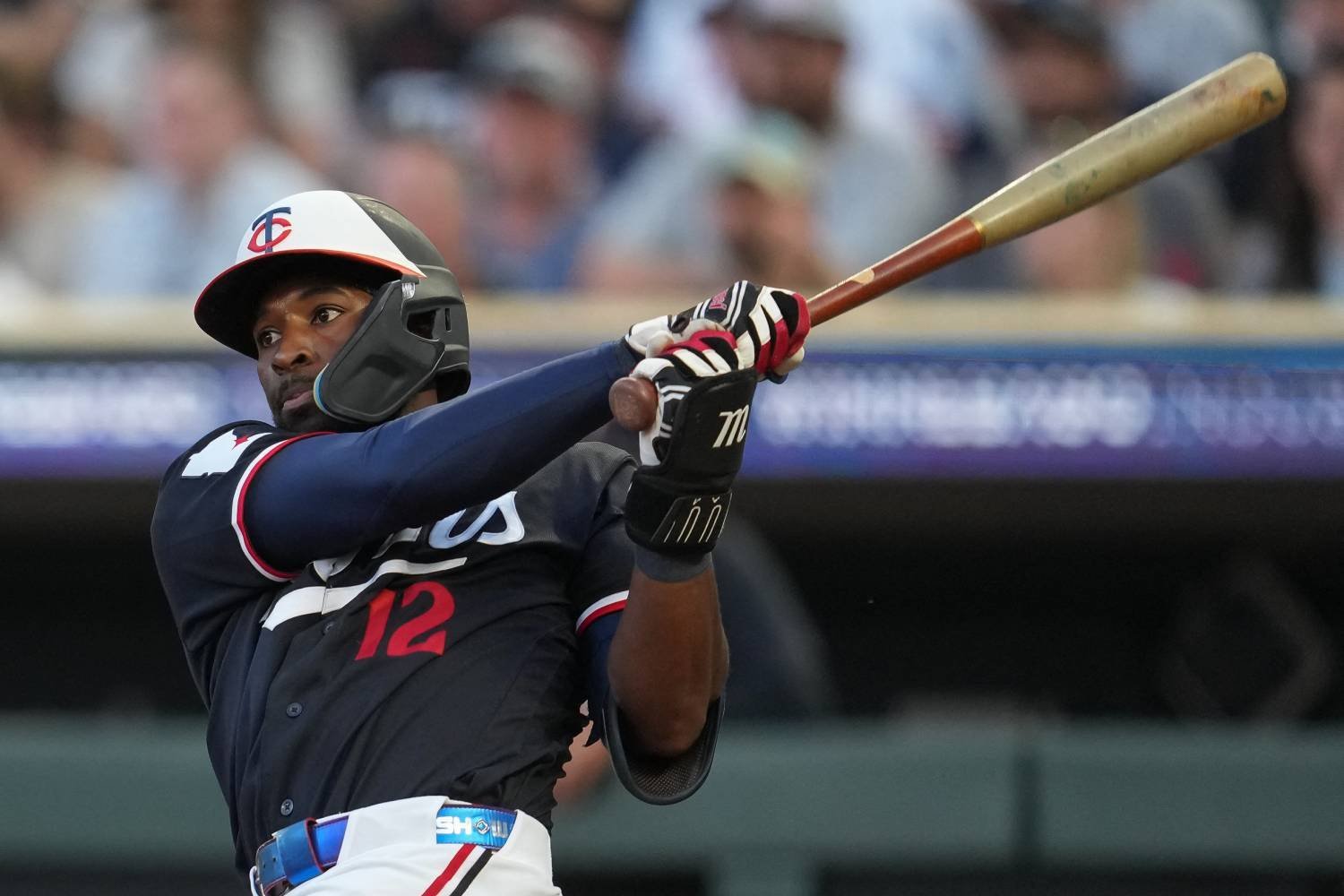 Whether or not he returns this season, the Minnesota Twins know they have something good in Kaelen Culpepper. The rookie shortstop was placed on the 10-day injured list Wednesday by the Twins due to a strained left hamstring. Fellow rookie shortstop Ben Ross was called up from Triple-A St. Paul. Culpepper left Tuesday's 8-1 loss to the New York Yankees in the sixth inning after trying to beat out a double-play grounder and feeling something in his left hamstring. Twins Daily's No. 3 prospect was slashing .275/.333/.404 with three homers and 11 RBIs in his first 31 games. Manager Derek Shelton said the Twins would like to have Culpepper back for the final two games of the regular season, but also know the rookie's season could be over. Ross came up when rosters expanded Sept. 1 (he was to be Rule 5-eligible this offseason anyways). He only played in three games, going 0-for-4. Ross was slashing .273/.379/.500 with 20 homers and 71 RBIs in the minors this season. View the full article
 -
 The Arizona Fall League is one of the last flurries of activity on the minor-league calendar, and it can serve several different purposes for a prospect. Some players use the opportunity to face advanced competition after a breakthrough season. Others get extra at-bats, additional innings, or a chance to work on an area of their game before heading into the offseason. The Twins will have eight players on the Salt River Rafters roster this fall, with a group that includes position players who took noticeable steps forward and pitchers looking to turn limited 2026 action into something more meaningful. The 2026 AFL season begins October 3 and runs through November 14. Here is a look at each of Minnesota's representatives. Yasser Mercedes, OF Mercedes is the biggest name on this list, as he currently ranks as Twins Daily’s number 19 prospect. He spent two summers in the Florida Complex League and parts of three years in the Single-A Florida State League. The former $1.7 million international signing earned a promotion to High-A Cedar Rapids after destroying the Florida State League, slashing .321/.439/.642 with six home runs in 21 games. His production was more modest with the Kernels, where he hit .232/.320/.409 in 88 games, but there were still plenty of encouraging signs. Mercedes finished with 18 home runs and 52 stolen bases across the two levels. More importantly, he appeared to find another gear late in the season. He posted a .874 OPS over his final 30 games with Cedar Rapids, showing why the Twins remain intrigued by the combination of power and speed. The Fall League should give Mercedes another chance to prove that his long-awaited breakout is becoming something sustainable rather than simply a collection of hot stretches. Kyle DeBarge, 2B/SS DeBarge experienced the highs and lows of a full season at Double-A, but the 2024 first-round pick still put together an intriguing statistical line. He hit 12 home runs, scored 73 runs and stole 41 bases while playing four different positions. Overall, he hit .221 with a .325 on-base percentage and a .677 OPS. The batting average will not jump off the page, but DeBarge's versatility remains one of his biggest selling points. He spent most of his time at second base while also seeing action at shortstop and other spots, giving the organization another athletic, flexible option. The AFL gives DeBarge a chance to finish the year on a stronger note and show that his offensive game can catch up with the rest of his skill set. Ross Dunn, LHP Dunn's 2026 season was anything but normal. The left-hander opened the year on the injured list and did not make his first appearance until July, eventually working his way back through rehabilitation assignments in the Florida Complex League and Fort Myers before returning to Cedar Rapids. He logged only 23 2/3 minor league innings across three levels, posting a 4.18 ERA with 25 strikeouts and a 1.27 WHIP. Most of that work came in Cedar Rapids, where he had a 4.86 ERA in 12 appearances. Dunn's AFL assignment is much more about getting innings. He missed significant time, and the Fall League gives him another month of competition to rebuild his workload and regain the form that made him an interesting pitching prospect after being selected in the 10th round of the 2023 draft. Cesar Lares, LHP Lares had one of the more difficult seasons among Minnesota's Fall League selections. After missing most of 2025 because of Tommy John surgery, he returned to competition in 2026 and made 12 starts for Cedar Rapids. The results were rough, with a 10.27 ERA and 1.85 WHIP across 44 1/3 innings. He did, however, strike out 51 hitters. That strikeout total is the reason this assignment remains interesting. Lares clearly wasn't sharp following his long layoff, and his command was a major issue, but there was still enough swing-and-miss ability to keep the door open. An AFL stint could be valuable for him simply because it provides more competitive innings after a season in which he was still trying to find his footing following major elbow surgery. Cleiber Maldonado, LHP Maldonado's road back from injury was even more limited. He opened the year on the 60-day injured list after undergoing elbow surgery, then made a brief rehabilitation appearance in the Florida Complex League before returning to Cedar Rapids. He ultimately appeared in 14 games and recorded 15 innings, allowing 21 runs while striking out 23 batters. Those numbers are obviously not representative of what Maldonado has done over his career. Prior to 2026, he had posted a 3.65 ERA with 104 strikeouts in 98 2/3 innings. The Fall League could therefore be a particularly important developmental opportunity. Rather than judging him on three appearances after surgery, Minnesota can use the AFL to see how his stuff looks once he has more regular repetitions. Jake Murray, LHP Murray took a much different path to the Fall League. The 2025 minor league signing spent the 2026 season with Fort Myers, working primarily out of the bullpen. He posted a 6.23 ERA in 30 1/3 innings while striking out 45 hitters, showing the ability to miss bats even when the overall results were inconsistent. Murray's 30.4 strikeout rate and 0.30 HR/9 are difficult to ignore. His 1.71 WHIP shows why there is still work to do, but the swing-and-miss ability gives him something to build around. He landed on the injured list in August, so another key objective in Arizona will be getting healthy and finishing the year with a stretch of uninterrupted work. Jacob McCombs, OF ith Minnesota as the organization's seventh-round pick in 2025, he moved into a full-season role with Cedar Rapids and quickly looked comfortable against High-A pitching. McCombs hit .276 with a .388 on-base percentage, six home runs, 33 RBI and 14 stolen bases. His 2026 season included an especially strong July, when he slashed .327/.471/.582 with a 1.053 OPS while striking out just seven times in 16 games. The combination of plate discipline, contact ability, power and speed gives McCombs an intriguing offensive profile. The AFL will provide his first opportunity to face a larger collection of upper-level pitching, and a strong showing could put him firmly in the Double-A conversation heading into 2027. Brian Zeldin, RHP Zeldin took an unconventional path to this roster after signing with Minnesota as a minor league free agent in February. He moved from Fort Myers to Cedar Rapids, working exclusively as a reliever. In 35 appearances, Zeldin posted a 6.93 ERA, 70 strikeouts and a 1.80 WHIP across 49 1/3 innings. He also picked up three saves. The numbers are not perfect, but the 29.0% strikeout rate stands out. Zeldin's experience at Georgia and his debut in the organization make him one of the more interesting under-the-radar arms in this group. The AFL will give him a chance to prove that his 2026 performance was more than a small-sample curiosity. One Last Opportunity This is not the most heralded group of Twins prospects to head to Arizona, but there are plenty of reasons to pay attention. Mercedes and DeBarge are looking to turn intriguing tools into more consistent production. McCombs is trying to establish himself as one of the organization's rising bats. Meanwhile, Dunn, Lares and Maldonado all have something to prove after spending significant time recovering from injuries. The AFL is often described as a finishing school for prospects. For these eight Twins, it could also be a proving ground, a reset button or simply one more chance to make a strong impression before everyone heads into the offseason. What stands out about this group? Leave a comment and start the discussion. View the full article
 -
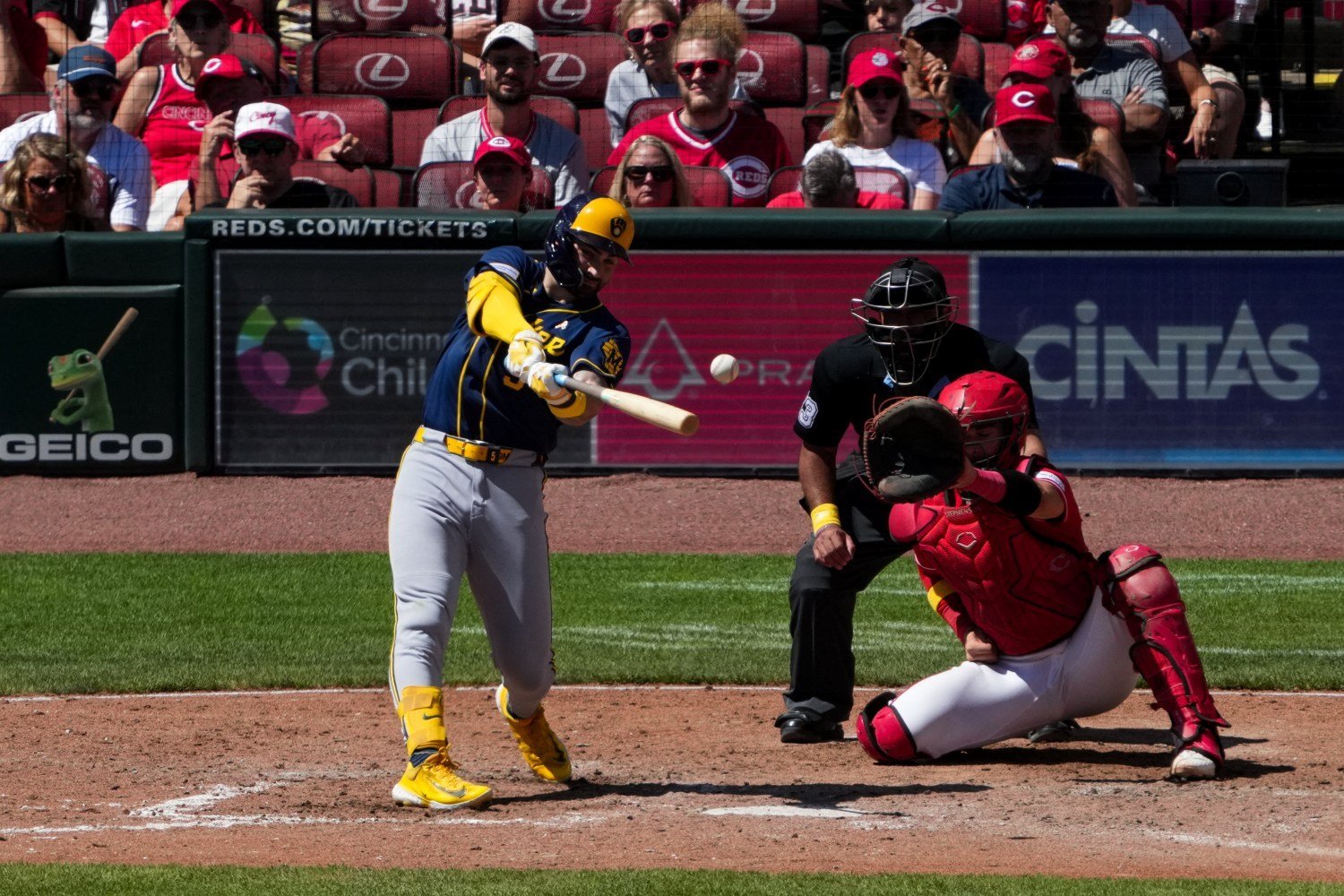 Garrett Mitchell's biggest weakness is no secret. In his first three years in the big leagues, as scattered as those appearances were, he struggled badly against the high fastball. Prior to May 2026, Mitchell had only one month of baseball (April 2025) in which he recorded an expected batting average above .100 on high heaters, and he'd never recorded a monthly xBA above .135. There were occasional glimpses that he could foul off a high fastball, but the best pitchers in the game could go there repeatedly if they wanted to. Eventually, they knew, a swing and miss would come. Mitchell's approach in the years prior to 2026 was to crush everything that wasn't a high fastball. He punished breaking balls in the strike zone, patiently waiting for pitchers to drop the ball down in the zone and attempting to do damage when they did. After 2024, Mitchell spent time at Tread Baseball, working on flattening his swing to better handle pitches at the top of the zone. He knew that, eventually, pitchers wouldn't throw him anything else until he proved he could close that hole. Unfortunately for Mitchell, he didn't have enough game time to develop and adapt those adjustments. A shoulder subluxation ruled him out early in 2025 and ultimately kept him out for the entire season. As much as he could work on the changes in a controlled environment, it's different in a game, where location, movement and the depth of a pitcher's arsenal combine to make the job much tougher. Mitchell even began to struggle with the breaking pitches that had been his bread and butter for so long. Fast-forward to 2026, and a familiar pattern emerged. Mitchell was struggling again with the high fastball in April and May, and by May, pitchers were beginning to expose the weakness frequently. So Mitchell adjusted—in a big way. Some of those adjustments are still being worked on, as you'll see below, but Mitchell appears to be getting closer to his Goldilocks spot. The Stance Change The first, and perhaps easiest, change to see is Mitchell's setup. He's opened his stance significantly, while also shortening the gap between his feet compared with April and May. The degree of that change has varied throughout the season: he moved from roughly 32 inches between his feet in April and May, down to 28 inches in June, then 24 inches in June/July, before moving back to 28 inches in September. Here's a swing from September on a pitch up and over the middle of the plate that Mitchell crushed: ZFh2cTZfWGw0TUFRPT1fQUFKVFZGUldYZ1VBRGxjRlVnQUhCd1ZXQUFBR0IxSUFVRlpUQXdVR1VnRUhBbEJl.mp4 Contrast that with Mitchell's setup in April. He looks more coiled and tense than he does in September and, although the camera angle isn't ideal, the closed stance is still obvious to the naked eye: WU9WWWVfWGw0TUFRPT1fVkZWWlZ3QU5CMWNBQUZJR0J3QUhCZzVTQUZrQ0IxTUFCd0ZSQndJTlVBTmNBd0lG.mp4 The change in stance brings a couple of advantages. An open setup can help a hitter clear the shoulders and hands more quickly, making it easier to get the bat on plane for pitches higher in the strike zone. Mitchell's shoulders and hips are more open, not just in his initial setup, but also when he gets his foot down. That creates a shorter path to the ball and is helping Mitchell get on time for high fastballs in a way he physically struggled to do in prior years. Flatter Bat Path I mentioned earlier that in the 2024-25 offseason, Mitchell was working on flattening his bat path to help him handle the high fastball. By taking less of an uppercut swing, Mitchell can get the barrel to the ball more directly, creating a more compact swing and reducing the likelihood of missing underneath the pitch. His attack angle tells us a lot about his development in this area, and you can see a fairly dramatic shift in June, followed by another adjustment in July: Mitchell's open stance and flatter path are allowing him to get on time against the fastball and square it up even when it's well-located. Although his swing-and-miss rate against high fastballs fell sharply in July, he's still whiffing fairly often in August and September. It's still a hole in his swing. But it's no longer an easy one for pitchers to exploit. Mitchell is now capable of doing enough damage against the high fastball to make pitchers think twice about repeatedly going there. The changes in his quality of contact are now measurable, thanks to Statcast's developments this year. If we contrast 2024 Mitchell with April 2026 and September, his flatter bat path is having a clear impact on how consistently he's finding the barrel. Mitchell has almost always been "centered," meaning that he tends to get the barrel of the bat to the ball (rather than the end of it, or a narrower part nearer the handle), but the changes in how often he's perfectly on time and in line with the ball bear out the eye test. His swing is now capable of barreling up fastballs. If we split his career results against high fastballs in the strike zone up to the end of this May and the time since, a startling turnaround in performance emerges: 2023-May 2026 s. June 1, 2026 Expected Batting Average 0.120 0.328 Expected Slugging 0.214 0.443 That's allowed Mitchell to approach the plate differently from how he did during the earlier parts of the season. Pitchers are no longer able to pepper him at the top of the strike zone to the point of total predictability without a vicious response, Mitchell can take a more relaxed, all-encompassing approach to his hitting plan. Pitchers now have to show him more than just a high fastball to get him out, and in doing so, Mitchell has been able to access the damage against breaking balls that eluded him earlier this season. Mitchell no longer has to go to the plate thinking primarily about protecting against the high fastball. Earlier in the year, he was selling out for it, and his damage against breaking pitches suffered as a result. Now that he's comfortable covering the fastball at the top of the zone (or at least making pitchers think twice about getting predictable up there), he's able to take a more balanced approach. That's allowed him to get back to hammering breaking balls. The sample sizes for the graphic above are small, but you can see Mitchell catching a lot of balls off the end of his bat in March and April, while also being early. That's a reflection of how much he was selling out for the high fastball and getting caught out in front. Now that he's more comfortable handling his Kryptonite, the timing and barreling of those breaking balls are coming back with a vengeance. Those are the balls you'll see Mitchell pull in the air that go a long, long way. There is still a trade-off. While the flatter swing has been great for helping Mitchell time up fastballs, much of his contact (very hard contact, to be clear) has been on low line drives to the opposite field. If Mitchell is going to tap into his home-run power, it's more likely to come against breaking balls. Now that he's settling into his groove, we're beginning to see that upside with more regularity in September as his expected slugging by month against each pitch group shows (remember the expected slugging against fastballs here covers the whole strike zone, not just high fastballs): It's easy to forget just how little time Mitchell has had to iron out his mechanical kinks in the heat of battle. After losing almost the entirety of 2025, this year has given him the opportunity to make these adjustments, test them against major-league pitching and then adjust again. He's still figuring out exactly where his Goldilocks spot is. But for the first time, Mitchell has made pitchers pay for going to the place that used to be the obvious one to get him out. View the full article
 -
Is There Still a Future for Marco Raya in Minnesota?
DiamondCentric posted an article in Twins Daily
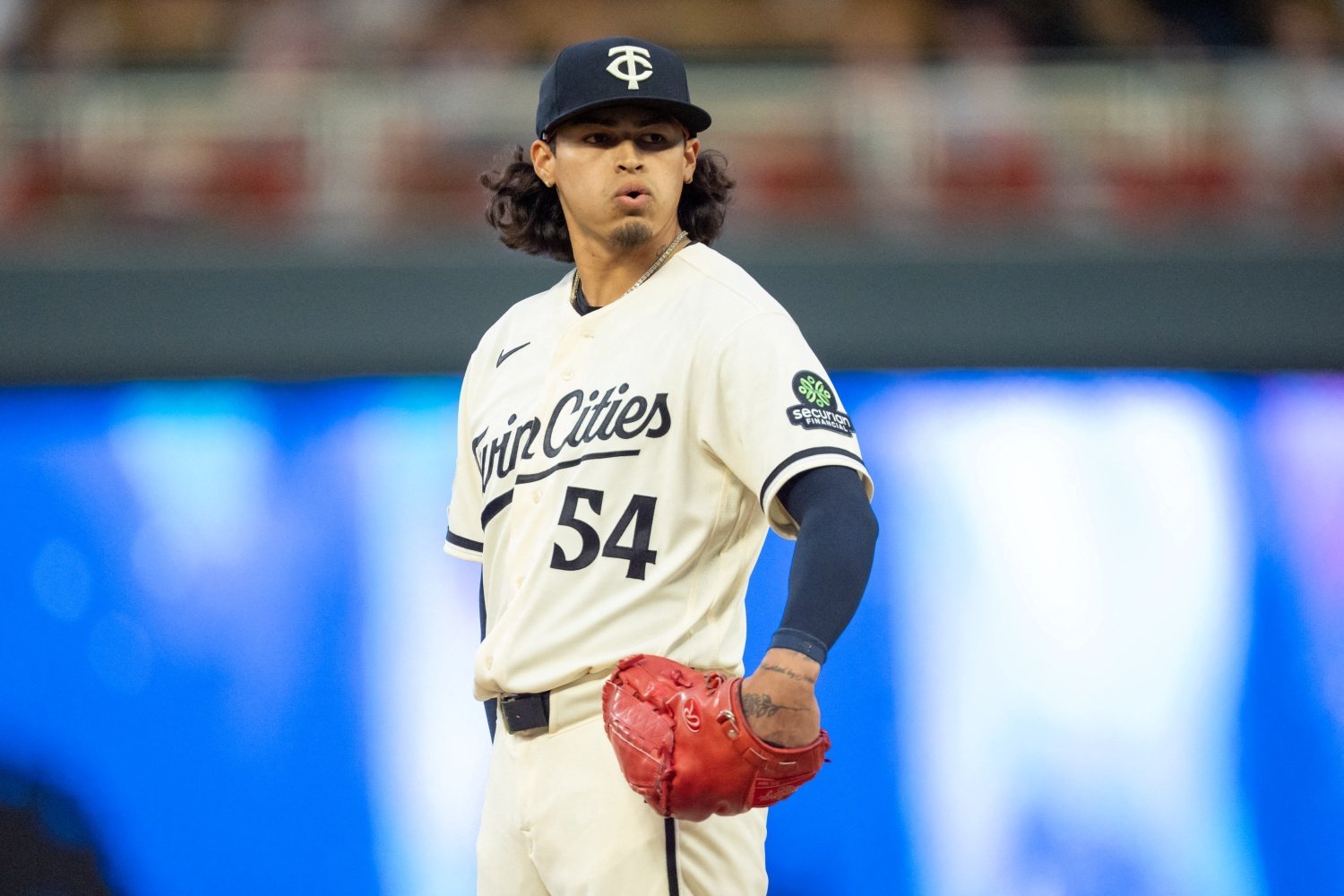 At one point in time, it looked like Twins pitching prospect Marco Raya was on his way to becoming a key piece of the organization’s pitching staff. After being selected in the fourth round of the 2020 MLB Draft out of high school, he had to wait a little longer than expected to begin his professional career. A shoulder strain wiped out his entire 2021 season, but he came back in 2022 and showed why the Twins had been so intrigued by him. Raya posted a 3.05 ERA with 76 strikeouts over 65 innings in Low-A that season, giving him a strong foundation to build on. He followed that with another impressive year at High-A in 2023, which earned him a promotion to Double-A at just 20 years old. Just one year later, he was knocking on the door of Triple-A. He only made one start at that level in 2024, but it was an impressive one: he tossed five scoreless innings. At that point, it felt like the Twins had found a potential frontline starter who was flying through the organization. But from there, things started to unravel. Raya has been pretty much stuck in St. Paul for the last couple of years, and some of the issues that have plagued him have become increasingly difficult to overlook. Too many barrels have hurt him, and the Twins have now transitioned him into a relief role. Suddenly, the frontline starter upside that once made Raya one of the more intriguing arms in the system seems to have disappeared. But that doesn’t necessarily mean his future with the Twins has disappeared with it. Despite a couple of rough years in St. Paul, Raya finally made his major-league debut in 2026. He only appeared in three games before being optioned back to Triple-A, but he allowed just two earned runs over six innings. Obviously, six innings is nowhere near enough to draw any definitive conclusions. The underlying numbers from such a small sample need to be taken with a grain of salt, but there were still some encouraging signs. His secondary pitches generated whiffs; he did a good job limiting hard contact, and most importantly, the overall arsenal looked like something that can work at the major-league level. His fastball has been sitting around 96 miles per hour in St. Paul, giving him a solid foundation to build the rest of his arsenal around. Both his sweeper and curveball have strong movement profiles, and the sweeper generated plenty of whiffs during his brief time in the majors. The increased usage of that pitch has also been one of the more interesting developments for Raya this season. He has leaned on the sweeper substantially more than he did before, and he's also increased his usage of the changeup. That change is a little firmer than normal, coming in around 90 MPH, but it generates plenty of deception and plays well off his fastball. That combination could give Raya a pretty interesting mix in a bullpen role. He also has a cutter, although he really isn’t throwing it much anymore. In reality, the pitch looks more like a hard slider than a traditional cutter, which could explain why it has fallen out of his mix. Still, it could be a usable offering if the Twins decide they want him to bring it back more often. The biggest question is whether Raya can finally start turning all of that stuff into consistent results. His overall numbers at Triple-A this season are far from outstanding, and the home run problem in particular has continued to follow him. One out of every four hits he's allowed this year has left the ballpark, which has hurt his overall stat line and dents any confidence that he could be a valuable high-leverage arm. At the same time, there are some reasons to believe he's made progress. Compared to 2025, his walk and strikeout rates have both improved substantially. If he can clean up the long balls, there's still a world where he carves out a meaningful role in the Twins’ bullpen. It may not be the role anyone envisioned when he was flying through the organization as a 20-year-old. There was a point when it looked like Raya could eventually become a frontline starter, and that path has clearly taken a major turn. But a change in role doesn’t necessarily mean the end of the road. He's still only 24, and the Twins have already seen enough from his arsenal to know that there's something to work with. A 96-MPH fastball, a whiff-heavy sweeper and a changeup with plenty of movement give him the ingredients of a legitimate major-league pitcher. Now, it’s about finding the right way to put everything together. View the full article
 -
Ruiz plays hero for Marlins with game-winning double
DiamondCentric posted an article in Fish On First
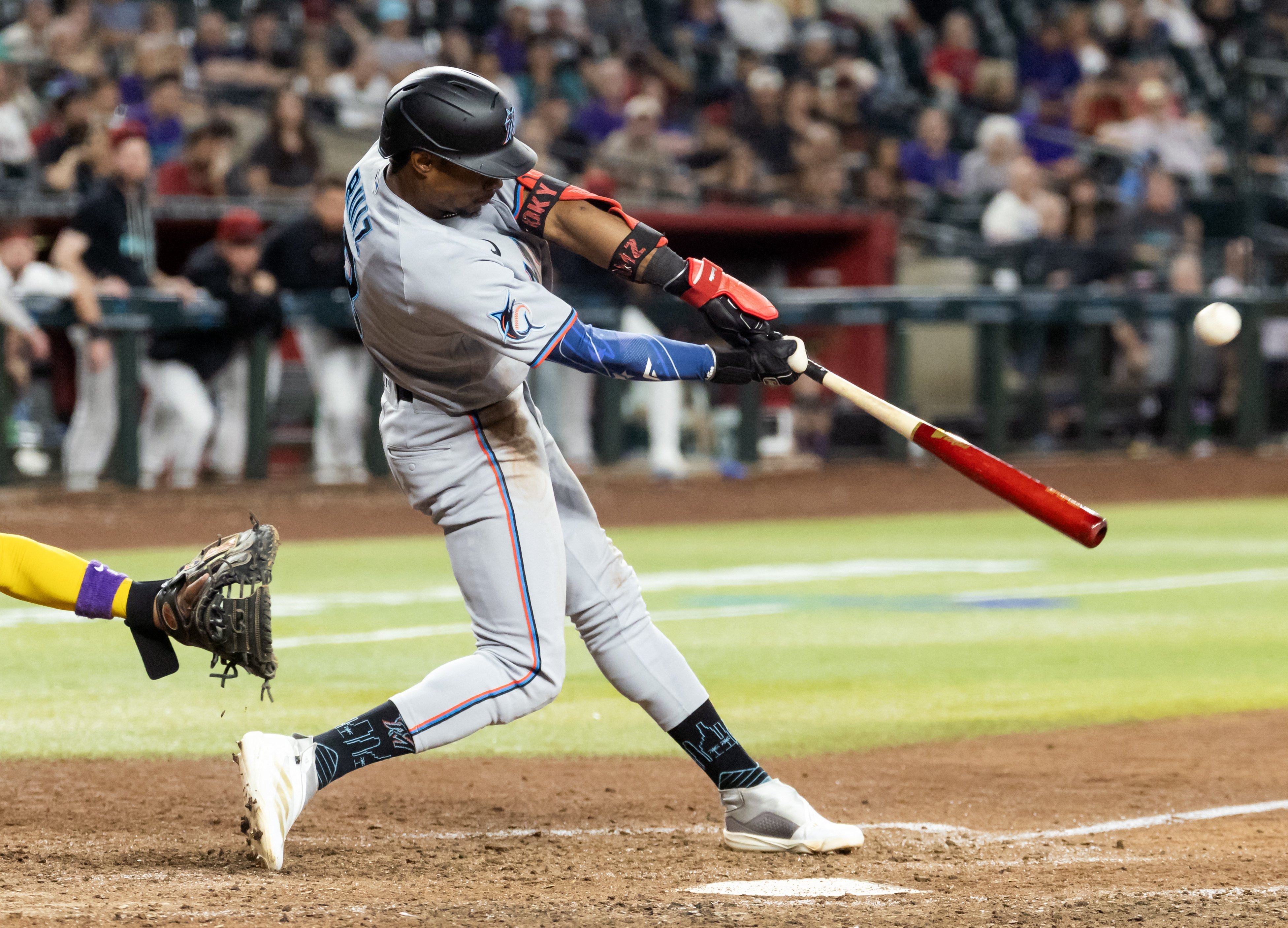 If you fancy high-intensity, down-to-the-wire baseball, the Marlins and Diamondbacks have delivered just that in the desert. It was the home team that provided the late-game fireworks in Monday's series opener, staging a three-run comeback capped off by a Corbin Carroll walk-off blast. In the encore, though, Miami returned to favor. Tied in the top of the eleventh with the bases loaded and two away, Esteury Ruiz belted a poorly placed Taylor Clarke sinker 407 feet to left-center, plating all three runners with as long a double as possible. Three Josh Ekness outs later, Miami had evened the set with a 4-2 win in the middle game, improving to 75-77 with ten games to go. Although essentially eliminated from postseason contention, six wins in their final stretch would secure just the eighth season with a .500 record in franchise history. For Ruiz, the clutch knock marked only his third hit all month thus far. After posting marks at the plate miles above what's been previously shown in the bigs through July, the 27-year-old has come down to earth. Since August 1st, Ruiz is slashing .178/.294/.260 with four extra-base hits. Nevertheless, his thirty stolen bases and success throughout the summer make his acquisition more than worthwhile, and a season OPS and career high of .731 still sits comfortably ahead of second place's .654 tally. Keeping the Fish around in extras were Victor Vodnik and the aforementioned Ekness, both of whom worked out of jams in the ninth and tenth, respectively. It was in the latter frame when a wild Otto Lopez throw to first pulled Deyvison De Los Santos off the bag, leading to a phenomenal game-saving play from Miami's rookie first baseman against his former organization. Had De Los Santos been unable to nab Ildemaro Vargas, things would have culminated there. Vodnik and Ekness weren't alone, though, as following Janson Junk's three-inning outing, an additional five-reliever effort went almost flawlessly. Across eight innings, the seven conceded four hits and zero earned runs— the lone blemish coming when ghost runner Ildemaro Vargas came around to score on a Ketel Marte double in the bottom of the eleventh. For the Marlins, the night undoubtably joins the shortlist of best bullpen efforts in a season full of them. Wednesday's rubber match features Ryan Gusto on the mound for Miami opposite Merrill Kelly. First pitch from Chase Field is set for 9:40 pm EST. View the full article
 -
 Boston Red Sox Affiliate Recap (September 15) Triple-A Worcester Red Sox Season Record: 74-65 In the midst of a late push for the MiLB playoffs, Worcester walked it off in the 10th, 2-1, against the Durham Bulls (Tampa Bay Rays). The story of the game was not the offense; neither team strung together many hits, but their pitching staffs traded blows. Jedixson Paez was outstanding through his six-inning start. The only run the right-hander allowed was a solo home run to the second batter he faced; after that, he dominated the rest of the way, punching out four batters with just three hits allowed. Tanner Houck significantly improved in his third rehab appearance and first in Worcester. He threw a scoreless seventh inning, striking out the first batter he faced on six pitches, walking the second on six as well, then punching out the next two Bulls to end the inning. Houck relied on his splitter while generating four whiffs, averaging 92.2 MPH on the sinker and 94 MPH on the fastball. This was another short outing that Chad Tracy mentioned, but he also mentioned a longer outing later this week in the 40-50-pitch range. Osvaldo Berrios threw a perfect eighth inning, then Hobie Harris came up big for the WooSox, tossing scoreless ninth and tenth innings, essentially giving Worcester a win. Not only was Allan Castro the only Sox hitter with multiple hits, but he was also the hero in extra innings. Down to their last out, Max Ferguson as the ghost runner, Castro crushed a line drive into right field to bring in the winning run, walking it off for the WooSox with a final score of 2-1. Standout Performances: Jedixson Paez: 6 IP, 3 H, 1 ER, 4 K Tanner Houck: 1 IP, 0 H, 0 ER, 1 BB, 3 K Allan Castro: 2-for-4, RBI, BB View the full article
 -
Early Offseason Target: Could the Blue Jays Pursue Luis Arraez?
DiamondCentric posted an article in Jays Centre
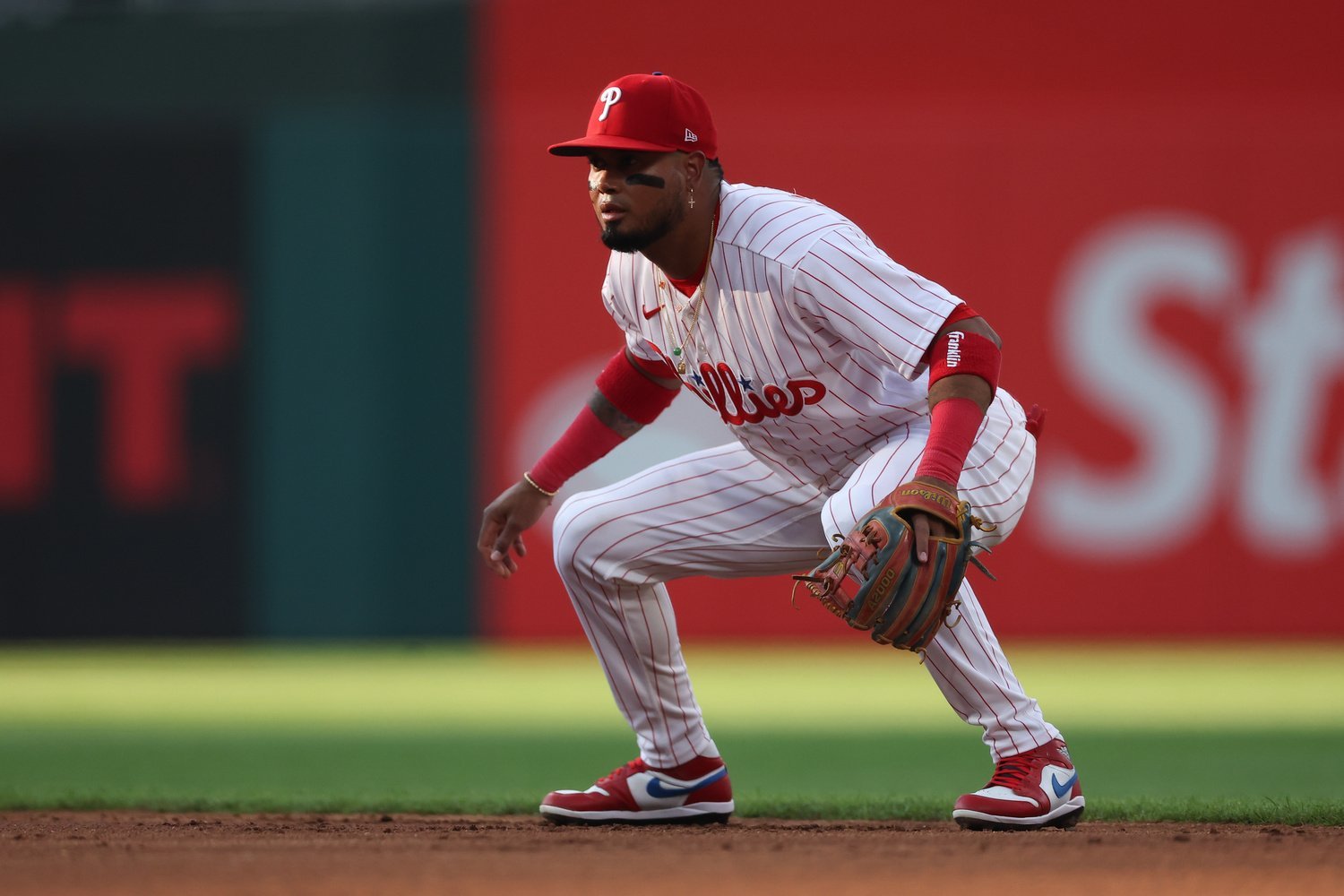 The Jays’ 2026 season has been disappointing on many levels, including starting pitching injuries and underperformance, closer instability, and breakthroughs by Daulton Varsho and Ernie Clement in 2025 that did not carry through to 2026. But possibly the most visible surprise has been in the hitting. In 2025, the Jays’ 112 wRC+ and 798 runs scored were both fourth in MLB. So far in 2026 (before games on September 15), their 96 wRC+ is 23rd and their 613 runs scored rank 29th. There are grounds for optimism in 2027. Newcomers Josh Smith and Brett Bateman have (in small samples) wRC+ figures over 130. Addison Barger and Anthony Santander are expected back. Vladimir Guerrero Jr.’s xStat line is substantially higher than his regular season stats. But Toronto should still be thinking about ways to make the team better at the plate. Unfortunately for the Jays, this year’s position player free agent class is limited. Jazz Chisholm Jr. has a solid .232/.312/.403 stat line, but his xStats of .218/.296/.370 are less attractive. Seiya Suzuki has a strong .268/.367/.474 line with 24 home runs, but his xStat line is .246/.345/.426, and he will turn 33 in 2027. His average exit velo / barrel % / hard hit % / LA sweet spot % percentiles have gone from 79th/95th/82nd/94th in 2025 to 40th/70th/41st/81th so far in 2026. There may, however, be another option. For years, Luis Arraez has been the epitome of lumber over leather. He won the batting title three times in a row from 2022 to 2024 (with three different teams!). But his -17 Outs Above Average over those three years ranked 32nd out of 34 qualifying second basemen – enough to bring his average fWAR over those three years to a cromulent 2.4. His power is also extremely limited; his career average ISO is .098 (major league average varies around .160), and he has never hit over 10 home runs in a season in his eight-year MLB career. His defensive shortcomings have limited him to playing at first base or designated hitter at times, both of which usually command a different offensive profile. So why would the Jays be interested in such a one-trick pony? Because of his 2026. From 2022 to 2025, Arraez had -19 Outs Above Average, ranking 37th among 39 qualifying second basemen. It was his Achilles' heel – the thing that kept him from stardom. But 2026 has been an epiphany. After working with renowned infield coach Ron Washington with the Giants, Arraez has improved enough to be called the most improved defensive player in 2026. This has translated into a 4.0 fWAR so far this year. Is he a perfect fit? Probably not. There are questions about the sustainability of his surge, particularly without Washington’s magic, and he will be turning 30 in 2027. Some might argue that, with players like Bateman (2026 ISO .100), Alejandro Kirk (career ISO .132) and Andrés Giménez (career .127), what the Jays need is more power, not more base hits. But converting a solo home run into a two-run shot has the same impact as hitting a second solo homer, and (as Arraez’s own career earnings have demonstrated) often singles hitters are appreciated less than long-ball mashers. The Bottom Line Arraez would be a gamble. If his defensive epiphany is only a blip, he could go from MLB's most improved defensive player to MLB's most expensive bench bat. But that uncertainty might make him easier to acquire than a conventional power hitter (he is only earning $12 million this year), and a potential top-of-the-order of Bateman + Arraez has holy-cow-Batman potential. Of course, the possible lockout is the ultimate wild card in any free agent speculation. Particularly when the player is on the wrong side of 30. But, again, what some teams call “risk” in that scenario, others might see as opportunity. View the full article
 -
 Tuesday was a big day for the New York Mets’ minor-league system. There was news on who would represent the organization in the Arizona Fall League, on who was taking home organizational honors for 2026, and on a big late-season promotion. Mets’ AFL Contingent Includes Rehabbing Players One of the aims with this group is getting extra reps for players who were injured for most of the season, in particular infielders Cole Mathis, Boston Baro and Bruin Agbayani and right-hander Irving Cota and Calvin Ziegler. Mathis, 23, played in just 13 games in Mets’ system after being acquired from the Chicago Cubs on June 25 for David Peterson. He went on the injured list with the Cubs four days earlier with an unspecified ailment. The Mets sent him to Florida for a rehab stint in July, and Brooklyn activated him on Aug. 4. He went back on the IL a week later and was activated for the final week of the season. Agbayani, 19, played in 10 games for Single-A Fort Myers before a shoulder injury kept him out for four months from May to September. He played in three games with St. Lucie at the end of the season. The Mets acquired Agbayani and Billy Amick from the Minnesota Twins for A.J. Minter on July 31. Cota, 22, missed three months from late May through August with an unspecified injury. He returned for two appearances with St. Lucie in September. Overall, he appeared in 10 games between St. Lucie, Brooklyn and Binghamton. Baro, 22, was limited to 11 games this season because of a right shoulder injury. He was placed on the IL on March 18 and sent to St. Lucie on a rehab assignment on Aug. 20. Ziegler, 23, pitched in 17 games this year as he made his return from 2024 Tommy John surgery. He ended his minor-league season with Binghamton. Lambert, 24, landed on the IL on June 4 with an unspecified injury. After rehab stints with St. Lucie and Brooklyn, he was activated and assigned to Syracuse on Sept. 9. He has struggled this year with an 8.00 ERA and 22.9 percent walk rate in 30 games (27 innings), but his strikeout rate is strong at 28.2 percent. The other representatives are right-handers Brendan Girton and Peyton Prescott. Girton, 24, pitched to a 6.72 ERA in 83 innings at Binghamton. Prescott was the Mets’ fifth-round selection in this year’s MLB Draft and made one appearance for St. Lucie at the end of the season. All seven players will suit up for the Surprise Saguaros. Voit, Santucci Named Top Player, Pitcher Mitch Voit made it to Citi Field this year—to meet with the media after being chosen the Mets Player Development Player of the Year. Voit, 21, moved up to Double-A in his first full professional season, and he began his Binghamton tenure on fire, slashing .533/.618/,822 in his first 12 games. The regression hit back hard, but Voit still finished with a .347/.430/.517 line in 29 games for the Rumble Ponies. His full-season numbers paled in comparison: a .273/.371.431 slash line, 13 home runs, 45 stolen bases in 55 attempts, and a 118 wRC+. Still, he’s on a fast track to Queens, for a much longer visit in the future. Left-hander Jonathan Santucci earned Pitcher of the Year honors. He’s wrapping up his second pro season at Syracuse following an August promotion from Binghamton. After some early struggles, Santucci, 23, has been strong in his last three starts (3.00 ERA, 19 strikeouts in 15 innings pitched). The K’s have been there all season; Santucci is tied for third among all minor league pitchers with 157 punchouts in 119 2/3 innings. Rojas Goes Deep In Triple-A Debut The Mets promoted infielder Jefferson Rojas to Syracuse for the final week of the minor-league regular season. He introduced himself to Triple-A pitchers with a home run in his second at-bat, a two-run blast in a 9-1 Mets rout of Lehigh Valley. on Tuesday. He singled his first time up in the first inning. Rojas, 21, now has 10 home runs in 30 games as a Mets farmhand and 25 homers overall. His .838 overall OPS is a career high by better than 40 points. The debut wasn’t all rosy. Rojas struck out in his next three plate appearances, twice looking, after the homer. After a full Double-A season between Tennessee in the Chicago Cubs’ chain and Binghamton with the Mets. Syracuse was the next stage in his development. He’s there now, and it’s likely that he will return there to begin 2027. D’Andre Smith continued his surge at Triple-A with his fifth home run for Syracuse and three runs scored. He scored Syracuse’s first run after being hit by a pitch to lead off the first. Vidal Brujan drove in four runs with a two-run triple in the first and a two-run single in the eighth. Ryan Clifford collected two hits and scored twice. MJ Melendez, who was named International League Player of the Week earlier in the day for his four homers and 10 RBIs against St. Paul, walked twice in five PAs. Cionel Perez pitched a scoreless third inning as his minor league rehab assignment moved to Syracuse. He threw 15 pitches, 11 for strikes, and struck out one. The left-hander has been on New York’s 15-day injured list July 31, retroactive to July 30, with a forearm strain. Syracuse Batting Player AB R H RBI BB K D'Andre Smith 3 3 1 2 1 0 Jefferson Rojas 5 2 2 2 0 3 Ronny Mauricio 5 1 2 1 0 0 MJ Melendez 2 0 0 0 3 1 Vidal Bruján 4 0 3 4 1 0 Émilien Pitre 5 0 0 0 0 1 Billy Amick 3 0 0 0 1 1 Ryan Clifford 4 2 2 0 0 0 Hayden Senger 4 1 1 0 0 1 Totals 35 9 11 9 6 7 Syracuse Pitching Player IP H R ER BB K HR Saul Garcia 2 0 0 0 1 1 0 Cionel Pérez 1 0 0 0 0 1 0 Ben Simon (W, 4-4) 2 2 0 0 1 0 0 Garrett Stratton 2 0 0 0 3 3 0 Dylan Ross 1 2 1 1 0 2 1 Dan Hammer 1 0 0 0 1 1 0 Totals 9 4 1 1 6 8 1 New York Mets Transactions New York Mets sent LHP Cionel Pérez on a rehab assignment to Syracuse Mets. New York Mets optioned SS Christian Cairo to Syracuse Mets. New York Mets claimed SS Christian Cairo off waivers from Philadelphia Phillies. Top-20 Prospect Performance Jonah Tong: MLB Jack Wenninger: DNP Elian Pena: DNP Mitch Voit: DNP Ryan Clifford: 2-for-4, 2B, 2 R Nick Morabito: MLB Jonathan Santucci: DNP Carson Wiggins: DNP Jacob Reimer: DNP Aiden Robbins: DNP Randy Guzman: DNP Wandy Asigen: DNP Chris Suero: DNP Jefferson Rojas: 2-for-5, HR, 2 RBI, 2 R, 3 K Will Watson: DNP Shane Sdao: DNP Eli Serrano III: DNP Antonio Jimenez: DNP Emilien Pitre: 0-for-5, K Dylan Ross: 1 IP, 2 H, R, ER, HR, 2 K View the full article
 -
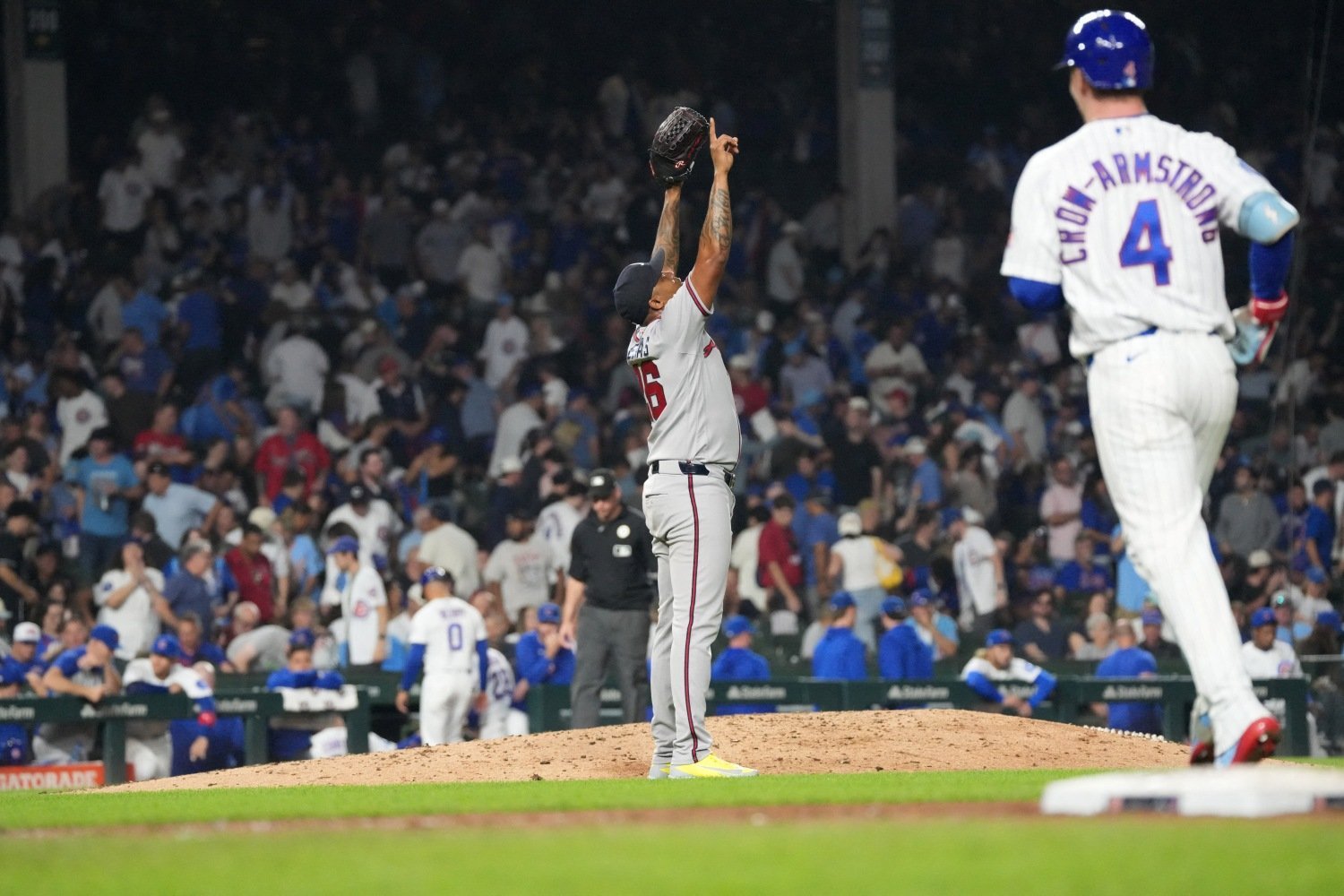 The 2026 Cubs would be a sub-.500 team without Pete Crow-Armstrong. He's been worth 67 runs relative to an average player, according to Baseball Reference: 41 as a batter, 10 as a runner, and 16 in the field. If you prefer Statcast's valuations, those numbers are 47, 7 and 27, respectively. Either way, the story is the same. If you insist on the value of clutchness and situational hitting, nothing changes, because Crow-Armstrong has been extremely clutch this year. His Win Probability Added (WPA) at the plate is a league-best 5.2; he also leads the majors with a 3.5% Championship WPA. He's been even better in big moments than in low- and medium-leverage spots. The Cubs are 84-68. Take Crow-Armstrong away, and they're no better than 76-76—and really, they're probably worse. That's a heavy burden for any player to bear—let alone a 24-year-old whose intensity is just barely under control at all times, anyway. Crow-Armstrong's desire to win is pumped from his heart out to his fingertips with every beat, moving faster than his blood, crackling like electricity. It feels slightly but significantly different than even last season, when Crow-Armstrong was obviously and fiercely competitive but seemed to be motivated as much by proving himself and being great as by winning itself. This season, he's been so livid and disconsolate when the team is losing and so delirious when the team is winning that there's no mistaking the fuel for his fire. He wants this. He's made his first huge payday; he's all but assured of the MVP award; and he's quieted the doubters, if not the haters. What he wants, now, is for his team to rise to his level. A few of them have, of course—or, at least, they've tried. Seiya Suzuki and Alex Bregman are having marvelous seasons, and the shape of their production suggests that they're receiving as much inspiration and intel from their younger teammate as he's getting from them. On the whole, though, this remains a bad team with an all-time great player papering over its flaws, and although Crow-Armstrong would be loath to characterize it that way, it's becoming clear that he knows just how badly the club needs him to be great every day. Unfortunately (but also unsurprisingly), that has led Crow-Armstrong back into some old, bad habits. The grind of the season erodes players' plate discipline, anyway, but Crow-Armstrong is back in swing mode, in a way that feels much more like him trying to put the team on his back in every plate appearance than like him getting tired or going up there without a plan. One way or another, he's currently swinging as much as he did in 2025—something that hadn't been true at any point since the first few weeks of the season. As you can also see, swinging so much has only dragged down Crow-Armstrong's production, despite plenty of continued hard contact and some home runs. For about 100 days, he morphed into a marvelously consistent and balanced offensive weapon, as well as a dynamic one. Right now, he's dangerous—but he's also gettable. This isn't about playing for stats. If Crow-Armstrong were thinking selfishly, he'd be swinging less often, trying to work a few walks and go steal the three bases left between him and the 40/40 club. No, he's swinging like crazy again because he can sense his team sliding toward the danger zone where they might even miss the playoffs—or, more likely, end up as the second or third Wild Card entrant and have to play the Wild Card Series on the road. He's trying to save the day. He's trying to be a superhero, and no player this side of Shohei Ohtani and Aaron Judge has been more up to that task at any time in the last decade. Alas, baseball games aren't won by superheroes. They have to be won with depth, teamwork, and the slow accretion of good plays. Crow-Armstrong is keenly aware that his team can't produce that kind of win as consistently as it needs to right now. That's why he's trying to win games by himself. Unless they put up a basketball hoop behind second base, though, that's not an option that will be available most of the time. Crow-Armstrong has to rediscover his patience at the plate, and hope (if not quite trust; that would be too generous) that his teammates round into form in time to support his historic brilliance the way it deserves. View the full article
 -
Kaelen Culpepper Exits Game With Hamstring Tightness
DiamondCentric posted an article in Twins Daily
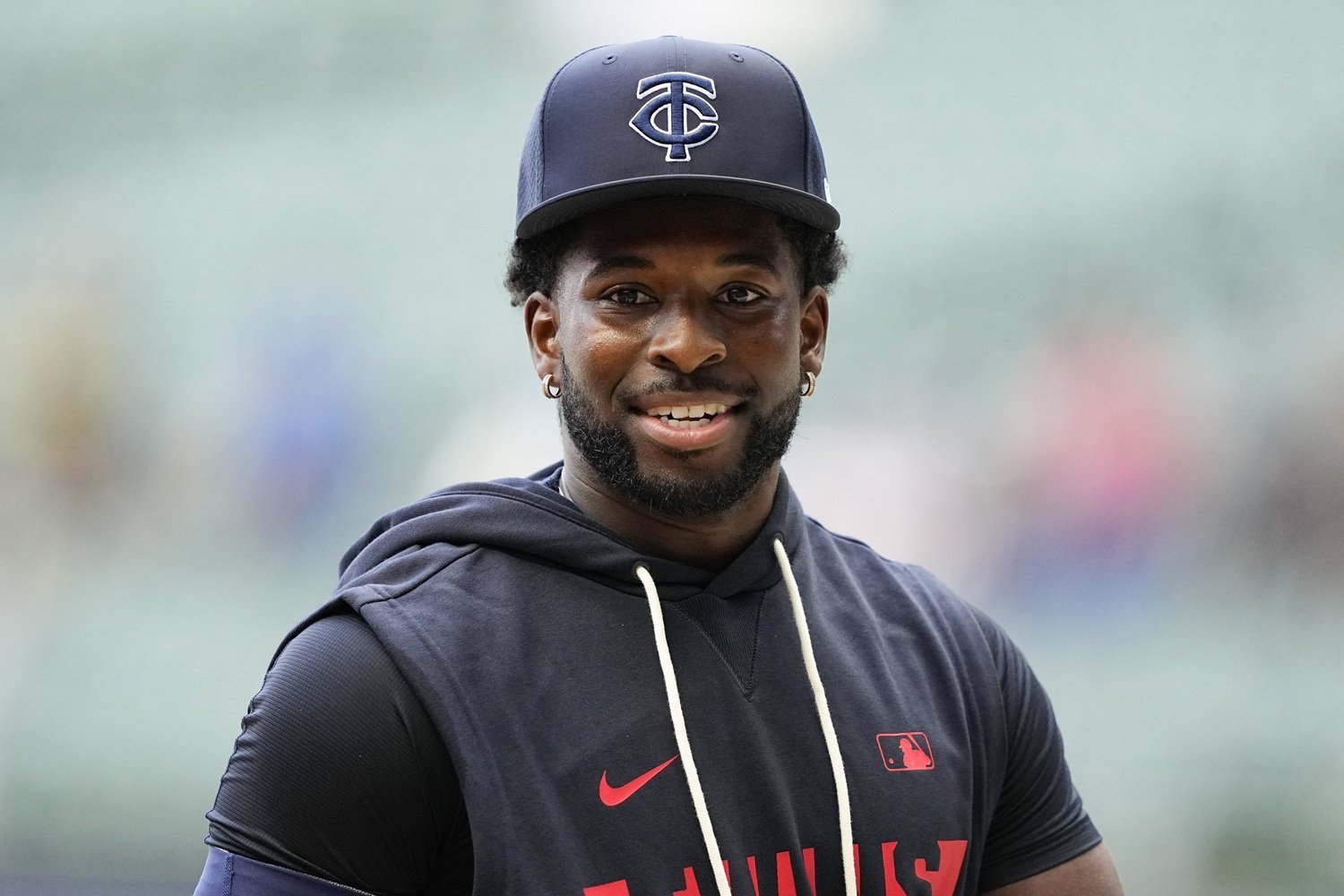 The Twins have spent much of September trying to keep their lineup intact, but another injury concern surfaced Tuesday night. Kaelen Culpepper was forced to leave Minnesota’s game after the sixth inning because of left hamstring tightness. The timing is particularly frustrating for a young player who had just returned to the lineup after missing two games because of a hit-by-pitch. Culpepper appeared to feel the issue while trying to beat out a potential double-play ball. After being ruled out at first base, he reached toward the back of his left leg before eventually leaving the game. Ryan Kreidler took over at shortstop for the seventh inning. Manager Derek Shelton said after the game that Culpepper noticed the problem almost immediately. “What he told me was that he felt it the first move out of the box,” said Shelton. “So we’ll get an MRI in the morning and see where he’s at. Honestly, it sucks. Just because of the fact that we’re late in the schedule and how well he’s played and what he’s done.” The Twins should have a better idea of the severity after Culpepper undergoes an MRI. Until then, the team will have to wait to determine whether this is something that could cost him additional time or simply require some rest. This is another frustrating development for Culpepper, who has been an important part of Minnesota’s lineup during the second half. The former first-round pick has been given an extended opportunity at the major-league level, and his recent performance has helped strengthen his case for being the club’s Opening Day shortstop next season. Culpepper is hitting .275/.333/.404 (.737) with five doubles, three home runs, and a 107 OPS+. Defensively, he’s also been an upgrade over other options for the Twins. He has a 1 OAA and his 88.2 mph arm strength ranks in the 75th percentile. The injury also comes at an unfortunate time for the Twins. With only a little more than a week remaining in the regular season, there isn't much calendar left for injured players to work their way back. Culpepper already spent time recovering from Saturday’s hit-by-pitch against Cleveland. Now, Minnesota will hope Tuesday’s hamstring issue is a short-term setback rather than another extended absence. View the full article
 -
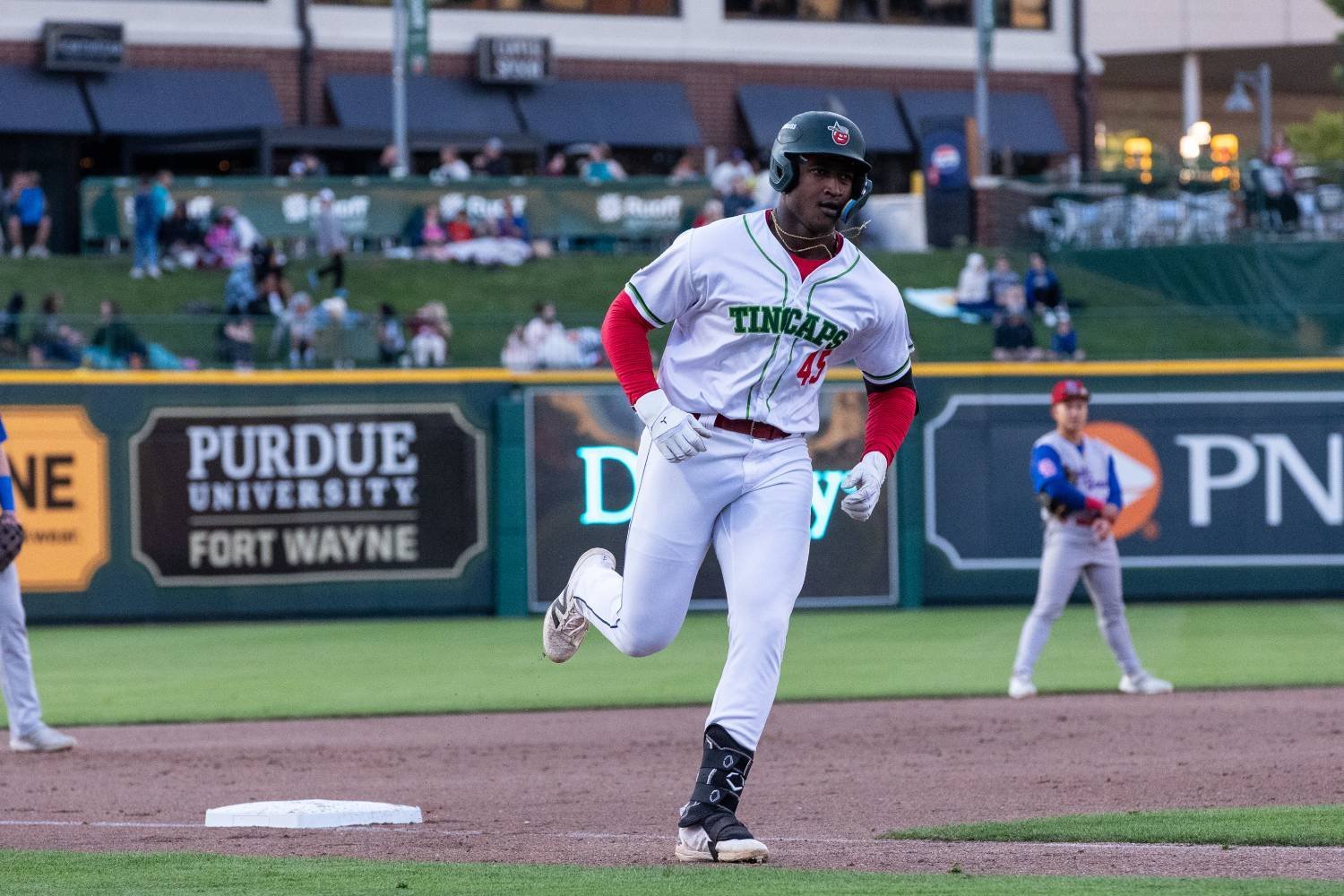 With the end of the minor-league season upon us, it is time to look back at the progress—or lack thereof—of prospects in the San Diego Padres’ system. While it is well-documented that the Padres have the worst minor-league system in MLB, there are some players who jumped into the prospect picture that Friars fans should be excited about. One player who remained a constant was Ethan Salas, the No. 1 prospect who recently made his MLB debut. For this exercise, we are going by Padres Mission’s Top 20 list from the preseason and comparing it with the last one we did in August, coming off the trade deadline and including the draft. There is a stark difference in how the lists look for a variety of reasons, including the players lost at the trade deadline. Here is how the two lists look: Preseason Ethan Salas, C Kash Mayfield, LHP Kruz Schoolcraft, LHP Bradgley Rodriguez, RHP Miguel Mendez, RHP Jagger Haynes, LHP Humberto Cruz, RHP Ty Harvey, C Ryan Wideman, CF Kale Fountain, OF Romeo Sanabria, 1B Jorge Quintana, SS Lamar King Jr., C Garrett Hawkins, RHP Tirso Ornelas, OF Kavares Tears, OF Truitt Madonna, C Deivid Coronil, SS Eric Yost, RHP Francis Pena, RHP August Update Ethan Salas, C Ryan Wideman, CF Coleman Borthwick, RHP Kruz Schoolcraft, LHP Ty Harvey, C Kale Fountain, OF Jorge Quintana, SS Alex McCoy, LF Braedon Karpathios, RF Lamar King Jr., C Elliot Lascelles, SS Tucker Musgrove, RHP Jagger Haynes, LHP Jake Cunningham, OF Truitt Madonna, C Eric Yost, RHP Winyer Chourio, RHP Jesus Castro, RHP Michael Salina, RHP Rosman Verdugo, SS Who Dropped Out? A whopping 10 players are no longer on our Top 20 prospects list. One thing I will admit is that with Padres Mission just concluding our second season, we as a group are still getting a feel for some of the players in the system and what their value is. That said, two players from our preseason list were traded at the deadline. Left-hander Kash Mayfield, who began as our No. 2 prospect and held that spot, was dealt to the Detroit Tigers in the Casey Mize trade. The other is right-hander Miguel Mendez, who was hurt much of the season and was No. 5 at the start of the year, went to the San Francisco Giants for left-hander Robbie Ray. Another player graduated from prospect status in right-handed reliever Bradgley Rodriguez, now a key component of the Padres’ bullpen. A fourth player, right-hander Humberto Cruz, was the No. 7 prospect, but had been arrested in an immigration case where he helped transport people illegally into the U.S. and pled guilty to misdemeanor charges. Six players had their prospect star fade this season. First baseman Romeo Sanabria (No. 11 to begin the year), right-handed reliever Garrett Hawkins (No. 14), outfielder Tirso Ornelas (No. 15), outfielder Kavares Tears (No. 16), shortstop Deivid Coronil (No. 18) and right-hander Francis Pena (No. 20) all dropped from the Top 20. With the exception of Coronil, who was injured all season, it was more of other players surpassing them as none had a truly bad season. Who Jumped Up? Now, for the exciting part. Let’s start with the draft picks. First-round selection Coleman Borthwick, who just made his pro debut with the Low-A Lake Elsinore Storm, checks in at No. 3. Second-rounder Elliot Lascelles is No. 11 (and will certainly move up in our next round of rankings). Lascelles finished the regular season for the Storm with a .321/.406/.429 slash line in 15 games. Three players came from off the board right to the middle of the pack. That group is led by outfielder Alex McCoy (now at No. 8), who is joined by outfielder Braedon Karpathios (No. 9) and right-handed reliever Tucker Musgrove (No. 12), another player who should be higher in our rankings upon the next update. McCoy and Karpathios are both undrafted free agents. McCoy earned a promotion to Double-A San Antonio and finished with a .278/.355/.467 slash line with 31 doubles, 19 homers (a system best) and 71 RBIs in 123 games between the Missions and High-A Fort Wayne. In 25 games at Double-A, he slashed .314/.360/.467 with four homers and 16 RBIs. Karpathios was just promoted to Triple-A El Paso, has a season slash line of .262/.350/.432, having hit 17 homers with 73 RBIs in 126 games entering the final week of the season. Musgrove, who finished the season on the injured list, has split this year between High-A Fort Wayne and Double-A San Antonio, appearing in 34 games with a 4.19 ERA and a 42.8% strikeout rate and 15.7% walk rate. Outfielder Jake Cunningham is No. 14 after doing a lot of damage for Fort Wayne and then getting bumped up to San Antonio. He had a .269/.369/.560 slash line with 15 homers, including a three-homer game, and 35 RBIs in 57 games for the TinCaps, then slashed .301/.370/.459 with four homers and 26 RBIs for the Missions in 39 games. The final four players moved from outside the Top 20 into the final four slots. Those would be right-handed starters Winyer Chourio (No. 17) and Jesus Castro (No. 18), right-hander Michael Salina (No. 19), who battled injuries this year coming back from Tommy John surgery, and infielder Rosman Verdugo (No. 20). Chourio had a combined 3.31 ERA between Lake Elsinore and Fort Wayne, with a 14% walk rate and 29.9% strikeout rate, while Castro had a 4.18 ERA and a 7.9% walk rate and 25.4 strikeout rate. Salina, a fourth-round draft pick in 2024, appeared in just seven games with an 8.22 ERA, with a walk rate of 12.2% and strikeout rate of 19.5% in 7⅔ innings. Verdugo has spent the last two seasons at Fort Wayne and slashed .225/.340/.389 in 109 games this year, then got a brief promotion to Triple-A El Paso this past weekend. View the full article
 -
 There’s a lot more to the Brewers than simply having the best record in baseball. With Jacob Misiorowski anchoring a deep pitching staff and Jackson Chourio leading a dangerous lineup, Milwaukee has all the ingredients of a championship team. View the full article
 -
Three Two-Run Homers Crush Cubs? What Else is New?
DiamondCentric posted an article in North Side Baseball
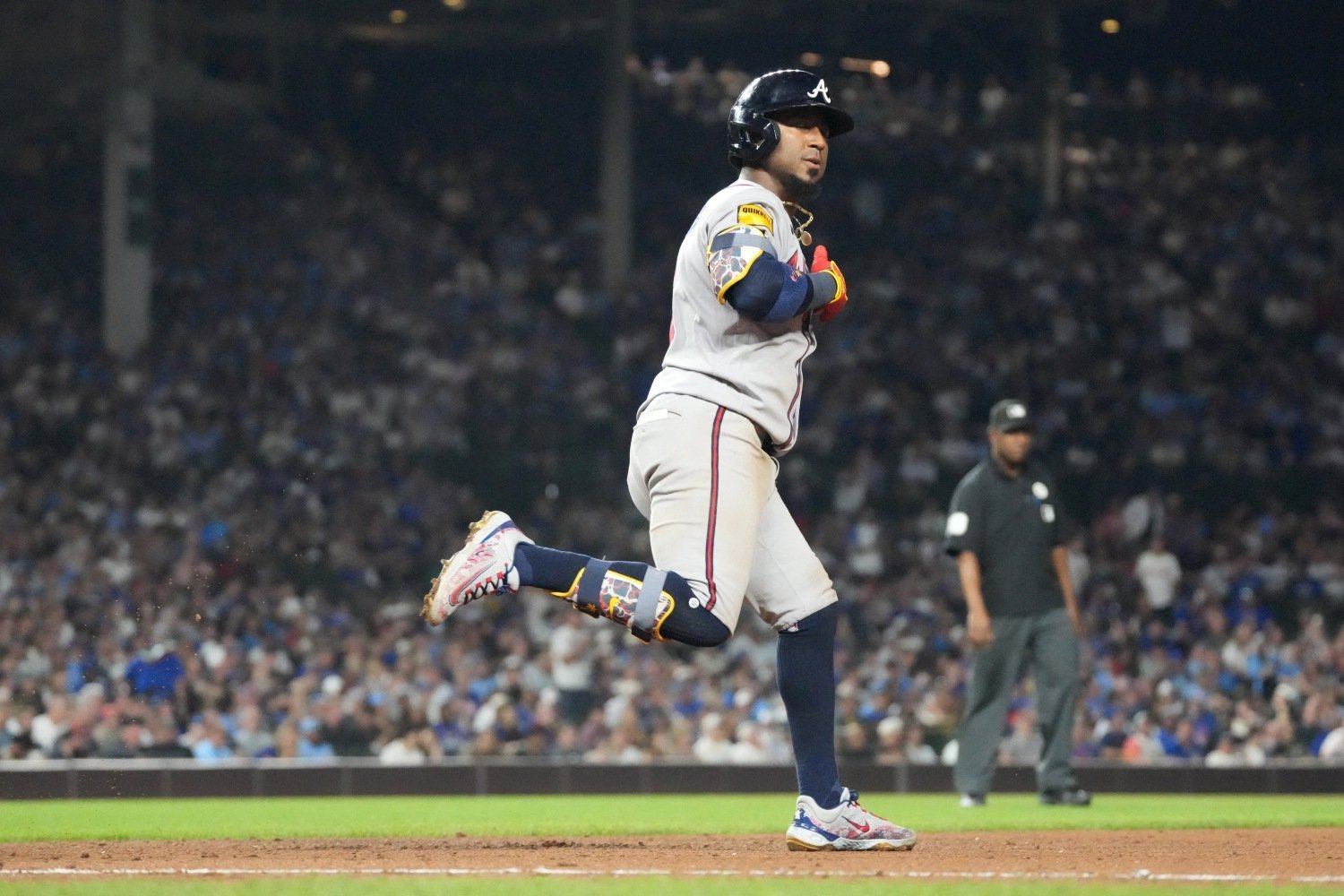 Kevin Gausman was cruising. He was mowing down the visitors from the suburbs of Atlanta efficiently and impressively. Through five innings, he enjoyed a 3-0 lead, and his command of both his fastball and his splitter looked good. Unfortunately, like all his colleagues on this year's Chicago pitching staff, he never has as much margin for error as one might think or wish. On an 0-1 pitch with one out in the sixth, Drake Baldwin hit a sharp one-hopper through the right side for a single. Early counts have been a problem for Gausman this year. He's been ambushed much more often than is usual for him, because he's too often in the meaty part of the zone while rushing to get ahead—and because he can be a bit predictable. He'd gotten a swinging strike near the top of the zone on a fastball for strike one; Baldwin knew to sit on a splitter. The splitter Gausman threw was in the zone, and it was hit hard. It was just a bases-empty single. That shouldn't be a big deal, especially in a three-run game. It was, though, because any opposing batter who reaches even first base (hell, even one in the batter's box) is in scoring position against Cubs pitchers. No team has given up more homers than Chicago's 227—not the A's (226), who play in a minor-league park; not the Rockies (208). who play on the moon; not the nationals (204) or Reds (201). The reason for that vulnerability is a little different with each Cubs pitcher, but the vulnerability itself is a common thread tying far too many of them together. In Gausman's case, the other problem—especially early in counts, but not solely then—is that he's too often left his fastball on the inner edge against righties this year. In the past, he was good at targeting the glove-side, outer third of the zone, where it both allowed less damage and set up his splitter better. After giving up the single to Baldwin, he left a 1-1 heater to Ronald Acuña Jr. middle-in, and he paid the predictable price. Suddenly, Chicago led only 3-2. The veteran workhorse wouldn't even escape the sixth, after having been so untouchable through five; Daniel Palencia cleaned up his mess to get the Cubs back to the bats. The Cubs ran face-first into a wall after an early barrage against Martín Pérez, though. They scored once in the second and twice in the fourth, and then everything dried up. Thus, when Jacob Webb took over for the top of the seventh, the margin was still razor-thin—much too thin, it turned out. Webb's bugaboo is less subtle and more familiar: he's hung far too many changeups lately. The four-pitch leadoff walk he issued to Austin Riley was uncharacteristic, but when he fell behind Ozzie Albies 2-1 and then left a changeup thigh-high, everything felt (excruciatingly) right again. Some fans, surely, had wished Edward Cabrera would get the chance that went (instead) to Webb. Craig Counsell turned to Cabrera for the eighth and ninth, to let everyone see why that wasn't a good idea, either. Cabrera's confidence is every bit as shattered as Webb's. The Cubs screwed up his onboarding and development badly in the first year after trading a top prospect for him, and he will need the offseason to get right—if he can be reclaimed, at all. He gave up a line-drive single in the top of the ninth, allowed a stolen base, moved the runner to third via a wild pitch, and then gave up a back-breaking home run on yet another meatball, this time to Baldwin. The Cubs probably didn't have a comeback in them Tuesday night, anyway, but that put the nail in their coffin. On any night on which Pete Crow-Armstrong doesn't light up the game with his brilliance, the Cubs are depressingly mediocre. They need to fire pitching coach Tommy Hottovy, who has overseen too many failures of development and optimization to be retained. That's one of several steps between here and a solution for 2027, though. It offers nothing for 2026. To get where they hope to go—to do enough in October to make this season feel like a success—the Cubs need to find some way to stop giving up two-run homers. Unfortunately, right now, that looks unlikely. Hitting lots of home runs is not the only way to win in the playoffs, but giving up lots of them is the surest way to go home early. This team has run out of pitchers who can keep the ball in the ballpark; the results are as painful as they are predictable. View the full article
 -
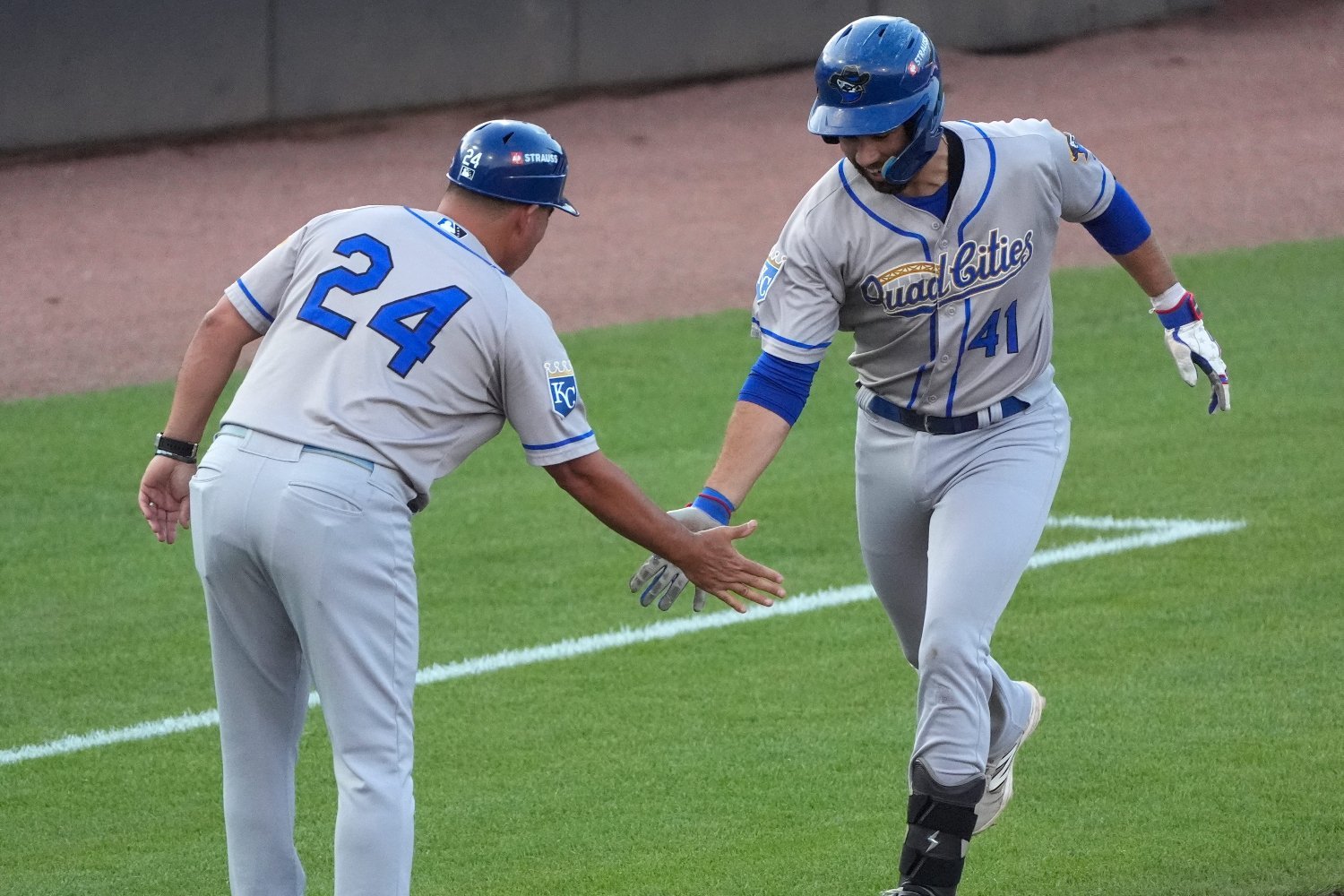 The Quad Cities River Bandits were the jewel of the Royals' farm system in 2026. They finished the regular season 70-57 and were the only affiliate to qualify for the postseason and post a winning record (though the Fireflies were close at 64-65). In the playoffs, they faced the South Bend Cubs and Dayton Dragons, the affiliates of the Chicago Cubs and Cincinnati Reds, respectively. Despite having to play games 2 and possibly 3 on the road in each series, the River Bandits swept both series in two games. As a result, the River Bandits captured the Midwest League pennant, even though they finished second in the West Division during the regular season. While many prospect experts still see the Royals' farm system as lower-tier, the River Bandits were a loaded squad that showed the potential of the top prospects in the Royals' system. Over this two-game series against the Dragons, many of the Royals' key Minor Leaguers stepped up and not only achieved the ultimate team success (a Midwest League championship), but also gave hope to Royals fans who are looking for signs of optimism in 2027 and beyond. Here are three stories that stuck out from the River Bandits' championship run over the past two weeks. Quad Cities Aces Step Up Kendry Chourio and David Shields pitched in the clinching games of the South Bend and Dayton series, respectively. Quad Cities not only won those deciding games on the road, but Chourio and Shields set the tone with excellent outings in high-pressure starts in hostile opposing parks. On September 10th at Four Winds Field against the Cubs, Chourio was electric in 4.1 innings. He allowed no runs, two hits, two walks, and struck out six. In addition to striking out a plethora of batters, the 18-year-old came through in big spots, limiting the Cubs with runners in scoring position. Chourio didn't start against the Dragons, but he likely would've started Game 3 if the River Bandits had lost Game 2. That shows how much confidence manager Jesus Azuaje had in Chourio, as he was ready to throw the teenager in a do-or-die Midwest League championship game. The metrics would've backed up Azuaje's decision. In 10 starts and 42.2 IP, Chourio posted a 3.16 ERA, 0.87 WHIP, 3.19 FIP, and 23.5% K-BB% (amplified by a 28.3% K%, up from 23.4% in Low-A Columbia earlier this year). He also posted eye-popping Statcast percentiles in Quad Cities, with his O-Swing%, BB%, and SwStr% ranking in the upper percentiles. Chourio's SwStr% ranked in the 85th percentile, his O-Swing% ranked in the 82nd percentile, and his BB% ranked in the 99th percentile. He also ranked in the 93rd percentile in Strike%, the 66th percentile in CSW%, and the 66th percentile in K%. Even though he was one of the youngest pitchers in the Midwest League, he was still one of the most dominant. However, Shields was the River Bandits' main pitching star in the postseason, clinching the Midwest League Championship with a quality start. In six innings against the Dragons, Shields allowed no runs, three hits, two walks, and struck out seven. It was a much better start than his first playoff outing against the Cubs on September 8th, when he gave up two runs on four hits and two walks in three innings. That said, he still showed his strikeout stuff against the Cubs with five strikeouts, and the River Bandits' offense provided much-needed help in an 8-5 win (fueled primarily by Austin Charles, who drove in five runs on three hits). Shields' numbers weren't as impressive as the Venezuelan righty, especially in terms of ERA. However, the 20-year-old lefty proved a durable, dependable starter for the River Bandits all season. In 25 starts and 116.2 IP, he posted a 4.01 ERA, 1.08 WHIP, 2.78 FIP, and 23.7% K-BB%. He was hurt a bit by the home run ball, giving up an HR/FB% of 11.6%. That said, his strikeout numbers (29.7% K%) and strong FIP suggest his season was better than his ERA indicated. Furthermore, his Statcast percentiles were arguably as impressive as Chourio's, as he rated better than the 18-year-old in CSW% and K% this season. The Royals have struggled with pitching at the Major League level this year. However, Chourio and Shields give the Royals hope that reinforcements could arrive quickly, perhaps as soon as mid-season next year if they keep dominating like this in Double-A Northwest Arkansas. Blake Mitchell Comes Up Clutch Mitchell, our No. 4 prospect at Royals Keep, has been a polarizing prospect among Royals fans this year. In 115 games and 511 PA with Quad Cities this year, the 21-year-old catcher slashed .234/.414/.459 with an .873 OPS. He also had 23 home runs, 95 runs scored, 75 RBI, and 27 stolen bases, the latter impressive for a catcher. However, he struck out 34.1% of the time this year, which dampened his strong walk rate (22.1%). Furthermore, his whiff and contact numbers didn't look good either, based on his Statcast percentiles. However, the 2023 1st-round pick came through when the River Bandits needed him. He had a clutch double in game one against Dayton in their 4-0 win. His biggest hit came in game two. Down 1-0, Mitchell hit a two-run bomb in the top of the 8th that gave Quad Cities the lead, which they wouldn't relinquish. Even though many felt Mitchell should've matriculated to Double-A at some point this year (myself included), his presence on this River Bandits roster paid off, especially in the championship rounds. He carried this offense when they needed it the most, and that performance in a pressure-packed environment (especially in game two against Dayton) will have more long-term benefits on his career than playing for a Naturals team that was uncompetitive for most of the season. Mitchell will be tested in Double-A Northwest Arkansas next year. It will be interesting to see how his K% fares, especially since it's been so high not just in High-A ball, but in Low-A competition as well. That said, his finish in Quad Cities should help him build positive momentum for next spring in Arizona. Langevin and Quad Cities Bullpen Lock Down The unsung heroes of this River Bandits championship team may be the bullpen, led by closer L.P. Langevin, who was absolutely dominant in the two-game series against Dayton. In two IP, Langevin struck out six batters and allowed no hits, runs, or walks. The Louisiana-Lafayette was predictable in his pitch repertoire, relying heavily on his 97-98 MPH fastball. That said, even though Dragons hitters knew it was coming, they couldn't do much about it, as shown by his six strikeouts over the two-game span. The River Bandits got a lot of help in the postseason bullpen beyond Langevin. Emmanuel Reyes, Dash Albus, Ethan McElvain, Kamden Edge, Jordan Woods, and Yimi Presinal all contributed during this Quad Cities playoff run. However, Langevin was the star, capping an impressive full season in High-A. In 40 outings and 55.1 IP, Langevin posted a 3.42 ERA, 1.19 WHIP, 3.45 FIP, and 28.4% K-BB%. He struggled a bit with walks (16.5% BB%) and homers (25% HR/FB%), but when he was locked in, he was the most dominant strikeout pitcher in the Royals organization this season (106 strikeouts and 44.9% K%). His Statcast percentiles confirmed his dominant swing-and-miss stuff. Langevin needs some polish, especially with his control. However, he made a ton of progress this year and had 19 strikeouts and no walks in his last nine innings. Something clicked for Langevin at the end of the year, and the postseason pressure seemed to help his performance. This isn't surprising, as Langevin seemed to value competition, as Jared Perkins and I learned in an interview with him on the Royals Pipeline podcast on KC Sports Network in early June. Langevin will be a special arm if he stays healthy. It wouldn't be surprising to see him not only make a move to Double-A in 2027, but also appear in the Royals bullpen in late summer next year. His stuff and mentality are a strong fit for a bullpen role in Kansas City, and they need cheap, internal options that could boost a bullpen that was pretty poor this season. View the full article
 -
How Poor is the Twins’ Core, and Who Must Step Forward?
DiamondCentric posted an article in Twins Daily
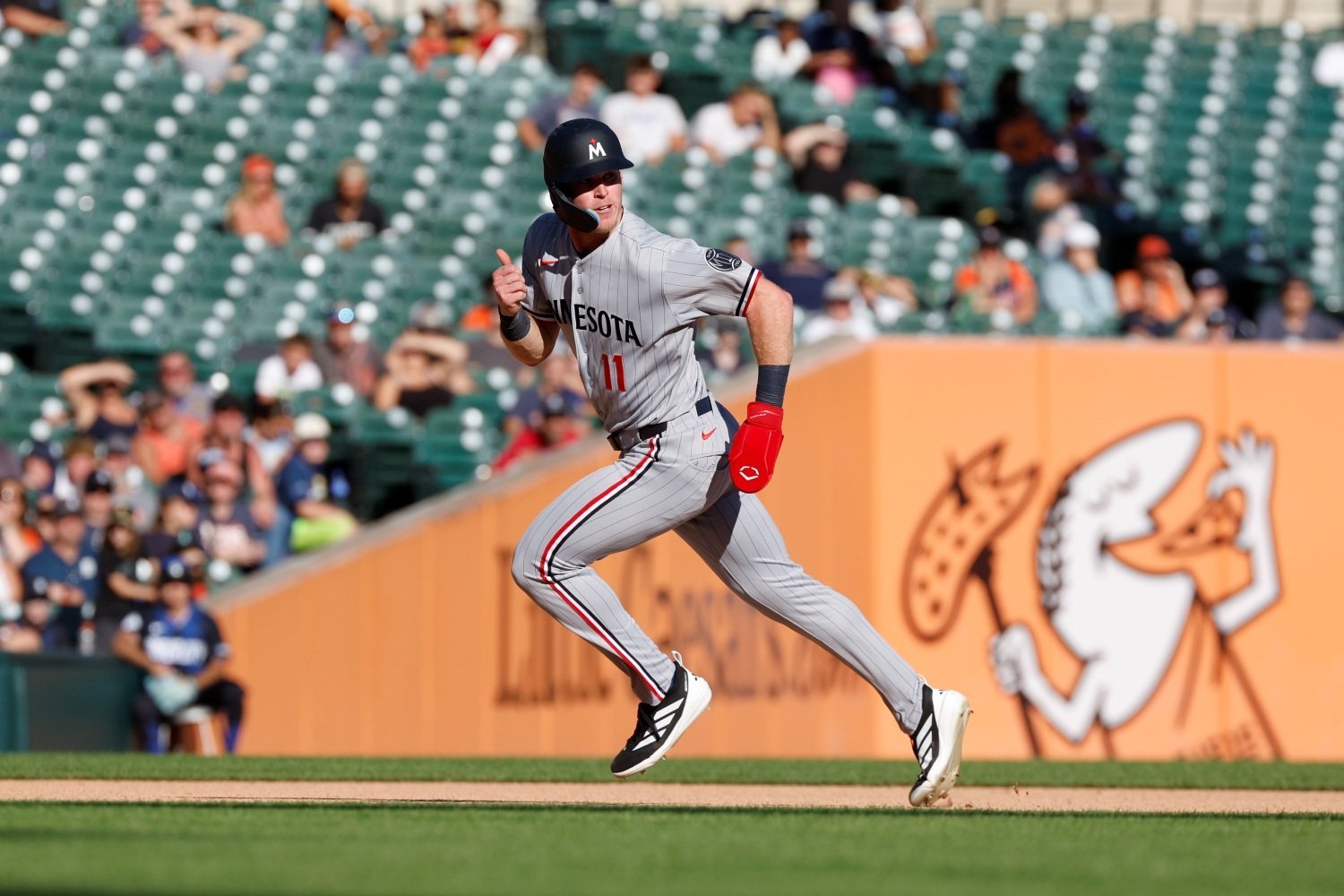 The Minnesota Twins have spent much of the 2026 season falling slowly out of the American League playoff picture. Now, one prominent national analyst has offered an assessment that could be even more concerning for the organization’s future. ESPN’s Kiley McDaniel recently ranked every team in Major League Baseball based on its current core. The exercise looks at which players are under contract or team control for the next two full seasons, attempting to measure how much talent each organization has around which to build. McDaniel breaks players into three categories. “To make it easier to see which team has more talent, I split players into three tiers: elite (5ish WAR talent, or perennial All-Stars with MVP chances), plus (3-5ish WAR types) and solid (1.5-3ish WAR, or lower-end starters and valuable role players).” By that measure, the Twins have one of the worst cores in baseball. Minnesota ranks 29th, ahead of only the Colorado Rockies. Colorado has finished last in McDaniel's rankings for five consecutive seasons. That makes this year's ranking particularly difficult to swallow. The Twins ranked 18th in 2025, 11th in 2024, 19th in 2023 and 17th in 2022. There's been some fluctuation, but the organization has generally been viewed as having a middle-of-the-pack core. Now, it's nearly at the bottom—at least by this reckoning. There's No Elite Talent The most glaring part of McDaniel's assessment is what the Twins don't have. There isn't a single player in Minnesota's current core who qualifies as an elite player. Byron Buxton is the lone player in the Plus category. McDaniel views him as a player capable of providing roughly 3-5 WAR value, but the Twins don't have anyone in the elite tier. The Solid category is much more crowded. That group includes Taj Bradley, Walker Jenkins, Vahn Lackey, Kaelen Culpepper, Luke Keaschall, Brooks Lee, Kody Clemens, Marek Houston, Connor Prielipp, Emmanuel Rodriguez, Royce Lewis, Riley Quick, Hendry Mendez, Khadim Diaw, Zebby Matthews, Andrew Morris, Mick Abel and Kendry Rojas. There's certainly talent there. The problem is that most of it is projection. Jenkins, Culpepper and Keaschall haven't had enough time in the majors to establish themselves as impact players. Lackey, Houston, Quick, Mendez and Diaw are still prospects. Bradley has shown flashes of being a major-league starter, but he has yet to establish himself as a consistent top-of-the-rotation arm. That's a very different situation than having multiple established stars anchoring an organization. And there's another important omission. Pablo López and Joe Ryan don't qualify, because they're only under team control through 2027. That feels like an important distinction when evaluating the Twins. Both pitchers could be major contributors in the short run, but McDaniel's methodology doesn't allow them to boost Minnesota's ranking beyond that window. McDaniel does leave some room for optimism. He notes that some players at the top of the Solid tier could move into the Plus category next season. The Twins also could potentially add talent in trades involving López and/or Ryan, giving them an opportunity to reshape the core, rather than simply watching it deteriorate. Still, 29th is 29th. How I See the Twins' Next Two Seasons If I were ranking the current Twins based strictly on the value I expect them to provide over the next two seasons, my top five would look like this: 1. Byron Buxton Buxton is past his peak, but that doesn't mean he's incapable of being an All-Star-caliber contributor. When healthy, Buxton can impact a game as profoundly and in as many ways as anyone else in the organization. His power, speed and defensive ability give him a ceiling that remains higher than almost anyone else in the organization. The obvious question is whether he can stay on the field. That's also the biggest reason why he isn't considered an elite player in McDaniel's ranking—although age is becoming part of that equation, too. 2. Taj Bradley Bradley is the player I would bet on making the biggest jump over the next two seasons. He has the ingredients to become a borderline All-Star starting pitcher. If his development continues on its current trajectory, he could move from the Solid tier into the Plus category relatively quickly. For a Twins organization desperately searching for foundational pitching, that would be a massive development. 3. Walker Jenkins The beginning of Jenkins's major-league career hasn't gone exactly as anyone hoped. That's not particularly concerning (yet), though. Jenkins is still very young, and the talent that made him one of baseball's top prospects hasn't disappeared because of a difficult introduction to the majors. There will be adjustments, struggles and growing pains. Eventually, those adjustments should start working in his favor. If Jenkins reaches anything close to his expected ceiling, he could become one of the most important players in Minnesota. 4. Kaelen Culpepper Culpepper already looks like he belongs at the major-league level. There are prospects who need significant development before they can become everyday players. Culpepper has already shown enough to make it reasonable to expect him to be part of the Twins' long-term plans. His ability to provide value in multiple areas makes him an especially intriguing piece moving forward. 5. Luke Keaschall Keaschall's path might be a little less conventional. He should settle into a corner outfield spot, where his offensive ability can become the primary driver of his value. If he continues to develop, he should provide above-average production over the next two seasons. He's another player who could force his way from the Solid tier into Plus territory. The Twins need that to happen. The Problem With a Core Built on Potential There's nothing inherently wrong with having a young core. In fact, that's exactly what rebuilding organizations are supposed to do. The problem comes when the young players are being asked to carry the organization's future, because there aren't established stars around them. That's where the Twins currently find themselves. Buxton is the lone established Plus player in McDaniel's evaluation. After that, the organization is banking heavily on a collection of young players reaching their potential. Maybe they will. Jenkins could become a star. Culpepper could become an above-average everyday player. Keaschall could turn into a dangerous offensive weapon. Bradley could emerge as a frontline starter. Rodriguez, Lee, Prielipp, Houston and the other young players could also develop into significant contributors. But there's a massive difference between having a group of players who could become stars and having a core that has already demonstrated it can produce at that level, or near it. The Twins' previous rankings reflected a healthier balance between established talent and promising young players. The 2026 ranking suggests that balance has disappeared. And that should concern Twins fans. Where Does Minnesota Go From Here? The good news is that 29th doesn't mean the Twins are doomed—far from it. This is a young organization with several players who could make significant jumps over the next 12 to 24 months. McDaniel himself points out that some of Minnesota's top Solid players could move into the Plus category next season. That is the path forward. The Twins need Bradley, Jenkins, Culpepper and Keaschall to outperform their current projections. They need players like Rodriguez and Abel to stay healthy and reach their potential. They need prospects such as Lackey, Houston and Rojas to develop into legitimate major-league pieces. They need to make smart decisions with the established talent they still have. López and Ryan could provide tremendous value in 2027. They could also become trade chips if the organization decides its best path forward is to continue rebuilding. That is where the front office has an opportunity to change the perception of this core. A 29th-ranked core today doesn't have to be a 29th-ranked core two years from now. But the Twins need their young players to develop into more than solid contributors. They need stars. Right now, the biggest problem with Minnesota's core isn't that it lacks talent. It's that almost all of its best talent still comes with a question mark. And after years of watching the Twins hover around the middle of baseball's organizational rankings, dropping to 29th is a pretty clear warning sign. The Twins have some promising pieces. They just don't have enough proven ones. How should fans feel about the Twins' current core? Who will be the top five contributors to the Twins over the next two seasons? Leave a comment and start the discussion. View the full article
 -
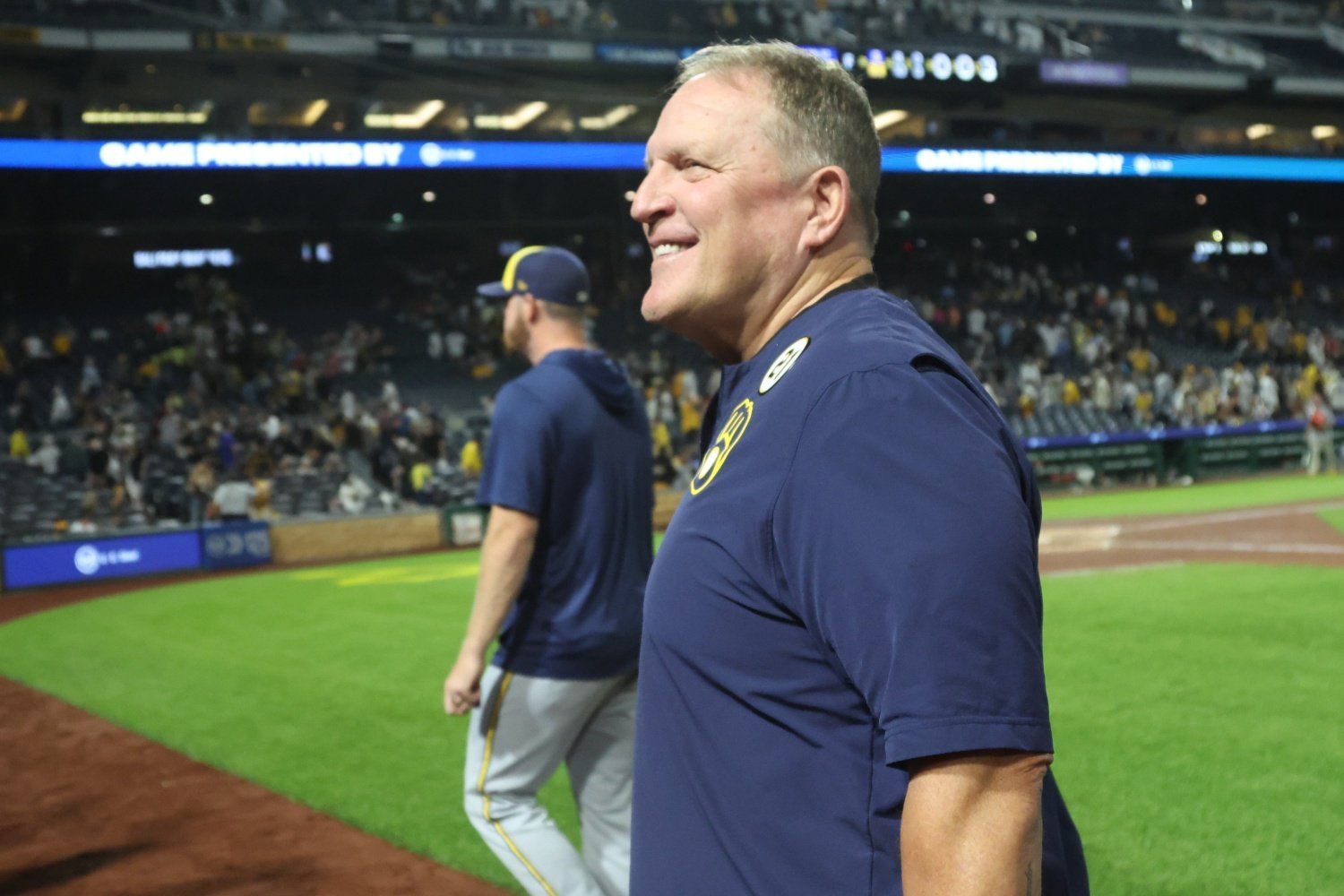 Let's be honest: "Win the division" is a level the Brewers have beaten so many times that they no longer feel the same surge or thrill in doing it. In fact, there's a little bit of that tight-jawed impatience that creeps into a video-game player forced to repeatedly thwart some minor boss en route to the one they can never beat. This team and its fan base do enjoy the regular season, but until they finish the game and conquer the final boss that is winning a World Series, the six-month grind will continue to feel like something to be gotten through, in preparation for the real test. Besides, there's little catharsis in winning the way they win it these days. Milwaukee has not only won four straight division titles, but has had each wrapped up well before Game 162. Often, September contains little drama for them. This was true when they won in 2021, too. The only team to beat out Milwaukee in the Central since the lost COVID season, the 2022 Cardinals, was old and forgettable and soon disassembled. It feels like it's been the Crew's division to run as they please for almost a decade, and they've rarely felt the pressure or stress that makes the moment of clinching a division crown so thrilling. Nothing is going to top 2018, when they ran down the Cubs and kicked them out at the finish line. Still, it's important to exult in moments like Tuesday night. The Brewers took care of business against the Pirates, then watched as the Cubs laid an egg late and cinched the title for them, from several hundred miles away. It was a workmanlike Brewers win, but it did demonstrate why this team is great. Jacob Misiorowski steamrolled Pittsburgh over five scoreless innings, then made an early exit to conserve bullets ahead of the postseason. Aaron Ashby delivered two scoreless, stellar innings, because that's what Aaron Ashby does almost every day. The offense didn't hit any balls over the fence, but they had four doubles and got on base 15 times, and five relatively easy runs trickled across the plate. They can beat you in more ways than anyone else can, and they can beat you more comfortably than anyone else can. Always a young team, the Brewers run on the high standards of Pat Murphy and the always-fresh energy of their new guys. The plus side of turning over the roster more than any other similarly good team would do is that there are always players in the mix who haven't yet experienced all of this—guys for whom the stakes of these moments don't feel dimmed by the existence of so many previous, similar ones. They're not bored of winning. They're thrilled about it. They just feel a fierce desire to keep it going, so that their detractors and doubters are forced to stop talking about whether teams like this one can win in the postseason. It's a laughable question; it really is. Only teams like this one can win in the postseason, because this team is great. They have the best pitcher in baseball. They have a remarkably deep bullpen. They have three players (Jackson Chourio, William Contreras and Brice Turang) who are all in their prime, or are just entering it, and who are the best players at their respective positions in baseball when they're going well. They have an All-Star-caliber slugger (Jake Bauers) who has come practically from nowhere, but whose success is not at all a fluke and is likely to continue. They play smart, athletic baseball. They are, to quote their manager and the coded message on the inside of his bicep, "f---ing relentless." There's no important sense in which any other team has a leg up on them. Maybe that will finally yield a pennant and/or a parade this fall. Maybe it won't. It obviously matters, but it would be silly to suggest that that's all that matters. Winning your division is a real and important achievement in Major League Baseball. Doing it for four years in a row—and making the competition look so overmatched along the way—is a remarkable one. The Brewers have been building equity in the Central since that magical September of 2018. Now, they own it outright. The future is bright, but don't overlook what this team has accomplished already. View the full article
 -
The Blue Jays' History Taking Pitchers in the Rule 5 Draft
DiamondCentric posted an article in Jays Centre
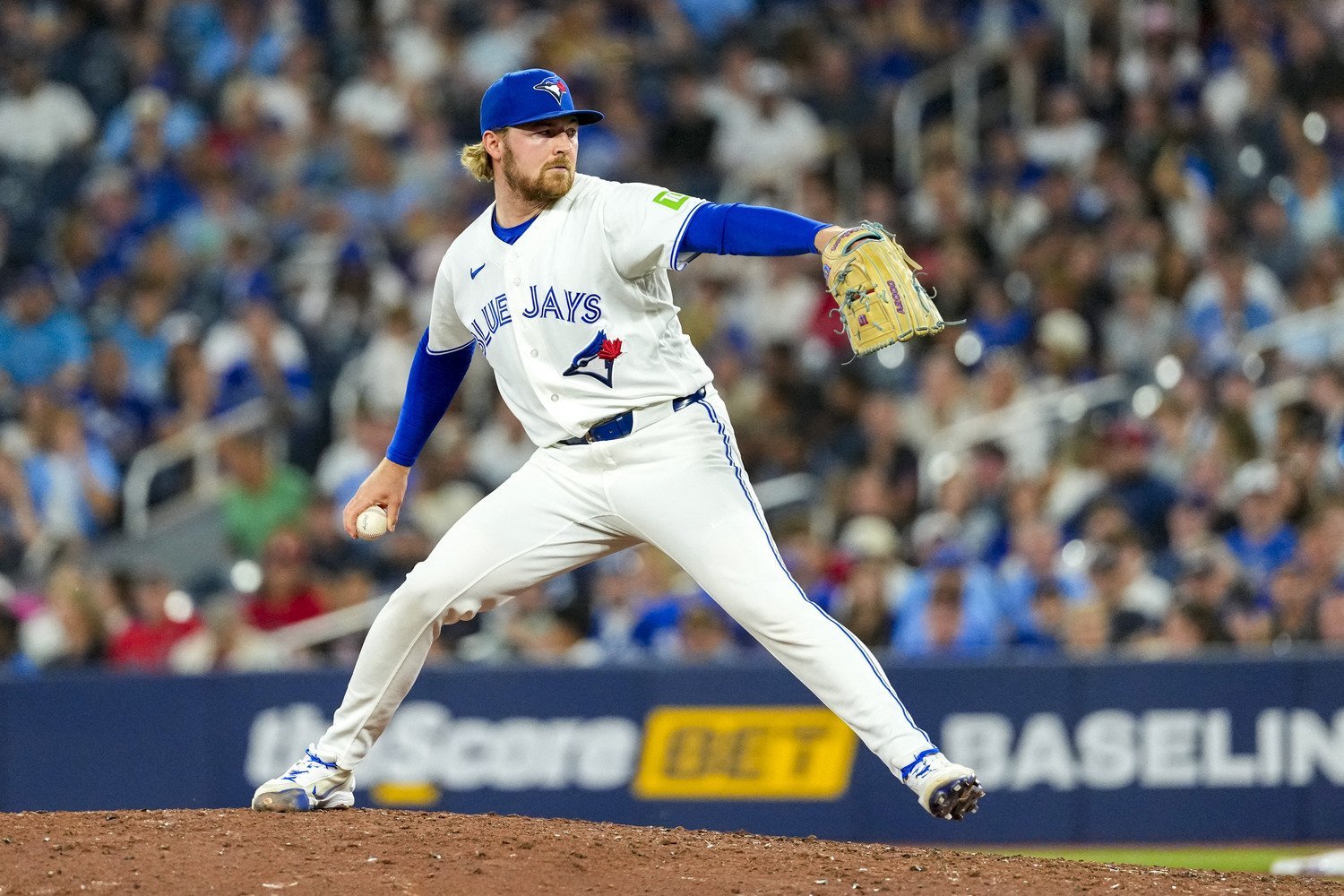 Spencer Miles has turned into an exceptional Rule 5 draft pick for the Toronto Blue Jays. He never threw above Single A before this season because of back and elbow surgeries. However, the team saw potential in the righty, and he’s been “Mr. Do-It-All” for the pitching staff. He has started seven games, has been the bulk-inning eater after an opener, has held late leads ahead of the closer entering, and is 2-for-2 in save opportunities. Over 89 2/3 innings, Miles has a 6-2 record, a 2.72 ERA, 86 strikeouts, 23 walks, and a 1.06 WHIP. Seeing how successful a Rule 5 pick Miles has turned out to be made me wonder how other Blue Jays Rule 5 pitching selections fared. 2024: Angel Bastardo - RHP, Boston Red Sox Bastardo was a long-term investment pick. He made 10 starts in Double-A in 2024 before needing Tommy John surgery. So the Blue Jays used the 2025 season to rehab Bastardo, as he was only 22 when he got injured. During spring training in 2026, he threw 7 2/3 innings, posting a 4.70 ERA, a 5:7 strikeout-to-walk ratio, and a 1.57 WHIP. The righty stayed with the Blue Jays up until the final cuts, but Miles was the Rule 5 player who they kept. Since Bastardo didn’t make the team, he was designated for assignment and returned to the Red Sox organization. 2018: Elvis Luciano - RHP, Kansas City Royals Luciano was a surprise selection for the Blue Jays. He had never pitched above Rookie ball, but at 18, Toronto saw potential. He pitched in low-leverage situations during the 2019 season, posting a 5.35 ERA and a 1.78 WHIP over 33 2/3 innings. The righty also tallied 27 strikeouts, but walked 24 batters. It was a respectable showing for a player of his age at the top level. Holding onto the teenager all season was a risk, but it gave the Blue Jays a promising prospect at a young age. However, that was the only time Luciano made it to the big leagues. 2016: Glenn Sparkman - RHP, Kansas City Royals Sparkman’s Toronto tenure was short-lived, as he pitched in two games while posting a 63.00 ERA, a walk, a strikeout, and a 10.00 WHIP over an inning of work. He was then returned to the Royals, for whom he pitched 179 1/3 innings over the following three seasons. He had a career 5.99 ERA and a 111:58 strikeout-to-walk ratio. 2015: Joe Biagini - RHP, San Francisco Giants Biagini was one of the better Rule 5 picks for the Blue Jays during his rookie season. He had a 3.06 ERA over 67 2/3 innings, with 62 strikeouts and 19 walks. However, his production went downhill after 2016. He pitched two more seasons with Toronto, posting 5.34 and 6.00 ERAs. Splitting time between starting games and bullpen work may have contributed to those inflated numbers. The righty was pitching better in 2019 in a full bullpen role before getting traded in a package that included Aaron Sanchez to the Houston Astros for Derek Fisher. 2013: Brian Moran - LHP, Seattle Mariners After the Blue Jays selected Moran, they quickly traded him to the Los Angeles Angels for cash. He returned to Toronto in 2020 but pitched only one scoreless inning over two games, with one strikeout. 2009: Zech Zinicola - RHP, Washington Nationals Zinicola never made it to the majors, despite posting a 3.74 ERA, a 3.39:160 strikeout-to-walk ratio, and a 1.36 WHIP over 385 innings in eight professional seasons. 2007 - Randy Wells - RHP, Chicago Cubs Wells pitched a scoreless inning for the Blue Jays, but that wasn’t enough for them to keep him. The righty was returned to the Cubs after the lone outing. He’d pitch the next four seasons for the North Siders, posting a 4.08 ERA over 529 career innings, with a 345:183 strikeout-to-walk ratio and a 1.39 WHIP. 2003: Talley Haines - RHP, Tampa Bay Rays Haines was selected after posting a 2.53 ERA with 64 strikeouts and a 1.00 WHIP over 67 2/3 innings in Triple-A. However, he spent only the next season pitching for what was then the Blue Jays’ Triple-A affiliate, the Syracuse SkyChiefs. The righty posted a 3.87 ERA, a 53:15 strikeout-to-walk ratio, and a 1.20 WHIP over 79 innings. During the 2005 season, Haines spent time with the Cubs and Red Sox minor-league teams. He also earned a spot on Team USA for the 2005 Baseball World Cup. 2002: Aquilino Lopez - RHP, Seattle Mariners Lopez was another successful Rule 5 draft selection. In his rookie season with the Blue Jays, he posted a 3.42 ERA, a 64:34 strikeout-to-walk ratio, and a 1.25 WHIP over 73 2/3 innings. However, the next season was a struggle. He posted a 6.00 ERA over 21 innings, and the Blue Jays did not bring him back in 2005. 2002: Gary Majewski - RHP, Chicago White Sox Majewski couldn’t crack the Blue Jays’ lineup and was returned to the White Sox. He’d go on to pitch six seasons in the majors for five different teams. 2001: Corey Thurman - RHP, Kansas City Royals Thurman pitched two seasons for Toronto, but they were a struggle. Those were his only seasons in the big leagues, and he posted a career 4.75 ERA, a 67:54 strikeout-to-walk ratio, and a 1.68 WHIP. 1995: Carey Paige - RHP, Atlanta Braves Paige pitched only one season with the Blue Jays organization, at then-High-A Dunedin. He posted a 3.02 ERA, 39 strikeouts, and a 1.29 WHIP over 44 2/3 innings. However, it was his last affiliated season, as he played in the independent Atlantic League the next season. 1992: Billy Taylor - RHP, Atlanta Braves Taylor didn’t make the Blue Jays roster and was returned to the Braves. He’d go on to play seven MLB seasons for four teams, collecting 100 career saves. 1990: Ricky Rhodes - RHP, New York Yankees Rhodes never made the Blue Jays roster and was returned to the Yankees. He spent five seasons in the minors, but never made it past High A. 1986: José Núñez - RHP, Kansas City Royals Núñez made 12 starts and 44 relief appearances for the Blue Jays over three seasons. In that span, he posted a 4.40 ERA and 131 strikeouts. 1985: José de Jesus - RHP, Kansas City Royals De Jesus didn’t make the Blue Jays roster and was returned to the Royals. He spent five seasons in the majors playing for the Royals and Phillies. 1982: Jim Acker - RHP, Atlanta Braves Acker spent more than half of his 10 big league seasons with the Blue Jays. They traded him to the Braves in 1986, but he returned to Toronto in '89 at the trade deadline and pitched two more seasons for them. He posted a 4.07 ERA during his two stints with the Blue Jays. 1982: Mercedes Esquer - LHP, Pittsburgh Pirates Esquer spent three seasons with the Blue Jays’ then-Double-A affiliate in Knoxville, but never advanced higher in the organization. Afterward, he spent seven seasons in the Mexican League. 1981: Jim Gott - RHP, St. Louis Cardinals Gott spent 14 seasons in the majors, with the first three being with the Blue Jays. Over that span, he started 65 games and pitched in relief in 34, posting a 4.45 ERA. View the full article
 -
Jarren Duran Can Be Fixed, but the Red Sox Are Running Out of Time
DiamondCentric posted an article in Talk Sox
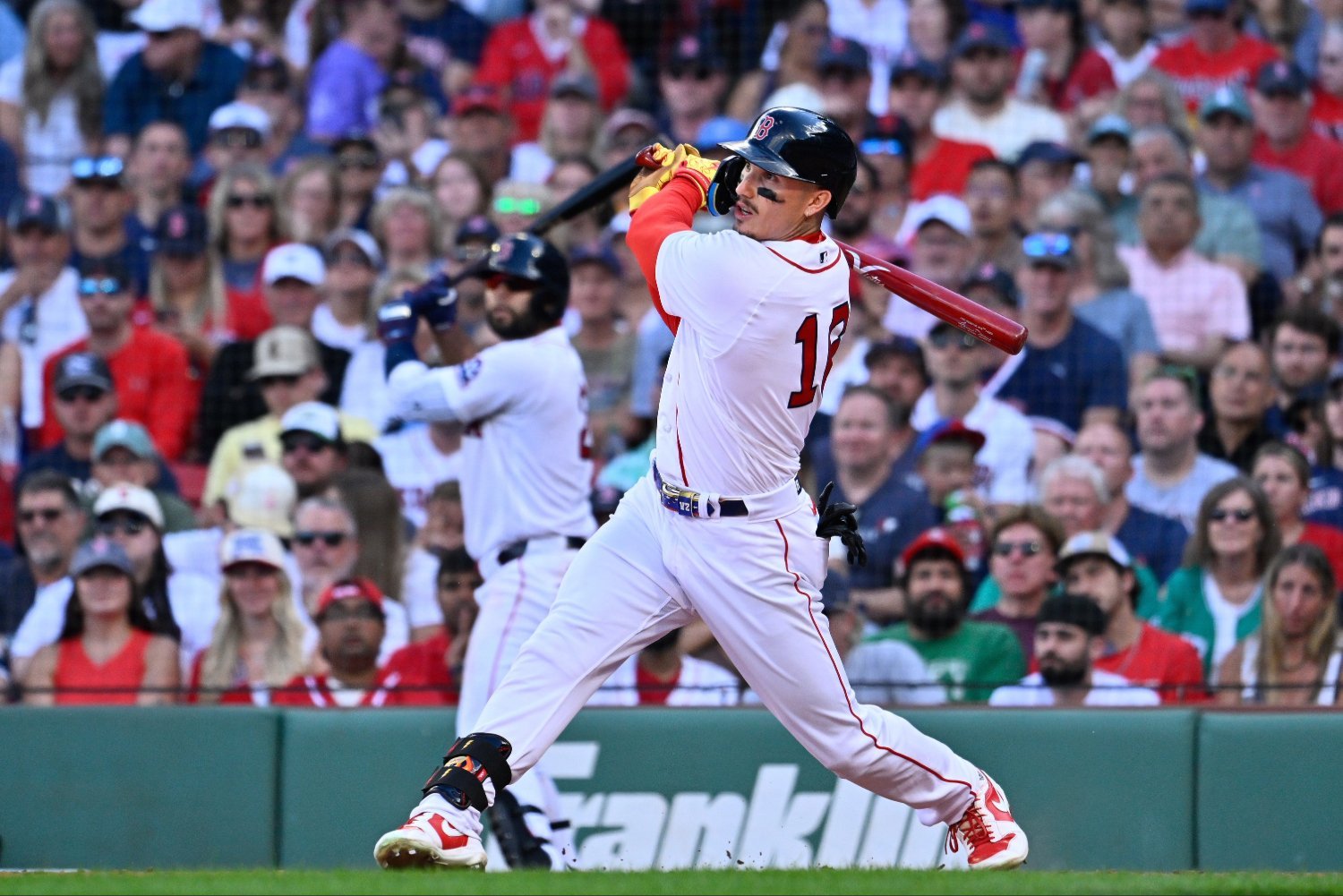 The Boston Red Sox are a near-lock for the second AL Wild Card spot. With just over 10 games left in the season, it’d take a whole mess of crazy for the Sox to move up or down. While it would be great to have a shot at moving up in the standings, their current situation will allow them to spend the final two weeks of the season freshening up their stalwarts, getting injury returnees back up to speed, and fixing Jarren Duran. Duran hasn’t quite been the worst regular in Major League Baseball, but that’s damning with faint praise. He’s still an excellent baserunner and a plus fielder, but only Ezequiel Tovar has a lower wRC+ (51) among qualified hitters than Duran’s mark of 67. Despite his disintegrated noodle of a bat, he has racked up 578 plate appearances due to injuries and, presumably, a lack of better options, but that doesn’t make him a lost cause. What makes Duran’s complete collapse at the plate so shocking is that he was a top-25 hitter by wRC+ only two seasons ago (132), and well above average just last season (112). While it’s safe to assume 2024 was a career year, he looked to have established himself as an above-average bat, and it’s not like all of his underlying metrics have cratered. If anything, many have improved. He’s swinging the bat as fast as ever. His barrel rate is almost identical to the past two seasons. He’s pulling the ball in the air more. And while his in-zone contact rate is a career-low 84%, that’s a completely fair trade-off for what should be better power. Duran Duran Season Ave Bat Speed Barrel Rate Pulled Air% Z-Contact% 2024 73.6 9.3% 10.3% 87.3% 2025 74.8 9.7% 15.2% 86.9% 2026 75.1 9.6% 14.9% 84.0% Now, you could argue that Duran didn’t need to change his approach from 2024, but given these figures, there’d be no reason to believe he had gone from one of the best hitters in baseball to almost the very worst. However, this chart doesn’t contain every last kernel of underlying data, and the one thing that has cratered for Duran is the most basic, fundamental skill of hitting—not chasing (f***ing) fastballs out of the zone. Duran is running a wRC+ of 67 because his out-of-zone swing rate (O-Swing%) has ballooned to 34.5%, which is largely driven by a career-high O-Swing% of 36.8% against four-seam fastballs. Throughout his career, Duran’s production has largely followed his ability to lay off pitches out of the zone, but his inability to lay off four-seam fastballs (FA), to this degree, is new. Season O-Swing% O-Swing% FA wRC+ 2021 34.70% 29.60% 48 2022 31.30% 26.60% 77 2023 29.80% 23.60% 122 2024 28% 20.80% 132 2025 31.10% 29.20% 112 2026 34.50% 36.80% 67 What makes his cratering performance against four-seamers so baffling is that it is exclusively down to swing decisions. His production when he makes contact is relatively unchanged, and he’s not whiffing a concerning amount in the zone. In fact, his zone contact rate against four-seamers is better than it was in 2024. Duran vs 4-Seam Fastballs Season Z-Contact% FastSw% EV90 Launch Angle Barrel% wRC+ 2021 81.20% NA 103.5 22.8 7.40% 67 2022 85.60% NA 102.5 18.6 11.80% 123 2023 88.40% 26.70% 106.5 16.9 4.30% 137 2024 84.80% 30.20% 105.6 21.5 12.80% 164 2025 88.10% 41.80% 108.8 18.8 11.40% 155 2026 85.30% 44% 107.4 20.5 11% 75 It’s not groundbreaking analysis to say that swinging at fastballs out of the zone is a bad idea, but it doesn’t necessarily doom a hitter to the abyss. However, Duran’s ability against four-seamers was a load-bearing trait, and it becoming a weakness has completely collapsed his profile because it has cost him the platoon advantage. Unsurprisingly, Duran, a left-handed hitter, has made a career out of pulverizing right-handed pitching. His career wRC+ against righties is 114, compared to 72 against lefties. Splits like this are far from unusual, but what has happened to Duran in 2026 is. Over 410 plate appearances against righties, he has a wRC+ of 63. That’s the second-worst among qualified hitters, and it all stems from his struggles against four-seam fastballs. This season, 37.3% of the pitches right-handers have thrown Duran have been four-seam fastballs, right in line with his career average of 38.7%. While four-seamers generally have more neutral platoon splits, historically, Duran absolutely feasted on right-handed four-seamers. Entering 2026, Duran had a +20.6 run value against right-handed four-seam fastballs, but he has somehow managed an absolutely preposterous, incomprehensible -13.1 run value in 2026. The reason why Duran’s plate discipline has completely collapsed against four-seamers is a bit more of a mystery, but I think it starts with his increased desire to swing hard, lift, and pull. Over the past four seasons, as Duran’s swing speed has increased, he has hit the ball out in front a bit more. Season Bat Speed Intercept Point 2023 73.2 -2.0 2024 73.6 0.0 2025 74.7 3.1 2026 75.1 4.4 None of this is particularly surprising and should be expected. A faster bat will make contact out in front more often, and bat speed increases throughout a swing. The two moving in tandem make all the sense in the world, but getting to this point could have come at a cost. To sell out for swing speed and contact out in front, Duran likely has to get his operation started just a fraction of a second earlier, which means committing to pitches a tad earlier as well. The trickle-down effect is swinging at more pitches out of the zone, and in particular four-seam fastballs, which require the quickest decisions at the plate. The Red Sox don’t need Jarren Duran to figure it out to make the playoffs, but getting him back to basics could unlock another level of the offense. With Duran producing at an average offensive level, suddenly the Sox could field an elite outfield defense of Wilyer Abreu, Ceddanne Rafaela, and Duran, while letting Roman Anthony DH. However, for that dream arrangement to work, Duran needs to actually hit again, and that starts with laying off fastballs outside of the zone. View the full article
 -
 The California League Championship Series will come down to a decisive Game 3 after the Low-A Lake Elsinore Storm were no-hit in a 9-1 loss to San Jose. Meanwhile, the Triple-A El Paso Chihuahuas began their final series of the season with an 11-5 victory over Oklahoma City Padres Minor-League Transactions San Diego Padres optioned 2B Mason McCoy to El Paso Chihuahuas. El Paso Chihuahuas placed C Rodolfo Durán on the 7-day injured list. C Oswaldo Linares assigned to El Paso Chihuahuas from San Antonio Missions. CAL LEAGUE CHAMPIONSHIP SERIES Storm Are No-Hit In Game 2, Go For Title In Decisive Game 3 It will come down to a final game to determine whether the Low-A Lake Elsinore Storm win their second title in five years and finish runner-up for the second time in three years. The Storm were no-hit by three pitchers in losing to the host San Jose Giants 9-1 in Game 2 of the California League Championship Series. Game 3 in the best-of-three series is Wednesday at 6:35 p.m. back in San Jose. The Giants, who won both halves of the North Division, are looking to win back-to-back titles. Right-hander Argenis Cayama went the first five hitless innings, right-hander Ian Korn, the Giants' 10th-round draft choice, the next two and right-hander Eric Nachtsheim, the Giants' sixth-rounder, went the final two. Cayama struck out seven. Left-hander Kruz Schoolcraft (Padres Mission's No. 4 prospect) is a strong possibility to start for the Storm, who are looking for their fifth championship in their 11th trip to the Cal League finals. They shared the 2001 title with the Giants due to the finals being canceled following the Sept. 11 attacks. The Storm also won in 1996, 2011 and 2022. Right-hander Coleman Borthwick, the Padres' first-round draft pick and Padres Mission's No. 3 prospect, would likely be in a relief role after making his debut in the clinching Game 2 of the South Division Series with two innings. After the Storm held the Cal League's best offense off the scoreboard until the ninth inning of Sunday's Game 1, they didn't have the same fortune in Game 2. Storm right-handed starter Jesus Castro, Padres Mission's No. 18 prospect, started with four shutout innings before things started to turn in the fifth. He allowed two runs on five hits and a walk with three strikeouts. The Storm took a 1-0 lead without the benefit of a hit in the third inning. Dawson Willis walked and went to second on a balk. After two strikeouts, a passed ball moved Willis to third. Second-round draft choice Elliot Lascelles (Padres Mission's No. 11 prospect) walked and then started a double steal, stopping short of second as Willis swiped home and Lascelles took second. The Giants tied it in the bottom of the fourth on a two-out RBI single to short that Jose Verdugo nearly got the inning-ending out at first. Castro nearly made it through five innings, getting the first two outs before hitting a batter and giving up a flare double that Willis made a diving effort in center only to deflect away, with the run scoring for a 2-1 Giants lead. Right-hander Tyler Pitzer came in and got the final out. But Pitzer gave up three straight singles to load the bases in the sixth, left-hander Rob Evans, the Padres' 12th-round draft choice, was asked to put out the fire. Evans walked the first batter he faced to make it 3-1, then struck out the next two before a passed ball by Ty Harvey (Padres Mission's No. 5 prospect) and an ensuing throwing error allowed two runs to score for a 5-1 Storm deficit before getting out of the inning with a fly to center. The Giants added four more in the seventh. Player AB R H RBI BB K Elliot Lascelles 2 0 0 0 1 0 Augie Lopez 1 0 0 0 0 1 Joe Tiroly 4 0 0 0 0 1 Alex Conover 2 0 0 0 0 0 Nu'u Contrades 3 0 0 0 0 2 Jorge Quintana 3 0 0 0 0 1 Jose Verdugo 2 0 0 0 0 1 Jesmaylin Arias 1 0 0 0 0 0 Dawson Willis 2 1 0 0 1 1 Ty Harvey 2 0 0 0 0 2 Truitt Madonna 1 0 0 0 0 1 Qrey Lott 2 0 0 0 0 1 Chris McHugh 1 0 0 0 0 0 Totals 26 1 0 0 2 11 Player IP H R ER BB K HR Jesus A. Castro (L, 1-1) 4 2/3 5 2 2 1 3 0 Tyler Pitzer 1/3 3 3 1 0 1 0 Rob Evans 1 1/3 2 2 1 1 2 0 Yoesmerli Beltre 1/3 1 2 0 2 0 0 Rordy Mejia 1 1/3 0 0 0 1 0 0 Totals 8 11 9 4 5 6 0 Mason McCoy Drives In 4 As Chihuahuas Win Opener Mason McCoy returned from a weekend with the Padres by driving in four runs, including a bases-loaded double, and right-hander Ian Koenig turned in six strong innings to lead the host Triple-A El Paso Chihuahuas to an 11-5 victory over the Oklahoma City Comets to begin their final series of the season. The Chihuahuas prevented the Comets from clinching the Pacific Coast League's East Division second-half title. Miguel Andujar, in his second week of a rehab assignment following a fractured right wrist, went 1-for-5 with two RBIs and a strikeout while playing a full game on defense in left field. This was his second game in left, having played seven innings Thursday. Gage Workman went 2-for-4 with a double, an RBI and a run scored, while Nick Solak had two hits and a run scored. Marcos Castanon scored three runs without a hit, walking once and being hit by a pitch. Koenig allowed one run on three hits with one walk and four strikeouts. The run came on a fifth-inning solo homer. He is scheduled to start the season finale Sunday. Right-hander Ty Adcock came on for two perfect innings, striking out three. Right-hander Trevor Gott, in his second appearance with the Chihuahuas after being released by the Washington Nationals, couldn't get an out in the ninth, giving up three runs. Right-hander Alek Jacob came in to get out of the mess, giving up a run on a solo homer. Already up 1-0 in the second inning, McCoy lined his 22nd double of the season to right-center, scoring all three runners on base for a 4-0 lead. The teams traded fifth-inning runs, then the Chihuahuas took control with a five-run sixth inning. Bryce Johnson had an RBI single, McCoy a bases-loaded walk, a wild pitch scored another run and Andujar capped the rally by chopping a two-run single up the middle for a 10-1 advantage. EP1_0915.mp4 EP2_0915.mp4 Player AB R H RBI BB K Mason McCoy 4 1 1 4 1 1 Miguel Andujar 5 0 1 2 0 1 Carlos Rodríguez 5 0 1 1 0 1 Nick Solak 4 1 2 0 0 1 Nick Pratto 4 1 1 0 0 1 Marcos Castañon 2 3 0 1 1 0 Gage Workman 4 1 2 1 0 0 Bryce Johnson 4 1 1 1 0 1 Anthony Vilar 2 3 1 0 2 0 Totals 34 11 10 10 4 6 Player IP H R ER BB K HR Ian Koenig (W, 3-0) 6 3 1 1 1 4 1 Ty Adcock 2 0 0 0 0 3 0 Trevor Gott 0 1 3 3 1 0 0 Alek Jacob 1 1 1 1 0 1 1 Totals 9 5 5 5 2 8 2 Padres Mission's Top 20 Prospect Performance Ethan Salas: DNP Ryan Wideman: On injured list Coleman Borthwick: DNP Kruz Schoolcraft: DNP Ty Harvey: 0-for-2, 2 K Kale Fountain: Injured, out for season Jorge Quintana: 0-for-3, K Alex McCoy: DNP Braedon Karpathios: DNP Lamar King Jr.: DNP Elliot Lascelles: 0-for-2, BB Tucker Musgrove: On injured list Jagger Haynes: DNP Jake Cunningham: DNP Truitt Madonna: 0-for-1, K Eric Yost: DNP Winyer Chourio: DNP Jesus Castro: 4⅔ IP, 5 H, 2 R, 2 ER, BB, 3 K, L Michael Salina: On injured list Rosman Verdugo: DNP View the full article
 -
 Biloxi took game one of the SLDS with Pensacola. It was a team effort in the box and on the mound. The team will have two games at home to close the series and clinch a spot in the championship. In Nashville, the Sounds started their final week of the season in walk-off fashion. Transaction: Milwaukee Brewers sent RHP Bryse Wilson on a rehab assignment to Nashville Sounds. Not quite a transaction, but "theBrewersFarm" account has the list of Brewers heading to the Arizona Fall League, which was announced Tuesday: Game Action: Nashville pre-game media notes Nashville 5, Memphis (Cardinals) 4, F/11 Box Score First, the Nashville Press Release in full as a linked location is not available this AM: Sounds Walk Off the First-Half Champs in Series Opener Four Different Sounds Record Multi-Hit Games; Brett Wichrowski Earns His Fourth Win of the Season NASHVILLE – The Nashville Sounds secured their eighth walk-off win of the season with a 5-4 extra-innings victory over the Memphis Redbirds Tuesday night at First Horizon Park. Brock Wilken, Brandon Lockridge, Akil Baddoo and Jeferson Quero each tallied a 2-hit game in the win and were responsible for 4-of-the-5 runs contributed. The Sounds jumped out to a 2-0 lead in the bottom of the first inning as Wilken lined a one-out single into center field. Two at-bats later, Lockridge ripped an RBI-double to center and scored Wilken for the one-run lead. Baddoo followed with his own RBI-single and scored Lockridge for the second run of the game. Memphis immediately tied the game as Coleman Crow issued three singles, including back-to-back RBI-singles. Nashville regained the lead in the bottom of the fourth inning as Quero led off the inning with a base hit into center field. After a wild pitch by Memphis advanced Black into scoring position, Eduardo Garcia drove Black home with an RBI-single to take back the lead. The Redbirds retaliated once again as major league rehabber Bryse Wilson issued two singles, including an RBI-single to make it 3-3. With one out in the frame, Wilson was relieved for Gerson Garabito inheriting the two runners on base and issued a walk to load the bases. Garabito stranded all three runners on base as he issued a fly out to center field to get out of the frame. Blake Holub entered the game in the top of the ninth inning and retired the side in 1-2-3 fashion. The Sounds had not scored in five straight innings as the Redbirds pitching staff retired 16-of-the-last-22 batters faced since the final out of the fourth frame, heading into extra innings. Holub remained in the game for the top of the 10th and issued an RBI-single into center, scoring the placement runner from second and giving the Redbirds their first lead of the game. The Sounds responded in the bottom of the 10th inning as Quero ripped an RBI-single into center field and scored Lockridge from second base to tie the game and head into the 11th. Brett Wichrowski secured the 1-2-3 frame in the top of the 11th inning to give Nashville another opportunity for the walk-off win. Garcia drew a leadoff walk that put two on base. After Jonathan Ornelas dropped a sac bunt towards the first baseman and advanced both runners into scoring position, Wilken ripped a hard grounder at the second baseman and was deep enough to score Rodriguez for the 5-4 walk-off win. Wichrowski earned his fourth win of the season, second in relief, and worked his eighth straight appearance without allowing an earned run. The Sounds and the Redbirds continue the final series of the 2026 season on Wednesday, September 16. First pitch is scheduled for 6:35 p.m. CT and right-hander Carlos Rodriguez (0-6, 7.79 ERA) is scheduled to get the start for Nashville. POSTGAME NOTES: GOT WILK?: Brock Wilken recorded his 15th multi-hit game of the season - first since September 6 vs. Louisville - and finished Tuesday's series opener against the Memphis Redbirds 2-for-5 with a walk, run, and a strikeout. He snapped a four-game hitless streak and bounced back from a 1-for-16 series in Durham last week. He is tied with Tyler Black and Akil Baddoo for the second-most multi-hit games on Nashville's active roster. Entering the night, Wilken was just 5-for-32 (.156) in nine games against the Redbirds this season with three of his hits coming in the matchup on June 20 in Memphis. He was 1-for-20 against the Redbirds over his last six games after his three-hit day. His walk in the bottom of the ninth inning was his 80th of the season, placing him in a tie with Brian Dayett (1982) for the 10th-most in a single-season in Sounds franchise history. KEY LOCK: Brandon Lockridge extended his current hitting streak to five games, tying his season high as part of a multi-hit day. After recording three of the Sounds' five hits over the last two games, he added his fifth multi-hit game, and second in his last three games, finishing Tuesday night 2-for-4 with a double, RBI, two runs, and a strikeout. He is 7-for-19 over his last five games with two doubles, three RBI, and a walk. Since returning to Nashville on August 23, he is hitting .266 (17-for-64) with a hit in 13 of his last 16 games. SO NICE WE DID IT BRYSE: Right-hander Bryse Wilson began his Major League Rehab assignment with 2.1 IP on Tuesday night in his first game action since he landed on the Brewers 15-day IL on August 31. He surrendered one unearned run on four hits with a pair of strikeouts against the Redbirds. In 12 relief appearances for the Brewers this season, Wilson has allowed seven earned runs across 24.2 IP with 22 strikeouts and just one walk. It was his first action in Triple-A since June 11 when he was with Lehigh Valley (PHI). After beginning the season in the Phillies org, Wilson appeared in 12 games for the Iron Pigs, going 3-5 with a 6.29 ERA in 11 starts. Despite pitching in 100 games for the Brewers between 2023-2024 & 2026, Tuesday night was his Nashville debut. He made 72 appearances between Gwinnett (2018-21), Indianapolis (2022), Charlotte (2025) and Lehigh Valley (2026). BROCK-OFF: Nashville's 5-4 walk-off win over Memphis was the Sounds' eighth walk-off win of the year. Brock Wilken delivered the game-winning run with grounder to second base in the bottom of the 11th inning to score Ramon Rodriguez. Wilken is the eighth different player to deliver a walk-off win for Nashville this season. It was the third walk-off of his career. His last was on May 25 of last year for Double-A Biloxi when he also reached on a fielder's choice. His first career walk-off was a RBI single in the bottom of the ninth to beat the ACL Rangers in his sixth career game. It was Nashville's second time going to 11 innings this year and the first since May 15 against Iowa when the Sounds won 4-3. The Sounds improved to 3-8 in extra innings this year. Earlier we had compiled this report including video evidence - The Sounds started off their final week of play on a happy note with a 5-4 walk-off victory over their in-state rivals Memphis on Tuesday night. Brandon Lockridge got Nashville on the board in the first inning with a two-out run scoring single, seen here courtesy of the Sounds’ X account: Akil Baddoo then chipped one into shallow center to make it 2-0 after one. Coleman Crow (4IP 7H 2R 1ER 1BB 2K) was on the mound for his penultimate start of the season. Crow immediately gave the two-run lead back in the second inning, due in part to his own throwing error. However, the shorter outing, couldn't take the shine off a memorable season for Crow, who managed to stay healthy and make his MLB debut, while throwing his most innings (117) in a season since 2022. The score remained tied at two until the 4th inning when Eduardo Garcia lined an opposite field single to give Nashville the lead 3-2. The rehabbing Bryse Wilson came on for Crow and faced the minimum in the 5th and 6th innings thanks to a double play. In the 7th, the Red Birds tied the game after an error and two singles chased Wilson from the game with the score knotted at 3-3. Neither team could break through in the final two frames, so the game headed to extras. In the 10th, Blake Holub did well to limit Memphis to only one run, with the “ghost runner” scoring on a single to make it 4-3 Memphis. In the home half of the inning, Jeferson Quero followed suit with an RBI single of his own. Ten innings would not be enough to decide things, so Brett Wichrowski was summoned from the Nashville pen to keep the game tied. Wichrowski did just that with his 8th consecutive outing without an earned run (2R in 7.1IP) to give the Sounds a shot at a walk-off. In the 11th, Brock Wilken played hero by putting the ball in play to score the winning run from third: Wilken, Quero, Baddoo, and Lockridge all had two-hit games for the Sounds. RHP Carlos Rodriguez (0-6, 7.79 ERA) will get the ball on Wednesday, in the lone game for the affiliates. Biloxi pre-game media notes Biloxi 6, Pensacola (Marlins) 3 (Game 1 of Best-of-Three Series) Box Score As always, you are encouraged to read the official round-up from the team’s site: Letson, Keith, Wood Lead Shuckers to Win in SLDS Opener - Shuckers take lead in playoff series for first time since 2019, stand one win away from returning to SLCS Biloxi pulled out a hard-fought, tense 6-3 victory in game one of their Southern League Divisional Series in steamy Pensacola on Tuesday night. The game started with some fantastic defense in the first inning. After Dylan O’Rae walked and stole second, Andrew Fischer was robbed on a grounder up the middle to keep the game scoreless. In the bottom of the first inning, center fielder Braylon Payne returned the favor with a defensive gem of his own, on this throw courtesy of the Shuckers’ X account: Bishop Letson (5IP 6H 1R 1ER 3BB 4K) was the beneficiary of the fine defense as he worked around traffic all night on what was a memorable 22nd birthday for the right hander. The game was scoreless until the fifth inning, when Damon Keith continued his season-long assault on Blue Wahoos’ pitching with a mammoth solo shot that is now in orbit somewhere around earth: Keith came into the game with six home runs, a 1.184 OPS, and 22 RBI in 18 games against Pensacola this season. O’Rae then added to the lead with a smash to second that was too hot to handle, making it 2-0 Shuckers. It was good to see O’Rae contributing all over the field on Tuesday after a tough second half. O’Rae was so pivotal to the Shuckers’ early season success with his ludicrous on-base rate and propensity for base thievery. Pensacola got one back in their half of the fifth on a two-out single to leftfielder Josh Adamczewski that was fired into home a beat late. That cut the lead to 2-1 Biloxi. In the sixth inning, the Shuckers broke the game open with a three-run rally. First, Adamczewski looped a ball to third base that sidewinded into the Shuckers’ bullpen to make it 3-1. Then catcher Matthew Wood tested the other baseline with a two-run double into the rightfield corner to make it 5-1 Biloxi: Then the game was in the hands of both teams’ bullpens, which would not inspire much confidence among any Shuckers’ fans who watched the team since the beginning of August. Wande Torres was the first man to get the call and after a scoreless 6th inning, Torres was burned by a two-out single in the 7th that cut the lead to 5-3. However, the difference in the final two frames was the execution of big pitches in clutch moments as Travis Smith and Ryan Birchard combined for four strikeouts, with just one hit allowed in the final 2.1 innings to slam the door. The Wahoos’ bullpen walked four men in the final three innings, much to the chagrin of the vocal Pensacola fans in attendance. On a night when the temperature was 86 degrees with 83 percent humidity, tempers boiled over with the home plate umpire’s strike zone. In the stands, in the dugout, and on the mound, everyone was chirping and demonstrative with the umpire as Pensacola closer Jake Sellinger lost the zone late in the game. In the 9th, Keith added an insurance run on a double to give the Shuckers the winning margin of 6-3. Keith, Wood, and Fischer all had two-hit days for Biloxi, who struck out 15 times as a team. O’Rae and Mike Boeve were each on base three times with two walks and a hit apiece. Wish to see all those clips in news report view? Biloxi's WLOX has you covered as they put together all the clips of the road game. LHP J.D. Thompson (0-3, 4.33 ERA in 27IP at AA) will make the biggest start of his career (18 starts across three levels this season) in game two on Thursday night. It will be the 2025 2nd-round pick’s 7th start at AA this season. Eliazar Dishmey (4-1, 3.30 ERA, 92K in 71IP at AA) will take the hill for Pensacola. Well friends, that's the last scheduled Tuesday games for the Brewers' affiliates. However, I have a good feeling the Shuckers are going through to the Southern League championship. If that's the case. I hope to see you back here next week to celebrate their title, and then I will bid you adieu at that time. Thanks for reading! Organizational Scoreboard including starting pitcher info, game times, MiLB TV links, and box scores Current Milwaukee Brewers Organization Batting Stats and Depth Current Milwaukee Brewers Organization Pitching Stats and Depth View the full article
 -
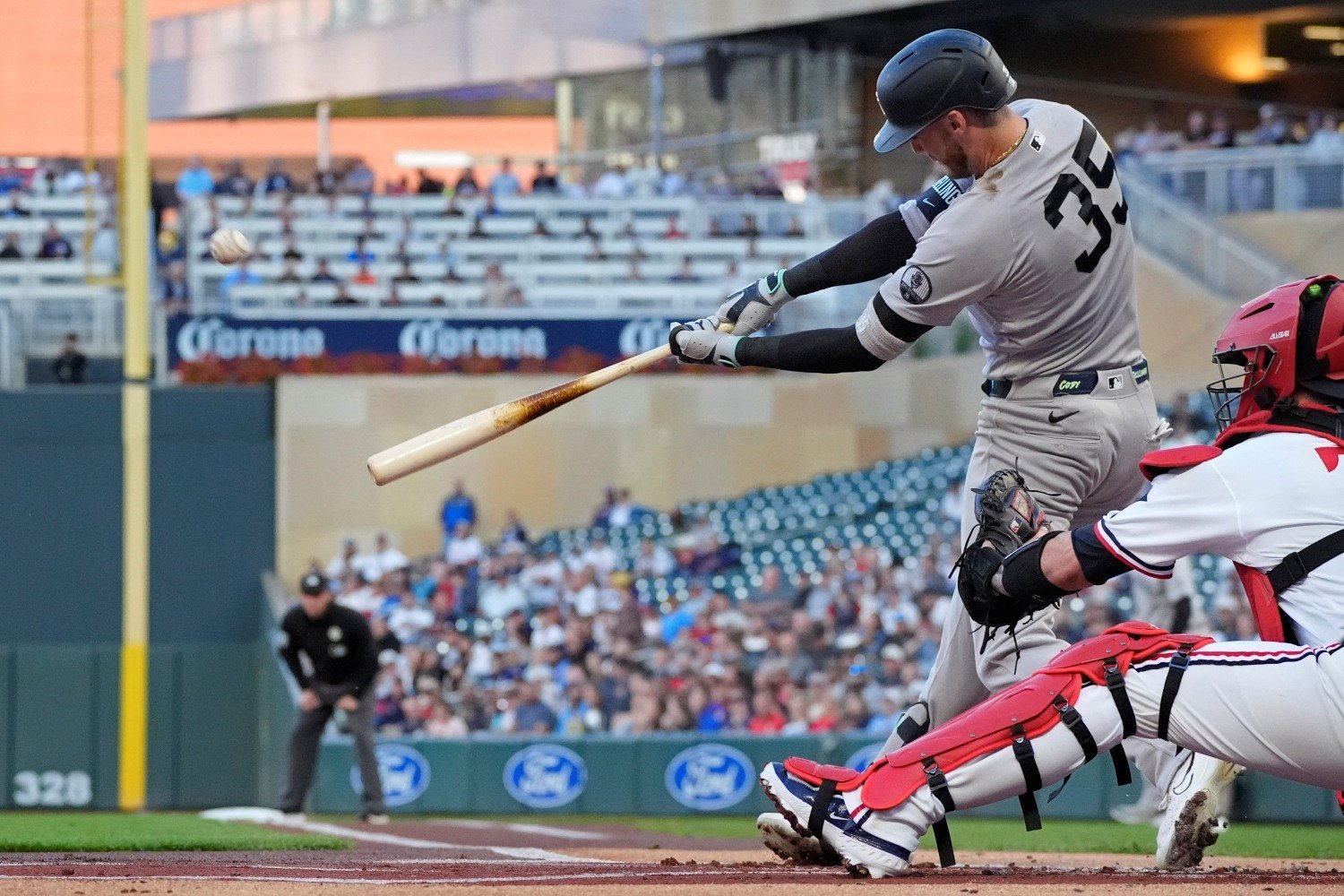 Box Score SP: Bailey Ober 5.1 IP, 9 H, 3 ER, 2 BB, 3 K (101 pitches, 69 strikes (68%)) Home Runs: N/A Bottom 3 WPA: Taylor Rogers (-0.20), Austin Martin (-0.10), Ober (-0.08) Win Probability Chart (via FanGraphs) The Twins only have pride to play for, and as they attempted to avoid another inevitable Yankees sweep at home, they sent the enigmatic Bailey Ober and his 89-MPH fastball to the mound Tueday night. As the writing on the wall begins to grow larger by the day about Ober's future with the team, the Minnesota faithful hoped the Bearded Nightmare could pull off another Maddux-like outing. He couldn't. Max Fried almost did, however. It was an ugly night for the hometown nine. Having Two Changeups Ain't Enough In reality, Ober doesn't have a fastball. He has two changeups, and Cody Bellinger tallywhacked a helpless specimen of the firmer variety in the top of the first inning to stake the Bronx Bombers to a 2-0 lead before most fans had a chance to sit down. Ober managed to maneuver his way around a two-on, one-out jam in the top of second, and the Twins actually made some noise in the bottom of the second against a tough lefty in Fried. Royce Lewis started things off with a single, eventually stole second base, and came around to score on an Emmanuel Rodriguez single up the middle to make it 2-1. That's literally the last hopeful Twins sentence that will be in this recap. Ober surrendered a walk and two singles in the top of the third to immediately give that run back, but he again found his way out of a bases-loaded jam to give a false sense of hope to Twins fans. In fact, that was the last run the starter would allow on the night, but the Yankees battered him enough that he could only last one out into the sixth inning. Then, another round of bullpen implosion took the stage. Tough End to a Great Era When Taylor Rogers rejoined the Twins at the start of the 2026 campaign, we knew that he wasn't the Rogers who fired up the scoreboard with walkout music and mid-90s heaters several years ago. We don't know how many more nights at Target Field Rogers will get, but Tuesday night was a rough one. He entered the sixth inning with one out and empty bases, and by the end of the inning, the score was 7-1 Yankees. Kaelen Culpepper booted a ball that made the last three runs unearned, but the gopher ball to Spencer Jones that put the game on ice wasn't Culpepper's fault. Meanwhile, Fried went seven strong in his playoff ramp-up; Andrew Morris coughed up yet another run in his attempt to right this season's ship; the Twins stranded Kody Clemens after a leadoff triple, with Lewis, Brooks Lee and Victor Caratini failing to manufacture a run; and the Twins fell lifeless down, down, down the AL Central division standings yet again. To everyone who stopped watching in the third inning, congratulations. Luke Keaschall's three hits, Rodriguez's early success left-on-left, and Derek Shelton going apoplectic late in the game on a check-swing mercy call notwithstanding, tonight was a terrible night for Twins baseball. What’s Next? Believe it or not, the Twins can still tie the season series against the Yankees with a win on Wednesday afternoon. They send Zebby Matthews (9-10, 4.98 ERA) out to achieve this normally exciting feat. Carlos Rodón (6-3, 2.94 ERA) looks to achieve his playoff practice run and sweep the Twins back out onto the road. First pitch is scheduled for 12:40 pm CDT. Postgame Interviews Bullpen Usage Spreadsheet FRI SAT SUN MON TUE TOT Nance 24 0 21 22 0 67 Rogers 0 0 22 0 38 60 Morris 0 17 0 11 30 58 Minter 17 16 0 18 0 51 Funderburk 15 22 0 3 0 40 Hoffman 10 16 0 13 0 39 Adams 0 0 36 0 0 36 Gomez 21 0 0 0 10 31 View the full article
 -
 The minor-league season has come to a close for the Fort Myers Mighty Mussels, Cedar Rapids Kernels, and Wichita Wind Surge. The St. Paul Saints finish off their season this week on the road, still technically alive in playoff contention, but they need a lot of help. The “magic” number is two Saints losses or three wins from Washington's Triple-A affiliate, the Rochester Red Wings, for them to be eliminated with six games to go (the Saints hold the tiebreaker over Rochester but also trail the Indianapolis Indians in the overall standings for the 2nd half playoff spot). Rochester faces the Triple-A affiliate of the Toronto Blue Jays to close their season, the Buffalo Bisons. TRANSACTIONS There were no transactions in the Minnesota Twins organization on Tuesday in advance of the St. Paul Saints final series of the season against the Columbus Clippers. In other prospect news, the Arizona Fall League rosters have been announced, including eight representatives from the Twins, headlined by Yasser Mercedes. Stay tuned here at Twins Daily for coverage of all things AFL for the Twins Prospects and the Salt River Rafters when their season starts on October 3rd! SAINTS SENTINEL St. Paul 0, Columbus 1 Box Score German Marquez made the start for the Saints against the Clippers and put together perhaps his best start since signing with the Twins organization. He scattered three hits and three walks over his five innings, allowing just a lone earned run. That came in the bottom of the second after a leadoff double, a walk, and a one-out RBI single. He retired six in a row after that before allowing his last hit of the game in the fourth and faced the minimum in the fifth after inducing a double-play ball to complete his outing. He threw 42 of his 71 pitches for strikes (59%) and struck out three. The score was just 1-0 Columbus at that point as the St. Paul lineup struggled to string anything together either. Cody Morissette singled in the second and stole second base but was left stranded. Tanner Schobel and David Banuelos hit back-to-back singles to start the third and two-out walk from Matt Wallner loaded the bases, but Gabriel Gonzalez flew out to center field to end the threat. The Cleveland Guardian’s rehabber Shawn Armstrong pitched the top of the sixth inning and struck out two in a one-two-three frame. In the top of the seventh Morissette again contributed a single and advanced to scoring position on a passed ball, but Ben Ross and Schobel went down swinging to keep the visiting team off the scoreboard. Jack Anderson took over for Marquez to start the bottom of the sixth inning and worked around a pair of singles with a double-play grounder and a strikeout to keep it within one. In the bottom of the seventh he retired the Clippers in order, including a second strikeout. Down to their last two at-bats, Banuelos again got the Saints started the right way with a leadoff single in the eighth, but a pair of smart defensive plays by the Clippers third baseman kept him at first base and turned a 5-3 double-play himself on a bit of a shift where he was positioned as a traditional shortstop. Unfortunate, as Aaron Sabato followed with a single that could have been a chance at a hit with a runner in scoring position to tie the game. Matt Wallner sent a ball to the warning track the opposite way but was caught at the base of the wall to end the inning. Anderson was back out for the bottom of the eighth and kept it rolling. He again retired the Clippers one-two-three, giving the Saints lineup their final chance to overcome a one-run deficit. Again, they got the leadoff man on base, as Gabriel Gonzalez led off with a single. Kala’i Rosario was up next and hit one 106.6 MPH, but into the ground and turned into a double-play ball to bring them to their last out. Morissette worked another good at-bad, but his ground ball toward second on the seventh pitch was an easy throw to first to end the game at 1-0. The Saints outhit the Clippers 7-5, but the only extra-base hit of the game was a big one, giving the Clippers a leadoff man in scoring position, and they were able to get a hit in that situation, finishing 1-for-7. St. Paul went 0-for-7 and left six men on base. Morissette (2-for-4, K, SB) and Banuelos (2-for-3, K) both finished with a pair of singles, but as a team they drew just one walk and struck out 11 times. In slightly positive news, the Rochester Red Wings lost to Buffalo, but the Saints could be eliminated from playoff contention tomorrow. TWINS DAILY MINOR LEAGUE PLAYERS OF THE DAY Pitcher of the Day – Jack Anderson, St. Paul Saints (3 IP, 2 H, 3 K) Hitter of the Day – Cody Morissette, St. Paul Saints (2-for-4, K, SB) PROSPECT SUMMARY Check out the Prospect Tracker for much more on our Twins Top 20 prospects after seeing how they did today. #1 - OF Walker Jenkins (Minnesota): did not play #3 - SS Kaelen Culpepper (Minnesota): 0-for-3, K #6 - OF Emmanuel Rodriguez (Minnesota): 2-for-3, 2B(1), RBI #9 - OF Gabriel Gonzalez (St. Paul): 1-for-4, K WEDNESDAY’S PROBABLE STARTERS Syracuse @ St. Paul (6:37 PM CDT) - LHP Aaron Rozek (3-6, 4.50 ERA) Please feel free to ask questions and discuss Tuesday’s game! View the full article
 -
More nerve irritation ends Pete Fairbanks' 2026 season
DiamondCentric posted an article in Fish On First
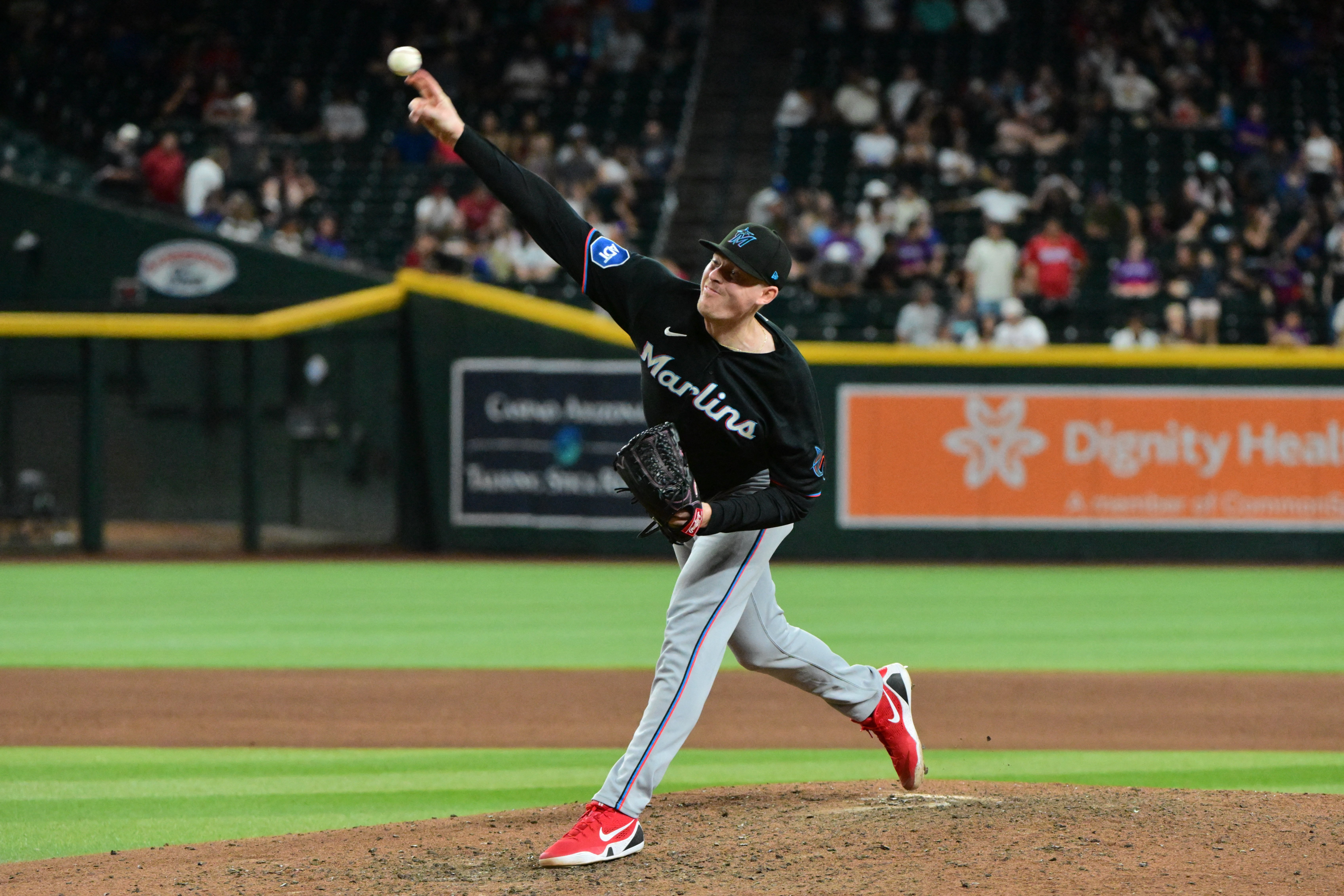 On Tuesday, for the third time this season, the Miami Marlins placed closer Pete Fairbanks on the 15-day injured list with right median nerve irritation. Only 13 days remain in the regular season, so even a minimum stint on the IL will prevent him from returning to the active roster. The Marlins recalled right-hander Bradley Blalock in a corresponding roster move. In the bottom of the ninth inning of Monday's game against the Arizona Diamondbacks, Fairbanks entered in a save situation, with the Marlins holding a 7-6 lead. He exited after throwing just six pitches (five balls). His replacement, rookie Jack Ralston, allowed walk-off home run to Corbin Carroll in the 8-7 loss. "He's frustrated," Marlins manager Clayton McCullough said regarding Fairbanks. "I feel bad for Pete. He's worked hard to try to come back from this, and then to go back out for your second appearance since coming off the IL and have a similar feeling that he did, I feel for him right now." Fairbanks, 32, signed a one-year deal worth $13M last offseason, receiving the highest salary in franchise history for a full-time reliever. He made 46 appearances (41.1 IP), posting a 6.31 ERA, 4.60 FIP, 12.41 K/9 and 4.57 BB/9 with 19 saves. It was a dramatic step back from his previous season with the Tampa Bay Rays, when he had a career-high 60 ⅓ innings pitched and 27 saves. Fairbanks is the only Marlins player who's eligible for free agency during the 2026-27 offseason. He would certainly be cheaper to sign this time around, but it is hard to believe he has a future in Miami given his disappointing performance and the projected return of high-leverage reliever Ronny Henriquez from elbow surgery. Blalock made two relief appearances for the Marlins earlier this month. Otherwise, he has spent the whole season in Triple-A Jacksonville's rotation. View the full article
 -
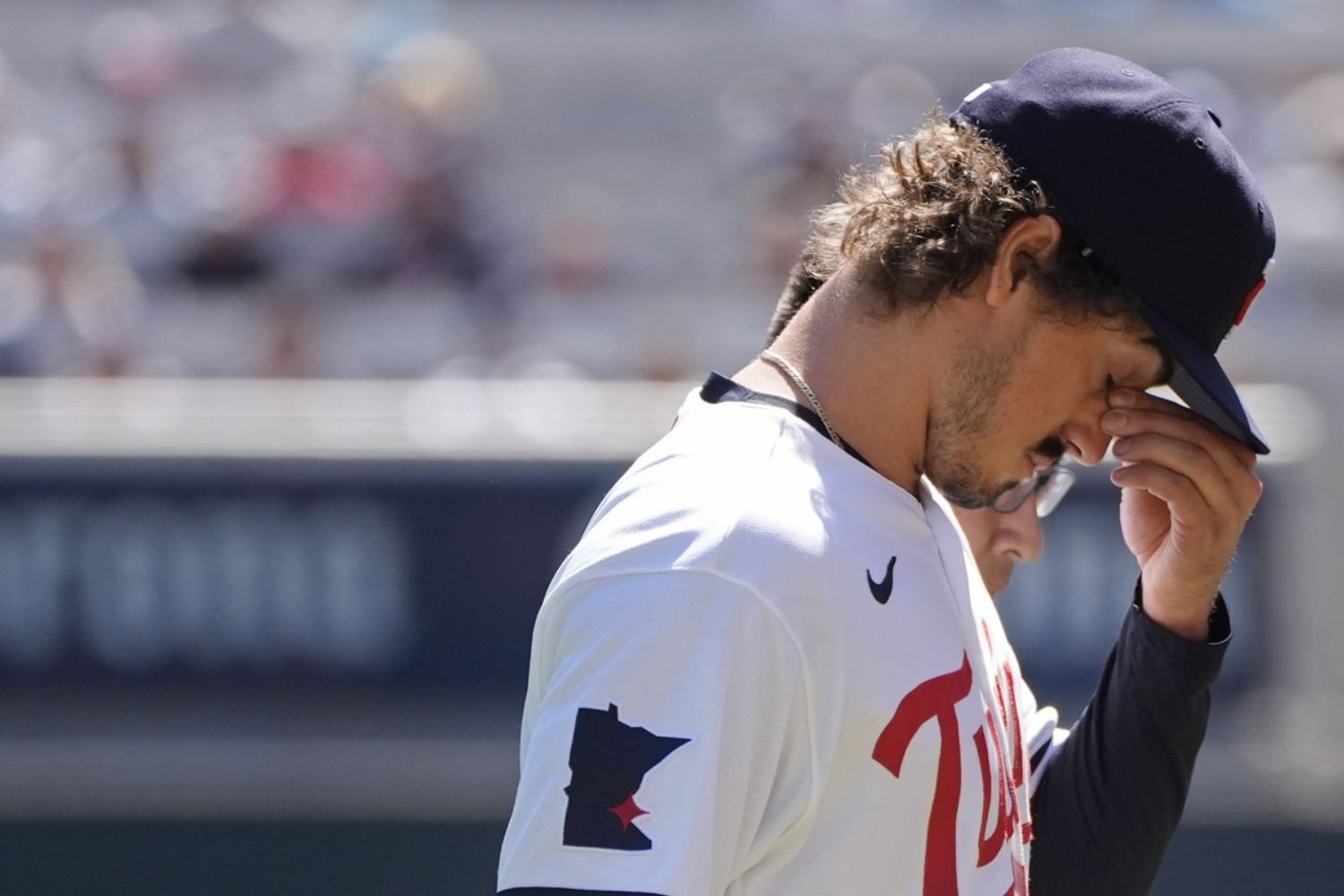 There is still baseball left to play, but the 2026 Minnesota Twins are already in the process of becoming a massive what-if. The Twins entered the season believing they could contend. Last winter, they held onto Joe Ryan, Byron Buxton and Pablo López after plenty of offseason speculation about the direction of the franchise. They added pieces at the trade deadline rather than immediately tearing things apart, hoping their veteran core could keep them in the postseason race. Instead, Minnesota has watched its season unravel. Some of that was predictable. Some of it was self-inflicted. And some of it came down to circumstances nobody could have completely controlled. The Twins currently find themselves looking toward 2027 rather than October. That makes it worth looking back at the biggest turning points of the season. There are plenty of individual moments that could have changed Minnesota's fortunes, but these five what-ifs stand above the rest. 1. What if Pablo López stayed healthy? This one is impossible to ignore. López was supposed to be one of the anchors of Minnesota's rotation. Instead, an elbow injury ended his 2026 season before spring training had barely started. The timing was particularly painful because Minnesota entered the season with questions about whether some starters would need to move to bullpen roles. Joe Ryan and Lopez were supposed to lead the group. Without López, the Twins were forced to ask younger and less proven arms to take on larger roles. That changed the entire complexion of the rotation. A healthy López would not have solved every problem, but he would have given Derek Shelton another legitimate frontline starter. It could have reduced the workload on the younger pitchers, provided more stability during stretches when the rotation struggled and potentially changed the Twins' decision-making at the deadline. There is also a larger question here. Would Minnesota have been in a different position entering August if López had been healthy all season? That is one of the biggest unanswered questions of 2026. 2. What if Joe Ryan avoided his second-half struggles? Ryan's first half made the Twins' decision to remain competitive much easier. He established himself as an All-Star-caliber starter and was one of the most important reasons Minnesota remained within striking distance of the postseason picture. That made the idea of trading him at the deadline difficult, even as his name continued to appear in trade speculation. Then the second half happened. Ryan's struggles have been well documented, and they came at precisely the wrong time for a team that needed its best starting pitcher to consistently deliver. Even when Minnesota's offense showed signs of life, the rotation needed Ryan to provide length and stability. Instead, the Twins have spent much of the second half searching for that version of Ryan. What if he had continued pitching like the pitcher Twins fans saw earlier in the year? Maybe Minnesota never falls out of contention. Maybe the additions of A.J. Minter, Dean Kremer and Jeff Hoffman become pieces of a legitimate postseason push rather than additions to a team that eventually faded. Ryan's second half doesn't explain the entire collapse, but it certainly belongs on the list. 3. What if Byron Buxton stayed healthy? This is the easiest what-if to understand. When Buxton is healthy, he changes the Twins. He changes the lineup. He changes the defense. He changes the way opposing pitchers approach Minnesota. Most importantly, he gives the team a superstar capable of carrying an offense for stretches. Buxton was having another productive season before injuries once again interrupted his year. He hit .254 with 25 home runs and 46 RBIs in 93 games before a right hip injury ended his season and sent him toward surgery. That means Minnesota received fewer than 100 games from one of its most important players. It is difficult to build a playoff-caliber roster around constant uncertainty at the top of the lineup. Buxton's production is important, but so is simply having him available. What if Buxton played 110 games? The Twins would have had another middle-of-the-order threat for the entire season. They would have had their best defensive center fielder available more often. And they would have had one of the most dangerous players in the American League putting pressure on opposing teams every night. There is no guarantee that changes the season. But it certainly changes the possibilities. 4. What if the Twins added to the bullpen last winter? This might be the biggest organizational what-if. Minnesota knew it had bullpen questions entering 2026. The previous year's deadline sell-off had stripped away several established relief options, and rebuilding that group should have been one of the team's biggest priorities. Instead, the bullpen remained a major concern throughout the season. That doesn't mean every reliever needed to be an expensive free-agent signing. The Twins could have added depth, competition and another proven late-inning arm. Instead, they eventually had to address the problem during the season. The Twins added Minter and Hoffman at the deadline, but by then the margin for error was much smaller. The bullpen was being asked to hold together games in a playoff race rather than enter the season as a strength. If Minnesota had entered April with a deeper and more reliable bullpen, perhaps some of those early close losses become wins. Perhaps the team enters July with a better record. Perhaps the front office has more flexibility at the deadline. A few extra bullpen wins can completely change the trajectory of a season. 5. What if the Twins had sold at the deadline? This is the biggest philosophical what-if. Minnesota had every reason to sell. The organization had already demonstrated that it was willing to prioritize the future after last year's deadline sell-off. The Twins were not a clear postseason team entering this year's deadline, and there were legitimate questions about whether their roster was good enough to make a sustained run. Instead, they bought. That decision wasn't necessarily unreasonable at the time. The Twins were close enough to the playoff picture (roughly 30% playoff odds) to justify taking a shot, and the additions of Minter, Kremer and Hoffman were designed to improve the roster immediately. But what if they had gone the other direction? Ryan Jeffers, Josh Bell and other veterans could have generated significant interest. Minnesota could have added more prospects to an organization that already needs to balance its current major-league roster with its next competitive window. The biggest benefit would have been clarity. Rather than spending August and September wondering whether the team could make one more push, the Twins could have fully committed to 2027 and beyond. Of course, selling would have come with its own risks. It would have meant admitting that the 2026 season was over while the team was still technically within reach of a playoff spot. That is exactly why this is a fascinating what-if. A Not So Unrealistic Fantasy The frustrating part about the 2026 Twins is that none of these scenarios require an unrealistic fantasy. A healthy López was possible. A strong second half from Ryan was possible. A healthy Buxton was possible. A better bullpen entering the season was possible. And selling at the deadline was certainly possible. None of those things guarantees the Twins would be playing postseason baseball. But the combination of them paints a dramatically different picture of the season. That is ultimately what makes 2026 so frustrating. Minnesota didn't need everything to go perfectly to make the playoffs. It simply needed more things to go right than actually did. Now the organization has to figure out which lessons from this season actually matter. The Twins can't change what happened in 2026. They can, however, make sure the same what-ifs aren't still defining this team a year from now. Would you add other "what ifs" to the list? Leave a comment and start the discussion. View the full article
 -
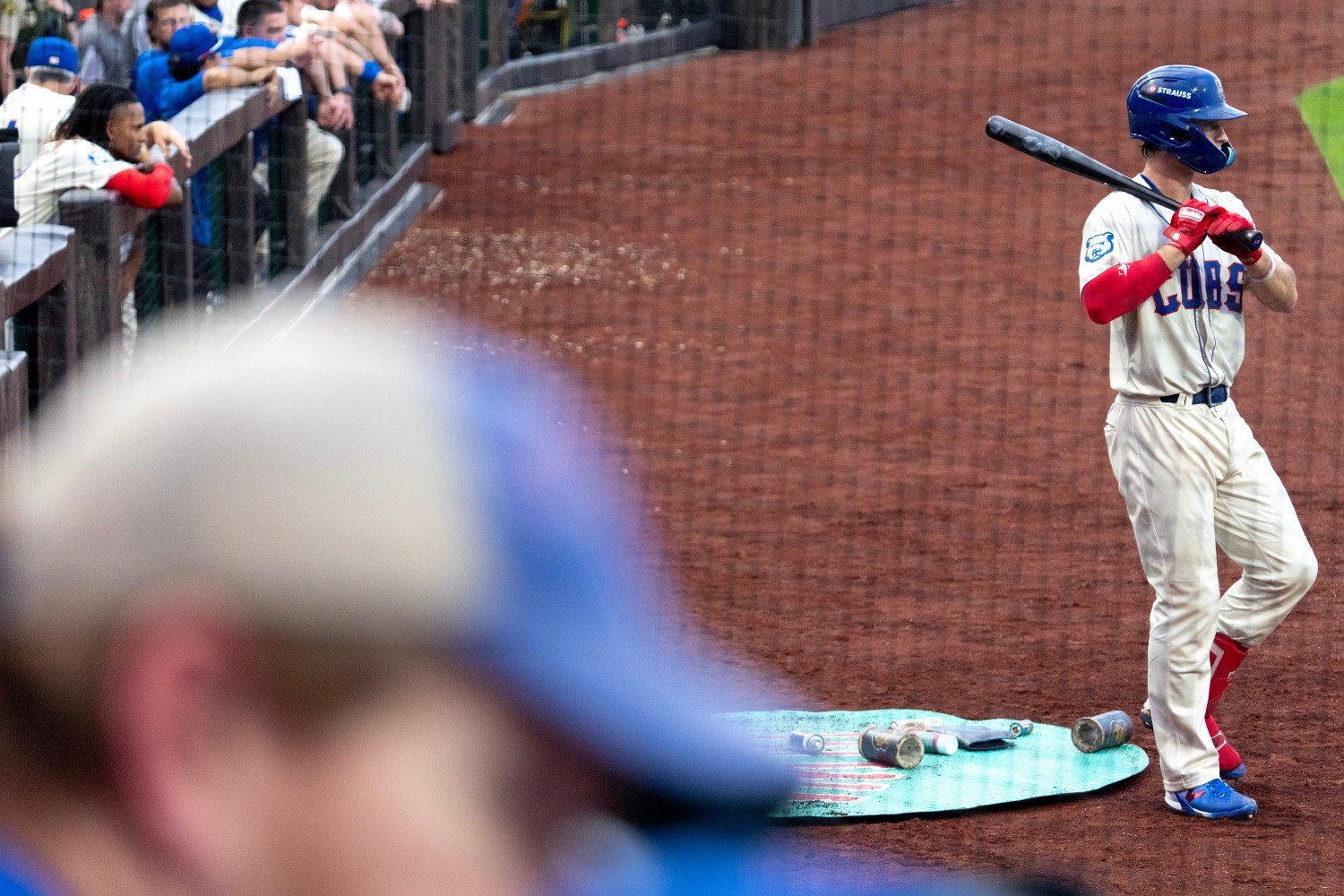 With the minor-league baseball season approaching its end, now feels like a good time to zoom out and look at the Chicago Cubs’ farm system as a whole. There was a lot of action across the organization this year, whether it was prospects making their way to the major leagues, players being moved at the trade deadline, or young players taking another step in their development. Some players and teams took advantage of their opportunities, while others struggled to find the consistency they were looking for. So with that, let’s take a look at some of the biggest winners and losers from the Cubs’ farm system this year, starting with the winners. The biggest winner, in my opinion, has to be the Cubs’ High-A affiliate, the South Bend Cubs. South Bend dominated over the first half of their season, finishing with a 39-23 record. That was good enough to win the Midwest League West Division and put the Cubs in position to make a run at a championship. Things continued to go pretty well for South Bend during the second half, although their season ultimately came to an end in the playoffs against the Kansas City Royals’ High-A affiliate, the Quad Cities River Bandits. Still, it was a very successful season for the Cubs, especially considering the amount of talent that came through the roster throughout the year. South Bend was led by top prospects Josiah Hartshorn and Ethan Conrad, giving Cubs fans plenty of reasons to be excited about what could be coming next. Minor league wins and losses obviously aren’t the most important thing when it comes to player development, but having a team like South Bend put together a season like this is still encouraging. That makes them an easy choice as one of the biggest winners in the Cubs’ farm system this year. The other big winner for me is catcher Owen Ayers. I honestly didn’t want to include Ayers here since I just talked about him in my biggest prospect risers and fallers piece, but his performance this season is worth mentioning again. Ayers started the year outside of North Side Baseball’s top 20 prospects, but he’ll end the season inside the top five and even has an outside chance of earning a September callup to Chicago. Across 121 games between High-A, Double-A and Triple-A, Ayers is slashing .295/.408/.539, good for a .947 OPS. He has also collected 54 extra-base hits and 13 stolen bases while showing a much more well-rounded offensive game than he had in previous seasons. That’s particularly impressive when you consider that Ayers’ calling card up to this point had been his defense. The bat has always been the biggest question surrounding his prospect status, and he answered a lot of those questions this year. No individual prospect improved their stock more than Ayers, and if this performance continues, we should be seeing him in Chicago very soon. As for the losers, we’re going with the Cubs’ Triple-A affiliate, the Iowa Cubs. While it certainly didn’t help that players like Pedro Ramirez and Kevin Alcantara weren’t with the team for a good chunk of the season, it’s still not a particularly encouraging sign when your Triple-A team finishes the year with a 59-81 record. Iowa finished just one game under .500 last season, so taking a major step backward this year is certainly disappointing. There was no shortage of talent on the roster, either, particularly on the pitching staff. Jaxon Wiggins, Will Sanders and trade deadline addition Braxton Garrett were among the pitchers who spent time with Iowa, giving the team plenty of intriguing names to work with. Unfortunately, the results simply weren’t there. There is obviously plenty of context that goes into a minor league team’s record, especially at the Triple-A level where rosters can change constantly. But when a team has that much talent and still struggles to put together a winning season, it’s hard not to view Iowa as one of the bigger losers in the Cubs’ farm system this year. And then the other loser I’ll mention is the Cubs’ Single-A affiliate, the Myrtle Beach Pelicans. Maybe I’m being overly critical by talking about the performance of a Single-A team, but the Pelicans finished the year with a 50-77 record, and it’s not as though they were lacking prospect talent. Kaleb Wing, Caden Sorrell, Juan Cabada, and other members of the Cubs’ top 20 prospects spent a good portion of their seasons with Myrtle Beach. Between injuries, poor performance, and promotions to higher levels, though, the Pelicans struggled to put everything together. Obviously, there’s plenty of development still to come for the players on this roster. Nobody on the Myrtle Beach roster is particularly close to making an impact at the major league level, and there’s no reason to make any sweeping conclusions based on one difficult Single-A season. Still, it does show that there’s some work to be done with a number of these young players. But those are my farm system winners and losers for the Cubs this season. Let me know in the comments who you would add or remove from this list! View the full article
