


DiamondCentric
-
Posts
2,631 -
Joined
-
Last visited
Never
Content Type
Profiles
Forums
Events
MLB News, Rumors & Analysis
DiamondCentric Tutorials & Help
Major League Baseball Videos
MLB Fan Guides & Resources
Store
Downloads
Gallery
Everything posted by DiamondCentric
-

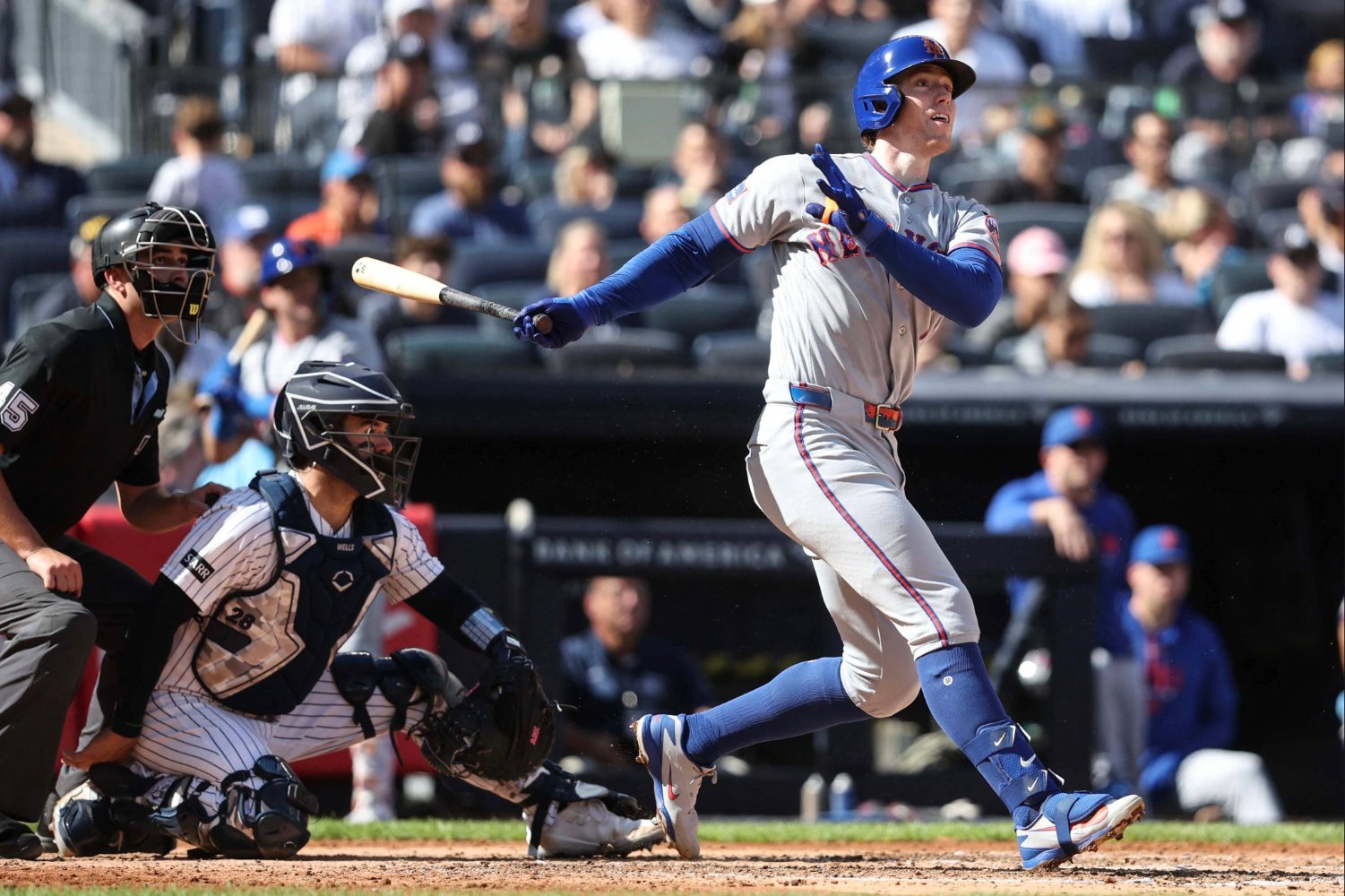 The New York Mets selected Brett Baty with the 12th overall pick in the first round of the 2019 MLB Draft out of Lake Travis High School in Austin Texas. Baty quickly became a crown jewel in the farm system due to his prototypical size and raw power from the left side of the plate. He made a memorable major-league debut on August 17th, 2022 where he homered in his first career at-bat against the Atlanta Braves. He then appeared to solidify himself as the franchise's third baseman of the future in 2025 when he posted a career-high 3.1 bWAR and launched 18 home runs. However, David Stearns' aggressive restructuring of the infield reshaped Baty's role heading into the 2026 season. With star infielder Bo Bichette locking down everyday duties at third base, Baty was forced into a new multi-positional role. He stayed on the active roster due to his athletic flexibility, playing six different positions including first base, second base and the corner outfield positions. While his defensive versatility provided the Mets with a highly critical insurance policy, the lack of an everyday position noticeably disrupted his rhythm at the plate in 2026. Over 143 games and 420 at-bats, Baty posted a slash line of .236/.309/.371 with 11 home runs and 56 RBIs. A huge strikeout problem (26.4% strikeout rate) paved the way for a meager fWAR output of 1.1 Now entering salary arbitration for the first time in his career, Baty represents a complex player for a front office that must decide whether his versatile profile is a match for a roster in need of an overhaul. Brett Baty's 2027 Arbitration Case In A Nutshell 2023 Salary: $720,000 2024 Salary: $750,000 2025 Salary: $774,000 2026 Salary: $811,500 2026 Stats: 143 G, 473 PA, .236/.309/.371 (.681 OPS), 11 HR, 22 2B, 1 3B, 56 RBI, 9.3% BB%, 26.4 K% Mets Infield Depth: Bo Bichette: 40-man roster Christopher Morel: 40-man roster Ronny Mauricio: 40-man roster Mark Vientos: 40-man roster Jorge Polanco: 40-man roster Minor Leagues: Christian Cairo, Jefferson Rojas, Emilien Pitre The Mets' infield depth chart is crowded with talent, but Baty's unique ability to play multiple positions gives him an advantage over one-dimensional alternative players. His primary internal competition comes from Christopher Morel and Ronny Mauricio. Morel offers excellent pop and Mauricio provides switch-hitting depth, but neither possesses the defensive flexibility that Baty demonstrated in the 2026 season. The front office also added depth by claiming Christian Cairo off waivers late in the 2026 season. Mark Vientos is another internal threat, but because of his defensive struggles in 2026, he is likely anchored into a crowded designated hitter picture going forward. Looking down the pipeline, prospects like Emilien Pitre and Jefferson Rojas are knocking on the door in Triple-A, but neither is positioned to make an immediate disruption to the Mets' bench. Since the rest of the depth is limited, Baty serves as the ultimate utility player on the 26-man roster. He can become a key piece once again by plugging holes on the roster almost anywhere on the diamond. Why the Mets Should Keep Brett Baty Tendering a contract to Brett Baty should be a priority for David Stearns and the Mets front office. Entering his first year of arbitration eligibility, Baty is projected to have a highly affordable salary of about $2.5 million. For a team that values roster optimization and cos- controlled flexibility, paying a baseline rate for a former first-round pick who is entering his physical prime is an easy financial commitment. Though his numbers floundered this year, Baty's quality of contact remained steady. According to Baseball Savant, he maintained a 10.3% barrel rate and a 42.0% hard-hit rate, both above-average figures. His average exit velocity tracked at 90.4 mph, which landed him in the 73rd percentile among all qualified hitters. Defensively, advanced metrics highlight how crucial Baty was to keeping an injured squad afloat; he posted +1 Out Above Average (OAA) across all six positions he played, effectively giving the team a league-average glove at every position besides center field and catcher. Letting a team-controlled player with strong defensive skills and a solid hard-hit rate walk over a modest $2.5 million contract would be an error by an organization that is looking to maintain a sustained championship window. Why the Mets Could Non-Tender Brett Baty Even with his affordable projected arbitration salary, the Mets' front office may still decide to non-tender Baty based on certain metrics. While he can hit the ball with high-end exit velocity, he's struggled lifting the ball in the air consistently and through his time in the big leagues so far (he's posted a ground ball rate around 48% for his career). That inability to elevate the baseball—alongside his longstanding strikeout issues—has resulted in posting below-average slugging percentage and OPS numbers. With the Mets' crowded infield and the team always being active in pursuing premium talent, they could non-tender Baty to free up both payroll flexibility and a 40-man roster spot rather than guaranteeing around $2 million to a utility player who you could argue has already plateaued. It'd be a short-sighted decision to be sure (see above), but you can't really count anything out from this front office. Prediction Expect this to be a straightforward decision by David Stearns and the Mets' front office. The organization will likely tender a contract to Brett Baty for the 2027 season, with both sides settling somewhere around the $2.5 million range. Baty will enter spring training without a guaranteed starting job at a single position, but his status as a left-handed super-utility weapon makes him a safe bet to anchor the Mets' bench next season. View the full article
-
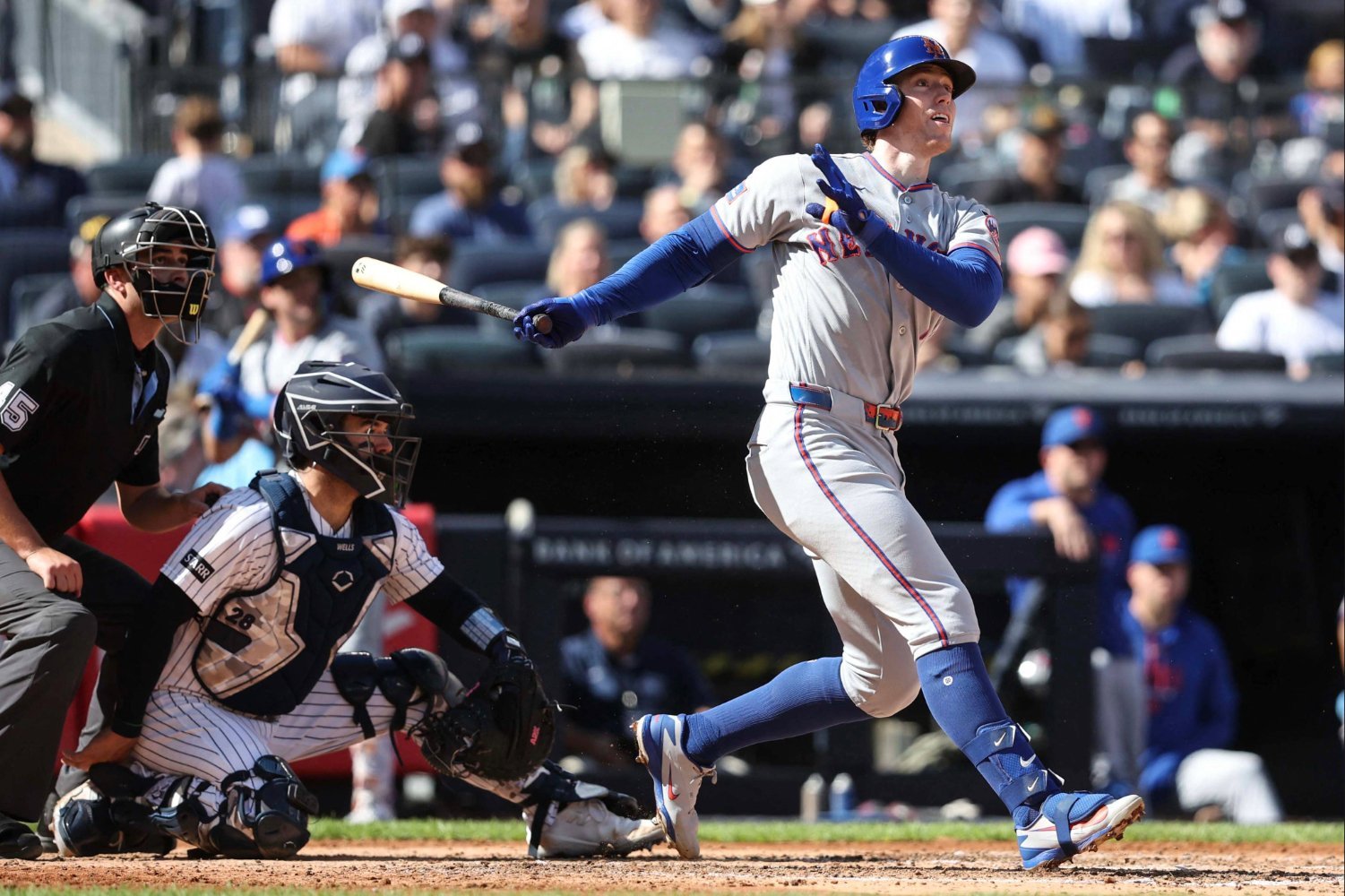 The New York Mets selected Brett Baty with the 12th overall pick in the first round of the 2019 MLB Draft out of Lake Travis High School in Austin Texas. Baty quickly became a crown jewel in the farm system due to his prototypical size and raw power from the left side of the plate. He made a memorable major-league debut on August 17th, 2022 where he homered in his first career at-bat against the Atlanta Braves. He then appeared to solidify himself as the franchise's third baseman of the future in 2025 when he posted a career-high 3.1 bWAR and launched 18 home runs. However, David Stearns' aggressive restructuring of the infield reshaped Baty's role heading into the 2026 season. With star infielder Bo Bichette locking down everyday duties at third base, Baty was forced into a new multi-positional role. He stayed on the active roster due to his athletic flexibility, playing six different positions including first base, second base and the corner outfield positions. While his defensive versatility provided the Mets with a highly critical insurance policy, the lack of an everyday position noticeably disrupted his rhythm at the plate in 2026. Over 143 games and 420 at-bats, Baty posted a slash line of .236/.309/.371 with 11 home runs and 56 RBIs. A huge strikeout problem (26.4% strikeout rate) paved the way for a meager fWAR output of 1.1 Now entering salary arbitration for the first time in his career, Baty represents a complex player for a front office that must decide whether his versatile profile is a match for a roster in need of an overhaul. Brett Baty's 2027 Arbitration Case In A Nutshell 2023 Salary: $720,000 2024 Salary: $750,000 2025 Salary: $774,000 2026 Salary: $811,500 2026 Stats: 143 G, 473 PA, .236/.309/.371 (.681 OPS), 11 HR, 22 2B, 1 3B, 56 RBI, 9.3% BB%, 26.4 K% Mets Infield Depth: Bo Bichette: 40-man roster Christopher Morel: 40-man roster Ronny Mauricio: 40-man roster Mark Vientos: 40-man roster Jorge Polanco: 40-man roster Minor Leagues: Christian Cairo, Jefferson Rojas, Emilien Pitre The Mets' infield depth chart is crowded with talent, but Baty's unique ability to play multiple positions gives him an advantage over one-dimensional alternative players. His primary internal competition comes from Christopher Morel and Ronny Mauricio. Morel offers excellent pop and Mauricio provides switch-hitting depth, but neither possesses the defensive flexibility that Baty demonstrated in the 2026 season. The front office also added depth by claiming Christian Cairo off waivers late in the 2026 season. Mark Vientos is another internal threat, but because of his defensive struggles in 2026, he is likely anchored into a crowded designated hitter picture going forward. Looking down the pipeline, prospects like Emilien Pitre and Jefferson Rojas are knocking on the door in Triple-A, but neither is positioned to make an immediate disruption to the Mets' bench. Since the rest of the depth is limited, Baty serves as the ultimate utility player on the 26-man roster. He can become a key piece once again by plugging holes on the roster almost anywhere on the diamond. Why the Mets Should Keep Brett Baty Tendering a contract to Brett Baty should be a priority for David Stearns and the Mets front office. Entering his first year of arbitration eligibility, Baty is projected to have a highly affordable salary of about $2.5 million. For a team that values roster optimization and cos- controlled flexibility, paying a baseline rate for a former first-round pick who is entering his physical prime is an easy financial commitment. Though his numbers floundered this year, Baty's quality of contact remained steady. According to Baseball Savant, he maintained a 10.3% barrel rate and a 42.0% hard-hit rate, both above-average figures. His average exit velocity tracked at 90.4 mph, which landed him in the 73rd percentile among all qualified hitters. Defensively, advanced metrics highlight how crucial Baty was to keeping an injured squad afloat; he posted +1 Out Above Average (OAA) across all six positions he played, effectively giving the team a league-average glove at every position besides center field and catcher. Letting a team-controlled player with strong defensive skills and a solid hard-hit rate walk over a modest $2.5 million contract would be an error by an organization that is looking to maintain a sustained championship window. Why the Mets Could Non-Tender Brett Baty Even with his affordable projected arbitration salary, the Mets' front office may still decide to non-tender Baty based on certain metrics. While he can hit the ball with high-end exit velocity, he's struggled lifting the ball in the air consistently and through his time in the big leagues so far (he's posted a ground ball rate around 48% for his career). That inability to elevate the baseball—alongside his longstanding strikeout issues—has resulted in posting below-average slugging percentage and OPS numbers. With the Mets' crowded infield and the team always being active in pursuing premium talent, they could non-tender Baty to free up both payroll flexibility and a 40-man roster spot rather than guaranteeing around $2 million to a utility player who you could argue has already plateaued. It'd be a short-sighted decision to be sure (see above), but you can't really count anything out from this front office. Prediction Expect this to be a straightforward decision by David Stearns and the Mets' front office. The organization will likely tender a contract to Brett Baty for the 2027 season, with both sides settling somewhere around the $2.5 million range. Baty will enter spring training without a guaranteed starting job at a single position, but his status as a left-handed super-utility weapon makes him a safe bet to anchor the Mets' bench next season. View the full article
-
How Vladimir Guerrero Jr. Complicates the Blue Jays' Offseason
DiamondCentric posted an article in Jays Centre
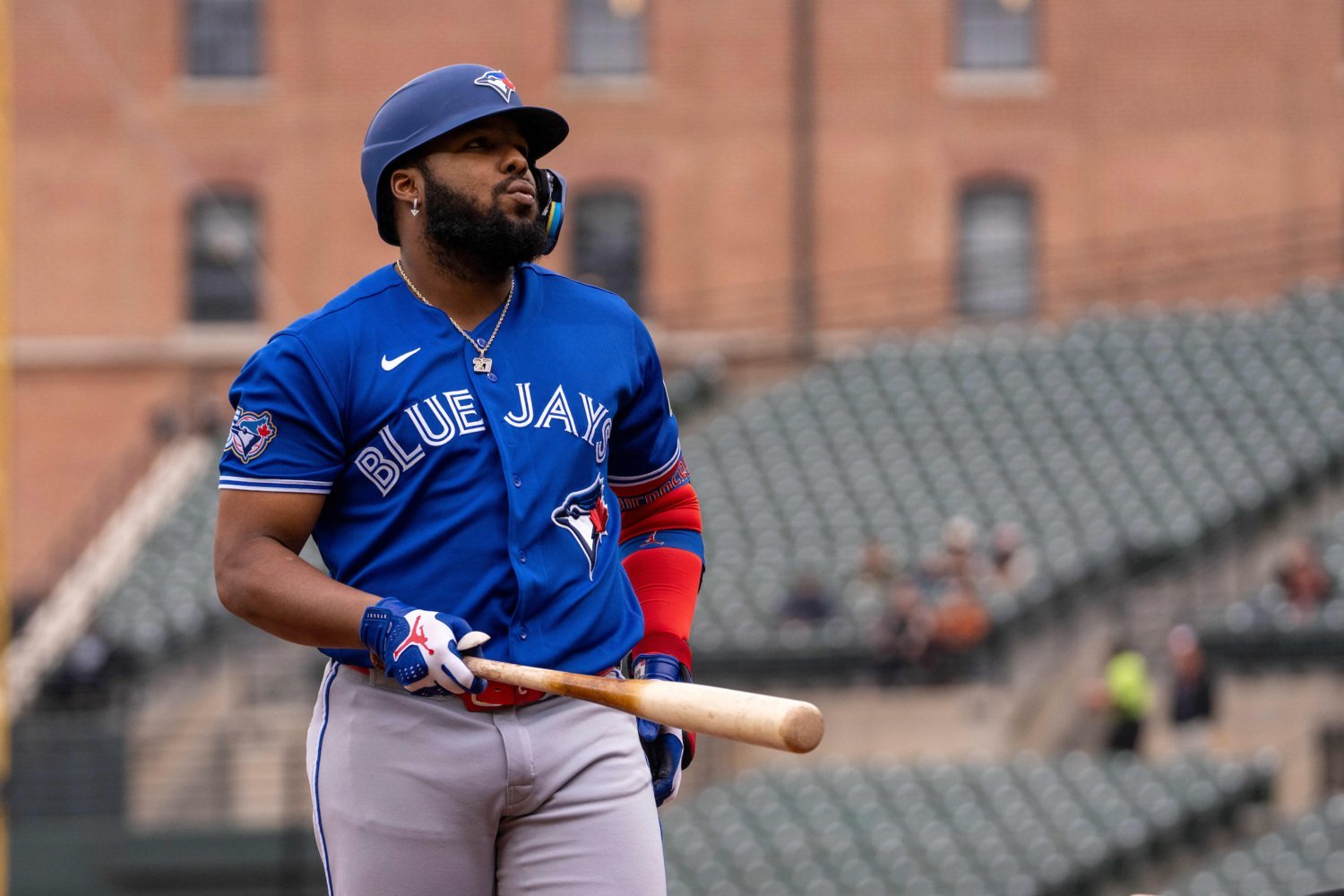 It’s not a common statement to say that a $500 million face of the franchise will complicate a team’s offseason plans. Usually, the talk is, “How do we build around our best player?” However, Vladimir Guerrero Jr. shockingly fell off at the plate this season. He slashed .260/.332/.356 with nine home runs, 72 runs, and 57 RBIs. These statistics were some of the worst output since his rookie campaign in 2019. Also, his 95 wRC+ marked the first time in his eight-year career that he finished below league average. The nine home runs also tied what he hit during the 2020 shortened season, when he had 366 fewer plate appearances. It was a mind-blowingly awful season for Guerrero by his standards, with a career-worst barrel percentage (6.9 percent) and his second-worst hard-hit percentage (44.3 percent). He didn’t even hit his first home run at Rogers Centre until September 13. Vladdy dealt with multiple minor injuries throughout the season, including lower back tightness and wrist issues, which can hamper the rotation a hitter needs to swing. However, if it were a mechanical issue, you’d think the Blue Jays' coaching staff would have found a fix. Since they didn’t find a remedy, it makes you think it could be mental, and MLB.com's Keegan Matheson reported that general manager Ross Atkins backed that view. Atkins said Guerrero lost his confidence early in the season because his rhythm and timing were off. Baseball is an extremely mental sport, so if a player loses confidence, it could derail a season, as we saw. Guerrero’s lack of production puts a huge question mark on how the Blue Jays operate this offseason. If he’s his normal elite self, the team needs to pursue just one big power bat. That’d give the batting order three solid bats, including Kazuma Okamoto. They also have Anthony Santander, who should be healthy next season, but Toronto can’t put their faith in him staying healthy or performing at his previous level. He’s a player I wonder if the team could move on from. However, his expensive contract will likely be hard for another team to want to take on. If a trade could be made, it’d be a dead-money-for-dead-money deal. Atkins will need to decide whether he can get away with signing only one power bat, or if he needs to add two. The Blue Jays can’t finish last in runs and home runs again if they want to return to the postseason. The main factor in how the team proceeds is whether it expects Guerrero to bounce back. That’s where things get complicated, because the coaching staff doesn’t seem to know how to fix the franchise’s highest-paid player. Toronto can’t afford to see a repeat performance from Vladdy without enough bats to pick up the slack. However, adding multiple bats will take money away from improving another aspect of the team. Best-Case Scenario Vladdy returns to form, giving the Blue Jays a solid middle of the order with Okamoto and an offseason acquisition. That acquisition could be Seiya Suzuki. However, it’s a little scary how every media platform talks about how much sense the former Chicago Cub makes in Toronto. The team needs a corner outfielder, and Suzuki brings a consistent bat to the lineup, slugging at least .470 over the last four seasons. He also has a connection to Okamoto, having played against him in Japan’s Nippon Professional Baseball and with him in this year's World Baseball Classic. I wrote about an ideal offseason in which Suzuki is priority number one, but Blue Jays fans had their hearts ripped out the last few offseasons when it came to the top offensive free agent. The team was among the finalists to sign Shohei Ohtani, Juan Soto, and Kyle Tucker, only to see them sign massive contracts elsewhere. If the same happens with Suzuki (although he won’t sign as big a contract), fans may view the offseason as a failure. He will cost them their second- and fifth-highest picks in next season’s draft, though, because he’s expected to decline the Cubs' one-year, $23.15 million qualifying offer by the November 17 deadline. Plus, Toronto will have to give up $1 million from its international pool. These penalties stem from being a team that paid the competitive balance tax this season. Worst-Case Scenario The good news is the Blue Jays have around $100 million to spend this offseason. If they don’t think Guerrero will bounce back, they have the money to add a second big bat. The bad news is, to do so, they’ll need to be aggressive and spend another $15-20 million annually, and the offensive free agent market is extremely weak. Besides Suzuki, Randy Arozarena and Brandon Lowe stand out as big bats that could substantially improve Toronto’s lineup. However, adding a second qualifying-offer-rejecting player would require giving up their third- and sixth-highest draft picks. That’s a significant penalty to lose four draft picks. Especially since the team has suffered a penalty the last two offseasons after signing Santander and Dylan Cease, who rejected their qualifying offers. These circumstances make adding two players who declined qualifying offers highly unlikely. If I were in Atkins' shoes, I’d only try to sign either Suzuki or Arozarena. The drop-off to the next tier of players is far more drastic in the outfield. The next group consists of Ian Happ, Taylor Ward, or Trent Grisham. These players don’t offer much more upside than Nathan Lukes, or a healthy and productive Santander and Addison Barger. The drop-off from Lowe in the infield is Jazz Chisholm Jr., Gleyber Torres, and Luis Arraez. All three players bring different skill sets and would be an upgrade over Ernie Clement. According to Spotrac, these three should also cost around $4-6 million less annually than Lowe. Plus, they don’t have a qualifying offer attached. Another consequence of not trusting Guerrero to bounce back is that the money the Jays might spend on a second bat could have gone toward bolstering the pitching staff instead. It doesn’t make sense for the Blue Jays to open the checkbook wide enough to pursue Tarik Skubal. Instead, they could pursue the next top options: Michael King, Freddy Peralta, or Sonny Gray. It’s no secret the Blue Jays would be a better all-around team if Guerrero returned to his productive form next season. However, there’s no telling whether he can bounce back or not until the season gets going. That’s why his baffling season complicates Toronto's offseason plans. The front office faces a difficult question: who to pursue. Luckily, Atkins has never been shy about spending money or making a big move. He's loved making big trades in the past, so watch for the possibility of him doing it again. View the full article
-
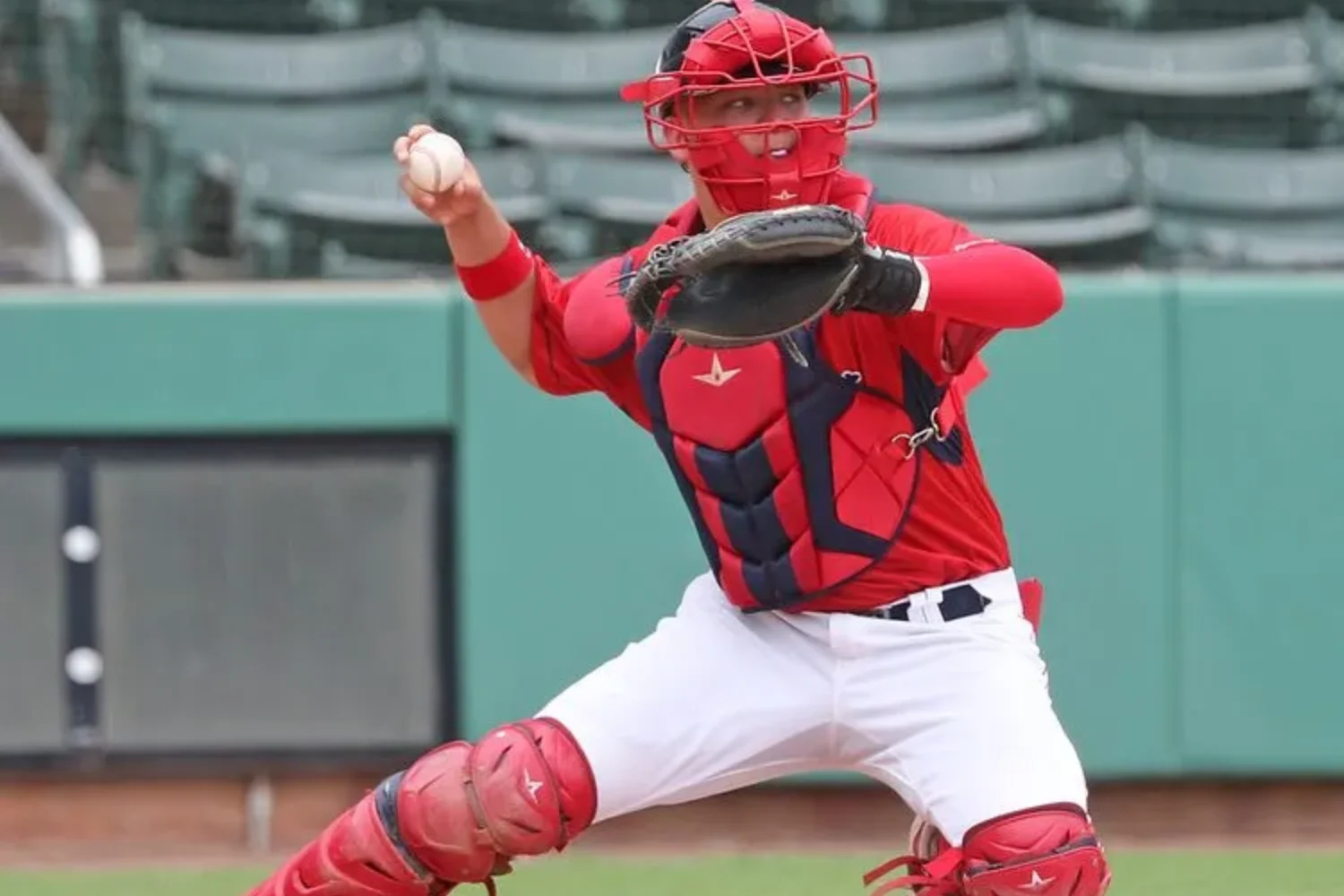 It went mostly unnoticed, but the Boston Red Sox spent the past year overhauling their catching pipeline throughout the entire organization. Before the season began, Craig Breslow traded for catchers Luke Heyman, Ronny Hernandez, Nate Baez, and Adonys Guzman, along with signing catchers Jason Delay and Matt Thaiss to minor-league contracts. Then, during the season, the team made a huge splash by trading for Adley Rutschman. With all those catching transactions, it would be easy to overlook the catchers already in the system. Two of them broke onto the scene in 2026, but one of them was overshadowed by the other. After a 2025 campaign that saw Kleyver Salazar hit .215/.327/.276 with nine doubles, four home runs, 36 RBIs and 82 strikeouts in 99 games, it'd be easy to dismiss the backstop as nothing more than potential minor-league depth. However, Salazar broke out in a big way in Salem, putting himself firmly on the prospect radar. In 95 games. the backstop hit .293/.403/.479 with 25 doubles, one triple, 12 home runs and 69 RBIs. Salazar also managed to cut back on his strikeouts, lowering the number to 68 while walking 60 times. He was just as impressive with runners in scoring position, coming through often as he went 31-for-95 (.326 batting average) with seven home runs and 56 RBIs. The right-handed hitter’s improvement could be seen through his approach at the plate; in 2025, Salazar struggled to make contact with pitches in the zone, as he did so on just 79.7% of such pitches that he swung at. That number improved slightly to 80.04% in 2026, but it was how he hit the ball that mattered most—he started to pull the ball in the air more (17.8% pull air percentage in 2025, up to 23.1% in 2026). Salazar also showed a great understanding of the strike zone, walking 14.6% of the time and limiting his chase rate to 25.2%. Originally viewed as a defensive catcher with questionable offensive ability due to an inability to make consistent contact, Salazar changed the narrative around his potential thanks to a strong 2026. There’s no denying that you would like to see some more bat-to-ball skills from him, but at just 20 years old, you’ll take it, especially since he put up a wRC+ of 132 while playing in a home park that is incredibly friendly to pitchers. Carilion Clinic Field is tough on hitters, their tall outfield walls causing a lot of hitters to miss out on what should be home runs and at times even doubles. Salazar still provided double digits for both offensive categories, leading to some speculation of how he will do in a more hospitable environment like Fluor Field in Greenville. Defensively, Salazar made 55 appearances at catcher and finished the season with a .983 fielding percentage. He allowed just 18 passed balls but will need to improve his ability to hold runners; he allowed 107 stolen bases, only throwing out 31 would-be base stealers, good for a 22% caught stealing rate. With Salazar, you hope to see that number increase even if just slightly considering his value mainly came from his defense prior to 2026. Despite the breakout season, it went mostly under the radar due to Franklin Primera bursting onto the scene. Salazar’s 2026 season shouldn’t be forgotten however, as he has emerged as an excellent secondary prospect who could one day overtake Primera or be used as an intriguing trade piece. In other words, the Red Sox now have another catching prospect that could develop into something special. While nothing is certain in baseball, if the organization is to see its farm system improve after several depleting trades from Craig Breslow, then the continued development of a player like Salazar is necessary. View the full article
-
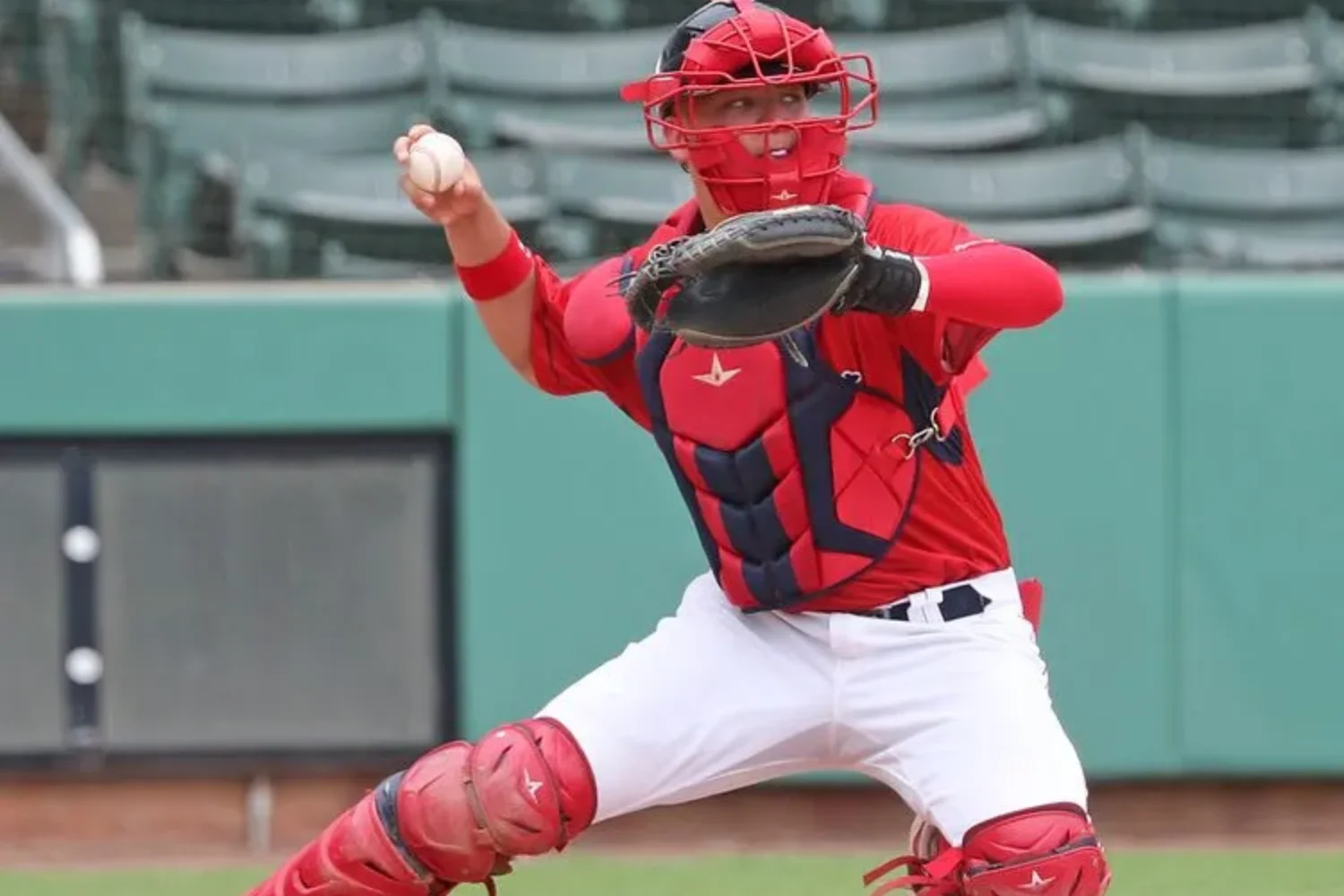 It went mostly unnoticed, but the Boston Red Sox spent the past year overhauling their catching pipeline throughout the entire organization. Before the season began, Craig Breslow traded for catchers Luke Heyman, Ronny Hernandez, Nate Baez, and Adonys Guzman, along with signing catchers Jason Delay and Matt Thaiss to minor-league contracts. Then, during the season, the team made a huge splash by trading for Adley Rutschman. With all those catching transactions, it would be easy to overlook the catchers already in the system. Two of them broke onto the scene in 2026, but one of them was overshadowed by the other. After a 2025 campaign that saw Kleyver Salazar hit .215/.327/.276 with nine doubles, four home runs, 36 RBIs and 82 strikeouts in 99 games, it'd be easy to dismiss the backstop as nothing more than potential minor-league depth. However, Salazar broke out in a big way in Salem, putting himself firmly on the prospect radar. In 95 games. the backstop hit .293/.403/.479 with 25 doubles, one triple, 12 home runs and 69 RBIs. Salazar also managed to cut back on his strikeouts, lowering the number to 68 while walking 60 times. He was just as impressive with runners in scoring position, coming through often as he went 31-for-95 (.326 batting average) with seven home runs and 56 RBIs. The right-handed hitter’s improvement could be seen through his approach at the plate; in 2025, Salazar struggled to make contact with pitches in the zone, as he did so on just 79.7% of such pitches that he swung at. That number improved slightly to 80.04% in 2026, but it was how he hit the ball that mattered most—he started to pull the ball in the air more (17.8% pull air percentage in 2025, up to 23.1% in 2026). Salazar also showed a great understanding of the strike zone, walking 14.6% of the time and limiting his chase rate to 25.2%. Originally viewed as a defensive catcher with questionable offensive ability due to an inability to make consistent contact, Salazar changed the narrative around his potential thanks to a strong 2026. There’s no denying that you would like to see some more bat-to-ball skills from him, but at just 20 years old, you’ll take it, especially since he put up a wRC+ of 132 while playing in a home park that is incredibly friendly to pitchers. Carilion Clinic Field is tough on hitters, their tall outfield walls causing a lot of hitters to miss out on what should be home runs and at times even doubles. Salazar still provided double digits for both offensive categories, leading to some speculation of how he will do in a more hospitable environment like Fluor Field in Greenville. Defensively, Salazar made 55 appearances at catcher and finished the season with a .983 fielding percentage. He allowed just 18 passed balls but will need to improve his ability to hold runners; he allowed 107 stolen bases, only throwing out 31 would-be base stealers, good for a 22% caught stealing rate. With Salazar, you hope to see that number increase even if just slightly considering his value mainly came from his defense prior to 2026. Despite the breakout season, it went mostly under the radar due to Franklin Primera bursting onto the scene. Salazar’s 2026 season shouldn’t be forgotten however, as he has emerged as an excellent secondary prospect who could one day overtake Primera or be used as an intriguing trade piece. In other words, the Red Sox now have another catching prospect that could develop into something special. While nothing is certain in baseball, if the organization is to see its farm system improve after several depleting trades from Craig Breslow, then the continued development of a player like Salazar is necessary. View the full article
-
How Vladimir Guerrero Jr. Complicates the Blue Jays' Offseason
DiamondCentric posted an article in Jays Centre
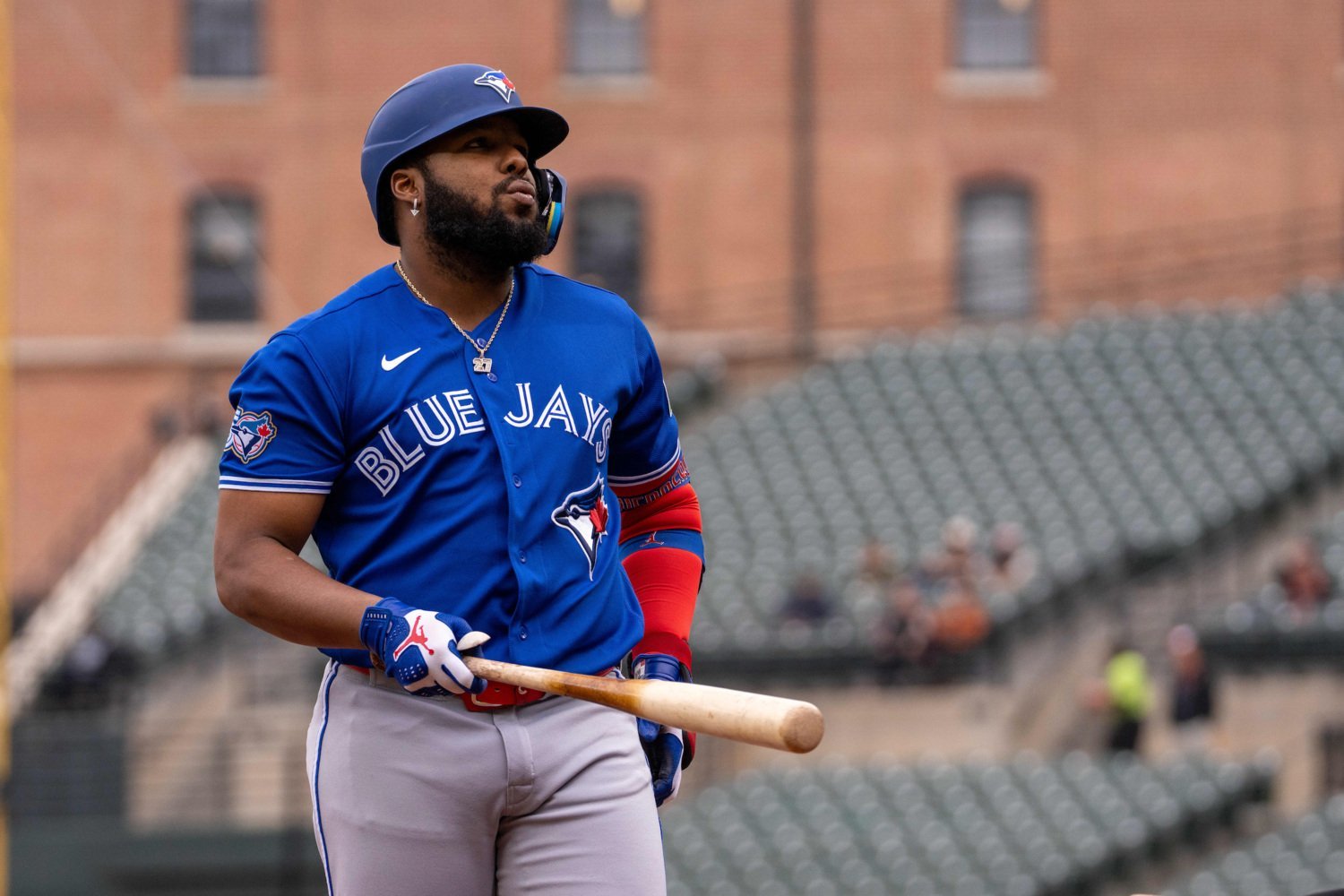 It’s not a common statement to say that a $500 million face of the franchise will complicate a team’s offseason plans. Usually, the talk is, “How do we build around our best player?” However, Vladimir Guerrero Jr. shockingly fell off at the plate this season. He slashed .260/.332/.356 with nine home runs, 72 runs, and 57 RBIs. These statistics were some of the worst output since his rookie campaign in 2019. Also, his 95 wRC+ marked the first time in his eight-year career that he finished below league average. The nine home runs also tied what he hit during the 2020 shortened season, when he had 366 fewer plate appearances. It was a mind-blowingly awful season for Guerrero by his standards, with a career-worst barrel percentage (6.9 percent) and his second-worst hard-hit percentage (44.3 percent). He didn’t even hit his first home run at Rogers Centre until September 13. Vladdy dealt with multiple minor injuries throughout the season, including lower back tightness and wrist issues, which can hamper the rotation a hitter needs to swing. However, if it were a mechanical issue, you’d think the Blue Jays' coaching staff would have found a fix. Since they didn’t find a remedy, it makes you think it could be mental, and MLB.com's Keegan Matheson reported that general manager Ross Atkins backed that view. Atkins said Guerrero lost his confidence early in the season because his rhythm and timing were off. Baseball is an extremely mental sport, so if a player loses confidence, it could derail a season, as we saw. Guerrero’s lack of production puts a huge question mark on how the Blue Jays operate this offseason. If he’s his normal elite self, the team needs to pursue just one big power bat. That’d give the batting order three solid bats, including Kazuma Okamoto. They also have Anthony Santander, who should be healthy next season, but Toronto can’t put their faith in him staying healthy or performing at his previous level. He’s a player I wonder if the team could move on from. However, his expensive contract will likely be hard for another team to want to take on. If a trade could be made, it’d be a dead-money-for-dead-money deal. Atkins will need to decide whether he can get away with signing only one power bat, or if he needs to add two. The Blue Jays can’t finish last in runs and home runs again if they want to return to the postseason. The main factor in how the team proceeds is whether it expects Guerrero to bounce back. That’s where things get complicated, because the coaching staff doesn’t seem to know how to fix the franchise’s highest-paid player. Toronto can’t afford to see a repeat performance from Vladdy without enough bats to pick up the slack. However, adding multiple bats will take money away from improving another aspect of the team. Best-Case Scenario Vladdy returns to form, giving the Blue Jays a solid middle of the order with Okamoto and an offseason acquisition. That acquisition could be Seiya Suzuki. However, it’s a little scary how every media platform talks about how much sense the former Chicago Cub makes in Toronto. The team needs a corner outfielder, and Suzuki brings a consistent bat to the lineup, slugging at least .470 over the last four seasons. He also has a connection to Okamoto, having played against him in Japan’s Nippon Professional Baseball and with him in this year's World Baseball Classic. I wrote about an ideal offseason in which Suzuki is priority number one, but Blue Jays fans had their hearts ripped out the last few offseasons when it came to the top offensive free agent. The team was among the finalists to sign Shohei Ohtani, Juan Soto, and Kyle Tucker, only to see them sign massive contracts elsewhere. If the same happens with Suzuki (although he won’t sign as big a contract), fans may view the offseason as a failure. He will cost them their second- and fifth-highest picks in next season’s draft, though, because he’s expected to decline the Cubs' one-year, $23.15 million qualifying offer by the November 17 deadline. Plus, Toronto will have to give up $1 million from its international pool. These penalties stem from being a team that paid the competitive balance tax this season. Worst-Case Scenario The good news is the Blue Jays have around $100 million to spend this offseason. If they don’t think Guerrero will bounce back, they have the money to add a second big bat. The bad news is, to do so, they’ll need to be aggressive and spend another $15-20 million annually, and the offensive free agent market is extremely weak. Besides Suzuki, Randy Arozarena and Brandon Lowe stand out as big bats that could substantially improve Toronto’s lineup. However, adding a second qualifying-offer-rejecting player would require giving up their third- and sixth-highest draft picks. That’s a significant penalty to lose four draft picks. Especially since the team has suffered a penalty the last two offseasons after signing Santander and Dylan Cease, who rejected their qualifying offers. These circumstances make adding two players who declined qualifying offers highly unlikely. If I were in Atkins' shoes, I’d only try to sign either Suzuki or Arozarena. The drop-off to the next tier of players is far more drastic in the outfield. The next group consists of Ian Happ, Taylor Ward, or Trent Grisham. These players don’t offer much more upside than Nathan Lukes, or a healthy and productive Santander and Addison Barger. The drop-off from Lowe in the infield is Jazz Chisholm Jr., Gleyber Torres, and Luis Arraez. All three players bring different skill sets and would be an upgrade over Ernie Clement. According to Spotrac, these three should also cost around $4-6 million less annually than Lowe. Plus, they don’t have a qualifying offer attached. Another consequence of not trusting Guerrero to bounce back is that the money the Jays might spend on a second bat could have gone toward bolstering the pitching staff instead. It doesn’t make sense for the Blue Jays to open the checkbook wide enough to pursue Tarik Skubal. Instead, they could pursue the next top options: Michael King, Freddy Peralta, or Sonny Gray. It’s no secret the Blue Jays would be a better all-around team if Guerrero returned to his productive form next season. However, there’s no telling whether he can bounce back or not until the season gets going. That’s why his baffling season complicates Toronto's offseason plans. The front office faces a difficult question: who to pursue. Luckily, Atkins has never been shy about spending money or making a big move. He's loved making big trades in the past, so watch for the possibility of him doing it again. View the full article
-
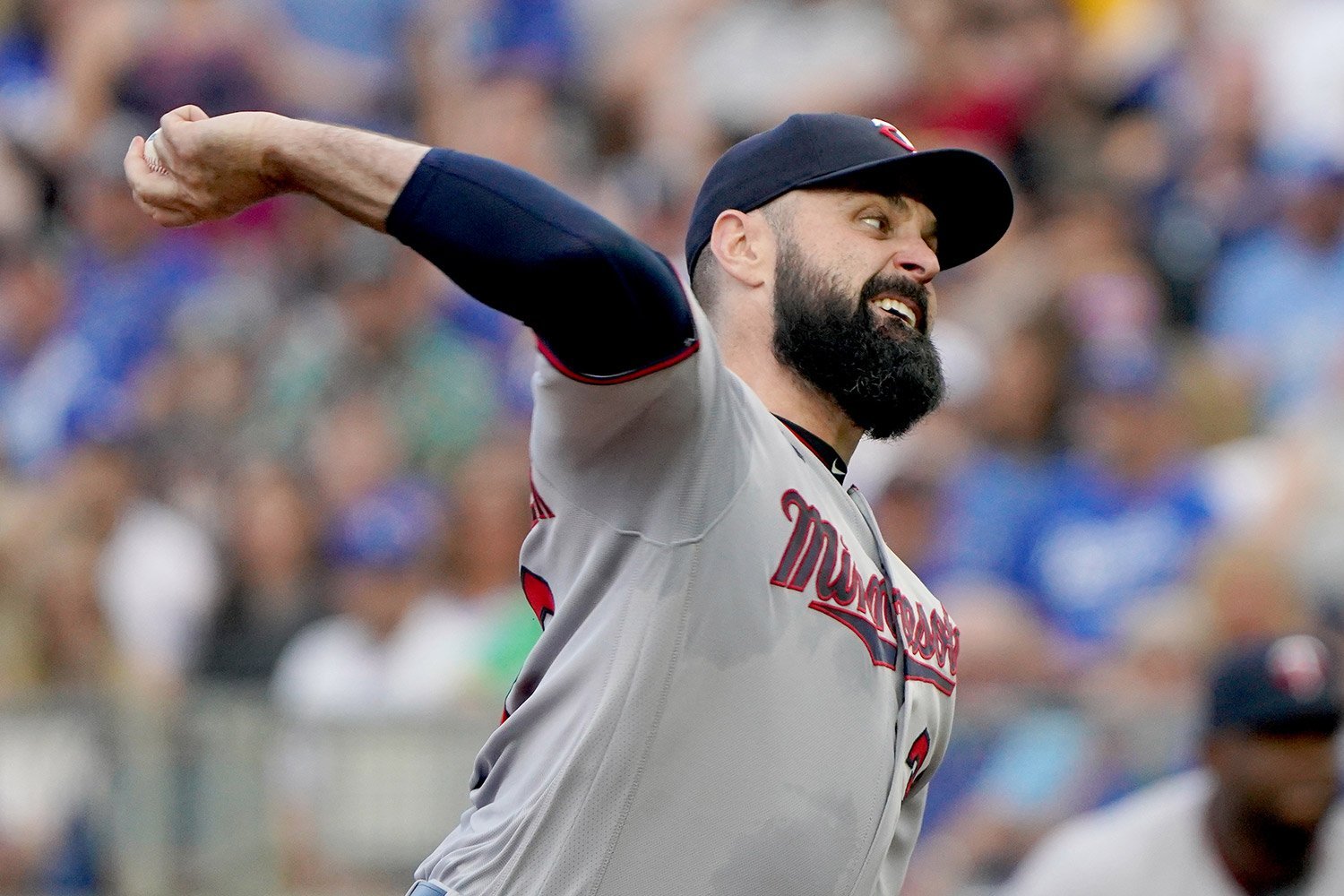 Former Minnesota Twins starting pitcher Matt Shoemaker has a new job outside of baseball. Shoemaker was elected to a seat on the Saline Area Schools Board of Education in Michigan during Tuesday's election, winning by just 28 votes, according to The Detroit News. Shoemaker explained his decision to run for the school board to the Saline Post, saying, “I’m running for School Board to support our teachers and staff, expand opportunities for our students and help every kid succeed in school, on the field and in life.” He added, “I’ve learned great teams succeed when people are supported, everyone has a voice, and you work toward something bigger than yourself.” Shoemaker joined the Twins in 2021, signing a one-year, $2 million contract to serve as the team's No. 5 starter. Unfortunately, his time in Minnesota didn't go as planned. He posted an 8.06 ERA over 60 1/3 innings that season, before being DFA'd. Shoemaker never pitched in the major leagues again. Now, Shoemaker will take the lessons he learned in professional baseball into a new role, working to support students, teachers, and staff in his local community. View the full article
-
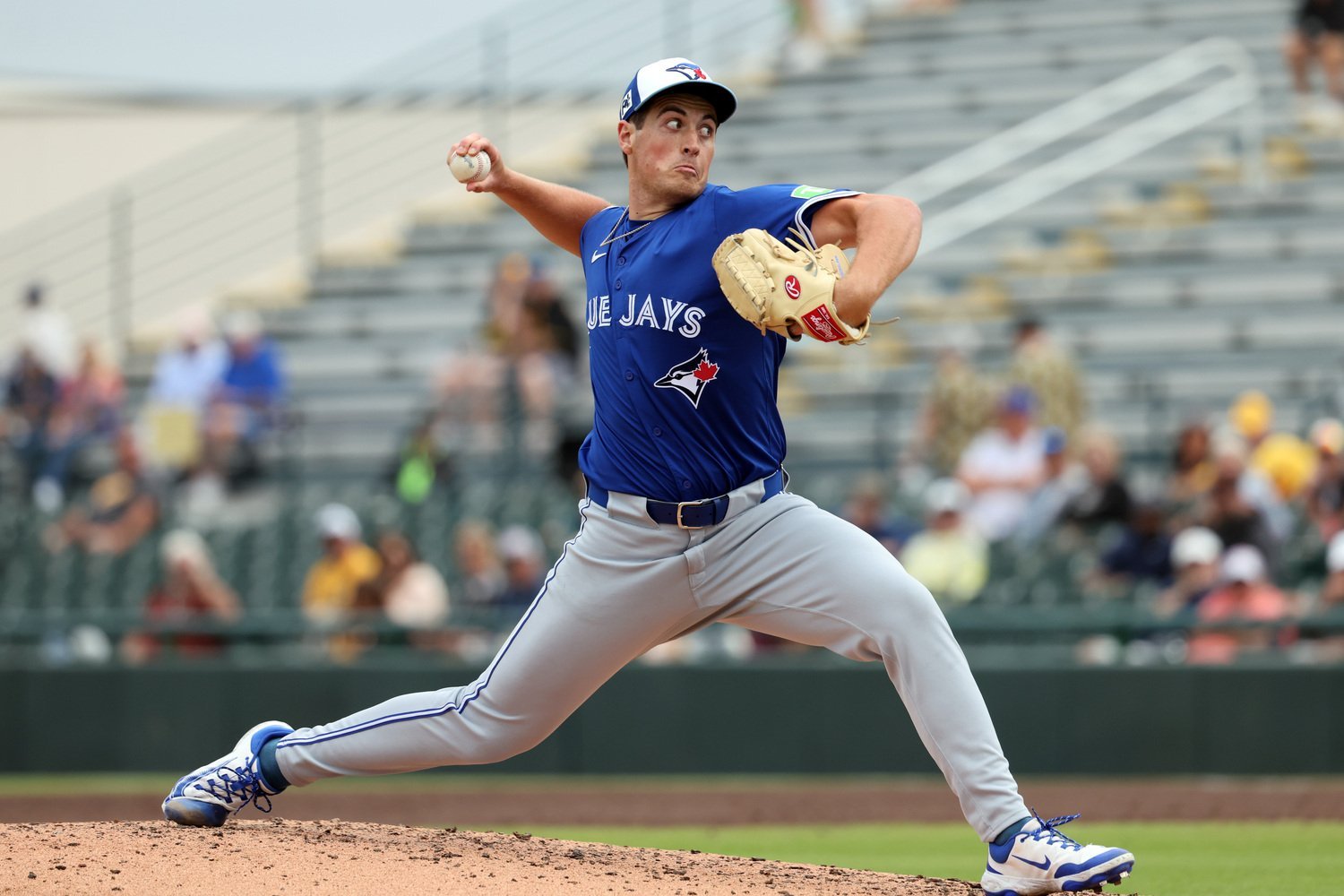 Shi Davidi of Sportsnet reported today that right-hander Jake Bloss has qualified for a fourth option year. This means the Blue Jays will not risk losing the 25-year-old if they do not have a spot for him on their Opening Day roster next March. Nearly every MLB player starts his big league career with three option years. He uses one up the first time he is sent down to the minors in a given season. He can then be optioned back and forth between the 26-man roster and the minors up to five times that year. Once a player has been optioned in three separate seasons, he is generally said to be "out of options," and his team can no longer send him down to the minors without first placing him on outright waivers. However, there is an exception to that rule. If a player has already exhausted his three option years before he has accrued five full seasons between the majors and minors, he is eligible for a fourth option year. The Astros selected Bloss in the 2023 draft and promoted him to the majors less than a year later. The Blue Jays optioned the righty to Triple-A Buffalo after they acquired him at the 2024 trade deadline and subsequently optioned him back to Buffalo at the beginning of the 2025 and '26 campaigns. Thus, he burned through three option years in only four professional seasons. That's why he has been granted a fourth option year, which the Jays will almost certainly use in 2027. Bloss has yet to pitch in the majors with Toronto. UCL surgery kept him out for most of 2025 and into 2026. A few weeks after he returned to Buffalo this past summer, he suffered a teres major strain that ended his season. Around those IL stints, he pitched to a 6.48 ERA and 5.64 FIP in 90.1 minor league innings in the Blue Jays organization. He is currently pitching in the Arizona Fall League, where he has given up 10 runs on 13 hits in 10.2 frames. Despite those unimpressive numbers, Bloss has a lot of talent in his right arm. There is a very good chance he will contribute meaningful innings for Toronto in 2027. Now, thankfully, there's no pressure for those innings to come straight away. So, he will most likely begin the season with the Bisons, honing his craft and readying himself for when the Blue Jays need the depth. View the full article
-
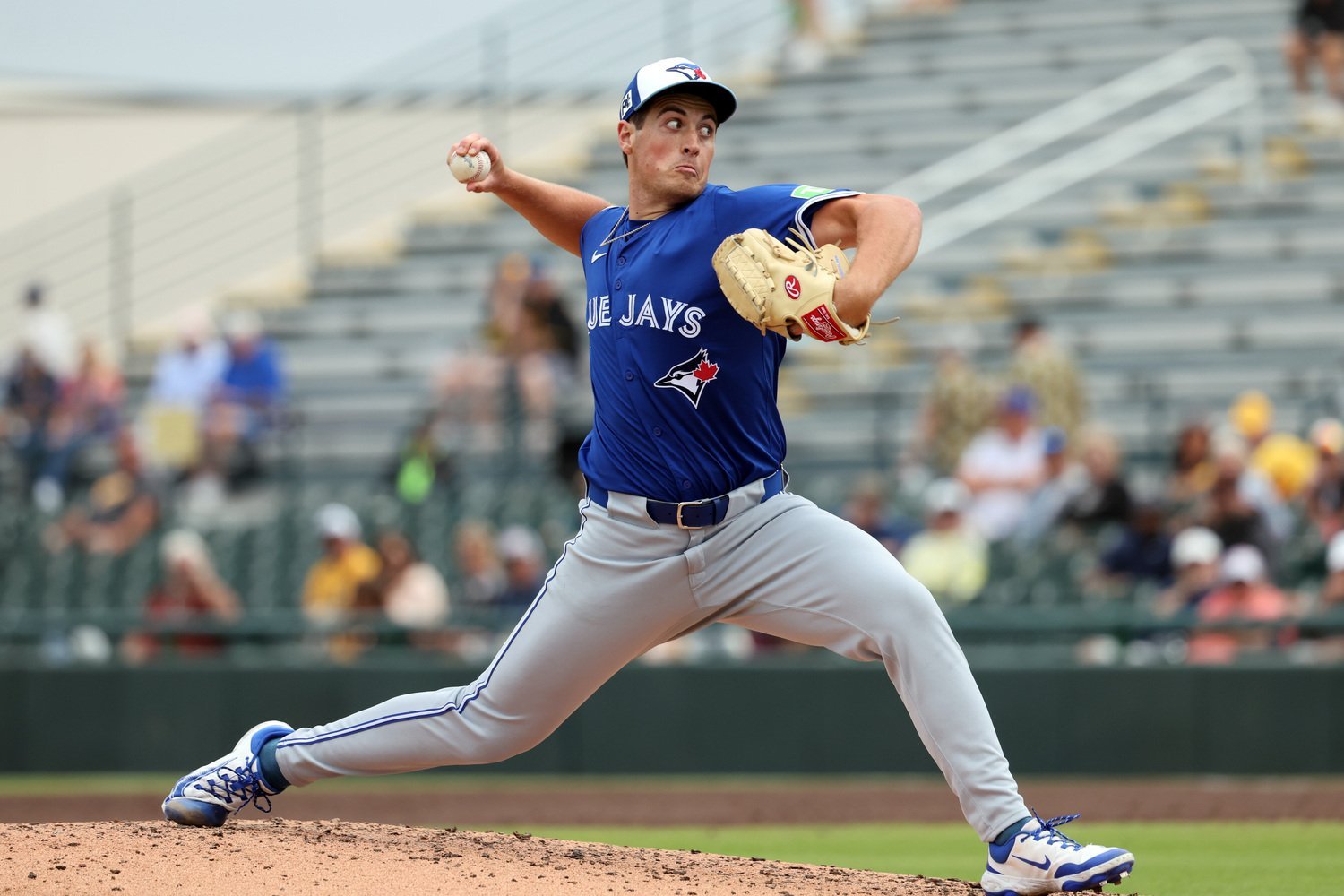 Shi Davidi of Sportsnet reported today that right-hander Jake Bloss has qualified for a fourth option year. This means the Blue Jays will not risk losing the 25-year-old if they do not have a spot for him on their Opening Day roster next March. Nearly every MLB player starts his big league career with three option years. He uses one up the first time he is sent down to the minors in a given season. He can then be optioned back and forth between the 26-man roster and the minors up to five times that year. Once a player has been optioned in three separate seasons, he is generally said to be "out of options," and his team can no longer send him down to the minors without first placing him on outright waivers. However, there is an exception to that rule. If a player has already exhausted his three option years before he has accrued five full seasons between the majors and minors, he is eligible for a fourth option year. The Astros selected Bloss in the 2023 draft and promoted him to the majors less than a year later. The Blue Jays optioned the righty to Triple-A Buffalo after they acquired him at the 2024 trade deadline and subsequently optioned him back to Buffalo at the beginning of the 2025 and '26 campaigns. Thus, he burned through three option years in only four professional seasons. That's why he has been granted a fourth option year, which the Jays will almost certainly use in 2027. Bloss has yet to pitch in the majors with Toronto. UCL surgery kept him out for most of 2025 and into 2026. A few weeks after he returned to Buffalo this past summer, he suffered a teres major strain that ended his season. Around those IL stints, he pitched to a 6.48 ERA and 5.64 FIP in 90.1 minor league innings in the Blue Jays organization. He is currently pitching in the Arizona Fall League, where he has given up 10 runs on 13 hits in 10.2 frames. Despite those unimpressive numbers, Bloss has a lot of talent in his right arm. There is a very good chance he will contribute meaningful innings for Toronto in 2027. Now, thankfully, there's no pressure for those innings to come straight away. So, he will most likely begin the season with the Bisons, honing his craft and readying himself for when the Blue Jays need the depth. View the full article
-
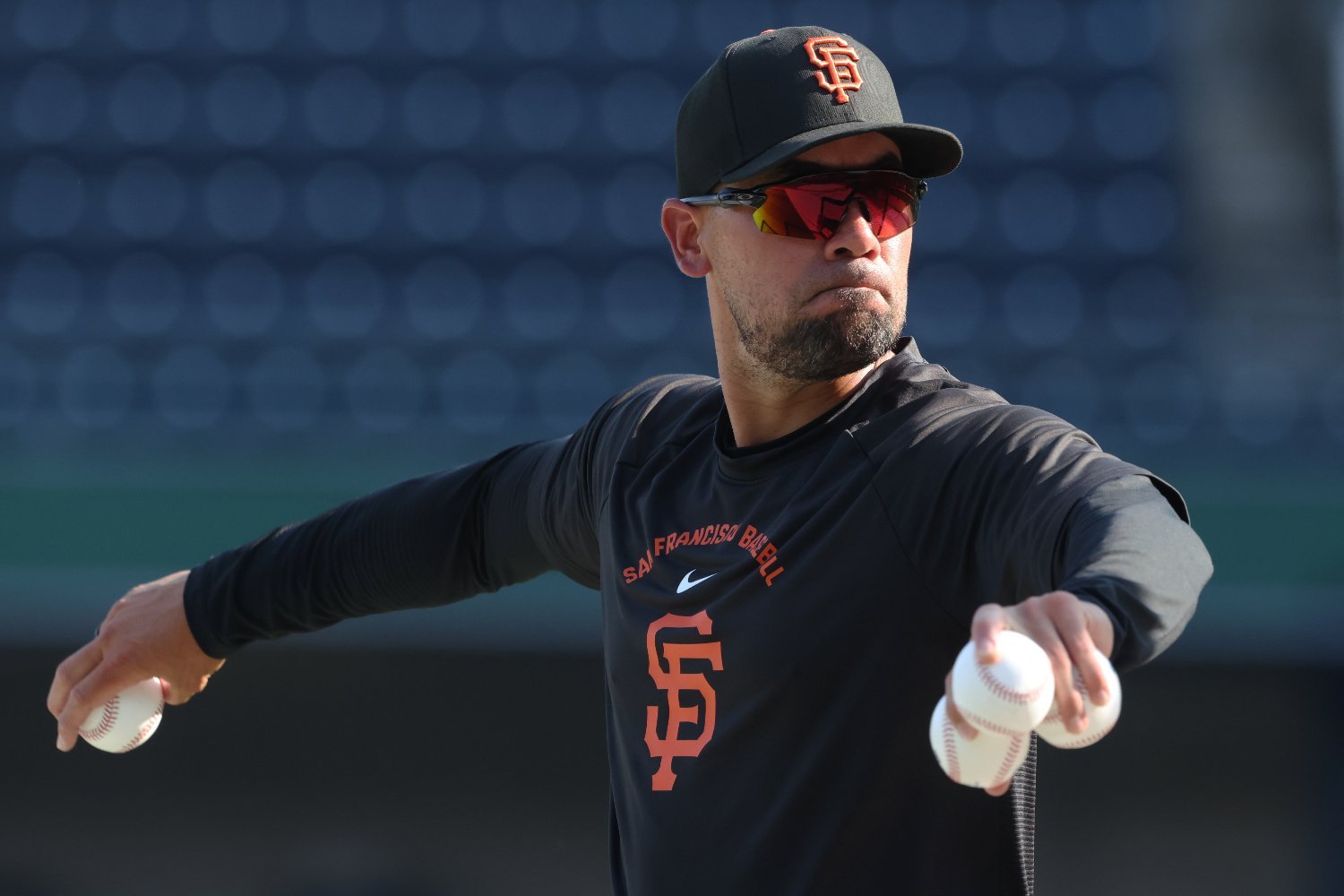 On Thursday afternoon, MLB Insider Mark Feisand announced that Hunter Mense would be joining the Royals' coaching staff as another hitting coach. The Royals had an open spot on the coaching staff after they parted ways with former hitting coach Alec Zumwalt at the conclusion of last season. Feisand clarified that Mense would serve as an assistant hitting coach. Mense will serve as an assistant hitting coach alongside Marcus Thames, who came to Kansas City last year in the same role. Connor Dawson, who was an assistant hitting coach, will be elevated to the role of "offensive coordinator." This will be the first time the Royals have employed a coach with such a title. The Rangers, Blue Jays, Mariners, and Angels have had offensive coordinators on their coaching staff in the past. Mense has experience working with an offensive coordinator, as he was an assistant coach in Toronto when Don Mattingly served as the Blue Jays' offensive coordinator. In Mense's last year in Toronto, he helped the Blue Jays not only win an AL Pennant, but also finish fourth in baseball in wRC+. The San Francisco Giants hired Mense as their hitting coach last year under new manager Tony Vitello. However, the Giants' offense struggled, ranking 23rd in wRC+, according to Fangraphs. That said, the Giants had significant roster turnover and injuries that seemed to cap their ceiling last season. The Royals ranked 19th in wRC+ last year with a 98 mark. That mark was five points better than their 2025 wRC+, when they ranked 24th in the league. Mense is a local product, as he attended Liberty High School in Liberty, MO, and the University of Mizzou for college. He played five seasons in the Marlins' minor league system and finished his career with the Kansas City T-Bones of the independent Northern League in 2010. After retiring, he began his coaching career at Mizzou as an assistant. Mense transitioned to professional baseball, spending seven seasons in the Blue Jays' organization. That included stints as the hitting coach for the Double-A New Hampshire Fisher Cats, serving as the Jays' Minor League Hitting Coordinator from 2019 to 2021, and then as an assistant hitting coach for the Jays from 2022 to 2025. Zumwalt returned to the Royals' Minor League system, where he will serve as the Senior Director of Hitting Performance/Player Development. View the full article
-
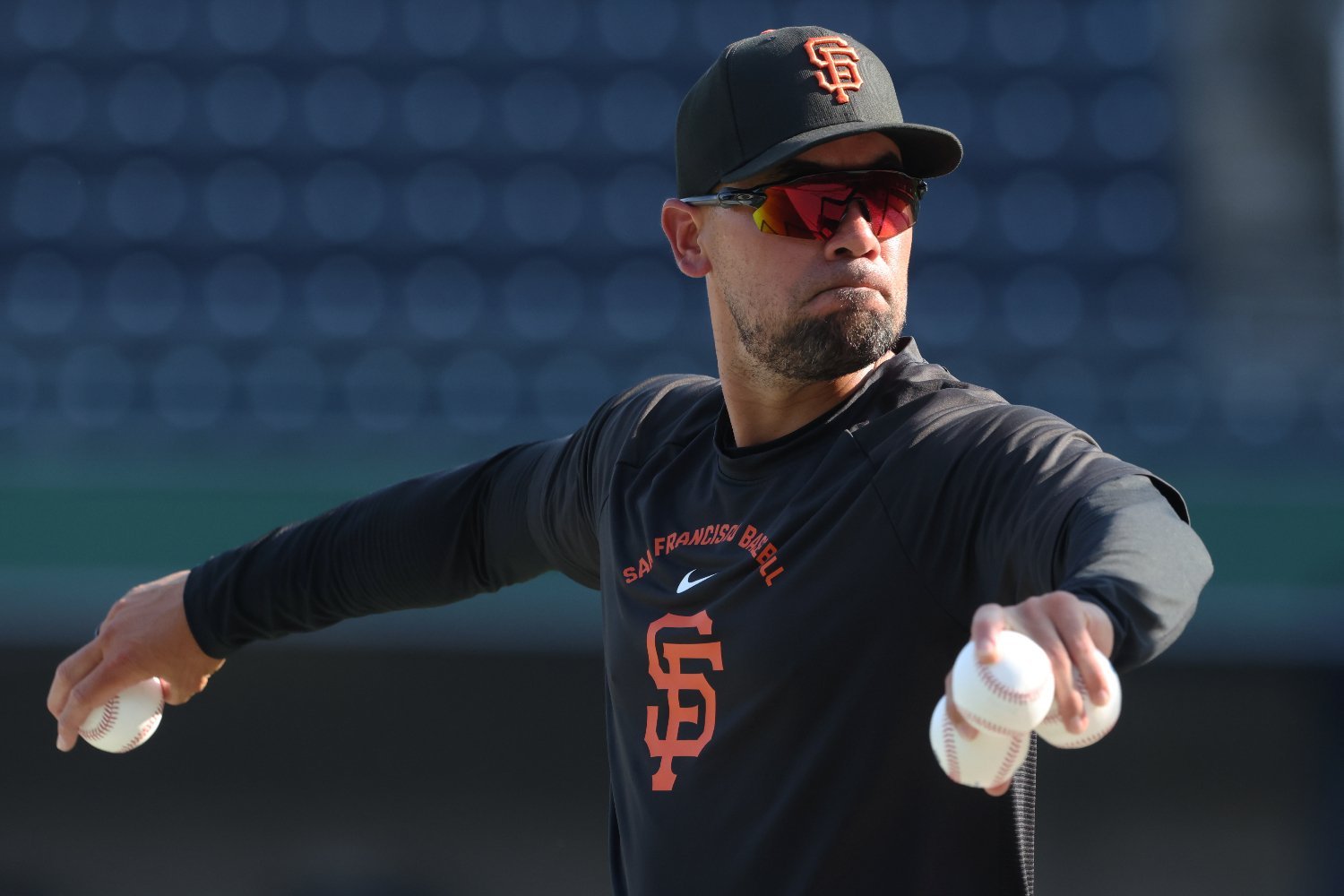 On Thursday afternoon, MLB Insider Mark Feisand announced that Hunter Mense would be joining the Royals' coaching staff as another hitting coach. The Royals had an open spot on the coaching staff after they parted ways with former hitting coach Alec Zumwalt at the conclusion of last season. Feisand clarified that Mense would serve as an assistant hitting coach. Mense will serve as an assistant hitting coach alongside Marcus Thames, who came to Kansas City last year in the same role. Connor Dawson, who was an assistant hitting coach, will be elevated to the role of "offensive coordinator." This will be the first time the Royals have employed a coach with such a title. The Rangers, Blue Jays, Mariners, and Angels have had offensive coordinators on their coaching staff in the past. Mense has experience working with an offensive coordinator, as he was an assistant coach in Toronto when Don Mattingly served as the Blue Jays' offensive coordinator. In Mense's last year in Toronto, he helped the Blue Jays not only win an AL Pennant, but also finish fourth in baseball in wRC+. The San Francisco Giants hired Mense as their hitting coach last year under new manager Tony Vitello. However, the Giants' offense struggled, ranking 23rd in wRC+, according to Fangraphs. That said, the Giants had significant roster turnover and injuries that seemed to cap their ceiling last season. The Royals ranked 19th in wRC+ last year with a 98 mark. That mark was five points better than their 2025 wRC+, when they ranked 24th in the league. Mense is a local product, as he attended Liberty High School in Liberty, MO, and the University of Mizzou for college. He played five seasons in the Marlins' minor league system and finished his career with the Kansas City T-Bones of the independent Northern League in 2010. After retiring, he began his coaching career at Mizzou as an assistant. Mense transitioned to professional baseball, spending seven seasons in the Blue Jays' organization. That included stints as the hitting coach for the Double-A New Hampshire Fisher Cats, serving as the Jays' Minor League Hitting Coordinator from 2019 to 2021, and then as an assistant hitting coach for the Jays from 2022 to 2025. Zumwalt returned to the Royals' Minor League system, where he will serve as the Senior Director of Hitting Performance/Player Development. View the full article
-
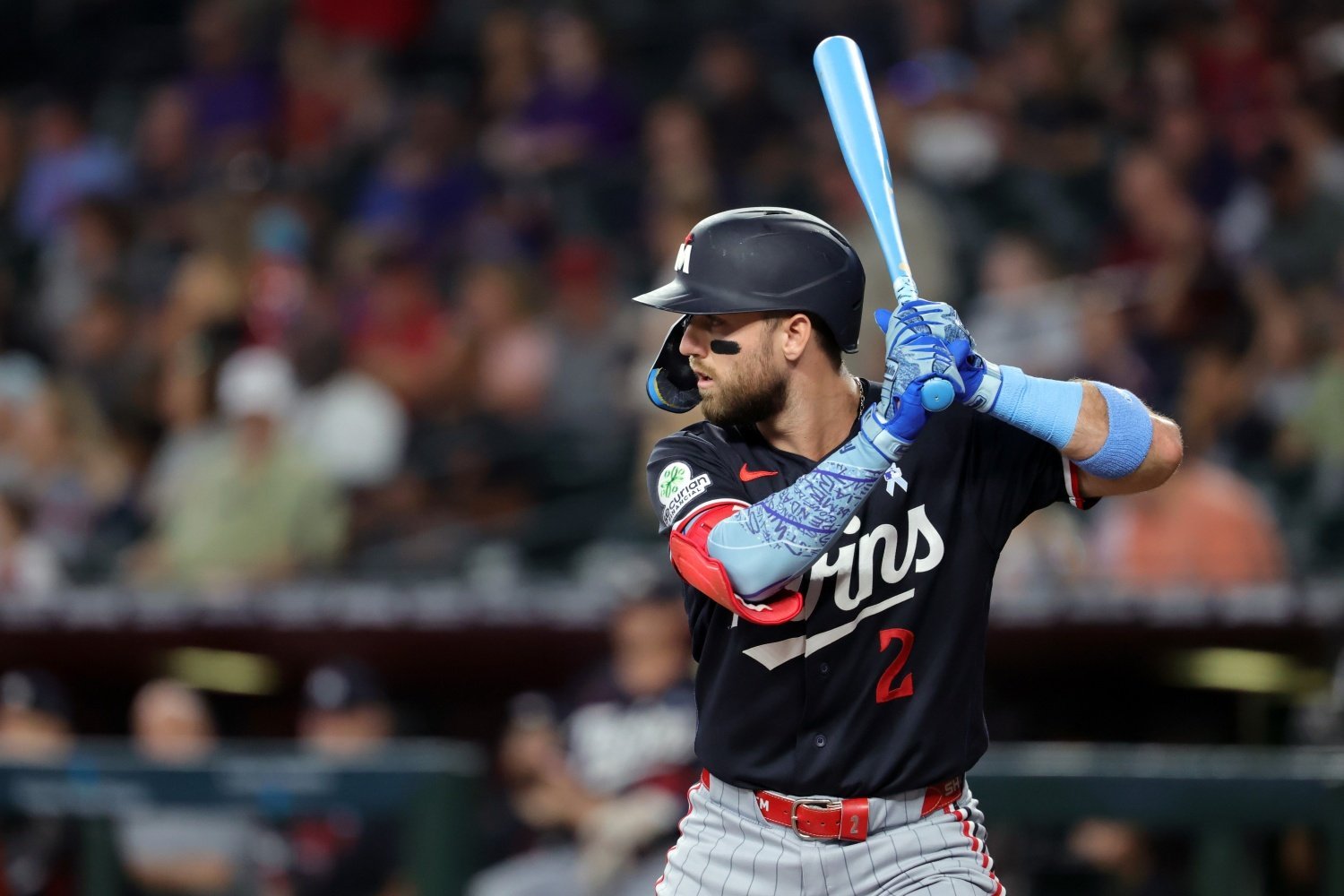 It’s easy to set a target on first base as a prime position at which the Twins might upgrade this winter. Royce Lewis was poor there down the stretch. It’s worth a reminder, though, that Kody Clemens spent a good chunk of the season there with much better results. The Twins can certainly explore their options in the first-base market, but if they choose not to invest heavily in a non-premium position, Clemens is a better fallback option than he gets credit for. Clemens was more of a second baseman by the end of 2026, which, ironically, was perhaps his worst defensive fit among the positions he could play. His athleticism makes him a much better fit for a corner infield or outfield spot, and his lack of range showed up in his -3 Outs Above Average at second base. By season’s end, it was easy to forget that he was a good defensive first baseman. Clemens’s Outs Above Average of 1 at first base was acceptable, and certainly better than the -1 posted by Royce Lewis. He did all he could at the beginning of the year, when he was receiving throws from an entire infield that had to be completely overhauled midseason. Lewis rated better as a receiver of throws, but he was getting better ones than Clemens had been, and Clemens had better range on ground balls to the right side than Lewis did. Of course, defense is the secondary bar to clear at first base. At a position so far down the defensive spectrum, offense is the main driver of value. Clemens may not be one of the top-tier bats in the Twins’ lineup, but he’s proven capable of meeting the standards for first base. The league's first basemen posted a .765 aggregate OPS last season, just ahead of Clemens’ .758 over 583 plate appearances. That figure jumps to .789 against right-handed pitching, so if Clemens is deployed as a platoon-protected first baseman, he's above-average. Finding a capable right-handed option to operate as his short-side platoon partner would be pretty easy, and much cheaper than signing a full-time first baseman with that level of expected production. By making Clemens the strong side of a first-base platoon, the Twins would have a plus defender at first base most of the time, and their options for filling the rest remain wide open. They could take a low-risk flier on someone like Paul Goldschmidt or Ryan Mountcastle, each of whom has destroyed left-handed pitching in their career and who could also occasionally DH. Perhaps if they sign a right-handed hitting outfielder, they could shift Luke Keaschall back to first base against southpaws to maximize their platoon advantage. The main luxury Clemens should provide is preventing the team from taking too risky a swing at first base. Perhaps Jake Bauers’s breakout in his 30s is real, but are the Twins the team that wants to gamble on it? The first-base free-agent market is fairly light, but do the Twins really want to explore other options that could cost significant trade capital? They might be better served taking risks and investing elsewhere in the roster. There is one tougher question to answer: If Clemens is the 'who' on first, what's on second? Keaschall certainly can't move back there. With an offseason of prep, Lewis might be a plus defender there, and his bat is more viable at second than at first, but the upside of plugging him in there is low. If and when Marek Houston arrives, one of Houston, Kaelen Culpepper or Brooks Lee will have to find their playing time at second, but that's not guaranteed to happen at all, and even if it does, it probably won't happen right away. If Clemens is being asked to play first, then, the team has to find another bridge to their future at second. Free agency has some interesting names at that position, and again, maybe it's better to take risks there than at first, but installing Clemens at first would force the front office to do so. Clemens has become more than just a fun story—the son of a former big leaguer claimed off waivers. He has value to offer the Twins, and he’s shown strong signs of being a capable first baseman on a competitive team. He's shown to be an above-average hitter at the position with the right matchups, and is a plus defender, to boot. Can the Twins trust Clemens in a platoon? Should they invest in first base and push him back into a bench role, or keep him at second? Let us know below! View the full article
-
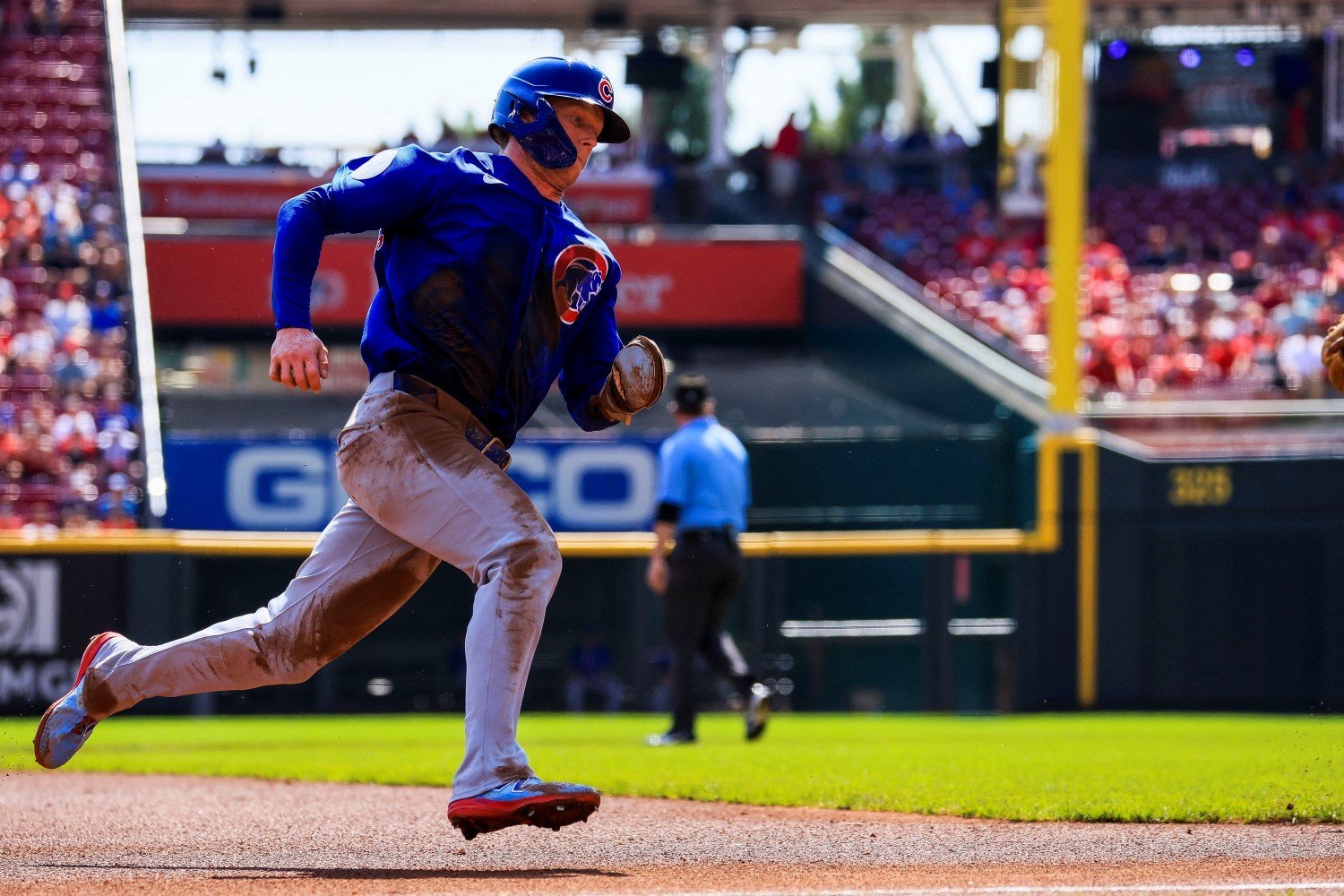 When the Cubs and Pete Crow-Armstrong agreed on a lucrative six-year contract extension this spring, Crow-Armstrong received a $5-million signing bonus. The deal technically begins in 2027, though, so rather than having his salary boosted significantly this year, he played his MVP-caliber breakout season on a salary of $894,000. The injustice of that number will be ameliorated somewhat later this month, when Crow-Armstrong officially receives what will certainly be the largest payout in the brief history of the league's pre-arbitration bonus pool. Next Thursday, Crow-Armstrong will be named the 2026 National League Most Valuable Player. That will trigger a $2.5-million bonus for him, as part of the $50-million league-wide bonus distribution that goes to players who have yet to qualify for arbitration. The pool was created as part of the current Collective Bargaining Agreement, to correct some of the imbalance in earning power between veterans and young players who are still under team control. Awards bonuses are just one part of the bonus pool. Whatever money is left from the $50 million in initial funds is distributed proportionally, based on the wins above replacement (according to a joint WAR formula that uses both FanGraphs's and Baseball Reference's versions of the stat) accumulated by the top 100 pre-arbitration players. Crow-Armstrong's historic season saw him compile 10.2 jWAR, which is a whopping 3.2% of the total jWAR generated by those 100 leaders. Therefore, even though this year will see a record number of awards bonuses doled out and more of the fund taken up by those payments than is typical, Crow-Armstrong will get more than $1 million for his WAR totals, in addition to the bonus for winning the MVP. That will edge him past Paul Skenes for the honor of having earned the most money via this system in one season, since the system was created ahead of the 2022 campaign. Skenes earned $3.43 million last year, when he was the Cy Young Award winner in the NL. Crow-Armstrong is likely to earn around $3.56 million, according to a North Side Baseball review of the relevant WAR totals and projections of awards balloting. That's a nice head start on the earning that will begin in earnest for Crow-Armstrong next season. His 2027 salary will be $10 million. Adding his 2026 salary, his pre-arbitration bonus payday, his signing bonus for the long-term deal and a (small) playoff share, he'll make nearly that much this year, too. Since he'll no longer be in the pre-arbitration service time bracket, Crow-Armstrong can't earn bonuses via the same system again next fall, but he'll still be in position to boost his earnings if he earns MVP votes again. Crow-Armstrong's contract contains escalators based on his finishes in MVP voting over the first five of the six-year term of the deal. His 2031 and 2032 salaries each rise by $2 million for each MVP award he wins, beginning in 2027. For each time he finishes second or third, those years' salaries rise by $1 million. For each time he finishes fourth or fifth, it's an extra $750,000 in those last two seasons, and for each time he finishes sixth through 10th, it's $500,000. If (for instance) Crow-Armstrong wins a second MVP award, finishes third once more and lands in the top 10 another time between now and 2030, he'd make $7 million more in 2031 and 2032 than his guaranteed $60 million across those two campaigns. How he finishes in 2031 can also boost his 2032 salary, so he has a lot of chances to increase his earnings by a wide margin over the next half-decade. The pre-arbitration pool is meant to mirror contract clauses like the one in Crow-Armstrong's new deal. Although it mostly serves to shift leverage from teams to players in contract negotiations like the ones between the Cubs and their center fielder early this year, it also facilitates those negotiations in some team-friendly ways. Absent the pool and its promise of boosting Crow-Armstrong's 2026 earnings if he had just this kind of season, the player and his agent might have been more reluctant to have a long-term deal start next season, rather than this one. Getting deals like this done is easier when a team doesn't have to rejigger its budget for the season just weeks ahead to do it, and the pool therefore made it easier for the sides to get together on the Crow-Armstrong contract—one of the chief achievements of Jed Hoyer's tenure as the Cubs' top baseball decision-maker. The only bad news, for the Cubs, is that Crow-Armstrong was almost alone in earning a chunk of the pool this year. Ben Brown will get somewhere around $220,000 for his strong (though injury-disrupted) season, but in March, the team surely hoped that players like Matt Shaw, Daniel Palencia and Moisés Ballesteros would qualify for payouts via this system. Ranking by jWAR is hardly a perfect way to capture players' real value, but in short, the Cubs had only one of the top 80 pre-arbitration players in 2026, and only two of the top 100. Every other NL Central club had at least two of the top 50. In the top 100, the Brewers had five players; the Pirates and Cardinals had four each; and the Reds had two. With a veteran core and far more spending power than their rivals, the Cubs don't need to lead the league in bonus pool payouts or players who qualify for it. Getting players over the line and into that group of payees reflects a real ability to find and create value with cost-controlled players, though, and the Cubs need to do it better, going forward. In so many ways, the 2026 season was a story of Crow-Armstrong carrying an organization that otherwise failed on most markers. This is one last way to throw that state of affairs into sharp relief, but it's also another chance to marvel at how far ahead of the field Crow-Armstrong's season stood, in so many ways—and how much the team will benefit from having locked him up through 2032 before he busted out. View the full article
-
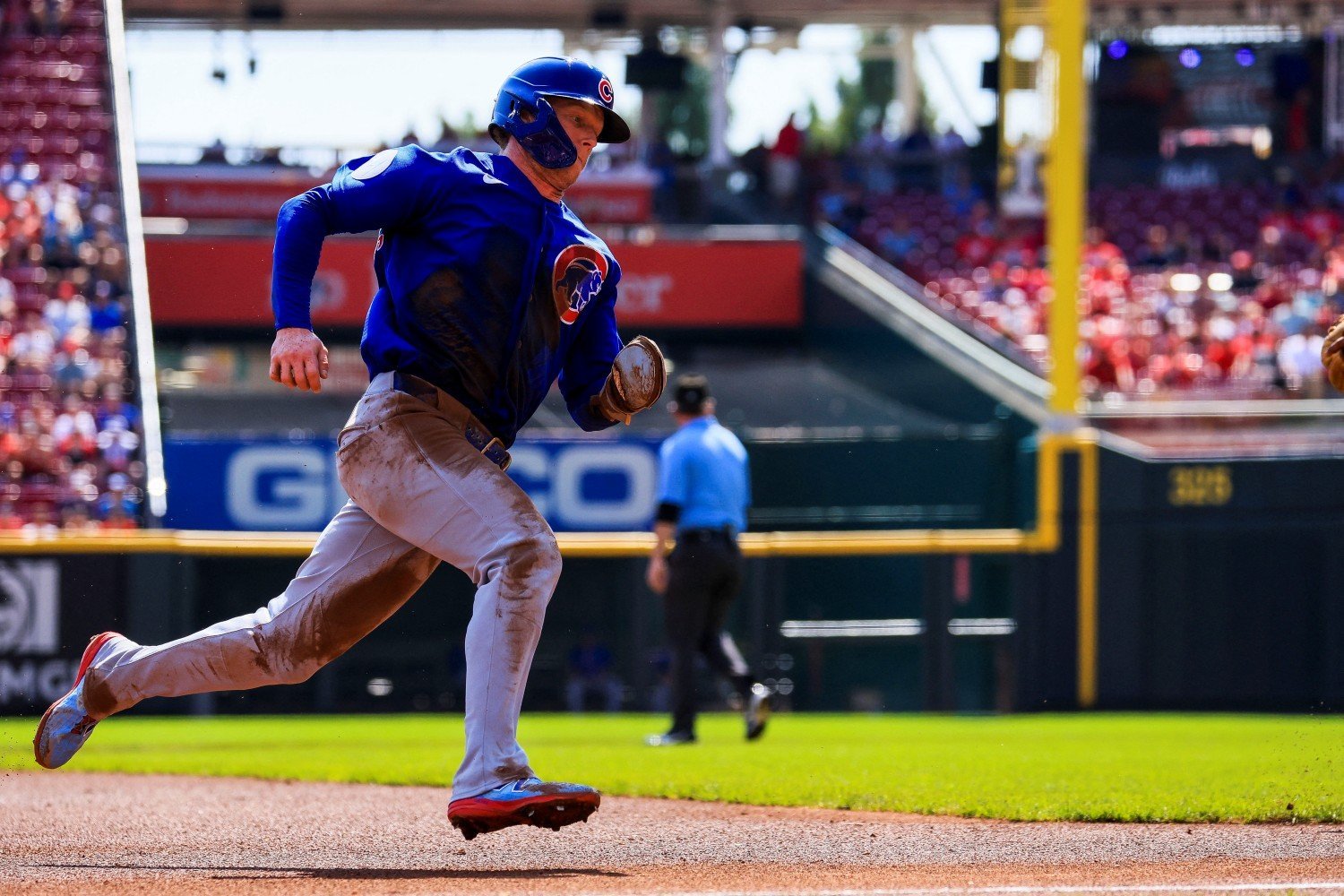 When the Cubs and Pete Crow-Armstrong agreed on a lucrative six-year contract extension this spring, Crow-Armstrong received a $5-million signing bonus. The deal technically begins in 2027, though, so rather than having his salary boosted significantly this year, he played his MVP-caliber breakout season on a salary of $894,000. The injustice of that number will be ameliorated somewhat later this month, when Crow-Armstrong officially receives what will certainly be the largest payout in the brief history of the league's pre-arbitration bonus pool. Next Thursday, Crow-Armstrong will be named the 2026 National League Most Valuable Player. That will trigger a $2.5-million bonus for him, as part of the $50-million league-wide bonus distribution that goes to players who have yet to qualify for arbitration. The pool was created as part of the current Collective Bargaining Agreement, to correct some of the imbalance in earning power between veterans and young players who are still under team control. Awards bonuses are just one part of the bonus pool. Whatever money is left from the $50 million in initial funds is distributed proportionally, based on the wins above replacement (according to a joint WAR formula that uses both FanGraphs's and Baseball Reference's versions of the stat) accumulated by the top 100 pre-arbitration players. Crow-Armstrong's historic season saw him compile 10.2 jWAR, which is a whopping 3.2% of the total jWAR generated by those 100 leaders. Therefore, even though this year will see a record number of awards bonuses doled out and more of the fund taken up by those payments than is typical, Crow-Armstrong will get more than $1 million for his WAR totals, in addition to the bonus for winning the MVP. That will edge him past Paul Skenes for the honor of having earned the most money via this system in one season, since the system was created ahead of the 2022 campaign. Skenes earned $3.43 million last year, when he was the Cy Young Award winner in the NL. Crow-Armstrong is likely to earn around $3.56 million, according to a North Side Baseball review of the relevant WAR totals and projections of awards balloting. That's a nice head start on the earning that will begin in earnest for Crow-Armstrong next season. His 2027 salary will be $10 million. Adding his 2026 salary, his pre-arbitration bonus payday, his signing bonus for the long-term deal and a (small) playoff share, he'll make nearly that much this year, too. Since he'll no longer be in the pre-arbitration service time bracket, Crow-Armstrong can't earn bonuses via the same system again next fall, but he'll still be in position to boost his earnings if he earns MVP votes again. Crow-Armstrong's contract contains escalators based on his finishes in MVP voting over the first five of the six-year term of the deal. His 2031 and 2032 salaries each rise by $2 million for each MVP award he wins, beginning in 2027. For each time he finishes second or third, those years' salaries rise by $1 million. For each time he finishes fourth or fifth, it's an extra $750,000 in those last two seasons, and for each time he finishes sixth through 10th, it's $500,000. If (for instance) Crow-Armstrong wins a second MVP award, finishes third once more and lands in the top 10 another time between now and 2030, he'd make $7 million more in 2031 and 2032 than his guaranteed $60 million across those two campaigns. How he finishes in 2031 can also boost his 2032 salary, so he has a lot of chances to increase his earnings by a wide margin over the next half-decade. The pre-arbitration pool is meant to mirror contract clauses like the one in Crow-Armstrong's new deal. Although it mostly serves to shift leverage from teams to players in contract negotiations like the ones between the Cubs and their center fielder early this year, it also facilitates those negotiations in some team-friendly ways. Absent the pool and its promise of boosting Crow-Armstrong's 2026 earnings if he had just this kind of season, the player and his agent might have been more reluctant to have a long-term deal start next season, rather than this one. Getting deals like this done is easier when a team doesn't have to rejigger its budget for the season just weeks ahead to do it, and the pool therefore made it easier for the sides to get together on the Crow-Armstrong contract—one of the chief achievements of Jed Hoyer's tenure as the Cubs' top baseball decision-maker. The only bad news, for the Cubs, is that Crow-Armstrong was almost alone in earning a chunk of the pool this year. Ben Brown will get somewhere around $220,000 for his strong (though injury-disrupted) season, but in March, the team surely hoped that players like Matt Shaw, Daniel Palencia and Moisés Ballesteros would qualify for payouts via this system. Ranking by jWAR is hardly a perfect way to capture players' real value, but in short, the Cubs had only one of the top 80 pre-arbitration players in 2026, and only two of the top 100. Every other NL Central club had at least two of the top 50. In the top 100, the Brewers had five players; the Pirates and Cardinals had four each; and the Reds had two. With a veteran core and far more spending power than their rivals, the Cubs don't need to lead the league in bonus pool payouts or players who qualify for it. Getting players over the line and into that group of payees reflects a real ability to find and create value with cost-controlled players, though, and the Cubs need to do it better, going forward. In so many ways, the 2026 season was a story of Crow-Armstrong carrying an organization that otherwise failed on most markers. This is one last way to throw that state of affairs into sharp relief, but it's also another chance to marvel at how far ahead of the field Crow-Armstrong's season stood, in so many ways—and how much the team will benefit from having locked him up through 2032 before he busted out. View the full article
-
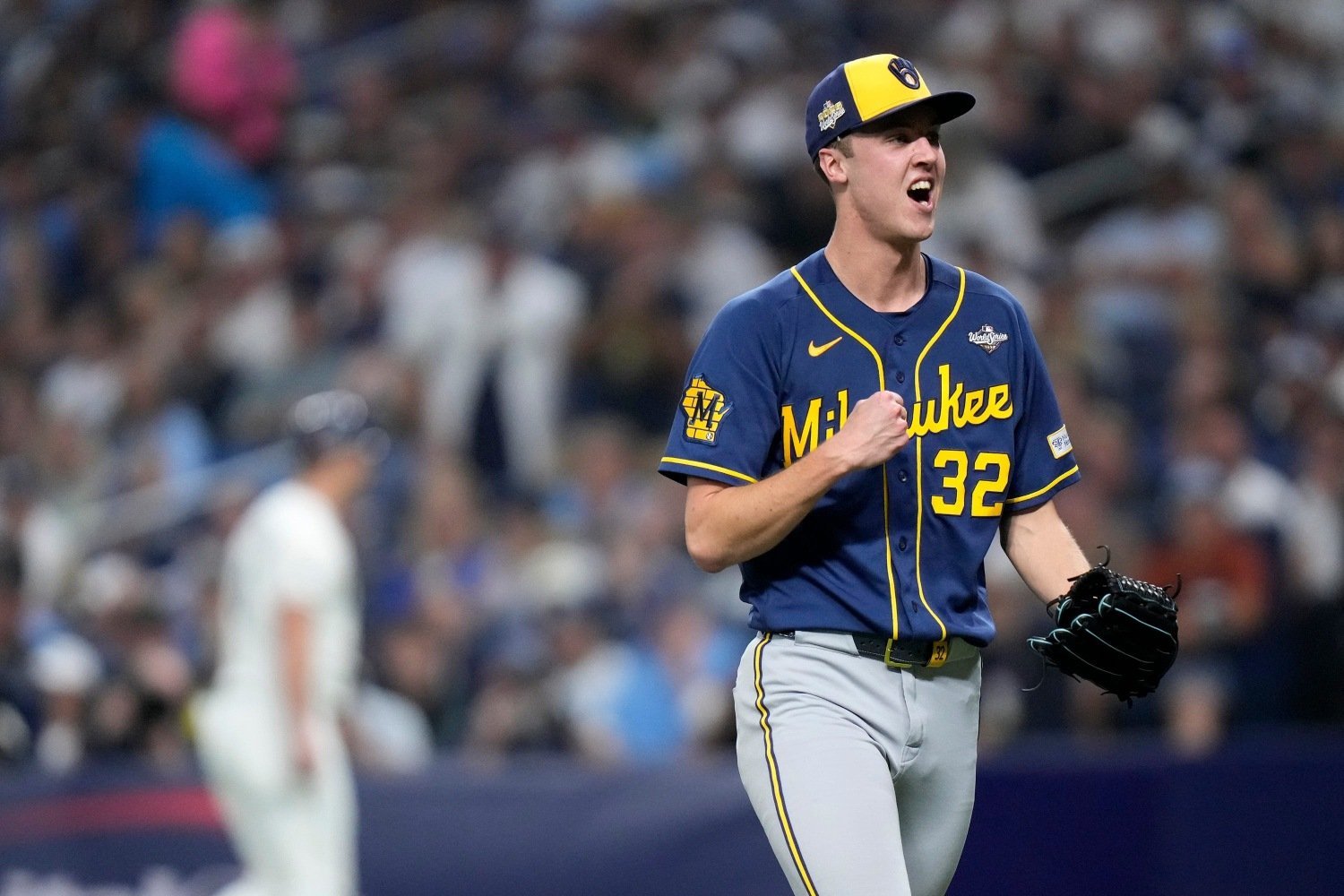 Next week, Jacob Misiorowski will officially win the 2026 National League Cy Young Award. That will be a fitting end to one of the great pitching seasons of this decade and one of the best in Brewers history, but it will also be a huge boon for Misiorowski. Under the rules of the pre-arbitration bonus pool created upon the completion of the current Collective Bargaining Agreement, Misiorowski will get $2.5 million for that win. Add in the money he'll get based on a proportional distribution of other bonus money based on players' WAR outputs, and he'll receive roughly $3.2 million sometime in the next month. Not bad, for a player whose nominal salary for 2026 was under $800,000. Misiorowski will be the big earner, but four other Brewers will receive payouts via the pre-arbitration pool, according to a Brewer Fanatic review of the relevant WAR totals. Jackson Chourio will receive around $500,000. Joey Ortiz and Logan Henderson will get roughly $300,000, and Abner Uribe will get roughly $200,000. Chourio made $7 million in 2026 under the terms of his long-term contract extension, which he and the team agreed to before his debut. The other three, however, each made roughly what Misiorowski did from the Brewers in 2026, so these bonuses will be substantial raises for each of them. Each team pays an equal share ($1.67 million or so) into the pool from which $50 million is distributed to high-performing pre-arbitration players. The Brewers get a better return on that investment than any other club in the big leagues. Last year, a whopping 10 Brewers got some bonus, and their total earnings were over $4.7 million. This season's total will fall a hair shy of that (unless Chourio makes the All-MLB team, also set to be announced next week), but it should roughly match the $4.5 million earned by eight different Brewers in 2024. Milwaukee players are getting almost $3 million per year more from this new system than the Brewers are paying to fund it. This year, of course, the whole team's earnings will be augmented by the fact that they went all the way and won the World Series. Playoff shares haven't yet been announced, but each Brewers player should receive somewhere north of $450,000 for being on the team that won it all. Add together the pre-arbitration bonuses and playoff shares, and Misiorowski is in line to increase his earnings roughly sixfold, relative to his salary. For Ortiz and Henderson, the extra money will roughly double their annual pay, The Brewers don't directly profit by having their young players get more money than the team pays for pre-arbitration bonus pool allotments. In fact, those earnings reduce the team's leverage a bit when they talk to players about contract extensions. Sal Frelick won't make any new money via the pool this year, but he made about $740,000 over the previous two campaigns, which was like adding an extra year's paycheck for him. Ortiz will fall just shy of $1 million in earnings across his three pre-arbitration seasons. Misiorowski's big payday makes it a bit less urgent that he secure his future. What he's getting via the pool alone this year is about 50% more than he got as a signing bonus when the Brewers drafted him in 2022. However, the extra money filtering through the roster and the clubhouse is good for morale. It makes young players a bit more secure and a bit more willing and able to accept the team's feedback or decisions, like when they optioned Henderson to the minors to begin this year or when they bumped Ortiz out of his starting shortstop job in favor of Cooper Pratt in June. In baseball, there are few true win/win situations, and for teams who don't do as well at developing young players (or who give them fewer chances to shine), the pre-arbitration bonus pool isn't one, either. For the Brewers, though, it's a boon, not only to the players themselves, but to the team. The smallest-market team in the league runs a bigger payroll than that market size suggests, but they'll never rank among the game's big spenders. The fact that they get a good middle reliever's worth of money paid to their players from a league-wide common fund each year (and that, this year, they'll also get to spread a little over $20 million more around via playoff shares) helps them avoid looking stingy, and it helps them spend what they do with a bit more confidence. Meanwhile, it also makes players like Misiorowski rich a bit sooner than they otherwise would be, which makes the sport a bit fairer, overall. View the full article
-
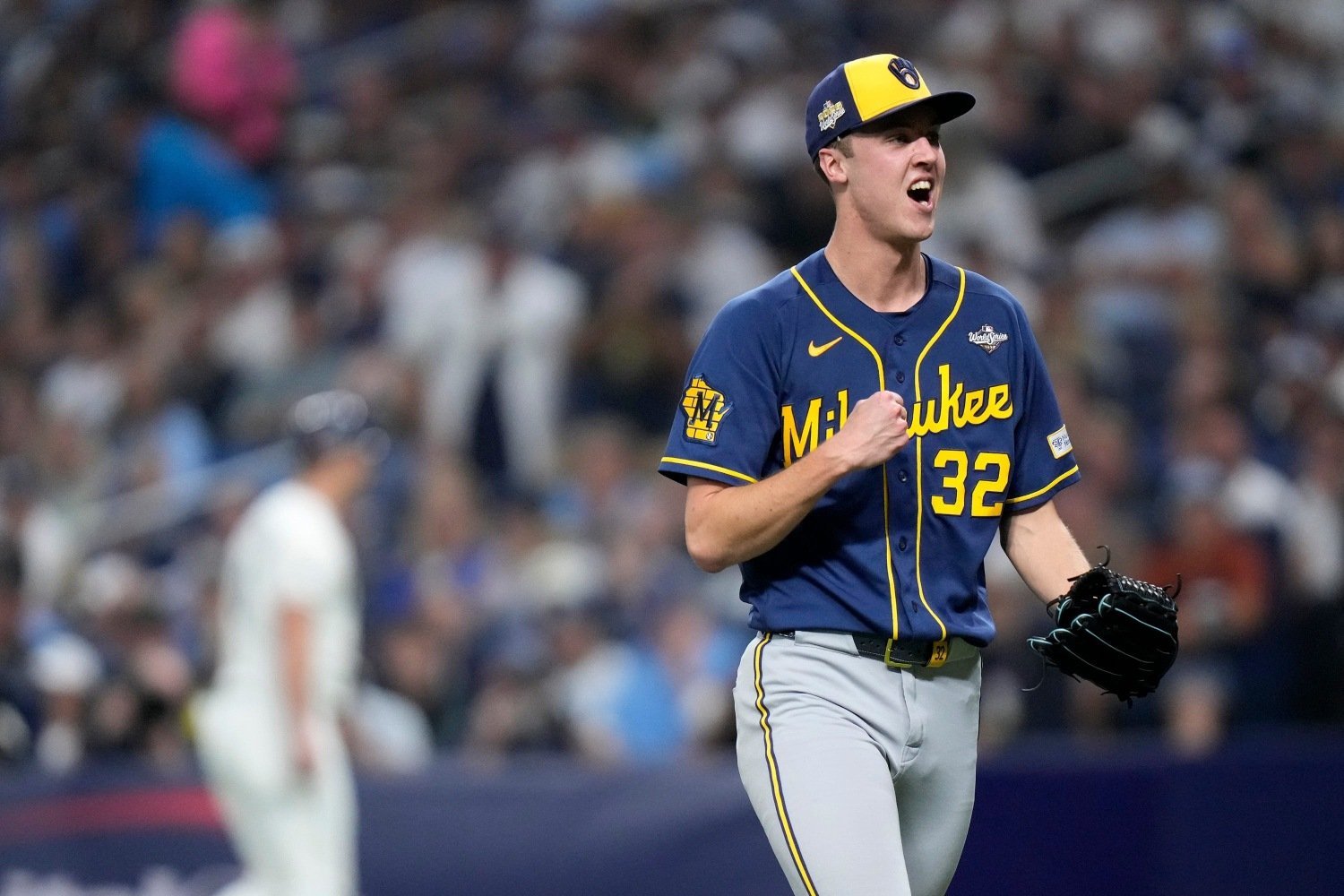 Next week, Jacob Misiorowski will officially win the 2026 National League Cy Young Award. That will be a fitting end to one of the great pitching seasons of this decade and one of the best in Brewers history, but it will also be a huge boon for Misiorowski. Under the rules of the pre-arbitration bonus pool created upon the completion of the current Collective Bargaining Agreement, Misiorowski will get $2.5 million for that win. Add in the money he'll get based on a proportional distribution of other bonus money based on players' WAR outputs, and he'll receive roughly $3.2 million sometime in the next month. Not bad, for a player whose nominal salary for 2026 was under $800,000. Misiorowski will be the big earner, but four other Brewers will receive payouts via the pre-arbitration pool, according to a Brewer Fanatic review of the relevant WAR totals. Jackson Chourio will receive around $500,000. Joey Ortiz and Logan Henderson will get roughly $300,000, and Abner Uribe will get roughly $200,000. Chourio made $7 million in 2026 under the terms of his long-term contract extension, which he and the team agreed to before his debut. The other three, however, each made roughly what Misiorowski did from the Brewers in 2026, so these bonuses will be substantial raises for each of them. Each team pays an equal share ($1.67 million or so) into the pool from which $50 million is distributed to high-performing pre-arbitration players. The Brewers get a better return on that investment than any other club in the big leagues. Last year, a whopping 10 Brewers got some bonus, and their total earnings were over $4.7 million. This season's total will fall a hair shy of that (unless Chourio makes the All-MLB team, also set to be announced next week), but it should roughly match the $4.5 million earned by eight different Brewers in 2024. Milwaukee players are getting almost $3 million per year more from this new system than the Brewers are paying to fund it. This year, of course, the whole team's earnings will be augmented by the fact that they went all the way and won the World Series. Playoff shares haven't yet been announced, but each Brewers player should receive somewhere north of $450,000 for being on the team that won it all. Add together the pre-arbitration bonuses and playoff shares, and Misiorowski is in line to increase his earnings roughly sixfold, relative to his salary. For Ortiz and Henderson, the extra money will roughly double their annual pay, The Brewers don't directly profit by having their young players get more money than the team pays for pre-arbitration bonus pool allotments. In fact, those earnings reduce the team's leverage a bit when they talk to players about contract extensions. Sal Frelick won't make any new money via the pool this year, but he made about $740,000 over the previous two campaigns, which was like adding an extra year's paycheck for him. Ortiz will fall just shy of $1 million in earnings across his three pre-arbitration seasons. Misiorowski's big payday makes it a bit less urgent that he secure his future. What he's getting via the pool alone this year is about 50% more than he got as a signing bonus when the Brewers drafted him in 2022. However, the extra money filtering through the roster and the clubhouse is good for morale. It makes young players a bit more secure and a bit more willing and able to accept the team's feedback or decisions, like when they optioned Henderson to the minors to begin this year or when they bumped Ortiz out of his starting shortstop job in favor of Cooper Pratt in June. In baseball, there are few true win/win situations, and for teams who don't do as well at developing young players (or who give them fewer chances to shine), the pre-arbitration bonus pool isn't one, either. For the Brewers, though, it's a boon, not only to the players themselves, but to the team. The smallest-market team in the league runs a bigger payroll than that market size suggests, but they'll never rank among the game's big spenders. The fact that they get a good middle reliever's worth of money paid to their players from a league-wide common fund each year (and that, this year, they'll also get to spread a little over $20 million more around via playoff shares) helps them avoid looking stingy, and it helps them spend what they do with a bit more confidence. Meanwhile, it also makes players like Misiorowski rich a bit sooner than they otherwise would be, which makes the sport a bit fairer, overall. View the full article
-
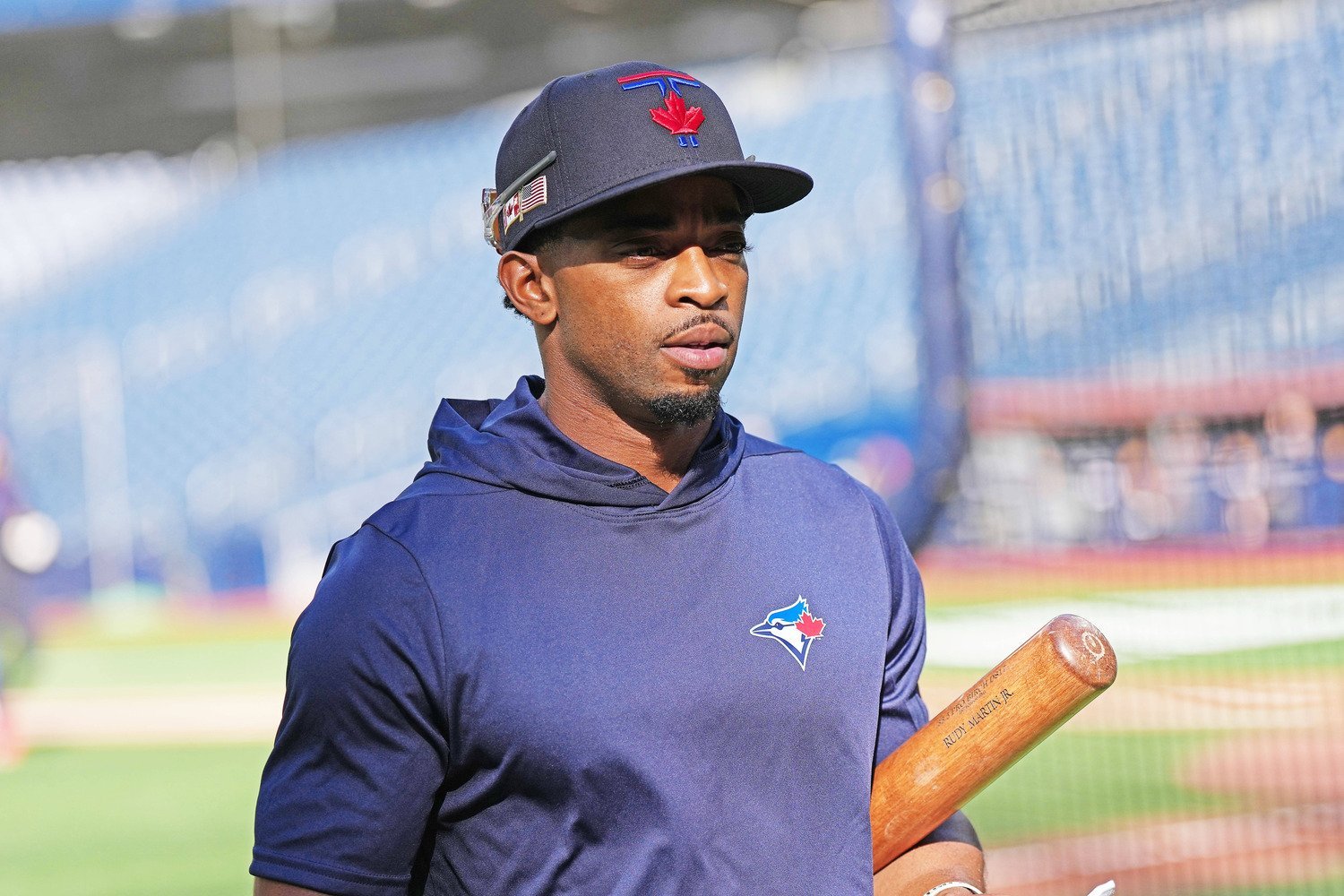 The Blue Jays and Rudy Martin Jr. have agreed to a new minor league deal, according to Ari Alexander of 7News Boston. The contract includes an invitation to big league spring training. The 30-year-old made his long-awaited MLB debut with Toronto in September. Unfortunately, he only appeared in two games before suffering a season-ending hamstring strain. Now, he can hope to get a longer look with the Jays in 2027. His odds of making the Opening Day roster are slim, but he'll offer speedy outfield depth at Triple-A Buffalo. View the full article
-
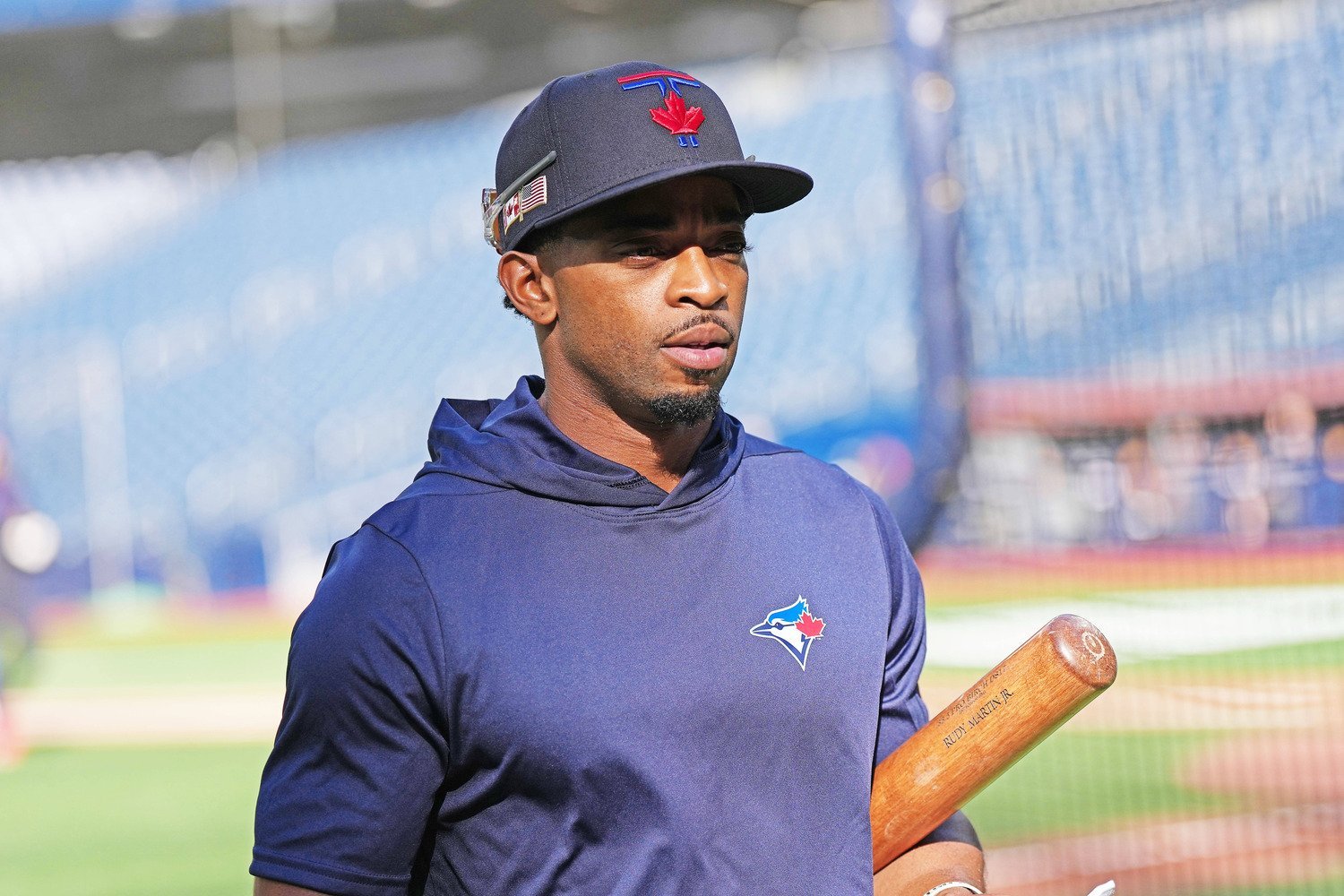 The Blue Jays and Rudy Martin Jr. have agreed to a new minor league deal, according to Ari Alexander of 7News Boston. The contract includes an invitation to big league spring training. The 30-year-old made his long-awaited MLB debut with Toronto in September. Unfortunately, he only appeared in two games before suffering a season-ending hamstring strain. Now, he can hope to get a longer look with the Jays in 2027. His odds of making the Opening Day roster are slim, but he'll offer speedy outfield depth at Triple-A Buffalo. View the full article
-
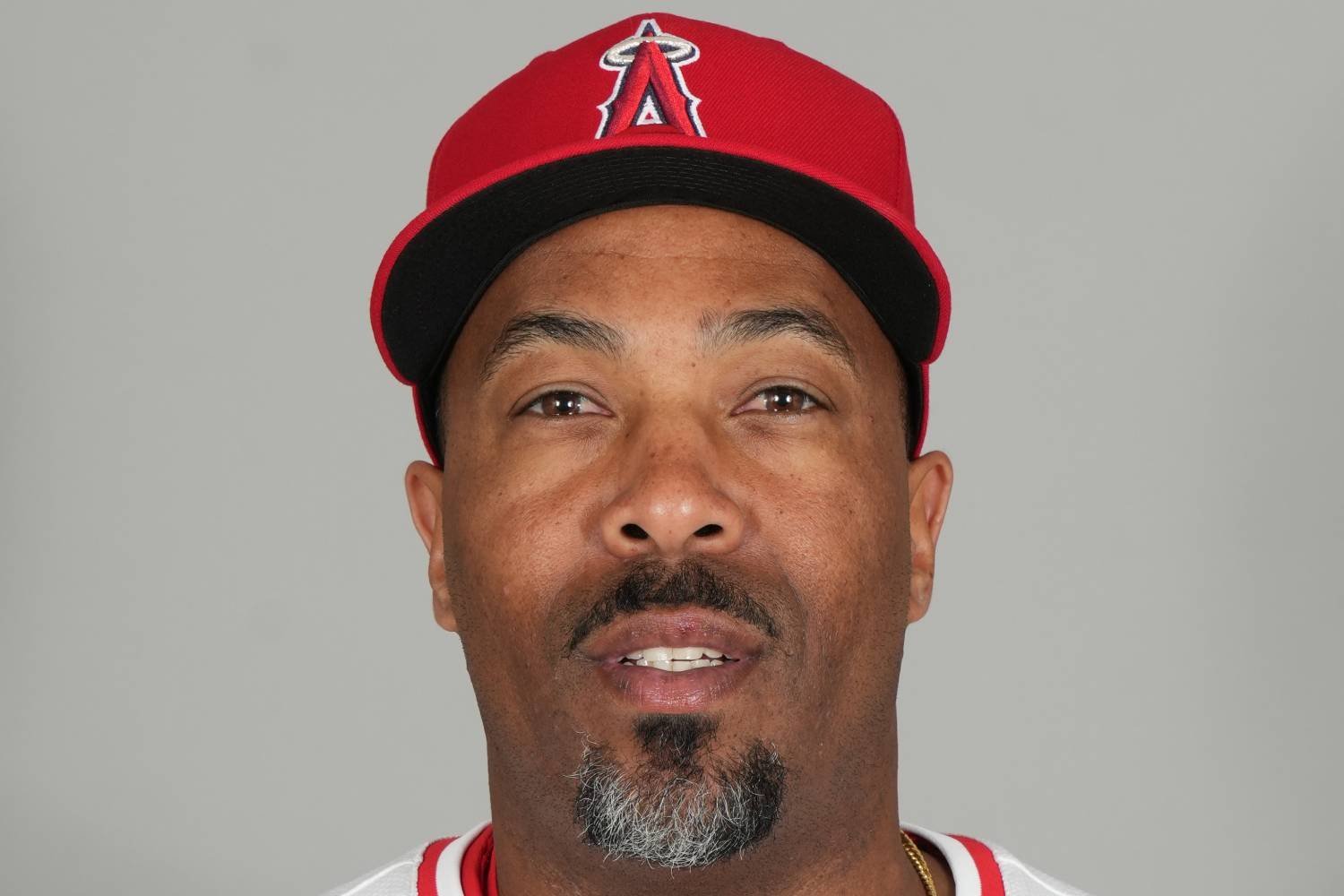 The final spot on the New York Mets' coaching staff for 2027 has been filed. Johnny Washington was hired by the Mets to be the co-hitting coach. Washington will share hitting coach duties with Troy Snitker, who was retained on new manager Andy Green's first Mets staff. Assistant hitting coach Rafael Fernandez remains on the staff. Washington takes the place of Jeff Albert, who was the director of hitting. The 42-year-old Washington was the minor-league hitting coordinator for Atlanta this season. Washington worked under Green from 2017-19 when he was the manager of the San Diego Padres. Washington has also worked in the Chicago Cubs, Los Angeles Angels and Los Angeles Dodgers' organizations. Despite having MLB's second-highest competitive-balance tax payroll in 2026, the Mets finished 20th in runs and 23rd in OPS. The only other newcomers to the staff Green inherited from Carlos Mendoza are Mariano Duncan as assistant coach and A.J. Ellis as major-league strategy coordinator. View the full article
-
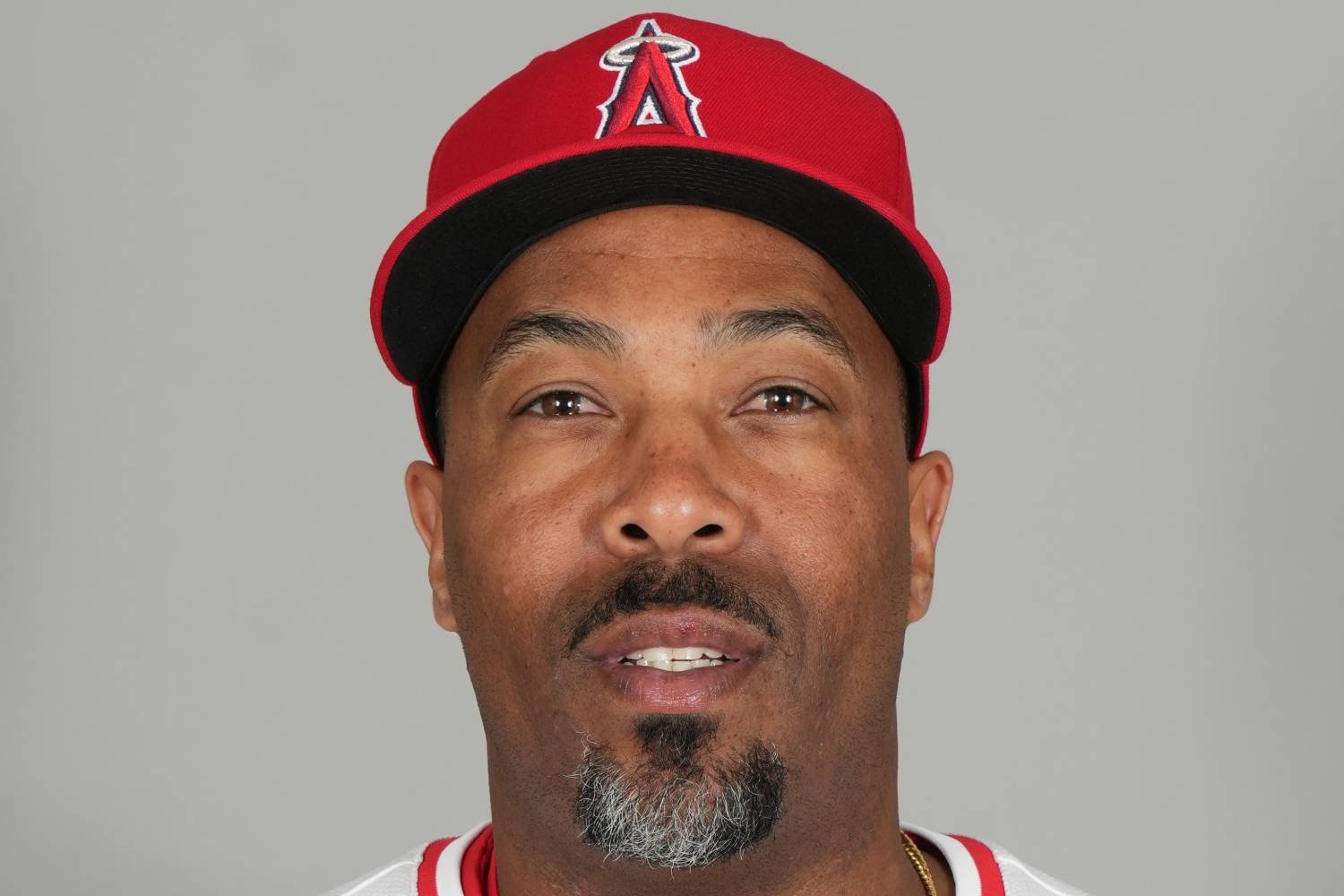 The final spot on the New York Mets' coaching staff for 2027 has been filed. Johnny Washington was hired by the Mets to be the co-hitting coach. Washington will share hitting coach duties with Troy Snitker, who was retained on new manager Andy Green's first Mets staff. Assistant hitting coach Rafael Fernandez remains on the staff. Washington takes the place of Jeff Albert, who was the director of hitting. The 42-year-old Washington was the minor-league hitting coordinator for Atlanta this season. Washington worked under Green from 2017-19 when he was the manager of the San Diego Padres. Washington has also worked in the Chicago Cubs, Los Angeles Angels and Los Angeles Dodgers' organizations. Despite having MLB's second-highest competitive-balance tax payroll in 2026, the Mets finished 20th in runs and 23rd in OPS. The only other newcomers to the staff Green inherited from Carlos Mendoza are Mariano Duncan as assistant coach and A.J. Ellis as major-league strategy coordinator. View the full article
-
Padres Must Readdress High-Leverage Innings This Offseason
DiamondCentric posted an article in Padres Mission
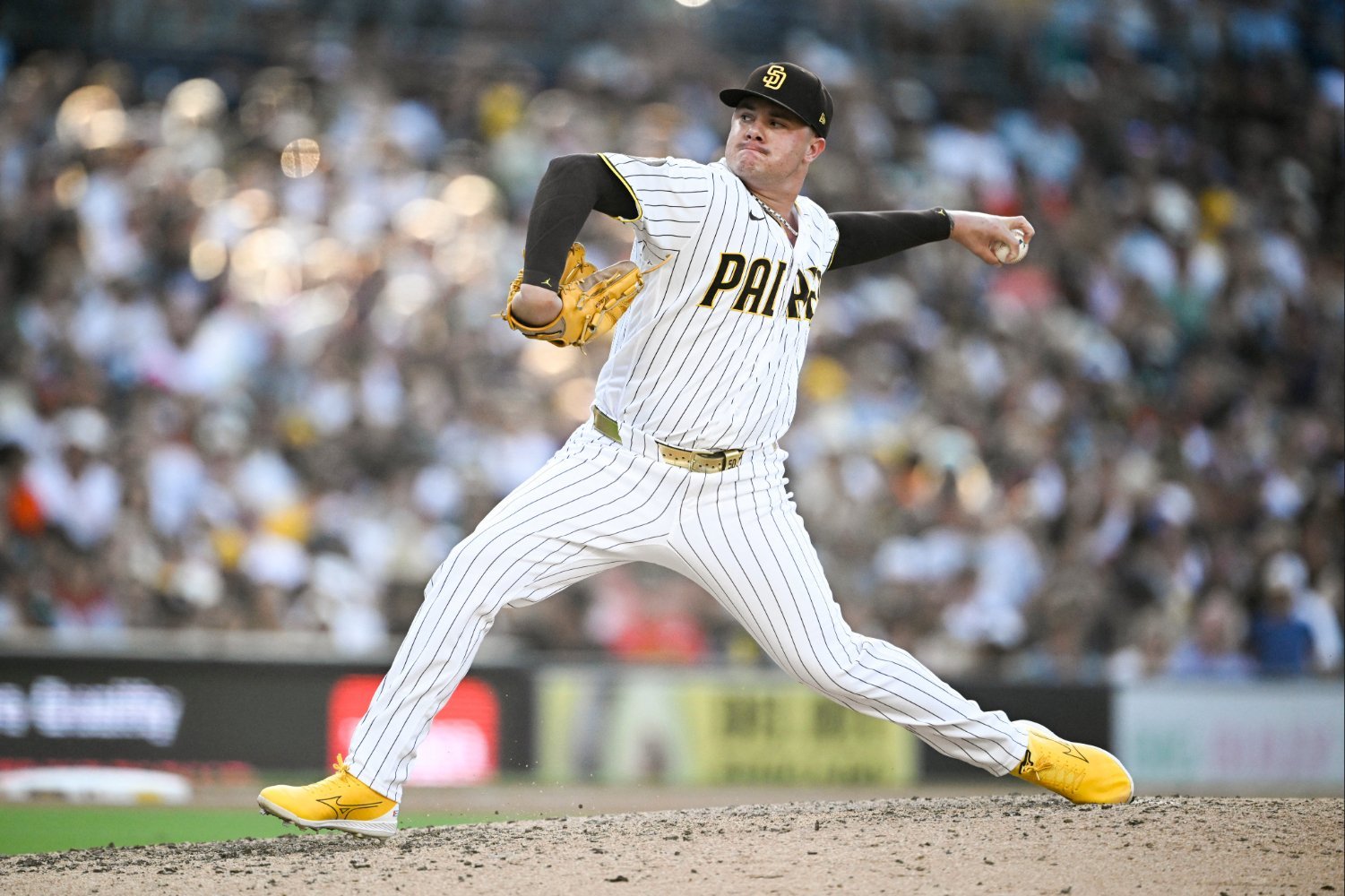 As far as individual components of the roster go, the San Diego Padres' bullpen remains in good shape. There are some departures that must be confronted, but if you were to throw this particular group on a field tomorrow, they could get you to the end of a game. Nevertheless, those departures do, in fact, leave gaps that will need to be at least mildly addressed this winter. Notably, the team will have to figure out a way to navigate the innings vacated by the (assumed) departures of Adrian Morejon & Jason Adam. Morejon threw 72.1 innings for the Padres in 2026. Adam worked his way through multiple trips to the injured list to throw 34 frames. Of Morejon's heavy volume, only 9.1 of those innings came prior to the seventh. Everything else came in the seventh, eighth, ninth, or extra innings. Adam threw only one-third of an inning prior to the seventh when he was healthy. That's a great deal of coverage in late-game situations to be accounted for. In general, the Padres can handle some of it. Mason Miller still has the ninth inning. Bradgley Rodríguez had an exceptional season (2.19 ERA) and should be in line to cover Adam's usage as a right-handed set-up man, at minimum. Jeremiah Estrada only totaled 28 innings in 2026 but 20.2 were in innings seven through nine. If he's not traded and if he's healthy, he'll be in the mix as well. Realistically, David Morgan has enough upside to be considered, too. Point being, there is personnel here that can handle those high-leverage spots. However, each comes with varying degrees of questions around health or performance. And there's one hitch to all of it in covering the leverage innings: none of them throws left-handed. The magic of Adrian Morejon is that he isn't a specialist. However, he is still a lefty and an elite one at that. Meaning that— assuming he does not accept a qualifying offer and the Padres don't sign him to a new deal—they lack that dynamic left-handed presence that he offered in those leverage innings. As things stand now, you'd be looking at either of Yuki Matsui or Wandy Peralta serving such a role. While each is fine in a vacuum, neither brings a skill set you're eager to deploy when games are tight. Not that it's only a left-handed arm you're looking for here; plenty of Morejon's value was derived out of the fact that he could handle hitters of each handedness. As such, the leverage options in relief will still need to be addressed even if not at the scale of other needs on the roster. Outside of Morejon, the free-agent market isn't terribly appealing. These kinds of bullpen arms cost a pretty penny via trade, as well. But whether it's a pure lefty or someone who can be deployed in any situation or versus any type of opposition, the Padres have to augment their relief corps in same shape or form this winter. View the full article
-
Padres Must Readdress High-Leverage Innings This Offseason
DiamondCentric posted an article in Padres Mission
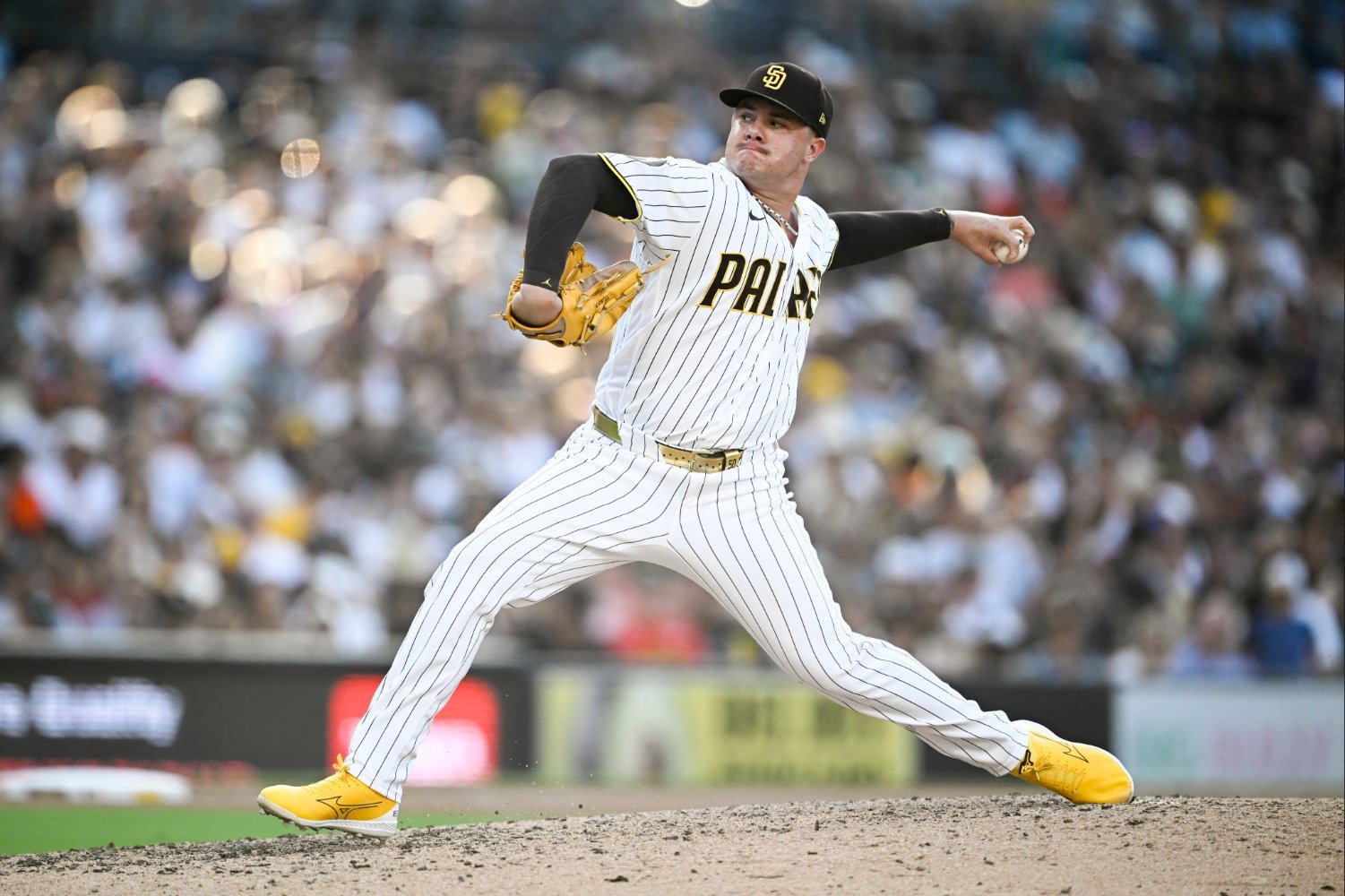 As far as individual components of the roster go, the San Diego Padres' bullpen remains in good shape. There are some departures that must be confronted, but if you were to throw this particular group on a field tomorrow, they could get you to the end of a game. Nevertheless, those departures do, in fact, leave gaps that will need to be at least mildly addressed this winter. Notably, the team will have to figure out a way to navigate the innings vacated by the (assumed) departures of Adrian Morejon & Jason Adam. Morejon threw 72.1 innings for the Padres in 2026. Adam worked his way through multiple trips to the injured list to throw 34 frames. Of Morejon's heavy volume, only 9.1 of those innings came prior to the seventh. Everything else came in the seventh, eighth, ninth, or extra innings. Adam threw only one-third of an inning prior to the seventh when he was healthy. That's a great deal of coverage in late-game situations to be accounted for. In general, the Padres can handle some of it. Mason Miller still has the ninth inning. Bradgley Rodríguez had an exceptional season (2.19 ERA) and should be in line to cover Adam's usage as a right-handed set-up man, at minimum. Jeremiah Estrada only totaled 28 innings in 2026 but 20.2 were in innings seven through nine. If he's not traded and if he's healthy, he'll be in the mix as well. Realistically, David Morgan has enough upside to be considered, too. Point being, there is personnel here that can handle those high-leverage spots. However, each comes with varying degrees of questions around health or performance. And there's one hitch to all of it in covering the leverage innings: none of them throws left-handed. The magic of Adrian Morejon is that he isn't a specialist. However, he is still a lefty and an elite one at that. Meaning that— assuming he does not accept a qualifying offer and the Padres don't sign him to a new deal—they lack that dynamic left-handed presence that he offered in those leverage innings. As things stand now, you'd be looking at either of Yuki Matsui or Wandy Peralta serving such a role. While each is fine in a vacuum, neither brings a skill set you're eager to deploy when games are tight. Not that it's only a left-handed arm you're looking for here; plenty of Morejon's value was derived out of the fact that he could handle hitters of each handedness. As such, the leverage options in relief will still need to be addressed even if not at the scale of other needs on the roster. Outside of Morejon, the free-agent market isn't terribly appealing. These kinds of bullpen arms cost a pretty penny via trade, as well. But whether it's a pure lefty or someone who can be deployed in any situation or versus any type of opposition, the Padres have to augment their relief corps in same shape or form this winter. View the full article
-
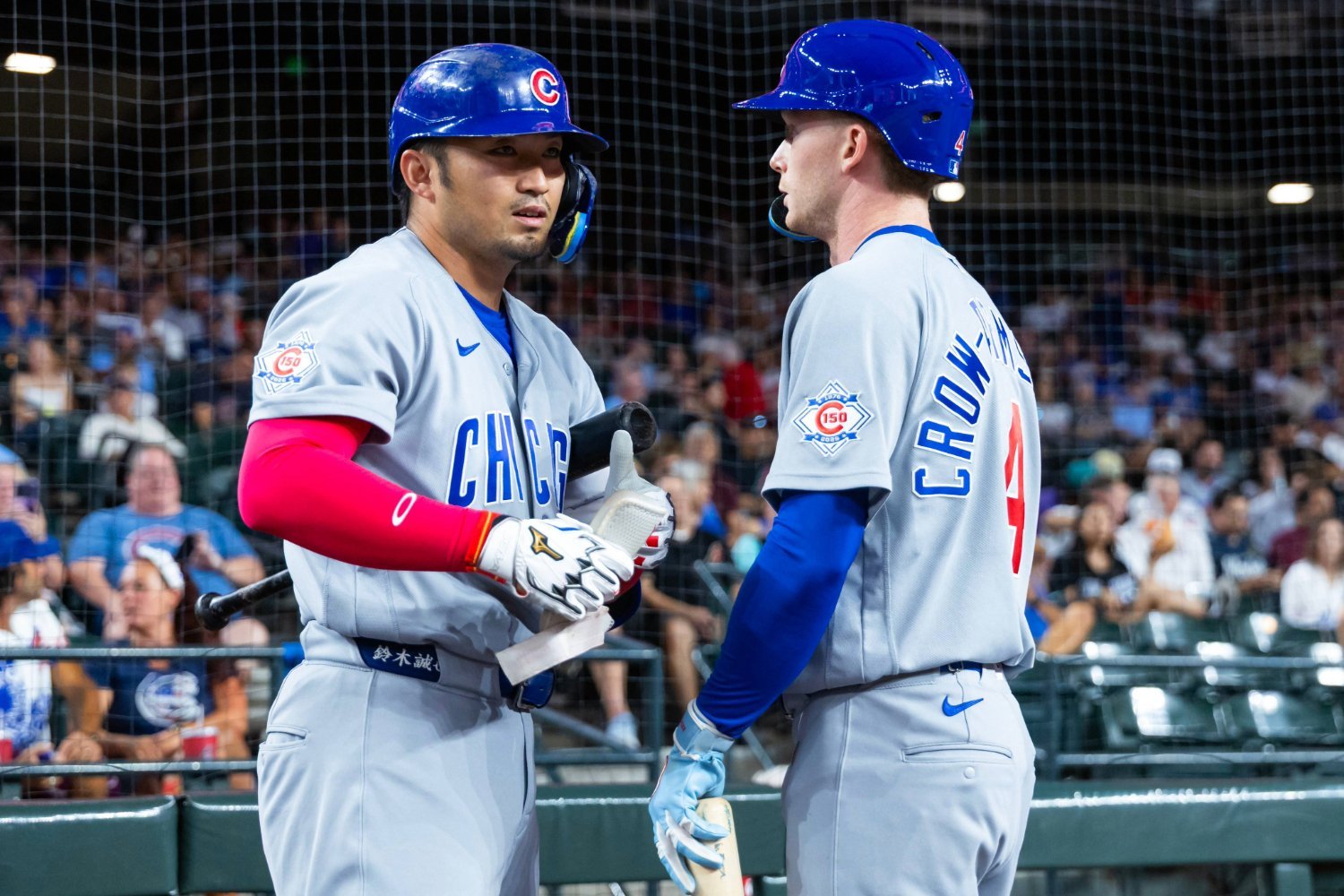 FanSided announced the finalists for the Silver Slugger Awards on Thursday, honoring the top hitters at each position. Three Chicago Cubs, along with the team itself, were named finalists, and all of them have a real shot to win. The first is presumed NL MVP Pete Crow-Armstrong. In 2026, Crow-Armstrong posted a 157 wRC+ with 45 home runs and 107 RBIs. If he’s going to win MVP, he should take home a Silver Slugger too. Remember, the outfield is given just three awards, regardless of position. Last offseason, the Cubs shocked the baseball world by bringing Alex Bregman to Chicago. After a slow start, Bregman finished with a 128 wRC+, 28 home runs and 93 RBIs. He caught fire in the second half, ranking among the best third basemen in baseball, and has a solid shot to win. Seiya Suzuki, now a free agent, is also a finalist. Suzuki was one of the best hitting outfielders in baseball in 2026, posting a 134 wRC+ with 26 home runs and 86 RBIs. He'll have to overcome some stiff outfield competition which includes Crow-Armstrong, Jackson Chourio, and James Wood. The Cubs are also up for the team award after finishing as the top offense in the sport in terms of runs scored. They posted a team 114 wRC+ and a .428 slugging percentage, four points better than any other squad. View the full article
-
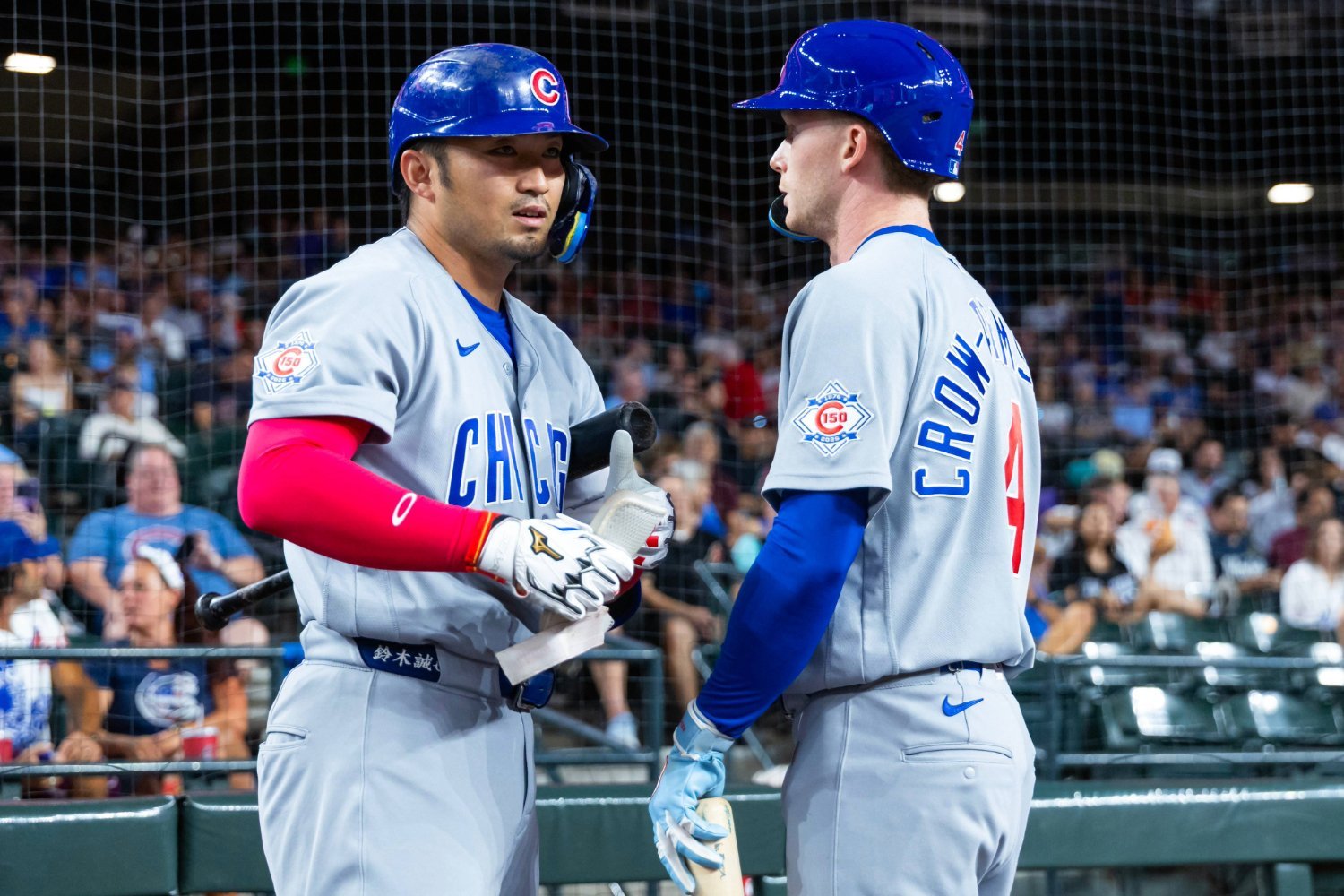 FanSided announced the finalists for the Silver Slugger Awards on Thursday, honoring the top hitters at each position. Three Chicago Cubs, along with the team itself, were named finalists, and all of them have a real shot to win. The first is presumed NL MVP Pete Crow-Armstrong. In 2026, Crow-Armstrong posted a 157 wRC+ with 45 home runs and 107 RBIs. If he’s going to win MVP, he should take home a Silver Slugger too. Remember, the outfield is given just three awards, regardless of position. Last offseason, the Cubs shocked the baseball world by bringing Alex Bregman to Chicago. After a slow start, Bregman finished with a 128 wRC+, 28 home runs and 93 RBIs. He caught fire in the second half, ranking among the best third basemen in baseball, and has a solid shot to win. Seiya Suzuki, now a free agent, is also a finalist. Suzuki was one of the best hitting outfielders in baseball in 2026, posting a 134 wRC+ with 26 home runs and 86 RBIs. He'll have to overcome some stiff outfield competition which includes Crow-Armstrong, Jackson Chourio, and James Wood. The Cubs are also up for the team award after finishing as the top offense in the sport in terms of runs scored. They posted a team 114 wRC+ and a .428 slugging percentage, four points better than any other squad. View the full article
-
Kody Clemens, Twins Team Named Silver Slugger Finalists
DiamondCentric posted an article in Twins Daily
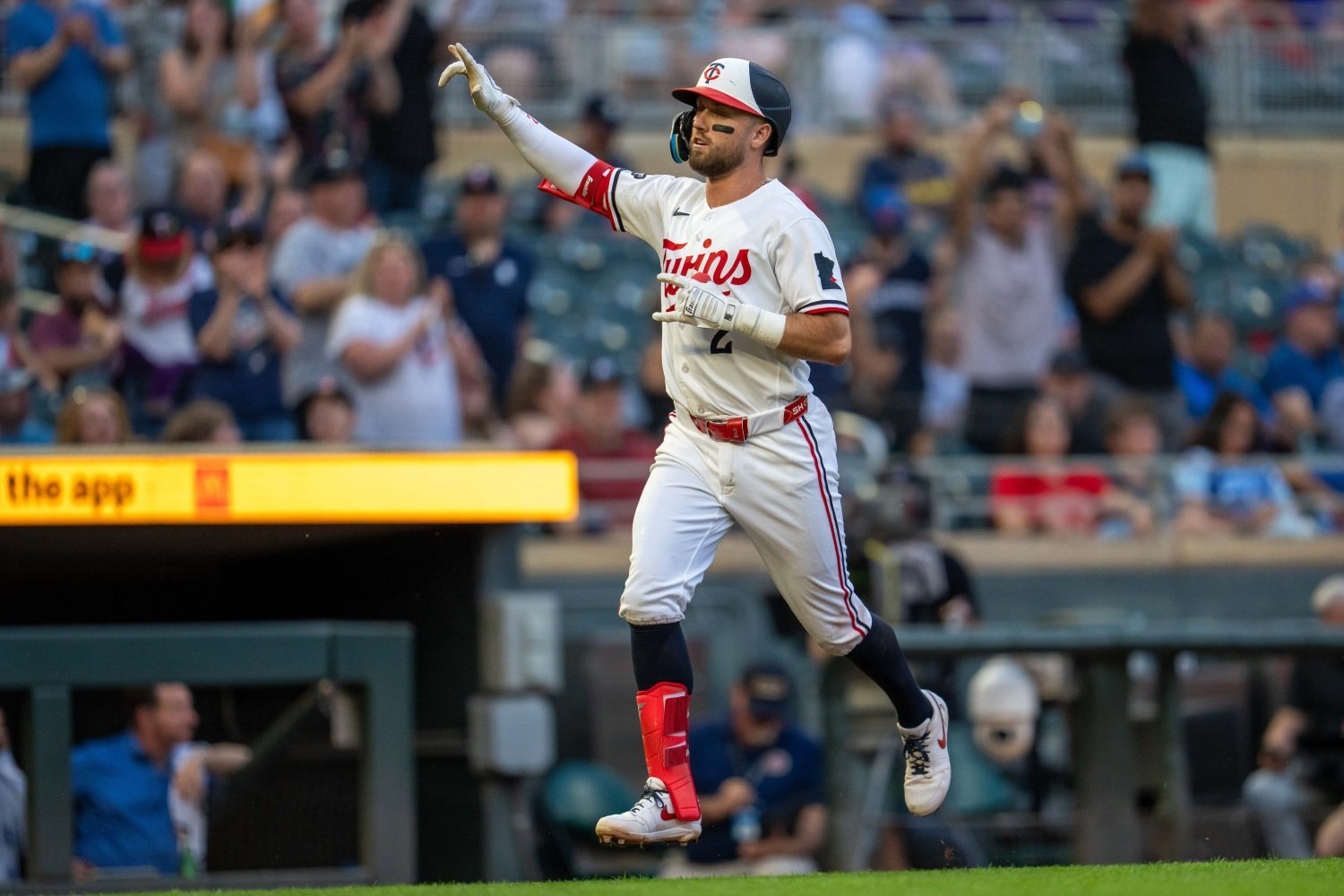 Kody Clemens added another accomplishment to an impressive 2026 campaign. The Minnesota Twins infielder was named a finalist for the American League Silver Slugger Award at second base on Thursday, putting him among the league's top offensive performers at his position. He wasn't the only member of the organization receiving recognition, as the Twins were also named one of four finalists for the Offensive Team of the Year award. The winners will be announced on November 17. The Silver Slugger Awards have recognized the best offensive players at each position since 1980. Major League managers and coaches determine the winners through voting, although they cannot vote for players on their own teams. The Offensive Team of the Year category was introduced in 2023. For Clemens, becoming a finalist represents another milestone in what has been the best offensive season of his major league career. A Career Year in Minnesota Clemens turned in an impressive campaign for Minnesota, leading all American League second basemen with 27 home runs. He also paced the entire AL with seven triples while posting a .758 OPS. His power production helped make him one of the more productive offensive players at his position. The 30-year-old provided several memorable moments throughout the season, but none were bigger than his July 30 walk-off grand slam against the Kansas City Royals. Minnesota entered the bottom of the ninth inning trailing by three runs. With two outs, Clemens stepped to the plate and delivered an ultimate grand slam, giving the Twins a dramatic victory. It was the type of moment that highlighted his importance to the lineup and gave Minnesota fans one of the season's most memorable finishes. Clemens' journey to becoming a Silver Slugger finalist is also an interesting one. The Twins acquired him from Philadelphia in April 2025 for cash considerations. He arrived as a versatile player capable of filling multiple positions, but his offensive contributions helped him carve out a larger role in Minnesota. Now, he finds himself competing for one of baseball's most recognizable individual offensive honors. Clemens is joined among the American League second-base finalists by Chicago White Sox infielder Chase Meidroth, who posted a .765 OPS with 16 home runs. Twins Offense Earns Team Recognition Clemens wasn't the only reason for celebration when the Silver Slugger finalists were announced. Minnesota was also named one of four American League finalists for the Offensive Team of the Year award. The Astros, Rays and White Sox joined the Twins on the list. Each club brought something different to the table offensively. Houston led all of baseball with 226 home runs, while Tampa Bay posted the American League's best team batting average at .258. Chicago led the AL in another important category, scoring 776 runs during the season. Minnesota wasn't far behind, finishing with 739 runs scored. That total tied the Twins with the New York Yankees for second in the American League. The Twins' presence among the finalists shows that their offensive production extended well beyond one player. Clemens provided power from the middle infield, but Minnesota received contributions throughout its lineup to finish near the top of the league in run production. The team nomination also gives the Twins another opportunity to receive recognition for their 2026 performance. Minnesota will have representation in both the individual second-base category and the team award when the winners are announced. Whether Clemens takes home an individual Silver Slugger or the Twins win Offensive Team of the Year, Thursday's announcement provides another positive moment for an organization looking to build on its offensive production heading into 2027. View the full article
