


DiamondCentric
-
Posts
2,631 -
Joined
-
Last visited
Never
Content Type
Profiles
Forums
Events
News
Tutorials & Help
Major League Baseball Videos
Guides & Resources
Store
Downloads
Gallery
Everything posted by DiamondCentric
-
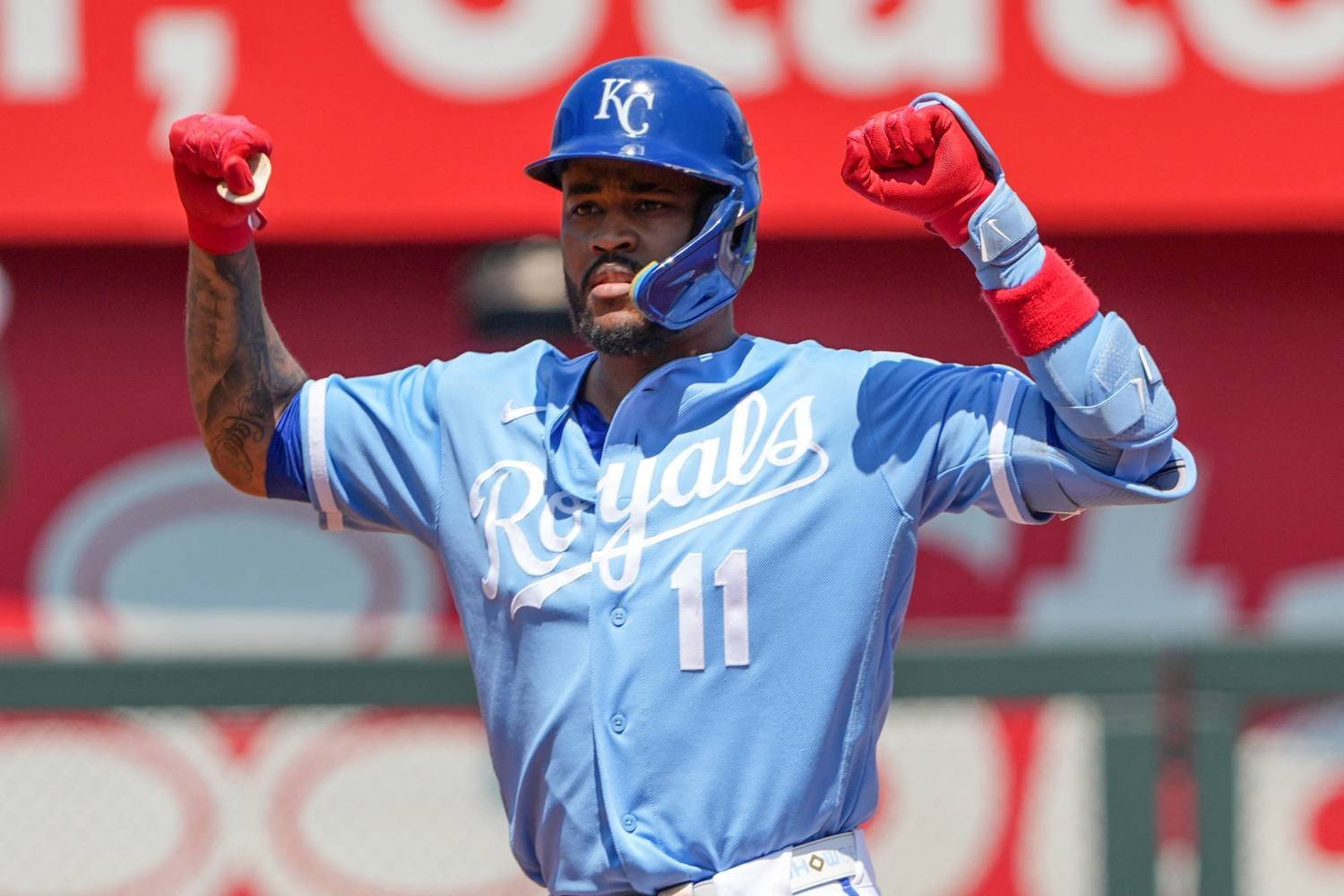 With the Kansas City Royals on the verge of officially being eliminated from postseason contention, you have to give credit to Maikel Garcia for coming back for the final 13 days of the regular season. The Royals activated their third baseman from the 10-day injured list Tuesday and sent outfielder Matthew Lugo down to Triple-A Omaha. Garcia has been on the IL since Aug. 21 with a strained left hamstring. That was just a few days after returning from another IL stint for a muscle strain in his left hand that kept him out nearly two months. Garcia is slashing .269/.324/.385 with three homers and 32 RBIs in 73 games. Lugo, who was claimed off waivers from the Los Angeles Angels on June 2 and optioned to the minors, was called up when Garcia went on the IL. He appeared in just nine games and went 2-for-14 (.143/.200/.143). The Royals entered play Tuesday at 66-84, last in the AL Central, with a tragic number of three. View the full article
 -

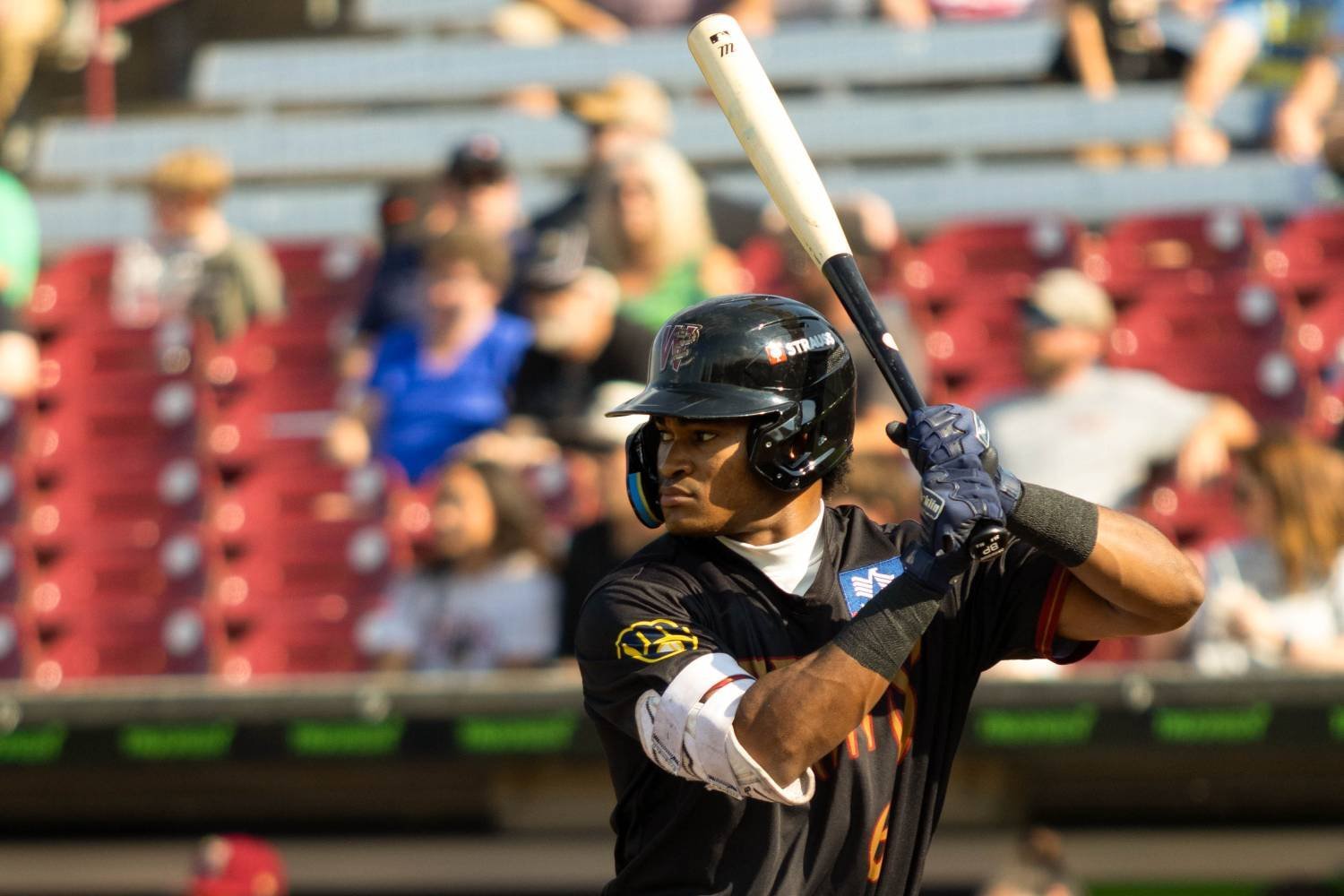 When it comes to the Arizona Fall League, there is a mix of players who teams want to see perform against other top prospects and others who need extra reps after injuries took away innings or at-bats during the season. The Milwaukee Brewers are sending seven players to the Arizona Fall League, led by center fielder Braylon Payne, Brewer Fanatic's No. 4 prospect. Payne, the Brewers' first-round draft pick in 2024 who just turned 20 a month ago, is the only member of our Top 20 heading to the AFL. Others who will participate in the showcase are corner infielder Eric Bitonti, catcher Matt Wood, left-hander Jose Meneses and right-handers Ryan Birchard, Miqueas Mercedes and Josh Quezada. They will play for the Scottsdale Scorpions. Payne has had a breakout season in 2026. He spent the first five-plus months of the season with the High-A Wisconsin Timber Rattlers, then spent the final month at Double-A Biloxi. Combined, he put up a .277/.358/.552 slash line with 28 homers, 67 RBIs and 25 RBIs in 102 games. Bitonti, the Brewers' third-round draft choice in 2023, posted a .262/.378/.507 slash line with 25 homers and 93 RBIs with 24 stolen bases in 117 games, 111 with Wisconsin and six with Biloxi. View the full article
 -
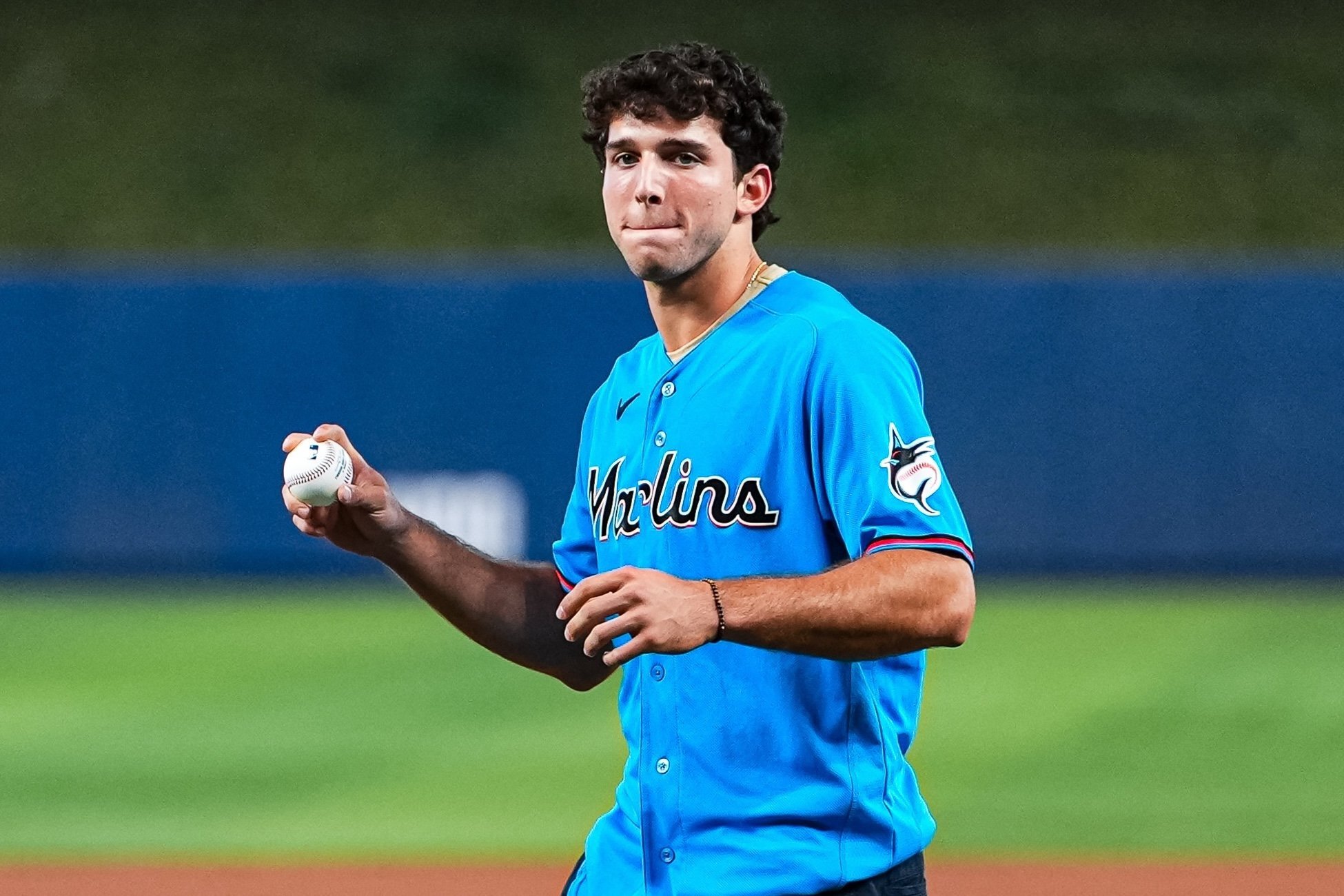 The Miami Marlins welcomed 21 new players to their organization via the 2026 MLB Draft. Historically, they have been quick to test draftees in official Minor League Baseball games shortly after signing them, but the process has been different this time. Only four members of the 2026 class suited up for Marlins MiLB affiliates during their first summer as pros, with the rest training behind closed doors in anticipation for 2027. Fortunately, those who've gotten immediate exposure to the minor leagues are already part of meaningful games. Entering Tuesday, the Low-A Jupiter Hammerheads are one win away from clinching the Florida State League championship. Here’s an update for every Marlins draft pick from their 2026 draft class: SS Jacob Lombard (Round 1): In 22 regular season games with Jupiter, Lombard had a .220/.343/.390 slash line. He recorded 18 hits, two doubles, four home runs, 17 RBIs, 13 walks, 15 runs scored, 11 stolen bases, and a .733 OPS. The shortstop also homered in both games that the Hammerheads played against the Daytona Tortugas in their first-round playoff series. LHP Ethan Kleinschmit (Round 2): No MiLB games yet RHP Ryan Peterson (Competitive Balance Round B): No MiLB games yet SS Cam Kozeal (Round 3): Limited to 10 games due to an injured list stint, Kozeal had a .214/.313/.405 slash line. He recorded nine hits, two doubles, two home runs, three RBIs, six walks, six runs scored, and a .718 OPS. Defensively, he split time between second base and third base. OF Wessley Roberson (Round 4): Roberson joined Jupiter's outfield on August 30. He posted a .278/.480/.389 slash line in six games with five hits, two doubles, seven walks, four stolen bases, and a .869 OPS. He has gone 1-for-9 with a walk in the postseason. LHP Trey Beard (Round 5): No MiLB games yet RHP Cole Selvig (Round 6): No MiLB games yet SS Eric Guevara (Round 7): Fitting in at third base, Guevara had a .240/.377/.360 slash line in 16 regular season games. He recorded 12 hits, two home runs, seven RBIs, 11 walks, 11 runs scored, six stolen bases, and a .737 OPS. He owns an incredible 1.483 OPS in playoff competition. 1B Rintaro Sasaki (Round 8): No MiLB games yet 3B Nic Tolbert (Round 9): No MiLB games yet RHP Zach Peters (Round 10): No MiLB games yet RHP Fabio Bundi (Round 11): No MiLB games yet RHP Bane Barker (Round 12): No MiLB games yet RHP Connor Benge (Round 13): No MiLB games yet RHP Tyler Kapa (Round 14): No MiLB games yet RHP Colin Linder (Round 15): No MiLB games yet RHP Porter Buursema (Round 16): No MiLB games yet RHP Duke McCarron (Round 17): No MiLB games yet OF Jatniel McCloud (Round 18): No MiLB games yet RHP Jackson Mitchell (Round 19): No MiLB games yet RHP Joey Lawson (Round 20): No MiLB games yet View the full article
 -
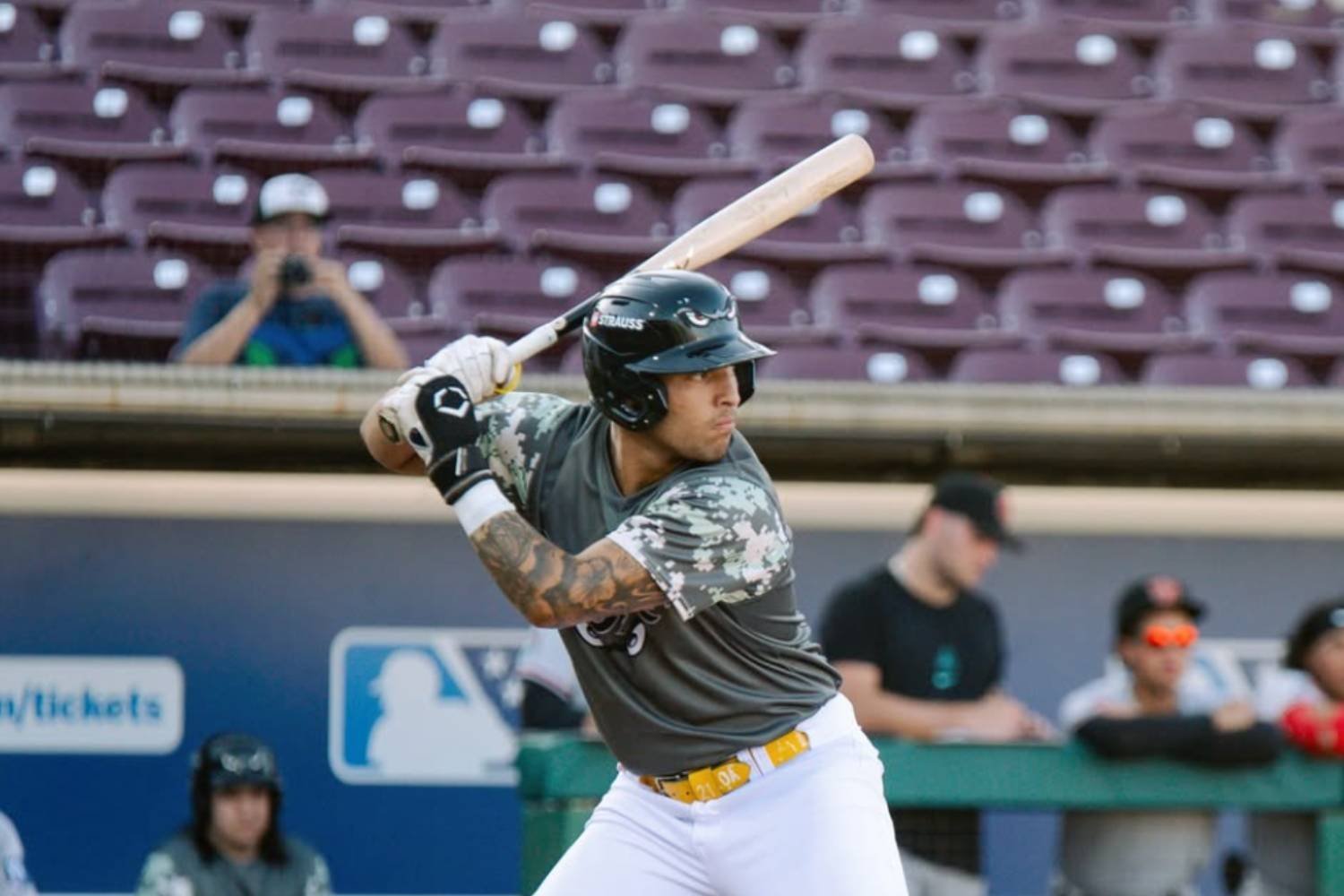 With the Triple-A regular season concluding this week, most of the San Diego Padres' minor-league players are done with competitive games for 2026. Except for a select few who were picked to represent the Padres in the Arizona Fall League. Led by catcher Ty Harvey, Padres Mission's No. 5 prospect, eight Padres prospects will be in the annual MLB showcase. The Arizona Fall League is considered a finishing school for many prospects, but also provides an opportunity for key players who had their season disrupted by injury to get high-quality appearances. Other players selected are outfielder Alex McCoy (Padres Mission's No. 8 prospect), right-handed starter Winyer Chourio (Padres Mission's No. 17), infielder Justin DeCriscio, left-hander Igor Gil and right-handers Kannon Kemp, Francis Pena and Jordan Valenzuela. All of the Padres' prospects will play for the Peoria Javelinas. Peoria is where the Padres have their spring training and minor-league headquarters. Harvey fits the bill of a player whose season was disjointed due to injury. The 20-year-old had a quad injury that cost him three weeks early in the season (April 14-May 12), then had his left hand broken as it was hit by a batter on a catcher's interference play two weeks later that sidelined him until late July. Harvey is an offensive force who is a work in progress behind the plate. Those injuries limited him to 46 games at Low-A Lake Elsinore, where he slashed .218/.310/.329 with three homers and 28 RBIs while also stealing nine bases. This was Harvey's first full season in the pros after being a fifth-round pick by the Padres last year out of Inspiration Academy in Bradenton, Fla. McCoy earned this honor through his performance on the first. An undrafted free agent who was signed in 2025, McCoy rocketed from relative unknown up to No. 8 on our prospect list with his production at High-A Fort Wayne and Double-A San Antonio. The 24-year-old had a combined .278/.355/.467 slash line with 19 homers, 71 RBIs and 24 stolen bases. His 19 homers tied for the system lead with Jake Cunningham and his 31 doubles were second to Tirso Ornelas (33). Chourio started the season strong at Low-A Lake Elsinore, earning him a midseason promotion. He had his struggles in the second half with the TinCaps. He finished the year with a 4.56 ERA and 122 strikeouts (29.9% strikeout rate), which led the system, in 92⅔ innings, while walking 57 (14% walk rate) and limiting opponents to a .229 batting average. View the full article
 -
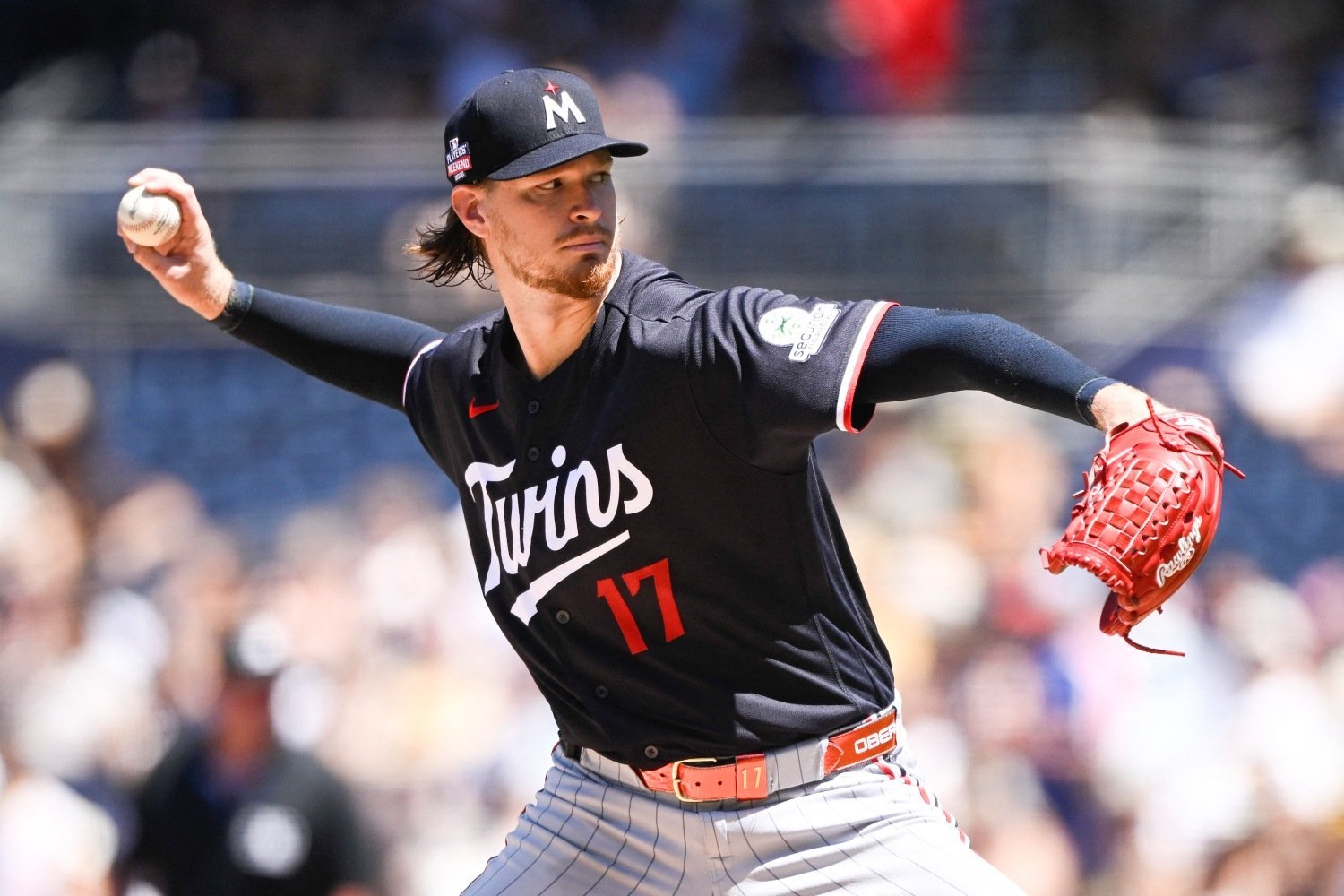 Don't look now, but Bailey Ober has (essentially) a league-average ERA. His 4.28 mark this season is about 0.82 better than the one he put up last year, and his ERA+ of 98 puts him within a whisker of the league average. He's made 22 starts, and figures to make at least two more, including one Tuesday night at Target Field. The Twins are 12-10 when he takes the mound; he's not the problem with this deeply flawed team. However, if you've watched closely of late, it's evident that the Twins are trusting him less than they did a few months ago. On August 11, Ober worked six innings, threw 100 pitches and faced 26 batters, but since then, he hasn't seen the sixth or gone past 22 batters faced. In his last three outings, Derek Shelton has removed him shy of 90 pitches. That's despite Ober allowing just six runs (five of them earned) in 18 2/3 pitches over those four appearances. August 11 was also the last time he worked on four days' rest; he's gotten five days or more between outings ever since. Why? It's relatively simple. Ober is surviving by his wits, with great feel and command but virtually no real stuff left with which to work. His fastball has lost velocity not only year by year, but month by month, which has also reduced the velocity gap between his heater and his best secondary offerings, the slider and changeup: Even that slight recovery you see at the far right of the graph above is an illusion. Ober only seems to be throwing his fastballs harder this month because he's being lifted so proactively, and because he's using that pitch less than he ever has before. His changeup isn't even a secondary pitch anymore; it's become his bread and butter. In a fairly obvious way, that loss of speed and separation produces a degradation in fastball efficacy and stuff ratings. Less obviously, though, it also compromises those slower offerings. Hitters can cover the change and the breaking stuff better because Ober is throwing considerably slower. Using FanGraphs's PitchingBot Visualizer tool (part of their wonderful FanGraphs Lab suite), we can now show more clearly how that's happening—how the loss of velocity and raw stuff reduces Ober's margin for error and has diminished the team's confidence in him late in the season. Here's a set of visualizations that illustrate his 2024 season, before he lost his velocity and when he was still striking out 26% of opposing batters with an ERA under 3.30. As the headers indicate, this shows (from left to right) the command, stuff and overall ratings of each pitch Ober threw that year, with red meaning good and blue meaning bad. On the left, you see what you should expect to see from such a model: lots of red around the edges of the strike zone, lots of blue far outside it and in the heart, and relatively little grayish in-between stuff. In the middle panel, we're looking only at the caliber of his stuff, based on velocity, release, movement and spin, so location isn't automatically governing the results. As you might guess, though, the higher you go in that graphic, the bluer things get. PitchingBot has always given Ober's fastball a low grade, even when it drew rave reviews for its deceptiveness from his low arm angle. Really, the heater has always benefited from Ober's command and execution on his other offerings, and those others are the ones that tend to show up in red on the middle panel. The right side is where the most interesting results show up, for this year and the other two we'll consider. Notice that it looks roughly (but not exactly) like the command chart. Throwing the ball well outside the zone is almost always bad; throwing it right down the middle can be even worse if you have subpar stuff. There's wiggle room, though. Mostly, it works against Ober, but not in a devastating way. There's a little more blue in what you could think of as the innermost ring around the center of the zone than there is on the command chart. Even then, Ober's underwhelming stuff could get hit pretty hard in spots that might have been safe for more electric arms. Ober is good at hitting his spots, though. You already knew that. This chart looks the way it does because he fills up those edges. In 2024, the Visualizer tells us, 4.0% of the pitches he threw were classified as Dangerous Misses—pitches with below-average stuff ratings that were in the hitter's happy zone. The league average for that is closer to 5%, so count him as ahead of the curve at avoiding hard contact for that season, at least process-wise. His Waste Miss (below-average stuff on offerings outside the zone) rate was 29.8%, which is also below the league average (around 31%). Only 8.0% of his pitches were Squandered ones, where he achieved a stuff rating in the top third of his own range but was outside the zone. That's (you guesssed it) lower than the league average, which is more like 10%. Overall, thanks to his sterling command, Ober earned a 53.3 PitchingBot rating for that season, a tick above the average of 50. Here's the same set of visuals for 2025. The middle panel says plenty, because there's both less red and lighter shades of red where it does appear. But Ober's big problem last season—as he was always quick to say—was command. He stopped hitting the edges as consistently, as he battled multiple physical issues that led to mechanical ones. His Danger Miss rate rose to 6.6%; his Waste Miss rate to 31.7%; and his Squandered rate to 9.9%. Worse stuff ratings hurt him even when he did successfully locate at the bottom and top of the zone, and being able to work east and west became more important; that's part of why his strikeout rate went down. He never adequately compensated for all that, though, which is why he ended the season with an ERA over 5.00 and an orange-flag PitchingBot rating of 48.7. Now, for 2026: There's nothing left in Ober's arsenal that grades out as above-average by stuff. He's recovered some of his command, though. He's hitting spots better, but there's a practical limit to how well anyone can do so, and at the level of lifelessness he's dealing with, that ceiling is too low. Look how big the blue in the center of the strike zone has gotten. That's not because Ober is missing there much more often, but because he's been forced to go there a bit more often after falling behind in counts (due to hitters not chasing or whiffing on his tepid stuff) and because pitches that used to be lively enough to work if he kept them out of that middle-middle zone are now just as hittable even a few inches farther in any given direction. This season, Ober's Waste Miss rate is down slightly, to 30.9%. His Squandered rate is lower, too: 9.4%. But his Danger Miss rate has spiked to 7.5%, meaning that one in every 12 pitches he throws is begging to be hit for extra bases. That's untenable. That's why the Twins are slowly giving up on him. Ober is a thoughtful and dedicated hurler. He's added a sinker and increased his comfort with the slider, to try to counteract these trends. Right now, though, he's too much of a sitting duck for Shelton to leave him in the third time through an opposing lineup—and the Twins need to start looking at other options for their 2027 starting rotation. Hopefully, further tinkering can unlock something for Ober, as he tries to change to more of a lateral-movement approach to pitching. For now, though, it's hard to fault the Twins for thinking it's time to move on. View the full article
 -
![More information about "Martin Shelar's First Taste of Professional Baseball Has Him Ready For What Comes Next [Exclusive]"](//d317trerw33y7b.cloudfront.net/monthly_2026_09/rssImage-d9fd10e24e14b13ec7f7b971e47a8a09.jpeg.4aa68ef2677ce46e83048cbddb1fec25.jpeg) “Definitely kind of had to take it one step at a time.” Martin Shelar had been out of high school for just under two months when he received news that changed everything. Taken in the ninth round of the 2026 MLB Draft by the Boston Red Sox, the now-19-year-old had a decision to make: Either keep his commitment to play college baseball at Mississippi State, or sign with the Red Sox and begin his professional career. In the end, he signed with Boston for a signing bonus of $1.5 million, way above the slot value of $205,400 for a player taken in the ninth round. The organization saw a young, slugging outfielder that could bring power into a system that was lacking it, especially after Shelar put up 19 home runs in his senior year of high school. Reaching that answer proved to be easy; the opportunity to begin his professional career with an organization that was ready to invest in his future was too enticing to pass up. “I kind of knew at the beginning of Day Two [of the draft] that they were in the cards towards the later rounds. Going into the draft they had always been a team that was interested. That never changed as the draft went on, they were always in talks and always had a number for me,” Shelar explained when asked about the Red Sox's interest in him. The outfielder would go on to further explain he had been invited to events where multiple scouts were watching. However, the area scout from the Red Sox who focused on him, Kirk Fredriksson, went above and beyond. Fredriksson reached out and had Shelar hit a one-on-one batting practice session with just him. Since signing with Boston and officially beginning his professional career, Shelar spent some time at Fort Myers getting back into game shape and preparing for the upcoming season. Then, he got called up to the Salem RidgeYaks. He described the entire situation as speeding up on him a little, a big change following life as a high school star. Despite the fast pace of the pros, though, he feels good about how everything has gone. “I feel like I’ve been improving at this level, and it’s been fun getting to compete with some of the best baseball players in the country.” The Salem season officially concluded on Sunday, September 6 as they lost their finale 10-7. Since being called up to Salem, Shelar had the opportunity to play in 13 games where he hit .189/.283/.302 with three doubles, one home run and seven RBIs. For someone who just a few months ago was receiving his high school diploma, those numbers should be viewed positively, especially as he continues to adjust to the advanced pitching. Shelar himself admitted that the pitching he now faced was the biggest adjustment for him. He explained how in high school he was facing guys throwing in the low-80s and now he’s seeing fastballs that don’t register under 90 mph. Likewise, the pitchers he's facing are actually able to locate their off-speed pitches, introducing an additional challenge at the plate. Which is why it's so promising that his plan for each at-bat hasn’t changed. “Hunt a fastball. That was the biggest adjustment I had to make because everybody throws so hard. In high school, I could sit backward if I needed to, sit on an off-speed because these kids are throwing 85 [mph] so I can always catch up and adjust. But if guys are out there throwing 95 [mph] and you’re sitting curveball, slider, you’re going to get your doors blown off. If you can sit fastball and see the other pitches off that, that’s the biggest mindset.” Shelar’s first taste of professional baseball is officially in the books, but the young outfielder will take this experience and use it continue his development. With the potential of being a three- or four-tool player, Shelar will come into 2027 with high expectations not just from himself, but from the Red Sox as well. With the large investment they made in him, the organization will likely take their time to allow Shelar a chance to grow more accustomed to professional baseball. View the full article
“Definitely kind of had to take it one step at a time.” Martin Shelar had been out of high school for just under two months when he received news that changed everything. Taken in the ninth round of the 2026 MLB Draft by the Boston Red Sox, the now-19-year-old had a decision to make: Either keep his commitment to play college baseball at Mississippi State, or sign with the Red Sox and begin his professional career. In the end, he signed with Boston for a signing bonus of $1.5 million, way above the slot value of $205,400 for a player taken in the ninth round. The organization saw a young, slugging outfielder that could bring power into a system that was lacking it, especially after Shelar put up 19 home runs in his senior year of high school. Reaching that answer proved to be easy; the opportunity to begin his professional career with an organization that was ready to invest in his future was too enticing to pass up. “I kind of knew at the beginning of Day Two [of the draft] that they were in the cards towards the later rounds. Going into the draft they had always been a team that was interested. That never changed as the draft went on, they were always in talks and always had a number for me,” Shelar explained when asked about the Red Sox's interest in him. The outfielder would go on to further explain he had been invited to events where multiple scouts were watching. However, the area scout from the Red Sox who focused on him, Kirk Fredriksson, went above and beyond. Fredriksson reached out and had Shelar hit a one-on-one batting practice session with just him. Since signing with Boston and officially beginning his professional career, Shelar spent some time at Fort Myers getting back into game shape and preparing for the upcoming season. Then, he got called up to the Salem RidgeYaks. He described the entire situation as speeding up on him a little, a big change following life as a high school star. Despite the fast pace of the pros, though, he feels good about how everything has gone. “I feel like I’ve been improving at this level, and it’s been fun getting to compete with some of the best baseball players in the country.” The Salem season officially concluded on Sunday, September 6 as they lost their finale 10-7. Since being called up to Salem, Shelar had the opportunity to play in 13 games where he hit .189/.283/.302 with three doubles, one home run and seven RBIs. For someone who just a few months ago was receiving his high school diploma, those numbers should be viewed positively, especially as he continues to adjust to the advanced pitching. Shelar himself admitted that the pitching he now faced was the biggest adjustment for him. He explained how in high school he was facing guys throwing in the low-80s and now he’s seeing fastballs that don’t register under 90 mph. Likewise, the pitchers he's facing are actually able to locate their off-speed pitches, introducing an additional challenge at the plate. Which is why it's so promising that his plan for each at-bat hasn’t changed. “Hunt a fastball. That was the biggest adjustment I had to make because everybody throws so hard. In high school, I could sit backward if I needed to, sit on an off-speed because these kids are throwing 85 [mph] so I can always catch up and adjust. But if guys are out there throwing 95 [mph] and you’re sitting curveball, slider, you’re going to get your doors blown off. If you can sit fastball and see the other pitches off that, that’s the biggest mindset.” Shelar’s first taste of professional baseball is officially in the books, but the young outfielder will take this experience and use it continue his development. With the potential of being a three- or four-tool player, Shelar will come into 2027 with high expectations not just from himself, but from the Red Sox as well. With the large investment they made in him, the organization will likely take their time to allow Shelar a chance to grow more accustomed to professional baseball. View the full article -
The Twins Have a Catching Surplus They Could Put to Good Use
DiamondCentric posted an article in Twins Daily
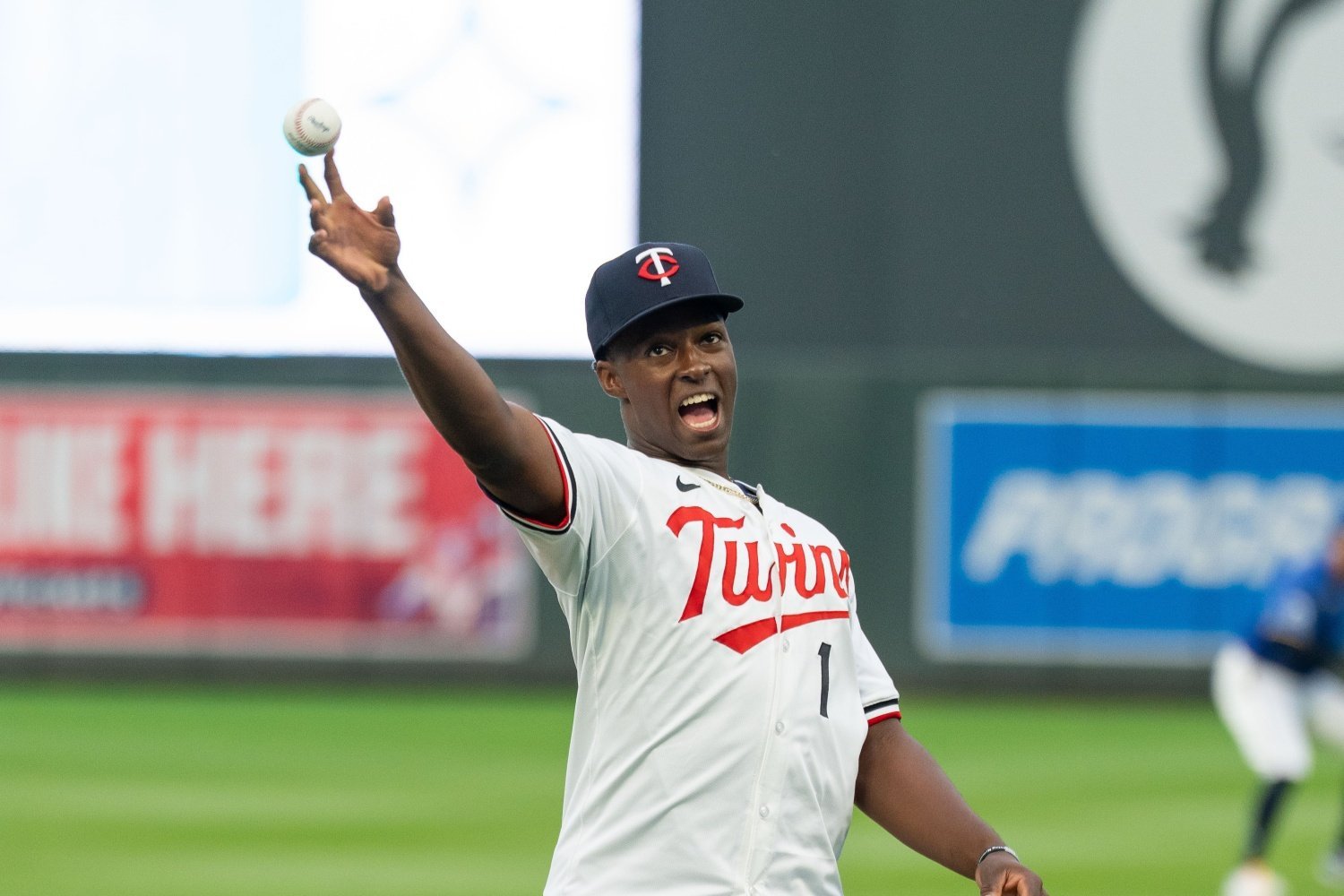 The Minnesota Twins have a luxury that almost every other major-league team would love to have: an abundance of young catching talent in the minor leagues. According to Twins Daily’s prospect rankings, five of the organization’s top 20 prospects are backstops. Vahn Lackey headlines that group as the No. 2 prospect in the system, while Eduardo Tait checks in at No. 8. Carson Tinney, Khadim Diaw and Enrique Jimenez round out the group at No. 11, No. 13 and No. 20, respectively. Obviously, not all of those players are going to become impactful major-league catchers. That’s the reality of having this much talent at one position. Some prospects will develop into everyday players, others could become useful backups, and some won’t make it to the majors at all. But that’s also what makes the Twins’ situation unique. Minnesota already has three catchers on their major-league roster, and Derek Shelton and the Twins have shown they aren’t afraid to utilize multiple backstops when the situation calls for it. With so much catching talent coming through the system, the organization could eventually have more prospects than it realistically has room for. That could make some of them valuable trade chips this offseason. Before getting carried away with potential trades, there are a couple of names that can probably be crossed off the list. I think Target Field would burn to the ground if the Twins traded Lackey. Minnesota just selected Lackey third overall in July’s MLB Draft, and his first taste of professional baseball has been extremely promising. In 52 plate appearances at High-A Cedar Rapids, Lackey has posted a 1.000 OPS. Obviously, it’s an incredibly small sample size, and there’s still a long way to go before Lackey is ready for the majors. But the early returns are about as good as the Twins could have hoped for. More importantly, he looks like the organization’s catcher of the future. It would make very little sense for the Twins to turn around and trade him before he’s even had a chance to develop. Lackey is going nowhere. The same is probably true for Tinney, whom Minnesota also just drafted this summer. There’s little reason to believe the Twins would move on from a player they just invested in, unless something completely unexpected happens. (We have seen a slight uptick in the frequency of such trades, since the rules were modified to allow draft picks to be traded any time after the end of the World Series in the year in which they're drafted, but it's usually guys who get a lot of helium and become strong trade chips after being relatively low picks. Tinney doesn't fit the mold.) That leaves Tait, Diaw and Jimenez as the realistic trade candidates. Of those three, Tait is easily the most intriguing. The Twins just spent a first-round pick on Lackey, but Tait was one of the organization’s most highly regarded prospects before that selection. If Minnesota decides it needs to make a significant addition this offseason, Tait could be the piece that gets a deal done—assuming you find the right buyer. His stock is, undeniably, a bit down from where it was when the Twins got him as the centerpiece of the Jhoan Duran deal. He'd need to be a co-headliner in any deal, and he doesn't unlock top-tier targets for you. But he still moves the needle, if you find someone who believes in him behind the plate. Diaw or Jimenez could be used as part of a smaller deal. The bullpen immediately comes to mind. Minnesota did a lot to improve their relief corps at the trade deadline, adding several arms who helped stabilize what had been a major weakness earlier in the season. But let’s be realistic here: there’s still more work to be done. The Twins are going to have opportunities to add relievers this offseason, with plenty of bullpen arms entering the final year of their contracts. A prospect like Diaw or Jimenez could be enough to facilitate a one-for-one deal for a useful major-league reliever. That might not be nearly as exciting as using Tait and a top outfield prospect to aim for a bigger prize, but it could ultimately be just as important. Bullpens are volatile, and the Twins have already learned how quickly a strength can become a weakness. Adding another reliable arm could make a meaningful difference over the course of a full season. None of this is to say that the Twins have to trade any of these catchers. There’s a good argument for keeping all of them. Catching is probably the most physically demanding position in baseball, and having multiple talented options in the system provides valuable insurance against injuries, stalled development or prospects failing to reach their expected ceiling. But that doesn’t mean the Twins should ignore the trade value they have created. Five of their top 20 prospects are catchers. Most organizations would love to have that problem. The Twins now have the flexibility to keep developing that group and see how everything shakes out, or they can use some of that depth to address more immediate needs. If Minnesota believes it can make a legitimate push in 2027, they should at least consider the latter. View the full article
 -
The Padres’ Potential Playoff Path Is Absolutely BRUTAL
DiamondCentric posted an article in Padres Mission
 The Padres are currently clinging to the final NL Wild Card spot, but getting into October is only half the battle. If the playoff picture holds, San Diego could face an absolutely brutal road to the World Series.View the full article
 -
 Alex and Maddie sit down and talk about the Red Sox’s postseason. First, they answer your forum questions, reviewing Jake Bennett and Caleb Durbin’s recent swoons. Then, they raise a glass to Peyton Tolle for tossing an immaculate inning on Sunday. They outline their ideal Wild Card scenario and postseason rosters. Finally, they list their dream expansion cities. Listen on Apple Podcasts: https://podcasts.apple.com/us/podcast/the-talk-sox-podcast/id1783204104 Listen on Spotify: https://open.spotify.com/show/3qPrPXEngu0CxgTmlf0ynm Listen on iHeartRadio: https://www.iheart.com/podcast/263-the-talk-sox-podcast-244591331/ Listen on Pocket Casts: https://pca.st/4tmd121v Watch on YouTube: https://www.youtube.com/@talksox View the full article
 -
Twins Await MRI Results on Trevor Larnach’s Ailing Wrist
DiamondCentric posted an article in Twins Daily
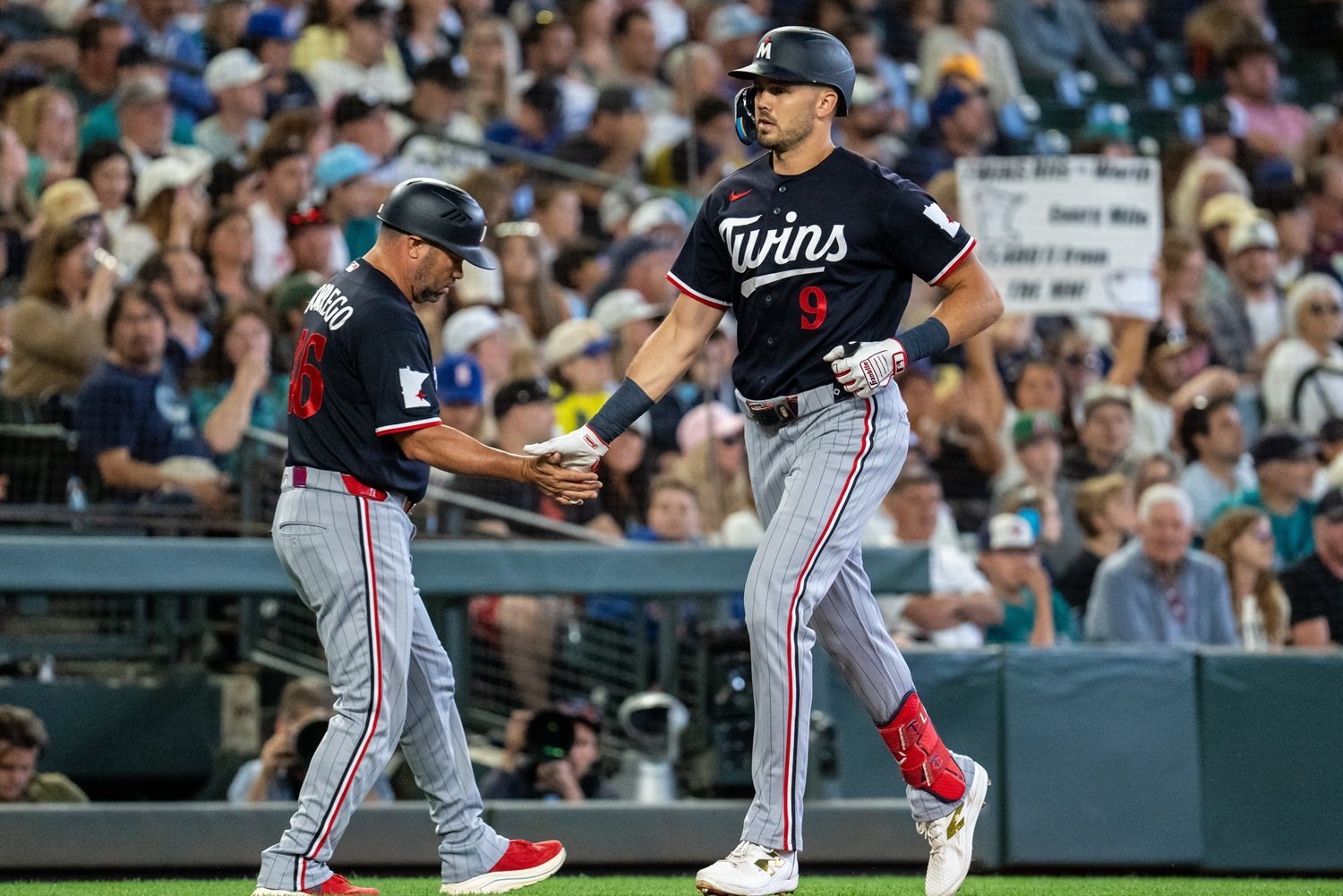 The Minnesota Twins entered Monday’s series opener against the New York Yankees with an increasingly thin lineup. With roughly two weeks left in the regular season, Kaelen Culpepper, Royce Lewis, and Trevor Larnach were all unavailable, leaving Minnesota without several regular contributors. Larnach’s absence could be the most concerning of the group. The outfielder underwent an MRI on his left wrist Monday after dealing with soreness for several days, leaving his availability for the remainder of the series uncertain. Manager Derek Shelton explained that Larnach’s wrist became more problematic after a slide during Sunday’s game. “He’s dealing with some left wrist soreness,” Shelton said, “so we sent him for an MRI. He has felt it for a few days, and then he felt it sliding yesterday. And then when he came in today, tried to go through his routine and just didn’t go kind of the way he wanted it to. So we’re just going to get it looked at.” The Twins turned to Emmanuel Rodriguez in left field for Monday’s game. If Larnach needs to miss significant time, Rodriguez would appear to be one of Minnesota’s best options for taking on additional opportunities down the stretch. That would be an important development for Rodriguez, who is out of minor league options for next season. More consistent playing time could give the young outfielder an opportunity to establish himself heading into the offseason. Larnach, meanwhile, has put together one of his strongest seasons since reaching the majors. The 29-year-old entered Monday hitting .269/.352/.436 while serving as a regular presence in left field. His 2.2 fWAR and 123 wRC+ are both career bests. For a Twins team already dealing with multiple injuries and limited lineup depth, losing Larnach for an extended period would be another difficult blow. The MRI should provide a clearer picture of the injury and how Minnesota will have to manage his workload over the final two weeks of the season. View the full article
 -
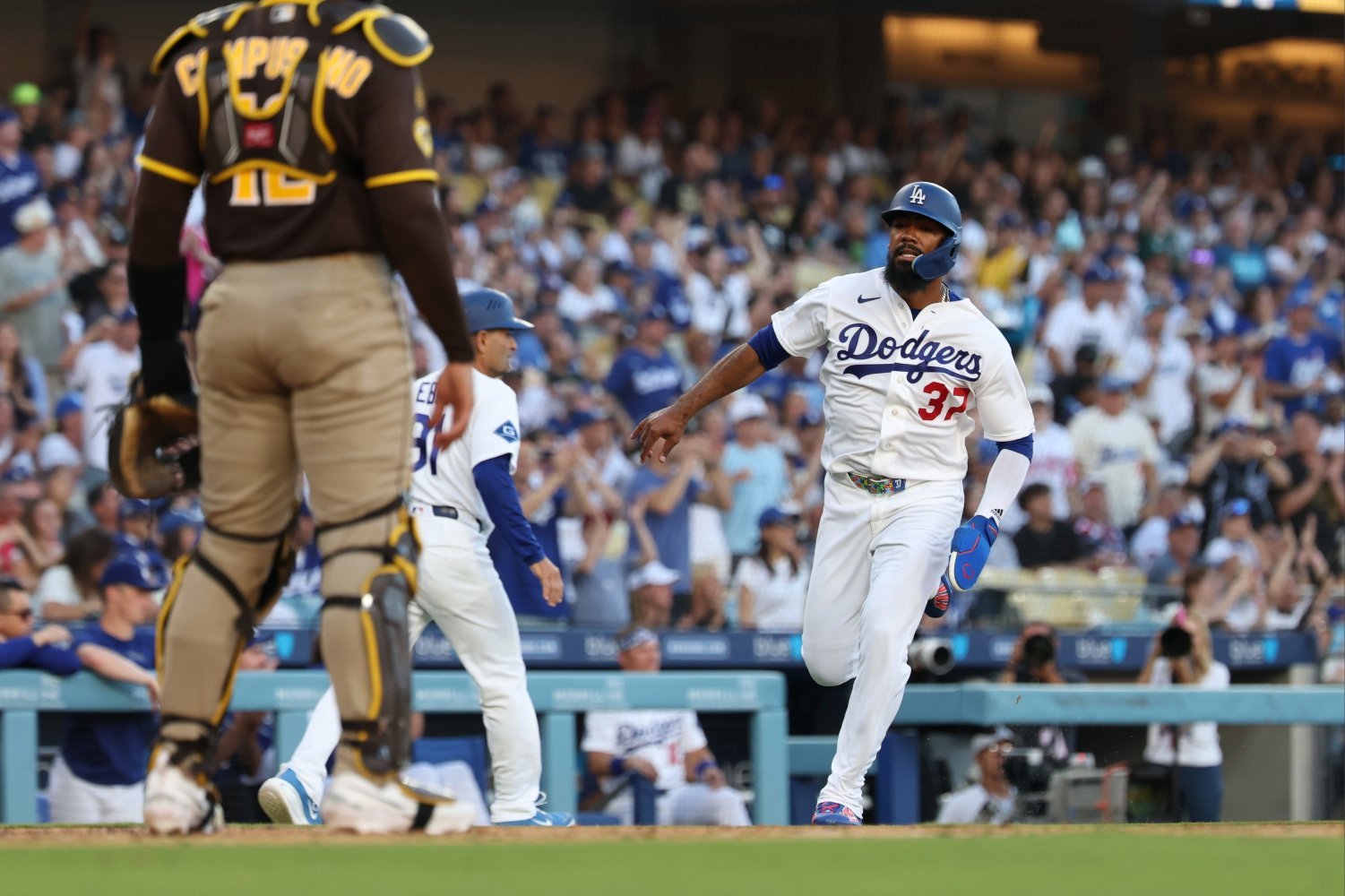 With just two weeks remaining in the MLB regular season, the race for the playoffs is starting to get very interesting. As things stand right now, the San Diego Padres are in possession of the final National League Wild Card spot. There’s still plenty of baseball left to be played, and a lot can change between now and the end of the regular season, but let’s be optimistic for a second and assume the Padres are able to punch their ticket to October. Unfortunately for San Diego, that would only be the beginning. As the projected No. 6 seed in the National League, the Padres would have a brutal road ahead of them if they want to make it all the way to the World Series. There are a handful of teams they could potentially face, but if everything breaks the wrong way, the Friars could have one of the toughest playoff paths imaginable. Wild Card Round: @ Atlanta Braves The Padres’ path would likely begin against the winner of the NL East, which at the moment is looking like it will be the Atlanta Braves. On paper, that might not be the worst possible matchup for San Diego. The Braves obviously have plenty of talent, but I actually like the way the Padres match up with them. If San Diego can find a way to steal a game against Chris Sale and put themselves in position to win the series, I think they have a legitimate chance to get through Atlanta. Of course, that’s where things would get considerably more difficult. Division Series: vs. Los Angeles Dodgers The nightmare truly starts in the NLDS. After potentially taking down the Braves, the Padres would likely have either the Milwaukee Brewers or Los Angeles Dodgers waiting for them. And if there’s one thing we know about October baseball, it’s that pitching tends to become even more important when the games matter most. Unfortunately for San Diego, both of those teams have plenty of it. Let’s start with the Dodgers, because they currently sit as the No. 2 seed in the National League. If the Padres enter the postseason as the No. 6 seed, that would put Los Angeles directly in their path in the NLDS. In case you weren’t aware, the Dodgers are pretty good. Their lineup is led by the unicorn himself, Shohei Ohtani, but he certainly isn’t the only problem San Diego would have to deal with. Kyle Tucker has started to heat up, while future Hall of Famers Freddie Freeman and Mookie Betts give Los Angeles two more terrifying bats to worry about. And somehow, the pitching staff might be even scarier. After acquiring Tarik Skubal at the trade deadline, the Dodgers’ rotation became absolutely ridiculous. Yoshinobu Yamamoto, Blake Snell, Tyler Glasnow, and Skubal give Los Angeles four true frontline starters to throw at opposing lineups in a playoff series. The Padres obviously know the Dodgers better than almost anyone, and San Diego has proven it can compete with Los Angeles. But if they have to face their division rivals in the NLDS, they’ll have very little margin for error. And if they somehow manage to pull it off? Well, things wouldn’t exactly get easier. National League Championship Series: vs. Milwaukee Brewers If the Padres are able to knock off Los Angeles and prevent the Dodgers from winning a third consecutive World Series, they would likely have the Milwaukee Brewers waiting for them in the NLCS. That might be an even worse matchup. Milwaukee feels like a team that was built specifically for October baseball. Jacob Misiorowski has emerged as, arguably, the most dominant pitcher in the sport, but he’s hardly the only arm the Brewers can throw at a team. Logan Henderson has broken out as a rookie, and he looks like a future star (if he's not there already), and Kyle Harrison has taken a huge step forward this year. That's not a fun trio of pitchers to face, but a big part of the reason Milwaukee has had so much success this year is because of their rotation. The offense is more than capable of holding up its end of the bargain, too. The Brewers have scored the second-most runs in baseball over the course of the season, with Jackson Chourio, Brice Turang and William Contreras leading a lineup that has consistently found ways to score. They’re also playing some ridiculous baseball right now. Milwaukee has scored at least eight runs in six of its first 10 games in September, and the Brewers currently own the best run differential in baseball. The best team in the league by run differential is also playing some of its best baseball of the season at exactly the time you’d want to be peaking. That’s a scary combination. World Series: Likely An AL East Contender Of course, if the Padres somehow survive Atlanta, Los Angeles and Milwaukee, they would still have one more series standing between them and a championship. They’d have to take on the best the American League has to offer. Maybe that’s the Rays. Maybe it’s the Yankees. Maybe another team emerges over the final couple weeks and runs the table. At that point, though, I don’t think it matters nearly as much. If the Padres can somehow make it through the Braves, Dodgers and Brewers, they’ll have already proven they can beat anyone. They would have survived the three toughest possible opponents in the National League, and confidence would probably be through the roof. The problem is getting there in the first place. The Padres already have the odds stacked against them just to reach the postseason, and their projected path to the World Series certainly won’t do them any favors. If everything goes according to the current projections, San Diego could have to beat the Senior Circuit's three division winners just to earn a trip to the Fall Classic. Unfortunately, there isn’t much the Padres can do about it. They still have to take care of business over these final two weeks just to get into the postseason. If they do, they’ll have to embrace the challenge and hope their best baseball is still ahead of them. Because if this nightmare path becomes reality, there won’t be any easy series waiting for them. View the full article
 -
Twins’ 2022 Draft Class Is Becoming a Big-League Success Story
DiamondCentric posted an article in Twins Daily
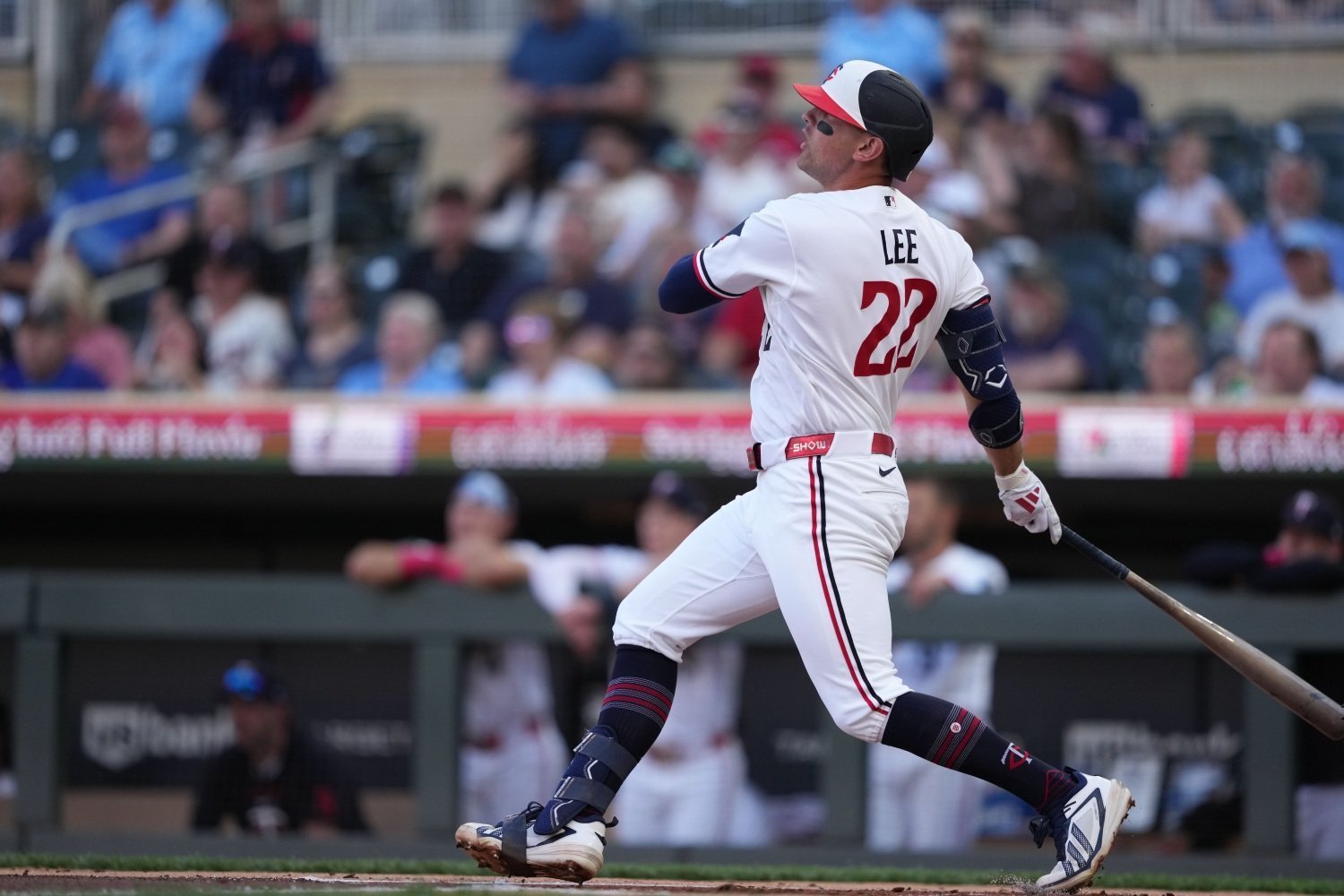 When players hear their names called during the MLB Draft, the dream is obvious. Everyone wants to reach the major leagues, but the reality is that only a small percentage of players from any draft class eventually make it to the highest level. Zebby Matthews remembers being reminded of that reality shortly after the Minnesota Twins selected him in the eighth round of the 2022 MLB Draft out of Western Carolina. “I don't know the numbers on how many guys in a draft class each year make it to the big leagues, but they told us there was a slim chance that a lot of us would make it, which I think kind of scared some of us,” Matthews said. “Some were like, ‘It's going to be me.’” Four years later, that draft class has done considerably better than those odds might have suggested. The Twins have had five members of their 2022 draft class on the big-league roster in recent weeks, with Ben Ross being demoted to Triple-A St. Paul to make room for Emmanuel Rodriguez. That puts an impressive number of players from one draft class together at the major-league level. Each player took a different path to get there, but they now share something that few draft classes get to experience. They get to work alongside teammates who went through the same draft process and spent the last four years trying to reach the same destination. 3B Brooks Lee– First Round Lee was the Twins’ first selection in the 2022 draft, going No. 8 overall out of Cal Poly. He was viewed as one of the more advanced college hitters in the class, and his progression through the organization reflected that reputation. Unlike several of his fellow 2022 draftees, Lee did not spend much time playing alongside them in the lower levels of the system. He began his first full professional season with Double-A Wichita and continued moving quickly through the organization. Lee reached the majors during the 2024 season and has since become part of Minnesota’s long-term plans in the infield. His path was different from many members of the class, but he now finds himself sharing a big-league clubhouse with players who were selected several rounds after him. LHP Connor Prielipp– Second Round Prielipp was one of the most talented pitchers available when Minnesota selected him in the second round. His path to the majors, however, was slowed by injuries. Those setbacks limited him to only 30 combined innings during the 2023 and 2024 seasons. For a young pitcher trying to establish himself in professional baseball, losing that much development time could have been a major obstacle. The players from his draft class never seemed particularly concerned about whether Prielipp would eventually make it. His talent was obvious, and once he was healthy, there was an expectation that he would not need an extended stay in the minor leagues. That belief became reality when Prielipp finally reached Minnesota this season. RHP Andrew Morris– Fourth Round Morris was selected in the fourth round out of Texas Tech, and his professional development included plenty of time alongside other members of the 2022 class. He and Matthews were teammates at High-A Cedar Rapids during the 2023 Midwest League playoffs. That Kernels team went on to win the league championship, giving the two pitchers an early shared accomplishment in their professional careers. Now they have another shared experience: pitching for the Twins. “What was cool is I got called up and then a couple days later [Prielipp] got called up,” Morris said. “He was my roommate after the draft. It's just cool to think about how far we've come. Getting to be up here and getting to go to work with him every day is pretty cool.” Morris' journey has seen him shift from starter to reliever, but it has put him in position to contribute to Minnesota's pitching staff at the biggest level. UTL Ben Ross– Fifth Round Ross was Minnesota's fifth-round selection in 2022 out of Notre Dame. He developed into a versatile infield option while working his way through the organization. His path has included stops alongside several other members of this draft class, eventually leading to his major-league debut. Ross recently found himself sharing the big-league clubhouse with four other players from his draft class. His latest stint with Minnesota ended when the Twins needed to make room for Rodriguez, sending Ross back to Triple-A. Still, his arrival at the major-league level is another indication of the depth produced by Minnesota's 2022 draft. RHP Zebby Matthews– Eighth Round Matthews might have had the longest odds of the group. An eighth-round pick from Western Carolina, he was not one of the players expected to reach the majors quickly. Instead, he steadily worked his way through the Twins' system and became one of the organization's more intriguing pitching prospects. Matthews shared the field with Morris at Cedar Rapids during the 2023 championship run. Now, the two are teammates in Minnesota. His story also gives additional meaning to the comment he heard shortly after being drafted. Someone had warned the group that only a small percentage would ultimately reach the majors. Matthews proved to be one of those players who did. A Class That Took Different Paths One of the most interesting aspects of Minnesota's 2022 draft class is how differently its members reached the majors. Lee was already playing at Double-A during his first full professional season. Prielipp's development was interrupted by injuries. Morris and Matthews developed together at Cedar Rapids. Ross steadily climbed through the organization before earning his opportunity. There was no single blueprint. There was, however, a common destination. Morris, Matthews and Prielipp all spent significant portions of their development together, while Lee and Ross took different routes through the system. The result is an unusually large group of players from one draft class now getting an opportunity to contribute at the major-league level. The 2022 class isn't finished producing players, either. Tanner Schobel and C.J. Culpepper are among the members of the class currently at Triple-A St. Paul who could potentially contribute to Minnesota's roster in 2027. That makes it possible that the Twins could eventually have even more members of the class together at the highest level. The MLB Draft is always a numbers game. Hundreds of players are selected each year, but only a fraction reach the majors, and an even smaller percentage establish themselves as meaningful contributors. Minnesota's 2022 class has already beaten those odds. Lee, Prielipp, Morris, Ross and Matthews have taken vastly different routes, but all have reached the major leagues within four years of being drafted. More importantly, several remain candidates to play meaningful roles for the Twins beyond this season. For the players who made it to Minnesota, there is something special about looking across the clubhouse and seeing familiar faces from that first summer in professional baseball. They remember the warning. They remember the uncertainty. And now they get to experience something that seemed like a distant possibility when they were drafted: going to work together in the major leagues. The Twins' 2022 draft class may not have arrived at the same time, but it has arrived together. What stands out about this specific draft class? What can the Twins expect from this group in the future? Leave a comment and start the discussion. View the full article
 -
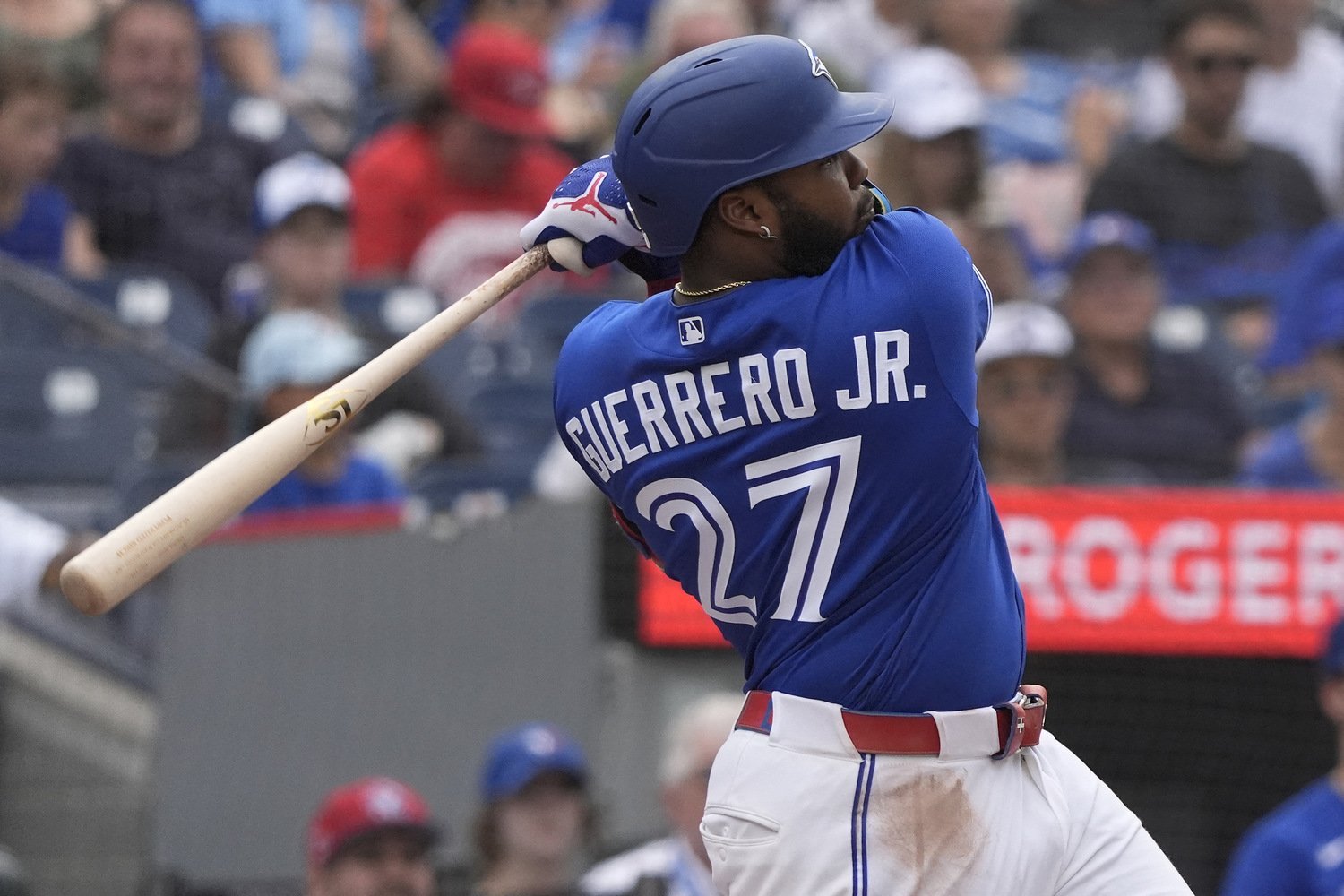 Toronto Blue Jays fans want to love Vladimir Guerrero Jr. even amidst one of his most challenging seasons. They cheer, they boo, they chant his name in an effort to shake him out of whatever it is that is holding him back. Fans can’t forget what he did last October, and everyone has their own theory of how the same hitter could possibly have disappeared over the course of one season. Every Guerrero plate appearance at Rogers Centre feels as though 40,000 people are willing him to succeed. Every groundball to the left side of the infield produces a groan. Every fly ball produces momentary elation. He is the face, and supposed to be the cornerstone, of the franchise. The Jays probably aren’t on the outside of the playoff picture looking in if he managed to get even close to expectations. Instead, the team is fighting for that final Wild Card. Whether it is over the next two weeks or into the next MLB season, is there any scenario in which Guerrero returns to form? Can he rebound and bring value to a massive contract? Somewhere near the .311/.401/.601 with 48 home runs he hit in 2021 or the .323/.396/.544 in 2024? There have been moments this season where it looked like adjustments may have worked, and he brought his old swagger and patience back to the batter’s box. Unfortunately, those moments have been few and far between. As of September 12, Guerrero is hitting .259/.330/.351 with eight home runs, 54 RBI and a .682 OPS. A year ago, he hit .292/.381/.467 with 23 homers. Two years ago, he produced a .940 OPS. Prior to games over the weekend, he had only 30 extra-base hits in 563 plate appearances this season. His isolated power, a simple measurement of extra-base damage, has fallen to .092 after sitting at .175 in 2025 and .221 in 2024. Guerrero's expected numbers have also deteriorated. His 2026 xwOBA is around .333, compared with .384 in 2025, while his expected slugging percentage has fallen to roughly .402 from .506. His strikeout percentage sits around 13 percent, and his walk percentage is still around nine percent. His problems are particularly pronounced against certain types of pitching rather than across every conceivable matchup. Baseball Savant has Guerrero batting .349 against four-seam fastballs and .325 against sinkers, compared with .137 against sliders and .089 against cutters. Guerrero isn’t the only superstar to have ever slumped. Bryce Harper won the National League MVP in 2015 by hitting .330 with 42 home runs. The following year he hit .243 with 24 homers and 86 RBI. At one point, Harper said he knew "exactly why" his production had declined and hinted at injury limitations. By 2021, Harper had won another MVP award. Cal Raleigh hit 60 home runs last season. He produced a .948 OPS and 9.1 FanGraphs WAR, one of the best offensive seasons ever recorded by a catcher. This season, he is hitting .182/.295/.371 with 21 home runs, 60 RBI, and a .666 OPS. He may have recently turned a corner. This month, Raleigh is hitting .294/.385/.500 for an .885 OPS. Gunnar Henderson hit .281/.364/.529 with 37 home runs in 2024 and followed that with a .787 OPS in 2025. This season, he is down to .222/.305/.398 and a .703 OPS, with 20 home runs. Despite two hits in the first game of the series with the Jays, his September numbers are a .182 average and .482 OPS. 2026 has become a season of fallen stars. ESPN’s David Schoenfield recently wrote about 12 MLB stars that are having down seasons. Apart from Guerrero, Raleigh, and Henderson, Aaron Judge has lost time to injury, José Ramírez has endured his worst season in years, and Julio Rodríguez has career lows in major slash-line categories. Trea Turner went from 5.4 bWAR in 2025 to below replacement level this season. The ESPN historical comparison found that a group of 23 players (comprising top-10 finishers in MVP voting and top-three finishers in Cy Young voting) who combined for 145.1 WAR in 2025 are on pace for only 87.2 WAR in 2026, nearly a 40% decrease. According to Schoenfield, "That would be the third-largest decline since 1995.” Can the Jays make the playoffs without a pre-2026 version of Guerrero? Sure. But it would be much less of a rollercoaster ride if he could return to some version of his past self. Everyone from fans to baseball analysts has a theory of what is wrong with Vladdy. Maybe it’s an injury? Maybe it’s his first move or the placement of his hands? Maybe it’s all psychological? It is highly unlikely that anyone wants an improvement more than the man himself. Guerrero isn't 37. He is 27. There is enormous historical precedent for stars having bad seasons and recovering. Other exceptional players have experienced severe downturns in exactly the same season. Guerrero's own career has already swung from a 1.002 OPS in 2021 to .789 in 2023, back to .940 in 2024, .848 in 2025, and now .682 in 2026. Volatility has always been part of who he is. It is possible that the half-billion dollars the Blue Jays paid was for a good hitter rather than the transformative one they believed he could be. Will the real Vladdy return this month? Or whenever MLB plays its next season? Cal Raleigh can go from 60 home runs and 9.1 FanGraphs WAR to hitting .182 a year later. Gunnar Henderson can go from one of baseball's brightest young superstars to a .703 OPS season at 25. Bryce Harper could follow an MVP season with a .243 average and later win another MVP. Great players fail. Sometimes spectacularly. Sometimes superstars come back. With Guerrero signed through 2039, the franchise certainly hopes that he returns to his former self sooner rather than later. Desperate Jays fans are hoping he finds his stride this week or next. When Vladdy is on, he changes the complexion of the offense. Until that happens, either next week or next season, the fans will continue to flip-flop between loving him and hating him. View the full article
 -
The Twins' Youth Wave Could Spell the End for Some Veterans
DiamondCentric posted an article in Twins Daily
 In a lost season, the Minnesota Twins have gotten a snippet of what the next wave of prospects have to offer the future of the club. Could this mean the end of the road for some team-controlled veterans?View the full article
 -
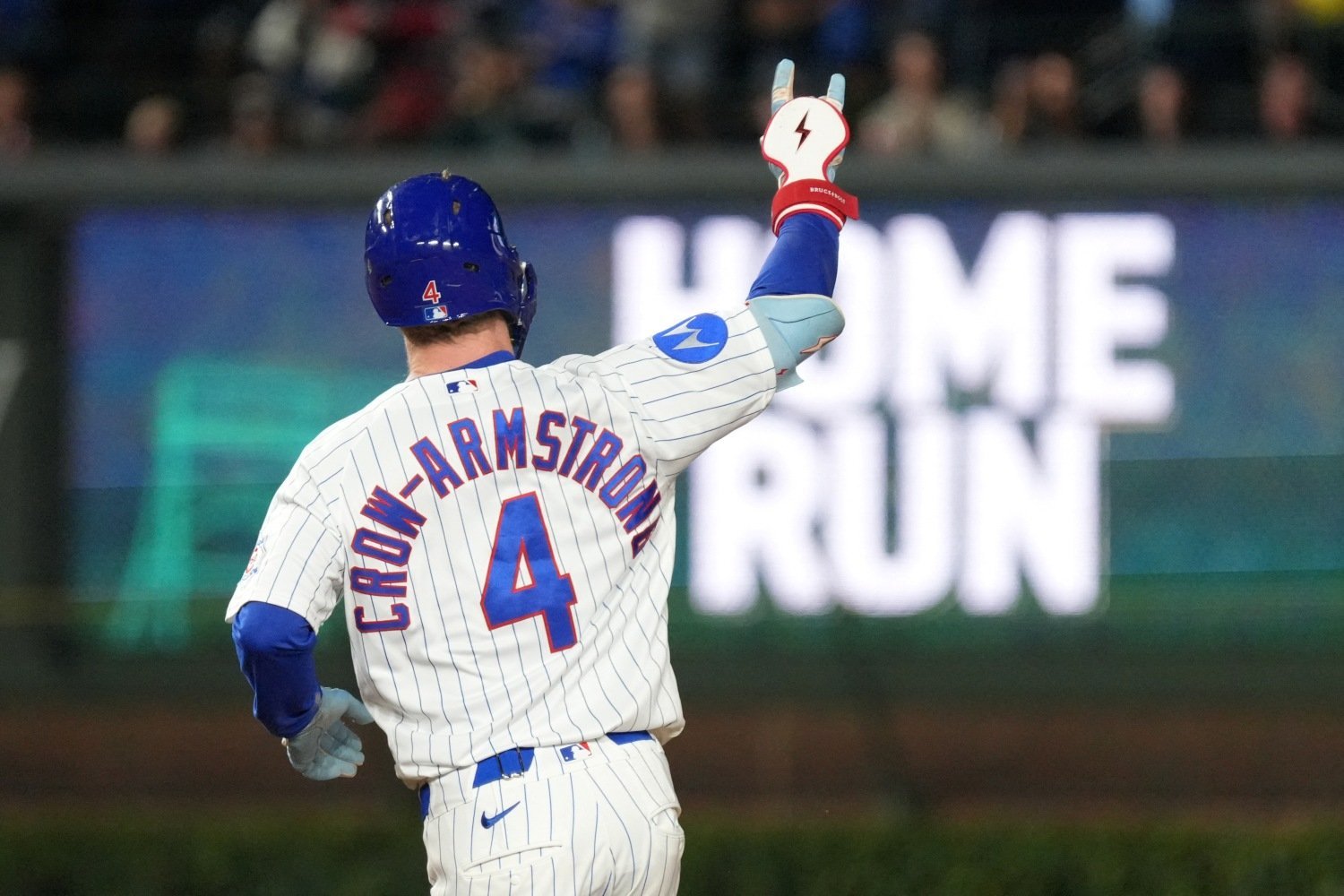 Pete Crow-Armstrong tied Billy Williams for the most home runs by a left-handed Cubs batter in a season Monday night, when he cracked his 42nd long ball of the campaign in a win over the visitors from Atlanta. That was Crow-Armstrong's third of four hits on the night. He had a two-run double, that two-run bomb, and a pair of sharp singles. He also stole a base, his 37th, as he races toward 40/40 status. That game was the 19th this season in which Crow-Armstrong has produced at least two full runs of added value at the plate himself, according to Baseball Reference's run expectancy based on the 24 base-out states (RE24). Since 2015, the only players with 20 or more such games are: Aaron Judge, 2024 Shohei Ohtani, 2024 J.D. Martinez, 2018 Paul Goldschmidt, 2022 Vladimir Guerrero Jr., 2021 Unsurprisingly, the Cubs won, 7-3. They're 17-2 in the games Crow-Armstrong has taken over offensively this year, and haven't lost such a contest since June 20. That's just one way to express what everyone with two eyes and a brain geared toward baseball knows: the Cubs' superstar center fielder is the league's most valuable player. Thanks to what was their third win in four games, the Cubs have leveled off after their latest rough patch. There's still uncertainty about whether they'll be able to host the Wild Card Series, but they've all but assured themselves of at least making the postseason. Unequivocally, though, they'd be destined for early flights home if not for Crow-Armstrong. His added value on both offense and defense has been the difference between this team and a forgettable 80-win outfit. Singllehandedly, he's made them a playoff team this season. That raises a fascinating question: has he already earned every dollar of his six-year contract extension, before it technically begins? The deal Crow-Armstrong and the Cubs signed on March 25 is worth $115 million over six seasons, but it doesn't actually kick in until 2027. Crow-Armstrong did receive a $5-million signing bonus, but his salary won't spike until next year, when he makes $10 million for the first of three straight seasons. He's then due $20 million in 2030 and $30 million in each of 2031 and 2032. All things considered, he's been worth $115 million to the Cubs this year, alone. On the field, he's produced so much value that the team will make the playoffs, which is worth at least $25 million to this franchise on its own. Being good enough to get there also means more tickets sold, this year and next, at regular-season games. Add the enormous marketability of Crow-Armstrong and the merchandise sales he's driving, and you're well over halfway to $115 million in value added this year. (Remember, his actual salary for 2026 is under $800,000.) Had he not signed this deal, Crow-Armstrong would be arbitration-eligible as a Super Two player this fall. He'd probably have broken the previous salary record of $11.5 million for first-year arbitration-eligible players, and that would have put him on a path to earning as much as $90 million over the four remaining years of his team control. As it is, his contract will pay him $50 million over those years. His salaries for 2031 and 2032—the two free-agent years the Cubs bought out in the deal—can rise based on MVP voting, but not this year's. He doesn't get any escalators based on winning this year's award; he only receives them if he wins or places highly for another one. Though obviously team-friendly, Crow-Armstrong's contract didn't look entirely risk-free when he signed it. It certainly didn't look like one of the steals of the century, wherein teams capture tons of surplus value on similar deals for players who haven't yet broken out. Less than six months later, though, the deal has entirely paid for itself. If Crow-Armstrong has a few more games wherein he wills the team to a win singlehandedly in him, that will be even more apparent come late October. View the full article
 -
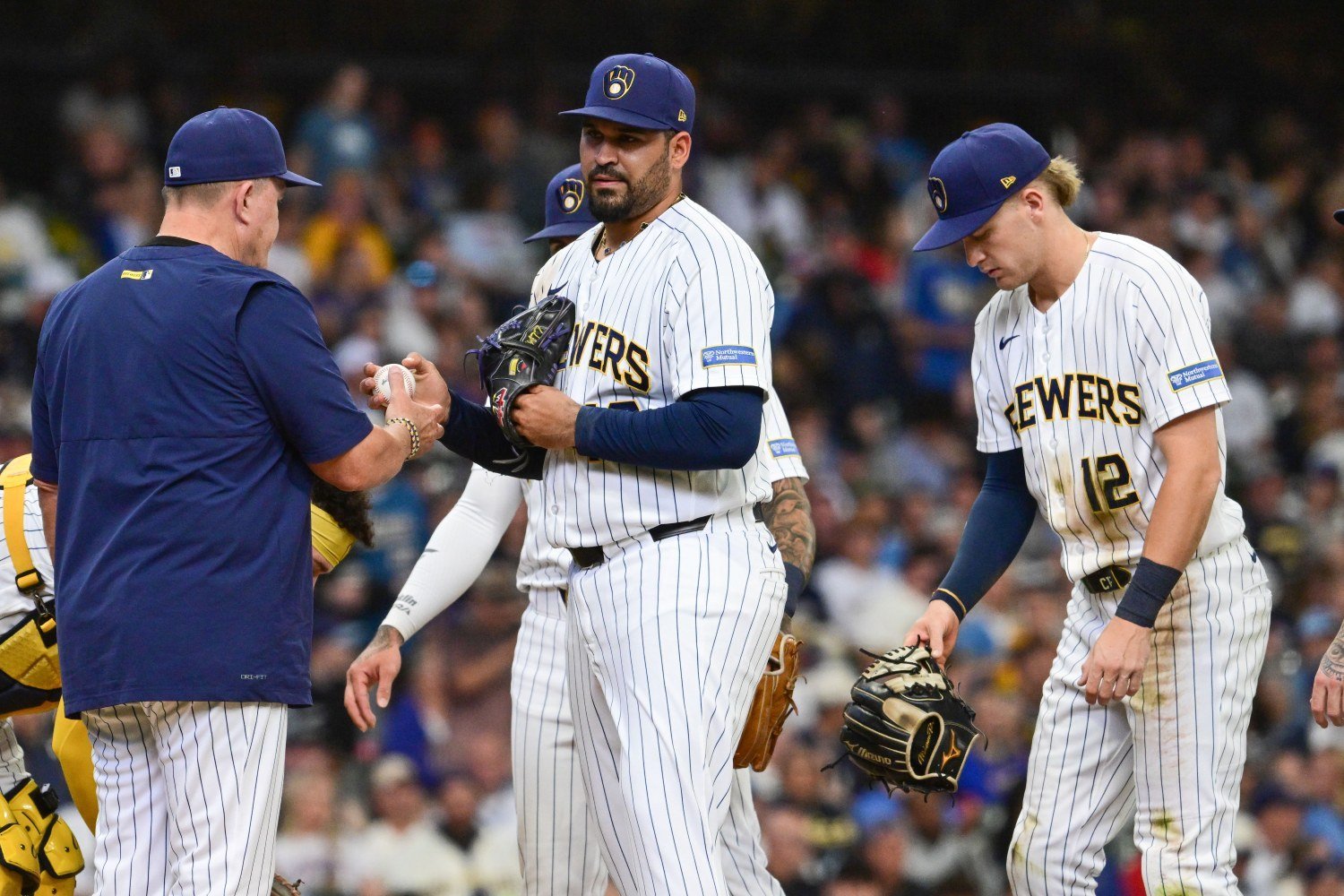 Since the Brewers acquired him from the Rockies at the trade deadline, Antonio Senzatela's tenure with his new team has gone poorly. In 18 appearances, many of them in high-leverage situations, the right-hander has pitched to a 6.48 ERA, 5.55 xERA, and 4.79 SIERA with a poor 2.7% strikeout-minus-walk percentage. From Daniel Norris to Andrew Chafin to Shelby Miller, Milwaukee's recent deadline relief acquisitions have an infamous track record. Even relievers with excellent stuff and strong peripherals at the time of a trade have pitched far worse after joining the Brewers. At this point, Senzatela's regular-season performance will not break that trend, but not for a lack of effort. "I think we're still cracking the shell a little bit," pitching coordinator Jim Henderson said a couple of weeks ago. "We've made some adjustments." Matt Trueblood recently broke down those adjustments, which have been a typical Brewersification. With the Rockies, Senzatela threw his four-seamer 40% of the time as his leading pitch, but the Brewers immediately converted him to their preferred sinker and cutter sequencing to both sides of the plate. They also moved him to the first-base side of the rubber, which makes that sinker easier to command and helps it enter the zone at a more deceptive angle. The pitch mix change made sense, as the sinker is Senzatela's slightly better fastball, particularly away from Coors Field. He naturally cuts the ball at release and doesn't generate much spin, which usually limits the movement of a four-seamer but can create more seam-shifted sink on a two-seamer. Even after accounting for the Colorado altitude and his arm slot, Senzatela's four-seamer has less carry than average, while his sinker has more sink. "We believe in good process of a pitch, and we believe that if he does that and keeps the ball in the ballpark with our defense, we're going to have success with it," Henderson said. "So we're kind of leaning into [the sinker and cutter] a bit more." The move to the first-base side wasn't just about improving the overall angle of Senzatela's sinker. Henderson said it was also an attempt at making him more platoon-neutral. From the first-base side, the Brewers believed Senzatela could better execute front-door sinkers to lefties. They also felt the more extreme angle would freeze more lefties on back-door cutters that come back to the outside corner. "We're just looking for more freezes, just to track a little bit better and get in there, and, if you have the eyes of a hitter, not being able to track him the whole way so much," Henderson said. Senzatela's stuff would always benefit from leaving Coors Field, but the Brewers have helped it level up further. They've tightened his delivery and worked on landing more firmly with his front foot, allowing his hand to work on top of the ball. Those tweaks have contributed to a velocity bump, and they've given his sinker more depth (lower induced vertical break) and more arm-side run. In recent outings, he's gotten that sinker as low as 3 inches of IVB and as high as 18 inches of horizontal break. Team Sinker MPH Sinker IVB Sinker HB Sinker Stuff+ COL 96.0 7.1 12.9 99 MIL 97.2 6.4 14.6 105 "We're just trying to keep him a little bit tighter with delivery," Henderson said. "If you get through the ground and you have a tight rotation and you get your hand in the right spot, hopefully you can manipulate the ball any way you want. So just trying to get him through his heel, a little bit better posture, so that his hand can work out here. If he gets on his toe, then he starts losing his hand, and that's where he sees the runners instead of the sinkers." It's all sound in theory. In practice, it isn't working. Senzatela's fastballs are his bread and butter, but as he's mixed those heaters differently and thrown more fastballs overall, their effectiveness has flipped. Team Fastball% FB xSLG FB Run Value FB Run Value/100p COL 80.4% .332 5 0.798 MIL 94.1% .422 -3 -0.951 Regressed command is a big part of the problem. Senzatela's Location+ (a metric that measures whether pitches were thrown to locations that produce the best results) has dropped from 108 as a Rockie to 94 as a Brewer. His in-zone rate has decreased from 50.1% to 44.9%, and his walk rate has jumped from 7.8% to 10.8%. Throwing more fastballs hasn't helped. Since the start of August, Senzatela's 94.1% fastball usage effectively leads all pitchers to throw at least 250 total pitches (only Jose Alvardo is higher, but what's labeled his cutter has the velocity and movement of a slider). Only fellow Brewer Chad Patrick and Jonathan Pintaro are in the same realm. The difference is that Patrick and Pintaro are mixing in plenty of four-seamers, so their high fastball usage consists of three different iterations. Senzatela is throwing mostly sinkers and cutters and only flashing the occasional four-seamer with two strikes. Patrick and Pintaro change eye levels with their fastballs. Their four-seamers have more carry and create a different look at the top of the zone. Because his sinker and cutter have identical depth, Senzatela is currently showing the same vertical movement with roughly 85% of his pitches. Even though Senzatela's sinker and cutter move in opposite directions horizontally, going all-in on that pairing has allowed hitters to sit on a tight velocity and vertical movement range. They know they're getting something hard, and they know it will have some sink. Most of hitting is timing, and disrupting that timing is how a pitcher avoids barrels. Senzatela was doing that with the Rockies. According to Statcast bat tracking, hitters were on time with only 64% of swings against his three fastballs, well below the league average of 74% against fastballs. They were late on 34% of fastball swings, one of the highest rates in baseball. As a Brewer, hitters have been on time with 74% of swings against Senzatela's fastballs – exactly the league average. They've made him the most extreme fastball pitcher in baseball, and it's allowed opponents to time him up. Senzatela's whiff rate as a Brewer is still 22.1%, a decrease of only two percentage points since the trade, which speaks to how dominant the sinker-cutter pairing can be. The sinker has also boosted his ground ball rate. However, his strikeout rate has cratered to 13.5% with Milwaukee. "I think that's the only thing that's missing right now, is just to try to find a little more whiff," Henderson said. Those strikeouts are hard to find while throwing 94% fastballs. "He's went to more sinker-cutter, sinker-cutter-curveball, and I think that when you're a sinkerball guy and you're throwing hard and people know you're coming at them, you're going to give up contact," Pat Murphy said on Sunday afternoon, after Senzatela allowed a go-ahead three-run home run in another fastball-only outing. Let's be clear: Senzatela should throw lots of fastballs. Public stuff models see his curveball as a fine pitch, but it has clear limitations. It's a low-spin breaking ball, and he struggles to throw it for strikes. Senzatela noticeably raises his arm slot (the blue line in the graphic below) so he can get on top and in front of the ball. The solution is not to throw this many fastballs, though. Even if Senzatela's curveball isn't a great pitch, it still shows the hitter a necessary change of speed. The Brewers have been working on his breaking pitches during his daily flatground work, but Henderson said the extreme fastball usage isn't just an attempt to get by until the breaking stuff improves to their liking. "I think we're just leaning into his strength," Henderson said. "I don't think it's necessarily just trying to get away [without a good breaking ball]. But, you know, we have our systems." At this extreme, Senzatela's strength has become a weakness. His most recent outings have hinted that tempering his fastball usage could improve his effectiveness. After throwing 122 straight fastballs starting on August 25, Senzatela threw three curveballs in a scoreless inning against the Cubs last week. After Alex Bregman saw a curveball in the dirt, he fouled off a sinker on a late swing, then flew out to left field on a cutter. After Michael Busch saw two straight curveballs for balls, he whiffed and grounded out on two straight sinkers, both late swings. On Saturday against the Reds, Senzetela threw four curveballs in another scoreless inning with a strikeout. One was a hard Ke'Bryan Hayes lineout to left. Dane Myers then saw three straight curveballs, swinging well in front of the third one and popping out to right. On Sunday, all eight of Senzatela's pitches were fastballs. Sal Stewart punched a cutter back up the middle for a single, then Eugenio Suarez drove a sinker to right-center for that go-ahead homer. Without a threat of the breaking ball, his electric stuff doesn't flourish. "We want him to mix in some of the slower stuff, for sure, but I can't tell you the exact difference in the contact quality," Pat Murphy said. The Brewers will need Senzatela to record big outs in October, particularly if they deploy bullpen games behind Jacob Misiorowski and Logan Henderson. He's capable of that, but he needs the right pitch mix for things to fall into place. Even bringing his fastball usage down to 85% could be the difference between a dominant Senzatela and one who is easy for great hitters to time up in key situations. "I think he's got a definite role for our team," Murphy said. View the full article
 -
Vladimir Guerrero Jr. Does It Big, Jays Win Another Crucial Series
DiamondCentric posted an article in Jays Centre
 The Blue Jays look like they're playing their best baseball when it matters the most. They take 2-3 from the Baltimore Orioles to keep pace with the Cleveland Guardians, and remain just one game back of a playoff spot. Owen and Jesse break it all down, getting into their rising confidence in the lineup, while confidence in the rotation begins to waver, and just how much they've bought into this team. Stick around for discussions about Brett Bateman, Alejandro Kirk, Kazuma Okamoto, George Springer, Max Scherzer, Dylan Cease, Spencer Miles, and of course, Vladimir Guerrero Jr. Listen on Apple Podcasts: https://podcasts.apple.com/us/podcast/the-jays-centre-podcast/id1846108462 Listen on Spotify: https://open.spotify.com/show/3Bi7SzfpcqMo5xYWnbCeoL Listen on iHeartRadio: https://www.iheart.com/podcast/263-the-jays-centre-podcast-300304824/ Listen on Pocket Casts: https://pca.st/2qk9wqxd Watch on YouTube: https://www.youtube.com/@jayscentre View the full article
 -
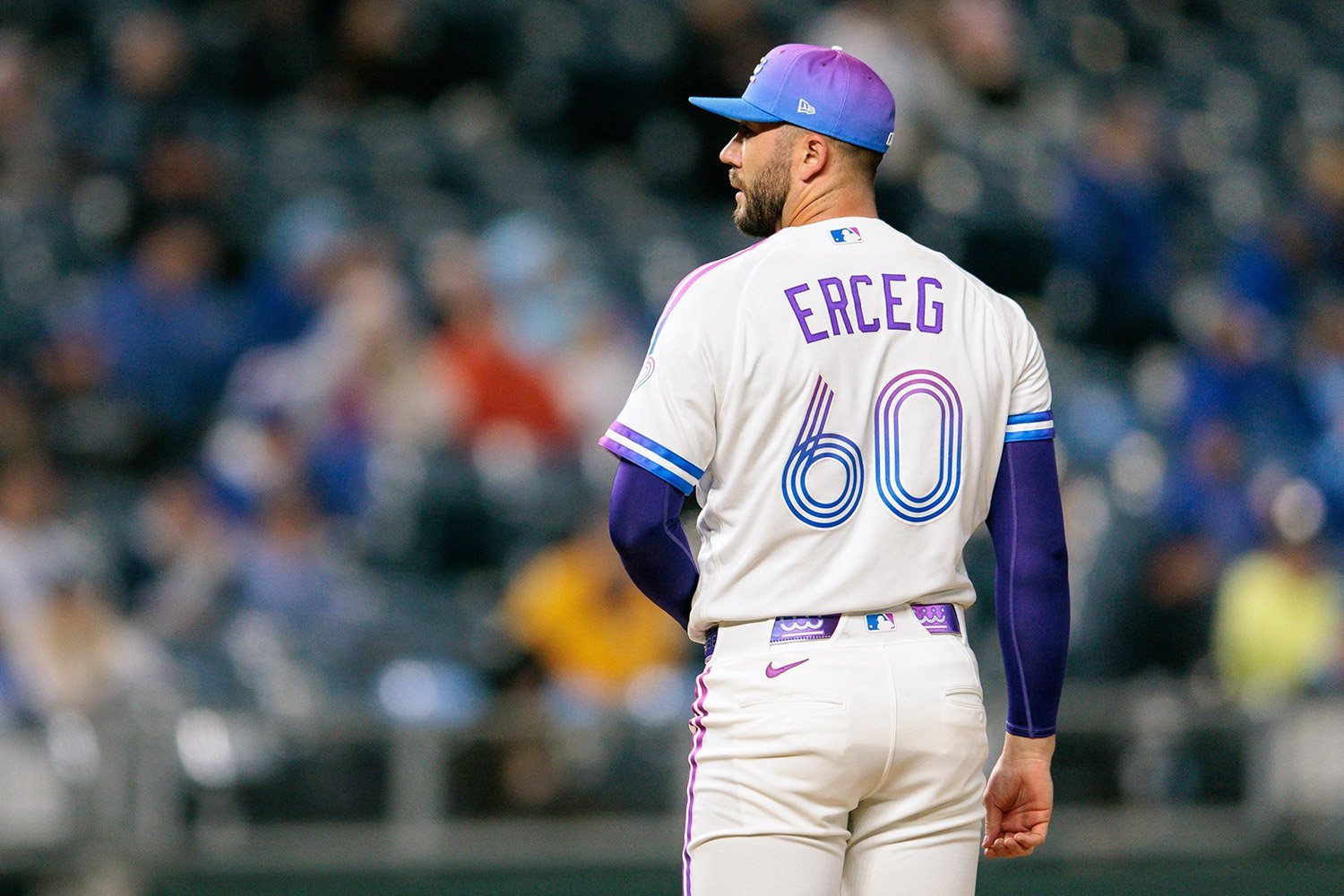 The Royals have recalled RHP Lucas Erceg to the major leagues. The corresponding move to make room on the 26-man roster was to option RHP Easton McGee to Triple-A Omaha. Erceg pitched in 47 games in the majors prior to being optioned to Triple-A in mid-August. In those 47 games, he threw 43 1/3 innings while striking out 31 and had a 4-4 record with a 6.23 ERA. His peripheral numbers were slightly better, with a 5.60 FIP. McGee was recently called up on September 1 and has bounced back and forth between the major league squad and Triple-A. He was acquired by the Royals in mid-July after being designated for assignment by the Milwaukee Brewers. In nine appearances (seven with the Royals), he has a 7.15 ERA with nine strikeouts over 11 1/3 innings pitched. Between Milwaukee's Triple-A team and the Royals Triple-A team, he has thrown 55 2/3 innings at Triple-A with 60 strikeouts and a 6.95 ERA, while walking 21. Erceg has looked much better with Triple-A Omaha, throwing 10 1/3 innings in nine appearances. In that time, he has 13 strikeouts with three walks. He has a 1.74 ERA in that time and a 1.258 WHIP, which shows there have been some improvements made. He will hope to continue that improvement out of the Royals bullpen for the remainder of the season. View the full article
 -
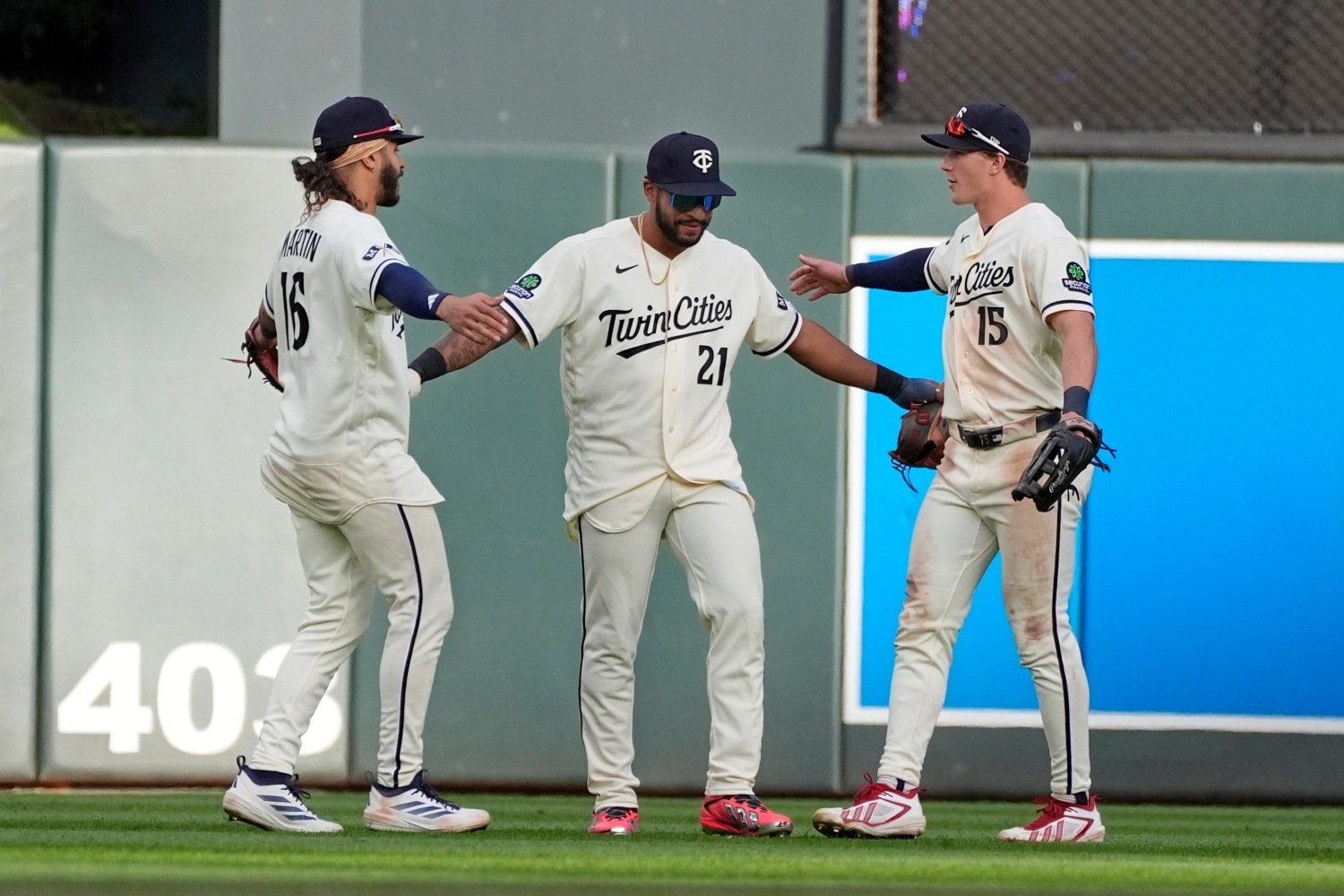 Luke Keaschall is 188 games into his MLB career. He’s a career .281 hitter with a .370 on-base percentage, and has stolen 31 bases at a 76% clip. The last time the Twins had a leadoff hitter this good was in 2022 with Luis Arraez, who hit .314 across four seasons in Minnesota. And like Arraez, no one has any idea where to put him on the field. Keaschall has been one of the worst defenders in baseball, splitting time between second base, center field, and right field. He’s accumulated a league-worst -19 defensive runs saved (DRS) between the three positions, meaning that he’s been 19 runs worse than a merely average defender. Those 19 runs equal about two wins lost in WAR, as well. Even if you’re not a defensive stats believer, you’ve watched enough Keachall misplays to know that his defense is an issue. He’s struggled to read balls off the bat in the outfield, made poor throwing decisions, and his lack of arm strength disqualifies him from completing many plays. Arraez never put up a defensive season this bad, but he was suspect with the glove for his whole Twins tenure. He was worth -11 DRS in 2019, with 9 of those lost runs coming at his natural position, second base. During his time in Minnesota, he was closer to average, though he fluctuated from year-to-year. For most of Arraez’s Twins tenure, he bounced around defensive positions. He played second, third, shortstop, and left field as a rookie in 2019. He stuck at second base in 2020, but in 2021, he played more third than second and spent a little time in left field, and in 2022, he played first base, with some second and a bit of third sprinkled in. He also was the designated hitter 47 times during that four-year stretch, 42 of which came after 2020, when he was replaced by Jorge Polanco as Minnesota’s primary second baseman. Because Arraez ranged from bad to middle-of-the-road defensively, the Twins felt comfortable playing him in whatever hole the lineup had in a given day. Sometimes this would change from day to day. At other times, he was filling in for an injured teammate on more of a long-term basis. But the equation was simple: he’s not going to be a plus defender at any position, so just stick him in the lineup where needed. Could this be the route with Keaschall as well? There are a few paths the Twins could take next season to keep his bat in the lineup every day. Play Keaschall Everyday in Left (or Right) Field Analyzing Keaschall in a vacuum, planting him in left field is probably the most straightforward way to keep him in the lineup every day. This is especially true if there’s a belief that Keaschall’s ability to read fly balls will improve with practice; he’s only played 717 innings in the outfield as a professional. He has the raw athleticism to get to balls, and his weak arm is mitigated by moving out of right field. The issue, though, is that Keaschall’s situation can’t be analyzed in a vacuum. Top prospects Walker Jenkins and Emmanuel Rodriguez have debuted this season, both of whom are natural outfielders. Adding the center field presence of Byron Buxton, the Twins’ outfield is crowded. Not only are all three players better outfielders than Keaschall, but they also probably have higher offensive ceilings as well (this is no guarantee, as Keaschall has set a high bar already, hitting about 20% better than an average hitter for his career). Planting Keaschall in left field squeezes one of Jenkins and Rodriguez out of the picture when Buxton is healthy, and that seems not to be something the Twins want to do. Jenkins is a top-20 prospect across baseball and has played himself to the big leagues at age 21. Rodriguez, who has been on top-100 lists for half a decade, is out of options next season, and thus needs to stick on the major-league roster or be traded. It’s a tough proposition. Send Keachall Back to the Dirt The infield is also a little crowded heading into next season, with Brooks Lee, Kaelen Culpepper, Kody Clemens, and Royce Lewis currently penciled into spots and Marek Houston potentially being an option by midseason. But if any of those options—particularly Clemens or Lewis—were to be moved over the offseason, there could be room at first or second. Keaschall played some first base in the minors when playing through a torn UCL. Arraez himself has turned into a better defender at second base after being given the chance to play at the keystone full-time this season for San Francisco and Philadelphia, accumulating 13 outs above average (OAA). He’s still been mediocre by DRS (-3), and the eye test suggests he’s closer to average than one of the best defensive second basemen in baseball, but given that he was moved off the position to be a 5’10” first baseman, it’s a very positive development Many fans know the oft-repeated anecdote about how Corey Koskie was a dreadful third baseman at his debut, but after thousands of reps he became a good defender. Players can improve defensively, but it would be nice if Twins fans had a second example of this happening. Arraez’s improvements conspicuously coincided with working with esteemed fielding coach Ron Washington in San Francisco. It may be wishful thinking to believe Keaschall can make these same improvements. Maybe two years out from Tommy John surgery, his throwing will improve, but there are still other warts. Play Keaschall Every Day at Designated Hitter Many probably scoff at this proposition because of Keaschall’s offensive profile. But the most basic answer to “Where do we play a good hitter who’s bad in the field?” is “designated hitter.” No, Keaschall is not the aging, burly slugger that you might imagine when you close your eyes and think of a designated hitter, but he is a very productive hitter who can have his defensive woes mitigated by simply not grabbing a glove. However, Keachall has thus far been a 20%-above-average hitter by wRC+, given his doubles power and high on-base percentage. The average designated hitter this season has mustered a slash line just 5% above average, compared to left field at 2% above average or even first base, which is 15% above average. The bar for a full-time DH should be higher than a 105 wRC+, but even using first base’s 115 as a benchmark, Keaschall’s 120 career wRC+ is solid. It’s not perfect, but it’s workable, and it keeps one of the Twins’ key cogs in the lineup every day. The Luis Arraez Approach As a Twin, Arraez never played more than 65 games at a single position during a year (first base in 2022). The Twins could use a similar approach with Keaschall, though maybe not to the same extreme, or with the same positions. Keaschall can play second base, the corner outfield, center field, and first base. None of them are pretty—center field was practically a disaster—and we haven’t seen him play first base in the majors. But in moderation, maybe some time bouncing around won’t hurt the Twins. Let’s use this example as a thought exercise. About a third of the team’s games are against left-handed starters. Both Jenkins and Rodriguez are lefties, and even if you want them to face lefties, maybe you can agree to have the two rookies split reps in right field against southpaws, turning left field over to Keaschall those days. That’s hypothetically 54 games in left field without cutting into Jenkins and Rodriguez games against righties. There are 108 games left in the schedule. Say Keaschall is the DH for 60 of them. He’s the team’s primary DH, but he’s not an everyday DH, which allows 102 days at DH for other Twins. Between games in left against lefties and DH days against righties, we’ve already accounted for 114 games of Luke Keaschall. Even assuming he will play all 162 games, you only need to find a spot for him 48 times. You don’t want Keaschall being your second baseman every day. But can you stomach a dozen starts at second base? That’s two games a month. Could you bear the same at first base? Maybe there’s an injury to one or more of (perhaps the most injury-prone outfield in baseball) Buxton, Jenkins, and Rodriguez, and he gets some more action in a corner outfield spot. Those other 48 games fill up quickly, even without accounting for routine days off. There’s probably something to be said for just sticking him at DH when he’s not in left field, simplifying his workload and keeping him off the dirt, but adding that wrinkle helps the team remain flexible. The point is that it’s not easy to find a way to fit Keaschall into the lineup with the team as currently (and projectedly, for next season) constructed, whether that be because the outfield is crowded or because he doesn’t have a standard profile for a first baseman or DH. It might require some creativity to make it work, but one thing is certain: the Twins need to find a way to do it. View the full article
 -
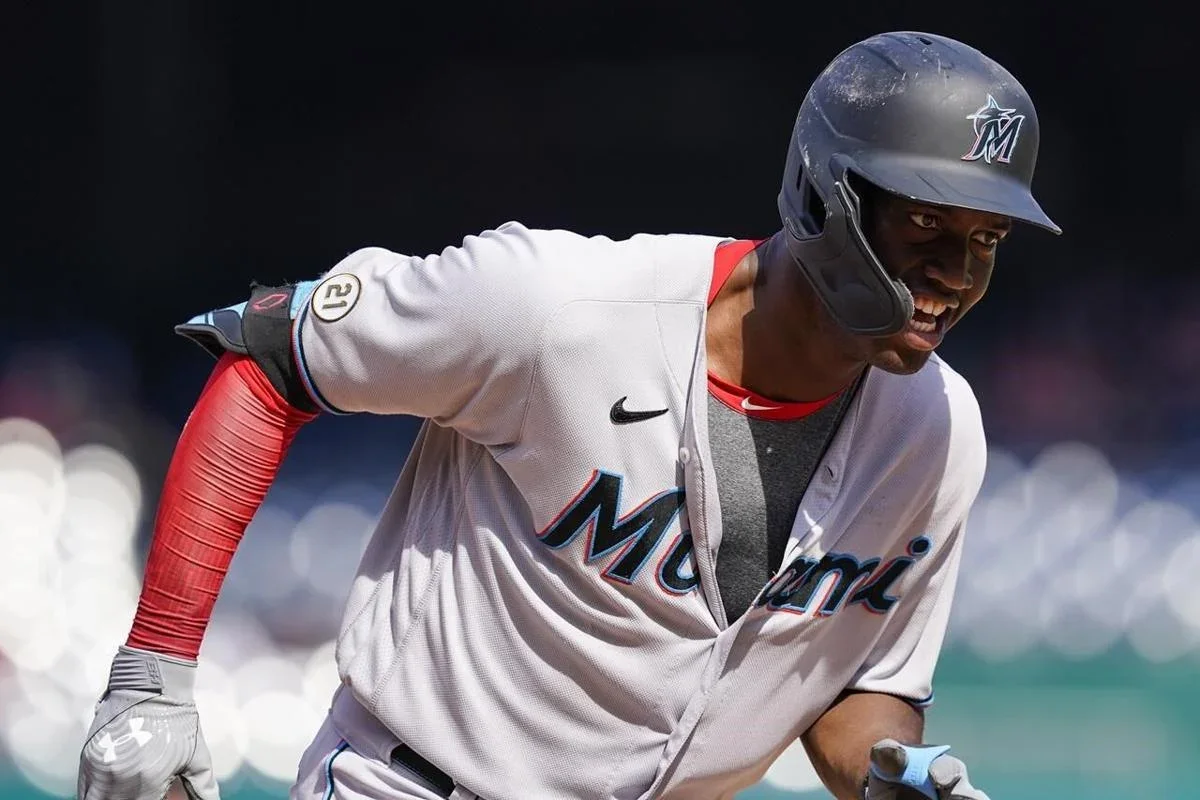 After making the postseason in 2020, the Miami Marlins didn’t come close to following that with an encore worth celebrating in 2021. They did, however, finish ahead of the Washington Nationals for fourth place in the National League East. On this day five years ago, Miami avoided being caught by the Nationals and won the three-game set between the teams in dramatic fashion. The Marlins stunned Washington with four runs in the ninth, capped by Jesús Sánchez’s two-run home run in an 8-6 win. Scoreless through three and a half innings at Nationals Park on Sept. 15, 2021, Washington had scored in five straight innings as the contest went to the top of the ninth. Miami had scored in three straight innings but had never led as it sat on the wrong side of a 6-4 score. Facing Kyle Finnegan, it didn’t take long for the Marlins to put the tying run in scoring position. After Isan Díaz walked to open the inning, Jazz Chisholm Jr. singled one pitch later. A wild pitch then moved both runners into scoring position. Miguel Rojas followed with an RBI single to cut the lead to one. After Lewin Díaz grounded out, Bryan De La Cruz’s RBI fielder’s choice tied the game at 6 apiece. Díaz and De La Cruz had each put the ball in play on the first pitch. Sánchez followed suit but his swing left the infield and the yard. On a high fastball on the outer half of the plate, Sánchez went the other way for a no-doubter to left-centerfield and into the Washington bullpen for the go-ahead two-run blast – his second two-run shot of the day. Now with an 8-6 lead, Dylan Floro closed things out with a 1-2-3 ninth inning. In addition to Sánchez’s big day, De La Cruz also homered in the win, going 1-for-3 with two RBIs and three runs scored. Rojas and Chisholm each added two hits. Rojas had two RBIs while Chisholm scored a run. Alcides Escobar finished with four of the 15 hits for the Nationals. Josh Bell had three hits and a home run in the loss. The Marlins would finish two games better than Washington in the standings at 67-95 to 65-97 for the Nationals. Although Washington took the season series, the final game and series between the teams in the nation’s capital went the way of the Marlins. It happened on this day five years ago. View the full article
 -
'Tragic number' down to 3 after Marlins blow late-inning lead
DiamondCentric posted an article in Fish On First
 On Monday night, the San Diego Padres remained MLB's hottest team and defeated the Colorado Rockies, while Corbin Carroll walked off the Miami Marlins. Any combination of three more Padres wins or Marlins losses will officially eliminate Clayton McCullough's club from 2026 postseason contention. In the bottom of the ninth, the Marlins led 7-6 and deployed Pete Fairbanks. Only six pitches into his outing, Fairbanks walked off the mound for what may be the final time as a member of the Marlins organization with the recurrence of a nerve irritation issue. Entering the game for Fairbanks was rookie Jack Ralston. After getting the first out of the inning, Ralston surrendered a walk-off home run to Carroll on the fourth pitch of the at-bat. "It's gonna be tough for anyone," Clayton McCullough said postgame. "Jack came in and he got the out on the bunt, and then left something hanging offspeed that Corbin put a good swing on. Tough spot, but Jack came in there and went after him, and sometimes you lose." In this must-win game, Miami's second-half offensive stars, Jakob Marsee and Javier Sanoja, both homered and recorded multiple hits. Marsee, who in his first 98 games of the season posted a .600 OPS, has bounced back. Since July 24, Marsee is slashing .303/.409/.497/.906 with five home runs and 12 RBI. With the game tied at three apiece in the top of the fourth inning, Marsee hit his 10th home run of the season to retake the lead, 4-3. He now has a 96 wRC+ on the season. Marsee finished his night a double shy of the cycle. What has kept Marsee on the big league team through the course of the entire season is that he has gotten on base at a high clip (.342). He has also struck out just 20.5% of the time and is walking 12.7% of the time. Since that July 24 date, Marsee has only stolen three bases of the 22 total he has. Defensively, he has plus-8 outs above average in center field, contributing to his 1.8 fWAR overall. "Just seen him open up the entire field," McCullough said. "He's really done a great job of shooting some balls the other way and staying through the middle of the field. Still giving him a chance to have some coverage through the zone. He pulled the curveball for a homer today, so right now, his at-bat quality's been good all year. I think now, he's just opened up the entire field with his approach, and he's been collecting a lot of hits." As for Sanoja, he has been one of the best players in baseball since the All-Star break. He is slashing .285/.389/.462/.851 with five home runs and 12 RBI, graduating from utility player to impactful everyday player. Sanoja kicked things off in the top of the second, hitting his fifth triple of the season and driving in two runs. A Joe Mack sacrifice fly extended the lead, 3-0. In the fourth inning, Sanoja followed Marsee up with his ninth home run of the season, extending the Marlins lead to 5-3. Sanoja finished the night halfway to the cycle. Overall, Sanoja is slashing .293/.333/.454/.787 with nine home runs, 63 RBI and a 114 wRC+, which are all career-highs for the 24-year-old. He is striking out 8.0% of the time. Only former Marlin Luis Arraez has a lower K rate in the majors this season (min. 400 PA). "That's what we've seen this guy do for two years now," McCullough said. "He just he makes plays wherever you put him in the field. Comes up with big hits and at-bats for us. He's really playing at an extremely high level right now." Xavier Edwards, who recently came off the injured list, also recorded multiple hits. In the top of the seventh inning, Edwards knocked in an RBI single to extend the Marlins lead, 7-4. That run looked as if it would be crucial when in the ensuing inning, Tyler Zuber surrendered a two-run homer to Diamondbacks center fielder Jordan Lawlar, which made it a 7-6 game. The Marlins offense supported starting pitcher Sandy Alcantara, who struggled on Monday night. He went five innings, allowing four runs on seven hits (one home run), walked two and struck out six. Alcantara has surrendered four or more runs in all of his September starts. "I think for Sandy to buckle down in the fifth and get the punch out on Arenado, get out of that with us still in the lead, I give him some credit for just kind of be able to move the ball forward, and outside of the Nootbaar home run, Sandy threw the ball very well," McCullough said. "Just had elongated couple of innings that got the pitch count up there, but I think as much credit to them for just being able to find some holes. Tonight, the batted ball luck wasn't really on his side." The Marlins will try to bounce back on Tuesday night with Janson Junk taking the mound at 9:40 pm. View the full article
 -
 This weekend in San Francisco changed a lot regarding the San Diego Padres' postseason possibilities. Not only did the Padres sweep the Giants in three games, but they went from a half-game lead over the Arizona Diamondbacks to 2½ games up thanks to a seven-game winning streak. The Padres are 81-78 with 13 games remaining, while the Diamondbacks are 79-71 with 12 games remaining. The swing game comes Thursday in the Friars' finale of a four-game series vs. the Colorado Rockies. Of course, still looming is the three-game set to end the regular season against Arizona at Petco Park. There is a chance that the Padres will have less at stake in that series than you would have thought entering this past weekend. Elsewhere in the NL wild-card race, the Padres also got good news. There is a chance the Friars could improve their seeding for the postseason. The Chicago Cubs and Philadelphia Phillies, once head and shoulders ahead of the Padres, are now tied for the top two NL wild-card spots, 1½ games clear of San Diego. Depending on your outlook, the Padres should either just sit in the No. 6 seed (No. 3 wild card) or try to jump one or both of the Cubs and Phillies. Whether that is possible, is another thing. In the No. 5 or 6 position, the Padres would be on the road. The No. 4 seed would host the No. 5 seed in the best-of-three NL Wild Card Series. The No. 6 seed will be the visiting team against the worst of the three division winners, which is currently Atlanta, 2½ games behind the Los Angeles Dodgers. The Milwaukee Brewers are 2½ up on the Dodgers for the No. 1 seed. The top two teams get first-round byes. Let's take a look at the remaining schedules for the four teams battling for the three NL wild cards. San Diego Padres If you don't have this memorized by now, are you even a Padres fan? Just kidding (sort of). As mentioned above, the Friars begin the final two weeks in Denver against the Rockies, MLB's worst team at 55-94. The Rockies have been much more competitive this season as a whole, but they are still destined to lose 100 games for the fourth year in a row. The Padres, in order, will send right-handers Casey Mize, Walker Buehler, Robbie Ray and Michael King to the mound. After riding left-hander Adrian Morejon and right-handed closer Mason Miller hard in the last week-plus, a few blowouts to give them extra rest would certainly be nice. This weekend, the Padres return home against a dangerous Miami Marlins team. The Marlins have some weapons to play spoiler and will have a chance to do so (as I will expound upon in a bit), with a combination of pitching and power. Remember, this is the series the Padres swept in July as they started their second-half push. Then we come to the final week of the season. First up, after their next day off next Monday, is three games on the road against the Dodgers. At that point, the Dodgers will have the NL West wrapped up and could still be jockeying with Atlanta and the Brewers for a first-round bye. Rivals will always want to ruin the other's season, so those three games will be intense as always. Then the Diamondbacks come to Petco Park for the last three games of the regular season. Mize, Buehler and Ray are lined up for that series barring right-hander Randy Vasquez getting a spot start during this current stretch of 10 consecutive games. That also puts King in position to start the playoff opener, but also available to jump up and pitch the final Sunday of the season if needed. The Padres and Diamondbacks are currently tied in the season series 5-5, so if it comes to that, whoever wins two games in the series will win the tiebreaker. The Padres, however, lose the tiebreakers to the Phillies (0-6) and Cubs (1-5), so they would need to finish ahead of either to get a better seed. Arizona Diamondbacks Remember how we talked about the Marlins playing spoiler? They could be the Padres' best friend to start this week as they begin a nine-game road trip against the Diamondbacks. Arizona has already been swept in Miami and is the definition of a .500 team, having gone 24-22 since July 25. The Padres have gone 26-19 in that same stretch, including 1-5 to begin that run. Arizona is in the middle of a nine-game homestand, which opened with a 1-2 series against the Texas Rangers, a team that hadn't won a road series in two months. After the Marlins, the Diamondbacks host the New York Yankees, who are pretty locked in as the AL's top wild-card team at the moment. Right-handers Cam Schlittler and Gerrit Cole will each get a start this weekend. Before the Diamondbacks come to Petco Park, they will also face the Rockies, this one being three games in Denver. Like the Padres, Arizona will have next Monday off, meaning that they will come directly to San Diego after playing in the Denver altitude, which can sometimes be a challenge for a team for at least a day. Philadelphia Phillies The Phillies have 12 games remaining and have a favorable schedule this week, although that is on the road. After a day off Monday, the Phillies have a pair of games against the Washington Nationals and then four against the New York Mets. Both teams are capable of playing a spoiler role and the Phillies have lost seven of their last 11. After that, the Phillies return home for the final six regular-season games. But those are two tough series, facing the Brewers and the Tampa Bay Rays, the probable No. 1 seeds in the NL and AL, respectively. The Phillies went 1-6 vs. the Cubs, thus losing the tiebreaker. Chicago Cubs You can make a good argument that the Cubs have the toughest schedule in the final two weeks. And their travel schedule doesn't help. The Cubs wrap up a six-game homestand beginning Monday against Atlanta, then travel to the Cincinnati Reds for three games. The Reds (70-79) are the cushiest opponent remaining for the Cubs. The Marlins come back into play as the Cubs go back home for three games vs. Miami. There are days off before and after the Reds series for the Cubs, mitigating the short road trip to Cincinnati. But there is not a break for the Cubs following the Marlins series as they travel to the Boston Red Sox to finish the regular season. The series could mean nothing to the Red Sox, who enter the final two weeks as the probable No. 2 wild card in the AL. Conclusion The Padres are sitting in a good spot entering the Rockies series and that might be the best position for them entering the postseason. As the last wild card, the Friars are likely to face Atlanta in the NL Wild Card Series. (Atlanta has a fairly challenging schedule in the Cubs, Houston Astros, Reds and Marlins.) San Diego would need a lot to happen in order to climb over the Cubs and Phillies and claim the top wild-card spot. So it really comes down to which team would the Padres rather play on the road: the Cubs or Phillies? While the Phillies have been struggling recently, they have two weeks to correct that and have the starting pitching that can shut an opponent down, not to mention the game-changing power of Kyle Schwarber. The Cubs, on the other hand, have had to scramble all season to put competent starters out there and their bullpen is a mess. Offense is the strength of the Cubs, who can trot out probable NL MVP Pete Crow-Armstrong and a loaded lineup behind him. Considering the Padres were swept at Wrigley Field, including a forgettable 23-3 loss in the series finale, a couple weeks before the All-Star break, the Friars would probably love a chance to redeem themselves for that, as well as last year's three-game NL Wild Card Series loss to the Cubs. View the full article
 -
 The minor-league regular season ends over the next week, bringing another year of development across the Twins' four full-season affiliates to a close. While the final games are being played, Minnesota has already accomplished something no organization had done before. The Twins became the first organization in professional baseball history to hit 700 or more home runs across their full-season affiliates, including Triple-A, Double-A, High-A, and Low-A. There have been plenty of impressive individual performances along the way, but the final weeks of the season is also an opportunity to recognize players who have made significant strides throughout the year. This week's Hot Sheet features three players from Double-A Wichita who have made strong cases for continued attention heading into the offseason. RHP Adrian Bohorquez– Wichita Wind Surge How He Got Here: When a player signs for just $10,000 as an 18-year-old international free agent, there aren't exactly sky-high expectations attached. That's where Bohorquez started. After a lackluster debut in the Dominican Summer League in 2023, the right-hander began showing that he might be able to provide a significant return on the Twins' modest investment with a solid first season in the United States in 2024. Bohorquez entered 2025 with relatively low expectations, and his performance suffered early in the season. As the calendar progressed, however, so did the results. Beginning July 1, he posted a 2.47 ERA while holding opponents to a .185 batting average. That performance earned Bohorquez a late promotion to High-A Cedar Rapids and gave the Twins another reason to keep an eye on the young right-hander. He has continued building on that momentum this season, making his name increasingly difficult to overlook when discussing the organization's top pitching performances. Hitting the Hot Button: Bohorquez started on the mound for the Wind Surge and immediately attacked the top of the Frisco order. He faced the minimum in the first inning while striking out two hitters. The right-hander continued to keep Frisco's offense quiet, finishing his outing after five scoreless innings. He allowed just one hit while striking out four. Since his promotion to Double-A, Bohorquez has posted a 1.06 ERA and 0.94 WHIP, along with a 26.1% strikeout rate and 10.1% walk rate across four starts. For a player who entered the organization with a $10,000 signing bonus and modest expectations, Bohorquez has come a long way. His late-season performance has also put him firmly into the conversation for the Twins' Pitcher of the Year honors. OF Graham Brown– Wichita Wind Surge How He Got Here: Brown played parts of three collegiate seasons at Coastal Carolina, where he hit .310/.408/.571 with a .980 OPS. Those are strong offensive numbers, but they weren't enough to catch an organization's attention during the draft. Brown went undrafted and spent the 2025 season and the beginning of the 2026 campaign playing in the independent leagues. The Rockville, Maryland, native was eventually signed by the Twins as a minor league free agent in May 2026. Minnesota has moved him aggressively, using him at all four levels from Low-A through Triple-A this season. At Wichita, however, Brown appears to have found a home. Hitting the Hot Button: Brown played in six games for the Wind Surge this week, going 9-for-20 (.450) with two doubles, two home runs, seven RBI and three walks. He also posted a .522 on-base percentage and a 1.372 OPS. The production isn't limited to one hot week. In 28 games at Double-A, Brown has an .855 OPS and a 119 wRC+. There is some context to those numbers. At 24 years old, Brown has been older than the average competition at every level he has played this season except for his lone game in St. Paul. Still, the Twins have continued moving him around the organization, and he has consistently taken advantage of his opportunities. After beginning the year in independent baseball, simply reaching Triple-A represents a significant accomplishment. His production at Wichita makes him an intriguing player to follow into the offseason. RHP Ty Langenberg– Wichita Wind Surge How He Got Here: Langenberg, a native of Urbandale, Iowa, was selected by the Twins in the 11th round of the 2023 MLB Draft out of the University of Iowa. In three collegiate seasons, he posted a 4.04 ERA and 1.43 WHIP. After signing, Langenberg made five relief appearances at the end of the 2023 season, totaling just 7 1/3 innings. The 2024 campaign represented his first full professional season, and he posted a 3.67 ERA with a 25.4% strikeout rate and 6.6% walk rate between Low-A and High-A. Langenberg returned to Cedar Rapids for the entire 2025 season, posting a 4.87 ERA with a 21.1% strikeout rate and 10.1% walk rate. The Twins have continued experimenting with his role this season, using him both as a starter and reliever at the upper levels. Hitting the Hot Button: Langenberg, 24, made the start Thursday against Frisco and delivered another strong performance. He allowed one run on six hits over six innings, walking nobody and striking out four. His ability to handle different roles has been valuable as he has moved between Double-A and Triple-A. With Wichita this season, Langenberg has a 3.65 ERA and 1.21 WHIP, along with a 21.2% strikeout rate and 7.6% walk rate over 86 1/3 innings. The strikeout numbers aren't overwhelming, but the improved control stands out. After walking 10.1% of hitters at Cedar Rapids last season, Langenberg has cut that number significantly this year while handling a heavier workload. His versatility could give the Twins another option to monitor as they build their upper-level pitching depth heading into 2027. The minor league season is almost officially in the books, but the development work continues well beyond Sunday's final games. For Bohorquez, Brown and Langenberg, the final week provided another opportunity to show why they deserve to remain part of the organization's plans. Bohorquez is the biggest standout of the group. His progression has been particularly impressive considering where he started, and his dominant run since reaching Double-A has turned him from an intriguing organizational arm into a legitimate pitching prospect to watch. Brown's story is different, but equally interesting. An undrafted college player who spent time in independent baseball has worked his way through four levels of the Twins system in one season. Langenberg, meanwhile, continues to demonstrate the value of versatility while improving his control and effectiveness. The Twins have plenty of questions to answer this offseason, but developing internal pitching depth will remain an important part of the organization's future. These three players have given Minnesota another reason to keep watching the upper levels of the farm system. What stands out about this trio? Leave a comment and start the discussion. View the full article
 -
 There are just two weeks remaining in the MLB regular season, meaning the postseason is rapidly approaching and the battles for seeding and home-field advantage are ramping up. That's no exception in the National League Wild Card race, as the Chicago Cubs are battling alongside the Philadelphia Phillies for the fourth seed and home field advantage in the Wild Card Round. While securing the home field advantage would be massive for the Cubs, it's also fair to assess what a worst-case scenario would look like. The NL field is more or less set (barring a last-minute surge from the Arizona Diamondbacks), so now's the time to try and navigate what a nightmare path to the World Series would look like. Wild Card Round: Chicago Cubs @ Philadelphia Phillies The Cubs actually handled the Phillies well in the regular season, winning six out of the seven games between the teams, including a four-game sweep at Wrigley Field. There is a difference, though, between a series in April and a postseason series at Citizens Bank Park. The only team to recently have any success in Philadelphia during the postseason was the Diamondbacks in 2023, when they knocked off the Phillies in seven games to advance to the World Series. For the Cubs, a Wild Card series in Philadelphia would mean games against Zack Wheeler, Christopher Sanchez and Jesus Luzardo, arguably the best starting trio in the majors. Despite their success twice against Sanchez in the regular season, that is still an intimidating group to face. Those pitchers and that environment would be a nightmare for Chicago in the first round. National League Division Series: Chicago Cubs vs. Los Angeles Dodgers Much like Philadelphia, Los Angeles is another team that Chicago normally fairs well against in the regular season. That includes this season, as the Cubs won the season series 4-2 over the Dodgers, including a three-game sweep at Wrigley Field in early August. Regular season success gets thrown out the window in the postseason, though, and it then becomes a matchup not against a team you had success against in the regular season, but a matchup against the team that is the back-to-back World Series Champions. The combination of a dominant starting rotation and extraordinary lineup that has excellent postseason hitters such as Max Muncy and Freddie Freeman make the Dodgers so hard to knock off. A five-game series may be less of a gauntlet than a seven-game series, but meeting the reigning champs in the NLDS would be a tough matchup for the Cubs. National League Championship Series: Chicago Cubs vs. Milwaukee Brewers It feels like it was just yesterday that the Cubs had narrowed the game in the NL Central to just three games. That narrow margin was erased by Milwaukee just as the quick as the Cubs closed the gaps and now, barring an epic collapse, the Brewers will be division champions for a third consecutive season. We've seen this story before. Chicago can hang around for a while, but the Brewers eventually pull away and show they are the superior team. That was showcased in recent weeks with the two teams splitting a four-game series at Wrigley Field and then the Brewers sweeping the Cubs in a three-game set at American Family Field. The difference in philosophy and pitching talent when the two teams meet up is evident, and if the Cubs can survive a few early October tests, a trip to Milwaukee in the NLCS with a trip to the World Series on the line would be equal parts enthralling and frigthening. View the full article
 -
 The Minnesota Twins are once again putting Pablo López forward for one of Major League Baseball's most prestigious honors. The club announced Monday morning that López has been selected as Minnesota's nominee for the Roberto Clemente Award. It marks the third consecutive season the Twins have nominated López for the award and the fourth time overall that he has been recognized by the organization for his work in the community. López has not been able to contribute on the mound for Minnesota this season, but his absence from the rotation has not kept him from making an impact elsewhere. His work with teammates, children and families throughout the Twin Cities has continued despite spending the year rehabbing from injury. "Like Roberto Clemente before him, Pablo López exemplifies humanity, compassion, and the best of our game," Twins General Manager Jeremy Zoll said in a statement. "Even in a year when injury prevented him from pitching, Pablo's commitment to others, from teammates to those less fortunate, never wavered. His integrity, generosity, and leadership make our clubhouse, our organization, and our communities better every day." The Roberto Clemente Award is given annually to the player who best represents the game through community involvement, philanthropy and character both on and off the field. Each of MLB's 30 clubs selects one nominee, with the league's winner announced during the World Series. The Twins have a recent history of having their nominees recognized, with Nelson Cruz winning the award in 2021. For López, much of his community work has centered around children. His connection to children's hospitals has a particularly personal meaning because both of his parents were doctors before their passing. Each September, López continues a tradition of visiting patients at Children's Minnesota and M Health Fairview as part of Childhood Cancer Awareness Month. His work with young patients has remained a priority even during a season in which he has been unable to pitch. López has also continued working with the Twins Community Fund and its youth programs. He has participated in the Twins High School Leadership Academy, speaking with students about leadership and his experiences. He has also helped put baseball equipment into the hands of Minneapolis children and participated in clinics for young athletes. His community work extends beyond the Twin Cities as well. López has remained closely connected to his Venezuelan heritage and has used his platform to support causes important to his home country. Earlier this year, López participated in a recess takeover at a Minneapolis elementary school, connecting with Venezuelan students while celebrating Día del Niño. After devastating earthquakes struck Venezuela in June, he used his social media presence to raise awareness and funds for relief efforts. He also directed his Twins Community Fund charitable giving toward three organizations assisting with recovery efforts. That work helps explain why López continues to be recognized for the Roberto Clemente Award despite not throwing a single pitch for the Twins this season. The right-hander's 2026 season has been defined by rehabilitation rather than starts, but his presence around the organization has remained significant. López has continued to lead by example, support his teammates and give his time to people throughout the community. Now, Twins fans have an opportunity to help recognize that work. Voting for the Roberto Clemente Award is open through September 27 at 11:59 p.m. Fans can cast their votes for López through MLB's website, with the eventual winner set to receive the award during the World Series. View the full article
![More information about "Martin Shelar's First Taste of Professional Baseball Has Him Ready For What Comes Next [Exclusive]"](http://d317trerw33y7b.cloudfront.net/monthly_2026_09/rssImage-d9fd10e24e14b13ec7f7b971e47a8a09.jpeg.4aa68ef2677ce46e83048cbddb1fec25.jpeg)
