


DiamondCentric
-
Posts
2,631 -
Joined
-
Last visited
Never
Content Type
Profiles
Forums
Events
News
Tutorials & Help
Major League Baseball Videos
Guides & Resources
Store
Downloads
Gallery
Everything posted by DiamondCentric
-

Emmanuel Rodriguez May Not Have a Future in Minnesota
DiamondCentric posted an article in Twins Daily
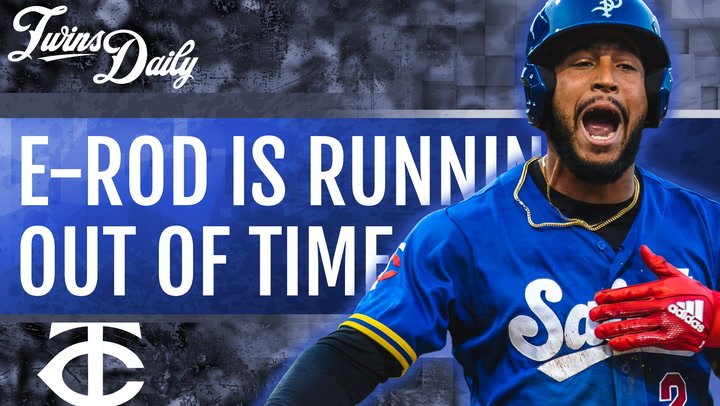 The Twins have a crowded outfield, a wave of talented young players, and only so much playing time to go around. Emmanuel Rodriguez may be finding out the hard way that being one of baseball’s top prospects doesn’t always guarantee a future with an organization. View the full article
 -
Milwaukee's Outfield Pipeline Has Another Gem In Braylon Payne
DiamondCentric posted an article in Brewer Fanatic
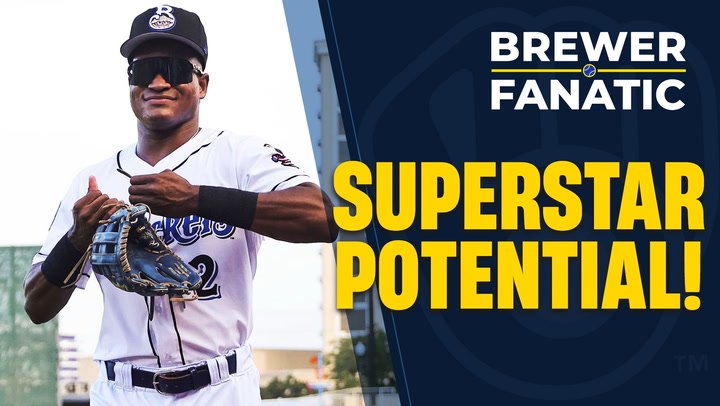 The Brewers have yet another incredibly talented young outfielder rising through their farm system. Braylon Payne’s combination of power and speed gives him one of the highest ceilings in Milwaukee's farm system. View the full article
 -
Twins Underperforming Alex Jackson Clubhouse Leadership Metric
DiamondCentric posted an article in Twins Daily
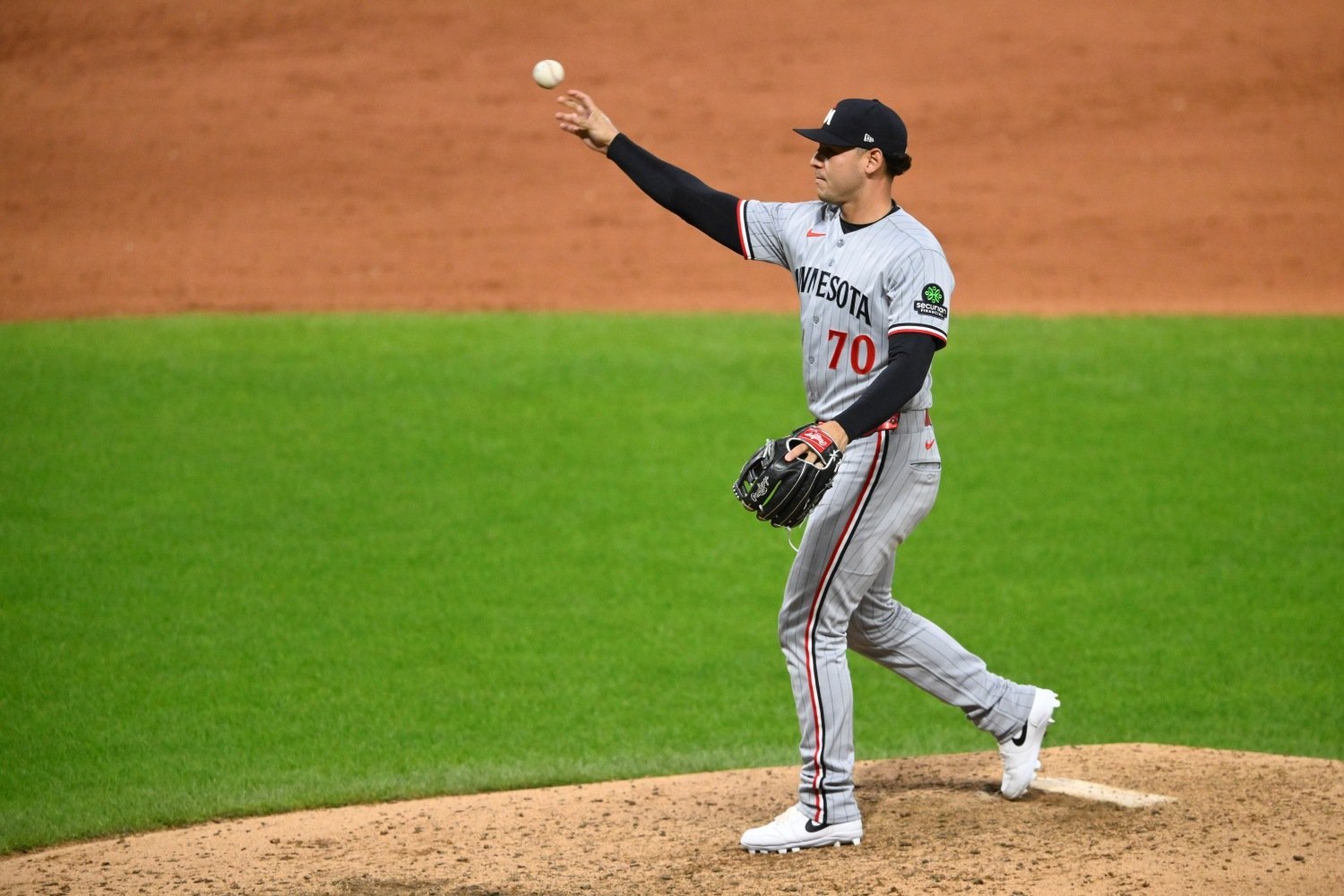 The Minnesota Twins' struggles in August and September, while not surprising, are certainly a setback for a team and a fanbase hoping to take advantage of a weak American League and battle for a playoff spot. OK, check that. They are surprising, by one little-known statistical measure. "If you look at the AJCLM, this team should not only be in the playoff hunt, but battling the White Sox for the AL Central," said Abel Langston, a self-taught mathematician and aspiring sabermetrician from New Hope. "It's frankly shocking that they aren't." The AJCLM is the Alex Jackson Clubhouse Leadership Metric, which measures the impact of infrequently-used third catchers and is named after the current Twins reserve backstop. "Since he was recalled from St. Paul on August 17th, the data points that provide the backbone of the AJCLM all called for a late-season surge by the Twins," said Langston. "Just looking at the hard numbers, the team should be on a 21-game winning streak." The team is 9-12 since Jackson rejoined the club in place of the injured Austin Martin. Langston says he is at a loss to explain why reality has diverged so drastically from the projections. "The AJCLM takes into account all the intangibles a third catcher brings to a team," said Langston. "You have leadership. You have gumption. You have being a team player. You have all the late-inning flexibility a manager wants. You have a 'what if both my other catchers get hurt' insurance. You have grit and want-to. The kind eyes and winning smile...there might be no other player on earth who grades out as an 80 on all those functions like Jackson." While the team's in-house statistical analysis doesn't use Langston's metric, sources say they are equally surprised at the lack of knock-on effects Jackson's presence has provided as the season slowly slips away. "His inner strength and quiet leadership are bona fide elite skills," said a scouting department source who asked to remain anonymous in order to provide candid information. "He is the first guy in the clubhouse who'll ask, 'Hey, you need a lift to the airport?' He has helped three different players move into their new places this summer. One of them had a piano." Jackson has had three plate appearances since returning to the club, drawing a walk and hitting a single. "It's admittedly a small sample size, but if a player gets on base two out of every three times, we're talking first-ballot Hall of Famer," said Langston. "There are just more questions than answers at this point." The Twins host Cleveland for a three-game series this weekend. Jackson is only expected to play if "the whole team gets malaria," said a front office source. View the full article
 -
 Ethan Murray and Blake Burke powered Nashville as four pitchers limited the opposition to a single run. Andrew Fischer hit his 47th homer of 2026, but the Shuckers dropped their contest. Transactions: RHP Brandon Sproat optioned to AAA Nashville from MLB Brewers RHP Garrett Stallings recalled to MLB Brewers from AAA Nashville Game Action: Nashville Pre-Game Media Notes Final: Nashville 5, Durham (Rays) 1 Box Score Via the Sounds’ website, game details and we encourage readers to review affiliate write-ups as part of their Link Report routine: Nashville Scores Three Unanswered Runs in Final Five Frames to Take Series Lead - Ethan Murray and Blake Burke each record a homer in the win The Sounds went with a bullpen game on Thursday and it worked out swimmingly as the committee of RHPs Carlos Rodriguez, Lyon Richardson, Gerson Garabito and Cameron Wagoner limited Durham to just four hits. For the 24-year old Rodriguez (3 1/3 IP, 1 R, 2 H, 1 BB, 4 Ks), this was his best game in several months, as he did not allow any hits until his 12th batter, by which point the Sounds led 2-0 thanks to 2B Ethan Murray’s two-run blast: Richardson (2 2/3 IP, 0 R, 0 H, 0 BB, 2 Ks) was even more effective, retiring all eight batters he faced on just 28 pitches (21 strikes), during which time C Ramon Rodriguez doubled home a run and OF Akil Baddoo (2-for-4) doubled and scored on a wild pitch for a 4-1 advantage. 1B Blake Burke (2-for-5) added the game’s final run as he connected on his 33rd homer of 2026. Sounds’ Extras: On the offensive side, eight Sounds reached base via hit (9), walk (2) or hit-by-pitch (1), although the team went 0-for-9 with runners in scoring position. OF Tyler Black (2-for-4) joined Burke and Baddoo in the multi-hit game club. Rodriguez helped out Garabito (2 IP, 0 R, 2 H, 2 BB, 2 Ks) by throwing out the Bulls’ only attempted basestealer to end the 7th inning. Garabito then helped himself out by getting a strikeout and ground out to strand two baserunners the following inning, while leading 4-1. Wagoner (1 IP, 0 R, 0 H, 1 BB, 1 K) touched as high as 97.6 MPH as he navigated the final three outs as the Sounds grabbed a 2-1 series lead. Friday’s outlook: LHP Tate Kuehner is slated to start, looking to give Nashville a 3-1 advantage in this week’s road series. Biloxi Pre-Game Media Notes Final: Pensacola (Marlins) 7, Biloxi 2 Box Score Via the Shuckers’ website, game details: Fischer Sets Record for Most Home Runs by Minor Leaguer This Century, Shuckers Fall to Blue Wahoos - Brewers No. 5 prospect moves into 5th place for most home runs in MiLB Modern Era Quoting from the linked game report: “Andrew Fischer hit his 47th home run of the season between High-A and Double-A, breaking Ryan Howard’s record for the most by a Minor League player this century… The 47 home runs mark the most by a player in the minors since 1982.” First baseman Fischer (still just 22 years old) remains one of the biggest stories of the 2026 minor league season, reaching base twice in this contest, with no strikeouts (1-for-3, HR, walk, RBI). Unfortunately, the team was out-hit 9-5 and were limited to just two opportunities with runners in scoring position (0-for-2). Pensacola cashed in on an early opportunity by pushing across two runs on back-to-back two-out hits in the second inning, while the Shuckers were unable to do the same half an inning later, stranding a pair while trailing 2-0. C Matt Wood did his best to keep the team in the contest, while #9 hitting SS Jheremy Vargas (2-for-3, double) joined Fischer as the only Biloxi batter to reach base twice. Starting RHP Jaron DeBerry allowed seven hits over 4 2/3 innings (1 BB, 1 HBP, 3 Ks), but four were of the extra base variety (2 HR, 2 doubles) as he conceded five runs. RHP Joshua Quezada (1 1/3 IP, 0 R, 0 H, 1 BB, 2 Ks) retired 4 of 5 batters faced in his AA debut. Shuckers’ Extras: RHP Garrett Hodges struck out four of nine batters faced, but also conceded two earned runs late. OF Josh Adamczewski’s 12-game hitting streak ended with an 0-for-3 evening, though he did reach via hit-by-pitch. Friday’s outlook: 22-year-old LHP JD Thompson is ready for his sixth AA start of 2026, aiming to lead Biloxi to a series-tying victory. The team must win its final three regular season games to finish with a .500 record, but is still headed to the playoffs next week on the strength of their first half title. We hope that you enjoy the Minor League Link Report. On Friday, Nashville start the action at 5:45pm CST, while Biloxi get going at 6:05pm CST. The Milwaukee Brewers also host the Reds at 6:45pm CST. Organizational Scoreboard including starting pitcher info, game times, MiLB TV links, and box scores Current Milwaukee Brewers Organization Batting Stats and Depth Current Milwaukee Brewers Organization Pitching Stats and Depth View the full article
 -
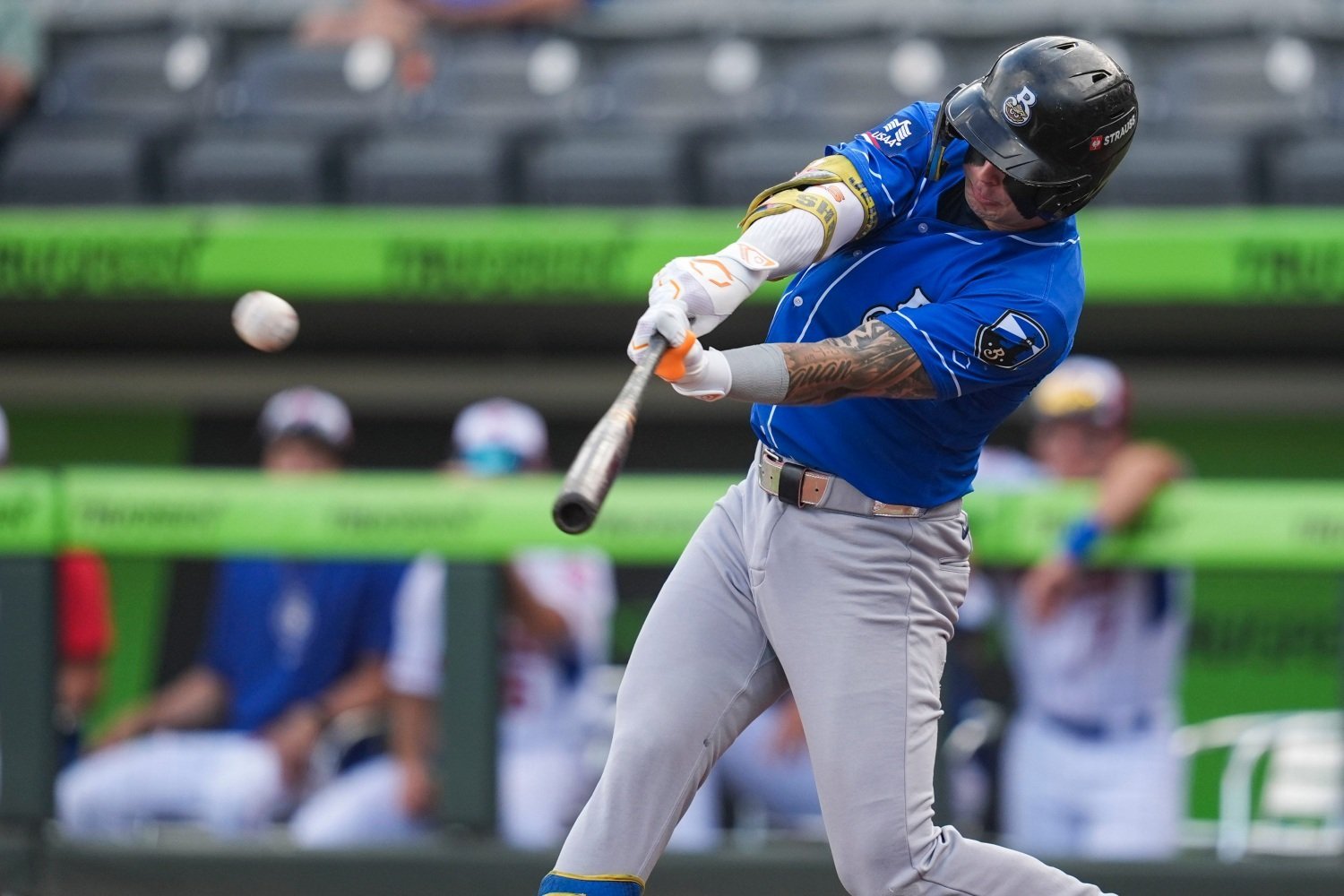 There's no getting around this: striking out a third of the time in the minor leagues is a red flag. Few batters can succeed in the big leagues while whiffing that often, and very few batters go from the minors to the majors without seeing their strikeout rate rise. To punch out as much as Andrew Fischer has during his first full professional season is to flirt with the untenable. That's why, despite a record-breaking season of slugging, Fischer isn't currently riding high on most of the national prospect lists. Forget the top 100 prospects in the sport; FanGraphs ranks Fischer 14th in the Brewers system. The glaring danger of all those strikeouts has turned people off even more than 47 home runs have turned them on. I'm not here to offer any guarantees about Fischer. The concerns about his swing and approach are reasonable. Actuarially, you can't expect to succeed the way he's succeeded this year when you get to the majors and the book is out on you. It's also important to take a little bit of air out of his numbers, because this has been a historic season for offense in the minor leagues. People in the know believe the ball is livelier than it's been in over a decade in multiple affiliate leagues; that's distorting raw numbers. It's not fair or right to compare Fischer's 47 bombs with, say, the 43 Kris Bryant hit in the Cubs system in 2014. In addition to being more balanced in terms of contact and plate discipline, Bryant had 34 doubles and a triple that year. Fischer only has 17 doubles and three triples this season, which is evidence that he's benefited from some balls that would ordinarily hit or one-hop a wall carrying right over it. That said, national outlets dinging Fischer for his strikeout proclivity are going too far right now. There's a dynamic being overlooked. Fischer is slugging 1.136 on contact this year. He's only hitting 20.9% of his batted balls on the ground, and he's pulling the ball 55.7% of the time. He's also drawing walks at a very high rate. The degree of extremity in his process is impossible to overstate. This is a player taking grip-it-and-rip-it to a new endpoint, beyond what anyone else would (and perhaps even what he should) do. That, as much as the environments and level of competition, has fueled his power explosion. To properly evaluate him, you have to place all of his stats in context—the homers and the strikeouts alike. His raw power is not as impressive as the homer total implies, not only because the ball is flying, but because he's totally selling out to get to all of that game power. That same selling out, though, explains his strikeout rate, and it should mitigate your worry about that number somewhat. Here's the final thing, which is subtle and is being underrated by Fischer's loudest doubters right now: the fact that selling out that way has worked speaks to a better hit tool than anyone is giving him credit for. It takes a hitter with some real feel for the barrel to go as hard after pulled power in the air as Fischer has and actually find it. Yes, the run environments of the leagues in which he's played have helped. No, this approach will not work in the majors. If the Brewers didn't want him to do things this way, though, he wouldn't be doing them this way. You can be sure that Milwaukee—the organization least given to this kind of plan for their big-league batters—will have him change tack next year. They had a good developmental reason for letting him cut it loose—even encouraging him to do so—this season. There will be a major adjustment. One thing Fischer can take from this campaign is the proof that he can execute an approach few other hitters can. Therefore, when he moderates that plan and does what comes easier to just about every pro batter, he's likely to strike a more balanced overall profile. This power surge isn't quite real. That slugging average on contact is a video-game number, and video games aren't real life. He'll go through some growing pains and lose some of his pop next year, as he (presumably) ascends to Triple-A Nashville and knocks on the door of the majors. However, he'll also strike out less, surprising many prospect hounds—but not observers who are able to sit with the complex message delivered by interleaved trend arrows pointing in opposite directions. What looks like a player with a huge raw tool but little refinement is actually a more nuanced case of skills interacting strangely while a prospect settles into the long task of becoming a strong big-league hitter. View the full article
 -
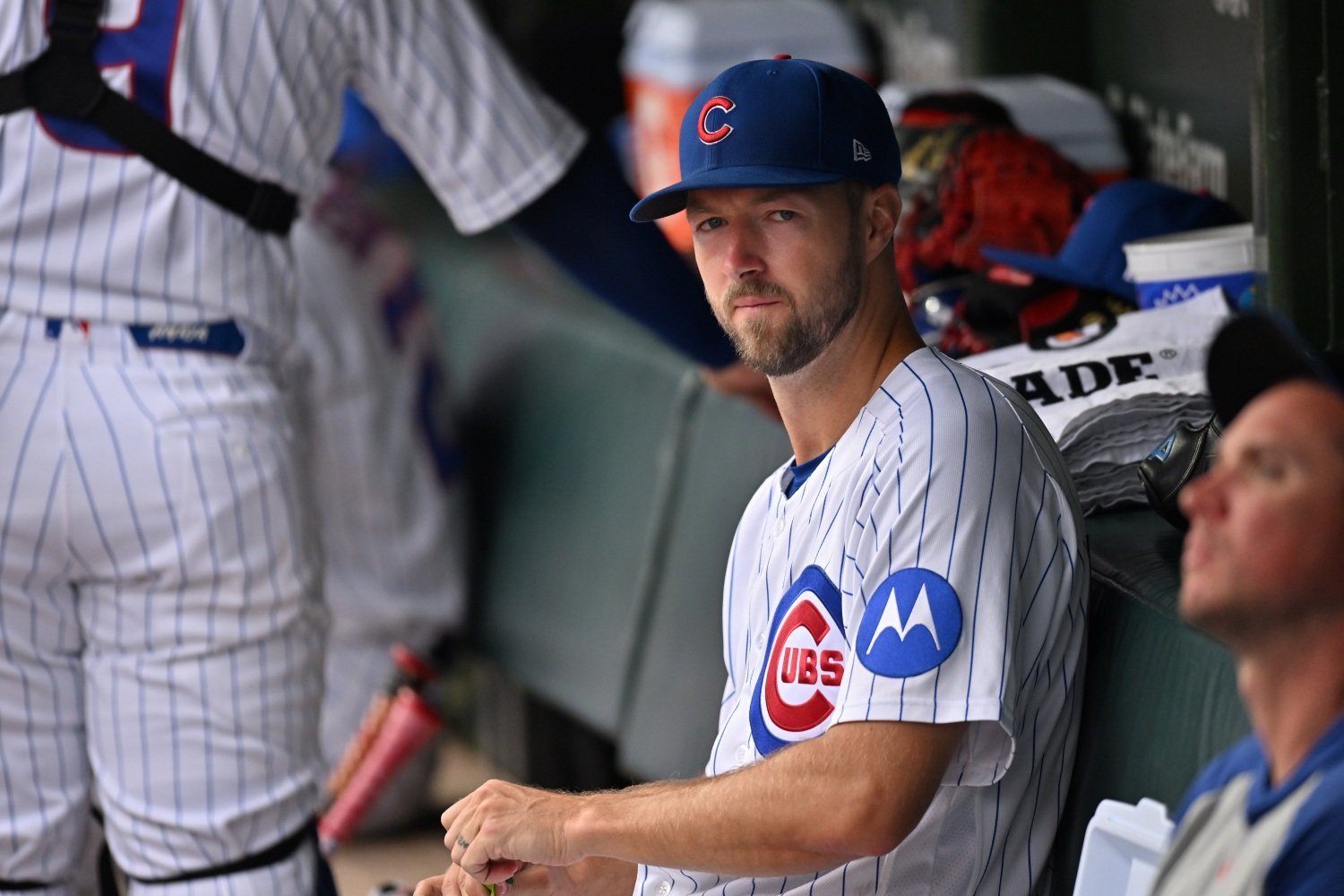 The Cubs' pitching staff is a tire fire. Despite working in front of one of the league's best defenses, they've allowed 4.9 runs per game since the trade deadline. Shave off their five-game winning streak immediately after the deadline, and it's 5.1 runs per game in the last 30. Every year, this team finds and reclaims a few impressive arms—but not this time. The closest thing to a feel-good story on this year's staff is Ryan Rolison. Even moderately effective hurlers are in short supply. This isn't a problem that cropped up at the deadline. It's been true all year. However, there's one Cubs starter who's been pitching quite well. Three of his last four have been quality starts, and he has a 3.30 ERA in his last eight. He's given them the length they need, averaging over 5 1/3 innings per game over those eight starts. There's just one problem: the team voluntarily demoted him from the rotation. Those eight starts spanned from June 20 to August 2. Since that date—since the deadline that brought Clay Holmes and Kevin Gausman to the Cubs and overhauled the team's starting staff—Colin Rea has thrown just 15 1/3 innings, almost all of them in low-leverage relief. He has a 3.52 ERA over that span, which means he has a 3.36 mark in 59 frames since the midpoint of June. The team, however, believed they needed to shove him roughly aside as part of their August shakeup. There was some reason for that belief. I've written about this before, going back to Rea's time in Milwaukee but even last August. Rea, historically, runs out of steam at the ends of seasons, unless his workload is carefully managed. He'd also struggled mightily earlier in the summer, before finding his footing nicely in the second half of June and throughout July. You don't want to go into the postseason with Colin Rea as a top-three starter in your rotation. It wasn't even unreasonable for Chicago to want to get Rea out of their rotation altogether. Still, it's now clear that deprioritizing him as much as they did was a mistake. Specifically, Craig Counsell failed to make real and valuable use of Rea after taking him out of the rotation. Rea started on August 2. It made sense that his first appearance in relief didn't come until August 8, but then, he didn't pitch again until August 15. He threw just one inning on August 21, and didn't pitch again until August 29. He's pitched a hair more frequently since then, but only in mop-up spots. Meanwhile, almost everyone who has sponged up the innings taken away from Rea has sucked. Aaron Civale has been excellent; Javier Assad has been almost as good. Holmes has posted an ERA (3.51) almost identical to Rea's (3.52), so if you think of him as having taken Rea's job in the rotation, it's been a wash. Every other starter, though, has been much worse: David Peterson: 4.45 Matthew Boyd: 4.98 Shota Imanaga: 5.02 Kevin Gausman: 5.31 Those numbers look bad, but they're nothing, really, compared to the ERAs of Caleb Thielbar, Ryan Zeferjahn, Jacob Webb and Daniel Palencia. Those four have all gotten high-leverage relief chances at the expense of Rea, and their ERAs are all over 6.00 in this span. Rea's raw stuff won't blow you away. The Cubs were justified in trying to upgrade from him in the rotation, and his arsenal doesn't play up in relief quite the way some other hurlers' might. On balance, though, Rea is now a symbol of the Cubs' pitching failures—not because he's 10 years too old and throws 3 MPH too slow to be impressive, but because he was having success, and is still having success, and the team mothballed him, only to replace him with hurlers who have performed much worse. Rea can't be a true savior for the staff, but he should move back into a meaningful role. Finding the right one for him is the job of Counsell and Tommy Hottovy, but handcuffing Rea to Peterson or Imanaga might make sense. He could work in long relief, without working in low leverage. He could get the team over the finish line and into the playoffs, and he might even have a rightful role in the postseason pitching plan, too. That's not a great reflection on the state of the Cubs' pitching group, but their choice to lift Rea from a job he was performing adequately and their failure to get similar production from more talented hurlers in the several weeks since is an even worse one. View the full article
 -
25 Years Later: How Michael Cuddyer Saved a Teammate's Life on 9/11
DiamondCentric posted an article in Twins Daily
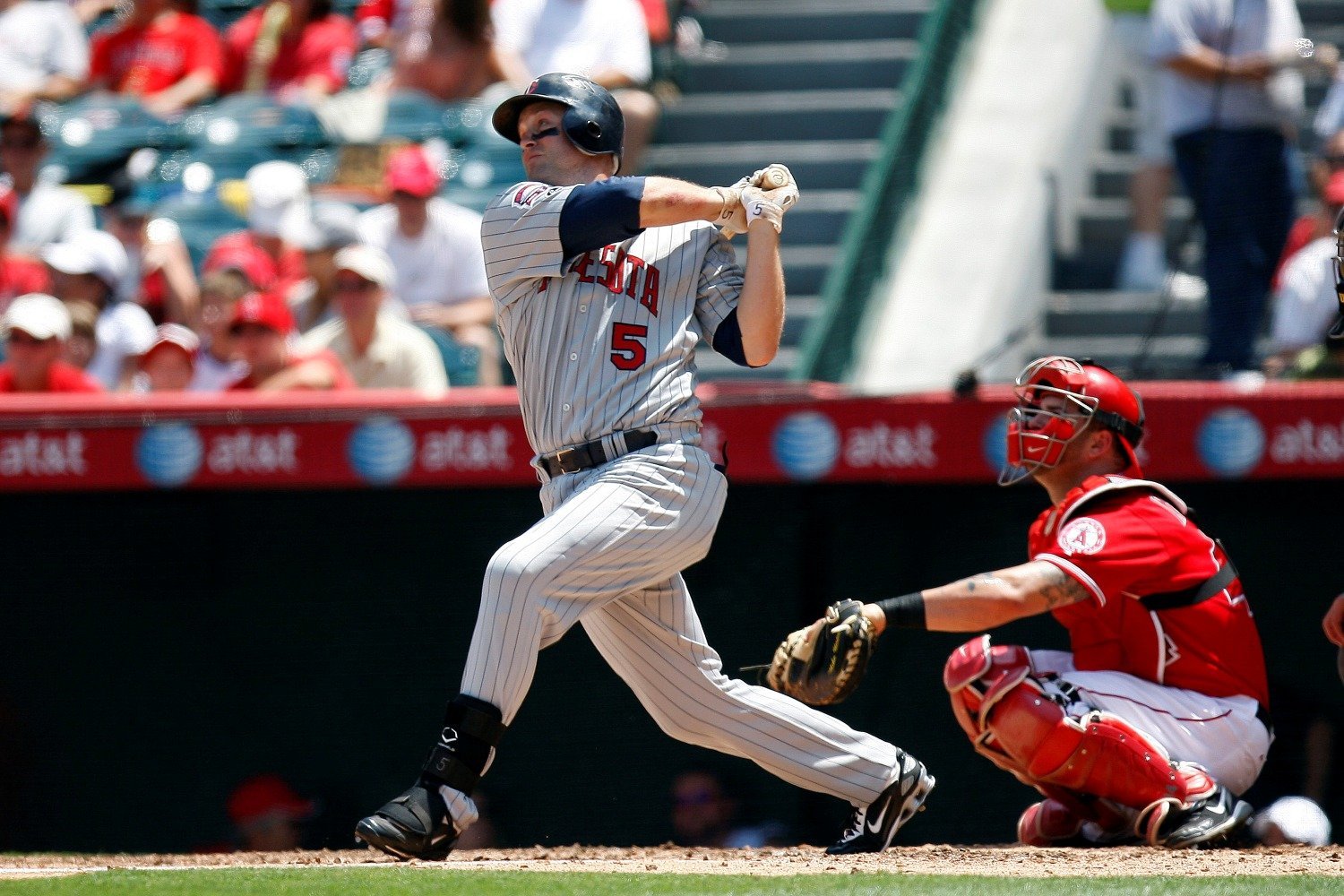 September 11, 2001, produced countless stories of heroism, sacrifice, and miraculous escapes. Twenty-five years later, those stories remain just as powerful. Some involved firefighters, police officers, first responders, airline passengers, and ordinary people who made extraordinary choices. Others were far less obvious, and involved those sliding-doors moments where everything might have been vastly changed by one small thing going differently. One involved a future Minnesota Twins fan favorite, a minor-league playoff series, and a couple of home runs. Michael Cuddyer wasn’t trying to save a life when he stepped into the batter’s box for the New Britain Rock Cats. He was just trying to help his team win a baseball game. But 25 years later, it’s impossible to look at those home runs without realizing just how much they meant. A Ticket Home In 2001, Cuddyer was a 22-year-old prospect in the Twins organization. He had already established himself as one of the better power hitters in the system, launching 30 home runs for New Britain during the regular season. Brad Thomas was his teammate. The left-handed reliever had reached Double-A alongside Cuddyer, and the two had become close friends and roommates. Thomas was also preparing to make a long trip home to Australia once the season ended. That meant booking a flight. Thomas and his fiancée, Kylie, had tickets on American Airlines Flight 11, scheduled to leave Boston’s Logan Airport on September 11 and eventually take them back to Australia. There was nothing unusual about that decision. Minor-league players routinely made travel arrangements before their seasons were officially finished, knowing they could be eliminated from the playoffs at any time. When the season was over, players wanted to get home. New Britain was facing the Norwich Navigators, the Yankees’ Double-A affiliate, in the Eastern League playoffs. The series was supposed to end on September 10, one way or another. If New Britain lost, Thomas and Kylie would head to Boston. Then, Cuddyer stepped to the plate. Fate in Cuddyer’s Hands New Britain trailed in the opening game of the series when Cuddyer came up in the bottom of the ninth inning. The count reached 3-2, before Cuddyer hit a walk-off home run. The Rock Cats won, and the series continued. For Thomas, it meant the flight home wasn’t necessary yet. There was still more baseball to play. Cuddyer delivered again in the clinching Game 4, hitting a go-ahead home run in the seventh inning. New Britain won the series and advanced to the Eastern League championship. The team had earned the right to keep playing. Thomas no longer needed those plane tickets. And then September 11 arrived. “Michael pretty much saved our lives single-handedly by knocking in the winning runs in the last of the playoff games that took us to the next round,” Thomas later said. The next morning, the players gathered at New Britain Stadium as the reality of what had happened began to sink in. American Airlines Flight 11 had been hijacked after departing Boston. At 8:46 a.m., it crashed into the North Tower of the World Trade Center. Everyone aboard the plane died. Thomas was supposed to be on it. There was no way Cuddyer could have known what his home run would ultimately mean. He wasn’t thinking about flights. He wasn’t thinking about the future. He was trying to win a baseball game. Yet, those two home runs altered the course of Thomas’ life. “It’s a miracle. Somebody was watching out for me,” Thomas said. That’s what makes the story so difficult to comprehend 25 years later. The connection between Cuddyer’s bat and Thomas’s survival wasn’t apparent at the time. It only became clear when the events of September 11 were unfolding. The Biggest Home Run of His Life Cuddyer would go on to hit 197 home runs in the major leagues. He became a two-time All-Star, won a Silver Slugger Award, and even helped the New York Mets reach the World Series. He hit plenty of important home runs. None carried the consequences of that September night in New Britain. “You don’t want to say the minor leagues was the biggest home run of my life, but obviously that was the biggest home run I ever hit,” Cuddyer said. The first walk-off home run of Cuddyer’s minor-league career already meant something to him. But the events that followed gave it an entirely different meaning. “It was my first walk-off home run in the minor leagues, which was pretty special, then with everything that follows you just realize how special it really was,” Cuddyer said. The championship series between New Britain and Reading was never played. The teams were eventually declared co-champions. Three days after the attacks, Cuddyer received another life-changing moment when the Twins called him up to the major leagues. His baseball career was beginning just as the country was trying to understand how much its own life had changed. A Quiet Understanding The friendship between Cuddyer and Thomas continued long after their days together in New Britain. Thomas eventually reached the majors with the Twins and Tigers. “Every time I see Michael, there’s a handshake and a hug,” Thomas said. Twenty-five years later, the story still feels almost impossible. A baseball player hit a couple of home runs in a minor-league playoff series. His teammate’s travel plans changed. The next morning, one of the world’s most devastating tragedies unfolded. There are plenty of ways to describe what happened. Coincidence. Fate. A miracle. Thomas has his own description. “There’s probably not a day that goes by that I don’t think about it and think how lucky I am.” September 11 was a nightmare—a tragedy that transformed a nation. From it, we shouldn't dare take real joy, but we can find relief, and we can find meaning in the often meaningless. Alongside the stories of unimaginable loss are stories of people who happened to be somewhere else, took a different route, missed a flight, changed a plan, or—as was the case for Thomas—had a teammate hit a baseball over a fence at exactly the right time. Cuddyer never knew he was saving his friend’s life when he hit those home runs. But 25 years later, he knows those swings meant far more than a baseball game. That’s a legacy that will last much longer than any box score. View the full article
 -
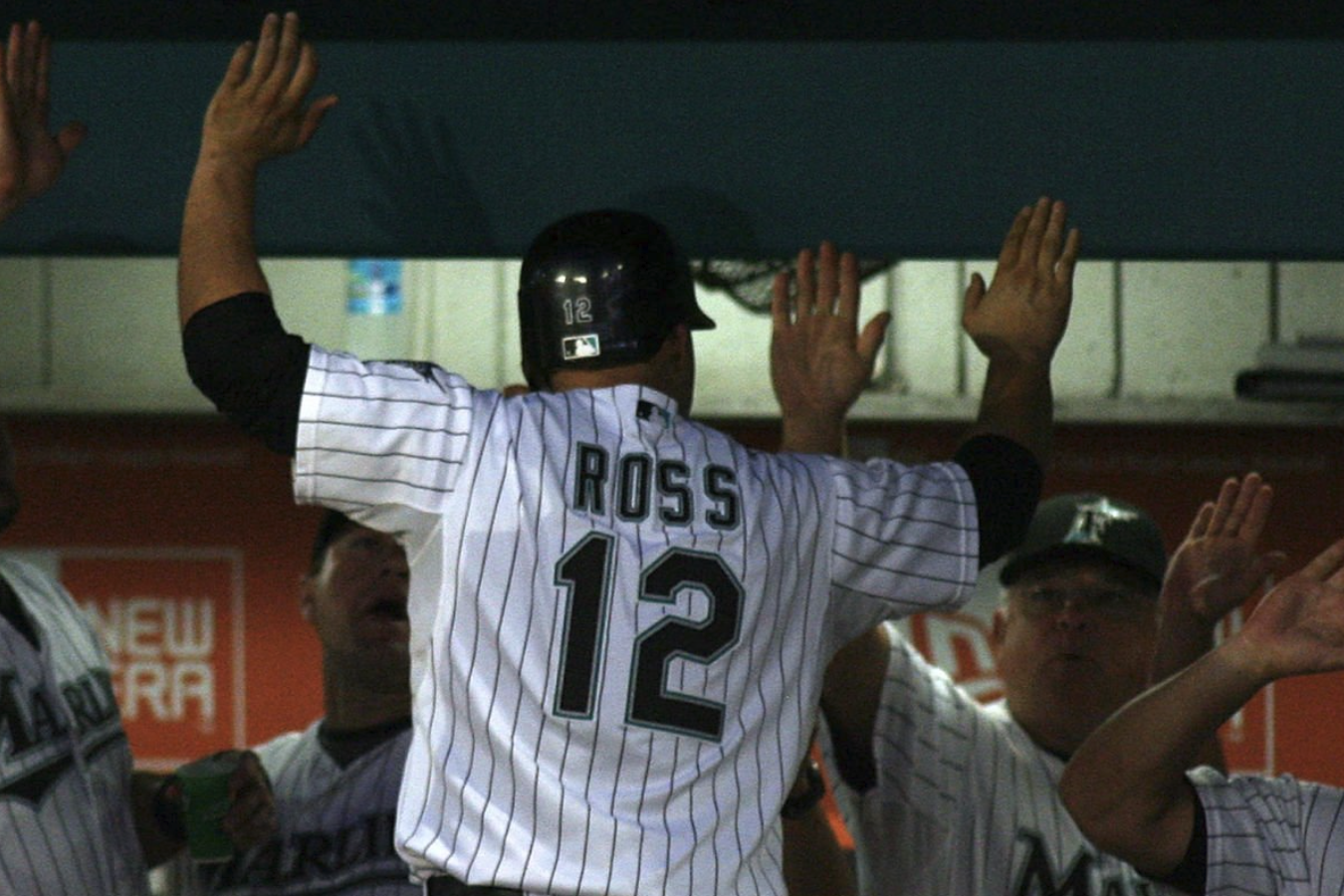 In more than 5,200 games as a franchise, only four members of the Florida/Miami Marlins ever managed to hit three home runs in one game. The first one to do it at home accomplished the feat on this day 20 years ago. In the Florida Marlins’ 16-5 rout of the New York Mets, Cody Ross left the yard three times. He finished the day with four hits and tied a franchise single-game record with seven RBIs. Ross wasted little time making his presence felt at Dolphins Stadium on Sept. 11, 2006. After Aníbal Sánchez worked a 1-2-3 top of the first for Florida, Miguel Cabrera singled home the first run for the Marlins against New York starter David Williams in the bottom of the inning. With the Marlins leading 1-0, two on and two out, Ross worked a seven-pitch at-bat before taking the Mets’ lefty deep for a three-run bomb to extend the lead to 4-0. The Mets managed to cut the lead in half in the second on a two-run home run by former Marlins All-Star Cliff Floyd, but New York would get no closer. After Cabrera doubled home a pair in the bottom of the second, Sánchez helped himself with an RBI single in the third – an inning that Ross also singled in. With the Marlins leading 7-2 through three innings, New York’s Carlos Beltrán and Florida’s Dan Uggla traded solo blasts in the fourth inning. After Ross flied out in the fourth, Miguel Olivo singled home Cabrera to give Florida a 9-3 lead after four. That score would remain until the bottom of the sixth when Josh Willingham took Heath Bell deep for a solo shot to lead off the inning and extend the advantage to 10-3. After a Wes Helms double, Ross took Bell’s 2-0 pitch over the wall in left field for a two-run home run. After a scoreless seventh, Sánchez’s day was done; he allowed three runs on just four hits and one walk while striking out eight. Not done, however, was the Florida offense. Following a Jason Wood double and an error that scored a run in the bottom of the seventh, Helms plated the Marlins’ 14th run with an RBI fielder’s choice. Facing Royce Ring with one on and two outs, Ross worked another full count before going yard once again – and again to left field. That capped the scoring for Florida and put the exclamation point on a monster day for Ross. Trailing 16-3, the Mets were able to push across two runs against Florida’s José García, who was making his big-league debut, in the eighth. García bounced back to toss a 1-2-3 ninth to end the game. With the three home runs, Ross joined Mike Lowell as the only Marlins ever to homer three times in a game and became the first to do so in a contest that didn’t go to extra innings. Since then, Brian Anderson (Sept. 18, 2020) and Kyle Stowers (July 13, 2025) have since accomplished the feat for the Fish. Ross, however, is the only member of the club ever to hit three home runs in a game in the Marlins’ original ballpark. Those blasts came on this day two decades ago. View the full article
 -
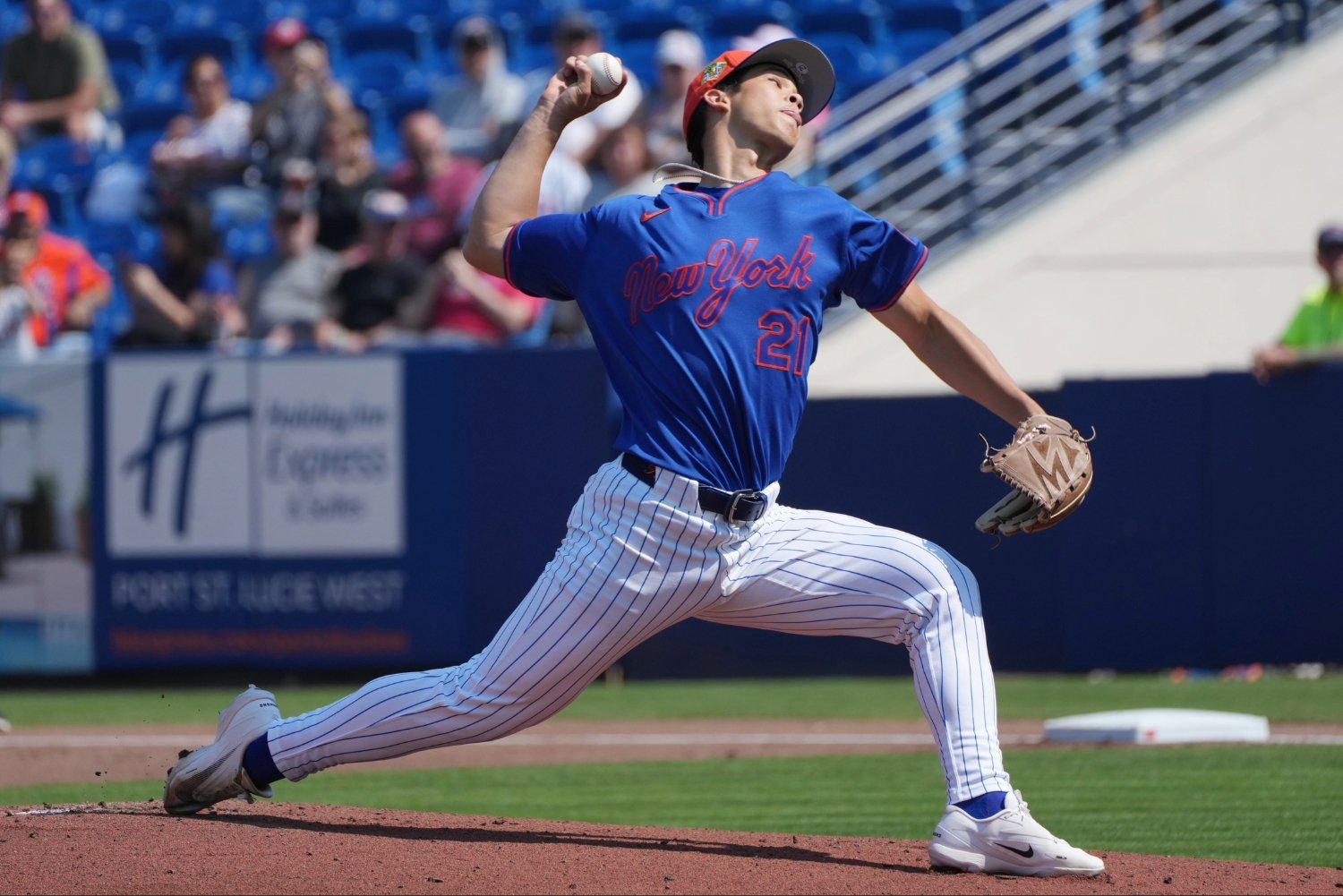 The New York Mets' MiLB hitters put on a show in August. Their collective performance made it difficult to separate players for our August MiLB Hitters of the Month article. Thankfully, a good group of pitchers gave us the same chore. In August, a handful of Mets starters and relievers put together strong showings. The most encouraging uptick in production came from GCM's No. 1 prospect, Jonah Tong. Were his numbers good enough to claim the top spot in our rankings, though? Let's find out. Monthly stats referenced are from milb.com at the player's listed level. Pitchers eligible for inclusion on this list must have pitched at least 10 innings. Prospect Rankings are from Grand Central Mets. Ranking Mets' Best MiLB Pitchers in August 3. R.J. Gordon - AA (Binghamton) Gordon, New York's 13th-round draft pick (No. 383 overall) in 2024, has been with the Rumble Ponies for a full calendar year now. His best month in Binghamton was August 2025, where he took Double-A by storm with a 2.08 ERA and 42:9 K:BB ratio in 34 2/3 innings. Prior to August 2026, he had not posted an ERA below 4.00 in any single month since then. G (GS) IP H R (ER) K/BB 5 (5) 29.0 7 10 (7) 27/10 Injuries played a role in Gordon's early-season struggles. He started finding himself again in July, then fully strut his stuff last month. His 2.17 ERA, .198 batting average against and 1,07 WHIP, with a strong September, could push him to Triple-A to begin the 2027 campaign. 2. Nicolas Carreno - High-A (Brooklyn) The Mets added an 18-year-old Carreno in a swap for Josh Walker back in 2024. Now 20 years old, the lefty twirler joined the Cyclones on June 11, two days after cracking the two-decade threshold. Growing pains defined his first six weeks at High-A, but he got himself acclimated well in August. G (GS) IP H R (ER) K/BB 4 (4) 23.0 12 4 (3) 27/11 Like most young hurlers, Carreno needs to rein in his command (5.58 BB/9 this season). Posting a 1.00 WHIP -- and 1.17 ERA -- for August despite 11 walks demonstrates the filth of his repertoire. He's a fun, under-the-radar piece of clay in this organization. 1. Jonah Tong -- AAA (Syracuse, No. 1 Prospect) Tong desperately needed August 2026. New York's top prospect opened the month by allowing five solo shots versus the Columbus Clippers (not great). In the four starts that followed, he yielded just 11 hits and two earned runs across 21 1/3 innings. G (GS) IP H R (ER) K/BB 5 (5) 26.1 16 8 (7) 26/11 For those curious, that's a 0.84 ERA. Tong's command woes can still flare up, but he walked only six hitters in his final three starts and followed those games with a solid line -- 5.0 IP, 4 H, 4 R (4 ER), 1 BB, 7 K -- in his return to the majors on Sept. 7. He earned his second-ever MLB win (and first as a starter) with that effort, and our MiLB Pitcher of the Month honors for his Triple-A dominance. Honorable Mentions: Ryan Dollar (High-A Brooklyn), Ernesto Mercedes (A-St. Lucie), Zach Franklin (AAA-Syracuse), Tobias Myers (AAA-Syracuse) View the full article
 -
How Brayan Bello Found A Way To Make His Arsenal Work Again
DiamondCentric posted an article in Talk Sox
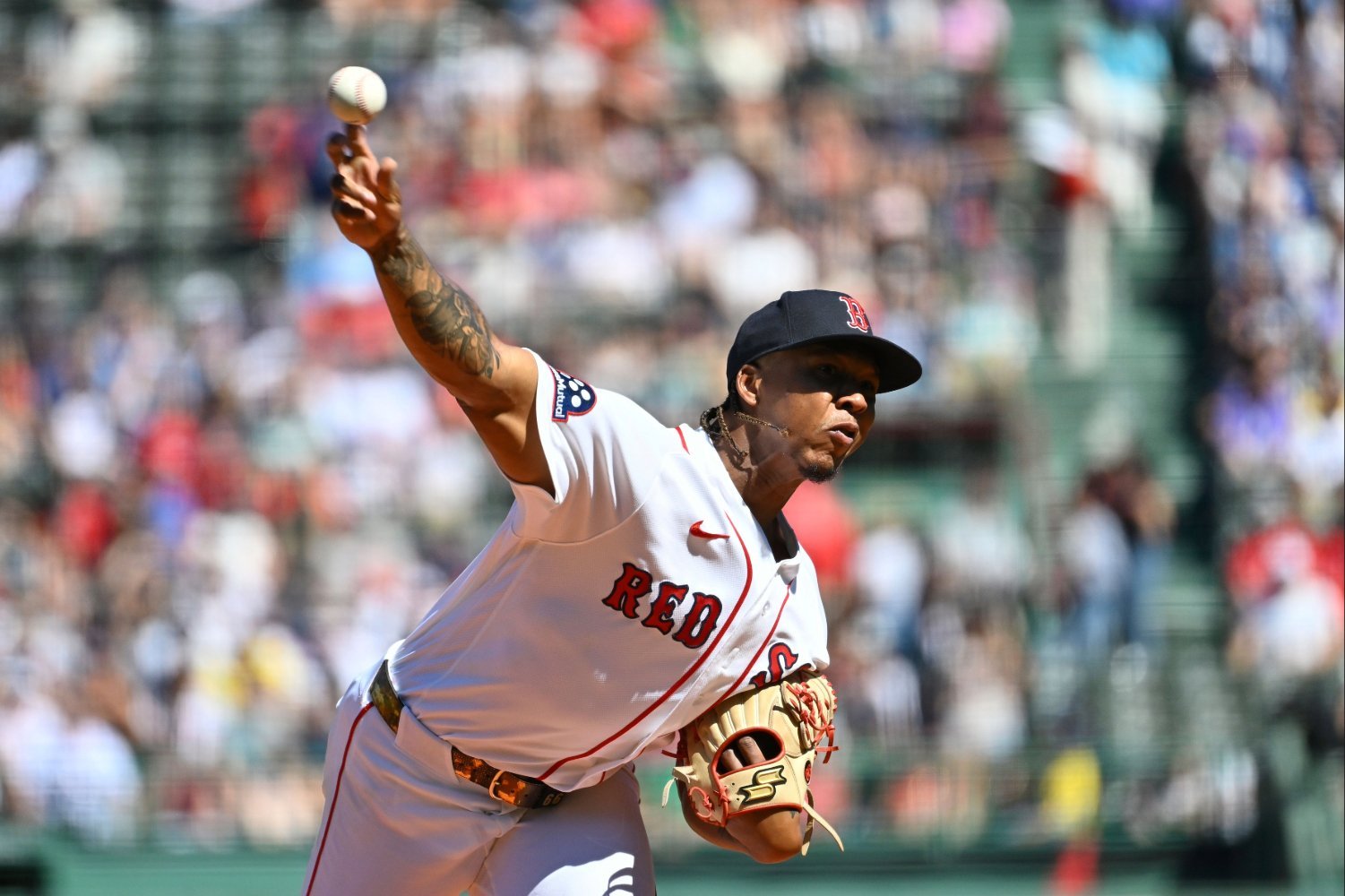 In his first 12 outings of the season between March and June, Brayan Bello reached a point where he did not seem to have enough confidence in any choice from his arsenal. The sinker, his primary pitch, was allowing a 53% hard-hit rate. When he chose the cutter, hitters feasted, producing five home runs in just 39 plate appearances. His changeup, the pitch that made him a revelation in 2022, was allowing a .386 slugging percentage. His continued struggles also compromised his sweeper, which, despite standing out as the pitch that was working best, was generating swings and misses on just 23.4% of attempts. Bello finished that stretch with a 2-6 record, a 6.34 ERA and a 5.01 FIP, while 31% of the hits (78) he allowed went for extra bases, including 10 home runs. After his first start in June against Baltimore, Bello was sent to Triple-A Worcester having just allowed eight earned runs in five innings. Time and Bello’s adjustments have shown that the Red Sox made the right decision. Two months later, Bello’s return has been a completely different version: He has stopped throwing his curveball, he is using fewer sinkers, the cutter has not allowed another home run and the changeup is generating much weaker contact. His most consistent pitch all year, the sweeper, has started generating swings and misses again, with a high 40% rate. In 11 outings since his return, Bello is pitching to a 2.59 ERA, a 3.04 FIP and his SO/BB ratio has improved to 4.8. He has allowed just one home run against 172 batters over this stretch, and the Red Sox have gone 7-4 in those games. Bello has made a difference with all of his pitches. But of all of them, these are the three changes that stand out most to me. Brayan Bello's Sinker Is Usable Again This is still the pitch opponents are hitting best, but Bello’s adjustment has allowed him to get better results, especially in his decisions within the at-bat. Although he is using it 11.1% less frequently, his strikeout rate has increased by 4.6% and his walks have dropped 7.7%. Hitters are still producing almost the exact same batting average, .317 compared to .316 in the first stretch of the season, but Bello has avoided a large number of hard-hit balls. I have a theory that I would like to continue investigating because, despite keeping its velocity intact at 95.3 mph, Bello’s sinker has degraded by losing 0.7 inches of arm-side run. It has also gained 0.5 inches of induced vertical break (IVB), which was preventing the movement toward hitters’ hands and producing more ground balls. If you look at Bello’s splits, you will see that left-handed hitters are batting .807 OPS this season and right-handed hitters .698. However, right-handed hitters are the ones who have punished his sinker the most, particularly on the inner part of the zone. This report belongs to this second stretch for Bello since he returned to the big-league club in July. Right-handed hitters are still hitting the pitch hard in the middle and in the areas in on them, where the sinker should continue working on the vertical movement it lost during the first stretch. When the location of those pitches moves away from the middle, the results change and, even in the worst-case scenario of this sample, Bello has allowed just one home run. Now, the question is whether the sinker will continue to progress, since it remains one of his most reliable pitches in decisive counts. Brayan Bello's Sweeper Is Fooling Hitters Again The jump from a 23.4% to a 40.0% whiff rate is huge, and now that Bello’s sweeper is less overloaded, he can rely more on his other stuff and come back to finish hitters with its movement. In just seven fewer plate appearances compared to the stretch before he was sent to the minors, the sweeper went from allowing a .207 to a .100 batting average and from a .241 to a .100 slugging percentage. Part of what I love about this point is that Bello has reduced contact, and he has done it by getting right-handed hitters to chase. Notice that hitters have been missing at just one point inside the strike zone, with a 50% whiff rate on sweepers that have stayed up. In every other part of the zone, they are making contact. The spots where Bello is dominating the most are the edges of the outside corner, but the sweeper is also doing damage inside. His strikeouts have improved by 8.1%, and the movement he is getting has been crucial to keeping the sweeper on the minds of hitters. Brayan Bello's Secondaries Are Alive Again This is probably the most striking change in terms of offensive production: from five home runs allowed to none, with a .412 drop in slugging percentage and an 8.9-point drop in hard-hit rate. Bello’s strikeouts using the cutter have increased by 12.9%, and hitters have a 50.0% whiff rate. Sometimes, a major adjustment is not just about location or velocity. For Bello, it has been about the way his mix is getting a better effect in every sense. Now, it feels more like hitters are less prepared for the cutter. He is throwing it 3.5% less frequently, but its effectiveness with two strikes has been much more revealing. And the changeup? Good question. The changeup has remained one of his best weapons for strikeouts and, above all, reducing hard contact from his opponents. When hitters were destroying almost all of Bello’s offerings between March and June, the changeup still had life. The league was hitting .273/.271/.386 against it with a high 35.9 hard-hit rate, but it was still a weapon for generating swings and misses. So, Bello did not have to do much, other than rearrange his repertoire. He has used at roughly the same rate, mostly when he has been ahead in the count. The result? Less hard contact, reducing his hard-hit rate by 15.9%, and much more dominance, with a 106-point drop in batting average allowed and .148 less in slugging. Overall, as we have analyzed here, Bello has regained confidence in his sinker, while the sweeper and changeup have once again become two of his main weapons. The cutter has also undergone important adjustments, and hitters, who batted .563 against his fastball between March and June, have fallen to .278 since July. Having him back in command gives the Red Sox a much-needed right-handed weapon on a pitching staff whose depth is defined by consistent left-handed arms. Now, we just have to keep watching the evolution of his outings as the league adjusts to this new version of Brayan Bello. View the full article
 -
 Welcome to Shape of the Blue Jays, my column where I dig into Statcast numbers to analyze recent pitch shape and swing shape trends for Toronto Blue Jays players and discuss how they have impacted their performance. Click here to read the last edition. All stats entering September 10, 2026, unless otherwise stated. Quick Hits: Dubious History It has not been a banner year offensively for the Blue Jays. In Wednesday afternoon's rubber match against the Athletics, they became just the second visiting team to get shut out at the hitter-friendly Sutter Health Park in 2026. Starting on the mound for the A's was right-hander Brady Basso, a reliever by trade. It was his 23rd appearance of the season, but only his fifth start. Entering Wednesday, he had completed three innings in a single game just once this season, and as a starter, he hadn't gone longer than 2.1 IP since 2024. He threw four shutout innings against the Jays, striking out four. The 2026 Blue Jays are now averaging 4.0 runs per game. That would be the sixth-worst single-season mark in their 50-year history, according to Stathead. The only five years in which they were worse than that all occurred between 1977 and 1981, the first five seasons of their existence. Their highest winning percentage in that timespan was .414 in 1980 (67-95 record). Remarkably, they still have a shot at the playoffs thanks to their pitching, but there's no sugarcoating how limited their potential seems to be, and how hard it is to watch, when this is how they hit. Josh Smith The Blue Jays knew they weren't getting a power bat when they traded for Josh Smith, or so they thought. Through 21 games with his new team, he's hitting for a 173 wRC+ with five homers and a .366 ISO. That won't last forever, but the surprising production has helped offset the 31.4% K rate he's posted with Toronto. By no means is he a high-bat-speed guy, but in August, 15.8% of his batted balls were barrels, the highest single-month barrel rate of his career. His barrel rate is 11.1% for the month of September so far. If that holds, it would be his first time with a barrel rate of 10% or higher in consecutive months. This is mostly the result of an apparent effort to lift and pull the ball more often. When he's at his best, Smith's true calling cards at the plate are contact ability, discipline, and efficient contact (i.e., a high squared-up rate). His pull-air rate was high in his best seasons, but in 2026, including his time with the Rangers, his attack angle is up to 13° (+4° year-over-year), and his attack direction is 6° toward the pull side (+4° pull YOY). Since coming to the Jays, his swing tilt has slightly increased as well. The intent of going back to being a pull-air guy is paying off. José Soriano It seemed inevitable that José Soriano would throw fewer four-seamers after getting traded to the Blue Jays, and that's exactly what happened. The trend continued on Tuesday night, when he threw his sinker 49.4% of the time in his start against the A's (7 IP, 2 R, 6 H, 3 K, 1 BB). That's a new single-game high, eclipsing the previous mark he set last month in a home start against the Red Sox. He threw it a whopping 70.4% of the time on the first pitch. The gap between his sinker and the rest of his pitches on the chart above starts to widen almost exactly at the start of his Jays tenure. The logic of throwing a ton of first-pitch sinkers is sound; it's his best shot at throwing a strike with a shape that isn't as vulnerable to damage. Public stuff models have mixed opinions about whether his sinker is that much better than his four-seamer, but opponents are slugging .512 (.509 xSLG) on the four-seamer compared to .358 (.427 xSLG) on the sinker, the latter of which has a 66.3% groundball rate. Odds are that a first-pitch sinker from Soriano is either going to be a called strike or beaten into the ground, which seems like a good strategy with Toronto's infield defense. That's how you go deep into games. Kazuma Okamoto Kazuma Okamoto crushed his 30th home run of the season in Sacramento this week, becoming the first (and he will be the only) Blue Jay to reach that milestone in 2026. He's now sitting at a 111 wRC+ in his first year as a big leaguer, outperforming the contract he signed in January. His hit tool has been more fringy than expected, leading to some whiplash-inducing ups and downs throughout the year, but the power has made up for that. There isn't much to complain about in terms of the overall results. Among all hitters with at least 200 batted balls this season, Okamoto's 28.4% pull-air rate ranks inside the top 20. At the same time, nearly a third of his homers have landed on the right side of straightaway center. I'm impressed by the fact that his swing tilt has steadily increased with each passing month. For one, tilt is tough to adjust year-over-year, let alone in-season. High-tilt guys are also usually exploitable with high fastballs, but despite a 30% whiff rate on four-seamers, Okamoto is hitting .288 and slugging .554 against the pitch (+15 RV). Unless he goes through a colossal slump in the final weeks, his rookie season should go down in the minds of fans as a relative success. View the full article
 -
 The San Diego Padres will have another team playing for a championship, while the other two full-season affiliates still playing went 0-2 Thursday. The Low-A Lake Elsinore Storm completed a sweep of Ontario in the California League semifinals with a 6-1 win, while the Triple-A El Paso Chihuahuas were walked off by Tacoma 5-4 in 11 innings and the Double-A San Antonio Missions were beaten by Amarillo 5-3. Padres Minor-League Transactions El Paso Chihuahuas placed DH Will Wagner on the 7-day injured list. El Paso Chihuahuas activated 2B Victor Duarte from the Development List. CAL LEAGUE PLAYOFFS Storm Sweep Way To Cal League Finals; Coleman Borthwick Debuts The Padres' most recent two first-round draft picks, left-hander Kruz Schoolcraft and Coleman Borthwick, along with right-hander Lan-Hong Su combined for 15 strikeouts and the host Low-A Lake Elsinore Storm rode a three-run second inning to beat the Ontario Tower Buzzers 6-1 to sweep the best-of-three California League South Division Series. The Storm, who won the 2024 Cal League crown, will face the San Jose Giants in the best-of-three series beginning Sunday at The Diamond. Borthwick, the Padres' first-round draft pick and Padres Mission's No. 3 prospect, made his pro debut by going two innings, allowing a run on two hits and two walks with four strikeouts. Borthwick struck out the first batter he faced on a 97 mph four-seamer, then the second batter on a breaking ball. The run came when the third batter he faced laced a double inside the third-base line and the next batter hit a grounder to shortstop Jose Verdugo, who tried to backhand the ball and had it roll up his arm and deflect into shallow left, allowing the run to score. The play was ruled a hit despite it being rather routine. While Borthwick was good, Schoolcraft was fantastic. Padres Mission's No. 4 prospect, the 2025 first-round draft choice, started and went five shutout innings, striking out eight and allowing just two hits and a walk. His eight punchouts were his second-highest total of the season. The offense came early for the Storm. With two outs, seventh-round draft choice Joe Tiroly walked and stole second, then fourth-round draft pick Alex Conover hit a ground-rule double to left for a 1-0 lead. With two out and Qrey Lott on first following a forceout, second-round draft choice Elliot Lascelles (Padres Mission's No. 11 prospect) lined a double to right to make it 2-0. Tiroly drew his second walk of the game and, with runners on second and third, Conover was hit by a pitch to load the bases. Nu'u Contrades followed with a double off the big wall in right field that scored two, with Conover being thrown out at the plate, leaving the Storm up 4-0. The Tower Buzzers got their run in the sixth off Borthwick. The Storm benefited from a miscue to add two more runs in the eighth. With two outs, Verdugo walked and Dawson Willis doubled to left. Following a pitching change, Ty Harvey (Padres Mission's No. 5 prospect) hit a fly ball to right that was dropped, allowing Verdugo and Willis to score. Su came on for the eighth and didn't allow a hit over his two innings, walking one and striking out three. LE1_0910.mp4 LE2_0910.mp4 LE3_0910.mp4 LE4_0910.mp4 LE5_0910.mp4 Player AB R H RBI BB K Elliot Lascelles, 2B 3 1 1 1 1 0 Joe Tiroly, 1B 2 2 0 0 2 1 Alex Conover, LF 3 0 1 1 0 1 Nu'u Contrades, DH 3 0 2 2 1 0 Jorge Quintana, 3B 2 0 0 0 2 1 Jose Verdugo, SS 3 1 0 0 1 0 Dawson Willis, CF 4 1 2 0 0 1 Ty Harvey, C 3 0 0 0 1 1 Qrey Lott, RF 4 1 0 0 0 1 Player IP H R ER BB K HR Kruz Schoolcraft 5 2 0 0 1 8 0 Coleman Borthwick 2 2 1 1 2 4 0 Lan-Hong Su 2 0 0 0 1 3 0 Bounces Don't Go Chihuahuas' Way In 11-Inning Loss A bases-loaded comebacker deflected off right-hander Alek Jacob's glove, allowing the winning run to score with no outs in the bottom of the 11th inning as the Triple-A El Paso Chihuahuas fell to the host Tacoma Rainiers 5-4. Rehabbing Padres designated hitter Miguel Andujar had a double in four at-bats with a strikeout before being lifted for a pinch-runner in the top of the eighth inning. In three games so far, Andujar is 2-for-12 with both hits being doubles. Bryce Johnson went 3-for-4 with a walk, two doubles and an RBI, while Marcos Castanon went 2-for-4 with a double, an RBI and two runs, Carlos Rodirguez had two hits, a walk, an RBI and a run scored and Nick Solak had two singles for the Chihuahuas, who outhit the Rainiers 12-10. Chihuahuas left-hander Luis Gutierrez, in his second career Triple-A start after making one last year for El Paso, allowed a run over four innings with four strikeouts. Left-hander Jagger Haynes, Padres Mission's No. 13 prospect, gave up two runs in three innings, with right-hander Garrett Hawkins going two scoreless and Jacob pitching the 10th and 11th, giving up two unearned runs while allowing three hits and walking three with two strikeouts. The Chihuahuas forced extra innings by scoring once in the ninth. Castanon had a leadoff double and scored on Johnson's second double of the game one out later. But Johnson was stranded there as pinch-hitter Rodolfo Duran and Mason McCoy struck out. McCoy, the zombie runner to begin the 10th, would score on Rodriguez's one-out single, but the Rainiers countered with a run of their own. The Chihuahuas couldn't score in the top of the 11th. EP1_0910.mp4 Player AB R H RBI BB K Mason McCoy, SS 6 1 0 0 0 4 Miguel Andujar, DH 4 0 1 0 0 1 Braedon Karpathios, DH 0 0 0 0 0 0 Carlos Rodríguez, RF 4 1 2 1 1 2 Nick Solak, LF 5 0 2 0 0 1 Nick Pratto, 1B 5 0 1 0 0 2 Marcos Castañon, 2B 4 2 2 1 1 0 Gage Workman, 3B 4 0 0 0 0 4 Bryce Johnson, CF 4 0 3 1 1 1 Anthony Vilar, C 2 0 1 1 0 0 Rodolfo Durán, C 2 0 0 0 0 1 Player IP H R ER BB K HR Luis Gutierrez 4 3 1 1 2 4 0 Jagger Haynes 3 3 2 2 1 1 1 Garrett Hawkins 2 1 0 0 0 2 0 Alek Jacob 1 3 2 0 3 2 0 Despite 3 Homers, Missions Fall To Sod Poodles Brendan Durfee, Kai Roberts and Ryan Jackson each hit solo homers, but the Double-A San Antonio Missions were unable to muster any other offense in falling to the Amarillo Sod Poodles 5-3. Alex McCoy, Padres Mission's No. 8 prospect, went 3-for-4, his third time in 23 games at Double-A with at least three hits for the Missions. Jack Costello went 2-for-4 for the Missions, who outhit the Sod Poodles 11-10. https://padresmission.com/san-diego-padres-top-prospect-rankings/alex-mccoy-r143/ Missions left-handed starter Fernando Sanchez finished his season by allowing four runs (three earned) on seven hits and two walks with six strikeouts over five innings. Right-hander Francisco Pena allowed a solo homer on two hits over two innings, while right-hander Josh Mallitz allowed a hit in one inning, striking out one. Trailing 2-0 entering the top of the third, Durfee led off the inning with his fourth homer of the year and Roberts followed with his fifth of the season. The Sod Poodles went up 3-2 in the bottom of the third, with the Missions getting Jackson's homer leading off the top of the fourth to tie it 3-3. But the Sod Poodles answered back with one in the bottom of the fourth and one in the sixth. SA1_0910.mp4 SA2_0910.mp4 SA3_0910.mp4 Player AB R H RBI BB K Kai Roberts, CF 4 1 1 1 0 0 Alex McCoy, RF 4 0 3 0 0 1 Albert Fabian, DH 4 0 1 0 0 0 Kerrington Cross, 1B 4 0 1 0 0 1 Ryan Jackson, 3B 4 1 1 1 0 0 Jack Costello, LF 4 0 2 0 0 0 Justin DeCriscio, SS 4 0 1 0 0 0 Wyatt Hoffman, 2B 3 0 0 0 0 2 Brendan Durfee, C 3 1 1 1 0 1 Player IP H R ER BB K HR Fernando Sanchez 5 7 4 3 2 6 1 Francis Peña 2 2 1 1 0 1 1 Josh Mallitz 1 1 0 0 0 1 0 Padres Mission's Top 20 Prospect Performance Ethan Salas, C: DNP Ryan Wideman, CF: On injured list Coleman Borthwick, RHP: 2 IP, 2 H, 1 R, 1 ER, 2 BB, 4 K Kruz Schoolcraft, LHP: 5 IP, 2 H, 0 R, 0 ER, 1 BB, 8 K Ty Harvey, C: 0-for-3, BB, K Kale Fountain, OF: Injured, out for season Jorge Quintana, SS: 0-for-2, 2 BB, K Alex McCoy, LF: 3-for-4, K Braedon Karpathios, RF: 0-for-0, sac Lamar King Jr., C: DNP Elliot Lascelles, SS: 1-for-3, 2B, BB, RBI Tucker Musgrove, RHP: On injured list Jagger Haynes, LHP: 3 IP, 3 H, 2 R, 2 ER, 1 BB, 1 K, HR Jake Cunningham, OF: DNP Truitt Madonna, C: DNP Eric Yost, RHP: DNP Winyer Chourio, RHP: DNP Jesus Castro, RHP: DNP Michael Salina, RHP: On injured list Rosman Verdugo, SS: DNP View the full article
 -
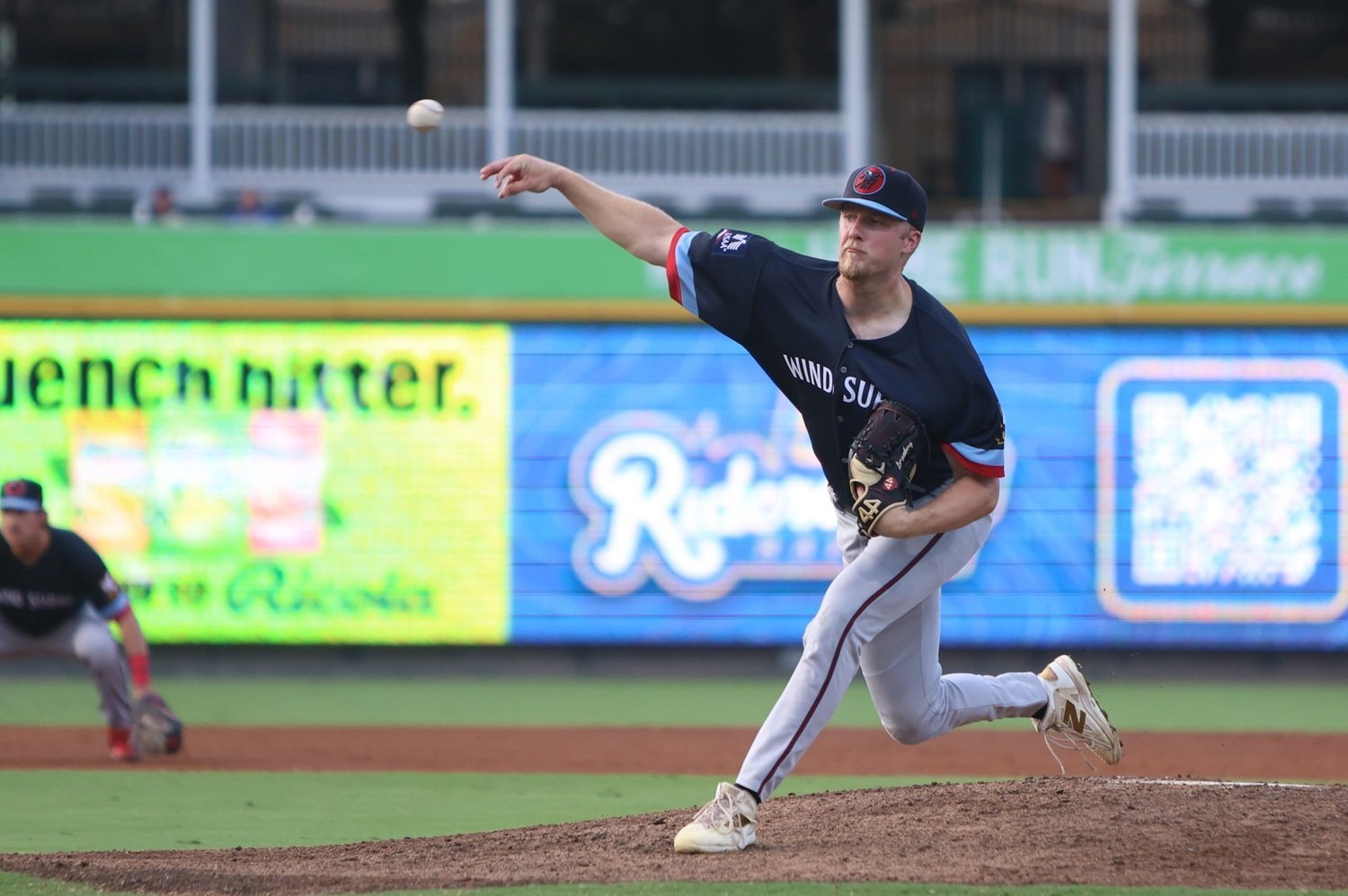 TRANSACTIONS On Thursday’s off day, the Twins announced that OF Austin Martin has been activated from the Injured List. To make room on the 28-man roster, OF Gabriel Gonzalez was optioned to St. Paul. SAINTS SENTINEL St. Paul 2, Syracuse 6 Box Score In the bottom of the second inning, Tanner Schobel drilled a double that drove in Kala’i Rosario and Jake Rucker to give the Saints a 2-1 lead. However, the Mets scored the final five runs of the game to take a 6-2 win. Jack Anderson started and gave up five runs on seven hits in 3 2/3 innings. He walked one and had four strikeouts. Paulshawn Pasqualotto gave up one run on one hit and two walks in 1 1/3 innings. He had two strikeouts. C.J. Culpepper went two scoreless innings. He gave up two hits and a walk but struck out one. Alejandro Hidalgo tossed two scoreless innings. He also gave up two hits and a walk, but he had four strikeouts. Schobel went 2-for-4 and it was his 16th double that drove in two runs. Rosario went 2-for-4 which has him hitting .302 in his time with the Saints. Hendry Mendez went 2-for-5. He stole his fourth base. Jake Rucker went 0-for-0 in the game, but he walked four times. You can bid on these game-used Saints/Peanuts jersey! WIND SURGE WISDOM Wichita 3, Frisco 1 Box Score Wichita took an early 1-0 lead after one inning. It wasn’t a big offensive output, but they added on enough to hang onto a lead. Kyle DeBarge led off the bottom of the first inning by being hit by a pitch. He stole second, his 36th base. He went to third on a fly out and scored on a sacrifice fly by Brandon Winokur. With one out in the bottom of the third inning, Quinn McDaniel hit his first Double-A homer to make it a 2-0 game. Ty Langenberg made the start and was again very good. The former Hawkeye gave up just one run on six hits over six innings. He walked none and had four strikeouts. He gave up a run in the sixth inning. The Surge responded quickly. Khadim Diaw led off with his 11th Wichita double. He scored on a Winokur single to center to give the team a 3-1 lead. Spencer Bengard struck out three batters over two perfect innings. Kyle Bischoff walked one in a scoreless ninth inning to earn his sixth save. McDaniel was the lone Wind Surge batter with more than one hit. He was 2-for-3 with the home run. DeBarge reached twice. He was hit by a pitch and walked PLAYERS OF THE DAY Hitter(s) of the Day Quinn McDaniel (Wichita): 2-for-3, HR(1), R, RBI, K. Pitcher(s) of the Day Ty Langenberg (St. Paul): 6 IP, 6 H, 1 ER, 0 BB, 4 K, 72 pitches, 51 strikes (70.8%). PROSPECT SUMMARY Check out the Prospect Tracker for much more on our Twins Top 20 prospects. See how they did today. #7 - OF Hendry Mendez (St. Paul) - 2-for-5, K, SB(4) (batted second, played DH) #12 - 3B/CF Brandon Winokur (Wichita) - 1-for-3, SF, 2 RBI, K, SB(11) (batted third, played SS) #13 - C/OF Khadim Diaw (Wichita) - 1-for-3, 2B(11), HBP, R (batted second, played catcher) UPCOMING PROBABLES Friday, September 11 Syracuse @ St. Paul (6:37 pm CT) - RHP Ryan Gallagher (5-6, 6.78 ERA) Frisco @ Wichita (6:35 pm CT) - RHP Riley Quick (0-2, 5.72 ERA) CURRENT W-L Records Minnesota Twins: 69-77 (Final Game 9/27) St. Paul Saints: 78-62 (Final Game (9/20) Wichita Wind Surge: 54-79 (Final Game 9/13) Cedar Rapids Kernels: 48-82 (Season Complete) Fort Myers Mighty Mussels: 68-60 (Season Complete) FCL Twins: 33-26 (Season Complete) DSL Twins: 19-35 (Season Complete) Please feel free to ask questions about the teams, the rosters, and discuss today’s games, or anything else Twins minor-league related! View the full article
 -
 Omaha shut out Indianapolis 8-0, with John Means and Hunter Patteson combining for seven scoreless innings and Carson Roccaforte doubling twice and Luca Tresh driving in two. Quad Cities beat South Bend 3-1 as Kendry Chourio struck out six over 4 1/3 innings and Emmanuel Reyes earned a ticket to the Midwest League Championship Series. Northwest Arkansas lost 3-2 to Tulsa despite four hits from Angel Acosta, a Spencer Nivens home run, and four hitless innings of relief from Coleman Picard. Kansas City Royals Transactions No Roster Moves Storm Chasers Pile Up Eleven Hits, Shut Out Indianapolis 8-0 Omaha scored in five separate innings, and its pitching staff kept Indianapolis off the board in an 8-0 win. The Storm Chasers broke through in the second for three runs. Roccaforte doubled to left, Peyton Wilson walked, and both runners moved up on steals during a Drew Waters strikeout. Tresh brought Roccaforte home with a sacrifice fly to center, Alejo Lopez singled to left to score Wilson, and Maikel Garcia doubled to left to score Lopez. Javier Vaz and Brett Squires drew walks before the inning ended. Roccaforte doubled again in the third, and Tresh singled him in, and a wild pitch scored Vaz in the fourth. Omaha added two more in the sixth. Vaz and Squires singled, and Roccaforte reached on a fielding error by the first baseman that allowed both runners to score. Tresh walked in the seventh, and Colton Becker singled him home for the final margin. Means gave Omaha four innings, allowing two hits and no runs, walking none and striking out four. Patteson followed with three scoreless innings on four hits, one walk, and two strikeouts, and he earned the win. Connor Seabold worked a scoreless inning with a hit, a walk, and a strikeout. Scott Alexander finished with a scoreless inning, no hits, and two walks. Omaha had 11 hits, drew six walks, went 4-for-17 with runners in scoring position, and left 12 runners on base. Roccaforte went 2-for-5 with two doubles and two runs. Tresh was 2-for-3 with two RBI and a walk. Lopez had two hits and an RBI, and Becker had two hits in two at-bats. The Storm Chasers are now 64-74. Player AB R H RBI BB K Maikel Garcia 4 0 1 1 0 2 Colton Becker 2 0 2 1 0 0 Javier Vaz 3 2 1 0 2 0 Brett Squires 2 1 1 0 2 0 Gavin Cross 5 0 0 0 0 4 Carson Roccaforte 5 2 2 0 0 1 Peyton Wilson 4 1 0 0 1 0 Drew Waters 5 0 0 0 0 2 Luca Tresh 3 1 2 2 1 0 Alejo Lopez 5 1 2 1 0 0 Player IP H R ER BB K HR John Means 4 2 0 0 0 4 0 Hunter Patteson 3 4 0 0 1 2 0 Connor Seabold 1 1 0 0 1 1 0 Scott Alexander 1 0 0 0 2 0 0 Acosta Collects Four Hits, But Naturals Drop 3-2 Decision To Tulsa Acosta had four hits and Northwest Arkansas loaded the bases in the seventh, but the Naturals lost 3-2 to Tulsa. Northwest Arkansas tied it up in the fourth. Nivens led off the inning with a home run to right field, his ninth of the season, tying the game at 1-1. Tulsa moved back in front with two runs in the fifth. Northwest Arkansas couldn't come back from that deficit. The Naturals put together their best inning in the seventh. Justin Johnson singled to right and was picked off trying to take second. Canyon Brown was hit by a pitch and stole second. After a strikeout, Acosta doubled to right to score Brown and cut the deficit to 3-2. Acosta took third on a passed ball, Connor Rasmussen walked, and Sam Kulasingam walked to load the bases, but Nivens flied out to right to end the inning. Connor Scott walked in the eighth before a double play closed the inning, and Acosta singled with two outs in the ninth, but Northwest Arkansas did not score again. Grant Gambrell took the loss after five innings, giving up five hits and three runs, with three walks and five strikeouts. Coleman Picard followed with four scoreless innings, allowing no hits and no walks while striking out five. Acosta finished 4-for-4 with a double and an RBI. Nivens went 2-for-4 with a home run, a double, and an RBI. Johnson had a single, Rasmussen and Kulasingam each drew a walk, and Brown was hit by a pitch. The Naturals totaled seven hits, three walks, and eight strikeouts, and they left seven runners on base while going 1-for-7 with runners in scoring position Northwest Arkansas is now 56-77. Player AB R H RBI BB K Sam Kulasingam 3 0 0 0 1 0 Spencer Nivens 4 1 2 1 0 1 Daniel Vazquez 4 0 0 0 0 2 Connor Scott 3 0 0 0 1 0 Justin Johnson 4 0 1 0 0 0 Canyon Brown 3 1 0 0 0 0 Alberto Rodriguez 4 0 0 0 0 3 Angel Acosta 4 0 4 1 0 0 Connor Rasmussen 3 0 0 0 1 2 Player IP H R ER BB K HR Grant Gambrell 5 5 3 3 3 5 1 Coleman Picard 4 0 0 0 0 5 0 River Bandits Strike Out Fourteen, Add Late Run To Beat South Bend 3-1 Quad Cities pitchers struck out 14, and the River Bandits built enough offense to win 3-1 at South Bend, clinching a West Division title and their spot in the Midwest League Championship Series Quad Cities took the lead in the second. Derlin Figueroa walked to open the inning and moved to second on a groundout, and Austin Charles doubled to left to score him. Ramon Ramirez singled to left in the sixth, and Jose Cerice doubled to score him for a 2-0 lead. South Bend cut the lead to 2-1 in the seventh, and Quad Cities answered with a run in the eighth. Cerice singled to center, and Nolan Sailors doubled to right, moving Cerice to third. Charles then grounded to shortstop on a fielder's choice that retired Cerice at home, and Sailors advanced to third. Tyriq Kemp walked to load the bases, and Asbel Gonzalez was hit by a pitch to force in Sailors. Chourio, the Royals' No. 1 prospect, started Game 2 of this playoff series and threw 4 1/3 scoreless innings, allowing two hits and two walks while striking out six. Ethan McElvain followed with 2/3 of a scoreless inning, walking one and striking out one. Emmanuel Reyes earned the win with three innings, three hits, one run, no walks, and five strikeouts. L.P. Langevin finished with a scoreless inning and two strikeouts for the save. Quad Cities had seven hits, drew eight walks, went 3-for-14 with runners in scoring position, and left 13 runners on base. Cerice went 2-for-5 with a double and an RBI. Charles was 1-for-4 with a double and an RBI. Sailors had a double, a walk, and a hit by pitch. Blake Mitchell drew three walks. Leadoff hitter Gonzalez had a hit, an RBI, and two hit-by-pitches. Dayton beat Great Lakes on Thursday 6-0 to tie up the East Division playoffs at one game apiece. Game 3 will be on September 11th in Dayton. The River Bandits will play the winner on September 13th at Modern Woodsman Park in Davenport. Player AB R H RBI BB K Asbel Gonzalez 3 0 1 1 0 2 Zion Rose 5 0 1 0 0 1 Blake Mitchell 2 0 0 0 3 1 Ramon Ramirez 5 1 1 0 0 2 Derlin Figueroa 3 1 0 0 2 2 Jose Cerice 5 0 2 1 0 0 Nolan Sailors 3 1 1 0 1 0 Austin Charles 4 0 1 1 0 1 Tyriq Kemp 2 0 0 0 2 0 Player IP H R ER BB K HR Kendry Chourio 4 1/3 2 0 0 2 6 0 Ethan McElvain 2/3 0 0 0 1 1 0 Emmanuel Reyes 3 3 1 1 0 5 0 L.P. Langevin 1 0 0 0 0 2 0 Top-20 Prospect Performance Kendry Chourio: 4 1/3 IP, 2 H, 0 R, 0 ER, 2 BB, 6 K David Shields: DNP Josh Hammond: DNP Blake Mitchell: 0-for-2, 3 BB, 1 K Sean Gamble: DNP Ramon Ramirez: 1-for-5, 2 K Zion Rose: 1-for-5, 1 K Asbel Gonzalez: 1-for-3, RBI, 2 K Carson Roccaforte: 2-for-5, 2 2B, 1 K Taylor Rabe: DNP Yandel Ricardo: DNP Justin Lamkin: DNP Drew Beam: DNP Michael Lombardi: DNP Jack Slightom: DNP Felix Arronde: DNP Angeibel Gomez: DNP Ben Kudrna: DNP Steven Zobac: DNP Blake Wolters: DNP View the full article
 -
What are your Marlins vs. Dodgers series predictions?
DiamondCentric posted an article in Fish On First
 Once again in 2026, I will be monitoring Miami Marlins predictions from our valued SuperSubs, Fish On First staffers and livestream guests. Individual article pages like this one will be created prior to every Marlins series and featured prominently on the FOF site. Consistent participation is key if you want to win this annual contest. Submissions only take a few seconds. Scoring system A "perfect" series is worth three points: Earn one point for predicting which team will win the upcoming series Earn one point for predicting the precise number of victories for each team Earn one point for predicting the “Series MVP” who accumulated the highest win probability added (WPA) during the series as calculated by FanGraphs (could pick a player from either team) FOF SuperSub David Fernandez is currently atop the 2026 season leaderboard, which will be updated between every Marlins series. If you are a SuperSub, leave a comment with your Prediction Time picks on this page, or join the Marlins Discord Server and submit there. We'll feature them on the upcoming Fish On First LIVE episode and track your points throughout the season! Any picks submitted prior to the first pitch of the series opener will be counted. If you are not a SuperSub, please consider signing up here to support the FOF staff. Series preview notes Probable starting pitchers: RHP Ryan Gusto (MIA) vs. LHP Blake Snell (LAD) on Friday RHP Tyler Phillips (MIA) vs. RHP Tyler Glasnow (LAD) on Saturday RHP Eury Pérez (MIA) vs. RHP Emmett Sheehan (LAD) on Sunday The Marlins rank 14th in MLB with a 101 wRC+ and 16th in MLB with a 4.10 FIP. They are 3-7 in their last 10 games and have a 43-32 record at home this season. The following Marlins players are on the injured list: Anthony Bender (15-day IL), Xavier Edwards (10-day IL), Ronny Henriquez (60-day IL), William Kempner (60-day IL), Adam Mazur (60-day IL), Andrew Nardi (60-day IL) and Robby Snelling (60-day IL). The Dodgers rank second in MLB with a 110 wRC+ and fifth in MLB with a 3.83 FIP. They are 8-2 in their last 10 games and have a 42-29 record on the road this season. The following Dodgers players are on the injured list: Kris Bubic (60-day IL), Ben Casparius (60-day IL), Jake Cousins (60-day IL), Edwin Díaz (15-day IL), Brusdar Graterol (60-day IL), Will Klein (60-day IL), Eric Lauer (15-day IL), Shohei Ohtani (15-day IL), Andy Pages (10-day IL), Dalton Rushing (10-day IL), Roki Sasaki (15-day IL) and Gavin Stone (60-day IL). View the full article
 -
What went wrong? Mets sweep ends Marlins' Wild Card push
DiamondCentric posted an article in Fish On First
 Fish On First staffers react to the latest Miami Marlins series and prepare you for what lies ahead. Thursday's show was hosted by Ely Sussman and featured panelist Isaac Azout. You can find Fish Unfiltered and Fish On First LIVE on the Fish On First YouTube channel, Apple Podcasts, Spotify or wherever else you get your pods. Our next FOF LIVE episode will be on Sunday at approximately 6:30 p.m. ET following the Marlins-Dodgers series finale. View the full article
 -
Mason Miller's Inspiration Goes Far Beyond His Work on the Mound
DiamondCentric posted an article in Padres Mission
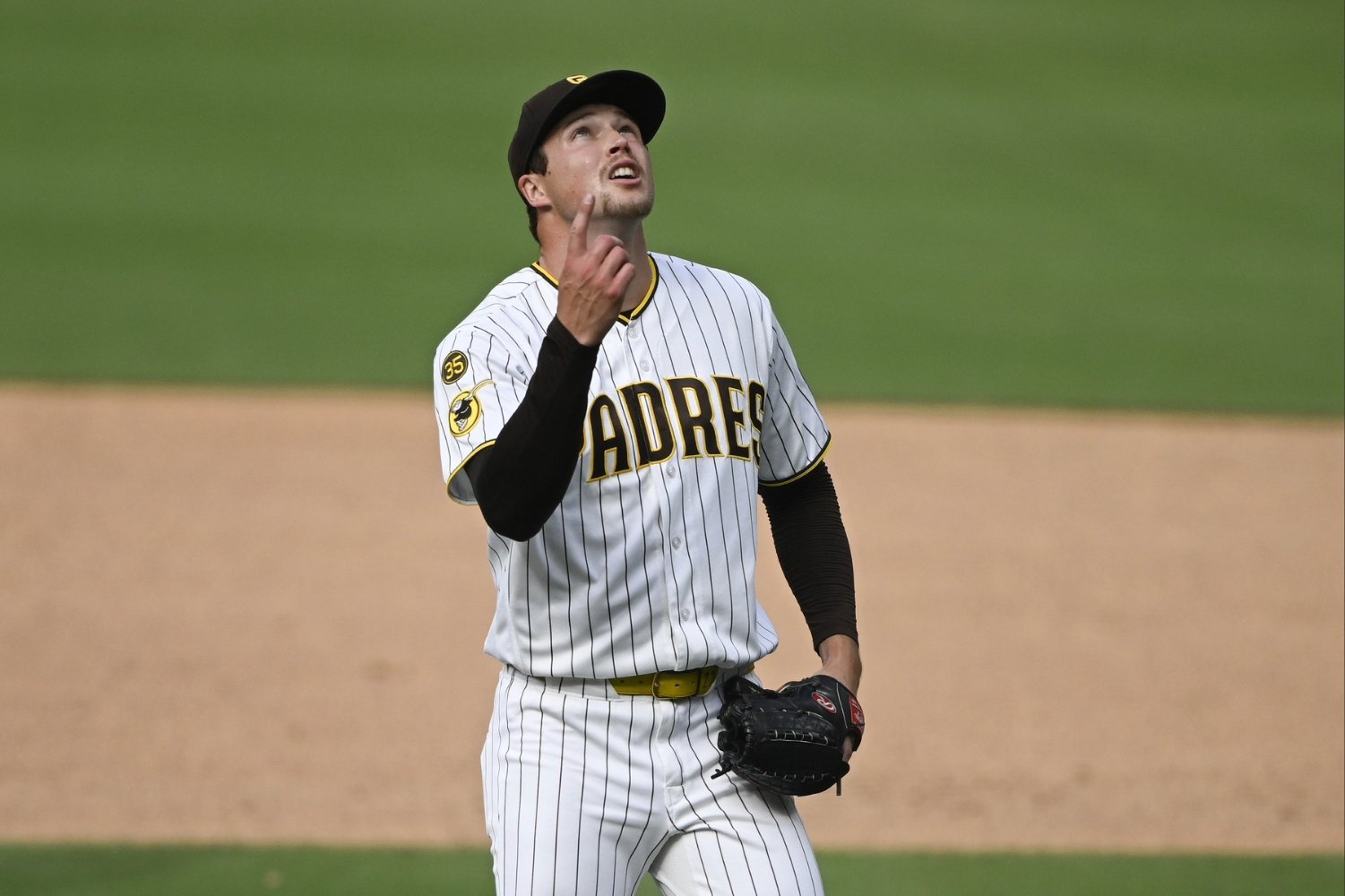 My appreciation of Mason Miller goes beyond his activity as the San Diego Padres’ closer. I am writing this in the first person because this is based on my own experience rather than on following baseball or studying baseball history. My son is now 35. When I was 35 and my son, Cliff, was eight, he was diagnosed with diabetes. Mason Miller is the latest athletic role model for diabetics and their families. When I received the phone call in August 1999 that Cliff was diabetic and would be for the rest of his life, it was pretty scary. During his time in the hospital I learned more about juvenile diabetes, and I was relieved that if he took his insulin shots and otherwise took care of himself, he could live a normal life. Cliff didn’t settle for normal, but he hasn’t had diabetes-related health problems and his condition hasn’t limited his activities. By the time Cliff was released from the hospital, I considered myself fortunate that he didn’t have anything terminal or debilitating, but I still needed inspirations. I knew that Eddie Williams, who had been an infielder with the Padres, was an insulin-dependent diabetic, and during Cliff’s stay in the hospital, Eddie Williams was one of my inspirations. The Padres played their home games at Qualcomm Stadium at the time, and the suburban weekly papers were given season press credentials. I also knew that Chicago Cubs announcer Ron Santo was diabetic. The Cubs had a midweek series in San Diego which began the day Cliff was released from the hospital. The timing was ideal to obtain some assurances from Ron Santo. Ron Santo was on the field prior to the game, and there turned out to be an added bonus. I began following the Padres in 1972 when I was eight years old and Nate Colbert was the team’s star. I had never previously met Nate Colbert, even though 1999 was my fifth year with a season press credential. Ron was talking to Nate on the field, so after 27 years I finally was able to meet my first baseball hero. Ron and I had chatted in the press box during previous seasons. I mentioned the situation with my son to Ron, and he was very encouraging. Nate noted that one of the children in his baseball camp was diabetic. Nate also said that diabetes saved his 95‑year-old father’s life, as his father eliminated many of his unhealthy habits. Since the Cubs were in town for a three-game series, the following day I had my son and I sign a thank-you card for Ron Santo, and I gave it to Ron on the final day of the series. When the Cubs were in town the following year Ron and I spoke about my son and about the progress of curing diabetes. Catfish Hunter, who was diagnosed with diabetes late in his playing career, passed away about a month after my son was initially diagnosed. Hockey star Bobby Clarke was diagnosed with diabetes in his childhood and was in inspiration to diabetics before my son was born. Football quarterback Wade Wilson was diagnosed with diabetes early in his professional career but played his final game before my son was diagnosed. Basketball player Chris Dudley—who played for a San Diego County high school—was the diabetic athletic role model in 1999. By the time Chris Dudley retired, Luke Branquinho was qualifying for the National Finals Rodeo. Ron Santo passed away in December 2010. A year later, the Veterans Committee elected him to the Baseball Hall of Fame. On the same day he was elected, Luke Branquinho, who competed with an insulin pump during his rodeo career, won the Steer Wrestling go-round at the National Finals Rodeo and it can thus be said that December 5, 2011 was a highlight for families coping with diabetes. Denver Broncos quarterback Jay Cutler was diagnosed with diabetes after his second National Football League season, which added Cutler to the list of diabetic role models. Cutler was with the Chicago Bears in 2011 but did not play in the Bears’ game the day before Ron Santo’s election and Luke Branquinho’s go-round win, as two weeks earlier he broke his thumb in the Bears’ win over the San Diego Chargers and was out for the remainder of the season. That win gave the Bears a 7-3 record, but they lost their next five games before a victory in their season finale gave the team an 8-8 record. Branquinho finished that year’s National Finals Rodeo as the Steer Wrestling world champion, giving him his third world championship. He added a fourth world championship the following year. Branquinho and Cutler, along with singer Bret Michaels, were inspirations to diabetics and their families in those years. In July 2014, Branquinho underwent surgery and was out of competition until November. That made Cutler the premier diabetic athlete and role model for that part of the year. The 15 cowboys in each event with the highest earnings as of the regular season ending September 30 qualify for the National Finals Rodeo, and despite missing two months Branquinho still qualified for NFR in 2014. He had been leading the world standings prior to his injury that year. Earnings from placing in NFR go-rounds and the average (aggregate) are added to regular-season earnings to determine the world champion. By the fourth go-round of 2014 Branquinho had regained the lead in the standings. Although Branquinho did not win a go-round outright (he split first and second in one) he won the average and his fifth world championship. I was at the Thomas and Mack Center in Las Vegas the Saturday night Branquinho sealed his 2014 championship. I returned to San Diego the following night, and the day after that the Bears were on Monday Night Football and I was at the bar where I watched those games. After an interception Jay Cutler threw I remarked that it was a good thing Luke Branquinho won NFR because Jay Cutler wasn’t a very inspirational role model for diabetics that night. Cutler still had a career high completion percentage in 2014, and by the time he retired in 2017 his NFL passes had gained more than 35,000 yards. Branquinho would win his final world championship in 2014 and would make his final NFR appearance the following year. Another diabetic steer wrestler, Matt Reeves, finished second in the world standings in both 2013 and 2016. In 2019 Reeves, who was 41 at the time, won the average at NFR and finished sixth in the standings. Reeves has not competed in rodeo since last year’s Texas circuit finals. Michaels has not released a studio album either with Poison or as a solo artist since 2013. So, where does that leave us? Obviously, Mason Miller is the current inspiration and role model for diabetics and their families. Diagnosed with Type 1 diabetes at 20 years old, he's now the best closer in baseball just eight years later. As long as he continues to dominate for the Padres, this community will always have someone to look up to. View the full article
 -
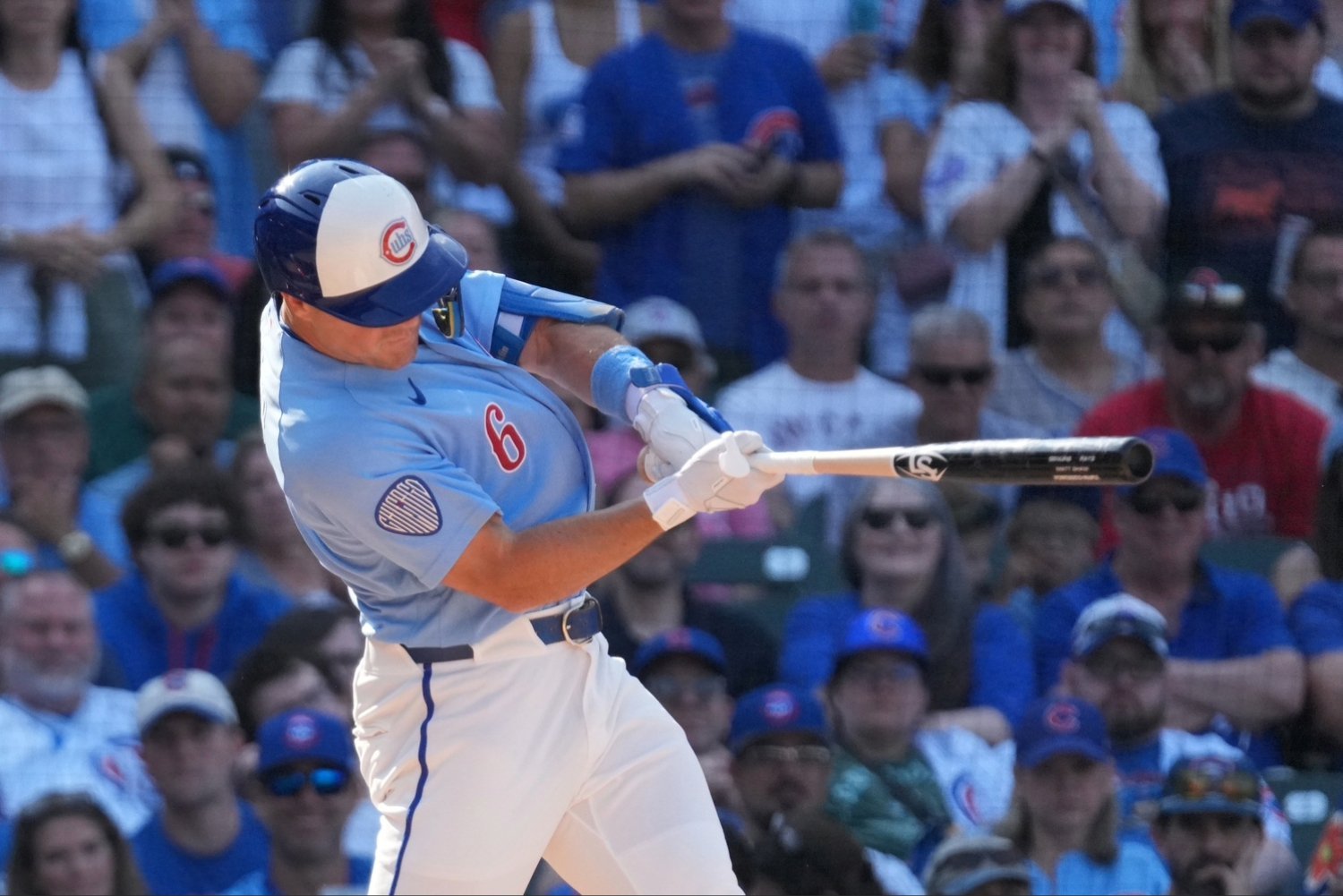 Every year, there are certain players that just seem to come alive in the postseason. Last year, we saw guys like Trey Yesavage and Ernie Clement play meaningful roles for the Toronto Blue Jays despite not necessarily lighting up the regular season (the former had spent nearly the entire year in Triple-A). Yet both became important pieces during Toronto’s postseason run, helping the team come within one win of a World Series title. Odds are good there will be multiple players who fit that description in 2026. And I think Matt Shaw has the potential to be one of them for the Chicago Cubs. When he’s been on the field, it’s been a promising year for Shaw. He’s made some notable offensive improvements, raising his OPS from .690 last season to .751 this year while also walking more, striking out less, and showing slightly more power. The Cubs are very likely going to be a Wild Card team this year. That means they're likely going to have to navigate the Wild Card round, and based on the current standings, they could find themselves facing one of the Phillies, Diamondbacks or Braves. Interestingly enough, all three of those potential matchups could line up quite well for Shaw. He hasn’t been an everyday player for the Cubs this season; instead, he’s settled into more of a short-side platoon role against left-handed pitching while also serving as a pinch-hitter late in games. It hasn’t been the most prominent role on Chicago’s roster, but the postseason could give him a chance to make a much bigger impact. The starting rotations the Cubs could see in October feature a lot of talented left-handed pitchers. Take the Phillies, for example. In a potential three-game Wild Card series, Cristopher Sánchez and Jesús Luzardo would both be lined up to start. Both left-handers have plenty of swing-and-miss ability, and with Shaw’s improving bat-to-ball skills, he feels like someone who could find himself in the lineup against either (or both) of them. He doesn’t necessarily need to turn into a completely different hitter overnight. If he can continue making contact, limiting strikeouts and taking advantage of favorable matchups, he could become a valuable piece against some of the best left-handed pitching in the National League. The same goes for the Braves and Diamondbacks. Atlanta’s rotation is headlined by Chris Sale, while Arizona has Eduardo Rodríguez. Both are left-handed starters, and both would present situations where I’d expect Shaw to be in the lineup. Then, there’s the possibility of advancing beyond the Wild Card round. If the Cubs make it to the NLDS or NLCS, they could potentially run into teams like the Dodgers or Brewers. And even in those matchups, there are left-handed pitchers who could give Shaw an opportunity. Guys like Tarik Skubal, Blake Snell, and Kyle Harrison are all examples of left-handed arms this team could potentially see during a postseason run. If one of those guys is on the mound, I’d have Shaw in the lineup. Of course, he doesn’t necessarily have to start to make an impact. One of the most valuable things about the postseason is that a player can completely change the course of a game with one at-bat. A clutch pinch-hit late in a close game could be the difference between moving on and going home, and the Cubs don’t have to look very far for an example of that. Just ask Miguel Montero. Montero famously delivered a pinch-hit grand slam against the Dodgers in Game 1 of the 2016 NLCS, helping the Cubs take a series lead before eventually winning their first World Series in more than a century. That’s the type of moment that can turn a player into a postseason hero. And while it would be unfair to expect Shaw to have a moment of that magnitude, his skill set and defensive versatility could give him an opportunity to make a contribution off the bench. He won’t be asked to carry the Cubs’ offense, nor will he need to suddenly become a massive power hitter. He simply needs to take advantage of the opportunities that come his way. And if Chicago runs into a string of left-handed starters throughout October, those opportunities could come pretty frequently. View the full article
 -
 For years now, Twins outfield prospect Emmanuel Rodriguez has been one of the biggest bright spots in the organization’s farm system. After signing as an international free agent in 2019, Rodriguez has produced at every stop in his professional career. His blend of power, patience, and athleticism quickly turned him into one of the most exciting young players in the system, earning him top-100 prospect recognition across baseball every year since 2023. When healthy this season, Rodriguez has looked pretty awesome, too. He owns a .916 OPS with Triple-A St. Paul; his strikeout numbers have come down considerably; and he's produced the two hardest-hit balls recorded by Statcast for Twins prospects. That’s an impressive combination of production and raw talent, and it’s exactly the kind of profile that should be able to help a major-league club. That makes what's happened over the last week or so pretty unusual. We’re well into September. Rosters have already expanded. Many people (myself included) expected Rodriguez to be the extra bat the Twins brought up, especially with Walker Jenkins already having made his way to the major leagues. But that didn’t happen. The Twins brought up Ben Ross on September 1, and when Byron Buxton landed on the shelf (opening another opportunity for Minnesota to bring Rodriguez up), they brought Gabriel Gonzalez back instead. That's not to suggest that Gonzalez didn’t deserve the opportunity. He’s another talented young player who could easily be part of the Twins’ future, but at some point, you have to wonder what Minnesota’s plans for Rodriguez actually are. He’s already on the 40-man roster and out of minor-league options after this season. If Rodriguez is part of the Twins’ long-term plans, it’s difficult to understand why he wouldn’t be getting an opportunity to show what he can do at the major-league level right now. The likeliest explanation might simply be a harsh reality: despite being one of the crown jewels of the Twins’ farm system for the last half-decade, the two sides may need to go their separate ways. The more you look at Minnesota’s outfield picture, the more that possibility makes sense. Obviously, Buxton is still here. The face of the franchise is under contract through 2028, and he isn’t going anywhere. The injury that derailed his season and will require offseason hip surgery has also tanked his trade value, and Buxton didn't want to be dealt, anyway. Then there’s Jenkins, who the Twins hope will eventually become that kind of player himself. He’s been the team’s top prospect since they drafted him in 2023 and has every opportunity to become the face of the franchise over the next several years. The Twins also have Trevor Larnach, Luke Keaschall and Kody Clemens on the major-league roster. Keaschall isn’t even a year older than Rodriguez and has already shown that he can be a great major-league hitter. Clemens has moved into an everyday infield role with Keaschall spending more time in the outfield. He's proved to be a quality defender at multiple places on the diamond, while also becoming one of the Twins’ best hitters. His versatility guarantees him playing time. Then there’s Larnach. He doesn’t offer much defensively, and it’s certainly possible that the Twins could move him this winter, but he could also remain with the organization and continue rotating between outfield and designated hitter duties next season. It doesn’t stop there. Along with Gonzalez, the Twins have another fast-rising outfield prospect in Hendry Mendez, who has done nothing but mash since arriving in Minnesota at last summer’s trade deadline and could very well be ready to contribute at some point next season—even if that's more likely to be at first base than in the grass. There’s also the handedness aspect of all this. Rodriguez, Jenkins, Larnach, Clemens and Mendez are all left-handed hitters, meaning Rodriguez would need to clearly stand out from that group to consistently force his way into the lineup. That’s becoming increasingly difficult. Rodriguez is no longer just competing with the players currently standing in front of him; the next wave of talented outfielders is already arriving. Considering he still hasn’t even been called up, it’s difficult to believe the Twins currently view him as the player who stands above the rest. That doesn’t mean Rodriguez isn’t talented. But potential can only carry a player so far. Rodriguez has dealt with injuries, and strikeouts have been an issue at different points throughout his career. While he has continued to flash the tools that made him such a highly-regarded prospect in the first place, he hasn’t been able to establish himself as the future star many expected him to become. Meanwhile, Minnesota has continued to add talented outfielders to the organization, making his path increasingly difficult. Even with expanded rosters and an opening created by Buxton’s absence, Rodriguez is still waiting for his opportunity. If the Twins truly saw him as a major part of their long-term plans, this felt like the perfect time to find out what they have. Instead, he remains in St. Paul. However you look at it, Rodriguez’s time as a Twin suddenly feels like it could be coming to an end. After spending years as one of the organization’s most exciting prospects, the crowded roster and lack of a September call-up point toward the same conclusion. This could be Rodriguez’s final stretch of baseball in Minnesota. It'll only go down that way if the front office gets an offer they like for him this winter, but that might be more likely than (say) them getting the offer they've waited years for on Larnach. View the full article
 -
 Dustin May has enough weapons to attack hitters in almost any way imaginable. He isn't just mixing six pitches; he's essentially operating with two different arsenals. Unfortunately, the arm slot he uses to deliver them gives hitters an important clue about what's coming. This weakness actually stems from one of his strengths—one of the reasons the Brewers targeted him at the trade deadline. He's comfortable pronating as he releases the ball, despite a supination bias. He has three distinct fastballs to show for it, to go with two wicked, high-spin breaking pitches and a deadly changeup. He should have the pitches to adapt to any hitter. He has room to adjust his game plan depending on the pitches with which he's feeling comfortable on any given day. The interesting part is that May doesn't really operate with one six-pitch arsenal. A closer look at his pitch usage reveals two distinct groups of pitches that he deploys depending on the handedness of the hitter—and, perhaps more importantly, two noticeably different arm slots. Looking at the PitchProfiler graphic in the top right, we can see how dramatically his pitch selection changes against right- and left-handed hitters. Against right-handers, May's primary fastball is his sinker, with some cutter and the occasional four-seamer mixed in. His primary breaking ball is the sweeper. That sinker/sweeper combination is particularly interesting because of how closely May can match their release characteristics. The lower arm angle enhances the east/west movement by letting May get more around the side of the ball, and can be further enhanced from his extreme position on the first-base side of the rubber. The bigger story is what happens when he moves between those pitches and his other offerings. May has two quite distinct release points for what are essentially two separate arsenals. He lowers his arm slot for his sinker, sweeper and changeup (ish), while averaging almost 10° higher for his four-seam fastball, cutter and curveball. That's a significant difference, and it gives hitters a visual clue about what's coming. If a hitter can identify May's arm slot early in the delivery, they may already have narrowed down the possibilities before the ball has even reached the plate. For example, a right-handed hitter who sees May come through the higher arm slot can reasonably expect either a cutter or four-seam fastball, particularly because May rarely uses his curveball against righties. Those two pitches also occupy a relatively similar velocity band, meaning there isn't a huge change in speed to disrupt timing. That doesn't make either pitch ineffective on its own, but it does reduce one of the biggest advantages of a diverse arsenal: making the hitter account for dramatically different speeds and movements from the same delivery. That could be one reason we've seen May get hit hard when he does leave pitches in the strike zone since joining the Brewers. The Baseball Savant graphic below does a great job of highlighting just how different those arm angles are: May's arm angles for his two pitch groups have been growing more disparate with each month of the season. His four-seam fastballs and cutters are averaging a higher arm angle than at any point in his professional career, while the sinker/sweeper are similar to where they started the year. Against left-handed hitters, the changes are also quite interesting. May's best start for the Brewers from a swing-and-miss standpoint came in his last appearance against the Reds, when he went heavily to his curveball against an aggressive lineup and scrapped the sweeper. He also went more to the four-seamer than the cutter, but that's just one game. In August, the Brewers tried to use his cutter as a primary offering to left-handers in order to help May with his traditional platoon splits, which have been noticeable throughout his career. Unsurprisingly (it's part of their M.O., really), they don't seem to be fans of his changeup. While the four-seamer and cutter are good pitches, being able to mix speeds more regularly would help May get more of that swing-and-miss. He's struggled to put away hitters in two-strike counts since joining the Brewers. It'll be fascinating to see how the curveball's usage continues throughout September. Sweepers traditionally don't play well to opposite-handed hitters, because they move toward the hitter's wheelhouse on the inner third of the plate. Ultimately, May's path to an October rotation spot may come down to how well he can make these two arsenals work together. He needs to rediscover the form he showed in May and June, but the Brewers have already demonstrated that they don't need every starter to work deep into games. They were comfortable using bullpen games and mixing and matching last year, so May doesn't need to become a traditional workhorse to have value in October. What he does need is a reliable way to get swings and misses. His lack of whiffs was concerning throughout August, but his most recent outing against a hot Cincinnati offense provided an encouraging glimpse of what makes May so intriguing. After giving up a homer on a mistake to Elly De La Cruz, he showed the adaptability that comes with having this many weapons, and when he commands those weapons, the results can be devastating. May has two distinct sets of weapons. Now, the Brewers and May have to figure out exactly how to deploy them without making him predictable. They don't have much time left to find the answer, but his last outing offered some reason for optimism. His next few starts could go a long way toward determining whether one of baseball's most interesting arsenals has a place in Milwaukee's October armory. View the full article
 -
3 Twins Players It's Time to Move On From This Offseason
DiamondCentric posted an article in Twins Daily
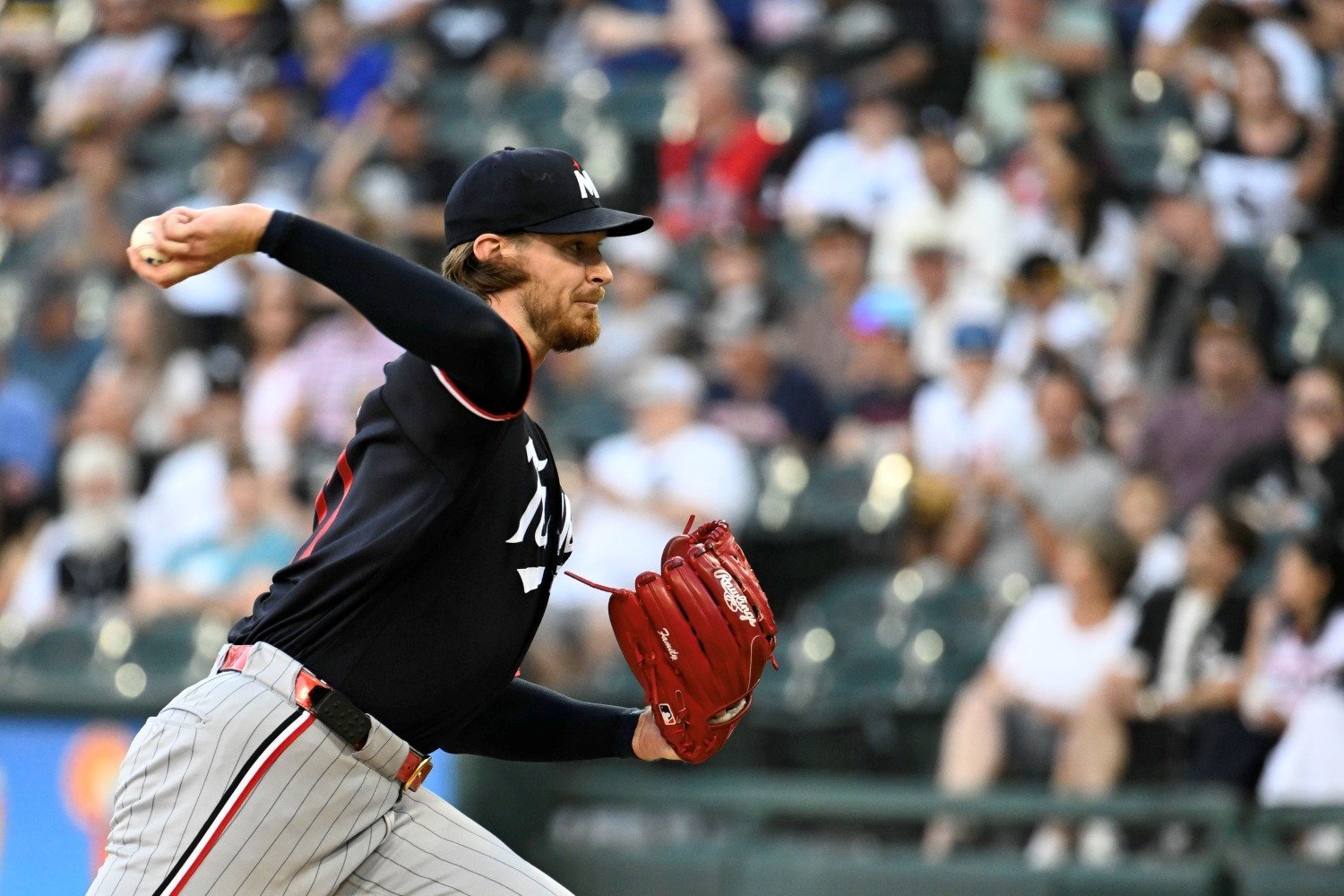 The Twins are on pace to miss the playoffs for the fifth time in six seasons. They’re following their recent trend of playing particularly ugly baseball down the stretch, so it’s time to start considering some changes. After sticking with their current core for so long, it may be time to start dismantling it. A few players stand out as names the Twins should part ways with this offseason. Trevor Larnach With one last trip through arbitration on the docket, paying Larnach what he’ll be awarded in the process makes no sense for the Twins at this point. While he’s rewarded their decision to tender him a contract last offseason with a .768 OPS, he’s been a major reason the offense has taken a step back in the second half. His .594 in August did a number on the lineup, and renews concerns he seemed to have assuaged a couple months ago. It’s also time to give younger players with greater upside more playing time. Emmanuel Rodriguez, Walker Jenkins, and even Alan Roden deserve opportunities in 2027 and beyond. Larnach has no defensive value, requires platooning, and has let the Twins down once again down the stretch in 2026. It’s time for them to see what’s behind Door No. 2. Bailey Ober It’s difficult to watch what’s happened to Ober over the last few years. Still a smart and crafty pitcher, his stuff appears to be bordering on untenable at the big-league level, which is why it’s time for the Twins to move on. While he’s still able to get outs at a decent clip, Ober’s fastball has averaged just over 88 MPH this season, and when he doesn’t have pinpoint command, it’s a difficult watch. Due for his last trip through arbitration this offseason, Ober will likely make at least $7-8 million in 2027 if the Twins tender him a contract. It’s a fair price to pay for his overall body of work, but his upside is completely gone, and it feels like there’s a risk the Twins could come to regret that decision very early in the 2027 season. It may be a case where the Twins are wise to cut bait too early, rather than too late. Royce Lewis Lewis was in a tenuous spot earlier this season after being demoted to Triple-A. A blistering return to the lineup in June changed things, but he’s been pretty quiet since then. He’s a below-league-average hitter on the season and is slashing just .235/.293/.410 since the beginning of 2024, which is 5% below the league-average hitter in that timeframe. Now a utility man mostly playing first base, the bar to clear offensively is much higher; Lewis has fallen to the bottom of the defensive spectrum. He doesn’t hit left-handed pitching at an exceptional rate; doesn’t get on base very well; and his speed and athleticism appear long gone. His free-swinging ways still lead to the occasional hot streak, but the Twins may be best served finding a new home for Lewis this winter. The Twins made changes in the front office and in the manager's chair heading into the season, but kept much of the same core on the field. After another disappointing finish, it’s time to make some changes in the player department. It’s time to move on from a few pieces that have been at the core of their roster for the last few years and turn things over to a new group. View the full article
 -
Matt Shaw’s Biggest Opportunity Could Arrive In October
DiamondCentric posted an article in North Side Baseball
 Every postseason seems to produce an unexpected hero. Matt Shaw could be the Cubs’ candidate to fill that role this year. View the full article
 -
The Greggxit Is Over. Should the Twins Promote Emmanuel Rodriguez?
DiamondCentric posted an article in Twins Daily
 Gregg returns from his sabbatical to join Sweet Lou once again. Is it over for the Twins? Who should be back next year? What prospects should debut before the end of the year? Gregg has a Triple Gripe and a 20 Questions snipe. Listen using Apple Podcasts: https://podcasts.apple.com/us/podcast/the-twins-off-daily-podcast/id1741266056 Listen using Spotify: https://open.spotify.com/show/4tb78XlurcPTYYSsARdbD7 Listen using iHeartRadio: https://www.iheart.com/podcast/263-the-twins-off-daily-podcas-167548600/ Listen using Pocket Casts: https://pca.st/nvclbt0w Watch on YouTube: https://www.youtube.com/@twinsdaily View the full article
 -
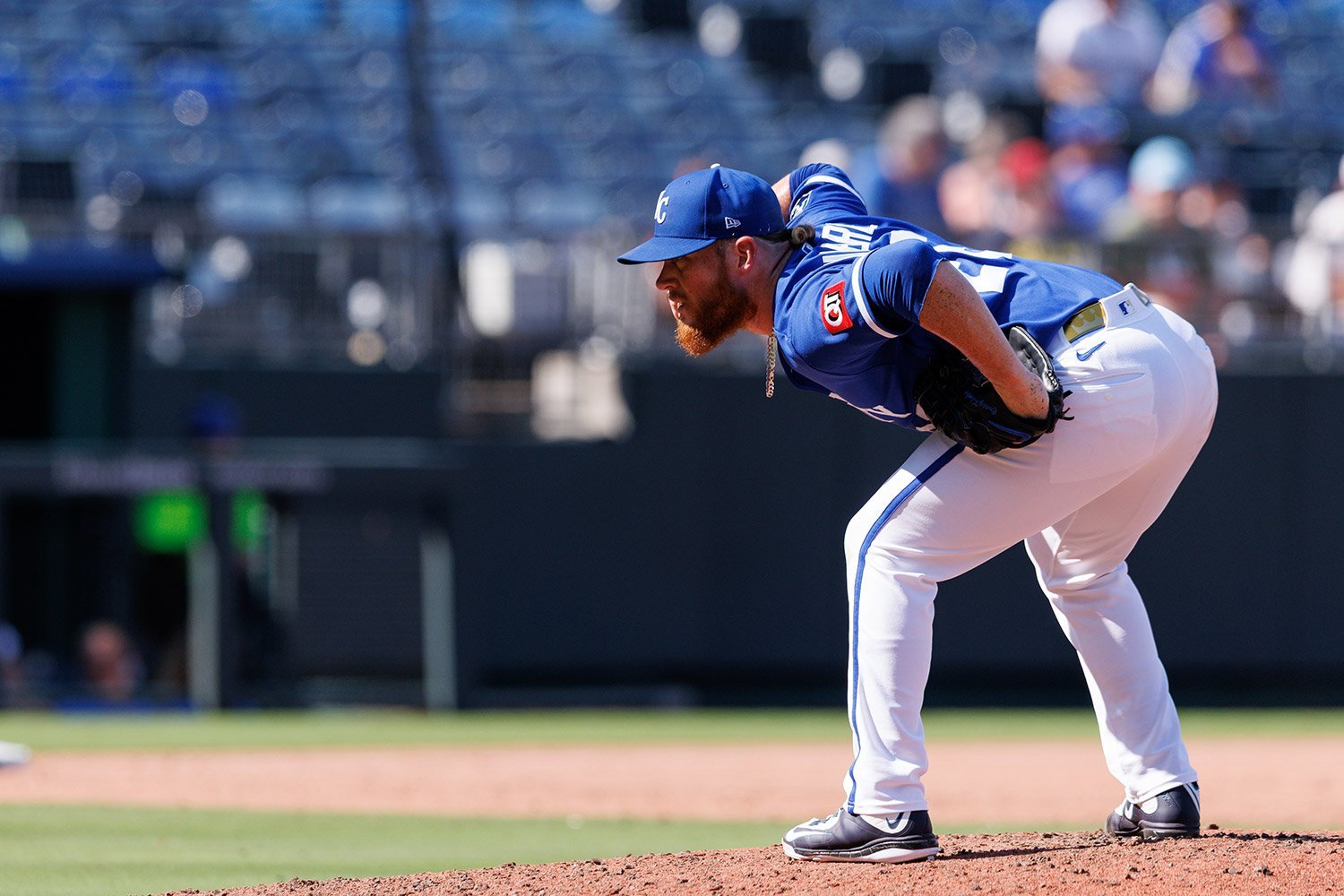 It has been a long time since Craig Kimbrel stopped being one of the best closers in Major League Baseball. He is 38 years old, has 17 seasons of experience, and has been on five different teams over the past two campaigns. He made his debut with the Kansas City Royals on August 12 and did not allow earned runs in his first nine relief appearances. That stretch includes an unearned run that resulted in the Royals’ 4-3 loss last Saturday. On Monday, Kimbrel allowed five runs in the 10th inning against the Arizona Diamondbacks and lost again. He is pitching to a 4.53 ERA and has 0.2 fWAR in 43 appearances. It is his highest fWAR since he saved 23 games for the Baltimore Orioles in 2024, and that leaves us with an interesting situation. Without being responsible for closing games, he has still been able to add value as a reliever. So, in large part, it depends on how we look at his season this year. Before allowing the five runs Monday against the D-backs, Kimbrel had a 1.99 ERA over his last 22 appearances. What's notable about his consistency is that he had not allowed a home run against the 89 batters he had faced; if we add Monday’s game to that stretch, Kimbrel’s homerless streak extended to 98 batters faced, although his ERA rose to 3.42. Often, a single bad relief appearance can change the look of a dominant reliever. In Kimbrel’s case, the reality is that for much of this season, his outings have felt as if he still has a little fuel left in the tank. Now, between injuries and inconsistencies, the question is whether the Royals will take Kimbrel’s experience and improvements into account in their plans for 2027. So far, they have brought him into important situations—with the game tied or in a save opportunity—in seven of his first 10 relief appearances. We already know Kimbrel has struggled in his last two appearances, but throughout the season, he has been more consistent under pressure and with little rest. When he has pitched with the game tied or protecting a lead in save situations, Kimbrel has allowed a .727 OPS with a 2.95 K/BB ratio, one strikeout better than his overall 1.95 mark this season. He has combined that resurgence with a great ability to recover. In consecutive relief appearances or with one day of rest, Kimbrel has produced his best performance, holding opponents to a .206/.309/.353 slash line, with a .662 OPS allowed in 13 appearances. That said, there is one point we cannot overlook here, and that is that Kimbrel was more vulnerable in his matchups against left-handed hitters. In 29 of his 43 relief appearances, he has faced four or fewer batters, and he has been used for more than one inning only once all year. Although he has had a slight improvement in his velocity (93.4 to 93.7 mph) compared with the small sample from last season, hitters are still finding ways to crush his four-seam fastball. Pitch Type Split Pitch % PA HR K% xSLG Whiff% Dist (ft) Hard Hit% Four Seamer vs LHB 30.5% 158 9 28.5% .410 27.2% 196 37.5% Four Seamer vs RHB 27.6% 136 2 27.2% .384 25.3% 210 47.4% Knuckle Curve vs LHB 10.6% 37 0 16.2% .374 22.7% 108 41.4% Knuckle Curve vs RHB 7.4% 24 0 25.0% .366 35.2% 132 35.3% Sweeper vs LHB 2.2% 11 0 27.3% .339 21.1% 121 16.7% Sweeper vs RHB 5.6% 31 0 38.7% .356 42.9% 176 44.4% Changeup vs LHB 1.5% 6 0 33.3% .090 50.0% 90 0.0% Sinker vs LHB 0.4% 2 0 0.0% - 0.0% 275 0.0% Sinker vs RHB 2.3% 9 0 11.1% .262 13.6% 117 16.7% This summary corresponds to the combined 2023, 2024, and 2026 seasons, when he experienced more wear and faced at least 180 opponents; I did not include 2025 because Kimbrel pitched only 12 innings. There you can see it: all 11 home runs allowed by Kimbrel have come against his four-seam fastball, nine of them against left-handed hitters. Right-handed hitters have connected for only two, but they have a higher Hard Hit% rate and the average distance is 210 feet. The knuckle curve, his primary secondary pitch, has also not been able to dominate left-handed hitters enough. Let’s look at a chart of the slugging percentage allowed by Kimbrel in the combined 2023, 2024, and 2026 seasons when he threw his four-seam fastball against left- and right-handed hitters. The impact of left-handed hitters appears in the chart on the left, and right-handed hitters on the right. What is most concerning about Kimbrel’s fastball is that it can barely survive where it used to, on the edges of the zone. But there is also another obvious problem, and that is that hitters from both sides are also managing to make quality contact outside the strike zone. So, if the Royals bet on Kimbrel helping them in some role, they have to keep in mind that left-handed hitters will continue to be a problem. That could give us part of the expectations the Royals might have for his profile going forward. At 38 years old and with a career that could end up with him in Cooperstown, Kimbrel still does not want to give up, and he has shown signs that he still has something to offer the worst bullpen in baseball. View the full article
 -
What Will the Cubs’ Postseason Rotation Actually Look Like?
DiamondCentric posted an article in North Side Baseball
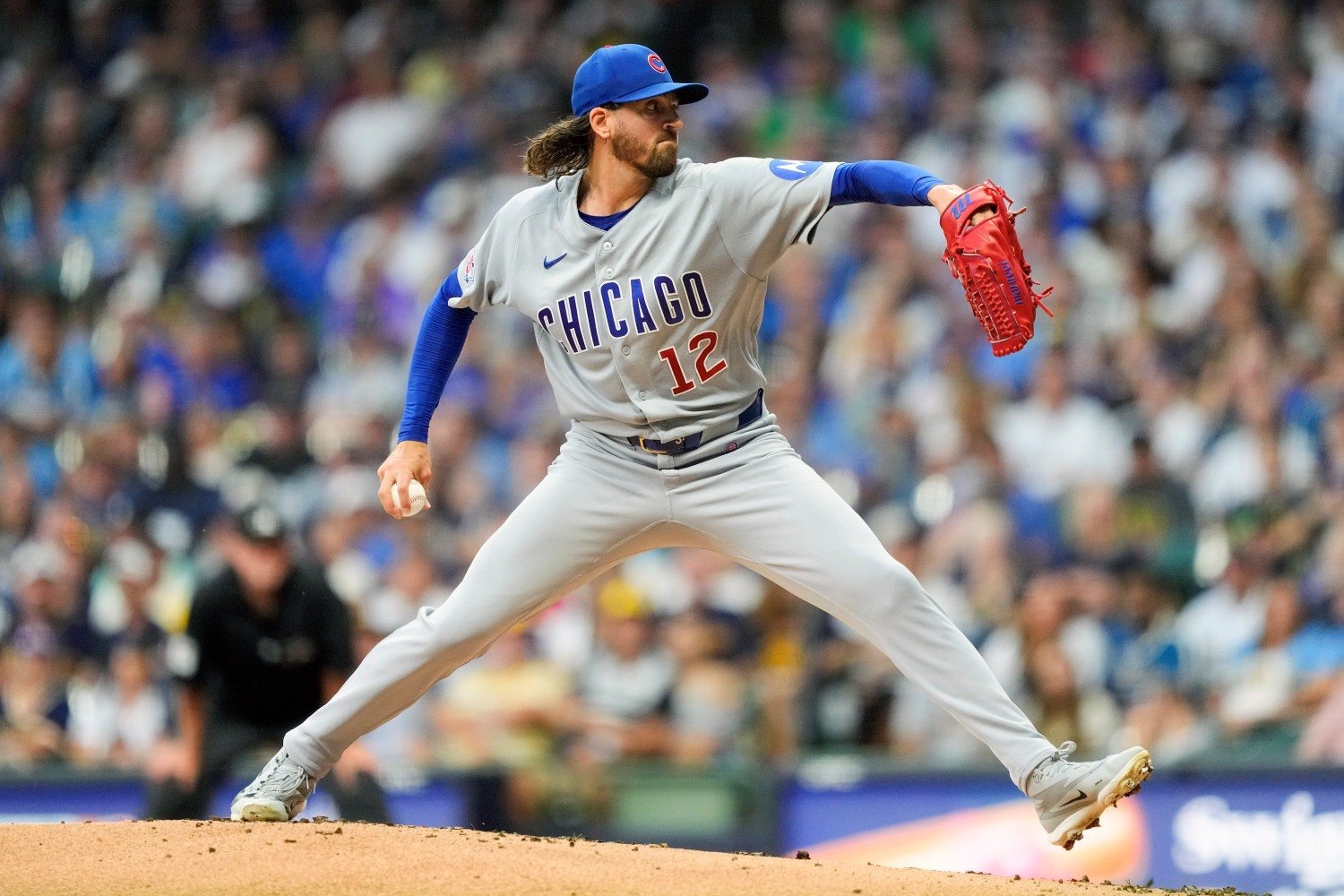 We’re just a few short weeks away from the start of the MLB postseason. The Chicago Cubs currently hold a record of 81-66. Barring a catastrophic collapse over the final 15 games, they’ll be a playoff team. With the Brewers leading the NL Central by 10 games, though, Chicago will once again have to make its way through the Wild Card round. The Cubs were in that position last year, and they found success against the San Diego Padres. Chicago took two of three games in the series, and its pitching staff played a major role in getting the job done. They didn’t allow more than three runs in any of the three games. Their NLDS matchup with Milwaukee was a different story, as two of the three games Chicago lost in that series came when its pitching staff struggled to keep Milwaukee's offense in check. If the Cubs are going to make a deep run this time, their staff will have to be at its best. So what might Chicago’s postseason rotation actually look like? For starters, I think a lot of it depends on who the Cubs draw in the first round. If Chicago gets matched up with a team like the Philadelphia Phillies, Shota Imanaga and Matthew Boyd are probably going to be huge factors. The Phillies have plenty of powerful left-handed bats, including Kyle Schwarber and Bryce Harper, and Chicago could look to play those matchups as much as possible. In that scenario, we could see Boyd get the ball in Game 1, followed by Kevin Gausman in Game 2. That would put Gausman between the two lefties and give the Cubs a veteran right-hander in what could be an elimination game. Then, if necessary, Imanaga could take the ball in Game 3. The same can probably be said if the Cubs end up matched up with the Braves. A lineup featuring Michael Harris II, Matt Olson and Drake Baldwin as three of its top four hitters is not something any pitching staff should take lightly. Atlanta has the kind of left-handed talent that could make Boyd, Imanaga and David Peterson especially valuable, and I think playing the matchups as aggressively as possible would be the right move. It wouldn’t shock me if Gausman got pushed all the way to Game 3 in that situation. That would be an unconventional decision. Gausman is arguably the biggest name in Chicago’s rotation, and Clay Holmes has looked the best out of that group in recent weeks. That said, the postseason is all about winning the matchup in front of you. If the Cubs believe Boyd, Imanaga and/or Peterson give them a better chance against a particular lineup, there’s no reason not to lean into that. If the playoffs were to start today, Chicago would be taking on the Phillies. A lot can obviously happen between now and the end of the regular season, and the Wild Card standings can change quickly, but Philadelphia appears to be one of the more likely first-round opponents for the Cubs at the moment. If that matchup does end up happening, don't be surprised to see Chicago take a left-handed-heavy approach with its rotation. Gausman and Holmes could be starters, but hand off quickly to Peterson or Imanaga—or vice-versa, But that’s far from a sure thing. The Diamondbacks and Padres are both fighting for Wild Card positioning as well, and those lineups present a much different challenge. Both teams have plenty of dangerous right-handed bats, which could change how Chicago decides to construct its rotation. Against those teams, Gausman and Holmes would surely start Games 1 and 2, unless the team has to scramble just to reach the postseason and loses the ability to select their starters for those games. Should the Cubs make it out of the Wild Card round, I think they would rapidly switch to a more traditional rotation featuring Gausman, Boyd, Imanaga and Holmes. The order could obviously change depending on the opponent, but those four would give Chicago plenty of different looks. They'd need the length those four can provide to get through a five-game series. Gausman brings veteran experience and strikeout stuff. Boyd, Imanaga and Peterson give the Cubs two left-handed options who could be especially valuable against certain opponents, while Holmes is arguably the most versatile and high-ceiling (but also among the most volatile). The Cubs were aggressive at the deadline because they knew improving the rotation could be the difference between simply reaching the postseason and making a legitimate run once they got there. Now, with October almost here, they have the opportunity to use that depth in whatever way makes the most sense. Now, they have to hope that by the end of Game 162, there's any configuration that makes any at all. View the full article
