


DiamondCentric
-
Posts
2,631 -
Joined
-
Last visited
Never
Content Type
Profiles
Forums
Events
News
Tutorials & Help
Major League Baseball Videos
Guides & Resources
Store
Downloads
Gallery
Everything posted by DiamondCentric
-
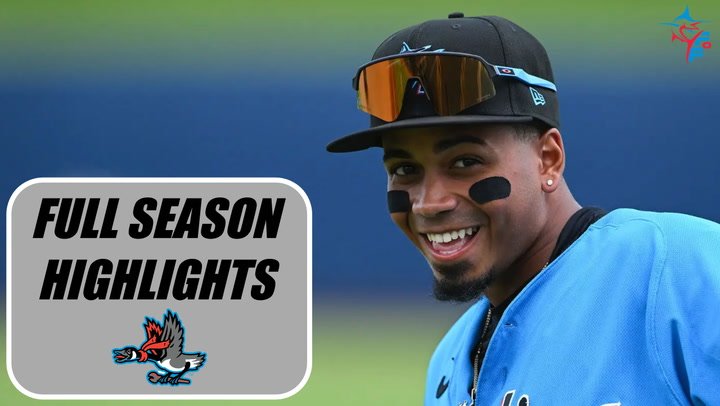 Here is the best of Starlyn Caba's season with the High-A Beloit Sky Carp. View the full article
 -

![More information about "Alex Kranzler Brings An SEC Mentality to Red Sox Organization [Exclusive]"](//d317trerw33y7b.cloudfront.net/monthly_2026_09/rssImage-9d33d2ff417231ebe94057f62980b37e.jpeg.2a5d7c32aa116a97b6918676c3b1ce4e.jpeg) “I’m just an ultra-competitor. Not going to try and blow up a radar gun, but I do have pretty good velocity. Kind of like an old-school pitcher, looking for ways to get people out.” Alex Kranzler is the latest pitcher to be drafted by Craig Breslow, having been taken in the 17th round of the 2026 MLB Draft. A 21-year-old right-hander out of Vanderbilt, Kranzler has a history of being a reliable arm out of the bullpen. Despite sporting a 6.18 ERA his junior season with Vanderbilt, Kranzler stepped up when it mattered most for his team. During the first round of the SEC Baseball Tournament, Kranzler entered the game with two outs in the fifth inning with his team trailing 4-1. His job was simple: keep the game close enough until his team could get going offensively. And he did just that, pitching 3 2/3 innings before allowing a runner to reach base as Vanderbilt scored seven unanswered runs to win the game. “Execute one pitch at a time,” Kranzler admitted when asked what was going through his mind during that outing. “Just be where your feet are, be in the moment. Trying not to look at the scoreboard, trying not to look at pretty much anything other than who’s at the plate, what the count is and what pitch am I going to throw. I trusted the offense; I knew if I could just keep the score there, we were going to find a way to score enough runs to win it. Just try to do my part, do my job and compete.” He's also had sustained periods of success, having tossed 14 2/3 innings in the month of May while allowing just one run on four hits. While his former coach Tim Corbin joked that Kranzler has always taken his game to the next level the deeper the NCAA season gets, the right-hander feels it isn’t the month but rather the situation. “I’ve always been a guy that runs on adrenaline. When the moment’s higher, I typically pitch better. Just getting into a playoff atmosphere kind of gets the juices flowing.” Kranzler is currently in a rare situation since the draft moved to July, actually pitching in affiliated ball in the same season he was selected. The right-hander was added to Salem’s roster on August 19, just the fifth pitcher under Craig Breslow to make his debut in the same season he was drafted. He joins a small list that is made up by 2025 draft class member Patrick Galle and 2024 draft class members Griffin Kilander, Cole Tolbert, and Calvin Bickerstaff. While he hasn’t made many appearances so far (just three games and 5 1/3 innings), the right-hander has flashed some potential in his short professional career. On the mound, he’s looking to do whatever he can to help the team win regardless of his role or what the situation is. “I think my average fastball last year was right around 93 and a half,” Kranzler said about his pitch mix. “The slider is definitely my bread and butter. That’s been my go-to pitch for as long as I can remember. On top of that, a cutter, splitter and occasionally a curveball. But the sinker, slider, cutter and splitter is the main mix.” The right-hander admitted that leading up to the draft itself, there were no conversations with the Red Sox. In fact, he didn’t know he was going to be a member of the organization until the pick was made. What might have helped him land with the organization may have been his play in the MLB Draft League. Pitching with the Trenton Thunder, Kranzler made five starts, tossing 23 innings and striking out 23 batters while allowing just six earned runs. Outside of the performance, the right-hander stated it might have been some of the most fun he ever had on a baseball field while also helping prepare him for what pro ball would be like. While he’s had a mix of usage between starting and relieving since his first year pitching for Vanderbilt, the Red Sox have used him out of the bullpen for his first three professional outings so far. So long as he sticks to his philosophy on the mound, he should have success in that role. “Just attack hitters no matter who’s in the box. [It's] A fearless approach looking to do whatever I can to help my team win." View the full article
“I’m just an ultra-competitor. Not going to try and blow up a radar gun, but I do have pretty good velocity. Kind of like an old-school pitcher, looking for ways to get people out.” Alex Kranzler is the latest pitcher to be drafted by Craig Breslow, having been taken in the 17th round of the 2026 MLB Draft. A 21-year-old right-hander out of Vanderbilt, Kranzler has a history of being a reliable arm out of the bullpen. Despite sporting a 6.18 ERA his junior season with Vanderbilt, Kranzler stepped up when it mattered most for his team. During the first round of the SEC Baseball Tournament, Kranzler entered the game with two outs in the fifth inning with his team trailing 4-1. His job was simple: keep the game close enough until his team could get going offensively. And he did just that, pitching 3 2/3 innings before allowing a runner to reach base as Vanderbilt scored seven unanswered runs to win the game. “Execute one pitch at a time,” Kranzler admitted when asked what was going through his mind during that outing. “Just be where your feet are, be in the moment. Trying not to look at the scoreboard, trying not to look at pretty much anything other than who’s at the plate, what the count is and what pitch am I going to throw. I trusted the offense; I knew if I could just keep the score there, we were going to find a way to score enough runs to win it. Just try to do my part, do my job and compete.” He's also had sustained periods of success, having tossed 14 2/3 innings in the month of May while allowing just one run on four hits. While his former coach Tim Corbin joked that Kranzler has always taken his game to the next level the deeper the NCAA season gets, the right-hander feels it isn’t the month but rather the situation. “I’ve always been a guy that runs on adrenaline. When the moment’s higher, I typically pitch better. Just getting into a playoff atmosphere kind of gets the juices flowing.” Kranzler is currently in a rare situation since the draft moved to July, actually pitching in affiliated ball in the same season he was selected. The right-hander was added to Salem’s roster on August 19, just the fifth pitcher under Craig Breslow to make his debut in the same season he was drafted. He joins a small list that is made up by 2025 draft class member Patrick Galle and 2024 draft class members Griffin Kilander, Cole Tolbert, and Calvin Bickerstaff. While he hasn’t made many appearances so far (just three games and 5 1/3 innings), the right-hander has flashed some potential in his short professional career. On the mound, he’s looking to do whatever he can to help the team win regardless of his role or what the situation is. “I think my average fastball last year was right around 93 and a half,” Kranzler said about his pitch mix. “The slider is definitely my bread and butter. That’s been my go-to pitch for as long as I can remember. On top of that, a cutter, splitter and occasionally a curveball. But the sinker, slider, cutter and splitter is the main mix.” The right-hander admitted that leading up to the draft itself, there were no conversations with the Red Sox. In fact, he didn’t know he was going to be a member of the organization until the pick was made. What might have helped him land with the organization may have been his play in the MLB Draft League. Pitching with the Trenton Thunder, Kranzler made five starts, tossing 23 innings and striking out 23 batters while allowing just six earned runs. Outside of the performance, the right-hander stated it might have been some of the most fun he ever had on a baseball field while also helping prepare him for what pro ball would be like. While he’s had a mix of usage between starting and relieving since his first year pitching for Vanderbilt, the Red Sox have used him out of the bullpen for his first three professional outings so far. So long as he sticks to his philosophy on the mound, he should have success in that role. “Just attack hitters no matter who’s in the box. [It's] A fearless approach looking to do whatever I can to help my team win." View the full article -
 The final day of the season in which all four San Diego Padres full-season affiliates turned into only three playing due to some bad weather. The Triple-A El Paso Chihuahuas blanked Las Vegas 7-0, the Double-A San Antonio Missions fell to Midland 5-1, the High-A Fort Wayne TinCaps finished their season with a 10-3 win in 11 innings and the Low-A Lake Elsinore Storm had their regular-season finale canceled due to wet grounds. Padres Minor-League Transactions None. Chihuahuas Notch First Shutout Of Season For the first time this season, the Triple-A El Paso Chihuahuas have thrown a shutout. And it came against the best offense in baseball. Right-hander Evan Fitterer and three relievers combined on a six-hitter as the host Chihuahuas blanked the Las Vegas Aviators 7-0. The Chihuahuas (56-82, 21-42 second half), who have two weeks left in their season, split the six-game series. Facing an Aviators team that has scored the most runs and has the most hits of anyone in the pro baseball (yes, including MLB), Fitterer allowed just a walk while striking out three over four hitless innings, while right-hander Logan Gillaspie went two hitless innings with no walks or strikeouts. Right-hander Daison Acosta took over in the seventh and got the first two outs before the no-hit bid ended on a double. Acosta would allow two more hits in the eight, with no walks or strikeouts. MLB veteran Jose Leclerc came on for the ninth, dancing around three hits and a walk thanks to a double play to secure the shutout. The Chihuahuas entered the game with the second-worst team ERA in all of baseball. It is now 6.38. Will Wagner, who had two hits, hit a three-run homer, while Nick Solak went 3-for-4 with a double, an RBI and a run scored. Carlos Rodriguez went 2-for-4, including his eighth triple (third in the Pacific Coast League), with an RBI and two runs scored. Wagner's three-run blast, his ninth of the season, came in the fifth inning. EP_0906.mp4 Player AB R H RBI BB K Mason McCoy, CF 4 1 0 0 1 0 Nick Solak, 1B 4 1 3 1 0 0 Carlos Rodríguez, RF 4 2 2 1 0 2 Marcos Castañon, DH 4 1 1 1 0 1 Nick Pratto, LF 4 0 1 1 0 1 Will Wagner, 2B 4 1 2 3 0 0 Rodolfo Durán, C 3 0 0 0 1 1 Gage Workman, SS 3 0 0 0 1 1 Clay Dungan, 3B 3 1 0 0 1 0 Player IP H R ER BB K HR Evan Fitterer 4 0 0 0 1 3 0 Logan Gillaspie 2 0 0 0 0 0 0 Daison Acosta 2 3 0 0 0 0 0 José Leclerc 1 3 0 0 1 0 0 Missions Stumble In Home Finale The Double-A San Antonio Missions completed their home schedule with a 5-1 loss to the Midland RockHounds. The Missions (58-74, 27-36 second half), who travel to Amarillo to finish the season, split the series 3-3. Braedon Karpathios (Padres Mission's No. 9 prospect) capped a huge week with two more hits, finishing the series 14-for-23 with two homers and 13 RBIs. Albert Fabian went 2-for-4, but the Missions had just six hits. Karpathios and Fabian each had a double. The Missions' lone run came in the sixth as Oswaldo Linares had a leadoff walk, a passed ball sent him to second and a Karpathios flyball sent him to third. After a walk to Alex McCoy (Padres Mission's No. 8 prospect), Romeo Sanabria hit a sacrifice fly. Missions left-handed starter Jamie Hitt allowed three runs on five hits and four walks while punching out six over five innings. Left-hander Harry Gustin gave up two runs over two innings, while right-handers Johan Moreno and Francisco Pena each had a scoreless inning. SA_0906.mp4 Player AB R H RBI BB K Braedon Karpathios, CF 3 0 2 0 1 0 Alex McCoy, RF 3 0 0 0 1 2 Romeo Sanabria, 1B 3 0 0 1 0 1 Albert Fabian, DH 4 0 2 0 0 1 Jack Costello, LF 4 0 1 0 0 0 Ryan Jackson, 2B 3 0 1 0 1 1 Justin DeCriscio, SS 4 0 0 0 0 1 Luis Verdugo, 3B 3 0 0 0 0 1 Oswaldo Linares, C 2 1 0 0 1 1 Player IP H R ER BB K HR Jamie Hitt 5 5 3 3 4 6 1 Harry Gustin 2 2 2 2 0 4 1 Johan Moreno 1 2 0 0 1 2 0 Francis Peña 1 0 0 0 0 2 0 TinCaps End With A Flurry, Score 7 On 2 Homers In 11th A tough second half of the season ended with a thrilling victory for the High-A Fort Wayne TinCaps, who scored seven runs in the top of the 11th for a 10-3 victory over the host Lansing Lugnuts. The TinCaps finished the season at 56-74, including 29-35 in the second half, winning their final three games to take four of six in the series. The TinCaps took fourth in the Midwest League's East Division in the second half. Rosman Verdugo delivered the biggest blow of the 11th with a grand slam, his 15th homer of the season. Yimy Tovar hit his first High-A homer as part of a 3-for-4 game with two runs scored, hitting a three-run shot that snapped the tie in the 11th. The TinCaps forced extra innings as Dylan Grego tripled with one out in the ninth, scoring Yoiber Ocopio, who had a leadoff single. The Lugnuts held a 2-0 lead when the TinCaps tied it in the seventh. Ocopio had a one-out single and Tovar had his first High-A double to make it 2-1. Tovar, who went to third on his double after a throwing error by the catcher, scored on Grego's groundout to first. The TinCaps used six pitchers in their season finale, with right-hander Jack Pineau, an undrafted free agent out of Creighton, going the final three innings to earn his first professional victory in his fifth game. FW1_0906.mp4 FW2_0906.mp4 Player AB R H RBI BB K Kasen Wells, CF 4 0 0 0 1 0 Ryan Gerety, LF 4 1 2 0 2 0 Rosman Verdugo, DH 6 1 1 4 0 2 Kerrington Cross, 3B 5 0 0 0 1 3 Lamar King Jr., C 3 0 0 0 0 1 Luke Cantwell, 1B 3 1 0 0 0 0 Yoiber Ocopio, C 5 3 3 0 0 1 Yimy Tovar, SS 4 2 3 3 1 0 Dylan Grego, 2B 5 1 2 2 0 0 Conner Westenburg, RF 5 1 1 0 0 2 Player IP H R ER BB K HR Carson Montgomery 1 0 0 0 0 1 0 Brandon Langley 2 0 0 0 1 2 0 Sean Barnett 1 2/3 3 2 2 1 2 0 Will Koger 1 1/3 2 0 0 0 1 0 Jeferson Villabona 2 0 1 0 2 1 0 Jack Pineau 3 0 0 0 0 0 0 Storm Regular-Season Finale Canceled; Playoffs Start Tuesday Due to wet grounds following a big overnight storm, the final game of the regular season between the host Low-A Lake Elsinore Storm and the Inland Empire 66ers was canceled. The Storm (66-65, 27-38 second half) won four of the five games in the series. While finishing last in the second half of the California League's South Division, the Storm won the first-half championship and will face the second-half winner, the Ontario Tower Buzzers, in the best-of-three league semifinals. Game 1 is Tuesday in Ontario, with Game 2 on Thursday in Lake Elsinore and Game 3, if necessary, also at The Diamond. Padres Mission's Top 20 Prospect Performance Ethan Salas: 0-for-3, 1 K Ryan Wideman: On injured list Coleman Borthwick: In Arizona Kruz Schoolcraft: DNP Ty Harvey: DNP Kale Fountain: Injured, out for season Jorge Quintana: DNP Alex McCoy: 0-for-3, BB, 2 K Braedon Karpathios: 2-for-3, 2B, BB Lamar King Jr.: 0-for-3, K Elliot Lascelles: DNP Tucker Musgrove: On injured list Jagger Haynes: DNP Jake Cunningham: DNP Truitt Madonna: DNP Eric Yost: DNP Winyer Chourio: DNP Jesus Castro: DNP Michael Salina: On injured list Rosman Verdugo: 1-for-6, HR, 4 RBI, 2 K View the full article
 -
 TRANSACTIONS RHP Billy Oldham released (A Fort Myers) Saints Sentinel St. Paul 12, Omaha 5 Box Score Ryan Gallagher: 6 IP, 6 H, 2 ER, 0 BB, 3 K HR: Noah Cardenas (13), Alan Roden (9) Multi-hit games: Emmanuel Rodriguez (3-for-5, 3 R, RBI, BB), Alan Roden (4-for-6, HR, 2 R, 3 RBI), Kala’i Rosario (2-for-5, R, RBI), Cody Morissette (2-for-3, R, RBI, BB), Noah Cardenas (2-for-4, HR, 2 R, 2 RBI) The Saints smoked their opponent on Sunday. Scoring in six separate innings isn’t just impressive; it’s a sign of an uncommonly potent offense perfectly ok with pushing a boulder up a hill every time they got knocked down. It started with three in the first, then two came in the second, and another pair arrived in the third. A 1-2-3 fourth cooled nothing: St. Paul returned with vitality in the fifth, plating three more off an Alan Roden launch to a barren berm. Top-offs in the sixth and seventh pushed the Saints’ run total on the day to 12, a significant explosion in any context, made even more notable given that they had totaled just four runs across their previous three games. Ryan Gallagher likely appreciated the support. The UC Santa Barbara product tossed six innings for the second time in 2026, striking out three while allowing two earned runs. It wasn’t the sexiest outing a pitcher can have, but it was effective, workmanlike, which Gallagher will certainly take as he nears the end of a challenging season.. The win secured St. Paul’s first road winning season since becoming a Twins affiliate. Previously, their best mark was a 37-37 showing in 2023. Emmanuel Rodriguez continues to argue that he deserves a promotion as well. He slashed .306/.462/.514 in August and is now slashing .308/.419/.538 in his first six games of September. And maybe Alan Roden deserves a second look. He’s off to an incinerating .429/.538/.619 line in September and has a hit in every Saints game since being optioned. Storm Chaser Lucas Braun—presumably no relation to this author—ranks as the 16th-best prospect in the Royals system. A starter, he surrendered six earned runs in two innings. Wind Surge Wisdom Wichita 13, Tulsa 7 (10 Innings) Box Score Adrian Bohorquez: 3 IP, 2 H, 1 ER, 2 BB, 3 K HR: Graham Brown (4) Multi-hit games: Marek Houston (2-for-4, 2 R, 3 RBI, 2 BB), Caden Kendle (2-for-5, R, 2 RBI), Khadiam Diaw (2-for-5, 2B, R, RBI, BB), Andrew Cossetti (2-for-6, 2B, RBI), Luis Hernandez (2-for-5, 2 R), Graham Brown (2-for-3, HR, 4 R, 2 RBI, BB), Danny De Andrade (4-for-5, R, 2 RBI) The Wind Surge broke through in the 10th to win on Sunday. Little was clean and obvious early; probably a fair reason why this game needed more time to determine a winner. The melee was messy and favored none—when Wichita rallied, so did Tulsa. The result was a 7-5 game favoring the Drillers after four. A Marek Houston walk and Caden Kendle sacrifice fly started the Wind Surge scoring. A Graham Brown single and Houston knock the following frame concluded the initial attack. Then, Brown homered in the sixth. Finally, a wild pitch tied matters in the ninth. The Manfred Man is one hell of a shot in the arm, eh? Wichita took their free runner and made the most of it, plating six to take a thorough and convincing lead over the Drillers. Danny De Andrade singled to score two and Houston walked. Next up, Caden Kendle split the middle infield with a single, Khadim Diaw shot a double into right field, and Brandon Winokur coaxed a run home on a groundout. Five was already in. That was probably plenty. No. Andrew Cossetti doubled in another. There we are. Chris Vallimont provided four critical innings in relief, entering after seven tumultuous runs had already been scored (only three of them earned), and held Wichita at bay with three strikeouts. Seven Wichita batters netted multiple hits. They earned 17 in total. Superstar prospect Josue De Paula is ranked as the sixth overall prospect in MLB. He singled twice and walked once in six plate appearances. Kernels Nuggets Cedar Rapids 10, South Bend 5 Box Score Kolten Smith: 3 ⅔ IP, 5 H, 3 ER, 3 BB, 5 K HR: JP Smith II (7), Andy Lugo 2 (4, 5) Multi-hit games: Eduardo Tait (2-for-6, 2B, 2 R), Andy Lugo (2-for-3, 2 HR, 2 R, 3 RBI), Luis Fragoza (2-for-4, 2B, R, BB) The Kernels end their season on a high note, belting three homers in a victory. Andy Lugo homered twice. Andy Lugo was not even in the starting lineup. He replaced JP Smith II—who had bombed in the third—and smoked a two-run shot in sixth. Perhaps feeling an enhanced sense of power, Lugo encountered a soft-tossing position player in the eighth, and treated him with a respect appropriate of one throwing eephuses (eephusi?) in a three-run game. Every batter in the Kernels lineup, starting or not, earned a hit on Sunday. South Bend’s tandems on Sunday evidently was not up to base-running halting snuff, as Cedar Rapids swiped a base safely six times, with even Eduardo Tait getting in on the action for his second steal of the season. His first came on Tuesday against these same Cubs. The Kernels had never had a losing season as a Twins’ affiliate, and they made their initial foray into losing a doozy, finishing 2026 with a woeful 48-82 record. Hopefully they can right the ship next year. Cubs’ first baseman Josiah Hartshorn ranks as the 39th-best prospect in baseball according to MLB.com. He doubled twice and walked once in five plate appearances. Mussel Matters Fort Myers 6, Clearwater 4 (10 Innings) Box Score Eric Hammond: 4 IP, 2 H, 0 ER, 0 BB, 5 K HR: Carson Tinney (8) Multi-hit games: None The Mighty Mussels exploded in extras to win on Sunday. Eric Hammond continued his post-July brilliance, hurling four shutout innings with five strikeouts. He allowed two hits. The righty entered August with an ERA of 5.27, and pitched well enough down the stretch to lower it to 4.17, a fine showing in his debut professional season. A Quentin Young single in the fourth gave Fort Myers their first run. A double-steal/wild pitch combo in the eighth knotted the game. There’s something about a free runner that sparks and inspires. Hell, Fort Myers even got out twice before revealing their rally. Jimmy Keenan singled, then Merphy Hernandez walked, and Carson Tinney muscled a three-run homer out the other way, showing off the raw pop that coaxed the Twins into taking him in the second round just a few months ago. The Mighty Mussels went 68-60 yet missed the postseason. That didn’t stop them from setting multiple franchise records; in OBP (.365); in OPS (.769); in homers (129); and in stolen bases (288). The steals total lead the entire FSL, too. Overall, it was a dynamic year for offense in Fort Myers, the likes of which they had never seen in their team’s history. TWINS DAILY PLAYERS OF THE DAY Twins Daily Minor League Pitcher of the Day – Eric Hammond Twins Daily Minor League Hitter of the Day – Alan Roden? Andy Lugo? Take your pick. PROSPECT SUMMARY Here’s a look at how the Twins Daily Top 20 Twins Prospects performed: #1 – Walker Jenkins (Twins) - 0-3, 2 K #2 – Vahn Lackey (Cedar Rapids) - 1-5, 2 R, RBI, BB #3 – Kaelen Culpepper (Twins) - 0-3, K #4 – Marek Houston (Wichita) - 2-4, 2 R, 3 RBI, 2 BB #6 – Emmanuel Rodriguez (St. Paul) - 3-5, 3 R, RBI, BB #7 – Hendry Mendez (St. Paul) - 1-4, R, RBI, K #8 – Eduardo Tait (Cedar Rapids) - 2-6, 2 R #9 – Gabriel Gonzalez (Twins) - 1-1 #11 – Carson Tinney (Fort Myers) - 1-5, HR, R, 3 RBI, BB, 2 K #12 – Brandon Winokur (Wichita) - 0-6, RBI, 2 K #13 – Khadim Diaw (Wichita) - 2-5, 2B, R, RBI, BB, 2 K #15 – Ryan Gallagher (St. Paul) - 6 IP, 6 H, 2 ER, 0 BB, 3 K #18 – Quentin Young (Fort Myers) - 1-5, RBI, 3 K #19 – Yasser Mercedes (Cedar Rapids) - 1-5, 3 K MONDAY’S PROBABLE STARTERS No games in the Twins’ organization are scheduled for Monday. View the full article
 -
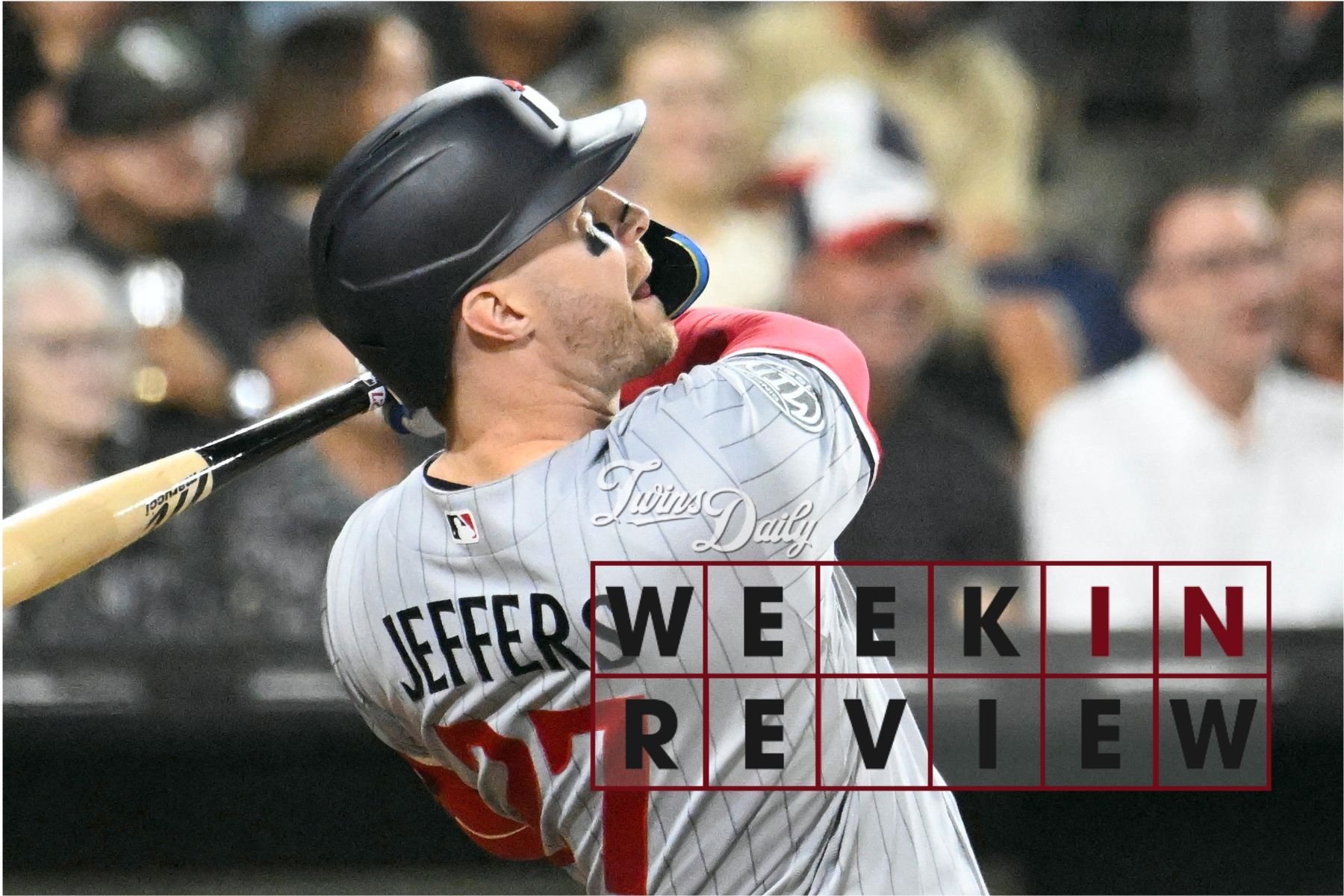 The Weekly Nutshell: The Twins opened the past week in exactly the way they needed: two blowout victories that ran their winning streak to three and inched them back in the direction of the .500 mark. Then, in customary fashion, they fumbled away their newfound momentum with back-to-back losses, and by the end of the week they were back where they started. Generally speaking, a 3-3 week that included a road series against the division leaders would not be a bad thing, but the Twins have run out of time to stand in place. They need wins in bunches. They needed to complete the sweep over Detroit rather than letting Wednesday's game get away in extras. They needed to find a way to win two in Chicago. They didn't. As things stand, their postseason odds are in the low single digits, with the Central title all but out of sight and four teams in front of them for the last Wild Card spot. With 19 games remaining, Minnesota needs to go 14-5 to finish with a winning record, and probably better than that to have a realistic shot at the playoffs. Impossible? No. But extraordinarily unlikely, especially given their persistent inability to stay on a roll in the second half. With contention this year more or less out of the equation, our attention increasingly turns toward analyzing a more hopeful future and the players whom it will depend on. Weekly Snapshot: Mon, 8/31 through Sun, 9/6 *** Record Last Week: 3-3 (Overall: 68-75) Run Differential Last Week: +8 (Overall: -48) Standing: 3rd Place in AL Central (7.0 GB); 4.5 games out of WC Latest Game Results Game 138 | MIN 11, DET 1: Twins Pummel Fading Tigers Behind Strong Bradley Start Jeffers: 2-4, 2 HR, 4 RBI Game 139 | MIN 15, DET 2: Offense Tees Off in Second Consecutive Blowout Victory Lewis: 3-4, HR, 3 RBI Game 140 | DET 11, MIN 6 (12): Comeback Falls Short as Tigers Take Over in Twelfth Nance: 1.1 IP, 5 R (4 ER) Game 141 | CWS 4, MIN 1: Matthews Gives Up Three Homers, Gets No Run Support Twins offense: 0-6 RISP, 9 LOB Game 142 | MIN 6, CWS 4: Tides Turn in Middle Innings on Three-Run HR from Jeffers Jeffers: 1-4, HR, 3 RBI Game 143 | CWS 10, MIN 1: Sox Take Rubber Match in a Laugher on National Broadcast Twins bullpen: 3.2 IP, 9 ER, 7 BB NEWS & NOTES When rosters expanded to 28 on September 1st, the Twins called up one pitcher and one position player: right-hander Garrett Acton and utilityman Ben Ross. Acton is making his return after appearing for the Twins four times back in April; the hard-throwing 28-year-old righty adds some depth and length to the staff, and is essentially auditioning for an opportunity in next year's bullpen. He pitched three times last week, allowing one run over four innings in his first two appearances before enduring a disaster outing on Sunday night (0.1 IP, 4 ER). Ross is a newcomer to the big-league scene, making his MLB debut as a sub on Tuesday and also entering in the late innings of Wednesday's and Sunday's games. He's a nice functional fit as a right-hander who can play all over, but it remains to be seen if he can hit enough to make an impact. So far he's looked pretty overmatched at the plate. To make room for Ross on the 40-man roster, the Twins designated Kyler Fedko for assignment and then released him, enabling him to quickly latch on with the Pirates. Fedko was already out for the year with a knee injury. HIGHLIGHTS It's been an encouraging start to Kaelen Culpepper's big-league career. His OPS sits at .801 through 25 games after another solid week that saw him notch six hits, including three doubles. He stole his first base and drove in four. Culpepper swings hard and when he connects the contact is loud. The question that will dictate his true upside is whether he can control the strike zone enough and avoid leaning too hard into pitch-hunting aggressiveness. The past two series were promising in this regard: Culpepper struck out just three times in 26 plate appearances, and he has a 5-to-4 K/BB ratio in his past 10 games after starting his career 15-to-2. Ryan Jeffers stole the show offensively for the Twins. After struggling through most of August, he launched two homers on its final day then added two more in the first week of September, including a critical three-run blast in Saturday's win at Rate Field. Jeffers drove in 11 runs across six games to power the offense, with Victor Caratini notably getting zero starts all week. It can't be overstated how tough it's going to be to replace Jeffers' bat in the lineup when he departs this offseason. He owns the highest wOBA (.379) of any catcher in the majors with 300-plus plate appearances. The 26-run explosion that took place between Monday and Tuesday against the Tigers helped a number of other slumping bats get on track. Royce Lewis had a three-hit, three-RBI game on Tuesday and a game-tying two-run single on Wednesday as part of a 7-for-23 week. He had as many extra-base hits in the first four games of September (3) as his final 20 in August. Kody Clemens homered twice, drove in four, and drew four walks. Josh Bell went 7-for-22 and drove in his 84th run, giving him the highest single-season total for any Twins hitter since 2021. On the pitching side, Taj Bradley (7 IP, 1 ER) and Connor Prielipp (5 IP, 0 ER) were both excellent in the big wins over Detroit — much better than they needed to be, as it turned out. Bradley was less effective on Saturday (5 IP, 4 ER) but the offense picked him up to earn his team-leading 11th victory of the year. Strong finishes for Bradley and Prielipp would bode very well for the 2027 rotation's outlook. Minnesota's deadline bullpen pickups also deserve a nod. A.J. Minter threw two scoreless innings and has a 0.66 ERA in 13 ⅔ innings since being acquired. Jeff Hoffman was absurdly dominant, striking out five of eight batters faced across his two outings. LOWLIGHTS Relative to Culpepper, it hasn't been nearly as smooth of an entry to the big leagues for Walker Jenkins, at least from a production standpoint. He's batting .115 after going 1-for-17 in the past week. His lone hit was a home run, the first of his MLB career, but it came against a position player in Monday's blowout. Obviously you'd like a few more hits to drop in, but I'm not overly concerned with what I've seen. Stylistically there is plenty to like about Jenkins, who is generally taking good at-bats and putting some decent swings on the ball. He's also playing a solid center field, providing a sizable upgrade over Luke Keaschall and a hobbled Byron Buxton. I feel sort of the opposite way about Brooks Lee. His numbers look okay — he drove in six runs last week and is second on the team behind Bell with 79 RBIs on the season — but the underlying metrics portray a hitter with poor discipline and consistently low contact quality. He did help produce some runs last week but overall he was 7-for-25 with no walks, and he's running a sub-.300 OBP while now frequently batting second in the lineup. A charmed run for Tommy Nance in a Twins uniform came to a crashing halt on Wednesday night. He posted a 2.08 ERA with no home runs allowed through his first 17 appearances with Minnesota following his acquisition in early July, proving to be a nifty low-stakes pickup for the front office, but things unraveled under his watch in the 12th inning on Wednesday. The score was 6-6 before Detroit detonated for five runs on a two-run homer and three-run double, pulling away and robbing the Twins of their chance at a much-needed sweep. Nance gave up another three-run homer in Chicago on Sunday night, though two of the runs were charged to Acton. These were an ugly couple of outings, but probably an overdue regression to the mean for Nance, who still has a respectable 4.12 ERA with Minnesota. Like with Dean Kremer, we're getting a reality check on a middling talent that overperformed out of the gates with his new team. But like Kremer, Nance still has a chance to play a useful role on next year's team. TRENDING STORYLINE Joe Ryan is set to rejoin the Twins in a final desperation push for the playoffs. (Or maybe just as much to showcase his health for offseason trade suitors.) He threw three innings for St. Paul in a rehab start on Tuesday, and then reportedly came out of a bullpen session over the weekend feeling good. It sounds like the plan is for him to start Monday's series opener in Detroit. Assuming he comes back looking healthy and strong, Ryan can be a difference-maker for the Twins, who have received very little from their two All-Stars in the second half. He'll be in line to make four starts over the remaining three weeks of games, including two in the coming week. Presumably Ryan's return will bump Prielipp to the bullpen for workload management reasons. As for Minnesota's other All-Star, a return to action this year is less likely and certainly less imminent. Buxton refuses to call it quits on this season, even as he acknowledges that hip surgery in the offseason is inevitable. I respect his grit, but I think it's best for all parties if Buxton shuts it down and shifts focus to the next step in resolving this chronic hip issue. I suspect he'll reach the same conclusion within the next week or so unless the Twins go on a serious run. The specific nature and recovery timeline of Buxton's surgery, both yet to be determined, will be among the biggest question marks looming for the team entering this offseason. LOOKING AHEAD Though nothing has been officially announced, the expectation is that Ryan will be activated to start the series opener in Detroit, which would also line him up to face Cleveland in the finale of the weekend series at Target Field. Not to put too fine a point on it, but the Twins need to go 5-1 or better this week to maintain any credibility in the postseason race. MONDAY, SEPTEMBER 7: TWINS @ TIGERS — TBD v. RHP Troy Melton TUESDAY, SEPTEMBER 8: TWINS @ TIGERS — RHP Dean Kremer v. RHP Drew Anderson WEDNESDAY, SEPTEMBER 9: TWINS @ TIGERS — RHP Zebby Matthews v. RHP Keider Montero FRIDAY, SEPTEMBER 11: GUARDIANS @ TWINS — LHP Parker Messick v. RHP Taj Bradley SATURDAY, SEPTEMBER 12: GUARDIANS @ TWINS — RHP Gavin Williams v. RHP Bailey Ober SUNDAY, SEPTEMBER 13: GUARDIANS @ TWINS —LHP Joey Cantillo v. TBD View the full article
 -
What are your Marlins vs. Mets series predictions?
DiamondCentric posted an article in Fish On First
 Once again in 2026, I will be monitoring Miami Marlins predictions from our valued SuperSubs, Fish On First staffers and livestream guests. Individual article pages like this one will be created prior to every Marlins series and featured prominently on the FOF site. Consistent participation is key if you want to win this annual contest. Submissions only take a few seconds. Scoring system A "perfect" series is worth three points: Earn one point for predicting which team will win the upcoming series Earn one point for predicting the precise number of victories for each team Earn one point for predicting the “Series MVP” who accumulated the highest win probability added (WPA) during the series as calculated by FanGraphs (could pick a player from either team) FOF SuperSub David Fernandez is currently atop the 2026 season leaderboard, which will be updated between every Marlins series. If you are a SuperSub, leave a comment with your Prediction Time picks on this page, or join the Marlins Discord Server and submit there. We'll feature them on the upcoming Fish On First LIVE episode and track your points throughout the season! Any picks submitted prior to the first pitch of the series opener will be counted. If you are not a SuperSub, please consider signing up here to support the FOF staff. Series preview notes Probable starting pitchers: RHP Eury Pérez (MIA) vs. RHP Jonah Tong (NYM) on Monday RHP Sandy Alcantara (MIA) vs. LHP Sean Manaea (NYM) on Tuesday RHP Janson Junk (MIA) vs. RHP Nolan McLean (NYM) on Wednesday The Marlins rank 15th in MLB with a 100 wRC+ and 14th in MLB with a 4.06 FIP. They are 4-6 in their last 10 games and have a 43-29 record at home this season. The following Marlins players are on the injured list: Anthony Bender (15-day IL), Xavier Edwards (10-day IL), Pete Fairbanks (15-day IL), Ronny Henriquez (60-day IL), William Kempner (60-day IL), Adam Mazur (60-day IL), Andrew Nardi (60-day IL) and Robby Snelling (60-day IL). The Mets rank 24th in MLB with a 94 wRC+ and 16th in MLB with a 4.10 FIP. They are 5-5 in their last 10 games and have a 31-38 record on the road this season. The following Mets players are on the injured list: Reed Garrett (60-day IL), Tylor Megill (60-day IL), Cionel Pérez (15-day IL), Jorge Polanco (60-day IL) and Devin Williams (15-day IL). View the full article
 -
White Sox 10, Twins 1: Bailey Ober Bends, Bullpen Breaks In Blowout
DiamondCentric posted an article in Twins Daily
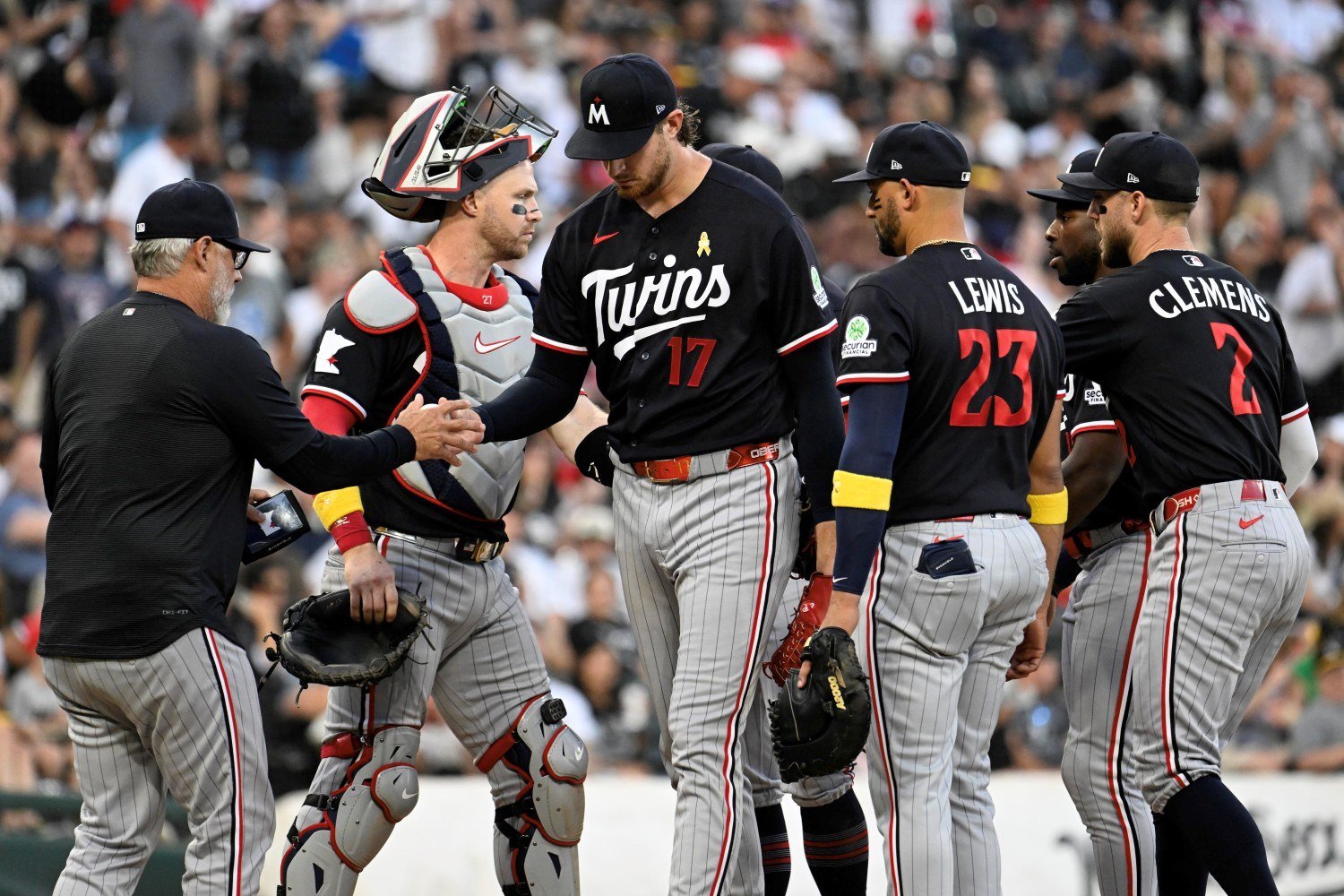 Box Score: Starting Pitcher: Bailey Ober: 4 ⅓ IP, 4 H, 1 ER, 3 BB, 6 K (84 Pitches, 50 Strikes, 59.5%) Home Runs: Brooks Lee (23) Bottom 3 WPA: Andrew Morris (-0.14), Josh Bell (-0.08), Kody Clemens (-0.08) Win Probability Chart (Via BaseballSavant): Here we are again, with the Twins somehow still playing for their playoff lives despite not being able to sustain any level of consistent success. They turned to Bailey Ober Sunday night with the division-leading White Sox relying on a bullpen game. Ober was in trouble immediately, allowing a leadoff double to Sam Antonocci. But he bore down, striking out the dangerous Miguel Vargas before retiring Munetaka Murakami and Andrew Benintendi to end the threat. The second inning began with a strikeout to Colson Montgomery, but he would reach on a wild pitch. Braden Montgomery walked, then Ober went to work. He got Tristan Peters on a groundout, then got ahead of Chase Meidroth before getting five consecutive whiffs (one was a foul tip, to be fair) to pitch out of his second jam. The Twins, meanwhile, were flailing away at opener Bryan Hudson’s Ober impression (He stands 6’8” with minimal velocity). Hudson faced the minimum through 1 ⅔ innings, then gave way to hard-throwing Jordan Hicks, who struck out three of the four hitters he faced. The Sox got two men on in the third, but again, Ober pitched his best when he needed to, striking out Colson Montgomery on a nasty slider below the zone, moving his total number of stranded runners to five, with the White Sox 0-7 with runners in scoring position. Sox lefty Hagen Smith took over for the fourth and was nails, striking out four in three perfect innings. He doesn’t throw that hard but has some great ride on his fastball at the top of the zone- you can see why the Sox called him up for the stretch run. After an uneventful fourth, Ober allowed a second leadoff double to Antonocci in the fifth. This time, Murakami was able to scald a single into right field for the game’s first run, chasing Ober from the game. Kody Funderburk came on and quelled the threat. He would not be so fortunate in the sixth. Peters, who has killed the Twins, delivered a left-on-left double down the line, prompting Derek Shelton to insert Andrew Morris. Morris walked Meidroth before retiring Teel on a grounder. But Antonocci grounded a ball through the drawn-in infield to score two. He would be credited with his third double, as the ball deflected slowly into center field. The Twins put Murakami on, and lefty-masher Randal Grichuk (who had pinch-hit for Benintendi earlier against Funderburk) managed to rope a single into left field to extend the lead to four. Brooks Lee did deliver a long home run in the seventh off occasional closer Grant Taylor. Jeffers then walked, but the Twins wouldn’t be able to add any more traffic. The White Sox had no such issues against Taylor Rogers. They loaded the bases on a single, hit-by-pitch and a walk, then Shelton went to Garrett Acton to clean up the mess. He did not, walking Vargas on four pitches to force in the fifth Sox run. Acton has decent stuff, but he had no answers for the Sox lineup in the eighth. He allowed a leadoff homer to Grichuk (who went 2-2 with said homer and a walk), then walked both Montgomeries before Peters hit a ground-rule double to truly ice the game. Kyle Teel would later hit a three-run home run, in case anyone had any doubts. Stuff I’m Tracking: Ober’s evolution into the second coming of Paul Byrd is going pretty good. His ability to command the baseball is well known, but being able to frustrate hitters by never throwing what the batter expects is the next level. Pitching against the American League’s best offense in a hitter’s park, I’ll take his performance today. Walker Jenkins sure has a lot more swing-and-miss in his game than anticipated. It probably is too soon to bench him, but it sure would be nice if he could make some good contact ahead in the count. Morris should be a big part of the bullpen next year. This year, he’s cooked, mentally. Eric Hosmer gets to work national TV broadcasts now? I was under the impression that nobody liked him after he wore out his welcome in San Diego. What’s Next: The Twins head to Detroit for a three-game series with the Tigers. The Twins have not announced a starter, but it would figure to be Connor Prielipp’s turn—although his last start followed an opener with good success. They will have a rematch against the de facto ace of the Tigers, Troy Melton (7-4, 2.20 ERA), who they punished last week for five runs, including two home runs. Postgame Interviews: Coming soon Bullpen Usage Chart: WED THU FRI SAT SUN TOT Funderburk 29 0 0 11 15 55 Nance 33 0 0 0 20 53 Acton 0 0 18 0 31 49 Gomez 15 0 0 7 20 42 Rogers 7 0 19 0 15 41 Minter 17 0 0 18 0 35 Hoffman 12 0 0 17 0 29 Morris 0 0 0 0 23 23 Adams 3 0 0 0 0 3 View the full article
 -
Hall of Famer Josh Beckett & Marlins-Cubs series reaction
DiamondCentric posted an article in Fish On First
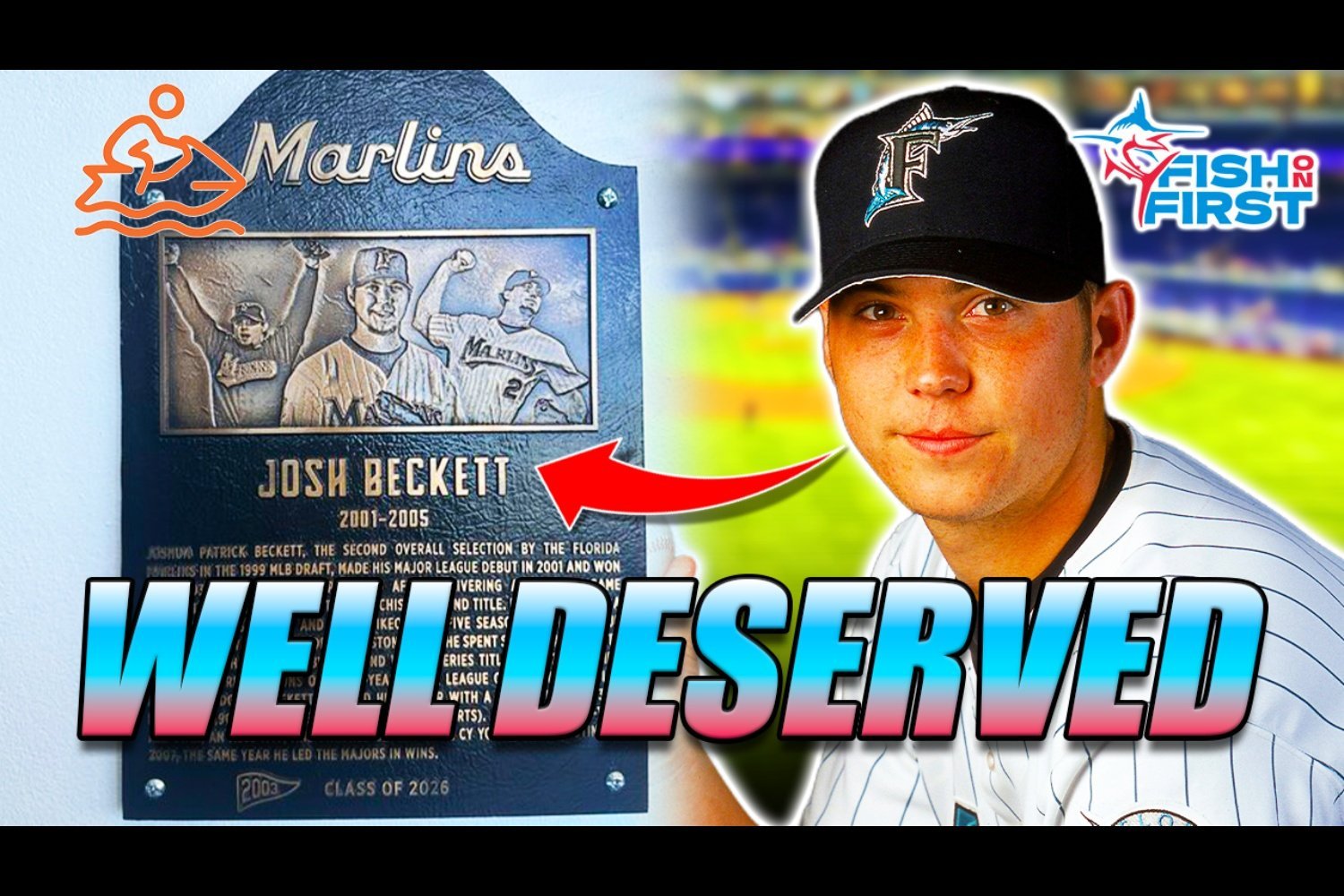 Fish On First staffers react to the latest Miami Marlins series and prepare you for what lies ahead. Sunday's show was hosted by Ely Sussman and featured panelists Nate Karzmer, Sean Millerick and Marcel Sparks. The following topics were covered: Josh Beckett's Marlins Legends Hall of Fame induction Javier Sanoja capitalizing on everyday opportunity Fragile state of the bullpen NL Wild Card race updates 2025 Marlins draft class thriving at the plate Previewing and predicting the next series against the New York Mets You can find Fish Unfiltered and Fish On First LIVE on the Fish On First YouTube channel, Apple Podcasts, Spotify or wherever else you get your pods. Our next FOF LIVE episode will be on Thursday at approximately 6:30 p.m. ET on the off-day following the Marlins-Mets series finale. View the full article
 -
Nick Pivetta Will Return To Padres' Rotation On Monday
DiamondCentric posted an article in Padres Mission
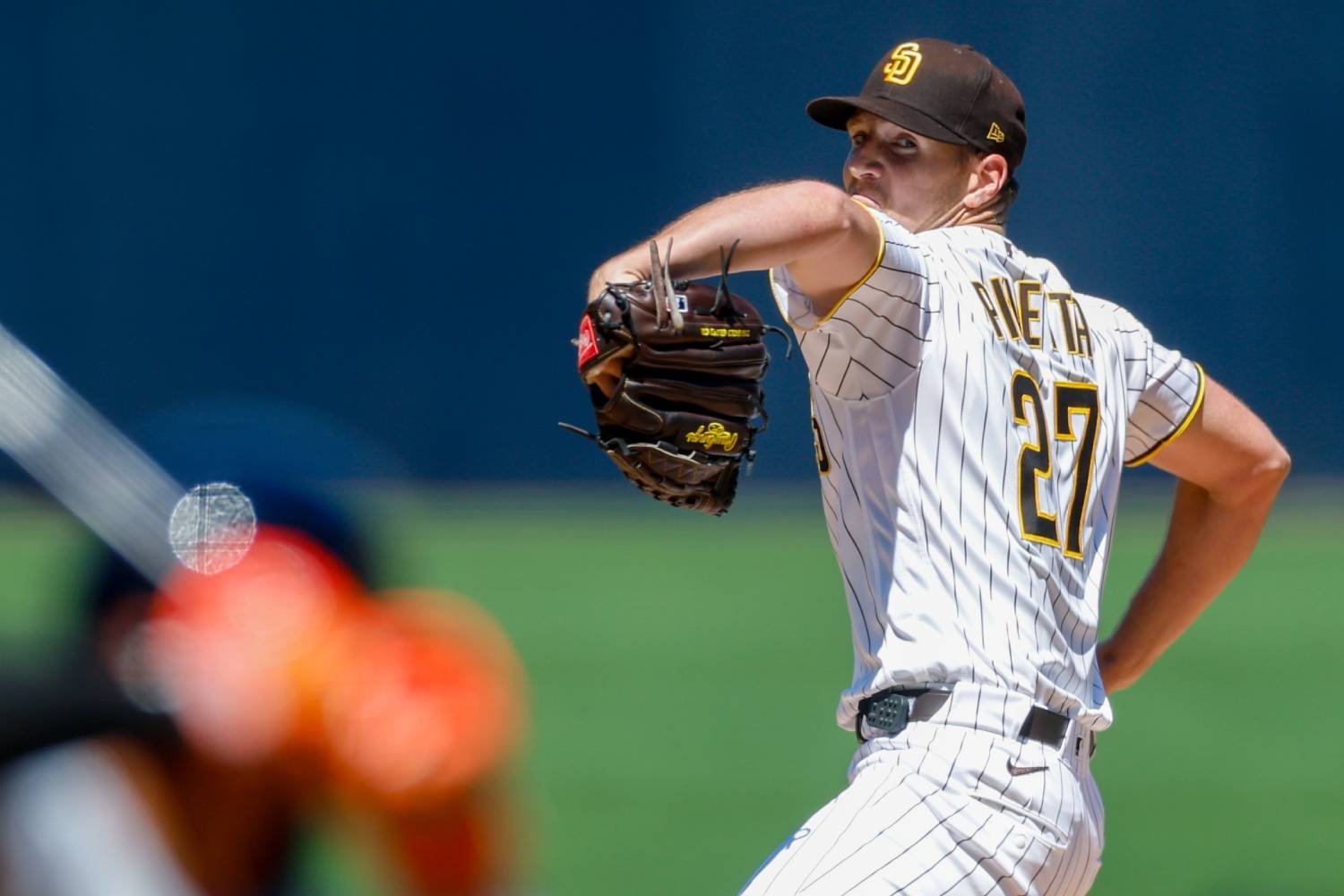 Just over a month ago, Nick Pivetta walked off the mound in Lake Elsinore, looking like his season might be over. Now, the right-hander is set to rejoin the San Diego Padres for the final three weeks of the regular season. Pivetta will be activated from the 60-day injured list and start Monday's game against the Washington Nationals at Petco Park, manager Craig Stammen said following Sunday's 4-3 victory over the New York Yankees. Right-hander Randy Vasquez will move to a relief role, perhaps piggybacking Pivetta on Monday. The Padres will have to make moves regarding the 26- and 40-man rosters to accommodate Pivetta's return. One possibility on the 26-man roster would be sending right-hander Jhony Brito back to Triple-A El Paso, while designated hitter Miguel Andujar could be transferred to the 60-day IL. The 33-year-old has been out since mid-April with a strained right flexor in his right elbow. After being sidelined for a lengthy period, he began a rehab assignment Aug. 4 with fellow right-handed starter Joe Musgrove at Low-A Lake Elsinore. Musgrove started and his outing went well, but Pivetta walked off the mound after throwing his 14th pitch, saying that his elbow didn't feel right. However, he did throw about 30 pitches in a bullpen session that day, a good sign. But he returned a couple weeks later, making one start for Lake Elsinore and then one last weekend for Triple-A El Paso and looked good. Everyone involved in the process decided that if Pivetta came out of Saturday's bullpen session feeling good that he would start against the Nationals. View the full article
 -
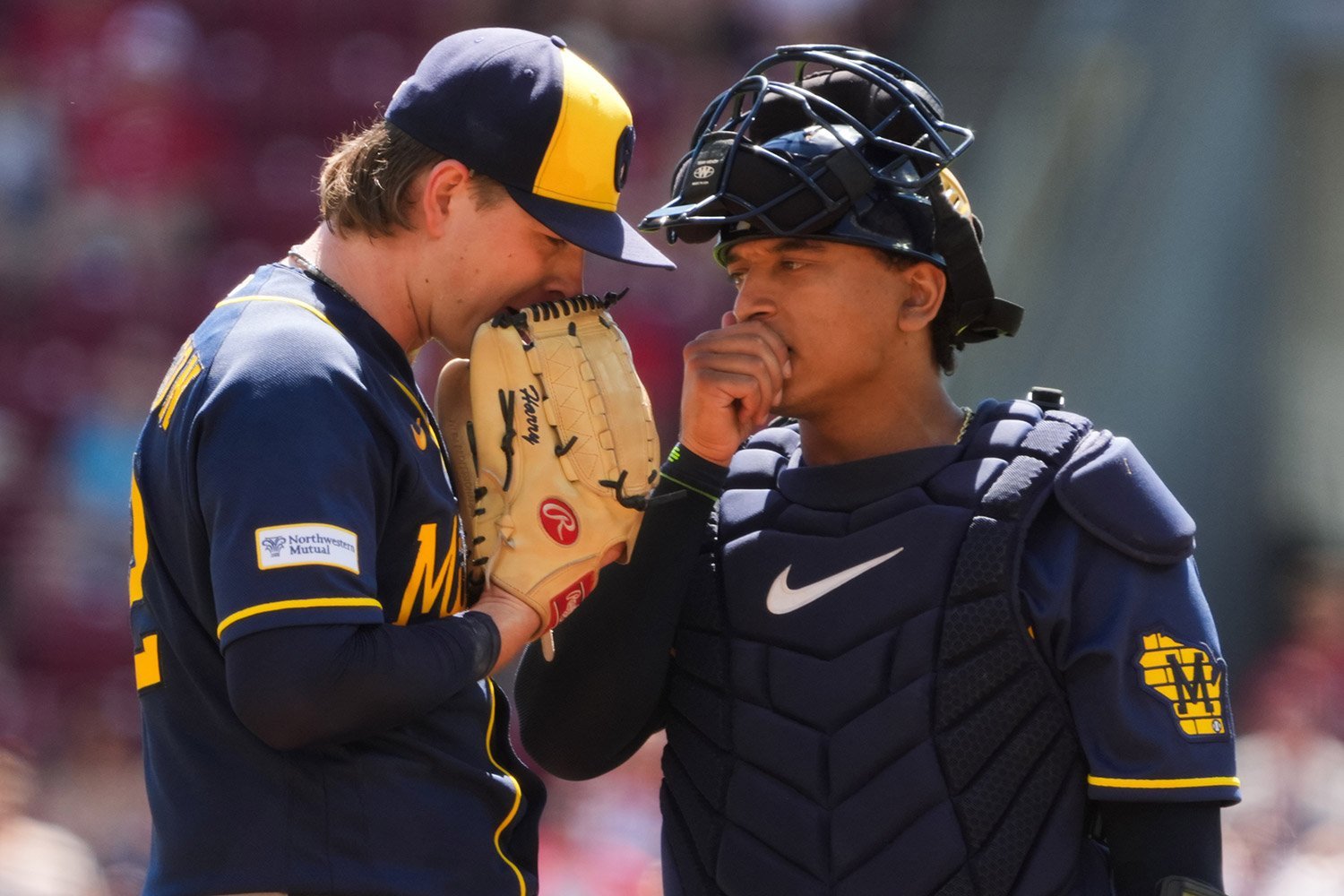 Weekly Snapshot: Record Last Week: 3-4 (Overall: 88-56) Runs Scored Last Week: 42 Runs Surrendered Last Week: 52 Standing: 1st in NL Central *** Game 138 (8/31) | CHC 17, MIL 2 Game 139 (9/01) | MIL 9, CHC 4 Game 140 (9/02) | MIL 9, CHC 5 Game 141 (9/03) | CHC 2, MIL 1 Game 142 (9/04) | MIL 10, CIN 7 Game 143 (9/05) | CIN 5, MIL 3 Game 144 (9/06) | CIN 12, MIL 8 *** Game 138 | Cubs 17, Brewers 3 MIL Starter: Kyle Harrison (3.2 IP, 10 H, 2 BB, 9 ER, 3 K) Top Performers: Cooper Pratt (2 H, HR, 2 RBI) Battling the humid Chicago weather did not go to plan for Kyle Harrison and the Brewers as they opened a four-game set against the Cubs at Wrigley Field on Monday. Quickly, as Harrison’s fastball did not have the velocity or command it has sported most times this season, the game was out of reach. That early large Cubs lead only got worse too, as Andrew Vaughn was tasked with getting six outs in a 17-3 Cubs blowout that saw the Northsiders hit a franchise record nine home runs. Cooper Pratt’s 2-run homer (+0.3 WP%) Game 139 | Brewers 9, Cubs 4 MIL Starter: Robert Gasser (4.1 IP, 3 H, 2 BB, 3 ER, 4 K) Top Performers: Joey Ortiz (2 H, HR, 2 RBI) Christian Yelich (H, BB, HR, RBI) William Contreras (2 H, BB, 2 2B, RBI) The Brewers bounced back from their ugliest loss of the season behind Robert Gasser, and did so by picking on a struggling Cubs bullpen. Christian Yelich was the man with the big swing in the contest, as he took an inside pitch from Daniel Palenica deep in the sixth to give the Brewers the lead for good. Yelich sends one into the bleachers (+23.1 WP%) Game 140 | Brewers 9, Cubs 5 MIL Starter: Jacob Misiorowski (4.0 IP, 5 H, 4 BB, 5 ER, 5 K) Top Performers: Jackson Chourio (4 H, 2B, HR, RBI) Brewers Bullpen (5.0 IP, H, BB, 0 ER, 4 K) The offense picked up an uncharacteristically rough start from Jacob Misiorowski by scoring 9 runs for the second straight night, and did so powered by Jackson Chourio's 4-hit day and clean pitching behind the Miz. Four other Brewers also recorded multi-hit days, with the Brewers winning the Wednesday night contest 9-5. Jackson Chourio’s 4-hit day Game 141 | Cubs 2, Brewers 1 MIL Starter: Logan Henderson (7.0 IP, 3 H, 0 BB, 2 ER, 7 K) Top Performers: Andrew Vaughn (H, HR, RBI) Kevin Gausman and Logan Henderson locked up in a pitcher’s duel in the series finale on Thursday, but it was NL MVP favorite Pete Crow-Armstrong who shifted the tides of the contest, taking a low changeup from Henderson and depositing it into the bleachers in the 3rd inning to give the Cubs their only 2 runs of the game. Andrew Vaughn promptly responded in the 4th with a homer of his own, but with no runners on base, it only cut the deficit in half, and unfortunately, that score of 2-1 would hold, allowing Chicago to split the series. Andrew Vaughn goes yard (+10.2 WP%) Game 142 | Brewers 10, Reds 7 MIL Starter: Shane Drohan (4.0 IP, 5 H, 2 BB, 6 ER, 5 K) Top Performers: Brice Turang (3 H, 2B, 3 RBI) Cooper Pratt (H, BB, 4 RBI) Chad Patrick (2.0 IP, H, 2 BB, 0 ER, K) Runs were back on the menu as the Brewers skipped over to Great American Ballpark to continue their week, with both Shane Drohan and Reds twirler Rhett Lowder finding little success in their four innings of work. The Brewers' pen outdueled Cincinnati the rest of the way, though, and Trevor Megill slammed the door shut in the 9th for a 10-7 Brewers win. Cooper Pratt clears the bases (+28.8 WP%) Game 143 | Reds 5, Brewers 3 MIL Starter: Dustin May (3.2 IP, 5 H, 0 BB, 2 ER, 5 K) Top Performers: Gary Sánchez (2 H, BB, 2B) DL Hall (1.1 IP, 0 H, BB, 0 ER, 3 K) Dustin May’s bounceback was going well before the rain rolled over Ohio on Saturday, sending the contest into a lengthy delay before the 4th inning could be completed. Cincinnati then was the better team once the rain subsided, as they’d tack on four runs while the Brewers stranded a plethora of runners, including leaving the bases loaded in the 9th, to fall 5-3. William Contreras goes yard (+10.0 WP%) Game 144 | Reds 12, Brewers 8 MIL Starter: Kyle Harrison (3.2 IP, 9 H, 4 BB, 6 R, 4 ER, 4 K) Top Performers: Brice Turang (2 H, 2 BB, 2B, 3 RBI) Jake Bauers (H, 3 BB, HR, RBI) Grant Anderson (2.2 IP, H, 2 BB, 0 ER, 2 K) Kyle Harrison’s rough patch continued as the Brewers found themselves on the wrong end of a high-scoring affair, falling 12-8 and dropping the rubber match in Cincinnati. Transactions: 09/04/26 - RHP Joel Kuhnel was claimed off waivers by the San Francisco Giants. 09/02/26 - Designated RHP Joel Kuhnel for assignment. 09/01/26 - Activated LHP JoJo Romero from the 15-day injured list. 09/01/26 - Recalled C Bo Naylor from Nashville Sounds. 08/31/26 - Activated RHP Abner Uribe from the 15-day injured list. 08/31/26 - Signed free agent IF Jonathan Ornelas to a minor league contract. 08/31/26 - Placed RHP Bryse Wilson on the 15-day injured list. Low back strain. Looking Ahead: Monday, 9/07 - Cubs @ Brewers - 1:10 PM CDT Tuesday, 9/08 - Cubs @ Brewers - 6:40 PM CDT Wednesday, 9/09 - Cubs @ Brewers - 6:40 PM CDT Friday, 9/11 - Reds @ Brewers - 6:45 PM CDT Saturday, 9/12 - Reds @ Brewers - 6:10 PM CDT Sunday, 9/13 - Reds @ Brewers - 1:10 PM CDT View the full article
 -
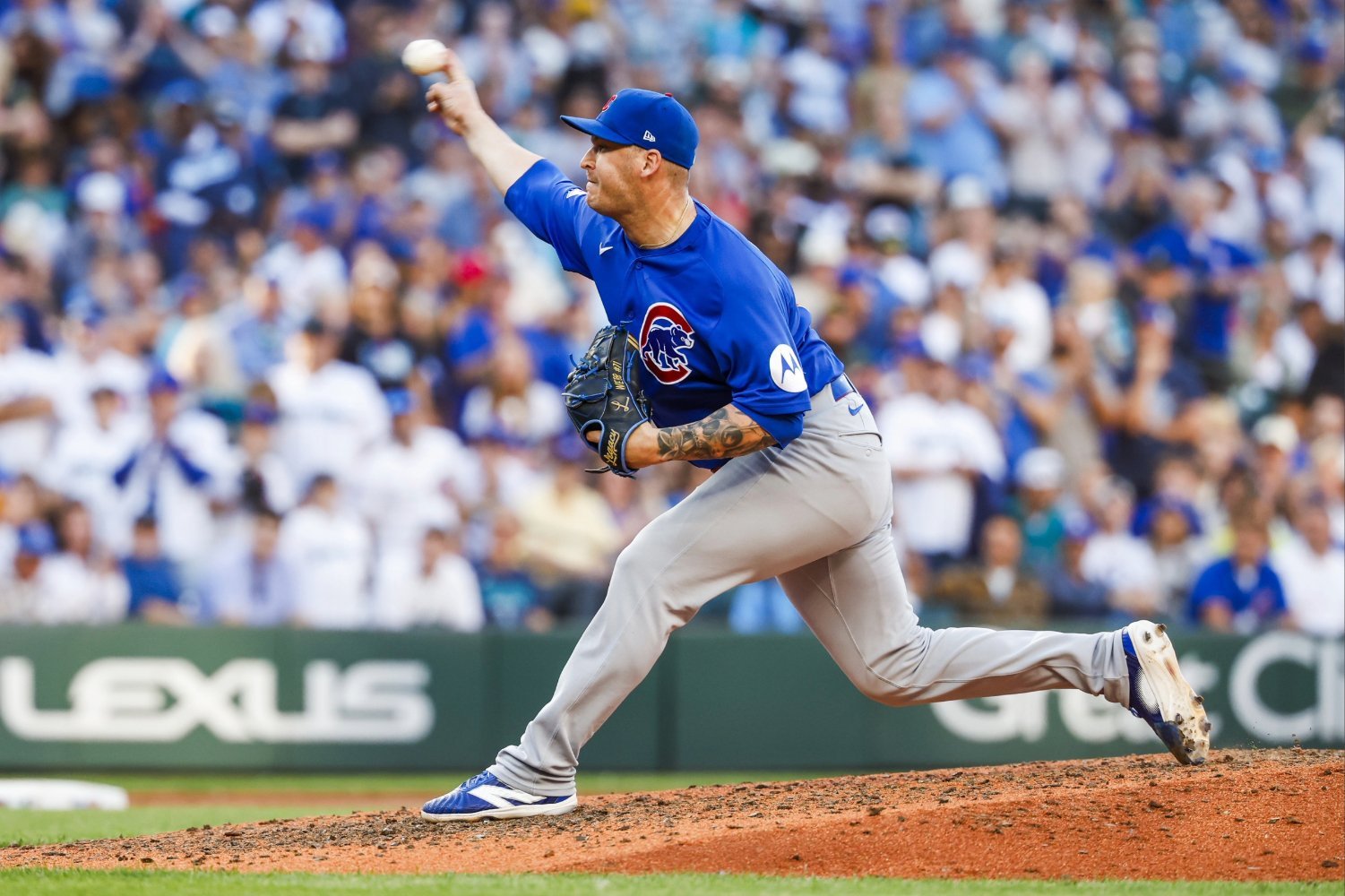 You could hear a collective groan throughout Wrigley Field last Wednesday night when Chicago Cubs closer Jacob Webb took a line drive from Christian Yelich right off of his throwing arm and had to exit the game. A bullpen that has had a rough past couple of weeks or so suddenly felt like it might be losing a guy that had been their most dependable bullpen arm this season. Thankfully, Webb is going to be okay, and will even be able to avoid a stint on the injured list. However, the closer has been part of the reason for the struggles in the bullpen at large, blowing back-to-back saves against the Mariners and Diamondbacks. Is this a case of a pitcher coming back down to earth, or just a blip on the radar of an otherwise excellent season? To answer our question, let’s first get a sense for how Webb likes to attack hitters. To start the season, he was primarily a two-pitch pitcher, utilizing his four-seam fastball and his changeup to attack both left and right-handed hitters. This led to a pretty profound platoon split for the reliever: prior to June 21, righties hit a robust .333/.375/.549 against him, while he held lefties to just a .218/.274/.333 batting line, according to FanGraphs. A reverse platoon split like that is rare, but not unheard of, especially for someone who features a changeup as his out-pitch. Earlier this year, Webb was clearly tinkering to find a better pitch to get righties out, experimenting with a slider, sweeper, and curveball, to middling results. Since late June, though, he has dialed in his slider, and he now confidently features his fastball and his slider against right-handed hitters. All stats courtesy of Baseball Savant: Timeframe Four-Seamer Changeup Slider Sweeper Curveball Start of season-June 20 52.3% 22.5% 9.6% 8.3% 7.3% June 24-August 21 42.4% 13.2% 43.1% 0% 1.4% This helped the veteran righty kick off a run of 24 straight scoreless appearances from June 24 through August 2. During that stretch, righties hit a paltry .094/.189/.094 against the Cubs’ closer. Then, he threw this pitch: Webb1.mp4 Then, just three days later, the Cubs lost a game on this pitch: Webb2.mp4 Sorry for making you rewatch that, but it doesn’t take any sort of advanced eye to see why those were significant. That was basically the same pitch, a slider, both thrown to right-handed hitters, almost to the exact same part of the strike zone, that were hit for walk-off home runs. Of course, that is most certainly not where Webb wanted to throw those pitches. Ideally, he would break the slider outside, just off the edge of the strike zone, so the batter swings through it. Those were both mistakes. He has only thrown seven sliders to that lower-middle portion of the strike zone this year, per Baseball Savant. The other five were harmless. Two foul balls, a swinging strike, a ground out, and a called strike. Mistakes aren’t always taken advantage of, but it sure makes it much more noticeable when they are. Webb himself seems to have noticed. He has only taken the mound twice since allowing the walk-off in Arizona, and he has only faced three right-handed hitters: Tyler Stephenson, Sal Stewart, and Dane Myers. In those three plate appearances, Web threw just one slider, instead opting for his changeup and his four-seam fastball, utilizing those 56.3 and 31.3 percent of the time, respectively. Personally, I think that Jacob Webb is going to be fine. He made two mistakes in two consecutive games, and both happened to cost him in the worst way. I am more worried that the juxtaposition of those two results have caused him to lose confidence in his slider, which is part of what got him here in the first place. Taking that line drive from Yelich off of his arm was not a good thing. Now that we know he is okay, though, I am wondering if the few days off that it mandated might have been good for him—a mental reset of sorts. The Cubs badly need him to be the guy he was for the middle portion of the summer if they’re going to have success in the fall. View the full article
 -
 Let's see how the Boston Red Sox affiliates did on Saturday evening. Triple-A Worcester Red Sox Series @ Buffalo Bisons (Toronto Blue Jays): 3-0 Season Record: 69-61 Worcester rolled to its fifth straight win, prevailing 4-2 behind great games from Kristian Campbell and Michael Sansone. Sansone got the start on Saturday evening, spinning a five-frame appearance while keeping Buffalo’s offense in check. He let up one run on a pair of hits but struggled with command, issuing four walks. He struck out two more before Noah Song took over. Song earned the win for his two-inning outing. He too allowed one run on two hits, but struck out three. Devin Sweet hurled a perfect eighth inning before Sam McWilliams struck out two in the ninth, sealing the win. Campbell was responsible for half of Worcester’s offense, knocking in two RBIs and going 3-for-4. Romy Gonzalez was responsible for the other two runs, going 1-for-3. Gonzalez got the WooSox on the board first, turning on a double to center as Nate Eaton scored. Down 2-1 in the eighth, Gonzalez struck again. With Anthony Seigler on third, Gonzalez hit a sac fly to right field to tie the game. Later in the inning, Kristian Campbell took it upon himself to give the WooSox the lead. He clobbered an opposite-field home run just over the fence, giving Worcester just enough to get the job done. Double-A Portland Sea Dogs Series @ Chesapeake Baysox (Baltimore Orioles): 1-3 Season Record: 65-64 After going down early, a six-run eighth inning propelled the Sea Dogs to victory as they won 6-4. Alex Bouchard struggled in the first two frames of his start, but settled in after. He was pulled after five innings, giving up four runs on four hits and issuing a walk. He struck out three before Seven Brooks took over. Brooks was nearly perfect through 2⅓ innings, allowing one baserunner via walk. He struck out four before being pulled in the eighth. Erik Rivera took it from there, closing the game in scoreless fashion. Across 1⅔ frames, Rivera walked a pair and allowed one hit, striking out four as he earned a save. Tyler McDonough was outstanding on Saturday, tallying three hits and driving in two runs. Behind him was Ronald Rosario, who was responsible for two more RBIs in the win. The Sea Dogs went down early, falling into a four-run hole by the second inning. However, in the eighth, the tables turned. Rosario slashed the lead in half with a two-run homer to right field, driving in Johanfran Garcia. With two runners on later in the inning, Nelly Taylor scored Will Turner on a double to right. Down by one, McDonough scored Taylor and Mason White on a ground ball single, giving Portland a one-run advantage. Brooks Brannon didn’t want to stop there; he tacked on one more with an RBI single to left, scoring McDonough as Portland stormed back to win the game. High-A Greenville Drive Series @ Bowling Green Hot Rods (Tampa Bay Rays): 2-2 Season Record: 58-69 The Drive won 5-1 in their penultimate game of the season behind a great start and combined offense. Barrett Morgan made his final start of the year a good one, turning in four shutout frames. He allowed one hit and walked two, but struck out three. He maintained a perfect 0.00 ERA in three starts with Greenville. Adam Bates got the ball next, earning the win. He pitched 2⅔ innings of one-run ball, allowing a pair of hits. He struck out two and walked two more, but held the Hot Rods offense largely at bay. Griffin Kilander came in for the final 2⅓ innings, shutting down the Hot Rods. He allowed two hits and walked one, but struck out four en route to a scoreless appearance. Four players recorded an RBI on Saturday, with Isaiah Jackson leading the way with two. Ronny Hernandez went 3-for-3 with an RBI as well. Jackson broke a 0-0 deadlock in the sixth inning, giving the Drive a two-run lead with a homer to right field, scoring Luke Heyman. One batter later, Hernandez would make the lead three as he teed off, going back-to-back with Jackson. Yophery Rodriguez stepped to the plate, looking to do the impossible. The impossible became possible as Rodriguez sent a fly ball deep to right field, going back-to-back-to-back as Greenville jumped way ahead. In the seventh, Givian Sirvania would put the game out of reach with a solo homer of his own to left field as Greenville looks to end the season on a high note on Sunday. Low-A Salem RidgeYaks Series vs. Hull City Howlers (Cleveland Guardians): 3-1 Season Record: 55-74 With two games remaining in the season and eliminated from playoff contention, Salem won 6-5 behind great games from two top prospects. Sadbiel Delzine has excelled since being called up to Low-A. The trend continued on Saturday as he turned in a four-inning start. He let up one unearned run on four hits, but struck out six of the 16 batters he faced. Jose Bello would come in next and his recent struggles continued. Over three frames Bello allowed three runs on four hits, issuing four walks and striking out only one batter. Caden Vire looked to get the game under control as he entered in the eighth, and he succeeded. He allowed one run on one hit, issuing three walks and striking out three more in 1⅔ innings. While it wasn’t the cleanest outing, Vire earned the win. Yermain Ruiz would enter for the final batter, earning a save as he closed out the win. Three RBIs from Adonys Guzman helped pave the way to a win, with Franklin Primera chipping in two more. Primera struck early, giving the Yaks a two-run lead in the first inning as he took a ball deep, scoring Colton Coates. After Hull City took a one-run lead, Guzman tied the game with a bases-loaded double play, scoring Louis Andujar but wasting an opportunity for more runs. Down by one once again, Guzman played hero for a second time. He blasted a ball to right center, scoring Andujar and Starlyn Nunez and giving Salem just enough to claim victory. View the full article
 -
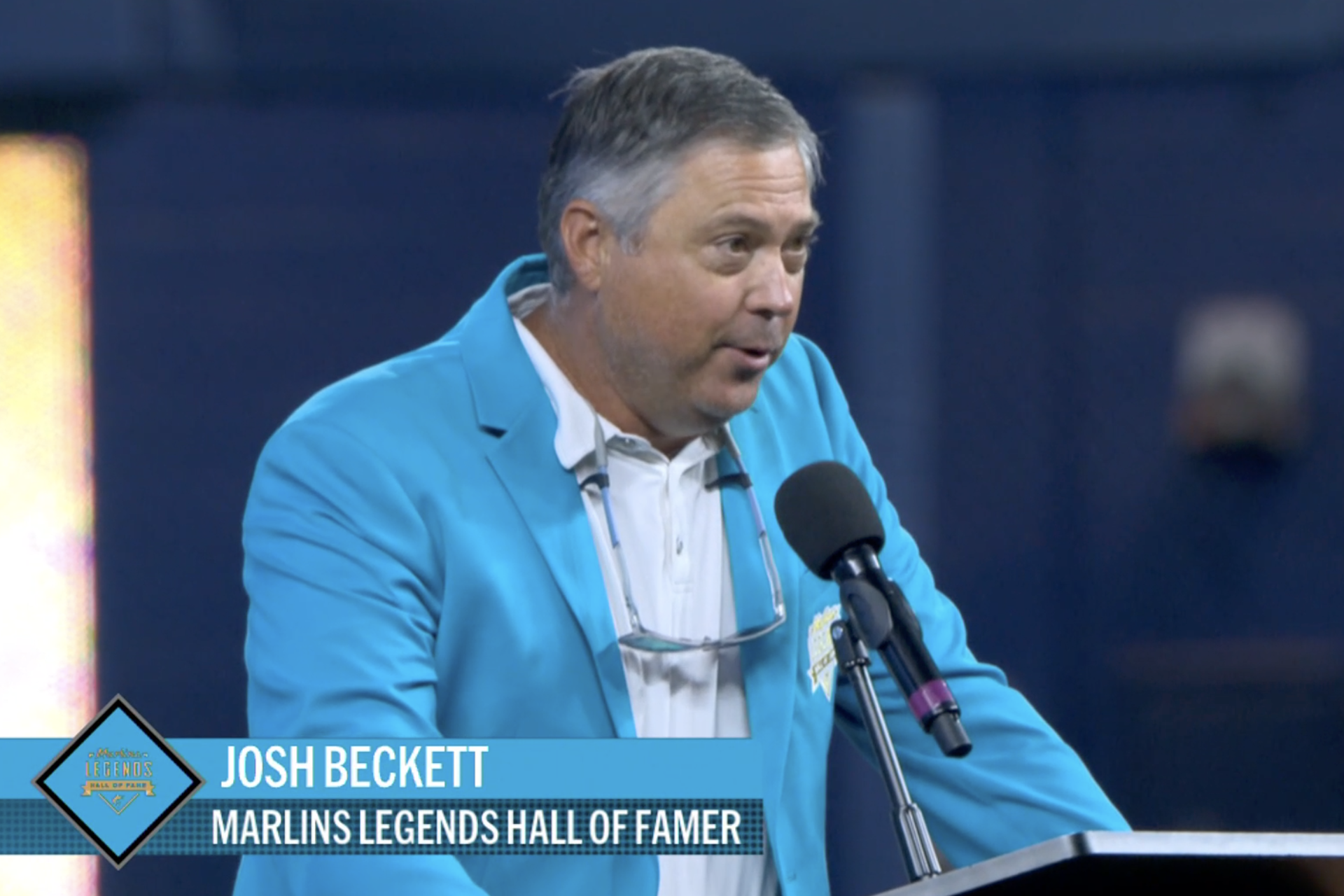 Accompanied by his family and many of his former Marlins teammates, Josh Beckett returned to loanDepot park on Sunday to take his rightful place in the Marlins Legends Hall of Fame. Beckett's plaque reads: "Joshua Patrick Beckett, the second overall selection by the Florida Marlins in the 1999 MLB Draft, made his major league debut in 2001 and won the 2003 World Series MVP Award after delivering a complete-game shutout in Game 6 to clinch the franchise's second title. Beckett totaled a 41-34 record, 3.46 ERA, and 607 strikeouts in five seasons with the club (2001-05). He was then traded to Boston where he spent seven seasons with the Red Sox, highlighted by a second World Series title in 2007, and then the final three seasons of his 14-year major league career with the Los Angeles Dodgers. Beckett finished his career with a 138-106 record, 3.88 ERA, and 1,901 strikesouts in 335 games (332 starts). He was a three-time All-Star, an ALCS MVP, and finished second in AL Cy Young Award voting in 2007, the same year he led the majors in wins." Next Sunday, Dontrelle Willis will be joining Beckett in the HOF's class of 2026. View the full article
 -
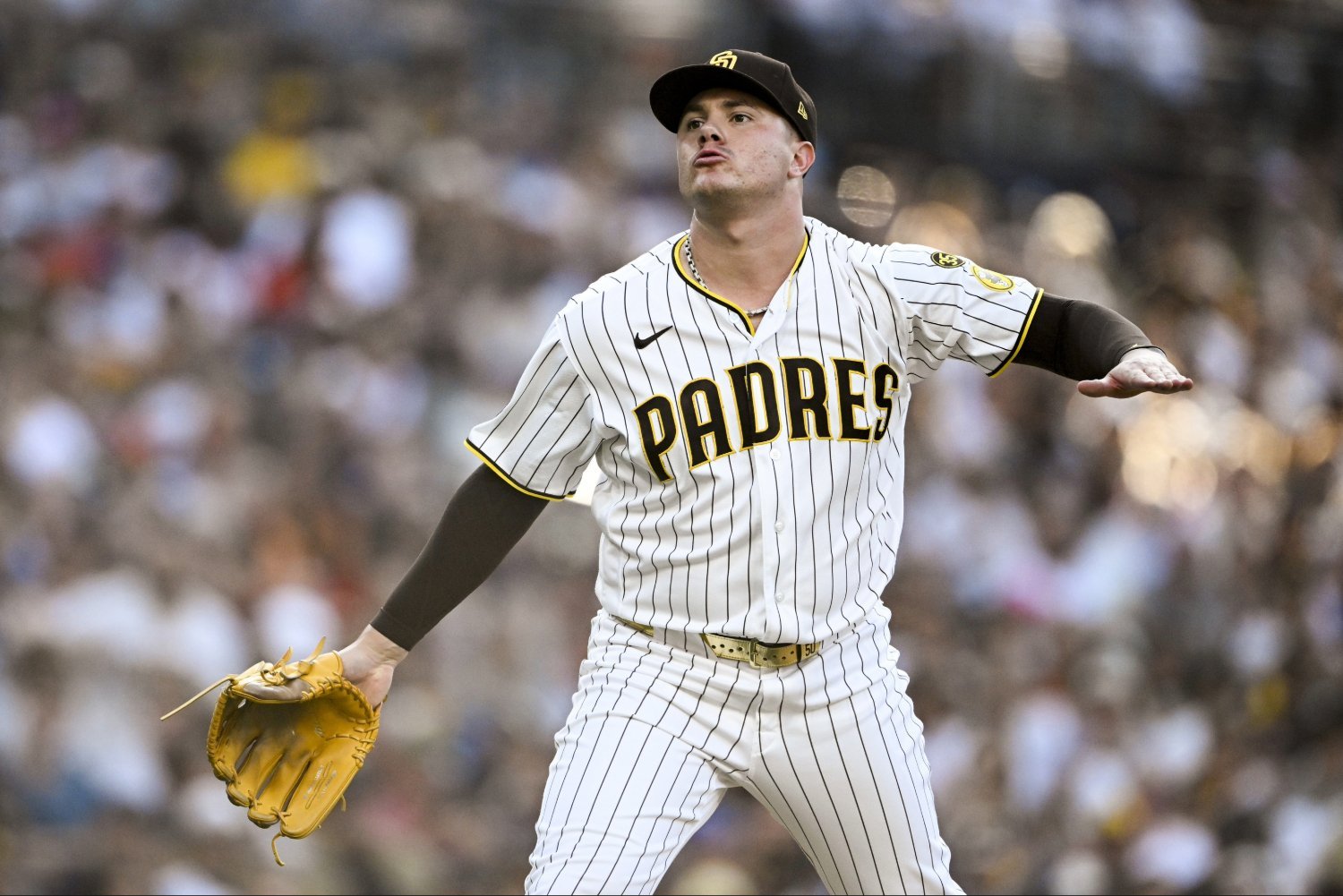 August was a strong and much-needed month of baseball for the San Diego Padres. After going 17-11, the Friars the final stretch of the regular season firmly in the mix for a National League Wild Card spot. The Padres made that possible by deciding to buy at the trade deadline when plenty of people expected them to sell. San Diego added Casey Mize and Robbie Ray, held onto its key bullpen arms, and now enters September with a legitimate chance to make some noise. A major reason for that success was the pitching staff. The Padres allowed just 3.5 runs per game throughout August, getting plenty of impressive performances from both their rotation and bullpen. Ranking Padres' Best Pitchers In August Honorable Mention: Michael King, Starting Pitcher Michael King absolutely deserves to be on this list. Unfortunately for him, the Padres' bullpen decided to go completely nuclear in August. King finished the month with a 2.21 ERA across 36 2/3 innings, striking out 32 hitters while walking just 13. It was another impressive stretch for the right-hander, who has established himself as one of the most important pitchers on San Diego's roster. For a Padres team hoping to make some noise in October, King pitching like an ace is going to be essential. The bullpen might have stolen the show in August, but the work King did to help stabilize the rotation certainly should not go unnoticed. #3: Kyle Hart, Relief Pitcher Kyle Hart might not get the same recognition as some of the bigger names in the Padres' bullpen, but there is no denying how excellent he was in August. The left-hander finished the month with a microscopic 1.06 ERA across 16 2/3 innings, adding 19 strikeouts against just six walks. Hart's strikeout rate jumped all the way to 28.4% during the month, and his underlying numbers backed up the dominant performance. With a 1.89 FIP, this was not simply a case of everything bouncing his way. If he can match this output over the final few weeks of the regular season and even carry it into October, he'll be a revelation that further strengthens the Padres' grip on the "best bullpen in baseball" title. #2: Yuki Matsui, Relief Pitcher If you thought Hart had a good month, just wait until you see what Yuki Matsui did. The veteran left-hander finished August with a 0.77 ERA over 11 2/3 innings, striking out 13 hitters while allowing seven walks. Most impressively, however, Matsui stranded every single baserunner he allowed throughout the entire month. That has been a theme for Matsui all season. He has stranded more than 90% of opposing baserunners, and that ability to pitch himself out of trouble has made him an extremely valuable piece of the Padres' bullpen. It's not necessarily the most repeatable or reliable skill year-over-year, but for now, Matsui's ability to escape jams has become a key part of the relief corps' elite status. #1: Adrián Morejón, Relief Pitcher Adrián Morejón is just so good, man. The left-hander was nearly unhittable throughout August, striking out 26 hitters over just 16 2/3 innings. That works out to a ridiculous 40.6% strikeout rate, as Morejón simply overwhelmed opposing hitters all month long. He also allowed just one earned run during that span, which came on a solo home run. Aside from that one mistake, he was not responsible for another run throughout the entire month. At this point, it is no longer ridiculous to say that Morejón is one of the best relievers in baseball. He has been one of the biggest reasons why the Padres' bullpen has remained such a dominant strength, and with him and Mason Miller shutting games down late, any San Diego lead entering the eighth inning feels pretty safe. That is going to be a massive advantage for the Padres as they attempt to finish the regular season strong. If the bullpen continues to perform anywhere close to the level it did in August, San Diego has the type of late-game pitching that can make life extremely difficult for opponents in October. View the full article
 -
 Binghamton’s surge after the MLB trade deadline made national headlines last month. Two and a half weeks after they received that recognition, the Rumble Ponies are still charging, and they’re poised to run down the leader in a pennant race. After a 3-1 win over New Hampshire and a loss by first-place Reading to Hartford on Saturday, Binghamton is 2 1/2 games out in the Eastern League Northeast Division's second-half standings with seven games to play. It's tied for second with Somerset. Corey Collins had the key hit for the Rumble Ponies, a double to right in the first inning that produced two runs. Collins got credit for one RBI, for knocking in Eli Serrano III, and the second run scored when the right fielder bobbled the ball for an error, allowing John Bay to score from first base. Jefferson Rojas' solo home run in the fifth made it 3-0. That was enough support for starter RJ Gordon and three relievers, who held the Fisher Cats to four hits. Binghamton was 11-22 for the second half on deadline day, Aug 3, but imports Rojas, Émilien Pitre, Billy Amick, Gary Gill Hill, Gabe Davis and Luke Gabrysh joined with players promoted from High-A Brooklyn, such as Collins, Mitch Voit and Noah Hall, to turbocharge the squad. The result was a 16-2 run in the first 18 games after the deadline. The beat went on even after Pitre and Amick were quickly promoted to Triple-A Syracuse. The surge slowed as the Rumble Ponies lost four of six to Reading at the end of August. It’s a series that, in retrospect, may cost them the title. They've four of five from New Hampshire this week to raise their post-deadline record to 22-7. For the Rumble Ponies to have any chance of making the playoffs, they need to run the table in the final week against Portland and have Reading lose multiple games to Erie, which is on the verge of clinching the second-half Southwest Division championship. But this team is good enough to do its part. Elsewhere in the organization: Syracuse lost a seesaw game to Rochester 14-9. The Mets rallied to take leads of 6-4 and 9-7, only to give up seven runs in the eighth inning. Ronny Mauricio and MJ Melendez homered back-to-back in the sixth. Brooklyn surrendered three runs in the seventh inning of a tie game and went on to lose 7-3 to Frederick. Yonatan Henriquez and Colin Houck homered in the fourth inning for the Cyclones’ runs. St. Lucie-Jupiter was suspended because of rain with one out in the bottom of the first and the score 1-1. The game will resume at that point beginning at 12:10 p.m. ET Sunday. It will now serve as the regular-season finale for both teams; the regularly scheduled game that was to have followed the resumption has been canceled. New York Mets Transactions Toronto Blue Jays claimed C Shawn Ross off waivers from New York Mets. Syracuse Loses The Battle Of The Long Balls How could you tell the ball was flying in Central New York on Saturday? Pitre slugged his first Triple-A home run and the 15th of his career in 1,097 plate appearances. It came in the seventh and tied the game 7-7. The Mets took a 9-7 lead later in the inning on an RBI single by Jose Ramos and a run-scoring wild pitch. Mauricio and Melendez’s homers in the fifth sparked a five-run inning, which concluded with a two-single by Nick Lorusso that put Syracuse ahead 6-4. Rochester went deep six times in the game, including four in the decisive eighth. Joe Jacques served up the first one, and Zack Peek surrendered the next three. Mets starter Kevin Herget was untouched by the long ball as he allowed just an unearned run over the first three innings. Rochester took Matt Seelinger deep twice in his three innings of piggyback relief. Syracuse Batting Player AB R H RBI BB K D'Andre Smith 4 0 2 1 1 1 Émilien Pitre 5 1 2 2 0 0 Ronny Mauricio 5 1 1 1 0 2 MJ Melendez 5 2 2 1 0 3 Vidal Bruján 3 1 1 0 2 1 Jose Ramos 4 1 2 1 0 1 Hayden Senger 3 2 1 0 1 1 Nick Lorusso 4 1 2 2 1 1 Zack Short 1 0 0 0 0 0 Eric Wagaman 3 0 0 0 1 1 Totals 37 9 13 8 6 11 Syracuse Pitching Player IP H R ER BB K HR Kevin Herget 3 3 1 0 1 2 0 Matt Seelinger 3 4 3 3 1 2 2 Brian Metoyer 0 0 3 3 3 0 0 Joe Jacques 1 3 3 3 1 0 1 Zach Peek 2 4 4 4 1 3 3 Totals 9 14 14 13 7 7 6 Collins, Rojas Back Gordon In Rumble Ponies’ Win Collins notched his 25th RBI in 38 games since his promotion to Double-A. His OPS sits at .910 on the strength of eight home runs. St. Lucie answered in the bottom half. Jake Ogden, the second batter in the inning, hit his first professional homer, a liner toward the left-field corner, to tie the game. As Ogden was jogging around the bases, umpires called for the tarp. The game was suspended about a half-hour later. Top-20 Prospect Performance Jonah Tong: DNP Jack Wenninger: DNP Elian Peña: 0-for-5, 2 K Mitch Voit: DNP Ryan Clifford: DNP Nick Morabito: DNP Jonathan Santucci: DNP Carson Wiggins: DNP Jacob Reimer: DNP Aiden Robbins: 2-for-5, 2 K Randy Guzman: DNP Wandy Asigen: DNP Chris Suero: DNP Jefferson Rojas: 1-for-4, HR, K Will Watson: DNP Shane Sdao: DNP Eli Serrano III: 0-for-3, BB, K Antonio Jimenez: 0-for-4, 2 K Émilien Pitre: 2-for-5, HR Dylan Ross: DNP View the full article
 -
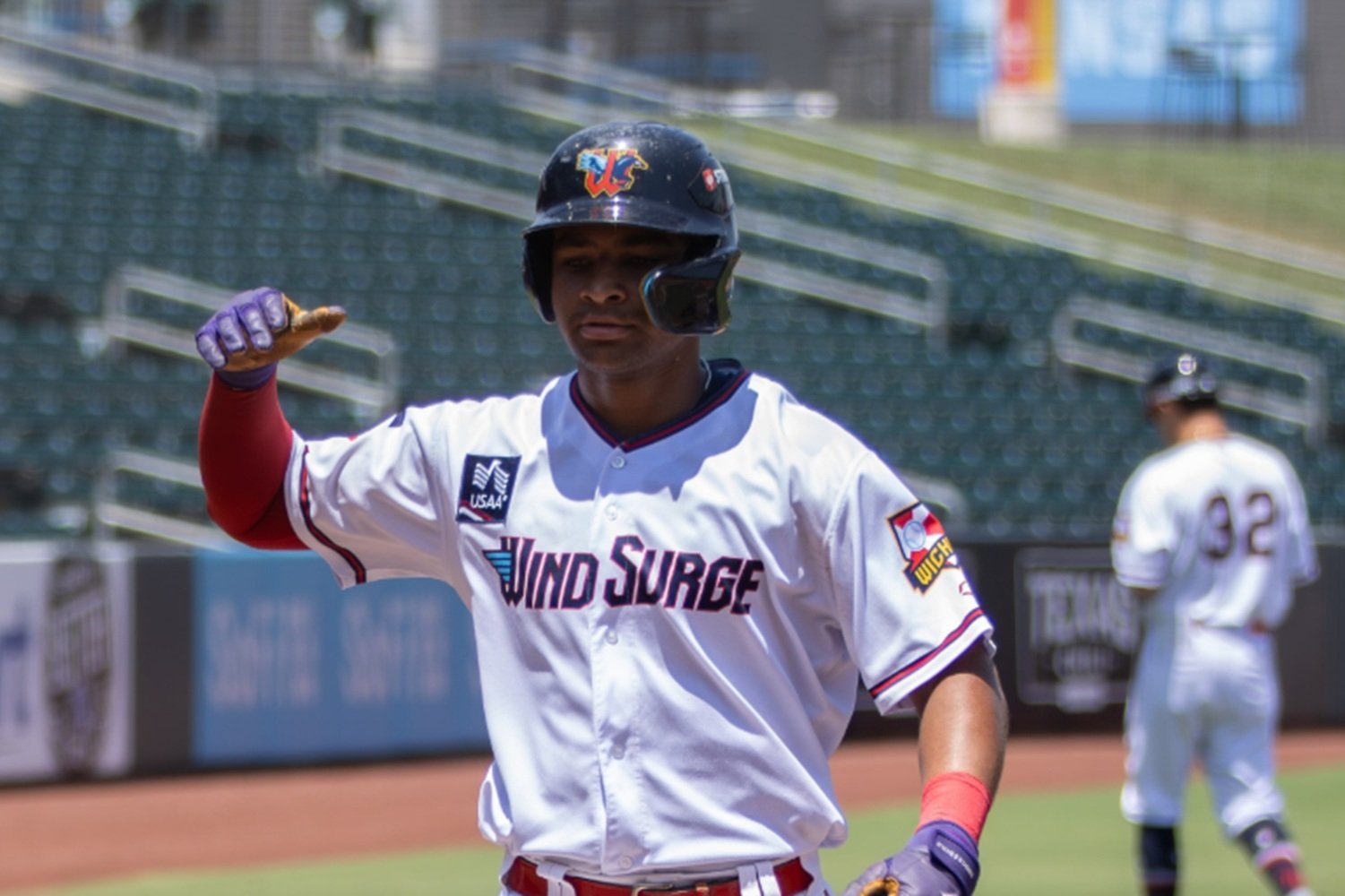 There is a temptation to look at a catcher’s defensive development through one statistic. For Khadim Diaw, that statistic does not tell the entire story. The Minnesota Twins catching prospect has allowed 123 stolen bases this season while throwing out just 10 runners. That eight-percent caught-stealing rate is difficult to overlook, particularly for a player whose long-term future could be tied to his ability to remain behind the plate. But within the Twins organization, there is a much different evaluation of Diaw's defensive progress. On a recent episode of Inside Twins, Twins Director of Player Development Drew MacPhail offered significant praise for the work Diaw has done behind the plate this season. “He’s made even more strides defensively,” MacPhail said. “He came in pretty raw and he’s grading now as one of our best receivers in the system.” That is a noteworthy development for a player who entered professional baseball with plenty of offensive intrigue but needed considerable refinement defensively. Diaw is showing that refinement. The Defensive Transformation Diaw was never viewed as a finished product when the Twins selected him in the third round of the 2024 MLB Draft. His athleticism was one of his most intriguing traits. He moves well for a catcher and possesses enough athletic ability to spend time in the outfield, giving the organization some flexibility in how it deploys him. But catching is still the priority. The Twins have invested considerable time into making Diaw a better receiver and improving the physical tools that come with playing the position. That includes his throwing arm. “I think a big thing as well has been working on his arm strength,” MacPhail said. “He’s done a really nice job of that with both our pitching coordinator and our catching coordinator, Tucker Frawley, to being on an offseason program to work on his arm strength.” The stolen-base numbers suggest there is still work to be done. But receiving is about far more than controlling the running game. Framing, presentation, blocking, preparation and working with a pitching staff all contribute to a catcher’s defensive value. Diaw appears to be making meaningful progress in those areas. The Bat Has Continued to Play Diaw is not simply surviving his first exposure to Double-A pitching. He is thriving against it. Diaw began the 2026 season with High-A Cedar Rapids, where he hit .300/.405/.454 with an .859 OPS and a 127 wRC+. That earned him a promotion to Wichita. The move up the organizational ladder did not cause his offensive production to disappear. Through his first 40 games with the Wind Surge, Diaw posted a .312/.432/.422 line over that stretch in one of the most challenging environments of his professional career, producing a 128 wRC+. Andrew Cresci, the hitting coach at Double-A Wichita, also praised Diaw's preparation and attention to detail. “Double-A is probably the biggest jump they'll make until they go to the big leagues, just in terms of the quality of the pitching,” Cresci said. “He did an excellent job. The guy is a perfectionist in his attention to detail. I can definitely appreciate his work in the cage and his preparation.” Perhaps even more encouraging was his plate discipline. Diaw drew 23 walks while striking out just 18 times. That is a remarkable ratio for a young catcher adjusting to Double-A pitching. Diaw has always possessed an advanced understanding of the strike zone. He posted an 11.8% walk rate in 2025, and his ability to get on base has continued into his second professional season. There is another number that has helped him reach base, too. He gets hit. A lot. Diaw was hit by a pitch 18 times during his first full professional season. Through 98 games in 2026, he has already been plunked 19 times, including 11 times at Double-A. Some of that is likely a byproduct of his willingness to work deep into counts and his aggressive approach to getting on base. But there is a bigger point here. When Diaw is healthy and in the lineup, he has consistently hit. Finding More Power The question has never necessarily been whether Diaw can hit. It has been how much damage he can create. Diaw is likely always going to be a hit-over-power offensive player. His approach is built around contact, controlling the strike zone and doing damage early in counts rather than selling out for power. Still, the Twins have seen signs that there could be more pop coming. Diaw made swing changes during his second professional season, including adjustments designed to unlock more power to his pull side. His Pull% has increased by 6.4% this season His power numbers have dipped since his promotion to Double-A (his slugging percentage dropped 30 points), but some of the underlying contact metrics have moved in the right direction. He had a 17-game hit streak from July 11 to August 8th that was the longest in the Texas League this season. In the streak, he batted .373 (25-for-67) with 12 runs scored, 2 home runs and 6 RBI. Diaw fell one game short of the franchise record for the longest streak. A player who already has the ability to make consistent contact, avoid strikeouts and draw walks becomes considerably more interesting if he can add even modest additional power. The goal isn't necessarily to turn Diaw into a 25-home-run catcher. It is to make pitchers pay more often when they enter the strike zone. A Catcher Worth Watching There are still legitimate questions surrounding Diaw. The stolen-base numbers cannot simply be ignored. His arm strength needs to continue developing, and the offensive power remains more projection than certainty. But his trajectory is changing. Diaw entered professional baseball as an athletic catcher with an advanced offensive approach who needed significant defensive development. Now, the Twins believe he is one of their better receivers. His offensive profile makes the development even more intriguing. A catcher who can hit for average, control the strike zone, avoid strikeouts and consistently reach base already has a foundation. If the swing changes continue to produce better contact quality and more power, his offensive ceiling rises. Ultimately, Diaw's trajectory will depend on whether the defensive improvements continue to catch up with his offensive ability. The Twins clearly believe that process is moving in the right direction. And if the work behind the plate eventually matches what the organization already sees from his bat, Diaw could become much more than another piece of catching depth. He could become a legitimate part of Minnesota's long-term catching picture. What stands out about Diaw in 2026? Leave a comment and start the discussion. View the full article
 -
 Chicago Cubs Transactions Chicago Cubs recalled RHP Javier Assad from Iowa Cubs. Chicago Cubs optioned RHP Tyler Ferguson to Iowa Cubs. Iowa Cubs Fall In Columbus After Seven-Run Sixth Iowa lost 10-5 at Columbus, undone by one long inning after playing even for five. Chas McCormick had the best day at the plate, going 3-for-3 with a home run, an RBI, and a hit by pitch. Justin Dean added two hits, a walk, and two runs scored, Owen Miller went 2-for-5 with an RBI, and Jordan Nwogu doubled and drove in a run off the bench. Iowa collected 10 hits and five walks, but stranded 10 runners. Andrew Wantz worked four innings, allowing three hits and one run, walking one, and striking out four. Gavin Hollowell followed with an inning, giving up two hits, two walks, and a run. Shelby Miller took the loss after recording two outs in the sixth, charged with four runs on two hits and two walks. Miller struck out the first and third batters he faced, then allowed a single, a walk, an RBI single, and a run-scoring walk that came with a wild pitch. Tyler Santana entered with two on and issued a walk that forced in a run, then served up a grand slam that pushed the deficit to 9-2. Santana finished 1 1/3 innings, allowing three hits, four runs, two walks, and two home runs. Doug Nikhazy closed with an inning, allowing one hit and striking out one. Iowa answered in the ninth. Dean singled and Ben Cowles walked, Miller forced Cowles at second, and Owen Ayers lifted a sacrifice fly to score Dean. Nwogu doubled home Miller, and Kevin Alcantara singled in Nwogu to close the gap to 10-5. Player AB R H RBI BB K Ben Cowles 4 0 0 0 1 2 Owen Miller 5 1 2 1 0 0 Owen Ayers 4 0 0 1 0 1 Chas McCormick 3 1 3 1 0 0 Jordan Nwogu 1 1 1 1 0 0 Kevin Alcantara 4 0 1 1 1 1 Greg Jones 4 0 1 0 1 2 Jackson Cluff 3 0 0 0 1 1 Austin Wynns 3 0 0 0 0 0 Justin Dean 3 2 2 0 1 0 Totals 34 5 10 5 5 7 Player IP H R ER BB K HR Andrew Wantz 4 3 1 1 1 4 1 Gavin Hollowell 1 2 1 1 2 0 0 Shelby Miller 2/3 2 4 4 2 2 0 Tyler Santana 1 1/3 3 4 4 2 0 2 Doug Nikhazy 1 1 0 0 0 1 0 Knoxville Smokies Blank Chattanooga Behind Sixteen Strikeouts Knoxville won 4-0, holding Chattanooga to three hits and no runs. Dawson Netz was the story. He gave Knoxville five innings, allowing two hits and no runs, walking two, and striking out nine. Tyler Schlaffer matched him over the last four innings, allowing one hit and no runs, walking two, and striking out seven. The two combined for 16 strikeouts. Leadoff man Alex Ramirez went 3-for-4 with a double and two RBI. Miguel Useche added two hits, Kane Kepley singled, and Edgar Alvarez drew three walks. Knoxville totaled nine hits, two doubles, and four walks, and left eight runners on base. The Smokies broke through in the fourth. Alvarez walked, Carter Trice popped out, and Alex Madera singled Alvarez to second. After a fly out, Ramirez doubled to right field to score both runners for a 2-0 lead. Knoxville added two more in the eighth. Ariel Armas walked and stole second, Alvarez struck out, and Trice doubled to center field to bring Armas home. Trice then stole third and scored on a throwing error during the next at bat, which ended in a strikeout and closed the inning at 4-0. Player AB R H RBI BB K Alex Ramirez 4 0 3 2 0 0 Andy Garriola 4 0 0 0 0 2 Kane Kepley 3 0 1 0 0 0 Miguel Useche 4 0 2 0 0 1 Ariel Armas 3 1 1 0 1 0 Edgar Alvarez 1 1 0 0 3 1 Carter Trice 4 1 1 1 0 1 Alex Madera 4 1 1 0 0 1 Drew Bowser 4 0 0 0 0 2 Totals 31 4 9 3 4 8 Player IP H R ER BB K HR Dawson Netz 5 2 0 0 2 9 0 Tyler Schlaffer 4 1 0 0 2 7 0 South Bend Cubs Break Through With Three-Run Seventh South Bend beat Cedar Rapids 7-4, pulling away late after the lead had been trimmed to one. Alexey Lumpuy went 2-for-3 with a walk, an RBI, and two runs scored. Angel Cepeda had two hits, a walk, and an RBI, Michael Gupton went 2-for-4 with a triple and scored a run, and Jose Escobar doubled and drove in two. South Bend finished with 11 hits and four walks, and left six runners on base. Dominick Reid started and gave the club four innings, allowing two hits and no runs without a walk while striking out four. Yoendris Gonzalez followed with an inning, allowing three hits and two runs. Pierce Coppola picked up the win over 3 2/3 innings, allowing seven hits, two runs, and a home run, and striking out two without a walk. JP Wheat recorded the final out for the save, striking out the only batter he faced. South Bend built the early lead in the third. Justin Stransky singled, Gupton popped out, Josiah Hartshorn walked, and Kade Snell singled to score Stransky. Cepeda then singled to left field to bring in Hartshorn for a 3-0 lead. The decisive inning came in the seventh with the lead down to 4-2. Gupton singled, Hartshorn struck out, and Snell and Cepeda walked to load the bases. Lumpuy walked to force in Gupton, Matt Halbach singled to center field to score Snell, and Escobar hit a sacrifice fly to bring home Cepeda and make it 7-2. Player AB R H RBI BB K Josiah Hartshorn 4 1 0 0 1 1 Kade Snell 3 1 1 1 1 1 Angel Cepeda 3 1 2 1 1 0 Alexey Lumpuy 3 2 2 1 1 0 Matt Halbach 4 0 1 1 0 3 Jose Escobar 3 0 1 2 0 1 Logan Poteet 4 0 1 1 0 1 Justin Stransky 4 1 1 0 0 0 Michael Gupton 4 1 2 0 0 1 Totals 32 7 11 7 4 8 Player IP H R ER BB K HR Dominick Reid 4 2 0 0 0 4 0 Yoendris Gonzalez 1 3 2 2 0 1 0 Pierce Coppola 3 2/3 7 2 2 0 2 1 JP Wheat 1/3 0 0 0 0 1 0 Notable Defense Myrtle Beach Pelicans Game Cancelled The Myrtle Beach Pelicans did not play. The game was cancelled. Top-20 Prospect Performance Josiah Hartshorn: 0-for-4, BB, K Cade Townsend: DNP Jaxon Wiggins: DNP Owen Ayers: 0-for-4, RBI, K Kane Kepley: 1-for-3 Ethan Conrad: DNP Caden Sorrell: DNP Kaleb Wing: DNP Myles Bailey: DNP Brooks Caple: DNP James Triantos: DNP Will Sanders: DNP Juan Cabada: DNP Jostin Florentino: DNP Derniche Valdez: DNP Grant Kipp: DNP Jose Escobar: 1-for-3, 2B, 2 RBI, K Ariel Armas: 1-for-3, BB Fernando Cruz: DNP Brandon Birdsell: DNP View the full article
 -
 Vince Velasquez allowed one unearned run over six innings with seven strikeouts as Omaha beat St. Paul 6-1, and Alejo Lopez drove in four. Northwest Arkansas collected 13 hits in a 10-3 win at Arkansas, where Justin Johnson had three hits and scored four times, and Frank Mozzicato struck out four in relief. Quad Cities fell 5-3 at Peoria despite Tyriq Kemp's two-run homer and three scoreless innings from Aiden Jimenez and Yimi Presinal. The Columbia Fireflies game was canceled because of weather and will not be made up this season. Kansas City Royals Transactions No Roster Moves Lopez Drives In Four As Omaha Beats St. Paul Omaha built a lead in the middle innings and beat St. Paul 6-1, backing six innings of one-run pitching from Vince Velasquez. Velasquez gave up three hits and two walks and struck out seven, and the only run against him was unearned. It was a quality start. The Storm Chasers erased a 1-0 deficit in the third. Jacob Berry led off with a double, and after a pop-out, Lopez singled him home to tie the game. A fly out followed, then Peyton Wilson walked and Brett Squires singled to right to score Lopez for a 2-1 lead. Omaha put the game away in the fourth. Drew Waters opened with a single and Berry singled with one out, and Jorge Alfaro then reached on a throwing error that brought Waters home. Lopez followed with a three-run homer, his second of the year, to make it 6-1. Gavin Cross added a single before the inning ended. Berry finished 3-for-4 with two doubles and two runs, Lopez went 2-for-4 with the homer and four runs batted in, and Waters was 2-for-4 with a run. Omaha totaled 11 hits, two walks, went 3-for-8 with runners in scoring position, and left seven on base. Matt Moore worked two innings, allowing three hits without a run and striking out one. Lucas Erceg retired all three batters he faced and struck out two. The Storm Chasers are now 62-72. Player AB R H RBI BB K Gavin Cross 5 0 1 0 0 2 Peyton Wilson 2 0 1 0 1 0 Colton Becker 1 0 0 0 0 1 Brett Squires 4 0 1 1 0 1 Abraham Toro 4 0 0 0 0 3 Drew Waters 4 1 2 0 0 1 Luca Tresh 3 0 0 0 1 0 Jacob Berry 4 2 3 0 0 1 Jorge Alfaro 4 1 1 0 0 0 Alejo Lopez 4 2 2 4 0 0 Totals 35 6 11 5 2 9 Player IP H R ER BB K HR Vince Velasquez 6 3 1 0 2 7 0 Matt Moore 2 3 0 0 0 1 0 Lucas Erceg 1 0 0 0 0 2 0 Totals 9 6 1 0 2 10 0 Johnson Scores Four Times In Northwest Arkansas Rout Northwest Arkansas piled up 13 hits and beat Arkansas 10-3, scoring in four different innings and pulling away in the sixth. The Naturals opened the scoring in the second. Justin Johnson singled, Connor Scott singled behind him, and Canyon Brown singled to bring Johnson home. Alberto Rodriguez then grounded into a force out that scored Scott for a 2-0 lead. Northwest Arkansas added two more in the third on a two-out single by Johnson and a double by Scott. The sixth broke the game open for the Naturals. Johnson walked to start the inning, and Scott doubled him to third. After a pop-out, Rodriguez singled home Johnson, and Scott scored on a throwing error during Angel Acosta's line out. Luke Pelzer singled in Rodriguez, Javier Vaz walked, and Sam Kulasingam singled home Pelzer to push the lead to 8-3. Johnson doubled in a run in the ninth, and Brown singled in another. Johnson finished 3-for-4 with a double, a walk, two runs batted in, and four runs scored. Scott was 3-for-5 with two doubles, and Brown went 2-for-5 with two runs batted in. The Naturals left seven on base and went 8-for-19 with runners in scoring position. Chase Jessee gave up three runs, only one earned, on two hits and two walks over three innings with two strikeouts. Shane Panzini followed with two scoreless innings, one hit, one walk, and three strikeouts. Caden Monke worked an inning with a hit and a strikeout. Frank Mozzicato threw two scoreless innings with two hits, a walk, and four strikeouts. Lastly, Zachary Cawyer allowed two hits without a run and struck out one. The Naturals are now 55-74. Player AB R H RBI BB K Luke Pelzer 5 1 1 1 0 3 Javier Vaz 4 0 1 0 1 1 Sam Kulasingam 4 2 1 1 1 3 Spencer Nivens 5 0 0 0 0 3 Justin Johnson 4 4 3 2 1 1 Connor Scott 5 2 3 1 0 1 Canyon Brown 5 0 2 2 0 1 Alberto Rodriguez 5 1 1 2 0 2 Angel Acosta 4 0 1 0 0 0 Totals 41 10 13 9 3 15 Player IP H R ER BB K HR Chase Jessee 3 2 3 1 2 2 1 Shane Panzini 2 1 0 0 1 3 0 Caden Monke 1 1 0 0 0 1 0 Frank Mozzicato 2 2 0 0 1 4 0 Zachary Cawyer 1 2 0 0 0 1 0 Totals 9 8 3 1 4 11 1 Kemp Homers In Quad Cities Loss At Peoria Quad Cities managed six hits and lost 5-3 at Peoria, unable to hold a tie it created in the fourth inning. The River Bandits trailed 2-0 when they answered in the fourth. Ramon Ramirez led off with a single, Chris Brito struck out, and Kemp followed with a two-run homer, his 13th of the season, to tie the game 2-2. Two more outs ended the inning there for Quad Cities. Peoria took the lead back in the bottom half with a pair of runs on a double and another double, then added a run in the fifth on a sacrifice fly to make it 5-2. Quad Cities got one back in the seventh to make it close. Erick Torres singled to open the inning, and Ben North reached on catcher's interference, but a double play moved Torres to third with two outs before Nolan Sailors doubled to right to score him. Asbel Gonzalez drew a walk, and a fly out ended the threat. Sailors finished 2-for-4 with a double and a run batted in. Kemp went 2-for-4 with the homer and two runs batted in, and Gonzalez walked twice. The River Bandits struck out 13 times, went 2-for-8 with runners in scoring position, and left six on base. Tanner Jones allowed five runs on six hits and three walks over five innings, striking out six. Jimenez followed with 1 2/3 scoreless innings on three hits and a walk with one strikeout, and Presinal retired all four batters he faced over 1 1/3 innings with three strikeouts. The River Bandits are now 69-57. Player AB R H RBI BB K Nolan Sailors 4 0 2 1 0 1 Asbel Gonzalez 1 0 0 0 2 0 Zion Rose 4 0 0 0 0 1 Ramon Ramirez 4 1 1 0 0 2 Chris Brito 4 0 0 0 0 3 Tyriq Kemp 4 1 2 2 0 2 Erick Torres 4 1 1 0 0 1 Ben North 3 0 0 0 0 1 Stone Russell 4 0 0 0 0 2 Totals 32 3 6 3 2 13 Player IP H R ER BB K HR Tanner Jones 5 6 5 5 3 6 0 Aiden Jimenez 1 2/3 3 0 0 1 1 0 Yimi Presinal 1 1/3 0 0 0 0 3 0 Totals 8 9 5 5 4 10 0 Top-20 Prospect Performance Kendry Chourio: DNP David Shields: DNP Josh Hammond: DNP Blake Mitchell: DNP Sean Gamble: DNP Ramon Ramirez: 1-for-4, 2 K Zion Rose: 0-for-4, K Asbel Gonzalez: 0-for-1, 2 BB Carson Roccaforte: DNP Taylor Rabe: DNP Yandel Ricardo: DNP Justin Lamkin: DNP Drew Beam: DNP Michael Lombardi: DNP Jack Slightom: DNP Felix Arronde: DNP Angeibel Gomez: DNP Ben Kudrna: DNP Steven Zobac: DNP Blake Wolters: DNP View the full article
 -
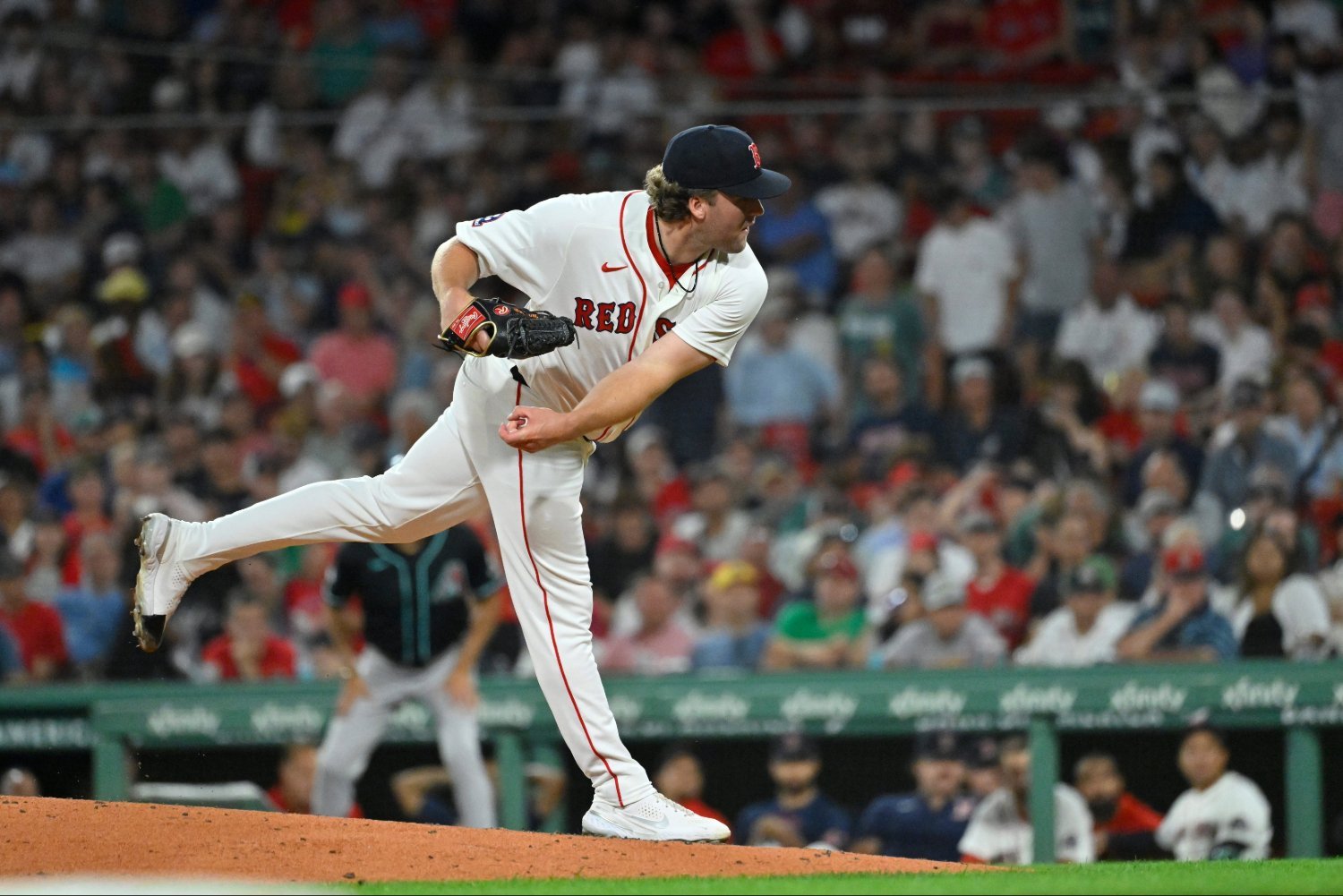 The month of August proved to be a rollercoaster for the Boston Red Sox’s pitching staff. The dependable arms were, mostly, dependable for the month, there were some new names that showed up and showed out, and then there were some arms that got tagged a bit too frequently. Amidst all that positivity and concern, four pitchers stood out the most. Ranking Red Sox's Best Pitchers In August Honorable Mention: Raymond Burgos August Stats: 12.1 IP, 1 SV, 5.84 ERA, 4.31 FIP, 14.6 K%, 2.1 BB%, 0.97 WHIP Burgos doesn’t have the best stats in the world, but he’s getting the honorable mention spot here because he stepped up to help a depleted bullpen in a big way in August. He tossed back-to-back three inning games right after he was called up to the 26-man roster, after which he came into a game before a rain delay, sat for two hours during the delay, and then came back out to help prevent Chad Tracy from burning another arm after the delay. He’s not a stud and he may not even be long for the organization, but you’ve got to tip your cap to Burgos for being willing to do whatever is asked of him. #3: Alec Gamboa August Stats: 11 IP, 1 W, 0.00 ERA, 2.91 FIP, 10 K%, 2.5 BB%, 0.64 WHIP Gamboa has been a pleasant surprise out of the bullpen this season. He wasn’t a well-known prospect when he was first called up, and he got knocked around when they tried to use him as a starter earlier in the year, but he has become one of Tracy’s most-trusted arms in any situation. He was tasked with being the high-leverage set-up man for Aroldis Chapman during August and he toed the rubber with confidence and gave The Cuban Missile a clean runway to land the plane and convert the save. His unique windup lets you know who is on the mound without having to see the back of his jersey and, if things keep going the way they currently are, he’s going to be asked to pitch some very meaningful innings through the end of September and, hopefully, into late October. #2: Payton Tolle August Stats: 36 IP, 2 W, 3.00 ERA, 3.01 FIP, 31.2 K%, 7.1 BB%, 1.08 WHIP Tolle has been better than advertised pretty much all season, but his August run was really impressive. He’s been working hard to develop his secondary pitches all season and last month his curveball may have been the best pitch he threw. We’re all familiar with his three-fastball mix, but major-league hitters are able to dial those in quickly and make Tolle pay if he’s not mixing in something that breaks. His curveball has developed into a true out-pitch for him and it’s keeping hitters from selling out against his fastballs. What this allows him to do is almost toy with opposing hitters when he’s up in the count. He can paint the corner, blow you away, or make your knees buckle at any point. As Tolle continues to develop his breaking stuff, specifically his curveball, he’s going to cement himself as a bona fide ace of this staff. #1: Erik Miller August Stats: 11.1 IP, 1 W, 0.79 ERA, 1.77 FIP, 43.5 K%, 6.5 BB%, 0.97 WHIP There was some agitation when Miller was brought to Boston because of the trade piece that went the other way. What was overlooked by a lot of people was that Miller was operating as the closer for the Giants and the Red Sox are reaping the rewards of that role. He’s being used as a late-inning set-up man primarily, but Miller’s skill set lets him move anywhere in the bullpen and be successful. His strikeout rate is astronomical and he’s not showing much of the command issue that has plagued him throughout his career so far. While it’s been fairly safe to pencil in Garrett Whitlock for the future closer role in Boston, don’t overlook Miller now that he’s in town. If he can keep his command in check going forward, he’s going to be a deadly weapon through the end of the season and the postseason that Tracy will be chomping at the bit to unleash whenever possible. View the full article
 -
 As eventful a minor league slate as we've had all season, we document it all and include a lookback at a 2017 injury scare that thankfully had a positive quality of life outcome. Transactions: N/A Nashville Pre-Game Media Notes Final: Louisville (Reds) 5, Nashville 3 Box Score and Game Log Via the Sounds, game details, and we encourage readers to always review affiliate write-ups as part of their Link Report routine: Nashville Drops First of Series to Louisville Down 3-0 heading to the bottom of the 4th, (yeah, Orlando Arcia is still around), here are the two two-out doubles (Tyler Black, Ramon Rodriguez) that kicked off a two-run frame: Those were followed by an Ethan Murray RBI infield single, with a break on the play that allowed Rodriguez to score. The Sounds' final run tied the game in the 5th, with the "UT fans" reference apparently for Blake Burke crossing the plate (he had walked with two outs and advanced to second on an Akil Baddoo single). As for the fateful 7th when Louisville plated the final two runs of the game, a reminder that a double play would have ended the inning, sigh - Nashville struck out 11 times in the game, and after immediately falling behind in that 7th inning, this was not the response Manager Rick Sweet was looking for: In fact, the Sounds (Eduardo Garcia, Brandon Lockridge, Jonathan Ornelas) each struck out as the side went down in order in the 9th vs. closer Hunter Parks. It would be wonderful if we could learn for sure about the "4th option for Jeferson Quero" that my fellow Link Reporter "Ro" discusses here. It's going to be close as to whether Quero qualifies, pretty sure those in the Brewers' ivory tower have the answer: As your box score review will show you, the pitching was "OK" in this one, a reminder about our "Rule 5 Eligible Tracker" - will LHP Tate Kuehner be added to the 40-man roster this fall? Catch up with the latest Biloxi pre-game audio interview archives Biloxi Pre-Game Media Notes Final, Game One: Rocket City (Angels) 2, Biloxi 1, seven innings as scheduled Box Score and Game Log Final, Game Two: Biloxi 8, Rocket City 5, seven innings as scheduled Box Score and Game Log Fischer Hits 45th, 46th Home Runs, Ties Ryan Howard in Shuckers Doubleheader Split - Brewers No. 12 prospect moves into a tie for 5th-most home runs in an MiLB season with pair of home runs The Shuckers' game summaries tend to focus on the run-scoring plays and does so again here. It's a fine writeup, and this edition makes sure we know not just about Andrew Fischer's continued eye-opening feats (eye-opening also as in eye at the plate, five walks), but we are also informed about LHP J.D. Thompson's fine outing, Dylan O'Rae's stolen base exploits, and another win for Jaron DeBerry, the Southern League leader in inning pitched, strikeouts, and batting average against. One thing the summary does not detail is the key Luis Pena injury in the bottom of the 1st inning of the nightcap. That's understandable, as we've mentioned often that the affiliate write-ups won't speculate on injury status. At one point late last night, the video was available on the MiLB archive page, but it has since been taken down. That video did show Pena sliding in feet first, the third baseman had to jump to catch the ball and deftly avoided coming down spikes first on Pena. Initially it appeared that the landing may have been the source of the injury (which would have been painful but not as severe), but it soon became apparent that Pena had a serious injury. There's no "bright spot" here, except to say that we are near season-end with months to recuperate. Not a way any player wishes to spend one's offseason. Our best to Luis. Elsewhere in Biloxi on a busy night - On a night in which the big-league club was out-homered 3-to-1 in a 5-3 loss, the cry among the fanbase to see Fischer in Milwaukee will only grow, and it's both fascinating and tempting (but also perplexing) to determine how things would work out, shake out, etc. For now, enjoy the photo by Sierra Gatz that accompanied the Shuckers game summary Saturday night (Braylon Payne, Josh Adamczewski, Andrew Fischer) - The Shuckers 'X' feed has addition video available, including from Matthew Wood (home run) and Payne. NOTES: Because Jesús Made was the designated hitter in Game Two, it was Dylan O'Rae who entered as Luis Pena's replacement at shortstop. This was O'Rae's first action at shortstop since 2023, and as long as Made remains healthy for next week's final series, shouldn't impact the Biloxi playoff lineup. RF Damon Keith was the only position player on the roster not to see action in either game, and he sat out Thursday's game as well. Wisconsin Pre-Game Media Notes (download link) Final: Beloit (Marlins) 5, Wisconsin 0 Box Score and Game Log Via the Timber Rattlers, game details: Rattlers Shut Down by Sky Carp - Wisconsin drops 5-0 decision at Beloit Shortstop Brady Ebel (on base three times - single, BB, HBP), and corner outfielders Luis Castillo and Tyler Rodriguez, who combined for five of the seven total walks the Rattlers worked, all (obviously) never crossed the plate in this shutout loss. Team RISP: 0-for-4. Team LOB: 8. RHP Jarrette Bonet, working as the long reliever Saturday, was rightly given his due in the linked game summary. The recently turned 21-year-old, in just his second High-A appearance, faced just one over the minimum over four innings, fanning three. In a way, with so much going on at the other Brewers affiliate outposts, oddly thankful so little happened here in Wisconsin's penultimate 2026 contest, here's to many positive events Sunday. IMPORTANT MEMORY: This one is for longtime Link Report followers. The name of Beloit's starter in this game was Julio Mendez, which immediately had me revisiting one of the scariest on-field moments in Brewers minor league history. In October 2017, MLB.com's Adam McCalvy provided details and a promising update. We followed the Milwaukee Julio Mendez story as closely as we could as it occurred and, in the months, and years that followed. Three years later, we received another positive report that Mendez was doing well. That specific link appears to no longer be accessible at our forum, but every indication is Julio remains well to this day. Speaking of overcoming hardship, on to the Wilson game... Wilson Pre-Game Media Notes Final: Fredericksburg (Nationals) 6, Wilson 3 Box Score and Game Log Warbirds Offense Goes Quiet in Loss - Cairone Makes First Start Yes, the Warbirds have now lost 11 games in a row. They won't get a chance to match Biloxi's recent 13-hame skid, primarily because the season ends for Wilson on Sunday. At 64-65, the boys need to snap the skid to avoid a losing season, and to enjoy the bus ride home, for that matter. In a game delayed at the start by nearly an hour, the listed attendance was 3,538. We all could speculate that this would be a brief appearance for Cairone, whose road to recovery was most thoroughly covered by Curt Hogg of the Milwaukee Journal-Sentinel (JS subscription required). Let's all celebrate the first inning - to be honest, this could have been a blow-up inning and we still would celebrate it: The young southpaw would come back out for a second inning: Line drive single to right Strikeout swinging Line drive single to center Walk to load the bases (Another) strikeout swinging - so close to escaping! Walk to force in a run Cairone was lifted after 48 pitches, and RHP Enderson Mercado would balk in a run, meaning two earned runs on Cairone's ledger, but that doesn't matter. Looking forward to Cairone perhaps starting the season-opener for these Warbirds in 2027. Congrats, Frank! You can see Carsten Sabathia and Brailyn Antunez drive in runs on very similar base hits here and here. Whew, that was quite a report this morning! We say goodbye to the Wisconsin and Wilson seasons on Sunday, Nashville has two weeks of play yet to go, and Biloxi one regular season series before their playoff run begins. Biloxi has the lone evening game today. Thanks for reading, and here's hoping you all enjoy a wonderful and safe remainder of your Labor Day weekend. Organizational Scoreboard including starting pitcher info, game times, MiLB TV links, and box scores Current Milwaukee Brewers Organization Batting Stats and Depth Current Milwaukee Brewers Organization Pitching Stats and Depth View the full article
 -
Can Angeibel Gomez Be a Franchise-Changing Prospect for the Royals?
DiamondCentric posted an article in Royals Keep
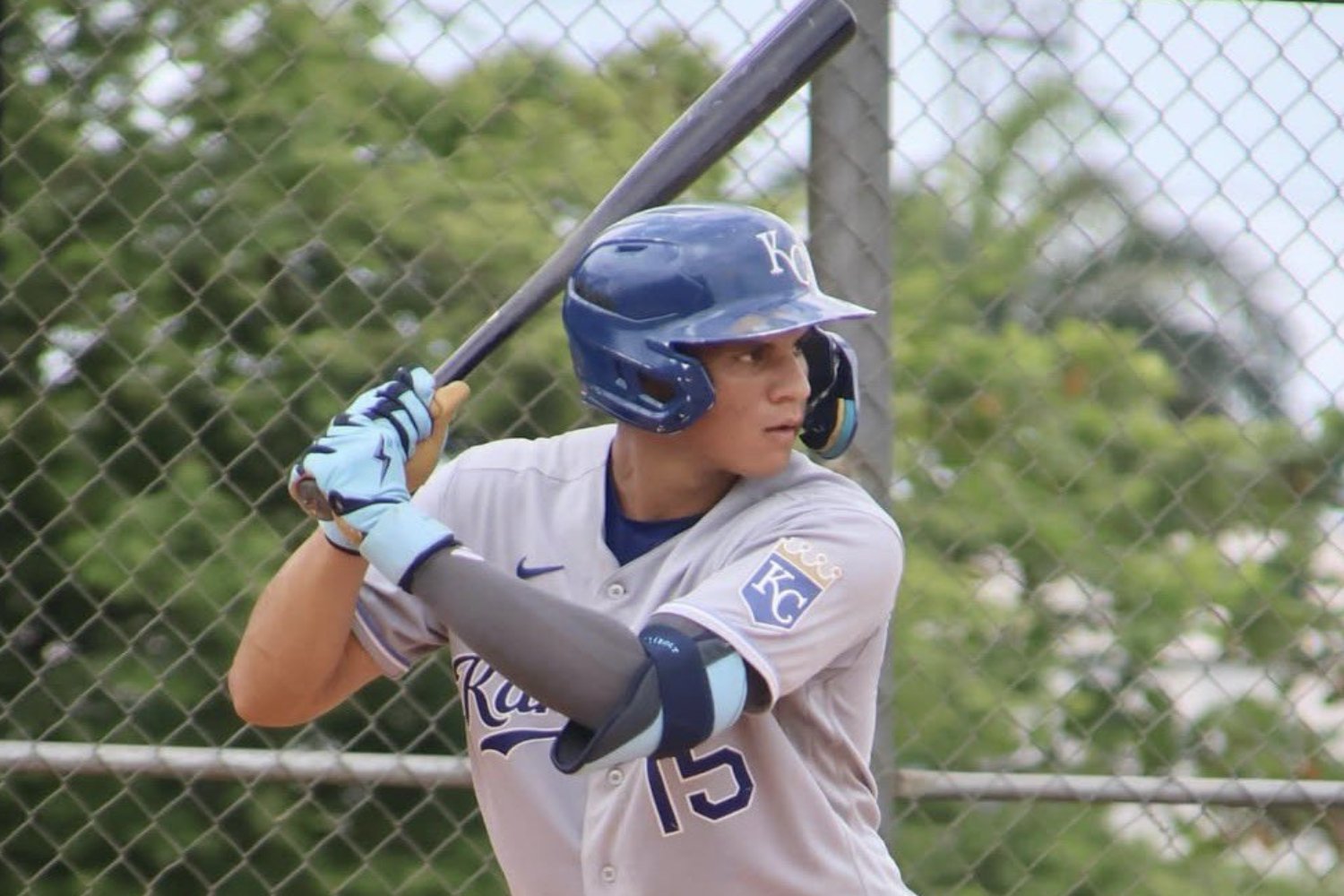 When evaluating prospects in the Dominican Summer League, take players and their metrics with a grain of salt. After all, these are teenagers playing professionally for the first time, and the move from the DSL to the Complex League or full-season affiliated ball may be one of the toughest transitions for a professional player (beyond the transition to the Major Leagues, of course). Royals fans have seen plenty of talented prospects in the DSL fail to make an impact after moving stateside. Outfielder Erick Pena was supposed to be the Royals' big bat of the future back in 2019/2020. However, he struggled with strikeouts and never advanced beyond the Carolina League. Infielder Daniel Vazquez was also once a highly-touted prospect (he had a high signing bonus in 2021), but his development has stagnated in Double-A. On the pitching end, Kendry Chourio has lived up to the hype (he's dominated High-A ball this year as a teenager). However, the Royals' international pitching signees have produced little fruit beyond Chourio. Thus, there's always been a "wait and see" approach with DSL prospects. However, outfielder Angeibel Gomez seems to be bucking that trend. Gomez is the Royals' most heralded prospect currently in the DSL and may be the most highly touted international player prospect on the Royals' roster. While he is ranked No. 17 in our rankings at Royals Keep, he likely will rise to a much higher ranking after the season concludes. MLB Pipeline has him as the No. 3 ranked prospect in the Royals system. Here's what Pipeline has to say about Gomez, who ranked behind only Chourio and infielder Josh Hammond, who's currently in Low-A ball. While Pipeline's praise is impressive, they aren't the only outlet singing Gomez's praises. Baseball America recently ranked him as the top prospect in the DSL this season. The Call Up, Just Baseball Media's prospect podcast, ranked him as one of the highest-rated DSL prospects ever, which is high praise considering players like Juan Soto, Christopher Sanchez, and Julio Rodriguez, just to name a couple, go their starts in the DSL after signing. Thus, there is not just momentum for Gomez to be the Royals' No. 1 prospect by next spring, but perhaps a Top-5 prospect in all of baseball next season as well. So how did Gomez get here with the Royals? Let's break down what Gomez has done so far in the DSL, what his outlook will be in 2027, and what are some things we need to keep in mind with the talented outfielder as he continues to develop in the Royals' farm system. Gomez's Stats and Tools Have Been Insane When evaluating any prospect, you need a combination of stats and scouting reports to reach a proper conclusion about that player's outlook. Relying on the numbers can be misleading, especially when the competition isn't great or park factors favor one style of play. However, scouting reports aren't enough either, as players need to produce "results" to show they can succeed as they progress through an organization's farm system. Thankfully, Gomez checks the boxes on both of those benchmarks. On the statistical side, what Gomez is doing is insane, especially as a 17-year-old in the DSL. In 47 games and 180 plate appearances, the native Venezuelan is hitting .361 with a .508 wOBA and 156 wRC+. He has nine home runs, 49 runs scored, 38 RBI, and 15 stolen bases on 17 attempts. Gomez also has an ISO of .292 and a BB/K ratio of 1.47, with a K% just under 11%. The numbers show no weaknesses in Gomez's DSL performance. He's hitting for average, hitting the ball hard, not striking out, and showing production on the basepaths. Statistically, Gomez is a complete hitter whose profile will mature well as he moves through the Kansas City system. The power may be the most impressive aspect of his hitting profile. For context, the hitter with the second-most home runs in the DSL this year is 18-year-old Luis Steven King with three. In 2025, the DSL Royals home run leader, Omar Mejia, had three, and the same number was true in 2024 with Raimel Medina. Since 2021, Gomez's nine home runs in the DSL are the most in a single season by a player in the DSL since Ramon Ramirez as an 18-year-old in 2023. Gomez not only had one more than Ramirez, our No. 6 prospect at Royals Keep, but did so while one year younger. That shows how impressive and special Gomez is as a prospect. As a result of his impressive season, the outfielder made the DSL All-Star Game and stood out in the showcase. He had two hits, including a double, scored two runs, and had a stolen base. Below is some tape of his swings in the DSL All-Star Game, courtesy of Baseball America. While the numbers are good, the scouting reports are just as encouraging. Below is a tweet from Alex Jensen of Prospects Live that describes Gomez's potential and why he could be considered the top prospect in baseball in 2027. Here's what Jensen says fully in the Tweet (which is cut off due to Twitter post limitations): In our latest Royals Pipeline podcast on KC Sports Network, Jared Perkins of Just Baseball and I spoke with Joe Doyle of Overslot Baseball, a baseball site dedicated to prospects and the MLB Draft. In our conversation, we brought up Gomez, and while he understands there is some risk with a 17-year-old, the combination of excellent numbers and living up to the scouting reports is an encouraging sign going forward. Below is the video interview via KC Sports Network, which starts at 17:14, when Joe talks about Gomez. It's one thing for Royals fans to be excited about an international prospect. While Ramirez, Asbel Gonzalez (No. 8), and Yandel Ricardo (No. 11) are all talented prospects with some upside, they aren't getting a lot of helium from other prospect experts in baseball. That's not true for Chourio and now Gomez, who may be an even more heralded prospect than the Royals' current No. 1 prospect, which is wild to think about considering how touted Chourio has been since last year. What Are the Concerns? The only issue with Gomez right now is that he's 17 and he hasn't made his stateside debut yet. While there aren't any concerns on a statistical or scouting end, there will be intangible questions that he will have to answer once he makes his Complex League and Low-A Columbia debut. Will he adjust to the cultural differences in the United States? Will he be able to handle the grind of a full season in affiliated ball? How will he respond to failure for the first time? Can he handle being the target of opposing pitching staffs that have older and more talented pitchers? How will he handle the hype of being one of the most touted prospects in baseball? Those aren't questions that can be answered on Fangraphs or a scouting report. Royals fans will have to wait and see in 2027 and beyond how those questions are addressed. Chourio handled those questions effectively. Pena didn't. It'll be interesting to see which end of the spectrum Gomez falls under next year. Final Thoughts on Gomez and the Royals' DSL Prospects I know it's easy to be skeptical of DSL prospects, especially since most position player prospects haven't fared all that hot in their initial transitions to the States. Ramirez and Ricardo are doing the best right now, but even then, they have flaws in their game that could stunt their projection at the Major League level. Gomez is a special case because he has the skills and body to be successful. He also has the pedigree. The Royals have shied away from big-money international signees until Daniel Guerrero took over as Director of International Scouting. Now, they seem to be getting more of those types. Not just with Gomez, but with others as well, as highlighted by Baseball America in a recent post that highlighted the top DSL performers. The Royals had four of the Top 35 DSL prospects this season, as shown in the tweet below. In addition to the top prospect in Gomez, the Royals also had the top DSL pitching prospect in Luis Garces, who ranked 12th overall among DSL prospects. Garces posted a 4.82 ERA, but a 3.83 FIP, 29.8% K%, and 15.7% K-BB% in 28 IP with the DSL Royals. With more development, the 6'1 pitcher could develop into a talented arm in the Royals' system. Since Guerrero took over, the Royals' international classes are finding more success in the Minors than in years past. Yes, the Royals have had success stories like Salvador Perez, Yordano Ventura, and Maikel Garcia. However, Kansas City has been much more successful in the MLB Draft than in international signings. That trend is beginning to change, not just with Gomez, but with Chourio and the others in the DSL who also had strong seasons. Gomez and Chourio may just be the tip of the iceberg for the Royals' future when it comes to developing international stars. However, Kansas City needs success stories to turn international scouting into an organizational strength. Other small-market teams have done this recently. For the Reds, it was Elly De La Cruz. For the Nationals, it was Soto. For the Brewers, it was Jackson Chourio. For the Pirates, it was Oneil Cruz. Perhaps for the Royals, it's Gomez or Chourio, or hopefully, both. View the full article
 -
20-year Marliniversary: Sánchez no-hits Diamondbacks
DiamondCentric posted an article in Fish On First
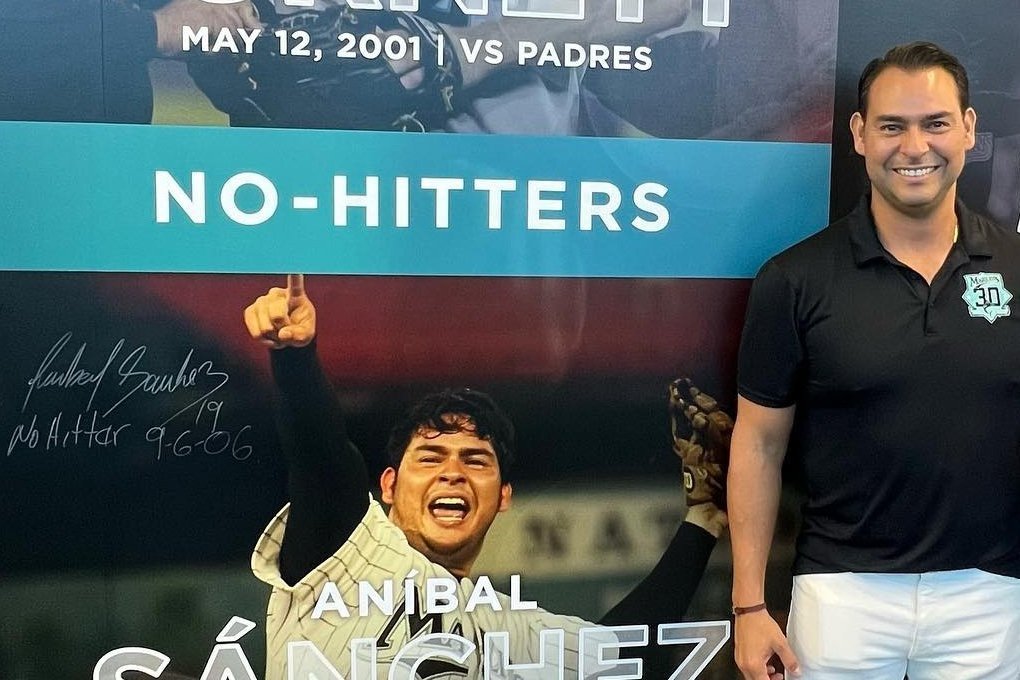 In nearly three and a half decades as a franchise, six pitchers for the Florida/Miami Marlins have thrown no-hitters. The last to do so at the club’s original home stadium tossed his no-no on this day 20 years ago. In the rubber game of a three-game series at Dolphins Stadium on Sept. 6, 2006, Aníbal Sánchez worked around four walks to become the fourth Marlins pitcher to throw a no-hitter. Sánchez needed 103 pitches to no-hit the Arizona Diamondbacks in a 2-0 victory. Sánchez was perfect the first time through the Arizona order. For Diamondbacks starter Édgar González, however, that was not the case. Florida squandered a lead-off triple by Hanley Ramírez in the first, but went ahead for good in the second. Joe Borchard, who hit the go-ahead home run in the first game of the series against Arizona, put the Marlins in front in the second inning with a solo shot. That’s all Sánchez would need. Sánchez worked around a pair of one-out walks in the fourth by retiring Eric Byrnes and Chad Tracy on flyouts to left field. Miguel Cabrera extended the lead to 2-0 with a solo home run on the very first pitch from González in the bottom of the fourth. The Diamondbacks would bring the tying run to the plate in each of the next two innings, but Sánchez had answers. After working around an error to lead off the fifth, Sánchez needed just one pitch to get Byrnes to line out following a two-out walk to Luis Gonzalez in the sixth. The Marlins had just one hit after the fourth inning, but that was one more than Sánchez would allow for the evening. The right-hander worked a 1-2-3 seventh on just nine pitches before neutralizing a walk to former Marlins World Series hero Craig Counsell by getting the speedy Orlando Hudson to hit into an inning-ending double play in the eighth. Sánchez didn’t need to throw more than 10 pitches in any of his final three innings. Sánchez struck out Conor Jackson to open the ninth and then got Gonzalez to pop out. On an 0-1 pitch, Byrnes rolled a routine grounder to short. Ramírez took his time and fired a strike to first, getting Byrnes by half a step to complete the no-hitter. Sánchez finished with six strikeouts in the win. While Arizona had no hits, Borchard finished with two of the five hits for the Marlins. Sánchez flirted with no-hitters on other occasions throughout his career and even completed multiple one-hitters. His lone no-no, however, came for the Marlins on this day two decades ago. View the full article
 -
Andrés Giménez: The Blue Jays' Glove Versus Bat Dilemma
DiamondCentric posted an article in Jays Centre
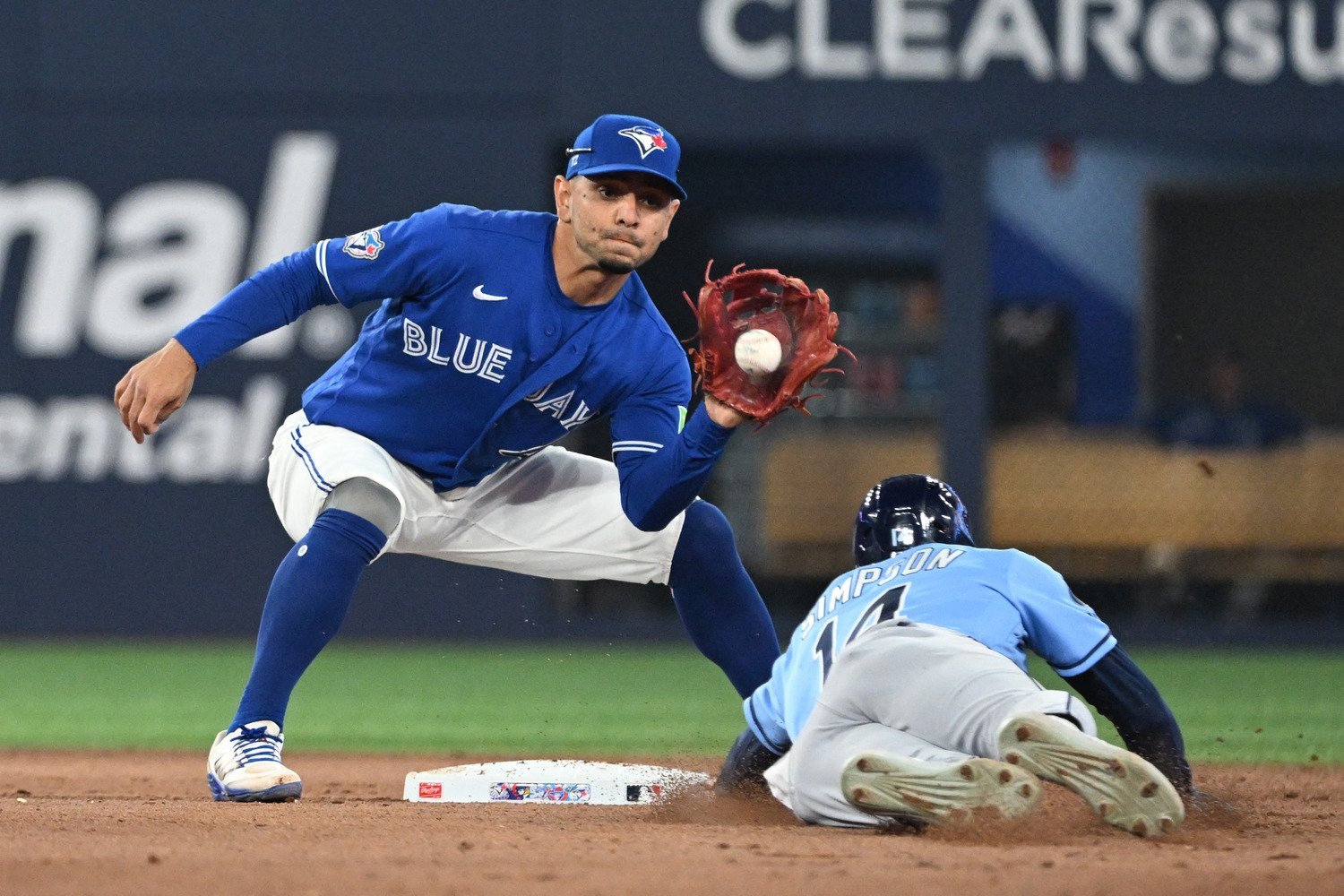 Andrés Giménez has been an elite shortstop defensively this season. As of September 1, in 1,025 innings, he has posted a +15 Fielding Run Value (“FRV”) that trails only Kansas City’s Bobby Witt Jr.’s +18 FRV score. For the Blue Jays, this is a significant improvement over Bo Bichette’s -28 FRV in 6,184 innings from 2019 to 2025. During those seven seasons, of 92 qualified shortstops, only CJ Abrams posted a worse FRV mark (-38). On a number-of-innings-equivalent basis, Bichette’s FRV per 1,025 innings was -5. In other words, compared to the equivalent-innings defensive performance of Bichette, the 2026 Blue Jays have picked up 20 runs (+15 versus -5), which is worth approximately two wins, from Giménez’s defence at short. When it comes to hitting, did I mention that Giménez is an elite defender? Well, okay, Giménez has been well below average at the plate this season. His 78 wRC+ ranks 34th among the 40 shortstops with at least 200 plate appearances in 2026. Also, his OBP ranks 35th, and his K-BB% and ISO are each 32nd among this shortstop group. Overall, since producing a 143 wRC+ in 2022, Giménez's wRC+ has been 84. It is safe to say hitting is not his strong suit. In fact, as Jays Centre’s Leo Morgenstern noted in a recent Slack post, if Giménez records the highest fWAR this season among Toronto’s position players (he currently leads with a 2.5 fWAR), he will have the lowest wRC+ of any player who led the Blue Jays in fWAR in a single season. Before this season, Damaso Garcia held the Highest fWAR-Lowest wRC+ title due to his 3.8 fWAR and 98 wRC+ in 1982. For the record, the holder of the Highest fWAR-Highest wRC+ title is José Bautista, who posted a 180 wRC+ and led the 2011 Blue Jays with an 8.1 fWAR. To the question of whether the Blue Jays can enter next season with a well-below-average hitter as an everyday shortstop, there are three factors to consider. First, suppose Toronto desires to be a Top Five hitting team in 2027. Accordingly, do Top Five hitting teams have weak hitters as regular-playing-time players? If so, how many? Second, what if Toronto wants a better hitter as its everyday shortstop? Who are the options to replace Giménez? Third, are there opportunities to improve second base with a better bat? Currently, Toronto’s second basemen have produced an 89 wRC+, which ranks 24th among MLB teams. Regarding the composition of better-hitting teams, as measured by wRC+, see the table below. Averages of the Top 5 Teams by wRC+ Season # of Players with 200 or More Plate Appearances & wRC+ Greater Than Ranked by Plate Appearances # of Players with wRC+ Greater Than 100 100 125 150 Top 6 Top 7 Top 8 Top 9 2025 8 4 1 5 6 6 7 2024 8 3 1 5 6 7 7 2023 8 5 2 5 6 7 8 2022 7 5 1 5 6 7 7 2021 9 4 1 5 6 7 7 Average 2021 to 2025 8 4 1 5 6 7 7 2025 Jays 8 3 1 5 6 6 6 2026 Jays 4 0 0 2 2 3 3 Source: FanGraphs. The 2026 data is as of September 1, 2026. I constructed the table as follows: For each of the seasons from 2021 to 2025, I selected the five best-hitting teams by wRC+. The sample for each team includes any batter with at least 200 plate appearances with the listed team. For each team, the hitters were ranked from most to fewest plate appearances. On average, hitters with at least 200 plate appearances accounted for 86% of a team’s total plate appearances, and 89% of a team’s wRC+ (weighted by plate appearances). My observations are as follows: During the five years from 2021 to 2025, the Top Five hitting teams averaged eight batters with wRC+ marks greater than 100, four of whom had wRC+ scores more than 125, and one of the four posted a wRC+ greater than 150. On average, after sorting the players by most plate appearances, these teams had five hitters with wRC+ figures more than 100 in their top six, six players in their top seven and seven in their top eight and top nine. Accordingly, even the best-hitting ballclubs have below-average hitters in their regular lineup. For example, in 2025, Toronto had the second-highest wRC+ (113), and its hitters with the eighth- and ninth-most plate appearances were Giménez and Myles Straw. These batters posted wRC+ numbers of 71 and 91, respectively. Furthermore, Ernie Clement had the third-most plate appearances of the 2025 Blue Jays, and he recorded a 98 wRC+. Compared to the averages shown of the best-hitting teams during the 2021-2025 seasons, the 2025 Blue Jays’ numbers were similar. That version of the Blue Jays had eight batters with wRC+ marks above 100, three above 125, and one above 150. Of the top nine leaders by plate appearances, six posted wRC+ numbers more than 100. Therefore, a team can be among the best-hitting ballclubs and still have regulars who are below-average batters. As of September 1, the 2026 Blue Jays had generated a 93 wRC+, which ranks 26th. As the table shows, Toronto only has four batters with wRC+ scores in excess of 100 and only two in the top six batters by plate appearances. What does all this mean for the 2027 Blue Jays? First, Toronto can have Giménez, an elite shortstop defensively but a below-average hitter, play every day. However, Toronto will have to surround Giménez with above-average hitters. Part of the solution could be internal: a bounce-back season from Vladimir Guerrero Jr., the return of Addison Barger and Anthony Santander, and better seasons from Kazuma Okamoto and Alejandro Kirk. Perhaps Charles McAdoo and Brett Bateman could take their hitting to a higher level. Concerning the middle infield, there are external options. The trade market and internal candidates are possibilities, but I will focus on the list of scheduled 2027 free agents. One option is for Toronto to sign a free agent shortstop who hits better than Giménez. Accordingly, Giménez would move to second base, where he posted a +7 FRV in 720 innings in 2025. Unfortunately, according to Spotrac, there are slim pickings from the list of 2027 free agent shortstops. Would an Isiah Kiner-Falefa improve Toronto’s hitting? I will say no. On the bright side, there are interesting free agents among second basemen. This article isn't the place to take a deep dive into these players, but Jazz Chisholm Jr. and Brandon Lowe are intriguing. Chisholm is having a down year offensively (99 wRC+), but he has a 3.4 fWAR, a .175 ISO and a +7 FRV. Thus far in 2026, Lowe has posted a 115 wRC+, a 3.9 fWAR, a .227 ISO and a +10 FRV. Luis Arraez and Gleyber Torres are also options. The pool of 2027 free agent second basemen could be a worthwhile option for Toronto’s front office to consider. The Last Word Before the 2026 campaign began, I forecast that Giménez would steal 25 or more bases and also generate a wRC+ greater than 114. As of September 3, he has 20 stolen bases and can still exceed 25. Concerning my wRC+ prediction, let’s say I was just a bit outside the mark. Nevertheless, Giménez provides the Blue Jays with elite defence at an important position. Furthermore, even top-hitting teams carry below-average hitters as everyday players. The key is to surround players like Giménez with better-than-average hitters. Overall, the 2027 Blue Jays can approach the lofty heights of a Top Five hitting team through internal improvement from players such as Guerrero and the return of Barger and Santander. Also, while the 2027 free agent shortstop class does not have much to desire offensively, the 2027 free agent second basemen group is attractive. An addition such as Chisolm or Lowe would improve Toronto’s offence and also be a positive contributor defensively. So, should the Blue Jays enter next season with Giménez, a light-hitting, defensively elite everyday shortstop? The answer is yes! View the full article
 -
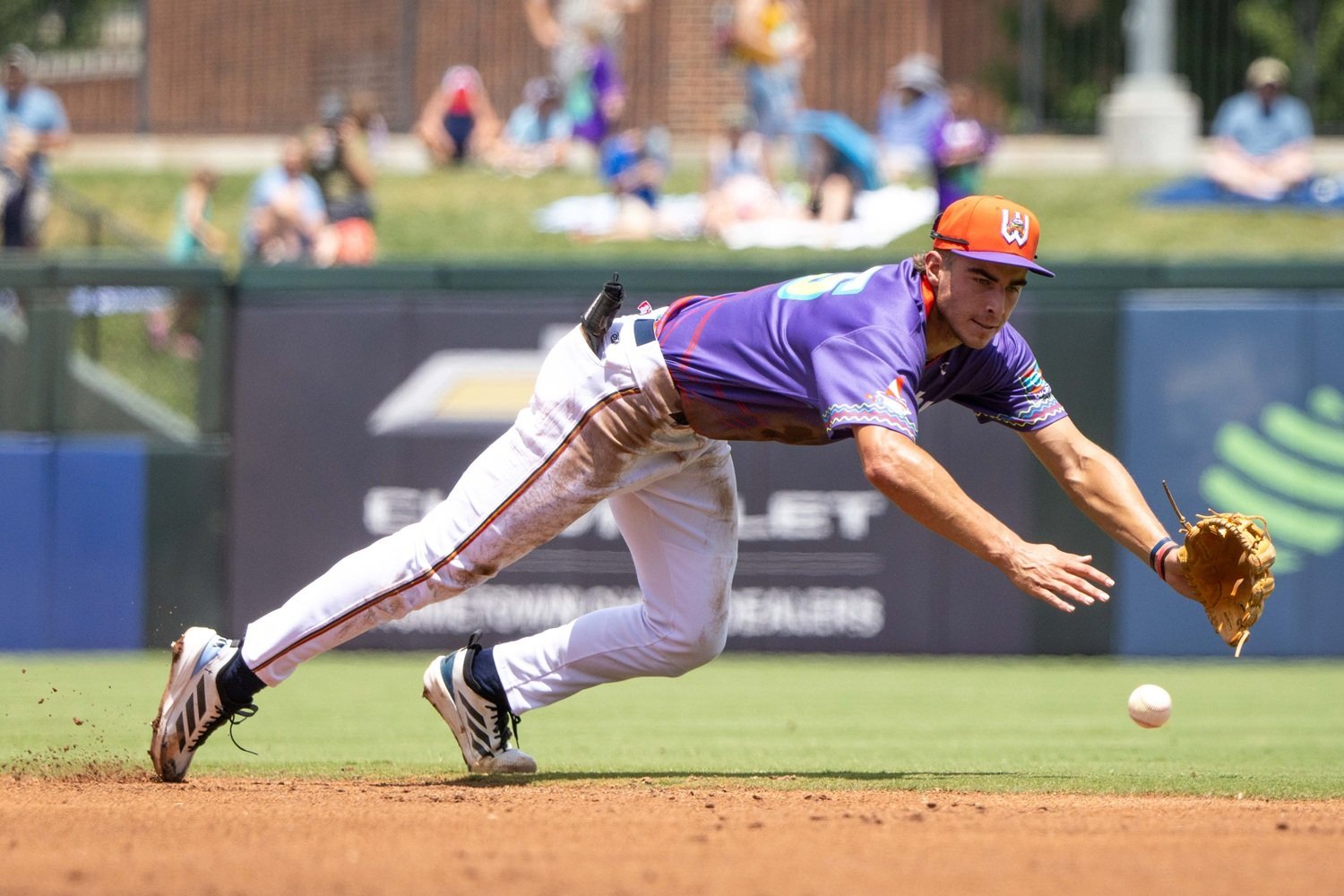 I was going to start this article today with what is now the third paragraph. But then I took about a second and thought. Hmmm, the Mi TRANSACTIONS None. SAINTS SENTINEL St. Paul 1, Omaha 6 Box Score Another tough night for the Saints and they find themselves looking up and seeing more teams between them and a playoff berth. Trent Baker started and struck out three batters over two scoreless, one-hit innings. However, Jack Anderson came in and gave up six runs (5 earned) on eight hits and two walks in his three innings. Paulshawn Pasqualotto finished the game strong. He had five strikeouts and no walks over three innings of two-hit, scoreless baseball. The Saints offense could only muster one run on six hits and two walks. Hendry Mendez was 2-for-4 and had the lone RBI. He was the only Saints player with a multi-hit game. Tanner Schobel went 1-for-2 with two walks. WIND SURGE WISDOM Wichita 6, Tulsa 8 Box Score The top two batters in the Wind Surge accounted for 60% of the team’s hits, 60% of the team’s RBI, and 50% of the team’s run. Unfortunately, six runs was not enough for the Wind Surge on this night. Riley Quick made the start and gave up three runs on two hits over five innings. He walked four batters and had five strikeouts. Through the fifth inning, he had given up just one run. However, he faced two batters in the sixth inning and both got on base and came around to score. Ty Langenberg, the Surge’s top pitcher in August, pitched the next two innings. He was charged with five runs on six hits and two walks. Luis Quinones pitched a scoreless frame. The Surge had a three-run sixth inning to take a 3-1 lead at that time. However, the Drillers scored three in the sixth and four more in the bottom of the seventh to take a commanding 8-3 lead. Wichita attempted to come back, but three runs over the final two innings was not enough. Leadoff man Marek Houston went 3-for-5 with his 14th double. Caden Kendle hit behind him and was also 3-for-5. He added his 15th double and drove in three runs. Kyle DeBarge was the other Wichita player with a multi-hit game. KERNELS NUGGETS Cedar Rapids 4, South Bend 7 Box Score Similar to the Wind Surge, Cedar Rapids fell behind, gave up a couple of crooked-number innings and were unable to catch up at the end. Justin Mitrovich started and gave up three runs on six hits and a walk over the first four innings. He had three strikeouts. Brent Francisco gave up a run on three hits over the next two innings. Cleiber Maldonado gave up three runs on two hits and three walks and only recorded two outs in the bottom of the seventh. Michael Ross got the final four outs, two of them on strikeouts. Irvin Nunez had a really nice game. Playing third base, he went 3-for-4 with his second double and his second Kernels home run since joining the team recently. Vahn Lackey and Luis Fragoza each had a multi-hit game. Lackey had three singles in five at-bats. He also stole his sixth and seventh bases with the Kernels. Fragoza went 2-for-3 and was hit by a pitch. He stole his third base. Yilber Herrera and Yasser Mercedes each hit their first Kernels triple. Unfortunately, the team went 0-for-9 with runners in scoring position and left nine on base. MIGHTY MATTERS Fort Myers 2, Clearwater 8 Box Score Clearwater got ahead early and kept adding on. They scored in five of their eight innings on offense. Jason Reitz went just 1 1/3 innings on Saturday. He gave up two runs on four hits and two walks. Jackson Sleeper gave up three runs on four hits and a walk in 1 2/3 innings. Callan Fang worked 3 1/3 innings and was charged with three runs on four hits, two walks, and a hit batter. He struck out six batters. Brian Strange got the final five outs, two on strikeouts. Mussels’ batters combined for two runs on five hits and three walks in the game. No one had a multi-hit game or an extra base hit. Merphy Hernandez went 1-for-3 with a single and his 51st stolen base. The center fielder also had two outfield assists. Bryce Fowler and Charlie Scholvin each had an RBI. PLAYERS OF THE DAY Hitter(s) of the Day Irvin Nunez (Cedar Rapids): 3-for-4, 2B(2), HR(2), 2 R, RBI. Pitcher(s) of the Day Aaron Rozek (St. Paul): 6 IP, 4 H, 0 ER, 3 BB, 3 K, 75 pitches, 47 strikes (62.7%). PROSPECT SUMMARY Check out the Prospect Tracker for much more on our Twins Top 20 prospects. See how they did today. #1 - OF Walker Jenkins (Minnesota) - (Day Off, 9th Inning Defensive Replacement) #2 - C Vahn Lackey (Cedar Rapids) - 3-for-5, R, K, 2 SB(7), CS(1) (batted second, played catcher) #3 - IF Kaelen Culpepper (Minnesota) - 2-for-5, 2B(5), 2 R, RBI (batted second, played SS) #4 - SS Marek Houston (Wichita) - 3-for-5, 2B(14), 2 R, K (batted first, played SS) #5 - RHP Riley Quick (Wichita) - 5 IP, 2 H, 3 ER, 4 BB, 5 K, WP, 76 pitches, 42 strikes) #6 - OF Emmanuel Rodriguez (St. Paul) - 0-for-4, 3 K (batted first, played LF) #7 - OF Hendry Mendez (St. Paul) - 2-for-4, RBI (batted fifth, played DH) #8 - C Eduardo Tait (Cedar Rapids) - 1-for-4, SF RBI, 2 K (batted fourth, played DH) #9 - 1B/OF Gabriel Gonzalez (Minnesota) - 0-for-2 (batted eighth, played LF) #11 - C Carson Tinney (Fort Myers) - 0-for-3, BB (batted second, played 1B) #13 - C/OF Khadim Diaw (Wichita) - 0-for-3, BB, HBP (batted third, played catcher) #18 - 3B/SS Quentin Young (Ft. Myers) - 0-for-3, BB, K (batted fifth, played 3B) #19 - OF Yasser Mercedes (Cedar Rapids) - 1-for-4, HBP, 3B(1), K, (batted third, played RF) UPCOMING PROBABLES Sunday, September St. Paul @ Omaha (2:05 pm CT) - RHP Ryan Gallagher (5-6, 6.78 ERA) Wichita @ Tulsa (6:00 pm CT) - RHP Adrian Bohorquez (0-1, 0.00 ERA) Cedar Rapids @ South Bend (1:05 pm CT) - RHP Kolten Smith (0-5, 7.15 ERA) Ft. Myers @ Clearwater (11:00 am CT) - RHP Eric Hammond (1-4, 4.40 ERA) CURRENT W-L Records Minnesota Twins: 68-74 St. Paul Saints: 76-60 Wichita Wind Surge: 51-78 (Final Game 9/13) Cedar Rapids Kernels: 47-82 (Final Game 9/6) Fort Myers Mighty Mussels: 67-60 (Final Game 9/6) FCL Twins: 33-26 (Season Complete) DSL Twins: 19-35 (Season Complete) Please feel free to ask questions about the teams, the rosters, and discuss today’s games, or anything else Twins minor-league related! View the full article
 -
 The San Diego Padres' four full-season affiliates went 3-1 Saturday, with the Triple-A El Paso Chihuahuas beating Las Vegas 9-7, the Double-A San Antonio Missions falling to Midland 10-2, the High-A Fort Wayne TinCaps dropping Lansing 4-1 and the Low-A Lake Elsinore Storm walking off Inland Empire 8-6 in 10 innings. Padres Minor-League Transactions None. Mason McCoy Has 3 Hits, 3 RBIs In Chihuahuas' Victory Mason McCoy went 3-for-5 with three RBIs, two on a single that capped a four-run third inning, as the host Triple-A El Paso Chihuahuas turned back the Las Vegas Aviators 9-7. McCoy had a triple among his three hits while scoring a run, while Nick Solak went 3-for-5 with a double, two RBIs and two runs scored and Nick Pratto was 3-for-5 with a double, an RBI and run scored. Chihuahuas right-handed starter Sean Boyle was solid, allowing three runs on five hits and two walks with three strikeouts over five innings. He earned his 10th win of the season, second in the Pacific Coast League and the first Chihuahua to do so since three did it in 2019. Former Padres right-hander Brent Honeywell had his first scoreless appearance in three outings with the Chihuahuas following his March release from the San Francisco Giants, striking out two. Right-hander Alek Jacob then was tagged for four runs in the seventh inning before right-hander Hunter Stratton had another standout appearance with two scoreless innings. The Chihuahuas were down 3-2 when they scored four runs in the bottom of the third inning. Solak and Pratto had singles to begin the inning with an error by the center fielder allowing the runners to go to second and third. Marcos Castanon's ground single to left tied the game, then Will Wagner drove Pratto home with a line single to left. After a sacrifice bunt by Victor Duarte and lineout by Bryce Johnson, McCoy singled Castanon and Wagner home for a 6-3 edge. McCoy had a leadoff single in the sixth, stole second and third, giving him a PCL-best 36 this year, then Solak and Pratto had back-to-back doubles to make it 8-3. The Aviators scored four in the top of the seventh to pull within 8-7, the Chihuahuas created a little breathing room when Wagner had a leadoff walk and, with two outs, McCoy hit an opposite-field triple to right-center. EP_0905.mp4 Player AB R H RBI BB K Mason McCoy 5 1 3 3 0 0 Gage Workman 5 1 1 0 0 0 Carlos Rodríguez 3 1 1 0 2 0 Nick Solak 5 2 3 2 0 2 Nick Pratto 5 1 3 1 0 0 Marcos Castañon 4 1 1 1 0 1 Will Wagner 2 2 1 2 2 0 Blake Hunt 1 0 0 0 0 0 Victor Duarte 2 0 0 0 0 2 Bryce Johnson 4 0 0 0 0 1 Player IP H R ER BB K HR Sean Boyle 5 5 3 3 2 3 0 Brent Honeywell 1 2 0 0 0 2 0 Alek Jacob 1 4 4 4 1 2 1 Hunter Stratton 2 0 0 0 1 2 0 Missions Can't Handle Early Burst By RockHounds Alex McCoy, Jack Costello and Albert Fabian each had two hits, but the host San Antonio Missions gave up a pair of big innings, including three in the first, in a 10-2 loss to the Midland RockHounds. Missions right-handed starter Eric Yost, Padres Mission's No. 16 prospect, gave up four runs in four innings on five hits and two walks while striking out six. Right-hander Bernard Jose then allowed six runs (four earned) in two innings. After those three runs in the first, the RockHounds got one in the third, four in the fifth and two in the sixth. Fabian had two doubles, but he, McCoy and Costello had six of the Missions' seven hits. Romeo Sanabria had the other hit, a third-inning double that scored McCoy, Padres Mission's No. 8 prospect who had singled and went to second after Tirso Ornelas was hit by a pitch. Costello scored the other run, getting a one-out single in the sixth and scoring on Fabian's 18th double of the season, an opposite-field shot down the third-base line. SA_0905.mp4 Player AB R H RBI BB K Kai Roberts 3 0 0 0 1 1 Alex McCoy 4 1 2 0 0 1 Tirso Ornelas 3 0 0 0 0 0 Romeo Sanabria 4 0 1 1 0 1 Jack Costello 4 1 2 0 0 0 Albert Fabian 4 0 2 1 0 0 Justin DeCriscio 3 0 0 0 0 1 Ryan Jackson 4 0 0 0 0 1 Anthony Vilar 2 0 0 0 2 1 Player IP H R ER BB K HR Eric Yost 4 5 4 4 2 6 0 Bernard Jose 2 5 6 4 2 2 1 Igor Gil 2 2 0 0 1 0 0 Wyatt Hoffman 1 1 0 0 0 0 0 Kerrington Cross Has Triple Doubles To Send TinCaps Past Lugnuts Kerrington Cross had three doubles as part of a 4-for-4, two-RBI night and right-handed starter Winyer Chourio spun five shutout innings in his final start of the season as the High-A Fort Wayne TinCaps toppled the host Lansing Lugnuts 4-1. The TinCaps finish their season Sunday. Chourio, Padres Mission's No. 17 prospect, struck out six while allowing three hits and four walks. Barring a trip back to Low-A Lake Elsinore for the playoffs, Chourio will end his season as the system leader in strikeouts with 122. He could be passed by two pitchers at higher levels (Jagger Haynes has 112 and Ian Koenig has 110). Left-hander Javier Chacon struck out six in three shutout innings, while right-hander Will Varmette allowed a run in the ninth. The TinCaps scored in four innings. Cross doubled leading off the second, went to third on Luke Cantwell's single and was thrown out at the plate on Dylan Grego's grounder to first. Conner Westenburg hit a grounder to third that was booted, allowing Cantwell to score. Ryan Gerety singled to start the third and, after stealing second and going to third on an errant throw, scored on Cross' second double of the game. With two outs in the fifth, fourth-round draft choice Robbie Lavey doubled. Lavey was injured on the play and replaced by pinch-runner Carlos Rodriguez. Cross then singled Rodriguez home for a 3-0 lead. Yoiber Ocopio led off the six with a single, went to second on a groundout and third on a wild pitch. One out later, Ocopio scored when Wells' two-out grounder to short was thrown away. FW_0905.mp4 Player AB R H RBI BB K Kasen Wells 5 0 0 0 0 0 Ryan Gerety 4 1 1 0 1 1 Rosman Verdugo 5 0 0 0 0 2 Robbie Lavey 3 0 1 0 0 1 Carlos Rodriguez 1 1 0 0 0 1 Kerrington Cross 4 0 4 2 0 0 Luke Cantwell 3 1 1 0 1 0 Yoiber Ocopio 4 1 1 0 0 1 Dylan Grego 4 0 0 0 0 0 Conner Westenburg 4 0 0 0 0 1 Player IP H R ER BB K HR Winyer Chourio 5 3 0 0 4 6 0 Javier Chacon 3 2 0 0 2 6 0 Will Varmette 1 2 1 1 0 0 0 Joe Tiroly Mashes Again For Storm, Hits Walk-Off HR In 10th Joe Tiroly's magical pro debut went to another level as the seventh-round draft pick hit a walk-off two-run homer leading off the 10th inning as the host Low-A Lake Elsinore Storm rallied for an 8-6 victory over the Inland Empire 66ers. The Storm wrap up the regular season Sunday before playing in the California League postseason as a result of winning the South Division in the first half. Augie Lopez, the Padres' 10th-round draft pick, tied the game with a ninth-inning homer, while Jorge Quintana, Padres Mission's No. 7 prospect, hit a monstrous shot and had two hits, as did 11th-rounder Chris McHugh. Storm right-handed starter Tyler Schmitt struck out five and allowed one run in three innings, while fifth-round right-hander James Guyette allowed three runs (two earned) over two innings in his second pro game. Right-hander Tyler Pitzer, an undrafted free agent, allowed two runs over 1⅓ innings. Right-hander Jordan Valenzuela pitched 1⅔ perfect innings with two strikeouts, while left-hander Andrew Wright, also an undrafted free agent, got the win with two perfect innings, fanning two. The Storm trailed 6-4 after the 66ers scored twice in the top of the seventh. Dawson Willis and Lopez drew walks to begin the inning, but Lopez was erased on the back end of a double steal. Qrey Lott grounded out to second base with Willis scoring to pull the Storm within 6-5. Lopez then hit his second homer in 13 pro games on the first pitch with one out in the ninth, a shot to right-center. With sixth-rounder Nu'u Contrades as the zombie runner on second, Tiroly, who hit four homers in three games last weekend, crushed a mammoth walk-off homer over the shed beyond the wall in left-center, his seventh homer in 17 games. LE1_0905.mp4 LE2_0905.mp4 LE3_0905.mp4 Player AB R H RBI BB K Chris McHugh 5 0 2 0 0 2 Jose Verdugo 0 0 0 0 0 0 Nu'u Contrades 4 1 0 0 1 0 Joe Tiroly 5 1 1 2 0 0 Jorge Quintana 4 2 2 1 0 0 Ty Harvey 4 0 0 0 0 2 Jesmaylin Arias 4 1 1 0 0 2 Dawson Willis 3 1 0 1 1 1 Augie Lopez 3 1 1 1 1 1 Qrey Lott 3 1 1 1 0 1 Player IP H R ER BB K HR Tyler Schmitt 3 3 1 1 4 5 0 James Guyette 2 4 3 2 1 0 0 Tyler Pitzer 1 1/3 4 2 2 1 1 0 Jordan Valenzuela 1 2/3 0 0 0 0 2 0 Andrew Wright 2 0 0 0 0 2 0 Padres Mission's Top 20 Prospect Performance Ethan Salas, C: 0-for-1, K Ryan Wideman, CF: On injured list Coleman Borthwick, RHP: In Arizona Kruz Schoolcraft, LHP: DNP Ty Harvey, C: 0-for-4, 2 K Kale Fountain, OF: Injured, out for season Jorge Quintana, SS: 2-for-4, HR, RBI, 2 R Alex McCoy, LF: 2-for-4, R, K Braedon Karpathios, RF: DNP Lamar King Jr., C: DNP Elliot Lascelles, SS: DNP Tucker Musgrove, RHP: On injured list Jagger Haynes, LHP: DNP Jake Cunningham, OF: DNP Truitt Madonna, C: DNP Eric Yost, RHP: 4 IP, 5 H, 4 R, 4 ER, 2 BB, 6 K Winyer Chourio, RHP: 5 IP, 3 H, 0 R, 0 ER, 4 BB, 6 K Jesus Castro, RHP: DNP Michael Salina, RHP: On injured list Rosman Verdugo, SS: 0-for-5, 2 K View the full article
![More information about "Alex Kranzler Brings An SEC Mentality to Red Sox Organization [Exclusive]"](http://d317trerw33y7b.cloudfront.net/monthly_2026_09/rssImage-9d33d2ff417231ebe94057f62980b37e.jpeg.2a5d7c32aa116a97b6918676c3b1ce4e.jpeg)
