


DiamondCentric
-
Posts
2,631 -
Joined
-
Last visited
Never
Content Type
Profiles
Forums
Events
News
Tutorials & Help
Major League Baseball Videos
Guides & Resources
Store
Downloads
Gallery
Everything posted by DiamondCentric
-

Byron Buxton Has Been More Valuable Than You Think to the Twins
DiamondCentric posted an article in Twins Daily
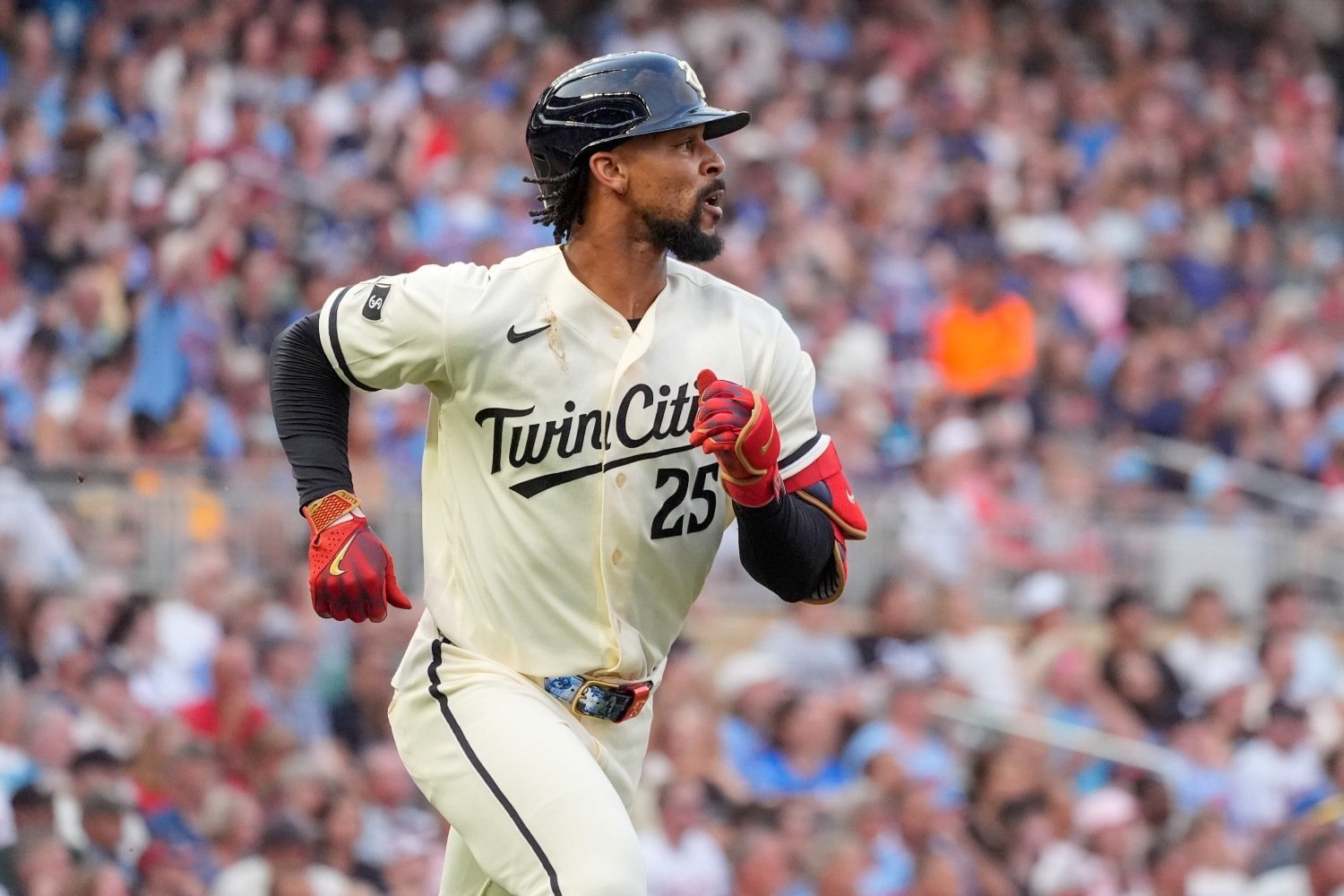 Byron Buxton is once again on the injured list. This time, the issue is his hip, and the injury is serious enough that he will require offseason surgery. The Twins have not yet revealed exactly what procedure Buxton will undergo or what the recovery timeline might look like. Naturally, the injury has led to plenty of familiar conversations among Twins fans. How much longer can the team count on Buxton? Is he being paid too much? Would Minnesota be better off moving on? Those are fair questions. Buxton's injury history is extensive, and the Twins can't simply pretend that availability doesn't matter. But there's another side to the conversation that deserves more attention. Buxton has been an incredibly valuable player when he takes the field. And despite the injuries, his current contract has worked out very well for the Twins. 2026 Has Been a Tale of Two Seasons Buxton was having arguably the best first half of his career in 2026. He launched 25 home runs, posted a .904 OPS and earned a starting spot in the All-Star Game through fan voting. For a player who has spent much of his career fighting to stay healthy, Buxton looked like he was finally putting everything together over a prolonged stretch. Then things started going sideways around the All-Star break. Buxton has appeared in only 18 games during the second half, and his production has fallen dramatically. He owns a .477 OPS during that stretch, and the hip issue ultimately sent him back to the injured list. That's the frustrating part of Buxton. The Twins aren't paying for a player who provides average production when healthy. They're paying for one of the most impactful players in the game when he's on the field. Even with the limited second half, FanGraphs estimates Buxton's 2026 value at $20.9 million. The Twins are paying him $15 million. So, once again, Buxton has provided more value than his salary would suggest. That can be difficult to reconcile when looking at his injury history, but that's exactly what makes his career so interesting. The Contract Has Worked When Minnesota signed Buxton to a seven-year, $100 million extension before the 2022 season, there was obvious risk involved. The Twins weren't betting on Buxton staying perfectly healthy. Nobody could reasonably make that assumption. Instead, they were betting that the production he could provide during his healthy stretches would make the contract worthwhile. So far, that bet has paid off. Buxton made his first All-Star team in 2022 and posted a 133 OPS+ in 92 games. FanGraphs valued that season at $27.3 million. His 2023 season was the clear low point of the contract. Buxton played in just 85 games, struggled offensively with a 97 OPS+ and was limited to DH duties. FanGraphs valued his season at only $4.2 million. Then he bounced back in 2024. Buxton played more than 100 games for only the second time in his career and posted a 137 OPS+. FanGraphs valued his production at $29.6 million. And then came 2025. Buxton produced arguably the best overall season of his career, posting a 138 OPS+, 4.9 rWAR and tremendous value on both sides of the ball. FanGraphs valued his season at $40.5 million. Add it all together, and the numbers are pretty remarkable. The Twins have paid Buxton roughly $70 million through the first five seasons of the contract. FanGraphs estimates that he has provided approximately $122.5 million in value over that same span. That's more than $50 million in surplus value. Obviously, those calculations don't erase the games he has missed. They don't make the injuries less frustrating. They don't guarantee anything about the future. But they do provide some important context. The Twins haven't been overpaying Byron Buxton. In fact, they've gotten a significant discount when he's been healthy enough to play. The Twins Should Be Thinking Beyond 2028 Buxton is currently under contract for two more seasons. That means the Twins have some time to figure out what comes next, but they shouldn't necessarily wait until the end of his current deal to have that conversation. Buxton has been clear about his desire to finish his career in Minnesota. That's something the Twins should take seriously. “We’re just really lucky that a player of his talent is that committed to this team, particularly when in recent years, I don’t know that we’ve fully earned that level of loyalty and commitment,” Twins owner Tom Pohlad said. “We’re gonna show him the same level of loyalty and commitment going forward. … You could say that no player is not tradeable, but that’s about as close as it gets. When you have that kind of relationship, some things have got to be bigger than other things. Buxton’s in that category.” By the time his current contract expires, Buxton will be entering his age-35 season. That's obviously where the risk becomes even greater. The injuries aren't going to magically disappear because he gets older, and Minnesota shouldn't hand him a massive contract simply because of what he has accomplished in the past. But that doesn't mean an extension should be off the table. What if the Twins offered Buxton something like $20 million per season with additional performance and award incentives? Adding three or four years could potentially keep him in Minnesota through the remainder of his 30s while protecting the team against some of the risk associated with his availability. The structure could be particularly important. Instead of simply guaranteeing a massive salary regardless of how often Buxton plays, the Twins could build incentives around games played, plate appearances, awards and performance. That's similar to the framework that has already worked with his current contract. There are no guarantees with Buxton's body. There aren't supposed to be. The goal isn't to eliminate the risk. It's to structure the contract so the Twins are appropriately compensated if that risk becomes reality. Let Buxton Finish What He Started There will always be a segment of the fan base that sees Buxton's injury history and believes the Twins should move on. That's understandable. But there's another question worth asking. What would Minnesota look like without Byron Buxton? When healthy, he is still capable of changing games with his bat, his defense and his speed. Few players on the roster can impact a game in as many ways. And while his availability has been inconsistent, the financial results of his current contract tell a different story than the injury list does. Buxton has already provided the Twins with more value than they have paid for. Now Minnesota has an opportunity to make sure he finishes his career where it began. The Twins shouldn't blindly give Buxton another four-year contract. They shouldn't ignore the injury risk. They shouldn't pretend his age won't matter. But they also shouldn't allow the perfect to become the enemy of the good. If Buxton wants to finish his career in Minnesota, the Twins should explore a creative extension that makes sense for both sides. Because when Buxton is healthy, he's still one of the most valuable players the Twins have. And if the Twins can find the right way to manage the risk, there is no reason his final chapter can't be written in Minnesota. Should the Twins approach Buxton about an extension? Has he lived up to his contract? Leave a comment and start the discussion. View the full article
 -
Did The Twins Make A Mistake By Keeping Joe Ryan & Pablo López?
DiamondCentric posted an article in Twins Daily
 The Twins wanted to remain competitive while also building for the future. In keeping Joe Ryan and Pablo López, they may have gotten stuck somewhere in between. View the full article
 -
Emulating Nico Hoerner May Be Nick Sogard's Best Path Forward
DiamondCentric posted an article in Talk Sox
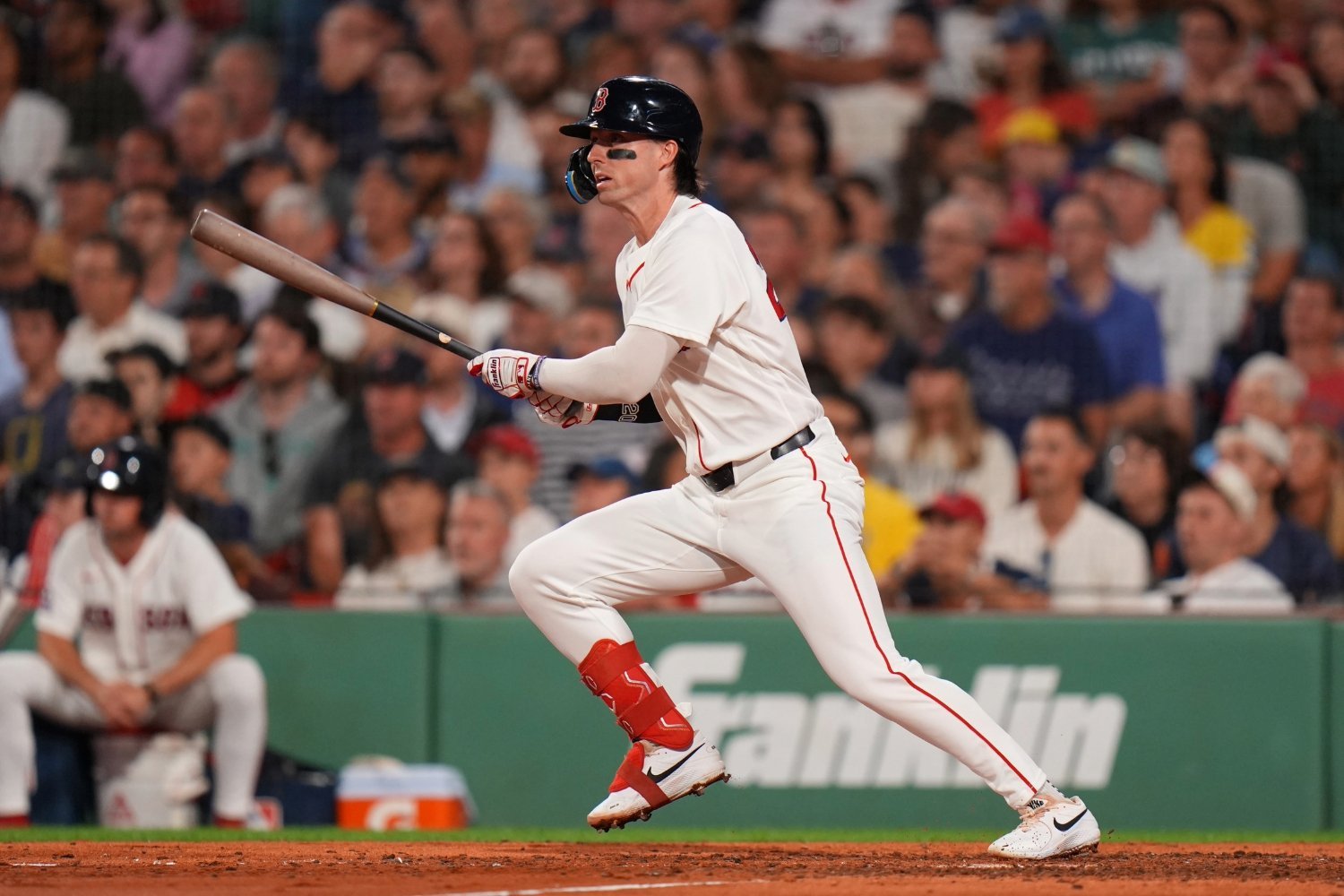 After whiffing on Alex Bregman in free agency, Nico Hoerner was floated as a potential fit for the Boston Red Sox. It turns out they didn’t need Hoerner. Boston has their very own contact-oriented, squared-jawed second baseman with a nice flow. On the surface, Nick Sogard and Nico Hoerner look like very similar hitters. Sogard isn’t a Statcast darling, nor is Hoerner. They don’t hit the ball hard. Their bat speeds grade in the bottom tenth of the league. They won’t turn any heads with their 86.8 and 86 mph exit velocities, nor do they barrel the ball often. Their greatest strengths lie in their plate discipline and contact efficiency. Let’s start with the most obvious difference: Hoerner is a faster player. His 77th percentile sprint speed helps boost his expected batting average to the 99th percentile. He’s also an elite defender and has won two Gold Gloves manning the keystone. It’s a bit of a stretch to say that Sogard will win a Gold Glove sometime during his career. Nonetheless, he’s a serviceable defender. In previous seasons, he filled in wherever infield help was needed, but he’s found a semi-permanent home at second this year, posting a -1 DRS, 1 OAA, and 2 FRV across 260 innings. Two years ago, FanGraphs’ Ben Clemens conducted a deep dive on squared-up rate versus launch angle. Following his methodology, I created a chart comparing Nick Sogard and Nico Hoerner’s contact quality across every ball they’ve hit into play over the past two seasons. Hoerner squares up even when he’s hitting the ball into the dirt. He squares up 75% to 78% of balls hit at negative launch angles, which is nearly the same rate as his line drives (10-25 degrees). It’s rare to see a hitter who maintains their quality of contact that far below the line drive band, but Hoerner is a contact artist with elite bat control. Sogard’s squared-up rate falls roughly 16 percentage points, from 82.5% at 12 degrees to 66.7% at -14 degrees. Hoerner drops five points over the same stretch. In the sweet spot range (8 to 32 degrees), they’re squaring up at nearly identical rates. Their gap never exceeds 3.5 points, and the lead oscillates three times across the range. Hoerner peaks in the 18-22 degree bucket, averaging an 80.6% squared-up rate. Sogard's peak sits lower and wider, squaring up between 80% and 83% of the time from -2 to 14 degrees. Hoerner’s squared-up rate collapses above 38 degrees, whereas Sogard's plateaus around 60%. This is the exact opposite of their grounder gap. Sogard and Hoerner’s swing path tilt numbers are nearly identical at 33 degrees and 32 degrees, respectively. Their attack angles have a nine-degree gap, a byproduct of where they’re pitched. Player Swings Bat Speed Attack Angle Swing Length Tilt Ideal AA% EV LA Nick Sogard 304 69.2 14° 7.1 ft 33° 50.0% 87.1 17° Nico Hoerner 946 68.3 5° 7.3 ft 32° 45.6% 87.0 12° A steeper attack means the bat is traveling upward upon contact. It matches low pitches better, since the ball is descending into the bat path. It produces more lift on contact, resulting in higher launch angles and more fly balls and homers. A flatter attack angle covers the top of the zone better and yields more line drives and grounders. Generally speaking, we see contact hitters utilize flatter attack angles. Statcast divides the strike zone into four areas: the Heart, Shadow, Chase, and Waste Zone. Hoerner has played in more games than Sogard this year, so raw pitch counts aren’t an exact apples-to-apples comparison. Normalized via heat-maps, Hoerner’s seen a higher number of pitches in the Heart. Sogard bats left most of the time. As a lefty, pitchers attack him in the bottom shadow zone (Attack Zone 18). As a righty, Sogard sees more pitches in the heart of the plate (Attack Zones 2, 5, and 8). What happens when they connect with the ball? Hoerner hits more grounders, but as previously mentioned, he squares those up, so they’re not weak dribblers. His speed also bails him out of grounders that would be outs for most hitters. Player GB% FB% LD% PU% Pull Air% Nick Sogard 38.9% 21.5% 29.5% 10.1% 24.2% Nico Hoerner 43.5% 20.8% 28.2% 7.6% 13.0% Sogard doesn’t have elite speed to beat out grounders, but that isn’t a huge factor in his batted ball profile. Pulling the ball in the air reaps benefits for hitters. Over a third of them leave the yard. Sogard’s 24.2% pull-air rate is nearly double Hoerner’s. He’s seen that number jump across both sides of the plate. Last year, he recorded a 19.6% pull-air rate batting left, whereas this year it’s up to 23.5%. On the right side, it jumped from 23.1% to 26.7%. Fenway rewards switch hitters. Batting left, a line drive can sneak into the stands for a ground-rule double. Batting right, a pulled ball in the air connects with the Green Monster. Nick Sogard's Statcast Profile on Pulled Balls Season BBE EV LA Barrel% Hard-Hit% ISO BA xBA SLG xSLG wOBA xwOBA 2025 32 90.2 8 9.4% 46.9% .125 .344 .341 .469 .589 .350 .394 2026 66 88.6 9 7.6% 42.4% .288 .394 .363 .682 .557 .459 .394 Playing in a career-high 52 games in the majors this year, Sogard has sharpened his plate discipline. He’s cut his strikeout rate from 23.1% in 2025 to 19.9% in 2026, while bolstering his walk rate to 12.7% from 4.8%. He’s also not feasting on meatballs from mediocre guys. He’s hit home runs off Max Fried and Yennier Cano, two star pitchers. Looking at Hoerner and Sogard’s spray charts, you see the difference in their batted ball profiles. Hoerner’s is a wall of singles piled up in the infield and shallow outfield, which is exactly where you’d expect a guy with a five-degree attack angle to hit the ball. His home runs cluster down the left field line. Sogard’s damage varies based on his handedness. Nico Hoerner is a veteran second baseman. His profile is what a flat swing and elite bat control produce over six seasons. Heading into his age-30 season in 2027, it’s safe to say he’s hit his ceiling. He probably won’t ever hit more than 15 home runs in a season, which is fine, since the Cubs have plenty of other power hitters in their lineup to drive him home. Unlike Hoerner, Sogard’s still trying to figure out who he is as a hitter. Does he try to tap into his power, or does he stick to a contact-oriented approach? The Red Sox already have the latter in Caleb Durbin. Going forward, Sogard’s future looks murky. The team is loaded with solid, but not elite infielders. Boston traded for Curtis Mead, who fractured his left wrist in his debut. Mead has been on the 10-day IL and hasn’t swung yet. We probably won’t see him take the field for Boston again this year. Mead had a breakout first half with a surge in power, though his defense isn’t on par with Sogard’s. It’ll be interesting to watch the battle for second base whenever spring training occurs next year. Sogard has only appeared in 113 games across three seasons in Boston. This year, he’s blossomed into an X-factor for the team, and it’s safe to say he’s earned his spot on the postseason roster. He provides defensive versatility and elite plate discipline on both sides of the plate. His pull-air rate plays well in Fenway Park, and he has a knack for clutch hits. The Red Sox play better when Sogard is in the lineup, and his presence won’t be overlooked in October. View the full article
 -
 Nashville dropped a low-scoring tight affair. Biloxi romped in a game reminiscent of recent parent club routs. Transaction: ACL Brewers released RHP Argenis Aparicio. About to turn 21 years old ten days from now, the four-year run in the Brewers system comes to a close for Aparicio (two seasons in the Dominican, two in Maryvale). In Aparicio's first season, 2023, he was a two-way player but a .501 OPS in 84 plate appearances led his focus to the mound in subsequent seasons. Nashville Pre-Game Media Notes (unavailable) Final: Durham (Rays) 2, Nashville 1 Box Score and Game Log Via Cory Hilborne, Nashville's Communications Manager (Video clips, links and follow-up commentary vis yours truly) Brandon Lockridge Collects Two of Nashville's Three Hits in Loss Eduardo Garcia Swats Sixth Triple-A Home Run DURHAM, N.C. – Nashville dropped their second straight to the Durham Bulls with a 2-1 loss on Saturday night at Durham Bulls Athletic Park. Scoreless through four innings, the Sounds held a brief lead in the fifth before allowing two unanswered runs to the Bulls. The Sounds were held to three hits in the loss and just one over the final four innings. Jonathan Ornelas and Brock Wilken drew a pair of walks in the top of the first and served as the only baserunners for either side until the bottom of the third. Sounds' starter Colton Gordon pitched his way around a leadoff single and two-out double to strand a pair of Durham runners in scoring position and move the game to the fourth. Brandon Lockridge collected the first hit off Durham starter Jesse Scholtens with a single that pushed Wilken to third after he was hit by a pitch to get aboard for a second time. A strikeout and groundout ended the threat and kept the game scoreless. The Sounds finally broke through with a solo home run off the bat of Eduardo Garcia. It was the second of the week for Garcia and sixth in Triple-A to break the scoreless tie. Durham answered with a RBI single the next half inning, and Lockridge kept it to one run as he threw out Blake Sabol trying to score from second on the play. Bulls' announcers a bit too excited, no? Durham cashed in on back-to-back walks to start the bottom of the sixth off Gordon when Oliver Dunn doubled home the go-ahead run with two outs and brought an end to Gordon's night after 5.2 IP and a pair of runs on seven hits with seven strikeouts and the two walks. Lyon Richardson struck out Sabol to strand two Bulls on base and keep it a one-run game. Old friend Oliver Dunn with the go-ahead and as it turned out, winning RBI Jacob Hurtubise broke up a run of seven straight Nashville batters retired after the Garcia homer with a two-out walk in the seventh but was caught trying to swipe second and get into scoring position. Garcia walked in the eighth but a double play and ground out prevented the Sounds from getting the potential tying run into scoring position for a second straight inning. Lockridge singled for his second hit with two outs in the top of the ninth but was too little, too late, with a ground out thwarting any comeback aspirations. Rob Zastryzny and Brett Wichrowski each tossed a scoreless inning out of the bullpen for Nashville after Richardson struck out the only batter he faced. The Sounds will need a win in Sunday's series finale to earn the split in their final road series of the 2026 regular season. Left-hander Thomas Pannone is scheduled to get the start for Nashville after tossing the third perfect game in franchise history in the series opener on Monday. POSTGAME NOTES: GONE GARCIA: Eduardo Garcia swatted his second home run of the series and sixth in Triple-A with a go-ahead solo home run in the top of the fifth inning on Saturday night. Including his four home runs with Double-A Biloxi earlier this season, Garcia has reached double digit home runs in a season for the third time in his professional career and second straight season after hitting 13 last year between Biloxi and High-A Wisconsin. He set his single-season career-high with 15 in 2022. Since making his professional debut in 2019, Garcia ranks seventh in the Brewers farm system with 51 home runs. He is hitting .333 (6-for-18) with the two home runs, three RBI, and three runs scored over his last five games with hits in four of the five. IT'S A LOCK: Brandon Lockridge recorded his fourth multi-hit game of the year with Nashville in 19 total games and first since August 28 in Jacksonville. After going 0-for-6 in his first two games with Nashville during a rehab assignment, he has a hit in 13 of his last 17 games with the Sounds and has a hit in all three games he has played in the series in Durham. WITCHCRAFT: Brett Wichrowski worked his seventh straight appearance without allowing a run after tossing a scoreless bottom of the eighth inning on Saturday night. The right-hander has allowed just four hits over his last seven games (6.1 IP) with eight strikeouts, two walks, and a hit batter. His seven-game streak without an earned run allowed is the longest among all active Nashville relievers ahead of Jared Koenig and Cameron Wagoner, who each have not allowed a run over their last six appearances. TALKING NUMBERS: Saturday night was the 35th time this season the Sounds were held to five or fewer hits and third time through 11 games in September. Nashville had 36 games with five or fewer hits in 2025. Saturday's loss was the 11th time Nashville was held to one or fewer runs and first since August 26 in Jacksonville. Nine of the 11 times the Sounds were held to one or fewer runs have now come on the road. Nashville is 20-19 in one-run games this season but now just 5-12 in one-run games on the road. *** The Brewers made essentially a $2.5 million investment in LHP Colton Gordon via the Lance McCullers acquisition. He'll turn 28 in December, and it's quite possible he'll maintain his 40-man roster spot all off-season, and we'll see what breaks in spring training. Gordon will be able to be optioned throughout 2027. A 1-2-3 inning for Rob Zastryzny but barring injury catastrophe among the Brewers' current ranks, too late to salvage even a single MLB inning for Rob Z's 2026. The organization has found Brett Wichrowski's long-term role it seems with his bullpen resurgence. Nashville is 4.5 games back in the second half divisional standings with seven games remaining, so postseason play is a longshot. But many don't realize Rick Sweet's squad is tied for the second-best overall record in the 20-team league. There's been plenty to appreciate this season. Only the Nationals' Rochester team in the East Division is better (85-56). Rochester may end up winning both split portions. Biloxi Pre-Game Media Notes Final: Biloxi 19, Pensacola (Marlins) 1 Box Score and Game Log Shuckers Rewrite Record Books in Dominant 19-1 Win Over Blue Wahoos - Fischer extends home run record, Shuckers set single-season runs record, tie single-game mark A quick caveat that the Shuckers' six-run 9th came against a position player, but this was still a dominant effort. Andrew Fischer's 48th home run came in that 9th inning, but hey, 48 is still 48, and that minor footnote won't cloud history's view of Fischer's amazing 2026 power display. Voice of the Shuckers (and on this night, Scribe of the Shuckers) Javik Blake details plenty in the linked game summary. For all we know, Jesús Made has an illness, or is attending to a personal matter without a formal inactive stint. Admittedly, I did not pore over the archived game video to catch a glimpse of Made on the Shuckers' bench. If not for the impending lockout gloom and doom, big league contract negotiations would make sense. It's possible the topic of Made's lineup absence has been addressed within the Biloxi broadcasts, but we have not gained knowledge of that. Until we know more, we don't know more, as the saying goes. Speaking of youthful studs, this young man just turned 20 years old one month ago. Yes, the Shuckers' "X" feed and their video page have plenty to share with you. In a 19-1 blowout win, can this be the note that excites us the most? Hello, Elmo! Knoth did walk three, allowed a double among his four hits, and required 93 pitches to get through five innings. Yet, they were five scoreless innings. Knoth should be lined up to start in the Southern League championship series, either Game 1 or Game 2, depending on how many games it requires the Shuckers to advance in the league semifinal series starting Tuesday. (See, that's positive thinking!) Lefty Thomas Pannone returns to his scene of perfect game glory, the mound in Durham, at Noon Central. How many batters will he face before one reaches base Sunday? Meanwhile, RHP Manuel Rodriguez takes his 12-4 record to Pensacola's mound one hour later. Hope it's a wonderful day for everyone. Organizational Scoreboard including starting pitcher info, game times, MiLB TV links, and box scores Current Milwaukee Brewers Organization Batting Stats and Depth Current Milwaukee Brewers Organization Pitching Stats and Depth View the full article
 -
Carter Jensen is Showing He's a Long-Term Star for the Royals
DiamondCentric posted an article in Royals Keep
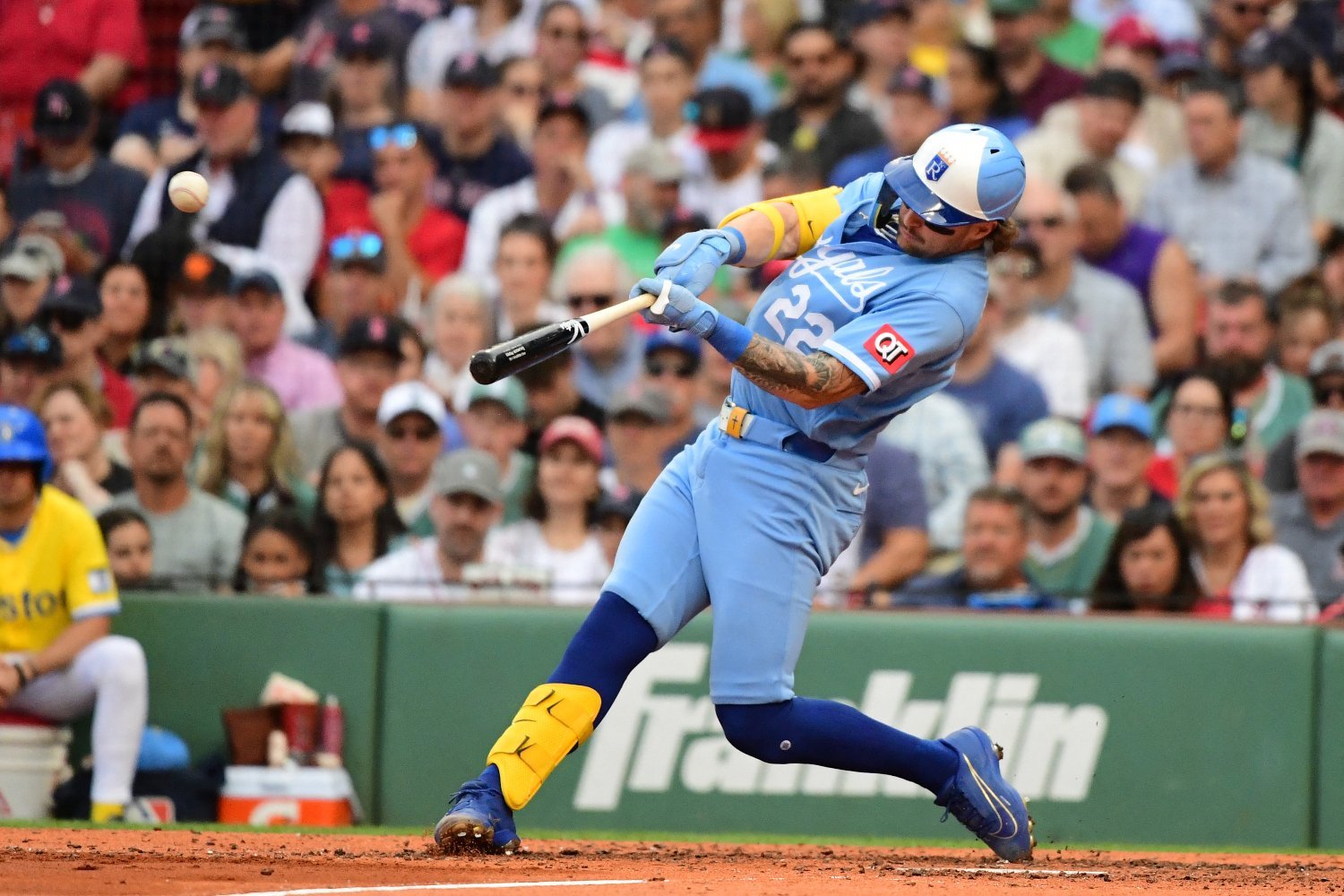 On Saturday, the Royals lost 5-1 to the Boston Red Sox at Fenway Park. While Kansas City lost its 83rd game of the season, there was a glimmer of hope in the defeat: rookie Carter Jensen hit his 24th home run, which tied Bob Hamelin for the Royals' rookie home run record. It's been an incredible rookie season for the Park Hill High School alum, who came into the 2026 season with tremendous expectations after hitting .300 with a .941 OPS and three home runs in 69 plate appearances in a cup of coffee with Kansas City last season in September. In 556 plate appearances, Jensen is hitting .231 with a .770 OPS. In addition to his 24 dingers, he also has 73 runs scored, 31 doubles, 71 RBI, a wRC+ of 110, and a fWAR of 3.0. His fWAR is the second-highest of any position player on the team (behind only Bobby Witt Jr.) and the third-highest of any player in general (Noah Cameron has a 3.1 fWAR). When looking at his Statcast percentiles this year, Jensen isn't perfect by any means. His strikeout rate is high at 29.1% (which ranks in the 12th percentile), and he also ranks in the 24th percentile in whiff% and the 22nd percentile in z-contact%. Beyond that, he ranks in the upper percentiles in most categories, as shown below. Jensen ranks in the 84th percentile or higher in O-Swing%, average EV, 90th EV, and Max EV, and also ranks in the 71st percentile or higher in hard-hit%, bat speed, barrel%, and PullAir%. The 23-year-old catcher not only shows great batted-ball ability, but also demonstrates excellent plate patience and discipline. He may not be the kind of hitter who will hit for a high average, and the strikeouts will always be high, but the walks and power numbers will make up for that. The Royals have plenty of time with Jensen, who isn't arbitration-eligible until 2029. However, with Salvador Perez likely retiring after 2027 (next year is the last year of his current deal), should Kansas City look to lock in Jensen long-term, much like they did with Bobby Witt Jr. and Maikel Garcia after big seasons? Or should the Royals wait, especially considering they have a couple of talented catching prospects in the minors, Blake Mitchell and Ramon Ramirez? Let's break down how Jensen compares to other catchers this year, including two highly touted ones around his age, and what the Royals should look to do this offseason. Jensen Has Been One of Baseball's Best Catchers This Year There's no question from a fan perspective: Jensen plays in the shadow of Salvy, a future Royals Hall of Famer and possible inductee into Cooperstown. But Jensen has not only been the Royals' best catcher in 2026 (no surprise), but arguably one of the best catchers in the league. According to Fangraphs, Jensen ranks third in baseball in fWAR among players whose primary position is catcher. His 3.0 fWAR is only behind Dillon Dingler of the Tigers (4.8 fWAR) and Gabriel Moreno of the Diamondbacks (4.0 fWAR). When it comes to production solely at catcher, Jensen also ranks third, but his catcher-specific fWAR is higher at 3.8, as seen below. Jensen leads the trio of catchers with a 3.0 fWAR, which is 0.2 wins better than Baldwin and 2.1 wins better than Basallo. What's most interesting is that Jensen has been a far better defensive catcher than the other two. His Def is three runs above average compared to Basallo's -1 mark and Baldwin's -5 mark. Additionally, while Baldwin and Basallo are known more for their power, Jensen's .216 ISO is considerably better than Basallo's (.186) and Baldwin's (.174). Another plus for Jensen is that he's just 23, younger than Baldwin (25) and only two years older than Basallo. Thus, there's still a lot of long-term value for Jensen, especially since he has handled the increased catching load in 2026 well for a rookie. One catcher I also wanted to include in the mix but didn't in the statistical one above is Chicago's Kyle Teel. I didn't include Teel because he's been heavily affected by injury this year, with only 88 plate appearances in 26 games. Over that small sample, he's hitting .213 with an 88 wRC+ and 0.3 fWAR. That said, comparing his Statcast percentiles not just to Jensen, but to Baldwin and Basallo, is a worthwhile exercise. That can show how much of an improvement Teel would have if he stays healthy next year, based on his Statcast percentiles. Here's how the four players compare, based on the Statcast comparison tool via Baseball Savant. Overall, Baldwin has the best offensive profile by a considerable margin. However, he and Jensen are pretty close defensively, with Baldwin doing better in terms of blocking, but Jensen outdoing him in terms of throwing out baserunners. Basallo also ranks pretty well in blocks and throwing, while Teel does well in the former, but not the latter. Jensen and Baldwin are also much better framing catchers than Basallo and Teel. In terms of baserunning, Jensen is by far the best runner in terms of sprint speed and overall baserunning (51st percentile). That shows that Jensen can handle the leadoff spot for Kansas City for at least a couple more seasons. Offensively, he's produced a 128 wRC+ as the Royals' leadoff hitter this season, giving them stability at this spot in the batting order for the first time in a while. There are positives and negatives with all four catchers in this comparison. However, this graphic shows Jensen deserves more respect among the game's young catchers, both now and in the long term. Do the Royals Need to Lock Up Jensen to an Extension Soon? After a tremendous season from Jensen, the big question among Royals fans is this: Do the Royals need to sign the talented catcher to a long-term extension? Now, the impulse is to say, "yes", especially considering Jensen is just 23 and is only going to get more expensive as he gets older. However, the Royals have extensions to Witt and Garcia on the books, and they also face another tough long-term decision with Jac Caglianone, who's injured now but has also had a tremendous year, as shown in the Statcast profile below. With a .285 average, 126 TJ Bat+, 23 home runs, and a 2.4 fWAR this year, Cags is every bit as deserving as Jensen to get a long-term deal. Like Jensen, Cags also becomes arbitration-eligible in 2029. However, while Cags certainly has a case for an extension, Jensen should get priority over the former Florida product. First, Jensen has shown he can stick at catcher at the Major League level, and while the blocking has been bad, it's been better than earlier in the season. He has the chance to be an average player in this category in 2027, which would only increase his value even more. Conversely, Cags has struggled defensively at both outfield and first base, as illustrated by his -11.8 Def this season. There's no doubt about Cags' arm strength, but his instincts and range in right field and first base have been underwhelming, to put it frankly. Second, Cags has struggled with injuries this year. His latest elbow issue has kept him out for about a week, even though he hasn't been placed on the IL. He also spent time on the IL last year due to a hamstring strain. As for Jensen, he has not missed any time on the IL or due to injury this year or last. For a team that has struggled with injuries, they need to invest in players who can stay on the field. Now, if the Royals can extend both within the next two years, that would be the best solution. Extend Jensen in 2027 and Cags in 2028, especially if Cags can stay healthy and demonstrate progress at one position defensively. That said, Jensen should be the Royals' financial priority, especially after the progress he's shown offensively and defensively over the past two seasons. View the full article
 -
Marlins' Jacob Kisting completes undefeated season
DiamondCentric posted an article in Fish On First
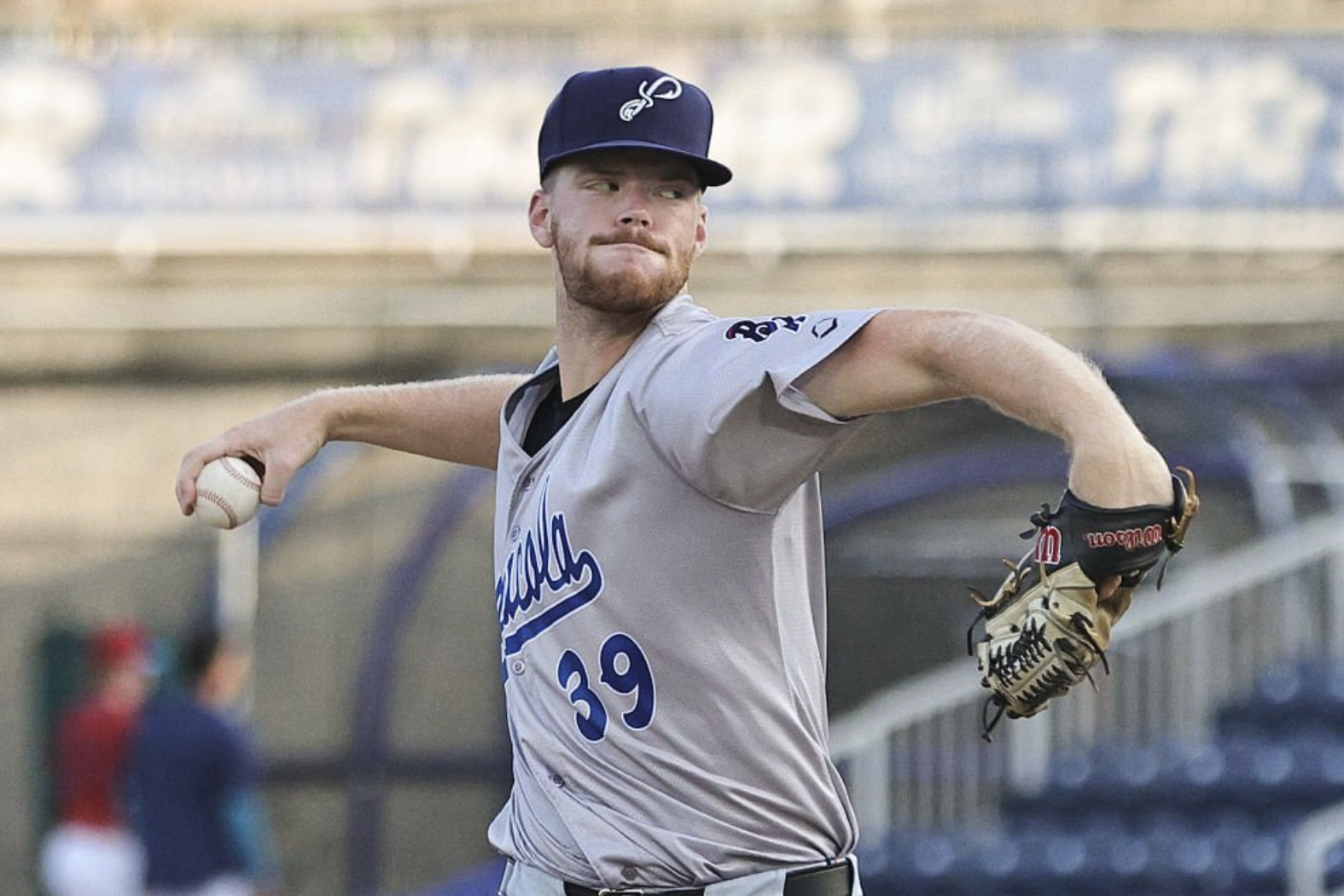 To align their starting rotation for the upcoming Southern League playoffs, the Pensacola Blue Wahoos rested right-hander Jacob Kisting this week. The book is closed on his brilliant 2026 regular season. Kisting spent most of the season pitching for High-A Bowling Green in the Tampa Bay Rays organization. Upon being dealt at the MLB trade deadline in exchange for Liam Hicks, the Miami Marlins promoted him to Double-A Pensacola. The 23-year-old was very effective at both levels—1.67 ERA and 2.99 FIP in 18 pre-trade games, 1.88 ERA and 2.90 FIP in five post-trade games. But what stood out most of all was Kisting's consistency. In every one of his outings, he gave his team a reasonable chance to win, and they frequently did. Conversely, with the help of strong run support, he was never left on the hook for a loss. Overall, Kisting posted a 10-0 record in his 23 appearances (21 starts). A flawless winning percentage in such a big sample size is practically unprecedented in recent Minor League Baseball history. Setting the minimum at 100 innings pitched, nobody has ever had an undefeated MiLB season while pitching exclusively for the Marlins organization. Notable one-loss campaigns belong to Josh Beckett (14-1 in 2001) and José Fernández (14-1 in 2012). Complete MiLB stats across all levels are available dating back to 2006. The only comparable season to Kisting's that I could find was authored by Logan Allen in 2021. Similarly splitting his season between High-A and Double-A, Allen went 9-0 in 21 games/19 starts. The Cleveland Guardians left-hander has since gone on to pitch parts of four years in the majors (4.55 ERA and 4.71 FIP in 396.0 IP). In 2025, Mike Paredes went 11-0 in the upper levels of the Minnesota Twins system, logging 105 ⅔ innings in the process. However, all but two of those outings came as a reliever. It stands to reason that Kisting's pursuit of perfection would have garnered more attention had it not been disrupted by a trade, or if he was held in higher regard by talent evaluators. He isn't currently ranked on the Fish On First Top 30 prospects list, though that may change following our end-of-season update. Kisting completely embarrassed left-handed batters thanks to his above-average splitter. They collectively slashed .146/.213/.217 in 216 plate appearances with two home runs. His lapses in control were always corrected quickly—he did not allow more than three free passes (BB and HBP combined) in any game. Also, Kisting was often going through the heart of opposing lineups for a third time, unlike a lot of MiLB pitchers who get kept on short leashes. With that being said, there are reasons to be skeptical. Kisting was older than 71% of the batters he faced. His velocity is well below MLB norms with a sinker that sits 92-94 mph. He was the beneficiary of a very low .251 batting average on balls in play. Opponents went 25-for-26 on stolen base attempts, and not to pile on, but I think the one unsuccessful attempt would have been overturned by video review. Kisting reminds me quite a bit of current Marlins starter Janson Junk. Junk's main issue is the inability to induce whiffs on pitches in the strike zone. I think that applies to Kisting as well. At least he has time on his side to add more strength and further tweak his pitch shapes. Briefly checking in on the rest of the players involved in the Kisting trade, infielder Adrian Santana is teammates with him in Pensacola. Through 30 Double-A games, Santana has a .246/.326/.310 slash line with seven steals and a 79 wRC+. Home runs have been plentiful in the Southern League, but he hasn't gone deep even once. On the bright side, his glove looks legit. Like the other prospects, Brayden Taylor is getting his feet wet at a new level since joining the Marlins org. With the help of a superhuman 23.4% walk rate, he's slashing .190/.387/.429 for Triple-A Jacksonville with four homers, eight steals and a 125 wRC+. He is mainly being used at second base and third base. Barring severe injury or a prolonged MLB lockout, Taylor will get his shot to contribute to the big league team in 2027. Meanwhile, the Rays ought to be incredibly satisfied with their side of the trade. Through 31 games with his new club, Hicks is slashing .298/.385/.479 with four long balls and a 139 wRC+. He ranks eighth among all MLB catchers during that span with 1.0 fWAR produced. Hicks' contributions helped the Rays clinch a postseason berth on Friday. Entering Sunday, FanGraphs estimates that they have a 89.2% chance of winning the American League East division and earning the AL's No. 1 seed. View the full article
 -
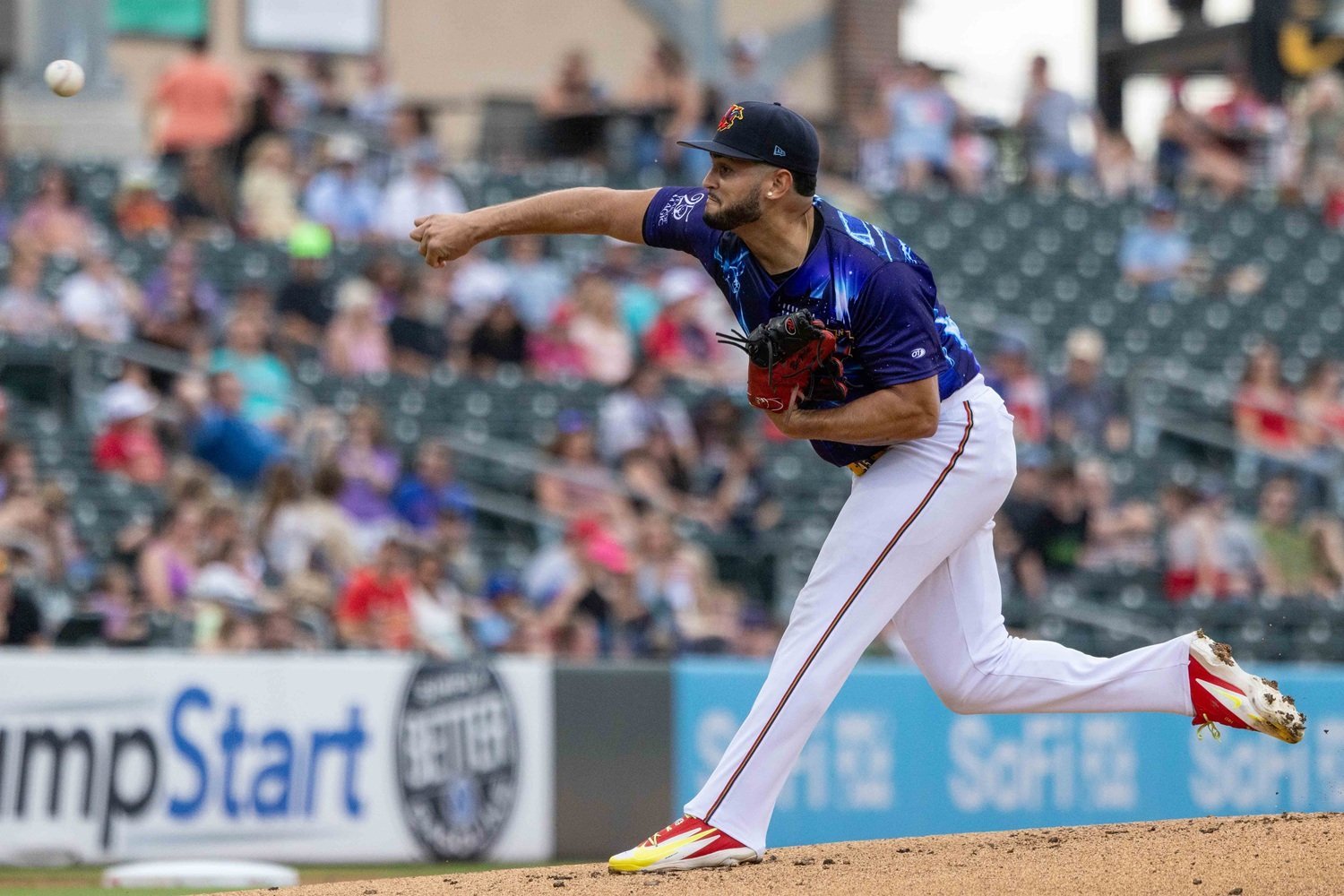 TRANSACTIONS Before their Saturday afternoon game, Ben Ross was optioned to St. Paul.The Twins announced that they are calling up outfielder Emmanuel Rodriguez. The Twins released RHP Jesse Bergin. The 26-year-old was the Marlins 11th round pick in 2021 out of UCLA. He remained in the Marlins organization until this spring. The Twins signed him and kept him in the FCL for a while. He moved up to Cedar Rapids in mid-June and almost immediately went on the IL. A month later, he went on the IL again. Before the end of July, he went on the Full Season Injured List. SAINTS SENTINEL St. Paul 7, Syracuse 9 Box Score Syracuse scored multiple runs in each of the first three innings. The Saints scored runs in each of the first four innings. At the end of four innings, the score was tied 7-7. Ryan Gallagher made the start and went the first three innings. He gave up seven runs (5 earned) on seven hits and two walks. He struck out five batters. In the bottom of the first, Alan Roden and Hendry Mendez started things with walks. Aaron Sabato was hit by a pitch to load the bases. Matt Wallner grounded back to the Mets starter Ofreidy Gomez. He threw out the lead runner, Roden, at home. However, catcher Kevin Parada threw wildly to first base which allowed Mendez to score and Sabato to advance to third. Gabriel Gonzalez was then hit by a pitch, and the bases were loaded again. Cody Morissette grounded into a fielder's choice. Sabato scored to make it 3-2 Mets after one inning. In the top of the second inning, Tanner Schobel scored on a ground out by Alan Roden. Through two innings, the Saints were down 5-3. In the top of the third, Billy Amick hit a two-run homer, his 37th overall of the season. Down 7-3, Wallner and Gonzalez had back-to-back walks with one out. With two outs, Ross walked to load the bases. Tanner Schobel cleared the bases with a double to cut the team’s deficit to 7-6. After Ricky Castro put a zero on the board in the top of the fourth, Kala’i Rosario hit a one-out solo homer to tie the game at 7-7. Castro really helped out his team by providing four innings of good work. He gave up one run on four hits and struck out two batters. The run he gave up in the seventh inning, on a solo home run by MJ Melendez, proved to be the deciding run, so Castro gets the loss for his efforts. Garrett Acton struck out two batters in a scoreless eighth inning. Julian Merryweateher gave up a solo home run to Melendez in the top of the ninth to conclude the scoring. The 27-year-old Melendez homered twice for the second straight game. The Saints scored their seven runs on nine hits and eight walks. Gabriel Gonzalez went 2-for-3 with a walk. Aaron Sabato went 2-for-4 Schobel’s double was his 17th of the season. Rosario’s home run was his ninth since joining the Saints. Ben Ross went 1-for-3 with two walks in his return to the Saints. WIND SURGE WISDOM Wichita 5, Frisco 1 Box Score The Wind Surge played a nearly flawless game and things started in the bottom of the first inning. Marek Houston and Khadim Diaw started the inning with back-to-back walks. With two outs, both runners scored on a Kyle DeBarge single. The bottom of the second inning began with a Poncho Ruiz walk and a single by Graham Brown. Houston drove in Ruiz with a single. Brown scored on a sacrifice fly off the bat of Diaw. The bottom of the fifth inning began with a DeBarge walk. He went to second on a Jaime Ferrer single. That made it 5-0 Wind Surge and ended the team’s scoring for the day. More important, the Wind Surge got tremendous pitching in their penultimate game of the season. And, as he has been of late, Adrian Bohorquez was nearly unhittable. He gave up just one hit and one walk over five shutout innings. He struck out four and has a 1.06 ERA in 17 Double-A innings over four starts. Since July 30th, Adrian Bohorquez has tossed 36 innings over eight games. He has given up three earned runs on 13 hits and 14 walks and 41 strikeouts. In that stretch, the 21-year-old Venezuelan is 2-1 with a 0.75 ERA, a 0.75 WHIP and 10.25 K/9. Sam Armstrong came in and gave up two hits over three scoreless innings. He had two strikeouts with no walks. Luis Quinones gave up a solo home run in the ninth inning. Back to the offense, the Wind Surge scored their five runs on eight hits and eight walks. Quinn McDaniel batted ninth and went 2-for-2 with two walks. Eighth-place hitter Graham Brown went 2-for-3 with a walk. Kyle DeBarge was 1-for-2 with two walks, and he stole his 37th base. Houston and Diaw each had a single and a walk. PLAYERS OF THE DAY Hitter(s) of the Day Quinn McDaniel (Wichita): 2-for-2, 2 BB 2 R, RBI, K. Pitcher(s) of the Day Adrian Bohorquez (Wichita): 5 IP, 1 H, 0 ER, 1 BB, 4 K, 76 pitches, 50 strikes (65.8%). PROSPECT SUMMARY Check out the Prospect Tracker for much more on our Twins Top 20 prospects. See how they did today. #3 - IF Kaelen Culpepper (Minnesota) - 0-for-1, HBP, K (batted sixth, played SS) - left game with a shoulder contusion after being hit by a pitch in the upper back. #4 - SS Marek Houston (Wichita) - 1-for-4, BB, R, RBI (batted first, played SS) #6 - OF Emmanuel Rodriguez (Minnesota) - 1-for-4, HR(1), R, RBI, 2 K, CS(3) (batted ninth, played CF) #7 - OF Hendry Mendez (St. Paul) - 0-for-1, BB, R (batted second, played LF) #9 - 1B/OF Gabriel Gonzalez (St. Paul) - 2-for-3, BB, R (batted fifth, played 1B) #12 - 3B/CF Brandon Winokur (Wichita) - 0-for-5 (batted third, played 3B) #13 - C/OF Khadim Diaw (Wichita) - 1-for-3, BB, SF, R, RBI, BB, 2 K (batted second, played DH) #15 - RHP Ryan Gallagher (St. Paul) - 3 IP, 7 H, 7 R, 5 ER, 2 BB, 5 K, 73 pitches, 52 strikes (71.2%) UPCOMING PROBABLES Sunday, September 13 Syracuse @ St. Paul (1:07 pm CT) - RHP Trent Baker (4-3, 4.95 ERA) Frisco @ Wichita (1:05 pm CT) - RHP Preston Johnson (1-3, 3.86 ERA) CURRENT W-L Records Minnesota Twins: 70-78 (Final Game 9/27) St. Paul Saints: 78-64 (Final Game (9/20) Wichita Wind Surge: 55-80 (Final Game 9/13) Cedar Rapids Kernels: 48-82 (Season Complete) Fort Myers Mighty Mussels: 68-60 (Season Complete) FCL Twins: 33-26 (Season Complete) DSL Twins: 19-35 (Season Complete) Please feel free to ask questions about the teams, the rosters, and discuss today’s games, or anything else Twins minor-league related! View the full article
 -
 Saturday saw the San Diego Padres' top two full-season affiliates split their games, with the Triple-A El Paso Chihuahuas winning 4-1 over Tacoma and the Double-A San Antonio Missions falling 9-6 to Amarillo. San Diego Padres Transactions None. Miguel Andujar Has 3 Hits, Evan Fitterer Goes 5 Shutout For Chihuahuas Right-hander Evan Fitterer pitched five shutout innings out of the bullpen and a rehabbing Miguel Andujar went 3-for-4 as the Triple-A El Paso Chihuahuas turned back the host Tacoma Rainiers 4-1. Andujar, typically the Padres' designated hitter who is coming back from a fractured right wrist, had two doubles among his three hits and also scored a run while playing in left field, his first time on defense this week. All but one of his five hits in his four games on this assignment have been doubles. Andujar is 5-for-16 this week. Nick Pratto also doubled in his two hits with an RBI and two runs scored, while Marcos Castanon had two hits and an RBI and Rosman Verdugo, in his Triple-A debut, went 2-for-4 with a run scored. Right-hander Jhony Brito started and went just one inning, allowing a hit and a walk, before Fitterer came in for a bulk role. His five shutout innings were the second-most he has had this year after 5⅓ innings without a run in a May 22 start vs. Round Rock. Against the Rainiers, he allowed four hits and two walks while striking out two. Right-hander Ty Adcock pitched one scoreless inning, right-hander Hans Crouse allowed a run in his inning and right-hander Hunter Stratton pitched a perfect ninth for his second save with the Chihuahuas and fourth of the season. Verdugo got things started in his first Triple-A at-bat since being promoted the day before from High-A Fort Wayne as a replacement for infielder Mason McCoy, who went up to the Padres as first baseman Ty France went on the paternity list. Verdugo had a line-drive single for his first hit, then Pratto doubled for the 18th time, driving in Verdugo. Andujar followed with his single and Carlos Rodriguez hit a sacrifice fly to center to bring in Pratto. Andujar doubled with one out in the fifth and scored on Marcos Castanon's 22nd double of the year. After the Rainiers made it 3-1 in the bottom of the eighth, the Chihuahuas restored the three-run lead in the top of the ninth as Pratto had a one-out single and Johnson doubled, with Pratto scoring when the left fielder booted the ball. EP_0912.mp4 Player AB R H RBI BB K Nick Pratto 5 2 2 1 0 1 Miguel Andujar 4 1 3 0 0 0 Bryce Johnson 1 0 1 0 0 0 Carlos Rodríguez 3 0 0 1 0 0 Marcos Castañon 5 0 2 1 0 0 Nick Solak 4 0 0 0 0 1 Rodolfo Durán 3 0 1 0 0 1 Gage Workman 1 0 0 0 0 0 Braedon Karpathios 3 0 1 0 1 0 Victor Duarte 4 0 1 0 0 1 Rosman Verdugo 4 1 2 0 0 1 Player IP H R ER BB K HR Jhony Brito 1 1 0 0 1 0 0 Evan Fitterer 5 4 0 0 2 2 0 Ty Adcock 1 1 0 0 0 1 0 Hans Crouse 1 2 1 1 1 1 1 Hunter Stratton 1 0 0 0 0 0 0 Late Homers Too Little As Missions Fall Short Romeo Sanabria and Alex McCoy homered in the ninth, but the Double-A San Antonio Missions fell victim to a five-run fifth inning that led to a 9-6 loss to the host Amarillo Sod Poodles. The Missions will conclude their season Sunday. Sanabria had two hits, two walks, three RBIs and two runs scored, while Jack Costello had two hits (including a double), two walks and an RBI and Kerrington Cross a single and two walks. It was a tough day pitching for left-handed starter Jamie Hitt and right-hander Eric Yost (Padres Mission's No. 16 prospect). They covered all eight innings, with Hitt allowing four runs on six hits with a walk and four strikeouts in four-plus innings, while Yost gave up five runs on six hits with a walk and no strikeouts, taking over for Hitt during the fifth. Down 1-0 entering the top of the third, Albert Fabian had an RBI groundout and Costello a run-scoring single. After the five-run fifth put the Sod Poodles up 6-2, Sanabria singled home Cross in the seventh, but Amarillo got a two-run homer in the bottom of the eighth for a 9-3 lead. Sanabria hit his 11th homer of the season and ninth with the Missions, a two-run shot with one out. McCoy, Padres Mission's No. 8 prospect, went back-to-back with his 19th homer of the year, which leads the Padres' system, and fourth with the Missions, a 455-foot blast. SA1_0912.mp4 SA2_912.mp4 Player AB R H RBI BB K Kai Roberts 3 2 1 0 2 1 Romeo Sanabria 3 2 2 3 2 0 Alex McCoy 5 1 1 1 0 0 Albert Fabian 4 0 0 1 1 0 Jack Costello 3 0 2 1 2 1 Justin DeCriscio 4 0 1 0 0 0 Brendan Durfee 5 0 0 0 0 1 Kerrington Cross 2 1 1 0 2 0 Wyatt Hoffman 4 0 0 0 0 1 Player IP H R ER BB K HR Jamie Hitt 4 6 4 4 1 4 0 Eric Yost 4 6 5 5 1 0 1 Padres Mission's Top 20 Prospect Performance Ethan Salas: 0-for-2 Ryan Wideman: On injured list Coleman Borthwick: DNP Kruz Schoolcraft: DNP Ty Harvey: DNP Kale Fountain: Injured, out for season Jorge Quintana: DNP Alex McCoy: 1-for-5, HR, RBI Braedon Karpathios: 1-for-3, BB Lamar King Jr.: DNP Elliot Lascelles: DNP Tucker Musgrove: On injured list Jagger Haynes: DNP Jake Cunningham: DNP Truitt Madonna: DNP Eric Yost: 4 IP, 6 H, 5 R, 5 ER, 1 BB, 0 K, 1 HR Winyer Chourio: DNP Jesus Castro: DNP Michael Salina: On injured list Rosman Verdugo: 2-for-4, K View the full article
 -
Red Sox Minor League Report: Worcester’s Offense Falter In Loss
DiamondCentric posted an article in Talk Sox
 Boston Red Sox Affiliate Recap Triple-A Worcester Red Sox Series @ Lehigh Valley IronPigs (Philadelphia Phillies): 2-2 Season Record: 72-64 Worcester’s two-game win streak was snapped as Lehigh Valley prevailed 4-1 on Friday night. John Holobetz turned in a solid start on Friday, but didn’t get much run support. He let up one run on four hits over five and ⅓ innings, lowering his ERA to 4.00. He walked one and struck out seven before being replaced by Seth Martinez. Martinez struggled through an inning and ⅔, allowing three runs on three hits. He walked one and struck out a pair as the IronPigs pulled ahead. Devin Sweet took the final frame, striking out one and shutting down the opposition as he gave the offense a late chance. Worcester’s offense struggled mightily, combining for just five hits and six total baserunners. Worcester’s sole RBI came in the fifth inning on a Nate Baez double, scoring Max Ferguson. Baez, Ferguson, Allan Castro, Mikey Romero, and Tsung-Che Cheng were the only five to record a hit while Baez drew a walk as well. Double-A Portland Sea Dogs Series vs. Binghamton Rumble Ponies (New York Mets): 3-1 Season Record: 70-65 Portland put up seven runs in the second inning en route to a 8-4 win over Binghamton. Yordanny Monegro took the first three frames of Friday’s contest, spinning a solid start. He let up one run on three hits and issued two walks. He struck out another before Tanner Houck took over. Houck made his second rehab appearance with Portland, finishing after three excellent innings. He let up one run on one hit and issued a walk. He struck out four over the outing as he earned the win. Max Carlson took the next two frames, allowing one run on a pair of hits. He matched Houck’s strikeout total of four. Cooper Adams took the final frame, but not without a bit of struggle. He allowed another run on a pair of hits. He issued a walk and struck out a pair in the win. After a 14-run outpouring on Thursday, the Sea Dogs picked up right where they left off. They compiled eight runs on nine hits and drew eight walks. Willson Contraras, on a rehab assignment, and Henry Godbout led the way with two hits apiece. Contrearas, Will Turner, and Brooks Brannon all pitched in two RBIs as well. Turner got Portland on the board, homering to right field as Ronald Rosario scored in the second inning. Godbout continued the inning, driving in Liendo on a double to left. The Sea Dogs weren’t done. With two outs, Contreras scored Godbout and Justin Gonzales on a single to center. Brannon capped off the inning with a two-run blast, scoring Contreras as he sent a ball deep to right center. In the fifth, Rosario gave Portland its eighth and final run on a solo blast to center. View the full article
 -
Otto Lopez still very much alive in NL batting title race
DiamondCentric posted an article in Fish On First
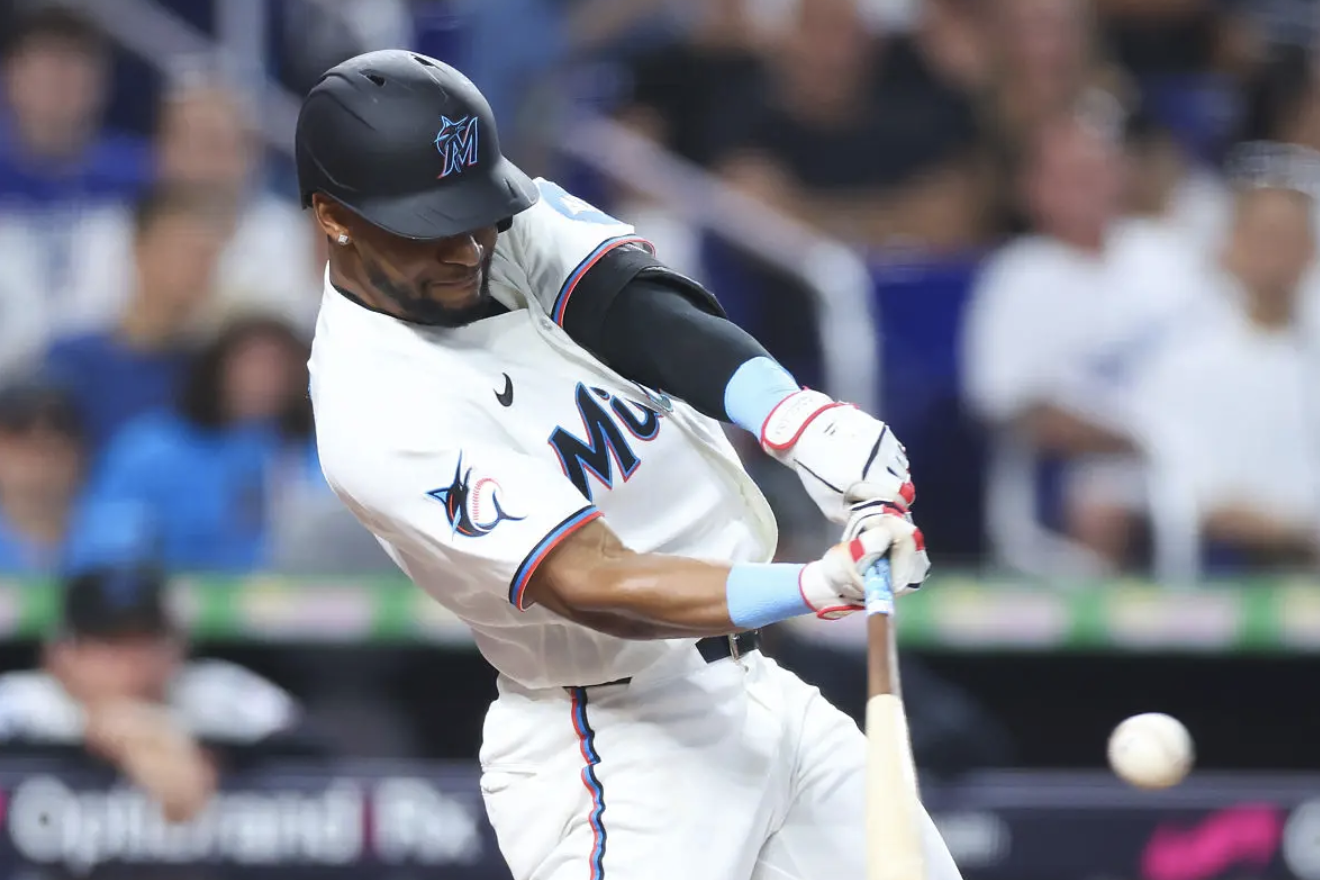 Each of Otto Lopez's three seasons with the Miami Marlins have been marred by ugly slumps. His ability to make contact remains intact, but Lopez suddenly becomes unreliable in high-leverage situations and stops driving runs. The annual drop-off in production was more noticeable in 2026 because of the remarkably high standard the shortstop had set for himself during an All-Star-worthy first half. In Lopez's first 42 games following the All-Star break, he slashed .231/.270/.296 with only one home run. The National League's leader in batting average for the majority of the year, he came oh so close to dipping below the .300 mark. Although this lengthy Marlins homestand has gone horribly for the team as a whole, all but eliminating them from NL postseason contention, it has seemingly rejuvenated Lopez. His RBI single on Saturday put the Fish ahead for good in a 4-3 upset win in front of a crowd full of Los Angeles Dodgers fans. During the past eight games (all at loanDepot park), Lopez has slashed .448/.556/.552 with only two strikeouts. Going 2-for-2 on Saturday and reaching base in all four of his plate appearances, he increased his BA to .310—the highest it's been since August 17. Lopez is just eight points back of Luis Arraez, coincidentally the last Marlin to win a batting title back in 2023. The gap between them is that Lopez has two more hits than Arraez, but has needed 22 more at-bats to get them. Hypothetically, if Lopez were to go 20-for-50 for the remainder of the season and Arraez went 15-for-50, Lopez would finish on top. Nick Gonzales of the Pittsburgh Pirates is also mathematically alive with a .305 average. Regardless, Lopez is due a substantial pay raise in 2027 entering his first season of arbitration eligibility. A batting title would only add to his leverage. Back to Saturday's game, Mookie Betts and Max Muncy tagged Tyler Phillips for back-to-back home runs in the first inning. Phillips issued a pair of walks in the second inning, but then settled in. To the dismay of Marlins.TV analyst Tommy Hutton (and many of the Marlins fans watching), the right-hander was taken out with a 3-2 lead while his pitch count was only at 68 and the hitters at the bottom of LA's were lineup due up. Considering their recent struggles and the quality of competition they faced, the Marlins bullpen was shockingly awesome in this contest. Cade Gibson, Tyler Zuber, Calvin Faucher, Michael Petersen and Pete Fairbanks combined to toss 5 ⅓ innings in relief of Phillips, surrendering just one run. It was Fairbanks' first appearance since August 24 and he earned his 19th save of the season. Despite his inconsistency and two separate stints on the injured list, that's the highest save total for a Marlin since Tanner Scott in 2022. Owen Caissie exited the game in the third inning due to right hamstring tightness. Caissie suffered a calf strain to that same leg back in July and has also been dealing with some lower back discomfort, manager Clayton McCullough revealed postgame. Caissie will undergo imaging to determine whether another IL stint is needed. Probable starters for Sunday's series finale will be Eury Pérez and Emmett Sheehan. Prior to the game, Dontrelle Willis will be inducted into the Marlins Legends Hall of Fame. View the full article
 -
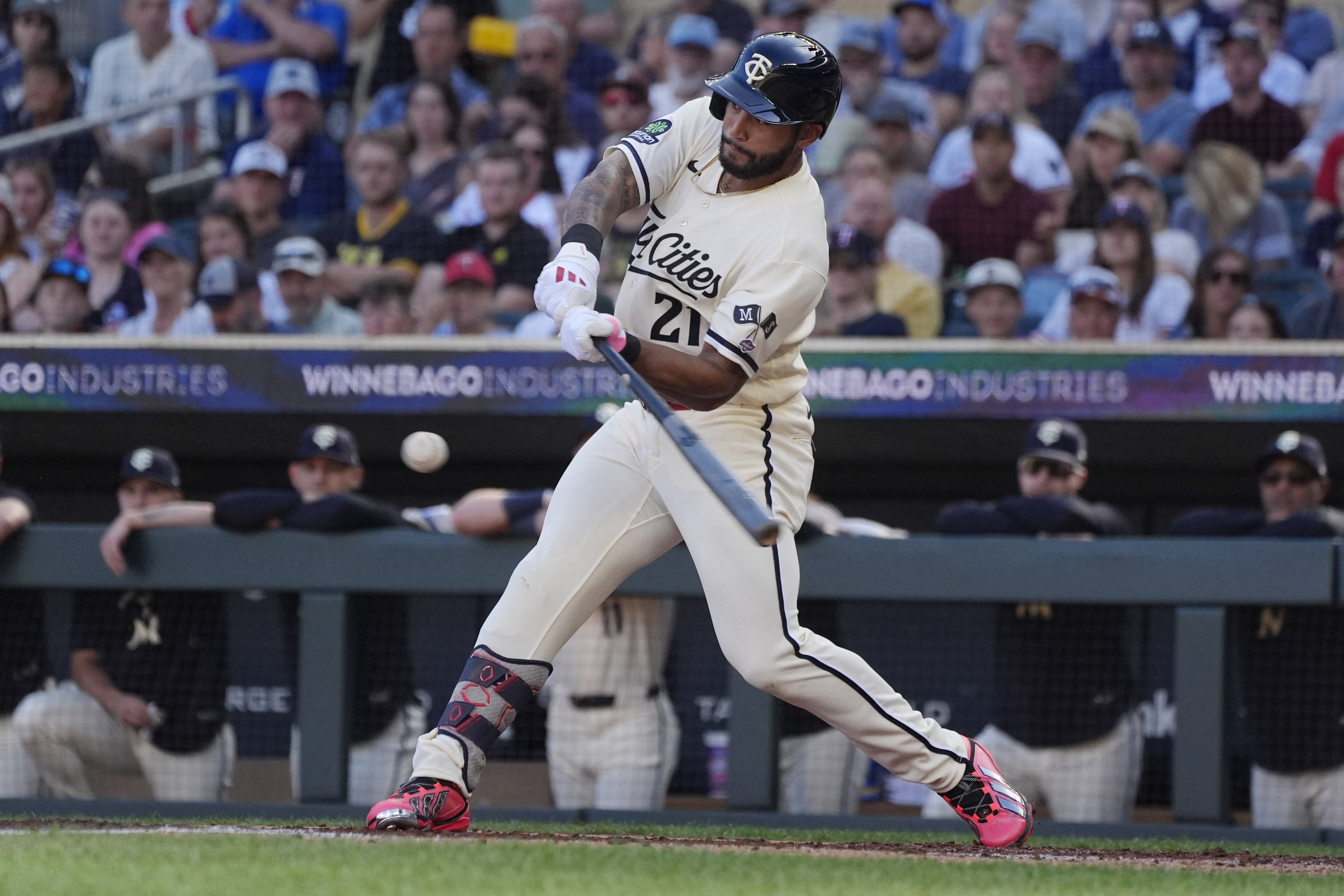 Box Score SP: Connor Prielipp - 5.1 IP, 5 H, 3 ER, 0 BB, 1 K (77 pitches, 57 strikes (74%)) Home Runs: Emmanuel Rodriguez (1) Top 3 WPA: A.J. Minter (0.16), Jeff Hoffman (0.12), Rodriguez & Andrew Morris (0.09) Win Probability Chart (via FanGraphs) The Twins saw their playoff chances dwindle even further towards zero after suffering a ninth-inning debacle on Friday night to their Central Division foes. The Guardians looked to leap right past the wild card and into the division lead, and they used a series of bullpen openers in hopes of getting the game eventually into the lefty hand of Joey Cantillo. Meanwhile, the Twins continued to rely on rookies to save their season, and they rolled out Connor Prielipp without an opener this time. Would the long-awaited debut of Twins top-prospect Emmanuel Rodriguez spark the Twins to victory? Or would the Cleveland magic of the past month keep on steamrolling through Target Field? For Openers Prielipp and opener Daniel Espino made quick work of the first inning, but Prielipp ran into trouble in the top of the second with a pair of leadoff singles by Jo Adell and Angel Martinez to start the threat. Travis Bazzana cashed in the first run of the game with a single to center that plated Adell, but Rodriguez immediately made his presence felt by gunning out Martinez at third! Rodriguez is Him After Rodriguez cut down the Guardians momentum, the game cruised along until the bottom of the third with one out. That's when Rodriguez got his first crack at new pitcher Franco Aleman. His first crack was a 420 foot one, and suddenly we had an electric Target Field and a tie ballgame! What unfolded next might continue to have ramifications on Sunday, as three straight singles by the Twins put them in front 2-1. Aleman then put a 95 mph fastball off of Kaelen Culpepper's neck, and while the Twins were excited to have the bases loaded with still only one out, Culpepper had to leave the game and payback is inevitable. Victor Caratini also got hit to score the fourth run of the inning and to chase Aleman. To be continued...but the Twins took a 4-1 lead and that's as far as their offense could go today. Cleveland Does What Cleveland Does? Prielipp had his lead, but in the top of the fifth inning it was deja vu all over again, as the pesky Guardians chipped away at the lead. The inning started with a non-retributive hit by pitch to David Fry, and that became runners at second and third with one out on an Austin Hedges double. Brayan Rocchio did his job, and grounded out to second to score one run, and Steven Kwan flipped a single to center to pull the Guardians within one at 4-3. While Cantillo came in and silenced the Twins through his four innings of work, the Twins bullpen was finally up to the challenge themselves. Andrew Morris, Kody Funderburk, and Jeff Hoffman kept the game at a one-run Minnesota advantage, and A.J. Minter found some redemption in the ninth with two strikeouts and his first save as a Twin. With that win the the Twins moved back to 4.5 games back, and claimed the season series against their division rival as well. What’s Next? The Twins look to win yet another "last chance" game in this roller coaster season in their last game against Cleveland for the season. Minnesota has yet to name a starting pitcher, while the Guardians will toss out RHP Tanner Bibee (5-15, 4.22 ERA) in the final game of the series. Tune in to see who wears that retaliation! Tune in for Emma! Or follow along at TwinsDaily while you are watching football. Either way, first pitch is scheduled for 1:10pm CDT. Postgame Interviews Coming Soon! Bullpen Usage Spreadsheet TUE WED THU FRI SAT TOT Funderburk 0 22 0 15 22 59 Minter 23 0 0 17 16 56 Nance 0 24 0 24 0 48 Hoffman 18 0 0 10 16 44 Adams 0 42 0 0 0 42 Gomez 13 0 0 21 0 34 Morris 8 0 0 0 17 25 Rogers 0 16 0 0 0 16 View the full article
 -
 Blue Jays Affiliate Overview (September 10-11) Triple-A Buffalo Bisons Series vs Charlotte Knights (Chicago White Sox): 1-3 Season Record: 66-74 Double-A New Hampshire Fisher Cats Series vs Harrisburg Senators (Washington Senators): 1-2 Season Record: 59-74 High-A Vancouver Canadians Championship Series vs Eugene Emeralds (San Francisco Giants): 3-0 Season Record: 64-66 Single-A Dunedin Blue Jays: Season Complete FCL Blue Jays: Season Complete DSL Blue Jays Blue: Season Complete DSL Blue Jays Red: Season Complete Triple-A Buffalo Bisons Season Record: 66-74 Series vs Charlotte Knights (Chicago White Sox) September 10: Thursday provided an opportunity for Buffalo to get back on track against the Charlotte Knights. The bats for the Bisons came ready to rock and roll; they jumped out to an early lead and just kept on hitting. Lenyn Sosa smoked a 107 mph, 432-foot solo home run in the top of the third inning, which was followed by a Daz Cameron RBI double. With the game tied at two in the sixth, Buffalo got hot and just kept rolling. Yohendrick Piñango hit a solo home run to start the scoring for the frame, Sosa knocked in Jay Harry on a double to left field, CJ Stubbs singled in Josh Kasevich, and Rhylan Thomas’ single brought home Sosa. Buffalo would keep things going in the seventh, as Stubbs had an RBI single, Rudy Martin Jr. lined a two-RBI triple to right, and Thomas had another RBI single. Harry would cap off the Buffalo scoring for the game with an RBI single in the eighth. In all, Buffalo tallied 17 hits, led by Thomas’ four base knocks, while Piñango and Sosa also added three hits each. Gage Stanifer and Daniel Guerra both pitched out of the bullpen, with mixed results. Stanifer threw two innings, struck out three, and gave up just one run. Guerra made it through the seventh without giving up a run and walked just one. It was the eighth that gave Guerra trouble; he walked the first two batters before striking out Jake Cave, then walked Tim Elko to load the bases. Brendan Cellucci came in to relieve Guerra once the bases were loaded, but walked in a run and allowed another to score on a groundout. Guerra didn't give up a hit, but was ultimately charged with two runs. Having a big lead, Buffalo was able to absorb those runs and take the easy 11-4 win. September 11: Friday was September 11 and brought with it a national day of remembrance, as Buffalo and Charlotte faced off against each other on the baseball diamond. Charlotte would jump out to the early lead in this game. Joey Wiemer got a hold of a fastball from CJ Van Eyk and deposited it over the left field wall for a two-run home run. Van Eyk was on point this game outside of the one pitch to Wiemer. He threw six innings, giving up just the two runs, didn't walk anyone, and struck out four. Sam Gardner came on in relief of Van Eyk and was nearly perfect for two innings, allowing just one walk while striking out two. With the Knights held in check, it was up to the bats to get the lead back for the Bisons. Unlike Thursday's game, hits were scarce to come by, with Buffalo only collecting five of them for the game. In the sixth inning, the Bisons finally got on the scoreboard, thanks to Davis Schneider's solo home run, a 103.9 mph 418-foot blast. Unfortunately for Buffalo, it was all of the scoring they would get in the game, as they lost 2-1 in a pitcher-heavy duel. Double-A New Hampshire Season Record: 59-74 Series vs Harrisburg Senators (Washington Senators) September 10: It was a Thursday to forget for New Hampshire when they faced off against Harrisburg. In the fourth inning, Harrisburg took the lead with an RBI single from Caleb Farmer, aided by an error on Aaron Parker. Later in the inning, Farmer would score when Eli Willits reached on an error from Dub Gleed. In the fifth and sixth innings, Devin Fitz-Gerald and Kevin Pichardo added home runs for Harrisburg, bringing the lead to five. Harrisburg would add three more runs, as New Hampshire had a rough day. The Fisher Cats only managed five hits, zero runs, and had four total errors. New Hampshire lost this one 8-0. September 11: The Friday Night game was almost a carbon copy of the Thursday game, except the pitching was the star attraction for New Hampshire in their game against Harrisburg. Nolan Perry was on the mound and had probably his best Double-A start. He went 4 innings, didn't give up a run, only allowed one hit, just walked one batter, and struck out six. Mason Olson and Devereaux Harrison came in behind Perry and matched his success. Olson went three innings of no-run pitching, while giving up just one hit and one walk, and striking out three. Harrison did almost the same as well, allowing just one hit and one walk, with zero runs. He did strike out five. In the tenth inning, Harrisburg scored one in their half of the inning, which set up the Fisher Cats in the bottom of the frame. Carter Cunningham was the first batter of the inning, and he got a hold of a pitch and launched it deep into the night for his tenth home run at Double-A and a walk-off home run. New Hampshire won this one 2-1. High-A Vancouver Season Record: 64-66 Championship Series vs Eugene Emeralds (San Francisco Giants) September 11: After winning the first two games in Nat Bailey Stadium, the Canadians traveled to PK Park to try to clinch the NWLCS. Landen Maroudis faced off against Hunter Dryden in the starting pitching matchup. Austin Smith once again had a big homer in this series, striking first in the second inning, crushing a homer into right field. Maroudis struggled in his last two starts in the regular season, but pitched a solid game to keep the Canadians close, going 5.2 innings, although he allowed three runs, including two runs in the third inning to allow the Emeralds to take the lead. The Canadians were able to take the lead back in the fourth inning, as Dameury Pena tied it up with an RBI double. With runners on second and third, Jaxson West hit a fly ball to center field to score Pena, but then Maddox Latta gave up the out at third base to end the inning. Maroudis gave up the third run of the night in the fourth inning, tying the game up at three apiece. The game stayed tied into the seventh inning, and the Canadians were threatening, as West hit a single with one out to put runners on the corners for JoJo Parker, but he grounded out into a double play, which ended the inning. Carson Myers came out for his second inning after finishing the sixth for Maroudis, but things went awry, as he walked the first two batters, then allowed a two-run double to Jhonny Level. Bradley Wilson replaced Myers, but also faced traffic, allowing a walk and a stolen base, which allowed Charlie Muniz to make it a four-run ballgame with a two-RBI single. Down to their final six outs in the eighth, Austin Smith came up big yet again with his 6th RBI of the series, hitting a single to reduce the lead by one. Gilberto Batista pitched a scoreless inning to keep the lead to three, and the Canadians led off the ninth with a single from Gable Mitchell. The Emeralds lost focus, as Level threw the ball away to allow West to reach. Parker struck out with runners on the corners, but a wild pitch from reliever Liam Simon allowed Mitchell to score and West to move up to second. Ryan Sprock struck out to make it one more out for the Emeralds to take their first win of the series, but Richmond Hill’s very own David Calabrese, who was released by the Angels earlier this season, came up ginormous with a clutch two-run homer to tie the game up in the ninth. Jack Eshleman continued the heroics for the Canadians, as he replaced Batista in the ninth inning and pitched a scoreless inning to send it to extras. The Canadians moved the ghost runner in to score on a fly out and a ground out, but Eshleman gave up the run back as the Emeralds were able to move their ghost runner over to third on a sac bunt, and a soft bunt single allowed that run to score. The game continued, and Eshleman and Nate Nabholz traded scoreless innings to bring the game to a 12th inning. Ryan Sprock clutched up in the 12th as he hit a single to score Parker as the ghost runner, and Eshleman once again came out in the bottom of the 12th. Despite the Emeralds laying down a good sac bunt again, Eshleman struck out the last two batters, clinching the championship for the Canadians in a dominant second half in a 3-0 sweep for their sixth Northwest League title. Single-A Dunedin Season Record: 62-66 Season Completed FCL Blue Jays Season Record: 38-20 Season Completed DSL Blue Jays Blue Season Record: 20-35 Season Completed DSL Blue Jays Red Season Record: 33-18 Playoffs: 2-1 Season Completed View the full article
 -
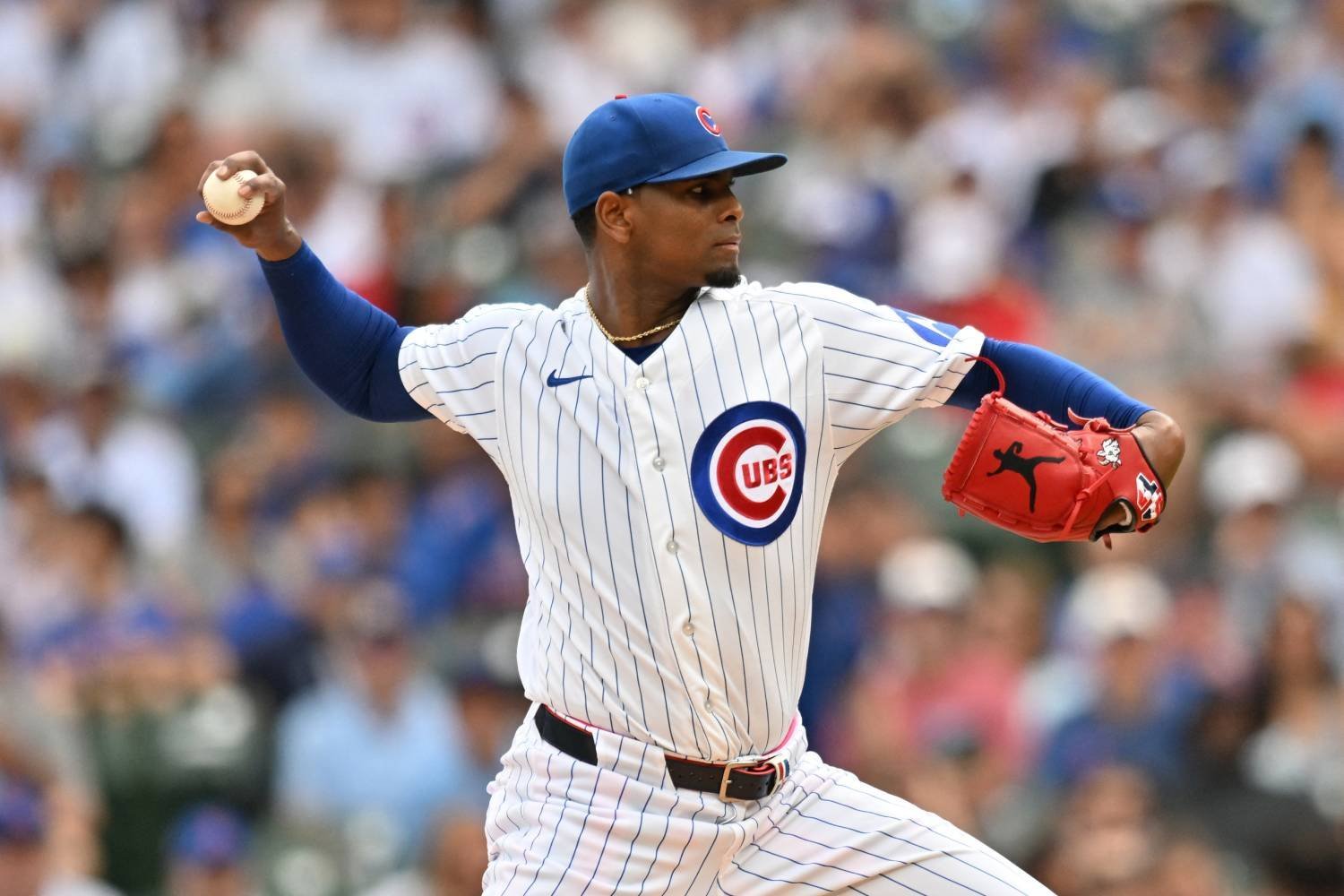 The Chicago Cubs have brought back Edward Cabrera, but his role will be different down the stretch than anticipated when he was acquired in the offseason. The right-hander was activated from the 15-day injured list Saturday by the Cubs, who placed right-handed reliever Trent Thornton on the 15-day IL with a sprained left ankle. Cabrera was expected to be a big part of the Cubs' rotation this season, but has battled a couple of injuries this year. The latest one was a blister on his right middle finger, the second time that has sidelined him this year. He also missed time with a strained left hamstring. That has limited him to 15 starts this season. But with the Cubs' bullpen a mess and only two-plus weeks left in the regular season, Cabrera will be put in the bullpen, a role he has filled just twice in 104 career games. He pitched in relief during his rehab assignment. Cabrera has a 5.21 FIP (5.68 ERA) in 76 innings, with a 9.7% walk rate and 20.4% strikeout rate. Thornton's move is more precautious even though the timing of a postseason race is bad. Thornton's left foot is the same one he tore his Achilles last year. The earliest he could return is the final game of the regular season. He has posted a 5.21 FIP (3.35 ERA) in 48 appearances and 48⅓ innings with a 8.7% walk rate and 15.8% strikeout rate. View the full article
 -
 Chicago Cubs Minor League Report (September 12) Affiliate Overview Triple-A Iowa Cubs Series vs. Toledo Mud Hens (Detroit Tigers): Mud Hens lead, 2-1 Season Record: 58–80-1 Double-A Knoxville Smokies Series at Birmingham Barons (Chicago White Sox): Tied, 2-2 Season Record: 73–62 High-A South Bend Cubs 2026 Season Record: 77–51 Single-A Myrtle Beach Pelicans 2026 Season Record: 50–77 Triple-A: Iowa Cubs Season Record: 58–80-1 Series Opponent: Toledo Mud Hens (68-72) Series Standing: Trail, 2-1 Sept. 11: The Iowa Cubs earned a 9-3 win over the Toledo Mud Hens on Friday night at Principal Park. Chas McCormick (2-for-5) gave the Cubs a 1-0 lead in the first on an RBI-single and Owen Miller (3-for-5) doubled the lead in the third on an RBI-single of his own. The Mud Hens would get on the board in the fifth but Iowa would break the game wide open with five runs in the seventh. Kevin Alcántara (2-for-4) launched a three-run homer, his 20th of the season, and James Triantos (3-for-4) drove in a pair on a double to make it 7-1. The I-Cubs added two more in the eighth, with Owen Ayers (2-for-5) bringing in one of those runs on a single and another scoring on an error on the play. Toledo scored twice in the ninth to make it a 9-3 contest. Braxton Garrett got the start on the mound for Iowa and earned the win to improve to 6-6 on the season. Garrett allowed one run, unearned, on two hits over five innings of work, walked two and struck out four. Eight of the nine Cubs batters recorded at least one hit in the ballgame, with six players posting multi-hit performances. The Iowa offense also went 6-for-11 with runners in scoring position. Double-A: Knoxville Smokies Season Record: 73–62 Series Opponent: Birmingham Barons (59–77) Series Standing: Tied, 2-2 Sept. 11: The Knoxville Smokies evened their series at the Birmingham Barons with an 8-7 victory on Friday night at Regions Field. The Smokies plated three runs in their first trip to the plate, with Josiah Hartshorn (1-for-3), making his Double-A debut, opening the scoring on an RBI-single. Miguel Useche (1-for-4) picked up an RBI on a fielder’s choice and Andy Garriola (0-for-4) brought in a run on a sacrifice fly. The Barons scored a run in each of the first and second innings to make it 3-2 but Knoxville pushed the lead back to three with two in the third, thanks to Ariel Armas’ (1-for-5) two-run shot. Birmingham would make it 5-5 by answering with three runs of their own in the home half of the third. The Smokies went back in front with a three-spot of their own in the sixth, thanks to an RBI-single from Karson Simas (1-for-4), a sacrifice fly from Hartshorn and a bases-loaded walk from Kane Kepley (2-for-5). The Barons hit back with two in the bottom of the sixth to make it 8-7 but Tyler Ras would end the ballgame with two scoreless innings out of the bullpen to earn his eighth save of the season and give Knoxville the win. Ras retired all six of the batters he faced, including four via strikeout. Jake Knapp got the start on the mound for the Smokies and took no decision. Knapp allowed five runs on three hits over 2 2/3 innings of work, walked five and whiffed two batters. High-A: South Bend Cubs 2026 Season Record: 77–51 The South Bend Cubs season came to an end on Thursday, falling to the Quad City River Bandits in Game 2 of the Midwest League Division Series. The Cubs finished the regular season with a 77-51 record, a league-best mark. Single-A: Myrtle Beach Pelicans 2026 Season Record: 50–77 The Myrtle Beach Pelicans’ season came to an end on September 4 after both of their contests on September 5 and September 6 were rained out. The Pelicans finished the 2026 season with a 50-77 record. View the full article
 -
 MJ Melendez will need to catch a break to return to the major leagues this season. He's keeping himself ready for it while parked at Syracuse. He homered in his first two at-bats and drove in five runs Friday in Syracuse's 10-4 victory at St. Paul. That gave him 20 homers for the club overall and 18 since rejoining it from New York on June 30. He has 34 extra-base hits, a .660 slugging percentage and a 1.035 OPS in that span. Melendez, 27, got an opportunity with the big club in mid-April when Juan Soto went on the injured list. During his two-month stay, he gave the Mets exactly what he gave the Kansas City Royals for parts of four seasons: a little slug and a lot of strikeouts. He homered four times among 10 extra-base hits, but fanned at a 34.7 percent clip, high even for him, in 144 plate appearances. New York brought up outfield prospect Nick Morabito over Melendez and others when MLB rosters expanded to 28 players on Sept. 1. The Mets have kept the position-player group unchanged since. An injury would appear to be Melendez's only path back to the Show in 2026. As for the other Mets affiliate still playing this season, Binghamton gave up seven runs the second inning and lost 8-4 to Portland on Friday. R.J. Gordon stumbled in his final start of the season, charged with six runs on four hits (one a home run) and three walks over 1 2/3 innings. Eddinson Paulino hit his first Double-A home run in the loss. New York Mets Transactions New York Mets designated RHP Chris Devenski for assignment. New York Mets recalled RHP Jack Weisenburger from Syracuse Mets. Melendez, Syracsue Come Out Hot Against St. Paul The Mets plated five runs in the first and four more in the second to take a 9-0 lead. Melendez was involved in both outbursts. Vidal Bruján led opened the scoring in the first with his fourth home run of the season. Ronny Mauricio walked and Melendez followed with a two-run homer. Eric Wagaman singled, Billy Amick doubled him to third, Jose Ramos singled home Wagaman, and Hayden Senger singled in Amick for a 5-0 lead. Bruján ignited the Mets again in the second with a leadoff walk. He reached second when Mauricio's fielder's choice grounder was misplayed for an error. Melendez made the error hurt with a three-run homer. Amick doubled again and Jose Ramos singled him in for a 9-0 margin. Melendez doubled in the fourth and scored on a Ramos force out. Syracuse was held scoreless on two hits over the final five innings. Kevin Herget went the first three innings in a piggyback game. He allowed two runs and five hits, with no walks and one strikeout. Saul Garcia was credited with the win after throwing two hitless innings with a walk and three strikeouts. Things got ragged in the ninth as Brian Metoyer walked three, including one with the bases loaded, and hit a batter. Jefry Yan came in and induced a double-play grounder to end the game. Syracuse Batting Player AB R H RBI BB K D'Andre Smith, CF 5 0 1 0 0 2 Vidal Bruján, SS 3 2 1 1 2 1 Ronny Mauricio, 2B 4 2 0 0 1 1 MJ Melendez, RF 5 3 4 5 0 1 Eric Wagaman, 1B 4 1 1 0 1 1 Billy Amick, DH 5 2 2 0 0 1 Jose Ramos, LF 4 0 2 3 0 1 Hayden Senger, C 4 0 1 1 0 0 Nick Lorusso, 3B 4 0 1 0 0 1 Totals 38 10 13 10 4 9 Syracuse Pitching Player IP H R ER BB K HR Kevin Herget 3 5 2 2 0 1 1 Saul Garcia (W, 1-0) 2 0 0 0 1 3 0 Garrett Stratton 2 4 1 1 0 1 0 Brian Metoyer 1 1/3 0 1 1 3 3 0 Jefry Yan 0 2/3 0 0 0 0 0 0 Totals 9 9 4 4 4 8 1 Gordon Puts Binghamton In Big Early Hole Gordon was in Grand Central Mets' prospect Top 20 for a lot of the season, but he was off it in the August update. His final numbers for Binghamton were an eyesore: a 5.05 ERA, 20.1 percent strikeout rate, 10.4 percent walk rate and 3.0 percent home run rate. The homer he allowed Friday was a one-out, two-run shot in the second that opened the scoring. Gordon retired the next batter, but the inning unraveled from there: walk, stolen base, walk, RBI double, two-run single by rehabbing Boston star Willson Contreras, pitching change. Reliever Felipe De La Cruz allowed Contreras to score, making Gordon's line uglier. Binghamton posted single runs in the fourth, sixth, seventh and ninth. Eli Serrano III hit a solo homer, his sixth of the year, in the fourth to get the Rumble Ponies on the board. He was on the back end of a double steal in the sixth as Marco Vargas swiped home. Paulino homered in the seventh and singled home Jamari Baylor in the ninth, Vargas finished 3-for-5 to raise his Double-A slash line to .283/.365/.410 over 233 plate appearances. Binghamton Batting Player AB R H RBI BB K Marco Vargas, DH 5 1 3 0 0 0 Jacob Reimer, 3B 4 0 0 0 0 2 Eli Serrano III, RF 3 1 2 1 1 0 John Bay, CF 3 0 0 0 1 2 Corey Collins, 1B 4 0 0 0 0 1 Jamari Baylor, 2B 2 1 0 0 2 1 JT Benson, LF 4 0 1 0 0 2 Eddinson Paulino, SS 4 1 2 2 0 0 Vincent Perozo, C 2 0 0 0 0 1 Chris Suero, C 2 0 0 0 0 2 Totals 33 4 8 3 4 11 Binghamton Pitching Player IP H R ER BB K HR R.J. Gordon (L, 5-9) 1 2/3 4 6 6 3 0 1 Felipe De La Cruz 1 1/3 1 1 1 2 0 1 Cionel Pérez 1 0 0 0 0 1 0 Cristofer Gomez 1 1 1 1 1 2 1 Luis R. Rodriguez 1 1 0 0 1 1 0 Carlos Guzman 2 2 0 0 1 4 0 Totals 8 9 8 8 8 8 3 Top-20 Prospect Performance Jonah Tong: DNP Jack Wenninger: DNP Elian Pena: DNP Mitch Voit: DNP Ryan Clifford: DNP Nick Morabito: MLB Jonathan Santucci: DNP Carson Wiggins: DNP Jacob Reimer: 0-for-4, 2 K Aiden Robbins: DNP Randy Guzman: DNP Wandy Asigen: DNP Chris Suero: 0-for-2, 2 K Jefferson Rojas: DNP Will Watson: DNP Shane Sdao: DNP Eli Serrano III: 2-for-3, 2B, HR, BB Antonio Jimenez: DNP Emilien Pitre: DNP Dylan Ross: DNP View the full article
 -
 Vince Velasquez led the Royals system with six scoreless innings for Omaha, allowing three hits with no walks and six strikeouts. In Northwest Arkansas, Brandon Johnson and Tyson Guerrero combined for 4 1/3 scoreless innings and seven strikeouts behind starter Steven Zobac. Drew Waters had three hits, including a double, for the Storm Chasers, and Angel Acosta homered for the Naturals. Omaha lost 1-3 in Indianapolis, and the Naturals fell 2-3 at home. Kansas City Royals Transactions No Roster Moves Velasquez Turns In Six Scoreless Innings, But Storm Chasers Fall 1-3 Velasquez was outstanding for Omaha, working six scoreless innings against Indianapolis. He allowed three hits, walked nobody, and struck out six, meeting the quality start threshold and keeping the Storm Chasers in front into the late innings of a 1-3 loss. Omaha scored its only run in the fifth. Colton Becker drew a walk, moved to third on Omar Hernandez's fly ball to center, and scored on leadoff man Maikel Garcia's ground-ball single to left. This is Garcia's second game of his rehab assignment. Carson Roccaforte followed with a walk, but a flyout and a strikeout stranded both runners. Waters led the offense with three hits in three at-bats, including his 24th double, and he added a walk. Hernandez had two hits, and Jorge Alfaro doubled. Omaha finished with eight hits, three walks, and one run, striking out 11 times, going 1-for-12 with runners in scoring position, and leaving 10 runners on base. Indianapolis tied the game in the seventh, when a walk and a single put runners at the corners and a run came home on a double play. The Indians took the lead in the eighth, starting with a single, moving the runner to second on a sacrifice bunt, and then hitting a two-run home run to center field. Mason Black took the loss, allowing three runs on three hits and a walk with two strikeouts over two innings. Omaha had one last chance in the eighth, but Waters was picked off after his single, and Alfaro's two-out double went to waste. The Storm Chasers are now 64-75 this season. Player AB R H RBI BB K Maikel Garcia 5 0 1 1 0 1 Carson Roccaforte 4 0 1 0 1 1 Abraham Toro 4 0 0 0 0 0 Brett Squires 4 0 0 0 0 3 Drew Waters 3 0 3 0 1 0 Peyton Wilson 3 0 0 0 0 1 Jorge Alfaro 4 0 1 0 0 2 Colton Becker 3 1 0 0 1 2 Omar Hernandez 4 0 2 0 0 1 Totals 34 1 8 1 3 11 Player IP H R ER BB K HR Vince Velasquez 6 3 0 0 0 6 0 Mason Black 2 3 3 3 1 2 1 Totals 8 6 3 3 1 8 1 Acosta Homers, But Naturals Drop A 2-3 Decision To Tulsa Zobac, the Royals' No. 18 prospect, gave Northwest Arkansas three strong innings against Tulsa, allowing one run on one hit with no walks and two strikeouts. The only damage against him was a solo home run, and he handed off a lead that the Naturals could not hold in a 3-2 loss. Northwest Arkansas got on the board in the first. Leadoff man Sam Kulasingam doubled for his 24th two-bagger of the season, Spencer Nivens singled him to third, Daniel Vazquez grounded out to move Nivens up, and Connor Scott drove Kulasingam in with a sacrifice fly to right field. The Naturals added a run in the second. Hyungchan Um singled, but he was caught stealing at second base. However, Acosta followed with his first home run of the season, a line drive to right field. Tulsa answered with two runs in the fourth, and both came without a swing. A hit by pitch and a single put two runners on, and after two strikeouts, three straight walks forced in the tying and go-ahead runs. Chase Jessee was charged with the loss, allowing two runs on one hit and three walks with two strikeouts in 2/3 of an inning. Brandon Johnson followed with 2 1/3 scoreless innings on two hits with three strikeouts, Guerrero struck out four over two scoreless innings on one hit, and Zachary Cawyer worked a scoreless inning, allowing two hits with one strikeout. Um finished with two hits, and Nivens had a hit and two walks. Northwest Arkansas managed six hits, two walks, and two runs, striking out 10 times and leaving five runners on base while going 1-for-6 with runners in scoring position. The Naturals are now 56-78 this season. Player AB R H RBI BB K Sam Kulasingam 4 1 1 0 0 2 Spencer Nivens 2 0 1 0 2 0 Daniel Vazquez 4 0 0 0 0 1 Connor Scott 3 0 1 1 0 1 Justin Johnson 4 0 0 0 0 2 Alberto Rodriguez 4 0 0 0 0 0 Hyungchan Um 4 0 2 0 0 1 Angel Acosta 3 1 1 1 0 1 Connor Rasmussen 3 0 0 0 0 2 Totals 31 2 6 2 2 10 Player IP H R ER BB K HR Steven Zobac 3 1 1 1 0 2 1 Chase Jessee 2/3 1 2 2 3 2 0 Brandon Johnson 2 1/3 2 0 0 0 3 0 Tyson Guerrero 2 1 0 0 0 4 0 Zachary Cawyer 1 2 0 0 0 1 0 Totals 9 7 3 3 3 12 1 Top-20 Prospect Performance Kendry Chourio: DNP David Shields: DNP Josh Hammond: DNP Blake Mitchell: DNP Sean Gamble: DNP Ramon Ramirez: DNP Zion Rose: DNP Asbel Gonzalez: DNP Carson Roccaforte: 1-for-4, BB, K Taylor Rabe: DNP Yandel Ricardo: DNP Justin Lamkin: DNP Drew Beam: DNP Michael Lombardi: DNP Jack Slightom: DNP Felix Arronde: DNP Angeibel Gomez: DNP Ben Kudrna: DNP Steven Zobac: 3 IP, 1 H, 1 R, 1 ER, 0 BB, 2 K, HR Blake Wolters: DNP View the full article
 -
Which Hitter Cost the Twins the Most Down-the-Stretch?
DiamondCentric posted an article in Twins Daily
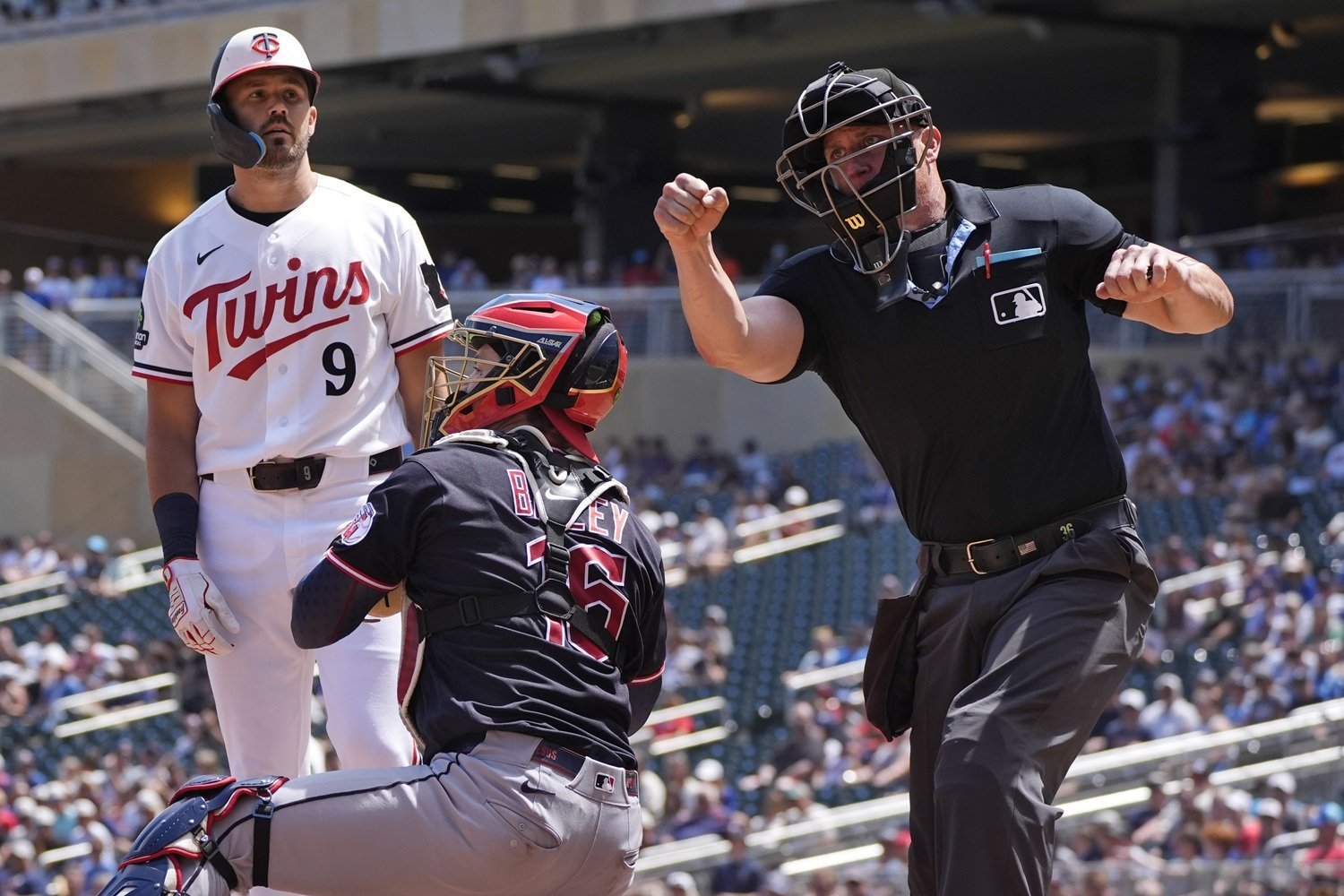 The Twins spent much of the summer hovering around the American League playoff picture. For a team that bought at the trade deadline, the final weeks have been a frustrating reminder of how quickly things can unravel. Minnesota's offense has played a major role in that collapse. There have been injuries, inconsistent production, and several players who simply haven't delivered at the plate when the team needed them most. Some struggles have come from players who were never expected to carry the lineup. Others have come from hitters who were supposed to be important pieces of the offense. So, which hitter has cost the Twins the most down the stretch? There are four primary candidates. 4. Royce Lewis 34 G: 0.3 fWAR, 95 wRC+, -0.13 WPA Lewis has experienced a roller coaster ride of a season. His poor first-half performance resulted in a demotion to Triple-A, but he returned to Minnesota and looked like a different hitter. Over his first 45 games back with the Twins, Lewis posted a .745 OPS and appeared to be settling into a new role at first base. Unfortunately, that improvement hasn't continued. Since August 1, Lewis has posted a .702 OPS while striking out 32 times in 140 plate appearances. Those numbers aren't disastrous, but they aren't what Minnesota needs from an everyday first baseman either. Lewis isn't the worst offender on this list because his overall production has remained somewhat respectable. However, the Twins need more from a player who is receiving everyday at-bats, particularly when the team is trying to stay alive in the postseason race. 3. Victor Caratini 14 G: -0.1 fWAR, 44 wRC+, -0.25 WPA Remember when Caratini looked like one of the best hitters on the roster? For a stretch in the middle of the season, it seemed like Caratini flipped a switch as soon as Ryan Jeffers landed on the injured list. He became one of Minnesota's hottest hitters, and there were even some writers who suggested the Twins might be comfortable trading Jeffers because Caratini was performing so well <Cough, whoops, cough>. The problem is that Caratini has gone in the opposite direction down the stretch. Since August 1, he has collected just five hits. That's not a typo. His recent struggles have become significant enough that the Twins have leaned heavily on Jeffers, starting him in nine straight games recently. Caratini's season was much better than these numbers suggest, but his collapse came at a terrible time. It also raises some uncomfortable questions about Minnesota's catching depth heading into 2027. 2. Ryan Kreidler 27 G: -0.2 fWAR, 22 wRC+, -0.51 WPA Kreidler's recent struggles have been difficult to watch because of how promising his season looked earlier in the year. When the Twins sent Royce Lewis to the minors, Brooks Lee moved over to third base, opening the door for Kreidler to take over the everyday shortstop job. That wasn't necessarily a bad thing. From May 1 through June 30, Kreidler posted an .822 OPS while providing solid defense at shortstop. He looked like a player who could potentially give Minnesota quality production at an important position. Then the bat disappeared. Since August 1, Kreidler is slashing .128/.226/.191 for a .418 OPS with 15 strikeouts in 54 plate appearances. That's not just below average. That's almost unplayable. The Twins didn't need Kreidler to become an All-Star. They simply needed him to provide competent at-bats while holding down a back-up bench role. Instead, his offensive production has cratered at precisely the wrong time. 1. Trevor Larnach 28 G: -0.1 fWAR, 73 wRC+, -0.44 WPA Larnach takes the top spot because his struggles come with the highest expectations and the fewest excuses. We've seen this story before. Larnach's defensive profile is below average, which means his bat has to carry more than its share of the workload. When he's hitting, that tradeoff can make sense. When he's not, there isn't much left to justify keeping him in the lineup. Since August 1, Larnach is slashing .200/.258/.367 for a .624 OPS with seven extra-base hits in 97 plate appearances. That's simply not enough from a corner outfielder on a team trying to make the playoffs. Larnach has also been worth -5 OAA for the season, making his offensive struggles even more problematic. If the bat isn't producing, the Twins aren't getting enough value from the rest of his game to compensate. And that's why he tops this list. There is also a bigger organizational question here. Larnach has had opportunities to establish himself as part of Minnesota's long-term plans, but the consistency hasn't been there. With the Twins entering an offseason where almost every roster spot should be evaluated, there is little reason to continue giving him at-bats simply because he has been around for a while. The Verdict There isn't one player responsible for Minnesota falling out of the playoff race. Baseball doesn't work that way. But when evaluating which hitters have hurt the Twins most down the stretch, Larnach stands out. His offensive production has been well below what the team needs from a corner outfielder, and his defensive shortcomings make the decline even more damaging. Kreidler's recent collapse has been more dramatic statistically, while Caratini's downturn has exposed the lack of catching depth behind Jeffers. Lewis, meanwhile, hasn't been terrible, but he also hasn't produced enough to justify being an everyday first baseman. The bigger issue is that Minnesota has had too many players struggling simultaneously. A contender can survive one cold bat. It becomes much harder when multiple lineup spots become automatic outs. The Twins spent much of the summer close enough to the playoff picture to make the postseason feel realistic. Their inability to get enough production from these four hitters helped turn that possibility into another disappointing September. And with the offseason approaching, the front office has plenty of decisions to make about who should still be getting those at-bats in 2027. How would you rank the players above? Should someone else make the list? Leave a comment and start the discussion. View the full article
 -
Slight Crack Are Forming In Adrian Morejon's Armor
DiamondCentric posted an article in Padres Mission
 While Mason Miller gets the attention out of the San Diego Padres bullpen as baseball's top reliever, the team has also boasted, arguably, the No. 2 man in relief in Adrian Morejon. Morejon's success is the continued progression of three consecutive years pitching in leverage for the Padres. What began as a breakout 2024 continued to the tune of a 2.08 ERA and an All-Star appearance last season. This year, Morejon has driven up the strikeout rate to a career-high (29.7 percent) and carries a gaudy 59.6 groundball rate. Courtesy of his sinker-changeup-slider combo, Morejon's continued dominance has his percentile chart looking extraordinary: Now that we have the good end of the spectrum out of the way, let's talk about some concerns that have begun to emerge at this late stage of the season. Morejon is coming up on a career-high in terms of his volume of appearances; his 69 leaves him on pace to at least match last year's 75. However, he's already exceeded his career mark for innings, with 79.2 passing up last year's number by three with another three-ish weeks to go in the year. That's a number of appearances exceeding three outs for a pitcher so crucial to the long-term gains of the team, as far as postseason prospects go. That's a lot of volume in consecutive seasons for a relief pitcher. Generally, that's something you'd prefer to avoid in order to stave off any kind of regression in performance. To date, Morejon has been able to effectively navigate such volume. However, Sunday afternoon's outing against the New York Yankees was an indication, of which there have been a recent smattering, that the workload could be catching up with him. Entering with a 4-0 lead in the eighth inning, Morejon allowed three hits and a walk that culminated in three runs (two earned). That Luis Campusano was able to throw out a baserunner at second base with one out at least put Morejon in a situation where he was back to two outs with the bases empty before handing the ball to Miller for the ninth. No harm done in the grand scheme. However, that type of tumultuous outing is starting to manifest a bit more often. On September 1, Morejon worked 0.2 innings, walked two and allowed two hits, resulting in a pair of earned runs in a game the team lost 4-3. On August 29th, he faced five batters after allowing a hit and a walk in his inning of work. Between August 19th and September 6, Morejon had a 4.15 ERA (last among the team's qualifying relievers) and a 13.5 percent walk rate (highest among the team's qualifying relievers). Those are the types of things that are at least indicative of cracks. However, we're not on full-blown Morejon watch quite yet. The walk number is the most concerning element; Morejon hasn't exceeded 11 percent in an individual month, and he's gotten things under control in his past few outings. However, between the continued display of strikeouts (29.7 percent), huge groundball numbers (60.0 percent), and velocity that is actually increasing (97.1 in September is his highest in an individual month), now isn't the time to worry. Especially when his xERA is still barely scratching above two. So it's something to monitor, especially on the command side, but we are otherwise continuing to view Adrian Morejon as every bit the arm he's been purported to be since 2024. View the full article
 -
Slight Cracks Are Forming In Adrian Morejon's Armor
DiamondCentric posted an article in Padres Mission
 While Mason Miller gets the attention out of the San Diego Padres bullpen as baseball's top reliever, the team has also boasted, arguably, the No. 2 man in relief in Adrian Morejon. Morejon's success is the continued progression of three consecutive years pitching in leverage for the Padres. What began as a breakout 2024 continued to the tune of a 2.08 ERA and an All-Star appearance last season. This year, Morejon has driven up the strikeout rate to a career-high (29.7 percent) and carries a gaudy 59.6 groundball rate. Courtesy of his sinker-changeup-slider combo, Morejon's continued dominance has his percentile chart looking extraordinary: Now that we have the good end of the spectrum out of the way, let's talk about some concerns that have begun to emerge at this late stage of the season. Morejon is coming up on a career-high in terms of his volume of appearances; his 69 leaves him on pace to at least match last year's 75. However, he's already exceeded his career mark for innings, with 79.2 passing up last year's number by three with another three-ish weeks to go in the year. That's a number of appearances exceeding three outs for a pitcher so crucial to the long-term gains of the team, as far as postseason prospects go. That's a lot of volume in consecutive seasons for a relief pitcher. Generally, that's something you'd prefer to avoid in order to stave off any kind of regression in performance. To date, Morejon has been able to effectively navigate such volume. However, Sunday afternoon's outing against the New York Yankees was an indication, of which there have been a recent smattering, that the workload could be catching up with him. Entering with a 4-0 lead in the eighth inning, Morejon allowed three hits and a walk that culminated in three runs (two earned). That Luis Campusano was able to throw out a baserunner at second base with one out at least put Morejon in a situation where he was back to two outs with the bases empty before handing the ball to Miller for the ninth. No harm done in the grand scheme. However, that type of tumultuous outing is starting to manifest a bit more often. On September 1, Morejon worked 0.2 innings, walked two and allowed two hits, resulting in a pair of earned runs in a game the team lost 4-3. On August 29th, he faced five batters after allowing a hit and a walk in his inning of work. Between August 19th and September 6, Morejon had a 4.15 ERA (last among the team's qualifying relievers) and a 13.5 percent walk rate (highest among the team's qualifying relievers). Those are the types of things that are at least indicative of cracks. However, we're not on full-blown Morejon watch quite yet. The walk number is the most concerning element; Morejon hasn't exceeded 11 percent in an individual month, and he's gotten things under control in his past few outings. However, between the continued display of strikeouts (29.7 percent), huge groundball numbers (60.0 percent), and velocity that is actually increasing (97.1 in September is his highest in an individual month), now isn't the time to worry. Especially when his xERA is still barely scratching above two. So it's something to monitor, especially on the command side, but we are otherwise continuing to view Adrian Morejon as every bit the arm he's been purported to be since 2024. View the full article
 -
Are The 2026 Cubs Giving 2023 Rangers Vibes?
DiamondCentric posted an article in North Side Baseball
 The 2026 Chicago Cubs have been an up and down roller coaster of emotion for fans of the team, but could they become the 2023 Texas Rangers squad who absolutely mashed their way to a World Series championship? The comparison between to the two teams is more apt than one might think.View the full article
 -
Breaking: Twins Call Up Top Prospect Emmanuel Rodriguez
DiamondCentric posted an article in Twins Daily
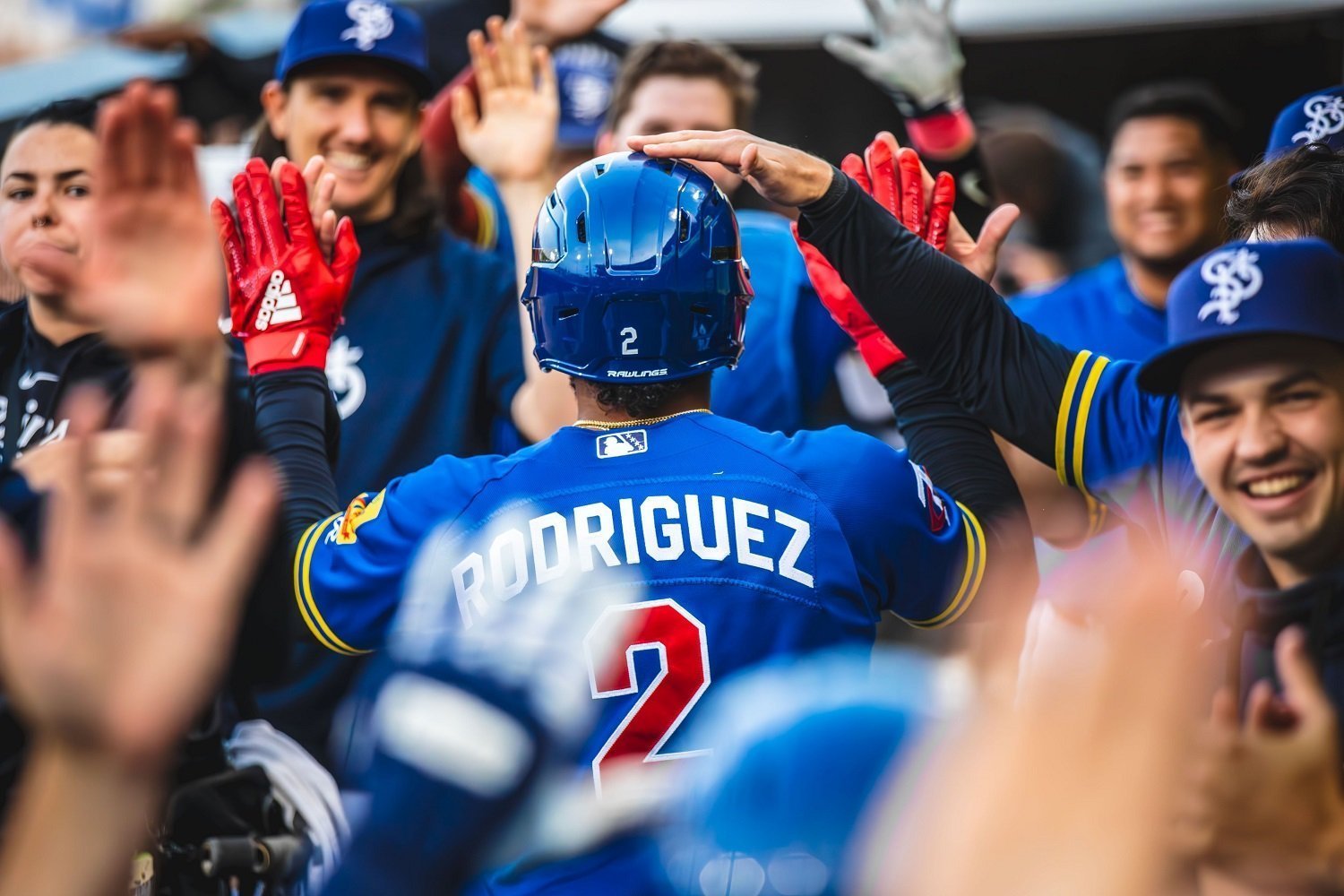 The Twins are finally getting a look at one of the most intriguing bats in their organization. Minnesota has called up outfielder Emmanuel Rodriguez, giving the 23-year-old top prospect his first opportunity to establish himself at the big-league level. Rodriguez has been one of the organization’s highest-upside players for several years, but injuries have repeatedly interrupted his development. Now, with the season winding down, the Twins can get a firsthand look at what all that potential might look like against major-league pitching. There is an added layer of urgency to the move. Rodriguez is out of minor league options entering next season, meaning Minnesota will have to carry him on the Opening Day roster or expose him to waivers, where another club could potentially claim him. That makes these final games more important than they might appear. Injury-Marred Professional Career The Twins signed Rodriguez for $2.5 million in July 2019, and he has flashed impressive tools ever since. The biggest challenge has been keeping him on the field. His career high is only 99 games in a season, which he reached in 2023. The injuries have come in waves. Rodriguez missed significant time with a knee injury in 2022, suffered an abdominal strain the following year and dealt with a thumb injury in 2024. Last season brought another combination of thumb, hip and oblique issues. Despite all of that, Rodriguez reached Triple-A at just 22 years old in 2025. He also spent last offseason playing in the Dominican Winter League, an opportunity to make up for some of the development time he had lost to injuries. Unfortunately, the injury issues followed him into 2026. A torn ligament in his left thumb required surgery and kept Rodriguez out for nearly three months. His latest comeback has provided the Twins with enough reason to finally give him a chance at the highest level. And there is plenty to like about the player Minnesota is getting. What are the Twins Getting in Rodriguez? Rodriguez has tremendous bat speed and the raw power that comes with it. When he squares the baseball, the ball can jump off his bat in a hurry. He also has a strong understanding of the strike zone and has consistently demonstrated an ability to draw walks. Entering this season, Rodriguez owned a career 21.7% walk rate in the minors. He has continued to walk nearly 19% of the time at Triple-A this season. The problem is what happens when he does decide to swing. Rodriguez entered the season carrying a 30.3% career strikeout rate, and his in-zone miss rate remains a significant concern. However, he cut his strikeout rate to 26.5% in 2026. He does not necessarily chase at an alarming rate, but too many hittable pitches get by him without contact. Some of that can reasonably be attributed to his interrupted development. It is difficult to build a consistent offensive approach when healthy seasons have been so difficult to come by. Even so, the upside remains enormous. Rodriguez has posted a .914 OPS and 136 wRC+ at Triple-A this season. His .257 batting average might not jump off the page, but batting average is not the best way to understand his offensive profile. He is capable of getting on base at a high rate while also providing legitimate power, a combination that makes his offensive ceiling considerably more interesting than his batting average might suggest. That is especially notable for a player listed at just 5-foot-11. There are also reasons to believe Rodriguez can provide value beyond his bat. He is a tick above-average runner and has shown the ability to handle center field. His plus arm gives him another defensive weapon, although the Twins may ultimately find a better long-term fit for him elsewhere in the outfield. For years, the Rodriguez conversation has revolved around the same question: What happens if he can actually stay healthy? The Twins are finally going to get a chance to start answering it. Rodriguez remains a consensus top-100 prospect because of the massive upside attached to his offensive tools. There is legitimate middle-of-the-order potential here. But the injury history and strikeout concerns make him anything but a sure thing. Had Rodriguez stayed healthy, there is a good chance his major-league debut would have happened much earlier. Instead, the Twins are getting a late-season audition. It might only be a handful of games, but those games could have significant implications for both Rodriguez and the Twins. Minnesota needs to determine whether he is ready to be part of the 2027 roster, and Rodriguez finally gets an opportunity to show exactly what he can do when the lights are brightest. What stands out about Rodriguez’s profile? Can he help the Twins down the stretch? Leave a comment and start the discussion. View the full article
 -
Zebby Matthews Isn't A Starting Pitcher, It's Time For A New Role
DiamondCentric posted an article in Twins Daily
 Zebby Matthews has struggled to find his footing as a starter in 2026. That doesn’t mean the Twins should give up on him, though. View the full article
 -
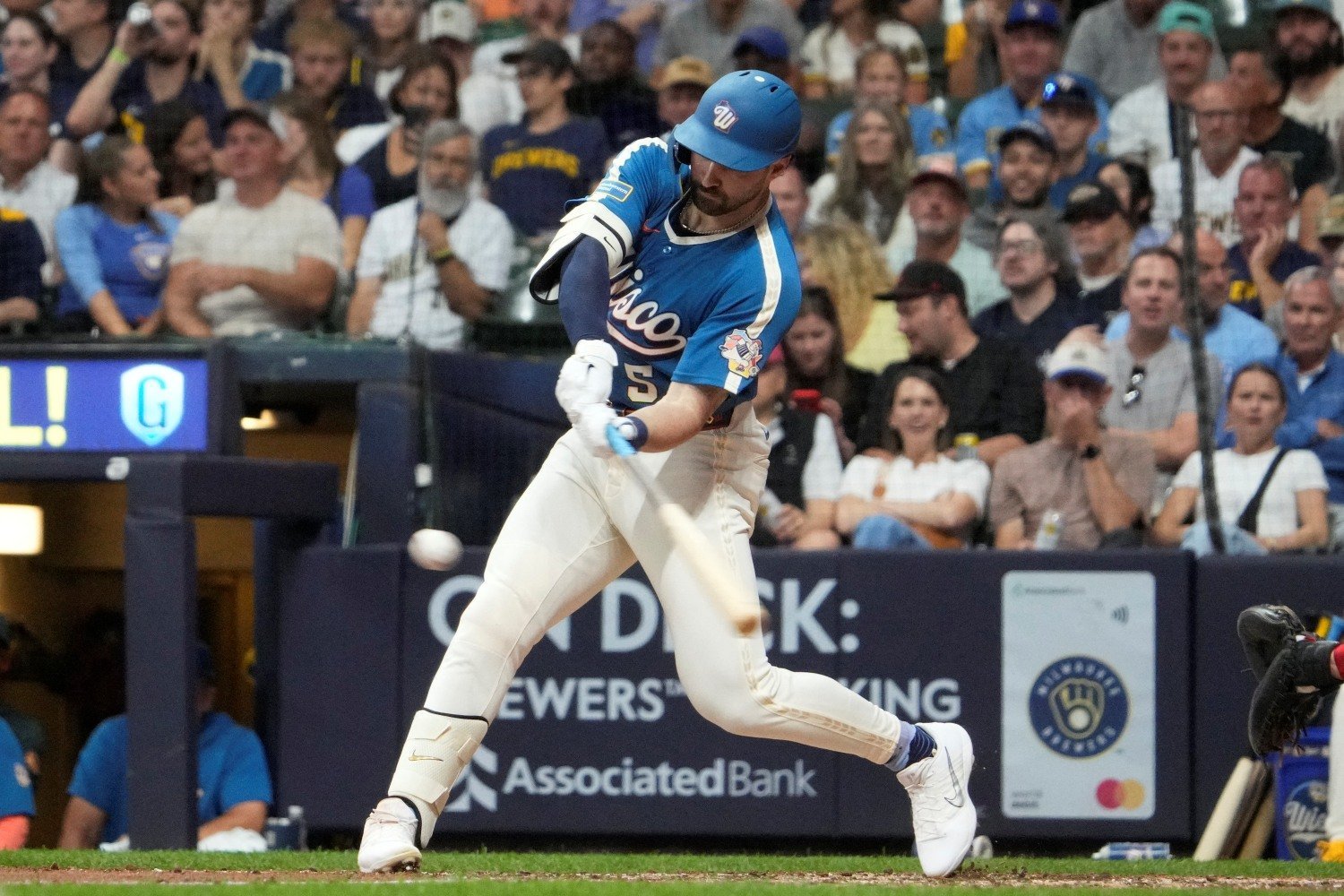 In a 20-0 blowout win over the Reds that made the Brewers the first National League team to secure a playoff berth this season, a few inconsequential add-on runs stood out the most to Pat Murphy. After a William Contreras RBI single gave the Brewers a 13-0 lead in the fifth inning, Christian Yelich and Jake Bauers struck out. It had already been a productive night and a productive inning, and it seemed the scoring might finally be subsiding. Murphy had seen this movie before. On Wednesday against the Cubs, after his offense scored seven runs in the first three innings, it managed just two baserunners the rest of the way, one of whom reached on an error. Failing to add on nearly proved costly in the ninth, as the tying run came to the plate for Chicago after Brandon Sproat’s meltdown. Afterward, Murphy praised those early at-bats, but criticized his hitters for easing off the gas pedal with poor process. It wasn’t a problem this time. With two outs and a runner on first, Luis Lara roped a first-pitch single into right field. Cooper Pratt saw four of five pitches from Luis Mey well outside the zone and remained selective to draw a walk. With the bases suddenly loaded, Garrett Mitchell blasted a 3-1 pitch for the Brewers’ first grand slam of the season. Instead of a four-run inning, it was an eight-run frame. “It's insignificant to a lot. We're already up in the game a bunch,” Murphy said. “Strikeout, strikeout, and then we went base hit, walk, homer, base hit.” Those continued quality at-bats are what Murphy wants to see in the postseason. For the eighth time in nine seasons and for the fourth year in a row, the Brewers will play meaningful October baseball. “I think you have to appreciate it,” Murphy said. “I’m grateful that I’m part of a group, that I have the type of personnel and the type of people that live up to these expectations, live up to the standards, and are very serious about it.” Because the postseason has become the standard in Milwaukee, the celebration has become more subdued. The Brewers no longer pop champagne bottles until they clinch the division, which could also happen this weekend. “The Chicago White Sox, when they clinch a playoff berth this year, they're going to go crazy, and they should, because they did an incredible job coming from where they came from,” Murphy said. “We've been kind of steady for a while, and we want to just keep going. We want to see how far we can go and how complete this can be.” Instead, Murphy gave a private postgame toast in which he focused on members of the club’s support staff. “Him calling out the guys behind the scenes,” Brice Turang said. “Obviously, everyone sees the players, and they don’t always see the guys behind the scenes. The trainers, the weight coaches, the chefs, stuff like that.” “It matters that we’re a team, but everybody contributes, and everybody gets recognized for this, because it doesn’t just happen because you have good players,” Murphy said. After that, it was a normal postgame clubhouse. Players quietly filed out of the room as they do after a normal regular season win. That’s because the Brewers have not accomplished their final goal of winning a World Series. “We’ve still got a lot more to go,” Garrett Mitchell said. “This is just the beginning.” During this otherwise successful run, the Brewers have not gone very far in October. Their win over the Cubs in last year’s NLDS was their first postseason series win since 2018. The run ended unceremoniously with a sweep at the hands of the Dodgers in the NLCS. Murphy wants this group, which includes many returners from that team, to let that failure motivate them to bring their best deeper into the fall. The standard has been raised. “This isn't enough for this group in there. They want more,” Murphy said. “They remember last year. They want more.” That’s why he circled the second half of an eight-run fifth inning on his scorecard. The Brewers already did something impressive. They could have stopped at a 13-0 lead, especially after a few unsuccessful at-bats, but they didn’t. That’s what they’ll have to do in the postseason to get further than last year against elite pitching, when the runs are not coming easily. In last year's NLCS, they ran out of steam and stopped punching. “You just got to stay in the fight, stay in the process, stay in the now, and good things can happen,” Murphy said. “When you get that realization as a team, then you realize, ‘Hey, we can score at any time.’ Down three, that's not the end of the world.” “We all know what the end goal is, and that's what we're chasing,” Turang said. “So this is a small little step, and we just enjoy it tonight, and then tomorrow we go out and try to win a game.” View the full article
 -
Should the Twins Have Cashed In on Joe Ryan and Pablo López?
DiamondCentric posted an article in Twins Daily
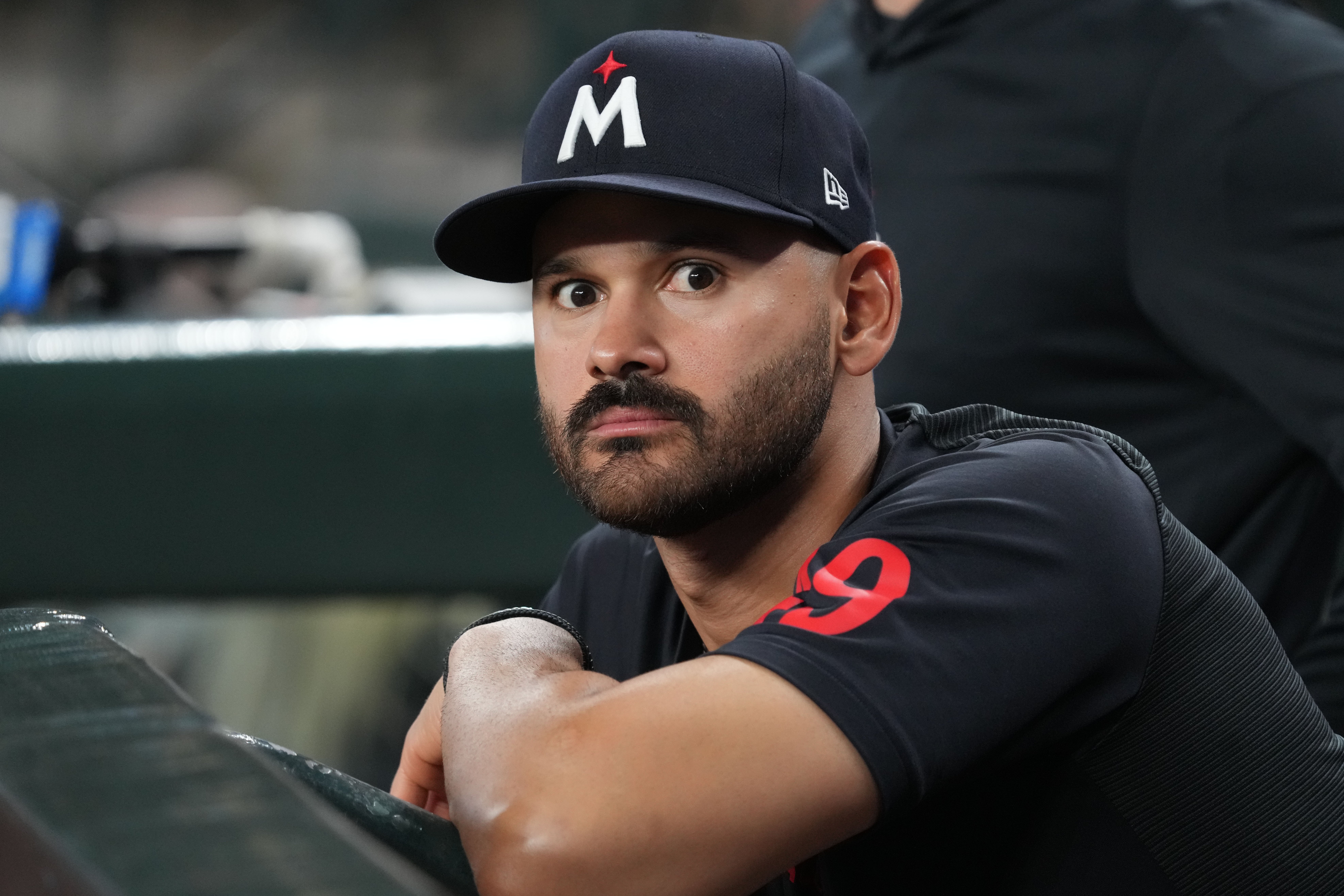 With the odds of the Twins making the postseason shrinking by the day, we’re left with plenty of opportunities to reflect on the season that was and, more importantly, what could have been. Yet another season without playoff baseball makes it easy to look back at all of the things the Twins should’ve done differently. There are plenty of decisions that can be debated, from roster construction to the trade deadline, but in the Twins’ case specifically, I think there’s a pretty compelling argument that Derek Falvey missed an opportunity to reshape the organization. And two names immediately come to mind: Joe Ryan and Pablo López. Let’s go back to this past offseason. There was plenty of buzz that Falvey and the Twins could be forced into dealing one or both of their veteran starters as the organization looked to reshape the roster and potentially cut payroll. As it turns out, neither one was moved. Hindsight is always 20/20, of course, but I think Falvey missed out by not moving on from at least one of them before the season started. And that’s especially easy for me to say because I was of that belief at the time as well. I thought Ryan, in particular, was a pitcher the Twins should seriously consider moving while his value was at its highest. López was a little more complicated, but there was still a window to make something happen. Now, that window looks considerably smaller. The Pablo López Problem López’s situation is obviously a little different because he suffered a season-ending elbow injury in February, just before the season began. There’s no way the Twins could have known that was coming. But they still had November, December, and January to explore a potential trade. López was healthy at the time, and while his contract certainly limited the number of teams that could have been interested, he was still a proven starting pitcher who had been one of the better members of the Twins’ rotation. Instead, Falvey and the Twins held onto him, and now his trade value has taken a massive hit. López is coming off elbow surgery, missed the entire 2026 season and is entering a contract year in 2027. Even if he returns healthy and pitches well next season, there’s no guarantee he gets back to where he was pre-injury. That puts the organization in a somewhat awkward position. If the Twins genuinely believe they can make a run at the postseason next year, then you probably want López in your rotation. A healthy version of him could be a major part of a competitive pitching staff. But if the Twins don’t win with him in 2027, that’s going to be a pretty bad look. Falvey had an opportunity to move López when his value was much higher, chose not to, and now Jeremy Zoll’s front office could potentially be stuck with the consequences of that decision. There’s still a chance López comes back and proves to be an important piece, but the opportunity to maximize his value has almost certainly passed. Ryan Was Different I think the same general argument can be made for Joe Ryan, only with even more conviction. I was of the belief that the Twins should’ve traded Ryan before the season, and I felt even more strongly about it when the trade deadline rolled around. Unlike López, there would have been a very active market for Ryan. He was healthy, he was pitching at a high level, and, like López, he was under team control for multiple seasons. That combination is incredibly valuable in today’s game. Contenders are constantly searching for starting pitching, but controllable frontline starters are especially difficult to find. A team acquiring Ryan wouldn’t have just been getting a rental for the stretch run. They would have been getting a quality starter who could remain in the rotation for years. That should have put the Twins in an excellent position to demand a significant return. Instead, Falvey kept him. And again, hindsight is always 20/20. The Twins probably believed they could still make a postseason push. Maybe they believed Ryan was too important to the future of the organization to move. Maybe the offers simply weren’t good enough. But looking at where things stand now, it’s fair to ask what exactly the Twins gained by keeping him. They aren’t a playoff team WITH Ryan. If the goal was to compete this season, that plan clearly didn’t work. And if the goal was to build toward the future, it’s difficult to argue that keeping Ryan was the best way to maximize the organization’s long-term return. That’s ultimately what makes the decision, to me, extra frustrating. Ryan was the most valuable trade chip on the entire roster, and Falvey had multiple opportunities to cash in on him. He chose not to. The Pressure Is On There’s still a path where all of this works out for the Twins. If they believe they can make a serious run in the American League next season, having both Ryan and López in the rotation would obviously be a good thing. Quality starting pitching is difficult to find, and there’s no reason to pretend otherwise. But that puts an awful lot of pressure on 2027. Both pitchers are entering contract years, and both now have less trade value than they did when the Twins had the opportunity to move them. If the Twins make the playoffs next season and Ryan and López help lead the rotation there, nobody will care about the trades that weren’t made. If they fall short again, however, those decisions are going to be scrutinized heavily. And that’s where this ultimately becomes less about Ryan and López and more about Falvey. Maybe Ryan and López will ultimately prove that decision was the right one. But if the Twins fall short again in 2027, it’s going to be awfully difficult to look back at these past two seasons and say Falvey maximized the opportunities in front of him. Sometimes building for the future means knowing when to move on from the players who can bring the biggest return. The Twins had that opportunity, and they might not get another one. View the full article
 -
 Not to say the Nashville men are playing out the string, but surely, they look forward to returning home for next week's final series. Biloxi's incredibly strong roster on paper continues to play down to its capabilities from a W-L perspective. Transaction: Nashville Sounds placed RHP Tyson Hardin on the 7-day injured list retroactive to September 10, 2026. The 24-year-old, MLB Pipeline's top-rated Brewers pitcher (#7 in the system), lands on the injured list one week after a dazzling 7-inning, one-run, 7 K effort. No word on the nature or severity of Hardin's injury is available, but this seems to end Hardin's season. Technically he would be available to pitch in one of the Sounds' final games next weekend, but it's hard to envision that given the precautionary nature of the organization. Nashville Pre-Game Media Notes Final: Durham (Rays) 6, Nashville 3 Box Score and Game Log Via the Sounds, game details, and we encourage readers to always review affiliate write-ups as part of their Link Report routine: Burke Homers for Second-Straight Night in Loss On a night when each of their respective parent clubs qualified for the MLB postseason, the Bulls rode a four-run 7th inning vs. RHP Kaleb Bowman, in his 3rd inning of work, to overcome a 3-1 deficit, as the game summary details well. You can watch the lowlights from that unfortunate frame here. It's only nine September games, but in those contests, Blake Burke sports a .281/.361/.594 line (.955 OPS), nearly matching his .970 OPS in his obviously much-larger Biloxi sample. Essentially, he's finding his way vs. AAA pitching. It will be interesting to follow what eventual value Burke provides on a big-league field or in trade, adding to the Joey Ortiz-DL Hall "Corbin Burnes" combo. Alumni mentions in this clip (Jake Woodford / Jadher Areinamo) - plus Jared Oliva was within the linked Durham rally video above Brandon Lockridge (misidentified in the highlight) had an RBI single early. LH starter Tate Kuehner pitched four innings of one-run ball with six K's but was fortunate as he issued four free passes (3 BB, 1 HBP). Five of the 13 players in this game for Nashville have big-league time for the Crew this season, as do five pitchers who were idle - six if you include season-long injured Rob Zastryzny (Crow, Pannone, Richardson, C. Rodriguez, Sproat). Catch up with the latest Biloxi pre-game audio interview archives - Infielder Daniel Dickinson the latest guest Biloxi Pre-Game Media Notes Final: Pensacola (Marlins) 8, Biloxi 4 Box Score and Game Log Thompson’s Career-High 9 K’s Not Enough in Shuckers Loss to Blue Wahoos Similar to his fellow southpaw starter in Nashville (Kuehner), it was an eventful outing for J.D. Thompson - Thompson squeezed a lot into 4.2 innings: E: Thompson (1, pickoff). WP: Thompson. Balk: Thompson. Disengagement violations: Thompson. Pitches-strikes: Thompson 93-55 Groundouts-flyouts: Thompson 1-2 Batters faced: Thompson 23 The Brewers will be saving travel expenses since Game One will be in Pensacola when these two teams begin the best-of-three league semi-final series next Tuesday. What a pain it would have been if the home-and-away status were reversed. As it is, Game Two and potential Game Three are in Biloxi (Thursday, maybe Friday). One would think the trio of Bishop Letson, Jaron DeBerry and Thomspon would be formidable next week, we'll see. As for the bats, Andrew Fischer's lone base hit was a single, but in true Fischer fashion, he walked twice and struck out twice. I've seen online speculation by those who should know better that Fischer could be bumped to AAA Nashville next week in a quest to further pad his historic HR total. If you have an inkling of Fischer's known competitive fire and desire for team victories above all else, there's no way he's missing the playoff series. One imagines the Shuckers' poor second half play must have eaten at Fischer. Some offensive highlights to illustrate the words in the linked game summary - Where oh where is Jesús Made? Oh, we shouldn't fret over an absence for a second consecutive game. But Tyson Hardin's pop-up-out-of-nowhere IL stint reminds us - anything can happen anytime. That's quite the bench for this game - Made, Braylon Payne, Daniel Dickinson, Matthew Wood. Another lefty, Colton Gordon, toes the rubber for the Sounds Saturday, while Josh Knoth represents the right-handers for the Shuckers, both games with traditional early evening start times. Thanks for reading, enjoy your day! Organizational Scoreboard including starting pitcher info, game times, MiLB TV links, and box scores Current Milwaukee Brewers Organization Batting Stats and Depth Current Milwaukee Brewers Organization Pitching Stats and Depth View the full article
