


DiamondCentric
-
Posts
2,631 -
Joined
-
Last visited
Never
Content Type
Profiles
Forums
Events
MLB News, Rumors & Analysis
DiamondCentric Tutorials & Help
Major League Baseball Videos
MLB Fan Guides & Resources
Store
Downloads
Gallery
Everything posted by DiamondCentric
-

Jose Olivares Can Still Put Himself Back on the Prospect Map
DiamondCentric posted an article in Twins Daily
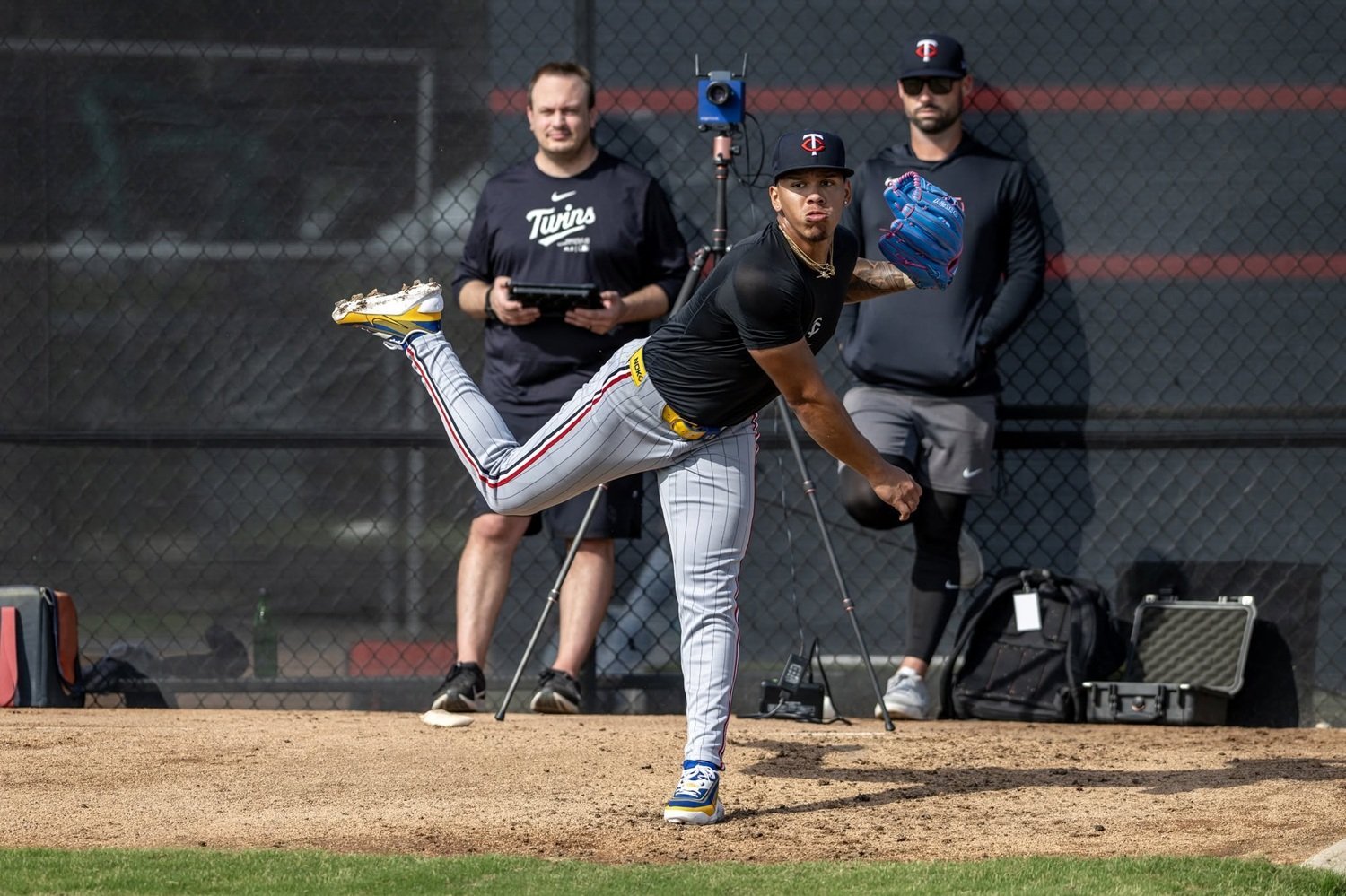 Prospect development rarely follows a straight line. Some pitchers move quickly through the minor leagues, while others encounter injuries, command issues, and setbacks that threaten to derail their careers. Jose Olivares has experienced plenty of the latter. Once viewed as one of the Minnesota Twins' top 40 prospects, Olivares has seen his stock decline after several inconsistent seasons. His 2026 campaign was particularly difficult, as control problems and offseason elbow surgery limited his effectiveness at Double-A. Still, there are reasons not to give up on the 23-year-old right-hander. He spent nearly the entire 2026 season at Double-A and possesses a fastball that can reach the upper 90s, along with secondary pitches capable of generating swings and misses. The question is whether he can rediscover his command and turn his raw ability into consistent results. An Intriguing Arm From Venezuela The Twins signed Olivares out of Venezuela for a $100,000 bonus in January 2021 during the delayed 2020-21 international signing period. He began his professional career in the Dominican Summer League in 2022 before moving to the Florida Complex League in 2023. His first exposure to full-season baseball proved challenging, as he posted a 6.22 ERA and a 1.47 WHIP in 2023. The following season offered more encouragement. After returning to Fort Myers, Olivares recorded a 3.33 ERA and a 1.33 WHIP despite dealing with a shoulder issue and a hip impingement. At his best, Olivares offers an intriguing combination of size, velocity, and pitch movement. The 6-foot-1 right-hander saw his average fastball velocity climb from approximately 93 mph early in his professional career to 95 mph, with the pitch reaching 97 mph. Its riding action and arm-side run give hitters a difficult combination when he locates it effectively. His secondary arsenal includes a gyro-style slider around 87 mph, a curveball around 80 mph, and a changeup in the 86-87 mph range. The slider has shown improved depth and swing-and-miss potential, while the curveball and changeup provide additional options. That four-pitch mix helped elevate Olivares among Minnesota's prospects. However, possessing a deep arsenal and consistently executing it against professional hitters are two very different things. Progress at High-A, Followed by More Questions Olivares entered 2025 with some momentum after his improved performance in Fort Myers. He spent the season at High-A Cedar Rapids, finishing with a 4.11 ERA across 96 1/3 innings. He recorded 111 strikeouts against 59 walks, demonstrating that his stuff could still generate missed bats against more experienced hitters. His 27.6 K% was encouraging, but his 14.7 BB% illustrated the other side of his profile. Olivares could overpower hitters at times, yet he struggled to get ahead in counts and finish at-bats efficiently. He also had difficulty consistently landing his curveball and changeup in the strike zone. The Twins faced a roster decision after the season. Olivares was not added to Minnesota's 40-man roster and went unselected in the Rule 5 Draft. That outcome reflected the uncertainty surrounding his development, but it allowed him to continue working within the organization without another club committing a roster spot to him. Elbow Surgery Complicates His 2026 Season Olivares faced another obstacle heading into 2026. He underwent surgery in early October 2025 to remove a bone spur from his elbow, forcing him to begin the following season on the minor-league injured list. When he returned, his results at Double-A Wichita were difficult to overlook. Olivares posted a 7.41 ERA and a 2.02 WHIP across 37 2/3 innings, striking out 29 hitters while issuing 30 walks. Opponents collected 46 hits against him. The numbers represented a significant step backward. His strikeout-to-walk ratio was particularly concerning, as he nearly matched his strikeout total with free passes. A pitcher with his velocity and secondary offerings should have opportunities to miss bats, but those advantages become less meaningful when he struggles to consistently locate the ball. The surgery is an important part of the evaluation, but it cannot explain away every issue. Olivares needs to prove that he can throw strikes and execute his pitches against advanced hitters. There is still value in the experience he gained at Double-A. He reached that level at 23 and now has a clearer picture of what he must improve. His next opportunity will be about demonstrating that his command issues are correctable rather than permanent limitations. Should the Twins Consider a Bullpen Role? Minnesota eventually must determine whether Olivares should remain a starter or transition to the bullpen. Both options have merit. Keeping him in the rotation would give him more opportunities to develop his four-pitch mix, improve his command, and build the durability needed for a major-league workload. Given his injury history, another healthy offseason and a full spring training could help him regain consistency. A move to the bullpen would offer a different path. Olivares could focus on his fastball and slider while throwing at maximum effort over shorter outings. His mid-90s velocity and swing-and-miss potential might play better in relief, where he would not need to navigate a lineup multiple times. However, a bullpen conversion would not automatically solve his biggest problem. A pitcher who struggles to locate the strike zone as a starter can carry those same issues into relief appearances. The Twins would need to see improved command before confidently projecting him as a late-inning option. For now, Minnesota has reason to give Olivares another opportunity to start. His development has been interrupted by multiple injuries, and his 2026 season offered limited evidence of what he can do when fully healthy. If the control problems persist, a move to relief could become more appealing. Olivares Still Has Time to Change His Trajectory Olivares is no longer the prospect he appeared to be after his promising 2024 campaign. His recent results have pushed him down the organizational pecking order, and his career minor-league ERA sits above 5.00. Yet a disappointing season does not necessarily end a pitcher's prospect status. Olivares still has a fastball with above-average potential, a slider that can miss bats, and additional offerings that could become useful with better execution. His next season will be critical. Rather than focusing exclusively on his ERA, the Twins should look for signs that he is throwing more strikes, reducing his walks, and consistently getting ahead of hitters. Better command would give his secondary pitches more opportunities to succeed and help him make better use of his fastball. Minnesota does not need to decide immediately whether Olivares will become a starter or reliever. The organization first needs to see whether his stuff can translate into better results when he is healthy. If he regains his command, he could still climb back into the prospect conversation. His path to the majors is considerably less certain than it was a few years ago. However, at 23, he has not run out of time. The next step is straightforward, even if it is not easy: throw strikes, make hitters earn their way on base, and show the Twins that his best pitching is still ahead of him. What stands out about Olivares? Is he a candidate who should move to the bullpen? Leave a comment and start the discussion. View the full article
-
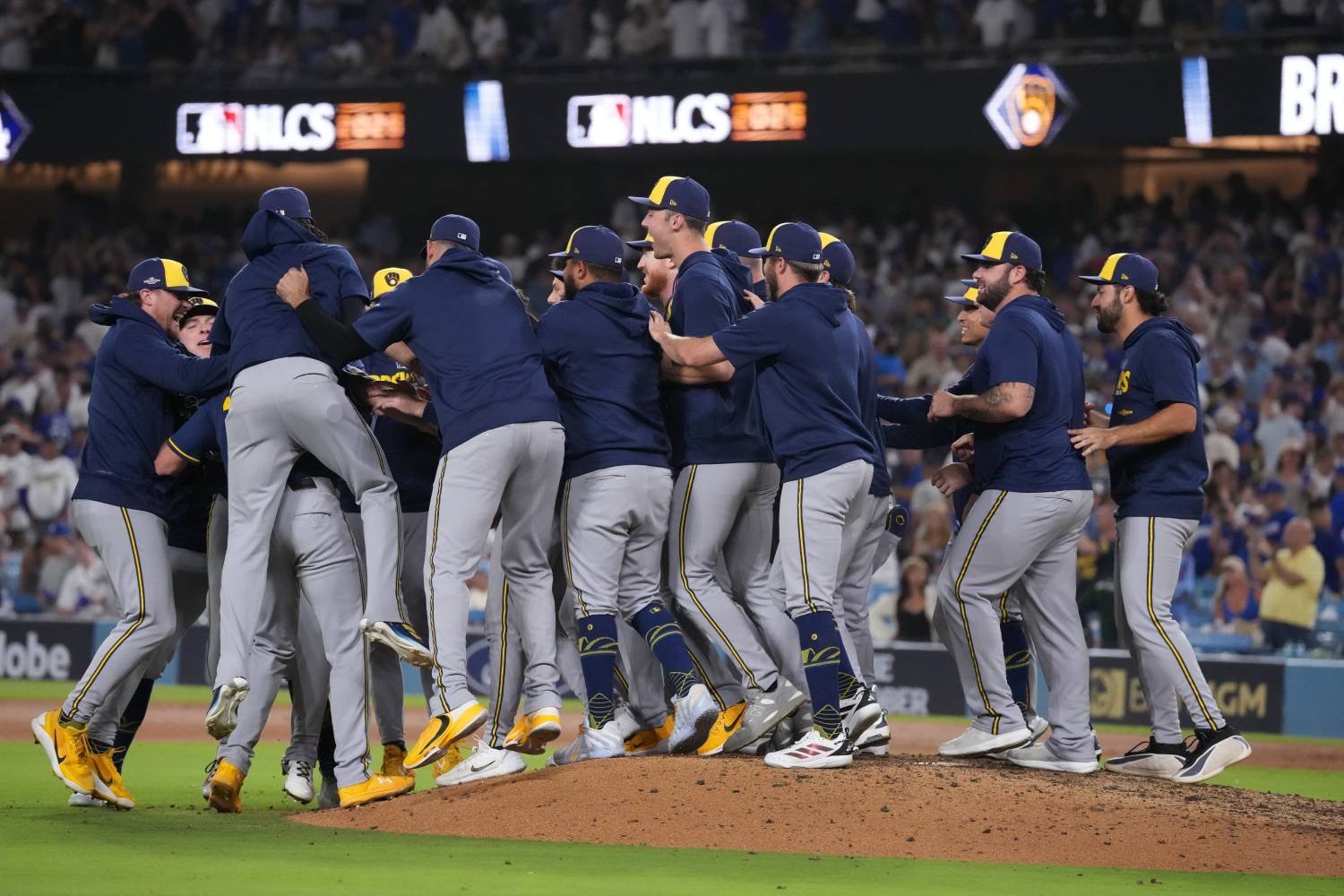 One of the unfortunate things about MLB and the postseason is that national-TV announcers get to make the calls that live with many of us when teams win a championship. Radio, however, is where you can find that local tie. The same folks that take you through the 162-game regular season call the games in the postseason. Thus, while it was Joe Davis on the call for FS1 as we all watched left fielder Jackson Chourio haul in the line drive by Enrique Hernandez off left-hander Aaron Ashby to end the Milwaukee Brewers' 6-4 win over the Los Angeles Dodgers in Game 4 of the NL Championship Series, there was Jeff Levering on the mic for Brewers Radio Network as history was made. Here is Levering's call of the Brewers punching their ticket to the 2026 World Series: And for a little nostalgia, here is what the legendary Bob Uecker sounded like back in 1982 as Pete Ladd delivered the final pitch of the AL Championship Series as the Brewers beat the California Angels. Rod Carew hit a grounder to shortstop Robin Yount, who threw to first baseman Cecil Cooper for the final out. Now, will Levering have one more memorable call at the end of this year's World Series? View the full article
-
 With no Twins games, the Twins Daily forums remained active as fans debated key topics. This week's Forum Friday highlights three threads: a discussion on whether Marek Houston or Walker Jenkins is the Twins' top prospect of 2026, an evaluation of Adrian Bohorquez's potential in the farm system, and a look at the Twins' prospects for having multiple starting-caliber shortstops and center fielders by 2027. Are you exhausted by algorithmic internet "discussion"? Tired of seeing posts that are meant only to anger you, bait you into a response, or find yet another way to extract your personal data? Come join the conversation on the human-moderated Twins Daily forums, where you can talk Twins baseball without the constant barrage of misinformation, hot takes, and loudmouths. Joining is free: create an account at diamondcentric.net, then use that same login here to comment. Marek Houston vs. Walker Jenkins: Who Is the Twins Prospect of the Year? Fans debated whether shortstop Marek Houston or outfielder Walker Jenkins was the Twins' top prospect of 2026. Houston impressed with his offensive growth, defensive skills, and consistent play, moving from a fringe prospect to a top-50 player. Jenkins, despite missing significant time due to injury, showed flashes of brilliance late in the season but played fewer games. Most posters favored Houston for his reliability and all-around impact, though some acknowledged Jenkins' potential. Is Adrian Bohorquez Flying Under the Radar in the Twins' Farm System? Members discussed Adrian Bohorquez, a 21-year-old Twins right-hander who had a 3.02 ERA and 27.3% strikeout rate in 59 2/3 innings between High-A and Double-A this season, despite being limited by a forearm injury. Some noted his strong late-season performance, including a 1.74 ERA over 51 2/3 innings after returning from the injured list, while others questioned his walk rate and role as a reliever. P/C/1B/(3 SS)/(3CF) A discussion on the Twins' potential to field multiple starting-caliber shortstops and center fielders by 2027 prompted the thread, with fans citing Buxton, Jenkins, and E-Rod for the outfield and Lee, Culpepper, and Houston for the infield. Some suggested acquiring a defensive shortstop like Jordan Lawler or Mauricio Dubon to strengthen the infield, while others debated whether current prospects like Marek Houston and Culpepper could fill roles. It's another great day to be a Twins fan at Twins Daily! View the full article
-
 Our Cubs fan forums remained active this week, with this Forum Friday rounding up four key threads. Discussions ranged from playoff action and the Cubs' upcoming offseason moves to Gold Glove nominations and potential labor issues in 2027. Topics included the Braves, White Sox, and Dodgers' postseason performances, Cubs free-agent targets, the Gold Glove finalists, and concerns over proposed changes to player contracts and minor league structures. Are you exhausted by algorithmic internet "discussion"? Tired of seeing posts that are meant only to anger you, bait you into a response, or find yet another way to extract your personal data? Come join the conversation on the human-moderated North Side Baseball forums, where you can talk Cubs baseball without the constant barrage of misinformation, hot takes, and loudmouths. Joining is free: create an account at diamondcentric.net, then use that same login here to comment. Non-Cub Playoff Megathread Chit-Chat Centered on the Braves' late-game rally and the White Sox's struggles in the playoffs, with posters discussing the Sox's 75 strikeouts across five games, Cleveland's resilience, and the Dodgers' reliance on Ohtani, whose postseason performance has been underwhelming. Many noted the Dodgers' dominance in recent World Series history and questioned the Brewers' improbable run. Opinions split on whether the Brewers would continue their success, while some expressed frustration with the Dodgers' roster moves and officiating calls. Cubs Pre-Offseason Mega Thread Focused on the Cubs' recent performance and offseason plans, with members analyzing the team's defensive consistency, run differential, and volatility. Discussions focused on free-agent priorities, including signing Peralta, King, Peterson, Holmes, and Suzuki, while debating whether to retain Happ or pursue Taylor Ward as a cheaper alternative. The room split on Ward's viability after a poor 2026 season, with some arguing for his lower cost and others doubting his ability to rebound. 2026 Rawlings Gold Glove Finalists Announced; Cubs Unsurprisingly Land Five Nominees The 2026 Rawlings Gold Glove finalists were announced, with the Cubs having five nominees: Pete Crow-Armstrong, Alex Bregman, Dansby Swanson, Ian Happ, and Seiya Suzuki. Fans discussed the likelihood of each player winning, with most believing Crow-Armstrong and Bregman would win, while Suzuki's first nomination drew praise for his strong defensive numbers. Some argued Corbin Carroll might edge Suzuki for right field, citing reputation and stats. Nico Hoerner's exclusion sparked debate, with some noting his short stint at shortstop likely hurt his chances. All The Owners Are So Bad In Multiple Ways - Work Stoppage 2027 Style A thread on potential labor issues in 2027 discusses owners' proposals for a salary cap, elimination of low-A minor league teams, and restrictions on drafting high school players, aiming to reduce player salaries and delay free agency. Posts highlight skepticism about a cap-floor system, noting small-market teams would likely oppose a $190M payroll floor, and question whether 23 owners would agree to such terms. It's another great day to be a Cubs fan at North Side Baseball! View the full article
-
 The Brewers went 4-0 this week, sweeping the Dodgers. This week's Forum Friday highlights five threads, including discussions on postseason ticket prices, the NLCS matchup against the Dodgers, 2026 postseason projections, David Hamilton's role, and proposals to host NLCS and World Series games at American Family Field. Are you exhausted by algorithmic internet "discussion"? Tired of seeing posts that are meant only to anger you, bait you into a response, or find yet another way to extract your personal data? Come join the conversation on the human-moderated Brewer Fanatic forums, where you can talk Brewers baseball without the constant barrage of misinformation, hot takes, and loudmouths. Joining is free: create an account at diamondcentric.net, then use that same login here to comment. Brewers vs Dodgers Open Thread: News / Notes / Predictions / Miscellaneous. What's on your Mind? Brewers fans debated the NLCS matchup against the Dodgers, with many believing the Brewers have improved since last year while questioning the Dodgers' depth. Members discussed potential pitching strategies, including Logan Henderson's reliability and the possibility of Christian Yelich playing DH. Some expressed confidence in the Brewers, citing their strong postseason performance, while others remained skeptical, noting the Dodgers' financial advantages. The conversation also included critiques of media coverage and fan behavior, with some urging focus on the game rather than interpersonal conflicts. 2026 Postseason Thread A thread on the 2026 Postseason sparked discussion with projected World Series win percentages from multiple sources, highlighting the Brewers at 18.5% (PECOTA) and 11.5% (FanGraphs). Fans debated the Dodgers' dominance, the Brewers' reliance on home runs, and the Rays' underappreciated success. Some argued the AL's lack of power, while others noted the Rays' efficient, non-star-driven approach. Most agreed the Brewers' chances were slim but hopeful, with some frustration over the IGT's poor performance and Tampa's low attendance. Opinions on David Hamilton Take a bow, Bunty! This thread discusses David Hamilton's value to the Brewers, with many noting his role as a solid utility player and bench contributor. Posts highlight his on-base percentage (.314), defensive abilities, and speed, though some question his lack of power and consistency at the plate. The consensus is that he's a useful, if limited, player who fits well in a platoon or backup role, with comparisons to Tommy Edman. Some suggest he may be traded for prospects, while others believe he'll remain on the roster next year. Gotta Open Up AmFam for NLCS and WORLD SERIES Away Games!!! A proposal to host NLCS and World Series away games at American Family Field sparked discussion, with fans suggesting lower ticket prices and free concessions to attract crowds. Regulars cited staffing and security concerns as potential barriers, though some believed the idea could work financially. The Astros’ past success with similar events was noted, and many felt the Brewers should consider it for the World Series if they qualify. It's another great day to be a Brewers fan at Brewer Fanatic! View the full article
-
 With the Mets' season over, the forums stayed lively with discussions on the NLCS, ALCS, and other baseball topics. This week's Forum Friday highlights five threads, including analysis of the Dodgers-Brewers NLCS, the Rays-Guardians ALCS, the story of "Front Row Amy," a comparison of potential World Series teams, and talk about off-season managerial moves. Are you exhausted by algorithmic internet "discussion"? Tired of seeing posts that are meant only to anger you, bait you into a response, or find yet another way to extract your personal data? Come join the conversation on the human-moderated Grand Central Mets forums, where you can talk Mets baseball without the constant barrage of misinformation, hot takes, and loudmouths. Joining is free: create an account at diamondcentric.net, then use that same login here to comment. NLCS IST - Dodgers & Brewers Discussed the NLCS between the Dodgers and Brewers, focusing on Game One's low-scoring nature, the performance of starters Tarik Skubal and Jacob Misioroski, and the Brewers' strong bullpen. Posters noted the Brewers' recent dominance over the Mets, with some expressing mixed feelings about rooting for them. The discussion also touched on Ohtani's struggles and concerns about Dodgers manager Pat Murphy's bullpen strategy. Most agreed the Brewers had a strong chance, though some remained skeptical about their long-term prospects. Tampa/Cleveland ALCS IST Members discussed the ALCS between the Rays and Guardians, comparing the announcing teams and critiquing the Rays' handling of commercials. Topics included Cedric Mullins' home run, Cole Sulser's performance, and the Guardians' late-season turnaround. Some noted the Rays' low attendance and ticket pricing issues, while others highlighted Chase DeLauter's rookie performance and the impact of a pitchcom volume issue. Most agreed the series was compelling, though opinions varied on the teams' strengths and weaknesses. Front Row Amy A discussion about "Front Row Amy," a dedicated Pirates fan known for her visible presence at games, sparked by her recent national attention and merchandise. Posts referenced her long-term attendance, scorekeeping, and the bobbleheads featuring her image. Some fans questioned the focus on her appearance, while others celebrated her as a local celebrity. The conversation also included comparisons to other sports members and lighthearted jokes about her look. Most agreed on her dedication, though opinions varied on the emphasis placed on her image. The Final Four A forum thread sparked by a post comparing the Dodgers, Guardians, Rays, and Brewers in the World Series, focusing on their histories and the significance of the Guardians' name change. Posts referenced the Brewers' 1982 loss to the Cardinals, the Guardians' long championship drought, and the Rays' two losses. Discussion split on the Guardians' name change, with some calling it shameful and others defending its historical context. Hired and Fired this off-season Discussed recent managerial hires and firings, focusing on Don Mattingly joining the Phillies and the Yankees' failed pursuit of him. Posts mentioned Alex Cora's refusal to manage again this year and his $7.25M contract with the Astros. Regulars compared Mattingly to Wally Backman, noting his persistent association with the Yankees despite never getting the job. The conversation also included nostalgia for legendary managers like Sparky Anderson and Dusty Baker, with many expressing confusion over current managers like Torey Lovullo and Tony Vitello. It's another great day to be a Mets fan at Grand Central Mets! View the full article
-
 With the Sox season now over, Talk Sox fans turned their attention to the forums, where this week's "Forum Friday" highlights five key threads. Discussions ranged from a realistic look at the 2027 Red Sox roster to debates over the 2026 postseason, pre-offseason plans, arbitration and salary cap changes, and evaluations of 2026 prospects. Fans weighed in on roster moves, player performances, and potential changes to the game's structure, offering a mix of optimism and concern for the team's future. Are you exhausted by algorithmic internet "discussion"? Tired of seeing posts that are meant only to anger you, bait you into a response, or find yet another way to extract your personal data? Come join the conversation on the human-moderated Talk Sox forums, where you can talk Red Sox baseball without the constant barrage of misinformation, hot takes, and loudmouths. Joining is free: create an account at diamondcentric.net, then use that same login here to comment. A Realistic View at the 2027 Red Sox Part I Discusses the 2027 Red Sox roster, focusing on challenges such as injuries, potential free-agent losses, and tough roster decisions. Posts mention Gray’s possible return, the need for additions, and concerns over the 26-man roster. There is debate over trades, with some arguing against losing Durbin and Sogard, while others suggest upgrading the offense. The discussion also touches on recent signings and their impact, with some questioning the value of Brez’s trades. 2026 MLB post-Red Sox postseason thread Discussed the low-scoring nature of the 2026 MLB postseason, citing 54 runs and 117 hits across 10 games. Members debated the Red Sox's strategy, with some criticizing the lack of power despite a strong rotation and defense. Others pointed to the importance of home runs, noting the absence of HRs by the defending champions. There was disagreement on whether the team should prioritize adding power hitters or rely on current players improving. Red Sox Pre-Offseason Mega Thread Fans debated the Red Sox's future, focusing on Trevor Story's performance and potential trade, with some advocating for his departure and others acknowledging his 2025 contributions. Yoshida and Story are expected to remain, while Arias may start in Worcester. There was discussion about potential trades, including Story and Campbell for Bo Bichette, though opinions were mixed. Some criticized the team's decisions, while others expressed hope for a similar roster next season. Arbitration--Salary Cap A discussion on the impact of money in baseball, particularly focusing on the salary cap and arbitration, sparked debate among fans. Posts referenced potential changes to player contracts, roster sizes, and the need for a salary floor. Some suggested reducing the number of games, while others supported expanding rosters to 30 or 45 players. There was also a side conversation about potential names for future MLB teams in Salt Lake City and Nashville. 2026 Prospects Centered on 2026 prospects, with regulars discussing players like Brooks Brannon, Johanfran Garcia, and others, and debating their potential for the Rule 5 Draft. Some suggested Brannon or Garcia might be traded, while others questioned their value. The discussion also compared the Sox's drafting success historically, citing their strong performance despite late draft picks. The thread's participants noted the unpredictability of top prospects and highlighted Franklin and Delzine as top prospects, though opinions varied on their rankings. It's another great day to be a Red Sox fan at Talk Sox! View the full article
-
Could Kaima Taira Be the Next NPB Star in Chicago?
DiamondCentric posted an article in North Side Baseball
 The Chicago Cubs have invested heavily in Japanese talent in recent years. It started in February 2018, when the team signed right-handed pitcher Yu Darvish to a six-year deal, making him the first high-prized Japanese star the club had signed since Kosuke Fukudome the decade before. That was after Darvish had already been in the majors for years, so it wasn't the same as when they signed Fukudome before the 2008 season, but it was a marker laid down. Despite trading Darvish after the "biblical" losses of the COVID-19-shortened season, the Cubs kept getting value from him through the 2021-22 offseason. That winter, Darvish helped convince Seiya Suzuki to make Chicago his next destination. In January 2024, the Cubs signed left-handed starter Shota Imanaga as their next Japanese import. Amid those high-profile signings, the Cubs pursued Shohei Ohtani, Roki Sasaki and Tatsuya Imai to varying degrees. Recently, the organization promoted Kenta Namoto to scouting director. It's clear they remain interested in being a destination for players from Japan and are always looking for new talent abroad. This offseason will probably see the departure of the two current Japanese-born players from the team's roster. As reported by The Athletic, the Cubs are "unlikely to win a bidding war for Seiya Suzuki", and with their need for high-upside arms, Shota Imanaga's home run issues are also likely to reduce the team's interest in retaining him. However, with NPB star pitcher Kaira Taima likely to be posted this offseason, the Cubs may not have to wait long to replenish their stores of Japanese talent. But who exactly is Kaira Taima? And why might the Cubs be interested? Kaima Taira - The Positives Kaima Taira finished the 2026 season with the best ERA in Nippon Professional Baseball, at 1.36. If that number feels shockingly low; it is. In fact, it's the fourth lowest ERA ever posted in NPB, behind only two other players whom you may recognize: Yoshinobu Yamamoto and Masahiro Tanaka, both of whom went on to significant MLB success. He also finished fifth in pitching WAR, according to NPB Basement, the Japanese equivalent of Statcast and FanGraphs. The first thing that jumps off the page about Taira is his fastball, which looks to be a very good offering, at least based on velocity and location. Sitting roughly 95 MPH on average (with the ability to peak near 100), he pounds the top of the zone with the pitch. Often, Japanese pitchers throw at the knees more than their American counterparts. Imanaga had to shift from throwing his fastball lower to the upper third when he came Stateside. Not Taira: he locates his fastball at the very top of the zone, and locates it well. He generated a ton of whiff on the pitch—much more whiff than we should expect in America, but it was a plus offering for the righty in Japan, even going by MLB standards. Even better is that Taira has a deep arsenal of pitches to pull from. He can attack right-handed hitters with a sweeper-sinker combination off the fastball and left-handed hitters with a cutter-splitter-changeup mix. You can see, above, how he's already varied in his pitch mix. The sweeper, for example, is used far less against lefties, while the changeup disappears against righties. So not only does he have good fastball placement, he is a ready-made thinker on the mound, when it comes to attacking hitters. Taira uses his mix to great effect, striking out nearly a quarter of hitters faced last year. More important than the swing-and-miss in his game, however, is just how many ground balls he generates. In 2026, he managed a ground-ball rate of 49.3%. Keeping the ball on the ground ensures balls don't fly over the fence. They can also turn luck back your way: When someone finds a hole or works a walk (something that tends to be a bit of a bugaboo), having the routine double play in your back pocket is a great way to erase a base runner before they have a chance to score. You don't have to take my word for it, either. The righty is very open with how he views the game. He's a big fan of data and using science to get the most out of his game. It's not surprising, then, to see that he's already ahead of the curve in terms of where he's placing his fastball and how he attacks hitters. Not only is a data-driven pitcher, he is very open with his game, posting YouTube shorts and videos where he discusses his philosophy, offers lessons and explanations on his specific pitches and talks about life in general He's clearly both a student and a teacher of the game, and while this may not be a "hard" skill, soft skills like that can often translate on and off the mound for someone in an entirely new land. It's likely this understanding of the game (and the desire to keep bettering himself) that has led him to get strong reviews for his mechanics. We'll talk more about his frame (and the negatives of it) later, but what he may not have in pure physical tools, he can make up for by being a hard worker who finds success on the margins. One way that he does that is by managing 6'8" of extension as he barrels down the mound at opposing hitters. While this wouldn't be elite extension in the majors, Twins' starting pitcher Joe Ryan also has 6'8" extension and finished in the 89th percentile last year. This will help his fastball play up, beyond pure velocity. Again, if you aren't gifted the physical tools, sometimes you have to find a way around thatm and Taima has found some ways around his limitations. Tread Athletics (the independent player-development facility now-Cubs pitching guru Tyler Zombro helped to found) highlighted his mechanics to show how, despite being a relative short king on the mound, Taira is able to use his legs to get into his fastball. This is another way that he can take the hand he was dealt and use it to his advantage. He's able to use creative mechanics to really get into his physicality and get results. It shouldn't be surprising that a pitcher who has a deep love for understanding the game has managed to get the most out of himself on the mound. Kaima Taira - The Negatives As fun as Taima can be, there are a few elephants in the room that need to be factored in before any team signs the enigmatic righty from the Seibu Lions. The first and obvious one is that Taira doesn't look like most starting pitchers. In fact, he'd be essentially a unicorn in Major League Baseball in terms of his body composition. As of 2025, the average height of MLB pitchers was roughly 6'2". Pitchers such as Jacob Misiorowski stand 6'7" or taller. Taira is (generously) listed at 5'8", which would make him one of the shortest hurlers in the league. He also comes in at roughly 220 pounds. This isn't to body shame anyone, but to point out that a pitcher of Taima's size is quite unusual and how that body holds up to the pressures of a full MLB starting load is effectively anyone's guess. With any undersized pitcher, there are real durability questions. Earlier, I mentioned that Taima finished with the best ERA in NPB and the fifth-most WAR; but the reason he wasn't first in both is because he didn't accrue as many innings as other starters. In 2026, 17 NPB starting pitchers threw more innings. Moreover, Taira doesn't have a lot of history as a starter; he's spent most of his time as a reliever with the Lions. He got a chance to start back in 2024, but dealt with a few injuries, forcing him back to the bullpen in 2025. How well he can handle pitching more often in the States is certainly a question mark any team who signs him will have to be okay with. Beyond durability, Taira is not perfect on the mound. One thing that stands out: he's prone to walking hitters. While a 7.9% walk rate is not absurd for MLB, it was high for NPB, as just four pitchers had more walks than the righty. For comparison's sake, Tomoyuki Sugano had a 2.6% walk rate, Imanaga a 4.0%, Yamamoto had a 4.4%, Imai had a 7% rate and Sasaki walked 7.1% of hitters in their final seasons in Japan. Taira walked more than almost any other high-profile Japanese pitcher who's planned a move to the States. This is why it's a good thing he keeps the ball on the ground so often. There are also some questions on his stuff—notably, the shape of his fastball. There just isn't much ride to it. While NPB Basement doesn't provide exact pitch data, it's estimated that the fastball sits at a pretty poor IVB. One of the things that made Imanaga's fastball so special is that he was able to achieve good carry from a low release point. Taira's fastball does not have the same IVB and will effectively "sink" more. The good news, is as Tread Athletics points out, a shorter pitcher and a flat release (both of which are definitely true of Taira) can fight poor IVB, but the pitch on its own doesn't look to have outlier or special shape. Are Kaima Taira and the Chicago Cubs A Good Fit? The Chicago Cubs have had more than their share of pitching problems. Between injuries to Cade Horton and Justin Steele, under-performance from Edward Cabrera and a lack of ready-to-go pitching depth in the minor leagues, the organization struggled last season on the mound. Despite finishing with the third-worst fWAR of any pitching staff, the Cubs managed to make the playoffs with 89 wins, but they can't rely on out-hitting their opponents every season. On top of being a poor staff on paper, they are also about to lose Matthew Boyd, Imanaga, Kevin Gausman, David Peterson and Clay Holmes to free agency, less anyone from that group whom they re-sign. The positional need is obvious, but positional need is just one part of this. Stylistically, Taira seems a great fit. He's a pitcher who gets a good number of strikeouts, comes with a ready-made arsenal and would be able to keep the ball on the ground. The Cubs boast one of the best defenses in baseball, and one could argue they have an all-world infield defense, with Gold Glove nominees at second, short and third. It also shouldn't be lost on anyone that Tread Athletics has posted positively about Taira multiple times, either. While I doubt Tyler Zombro is their social media manager, there appears to be overlap between how the Cubs' pitching czar views slinging the baseball and how Taira goes about his game. It shouldn't be surprising, then, to hear that the Cubs are already one of the teams who have been connected to him. From Taira's standpoint, the Chicago Cubs are also a very attractive destination. The NPB star has pitched for the Seibu Lions for the entirety of his career and the Lions have one of the best defenses in Japan. Shortstop Soske Genda is a nine-time winner of Japan's Golden Glove. Genda's double-play partner is Natsuo Takizawa, who is a highlight reel on his own. Taira leaned into his stellar defense, and having Dansby Swanson and Nico Hoerner as replacements wouldn't be lost on the hurler. That doesn't even begin to add in some of the soft stuff the organization seemingly does for their newest members. There's a reason Darvish spoke highly about his time in Chicago; that should make them an even more attractive option than what they offer on the field. Lastly, there's the Scott Boras part of the equation, as the notable super agent is Taira's rep. Jed Hoyer and Boras clearly have a working relationship. Boras represents players such as Cody Bellinger and Alex Bregman, both of whom have signed with the Cubs over the last few seasons. This should at least give the two sides a good foundation and understanding of each other before a single number is exchanged. When he is eventually posted, there will be no shortage of suitors for the right-handed pitcher. He will be (much, much, much) cheaper than Tarik Skubal, and with the questions on body size, durability and control, he's more akin in total value to where Imanaga stood two years ago. This will bring many teams to the table initially. But the Cubs can offer a unique situation for the pitcher with their defense, and Taira offers a unique set of skills and some upside to go along with it. It's too early to make any definitive predictions, but it would be surprising if the two weren't in contact this winter, as the Cubs look to shore up a bottom-of-the-barrel pitching staff and Taira looks to find a home in Major League Baseball. It really may be a match made in heaven. View the full article
-
Grading Every Padres Player From 2026: Position Players
DiamondCentric posted an article in Padres Mission
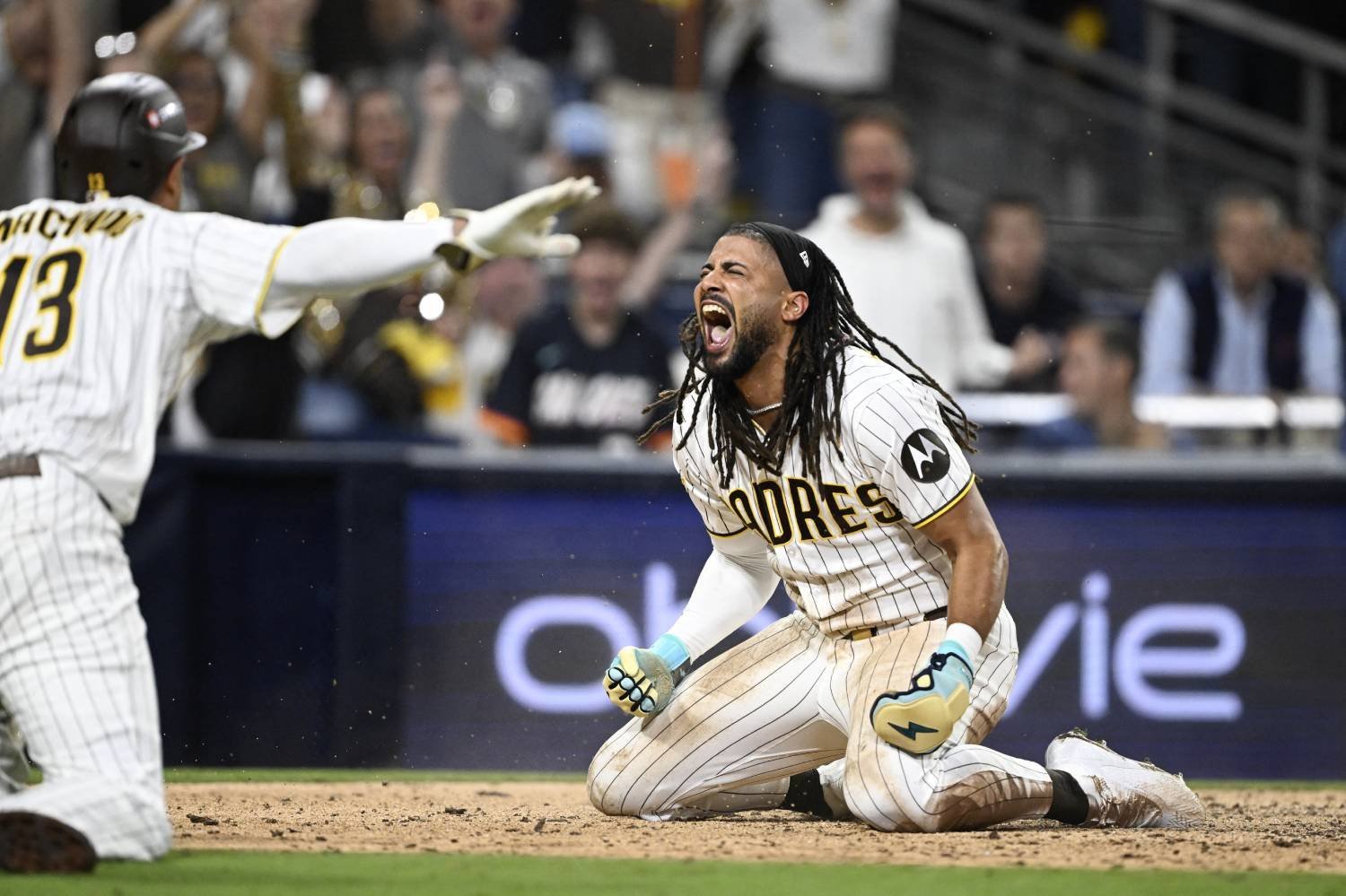 When I think about grades, I shudder. My own report cards were not good. Yet here I am, handing out my own grades following the 2026 San Diego Padres season. First up are the position players, to be followed by the starting pitchers and relievers. The hitters overcame a rough start in May and June to turn into one of the most dangerous offenses in MLB over the final two months of the regular season. A mix of expectations and production, with a dose of sentimentality for a good story, went into these grades. Getting a C means you were average (what was expected). You get an A if you were phenomenal and an F if... well, you know. Number of regular-season plate appearances in parentheses. Fernando Tatis Jr. (704 PA): A- The superstar right fielder, after jockeying around in the top couple spots in the lineup to begin the season, then famously didn't hit a homer in the Padres' first 55 games. After that, he was phenomenal, particularly at the end of the regular season. He finished with 25 homers and a .289/.358/.470 slash line to be named one of the 10 finalists for the NL's Hank Aaron Award. Tatis had a career-high 38 steals, but was also caught an NL-worst 13 times. He is likely to get down-ballot NL MVP votes. Leading off the first playoff game with a homer and then going deep again in Game 4 of the NL Division Series were electric moments, just like that two-homer, homer-robbing game against the New York Mets. Manny Machado (677 PA): C The Friars' unofficial captain certainly had mixed results. The power was there, hitting 30 homers and driving in 91, but the rest of it was not. His slash line was .217/.303/.407, producing a .711 OPS that was 28 points lower than his previous career worst and gave him an OPS+ of under 100 (97) for the first time since his debut season of 2012 (98). His average was at .166 on June 8 and finally got above .200 on July 12, peaking at .226 on Sept. 8. The power still made him a presence that pitchers had to be wary of, but he also grounded into an NL-worst 22 double plays. Jackson Merrill (664 PA): B The 23-year-old center fielder was one of the best players in MLB following the All-Star break, with the seventh-most hits (77, one less than Tatis) for a .304/.339/.569 line. He also had the fourth-most RBIs in the second half with 49. But that performance was needed to pull his final slash line up to .254/.303/.440; his average was at .198 on June 8. He had a career-high 26 homers and three RBIs shy of the 90 he had as a rookie in 2024. He bounced back nicely after a sophomore slump in 2025 and a rough first half. Xander Bogaerts (606 PA): C- This was the shortstop's worst offensive season of his 14 MLB years. He had a .231/.332/.344 slash line and a 90 OPS+, the lowest mark since his first two MLB seasons (2013-14). His average was the worst of his career. But his 13 homers and 57 RBIs were the second-most of his four years with the Padres. Defensive metrics don't really like Bogaerts that much, but it never felt like he was a detriment. He just turned 34 on Oct. 1. Ty France (500 PA): A+ Considering the first baseman signed a minor-league contract at the beginning of spring training and it felt like he was on the verge of being released before an injury created a roster spot, what the former San Diego State star did this season was incredible. To wit, there was a little chatter of him winning a batting title. He had a .295/.363/.502 line with a career-high 21 homers and 72 RBIs, his third-most, allowing him to post a career-best 139 OPS+. And that's all while playing Gold Glove-caliber defense. He has earned a good contract next season after arguably being the team's MVP. Will it be with the Padres? Jake Cronenworth (425 PA): D The second baseman missed nearly two months with a concussion that didn't show symptoms immediately, affecting his play for another three weeks. He had a .225/.308/.321 slash line this year for a career-worst 77 OPS+, 12 points below than his previous low. He also hit just seven homers in 109 games, his fewest since his 54-game rookie season of 2020. Cronenworth, who has his share of highlights but has never been a metrics darling, is capable enough to play shortstop and first base. His contract ($12.3 million a year through 2030) means he is going to be run out there daily, but the production isn't matching his paycheck. Gavin Sheets (419 PA): C- A nasty injury to his left foot affected the slugging first baseman and occasional left fielder's offense in the second half. After some clutch homers in April, the left-handed hitter had an OPS of just .579 in the second half, including a .181 average with only three homers and eight RBIs. France's emergence hid Sheets' flaws. Freddy Fermin (265 PA): C The Padres had hoped they were getting a little bit of the offense they saw the catcher produce with the Kansas City Royals when they acquired him at the 2025 trade deadline (.268/.314/.383). But that never came to fruition. He has played tremendous defense, but also was sidelined twice with head injuries, one being a concussion. Fermin may very well be the odd man out in the Padres' catching situation for 2027 after generating a slash line of .203/.274/.315. Miguel Andujar (254 PA): C+ When healthy, the designated hitter provided some of what the Padres were expecting. He was a doubles machine, although he didn't mash lefties as he had in the past (.262/.301/.445 vs. righties, .253/.309/.373 vs. lefties this year; .292/.329/.461 vs. lefties in his career). He missed a brief period in June with a hamstring injury, then the rest of the regular season after fracturing his right wrist July 20. He made only four token postseason plate appearances. Luis Campusano (248 PA): B- One of the fun stories of the season was the catcher's progress behind the plate after finally getting regular playing time at the major-league level after being banished to Triple-A in 2025. He had a .265/.363/.433 slash line with eight homers and 30 RBIs, helping to not make the catching position an offensive black hole. A fractured left toe in early May cost him nearly two months, though. Ramon Laureano (206 PA): D Before going down with a right hip injury for the rest of the regular season at the beginning of June, the left fielder had been struggling (.203/.286/.374), although he did have seven homers. Speculation had been that he may have been available for the NL Championship Series had the Padres advanced. Samad Taylor (175 PA): B+ The outfielder-second baseman was another of those great stories from this season. He came up from Triple-A El Paso and was certainly a spark plug when he replaced Nick Castellanos on the roster on June 3. Taylor's combination of speed and defense as well as his overall energy allowed him to become a key part of the offense until he went down with an injury a month later. He more than doubled his MLB career of plate appearances entering this year (83) and probably earned an MLB job with the Padres or elsewhere in 2027. Sung-Mun Song (154 PA): D+ It was a disjointed start to his MLB career. The former Korea Baseball Organization star (45 homers, 46 steals combined in 2024-25) sustained an oblique injury in the offseason, then again during spring training, leading him to begin the season on a rehab assignment at Triple-A El Paso. While showing excellent defensive skill and positional versatility, he never got untracked offensively and had a .191/.291/.244 slash line. Luis Rengifo (145 PA): B Picked up off the scrap heap after a terrible start to his season with the Milwaukee Brewers, he took over as the left fielder when Taylor went down in early July, then proceeded to hit in eight straight games. He was a different version of Taylor, showing a little more pop. A fateful start at second base, his third of the season, resulted in a season-ending knee injury that will keep him out through the first half of 2027. Nick Castellanos (122 PA): F The Padres were hoping to catch lightning in a bottle by picking up Castellanos for the league minimum after being released from his $20 million contract by the Philadelphia Phillies. That lightning never materialized and he didn't play with anyone else in 2026. He was cut loose by the Padres on June 3. Jase Bowen (103 PA): C- The speedy outfielder came up to replace Laureano and made his MLB debut. While speed and defense were his forte, the bat never showed up (.146/.188/.250). Still, he made a handful of highlight-worthy catches. Dustin Harris (100 PA): B+ Another keen pickup, this one during the season. The outfielder was released by the Chicago White Sox (twice) and the Houston Astros before latching on with the Padres on a minor-league deal on July 8. The Friars released him, too, but only for a day in early August, then he was called up less than three weeks later and followed the production trend of Taylor and Rengifo in left field. Rodolfo Duran (91 PA): B+ Having made his pro debut at age 17 in the Philadelphia Phillies' organization, the catcher was called up to make his MLB debut in May as a 28-year-old when Campusano was injured. There wasn't much there offensively, but pitchers raved over his defense and game-calling. He remains on the 40-man roster as valuable catching depth. Austin Hays (61 PA): C+ Added in early August after he was released by the White Sox, the outfielder homered in his first game with the Padres, but that was one of the lone highlights even though he had a .316/.344/.456 slash line in 26 games. Hays disappeared in the postseason. Bryce Johnson (49 PA): F The toolsy center fielder was surprisingly released in June following a .178/.229/.222 start to his season. He was sent to Triple-A El Paso, but never got another chance with the Padres after a breakthrough 2025. Will Wagner (45 PA): C- The infielder, acquired from the Toronto Blue Jays at the 2025 trade deadline for catcher Brandon Valenzuela, had one stint with the Padres and slashed .257/.422/.286 in 16 games, mainly as a DH. Ethan Salas (40 PA): B+ The 20-year-old (and Padres Mission No. 1 prospect) was called up to make his MLB debut when rosters expanded Sept. 1. The Padres slowly built up his playing time over the final month and he showed the promise (.256/.275/.462, two homers, five RBIs) that will make him the Friars' No. 1 catcher to begin 2027. Nick Solak (10 PA): F Frankly a surprising call-up from Triple-A El Paso when Andujar was injured in June with his hamstring injury. The 31-year-old was designated for assignment when Andujar came back and wound up back at El Paso. Blake Hunt (3 PA): C Just like his Triple-A catching mate Duran, Hunt came up to make his MLB debut when Fermin went down with a concussion. The nine-year minor-leaguer appeared in just two games and went 0-for-3 in his lone start. He was DFA'd and released late in the Triple-A season. Gage Workman (3 PA): C Acquired in the Casey Mize deal with the Detroit Tigers, the third baseman who can also play in the outfield saw action in just two games, with a double in three at-bats, after the trade before being sent down to Triple-A El Paso. The former Rule 5 pick still has minor-league options left. Mason McCoy (0 PA): C Came up for a weekend in September when France went on the paternity list, but didn't play. View the full article
-
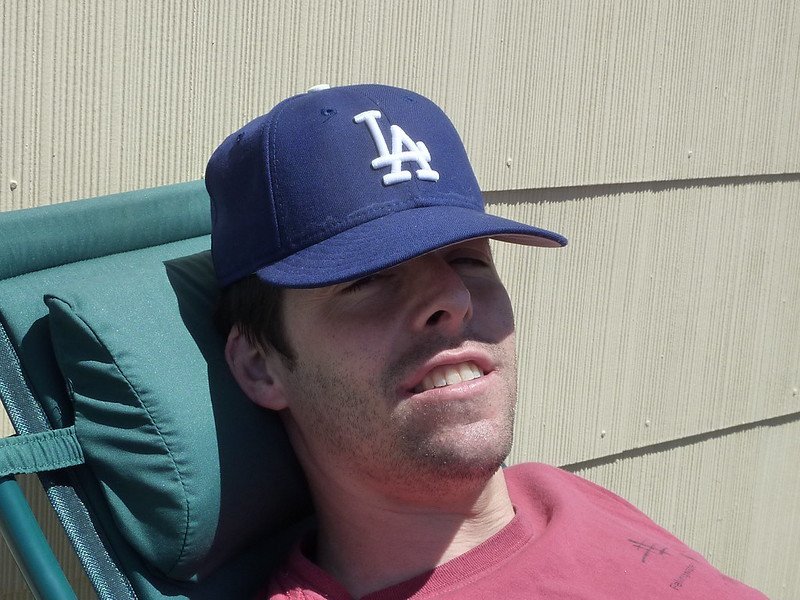 With the Los Angeles Dodgers freshly eliminated by the Milwaukee Brewers, their fans are making the appropriate preparations for the offseason. For Steve Cowgill, it means a season of transition. "As much as I bleed Dodgers blue, I think it's about time for some dang football," Cowgill said. "How' bout them [Dallas] Cowboys?!?" Cowgill, 34, is a lifelong resident of Nashville, Tennessee, and first started following the Dodgers when they signed Shohei Ohtani in December 2023. Prior to that, friends say he was "all-in" on the New York Yankees and Boston Red Sox, depending on their records. "Steve is what you would call a front-runner," said Isaac Winter, Cowgill's college roommate. "You would also call him a jagoff, honestly. We barely even talk anymore. He's just so annoying." "Whoooooo doggie, them Cowboys are gonna be a handful this year, tell you what," proclaimed Cowgill over his third White Claw at a chain bar with a nautical theme. "Thinking about flying to Vegas and putting a couple hundo on them to win the whole thing." "Yeah, Steve has never been to Vegas," said Winter. "I'm also pretty sure he doesn't know the football season has started, or that the Cowboys are 2-3 and just lost to Tampa. At home." Cowgill, who works in marketing for an energy drink company that will come under federal scrutiny in 2029 for a startling number of consumer deaths, said he's still proud of the Dodgers season. "Real fans like me, we don't need a ring every year," said Cowgill, who donated multiple Tom Brady New England Patriots jerseys to Goodwill before buying a Tom Brady Tampa Bay Buccaneers jersey on the way home in the summer of 2020. "You respect the legacy of excellence, like with the [Los Angeles] Lakers, the [Alabama] Crimson Tide, or Duke basketball. Big fan." "I'm reasonably certain he thinks (Nick) Saban is still at Alabama and Coach K is still at Duke," said Winter. "Did I mention he bought a Cybertruck?" "Cowboys! Yeah! Let's go," said Cowgill. Image license here. View the full article
-
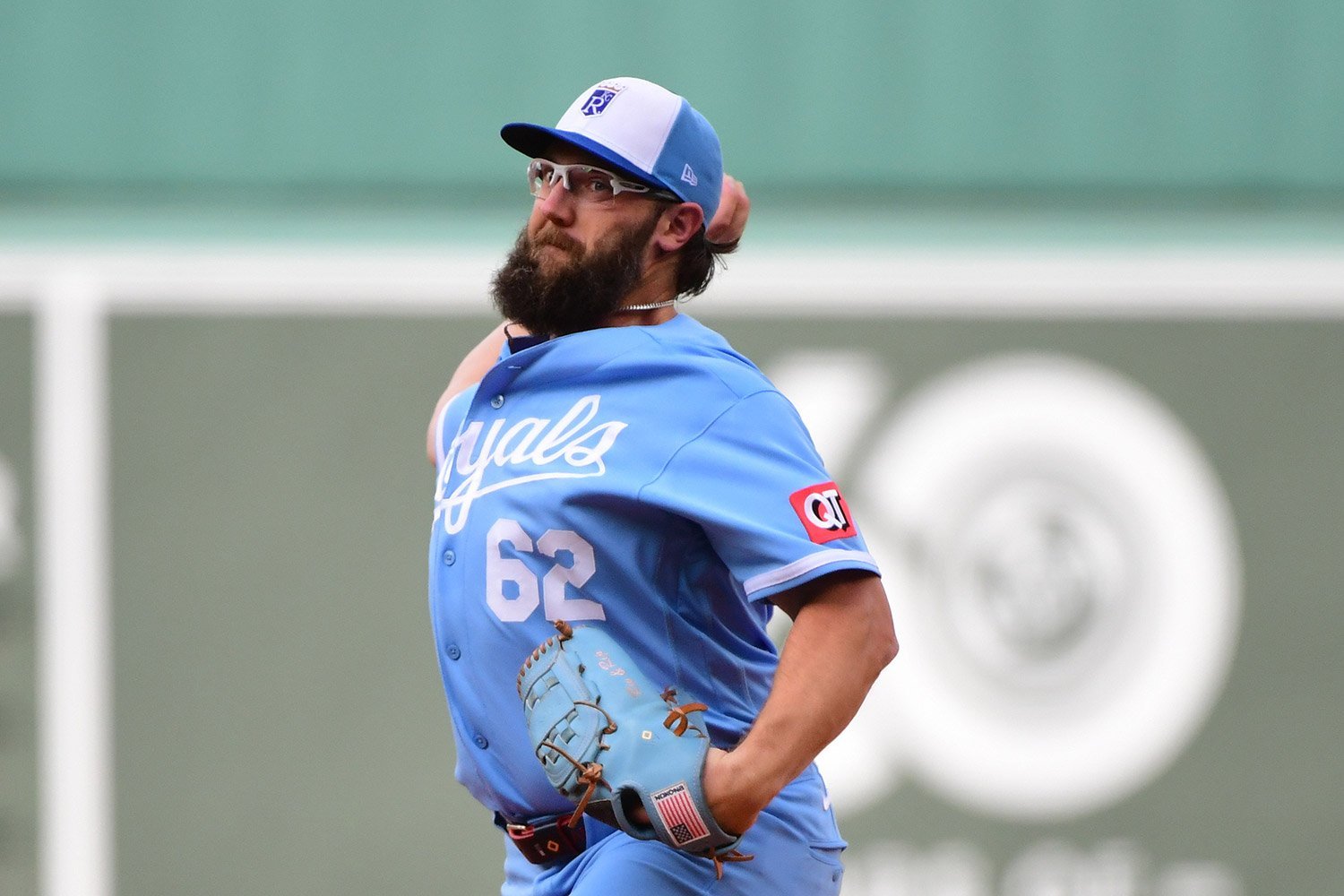 SP Randy Dobnak, RHP Age on Opening Day 2027: 32 Service Time: 3.148 2024 Salary: $2,250,000 2025 Salary: $3,000,000 2026 Salary: $845,000 2027 MLB Trade Rumor Estimate: $2,300,000 Dobnak Background Dobnak’s route to Kansas City made a few different stops. He was signed by the Twins as an undrafted free agent in 2017 and made his major-league debut in 2019, with mixed success. He finished 2019 with a 1.59 ERA over 28 ⅓ innings in nine appearances (five starts). He made 10 starts in the shortened 2020 season, with a 4.05 ERA across 46 ⅔ innings. His early performances earned him a pre-arbitration contract extension worth $9.25 million over five years with additional club options for 2026, 2027, and 2028, which he signed before the 2021 season. Unfortunately, Dobnak’s struggles began after signing his extension. In 2021, he made 14 appearances with a 7.82 ERA across 50 ⅔ innings. He was optioned to the minors and did not see major-league action again until 2024. In 2022, he missed most of the season with a right middle finger strain, and he spent all of 2023 in Triple-A, where he threw 126 innings with a 5.13 ERA. In 2024, he was designated for assignment but stayed in the Twins organization. After minimal opportunities to pitch in the majors, he was packaged in a trade to the Tigers in 2025 but never appeared in a major-league game for Detroit. Dobnak's 2026 Season 15 G (13 GS), 74 ⅓ IP, 78 H, 26 BB, 49 K, 3.51 ERA, 1.399 WHIP In the offseason, the Mariners signed Dobnak to a minor-league contract with a spring training invite. After not making the MLB roster, he threw 70 innings in Triple-A Tacoma with a 5.01 ERA. In June, he triggered his upward mobility clause that required Seattle to offer him to the other 29 teams if they did not add Dobnak to the 40-man roster. With the Royals’ rotation left decimated by injuries, they were able to acquire Dobnak in exchange for cash considerations. Dobnak started strong after joining the Royals. He limited runs to two or fewer in each of his first six starts, and his ERA remained at or below 2.00 through his first 10 appearances. His September was a month to forget with an ERA of 7.15 in his final five starts of the season. Despite the poor finish to the season, Dobnak was able to provide valuable innings for a rotation that was dismantled by injuries. Dobnak excelled in limiting hitters to a 3.7% barrel rate and inducing ground balls at a 51.2% rate. While this is a good recipe for limiting home runs and extra-base hits, Dobnak struggled with striking out batters, and batters were too easily able to make contact off him. One of Dobnak's biggest weaknesses was his inability to miss bats. Hitters made contact on 91% of their swings at pitches in the strike zone (league worst), leaving him heavily reliant on his defense to record outs. His 4.22 FIP, more than a run higher than his ERA, suggests his results could be difficult to sustain. In his final five starts of the season, his barrel rate jumped to 5.3%, and his ground-ball rate dropped to below 45%. His chase rate also dropped from a league-average 30.4% to 26.9%. Hitters being more disciplined in their approach against Dobnak, combined with hitting more fly balls harder, was reflected in a jump in hitter wOBA from .296 in his first 10 appearances to .371 in his final five appearances. While a small sample, the regression in his underlying metrics is concerning. Royals Depth at his Position (Starting Pitcher) 40-man roster: Michael Wacha, Seth Lugo, Noah Cameron, Luinder Avila (injured), Ryan Bergert (inj), Stephen Kolek (inj), Ben Kudrna (inj), Cole Ragans (inj), Steven Zobac, Mason Black, Mitch Spence Arbitration Eligible: Alec Marsh 2027 Club Option: Tony Gonsolin Triple-A: Lucas Braun, Henry Williams, Hunter Owen, John Means, Ethan Bosacker, Ryan Ramsey, Hunter Patteson Double-A: David Shields, Justin Lamkin, Felix Arronde, Drew Beam, Frank Mozzicato, Tanner Jones, Coleman Picard, Emmanuel Reyes Why the Royals Should Offer Him Arbitration The Royals simply do not have enough starters healthy to start next season. Ragans’s UCL repair surgery had a 10-12 month recovery timeline, which would have him ready in May at the earliest. Bergert, Avila, and Kolek had Tommy John surgery each. With a recovery of at least 12 months, Bergert has a chance to be ready for the start of the season, but Avila and Kolek would be slated to return no earlier than August. Even with the Royals looking to add to the rotation for 2027, getting rid of Dobnak would be letting go of crucial pitching depth. Dobnak has shown that he is capable of being a contributing part of a major-league rotation. If the Royals can find a way to recapture Dobnak’s first 10 appearances from this season, he could be a threat at the bottom of the rotation. At a projected salary of $2,300,000, the Royals would not have to invest much in seeing how Dobnak can perform for a full season in Kansas City. At the very least, Dobnak can help bridge the gap to other starters returning to the rotation and be an insurance policy for if any recoveries are longer than expected. Dobnak also has two minor-league options remaining, so he still has some roster flexibility to provide depth if other pitchers join the organization or outperform him in spring training. Why the Royals Should Non-Tender Him If any of the following is true, Dobnak could be a non-tender candidate: The Royals intend on signing/trading for at least two new arms to immediately plug into the rotation. He is blocking a path to the 40-man roster for a prospect or Rule 5 Draft candidate. The Royals believe that his performance from September is more predictive of how Dobnak will perform in 2027. While there is no way to reliably project the first two points, the last point is a legitimate conversation to have. As mentioned before, Dobnak’s end of the season was not great while allowing 18 earned runs in 22 ⅔ innings. Even though his August ERA was 2.81 over the same number of starts, his 1.558 WHIP was higher than his September mark of 1.456. This could indicate that Dobnak’s early success was in spite of his inability to keep runners off the basepaths and raises concerns about his ability to reliably sustain success at the major-league level. Prediction: The Royals Keep Dobnak There are just too many unknowns for the rotation entering 2027, and the Royals cannot afford to lose more arms before adding any. With a relatively inexpensive projected salary and roster flexibility in his two minor-league options, there is very little downside in keeping him in contention for a rotation spot while other pitchers return from the IL. There are legitimate concerns about his ability to remain productive in the majors. Until more pitchers are added to the roster, there is not a pitcher in the organization who has yet made a case to start ahead of him in the rotation in 2027. What do you think the Royals should do with Dobnak? Leave a comment and start the discussion. View the full article
-
The Twins Have a Starting Pitching Crisis Brewing for 2028
DiamondCentric posted an article in Twins Daily
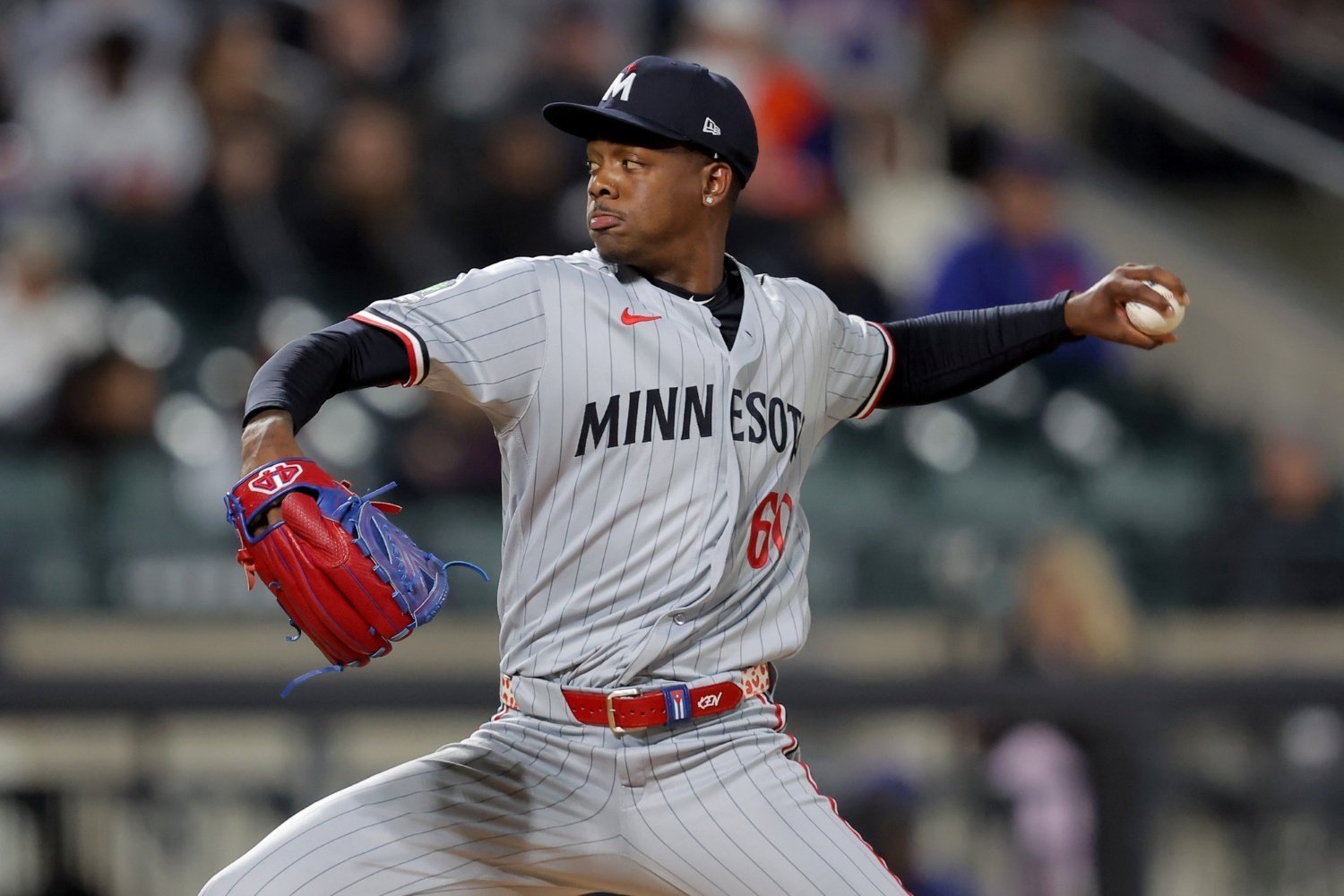 The Minnesota Twins have plenty of questions to answer about their starting rotation heading into the 2027 season. However, looking one year further into the future reveals an even bigger challenge. Minnesota could lose four of its current starting pitchers to free agency after the 2027 campaign, leaving significant holes to fill in the rotation. Pablo López is under contract through next season. Joe Ryan, Bailey Ober, and Dean Kremer will all be arbitration-eligible for the final time in 2027. Unless the Twins extend any of those pitchers or bring them back on new contracts, the organization could be looking at a dramatically different rotation in 2028. Minnesota has several young pitchers who could step into those openings. However, potential is not the same as proven production, and injuries have already complicated the development of multiple arms in the organization. Let's examine the options who could shape the Twins' starting rotation in 2028 and beyond. Taj Bradley Bradley is the easiest name to pencil into Minnesota's future rotation. After arriving from Tampa Bay, he emerged as the Twins' best starting pitcher in 2026 and gave the organization a potential frontline arm to build around. Bradley finished the season with a 3.73 ERA, 113 ERA+, 4.4 rWAR and 205 strikeouts across 178 1/3 innings. He also made 31 starts, providing the kind of workload Minnesota needs from a dependable rotation anchor. His strikeout total ranked fifth among the American League's starters, demonstrating the swing-and-miss ability that made him an intriguing acquisition. Bradley is entering his first year of arbitration, giving Minnesota three more seasons of team control after 2026. That timeline makes him particularly important as the organization evaluates its long-term pitching plans. The Twins should explore a contract extension this winter. Bradley is young enough to remain a core piece of the rotation for several seasons, and securing him now could provide cost certainty while allowing the club to build around an established starter. Minnesota has other pitching questions to answer, but Bradley should be part of the solution rather than another uncertainty. Connor Prielipp Prielipp represents another opportunity for Minnesota to develop a long-term rotation piece. He stayed healthy throughout the 2026 season, an encouraging development for a pitcher whose career has been complicated by injuries. He recorded a 4.87 ERA, 3.73 FIP, with 128 strikeouts over 125 2/3 innings, making 22 starts. Those numbers leave room for improvement, but getting through a season with a substantial workload was an important step in his development. Prielipp will not reach arbitration until 2029 and is scheduled to become a free agent after the 2032 season. He should still be in his prime when that opportunity arrives, making him a potentially valuable piece of Minnesota's future. The concern is whether he can continue staying healthy. His injury history makes it difficult to assume that one relatively healthy season guarantees long-term durability. If Prielipp can build on his 2026 performance and establish greater consistency, he could become a dependable member of the rotation. The Twins will need to see more before treating him as a sure thing. Zebby Matthews Matthews showed flashes of being a dependable starter in 2026, particularly during August, when he looked like one of Minnesota's better rotation options. However, he struggled down the stretch, raising questions about his ability to maintain that performance over a full season. He finished with a 4.90 ERA, 4.70 FIP, and 116 strikeouts across 130 1/3 innings. His 39 walks were a manageable number, but he also surrendered 24 home runs. Limiting damage when hitters make contact will be an important area for improvement. There is a possibility Matthews could eventually find more success in the bullpen, where his stuff might play up in shorter appearances. Still, Minnesota should continue giving him opportunities to start. The organization needs to determine whether he can consistently work through a lineup multiple times before making a permanent decision about his role. Matthews is scheduled to reach arbitration in 2028 and free agency in 2031. That gives the Twins time to evaluate his development, but his next couple of seasons will be important in determining whether he becomes a rotation fixture or a potential bullpen option. Mick Abel Abel is another young pitcher who could factor into Minnesota's plans, but his recovery from elbow surgery will play a significant role in determining his future. The right-hander underwent successful arthroscopic surgery on his right elbow on July 1, 2026. Before the procedure, Abel made four appearances, including three starts, and posted a 3.98 ERA with 23 strikeouts in 20 1/3 innings. That was a small sample, but it offered some encouraging signs about his potential. Abel is not scheduled to reach arbitration until 2029 and can remain under team control through the 2031 season before reaching free agency in 2032. That timeline gives the Twins several seasons to evaluate him, provided he can return to the mound and stay healthy. Minnesota will need to see how Abel looks after his recovery before making any long-term assumptions. His ability to regain his previous form, build up his workload, and consistently get through starts will determine whether he can help fill one of the rotation's potential openings. Kendry Rojas Rojas had an interesting developmental season in 2026. The young left-hander showed enough promise to remain in the conversation for a future pitching role, but Minnesota used him in a relatively limited capacity. He never threw more than four innings or 65 pitches in a single appearance. That workload makes it difficult to determine whether he can handle the demands of a major-league starting rotation. Rojas recorded a 3.34 ERA with 34 strikeouts in 29 2/3 innings in the majors. However, he also issued 22 walks, highlighting an area that needs improvement as he continues to develop. The Twins should use the 2027 season to determine whether Rojas is a legitimate starting option or whether his future might be better suited to the bullpen. His limited workload could have been part of a deliberate development plan, but the organization eventually needs to see how he performs with a more traditional starter's workload. Ryan Gallagher Gallagher is another organizational arm who could work his way into the rotation conversation, although he has more development ahead of him than Minnesota's major-league options. The 23-year-old right-hander pitched across two minor-league levels in 2026, totaling 113 innings. He finished with a 5.89 ERA, allowing 117 hits and recording 120 strikeouts while issuing 53 walks. Those numbers illustrate both his potential and the work still required. Gallagher showed an ability to miss bats, but his run prevention and command will need to improve if he is going to emerge as a viable major-league starter. The Twins have time to evaluate his progress, and Gallagher does not need to be ready for a major-league rotation immediately. A stronger 2027 season could help establish whether he belongs in the organization's longer-term plans or is better suited to a depth role. Riley Quick Quick is a younger pitching prospect who could become more relevant to the rotation picture as he advances through the minor leagues. The 22-year-old spent time across three minor-league levels in 2026, accumulating 77 2/3 innings. He posted a 4.29 ERA and struck out 108 hitters while allowing 57 hits. His 46 walks, however, show that command remains an important part of his development. Quick's strikeout ability is an encouraging starting point. Missing bats is an important trait for any prospective major-league starter, but he will need to pair that ability with improved control and greater consistency. The Twins should continue developing Quick as a starter until his performance suggests otherwise. His 2027 assignments will help determine whether he can handle a larger workload and continue advancing toward the upper levels of the organization. He is not an immediate solution to the potential 2028 rotation openings, but a strong developmental season could put him on the radar. Adrian Bohorquez Bohorquez is another prospect worth monitoring as Minnesota looks beyond its current group of major-league starters. The 21-year-old right-hander pitched across three minor-league levels in 2026, recording a 3.29 ERA over 54 2/3 innings. He allowed 39 hits and struck out 65 batters, demonstrating an ability to limit contact while generating strikeouts. His workload was considerably smaller than those of Gallagher and some of the organization's other starting prospects. That makes it difficult to project him into a major-league rotation just yet, but his results provide a foundation to build on. Bohorquez will need to demonstrate that he can handle more innings, maintain his effectiveness against more advanced hitters, and develop the consistency required of a starting pitcher. His next steps through the minor leagues should provide a clearer picture of his ceiling. Like Quick and Gallagher, Bohorquez remains a developmental possibility rather than a guaranteed rotation option. The Twins need several prospects to take meaningful steps forward if they want to build a sustainable rotation internally. How Will the Twins Fill the Rotation in 2028? The Twins have time to address their long-term rotation concerns, but they cannot assume every young pitcher will develop as hoped. Bradley looks like the clearest building block, while Prielipp, Matthews, Abel, and Rojas each have opportunities to establish themselves in different ways. Gallagher, Quick, and Bohorquez offer additional possibilities, although they still need to prove they can handle the demands of higher-level competition. Minnesota should also recognize that developing a rotation entirely from within is difficult. Injuries, inconsistent performance, and stalled development can quickly turn apparent organizational depth into a shortage of reliable starters. Extending Bradley would be a logical first step. The Twins should also continue evaluating their younger arms while remaining open to acquiring starting pitching through trades or free agency. The 2027 season will be important for identifying which pitchers belong in the long-term picture. By the time 2028 arrives, Minnesota could have several young starters ready to take on larger roles. However, the organization will need more than potential to replace the experience and production that could depart. The question is not simply who will start games for the Twins in 2028. It is whether Minnesota can develop enough reliable pitching to avoid rebuilding its rotation from scratch. Who will be part of Minnesota’s 2028 rotation? Leave a comment and start the discussion. View the full article
-
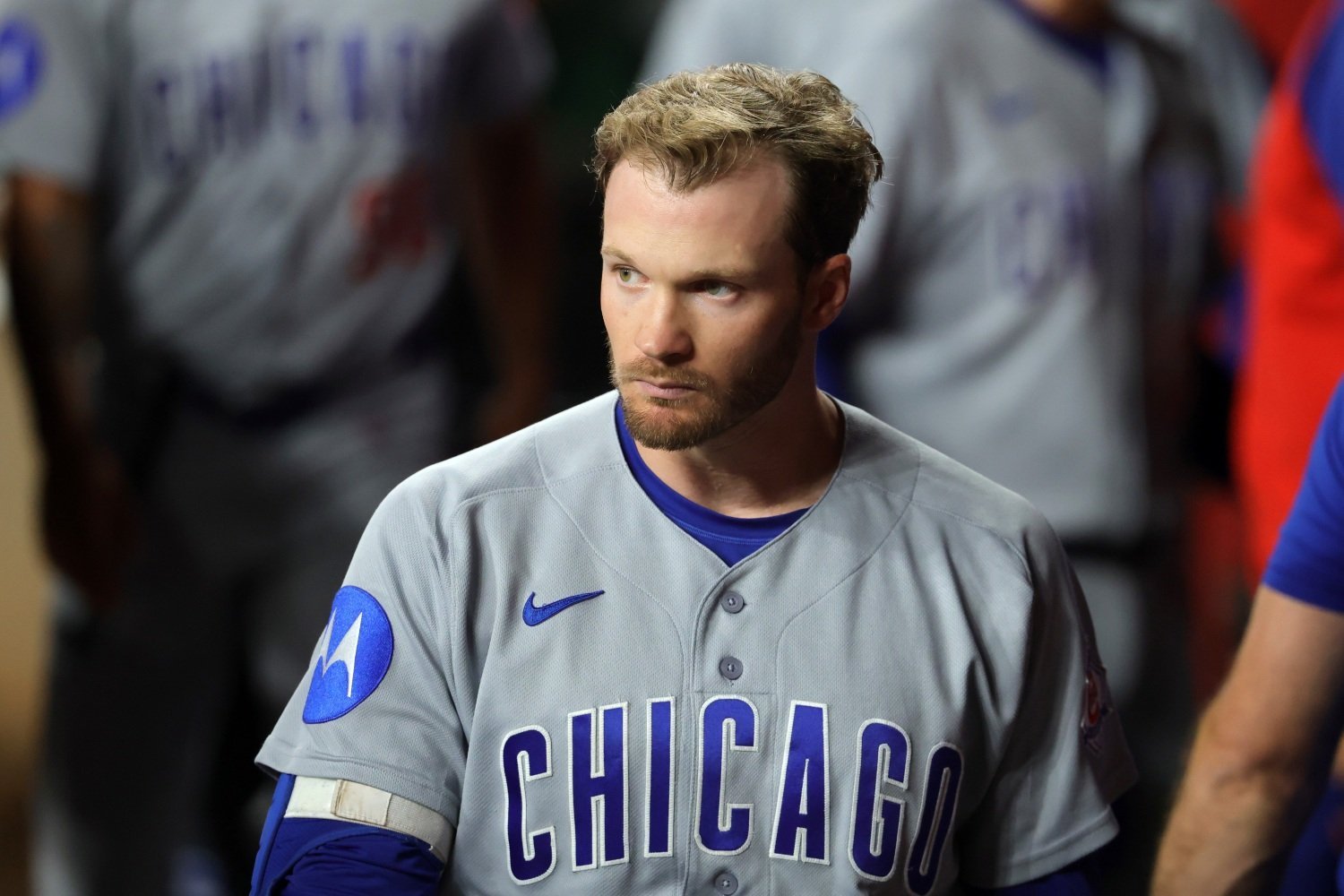 By a handful of different measures, the 2026 season (objectively) represented Ian Happ's worst as a member of the Chicago Cubs. Almost everything in his .218/.326/.412 line, 29.7% strikeout rate, and 107 wRC+ landed at the bottom or second-from-the-bottom of his career outputs across a decade on the North Side. An impending free agent, he now poses a dilemma. At this point, is he worth keeping around? Happ isn't the only polarizing player on the Cubs roster, but there do seem to be split opinions around his value. Let's talk about each side of the runs ledger, given how pronounced the split between them became this year. Offensively, Happ is an exceptionally patient hitter who also hits 20-plus homers each year. His 12.7% walk rate in 2026 was right in line with his career number (12.2%) and in the 89th percentile, while his 24 homers marked his fourth consecutive season (and fifth in the last six) with at least 20. Those are fine tools in the ol' toolbox. The issue is that between the walks, the homers, and a strikeout rate lingering near 30%, there wasn't a whole lot of value provided. The balance between the three true outcomes shifted unpleasantly, leaving little room for the less-true outcomes (singles and doubles) that were also part of his value in the past. The .218 average also dragged down his OBP and slugging, so we need to understand how it happened. It's not as if Happ ran into a bunch of batted-ball misfortune; his batting average on balls in play was a reasonable .284. Instead, contact itself was the issue. Happ's 72.5% contact rate was a career low. A hitter with a pull rate over 46% and a line-drive rate under 17% isn't going to get the benefit of the doubt in the BABIP game when the ball does find its way into play, either. Thence the .284 BABIP. One also has to factor in the splits side of things, considering Happ's standing as a switch-hitter. While Happ has always been more adept at swinging left-handed, he was particularly awful from the other side in 2026. His line as a righty checked in at just .145/.217/.267, with a strikeout rate of 36.1%. His wRC+ came in at a mere 36. The contact trends were similar, but Happ's hard contact rate against lefties was six percentage points lower than against righties, and his flatter swing from the right side produced a line drive rate under 12%. It reached a point where Craig Counsell was compelled to sit him against lefties; Happ's 144 plate appearances versus southpaws were his fewest since 2022. From the left side, Happ hit .241 and ran a .358 OBP. At this point, though, he's a platoon player. It's fair to wonder, too, whether this year was more the beginning of an inexorable decline than a simple blip. The eye test doesn't rate him as particularly fast (regardless of sprint speed figures) and his contact profile isn't encouraging. Happ is 32 years old. Actuarially, he's likely to get worse each year, from now on. If there's a positive to be taken away, it's that Happ was better defensively, according to the numbers. Even during his run of Gold Gloves, the metrics haven't loved his work in left field. In 2026, however, Happ was above-average by Outs Above Average (1) for the first time since 2022, with a Fielding Run Value (6) that was, by far, the best figure of his career. His jump, both in terms of the reaction and the feet covered on tough plays, was his best in a full season since 2019. Happ isn't going to rack up highlight-reel catches, but he was much better on that side than the data indicates he had been over the past handful of seasons. His arm (thanks as much to its accuracy as to its strength) is still a plus. In a twisted way, everybody that has a stake in the Happ narrative got something they desired in 2026. Those who feel his offense is subpar were proven more correct than usual; those who believe his defense is actually as good as the accolades indicate were proven correct by the metrics. In any case, the decision the Cubs face isn't an easy one. From a sentiment standpoint, you have a 10-year Cub who still does technically produce. The issue is that the ceiling on that production is low (and getting lower), considering his ineptitude against lefties. From a sprint speed and defense standpoint, Happ may have been better in 2026, but he's unlikely to hold onto those improvements in 2027. It was a hard season that revealed some hard truths. As Happ hits the market, the Cubs have hard decisions ahead. View the full article
-
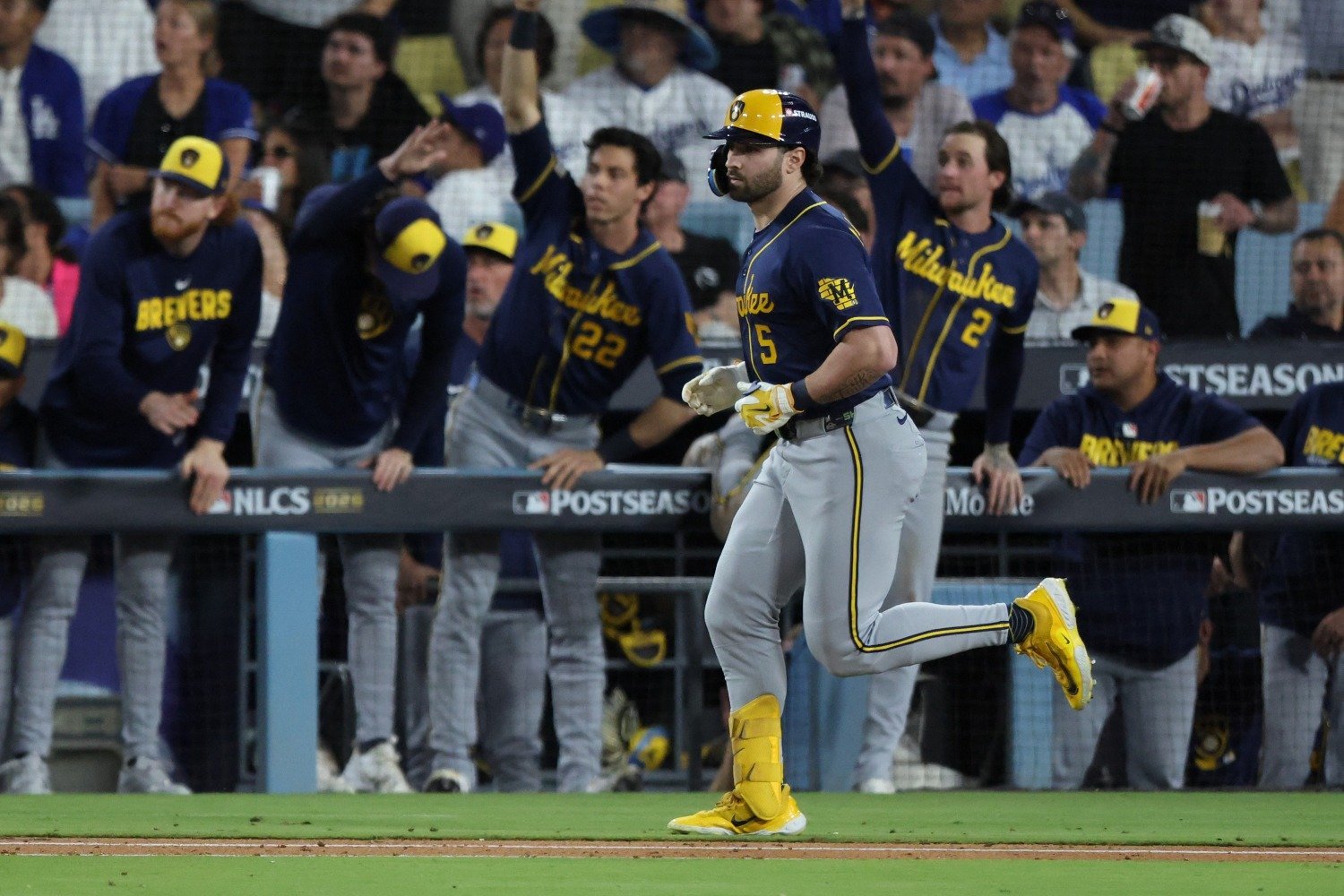 The 2026 campaign was a prove-it season for Garrett Mitchell. First, he needed to prove he could stay healthy. Four years into his big-league career, Milwaukee's former first-round pick had played in just 141 games and taken 443 plate appearances, due to myriad injuries. He cleared the health hurdle. Mitchell modified his routine and physical preparation over the winter and carried it into the regular season. He learned when, within games, to push his body to its limits and when to ease off the gas without sacrificing competitiveness. It wasn't always smooth (early in the year, Mitchell's defense suffered as he played cautiously near the outfield wall), but he quickly found the right balance and played in a career-high 145 games. The next step was proving he could perform. Mitchell flashed his high ceiling throughout those four years, hitting .254/.333/.433 (114 wRC+) with elite bat speed and raw power, but those results came with red flags. He struck out 33.9% of the time over that span. Due to a gaping hole in his swing path, he whiffed on 48.5% of swings against high fastballs. He benefitted from a .376 BABIP, the highest among all hitters with at least 400 plate appearances during that span. According to Statcast, his expected slash line of .220/.303/.361 didn't come close to supporting his results. A full season was supposed to answer what kind of player Mitchell truly was and whether he would hit big-league pitching. Over a larger sample, his extreme metrics on both sides would trend toward the mean. That didn't fully happen. There's more to a player than his Statcast summary card, but in Mitchell's case, it's a good summary. In nearly every facet of the game, he's either one of the best or one of the worst. Mitchell didn't quite prove that his extreme profile will work long-term, but he did prove that it can work. The red on that card far outnumbers the blue. He didn't cut down his swing-and-miss, but he made up for it with a disciplined approach and by crushing the ball when he made contact. Mitchell hit .262/.354/.416 (116 wRC+), and this time, his expected line of .268/.356/.447 was better than his results. It was a milestone season for Mitchell. He punctuated it with the swing that sent the Brewers to their first World Series in over four decades. The NLCS posed a daunting matchup for him. The Brewers were facing the Dodgers, baseball's reigning back-to-back champions and one of the few teams that knows how to exploit his weaknesses and can execute those sequences. In their regular-season matchups, LA pitchers peppered Mitchell with high fastballs and low changeups, and he managed just two singles in 11 at-bats, with six strikeouts. They had a similar plan in the postseason. The Dodgers challenged Mitchell with high fastballs throughout the series, daring him to hit them. For the most part, he didn't, going 2-for-14 with six strikeouts. But true to form, the Orange County native made those two hits count in two dramatic homecoming moments: a solo home run to cap the Brewers' seventh-inning comeback against Blake Snell in Game 3, and the tie-breaking shot in Game 4 that ended the Dodgers' hopes of a threepeat. Mitchell's outlier swing worked this year because of his zone awareness. The holes in his swing remain, but when a pitch is in his wheelhouse, he hits it hard. Mitchell knows this and refined his swing decisions this year around his personal scouting report. He's patient against pitches he can't hit (including high fastballs) and forces pitchers back into his hot zones over the heart of the plate. His decisive home run on Thursday night epitomized the approach that carried Mitchell through a productive season. Facing left-hander Tanner Scott, he fell behind 0-2 on a pair of sliders, then refused to chase and worked the count full. In a tie game on the brink of elimination, Scott wasn't going to put the go-ahead run on base with a leadoff walk; he was coming back with his best strike pitch. Mitchell had forced him into his damage zone. He got a center-cut fastball and launched it to center, completing the Brewers' final comeback of an NLCS sweep. With his elite speed and power, Mitchell always had the upside of a potential postseason game-changer—the kind of player who could decide a series with one memorable play. He waited years for that moment, dealing with physical setbacks and questions about his performance. The Brewers waited for years for that moment, floundering in early playoff exits as Mitchell struggled or sat out. The moment arrived for both of them. Mitchell had his big swing, and he and the Brewers are going to the World Series. View the full article
-
 The Boston Red Sox’s farm system looks a lot different than it did at the start of the 2026 season. Between several major-league promotions and a handful of trades, there’s been quite a bit of movement throughout the organization’s prospect rankings. Through all of that noise, several young players put together impressive seasons and significantly improved their standing within the organization. Though most of the team's top prospects in recent years are now in Boston or playing elsewhere, these three players have given the fanbase plenty of reasons to be excited about their futures. So, let’s take a look at a few Red Sox prospects who broke out in 2026, starting near the top of the rankings with outfielder Justin Gonzales. Three Red Sox Minor Leaguers Who Dramatically Climbed Prospect Lists In 2026 As a reminder, you can find our list and scouting reports of the top-20 prospects in the organization (voted on by editors, writers, and our readers) here. Justin Gonzales The young outfielder entered the season with fairly high expectations as Boston’s No. 7 prospect on our list here at Talk Sox. Not only did he meet those expectations, but he exceeded them, putting together an impressive campaign that helped him climb all the way to No. 2 in the organization. Gonzales began the year at High-A, where he posted a .391 on-base percentage and an .854 OPS across 89 games. His production earned him a late-season promotion to Double-A, where he faced a more difficult challenge and saw his OPS dip to .733. Still, it’s important to remember that Gonzales is just 19 years old and has already reached Double-A. Most players his age are still working their way through the lower levels of the minor leagues, making his progression through the Red Sox's system particularly impressive. Across 107 games between the two levels, Gonzales finished with a 13.4% walk rate and 36 extra-base hits. Those numbers highlight the foundation of a smart, disciplined hitter who can work counts and do more than simply swing for the fences. Of course, there’s also plenty of reason to believe the power will continue to develop. At 6-foot-5 and 210 pounds, Gonzales has the physical frame of a power hitter, and his ability to combine plate discipline with extra-base production gives him an intriguing offensive profile. There’s still plenty of development ahead, particularly as he adjusts to more advanced pitching at Double-A. However, considering his age, production, and physical tools, Gonzales has established himself as one of the most exciting young position players in the Red Sox organization. Henry Godbout Next up is shortstop Henry Godbout, who has done nothing but hit since joining the Red Sox organization. Boston selected Godbout with the 75th overall pick in the 2025 MLB Draft, and he entered his first full professional season ranked as the organization’s No. 14 prospect. After an outstanding year at the plate, he now sits at No. 4, making him one of the biggest risers in the system. Godbout’s offensive production was impressive regardless of the level, but what really stands out is how his numbers continued to improve as he progressed through the minor leagues. Across 61 games between Low-A, High-A and Double-A, he hit .291 with an on-base percentage north of .400 and an outstanding .932 OPS. He also recorded 15 home runs, 26 total extra-base hits, and nine stolen bases during that stretch. That’s an impressive combination of production for a young infielder, particularly one who managed to maintain his offensive success while moving up the minor-league ladder. Rather than struggling to adjust to more advanced competition, Godbout continued to find ways to produce. There are, however, some questions about where he ultimately fits defensively. His work at shortstop was a little shaky this season, and the front office may eventually determine that another position is a better long-term fit. That doesn’t necessarily diminish his prospect value, though. If Godbout continues to hit at this level, the Red Sox will have plenty of incentive to find a defensive home that allows his bat to shine. His ability to get on base, generate extra-base hits, and contribute on the basepaths gives him an intriguing offensive foundation. And after climbing 10 spots in the organizational rankings, he has positioned himself as another young player worth keeping an eye on as he continues to develop. John Holobetz Last but not least, we have right-handed pitcher John Holobetz, who has made significant strides of his own in 2026. The 6-foot-3 right-hander entered the season ranked as Boston’s No. 20 prospect, barely sneaking into our top 20 list. However, after a strong campaign that saw him advance through the upper levels of the minor leagues, he now finishes the year at No. 8. Across 119 1/3 innings between Double-A and Triple-A, Holobetz recorded a 4.07 ERA and a 1.25 WHIP. He also struck out 132 batters while issuing just 36 walks, demonstrating an encouraging combination of swing-and-miss stuff and solid control. His 26% strikeout rate and 13% swinging-strike rate further highlight the quality of his arsenal. Just as importantly, he showed impressive command for a young pitcher working his way through the upper minors. Limiting walks while continuing to generate strikeouts is a good sign, particularly as hitters become more advanced and mistakes become increasingly costly. Like Godbout, Holobetz also seemed to get better as the season progressed. His ERA was considerably lower at Triple-A Worcester than it was at Double-A Portland, and his walk numbers improved as well. That ability to make adjustments and find success against more advanced competition is an encouraging development for the franchise. The Red Sox have also seen several young pitching prospects leave the organization through trades this year, making Holobetz’s continued development even more important. While he still has work to do before he's ready to contribute in the majors, he’s put himself in a position to take another step forward this offseason. If he can build on his second-half performance and continue refining his arsenal, he could put himself in the conversation for a major-league debut at some point in 2027. View the full article
-
The More Brett Baty Changes, the More Things Stay the Same
DiamondCentric posted an article in Grand Central Mets
 Maybe the end of Brett Baty’s 2026 season left some off with a different sentiment the one he inspired among fans for most of the year. In a way, that is what tends to happen when a player finishes strong and leaves us with a positive final impression. But at the end of the day, Baty’s streak of producing a 1.088 OPS over a 10-game stretch between August 16 and September 25 was not enough to change the outcome of a season filled with inconsistencies. That is why I have a feeling similar to the one I had last season, especially when looking at Baty’s final line before getting into the factors that caused his regressions. In many ways, he was the same hitter. 2025 season: .254/.313/.435, 18 HR, 50 RBIs, 53 R, .304 BABIP, 109 wRC+, 2.2 fWAR in 432 PAs. 2026 season: .236/.309/.371, 11 HR, 56 RBIs, 53 R, .304 BABIP, 91 wRC+, 1.0 fWAR in 473 PAs. Those lines are remarkably similar, for better and worse. The same runs scored, the same BABIP, and a similar ability to maintain his plate discipline, combined with fewer home runs but more RBIs. The drop-off in wRC+ and fWAR was steeper than you'd think, but he was still fundamentally the same hitter. However, there were two aspects that had the biggest impact on Baty’s season: his inability hit left-handed pitchers, as well as the inconsistency caused by his drops in bat speed. As for the first point, it's not that we should have expected progress in his power against lefties. He has never managed to develop it and is heading into his sixth season in the majors. But, in the hypothetical case that this becomes his next goal, he would first have to improve his contact. I don’t think this will surprise you, but Baty hit all 11 of his home runs in 2026 against right-handed pitchers; against lefties, he finished with a .225 slugging percentage, just a .050 ISO, and only three RBIs in 91 plate appearances. His career OPS against lefties is .534 in 317 plate appearances. Even so, the Mets continued with their philosophy of keeping Baty in certain matchups and situations against left-handed pitchers, although they could have reduced his playing time even further, given his absolutely nonexistent track record of production in those matchups. It is understandable that going up to bat and handling at-bats against any pitcher is Baty’s job, and it is clear that he got much of that playing time because New York’s offense was a failure amid injuries and inconsistencies. Either way, this has been just another chapter in Baty’s career and in the Mets’ inability to make their offense work. That said, let’s focus on one of the aspects that ended up generating greater expectations for Baty’s swing, especially during the second half of the season: his bat speed. As he swung faster, his numbers underwent a considerable change in the second half of the season. Split / Metric PA HR K% xBA xSLG BABIP Whiff% EV (MPH) Barrel/BBE% Avg. Bat Speed Bat Speed Under 70 mph 49 0 53.1% .121 .142 .273 44.8% 72.3 0.0% 59.6 Bat Speed 70+ 339 11 19.5% .284 .489 .317 26.6% 91.8 11.0% 75.8 First Half 328 4 27.1% .236 .374 .299 28.8% 89.3 8.7% 72.8 There you can see all the major changes, but pay attention to two key details. When Baty’s bat speed exceeded 70 mph, his power seemed to unlock: he hit all his home runs, became less vulnerable with two strikes, reduced his whiff rate by nearly 20%, and recorded all his barrels. When Baty stayed below 70 mph in bat speed, his .142 xSLG was the worst on the team all year. While most hitters tend to produce better contact with slower swings (bat "control" and bat "speed" are often considered a trade-off), Baty doesn't seem to have the same issue. Perhaps it's a confidence thing, but when he's gripping and ripping it, better results tend to follow. We'll see how the Mets react to this data with their offseason plan for Baty, but his role as a platoon threat on this roster is crystal clear for now. View the full article
-
Longtime Marlins shortstop Miguel Rojas announces retirement
DiamondCentric posted an article in Fish On First
 Miguel Rojas said this spring that he planned on making the 2026 season the final one of his playing career. He stuck to his word Thursday night when his Los Angeles Dodgers were swept out of the National League Championship Series, telling reporters postgame that "this is it." Always dismissed during his minor league days as a low-ceiling player, Rojas remarkably spent parts of 13 seasons in the majors. He debuted with the Dodgers in 2014 and didn't hit a lick during his 85-game rookie campaign, but his production perked up after an offseason trade to the Miami Marlins. He played eight seasons with them and spent most of 2018-22 as the club's starting shortstop. Rojas ranks seventh in franchise history with 870 games played and second with 27 outs above average (the latter erat has only been tracked since 2016, but still). In addition to his contact ability and steady glovework, the Marlins valued Rojas' intangibles. He twice signed contract extensions with the Fish. No other position player has been extended since then. The Marlins sent Rojas to the Dodgers in January 2023 in exchange for Jacob Amaya. That proved to be a lopsided deal, as even though Rojas' role shrank in LA, he was perfectly suited for it. The Dodgers used Rojas as utility player, finding reps for him all around their infield, particularly against left-handed pitching. The signature moment of Rojas' career came during the 2025 World Series when the then-36-year-old stepped to the plate in the ninth inning of Game 7, with the Dodgers trailing the Toronto Blue Jays by a run. He saved their season by hitting a game-tying solo home run off Jeff Hoffman. The Dodgers took the lead in extras and clinched back-to-back championships. Overall, Rojas accrued 15.3 fWAR in his career and earned more than $40 million. Fish On First wishes “Miggy Ro” all the best in the next phase of his life. View the full article
-
Can Kazuma Okamoto Build Upon a Promising Rookie Campaign?
DiamondCentric posted an article in Jays Centre
 When Toronto committed four years and $60 million to the former Nippon Professional Baseball star before the 2026 season, the organization believed it was acquiring a dependable middle-of-the-order bat capable of supplying right-handed power, producing 25 to 35 home runs annually and helping stabilize a lineup that needed another run producer. After one season, that signing and its rationale look like a good call. Kazuma Okamoto finished his rookie campaign with 33 home runs and a .762 OPS while showing enough underlying offensive quality to suggest there may be another level still available as he becomes more accustomed to major league pitching. FanGraphs prospect analyst Eric Longenhagen projected Okamoto as roughly a 2.0 to 2.5-WAR player annually when Toronto signed him and suggested there was a chance he could ultimately outperform the value of his contract. If his strikeout rate comes down even modestly, it isn't difficult to envision his overall offensive production taking another step forward. That strikeout rate remains the biggest question surrounding his long-term outlook. Okamoto struck out in 28.8 percent of his plate appearances during his first major league season, a dramatic jump from the exceptionally low 11 percent mark he posted during his final season in Japan. There were stretches where he looked uncomfortable at the plate. At times, he appeared caught between approaches, reacting late to velocity at the top of the strike zone and struggling to stay balanced against breaking pitches beneath it. Some at-bats ended with awkward defensive swings. Others featured called strike three on pitches he may not have encountered frequently during his NPB career. In those moments, he resembled a player still processing the adjustments necessary to succeed against the deepest collection of pitching talent in the world. Then there were other stretches where none of those concerns seemed to exist. When Okamoto was locked in, he swung freely and confidently. The powerful swing that made him one of Japan's premier sluggers was evident. He drove fastballs with authority, punished mistakes and showed a willingness to attack pitches early in counts when opportunities presented themselves. During those periods, he looked like exactly the hitter the Blue Jays believed they were signing. The back-and-forth and ups-and-downs became one of the defining characteristics of his rookie season. Rarely did Okamoto look completely overmatched, but at the same time, he never seemed totally at ease. There was a noticeable difference between his worst stretches and his best ones, but both versions existed throughout the season. For decades, teams evaluating NPB talent have wrestled with the challenge of projecting how offensive performance will translate to Major League Baseball. The differences extend beyond pure talent. MLB pitchers generally throw harder and benefit from more analytical preparation. There is less room to hide weaknesses and fewer opportunities to consistently face below-average pitching. Hitters coming from Japan frequently encounter difficulties with elevated fastballs and sharp breaking pitches below the zone. Pitch sequencing is often more aggressive, while the physical and mental demands of a 162-game schedule can create additional challenges. Learning those patterns takes time, particularly for players arriving in their late 20s or early 30s. Before arriving in Toronto, Okamoto established himself as one of the most accomplished power hitters in Japan. Across parts of 11 seasons with the Yomiuri Giants, he compiled a .277/.361/.521 slash line while producing six consecutive 30-home run campaigns beginning in 2018. During that stretch, he emerged as one of NPB's most consistent offensive performers, reaching a career-high 41 home runs in 2023 and regularly ranking among the league leaders in power production. Since 2019, only Munetaka Murakami has hit more home runs in NPB than Okamoto. His final season in Japan may have provided the strongest indication that he was prepared for a new challenge. Although an elbow injury limited his playing time, he delivered a .327 batting average, a .416 on-base percentage and a .598 slugging percentage while striking out in only 11 percent of his plate appearances. His offensive value in Japan stemmed from a combination of power, plate discipline and contact ability. Evaluators believed those skills would eventually allow him to adapt to major league pitching, even if there was likely to be turbulence during the transition. The encouraging aspect of his rookie season is that many of the underlying indicators remained strong despite the decline in batting average and rise in strikeouts. Okamoto hit .232 with a .310 on-base percentage and a .452 slugging percentage in his first MLB campaign. According to Baseball Savant, he posted a 90.6 mph average exit velocity, a 13.1 percent barrel rate and a 44.1 percent hard-hit rate. His barrel percentage ranked in the 89th percentile among major league hitters. If he can make slightly more contact without sacrificing that power profile, the offensive returns will improve quickly. While he did strike out a lot, Okamoto did demonstrate patience at the plate. He posted a 9.3 percent walk rate and maintained a chase rate close to league average (even with some of those uncomfortable swings). Often, players struggling with swing decisions or pitch recognition see significant increases in chase rate. Okamoto seemed to avoid that problem. His issue was not expanding the strike zone recklessly. It was making enough contact against the highest-quality pitching he had ever faced. One of the biggest advantages pitchers possess during a player's first season is familiarity. Opposing teams learn a hitter's weaknesses quickly, while the hitter spends months gathering information about pitch shapes, release points and sequencing patterns throughout the league. As that catalogue of experience grows, offensive adjustments often follow. There were already signs of that process occurring during parts of Okamoto's rookie campaign. During several slumps, he appeared willing to make cautious adjustments rather than stubbornly sticking with unsuccessful approaches. Those changes did not eliminate his strikeout issues entirely, but they often helped him get out of slumps. That willingness to adapt may ultimately be one of the most important takeaways from his first season. From the Jays' perspective, the contract was never built around superstar expectations. The organization signed Okamoto believing he could become a reliable source of middle-of-the-order production while supplying consistent power. Through one season, he appears well on track to meet that objective. Defensively, advanced metrics graded him below average in several categories, but that was never expected to be the foundation of his value. His importance rests almost entirely on his bat and his ability to lengthen the lineup. Looking ahead, a realistic outcome may be a hitter who settles into the .245-to-.260 batting average range while continuing to provide 30 or more home runs annually. If the strikeout rate declines even slightly, his on-base percentage could improve significantly and an OPS north of .800 becomes a realistic possibility. The ceiling may not be MVP-calibre in the way it occasionally appeared during his peak years in Japan, but that was never the expectation. The Blue Jays simply need a dependable run producer capable of hitting in the heart of the order, punishing mistakes and providing consistent power throughout a long season. After his first year in the majors, Okamoto has already shown he can be that player. The next step is becoming a more complete version of that hitter. Given the quality of his contact, his willingness to adjust and the flashes he displayed throughout a promising rookie campaign, there is legitimate reason to believe his best seasons in Toronto may still be ahead of him. View the full article
-
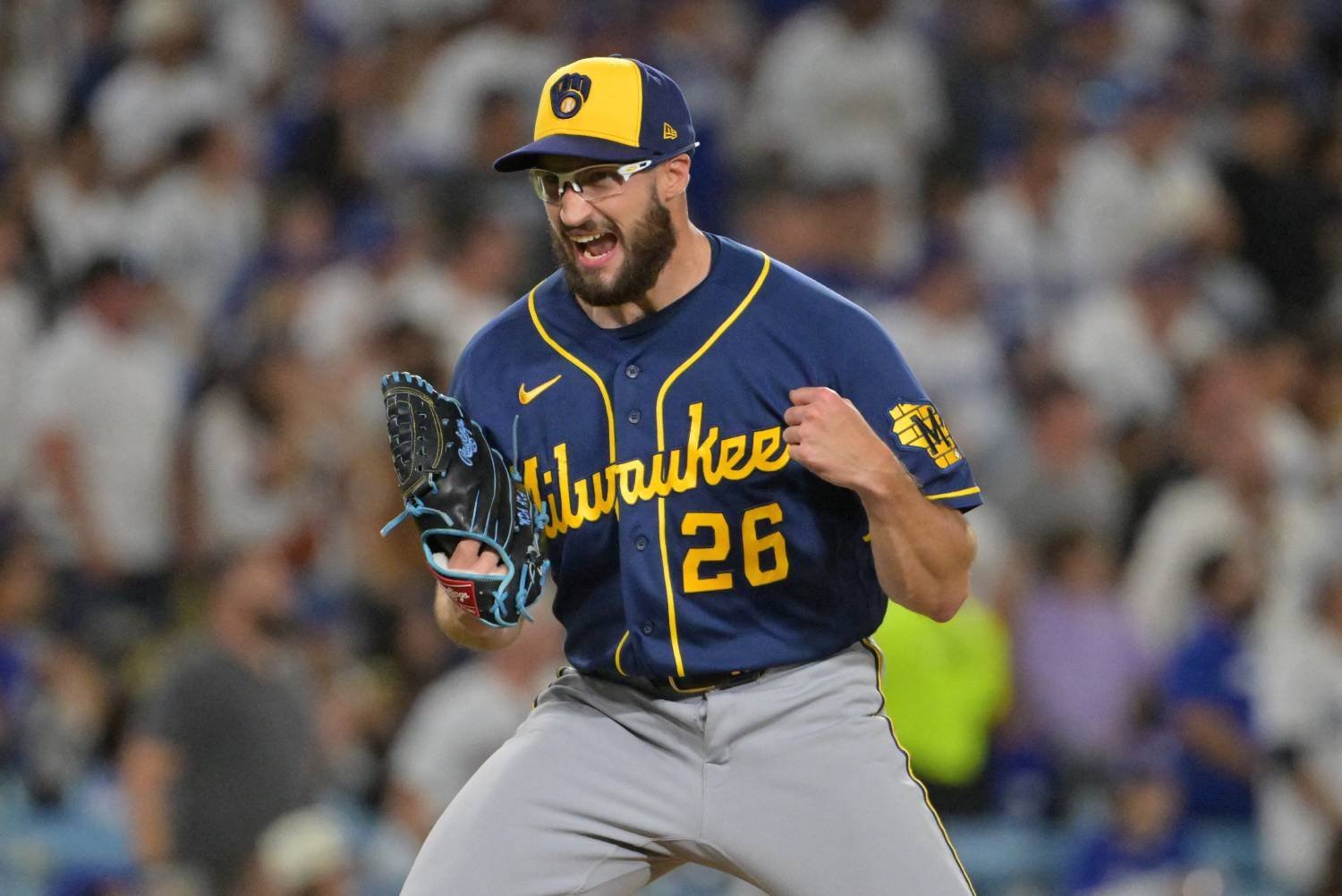 The situation never presented itself last year, mainly because the Los Angeles Dodgers completely shut down the Milwaukee Brewers’ offense. Also, because of where the Crew’s starting rotation was at entering the postseason, much less the 2025 NL Championship Series, manager Pat Murphy felt the best use of his ace left-handed reliever, Aaron Ashby, was to get the pitching staff off to a good start and hope from there. It mostly worked from the Ashby perspective as he started three postseason games, including Games 1 and 3 of the NLCS. A year later, Ashby serving as an opener wasn’t even a thought. Of the various weapons Murphy has in his holster, Ashby is the most versatile, but also is a silver bullet. When you want to put an opponent out of their misery, you pull the Ashby trigger. When it came time to slay the Dodgers, the two-time defending World Series champions who have been favored to win a third straight since the last out of last year’s Fall Classic, Ashby did the grittiest work of a Brewers bullpen that, other than one glitch, kept a potent Dodgers offense off-balance. Because of that, the Brewers are headed back to the World Series for the first time since 1982 with a 6-4 victory over the Dodgers on Thursday at Dodger Stadium. It was a four-game sweep of the mighty Dodgers with their megapayroll. Ashby is responsible for a big part of that. The bespectacled left-hander, who vultured 13 wins throughout the regular season, was masterful for the final three innings of Game 4. This time, he picked up the biggest save of his career. With his curveball as sharp as it has ever been, Ashby went the final three innings, seemingly getting stronger with each out. The 28-year-old, taken by the Brewers in the fourth round in 2018, came on to protect a 5-4 lead. Sure, the Brewers had the cushion of more games to lose, but when you have a chance to take down the dragon, you take down the dragon. Ashby started off a little rough by giving up a leadoff double to Andy Pages, stirring the fervent fans at Dodgers Stadium. Enrique Hernandez bunted Pages to third, bringing up the top of the order and the resurgent Shohei Ohtani. The four-time MVP ended his slump with his first homer since Aug. 18 to put the Dodgers up 4-0 in the second inning. Ohtani fouled off a first-pitch slider, then wiped him out with a sinker and another slider way outside that he flailed at. Another former MVP, Mookie Betts, grounded out to rookie shortstop Cooper Pratt. That figured to be half of Ashby's job with right-handed closer Trevor Megill getting ready in the bullpen for the ninth. In the eighth, Freddie Freeman, the third of the Dodgers' MVPs, led off the eight by flying out to Jackson Chourio in left. Will Smith, who hit the decisive homer in Game 7 of last year's World Series, then doubled into the right-field corner and went to third when Sal Frelick couldn't handle the ball, getting the nerves of Brewers fans working. But Ashby, with the tying run 90 feet away, got Kyle Tucker to fly out to Garrett Mitchell, who raced in to make the catch in shallow center. Teoscar Hernandez struck out, putting the Brewers three outs away. While conventional wisdom had Murphy calling on Megill to close it out, Murphy rode the hot hand and stuck with Ashby to at least begin the ninth. Tommy Edman pinch-hit and ran the count full before grounding out to Pratt at short. Two more outs. Pages, the first batter he faced in Game 4, struck out on four pitches. One more out. Ashby got in front of Hernandez 0-2, then hit a liner that seemed headed over Chourio's head, but he reached up and plucked it out of the air for the final out. Ashby had the save, not just a regular save, a three-inning save. The Brewers were going back to the World Series. It capped a three-game performance in which Ashby pitched 6⅔ innings, allowing just two hits and no walks, punching out six. He hasn't allowed a run in 12⅓ innings in six appearances this postseason. Ashby gets the headline, but it was the work that right-hander Dustin May and left-hander JoJo Romero, the two players the Brewers acquired at the trade deadline from the St. Louis Cardinals, following the abbreviated start by rookie left-hander Shane Drohan, who was making his postseason debut by pitching a potential clincher. Sure, May did give up the three-run bomb by Ohtani that could have been a dagger in the Brewers. But he bounced back from that and gave Murphy the innings he needed in this game. May shut down his former team for two more innings, getting the Crew through four innings. Meanwhile, the offense scored twice in the top of the four to pull within 4-2. Romero was the next piece of the puzzle and just as big as Ashby. Thanks to NLCS MVP Jake Bauers' two-run double, the game was now tied. Garrett Mitchell would homer in the fifth to put the Crew up 5-4. Romero was nails. He allowed a hit, but retired six of the seven hitters he retired. His fifth inning was his biggest challenge. Facing the MVP triumvirate of Ohtani, Betts and Freeman. Strikeout, groundout, strikeout. He was credited with the victory, giving the bullpen all four wins in this series. It is a unit that was already pretty respected across MLB, but with the performance the bullpen put on throughout the series against the Dodgers, the relievers took it to a new level. Because of that, the Brewers are back where they were 44 years ago. The World Series. View the full article
-
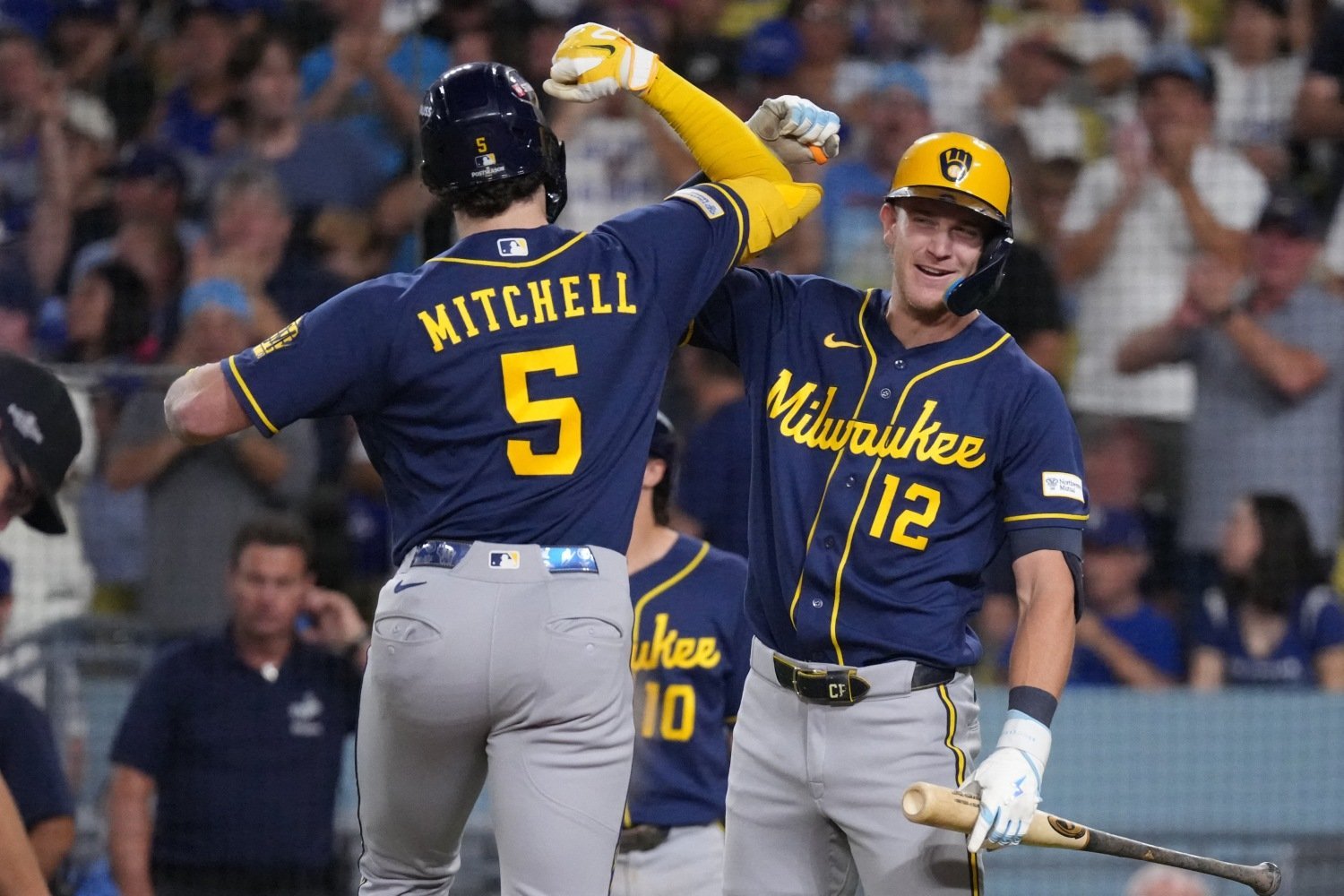 The Milwaukee Brewers joined the National League in 1998, but it took 28 years for them to join the ranks of its champions. At long last, in Game 4 of a thrilling but (ultimately) one-sided National League Championship Series Thursday night, that wait came to an end. For Milwaukee baseball fans, it was 24 years (and one heart-wrenching team relocation) between their last two World Series appearances, in 1958 and 1982. It took 44 more seasons to make it back, but they've done it. History might soften our sense of how hard-won this pennant was. The Brewers ousted the San Diego Padres in four games in the best-of-five NL Division Series, and they swept the Dodgers in four straight, but almost all of the games in that stretch were close—not only on the scoreboard, but in a way you could feel and see and even hear in the crowds' reactions to it all. Thursday was certainly no exception. The relatively sparse schedule of the postseason allowed the Brewers to give four of the first six starts of their run to Jacob Misiorowski and Logan Henderson, but in the other games, they had to patch things together. That worked nicely when they got good starts from Robert Gasser in Game 4 of the NLDS and Game 3 of the NLCS, but in Game 3 of the NLDS, Dustin May was unable to give them that stability, and they lost that game. Pat Murphy handed the ball to lefty Shane Drohan, instead, to open Game 4 of the NLCS, but Drohan's control was shaky. He limped through five batters faced and three outs recorded, before May took over. The Dodgers seemed to be overjoyed at the change. Five batters after May entered the fray, it was 4-0 Dodgers. That didn't stop the Brewers, for they're relentless—no, as Pat Murphy would say, they're f***ing relentless. They chipped away, with two runs in the fourth and two more in the fifth. In the top of the sixth, Garrett Mitchell finished off the defending champions, with a go-ahead home run that would prove all they needed. The bullpen shut the Dodgers down unforgivingly; they slowly choked the life out of them. More to come. Much more. For the moment, though: enjoy this, Milwaukee fans. Though they've been a very, very good team for a decade, now, this is a once-in-a-generation moment. View the full article
-
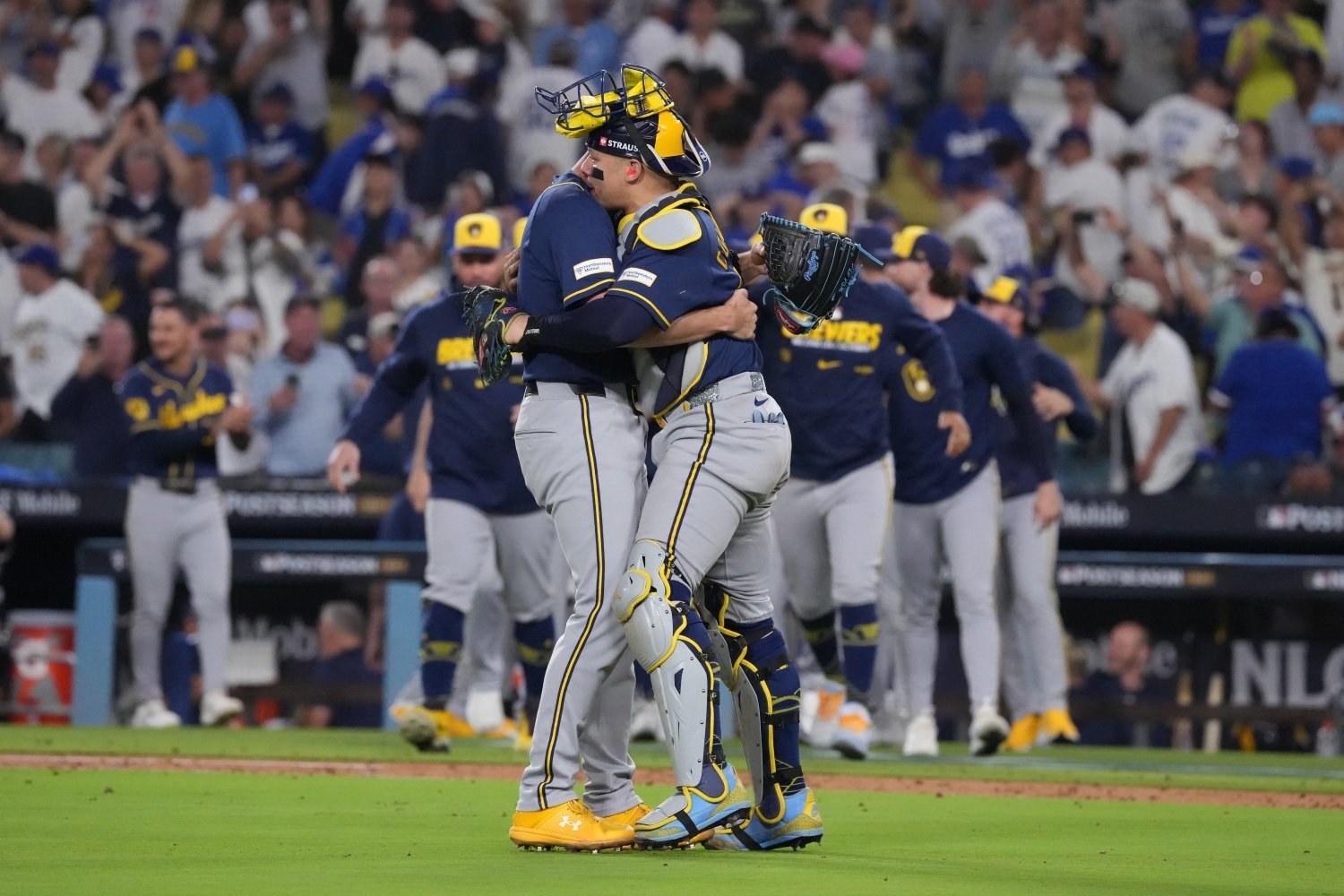 The Milwaukee Brewers joined the National League in 1998, but it took 28 years for them to join the ranks of its champions. At long last, in Game 4 of a thrilling but (ultimately) one-sided National League Championship Series Thursday night, that wait came to an end. For Milwaukee baseball fans, it was 24 years (and one heart-wrenching team relocation) between their last two World Series appearances, in 1958 and 1982. It took 44 more seasons to make it back, but they've done it. History might soften our sense of how hard-won this pennant was. The Brewers ousted the San Diego Padres in four games in the best-of-five NL Division Series, and they swept the Dodgers in four straight, but almost all of the games in that stretch were close—not only on the scoreboard, but in a way you could feel and see and even hear in the crowds' reactions to it all. Thursday was certainly no exception. The relatively sparse schedule of the postseason allowed the Brewers to give four of the first six starts of their run to Jacob Misiorowski and Logan Henderson, but in the other games, they had to patch things together. That worked nicely when they got good starts from Robert Gasser in Game 4 of the NLDS and Game 3 of the NLCS, but in Game 3 of the NLDS, Dustin May was unable to give them that stability, and they lost that game. Pat Murphy handed the ball to lefty Shane Drohan, instead, to open Game 4 of the NLCS, but Drohan's control was shaky. He limped through five batters faced and three outs recorded, before May took over. The Dodgers seemed to be overjoyed at the change. Five batters after May entered the fray, it was 4-0 Dodgers. That didn't stop the Brewers, for they're relentless—no, as Pat Murphy would say, they're f***ing relentless. Tyler Glasnow is a fine symbol of everything the team had to overcome in this series. Here were the scrappy Brewers, cobbling together a pitching plan with the leftovers of their staff, and they had to face a 6-foot-7 Adonis, famously handsome as well as hard-throwing, making $30 million in the middle season of a five-year deal. Glasnow was on, too. The first time through the Brewers' order, he didn't allow a baserunner. His fastball was dotting the edges. His curveball was falling from the sky and landing at the top edge of the strike zone, freezing hitters. But the Brewers are impossible to intimidate or discourage. They stayed ready. They waited for Glasnow to wobble, knowing he would. In the top of the fourth, Brice Turang worked a six-pitch walk. William Contreras worked a 2-1 count, and when he got a second four-seam fastball on the inside edge in the same at-bat, he tore into it, slashing an automatic double into the left-field corner. Then, on a 3-2 count, Jake Bauers got a true mistake—a fastball right down the middle, which he bashed down the right-field line for another automatic two-bagger. The Dodger lead was suddenly halved. Glasnow did wriggle off the hook from there, though, by getting Christian Yelich and Garrett Mitchell to end the inning and strand Bauers in scoring position. Undeterred by the brief interruption—indeed, perhaps spurred on by May keeping things under control and giving them some length—the Brewers went right back to work in the top of the fifth. Glasnow was, suddenly, at loose ends. He walked Sal Frelick on five pitches with one out. Frelick stole second during David Hamilton's at-bat, and Hamilton then drove him home with a hard ground ball back up the middle. The deficit had dwindled to one run. That chased Glasnow from the game, but on came Evan Phillips, an emblem of the Dodgers' recent October untouchability. Phillips entered the game never having given up a run in the playoffs. Technically, he still hasn't, but the Brewers will let that 'technically' warm him up over the cold winter ahead. Phillips almost gave up something big, but Jackson Chourio's line drive found Andy Pages's glove in center field. Instead, he gave up several small things. He intentionally walked Brice Turang after falling behind 3-0 and seeing Hamilton steal second. He walked Contreras, not coming especially close on any of the balls in the sequence. Then, on four pitches, he walked Bauers. Tie game. F***ing relentless. In the top of the sixth, Garrett Mitchell finished off the defending champions, with a go-ahead home run that would prove all they needed. The bullpen shut the Dodgers down unforgivingly; they slowly choked the life out of them. JoJo Romero, the least-heralded of the team's trade-deadline acquisitions in early August, mowed down six of the seven Los Angeles batters he saw. Aaron Ashby took the ball in the seventh, and he never gave it back. He allowed two doubles, but it didn't matter. When he needed to make a pitch, he made one. He carved Ohtani back into ribbons, after the Brewers' 2025 bogeyman had seemed to reconstitute himself on that huge early swing, striking out Ohtani with a runner on third and one out in the seventh. He dominated. It's baseball without reciprocity. The Brewers make everything hard for you, but you can't make anything hard for them. They're endlessly resilient, but they find ways to smother you—to prevent you from feeling that same spark of ongoing hope in the face of adversity. They're better than you, and they want it more than you. On the inside of Murphy's right arm is a tattoo that reads "200 Club". It's a simple motto, in a simple code. Take every letter of the alphabet and assign it a number based on its placement in the line, and if you swap the letters out for those numbers, the ones in "F***ing relentless" add up to 200. Murphy didn't get his chance to be a big-league manager until he was 65 years old. He's the ultimate late bloomer. He took over a team full of players whose career arcs look much like his, and he's infused them with his on-field personality. It's about attention to detail, and a thorough understanding of just how hard this is all gonna be, and a lack of fear of embracing all that difficulty. It's about being undaunted, and it's about being smart. And it's about understanding how to weigh both words. Profanity is part of baseball's language—its music. It's part of how the people who love the game enough to withstand its slings and arrows and to survive the grind from February all the way to the end of October communicate to one another their understanding that regular words don't quite capture it all. You have to have an ear for it to really understand it. You have to have been through a slump, or watched your favorite player do it. You have to have rehabbed a shoulder injury and come back a year later, or watched your best friend try to do it but fail. You have to have played 17 days in a row, and still been pissed at yourself (instead of the schedule-makers) when you chased a pitch you shouldn't have on Day 17. If you've felt some of that—if, say, you know the pain of having lost Game 7 in 1982, and having been poorly run for a long time and mired in losing, and of Chris Taylor catching that f***ing ball in 2018 and of Pete Alonso hitting that f***ing homer in 2024—then you know that 'relentless' isn't enough to win a pennant. You absolutely must be f***ing relentless, and you must understand that first word as more than an obscenity. It's a modifier. It's proof that the desire to excel at a game that defies excellence and to dominate in a game that subverts dominance burns in you, down all the way to the atomic level. It says you know what you're up against. The 2026 Brewers knew what they were up against, all along. So did their opponents, maybe, but in their case, it wasn't enough, because what they were up against was the 2026 Brewers. There's more work for this team to do. There's one more monkey on the franchise's back. The Brewers have never won a World Series, and it certainly won't be easy to do it against the Rays or Guardians. Come next Friday, though, Jacob Misiorowski will get the ball for Game 1 of the Fall Classic, before a full house at The Ueck, and that crowd will already feel lighter and freer than it's ever been before. Something huge has been done. They only need four more wins to become the unquestioned champions of the baseball world. More to come. Much more. For the moment, though: enjoy this, Milwaukee fans. Though they've been a very, very good team for a decade, now, this is a once-in-a-generation moment. View the full article
-
[COPY] - Grading Every 2026 Royals Player: Relievers
DiamondCentric posted an article in Royals Keep
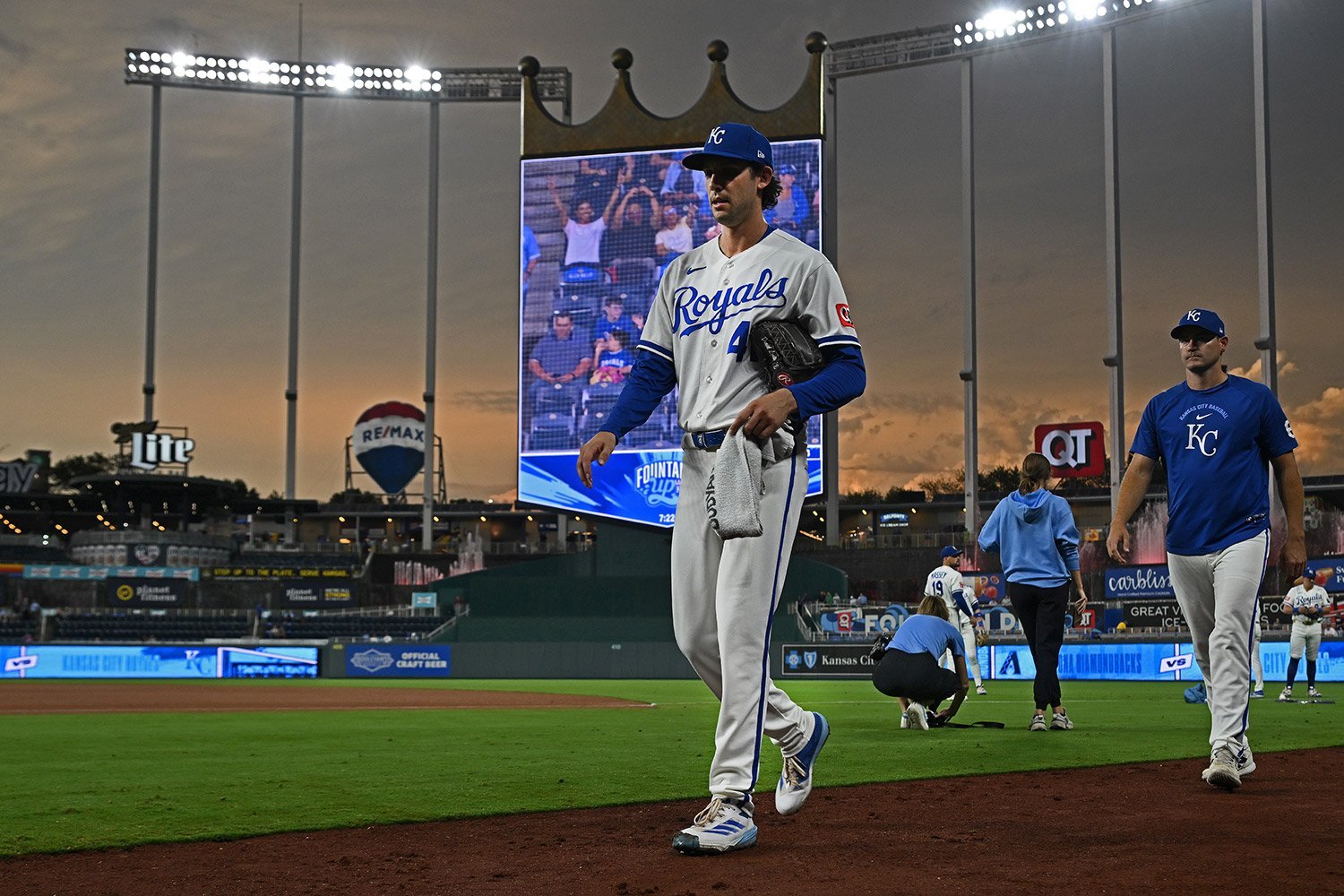 Anyone who watched their fair share of Royals baseball this season can tell you that the bullpen was a major pain point for the ballclub. The Royals bullpen posted a 5.07 ERA, which was the second-worst in the MLB. Collectively, Royals relievers blew 26 saves this season, an incredible number and a big reason why this team ended up winning fewer than 70 games and not competing in a weak division. This is the fourth part of this series; find previous entries here: Outfielders & DH Infielders Starters The Royals' late-inning bullpen disasters started early on in the season and never rallied back to the level of success they had in prior years. It started with Carlos Estevez getting injured in the first game of the year against Atlanta and not pitching again the rest of the season. Estevez's injuries gave Lucas Erceg a chance to take on the closing role, and we all know how that went. From there, it was trial and error in the late innings. For a team that made moves to enhance the bullpen in the offseason, it was disappointing to see the Royals have the second-worst bullpen in the league. Below are my grade reports for Royals relief pitchers who ended the season with 20 or more appearances: Alex Lange: D+ Lange threw 60 innings over 59 games this season, allowing 65 hits and 45 earned runs while walking 33 batters. The season was up and down for Lange, and, like most of the bullpen, it was mostly down. He finished the year with a FIP of 5.87, which is nearly a run and a half higher than this year's league average. His high FIP shows that most of his troubles were his own, which is also backed by his high walk percentage of 12%. Lange's bright spot of the season came in June, when he had 7 saves for the Royals and 11 1/3 innings pitched. However, the following month is where things turned for Lange as he blew 3 saves. Following that month, Lange came in and out of the bullpen and added two holds to his stat line before having a rough September to end the season. Daniel Lynch IV: B Daniel Lynch IV was the best arm out of the bullpen for the Royals this past season when he was in a reliever role. In his sixth season with the Royals, he threw 86 innings with 56 strikeouts, 26 walks, and 39 earned runs. As a reliever, he posted a 3.72 FIP, proving that his 1.96 ERA in 46 relief innings was legitimate. Lynch IV had a 7.3% walk rate and a 15.7% strikeout rate this season. His better-than-league-average walk rate allowed him to keep runners off the base paths and get the necessary outs. He was the team leader in holds among pitchers still on the team roster at the end of the season. His struggles did not come until later in the season when he moved back into a starting role. Lynch IV will head into arbitration this offseason, but I would expect to see him back in a Royals uniform next year. Steven Cruz: C+ After a rough first two months of the season, Steven Cruz became a more reliable arm out of the bullpen as the season went on. In April and May, Cruz allowed 13 runs in 14 innings. However, as spring turned to summer, the numbers got better. Cruz had 8 saves, 5 holds, and only 1 blown save in June, July, August, and September. In those months, he threw 44 2/3 innings, allowing 15 earned runs and striking out 45. Cruz had an impressive 26.4% strikeout rate, showing he can get batters out himself. He ended the season with a 4.55 FIP, indicating there is still some refinement to be done. If he can match his high velocity and keep his command consistent next year, he has the potential to be a solid late-inning reliever. Lucas Erceg: D Lucas Erceg was tough to watch starting in April and continuing through the rest of the season. Erceg was not the reliever we have seen in the past. Unfortunately, Lights Out Lucas was non-existent for the vast majority of this season. Although Lucas did save 13 games this season, most of those came early in the year, before the struggles began and the blown saves started piling up in April and May. Erceg's strikeout numbers declined, and he ended the year with a 14.9% strikeout rate, indicating his struggles to get batters to miss. He did not do himself any favors with a 14.0% walk rate and a 5.40 FIP, putting guys on base and getting himself into trouble. He became a late-inning liability, and the Royals sent him to Triple-A Omaha. After a tough year, Erceg did get a save in the season finale. Royals fans can only hope this offseason is a reset to come back next season being the Lights Out Lucas we know. Matt Strahm: F The trade deal sending Matt Strahm to Kansas City certainly did not work out for the Royals. In 35 2/3 innings pitched, Strahm posted a 7.32 ERA and allowed 12 home runs. Oftentimes, those home runs resulted in the Royals losing their lead late in the game. Strahm was 0-4 in save opportunities as well. His astronomical 6.45 FIP truly shows how catastrophic his tenure with the Royals was. For a guy who was brought in as a left-handed setup reliever, it was a total disaster until the Royals released him on August 8th. John Schreiber: C Before being placed on waivers on August 29th, Schreiber appeared in 55 games for the Royals. In those 55 games, he had 14 holds. However, his FIP of 4.88 hinted at trouble brewing. He was dominant against right-handed pitchers but struggled against lefties, and his overall utility out of the bullpen became weaker as he posted a 17.7% strikeout rate and 10.8% walk rate. With his strikeout-to-walk ratio being 36 strikeouts and 19 walks, plus his struggles against left-handed hitters, the Royals needed to make a move. Ultimately, the Royals parted ways with Schreiber and placed him on waivers, where the Yankees picked up his contract. Nate Pearson: B Nate Pearson came over at the trade deadline and did well for a team that had little chance of making the playoffs. The Royals acquired Pearson from the Astros on July 22nd, and he made his first appearance on July 26th. He appeared in 26 games out of the bullpen, striking out 25 batters. Pearson's first month with the club was outstanding as he threw 12 2/3 innings with 13 strikeouts and only 1 earned run. His highly encouraging 3.87 FIP with the Royals suggested he could be a premium right-handed pitcher for the Royals bullpen. However, mid- to late September was troublesome for Pearson, as he allowed 12 runs on 10 hits in just 5 innings. He will likely be a key piece to the Royals bullpen next year, and hopefully we get the August version of Pearson that we saw this past summer. Jose Cuas: B- Jose Cuas moved up and down between the big leagues and Triple-A this season. Cuas made 24 appearances for the Royals and posted a 2.31 ERA over 23 1/3 innings, with 25 strikeouts. Cuas had an above-average strikeout percentage of 25.5%, but he also walked guys at a high rate, posting a 14.3% walk rate. At times, Cuas has struggled with his command and allowed more runners on base than the team would like, which is why he was primarily used in low-leverage situations. Whether Cuas will return next season is up in the air, as he will be competing for a spot on the 40-man roster. Nick Mears: D+ The Royals acquired Nick Mears from Milwaukee ahead of the 2026 season. He was brought in as a middle-relief option but was sidelined for most of the year with an injury that required surgery. Before his arm gave out, Mears threw 19 1/3 innings and posted a 4.60 FIP. His 18.1% strikeout rate was significantly lower than the club expected when they acquired him. His 13.3% walk rate made it clear that he was pitching through pain and discomfort. Mears recovery timeline likely has him back sometime next summer, where hopefully he can be the middle-relief guy the Royals need. Do you agree with these grades or would you grade some differently? What do the Royals need to do to fix their bullpen struggles this offseason? Let me know in the comments. View the full article
-
Pablo López Named Finalist for MLBPA’s Man of the Year Award
DiamondCentric posted an article in Twins Daily
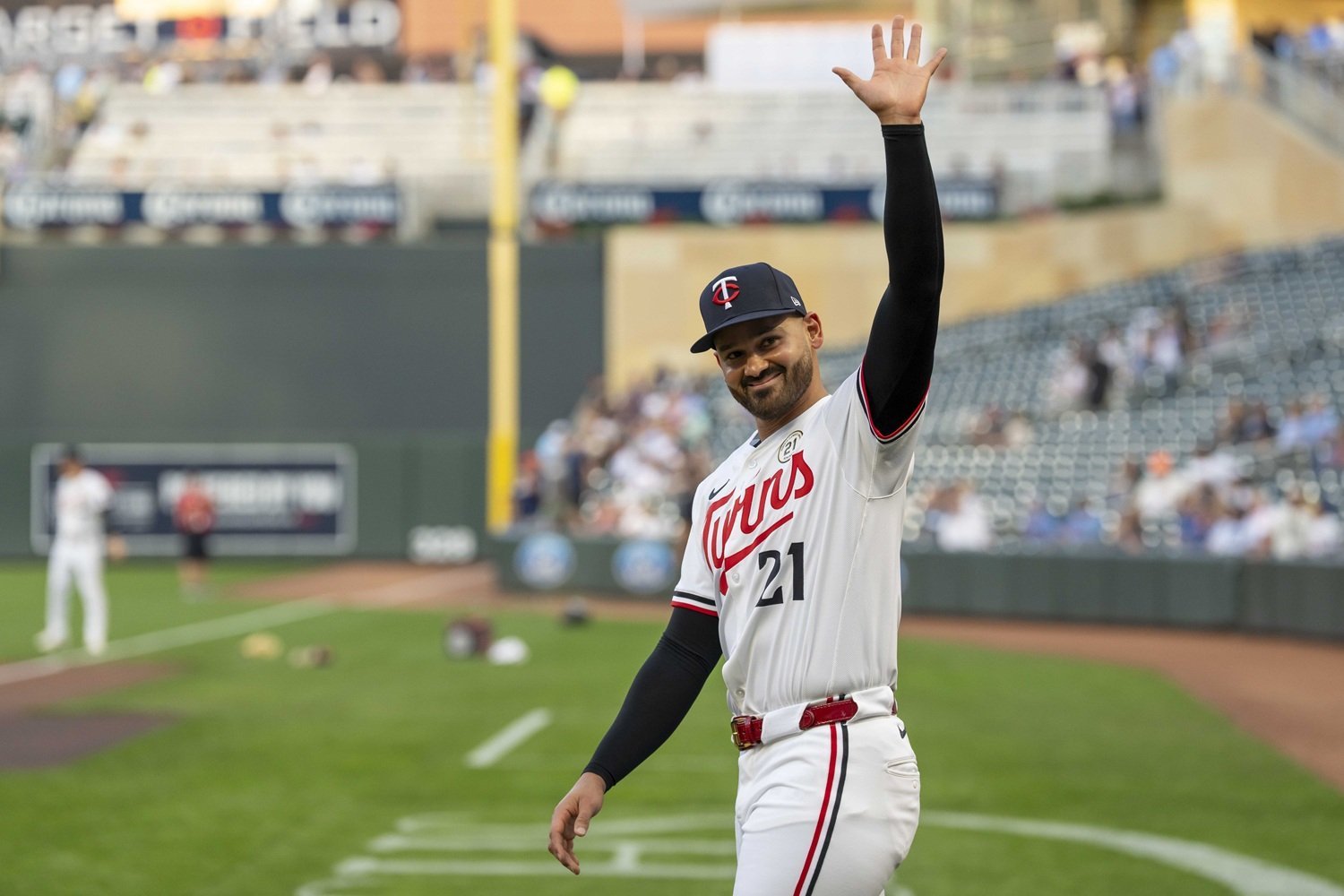 Pablo López did not take the mound for the Minnesota Twins in 2026, but his impact on the organization and its community continues to earn recognition. The right-hander has received another significant honor, this time as a finalist for one of the Major League Baseball Players Association’s most meaningful awards. The nomination adds to a growing list of honors for López during a season in which he was unable to contribute on the field. Last month, the Twins selected him as their nominee for the Roberto Clemente Award, recognizing his commitment to community service and charitable work. It marked the third consecutive season Minnesota nominated López for the award and the fourth time overall the organization recognized him for his community contributions. On Wednesday, the MLBPA announced the finalists for its annual Players Choice Awards. López was named one of three finalists for the Marvin Miller Man of the Year Award, joining Chris Bassitt and Nico Hoerner. The award recognizes the influence players can have through leadership, service, and their ability to inspire others. Recognizing Leadership The Marvin Miller Man of the Year Award is presented to the player “whose leadership most inspires others to higher levels of achievement.” Named after the MLBPA’s first full-time executive director, the award honors a legacy of leadership and advocacy for major league players. Miller served as executive director from 1966 to 1982 and played a central role in transforming the relationship between players and team ownership. His influence extended well beyond the baseball field, making the award particularly fitting for players who use their positions to make a difference in their communities and within the game. Miller was inducted into the National Baseball Hall of Fame in 2021. Unlike awards determined by media members or front-office personnel, the Players Choice Awards are voted on by the players themselves. First presented in 1992, the awards recognize excellence both on and off the field, including individual performance, leadership, perseverance, and community impact. That peer-driven selection process makes López’s nomination especially noteworthy. Being recognized by fellow major leaguers reflects the respect he has earned from people who understand the demands of the sport and the responsibilities that come with playing at its highest level. A Meaningful Season Away From the Field For Minnesota, López’s 2026 season has been defined by his absence from the rotation. However, an injury preventing him from pitching has not erased his standing within the organization or diminished the attention surrounding his off-field contributions. The Twins have repeatedly highlighted López’s community involvement through their Roberto Clemente Award nominations. His latest recognition from the MLBPA reinforces that his value to the organization extends beyond his work as a starting pitcher. López has established himself as an important voice in Minnesota’s clubhouse, and leadership can take on added significance during a season when a player cannot contribute between the lines. His nomination places him alongside Bassitt and Hoerner, two players also recognized for their leadership. The winners of this year’s Players Choice Awards are scheduled to be announced during the week of October 26. The Twins will eventually need López back on the mound to help lead their pitching staff. In the meantime, his continued recognition is a reminder that a player's influence is not measured solely by innings pitched, strikeouts, or wins. Even in a season without an on-field role, López remains a prominent representative of the organization. View the full article
-
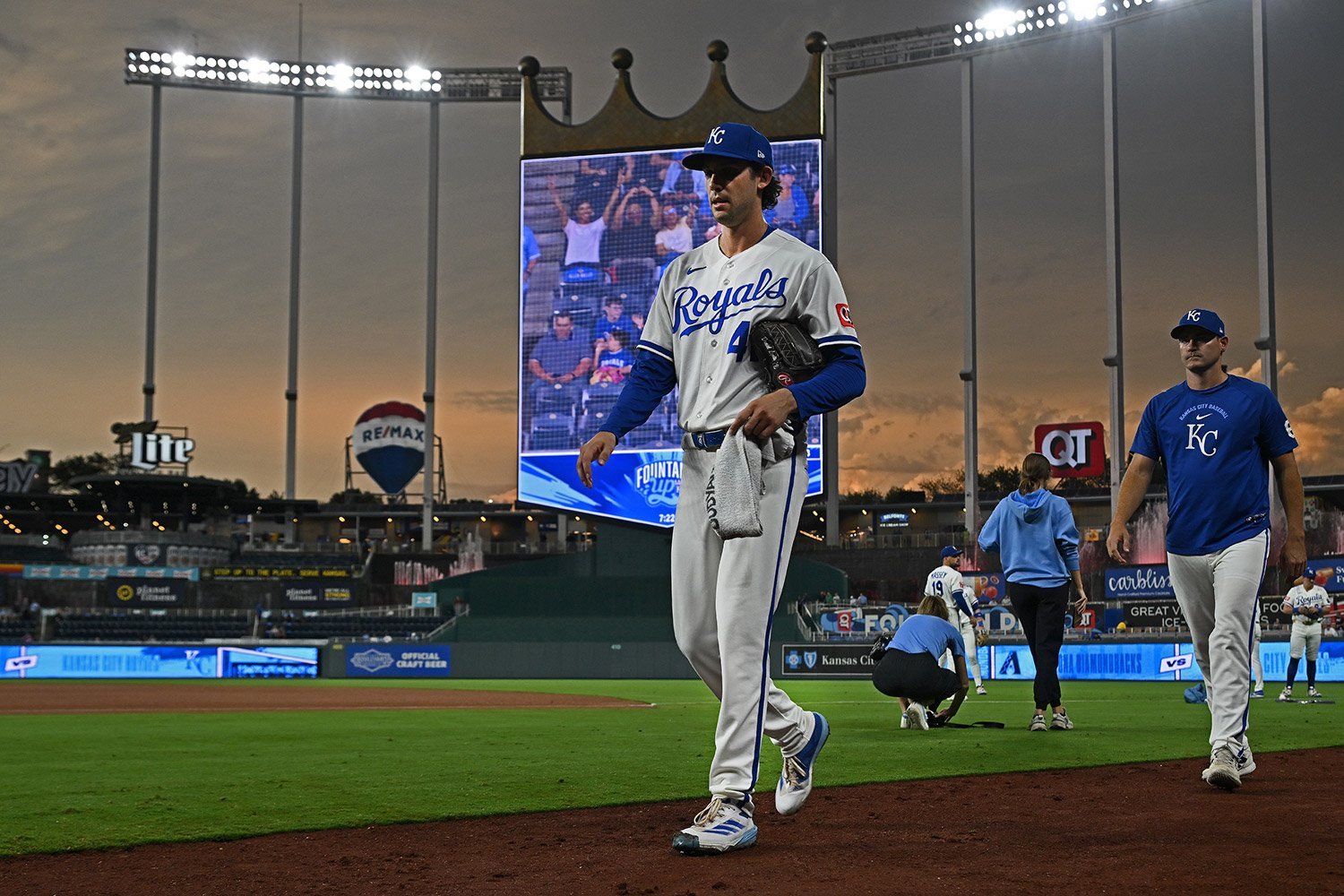 Anyone who watched their fair share of Royals baseball this season can tell you that the bullpen was a major pain point for the ballclub. The Royals bullpen posted a 5.07 ERA, which was the second-worst in the MLB. Collectively, Royals relievers blew 26 saves this season, an incredible number and a big reason why this team ended up winning fewer than 70 games and not competing in a weak division. This is the fourth part of this series; find previous entries here: Outfielders & DH Infielders Starters The Royals' late-inning bullpen disasters started early on in the season and never rallied back to the level of success they had in prior years. It started with Carlos Estevez getting injured in the first game of the year against Atlanta and not pitching again the rest of the season. Estevez's injuries gave Lucas Erceg a chance to take on the closing role, and we all know how that went. From there, it was trial and error in the late innings. For a team that made moves to enhance the bullpen in the offseason, it was disappointing to see the Royals have the second-worst bullpen in the league. Below are my grade reports for Royals relief pitchers who ended the season with 20 or more appearances: Alex Lange: D+ Lange threw 60 innings over 59 games this season, allowing 65 hits and 45 earned runs while walking 33 batters. The season was up and down for Lange, and, like most of the bullpen, it was mostly down. He finished the year with a FIP of 5.87, which is nearly a run and a half higher than this year's league average. His high FIP shows that most of his troubles were his own, which is also backed by his high walk percentage of 12%. Lange's bright spot of the season came in June, when he had 7 saves for the Royals and 11 1/3 innings pitched. However, the following month is where things turned for Lange as he blew 3 saves. Following that month, Lange came in and out of the bullpen and added two holds to his stat line before having a rough September to end the season. Daniel Lynch IV: B Daniel Lynch IV was the best arm out of the bullpen for the Royals this past season when he was in a reliever role. In his sixth season with the Royals, he threw 86 innings with 56 strikeouts, 26 walks, and 39 earned runs. As a reliever, he posted a 3.72 FIP, proving that his 1.96 ERA in 46 relief innings was legitimate. Lynch IV had a 7.3% walk rate and a 15.7% strikeout rate this season. His better-than-league-average walk rate allowed him to keep runners off the base paths and get the necessary outs. He was the team leader in holds among pitchers still on the team roster at the end of the season. His struggles did not come until later in the season when he moved back into a starting role. Lynch IV will head into arbitration this offseason, but I would expect to see him back in a Royals uniform next year. Steven Cruz: C+ After a rough first two months of the season, Steven Cruz became a more reliable arm out of the bullpen as the season went on. In April and May, Cruz allowed 13 runs in 14 innings. However, as spring turned to summer, the numbers got better. Cruz had 8 saves, 5 holds, and only 1 blown save in June, July, August, and September. In those months, he threw 44 2/3 innings, allowing 15 earned runs and striking out 45. Cruz had an impressive 26.4% strikeout rate, showing he can get batters out himself. He ended the season with a 4.55 FIP, indicating there is still some refinement to be done. If he can match his high velocity and keep his command consistent next year, he has the potential to be a solid late-inning reliever. Lucas Erceg: D Lucas Erceg was tough to watch starting in April and continuing through the rest of the season. Erceg was not the reliever we have seen in the past. Unfortunately, Lights Out Lucas was non-existent for the vast majority of this season. Although Lucas did save 13 games this season, most of those came early in the year, before the struggles began and the blown saves started piling up in April and May. Erceg's strikeout numbers declined, and he ended the year with a 14.9% strikeout rate, indicating his struggles to get batters to miss. He did not do himself any favors with a 14.0% walk rate and a 5.40 FIP, putting guys on base and getting himself into trouble. He became a late-inning liability, and the Royals sent him to Triple-A Omaha. After a tough year, Erceg did get a save in the season finale. Royals fans can only hope this offseason is a reset to come back next season being the Lights Out Lucas we know. Matt Strahm: F The trade deal sending Matt Strahm to Kansas City certainly did not work out for the Royals. In 35 2/3 innings pitched, Strahm posted a 7.32 ERA and allowed 12 home runs. Oftentimes, those home runs resulted in the Royals losing their lead late in the game. Strahm was 0-4 in save opportunities as well. His astronomical 6.45 FIP truly shows how catastrophic his tenure with the Royals was. For a guy who was brought in as a left-handed setup reliever, it was a total disaster until the Royals released him on August 8th. John Schreiber: C Before being placed on waivers on August 29th, Schreiber appeared in 55 games for the Royals. In those 55 games, he had 14 holds. However, his FIP of 4.88 hinted at trouble brewing. He was dominant against right-handed pitchers but struggled against lefties, and his overall utility out of the bullpen became weaker as he posted a 17.7% strikeout rate and 10.8% walk rate. With his strikeout-to-walk ratio being 36 strikeouts and 19 walks, plus his struggles against left-handed hitters, the Royals needed to make a move. Ultimately, the Royals parted ways with Schreiber and placed him on waivers, where the Yankees picked up his contract. Nate Pearson: B Nate Pearson came over at the trade deadline and did well for a team that had little chance of making the playoffs. The Royals acquired Pearson from the Astros on July 22nd, and he made his first appearance on July 26th. He appeared in 26 games out of the bullpen, striking out 25 batters. Pearson's first month with the club was outstanding as he threw 12 2/3 innings with 13 strikeouts and only 1 earned run. His highly encouraging 3.87 FIP with the Royals suggested he could be a premium right-handed pitcher for the Royals bullpen. However, mid- to late September was troublesome for Pearson, as he allowed 12 runs on 10 hits in just 5 innings. He will likely be a key piece to the Royals bullpen next year, and hopefully we get the August version of Pearson that we saw this past summer. Jose Cuas: B- Jose Cuas moved up and down between the big leagues and Triple-A this season. Cuas made 24 appearances for the Royals and posted a 2.31 ERA over 23 1/3 innings, with 25 strikeouts. Cuas had an above-average strikeout percentage of 25.5%, but he also walked guys at a high rate, posting a 14.3% walk rate. At times, Cuas has struggled with his command and allowed more runners on base than the team would like, which is why he was primarily used in low-leverage situations. Whether Cuas will return next season is up in the air, as he will be competing for a spot on the 40-man roster. Nick Mears: D+ The Royals acquired Nick Mears from Milwaukee ahead of the 2026 season. He was brought in as a middle-relief option but was sidelined for most of the year with an injury that required surgery. Before his arm gave out, Mears threw 19 1/3 innings and posted a 4.60 FIP. His 18.1% strikeout rate was significantly lower than the club expected when they acquired him. His 13.3% walk rate made it clear that he was pitching through pain and discomfort. Mears recovery timeline likely has him back sometime next summer, where hopefully he can be the middle-relief guy the Royals need. Do you agree with these grades or would you grade some differently? What do the Royals need to do to fix their bullpen struggles this offseason? Let me know in the comments. View the full article
-
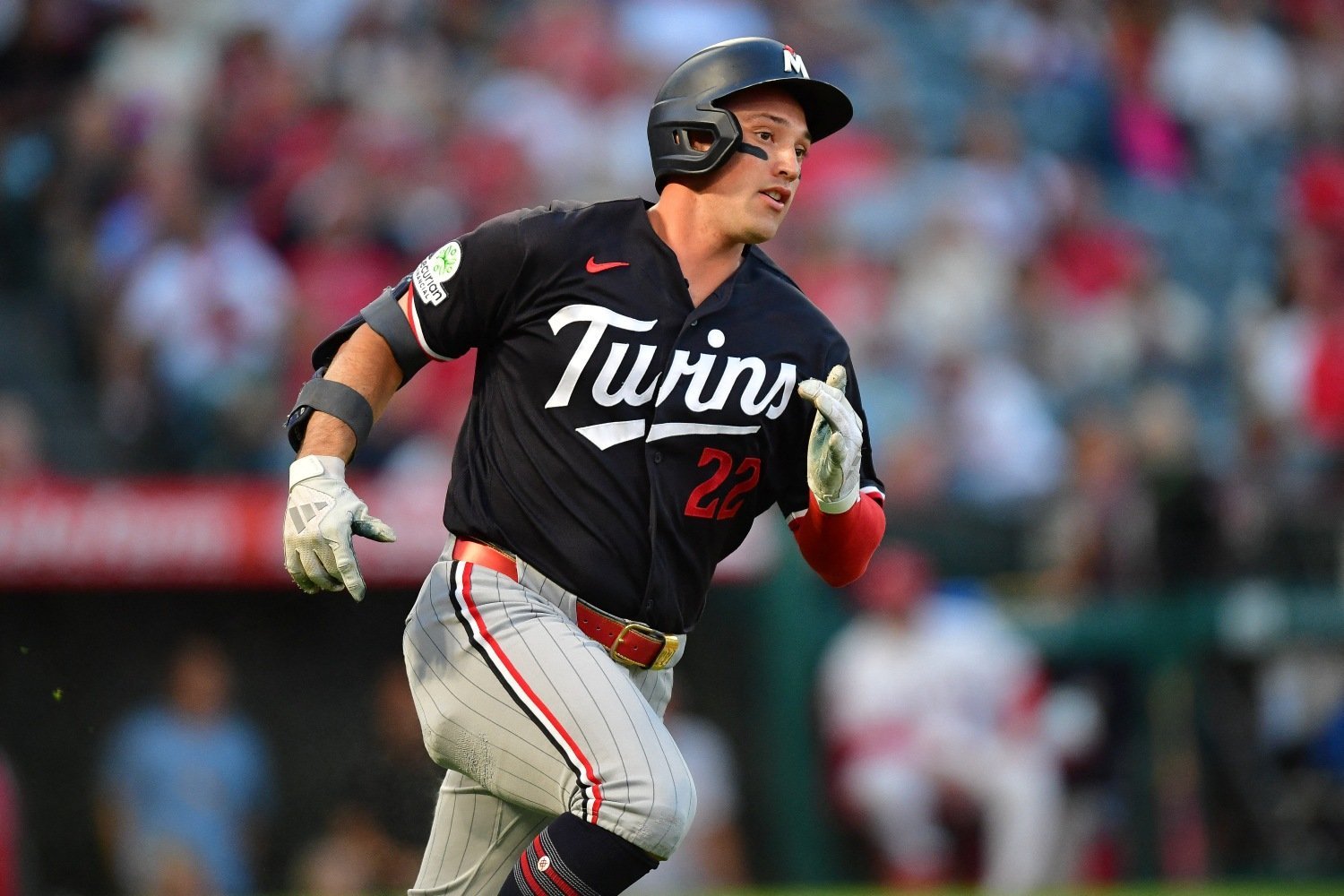 One of the more exciting awards we like to vote on at Twins Daily at the end of the year is the Most Improved award. The beauty of the award is that it depends on who you ask and what they value in a particular player's improvement. When looking at this award, is it important to focus on the player who went from a fringe player to a clear role on the roster, or on a young player who cemented himself and reached the potential he once had as a prospect? Our voters had differing opinions, but three names consistently popped up in their responses. We’ll take a look at those top three vote-getters for the Most Improved award, and none of these names will be too surprising, if you look at where they were pre-2026 and where their roles sit now with the big-league club. 3. Yoendrys Gómez Gómez is a player whom many Twins fans may not have known much (if anything) about going into the 2026 season. He started the year in the Rays organization. In nine appearances before he was designated for assignment on May 2, Gómez threw 17 ⅓ innings for the Rays, striking out 13, with a 6.23 ERA and 7.25 FIP. When the Twins acquired him, he was seen as a flyer, but it was clear that he had some upside, and boy, did he deliver. When the Twins acquired Gómez in a trade (for cash considerations) in early May, manager Derek Shelton said, “I mean it’s a big arm. It’s a guy we saw in Spring Training a couple times. We really liked him, but it just adds some velocity to our bullpen.” The Venezuela native had much more success after the Twins acquired him and took hold of the closer role in the Twins bullpen, which was looking for any competent arm—especially early in the season. He went 21-for-23 on save opportunities and helped the Twins' bullpen become more successful, especially in the middle months of the season. With the Twins, Gómez threw 49 ⅔ innings, striking out 52 and posting a 3.62 ERA and an even better FIP of 3.40. He became a reliable bullpen arm, even with some struggles down the stretch. Even if he doesn’t remain the closer into the future, he's proven to be a solid option out of the bullpen for Derek Shelton and company. It'll be interesting to see whether he's used mainly in the ninth inning, or whether he has opportunities in other roles while someone else takes on the more traditional closer role. Regardless of the role he has in 2027, Gómez was a solid find for the Twins, acquired for very little (much like Kody Clemens in 2025). At 27 years old, he's under team control via arbitration through the 2029 season and will not reach free agency until after the 2031 campaign. 2. Taj Bradley Another former Tampa Bay Ray, Bradley came over in a one-for-one swap that sent reliever (turned starter) Griffin Jax to Tampa Bay. He made his major-league debut at 22 years old in 2023 and appeared for the Rays from 2023-2025 before the trade. In 69 career appearances with Tampa Bay, he had his ups and downs, pitching to a 19-25 record with a 4.35 ERA and striking out 9.6 batters per nine innings. The Twins saw upside in him and thought he could take another step forward, and he proved them right. Over his first three seasons, Bradley was worth 1.1 bWAR. This year, he took a clear step forward, posting 4.4 bWAR and throwing 178 ⅓ innings, a career high. In those innings, he struck out 205 hitters, becoming the 10th Twins pitcher in franchise history (and first since Pablo López in 2023) to record over 200 strikeouts in a season. Another highlight of the year was Bradley recording the first immaculate inning in Twins history on August 25 against the Athletics. 1. Brooks Lee Lee started the 2026 season as the 'Twins' starting shortstop and had his ups and downs, which led many to say he should move off shortstop to either second or third base. In late May, it was decided the Twins infield needed a shake-up, and as part of that, Lee shifted to third. Luckily for the Twins, Lee had a great attitude about moving. “I’m just getting my reps at third," he said at the time. "You never know what happens. It’s nice to have a home over there. Just to have a home anywhere in the infield and in the lineup, that’s the most important thing.” This move also opened the door for the Twins to eventually call up top prospect Kaelen Culpepper, who made his major-league debut at shortstop in August. “I thought I proved myself at shortstop with the plays I made," Lee said later, reflecting on the move. "For them to think I can be even better at third is a plus.” This proved correct, as Lee was named a finalist for the American League Gold Glove at third base this week. Lee not only looked much better defensively at third than he did at shortstop, but improved quite a bit offensively. In his first two seasons at the plate, he posted OPS+ marks of 64 and 81, which are well below average and needed improvement if he was going to become a mainstay in the Twins lineup. He took a huge step forward in 2026, playing 156 games and hitting 24 home runs with 83 RBIs. He posted a slash line of .253/.300/.428, which was good for a slightly above-average OPS+ of 102. Many believe there is more to come from Lee. In an interview with Dan Hayes of The Athletic, Giants broadcaster Mike Krukow (who has known Lee since the latter was a child) said, “He’s got TNT in his hands; he’s going to have years where he hits between 30 and 40 (home runs). This is the period of his life where he’s getting established, meaning he’s learning the opponents' pitching staffs. … I think he not only can hit 30 to 40 home runs, but he can win a batting title.” That’s high praise from a person who has watched countless major leaguers over his long broadcasting career. If he continues to improve offensively and play sparkling defense, he can provide the Twins with tons of value in the future. Lee, Bradley and Gómez each demonstrated (in different ways) how the Twins are capable of helping players improve and deliver unexpected value. They're all important parts of the team's future, as they look to return to the postseason next year after three years away. In the group, though, Lee stands out as one whose upside might not have been reached yet, and who might be back on a track toward (low-grade) stardom. That makes him our Twins Daily Most Improved Twin of the year. View the full article
