


DiamondCentric
-
Posts
2,631 -
Joined
-
Last visited
Never
Content Type
Profiles
Forums
Events
MLB News, Rumors & Analysis
DiamondCentric Tutorials & Help
Major League Baseball Videos
MLB Fan Guides & Resources
Store
Downloads
Gallery
Everything posted by DiamondCentric
-

Gabriel Gonzalez’s Future with the Twins is Getting Complicated
DiamondCentric posted an article in Twins Daily
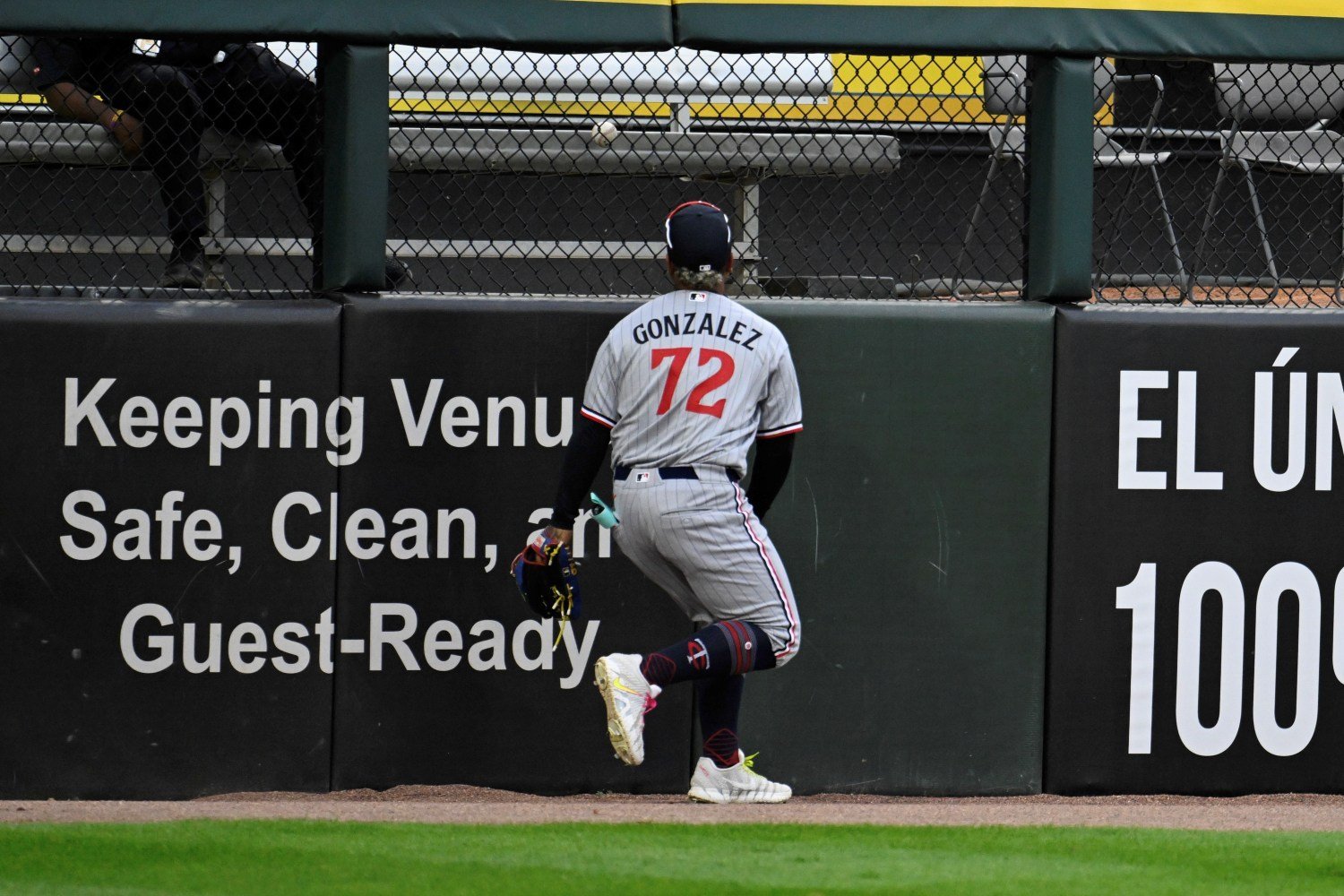 The Minnesota Twins saw several of their top prospects make their way to Target Field in 2026. One of those prospects (but the least-discussed, perhaps) is outfielder Gabriel Gonzalez. He ranks as the Twins’ No. 9 organizational prospect, after coming over from Seattle in 2024 as part of the Jorge Polanco trade. While he did make his big-league debut this year, the season as a whole wasn’t exactly what people were expecting from the young outfielder. Gonzalez appeared in just seven major-league games, logging only 11 plate appearances. His Triple-A numbers are probably more relevant when evaluating his development, and they weren’t particularly inspiring. With the St. Paul Saints, Gonzalez slashed .255/.324/.421. When you compare those numbers to what he did a year ago, it becomes a little more concerning. Although it came in a much smaller sample, Gonzalez slashed .316/.358/.504 in 2025. He was hitting the ball harder, getting on base more often and generally looking like the offensive player the Twins hoped they were getting when they acquired him. This year, that wasn't so. Interestingly, his overall batted-ball profile was nearly identical in 2026. The difference was that he simply wasn’t getting the same results, and his quality of contact didn’t take the step forward many were hoping to see. In fact, it trended in the wrong direction. It was a disappointing year for Gonzalez, considering where he stood in the organization entering the season. With guys like Walker Jenkins and Emmanuel Rodriguez getting more run than Gonzalez late in the season (along with Luke Keaschall beginning his transition to the outfield), things have gotten a little more complicated. What, then, does Gonzalez’s future with the Twins look like? It’s possible he does still have one. But if he’s going to remain with the Twins long-term, it’s unlikely to come as a full-time outfielder. Along with Jenkins, Rodriguez and Keaschall, Byron Buxton is obviously still in the mix for outfield playing time. Trevor Larnach could also be back next year (although there’s no guarantee of that). Austin Martin remains under team control, as well. Playing time in the outfield is going to be sparse, and it seems like the Twins are aware of that, too. Gonzalez made 44 starts at first base for the Saints this season, which could be an indication of where the organization sees his future. He doesn’t have typical first baseman size at just 5-foot-11. Nor does he have the typical power profile associated with the position. But with some uncertainty surrounding the Twins’ long-term outlook at first base, it’s entirely possible that Gonzalez could transition into more of a first baseman. He could also remain an option in the outfield against left-handed pitchers, giving the Twins some flexibility in how they use him. The most likely scenario is that Gonzalez doesn’t fit into the Twins’ long-term plans. The biggest concern is that he hasn’t shown an ability to consistently make hard contact. His average exit velocity in St. Paul this year was just 86.2 MPH, while his hard-hit rate was 30.6%. Those numbers make it difficult to envision him becoming an everyday offensive contributor, particularly if the Twins are asking him to play first base. He doesn’t have the speed or defensive prowess to make up for that lack of offensive production in the outfield corners. If he’s not providing much impact with the bat, there aren’t enough other tools to make up for it. That leaves the Twins with an interesting decision to make. If I’m Minnesota, I’d at least be seeing what I could get for Gonzalez on the trade market, either by himself or as part of a larger package. If there’s an opportunity to turn him into a bullpen arm or a catcher/first baseman who can help the team compete in 2027, that’s a move worth exploring. I was very much in on Gonzalez entering this season. I thought he was one of the safer young bats in the organization, and there was a legitimate reason to believe 2026 could be the year he started to establish himself as a future piece for the Twins. Instead, he took a step backward. That doesn’t mean Gonzalez can’t turn things around. He’s still young, and there’s plenty of time for him to develop into the player the Twins originally envisioned. But the organization also has to consider where the roster is headed and whether Gonzalez is still the best use of a roster spot. He might be more useful as a trade chip. At the end of the day, you have to do what’s best for the team. With the Twins trying to get back into contention in 2027, that might just mean getting what they can for Gonzalez before it’s too late. View the full article
-
This Pitching Prospect Has FUTURE ACE Written All Over
DiamondCentric posted an article in Royals Keep
 David Shields has already shown the command and bat-missing ability of a future ace, and the young lefty could have an incredibly high ceiling as he continues to develop.View the full article
-
Brooks Caple Isn’t Getting Nearly Enough Hype
DiamondCentric posted an article in North Side Baseball
 The Cubs have plenty of pitching prospects worth keeping an eye on, and Brooks Caple might be the most underrated. Here’s why his name should be on your radar. View the full article
-
Should the Cubs Make 3 Qualifying Offers Next Month?
DiamondCentric posted an article in North Side Baseball
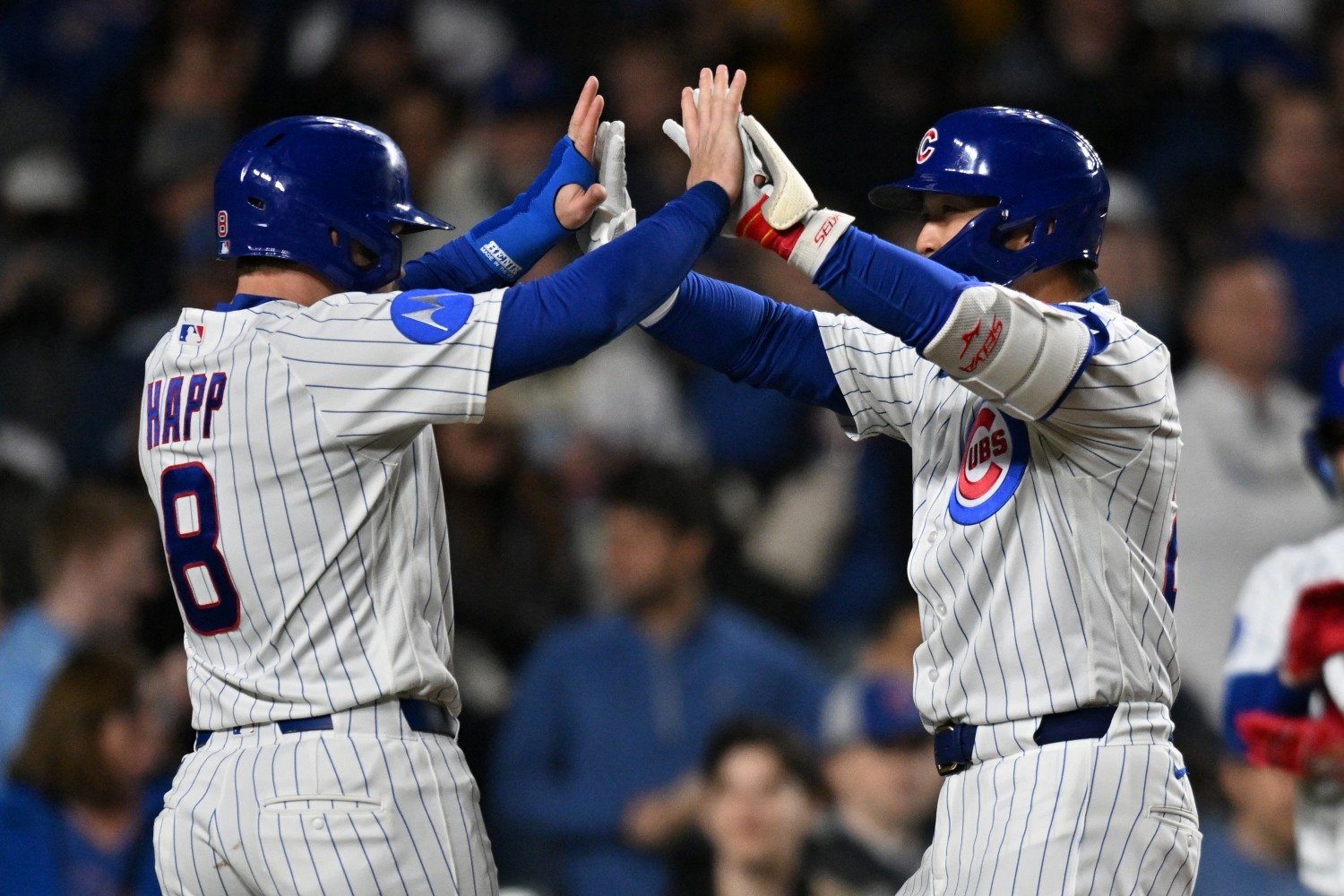 It might not seem so at first, but the Cubs have a pretty straightforward decision on Ian Happ. After parts of 10 seasons with the club, Happ is due to hit free agency at the end of the World Series. Technically, that'll be the first time he's ever had the right to choose his employer for the following season. When Happ and the Cubs were last on the verge of this decision, in early 2023, Happ signed a three-year contract worth $61 million. That meant that he never became a free agent, and that the Cubs never extended him a qualifying offer. Thus, once the Series is over and he officially becomes a free agent, the team can still do so. They have to do it. At first blush, that seems overly simplistic, and maybe even downright wrong. Happ had a rough 2026. He batted .218/.323/.412, and after June 1, those numbers were .210/.311/.375. He's 32 years old. That player is not worth $23.1 million, which is what the qualifying offer will pay players who accept it next year. As we all know, though, there's a lot more to the player and the situation than that. Happ is a good defensive outfielder, even if he increasingly gets that value from his arm and has fringe-average range. He still hit well against right-handed pitchers (.241/.358/.458 for the season, .231/.338/.420 after June 1). He's a beloved part of the clubhouse fabric and the community, and the team and the player went through the difficult but necessary process of his role being reduced already this season. If he comes back in 2027, there won't be the same feeling of obligation to bat him near the top of the order or play him every day as there was in 2026. Only if the team is ready to spend big this winter (and beyond) can they afford to pay $23 million for a glorified platoon bat, even if he comes with added value as a leader and a fan ambassador. As we've already discussed this week, though, the Cubs need to be ready to spend big, anyway. They can and should take the risk that comes with extending the qualifying offer, because here's the other thing: Happ might turn down the offer, anyway. This year's free-agent class is barren; Happ is one of the better outfielders who'll be available on it. He's not in any position to get another three-year deal on the high side of $20 million per year, but if he were unencumbered by the QO, he could certainly find a three-year deal for more like $45 million, or a two-year pact around $38 million. Even if the Cubs hang the QO on him and dampen his market, he might prefer to look for a multi-year landing spot where the rest of his career can unfold. If he does, the team can collect a draft pick when he signs elsewhere—though, since they were luxury-tax payers this year, that pick will be relatively late, after the fourth round. That extra pick is, of course, not a great reward for taking the gamble on paying a player $23 million and only offering him 450-500 plate appearances—not on its own, anyway. Again, there's non-performance value attached to Happ, but there's another consideration that makes the risk worth it for the Cubs this fall, too. They have two more candidates for the same offer, and when you extend multiple QOs that are declined, the benefits of each are incrementally greater than those of one by itself. Seiya Suzuki is the no-brainer of the class, for Chicago. They would love to have him back for $23 million next year. That won't happen; he'll decline the offer without a second thought. After the best season of his American tenure, Suzuki is in line for at least a three-year deal, with at least a $20-million AAV, even accounting for the drag on his market once the Cubs give him a QO. The team should consider re-signing him, but for now, imagine a scenario in which they're outbid. In that case, Suzuki would net them one of those top-150 picks, which means a slightly larger bonus pool for their draft class. Then there's Matthew Boyd. As with Happ, this might be an unappealing idea at first, but pitching is enormously expensive, and the Cubs have to replace a whole lot of outgoing pitchers this winter. The two-year deal between the two parties that expires next month includes a mutual option worth $15 million, which is really a $13-million decision, because he'll be paid a $2-million buyout if it's declined. The Cubs will enthusiastically exercise their side of that option, but Boyd will decline his. At that point, the Cubs have the right to extend him a QO; he's never gotten one before. Boyd will turn 36 over the winter. He's somewhat likely to accept a QO, if the team offers him one. Still, it's an easy call to do it. He pitched better this year than Shota Imanaga did in 2025, after which the Cubs gave Imanaga a QO. He'd be an expensive fourth starter, and that's very much what the team needs to strive to make him on the 2027 club, but it'll be exceptionally difficult to find a starter as good as Boyd on the market for less money, especially on a one-year deal. A short-term deal should be particularly attractive to the Cubs, too, because next year, they won't get a full season from Cade Horton, and new top pitching prospect Cade Townsend won't ascend to the majors. By 2028, if this is going to go where the team desperately wants it all to go, it'll be because Horton and Townsend are in place atop the rotation. It would be nice to lock in a veteran starter for next season without committing significant dollars to that guy beyond 2027; Boyd offers a perfect opportunity. The Cubs are guaranteed to see one player turn down a QO this fall, in Suzuki, and they're very likely to receive a draft pick (along with about $450,000 to spend) when he signs elsewhere. They're unlikely to sign anyone with a QO attached to them; their top free-agent targets should be hurlers (like Tarik Skubal and Freddy Peralta) who were traded during the season and are thus ineligible to receive one. This is an opportunity for a team with a weak farm system and a desperate need to reload it to snatch up to $1.3 million in extra spending power by handing out three QOs and having each declined. Even if Happ and Boyd each take their deals, the team will have some options. That would only represent a total of about $10 million more spent on those two players than they spent in 2026, and while it's arguable that neither is worthy of a raise, most of the ways they might replace either come with both even higher cost increases and as much or more risk. Again, all of this hinges on the team being ready to spend north of $300 million in 2027, and to keep their payroll at that level for the foreseeable future. It's fair to doubt that the Ricketts family will authorize that. If they don't, though, the whole conversation about next year's Cubs is moot; the team is not positioned to win without huge spending. They might as well both demonstrate their understanding of that fact and take steps to ameliorate it for future seasons, by giving Happ, Boyd and Suzuki all the chance to come back on expensive but reasonable one-year deals—or leave the team some residual value as they head out the door. View the full article
-
Royce Lewis, Trevor Larnach, and the Two-Step Arbitration Shuffle
DiamondCentric posted an article in Twins Daily
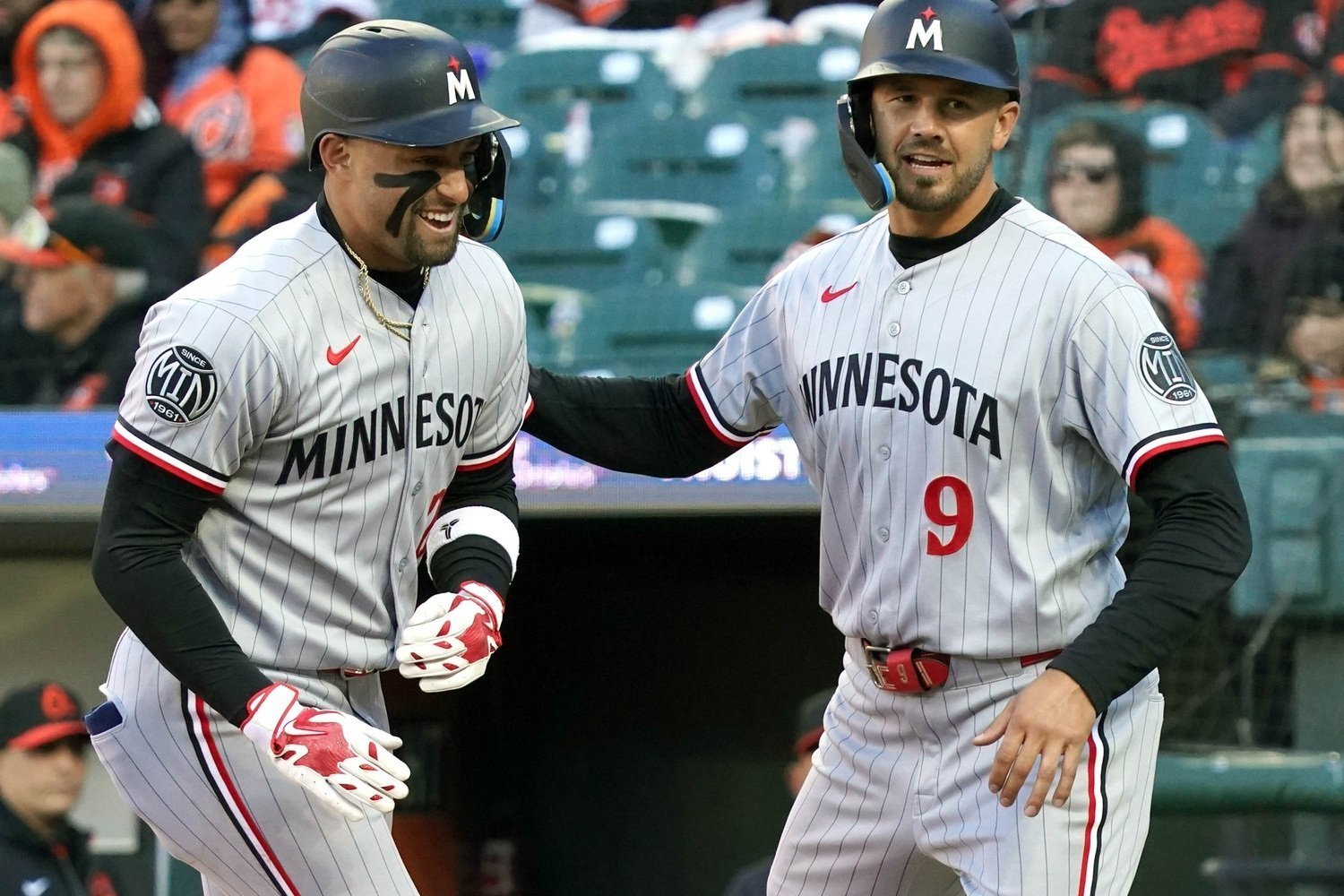 The Minnesota Twins are entering another important offseason with plenty of questions surrounding the roster, but some of the first decisions will come down to simple arithmetic. MLB Trade Rumors recently released its annual arbitration projections, giving the public an early estimate of what arbitration-eligible players could earn for the upcoming season. Two names stand out for the Twins, not because of the projected salaries, but because of what those salaries could mean for the team's offseason plans. Trevor Larnach is projected to earn $6.3 million in 2027. Royce Lewis is projected at $5.1 million. Neither number is outrageous. In fact, both could be reasonable salaries if the players perform at or near their previous levels. That's exactly what makes these decisions interesting. The Twins have to determine whether those players (at the projected salaries) represent useful assets, roster complications, or both. Trevor Larnach Larnach's projected $6.3-million salary feels relatively modest when compared to his potential production. FanGraphs valued Larnach at $17.9 million during the 2026 season, making the projected arbitration salary roughly one-third of the value he provided. That doesn't mean the Twins should automatically keep him, but it certainly gives the organization a reason to avoid giving away the asset simply because it doesn't have a perfect spot for him. The bigger question is playing time. Larnach appeared in 122 games in 2026 and hit .269/.352/.436 with 13 home runs, 23 doubles and a 121 OPS+, while being shielded from facing left-handed pitchers. Those aren't numbers a team should casually remove from its lineup. But the Twins also have to figure out where Larnach fits. If the organization believes it can improve at first base, add another outfielder or give more opportunities to younger players, Larnach could become part of an increasingly crowded roster. His arbitration salary is affordable enough that Minnesota doesn't have to make a decision before the arbitration deadline. Last offseason, the Twins offered Larnach arbitration with the hope that a trade would eventually materialize. It didn't. Instead, the team went into spring training with a player it had seemingly hoped to move. They also tried to move him at the trade deadline before Houston’s owner nixed the deal. The Twins don't want to repeat that cycle. They do, however, have value on their hands, and they need to decide on a way to optimize it. Royce Lewis Lewis presents a similar question, but with significantly more upside and considerably more uncertainty. His projected $5.1-million salary is higher than the $4.3-million value FanGraphs assigned to his 2026 season. On the surface, that isn't a great return. But looking only at 2026 would be a mistake. Lewis provided substantially more value from 2023 through 2025, and he continues to have upside, if he can put it all together. The problem is that the Twins have spent enough time dealing with injuries and inconsistency. His future role is no longer obvious. That creates the potential for a very familiar offseason scenario. The Twins could offer him arbitration, because $5.1 million is a manageable number and because they believe there is a trade market for a talented player. However, if they try that, they might discover that moving him isn't as easy as anticipated. Suddenly, Lewis is occupying a roster spot—and not just any roster spot. He could affect how the Twins approach first base. He could affect how they distribute playing time around the infield. He could influence whether the club believes it has room for another veteran bat. This is where arbitration decisions become more complicated than simply asking whether a player is worth his projected salary. The question is whether the player is worth the opportunity cost attached to that salary and roster spot; Lewis probably isn't. Holding an Asset The Twins have used arbitration in this manner before. The basic strategy is understandable. Rather than non-tendering a player or allowing him to walk away for nothing, the team offers arbitration, retains the player's rights, and tries to find a trade that makes sense. In theory, it gives the front office leverage. The player has value. The contract is known. Other teams have an opportunity to acquire him. Minnesota doesn't have to sell low simply because it's decided the player isn't part of its long-term plans. The problem comes when the trade doesn't happen. One example is Kyle Farmer in 2024. The Twins had a veteran infielder under contract who could provide useful depth, but his presence also complicated the organization's efforts to create opportunities for younger players. Larnach became another example last offseason. Minnesota apparently saw enough value in retaining him to go through the arbitration process, but no trade that met the organization's expectations materialized. There's a roster inertia enforced by arbitration. The abstract fear of losing a player "for nothing" can lead a team to hold onto someone they should part with. Once a contract has been tendered, though, moving the player sometimes yields less value than expected—which can lead a club not to move said player at all, locking in a mediocre option. For a team with a deep roster and limited payroll flexibility, that can become especially problematic. A $5-million or $6-million player isn't expensive in a vacuum, by baseball standards. But if that player prevents the organization from adding someone it believes is a better fit, the real cost is much higher. That's why the Lewis and Larnach decision could be particularly important. The Two-Step Shuffle There's nothing wrong with offering arbitration to a player the Twins would prefer to trade. In fact, it can be smart roster management. The mistake would be assuming that the trade will eventually happen. The Twins need to enter the offseason with clear priorities. If Lewis is part of those plans, keep him and build around him. If Larnach is part of those plans, give him a defined role. If either player is viewed primarily as a trade asset, though, the Twins need to understand what happens if the market doesn't cooperate. That final question is perhaps the most important. The Twins can't afford to make an arbitration decision in November and then make their roster decisions in February, as though the first decision never happened. Both Larnach and Lewis have enough talent to be useful pieces of a competitive team. Their projected salaries make them relatively affordable. But affordable players can still create expensive roster decisions. The two-step shuffle only works if the Twins know where they want to end up. Will both Lewis and Larnach be on the 2026 Twins? Does their relatively low arbitration estimate change the team’s view of the players? Leave a comment and start the discussion. View the full article
-
Revisiting The Royals' Last Offseason Acquisitions: Pitchers
DiamondCentric posted an article in Royals Keep
 The Royals’ pitching acquisitions focused on adding bullpen arms. Of the seven pitchers the Royals acquired last offseason who spent time on the major-league roster, only one made a start. Which of these relievers were able to make a positive impact for the Royals in 2026? These grades are based on a mixture of the decision at the time it was made combined with how the season eventually panned out. The pitchers are ordered from most to least innings pitched. Alex Lange Lange was signed to a one-year contract worth $1,925,000. Lange was coming off a season in which he only pitched one inning for the Tigers and after recovering from a lat injury that kept him sidelined for nearly 15 months. Since joining the Royals, Lange has posted a 6.18 ERA over 59 ⅔ innings and -0.8 fWAR. Lange’s season wasn’t a struggle for the whole season. In May, he had a stretch of nine appearances without giving up a run. During that time, he assumed closing responsibilities after Lucas Erceg struggled and lost his job as the closer. Lange, however, would also eventually lose the closer role. Lange has been particularly susceptible to allowing hard contact and struggled in finding the strike zone. With high walk rates this season and allowing an opposing wOBA of .367, Lange was susceptible to allowing big innings. He allowed at least two earned runs in nine of his 58 appearances. Lange was able to stay healthy following his recovery last year and leads all Royals pitchers in appearances. At least the Royals weren't paying anywhere near the top of the reliever market for his level of production. Grade: D+ Matt Strahm Strahm was acquired in a trade that sent Jonathan Bowlan to the Phillies. He was coming off three consecutive seasons with at least 1.6 fWAR and had experience pitching in high-leverage situations. Strahm was penciled in to join Carlos Estevez and Erceg as the anchors of the bullpen. Unfortunately, nothing went right for Strahm in 2026. Strahm threw 35 ⅔ innings with a 7.32 ERA and -1.3 fWAR. His ERA mark is a career high, along with his 7.14 FIP. He saw his strikeout rate plummet from 27.3% last season to 18.6%, and his fastball velocity decreased from 92.3 mph to 91.3 mph. His season can be encapsulated by the moment he gave up a walk-off grand slam on an 0-2 count against the Twins on July 30th. Strahm had the opportunity to seal the game in a save opportunity, but was unable to make the pitch. Strahm was designated for assignment a week later and was officially released on August 8th after clearing waivers. Strahm did not join another team for the remainder of the season. To make matters worse, Bowlan has performed well for the Phillies. Out of the bullpen, he has a 3.36 ERA with a 0.8 fWAR over 56 ⅓ innings in 59 appearances. It’s one thing for a trade to not pan out, but for the player who was sent away to find success at his new club is just adding insult to injury. Grade: F Mason Black Black was acquired in a trade from the Giants in exchange for Logan Martin. Black spent most of the season going back and forth between Kansas City and Omaha, and has thrown for 31 ⅓ innings with a 4.13 ERA and -0.5 fWAR. While his performance has not been as catastrophic as Strahm’s this season, his key Statcast metrics have been below average across the board. Most projections for Black going into the season were modest, with predictions placing him at near or slightly above replacement level, but he was unfortunately unable to meet that expectation. Next season, he will be entering his age-27 season and will be under team control through the 2031 season. Should the Royals retain him, there will still be time for Black to improve and grow into a role on the major-league roster. However, until he can prove otherwise, the Royals would be wise to examine other solutions for next year’s bullpen. Grade: C- Jose Cuas Cuas threw for 23 ⅓ innings out of the bullpen with a 2.31 ERA, 2.89 FIP and 0.4 fWAR. His fWAR ranks 3rd-highest among Royals relievers. Cuas was signed to a minor league contract in the offseason and, like Black, spent much of the season in Kansas City and Omaha. He was mostly used as a middle-relief option and had moderate success. He did not see many opportunities in high-leverage situations, but he earned five holds and only one blown lead when called upon in close games. Considering he was signed to a minor league deal and outperformed many of the relievers this season, this signing should be considered a success. Grade: A- Eli Morgan Morgan also joined the Royals on a minor league contract and spent a lot of his season going between the majors and Triple-A. Morgan threw for 19 ⅓ innings with a 5.12 ERA and -0.3 fWAR. While not able to find his footing in the major-league bullpen, Morgan certainly earned his opportunities with strong performances in Omaha. He threw for 25 ⅔ innings with a 1.40 ERA for the Stormchasers. Morgan was designated for assignment on August 13 and signed for the Yankees after clearing waivers and electing free agency. He has not made a major-league appearance for New York yet, but his performance in Omaha at least demonstrated enough to earn another opportunity with the Yankees. While Morgan’s time in Kansas City certainly could not be classified as a success, he was available as an option for a bullpen that was unable to find answers all season. Grade: C Nick Mears Mears was packaged with Isaac Collins in a trade that sent Angel Zerpa to the Brewers. The Collins side of the deal was graded a B-, so how did Mears fare for his part of the trade? Unfortunately, Mears had less success in Kansas City than Isaac Collins. Mears threw for 19 ⅓ innings with a 5.12 ERA and 0.0 fWAR. His appearances were often in the sixth or seventh innings and would run hot and cold. He also was unable to strand inherited runners, allowing at least one run to score in all three appearances when he entered with runners on base. Mears’s season ended prematurely in late May, when he ultimately found himself on the 60-day injured list with season-ending shoulder surgery. The Royals still have one year left of control, so he could potentially rebound next season. Grade: C Mitch Spence Spence was acquired from the Athletics in exchange for A.J. Causey. Spence is the offseason acquisition to make a start in this year’s regular season. He made two relief appearances along with his lone start to total 9 ⅓ innings with a 21.21 ERA. With such a small sample, the ERA should be taken with a grain of salt. His 74 innings in Triple-A have not been earth-shattering with a 5.35 ERA and 4.96 FIP, but his four remaining years of team control could allow him more opportunities to impress in Kansas City if the Royals decide to keep him around. Grade: D+ The Royals had targeted the bullpen as an area for improvement last offseason, and unfortunately, the majority of those additions have not panned out (yet). The 2026 Royals bullpen combined for a 5.05 ERA (ranked 30th) and -2.9 fWAR (29th). J.J. Picollo and the front office will have plenty of work to do if they want to turn the bullpen into a strength heading into 2027. View the full article
-
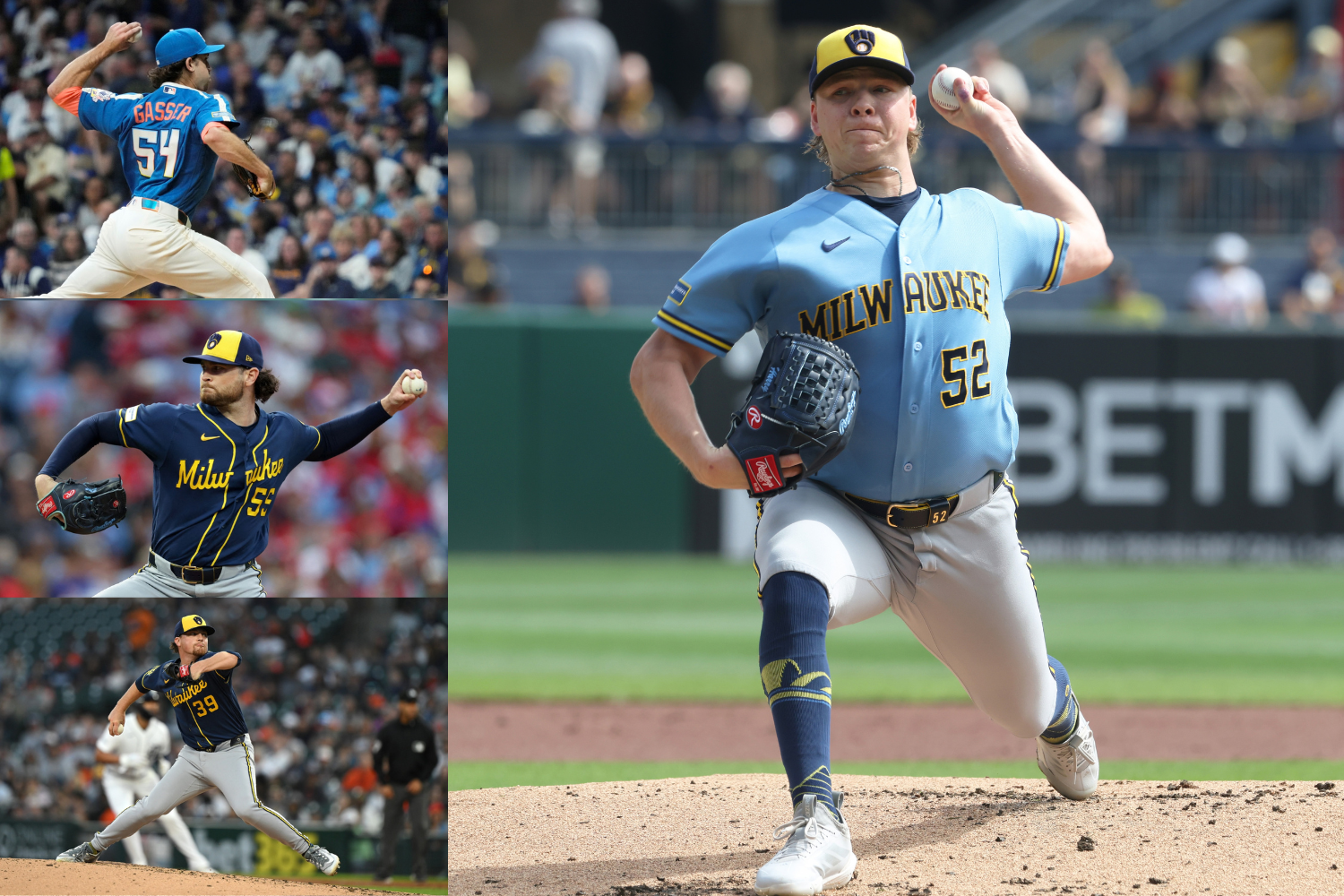 Teams rarely roster 13 pitchers in the Division Series. In a five-game series with two travel days, that extra pitcher probably won't be needed, especially if a team gets enough innings from its starters. Carrying an extra catcher, defensive specialist, or speedy runner is a better use of that final spot. The Brewers don't have that luxury. They have a deep pitching staff, but they entered the NLDS without a reliable traditional starter behind Jacob Misiorowski and Logan Henderson. That meant it would be all hands on deck for Games 3 and 4, so the Brewers loaded up on arms. Dustin May got the ball for Game 3 for a (planned) short start. He pitched fine in three-plus innings, but he failed to control the running game and lost control after a pair of run-scoring ground balls. The Brewers could never fully catch up against the Padres' bullpen, forcing a Game 4 wherein that extra depth will come into play. Because they carried 13 pitchers, Milwaukee has more fresh arms than San Diego. Pat Murphy still hasn't used four of them in the series: Robert Gasser, Chad Patrick, Shane Drohan, and Kyle Harrison. That's partly because they were always on the roster to pitch in a potential Game 4 more than anything else, but also because Murphy preferred more trustworthy relievers in three very close games so far. Patrick and Drohan battled wildness in September. Harrison's excellent fastball disappeared for most of the second half before returning in his last couple of outings. Gasser's peripherals didn't fully support his strong stretch run. All four had pronounced platoon splits in the regular season, so the Brewers must use them carefully in short playoff series, where individual matchups matter more. Pitcher wOBA vs. LHB wOBA vs. RHB Robert Gasser .252 .335 Shane Drohan .276 .344 Kyle Harrison .271 .363 Chad Patrick .342 .262 Murphy declined to name a Game 4 starter on Tuesday night, but he mentioned Gasser, Patrick, and Drohan as candidates. Starting Patrick as an opener might make the most sense. In all five of their playoff games, the Padres have started right-handed hitters Fernando Tatis Jr., Manny Machado, and Ty France in three of the top four lineup spots. Opening with a righty reliever would also force Craig Stammen to choose which platoon bats to start in the bottom half of the order. From there, it's a matter of lining up matchups through the middle innings. If Stammen starts his lefties, it could create a pocket for Harrison near the bottom of the lineup. Machado has struggled against lefty sinker-slider pairings like Drohan's. Gasser could get the most runway as a true bulk guy: he has the lowest opposite-hand opponent wOBA, and his four-seamer and cutter have neutralized righties at times. The Brewers should still be fine in the late innings. DL Hall and JoJo Romero may be down after multi-inning outings, but Aaron Ashby and Trevor Megill have had two days off, and Abner Uribe threw just seven pitches in Game 3. Before that, though, expect plenty of mixing and matching with the guys who haven't pitched yet. To prevent the series from returning to Milwaukee for an elimination Game 5, the Brewers need their wild card pitchers to step up. View the full article
-
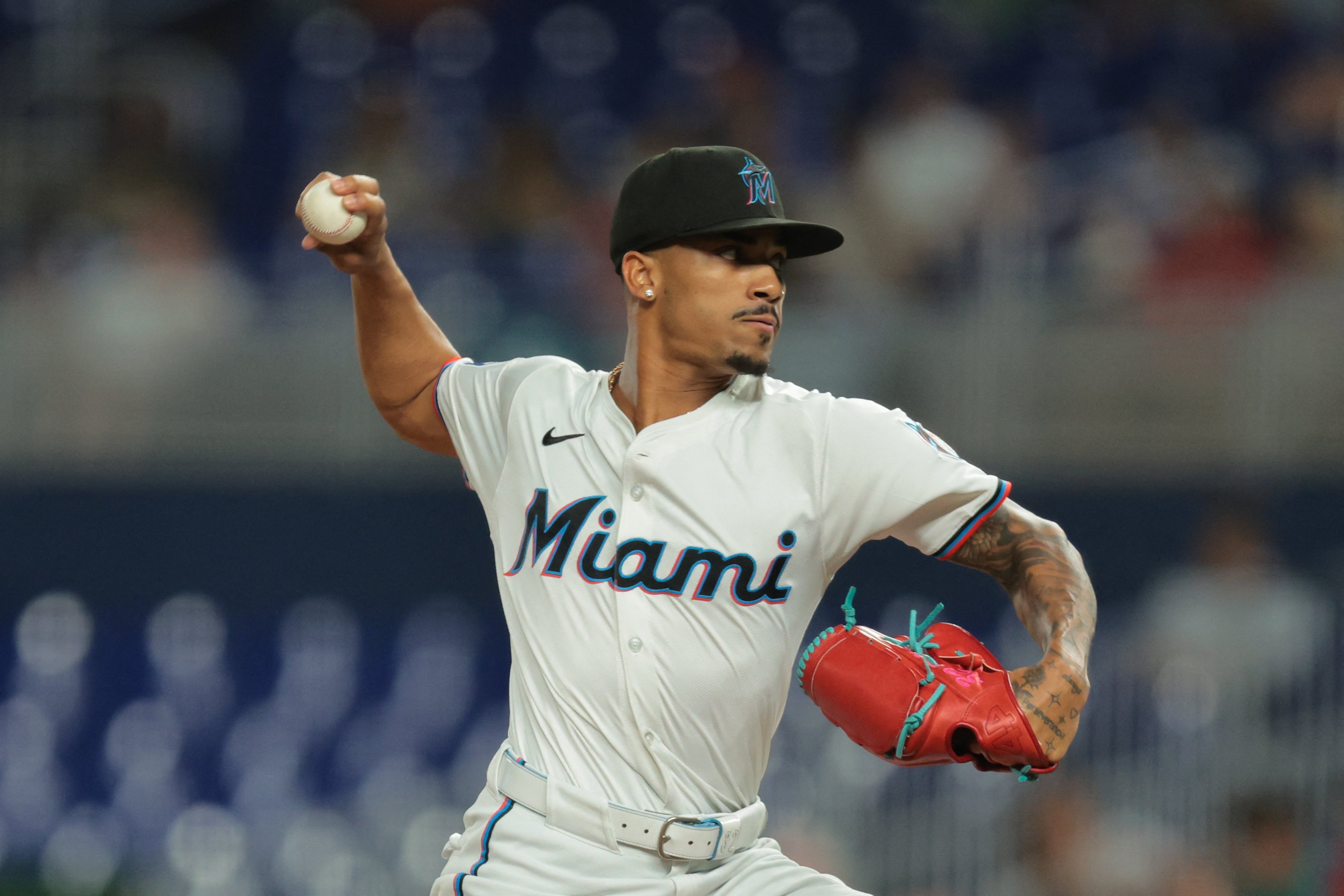 Ronny Henriquez was sidelined for all of 2026 after undergoing right UCL reconstruction with an internal brace procedure, and the Miami Marlins sorely missed him. Their bullpen ranked 18th in Major League Baseball with a 4.10 ERA. With Anthony Bender missing the second half of the season due to injury and Tyler Phillips converting to a starting pitcher, the bridge to closer Pete Fairbanks was highly inconsistent. Assuming no setbacks, Henriquez is fortunately on track for a full 2027 season. Last month, he was seen continuing his throwing program at loanDepot park multiple times. The most recent update regarding the 26-year-old was that he will continue his rehab in the Dominican Republic. The Marlins acquired Henriquez via waivers, claiming him after the Minnesota Twins designated him for assignment. Prior to joining the Marlins organization, Henriquez had thrown only 31 innings with the Twins. In spring training, the righty pitched in seven innings, posting a 5.14 ERA and 7.88 FIP, yet the Marlins put him on their Opening Day roster (even if they wanted to send him down to the minors, Henriquez is out of options). In his first season with Miami, Henriquez posted a 2.22 ERA, 3.15 FIP, 12.08 K/9, 3.33 BB/9 and seven saves in 69 appearances (73.0 IP). His 98 strikeouts tied Edwin Díaz for second-most among National League relievers last year. He didn't spend any time on the injured list. Henriquez also recorded strikeouts in 60 separate appearances, which set an all-time Marlins single-season record. Henriquez possesses swing-and-miss stuff, which the Marlins lacked this season. He had a 16.7% swinging strike rate in 2025 and ranked in the 97th percentile of MLB pitchers whiff rate. His strikeout rate was even higher against left-handed batters than right-handed batters, an important consideration for a team that is thin when it comes to lefty relievers. Henriquez's sweeper was his best pitch (+7 Run Value), generating a 47.3% whiff rate and a .181 batting average against. His slider was even more unhittable (.145 BAA). Both of those play off a fastball that averaged 96.7 mph. This offseason, the Marlins are unlikely to sign another established veteran closer like Fairbanks. The door is open for Henriquez to be used in several different game situations, but he should be the first name that comes to mind in high leverage. Although bullpen help is on the Marlins' shopping list, don't forget about Henriquez's comeback. Recapturing his 2025 form would go a long way toward turning a shaky part of the roster into a strength. View the full article
-
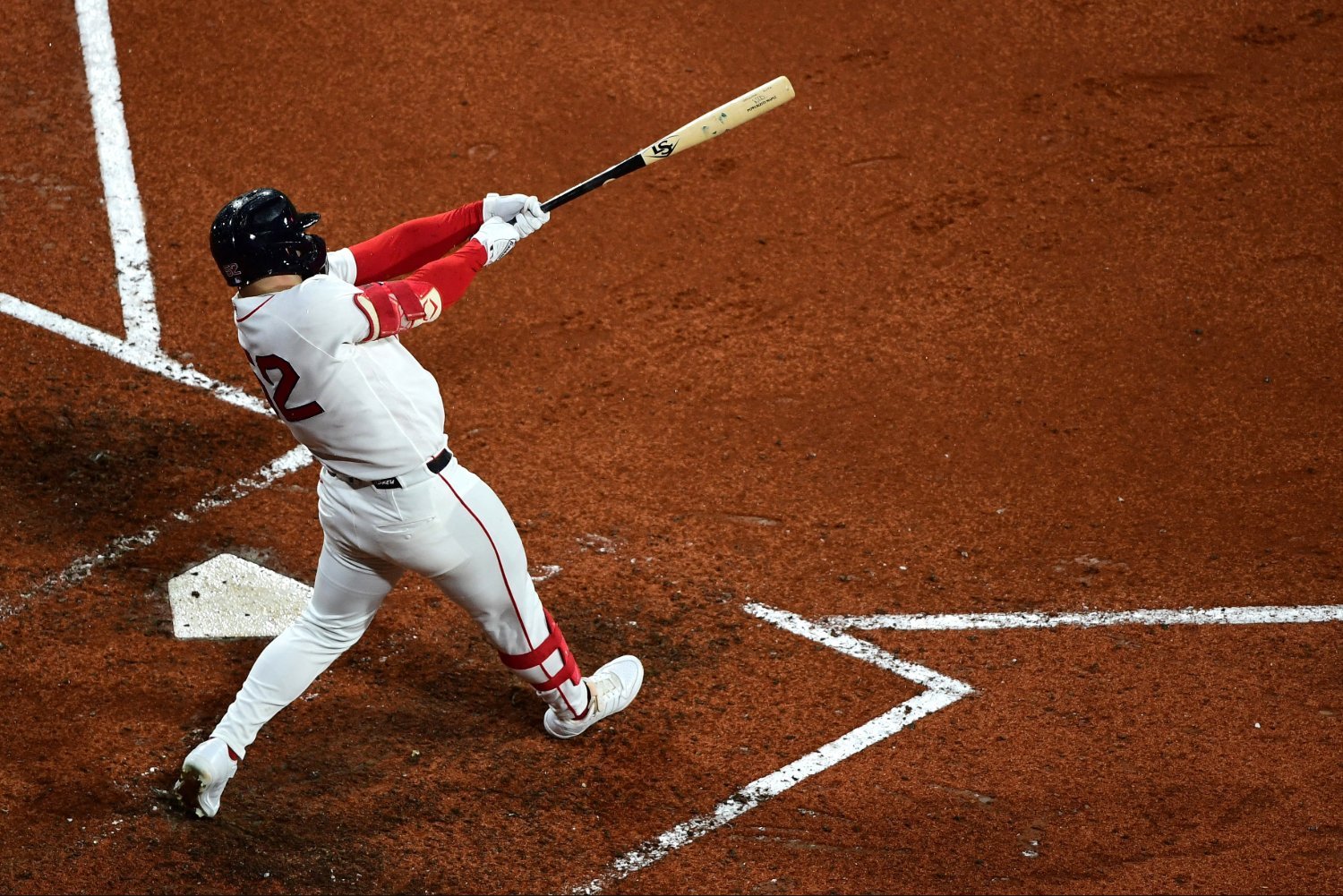 As the old saying goes, “they don’t give out points for style”, and nowhere was that idiom more apparent than the September stretch run for the 2026 Boston Red Sox. After a ferocious July and August saw them go 38-16, good enough for a .704 win percentage and more importantly, a climb back into the postseason picture, Boston spent the past month treading water, still managing to clinch a spot in the playoffs but all the all while playing just .500 baseball at 12-12. While an 87-75 record was good enough for a No. 2 Wild Card finish and an encore matchup with the Yankees in the Bronx (that ended just as poorly as 2025), September also gave way to a number of performances worth building on in 2027 and beyond. Grading Every Red Sox Player In September (2026) Offense There’s ice cold, and then there’s what the Red Sox offense was throughout September. After a two-month stretch that saw the Sox evolve into one of the best and most efficient offenses in baseball, the final month of the regular season saw the reversion back into everything that made awful throughout the spring. The offense concluded September in the bottom third in nearly every statistical category, with American-League-worst finishes in batting average, on-base percentage, OPS, wRC+, runs, hits, WAR, HardHit%, and average with RISP. Now, I’m sure there are some fans who may want to put an asterisk next to that, as it was clear they chose to rest certain players to gear up for the playoffs. The two most obvious cases were Willson Contreras and Ceddanne Rafaela, both of whom played in just five games due to IL stints. Eli White looked to be taking up the mantle of ’Latest Unsung Hero of 2026’ when he posted an .889 OPS and 156 wRC+ to go along with a homer and nine RBIs through eight games before having his season cut short due to an ankle injury. Trevor Story (.725 OPS, 95 wRC+, 2 HR, 7 RBIs) and Roman Anthony (.733 OPS, 101 wRC+, 4 HR, 10 RBIs) continued to put up respectable numbers working back from their own IL stints. Even Adley Rutschman turned his disastrous first month in Boston around tremendously, improving his .499 OPS and 41 wRC+ to .846 and 129 to go along with four home runs and nine RBIs of his own. The problem is that no one really stepped up to become a leader throughout the month, which really hurt with Contreras out of the picture. Lineup staples Wilyer Abreu (.207 AVG, .615 OPS, 71 wRC+), Jarren Duran (.588 OPS, 65 wRC+) and Caleb Durbin (.217/.365/.304, 669 OPS) all struggled to consistently produce, while the depth options Boston had leaned so heavily on to turn things around such as Jahmai Jones (.614 OPS, 68 wRC+), Isiah Kiner-Falefa (.432 OPS, 29 wRC+) and Andruw Monasterio (2-for-27, -45 wRC+) all became borderline nonexistent factors. Even Mickey Gasper saw his herculean run come to an end as he hit just .185 with an OBP of .313 before succumbing to a biceps injury. That tailspin really couldn't have come at a worse time. With the emphasis that is put onto timely hitting in the playoffs, and the Red Sox's lack thereof over the last month, hitting just .163 with RISP and .194 with RISP and two outs—good for 30th and 27th in MLB, respectively—it's no wonder that they barely made a dent against the Yankees' elite pitching staff in the Wild Card Round. Final Grade: F Position Players Name Mar / Apr May June July August September Wilyer Abreu A+ B C+ C A- C- Roman Anthony D N/A N/A N/A A C+ Willson Contreras A A+ B A+ D+ B Jarren Duran F A D- D+ C+ D+ Caleb Durbin D+ D A+ A- B+ C Nate Eaton N/A N/A C+ F N/A C Mickey Gasper N/A A+ D N/A A+ C- Jahmai Jones N/A N/A N/A A+ A+ D+ Isiah Kiner-Falefa D A+ C+ N/A N/A C- Andruw Monasterio C D+ D A+ C- F Ceddanne Rafaela B A A- A+ B+ C Adley Rutschman N/A N/A N/A N/A F B Nick Sogard N/A B- N/A C A- C Trevor Story D- D N/A N/A A A- Eli White N/A N/A N/A N/A C- A+ Connor Wong B- B A C D F Rotation While the offense sputtered through September, the Sox leaned on the trio of Payton Tolle, Sonny Gray, and Ranger Suárez to dominate opposing lineups start after start. Game 1 belonged to Tolle, who more than earned the role thanks to three electrifying starts that not only featured an immaculate inning, but also a season-best 1.53 ERA, 1.23 FIP, and 4.1 BB%. Gray continues to defy Father Time with a four-start stretch that saw him add to his award campaign by holding opposing hitters to a .186 average against to go along with a 2.13 ERA. As for Suárez, he put a disastrous August behind him and locked in to be the big game pitcher Boston paid him to be, not only posting a 3-1 record across four starts with a season-low 1.09 ERA and .182 opponents average, but regaining his usual command as he lowered his August walk rate of 10.3 to 7.3%. When it comes to where the Red Sox's rotation struggled in September, you’d have to look to the writing that had been developing on the wall starting over the summer: Jake Bennett and Patrick Sandoval. Bennett simply never recovered from hitting his rookie wall, posting season worsts in ERA (5.49), opponent average (.325), and FIP (5.14). As for Sandoval, his month started in the rotation, where things went from bad to worse as he lost all four of his starts to go along with a 7.32 ERA, and ended in the bullpen where he posted an equally uninspiring 4.76 ERA across two outings. September also saw the return of two arms to Boston’s rotation who should have a role in the future: Brayan Bello and Tanner Houck. While Bello posted a 2.08 ERA across five outings as a whole for the month, his three starts harkened back to the height of his dominance at times in 2025, allowing just a single earned run over 17 innings to go along with 20 strikeouts and just three walks. Houck, of course, had to wait until game 162 to make his return to the big-league mound, where he allowed three runs over three innings as a final tune up before the playoffs. The rotation wasn't able to do enough to keep the Yankees at bay in the postseason, but this is clearly the main strength of the team heading into the winter, especially when factoring in Garrett Crochet's long-awaited return in the Wild Card Round. Final Grade: B+ Pitchers Name Mar / Apr May June July August September Brayan Bello F B+ F A+ B A+ Jake Bennett N/A C A A+ C C Sonny Gray C+ A+ A+ B+ A A+ Tanner Houck N/A N/A N/A N/A N/A C Patrick Sandoval N/A N/A N/A B C- D- Ranger Suárez B+ B- A+ B- F A+ Payton Tolle B A+ B+ B- A- A+ Bullpen If the July and August stretch saw the Red Sox's offense adhere to the next-man-up approach, then it was the bullpen’s turn to follow suit in September. Even though the 'pen lost Justin Slaten to elbow inflammation, Tyron Guerrero to two separate shoulder injuries, and dealt with Aroldis Chapman managing lat tightness—which in turn caused him to miss four games—the unit as a whole never seemed to miss a beat. The relief corps managed to finish in the top five league-wide in ERA (2.15), left-on-base percentage (84.1%), hits allowed (67), blown saves (1), FIP (3.01), saves (9), strikeout rate (26.7%), and WAR (1.7). It should come as a surprise to no one that Garrett Whitlock was the man leading the way, continuing his season-long dominance with 7.1 shutout innings to go along with a 1.47 FIP. Whitlock wasn’t the only reliever to post scoreless September appearances, though, as Greg Weissert has put his early season struggles in the rearview, tossing nine shutout innings with a .212 average against, and Jovani Morán bounced back from a rough August to toss 7.1 shutout innings of his own while holding hitters to a .160 average. Call-ups Wyatt Olds, Raymond Burgos, and Jedixson Paez all find themselves in the unsung heroes category for their efforts in helping the Sox maneuver through injuries and lightening heavy workloads. Like Morán, Burgos bounced back from an underwhelming August to become an unlikely force for Boston, owning a 2.00 ERA, .182 opponents average, and 0.0 BB% across nine innings. Olds continued his surprising dominance with a 1.86 ERA and .206 average against in eight appearances. And Paez shook off a rocky starter debut to blank the Cubs over five innings of work, allowing just three hits and striking out five en route to his first big league win. If there is one concern to be had here, it comes in the form of Erik Miller. After looking like an absolute steal in August with a 0.79 ERA, .190 average against, and elite strikeout and walk percentages of 41.7% and 6.3%, things quickly fell apart for the big southpaw, as he struggled to a 7.36 ERA. We're not including postseason performances in this report card, but if we were, we might have had to invent a letter grade below "F" for Miller. Final Grade: A Pitchers Name Mar / Apr May June July August September Raymond Burgos N/A N/A N/A N/A C- A+ Aroldis Chapman A A+ D A+ A A Alec Gamboa N/A A A A A+ B- Tyron Guerrero N/A C A+ A+ D A Erik Miller N/A N/A N/A N/A A+ F Jovani Morán A C+ B A D A+ Wyatt Olds N/A N/A N/A N/A A+ A+ Jedixson Paez N/A N/A N/A N/A N/A C Greg Weissert D- C- C A- B+ A+ Garrett Whitlock B+ B A+ A+ A+ A+ View the full article
-
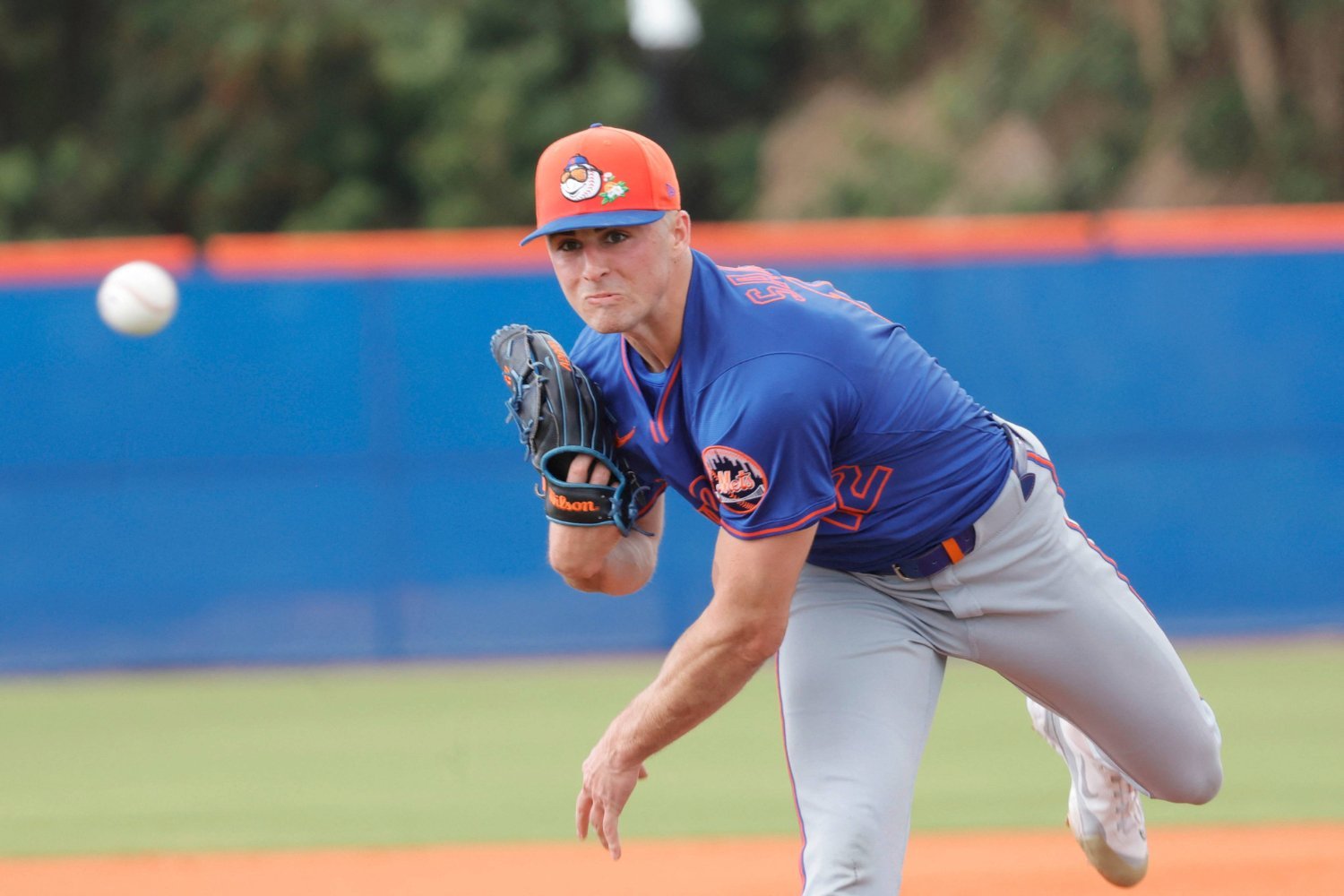 Left-hander Jonathan Santucci, the New York Mets’ second-round pick back in 2024, had a year to remember. No, he wasn’t the minor leaguer with the lowest ERA in the organization, but he was named the Pitcher of the Year in the Mets' farm system for a reason. The growth Santucci showed throughout 2026 was notable, and thus, we'll join the Player Development team in New York in announcing him as our pick for Mets’ Minor League Pitcher of the Year in 2026. After mastering Double-A, he encountered some issues in the much tougher environment of Triple-A, but the potential is there for him to contribute at some point in 2027. Between Binghamton and Syracuse, the southpaw made 27 starts and tossed 125 innings, with a 4.03 ERA and a 3.63 FIP. His 50.2 percent groundball rate is awfully promising, as is his 30.8 percent strikeout rate. That's a combination of weak and limited contact that will play at every level of affiliated ball. Santucci did his best work in Double-A. There, he posted a 3.57 ERA and a 3.08 FIP in 90.2 frames, with 120 strikeouts. His 45 walks were a tad high, and it’s certainly something to keep an eye on, but the potential to miss bats at the highest level is exciting. Santucci earned a summer promotion to Triple-A, where he struggled with a 5.24 ERA in eight outings. His walks went up, as did his home run rate (1.57 per nine innings, as opposed to just 0.40 in Double-A). He did, however, make some adjustments and earn better results in his last four starts at the level: a 3.54 ERA and 25 punchouts in 20.1 frames. The left-hander was named a 2026 Double-A Eastern League All-Star during the season after his quality stint with the Rumble Ponies. His 163 Ks between the two levels led the organization's minor-league system. Grand Central Mets 2026 MiLB Pitcher of the Year: Jonathan Santucci Santucci is ranked as the Mets’ No. 7 prospect here at Grand Central Mets, and he's sure to jump into the top five once an offseason re-ranking is released. The organization loves his ability to get swings and misses, and it all starts with his incredible pure stuff. The southpaw sits in the low-to-mid-90s range, mostly around 93 and 94 mph, but can touch 96 or even 97 if the situation demands it. He throws his fastball from a high release angle, which helps it generate a good amount of carry at the top of the zone. His best offering might be his slider, which usually checks in between 86-89 mph and gives a true bat-missing weapon with two-plane break. He complements it with a curveball and a changeup. In order to take the next step, Santucci needs to prove he can lower the 5.50 walks per nine innings he issued in Triple-A this year, as well as the elevated home run rate that began to plague him against the most advanced hitters in the minors. If he can do that, he can certainly be at least a mid-rotation starter at the MLB level someday. There’s a non-zero chance that Santucci is given an opportunity to compete for a rotation spot next spring if there is one to be had. The most likely outcome, however, has him starting the year in Triple-A, proving that the gains he made in the last four starts of this year were no fluke, and earning a place in New York at some point later in 2027 with his performance in Syracuse. View the full article
-
 Every year, only eight of MLB's 30 teams earn the luxury of being able to live fully in the present with gamedays still on the calendar by the first weekend of October. In 2026, the Toronto Blue Jays are not one of them. It was an earlier start to their offseason than anyone expected, but the work that happens in their baseball operations department at this time of year, even though most of us won't see it, will have a prolonged impact on their goal to return to the postseason. Of course, the biggest moves of the winter can seem insignificant by the end of the following year. In 2025, the Jays won the pennant despite a virtually non-existent showing from free agent acquisition Anthony Santander. The next offseason saw them sign Dylan Cease, Kazuma Okamoto, and Tyler Rogers in free agency, all of whom surpassed expectations but still weren't enough to prevent the team from finishing in last place. Still, this isn't a front office known for standing pat. Here are the components of the Blue Jays' financial situation that truly matter. Where They Stand According to RosterResource, the Blue Jays finished 2026 with a projected cash payroll of $283.96M. For luxury tax purposes, their payroll was about $30M higher. Their 2026 luxury tax payroll was the fifth-highest in the league, behind the Dodgers, Mets, Yankees, and Phillies, in that order. Now to address the hopefully-smaller-than-162-games-sized elephant in the room: the expiration of the CBA. There might not be a luxury tax next year, but we aren't yet far enough in negotiations between the players and owners to know for sure. For simplicity's sake, let's say for now that the current luxury tax system will continue into next year. In 2022, the first season of the now-expiring CBA, the first luxury tax threshold was $230M. With each passing season, that number increased by either $3M or $4M. Using a linear forecast based on the past five years, the current $244M mark would increase to $248M. There are three other thresholds beyond the first one that came in $20M increments this year, all the way up to $304M, with increasingly stiffer penalties for surpassing each one. At $314.69M, the Blue Jays' payroll checks in about $10M above the highest threshold. If you've heard the way some other big market owners talk about the luxury tax in recent years, the fact that the Jays are well over its fourth line might worry you. Remember how Hal Steinbrenner tried to convince people that he couldn't keep spending this much money on the Yankees? Thankfully, team president and CEO Mark Shapiro revealed in his season-ending press conference last week that the Jays' willingness to spend isn't changing, telling reporters his "expectation is we'll be in a similar area of support and resources." Take all this with the usual caveat that a harder cap could come into play next year and render all this outdated, but their absence from the 2026 postseason doesn't mean that payroll cuts are on the way. This team should remain one of the league's biggest spenders. Money Coming Off the Books The Blue Jays have more than their fair share of veterans on expiring contracts even after trading Kevin Gausman and Daulton Varsho at the deadline. It's not a foregone conclusion that all of them will leave. Shane Bieber has spoken about how he'd embrace the opportunity to return. Max Scherzer seems far too competitive to retire before he gets one more shot at a championship. In the case of Jameson Taillon and Paul Sewald, who were acquired midseason, it's also important to remember the Jays didn't have to pay their entire 2026 salaries because they began the year with other teams. Still, the amount of money they spent on pending free agents would be enough to take them below the first luxury tax threshold and then some. Player 2026 Salary Paid by TOR George Springer $24,166,667 Kevin Gausman $16,112,299 Shane Bieber $16,000,000 Jeff Hoffman $8,614,706 Daulton Varsho $7,588,235 Yimi García $7,500,000 Jesús Sánchez $6,327,273 Max Scherzer $3,000,000 Eric Lauer $1,270,588 Patrick Corbin $1,000,000 Luis Urías $733,690 Tyler Heineman $562,500 Jameson Taillon $433,583 Paul Sewald $368,984 Total $93,678,525 The total above does not include Myles Straw's $8M club option for next year. If the Blue Jays decline to exercise it, he will become a free agent as well, but they'll be hit with a $1.75M buyout. In effect, declining Straw's option will free up an additional $6.25M for the Blue Jays. It also doesn't include the $2M in incentives Max Scherzer earned on top of his $3M base salary for pitching 75 innings this past season. Money Coming Onto the Books 8.3%. That's the portion of the Blue Jays' payroll committed to players who are not yet eligible for free agency, the second-lowest mark in baseball ahead of only the Atlanta Braves. They've already committed $238M toward their 2027 payroll, fourth-most in MLB. Still, there are guys who will need raises before spring training, most notably Louis Varland and Ernie Clement. Players entering their second year of arbitration eligibility are a year closer to free agency. Two public contract resources, Spotrac and MLB Trade Rumors, have released 2027 salary projections for this group of players. I'll be averaging those out. Player Status 2026 Salary Paid by TOR 2027 proj. Salary (Spotrac) 2027 proj. Salary (MLBTR) 2027 proj. Salary (average) Diff. '27 proj. vs '26 Ernie Clement Arb 2 $4,600,000 $7,600,000 $7,600,000 $7,600,000 $3,000,000 José Soriano Arb 2 $852,941 $6,600,000 $5,600,000 $6,100,000 $5,247,059 Josh Smith Arb 2 $948,529 $3,800,000 $3,700,000 $3,750,000 $2,801,471 Louis Varland Arb 1 $821,500 $3,000,000 $3,800,000 $3,400,000 $2,578,500 Nathan Lukes Arb 1 $808,500 $2,900,000 $2,100,000 $2,500,000 $1,691,500 Spencer Arrighetti Arb 1 $797,300 $1,500,000 $1,900,000 $1,700,000 $902,700 Davis Schneider Arb 1 $813,500 $1,250,000 $1,300,000 $1,275,000 $461,500 Bowden Francis Arb 1 $809,800 $1,000,000 $1,300,000 $1,150,000 $340,200 Total $10,452,070 $27,650,000 $27,300,000 $27,475,000 $17,022,930 The total above does not include players who are still not yet eligible for arbitration, such as Trey Yesavage and Addison Barger, but guys like that haven't accrued enough service time to get significant raises just yet. Clement is forecasted by both Spotrac and MLBTR to make the most money of anyone on the team in the arbitration pool, as he went from a utility guy to missing only nine games since the start of 2025, although GM Ross Atkins was noncommittal about him being an everyday player next season. Another element not considered above is the increase in salary that was previously agreed upon for players with guaranteed contracts, and there are a lot of those on the way. Since luxury tax payrolls are calculated using average annual values instead of current-year salaries, the changes below will allow the Blue Jays to move further away from the threshold in 2027 despite paying some of their core guys more money. Dylan Cease's base salary is $8M higher in 2027 than it was in 2026, so he'll make a little over $33M next year when factoring in his signing bonus. The extension Andrés Giménez signed with Cleveland in 2023 was heavily backloaded; his total earnings will increase from $15.57M this past year to $23.57M per year from 2027 through 2029. José Berríos's earnings will increase from $18.71M to $24.71M for the final two years of his deal. Kazuma Okamoto only took home $7M in 2026 (with a $5M signing bonus), but that'll go up to $16M each year from 2027-29. Cody Ponce's contract had a similar stipulation: $5M earnings (with a $3M signing bonus) in 2026, then $11M from 2027-28. Tyler Rogers is also in the same boat. He made $7M plus a $5M signing bonus this past year. His salary will rise to $12M next year and in 2028 before his vesting option will determine his 2029 status. Finally, Alejandro Kirk's earnings will increase by $3.625M from this season for the final four years of his recent extension. How Much Can the Blue Jays Spend? I mentioned earlier that Roster Resource estimated the Blue Jays have already committed $238M to their 2027 cash payroll, a number that does not account for the inevitable raises that players under team control will be receiving. Their estimated luxury tax payroll, though, is below that amount thanks to all the back-loaded deals listed above. Once the arb guys' salaries are determined for next year, their cash payroll should rise to somewhere between $255-$260M, with the luxury tax payroll coming in at, ironically, roughly $238M. Category Dollars Change to 2026 Luxury Tax Payroll ($314.69M) Pending Free Agents $93,678,525 $221,012,504 Raises for Arb-Eligible Players $17,022,930 $238,035,434 Using our previous forecast of next year's hypothetical luxury tax boundaries, the fourth threshold would increase to $308M. If ownership is fine with exceeding that mark like they did this year, we could see the Blue Jays spend in excess of $70M this offseason via free agency/trade. In the event they try to duck below that fourth threshold to avoid a stiff competitive balance penalty, an additional $65M in payroll would likely be the most we can expect from this coming winter (again with the caveat that a salary cap could come in and screw all of this up). What does that mean? Well, $70M is significant! The Blue Jays have already been linked to Cubs outfielder Seiya Suzuki who, due to the surging cost of good right-handed hitting and the weak class of position player free agents, is likely to command an AAV somewhere in the $30M-$35M range. There's also plenty of early chatter about another free agent coming to Toronto from overseas. Ben Nicholson-Smith mentioned the team will likely be interested in 27-year-old Japanese 3B/OF Teruaki Sato. In his past three seasons in Japan's NPB, Sato has recorded a wRC+ of 202, 182, and 134, respectively. By comparison, Kazuma Okamoto was at 210, 161, and 180 in his final three seasons in Japan, although the 210 wRC+ came in an injury-shortened platform year. Okamoto is three years older than Sato, who seems to offer a little more positional flexibility. Okamoto signed for an AAV of $15M, so it's reasonable to suggest Sato will command around $20M. Even if the Blue Jays decide they're no longer comfortable exceeding the fourth luxury tax threshold, a world where they sign both Suzuki and Sato seems quite plausible. Their combined AAVs are unlikely to exceed $70M. What a sudden luxury tax mandate from Rogers would do is add to the difficulty of signing three marquee free agents. There hasn't been much serious chatter in the rumour mill surrounding the Blue Jays and Tarik Skubal as of yet, but let's say the Blue Jays try their best to land Suzuki and Sato and then talk themselves into seriously pursuing Skubal. Combined, the AAVs of those two and Skubal could touch $100M. A far-fetched hypothetical world where they sign all three could result in their 2027 payroll surpassing the Yankees, who currently have $253M in cash commitments for next year, to Toronto's $238M. The Blue Jays have an ownership group that has shown a recent willingness to blow past the luxury tax, and they're about to gain some wiggle room on that front. A salary cap would hurt them more than most teams. It looks like Rogers is willing to sustain their current financial commitment to this roster, and the fact that they could still be in play for two marquee free agents even if they walk back on that is a scenario that fans of most other teams can only dream of. If they keep their foot on the gas, Toronto's recent trend toward becoming one of the game's true financial behemoths will only accelerate. There's no denying that some of the more expensive decisions made by the Shapiro & Atkins regime have backfired to some extent, leading to some trouble spots on the Blue Jays' payroll. It's only two years in, but the Santander deal looks like a dud. Berríos's contract isn't up until the end of the 2028 season. Giménez is the best defensive shortstop in baseball, but he probably isn't worth the $23.5M he'll be making over the next three seasons. Yariel Rodriguez is owed $8M next year and $6M in 2028 even though he's been DFA'd twice. Still, all indications point toward them being flexible enough to make multiple significant additions to the roster over the next few months, but that'll all have to wait until the worst of these labour negotiations pass. Author's note: Thank you to Leo Morgenstern for assisting with some of the key details in this article! View the full article
-
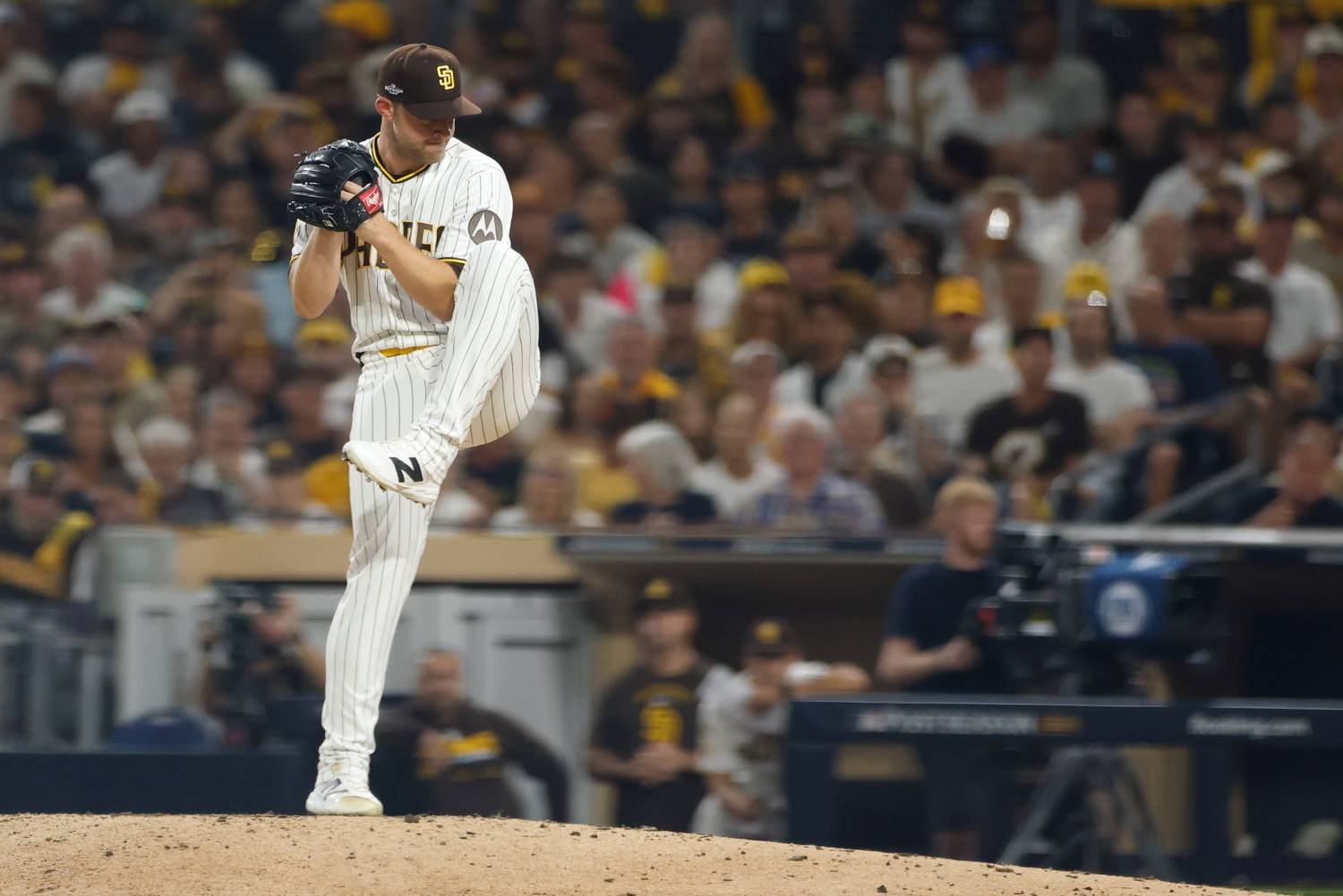 If you thought pitching chaos was a thing at the end of July, the San Diego Padres took it to a new level in Game 3 of the NL Division Series. And because of that, their season remains alive for at least one more day. What Nick Pivetta started, Michael King finished. How it got to that formula and what happened in between was certainly chaotic. But that describes the Padres' season in a nutshell. Now, thanks to a 4-3 victory over the Milwaukee Brewers in front of the third-largest Petco Park crowd of 47,708, the Padres have their first win of the NLDS and can pull even in the series Wednesday (7:08 p.m., FS1). As desperate as the Padres were in the final days of July to get anything positive in the early innings of games, the sixth day of October saw the Friars clamoring for a finishing touch to an elimination game from a unit that has been one of the toughest in all of MLB this season. Only the two biggest arms the Padres had relied upon weren't available. Superstar closer Mason Miller was abruptly removed from the roster shortly before first pitch as his wife went into labor. Miller's sidekick, left-hander Adrian Morejon, was unavailable for a second game in a row after he threw two innings in Game 1 and took the loss after giving up a seventh-inning homer to Padres fans' newest villain, William Contreras. With starters in MLB playing a bigger role in end-of-game situations as the regular season came to a close and now in the postseason, King rose to the occasion for the Padres when they needed it the most. In addition to Morejon's Game 1 loss, Miller unexpectedly yielded a walk-off single to Jackson Chourio with two outs in the bottom of the ninth inning in Sunday's Game 2. Knowing his teammates' situation, King was ready for a relief role in Game 3. While manager Craig Stammen said in his pregame press conference that both of his big bullpen weapons were good to go, he knew they weren't. That deception is fine. You don't want the other team to know all your secrets. There were heroes all around in this game, from Jackson Merrill's defense to Jake Cronenworth's homer to Xander Bogaerts' all-around play. But this one belongs to King. The ace right-hander had thrown 72 pitches just two days before in Milwaukee. But the Padres needed more from him and he delivered. King had made just one relief appearance in his three seasons in San Diego, coming in 2024 during the regular season. King has been the Padres' savior all season. While it wasn't known publicly about Morejon's status, it seemed pretty clear when the seventh inning rolled around and King started to warm up. That would have been prime Morejon territory. Stammen said after Game 3 that Morejon was battling a shoulder issue. After right-hander Bradgley Rodriguez escaped the eighth inning after allowing the Brewers to pull within 4-3, it was King's turn. While the pressure was high, King entered the game to face the Nos. 7-8-9 hitters in Cooper Pratt, Sal Frelick and Joey Ortiz. Pratt hit a deep fly down the right-field line that was snared on the run by Fernando Tatis Jr. Frelick grounded out to Cronenworth at second base. David Hamilton pinch-hit for Ortiz and singled to center, bringing up the top of the order in Chourio, the Brewers' postseason star in each of his three MLB seasons. But Chourio grounded out to Bogaerts at short to take it to the ninth. King got his only strikeout when Jake Bauers led off the ninth by going down swinging. Contreras drew a feisty nine-pitch walk, then Brice Turang walked on six pitches. Was King tiring? Was the adrenaline rush wearing off? Up came Christian Yelich, the Brewers' captain who already had two hits and his first postseason RBI since the 2018 NL Championship Series. King threw Yelich a first-pitch slider that was pounded into the ground and right at Bogaerts, who was playing up the middle. Bogaerts fielded the ball, stepped on second and then threw to first to edge Yelich for a game-ending double play. King got the save after Morejon and Miller couldn't in Games 1 and 2. He hadn't had a save since notching six in 2023, his final season with the New York Yankees before being traded to the Friars. Now the question is what do the Padres have left? Right-hander Walker Buehler is probably the starter for Game 4 after Robbie Ray was up in the bullpen in the ninth inning in case of extra innings, although the left-hander could get the nod as he did for Game 1. As Pivetta did in Game 3, he will have a short leash. There will be more bullpen chaos needed. Will Miller be back? What is Morejon's availability? Left-hander Yuki Matsui held his own by getting three outs, then Rodriguez came on to get four outs. Both have pitched in all three games. Stammen will have to trust someone he has yet to put into a postseason game, whether it is right-hander David Morgan or right-hander Joe Musgrove, especially early on. Jason Adam, who got just one out in the fifth inning in Game 2, and Rodriguez will need to be saved for late-inning situations regardless of whether Miller returns for Game 4. Ray will be an early option along with Morgan and Musgrove if he doesn't start with Buehler being that guy if he doesn't start. But those are situations to be addressed as they arise in Game 4. For now, the Padres live another day thanks to a little more chaos. View the full article
-
Mason Miller Placed On Paternity List By Padres Before Game 3
DiamondCentric posted an article in Padres Mission
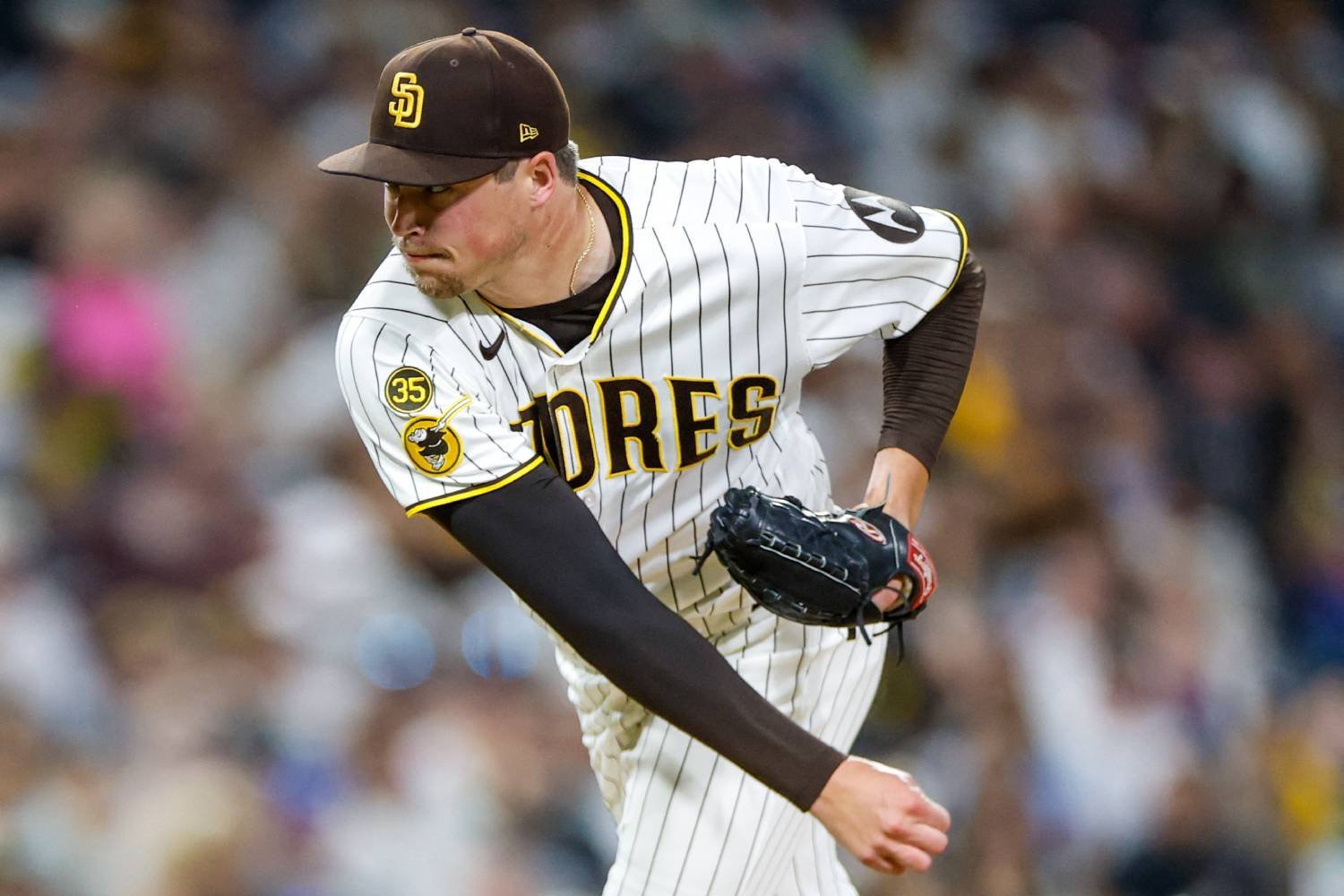 For the second time this series, with this one at the most inopportune time, the San Diego Padres are losing a pitcher on a temporary basis. Superstar closer Mason Miller was placed on the paternity list just before Tuesday's Game 3 of the NL Division Series against the Milwaukee Brewers. His wife went into labor Tuesday afternoon. Left-handed reliever Wandy Peralta replaced Miller on the roster. It is unknown whether Miller would be available if there is a Game 4. The Padres trail the Brewers 2-0 in the best-of-five series. Right-hander Walker Buehler went on the paternity list before Game 1 as his wife was due to give birth Saturday. He missed both games in Milwaukee and was active for Tuesday's Game 3. Miller, arguably the top closer in MLB, surrendered the walk-off single to Brewers star Jackson Chourio with two outs in the bottom of the ninth of Sunday's Game 2. View the full article
-
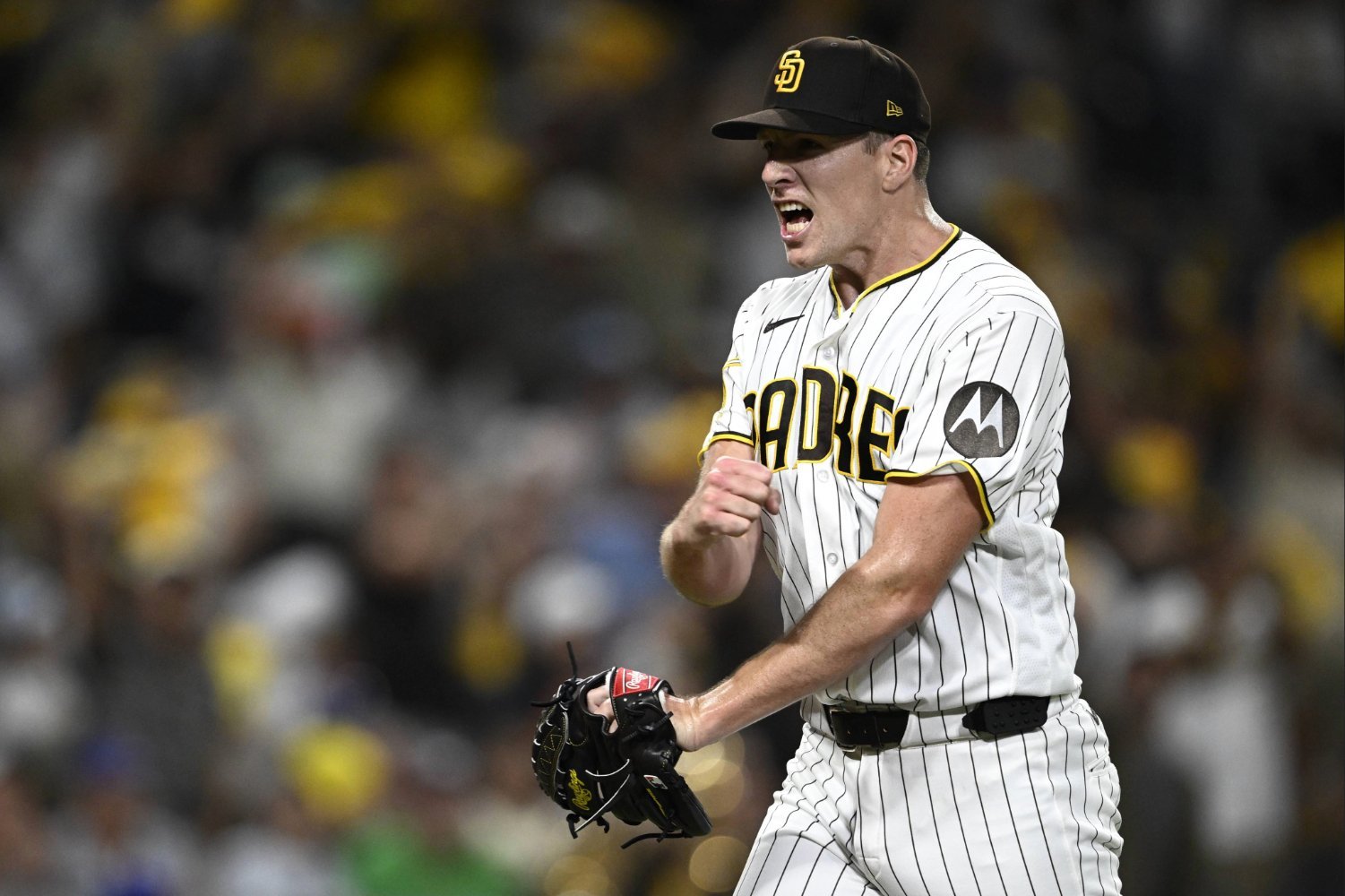 The San Diego Padres are on the brink of elimination with a 0-2 deficit in the NLDS against a Milwaukee Brewers team that grew stronger with two exciting comebacks at home. But that is not the only worrying news, as Nick Pivetta was announced to take the mound as the starter for the do-or-die contest. Why is that worrying? Well, his terrible past against the Brewers puts him at the center of attention. In five starts, he has a 1-3 record and 8.76 ERA with 24 strikeouts and, worst of all, 14 walks in just 24 2/3 innings. Pivetta was on the injured list from mid-April and returned in September to the rotation. In five outings, he finished with a 2-0 record and 1.64 ERA and allowed only two home runs. His arsenal looked good and he averaged 94 mph after throwing 302 four-seam fastballs, his best peak since he recorded 94.6 mph in 2023. Although he has thrown only 34 2/3 frames this season, Pivetta has been dominant, especially when he mixes the cutter, the sweeper and his curveball. All are pitches that have improved in terms of their perfect contact allowed rates compared to their samples from last year, and they have helped him be more efficient against left-handed hitters. Another key aspect of Pivetta is how consistent he has been when he faces the batting order for the first and second time, limiting his opponents to a .284 and .298 slugging percentage, respectively. His command of the strike zone in that aspect will be vital, since his opponents’ on-base percentage improves when he faces the order for the second time. Pivetta has not allowed home runs this year in that situation, but hitters have improved their contact rate by 5.0%. The Brewers are characterized by having a lineup that adapts to any situation, and it is clear that they need to take advantage of every slip from Pivetta before he can advance and the relievers take over the game. Unfortunately for the Padres, Brewers hitters Pivetta could face in Game 3 have combined for a .302/.370/.508 offensive line, with seven extra-base hits, three of them home runs, and an .878 OPS. Christian Yelich is an old acquaintance of Pivetta. He hit two home runs against him punishing his fastball when he played with the Marlins in the past, but since he has been in Milwaukee he has gone 3-for-7 against him with a double and three RBIs. In most of those counts there was a common denominator, Yelich’s patience, without chasing pitches on the edges of the corners and the high zone. Despite a down season, he could be the biggest threat in the lineup tonight. Let’s take a look at the rest of the hitters, since there are some additional interesting points here: The production from Gary Sanchez and Sal Frelick has mainly come against Pivetta’s fastball, and there have been quality at-bats from Joey Ortiz and Jake Bauers. But in what will be several of the matchups under the greatest pressure, Pivetta has shown dominance against Brice Turang, William Contreras and Jackson Chourio in the past, who combine for a .182/.280/.227 line against the right-hander. However, behind those slash lines, Chourio’s raw talent did not completely disappear, as he averaged a 67% hard-hit rate in the three at-bats in which he put the ball in play. Turang, who in general is 1-for-6 with three strikeouts, also hit the curveball better, leaving Contreras’ case as the most critical, with a 33.3% whiff rate. Pivetta located most of those pitches outside the zone against Contreras, and his only big mistakes came when he left pitches right down the middle. Turang and Bauers went 0-for-8 in Game 2, so it is possible that manager Pat Murphy experiments with some change in the lineup. In any case, Pivetta’s matchups against Contreras and Yelich could be key for both sides. View the full article
-
 Everyone from the most casual fan to Tom Pohlad agrees: if the Twins are going to be competitive, the team needs to spend more money. But how much (and when) is still up for debate. A couple years ago, I laid out the messy path ahead of the Twins. Beyond any familial mandate to cut payroll in 2024, one reason trouble could have been expected was that the team had built in several increases due in 2025, as well as 2026. Of course, the Twins figured out (shall we say) creative ways to ensure payroll remained low going into 2025, and they kept that pace this season. Keeping costs down seemed necessary when the team was considering a full-fledged sale to new owners. That possibility has come and gone (at least for now), though, and there are new investors on board, helping the Pohlad family out of whatever debt trouble they were ever actually in. Now, Pohlad says he wants to get back to spending more competitively. If he's serious, he has options, and the flexibility to move in a few creative ways. Let’s look at a preview: Payroll Year 2026 2027 2028 2029 Free Agents $55.39 $50.64 $15.14 $0 Arbitration $38.49 $47.3 $24.1 $25.6 Rookies $6 $6.8 $9.9 $15.65 Correa $10 $10 $10 $0 TOTAL (in millions) $109.88 $114.74 $59.14 $41.25 As things stand, the Twins will basically run the exact same payroll in 2027 as they did in 2026. After that, though, the financial commitments shrink considerably. That means the Twins have something long desired by every team: financial flexibility. Free Agency: 2026 2027 2028 2029 Pablo López $21,750,000 $21,750,000 FREE AGENCY FREE AGENCY Byron Buxton $15,142,857 $15,142,857 $15,142,857 FREE AGENCY Jeff Hoffman $3,335,294 $7,250,000 FREE AGENCY FREE AGENCY A.J. Minter $3,411,765 FREE AGENCY FREE AGENCY FREE AGENCY Josh Bell $5,750,000 FREE AGENCY FREE AGENCY FREE AGENCY Victor Caratini $4,000,000 $6,500,000 FREE AGENCY FREE AGENCY Taylor Rogers $2,000,000 FREE AGENCY FREE AGENCY FREE AGENCY TOTAL $55,389,916 $50,642,857 $15,142,857 $0 The Twins will start the offseason by dumping three free-agent contracts from their books: A.J. Minter, Josh Bell, and Taylor Rogers. That doesn’t add up to much, but the real story begins the following year. The 2027 campaign will mark the end of deals for Pablo López, Jeff Hoffman (whose salary is partially covered by the Blue Jays), and Victor Caratini. Together, the three make up $41 million in current commitments. After that, the only free agent signed through 2028 is heart-of-the-team Byron Buxton. When his time is up, the Twins have an open road. That’s quite different from some teams, who are looking at some unfavorable long-term contracts (see: Philadelphia Phillies, San Diego Padres). Instead, the team’s current spending on free agency (or lack of any) gives a lot of wiggle room. Arbitration 2026 2027* 2028 2029 Joe Ryan $6,100,000 $9,600,000 FREE AGENCY FREE AGENCY Ryan Jeffers $6,700,000 FREE AGENCY FREE AGENCY FREE AGENCY Dean Kremer $5,750,000 $6,500,000 FREE AGENCY FREE AGENCY Bailey Ober $5,200,000 $6,900,000 FREE AGENCY FREE AGENCY Trevor Larnach $4,475,000 $6,300,000 FREE AGENCY FREE AGENCY Anthony Banda $1,625,000 $2,300,000 FREE AGENCY FREE AGENCY Royce Lewis $2,850,000 $5,100,000 $8,300,000 FREE AGENCY Cole Sands $1,100,000 $1,300,000 $2,500,000 FREE AGENCY Taj Bradley $780,000 $4,500,000 $6,200,000 $13,000,000 Tommy Nance $780,000 $1,200,000 $1,900,000 $3,000,000 Kody Clemens $780,000 $3,600,000 $5,200,000 $9,600,000 Alex Jackson $1,350,000 Minor League Deal? Justin Topa $1,000,000 TOTAL $38,492,026 $47,300,000 $24,100,000 $25,600,000 *2027 Arbitration numbers are estimates provided courtesy of MLB Trade Rumors. 2028 and 2029 are educated guesses. Assuming Jeffers is out the door, the Twins can look at next year as one of their more expensive arbitration years. But after that, the roster slims considerably. Assuming the Twins retain the services of Bailey Ober, Trevor Larnach, and Royce Lewis (all in Arb 3, though Lewis has a fourth year if it comes to that), the Twins will see a modest increase in arbitration spending. Even the team’s biggest commitment, Joe Ryan, will not see as much as he expected, due to his rough second half. Trade Rumors predicts $9.6 million, which is $3.5 million less than his current mutual option. Going into 2028, the only final-arbitration-year players are Lewis and Cole Sands, who (on their current career trajectories) might not cost that much—if they remain on the team. The younger core will start to earn real money, but it takes a while to go from that to being genuinely pricey. The final-arb-year players for 2029 are Taj Bradley (expensive), Kody Clemens (a wild card), and Tommy Nance (likely gone by then). My model above assumed that the Twins will keep everyone’s services, but that also remains unlikely. Larnach has basically no role on a team that hopes to have Walker Jenkins, Emmanuel Rodriguez, and Luke Keaschall in the outfield alongside Byron Buxton. Ober would be nice to have—even at diminished value, $6.9 million is hardly a bad deal for 120 or so innings—but whether or not he fits a future rotation makes that role much harder to determine. Either way, the Twins don't have many arbitration commitments after 2027, until the next generation of rookies begins to climb the ladder. Rookies 2026 2027 2028 2029 Luke Keaschall $780,000 $850,000 $3,600,000 $5,500,000 Yoendrys Gómez $780,000 $850,000 $900,000 $1,100,000 Mick Abel $760,000 $850,000 $900,000 $2,800,000 Connor Prielipp $753,333 $850,000 $900,000 $2,300,000 Andrew Morris $743,333 $850,000 $900,000 $1,100,000 Walker Jenkins $733,333 $850,000 $900,000 $950,000 Emmanuel Rodriguez $723,333 $850,000 $900,000 $950,000 Kaelen Cullpepper $713,333 $850,000 $900,000 $950,000 TOTAL $5,986,667 $6,800,000 $9,900,000 $15,650,000 The Twins are on the precipice of graduating a substantial rookie class next year, which many hope will play the backbone of the team. They're certainly due for raises: MLB countered the union’s proposal of a $1.5 million minimum salary to instead bring rookie salaries from $780,000 to a clean $1 million. My calculations thus far suggested small step-ups for players on minimums, though. Keaschall will hit arbitration first in 2028, and everyone else a couple years down the road. Correa 2026 2027 2028 2029 Correa $10,000,000 $10,000,000 $10,000,000 $0 One last piece fits into the Twins’ salary puzzle over the next couple years: the last payments on the Carlos Correa contract. Pohlad owes Jim Crane a check for $10 million in 2027 and 2028, but after that, the deal closes, and the Twins can forget the odd years when Correa anchored the team. When to Spend Pohlad has recognized that spending needs to increase now. But I think the more important truth is that the team can add a lot over multiple years. If the Twins went big on payroll spending in 2027, they could simply have a lower payroll in 2028 based on normal sloughing-off of contracts. From that, it follows that if Pohlad is serious about investing in the roster, there's even more spending room ahead than a glance at 2027 might suggest. Of course, losing payroll means losing players. The Twins need to replace two aces (and whatever you think of Ober and Kremer) in two years (or less), while basically building a new bullpen from scratch. That might mean trades for more pricey assets, and that might mean having to double current spending in some positions. There are pieces in place (or on the way) at key positions—Marek Houston at shortstop and Vahn Lackey at catcher, for instance—but betting on prospects can be a fool’s errand (ask Jackson Holliday), and the pitching prospects have upside but unclear floors. I think it’s fair for Pohlad to commit to a sliding scale, rather than a set number. There’s no reason to get into a bidding war out of desperation. Besides, I think we have some idea of what he’ll spend. In June, MLB proposed their salary cap system. It’s an awful idea for many reasons, but one of the proposals did include a salary floor of $171.2 million. That number wouldn't be a direct analog for current payrolls, anyway; it bakes in lots of other costs. Nor are we anywhere near actually having a cap and floor come into effect. One way or another, though, we're likely to see the Twins' payroll rise by at least $25 million this offseason—and twice that is possible. The more important questions are about 2028 and 2029, anyway. The Twins thus will almost certainly be spending quite a few more dollars in the next few years, and unlike the last time we thought so, it won't be just to fulfill commitments they've already made. They have an open road in front of them. View the full article
-
 Because the Brewers' pitchers made the big pitches they needed to make, it never became a front-and-center issue. Because the team won both games, neither game will be remembered for any of the three moments. But they still happened. Three times in two games, a Brewers hurler uncorked a wild pitch, and William Contreras was unable to keep it from getting past him. It happened in the top of the fourth inning of Game 1, when Jacob Misiorowski cut loose a curveball harder and sharper than most sliders. To be fair, that made it a difficult play. Contreras couldn't make it, though. It was a strikeout, but it wasn't an out. Instead, it might have sparked a pivotal rally. ZzZZWVdfV0ZRVkV3dEdEUT09X0JsY0ZWd0pYQlFJQUFBWUNWd0FIQkFSVEFBQlhCd01BVUFNREFsSlFWMUZSVWxaUw==.mp4 Misiorowski then induced a ground ball, though, and got a double play to escape the jam before it really became one. No harm done. The next inning, though, it happened again. Aaron Ashby threw a wicked breaking ball, and Contreras couldn't get in front of it. Two runners advanced. That one, too, could have been a game-breaker. ZzZZWVdfV0ZRVkV3dEdEUT09X1V3QlpBVlFCVmdvQVdWSUVBd0FIVUFFQUFGaFJBRlFBQmdCUVZsQUNWRlVIQ0F0Ug==.mp4 Ashby, too, made the pitch he needed to work around the issue. Contreras also deserves some relief, in this case, because the pickle the Crew were in at that juncture would have been far worse, if not for his superb throw to nail Dustin Harris trying to steal earlier in the inning. His luck would run out the next day, though. In Game 2, Logan Henderson threw one of his extremely deceptive (but not precisely located) changeups, and it fooled everyone—including his catcher. ZFhPT1hfV0ZRVkV3dEdEUT09X0JnWldWbE1DVndZQUN3QUhWUUFIVkFGZkFBTU1CZ01BQVZBQ0NGWldCd2RRQUZNRA==.mp4 The run that that miss moved into scoring position did eventually score, and it made the game a tighter and tougher thing for the Brewers the rest of the way. All three of these were (rightly) called wild pitches, so by the box score's reckoning, Contreras did nothing wrong. In reality, though, there's a little bit of responsibility on each party, every time the ball goes to the screen. For most of his career, Contreras has been a good pitch blocker. Statcast credited him with 7 blocks above average (worth 2 runs in runner advancements denied) from 2023 through 2025. This season, though, he was one of the worst backstops in the league at actually being a backstop. His -7 Blocks Above Average (and -2 Blocking Runs) were better than the marks of only six other qualifying catchers. He's missed a lot of balls that he would have gotten in past years. In fact, compare that Ashby pitch above to this one, from last season. OTc5bFFfWGw0TUFRPT1fVWdjRVZBZFdBbE1BV2xRRlh3QUhCVkJXQUFNRUIxZ0FCMU5RQndNQlZBVlZBd1JS (1).mp4 A few things have changed. In the video above, note the way Contreras has his shoulders turned at an angle, whereas this year, he's more square to the incoming pitch. The latter sounds like a good thing, but that angle he had last year is the proper way to set up in the right-knee-down stance he employs most of the time. That turn gives him more ways to glide toward a ball that's moving quickly to his glove side, without coming up from the ground too much. It's probably a silly suggestion, because for most of us, the way Contreras sets up to receive the ball is a physical impossibility, or a nice (but fading) memory. If you can, though, get into that position: right knee down, with your foot behind you; left leg outstretched to the side and slightly forward; leaning forward slightly with your torso. It's not easy to move at all from that position, unless you're a strong and flexible athlete. Try moving fluidly, though—particularly to your left. It requires a kind of rocking of your hips, turning under control. Do it without rising out of that squat. You can only do so if you're set up correctly, with your hips and your back engaged but not locked into place. It's incredibly difficult. Right now. Contreras just can't do all of that power steering—not fast enough, and not with enough control of each small movement that makes up the larger one. He can't do what we just watched him do last year, on balls like the one from Ashby in Game 1. He can't rock his body over the fulcrum of his right hip and thigh to reach for a ball to the backhand side, without lunging and jabbing instead of reaching through the ball to stab it. He can't move quickly on balls that miss by a huge margin, even if he can get an early read that tells him that's happening. Some of this is, surely, about fatigue. Contreras has caught more innings than any other player in the majors since the start of 2025, counting regular season and postseason—and he caught some in the World Baseball Classic, for good measure. That he would be slightly less than his best in at least some facet of the game right now only makes sense, and this is one place where we'd expect to see that wear and tear show up. Some of it, however, is also about technique. There are adjustments he can make to reduce the chances of balls getting past him for the balance of this series and beyond. Hopefully, he and the Brewers coaching staff are working on them, because these are the small things that make or break teams with real chances to win the World Series. View the full article
-
 The Milwaukee Brewers take a 2-0 lead into game three of the NLDS, and in order to complete the sweep, they'll have to hone in on these three aspects.View the full article
-
 The New York Mets are making some minor moves with their major-league coaching staff. Director of hitting Jeff Albert, quality assurance coach Danny Barnes and batting practice pitcher Kevin Mahoney will not be back on the major-league staff in 2027. All three could remain in the Mets' system and are free to pursue positions with other clubs. These are expected to be the only changes to new manager Andy Green's staff. Green took over during the season for Carlos Mendoza on an interim basis, then named the permanent manager just after the season ended. View the full article
-
How Should the Brewers Deploy Their Pitching Staff in Game 3?
DiamondCentric posted an article in Brewer Fanatic
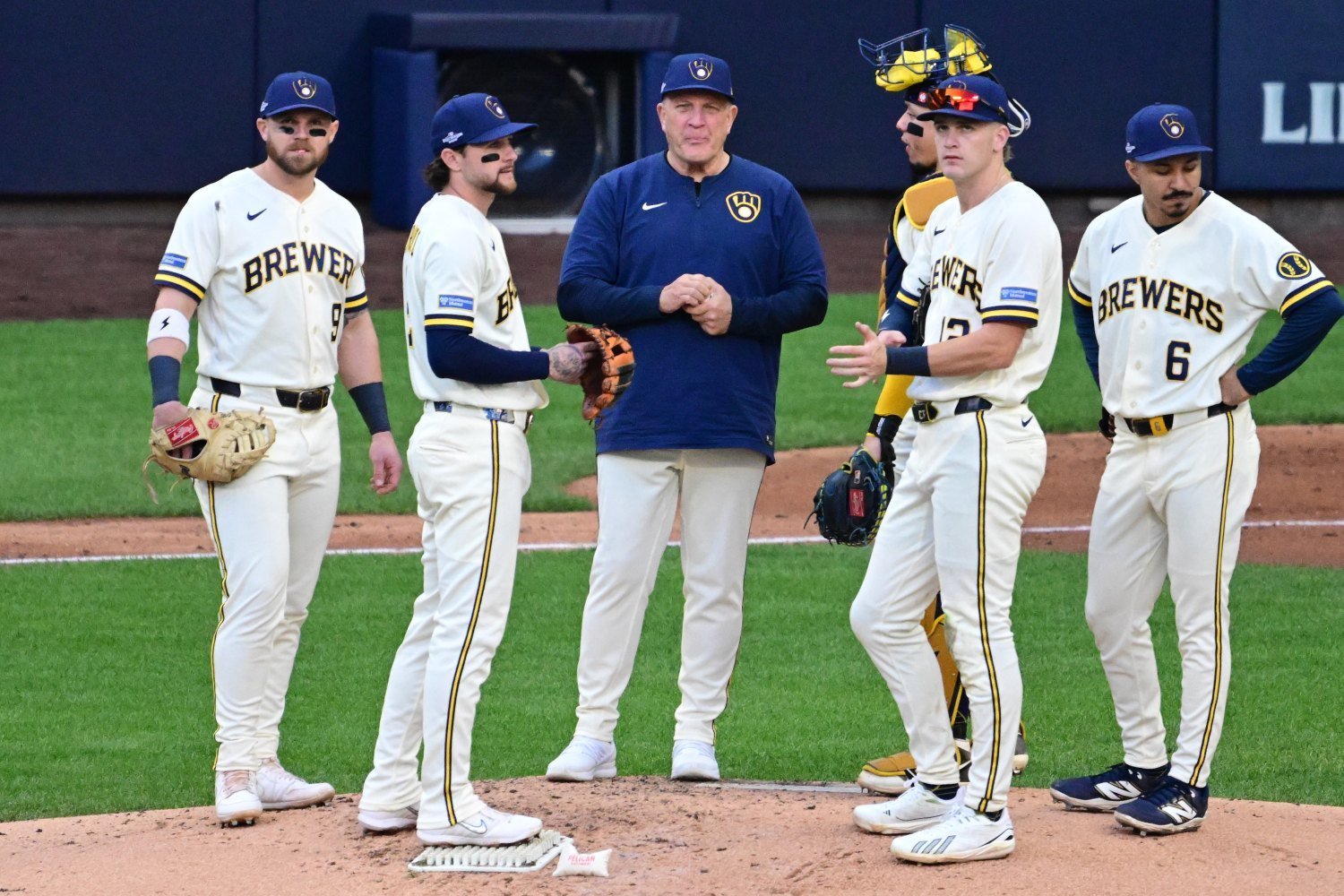 After a couple of stressful but exciting NLDS games over the weekend, the Milwaukee Brewers sit just one game away from winning the series against the San Diego Padres. With Jacob Misiorowski and Logan Henderson taking the hill for Milwaukee in the first two games, the team had a crystal-clear plan for those contests, but there was some uncertainty about who would get the ball for Tuesday night’s matchup. As it turns out, it’ll be right-hander Dustin May. It’s an interesting decision, considering May owns a 5.65 ERA over 10 starts since being acquired from St. Louis at the trade deadline. But clearly, Pat Murphy has a plan in place. So, how should the Brewers utilize their pitching staff in Game 3, as they try to secure a spot in the NLCS? Dustin May Sets the Tone Although May worked deep into the game in each of his two regular-season starts against the Padres, he's likely to be on a short leash for this one. The key will be for Murphy to get him out of the game without allowing damage, while giving himself a path from the first pitching change to the final out. That means striking a delicate balance. The way the first two games played out suggests that Murphy is comfortable leaning heavily on his bullpen. Misiorowski threw just four innings in Game 1, while Henderson made it through five in Game 2 on just 72 pitches. That means Milwaukee has gotten plenty of work from its bullpen already, but it also means its top arms have not been completely overextended. If May can give the Brewers four solid innings, that should be enough to get the game into the hands of the pitchers Murphy trusts most. If the offense provides an early margin for error and May is pitching well, letting him go through the order twice is fine. Otherwise, getting him out after 13 batters faced or so—after the first half of the second turn, where the Padres lineup suddenly turns from leaning toward right-handed bats to left-handed ones—would be wiser. Where Do the Lefties Fit? Let’s say May gets through three innings. What happens then? We could see Robert Gasser, Shane Drohan, or Kyle Harrison make their first appearance of the series. I initially thought Gasser would be the Game 3 starter, and I’m guessing the team's optimal plan now hands him the ball in Game 4 (if needed). But if Tuesday’s game is tight and there's a lead to protect, he could be the bridge through the middle innings. If the opportunity to seal the series is less clear (or if the matchups just fall right and the skipper prefers to keep Gasser ready for a start on Wednesday), Drohan or Harrison could also give Milwaukee two or three innings before the Brewers turn things over to their late-inning arms. Aaron Ashby, Abner Uribe and Trevor Megill each appeared in each of the first two games, so ideally, Murphy would get through Game 3 without going to all three again. At the very least, they'll be limited to one "up" in this one. You won't see Ashby come in to finish one inning and then pitch the next, as well. If May can get through three and one of the swingman lefties can give Milwaukee three innings, the Brewers would be in a strong position to finish the game without completely draining the bullpen. Who Gets the Ball Late? Let’s say everything goes according to plan and the Brewers get 6+ innings from May and another pitcher. Whom does Murphy go to, if he wants to avoid (say) Uribe for one game? Antonio Senzatela deserved better than he got in Game 1, and the Brewers are right to like the way he matches up against some of the righty bats at the top of the San Diego lineup. If there's any slack in the rope, though, Game 3 could be Chad Patrick's time to shine. He's been a bit erratic and he's not an ideal fit against any of the Padres' key bats, but Patrick is an important cog in the team's pitching machine. He's capable of giving them length, just as the lefties we expect to see in the middle of the game are. The Padres are running a deep position-player roster and have been aggressive about pinch-hitting to gain the platoon advantage. If they swing from their lefty supporting cast to their right-handed one when some southpaw takes over in the middle innings, Patrick could be Murphy's countermove, against batters locked into their places. Who Finishes the Game? If Trevor Megill is available in the ninth, that’s the guy. It’s entirely possible Megill doesn’t pitch in Game 3. It’s also possible he’s used earlier in the game, depending on how things play out. But he's Milwaukee’s closer for a reason. The one thing to keep in mind is that he's seen the top half of the San Diego lineup already in the series. Ideally, Murphy would find a way to work him in against the portions of the Padres corps who haven't seen him since August, or even before that. Realistically, though DL Hall has earned the skipper's trust, Megill, Uribe and Ashby are the candidates to close out a win. In a perfect world, you keep your powder dry for the balance of the series—but if there's a chance to end the series with three more outs, Murphy won't entrust it to a lesser light. The Brewers have a chance to sweep the Padres tonight and advance to the NLCS. If they’re going to get it done, the pitching staff is going to have to pull its weight. With the way Murphy has managed his pitching staff throughout this series, there are plenty of different ways he can make that happen. View the full article
-
 The Red Sox kicked off their 2026 season as one of the worst teams in franchise history. After some retooling, Alex Cora was fired and replaced by Triple-A manager Chad Tracy. The Red Sox didn't hit their stride until late June, followed by 15- and 8-game win streaks. By the trade deadline, the Red Sox were the best team in baseball and acquired Adley Rutschman, Curtis Mead, and Erik Miller, to name a few. Down the stretch, the Red Sox faded from their hot midseason rampage of winning but were still able to reach the postseason as a Wild Card entry. This is the 2026 Red Sox year in review! View the full article
-
Padres' Offense Has No Room to Continue Wasting Opportunities
DiamondCentric posted an article in Padres Mission
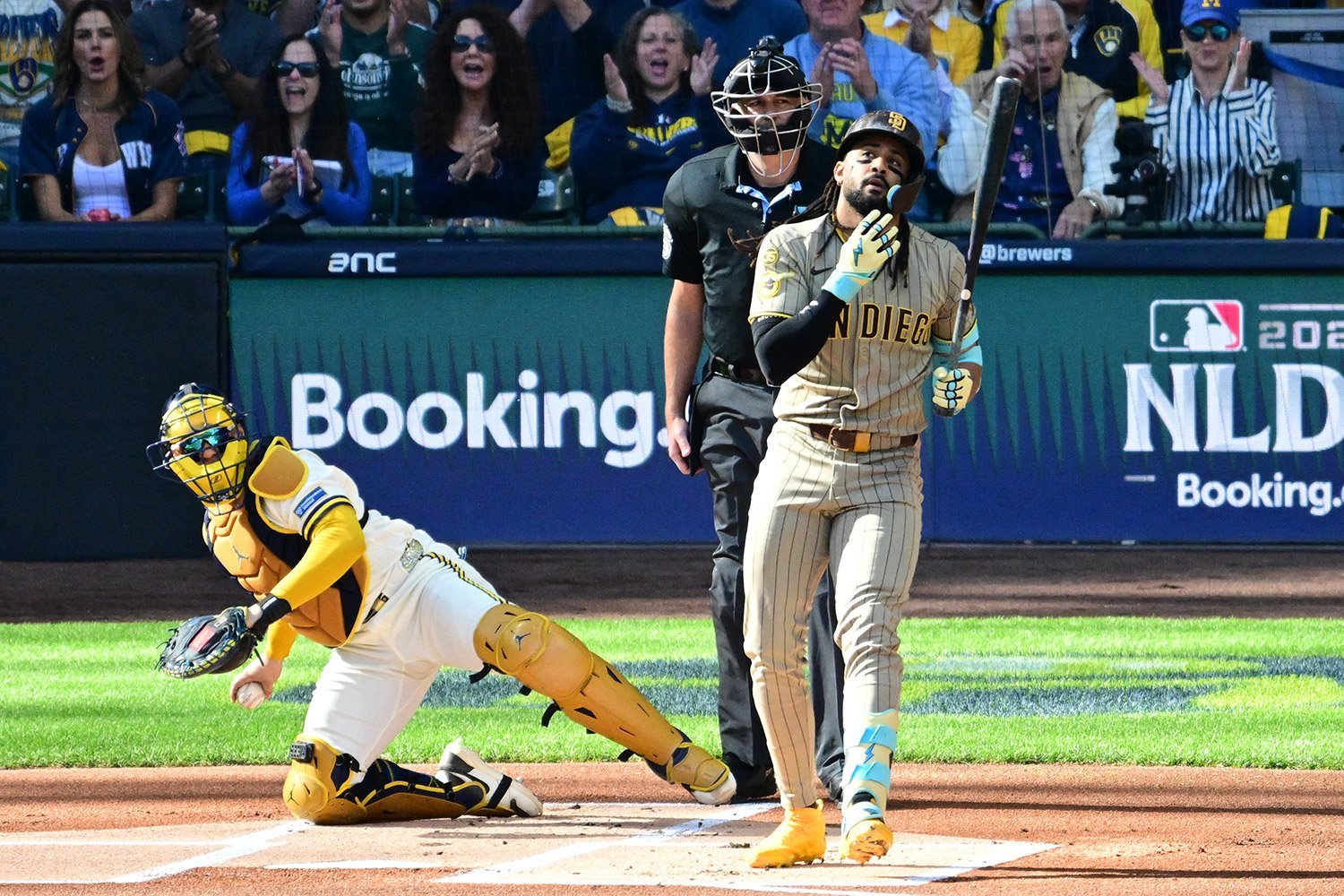 It has not been for a lack of opportunities. The San Diego Padres have lost two games by one run, despite leading on the scoreboard in 10 of their 18 innings. Okay, I admit that even with that poor production, neither of their two main relievers, Adrian Morejon in Game 1 and Mason Miller in Game 2, was able to dominate to hold the tie and the lead. But even before getting there, the Padres had enough opportunities to change the scoreboard and allow the bullpen to work much more comfortably against a lineup as productive as the Brewers’. In the two games, San Diego has let 13 opportunities to score runs with runners in scoring position slip away after taking the lead. All you want in October is for most of the important at-bats that could give the game a definitive turn to come when your best hitters step to the plate. The Padres have not lacked them, although ten of them came in Game 2. Fernando Tatis Jr. has had the opportunity in three of them, including the only at-bat in an RISP situation when the Padres had a 2-0 lead against Jacob Misiorowski. Tatis Jr. hit a ground ball to Miz himself, advancing the runners to second and third. Then Dustin Harris walked after a great seven-pitch at-bat to load the bases, but Manny Machado was dominated on the first pitch with a ground ball to the shortstop. Series Gm# Batter Pitcher Score Event Inn RoB Out Pit(cnt) WPA NLDS 1 Dustin Harris Jacob Misiorowski ahead 0-2 BB t2 -23 2 7 (3-2) 0.01 NLDS 1 Fernando Tatis Jr. Jacob Misiorowski ahead 0-2 Out t2 12- 1 4 (1-2) -0.02 NLDS 1 Manny Machado Jacob Misiorowski ahead 0-2 Out t2 123 2 1 (0-0) -0.1 The Padres could not take enough advantage of Misiorowski's slightly-off day, and then the bullpen prevented them from having more real opportunities to increase their win probability for the rest of the game. That was the prelude to Game 2, where the Brewers no longer had Miz, and had to face the bullpen for the second time. Series Gm# Batter Pitcher Score Event Inn RoB Out Pit(cnt) WPA NLDS 2 Fernando Tatis Jr. Logan Henderson ahead 0-1 Out t2 12- 2 1 (0-0) -0.04 NLDS 2 Jake Cronenworth Logan Henderson ahead 0-1 Out t2 12- 1 1 (0-0) -0.04 NLDS 2 Luis Campusano Logan Henderson ahead 0-1 BB t2 1-- 1 4 (3-0) 0.03 NLDS 2 Fernando Tatis Jr. Logan Henderson ahead 0-1 FC t5 1-- 1 2 (0-1) 0.07 NLDS 2 Manny Machado Logan Henderson ahead 0-2 Out t5 -2- 2 4 (1-2) -0.03 NLDS 2 Austin Hays JoJo Romero ahead 1-2 SO t6 1-- 1 5 (2-2) -0.03 NLDS 2 Luis Campusano Abner Uribe ahead 1-2 Out t6 12- 2 5 (2-2) -0.05 NLDS 2 Dustin Harris Abner Uribe ahead 1-2 Out t7 1-- 1 5 (2-2) -0.03 NLDS 2 Freddy Fermin Aaron Ashby ahead 2-3 Out t8 12- 1 3 (0-2) -0.09 NLDS 2 Xander Bogaerts Aaron Ashby ahead 2-3 SO t8 12- 0 7 (3-2) -0.05 However, the biggest loss of opportunities came in Game 2, when the Padres let five opportunities that could have become glorious postseason at-bats slip away against Logan Henderson, three of them in the second inning and two in the fifth. Tatis Jr. and Machado failed again, and in the eighth, Freddy Fermin and Xander Bogaerts left runners on first and second with fewer than two outs. Beyond the clutch situations, credit has to be given to the Brewers’ pitching, as San Diego’s power has completely disappeared, and they had the bad luck that Ty France’s fly ball that could have changed the series hit the roof cables at American Family Field. The Padres are slashing .206/.316/.221, with no home runs, and have struck out 16 times in 79 plate appearances. With runners in scoring position, they have been worse, falling to .167/.250/.167, but with one important sign, which is that they have struck out only three times in 20 at-bats. The Brewers will send right-hander Dustin May to the mound as their starter in Game 3, and he will face San Diego for the fourth time this season. Two came with the St. Louis Cardinals and one after arriving in Milwaukee at the trade deadline, to post a 1-1 record, a 1.23 ERA and 22 strikeouts in 22 innings. All three were quality starts, and on June 15 he threw a shutout with nine strikeouts and only one hit allowed, a single by Manny Machado that broke up his no-hitter with one out in the top of the seventh. Rk Player B PA AB H 2B 3B HR RBI BB SO BA OBP SLG OPS SH SF IBB HBP GIDP 1 Manny Machado R 42 40 10 2 0 2 5 2 8 .250 .286 .450 .736 0 0 0 0 4 2 Fernando Tatis Jr. R 31 28 7 1 0 1 4 3 6 .250 .323 .393 .715 0 0 0 0 0 3 Jake Cronenworth L 25 21 5 0 0 1 1 3 4 .238 .360 .381 .741 0 0 0 1 1 4 Xander Bogaerts R 17 16 3 1 0 1 1 1 3 .188 .235 .438 .673 0 0 0 0 0 5 Ty France R 13 12 4 0 0 1 1 0 3 .333 .385 .583 .968 0 0 0 1 1 6 Jackson Merrill L 12 10 0 0 0 0 1 1 4 .000 .083 .000 .083 0 1 0 0 1 7 Gavin Sheets L 12 11 1 0 0 0 0 1 1 .091 .167 .091 .258 0 0 0 0 1 8 Freddy Fermin R 6 6 2 0 0 0 0 0 2 .333 .333 .333 .667 0 0 0 0 0 9 Sung-Mun Song L 5 4 0 0 0 0 0 1 1 .000 .200 .000 .200 0 0 0 0 0 10 Austin Hays R 4 4 1 1 0 0 0 0 1 .250 .250 .500 .750 0 0 0 0 1 As you can see here, there are five hitters who have combined to hit six home runs against May, with Machado accounting for two, despite the offensive line being low at .217/.281/.368, and they have not been able to take enough advantage of the impact of the power. There is also a group of four hitters who have not been easy outs for May, Xander Bogaerts, Gavin Sheets, Jackson Merrill and Sung-Mun Song, who combine for 4-for-41 with a .098/.174/.195 line. But there is a key point that San Diego’s hitters have to exploit to attack May, and that is that his fastball did not finish well in September. Hitters destroyed the three pitches he throws the most, averaging above .500 xSLG against the sinker (.716), cutter (.504), and four-seam fastball (.514). In that group, Manny Machado and Ty France stand out among those who have connected best against his sinker and four-seam fastball. May tends to be a pretty uncomfortable pitcher because he has a tendency to pitch inside and then combine his curveball, sweeper, and changeup to generate swings and misses and make hitters chase pitches on the corners and outside the strike zone. He improved by incorporating a high-impact curveball with 55.3 inches of total drop, combined with the vertical profile of his sweeper at -3.9 inches, so we will see if he can repeat his dominance or if the Padres can wake up and get better at-bats to stay alive in these playoffs. View the full article
-
 Jack and Spencer break down the first two games of the NLDS, from overcoming an off night for Jacob Misiorowski to Jackson Chourio's big hit against Mason Miller. Apple Podcasts: https://podcasts.apple.com/us/podcast/the-brewer-fanatic-podcast/id1740648724 Spotify: https://open.spotify.com/show/5CY8mWsQayqjDXqw9OT2Td iHeartRadio: https://www.iheart.com/podcast/263-the-brewer-fanatic-podcast-166534588/ Pocket Casts: https://pca.st/ommzz627 Watch On YouTube: https://www.youtube.com/@brewerfanatic View the full article
-
What Should the Twins Do With Trevor Larnach This Offseason?
DiamondCentric posted an article in Twins Daily
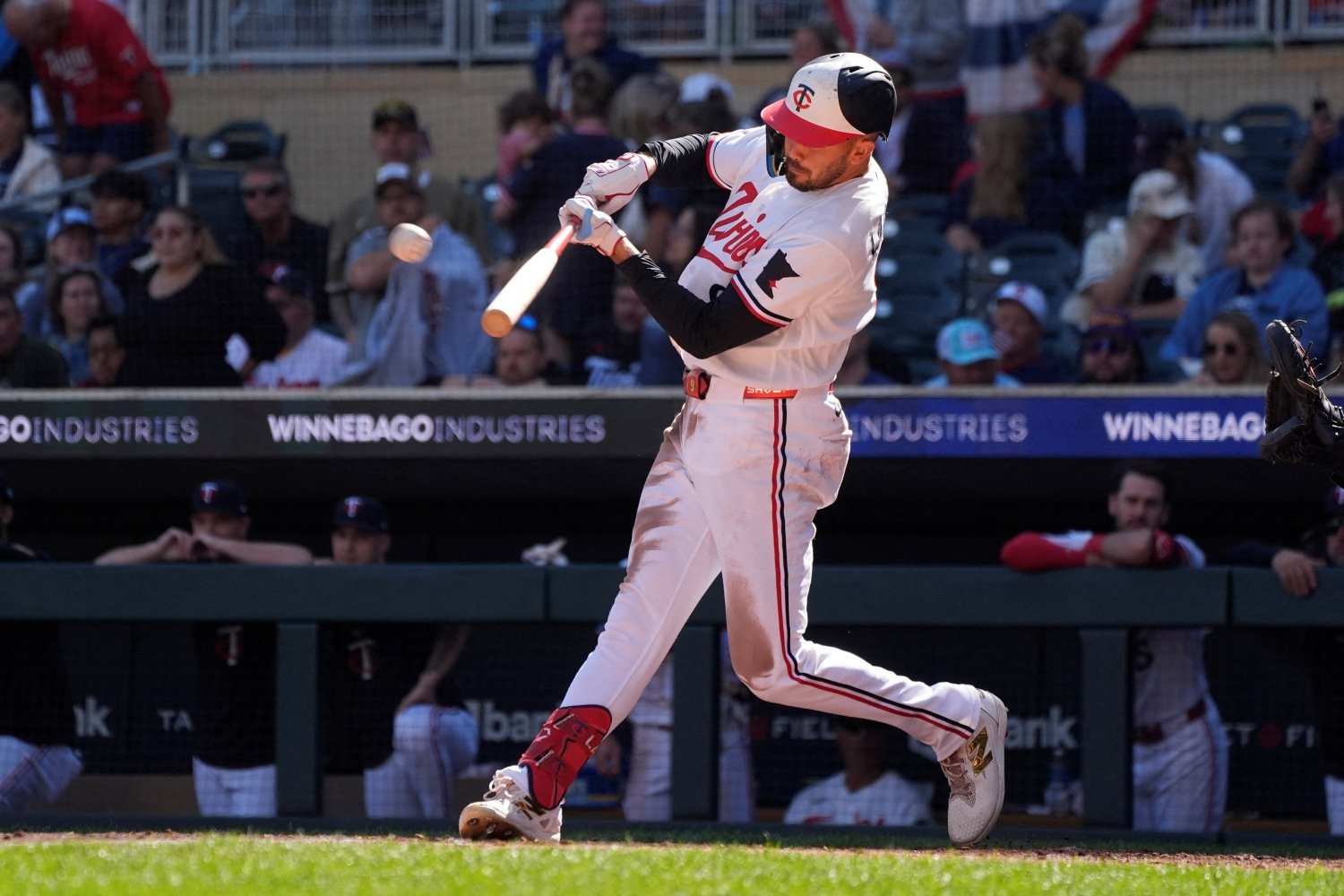 The Minnesota Twins are officially in offseason mode, and that means it’s time to start making some decisions. One of those decisions will be about outfielder Trevor Larnach, who's coming off a career year offensively. A resurgent 2026 makes his future with the Twins an interesting question heading into the offseason. There are a few different factors that could play into Minnesota’s decision, and there’s certainly a case to be made for either keeping him or moving on. So, what should the Twins do? Let’s break it all down. Pros of Bringing Him Back As I noted, Larnach is coming off the best offensive season of his career. The 29-year-old slashed .269/.352/.436, setting career highs in all three departments of the slash line. For a Twins team that could certainly use some consistency in the lineup, it’s easy to see why keeping his bat around would be appealing. While he might not be the type of hitter who completely transforms a lineup, a player who can post an OPS approaching .800 certainly has value, particularly at a relatively affordable salary. This year, the Twins and Larnach avoided arbitration by agreeing to a one-year, $4.475-million contract. His salary for 2027 is projected to land around $6.3 million, which would be a noticeable increase but hardly an outrageous figure for a hitter coming off the season he just had. The Twins aren't in a position where they should be giving away productive major-league bats, and there's a legitimate argument for keeping him around if the financial commitment makes sense. From a pure ability standpoint, Larnach's bat is worthy of being in the lineup next season. The question is whether Minnesota can find a way to give him enough opportunities to make that investment worthwhile, without being overly reliant on him repeating what might be the best season he'll ever have. That's where things start to get a little more complicated. Cons of Bringing Him Back The biggest issue with bringing Larnach back is the Twins' current roster construction. Barring a shocking trade this winter, Minnesota figures to have Byron Buxton, Luke Keaschall, Walker Jenkins and Emmanuel Rodriguez in the mix for outfield playing time in 2027. Considering the organization will (presumably) want to give their young players opportunities to establish themselves at the major-league level, there might not be enough consistent playing time to go around. Even if Minnesota decided to move Keaschall back to the infield to open up some additional opportunities, that would create its own set of questions. There are only so many ways to shuffle the roster before another position becomes crowded, and bringing Larnach back would make those decisions even more difficult. Of course, the Twins could always use Larnach primarily as their designated hitter. That would allow his bat to remain in the lineup without requiring a regular spot in the outfield, but it would also limit the flexibility of the DH position and potentially take opportunities away from other players. It's worth remembering that Minnesota nearly traded Larnach during the 2026 season. The Twins reportedly had a deal in place with the Houston Astros that would have sent Larnach to Houston in exchange for reliever Bryan Abreu, but the trade fell through at the last minute. While there's no guarantee the Twins will revisit those discussions this winter, the situation certainly suggests they were willing to move him for the right return. It seems to reflect the roster crunch Minnesota is facing. If the organization decides someone needs to go to make room for younger players, Larnach is definitely a far more realistic candidate than Buxton or one of the prospects the Twins are hoping will become important pieces of their future. That doesn't mean the Twins should simply give him away. His offensive production has value, and if another team is interested, Minnesota should look to get something worthwhile in return. Still, the combination of a crowded outfield and a rising arbitration salary makes Larnach a logical trade candidate. Timeline So, what does the timeline for all of this look like? The first major decision point comes on November 20, when the Twins will have to decide whether to offer Larnach a contract for the 2027 season or non-tender him. If Minnesota is comfortable paying Larnach roughly $6.3 million, then this decision is pretty straightforward. Offer him a contract, and figure out how to fit him into the lineup consistently. If the Twins aren't comfortable with that salary, however, they'll need to figure out whether Larnach is viewed as an asset by other teams at that price. That means exploring the trade market. If Minnesota can find a team willing to take Larnach on at his projected salary while giving up something good in exchange, it might make the decision much easier. If the Twins can't find a meaningfully interested trade partner, though, they'll have to weigh a more tangled set of considerations. Do they offer Larnach a contract anyway, since ownership is (at least nominally) committed to expanding the payroll in 2027? Or do they decide the salary is too much for the role they expect him to have and non-tender him, making him a free agent? There's an added wrinkle here, because with the Collective Bargaining Agreement ending on December 1, a lockout is likely to begin just 10 days after the non-tender deadline. If that leads to an accelerated spring training or a shortened window to make roster moves, the Twins might not have much time to explore a trade later in the offseason if they decide they don't want Larnach after all. On balance, moving on from him seems the wiser course—but they might need to accept less than the absolute maximum possible trade value in order to get that done on a schedule that keeps their offseason on track. View the full article
-
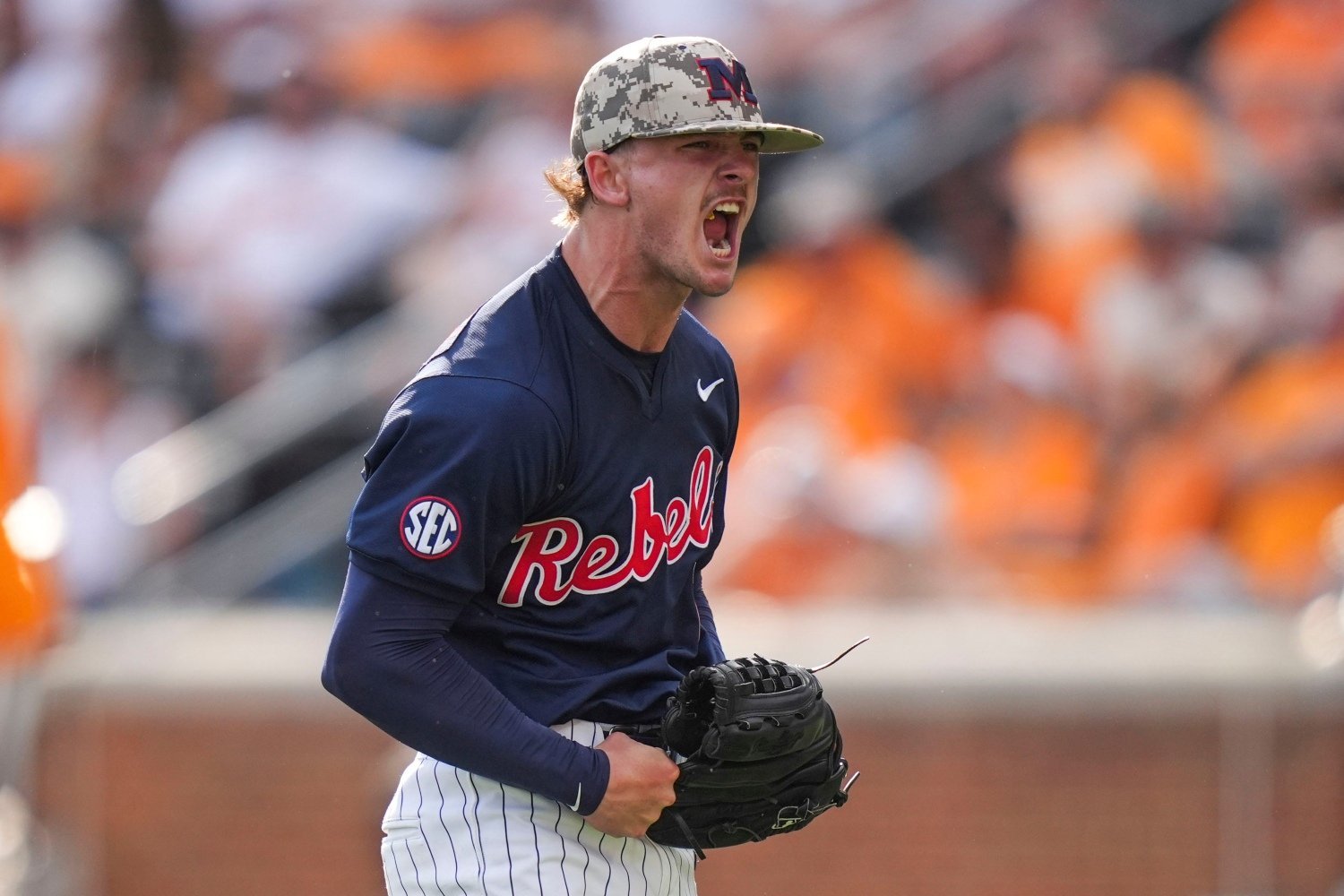 If 2026 was any indication, the importance of pitching depth cannot be overstated. The Cubs dealt with a litany of injuries throughout the season, both in the starting rotation and the bullpen. As a result, Chicago had to constantly adjust on the fly and find different ways to fill those holes. This year, a lot of that adjustment came through the trade market, rather than the Cubs’ pitching pipeline. But that’s at least partially because many of their young arms simply weren’t at the upper levels of the minors yet. So, what does the current state of the Cubs’ pitching pipeline look like? Let’s start at the top. Cade Townsend Chicago selected Townsend 23rd overall out of the University of Mississippi, and he currently ranks as the team’s top pitching prospect (and No. 2 overall prospect). He actually signed for about $850,000 below slot value at $3.1 million, but don’t let that fool you. Townsend struck out 32% of the batters he faced this year with the Rebels, compared to just an 8% walk rate. He also comes with a strong five-pitch mix, headlined by some very impressive breaking balls and a mid-to-upper-90s fastball. He didn’t pitch at all in the minors this summer, so it’s likely the Cubs will be patient with him as he gets his professional career underway. He dealt with a minor shoulder problem early in the spring. But there’s a lot to like about his long-term outlook, and he could very well turn into a front-line big-league starter down the road. Jaxon Wiggins Townsend ranks as the Cubs’ No. 2 prospect overall, and right behind him at No. 3 is fellow right-hander Jaxon Wiggins. The consensus, coming into the year, was that Wiggins would be ready to make an impact in the majors at some point this season. That never happened, as he missed a good chunk of the year with elbow inflammation, and his performance with the Iowa Cubs also raised some concerns. He finished with a 7.83 ERA across 33⅓ innings. Most concerning was the fact that he issued 31 walks during that span. The stuff is undoubtedly there. Wiggins has a high-90s fastball and a wicked low-90s slider, but he also walked 19.3% of all batters he faced this year. He gave up 34 hits, as well, although some of that was a mixture of bad luck and bad minor-league defense. Better batted-ball luck would have helped his numbers quite a bit, but the control still needs to improve. With a full offseason of health and refinement, Wiggins can still make an impact with the Cubs in 2027. His prospect status is much less clear, though, and his future might be in the bullpen—if it's in the majors, at all. Kaleb Wing Wing comes in as North Side Baseball’s No. 8 prospect, after being the Cubs’ fourth-round pick in 2025. The team paid well over slot value to sign him, and his pre-injury numbers this year were encouraging. He struck out 34% of the batters he faced between Rookie ball and Low-A. There are definitely some wrinkles to work through—most notably his 16.4% walk rate at Low-A—but it was still a good first taste of professional baseball. Unfortunately, Wing underwent Tommy John surgery in June and could wind up missing the entire 2027 season. That obviously puts a pause on his development, but he still has major-league starting pitcher upside down the road. Brooks Caple Caple also ranks inside the top 10 Cubs prospects, and 2026 was something of a breakout year for the 6-foot-6 right-hander. He made five strong starts at High-A South Bend before earning a promotion to Double-A Knoxville. He finished with a 3.24 ERA in 17 games there, while his swing-and-miss numbers took a significant step forward. After posting a 10% swinging-strike rate a year ago, Caple jumped all the way to 14.2% in 2026. He also did a very good job of limiting both walks and hard contact. He has a deep arsenal led by his fastball, which he can run up into the upper 90s. Given his massive frame and the shape of the pitch, it can be very difficult to square up, and that helps his breaking balls, changeup and cutter play off of it. Caple doesn’t generate as much buzz as guys like Townsend or Wiggins, but it’s entirely possible he reaches the majors in 2027. He has the potential to turn into a mid-rotation or back-end major-league starter. The Triple-A Arms Then there’s a trio of Triple-A arms, in right-handers Will Sanders, Grant Kipp and Brandon Birdsell. These three guys come in as the Cubs’ No. 12, 16 and 20 prospects, respectively, but they all have their fair share of question marks. Birdsell missed the entire season while recovering from Tommy John surgery, while Sanders and Kipp each finished the year with ERAs north of 5.00. However, Sanders, in particular, showcased an ability to miss bats at a strong clip this year. That will be a bigger question mark for Kipp and Birdsell (if and when he returns to the mound), although Kipp’s slurve-like breaking ball can exceed 3,000 RPM and gives him a foundation to work with. Next year will reveal a lot about the futures these three arms have within the Cubs’ organization. Jostin Florentino And lastly, there’s Jostin Florentino. The 21-year-old right-hander out of the Dominican Republic comes in as the Cubs’ No. 14 prospect. The numbers from this year don’t necessarily stand out, as he finished with a 4.71 ERA across 63 innings with High-A South Bend. But the underlying numbers offer some encouragement. Florentino struck out 28.1% of the batters he faced and finished with a strong 13% swinging-strike rate. A big reason for that was his slider, which only sits in the mid-70s but generated a lot of swing-and-miss. He doesn’t post gaudy numbers on the radar gun, and like many young arms, he’ll need to clean up the walks. If he can do that while adding a couple more miles per hour to his fastball, there’s some upside here. But, of course, doing both of those things is much easier said than done. There are several arms to keep an eye on within the Cubs’ organization. Not all of them will turn into major-league starters, and some will inevitably hit more roadblocks along the way. The pipeline isn't strong enough right now. These players, though, will be vital parts of the team's effort to fix that—which, in turn, will be vital to the team's efforts to go deeper into October over the next few seasons. View the full article
-
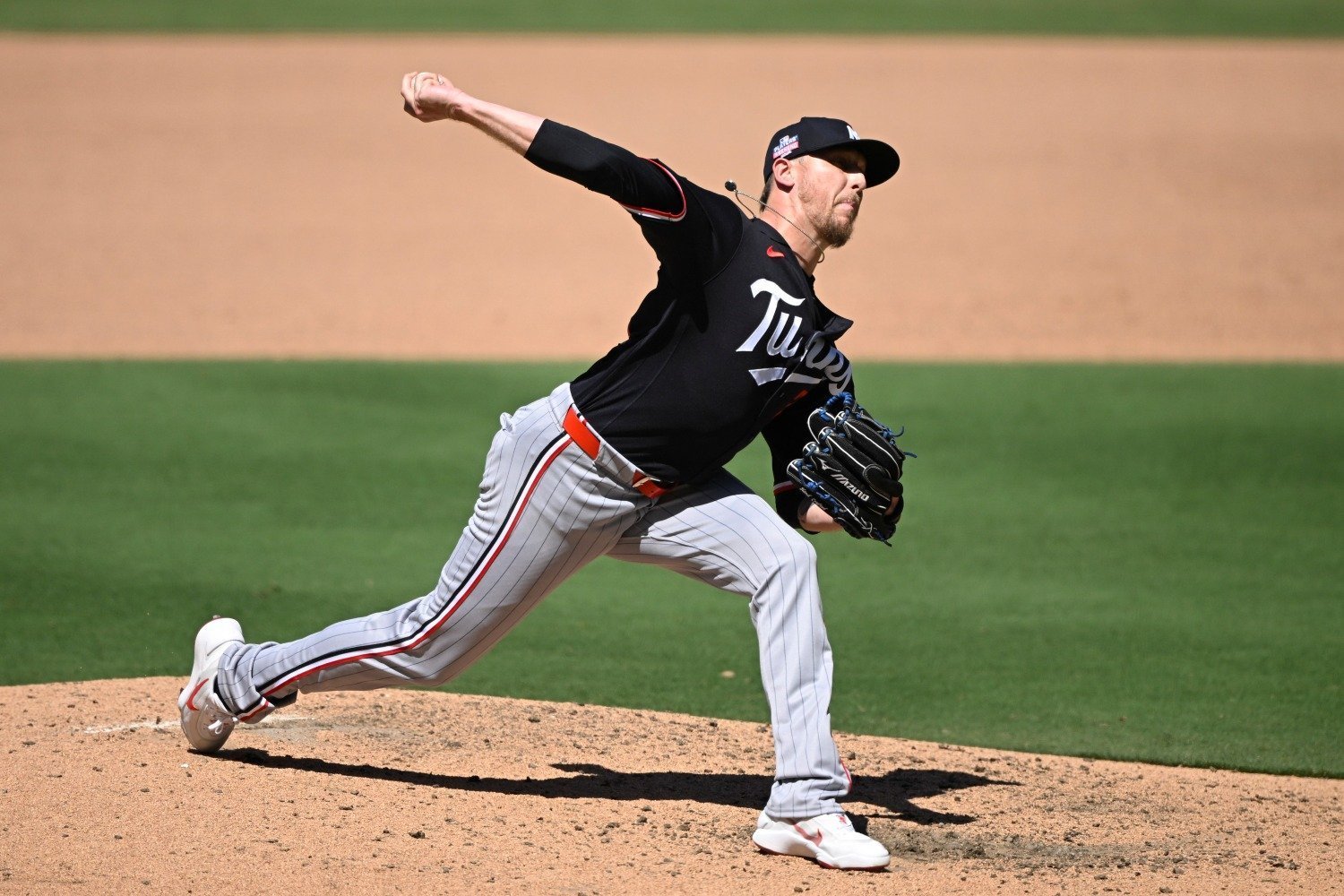 The Minnesota Twins have traditionally been hesitant to spend significant money on bullpen help. Taylor Rogers, Eric Orze and Anthony Banda were their idea of a relief boost over the winter. They eventually tried to correct course at this year's trade deadline, adding Jeff Hoffman, A.J. Minter, and Tommy Nance to a bullpen that needed reinforcements. Those improvements gave the team more options, but the results were unsatisfying. The Twins struggled down the stretch, leaving questions about whether the organization needs to take a more aggressive approach to building its bullpen. That puts a decision in front of new general manager Jeremy Zoll. Will he follow the strategy used by his predecessor, Derek Falvey, or will the Twins finally make a meaningful financial investment in their bullpen? Let's break it down. The Pros of Adding a Big Bullpen Arm The biggest benefit of adding a proven reliever would be improving the team from the beginning of the season. The Twins' bullpen was a mess during the first few months of last season, with a -2.08 WPA through April 30. Waiting until the trade deadline meant Minnesota had to spend prospect capital to address a problem that had already cost the team valuable games. Adding a major bullpen piece during the winter would allow the organization to enter spring training with a more established group. The Twins also have a better baseline heading into this offseason. Hoffman, Andrew Morris, and Yoendrys Gomez give Minnesota some options toward the back end. However, Morris and Gomez clearly tired during the team’s second-half collapse. If Hoffman remains healthy and performs the way he did after joining the Twins, the team already has one significant piece in place. Still, the bullpen needs another quality left-handed option. Minter showed how valuable that type of arm can be. Finding someone of his caliber could give the Twins a much-needed weapon against opposing left-handed hitters while also providing another high-leverage option. There's another benefit to acting during the winter: it costs money rather than prospects. The Twins learned at the trade deadline that quality relievers can require significant prospect capital. Signing a reliever in free agency means giving up financial resources, but it doesn't require sending one of the organization's young players to another team. For a club trying to build around a younger core, that distinction matters. The Cons of Adding a Big Bullpen Arm The problem is that bullpen arms are fickle. Relievers can burn brightly for a few seasons before their performance suddenly fades. Others can have one outstanding season and struggle to replicate it. Because relievers generally work in smaller sample sizes, a handful of poor outings can dramatically change the perception of an entire season. That makes spending big money on a reliever a risky proposition. The Twins won't have unlimited financial flexibility this winter. If the organization commits a significant portion of its available payroll to a reliever, that player needs to perform. There isn't much room for Minnesota to absorb an expensive bullpen contract that doesn't work. And that's the biggest issue with trying to find a surefire bullpen option. There isn't one. Even the best relievers carry some level of risk. Injuries happen. Velocity changes. Command disappears. A pitch that was nearly unhittable one season can become much easier to square up the next. The Twins could also explore an internal solution. Instead of spending heavily on another reliever, Minnesota could move one of its current starting pitching options into the bullpen. Zebby Matthews, David Festa, or Kendry Rojas could potentially provide another option if the organization believes their best path to helping the team is in shorter outings. That approach would save money, but it also comes with its own uncertainty. What Would the Timeline Look Like? Timing could be a major factor in Minnesota's decision. The Twins will have roughly a month between the end of the World Series and the beginning of the December 1 lockout. That creates a relatively small window for teams to make significant moves before negotiations between MLB and the players potentially bring the offseason to a halt. The last time baseball dealt with a lockout, five years ago, free-agent activity accelerated before the deadline. Teams and players had an incentive to get deals completed rather than risk entering an uncertain period without contracts in place. The same thing could happen this winter. If the Twins decide they want to add a significant bullpen piece, they may not be able to wait for the market to develop over several months. The best options could be off the board before December arrives. Otherwise, Minnesota could find itself scrambling after the lockout ends to sign the remaining free agents and get them into camp on time. There is no guarantee the lockout will be short. If it stretches into spring training, teams could have even less time to prepare for the season. That makes early offseason planning particularly important. The Verdict The Twins probably don't need to make the biggest bullpen splash on the market, but they should be open to making a meaningful investment. Their bullpen was too unreliable for too much of last season, and waiting until the trade deadline proved expensive in terms of prospect capital. Minnesota enters this offseason with a better foundation than it had a year ago, but adding another proven high-leverage arm, particularly a left-hander, could make a significant difference. The challenge is finding the right player at the right price. Zoll doesn't need to recreate the bullpen with one signing. He needs to identify whether there is a reliever worth committing real money to and determine whether that investment gives the Twins a better chance to win in April, May, and June rather than waiting for another deadline correction. After years of taking a relatively conservative approach to bullpen spending, this could be one of the clearest opportunities for Zoll to establish a different philosophy. The question is whether the Twins are willing to pay for it. Should the Twins invest in the bullpen this winter? Leave a comment and start the discussion. View the full article
