


DiamondCentric
-
Posts
2,631 -
Joined
-
Last visited
Never
Content Type
Profiles
Forums
Events
News
Tutorials & Help
Major League Baseball Videos
Guides & Resources
Store
Downloads
Gallery
Everything posted by DiamondCentric
-

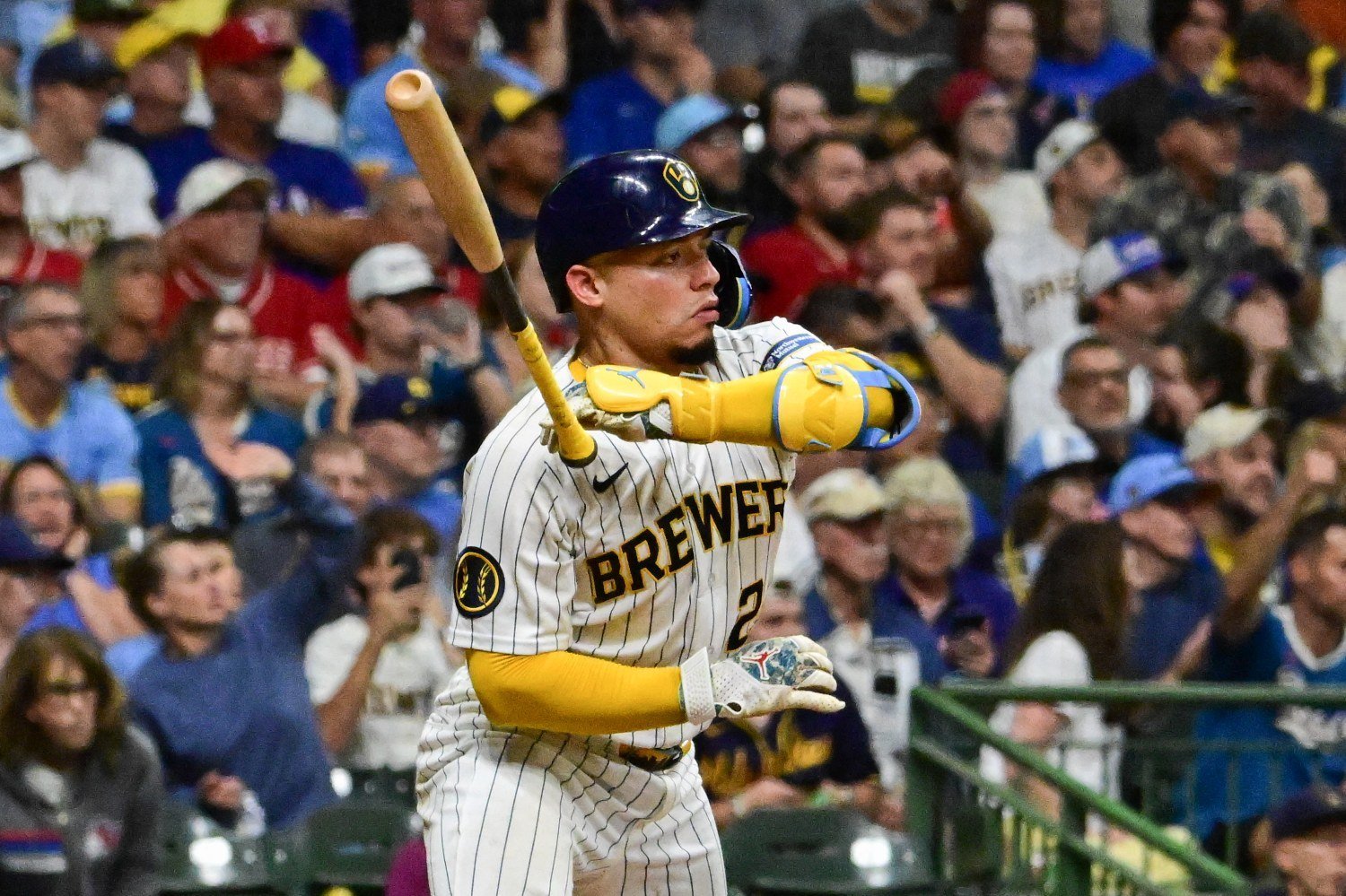 On August 14 against the Dodgers, William Contreras went 0-for-4 to drop his OPS to .702, its lowest point of the season. It was Contreras's sixth straight game without a hit. Over his last 30, he had hit .153/.241/.243. His struggles had grown so severe that Pat Murphy moved him from the top half to the bottom half of the lineup. When Contreras stepped up to the plate that night in Los Angeles, this was how his stance looked. He held his hands over his head and his outstretched arms well away from his body. Contreras has always been a tinkerer in the box. He's long toyed with different versions of his stance throughout the season, even when he's going well. At times, it changes from day to day. This was one of several stances he deployed during his slump, and he had been using it since the Brewers' previous West Coast trip two weeks earlier. It wasn't helping him break out of his struggles. If anything, it was digging him further into his hole. The screenshot above was taken seconds before a swing-and-miss on a 96-mph Yoshinobu Yamamoto sinker low and inside. It's a well-executed pitch that's hard to barrel, but Contreras is a strong athlete with above-average bat speed. When he's going well, he can pull his hands in on a down-and-in pitch and get the bat head far enough in front to make loud contact. That was harder to do with his hands starting so far from his body. By the time he pulled them in, he was late on that sinker and slashed over the top of it. YkJMMTRfVjBZQUhRPT1fQVFsVkJ3WldWRlFBQ3dBQkF3QUhDQVFGQUZsUUFsVUFBZ2NNVmdjR0NBUUhVVkZY.mp4 "Now you got to start early to get to that," Pat Murphy said. "Now guys [are pitching] him in, and your hands are way out here, you got to start early to get to that pitch. Now you're cutting across balls, missing balls, and you can't get there. It's just really hard to get to that spot." The following night, Contreras returned to his old stance. His hands were still above his head, but he held his bat above his shoulder and closer to his body. In his first at-bat, he roped a 107-mph line drive to left for a single. His next time up, he hit his first home run since July 19. That was the start of a torrid stretch for the Milwaukee backstop, who has hit .408/.456/.612 (191 wRC+) in his last 12 games. He's back to hitting the ball hard, posting a 51.5% hard-hit rate and average exit velocity of 91.9 mph in that span. By the time of the Brewers' series in New York last week, he was resting his bat on his shoulder, allowing him to pull that same low-and-in sinker for a 106-mph double. TzA0OW9fVjBZQUhRPT1fVkFKVlV3WU1Bd3NBWGxWVEF3QUhWUUZWQUZsVFZsQUFBVmNOQmxJTUFBZFJCd3RV.mp4 On Saturday night, Contreras launched another inside sinker for a towering home run that gave the Brewers an early lead. TzA0UjlfV0ZRVkV3dEdEUT09X1UxUURWMWNCVXdVQUNGSldVd0FIQ1E1U0FGaFhVRllBVkYxVUJsQURCZ3RVQXdZRA==.mp4 There are more tweaks going on here—Contreras has also started using a toe tap lately—but more than anything, his hands are allowing him to get to the ball directly and on time. "He's now got himself a little more tight [between his hands and his body], and he can stay a little linear with his hand path," Murphy said. "He doesn't need that space in there. I think it's helped him." Most of hitting is timing, so in some cases, less is often more. By becoming more compact with less pre-pitch movement, Contreras has simplified his setup. That's one of the tenets Murphy and the Brewers preach to their hitters: stop thinking too much and let your swing do the work. His other warning is that what works in batting practice won't necessarily translate against live pitching. Contreras is known for his vigorous pregame hitting work, which is where Murphy said he fell into that pitfall while trying different hand positions. Raising his hands worked in that practice setting, but not in games. "He goes out in pregame, and he hits it a long way. And it's timing that does that," Murphy said. "It doesn't matter where you have your hands if you time it up with the barrel. You don't get to do that when a guy's changing pitches and that type of thing." This is the second straight season in which Contreras's offense has declined, but he remains one of the Brewers' most talented hitters. He has the raw power to change a game with one swing, and Milwaukee's lineup functions more efficiently when he's a spark plug near the top of the order. That's the version they've seen over the past couple of weeks, and the version they hope to get in October. "He's learning, and he's been a good hitter his whole career, so he'll get back to being himself," Murphy said. "I think he's on track." View the full article
 -
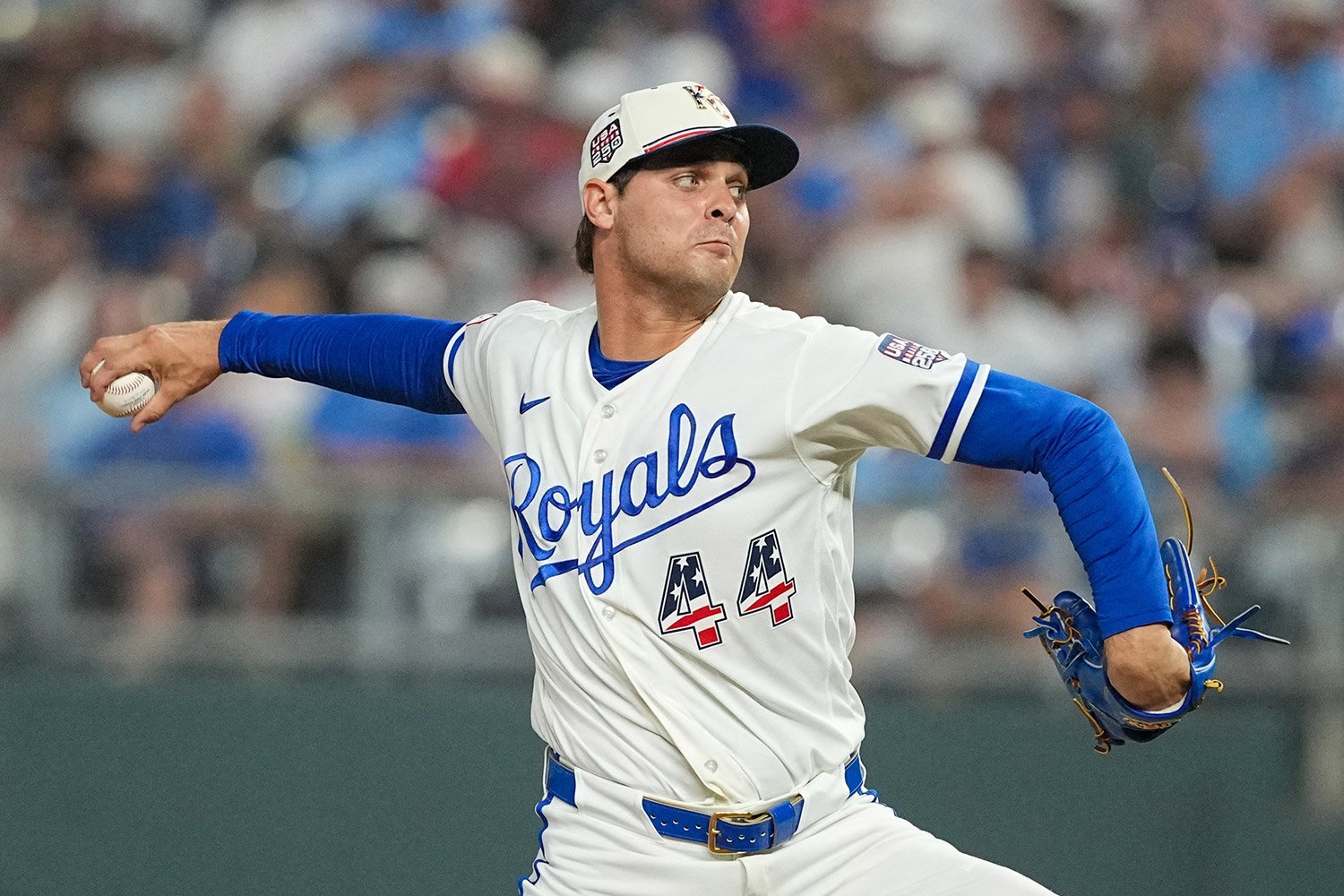 The last two weeks of Royals baseball have been a lot of fun. The team has won 13 of 15 games since August 13. The starting lineup has been mostly restored to what was expected for Opening Day (Maikel Garcia notwithstanding). A starting pitching staff decimated by injuries has been really good of late. The MASH unit starting lineup has put together a solid if unspectacular five quality starts in 15 attempts. Although that number is actually 5 QS in 12 attempts, given Daniel Lynch IV is still getting stretched out as he acclimates from the bullpen to starting pitching. The bullpen is currently doing a casting call for 2027, rotating through a bevy of candidates, but seems to be more steady in an addition-by-subtraction roster turnover. Lucas Erceg (6.63 ERA) never got things figured out and was sent to Triple-A Omaha on August 18. Matt Strahm and his 7.33 ERA were designated for assignment on August 4. Lately, the boys have been playing some ball. On September 1, the rosters expand from 26 to 28 players. A maximum of 14 pitchers are allowed. All players must be on the 40-man roster. Currently, the 40-man roster is full. That said, there is at least one spot that could be opened by adding Maikel Garcia to the 60-day IL, as it appears his hamstring injury may keep him out for the remainder of the season. (While writing this article, John Schreiber was released, and that opened up another 40-man roster spot. We are still waiting on the corresponding move.) Let’s look at who may join the team for the nine-game homestand starting September 1. Tony Gonsolin - RHP The former Los Angeles Dodger signed with Kansas City on August 13 and was immediately placed on the 15-day IL. Gonsolin signed a prorated $1 million contract for 2026 with a club option of $2.5 million for 2027. He currently holds a 40-man roster spot and can be called up when his injured list designation ends. In one appearance, Gonsolin threw three innings on 40 pitches, giving up no hits and one walk while striking out three batters. The big question with Gonsolin: is one appearance, albeit a good one, enough progress that the Royals trust him in MLB games, or do they want to see him keep working in Omaha? Beck Way - RHP Another member of the 15-day IL, Way was reinstated to Northwest Arkansas on August 18 and moved to Omaha on August 21. The hard-throwing right-handed rookie has had his ups and downs in 2026, but before the injury he seemed to be settling in. Way gives the Royals a power arm that the bullpen was clearly lacking to start the season. Way will definitely be a part of the 2027 bullpen, so getting him back to continue his development will be key to ending 2026 on a high note. Carlos Duran - RHP Is Carlos Duran Dr. Jekyll or Mr. Hyde? On August 18, we got to see Dr. Jekyll. Duran delivered 1 inning pitched with one hit, no runs, no walks, one strikeout, and picked up his first major league win. Then on August 20, Mr. Hyde appeared. Duran gave us a line of .1IP, 1H, 2ER, 3BB, 0K. Duran remains an interesting arm. Many Royals experts have compared Duran to when the Royals acquired Steven Cruz. There are definitely similarities: big frame, big arm, trouble with the strike zone. His minor league statistics for 2026 back that up. When deciding if Duran should come back to the Royals in September, it is a little like the argument for Gonsolin. Have the pitching coaches made enough progress in his delivery that the strike throwing improves, or does he need more work before coming back to Kansas City? Lucas Braun - RHP Braun was acquired with Carter Holton from Atlanta in the trade deadline deal for Lane Thomas and Bailey Falter. Braun is Rule 5 draft eligible for the first time after the 2026 season concludes. I can’t imagine the Royals wanted Braun in a trade only to leave him unprotected and lose him this winter. It makes sense that if the Royals are going to have to add him to the 40-man roster this winter, they might as well add him to the roster now. In 2025, Braun threw 149 2/3 innings, and in 2026 he sits at 116 innings pitched. It makes sense that he will not be shut down and has room to throw more innings this season. If the Royals want to take some stress off of their starting pitchers or piggyback a long reliever with Daniel Lynch IV as they had with Mason Black over several starts, Braun could be the man for the job. Michael Massey - 2B This move isn’t sexy, but Massey has been having a bounce-back year in 2026. Massey landed on the 7-day IL on August 27 when making an off-balance throw to first that ended awkwardly with him falling on his back and head hitting the Rogers Center turf. Massey has been worth 2.3 WAR and played Gold Glove-level defense at second base. There is no reason that player profile shouldn’t be back as soon as they are healthy. Carson Roccaforte - OF On July 17, I wrote a blog post about Royals Rule 5 draft protection candidates. At that time, Roccaforte was striking out at 35.2% and also had a respectable 17 home runs. Since then, Roccaforte has been promoted to Omaha and has been on a power surge at the plate, raising his season total to 32 homers. In his last 30 games between Northwest Arkansas and Omaha, that strikeout percentage has dropped to 25.2%. Still high but manageable. He has also hit 17 home runs in that span, leaving the yard at an impressive 8.9% clip. All while playing Gold Glove-level defense. So who should get promoted? I think Michael Massey will be a straight replacement for Josh Rojas, and Rojas will be back in Omaha waiting for an injury call-up. Michel Massey recalled to KC and Josh Rojas sent to Omaha. On June 17, my thoughts were that Roccaforte struck out too much for a team to take a chance on him in the Rule 5 draft. Roccaforte has changed my mind. The Gold Glove defense was evident, and some teams may have taken a risk on using him as a late-inning defensive replacement. Now that the strikeout rate is down and his power is surging, I don’t believe the Royals can risk losing Roccaforte. Not when there is a shortage of good centerfield candidates league-wide, and Kyle Isbel is only under team control through 2027. Garcia to the 60-day IL and Roccaforte added to the 40-man roster and recalled to KC. The two pitchers are very similar to the hitters for similar reasons. Beck Way recalled to KC from the 7 Day IL. Lucas Braun added to the 40-man roster and recalled to KC. I believe Roccaforte and Brun could benefit from a taste of MLB action in September 2026, the same way it helped prepare Carter Jensen for the 20206 season with his September 2025 call-up. Several players were covered. Is there someone you would like to see that wasn’t mentioned? Let us know in the comments so we can discuss. View the full article
 -
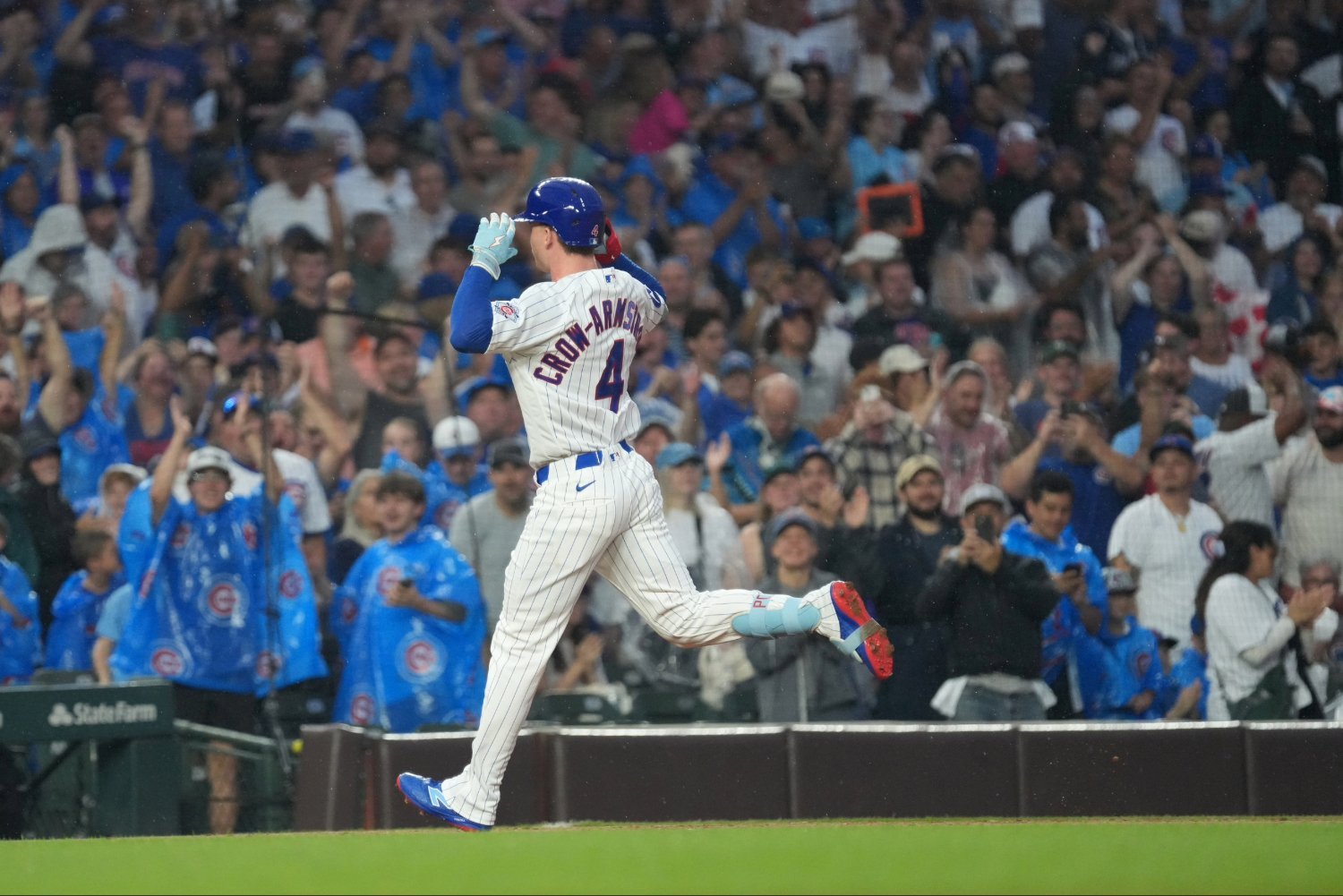 It was only fitting that on the very day the Chicago Cubs honored their 150th anniversary team, Pete Crow-Armstrong had his own crowning moment. With multiple franchise legends in attendance, Crow-Armstrong blasted a leadoff home run into the right field bleachers (a feat he accomplished on Sunday as well). His second time up, he lined another home run off of the right field foul pole. Then, for good measure, he put the game away his fifth time up to bat, sending a home run into the left-center field bleachers, somewhere he rarely hits home runs these days. For many, that would be seen as the final touch on a career day at the plate. For this center fielder, though, it simply capped the latest in a series of installments, all of which could be referred to as “the Pete Crow-Armstrong game.” Yes, he doesn’t have any other three home run games this season. However, by win probability added, Saturday’s game wasn’t even one of his 11 most valuable performances this season, according to Baseball Reference. That stat perfectly encapsulates the numerous times this year that Crow-Armstrong has taken over a game all by his lonesome, deciding that the Cubs weren’t going to lose. You most likely already know this: Crow-Armstrong leads all of baseball in FanGraphs WAR. After Saturday’s performance, which was worth 0.5 fWAR, he is up to 9.1 fWAR, which is quite a ways ahead of Shohei Ohtani, who sits at second place with 6.9 fWAR. With a whole month to go in the season, Crow-Armstrong’s 9.1 fWAR puts him into pretty elite company in Cubs history. It’s already the fifth most valuable season by a position player in the history of the franchise: Player, Year Games Played fWAR fWAR/Game Rogers Hornsby, 1929 156 11.0 0.071 Sammy Sosa, 2001 160 9.9 0.062 Ernie Banks, 1959 155 9.7 0.063 Ron Santo, 1967 161 9.5 0.059 Pete Crow-Armstrong, 2026 136 9.1 0.067 The Cubs have 25 games remaining, following Sunday night’s tilt. At his current pace, that would put Crow-Armstrong at 10.8 fWAR at the conclusion of the regular season, which would far surpass everyone other than Hornsby on this list. You might remember that the true hype surrounding the Los Angeles native didn’t start until June or so. That’s because he had a slow start to the season. Entering June, he had “just” a 101 wRC+ and 1.9 fWAR. At some point in May, he started walking a whole lot more and his offensive numbers skyrocketed. His monthly splits since then suggest he has a legitimate shot at catching Hornsby: Month Games Played wRC+ fWAR June 26 236 3.1 July 24 172 1.8 August 26 182 2.3 The MVP candidate has averaged 2.4 fWAR per month since his mid-May turnaround. Pete Crow-Armstrong having the single greatest season by FanGraphs WAR in the history of the Chicago Cubs is very much in play as the team heads down the stretch of the season. I have spent a lot of time thinking about fandom as an adult. As a kid, you’re naive enough to think your favorite team has a chance to win the championship every single season until they are mathematically eliminated. As an adult, you get a nice big dose of reality: only one team gets to do that each season, and in all likelihood, it won’t be the one that you root for. So, in all likelihood, the Cubs won’t win the World Series this season. Even in a season where they have arguably the best offense in the game and will finish with something like the fifth-best record in baseball, FanGraphs gives them just a 5.1 percent chance of winning the whole thing entering this week’s action. Still, we all tune in almost every day. One of those reasons is because of hope. The Cubs probably won’t win the World Series this year, but they could. In a similar fashion, the Cubs probably weren’t trading Javier Baez and Trevor Williams to the Mets for a prospect that would go on to win the National League MVP award. But it was possible, and now here we are, and we can all say that we were there for every step of that journey. We also tune in to witness special moments and players. In the same way that I was enamored with stories about Santo and Banks growing up, neither of whom won a World Series, it should be noted, I will almost surely be regaling my children about the summer that Pete Crow-Armstrong completely electrified Wrigley Field. I’ll be sharing stories about how it felt like he would catch every single ball hit to him in center field, and about how it felt like every time he came up to bat, something special was going to happen. I’ll tell them about when he hit for the cycle, when he hit both a leadoff and walk off home run in the same game, and about his three-homer game in front of the Cubs’ 150th anniversary team, a metaphorical passing of the torch moment. World Series or not, 2026 has been one heck of a memorable season, and that is because we all get to watch Pete Crow-Armstrong jog out to center field every single day. How lucky are we? View the full article
 -
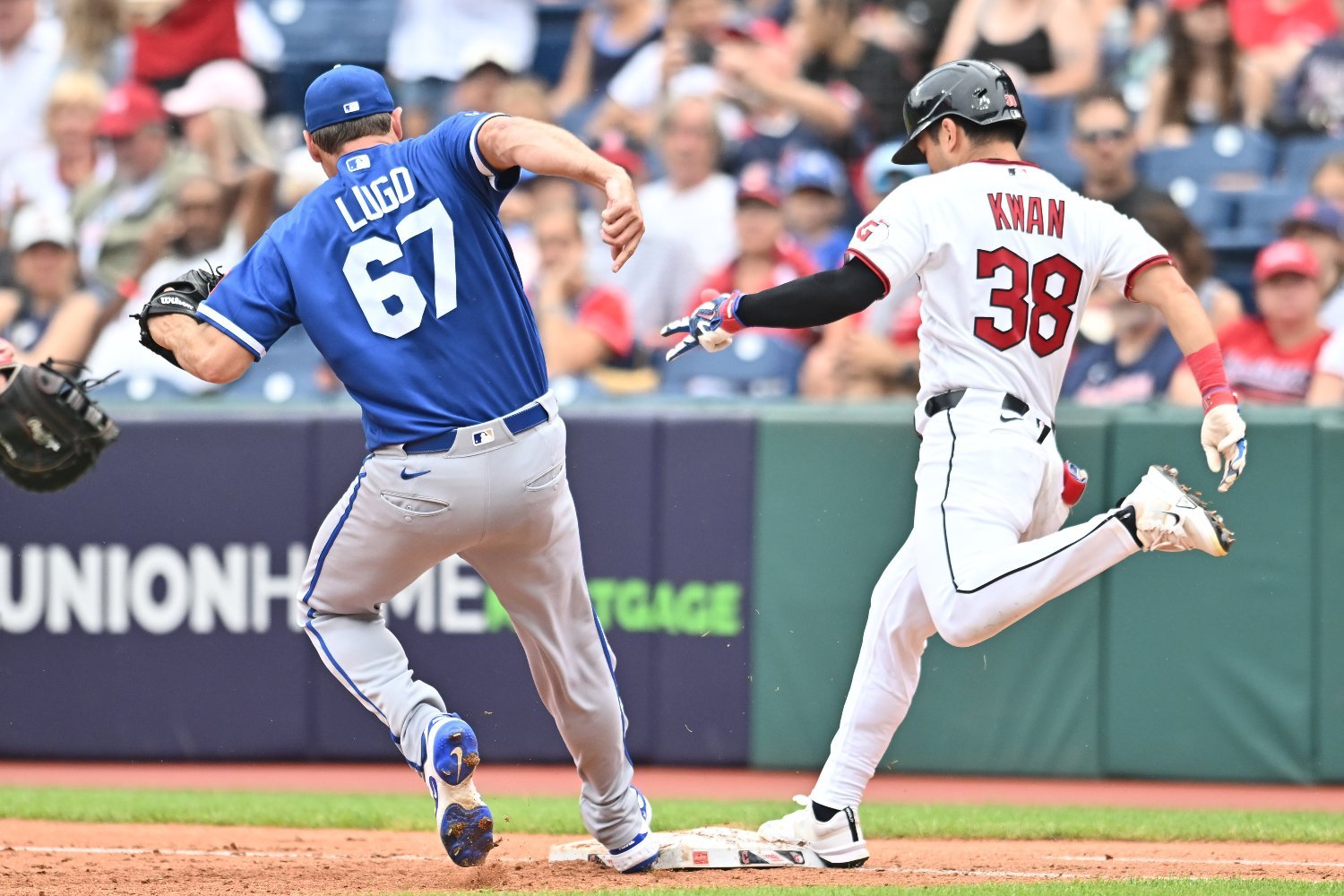 Week in a Nutshell The Kansas City Royals continued their hot play on the road, as they took four of six on this most recent road trip. It wasn't exactly an easy slate, as they faced off against the Blue Jays and Guardians, two teams in a better position for a Wild Card playoff berth. However, Kansas City held its own against both teams and kept its postseason hopes alive, though they remain slim (0.1% as of Sunday, according to Fangraphs). Even though it was a positive road trip overall, some concerns this week kept it from being fully encouraging. These issues could shape how Royals President of Baseball Operations approaches this offseason. Those concerns were particularly amplified in Sunday's series finale, as the Royals lost by 10 runs to the Guardians, their worst loss in a series finale since August 9th, when they lost to the Cubs 10-2 at Kauffman Stadium. Record this Week: 4-2 Run Differential for the Week: +8 Record for the Year: 62-76 Run Differential for the Year: -83 Standing: 5th in the AL Central One Sentence Game Summaries Game 133: KC 5, TOR 3 The Royals extend their winning streak to nine in Toronto thanks to a strong performance from Lugo. Game 134: TOR 3, KC 0 Toronto's Nathan Luke hits a three-run home run that snaps the Royals' season-long win streak. Game 135: KC 13, TOR 2 Jensen and Cags lead offense in 11-run blowout of Blue Jays in series finale. Game 136: KC 3, CLE 0 Wacha has best outing of year, shutting out Cleveland, striking out 10 in eight innings of work. Game 137: KC 8, CLE 3 Rojas has big day off bench with two hits and four RBIs to clinch series for Kansas City. Game 138: CLE 11, KC 1 Lugo is pummeled in series finale, giving up 9 runs in 3.2 IP. News and Notes The Royals got more tough injury news in Toronto. Michael Massey hit the field hard on a play and was pulled from the game. Kansas City put him on the 7-Day Concussion IL and called up Josh Rojas in his place. Furthermore, they also promoted Anthony Gose from Omaha and optioned right-hander Mason Black to Triple-A. A minor move happened on Saturday, though nothing official has happened in terms of "transactions." After the Guardians game, the Royals put John Schreiber on waivers. This lets a team pick him up for the rest of the season. Schreiber will be owed $600,000 by any team that claims him on waivers. Teams have 48 hours to claim him, or he stays on the Royals roster for the rest of the year. Schreiber will be a free agent after this season, and it's likely that the Royals will not bring him back for 2027. The Standouts It was an excellent week for the Royals' young pair of hitters: Carter Jensen and Jac Caglianone. After a tough stretch, Jensen has seemed to get locked back in at the plate. In 22 at-bats this week, he hit .273 with a .978 OPS. The Royals catcher had two home runs, four RBI, seven walks, and an OBP of .433. Jensen has swing-and-miss issues, but when he's seeing the ball well, he's either laying off bad pitches or hitting bombs. This week, the 23-year-old did an excellent job of not chasing, minimizing strikeouts, and hitting the ball hard, as shown in his Statcast percentiles below. Cags was even better this week than his fellow 23-year-old. The former Florida Gator led all Royals in hits with 10 this week and hit .435 with a 1.087 OPS in 23 at-bats. He also had two doubles, a homer, and six RBI. On the flip side, Cags didn't walk at all, and he struck out six times. However, Royals fans can live with his free-swinging approach if it produces results. That certainly was the case, according to his Statcast percentiles this week. 100th percentile 90th% EV? 99th percentile LA Sweet-Spot%? 93rd percentile barrel%? That will certainly work for the Royals lineup, especially in the No. 3 spot in the batting order. Thus, it makes sense why Cags is being floated as an extension candidate this offseason. On the pitching end, the main story this past week was Michael Wacha, who absolutely dominated the Guardians on Friday night. Not only did he pitch eight innings of shutout ball, but he struck out 10, and his velocity and other Statcast metrics were all up, as evidenced in the Statcast percentiles summary below. It's only one outing. That said, it was an impressive one, especially with it coming against a division foe like the Guardians at Progressive Field in Cleveland, a place where the Royals have struggled for a while. While Wacha is piling on the innings, he looks stronger than ever on the mound, which is not only encouraging for this stretch run, but 2027 as well. Wacha is proving that despite his age, he may be able to carry the Royals rotation in the No. 1 or 2 spot next year, something that didn't feel likely a month ago. If Wacha finishes the 2026 season strong, then the Royals can add a couple of pieces around Wacha this offseason, with the thought that the All-Star will be Kansas City's 2027 Opening Day starter. The Questionable I want to focus on one player here: Seth Lugo, who was absolutely thrashed by the Guardians on Sunday. After giving up nine runs in this most recent outing, Lugo's ERA ballooned to 5.03. That would tie him with Philadelphia's Aaron Nola for the third-worst ERA of qualified starting pitchers in baseball (Lugo had the 5th-worst ERA going into his Sunday start). In 28 starts and 154 IP this year, Lugo has a 5.03 ERA and a 1.42 WHIP. This is the second straight year his ERA has increased significantly, rising from 3.00 in 2024 to 4.13 in 2025. Furthermore, when looking at his Statcast Percentiles Summary via TJ Stats, he's done a good job of limiting walks and finding the strike zone. Unfortunately, beyond those two areas, he's rated as subpar in most categories. Not only is Lugo struggling to generate swinging strikes (6th percentile), but he's not generating any chase either (3rd percentile O-Swing%). Add that with a hard-hit rate that ranks in the 15th percentile, and it's not surprising that Lugo is having a career-worst year as a starting pitcher. The big issue is that Lugo has particularly regressed in the second half this year, especially with his control. Before the All-Star Break, the 36-year-old posted a 4.56 ERA and 1.43 WHIP in 104.2 IP. This is what his TJ Stuff+ summary looked like in the first half, via TJ Stats. His chase%, whiff%, and xwOBACON were all subpar before the All-Star Break. However, he did a good job of throwing strikes, as evidenced by a 53.3% zone rate and 64.4% strike rate. That helped him maintain a low walk rate at 7.6%, which helped him maintain an 11.6% K-BB% despite a sub-20% K%. In the second half, he has a 6.02 ERA and 1.40 WHIP in 49.1 IP. When looking at his TJ Stuff+ summary since July 17th (his first second-half start), the main issue seems to be a dip in the zone rate. Interestingly enough, the stuff overall has been slightly better (99 TJ Stuff+ compared to 98 in the first half), the chase% and whiff% have been the same, and the xwOBACON has been better (.337 to .419 in the first half). The main issue? His 48.4% zone rate and 62.5% strike rate are 4.9% and 1.9% lower in the second half, respectively. The walks are slightly up, the strikeouts are down, and as a result, his K-BB% of 8.0% is 3.6% worse. It's hard to be an effective starting pitcher with a sub-10% K-BB%, and Lugo is certainly experiencing that dilemma right now. It's not just the numbers that have been bad for Lugo in the second half. In Sunday's game, he didn't run to first base quickly enough, and Cleveland's Steven Kwan ran out what should've been an easy groundout at first base. The Guardians made Lugo pay with a three-run inning, which pushed the lead to five runs at the end of the third. The Royals couldn't recover after that brutal inning. And that's frustrating to see, especially from a pitcher who's not only won a Gold Glove and finished second in the AL Cy Young voting in 2024, but also is owed $21.5 million this year and next. The Royals need more from a guy who's making $43 million this year and next, and has the option to make $20 million in 2028. Lugo was paid at the end of last year to not necessarily be an ace, but a No. 2 or 3 pitcher. Now? He looks like the fifth-best pitcher in the Royals rotation, behind Noah Cameron, who is only in his second year at the Major League level. What's interesting to see is that Lugo wasn't bad on Tuesday in the Royals' win over the Jays. The control was a bit erratic (sub-50% zone rate), but he generated a 27.9% whiff rate and 101 overall TJ Stuff+. It looked like Lugo was turning the corner into becoming a better strikeout pitcher down the stretch, much like Wacha. Now, after Sunday's disaster, that progress is questionable. The Royals need to see Lugo rebound in some fashion in September. If he doesn't, they may need to make some tough decisions with him in 2027, whether that's putting him on the trade block or perhaps moving back to the bullpen if he continues to struggle in a starting role. They can't compete for a playoff spot next year with a starting pitcher who has an ERA over five. Looking Ahead The Royals return to Kauffman Stadium for a long homestand that includes series against the Marlins (Tuesday-Thursday), Blue Jays (Friday-Sunday) and Diamondbacks (Monday-Wednesday). The Royals' playoff chances are slim, but if they want to stay alive, they will need to sweep at least one series, maybe two. Even a 6-3 homestand may not be enough. They need to go 8-1 or 7-2, at the very least, to stay in the playoff hunt. They are at least catching some teams at the right time. The Marlins are 5-5 in their last 10 games and struggled in their last series against a Nationals team that is 65-74. The Blue Jays rebounded and swept a flailing Mariners team at the Rogers Centre this weekend. However, they lost 2 of 3 at home to the Royals and have traditionally struggled at Kauffman. Lastly, the Diamondbacks were inconsistent against a Giants team this weekend that's worse than the Royals, and Arizona is dealing with the drama surrounding star second baseman Ketel Marte. If the Royals truly believe they are a playoff team, they need 7 or more wins this homestand (and honestly, I believe 8 or 9 is necessary; 7 may not be enough). Anything less? They should look to call up some young guys in Omaha or Northwest Arkansas and give some Minor Leaguers MLB debuts when they hit the road next week for a long final road trip that includes stops in Boston, Houston, and Pittsburgh. View the full article
 -
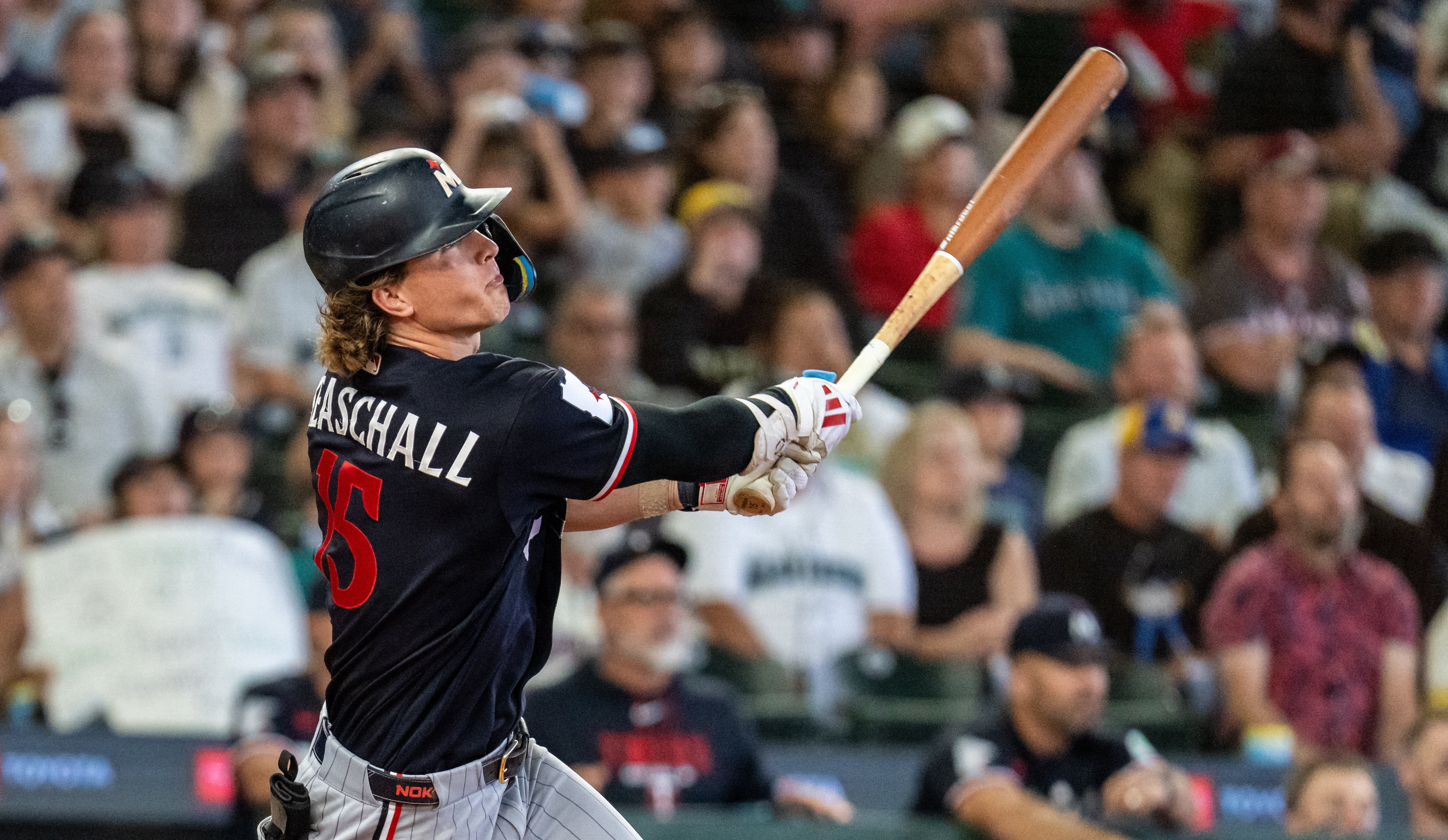 The Twins' offense has not been a strength this year, nor has it been a weakness. By wOBA and fWAR, they have been exactly average, ranking 15th out of 30 MLB teams. They are 10th overall in runs scored, thanks mostly to an unsustainable RISP rate that has faded in the second half, but have fallen to 23rd here in a month of August that essentially knocked them out of contention. Next year's team is going to have legitimate contention hopes, and that's before you factor any offseason moves. It begins with their pitching staff, which figures to be extremely deep with Pablo López, Mick Abel, David Festa and others hopefully returning from injury. The bullpen has been given a year to develop and should be in a much better place entering the 2027 season versus 2026. This has the makings of a good team. What will determine its true upside is how good the offense can be. Are we looking at another middle-of-the-road unit like we saw this year? Or can the Twins' lineup evolve into something special as young talent melds with veteran leadership? Here's my early projection of a 2027 starting lineup for the Twins, along with some thoughts and questions we need to see answered in September and the offseason for each. 1. Luke Keaschall, DH Keaschall has firmly established himself as the team's leadoff hitter, now and going forward. He's batted atop the order in 12 consecutive games and I'd be surprised if he moves away for anything other than an injury. The honor is well deserved for Keaschall, whose .416 OBP since the start of July ranks 3rd among MLB hitters. He provides everything you'd want from a leadoff man, whether the role is being viewed through an old-school or new-school lens. He takes good at-bats, handles the bat, hits for average, runs well and sets the table for the best hitters in the lineup. The question, of course, is where he fits in defensively. For now I've got him pegged as a regular DH who slides into an outfield corner against left-handers. What to watch for in September: Where the Twins play Keaschall in the field, offering clues about how they envision fitting his bat into the 2027 lineup without locking him into DH. 2. Walker Jenkins, RF Jenkins has been appearing at the bottom the order initially to ease pressure on a 21-year-old seeing his first major-league action, but soon enough I think it will become clear he's the best all-around hitter in the lineup, and that is who belongs in the No. 2 spot. Already we've seen Jenkins' smooth swing and ability to control the zone, and even his ability to hang tough against southpaws. He has the ability to do it all at the plate. I want to see his at-bats maximized. And slotting him in between two right-handed hitters will make it harder for opposing managers to play matchups in the late innings. What to watch for in September: How quickly Jenkins adjusts to major-league pitching, particularly against left-handers, and whether he can already begin establishing himself as a fixture near the top of the order. 3. Byron Buxton, CF A question mark at the moment, to be sure. Buxton is currently on the injured list for a third time in the past two months with a right hip impingement that won't go away. He's never been right since the issue first sprung up, slashing 172/.274/.203 in 74 plate appearances between IL stints. GM Jeremy Zoll has acknowledged that offseason surgery is on the table. What really makes the situation frustrating is that, before his hip started barking constantly, Buxton was as healthy and productive as ever. He earned a third All-Star nod in the first half by slashing .271/.328/.575 with 25 homers. That's the definition of a No. 3 hitter, and the ideal kind of slugger to have lined behind Keaschall and Jenkins. The hip thing does not look good for Buxton at the moment. But neither did his knee before October 2023 surgery to excise a plica finally resolved his recurring pain. Maybe he and the doctors can figure out some kind of similar course of action for the hip this offseason? For now that's what I'm banking on. What to watch for in September: Whether Buxton returns at all, and if he does, whether his hip shows enough improvement to inspire confidence that rest and rehab can work, or further strengthens the case for offseason surgery. 4. Kody Clemens, 2B The cleanup spot is the first one in the batting order that you come across and find a lack of credible fit among current options. It could have been Matt Wallner if he didn't fall out of the team's plans with a disastrous first half. It could eventually be Emmanuel Rodriguez. But for the moment, the most logical candidate would seem to be Clemens, who's made more starts at cleanup in 2026 than any Twin other than Josh Bell. Clemens makes a lot of outs, which is what gives me hesitation about putting him in the top half of the lineup. His .293 OBP is 15th-lowest among qualified MLB hitters. But the power tool is legit: 22 homers, 21 doubles and six triples. His .459 slugging percentage ranks second among MLB second basemen. Plus, batting him after Buxton gives you the ability to go R-L-R-L in the top four lineup spots. I view Clemens as a placeholder, in multiple senses: in the cleanup spot, until someone more deserving emerges, and at second base, until Marek Houston comes up and takes over at short. What to watch for in September: Can Clemens can sustain his power production while improving his ability to reach base? This could determine whether he's viewed as a legitimate middle-of-the-order bat or more of a lower-lineup complementary piece. 5. Kaelen Culpepper, SS In his limited time as a big-leaguer, we've already started to get a clear idea of who Culpepper is as a hitter. He's aggressive, he swings hard, and he hits the ball with authority. Culpepper has already notched two double and three homers, with bat speed and contact quality that jump out at you. He also has a 16-to-4 K/BB ratio, which is the flip side to his offensive profile. I would expect him to be a power-first bat with a relatively low OBP, not unlike Clemens but hopefully with a little more discipline. Culpepper seems like a good fit to bat fifth, especially because it keeps with our pattern of alternating handedness. What to watch for in September: How Culpepper's aggressive approach holds up as pitchers adjust to him, and whether he can tighten his strike-zone discipline without sacrificing the impact that has made his early arrival so encouraging. 6. Emmanuel Rodriguez, LF Ready or not, here he comes. Rodriguez will be out of options next spring, meaning the Twins will have to bring him north out of camp. He's the major wild-card in my projected lineup as the only player who has yet to debut, and that's why I'd love to get a look at him in September. The profile here is pretty unique, with maxed-out power and patience to go along with a rare level of swing-and-miss tendency. It's not hard to imagine him best-suited for the bottom of the order initially, given the potential for overwhelm as he deals with MLB pitchers who can dot the borders of the zone, but I think Rodriguez will give you enough big swings to justify placement in the middle of the order. What to watch for in September: First and foremost, whether Rodriguez gets the call. If he does, how will his extreme three-true-outcomes profile translate against major-league pitching before he's forced onto the roster next spring? 7. Royce Lewis, 1B Among players listed in this lineup projection, I feel least certain about Lewis being a member of the 2027 team. On the one hand, first base is a pretty easy position to address (see: Josh Bell) and Lewis has been rather unexceptional there. On the other hand, he'll still be relatively cheap via arbitration next year, and he's been decent enough to merit another attempt at unlocking his dormant upside. Especially given the lack of competing internal options. At this time, I'd still be counting him in my plans, but Lewis has not shown enough offensively to deserve hitting in the top half of the order. I'm really interested to see how he finishes out this current season. What to watch for in September: Whether Lewis can finally rediscover some sustained offensive impact down the stretch and give the Twins a compelling reason to keep betting on his upside in 2027. 8. Brooks Lee, 3B An enigma. You look at Lee's underlying metrics and he grades out as one of the worst hitters in the league, with an xwOBA ranking in the 3rd percentile. And yet. He's tied for second among Twins position players in fWAR, and he's running an above-average .739 OPS. He doesn't do anything particularly well but he does everything well enough to be a productive and reliable starter in the infield. Lee has a .287 career OBP and has yet to finish a season above .300. Until that changes, or he lifts his average out of the .240 range, I can't see much an argument for Lee hitting in a prime lineup position like he did on Sunday. But he's a relatively strong piece at the bottom of the order. What to watch for in September: Whether Lee can finish the year with stronger underlying offensive indicators — more quality contact, more walks or simply more consistent production — to reinforce his case as more than a defense-and-versatility regular. 9. Victor Caratini, C Outside of a hot streak in June, Caratini has been one of the worst hitters in baseball all year. I don't expect that to improve much heading into his age-33 season. But it bears noting that the bar for a No. 9 hitter is very low — the average MLB hitter in that lineup spot is slashing .228/.294/.349 this year. For a catcher hitting at the bottom of the order, he's perfectly adequate. But it's certainly fun that the only clear-cut offensive liability in the 2027 lineup happens to play the same position as Minnesota's soon-to-be No. 1 prospect, Vahn Lackey, who is off to a ridiculous start in Cedar Rapids. What to watch for in September: How much the Twins lean on Caratini down the stretch, relative to the outgoing Ryan Jeffers, and whether they use the fading stakes to audition Alex Jackson more seriously as a presumptive 2027 backup. Looing ahead at the 2027 lineup, and even starting to map things out a bit further, we can start to see a compelling convergence of the past wave and the new wave. The top prospects have officially arrived, so we no longer need to discuss their fit as theoretical. Now the real work begins. How good can this lineup be? View the full article
 -
![More information about "Red Sox Speedster Andrews Opata Is Leaving His Mark In Salem [Exclusive]"](//d317trerw33y7b.cloudfront.net/monthly_2026_08/rssImage-fd7065508b4700b40d8abe9803261c3c.jpeg.2c27cf7b8b1e81f7ca357a8247811f7c.jpeg) “I got the call and I told him [Opata’s agent] I wanted to be a Red Sox. Best decision I ever made.” Since signing with the Boston Red Sox, Andrews Opata has shown that their investment was a good one. Through his first 96 professional games, the undrafted free agent has put together a well-rounded season, hitting .256/.370/.396 with 13 doubles, three triples, 10 home runs and 53 RBIs. He also has stolen 49 bases, a team record that is only growing with each swiped bag. Speed is a big part of his game, so it was only natural that he set (and continues to increase) a single-season record. “It was an awesome feeling. Honestly, I didn’t even know until 30, 45 minutes after the game when I looked at my phone. It was definitely a cool thing to say that I accomplished. I take pride in my speed and base running because I think being able to create a lot of runs for our team is really special to me,” Opata explained about his record setting season. The outfielder isn’t only interested in stolen bases, however, instead looking to make smart decisions and place himself in positions where the rest of the lineup can drive him in. He’s managed to do just that, having been driven in 76 times on the season. Despite his overwhelming speed, Opata admitted that it takes more than just that to succeed on the basepath. Especially against professional pitchers. “I go into the game knowing the pitcher’s time to the plate. Usually 1.3, 1.4 [seconds]. Knowing the arm behind the plate. Whether it’s better to stay at first base. I take into account a lot of different things and really steal when I know there’s like a 95% chance I’ll be safe. I’ll just stay at first and let the game play out,” Opata admitted. His cautious approach with his speed was on display during his time in college, as he went 85 for 91 in stolen base attempts. Since becoming a professional, he’s gone 49 for 56. But despite his plus speed and baserunning instincts, Opata didn’t enter draft day with the thought of being selected. Rather, he went into it with the thought he could be drafted or return to school, hoping that everything would work out. While he didn’t get drafted, Opata still received the call from his agent. His first professional experience involved flying down to Fort Myers and after signing his contract, he managed to play in a few bridge league games before going home until a week before Thanksgiving. Upon returning to the complex in Fort Myers, he got back to work as he lifted, hit and did defensive drills. It was, in a sense, a precursor to spring training and allowed him to get acclimated to the system and get familiar with how things would be when he returned to Fort Myers in January for actual spring training. Then, during his first pro spring, he got into a few games as a late-game replacement, a special experience for the outfielder. But it wasn’t until he finally played in Salem that it was a truly special situation. “I haven’t ever played in an environment like that with a bunch of fans. It was fun. The first night I didn’t get a hit, but I remember coming home and was like it was super fun and knew every night it’s going to be similar to that. So I was just really excited to see how the season went.” Despite his success during his first season, there have still been some learning moments for Opata. Since his junior year of high school, his main position was center field. But in 2026, he’s mainly played the corner outfield positions for Salem. The transition back to the corners was a little tough for the outfielder at first due to a combination of factors that included how the ball would spin different towards left or right field compared to center field. Opata had to learn and adjust to the change in angles the ball would come at him and the routes he would need to take—that a fly ball to the corners might have some slice or hook to them. He would take time to learn the best position to be in based on the hitter at the plate and how Salem’s pitchers would attack them. But eventually, it became easier as he put in consistent work every day. Offensively, he quickly learned that the quality of pitching was different than what he faced in college. While he had previously faced pitchers who threw hard, now he had to deal with pitchers who not only had a good fastball, but also quality command of it along with movement on their pitches. Once he adjusted to it, however, he has been a quality offensive weapon for a Salem team fighting for a playoff spot. Despite the ups and downs, it’s been a season he’s valued deeply. “I’ve learned a lot this season about what it takes to be a professional baseball player. There’s the struggles that come and go and you just have to ride the wave. You’ll have good weeks and bad weeks, but if you just stay as consistent as possible, you’ll be in a pretty good spot.” View the full article
“I got the call and I told him [Opata’s agent] I wanted to be a Red Sox. Best decision I ever made.” Since signing with the Boston Red Sox, Andrews Opata has shown that their investment was a good one. Through his first 96 professional games, the undrafted free agent has put together a well-rounded season, hitting .256/.370/.396 with 13 doubles, three triples, 10 home runs and 53 RBIs. He also has stolen 49 bases, a team record that is only growing with each swiped bag. Speed is a big part of his game, so it was only natural that he set (and continues to increase) a single-season record. “It was an awesome feeling. Honestly, I didn’t even know until 30, 45 minutes after the game when I looked at my phone. It was definitely a cool thing to say that I accomplished. I take pride in my speed and base running because I think being able to create a lot of runs for our team is really special to me,” Opata explained about his record setting season. The outfielder isn’t only interested in stolen bases, however, instead looking to make smart decisions and place himself in positions where the rest of the lineup can drive him in. He’s managed to do just that, having been driven in 76 times on the season. Despite his overwhelming speed, Opata admitted that it takes more than just that to succeed on the basepath. Especially against professional pitchers. “I go into the game knowing the pitcher’s time to the plate. Usually 1.3, 1.4 [seconds]. Knowing the arm behind the plate. Whether it’s better to stay at first base. I take into account a lot of different things and really steal when I know there’s like a 95% chance I’ll be safe. I’ll just stay at first and let the game play out,” Opata admitted. His cautious approach with his speed was on display during his time in college, as he went 85 for 91 in stolen base attempts. Since becoming a professional, he’s gone 49 for 56. But despite his plus speed and baserunning instincts, Opata didn’t enter draft day with the thought of being selected. Rather, he went into it with the thought he could be drafted or return to school, hoping that everything would work out. While he didn’t get drafted, Opata still received the call from his agent. His first professional experience involved flying down to Fort Myers and after signing his contract, he managed to play in a few bridge league games before going home until a week before Thanksgiving. Upon returning to the complex in Fort Myers, he got back to work as he lifted, hit and did defensive drills. It was, in a sense, a precursor to spring training and allowed him to get acclimated to the system and get familiar with how things would be when he returned to Fort Myers in January for actual spring training. Then, during his first pro spring, he got into a few games as a late-game replacement, a special experience for the outfielder. But it wasn’t until he finally played in Salem that it was a truly special situation. “I haven’t ever played in an environment like that with a bunch of fans. It was fun. The first night I didn’t get a hit, but I remember coming home and was like it was super fun and knew every night it’s going to be similar to that. So I was just really excited to see how the season went.” Despite his success during his first season, there have still been some learning moments for Opata. Since his junior year of high school, his main position was center field. But in 2026, he’s mainly played the corner outfield positions for Salem. The transition back to the corners was a little tough for the outfielder at first due to a combination of factors that included how the ball would spin different towards left or right field compared to center field. Opata had to learn and adjust to the change in angles the ball would come at him and the routes he would need to take—that a fly ball to the corners might have some slice or hook to them. He would take time to learn the best position to be in based on the hitter at the plate and how Salem’s pitchers would attack them. But eventually, it became easier as he put in consistent work every day. Offensively, he quickly learned that the quality of pitching was different than what he faced in college. While he had previously faced pitchers who threw hard, now he had to deal with pitchers who not only had a good fastball, but also quality command of it along with movement on their pitches. Once he adjusted to it, however, he has been a quality offensive weapon for a Salem team fighting for a playoff spot. Despite the ups and downs, it’s been a season he’s valued deeply. “I’ve learned a lot this season about what it takes to be a professional baseball player. There’s the struggles that come and go and you just have to ride the wave. You’ll have good weeks and bad weeks, but if you just stay as consistent as possible, you’ll be in a pretty good spot.” View the full article -
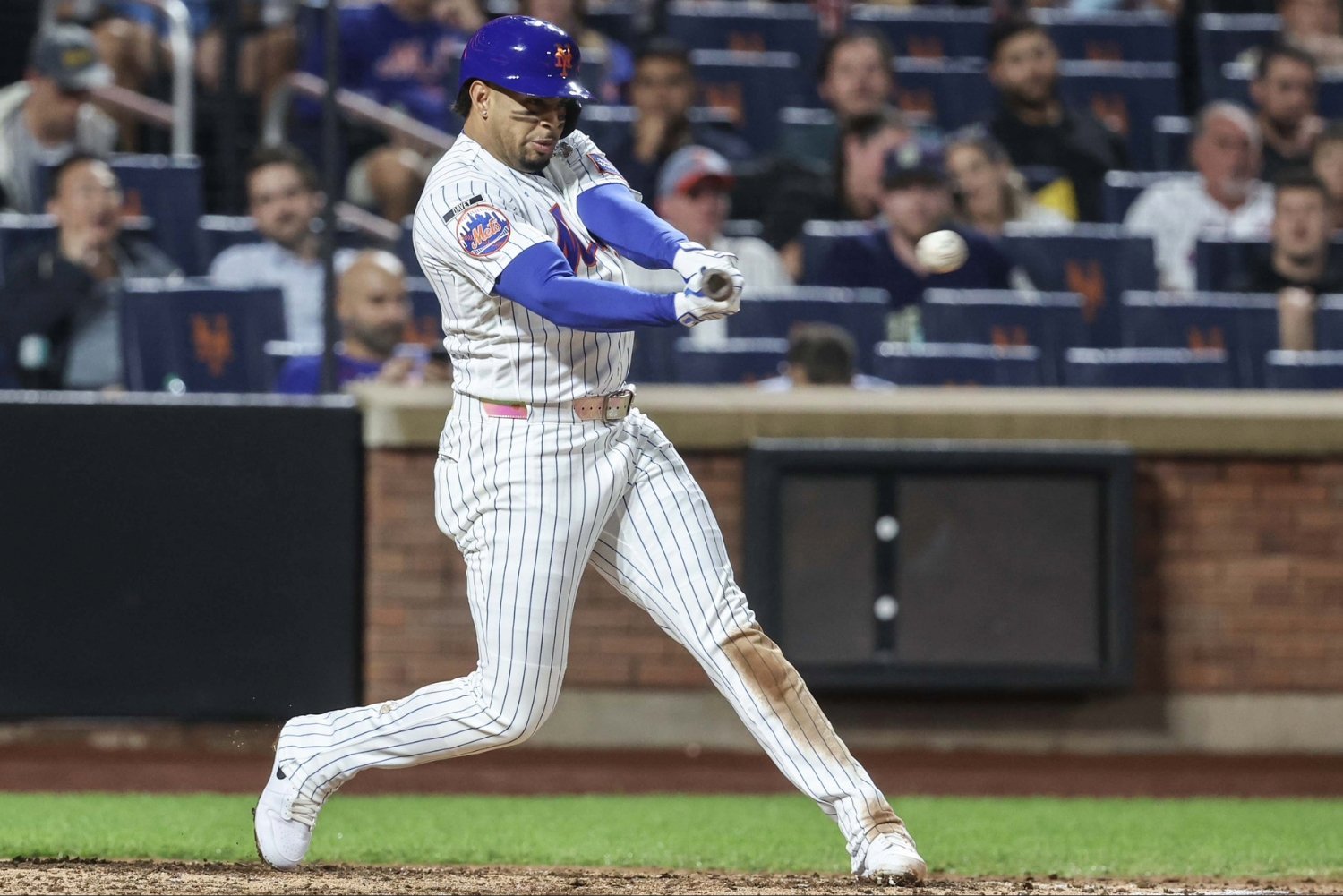 Over the winter heading into the 2026 season, the Miami Malins inked Christopher Morel to a one-year major league deal to be their starting first baseman. He made the initial 26-man roster but suffered a left oblique strain during batting practice on Opening Day causing him to be scratched from the lineup and hit the 10-day injured list the following day. Morel was activated a month later on April 27, but let’s just say his tenure with the Marlins didn’t go as planned. Across 22 games and 73 plate appearances, he put up an abysmal .162/.219/.206 slash line along with just three extra-base hits and one run driven in. Due to his poor performance, Morel was released from the organization on June 26 after being outrighted to Triple-A Jacksonville the week prior. It didn’t take long for him to find a new home, as the New York Mets quickly signed him to a minor-league contract on July 1, where Morel would spend the next month and a half with Triple-A Syracuse. Christopher Morel’s Potential Role with the Mets The Mets organization noticed his struggles and let Morel take a breather for a while in Triple-A, giving him a chance to reset. It paid off quite nicely as he mashed 12 home runs and seven doubles along with a .321 batting average and 1.098 OPS. He was a run-producing machine collecting 29 RBIs while scoring 23 himself. His excellent minor-league showing earned him a call to the Mets on August 17. Morel's call-up came at just the right time since the Mets had to place Jorge Polanco on the injured list just days after, thinning the depth on the roster. Even though Polanco was the club's primary designated hitter, his absence still leaves playing time open for other players. With Morel being pretty much limited to first base at this point, he’ll split time with Jared Young who’s been one of the Mets best hitters all-season to this point. Even though Morel has only logged 13 plate appearances with the Mets thus far, a potential platoon situation could be an option for the pair. Young is a lefty-bat who’s really struggled against southpaws this season, batting .205 with a .544 OPS. He’s been a lot more productive against righties, owning a .282 average and .818 OPS across 206 at-bats. While Morel has been up and down against southpaws throughout his career, a true plan role could be a way to give him some playing time and get Young out of the lineup when facing lefty pitchers. Over 539 career plate appearances against left-handed pitchers, Morel is hitting .202 along with a .669 OPS and 44 extra-base hits. In the midst of his fifth major-league season and on his fourth different team, Morel could offer a nice veteran presence for the final stretch of the season and could actually deliver some respectable offensive numbers. His 74 career home runs and contagious energy are, at the very least, paths to excitement for a team that hasn't done much worth celebrating in 2026. View the full article
 -
Blue Jays Bring Out the Brooms, But the Battle Is Just Beginning
DiamondCentric posted an article in Jays Centre
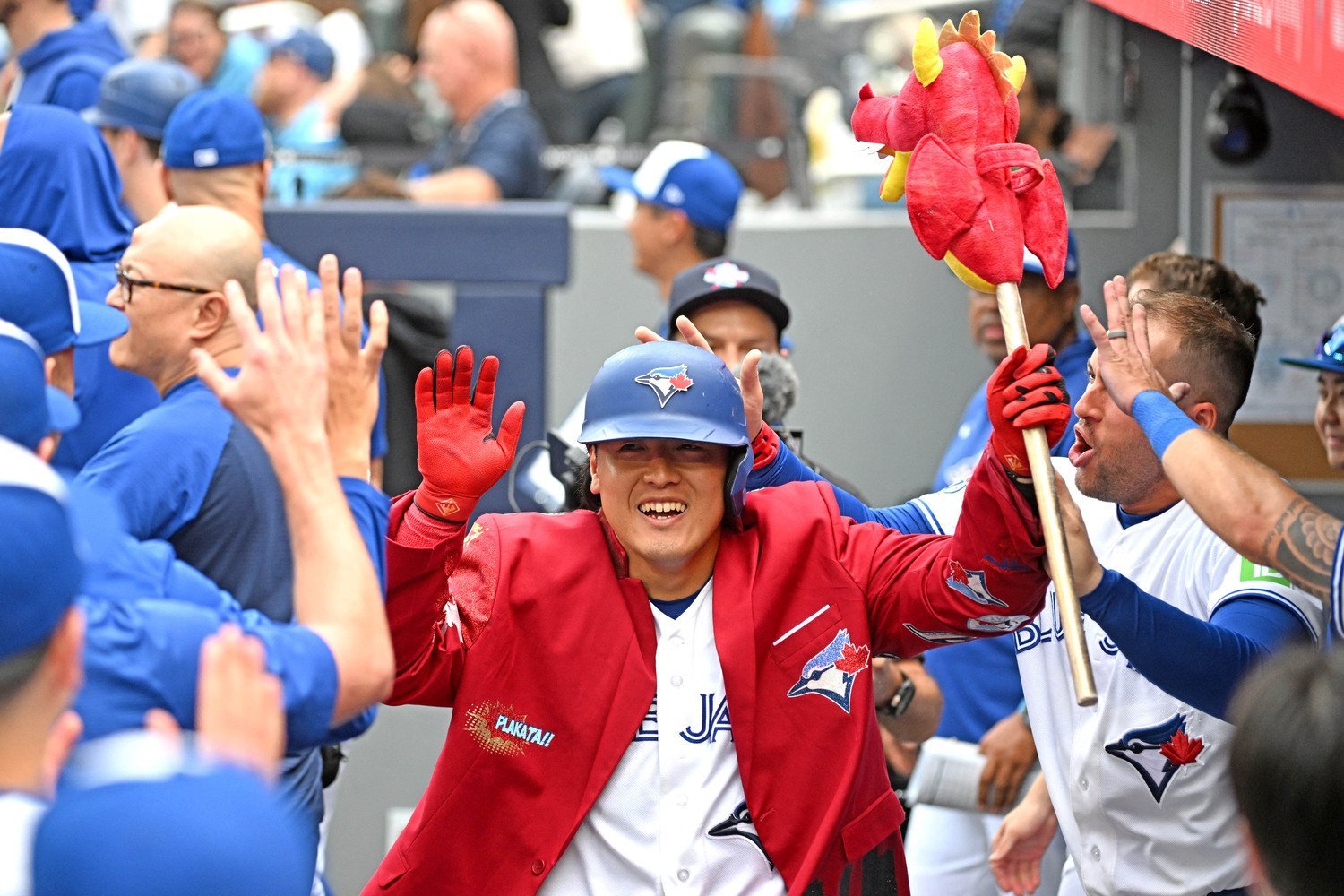 The Royals were supposed to be one of the Blue Jays' weaker opponents down the stretch, but KC has been hot lately. The Jays dropped their series with the Royals last week, suffering a particularly embarrassing 13-2 loss in the rubber match. Thankfully, over the weekend, the Blue Jays took three of three from the Mariners, completing their first series sweep since June 16-18 in Boston. It was their first sweep at home since their very first series of the season against the A's. The Jays are now 3.5 games ahead of the M's in the Wild Card standings; according to FanGraphs, Toronto's playoff odds are now higher than Seattle's for the first time all year. Taking the season series against the Mariners was only the first challenge in the Blue Jays' stretch run quest. They may be well ahead of the Mariners in the Wild Card race, but they're still half a game behind the Orioles and 1.5 behind the Guardians, who currently hold the AL's final postseason berth. On Tuesday, the Jays head to Cleveland for a pivotal three-game set – perhaps the most pivotal of their season. The good kind of sweep could put them back in the playoff picture. The bad kind would be a major hit to their Wild Card hopes. Then, they'll head to Kansas City in search of revenge. Before all of that, here's a quick recap of the week that was in Blue Jays baseball. Toronto Blue Jays Week in Review (August 25-30) Tuesday, August 25: KCR 5, TOR 3 Another big game for Brett Bateman: 3-for-5 with two of the Jays' three runs. Andrés Giménez returns after several games off. He goes 2-for-3 with a double and a hit-by-pitch. Nathan Lukes ends the game trying to stretch a two-run single into a double. Wednesday, August 26: TOR 3, KCR 0 Who needs a fifth starter? The bullpen pitches a shutout. Chad Dallas earns the win with the best game of his brief MLB career: eight up, eight down – with four strikeouts. Save number 30 for Louis Varland. Thursday, August 27: KCR 13, TOR 2 Another mediocre outing from Spencer Arrighetti. He's 0-2 in his first two games with the Jays. Simeon Woods Richardson lets the Royals blow the game open. After pitching to a 1.04 ERA in his first 17.1 innings with Toronto, SWR finally faltered. George Springer homers for the first time in nearly a month. Friday, August 28: TOR 8, SEA 1 Springer goes 4-for-4, homers for a second day in a row; Lukes hits his fourth homer in his last seven games. Dylan Cease throws another quality start, strikes out eight. Paul Sewald makes his sixth appearance for Toronto. He's yet to allow a run. Saturday, August 29: TOR 4, SEA 3 Hall of Excellence opened, Buck Martinez honored. José Soriano goes seven. Alejandro Kirk swipes a bag. Sunday, August 30: TOR 7, SEA 0 Max Scherzer turns back the clock, strikes out 10 in seven scoreless frames. Springer, Kirk, Bateman continue to shine. Vladimir Guerrero Jr. hits his third double of the week (but still no homers at home). Toronto Blue Jays Transactions of the Week Chad Dallas recalled to replace an injured Shane Bieber. Blue Jays sign Michael Lorenzen to a major league deal. Chad Dallas optioned. Blue Jays call up CJ Van Eyk, DFA Simeon Woods Richardson (again). Toronto Blue Jays Injury Updates of the Week Shane Bieber hits the IL with right teres major inflammation, retroactive to August 21. He will be shut down from throwing for at least another week. Yimi García has thoracic outlet surgery. Joe Mantiply continues his rehab assignment, moves up to Triple-A Buffalo. Josh Smith starts a rehab assignment. Jameson Taillon starts a rehab assignment. Anthony Santander is hitting off a machine, still eyeing a return in 2026. View the full article
 -
 The San Diego Padres' four full-season affiliates went 1-3 to wrap up their weeklong series. The Triple-A El Paso Chihuahuas dropped a tough 2-1 decision to Oklahoma City, the Double-A San Antonio Missions fell 8-6 to Springfield, the High-A Fort Wayne TinCaps prevailed 9-3 over Dayton and the Low-A Lake Elsinore Storm were outgunned 16-13 by Rancho Cucamonga. Padres Minor-League Transactions San Diego Padres activated LF Samad Taylor from the 10-day injured list. San Diego Padres sent RHP Nick Pivetta on a rehab assignment to El Paso Chihuahuas. San Diego Padres recalled 2B Sung-Mun Song from El Paso Chihuahuas. Nick Pivetta Fans 7 In Strong Rehab Start; Chihuahuas Lose Rehabbing Padres right-hander Nick Pivetta struck out seven over 4⅓ innings, looking sharp in his second outing of his second rehab stint, but the Triple-A El Paso Chihuahuas were walked off by the host Oklahoma City Comets 2-1. The Chihuahuas (74-57, 18-39 second half), who were seeking their first series win since the end of June, went 3-4 in the series, which included a doubleheader. Pivetta, whose first outing when his initial rehab assignment more than three weeks ago ended abruptly with him walking off the mound, restarted his assignment Tuesday at Low-A Lake Elsinore and experienced the normal first-start bumps. But jumping up to Triple-A for this start, Pivetta was up to the task. He threw 64 pitches, 44 for strikes. The only question about Pivetta's outing was his velocity. His four-seamer started out in the 94 mph range, which is what he was throwing at the beginning of the season before his flexor injury, but it ticked down slightly with each inning. His fastest pitch was 94.4 mph to rehabbing Los Angeles Dodgers catcher Will Smith in the first inning, while dropping down to 91.5 in the top of the fifth. Ethan Salas, Padres Mission's No. 1 prospect, was on base twice and drove in the Chihuahuas' only run, driving in Bryce Johnson on a broken-bat flair single to right to stake Pivetta to a 1-0 lead. It stayed 1-0 until the seventh, when the Comets got a two-out RBI single. With right-hander Alek Jacob on to start the bottom of the ninth, the Comets got a single, a flyout that advanced the runner to second, an intentional walk and an RBI single to right, with the runner scoring well ahead of the throw home. The Chihuahuas were held to four hits, with Nick Solak having two of them. Salas also had his third stolen base at Triple-A, giving him 17 for the season, matching the total he had in his first three pro seasons. Player AB R H RBI BB K Bryce Johnson, CF 2 1 0 0 1 1 Carlos Rodríguez, RF 3 0 0 0 1 0 Nick Solak, LF 4 0 2 0 0 0 Marcos Castañon, 2B 4 0 0 0 0 1 Ethan Salas, C 3 0 1 1 1 0 Mason McCoy, SS 4 0 0 0 0 0 Rodolfo Durán, DH 4 0 1 0 0 1 Nick Pratto, 1B 3 0 0 0 0 1 Gage Workman, 3B 3 0 0 0 0 1 Totals 30 1 4 1 3 5 Player IP H R ER BB K HR Nick Pivetta 4 1/3 2 0 0 1 7 0 Sean Boyle 2 2/3 5 1 1 0 2 0 Ethan Routzahn 1 0 0 0 0 0 0 Alek Jacob (L, 6-7) 0 1/3 2 1 1 1 0 0 Totals 8 1/3 9 2 2 2 9 0 Alex McCoy's 3 Hits, 18th HR Not Enough For Missions Alex McCoy went 3-for-4 with a homer and three RBIs, while Justin DeCriscio went 3-for-3, but the Double-A San Antonio Missions were done in by a five-run fifth inning that gave the host Springfield Cardinals an 8-6 victory. The Missions (55-71, 24-33 second half) went 1-5 in the series, while the Cardinals clinched the second-half title in the Texas League's North Division with two weeks left. Missions right-handed starter Eric Yost, Padres Mission's No. 16 prospect, was pounded for eight runs in 4⅓ innings, including three homers, all in the fifth. Braedon Karpathios, Padres Mission's No. 9 prospect, went 2-for-4 with a double, two runs scored and an RBI, while McCoy, Padres Mission's No. 8 prospect, also walked once and scored once. The Missions were down 3-0 when they tied the game in the top of the fifth on Kai Roberts' sacrifice fly, Karpathios' RBI single and McCoy's run-scoring single. But the Cardinals then hit three homers in a five-batter span during their five-run rally. McCoy hit his homer, a 435-foot two-run shot, in the seventh. It was his third in 14 games with the Missions and 18th of the season. SA_0830.mp4 Player AB R H RBI BB K Braedon Karpathios, RF 4 2 2 1 1 1 Alex McCoy, LF 4 1 3 3 1 0 Romeo Sanabria, 1B 4 0 0 1 0 0 Albert Fabian, DH 4 0 1 0 1 0 Jack Costello, 3B 4 0 0 0 0 1 Justin DeCriscio, 2B 3 1 3 0 1 0 Luis Verdugo, SS 4 1 1 0 0 2 Anthony Vilar, C 3 1 0 0 1 0 Kai Roberts, CF 3 0 0 1 0 2 Totals 33 6 10 6 5 6 Player IP H R ER BB K HR Eric Yost (L, 7-4) 4 1/3 9 8 8 2 4 3 Harry Gustin 0 2/3 1 0 0 1 0 0 Clay Edmondson 0 1/3 0 0 0 1 0 0 Garrett Hawkins 2 2/3 0 0 0 1 4 0 Totals 8 10 8 8 5 8 3 Lamar King Jr., Robbie Lavey Help TinCaps Win Home Finale Lamar King Jr. and fourth-round draft pick Robbie Lavey each drove in a season-high four runs as the host Fort Wayne TinCaps exploded for eight runs in a two-inning stretch to bounce the Dayton Dragons 9-4 in their home finale. The TinCaps (52-72, 25-33 second half) won twice in the six-game series. King, Padres Mission's No. 10 prospect, had three extra-base hits, two doubles and a triple, while Lavey had two hits and scored twice in his third multihit day in 13 pro games. Kasen Wells also had two hits and scored twice for the TinCaps. TinCaps right-handed starter Winyer Chourio, Padres Mission's No. 17 prospect, was solid over five innings, allowing two runs on four hits and five walks while striking out four. The bullpen was pretty good, with four relievers each going an inning, allowing a solo homer with three hits and no walks. The TinCaps trailed 2-0 entering the bottom of the fourth. Wells had a leadoff double and Rosman Verdugo a one-out walk when Lavey notched his third double of the season to tie the game 2-2. One out later, King doubled Lavey home for a 3-2 TinCaps lead. They broke it open with a five-run fifth. Yimy Tovar, Conner Westenburg and Wells had singles to load the bases. After a pitching change, Ryan Gerety, an undrafted free agent in his fourth inning, drew the first of his two walks to force in a run. After a strikeout, Lavey singled home two more runs to make it 6-2. One out later, King's second double of the game brought in another two runs for an 8-2 cushion. King accounted for the final run when his seventh-inning triple brought in Verdugo, who had singled. FW_0830.mp4 Player AB R H RBI BB K Kasen Wells, CF 5 2 2 0 0 1 Ryan Gerety, LF 3 1 0 1 2 1 Rosman Verdugo, SS 3 2 1 0 1 2 Robbie Lavey, C 4 2 2 4 0 1 Kerrington Cross, 3B 4 0 0 0 0 1 Lamar King Jr., DH 4 0 3 4 0 0 Yoiber Ocopio, 1B 3 0 0 0 0 0 Yimy Tovar, 2B 4 1 1 0 0 2 Conner Westenburg, RF 3 1 1 0 1 2 Totals 33 9 10 9 4 10 Player IP H R ER BB K HR Winyer Chourio (W, 3-4) 5 4 2 2 5 4 1 Isaiah Lowe 1 1 0 0 0 0 0 Jack Pineau 1 1 1 1 0 1 1 Sean Barnett 1 1 0 0 0 1 0 Jeferson Villabona 1 0 0 0 0 0 0 Totals 9 7 3 3 5 6 2 Joe Tiroly Goes Deep For 4th Time In 3 Games; Storm Drop Slugfest Seventh-round draft choice Joe Tiroly hit his fourth homer in three days and fourth-rounder Alex Conover drove in three, but the Low-A Lake Elsinore Storm watched a 7-0 lead disappear with three four-run innings in a 16-13 loss to the host Rancho Cucamonga Quakes. Tiroly, who has six homers in 13 pro games, led off the top of the ninth by crushing a 2-1 pitch off the batter's eye in center field to pull the Storm within 16-12. Nu'u Contrades, the Padres' sixth-round pick, added an RBI single with two outs, but the Storm couldn't keep the rally going. Tiroly, Conover, second-round pick Elliot Lescalles (Padres Mission's No. 11 prospect), Jose Verdugo and Ty Harvey (Padres Mission's No. 5 prospect) each had two hits. Tiroly, Verdugo and Qrey Lott each drove in a pair. As you might expect, the pitching was messy as the Storm allowed 16 hits and issued eight walks. LE_0830.mp4 Player AB R H RBI BB K Elliot Lascelles, SS 5 1 2 0 1 1 Jose Verdugo, 2B 4 1 2 2 0 0 Nu'u Contrades, 2B 1 1 1 1 1 0 Alex Conover, CF 6 0 2 3 0 0 Chris McHugh, RF 3 1 0 0 1 2 Ty Harvey, DH 4 2 2 0 1 2 Joe Tiroly, 3B 5 1 2 2 0 2 Truitt Madonna, C 4 1 0 0 1 3 Dawson Willis, 1B 2 1 0 1 1 2 Augie Lopez, 1B 1 1 0 0 1 0 Qrey Lott, CF 3 1 1 2 0 2 Jesmaylin Arias, LF 0 2 0 0 2 0 Totals 38 13 12 11 9 14 Player IP H R ER BB K HR Luis Maracara 1 1 3 3 4 1 0 Rordy Mejia 2 5 4 4 3 1 0 Miguel Alvarez (L, 0-1) 3 5 5 5 1 2 1 Albert Roblez 1 2/3 4 4 4 0 3 0 Florangel Vasquez 0 1/3 1 0 0 0 0 0 Totals 8 16 16 16 8 7 1 Padres Mission's Top 20 Prospect Performance Ethan Salas: 1-for-3, RBI, BB Ryan Wideman: On injured list Coleman Borthwick: In Arizona Kruz Schoolcraft: DNP Ty Harvey: 2-for-4, 3B, BB, 2 K Kale Fountain: Injured, out for season Jorge Quintana: DNP Alex McCoy: 3-for-4, HR, 3 RBI, BB Braedon Karpathios: 2-for-4, 2B, RBI, BB, K Lamar King Jr.: 3-for-4, 2 2B, 3B, 4 RBI Elliot Lascelles: 2-for-5, BB, K Tucker Musgrove: On injured list Jagger Haynes: DNP Jake Cunningham: DNP Truitt Madonna: 0-for-4, BB, 3 K Eric Yost: 4⅓ IP, 9 H, 8 R, 8 ER, 2 BB, 4 K, 3 HR Winyer Chourio: 5 IP, 4 H, 2 R, 2 ER, 5 BB, 4 K, 1 HR Jesus Castro: DNP Michael Salina: DNP Rosman Verdugo: 1-for-3, BB, 2 K View the full article
 -
 Fish On First staffers react to the latest Miami Marlins series and prepare you for what lies ahead. Sunday's show was hosted by Ely Sussman and featured panelists Kevin Barral, Alex Krutchik and Jeremiah Geiger. The following topics were covered: After trailing 2-0 through eight innings on Sunday, Marlins rally for 6-2 win Otto Lopez climbs another spot on Marlins' all-time bWAR list Who plays second base if Xavier Edwards misses time Higher quality plate appearances and baserunning decisions from Jakob Marsee Final thoughts on the club's potential September call-ups Surprising consistency from every member of the starting rotation NL Wild Card race updates Previewing and predicting the next series against the Kansas City Royals You can find Fish Unfiltered and Fish On First LIVE on the Fish On First YouTube channel, Apple Podcasts, Spotify or wherever else you get your pods. Although FOF LIVE typically airs after each Marlins series finale, there is still one game left between the Marlins and Nats. Monday's first pitch is scheduled for 6:45 PM ET, with the probable starters being Ryan Gusto and Will Dion. View the full article
 -
Twins Minor League Report (8/30): Home Run Records for All
DiamondCentric posted an article in Twins Daily
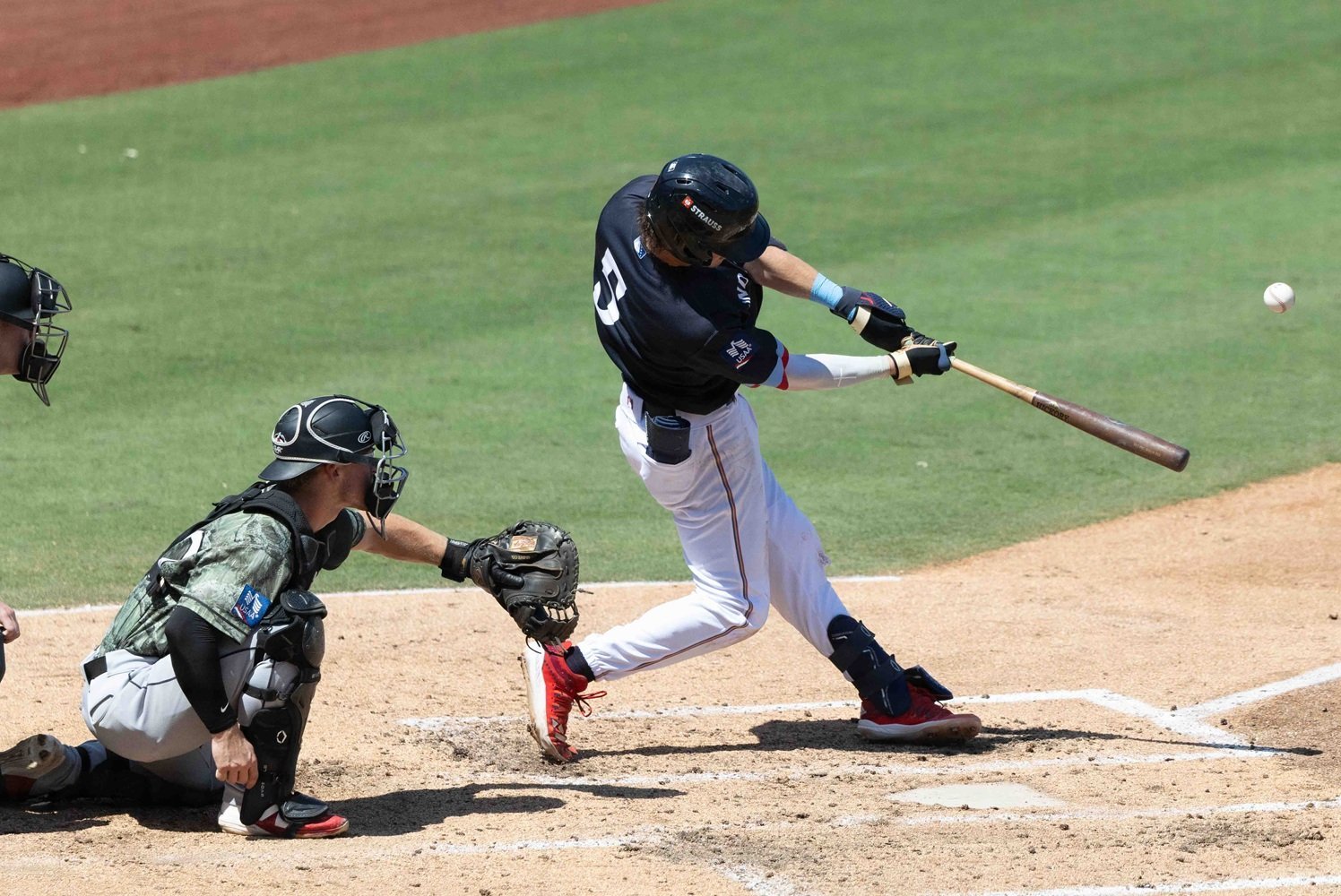 TRANSACTIONS OF Gabriel Gonzalez recalled by Twins RHP Woo-Suk Go outrighted to AAA St. Paul Saints Sentinel St. Paul 6, Toledo 10 Box Score Aaron Rozek: 3 2/3 IP, 5 H, 2 ER, 4 BB, 2 K HR: Aaron Sabato (22), Kala’i Rosario 2 (6, 7), Cody Morissette (12) Multi-hit games: Emmanuel Rodriguez (2-for-4, RBI, BB), Alan Roden (2-for-5, 2B), Aaron Sabato (2-for-5, HR, 2B, R, RBI), Kala’i Rosario (3-for-5, 2 HR, 2B, 2 R, 2 RBI) Middle-inning madness sunk the Saints on Sunday. All that starts well… cannot be predicted the rest of the way. But at least it felt good, just for a time. Aaron Sabato mashed a solo homer in the first and Aaron Rozek tossed three shutout innings with the aid of two double plays. The first, an unusual back pick from Matt Wallner, who tracked down a flyball and caught Josue Briceño drifting halfway to Mordor before he realized his mistake, and was cut down trying to return to the bag. The second, a traditional 6-4-3. Then, the fourth. Five runs. So it goes. Then, the fifth. Five more runs. The game, in essence, decided. Despite the rough stretch, the Saints still had much to celebrate (at least on the other side of the game). Kala’i Rosario—who already homered twice on Saturday—deposited an 0-2 offering on the other side of the wall in the fourth, and returned in the seventh with a screaming liner that barely left play. Fortunately, it all counts the same. The homer gave the Saints 231 round-trippers on the year, tying the International League record. That’s no small feat: the IL can trace its roots back to 1884, though the name and identity didn’t stick until 1912. That’s over 100 years of baseball history flattened by the slugging acumen of this 2026 squad. Oh, and Cody Morissette set the record two batters later. Eric Orze, Julian Merryweather, and Alejandro Hidalgo combined to pitch four scoreless innings out of the bullpen, striking out six. Rehabbing big leaguer Riley Greene singled and worked two walks for the Mud Hens. The aforementioned Briceño is the 69th overall prospect in MLB. He walked once but was pulled following his base running gaffe. Wind Surge Wisdom Wichita 8, Arkansas 9 Box Score Riley Quick: 3 IP, 6 H, 4 ER, 2 BB, 3 K HR: Jake Rucker 2 (9, 10), Luis Hernandez (1), Brandon Winokur (10) Multi-hit games: Jake Rucker (4-for-4, 2 HR, 4 R, 2 RBI, BB), Garrett Spain (2-for-5, 2B, 2 RBI) The Wind Surge lost a back-and-forther on Sunday. There’s character to be had in getting decimated, though at some point, Riley Quick might opine for a break from it all. His time in Wichita hasn’t been pleasant. A 4.87 ERA entering the day ballooned to 5.79 after being drummed for four earned runs across just three innings of work. He surrendered a pair of homers and found only one clean frame: a 1-2-3 third capped with a strikeout. Still, one must remember context, as the 72 2/3 innings the first-year pro has now pitched in 2026 bests the 62-inning career-high he set with Alabama in 2025. Growing pains exist for pitchers, too. Garrett Spain spanked an RBI double down the right field line to start the scoring in the first, and Jake Rucker smashed his first homer of the day in the fourth, setting the franchise record for blasts hit by a Wind Surge team in a single season (172). Wichita saw run-scoring knocks in the sixth by Spain and Andrew Cossetti, but their deficit had grown even more unruly. Darren Bowen had been bludgeoned by a homer in the fourth. Preston Johnson took a wart in the sixth. Arkansas’ barrage gave them six runs by the end of the sixth, rendering the efforts by Spain and Cossetti mere claws towards the lead, which sat at 6-4 as the seventh entered into view. Then, a flurry. Three long balls to slingshot ahead. First, Luis Hernandez for one, then, Brandon Winokur for two, and, finally, Rucker exploded for the second time in the game. Holding an advantage for the first time, Wichita’s pitchers folded, allowing three runs across the eighth and ninth to let what could have been an epic comeback fall by the wayside. 10 home runs were hit in the game, with four players going deep twice. Travelers’ outfielder Jonny Farmelo is ranked as the 73rd-best prospect in MLB, according to Pipeline. He walked once in five plate appearances. Kernels Nuggets Cedar Rapids 5, Lake County 2 Box Score Christian Becerra: 2 IP, 2 H, 1 ER, 1 BB, 2 K HR: Yasser Mercedes (11), Danny De Andrade (15) Multi-hit games: Irvin Nunez (4-for-4, 2 RBI) The Kernels won an all-around game on Sunday. With relievers like these, who needs starters? Cedar Rapids needed a group effort on Sunday, and they received a great one: five hurlers combined to pitch all nine innings, with Christian Becerra, Ross Dunn, Michael Hilker, Brent Francisco, and Yehizon Sanchez working in beautiful harmony, allowing two earned runs with seven scattered hits and one walk. They struck out seven. Yasser Mercedes started the scoring for the Kernels with a first inning laser, which knotted the game as action remained cool for two innings. Cedar Rapids returned in the fourth, plating a pair off a Danny De Andrade shot, and the second of Irvin Nunez’s four singles on the day. Luis Fragoza drove in a seventh inning run, while Nunez completed the quadruple showing in the eighth, netting his second RBI knock, an immaculate showing from the bottom of the Cedar Rapids lineup. JP Smith II walked thrice, bumping his Kernels OBP to .441. Lake County second baseman, Welbyn Francisca, is the 21st-ranked prospect in the Cleveland Guardians system. He went 0-4 with two strikeouts. Mussel Matters No matter how Fort Myers attempted to outwit Mother Nature—first by doubleheader; then by canceled second game yet continued first game—the result ended up the same as Friday and Saturday: a full match was not played. Sunday’s attempt was quickly quelled. No games from the day will be made up at a later date. TWINS DAILY PLAYERS OF THE DAY Twins Daily Minor League Pitcher of the Day – Alejandro Hidalgo Twins Daily Minor League Hitter of the Day – Jake Rucker PROSPECT SUMMARY Here’s a look at how the Twins Daily Top 20 Twins Prospects performed: #1 – Walker Jenkins (Twins) - 0-3 #2 – Vahn Lackey (Cedar Rapids) - 1-5, 2B, K #3 – Kaelen Culpepper (Twins) - 1-3, K #4 – Marek Houston (Wichita) - 1-5, R, 2 K #5 – Riley Quick (Wichita) - 3 IP, 6 H, 4 ER, 2 BB, 3 K #6 – Emmanuel Rodriguez (St. Paul) - 2-4, RBI, BB, K #12 – Brandon Winokur (Wichita) - 1-4, HR, 2 R, 2 RBI #19 – Yasser Mercedes (Cedar Rapids) - 1-4, HR, R, RBI, K MONDAY’S PROBABLE STARTERS No games in the Twins’ system are scheduled for Monday. View the full article
 -
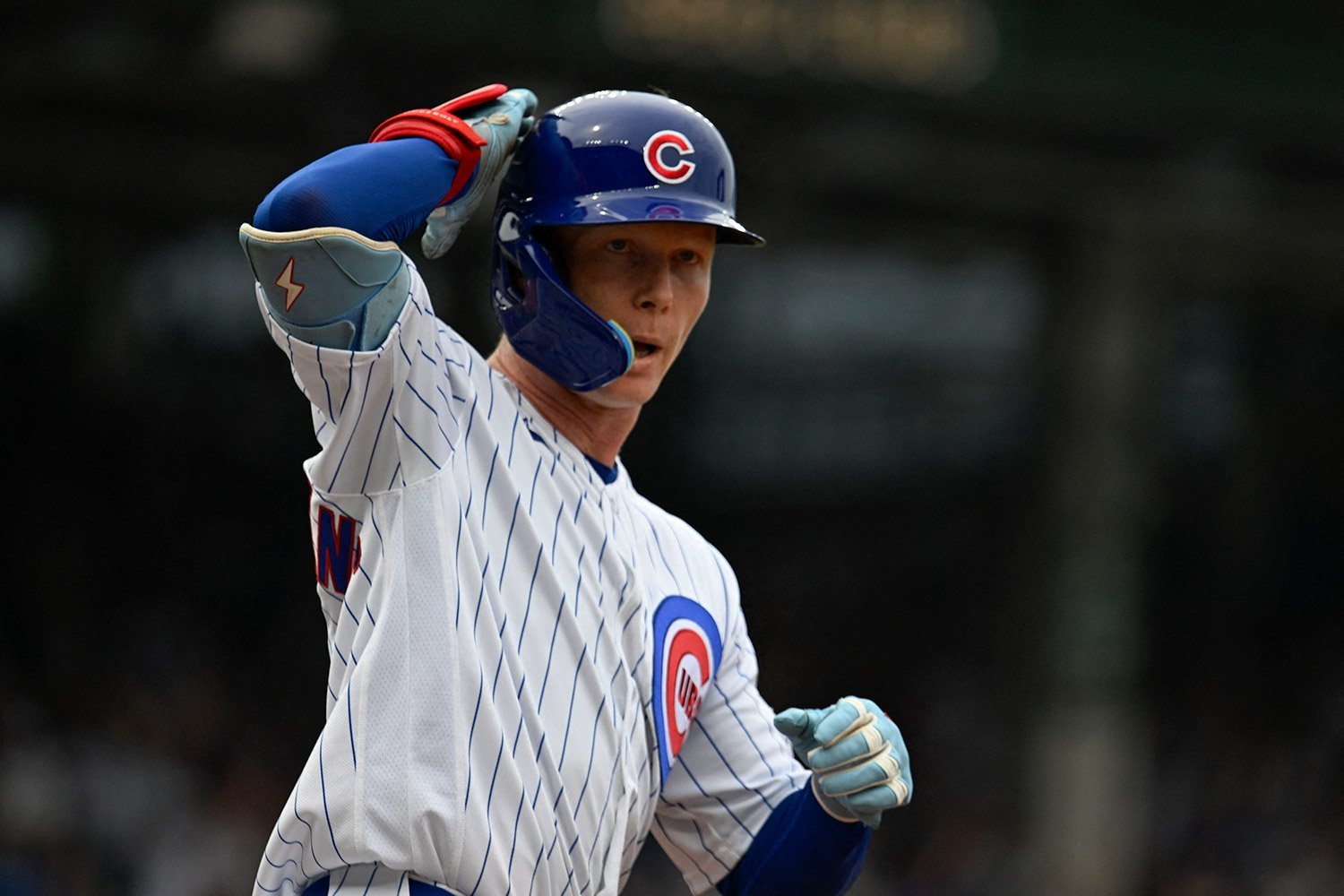 In sports, either in anticipation of October baseball or locked in the midst of another exhilarating "March Madness" tournament, the critical moments always seem to come down to a vital call or two; whether the calls fall under reasonable or malpractice is another matter entirely. Sifting through how to classify such matters stymied Craig Counsell's Cubs club and took the focus off baseball at a time when it genuinely ought to be the only focus. Concurrently with the follies taking place on the diamond in the squad's defeats, the same type of elite play from Chicago's brightest stars kept the fires burning with visions of postseason glory on the North Side. Fresh off the heels of a dismaying series loss in Seattle, the Cubbies continued their westward swing, kicking off a three-game set in Arizona with the Diamondbacks. Corbin Carroll's squad is one defined by unfulfilled expectations and is currently fighting for their playoff lives with sights set on the third Wild Card spot. Fortunately, starter Kevin Gausman and the visiting North Siders made sure the Snakes would make up no ground on the good in this tilt. The 35-year-old righty sparkled for this side, dealing seven innings of three-hit ball, striking out six, and issuing just one free pass. He's locating his pitches with more accuracy and allowing the typically prolific offense the chance to get going. That came in the form of back-to-back blasts from Michael Conforto and Carson Kelly in the sixth inning. Their emphatic swings gave the Cubbies the momentum necessary to close the door on the Snakes in a 7-0 triumph to open the series. And that's about where the North Siders' fun in the desert ended. Bullpen struggles are nothing new for this Cubs team, but when they falter as they did in this contest, all it can do is linger like the worst desert sunburn imaginable. The visitor's new de facto ace, Clay Holmes, was brilliant, spinning a scoreless seven innings and situating his already impressive ERA at a stingy 2.26. Chicago took a four-run lead into the eighth inning, which marked an unthinkable statistic: the Cubs scored 30 unanswered runs against their opponents dating back to their 19-2 victory over the Mariners. Palencia's gut-wrenching implosion in the eighth inning left the Cubs headed to the home half of the ninth, and the sterling reliever Jacob Webb entering the game to record the final three outs. He came two strikes away from delivering, but in a most jarring fashion, did not. The Cubs' dugout instead was forced to watch a cascading, two-run home run off the bat of the D-Backs' Ryan Waldschmidt sail into the seats in left field at Chase Field in a 5-4 comeback win for Arizona. A supposed and perceived balk from Los Serpientes ace Eduardo Rodriguez in the sixth inning of this series' finale opened up a line of discussion for Chicago sports radio that will continue for months. Should Pete Crow-Armstrong and the Cubs fall short of seizing the Fall Classic, the umpire's failure to properly call the balk on Rodriguez, which would have plated the go-ahead run for Chicago, will firmly be etched as an example of this franchise's mythical plight. Let's not take the focus off of the brilliant performance by Rodriguez. As he has been all season long, he was magnificent, punching out nine Cubs in seven innings of work. From the pitch clock to ABS, baseball has gotten a lot right with its rule changes, but with a looming lockout and new CBA, the efficacy and accuracy of big-league umpires will continue to stay under the microscope of justified scrutiny. The Diamondbacks won the contest 2-0. The North Siders returned home for a much-anticipated three-game weekend tilt with division foe Cincinnati. Taking center stage in this matchup was the reunion of several of the franchise's most legendary players, such as Jon Lester, Sammy Sosa, and Kyle Hendricks. Despite scoring eight runs and matching the Reds' hit tally, the Cubs failed to get the weekend started right. Recently maligned reliever Trent Thornton unraveled in the sixth inning, surrendering five runs to the visitors, a Reds team a full eight games back of the third and final Wild Card slot. A late, modest rally made things interesting for the home team, though it was not enough on this Friday afternoon, falling 10-8. It will be easier said than done, but regardless of how far this team goes the rest of this season, we must find a way to cherish, recognize, and appreciate the brilliance of Pete Crow-Armstrong. Capturing the hearts of baseball fans across the country, Crow-Armstrong's legacy as a Cub is just getting started, but his three-home-run performance in the Cubs' 17-5 rout of Cincinnati is evidence of a legend in the making. Like any generation-defining player, it's not just his performances that inspire; it's his spirit, competitive fire, and love for the game that make him a fixture in MLB. View the full article
 -
 The Weekly Nutshell: The Twins had fallen six games below .500, with their playoff odds sinking toward single digits, by the time they finally made the move we've all been waiting for: promoting top prospect Walker Jenkins to the big leagues. Jenkins debuted at Target Field on Friday night and had a solid game, but he couldn't prevent the Twins from dropping a third straight game and sixth out of seven. The Twins would lose again on Saturday before rebounding to take the final game of the week. A brutal month of August, somehow even worse than their post-firesale stretch a year ago, has effectively knocked the Twins out of playoff contention. But the arrival of Jenkins alongside Kaelen Culpepper gives fans an opportunity to turn their gaze toward a hopeful future while grasping onto the last fleeting glimmers of possibility for a 2026 run. Weekly Snapshot: Mon, 8/24 through Sun, 8/30 *** Record Last Week: 2-4 (Overall: 65-72) Run Differential Last Week: -2 (Overall: -56) Standing: 3rd Place in AL Central (7.5 GB); 4.0 games out of WC Latest Game Results Game 132 | MIN 9, ATH 6: Twins Take Big Early Lead, Hold Off Ninth-Inning Charge by A's Culpepper: 4-5, RBI Game 133 | ATH 4, MIN 2: Offense Goes Back to Sleep, Buxton Exits with Injury Again Keaschall, Buxton, Jeffers: 0-10, 6 K Game 134 | ATH 7, MIN 4: Bats Vanish After Three Early Homers, Bullpen Blows Lead Morris: 1 IP, 3 ER Game 135 | CWS 7, MIN 4: Jenkins Debuts But Can't Save Twins From Third Straight Loss Kremer: 4 IP, 6 R (5 ER), 7 H, 3 BB, 3 K Game 136 | CWS 3, MIN 2: Offense Goes Quietly Again to Waste Well-Pitched Effort Twins offense: 0-7 RISP Game 137 | MIN 5, CWS 1: Twins Latest End Skid Behind Masterful Outing from Matthews Matthews: 8.1 IP, 1 ER, 5 H, 1 BB, 5 K NEWS & NOTES The Jenkins promotion was of course the big news of the week. The Twins' No. 1 prospect was called up on Friday with Alan Roden optioned to the minors and Woo-Suk Go designated for assignment to create room. The hope and expectation is that the 21-year-old Jenkins will be up for good. Byron Buxton, unfortunately, might be down for good (this year, anyway). He exited Tuesday's game with yet another flare-up of his balky right hip, which rendered him unable to bend over and pick up a rolling ball in the gap. The Twins waited several days to place him on the injured list but did so on Sunday, recalling outfielder Gabriel Gonzalez in his stead. This is Buxton's third time landing on the IL this year due to the same hip issue, and you've gotta believe that with the team's postseason hopes fading away, they are just going to call it on Buxton, with an eye on trying to get him back to a decent place physically for next year. General manager Jeremy Zoll acknowledged that offseason surgery is "definitely a potential option." A case could also be made for shutting down Joe Ryan for similar reasons, but it looks like the right-hander will try and get back out there for a few more starts in September to close out another forgettable second half on a positive note. Ryan threw live batting practice in St. Paul on Wednesday and was scheduled to throw another bullpen at Target Field on Sunday, with a rehab assignment to follow if everything checks out. HIGHLIGHTS Jenkins certainly looks the part of a big-leaguer. He walked and singled in his first game on Friday, then picked up his first career extra-base hit Saturday on a hustle double. He looked good in center field and made an excellent running catch at the wall on Sunday. Culpepper also put together a strong week, highlighted by a four-hit game on Monday. He doubled, homered and struck out only four times in 24 plate appearances across six games. Culpepper is batting .313 with an .843 OPS so far in the majors while starting everyday at shortstop. The kids are looking all right. The rotation showed signs of settling in. They had the worst ERA in the American League over the month following the All-Star break, but in the past couple of weeks, Twins starters have at least gravitated back toward the middle of the road. Zebby Matthews is leading the charge. He's been one of the few bona fide bright spots of the second half for the Twins, shaking off a track record of inconsistency and homer-proneness to lock in with steadily effective outings. He was downright phenomenal this past week, holding the A's to one run over seven innings on Monday and then flirting with perfection on Sunday before ultimately pitching into the ninth with only one run allowed. Matthews has recovered brilliantly from a clunker at Wrigley coming out of the break, completing five-plus innings in seven straight starts with a 3.21 ERA and only four home runs allowed. He went 5-0 in August. Taj Bradley's 11-strikeout performance on Tuesday included the first immaculate inning in Twins history: nine pitches, nine strikes. It's a great encapsulation of the dominant capability he possesses. His 27% K-rate ranks 12th among qualified MLB starters. Bailey Ober is a far cry from Bradley on the dominance spectrum but he continues to get the job done with some of the league's lowest top-end velocity. Ober delivered another impressive effort on Saturday, holding the White Sox to two runs (one earned) in five innings — although, much like Bradley's start on Tuesday, the lineup didn't do much of anything to support him. Since giving up three bombs against Baltimore on August 11th, Ober has a 2.51 ERA across three starts, with only one home run allowed, and his ERA for the season is down to a very respectable 4.37. I dunno how he's doing it, but he's doing it. LOWLIGHTS Regression is catching up to the top arms in the Twins bullpen. Andrew Morris and Yoendrys Gómez, who've been overachieving all season, are seeing their respective breakouts tail off here in the final stage. Gómez had not given up multiple runs in an outing all year with the Twins before getting knocked around for four earned on Monday, yielding four hits and a walk while recording just two outs. It was a low-leverage spot for the closer, who entered with a 9-2 lead, but adds to what has been a rocky month of August in which he's allowed 10 hits and seven walks in 8 ⅓ innings. We're getting a bit of a reality check on the journeyman, which is not to take anything away from his stellar work overall. Morris came in for a one-pitch save on Monday after Gómez's meltdown brought the A's within three runs, but then picked up his sixth and seventh losses of the season on Wednesday and Saturday. The finale against the Athletics, which saw Morris turn a two-lead into a two-run deficit in the sixth, marked the third time in five appearances where he yielded three or more runs. He's got a 6.94 ERA in August after coming in at 3.12, and his negative-1.77 WPA this month is worst among MLB relievers. Regression also came calling for Dean Kremer, who was touched up for six runs (five earned) in four innings against Chicago on Friday. He issued three walks and a wild pitch while striking out only three in an outing that more closely resembled his pre-Minnesota form. As with Gómez and Morris, this type of showing from Kremer doesn't cause me to lose sight of his usefulness or future fit, but it does serve as a reminder of who he is — a solid but unspectacular arm that probably shouldn't be counted on as a primary weapon on next year's staff. Offensively, the Twins are just a drag. For a while this lineup could never seem to get anything going in the early innings and now they've swung the opposite way. On three consecutive occasions (Wednesday, Friday, Saturday), Minnesota put up multiple runs during the first couple of innings and then went silent. Across those three games, with their backs against the wall, Twins hitters went 2-for-22 (.091) with runners in scoring position. Ryan Jeffers has cooled off after initially mashing off the IL. He went 3-for-20 with a pair of singles and a double, and hasn't homered all month. Royce Lewis totaled five singles and no walks in 23 at-bats. His OPS has fallen back below .700, with undisciplined at-bats (24-to-3 K/BB ratio this month) that are increasingly irritating to watch. Both of these guys represent major offseason decision points for the Twins. Jeffers is due for free agency, and with a contract extension unlikely, the front office will need to decide whether it is willing to extend a qualifying offer and potentially recoup some value when he leaves, at the "risk" of paying a big one-year salary in 2027. If not, the wisdom of holding him at the deadline for a seemingly fruitless postseason pursuit will deserve a lot of scrutiny. Lewis, meanwhile, is headed toward his second-to-last year of arbitration eligibility and the team will need to make a call on whether they want to bring him back or go a different direction. We've seen flashes of his upside at times, but overall he's turned into a sub-par asset: a below-average offensive first baseman who is merely okay with the glove and prone to inexplicable lapses, like when he cost his pitcher a pitch-clock violation by being late to his position on Friday night. TRENDING STORYLINE With the team's playoff hopes drying up, we turn our eyes to the future. The good news is that the future is now for the Twins. Jenkins and Culpepper have arrived, with Gonzalez the latest to join the fray. We'll see if Emmanuel Rodriguez, whom the Twins will be obligated to carry out of spring training next year, enters the mix as a September call-up to get a bit of seasoning. Last year the Twins went 8-17 in September, stumbling to a 92-loss finish and leaving a sour taste for a completely unenergized fanbase. This year's team has an opportunity to finish on a much more inspiring note. The remaining 25 games may not prove to be particularly meaningful from a contention standpoint, but they can be plenty meaningful for many of the players involved. LOOKING AHEAD When we looked ahead to this portion of the schedule with 15 consecutive games against AL Central opponents, it had the makings of an exciting, season-deciding stretch. Alas, Minnesota's lackluster play over the past few weeks has tempered the stakes. At this point, making a run at first place is essentially out of the question, and the Twins' main objective will be staying above Detroit and Kansas City at the bottom of the division. MONDAY, AUGUST 31: TIGERS @ TWINS — RHP Jackson Jobe v. RHP Taj Bradley TUESDAY, SEPTEMBER 1: TIGERS @ TWINS — RHP Troy Melton v. LHP Connor Prielipp WEDNESDAY, SEPTEMBER 2: TIGERS @ TWINS — RHP Drew Anderson v. RHP Dean Kremer FRIDAY, SEPTEMBER 4: TWINS @ WHITE SOX — RHP Bailey Ober v. TBD SATURDAY, SEPTEMBER 5: TWINS @ WHITE SOX — RHP Zebby Matthews v. LHP Anthony Kay SUNDAY, SEPTEMBER 6: TWINS @ WHITE SOX — RHP Taj Bradley v/ RHP Sean Burke View the full article
 -
 Josh Bell was Derek Falvey's last gift to the Minnesota Twins, and it has paid off in big ways. The veteran slugger has been one of the team's best hitters since June 1st and has given the team the leadership it desperately needed. View the full article
 -
 Weekly Snapshot: Record Last Week: 4-2 (Overall: 85-52) Runs Scored Last Week: 33 Runs Surrendered Last Week: 17 Standing: 1st in NL Central Game 132 (8/25) | NYM 3, MIL 2 Game 133 (8/26) | MIL 8, NYM 1 Game 134 (8/27) | MIL 8, NYM 2 Game 135 (8/28) | MIL 6, TEX 1 Game 136 (8/29) | MIL 5, TEX 3 Game 137 (8/30) | TEX 7, MIL 4 Game 132 | Mets 3, Brewers 2 MIL Starter: Kyle Harrison (6.0 IP, 6 H, BB, ER, 5 K) Top Performers: William Contreras (3 H, BB, 2 2B) Kyle Harrison and Zac Thornton locked into a pitching duel in The Big Apple on Monday, as both the Brewers and Mets hurlers delivered six-inning, one-run outings. The game would come down to the wire, as a pinch-hit game-tying double off the bat of Christian Yelich tied the game in the 9th, but the Brewers would eventually fall in extra innings by the score of 3-2. Christian Yelich’s game-tying double (+37.4 WP%) Game 133 | Brewers 8, Mets 1 MIL Starter: Dustin May (0.1 IP, 0 H, 0 BB, 0 ER) Top Performers: Robert Gasser (5.1 IP, 6 H, 2 BB, ER, 6 K) Sal Frelick (3 H, BB, 2B, 2 RBI) Brice Turang (H, 2 BB, HR, 3 RBI) The Brewers evened the series on Wednesday despite a one-pitch outing from Dustin May, who exited after being struck with a comebacker on his very first pitch of the game. Robert Gasser picked up the slack behind him, though, turning in 5.1 innings of one-run baseball, while the recently returned Sal Frelick recorded 3 hits en route to the Brewers beating up on Robert Stock and the Mets staff. Brice Turang goes yard (+6.4 WP%) Game 134 | Brewers 8, Mets 2 MIL Starter: Jacob Misiorowski (6.0 IP, 2 H, 2 BB, 2 ER, 6 K) Top Performers: Jackson Chourio (4 H, 2 HR, 4 RBI) Joey Ortiz (2 H, 3B) DL Hall (1.0 IP, 0 H, 0 BB, 2 K) The Brewers made it four consecutive series wins on Thursday by capturing the rubber match, and they did so behind Jacob Misiorowski, who, despite lowered velocity, gave the Brewers another quality start. The offense was the Jackson Chourio show, with the blossoming star recording a four-hit, four-RBI day that included two homers. Jackson Chourio’s monster day Game 135 | Brewers 6, Rangers 1 MIL Starter: Logan Henderson (7.0 IP, H, 0 BB, ER, 7 K) Top Performers: Christian Yelich (3 H, 2B, RBI) Jake Bauers (2 H, 3 BB) William Contreras (2 H, 3 RBI) It was back to American Family Field as the Brewers welcomed in an AL playoff hopeful in the Texas Rangers. Logan Henderson proceeded to carve them up, allowing just a solo homer to Danny Jansen en route to seven innings of dominant pitching. Meanwhile, the middle of the Brewers' order produced, with the trio of Christian Yelich, Jake Bauers, and William Contreras combining to reach base 10 times. Logan Henderson strikes out 7 Game 136 | Brewers 5, Rangers 3 MIL Starter: Shane Drohan (5.0 IP, 6 H, BB, ER, 6 K) Top Performers: William Contreras (2 H, BB, HR, RBI) Luis Lara (2 H, 2 RBI) Jackson Chourio (H, HR, RBI) Saturday saw Shane Drohan keep up the Brewers' streak of strong pitching performances to help the team push their series win streak to five, while this time, the offense was driven by a pair of solo homers in the first inning off the bats of Jackson Chourio and William Contreras. William Contreras sends one out (+9.3 WP%) Game 137 | Rangers 7, Brewers 4 MIL Starter: Dustin May (4.1 IP, 6 H, 3 BB, 4 ER, 4 K) Top Performers: Bryse Wilson (2.2 IP, H, BB, 0 ER, 2 K) Gary Sánchez (H, BB, HR, 2 RBI) Dustin May didn't quite have the bounce-back appearance he wanted, as shaky Command was his downfall as the Rangers chased the Brewers trade deadline acquisition from the game in the 5th inning. They'd add off Grand Anderson to then put the game out of reach, and the Rangers would get out of town and avoid the sweep 7-4. Gary Sánchez's 200th career big fly (+5.3 WP%) Transactions: 08/28/26 - Sent IF Jonathan Ornelas outright to AAA Nashville. 08/25/26 - Designated IF Jonathan Ornelas for assignment. 08/25/26 - Activated RF Sal Frelick from the 10-day injured list. 08/25/26 - Sent LHP JoJo Romero on a rehab assignment to High-A Wisconsin. 08/25/26 - Sent RHP Abner Uribe on a rehab assignment to High-A Wisconsin. Looking Ahead: Monday, 8/31 - Brewers @ Cubs - 6:40 PM CDT Tuesday, 9/1 - Brewers @ Cubs - 6:40 PM CDT Wednesday, 9/2 - Brewers @ Cubs - 6:40 PM CDT Thursday, 9/3 - Brewers @ Cubs - 6:10 PM CDT Friday, 9/4 - Brewers @ Reds - 5:10 PM CDT Saturday, 9/5 - Brewers @ Reds - 5:40 PM CDT Sunday, 9/6 - Brewers @ Reds - 11:00 AM CDT View the full article
 -
 Box Score: Starting Pitcher: Zebby Matthews: 8 1/3 IP, 5 H, 1 ER, 0 BB, 5 K (103 Pitches, 67 Strikes, 65%) Home Runs: Luke Keaschall (9) Bottom 3 WPA: Matthews (0.27), Josh Bell (0.16), Trevor Larnach (0.13) Win Probability Chart (Via BaseballSavant): It's been strange watching this Twins team run out of gas, even while looking pretty interesting for next year and beyond. Luke Keaschall, Trevor Larnach, Kody Clemens and Brooks Lee have all looked pretty good, despite the offense going in the tank in the second half. Add in that Kaelen Culpepper and Walker Jenkins have impressed offensively in their limited action thus far, with Vahn Lackey and Marek Houston on the way. You can see the makings of a decent rotation with better injury luck, and the bullpen, on paper, should be fairly solid. But August has shown that assembling talent isn't everything. The Twins have scored when they don't pitch well and have pitched well when they can't score. Today, they bucked that trend, as Zebby Matthews looked great. Matthews stayed out of the heart of the zone for the most part, and his misses were competitive. As he showed in his last start when he induced 23 whiffs, Matthews has learned how to miss bats enough to at least keep hitters somewhat honest. White Sox hitters seemed caught between trying to ambush Matthews and trying to work counts. When they swung early in the count, the best Chicago could do was hit medium-deep fly balls, and you could see them press a little as Matthews settled in. The White Sox have had some starting pitching injuries and today relied on a bullpen game, with Jordan Hicks and his 100-MPH sinker getting the first inning. He started by walking Keaschall. Lee followed with a grounder back to Hicks, who threw to second to retire Keaschall, but Colson Montgomery's relay was terrible, allowing Lee to reach. Clemens then struck out, but Ryan Jeffers walked and Josh Bell singled home Lee. That prompted manager Will Venable to go to lefty Tyler Gilbert to face Larnach, who doubled sharply down the right-field line to score both runners. The second inning began with a solid single from Culpepper. Jenkins got a pitch to hit and lined it directly to Munetaka Murekami at first base, who stepped on first for the double play, ending the rally before it began. The third began with a Lee single, but he, too, was erased on a double play. Jeffers doubled off the wall in right-center, and Bell singled him home to extend the lead to four. Still perfect through four innings, Matthews kept throwing strikes and gave up some hard contact. Jenkins got his first real test in center, as he made a jumping catch at the wall to rob Andrew Benintendi of an extra-base hit. The sixth began with a dribbler off the bat of Tristan Peters, and though Matthews bobbled it, he recovered in time to retire the speedy outfielder. He would get to 5 2/3 innings perfect before allowing a 3-2 single to .142-hitting Drew Romo. Sam Antonocci followed with an excuse-me double, but Matthews bore down to retire Murakami on a fly out to end the frame. The sixth and seventh innings have been cursed for the Twins in August, but not only did Matthews escape the sixth, he also pitched an uneventful 1-2-3 seventh with his pitch count at 80. He allowed a Peters single in the eighth but worked around it, pitching to the bottom of the Sox lineup. Matthews got the nod to start the ninth, too. Despite getting ahead of Antonacci, he eventually allowed a sharp single up the middle to begin the frame. He retired Murakami for the fourth time, but Miguel Vargas laced a single to left to spell the end of the road for the Twins starter. Jeff Hoffman came on to face Benintendi and Brayden Montgomery. He got the former but lost the latter to an RBI single to break up the shutout. The other Montgomery (Colson) then popped out to end the game. Stuff I'm Tracking: Matthews was great today, but do you know who looked great at this time last year? Simeon Woods Richardson. Matthews needs to stack up these performances if he's going to be a long-term fixture in the Twins' rotation. His August has been a good start: five starts, all wins for the team, 31 IP with a 2.90 ERA. Jenkins looks really comfortable, despite not getting many good results thus far. Are we thinking Culpepper moves to third when Houston arrives? Or is the team concerned with jerking around Lee (note: they shouldn't be)? Culpepper has a great arm, but his instincts at shortstop make me a little nauseous. Then again, with less time to think, maybe Culpepper makes a great third baseman and Lee (theoretically) would make a great second baseman. The question, then, is what to do with Royce Lewis and Kody Clemens, but whatever they decide, it's a lot better than the Jose Miranda-Lee-Keaschall-Ty France thing we had going at points last year. Or anything involving Tristan Gray this year. Jeffers looks really slow running to first these days. Despite today's double, he hasn't hit much lately. I wonder if he's nursing some soft-tissue injury that catchers are legally required to play through lest they get labeled as something short of "the ultimate competitor." What’s Next: The Twins welcome the Detroit Tigers to Target Field with Taj Bradley (9-6, 3.97 ERA) taking on Jackson Jobe (1-1, 3.93 ERA). Jobe is back in the majors after a lengthy absence due to Tommy John surgery and his velocity has been good, averaging 97 MPH on his fastball. Bradley hasn't had many blow-ups outside of a rough appearance in the Field of Dreams game, but hasn't been as dominant as he was in April and July. If the team has any designs on a 2007 Rockies/2024 Tigers/2025 Guardians type run, Bradley will have to pitch his best. Postgame Interviews: Coming Soon Bullpen Usage Chart: WED THUR FRI SAT SUN TOT Morris 16 0 0 27 0 43 Rogers 0 0 38 0 0 38 Funderburk 18 0 18 0 0 36 Adams 0 0 26 0 0 26 Gomez 0 0 0 25 0 25 Minter 0 0 0 20 0 20 Hoffman 6 0 0 0 13 19 Nance 0 0 0 0 0 0 View the full article
 -
 The clock is ticking on the Miami Marlins to make up ground in their 2026 playoff push. Dropping the first two games of a four-game set against the Nationals to fall to .500 and four games out of the final NL Wild Card spot, they had no choice but to make a statement on Sunday. Through eight innings against the division rival Washington Nationals, it looked as if that statement was, "we surrender." The Fish trailed 2-0 entering the top of the ninth inning. They had previously been 2-58 when trailing in the ninth this season. Then, the Marlins improbably reeled off this sequence of events: Walk Walk Popout Double steal Walk Hit by pitch Sacrifice fly, E8 Walk Double steal Two-run home run Groundout Sending all nine men to the plate, the Marlins left the top of the ninth with a 6-2 lead, one they would not relinquish, picking up their 69th win of the season in the process. Scoring six runs on the strength of merely four hits, the Marlins became the first MLB team to do so since the Mets on June 4, 2025. The Marlins last did it way back on April 24, 2011. One of those four hits came via Otto Lopez, his first home run since July 5, snapping a drought of 197 plate appearances. Lost in Sunday's game was the solid effort put forth by Janson Junk, who held Washington to merely one run over 4 ⅔ innings of work. After a rough stretch in May, Junk has rebounded to allow two or fewer runs in nine of his last 10 starts, finishing the month of August with a 1.59 ERA. Carrying a scoreless tie into the bottom of the fifth, Washington broke through first when former Marlins farmhand Nasim Nuñez doubled in center fielder Jacob Young. Washington would net a second run three innings later with help from Leo Jiménez, whose second error of the day allowed Brady House to go first to third. On a more serious note, second baseman Xavier Edwards had to leave the game following Jorbit Vivas' slide that saw Edwards jam his left thumb. He will undergo imaging on Monday to determine the severity of the injury. Edwards has yet to miss a game this season. Looking Ahead The Marlins will wrap up the season series against the Nationals on Monday. Ryan Gusto (1-3, 3.98 ERA), fresh off one of his best starts of the season, will take the ball for Miami. A win would clinch the Marlins' first 10-win season series against any NL East team since going 11-2 against these Nats in 2023. The first pitch is slated for 6:45 EST at Nationals Park. View the full article
 -
How the Twins Found Their Leadoff Hitter, Now and for the Future
DiamondCentric posted an article in Twins Daily
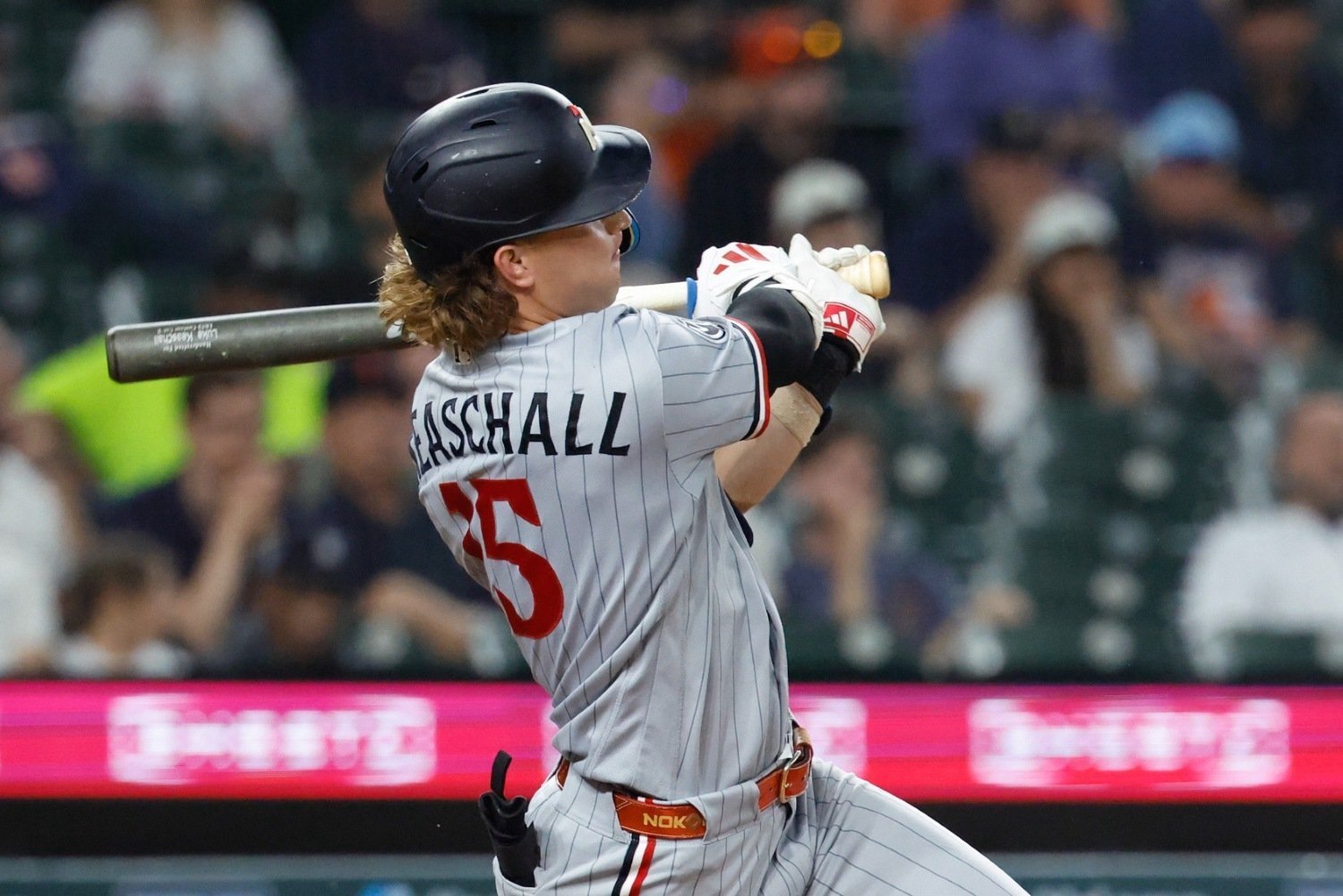 There was a time when the leadoff hitter had a very specific job description. Get on base. Run. Put pressure on the defense. Speed was often the defining characteristic. If a player could hit .280, steal 30 bases and create havoc on the basepaths, he was a natural fit for the top of the lineup. Then the game changed. On-base percentage became more important. Teams wanted their leadoff hitters to grind out at-bats, take walks and consistently put themselves in scoring position. Eventually, another philosophy emerged: Why not put one of your best hitters at the top? More plate appearances meant more opportunities for the best offensive player on the roster. The Minnesota Twins appear to have found someone who can fit that final description. Luke Keaschall should be the Twins' leadoff hitter. Not just for the rest of 2026, but for years to come. It wasn't a surprise that Keaschall entered the 2026 season as a candidate for the leadoff role. His rookie season gave the Twins plenty of reasons to believe he could handle it. In 42 games, Keaschall posted a 130 OPS+ while stealing 14 bases. He showed the ability to impact a game with his bat and legs, but perhaps more importantly, he demonstrated the kind of all-around offensive game that fits naturally at the top of a lineup. There was no obvious reason he couldn't be the player responsible for starting Minnesota's offensive machine. Then the season began. And things went sideways. Keaschall hit just .217/.267/.275 (.542) over his first 131 plate appearances, striking out 21 times. The Twins eventually moved him down in the batting order, allowing him to work through his struggles without the added pressure that comes with being the first hitter in the lineup. That decision made sense at the time. But what has happened since then has made the original idea look pretty good. Keaschall's season can't be evaluated solely by those ugly early-season numbers. Since July 1, he's been one of the better offensive players in the American League. Over 43 games, Keaschall is hitting .326/.426/.514 with a .940 OPS. He's collected 47 hits, scored 20 runs, driven in 16 runs and been hit by a pitch 11 times. His strikeout rate has also remained manageable at 15.3%, while his walk rate sits at 9.6%. That isn't simply a hot stretch built around batting average. Keaschall is getting on base. He's limiting strikeouts. He's hitting for power. He's doing the things teams want their best hitters to do. The result is an offensive profile that looks increasingly difficult to keep anywhere other than the top of the lineup. The most interesting part of Keaschall's resurgence might be how it compares to the rest of the American League. Since the beginning of July, among qualified American League hitters, Keaschall ranks: .326 batting average — fifth .426 OBP — second .940 OPS — third .415 wOBA — fifth 166 wRC+ — fourth 11 HBP — first Those numbers put him in some impressive company. The American League leaders in these categories include players such as Yordan Alvarez, Pete Alonso, and Steven Kwan. Keaschall belongs in the conversation. And that matters when considering his spot in the batting order. If a player is producing at that level, there is a pretty simple argument for giving him as many plate appearances as possible. Put him at the top. Let him hit. The Twins finally put Keaschall back in the leadoff spot on August 17. The results have been exactly what Minnesota hoped to see. Since being inserted into the No. 1 spot, Keaschall has gone 12-for-35 and has reached base safely in all seven games. That's a .343 batting average, but the more important part might be the consistency. The Twins aren't asking Keaschall to simply collect hits. They're asking him to begin games by giving the offense an opportunity. He's doing that. And unlike some traditional leadoff hitters, Keaschall doesn't need to rely on his speed to make the position valuable. He can beat teams with his bat. He can work counts. He can get hit by pitches. He can draw walks. He can hit for extra bases. And, yes, he can run. The most exciting part of Keaschall's recent production isn't necessarily what it means for the final month of 2026. It's what it could mean for the next five years. The Twins have spent considerable time trying to determine what their next competitive roster will look like. Young players are going to play increasingly important roles, and the organization needs some of those players to establish themselves as foundational pieces. Keaschall has an opportunity to become one of them. A player who can hit near the top of the lineup, get on base at a high rate, provide some power and steal bases is incredibly valuable. And he's doing it at an age when there should still be considerable room for growth. The early-season struggles were real. So is the turnaround. Keaschall didn't simply avoid the problem. He made adjustments, continued working and has turned himself into one of Minnesota's most productive hitters over the past two months. There will always be debates about lineup construction. Should the best hitter bat first? Should the fastest player bat first? Should a team's highest-OBP player lead off? There isn't one universal answer. But Keaschall checks enough boxes to make the decision pretty easy. And, perhaps most importantly, he is currently producing like one of the American League's best offensive players. Can Keaschall stick in the leadoff spot for the next three to five years? Leave a comment and start the discussion. View the full article
 -
 With only four weeks remaining in the regular season, Ely Sussman provides a detailed update on the Miami Marlins' pursuit of a National League Wild Card berth. That includes recapping what their playoff odds were at various points in the season, highlighting the key players whose performances have been particularly impactful (in either a positive or negative direction), looking ahead at the club's September schedule and projecting how many wins they'll need to reach October. You can find Fish Unfiltered and Fish On First LIVE on the Fish On First YouTube channel, Apple Podcasts, Spotify or wherever else you get your pods. Entering play on Sunday, the Marlins trail both the Arizona Diamondbacks and San Diego Padres by four games in the race for the NL's third wild-card spot. They have 26 regular season games remaining, including three apiece against the Diamondbacks and Padres (all on the road). FanGraphs estimates that the Fish have only a 2.4% chance of qualifying for the postseason. View the full article
 -
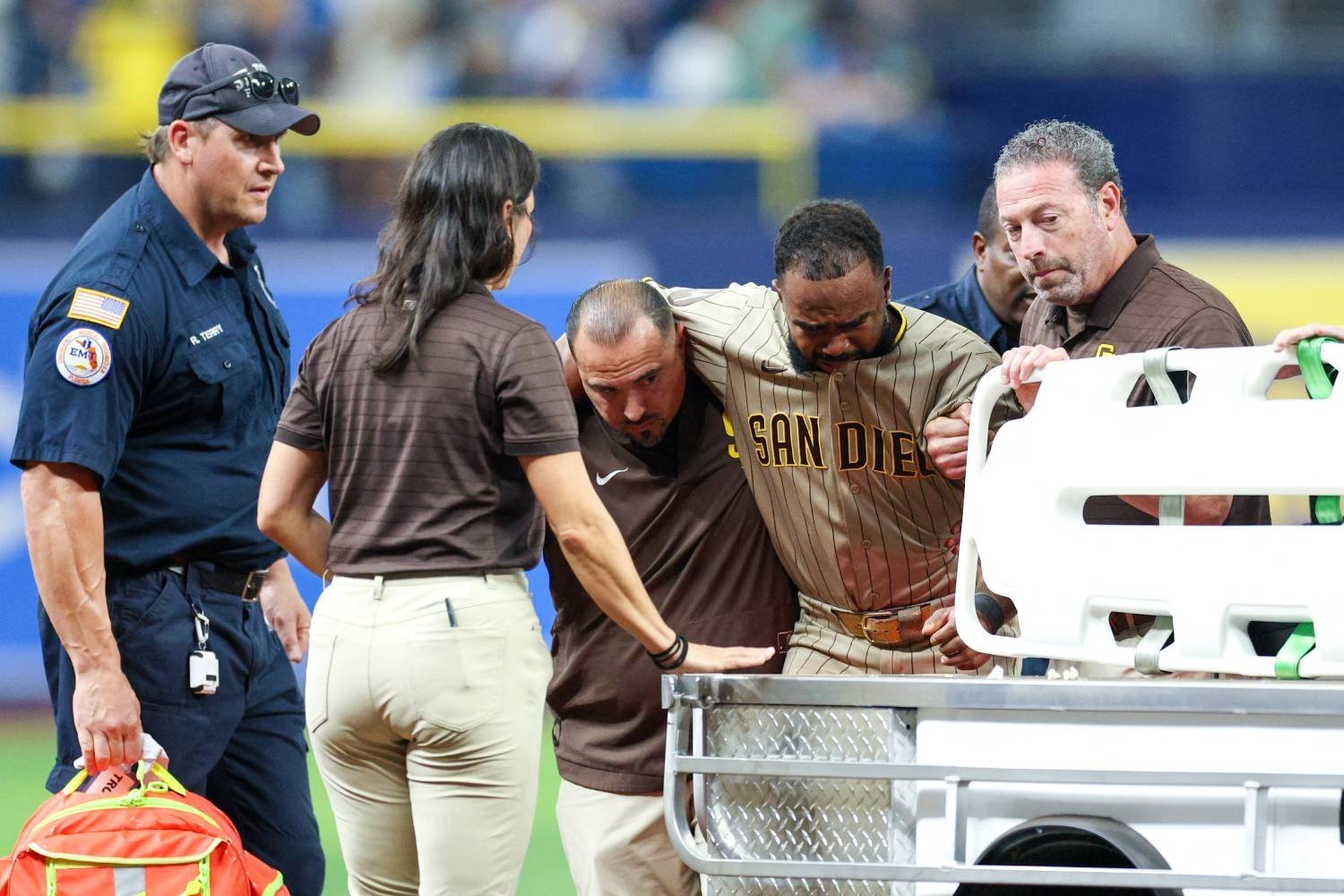 The San Diego Padres encountered their first significant hurdle Saturday as they make a push for the postseason when Luis Rengifo, playing second base, sustained a serious knee injury while making a throw home during a 7-6 loss to the Tampa Bay Rays. Rengifo, normally the Padres’ starting left fielder, was at second as manager Craig Stammen gave starting shortstop Xander Bogaerts the day off, with second baseman Jake Cronenworth sliding over to short. While testing will be done to determine the severity of Rengifo’s injury, it is likely to end his season as non-contact knee injuries often do. Rengifo was taken off the field on a cart following the incident in the seventh inning. With no outs and the bases loaded and the Padres holding a 6-3 lead, Yandy Diaz hit a sharp single over center fielder Jackson Merrill’s head and off the base of the wall. Merrill fielded the ball and threw in to Rengifo, who was covering second. With one run already in, Rengifo saw that Taylor Walls was caught between second and third as Cedric Mullins was still on third. As Rengifo ran toward third base, Mullins took off for home and Rengifo turned to make an off-balance throw, which was off the mark as he crumpled to the ground, allowing Mullins and Walls to score, tying the game 6-6. Rengifo has been a spark plug for the Padres’ offense since signing a minor-league contract after being released by the Milwaukee Brewers and coming up to replace Samad Taylor, who went down with an oblique injury. As it would happen, Taylor is now in line to replace Rengifo on the 26-man roster. The switch-hitter has a .291/.375/.409 slash line with four homers and 17 RBIs in 38 games. He has also scored 19 runs. While he has started 21 games in left field, Rengifo has been versatile since joining the Padres. He has made two starts at third base and Saturday was his first at second base, a position he played plenty during his first seven seasons with the Los Angeles Angels. But now Rengifo is down and the Friars must move forward. Taylor coming back up is the most sensible move. Taylor has spent the last two weeks on a rehab assignment with the Triple-A El Paso Chihuahuas, posting a .259/.375/.407 slash line in eight games. Taylor would likely have been the extra position player added when MLB rosters expand Tuesday. The good news is that Taylor is a very similar player to Rengifo in that he brings energy to a team. Taylor came up from El Paso on June 3 as the team was struggling offensively and put up a .330/.410/.398 slash line with one homer, 11 RBIs and six steals in 28 games before injuring his oblique. Dustin Harris, the only other left-handed-hitting outfielder besides center fielder Jackson Merrill, has had a nice start to his Padres career, going 5-for-10, including 3-for-4 Saturday. That part of replacing Rengifo is simple. But with the rosters expanding by two on Tuesday, with no more than one pitcher allowed, that creates more options for president of baseball operations A.J. Preller. Eventually, designated hitter-left fielder Miguel Andujar will come back from his fractured right wrist, but that move won’t be happening in the next few days. If sticking to players on the 40-man roster, that could mean that infielder Sung-Mun Song comes back up, but he was sent down to get consistent at-bats and has only been at Triple-A this week. Another option would be infielder Gage Workman, who was acquired along with Casey Mize from the Detroit Tigers at the trade deadline. Workman provides nice defense with the ability to play second, third and short while also able to slide into left field if needed. Calling up a third catcher is also in the cards. Rodolfo Duran and Blake Hunt made their MLB debuts when injuries sidelined Luis Campusano and Freddy Fermin. But like Workman, neither provides much offensively. Of course, there is the fan-favorite option of calling up Padres Mission’s No. 1 prospect, Ethan Salas. The 20-year-old has been having a fantastic season overall and in particular since being promoted to Triple-A El Paso on July 29. Salas entered Saturday with a .325/.402/.554 slash line with three homers and 22 homers in 22 games for the Chihuahuas. Combined with the beginning of his season at Double-A San Antonio, he has a .295/.371/.450 slash line with 10 homers and 59 RBIs in 94 games. He also has 16 steals. One final alternative could be a player who is already with the team on the taxi squad that could fill Rengifo's spot either until Monday, when the Padres begin a series on the road against the Cincinnati Reds, or Tuesday when rosters expand. View the full article
 -
What Happened to Daniel Palencia, and Whether It's Fixable
DiamondCentric posted an article in North Side Baseball
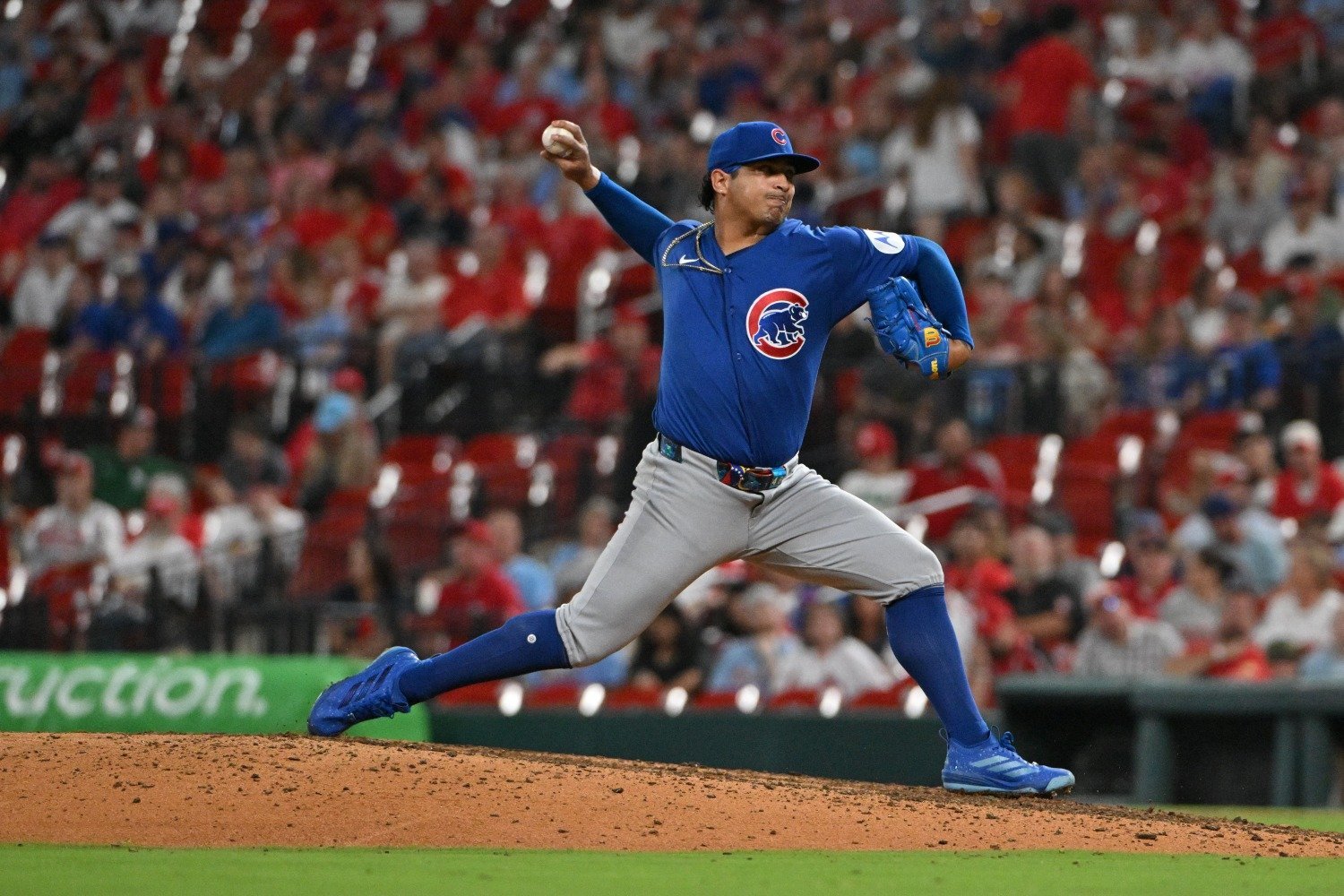 The biggest problem—the only problem, in one sense, but more on that in a bit—is that Daniel Palencia hasn't been healthy this year. Here we stand on the edge of September, and he's yet to crack 20 innings pitched. In a season that has seen winter investments in Phil Maton and Hunter Harvey go for naught and injuries to Cade Horton, Edward Cabrera and Ben Brown cannibalize the bullpen, the Cubs have needed their relief ace, and he hasn't been available for much of the campaign. If he still looked like himself when he was on the mound, though, we could have a different conversation. In fact, since he's now healthy(ish) again, we could have a downright sunny one. Unfortunately, that's not the way things are. Palencia has a 4.19 ERA this season, and a 1.40 WHIP. He's still struck out over 28% of opposing batters, and his walk rate is better than the league average again, but the results when opponents put the ball in play haven't been nearly as good as they were last year. You can call that bad luck; you can observe that he also had some "good luck" last season. But the truth is that luck has nothing (or very little; luck is always a factor in baseball, but it's usually overstated) to do with it. If you want to know what's wrong with Palencia, start right here. This is his average horizontal movement by pitch type for each season of his career. Last May, I wrote about Palencia's unique fastball shape, and how it worked in concert with his sheer velocity and high-energy delivery to flummox opposing batters. I dubbed that shape "run-ride", in contrast with the more often-discussed "cut-ride" heater. The Cubs usually seek and develop cut-ride fastballs, which are pitches with (depending on the hurler and on how you prefer to look at it) more glove-side movement than you'd expect given their induced vertical break or more vertical ride than you'd expect based on their cutting action. Palencia's fastball went from good to great last year when he achieved a flipped version of that. Based on his arm action and his vertical ride, you'd expect less arm-side run than the pitch actually showed—or, if you thought of the pitch as a two-seam runner and were expecting that movement, you'd be surprised by the hop on it. That shape is a bit less unorthodox than a cut-ride one, but most of the pitchers who throw run-ride heaters sit in the low or mid-90s. Palencia's unique formula was throwing exceptionally hard—that's always been his specialty—while also achieving that two-dimensional movement. As you can see in that chart, though, that magic is gone. Palencia's fastball still steams in at 99 MPH or so most of the time, though it's down a half-tick in average velocity and has particularly lost its top register. (The percentage of his heaters that hit 101.0 MPH was 14.8 last season; it's just 7.6 in 2026.) It still has good carry for a pitch thrown so hard. The horizontal movement, however, is gone; his heater has gotten arrow-straight. You can see the effect of that on pitches like the one on which he allowed a back-breaking home run to TJ Friedl on Friday. akR3UHhfWGw0TUFRPT1fQUFKV1V3Y0ZYZ29BRHdZQVZ3QUhVQThDQUZrQUJ3QUFBQUFDQkFKVEJRUlJVd2RV.mp4 Admittedly, one problem here is that this heater was only 97.6 MPH. For reasons we'll touch on shortly, Palencia really needs to operate up at 99-101 to be his superb self. But the bigger issue is that this pitch doesn't have that run toward the outside part of the plate. Even with Friedl swinging flat at the top of the zone, if this offering runs those extra 3-4 inches, it's a routine flyout. Right now, though, Palencia can't consistently produce that run, so pitches aren't getting off hitter's barrels as well as they did in the past. That doesn't show up solely in exit velocity (he's actually allowing less hard contact this season than last), but also in launch angle. Again, the horizontal movement difference on this particular pitch meant the difference between a line-drive homer (launch angle: 26°) and a high, lazy fly ball. This is one reason why Palencia is seeing hitters hit balls in the launch-angle sweet spot at a hugely increased rate this year, which has led to all that damage on balls in play. Hopefully, that sells you on the fact that Palencia needs that extra bit of run to make his fastball work the way it needs to. Now, let's talk about what's led to the loss of movement, so we can get a sense of how likely he is to get it back. For the first insight on that front, check out his arm angle by pitch type and month, throughout his career. Last season, Palencia kept his arm angle on the fastball just over 35°, pretty consistently. This year, it's up to 37°. That difference sounds infinitesimal, right? You can barely even see it on video. Here he is at release, last season and this season. This is a good lesson, though, in how small a thing it can be from which big things come. First, you need to know that Palencia is a pronator. That means that as he releases the ball, he slightly turns his forearm and hand outward. That's where that arm-side run comes from, for most pitchers. Therefore, that slight change in arm angle means Palencia's fingers are slightly more behind the ball as he release it; the pitch has slightly more backspin and slightly less freedom to run off the fingertips and off to the side, despite that turn of the arm. You can see this (although, again, we're talking about small margins) in Palencia's spin axis data. Here's a visualization of the spin and movement directions of his pitches in 2025. Here's the same one for 2026. The difference is almost imperceptible, but it's there, and it's wreaking havoc for Palencia, because he so badly needs those extra few inches of wiggle—especially with anything less than his A+ fastball. That's because he doesn't have a true out pitch other than the fastball; his slider has just never been an exceptionally good pitch. He's never found command or comfort with the splitter. He needs the fastball to work at peak effectiveness; it's not doing so. The slider is a separate but equally salient problem. Just when Palencia could have used a boost from that pitch, it's gotten worse this year, rather than better. He's been unable to find any lateral bite at all with it, and even the depth he achieved fairly often in 2025 is absent this year. That goes back, again, to the arm angle, and to Palencia's motor preference. He's not a guy who can "snap off" a slider in the traditional sense, with a late, powerful and deft inward turn of the wrist. He presets the slider grip and his wrist to produce the movement he wants. That works less well from a higher arm slot, though—and if he's releasing the ball later in his arm action. We've thoroughly diagnosed him, now. Palencia is extremely reliant on his fastball, and right now, that fastball isn't moving the way it needs to, because his arm angle is a touch too high. Ditto for his slider. Time to finally, truly attack the big issue: Can this be fixed? Can it be done quickly? To answer that, let's talk about his recent injury history, in the context of his impressively explosive delivery. Palencia is not a big guy. He's very, very powerfully built, but he's a gas can; the levers are short. All of bhis power has to come from the ground, and from the energy he can create within his frame. The fluidity of people like Chris Sale, Josh Hader or Jacob Misiorowski is not available to Palencia, if he wants to throw hard. He's adapted well to that; he's trained his body to generate enormous torque. For that reason, though, he's always been vulnerable to injuries involving the big muscles that do that power production. In both 2024 and 2025, he was sidelined by shoulder strains, but the shoulder is a big place. Specifically, Palencia was dealing with injuries to the muscles that can almost as easily be called the back as the shoulder—including the lat. Earlier this year, he suffered what was initially diagnosed as an oblique strain, which turned out to be another lat strain. Finally, this summer, the stress of the delivery traveled down the kinetic chain a bit, to his forearm. Palencia is trying to manage the stress that his delivery puts on his body. Unfortunately, some of it is unavoidable, and unfortunately, it's pretty clear that he's still not 100% able to push though and produce power the same way, even as he works through whatever's lingering there. In both pairs of screenshots above, there's a postu ral difference that's actually more evident than the relationship between hand and shoulder. That's Palencia trying to get down the mound more aggressively, getting more power from his legs to take some of the strain off his core and his arm. However, the higher arm slot is an inevitable product of that change to how the rest of his body is moving—and right now, as he protects that arm and tries to avoid blowing it out altogether, going back to moving the way he did in 2025 doesn't seem to be an option. I don't think Palencia is capable of returning to the level at which he pitched for much of 2025, at least until 2027. If he can get through the stretch run healthy and rest over the offseason, he might be in position to return next year at full strength, but it's just not possible without a few months off for the elbow and the forearm. That's bad news for the Cubs, and for Palencia, of course, but the baseball gods don't always give you the break you need. Track Palencia's horizontal fastball movement, vertical slider movement, arm angle, and fastball velocity, in that order. If they each trend in the right direction over the final few weeks of the season, he might be rounding into form just in time to dominate in October. Don't count on it, though. The Cubs will (probably) have to cling to leads as best they can with a patchwork bullpen the rest of the way. The only good news is that that's what they've done all season, anyway. View the full article
 -
Luis Rengifo, Gavin Sheets Go On Padres' Injured List
DiamondCentric posted an article in Padres Mission
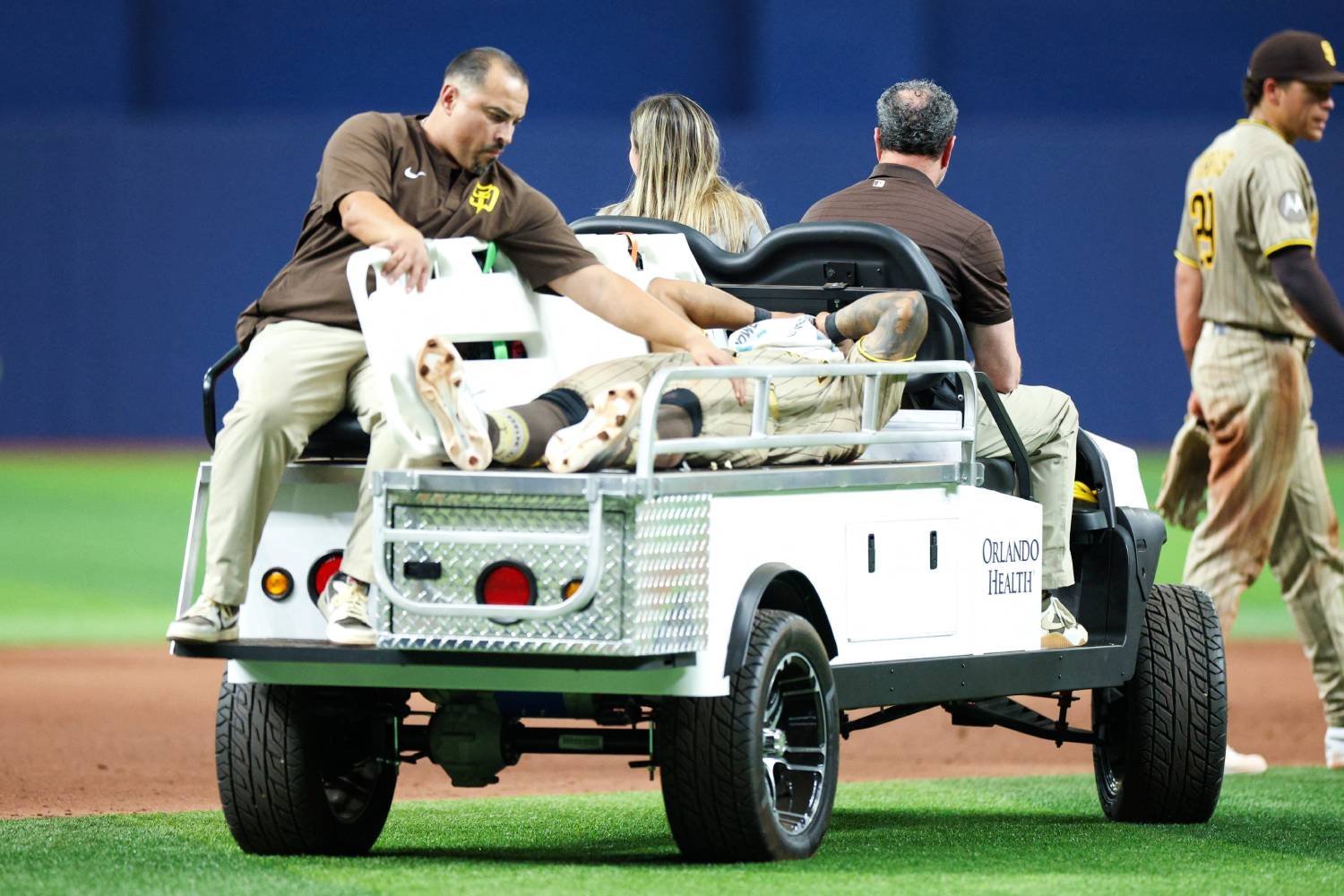 As expected, outfileder-infielder Luis Rengifo is headed to the injured list. Only he will have some unexpected company. The San Diego Padres on Sunday placed Rengifo and first baseman Gavin Sheets on the 10-day injured list, with outfielder Samad Taylor and infielder Sung-Mun Song called up from the Triple-A El Paso Chihuahuas. Rengifo was injured in Saturday's game when he made a sudden pivot to make an off-balance throw during a seventh-inning rundown. His injury caused an errant throw that allowed two more runs to score to tie the game in what would be a 7-6 loss to the Tampa Bay Rays. Rengifo has a .291/.375/.409 slash line with four homers and 17 RBIs in 38 games. The injury is listed as a sprained right knee, but Rengifo was expected to fly back to San Diego to undergo more testing. More than likely, it will be a season-ending injury. Sheets went on the IL with a sprained left foot. Sheets, who went 0-for-4 in Saturday's game, was slashing .211/.313/.388 with 16 homers and 46 RBIs in 123 games. Rengifo's right oblique injury allowed for Taylor to return. Ironically, Taylor's oblique injury opened the door for Rengifo's addition to the Padres' roster July 8. Taylor helped bring energy to the Padres following his June 3 call-up as he had a slash line of .330/.410/.398 with one homer, 11 RBIs and six steals in 26 games. Song was sent down Monday to Triple-A in order to get more consistent at-bats as he was slashing just .202/.305/.263 with one homer and 15 RBIs in 62 games during his rookie season after coming over from the Korea Baseball Organization. View the full article
 -
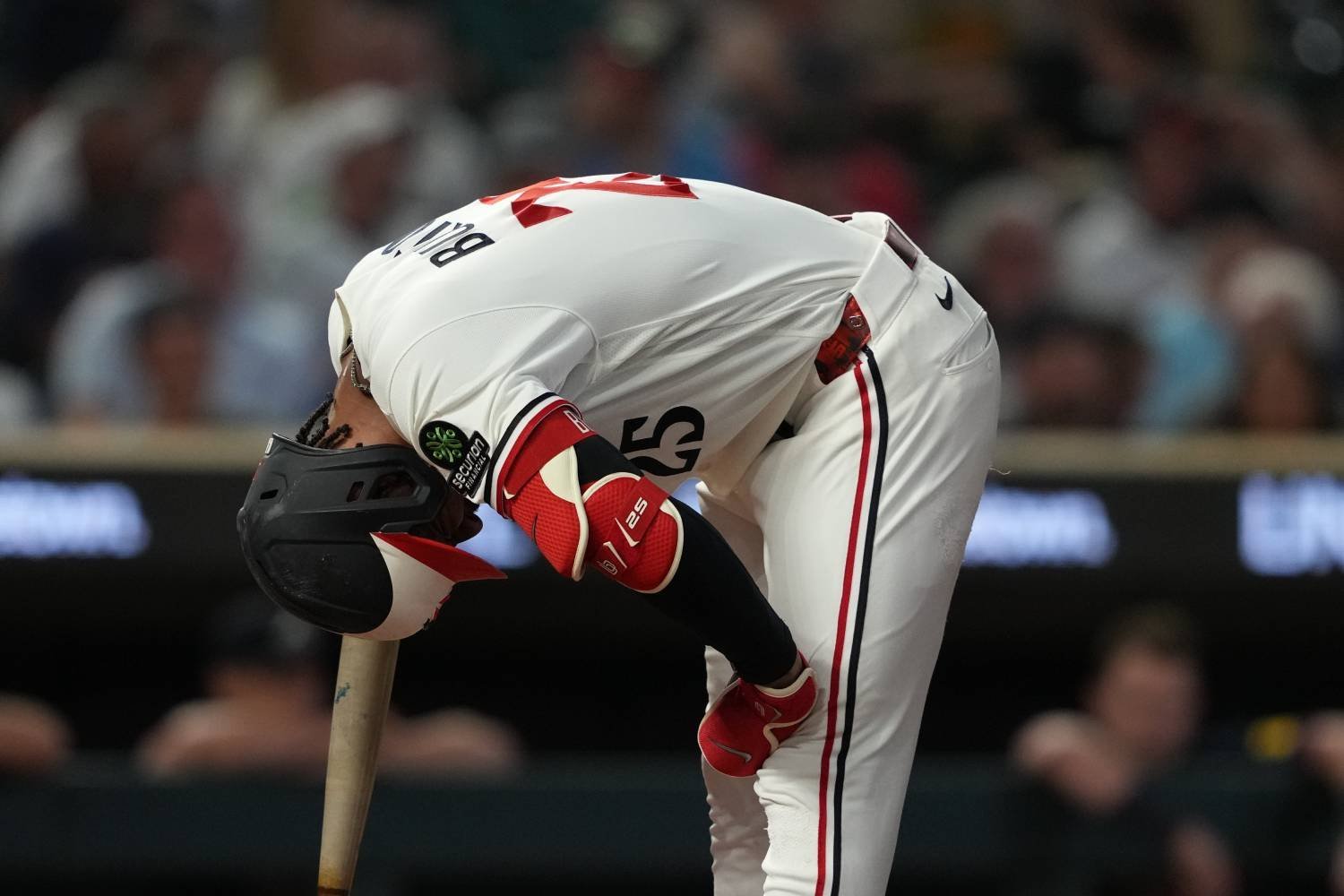 For the third time this season, a cranky right hip has sidelined Byron Buxton. The star center fielder was placed on the 10-day injured list Sunday by the Minnesota Twins with a right hip impingement. Outfielder Gabriel Gonzalez was called up from Triple-A St. Paul. Buxton, an All-Star, also went on the IL on July 6 and July 29 with the right hip issue. When on the field, Buxton has a slash line of .254/.319/.511 with 25 homers and 46 RBIs. But the hip injury has hindered him at the plate and in the field. Buxton has not homered since June 22. Gonzalez came up briefly at the end of May to make his MLB debut and went 1-for-2 before being sent back to Triple-A, where he has a .254/.318/.423 slash line with 15 homers and 51 RBIs in 106 games. View the full article
 -
 Chicago Cubs Transactions Chicago Cubs designated LHP Hoby Milner for assignment. Three Iowa Homers And A Cowles Double Beat Omaha Iowa trailed Omaha 5-2 through four innings and won 7-6 on 11 hits, three of them home runs. The Cubs did not draw a walk and struck out five times. Owen Miller led the offense at 3-for-4 with two runs scored. James Triantos went 2-for-4. Leadoff man BJ Murray homered for his only hit in four at-bats. Owen Ayers hit a home run and drove in two runs. Jackson Cluff homered and drove in a run. Ben Cowles was 1-for-3 with a double and two RBI. Austin Wynns doubled and scored. Wynns doubled and took third on a Justin Dean groundout. After a BJ Murray flyout, Greg Jones singled to center to score Wynns, and Ayers followed with a two-run home run that put Iowa ahead 6-5. Miller and Triantos singled before Cowles flied out. Omaha tied the game in the seventh, and Iowa answered in the eighth when Miller singled, moved up on a Triantos groundout, and scored on Cowles' double to right field. Braxton Garrett started and allowed five runs on five hits over five innings, walking one and striking out four. Three of those hits left the yard. Tyler Santana gave up one run on three hits across two innings with two strikeouts. Jayden Murray worked 1 2/3 innings without allowing a hit or a run, walking three and striking out two. Eduarniel Núñez recorded the final out in 1/3 of an inning. Iowa left four men on base. Player AB R H RBI BB K BJ Murray 4 1 1 1 0 0 Greg Jones 4 1 1 1 0 2 Owen Ayers 4 1 1 2 0 1 Owen Miller 4 2 3 0 0 0 James Triantos 4 0 2 0 0 0 Ben Cowles 3 0 1 2 0 0 Jackson Cluff 4 1 1 1 0 1 Austin Wynns 4 1 1 0 0 1 Justin Dean 3 0 0 0 0 0 Totals 34 7 11 7 0 5 Player IP H R ER BB K HR Braxton Garrett 5 5 5 5 1 4 3 Tyler Santana 2 3 1 1 0 2 0 Jayden Murray 1 2/3 0 0 0 3 2 0 Eduarniel Núñez 1/3 0 0 0 0 0 0 Totals 9 8 6 6 4 8 3 Knoxville Loses A Two-Run Lead In The Ninth At Biloxi Knoxville carried a 3-1 lead into the bottom of the ninth inning and lost 4-3 to Biloxi. The Smokies collected seven hits and six walks, struck out nine times, and stranded 10 runners. Leadoff man Alex Ramírez went 2-for-3 with two walks and two runs scored. Cleanup hitter Miguel Useche was 2-for-5 with two doubles and two RBI. Edgar Alvarez went 2-for-4 with an RBI. Ariel Armas had a hit and a walk in three at-bats with two strikeouts. Kane Kepley drew a walk and struck out once in four at-bats without a hit. Knoxville scored in the first when Ramírez reached and came home on a Useche groundout. Useche doubled Ramírez in again in the fifth. The eighth inning gave the Smokies their cushion: Useche doubled, Armas singled him to third, and Alvarez singled to right field to make it 3-1. Knoxville then struck out three straight times to end the frame. The ninth unraveled. Biloxi opened with two walks and a single to load the bases, then singled to shortstop to score a run. A groundout to first base plated two more when the throw home got away from Useche for a throwing error, and the game ended 4-3. Brooks Caple started and allowed one run on three hits over five innings, walking two and striking out six. Tyler Schlaffer followed with three innings, giving up two hits and no runs while striking out two. Vince Reilly recorded one out and was charged with three runs, one earned, on two hits and two walks. Player AB R H RBI BB K Alex Ramírez 3 2 2 0 2 0 Andy Garriola 3 0 0 0 1 1 Kane Kepley 4 0 0 0 1 1 Miguel Useche 5 1 2 2 0 0 Ariel Armas 3 0 1 0 1 2 Edgar Alvarez 4 0 2 1 0 0 Carter Trice 3 0 0 0 1 1 Alex Madera 4 0 0 0 0 2 Karson Simas 4 0 0 0 0 2 Totals 33 3 7 3 6 9 Player IP H R ER BB K HR Brooks Caple 5 3 1 1 2 6 0 Tyler Schlaffer 3 2 0 0 0 2 0 Vince Reilly 1/3 2 3 1 2 0 0 Totals 8 1/3 7 4 2 4 8 0 Angel Cepeda's First-Inning Homer Sets Up South Bend In Wisconsin South Bend scored three runs before recording an out and held on for a 7-6 win at Wisconsin. The Cubs finished with 10 hits, four walks, six strikeouts, and six runners left on base. Angel Cepeda drove in three runs on a home run in four at-bats. Leadoff man Josiah Hartshorn had one hit and three walks in two official at-bats and scored a run. Jose Escobar went 2-for-5 with an RBI. Reginald Preciado doubled, drove in a run, and scored. Justin Stransky doubled in a run and scored. Matt Halbach had a hit, an RBI, and a run in three at-bats. The first inning set the tone. Hartshorn walked, Escobar singled him to third, and Cepeda homered to center field for a 3-0 lead. Kade Snell walked before a double play and a strikeout ended the inning. Wisconsin pulled within 3-2, and South Bend answered with two runs in the seventh. After two strikeouts, Halbach was hit by a pitch, Stransky doubled him home, Hartshorn walked, and Escobar singled to left field to score Stransky. Two more followed in the eighth on an Espinoza single, a Preciado double, and a Halbach single. Wisconsin scored three in the bottom of the eighth to make it close. Pierce Coppola started and gave up one run on three hits in 3 2/3 innings, walking one and striking out two. Noah Edders allowed four runs on five hits over 3 2/3 innings with one walk and three strikeouts. Jackson Kirkpatrick walked two without recording an out and was charged with a run. Adam Stone finished with 1 2/3 hitless innings, one walk, and two strikeouts. Player AB R H RBI BB K Josiah Hartshorn 2 1 1 0 3 0 Jose Escobar 5 1 2 1 0 0 Angel Cepeda 4 1 1 3 0 1 Kade Snell 4 0 1 0 1 1 Leonel Espinoza 4 1 1 0 0 0 Brennan Hudson 4 0 1 0 0 3 Reginald Preciado 4 1 1 1 0 1 Matt Halbach 3 1 1 1 0 0 Justin Stransky 4 1 1 1 0 0 Totals 34 7 10 7 4 6 Player IP H R ER BB K HR Pierce Coppola 3 2/3 3 1 1 1 2 1 Noah Edders 3 2/3 5 4 4 1 3 1 Jackson Kirkpatrick 0 0 1 1 2 0 0 Adam Stone 1 2/3 0 0 0 1 2 0 Totals 9 8 6 6 5 7 2 A Four-Run Seventh Pushes Myrtle Beach Past Augusta Myrtle Beach trailed 3-1 entering the seventh inning and scored four times on the way to a 6-5 win at Augusta. The Pelicans managed only six hits, drew three walks, struck out nine times, and committed two errors. Leadoff man Juan Cabada went 2-for-5 with three RBI and two strikeouts. Alexis Hernandez had a double and a walk in three at-bats, drove in two runs, and scored twice. Darlyn De Leon went 2-for-5 with a run. Caden Sorrell had one hit in four at-bats with two strikeouts. Jhoander Irigoyen walked, drove in a run, and scored. The seventh was the difference. Irigoyen and Eli Lovich drew walks, and after a Derniche Valdez flyout, Hernandez doubled to left field to score both and tie the game 3-3. Jose Silva was hit by a pitch, Jan Luis Reyes flied out, and Cabada singled to right field to bring home Hernandez and Silva for a 5-3 lead. Myrtle Beach added a run in the ninth when Hernandez walked, moved up on a Reyes groundout, and scored on Cabada's second RBI single. Augusta pushed across a run in the bottom of the ninth on a fielding error by De Leon. Riely Hunsaker started and gave up three runs on four hits over five innings without a walk, striking out six. Two of the hits were home runs. Ashton Pocol worked 1 1/3 innings and allowed one unearned run on two hits with two walks and two strikeouts. Jordan Henriquez covered 2 2/3 innings, giving up two hits and one unearned run without a walk. Myrtle Beach left five runners on base. Player AB R H RBI BB K Juan Cabada 5 0 2 3 0 2 Darlyn De Leon 5 1 2 0 0 1 Caden Sorrell 4 0 1 0 0 2 Jhoander Irigoyen 3 1 0 1 1 0 Eli Lovich 3 1 0 0 1 2 Derniche Valdez 4 0 0 0 0 1 Alexis Hernandez 3 2 1 2 1 0 Jose Silva 2 1 0 0 0 0 Jan Luis Reyes 4 0 0 0 0 1 Totals 33 6 6 6 3 9 Player IP H R ER BB K HR Riely Hunsaker 5 4 3 3 0 6 2 Ashton Pocol 1 1/3 2 1 0 2 2 0 Jordan Henriquez 2 2/3 2 1 0 0 0 0 Totals 9 8 5 3 2 8 2 Top-20 Prospect Performance Josiah Hartshorn: 1-for-2, 3 BB, R Cade Townsend: DNP Jaxon Wiggins: DNP Owen Ayers: 1-for-4, HR, 2 RBI, K Kane Kepley: 0-for-4, BB, K Ethan Conrad: DNP Caden Sorrell: 1-for-4, 2 K Kaleb Wing: DNP Myles Bailey: DNP Brooks Caple: 5 IP, 3 H, 1 R, 1 ER, 2 BB, 6 K James Triantos: 2-for-4 Will Sanders: DNP Juan Cabada: 2-for-5, 3 RBI, 2 K Jostin Florentino: DNP Derniche Valdez: 0-for-4, K Grant Kipp: DNP Jose Escobar: 2-for-5, RBI Ariel Armas: 1-for-3, BB, 2 K Fernando Cruz: DNP Brandon Birdsell: DNP View the full article
 -
 Jonah Tong made a strong closing argument for the New York Mets to recall him from the minors when they expand their roster to 28 players this week. The right-hander fell one out short of throwing a seven-inning no-hitter Saturday for Syracuse against Lehigh Valley. Kameron Misner broke up the bid with a clean single to right field on a 2-1 pitch. Tong struck out the next batter, Carter Kieboom, for his eighth K of the game to complete a 6-0 shutout in the first game of a doubleheader. He threw 88 pitches, 55 for strikes, in his first complete game of the year. He retired the first 12 IronPigs he faced before walking Otto Kemp to lead off the fifth. He walked Paul McIntosh in the sixth for the only other baserunner prior to Misner’s hit. MLB.com reported that Tong threw his fastball 52.3 percent of the time, and the MiLB.com pitch-by-pitch showed that Tong was airing it out at the end. Against Kieboom, he threw heaters of 95.6, 97.0 and 96.1 mph before getting the strikeout with an 87.3 mph changeup. New York Mets Transactions New York Mets activated LF Juan Soto from the 10-day injured list. New York Mets optioned 1B Eric Wagaman to Syracuse Mets. Syracuse Hitters Give Tong Plenty Of Support Three home runs in the third inning were enough for Tong. With one out, Zack Short homered to left and D'Andre Smith followed with a homer to the same part of the park. After Mark Vientos singled and Ronny Mauricio flied out, MJ Melendez hit a two-run homer to left-center that put the Mets up 4-0. Syracuse added a run in the fourth on a fielder's choice grounder by Smith with the bases loaded. Vientos closed the scoring with a solo homer to center in the seventh, capping a three-hit day. Syracuse Batting Player AB R H RBI BB K D'Andre Smith, CF 4 1 1 2 0 1 Mark Vientos, DH 4 2 3 1 0 0 Ronny Mauricio, 2B 4 0 0 0 0 1 MJ Melendez, LF 3 1 1 2 0 2 Billy Amick, 3B 3 0 0 0 0 1 Nick Lorusso, 1B 3 1 1 0 0 1 Hayden Senger, C 3 0 1 0 0 0 Jose Ramos, RF 3 0 0 0 0 1 Zack Short, SS 2 1 1 1 1 1 Totals 29 6 8 6 1 8 Syracuse Pitching Player IP H R ER BB K HR Jonah Tong 7 1 0 0 2 8 0 Amick Gives Syracuse The Sweep Syracuse won a back-and-forth nightcap thanks to Amick's opposite-field drive to right-center. The IronPigs scored four in the first against Dan Hammer, who retired the leadoff man and then walked three straight to load the bases. A run scored on a passed ball by Shawn Ross, a two-run double followed, and Hammer was done after a third of an inning. Dylan Ross came on and gave up an RBI single, with the run charged to Hammer. Syracuse answered with five in the second. Smith singled in Lorusso, and Short doubled home two more runs to cut the gap to 4-3. Morabito then hit his two-run homer for a 5-4 lead. Smith singled in another run in the third for a 6-4 lead, but Lehigh Valley answered with three in the fourth against Jack Weisenburger, who walked three and threw a run-scoring wild pitch in the inning. Ronny Mauricio's groundout in the sixth scored Short to tie the game 7-7. Amick broke the tie. Brian Metoyer got the final five outs to record the win. Syracuse Batting Player AB R H RBI BB K Nick Morabito, CF 3 1 1 2 0 1 Jose Ramos, LF 3 0 1 0 1 0 Ronny Mauricio, SS 4 0 0 1 0 0 MJ Melendez, DH 3 1 2 0 1 0 Billy Amick, 1B 4 1 1 1 0 0 Nick Lorusso, 3B 4 1 0 0 0 0 Shawn Ross, C 2 1 0 0 1 1 D'Andre Smith, RF 3 1 2 2 1 1 Zack Short, 2B 2 2 1 2 2 0 Totals 28 8 8 8 6 3 Syracuse Pitching Player IP H R ER BB K HR Dan Hammer 1/3 1 4 4 3 0 0 Dylan Ross 2/3 1 0 0 0 0 0 Matt Turner 1 0 0 0 2 0 0 Jack Weisenburger 2 2 3 3 3 2 0 Ofreidy Gómez 1 1/3 1 0 0 1 0 0 Brian Metoyer 1 2/3 0 0 0 1 2 0 Binghamton Lets Lead Slips Away In Game 1 The Rumble Ponies were up 3-2 after three innings, but Reading scored three runs on one hit in the fourth to seize control. The rally started after starter Luke Gabrysh retired the first two batters. A walk, a single and a walk loaded the bases and knocked Gabrysh out of the game. Dakota Hawkins came on and threw a wild pitch that tied the score 3-3. He issued a walk to reload the bases and another walk to force in the go-ahead run, and then hit a batter to force in the third run of the inning. Binghamton scored single runs in each of the first three innings. Chris Suero hit an RBI single in the first, Corey Collins homered in the second and Jefferson Rojas went deep in the third. Binghamton Batting Player AB R H RBI BB K Mitch Voit, 2B 4 0 0 0 0 1 Marco Vargas, SS 3 1 0 0 1 2 Jefferson Rojas, DH 4 1 1 1 0 0 Jacob Reimer, 3B 3 0 2 0 1 0 Chris Suero, C 2 0 1 1 2 0 Eli Serrano III, RF 4 0 1 0 0 0 John Bay, CF 3 0 0 0 0 0 Corey Collins, 1B 2 1 1 1 1 0 Vincent Perozo, LF 2 0 1 0 1 1 Totals 27 3 7 3 6 4 Binghamton Pitching Player IP H R ER BB K HR Luke Gabrysh 3 2/3 4 5 5 2 3 2 Dakota Hawkins 2 1/3 2 0 0 2 4 0 Gordon's Quality Start Wasted In Shutout Loss Gordon went six innings, allowed three runs on seven hits, walked two and struck out six. He gave up a run-scoring double in the second that stood as the only offense until the sixth, when a two-run double provided Reading with insurance.. The Rumble Ponies had their chances with seven hits and four walks, but they left nine runners on base. Kevin Parada had three hits and Jamari Baylor added two. Binghamton batters struck out 11 times. Binghamton Batting Player AB R H RBI BB K Jefferson Rojas, SS 4 0 1 0 0 1 Jacob Reimer, 3B 3 0 1 0 1 1 Chris Suero, DH 2 0 0 0 2 2 John Bay, CF 3 0 0 0 0 1 Corey Collins, 1B 3 0 0 0 0 2 Kevin Parada, C 3 0 3 0 0 0 JT Benson, RF 2 0 0 0 1 0 Jamari Baylor, 2B 3 0 2 0 0 1 Vincent Perozo, LF 2 0 0 0 0 2 Marco Vargas, PH 1 0 0 0 0 1 Totals 26 0 7 0 4 11 Binghamton Pitching Player IP H R ER BB K HR R.J. Gordon 6 7 3 3 2 6 0 First Inning Too Much For Brooklyn To Overcome The Cyc;lones opened the scoring in the top of the first before falling behind for good. Elian Peña led off the game with a walk, stole second, moved to third on an infield hit by Trey Snyder, and scored on a groundout by Ronald Hernandez. Hudson Valley answered in the bottom half against Brooklyn starter Daviel Hurtado. A run-scoring double and a two-run homer put Hudson Valley in front 3-1, and the Renegades never trailed after that. Brooklyn cut the gap to 3-2 in the third as Colin Houck's groundout brought home Snyder, and after Hudson Valley got the run back in the bottom half with another homer, Antonio Jimenez homered in the fourth to make it 4-3. The Cyclones' defense gifted Hudson Valley its fifth run in the fourth. Catcher Chase Meggers extended the inning when he committed a throwing error while trying to complete a strikeout. After a single put runners at the corners, Meggers committed a passed ball to bring home the runner from third. Hudson Valley padded its lead in the fifth, again after two were out. A hit batsman and a pop-fly double made it 6-3 and knocked Hurtado out of the game. Parker Carlson gave up a run-scoring single to increase the deficit to 7-3, Hurtado went 4 2/3 innings and was charged with seven runs (six earned) on nine hits, with no walks, seven strikeouts and two home runs allowed, Brooklyn Batting Player AB R H RBI BB K Elian Peña, SS 4 1 0 0 1 0 Trey Snyder, CF 5 1 2 0 0 0 Ronald Hernandez, 1B 3 0 0 1 1 2 Yonatan Henriquez, LF 4 0 0 0 0 1 Colin Houck, DH 4 0 1 1 0 1 Chase Meggers, C 4 0 0 0 0 1 Antonio Jimenez, 3B 3 1 1 1 0 0 Eddinson Paulino, 2B 1 0 0 0 3 1 Heriberto Rincon, RF 4 0 1 0 0 2 Totals 32 3 5 3 5 8 Brooklyn Pitching Player IP H R ER BB K HR Daviel Hurtado 4 2/3 9 7 6 0 7 2 Parker Carlson 1 1/3 1 0 0 0 2 0 Rafi Vazquez 2 1 0 0 0 3 0 St. Lucie Buried Early In Daytona St. Lucie surrendered two runs in each of the first three innings and then a five-spot in the fourth. Five pitchers combined to get 12 outs, prompting the use of Stallman and Ogden to save the bullpen. Stallman worked two scoreless innings, allowing two hits. Ogden surrendered four hits to go with the two runs. The Mets briefly tied the game 2-2 in the top of the second on Branny De Oleo's two-run homer. Julio Zayas homered in the sixth and Jeremy Rodriguez lifted a sacrifice fly in the eighth for St. Lucie's other runs. St. Lucie Batting Player AB R H RBI BB K Boston Baro, 2B 4 0 0 0 1 1 Aiden Robbins, RF 4 0 0 0 1 0 Jack Toomey, LF 4 0 1 0 0 2 Julio Zayas, 1B 4 2 3 1 0 1 Yovanny Rodriguez, C 4 0 1 0 0 3 Jeremy Rodriguez, SS 2 1 0 1 1 0 Branny De Oleo, CF 3 1 2 2 1 0 Reed Stallman, P 2 0 0 0 1 1 Jake Ogden, P 1 0 0 0 0 0 Vladi Gomez, 3B 4 0 0 0 0 0 Totals 32 4 7 4 5 8 St. Lucie Pitching Player IP H R ER BB K HR Jose Lopez 1/3 1 2 2 1 1 1 Jose Guevara 1 1/3 2 2 2 1 3 0 Miguel Mejias 1 1/3 1 2 1 2 1 0 Ryan Lambert 2/3 1 3 3 2 1 0 Zack Mack 1/3 3 2 2 0 1 0 Reed Stallman 2 2 0 0 0 0 0 Jake Ogden 2 4 2 2 0 0 0 Top-20 Prospect Performance Jonah Tong: 7 IP, 1 H, 0 R, 2 BB, 8 K Jack Wenninger: DNP Elian Pena: 0-for-4, BB, SB Mitch Voit: 0-for-4, K Ryan Clifford: DNP Nick Morabito: 1-for-3, HR, 2 RBI, K Jonathan Santucci: DNP Carson Wiggins: DNP Jacob Reimer: 3-for-6, 2 2B, 2 BB, K Aiden Robbins: 0-for-4, BB Randy Guzman: DNP Wandy Asigen: DNP Chris Suero: 1-for-4, RBI, 4 BB, 2 K Jefferson Rojas: 2-for-8, HR, RBI Will Watson: DNP Shane Sdao: DNP Eli Serrano III: 1-for-4 Antonio Jimenez: 1-for-3, HR, RBI Emilien Pitre: DNP Dylan Ross: 2/3 IP, 1 H, 0 R, 0 BB, 0 K View the full article
![More information about "Red Sox Speedster Andrews Opata Is Leaving His Mark In Salem [Exclusive]"](http://d317trerw33y7b.cloudfront.net/monthly_2026_08/rssImage-fd7065508b4700b40d8abe9803261c3c.jpeg.2c27cf7b8b1e81f7ca357a8247811f7c.jpeg)
