


DiamondCentric
-
Posts
2,631 -
Joined
-
Last visited
Never
Content Type
Profiles
Forums
Events
News
Tutorials & Help
Major League Baseball Videos
Guides & Resources
Store
Downloads
Gallery
Everything posted by DiamondCentric
-

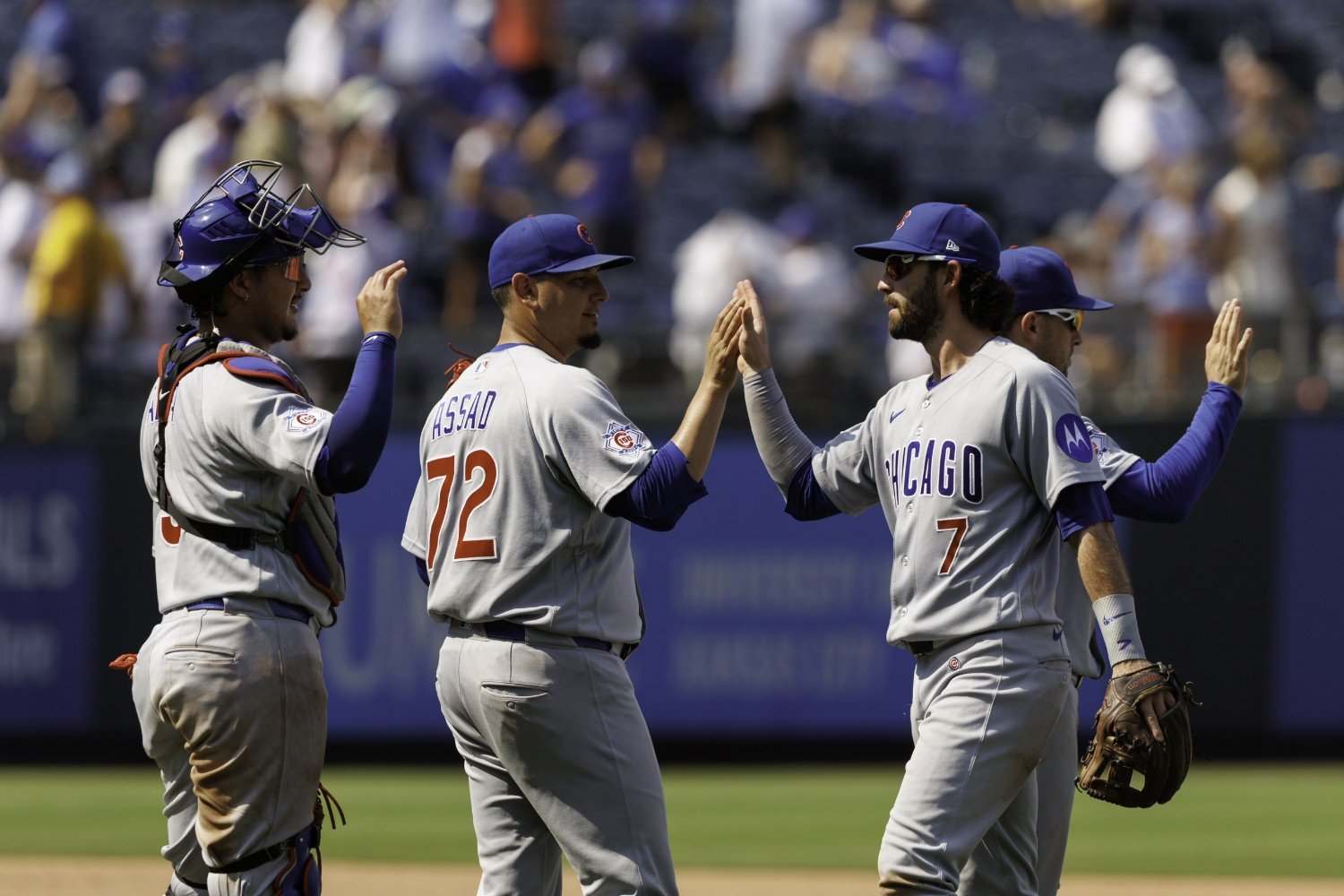 As anyone with a background in video games can attest, the further you advance in your digital adventure, the higher the stakes become, and the more daunting the adversaries grow. Unlike a frustrated virtual hero tossing the controller halfway across the living room, the new-look Chicago Cubs have leveled up. Facing down an "all boss fights" gauntlet of contests, Craig Counsell and his squad pushed several of the right buttons in arguably their best week of baseball yet. The reputations of clubs like Chicago and Los Angeles tower higher than the buildings that fill their respective skies. Welcoming the vaunted Dodgers to Wrigley for a hotly anticipated three-game set, the drama in this potential NLCS preview grew higher yet. North Side newcomers Kevin Gausman, Clay Holmes, and others looked on as their new squad dialed up a heartily impressive victory versus MLB's prohibitive World Series favorite. The free-swinging Cubbies figured out L.A. starter Justin Wrobleski early, tallying two runs apiece in each of the first three innings. Marking an upward trend for the whole offense, the Cubs benefited from long balls cashed in by Kevin Alcantara, Seiya Suzuki, Michael Busch, and Carson Kelly. While the offense kept things moving, North Siders' starter Matthew Boyd hung tough through 6 2/3 innings against one of the game's most prolific lineups. His exit made way for his squad's increasingly stingy bullpen to lock the door on Hollywood's finest, lifting the Cubs to a 10-5 win. Los Angeles' trade deadline acquisition of the game's best pitcher, Tarik Skubal, meant that the eyes of the entire baseball world were fixed on 1060 West Addison to witness the Cy Young lefty's first start in his new uniform. By human standards, Skubal clocked in a respectable first day at work with six full innings, allowing just two earned runs. But it was the Cookie Monster-backed home team that found production from its biggest stars like Hoerner, Crow-Armstrong, and Swanson when they needed it most. Postseason play is defined by blockbuster, marquee battles like this, and the Cubs sent a message to the rest of the league that they will not kowtow to anyone's preconceived notions of who ought to take home the crown in October. Their 5-1, series-clinching win proved as much. Through two full games in their tilt with Los Angeles, Chicago demonstrated the true power of team play by employing tried-and-true consistency at the plate, coupled with their signature lockdown defensive play. But in game three of this crucial series, the stars came out to play. Treating the fans in attendance to a show like no other, NL MVP favorites Shohei Ohtani and Pete Crow-Armstrong lit up the scoreboard and millions of screens across the nation. They each smashed two homers each in one of the most exhilarating displays of offensive prowess and competition since the days of Mark McGwire and Sammy Sosa. Starter Shota Imanaga and his squad had the game well in hand until the Dodgers unloaded with five runs in the eighth inning before reliever Jacob Webb came out for the decisive ninth, in which he calmly set the visitors down in order, scooping up the emphatic series sweep. So, after surviving a brutal run of facing one ace after another, what would be the reward for the boys in blue pinstripes? The chance to beat another. In the most unlikely fashion imaginable, that's exactly what they did in their make-up game with Dylan Cease and the Toronto Blue Jays. Through seven sparkling innings, Cease silenced the normally vociferous Cubs' lineup, racking up ten strikeouts and zero earned runs. Sometimes the best pitchers get the best of you, but the North Siders' third baseman Alex Bregman had other plans. With two out and two strikes in the bottom of the ninth, Bregman drilled a game-tying two-run blast to the basket in left field, stirring up a thunderous roar from the home crowd we'd all love to get used to. Crow-Armstrong's jaw-dropping walk-off run on a wild pitch in the eleventh frame firmly closed the argument as to how strong and how special this team is in a 3-2 win. In search of their fifth straight victory, the Cardiac Cubs took their show on the road to the house that George Brett built for a three-game weekend tilt with the Royals. The interleague matchup finally saw the debut of new Cubs' ace Kevin Gausman versus the underachieving Kansas City lineup. Gausman spun seven dazzling innings, holding Bobby Witt Jr.'s squad to a modest four hits and two earned runs. Clutch RBI knocks from Seiya Suzuki and Pete Crow-Armstrong supplied the necessary production to secure the victory in the opener, 6-4. A night after his teammate made his opening remarks as to why he was made a Cub in the first place, Clay Holmes fell short of making a similar statement. Holmes labored through four innings of baseball, allowing six hits and four earned runs. Finding themselves in an early hole, Chicago could not string together enough timely hits to dig themselves out. A rare hitless night from Crow-Armstrong set the tone for a frustrated offense in a 6-3 defeat at Kauffman Stadium. The most resilient ball clubs scratch the memory of a tough loss as quickly as they can seize momentum in the next contest, and the Cubs made good on that concept in the rubber match. The seasoned veteran southpaw Matthew Boyd took the ball and proved the stopper. Boyd cruised through seven magnificent innings, not yielding a hit until the fourth inning. The Cubs' bats unloaded eighteen hits, including a three-run bomb from Miguel Amaya and a multi-hit day with a homer from Ian Happ. The free-swinging party created a route for the visitors, capping a 6-1 week and just a shade under notching their 70th win on the campaign. With aggressive moves and a solidly galvanized clubhouse, the Chicago Cubs are without a doubt one of the best teams in baseball. A day off on Monday will then make way for the North Siders' three-game set with the Nationals in the District of Columbia, before heading home to face off with the Saint Louis Cardinals. View the full article
 -
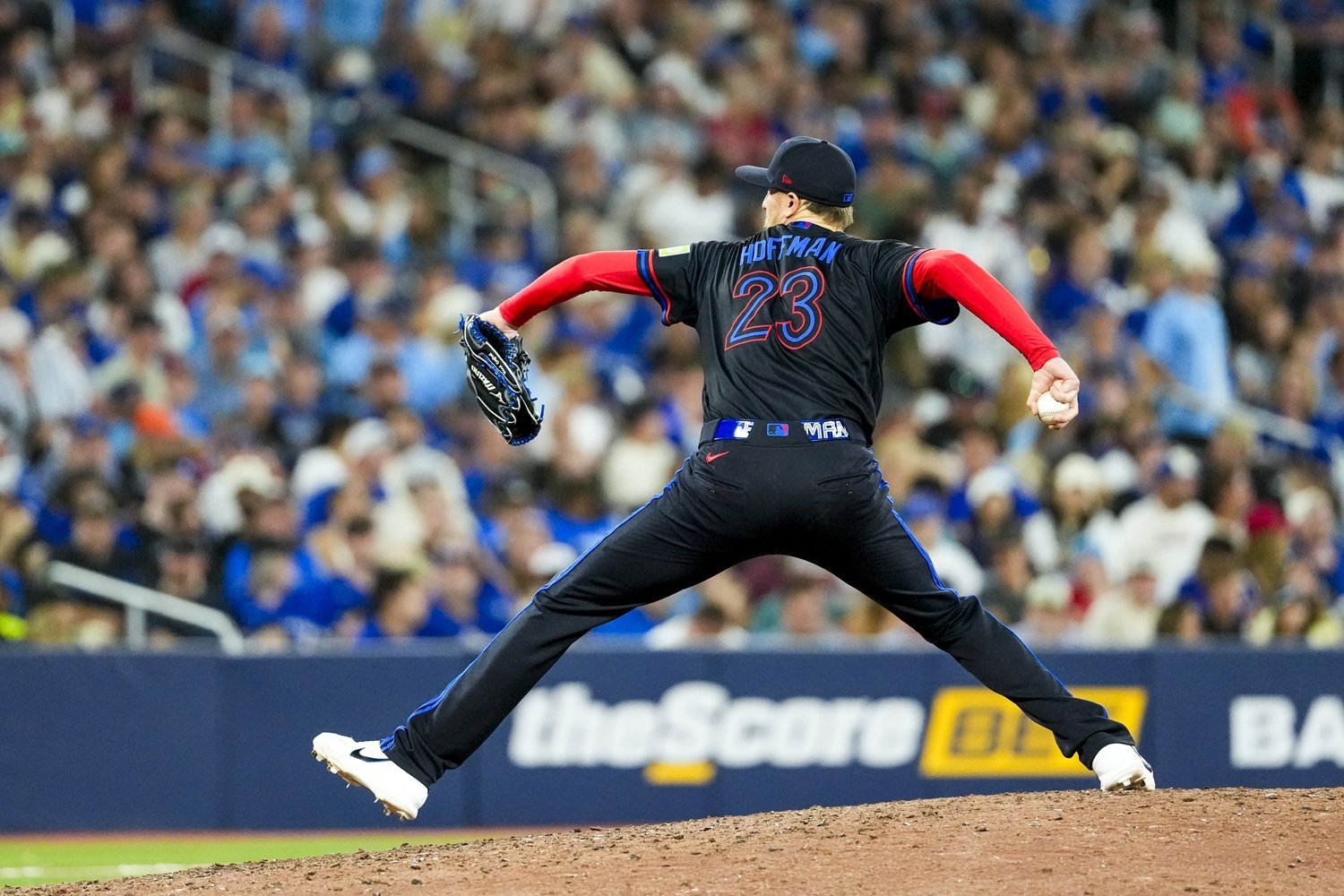 Signed by the Minnesota Twins to a minor-league contract in late February 2023, Jeff Hoffman pitched five innings in spring training before exercising his opt-out after being reassigned to minor-league camp. The hard-throwing righty quickly signed a minor-league deal with the Philadelphia Phillies, pitching nine innings for their Triple-A affiliate before having his contract selected in early May 2023. The 30-year-old Hoffman immediately excelled with Philadelphia, netting a 2.41 ERA, 2.57 FIP, and a 33.2% strikeout rate over 52 1/3 innings pitched in 2023. He pitched at a similarly elite rate with Philadelphia in 2024, earning his first All-Star nod, before signing a three-year, $33 million contract with the Toronto Blue Jays before the 2025 regular season. The veteran reliever struggled with Toronto last season, manufacturing a 4.37 ERA and 4.90 FIP over 68 innings pitched. However, he netted 33 saves (23 more than his prior career-high) while maintaining an elite strikeout rate. Despite losing his closer role to now-elite reliever Louis Varland, Hoffman looked like the Philadelphia version of himself with Toronto this season, posting a 3.94 ERA, 2.49 FIP, and a 34.9% strikeout rate (the fifth-highest strikeout rate among relievers) over 48 innings pitched. Hoffman generating swing-and-miss at an elite rate is why Twins decision-makers sought him out. “When we went out to acquire for our bullpen, we wanted to acquire specific things: swing and miss or the ability to miss bats later in games and leverage was something that’s important to us,” stated manager Derek Shelton. “He’s at what, 80 punch outs in 49 innings? Like, we did not have that in our bullpen. That is the thing that has been the most impressive and the thing we needed.” Hoffman shared a similar assessment. “I’ve pretty much led the AL in K/9 (strikeouts per nine innings pitched) all year.” Hoffman correctly proclaimed before noting his early-season struggles with the Blue Jays. “I think we got a little fastball-heavy in Toronto, both last year and this year…It seemed like every ball that was put in play was a hit, like, no matter how hard or how soft. There just wasn’t any, like, let up on that. So, it was like, all right, how do we limit the ball being put in play? And that was to throw the slider as much as possible and let the other two pitches complement that one.” Hoffman’s intuition was correct. Since the beginning of May (roughly the time when he started throwing his slider more), the hard-tossing has netted a 2.89 ERA, 2.37 FIP, and an elite 32.5% strikeout rate over 37 1/3 innings pitched, accumulating one of his strongest stretches with Toronto. Hoffman is the best version of himself when relying heavily on his slider. It’s what turned his career around, becoming one of baseball’s best relievers with Philadelphia, and inking an eight-figure, multi-year contract with Toronto. Interestingly, Hoffman considers Minnesota to be the organization that sparked his mid-career renaissance in 2023. “I kind of had an empty space in my arsenal that I needed to put the final puzzle piece in, um, because I was going out there with, like, a bad breaking pitch that didn’t tunnel with my fastball or splitter.” Then, Twins coaches suggested he throw his slider more. Hoffman added over six miles per hour of average velocity (81.2 MPH to 87.8 MPH) to the pitch from 2022 to 2023 while spiking his usage rate from 24% to 48%. “I needed something to kind of cover that empty space over there, so being able to add velocity to the slider (was) everything I needed out of the pitch. So, you know, when my feel is good with that pitch, then everything seems to fall into place.” Everything fell into place for Hoffman soon after departing Minnesota in late March 2023, turning into one of the most efficient swing-and-miss relievers in baseball. The 34-year-old again appears to be finding light at the end of the tunnel—guided by his elite slider. This time, however, the Twins have the opportunity to reap the benefits of Hoffman’s adjusted arsenal, instead of watching him thrive elsewhere. View the full article
 -
Red Sox Week in Review: Despite Slight Stumble, Dominance Continues
DiamondCentric posted an article in Talk Sox
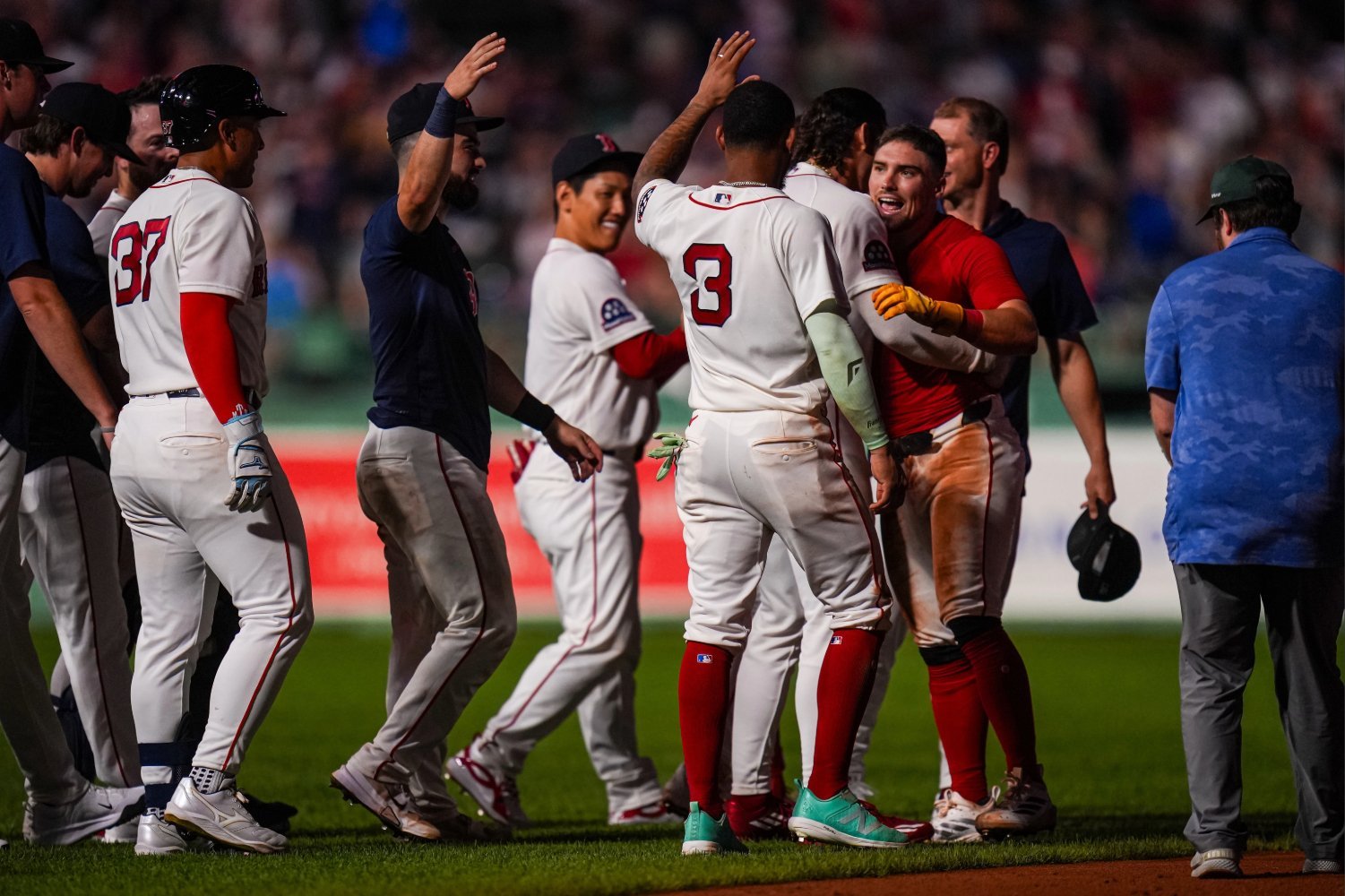 Boston Red Sox Weekly Snapshot Record Last Week: 4-2 Runs Scored Last Week: 49 Runs Surrendered Last Week: 25 Standings 3rd in AL East 6.5 GB First Place 2nd in AL Wild Card 1.5 GB First Place Transactions 08/03/26: Boston Red Sox traded 2B Marcelo Mayer to San Francisco Giants for LHP Erik Miller and CF Carlos Gutierrez. 08/03/26: Baltimore Orioles traded C Adley Rutschman, C Jake Rogers and cash to Boston Red Sox for RHP Kyson Witherspoon, CF Enddy Azocar, C Carlos Narváez, RHP Anthony Eyanson and Player To Be Named Later. 08/03/26: Atlanta Braves traded RF Eli White to Boston Red Sox for RHP Tyler Uberstine. 08/03/26: Boston Red Sox placed C Adley Rutschman on the 10-day injured list. Left wrist inflammation. 08/04/26: Boston Red Sox optioned DH Romy Gonzalez to Worcester Red Sox. 08/04/26: Boston Red Sox designated RHP Ryan Watson for assignment. 08/04/26: Boston Red Sox activated LHP Erik Miller. 08/04/26: Boston Red Sox activated C Jake Rogers. 08/04/26: Boston Red Sox activated RF Eli White. 08/05/26: Boston Red Sox signed free agent RHP Cam Padgett to a minor league contract. 08/06/26: Boston Red Sox released LHP Joe La Sorsa. 08/07/26: Los Angeles Angels claimed RHP Ryan Watson off waivers from Boston Red Sox. 08/07/26: Boston Red Sox selected the contract of LHP Raymond Burgos from Worcester Red Sox. 08/07/26: Boston Red Sox optioned RHP Greg Weissert to Worcester Red Sox. 08/07/26: Boston Red Sox signed free agent RHP John Brebbia to a minor league contract. 08/08/26: Boston Red Sox sent C Adley Rutschman on a rehab assignment to Worcester Red Sox. 08/09/26: Boston Red Sox selected the contract of RHP Seth Martinez from Worcester Red Sox. 08/09/26: Boston Red Sox optioned LHP Raymond Burgos to Worcester Red Sox. Scores Game 112: BOS 14, CWS 2 Game 113: BOS 4, CWS 0 Game 114: BOS 12, CWS 11 Game 115: BOS 13, SAC 1 Game 116: BOS 3, SAC 7 Game 117: BOS 3, SAC 4 Series Breakdown/Highlights White Sox Series: The Red Sox completed the season sweep of the AL Central-leading White Sox to kick start the week. In game one, Patrick Sandoval tossed five innings of two-run baseball. He allowed six hits while walking four and striking out five. Greg Weissert, newly acquired Erik Miller, and Brayan Bello all held down the bullpen side of the game, combining for three strikeouts over the final four innings. On offense, Caleb Durbin was the star after smoking a grand slam over the Green Monster. Jarren Duran also clobbered a homer while Wilyer Abreu, Willson Contreras, Ceddanne Rafaela, Masataka Yoshida, and Andruw Monasterio all drove in runs as well in the lopsided victory. Game two was another shut out by the Red Sox, led by Sonny Gray tossing six strong innings. He allowed three hits, two walks, and struck out eight on the night. Tyron Guerrero, Jovani Moran, and Garrett Whitlock continued the bullpen dominance we’ve come to expect from this crew and shut the game down over the final three innings. They combined for six strikeouts over those three innings, only allowing one combined hit. Offensively, this was the game that Contreras left sick, but even without him, the team was able to continue to play solid baseball. Abreu, Contreras before he exited, Durbin, and Monasterio all drove in runs in the win. Game three was worth the watch if you stayed up through the final out. The Red Sox never led the game until they secured the victory in the bottom of the 13th inning. The lone long ball for the Sox came off the bat of Connor Wong to help spur the comeback early in the game, but the real story came in the final five innings. The Red Sox allowed the South Siders to stay in the game from the ninth through the 12th inning, but they matched run for run until finally Bello was able to stop the White Sox from scoring in the top of the 13th, which allowed Durbin to walk off the series sweep. From the pitching side, we saw a lackluster start from Ranger Suarez. He only tossed three innings and allowed three earned runs while striking out three. From there, Chad Tracy turned to a bullpen and burned through arms. Weissert, Justin Slaten, Guerrero, Miller, Moran, Chapman, Whitlock, and Bello all pitched in this game and that likely set up for what ultimately was a disappointing A’s series over the weekend. Athletics Series: Both A’s series this season have been funky. The Red Sox came into the series as the hottest team in baseball while the A’s were the coldest. Unfortunately for the Sox, the A’s would get the best of them. In game one, we witnessed absolute dominance from Payton Tolle on the mound. He tossed six innings while striking out 14 and only allowed one earned run. He was followed up by recent call up Raymond Burgos, who tossed three innings of clean baseball while striking out two. I don’t have the space to go into detail about Tolle’s dominance in this game, but go watch the highlights. His three-fastball mix was its usual gas-powered rocket, but his curveball was absolutely deadly and the A’s had no answer for it. It just shows us how high the young southpaw’s ceiling actually is. On offense, Duran knocked another homer while Rafaela, Abreu, Durbin, Yoshida, Jake Rogers, and Monasterio all drove in runs as well. Game two saw Contreras return to the lineup, but he was obviously still getting back to himself after being sick for the better part of the week. Monasterio and Durbin were responsible for the Sox’s lone RBIs of the game, but the team never really felt out of it at any point. They had a chance to mount an incredible comeback in the bottom of the ninth with White at the plate, but they were unable to come through. On the pitching side, Jake Bennett wasn’t sharp, as the rookie is navigating in uncharted waters in terms of workload. He allowed five hits, four earned runs, three walks, and five strikeouts over 5.1 innings. After him, Slaten and Burgos couldn’t contain the A’s, allowing three combined earned runs. Unfortunately, game three saw Whitlock and Chapman let the series win slip away in the late innings. Miller worked as the opener in a scheduled bullpen game as Tracy looks to operate with a pseudo-six man rotation through 16 games in 16 days. He was dominant, striking out two in his lone inning of work. Bello followed him, tossing four innings of one-run baseball. We then had Guerrero, Moran, Whitlock, and Chapman all get a turn out of the 'pen. Offensively, the team was quiet with just Abreu and White contributing RBIs on the day. The Sox once again had a chance to at least tie the game in the bottom of the ninth, but Rafaela lined out hard to left field to end the game. Website Highlights Was Adley Rutschman Worth the Enormous Cost Red Sox Paid at Trade Deadline? by Nick John The Curious Case of Eli White: Why Exactly is He in Boston? by Ryan Salvaggio Adley Rutschman Puts Red Sox in Driver’s Seat in the American League, but Concerns Remain by Alex Mayes Looking Ahead 08/10/26: Red Sox (Sonny Gray) @ Blue Jays (Jameson Taillon): 7:07 PM EDT 08/11/26: Red Sox (Patrick Sandoval) @ Blue Jays (Dyan Cease): 7:07 PM EDT 08/12/26: Red Sox (Ranger Suarez) @ Blue Jays (Jose Soriano): 7:07 PM EDT 08/13/26: Red Sox (Payton Tolle) @ Blue Jays (Max Scherzer:) 3:07 PM EDT 08/14/26: Red Sox @ Pirates: 6:40 PM EDT 08/15/26: Red Sox @ Pirates: 7:15 PM EDT 08/16/26: Red Sox @ Pirates: 1:35 PM EDT View the full article
 -
Padres Week in Review: Blasting Off At The Right Time
DiamondCentric posted an article in Padres Mission
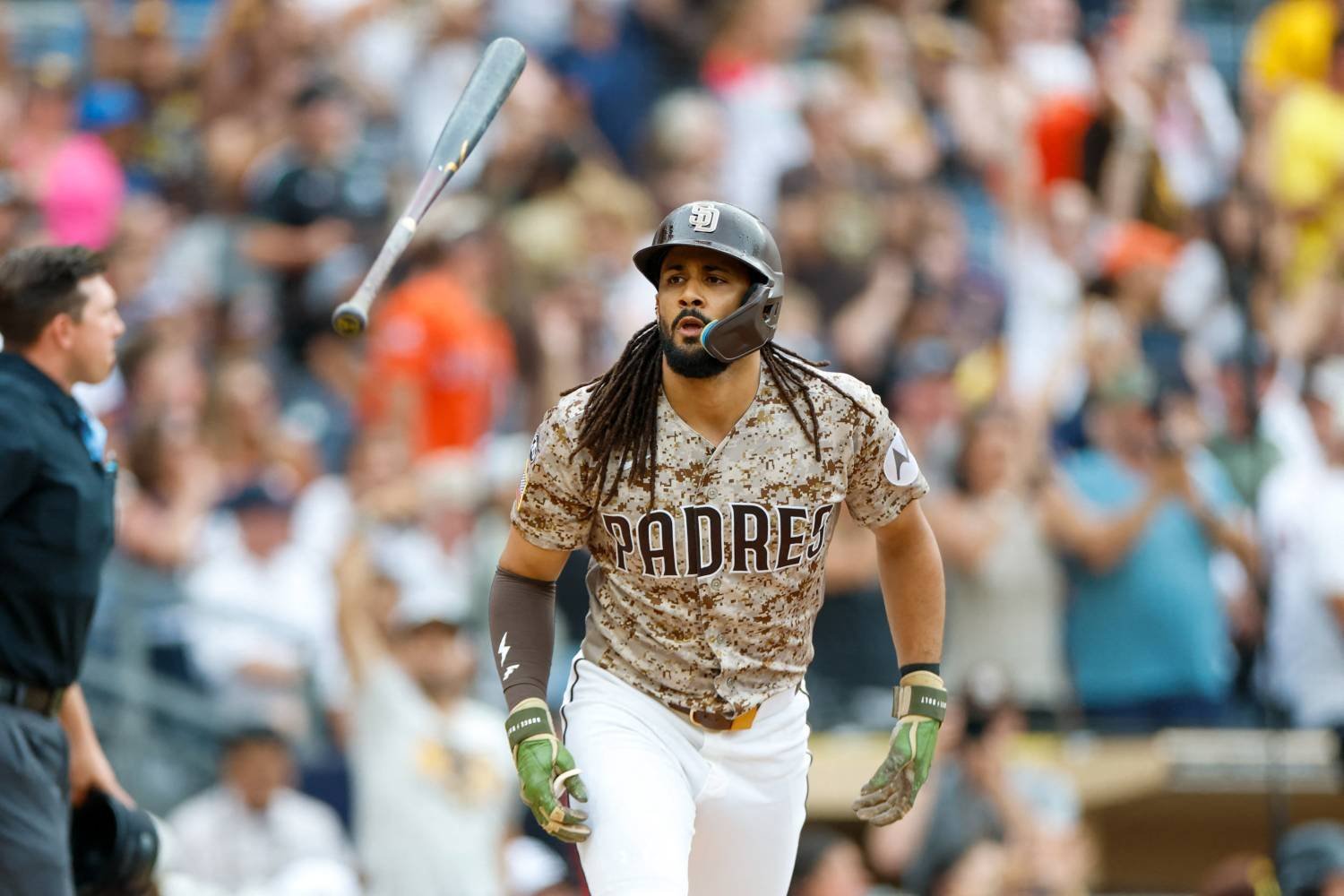 San Diego Padres Weekly Snapshot Record last week: 4-3 Runs scored last week: 32 Runs allowed last week: 30 (season run differential: minus-10) Game 3: Home runs are fun. So is winning. And when the Padres hit home runs, they, you guessed it, win. The Padres hit four long balls, including one each from Merrill and Tatis (and surprising contributor), and Vasquez picked up where he left off Tuesday to spearhead a two-hit pitching performance in a 7-2 victory over the Astros. The Friars took two of three in the series against the AL West leaders to remain one game behind the D'backs and Phillies in the NL wild-card chase. The power show stood out. Facing right-hander Cristian Javier, the Friars got homers from Merrill (solo shot in the second, his 18th), Tatis (three-run blast in the fourth, his 11th), Sheets (solo shot in the sixth, his 15th) and ... drumroll, please ... Austin Hays, a two-run tater in the eighth after being signed just hours before the game after being released by the Chicago White Sox on Friday. That was part of a 12-hit attack that saw Merrill, Rengifo and Fermin each notch a pair of hits. Tatis' blast, as usual, was the highlight. He rocketed a 2-1 changeup 421 feet into the third level of the Western Metal Supply Building, turning a 2-1 deficit into a 4-2 lead. Sheets' homer was also a welcome sight as that was his first since June 30. Hays joined the team to improve the right-handed bench power that has been missing with Miguel Andujar on the injured list. He pinch-hit for Sheets in the eighth and needed just four pitches to make the move look good. Vasquez, meanwhile, was very efficient and focused in his five innings. He did allow a two-run homer to Varsho, an Astros newcomer, following a Trammell single, but those would be the only hits he and the Padres' bullpen would surrender. Hart (one inning), Rodriguez (two innings) and Estrada (one inning) were perfect over the final four innings, retiring all 12 hitters as the offense's production kept the big bullpen arms from being called upon. Now another first-place team comes to Petco Park, the NL Central-leading Milwaukee Brewers, who bring MLB's best record to San Diego for three games. Marvelous Mason Miller Some of the amazing stats for the Padres' closer: Season stats: 4-1, 0.91 ERA, 47 games, 29 saves (30 chances), 49⅓ IP, 24 H, 7 R, 5 ER, 16 BB, 91 K, .142 opponent average His save Saturday was his career-high 29th, one more than he had in 2024 with the A's in their last year in Oakland. His 29 saves are the most in the NL Has given up just three extra-base hits all season. Random Stats Of the Padres' 16 hits Tuesday, eight came in the first two innings, the first time that happened since May 24, 2015, against the Los Angeles Dodgers. It was also the third game this year with at least 16 hits, all three coming since the All-Star break. Fernando Tatis Jr.'s home run Sunday was the 163rd of his career and third of the week. After moving past Adrian Gonzalez for the third place in Padres history, Tatis is now tied with Nate Tolbert for second place. Manny Machado has the franchise record with 217. Tatis' double Thursday was the fourth time in nine games he led off a game with a two-bagger. The Padres are 15-23 in the first game of a series, including 9-10 at Petco Park. After three more steals Saturday, the Padres rank third in MLB with 119. The Padres have the highest batting average since the All-Star break at .280 and highest on-base percentage at .354. Transactions Monday: Acquired LHP Robbie Ray from San Francisco Giants for RHP Miguel Mendez and SS Joniel Hernandez. Monday: Acquired RHP Casey Mize and 3B Gage Workman from Detroit Tigers for LHP Kash Mayfield and LHP Jackson Wolf. Monday: Acquired RHP Hunter Stratton from Pittsburgh Pirates for RHP Andrew Moore and assigned him to Triple-A El Paso Chihuahuas. Tuesday: Optioned LHP JP Sears to Triple-A El Paso Chihuahuas. Tuesday: Optioned C Rodolfo Duran to Triple-A El Paso Chihuahuas. Tuesday: Sent RHP Joe Musgrove on a rehab assignment to Low-A Lake Elsinore Storm. Tuesday: Sent RHP Nick Pivetta on a rehab assignment to Low-A Lake Elsinore Storm. Tuesday: Signed free-agent RHP J.P. France to a minor-league contract. Wednesday: Toronto Blue Jays claimed RHP Matt Waldron off waivers from San Diego Padres. Wednesday: Designated RHP German Marquez for assignment. Wednesday: Released LF Dustin Harris from Triple-A El Paso Chihuahuas. Friday: Signed free-agent LF Dustin Harris to a minor-league contract. Saturday: Released RHP German Marquez. Sunday: Signed free-agent OF Austin Hays. Sunday: Optioned IF Gage Workman to Triple-A El Paso Chihuahuas. Sunday: Sent RHP Joe Musgrove on a rehab assignment to El Paso Chihuahuas. Website Highlights Padres' Preller won the trade deadline by being completely normal — Randy Holt Why going all-in at the trade deadline was the right decision for Padres — N.B. Lindberg Ray is walking a tightrope ahead of Padres debut — Yirsandy Rodriguez How Padres' Preller helped Dodgers land Skubal — Steve Drumwright Rehabbing Padres pitchers have quite different first outings — Steve Drumwright Looking Ahead Monday: Brewers (Logan Henderson) at Padres (Casey Mize), 6:40 p.m. Tuesday: Brewers (Kyle Harrison) at Padres (Walker Buehler), 6:40 p.m. Wednesday: Brewers (Dustin May) at Padres (Robbie Ray), 1:10 p.m. Thursday: Off Friday: Padres (Michael King) at Guardians (Gavin Williams), 4:10 p.m. Saturday: Padres (Randy Vasquez) at Guardians (Joey Cantillo), 4:10 p.m. Sunday: Padres (Casey Mize) at Guardians (Tanner Bibee), 10:40 a.m. View the full article
 -
What are your Marlins vs. Pirates series predictions?
DiamondCentric posted an article in Fish On First
 Once again in 2026, I will be monitoring Miami Marlins predictions from our valued SuperSubs, Fish On First staffers and livestream guests. Individual article pages like this one will be created prior to every Marlins series and featured prominently on the FOF site. Consistent participation is key if you want to win this annual contest. Submissions only take a few seconds. Scoring system A "perfect" series is worth three points: Earn one point for predicting which team will win the upcoming series Earn one point for predicting the precise number of victories for each team Earn one point for predicting the “Series MVP” who accumulated the highest win probability added (WPA) during the series as calculated by FanGraphs (could pick a player from either team) FOF staffer Jeremiah Geiger and SuperSub David Fernandez are currently tied atop the 2026 season leaderboard, which will be updated between every Marlins series. If you are a SuperSub, leave a comment with your Prediction Time picks on this page, or join the Marlins Discord Server and submit there. We'll feature them on the upcoming Fish On First LIVE episode and track your points throughout the season! Any picks submitted prior to the first pitch of the series opener will be counted. If you are not a SuperSub, please consider signing up here to support the FOF staff. Series preview notes Probable starting pitchers: RHP Eury Pérez (MIA) vs. RHP Paul Skenes (PIT) on Tuesday RHP Janson Junk (MIA) vs. TBA (PIT) on Wednesday RHP Tyler Phillips (MIA) vs. RHP Braxton Ashcraft (PIT) on Thursday The Marlins rank 15th in MLB with a 100 wRC+ and 11th in MLB with a 3.99 FIP. They are 5-5 in their last 10 games and have a 36-24 record at home this season. The following Marlins players are on the injured list: Anthony Bender (15-day IL), Ronny Henriquez (60-day IL), William Kempner (15-day IL), Adam Mazur (60-day IL), Andrew Nardi (60-day IL) and Robby Snelling (60-day IL), though Kyle Stowers (left hamstring discomfort) could be joining them shortly. The Pirates rank fifth in MLB with a 106 wRC+ and eighth in MLB with a 3.91 FIP. They are 3-7 in their last 10 games and have a 28-32 record on the road this season. The following Pirates players are on the injured list: Oneil Cruz (60-day IL), Konnor Griffin (60-day IL), Mitch Keller (60-day IL) and Ryan O'Hearn (10-day IL). View the full article
 -
Mets Week in Review: A New-Look Mets Team Finds Its Groove
DiamondCentric posted an article in Grand Central Mets
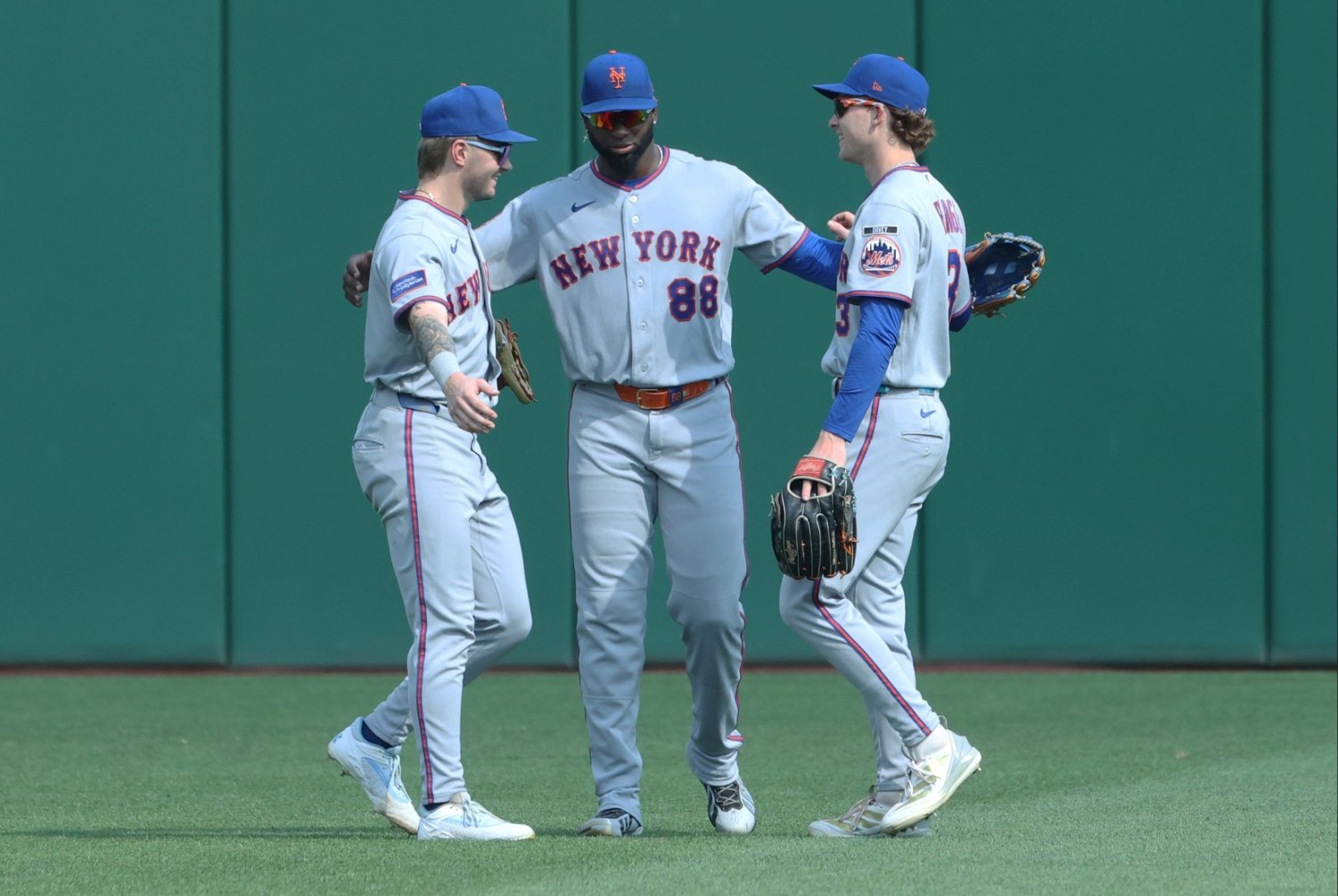 New York Mets Weekly Snapshot Record Last Week: 5-1 Runs Scored Last Week: 42 Runs Surrendered Last Week: 27 Standings 5th in NL East (52-67) 18.5 GB of 1st Place, 11.0 GB of a Wild Card Transactions 8/4 New York Mets designated RHP Bryce Conley for assignment. 8/4 New York Mets activated RHP Dedniel Núñez from the 60-day injured list. 8/4 New York Mets activated RHP Chayce McDermott. 8/4 New York Mets selected the contract of OF Cristian Pache from Syracuse Mets. 8/4 New York Mets sent DH MJ Melendez outright to Syracuse Mets. 8/4 New York Mets sent RHP Kevin Herget outright to Syracuse Mets. 8/4 New York Mets selected the contract of LHP Nate Lavender from Syracuse Mets. 8/4 New York Mets recalled LHP Jefry Yan from Syracuse Mets. 8/5 New York Mets sent RHP Austin Warren on a rehab assignment to Syracuse Mets. 8/6 New York Mets sent RHP Bryce Conley outright to Binghamton Rumble Ponies. 8/7 New York Mets claimed 3B Gabriel Arias off waivers from Cleveland Guardians. 8/8 New York Mets activated 3B Gabriel Arias. 8/8 New York Mets optioned 1B Eric Wagaman to Syracuse Mets. 8/9 New York Mets optioned RHP Xzavion Curry to Syracuse Mets. 8/9 New York Mets selected the contract of RHP Jack Weisenburger from Syracuse Mets. Scores Game 114: NYM 6, CLE 2 Game 115: NYM 6, CLE 5 Game 116: NYM 13, CLE 6 Game 117: NYM 6, PIT 4 Game 118: PIT 9, NYM 0 Game 119: NYM 11, PIT 1 Series Breakdown/Highlights Guardians Series: Coming off a bad weekend against the Marlins and an off day, the Mets headed on the road to face the Guardians in Cleveland. The Mets opened the week with a strong all-around performance, jumping on Cleveland early and never giving up the lead. Luis Torrens delivered the biggest blow with a three-run homer in the second inning after a big error, and Bo Bichette followed with a solo shot in the third as New York quickly built a four-run advantage. Sean Manaea continued his recent turnaround, working six innings and limiting Cleveland to two runs before the bullpen finished the job. The Mets added insurance later in the game and opened their road trip with a convincing 6-2 victory. Game two was much more dramatic. Brett Baty opened the scoring with a home run as the Mets built an early advantage, but Cleveland battled back and eventually grabbed a 5-4 lead in the seventh. New York refused to go quietly, tying the game in the ninth, thanks in part to the Guardians defense, before pushing across another run in the 10th to regain the lead. The bullpen finally shut the door in the bottom half, giving the Mets a 6-5 extra-inning victory and securing the series win. The Mets saved their biggest offensive performance of the series for the finale. The Guardians scored twice in the first inning, but the Mets immediately responded with three in the second and two more in the third to take control. The home team made things interesting by cutting the deficit to one in the fifth, but the Mets exploded for seven runs between the seventh and eighth innings to turn the game into a rout. New York finished with 18 hits and 13 runs, completing the three-game sweep and leaving Cleveland with plenty of offensive momentum. Pirates Series: Coming fresh off the sweep in Cleveland, the Mets came into Pittsburgh riding high and kept their mojo going. The first game kicked off the weekend in excellent fashion with a 6-4 victory. Their offense once again did enough damage to build a lead, and although Pittsburgh made things interesting, New York was able to protect the advantage late. The victory extended the Mets' winning streak to four games and continued an impressive start to the post-trade-deadline portion of their schedule. Unfortunately, that streak came to an abrupt end Saturday night as Bubba Chandler and the Pirates completely shut down the Mets' offense. New York was held scoreless for the first time on the road trip while Pittsburgh erupted for nine runs. It was a complete reversal from what the Mets had done offensively in Cleveland, and the nine-run defeat was easily their ugliest performance of the week. Still, the Mets entered Sunday's rubber game with an opportunity to finish the trip with consecutive series victories. In that finale, the Mets responded to Saturday's shutout in a big way, pounding Pittsburgh 11-1 to take the series. Bo Bichette had a monster afternoon, going 5-for-5 with three RBIs, while Luis Robert Jr., also with a monster day, drove in four runs and launched a two-run homer. Francisco Alvarez also went deep as New York collected 15 hits. Sean Manaea was just as impressive on the mound, striking out 11 over seven innings while allowing only one run and no walks. The blowout gave the Mets their fifth victory in six games and capped off one of their best weeks all year long. Website Highlights New York Mets Minor-League Pitchers of the Month: July 2026 New York Mets Minor-League Hitters of the Month: July 2026 New York Mets Hitters of the Month, July 2026: Tyrone Taylor Ends His Mets Tenure On A High Note Looking Ahead August 10th: @ Atlanta August 11th: @ Atlanta August 12th: @ Atlanta August 13th: OFF August 14th: vs. Washington August 15th: vs. Washington August 16th: vs. Washington View the full article
 -
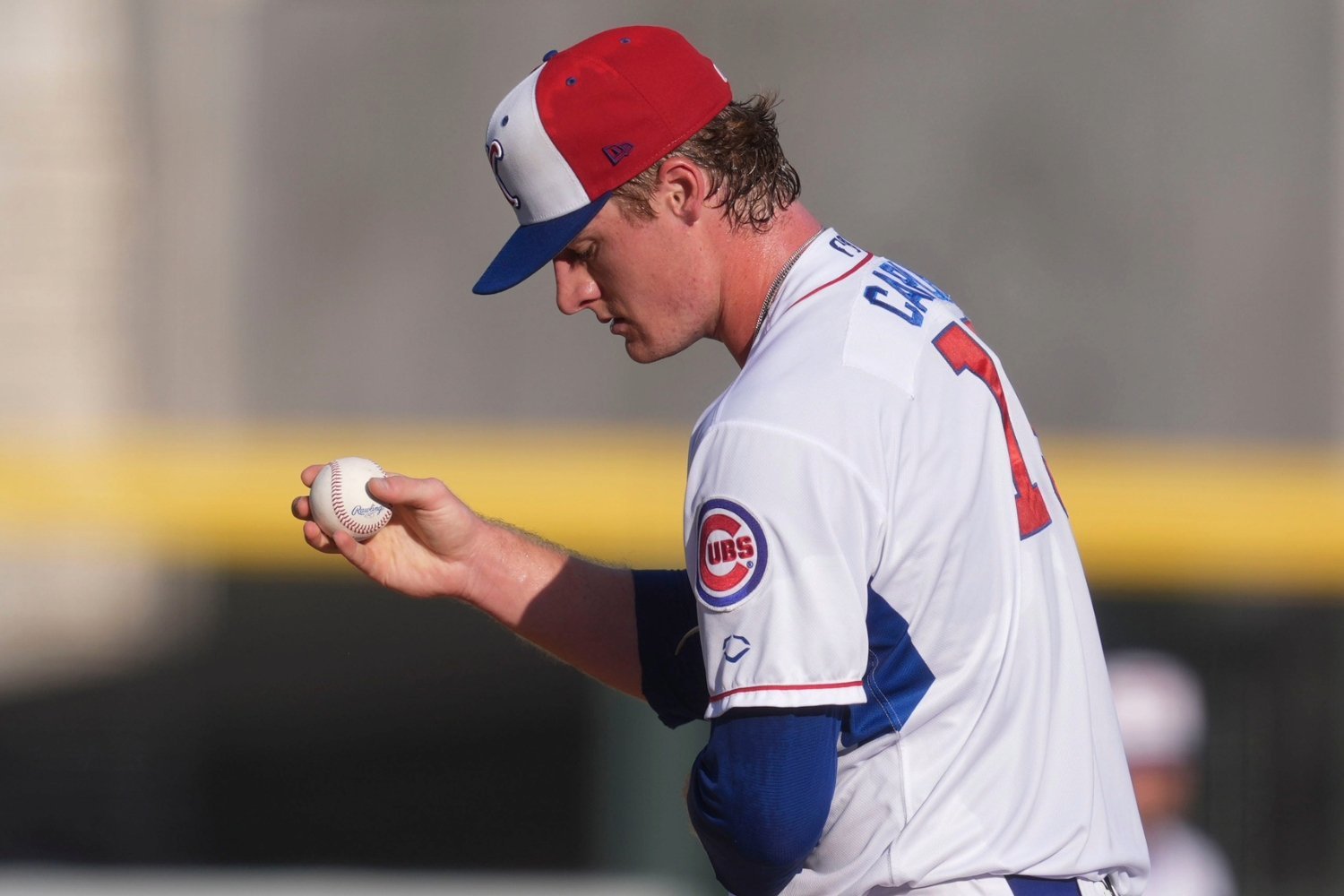 Let's take a look at some of the rising prospects across the minor-league affiliates of the Chicago Cubs organization and see how their respective seasons are going. Pitchers Braylon Myers (Myrtle Beach Pelicans) - Myers has been a key part of the Pelicans pitching staff, as shown by his 2.48 ERA and 72 strikeouts. With 65.1 innings on the mound this season, he has only given up 24 walks and 18 earned runs. So far during his first season out of rookie ball, he is doing solid at the Low-A level. Edwardo Melendez (Myrtle Beach Pelicans) - Another member of Pelicans pitching room, Melendez also has a sub-three ERA, currently sitting at 2.91. He also has 70 strikeouts in 58.2 innings so far in 2026. With 37 walks and 44 hits given up, he has not been doing well in the base runner category. As of now, Melendez also has a WHIP sitting at 1.38. Brooks Caple (Knoxville Smokies) - In his first season in Double-A including a stint with South Bend, Caple has pitched great this season, only giving up 25 walks and 64 hits in 86.1 innings. With 30 earned runs and only seven home runs against him, Caple has shown he can keep both the bases empty and the ball in the park. He currently has an ERA of 3.13 and a 1.03 WHIP. Catchers Justin Stransky (South Bend Cubs) - In Stransky's first full season at the High-A classification, he has 42 hits in 206 at-bats with seven of those being doubles and five hits being home runs. He has made his mark on the base paths with ten stolen bases, which is impressive for a catcher at this level of baseball. With only 40 strikeouts and taking 40 walks shows good plate discipline, but his .320 wOBA is concerning. On defense, Stransky has started 60 games behind the plate and played 61 total, one game as a designated hitter, and he came in during one game to play left field for five innings where he had no opportunities to make a play. Johan Gomez (DSL Cubs Red) - In his first professional season, the DSL National League All-Star has been having a great offensive display. Like Stransky, Gomez has ten stolen bases, which is great for a lower rookie-ball catcher. He has 100 at-bats this season with 24 of them being hits (three doubles, one triple, three home runs). He has contributed in run scoring in 35 games this season as he has 14 runs and 13 RBIs. He has only been walked six times and has struck out 27 times in 2026, and has a batting average currently at .240 and a wOBA at .333. Gomez has started 30 of the 33 games and played 233.1 innings behind the plate. Ethan Hearn (Iowa Cubs) - Although Hearn only has eight games played at the Triple-A level, he has a good résumé and reason to be an Iowa Cub. While being a Smoky, he batted .198 in 106 at-bats. With nearly 20% of his Double-A hits being home runs (4 HRs in 21 hits), he knows how to use power on offense. In 33 games, he has scored 12 times and brought 16 runs in, showing his ability to bring runs in. Only taking four walks and having 44 strikeouts is showing concern about his ability to get on base. In his games as an I-Cub, he has three hits in 24 at-bats and one home run. He currently has two strikeouts and no walks. In the season as a whole, he has a .185 batting average and a wOBA of .264, which is poor. On defense, he has played catcher for 13 games (12 started), first base for 13 games (11 started), left field for one whole game, and has been a designated hitter for 12 games. Infielders Matt Halbach (South Bend Cubs) - As a second year professional baseball player, the UC San Diego alumnus has played 90 games in High-A in 2026. On the field, he has spent 703.1 innings at third base, nine innings at first base, and has also been a designated hitter for seven games. With eleven errors (all at third) on 201 total chances (193 at third, eight at first), he has a 5.47% error percentage, which is very solid. At the plate, he has had 347 at-bats, and 85 of them were hits (19 doubles, eight home runs). Halbach has taken 38 walks and struck out 77 times, which is displaying good plate discipline along with his .327 wOBA and a .245 batting average. Ben Cowles (Iowa Cubs) - In his first full season in Iowa, Cowles has 294 at-bats in 83 games this season where he has a low .295 wOBA and a 26% strikeout percentage (77 K's in 294 AB). Out of his 72 hits, 18 of them have been doubles, one was a triple, and five were home runs. Cowles has 39 RBIs and has scored himself 41 times. On defense, he has spent most of his time at shortstop for 527 innings, 101 innings at second base, 34 innings in right field, 25.2 innings at third base, eight innings in left field, and two innings in center field. In all of those positions combined, he has six errors (all at short) on 258 total chances (189 at short, 54 at second, eight at third, and seven in right). Angel Cepeda (South Bend Cubs) - Across High-A and the ACL Cubs (rehab in June), he has had a solid bat in 50 games. In 183 at-bats, Cepeda has been walked 33 times, showing his plate discipline. With a strikeout percentage around 36% (66 K's in 183 AB), that is too high. However, he has 43 hits on the season, so that means he gets on base at least once or twice every game. He has a .344 wOBA and a batting average at .235, which is decent. On the diamond, he has been a shortstop (391.1 innings) and second baseman (17 innings) this season. With 12 errors (all at short) on 185 total chances (180 at short, five at second), that is a fielding percentage around .935. Cepeda has also spent two games as a designated hitter. Outfielders Kade Snell (South Bend Cubs) - In Snell's second season at High-A, he has shown what he can do when he gets on base. In 57 games played, he has 36 runs just by himself along with 44 RBIs. Along with run scoring abilities, he has taken 27 walks and has 54 strikeouts, which is around average. With 213 at-bats, he has 53 hits with nine of them as doubles and with seven being home runs. On the season, he has a .340 wOBA, which is around average a long with a batting average at .249. On the field, he has played all three outfield positions for a total of 488 innings (271 in right, 99 in left, 67 in left). With no errors on 101 total chances (56 in right, 150 in left, 67 in center), this is one of several things that shows why he should be promoted to Knoxville next season. Ethan Conrad (Myrtle Beach Pelicans) - The first round pick for the Cubs in 2025 has only played 29 games in his first professional season (five in ACL, 24 in Low-A). In 109 at-bats, he has 27 hits with five of them being doubles and five other hits as home runs. With 11 walks and 23 strikeouts, those are solid for the rookie. He has a batting average of .248 and a wOBA of .349, which is another solid for his offense. For the defensive side of his game, he has spent 93.2 innings in center field, 57 innings in left field, and 27 innings in right field. Conrad has one error on 52 total chances, which is a good start for his career. He has also spent seven games this season as a designated hitter. Luis Leon (DSL Cubs Red) - In his second professional season and second one in the DSL, Leon has played in all three areas of the outfield this season with 116 innings in left field, 41 innings in center field, and three innings in right field. In 2026, he has no errors on 25 total chances with 17 in left, six in center, and two in right. In 25 games, he has 62 at-bats with 17 of them being hits and five of them as doubles. With seven walks and ten strikeouts, he has done a good job in terms of plate discipline and getting on base. Leon's wOBA is at .365 and the batting average is .274, which is solid for the rookie level. View the full article
 -
 There's no hotter team in the New York Mets' organzation than the Binghamton Rumble Ponies, and that includes the suddenly scorching big-league club. Binghamton has won seven in a row after completing a six-game sweep of Hartford. The Ponies posted a 4-3 triumph over the Yard Goats in the series finale Sunday, capping a week in which they won 23-3 and 1-0 on consecutive nights. Binghamton outscored Hartford 43-13 overall, a margin skewed by the 20-run win, but the 2.2 runs allowed per game was legit. The Rumble Ponies went with a piggyback pitching tandem of Channing Austin and Cristofer Gomez on Sunday, and the strategy worked exceptionally well, The two held Hartford to one run and one hit -- a solo home run -- over the first five innings, with nine strikeouts and no walks. Those two were long gone from the game when Billy Amick hit a three-run home run in the bottom of the sixth to break a 1-1 tie. Amick has hit five home runs in seven games with Binghamton since being acquired from the Minnesota Twins in the A.J. Minter trade. Elsewhere in the organization: Syracuse lost 5-4 to Columbus. The Mets stranded the winning run on first in the bottom of the ninth. Nick Lorusso homered and drove in three runs. His RBI single in the ninth cut the deficit to one. Brooklyn broke a tie with two runs in the top of the ninth and went on to beat Wilmington 8-6. Trey Snyder and Yonatan Henriquez notched the deciding RBIs for the Cyclones. St. Lucie dropped a 5-4 decision to Daytona. The Mets trailed 5-0 before getting on the board. Kuhio Aloy and Simon Juan each drove in two runs. New York Mets Transactions New York Mets selected the contract of RHP Jack Weisenburger from Syracuse Mets. New York Mets optioned RHP Xzavion Curry to Syracuse Mets. Syracuse Gets Big Day From Lorusso In Loss Lorusso gave the Mets a 2-0 lead in the second with a two-run homer to left-center. He drove in Christopher Morel ahead of him. Morel singled with one out. Columbus answered with a run in the third, two runs in the fourth, and two more in the fifth to take a 5-2 lead. Syracuse got a run back in the bottom of the fifth when Ryan Clifford was hit by a pitch with the bases loaded to force in Andy Ibáñez. The Mets trimmed the deficit to 5-4 in the ninth when Ibáñez doubled and Lorusso singled him home. Clifford struck out looking with runners on first and second to end the game. Clifford took the golden sombrero (four Ks) in the game. Ofreidy Gómez was effective as the opener. He allowed just a solo home run over 2 1/3 innings, walking none and striking out two. Matt Seelinger took the loss. He gave up the other four Columbus runs over 1 2/3 innings. Player AB R H RBI BB K Nick Morabito 5 0 1 0 0 3 Ryan Clifford 4 0 0 1 0 4 MJ Melendez 4 0 0 0 0 0 Ronny Mauricio 4 0 0 0 0 1 Christopher Morel 4 1 1 0 0 1 Andy Ibáñez 4 2 3 0 0 1 Nick Lorusso 4 1 3 3 0 0 D'Andre Smith 0 0 0 0 0 0 Jose Ramos 3 0 0 0 1 0 Shawn Ross 2 0 0 0 1 1 Vidal Bruján 0 0 0 0 1 0 Player IP H R ER BB K HR Ofreidy Gómez 2 1/3 1 1 1 0 2 1 Dan Hammer 0 2/3 0 0 0 1 1 0 Matt Seelinger 1 2/3 3 4 4 1 1 2 Zach Franklin 1 1/3 1 0 0 1 0 0 Ben Simon 1 0 0 0 0 0 0 Dylan Ross 1 0 0 0 2 0 0 Joe Jacques 1 1 0 0 0 0 0 Amick, Binghamton Stay Hot The teams were tied heading into the sixth after trading solo home runs. Kevin Parada's homer in the fifth pulled Binghamton even. It was his second round-tripper of the year for the Rumble Ponies. Émilien Pitre led off the bottom of the sixth with a single. He advanced to second on a fielder's choice grounder by Jefferson Rojas.The forecout throw from first base to second base was off target, making everyone safe. Chris Suero struck out. Amick followed with a blast to left, scoring Pitre and Rojas for a 4-1 lead. Hartford got it to 4-3 in the seventh with a solo home run and a throwing error by Parada on a double steal, but the Binghamton bullpen kept it there. Austin allowed just a home run in his three innings of work. He struck out six. Gomez followed with two hitless innings and three strikeouts. Bryce Jenkins earned the win with a scoreless sixth. Garrett Stratton earned the save by striking out three. Binghamton pitchers struck out 16 Hartford batters in the game. Player AB R H RBI BB K Mitch Voit 3 0 1 0 1 0 Marco Vargas 4 0 1 0 0 2 Émilien Pitre 4 1 2 0 0 0 Jefferson Rojas 3 1 0 0 0 0 Chris Suero 3 0 0 0 1 1 Billy Amick 3 1 1 3 1 0 John Bay 4 0 1 0 0 1 Corey Collins 3 0 1 0 1 1 JT Benson 0 0 0 0 0 0 Kevin Parada 4 1 2 1 0 0 Player IP H R ER BB K HR Channing Austin 3 1 1 1 0 6 1 Cristofer Gomez 2 0 0 0 0 3 0 Bryce Jenkins 1 0 0 0 0 1 0 Carlos Guzman 1 2 2 1 0 2 1 Saul Garcia 1 0 0 0 1 1 0 Garrett Stratton 1 1 0 0 0 3 0 Brooklyn Rallies Twice To Beat Wilmington The Cyclones trailed 5-1 after three and 6-4 after six. Three of the Blue Rocks' runs were unearned thanks to three Brooklyn errors. Brooklyn began chipping away in the fourth. Four singles produced two runs to cut the deficit to 5-3. Jamari Baylor and Antonio Jimenez had the RBI hits. Wilmington went back up by two in the bottom of the sixth, but the Cyclones tied the game in the top of the seventh. Aidan Smith homered to left with one out to make it 6-5. John Spikerman walked, Ronald Hernandez singled, and, after Snyder popped out, Henriquez singled home Spikerman to make it 6-6. In the ninth, Spikerman walked, stole second, advanced to third on a Hernandez groundout, and scored the go-ahead run on a fielder's choice grounder by Snyder. Henriquez doubled home Snyder for an 8-6 lead. Starter Daviel Hurtado was the victim of Brooklyn's poor defense. He was charged with five runs, but just two earned, over 4 1/3 innings. He allowed five hits, walked one and struck out four. Rafi Vazquez earned the win with a scoreless eighth inning. Juan Arnaud earned the save by striking out three in a scoreless ninth. Player AB R H RBI BB K Sammy Stafura 5 1 1 0 0 1 Aidan Smith 5 1 2 2 0 2 John Spikerman 3 2 0 0 2 2 Ronald Hernandez 5 0 1 0 0 1 Trey Snyder 4 2 1 1 1 0 Yonatan Henriquez 4 2 3 2 0 0 Jamari Baylor 5 0 2 2 0 1 Daiverson Gutierrez 5 0 0 0 0 1 Antonio Jimenez 4 0 2 1 0 1 Player IP H R ER BB K HR Daviel Hurtado 4 1/3 5 5 2 1 4 0 Luis R. Rodriguez 0 2/3 0 0 0 0 2 0 Hunter Hodges 1 1 1 1 1 2 0 Elwis Mijares 1 2 0 0 0 1 0 Rafi Vazquez 1 0 0 0 1 0 0 Juan Arnaud 1 2 0 0 1 3 0 St. Lucie Can't Close Early Gap In Loss To Daytona The Mets launched their charge in the sixth. Aloy doubled in Elian Peña and Reed Stallman, and Juan singled in Aloy, to cut the Tortugas' lead to 5-3. St. Lucie got a run closer in the eighth on a sacrifice fly by Juan, scoring Julio Zayas. Joel Lara started and took the loss despite allowing one hit over 4 1/3 innings. His control deserted him; he walked five and struck out six. Jean Brito gave up a run on three hits and struck out two in 1 2/3 innings. Austin Brown and Zack Mack held Daytona scoreless over the final three innings. Stallman finished with two hits and a run scored. Player AB R H RBI BB K Elian Peña 4 1 1 0 1 2 Aiden Robbins 3 0 1 0 1 0 Julio Zayas 3 1 1 0 1 0 Reed Stallman 4 1 2 0 0 1 Kuhio Aloy 4 1 1 2 0 0 Simon Juan 3 0 1 2 0 1 Vladi Gomez 4 0 1 0 0 0 Wyatt Vincent 3 0 0 0 1 1 Dylan Carey 4 0 0 0 0 2 Player IP H R ER BB K HR Joel Lara 4 1/3 1 4 4 5 6 0 Jean Brito 1 2/3 3 1 1 0 2 1 Austin Brown 2 1 0 0 1 3 0 Zack Mack 1 1 0 0 0 1 0 Top-20 Prospect Performance Jonah Tong: DNP Jack Wenninger: DNP Ryan Clifford: 0-for-4, RBI, 4 K Elian Peña: 1-for-4, 2B, BB, 2 K Nick Morabito: 1-for-5, 3 K Jacob Reimer: DNP Mitch Voit: 1-for-3, BB Jonathan Santucci: DNP Zac Thornton: MLB Chris Suero: 0-for-3, BB, K Will Watson: DNP Wandy Asigen: DNP Eli Serrano III: DNP Randy Guzman: DNP Dylan Ross: 1 IP, 0 H, 0 R, 0 ER, 2 BB, 0 K Ryan Lambert: DNP Antonio Jimenez: 2-for-4, 2B, RBI, K R.J. Gordon: DNP Jonathan Pintaro: DNP Marco Vargas: 1-for-4, 2 K View the full article
 -
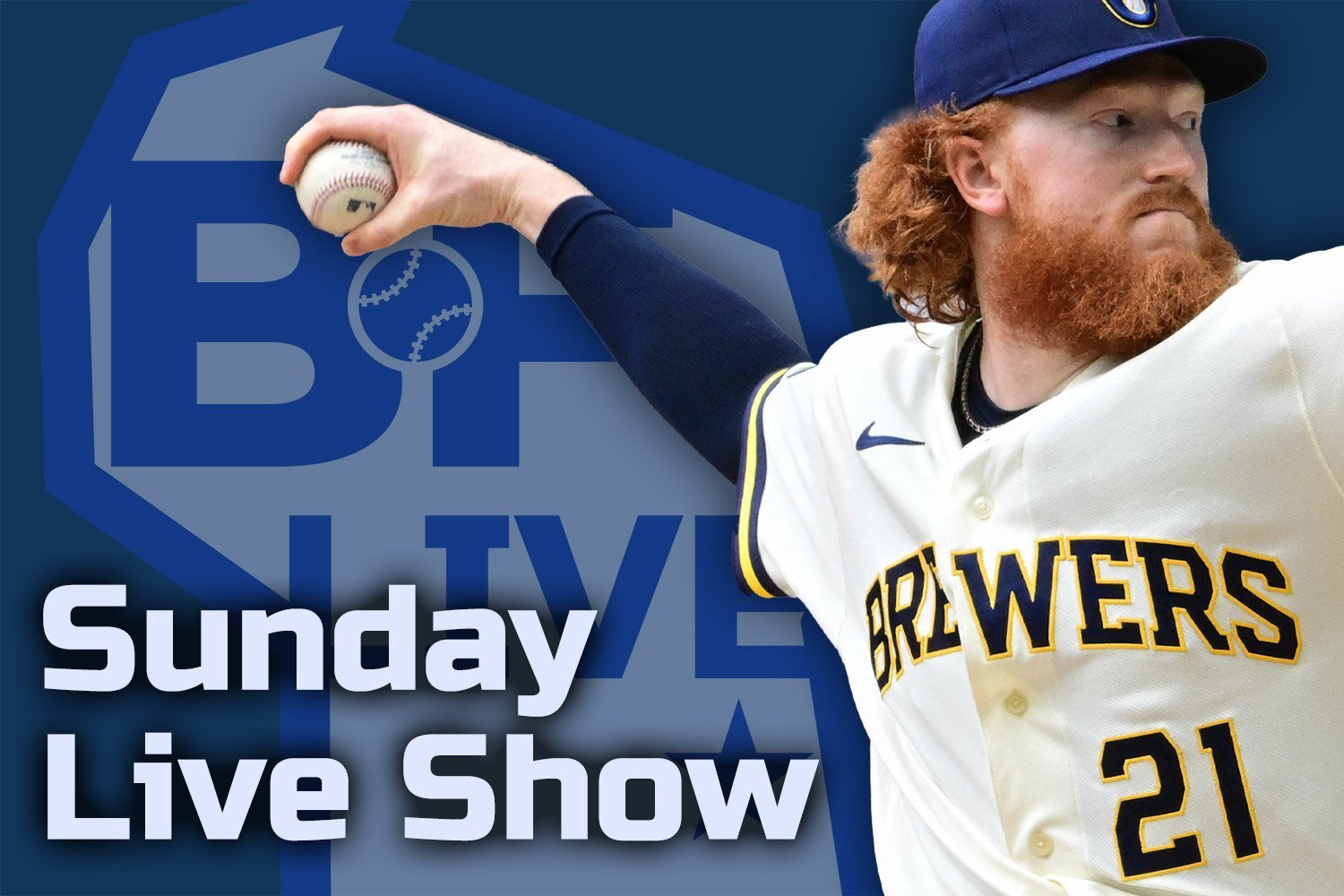 Jake McKibbin and Jason Wang recap the trade deadline and talk about what to expect from Milwaukee in the final two months of the regular season. Apple Podcasts: https://podcasts.apple.com/us/podcast/the-brewer-fanatic-podcast/id1740648724 Spotify: https://open.spotify.com/show/5CY8mWsQayqjDXqw9OT2Td iHeartRadio: https://www.iheart.com/podcast/263-the-brewer-fanatic-podcast-166534588/ Pocket Casts: https://pca.st/ommzz627 Watch On YouTube: https://www.youtube.com/@brewerfanatic View the full article
 -
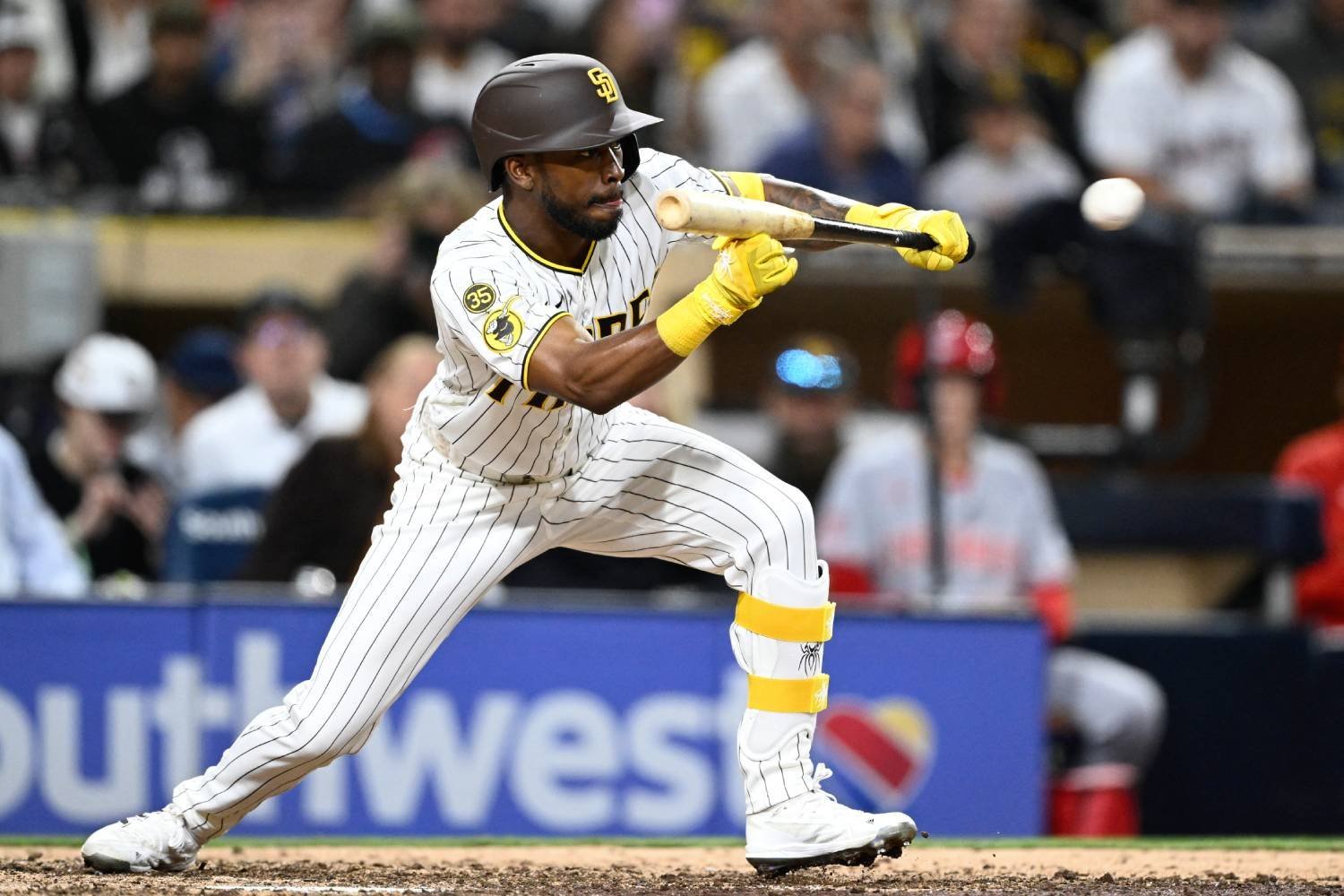 When it came to upgrading the San Diego Padres' roster at the 2026 trade deadline, A.J. Preller did about as well as he could while still being rational. But that doesn't mean there aren't more improvements to be made. Or, more precisely, already in motion. That has to do with players who are currently on the injured list making their way back to the Padres. There has been a lot of chatter about right-handed starters Joe Musgrove and Nick Pivetta, who made their first rehab outings last Tuesday, and are a few weeks away. But they aren't the only ones who can make an impact for the Friars down the stretch. Let's take a look at that decision and other spots on the roster: Starting Rotation Here is how the Padres' rotation is currently set up: Michael King, Walker Buehler, Robbie Ray, Randy Vasquez and Casey Mize. It could stick that way until one of Musgrove or Pivetta are ready. One other option in the equation will be Lucas Giolito, who has not yet started a rehab assignment and could be slow-played as an emergency rotation option. With Musgrove having thrown 39 pitches in his first rehab outing, going nearly three innings, you might see him need only four total outings before coming back. That would make for a tough decision for the Padres when one of those two do return, much less both. When healthy, those two slot in as the mid-rotation options in the Padres' rotation, if not as the Nos. 1 and 2 guys. That puts Vasquez and Buehler on the bubble. The performance of those two over the coming weeks will determine their fate. Vasquez is easier to put in the bullpen as he has been there already this year. Buehler would be a tougher ask as he has made just two relief appearances, both last year, since the beginning of the 2019 season. As an impending free agent who could be interested in returning next season, that deepens that decision. Buehler's performance hasn't been steady, yet he has provided a presence in the rotation that hasn't always been there this year. Perhaps that, and his postseason track record, gives him the edge. Bullpen In addition to Giolito, who could factor into the bullpen with the rotation as he comes back from right elbow inflammation, two other arms are on the mend. The first one is right-hander David Morgan (left knee inflammation), who is currently on a rehab assignment at Triple-A El Paso, while the other is right-hander Jason Adam (strained right shoulder), who is expected back in September as he has yet to start a throwing program. Adam has the bigger role as the right-handed setup man for closer Mason Miller. Morgan, however, had one rehab outing July 15, then not another until Aug. 2, likely meaning a restart of his rehab assignment. That gives him 30 days before having to be activated. As someone who goes a max of two innings, Morgan probably only needs another few outings with at least one of two innings and likely a back-to-back to finish his assignment. As far as joining the roster, there would be two options. The first would be taking Canning's spot, while the second could be stashing Morgan at Triple-A. The second one could be a better option as long as Canning is doing well in a relief role. By the time Adam is set to return, Canning or Morgan would probably be the odd man out, depending on injuries and performance. Bench While Preller signed outfielder Austin Hays on Sunday and optioned newly acquired Gage Workman to Triple-A El Paso, there are two other players who can strengthen the Padres' bench and/or lineup. Those are utilityman Samad Taylor and designated hitter Miguel Andujar. Both have played big roles on the team this year. Taylor has been sidelined since injuring his oblique on July 7 and is currently taking swings down in Arizona at the team complex, meaning he could be back as soon as this week. He was a surprising boost to the offense after coming up at the beginning of June, slashing .330/.410/.398 with a homer, 11 RBIs and 11 steals. While he can play infield or outfield, Taylor had taken over as the everyday left fielder before the injury. While Luis Rengifo has filled in probably on a same or greater level than Taylor, the two could platoon in left as Taylor is a right-handed hitter and Rengifo a switch-hitter. Who would that bump from the roster? Outfielder Jase Bowen would be up next, especially with Hays now on the roster, as Rengifo and Taylor can both play infield or outfield. Andujar should be back by the end of the month as he comes back from a fractured right wrist. He was no longer in a splint Friday. Andujar is a key right-handed bat who is a doubles machine and has a .259/.303/.423 slash line with five homers and 22 RBIs along with 20 doubles, which led the team at the time of his injury July 19. Andujar's return, barring any other injuries, would force a decision between Hays, Taylor and Rengifo. While difficult, it also means the Padres' roster is in a good spot. Overall The roster as currently constructed is very solid. But getting at least Musgrove back if not Pivetta as well, along with Adam, Taylor and Andujar will make this roster as deep as it has been in quite some time. There would be more versatility with Taylor and Rengifo, allowing for some late-inning defensive substitutions without losing much of anything defensively. Craig Stammen would also avoid having to play Gavin Sheets in the outfield, and that allows for the possibility of Taylor and Rengifo playing corner outfield spots, Fernando Tatis Jr. coming in to play second, and Cronenworth sliding over to first base if generating offense becomes a serious issue again. View the full article
 -
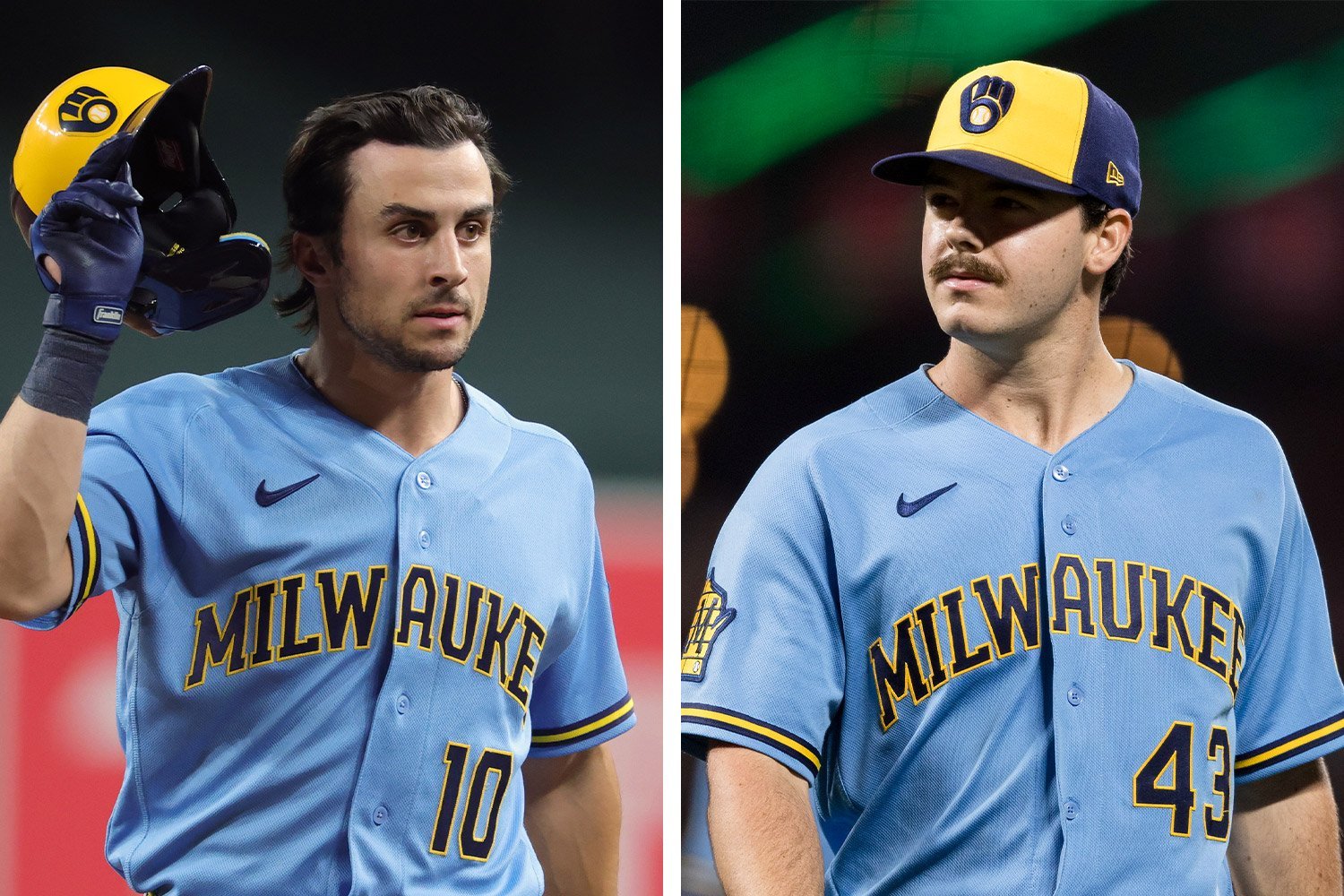 The 2021 season was one of those magical runs. At the major-league level, the Brewers rode a dominant pitching staff led by Cy Young Award winner Corbin Burnes, alongside co-aces Brandon Woodruff and Freddy Peralta and lights-out closer Josh Hader to an NL Central Crown. But that season’s draft has helped craft the current team’s run of success as well. Yet this is a draft Brewers fans will probably wonder whether it could have been even better, even though it produced a solid outfielder who has a Gold Glove and a potential co-ace for the rotation. Let’s look it over. Best Pick (for now): OF Sal Frelick First-round pick Sal Frelick delivered early dividends, making it to the majors in 2023 and being a fixture for three straight division titles. Frelick has been durable, and while his offense has dipped a little in 2026 (a career-low .250 BABIP) along with an injured list stint, he’s played admirably overall. Frelick’s likely to reach arbitration, and while he’s been at the bottom of the lineup for the Brewers, some teams could use him as a leadoff hitter. Honorable Mention (for now): RHP Logan Henderson When he’s been on the mound, the fourth-round pick has dominated, providing a one-two punch with Jacob Misiorowski that we’re sure MLB teams will hate to face for the next five years or so. Henderson’s injury struggles, though, have kept him off the mound for significant bits of 2025 and 2026. Still, he’s done very well, well enough that he became the rumored sticking point in the Brewers’ negotiations with Detroit over Tarik Skubal. Unconventional Contributor To Multiple Division Titles: OF Jace Avina As a 14th-round pick, Jace Avina isn’t exactly one you’d expect to have helped lay the foundation for Brewers teams that won multiple division titles, but he did exactly that. In the 2023-2024 offseason, he and fellow outfield prospect Brian Sanchez were traded to the Yankees for Jake Bauers, who has become a valuable part-time first baseman/corner outfielder for the Brewers. Not bad, although that deal did have other consequences. Trade The Brewers Want Back: OF Tristan Peters Peters was picked in the seventh round and was traded to the San Francisco Giants for relief pitcher Trevor Rosenthal, who never appeared in a game for Milwaukee. Since then, after being traded two more times, he’s now proven to be a solid contributor with the White Sox. Granted, the Brewers probably had a lot more talent in the outfield, but in this case, the return for the deal wasn’t exactly the front office’s finest move. Could’ve Been (Position Player): UT Tyler Black Black was a pure hitter, and three years ago, it looked like he could be joining Jackson Chourio as a franchise fixture in Milwaukee at the hot corner following a breakout season. However, trades (including the Bauers deal), a 2025 hamate injury, and, somehow, not quite meshing with Pat Murphy’s style of baseball (through no real fault of either player or manager) have kept Black on the Milwaukee-Nashville shuttle for the past three years. With Jake Bauers slated for free agency, Black may have a shot in 2027 to help the Brewers and push this draft’s grade higher, but there’s a lot of talent he needs to fight through. Brewers fans will always wonder what could have been if Black had been given a shot similar to Frelick, or if the same patience the organization showed with Chourio’s adjustment to the majors had been granted to Black. Could’ve Been (Pitcher): RHP Carlos Rodriguez The eighth-round pick in the draft actually was seen as a steal at one point – earning Brewer Fanatic’s Minor League Pitcher of the Year in 2022 and 2023. His rapid rise, though, like Black’s, ended up being more on the Milwaukee-Nashville shuttle afterward, culminating in being outrighted following the Brewers’ flurry of deadline deals in 2026. Rodriguez is in his age-24 season and nowhere near washed-up – and could still be a contributor for the Brewers (or someone else). Still Percolating: UT Ethan Murray and RHP/1B/DH Quinton Low Ethan Murray and Quinton Low are picks still being developed. Murray’s been a solid piece of infield depth for the Brewers organization, while Low’s intriguing two-way potential has been sidetracked by multiple seasons on the injured list. Both could still help the Brewers at some point. The 2021 draft is a very solid one for the Brewers, and has the chance to be better, although there are also what appear to be some missed opportunities. Overall Grade: B+ How would you grade the Brewers’ 2021 MLB draft? Let us know in the comments below! View the full article
 -
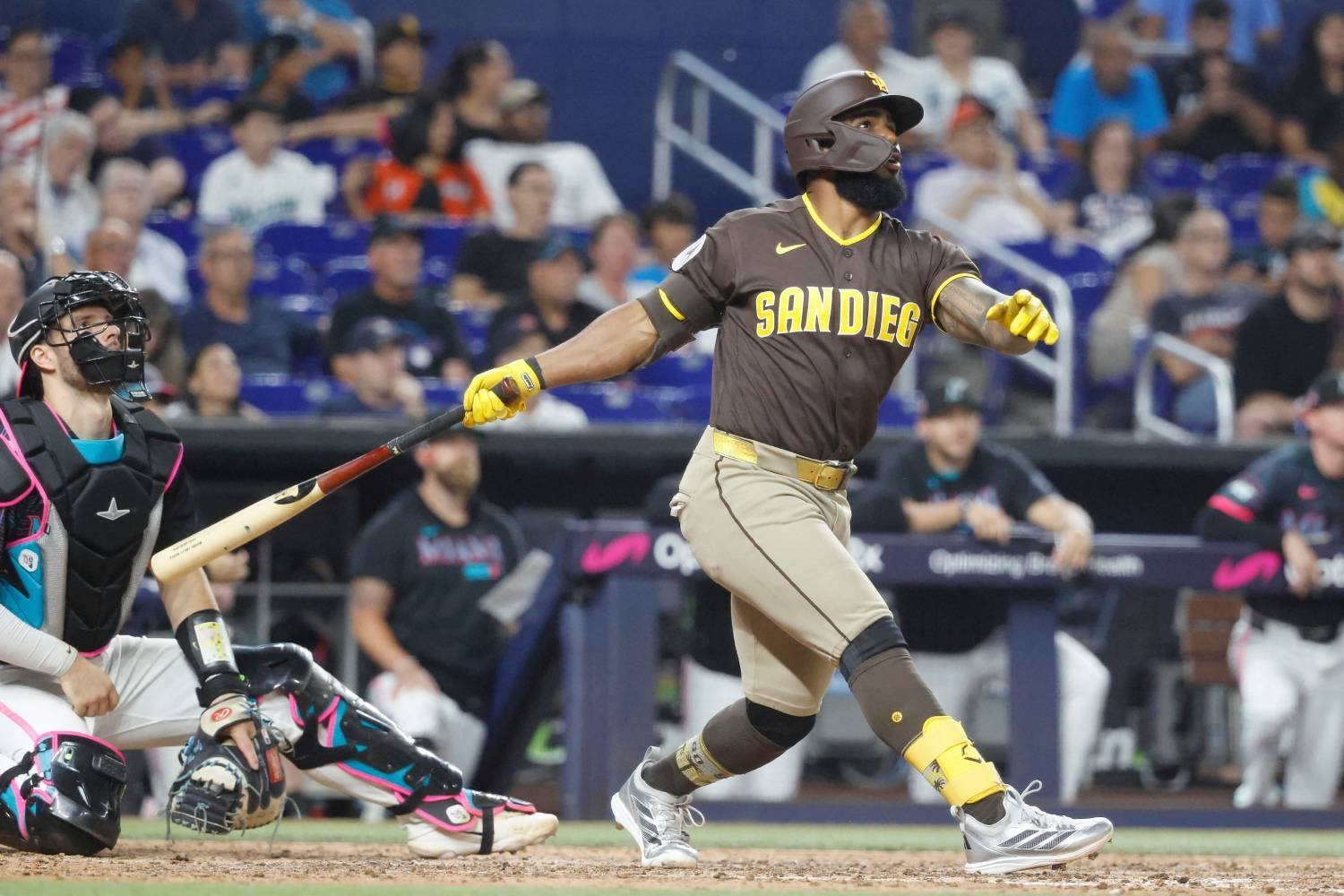 There will be a handful of hugs and some catching up to do when the Milwaukee Brewers visit Petco Park on Monday to face the San Diego Padres in the opener of a three-game series. There will also probably be some good-natured ribbing about why Luis Rengifo couldn't do what he is doing with the Padres while a member of the Brewers. In case you didn't know, Rengifo is now with the Padres. That came as a result of his poor performance with the Brewers, who signed Rengifo to a one-year, $3.5 million contract to play third base this season. But Rengifo never hit his stride and was released following a .205/.280/.254 slash line with no homers, 19 RBIs, and three stolen bases in 57 games for the Brewers, who promoted rookie Cooper Pratt to play shortstop, squeezing Rengifo off the roster. Coincidentally, Rengifo had two of his better games at the plate against the Padres when San Diego visited American Family Field in mid-May. About a week later at the beginning of July, Rengifo latched on with the Padres on a minor-league contract. Rengifo homered in his first game at Triple-A El Paso and then again two days later after not going deep once for the Brewers. In that first week at El Paso, Rengifo went 8-for-25 with eight RBIs and two steals in six games. His stay in the minors wouldn't last long. Due to an injury to Samad Taylor, a spark plug of a player who took over as the starter in left field in June after coming up from Triple-A, Rengifo wouldn't have a second week in El Paso. He was called up to replace Taylor. Primarily a second baseman and third baseman, Rengifo spent some time in the outfield while with the Los Angeles Angels. That versatility would serve him well with the Padres, who have started Rengifo 11 times in left field, five times at designated hitter and once at third base. While a solid defender, Rengifo has made his mark with the Padres on offense. In 21 games entering play Sunday, Rengifo has put together a .314/.415/.429 slash line, homering twice (both in big spots) with eight RBIs and three steals. His two bunt hits are tied for the team lead with Taylor. With the Brewers, he had eight multihit games, while having six in his brief time with the Padres. Rengifo has been with the Padres since they pulled themselves up after hitting their low point of the season and climbed back into postseason contention, just on the outside of the NL wild-card race at the moment. It is the type of production that the Brewers envisioned when they signed him at the start of spring training to fill the shoes of third baseman Caleb Durbin, who had just been shipped to the Boston Red Sox in a six-player deal. For one reason or another, it never materialized. Some players are fits with some teams, while others aren't. That is always a key ingredient when MLB front offices construct rosters for a season and always something that is the most unpredictable characteristic. The numbers behind the numbers show that one key to Rengifo's resurgence has to do with how fast the bat gets through the zone. While his average bat speed with the Padres is up from when he was with the Brewers (72.2 mph from 71 mph), his fast swing percentage—a fast swing is defined as one at 75 mph—is markedly up. He was at 16.4% with the Brewers and is at 23.9% with the Padres. Rengifo is also pulling the ball more (46.6-37.6%) and creating more hard contact (32.8-24.2%). With the Padres, he has been used in a variety of spots in the lineup, even hitting cleanup in Friday's series opener against the Houston Astros. Maybe where Rengifo hit in the lineup had something to do with his performance in Milwaukee. With the Padres, Rengifo has started seven games in the second slot and one as the leadoff hitter. Those were the same spots he occupied with the Angels during his breakout season of 2024, when he slashed .300/.347/.417 with six homers, 30 RBIs and a career-high 24 steals in 78 games, a season that was cut short by a wrist injury that required season-ending surgery in August. He didn't bounce back well in 2025 with a .238/.287/.335 slash line, hitting nine homers and driving in 43 and stealing nine bases in 147 games. But the Brewers were hoping to rekindle some of Rengifo's magic from 2024, while also knowing they had prospects such as Pratt and Jett Williams possibly ready to make their MLB debuts if Rengifo faltered. While everyone was disappointed with how things went for Rengifo with the Brewers, he has certainly rebuilt some of his profile when he again hits the free-agent market this offseason. View the full article
 -
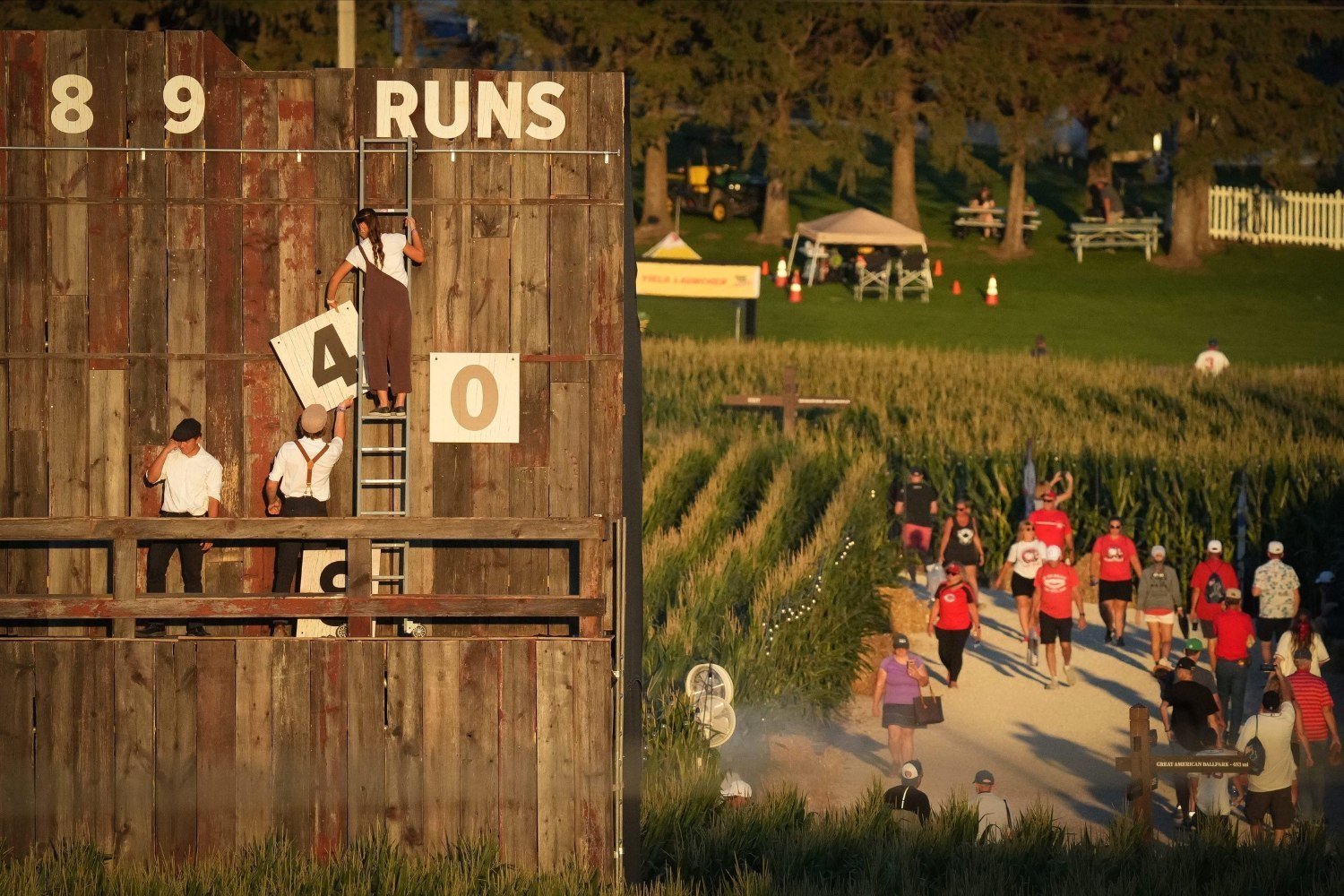 For one night, baseball will once again trade packed ballparks for rows of Iowa corn. On August 13, the Minnesota Twins and Philadelphia Phillies will meet in the long-awaited return of MLB's Field of Dreams Game, marking the event's first appearance since 2022. Hosted at the legendary movie site in Dyersville, Iowa, the nationally televised matchup brings together two contenders in one of Major League Baseball's signature showcase events. The game will be streamed live on Netflix, and it promises to be much more than nine innings. From throwback uniforms and Hall of Fame appearances to a celebration of one of baseball's most beloved films, here's everything fans need to know before first pitch. Baseball Returns to a Legendary Setting The Field of Dreams Game is being played for just the third time after a four-year absence. The inaugural contest in 2021 instantly became one of the most memorable regular-season games in recent history when the Chicago White Sox walked off the New York Yankees, 9-8, on Tim Anderson's dramatic home run. A year later, the Chicago Cubs and Cincinnati Reds met in the second edition (Chicago won 4-2) before the event was paused while the Dyersville complex underwent expansion and construction. Now, the Twins and Phillies become the latest clubs to take center stage in baseball's most cinematic setting. While the game is inspired by the famous baseball diamond featured in the movie, the teams will actually play in a specially constructed Major League stadium adjacent to the original field. Why the Site Means So Much Released in 1989, Field of Dreams has become one of the defining baseball movies ever made. Starring Kevin Costner, Ray Liotta, James Earl Jones, and Amy Madigan, the film follows Iowa farmer Ray Kinsella after he hears the now-famous message, "If you build it, he will come." Adapted from W.P. Kinsella's novel Shoeless Joe, the movie earned an Academy Award nomination for Best Picture and was added to the National Film Registry in 2017. Few sporting events blend baseball history and pop culture quite like the Field of Dreams Game, making it one of MLB's premier annual showcases whenever it's held. More Than Just One Game The festivities extend well beyond Thursday night's matchup. More than 25 members of the Baseball Hall of Fame are expected to attend, creating one of the largest gatherings of Hall of Famers since Yankee Stadium's farewell festivities during the 2008 All-Star Game. The site will also host a High School All-American Game on Wednesday, with Twins legend Torii Hunter and Hall of Famer Jim Thome serving as managers. Fans hoping to experience the venue before the major league game can also catch Triple-A baseball earlier in the week. The St. Paul Saints will face the Iowa Cubs in Dyersville at 6:30 on Tuesday, August 11th. This gives Twins fans another opportunity to see the unique ballpark while several of the organization's top prospects are in action. A First for the Twins Although Minnesota has played regular-season games away from traditional MLB stadiums before, this marks the franchise's first appearance in one of Major League Baseball's specialty showcase games. The Twins' only previous neutral-site regular-season experience came in 2018 when they played Cleveland in San Juan, Puerto Rico. This time, however, the spotlight is much brighter. Minnesota will briefly leave a Target Field homestand to face a Phillies club that features familiar faces, including former Twins Jhoan Duran and Luis Arraez, adding another layer of intrigue to an already unique matchup. How to Watch Unlike the previous two editions, which aired nationally on Fox, the 2026 Field of Dreams Game will stream exclusively on Netflix. First pitch is scheduled for 6:30 p.m. CT on Thursday, August 13. The game will not be available live on Twins.TV, but fans can still listen through the Twins Radio Network, including 830 AM and 102.9 FM. Throwback Uniforms Take Center Stage Both teams will celebrate their history with vintage-inspired uniforms designed specifically for the event. Minnesota's look pays tribute to the franchise's inaugural 1961 season after arriving from Washington. The Twins will wear classic white pinstripes featuring the original blue-and-red "Twins" script across the chest, paired with a navy cap showcasing the vintage TC logo. Philadelphia will counter with uniforms inspired by the club's 1939-41 road design. The gray jerseys feature red and navy trim, a retro "Phillies" script, navy caps with a red block "P," and a commemorative sleeve patch honoring baseball's centennial celebration as it was recognized in 1939. A Showcase Worth Waiting For MLB has experimented with games at Little League parks, historic stadiums, and even racetracks, but none have captured the imagination quite like the Field of Dreams Game. After several years away, the event returns with a compelling matchup, a nostalgic backdrop, and one of the sport's most recognizable settings. Whether it's the cornfield entrance, the vintage uniforms, or the atmosphere surrounding one of baseball's most cherished films, the Twins will be part of an event that extends far beyond the standings. For Minnesota, it's another regular-season game. For baseball, it's a celebration of the sport's past—and a reminder that some places still make the game feel timeless. View the full article
 -
Inside the Twins' Farm System After the 2026 Trade Deadline
DiamondCentric posted an article in Twins Daily
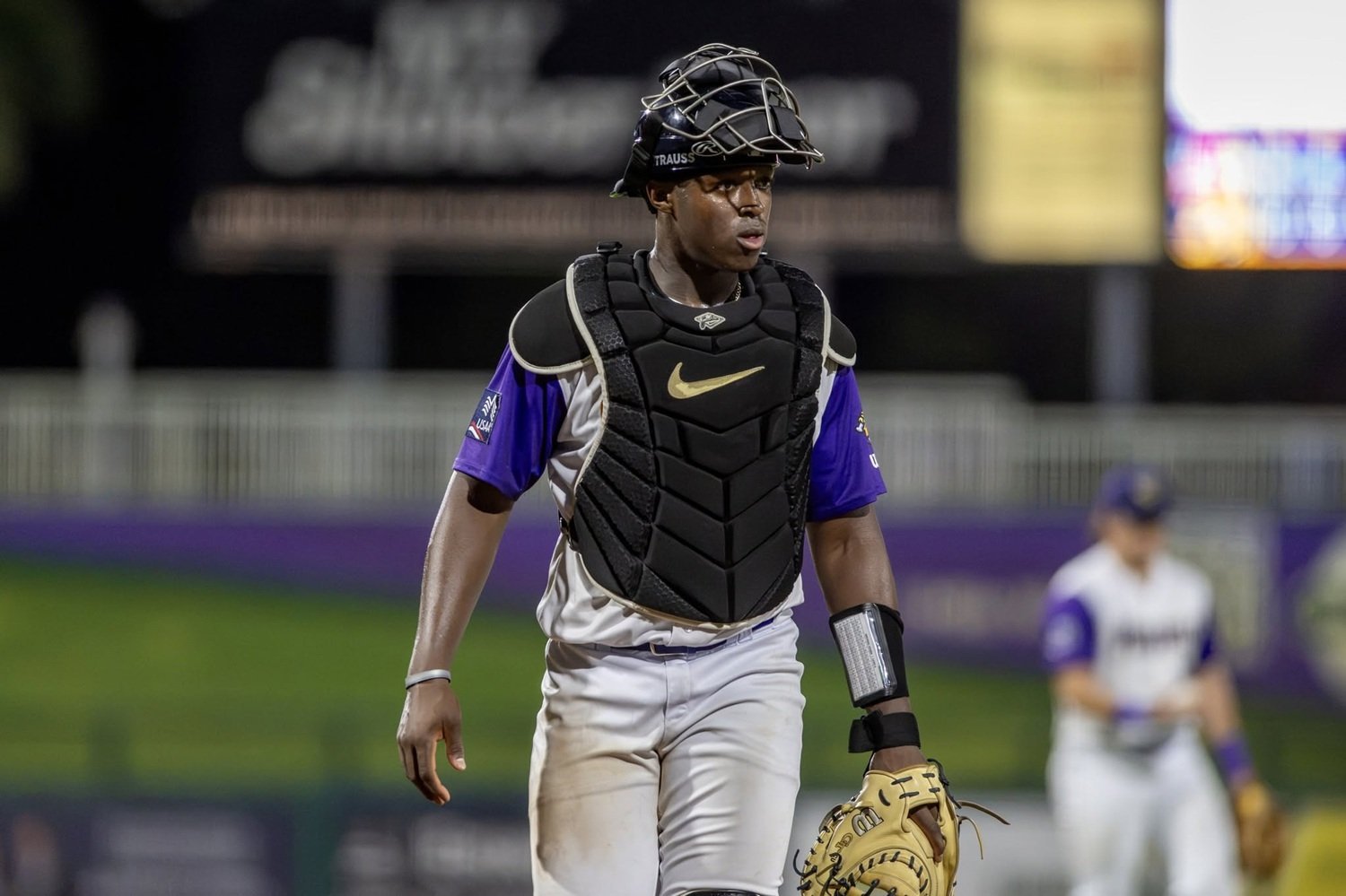 The Minnesota Twins entered the 2026 MLB Trade Deadline in an unusual position. They were close enough to the playoff race to justify adding talent, yet still sitting below .500 as the deadline arrived. That balancing act forced the front office to weigh immediate upgrades against the long-term value of one of baseball's strongest farm systems. Ultimately, the Twins resisted the temptation to move their premier prospects. They added to the major league roster without sacrificing the organization's biggest building blocks, preserving a pipeline that could help the club both in September and for years to come. With the deadline now behind them, Minnesota's system remains one of the deepest in baseball, featuring impact talent at nearly every level. Top Prospects Stay In Place An argument certainly could have been made for the Twins to push even harder at the deadline. With a playoff berth still within reach, dealing from organizational depth for another established major leaguer wouldn't have been unreasonable. At the same time, it's difficult to justify moving elite prospects when the club entered the deadline under .500. Minnesota's front office chose to preserve its long-term outlook, and the organization's upper levels still feature multiple players who could contribute in the majors before this season ends. That combination of present help and future upside is exactly why the Twins have been so reluctant to empty the system. Triple-A: The Next Wave Is Almost Here No level better illustrates Minnesota's organizational depth than Triple-A St. Paul has had this year. Kaelen Culpepper was promoted this weekend and immediately handed the starting shortstop role. Walker Jenkins continues knocking on the door of the major leagues. Both have little left to prove in the minors, and it wouldn't be surprising if Jenkins joins Culpepper over the next few weeks should an opportunity present itself. Emmanuel Rodriguez is also working his way back after a thumb injury. Had he remained healthy throughout the season, there's a legitimate chance he would have been the first callup among the top prospects earlier this year. His combination of patience and power still gives him one of the highest ceilings in the organization. The outfield picture has become especially interesting because Hendry Mendez and Gabriel Gonzalez have trended in opposite directions. Last season, Gonzalez looked like one of baseball's breakout prospects, climbing from High-A to Triple-A as a 21-year-old while posting a .909 OPS. This year has been much more challenging, as he's produced a .709 OPS and struggled to build on that breakout campaign. Meanwhile, Mendez has quietly continued his ascent. After opening the season in Double-A, he earned a promotion and has thrived in St. Paul. Across 51 Triple-A games, he's slashing .307/.396/.444 with an .840 OPS, further strengthening his case as a legitimate major league option. On the pitching side, Ryan Gallagher dominated in a brief Double-A stint before encountering more adversity after reaching Triple-A. Through his first stretch with the Saints, he's posted a 6.38 ERA and 1.63 WHIP. That adjustment period isn't uncommon for young pitchers, and the Twins will likely give him plenty of runway to work through it. Double-A: Draft Success Already Paying Off The Twins' 2025 draft class continues to look increasingly impressive. Marek Houston has enjoyed a phenomenal first full professional season while rapidly climbing national prospect rankings. Questions about his offensive upside followed him on draft day, but he's quickly begun answering those concerns. His elite defense at shortstop has remained intact, and his bat has taken significant steps forward (132 wRC+), giving Minnesota another legitimate top-100 caliber prospect. Riley Quick has been nearly as impressive. Another member of that 2025 class, Quick has climbed aggressively through the system and now has a strong argument as the organization's top pitching prospect. In 16 starts, he has a 4.00 ERA, 4.57 FIP, and 34.2 K%. His rapid development has significantly strengthened Minnesota's future rotation outlook. The rest of Wichita's lineup has provided encouraging signs as well. Khadim Diaw mashed High-A pitching, posting an .859 OPS before arriving in Double-A. While the power production has cooled and his OPS has fallen 81 points, he's still reaching base at nearly a 42% clip, demonstrating the advanced plate discipline that continues to make him an intriguing prospect. Brandon Winokur also appears to be putting everything together. After inconsistent production over the previous year, he's raised his OPS to .789—nearly 100 points higher than last season—and has begun looking much more like the player the Twins envisioned when they drafted him. High-A: Patience Required Not every top prospect develops in a straight line. Eduardo Tait has experienced both highs and lows during his first full season. Through 92 games, he's hitting .228/.290/.442 with a .732 OPS. The power remains encouraging for a teenage catcher, but questions continue surrounding both his overall offensive consistency and whether he'll ultimately remain behind the plate. Those concerns shouldn't overshadow his age. The 19-year-old is still a teenager competing against older competition, leaving plenty of time for continued development. Unfortunately, injuries continue to define Charlee Soto's professional career. Wrist soreness surfaced while Soto was rehabbing from the August 2025 surgery that removed a partially detached bone spur from his elbow. The wrist issue sidelined him for the first two months of 2026 before another, more significant injury occurred during his rehab assignment. The talent remains undeniable. Soto won't turn 21 until the end of August, but he's thrown only 15 2/3 innings since the beginning of the 2025 season after logging 74 innings during his promising professional debut in 2024. For now, simply getting healthy remains the priority. Low-A: The Future Is Just Beginning The Twins' newest wave of talent has started arriving. First-round pick Vahn Lackey and supplemental first-round selection Carson Tinney have both begun their professional careers in Low-A. It's far too early to draw meaningful conclusions from only a handful of games, but both players possess significant upside and immediately become important pieces of the organization's future. Quentin Young remains one of the system's biggest boom-or-bust prospects. The 19-year-old has posted a .669 OPS across 84 games, but the raw power that made him such an intriguing draft pick continues to stand out. He's also been consistently facing older competition throughout the season, making patience an important part of his developmental timeline. The System Still Gives Minnesota Options The trade deadline often reshapes a farm system, but Minnesota largely emerged with its prospect depth intact. Several of the organization's best players are nearing the major leagues, while another wave of high-upside talent continues developing throughout the lower minors. That's exactly the position teams hope to maintain: enough prospect capital to supplement the big-league roster today without sacrificing tomorrow. The Twins didn't make the blockbuster move that would have emptied their farm system for immediate help. Instead, they preserved one of baseball's deepest pipelines, leaving themselves positioned to compete this season while maintaining the talent necessary to sustain success well beyond 2026. What stands out about Minnesota’s current farm system? Leave a comment and start the discussion. View the full article
 -
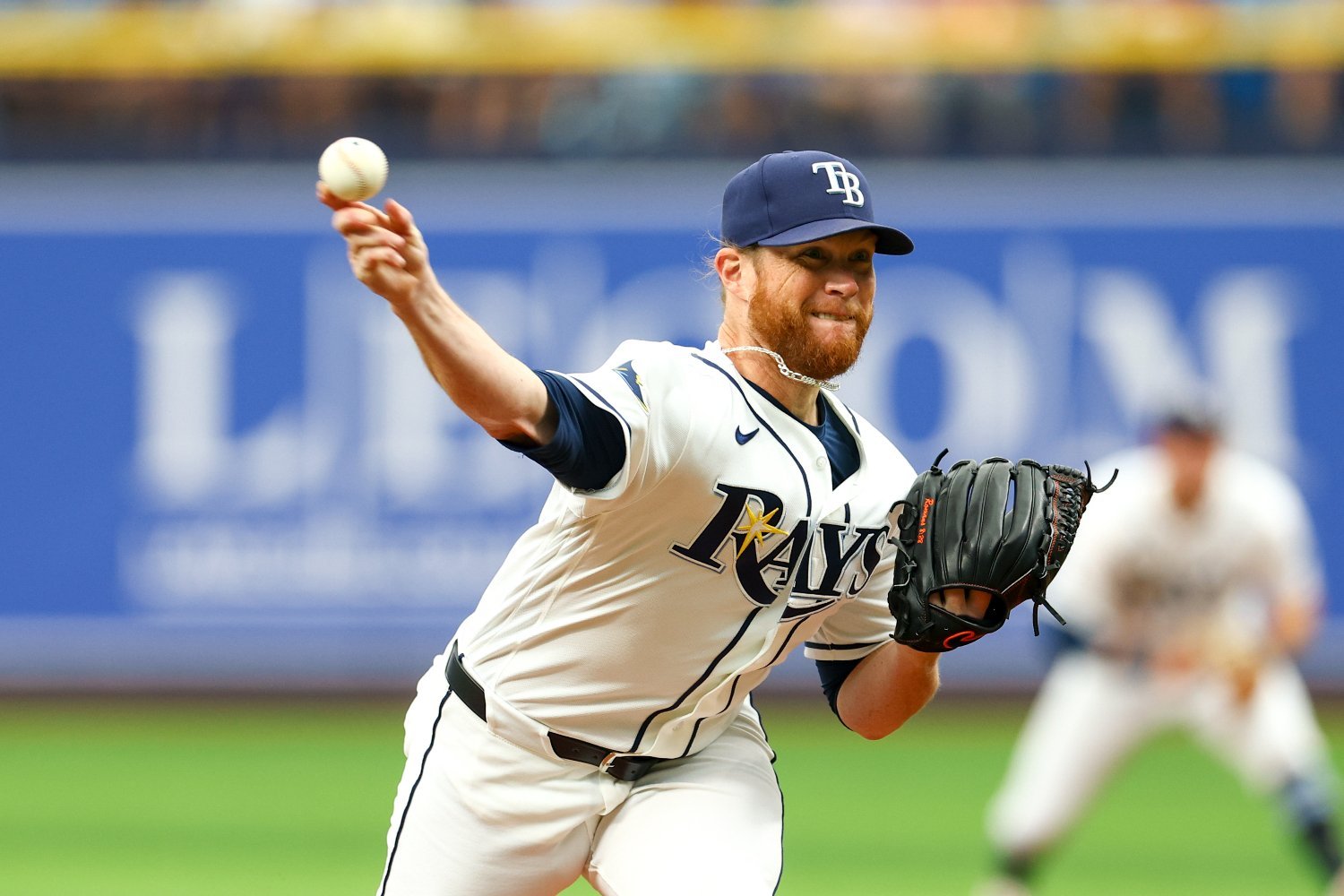 There's no question that the Royals bullpen needs help right now. According to Frangraphs, Kansas City relievers rank near the bottom in most major categories. The Royals bullpen ranks 29th in reliever ERA, 30th in reliever WHIP, 28th in BB/9 and H/9, 27th in K/9, and 30th in HR/9. During this 3-3 homestand, the bullpen went through its fair share of issues. On Wednesday against the Twins, Aaron Bummer and Nate Pearson failed to hold onto the lead in the eighth inning, leading to a 4-3 loss and a chance at the sweep. On Sunday, in the rubber game against the Cubs, Easton McGee, formerly of the Brewers, gave up six runs on five hits and two walks in two innings of relief. A 4-2 Chicago lead ballooned to 10-2 by the seventh, ending any shot of the Royals making a comeback in the weekend series finale. The names are different, but the results have typically been the same, unfortunately. That said, fans can't say that Royals President of Baseball Operations JJ Picollo isn't trying to improve the bullpen, even with the Royals 21 games below .500 and sitting in last place in the AL Central. Even after the Trade Deadline passed, Kansas City has been making moves on many waived pitchers, hoping to see if they can find someone who can be part of the Royals' bullpen in 2027 and beyond. After Sunday's loss, Picollo and the Royals added another candidate to help turn around the Royals' bullpen struggles: nine-time All-Star Craig Kimbrel. Kimbrel has pitched for the Mets and Rays this season, accumulating 33 appearances and 33.2 IP with both teams. In that sample, he posted a 4.81 ERA, 1.34 WHIP, 4.31 FIP, and 11.1% K-BB%. The 38-year-old most recently pitched with the Rays, posting a 3.86 ERA, 1.23 WHIP, and 3.90 FIP in 19 appearances and 18.2 IP. He was designated for assignment after the Trade Deadline and elected free agency after being outrighted to Triple-A Durham. Even though Kimbrel has 440 career saves, he hasn't collected a save over the past two years. He last held a closer role in Baltimore in 2024, saving 23 games but posting a 5.33 ERA over 52.1 IP. It's unclear what kind of role Kimbrel will have in Kansas City. That said, he will likely get some high-leverage work, especially with the Royals thin on guys who can handle big spots in the 8th and 9th innings. That said, the Royals aren't going anywhere this year, and it's unlikely that Kimbrel will be in Kansas City beyond this season. So why, during an impromptu evaluation season, would Picollo pick up a veteran like Kimbrel, who is in the twilight years of his illustrious career? First off, Kimbrel brings the Royals a profile that they sorely need in terms of pitch quality. Second, he could give the Royals an idea of what they need to do this offseason to rebuild their bullpen in 2027. Despite Mediocre Numbers, Kimbrel Still Has the Stuff Kimbrel's overall numbers are nothing to shout home about, though his rough 15-inning sample with the Mets earlier this year has brought down his overall line (he had a 6.00 ERA and 1.47 WHIP in Queens). When looking at his TJ Stats Statcast percentiles, he struggled to produce CSW and allowed too many walks this year with the Mets and Rays. However, the extension, TJ Stuff+, and batted-ball metrics were encouraging and probably explain why Picollo and the Royals decided to take a flier on Kimbrel for the remainder of the season. Here's a look at his Statcast percentile via TJ Stats. Kimbrel sports four offerings this year with TJ Stuff+ marks over 100. That includes his four-seamer (109), his sweeper (111), his knuckle curve (108), and his sinker (101). Only his changeup was below the 100 TJ Stuff+ threshold (99). As a result, his overall TJ Stuff+ is 109, which ranks in the 91st percentile. For context, that 109 overall TJ Stuff+ would be the best mark of any Royals pitcher this year. According to TJ Stats' TJ Stuff+ leaderboard, Nate Pearson currently has the best TJ Stuff+ at 107, Steven Cruz ranks second at 105, and Nick Mears and Cole Ragans are tied for third at 104. Thus, in addition to experience, Kimbrel brings the kind of high-octane arm that the Royals bullpen needs for this stretch run of the 2026 season. Royals Picking Up Similar Arms to Kimbrel The Royals have seemed to be targeting pitchers on waivers recently who possess big-stuff numbers. Two examples of this are lefty Luke Little, who was picked up on waivers from the Cubs, and Carlos Duran, who was acquired from the Dodgers for Kris Bubic at the Trade Deadline. Little has limited MLB experience, having pitched only 1 inning this year with the Cubs. However, his TJ Stuff+ numbers have been impressive, though the rest of his Stacast profile leaves a bit to be desired, as illustrated below. The 28-year-old lefty had pitched 36.1 innings at the Major League level in his career, with most of his MLB experience coming in 2024 when he posted a 3.46 ERA in 26.1 IP. Unfortunately, injuries and inconsistency have limited him to Minor League competition over the past two years, despite his being a sweeper with wicked movement. Little has produced a 6.29 ERA and 5.07 FIP in 48.2 IP in Triple-A Des Moines this season. He has struggled with walks (12th percentile BB%) as well as generating chase (27th percentile O-Swing%) and finding the strike zone (35th percentile zone rate). That said, his sinker and sweeper had TJ Stuff+ marks of 103 and 108, respectively, and his overall TJ Stuff+ was 104 in Triple-A, ranking in the 89th percentile. Add that with a 99th percentile extension, and it's easy to see why the Cubs drafted Little in the fourth round in the 2020 MLB Draft out of San Jacinto College North. As for Duran, I talked about him a little bit on Trade Deadline day, but he's a big arm that shares a lot with Steven Cruz, who has thrived this year after a slow start. Like Cruz, there are some walk and control issues, but the TJ Stuff+ metrics from the former Dodgers and Athletics reliever are legit. While Little and Duran don't have the pedigree of Kimbrel, they do share similar profiles to the former All-Star in terms of Stuff. That shows the Royals are willing to take risks on arms with control issues as long as they have the Stuff and pitch extension. Kimbrel, Little, and Duran all rank highly in those two traits, and that could help the Royals identify not just successful relievers but also ones who won't cost too much. Can Kimbrel's Success Give the Royals A Bullpen Blueprint This Offseason? The Royals bullpen has been atrocious this year. However, many of those struggles have been tied to the Royals' lack of a consistent closer in the ninth inning this year. Kansas City had someone initially slotted into the role: Carlos Estevez, who led all of baseball in saves a year ago. Estevez was expected to be another rock in the Royals bullpen in 2026. Unfortunately, his velocity vanished, and he has been plagued by arm issues that have kept him on the IL since his disastrous Opening Day weekend appearance in Atlanta. It's unlikely Estevez will pitch again this season (perhaps in his career). Kimbrel will not be a closer for Kansas City in 2027, barring something really surprising. However, if Kimbrel can step into the closer's role for the Royals and find some success, then the rest of the bullpen may benefit as well. Last year, with Estevez as the closer, the other Royals relievers thrived in their clear, secondary roles. The Royals bullpen posted a 3.63 ERA as a group in 2025, the seventh-best mark in baseball, according to Fangraphs. And that was with a group that was very similar to this year's bullpen as well. If the veteran closer can have success for two months in the closer's role, the other relievers in the Royals organization may find success in lower-leverage opportunities. Instead of being depended upon as closers, Pearson and Cruz can develop as setup men, which may better suit them anyway. Instead of a 7th- or 8th-inning guy, Erceg can be a middle reliever and work on his pitch quality to help him generate whiff and chase again (like in 2024). The Royals can throw other high-octane guys in the mix in the middle innings or in mop-up roles, which is easier to do in lower-leverage situations. Kimbrel finding success could give the Royals the motivation they need to acquire and pay for a legitimate closer this offseason, which would put less pressure on them to build the bullpen as a whole. It's hard to find and develop a closer in one's organization. However, to find and develop middle relievers or setup men? That's an easier and more realistic task, and the Royals have had some success with that during the JJ Picollo era. Thus, while it seems odd for the Royals to bring in Kimbrel now, it does allow them to shuffle relievers while still staying competitive and not throwing these "green" relievers into the fire too quickly. Royals fans have seen young relievers thrown into closer roles too soon, not just fail in the role but plummet overall after the experience. Carlos Hernandez and James McArthur are two prime examples. They could've had more long-term success if they hadn't been thrust into high-leverage situations so quickly. I'm guessing Picollo and the Royals don't want to make that mistake with Pearson, Cruz, Duran, and Little. Let them get opportunities in various situations and prove they can take on the role in spot opportunities both this year and next. For now, however, the Royals need stability in the ninth. This year, it's going to be Kimbrel. Next year, let's hope it's a bigger-name closer. Raisel Iglesias could be a nice free-agent option, and Mason Miller of the Padres and Trevor Megill of the Brewers could be acquired via a trade. View the full article
 -
Caleb Thielbar's Cubs Tenure Is Ending With A Whimper
DiamondCentric posted an article in North Side Baseball
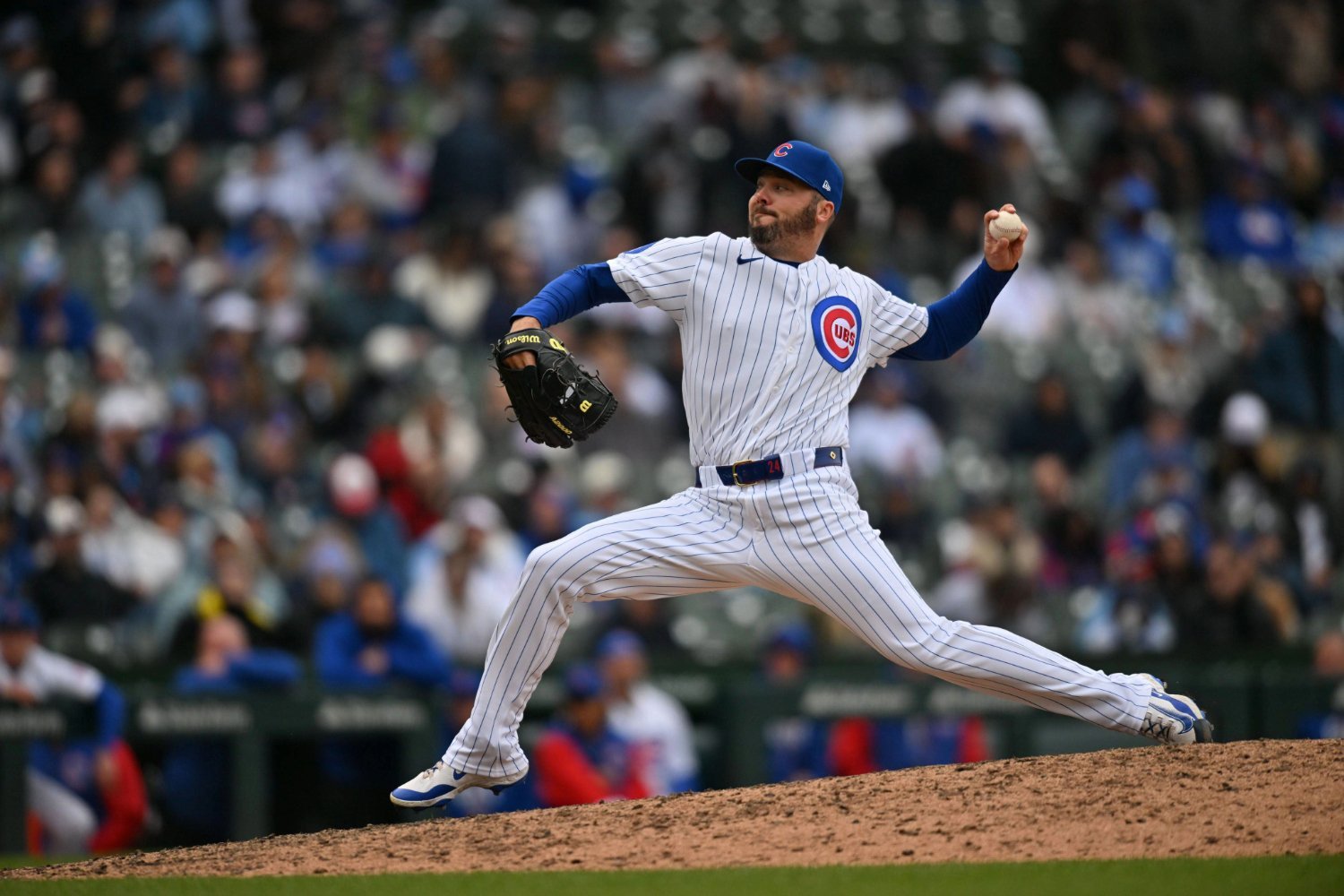 After seven strong innings from the new, nominal ace of the Chicago Cubs, Kevin Gausman, Craig Counsell turned to Caleb Thielbar in the eighth inning of Friday night’s game to protect a 6-2 lead. Four hitters later, the score was 6-3, and the Kansas City Royals had runners on second and third with just one out. Thankfully, Trent Thornton then entered the game and put out the fire, allowing just one more run to score in a game that the Cubs would go on to win 6-4. No harm, no foul, right? Friday was the third straight game that Thielbar worked out of the bullpen. Clearly, Counsell thought the veteran could handle it after throwing 19 pitches on Wednesday, and just 12 on Thursday. After all, this is a taxed bullpen that was working their 15th game in 15 days. The flip side of the coin, though, is that Thielbar gave up four runs to the Dodgers in his outing on Wednesday. Frankly, the left-hander has been outright bad since returning from an injury on May 19: he has a 6.00 ERA in 27 innings since then. Was he really the best option for the Cubs on Friday night? The easiest place to start with Thielbar’s struggles is with his performance against left-handed hitters. As a left-handed relief pitcher, getting lefty hitters out is a must. Thielbar has made a career out of this. Until, basically, now. All stats courtesy of FanGraphs: Year Split Batting Average Against On-Base Percentage Against Slugging Percentage Against 2026 vs. LHH .281 .317 .526 2026 vs. RHH .229 .312 .482 2025 vs. LHH .161 .211 .276 2025 vs. RHH .205 .248 .342 By almost any measure, Thielbar has actually performed worse against lefties this season than righties, which is bad when, again, retiring left-handed hitters is his primary job as a southpaw out of the bullpen. Thielbar attacks lefties with four pitches: his four-seam fastball, a slider, a sweeper, and a curveball. When a pitcher shows signs of decline, particularly a 39-year-old pitcher, my first assumption is that he is losing velocity. That’s not the case here: he is actually throwing his fastball and curveball a tad bit harder, while his slider and sweeper are down about a tick or so, according to Baseball Savant. Let’s take a look at his results on his three primary pitches, the four-seamer, sweeper, and slider, against lefty hitters. All stats courtesy of Baseball Savant: Pitch Batting Average Against Slugging Percentage Against Four Seamer .182 .455 Sweeper .182 .727 Slider .471 .529 Despite the slugging percentage against the sweeper, it’s the slider that I really want to hone in on. He’s upped his usage of it against lefties, throwing it 27.6 percent of the time compared to 17.5 percent last season. One look at his pitch locations, and it’s easy to see what the issue is: That red zone just off the plate and away from the left-handed batter that occupies so much of the 2025 graphic is all but gone on the 2026 version. In 2025, 56.1 percent of the southpaw’s sliders to lefties were in that shadow or chase zone away from lefties. In 2026, that has plummeted to 27.9 percent. That means a whole lot less of this: Thielbar 1.mp4 And a whole lot more of this: THielbar 2.mp4 With baseball, and pitchers in particular, it is hardly ever just one thing. All four home runs Thielbar has allowed against lefties have come against the fastball and the sweeper. Still, it’s easier to sit on those pitches when the slider is either an easy take way off of the plate, or a meatball right down broadway. This doesn’t even get us into his struggles against righties, either. The more I think about it, the more I wonder if Thielbar being used three days in a row was a bit of a last gasp. A chance for him to show that he still belongs, and an opportunity for the Cubs to get as many innings out of him as they can while he is here. Hoby Milner and Daniel Palencia are both due back soon and will need roster spots. Tyler Ferguson has at least shown that he deserves some more chances. A roster crunch is coming soon, and if Caleb Thielbar can’t even get lefties out, he just might find himself on the outside looking in. View the full article
 -
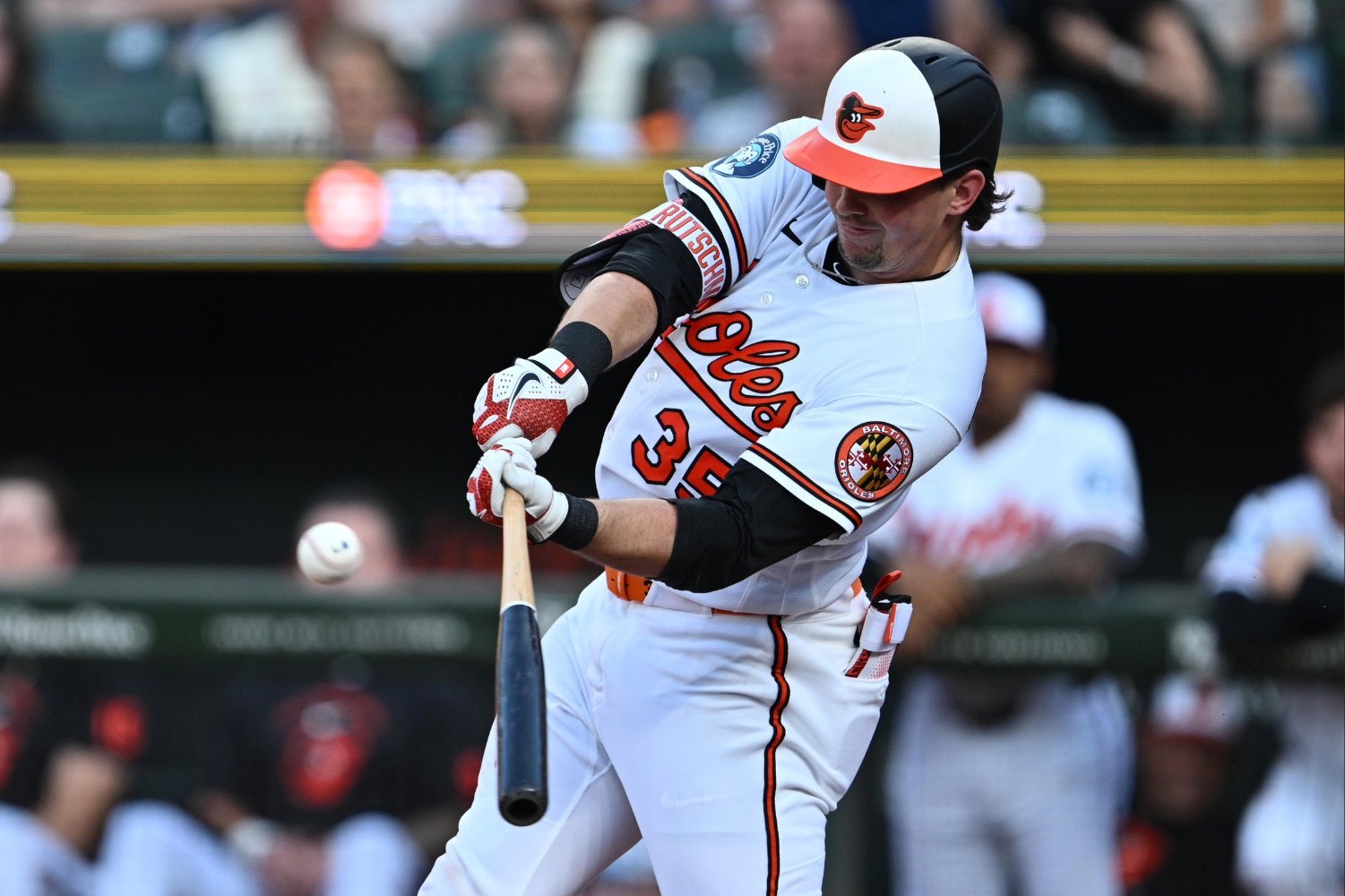 Adley Rutschman's production has declined in recent years. The offensive foundation that made him one of baseball's premier young catchers largely hasn't. That distinction helps explain why the Boston Red Sox were willing to make such an aggressive move at the trade deadline. More than big power numbers or instant impact, they were betting on one of the game's rarest offensive skill sets: a hitter who controls the strike zone, consistently makes quality contact, and provides stability behind the plate. Those traits haven't disappeared, even if his recent stat line suggests otherwise. Need also played a significant role in the decision. Boston's catchers have been among the least productive groups in Major League Baseball this season, combining for just 0.2 WAR and a 72 wRC+ prior to the deadline. Offensive production from the position had virtually vanished, while Connor Wong and Carlos Narváez had yet to establish themselves as long-term solutions. The most encouraging evidence that suggests Rutschman is the answer to these woes appears against left-handed pitching. That's where he continues to display the offensive identity that once made him one of the sport's most complete catchers. He chases just 24.2% of pitches outside the strike zone, ranking in the 86th percentile across MLB. His 9.8% strikeout rate sits in the 96th percentile, while his in-zone contact rate ranks in the 91st percentile. His excellent approach continues to show up after contact is made. Against left-handers, Rutschman's .359 expected wOBA ranks in the 89th percentile, while his sweet-spot rate reaches the 91st percentile. Even without elite exit velocity or the barrel rate typically associated with power hitters, Rutschman continues to create value by making smart swing decisions and consistently producing quality contact. His offensive game has always depended more on precision than raw force. But that's also exactly where the disconnect begins. Against left-handed pitching, Rutschman's actual .313 wOBA sits 46 points below his expected .359 mark. The gap suggests that many of his best plate appearances simply haven't produced the results that his quality of contact normally deserves. Part of the explanation lies in Camden Yards. Since Baltimore moved the left-field wall back and raised its height before the 2022 season, well-struck fly balls that once reached the wall—or cleared it altogether—have increasingly turned into routine outs. The ballpark doesn't fully explain Rutschman's offensive decline, but it does help explain why several quality swings failed to produce meaningful damage. Against left-handers, nearly half of his batted balls are hit toward left-center field, precisely the area where Baltimore's redesigned dimensions have become far less forgiving. That context also makes his career numbers at Fenway Park as a visitor less informative than they appear. Most of those plate appearances came batting left-handed against right-handed pitching, an entirely different offensive environment from the one the Red Sox expect to maximize. The more intriguing fit comes when Rutschman bats right-handed against lefties, where Fenway's dimensions create a much friendlier setting for the type of contact that too often went unrewarded in Baltimore. None of this means Boston acquired a hitter whose power production is suddenly about to explode. The biggest question remains the ceiling of his raw power. He has hit just eight home runs this season, and only one has been classified as a no-doubter—his lowest rate since 2022. Fenway may turn a few outs into hits and a few fly balls into doubles, but it won't increase his bat speed or transform him into a middle-of-the-order slugger. What it can do is maximize an offensive skill set that continues to produce remarkably healthy underlying indicators beneath modest surface numbers. The front office didn't bet on the version of Adley Rutschman reflected in this year's stat line. It bet on the catcher whose elite strike-zone control, exceptional contact ability and disciplined offensive process remain firmly intact. If those underlying skills finally begin receiving the results they've consistently earned, the conversation will stop being about what he lost, and rather what he gained upon arriving in Boston. View the full article
 -
Blue Jays Clutch Plays: Lukes's Heroics, Rogers's Escape
DiamondCentric posted an article in Jays Centre
 A mountain of work still lies ahead if the Blue Jays are going to salvage their season, but this past week was a step in the right direction, as they won their first two series after Monday's trade deadline. Remarkably, four of their past five games have gone to extra innings, and the one that didn't was a one-run contest that was decided with the bases loaded in the bottom of the ninth. While that isn't good news for a bullpen that was already taxed to begin with, it does mean there were plenty of pivotal plays by win probability added. Here are the team's biggest moments from the week that was as our Clutch Plays series finally returns. Pitching 3. Tyler Rogers: Brandon Marsh Groundout, Bot 9, 8/7 (+23.5% WPA) The submarining Tyler Rogers got himself into a world of trouble in the ninth inning on Friday, allowing two runs to score as Toronto's lead was cut to 5-4. He mercifully got out of it, getting Brandon Marsh to ground out with the bases loaded to seal the win on his 35th pitch after the play was upheld via replay review. Marsh rolled a ball to Ernie Clement at second, but Kazuma Okamoto, playing back of first, couldn't get to the bag in time as Rogers hurried over to receive the throw mere milliseconds ahead of Marsh. 2. Tyler Rogers: Alec Bohm Force Out, Bot 9, 8/7 (+26.3% WPA) None of the above would've been possible without Rogers inducing a force play against the previous batter, Alec Bohm. Bohm's high chopper to a drawn-in infield was snagged by Ernie Clement, who made a good throw home, but disaster nearly struck as catcher Alejandro Kirk forgot the force was on at home as he crouched to tag Trea Turner, who slid in ahead of his swiping attempt. Thankfully for the Jays, Kirk's left knee happened to be touching the plate, setting the stage for Marsh's bang-bang play at first and one of the more exhausting, air-tight Blue Jay wins in recent memory. 1. Braydon Fisher (Nathan Lukes): Luis Arraez FIDP, Bot 11, 8/9 (+33.7% WPA) It's unfortunate that the Jays lost on Thursday in Chicago and again on Sunday, because both contests featured miraculous game-saving defensive plays that ultimately didn't move the needle. This Nathan Lukes missile to home plate completed what is currently the second-most clutch pitching/fielding play of the season by WPA for the Blue Jays. A bases-loaded, one-out situation in a tie game in extras calls for a strikeout, but that's easier said than done with Luis Arraez, who golfed a fly ball right at Lukes in medium depth right field. Lukes then fired a one-hop strike to Kirk, who tagged Garrett Stubbs to send the game to the 12th. Hitting 3. Ernie Clement: 2-run HR, Top 10, 8/5 (+32.8% WPA) Clement wasted no time getting things started in the 10th inning of Wednesday's rubber match in Houston. His close friend and college teammate Bennett Sousa delivered a high fastball on the inner half, and Ernie deposited it into the Crawford Boxes in left field, admiring it as it went. The fact that this happened with the ghost runner on proved to be a difference-maker as Chase Lee tight-roped out of danger after allowing a run in the bottom half to clinch a 5-4 victory and win the series against the Astros. 2. Andrés Giménez: 2-RBI Double, Top 8, 8/8 (+36.6% WPA) Andrés Giménez had a monster series in Philadelphia, homering off Zack Wheeler on Friday before coming through with game-tying two-RBI hits in the eighth inning on Saturday and Sunday. By WPA, the one on Saturday was slightly more meaningful, and it came on an 0-2, two-out pitch from one of the tougher lefty relievers in the game in José Alvarado. Alvarado's sinker caught a little too much of the plate, and Giménez stayed on plane, lacing it up the alley in right-center to score Vladimir Guerrero Jr. and George Springer and tie things up at four. 1. Nathan Lukes: 2-run HR, Top 11, 8/8 (+48.5% WPA) Lukes would not be denied this past weekend, contributing just over 0.8 wins by WPA in less than 24 hours with his bat and glove. His two-run home run in the 11th on Saturday broke a 5-5 tie and stood as the winner after Lazaro Estrada completed his first career save in the bottom half. Remember how his outfield assist completed the Jays' second-most clutch pitching play of the year? Well, this homer is their second-most clutch hitting play of the year as of now. With his pitch count already high, Chase Shugart had to come in the zone on 3-2, and his middle-in breaking ball played right into Lukes's bat path as he lifted it out of the yard for one of the bigger swings of his career. View the full article
 -
New York Mets Minor-League Pitchers of the Month: July 2026
DiamondCentric posted an article in Grand Central Mets
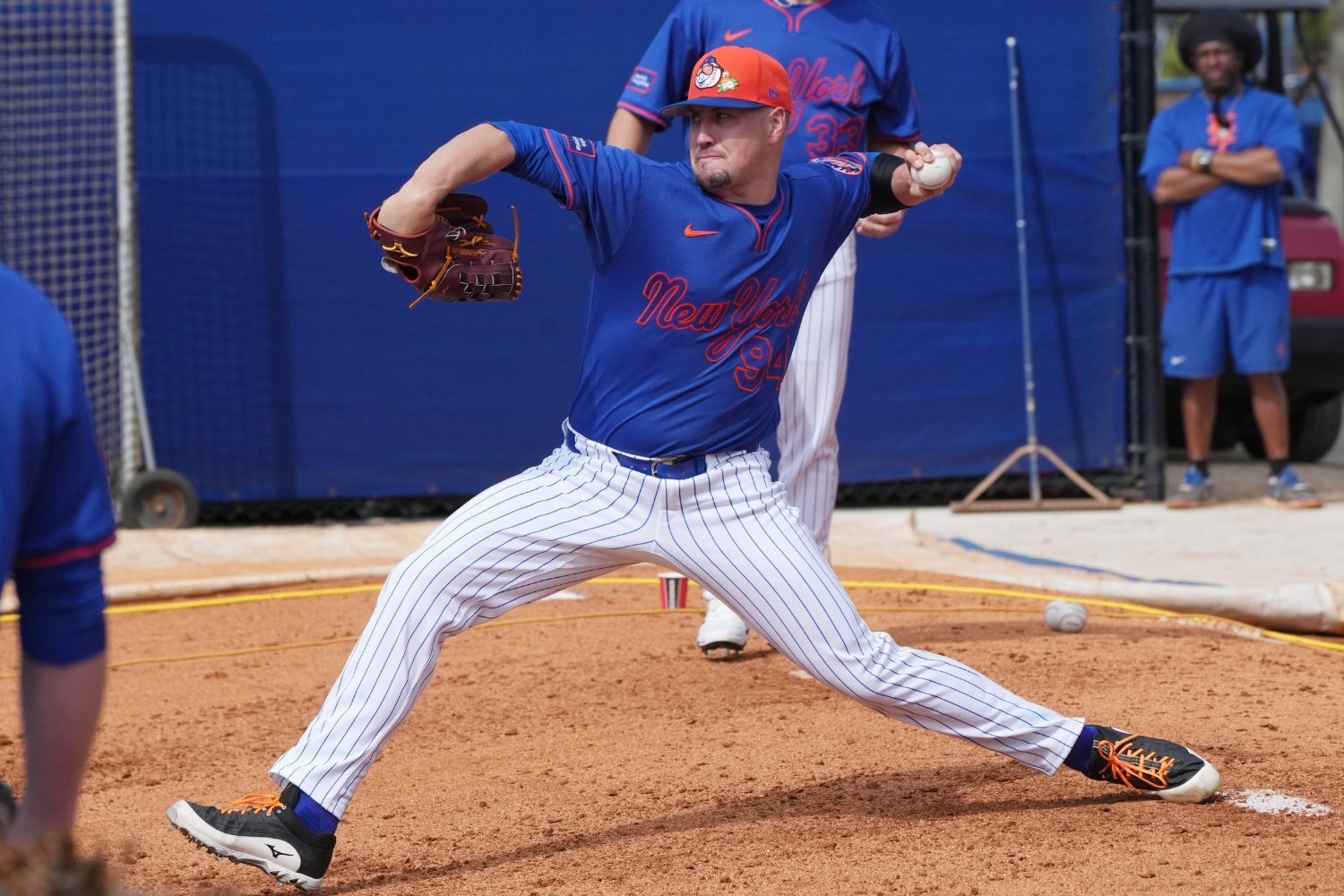 The New York Mets' 2026 campaign has not been defined by a lack of pitching. Through the trade deadline, the team ranked 12th in the league in ERA. While not exceptional, that looks pretty dang good when compared to what's happening with the bats. New York hopes it addressed its future offensive concerns at the trade deadline (hello, Jefferson Rojas and others). Its future rotation and bullpen, though, feels like it's in great shape, even as the two most-heralded arms in their system struggle with their command. Monthly stats referenced are from milb.com at the player's listed level. Pitchers eligible for inclusion on this list must have pitched at least 10 innings. Prospect rankings are from Grand Central Mets. Ranking Mets' Best MiLB Pitchers in July 4. Noah Hall - High-A (Brooklyn) Hall posted a 2.72 ERA in 25 games (21 starts) for the Cyclones in 2025. The 2023 seventh-round pick failed to carry that momentum into 2026, posting monthly ERAs of 5.32, 7.84 and 5.24 to open the season. Then, in July, he locked in. G (GS) IP H R (ER) K/BB 4 (2) 23.1 9 1 (1) 30/10 I'd be impressed if you put up those numbers pitching to your kids in the backyard, let alone at High-A. Opposing hitters batted just .115 against Hall last month. That, a 0.39 ERA, 0.89 WHIP, and 11.57 K/9 rate earned him a promotion to Double-A Binghamton on July 28. 3. Garrett Stratton - AA (Binghamton) The third-to-last pick (No. 613 overall) in the 2025 MLB Draft has been dominant during his first full minor-league season. Stratton's lone MiLB frame post-draft was enough for him to open this year in Brooklyn. He went through the usual hiccups in April and May, but has been otherworldly from June onward, tallying 36 strikeouts to just two walks in 18 appearances. G (GS) IP H R (ER) K/BB 9 (0) 11.2 7 5 (3) 15/1 Stratton's ERA (2.31 in July) was better in June (1.32). However, he lowered his batting average against more than 80 points (.245 to .163) month over month, giving him a minuscule 0.69 WHIP. Whether you believe his June or July was better, there's no disputing his credentials for placement on this list. 2. Jonathan Santucci - AA (Binghamton, No. 6 Prospect) Santucci, the highest-ranked left-handed starter in New York's pipeline, made what he likely hopes are the final Double-A starts of his career in July. The 2024 second-round pick from Duke got two more outs last month than he did in June despite making one fewer start, and significantly improved his K/9 rate (10.23 to 14.69) in the same span. G (GS) IP H R (ER) K/BB 4 (4) 22.2 14 9 (7) 37/10 Jonah Tong has not posted a BB/9 rate below 5.00 in any month of MiLB play this year. Jack Wenninger's lowest rate, 4.84, came in April. Santucci now has two months with a rate lower than 4.00 after July's 3.97 clip. Five walks across four innings in his Triple-A debut don't set him to repeat that effort, but at least he has shown he's capable. If he can rein in those free passes the rest of this month, it's possible he earns a look with the big-league club in September. 1. Nate Lavender - AAA (Syracuse) The Mets drafted Lavender in the 14th round of the 2021 MLB Draft (No. 412 overall). He opened a couple games for Syracuse this summer, but is a reliever by trade, and a darn good one. Through August 1, his career MiLB K/9 rate was 13.84. He sat a shade lower than that in July, when he punched out 17 batters in 11 2/3 innings. G (GS) IP H R (ER) K/BB 8 (0) 11.2 5 3 (3) 17/4 Opposing hitters can tag the ball hard when they touch Lavender's offerings, but they don't put bat to ball very often. His 41.4% strikeout percentage sits in the 98th percentile, per Prospect Savant. And unlike the other players on this list, we've seen this translate to the majors. Through two MLB outings, Lavender has three strikeouts and one walk -- his only baserunner allowed -- in 2 2/3 innings. For making a successful big-league debut after a strong July showing, he's our MiLB Pitcher of the Month. Honorable Mentions: Carlus Guzman (AA-Binghamton), Elwis Mijares (A-St. Lucie), Conner Ware (A-St. Lucie) View the full article
 -
 Daniel Dickinson homered and reached base five times in Wisconsin’s victory. Andrew Fischer’s 35th homer wasn’t enough for Biloxi. Brandon Sproat struggled for Nashville and Wilson lost a close contest. For the week, Wisconsin (4-2) was the sole Brewers’ affiliate to win their series, while Nashville (3-3) and Wilson (3-3) managed to earn draws. Biloxi (1-5) lost several close games. Transactions: INF/OF Ji Hwan Bae signed to a minor league contract and selected by MLB Brewers LHP Drew Rom (who’s been playing at AAA Nashville) designated for assignment by MLB Brewers LHP Thomas Pannone activated by AAA Nashville (which means he accepted the outright assignment instead of electing free agency after being designated for assignment) INF Freddy Zamora placed on AAA Nashville’s 7-day injured list RHP Bishop Letson activated from AA Biloxi’s 7-day injured list After Sunday’s contests, 1B Blake Burke also got the call to move up to AAA Nashville from AA Biloxi. Game Action: Nashville Pre-Game Media Notes Final: Memphis (Cardinals) 7, Nashville 3 Box Score Via a Sounds’ press release, game details: Sounds Drop Finale to Redbirds, Split Series in Memphis Starting RHP Brandon Sproat’s first minor league appearance since August 2025 was not the bounceback performance he was probably looking for, as he conceded six runs on eight hits over four innings. In all, he faced 23 batters, with seven of them hitting balls over 100 MPH and two drawing walks. Offensively, the team drew four walks over the first 4 2/3 innings before SS Eduardo Garcia (2-for-3) collected Nashville’s first hit. Garcia also produced the squad’s next hit with one out in the top of the 8th inning while still trailing 6-0. OF Sal Frelick’s first rehab hit, an OF Akil Baddoo walk and a 1B Luke Adams two-run double followed to narrow the deficit to 6-3, but OF Tyler Black was unable to keep the rally going or extend his seven-game hitting streak as he went down swinging on four pitches. Sounds’ Extras: The above blurbs account for the team’s only hits (4 vs. 12 for the Redbirds). 3B Brock Wilken also saw his 16-game on-base streak come to an end in an 0-for-3 game (no strikeouts) with a sacrifice fly. Well done to LHP Thomas Pannone and RHP Will Childers for combining on three innings of scoreless relief. Next week’s outlook: Nashville (56-58) hosts Pirates’ affiliate Indianapolis (56-58) this week in a six-game series which starts on Tuesday evening. Biloxi Pre-Game Media Notes Final: Columbus (Braves) 9, Biloxi 7 Box Score The Shuckers’ battled back from 3-0 and 4-3 deficits but weren’t able to muster a third comeback after relinquishing the lead in the bottom of the 8th inning on the road. Even more important than the seven runs on ten hits was the healthy return-to-action for starting RHP Bishop Letson (3 IP, 4 R, 6 H, 1 BB, 3 Ks) – his first game since July 19. He worked into the 4th inning, tossing 50 pitches and conceding an infield single and back-to-back homers in the 1st inning to go with a single and RBI triple to open the 4th frame. Trailing 3-0, OF Josh Adamczewski’s double to commence the 4th inning triggered a run of five consecutive Shuckers reaching base, highlighted by minor league home run leader 3B Andrew Fischer’s 35th blast of his amazing 2026 campaign, a two-run shot to tie the contest. RHP Edwin Jimenez (2 IP, 1 R, 1 K) registered three consecutive outs to strand the runner at 3rd base inherited from Letson, then Biloxi responded with a four-run fifth inning on four singles, the last by OF Damon Keith (2-for-4, double, 2 RBIs) for a 7-4 advantage. RHP Yorman Galindez (2 1/3 IP, 4 R, 3 H, 3 BB, 1 HBP, 3 Ks) entered in the 6th inning to try to close out the game with a long relief effort, but back-to-back walks to open the bottom of the 8th inning led to three troublesome runs and a 9-7 deficit. Although #9 hitting 2B Jheremy Vargas had a 2-for-3 game, Manager Mike Guerrero tried to go for the big hit with one-on, one-out in the top of the 9th inning, but pinch hitter Marco Dinges grounded into a 5-4-3 double play to end the game. Shuckers’ Extras: Six Biloxi batters reached base at least twice on hits or walks, including solid games for Fischer (1-for-2, HR, 2 walks, 3 RBIs), Adamczewski (1-for-3, double, walk), DH Blake Burke (1-for-3, walk, RBI) and 1B Mike Boeve (2-for-4). RHP Stiven Cruz retired both batters he faced in relief of Galindez, which may be the confidence boost he needs after a recent rough stretch (18 earned runs allowed in prior 12 2/3 innings). Next week’s outlook: Biloxi returns home to battle Marlins’ affiliate Pensacola for six games, commencing on Tuesday. Wisconsin Pre-Game Media Notes Final: Wisconsin 9, Beloit (Marlins) 2 Box Score Via the Timber Rattlers’ website, game details: Rattlers Take Game and Series from Sky Carp The linked game report includes four highlight videos of Wisconsin’s big series-clinching road win on Sunday, which saw starting RHP Daniel Corniel cover five innings (2 R, 2 H, 0 BB, 1 K) for the second time this year (on just 53 pitches this time) and earn his first win since August 2024. #9 batter C Edgardo Ordonez (2-for-4, double, 2 RBIs) delivered the key early hit (2-out, 2-run double in the 2nd inning) and 2B Daniel Dickinson (2-for-2, HR, 2 walks, HBP, 3 RBIs) homered as part of reaching base five times. DH Tayden Hall’s solo homer to open the 6th inning nearly hit a white truck parked beyond the fence as part of the team’s five-run outburst, in a frame that included an OF Braylon Payne bunt single, Dickinson RBI hit-by-pitch, 1B Eric Bitonti (2-for-4, RBI, 2 SBs) sacrifice fly and a run-scoring wild pitch. Timber Rattlers’ Extras: Handed an 8-2 advantage, LHP Wande Torres (3 IP, 0 R, 3 H – all singles, 1 BB, 5 Ks) and RHP Michael Fowler (1 IP, 0 R, 1 K) had the luxury of pounding the strike zone while dominating the final four innings. In a terrific sign of strong health, this was the first game in which 19-year-old Luis Pena has manned the shortstop position over the full nine innings since July 18. He delivered a 1-for-4 game with an RBI and a hit-by-pitch, while also turning a 6-3 double play to end the 6th inning. The start of the game was delayed 30 minutes due to rain. Next week’s outlook: Wisconsin remains on the road, heading three hours west of Beloit to battle Twins’ affiliate Cedar Rapids for six games starting Tuesday evening. Wilson Pre-Game Media Notes Final: Hill City (Guardians) 8, Wilson 7 Box Score Via the Warbirds’ website, game details: Warbirds Fall in Finale, Settle for Series Split - Warbirds Can't Overcome Five-Run Deficit Wilson and Hill City went punch-for-punch in this tight Sunday contest, with the Warbirds grabbing a 2-0 lead in the 1st inning and tying the contest 3-3 in the 2nd frame but finding themselves down 4-3 from the 3rd to the 7th innings. The first five Wilson batters of the game reached base via hit or walk, but a pick-off and a tough outfield catch on OF Jose Anderson’s sacrifice fly limited the team to just two runs scored in that initial frame. The Howlers responded with their first four batters of the game reaching base by hit, walk or hit-by-pitch against starting RHP Tyler Renz (3 2/3 IP, 4 R, 4 H, 4 BB, 1 HBP, 4 Ks), who added a pickoff error but got some defensive help via OF Brailyn Antunez’s outfield assist (and 3B Juan Ortuno’s relay throw) back into the infield. RHP Ismael Yanez (1/3 IP, 1 K) stranded one baserunner for Renz, then RHP Diustin Mayorquin tossed two scoreless innings to keep the game 4-3 in the middle innings. The Warbirds first three batters of the 6th inning reached via hit or walk, and two more batters reached base in the 7th frame, but a caught stealing blunted the 6th inning opportunity and the team went 1-for-9 with runners in scoring position. RHP Eric Prado (1/3 IP, 4 R, 1 K) entered in the bottom of the 7th inning, walking six consecutive batters and falling behind 3-0 to the next hitter. He did manage to come back to strike out that last batter, handing over to RHP Thomas Conrad (1 2/3 IP, 0 R, 1 K) who put in solid work. Handed an 8-3 lead, Hill City’s next relief pitcher immediately tried to return Prado’s favor by walking the first four Warbirds he faced in the top of the 8th inning, with SS Brady Ebel (1-for-3, 2 walks, RBI) singling home two runs with two outs to claw back to within a run at 8-7. Ortuno (2-for-4, walk, SB) followed with a walk and a stolen base to apply maximum pressure, but Antunez struck out swinging to strand baserunners at 2nd and 3rd, constituting Wilson’s final threat. Warbirds’ Extras: C Rylan Mills drew three walks and each of OF Handelfry Encarnacion (2-for-5), Anderson (1-for-3, walk, RBI), 1B Pedro Ibarguen (1-for-3, walk, RBI, SB) and Antunez (two walks) reached base twice. Mills also threw out one of two attempted basestealers. Wilson out-hit their opponents 7-6 and both teams drew 11 walks. It’s impressive that the teams managed to complete the game in 2 hours, 46 minutes in spite of the free passes. Next week’s outlook: Wilson returns home for six games against Royals’ affiliate Columbia, commencing from Tuesday. We hope that you enjoy the Minor League Link Report. On Monday, the Dominican Summer League squads continue their quests to qualify for the DSL playoffs, with their respective games commencing at 10:00 AM CST. The Milwaukee Brewers also begin their series at the Padres at 8:40 PM CST. Organizational Scoreboard including starting pitcher info, game times, MiLB TV links, and box scores Current Milwaukee Brewers Organization Batting Stats and Depth Current Milwaukee Brewers Organization Pitching Stats and Depth View the full article
 -
 The four full-season affiliates of the San Diego Padres went 3-1 as they wrapped up their weekly series Sunday. The Triple-A El Paso Chihuahuas toppled Reno 7-4, the Double-A San Antonio Missions beat Springfield by the same 7-4 score, while the High-A Fort Wayne TinCaps fell 8-2 and the Low-A Lake Elsinore Storm walked off Ontario 5-4. Padres Minor-League Transactions San Diego Padres sent RHP Joe Musgrove on a rehab assignment to El Paso Chihuahuas. San Diego Padres optioned 3B Gage Workman to El Paso Chihuahuas. Joe Musgrove Shines, Ethan Salas Homers In Chihuahuas' Win Rehabbing Padres right-handed starter had a good 3⅓ innings in his second outing, while top prospect Ethan Salas hit his second Triple-A homer in the last three games as the El Paso Chihuahuas scored six times in the seventh inning for a 7-4 victory over the host Reno Aces. The Chihuahuas (47-66, 12-26 second half) won the final three games of the six-game series after losing nine straight. Musgrove, who has not pitched for the Padres since Game 2 of the 2024 NL Wild Card Series against Atlanta after having Tommy John surgery and then having a major setback after one outing in spring training, threw 53 pitches, including 42 strikes, with his four-seam fastball sitting at 94-95 mph. He topped out at 95.5 mph in the third inning and hit 94.5 mph in the fourth, his final inning. That is the velocity he held before being hurt. Musgrove gave up a leadoff homer to Kristian Robinson in the first inning, but finished by allowing a total of six hits while not issuing a walk and striking out two. Salas, Padres Mission's No. 1 prospect, followed his first Triple-A homer Friday by smashing a two-run shot Sunday in his ninth game since being promoted from Double-A San Antonio. Salas hit a 1-1 changeup 440 feet to right-center that put the Chihuahuas up 7-3. That was also Salas' ninth homer this season, which matches the total from his debut season of 2023. The homer came during a six-run seventh, with Carlos Rodriguez's third triple of the series, this one with the bases loaded, put the Chihuahuas up 4-3. After a walk, Rodriguez would score on an errant pickoff attempt by the pitcher to make it 5-3, then Salas went deep to cap the inning. Salas is slashing .333/.419/.667 (12-for-36) in nine Triple-A games. Right-hander Jhony Brito followed Musgrove and allowed two runs over 2⅔ innings on three hits. EP1_0809.mp4 EP2_0809.mp4 Player AB R H RBI BB K Dustin Harris, RF 3 1 0 0 2 0 Carlos Rodríguez, CF 5 1 2 3 0 1 Nick Solak, LF 3 1 0 0 2 1 Ethan Salas, C 5 1 2 2 0 1 Marcos Castañon, 2B 5 0 2 0 0 1 Will Wagner, 3B 4 0 1 0 0 2 Mason McCoy, SS 3 1 1 0 1 1 Nick Pratto, 1B 2 1 0 0 2 1 Blake Hunt, DH 3 1 1 1 0 2 Totals 33 7 9 6 7 10 Player IP H R ER BB K HR Joe Musgrove 3 1/3 6 1 1 0 2 1 Jhony Brito (W, 2-1) 2 2/3 3 2 2 0 0 0 Johan Moreno 1/3 0 0 0 2 1 0 Ethan Routzahn (H, 4) 1 2/3 3 1 1 0 2 0 J.P. France (S, 1) 1 1 0 0 1 1 0 Totals 9 13 4 4 3 6 1 Big Sixth Inning Propels Missions To Series Win Carson Tucker and Jake Cunningham each had two-run singles in the sixth inning to put the host Double-A San Antonio Missions on top en route to a 7-4 victory over the Springfield Cardinals. The Missions (49-59, 18-21 second half) won the final three games against the Texas League North Division's first-place team. Brendan Durfee hit a two-run homer and joined Cunningham as having two of the Missions' seven hits. Durfee homered in the second inning to put the Missions up 2-1, with the Cardinals taking the lead with single runs in the third and fourth innings. The Missions tied it on a run-scoring wild pitch in the bottom of the fourth, then the Cardinals went back on top in the sixth before Tucker and Cunningham came through with the decisive hits. Missions right-handed starter Matthew Watson went 4⅓ innings, allowing three runs on eight hits, including a homer, and no walks with two strikeouts. Left-hander Igor Gil allowed a run while hitting a batter in one inning with two strikeouts, while right-handers Francis Pena (one inning), Bernard Jose (1⅔ innings) and Tucker Musgrove (one inning) didn't allow a run in 3⅔ innings. Musgrove, Padres Mission's No. 9 prospect, earned his first Double-A save and the third of his career. SA_0809.mp4 Player AB R H RBI BB K Carson Tucker, SS 5 1 1 2 0 2 Tirso Ornelas, DH 4 0 0 0 1 2 Jake Cunningham, LF 3 0 2 2 1 1 Braedon Karpathios, RF 3 0 0 0 1 2 Ryan Jackson, 2B 4 1 0 0 0 2 Albert Fabian, 1B 3 2 1 0 1 1 Luis Verdugo, 3B 3 1 0 0 1 1 Kai Roberts, CF 3 1 1 0 1 1 Brendan Durfee, C 4 1 2 2 0 2 Totals 32 7 7 6 6 14 Player IP H R ER BB K HR Matthew Watson 4 1/3 8 3 3 0 2 1 Igor Gil 1 0 1 1 0 2 0 Francis Peña (W, 2-3) 1 2 0 0 2 0 0 Bernard Jose (H, 2) 1 2/3 0 0 0 0 1 0 Tucker Musgrove (S, 1) 1 0 0 0 1 1 0 Totals 9 10 4 4 3 6 1 TinCaps Silenced As Whitecaps Win With Early Push The host High-A Fort Wayne TinCaps managed just four singles for the game while giving up six runs over the first four innings in an 8-2 loss to the West Michigan Whitecaps. The TinCaps (46-60, 19-21 second half) went 1-5 in the six-game series. Kerrington Cross had two hits and an RBI, while Alex McCoy, Padres Mission's No. 14 prospect, singled and scored twice for the TinCaps. TinCaps right-handed starter Abraham Parra gave up those six early runs (five earned) in three-plus innings, allowing five hits and four walks while striking out one. Right-hander Will Koger and left-hander Braian Salazar combined for five shutout innings, each allowing a hit, before right-hander Carlos Medina gave up a pair of runs while getting only two outs in the ninth before right-hander Will Vamette cleaned up with the final out. Player AB R H RBI BB K Justin DeCriscio, SS 4 0 1 0 0 1 Ryan Wideman, CF 1 0 0 0 0 1 Kasen Wells, CF 3 0 0 0 0 2 Alex McCoy, RF 3 2 1 0 0 0 Luke Cantwell, DH 2 0 0 0 1 1 Rosman Verdugo, 2B 4 0 0 0 0 0 Kerrington Cross, 1B 4 0 2 1 0 0 Bradley Frye, 3B 4 0 0 0 0 1 Yoiber Ocopio, C 3 0 0 0 0 0 Conner Westenburg, LF 3 0 0 0 0 2 Totals 31 2 4 1 1 8 Player IP H R ER BB K HR Abraham Parra (L, 5-6) 3 5 6 5 4 1 0 Will Koger 2 1/3 1 0 0 4 2 0 Braian Salazar 2 2/3 1 0 0 1 2 0 Carlos Medina 2/3 1 2 2 2 0 1 Will Varmette 1/3 0 0 0 0 0 0 Totals 9 8 8 7 11 5 1 Nu'u Contrades Comes Through In Pinch, Delivers Storm Walk-Off Win Pinch-hitter Nu'u Contrades capped his first week as a pro by singling home the winning run with two outs in the bottom of the ninth as the host Low-A Lake Elsinore Storm walked off the Ontario Tower Buzzers 5-4. After losing the first two games in the series, the Storm (58-50, 19-23 second half) won the final four. The Storm scored twice in the ninth with the only hit being the one by Contrades, the Padres' sixth-round draft choice, with two walks, a steal and an errant throw on a double steal bringing in the first run. Qrey Lott scored that run following his 19th and 20th steals. Dawson Willis hit a two-run homer as part of a two-hit day, while fourth-round pick Alex Conover also had two hits. Contrades' game-winner was a looper over the shortstop that easily scored Yimy Tovar. Storm right-handed starter Luis Maracara went three innings, allowing three hits on two hits and three walks while striking out five. Left-hander Joseph Herrera gave up one unearned run in two innings, right-hander Yoesmerli Beltre went 2⅓ shutout innings and right-hander Jordan Valenzuela 1⅔ shutout innings. LE1_0809.mp4 LE2_0809.mp4 Player AB R H RBI BB K Dawson Willis, 3B 4 2 2 2 0 1 Alex Conover, CF 3 0 2 0 1 1 Ty Harvey, 1B 3 0 0 1 1 2 Jorge Quintana, SS 4 0 0 0 0 2 Jesmaylin Arias, RF 3 0 0 0 1 0 Qrey Lott, PR 0 1 0 0 0 0 Yimy Tovar, 2B 2 1 0 0 2 0 Truitt Madonna, DH 4 0 0 0 0 1 Jake Bold, C 3 0 0 0 1 2 Dylan Grego, LF 3 1 1 0 0 1 Nu'u Contrades, PH 1 0 1 1 0 0 Totals 30 5 6 4 6 10 Player IP H R ER BB K HR Luis Maracara 3 2 3 3 3 5 1 Joseph Herrera 2 2 1 0 1 2 0 Yoesmerli Beltre 2 1/3 2 0 0 1 1 0 Jordan Valenzuela (W, 2-0) 1 2/3 1 0 0 1 1 0 Totals 9 7 4 3 6 9 1 Padres Mission's Top 20 Prospect Performances Ethan Salas: 2-for-5, HR, 2 RBI, K Kash Mayfield: Traded Miguel Mendez: Traded Ryan Wideman: 0-for-1, K Kruz Schoolcraft: DNP Jorge Quintana: 0-for-4, 2 K Ty Harvey: 0-for-3, RBI, BB, 2 K Kale Fountain: Injured, out for season Tucker Musgrove: 1 IP, 0 H, 0 R, BB, K, S Coleman Borthwick: In Arizona Lamar King Jr.: DNP Braedon Karpathios: 0-for-3, BB, 2 K Jagger Haynes: DNP Alex McCoy: 1-for-3, HBP, 2 R Truitt Madonna: 0-for-4, K Jesus Castro: DNP Garrett Hawkins: DNP Elliot Lascelles: In Arizona Winyer Chourio: DNP Rosman Verdugo: 0-for-4 View the full article
 -
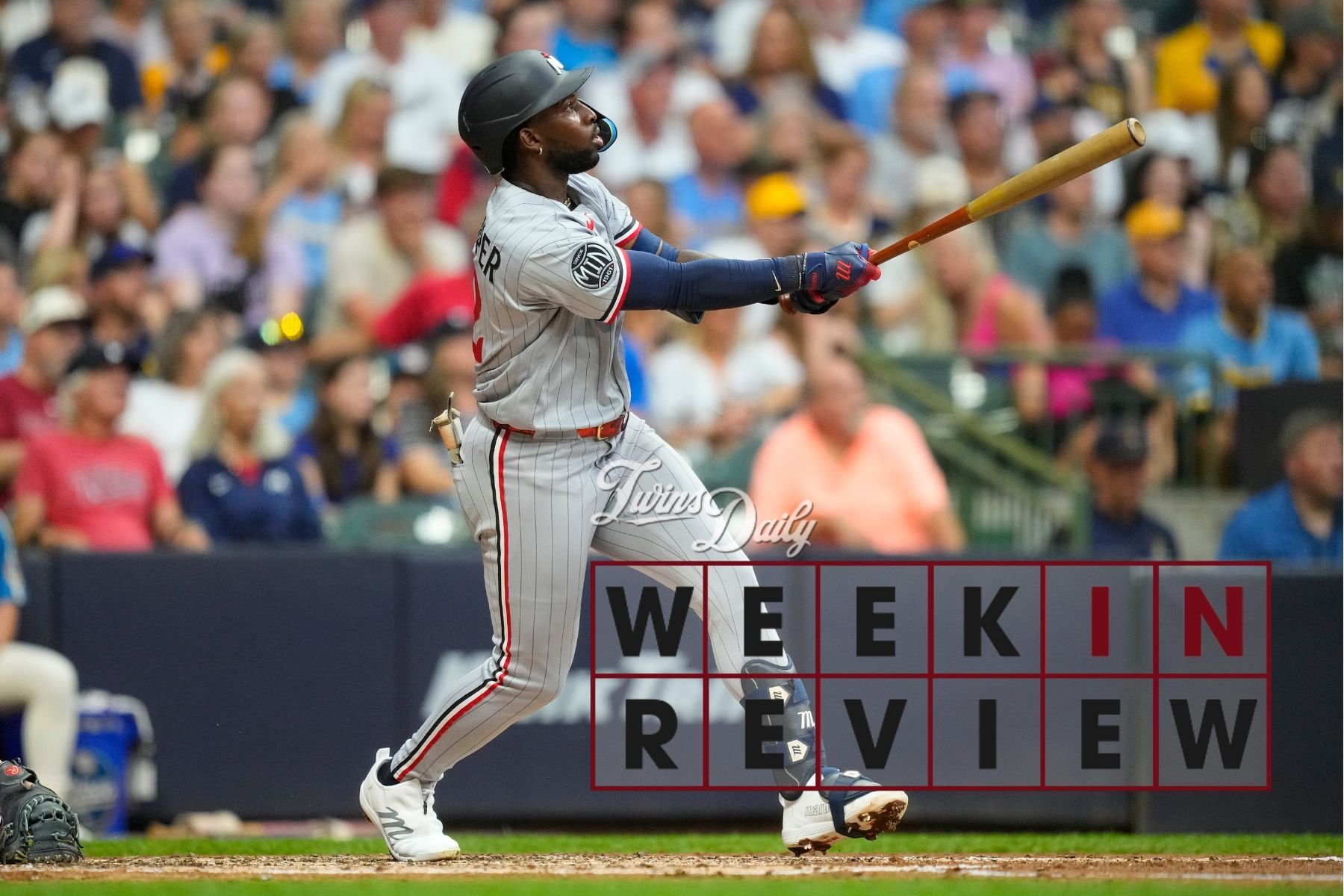 The Weekly Nutshell: The Twins swung a big trade on Monday, capping an active deadline stretch that saw three newcomers join the pitching staff. Unfortunately, Minnesota's play on the field was far less inspired. They were six outs away from getting swept in Kansas City before rallying to take a late lead in the finale. They followed a series-opening win in Milwaukee with back-to-back one-run losses, falling back to three games under .500 and losing ground in the postseason race. Since very briefly holding a winning record at the end of July, the Twins have stumbled badly, dropping six of their last eight. The offense is sputtering and the biggest stars are MIA. With 43 games remaining, the pressure is on for this club to get on track and reverse its downward trend. They are hoping the promotion of one of their top prospects can provide a helpful jolt. Weekly Snapshot: Mon, 8/3 through Sun, 8/9 *** Record Last Week: 2-4 (Overall: 58-61) Run Differential Last Week: -6 (Overall: -35) Standing: T-3rd Place in AL Central (3.5 GB); 1.5 games out of WC Latest Game Results Game 114 | KC 8, MIN 2: Royals Take Control From Start to Finish, Ryan Struggles Ryan: 5.1 IP, 5 R (4 ER), 7 H, 2 BB, 3 K Game 115 | KC 2, MIN 1: Offense Smothered by Cameron Again in 4th Straight Loss Twins offense: 2-29, 0 XBH, 1 BB, 10 K Game 116 | MIN 4, KC 3: Another Late-Game Comeback Steers Twins Clear of Sweep Twins bullpen: 3 IP, 0 R, 1 H, 1 BB, 4 K Game 117 | MIN 8, MIL 6: Twins Rally Back from Early Deficit, Bullpen Hangs On Bell: 4-5, HR, 3 RBI Game 118 | MIL 4, MIN 3: Early Lead Disappears in Middle Innings, Hoffman Takes Loss Lewis: 2-4, 2 RBI Game 119 | MIL 4, MIN 3 (10): Brewers Take Game, Series Behind Key Defensive Plays Clemens: 1-4, HR, 2 RBI NEWS & NOTES The Twins made only one move on deadline day but it was a significant one, sending a three-prospect package headlined by Dasan Hill to the Blue Jays in exchange for veteran reliever Jeff Hoffman. The righty Hoffman joins A.J. Minter and Dean Kremer as outside reinforcements for a pitching staff that Jeremy Zoll and the front office bolstered semi-aggressively, as the Twins look to make a run from within this unspectacular American League field. Kendry Rojas was optioned and Cody Laweryson designated for assignment to make room for Hoffman, who immediately becomes the team's best reliever. The added rotation depth provided by Kremer's acquisition came in handy quickly when Joe Ryan landed on the injured list following another sub-par start in Kansas City on Tuesday. Openly exasperated with his physical limitations, Ryan was sent home for an exam and diagnosed with a mild glute strain, helping explain why his performance has taken a sharp downward turn of late. Zebby Matthews, optioned the previous week to make room for Kremer, returned to the Twins rotation before even making a start at Triple-A. The Twins didn't make any offensive additions at the deadline, but they sought a boost internally by promoting one of their top prospects in Kaelen Culpepper. The infielder was called up from Triple-A ahead of Friday's series opener in Milwaukee, with Tristan Gray optioned to the minors to make room. Culpepper started at shortstop and batted seventh in his debut. HIGHLIGHTS Culpepper started his MLB career with a bang, launching a solo home run in his second at-bat on Friday night to draw the Twins within one run in an eventual victory. On an 0-2 pitch, Culpepper took Brewers starter Shane Drohan deep to left-center for a 390-feet blast. Welcome to the big leagues, kid. I'm eager to see a lot more. Royce Lewis kicked things in Kansas City with a four-hit night, then went on to add a homer and two doubles over the remainder of the week, extending his hitting streak to 13 games before an 0-fer snapped it on Sunday. Lewis has notched six extra-base hits and driven in seven runs across eight games this month, providing a rare spark for a lineup that's otherwise struggling to find big hits. Josh Bell enjoyed a four-hit game of his own, on Friday night in Milwaukee, and homered twice during the week to break out of a prolonged power slump. Bell had gone a full month in between home runs before taking Royals reliever Steven Cruz deep on Tuesday. Hopefully he's about to get locked into another hot streak, because the team could really use it. The freshly reinforced bullpen continued to look like the strength of the roster, allowing six earned runs in 20 innings for a 2.70 ERA. Slim margins for error meant that Hoffman and Yoendrys Gómez were tagged with losses on Saturday and Sunday by allowing one run apiece, but they mostly looked good, as did the rest of the relief corps. Kody Funderburk threw 4 ⅔ scoreless innings with eight strikeouts and one walk; he's given up one run in his past 15 appearances. Tommy Nance made three shutout appearances and has a 1.74 ERA since being acquired. Andrew Morris didn't allow a run in his 2 ⅔ innings of work, lowering his ERA to 3.09 for the season. It makes sense that the Twins focused mainly on relief upgrades at the deadline, given their overall talent level there, but the bullpen has strongly outpaced the rotation and lineup over the past month-plus and that continued to be the case last week. The Twins are staying in a lot of close games thanks to this unit, which has consistently shown that if handed leads it can hold them. LOWLIGHTS Leads are tough to come by. The offense is struggling to get anything going, especially against opposing starters. Thursday's finale against the Royals marked the ninth consecutive time an opposing team held the Twins to two or fewer runs through the first six innings. They managed to score three in the eighth of that one to come back and avoid a sweep, but have become far too dependent on those types of dramatic late-game rallies to ever win a game. Kody Clemens has authored a few of those big game-changing knocks, and added another on Sunday with his game-tying two-run homer, but prior to that he was 2-for-22 on the week and his OBP has sunk to .287. Brooks Lee also homered on Sunday but was 1-for-14 coming into the game and his OPS is sagging back toward the 600s. Victor Caratini was 2-for-11 and hasn't homered since June. Alan Roden went 1-for-7 and is running a .527 OPS in his latest stint with the Twins. Minnesota's best hitters are either injured (Byron Buxton) or mildly slumping — Ryan Jeffers was 3-for-19 last week and Trevor Larnach 1-for-11. Save for the modest hot streaks from Lewis and Bell, no one's picking up the slack in a lineup that constantly shortcircuits. The timely-hitting magic that elevated the offense's results in the first half has predictably dried up, as demonstrated over the weekend (2-for-18 with RISP on Saturday and Sunday). It was profoundly frustrating to watch the Twins lineup get shut down by Randy Dobnak and Noah Cameron at Kauffman Stadium five days after they did the same at Target Field. These are not exceptional pitchers and you'd like to think Minnesota's hitters and coaches would come up with some sort of plan seeing them both in such short succession. Alas, the Twins had no answers, scoring just two runs in 13 innings against the Royals starters in a pair of losses to clinch the season series for KC. Four of six games in the past week were decided by one run, and six of the past eight. On the one hand, with margins being this tight, one could reasonably surmise the Twins were just a few missed swings or lucky breaks away from going 6-3 on this road trip instead of 3-6. On the other hand, they've been getting generally outplayed, and clutch late-game heroics have bailed them out several times. The Twins could have easily gone 0-6 against the Royals over the past two weeks on merit. That's tough stuff against a team pacing for 95 losses. Upgrades to the bullpen aren't going to be meaningful if the offense can't find some life and start building some leads here and there. TRENDING STORYLINE The Twins are a fringe playoff contender, tied with Cleveland for the eighth-best record in the AL. They are one of six teams within four games of a Wild Card spot. They've now fallen behind the Tigers in the Central standings. In order to have a shot at making the dance, they're going to win significantly more than they lose the rest of the way. Can they hang in there with their two best players sidelined indefinitely? Buxton received an injection in his ailing hip and there's no clear timeline in place for his return. Ryan's glute injury was deemed relatively minor but it was enough to land him on the IL so he'll miss a couple weeks at least, and who knows what kind of effectiveness level can be expected when he's back on the mound. The Twins are in a tough place, compelled to show patience and get both Buxton and Ryan as healthy as possible while also recognizing that the team's hopes for this season hang in the balance. Every game matters and the absence of Minnesota's two All-Stars is deeply felt. Culpepper's arrival will hopefully help awaken the Buxton-less lineup, but if the Twins really want to push their chips in, they need to find a way to get Walker Jenkins to the big leagues. Jenkins homered twice for the Saints on Thursday and is batting .357 this month. He's ready, and he's talented enough to make a real impact on Minnesota's fortunes. LOOKING AHEAD With their latest nine-game road trip in the books, the Twins return home with two three-game series slated for the coming week, although one of the "home games" (on Thursday) will actually take place in Iowa for the Field of Dreams Game. The Orioles should present a pretty even match-up for the Twins, with nearly identical records and run differentials. The difficulty level only goes up from there, with the Phillies (63-56) followed on the schedule by the Braves (71-47) and Padres (61-57). Can the Twins survive this gauntlet through some of the National League's finest teams? We'll find out. But first they need to take care of business against Baltimore. MONDAY, AUGUST 10: ORIOLES @ TWINS — LHP Trevor Rogers v. RHP Dean Kremer TUESDAY, AUGUST 11: ORIOLES @ TWINS — RHP Brandon Young v. RHP Bailey Ober WEDNESDAY, AUGUST 12: ORIOLES @ TWINS — RHP Shane Baz v. RHP Zebby Matthews THURSDAY, AUGUST 13: PHILLIES @ TWINS — RHP Aaron Nola v. RHP Taj Bradley SATURDAY, AUGUST 15: PHILLIES @ TWINS — LHP Jesus Luzardo v. LHP Connor Prielipp SUNDAY, AUGUST 16: PHILLIES @ TWINS — RHP Andrew Painter v. RHP Dean Kremer View the full article
 -
 Fish On First staffers react to the latest Miami Marlins series and prepare you for what lies ahead. Sunday's show was hosted by Ely Sussman and featured panelists Kevin Barral and Alex Krutchik. The following topics were covered: Sandy Alcantara becomes franchise's all-time leader in innings pitched Griffin Conine solidifying himself as team's top slugger Kyle Stowers exits with left hamstring injury Call-up candidates assuming Stowers requires IL stint Predicting the next series against the Pittsburgh Pirates You can find Fish Unfiltered and Fish On First LIVE on the Fish On First YouTube channel, Apple Podcasts, Spotify or wherever else you get your pods. Our next FOF LIVE episode will be on Thursday at approximately 6:30 p.m. ET following the Marlins-Pirates series finale. View the full article
 -
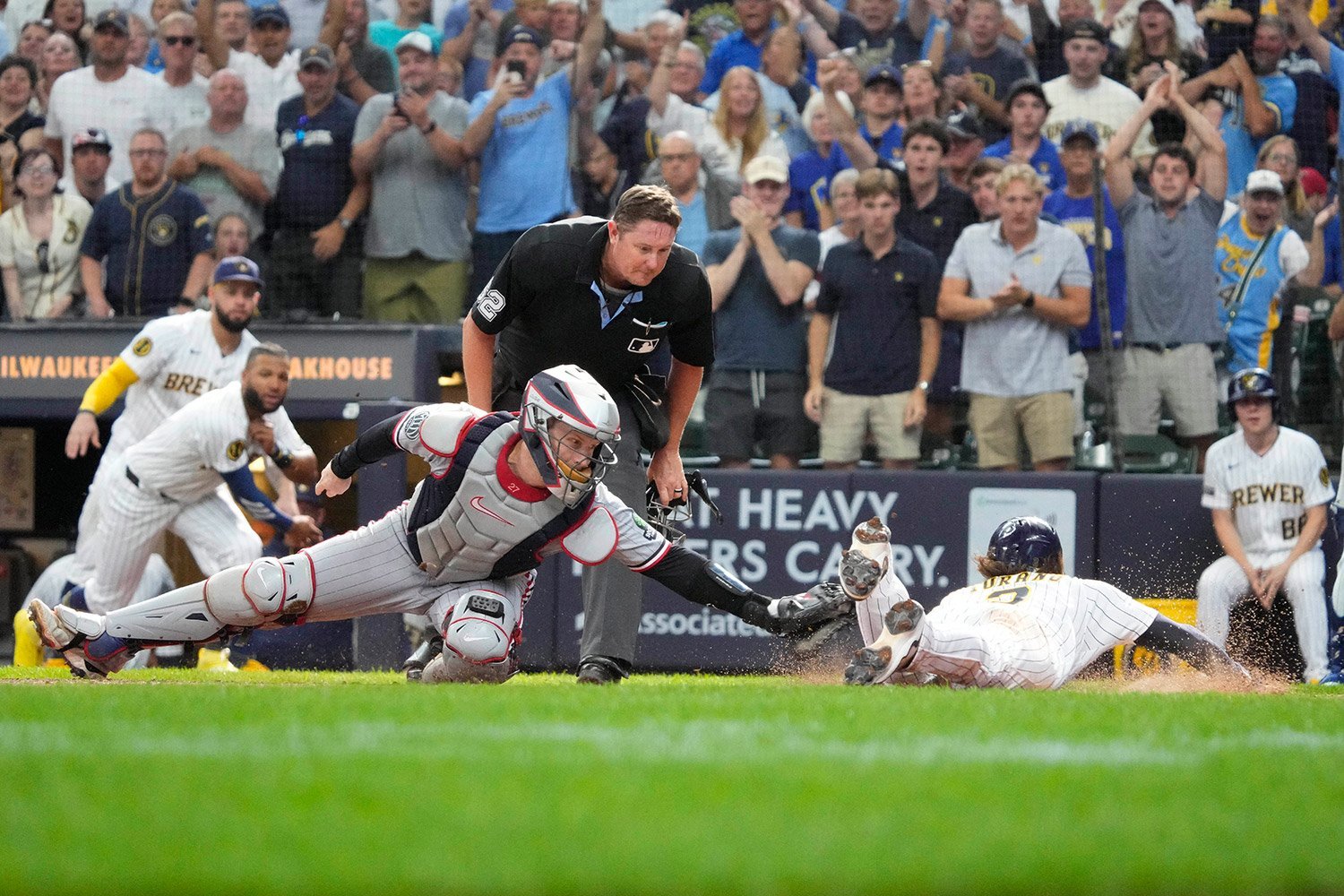 Weekly Snapshot: Record Last Week: 5-2 (Overall: 74-44) Runs Scored Last Week: 30 Runs Surrendered Last Week: 24 Standing: 1st in NL Central *** Game 112 (8/03) | PIT 4, MIL 3 Game 113 (8/04) | MIL 4, PIT 2 Game 114 (8/05) | MIL 4, PIT 2 Game 115 (8/06) | MIL 5, PIT 2 Game 116 (8/07) | MIN 8, MIL 6 Game 117 (8/08) | MIL 4, MIN 3 Game 118 (8/09) | MIL 4, MIN 3 *** Game 112 | Pirates 4, Brewers 3 MIL Starter: Brandon Sproat (3.0 IP, 5 H, 2 BB, 4 ER, 4 K) Top Performers: Garrett Stallings (3.0 IP, 2 H, BB, 0 ER, 4 K) Joey Ortiz (3 H, RBI) The Pirates continued their dominance over the Brewers by getting to Brandon Sproat in game one on Monday, scoring four runs off the young righty in what would be his last start in the major leagues before a demotion to AAA. Meanwhile, Bubba Chandler and the newly revamped Pirates bullpen were able to hold the Brewers to just three runs, and polish off a 4-3 Pirates win. Ortiz puts the Brewers on the board (+7.4 WP%) Game 113 | Brewers 4, Pirates 2 MIL Starter: Logan Henderson (6.0 IP, 4 H, BB, 2 ER, 8 K) Top Performers: Jackson Chourio (3 H, HR, 2 RBI) Andrew Vaughn (H, HR, RBI) Abner Uribe (1.0 IP, H, 0 BB, 0 ER, 3 K) Logan Henderson shut down the Buccos offense to even the series on Tuesday, while Jackson Chourio began what would be a very productive week by recording 3 hits en route to a 4-2 Brewer win. Andrew Vaughn Goes Deep (+12.5 WP%) Game 114 | Brewers 4, Pirates 2 MIL Starter: Kyle Harrison (5.0 IP, H, BB, 0 ER, 10 K) Top Performers: Christian Yelich (2 H, 2B, RBI) The Brewers doubled up on the 4-2 scoreline on Wednesday, this time with Kyle Harrison returning to the mound to outduel Paul Skenes. In fact, the only thing that could stop Harrison was cramping, as he exited the game early while warming up for the sixth inning, though he did so after striking out the final eight Pirates he faced. Kyle Harrison’s masterful return Game 115 | Brewers 5, Pirates 2 MIL Starter: Dustin May (6.0 IP, 3 H, 3 BB, 2 ER, 5 K) Top Performers: Jackson Chourio (H, BB, HR, RBI) Gary Sanchez (2 H, HR, RBI) Dustin May's Brewers debut went according to plan, as behind him the Brewers secured their third straight victory over the Pirates, using home runs from Jackson Chourio and Gary Sanchez to win the series finale 5-2. El Kraken goes yard (+15.0 WP%) Game 116 | Twins 8, Brewers 6 MIL Starter: Shane Dorhan (5.0 IP, 9 H, 4 BB, 6 ER, 4 K) Top Performers: Brice Turang (2 H, BB, 2B, 2 RBI) Bryse Wilson (3.0 IP, H, 0 ER, 2 K) The Twins came to town on Friday and were all over Shane Drohan, who quickly coughed up an early Brewers lead in opposition to Twins hurler Zebby Matthews. The large deficit would be too much to overcome, as the Brewers dropped the opener 8-6. Brice Turang's 2-run double (+12.9 WP%) Game 117 | Brewers 4, Twins 3 MIL Starter: Robert Gasser (4.2 IP, 7 H, 2 BB, 3 ER, 3 K) Top Performers: Brice Turang (3 H, 2B, 2 RBI) Andrew Vaughn (2 H, RBI) Brewers Bullpen (4.1 IP, 0 H, BB, 3 K) Another rough start from a Brewers starter followed on Saturday, but Robert Gasser was able to gut through 4.2 innings, only allowing 3 runs despite heavy traffic on the base paths. That set the stage for the offense to chip away while the Brewers bullpen shut down the Twins bats the rest of the way, with a go-ahead single off the bat of Andrew Vaughn in the 8th being the eventual difference maker in a 4-3 Brewers win. Vaughn puts the Brewers on top (+22.4 WP%) Game 118 | Brewers 4, Twins 3 MIL Starter: Jacob Misiorowski (6.0 IP, 4 H, BB, 3 ER, 9 K) Top Performers: Jake Bauers (2 H, 2 BB, HR, 2 RBI) Jackson Chourio (H, 2 BB, HR, RBI) It was a wild one on Sunday, with a suddenly shorthanded position player group and taxed bullpen finding a way to beat the Twins in extra innings to take the series 4-3. That was all behind a start from Jacob Misiorowski, who struck out nine over his six innings, but a pair of homers from the Twins set the score at 3 by the time he exited. That set the stage for both bullpens navigating a plethora of baserunners in the late innings, but eventually a looping line drive from Jake Bauers sent the Brewer faithful home happy in the 10th. Jake Bauers walks it off (+29.0 WP%) Transactions: 08/09/26 - Placed SS Cooper Pratt on the 10-day injured list with a right hamstring strain. 08/09/26 - Designated LHP Drew Rom for assignment. 08/09/26 - Signed free agent CF JiHwan Bae to a minor league contract. 08/09/26 - Selected the contract of CF Ji Hwan Bae from AAA Nashville. 08/08/26 - Designated RHP Bryse Wilson for assignment. 08/08/26 - Sent RF Sal Frelick on a rehab assignment to AAA Nashville. 08/08/26 - Selected the contract of RHP Lyon Richardson from Nashville Sounds. 08/06/26 - Sent LHP Thomas Pannone outright to Nashville Sounds. 08/06/26 - Sent RHP Carlos Rodriguez outright to Nashville Sounds. 08/05/26 - Activated LHP Kyle Harrison from the 15-day injured list. 08/05/26 - Optioned RHP Grant Anderson to Nashville Sounds. 08/04/26 - Activated RHP Dustin May. 08/04/26 - Activated RHP Antonio Senzatela. 08/04/26 - Optioned RHP Brandon Sproat to AAA Nashville. 08/04/26 - Optioned RHP Garrett Stallings to AAA Nashville. 08/03/26 - Designated RHP Carlos Rodriguez for assignment. 08/03/26 - Placed LHP JoJo Romero on the 15-day injured list. 08/03/26 - Acquired RHP Antonio Senzatela from the Colorado Rockies in exchange for LHP Mark Manfredi and SS Juan Martinez. 08/03/26 - Traded RHP Codi Heuer to the Baltimore Orioles for cash. 08/03/26 - Acquired RHP Dustin May and LHP JoJo Romero from the St. Louis Cardinals in exchange for OF Alexander Frias and OF Josiah Ragsdale. Looking Ahead: Monday, 8/10 - Brewers @ Padres - 8:40 PM CDT Tuesday, 8/11 - Brewers @ Padres - 8:40 PM CDT Wednesday, 8/12 - Brewers @ Padres - 3:10 PM CDT Thursday, 8/13 - Brewers @ Dodgers - 9:10 PM CDT Friday, 8/14 - Brewers @ Dodgers - 9:10 PM CDT Saturday, 8/15 - Brewers @ Dodgers - 6:15 PM CDT Sunday, 8/16 - Brewers @ Dodgers - 3:10 PM CDT View the full article
 -
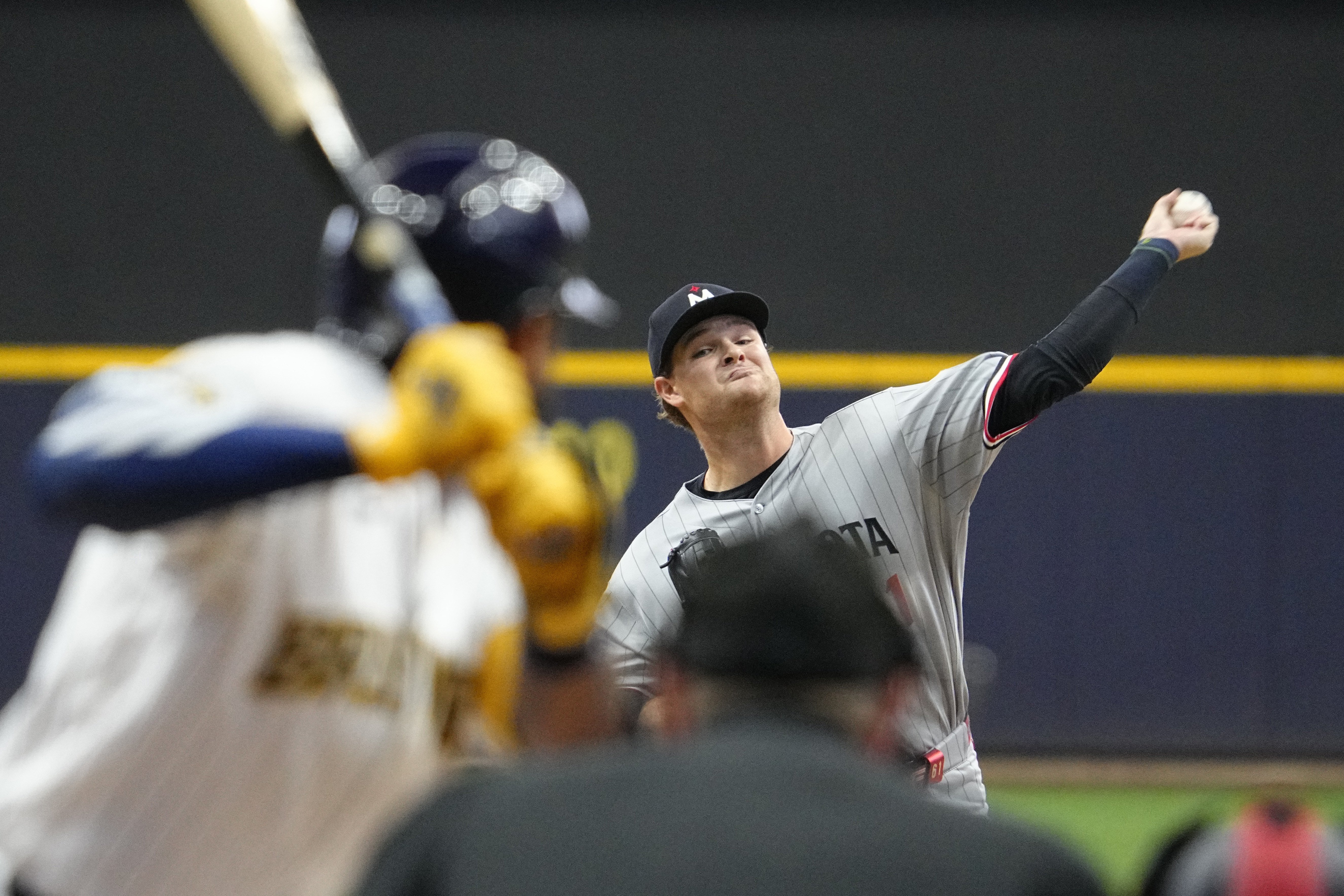 The Minnesota Twins entered Sunday afternoon’s matinee matchup against the NL Central-leading Milwaukee Brewers with intentions of handing them their first home series loss since late June against the Chicago Cubs. While they fell short of that goal, Sunday’s get-away game held sentimental value for two young Twins. “Yeah, it’s going to be fun. Connor (Prielipp) and I were talking about it. It’s great,” Alan Roden told reporters Sunday morning. Roden was born in Middleton, Wisconsin, graduating from high school there before committing to play baseball at Creighton University in 2018. “(I was a fan of) Prince Fielder and Ryan Braun growing up. I was talking about the ‘08 season earlier. It was a lot of fun, you know, watching baseball as a kid. Fast forward a couple years, Eric Thames comes to mind—Chris Carter and Jesús Aguilar, too.” Sunday’s starting pitcher for Minnesota, Connor Prielipp, grew up less than two hours from Roden in Tomah, Wisconsin. “I actually faced Connor in high school. I think it was called regionals, it’s like playoffs. Tomah beat us. I did get a hit off him though. Make sure you tell him that.” remarked a smirking Roden. One season after beating Roden’s Middleton club in regionals, Prielipp won 2019 Gatorade Wisconsin Baseball Player of the Year Award, before committing to the University of Alabama. “I would guess (Connor is excited). You know, coming back and pitching close to his to hometown… I would imagine, you know, there’s gonna be some excitement for Connor,” said manager Derek Shelton. Despite surrendering a leadoff home run to Jackson Chourio, Prielipp kept pace with impending NL Cy Young Award winner Jacob Misiorowski, netting seven strikeouts and three earned runs over five innings pitched. Roden grounded out and struck out in two plate appearances against the best starting pitcher in baseball, an outcome one would be hard-pressed to critique much. We can’t all possess world-beating, left-handed swings like Brooks Lee and Kody Clemens. “It was awesome. Being a lifelong Brewers fan, it awesome to say I finally pitched here,” said Prielipp during his postgame interview. “But at the end of the day, I was ready to pitch.” Jake Bauers hit a walk-off single in the bottom of the tenth inning, propelling Milwaukee to a one-run victory over Minnesota. Despite the bitter ending, however, this will be a day to remember for the two Wisconsinites. View the full article
