


DiamondCentric
-
Posts
2,631 -
Joined
-
Last visited
Never
Content Type
Profiles
Forums
Events
News
Tutorials & Help
Major League Baseball Videos
Guides & Resources
Store
Downloads
Gallery
Everything posted by DiamondCentric
-

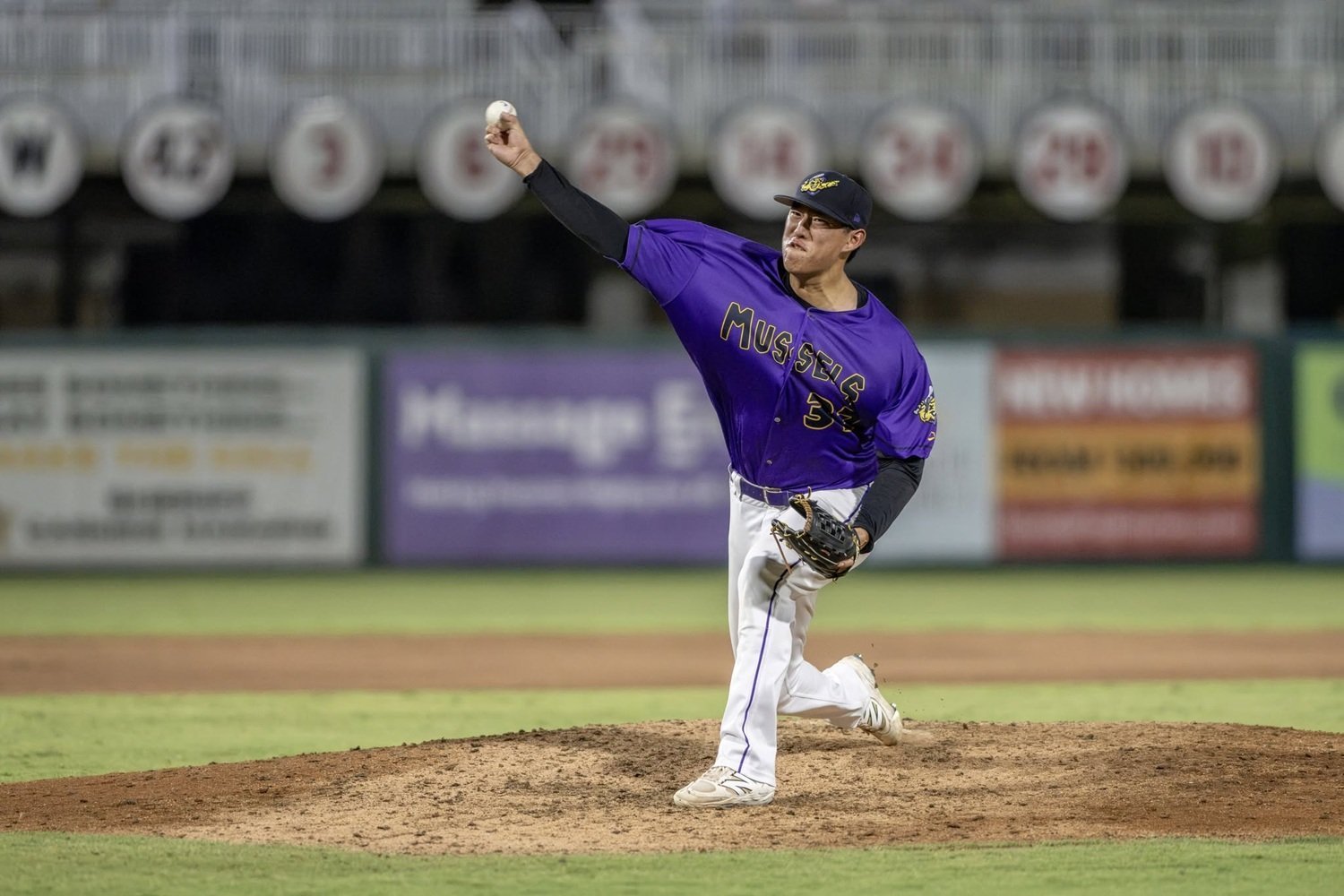 TRANSACTIONS No moves were made on Sunday. Saints Sentinel St. Paul 3, Louisville 11 Box Score Aaron Rozek: 3 IP, 5 H, 6 ER, 3 BB, 4 K HR: Kala’i Rosario (2), Ben Ross (12) Multi-hit games: None The Saints were thumped on Sunday. A day after beating the Bats solidly, the Saints saw their fortunes reversed, as Aaron Rozek surrendered six runs in three innings, and their lineup did little to resist the veteran Kent Emanuel across his six excellent frames. Every St. Paul pitcher allowed at least one run on Sunday. Two homers marked the only runs of the day for the Saints: a fifth inning smash by Kala’i Rosario that closely resembled a torpedo launch, and an eighth inning blast by Ben Ross that cleared the bullpens and the berm before bouncing majestically into the awaiting hands of a victorious fan. Shortstop Leo Balcazar ranks as the 16th-best prospect in the Cincinnati Reds’ system. He singled twice and walked in five trips to the plate. Wind Surge Wisdom Wichita 6, NW Arkansas 3 Box Score Preston Johnson: 4 IP, 1 H, 0 ER, 3 BB, 4 K HR: Kyle DeBarge (12), Caden Kendle (4), Garrett Spain (18) Multi-hit games: Caden Kendle (3-for-5, HR, 2B, R, 2 RBI), Garrett Spain (2-for-4, HR, 2B, R, RBI, BB) The Wind Surge rallied late to win on Sunday. The teams dealt each other two blank frames before Wichita struck for the first run of the ballgame. Staring out at two men on base, Caden Kendle shot a single up the middle, easily scoring Jay Thomason who was stealing on the play, though the trailing Kyle DeBarge—who began his adventure on first—was thrown out with relative ease. He made up for the play with a solo homer in his next at-bat, sending a hanging 0-2 offering over the left-center wall. Unfortunately, the lead quickly evaporated. Sam Armstrong relieved Preston Johnson, and he found the hitters Johnson easily quelled to be in a much more vigorous mood. A walk, a hit by pitch, and a three-run homer flipped the game on its head. Wichita stood paralyzed by the rally for two innings, striking out four times between the sixth and seventh in what seemed like a meager slide that would carry the team into a loss. But it didn’t. With no buildup, Caden Kendle blasted a solo homer in the eighth to tie the game. Sensing an altered mood, Garrett Spain backed up his buddy, and smacked a homer of his own to give the Wind Surge a lead. And they expanded on it. Jake Rucker doubled, Graham Brown walked, and Jorel Ortega cracked a double into the left-center gap to safely deliver both home. Kyle Bischoff slammed the door with two scoreless innings. NW Arkansas outfielder Carson Roccaforte is the 16th-best prospect in the Royals system, according to MLB.com. He went 0-for-3 with a walk. Kernels Nuggets Cedar Rapids 1, South Bend 13 Box Score Cesar Lares: 2 2/3 IP, 5 H, 4 ER, 4 BB, 4 K HR: Jacob McCombs (7) Multi-hit games: None The Kernels had their clock cleaned on Sunday. What a strange idiom. Apparently it arrived somewhere in the late 1800s, shot up in popularity after the turn of the century, immediately died down, and slowly crept back into vernacular in the 2000s. And no one seems to know where it originated. Fascinating. Anyways, matters were grim. Cedar Rapids struggled in all three phases, committing three errors, allowing nine earned runs, and accruing just one run in eight innings before the game mercifully ended when even mother nature determined it necessary to scrub the match from the record books. Multiple Kernels catchers took a beating. Eduardo Tait’s injury forced him out of the game; Luis Hernandez’s portended the game-ending rain. Cedar Rapids’ lone run was a lead-off blast by Jacob McCombs. They only advanced a runner to second three more times, and no Kernel touched third the rest of the day. Rehabbing prospect Emmanuel Rodriguez played right field and singled and walked twice in four trips to the plate. Iowa first baseman Josiah Hartshorn is the 60th-best prospect in MLB. He homered, doubled, and walked in five plate appearances. Mussel Matters Fort Myers 5, Bradenton 3 Box Score Callan Fang: 3 2/3 IP, 1 H, 0 ER, 0 BB, 9 K HR: None Multi-hit games: Yovanny Duran (2-for-4, 2B, 2 R, RBI) The Mighty Mussels snuck in a win on Sunday. It was a bad day to stand in the batter’s box against Callan Fang. The righty was on his game, twisting Bradenton hitters into the ground with his low 90s heat and collection of breakers. He allowed one hit—a 41.6 MPH nubber that drove into the ground and died before any fielder could reach it. He struck out nine. That bested his career-high mark by four. An excellent game for the 2025 13th-rounder out of Harvard. The teams were at an impasse for five innings, exchanging zeroes like trading cards as hitters found practicing their craft impossible for some time. Perhaps an ejection was the spark the game needed. Mighty Mussels outfielder Bryce Fowler was picked off at second base—or so said the umpire—and he disagreed with the call, earning a ticket for “anywhere but here” as he was ushered out of the game. That sparked a three-run rally, with Yovanny Duran singling in one and Colby Turner delivering two home. Bradenton struck for two in the bottom of the frame, and Fort Myers responded in the eighth with two of their own thanks to a botched fielding effort by pitcher Tony Gonzalez simply summed up as a “fielder’s choice.” A mistake is a choice, so says the box score. One more Marauders’ run pushed the score to its end game, which is where it stood until one out in the bottom of the ninth, when rain descended upon the field and netted the final two outs for Fort Myers. Rehabber Nick Yorke singled and walked in four plate appearances for Bradenton. No member of Pittsburgh’s top 30 prospect list played in Sunday’s game. TWINS DAILY PLAYERS OF THE DAY Twins Daily Minor League Pitcher of the Day – Callan Fang Twins Daily Minor League Hitter of the Day – Caden Kendle PROSPECT SUMMARY Here’s a look at how the Twins Daily Top 20 Twins Prospects performed: #2 – Vahn Lackey (Fort Myers) - 1-5 2 K #4 – Emmanuel Rodriguez (Cedar Rapids) - 1-2, 2 BB #7 – Eduardo Tait (Cedar Rapids) - 0-4 #11 – Gabriel Gonzalez (St. Paul) - 1-4, K MONDAY’S PROBABLE STARTERS DSL Tigers 2 @ DSL Twins (10:00 AM) - TBD View the full article
 -
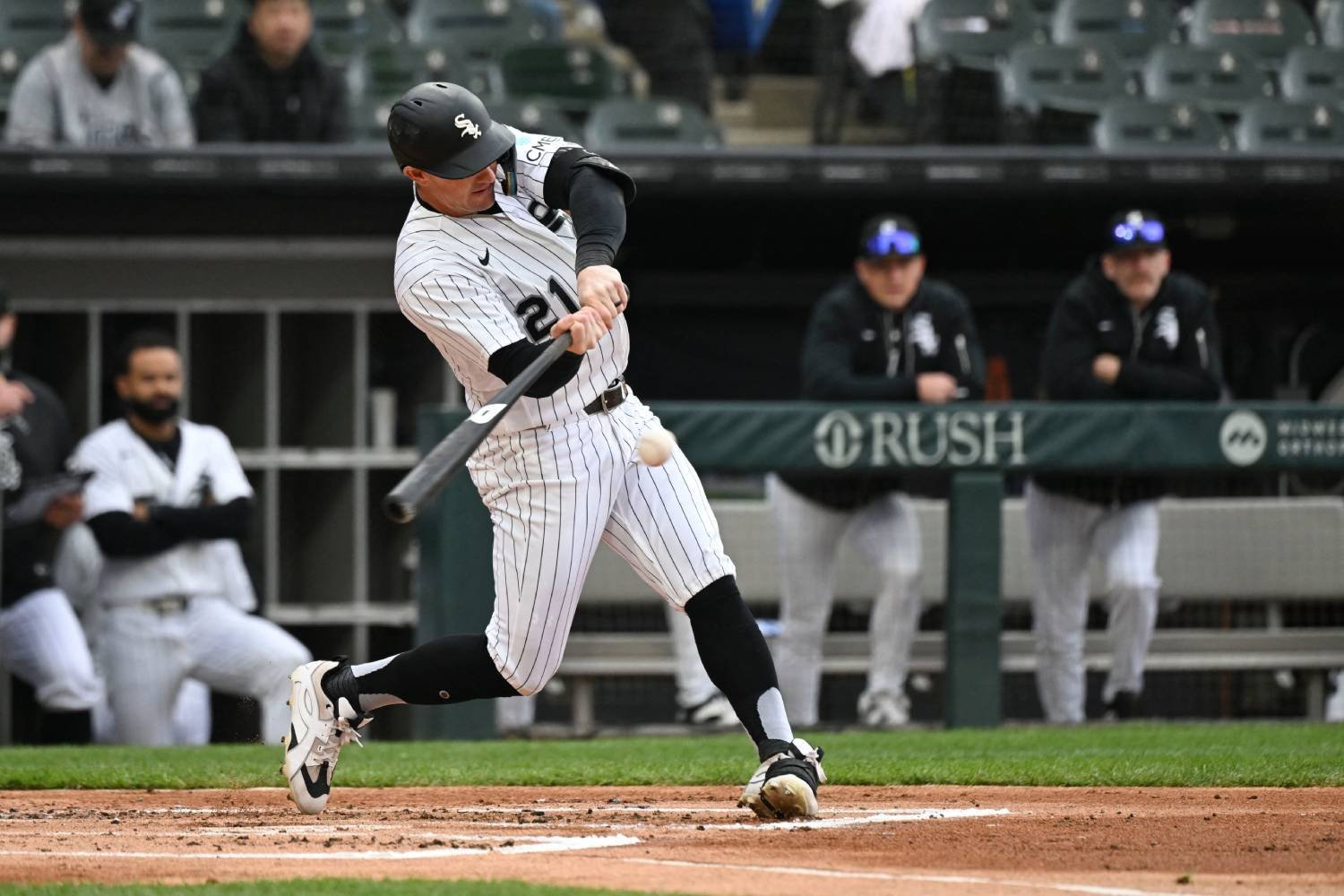 Still looking for a bit of an upgrade on their bench, the San Diego Padres are taking a look at outfielder Austin Hays. According to multiple reports, the 31-year-old has signed a contract with the Padres. Hays was designated for assignment and then released Friday by the Chicago White Sox. Hays has a $6 million salary for this year, but the Padres will only be responsible for a prorated portion of the MLB minimum, making this a very low-risk move. Infielder Gage Workman, just acquired from the Detroit Tigers along with right-hander Casey Mize, was optioned to Triple-A El Paso. Hays, a right-handed hitter, is slashing .233/.250/.326 in 12 games this season. He has been on the injured list twice this season, first on the 10-day IL for a right hamstring strain (April 7-27), then the 60-day IL with a left calf strain (May 4-Tuesday). In his nine-year career, Hays has a slash line of .262/.312/.433 and has hit 15 or more homers four times, topping out at 22 in 2021. View the full article
 -
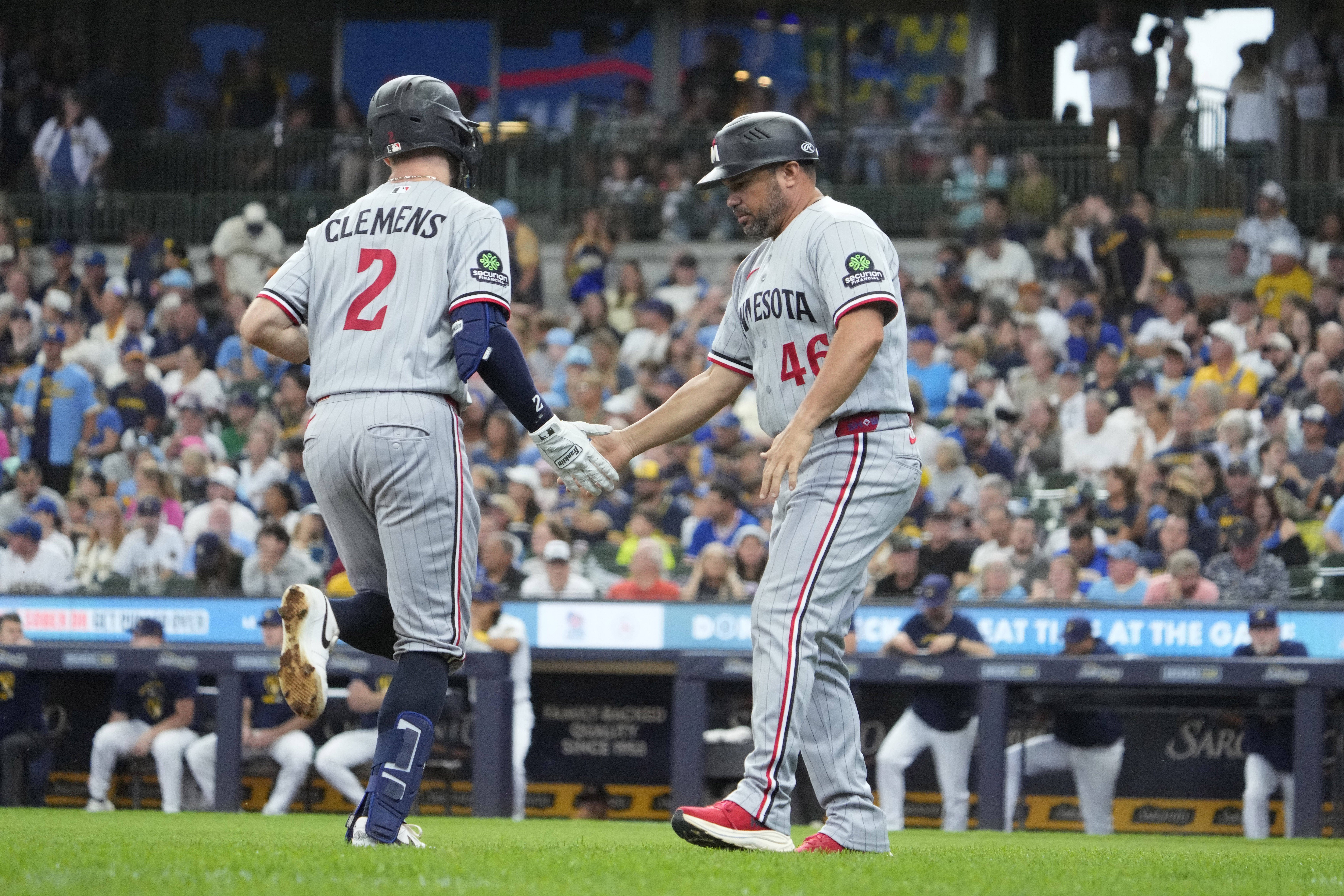 Box Score Starting Pitcher: Connor Prielipp: 5+ IP, 5 H, 3 ER, 1 BB, 7 K (96 Pitches, 61 Strikes, 63.5%) Home Runs: Brooks Lee (17), Kody Clemens (20) Bottom 3 WPA: Austin Martin (-0.23), Royce Lewis (-0.22), Ryan Kreidler (-0.20) Win Probability Chart (Via BaseballSavant): The Twins wasted a chance to take the series against the best-in-baseball Brewers on Saturday, as Milwaukee rallied to make today's game a rubber match. Unfortunately, the Twins would be tasked with beating the best pitcher in baseball, Jacob Misiorowski, who was as advertised. "The Miz" threw almost entirely fastballs the first time through the lineup, and the Twins couldn't catch up, as Misiorowski was able to locate at the top of the zone with 104 MPH cheese. The only Twins hitter to reach was Brooks Lee, who singled off Misiorowski's leg in the second. Meanwhile the Twins turned to Connor Prielipp for the unenviable task of beating the best team and the best pitcher. It started rough, as he fell behind Jackson Chourio 3-1 before throwing a fastball right where Chourio wanted it, as he took Prielipp opposite field for a leadoff home run, 387 feet. To Prielipp's credit, he really settled down after that. dotting his slider and fastball where Brewers hitters couldn't do damage, striking out seven through his first four innings, allowing just the one run. After looking helpless through the first four innings against Misiorowski, Lee got his (and the team's) second hit in the fifth, a solo home run 401 feet out to right field. Victor Caratini somehow ended his long 0-fer with a single but the Twins were unable to score him from second base. His pitch count in the mid 70's, Prielipp was not as crisp in the fifth, allowing an opposite field home run to Jake Bauers to lead off the inning. It was a sinker that caught too much of the plate, and Prielipp knew it immediately. He also allowed a fat sinker to Gary Sanchez for a double, and then with two outs, threw a middle-middle slider to the light -hitting David Hamilton on an 0-2 pitch, which Hamilton rocketed to the gap in right center field, scoring Sanchez to extend the lead to two. Misiorowski emphasized his breaking stuff much more the third time through the lineup, notably dotting two sliders on the black to start Royce Lewis 0-2 in the sixth. Lewis fought but ended up waving at a fastball at his eyes for his third strikeout of the game. It certainly looked like a shutdown inning for Misiorowski at that point, but Josh Bell drew a walk, and Kody Clemens got a mistake fastball low in the zone and smacked it out to the bullpen in right to tie the game. Somehow. Lee almost took Misiorowski deep a second time in the next at-bat, but Luis Lara made an incredible catch at the wall in right field to steal an extra-base hit and keep the game tied at three. Prielipp was allowed to start the sixth inning at 93 Pitches, which seemed a bit curious but he was facing a lefty in Turang. With the count 3-2 after Turang laid off some nasty sliders. The final pitch Prielipp threw was a slider called a ball that hit the zone with Caratini deciding not to challenge for some reason. Tommy Nance then came on and allowed a single to pinch hitter Garrett Mitchell. William Contreras then chopped to third and with Turang caught in no-man's land, Lee inexplicably decided to throw to first, allowing Turang and Mitchell to advance. Nance then got a pop-up from Bauers, and managed to strike out Lara to end the threat. The seventh began with Aaron Ashby relieving Misiorowski. The relief was palpable, as Luke Keaschall hit a ball to the hole at shortstop, where Turang was playing out of position after third baseman Andrew Vaughn was pinch-hit for in the sixth, prompting Hamilton to move to third and Turang to short. Turang skipped his throw and Bauers couldn't corral it, allowing Keaschall to reach second. Caratini then lined a ball down the line with some weird spin that caused Hamilton to boot it, putting runners on first and second with no one out. Austin Martin then pinch-hit and failed to get the bunt down, striking out on three pitches. Ryan Kreidler then struck out, as well, leaving the inning to Ryan Jeffers, hitting for Larnach. He drew a walk but Lewis struck out for the fourth time to leave the bases loaded. After A.J. Minter threw a scoreless seventh, the Twins went to work against righty Abner Uribe and his 99 MPH turbo sinker. With one out, Uribe walked Clemens, and then with Lee at the plate and Clemens running on a 3-2 pitch, Uribe got a comebacker and tried to get the force at second. The throw was late, and bad, and everyone was safe. Keaschall then chopped to short and somehow beat the double play relay, and Caratini walked to load the bases. Martin then bounced out to end the inning and potentially squander the Twins' chance to win the game. Minter stayed on to retire Mitchell to start the bottom of the eighth, then gave way to Andrew Morris, who walked Bauers but otherwise got the job done. After going down quickly against Trevor Megill in the ninth, Morris stayed on to face Sanchez, walking him on four pitches. That prompted Derek Shelton to turn to Kody Funderburk to face Jihwan Bae and Hamilton. Bae bunted pinch-runner Christian Yelich to second, Funderburk struck out Hamilton and intentionally walked Chourio to face Turang, a gambit that paid off in the seventh with Minter pitching. It worked again, as Funderburk got Turang swinging at a fastball on the outside corner to send the game to extras. The Twins looked like they would score the cherished two runs in the top of the tenth. With Lewis on second, Clemens seemed to get a hold of another one, launching a ball deep to right field. Lara lept and made perhaps a better catch than his grab in the fifth, preserving the tie for the second time. Lee then struck out to end the inning. Yoendrys Gomez got the first out by striking out William Contreras, but ahead 1-2 on Bauers, he threw a changeup on the outside corner, and Bauers served it into left field for a walk-off single. Stuff I'm Tracking: - Caratini threw out two runners, despite his well below average arm. He nabbed Turang in the fourth, and got Bauers trying to sneak into third in the second. The goal was definitely to run on Caratini, so credit goes to Prielipp for controlling the running game enough for Caratini's lobs to be in time. - Kaelen Culpepper had about as rough of a debut as one could have considering he homered on Friday. But having him as a right-handed bat is nice to have off the bench, with him, Martin and Jeffers available to pinch hit against a lefty in today's game. - Martin needs to practice his bunting if he's going to slug .310. Not sure about his place on this team- he's a low heartbeat guy playing a role that demands great situational awareness and grit. I could see the Twins cutting bait with him and he latches on with the Yankees and finally plays to his potential, similar to Aaron Hicks once upon a time. - It's crazy how Trevor Megill is closing games for the best team in baseball. I still remember the surly righty put into a long relief role with the Twins and trying to develop command of his breaking ball at the big league level. You can't argue with the results, as Megill has posted a 2.82 ERA and a 30.6% strikeout rate since joining Milwaukee. -Sal Frelick is hurt, and has a reputation as one of the best right fielders in baseball. They back him up with Lara, which must be nice. What’s Next: The Twins welcome the Baltimore Orioles to town for a three game set starting Monday. Dean Kremer (1-4, 5.93 ERA) throws against his former team and lefty Trevor Rogers (7-7, 4.20 ERA). Baltimore sold at the deadline despite having roughly the same playoff odds as the Twins, sending franchise catcher Adley Rustchman to the rival Red Sox and leadoff hitter Taylor Ward to the Mariners. Postgame Interviews: Bullpen Usage Chart: WED THU FRI SAT SUN TOT Funderburk 0 20 0 21 15 56 Hoffman 11 0 25 15 0 51 Nance 7 0 24 0 11 42 Morris 0 13 13 0 14 40 Gomez 0 18 12 0 9 39 Minter 12 0 3 0 16 31 Adams 0 0 0 15 0 15 Rogers 0 0 0 0 0 0 View the full article
 -
Cubs Have Spent the Summer Preparing for Dodgers In October
DiamondCentric posted an article in North Side Baseball
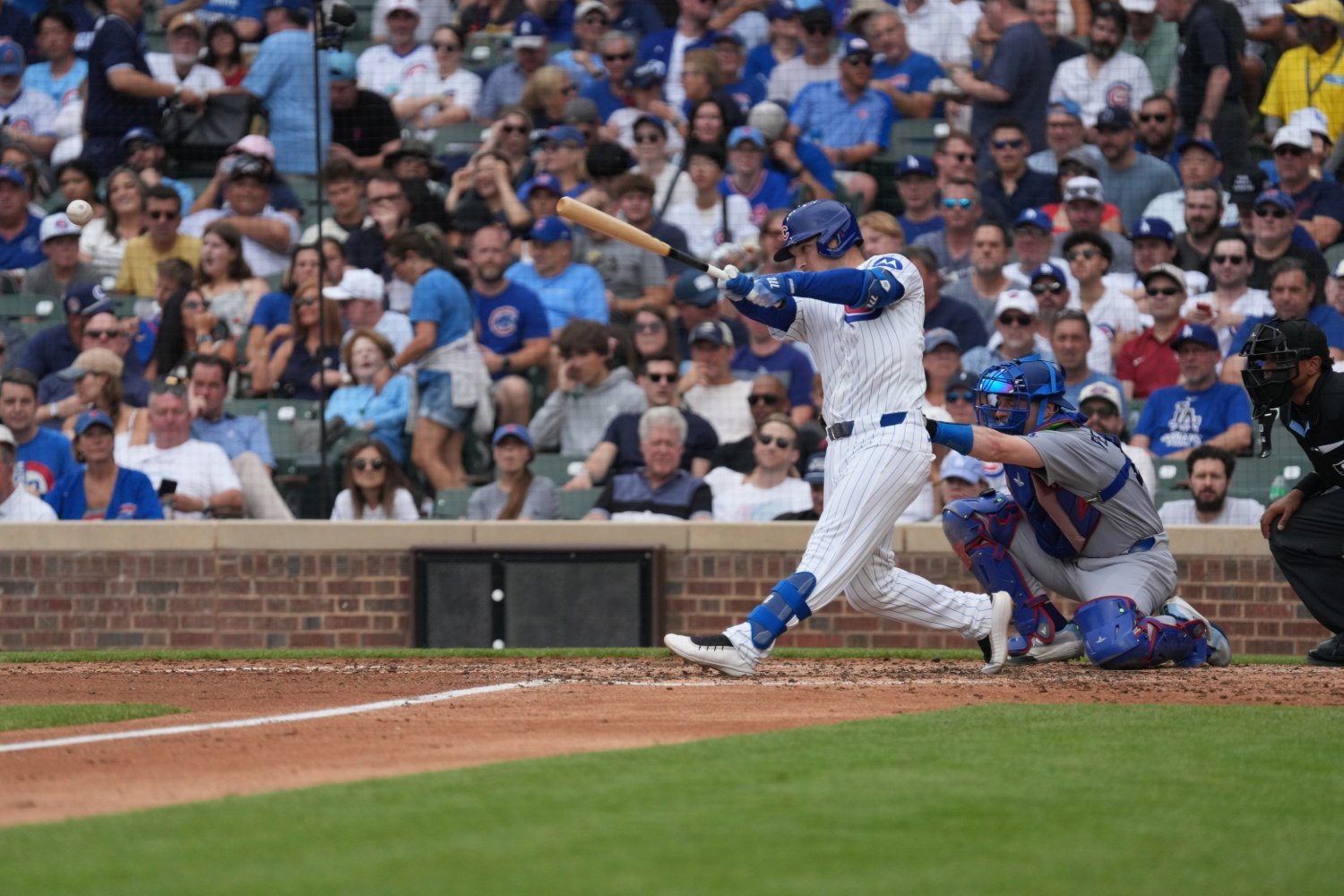 The Chicago Cubs just went to battle with the Los Angeles Dodgers this week, and after being one of the more aggressive teams at this year’s trade deadline, their behavior begs the question: how close is Chicago to competing with the Dodgers to be the best team in the National League? Let’s dive into the Cubs’ post-trade-deadline makeup. Aggressive At The Deadline As things stand, the North Siders are well above .500 and have a stranglehold on the top spot in the National League Wild Card. The Cubs will likely have to face either the current division leaders in the Milwaukee Brewers or the Dodgers at some point in the playoff bracket, but the back-to-back World Series champions are the ultimate threat. Chicago went into the deadline swinging, acquiring starting pitchers Clay Holmes and Kevin Gausman as well as a nasty reliever in Ryan Zeferjahn. They also got Tyrone Taylor, a remarkable defender and speedy baserunner, for some extra support in the outfield. Star Power Baseball is a team game, and there’s no refuting that. Mike Trout and Shohei Ohtani were on the same team for years, and yet the Los Angeles Angels never even sniffed the World Series (let alone the playoffs). With that being said, having a superstar who other teams have to plan around helps. Ohtani took over the NLCS against the Brewers last year, helping elevate the options around him. Pete Crow-Armstrong is a candidate for the National League MVP award this year. He just had a 3-for-5 performance here he hit two home runs and drove four runs in to clinch a sweep against Los Angeles. He’s also above 7 WAR with two months of baseball to go before the playoffs. The Cubs’ center fielder is four homers shy of 30 on the season, and he's already reached 30 steals for the second consecutive year. This is somebody who can impact the game in all facets, as he’s in the top 10 percentile for fielding range (100th), arm value (97th percentile) and arm strength (90th percentile) while also posting impressive marks with his bat speed (81st percentile), hard-hit rate (88th percentile) and a much-improved walk percentage (84th percentile). An Improved Rotation The Cubs operated with some urgency at the deadline, and Gausman and Holmes are key additions for a couple of reasons. Gausman has a winning pedigree, as the veteran right-handed pitcher was on a Blue Jays squad that was mere outs from a title last year. The 35-year-old uses a three-pitch mix to generate an elite 34.4 percent chase rate (87th percentile), and he’s giving up a free pass just 6.7 percent of the time. Holmes, on the other hand, is one of the best groundball pitchers in baseball. The former Mets’ starter has earned a 55.3 percent ground ball rate, good enough for the 95th percentile. Put the best fielding team in the big leagues (.989 fielding percentage, T-1st) behind him, and the reliever-turned-starter should feel right at home. Playoff Experience While the Cubs didn’t win the ultimate prize in 2025, they did push the top-seeded Brewers to Game 5 in the NLDS. Every player on last year’s roster now has experience winning a series (the Wild Card Round over the Padres) and playing in a winner-take-all, emotional battle with the team’s bitter rivals. That counts for something as the team gets set to embark on another October journey. Add to that knowledge the fact that two of the team’s starting position players in Dansby Swanson and Alex Bregman have won a World Series title before, and you have a group that could be primed for a deep run. View the full article
 -
Kyle Stowers leaves blowout victory with hamstring discomfort
DiamondCentric posted an article in Fish On First
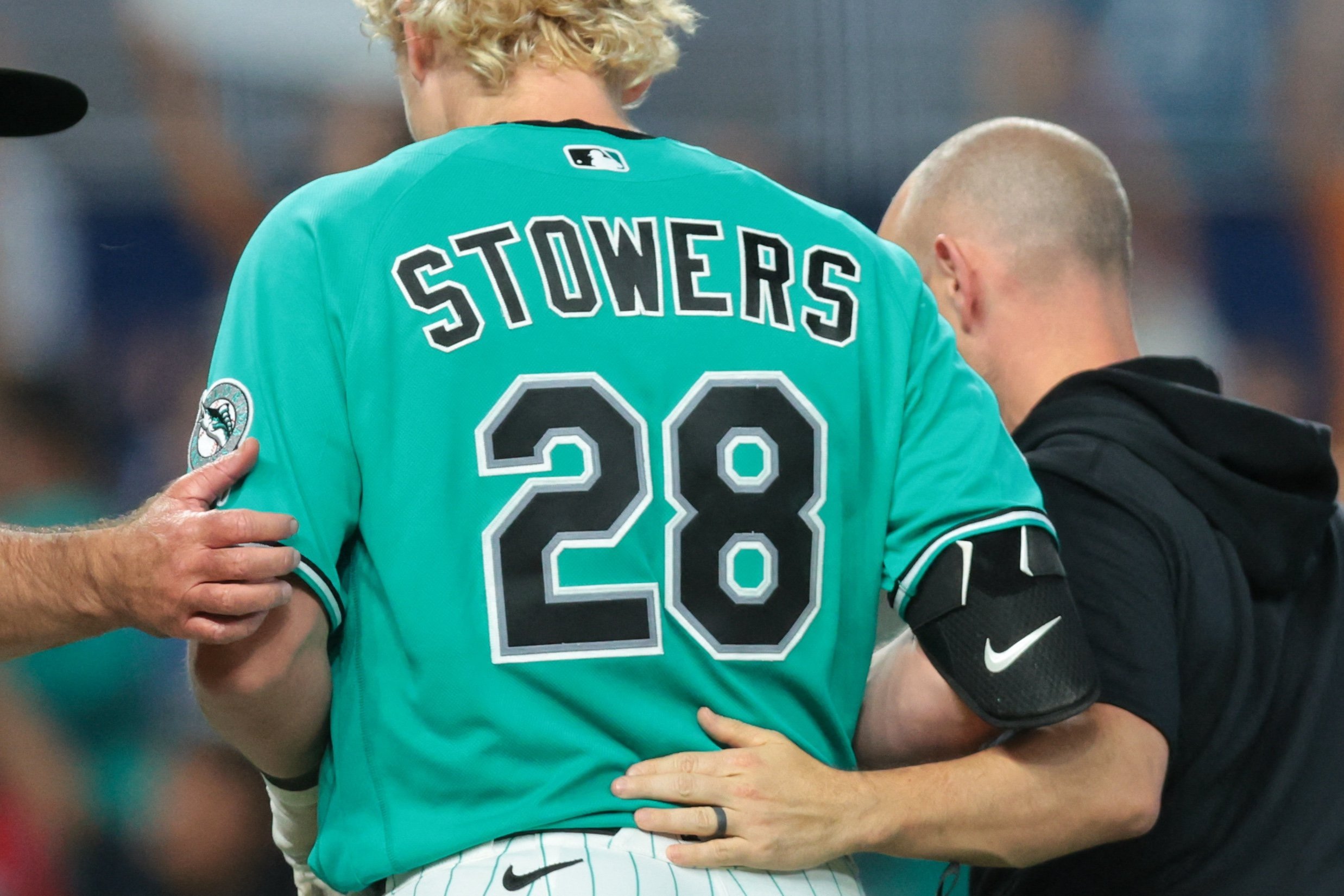 MIAMI, Fla. — With the Miami Marlins well on their way to securing a victory on Sunday, the vibes suddenly shifted after an injury to first baseman Kyle Stowers. Stowers extended the club's lead to 10-2 with a hit in the fifth inning, but after taking a turn around first base, he ran back to the bag and grimaced before briefly grabbing his left hamstring. Visibly frustrated, he gingerly walked off the field. The Marlins announced it as left hamstring discomfort. He will undergo further tests before the club decides whether to place him on the injured list, manager Clayton McCullough said postgame. Stowers missed most of spring training and the first three weeks of the regular season this year with a strain in his right hamstring. After initially struggling in his return, the 2025 All-Star posted a .897 OPS and 11 home runs in 44 games since June 15. He enjoyed a terrific series against the Angels, going 6-for-11 with two walks. Should Stowers land on the IL, the Marlins could call up Jonathon Long, who came from the Chicago Cubs in the Braxton Garrett trade at the deadline last week. He has been splitting time between first base and left field during his brief stint with Triple-A Jacksonville. He entered Sunday with a respectable 21.5% strikeout rate, .820 OPS, and a .351 BABIP in 103 games in Triple-A this year. Long does not have any prior MLB experience. Deyvison De Los Santos is another call-up candidate who is already on Miami's 40-man roster. During his third season in the International League, the 23-year-old seems to be trending in the right direction, recording his best OPS (.782) and strikeout rate (18.5%) since getting to Jacksonville. He homered again on Sunday shortly after the Stowers injury occurred. Agustín Ramírez could take some of the reps at first if Stowers misses time. Coincidentally, Marlins president of baseball operations Peter Bendix just confirmed to the media last week that the longtime catcher is "trying to add versatility" by relearning a position he previously played from 2021-24 in the minors. Leo Jiménez is another name to watch considering that he was the choice to take over for Stowers on Sunday. However, Jiménez lacks the offensive upside of the aforementioned alternatives (.215/.310/.289 slash line in 53 games). The Marlins don't play again until 6:40 pm Tuesday night against the Pittsburgh Pirates, so they can thoroughly assess the extent of Stowers' injury and carefully review their options before proceeding. View the full article
 -
 Triple-A Worcester Red Sox Series vs. Lehigh Valley IronPigs (Philadelphia Phillies): 4-1 Season Record: 60-48 Saturday was a tale of two debuts and an electric performance at the plate as Worcester dominated in a 19-0 rout. Gage Ziehl made his first start in Triple-A and exceeded expectations. Ziehl turned in five and ⅔ innings of shutout, two-hit ball as he racked up eight strikeouts. He paved the way for the offensive onslaught before being replaced by Devin Sweet. Sweet finished the sixth inning and took the seventh as well. Sweet allowed one hit, issued one walk, and sat one batter down on strikes. Tyler Samaniego pitched through an uneventful eighth inning, walking one and striking out another. Nathan Hickey, the WooSox regular catcher, took the ninth inning of the blowout and hurled a perfect inning of work. It was a masterclass from the WooSox staff, who allowed just five baserunners all game. Adley Rutschman made his Red Sox organizational debut as Mikey Romero achieved a feat no Worcester player has achieved before him. In an abbreviated five-inning rehab appearance, Rutschman went 1-for-2 and drew two walks. His first hit as a Red Sox? An RBI double to the corner in right field that scored two. Romy Gonzales got the scoring started early, driving in Rutschman with a single in the first inning. Allan Castro kept it going, scoring Romero on a soft liner to center. Gonzales came around to score on a wild pitch before Tsung-Che Cheng scored Castro and Kristian Campbell on a single to right field. In the second, Romero recorded his second hit of the evening. He hit a towering home run to right-center that drove home Nate Eaton. Romero went an astounding 6-for-6 as he drove in two runs in a historic afternoon, becoming the first player in WooSox history to record six hits in a game. In the fourth, Cheng was hit by a pitch with the bases loaded, advancing Romero home. The next batter, Braiden Ward, was hit as well, and Castro scored. Rutschman’s double scored Cheng and Vinny Capra before Eaton scored Ward and Rutschman, giving Worcester a 13-run lead. Campbell’s fifth homer of the year scored Castro and tacked on two more runs in the fifth inning. In the sixth, Castro drove in Eaton on a sac fly, and in the seventh, Jason Delay drove in Capra the same way. In the eighth, Campbell scored Romero via a groundout before Castro scored as Ward was hit by another pitch. Double-A Portland Sea Dogs Series @ New Hampshire Fisher Cats (Toronto Blue Jays): 2-3 Season Record: 56-50 Portland was on the other side of a rout, losing 14-0 in a disappointing game all-around. Mike Sansone got the start on Saturday night and looked good through four innings. However, it all fell apart in the fifth as Sansone let up four runs. He exited the game after allowing six earned runs on nine hits, issuing one walk and punching out three. Steven Brooks, who was recently assigned to Portland, made his first appearance with the Sea Dogs, but it was one to forget. Brooks allowed three runs on five hits in his debut before being replaced by Erik Rivera in the eighth inning. Rivera struggled in just ⅔ of an inning, allowing three runs on no hits as he walked two. Second baseman Ahbram Liendo was called in to finish the game as Portland waved the white flag. Liendo allowed two runs on two hits in his ⅓ of an inning-long appearance before finally getting the last out of Saturday’s disaster. Portland was nearly nonexistent at the plate, generating just six baserunners as they were shut out. Singles from Nate Baez, Matt Turner, Jack Winnay, and Nelly Tayler as well as a double from Ronald Rosario made up all the action on Saturday as the Sea Dogs fell without a whimper. High-A Greenville Drive Series vs. Hudson Valley Renegades (New York Yankees): 2-3 Season Record: 47-57 A dismal day from the dish and a shaky outing on the rubber left Greenville complacent as they fell 8-2. Dylan Brown struggled in the first few frames of his five-inning start, but smoothed things out in the final two innings. Brown lost his seventh game of the year as he allowed five runs on nine hits despite notching nine strikeouts. Shea Sprague entered in relief but struggled as well. He allowed two more runs (one unearned) on four hits as Hudson Valley started to run away with the ballgame. Sprague struck out five and issued two walks in two and ⅔ innings. Matt McShane took the final one and ⅓ frames of Saturday’s contest, allowing one more run on four hits as he struck out two amid a game to forget for the Drive’s staff. Greenville wasn’t silent at the dish, but they struggled heavily when it came to driving runs home. Yophery Rodriguez and Stanley Tucker recorded two hits apiece, and Isaiah Jackson drew two walks. Greenville struggled with runners in scoring position, going an abysmal 0-for-15 when it mattered the most and stranding eight runners. Single-A Salem RidgeYaks Series vs. Fayetteville Woodpeckers (Houston Astros): 4-1 Season Record: 47-59 An excellent bullpen performance and a three-hit outing from Louis Andujar helped Salem to a 6-2 victory. Leighton Finley turned in a solid start on Saturday night, allowing two runs on seven hits and striking out five as he lowered his ERA to 4.87 and won his sixth game of the season. Caden Vire was the first pitcher called from the bullpen, and he didn’t disappoint. He allowed two hits and issued two walks through one and ⅓ innings before Nicolas De La Cruz entered. De La Cruz finished the seventh and completed the eighth without much trouble. He issued three walks and struck out two but preserved the win for Salem. Harry Blum sealed the victory for good with his ninth-inning performance. He issued one walk and struck out another as Salem won its second consecutive game. Andujar led the way for the RidgeYaks with three hits as Andrews Opata drove in two. Andruw Musett got Salem on the board in the second inning with a single to center field as Andujar scored. Musett then scored via a balk as Salem took a one-run lead. Andujar drove in Franklin Primera on a double to left field in the third inning. Opata drove in Adonys Guzman and Andujar on a single later in the inning as Salem extended its lead. A double steal by Henry Godbout and Starlyn Nunez in the fourth inning put an exclamation point on Salem’s win as Godbout stole home. View the full article
 -
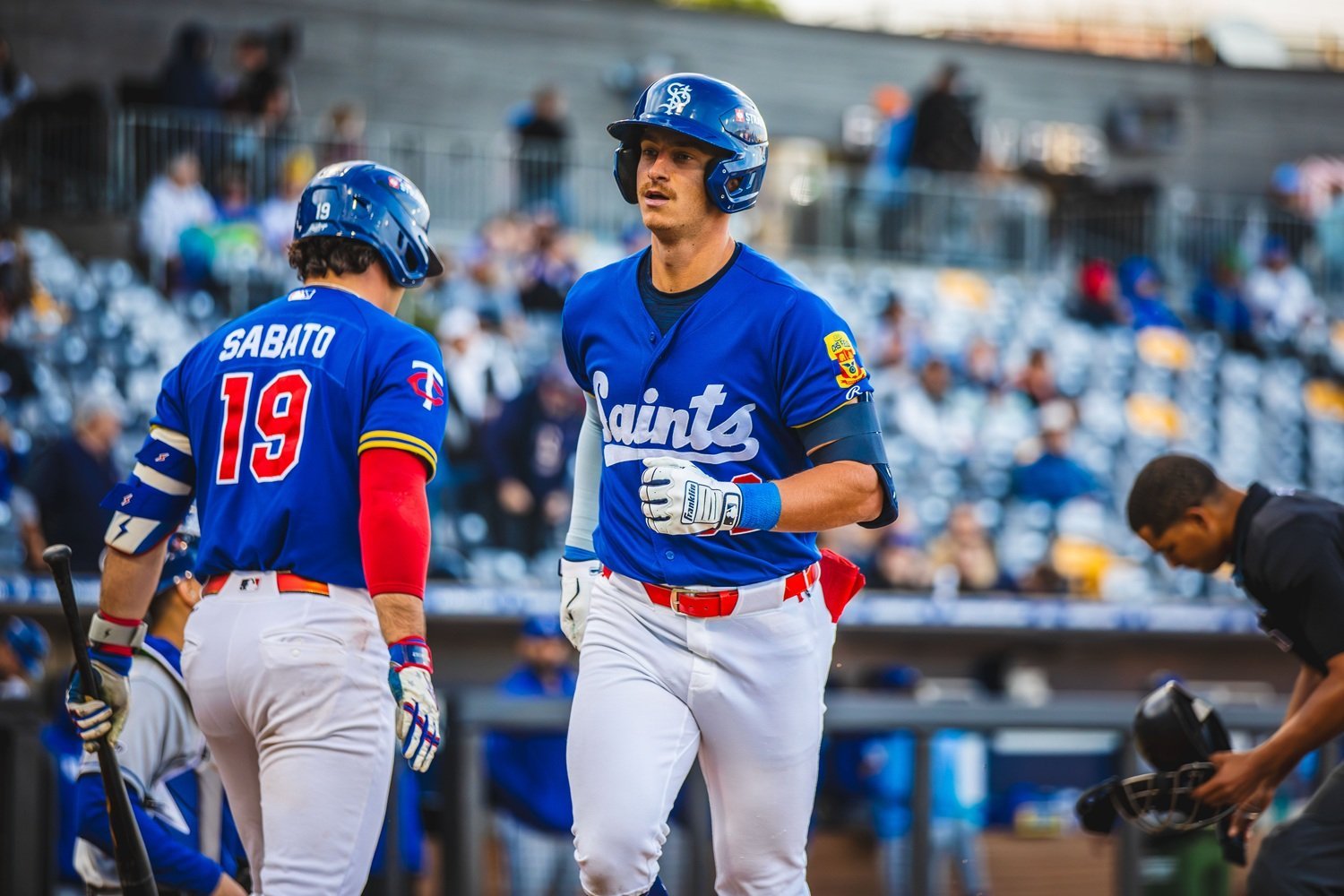 On his Instagram account, Twins outfielder Kyler Fedko announced that his season has come to an end. He recently tore his ACL and had surgery in the Twin Cities. Fedko was the Twins 12th round draft pick in 2021 out of the University of Connecticut. He had a breakout season in 2025 between Double-A and Triple-A. In 130 games, he hit .258/.368/.487 (.855) with 25 doubles, 28 homers and 38 stolen bases. He has played all three outfield spots and even quite a bit of time at first base. In 75 games this year for St. Paul, he hit .274/.362/.545 (.907) with 17 doubles, 17 homers and 10 stolen bases. In mid-June, the Twins DFAd James Outman, Fedko was given an opportunity for the role. It isn't an easy role. Maybe one start every 10 games, late inning defense and pinch running. Fedko made some nice plays defensively and his baserunning literally led to a couple of wins. he got 16 at-bats and was not able to get a hit. In 19 plate appearances, he walked twice and had a sacrifice RBI. He was optioned to the Saints on July 10th. Last Sunday (8/2), he was 1-for-4 with a walk, his 17th double and two RBI in a game. In the bottom of the ninth, he moved from center to left field. With two outs, the Storm Chaser batter slapped a ball down the left-field line. Fedko ran toward the ball. As he started slowing down to grab the ball in the corner, he went down. The camera angle did not allow viewers to see what happened or a replay or anything. Ben Ross ran over to the ball from center and threw it in. Kaelen Culpepper raced out from shortstop, and Walker Jenkins rushed over from right field. Brian Dinkelman and a trainer hurried. Fortunately, there is an opening in left field. A couple of field maintenance vehicles came out before an amped-up golf cart backed up to Fedko and drove him off the field. Fedko is a man of deep faith, something that will certainly help him through the long process. Join us in wishing Kyler Fedko a successful recovery. View the full article
 -
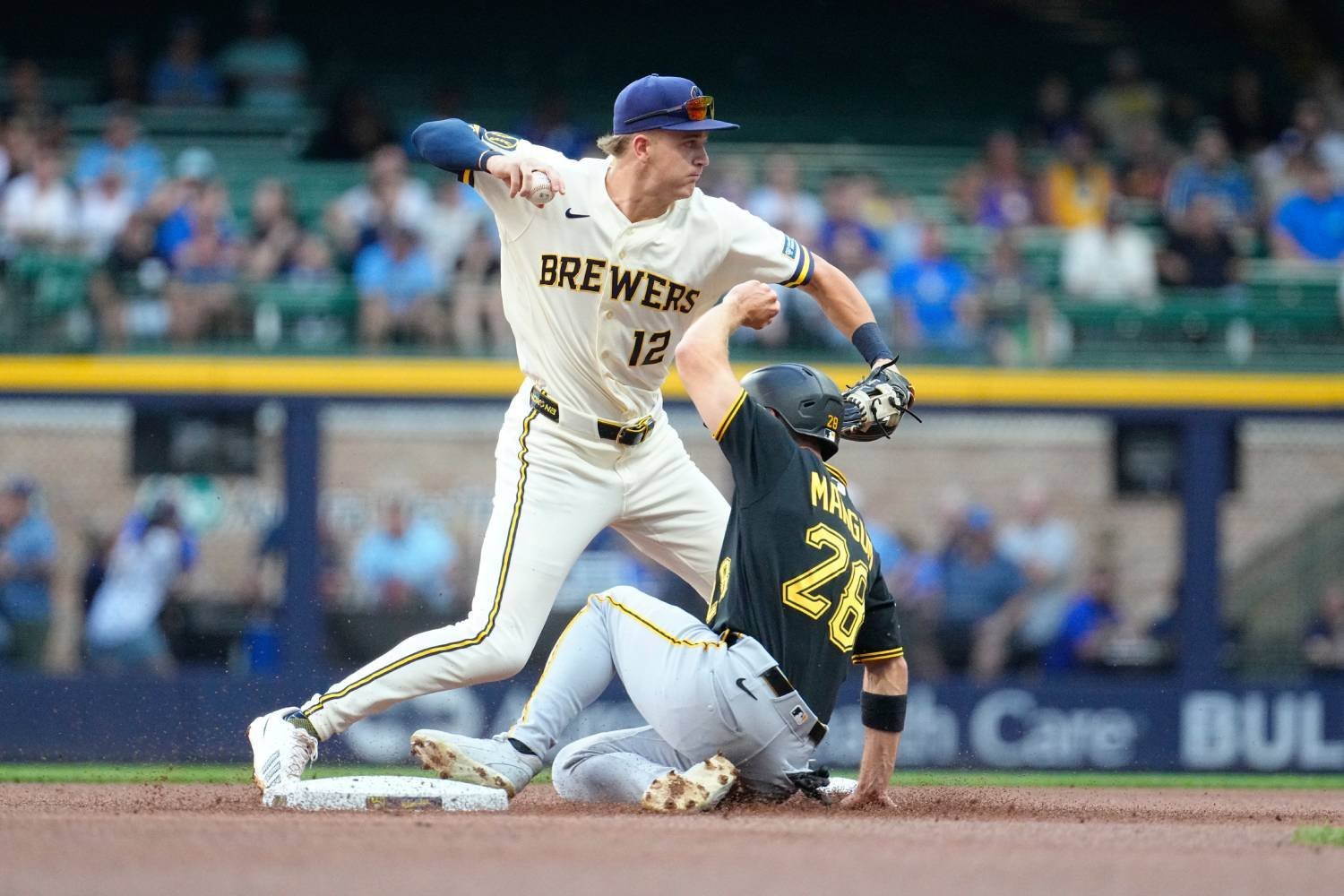 The first health obstacle has jumped into Cooper Pratt's MLB career. The rookie shortstop was placed on the 10-day injured list with a strained right hamstring Sunday by the Milwaukee Brewers, who signed infielder-outfielder Ji Hwan Bae to a minor-league contract and called him up to the majors. Left-handed reliever Drew Rom was designated for assignment. It was not immediately clear when Pratt was injured as he played all nine innings of Saturday's 4-3 loss to the Minnesota Twins, although manager Pat Murphy said Pratt did have an MRI on the hammy. Pratt is slashing .272/.352/.368 with two homers, 17 RBIs and 10 steals in his first 44 MLB games since making his debut in June. Hamstring injuries can often be slow to heal, depending on their severity. Bae was recently released from Triple-A by the New York Mets, having put up a .257/.360/.368 slash line with five homers, 32 RBIs and 36 steals in 91 games. He last appeared in the majors in 2025 with the Pittsburgh Pirates and has a career slash line of .223/.294/.293 in 163 games over four MLB seasons, all with the Pirates. He has split his time this year between second base and the outfield and has just three games of MLB experience at shortstop. That means that David Hamilton, who started at shortstop Sunday, and Joey Ortiz, who was the Opening Day shortstop and the starter until Pratt was called up, will replace Pratt. However, Ortiz is battling neck tightness that forced him out of Saturday's game and kept him out of Sunday's lineup. Top infielder prospect Jett Williams, who is at Triple-A Nashville, is battling wrist soreness and was just sent to Arizona. View the full article
 -
Three Trades the Twins Should Wish They Had Made at the Deadline
DiamondCentric posted an article in Twins Daily
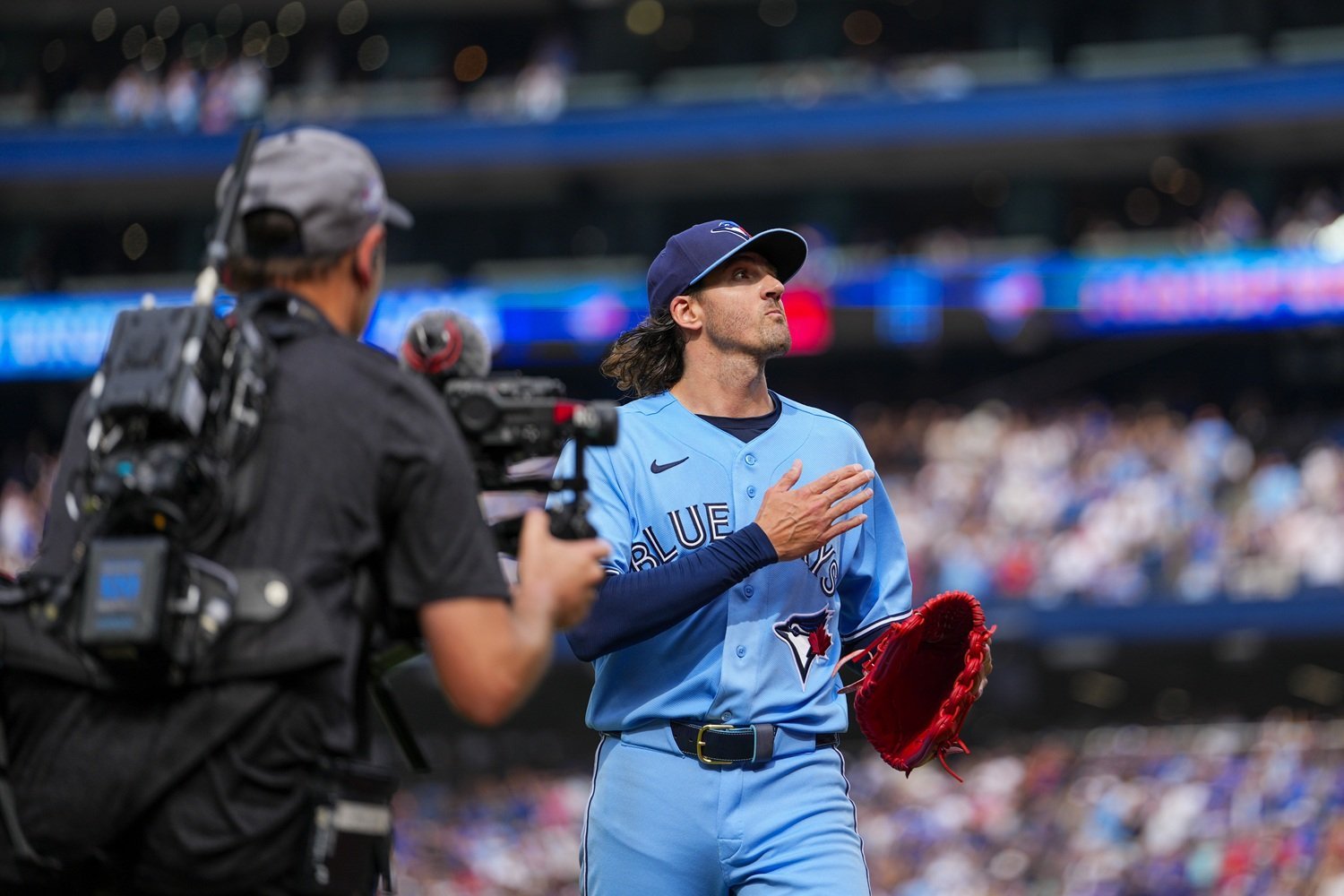 The Minnesota Twins had a productive trade deadline. After weeks of speculation about whether they would buy or sell, the front office ultimately made three additions over the final weekend before the deadline. They bolstered the rotation with Dean Kremer and strengthened the bullpen with A.J. Minter and Jeff Hoffman before the clock struck 5 p.m. While opinions varied on each move, the overall consensus was positive. Twins Daily's Cody Christie graded the club's trades between a B- and a B+, and most national analysts landed in a similar range. Still, every trade deadline leaves behind a handful of deals that make you stop and wonder. Some trades immediately spark the reaction of, "That's all it took?" Others look even better a few days later after you have time to compare the prices teams paid across the league. Looking back, there are at least three deals the Twins probably wish they had been the team making instead. Kevin Gausman - Starting Pitcher The Chicago Cubs acquired the veteran right-hander from Toronto for infield prospect Ty Southisene, the Blue Jays' No. 17 prospect, and outfielder Brett Bateman, their No. 20 prospect. Considering Gausman's résumé, it was a surprisingly modest return. Yes, Gausman has struggled this season, posting a 4.38 ERA, and he's only a rental with two months of team control remaining. But this is also a two-time All-Star who finished third in American League Cy Young voting as recently as 2023. His underlying metrics still point toward a pitcher capable of performing much better than his ERA suggests. The return is what makes this trade so intriguing from a Twins perspective. The Cubs only had to part with their No. 17 and No. 20 prospects despite owning MLB.com's No. 23-ranked farm system. According to FanGraphs, those prospects would rank below players like Bruin Agbayani and John Klein in the Twins organization. Minnesota ultimately paid a steeper price to acquire Dean Kremer. Kremer brings another season of club control, which certainly adds value, but if the goal was simply maximizing the 2026 postseason push, it's hard not to wonder if Gausman would have been the better target at a lower acquisition cost. Taylor Ward - Outfielder Another missed opportunity came in the market for right-handed hitting. The Mariners acquired Taylor Ward from Baltimore for reliever Alex Hoppe, who owns a 5.79 ERA, along with pitching prospects Brock Moore and Harrison Kreiling, neither of whom ranked among Seattle's top 30 prospects. That feels like a deal the Twins should have been all over. Minnesota entered the deadline with one glaring offensive need: another right-handed bat capable of punishing left-handed pitching. Ward checks that box while also providing the versatility to handle center field when needed. He's exactly the type of player who would've fit the roster without requiring a major overhaul. Considering the Mariners didn't have to surrender a premium (or even good) prospect to get him, it's difficult not to look back and wonder why the Twins weren't able to put together a similar package. Ward is also a rental, but for that price, he would've addressed one of Minnesota's biggest weaknesses without significantly impacting the organization's long-term outlook. The final deal that stands out happened inside the division. Foster Griffin - Starting Pitcher The Cleveland Guardians acquired left-hander Foster Griffin from Washington in exchange for Will Dion, Josh Hartle, Kendeglys Virguez and Nick Mitchell. Hartle was Cleveland's highest-ranked prospect in the deal at No. 25, meaning the Guardians landed an All-Star without giving up anyone inside the top 24 of their system. Griffin has one of the more unique stories in baseball. After leaving for Japan in 2023, he spent three seasons dominating overseas before returning to Major League Baseball with the Nationals this year. All he has done since returning is post a 3.06 ERA with a WHIP barely over 1.00 while earning his first All-Star selection. Perhaps even more enticing are the underlying metrics, which suggest the 31-year-old could be even better moving forward. He offers more upside than Kremer while costing Cleveland less prospect capital to acquire. Making matters worse for the Twins, Griffin is now headed to Cleveland. The Guardians have built a reputation for getting the most out of pitchers, and it's hard not to imagine Griffin taking another step forward in their development system. None of this is meant to criticize what the Twins accomplished at the deadline. Their front office addressed multiple needs and deserves credit for being aggressive enough to improve the roster for the stretch run. But hindsight is part of every trade deadline. Once the dust settles and every deal can be compared side by side, there are always a few moves that leave you wondering what could have been. Looking back at the prices teams paid for Kevin Gausman, Taylor Ward and Foster Griffin, it's hard not to think the Twins had opportunities to come away with an even stronger deadline than the one they already had. Do you agree that these are the three trades the Twins should have made? Are there any other deadline deals you wish Minnesota had jumped into? Leave a comment below and start the conversation! View the full article
 -
 Jefferson Rojas needed a few days, but he has now delivered his first big moment as a Mets prospect. The top-100 infielder lashed a go-ahead, two-run triple in the bottom of the eighth inning Saturday to push Double-A Binghamton to a come-from-behind 6-4 victory over Hartford. The hit completed a 3-for-4, three-RBI night. Rojas was 1-for-11 in his first three games with the club after being acquired from the Chicago Cubs at the trade deadline for Clay Holmes and Tyrone Taylor. Rojas played third base and batted third, behind two other newcomers: shortstop Mitch Voit (promoted from High-A Brooklyn) and second baseman Emilien Pitre (acquired from the Tampa Bay Rays in the Freddy Peralta trade). The three combined for seven hits and four runs scored to go with Rojas’ RBIs. Another recent infield arrival, Billy Amick (acquired from the Minnesota Twins), hit a two-run homer, his fourth dinger in six games. Add in holdovers Jacob Reimer and Marco Vargas, both ranked in Grand Central Mets’ soon-to-be-updated Top 20, and the Ponies have some serious horsepower on the dirt. Elsewhere in the organization: We’re switching up the usual order to highlight Mets DSL Blue’s 5-0, seven-inning no-hitter against DSL Giants Black. Josbel Torrez (three innings) and Esteban Mejia (four innings) combined on it. It wasn’t the cleanest no-no; the two issued three walks and hit a batter between them, and another batter reached on an error. It still counts. The Mets took the lead with three runs in the top of the fifth. Royner Bravo hit a two-run triple, and Michalle Mercedes drove in Bravo with another triple. The Mets added on in the seventh. Jesus Minaya hit a solo home run and Frank Moreno hit an RBI single. Syracuse out-slugged Columbus 13-7. Ronny Mauricio went 4-for-4 with a home run, two doubles, five RBIs and four runs scored. Jose Ramos homered twice. Brooklyn lost a doubleheader at Wilmington, 6-5 and 4-0. Sammy Stafura and Aidan Smith combined for five hits, four runs and three RBIs in Game 1. Brooklyn had three hits in Game 2. St. Lucie split a doubleheader with Daytona, winning the opener 3-1 and losing the nightcap 15-7. Julio Zayas provided the offense in Game 1 with a three-run home run in the fourth inning. He ended his night as a mop-up reliever in Game 2. Mets DSL Orange edged the DSL Angels 3-2. Cesar Acosta’s RBI single in the fifth proved to be the game-winning hit. Mets Transactions New York Mets claimed 3B Gabriel Arias off waivers from Cleveland Guardians. New York Mets activated 3B Gabriel Arias. New York Mets optioned 1B Eric Wagaman to Syracuse Mets. Mauricio, Ramos Power Syracuse Rout Mauricio and Ramos were at the center of the Mets' offense for most of the night. In the first inning, Mauricio hit a laser to right for a solo home run and a 1-0 Mets lead. Four St. Lucie pitchers combined on a seven-hit effort. Starter Nathan Hall struck out three over 1 2/3 scoreless innings. Caden Wooster followed and went 1 2/3 innings. He allowed Daytona's only run, on a solo home run in the third. Ernesto Mercedes threw two scoreless innings and became the pitcher of record after Zayas' homer. Miguel Mejias recorded the final five outs for the save. Player AB R H RBI BB K Elian Peña 3 0 1 0 0 0 Aiden Robbins 2 1 1 0 1 0 John Smith III 3 1 1 0 0 0 Julio Zayas 3 1 1 3 0 0 Yovanny Rodriguez 3 0 0 0 0 1 Vladi Gomez 3 0 0 0 0 0 Wyatt Vincent 2 0 1 0 0 0 Reed Stallman 2 0 0 0 0 0 Dylan Carey 1 0 0 0 1 0 Player IP H R ER BB K HR Nathan Hall 1 2/3 2 0 0 1 3 0 Caden Wooster 1 2/3 1 1 1 3 3 1 Ernesto Mercedes 2 4 0 0 1 3 0 Miguel Mejias 1 2/3 0 0 0 0 1 0 Mets' Comebacks Go To Waste In Game 2 This was a 6-6 game after four innings. Kuhio Aloy's two-run homer in the bottom of the third pulled St. Lucie even. Daytona finally pulled away with three runs in the fifth, four runs in the sixth and two runs in the seventh. Those last two runs were scored against Zayas, who was called upon to pitch for the second time in three days. St. Lucie battled back in each of the of the first three innings to lead or tie. In the first, Ryan Tayman's RBI groundout and a throwing error put the Mets up 2-1. In the second, Simon Juan homered for a 3-2 lead. In the third, Yovanny Rodriguez hit a sacrifice fly before Aloy tied the game with his homer. Starter Jonathan Jimenez lasted just 1 1/3 innings, He was charged with two runs (one earned) on three hits. Tyler McLoughlin, Wilmer Lugo and Luis Sotillo combined to give up 11 runs on seven hits and eight walks out of the 'pen. Player AB R H RBI BB K Bohan Adderley 4 1 1 0 0 1 Vladi Gomez 2 2 1 0 2 0 Ryan Tayman 4 0 1 1 0 1 Julio Zayas 3 1 0 0 1 2 Yovanny Rodriguez 2 0 1 1 0 0 Reed Stallman 1 0 0 0 0 0 Kuhio Aloy 4 1 1 2 0 1 Simon Juan 3 2 2 1 0 1 Kooper Schulte 3 0 1 1 0 2 Dylan Carey 3 0 0 0 0 1 Player IP H R ER BB K HR Jonathan Jimenez 1 1/3 3 2 1 1 1 0 Tyler McLoughlin 2 2/3 5 4 4 2 2 1 Wilmer Lugo 2/3 1 3 3 4 0 0 Luis Sotillo 1 1 4 4 2 1 1 Julio Zayas 1 1/3 4 2 2 0 0 1 Top-20 Prospect Performance Jonah Tong: DNP Jack Wenninger: DNP Ryan Clifford: DNP Elian Pena: 1-for-3 Nick Morabito: DNP Jacob Reimer: 1-for-4, RBI, 2 K Mitch Voit: 2-for-3, 2 R, BB, K Jonathan Santucci: DNP Zac Thornton: MLB Chris Suero: 1-for-2, 2B, R, BB, K Will Watson: DNP Wandy Asigen: DNP Eli Serrano III: DNP Randy Guzman: DNP Dylan Ross: DNP Ryan Lambert: DNP Antonio Jimenez: 0-for-5, 2 K R.J. Gordon: DNP Jonathan Pintaro: 2/3 IP, 1 H, 1 R, 1 ER, 1 BB, 2 K, 1 HR Marco Vargas: DNP View the full article
 -
 Chicago Cubs Transactions Chicago Cubs activated RHP Clay Holmes from the 60-day injured list. Chicago Cubs optioned LHP Braxton Garrett to Iowa Cubs. Triple-A Iowa Cubs: Kevin Alcántara Homers In Iowa's 16-3 Loss At Indianapolis Iowa took the lead first. Justin Dean walked to open the game, moved up on a single by Owen Ayers and a walk to Kevin Alcántara, and scored on a sacrifice fly by Chas McCormick. Indianapolis erased that in the second, batting around and scoring nine runs on a two-run double by Jack Brannigan, RBI singles by Joshua Palacios, Cameron Barstad, and Mitch Jebb, an RBI double by Billy Cook, and a two-run single by Dominic Fletcher. Two Iowa throwing errors extended the inning. Alcántara answered with a solo home run in the third, his 18th of the season, and finished 1-for-2 with two walks and a run driven in. Hayden Cantrelle tripled home a run in the fourth and went 1-for-4. Owen Ayers had one of Iowa's four hits, going 1-for-5, and Owen Miller went 1-for-4. Iowa drew six walks and was hit twice, but struck out nine times and stranded 14 runners. Will Sanders started and took the loss, allowing five hits, seven runs, seven earned, with three walks and one strikeout over 1 2/3 innings. Collin Snider allowed two hits and two runs in 1/3 of an inning. Antoine Kelly walked two and allowed two runs, and Evan Taylor allowed one hit over 1 1/3 innings. Daniel Palencia struck out one and walked one over one inning. Grant Kipp allowed five hits and five runs across 2 1/3 innings, including a two-run home run to Barstad. Hayden Cantrelle finished the game with 2/3 of an inning. Iowa committed four errors, and three of Indianapolis' 16 runs were unearned. Iowa Cubs Hitting Player AB R H RBI BB K Justin Dean 3 1 0 0 2 2 Owen Ayers 5 0 1 0 0 0 Kevin Alcántara 2 1 1 1 2 0 Owen Miller 4 0 1 0 0 1 Chas McCormick 1 0 0 1 1 1 Grant Kipp 1 0 0 0 0 1 Ben Cowles 3 0 0 0 1 1 Greg Jones 1 0 0 0 0 1 Ed Howard 2 1 0 0 0 0 Ethan Hearn 3 0 0 0 0 2 Hayden Cantrelle 4 0 1 1 0 0 Totals 29 3 4 3 6 9 Iowa Cubs Pitching Player IP H R ER BB K HR Will Sanders 1 2/3 5 7 7 3 1 0 Collin Snider 1/3 2 2 1 1 0 0 Antoine Kelly 2/3 1 2 0 2 2 0 Evan Taylor 1 1/3 1 0 0 0 1 0 Daniel Palencia 1 0 0 0 1 1 0 Grant Kipp 2 1/3 5 5 5 3 3 1 Hayden Cantrelle 2/3 1 0 0 0 0 0 Totals 8 15 16 13 10 8 1 Double-A Knoxville Smokies: Ariel Armas Drives In Four As Knoxville Beats Chattanooga 9-4 Knoxville scored in seven of nine innings and collected 20 hits. Ariel Armas led the way, going 4-for-6 with a home run, a double, and four runs driven in. He homered in the second, doubled home a run in the third, singled home a run in the fourth, and singled home another in the sixth. Kane Kepley went 2-for-4 with two walks and three runs driven in, including a two-run home run in the fourth and a run-scoring double in the seventh. Alex Madera went 3-for-4 with a run driven in and two runs scored with some great defensive plays. Dom Krupinski went 3-for-5 with a double. Carter Trice went 2-for-6 with a double and two runs scored. Andy Garriola went 2-for-4 with two walks and a solo home run in the ninth, his 20th of the season. Drew Bowser added two hits. Brooks Caple started and threw four scoreless innings, allowing no hits, walking two, and striking out seven. Jackson Brockett earned the win with three hits, three runs, three earned, three walks, and four strikeouts over three innings, with all three runs coming in the sixth on a bases-loaded walk to Carlos Sanchez and a two-run double by Ruben Ibarra. Tyler Ras closed with two innings, allowing one hit and one run on a solo home run by Carter Graham, with no walks and two strikeouts. Knoxville Smokies Hitting Player AB R H RBI BB K Kane Kepley 4 1 2 3 2 0 Andy Garriola 4 2 2 1 2 0 Miguel Useche 5 0 1 0 1 0 Carter Trice 6 2 2 0 0 1 Dom Krupinski 5 1 3 0 1 2 Ariel Armas 6 1 4 4 0 0 Drew Bowser 5 0 2 0 0 2 Alex Madera 4 2 3 1 0 1 Karson Simas 4 0 1 0 0 2 Totals 43 9 20 9 6 8 Knoxville Smokies Pitching Player IP H R ER BB K HR Brooks Caple 4 0 0 0 2 7 0 Jackson Brockett 3 3 3 3 3 4 0 Tyler Ras 2 1 1 1 0 2 1 Totals 9 4 4 4 5 13 1 High-A South Bend Cubs: South Bend Shut Out 7-0 By Cedar Rapids South Bend managed four hits and two walks and never scored. Angel Cepeda went 1-for-4 as the leadoff man. Kade Snell went 1-for-4 with a double. Josiah Hartshorn went 1-for-4, and Michael Hallquist went 1-for-4. Michael Carico and Justin Stransky each drew a walk. The Cubs struck out eight times and did not put a runner across in any inning. Pierce Coppola started and took the loss, allowing five hits, two runs, one earned, with one walk and four strikeouts over four innings. Cedar Rapids scratched a run across in the second on a run-scoring groundout by Byron Chourio, and Quinn McDaniel homered in the fourth. Nate Williams allowed four hits and five earned runs over 3 1/3 innings with no walks and three strikeouts. Chourio hit a three-run home run off him in the sixth, and Jose Salas doubled home a run and Luis Hernandez added a sacrifice fly in the eighth. Yoendris Gonzalez finished with 1 2/3 innings, two hits, no runs, no walks, and three strikeouts. South Bend Cubs Hitting Player AB R H RBI BB K Angel Cepeda 4 0 1 0 0 1 Kade Snell 4 0 1 0 0 1 Josiah Hartshorn 4 0 1 0 0 1 Jose Escobar 4 0 0 0 0 0 Alexey Lumpuy 4 0 0 0 0 2 Michael Hallquist 4 0 1 0 0 1 Michael Carico 2 0 0 0 1 1 Geuri Lubo 3 0 0 0 0 1 Justin Stransky 2 0 0 0 1 0 Totals 31 0 4 0 2 8 South Bend Cubs Pitching Player IP H R ER BB K HR Pierce Coppola 4 5 2 1 1 4 1 Nate Williams 3 1/3 4 5 5 0 3 1 Yoendris Gonzalez 1 2/3 2 0 0 0 3 0 Totals 9 11 7 6 1 10 2 Single-A Myrtle Beach Pelicans: Myrtle Beach Falls 4-3 In 10 Innings At Hickory Myrtle Beach struck out 17 times, took a one-run lead in the 10th, and lost on a walk-off. Alexey Lumpuy led off and went 2-for-4 with a home run, a walk, and two runs scored. His solo home run in the third, his seventh, put the Pelicans ahead 2-1. Alexis Hernandez went 1-for-3 with a hit by pitch and a run driven in. Ethan Conrad went 1-for-5, Derik Alcantara went 1-for-4, and Edward Vargas went 1-for-4 with a run scored. Eli Lovich went 0-for-4 with a sacrifice fly that drove in the game's first run, and Fernando Cruz went 0-for-4 with four strikeouts. In the 10th, Alexis Hernandez lifted a sacrifice fly that scored zombie runner Edward Vargas for a 3-2 lead. Hickory answered with a run-scoring double by Marco Argudin and a run-scoring groundout by Pablo Guerrero to end it with one out. Noah Edders started and allowed four hits and one earned run over four innings, with no walks and four strikeouts. Emilio Ramos followed with three innings, four hits, one earned run, one walk, and five strikeouts, with the run coming on a solo home run by Yolfran Castillo. Edwardo Melendez took the loss, allowing two hits and two unearned runs over 2 1/3 innings with one walk and three strikeouts. Myrtle Beach Pelicans Hitting Player AB R H RBI BB K Alexey Lumpuy 4 2 2 1 1 1 Alexis Hernandez 3 0 1 1 0 1 Ethan Conrad 5 0 1 0 0 1 Eli Lovich 4 0 0 1 0 3 Derniche Valdez 3 0 0 0 2 2 Derik Alcantara 4 0 1 0 0 2 Fernando Cruz 4 0 0 0 0 4 Jose Silva 3 0 0 0 1 1 Edward Vargas 4 1 1 0 0 2 Totals 34 3 6 3 4 17 Myrtle Beach Pelicans Pitching Player IP H R ER BB K HR Noah Edders 4 4 1 1 0 4 0 Emilio Ramos 3 4 1 1 1 5 1 Edwardo Melendez 2 1/3 2 2 0 1 3 0 Totals 9 1/3 10 4 2 2 12 1 Top-20 Prospect Performance Jefferson Rojas: DNP Pedro Ramirez: DNP Jaxon Wiggins: DNP Josiah Hartshorn: 1-for-4, K Kevin Alcantara: 1-for-2, HR, 2 BB, RBI Ethan Conrad: 1-for-5, K Kane Kepley: 2-for-4, HR, 2B, 2 BB, 3 RBI Owen Ayers: 1-for-5 Jonathon Long: DNP Kaleb Wing: DNP James Triantos: DNP Brooks Caple: 4 IP, 0 H, 0 R, 0 ER, 2 BB, 7 K Mason McGwire: DNP Ty Southisene: DNP Will Sanders: 1 2/3 IP, 5 H, 7 R, 7 ER, 3 BB, 1 K Juan Cabada: DNP Eli Lovich: 0-for-4, RBI, 3 K Ariel Armas: 4-for-6, HR, 2B, 4 RBI Jostin Florentino: DNP Grant Kipp: 2 1/3 IP, 5 H, 5 R, 5 ER, 3 BB, 3 K, 0-for-1, K View the full article
 -
San Diego Padres Minor-League Hitters of the Month: July 2026
DiamondCentric posted an article in Padres Mission
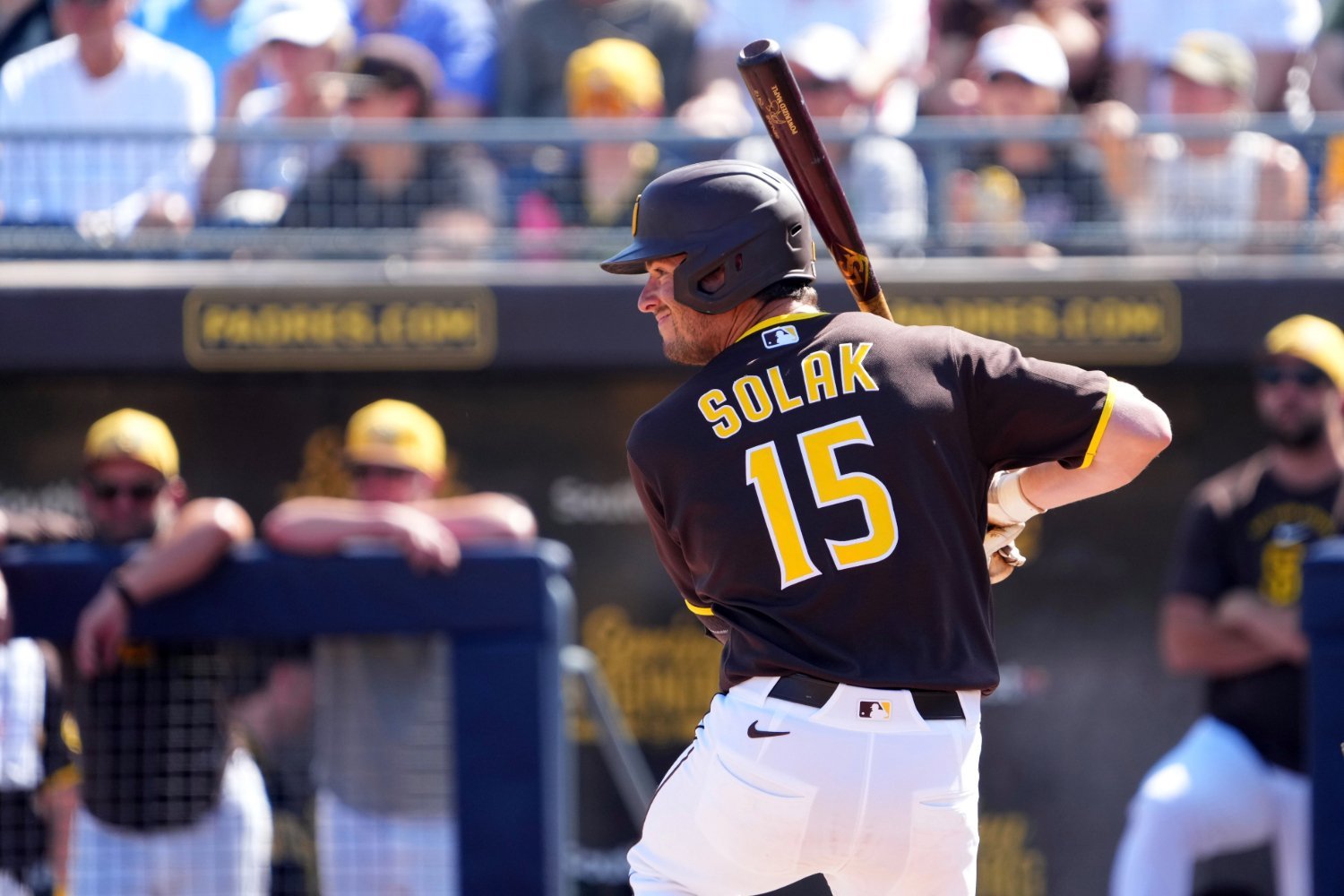 While the San Diego Padres' offense finally began to find its footing in July, several of the organization's best offensive performances came in the minors. Despite this being labeled one of the lower-tier farm systems in the league, multiple hitters strengthened their cases to become future reinforcements as the team looks to climb back into the National League wild-card picture. Ranking Padres' Best Minor League Hitters In July #3 Ethan Salas (Double-A San Antonio Missions | Triple-A El Paso Chihuahuas) After an oblique injury limited him in June, Salas bounced back into form with an elite July. He hit .344/.449/.469 with a .918 OPS, earning a late-month promotion to Triple-A El Paso Chihuahuas. While Salas has long been known for his power, July showcased other areas of his game. Despite not hitting a home run for the second consecutive month, after hitting seven through the first two months of the season, he continued to make himself valuable. Salas has already stolen a career-high 14 bases this season, and he wasted little time adjusting to the increase in talent at Triple-A, going 3-4 with a triple in his debut. Through his first five games with El Paso, he hit .333 with six hits and five RBIs, showcasing that he can adapt quickly to tougher competition. #2 Blake Hunt (Triple-A El Paso Chihuahuas) Following a brief stint with the major league club near the end of June, Hunt returned to El Paso and picked up where he left off. In July, he hit .321/.403/.643 with a 1.046 OPS, while recording 18 hits, 12 runs, 15 RBIs and even showcased some speed by hitting his first triple of the season. But his stellar month was highlighted by his power, in which he led the team with five home runs. Hunt’s biggest stretch came during the team's four-game series against the Las Vegas Aviators, where he hit three home runs, including a multi-home run game in the series finale. His combination of power and consistent run production made him one of the hottest hitters in the organization during July and strengthened him as one of the Padres' top catching depth options. #1 Nick Solak (Triple-A El Paso Chihuahuas) After renegotiating a minor-league contract with the Padres, the veteran showcased why he can still be an asset for the major-league roster. In July, he slashed .333/.363/.609 with a .972 OPS. while leading El Paso with 29 hits, 18 runs, 10 doubles and 18 RBIs. His four home runs ranked second on the team behind Hunt. Solak has consistently produced throughout the season at Triple-A, and July was another reminder of his potential offensive value. While his brief stint with the Padres resulted in just one hit in seven at-bats, there were some encouraging signs beneath the surface. As opposed to his usual pull-heavy approach, Solak showcased a more balanced spray profile, hitting the ball 37.5% to the left, 37.5% to the center and 25.0% to the right field. While the sample size was small, this all-fields approach could help him take better advantage of his limited opportunities the next time he is called up. View the full article
 -
 The Milwaukee Brewers squared off with the Los Angeles Dodgers in the NLCS last year, but the Dodgers got the best of the Crew in the form of a sweep. This year, Jacob Misiorowski's status as a starter is no longer in question, as he's the NL Cy Young frontrunner. Kyle Harrison has emerged as a front-of-the-rotation threat. How does the Brewers' pitching staff compare to Tarik Skubal and the Dodgers' starters? We dove in headfirst to find out. View the full article
 -
The Cubs Should Lock Up Clay Holmes With An Extension
DiamondCentric posted an article in North Side Baseball
 The Cubs were very active at the deadline, and maybe got their future starter for years to come as well. Clay Holmes is a prime candidate for the Cubs to sign to an extension before uncertainty sets in with the expected lockout this winter. With Holmes's high groundball rate paired with the Cubs elite defense, this is a match made in heaven.View the full article
 -
Chicago Cubs Minor League Pitchers of the Month: July 2026
DiamondCentric posted an article in North Side Baseball
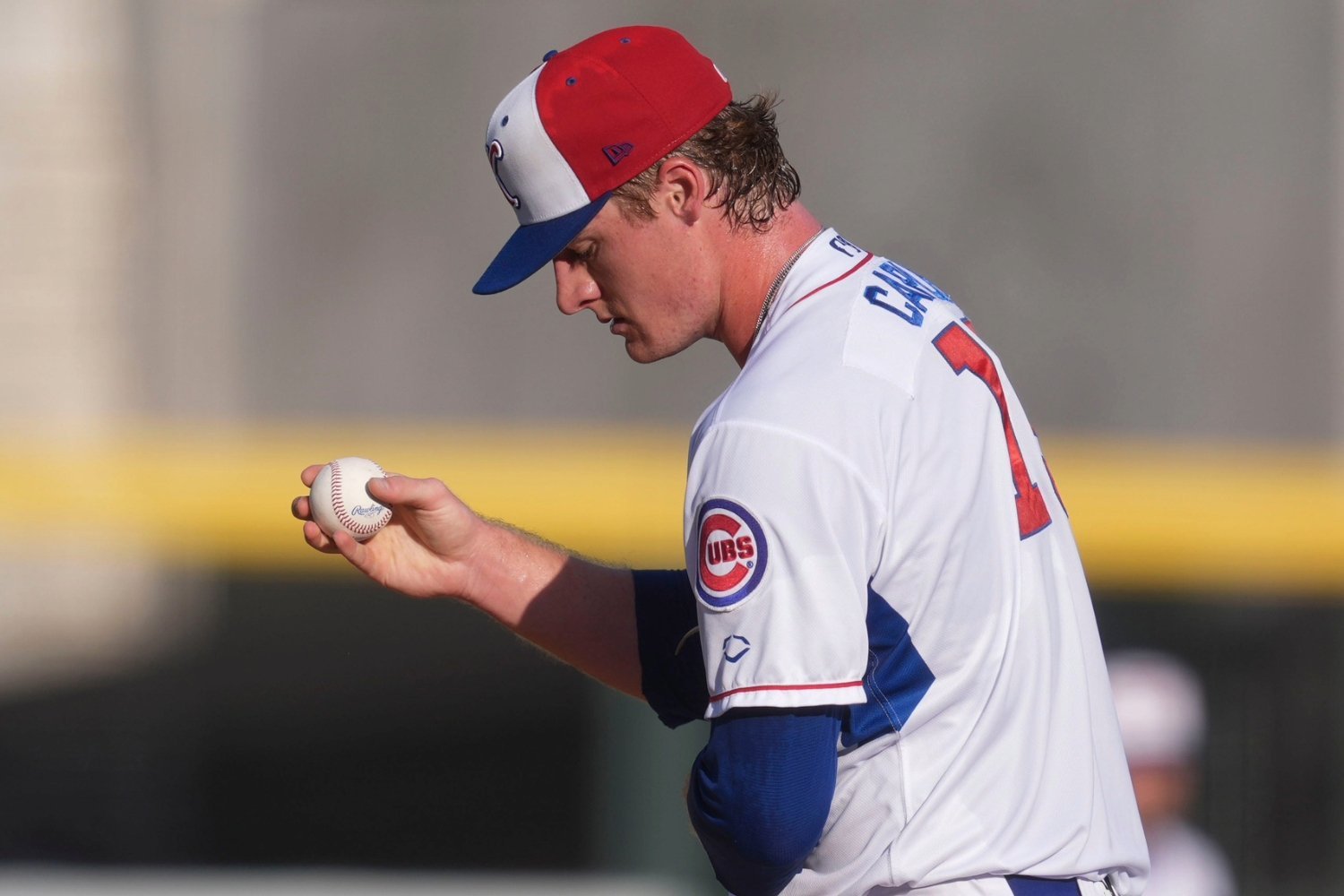 Developing arms is key for any organization looking to win sustainably. As the Chicago Cubs have painfully seen this year, injuries can derail even the best-laid plans. Having a war chest of developable and projectable arms to dip into, whether to use in the majors or as trade pieces, is what good organizations do. Here are some pitchers who improved their stock in July ahead of the trade deadline. And, spoiler alert, unlike the MiLB Hitter of the Month, all of the pitchers featured below are still around. Ranking Cubs' Best Minor League Pitchers In July Honorable Mention: Yoendris Gonzalez - RHP - South Bend Like seemingly every other Cubs pitcher this year, Gonzalez was placed on the IL in March. He started his rehab assignment at the end of May and was in Myrtle Beach by June 13. He had four good outings for Myrtle Beach in June and carried that into July where he put up 10 innings out of the Pelicans bullpen and allowed just two earned runs while striking out 18 and walking just three. Gonzalez was promoted to South Bend by the end of the month. He is a 23-year-old with a fastball that tops 95 and less than 75 total career innings under his belt, making him a pretty intriguing arm to follow. Honorable Mention: Anhuar Garcia - RHP - Myrtle Beach If you know Anhuar Garcia’s name, it is probably not for positive reasons. The 22-year-old was suspended in June of last year for 60 games for testing positive for performance enhancing drugs. He was activated at the end of June and made one appearance for Myrtle Beach before the calendar turned to July. He made seven appearances out of the bullpen and allowed just six hits and five runs in 12 innings. If you remove the one bad appearance he made where he allowed four runs on two homers, he had 10.2 innings of one-run ball with 14 strikeouts, only giving up two hits. He finished the month in the rotation in Myrtle Beach with a solid four-inning start. If he can continue to put up numbers like that while staying out of the news for the wrong reasons, he could be an asset down the line. Third Place: Jackson Brockett - LHP - South Bend A third reliever to get things kicked off. Brockett posted 17 strikeouts to four walks in 13 innings in July for South Bend. Each of his four outings lasted three or more innings and, over his final three outings of July, he had 13 strikeouts over 9.1 innings while giving up just one walk and three singles. He earned a Midwest League Pitcher of the Week award as well. The undrafted free agent continues to have a great season, and would probably be higher on this list had he pitched more than 13 total innings. Runner-up: Ethan Flanagan - LHP - South Bend After a great first professional year in Myrtle Beach last year, Flanagan started the year in South Bend and was… fine. Between April and May, he threw 30 innings, had a 34:10 K:BB ratio, and allowed 13 runs on 33 hits. That is when the Cubs transferred him to the development list on May 24, where he remained until June 21. Whatever they worked on in that month seemed to pay dividends in July. Flanagan threw 20 innings and had a 26:4 K:BB ratio and allowed seven runs on just 13 hits. Batters hit .306 off him in May and .181 in July. Flanagan was a 17th-round pick in 2023, but if he can continue to put outings together like he did last month, the lefty could force his way into the Cubs' future plans. Winner: Brooks Caple - RHP - Knoxville Caple made four starts in Double-A in July and allowed a .613 OPS to opposing hitters in 21 innings of work. He had a 24% strikeout rate and a 6% walk rate and allowed just eight runs total in the month. Caple also spent some time on the development list from 6/23-7/1 after scuffling a bit in three June starts. He came off the DL and rebounded with four pretty solid starts to get back on track. Heading into August, Caple looks to be a front-runner for the organization’s Minor League Pitcher of the Year award. View the full article
 -
Chicago Cubs Minor League Pitchers of the Month: July 2026
DiamondCentric posted an article in North Side Baseball
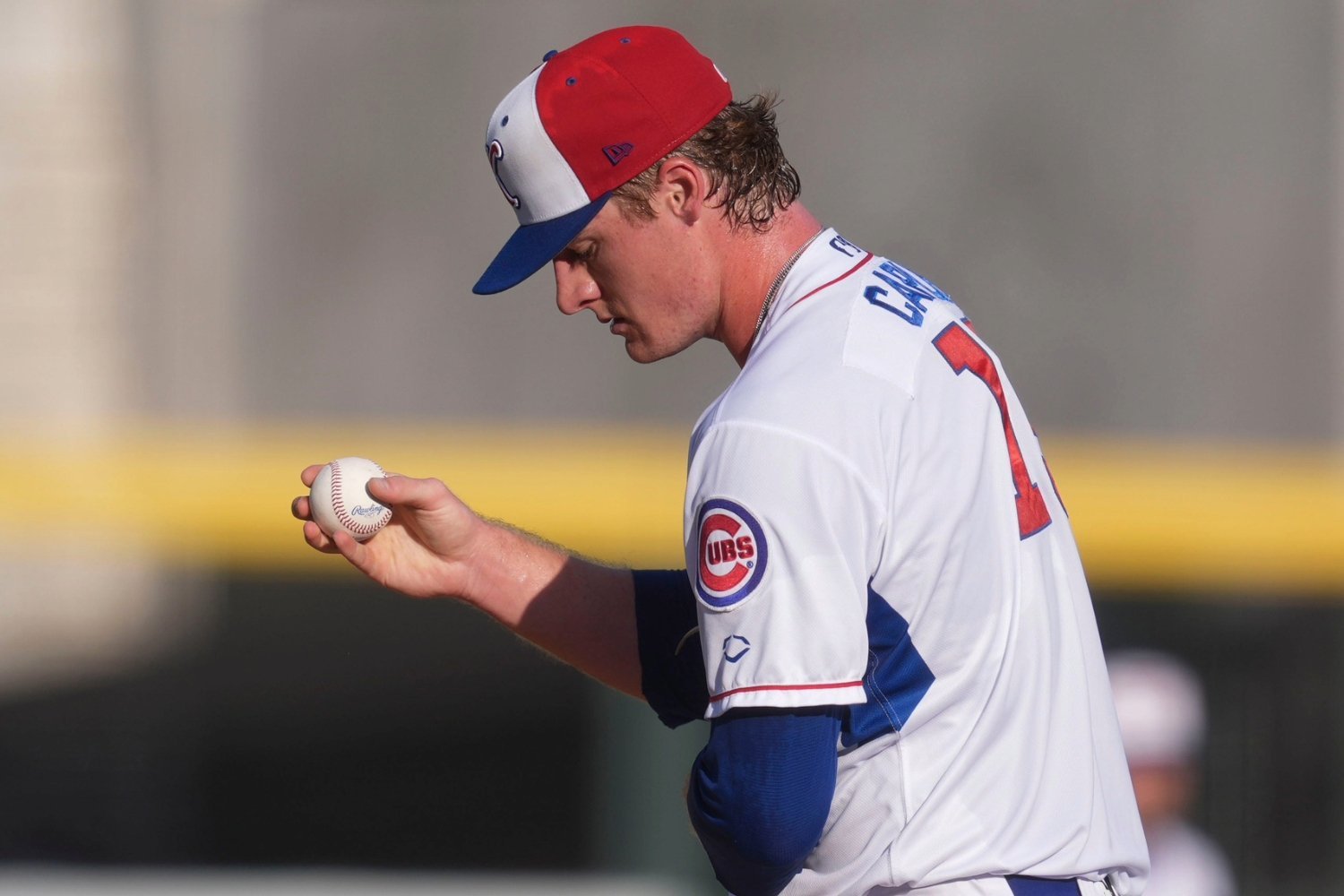 Developing arms is key for any organization looking to win sustainably. As the Chicago Cubs have painfully seen this year, injuries can derail even the best-laid plans. Having a war chest of developable and projectable arms to dip into, whether to use in the majors or as trade pieces, is what good organizations do. Here are some pitchers who improved their stock in July ahead of the trade deadline. And, spoiler alert, unlike the MiLB Hitter of the Month, all of the pitchers featured below are still around. Ranking Cubs' Best Minor League Pitchers In July Honorable Mention: Yoendris Gonzalez - RHP - South Bend Like seemingly every other Cubs pitcher this year, Gonzalez was placed on the IL in March. He started his rehab assignment at the end of May and was in Myrtle Beach by June 13. He had four good outings for Myrtle Beach in June and carried that into July where he put up 10 innings out of the Pelicans bullpen and allowed just two earned runs while striking out 18 and walking just three. Gonzalez was promoted to South Bend by the end of the month. He is a 23-year-old with a fastball that tops 95 and less than 75 total career innings under his belt, making him a pretty intriguing arm to follow. Honorable Mention: Anhuar Garcia - RHP - Myrtle Beach If you know Anhuar Garcia’s name, it is probably not for positive reasons. The 22-year-old was suspended in June of last year for 60 games for testing positive for performance enhancing drugs. He was activated at the end of June and made one appearance for Myrtle Beach before the calendar turned to July. He made seven appearances out of the bullpen and allowed just six hits and five runs in 12 innings. If you remove the one bad appearance he made where he allowed four runs on two homers, he had 10.2 innings of one-run ball with 14 strikeouts, only giving up two hits. He finished the month in the rotation in Myrtle Beach with a solid four-inning start. If he can continue to put up numbers like that while staying out of the news for the wrong reasons, he could be an asset down the line. Third Place: Jackson Brockett - LHP - South Bend A third reliever to get things kicked off. Brockett posted 17 strikeouts to four walks in 13 innings in July for South Bend. Each of his four outings lasted three or more innings and, over his final three outings of July, he had 13 strikeouts over 9.1 innings while giving up just one walk and three singles. He earned a Midwest League Pitcher of the Week award as well. The undrafted free agent continues to have a great season, and would probably be higher on this list had he pitched more than 13 total innings. Runner-up: Ethan Flanagan - LHP - South Bend After a great first professional year in Myrtle Beach last year, Flanagan started the year in South Bend and was… fine. Between April and May, he threw 30 innings, had a 34:10 K:BB ratio, and allowed 13 runs on 33 hits. That is when the Cubs transferred him to the development list on May 24, where he remained until June 21. Whatever they worked on in that month seemed to pay dividends in July. Flanagan threw 20 innings and had a 26:4 K:BB ratio and allowed seven runs on just 13 hits. Batters hit .306 off him in May and .181 in July. Flanagan was a 17th-round pick in 2023, but if he can continue to put outings together like he did last month, the lefty could force his way into the Cubs' future plans. Winner: Brooks Caple - RHP - Knoxville Caple made four starts in Double-A in July and allowed a .613 OPS to opposing hitters in 21 innings of work. He had a 24% strikeout rate and a 6% walk rate and allowed just eight runs total in the month. Caple also spent some time on the development list from 6/23-7/1 after scuffling a bit in three June starts. He came off the DL and rebounded with four pretty solid starts to get back on track. Heading into August, Caple looks to be a front-runner for the organization’s Minor League Pitcher of the Year award. View the full article
 -
 Braylon Payne - yes, still-teenager Braylon Payne - entered Timber Rattlers stratosphere. Jett Williams' status complicates a potential big-league need. Nashville and Wilson were victorious. Transactions: Milwaukee Brewers selected the contract of RHP Lyon Richardson from Nashville Sounds. Milwaukee Brewers sent RF Sal Frelick on a rehab assignment to Nashville Sounds. Nashville Sounds activated SS Jett Williams from the 7-day injured list. Nashville Sounds transferred C Andrick Nava to the Development List. RHP Luke Roupe assigned to Wilson Warbirds from ACL Brewers. Nashville Pre-Game Media Notes Final: Nashville 4, Memphis (Cardinals) 3 Box Score and Game Log Via the Sounds, game details, and we encourage readers to always review affiliate write-ups as part of their Link Report routine: Wilken's Late-Inning Homer Pushes Sounds Past Redbirds Another robust report linked above via the Nashville braintrust. You'll want to visit our report on Jett Williams' injury status (as well as Sal Frelick's first rehab game). The linked game summary indicates how run-productive Brock Wilken has been - if you can get past the batting average, Our lone look at Luke Adams' home run came in the midst of a charity-related in-booth interview, the Memphis announcer navigated it just fine. Adams also walked and singled, as did Eduardo Garcia. Seven K's and zero walks in an understandably brief two-run, four-inning outing for birthday boy Garrett Stallings (Happy 29th!). Dude is solid, as the Brewers know. Catch up with the latest Biloxi pre-game audio interview archives - Infielder (and girl dad) Daniel Guilarte is the most recent interviewee Biloxi Pre-Game Media Notes Final: Columbus (Braves) 7, Biloxi 0 Box Score and Game Log Shuckers Fall to Clingstones on Saturday Night - Burke extends on-base streak to career-best 25 games Shuckers batters managed three lonely singles, four walks, K'd 15 times, and were 0-for-7 with RISP. The pitchers did not have stellar nights. Catcher Marco Dinges reached base twice (single, walk). Not surprisingly, there was no relevant Biloxi video from this game, so instead enjoy catching up with Mark Coley II from Friday night in this two-part interview. There are three videos from a Columbus perspective should you wish (August 8th selections). RHP Ryan Birchard struck out the side upon entering in the 7th. He also fanned the first man he faced in the 8th, before then going single - double - strikeout (#5) - two-run single. It seemed odd that LHP Sam Garcia was then summoned to get the final out in a 7-0 contest with Birchard only at 32 pitches total, but I checked out the game archive, and it was not an injury situation. Wisconsin Pre-Game Media Notes (download link) Final: Beloit (Marlins) 8, Wisconsin 5 Box Score and Game Log Via the Timber Rattlers, game details (with a few videos, including the one below): Payne Sets New Timber Rattlers Home Run Record He's still a teenager for a few more days, and now he's in Timber Rattlers royalty: Payne is such a physical specimen, and could we quibble with the 29.6% K rate? Perhaps, but c'mon, he's a premium prospect, no doubt. RHP Ethan Dorchies (another 19-year-old, by the way) gave up two long balls in his rough five-inning outing, 12 baserunners, but he muscled through 88 pitches to get his work in. Both taters were on off-speed pitches down and in to LH batters, as can be seen here and here. The majority of Daniel Dickinson's 20 errors (one on Saturday) came much earlier in the season, so he's upped his game on both sides of the ball. Dickinson also singled and stole his 41st base in 51 tries. Wilson Pre-Game Media Notes Final: Wilson 8, Hill City (Guardians) 3 Box Score and Game Log Warbirds Score Eight Unanswered in Blowout Win - Ebel Extends On-Base Streak to 27 It's been a struggle for 19-year-old Frederi Montero, who has started 85 of Wilson's 104 games at first base. His Link Report mentions have been few, as can be expected when your OPS is .596 and you're limited to a prime power position. So, good for him here: #11 for Handelfry, who also singled and walked: We'll mix in a bit of video on the baserunning downside - José Anderson back-picked and Brailyn Antunez caught stealing. Back to the positive: Antunez RBI double Anderson RBI single Nice work by RHP's Hayden Robinson and Miqueas Mercedes (though Mercedes did issue five free passes (four walks, one HBP). Really excited by Robinson, who seems well past his 2024 UCL elbow surgery. In his last four appearances (three starts) - 17 IP, 12 H, 3 ER, 6 BB, 16 K. Final: DSL Brewers Blue 5, DSL Red Sox Red 0, seven innings as scheduled Box Score and Game Log In a rematch from Friday (a 5-4 Blue victory), the Crew is on top again. All five Blue hits were singles, so the 12 free passes (11 walks, one HBP) led the offense, along with the six successful steals in as many attempts. 17-year-old southpaw Alexander Mercedes (yes, a rarity on these DSL rosters) and 17-year-old RHP Daniel Munoz combined for one of the prettiest combined pitching lines we've seen at any level this year. Somehow the Boston club had seven AB's with RISP but failed in each. Enjoy your box score review. Final: DSL Brewers Gold 9, DSL Rojas 7 (Reds), seven innings as scheduled Box Score and Game Log This was a 1-0 game, Brewers down, after five innings. One would think scoring nine unanswered runs over the next inning and a half would make everyone comfortable. However, the Cincinnati boys answered the Gold six-spot in the final frame with one of their own. How, do you say? Three Gold pitchers combined (all in that final inning, mind you) for six walks, a HBP, a wild pitch (and yes, hits also). With the score now 9-7 and the bases loaded, a strikeout finally ended things. Although no Brewer had a multi-hit game, everyone contributed. Brandon Sproat makes his Nashville debut Sunday. Enjoy your summer day! Organizational Scoreboard including starting pitcher info, game times, MiLB TV links, and box scores Current Milwaukee Brewers Organization Batting Stats and Depth Current Milwaukee Brewers Organization Pitching Stats and Depth View the full article
 -
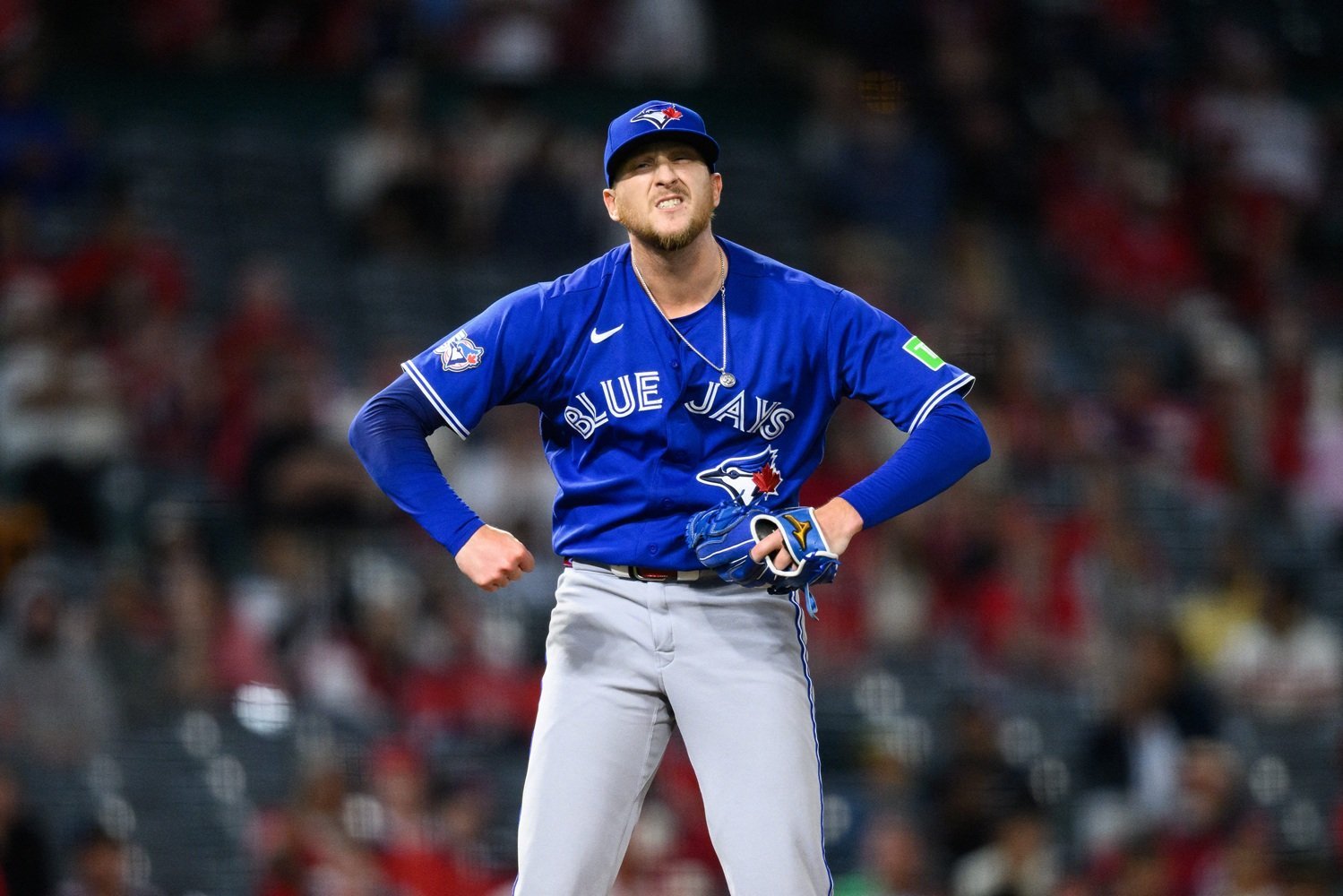 The Twins acquired Jeff Hoffman just before the trade deadline as the front office made strides to strengthen the bullpen for a playoff run. Many will remember that Hoffman spent spring training with the Twins in 2023 but opted out of the deal before ever putting on a Twins jersey for a regular-season game. Now he returns to the Twins, but his path brings him back as a much different reliever than he was then. Going Oppo is two stories on Twins Daily with different opinions running simultaneously. Read the other side here. Since leaving the Twins, he found success with the Philadelphia Phillies. That season, he posted an increased K-rate and K/9 that landed him as the closer on a very competitive Phillies team for two seasons. As a free agent, he translated that into a nice little contract (3 years, $33 million) with the Toronto Blue Jays, and the world watched last season as he anchored their bullpen during a World Series run. This season, Hoffman fell out of favor with Blue Jays leadership and was removed from being the primary closer in favor of Louis Varland. Most glaringly, one can look at Hoffman’s numbers and see a 3.94 ERA this season and a 4.37 ERA last season and wonder exactly what the Twins have gotten themselves into here? One aspect of Hoffman’s statistics this season that sticks out like a sore thumb that directly impacts his ERA is a gigantic number in the BABIP column, .389. Since establishing himself as the competitive closer he has been the last several seasons, his BABIP sits most often in the lower .200s, with a .278 BABIP in 2024 being the highest through that stretch. So, one could argue his slow start in 2026 was at least somewhat attributable to bad luck. If one is concerned with Hoffman’s output based on ERA, that number alone should regress to its normal mean. Often, to do so, it will be much better than his career norms, and the Twins could reap the rewards. Hoffman’s xERA reflects the reality that his outcomes should most often be better than they have been, as he carries a 3.75 xERA versus his 4.37 actual ERA. A direct correlation with Hoffman’s success since 2023 is an increase in his fastball velocity. For years, the former ninth overall pick sat around 94 mph with his fastball. Then in 2023 it jumped up to 97 mph. He is still throwing near that mark, averaging 96 mph with his four-seam fastball. Hoffman has traditionally used his slider to attack right-handed hitters and his four-seamer to attack left-handers. Something in that approach this season has caused him to have far less success against righties than usual, currently allowing right-handed hitters to carry a .306 batting average against him. It could be that even with a dropped arm angle, Hoffman isn’t getting as much run on his slider as he has in past seasons. Even with those struggles, Hoffman has proven to be a reliable reliever since opting out of his minor-league contract and leaving Twins camp those years ago. While Hoffman will be remembered for his blown save in Game 7 of last year’s World Series, his overall numbers last postseason will still be what you want out of a backend reliever. Over 12 1/3 innings, Hoffman held a 1.46 ERA, allowed two earned runs, six hits, and struck out 18 batters while only walking four. Even this season, since the beginning of June, he holds a miniscule 1.21 ERA, three earned runs, 30 strikeouts, and eight walks. Putting the whole package together, it begins to be obvious why the Twins targeted Hoffman and were willing to part with a top 10 prospect in Dasan Hill to do so. View the full article
 -
Going Oppo: Why You Can't Ignore Jeff Hoffman's Stubborn ERA
DiamondCentric posted an article in Twins Daily
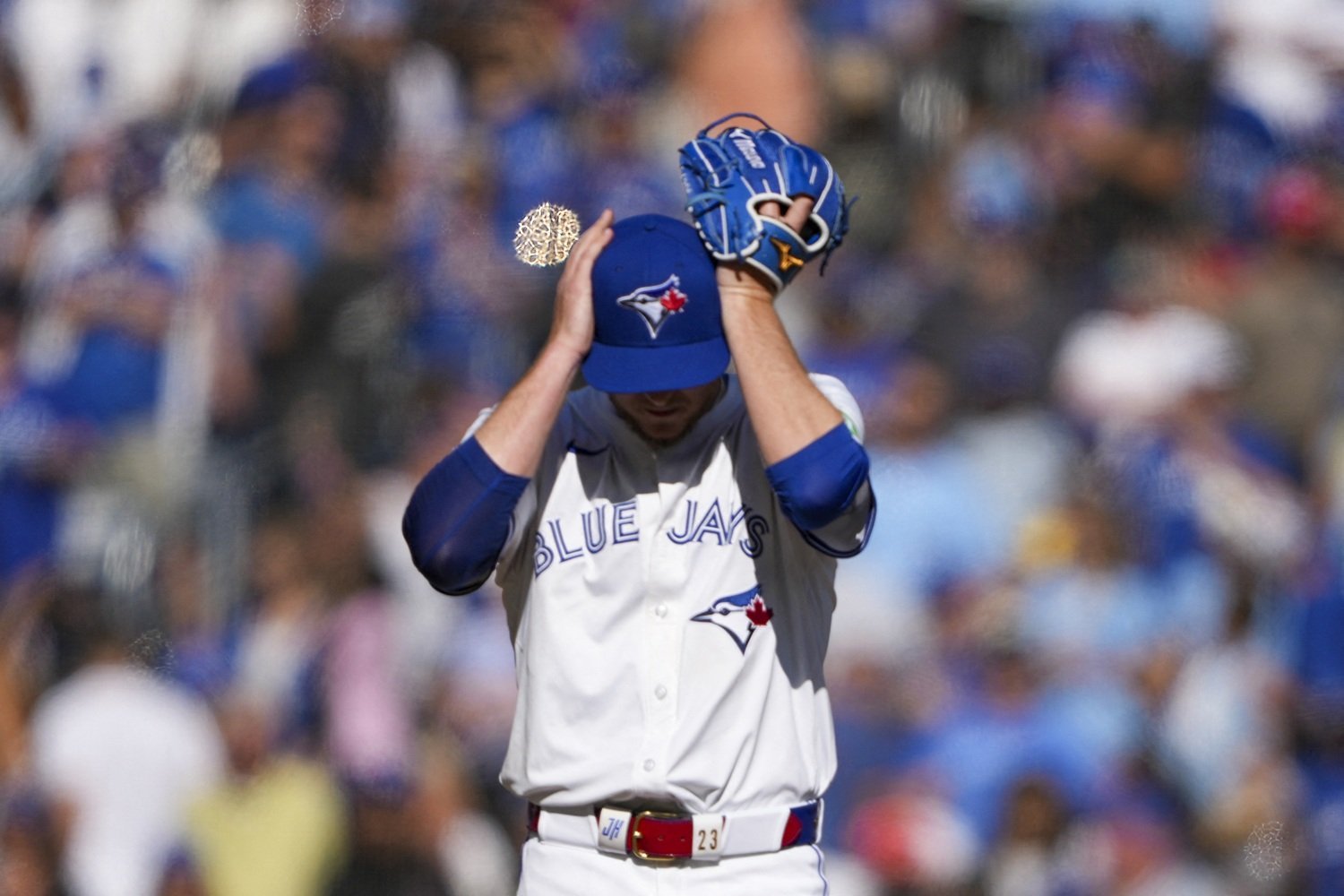 Leading up to the trade deadline, the Twins had already added a trio of pitchers to bolster the pitching staff. But acquiring former All-Star reliever Jeff Hoffman from the Blue Jays was on a different level. Minnesota has certainly made aggressive moves at previous deadlines, but it's been a while since the front office has acquired an established late-inning reliever with Hoffman's pedigree. Just one year removed from a 33-save season, the Twins paid a hefty price to bring him to Minnesota in hopes of solidifying the back end of the bullpen for a playoff push. And on paper, it's easy to see why. Going Oppo is two stories on Twins Daily with different opinions running simultaneously. Read the other side here. Hoffman's underlying metrics are nothing short of elite. Among all qualified major league pitchers this season, his whiff rate, chase rate and strikeout rate all rank in the 98th percentile or better. When he's locating his pitches, very few relievers in baseball can match the quality of his stuff. Hitters chase out of the zone, they swing through pitches in the zone, and they rarely make quality contact. It's exactly the type of profile contenders dream about adding at this point in the season. However, there's a reason those numbers are called "underlying" metrics. They're designed to explain what's happening beneath the surface, and in Hoffman's case, they've consistently painted a prettier picture than his actual results. Across 49 innings this season, Hoffman owned a 3.86 ERA and a 1.35 WHIP with Toronto. Now, a 3.86 ERA certainly isn't terrible for a reliever. Plenty of teams would gladly take that kind of production. But it's also worth asking why someone with some of the most dominant swing-and-miss metrics in baseball has an ERA sitting a full run (or more) higher than many of the game's elite relievers. The answer isn't particularly complicated. When Hoffman is on, he's one of the nastiest relievers in baseball. The problem is that he simply hasn't been on consistently enough over the past two seasons. Let's go back to 2025. Hoffman couldn't have asked for a better start. Over his first 15 1/3 innings of the season, he posted a microscopic 1.17 ERA while striking out 22 batters and issuing just one walk. He looked every bit like one of the best relievers in baseball, and while nobody expected him to maintain that pace for an entire season, there wasn't much reason to believe disaster was around the corner either. Then May happened. Over just 10 innings that month, Hoffman surrendered 15 earned runs. He also allowed five home runs and issued six walks. For a late-inning reliever who's usually being trusted with close leads, that's about the worst combination you can have. The strikeouts didn't disappear, and the swing-and-miss stuff was still there. He just wasn't putting enough pitches in competitive locations. Instead of getting ahead in counts and finishing hitters, free passes created traffic, mistakes got punished, and crooked numbers followed. Unfortunately, that wasn't just a one-month anomaly. The inconsistency stuck with him throughout the remainder of the season. His final two months serve as a perfect example. Hoffman posted a 6.00 ERA in August before completely flipping the script with a dominant 0.84 ERA over the final month of the season. On the surface, those look like two completely different pitchers. In reality, many of the same issues remained. The command continued to come and go, and the walks never disappeared. The difference was simply that the extra-base hits weren't coming at the same rate in September as they had during some of his rougher stretches. That roller coaster carried over into 2026, where Hoffman once again opened the season as Toronto's closer. By the end of May, though, he owned an ERA north of 6 through 25 2/3 innings. And once again, the reasons looked awfully familiar. Too many walks, and too many extra-base hits. Eventually, Blue Jays manager John Schneider decided enough was enough. Toronto removed Hoffman from their closer role and handed ninth-inning duties to former Twins pitcher Louis Varland. Ironically, that may have been exactly what Hoffman needed. Since the start of June, he's been outstanding. Across his last 23 1/3 innings, Hoffman has allowed just three earned runs. And wouldn't you know it, the biggest differences haven't been his strikeout numbers or his stuff. He's simply done a much better job limiting walks and keeping hitters from doing serious damage when they make contact. That's ultimately what makes evaluating Hoffman so fascinating. The advanced metrics aren't lying; he truly does possess the arsenal of a dominant, late-inning reliever. Few pitchers miss bats at the rate he does, and when everything is working, he looks capable of shutting down anyone in baseball. But the surface-level numbers aren't lying either. There's a reason his ERA has consistently landed higher than many would expect given those elite peripherals. Over the past two seasons, his command has disappeared often enough to create disastrous stretches, and those blowups are especially damaging for a one-inning reliever who's expected to protect slim leads. That's the version of Hoffman the Twins are betting they can avoid. If he continues limiting walks and extra-base hits the way he has over the past two months, there's every reason to believe he'll become one of Derek Shelton's most trusted high-leverage relievers down the stretch. But if those command issues resurface, the Twins may quickly learn why some people have been far more cautious about Hoffman's profile than the underlying metrics would suggest. View the full article
 -
 The trade deadline has officially come and gone, and the Minnesota Twins walked away with three new arms to bolster their pitching staff. But while those were the moves that ultimately got done, there was another name that generated plenty of buzz throughout deadline day. It just never crossed the finish line. According to Bob Nightengale, the Twins were "all over" Angels shortstop Zach Neto leading up to the deadline. It was an interesting report considering there had been very little linking Minnesota to Neto in the days and weeks beforehand. On the surface, it's easy to understand why fans would've been excited. Neto is a young, controllable shortstop with legitimate power and speed, and adding a player of that caliber would've been one of the biggest splashes the Twins could've made. But as intriguing as the idea sounded, I think Minnesota dodged a bullet by not completing that trade. There's no denying Neto has developed into a quality major league player with the Angels. Across 476 career games, he's put together a .754 OPS and a 110 OPS+, while launching 77 home runs and stealing another 75 bases. That combination of power and athleticism has helped him quickly establish himself as Los Angeles' everyday leadoff hitter. Players capable of contributing 20-plus home runs while also providing impact on the bases don't exactly grow on trees. That's the appeal. But once you dig a little deeper into his profile, some pretty significant concerns begin to appear. The biggest issue comes with his approach at the plate. His whiff rate and strikeout rate both rank in the ninth percentile or lower among all qualified major league hitters. That's an alarming combination, especially for someone expected to be setting the table near the top of a lineup. His chase rate sits in the 14th percentile, meaning he's consistently expanding the strike zone and offering at pitches he probably shouldn't. Even though he's already hitting just .230 this season, the underlying metrics suggest things could actually be worse. His expected batting average sits all the way down at .202. Now, to be fair, expected batting average isn't everything. Neto intentionally sells out for pull-side power, and hitters with that approach often see their expected numbers suffer because they're trading contact quality for home run production. But it also reinforces a larger point. Neto isn't a particularly well-rounded offensive player. When the power is there, he's an exciting player to watch. But when the extra-base hits aren't coming, there isn't much else in his offensive profile to fall back on. The concerns don't stop once he takes the field, either. Despite possessing above-average athleticism and solid quickness, Neto's defensive metrics have consistently graded out poorly. He ranks in just the second percentile in Outs Above Average this season, making him one of the least effective defensive shortstops in baseball by that metric. More importantly, this isn't simply a down year. He's ranked in the bottom tenth of the league defensively during each of his three full major league seasons. There's certainly arm strength there, and that has led some to believe third base could ultimately be his best long-term position. But that brings us to perhaps the biggest issue of all: the acquisition cost. Neto is only 25 years old and remains under team control through the end of the 2029 season. Players with that combination of age, production and years of control don’t come cheap. Yes, the Twins have built one of baseball's deeper minor league systems, but even organizations with strong farm systems have to be careful about which prospects they move. Trading away one of your top prospects for a player with clear offensive flaws, below-average defense and a hefty acquisition cost is far from a slam dunk - especially when two of those top prospects are also shortstops. That's an unnecessary gamble, and judging by the fact a deal never materialized, it may have been one the Twins ultimately weren't comfortable making. Would adding Zach Neto have created plenty of excitement on deadline day? Absolutely. He's a recognizable name, he's young, and he's capable of producing highlight-reel moments. But excitement doesn't always equal the right baseball decision. When you weigh the swing-and-miss concerns, the defensive limitations and, perhaps most importantly, the likely prospect package it would've taken to get him, the risk starts to outweigh the reward. The Twins certainly improved their roster at the deadline by strengthening their pitching staff. And while some fans may wonder what could've been had Neto ended up in Minnesota, there's a strong argument that the best move the front office made was the one it didn't make. Passing on Zach Neto may not have generated the biggest headlines, but in the long run, it might prove to be one of the smartest decisions the Twins made all week. View the full article
 -
Boston Red Sox Minor League Pitchers of the Month: July 2026
DiamondCentric posted an article in Talk Sox
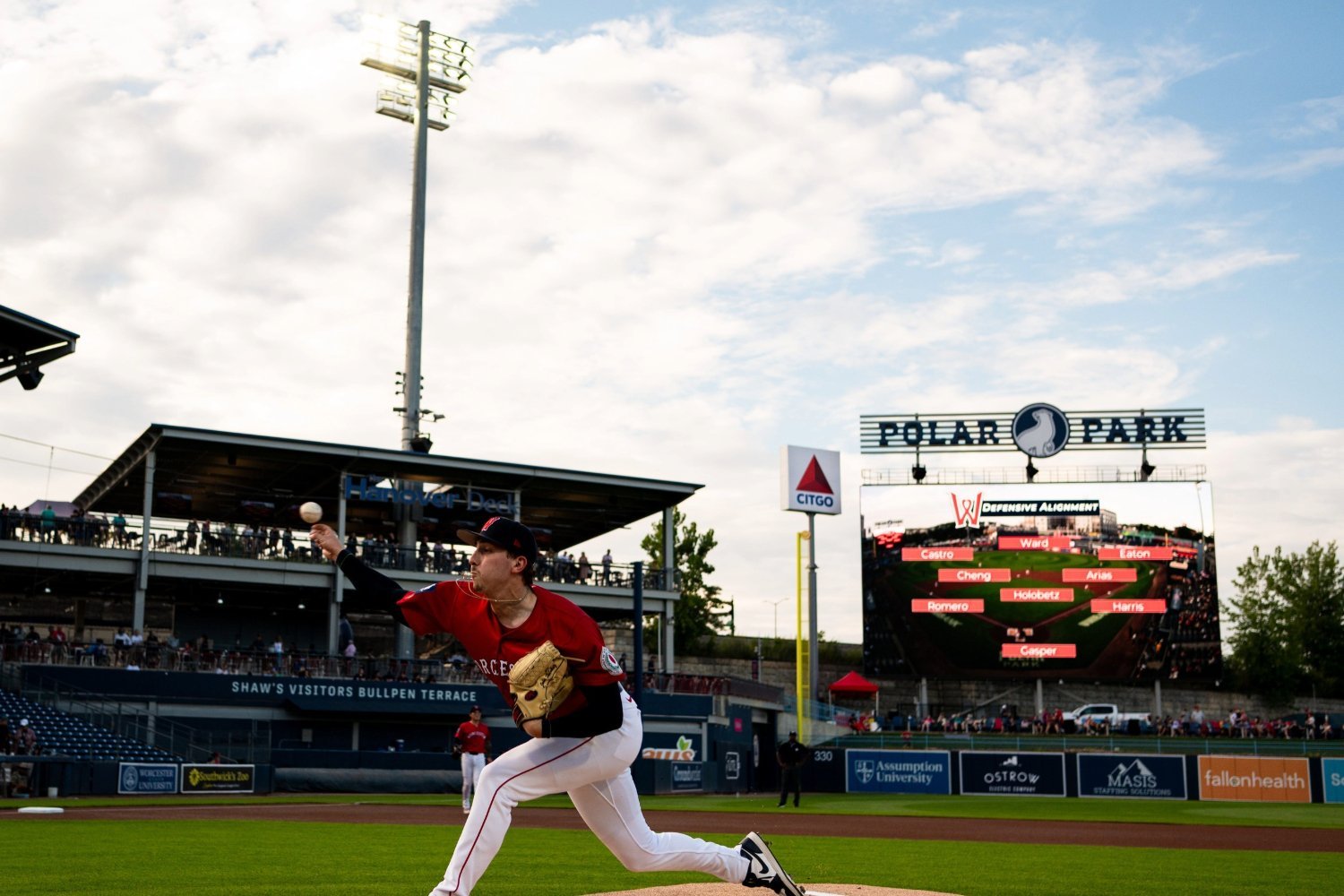 July was an extremely friendly month for the entire Boston Red Sox organization. Not only did the major-league club go on a run that put them comfortably into a playoff spot, but the minor-league teams went on their own respective runs. The pitching infrastructure was a big reason for that success, with players across every level shining. Today, we’re going to discuss the top five pitchers in the farm system during the month of July. Ranking Red Sox's Best Minor League Pitchers In July Honorable Mention: Anthony Eyanson (Portland Sea Dogs) Despite being traded to the Baltimore Orioles at the trade deadline, it would be wrong to not include Eyanson in some form, hence the honorable mention. The right-hander made four appearances, three of them being starts, and tossed 17 2/3 dominant innings. Opponents hit just .161 against him and he walked just seven batters, good for a WHIP 0.96. Eyanson struck out 30 batters in that same span, continuing to showcase his strong ability to get batters out by strikes. To add to his impressive month, the right-hander allowed only four runs, one by a home run as he finished the month with a 2.04 ERA. Eyanson had two starts that stood out, his July 18 start showcasing his dominance on the mound as he tossed five innings and allowed just one hit while striking out eight batters. That was followed up with his final start in the Red Sox organization where he struck out a career-high 10 batters in 4 2/3 innings. Now, he will look to continue his dominance in Baltimore. Honorable Mention: Tyler Uberstine (Worcester Red Sox) Another pitcher traded at the deadline, Uberstine was quite the arm out of the bullpen for Worcester in July. The right-hander tossed 14 1/3 innings and allowed just three runs for the entire month. Opponents hit just .152 against him and his WHIP was 0.70. Uberstine made eight appearances for Worcester in July, including one spot start, and in that span struck out 18 batters while issuing just three walks. Uberstine was dealt to the Atlanta Braves at the trade deadline and will now have a clearer path to return to the majors. Whether out of the bullpen or part of the rotation is unknown, but the right-hander should be able to provide quality innings for the Braves. #3 Angel Bastardo (Worcester Red Sox) Bastardo, who is a reliever, may be a surprise addition to those who haven’t followed him this season. Having been taken in the Rule 5 draft prior to the 2025 season by the Toronto Blue Jays, Bastardo was returned to the Red Sox organization while still recovering from Tommy John surgery from 2024. Since returning, he has shown some electric stuff during his outings, but everything seems to have finally clicked this summer. Bastardo appeared in nine games during the month of July and was one of the most trusted arms out of acting manager Iggy Suarez’s bullpen. The right-hander tossed 14 2/3 innings and allowed just four earned runs, good for an ERA of 2.45. More impressive was the fact that opponents hit just .137 against him and his WHIP was an impressive 0.48. Over those 14 2/3 innings, he didn’t allow a single walk and struck out 23 batters. His performance throughout July has quickly brought his name into the conversation surrounding potential depth pieces for the major-league bullpen should Boston need reinforcements down the stretch. #2 Jason Gilman (Salem RidgeYaks) Gilman showcased the potential that made the Red Sox interested in him during the 2025 draft. With a pitch arsenal made up of a fastball, curveball and changeup, Gilman mowed down the competition in four July appearances including three starts. Tossing 21 1/3 innings, the left-hander allowed just seven earned runs. Overall, he held opponents to just a .164 average while punching out 25 batters. Despite tossing a complete game, his best start may have come on July 4 where he tossed six shutout innings. In that outing, he allowed just two hits and two walks while striking out nine batters. Following his strong month of July, Gilman was promoted to High-A Greenville. #1 John Holobetz (Portland Sea Dogs/Worcester Red Sox) The month of July was a great one for Holobetz, who not only performed great on the field, but also got a promotion to Triple-A. The right-hander, who was the player to be named later in the Quinn Priester trade, has moved through the system quickly since being acquired. Las month, Holobetz appeared in five games, making four starts while being workhorse by minor-league standards. Tossing 23 innings, the right-hander allowed just seven earned runs good for a 2.74 ERA. His control was exceptional, walking just four batters and striking out 32 as his WHIP was 0.91. Opponents also struggled to make good contact as he allowed 17 hits across the 23 innings. Holobetz made his final start of the month in Worcester where he delivered a gem. In his Triple-A debut, the right-hander tossed 5 2/3 innings, allowing just one run on four hits while striking out six batters. Now in Worcester, the plan is to tinker with his pitch arsenal and see if he can get a sweeper, sinker or cutter to join his current four-pitch mix. He's turning himself into a legitimate piece of the pitching puzzle for 2027 and beyond. View the full article
 -
New York Mets Minor-League Hitters of the Month: July 2026
DiamondCentric posted an article in Grand Central Mets
 The end of July and early August are a crazy time for a MiLB system. When the MLB team gets to dealing, you get players going out, players coming in, and players forced both up and down the ladder to make room for or replace members of the first two groups. We’ve known for months that the New York Mets would be selling at the trade deadline. Their efforts netted them more than a dozen prospects, giving the organization another much-needed injection of young talent. It also led to seemingly every hitting prospect already in the system changing levels throughout the month, including all four of the guys mentioned below. Perhaps we’ll see Jefferson Rojas or Sammy Stafura on this list for August. In the meantime, we celebrate the OG farmhands who tore it up in July. Monthly stats referenced in tables are from milb.com for the player’s full month, as opposed to a specific level, like in past editions. Prospect Rankings are from Grand Central Mets. Ranking Mets' Best Minor League Hitters from June 4. Trey Snyder – SS, Low A/High-A (St. Lucie/Brooklyn) Snyder, New York’s fifth-round pick (No. 144 overall) in 2024, opened the year on the injured list. He rehabbed briefly before joining St. Lucie in June, where he posted a .569 OPS across 18 games. His .394/.438/.592 slash line (1.030 OPS) for St. Lucie in the same number of games in July suggests whatever rust impeded him the prior month has been shaken off. G (AB) Slash Line (OPS) XBH (HR) R RBI 21 (85) .365/.411/.541 (.952) 10 (2) 12 17 A 3-for-14 start in three appearances for Brooklyn slightly watered down Snyder’s overall monthly numbers, but his dominance more than earned him this spot. If his July performance was not an aberration, but a preview of what happens when things click for him, he should put on a show as a Cyclone. 3. Randy Guzman – OF, A/High-A (St. Lucie/Brooklyn, No. 13 Prospect) July was a busy month for Guzman, who spent time in the Florida Coast League, Single-A and High-A. The FCL stint was a rehab assignment that he didn’t play particularly well on (2-for-14). He shredded that entire script in St. Lucie and Brooklyn, though, posting an OPS of 1.000 or better in both spots. G (AB) Slash Line (OPS) XBH (HR) R RBI 18 (59) .339/.432/.576 (1.007) 7 (3) 14 18 The Dominican Republic native has a lot of red on his Prospect Savant page from his 60-game sample in St. Lucie, which is what you want to see. Any improvement in his chase rate could lead to July’s massive numbers over a much larger sample. 2. John Bay – OF, High-A/AA (Brooklyn/Binghamton) Bay played 11 games in Brooklyn before moving to Binghamton on July 21st. He then took the field six times for the Rumble Ponies, and essentially maintained his production from High-A, which is easier said than done. G (AB) Slash Line (OPS) XBH (HR) R RBI 17 (59) .305/.438/.576 (1.014) 9 (3) 14 11 We’re being real sticklers if we’re going to bash a guy for *only* boasting a .940 OPS in his first six Double-A games after notching a 1.041 OPS across (presumably) his final 17 contests of High-A action. Not bad for someone who went undrafted out of Austin Peay a year ago, eh? 1. Corey Collins – 1B, High-A/AA (Brooklyn/Binghamton) Collins was an honorable mention here in June despite posting 18 RBI and a .409 OBP. That status had more to do with other incredible months than any slight toward him. Nonetheless, he took it personally. G (AB) Slash Line (OPS) XBH (HR) R RBI 18 (59) .356/.465/.508 (.973) 5 (2) 9 9 Like Bay, Collins was promoted from Brooklyn to Binghamton on July 21st. Unlike Bay, Collins somehow played better for the Rumble Ponies than Cyclones, raising his OPS more than 200 points (.881 to 1.082) in just five fewer at-bats (27) than he saw at High-A (32). The increase in production while jumping levels makes him our top hitter of the month. Honorable Mentions: JT Schwartz (AA, Binghamton), Antonio Jimenez (High-A, Brooklyn) View the full article
 -
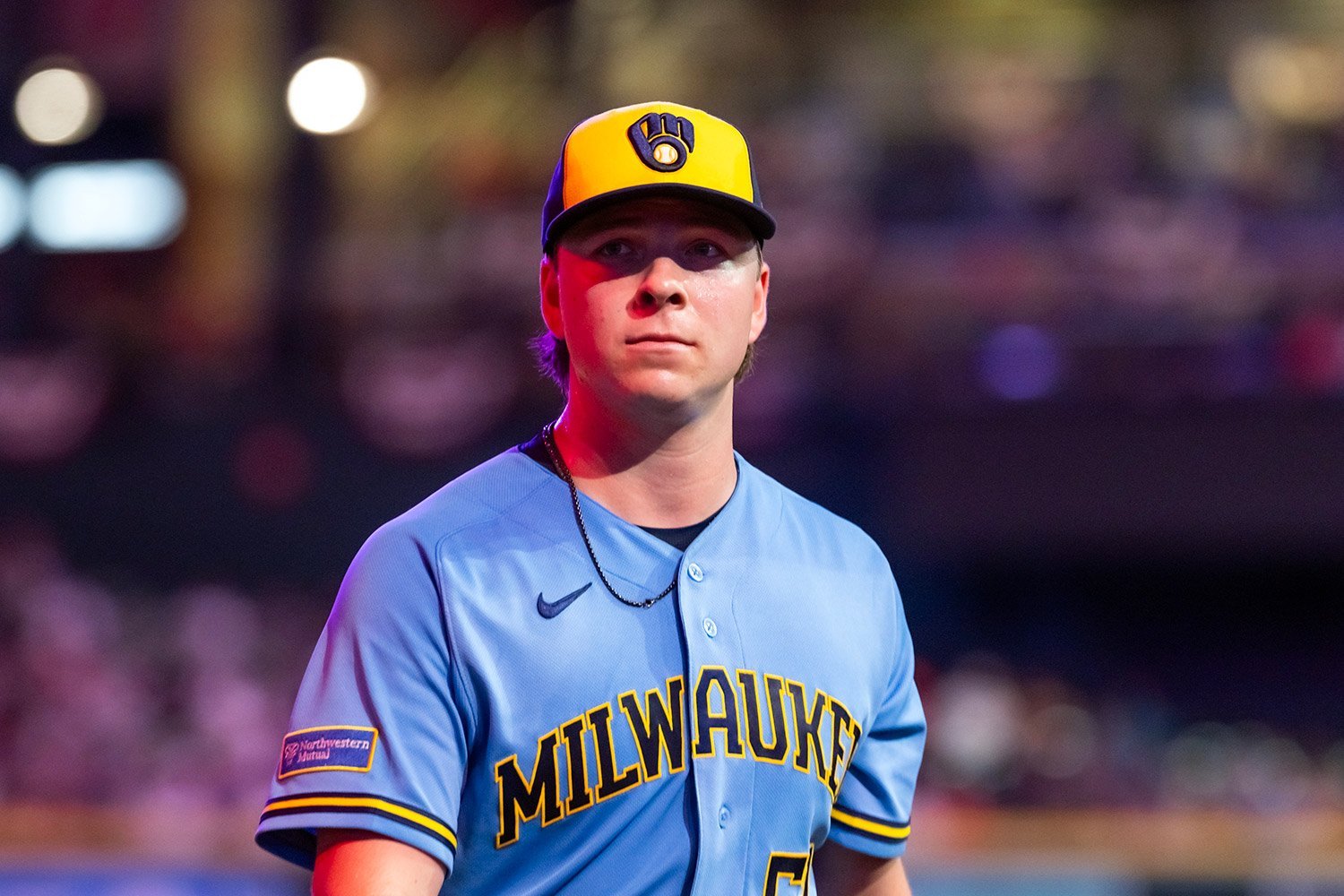 The Milwaukee Brewers and Los Angeles Dodgers may yet again be on the David vs. Goliath course that we saw the conclusion of in the NLCS last year. Milwaukee has consistently been in the bottom half of the league’s payroll rankings, while the Dodgers live amongst the cream of the crop when it comes to top-end spending. Despite the financial disparity, there may not be a starting pitcher more electric than Jacob Misiorowski and Tarik Skubal. Kyle Harrison and Yoshinobu Yamamoto are both secondary options, so we’ll compare those two as well. Jacob Misiorowski Breakdown Misiorowski has quickly stolen headlines for having the most electric fastball in the sport. The Brewers’ flamethrower has fired a ball as fast as 105.5 miles per hour, and he’s improved leaps and bounds with his command since debuting in the major leagues last year. The 24-year-old former second-round pick is 11-5 this year with a 1.63 earned run average and has 195 strikeouts in 127 innings of work. He’s striking out 40.6 percent of hitters (100th percentile) and is walking hitters just 6.0 percent of the time (87th percentile). The Brewers’ ace has a five-pitch mix, but he heavily relies on the fastball that holds a rising effect out of his 30-degree arm angle upon release. His 0.73 WHIP tops all starters by 0.15, and he’s holding opposing hitters below the Mendoza line against every one of his pitches. Tarik Skubal Breakdown Skubal was the big-ticket acquisition at this year’s MLB trade deadline, and for good reason. The two-time Cy Young winner has the accolades on his side, and he currently profiles as one of the hardest-throwing lefties in baseball. The newest member of the Dodgers’ rotation holds a 7-6 record this year with a 2.81 earned run average. He has 122 strikeouts in 102.2 innings pitched, operating with a 0.92 WHIP on the season. Skubal is a master of deception, and he’s one of the more cerebral pitchers in baseball, using his sinker 32% more often against fellow southpaws than he does against right-handed hitters. The 29-year-old lands in the top 10 percent for chase rate (36.1), whiff rate (32.5), strikeout rate (30.7) and walk rate (4.0), and he has postseason experience under his belt from his time in Detroit. Kyle Harrison’s Tale of the Tape Harrison was the Brewers’ big offseason acquisition, as Milwaukee got him from the Boston Red Sox in a package deal. Harrison has one of the best slurves in baseball, garnering just a .150 opposing batting average against his low-80s, gloveside biting pitch. The first-year member of the Crew is 9-2 this season with a 2.84 earned run average, and he’s struck out 111 hitters in 88.2 innings. He’s been an absolute master at creating swing-and-miss and limiting quality contact. The 24-year-old southpaw has an elite 33.4 percent chase rate (79th percentile) accompanied by a 29.4 percent whiff rate (80th percentile). He’s also allowing a ball to get barrelled up just 6.3 percent of the time. His 6.6-foot extension (67th percentile) allows what’s already a mid-90s fastball to appear even quicker. The most important aspect for Harrison is staying healthy, as his most recent injury scare was related to cramping in both calves. Yoshinobu Yamamoto’s Makeup Yoshinobu Yamamoto rounds out matchups, and if he’s the Game 2 opponent in this hypothetical series between LA and Milwaukee, runs may be at a premium. The 27-year-old righty has an 11-7 record this year, earning a 2.76 earned run average and a miniscule 0.88 WHIP on the season. Yamamoto has an elite ground ball rate, forcing a hitter to roll over 47.5 percent of the time (75th percentile). The Japanese-born pitcher put up a Madison Bumgarner-like performance in the World Series last year, tossing 17.2 innings while allowing just two runs and striking out 15 across three different appearances. The Dodgers’ pitchers have the postseason experience, but overall, give me Miz as a guaranteed two wins if his stuff is on in a playoff atmosphere. Yamamoto gets the slight edge over Harrison since he’s been performing at a higher level for a little longer, but overall, Milwaukee’s starters have impressed me more in the 2026 regular season and have the edge. View the full article
 -
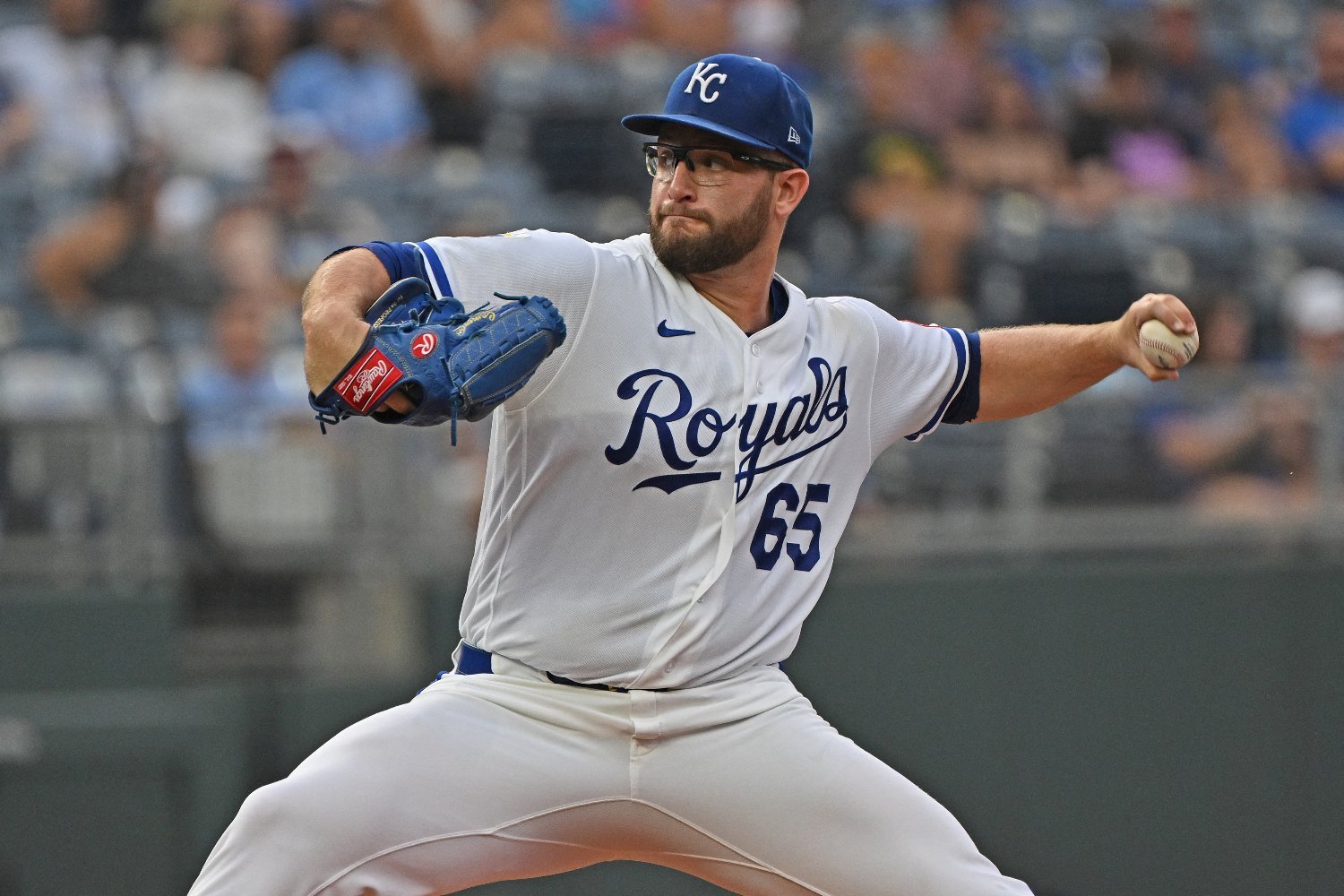 It's been a peculiar sophomore season for Royals left-handed pitcher Noah Cameron. In 22 appearances (21 starts) and 123.2 IP, the St. Joseph, Missouri product is posting a 4.37 ERA, 1.29 WHIP, 3.73 FIP, and a 2.1 fWAR. While his ERA is worse than a year ago (2.99 ERA in 2025), his fWAR is higher (1.8 last year) in fewer innings (138.1 IP). He is also striking out more batters (22.0% K% this year, 20.5% in 2025), walking fewer (7.6% BB% this year to 7.7% in 2025), while sporting better control overall (14.4% K-BB% in 2026 to 12.8% in 2025). It hasn't been a perfect improvement for Cameron in 2026. While the overall numbers are better, he is getting hit harder than a year ago. His barrel rate allowed has climbed from 6.3% to 8.7%, his average exit velocity allowed has gone from 87.8 MPH to 89.1 MPH, and his hard-hit rate allowed has gone from 37.4% to 38.3%. Those batted-ball metrics are a big reason why his ERA was 4.89 before the All-Star Break, compared to 2.57 after the Midsummer Classic. Since the All-Star Break, Cameron has been on a heater, especially in his past three starts. Over that three-game span, he has posted historic numbers, going seven or more innings in each outing (including two in which he went eight). So what has been the key to Cameron's turnaround in the second half? A primary factor has been his switch to calling his own pitches, which has changed his pitch mix and made him more effective. Which then begs Royals fans to ask: Should more Royals pitchers, especially non-veteran ones, follow Cameron's lead? Breaking Down Cameron's Pitch Mix Changes After a tough July 19th start against the Padres in which he gave up seven runs on nine hits in five innings of work, Cameron seemed intent on making changes, as did the Royals coaching staff. Not only did he have an Opener in his next start against Detroit, but he also decided to begin calling his own pitches. Here are some details about that process in a recent piece from MLB.com Royals beat writer Anne Rogers. After his July 19th start against San Diego, Cameron was sporting a 5.27 ERA and 1.46 WHIP. Here's what his pitching summary looked like from the beginning of the season until his July 24th start against the Tigers. As Royals fans can see, Cameron leaned heavily on his four-seamer, as evidenced by his 27.8% usage on the pitch. Unfortunately, it was not an effective pitch, both on a TJ Stuff+ end (91) and a swing-and-miss end (17.2% whiff rate). Overall, most of his metrics were mediocre, with his zone rate (48.1%), chase rate (28%), whiff rate (24.4%), and xwOBACON (.417) all profiling as below average. He had some pitches that profiled as above average: his changeup (102) and slider (102), but the rest of his repertoire was middling, as evidenced by his 97 overall TJ Stuff+. In his last three starts, here's Cameron's pitching summary via TJ Stats. Obviously, the results have been incredible. While the zone rate still rates as below average (44%), his chase rate (35.1%), whiff rate (33.3%), and xwOBACON (.260) have all been elite. He's improved his overall TJ Stuff+ by two points. And what has been the primary reason? A change in the pitch mix. Cameron is only throwing the four-seamer 18% of the time, a 9.8% drop from earlier in the year. It has gone from his most-thrown pitch to his third-most-thrown offering. On the flip side, he's increased his cutter usage by 1.7%, his changeup usage by 0.7%, and his curveball usage by 0.7%. The biggest increase, however? His slider, which he has thrown 16.3% of the time in his last three starts. Previously, he only threw the slider 9.2% of the time. With the increased slider usage has come more effectiveness with the breaking pitch. Over these past three starts, he's generating a 50% chase and whiff rate, as well as a .253 xwOBACON. Thus, he's not only getting chase and whiffs needed with the pitch, but minimizing hard contact with the offering as well. That's a recipe for success. To dive deeper into his slider, here's a look at his slider swing-and-miss rolling percentage, which correlates with his increase in usage since the All-Star Break. In April and May, his slider had whiff rates under 20 and 25 percent, respectively. In July? That whiff rate was over 50 percent. He's only had one start in August, but it still is impressive at around 45 percent. What's also interesting is that with the decrease in four-seam usage, it has become a more effective swing-and-miss offering. Here's a look at his four-seam whiff rate rolling chart this year via Savant. The four-seamer whiff rate regressed in May and June before seeing a slight bump in July and then experienced a major spike in August. As stated before, it's only one start, but his 25% four-seamer whiff rate is better than the 20% he posted in April with the fastball. It will be interesting to see whether using his four-seamer less will not only make his other pitches more effective but also make the four-seamer itself more effective, as illustrated by this rolling chart data. Issues With Jensen Behind the Plate? Now, according to Rogers' article, Cameron isn't calling EVERY pitch. He has been challenged to throw other offerings by the catcher, specifically Salvador Perez, who's caught his last three appearances. Here's an example of this in Rogers' article. Two things that stood out to me are: 1) There's some flexibility in Cameron's pitch-calling system, and 2) Perez has been the primary catcher during Cameron's bounce-back. Thus, I became curious about Cameron's pitcher splits this year with different catchers. Here's what the data says, per Baseball-Reference. By Catcher Split G IP ER ERA PA AB R H 2B 3B HR SB CS BB SO SO/W BA OBP SLG OPS TB GDP HBP SH SF IBB ROE BAbip tOPS+ sOPS+ Elias Díaz 3 15.2 10 5.74 75 67 9 21 6 1 0 0 0 8 15 1.88 .313 .387 .433 .820 29 1 0 0 0 0 1 .404 133 116 Carter Jensen 9 47.0 31 5.94 203 188 33 52 7 1 12 1 4 11 37 3.36 .277 .312 .516 .828 97 2 0 1 3 0 4 .282 129 114 Luke Maile 2 10.0 8 7.20 52 44 8 15 4 0 1 2 0 7 8 1.14 .341 .423 .500 .923 22 0 0 0 1 0 0 .389 161 91 Salvador Perez 8 51.0 11 1.94 197 177 12 31 10 0 1 1 1 14 56 4.00 .175 .246 .249 .495 44 4 3 2 1 1 0 .248 41 31 Provided by Baseball-Reference.com: View Original Table Generated 8/8/2026. Cameron has had nine starts with Jensen this year and eight starts with Salvy. And yet, the St. Joseph product has been significantly better with Perez. With Jensen, the lefty has a 5.94 ERA and has allowed 12 home runs in 47 IP. With Perez, Cameron has a 1.94 ERA and has only allowed ONE home run. Yep. When Jensen has been behind the plate, the 27-year-old pitcher has given up 11 more home runs in four fewer innings. The OPS with Jensen (.828) is also significantly higher than the OPS with Perez (.495). Interestingly enough, there doesn't seem to be a clear pattern with Jensen and other "younger" pitchers who likely don't call their own pitches (veterans like Michael Wacha and Seth Lugo do). I looked up Luinder Avila and Stephen Kolek, two younger Royals pitchers who have had success this year (though both are out for a while due to Tommy John surgery). Interestingly enough, they had the inverse splits with Jensen behind the plate. Here's a look at Avila. By Catcher Split G IP ER ERA PA AB R H 2B 3B HR SB CS BB SO SO/W BA OBP SLG OPS TB GDP HBP SH SF IBB ROE BAbip tOPS+ sOPS+ Elias Díaz 1 2.0 2 9.00 9 7 2 2 0 0 0 2 0 2 2 1.00 .286 .444 .286 .730 2 1 0 0 0 0 0 .400 86 99 Carter Jensen 12 46.0 15 2.93 186 163 15 38 10 1 3 0 2 18 40 2.22 .233 .310 .362 .672 59 5 1 2 2 0 0 .287 68 78 Luke Maile 1 4.1 3 6.23 21 17 0 4 1 0 0 0 0 4 2 0.50 .235 .381 .294 .675 5 0 0 0 0 0 0 .267 71 44 Salvador Perez 7 17.2 23 11.72 93 74 22 27 6 0 4 2 3 18 17 0.94 .365 .495 .608 1.103 45 1 1 0 0 0 0 .434 175 189 Provided by Baseball-Reference.com: View Original Table Generated 8/8/2026. With Jensen, Avila posted a 2.93 ERA, a 2.22 K/BB ratio, and a .672 OPS in 46 IP. The Venezuelan righty had fewer innings with his fellow countryman at 17.2 IP. That said, the numbers were much worse. With Salvy behind the plate, Avila had an 11.72 ERA, 1.103 OPS, and 0.64 K/BB ratio. Now, let's take a look at Kolek. By Catcher Split G IP ER ERA PA AB R H 2B 3B HR SB CS BB SO SO/W BA OBP SLG OPS TB GDP HBP SH SF IBB ROE BAbip tOPS+ sOPS+ Carter Jensen 5 29.0 9 2.79 113 108 10 26 4 1 2 1 0 5 16 3.20 .241 .274 .352 .626 38 3 0 0 0 0 0 .267 68 64 Salvador Perez 5 25.0 18 6.48 111 102 20 29 7 1 6 2 0 7 18 2.57 .284 .342 .549 .891 56 4 2 0 0 0 3 .295 134 130 Provided by Baseball-Reference.com: View Original Table Generated 8/8/2026. Kolek had a more split breakdown, with five starts being with both catchers. However, with Jensen, the 29-year-old posted a 2.79 ERA, 3.20 K/BB ratio, and .626 OPS. With Salvy, he had a 6.48 ERA, 2.57 K/BB ratio, and .891 OPS. Thus, the issues with Cameron and Jensen may have been more of a chemistry issue than an indictment of Jensen's game-calling abilities. What to Expect With Cameron The Royals right now are extremely thin with starting pitching. Avila and Kolek recently underwent Tommy John surgery and will be out for a good while in 2027. Cole Ragans had elbow surgery and won't be back until the middle of 2027. Ryan Bergert and prospect Ben Kudrna also underwent surgery and will have limited availability at the start of 2027. Thus, even with Wacha and Lugo returning, the Royals need a healthy and effective Cameron to get back into contention in 2027. Now, Cameron can't be the third-best Royals starting pitcher next year. He needs to be a No. 4 or 5 starter for the Royals to turn things around and compete for a playoff spot again after such a dreadful season in 2026. If the Royals don't acquire a starting pitcher or two via free agency or trade, then it's unlikely that the Royals will be much better in 2027. However, the past month has demonstrated what Cameron can do when he's locked in and has made the proper adjustments. He's a smart pitcher, and fans can't question his work ethic. Many pitchers would've continued doing the same thing despite persistent bad results. And yet, Cameron followed the Kris Bubic path here rather than the Brady Singer one (Singer was known for being stubborn and slow to change, especially with his pitch mix). Cameron has shown manager Matt Quatraro and Royals President JJ Picollo that he can be part of the Royals' future rotation. Let's hope that he can continue to make adjustments down the stretch this season. Opposing hitters are now familiarizing themselves with changes to his pitch repertoire and making adjustments. How Cameron fares against those expected hitter adjustments could determine what the Royals can expect from the lefty next season. View the full article
 -
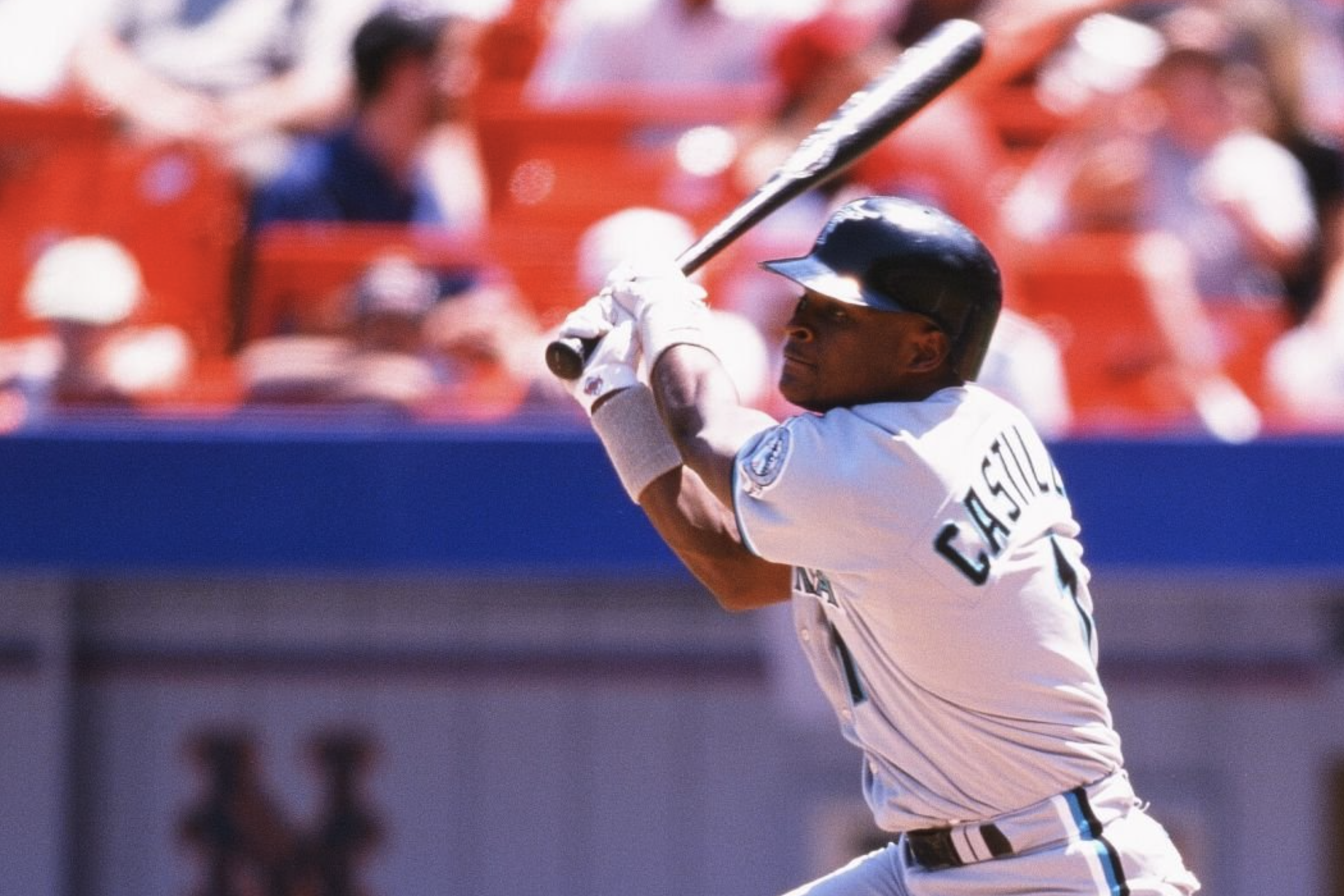 A member of the franchise’s Hall of Fame, Luis Castillo was never the biggest or the strongest guy for the Florida Marlins. Castillo, however, was one of the best defensively and certainly one of the fastest. The only player to make the opening day start for each of the Marlins’ two World Series-winning teams, Castillo recorded his first career hit on this day 30 years ago. Later in the game, he recorded his second career hit, which served as the walk-off winner in a 2-1 victory over the New York Mets. Hitting lead-off for the Marlins at Joe Robbie Stadium on Aug. 9, 1996, Castillo used his blazing speed to give the Marlins an early lead with an infield single to lead off the fourth – his first big-league hit – against New York’s Robert Person. On a dribbler back to the pitcher, Person was forced to hurry his throw, which got away and allowed Castillo to advance to second. He’d score the first run on a Jeff Conine sacrifice fly later in the inning. The Mets drew even on Álvaro Espinoza’s solo home run off Mark Hutton in the top of the sixth inning. After six strong innings from Hutton and seven from Person, it became a battle of the bullpens. Jay Powell, Félix Heredia and Robb Nen combined for four scoreless frames for the Marlins, yielding just two hits. In the bottom of the 10th, the Mets turned to Doug Henry. Alex Arias started the rally for Florida by working a nine-pitch walk. After a sacrifice bunt from Terry Pendleton, Henry struck out Joe Siddall before intentionally walking pinch hitter Joe Orsulak. That put the game in the hands of Castillo. The speedy switch hitter fell behind 1-2 in the count, but Castillo rolled one up the middle. The grounder slipped just past the glove of a diving Rey Ordóñez, allowing Arias to score easily for the winning run. At the top of the order, Castillo and Édgar Rentería each had two of the five hits for Florida. Bernard Gilkey finished with two hits for the Mets. A member of the Marlins for parts of 10 seasons, Castillo is the club’s all-time leader in games, runs, hits, walks, triples and stolen bases. His first career hit and his first career walk-off hit came in the same game on this day three decades ago. View the full article
