


DiamondCentric
-
Posts
2,631 -
Joined
-
Last visited
Never
Content Type
Profiles
Forums
Events
News
Tutorials & Help
Major League Baseball Videos
Guides & Resources
Store
Downloads
Gallery
Everything posted by DiamondCentric
-

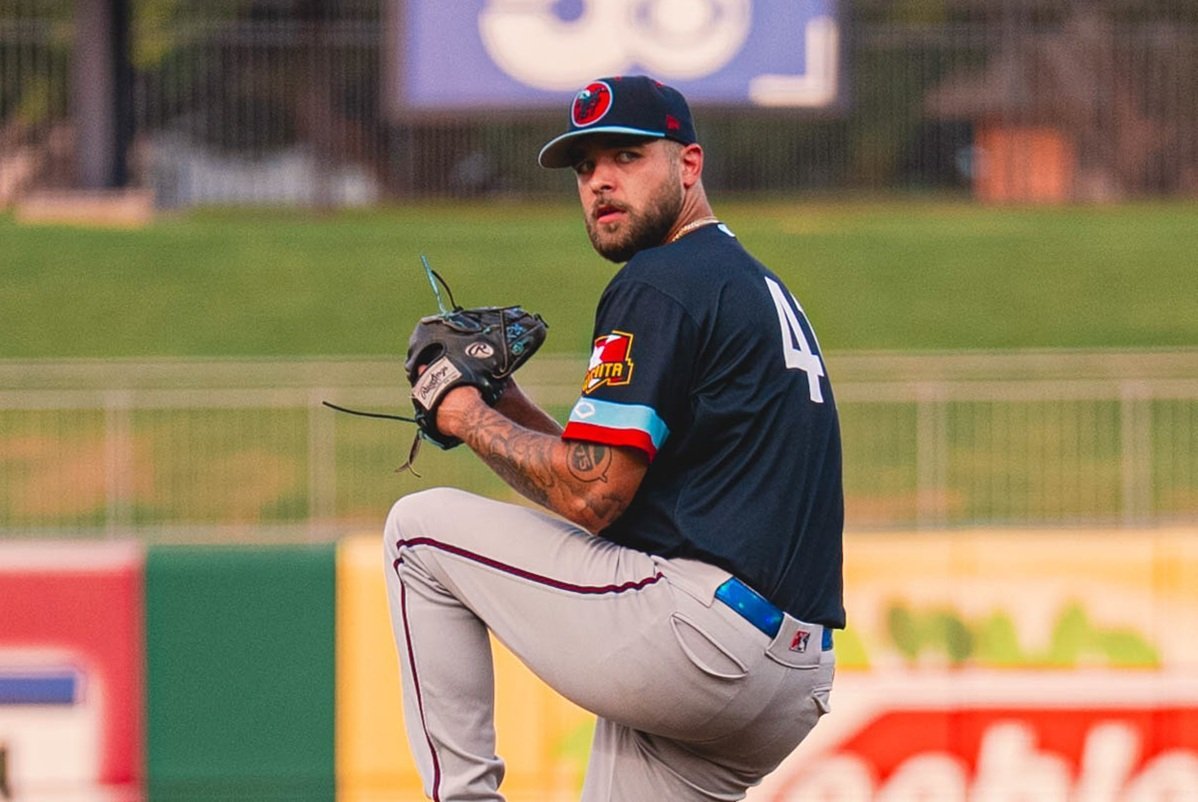 TRANSACTIONS There were no announced transactions in the Twins organization on Saturday. SAINTS SENTINEL St. Paul 9, Louisville 4 Box Score The Saints jumped out to an early lead thanks to two big innings. They led 9-1 after three innings. Their offense did nothing more, but it was more than enough to hang on for another Saints win. The Saints took the lead in the bottom of the second inning. Hendry Mendez and Kala’i Rosario started the inning with walks. Then Cody Morissette drove an inside-the-park home run to make it 3-0 Saints. After two outs, Walker Jenkins came to the plate and hit a triple. Ben Ross immediately followed by launching his 11th home run with the Saints. With one out in the bottom of the third inning, Mendez doubled and Rosario walked. Morissette flew out this time for the inning’s second out. However, Tanner Schobel drove a single to center to drive in Mendez with the sixth run. David Banuelos followed with his fifth home run of the season to make it a 9-1 game. Trent Baker went 3 2/3 innings and gave up only an unearned run. He gave up one hit, walked one and had seven strikeouts. Alejandro Hidalgo came on and gave up one run on one (solo homer) over 1 1/3 innings. He struck out three batters. Ruddy Gomez gave up two runs on three hits in two innings. He had four strikeouts. Woo-Suk Go struck out two batters over two perfect innings. The Saints scored their nine runs on eight hits and seven walks. Ben Ross went 2-for-5 with his third triple and 11th homer. Walker Jenkins also had two hits in five at-bats, including his third triple. Mendez was 1-for-3 with a walk and his 10th double. David Banuelos was 1-for-3 with a walk and fifth homer. Morissette’s home run was his ninth homer with the team (first inside-the-parker, I believe.). WIND SURGE WISDOM Wichita 5, NW Arkansas 2 Box Score The Surge jumped out to a 3-0 lead after two innings. From that point, the game was 2-2, but that means that Wichita won. With one out in the top of the first, Khadim Diaw got things started with a double. Brandon Winokur was hit by a pitch. Garrett Spain singled to left field to drive in Diaw with the first run. Winokur scored the second run on a ground out by Caden Kendle. Wichita added a third run in the top of the second. With one out, Jaime Ferrer singled and scored on a Jorel Ortega double. Chris Vallimont started and tossed four shutout innings. He gave up four hits, walked one and had four strikeouts. Darren Bowen pitched the fifth inning. He gave up one run on one hit and one walk. Spencer Bengard gave up one run on three hits in the sixth inning. Jaylen Nowlin pitched a scoreless seventh inning. Mitch Mueller tossed two scoreless innings to record his second Surge save. The Surge maintained the multi-run lead throughout thanks to adding on later in the game. In the sixth inning, Garrett Spain hit a solo homer, and in the eighth inning, Caden Kendle homered. Khadim Diaw went 2-for-3 with a walk and his sixth and seventh Surge doubles. Spain was 2-for-4 with his 17th home run. Ortega’s double was his first this season. Caden Kendle’s homer was his third since joining the Surge. Marek Houston went 0-for-2 but walked three times and stole his 21st base. KERNELS NUGGETS Cedar Rapids 7, Peoria 0 Box Score Justin Mitrovich put together arguably his best start of the season. The 2025 draft pick tossed six shutout innings. He gave up two runs on one hit while striking out four batters. Lefty Cleiber Maldonado struck out two in a perfect seventh inning. Brian Zeldin tossed two scoreless innings. He gave up two hits, one walk, and struck out two batters. Emmanuel Rodriguez had his best game during his rehab stint. He went 3-for-5 with a double. Jose Salas added his third double. Quinn McDaniel had a huge game. He went 3-for-4 with his fourth and fifth doubles and his third home run. Byron Chourio went 2-for-4 with his second Kernels homer and four RBI. MIGHTY MATTERS Fort Myers 6, Bradenton 1 Box Score The Mussels scored four runs in the third inning and two more in the fifth frame and that proved more than enough to grab the Saturday night win. With one out in the top of the third, Bryce Fowler was hit by a pitch. Next, Carson Tinney and Ramiro Dominguez walked. With two outs, Yovanny Duran doubled to left to drive in two runs Quentin Young followed with another two-run double and the Mussels led 4-0. In the fifth, Tinney led off with a single and moved to second on a wild pitch. Dominguez walked. Aidan Teel followed with an RBI double to make it 5-0. Quentin Young drove in the sixth run with a sacrifice fly. Fort Myers scored their six runs on seven hits and eight walks. Aidan Teel went 2-for-5 with his third and fourth doubles. Ramiro Dominguez was 1-for-2 with three walks. Carson Tinney went 1-for-3 with two walks. Duran’s double was his first with the Mussels. Young’s double was his 10th of the season, and he drove in half of the team’s runs. Charlie Scholvin was hit by a pitch twice. Ramiro Villanueva started and tossed 2 2/3 scoreless innings despite giving up two hits and walking three batters. He had one strikeout. Eric Hammond came in and gave up one run on three hits and a walk over the next 3 1/3 innings. He struck out four batters. Nick McAuliffe struck out four and walked one over two scoreless, hitless innings. Michael Hilker gave up a hit in a scoreless ninth inning. COMPLEX CHRONICLES Game 1: DSL Twins 7, DSL Rockies 6 (9 innings) Box Score These DSL games are normally seven innings, and obviously doubleheader games are both seven innings, so note that this game had a couple of extra innings. The Rockies scored two runs in the top of the ninth inning to take a 6-4 lead. Jendy Martinez started the inning at second base as the “Manfred Man.” With one out, Abel Sosa ripped a double to left to put runners on second and third. After an infield pop out, Jeferson Abreu crushed a three-run homer over the wall in left field to give his team a 7-6 walkoff win. The Twins scored their seven runs on 14 hits and just two walks. All nine batters had at least one hit in the game. Martinez went 2-for-5 with his second triple and three RBI. Sosa went 2-for-5 with his fifth and sixth doubles. Enmanuel Merlo was 2-for-4 with a walk and his fourth double. Luis Suarez was 2-for-4 with his fourth double. And the game’s hero, Jeferson Abreu was 2-for-5 with his third home run and three big RBI. Yosangle Braffit started and gave up only an unearned run on three hits and a walk over four innings. He had four strikeouts. Miguel Martinez gave up three runs on four hits and a walk in the fifth inning. Failin Placencio recorded two outs in the sixth, one on a strikeout, but he walked three and was replaced by Jeremy Jimenez. He tossed 2 1/3 innings, facing the minimum seven batters. Jesus Moreno came in for the ninth and gave up two runs (1 earned) on two hits. He had three strikeouts. Game 2: DSL Twins 8, DSL Rockies 5 Box Score The second game was also played at the Twins/Phillies complex in Boca Chica, but the Rockies were the home team in it as it was a makeup game. Regardless, the Twins found a way to sweep the team. In this game, the Twins offense was scoreless the first two innings and then scored in each of the next five innings to take an 8-5 win. The Twins scored their eight runs on nine hits and five walks. Also, two batters were hit and the Rockies committed three errors. Jendy Martinez led the offense from the top of the order. He went 2-for-3 with a walk, was hit by a pitch, and hit his 11th double. Luis Suarez had the other multi-hit game. He went 2-for-3 with a walk, his fifth double, and his first triple. In the sixth inning, Misael Rodriguez connected for his first professional home run. Enmanuel Merlo went 1-for-3 with a walk and his fifth double. Luis Duarte also hit his third double. Angel Martinez went the first three innings. He gave up no runs on one hit and one walk and one hit batter. He added three strikeouts. Sebastian Echavarria gave up two runs on two hits and two walks in the fourth inning. Wisarly Reinosa gave up a hit in a scoreless inning. Aldwin Morillo gave up three runs (2 earned) on one hit and three walks in his inning. Herkyn Taveras recorded his third save. He walked one but struck out the three other batters he faced. PLAYERS OF THE DAY Hitter(s) of the Day Jendy Martinez (DSL Twins): 4-for-8, BB, 2B(11), 3B (2), R, 3 RBI, SB(18) Quinn McDaniel (Cedar Rapids): 3-for-4, 2-2B(5), HR(3), 3 R, 1 RBI, K Pitcher(s) of the Day Justin Mitrovich (Cedar Rapids): 6 IP, 2 H, 0 R, 1 BB, 4 K, 77 pitches, 51 strikes (66.2%) Chris Vallimont (Wichita): 4 IP, 5 H, 0 R, 1 BB, 4 K, 65 pitches, 46 pitches (70.8%) PROSPECT SUMMARY Check out the Prospect Tracker for much more on our Twins Top 20 prospects after seeing how they did today. Help us update the Top 20 prospects list now that the trade deadline is passed. #1 - OF Walker Jenkins (St. Paul) - 2-for-5, 3B(3), R, 2 K, SB(11) (batted first, played CF) #3 - IF Kaelen Culpepper (Minnesota) - 0-for-1, BB, HBP, R, K (batted seventh, played SS) #4 - OF Emmanuel Rodriguez (St. Paul) - Rehab in Cedar Rapids: 3-for-5, K (batted second, DH) #5 - SS Marek Houston (Wichita) - 0-for-2, 3 BB, 2 K, SB(21), 2 CS(4), (batted first, played SS) #10 - OF Hendry Mendez (St. Paul) - 1-for-3, BB, 2B(10), K (Batted fifth, played LF) . #13 - C Carson Tinney (Fort Myers) - 1-for-3, 2 BB, 2 R, K (batted second, Catcher) #14 - C/OF Khadim Diaw (Wichita) - 2-for-3, BB, 2B(7), (batted second, DH) #15 - 3B/CF Brandon Winokur (Wichita) - 0-for-3, R, K (batted third, played CF) #17 - 3B/SS Quentin Young (Ft. Myers) - 1-for-4, 2B(10), 3 RBI, K (batted sixth, played SS), UPCOMING PROBABLES Sunday, August 9 Louisville @ St. Paul (2:07 pm CT) - LHP Aaron Rozek (2-1, 3.22 ERA) Wichita @ NW Arkansas (2:05 pm CT) - RHP Preston Johnson (0-3, 4.76 ERA) Cedar Rapids @ South Bend (6:05 pm CT) - LHP Cesar Lares (0-4, 12.95 ERA) Ft. Myers @ Bradenton (11:00 am CT) - TBD FCL Twins - Season Complete. DSL Twins (9:00 am CT) - No Game CURRENT W-L Records Minnesota Twins: 58-60 St. Paul Saints: 66-46 Wichita Wind Surge: 41-64 Cedar Rapids Kernels: 41-64 Fort Myers Mighty Mussels: 57-48 FCL Twins: 33-26 DSL Twins: 13-31 Please feel free to ask questions about the teams, the rosters, and discuss today’s games, or anything else Twins minor-league related! View the full article
 -
 Saturday saw the San Diego Padres' four full-season affiliates go 3-1. The Triple-A El Paso Chihuahuas dumped Reno 9-5, the Double-A San Antonio Missions edged Springfield 3-2, the High-A Fort Wayne TinCaps were trounced by West Michigan 14-6 and the Low-A Lake Elsinore Storm stopped Ontario 5-1. Padres Minor-League Transactions 1B Romeo Sanabria assigned to San Antonio Missions from El Paso Chihuahuas. Big Finish Paves Way For Chihuahuas' Victory Bryce Johnson went 3-for-5 with two RBIs and two runs scored, while Ethan Salas had a two-run double and Nick Solak drove in the go-ahead run on an eighth-inning sacrifice fly as the Triple-A El Paso Chihuahuas bounced the host Reno Aces 9-5. The Chihuahuas scored the final four runs of the game in the eighth and ninth innings. The Chihuahuas went with a bullpen game, using seven pitchers, including rehabbing Padres right-hander David Morgan, who went 1⅓ shutout innings, allowing two hits and striking out two.Dustin Harris and Nick Pratto each had two hits, with Harris also walking once, driving in a run and scoring once. Pratto scored a run. The game was tied 1-1 when the Chihuahuas scored four in the third. Harris tripled in a run, Salas (Padres Mission's No. 1 prospect) had his two-run double to right and Rodolfo Duran singled home Salas. The Aces tied it, though, with four runs of their own in the bottom of the fourth. Harris led off the eighth with a single, then with one out stole second and went to third on a throwing error by the catcher, setting up Solak's go-ahead sac fly. In the ninth, Mason McCoy singled home Nick Pratto, who had singled and stolen a base, then stole second and went to third when Clay Dungan struck out but reached on a wild pitch. Johnson then hit his 11th double in 35 games at Triple-A, driving in the final two runs. EP_0808.mp4 EP2_0808.mp4 Player AB R H RBI BB K Bryce Johnson 5 2 3 2 0 1 Dustin Harris 4 1 2 1 1 1 Carlos Rodríguez 5 1 1 0 0 1 Nick Solak 3 1 1 1 0 0 Ethan Salas 4 1 1 2 0 1 Rodolfo Durán 4 0 1 1 0 2 Nick Pratto 4 1 2 0 0 1 Mason McCoy 4 1 1 1 0 0 Clay Dungan 4 1 0 0 0 2 Totals 37 9 12 8 1 9 Player IP H R ER BB K HR Daison Acosta 1 3 1 1 0 0 0 Miguel Cienfuegos 2 2/3 4 4 4 3 0 1 David Morgan 1 1/3 2 0 0 0 2 0 Misael Tamarez 1 0 0 0 2 0 0 Logan Gillaspie 1 0 0 0 0 1 0 Hunter Stratton 1 1 0 0 0 0 0 Hans Crouse 1 1 0 0 0 2 0 Totals 9 11 5 5 5 5 1 Jamie Hitt Fans 7, Braedon Karpathios Hits Early HR In Missions' Win Braedon Karpathios hit a first-inning three-run homer that stood up for the rest of the game thanks in large part to left-hander Jamie Hitt striking out seven over six innings as the host Double-A San Antonio Missions turned back the Springfield Cardinals 3-2. Karpathios, Padres Mission's No. 12 prospect, followed a leadoff single by Ryan Jackson, a walk to Tirso Ornelas and a forceout by Jake Cunningham by hitting his 12th homer of the year on a 2-1 pitch down, an opposite-field shot that clanked off the left-field foul pole. Pitching was the bigger story, though. Hitt allowed a run on four hits and a walk with his seven punchouts, the best of his five starts since being promoted from High-A Fort Wayne. MLB veteran Jose Leclerc, no longer on the injured list by still finding his rhythm following shoulder surgery last year, gave up a solo homer over two innings, striking out three. Right-hander Garrett Hawkins, Padres Mission's No. 17 prospect, came on in a 3-2 game and loaded the bases with no outs on a pair of walks and a sharp single. The next batter grounded to second baseman Wyatt Hoffman, who threw home for the first out, then Hawkins struck out the next batter. That brought up Josiah Ragsdale, just acquired by the Cardinals from the Milwaukee Brewers who homered in his previous at-bat, and Hawkins struck him out to end the game. It was Hawkins' second save since returning to the Missions from Triple-A El Paso. SA_0808.mp4 Player AB R H RBI BB K Ryan Jackson 3 1 2 0 1 0 Tirso Ornelas 3 0 0 0 1 1 Jake Cunningham 4 1 0 0 0 2 Braedon Karpathios 3 1 2 3 0 1 Jack Costello 2 0 0 0 0 1 Albert Fabian 3 0 0 0 0 1 Luis Verdugo 3 0 1 0 0 0 Wyatt Hoffman 3 0 0 0 0 2 Anthony Vilar 3 0 0 0 0 1 Totals 27 3 5 3 2 9 Player IP H R ER BB K HR Jamie Hitt 6 4 1 1 1 7 0 José Leclerc 2 2 1 1 0 3 1 Garrett Hawkins 1 1 0 0 2 2 0 Totals 9 7 2 2 3 12 1 TinCaps Torched By 10-Run Third Inning While the fans packed the stands yet again, the High-A Fort Wayne TinCaps didn't give them a whole lot to cheer about, giving up a 10-run third inning in a 14-6 loss to the West Michigan Whitecaps. The TinCaps had their ninth sellout of 7,575 spectators. Bradley Fry hit his first High-A homer since being promoted from Low-A Lake Elsinore, a two-run shot in the second inning. Frye had two hits as did Yoiber Ocopio, his first since being promoted this week from Lake Elsinore, and Rosman Verdugo. Alex McCoy, Padres Mission's No. 14 prospect, reached base three times with a single and two walks. Right-hander Bryan Balzer, in his seventh start for the TinCaps, gave up six runs on four hits and four walks with three strikeouts in two-plus innings. Right-hander Javier Chacon came in after Balzer didn't retire any of the first four batters to begin the third and gave up six runs of his own, but only three were earned, on four hits and a walk in two-thirds of an inning. The Whitecaps had the first seven batters of the inning reach and 15 in all, getting those 10 runs on five hits, three walks, three hit batters and an error. The game was the first for Whitecaps right-handed starter Brady Smith since being included in the Tarik Skubal trade between the Detroit Tigers and Los Angeles Dodgers. Player AB R H RBI BB K Justin DeCriscio 3 0 0 0 2 1 Ryan Wideman 5 0 0 1 0 0 Alex McCoy 3 1 1 0 2 2 Luke Cantwell 4 2 1 1 0 0 Rosman Verdugo 5 0 2 1 0 1 Lamar King Jr. 4 1 1 1 1 2 Bradley Frye 5 1 2 2 0 3 Yoiber Ocopio 4 1 2 0 0 0 Kasen Wells 3 0 0 0 1 1 Totals 36 6 9 6 6 10 Player IP H R ER BB K HR Bryan Balzer 2 4 6 6 4 3 0 Javier Chacon 2/3 4 6 3 1 1 0 Isaiah Lowe 3 1/3 3 2 2 3 4 0 Sean Barnett 2 2 0 0 0 5 0 Jeferson Villabona 1 0 0 0 3 2 0 Totals 9 13 14 11 11 15 0 Big Hits By Jesmaylin Arias, Alex Conover Spark Storm Jesmaylin Arias had a two-run triple and Alex Conover a two-run double as the host Lake Elsinore Storm scored five early runs en route to a 5-1 victory over the Ontario Tower Buzzers. Storm right-handed starter Tyler Schmitt went 5⅓ innings, allowing just a run on three hits, but walked five while striking out six. Right-hander Rordy Mejia was the only other reliever needed, going the final 3⅔ innings, not allowing a run and just two hits with a pair of walks and one strikeout. With one out in the fourth, Jorge Quintana (Padres Mission's No. 6 prospect) walked and Jose Verdugo singled. Arias, the 19-year-old outfielder from the Dominican Republic, then tripled on a ball to left-center that kept slicing away from the center fielder, rolling to the wall, easily scoring both runners. In the fifth, 10th-round draft pick Augie Lopez walked, Qrey Lott and sixth-round draft pick Nu'u Contrades singled to load the bases. Conover, the Padres' fourth-round compensation pick, pulled a double down the right-field line that scored Lopez and Lott. One out later, Quintana hit a sacrifice fly to center to make it 5-0. LE1_0808.mp4 LE2A_0808.mp4 Player AB R H RBI BB K Nu'u Contrades 5 1 1 0 0 2 Alex Conover 4 0 1 2 0 1 Ty Harvey 4 0 0 0 0 1 Jorge Quintana 2 1 0 1 1 1 Jose Verdugo 4 1 2 0 0 0 Jesmaylin Arias 4 0 1 2 0 1 Truitt Madonna 1 0 0 0 3 0 Augie Lopez 3 1 0 0 1 2 Qrey Lott 2 1 1 0 1 1 Totals 29 5 6 5 6 9 Player IP H R ER BB K HR Tyler Schmitt 5 1/3 3 1 1 5 6 0 Rordy Mejia 3 2/3 2 0 0 2 1 0 Totals 9 5 1 1 7 7 0 Padres Mission's Top 20 Prospect Performance Ethan Salas: 1-for-4, R, 2B, 2 RBI, K Kash Mayfield: Traded Miguel Mendez: Traded Ryan Wideman: 0-for-5, RBI Kruz Schoolcraft: DNP Jorge Quintana: 0-for-2, R, RBI, BB, K Ty Harvey: 0-for-4, K Kale Fountain: Injured, out for season Tucker Musgrove: DNP Coleman Borthwick: In Arizona Lamar King Jr.: 1-for-4, R, RBI, BB, 2 K Braedon Karpathios: 2-for-3, R, HR, 3 RBI, K Jagger Haynes: DNP Alex McCoy: 1-for-3, R, 2 BB, 2 K Truitt Madonna: 0-for-1, 3 BB Jesus Castro: DNP Garrett Hawkins: 1 IP, 1 H, 0 R, 0 ER, 2 BB, 2 K, S Elliot Lascelles: In Arizona Winyer Chourio: DNP Rosman Verdugo: 2-for-5, RBI, K FW_0808.mp4 View the full article
 -
 Henry Williams spun 5 2/3 scoreless innings with six strikeouts as Omaha rolled in Toledo, and the Royals system took three of four Saturday. Emmanuel Reyes struck out seven over five innings for Quad Cities, which walked its way to a four-run eighth in Peoria. Yeri Perez slammed the door with three scoreless innings for Columbia, and Josh Hammond piled up four hits. Northwest Arkansas piled up 12 hits, stranded 10 runners, and took the only loss. Kansas City Royals Transactions Kansas City Royals released LHP Matt Strahm. Matthew Lugo's Three-Run Homer Powers Omaha Past Toledo The Omaha Storm Chasers beat the Toledo Mud Hens 7-2 on Saturday, scoring in four different innings behind a dominant start from Henry Williams. Williams worked 5 2/3 scoreless innings, allowing three hits, walking three, hitting one batter, and striking out six. He threw 99 pitches and picked up his fourth win. Omaha scored first when cleanup hitter Drew Waters reached on a fielder's choice that brought Gavin Cross home. Brett Squires added a run two innings later, coming around when Jack Pineda struck out swinging, and the throw to first got away from the catcher. The fifth put the game away. Cross reached on an error, Pineda lined a single, and Matthew Lugo drove his 11th home run to center field for a 5-0 lead. Omaha tacked on two more later. Waters singled, Pineda singled to center, and both runners came around when the ball got past the center fielder. Luke Little followed Williams and gave up two hits and two runs with a strikeout. Eli Morgan retired all five batters he faced, striking out one. Justin Topa finished the game, allowing one hit and no runs. The Storm Chasers finished with 10 hits, no errors, and six men left on base. Squires had two hits and a double, Peyton Wilson had two hits, and Pineda had two hits, two runs scored, and an RBI. Lugo added a hit, a walk, and three RBI. Cross scored twice and doubled, and Waters had a hit, an RBI, and a stolen base. Toledo, which committed three errors, pushed across both of its runs in the seventh. Omaha went 3-for-10 with runners in scoring position and improved its record to 55-57 with the win. Player AB R H RBI BB K Abraham Toro 5 0 0 0 0 1 Gavin Cross 5 2 1 0 0 3 Brett Squires 5 1 2 0 0 1 Drew Waters 5 1 1 1 0 0 Jack Pineda 4 2 2 1 0 2 Matthew Lugo 3 1 1 3 1 2 Elih Marrero 4 0 0 0 0 1 Peyton Wilson 4 0 2 0 0 1 Alejo Lopez 4 0 1 0 0 1 Player IP H R ER BB K HR Henry Williams 5 2/3 3 0 0 3 6 0 Luke Little 2/3 2 2 2 0 1 0 Eli Morgan 1 2/3 0 0 0 0 1 0 Justin Topa 1 1 0 0 0 0 0 Naturals Collect 12 Hits, Strand 10 In Loss To Wichita The Northwest Arkansas Naturals out-hit the Wichita Wind Surge 12-8 on Saturday and still lost 5-2, leaving 10 men on base. Felix Arronde, the Royals' No. 16 prospect, took the loss, working 4 2/3 innings and allowing six hits, three runs, two walks, and one hit batter while striking out five. Wichita scored twice in the first on a double, a hit batter, a single, and a groundout, then added a run in the second on a double. Northwest Arkansas got on the board when Justin Johnson singled, leadoff man Luke Pelzer walked, a fly ball moved both runners up, and Carson Roccaforte lifted a sacrifice fly into foul territory in right. The next inning was the one that got away from the Naturals. Daniel Vazquez, Javi Vaz, and Colton Becker opened with three straight singles to load the bases with nobody out. Unfortunately, Jorge Alfaro struck out, and Johnson grounded into a force out with the runner cut down at the plate. Vaz did score on a wild pitch before Pelzer struck out with two runners still aboard. Anthony Simonelli followed Arronde and allowed one hit, one walk, and a home run. Frank Mozzicato was the sharpest arm of the night for the Naturals, allowing no hits, walking one, and striking out three. Tyson Guerrero gave up one hit, one walk, and a home run while striking out two. Pelzer, cleanup hitter Spencer Nivens, Vaz, and Becker each had two hits. Nivens doubled twice, Vaz added a double, and Becker drew a walk. Alfaro went hitless in four at-bats and left seven men on base. Northwest Arkansas played errorless defense, but the Naturals could not turn 12 hits and two walks into more than two runs. The Naturals went 1-for-14 with runners in scoring position. They are now 44-61 this season. Player AB R H RBI BB K Luke Pelzer 4 0 2 0 1 2 Sam Kulasingam 5 0 1 0 0 1 Carson Roccaforte 4 0 1 1 0 1 Spencer Nivens 4 0 2 0 0 0 Daniel Vazquez 4 0 1 0 0 2 Javi Vaz 4 1 2 0 0 1 Colton Becker 3 0 2 0 1 1 Jorge Alfaro 4 0 0 0 0 1 Justin Johnson 4 1 1 0 0 0 Player IP H R ER BB K HR Felix Arronde 4 2/3 6 3 3 2 5 0 Anthony Simonelli 1 1 1 1 1 1 1 Frank Mozzicato 1 1/3 0 0 0 1 3 0 Tyson Guerrero 2 1 1 1 1 2 1 Chris Brito's Bases-Clearing Double Lifts Quad Cities In Peoria The Quad Cities River Bandits scored four runs in the eighth inning and held on to beat the Peoria Chiefs 7-6 on Saturday, winning a game in which they collected only five hits. Reyes gave Quad Cities five innings, allowing three hits and two runs, walking two, hitting one batter, and striking out seven. Asbel Gonzalez, the Royals' No. 8 prospect, doubled, stole third, and scored on an error to open the scoring. Peoria answered with two runs on a double and a single, and Jose Cerice put the River Bandits back in front with a two-run double that scored No. 4 prospect Blake Mitchell and cleanup hitter Chris Brito. Peoria tied it again on another double. The eighth decided it. Pedro Roque, leadoff man Nolan Sailors, and Gonzalez all walked to load the bases, and Mitchell drew a walk to force in the go-ahead run. Brito followed with a bases-clearing double to center field for a 7-3 lead. Mason Miller worked two innings behind Reyes, allowing two hits, one run, and one hit batter while striking out two, and he earned the win despite a blown save. Tommy Molsky was charged with three runs on two hits, including a three-run homer, while striking out two. Yimi Presinal allowed one hit and one walk with a strikeout to record his fourth save. Gonzalez had two hits, a double, a walk, a stolen base, and two runs scored. Brito had two doubles and three RBI. Cerice had a hit and two RBI. Mitchell walked twice, scored twice, and drove in a run without a hit. Quad Cities went 2-for-6 with runners in scoring position, left three men on base, and played errorless defense. The River Bandits are now 53-50 this season. Player AB R H RBI BB K Nolan Sailors 4 1 0 0 1 3 Asbel Gonzalez 3 2 2 0 1 1 Blake Mitchell 2 2 0 1 2 1 Chris Brito 4 1 2 3 0 1 Jose Cerice 4 0 1 2 0 2 Erick Torres 4 0 0 0 0 1 Tyriq Kemp 4 0 0 0 0 1 Stone Russell 3 0 0 0 0 2 Pedro Roque 3 1 0 0 1 3 Player IP H R ER BB K HR Emmanuel Reyes 5 3 2 2 2 7 0 Mason Miller 2 2 1 1 0 2 0 Tommy Molsky 1 2 3 3 0 2 1 Yimi Presinal 1 1 0 0 1 1 0 Hammond's Four-Hit Night Carries Columbia Past Myrtle Beach The Columbia Fireflies rallied from a three-run deficit and beat the Myrtle Beach Pelicans 10-8 on Saturday, scoring in five different innings. Jose Gutierrez started and was charged with five runs on nine hits over 4 1/3 innings, walking two and striking out five. Columbia jumped ahead when No. 3 prospect Hammond singled, and cleanup hitter Sean Gamble, the Royals' No. 6 prospect, tripled him home. The Fireflies added four more the next inning on a wild pitch, run-scoring singles from leadoff man Henry Ramos and Hammond, and a sacrifice fly from Camden Johnson for a 5-0 lead. Myrtle Beach answered with six runs in the fifth on a wild pitch, three doubles, a throwing error, and a single, then pushed the lead to 8-5 with a home run. The Fireflies came all the way back despite the deficit. Hammond singled home Daniel Lopez, then Lopez singled with two outs and two runs scored as the throws got away, tying the game 8-8. Johnson singled Hammond home for the lead, and Johnson later scored on a wild pitch for the final margin. Jhon Reyes followed Gutierrez and allowed four hits and three runs, two of them earned, including a home run, with one walk, one hit batter, and two strikeouts. Yeri Perez was the difference out of the bullpen for Columbia, throwing three scoreless innings on one hit with four strikeouts and no walks to earn his first win. Hammond had four hits in five at-bats, scored three runs, and drove in two. Ricson Gonzalez had two hits and a double. Lopez had two hits, a walk, two stolen bases, and two runs scored. Johnson had a hit, two RBI, and two stolen bases, and Gamble had a hit, a triple, and an RBI. Columbia finished with 13 hits and made two errors in the field. They went 7-for-16 with runners in scoring position and left eight runners on base. The Fireflies are now 55-50 this season. Player AB R H RBI BB K Henry Ramos 4 1 1 1 1 1 Josh Hammond 5 3 4 2 0 0 Camden Johnson 4 1 1 2 0 1 Sean Gamble 5 0 1 1 0 3 Jhosmmel Zue 4 0 1 0 1 1 JC Vanek 4 1 1 0 1 1 Connor Rasmussen 2 1 0 0 1 1 Ricson Gonzalez 4 1 2 0 0 0 Daniel Lopez 3 2 2 0 1 1 Player IP H R ER BB K HR Jose Gutierrez 4 1/3 9 5 5 2 5 0 Jhon Reyes 1 2/3 4 3 2 1 2 1 Yeri Perez 3 1 0 0 0 4 0 Top-20 Prospect Performance Kendry Chourio: DNP David Shields: DNP Josh Hammond: 4-for-5, 2 RBI, 3 R Blake Mitchell: 0-for-2, 2 BB, RBI, 2 R, K Sean Gamble: 1-for-5, 3B, RBI, 3 K Ramon Ramirez: DNP Zion Rose: DNP Asbel Gonzalez: 2-for-3, 2B, BB, SB, 2 R, K Carson Roccaforte: 1-for-4, RBI, K Taylor Rabe: DNP Yandel Ricardo: DNP Justin Lamkin: DNP Drew Beam: DNP Michael Lombardi: DNP Jack Slightom: DNP Felix Arronde: 4 2/3 IP, 6 H, 3 R, 3 ER, 2 BB, 5 K (L) Angeibel Gomez: 1-for-4, 2 RBI Ben Kudrna: DNP Steven Zobac: DNP Blake Wolters: DNP View the full article
 -
 Blue Jays Affiliate Overview (August 6-7) Triple-A Buffalo Bisons Series vs Norfolk Tides (Baltimore Orioles): 2-2 Season Record: 54-58 Double-A New Hampshire Fisher Cats Series vs Portland Sea Dogs (Boston Red Sox): 2-2 Season Record: 50-54 High-A Vancouver Canadians Series vs Everett AquaSox (Seattle Mariners): 2-2 Season Record: 47-59 Single-A Dunedin Blue Jays Series vs Lakeland Flying Tigers (Detroit Tigers): 2-2 Season Record: 49-54 FCL Blue Jays: Season Complete DSL Blue Jays Blue Week Record: 0-3 Season Record: 18-29 DSL Blue Jays Red Week Record: 2-0 Season Record: 28-17 Triple-A Buffalo Bisons Season Record: 54-58 Series vs Norfolk Tides (Baltimore Orioles) August 6: Thursday was a day filled with excitement in Buffalo for the Bisons game against Norfolk. Spencer Arrighetti took the mound in his first appearance with the Toronto Blue Jays organization. Although he was hoping to face his old team for the big league club, he had to settle for a rehab assignment to Triple-A. Arrighetti struck out one in his first inning of work, on a 93 mph fastball. To start the second inning, Arrighetti was wild, walking the first two batters, with the majority of his pitches not being remotely competitive. He would get a fly out and two ground outs to escape the jam, but most of his pitches were still nowhere near the zone. Arrighetti began the third with continued wildness but did get the first batter to pop up. Following the at-bat, Arrighetti was lifted when he reaggravated his foot injury. At the time, Buffalo had a 2-0 lead, thanks to Charles McAdoo's first-inning two-run home run. Heston Kjerstad tied the game up for Norfolk with a two-run home run of his own in the fourth. Rudy Martin Jr. gave the lead back to Buffalo in the seventh on a sacrifice bunt and throwing error. Later in the inning, McAdoo drove in another run with a single to center. In the eighth, Yohendrick Piñango scored on a passed ball, and Willie MacIver knocked in two with a line drive single to left. The bullpen kept Norfolk in check for the rest of the game, highlighted by Simeon Woods Richardson throwing four scoreless innings. Buffalo won 7-4, in a game marred by disappointment with Arrighetti leaving injured. August 7: It was another exciting game for Blue Jays and Bisons fans on Friday. Newly acquired Josh Stephan was on the mound for Buffalo, facing off against a rehabbing Chris Bassitt. Bassitt had the Bisons' number from the start, and it didn't get much better as the game went on. At the end of the outing, Bassitt had thrown six scoreless innings against the Bisons, only surrendering three hits and walking two. On the flip side, Stephan matched him rather well, considering Stephan has yet to make his major league debut. Stephan threw seven innings, scattered seven hits, walked two, struck out five, and allowed just three runs (two earned). Down 3-0 in the eighth, Buffalo finally broke through and got a big-time, three-run blast from Charles McAdoo to tie the game up. The home run had an exit velocity of 107.1 and went 429 feet to center. With the game tied, it headed into extra innings, where Norfolk scored three in its half of the 10th, and Buffalo was blanked. The Bisons fell 6-3 in a very encouraging game for the future of the Blue Jays. Double-A New Hampshire Season Record: 50-54 Series vs Portland Sea Dogs (Boston Red Sox) August 6: Thursday saw New Hampshire take on Portland, and the Fisher Cats were fueled by the two-headed monster of Nolan Perry and Gage Stanifer. Perry went three innings, didn't allow a hit, didn't surrender a run, only gave up one walk, and struck out four. He was using mostly his fastball and curveball to get hitters out. Stanifer came in as the piggyback starter and was almost as equally unhittable. He went four innings, only gave up one hit, allowed one run to score, but he did issue five walks, which were countered by his five strikeouts. Stanifer just couldn't locate his fastball most of the day. His stuff was unhittable outside of the walks, though. Offensively, Alexis Hernandez started the first inning scoring with an RBI single. In the sixth inning, New Hampshire scored four on the back of a massive three-run home run from Dub Gleed. New Hampshire won this game 5-2. August 7: The Friday contest between New Hampshire and Portland started out as a back-and-forth game. Brooks Brannon launched a home run for Portland in the third inning, which was followed by Alexis Hernandez hitting an RBI single for New Hampshire in their half of the frame. Hedbert Perez also singled home a run in the inning. In the fifth inning, Aaron Parker increased New Hampshire's lead with a two-run home run. Things went south in the seventh inning when Portland scored six runs, the big hit coming on a Miguel Bleis three-run home run. New Hampshire lost this one 7-4. High-A Vancouver Season Record: 47-59 Series vs Everett AquaSox (Seattle Mariners) August 6: Peyton Williams almost won this game himself, as the Iowa Meat Truck hit a homer in the fourth inning to give the Canadians an early lead. Landen Maroudis has looked quite a bit better in his most recent starts, but gave up two homers, one to break the tie in the fourth inning and another to put the Canadians down two in the fifth inning. Over his last four starts, Maroudis has pitched to a 3.00 ERA with a 16.5 K-BB%. Carson Myers replaced Maroudis in the sixth and struck out five batters over two innings, but allowed another run to give the AquaSox a three-run cushion. Williams hit his ninth homer of the year in the ninth inning to bring it within two runs, and the Canadians were able to get runners on second and third with no outs after a Gable Mitchell double. Unfortunately, they could only muster up one more run, as Austin Smith could only get an RBI grounder to second, and they couldn’t complete the comeback, falling 4-3. August 7: Silvano Hechavarria had a much-needed bounce-back start, as he had his first quality start of the season, going six innings, allowing two runs, albeit on two homers given up. Austin Smith had himself a career night, as he not only had his first homer as a Canadian in the third inning to give Vancouver an early one-run lead, but he had a four-hit night, scoring two runs, and driving in two more. Hechavarria’s two homers given up lost the lead for the Canadians in the fifth inning, but in the seventh inning, the Canadians roared back to take the lead. After Peyton Williams was hit by a pitch, the Canadians hit six straight singles to score six runs, making it 7-2. They were able to bat around the order, with Williams coming back up and striking out in the same inning. Reece Fields relieved Hechavarria in the seventh inning and got the three-inning save, striking out five batters, but he did allow a two-run homer in the ninth. However, the Canadians still won this one pretty comfortably, for a 7-4 win. Single-A Dunedin Season Record: 49-54 Series vs Lakeland Flying Tigers (Detroit Tigers) August 6: Postponed August 7, Game 1: Karson Ligon hasn’t looked nearly as sharp since returning from injury, and he was unable to get out of the first inning, giving up two homers and five runs. Bradley Wilson didn’t fare much better after replacing him, as he gave up a triple to allow the inherited runner to score, then allowed two more runs the next inning. Giacomo Taschin couldn’t stop the bleeding as he gave up four more runs, putting the Flying Tigers up 11-0 heading into the seventh inning. Adrian Pinto was able to score a run after Juan Sanchez hit a sacrifice fly in the seventh to prevent a shutout, but it was a thrashing as they lost 11-1. August 7, Game 2: JoJo Parker took over this game, as Jays Centre's No. 1 prospect absolutely crushed the ball, with two doubles and a homer to give the Jays an early lead that they would not relinquish. His first was a 98.6 mph double to right to score the first run of the game, then in the second inning he hit his 13th homer of the season, 95.7 mph to left field, to make it 6-0. His last one of the day was a 105.8 mph scorching liner to right field. The biggest question for Parker now is when he’ll get the call to Vancouver. Carson Messina had his longest outing of the season, making it two straight starts where he hasn’t given up a single run. Reese Bassinger and Landon Waters both chipped in a scoreless inning apiece to complete the shutout for a great 6-0 win. FCL Blue Jays Season Record: 38-20 Season Completed DSL Blue Jays Blue Season Record: 18-29 August 6: BJB out-homered the DSL Rockies team on Thursday, but it wasn't enough for them to take home the win. Isay Veras launched his second home run of the season, with a blast to right field in the top of the third inning. The two-run shot extended an early BJB lead to 3-1. Fabian Gonzalez hit the second BJB home run of the game in the seventh inning, a solo rocket to center. While the offense had plenty of pop on the day, the pitching for BJB imploded in the fourth inning. The DSL Rockies scored ten runs, highlighted by a two-run blast by William Ferrufino. Another notable performance from the game was a two-double day by Michael Mesa. They just couldn't overcome the DSL Rockies' 10-run inning. BJB lost 14-5. August 7: Fabian Gonzalez followed up his homer on Thursday with a double and a run scored on Friday. Frelian Flores knocked in a run on his single to right in the fourth. Eiker Lothar followed that up with a two-run double to left, scoring Flores and Gonzalez. BJB just couldn't handle the baserunning in the game from the DSL Giants Orange team. BJB allowed them to score twice on double steals of second and home. Another time, they scored on a throwing error by the BJB catcher on a stolen base attempt of second, which allowed the runner from third to score. BJB put up another dud, losing this one 8-4. DSL Blue Jays Red Season Record: 28-17 August 6: Alieski Torres continued to be one of the better looking pitchers in the DSL with his start on Thursday. He threw 5.1 scoreless innings, walked two, didn't give up a hit, and struck out two. He dropped his season ERA down to 0.89. Jose Melo pitched in relief and was just as good, throwing 3.2 scoreless innings himself, allowing just one hit, and striking out four. The game was a pitchers' duel throughout, with zeros on the scoreboard all the way until the 10th inning. In the extra frames, the Mets Orange team scored their ghost runner in the top half of the 10th. Then BJR had their turn. Luis Nunez knocked in a run with his single to right. With the bases loaded and the game on the line, Alex Linares stepped to the plate, but never had a chance to swing. He took a pitch off his body for the game-winning, walk-off hit by pitch. BJR won 2-1 in 10 innings. August 7: BJR walked 10 times in the game on Friday, led by Luis Nunez's four walks. They only had four hits in the game, all singles, including Aneudi Severino's RBI single in the first inning. BJR still managed to score despite the lack of hits, they scored twice in the second, thanks to two wild pitches with a runner on third. In the third inning, BJR executed a double steal of second and home by Luis Nunez and Darwin Nuñez. Then they scored three runs in the top of the seventh to pull away from the Mets Blue team. Two passed balls led to two runs, and the third run came across thanks to a wild pitch again. BJR won 8-6 on the backs of bad opposing pitching and receiving by the catcher. View the full article
 -
Brewers 4, Twins 3: Taj Bradley and the Twins Lead Early, Lose Late
DiamondCentric posted an article in Twins Daily
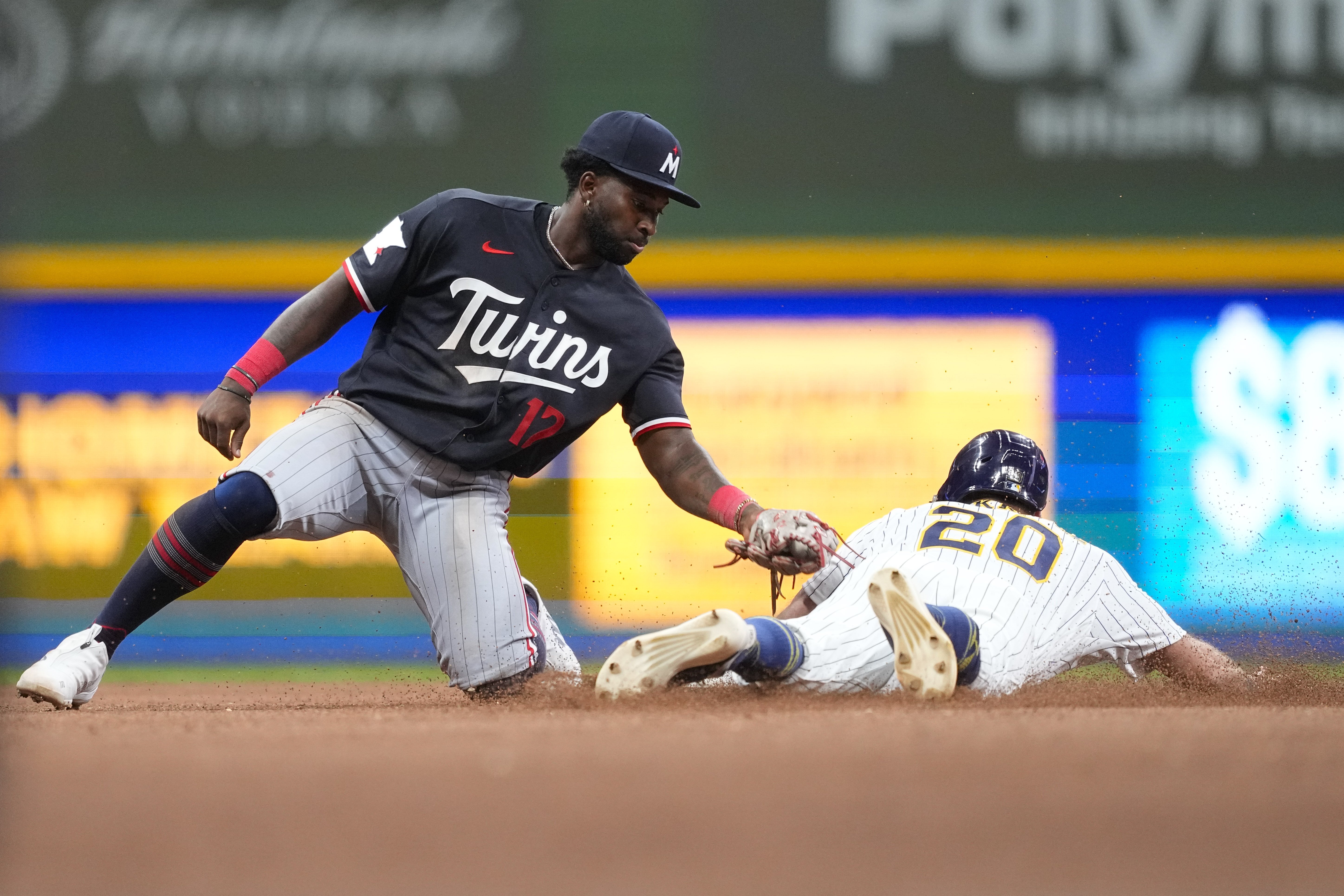 Box Score SP: Taj Bradley 5 IP, 5 H, 3 ER, 2 BB, 7 K (97 pitches, 62 strikes (64%)) Home Runs: N/A Bottom 3 WPA: Jeff Hoffman (-0.23), Brooks Lee (-0.15), Trevor Larnach (-0.12) Win Probability Chart (via FanGraphs) Kaelen Culpepper's debut on Friday night sparked the offense out of its duldrums and led to a surprise victory in the lair of the MLB-leading Brewers. Against a lefty no less! Saturday night's game involved facing another lefty starter in Robert Gasser (3-4, 4.48 ERA), while the Twins countered with their young ace, Taj Bradley (9-4, 3.69 ERA). With the Miz lying in wait for Sunday's matinee, Saturday night looked to be the clearest path to a series victory for Minnesota. Could Culpepper's lightning still be in that bottle for game two? Give and Take The Twins got runners onto the corners with two outs to start the game, but Kody Clemens, who was 3-for-25 since his ultimate slam on July 30th, made it 3-for-26 with a fielder's choice ground out to end the inning. Bradley got ahead of leadoff man Brice Turang 0-2 but surrendered a double to start the bottom of the first. Then a walk and a single loaded the bases with nobody out for William Contreras. Contreras took one for the team, and the Brewers took a 1-0 lead. With the bases still loaded, things looked bleak for Bradley, but Garrett Mitchell lined out, Andrew Vaughn struck out, and the immortal Christian Yelich bounced out to Culpepper to escape a dire situation. Luke Keaschall decided to follow the Brewer blueprint to start the second, as he laced a leadoff double. Culpepper wore one, and suddenly the Twins once again had a threat going. Brooks Lee laced a ball to left that Jackson Chourio robbed, and Ryan Kreidler popped out to the infield, and it looked like the Twins were once again going to let a golden opportunity slip. Then Gasser's unusual wildness came to bite the Brewers, as Austin Martin got plunked to load the bases. Ryan Jeffers worked the count full and drew a game-tying walk. This set up the red-hot Royce Lewis for his latest hero moment, and he delivered with a two-run double to make it 3-1. Give Again Bradley cruised through the second and third innings, striking out five in a row at one point. The Twins found baserunners in the third and fourth innings again, but in the third inning Keaschall got greedy in an attempt to steal third, and Martin grounded into a double play in the fourth. It felt like a two-run lead was going to be plenty for Bradley, but all of that unraveled in the bottom of the fourth. After 28 pitches in the inning, Bradley found the bases loaded with two outs, and Turang took the 29th pitch into the right field gap to plate two Brewers for a 3-3 tie. Bully Pens The tie game stayed that way thanks to bending-but-not-breaking bullpen members. The Twins had a depleted list of available arms, but Travis Adams and Kody Funderburk struck out three Brewers each in the sixth and seventh innings respectively. Unfortunately, the Brewers have one of the best pens in baseball, and they kept the Twins from threatening through the sixth, seventh, and eighth. New Twin righty reliever Jeff Hoffman came in to take care of things in the bottom of the eighth, and Contreras blooped one to shallow center. Keaschall elected not to dive, and the ball landed for a single. Brewer baseball took over with a pinch runner, a stolen base, and an opposite field single by Vaughn to retake the lead at 4-3. The only thing crushed the whole inning was the collective heart of Twins Territory, as the missed opportunities of the early innings loomed large as we headed to the ninth. Comeback Magic? If the Twins were going to reach .500 again tonight, it was going to have to come against former Twin Trevor Megill. If anyone got on base, Lewis would get a chance. Trevor Larnach got the first crack, and he lined a loud out to the right field warning track. Alan Roden pinch hit, and weakly popped up in foul territory on the first pitch he saw. Jeffers didn't want to wait either, and he popped up the first pitch he saw to take all potential excitement out of the picture. It was a game the Twins had in their grasp, but back to two games under the .500 mark they went. What’s Next? The Twins look to do what very few have done this season on Sunday afternoon, and that's beat Milwaukee ace Jacob Misiorowski (11-5, 1.63 ERA). Minnesota will send out their young lefty Connor Prielipp (3-5, 4.75 ERA) in hopes of stealing a series victory in this iteration of the Border Battle. First pitch in Milwaukee is scheduled for 1:10pm CDT. Postgame Interviews Coming Soon! Bullpen Usage Spreadsheet TUE WED THU FRI SAT TOT Funderburk 14 0 20 0 21 55 Hoffman 0 11 0 25 15 51 Adams 20 0 0 0 15 35 Nance 0 7 0 24 0 31 Gomez 0 0 18 12 0 30 Morris 0 0 13 13 0 26 Minter 0 12 0 3 0 15 Rogers 14 0 0 0 0 14 View the full article
 -
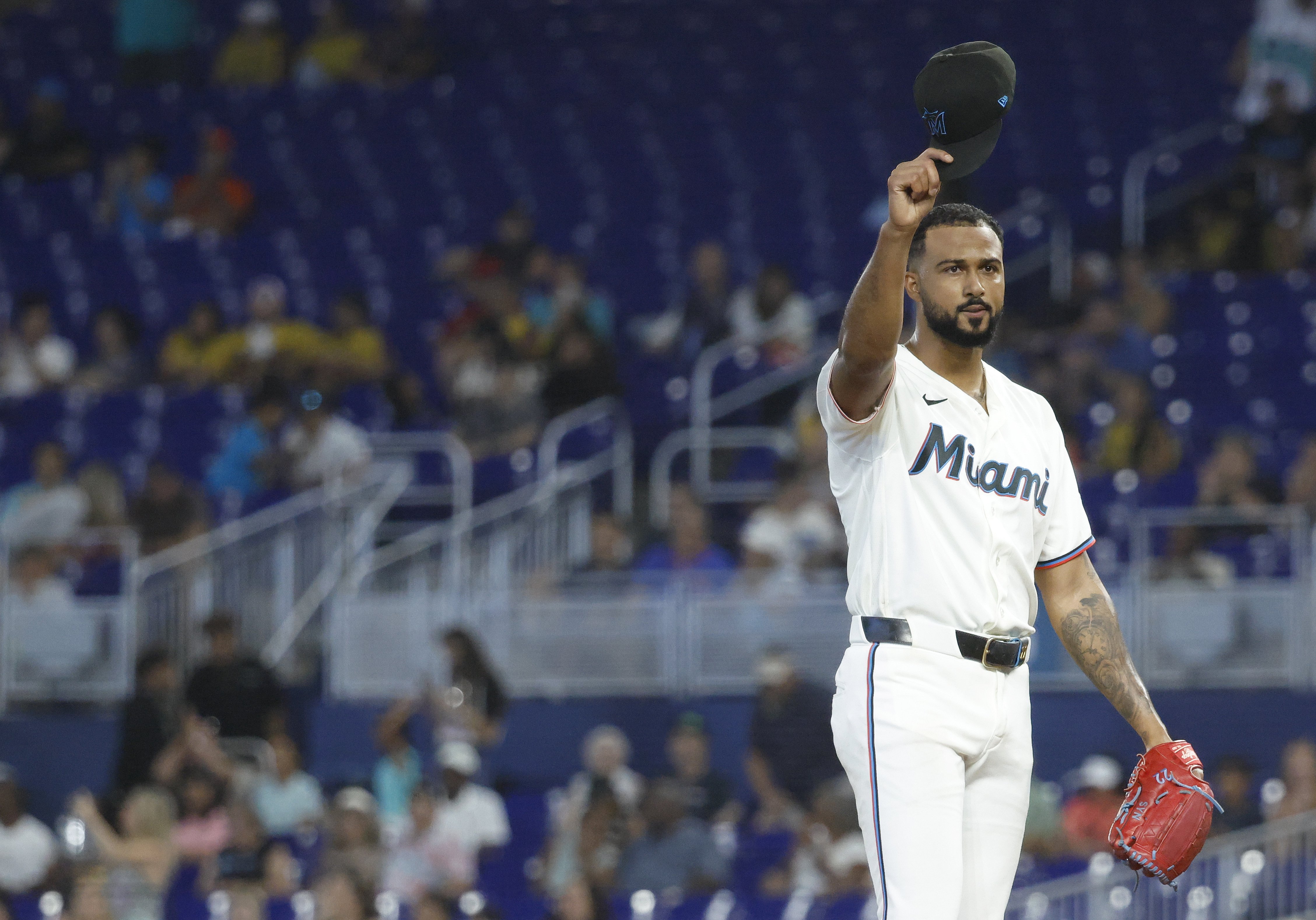 MIAMI — On Saturday afternoon, Sandy Alcantara unseated Ricky Nolasco to become the Miami Marlins' all-time leader in innings pitched. Alcantara has spent all season rewriting franchise records, but this milestone means more than the rest. Alcantara took over the top spot with after recording one out in the top of the third, surpassing Nolasco's previous mark of 1,225 ⅔ when he struck out Los Angeles Angels outfielder Josh Lowe on a 2-2 cutter. He continued dealing through seven frames, adding eight punchouts to his line in yet another gem and leading the Marlins to a streak-snapping, series-evening 7-0 win. ''Innings pitched, strikeout, quality starts, I don't know how many more records they have,” joked Alcantara postgame. “I’m very happy about the opportunity that this organization gives me, to play the game out there with my teammates and amazing coaches that I've had for the past couple years.” "The burden he's shouldered this season and how much that's meant to us, what he's been doing since he's been a Marlin, I know this will be a special one for him when he looks back at all the things that he'll end up accomplishing in this in his career," said Marlins skipper Clayton McCullough pregame. Contrary to the club's much-maligned handling of his career strikeout record in June, the crew at loanDepot park was quick to announce the moment and flash a graphic on the scoreboard. A one-minute stoppage consisting of a standing ovation from the 16,045 in attendance and cap tips from Alcantara to each side of the ballpark was a more than well-deserved spectacle. For Alcantara, it means that much more considering his family was able to witness it themselves. "I'm glad that they're here. I'm glad that my son is here. He's getting old—he's 12. Hopefully he remembers this moment. I don't know how many more moments he will remember in 10, 20 years, but I'm very happy about the family. They've watched all the success that I have. I know my mom is not here, but I know that she's very happy about the way that we take care of my family and my job." Zooming out, Alcantara has been reminiscent of his 2022 Cy Young self recently. In seven starts since July 1, his 1.88 ERA stands fifth-lowest in the National League amongst starters with 25 innings pitched. In his past three outings, it's been even better—20 innings of shutout, 18-strikeout ball has provided some stability for a squad enduring a tough stretch. "I don't think today could have gone any better for him," added McCullough postgame. "To pass Ricky Nolasco, set the innings record in a game that I think so many people have seen him in the past do, where you're seven innings in and you know your team's winning when he's done." Backing Alcantara at the plate and inevitably turning the contest into a rout was Miami's offense, highlighted by familiar faces Xavier Edwards and Otto Lopez. The middle-infield duo collected two RBI each five pitches apart during the bottom of the third, with Edwards collecting another on in the fifth. As a team, the Fish went 5-for-9 with runners in scoring position. Back sitting square at .500, Miami can take the series over a struggling Angels squad on Sunday. McCullough will hand the ball to Ryan Gusto, succeeding an impressive start at Truist Park earlier in the week. Gusto goes opposite former top prospect Grayson Rodriguez at 1:40. View the full article
 -
Chicago Cubs Minor League Hitters of the Month: July 2026
DiamondCentric posted an article in North Side Baseball
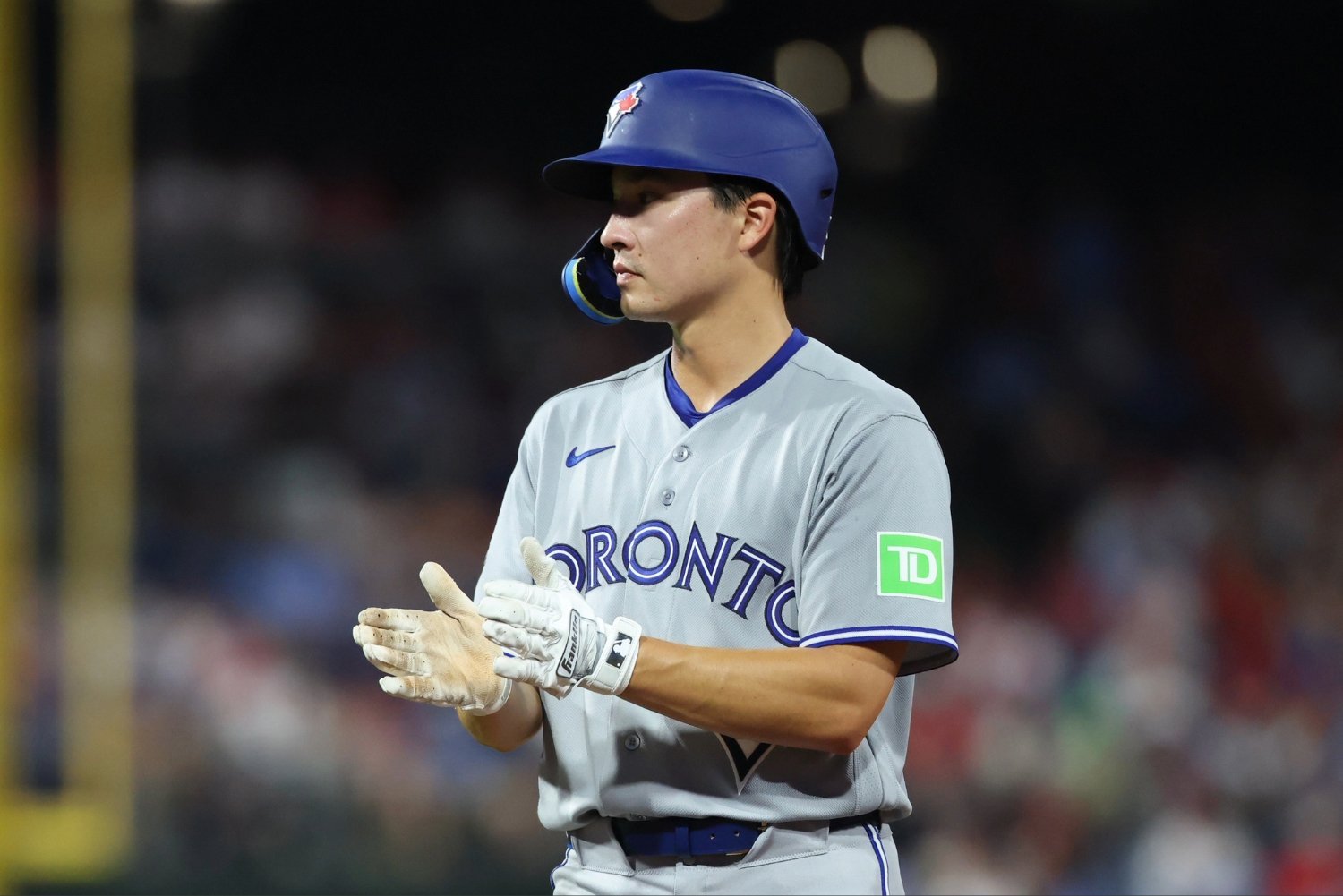 July is an incredibly important month for minor leaguers and their value. With the trade deadline looming, a poor performance can sink trade value while a great performance can boost a players' stock. Which hitters helped the Chicago Cubs, and themselves, most in July? Spoiler alert, the top two players on this list are no longer with the organization. Ranking Cubs' Best Minor League Hitters In July Honorable Mention: Jose Escobar - UTIL - South Bend Jose Escobar has put together a really nice season this year, albeit largely under the radar. Promoted to South Bend at the end of May, Escobar slashed .343/.420/.614 in June and followed that up with a .367/.420./520 line in July to land in last month’s edition. Escobar put up that stat line along with just a 14.6% strikeout rate while being a tad young for the level. The diminutive 21-year-old has mostly played left field but has starts at 2B and in RF as well in South Bend. With a strong finish to his solid season, Escobar has likely earned the chance to start his age-22 season at Double-A Knoxville. Third Place: Josiah Hartshorn - OF - South Bend The year of Hartshorn continued in July. The reason he takes home the bronze and not in one of the top two spots this month is a slight drop off in production compared to previous months, but Hartshorn still managed a .256/.393/.453 slash line with an 18.8% strikeout rate and a 16.9% walk rate. His slugging percentage dipped from June but he paired that with a dip in k-rate and an increased walk rate. The switch-hitting teenager also played more on the dirt this month, starting 12 games at 1B and only 8 in RF, the first time this year he has started more games in the infield than the outfield. If you were looking for signs that Hartshorn is hitting a wall in his first professional season, you won’t find any in July. Runner-Up: Brett Bateman - OF - Iowa Bateman wins the runner-up in July largely on the back of a 18-game stretch from July 2 to July 28. He hit safely in 17 of the 18 games, including a 14-game hitting streak. Bateman recorded multiple hits 11 times, scored 22 runs, and hit .416 with just 10 strikeouts and 12 extra-base hits. He entered July slashing .284/.427/.355, which is passable, but then slashed .358/.430/.547 over the month. In his fourth professional season, Bateman has steadily moved up the ladder due to solid strikeout and walk rates and a solid defense/speed combo in the outfield. The Blue Jays clearly bought into the hype, acquiring him (alongside Ty Southisene) in the Kevin Gausman trade. Winner: Jonathon Long - 1B - Iowa Through June, I think the only way to sum up Jonathan Long’s 2026 season was as a disappointment. He was coming off a solid season in Iowa in 2025 and expected to make a bit of a push for the majors, even if he was blocked by Michael Busch. Long followed up an .883 OPS in AAA last year with an .738 OPS entering July. Long proceeded to hit .371/.446/.652 last month, good for a 1.097 OPS with a walk rate of nearly 11%. He had 17 doubles and 7 home runs over the first three months, and 13 doubles and 4 homers in July. He was weighed down by a really poor May, but got fully back on track just in time for the trade deadline. Like Bateman, Long's boosted stock proved useful on the trade block, as he got shipped to Miami (with Jace Beck) in exchange for Braxton Garrett. View the full article
 -
Chicago Cubs Minor League Hitters of the Month: July 2026
DiamondCentric posted an article in North Side Baseball
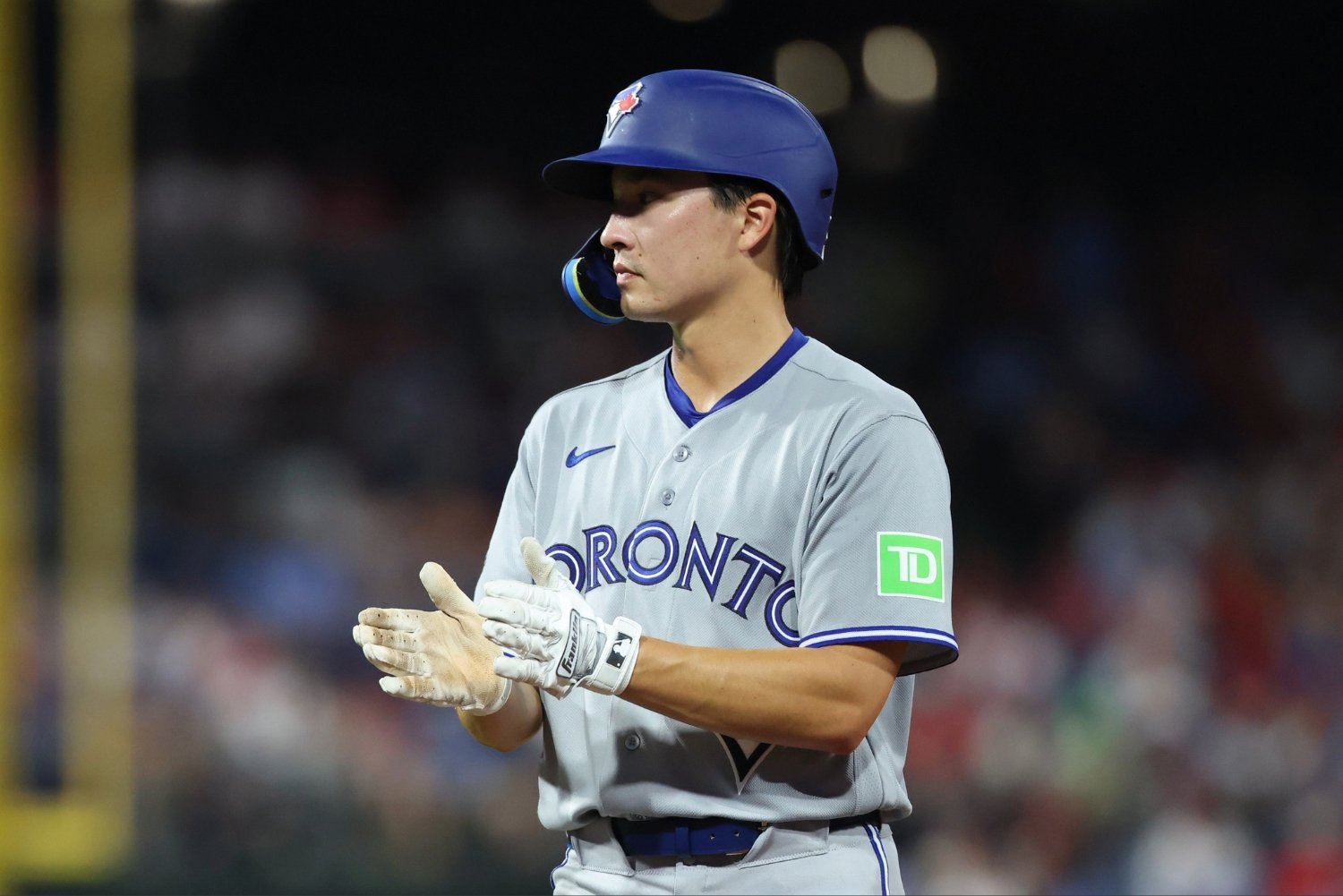 July is an incredibly important month for minor leaguers and their value. With the trade deadline looming, a poor performance can sink trade value while a great performance can boost a players' stock. Which hitters helped the Chicago Cubs, and themselves, most in July? Spoiler alert, the top two players on this list are no longer with the organization. Ranking Cubs' Best Minor League Hitters In July Honorable Mention: Jose Escobar - UTIL - South Bend Jose Escobar has put together a really nice season this year, albeit largely under the radar. Promoted to South Bend at the end of May, Escobar slashed .343/.420/.614 in June and followed that up with a .367/.420./520 line in July to land in last month’s edition. Escobar put up that stat line along with just a 14.6% strikeout rate while being a tad young for the level. The diminutive 21-year-old has mostly played left field but has starts at 2B and in RF as well in South Bend. With a strong finish to his solid season, Escobar has likely earned the chance to start his age-22 season at Double-A Knoxville. Third Place: Josiah Hartshorn - OF - South Bend The year of Hartshorn continued in July. The reason he takes home the bronze and not in one of the top two spots this month is a slight drop off in production compared to previous months, but Hartshorn still managed a .256/.393/.453 slash line with an 18.8% strikeout rate and a 16.9% walk rate. His slugging percentage dipped from June but he paired that with a dip in k-rate and an increased walk rate. The switch-hitting teenager also played more on the dirt this month, starting 12 games at 1B and only 8 in RF, the first time this year he has started more games in the infield than the outfield. If you were looking for signs that Hartshorn is hitting a wall in his first professional season, you won’t find any in July. Runner-Up: Brett Bateman - OF - Iowa Bateman wins the runner-up in July largely on the back of a 18-game stretch from July 2 to July 28. He hit safely in 17 of the 18 games, including a 14-game hitting streak. Bateman recorded multiple hits 11 times, scored 22 runs, and hit .416 with just 10 strikeouts and 12 extra-base hits. He entered July slashing .284/.427/.355, which is passable, but then slashed .358/.430/.547 over the month. In his fourth professional season, Bateman has steadily moved up the ladder due to solid strikeout and walk rates and a solid defense/speed combo in the outfield. The Blue Jays clearly bought into the hype, acquiring him (alongside Ty Southisene) in the Kevin Gausman trade. Winner: Jonathon Long - 1B - Iowa Through June, I think the only way to sum up Jonathan Long’s 2026 season was as a disappointment. He was coming off a solid season in Iowa in 2025 and expected to make a bit of a push for the majors, even if he was blocked by Michael Busch. Long followed up an .883 OPS in AAA last year with an .738 OPS entering July. Long proceeded to hit .371/.446/.652 last month, good for a 1.097 OPS with a walk rate of nearly 11%. He had 17 doubles and 7 home runs over the first three months, and 13 doubles and 4 homers in July. He was weighed down by a really poor May, but got fully back on track just in time for the trade deadline. Like Bateman, Long's boosted stock proved useful on the trade block, as he got shipped to Miami (with Jace Beck) in exchange for Braxton Garrett. View the full article
 -
Agustín Ramírez discusses his adjustment to first base
DiamondCentric posted an article in Fish On First
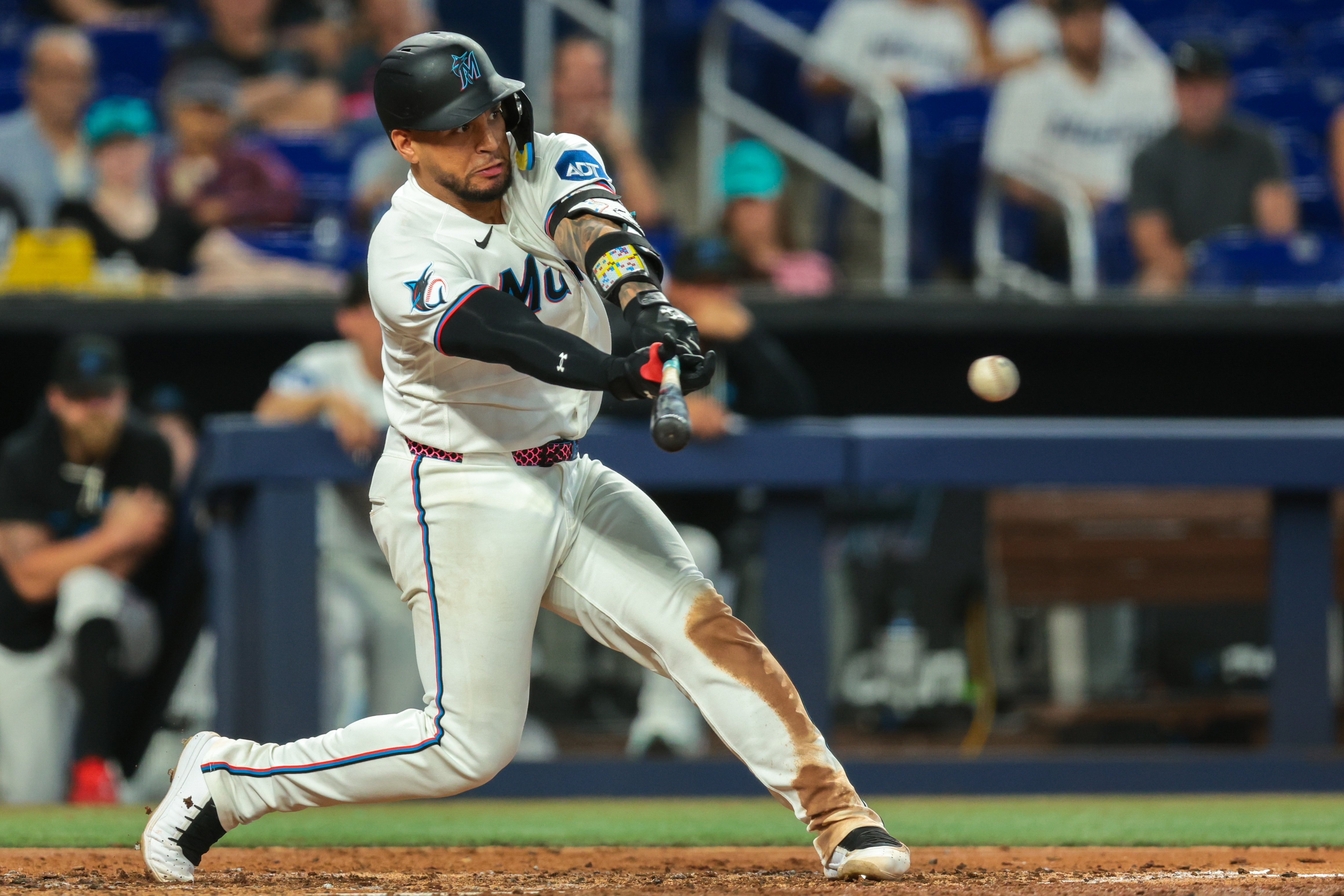 MIAMI, FL — Following the Major League Baseball trade deadline, the Miami Marlins recalled catcher Agustín Ramírez from Triple-A Jacksonville. As president of baseball operations Peter Bendix explained, Ramírez will be filling a similar role to the one that Liam Hicks previously had. That means occasionally playing first base in addition to catching. The Marlins acquired Ramírez from the New York Yankees in July 2024 in hopes that he would turn into their everyday catcher. After plenty of run behind the plate, he just has not been able to improve enough to meet those expectations. Ramírez made 17 MLB starts at catcher earlier this season. In that span, he committed four errors, allowed 19 stolen bases, three passed balls and only threw out two runners (9.5% caught stealing rate). On top of that, he wasn't producing much with his bat, slashing .230/.318/.345/.663 with two home runs and 14 RBI. When the Marlins called up Joe Mack on May 4, Ramírez was sent down to Triple-A as the corresponding move. "Things also weren't going the way I wanted to offensively and they sent me down to go work on my defense where I would have more of an opportunity to just get better," Ramírez told Fish On First. In his stint with the Jumbo Shrimp, Ramírez slashed .254/.332/.427/.759 with seven home runs, 29 RBI, 17 stolen bases and a 101 wRC+. Defensively, it really didn't get much better, with nine passed balls, 15 errors and 72 stolen bases allowed (15.3 CS%). Since he's been called back up, Ramírez has appeared in only two out of five Marlins games. He is 3-for-8 with one walk and three strikeouts, starting once as their designated hitter. He has caught two innings off the bench. "I am super happy to be back," Ramírez said. "Here is where I want to be and the team is doing a good job, in the race for the playoffs. Just here to help the team win in whatever way I can." Marlins manager Clayton McCullough called Ramírez "a work in progress" when it comes to first base. He's been practicing before games. There is still not a set date for when he will debut at the position. "I honestly feel great there since I have played there before," Ramírez said. He made 27 total appearances at first from 2021-24 as a member of the Yankees organization. Ramírez added: "I feel like I can move better and feel more athletic, which is why I say that I feel better (at first) because you gotta throw at different angles, move to different corners and you are always in this rhythm that you are waiting for the ball to be hit your way. You always have to be on your feet at first." Mack will continue to serve as the Marlins catcher for the vast majority of their games. The club is also keeping veteran Brian Navarreto on the active roster, signaling that Ramírez will see very limited action behind the plate. Kyle Stowers has been Miami's everyday choice at first base lately, but he can shift over to the corner outfield spots if necessary. Whether it be at catcher, first base or DH, expect Ramírez to be in the lineup when the Marlins are facing left-handed starting pitchers. View the full article
 -
Minor League Report: Post-Trade Deadline Prospect Fallout
DiamondCentric posted an article in Talk Sox
 In this week's episode, Nick breaks down the major prospects the team traded away in the Adley Rutschman deal, such as Anthony Eyanson, Kyson Witherspoon, and Enddy Azocar. He also discusses the promotions of Jason Gilman, Gage Ziehl, and Devin Futrell, along with other moves made across the organization following the trade deadline. Listen on Apple Podcasts: https://podcasts.apple.com/us/podcast/the-talk-sox-podcast/id1783204104 Listen on Spotify: https://open.spotify.com/show/3qPrPXEngu0CxgTmlf0ynm Listen on iHeartRadio: https://www.iheart.com/podcast/263-the-talk-sox-podcast-244591331/ Listen on Pocket Casts: https://pca.st/4tmd121v Watch on YouTube: https://www.youtube.com/@talksox View the full article
 -
Jesus Sanchez Is One Adjustment Away From A Breakout
DiamondCentric posted an article in Jays Centre
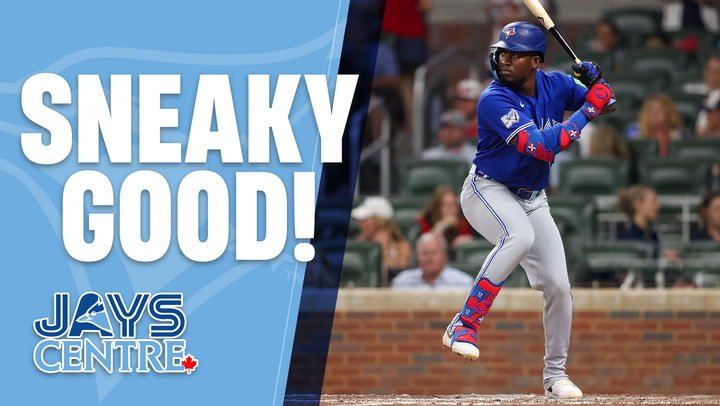 Toronto Blue Jays outfielder Jesus Sanchez only has eight home runs this year, and on the surface, some may not see him as a power hitter. Look under the hood, and you'll see someone with a spectacular bat speed, barrel percentage, hard-hit rate, and more. In this video, we use the bat speed king, Junior Caminero, for a case study comparison to explain what Sanchez needs to do to unlock his true potential. View the full article
 -
Former Twins Top Pitching Prospect Reaches Milestone, Retires at 32
DiamondCentric posted an article in Twins Daily
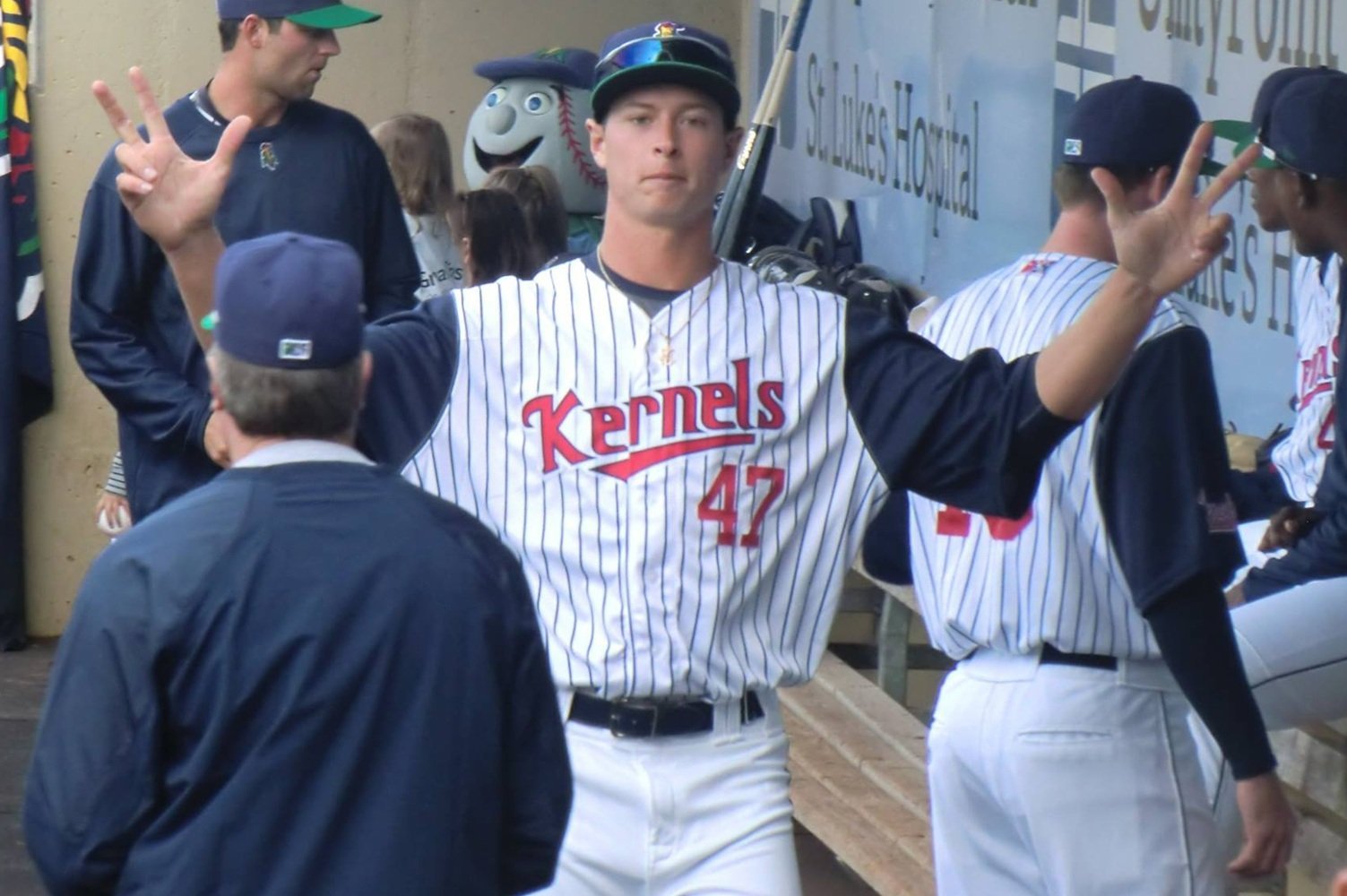 In 2013, the Twins used their fourth-round draft pick to select Stephen Gonsalves. Not to be confused with one of the paranormal investigators on Ghost Hunters. This Gonsalves was a 6-6 left-handed pitcher from San Diego's Cathedral Catholic High School. He was an All-American who represented USA baseball in several competitions. After signing with the Twins, he had 39 strikeouts in 28 1/3 innings split between the GCL and Elizabethton. While many prospects start each season at a new level. Gonsalves seemingly was always on the opposite schedule. He would earn a mid-season promotion to a new level. While at times it may have felt like a slow-play, it seemed to work. He continued to put up numbers up and down the minor league system. From 2013-2019, Gonsalves was frequently written about on the pages of Twins Daily. At year's end, he was always up for consideration for Twins Daily Minor League Starting Pitcher of the Year. In 2014, he was Honorable Mention: Elizabethton Twins/Cedar Rapids Kernels (4-3, 3.02 ERA, 1.14 WHIP, 65.2 IP, 54 H, 21 BB, 70 K) In 2015, he finished second to Jose Berrios (who also won in 2014): Cedar Rapids Kernels/Fort Myers Miracle: 24 GS, 13-3, 2.01 ERA, 1.10 WHIP, 134.1 IP, 95 H’s, 53 BB’s, 132 K’s. In 2016, he was the Starting Pitcher of the Year: Ft. Myers Miracle/Chattanooga Lookouts: 24 GS, 13-5, 2.06 ERA, 1.02 WHIP, 140.0 IP, 86 H, 57 BB, 155 K. In 2017, he was again named the Starting Pitcher of the Year: Chattanooga Lookouts/Rochester Red Wings 3.27 ERA, 110.0 IP (19 starts), 9.7 K/9, 2.5 BB/9, 1.136 WHIP In mid-August of 2018, Gonsalves got The Call.. His first two games were on the road. I was able to attend his first Target Field start. Before the game, media is not allowed to talk to the day's starting pitcher. He was sitting at his locker, headphones in., listening to music. He looked up once and saw me in a group talking to another player. A nod of acknowledgement was plenty. During the game, I talked to his parents for a little while. They were so proud. His mom said, I wish I could go to the clubhouse after the game and give him a big hug. His dad looked at me and said, "Well, you can do that for us, right?" Eh? After the game, I was part of the media scrum chatting with Gonsalves about his start at his locker. When that was done, I shook his hand and told him about the hug comment. I chuckled, and then he said, "Ah, come on Seth, bring it in." So, we did an awkward bro-hug. Gonsalves was always willing to do a podcast interview or a story quote. He enjoyed being at the ballpark, and I think he always appreciated those who took the time to promote the minor leaguers, and interview minor leaguers, and make them people instead of just stat lines and box scores. He appreciated the opportunity and the fans that cheered him on. One year after he was named minor league starting pitcher of the year, we invited him and Mitch Garver to come to the Twins Daily Winter Meltdown. They showed up with their significant others. We didn't promote that they had shown up, but there were people who went up to them, and they understood the importance of the fans and being fans. Gonsalves was a Top 100 prospect before his debut. He pitched in the Arizona Fall League. He's gone through Tommy John surgery. Almost literally, he has gone through everything that a ballplayer can go through He got seven appearances with the Twins in 2018. Then he didn't get back to the big leagues until 2021 when he pitched in three late-season games for the Red Sox. That was his last big-league game. Along the Twins, he spent time in the Red Sox, Cubs and Rockies organizations. He also spent time the last few years playing in Mexico. If you look at his minor league baseball reference page, you'll see that Gonsalves ended his career with 20 MLB strikeouts. He accumulated 871 strikeouts in the minor leagues. And, he had seven strikeouts in the Fall League. And in Mexico, he ended with 103 strikeouts. Add them up, and he ended his career with 1,001 strikeouts. One final story that my brother reminded me of when I mentioned that Gonsalves had retired. We talked about how he just got it, he understood the role of the fans, and he wanted them to have a positive experience. One year at the Diamond Awards, my brother and I spent a little time chatting with the Gonsalves family. My brother is an outdoorsman and enjoyed talking to Stephen about spear fishing in the ocean when he was younger. At one point, a couple came up to Gonsalves and excitedly asked if they could get their picture taken with him. Moments later, the couple got their picture, thanked him and walked back to a nearby group. My brother asked him, "What's that like?" Gonsalves responded, "That is pretty cool. It never really gets old." At that point, they heard the couple who just had their photo taken with the lanky lefty telling their group, "Oh, this is so great. Where else could we go and get our picture taken with Max Kepler." Gonsalves put his head down, smiled and shook his head. Stephen, congratulations on the career, the good and the not-so good, and all the milestones. To the next phase, raising the three kids with your lovely bride. View the full article
 -
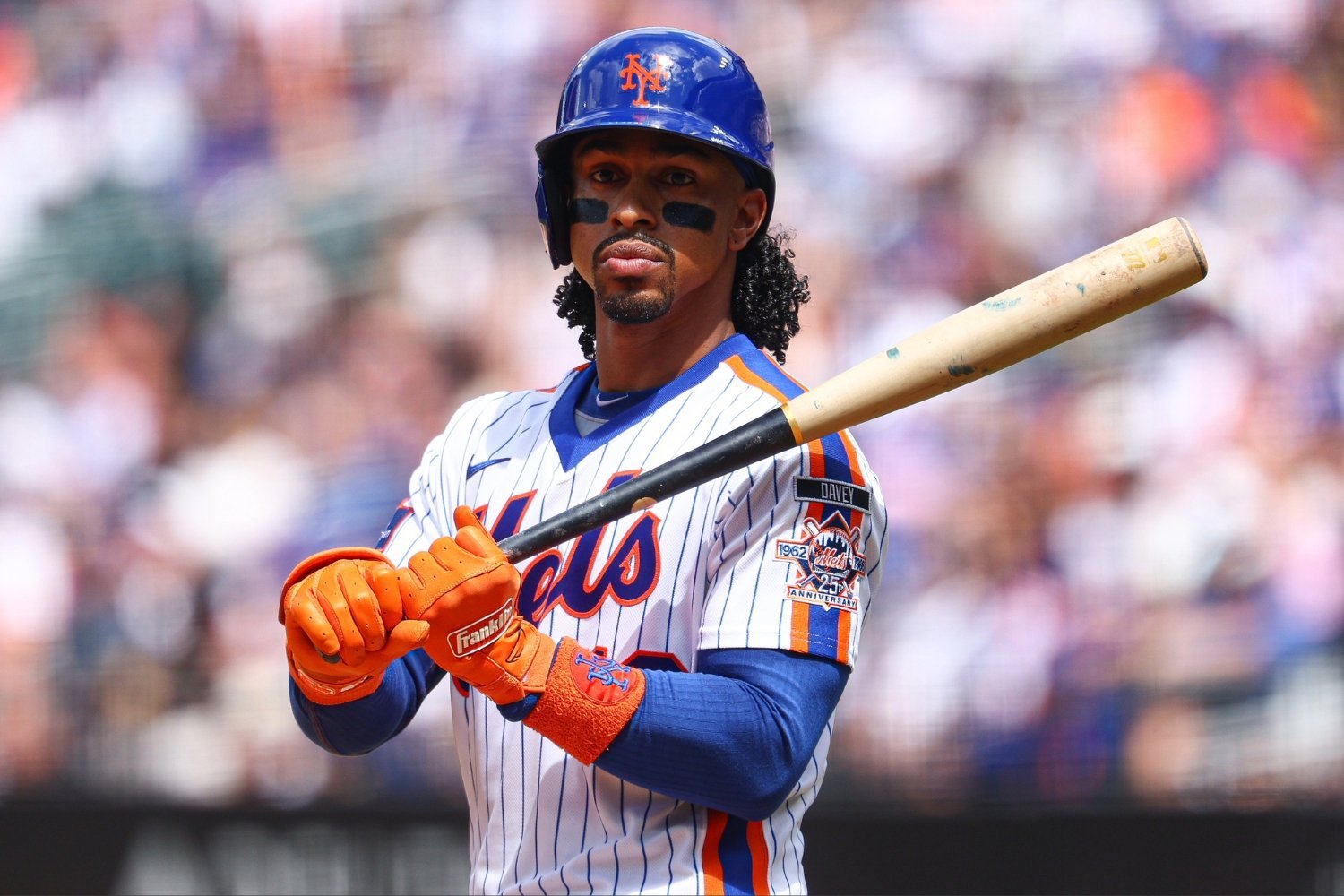 Juan Soto has undoubtedly been the New York Mets' best hitter all season, but after winning hitter of the month honors for June 2026, someone else took the crown for the month of July. It was a close race between the three hitters mentioned below, but Francisco Lindor ultimately came away with the prize. The Mets offense throughout the 2026 season thus far has been pretty underwhelming and they currently rank 28th overall in fWAR (7.6) ahead of only the Cincinnati Reds (7.1) and Colorado Rockies (6.9). Still, the team's batters took a big step forward during the month of July which propelled them up to the 11th-best offense in the league for the month, according to FanGraphs. Ranking Mets' Best Hitters In July No. 3 Francisco Alvarez, C There were numerous players who could’ve been selected here for the third spot, but Francisco Alvarez had the slight edge over Soto, Carson Benge, Jared Young, and A.J. Ewing. He managed a .267 batting average last month to go along with four extra-base hits that included three home runs. His performance in July wasn’t quite as spectacular as Lindor or Taylor, but he did have a respectable stretch of 74 plate appearances. Alvarez did a good job getting on base at a .405 clip, which was largely as a result of him drawing walks at an excellent 17.6% rate. He’s always shown the ability to walk and get on-base at an average pace but he took it to another level last month. Alvarez’ .267 batting average for the month was pretty good for his expectations, as he is a career .235 hitter. He had the second highest average on balls in play with a .351 clip that only trailed Benge with a .381 mark. His 139 wRC+ ranked third on the Mets for batters with at least 50 plate appearances, only trailing the two names below. No. 2 Tyrone Taylor, OF Taylor almost took the crown for the month of July and it could be argued that there wasn’t much of a difference between his performance and Lindor’s. The only variance is that he only made 50 plate appearances and his overall results weren’t quite as impressive. Over Taylor’s smaller sample, he hit for a .326 batting average which led the team, and also collected 10 extra-base hits. He hit six home runs, lined four doubles, and drove in 12 runs. Taylor displayed the most pure-power, hence his .512 isolated power and .837 slugging percentage -- both marks led all Mets hitters in July. He stayed disciplined at the plate over the course of the month where he drew walks 12% of the time, which was encouraging to see since over his career that’s not been the case with a 5.3% mark. Taylor’s strikeouts were a smidge high at a 24% clip. His two-and-a-half year tenure with the Mets ended on a good note, as he was traded to the Chicago Cubs at the deadline along with right-hander Clay Holmes. Out of all major-league hitters with at least 50 plate appearances for the month of July, Taylor led the group with an incredible 235 wRC+. No. 1 Francisco Lindor, SS Lindor earns this honor after leading the club with 107 plate appearances. His .258 batting average wasn’t the best on the squad, but he did mash six home runs while driving in 17 runs in the process. The biggest part of Lindor’s success in July was the power he displayed on offense when he collected 10 extra-base hits including three doubles and one triple. This resulted in a .505 slugging percentage for the month which was higher than his .420 mark for the season. His .247 isolated power topped his season and career marks. Lindor’s approach and discipline at the plate remained the same quality that we’ve seen from him since he debuted in Cleveland back in 2015. Lindor drew walks 12.1% of the time while maintaining an excellent 18.7% strikeout rate. Overall he had a great all-around offensive performance in July, leading to a 140 wRC+. If he keeps this up, the Mets should be right back in the thick of the hunt in 2027. View the full article
 -
The Science Behind Royce Lewis' 18-Game On-Base Streak
DiamondCentric posted an article in Twins Daily
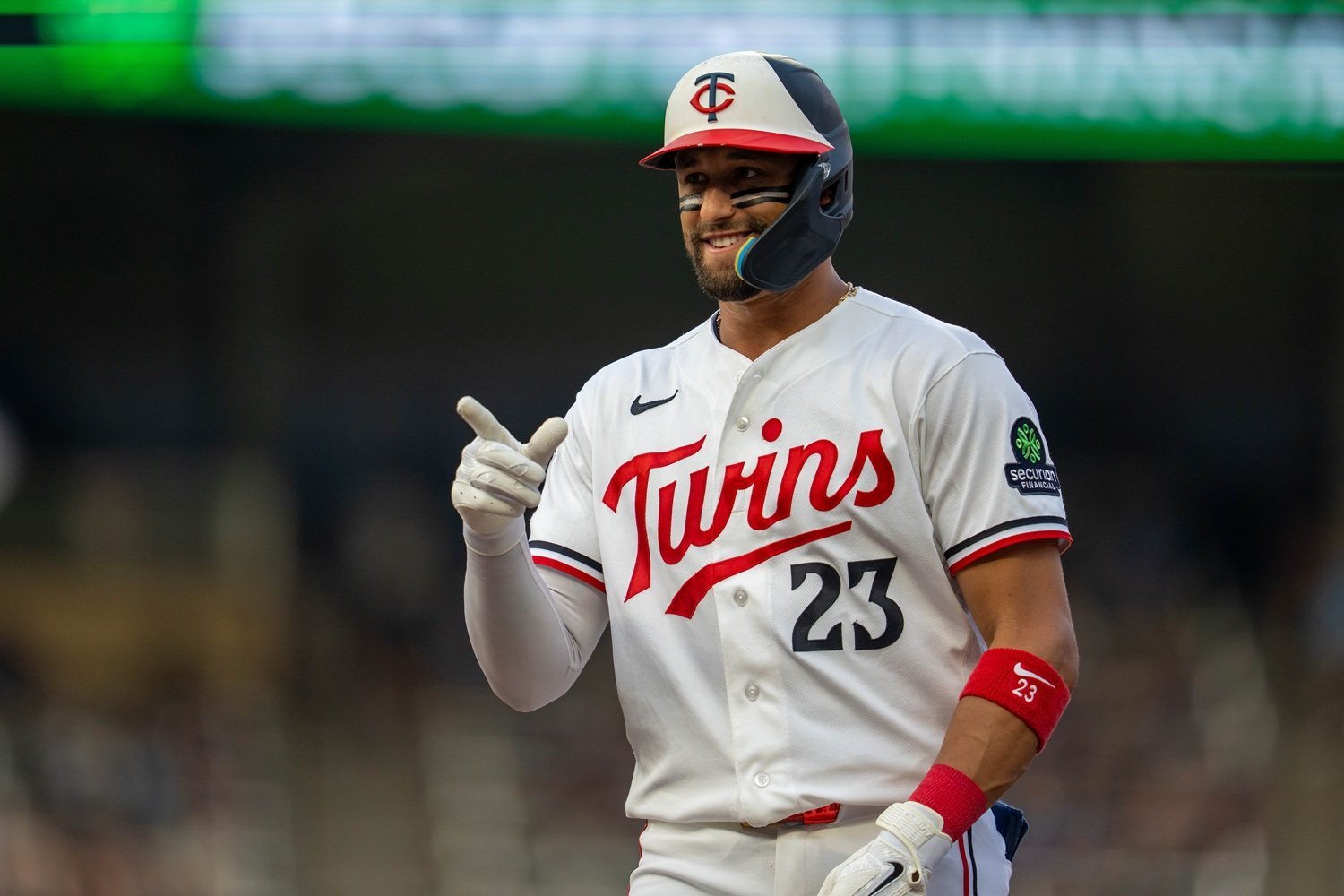 What is Royce Lewis ’ role on the Minnesota Twins this year? It’s a valid question, and conversations about whether he’ll live up to his full potential are just as valid. The thing with Lewis is, he’s showing flashes of greatness this year, and what he's accomplished in the last couple of weeks is a perfect example of that. Let’s dive into Lewis’ background, his advanced analytics, and most importantly, what his true ceiling is. A 1st Overall Pick Lewis was the first overall pick in the 2017 MLB Draft. The Twins selected him right out of high school, aiming to land a well-rounded prep product who could blossom into being the cornerstone of their organization. While that title has gravitated more towards Byron Buxton in past years, Lewis’ journey to the present day has been an intriguing one. He immediately showed an ability to harness a power-speed combo, stealing as many as 28 bases in 2018 (across Low-A Cedar Rapids and High-A Fort Myers) and having an OPS that peaked above .800 on multiple occasions. Injuries Galore The unfortunate headline for Lewis’ major league career, so far, has been his lack of availability. Injuries have plagued the now 27-year-old since the moment he made his big league debut in 2022, where he appeared in 12 contests. From that point forward, Lewis appeared in 58 big-league games in 2023, 82 games in 2024, a career-best 106 contests in 2025, and now he’s on 82 games and counting for the 2026 campaign. The former first overall pick has dealt with a pair of torn ACLs, hamstring strains, a strained oblique, and a variety of other knee issues along the way. Even with those issues, an 82-game sample size where Lewis slugged 16 home runs in 2024 shows he has potential to be a real game changer for Minnesota. Underlying Metrics Show Promise Even in 2026, after being sidelined for a variety of reasons, the corner infielder is on a heater. Lewis has reached base safely in 18 straight contests. During this on-base streak, he's slashing .308/.378/.554 for a .932 OPS. Lewis is also 11-for-24 in the month of August. Much of this success starts with one of the most important attributes in hitting: bat speed. Lewis’ bat speed glides in at an average of 75.1 miles per hour, good enough to nestle him in the 85th percentile. Hard-hit metrics like exit velocity, hard-hit rate, slugging percentage and more all become more attainable with great bat speed. Just look at someone like Junior Caminero, who lives in the top one percent of hitters with bat speed and continues to slug homers at a remarkable rate. Another metric that can benefit from an above-average bat speed is barrel percentage, and Lewis is barreling up the baseball 12.8 percent of the time (84th percentile). The Twins infielder has also spiked his exit velocity to an above-average mark of 90.2 miles per hour (67th percentile) and also boasts an above-average hard-hit rate of 43.4 percent (63rd percentile). One of his greatest improvements this year has been the plate discipline, as the 27-year-old is drawing a free pass 9.3 percent of the time (a career-best). What’s There To Work On? Lewis still has a lot of work to do, especially in the plate discipline department. His 24.3 percent strikeout rate is something I’m sure the Twins would love to cut down on, and if he can do so, his power numbers could rival that of Buxton. Lewis doesn’t have the bat speed quite up the alley of the aforementioned Caminero, but his analytics imply he could be a successful power hitter in this league if he stays on the field and learns to adjust to offspeed pitches, an offering he’s hitting just .111 against this year. Overall, this 18-game stretch is one of the most promising mile-markers of Lewis' career. The former first overall pick hasn't had the start he's been looking for, but with a better track record for health and improved plate discipline, the raw power metrics still support an argument that he can be a real difference-maker in this league. View the full article
 -
LOL. Angels Wanted Top Prospect Walker Jenkins for Zach Neto Trade
DiamondCentric posted an article in Twins Daily
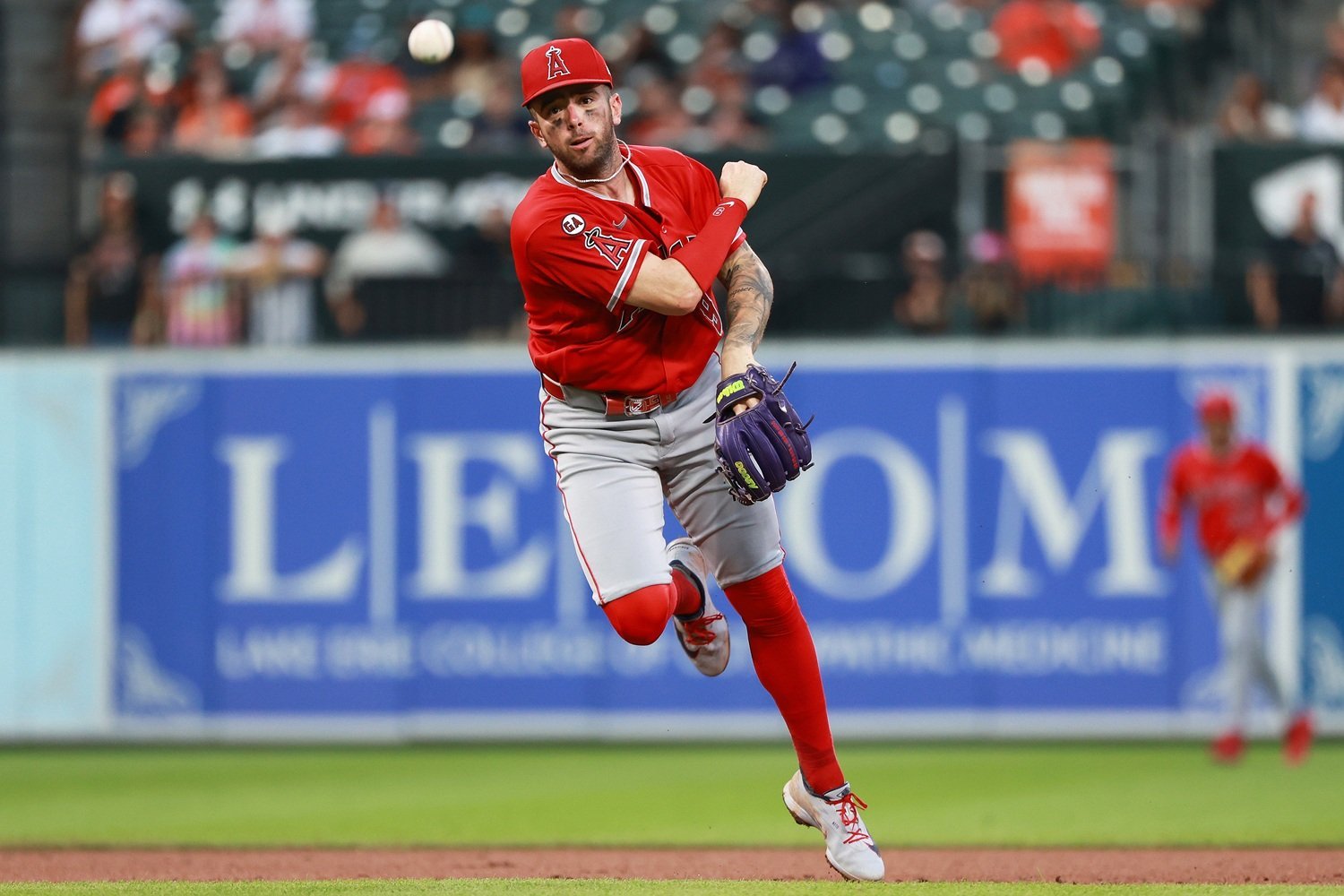 In the hours before the trade deadline, rumors swirled around a trade that would send Angels shortstop Zack Neto to the Minnesota Twins. That didn't happen. Thanks to Bob Nightengale at the Star Tribune, we now know that price included top prospect Walker Jenkins among other names. Neto was considered a highly valued piece at the trade deadline. Though Neto has had a relative down year, he has had three consecutive 20-home run seasons and will likely make 20 steals (also his third season in a row). While the defense grades below average, Neto could have likely had defensive versatility for the Twins. But asking for Jenkins was almost certainly a bridge too far for the team. There was certainly a case for trading Kaelen Culpepper - using Neto as a bridge to quickly rising prospect Marek Houston - but the young outfielder Jenkins remains a centerpiece for Minnesota's future. As Nightengale reported, talks never got too far in part due to Jenkins' inclusion. Jenkins is currently batting .297 / .388 / .493 and was likely due for a callup if Trevor Larnach had been traded. With Larnach staying put, it is unclear when to expect the Twins' top prospect to be roaming Target Field. View the full article
 -
Bryse Wilson Designated For Assignment By Brewers
DiamondCentric posted an article in Brewer Fanatic
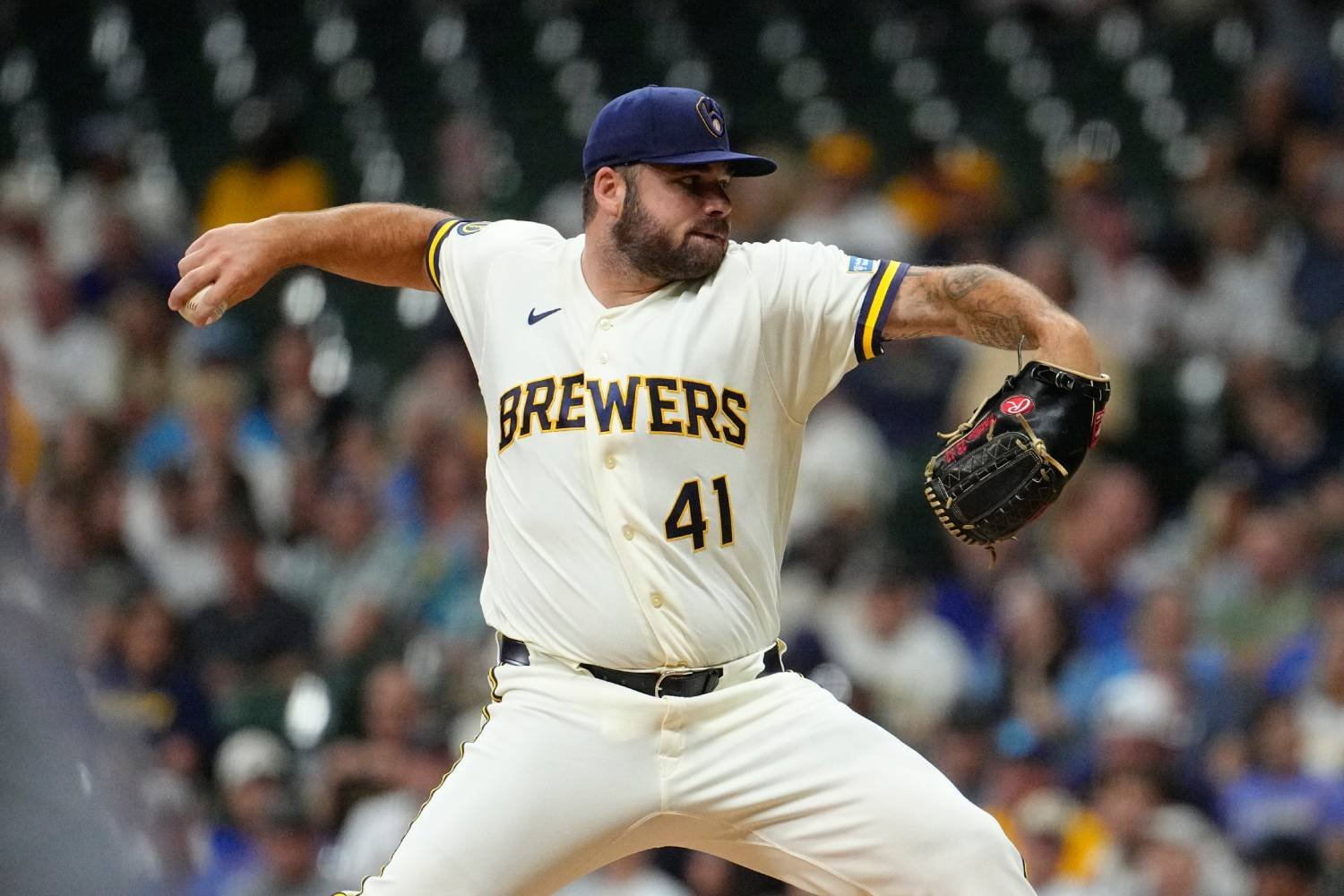 The cruel reality of life at the end of a bullpen has bitten Bryse Wilson. The right-hander was designated for assignment Saturday by the Milwaukee Brewers, who selected the contract of right-hander Lyon Richardson from Triple-A Nashville. Also, right fielder Sal Frelick was sent on a rehab assignment to Nashville as he comes back from a strained right shoulder. Wilson was a bullpen-saver in Friday's 8-6 loss to open a three-game series against the Minnesota Twins. He went three shutout innings, allowing a hit and no walks, striking out two. It was his sixth appearance for the Crew, who signed Wilson after he had been DFA'd by the Philadelphia Phillies and Chicago Cubs. In those six games, Wilson went 13⅔ innings with a 2.63 ERA, no walks and 10 strikeouts. The Brewers' bullpen has been used heavily in recent days and the need was for a fresh arm. That brings in Richardson, who was signed to a minor-league deal in June after being DFA'd and released by the Cincinnati Reds. Richardson has appeared in 41 games for the Reds in the last four seasons, including two this year, with a 6.29 FIP (6.67 ERA) with a 14.6% walk rate and 17.2% strikeout rate. Richardson is likely just a safety net as he can go multiple innings. The Brewers are awaiting the returns of right-hander Joel Kuhnel (right rotator cuff tendinopathy), left-hander JoJo Romero (appendectomy) and left-hander Rob Zastryzny (left upper trap strain) from the injured list. Kuhnel is on a rehab assignment, while Romero was acquired Monday from the St. Louis Cardinals. Also, right-hander Grant Anderson was sent down to Triple-A on Wednesday and can't return to the Brewers until 10 days pass unless he is an injury replacement. View the full article
 -
Clay Holmes’ Pitching Style Fits Cubs Perfectly
DiamondCentric posted an article in North Side Baseball
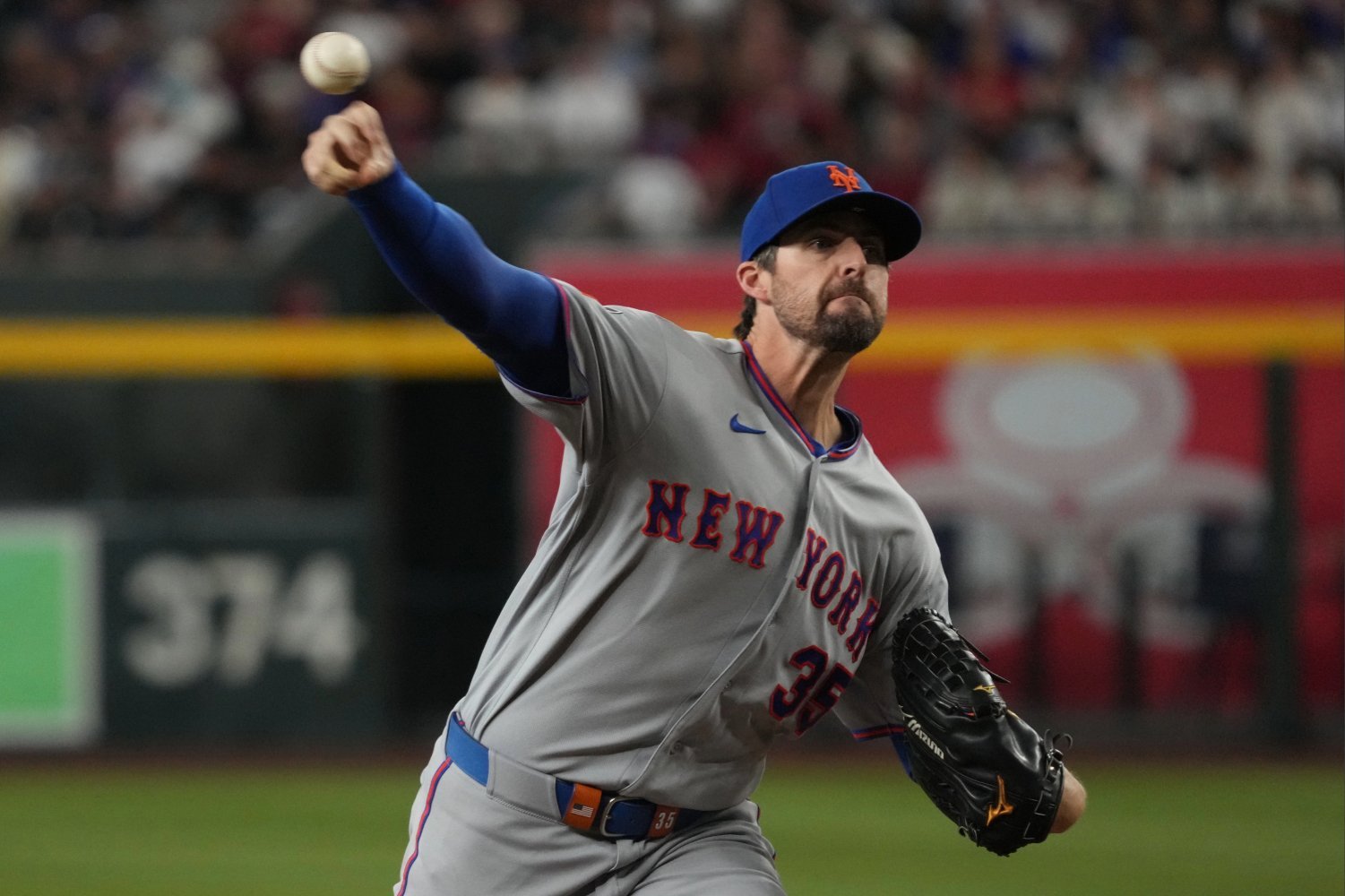 The Chicago Cubs made arguably their largest splash a few hours before the deadline, acquiring right-handed pitcher Clay Holmes in a package deal that also included outfielder Tyrone Taylor. It’s no secret that Chicago’s pitching staff (especially the rotation) has been decimated with injuries, but Holmes’ pitching was quite literally made for this team. Let’s break down who Holmes is and why this acquisition fits like a glove. Clay Holmes' Updated Cubs Scouting Report Clay Holmes is a 33-year-old right-handed pitcher and entered the deadline as one of the most sought-after rental arms in baseball. He was originally a ninth-round pick in the 2011 MLB Draft when the Pittsburgh Pirates selected him right out of high school. Holmes is in his ninth season, and he’s generated a career record of 40-34 with a 3.53 earned run average while striking out 534 hitters in 555.2 innings pitched. The Cubs will be his fourth team, as the veteran right-handed pitcher threw for the Pirates and New York Yankees before a brief stint under Carlos Mendoza (and Andy Green) in Queens. Transitioning Out Of The 'Pen Many aspiring pitchers who lack command end up going to the bullpen. The thought process is that their stuff will play for a few hitters as a change of tempo, but it’s not strong enough to be sustainable for multiple innings. Holmes actually transitioned in the other direction. He was primarily a bullpen arm from the 2018 season (his debut year) until 2024. In Holmes’ final year as a bullpen arm, he was the Yankees’ closer, logging 30 saves across 60 innings of work with a 3.14 ERA. The Mets then added Holmes to their rotation after signing him in free agency, and in his first real big-league opportunity, he immediately impressed. The team’s newest starter went 12-8 with a 3.53 ERA, striking out 129 hitters in 165.2 innings. Holmes’ 2026 So Far This makes 2026 his second season as a starter, and the newest Cub has seemingly picked up right where he left off. The 6-foot-5, 245 pound hurler is 4-4 with a 2.39 ERA and a 1.10 WHIP across nine starts. He just logged a High-A rehab start with the Brooklyn Cyclones last week, as the nine-year MLB veteran is coming back from a fractured right fibula injury that he sustained in May. Before that injury, Holmes was averaging just a tough below six innings per outing and looked steady yet again as a reliable member of the Mets’ rotation. Chase ‘Em Out Of Town! The North Siders' newest starter touts a five-pitch arsenal, leading the way with a 94 mile per hour sinker. Almost everything he throws moves laterally, and the sinker sits right around 18 inches of arm-side carry from a 41-degree release angle. One of his best attributes is the fact he can force mistakes out of the zone. The righty had a 32.9 percent chase rate (75th percentile, per Baseball Savant) before his injury. Holmes is also a master at mitigating solid contact, holding opposing hitters to just a 5.3 percent barrel rate (82nd percentile). The Cubs-ian Attribute What’s his best attribute, though? It’s far and away the fact that Holmes generates a sky-high ground ball rate of 55.3 percent (95th percentile), thanks to that heavy sinker. The Cubs are tied for the best fielding percentage in baseball at .989, and with Dansby Swanson, Nico Hoerner and Alex Bregman having five Gold Gloves between them, Holmes will be well protected by the infield behind him. There's no infield defense as good as this one, and Holmes will benefit as a result. The Cubs will hope to have other members of their rotation, like Justin Steele and Edward Cabrera, return. Before it’s time to build for 2027, though, this team gets to try out a steady arm who has quickly turned into one of the better starters in the game. He buries the ball in the ground and lets the defense get to work; could you conjure up a better marriage? View the full article
 -
Brian Dozier and Joe Mauer Join Banana Ball at Target Field
DiamondCentric posted an article in Twins Daily
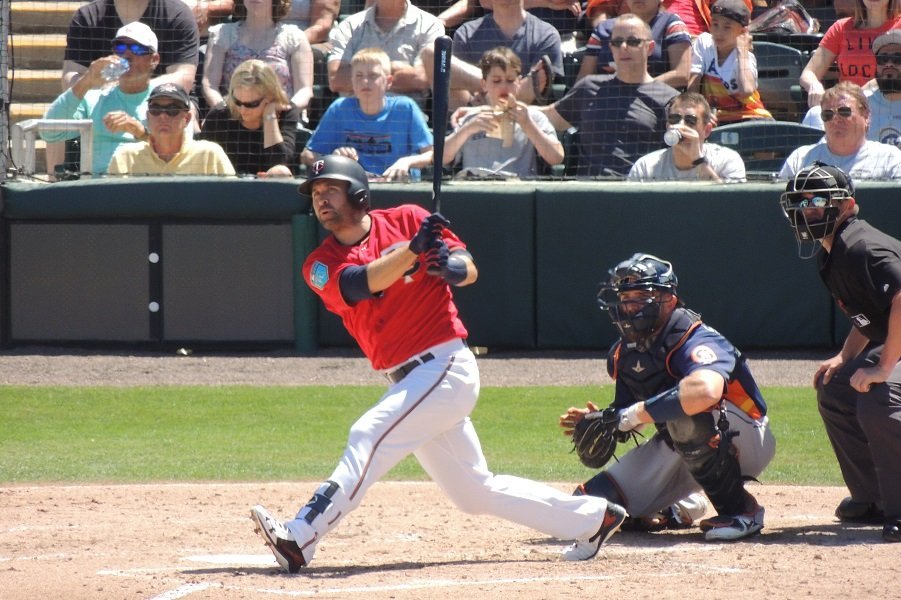 On Friday night, the Savannah Bananas came to Target Field with their fun-filled brand of Banana Ball. As they always do, they incorporated some friends into their game. Joe Mauer came to welcome the Bananas to town and throw out the ceremonial first pitch. In the seventh inning, Brian Dozier was introduced to the crowd over about 39,000. He acknowledged them, and they gave him a long and loud ovation. Dozier ultimately struck out on a fifth-pitch fastball, but he smiled and waved to the crowd. The Bananas will play at 8:00 pm on Saturday night and 3:00 pm on Sunday at Target Field. If you go to any of the games and want to share pictures and stories here. View the full article
 -
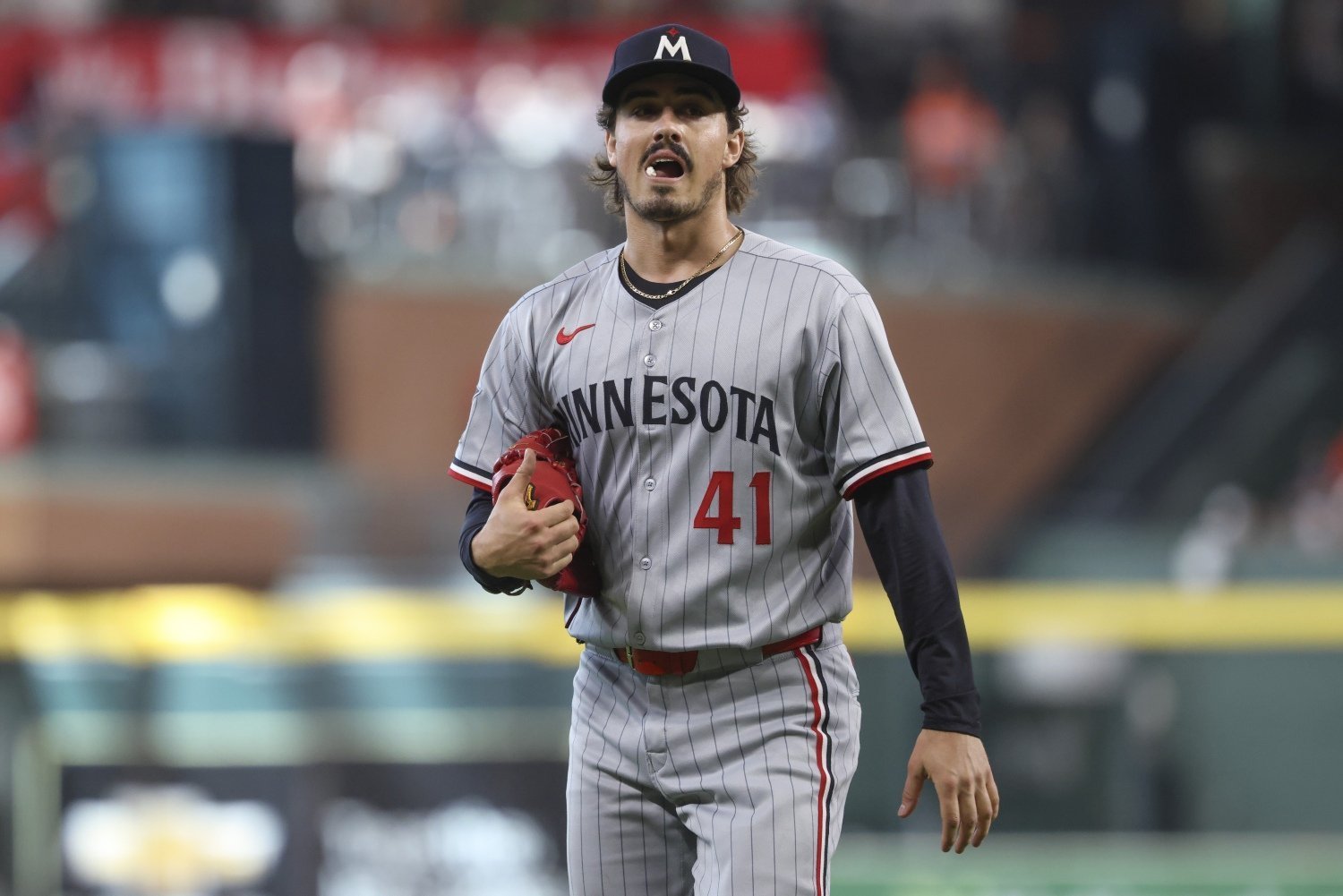 The Detroit Tigers may have helped shape the Minnesota Twins' offseason plans without even picking up the phone. Last Saturday night's blockbuster sent Tarik Skubal to the Los Angeles Dodgers, ending one of the biggest trade sagas of the summer. While the Twins were never expected to be involved, the deal established an important benchmark for another American League ace: Joe Ryan. Minnesota wasn't expected to move Ryan before Monday's trade deadline, nor should they have. The Twins spent the deadline reinforcing their roster by adding three relievers (Jeff Hoffman , Tommy Nance, A.J. Minter) and a back-end starter (Dean Kremer). Those moves signal a front office focused on making the postseason, not taking a step backward. Trading a two-time All-Star who anchored the rotation would undermine everything they have done to improve the club. Unfortunately, Ryan's recent performance only strengthened the argument for waiting. After another outstanding first half, Ryan struggled in his first three starts after the All-Star break and then was put on the IL with a mild glute strain. He also has a well-documented history of posting weaker numbers after the break. In the first half, Ryan has pitched like one of baseball's elite starters, posting a 3.17 ERA, 1.00 WHIP, and allowing opponents just a .632 OPS. After the All-Star break, those numbers have slipped considerably, with a 5.00 ERA, 1.22 WHIP, and a .779 OPS allowed. It's easy to understand why rival clubs would try to discount his value if he were made available today. That doesn't mean his long-term value has disappeared. If anything, the Skubal trade offers a glimpse into what the Twins could reasonably expect this winter, if Ryan finishes the season healthy, resets over the offseason, and allows interested clubs to evaluate his complete body of work instead of a stretch of second-half struggles. The Dodgers sent Detroit outfielder Zyhir Hope (MLB Pipeline's No. 25 prospect), right-hander River Ryan (No. 68), and right-hander Brady Smith, the organization's No. 17 prospect before the trade. While that package may have felt lighter than expected for one of baseball's best pitchers, it also reflected today's market for frontline starters on expiring contracts. Teams have become increasingly hesitant to surrender overwhelming prospect hauls, even for elite talent. But Skubal's return still featured multiple premium prospects, and it provides a useful starting point for evaluating pitchers with similar value. Ryan's value could still change significantly over the final two months of the season. He'll likely need to show that his recent struggles are merely a temporary setback rather than a larger concern. Unlike Skubal, who will make only a handful of starts for the Dodgers before reaching free agency, Ryan could enter the offseason with his value trending back toward its peak. Minnesota could also follow the blueprint that clubs like the Brewers have used in recent years by dealing a frontline starter during the winter, when more teams have the financial flexibility and prospect capital to engage. One potential complication is the looming threat of a player lockout, which could freeze transactions and create a shortened offseason, leaving less time for a blockbuster deal to develop. Minnesota has consistently viewed Ryan as a foundational piece of its rotation, and nothing about the organization's recent actions suggests that opinion has changed. A healthy Ryan gives the Twins a far better chance to contend. This winter, however, the conversation could look very different. With a full offseason for clubs to assess their rotations, greater financial flexibility across the league, and a healthier version of Ryan entering another year of control, the Twins would be negotiating from a position of strength rather than urgency. The Skubal trade may ultimately serve less as a missed opportunity and more as an early indicator of the type of return Minnesota could pursue if it ever decides the timing is right. For now, the Twins' priority is chasing a playoff berth, hopefully with a recovered Ryan leading their rotation in September and October. If trade discussions ever become serious, this offseason appears to be when his market will reach its peak. Did the Skubal trade establish a realistic benchmark for Ryan, or would Minnesota need an even bigger return to justify dealing a two-time All-Star? View the full article
 -
 Chicago Cubs Minor League Report Affiliate Overview Triple-A Iowa Cubs Series at Indianapolis Indians (Pittsburgh Pirates): Tied, 2-2 Season Record: 45–64-1 Double-A Knoxville Smokies Series at Chattanooga Lookouts (Cincinnati Reds): Smokies lead, 3-1 Season Record: 57–49 High-A South Bend Cubs Series vs. Cedar Rapids Kernels (Minnesota Twins): Tied, 2-2 Season Record: 62–40 Single-A Myrtle Beach Pelicans Series at Columbia Fireflies (Kansas City Royals): Fireflies lead, 3-1 Season Record: 41–63 Triple-A: Iowa Cubs Season Record: 45–64-1 Series Opponent: Indianapolis Indians (54-58-1) Series Standing: Tied, 2-2 Aug. 7: The Iowa Cubs evened their series at the Indianapolis Indians with a 9-3 win on Friday night at Victory Field. Jordan Nwogu (1-for-4) opened the scoring in the game with a two-run single in the second but the Indians would rally with three in the third to take a 3-2 lead. Chas McCormick (2-for-4) tied it in the fourth with a solo home run, his 10th of the season. The Cubs erupted with five runs in the seventh to take a commanding 8-3 lead late. BJ Murray (1-for-3) was hit by a pitch with the bases loaded and Owen Ayers (2-for-4) followed with an RBI-single. Owen Miller (2-for-5) also singled home a run and Murray would eventually come around to score on a wild pitch. Ben Cowles (2-for-4) capped the inning with an RBI-single of his own. Cowles then tallied his second RBI of the night in the ninth with a sacrifice fly to make it 9-3. Kohl Franklin got the start on the mound for Iowa, allowing three runs, one earned, on two hits over three innings of work, walking two and striking out three. Paul Campbell picked up the win in relief, improving to 2-5 on the season, tossing three scoreless innings while giving up just one hit, walking two and whiffing four. Double-A: Knoxville Smokies Season Record: 57–49 Series Opponent: Chattanooga Lookouts (50–56) Series Standing: Lead, 3-1 Aug. 7: The Knoxville Smokies were routed by the Chattanooga Lookouts, 13-4, on Friday night at Erlanger Park. The Lookouts scored twice in their first trip to the plate and would make it 6-0 after five with a run in third and three more in the fifth. The Smokies cut the lead in half with three in the sixth, with Carter Trice (1-for-3) drawing a walk with the bases loaded, Edgar Alvarez (0-for-3) picking up an RBI on a ground out and Ariel Armas (0-for-3) scoring on an error. Chattanooga hit back with six runs in the home half of the frame to go up 12-3. The hosts added a run in the eighth and Drew Bowser (1-for-3) homered for Knoxville in the ninth, his third of the season, to make it 13-4. Luis Martinez-Gomez got the start on the mound for the Smokies and took the loss, falling to 0-3 on the season. Martinez-Gomez allowed six runs, four earned, on five hits over 4 2/3 innings of work, walking three and striking out five. The Knoxville offense was held to just three hits in the ballgame but two of those went for extra bases. High-A: South Bend Cubs Season Record: 62–40 Series Opponent: Cedar Rapids Kernels (40–64) Series Standing: Tied, 2-2 Aug. 7: The South Bend Cubs fell to the Cedar Rapids Kernels, 15-2, on Friday night at Four Winds Field. The Kernels broke the deadlock with two runs in the fifth but the Cubs answered right back with two runs of their own to make it 2-2. Michael Halquist (0-for-2) scored on an error and Jose Escobar (1-for-4) picked up an RBI-single. Cedar Rapids would respond with four runs in the sixth and then blow the game wide open with nine runs in the ninth to make it 15-2. Alfredo Romero got the start on the mound for South Bend and took no decision. Romero allowed two runs on four hits over five innings of work, walked two and struck out four. The Cubs offense was held to just four hits on the night, with none going for extra bases. Single-A: Myrtle Beach Pelicans Season Record: 41–63 Series Opponent: Columbia Fireflies (54–50) Series Standing: Trail, 3-1 Aug. 7: The Myrtle Beach Pelicans split their doubleheader at the Columbia Fireflies, dropping the opener, 6-5, before winning the nightcap, 14-3. Game 1: The Pelicans were walked off by the Fireflies in the opener of the doubleheader, 6-5, in seven innings. Columbia scored once in the first and later made it 4-0 after scoring three in the second. Myrtle Beach rallied for three in the third, with Jose Silva (1-for-2) driving in a run with a triple, followed by an RBI-single from Jan Luis Reyes (2-for-3) and an RBI-double from Jhoander Irigoyen (1-for-4). Ethan Conrad (1-for-4) gave the Pelicans the lead with a two-run single in the fourth but the Fireflies tied the game in the fifth with a run. Myrtle Beach would go down in order in the seventh and Columbia would load the bases, all on walks, to put the winning run 90 feet away with no outs. The hosts would get a sacrifice fly to earn the walk-off win. Daniel Avitia got the start for the Pelicans and took no decision. Avitia allowed four runs on five hits over three innings of work, walked two and struck out five. Game 2: Myrtle Beach erupted for 14 runs on 13 hits to split its doubleheader at Columbia with a 14-3 victory. Caden Sorrell (2-for-4), the Cubs’ second-round draft pick in the 2026 MLB Draft, led off the game with a home run for his first-career long ball. Derniche Valdez (3-for-5) followed with a two-run blast four batters later to make it 3-0. Columbia grabbed one of those runs back in the home half of the opening frame before the Pelicans extended their lead with two runs in the fourth, thanks to Ivan Cespedes’ (1-for-3) two-run shot. Myrtle Beach made it 8-1 in the fifth thanks to a run-scoring double from Valdez, Eli Lovich (3-for-5) scoring on a wild pitch and Fernando Cruz (1-for-3) bringing in a run on a sacrifice fly. The Fireflies pushed two across in the sixth but the Pelicans hit back with six more in the seventh to make it 14-3. Reyes, Sorrell and Alexis Hernandez (0-for-3) each drew walks with the bases loaded and Reyes would eventually come around to score on a wild pitch. Ethan Conrad (2-for-4) picked up an RBI with a single and Lovich capped the big inning with an RBI-groundout. Noah Edders got the start on the mound for Myrtle Beach and took no decision. Edders allowed one run on three hits over three innings of work, walked five and struck out three. Cubs 10th-round pick in the 2026 MLB Draft Luke Alwood made his professional debut in relief and earned the win after tossing two scoreless frames, yielding one hit and striking out five. View the full article
 -
 Julio Zayas is experiencing a mini-hot streak at the plate, a stretch that has him also hitting the long ball. Zayas hit his second home run in three games, a two-run, walk-off drive in the bottom of the ninth inning, to power Single-A St. Lucie to a 2-0 victory over Daytona on Friday. The 20-year-old first baseman/catcher has hit safely in all four of his games this month, and is 8-for-17 in that stretch. The run has raised his season slash line to .256/.356/.381 (.744 OPS) in 343 plate appearances. He now has eight home runs on the season. He's in his fourth pro season since signing with the Mets out of the Dominican Republic in 2023, but his first for a full-season affiliate. He spent his first season in the DSL and then the next two in the FCL, before graduating to St. Lucie this year. He's looking strong heading into the final month of the season. Elsewhere in the organization: Syracuse held off Columbus 6-5. The Mets broke a tie in the sixth when D’Andre Smith swiped third on the front end of a double steal and continued home as the catcher’s throw sailed into center field. Binghamton blanked Hartford 1-0 one night after scoring 23 runs. Kevin Parada drove in the run with a double in the bottom of the eighth. Noah Hall struck out 10 over six innings. Brooklyn’s game at Wilmington was postponed because of rain. The teams will make it up Saturday as part of a doubleheader beginning at 4:30 p.m. ET. DSL Mets Blue fell 8-6 to DSL Blue Jays Red. Mauricio Nunez allowed no hits and an unearned run in 2 1/3 innings of relief. DSL Mets Orange downed the DSL Rangers 3-2. Jodarlin Perez struck out four in three scoreless innings of relief. New York Mets Transactions New York Mets sent RHP Bryce Conley outright to Binghamton Rumble Ponies. Syracuse Scampers Past Columbus The Mets pushed across the eventual winning run without a hit. Smith walked and stole second, and then Shawn Ross walked. With Jose Ramos at the plate, the two pulled off a double steal. The throw went to second to get the back runner. Ross, the ball and the second baseman arrived at about the same time, and the throw ended up in center field. Smith scored from third to put the Mets up 6-5. Ramos gave the Mets a 5-3 lead in the fourth inning with a bases-clearing double. The Clippers tied the game with two runs in the top of the sixth. Christopher Morel hit his 10th home run of the season, a two-run shot in the second that put Syracuse in front 2-1. Morel played second base for the second time with the Mets as he keeps his utility skills sharp. Jonathan Santucci scuffled in his second Triple-A start. The left-hander was charged with four runs (three earned) on four hits over 5 1/3 innings. He walked four and struck out six. Dan Hammer earned the win despite giving up a run in 1 2/3 innings and allowing the runner he inherited from Santucci to score. Dylan Ross earned the save with a scoreless ninth. Player AB R H RBI BB K Vidal Bruján, 3B 3 0 2 0 0 0 Nick Morabito, LF 4 0 0 0 0 1 MJ Melendez, DH 3 0 0 0 1 0 Ronny Mauricio, SS 4 1 2 0 0 2 Christopher Morel, 2B 3 2 1 2 0 1 Nick Lorusso, 1B 3 1 0 0 1 2 D'Andre Smith, CF 3 2 2 0 1 0 Shawn Ross, C 3 0 0 0 1 2 Jose Ramos, RF 4 0 1 3 0 1 Totals 30 6 8 5 4 9 Player IP H R ER BB K HR Jonathan Santucci 5 1/3 4 4 3 4 6 1 Dan Hammer (W, 1-1) 1 2/3 2 1 1 0 1 0 Zach Franklin (H, 3) 1 0 0 0 1 1 0 Dylan Ross (S, 3) 1 1 0 0 0 0 0 Totals 9 7 5 4 5 8 1 Hall Shuts It Down For Binghamton As so often happens in baseball, the Rumble Ponies failed to save some runs for Friday after tallying close to two dozen on Thursday. Fortunately for them, Hall was dominant on the hill. He allowed two hits and walked three as he kept the Yard Goats off the board. The breakthrough happened quickly. John Bay led off the Rumble Ponies' eighth with a single and then scored when the next batter, Parada, doubled to the gap in right-center field. Three Binghamton relievers combined to finish the shutout. Garrett Stratton pitched the seventh, Carlos Guzman handled the eighth, and Saul Garcia worked the ninth. Guzman earned the win and Garcia got the save. Rumble Ponies pitchers recorded 13 strikeouts in all while allowing just four hits. Player AB R H RBI BB K Mitch Voit, DH 2 0 0 0 1 1 Marco Vargas, SS 4 0 1 0 0 2 Émilien Pitre, 3B 3 0 0 0 0 1 Jefferson Rojas, 2B 3 0 0 0 0 1 Jacob Reimer, 1B 3 0 0 0 0 1 John Bay, CF 3 1 1 0 0 1 Kevin Parada, C 3 0 1 1 0 0 JT Benson, RF 2 0 0 0 0 0 Yohairo Cuevas, LF 2 0 0 0 0 0 Corey Collins, LF 1 0 0 0 0 0 Totals 26 1 3 1 1 7 Player IP H R ER BB K HR Noah Hall 6 2 0 0 3 10 0 Garrett Stratton 1 1 0 0 0 1 0 Carlos Guzman (W, 3-1) 1 1 0 0 0 1 0 Saul Garcia (S, 4) 1 0 0 0 1 1 0 Totals 9 4 0 0 4 13 0 Zayas Goes Deep For St. Lucie Winner Zayas hit a no-doubter to dead center after Ryan Tayman was hit by a pitch with two out. Ethan Lanthier started and went the first three innings. He allowed two hits and a walk and struck out three. Christian Rodriguez followed as the piggyback reliever. He worked 4 1/3 innings, allowing four hits and a walk while striking out four. Zack Mack finished the shutout with 1 2/3 hitless innings. He walked none and struck out one. Zayas' homer made him a winner. Zayas had two of St. Lucie's five hits. He singled in the second to go with the homer. Wyatt Vincent, Yovanny Rodriguez, and Bohan Adderley had the other Mets hits. Player AB R H RBI BB K Vladi Gomez, 3B 4 0 0 0 0 3 Wyatt Vincent, LF 4 0 1 0 0 1 Ryan Tayman, C 3 1 0 0 0 0 Julio Zayas, 1B 4 1 2 2 0 0 Yovanny Rodriguez, DH 3 0 1 0 0 1 Simon Juan, RF 3 0 0 0 0 0 Bohan Adderley, CF 3 0 1 0 0 0 Dylan Carey, SS 3 0 0 0 0 1 Kooper Schulte, 2B 3 0 0 0 0 2 Totals 30 2 5 2 0 8 Player IP H R ER BB K HR Ethan Lanthier 3 2 0 0 1 3 0 Christian Rodriguez 4 1/3 4 0 0 1 4 0 Zack Mack (W, 6-2) 1 2/3 0 0 0 0 1 0 Totals 9 6 0 0 2 8 0 Top-20 Prospect Performance Jonah Tong: DNP Jack Wenninger: DNP Ryan Clifford: DNP Elian Pena: DNP Nick Morabito: 0-for-4, 1 K Jacob Reimer: 0-for-3, 1 K Mitch Voit: 0-for-2, BB, 1 K Jonathan Santucci: 5 1/3 IP, 4 H, 4 R, 3 ER, 4 BB, 6 K, HR Zac Thornton: MLB Chris Suero: DNP Will Watson: DNP Wandy Asigen: DNP Eli Serrano III: DNP Randy Guzman: DNP Dylan Ross: 1 IP, 1 H, 0 R, 0 ER, 0 BB, 0 K, S Ryan Lambert: DNP Antonio Jimenez: DNP R.J. Gordon: DNP Jonathan Pintaro: DNP Marco Vargas: 1-for-4, 2 K View the full article
 -
San Diego Padres Minor-League Pitchers of the Month: July 2026
DiamondCentric posted an article in Padres Mission
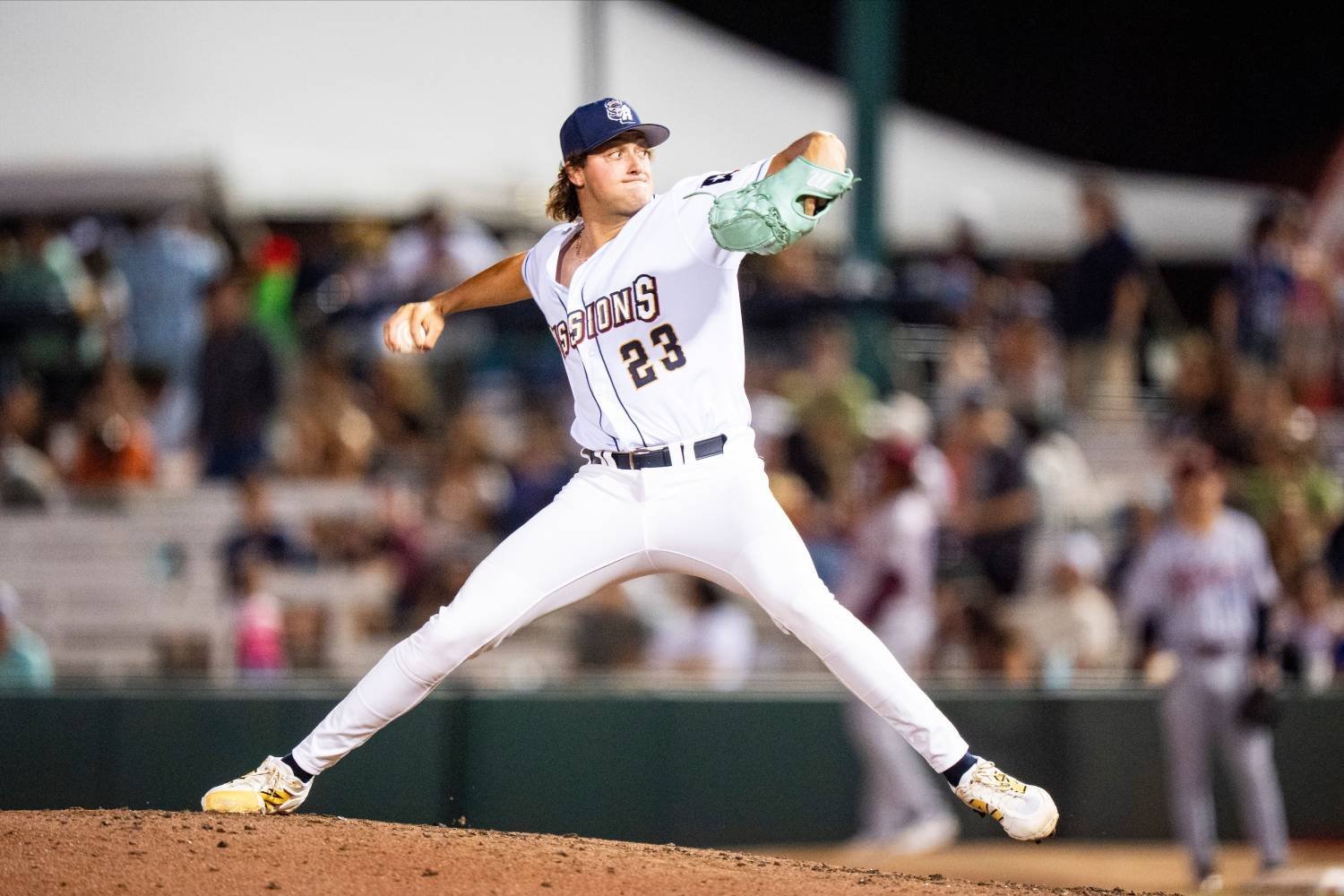 There is no doubt the San Diego Padres have some potential in their minor-league arms. But due to the trades that have sapped prospects over the last few seasons, as well as just this past week, the Padres need to do more work than other franchises to mine that talent and develop those hidden gems into prospective major-league pitchers. That is certainly the case with our batch of July honorees, which range from top-of-the-chain names to a few diamonds in the rough. Ranking Padres' Best Minor-League Pitchers In July Honorable Mention: Adler Cecil, LHP, Low-A Lake Elsinore Storm July stats: 0-1, 2.70 ERA, 5 games (4 starts), 20 IP, 14 H, 9 R, 6 ER, 11 BB, 32 K, .189 opponent average OK, so we are cheating a little bit here because the 21-year-old left-handed starter made all but one appearance in the Arizona Complex League. The 6-foot-4, 160-pounder is a fun story as he attended Temecula Valley High School, just a quick drive down I-15 from Lake Elsinore. Adler did make his final start of July on the road for the Storm against the Stockton Ports. Adler went 4⅓ shutout innings, yielding just a hit while walking three and striking out five. Cecil has been brought along slowly this year following Tommy John surgery that cost him all of 2025. When he made his debut in 2024 after being a 19th-round draft choice the year before, he never went more than two innings in 18 games, getting knocked around a bit to a 7.54 ERA. He has come back to flash some of that potential that got him a $175,000 bonus to skip junior college. He struck out 70 in 41⅓ innings in the Arizona Complex League, where he had a 4.79 ERA in 13 games (nine starts). He had a pair of 10-strikeout games in the ACL, one in five innings, the other in four. One of those games was in July, when he led the Padres' system with 32 strikeouts. Honorable Mention: Kruz Schoolcraft, LHP, Low-A Lake Elsinore Storm July stats: 1-1, 3.47 ERA, 5 games (all starts), 23⅓ IP, 22 H, 9 R, 9 ER, 19 BB, 21 K, .262 opponent average The 2025 first-round draft choice had a nice July, showing more of the potential the Padres saw in the 19-year-old while also still flashing some of the bumps that need to be smoothed out. After getting rocked for six runs in his first July start, the left-hander put together the best four-start stretch of his very young career, not allowing more than a run in any of those outings, including five shutout innings July 17 vs. the Ontario Tower Buzzers in which he walked three and struck out six and gave up three hits. Perhaps something clicked or a mechanical flaw was refined, but that is definitely something to build upon as the Storm enter the final full month of the regular season (Schoolcraft will get at least one bonus start with Lake Elsinore already clinching a postseason berth via the first-half South Division title in the California League). Walks remain a bugaboo, however. In his final start of last month, he issued six free passes while only allowing four hits and a run in four innings with four punchouts. No. 3: Jesus Castro, RHP, Low-A Lake Elsinore Storm July stats: 1-1, 2.65 ERA, 4 games (all starts), 17 IP, 10 H, 5 R, 5 ER, 5 BB, 16 K, .172 opponent average One blip on the radar foiled what otherwise was a tremendous July for the 19-year-old right-handed starter. That glitch was five runs in five innings on July 7 vs. the Rancho Cucamonga Quakes. Other than that? Padres Mission's No. 16 prospect dominated, going 12 innings in three starts, allowing zero runs, two hits and five walks with 13 strikeouts. All five walks came in a single start, July 21 vs. the Visalia Rawhide. He had a 2.65 ERA, an amazing 0.882 WHIP last month and a 65% swinging-strike rate. But he saved his best start of the month for his final outing. It was one of the best put forth by any Padres minor-leaguer this year. On Tuesday against the Stockton Ports, Castro went a career-high seven innings, only giving up one hit and no runs with no walks and seven strikeouts. This was the fourth start that Castro struck out at least seven this year, topping out with a career-high 12 on June 10. It was also the seventh time Castro did not allow a run in his 17 starts, which has put his season ERA at 3.31. Castro isn't on the California League leaderboard because he doesn't have enough innings, but he does have those 17 starts, which only two of the four qualifiers do have. His ERA would be ahead of the league leader's 3.71. No. 2: Bryan Balzer, RHP, High-A Fort Wayne TinCaps July stats: 1-0, 1.08 ERA, 4 games (3 starts), 16⅔ IP, 11 H, 4 R, 2 ER, 5 BB, 19 K, .180 opponent average All prospects don't progress at the same rate, which is one of the keys in how clubs handle their young players. For the 21-year-old right-handed starter, he spent 1½ seasons at Low-A Lake Elsinore before finally earning a promotion to High-A Fort Wayne at the end of June. The jump in level has brought on the best month of Balzer's young career, which started with the Japanese pitcher signing in January 2023 and not pitching until 2024 due to Tommy John surgery. After a bumpy TinCaps debut on June 27, Balzer has put up a 1.08 ERA in four July starts, pitching 16⅔ innings, allowing four runs (two earned) with five walks and 19 strikeouts. That 1.08 ERA was tops in the Padres' system for July. While he had an eight-strikeout game over five innings on July 11, he didn't allow a run in his last two starts of the month, going three innings in an abbreviated appearance July 18 as teams returned from the All-Star break, then five innings July 25. In each, he allowed one hit, combining for three walks and five strikeouts. Those strikeout numbers (22.8% for the season) will probably pop a little more the rest of the season as his confidence grows, as will the walk rate (9.1%) improve. No. 1: Josh Mallitz, RHP, Double-A San Antonio Missions July stats: 1-0, 3.07 ERA, 8 games (all relief), 1 save (2 chances), 14⅔ IP, 8 H, 6 R, 5 ER, 2 HR, 4 BB, 14 K, .160 opponent average OK, sure, the right-handed reliever gave up five earned runs in eighth appearances in July. Not that spectacular. But those five earned runs came in back-to-back games. In the other six? Zero runs in five and one unearned run in the other. As someone who typically goes two or even three innings, that is pretty remarkable. Mallitz has been found money for the Padres. He was an undrafted free agent out of Mississippi who signed in 2024. The 24-year-old has spent the entire season with the Missions after hitting three levels in 2025 (Arizona Complex League, High-A Fort Wayne, Double-A San Antonio). His walk rate is up this year at a still-solid 9.5% after being at 5.9% last year, while his strikeout rate is a bit better at 26.6% (25.7% in 2025). He had a .160 opponent average in July and .199 for the season, so he excels at limiting contact. Mallitz has certainly raised his profile since joining the Padres. He pitched for Israel in the World Baseball Classic, appearing in two games, not allowing a hit with a walk and a strikeout. There's real talent in this arm and a potential future Friar. View the full article
 -
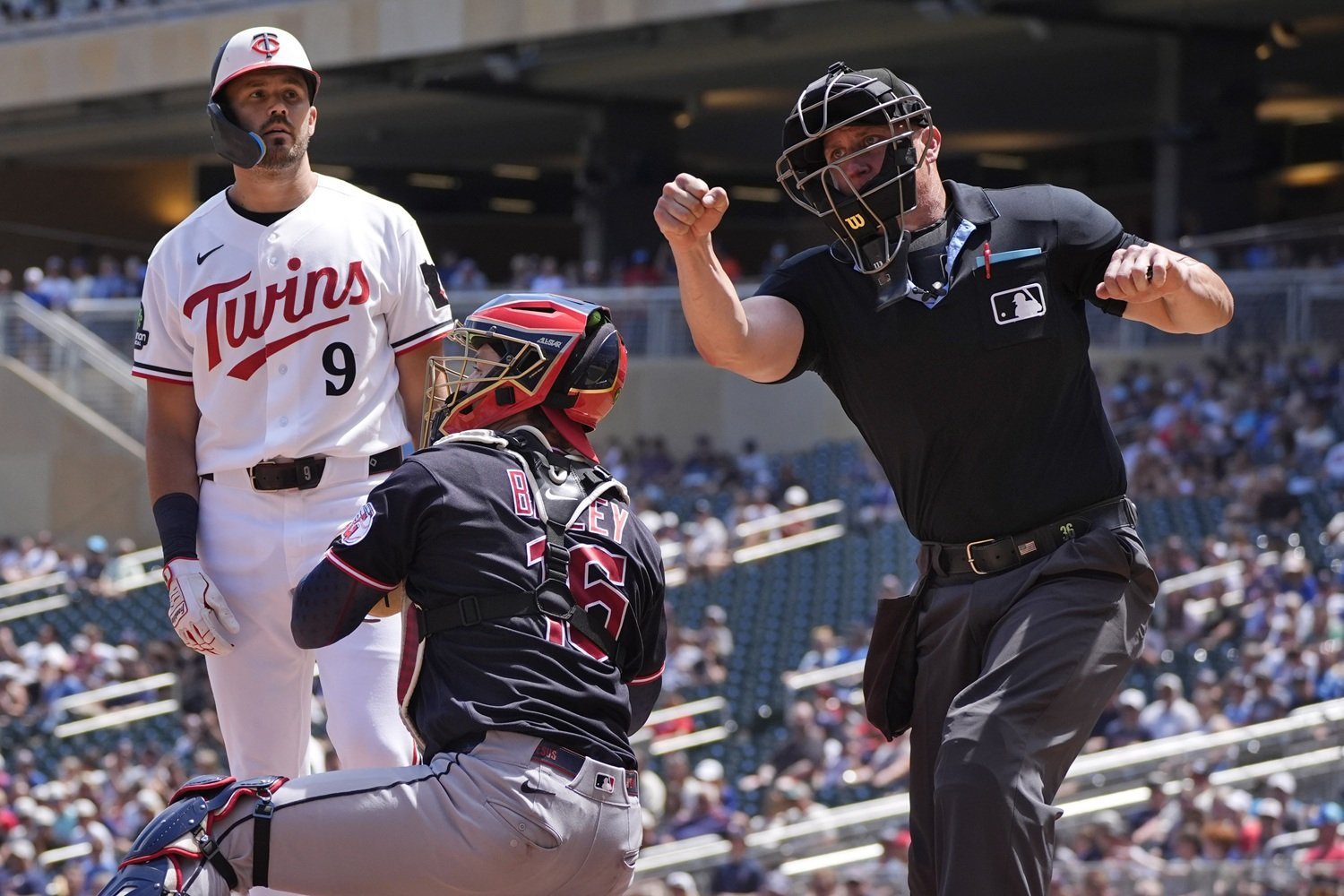 Trevor Larnach has quietly been one of the Minnesota Twins' best hitters over the course of the 2026 season. He's currently slashing .281/.370/.449 across 347 plate appearances, good for an .819 OPS and a 129 OPS+. He's become Derek Shelton's primary leadoff hitter, consistently getting on base while providing quality at-bats at the top of the lineup. After taking plenty of criticism from Twins Territory this past offseason—some of it admittedly coming from me—Larnach has done nothing but prove people wrong. Despite all of that, I still think the Twins made a mistake by keeping him at this year's trade deadline. Going Oppo is two stories on Twins Daily with different opinions running simultaneously. Read the other side here. To be clear, this has nothing to do with Larnach as a player. It's about the position the organization has put itself in. The Twins made it abundantly clear leading up to the deadline that they intended to move Larnach. In fact, they did everything but finalize it. A deal was reportedly in place to send him to the Houston Astros before it ultimately fell apart. Astros’ owner Jim Crane backed out at the last minute, and as a result, Larnach is staying in Minnesota. That sounds like a good thing on the surface. After all, why would you complain about keeping one of your best hitters? Because the Twins had already shown their hand. Now, assuming they revisit trade discussions this offseason or next summer, they'll be trying to move a player who's one step closer to free agency. Instead of selling a controllable outfielder, they'll be marketing an expiring contract. Whether that's this winter or next July, Larnach's trade value almost certainly won't be as high as it was just 24 hours before the deadline. But that's not even the biggest issue. The Twins have one of the deepest collections of left-handed hitting corner outfield talent in baseball–it's almost an embarrassment of riches. At the top of that list are the organization's No. 1 prospect, Walker Jenkins, and No. 4 prospect, Emmanuel Rodriguez. Both have made it abundantly clear this season that they're ready for the major leagues, yet neither has a clear path to consistent playing time. For as similar as their situations seem, they're actually a little different. Rodriguez is already 23 years old and occupies a spot on the Twins' 40-man roster. After spending time on the injured list, he recently began a rehab assignment and should be back in the St. Paul Saints' lineup very soon. Once he's healthy, though, what happens? Unless another outfielder gets hurt, there simply isn't playing time waiting for him in the majors. Instead, the Twins are left with one of their best prospects sitting in Triple-A; not because he isn't ready, but because there's nowhere to play him. That's not an ideal situation for either the player or the organization. Jenkins' situation is a little easier to justify. He's two years younger than Rodriguez and isn't yet on the 40-man roster, giving the Twins significantly more flexibility. Despite playing center field regularly with the Saints, he was not called up to play center field when Byron Buxton was recently placed on the IL. Considering the uncertainty surrounding the 2027 season and the long-term picture, that's not necessarily the wrong approach. There's no need to rush a player who could become a franchise cornerstone. At the same time, Jenkins has done just about everything you could ask. In fact, he's now the only top-seven selection from the 2023 MLB Draft who hasn't made his major league debut. You could even argue that, based purely on his all-around skill set, he's more MLB-ready than Rodriguez. It doesn't really matter, though, because just like Rodriguez, Jenkins is stuck in Triple-A despite continuing to prove he belongs at the next level. That's the roster crunch the Twins have created. Again, none of this is meant to diminish what Larnach has accomplished this season. If anything, it's the opposite. He's played well enough to significantly increase his value, and he's cemented himself as a key piece of the team for the remainder of 2026. The problem is that the Twins already decided he wasn't part of their long-term plans. They tried to trade him. When that deal fell through, they were left holding a player who now blocks the organization's next wave of outfield talent while simultaneously becoming harder to maximize in a future trade. Will Larnach help the Twins more than Jenkins or Rodriguez over the final two months of this season? Probably. But looking beyond 2026, the Twins may have backed themselves into a corner. They've got two elite outfield prospects knocking on the door, a veteran they already attempted to move, and fewer opportunities to maximize his trade value than they had just days ago. The Twins were buyers at this year's trade deadline, and they made several moves to improve their pitching staff. Those additions could absolutely pay dividends down the stretch. Still, if we're looking back at everything Minnesota did (or didn't do) at the deadline, I'd argue their biggest mistake wasn't one of the trades they made; it was the one they couldn't finish. View the full article
 -
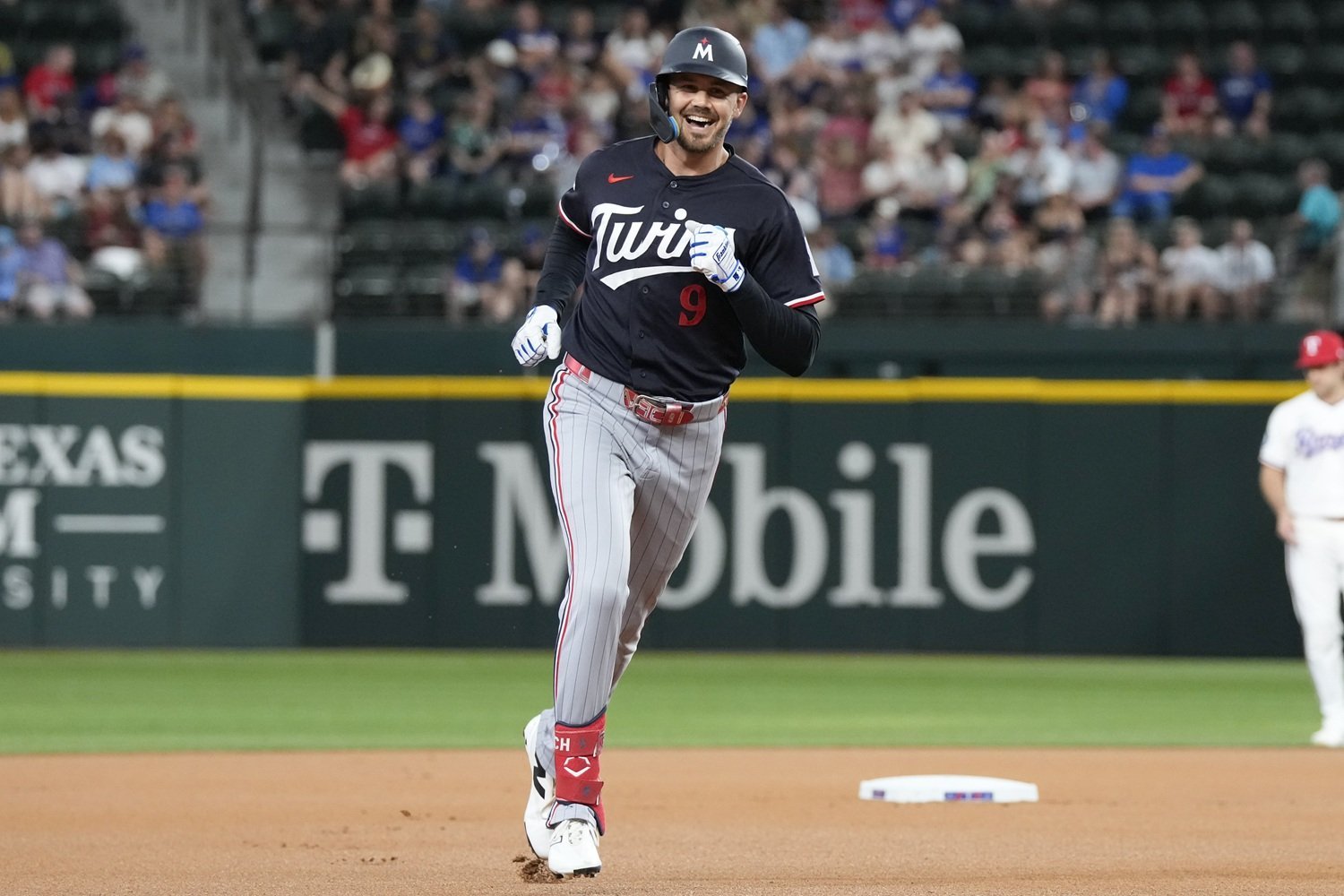 Consider this a well-earned correction, or public apology, to Trevor Larnach for earlier criticism of his long-term outlook that definitely did not age particularly well in previous articles. That's a credit to the strides he's made on both sides of the ball. Right up until 6:00 pm of the MLB trade deadline, the speculation and the biggest move the Minnesota Twins made may have been the one they didn't. While speculation swirled around Larnach's name and the possibility of acquiring a controllable infielder such as Zach Neto, the Twins ultimately chose continuity over another roster shakeup. Based on Larnach's continued development throughout the 2026 season, that decision looks increasingly like one rooted in both patience, sound baseball evaluation, and a push for the postseason. Going Oppo is two stories on Twins Daily with different opinions running simultaneously. Read the other side here. Larnach's evolution has been one of the most encouraging developments for Minnesota. Earlier in his career, Larnach often profiled as an all-or-nothing power hitter whose strikeouts could neutralize his offensive value. In 2026, that profile has changed. His more efficient wrist angle at contact, his hitting sequence- from his pre-pitch load to his swing path and finish through contact- all have made him a nearly flawless hitter with timing. Before the trade deadline, he was hitting .291 with a .380 on-base percentage and an .829 OPS. Those numbers alone justify keeping him in the middle of the lineup, but the underlying metrics suggest this isn't simply a player riding a temporary hot streak. Baseball Savant shows Larnach’s breakout is backed by sustainable improvements: he ranks in the 70th percentile in expected weighted on-base average (xwOBA), 73rd percentile in expected batting average, 77th percentile in strikeout rate, and an impressive 89th percentile in hard-hit rate. His improved command of the strike zone has lowered his strikeout rate while allowing his natural power to play more consistently. Larnach doesn’t focus on the home runs, but they are a by-product of his patience at the plate. He's working deep counts, and when he's not hitting homers, he's producing quality at-bats, hitting into gaps and getting on base. Other teams clearly saw that value and expressing interest. Heading into the deadline, Larnach was reported by Matthew Leach as saying, “It’s definitely not ordinary,” Larnach said. “I don’t take it into the field at all. I don’t take it personal, but at the end of the day, there’s a lot of noise outside the field that I try to stay away from … and just let whatever happens take its place.” Larnach's talent, confidence, reverence for the game, and performance worried fans that he may become a bigger trade target, but the Twins ultimately recognized his value and kept him. Keeping Larnach was a better choice for this trade deadline than, say, rumored trades for Anaheim Angel Zach Neto. Neto is an outstanding young player who could have replaced players like Tristian Gray or Josh Bell, who have had less than productive games in the past few weeks, and solidified the Twins' infield for years to come. However, acquiring a controllable talent like Neto almost certainly would have required Minnesota to part with one of its own ascending top prospects. Trade deadlines are often judged by the players who arrive or depart, but sometimes the smartest move is recognizing what you already have and building around those players. Larnach remains a platoon player, but he is also a power bat. His traditional production is impressive, but the advanced metrics suggest there's even more room for growth. If that trend continues and he helps the Twins find their way into the postseason, the Twins may ultimately look back on standing pat with Larnach, not making a blockbuster trade for a position player, as one of the organization's best decisions of the 2026 trade deadline. View the full article
 -
 There was a scary moment in the Timber Rattlers game as RHP Quinton Low took a 106 MPH liner directly off his face, somehow exiting on his own power, but it was initially a bloody sight. We are hopeful we'll learn he'll be OK. Transactions: N/A Nashville Pre-Game Media Notes (unavailable) Final: Nashville 5, Memphis (Cardinals) 3 Box Score and Game Log Via the Sounds, game details, and we encourage readers to always review affiliate write-ups as part of their Link Report routine: Quero Lifts Sounds Past Redbirds with First Career Grand Slam Packed report as always, with multiple notes on Quero, RHP's Jack Seppings and Blake Holub, and INF/OF Eric Brown, Jr. (seeing action solely in center field since his recent AAA call-up). Many will immediately question the removal of RH starter Brett Wichrowski after two perfect innings (28 pitches, 16 strikes, one K). The Brewers seem to be playing Wichrowski's July 24th activation from the injured list after a month-long absence pretty well. There have been four appearances thus far, and in his most recent two, both starts, the 23-year-old (24 next week) has thrown five hitless innings with one walk and four strikeouts. RF Akil Baddoo, playing right field and batting cleanup, walked twice and scored a run. You folks know I enjoy word play, so for me, Akil's primary contribution Friday night was how the Sounds incorporated him into their X post announcing the starting lineup. We've seen it before. A player, in this case reliever Grant Anderson, who rightly feels his demotion was unjustified, struggles in his first appearance. The game summary and box score/game log links provide additional details. Blake Holub turns 28 in October, yet the Brewers control him for another season, he does not qualify for minor league free agency this fall. His performance in many systems would justify a 40-man roster spot, so even at a "veteran" age, the Brewers have a Rule 5 protection decision to make on Holub (a reminder we're tracking everything on that front here - waiting to see if Thomas Pannone accepts his outright assignment, but yes, the linked lists should be up to date). Catch up with the latest Biloxi pre-game audio interview archives - Brewers Infield Coordinator Andrew Romine is the most recent interviewee Biloxi Pre-Game Media Notes Final: Columbus (Braves) 4, Biloxi 2 Box Score and Game Log Coley Makes Catch of the Year Candidate, Shuckers Doubled by Clingstones - Biloxi Falls Short for Third Straight Contest to Columbus First off, Andrew Romine is one of the very best interviews in the Brewers organization. Whether it's the chat linked above, or Jeff Hem's Nashville chat with Romine from June 1st, the player insights we get are so very insightful. Enjoy the brief Jesús Made comments from Biloxi. As for the game, wasn't this powerhouse Biloxi squad supposed to go undefeated the rest of the way? Kidding aside, the vaunted Shuckers lineup managed just four hits, here are the two that went for extra bases: Oh yes, the catch, with young Max Gifford (Javik Blake's assistant) doing a fine job on the call - to fully put the call in perspective, the prior two batters had homered off Manuel Rodriguez, you can see those here and here. Learn the true definition of a "clingstone" here - not always a peach, but my goodness, when Columbus breaks out the all-peach uniforms, count me as impressed. Columbus' insurance run came in the 8th, with the RBI single off of RHP Peyton Niksch seen here. Rodriguez didn't walk anyone which allowed him to get through six frames on 88 pitches, but he's now served up an untenable 28 home runs in 104 innings. Blake Burke's two singles were the only base knocks beyond the Boeve and Guilarte highlights above. Burke singled on a liner to center leading off the 4th but was immediately caught stealing just prior to an Andrew Fischer walk, and that inning fizzled. Burke is now 28-for-35 in steal attempts, so right on the cusp of the acceptable 80% line. Audio interview from earlier Friday: Via the "Wisconsin Sports Daily Show" with Steve "Sparky" Fifer: Voice of the Timber Rattlers Chris Mehring Wisconsin Pre-Game Media Notes (download link) Final: Wisconsin 11, Beloit (Marlins) 5 Box Score and Game Log Via the Timber Rattlers, game details: Rattlers Get Offensive in Beloit - Wisconsin pounds out fourteen hits in 11-5 win over Sky Carp RHP Quinton Low's line in the box score only includes one official batter and two pitches. The game summary informs us: "There was a scary moment in the bottom of the eighth inning. Quinton Low took over on the mound for the Timber Rattlers. Max Williams, the lead-off batter in the inning, lined the second pitch at 106 MPH off the bat off Low’s face. The ball deflected to Hall at first for a 1-3 putout while Lowe was on his hands and knees on the first base side of the mound. Wisconsin’s training staff raced to the mound to check on Low, who was eventually able to make it back to his feet and walk off the field on his own." For those with an MiLB TV archive subscription, go to the 03:46:50 hour/minute mark here for the Sky Carp announcer's immediate "oh, no!" reaction. The blood gushing from Low's nose (we believe nose) was hard to watch before the trainer's towel was applied. Scary as it sounds, but all things considered, and we don't know the extent of any injuries, a direct hit to almost anything else - eye, mouth, skull, could seemingly have been worse. Our best to Quinton. Luis Pena, Luis Castillo and Yannic Walther all get their rightly video highlight due in the linked game summary. Other videos available include this Tayden Hall sacrifice fly, another sacrifice fly, this one from Luiyin Alastre, and these clips shared last night by the T-Rats on 'X': See, a Sky Carp is a goose, it's the night of opponent team name insights. RHP Josh Knoth's start was serviceable, three days prior to his 21st birthday. (5 IP, 5 H, 3 R, 3 BB, 8 K, 1 HR, 88 pitches). LHP Bjorn Johnson, just 21 himself, allowed two unearned runs in his two innings. Only thing missing here are Chris Mehring's calls - still, we'll take 'em: Don't read too much into Pena being replaced defensively to begin the bottom of the 8th, it's just the Luis Pena world we live in for most of 2026, it seems. Wilson Pre-Game Media Notes Final: Hill City (Guardians) 2, Wilson 0 Box Score and Game Log Warbirds Shutout on Friday Night - Wilson Manages Only Three Hits in Loss Nice work by 20-year-old LH starter Joey Broughton - 5 IP, 5 H, 2 R, 0 BB, 5 K, 60 pitches (42 strikes). This two-hour, two-minute blink-and-you'll-miss-it contest featured only two video clips across the entirety of the interwebs. There was an RBI single off Broughton for the game's first run, but quickly followed by a 4-3 GIDP that did score the 2nd run of the inning but allowed Broughton to limit the damage. RHP Jarrette Bonet followed up by facing only two over the minimum in three scoreless innings despite allowing a single and three walks. One Howler baserunner was caught stealing by catcher Rylan Mills, and another was picked off by Bonet. Shortstop Brady Ebel was the only Warbird to reach twice (double, walk, OBP .418), while CF Brailyn Antunez was 0-for-4 with three K's, the first time in ten games with Wilson in which he failed to get a hit. Hiw Wilson OPS tumbles to "just" 1.442, The one place where you wouldn't expect roster skimping is at low-A. The only two bench players for Manager Eddy Morgan Friday were backup catchers Eric Martinez and Kevin Garcia. That's it. Versatile Pedro Ibarguen was the designated hitter and could cover multiple positions in a pinch, but that is crazy lean for that level and really shows how much the 165-man stateside roster limit is coming into play. Even so, have to expect we'll see bodies from Maryvale by Tuesday. Final: DSL Brewers Blue 5, DSL Red Sox Red 4, seven innings as scheduled Box Score and Game Log Trailing 2-1 heading to the bottom of the 4th, Blue put up a four-spot, and the game log will show you that productive outs and some two-out efforts provided just enough cushion in the end. This game log was an example of an entertaining "read" without having to pore over one of those infamous 15-14 DSL game logs. For example, Blue relievers gave up single runs in the final two innings on a wild pitch and a balk respectively but held on for the W. Jesus Vasquez moved to 6-2 on the season, could have done without the four walks and wild pitch. This had been posted by the Brewers earlier Friday: Fun 17-year-old 3B Leanders Matos drove in two runs without an official plate appearance, OPS at 1.072. Diego Frontado (18 years old next month) was the DH for this one - single, walk, run scored. Final: DSL Brewers Gold 11, DSL Pirates Gold 5, seven innings as scheduled Box Score and Game Log Five-run 4th and four-run 7th in this road contest for the Gold Team of our organization of choice. Moneys finished a triple shy of a cycle but added a walk as well while in the DH spot. Shortstop Santiago Garcia, having turned 17 years old in May, has played in 33 of Gold's 46 games and has been solid each month of the season while also improving along the way (splits). Like Moneys, Garcia had a huge game here (minus an error, his 10th as he's seen action across the infield left of first base). Garcia singled three times, walked, and was successful on all three stolen base attempts, now 14-for-16 in that regard. RHP's Marcos Veras (a 6'3" 17-year-old) and 19-year-old Dalvin Bodre (listed at 5'9", but signed in February 24th so likely a bit taller now) each had serviceable mound efforts. Bodre missed all of 2025. Yet another six-pack on Saturday, traditional start times, early in the Dominican and summer games under the early evening lights for the full-season clubs, all four of those squads continuing road series. As always, thanks for making us part of your day! Organizational Scoreboard including starting pitcher info, game times, MiLB TV links, and box scores Current Milwaukee Brewers Organization Batting Stats and Depth Current Milwaukee Brewers Organization Pitching Stats and Depth View the full article
