


DiamondCentric
-
Posts
2,631 -
Joined
-
Last visited
Never
Content Type
Profiles
Forums
Events
News
Tutorials & Help
Major League Baseball Videos
Guides & Resources
Store
Downloads
Gallery
Everything posted by DiamondCentric
-

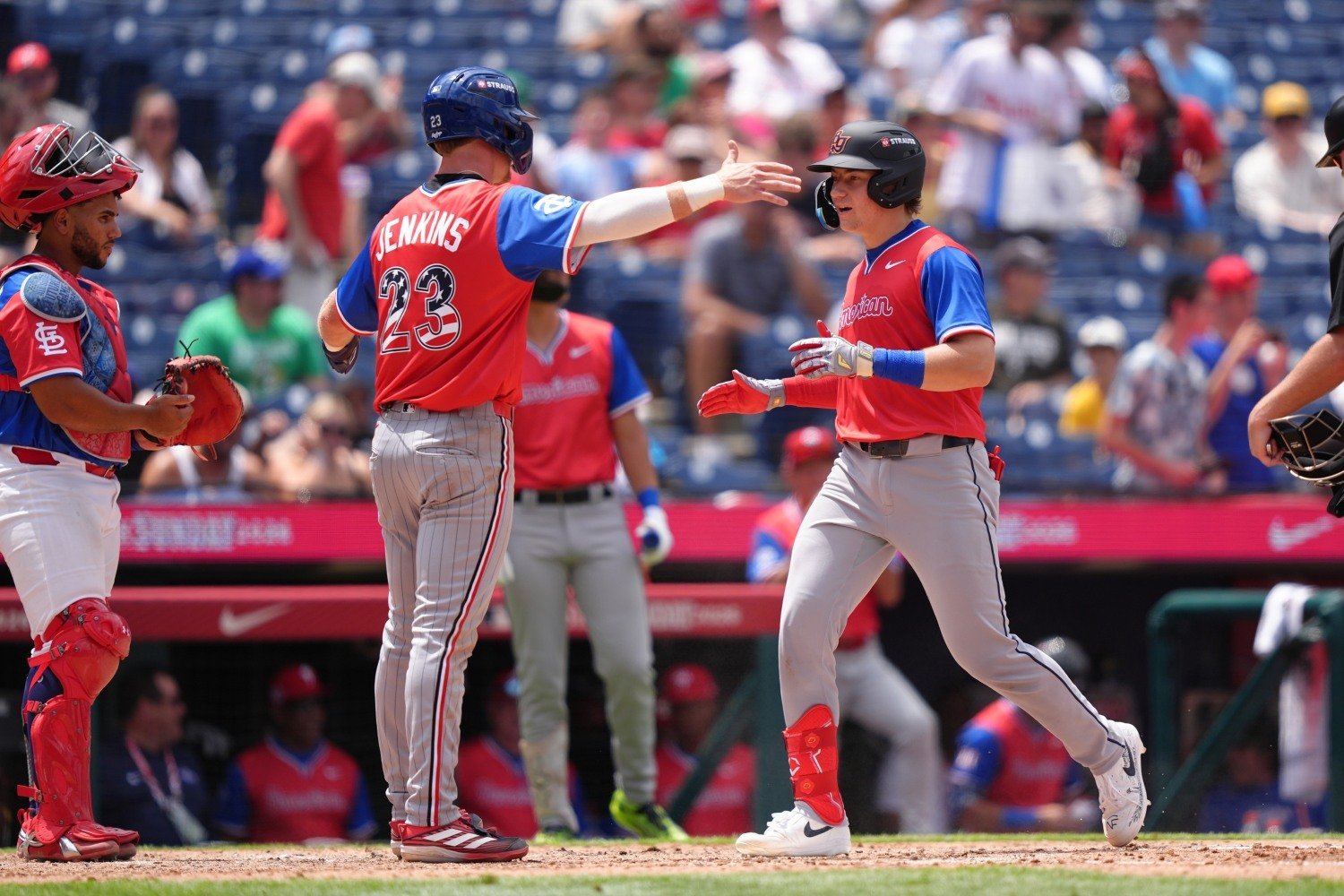 The Twins' farm system has quietly become one of the best in baseball. That probably isn't much of a surprise, if you've followed the organization over the past couple of years. Walker Jenkins has established himself as one of the premier prospects in baseball. Kaelen Culpepper has raised his stock since being selected in the first round in 2024. Less than two weeks ago, the Twins selected catcher Vahn Lackey with the third overall pick in the MLB Draft. All three of those guys project to be quality major-leaguers at premium positions, and all three are (at least) fringe-top 50 league-wide prospects. But what really separates this farm system from others is everything behind them. Marek Houston has taken massive strides at the plate this year. In addition to his bat, the Twins’ 2025 first-round pick is widely regarded as the best defensive prospect in the organization. Outfielder Hendry Mendez has quietly put together another excellent season while, in my opinion, still not receiving the recognition he deserves. Emmanuel Rodriguez remains one of the highest-upside players in the organization whenever he's healthy. Eduardo Tait has been hammering baseballs at High-A despite being just 19, and both Dasan Hill and Riley Quick have incredible swing-and-miss stuff on the mound. It's rare to have a core of true high-upside prospects this deep. That's exactly where the Twins find themselves today. What makes this group especially impressive is the variety of talent throughout the system. The Twins aren't relying on one or two players to carry the future of the organization. They have talent spread across the diamond and at different stages of development. Naturally, the first reaction when looking at a group like this is simple: hold onto them. It's an understandable way of thinking. Prospects represent hope; they're the players fans imagine becoming the next core of a winning team. If everything breaks right, there's certainly a path where many of these names spend years contributing in Minnesota. Jenkins has the potential to become the face of the franchise. Culpepper and Houston look capable of becoming long-term pieces in the infield. Lackey, Mendez, Tait, Houston, Hill and Quick have all given the organization legitimate reasons to believe they could eventually become important parts of the next great Twins team. But prospect development rarely follows a straight line. For every top prospect who pans out, another falls short. Development can stall, and some players don't adjust to major-league competition as quickly as expected. Others take unexpected paths and become much better players than anyone originally anticipated. It's one of the realities every front office has to account for, no matter how talented a farm system appears. That's part of what makes a deep farm system so valuable. The goal isn't to collect prospects; it's to build the best possible major-league team. Sometimes, those prospects become stars in your own organization. Other times, they become the centerpiece of a trade that brings an established piece to Minnesota. Neither outcome should be viewed as a failure. This isn't about having "too many" prospects. There's really no such thing. Every organization would love to have more young talent. Instead, the Twins have finally built enough organizational depth to approach those conversations differently than they could a couple of years ago. If an impact arm with multiple years of team control becomes available, the Twins have enough talent to put together a competitive offer without emptying the cupboard. That doesn't mean the Twins need to start shopping their best prospect, but they have the flexibility to look around. Of course, that doesn't mean they should move a top prospect for just anyone. The return would have to be worth it. Trading one of the organization's premier prospects for a short-term rental (a player who only fills a need for a few months) wouldn't make sense and would likely send the fanbase into a frenzy. If they ever decide to move one of their top prospects, it would have to be for the type of player every organization is searching for: someone young, controllable, and capable of making a significant impact for multiple seasons. Pitching help would make the most sense. The Twins' biggest weakness right now is on the mound, especially in the bullpen. Injuries and inconsistency have created questions throughout the pitching staff, and adding another reliable pitcher or two would go a long way. But it wouldn't just be about adding one; it would be about adding the right one. A younger arm who’s still in his pre-arbitration years or with multiple seasons of arbitration remaining would be worth offering a significant prospect package for. Someone who can help the Twins immediately while also remaining a key part of the organization for years to come can change the trajectory of a franchise. Maybe this entire group stays together. If that happens, the Twins could have one of the youngest and most exciting cores in baseball over the next several seasons. It's an outcome every fan should be excited about. But if the right opportunity presents itself, moving one or two prospects shouldn't automatically be viewed as the wrong decision either. The purpose of building a farm system is to improve the major-league club. Sometimes that happens by watching homegrown talent develop into stars. Other times, it happens by using a portion of that talent to acquire proven players who can help you win immediately. The Twins have reached the point where both options, to an extent, are available. For an organization hoping to contend not just this year, but for years to come, that's a fascinating crossroads to come to. View the full article
 -
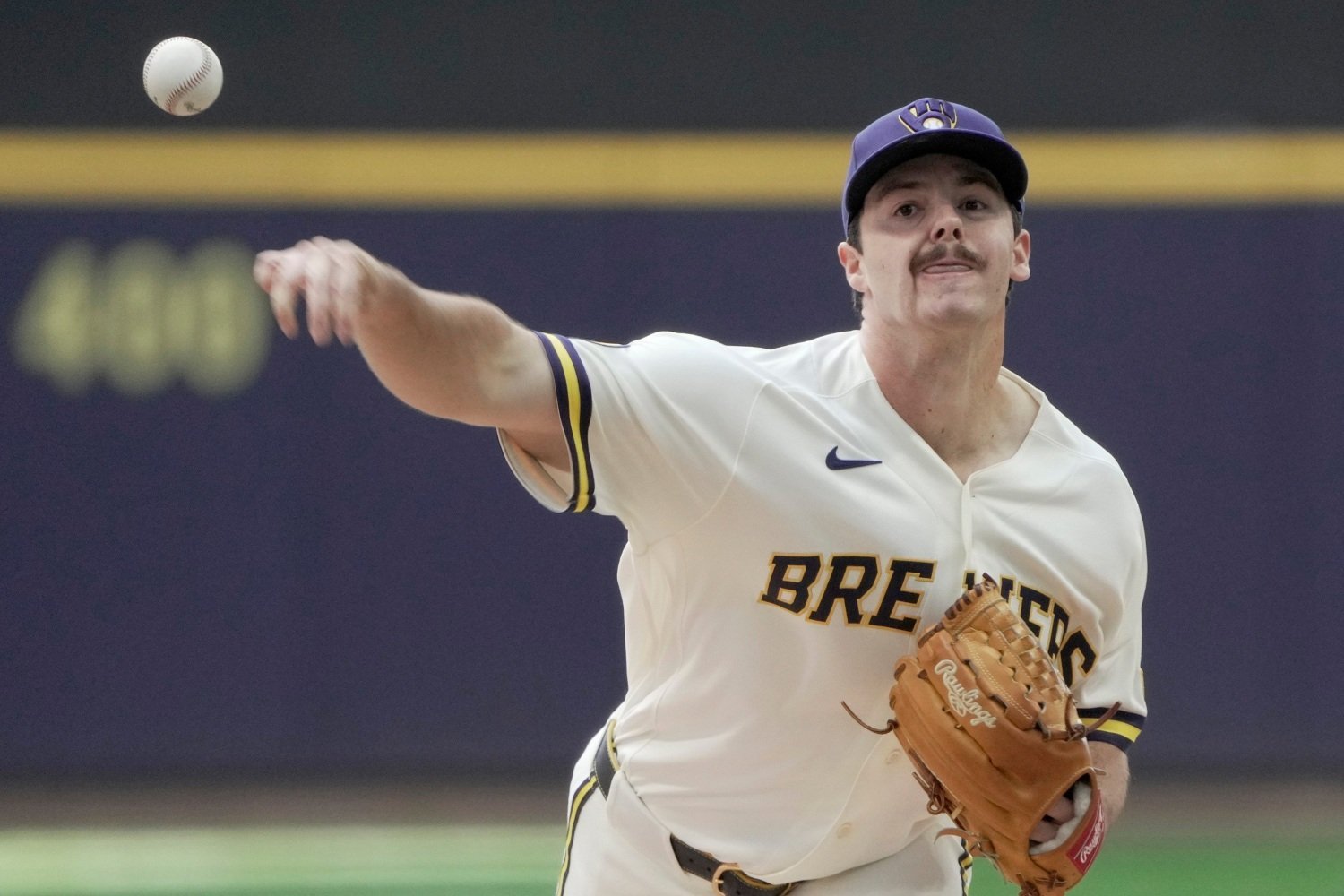 The Brewers have emerged as one of baseball's most aggressive contenders, but adding another impact starter could be the move that cements their World Series aspirations. Two intriguing trade possibilities stand out: Joe Ryan and Reid Detmers. Landing either pitcher would likely require Milwaukee to part with one of its top young arms, Logan Henderson, creating a difficult decision that could reshape the club's rotation now and for years to come. When healthy, Henderson has been undeniably effective on the mound. He's managed a 2.97 FIP alongside a 3.05 ERA in his 38 innings so far this season. The innings are the downside, because while Henderson has flashed that top-of-the-rotation upside, he hasn't been on the field long enough to really tap into that over a longer stretch. The upside with Henderson is the bulldog mentality, plus a unique changeup and a deceptive fastball. As two-pitch combinations go, that one has been electric so far. While the fastball averages just 93 MPH, the approach angle and induced vertical break from his low release point combine to make it feel as though the pitch is rising when it enters the hitting zone. That's a very difficult feeling to get on top of, and he's been very successful when keeping it at the top of the zone. To back that up, Henderson's high-spin changeup has been a weak-contact, high-swing-and-miss offering that's terrorized hitters. It isn't getting hit hard, and it's a real out pitch with two strikes. Beyond the fastball and changeup, the rest of Henderson's arsenal remains a work in progress. The shape on his cutter isn't great, especially for his lower arm angle, but it does provide a bridge between his four-seam and changeup. The occasional slurve rates out well from a stuff perspective, but it doesn't blend all that well with his primary pitches and he's struggled to command it at all, giving up some loud contact over the heart of the plate. With more innings, Henderson could very well improve his feel for the cutter and slurve, but there might be some concerns about getting to those innings. Pat Murphy mentioned that Henderson does see his stuff diminish from 70-80 pitches onward in an outing, and that's not helped by his reliance on his two primary offerings. Compounding that is that, when he gets hit, he gets hit hard. Henderson owns the record of the hardest-hit baseball in history coming against him, and we've seen several times this season some fly balls reaching the upper deck and just barely being foul. When hitters line him up, the contact gets loud, and that perhaps suggests some regression is on the cards. In some ways, he offers an apt comparison with Drew Rasmussen, who's succeeding with the Tampa Bay Rays over the last two years but faced a myriad of injuries that held him back after the Brewers traded him away for Willy Adames in 2021. Rasmussen has learned to induce weak contact with the best of them, but so far, we can't say the same of Henderson. Henderson could very well be a No. 2 or No. 3 starter over the next five or six years, if he can stay healthy and further develop his arsenal. There's a big ceiling there as a player who gets swing-and-miss in the strike zone and is comfortable going after hitters. On the other hand, the Brewers can use Henderson to acquire a more reliable arm to cover multiple playoff runs. He's a valuable trade chip because of the results and the two strong pitches, plus the team control remaining. If Milwaukee decides to capitalize on that value, two starting pitchers stand out as particularly compelling targets: Joe Ryan Joe Ryan is one of the top 20 starting pitchers in baseball by fWAR since the start of 2024. Like Henderson's, his fastball can get hit hard when he misses his locations, but he's consistently shown the kind of strong command that avoids that issue. Relying on a low arm slot and a great vertical approach angle, his fastball generates a lot of swing-and-miss up in the strike zone, and he has a complete arsenal operating behind it. Ryan gave up six home runs in his last start. (That's not a typo, but it's also not usually that much of an issue for him.) Despite that, he has a 3.38 ERA and 3.41 FIP this season, and has the ability to dominate teams for 7+ innings. He has a genuine six-pitch mix headlined by the fastball/sweeper combination. His splitter and sinker keep hitters from sitting on the four-seamer too much, while the knuckle-curve adds more depth than his sweeper. He has the seventh-best strikeout-minus-walk percentage (K-BB%) since 2024, so hitters have to beat him. Usually, they don't. Under control through 2027, Joe Ryan has a chance to help the Brewers in multiple competitive seasons, and multiple playoff races. He's the type of arm that can go against anyone as the second or third starter in a playoff rotation, and his arsenal variety lets him go deeper and perhaps have more coverage if one pitch isn't coming out right on the day. He's also got the benefit of more big-game experience. Think of him as a xross between Henderson and Freddy Peralta, with more of each's strengths and fewer of their weaknesses. Reid Detmers While Ryan offers the higher floor, Detmers represents the higher-upside gamble after taking a significant step forward in 2026. Detmers has one of the biggest velocity differentials in baseball between his fastball and curveball, and has broken out in a big way this season after being relegated to a bullpen role in 2025. His breaking balls, by run value, lead all of baseball, and the movement profiles are beautiful. While the velocity has (as usual) dipped since returning to the rotation, Detmers is showcasing a lower arm slot this season, and although it doesn't grade out as well, I think I like the movement profile more from this slot on his fastball. Detmers is quite effective at finding the upper third of the strike zone, and has managed to mitigate some of the damage that may come if he loses that command into the lower quadrants of the zone, but he's also well-protected by the rest of his arsenal. If a hitter is sitting on the fastball and swinging early, they're going to be very susceptible to his curveball, which tunnels well before breaking late and violently downward. The slider and changeup tunnel even better, as you'd expect for pitches with less break. The slider dips downward more than would be typical for his arm angle, helping him get underneath bats with more regularity. If you'd like to see for yourself in the graphic below, proMix+ defines how well a pitch follows another in terms of arsenal variety, proMatch+ rates how well they tunnel off one another, and proMax+ combines the two. Detmers's entire arsenal has great separation, and that plays strongly off the back of his fastball if he can establish it. Detmers is under team control for one more year than Ryan, reaching free agency at the end of 2028. He doesn't have the same track record that Ryan does, but he's taken a real jump in 2026, and with big questions about the Angels player development system, you have to wonder if the H&H Car Wash could find a few further incremental gains. Ryan is the safer acquisition, thanks to his longer track record and proven durability. Detmers may possess the higher developmental ceiling, particularly if Milwaukee believes it can unlock another level from his arsenal. The decision ultimately comes down to whether the Brewers prioritize certainty or upside, a debate that could also be applied to Henderson's capabilities. It also comes down, of course, to whether the asking price for one turns out to be significantly higher or lower than for the other. It might well be that the strength of the second piece in a deal for either pitcher headlined by Henderson would determine the level of Milwaukee's interest in them. Trading Henderson would mean surrendering six years of affordable upside for a pitcher who's more playoff-ready today. Whether that gamble is worthwhile depends on how aggressively Milwaukee wants to chase a championship over the next two or three seasons. Henderson has shown he can compete when he's on the field. That doesn't negate some underlying concerns about his arsenal mix, which affects his ability to go deeper into games, or his health. The Brewers could use his recent performance to headline a trade for either Joe Ryan or Reid Detmers. Should they? Let us know your thoughts in the comments below! View the full article
 -
3 Players Most Responsible For Red Sox's Historic Winning Streak
DiamondCentric posted an article in Talk Sox
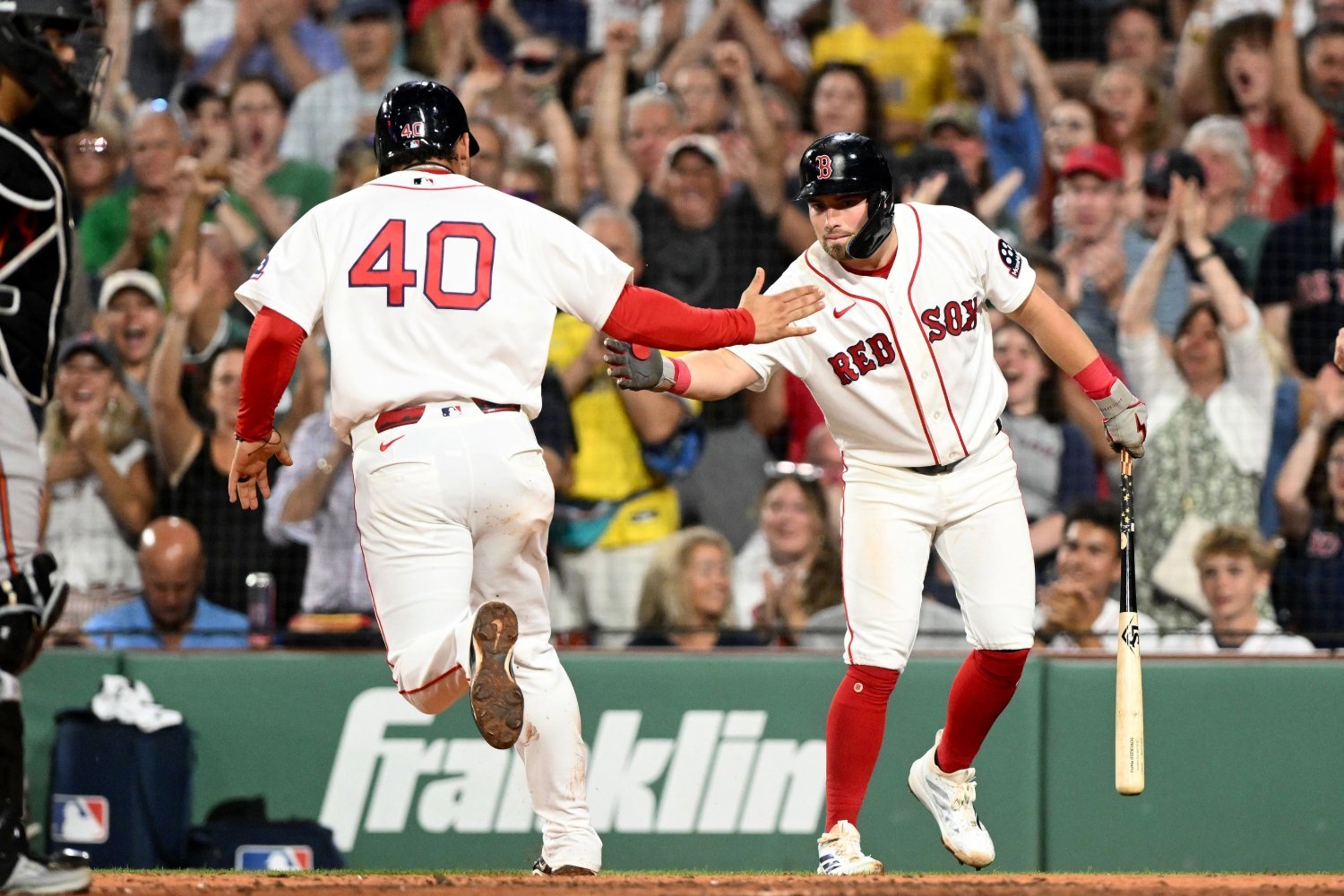 The Boston Red Sox have quickly turned into one of the hottest teams in baseball. For a squad that entered the month of July in the “sellers” bin regarding trade deadline talks, they’ve thwarted the narrative and thrust themselves into playoff contention with an immaculate 15-game winning streak. How has this team flipped its fate around? While it truly is a group effort, these three players have helped push the team to the next level. Willson Contreras There’s playing up to a contract, and then there’s playing out of one’s mind. The Red Sox owe Willson Contreras a little over $14 million for his services this year, and in his age-34 season, he’s gained a reputation as one of the most dangerous hitters in all of baseball. In the 2026 campaign, Contreras already has 22 home runs, two short of his career-best mark of 24 from the 2019 season. His .948 OPS is a career-best mark as well. Anyone who watched Home Run Derby could see it the fruits of his labor paying off; the first baseman's bat speed is next level. In fact, Contreras’ bat travels across the plate at a blistering 77.0 miles per hour on average, good enough to drop him in the 96th percentile. That converts to a variety of important metrics, with average exit velocity (75th percentile), barrel percentage (91st percentile) and hard-hit rate (80th percentile) all falling in line as signs of an elite hitter. He's the heart and soul of this team, and though he missed some of this win streak due to a suspension, Contreras is the superstar of the lineup. Caleb Durbin Caleb Durbin has quickly turned a disappointing start to the season into a respectable run, and as he’s heated up, the Red Sox have continued to accumulate wins. Durbin’s ability to serve as a tough at-bat is in a league of its own, as the 26-year-old Washington Univ. alum is punching out just 13.6 percent of the time (88th percentile). Bat speed, and any power-related metric to go with it, haven’t been a part of Durbin’s identity over his first few years in the major leagues. That’s entirely fine. The important part is that he’s playing to his strengths now. Durbin slashed .326/.359/.605 (.964 OPS) in the month of June, and he’s hitting north of .270 since the calendar turned to July. He’s succeeding against fastballs and breaking balls, and while the .152 batting average against off-speed pitches shows there’s room for improvement, he's actually starting to outperform Alex Bregman this year. Now armed with double-digit home run and steals totals, Durbin is proving he can hold down the fort at third base in Boston. Sonny Gray Sonny Gray has painted an absolute masterpiece through the first two-thirds of the season. The 36-year-old veteran currently holds a 12-1 record, is posting a 2.48 earned run average and has given Boston 101.2 quality innings. The righty has proved to be reliable, and he’s proven to be effective in the categories that count. Gray is walking just 6.9 percent of hitters, good enough to put him in the 75th percentile among active big league pitchers. He doesn't possess any one elite offering, but he mixes a variety of distinct offerings to produce one of the best ground-ball rates in the bigs, at 48.1 percent (79th percentile). He made three starts during the winning streak, going six innings and allowing just one run each time. With both Garrett Crochet and Ranger Suárez out with injury, he's stepped up as the ace of the staff when the Red Sox needed him most. View the full article
 -
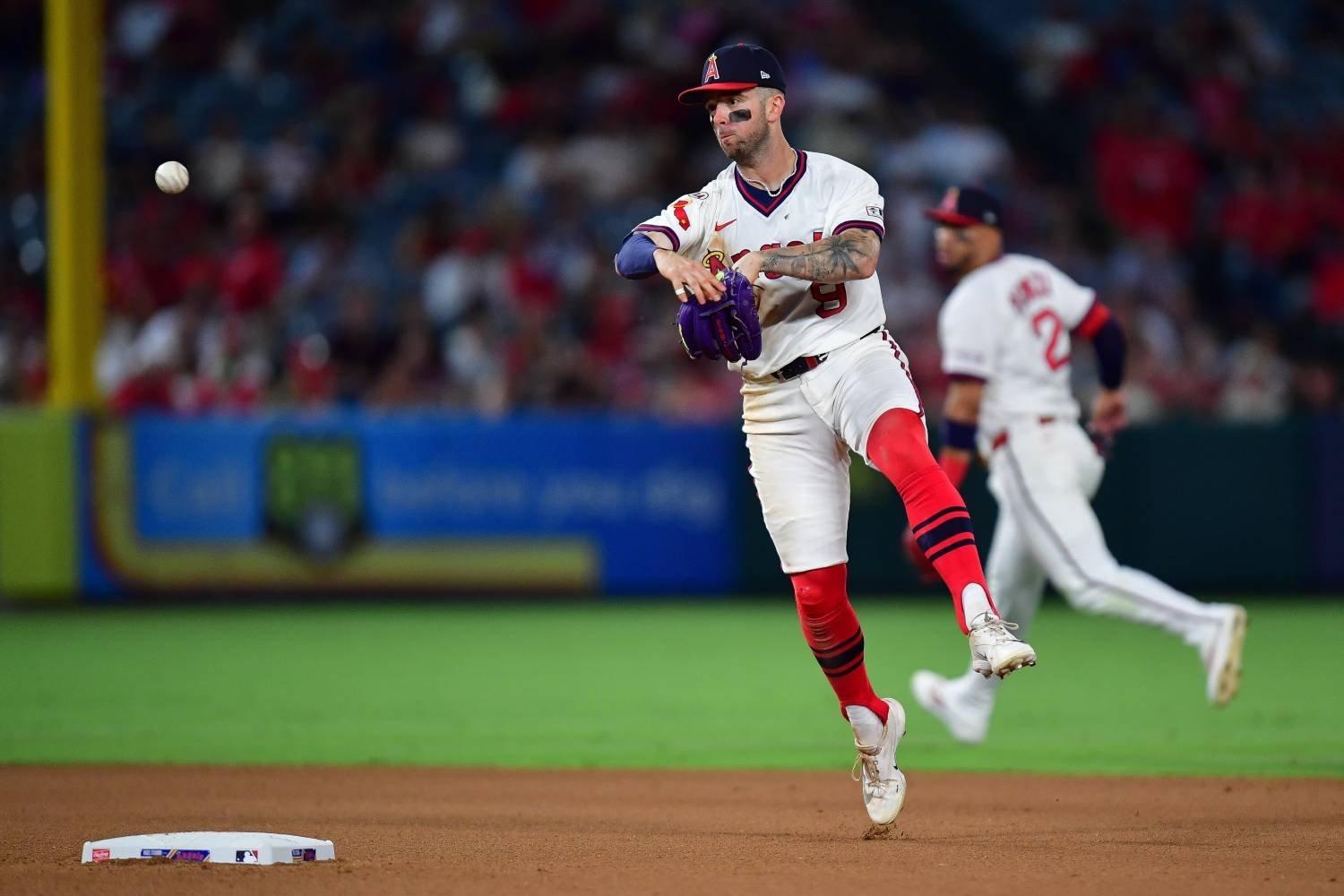 The Boston Red Sox are definitely on the hunt for an upgrade at shortstop. One of their targets is Zach Neto of the Los Angeles Angeles Angels. According to Ken Rosenthal and Will Sammon of The Athletic, Neto was on the Red Sox's radar last offseason, but not to the point where names of prospects or other assets were exchanged. Now, with John Mozeliak recently taking over the Angels' front office at least on an interim basis, the Red Sox have been back in contact. The Red Sox are suddenly buyers following a 15-game winning streak that took them from last place in the AL East to currently holding the third and final AL wild-card spot. Neto is making $4,150,000 this year and is under club control for another three years after that. Neto entered Thursday with a slash line of .238/.326/.446 with 19 homers, 46 RBIs and 13 stolen bases. Injured starting shortstop Trevor Story is making $25 million this year and next year, with a club option for 2028. Story, out since May 14 due to surgery for a sports hernia, is not expected to start a rehab assignment until August. The Red Sox are currently getting by at short with a platoon of Andruw Monasterio and Tsung-Che Cheng. View the full article
 -
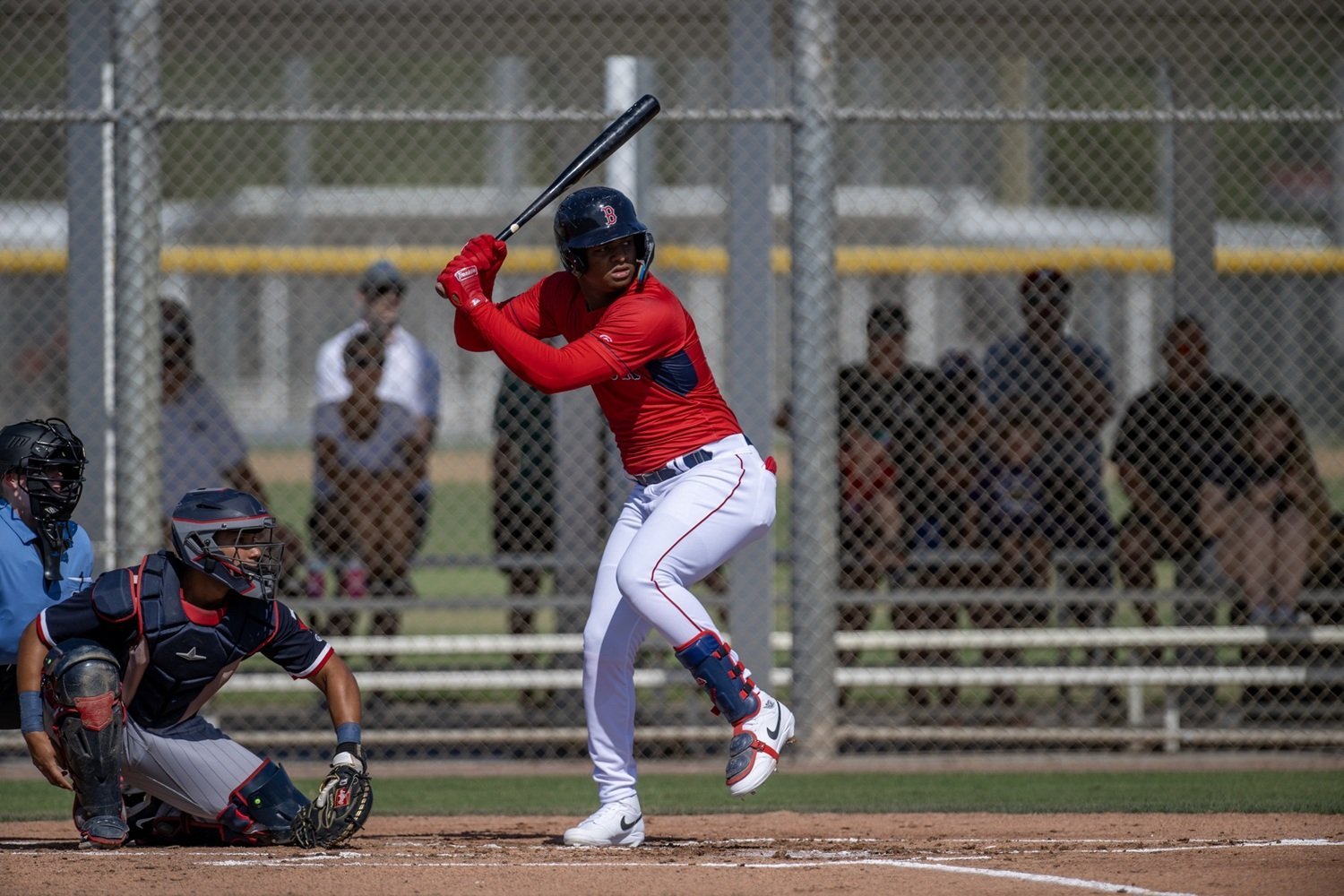 Justin Gonzales is one of the most exciting Red Sox prospects. Pushed up the organizational ladder, the 19-year-old has more than held his own in High-A Greeneville. But sometimes we have to remember these are people. In this case, Gonzales is still young, a kid. Mistakes will happen and lesson are hopefully learned. On Wednesday night in Greeneville, the Drive had a 10-6 lead in the bottom of the seventh. With two runners on, Gonzales stepped to the plate and hit his 13th home run of the season. He certainly took his time and admired the blast, especially down the first base line. He was pleased to have turned a four-run lead into a seven-run lead late int he game. When he crossed home plate, it was clear that Hub City catcher Cal Stark commented to Gonzales. The two exchanged some words (pleasantries, I'm sure). Teammates hustled to the batter's circle but just a little too late. Whether you want to say that Gonzales "slapped" Stark or "took a punch at" the Spartansburgers' backstop, he made contact. See for yourself... Certainly, there will be a suspension by the league for this, but the Red Sox also have an opportunity to let a potential future star know that it just isn't alright to be taking swings at opponents. The Sox could add a few games to the suspension. They could go big and suspend him for the rest of the season. Organizations have done that before. With other very young top prospect types on the Drive roster, it feels like the Sox need to make some sort of statement. Of course, it is also 100% need to hear both sides of the story before reacting and finalized a plan. We don't know what was said. It's very possible that something was said that, maybe didn't warrant, but certainly understandable. What do you think? Gonzales is 19. He's in High-A. He isn't an option for a big-league call up, so the remaining six weeks won't alter that timeline either way. What would you do if you ran the Red Sox? (Just regarding this situation. Use the rest of the forum to discuss those other things!) View the full article
 -
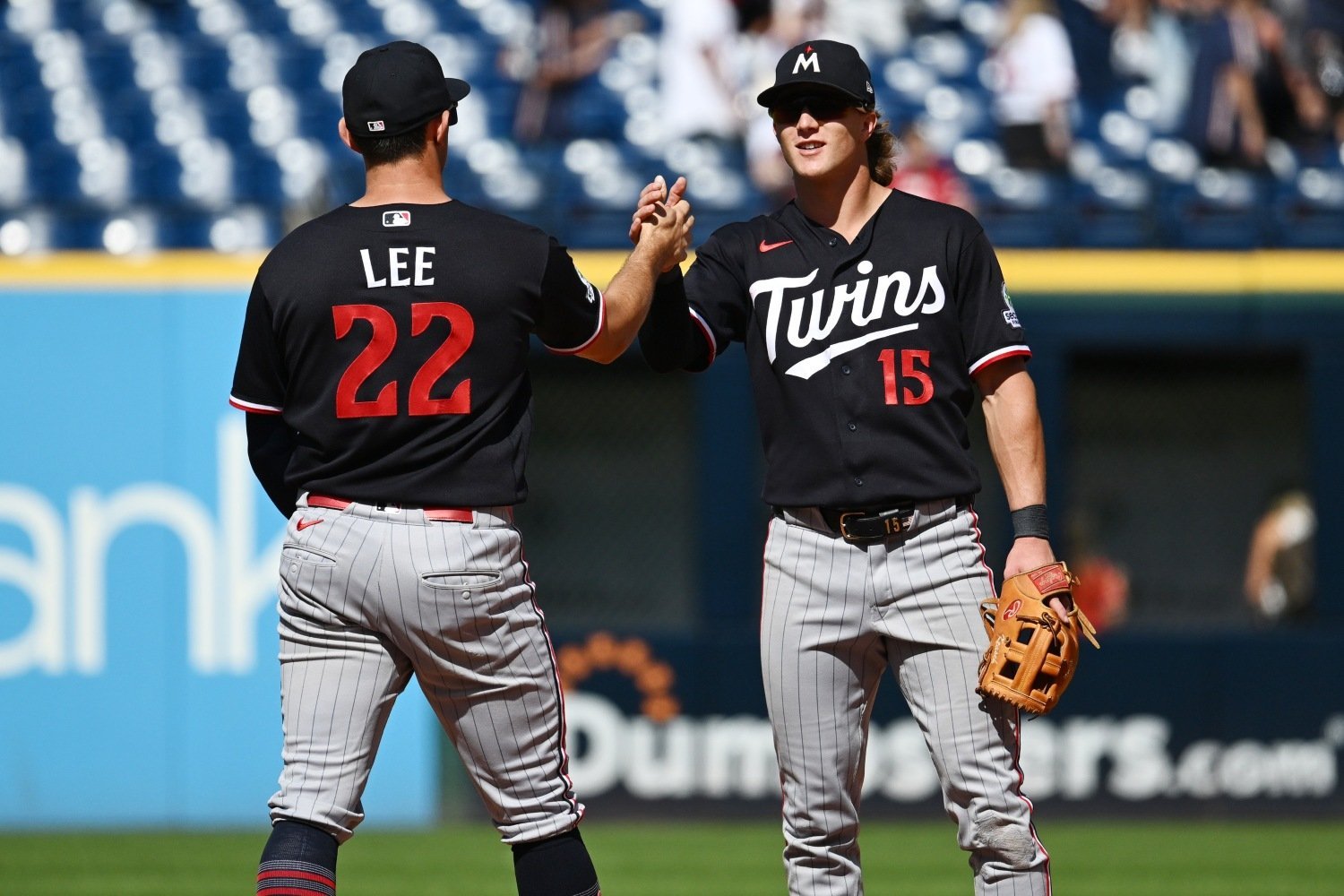 Box Score SP: Taj Bradley - 7 IP, 2 H, 1 R, 3 BB, 5 K (109 pitches, 68 strikes (62% strikes)) Home Runs: None Top 3 WPA: Taylor Rogers (0.31), Tommy Nance (0.31), Taj Bradley (0.20) Win Probability Chart The Twins entered Thursday afternoon's series finale against the Guardians looking to finagle a split after dropping the first two games of the four-game set. Behind another outstanding outing from Taj Bradley and some late-inning heroics, they did exactly that. Minnesota was left off the scoreboard for the first seven innings against Gavin Williams, but rallied to tie the game in the eighth before breaking through to win it in the 12th. Jack Anderson then slammed the door, giving the Twins a 3-1 victory and an important boost in the standings before heading home. TAJ BRADLEY CARVES UP GUARDIANS Two weeks after both starters dominated when these teams first met, Taj Bradley and Gavin Williams put together another pitching duel. Bradley didn't have his sharpest command early, needing 21 pitches to work through the first inning after issuing a leadoff walk to Steven Kwan. However, he settled in quickly. The right-hander retired 18 of the next 20 hitters he faced, allowing just one hit over the next five innings while consistently overpowering Cleveland's lineup with a fastball that frequently touched triple digits. His only mistake came in the fifth. Patrick Bailey got a 2-0 fastball over the heart of the plate and launched it over the wall in right field for his fifth home run of the season, giving Cleveland a 1-0 lead. That was all the Guardians could manage against Bradley. He finished his afternoon with seven innings of one-run baseball, striking out five while throwing 109 pitches. His final pitch was perhaps his best, reaching back for a 99-MPH fastball that Kyle Manzardo swung through to end the seventh. Bradley was tagged with a no-decision, but you can’t really ask for much more out of him than what the Twins got today. GAVIN WILLIAMS DOMINATES... AGAIN Unfortunately for Minnesota, Williams was every bit as dominant on the other side. The Cleveland right-hander carved through the Twins' lineup from the opening inning, striking out the side in the first before needing just seven pitches to breeze through the second. In the fourth, he threw an immaculate inning, retiring Byron Buxton, Ryan Jeffers and Josh Bell on just nine pitches while recording three strikeouts. Across seven innings, the Twins managed just two hits and never advanced a runner past second base. Williams piled up 11 strikeouts, marking his third consecutive double-digit strikeout performance and his second against Minnesota in just over two weeks. However, the Twins finally showed signs of life in the eighth, once they got into Cleveland's bullpen. Royce Lewis worked a leadoff walk against Hunter Gaddis. Luke Keaschall also reached, prompting Cleveland manager Stephen Vogt to call upon All-Star closer Cade Smith for a five-out save. Instead, Alan Roden spoiled those plans. He jumped on the first pitch he saw from Smith and lined it into left field, bringing Lewis home to tie the game at 1-1. Minnesota threatened for even more after Brooks Lee beat out a fielder's choice and advanced into scoring position, but Smith struck out Buxton to keep the game tied heading into the bottom half of the inning. TWINS BULLPEN KEEPS THEM ALIVE After Bradley departed, Minnesota's bullpen came through with five scoreless innings to keep the game alive. Andrew Morris worked around a Kwan single in the eighth. Yoendrys Gómez worked around a pair of walks in the ninth, striking out Manzardo to force extra innings. Tommy Nance followed with a scoreless 10th, stranding the automatic runner at third base. Taylor Rogers worked around an intentional walk in the 11th by striking out Chase DeLauter and retiring the next two hitters. Every reliever delivered exactly what the Twins needed, setting the stage for the offense to finally break through. LARNACH DELIVERS THE BIG HIT After both teams failed to score in the 10th and 11th innings, Minnesota finally broke through in the 12th. With Ryan Jeffers serving as the automatic runner, Josh Bell and Kody Clemens were retired to quickly put the inning in jeopardy. Cleveland intentionally walked Royce Lewis to create a left-on-left matchup with Trevor Larnach. That decision backfired. Larnach lined a single into left field, scoring Jeffers and giving the Twins their first lead of the afternoon. Keaschall followed with another clutch hit, ripping a single through the left side to score Lewis and extend the lead to 3-1. That proved to be all the insurance Minnesota would need. Jack Anderson took over for the bottom of the 12th and retired two of the first three hitters. Patrick Bailey drew a walk to keep Cleveland's hopes alive. Pinch-hitter Daniel Schneemann then lifted a fly ball to left field, where Larnach caught the final out to complete the 3-1 victory. It wasn't the cleanest offensive performance by any means, but Minnesota's pitching staff carried the club all afternoon before the lineup finally came through in extras. The Twins finish the road trip at 51-53 after salvaging a split in Cleveland. Despite an ugly start to the series, they leave with some much-needed momentum heading into the weekend. What’s Next? The Twins return to Target Field tomorrow to begin a weekend series against the Athletics. Zebby Matthews is the probable starter for the Twins, and he’s set to face off against left-hander Jacob Lopez. First pitch is set for 7:10 PM. Postgame Interviews Coming Soon! Bullpen Availability Chart View the full article
 -
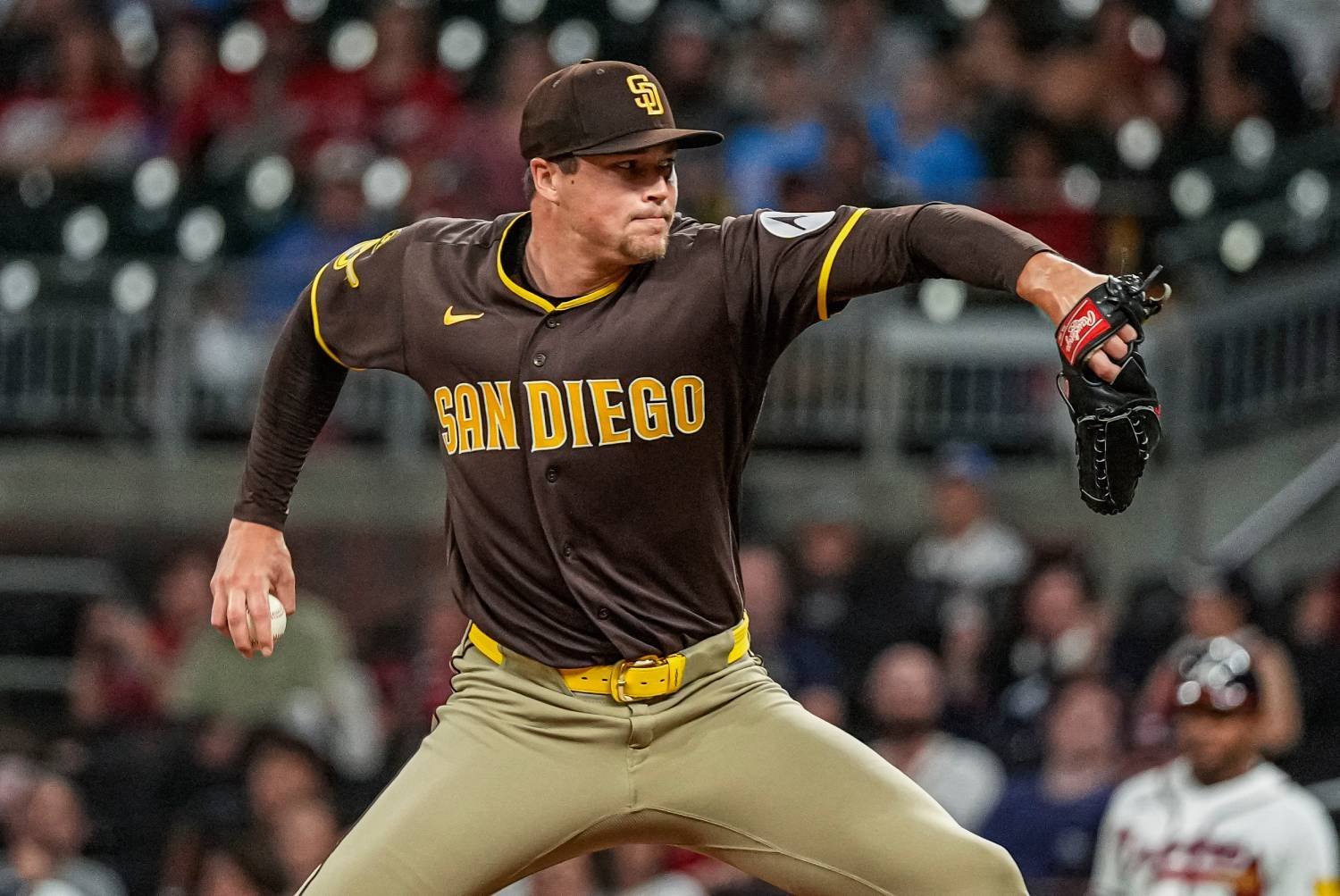 In case fans were wondering if the Milwaukee Brewers were shopping in the deep end of the pool, they appear to be doing just that. The two hottest names on the trade market at the moment are reigning two-time AL Cy Young Award winner Tarik Skubal of the Detroit Tigers and San Diego Padres right-handed closer Mason Miller. According to Brewers beat writer Adam McCalvy of MLB.com, the Brewers have been in contact with both teams about those superstars. Skubal and Miller's cost could be somewhat similar even though their contractual situations vary greatly. Skubal, who is making $32 million this year, is a free agent after this season, while Miller is under club control through 2029 with three more years of arbitration. He is making $4 million this year. As the two most prominent players on the market, the price to pry either away from the Tigers or the Padres will be significant. But the Brewers have the top-ranked farm system in MLB with a plethora of prospects to deal to improve the team's chances in the postseason. The Brewers entered Thursday with a seven-game lead over the Chicago Cubs in the NL Central and the second-best record in MLB at 64-38, just a half-game behind the two-time defending World Series champion Los Angeles Dodgers (65-38). Presumably, Double-A Biloxi shortstop Jesus Made, as MLB's No. 1 prospect, would be unavailable, but others starting with High-A Wisconsin shortstop Luis Pena, Brewer Fanatic's No. 2 prospect could be shopped to acquire those high-valued pitchers. Of Skubal and Miller, the Brewers might be more willing to trade for Miller, who would be in the fold beyond this year and give the Crew a killer back end of the bullpen alongside right-handers Trevor Megill and Abner Uribe. View the full article
 -
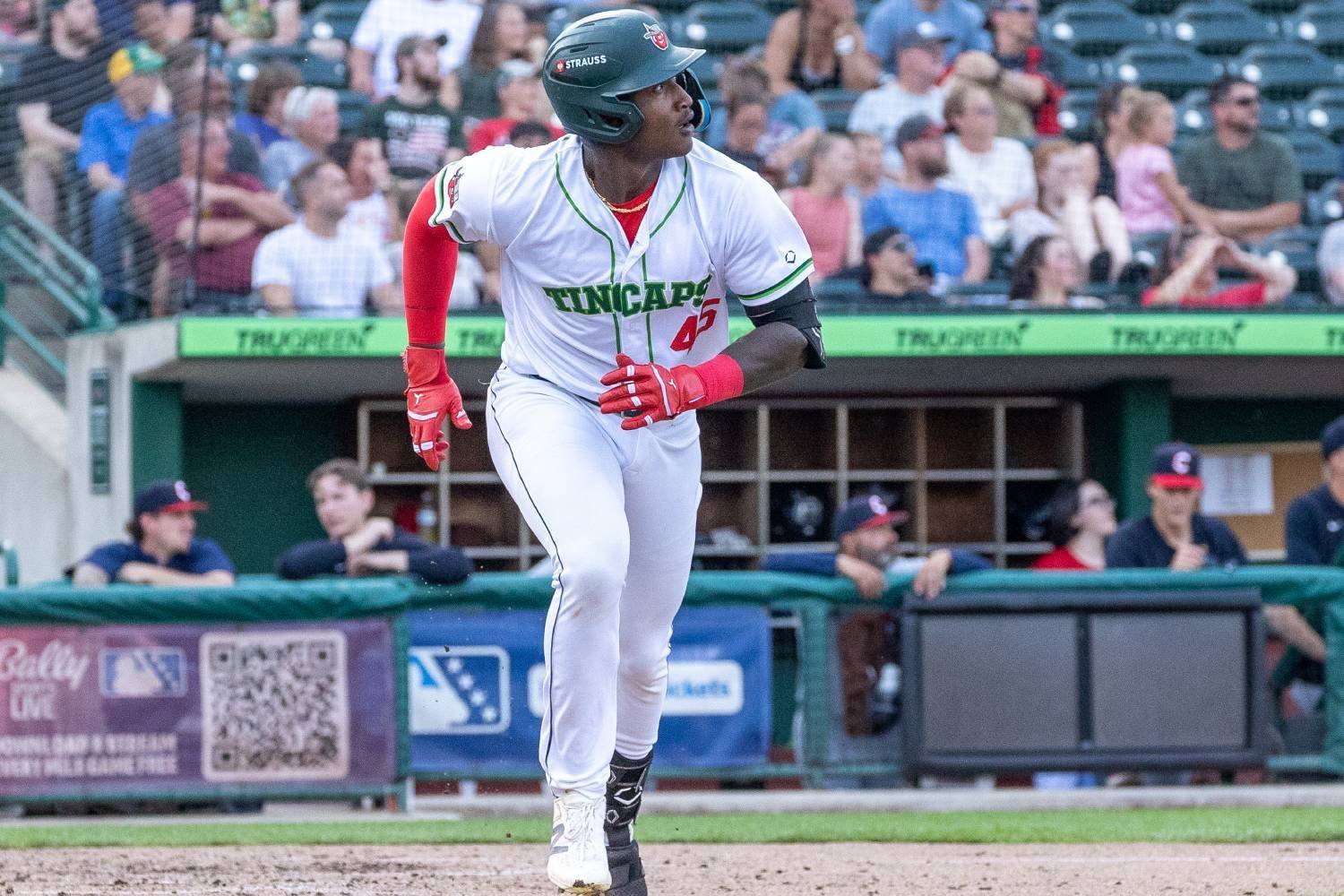 There is a scene in one of the early episodes of “Ted Lasso” where Sam Obisanya gets destroyed by Jamie Tartt during a practice, with the brash star then scoring a goal as Obisanya looks on, slapping the pitch in frustration. Seeing this, Coach Lasso calls Obisanya over to give him a little advice. “You know what the happiest animal on Earth is?” Lasso asks rhetorically as Obisanya shakes his head. “It’s a goldfish. You know why? Got a 10-second memory. Be a goldfish, Sam.” Obisanya doesn’t immediately understand the message, but eventually realizes that in sports, you have to forget what just happened to you as another opportunity to perform comes at you. Alex McCoy is a believer in that mindset. As an undrafted free agent in the San Diego Padres’ minor-league system with the High-A Fort Wayne TinCaps, the hulking outfielder began the season on an absolute heater, putting together a .354/.386/.683 slash line with 10 doubles, a triple, five homers, 14 RBIs and five stolen bases in April. He was named Midwest League Player of the Month and his profile jumped several rungs on the prospect ladder. McCoy currently sits at No. 14 on Padres Mission’s Top 20 list. But then came May. After getting hits in his first two games of the month, he went hitless in his next seven. “I'm a lot more mentally strong than I thought,” McCoy said. “There was one week this season, I was coming off Player of the Month, we played Beloit and I went 0-for-23 or something like that. I was putting the ball in play, they're catching it, pop flies and I was like, 'Man, I came off of the hottest month and then 0-for-23 at this point. What is going on?' Going into the next week, I was just like, 'You know, the game's hard and no one can hit .350 for three months straight or whatever the case is.' We play a game where you fail 70% of the time. If you hit .300, you're amazing. So kind of put that in the back of my head. I'm still in a good spot and what I've done is great, but also how can I kind of come back and overcome going 0-for-23. Went into that next week, kind of just forgot about it, you know, goldfish mindset. I tell myself all the time, get out, strikeout, just forget about it in the next AB. That's been my mindset these last few months.” That approach has certainly worked for a right-handed hitter who has some of the best pure power in all of the minors. Entering play this week, the 24-year-old has put up a .264/.342/.465 slash line with 12 homers and is tied for the Midwest League lead with 23 doubles. He also leads the TinCaps with 44 RBIs. Since that scorching-hot April, he has had month-long slash lines of .226/.336/.473 (May), .235/.330/.341 (June) and .233/.298/.279 (July so far). Some of that has to do with the expected ups and downs of a baseball season, some has to do with teams getting better scouting reports on McCoy. After signing in 2024, he played in 58 games in 2025 and slashed .315/.393/.521 with seven homers, 40 RBIs and 14 stolen bases mostly at Low-A Lake Elsinore, which was the extent of the knowledge most other teams had on him entering 2026. He saw some of that in a recent series against the Great Lakes Loons, a Los Angeles Dodgers affiliate. The TinCaps were facing left-hander Zach Root, drafted with the 40th pick last year. “He's probably the best I've seen all year,” McCoy said. “I'm facing him and he's out there grunting, throwing his stuff, kind of showing some attitude on the mound. I kind of take it as a good thing. I feel like him being a good pitcher and me being a good hitter, it's always good when you're out there competing. ... That obviously helps me elevate my game.” Another piece of his toolbox that has helped McCoy experience success has been his hitting ability. While an imposing figure at 6-foot-5, 260 pounds, he isn’t just in the batter’s box to mash. He wants to be an all-around hitter. “I think if I go up to the plate and tell myself, 'OK, I'm gonna hit a home run here,' I may get my A swing off, but if I can get my bat to the ball, be more consistent that way ... put the ball play, hit it hard somewhere, I think that's the better approach overall. No one hits a home run on purpose, I feel. With that mindset in the box, you just kind of get too big and try to do too much myself. Just play pepper, hit the gaps, I'm down to hit a home run or double or even a single, just get base and contribute.” Of course, McCoy is well-known for his exit velocity. This year, he stung a ball at 119.5 mph — on a groundout. That surpasses the best thus far in MLB, which is 119 mph double by Pittsburgh Pirates star Oneil Cruz. The best by a Padres major-leaguer is 119.6 mph by Manny Machado on a homer in 2021. While every player just wants a shot with an organization, McCoy found the Padres to be a good fit. He wasn’t surprised to go undrafted following his senior season at Hofstra in which he slashed .306/.384/.509 with 11 homers and 44 RBIs in 56 games. That was his only season at the university, where McCoy was coached by longtime MLB infielder Frank Menechino, after spending his first three collegiate seasons at Maryland-Eastern Shore. McCoy had a pre-draft workout in New York state, which went well from all perspectives. “I always told myself and I told my agent before the draft that I want to go where I'm wanted,” McCoy said. “I just think my performance at the workout and Johnny McNamara, my area scout, me and him stayed in contact throughout the season and at the workout, he came up with a nickname for me, Big Mac ... just had a good time at the workout and kind of just felt at home. When the draft came around, they told my agent early on that they'll sign me once the last round is called.” Now, McCoy is taking advantage of his opportunity, even if there is a little bit of a chip on his shoulder from not being selected. “Being drafted is cool, but I think at the end of the day, whether you're a first-rounder, 10th-rounder, 20 rounder, free agent, you all go to the same place when it's all said and done,” McCoy said. “And once you're in that place, those rounds don't matter, you're all competing against each other, obviously, but you also make lifelong friends and stuff. That's the fun part about it.” View the full article
 -
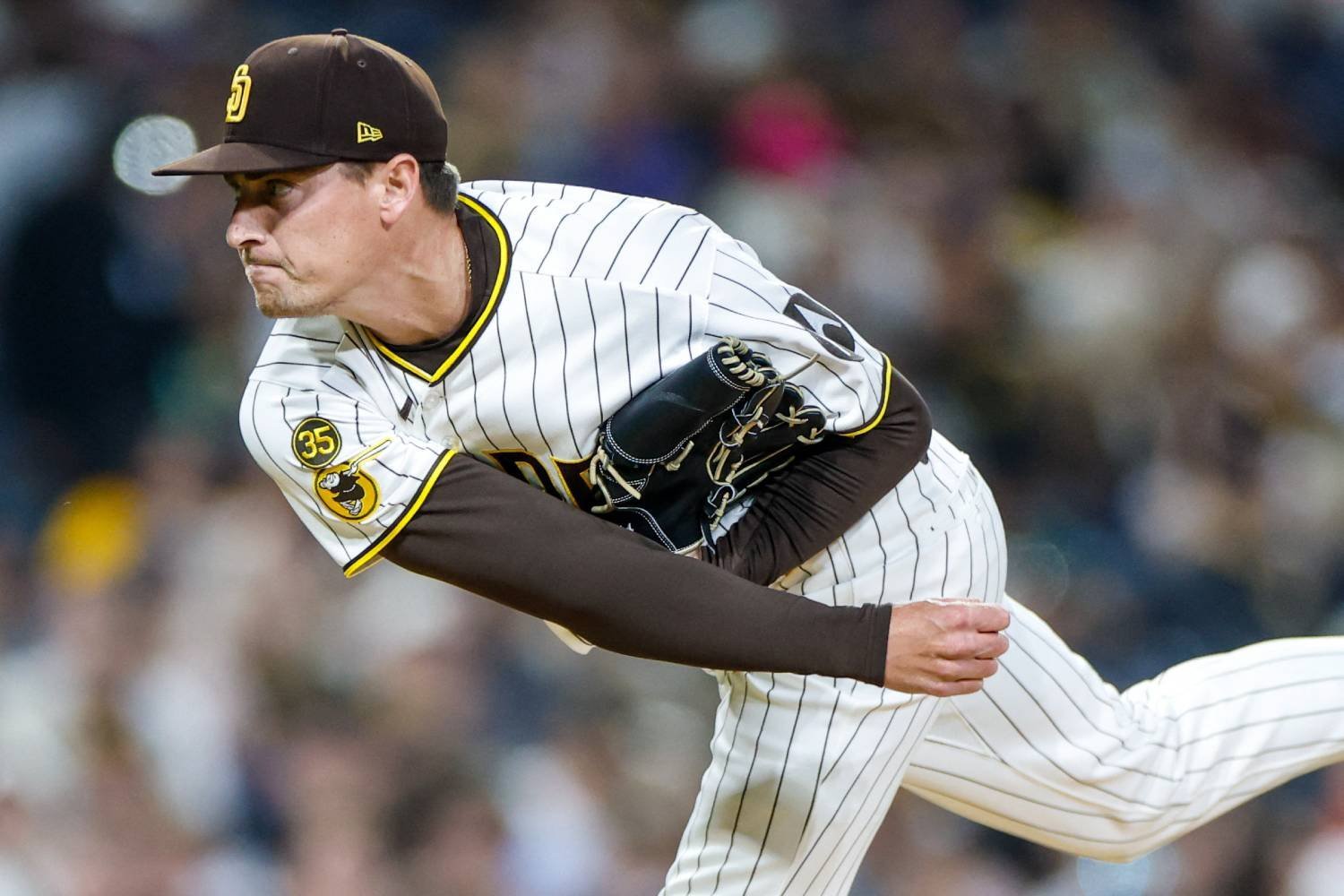 While he didn't fit with the San Diego Padres anymore, Ron Marinaccio has found a new home. The Padres on Thursday traded the right-handed reliever to the Pittsburgh Pirates in exchange for international signing bonus money. Teams can trade up to $250,000 in any deal. The exact amount in this deal was not known. Marinaccio was designated for assignment by the Padres on Sunday. He was the odd man out in the bullpen and was out of options when left-hander Wandy Peralta came back off the bereavement list. The 31-year-old, dealt from the Chicago White Sox in January 2025 after he was DFA'd for cash, had a 5.32 FIP (4.79 ERA) in 33 appearances with an 8.9% walk rate and 18.7% strikeout rate this season. View the full article
 -
 According to reporter Ari Alexander of 7News Boston, the Toronto Blue Jays have claimed outfielder Rudy Martin Jr. off waivers from the Baltimore Orioles. Martin, 30, has had a long minor league career, primarily in the Kansas City Royals organization. Drafted in 2014, he finally made it onto a 40-man roster earlier this month, when he exercised an upward mobility clause in his latest minor league pact with Kansas City, prompting a trade to Baltimore. The Orioles added him to their 40-man roster last week, but they subsequently DFA'd him on Monday. Martin will presumably report to Triple-A Buffalo, though he will need a spot on Toronto's 40-man roster. The Jays could move Addison Barger or Lenyn Sosa to the 60-day IL to make room. In 64 games between Double and Triple A this season, the lefty-batting Martin is hitting .284 with a 127 wRC+ and 33 stolen bases. He has played all three outfield positions. View the full article
 -
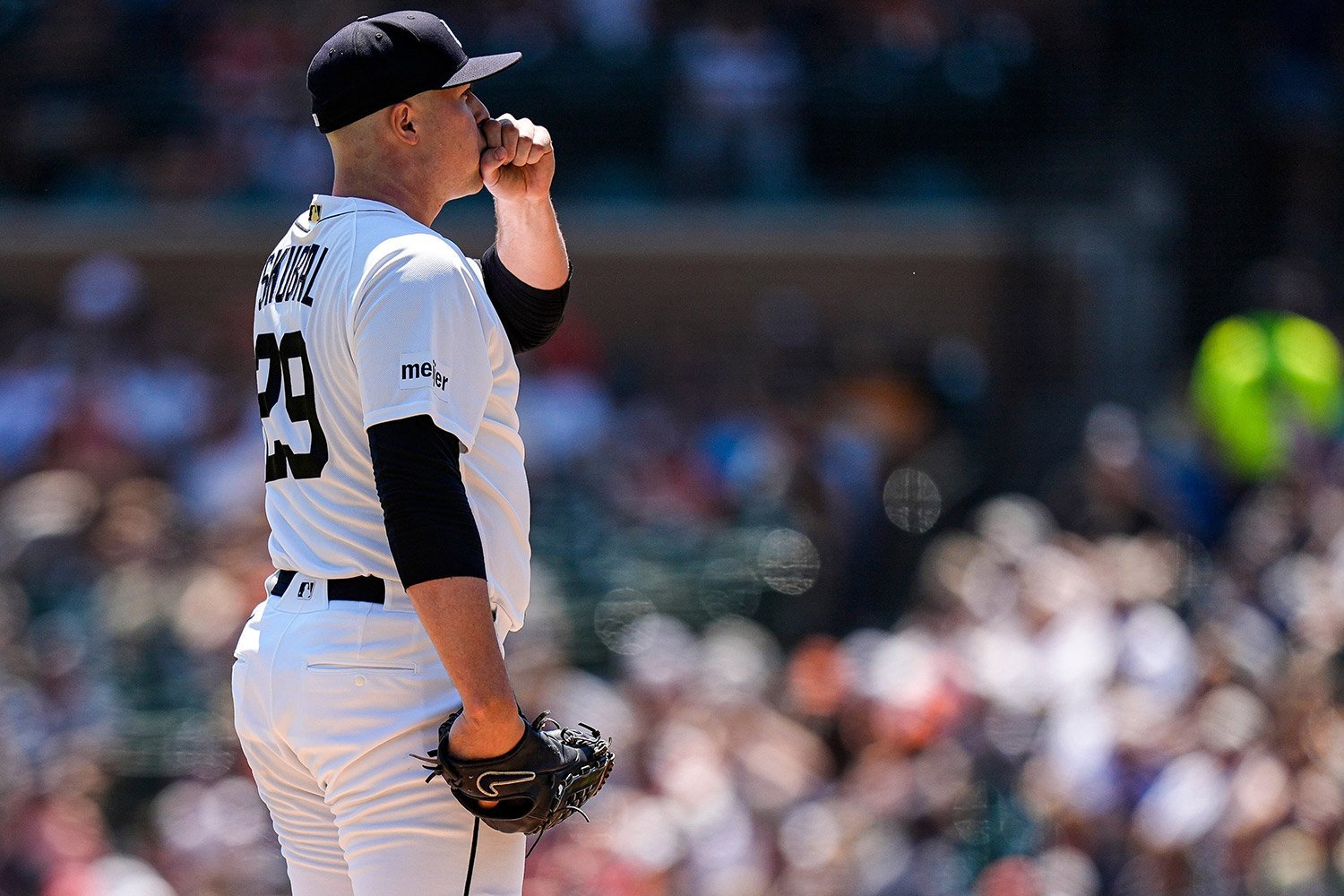 According to MLB.com's Adam McCalvy, the Brewers are aiming high before the trade deadline on August 3. They've reportedly reached out to the Detroit Tigers about ace pitcher and perhaps the best pitcher in the American League, Tarik Skubal. They've also reached out to the San Diego Padres about their closer extraordinaire, Mason Miller. Skubal is playing this season on an expiring contract. He won his arbitration hearing in February, receiving a record $32 million salary after the Tigers filed at $19 million, and said the Tigers made no long-term offer this offseason. He's expected to command roughly $400 million as the top 2026-27 free agent. On the mound, he posted a 2.70 ERA and 0.95 WHIP over seven starts before a left elbow injury sidelined him in early May; he's since returned, and now sits at 6-5 with a 2.83 ERA and 98 strikeouts across 14 appearances. Miller's situation is the opposite of Skubal's: cheap and controlled. He signed a one-year, $4 million deal to avoid arbitration in his first arbitration-eligible year, and remains under team control through 2029. He has expressed interest in a Padres extension, though no talks have occurred. Performance-wise, he's been dominant as San Diego's closer, with a 0.86 ERA, 25 saves, and 78 strikeouts against 15 walks this season. With the Padres coming under new ownership, it's almost impossible to predict the actions of their already-maverick president of baseball operations AJ Preller. What do you think of this news? Are the Brewers aiming for a level higher than they have at previous deadlines, or is this just due diligence? View the full article
 -
First-Round Draft Pick Coleman Borthwick Signs With Padres
DiamondCentric posted an article in Padres Mission
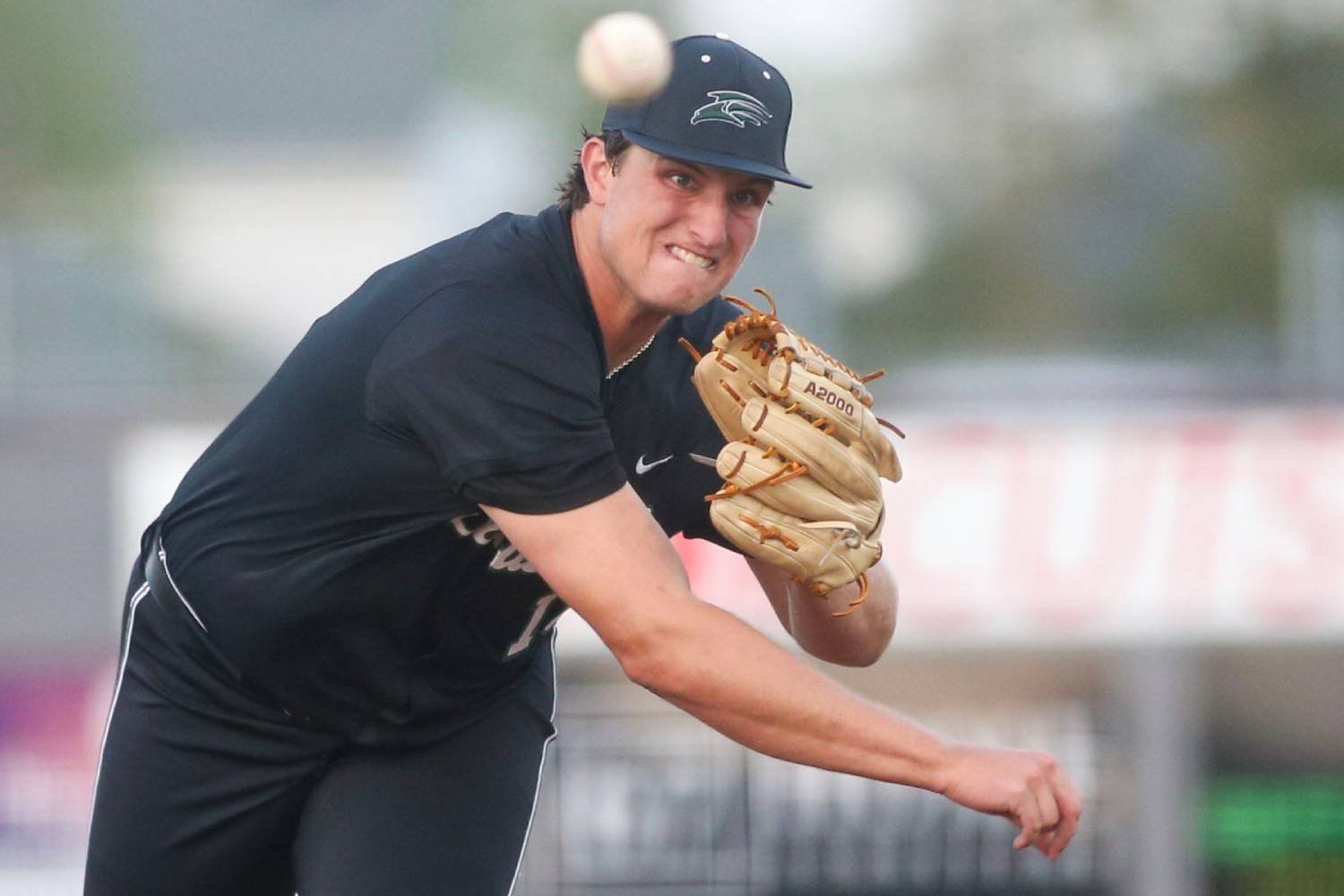 The San Diego Padres reeled in their biggest fish from the MLB Draft. Does that help them catch another big fish? First-round draft choice Coleman Borthwick, a high school pitcher out of Florida, has signed with the Padres on Wednesday, according to his Instagram account. There have been no reports as to what his actual signing bonus was, but the 21st overall pick had an assigned value of $4,224,700. The Padres also came to terms with sixth-rounder Nu'u Contrades, a shortstop from Arizona State, who received a $300,000 signing bonus, MLB Pipeline's Jim Callis reported Thursday. Contrades had a slot value of $350,100. Borthwick, at 6-foot-6, 260 pounds, was the top high school pitcher selected in the draft and signed his contract at the Padres' complex in Peoria, Ariz. Depending on if Borthwick received an under-slot deal, the Padres could use that money toward one of his teammates at South Walton High School in Santa Rosa Beach, Fla. That would be right-handed pitcher Denton Lord, whom the Friars selected in the 17th round after he announced on Instagram following the fifth round that he would honor his commitment to Mississippi State. But if the Padres can cobble enough money together from other draft picks, they could land Lord. As a senior, the 18-year-old Borthwick went 11-0 with a 0.21 ERA, .082 opponent average and 12.9 strikeouts per seven innings. Contrades, 22, finished his senior year at Arizona State with a .366/.434/.762 slash line. The Padres now have five of their 21 draft choices signed, including their top two selections. View the full article
 -
What are your Marlins vs. Padres series predictions?
DiamondCentric posted an article in Fish On First
 Once again in 2026, I will be monitoring Miami Marlins predictions from our valued SuperSubs, Fish On First staffers and livestream guests. Individual article pages like this one will be created prior to every Marlins series and featured prominently on the FOF site. Consistent participation is key if you want to win this annual contest. Submissions only take a few seconds. Scoring system A "perfect" series is worth three points: Earn one point for predicting which team will win the upcoming series Earn one point for predicting the precise number of victories for each team Earn one point for predicting the “Series MVP” who accumulated the highest win probability added (WPA) during the series as calculated by FanGraphs (could pick a player from either team) FOF staffer Jeremiah Geiger is currently atop the 2026 season leaderboard, which will be updated between every Marlins series. If you are a SuperSub, leave a comment with your Prediction Time picks on this page, or join the Marlins Discord Server and submit there. We'll feature them on the upcoming Fish On First LIVE episode and track your points throughout the season! Any picks submitted prior to the first pitch of the series opener will be counted. If you are not a SuperSub, please consider signing up here to support the FOF staff. Series preview notes Probable starting pitchers: TBA (MIA) vs. RHP Germán Márquez (SD) on Friday RHP Eury Pérez (MIA) vs. LHP JP Sears (SD) on Saturday RHP Janson Junk (MIA) vs. RHP Walker Buehler (SD) on Sunday The Marlins rank 15th in MLB with a 101 wRC+ and 12th in MLB with a 4.05 FIP. They are 1-9 in their last 10 games and have a 31-20 record at home this season. The following Marlins players are on the injured list: Anthony Bender (15-day IL), Owen Caissie (10-day IL), Josh Ekness (60-day IL), Ronny Henriquez (60-day IL), William Kempner (15-day IL), John King (15-day IL), Adam Mazur (60-day IL), Andrew Nardi (60-day IL) and Robby Snelling (60-day IL). The Padres rank 23rd in MLB with a 94 wRC+ and 19th in MLB with a 4.24 FIP. They are 4-6 in their last 10 games and have a 23-29 record on the road this season. The following Padres players are on the injured list: Jason Adam (15-day IL), Miguel Andujar (10-day IL), Jeremiah Estrada (15-day IL), Lucas Giolito (15-day IL), Bryan Hoeing (60-day IL), Ramón Laureano (60-day IL), David Morgan (15-day IL), Joe Musgrove (60-day IL), Nick Pivetta (60-day IL) and Samad Taylor (10-day IL). View the full article
 -
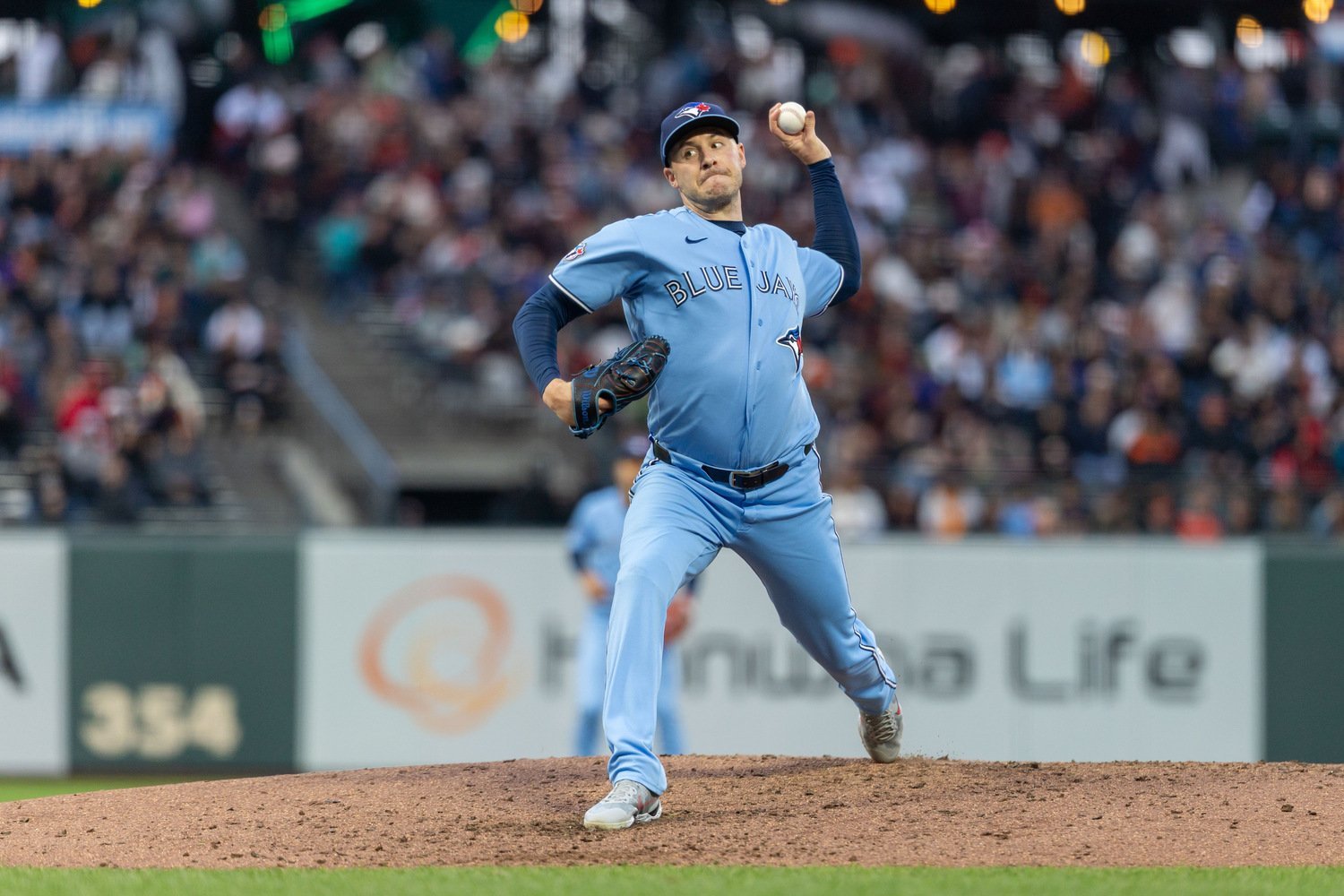 The Blue Jays have placed Patrick Corbin on the 15-day injured list with a teres major strain. The left-hander gave up four runs on seven hits over 2.1 innings in his latest outing. He owns an 8.18 ERA in four appearances since moving to the bullpen. Corbin is known for his durability; this is his first non-COVID-related IL stint since he had Tommy John surgery in 2014. In Corbin's place, Toronto recalled fellow southpaw Adam Macko. The rookie got off to a hot start for the Blue Jays, holding his opponents scoreless in 14 of his first 15 games. Unfortunately, he has given up nine runs in five innings over his last four appearances for the big league club. He now owns a 5.03 ERA (and a 4.80 xERA) on the season, with a 4.18 ERA/4.08 xERA at Triple-A Buffalo. In an additional transaction, the Jays sent a struggling Sean Keys back down to the Bisons. The 23-year-old dominated minor league pitching over the first three months of the season, earning his call to the show in late June. Since then, he has often looked overwhelmed by major league arms, going just 6-for-36 with one walk, one home run, and 13 strikeouts. He only played in four of the team's last 10 games. Davis Schneider will return to replace Keys on the bench. The fan favourite has been the definition of a quad-A player this year. He has embarrassed minor league pitching in a couple of stints with the Buffalo Bisons (173 wRC+), but frustratingly, he's never looked worse at the major league level. View the full article
 -
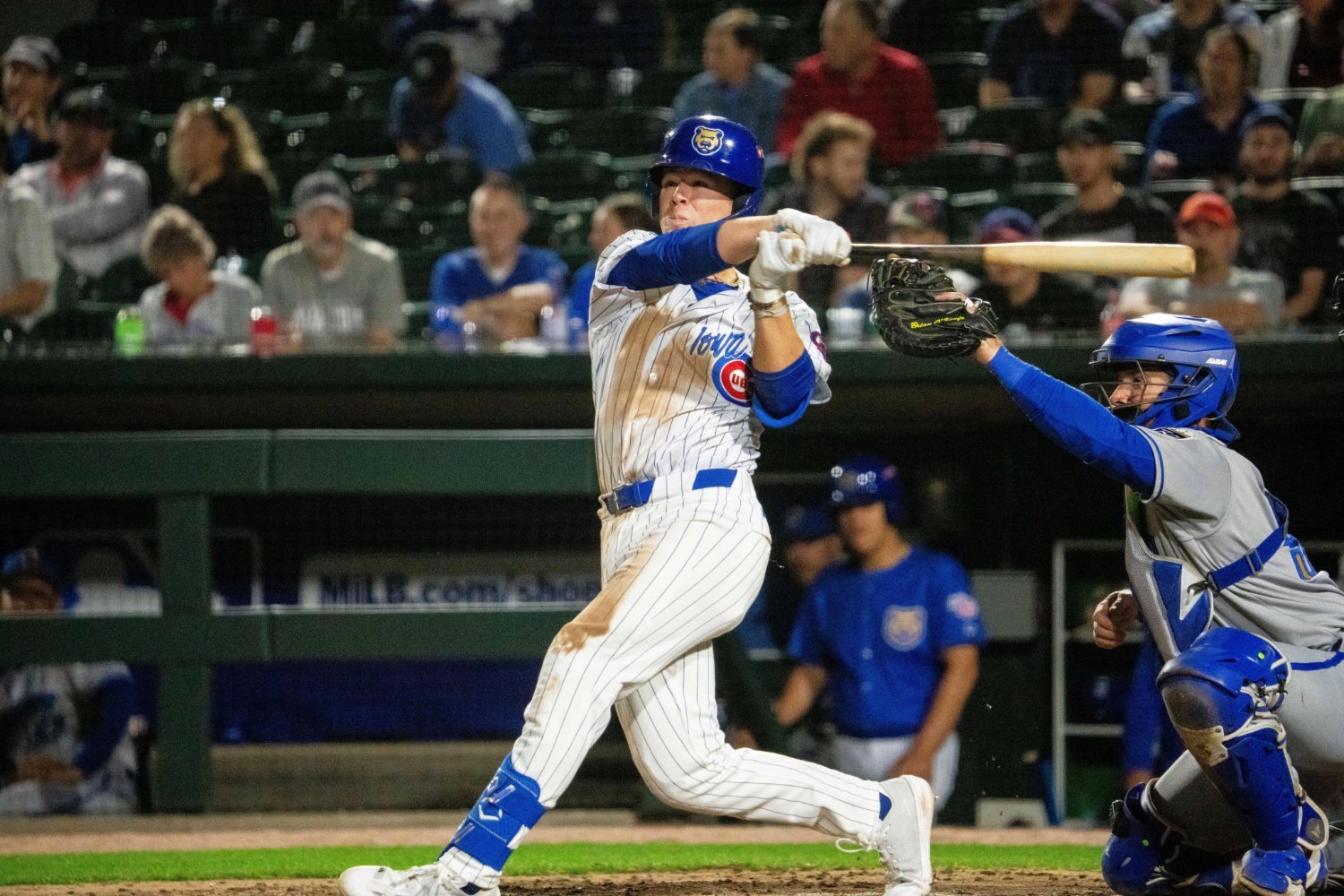 On Thursday, the Chicago Cubs reportedly called up James Triantos, their second-round pick in the 2021 draft. Triantos, 23, was ranked 12th on North Side Baseball's most recent top prospect list. The utility fielder has worked his way up through the minor-league system, most recently playing in Iowa where he slashed .306/.344/.440, which was good for a 96 wRC+. What should we expect out of the newest member of the Cubs? Strengths The best tool in James Triantos' bag is on his bat-to-ball skills. He possess a K% in the 96th percentile and a zone-contact rate in the 92nd in Iowa this season. This helps him maintain a strikeout rate of 11.6%, which is quite excellent. There is little doubt even at the next level that he's going to make contact with the baseball a good amount of the time. He also has no obvious issues with fastballs or breaking pitches in this regard, as his whiff rate on those pitches were 11.3% and 21.9%, respectively. It's safe to assume most of that will carry over at any where he plays at. Another one of the skills Triantos presents is his above-average athleticism and speed. The infielder is a general menace on the basepaths, swiping 31 bags in 110 games last year and has kept up the pace this year with 18 in 88 contests. While he's been caught around 10 times each year, he's on pace for being caught less in 2026, making him much more efficient. This will be another part of his game you can feel strongly about as he is called up. One last skill we can bank on: he's got versatility. While his defensive skills are likely "average" at most places and will rarely wow you, he can play across the diamond fairly reliably. He's logged games in Iowa this year alone at second, third, left field, center field and right field, which gives him a lot of pathways to playing time. Overall, Triantos is probably a pretty high-floor prospect in that it's not terribly hard to see what he does best transitioning to the top level in some fashion. His ability to hit the ball and play versatile defense give him a few ways to impact a team and a game. It's reasonable to expect him to find a role on an MLB bench at the very least. Weakness As with many contact-first hitters, there is usually a trade-off to having so much bat-to-ball focus, and that is in the power department. Triantos does not wow with pop; his .134 ISO in the International League (a very hitter-friendly environment) hardly is worth writing home about. The good news is that he's displayed a different swing this year and I do believe there's some power gained from it. The bad news is that his high-end exit velocities are pretty low; his Max EV is in the sixth percentile and his barrel rate in the 14th, meaning his hardest hits aren't of the highlight variety. He's gotten better in this department, but it's also looking like there's a pretty low ceiling on the power potential here. The power concerns aren't the only thing to note, as Triantos is a very free swinger. His swing% is in the 90th percentile in Triple-A, while he runs a bottom-of-the-barrel walk rate. He makes a lot of contact, but it's a lot of bad contact. When you couple that with his exit velocities, you have to wonder if his plate discipline will be the limiting function in his game. It wouldn't be surprising, especially initially as he learns the lesson of "just because you can hit it, doesn't mean you have to." Expectations Without knowing a corresponding move yet, it's hard to know what will be his exact role. For example, if Pedro Ramirez has an injury or if it's the Cubs deciding to send down Kevin Alcantara, what Triantos will be asked to do may be different in terms of playing time. He won't be getting called up to start, however, either way. It's also likely that his playing time will be limited. But don't worry about that; he's not at a point of his career where you really need to give him playing time. He's already logged 200 games in Iowa and almost 800 plate appearances. He's been in the system since 2021 and there's probably a fair bit of confidence in the projections. What he is now is someone who can probably help the Cubs on the bases or with his versatility today. He's got the kind of game that's infectious, and he should provide a fun bench option that will give the team some value as a pinch runner late in the game or a defensive sub at a litany of positions. He probably won't pick up more than a token start here or there, but should be able to find ways to make a mark on the team regardless. What do you think of James Triantos? Do you think he'll play a lot? What are your expectations? Let us know in the comments below! View the full article
 -
Realistic Mock Trades if the Blue Jays Decide To Sell
DiamondCentric posted an article in Jays Centre
 The writing is on the wall. Thanks to an 8-17 record in their past 25 games, the chances of the Toronto Blue Jays becoming sellers at the trade deadline seem likelier by the second, a stark contrast to a year ago at this time when they led the AL East by three games. The Jays' worst stretch of the season has coincided perfectly with a historic win streak by the Boston Red Sox, as well as a recent surge from the Baltimore Orioles, who finally snapped Boston's streak at 15 games. This has led to Toronto's playoff odds dropping nearly 50% over the past month, according to FanGraphs. The American League landscape remains uninspiring, but even despite that, the Blue Jays are 6.5 games back of the final Wild Card spot. It's time to seriously consider punting on 2026. Kevin Gausman, Shane Bieber, George Springer, and Daulton Varsho are the headliners on expiring contracts. Unfortunately, Gausman, Springer, and Varsho have all been scuffling lately, but it's important to remember that big league front offices don't make trades for what players have done. It's what they're projected to do in the future, especially relative to their salary, that matters. Expected production relative to cost is where surplus value comes from, a popular term amongst executives when it comes to the ultimate goal of every trade. Last year, inspired by this video from Lance Brozdowski, I built a rather skeletal MLB trade engine in Google Sheets that revolves around that very concept. It uses the latest guiding principles around the dollar value of prospects, the dollar value of WAR, projecting salary for players before they hit free agency, and inflation. Let's plug each of our potential trade chips into the system and see how they're likely to be viewed around the industry. All figures entering July 22, 2026. Kevin Gausman Ideal return: 1 A-minus prospect & a deep sleeper, or 2 mid-range prospects I'm not emotionally prepared to see Gausman pitch in another uniform, least of all for the one team that got in the way of his quest to win a ring for the city that he took a discount to come to. As painful as it is, the Dodgers, thanks to their boatload of injuries on the pitching side, their surplus of outfield prospects, and their willingness to spend, are a good fit. There are other playoff-bound teams that need Gausman more, but Tyler Glasnow and Blake Snell remain on the IL, Shohei Ohtani isn't pitching for the time being, and Justin Wrobleski is probably best suited to be a reliever come playoff time. Any time a selling team can poach a prospect of Charles Davalan's caliber at the deadline, they'd be happy to do it. The lefty-hitting Canadian isn't a top-100 prospect, but he has 14 homers and 15 steals, along with a 13% walk rate and an 11% strikeout rate, in High A this year. Scouts seem to be the most fond of his hit and speed tools. Dylan Tate is a wild card who has barely started his affiliate career since getting drafted in the 11th round last year. FanGraphs gives him a 60-grade fastball. It's crucial to remember that even the slightest conflicting opinions of a prospect's caliber can swing the outcome of a trade. For example, Davalan is a 55-grade prospect according to Baseball America, but FanGraphs, as is often the case, is a little more conservative with a 45 FV valuation. If the Dodgers' own internal model is closer to BA's grade, the chances of them accepting this trade probably go down, but their deep farm system might force them to overpay in a seller's market. Mitch Bannon of The Athletic recently mocked Gausman to the Cubs for two prospects a tier below Davalan. For the purposes of this exercise, there's no point in getting caught up in particular teams and prospects. If a starting pitcher with Gausman's salary who is projected to put up a little more than 1.0 WAR for the remainder of the season is going to fetch multiple prospects, the return could go one of two ways: a couple of guys in that 40-40+ FV tier, or one closer to 45 FV along with a lottery ticket. Shane Bieber Ideal return: 1 mid-range prospect, more if packaged Bieber exercised his player option to stay in Toronto, but unfortunately, while his rest-of-season projections are better than what the Jays have gotten from him since his return, they aren't enough to offset the salary he is still owed. That's why it might make sense to include him in a package to maximize the return. The $/WAR method is probably underrating him a little bit, but nonetheless, in this instance, I have him going to Atlanta alongside the currently-injured Jesús Sánchez, who has one more year of control but is a tad redundant of a presence on the Jays' roster. Old friend Alex Anthopoulos recently professed his desire to upgrade the pitching staff for his Braves, so why not see if he'll follow through? A prospect of Owen Murphy's stature might not be attainable with Bieber alone, but Sánchez could be useful for a team with a shallow corner outfield group thanks to Ronald Acuna Jr.'s continued injury troubles and no offense whatsoever on their bench. Murphy, who made his big league debut a few weeks ago, has a flat, high-carry fastball and a 27% K rate at Triple A this year. The Blue Jays could use another young starter who's ready to contribute at the highest level, with Johnny King and Nolan Perry not quite yet ready to join Dylan Cease and Trey Yesavage in the prospective 2027 rotation. Jorge Mateo would simply be a warm body that the Jays could plug in at a variety of positions until his term is up at the end of the year. George Springer Ideal return: 1 high-risk sleeper It's difficult to imagine the Blue Jays truly acing a George Springer trade because he's only been a high-end contributor once over the past three years, and that was last season when he was anchoring the lineup. There won't be a long line of suitors for a 36-year-old rental DH who's still owed more than $8M, but the Padres have seemingly been in win-now mode forever, and their revolving door of designated hitters has hit for an 84 wRC+ this season. In terms of how the Jays' options stack up in this scenario, San Diego's prospect pool takes a clear backseat to Atlanta's, and it isn't really in the same universe as the Dodgers', so they'll have to take a shot in the dark with an unheralded prospect they believe has some untapped potential. I'd be curious to see what they could do with the 22-year-old Braedon Karpathios. His 30% strikeout rate and middling slash line in Double A leave a bit to be desired, but he's someone who can impact the ball with a good blend of in-zone aggressiveness and discipline. Recently, Toronto's MiLB hitting personnel have been successful in getting some of their prospects to make more contact, so he could be a project worth taking on. Karpathios is unranked in FanGraphs' system, but Baseball America has him as a high-risk 45 FV guy, hence the compromise of his 40 FV grade here. Daulton Varsho Ideal return: 1 B-tier prospect & 1 sleeper The timing of Varsho's horrendous July has not been ideal, but he would still be an offensive upgrade for the Guardians in center field. Cleveland doesn't usually add rentals at the deadline, but they've connected with the Blue Jays on the trade front many times before, and Varsho gives them a rare opportunity to add a bat without much financial strain. In return, I like Jace LaViolette for the Jays, who has tremendous raw power and the potential to stick in center field but also comes with major strikeout concerns. The industry is divided on him: FanGraphs has him at 45 FV, while Baseball America has him at 55 but with a high-risk grade, which brings his adjusted grade down to 40. His ceiling is high, and his floor is very low. Will Dion is currently in the Guardians' bullpen, but I don't imagine he'll be there for long, as fellow lefty Tim Herrin is soon to return from a rehab stint. Dion has an uninspiring 5.65 ERA through 14.1 MLB innings, but he has a 27% strikeout rate to go with a 4.5% walk rate and a 110 Stuff+ on the four-seamer that he has thrown 42% of the time. No matter what happens in the final two months of the season, Mason Fluharty deserves another lefty who can pick up the slack in Toronto's bullpen, and Dion could stick long-term. As difficult as Varsho's season has been, his rest-of-season projection coupled with a reasonable salary will likely result in a return not too far from what Gausman would hypothetically bring back if traded. Final Thoughts Conversations like the ones in this piece were not supposed to be in the cards this year for anyone in the Blue Jays organization, but the shocking underperformance of their core position players has forced them to consider a reality without the likes of Kevin Gausman, who has repeatedly stated a desire to finish his career in Toronto, and Shane Bieber, who they acquired less than a year ago as they geared up for the pennant race. Unlike their previous last-place finish in 2024, there aren't many obvious fundamental issues with the way the roster is built. In fact, the pitching staff was clearly built to win now. Aside from former assistant hitting coach Hunter Mense, who was instrumental in the game-planning process that the Jays got so much credit for last season, and Don Mattingly, who made up for a disappointing tenure as hitting coach by becoming a trusted voice in the clubhouse, the coaching staff is essentially identical to 2025. If this is indeed the end of the road for this current iteration of the Toronto Blue Jays, it's almost entirely thanks to the underperformances from the guys who made last year so special (or absences, in the case of Addison Barger). The Jays could get creative at this deadline by shipping away players who won't be hitting the open market this winter, such as relievers Jeff Hoffman and Tyler Rogers. I personally wouldn't trade these next two names if a 2027 bounce-back is the goal, but based solely on the fact that their value may never be higher, it's also worth listening to offers for Louis Varland and Ernie Clement should they surface. The market and their own trade chips are different than two years ago, but this is a team that sold at the deadline in 2024 and was better off for it, with some of the cascading effects from those trades still paying dividends today. It feels bleak right now, but there's opportunity in selling. Let's hope they do it right. View the full article
 -
 In a move that drew scant attention, the Royals moved Wednesday to shore up their infield depth, an area weakened by injuries to a pair of key players. The club signed free agent Alejo Lopez just two days after his release earlier in the week by Tacoma, the Seattle Mariners’ Triple-A affiliate. The minor league deal, which lands Lopez at Triple-A Omaha, wasn’t what Kansas City fans were looking for as they wait anxiously for the Royals to strengthen themselves on the trade deadline market. But it’s noteworthy given the franchise’s need for another versatile infielder — Wednesday’s move of All-Star shortstop Bobby Witt Jr. to the Injured List, where he joined standout third baseman Maikel Garcia, forced Kansas City to call up Omaha infielder Andrew Velazquez and start him at short for Wednesday’s series-sweep-clinching victory over San Francisco. Fortunately, Lopez, who was hitting .302 with a .379 OBP and .798 OPS when Seattle let him go, comes with some (albeit limited) major league experience — in 74 games and 181 plate appearances across parts of the 2021, 2022, and 2023 seasons, he slashed .265/.309/.639 for Cincinnati. That his small-sample-size major league career 73 wRC+ isn’t stunning, and he lacks significant power (one big league and 34 minor league homers since the Reds took him in the 27th round of 2015’s amateur draft), suggests he may not see Kauffman Stadium anytime soon. But his versatility — defensively, he’s done everything but catch professionally, and has appeared most often at second and third — gives the Royals another option if the injury bug that’s plagued them all season strikes again. View the full article
 -
Tony Fernandez: The Defensive Wizard Who Defined A Blue Jays Era
DiamondCentric posted an article in Jays Centre
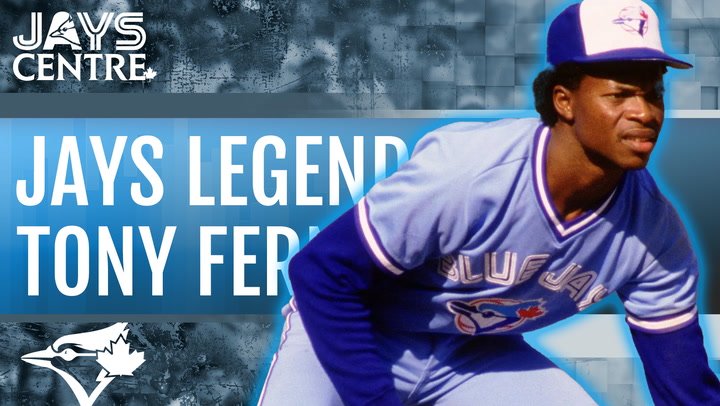 Tony Fernandez is widely regarded as the best shortstop in Blue Jays history. Fernandez played 17 seasons in Major League Baseball, 12 with the Blue Jays. Tony was a great switch-hitter known for contact and outstanding defensive skills. Sadly, he passed away at the age of 57 after a long battle with health issues. View the full article
 -
 Chicago Cubs farmhands dropped two of three Wednesday across the system. Iowa erased a five-run hole to tie Gwinnett before reliever Andrew Wantz surrendered two seventh-inning runs in a frustrating 7-5 loss. Knoxville's starter Dawson Netz struggled early, and a spirited four-run ninth fell just short at Rocket City, 6-5. South Bend rode Nazier Mule's six strikeouts, Brayden Spears' steady relief, and Jose Escobar's four hits to a 6-3 win over Wisconsin. Myrtle Beach was postponed. Cubs Transactions No Roster Moves Triple-A: Iowa's Comeback Falls Short in 7-5 Loss at Gwinnett The Iowa Cubs nearly completed a stunning comeback in Gwinnett, but the bullpen could not protect a tie, and the Triple-A club fell 7-5. Starter Jace Beck endured a rough afternoon, allowing all five of the opponent's early runs on seven hits over three innings before the offense went to work. Trailing by five, Iowa erupted for four runs in the top of the sixth. Brett Bateman opened the frame with a double, Jonathon Long and BJ Murray drew walks to load the bases. Owen Ayers punched an RBI single to left. Chas McCormick and Ben Cowles each coaxed bases-loaded walks, and James Triantos reached on an error that plated another run, pulling the visitors within one. In the seventh, Long doubled and scored on a Murray sacrifice fly to knot the game at five. The rally went for naught. Andrew Wantz, who had been sharp with five strikeouts, surrendered two runs in the bottom of the seventh to take the loss. Corbin Martin and Ethan Roberts combined for two scoreless innings, but Iowa could not answer in the final frames. Ayers led the offense with two hits, including a double, while Long reached base twice, scored a pair of runs, and swiped a bag. Bateman, Owen Miller, and Cowles each doubled as the visitors collected five two-baggers in all. Iowa showed patience with five walks and battled back from a daunting deficit, yet stranded the tying run late and dropped a game it appeared poised to steal. Iowa Cubs Hitting Player AB R H RBI BB K Brett Bateman 5 1 1 0 0 0 Jonathon Long 4 2 1 0 1 1 BJ Murray 1 1 0 1 2 0 Owen Miller 4 0 1 0 0 0 Owen Ayers 4 1 2 1 0 1 Chas McCormick 3 0 0 1 1 0 James Triantos 4 0 0 0 0 0 Ben Cowles 3 0 1 1 1 1 Hayden Cantrelle 4 0 0 0 0 1 Totals 32 5 6 4 5 4 Iowa Cubs Pitching Player IP H R ER BB K HR Jace Beck 3 7 5 5 2 3 1 Corbin Martin 1 0 0 0 0 1 0 Andrew Wantz (L) 3 4 2 1 1 5 0 Ethan Roberts 1 1 0 0 1 1 0 Totals 8 12 7 6 4 10 1 Double-A: Knoxville's Ninth-Inning Rally Comes Up Short, 6-5 Knoxville battled to the final out but came up a run shy in Rocket City, dropping a 6-5 decision. The Smokies struck first in the top of the fifth when Karson Simas doubled and came home on an RBI single from Alex Ramirez. The lead was brief. Starter Dawson Netz, who fanned five, unraveled in the bottom of the inning, walking two and surrendering three runs despite allowing just one hit. The hosts tacked on two more in the sixth and another in the seventh to build a 6-1 cushion, and Tyler Schlaffer and Luke Little could not stem the tide. Little served up a home run that provided important insurance. Down five entering the ninth, Knoxville refused to go quietly. Ariel Armas singled and Miguel Useche reached on an error to open the frame. Ed Howard followed with a single, and Simas drew a bases-loaded walk to force in a run. Ramirez then reached on another error, plating a second, before Jefferson Rojas and Andy Garriola delivered back-to-back sacrifice flies to make it a one-run game. The comeback stalled there, as the final out stranded the tying run. Simas paced the offense with two hits, two runs, and a stolen base, while Garriola reached base four times on two hits and two walks. Armas and Howard each chipped in a hit and a run. The Smokies drew five walks and mounted a furious four-run ninth, but 11 strikeouts and a quiet middle of the game proved too much to overcome. Knoxville Smokies Hitting Player AB R H RBI BB K Alex Ramirez 4 0 1 2 1 1 Jefferson Rojas 4 0 0 1 0 2 Andy Garriola 2 0 2 1 2 0 Edgar Alvarez 5 0 0 0 0 3 Carter Trice 4 0 0 0 0 1 Ariel Armas 3 1 1 0 1 0 Miguel Useche 4 1 0 0 0 3 Ed Howard 4 1 1 0 0 1 Karson Simas 3 2 2 1 1 0 Totals 33 5 7 5 5 11 Knoxville Smokies Pitching Player IP H R ER BB K HR Dawson Netz (L) 4 2/3 1 3 3 2 5 0 Tyler Schlaffer 2 1 1 1 1 1 0 Luke Little 1 1/3 2 2 2 1 0 1 Totals 8 4 6 6 4 6 1 High-A: Escobar's Four Hits Power South Bend Past Wisconsin, 6-3 South Bend authored the system's lone victory, riding a balanced pitching effort and a career night from Jose Escobar to a 6-3 win over Wisconsin. Escobar went 4-for-4 with three runs batted in, single-handedly matching Wisonsin's output. The Cubs fell behind 2-0 in the third but answered immediately. Escobar and Angel Cepeda drew walks, an error loaded the bases, and Kade Snell laced an RBI single before Michael Hallquist lifted a sacrifice fly to even the score. South Bend surged ahead in the fourth when Justin Stransky and Kane Kepley set the table and Escobar ripped a two-run single to make it 4-2. Starter Nazier Mule set the tone on the mound, striking out six over four innings while allowing just two runs, including some solid defense from the mound. Jose Romero tossed a scoreless fifth, and Brayden Spears earned the win with three innings of one-run ball, yielding only a lone tally in the sixth. Grayson Moore slammed the door with a scoreless ninth, punching out two to record the save. The SB Cubs added breathing room in the eighth, when Escobar doubled home a run and Cepeda followed with an RBI single. Stransky reached base three times atop the order, Cepeda worked two walks and drove in a run, and the lineup drew eight free passes to keep the pressure on. It was a tidy, complementary performance, with the staff scattering six hits and the offense capitalizing on Wisconsin's mistakes to close out a comfortable win. South Bend Cubs Hitting Player AB R H RBI BB K Kane Kepley 3 1 0 0 2 2 Josiah Hartshorn 4 1 0 0 1 1 Jose Escobar 4 2 4 3 1 0 Angel Cepeda 3 1 1 1 2 0 Matt Halbach 4 0 0 0 1 1 Kade Snell 4 0 1 1 0 1 Michael Hallquist 3 0 1 1 0 0 Michael Carico 4 0 0 0 0 2 Justin Stransky 3 1 2 0 1 0 Totals 32 6 9 6 8 7 South Bend Cubs Pitching Player IP H R ER BB K HR Nazier Mule 4 4 2 2 1 6 0 Jose Romero 1 0 0 0 2 0 0 Brayden Spears (W) 3 2 1 1 2 1 0 Grayson Moore (S) 1 0 0 0 0 2 0 Totals 9 6 3 3 5 9 0 Single-A: Myrtle Beach Pelicans: Postponed Top-20 Prospect Performance Jefferson Rojas: 0-for-4, RBI, 2 K Pedro Ramirez: DNP Jaxon Wiggins: DNP Josiah Hartshorn: 0-for-4, R, BB, K Kevin Alcantara: DNP Ethan Conrad: DNP Kane Kepley: 0-for-3, R, 2 BB, 2 K Owen Ayers: 2-for-4, 2B, R, RBI, K Jonathon Long: 1-for-4, 2B, 2 R, BB, SB, K Kaleb Wing: DNP James Triantos: 0-for-4 Brooks Caple: DNP Mason McGwire: DNP Ty Southisene: DNP Will Sanders: DNP Juan Cabada: DNP Eli Lovich: DNP Ariel Armas: 1-for-3, R, BB Jostin Florentino: DNP Grant Kipp: DNP View the full article
 -
 Blue Jays Affiliate Overview (July 21-22) Triple-A Buffalo Bisons Series vs Rochester Red Wings (Washington Nationals): 1-1 Season Record: 47-51 Double-A New Hampshire Fisher Cats Series vs Somerset Patriots (New York Yankees): 1-0 Season Record: 46-43 High-A Vancouver Canadians Series vs Hillsboro Hops (Arizona Diamondbacks): 1-1 Season Record: 41-51 Single-A Dunedin Blue Jays Series vs Bradenton Marauders (Pittsburgh Pirates): 2-0 Season Record: 43-47 FCL Blue Jays Week Record: 1-0 Season Record: 37-20 DSL Blue Jays Blue Week Record: 0-1 Season Record: 15-21 DSL Blue Jays Red Week Record: 1-0 Season Record: 18-17 Triple-A Buffalo Bisons Season Record: 47-51 Series vs Rochester Red Wings (Washington Nationals) July 21: On Tuesday, Buffalo opened up a new series, this one with the Rochester Red Wings. Simeon Woods Richardson had the mound and had an up-and-down start. The good came in the form of strikeouts and his ability to keep hitters from making quality contact. He only pitched three innings, but struck out five, only gave up one hit, and didn't allow a run. The bad was with his command at times. Across the three innings, he walked four, and in the at-bats, the misses were not competitive at all. While Woods Richardson was on a roller coaster, Josh Kasevich and Ismael Munguia led the offense. Charles McAdoo started the scoring for Buffalo with an RBI single that brought home Munguia in the bottom of the first inning. Later in the inning, Jay Harry continued his excellent season with an RBI single, scoring Kasevich. Carlos Mendoza added to the Bisons' lead by grounding out to first base, but Davis Schneider crossed home on the play. From there, the Buffalo bullpen imploded, yet again, highlighted by Abimelec Ortiz bringing home three runs on two doubles in the eighth and ninth innings. In all, Rochester scored six runs in the ninth, all charged to Pat Gallagher. Buffalo dropped the game 7-3, after leading 3-1 going into the final frame. July 22: It was the Max Scherzer show on Wednesday afternoon for the Bisons. Scherzer was making another rehab start and made this one count in a big way. Scherzer threw five perfect innings, no hits, no walks, no runs, and struck out seven. The start was perfect for Buffalo, as their bats were hot as well. Josh Kasevich and Jay Harry each had two-RBI doubles in the bottom of the second inning. Davis Schneider blasted a solo shot in the third on a first-pitch fastball. Then William Simoneit added to the Bisons' lead with an RBI single in the fifth. Finally, Buffalo scored two on a wild pitch in the fifth as well. The Bisons cruised to a 9-2 win, as Scherzer looks primed to be activated off of the IL before his next start. Double-A New Hampshire Season Record: 46-43 Series vs Somerset Patriots (New York Yankees) July 21: Postponed July 22: Wednesday was the first game of the series between New Hampshire and Somerset. Arjun Nimmala got things going in the bottom of the first. He doubled to left field and then scored on an Eddie Micheletti Jr. RBI single. DJ Gladney launched a home run for Somerset to tie the game in the second inning. In the third inning, it was Nimmala again, but this time he crushed an opposite-field home run. The exit velocity was 106 mph, and it went 432 feet. The next inning saw Josh Moylan homer to give the Patriots a one-run lead. Carter Cunningham tied things up in the seventh inning with his fourth Double-A home run. The eighth inning saw New Hampshire break things wide open. With the bases loaded, Jorge Burgos got all of a 1-0 pitch over the plate and crushed a grand slam to right field. New Hampshire would go on to win 7-4. High-A Vancouver Season Record: 42-50 Series vs Hillsboro Hops (Arizona Diamondbacks) July 21: The Canadians met up at Hops Ballpark with Hillsboro and were able to stave off a late-inning comeback from the opposition. A throwing error in the first inning on a pick-off attempt allowed J.R. Freethy to score the first run of the game, but the Hops responded with a two-run second inning off of Silvano Hechavarria. The game went back and forth until the seventh inning, where Jake Casey came up to the plate with two outs and hammered his third homer of the season that netted the Canadians two runs and the lead, for Casey’s fourth time on base of the game. Edward Duran quickly followed that up with a homer of his own, making it a 6-3 lead. Jack Nedrow came in the eighth inning and allowed a run-scoring double, but the Canadians had another multi-run inning in the ninth, as the Iowa Meat Truck Peyton Williams added a run with a ringing double, then Tucker Toman drove him home with his 10th homer of the season. That turned out to be just enough runs to survive the onslaught from the Hops, as they fired back with four runs against Nedrow in the ninth before Jonathan Todd shut the door for the save and the win. July 22: The Canadians once again rallied in the ninth inning in another close game against the Hops. Johnny King wasn’t his best in this start, giving up four runs, with three of them being earned. He did show some good stuff, with six strikeouts over his four innings pitched, but that put the Canadians in a hole early. Mathieu Vallee was able to get some runs across for the Canadians with a two RBI-single, but Austin Marozas couldn’t stop the bleeding as he allowed two more runs. The Canadians had the Hops on the ropes in the eighth, as they loaded the bases with no outs, but they were unable to fully capitalize, as Manuel Beltre drove in one run on an RBI single and Vallee was able to move another runner across with an RBI groundout, but the Canadians still trailed by two heading into the ninth. Gilberto Batista continues to do well as a short-inning reliever, allowing no runs in his two innings, and in the ninth inning, the Canadians showed life, with Ryan Sprock hitting a ball that bounced and hit the top of the wall, so Slade Caldwell assumed that it went over the fence, then bounced back in. However, Sprock kept on chugging and managed to get an inside-the-park homer. This must have shaken the Hops, as with two outs and runners on first and second, recently promoted Jaxson West had himself a clutch single to tie the game up. Jake Casey pinch hit for Beltre and took the lead with a single of his own, and Vallee had his fourth RBI of the night to give the Canadians the lead for good. Single-A Dunedin Season Record: 43-47 Series vs Bradenton Marauders (Pittsburgh Pirates) July 21: This was a barnburner, as the Jays and Marauders traded runs back and forth. Denis Samudio did not have his best command, walking four batters in just under three innings, and was punished in the first inning, as rehabbing old friend Spencer Horwitz was able to walk and score on Brent Iredale’s two-run single. Aldo Gaxiola was able to hit an RBI triple to get the Jays on the board. The Jays tied it up after JoJo Parker hit a double, then advanced on a balk, and after Juan Sanchez got on base with a walk, he stole second, leading to a throwing error that allowed Parker to go home. The wind got an assist as Jean Joseph’s pop-up evaded Horwitz’s glove, putting the Jays up one. T.J. Brock made his return for the Jays on rehab assignment, and although the stuff was popping, he gave up a hit to Horwitz, then was taken deep to lose the lead. He gave up two hits but decided enough was enough, striking the last two batters swinging. Sanchez answered right back with a homer of his own for his seventh of the season, and another Gaxiola extra-base hit put the Jays up by four. The Marauders were hot on the Jays’ tail, as Josbel Garcia gave up three runs in the seventh and eighth, bringing it back to a one-run game. Gaxiola could not be denied, as he had his fourth and fifth RBIs of the game to put the Jays up three, and that was just what the doctor ordered, as Lluveres Severino gave up two runs in the bottom of the ninth, narrowly escaping with a victory. July 22: This was a laugher for the Dunedin Blue Jays, as they got ahead early and really pulled away at the end of the game. Blake Purnell went six innings for a quality start, striking out four batters and allowing two runs. Although he gave up the first run of the game, the Jays quickly answered with a Jake Cook two-run double and a Blaine Bullard single, making it 3-1. Giaconino Lasaracina smoked one to center field, making it 4-1, and Bullard added to the extra-base hit fiesta with a two-RBI double in the sixth. Colby Holcombe returned on rehab assignment, but allowed a two-run homer to make it within two runs, but Raimundo De Los Santos had his second homer of the season to take a run back. JoJo Parker singled in the ninth, and after two quick outs, it looked like they were just going to head into the bottom of the ninth with a three-run lead, but the Jays just could not get out. They went single, double, single, single, walk, double, double, double, double, which ended up making for a nine-spot inning. FCL Blue Jays Season Record: 37-20 July 22: It was not a good day for the FCL Blue Jays against the FCL Tigers on Tuesday. The Blue Jays only managed one hit and surrendered 16. Seojun Moon got the start for the Blue Jays and was doing well until the third and fourth innings. He allowed a solo home run to Cris Rodriguez in the third inning and a run on a single in the fourth. He left with two men on, and the Tigers immediately got to the next pitcher, Edgar Gallegos. Gallegos allowed a three-run home run, and things kept going downhill. In the sixth inning, the Tigers got two more home runs, including one from Rodriguez again. The Blue Jays lost this one big, 13-2. DSL Blue Jays Blue Season Record: 15-21 July 21: Tuesday's game for BJB started out rough and only got worse. Tomoya Kinjo was on the mound to start the game for BJB and didn't make it out of the first inning. In fact, he didn't even record an out; he walked all three hitters he faced. Manuel Parra replaced Kinjo and gave up two runs. BJB pitching did have one bright spot: They struck out 10 White Sox batters in the seven-inning game. Unfortunately, the strikeouts were overshadowed by 14 walks, five hits, and nine runs allowed. Sebastian Casanova continued his sizzling season with two more hits, bringing his batting average up to .363 for the season. BJB scored four runs in the game, three in the third and one in the sixth. In the third, Casanova had an RBI single, then Ruben Sanchez scored on an RBI groundout by Juan Caricote, and finally Casanova crossed home on a wild pitch. In the sixth, Isay Veras singled in Casanova. It was all for not through, as BJB pitchers couldn't find the strike zone all game. BJB lost 9-4. DSL Blue Jays Red Season Record: 18-17 July 21: While BJB got a terrible game from their pitchers, it was a vastly different story for BJR on Tuesday. BJR almost pitched a full nine-inning no-hitter, getting five no-hit innings from Alieski Torres and three no-hit innings from Jose Melo. Torres drops his ERA to 0.95 for the season and looks like he might have a real shot to come stateside next year to start playing Rookie ball. Diego Arce launched his first home run of the season, while Alex Linares, Gabriel Porras, and Aneudi Severino each had two hits in the game. BJR cruised to an 11-1 win, allowing just one hit in the game. Transactions 07/22/26 Toronto Blue Jays recalled RHP CJ Van Eyk from Buffalo Bisons. 07/22/26 Toronto Blue Jays recalled LF Yohendrick Piñango from Buffalo Bisons. 07/22/26 Toronto Blue Jays optioned RHP Lazaro Estrada to Buffalo Bisons. 07/22/26 Vancouver Canadians sent RHP Colby Holcombe on a rehab assignment to Dunedin Blue Jays. 07/21/26 LHP Mason Olson assigned to New Hampshire Fisher Cats from Buffalo Bisons. 07/21/26 LHP Javen Coleman assigned to Buffalo Bisons from New Hampshire Fisher Cats. 07/21/26 Dunedin Blue Jays activated C Owen Carapellotti from the 7-day injured list. 07/21/26 New Hampshire Fisher Cats activated C Aaron Parker from the 7-day injured list. 07/21/26 New Hampshire Fisher Cats sent RHP T.J. Brock on a rehab assignment to Dunedin Blue Jays. 07/21/26 New Hampshire Fisher Cats released C Adam Hackenberg. 07/21/26 C Jacob Sharp assigned to New Hampshire Fisher Cats from Vancouver Canadians. 07/21/26 LHP Javen Coleman assigned to Buffalo Bisons from New Hampshire Fisher Cats. 07/21/26 LHP Mason Olson assigned to New Hampshire Fisher Cats from Buffalo Bisons. 07/21/26 Vancouver Canadians activated LF Alexis Hernandez from the 7-day injured list. 07/21/26 Vancouver Canadians released C Alex Stone. 07/21/26 C Jaxson West assigned to Vancouver Canadians from Dunedin Blue Jays. View the full article
 -
Pedro Ramírez Is The Versatile Bat Shaping The Cubs' Future
DiamondCentric posted an article in North Side Baseball
 Pedro Ramírez has wasted little time making an impression, combining elite contact ability, strong underlying metrics, and positional versatility to cement himself as an important part of Chicago's future. View the full article
 -
 Boston Red Sox Affiliate Recap Triple-A Worcester Red Sox Season Record: 47-46 Game 1 of Doubleheader For the first game of a seven-inning doubleheader, Worcester won a low-scoring back-and-forth affair 3-2 against the Jacksonville Jumbo Shrimp (Miami Marlins). Worcester snuck out with a win with just three hits as a team while Jacksonville had six. The Jumbo Shrimp jumped on top early in the first with a solo shot, but the Sox responded immediately in the bottom half with a Mikey Romero RBI groundout to tie it 1-1. It was quiet through the next few innings, but Jacksonville strung a couple of singles together in the fourth, bringing in a run to get themselves a 2-1 lead. The Sox answered back once again in the bottom half, working a two-out rally. Allan Castro reached base with two outs, Vinny Capra came through in a big moment with an RBI double to tie the game, then Kristian Campbell gave the WooSox their first lead of the game with an RBI single, 3-2. Blake Wehunt made his WooSox debut after a promotion from Double-A. The 6’7” righty looked solid as he threw just 3 ⅔ innings with four strikeouts and gave up two runs (one earned). Worcester’s bullpen held their own the rest of the way; Angel Bastardo, Tyler Uberstine, and Wyatt Olds combined for 3 ⅓ shutout innings. Game 2 of Doubleheader The WooSox pulled off an incredible comeback from being down seven runs, ending the game 13-12 against the Jumbo Shrimp. Jacksonville jumped out early with a homer in the first inning and a grand slam in the second to make it 7-0 before Worcester had scored. The WooSox chipped back with a pair of RBI singles from Tyler McDonough and Nick Sogard in the second, and a double play from Andrew Knizner brought in a run in the third, 7-3. The Jumbo Shrimp kept pushing across more runs with a three-run fourth inning, putting the Sox in a big hole once again, 10-4. Now down six runs, Worcester did not flinch as they broke through with a massive six-run fourth, keyed by Kristian Campbell's two-run homer and an RBI hit from Nick Sogard and a bases-loaded walk from Brett Harris. Sogard stole home, and a wild pitch from Jacksonville's pitcher tied the game up 10-10. Jacksonville answered with two in the fifth to lead 12-10; it stayed there up until the bottom of the seventh. That's where Worcester finished it: Allan Castro singled, Vinny Capra doubled, and Campbell walked to load the bases with no outs. After a strikeout, another wild pitch came at a good time, scoring Castro to make it a one-run game. An intentional walk to Sogard loaded the bases once again, now with two outs; Mickey Gasper laced a two-run double as the Jumbo Shrimp center fielder misplayed the ball, completely overrunning the ball, bringing in Capra and Campbell to walk it off 13-12. Standout Performances: Mickey Gasper: 3-for-4, 2B, R, 2 RBI Vinny Capra: 3-for-4, 2 2B, 2 R Kristian Campbell: 1-for-2, HR, 3 R, 2 RBI, 2 BB Nick Sogard: 2-for-3, 2B, R, 2 RBI, 2 BB Double-A Portland Sea Dogs Season Record: 49-42 The Sea Dogs offense fell asleep as they suffered an uneventful 2-1 loss to Binghamton (New York Mets). Regardless of the fact that Portland’s offense was shut down all game, Hayden Mullins was incredible in his five-inning start, leaving a donut on the scoreboard while striking out eight Rumble Ponies. Portland’s bats only tallied four hits and one run with the top three batters in the lineup (Franklin Arias, Miguel Bleis, and Jack Winnay) going a combined 0-for-10. The only run for the Sea Dogs came in the third inning. Ahbram Liendo singled on an infield blooper, then stole his 17th bag of the season, putting him on second base with no outs. Nelly Taylor provided a productive out, advancing the runner to third with a groundout. Franklin Arias followed up with a sacrifice fly as Liendo crossed the plate to put them up 1-0. Portland had a perfect chance to extend their lead in the fifth after loading the bases with no outs, but Taylor struck out on three pitches, and Arias grounded into a double play to end the inning. That chance came back to haunt them when the Rumble Ponies smoked a two-run single to make it a 2-1 game. The Sea Dogs came close to tying it in the ninth with two outs and runners on second and third; sadly, Liendo flew out to left field to end the game. Standout Performance: Hayden Mullins: 5 IP, 1 H, 0 ER, 1 BB, 8 K High-A Greenville Drive Season Record: 37-52 After scoring just one run in the game prior, Greenville’s offense obliterated the Spartanburgers (Texas Rangers) 13-6. The Drive had one of their most productive games of the year, going 6-for-13 with RISP, blasting three homers, and racking up two doubles, while seven of their nine batters collected multi-hit games. Greenville was hot through the first three innings, with Enddy Azocar putting the nail in the coffin with a towering grand slam in the third inning, putting his team on top 9-0. Justin Gonzales also had a nice day at the plate, including a three-run bomb in the seventh that ended with a bench-clearing brawl between Gonzales and Hub City’s catcher, putting the game completely out of reach 13-6. The third home run came from Yoeilin Cespedes, who blasted a solo shot, his 17th homer of the year, to extend Greenville’s lead to 10-6. Ronny Hernandez and Luke Heyman added to the frenzy with multi-hit, two-RBI days at the plate. Alex Bouchard looked solid in his three-inning shutout start, while striking out three batters. Joe Vogatsky got rocked in his relief appearance during the middle part of the game, including some defensive miscues from the Drive’s defense. Calvin Bickerstaff did an amazing job at shutting down the opposing offense, tossing 4 ⅓ scoreless one-hit innings with four strikeouts. Standout Performances: Justin Gonzales: 2-for-4, HR, 2B, 3 R, 3 RBI, BB Enddy Azocar: 2-for-5, HR, 2 R, 4 RBI Yoeilin Cespedes: 2-for-4, HR, 2B, 3 R, RBI Calvin Bickerstaff: 4 ⅓ IP, 1 H, 0 ER, 4 K Low-A Salem RidgeYaks Season Record: 39-52 The Yaks bounced back and put up nine runs on the GreenJackets (Atlanta Braves) with a final score of 9-3. Christian Fouch started on the mound for Salem and had some control problems, issuing four walks and two runs on three hits. The GreenJackets brought in one run each in the first and third innings, putting them on top 2-0. Kleyver Salazar had an amazing 3-for-4 game for the RidgeYaks, including a three-run shot in the third inning that not just put his team on the board, but also gave them a 3-2 lead. Salem did not trail another time for the rest of the game as they poured on runs. D’Angelo Ortiz contributed with an RBI single in the fourth; later on in the seventh, Andrews Opata roped an RBI double, and Salazar collected his fourth RBI of the game after lining a single to center field to extend the lead to 6-3 Two long balls came in the eighth; Louis Andujar continued to look more comfortable in Low-A, hammering a solo shot. Ortiz struck out but ended up on first base due to a wild drop third strike, which set up an Ilan Fernandez two-run bomb, putting the game way out of reach, 9-3. Yermain Ruiz was terrific in his relief outing, tossing four innings and allowing just one run to earn his first save of the season. Nicolas De La Cruz kept the game in reach with 1 ⅓ shutout innings when he came in after Fouch. Standout Performances: Yermain Ruiz: 4 IP, 2 H, 1 ER, 3 K Kleyver Salazar: 3-for-4, HR, R, 4 RBI Louis Andujar: 2-for-4, HR, 2 R, RBI Ilan Fernandez: 2-for-4, HR, 2 R, 2 RBI View the full article
 -
 The New York Mets have filled their Triple-A roster mostly with veteran position players to ensure organizational depth. Many of those players have been called upon this season as injuries hit the major-league roster. If the Mets' trade deadline sell-off succeeds, there may be more callups. Luis Robert Jr., Tyrone Taylor and perhaps others will be gone, and the returns for them will likely be lower-level prospects. That means there's still a carrot in front of players like Eric Wagaman and MJ Melendez. Both players made contributions to the big-league club before being sent down as guys returned from the IL. Wagaman got himself noticed Wednesday with a go-ahead, two run single in the eighth inning for Syracuse against Scranton/Wilkes-Barre, Melendez scored on the hit, the run that gave Syracuse the lead. The Mets' bullpen made the hit stand up in a 5-4 victory. New York has perennial prospect Ronny Mauricio playing at Syracuse, too, but he'd fit best in the majors if the Mets deal an infielder. Melendez can fill an open spot in the outfield. Wagaman can play all four corners. All three will be grinding to get another shot in the bigs. Elsewhere in the organization: Binghamton edged Portland 2-1. Corey Collins drove in both Rumble Ponies runs with a two-out single in the sixth. Starter Channing Austin and long reliever Dakota Hawkins each went three innings. Brooklyn lost to Jersey Shore 5-3 on a walk-off home run in the ninth. The Cyclones tied the game in the top half when Jersey Shore’s pitcher dropped a throw that would have ended the game. St. Lucie fell 12-9 to Fort Myers. The Mets led 7-5 after five innings, but the Mighty Mussels answered with two runs in the sixth and five in the seventh. Trey Snyder had three hits and three RBIs. The FCL Mets shut out the FCL Marlins 1-0. Anthony Frobose’s home run in the fifth inning held up as the winning run. Camden Lohman struck out six in a four-inning bulk relief effort. Mets Transactions No Roster Moves Syracuse Makes Most Of Opportunities The Mets made their four hits count against the RailRiders. Before Wagaman's game-deciding single, Mauricio homered in the fourth inning to cut the Mets' deficit to 2-1. Syracuse went on to score three in the frame. The other two runs came in on a Wagaman groundout and a throwing error by the pitcher onding Jihwan Bae's drag bunt. Mauricio doubled in the eighth to set up the winning rally. MJ Melendez and Nick Morabito walked to load the bases. Wagaman then came through with a liner to right-center. Five Rumble Ponies pitchers combined to hold the Sea Dogs to four hits. Starter Channing Austin and long reliever Dakota Hawkins each worked three innings, with Austin allowing the lone Portland run in the third. Carlos Guzman worked around two walks in the ninth for his third save. Tauchman went 1-for-3 with a walk in another rehab game. Player AB R H RBI BB K Mike Tauchman 3 0 1 0 1 0 Chris Suero 4 1 1 0 0 1 Jose Ramos 3 0 0 0 1 3 Nick Lorusso 3 0 0 0 1 2 Corey Collins 3 0 2 2 0 1 JT Schwartz 3 0 0 0 0 2 Matt Rudick 3 0 0 0 0 0 Nick Lucky 3 0 0 0 0 2 Wyatt Young 2 1 0 0 1 2 Player IP H R ER BB K HR Channing Austin 3 1 1 1 0 2 0 Danis Correa 1 0 0 0 0 2 0 Dakota Hawkins 3 3 0 0 1 2 0 Brian Metoyer 1 0 0 0 0 1 0 Carlos Guzman 1 0 0 0 2 0 0 Cyclones Return Ninth-Inning Gift With Walk-Off HR Brooklyn was down to its final strike, only to have Jersey Shore's defense keep the game going. With runners at first and second and a full count, Yohairo Cuevas chopped a grounder wide of first base. The first baseman fielded the ball cleanly and flipped to the pitcher covering. It should have been game over, but the pitcher dropped the ball and it bounded into foul territory. Jamari Baylor, who was running with the pitch, scored from second to tie the game 3-3. In the bottom of the ninth, Ryan Dollar gave up a walk and a two-run blast for the blown save. Brooklyn went ahead 2-0 in the first on Daiverson Gutierrez's two-run double. Yonatan Henriquez singled, Mitch Voit was hit by a pitch, and Gutierrez brought them home with a liner into the left-center gap. Starter Daviel Hurtado went four innings, allowing two runs on four hits, with three walks and four strikeouts. Rehabbing vet Kevin Herget followed with two scoreless innings. Player AB R H RBI BB K Yonatan Henriquez 4 1 2 0 0 0 Mitch Voit 3 1 0 0 0 1 Ronald Hernandez 4 0 0 0 0 1 Daiverson Gutierrez 4 0 1 2 0 1 Jamari Baylor 2 1 1 0 1 0 Kevin Villavicencio 0 0 0 0 0 0 AJ Salgado 3 0 0 0 0 1 Colin Houck 4 0 1 0 0 2 Yohairo Cuevas 4 0 0 0 0 3 Sam Biller 4 0 0 0 0 2 Player IP H R ER BB K HR Daviel Hurtado 4 4 2 2 3 4 0 Kevin Herget 2 1 0 0 0 0 0 Parker Carlson 1 1 1 1 1 1 0 Cristofer Gomez 1 0 0 0 0 0 0 Ryan Dollar 1/3 1 2 2 1 0 1 St. Lucie's 16 Hits Not Enough Against Fort Myers Seven different Mets had multiple hits, led by Snyder's three, but they couldn't overcome a rough night by the pitching staff. It surrendered 11 hits and eight walks and threw three wild pitches. Four of the five pitchers who took the mound gave up runs. Luis Alvarez was the only one with a scoreless outing. Starter Jose Lopez gave up two over 3 2/3 innings. Antonio Jimenez, Elian Pena, Randy Guzman, Branny De Oleo, Chase Meggers, and Jeremy Rodriguez each collected two hits in the loss. Player AB R H RBI BB K Antonio Jimenez 5 2 2 0 1 0 Elian Pena 5 2 2 1 0 0 Trey Snyder 4 1 3 3 0 0 Randy Guzman 4 1 2 1 1 1 Julio Zayas 4 1 1 0 1 1 Branny De Oleo 4 2 2 2 0 0 Chase Meggers 5 0 2 1 0 1 Simon Juan 5 0 0 0 0 1 Jeremy Rodriguez 4 0 2 0 1 1 Player IP H R ER BB K HR Jose Lopez 3 2/3 4 2 2 3 6 1 Miguel Mejias 1 1/3 2 3 3 2 2 0 Ernesto Mercedes 1 2 3 2 1 1 0 Tyler McLoughlin 1 3 4 4 2 0 2 Luis Alvarez 2 0 0 0 0 3 0 Top-20 Prospect Performance Jonah Tong: DNP Jack Wenninger: DNP Ryan Clifford: 0-for-4, 2 K Elian Pena: 2-for-5, 2B, 3B, RBI Nick Morabito: 0-for-2, 2 BB, SB Jacob Reimer: DNP Mitch Voit: 0-for-3, K, SB Jonathan Santucci: DNP Zac Thornton: MLB Chris Suero: 1-for-4, K Will Watson: DNP Wandy Asigen: DNP Eli Serrano III: DNP Randy Guzman: 2-for-4, 3B, RBI, BB, K Dylan Ross: 1 IP, 2 H, 0 R, 1 K Ryan Lambert: DNP Antonio Jimenez: 2-for-5, BB R.J. Gordon: DNP Jonathan Pintaro: DNP Marco Vargas: DNP View the full article
 -
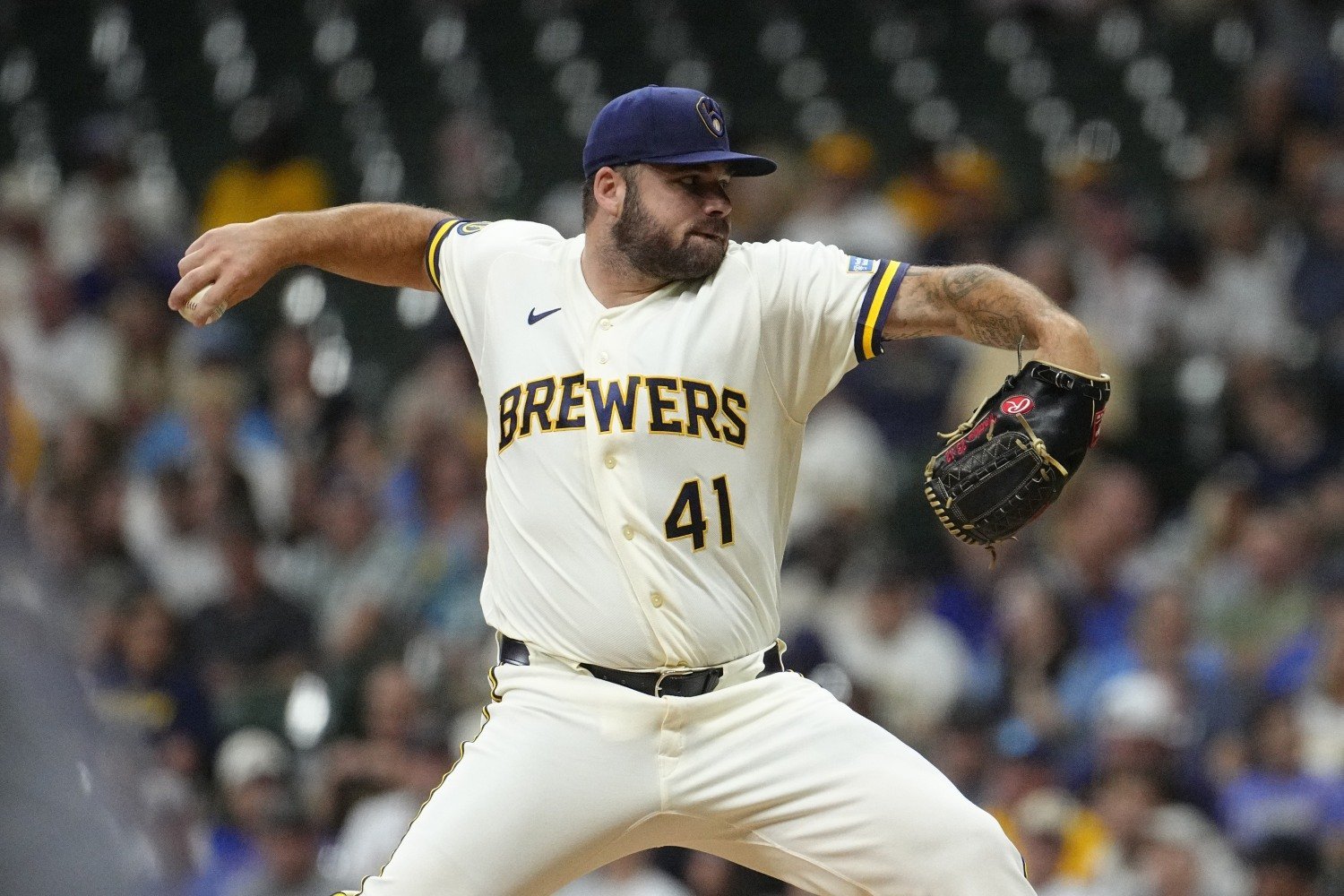 "Four innings from Bryse was huge," Pat Murphy said after Tuesday night's 4-0 loss to the Mets. It was encased in the undertone that is part of a manager's armor after losses; the public demands an attitude of resignation and contrition. It sounded almost like he didn't mean it. He did. Earlier that day, Murphy circled back around to Lance McCullers Jr., who had made his Brewers debut in Monday's 8-3 win. McCullers threw three innings after a short start by Jacob Misiorowski, and although he gave up two runs in the third of those frames, Murphy was effusive in his praise for the smooth landing by his newest acquisition. "Just how important it was," Murphy said, when asked why he was eager to talk more about McCullers after discussing him postgame Monday night, "that a kid goes into the game, that hasn't thrown a lot of innings this year and hasn't (obviously) thrown for us yet, and goes into a game, a 5-1 game in the sixth, and did so very well." Murphy mentioned both Monday night and Tuesday afternoon that asking McCullers to pitch that third inning was a tall order, and perhaps not the best thing for the player himself. In the skipper's eyes, though, it was the best thing for the team, and he was very grateful to the erstwhile Astros starter for his selfless approach to that appearance. All of that sounds like manager-speak. It's easy to praise players who play only when the stakes are low; it costs the manager nothing and garners some goodwill in the clubhouse. It doesn't necessarily mean anything. Murphy isn't that kind of politician, though. When he calls out a player in a positive light, it's because he sees real and forward-looking value in what they did. Wednesday's game couldn't have made it more clear why Murphy was so enthusiastic about McCullers and Wilson doing what they did. Because they gave the team 21 outs over two days in which the game was not in doubt late, the 'A' bullpen was fresh. Whether heading off calamity by putting in one of his leverage arms with a good-sized lead or refusing to give up on a game ("nobody can take me off that," he said during one recent pregame media session, in reference to his Win Tonight credo) and sending them in when the team trails by a narrow margin, Murphy knows that he leans hard on his top arms. To do so less, he needs to trust the guys at the bottom end of the bullpen hierarchy more than he has felt able to trust some of the recent options. He trusts McCullers and Wilson, though. His excitement about McCullers's openness to change and his team mentality are palpable. He knows Wilson and is willing to deploy him more flexibly than he would use a player of identical skills but who had proved less to Murphy about his dedication to the team. Logan Henderson pitched well for Milwaukee Wednesday, with nine strikeouts and no walks in five innings of two-run ball. The team got him out of the game after 80 pitches, though, as they continue to monitor and manage his workload in light of his spotty health history. That left them with 12 outs to protect what was, initially, only a one-run lead. Aaron Ashby often pitches in games like Monday's or Tuesday's, when Murphy feels less confidence in his long relief options or more desperate for a win. Thanks to McCullers and Wilson, though, he stepped onto the mound in the sixth having not pitched since Sunday. He was sharper than has been his recent norm, with extra life on everything, and he cruised through two innings while allowing just one baserunner. Abner Uribe and Trevor Megill hadn't pitched since Saturday, and as high-octane one-inning guys, they almost looked a bit rusty after three days down. The lack of fatigue saved them, though. Each buckled down and got the outs they needed, and an insurance run added by Christian Yelich in the sixth inning helped the Brewers hold on for a 4-3 win. That game can get away easily. The Mets pitched well and didn't make any of the defensive mistakes that are so much a part of their brand this year. Winning that rubber match required that Murphy be able to cover the back half of the game with his three top arms, and Wilson and McCullers made that possible over the two previous nights. Whenever a long reliever works so much that they'll be down for a couple of days, you have to hold your breath for them for a minute. Wilson did hero's service to the team on Tuesday night, but if the team weren't just coming out of the All-Star break (and if they didn't have the day off Thursday to reset their bullpen), he might have been gone by Wednesday. He survived, and is still around, which will be a relief to Murphy again sometime soon. "I think I've kind of just embraced this role that I'm in now," Wilson said. "At this point in my career, this is what teams want from me, to be available, to be ready to take the ball and go right after guys, keep forcing soft contact, keep competing." The burly right-hander was ecstatic when, after he was released by the Cubs last month, the Brewers had interest in a reunion. He called his previous stint with the team "the two best years of [his] career" and mentioned how much he trusts and likes the coaching staff, as well as many of his teammates. His locker in the home clubhouse at Uecker Field is right next to Ashby's, just as the two were arranged when Wilson was here last. He's extremely comfortable with the team, and willing to do whatever is asked of him. That was true when he first arrived, too, and was always part of what made Murphy so happy to have him. The manager talked about Wilson's selflessness with the media even before the calendar turned to March in 2024, his first year at the helm. Wilson also has something working for him this time around, part of his constant effort to reinvent himself and befuddle batters: a split-change. "It's more of a split-change grip," he acknowledged, saying he made the switch early this season. "I felt like, just the way I had to manipulate the ball with my old grip"—he used to throw a four-seam straight changeup, the most basic version—"I really had to force the inside of my hand through it, and I think hitters could see that." The righty knows he won't miss many bats with this version of the change. That's fine. He's always thrived on soft contact, and intends to keep doing so. One extra source of excitement for him about returning to the team lied in the reliability of the defense he'd be pitching in front of. He also feels like, if lefties are less able to spot his changeup right at release, they'll have to be a bit less aggressive against the rest of his arsenal. Murphy often talks about a player being "the right person," by which he means that they fit into the clubhouse and augment the team dynamic via their work habits, attitude and interpersonal skills, as well as their talent. He's already applied that term to McCullers and Wilson, and he seems to be right on both counts. The season rips at you. It looks for loose threads and pulls them until you unravel. A team must be an exquisitely stitched garment, and when patches are needed, they must be done with care and use high-quality fabric. That's what Murphy believes the team has done with the latest additions to the bullpen, and the way the Mets series unfolded was an excellent example of how those seemingly intangible things can become tangible. McCullers and Wilson can't have big roles on great teams at this stage in their respective careers. However, having them in small roles can made the difference between a good team and a great one, and the Brewers very much aspire to be the latter. View the full article
 -
How Miguel Andujar's Injury Alters Padres' Trade Deadline Plans
DiamondCentric posted an article in Padres Mission
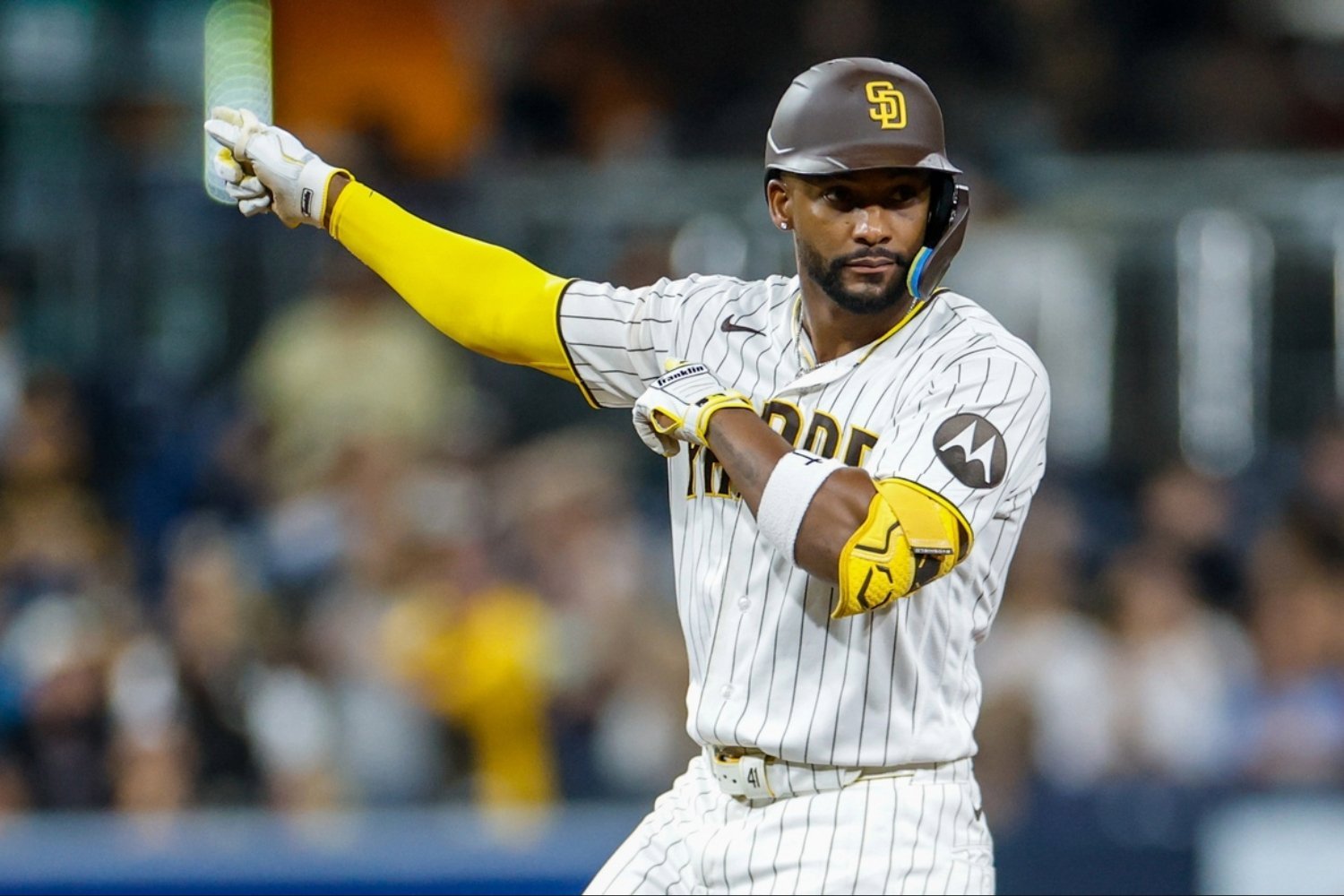 Less than two weeks away from Major League Baseball's 2026 trade deadline, we still lack a clear picture as to how A.J. Preller and the San Diego Padres will operate. They're two games out of the National League's final wild card spot, with their performance on a given night featuring so much variance that it's difficult to tell where they'll be floating in the standings by August 3, to say nothing of featuring one of the game's more aggressive executives atop their front office. Whether they buy or sell, the Padres do have clear needs. Offensive depth, potentially to supplement the middle infield or bring some depth to the outfield, is on the list, with starting pitching representing easily the most imperative of additions that Preller could seek to make at the beginning of next month. While the latter portion of that statement won't change as the team continues to cobble together starts from a shallow staff, one has to wonder if Miguel Andujar's recent injured list placement could impact their pursuit of the former. Andujar's trip to the IL comes as the result of a broken wrist. Such an injury carries an unclear timeline, though the Padres are hopeful he'll return before year's end. Playing on a one-year deal, Andujar has been a steady bat appearing almost exclusively as the team's designated hitter. Prior to his injury, he'd posted a .259/.303/.423 line (100 wRC+) with an extremely reasonable 15.0 percent strikeout rate and walk rate resting a shade under five percent. It's not gaudy production, especially on the slugging side, but such steadiness is something this lineup will sorely miss. Which is why it's reasonable to wonder whether or not this team, if buyers, will wind up more in pursuit of an additional bat than they might otherwise have been. It seems silly to wonder if a club lingering near the bottom of most offensive categories would have gone after a hitter otherwise. Logic would appear to indicate it as an obvious need. However, personnel is in place across most of the starting lineup that would have prevented the addition of an impact bat. Contract context and upside both matter, even in the wake of underperformance. So, while it may make on-paper sense to supplement a down year from Jackson Merrill or Xander Bogaerts with outside additions, doing so in a way that ate into either player's plate appearances may not have happened. The only real argument in terms of a full-time addition could have been made for left field. Questions were left in the respective absences of Ramón Laureano & Samad Taylor, with projections featuring a 42 percent timeshare for Gavin Sheets atop the group. From a defensive standpoint, that's less than ideal (while also serving as the best way to get his bat into the lineup when Andujar was healthy). If a bat-first player was going to be an addition, it was likely going to be as a supplement to the position that would have required some more flexibility on the part of Craig Stammen. Now, however, the Padres have a vacant designated hitter spot to go along with those lingering questions in left field. The only real change resulting here is in the flexibility Preller has to operate with. Instead of finding a complimentary bat that would then result in a cycling of Sheets, Andujar, and Ty France across left field and first base in some form or fashion, Preller now has the ability to pursue a true slugger, regardless of position, with more plate appearances made available. Whether or not such an addition is even possible remains to be seen, given the state of the farm system. Nevertheless, the need for a bat is now greater than it had been before, even on paper, with the only change wrought by Andujar's injury coming in the form of the flexibility it presents. An injury to a key and stable hitter isn't going to be looked upon as a positive in any context, but if there is a takeaway to be had, it's in that freedom that Preller now has to maneuver. View the full article
