


DiamondCentric
-
Posts
2,631 -
Joined
-
Last visited
Never
Content Type
Profiles
Forums
Events
News
Tutorials & Help
Major League Baseball Videos
Guides & Resources
Store
Downloads
Gallery
Everything posted by DiamondCentric
-

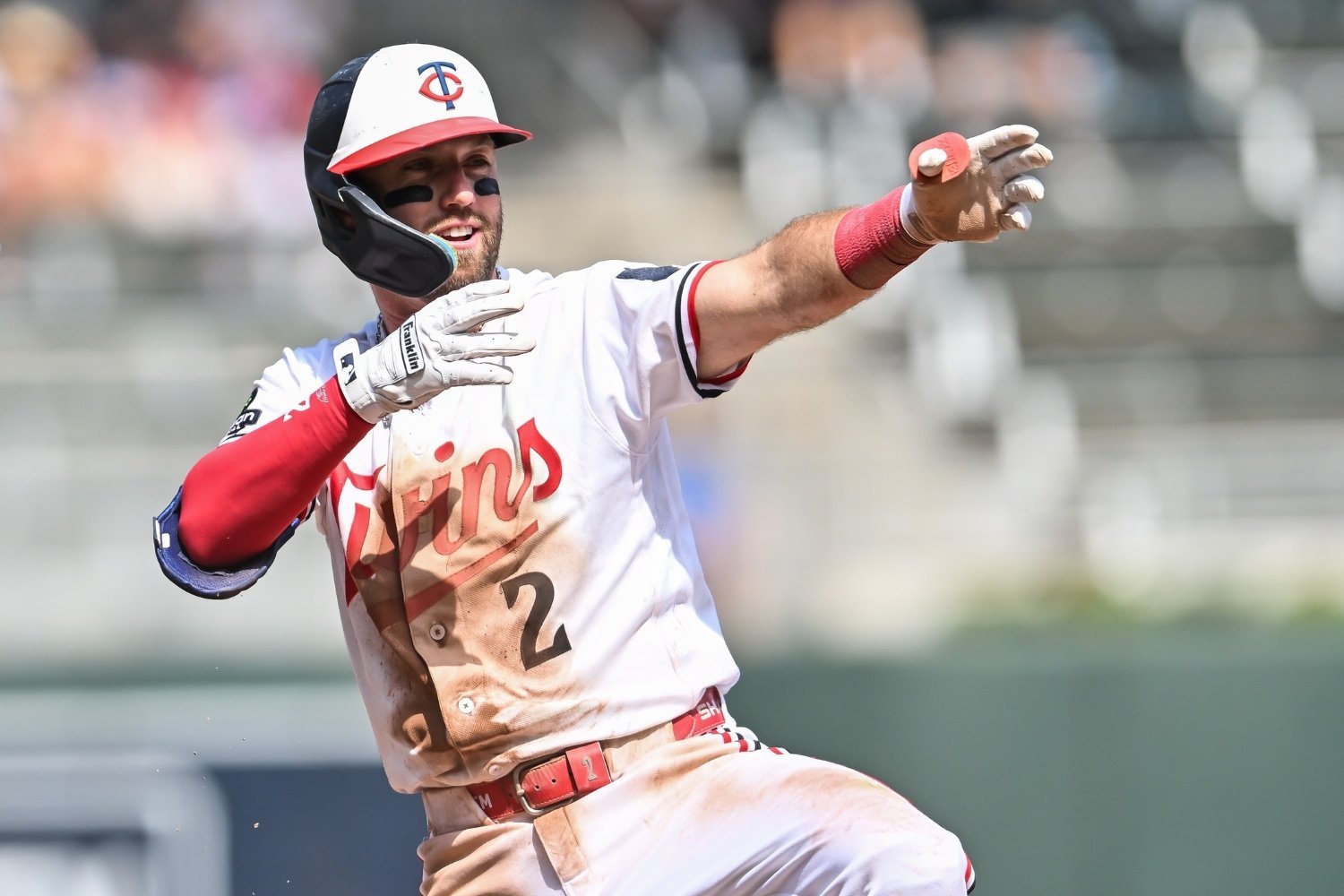 Box Score: Starting Pitcher: Connor Prielipp: 5 2/3 IP, 2 H, 1 ER, 1 BB, 5 K (72 Pitches, 44 Strikes, 61.1%) Home Runs: None Top 3 WPA: Kody Clemens (0.19), Prielipp (0.14), Ryan Jeffers (0.11) Win Probability Chart (Via BaseballSavant): The Twins needed a series victory over the battered Athletics in the worst way. After losing the opener at Target Field on Friday, the home team took game two behind a nice outing from Kendry Rojas and the bullpen. The Athletics lost their All-Star catcher, Shea Langeliers, in the process, and then had to turn to the struggling Jeffrey Springs in the rubber game. Springs is a lefty, and we all know how the Twins offense tends to shut down against that type of pitcher. Not today, although some of the production against Springs could certainly be ascribed to dumb luck. It started with Austin Martin doubling off the glove of left fielder Tyler Soderstrom. Ryan Jeffers lofted a bloop single to get Martin to third, and after a Royce Lewis RBI groundout, Kody Clemens tripled to the gap in right-center field and scored after the throw to third base went out of play. It was 3-0 Twins in a blink, thanks partially to the A's. Another bloop single by Alex Jackson started the second inning, and Brooks Lee followed with a walk. Ryan Kreidler then hit the hardest ball against Springs of all (107 MPH), but that ball was caught. Springs left with a hip injury, capping a brutal day at the ballpark for a pitcher who used to be legitimately All-Star caliber, just a few years ago. Martin drew a walk, bringing up Byron Buxton with the bases loaded. Springs was probably psyched for a minute, as Buxton lined into a double play, but the out call on Lee at second base was overturned. Then reliever Luis Morales balked Jackson home for the fourth Twins run, a call that got A's manager Mark Kotsay ejected. Ryan Jeffers then continued to crush the hearts of anyone who is still a fan of the Athletics, lining a single to right to score two more. Meanwhile, Connor Prielipp was on the mound after a brief stay on the IL with a blister issue. The time off seemed to have done him some good, as Prielipp was painting the corners of the zone with all of his pitches, striking out three in his first three innings (all perfect frames) while hitting 98 MPH on his fastball. He wavered a bit in the fourth, walking Nick Kurtz with one out and falling behind the next hitter, Jonah Heim, 3-0. He fought back into the count and eventually got Heim to tap to Lee at third, who started an around-the-horn double play with Jackson, who was making his first start at first base, sprawling out to collect the relay throw from Lewis. The A's got their first hit in the fifth inning off the bat of Soderstrom, but he, too, was erased on an inning-ending double play. Prielipp began the sixth with only 62 pitches thrown, which surely made Derek Shelton a little uncomfortable. Prielipp's workload has been intensely managed, but all of the Twins' top relievers were used in Saturday's victory, and the A's had not eclipsed 100 MPH on any ball they had put in play to that point. Prielipp got the first two outs on 10 more pitches before giving way to Cole Sands with the top of the lineup coming up for the third time. That may have been too cute a move, as Sands—making his first appearance in nearly three months—hit Jacob Wilson with a pitch on an 0-2 count and served up a splitter to Kurtz, who smashed it out into the bullpen in left-center field, 412 feet. Their lead reduced from seven to four, Ryan Kreidler doubled with one out in the bottom of the frame and then, for the third time in two games, stole third base. Martin lofted a ball deep enough to score him, but Soderstrom took his eye off the ball and it skittered away, allowing Kreidler to score and Martin to reach third. Sands stayed on for the seventh and appeared to get the first out off the bat of Soderstrom, but this time it was Martin in left field who couldn't track down a fly ball in the direct sun, allowing Soderstrom to reach second. Tommy White then singled, followed by a walk to pinch-hitter Lawrence Butler. That spelled the end for Sands, who was relieved by Tommy Nance. Nance promptly walked another pinch-hitter, Donovan Walton, to force in the A's' fourth run and bring the tying run to the plate. An RBI groundout and sacrifice fly later, the lead was down to two. Clemens made a diving catch on a liner from Wilson to finally end the inning, one of the biggest defensive plays of the Twins' season to date. The Twins answered right away, too, with Clemens hitting his second triple of the game, this one to the base of the wall in right-center. He would then score on a sacrifice fly by Keaschall for a key insurance run. The Twins would add another in the eighth, with Kreidler delivering his third double of the day to score Lee. He would score when Jeffers hit a tapper to third base that White made a poor throw on, pushing the cushion to five runs. Travis Adams made it interesting in the ninth, allowing three hits, but kept it together enough to secure the 11-8 victory. Stuff I'm Tracking: Luke Keaschall entered play with a .493 OBP in July and an OPS over 1.000. Martin has an OBP over .400 in July after looking like a good candidate for a return to Triple-A for a while, adding a double and a walk today. Buxton looks rough at the plate right now, missing the pitches he normally crushes, and chasing the pitches he usually spits on. Sands didn't look great before he got hurt, and looked awful today in this return. Relievers sometimes have a short shelf life, but hopefully that is not the case with Sands, who was nails as a high-leverage guy in 2024. What’s Next: Taj Bradley (9-4, 3.69 ERA) takes on Seth Lugo (4-6, 4.36 ERA) as the Twins welcome the Royals to Target Field for a three-game set starting Tuesday. The Royals look like clear sellers for this year's trade deadline, with their formerly prized pitching staff failing them, as they have allowed even more runs than the Twins this year. A series victory would get the Twins back to .500 before their final pre-deadline series in Seattle. Postgame Interviews: Coming soon Bullpen Usage Chart: WED THU FRI SAT SUN TOT Morris 28 16 0 26 0 70 Adams 27 0 14 0 15 56 Rojas 0 0 0 56 0 56 Funderburk 22 0 12 0 17 51 Rogers 0 13 0 30 0 43 Nance 0 13 0 13 15 41 Anderson 0 18 17 0 0 35 Gomez 0 22 0 8 0 30 Sands 0 0 0 0 28 28 View the full article
 -
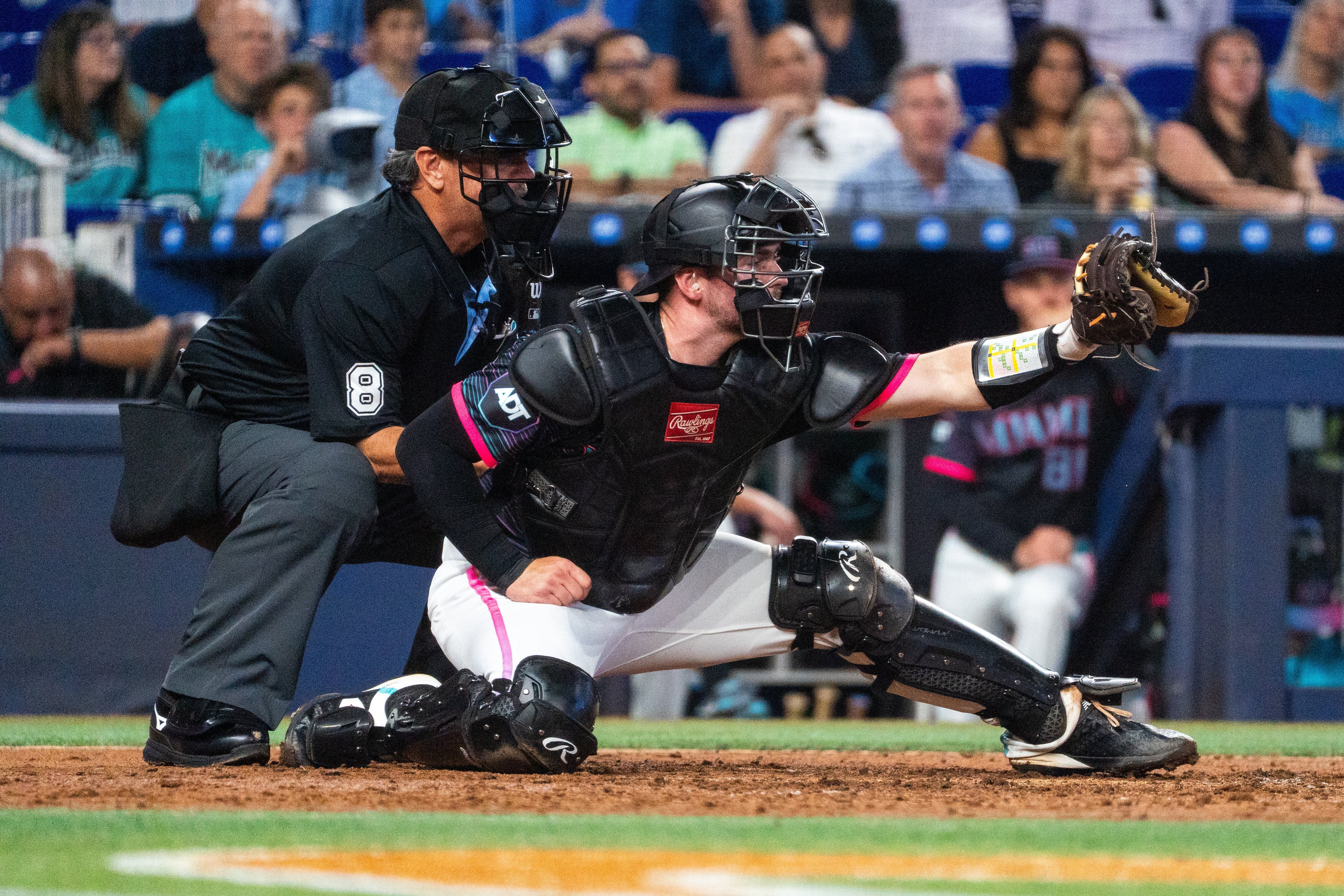 Earlier this month, it seemed so clear that the Miami Marlins would be pushing for a postseason berth. They had a three-game cushion for the final National League wild-card spot and could even begin dreaming about the franchise's first-ever NL East division title. An epic and unprecedented 12-game losing streak has flipped everything. With only a week left until the MLB trade deadline, their winning percentage ranks 11th in the NL and every aspect of the team is struggling. It's now looking likely that they will be sellers at the deadline, delaying their arrival as a serious contender until at least 2027. The Chicago White Sox, on the other hand, currently sit atop the American League Central. They will be buyers at the deadline and have one very clear need. Starting catcher Kyle Teel went down with a left ankle sprain and will be out until at least September. The club's current catching duo of Edgar Quero and Drew Romo is nowhere near good enough offensively to fill Teel's shoes, so Chicago is searching for outside help. The Marlins and White Sox have not made any trades with each other during the Peter Bendix era, but under these circumstances, that may finally change. Mock trade proposal White Sox receive: C Liam Hicks and LHP Braxton Garrett Marlins receive: LHP Hagen Smith Hicks, who the Marlins selected in the 2024 Rule 5 draft, has blossomed into one of their best run-producing threats. In 93 games entering Sunday, he is slashing .279/.356/.442/.797 with 14 home runs, 60 RBI and a 119 wRC+. Hicks has been a great find for the Marlins, but his role on the team moving forward is unclear. Rookie Joe Mack has emerged as their primary catcher. Although Hicks has inferior arm strength and instincts in comparison to Mack, he is still serviceable defensively. With Athletics star catcher Shea Langeliers suffering a season-ending meniscus injury, there are limited options available for contenders who want to upgrade behind the plate. A huge factor boosting Hicks' value is his four remaining years of club control. He does not even begin his arbitration eligibility until 2028. When Teel does come back (whether it be in September or next season), Hicks can be a big piece of their offense, splitting reps between catcher and designated hitter and also first base in case Munetaka Murakami gets injured again himself. Additionally, the White Sox are focused on starting rotation depth. Down in Triple-A Jacksonville, Braxton Garrett has posted a 2.32 ERA, 3.88 FIP, 9.77 K/9 and 3.42 BB/9 in 73 ⅔ innings pitched at that level. Garrett was called up by the Marlins earlier in the season, allowing seven runs on seven hits and walking eight in two poor starts. He has not been given an opportunity since. Without having had any MLB success since 2023, Garrett has little to no value on his own. Still, the Sox wouldn't mind getting him as a throw-in piece of the trade. Coming back the other way is Hagen Smith, a left-handed pitcher in the White Sox organization. Smith was the fifth overall pick in the 2024 MLB Draft and currently ranks as Chicago's No. 5 prospect, per Baseball America. Smith finds himself at the Triple-A level, but he's not quite ready for the majors. In 16 games (14 starts), he has posted a 4.58 ERA, 4.80 FIP, 13.42 K/9 and 6.38 BB/9. The Marlins have previously been attracted to pitchers like Smith who struggle with command/control, but have nasty offerings that can strike opposing hitters out. Smith throws a four-seam fastball (56.1% usage), slider, cutter and changeup. His best pitch in terms of Stuff+ is his fastball (113), averaging 94.1 mph and generating a 32.5% whiff rate. His slider and cutter, also considered above-average pitches. Turning 23 years old next month, Smith can spend the remainder of the season in Jacksonville and fight for a rotation spot in 2027. There isn't any urgency for these teams to move Hicks and Smith right now. The Marlins would have a tough time replacing Hicks in their lineup, while the White Sox could try Smith in a bullpen role at the end of this season even as he works through some inconsistencies as a starter. On the other hand, this is a trade that benefits both sides moving forward. View the full article
 -
Three Sneaky-Good Outfielders The Brewers Could Trade For
DiamondCentric posted an article in Brewer Fanatic
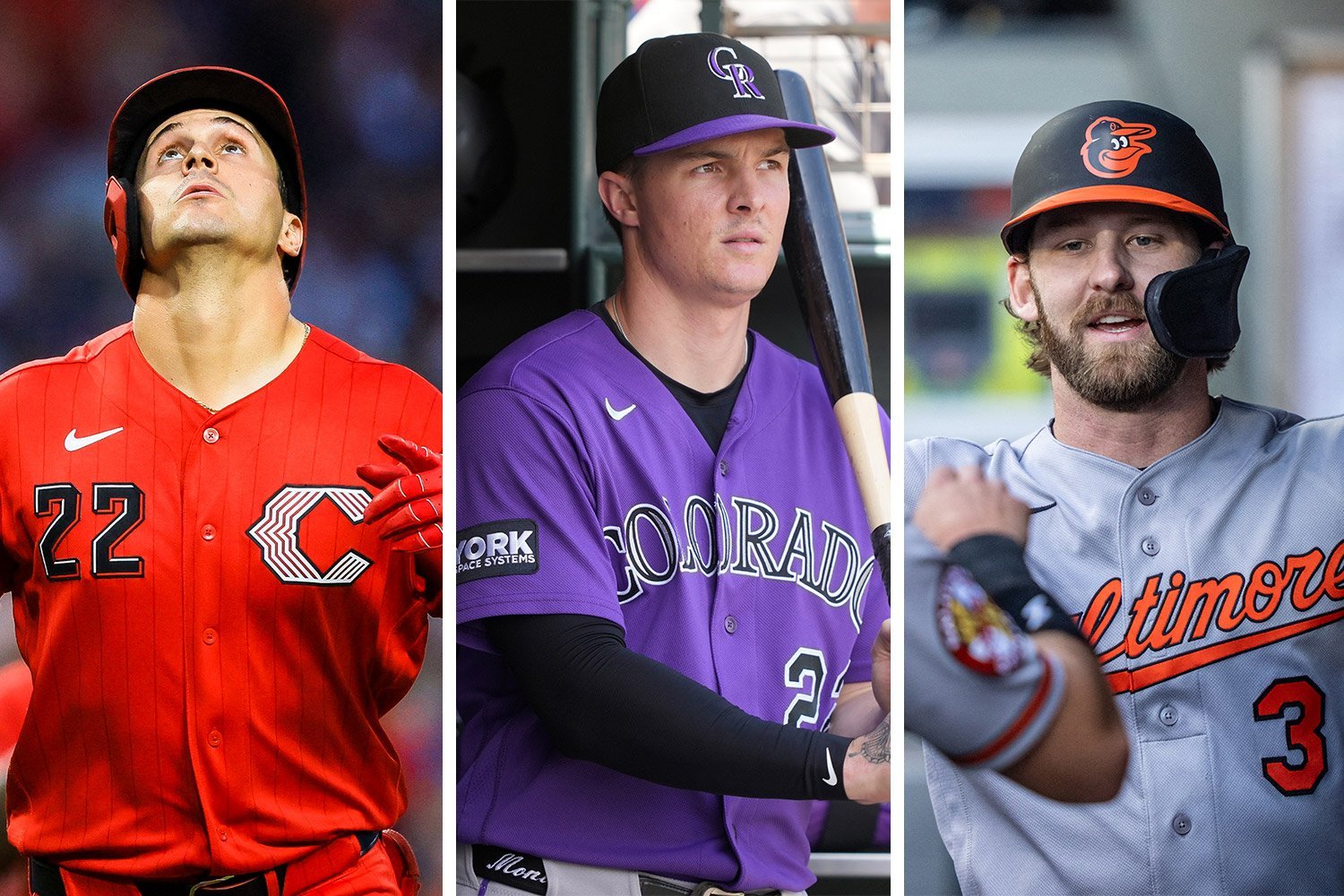 While the Milwaukee Brewers have a pretty well-rounded team heading into the final third of the season, there’s always room to improve. Christian Yelich has had his fair share of injuries, Jackson Chourio started the year bruised up, and Garrett Mitchell is still looking for his first 100-game season in five tries (although he’s a few games away). Let’s take a look at three outfielders who could fill out the Brewers’ depth chart at the position. JJ Bleday - Cincinnati Reds Maybe there’s a bit of a divisional rival tax if a deal goes through here, but the Cincinnati Reds outfielder can be a contributor on a contender. For one, he’s had remarkable pop this year. The 2019 fourth overall pick has 17 homers in just north of 300 at-bats, and his advanced analytics are off the charts. All of his power starts with the bat speed, a mark that’s listed at 73.9 miles per hour, good enough for the 71st percentile. He’s barreling the ball 10.5 percent of the time (66th percentile), and his sweet-spot percentage of 43.1 is one of the best in all of baseball. Bleday’s spray chart shows that he’s a strong pull-side hitter, but in the post-shift era, that doesn’t hurt him much as long as he can hit for power. Our breakdown on the top 2026 trade candidates list reads as follows: Mickey Moniak - Colorado Rockies Mickey Moniak is a former first overall pick, and outside of some injury issues this season, he’s putting together one of the best years of his professional career. The former Philadelphia Phillies draft pick, now a Colorado Rockies hitter, has slugged 16 home runs with a .279 batting average. The 28-year-old has a strong sprint speed of 28.2 miles per hour, good enough to nestle him in the 73rd percentile as a rangy left fielder. He has especially mashed the fastball this year, hitting .319 with seven of his 17 long balls on the season against most hurlers’ primary option. His breakdown reads as this: Taylor Ward - Baltimore Orioles Taylor Ward has had mass appeal for the last couple of trade deadlines, and 2026 may be no different. The Orioles are well below .500, making them likely sellers. Ward, a 32-year-old slugger, entered 2026 with 61 homers over the course of the last two seasons. While he only has seven round-trippers this time around, the measurables show he’s still valuable. Ward’s sweet-spot percentage is up there with the best of them at 36.9 percent (77th percentile), and his approach is one of the best in all of baseball. Ward chases just 14.2 percent of the time (100th percentile), and his 17.1 percent walk rate is also near the top of major league hitters. His breakdown on our trade candidates list is this: What do you think, should the Brewers trade for one of these outfielders? View the full article
 -
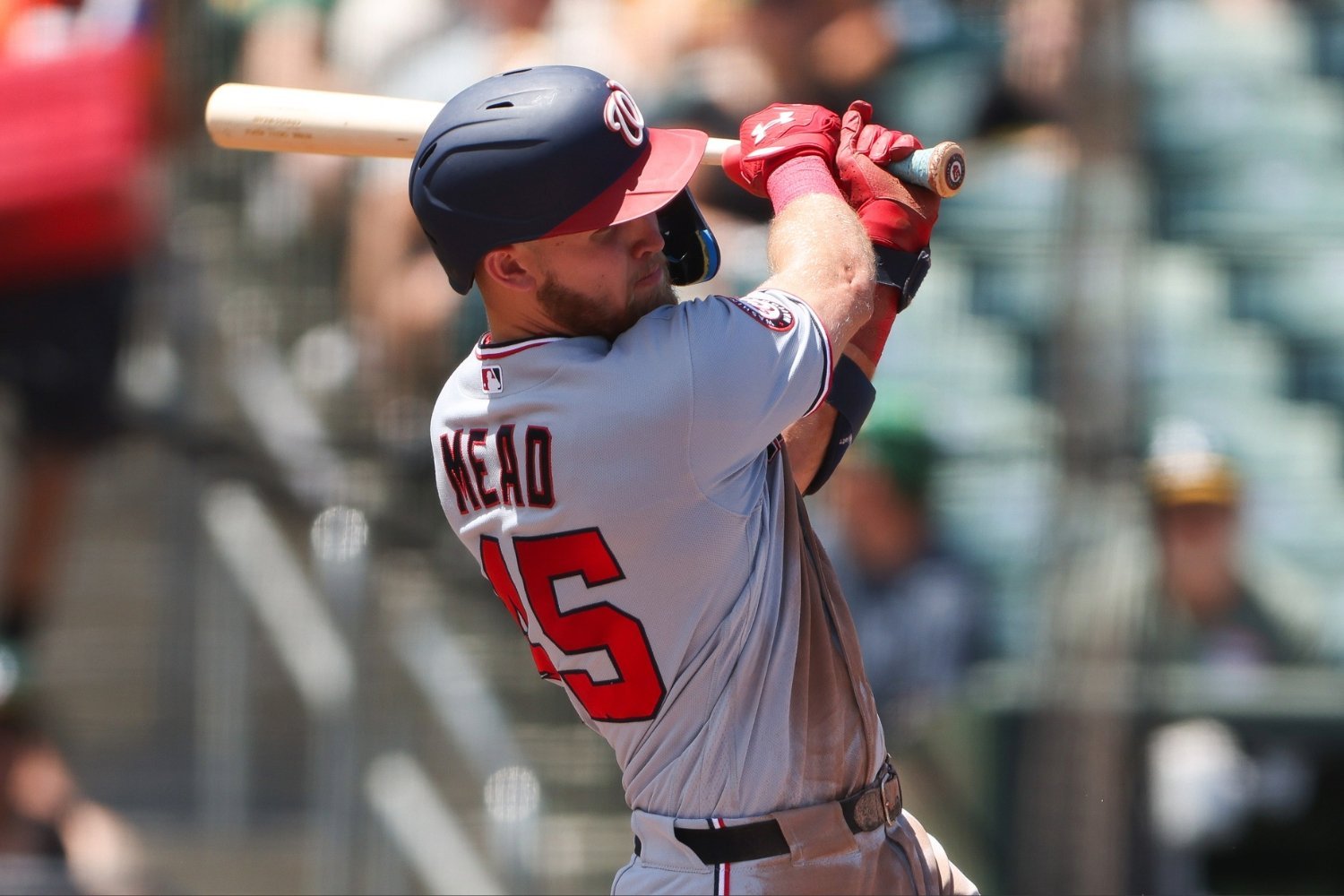 The Boston Red Sox made a rare one-for-one trade with the Washington Nationals this weekend, swapping left-handed pitcher Connelly Early for infielder Curtis Mead. Our own @Nick JohnJohn provided great, quick coverage the night the trade went down, but now we need to get to know the newest infielder that will likely be calling Boston home through at least the 2030 season. Mead has come on in a big, big way for the Nationals this season after bouncing around a couple of different organizations. He signed as an international free agent with the Phillies in 2018, was subsequently traded to the Rays for Christopher Sanchez in 2019, was then included as part of a package deal to the White Sox for Adrian Houser in 2025, and finally was traded to the Nationals in March of this year for Boston Smith. It wouldn’t quite be fair to label him a journeyman, but his path to Boston has been a bit contrived. Thankfully for him, and hopefully for the Boston faithful, he seems to have found his footing with the Nats. Mead is currently slashing .254/.352/.500 with a .369 wOBA, a 134 wRC+, and a 1.5 fWAR. He’s slugged 17 home runs, has 48 RBIs, and six stolen bases. Impressively, his walk rate sits at 11.9%, good for the 82nd percentile. He doesn’t strike out a ton either, coming in at 19%, good for the 65th percentile. He doesn’t make the hardest of contact (his average exit velocity is only 88 mph) but he barrels balls at a 10.9% clip, which is in the 69th percentile. What likely made Craig Breslow comfortable with this trade is that Mead has the offensive profile that should absolutely mash at Fenway Park. Much like other Breslow trade targets, Mead has an enormous Pull-AIR% of 22.5%. This puts him in the top ten percent of the league in the stat and makes it obvious that the plan was always to add an additional righty who will take aim at the Green Monster. If we look at his home spray chart, it paints an impressive picture. While it’s not a perfect comparison to how he will do at Fenway, it gives us a pretty big indication that his profile is going to thrive calling Boston home for the next handful of years. The biggest knock against Mead is his defensive profile. He’s primarily a third baseman but has logged games at first, second, and DH this season as well. As we all know, Caleb Durbin has been playing Gold Glove caliber defense at third this season. He said that he would be open to moving to second base if the team acquired another third baseman, but the step down from Durbin to Mead is fairly significant. It’s hard to envision that Breslow would sacrifice one of the major pieces of his ‘pitching and defense’ model just to get Mead at the hot corner. For reference, Mead is currently posting a -9 Outs Above Average and a 77.1 mph arm strength. Those are good for the first and 41st percentiles, respectfully. For reference, Durbin grades out in the 86th percentile for OAA with three and the 28th for arm strength at 81.2 mph. Since it would be such a massive downgrade at third base, the plan is for Mead to play second base. This likely forces rookie Anthony Seigler to a bench role, but that’s realistically where he should be playing for this team when they are operating at full capacity. This trade could be one of few that may be considered a win for both teams. The Red Sox were able to trade from a place of strength with Early and acquired a hitter that profiles well at Fenway Park. The Nats need rotation help and have bats to spare. There's a huge risk in dealing Connelly Early, someone who was rumored to be involved in bigger trade packages, straight up for a hitter with a journeyman track record. But this is also the kind of trade designed to help Boston win now and in the future, which could prove prescient if Mead translates his profile to Fenway Park as we're hoping. View the full article
 -
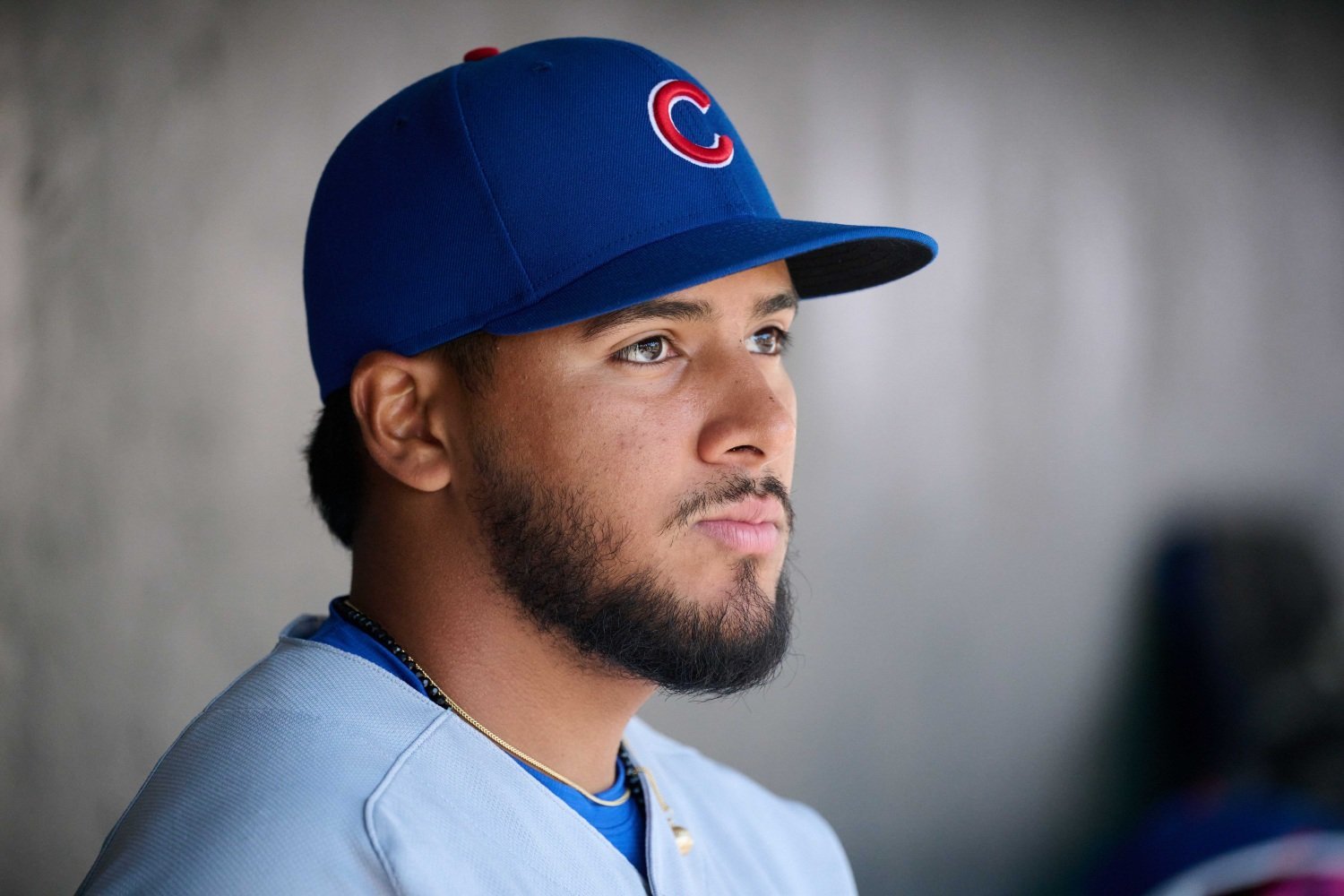 As the Chicago Cubs have talked with other teams about their top targets ahead of next week's MLB trade deadline, one name has come up a lot more often than the team or its fans would prefer: Pedro Ramírez. The rookie infielder has been impressive in a small amount of playing time since coming up for the first time two months ago, and his combination of solid athleticism, youth, team control and a plus left-handed bat has led many of the clubs with whom the Cubs hope to deal to ask about his availability. In theory, it makes sense for Chicago to give up Ramírez in the right deal. Though he's only 22 years old and is batting .295/.341/.449 in 86 big-league plate appearances, he has no apparent path to regular playing time on the North Side. Nico Hoerner and Alex Bregman are locked into the positions where Ramírez profiles as a solid defender for the next half-decade, and his bat would be stretched a bit as an everyday corner outfielder. The utility role he's filled since roughly Memorial Day is the only one he's likely to fit neatly into at any point with the Cubs. Lately, though, he's often been the designated hitter for the team when they face right-handed starting pitchers. His left-handed swing is impressively quick and produces well-struck line drives to all fields. He provides depth and length in the lineup, plus a modicum of versatility on defense. Weakening the bench is the last thing contending teams want to do ahead of the trade deadline. Unfortunately for Jed Hoyer and Carter Hawkins, they might not have a choice. As they've scoured the market for the right deal to bolster their injury-ravaged pitching staff, the Cubs have heard Ramírez's name a lot, according to sources familiar with their conversations. The team is jealously guarding breakout top prospect Josiah Hartshorn, treating him as almost untouchable. Beyond Hartshorn, there's no one else other teams view as more desirable in the team's weak farm system than Ramírez. A few months ago, that Ramírez might be such a gem would have been almost unthinkable. His ceiling just isn't that high, for such a young player already showing well in the majors. However, his bat (at least from the left side) has passed its first tests against big-league pitching, which goes a long way. Meanwhile, Jefferson Rojas has started playing third base almost exclusively at Double-A Knoxville, and scouts with other clubs view the 21-year-old as likely to stay at that spot. Rojas's bat has been almost as inconsistent this year as it was in 2025, worrying those who already had questions about his hit tool. Jaxon Wiggins dealt with arm trouble earlier this year and has had a rocky return to Triple-A Iowa. His fastball still has exciting rising action, but it's not climbing toward 100 MPH the way it used to, even in abbreviated outings. He's also not throwing strikes. This spring, the Cubs held out hope that he would make a major contribution at the highest level this year. Now, he doesn't even have as much trade value as they'd like. Meanwhile, Matt Shaw remains sidelined with a wrist issue and is "weeks" away from resuming swinging. He'll be almost impossible to trade in the next eight days. The Cubs' pipeline hasn't been robust enough at any point in the last decade, and it's not recovering as fast as the team hoped when they reorganized their scouting and player development departments a few years ago. They don't particularly want to give up Moisés Ballesteros, but nor are prospective trade partners especially excited about him, according to a league source. Kevin Alcántara looks like he'll follow in the footsteps of fellow toolsy outfielders Alexander Canario and Nelson Velázquez, in that he'll probably leave the organization for a disappointing return, but probably not make anyone miss him much; his hit tool has turned out to be insufficient to sustain his prospect hype. That's not to suggest that the cupboard is entirely bare. The Cubs are willing and eager to trade from the lowest rungs of their system, where they have a handful of up-arrow guys. Upper-level catchers Owen Ayers and Ariel Armas each have admirers in other teams' front offices. They're in a tough spot, though, because they lack the depth to make any meaningful trade without feeling the loss deeply. The last time the team was in this particular position, they made a trade most fans regret, rather than celebrating—though it accomplished at least some of what the team hoped. In July 2017, the Cubs traded Jeimer Candelario to the Detroit Tigers, after he'd played just a fistful of games for them over the previous year. That deal patched their glaring hole at backup catcher, as they acquired Alex Avila, but it was primarily about solidifying their bullpen with controllable lefty Justin Wilson. Avila was just a rental role player, but he panned out as well as Wilson did. Candelario became a solid player in Detroit, but the deal also required Chicago to throw in another infielder, a bit further from ready: Isaac Paredes. Moving Ramírez might necessitate going out and finding a lesser Ramírez, eating into the benefit of trading him for a useful pitcher. Without including either Hartshorn or Ramírez, though, the team won't have access to the kind of help fans crave at this deadline. Ramírez is the one the Cubs would rather deal, if it comes to that—and it might. Of course, they also might opt to protect the future and buy low on someone with more uncertainty but a lower price tag. They could try to swing a better version of that Tigers deal from nine years ago, swapping Ramírez and a player far from the majors (like pitching prospect Kaleb Wing, for instance) for a controllable arm and a utility man with less club control and a higher salary than Ramírez. The risks of that type of move are extremely salient to Hoyer, though, and whereas the 2017 Cubs were trying to sew up a division title, this year's group is playing for Wild Card position. The Cubs keep shopping for starters and for relievers, but to find one who makes a material difference in their hopes for a long run this October, they might have to give up one of the few young position players who have shown the ability to buffer them against injuries and underperformance this year. It's not clear whether they'll find that risk worthwhile, given the limitations of the club and the need to regain some balance between youth and experience. View the full article
 -
Lance McCullers Jr. Designated For Assignment By Brewers
DiamondCentric posted an article in Brewer Fanatic
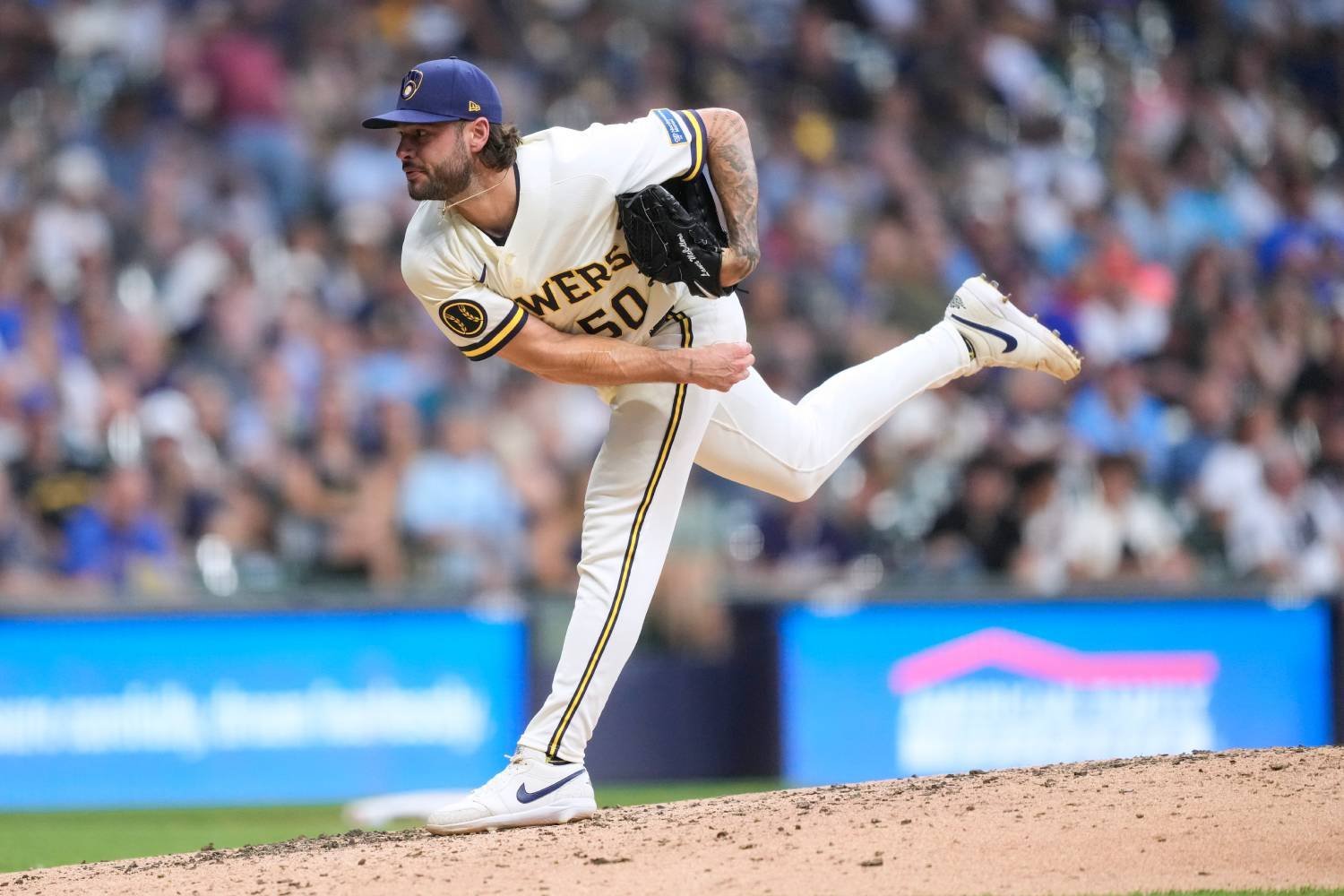 The Milwaukee Brewers' look at Lance McCullers Jr. lasted just two games. After acquiring the two-time World Series champion in a trade July 15, McCullers was designated for assignment Sunday by the Brewers. Right-hander Garrett Stallings was called up from Triple-A Nashville. The Brewers now have two open spots on their 40-man roster as the trade deadline approaches. McCullers was a relatively low-cost acquisition, costing the Brewers minor-league outfielder Jadyn Fielder, son of former Crew slugger Prince Fielder, and covering $2 million of his remaining salary. But McCullers, a starter with six career relief appearances before being traded, made both of his appearances out of the Brewers' bullpen, including one Saturday in an 8-3 win over the Colorado Rockies. McCullers had a 4.18 FIP (3.86 ERA) in 4⅔ innings, giving up five runs (two earned) on three hits with five walks and five strikeouts. These were McCullers' first two MLB games since going on the injured list in mid-May with right shoulder inflammation. The Brewers are still looking for a quality arm to replace veteran right-hander Brandon Woodruff in the rotation. Stallings was called up at the end of June and made his MLB debut with a pair of appearances, allowing just one hit and one walk with four strikeouts over three innings. View the full article
 -
Report: Rival Teams Expect Twins To Trade Ryan Jeffers
DiamondCentric posted an article in Twins Daily
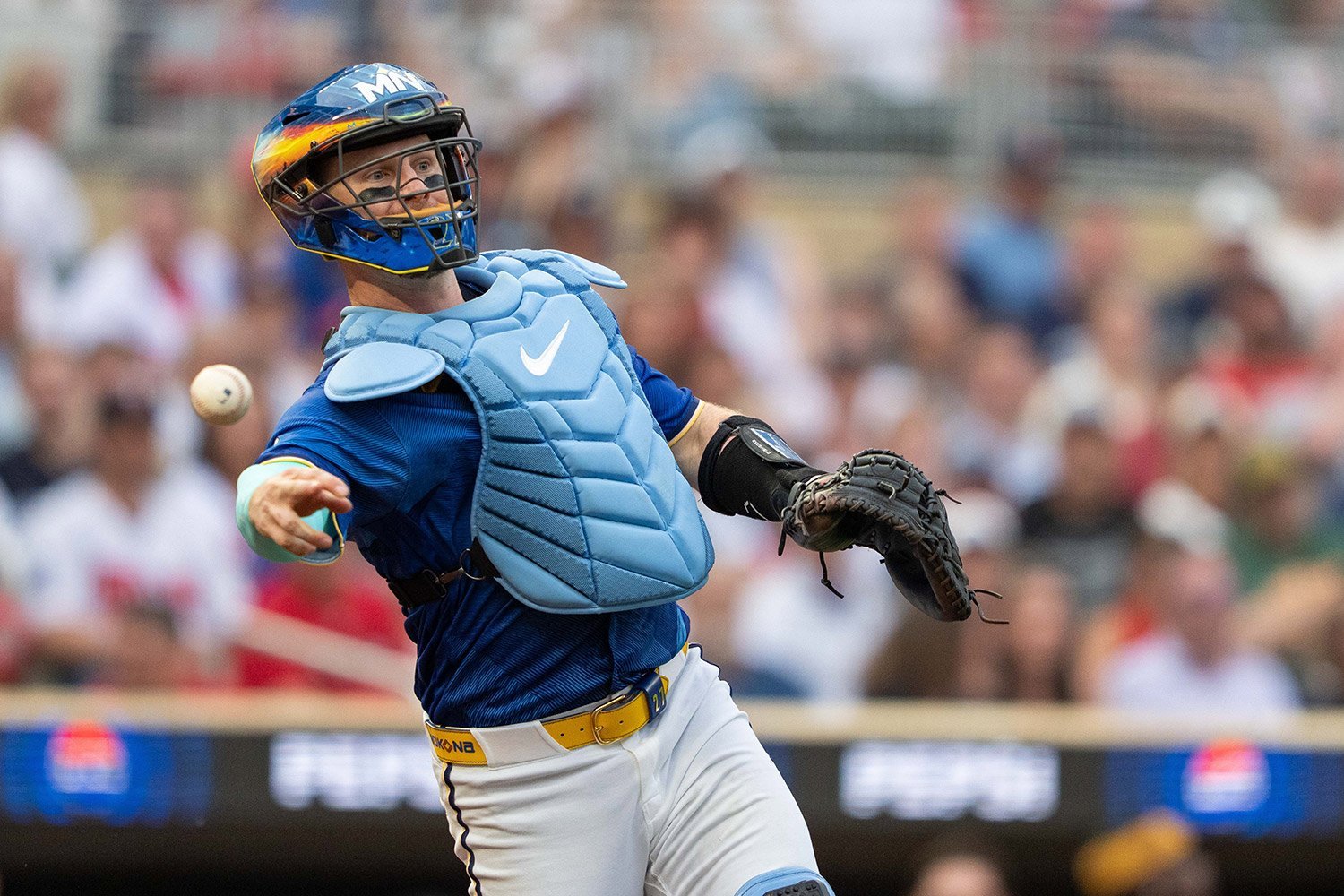 According to USA Today's Bob Nightengale, rival executives are increasingly expecting the Minnesota Twins to move catcher Ryan Jeffers before the trade deadline. In his latest report, Nightengale wrote, "Rival teams now believe that the Minnesota Twins will trade catcher Ryan Jeffers, with the Yankees the leading candidate to sign him." The report lines up with what has seemed like the most logical outcome for weeks. Jeffers is set to become a free agent after the season, meaning the Twins risk losing him for nothing this winter. Even if Minnesota decides to make a modest buy at the deadline instead of becoming outright sellers, dealing Jeffers could still make sense if it allows the organization to add long-term value while replacing his production internally. The timing of the report is also notable because the catching market changed dramatically on Sunday morning. Athletics All-Star Shea Langeliers suffered a torn meniscus in his knee and could miss the remainder of the season. Langeliers was widely viewed as the premier catcher available at the deadline thanks to his offensive production and team control through the 2028 season. With him now likely off the market, Jeffers becomes the clear top catching option available to contenders. That shift in the market only increases Jeffers' value and could make it even more difficult for the Twins to justify holding onto him through the end of the season. If multiple contenders are searching for catching help and the best alternative is no longer available, Minnesota could find itself in an excellent position to maximize Jeffers' trade value. Do you think the Twins should capitalize on Jeffers' value and trade him before the deadline, or should they keep him for a postseason push? Leave a comment below and start the conversation! View the full article
 -
 For much of the 2026 season, the American League has been defined by mediocrity. Outside of the division leaders and whichever AL East club happened to occupy second place between the Yankees and Rays, there were no clear playoff teams. Instead, the Wild Card race became a crowded collection of six or seven clubs hovering around the .500 mark, all believing they had a legitimate chance to reach October. That environment has been one of the biggest reasons the Twins have remained in the playoff conversation despite an underwhelming season. Their record has often looked uninspiring, but so has almost everyone else's. On July 1, Minnesota sat at 42-46, yet still carried a 27 percent chance of making the postseason. At that same point, no non-division leader in the American League had playoff odds higher than 33 percent. It was an indication of just how unsettled the Wild Card picture had become. As long as the Twins stayed within striking distance of .500, they were always going to remain part of that conversation. The math worked in their favor because there simply weren't enough teams separating themselves from the pack. The biggest threat to Minnesota's playoff hopes wasn't necessarily their own record. It was the possibility that another team would finally catch fire and turn a wide open race into a much more exclusive one. That is exactly what has happened. On July 1, the Boston Red Sox looked finished. They were 37-48, sitting in last place in the American League East and carrying just a 13.8 percent chance to make the playoffs. Reports had already surfaced that Boston was deep into trade discussions and preparing to sell ahead of the deadline. They appeared to be on the verge of waving the white flag on their season. Instead, they completely changed the landscape of the American League. Beginning on July 1, Boston ripped off a remarkable 15-game winning streak that transformed its season almost overnight. The Red Sox went from 11 games under .500 to 52-48 and suddenly found themselves two games clear of a Wild Card spot. Their playoff odds have skyrocketed to 61.3 percent, and rather than preparing to sell, they now look like one of the most aggressive buyers at the trade deadline. A team that was days away from pulling itself out of the playoff race is now firmly in the driver's seat for October baseball. For the Twins, the implications are significant. Minnesota has actually improved since July 1, climbing from three games under .500 to just two games below the break-even mark. Under normal circumstances, that would be encouraging progress in such a tightly packed Wild Card race. Instead, their playoff odds have actually declined because the overall landscape has changed. There is essentially one fewer playoff spot available. The American League once looked like six teams battling for two Wild Card berths. Boston's surge has effectively allowed one club to separate from the pack, leaving everyone else fighting over what may now amount to a single remaining opening. The margin for error has become much smaller. That is the danger of relying on the struggles of everyone around you. It can be tempting to look at a mediocre field and believe that simply hanging around .500 will be enough to stay alive until September. The problem is that those standings are never frozen in place. Eventually, somebody gets hot. This time it was Boston. Could another team make a similar run? Absolutely. Could it be the Twins? They certainly hope so. There is still plenty of baseball left, and Minnesota remains close enough to make a legitimate push. Their front office can still justify buying at the deadline if they believe this roster has another level to reach. What Boston's run should eliminate, however, is any thought that simply staying afloat will be enough. An 81-win season was never likely to earn a playoff berth, even in a weak American League. The Red Sox have reinforced that reality. Teams that want to play in October have to create separation, not wait for everyone else to stay mediocre. The Red Sox have reminded everyone that playoff races are won by taking advantage of opportunities, not by waiting for opportunities to come to you. Do you think Boston has effectively claimed one of the American League Wild Card spots, or is the race still wide open? Can the Twins put together a run of their own over the final two months, and should that possibility influence how aggressive they are at the trade deadline? Leave a comment below and start the conversation! View the full article
 -
 Five games, five losses, and 22 hits across the system. It was not a pretty night for Chicago Cubs affiliates. Brooks Caple threw a quality start and lost, Chas McCormick doubled twice in the nightcap, Michael Carico drove in three of South Bend's four runs, and Myrtle Beach's 10th-inning lead vanished on a throwing error. Chicago Cubs Transactions No Roster Moves Five-Run Second Sinks Iowa In 8-0 Game One Loss At Gwinnett: Game 1 Iowa managed four hits and no runs in the opener of a doubleheader at Gwinnett, dropping an 8-0 decision in seven innings. Owen Ayers had the only multi-hit game of the night, going 2-for-3. Moisés Ballesteros and Ben Cowles each doubled, accounting for Iowa's two extra-base hits. Jonathon Long and Chas McCormick drew the team's only walks. Iowa struck out seven times and left six runners on base. Jordan Wicks did not get out of the second. He allowed four hits, five runs, and three walks while striking out one over 1 2/3 innings, and he took the loss to fall to 0-8. The second inning turned on a two-out stretch that Wicks could not close. Gwinnett opened with a single and a walk, then a two-run double put Iowa behind. A walk followed, and after a strikeout, another two-run double made it 4-0. A two-out single brought home the fifth run of the frame. Jake Woodford followed with 2 1/3 scoreless innings on three hits, no walks, and one strikeout. Ethan Roberts gave up a hit, a walk, and two runs over an inning, with both runs scoring on a double. Corbin Martin allowed an unearned run on one hit and one walk with a strikeout over an inning, with the run crossing on a double play. Iowa did not put a runner across in any inning. Player AB R H RBI BB K BJ Murray, 3B 3 0 0 0 0 1 Jonathon Long, 1B 2 0 0 0 1 1 Moisés Ballesteros, DH 3 0 1 0 0 1 Owen Miller, SS 3 0 0 0 0 0 Owen Ayers, C 3 0 2 0 0 0 Chas McCormick, LF 2 0 0 0 1 0 Greg Jones, CF 3 0 0 0 0 1 Ben Cowles, 2B 3 0 1 0 0 1 Hayden Cantrelle, RF 3 0 0 0 0 2 Totals 25 0 4 0 2 7 Player IP H R ER BB K HR Jordan Wicks (L, 0-8) 1 2/3 4 5 5 3 1 0 Jake Woodford 2 1/3 3 0 0 0 1 0 Ethan Roberts 1 1 2 2 1 1 0 Corbin Martin 1 1 1 0 1 1 0 Totals 6 9 8 7 5 4 0 Four Runs Before The First Out Bury Iowa In 5-3 Game Two Loss: Game 2 Iowa fell behind by four runs before it recorded an out on defense and lost the nightcap 5-3 in seven innings, completing a doubleheader sweep for Gwinnett. Chas McCormick doubled twice, going 2-for-3 and accounting for both of Iowa's extra-base hits out of a three-hit night. Leadoff man Brett Bateman was 1-for-2 with a run scored and an RBI. Jonathon Long, Ben Cowles, and Casey Opitz each drew a walk, and Cowles and Opitz both came around to score. BJ Murray drove in a run on a sacrifice fly. Greg Jones struck out three times, and Moisés Ballesteros struck out twice. Iowa left three runners on base. The third inning produced all of Iowa's offense. Cowles and Opitz opened with walks, Bateman singled to left to bring Cowles home, and Long walked to load the bases. A wild pitch during Murray's at-bat scored Opitz, and Murray then lifted a sacrifice fly to right that brought in Bateman. Iowa did not score again. Ty Blach gave Iowa three innings, allowing six hits, four runs, and one walk while striking out three. Gwinnett got to him immediately, opening with a double and a walk, then scoring twice on a double and twice more on a home run before Blach recorded an out. Antoine Kelly followed with two innings on one hit, one run, one walk, and three strikeouts, with the run coming on a solo home run. Eduarniel Núñez finished with a scoreless inning, walking two and striking out one without allowing a hit. Blach took the loss and fell to 5-5. Player AB R H RBI BB K Brett Bateman, CF 2 1 1 1 0 0 Jonathon Long, 1B 2 0 0 0 1 0 BJ Murray, 3B 2 0 0 1 0 1 Moisés Ballesteros, DH 3 0 0 0 0 2 Owen Miller, 2B 3 0 0 0 0 0 Chas McCormick, LF 3 0 2 0 0 0 Greg Jones, RF 3 0 0 0 0 3 Ben Cowles, SS 2 1 0 0 1 0 Casey Opitz, C 2 1 0 0 1 0 Totals 22 3 3 2 3 6 Player IP H R ER BB K HR Ty Blach (L, 5-5) 3 6 4 4 1 3 1 Antoine Kelly 2 1 1 1 1 3 1 Eduarniel Núñez 1 0 0 0 2 1 0 Totals 6 7 5 5 4 7 2 Knoxville Piles Up 10 Hits, Strands 10, And Loses 5-0 Knoxville put 10 hits and a walk on the board at Rocket City and never scored, falling 5-0. Andy Garriola went 2-for-4 with a double, Alex Madera went 2-for-4 with a double, and Ethan Hearn went 2-for-4. Carter Trice added the third double of the night, going 1-for-4. Ariel Armas was 1-for-4, Karson Simas was 1-for-3 with a walk, and Alex Ramírez was 1-for-5. Jefferson Rojas and Ed Howard were each hitless in four at-bats. The Smokies struck out 10 times and left 10 runners on base, and the seventh inning was typical of the night, with Madera leading off with a double and being stranded there. Brooks Caple gave Knoxville six innings, allowing six hits, three runs, and no walks while striking out four. Two of the hits left the yard, and that was the difference in his quality start. He took the loss and fell to 3-3. Rocket City broke through in the third on a sacrifice fly, added a solo home run in the fourth, and got another solo home run in the fifth. Erian Rodriguez could not find the plate, giving up two hits, two walks, and two runs over an inning. Both of those runs walked home with one out. Evan Taylor followed with a scoreless inning on one hit. Knoxville's pitching allowed nine hits and two walks over eight innings. Player AB R H RBI BB K Alex Ramírez, CF 5 0 1 0 0 1 Jefferson Rojas, DH 4 0 0 0 0 0 Andy Garriola, LF 4 0 2 0 0 2 Carter Trice, RF 4 0 1 0 0 2 Ariel Armas, C 4 0 1 0 0 0 Ethan Hearn, 1B 4 0 2 0 0 2 Karson Simas, SS 3 0 1 0 1 1 Ed Howard, 2B 4 0 0 0 0 2 Alex Madera, 3B 4 0 2 0 0 0 Totals 36 0 10 0 1 10 Player IP H R ER BB K HR Brooks Caple (L, 3-3) 6 6 3 3 0 4 2 Erian Rodriguez 1 2 2 2 2 0 0 Evan Taylor 1 1 0 0 0 0 0 Totals 8 9 5 5 2 4 2 South Bend Leads Into The Seventh, Then Falls 6-4 To Wisconsin South Bend built a lead on five hits and six walks, then gave it back over the last three innings in a 6-4 loss to Wisconsin. Michael Carico drove in three of the four runs, going 1-for-3 with a walk. Matt Halbach was 1-for-3 with a walk and scored twice while also providing some flashy defense. . Logan Poteet was 1-for-3 with a double, a walk, and a run. Michael Hallquist added a double and a walk, and Jose Escobar was 1-for-3 with a walk. Leadoff man Kane Kepley walked, scored a run, and went hitless in four at-bats. The second inning put South Bend in front. Halbach singled with one out, Poteet doubled him to third, and after a groundout, Carico singled to center to score both. The fourth was all walks. Halbach, Poteet, and Hallquist worked free passes to load the bases, and Carico walked to force in the third run. Kohl Franklin allowed five hits, one run, and one walk with one strikeout over 4 1/3 innings. Grayson Moore followed with 1 2/3 hitless innings and two strikeouts. Eli Jerzembeck could not hold the lead, giving up three hits, three walks, and two runs while recording two outs and taking a blown save. Ethan Bell allowed three hits and two runs over 1 1/3 innings and took the loss to fall to 3-2. Jose Romero allowed an unearned run on one hit and one walk with two strikeouts over an inning. South Bend answered in the seventh on a wild pitch that scored Kepley, but left six on base. Player AB R H RBI BB K Kane Kepley, CF 4 1 0 0 1 0 Josiah Hartshorn, RF 4 0 0 0 0 0 Jose Escobar, DH 3 0 1 0 1 1 Angel Cepeda, SS 4 0 0 0 0 2 Kade Snell, LF 4 0 0 0 0 1 Matt Halbach, 3B 3 2 1 0 1 0 Logan Poteet, C 3 1 1 0 1 2 Michael Hallquist, 2B 3 0 1 0 1 1 Michael Carico, 1B 3 0 1 3 1 0 Totals 31 4 5 3 6 7 Player IP H R ER BB K HR Kohl Franklin 4 1/3 5 1 1 1 1 0 Grayson Moore 1 2/3 0 0 0 0 2 0 Eli Jerzembeck (BS, 2) 2/3 3 2 2 3 0 0 Ethan Bell (L, 3-2) 1 1/3 3 2 2 0 1 0 Jose Romero 1 1 1 0 1 2 0 Totals 9 12 6 5 5 6 0 Myrtle Beach Strikes Out 17 Times, Loses 4-3 In 10 Innings Myrtle Beach took a lead into the bottom of the 10th and lost 4-3 at Hickory, striking out 17 times along the way. Alexey Lumpuy carried the offense from the leadoff spot, going 2-for-4 with a home run, a walk, an RBI, and two runs scored. Ethan Conrad was 1-for-5, Edward Vargas was 1-for-4 with a run, and Derik Alcantara was 1-for-4. Alexis Hernandez was 1-for-3 with an RBI. Eli Lovich drove in a run and struck out three times in four at-bats, and Fernando Cruz struck out four times. The Pelicans finished with six hits, four walks, and nine runners left on base. Lumpuy provided the only lead the Pelicans held for long, homering to right center in the third for a 2-1 edge. The 10th looked like it would hold up. Vargas started as the zombie runner at second, Lumpuy singled him to third, and Hernandez lifted a sacrifice fly to right for a 3-2 lead. Lovich and Derniche Valdez then struck out to end the inning. Noah Edders worked four innings on four hits, one run, and no walks with four strikeouts. Emilio Ramos followed with three innings, four hits, one run, one walk, and five strikeouts, with the run coming on a home run in the fifth. Edwardo Melendez took the loss and fell to 4-3, allowing two hits, two unearned runs, and one walk with three strikeouts over 2 1/3 innings. The tying run came home on a double, and the winning run scored on a groundout aided by a throwing error. Player AB R H RBI BB K Alexey Lumpuy, RF 4 2 2 1 1 1 Alexis Hernandez, SS 3 0 1 1 0 1 Ethan Conrad, CF 5 0 1 0 0 1 Eli Lovich, LF 4 0 0 1 0 3 Derniche Valdez, 3B 3 0 0 0 2 2 Derik Alcantara, DH 4 0 1 0 0 2 Fernando Cruz, 2B 4 0 0 0 0 4 Jose Silva, C 3 0 0 0 1 1 Edward Vargas, 1B 4 1 1 0 0 2 Totals 34 3 6 3 4 17 Player IP H R ER BB K HR Noah Edders 4 4 1 1 0 4 0 Emilio Ramos 3 4 1 1 1 5 1 Edwardo Melendez (L, 4-3) 2 1/3 2 2 0 1 3 0 Totals 9 1/3 10 4 2 2 12 1 Top-20 Prospect Performance Jefferson Rojas: 0-for-4 Pedro Ramirez: DNP Jaxon Wiggins: DNP Josiah Hartshorn: 0-for-4 Kevin Alcantara: DNP Ethan Conrad: 1-for-5, 1 K Kane Kepley: 0-for-4, BB, R Owen Ayers: 2-for-3 (Game One), DNP (Game Two) Jonathon Long: 0-for-2, BB, 1 K (Game One), 0-for-2, BB (Game Two) Kaleb Wing: DNP James Triantos: DNP Brooks Caple: 6 IP, 6 H, 3 R, 3 ER, 0 BB, 4 K, 2 HR Mason McGwire: DNP Ty Southisene: DNP Will Sanders: DNP Juan Cabada: DNP Eli Lovich: 0-for-4, RBI, 3 K Ariel Armas: 1-for-4 Jostin Florentino: DNP Grant Kipp: DNP View the full article
 -
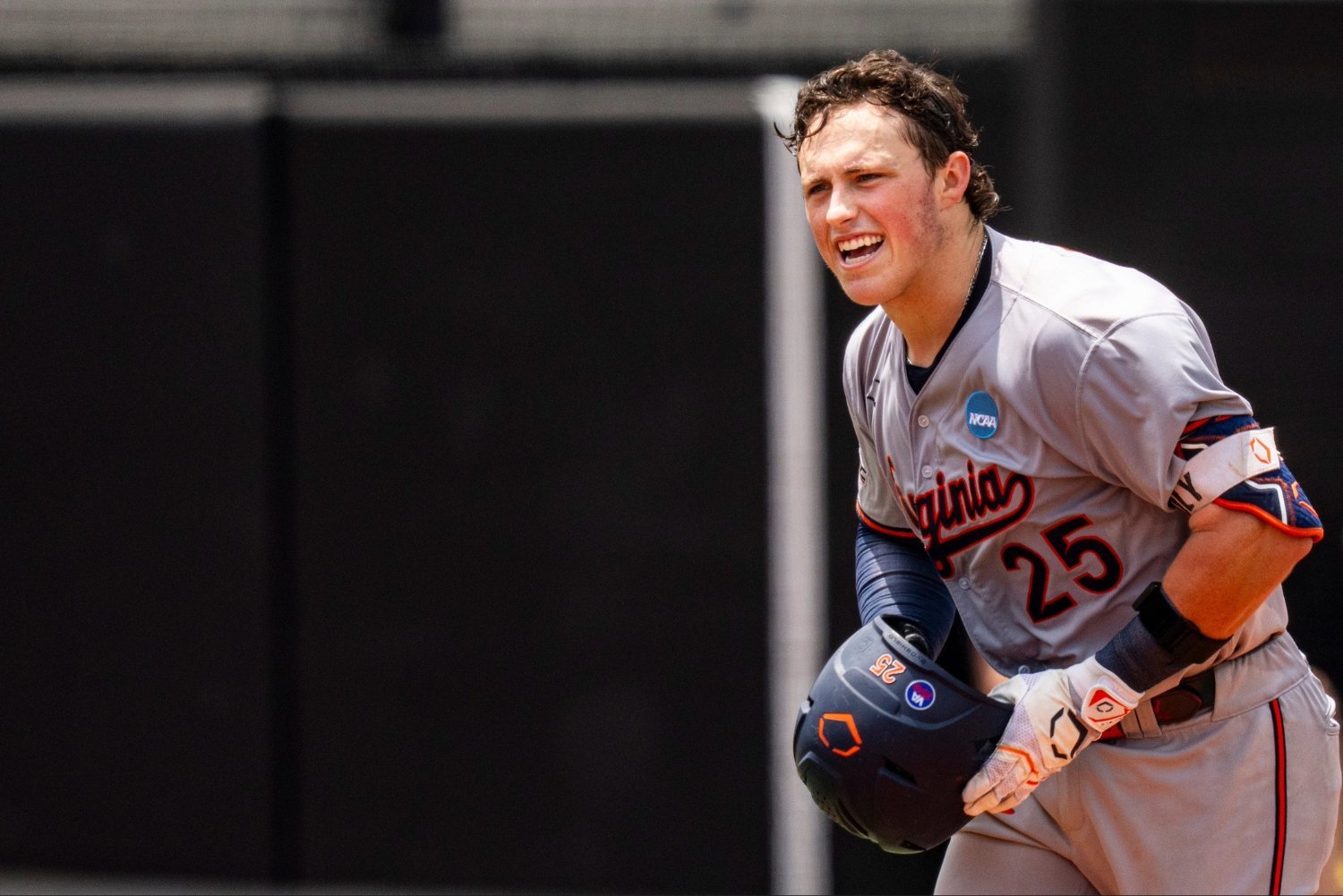 With the goal of competing for a World Series every season in a tough National League division, the San Diego Padres have aggressively used their prospects to acquire established MLB talent. As a result, the Friars entered the pre-draft period with MLB Pipeline's lowest-ranked farm system, and to help replenish it, they used the 2026 MLB Draft to target polished college talent. Of their 21 picks, 17 came from the college ranks. With more experienced prospects now entering the organization, here are three underrated draft picks who could move quickly through the Padres' farm system. Joe Tiroly, 2B Virginia, Round 7, Pick No. 215 Heading into the draft, Tiroly was ranked as the 99th prospect by Baseball America and 147th by MLB Pipeline, yet the Padres were able to get him with the 215th overall pick. Transferring to Virginia in his junior season, Tiroly quickly proved that the increase in talent from a tougher conference wouldn’t slow him down, a trait that will benefit him in the minors. He finished the season leading the Cavaliers with 16 home runs and 66 RBIs while slashing .319/.408/.576 with a .984 OPS. Throughout his collegiate career, Tiroly displayed consistent power. His average exit velocity and elite pull-air rate both ranked among the top percentiles in college baseball. He also hit double-digit home runs and had an on-base percentage north of .400 in each of three collegiate seasons while producing a barrel rate that ranked among the top 20% of college hitters. Tiroly also brings defensive versatility to the field. While he primarily played second base during his junior season, his arm strength and experience playing third base give him the flexibility to contribute defensively. Combined with his polished offensive profile, Tiroly has the traits of a prospect who can move quickly through the minors. Rob Evans, SP Miami, Round 12, Pick No. 365 After an underwhelming junior season in which he worked primarily out of the bullpen and posted a 4.70 ERA over 15.1 innings, Evans returned to the rotation for his senior year and revived his draft stock. He finished as Miami’s ace, compiling a 10-3 record with a 3.29 ERA and 98 strikeouts in 87.2 innings. Evans was reliable for the team all year, pitching at least five innings in 13 of his 16 appearances and holding opponents to a .210 batting average. Evans is coming to San Diego with a fastball that he consistently throws in the low-to-mid 90s and has topped out at 96 mph. Rather than overpowering hitters, he relies on deception, featuring a low three-quarters arm angle and a sweeping slider in the low 80s that keeps hitters off balance. While Evans may not possess the upside of a frontline starter, his experience as both a starter and relief pitcher will be valuable in his journey through the minor leagues. Ryan Kucherak, SS Northwestern, Round 15, Pick No. 445 Kucherak offers one of the more intriguing power-speed combinations in the Padres’ draft class. After breaking out during his sophomore year, he used his junior season to show teams that his development is still moving upward. He hit .295/.390/.521, with 10 home runs and led the team with 11 stolen bases after having only three stolen bases in his previous two seasons combined. His 10 home runs also made him the first Northwestern player since Stephen Hrustich, in 2021-2022, to record double-digit home runs in consecutive seasons. He continued to show off his power at the MLB combine, where he hit multiple balls over a 105 mph exit velocity. Kucherak also made strides defensively. After committing 11 errors during his sophomore season, he cut that number to seven as a junior while continuing to display his reliability, missing only one game in two seasons. With improvements on both sides of the ball and elite athleticism, Kucherak has the profile of a prospect who could climb through the farm system faster than those chosen ahead of him. View the full article
 -
 Let’s check in on the farm following Saturday’s action. Triple-A Worcester Red Sox Series vs. Jacksonville Jumbo Shrimp (Miami Marlins): 5-0 Season Record: 50-46 Worcester cruised to a shutout win as Arias tallied an RBI in his long-awaited Triple-A debut. Devin Sweet got the ball rolling for Worcester as he opened the game. He set the tone with two innings of one-hit ball, striking out one. Tyler Samaniego took the mound in the third and earned the win for his perfect two-frame appearance. Noah Song got the ball next. He walked one and struck out one over two innings, but kept the shutout bid alive. Seth Martinez followed with a one-hit shutout inning of his own as he struck out one. Angel Bastardo closed out the win with ease, allowing one hit and notching three K’s as the WooSox pitching staff put on a show. Arias was hitless in four at bats but still drove in his first Triple-A run on a sac fly. Just as Sweet got the WooSox off to a hot start on the mound, Nate Eaton did the same at the dish. In the bottom of the first Eaton launched a solo homer to left field, giving the WooSox an early advantage. Eaton kicked off a four-run first inning with his two-out blast. Worcester loaded the bases before Vinny Capra sent Andrw Knizler and Brett Harris home with a line drive single. Kristian Campbell joined the party, scoring Jason Delay on a single just one batter later. Campbell continued a seven-game hit streak amid a second-half surge. Arias tacked on the final run of the day, driving in Capra on a sac fly to center. Double-A Portland Sea Dogs Series @ Binghamton Rumble Ponies (New York Mets): 3-2 Season Record: 51-43 Portland recorded just five baserunners as the bullpen crumbled behind a solid start from Anthony Eyanson. Eyanson’s start on Saturday was a short one as he lasted just three frames. He struck out five of the fourteen batters he faced, allowing two hits and issuing three walks. While interim manager Kyle Sasala likely wanted a few more frames from Eyanson, it was by no means an unsuccessful appearance. Jedixson Paez took the mound next. Eyanson and Paez have emerged as a dominant tandem over the past couple months with Paez closing out Eyanson's starts. However, it was a different story on Saturday night. Paez was lit up across 2⅔ innings to the tune of four runs (one unearned) on seven hits. Paez struck out five before Erik Rivera took over. Rivera couldn’t stem the bleeding in his 2⅓ innings. He allowed another run on two hits, striking out three and closing a disappointing day for the Sea Dogs faithful. As disappointing as the bullpen might have been, the offense was even worse. Matt Frazier and Miguel Bleis were the only two batters to record hits, each with a single. Matt Turner, Max Ferguson, and Mason White all recorded walks as well. The five baserunners was all Portland could muster as they fell without much protest. High-A Greenville Drive Series vs. Hub City Spartanburgers (Texas Rangers): 2-3 Season Record: 38-54 Greenville’s bullpen collapsed and the offense had a hard time getting going as the Drive fell 6-2. Dylan Brown spun a solid start across six frames on Saturday night. Brown allowed two runs on four hits but displayed excellent command as he didn’t issue a walk. He struck out seven batters, the most in nearly a month for the 22-year-old, as he lowered his ERA to 4.14. Shea Sprague entered next and the game began to slip away. Over two innings, Sprague allowed two runs on five hits as he struck out two. His ERA rose to a staggering 8.45 before Trennor O’Donnell took over. O’Donnell allowed two unearned runs, but maintained his perfect 0.00 ERA across the final frame of Saturday’s game. He walked one and allowed one hit. Antonio Anderson went 2-for-3 with a triple in Saturday’s loss, his third of the year. Despite having a sluggish season up until early June, Anderson has turned his season around since then. In the first, Enddy Azocar hit a leadoff triple, immediately putting himself in scoring position. The next batter, Yoeilin Cespedes, gave the Drive an early lead as he drove in Azocar on a single to left field. After Hub City took the lead, Ronny Hernandez tied the ball game with one swing. He launched his eleventh homer of the season to right field in the second inning, tying the game at 2-2. The Drive’s offense struggled the rest of the night as they let up four unanswered runs and went home with a loss. Low-A Salem RidgeYaks Series vs. Augusta GreenJackets (Atlanta Braves): 3-2 Season Record: 41-53 Despite holding a lead through the first eight frames of Saturday's contest, Salem fell behind a late bullpen collapse. Jose Bello got the start on Saturday and continued his excellent season. Across five frames Bello let up three hits and issued two walks but shutout the GreenJackets. He notched four Ks and lowered his ERA to an impressive 2.55 before Ethan Walker got the call from the bullpen. Walker kept up the shutout as he nearly matched Bello’s line. Across two frames, Walker allowed two hits, issued two walks, and struck out four. The shutout died when Luis Cohen entered the ballgame in the eighth inning. Cohen allowed three runs on three hits across two innings, striking out two and issuing a pair of walks. The GreenJackets late offensive surge forced extra innings and Salem called on Jay Allmer to handle it. Unfortunately for the Yaks, Allmer wasn’t up to the job. He allowed three runs (two unearned) on two hits and a walk as his ERA ballooned to 12.46. Salem’s offense couldn’t match Augusta in the bottom of the tenth as they fell late. A solid offensive effort from the top of Salem’s order gave them the lead throughout most of the game, but the RidgeYaks couldn’t make it happen when it mattered most. Franklin Primera and Skylar King led Salem with three hits apiece as Primera and Andrews Opata pitched in two RBIs each. Opata gave Salem the lead in the third inning with an RBI single, driving in Ilan Fernandez and advancing King to third. Primera finished the job, scoring King on a soft liner to first and adding to the lead. Primera struck again in the fifth inning, scoring Opata on another single. After Augusta scored six unanswered runs, Opata tried to spark a rally in the tenth. He scored Ilan Fernandez on a line drive to right field but it wasn’t enough to get the RidgeYaks going. View the full article
 -
 Jonathan Santucci was really looking forward to his start Saturday for Double-A Binghamton against Portland, because of who his mound opponent would be. Fellow high-level prospect Anthony Eyanson was on the hill for the SeaDogs; Santucci (No. 8 on Grand Central Mets' list of top 20 Mets prospects) said before the game that he grew up wanting to face "the best." Eyanson was good in an abbreviated outing, but Santucci came away with the W. He threw five scoreless innings, allowing two hits and striking out six, to lead the Rumble Ponies to a 5-0 victory. He wasn't flawless -- there were three walks -- but he was tough, stranding four runners in scoring position. Santucci lowered his season ERA to 3.57 over 90 2/3 innings. Three relievers combined for four hitless innings of relief to finish the two-hit shutout. Jose Ramos provided the big hit for the Rumble Ponies, a two-run home run in the fifth inning. Elsewhere in the organization: Syracuse breezed past Scranton/Wilkes-Barre 8-1. Ronny Mauricio hit two more home runs, Ben Rortvedt homered and drove in four runs, and Robert Stock struck out six over 3 2/3 innings. Brooklyn lost to Jersey Shore 7-3. Trace Willhoite tied the game in the fourth with a double, but the Cyclones' bullpen faltered. St. Lucie lost 15-14 to Fort Myers. Randy Guzman homered twice and drove in six runs in the loss. DSL Mets Blue and DSL Mets Orange squared off, with Orange winning 4-3 on Cleiner Ramirez's two-run, walk-off single in the bottom of the seventh, New York Mets Transactions New York Mets placed LF Juan Soto on the 10-day injured list. Left calf strain. New York Mets recalled 1B Eric Wagaman from Syracuse Mets. Mauricio Keeps Blasting Away For Syracuse Mauricio's two dingers gave him four homers in his last four games against the RailRiders. Overall, he has five homers in nine games since being optioned to Syracuse on July 7. His first homer put the Mets up 2-0 in the first inning. He brought in Jihwan Bae, who opened the game with a single. The second homer was a bookend solo shot in the ninth. In between, Ben Rortverdt hit a three-run homer in the third to put the Mets up 5-0 and an RBI single in the fifth for a 7-0 advantage. Those hits came around Ryan Clifford's RBI single in the fifth. Clifford finished 3-for-5, while Zack Short added two hits and a walk. Stock allowed two hits and two walks as he continues to rehab from thoracic outlet syndrome surgery. Jonathan Pintaro, Matt Turner, Dedniel Núñez and Dylan Ross combined for 5 1/3 innings of scoreless, two-hit ball. Player AB R H RBI BB K Jihwan Bae 5 1 1 0 0 1 Ronny Mauricio 5 2 2 3 0 2 Mike Tauchman 5 0 1 0 0 1 MJ Melendez 4 1 0 0 1 2 Ryan Clifford 5 2 3 1 0 2 Christopher Morel 2 1 0 0 2 0 Ben Rortvedt 3 1 2 4 1 0 Zack Short 3 0 2 0 1 1 Cristian Pache 4 0 0 0 0 0 Totals 36 8 11 8 5 9 Player IP H R ER BB K HR Robert Stock 3 2/3 2 1 1 2 6 0 Jonathan Pintaro 1 2/3 0 0 0 0 1 0 Matt Turner 1 2/3 1 0 0 0 2 0 Dedniel Núñez 1 1 0 0 1 2 0 Dylan Ross 1 0 0 0 0 1 0 Totals 9 4 1 1 3 12 0 Binghamton Sharp In Blanking Portland The Rumble Ponies' hitters gave Santucci some support in the fourth inning. Singles by JT Schwartz and Wyatt Young put runners at first and third, and John Bay singled home Schwartz for a 1-0 lead. In the fifth, Ramos' homer and an RBI single by Young put Binghamton up 4-0. The Rumble Ponies added their final run in the seventh on Nick Lucky's RBI single. Schwartz, Young and Nick Lorusso each had two hits on the night. Garrett Stratton followed Santucci with two innings of relief, striking out three. Zach Peek struck out two in his hitless inning, and Gabriel Rodriguez fanned one as he closed out the victory. Player AB R H RBI BB K John Bay 3 0 1 1 2 1 Nick Lorusso 5 0 2 0 0 3 Corey Collins 5 1 1 0 0 2 Jose Ramos 4 1 1 2 1 2 Kevin Parada 3 0 0 0 1 2 JT Schwartz 4 1 2 0 0 0 Matt Rudick 4 2 1 0 0 0 Nick Lucky 3 0 1 1 1 2 Wyatt Young 4 0 2 1 0 1 Totals 35 5 11 5 5 13 Player IP H R ER BB K HR Jonathan Santucci 5 2 0 0 3 6 0 Garrett Stratton 2 0 0 0 0 3 0 Zach Peek 1 0 0 0 0 2 0 Gabriel Rodriguez 1 0 0 0 0 1 0 Totals 9 2 0 0 3 12 0 Cyclones Falter After Rallying To Tie Brooklyn managed only three hits, but, they all drove in runs, and it fought back from an early deficit. The Cyclones took a 1-0 lead in the first. Yonatan Henriquez walked, D'Andre Smith was hit by a pitch, and Jamari Baylor singled in Henriquez. Jersey Shore answered with three runs in the bottom half against starter Frank Camarillo. Brooklyn drew even in the fourth on Daiverson Gutierrez's RBI single and Trace Willhoite's RBI double. That would be all for the Cyclones' offense. Jersey Shore went ahead for good in the fifth with a solo home run, and then added on with two runs in the sixth and one in the seventh. Camarillo gave up four hits in his one inning of work. Juan Arnaud was the culprit in the bullpen; he was charged with three runs and five hits over 1 2/3 innings, with a walk, a strikeout and a home run allowed. Player AB R H RBI BB K Yonatan Henriquez 3 1 0 0 1 1 D'Andre Smith 3 0 0 0 0 2 Ronald Hernandez 4 0 0 0 0 0 Jamari Baylor 2 1 1 1 0 0 JT Benson 4 0 0 0 0 1 Daiverson Gutierrez 4 1 1 1 0 0 Colin Houck 4 0 0 0 0 3 Trace Willhoite 3 0 1 1 0 2 Kevin Villavicencio 3 0 0 0 0 0 Totals 30 3 3 3 1 9 Player IP H R ER BB K HR Frank Camarillo 1 4 3 3 1 1 0 Calvin Ziegler 1 1 0 0 1 0 0 Ryan Dollar 2 0 0 0 0 3 0 Juan Arnaud 1 2/3 5 3 3 1 1 1 Tanner Witt 2 1/3 1 1 1 2 2 0 Totals 8 11 7 7 5 7 1 Guzman's Big Night Lost In All Those Runs St. Lucie spent the night trying to erase an eight-run, first-inning deficit. They got very close. The Mets went right to work, scoring five runs in the bottom of the first. Antonio Jimenez singled in a run, Guzman lifted a sacrifice fly, Branny De Oleo delivered an RBI single, Simon Juan doubled home De Oleo, and Jimenez scored on a throwing error during a double steal. Guzman did his best to pick up the St. Lucie pitchers who kept giving up runs. He hit a two-run home run in the fifth to cut the deficit to 11-9 and a three-run shot in the sixth to make it 14-12. Fort Myers added an insurance run in the ninth, and it proved vital as the Mets scored twice in the bottom half on a run-scoring wild pitch and a solo home run by Marco Vargas. Mets starter Ethan Lanthier recorded just two outs and was charged with seven of the eight Fort Myers runs in the first. All of them were earned. Player AB R H RBI BB K Elian Peña 5 2 1 0 0 1 Trey Snyder 6 1 1 0 0 1 Marco Vargas 5 3 2 1 1 2 Cole Mathis 2 1 0 0 1 0 Chase Meggers 3 0 0 0 0 2 Antonio Jimenez 3 3 2 1 2 0 Randy Guzman 4 2 3 6 0 1 Branny De Oleo 4 1 2 1 0 0 Simon Juan 4 0 2 1 0 1 Francisco Toledo 3 1 0 0 1 1 Totals 39 14 13 10 5 9 Player IP H R ER BB K HR Ethan Lanthier 0 2/3 5 7 7 3 0 0 Franyel Diaz 2 1/3 4 4 4 1 0 1 Jonathan Jimenez 1 2/3 0 0 0 1 1 0 Luis Alvarez 1 1/3 1 3 3 2 3 1 Miguel Mejias 2 2 1 1 1 3 1 Joe Scarborough 1 0 0 0 0 2 0 Totals 9 12 15 15 8 9 3 Top-20 Prospect Performance Jonah Tong: DNP Jack Wenninger: DNP Ryan Clifford: 3-for-5, 2 2B, RBI, 2 R, 2 K Elian Pena: 1-for-5, 2 R, K Nick Morabito: DNP Jacob Reimer: DNP Mitch Voit: DNP Jonathan Santucci: 5 IP, 2 H, 0 R, 3 BB, 6 K Zac Thornton: MLB Chris Suero: DNP Will Watson: DNP Wandy Asigen: 1-for-3, R, BB, 2 K Eli Serrano III: DNP Randy Guzman: 3-for-4, 2 HR, 6 RBI, 2 R, K Dylan Ross: 1 IP, 0 H, 0 R, 0 BB, 1 K Ryan Lambert: DNP Antonio Jimenez: 2-for-3, RBI, 3 R, 2 BB R.J. Gordon: DNP Jonathan Pintaro: 1 2/3 IP, 0 H, 0 R, 0 BB, 1 K Marco Vargas: 2-for-5, HR, RBI, 3 R, BB, 2 K View the full article
 -
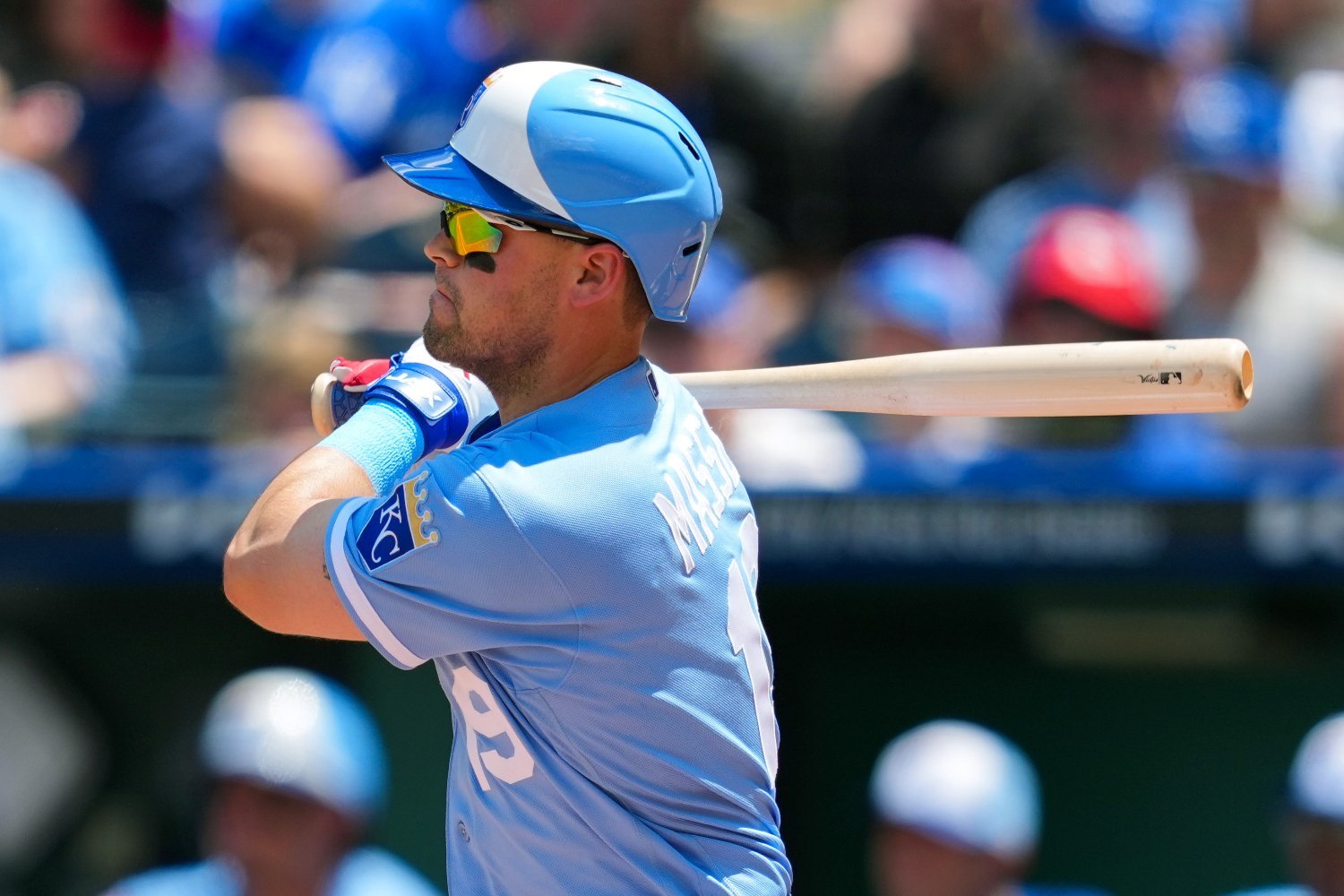 One of the more encouraging stories this year has been the re-emergence of second baseman Michael Massey. It seemed like Massey was on his way to a solid career as the Royals' second baseman in 2024. In 100 games and 356 plate appearances, the former Illinois product hit .259 with a 104 wRC+. That included 14 home runs, 45 RBI, and a 1.6 fWAR. However, while dealing with nagging injuries, Massey took a step back last year. In 277 plate appearances, he hit .244 with a 57 wRC+. He also only had 3 home runs, 20 RBI, and a -0.4 fWAR. Massey also didn't have quite a clear role either last year, with the presence of Jonathan India, who also struggled in 2025 with the Royals (89 wRC+, -0.3 fWAR). Massey and India were expected to battle it out again for the second base job, but India only played 17 games this year, as his season was cut short due to shoulder surgery. However, India's unfortunate setback opened an opportunity for Massey, and the 28-year-old infielder has taken advantage of it. In 86 games and 279 plate appearances, he is hitting .272 with a 101 wRC+. Massey also has 7 home runs, 34 RBI, and a 1.5 fWAR. ZiPS and The BAT both project at least a 0.5 fWAR for Massey for the remainder of the season. That means he will likely surpass his career-high fWAR from 2024. The Statcast percentiles have also been encouraging with Massey, especially when it comes to making contact and pulling the ball in the air. The Royals still have Massey under team control for a while. He enters arbitration eligibility this offseason, and he isn't a free agent until 2029. Much like Isaac Collins, it would make sense to hold onto Massey for 2027, as he will provide stability at the bottom of the lineup, and he has proven to be a very good defensive infielder (5.6 Def, +8 OAA, +6 FRV, and +4 DRS). That said, Kansas City has a chance to take advantage of the trade market, and unlike some other of their position player trade options, they do have some internal depth in the infield that they could absorb the loss of Massey quite easily. Massey Still May Just Be Righty-Only Option With the injury to India, Massey has gotten more opportunities for everyday at-bats at second base, regardless of who's pitching on the mound. He has shown some progress against southpaws this year, as evidenced by his splits. This season, Massey is hitting .281 with a 103 wRC+ and .738 OPS in 61 plate appearances against lefties. That fares favorably to his splits against righties. Against right-handed pitchers, Massey is hitting .270 with a 100 wRC+ and .739 OPS in 218 plate appearances. Some Royals fans may look at these numbers and say, "Hey! Massey has solved those issues! Why are we trading him?" A deeper look into his splits and Statcast splits demonstrates that Massey may be due for regression soon against southpaws. Against righties, Massey has a 0.41 BB/K ratio. That includes a 6.0% BB% and 14.7% K%. Against lefties? He has a 0.19 BB/K ratio with a 4.9% BB% and 26.2% K%. Striking out more and walking less against lefties isn't a good indicator for future success. Furthermore, he has shown better power against righties, with a .160 ISO (compared to a .140 ISO against lefties). His Statcast percentile splits show similar trends, not just with plate discipline, but also with batted-ball ability. As Royals fans can see above, there is a massive gap in Whiff% (85th percentile against RHP; 31st percentile against LHP), Hard Hit% (73rd percentile against RHP; 17th percentile against LHP), and LA Sweet-Spot% (63rd percentile against RHP; 18th percentile against LHP). It's one thing to miss. However, to miss and not hit the ball hard? That's not a recipe for consistent success. Now, Loftin has his own split differences. His wRC+ against lefties is 120, while it is just 96 against righties. That said, there are fewer Statcast concerns on the splits data, as seen below. When it comes to Loftin, he does pull the ball more in the air against righties and has better Max EV against lefties. Other than that? His splits are pretty similar, especially in categories that are important like Whiff%, Z-Contact%, O-Swing%, and LA Sweet-Spot%. Maybe there isn't a ton of upside with Loftin, but he is a much more stable asset than Massey, who has not just had bigger split differences, but a more checkered injury history as well. Thus, if the Royals do trade Massey, the Royals could still be fine at second base, especially once Maikel Garcia returns from the IL. Granted, Loftin has his defensive issues (-4.6 Def, -8 OAA, -5 FRV, and -7 DRS at 2B). That said, he may get better now that he is solely focused on second base and not moving around the field. Who Is a Possible Trade Partner? One team that makes a ton of sense as a trade partner for Massey is the Miami Marlins. The Marlins are still competing for a playoff spot, but they have faded a bit, as they are 52-53 and 9.5 games behind in the NL East. Miami has always taken a "long-term" approach to the Trade Deadline, especially under President Peter Bendix, who came over from the Tampa Bay Rays. However, Massey is an option that would fit within their philosophy. He carries years of control, and he still has Minor League options, giving him roster flexibility. They are also weak in the infield, with Javier Sanoja their current third baseman. Sanoja would be better served as a bench piece, especially since he doesn't offer any power upside, as illustrated in his Statcast percentiles. Massey could not just play third, but he could move around the field as necessary. Unlike India, Massey has proven that he can be adept defensively in a utility role. In exchange for Massey, the Marlins could ship over two players who haven't quite lived up to expectations in Miami: pitcher Braxton Garrett and Connor Norby. After a solid 2023 season (3.66 ERA in 159.2 IP), Garrett has struggled with injury (missed 2025 due to elbow surgery) and inconsistency (5.35 ERA in 2025; 14.54 ERA in 2 starts with the Marlins this year). However, he has been much better in Triple-A (2.32 ERA in 73.2 IP with Jacksonville), and his Statcast percentiles demonstrate that he could bounce back if given the opportunity at the MLB level. As for Norby, he just hasn't demonstrated that much after a promising 2024 with the Marlins after coming over from Baltimore. This year, in 233 plate appearances, he hit .205 with an 81 wRC+. He also had four home runs, 16 RBI, and a 0.2 fWAR. However, his 30% K% is a big reason why he's in Jacksonville and not Miami. That said, the Royals hitters have seen a bit of a resurgence with the help of new assistant hitting coaches Connor Dawson and Marcus Thames. While he has his flaws, Norby does two things that this coaching staff and front office like: he doesn't chase, and he walks. Thus, Norby could be a nice project for the Royals, especially if Garcia needs more time on the IL this season. He also still has two minor league options, giving him roster flexibility for 2027. I am not sure if Massey alone could get these two. However, Massey and a reliever like John Schreiber, Alex Lange, or Matt Strahm? Maybe that's an easier call for Bendix and the Marlins. Should the Royals Trade Massey? He's a tough dilemma for the Royals, perhaps even tougher than Collins. On one end, Massey is well-liked by the Royals clubhouse and franchise. He won the Mike Swanson Award, which goes out to the player who's most helpful to the media. He has a great relationship with the fans, and more importantly, he's been an important player for this club who's stepped up when they needed him the most in the wake of India's injury. At the same time, it feels like Massey is a bit of a ticking time bomb injury-wise. He's just not a guy who can be depended upon for a full season. He's only had more than 400 plate appearances in his career once, which was in 2023 (461). Furthermore, his free-swinging approach is good when he makes contact. When he doesn't? Things can go south, as they did in 2025 and 2023 (74 wRC+). The Royals should explore a possible trade with Massey, and Miami makes the most sense. Not only could Massey be on a winning team and fit into what they like to do as an organization, but the Royals could get two nice bounce-back projects that could thrive in a change of scenery. View the full article
 -
The Twins have activated LHP Connor Prielipp and reliever Cole Sands. Prielipp will start Sunday's finale versus the A's. Sands has been out since April 28 with a forearm strain so the Twins hope he will bolster a bullpen that has had its ups and downs throughout the year. To make room on the 26-man roster, Jack Anderson was optioned to Triple-A St. Paul and Mike Paredes was placed on the injured list with an oblique strain. View the full article
-
How The Royals Can Prove 2 Big Things At The Trade Deadline
DiamondCentric posted an article in Royals Keep
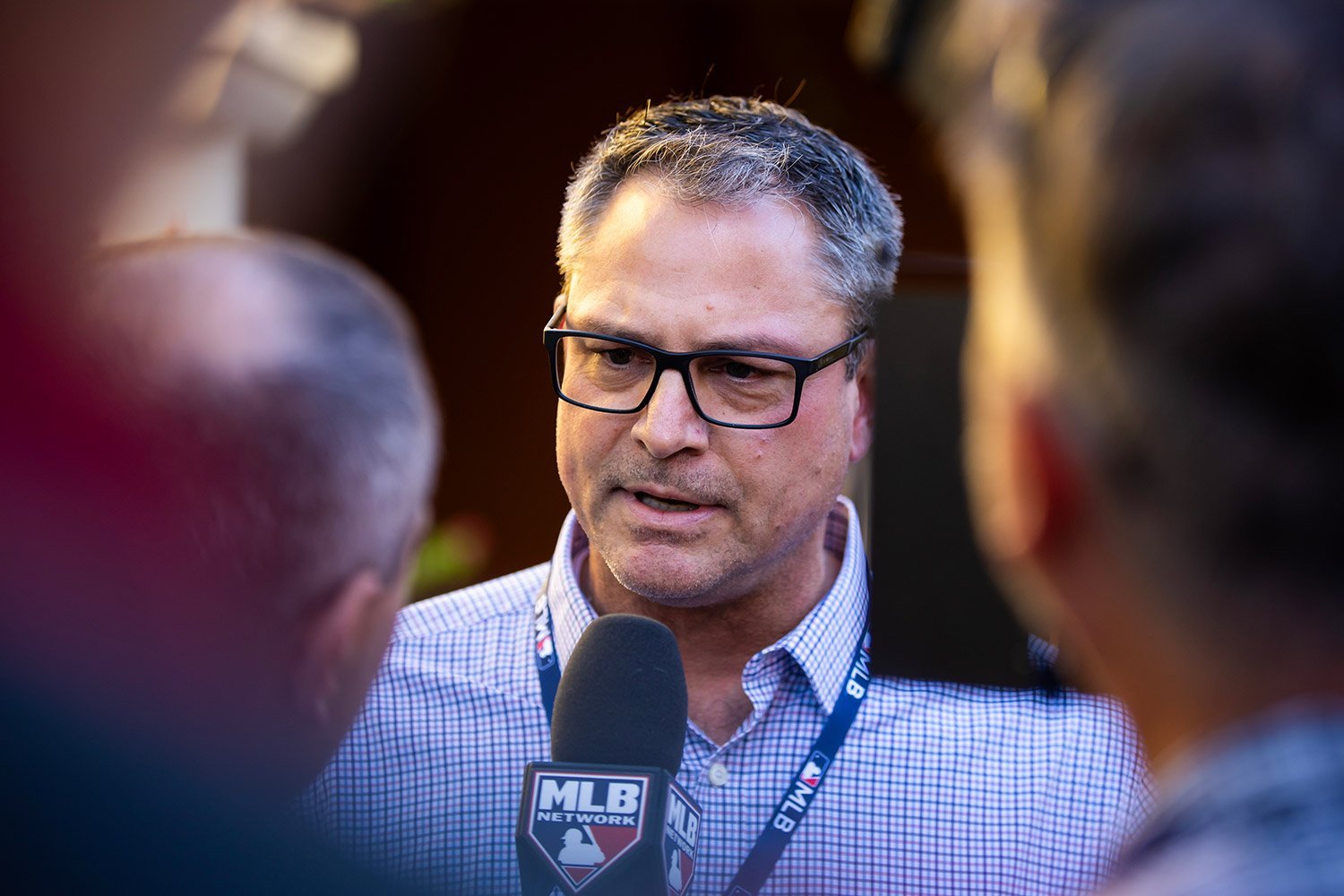 The annual midsummer trade deadline looms large on baseball’s horizon. Contenders searching for game-changing down-the-stretch help, and sure sellers like the Royals, have until August 3 at 6pm Eastern to consummate the big deals they and their fans relish. What Kansas City, buried deep in the American League Central cellar by maddening injuries and a shockingly dismal bullpen, will do is not in question. General manager J.J. Picollo, taking his fourth shot at the deadline since replacing Dayton Moore near the end of the 2022 season, will be selling. His club's poor position takes trying to put together a late contender off the table. A shakeup is warranted. Unknown at this point, though, is who the Royals are willing to trade, and how much change they want to make. The needs run deep — Cole Ragans' recent elbow surgery is all but certain to sideline him for every bit of next season, Kris Bubic has been out since May and is sure to test the free agent market this winter, 2025 sensation Noah Cameron is in a bit of a funk, and promising Stephen Kolek just joined Ragans and Bubic on the IL. Vinnie Pasquantino is having the kind of down year that might tempt KC to move him; it remains to be seen whether the club is finally satisfied with Michael Massey at second base, and the outfield picture remains uncertain. And the bullpen needs a serious overhaul. The impending deal deadline, then, is the hottest sports topic in KC until the Chiefs open their season. But this year’s trade deadline gives the Royals ways to prove a couple of key things. The Royals Must Use The Trade Deadline To Prove A Rebuild Isn’t Imminent Sore roster spots and holes abound, but the talent KC already has renders a wholesale rebuild unnecessary. Carter Jensen is proving he belongs, Salvador Perez’s recent surge at the plate suggests he may have enough left in the tank to support a productive 2027, Pasquantino’s bat has been too potent in the past for the club to trade it away now, and Massey is showing he can do the job at second. And Bobby Witt Jr., Maikel Garcia, and Jac Caglianone aren’t going anywhere. Add starting pitchers Michael Wacha and Seth Lugo, both of whom the Royals apparently intend to keep, to that good mix, and the foundation is there to make a rebuild — and trade deadline fire sale that would fuel it — baseball malpractice. Instead, the Royals must proceed with a different purpose. Because starting pitchers may be difficult, and the closer KC so badly needs is virtually impossible to pry away from contenders, Picollo may have to target middle relievers, especially those capable of moving into a finisher role. The Royals could also use more power, but as is the case with a new rotation piece and a closer, they may have to rely on the offseason trade and free agent markets to get what they really want. But they need to try. Maybe Picollo can swing a surprise or two. Perhaps Bubic can draw some attention so the Royals can get something for him before he tries free agency. Maybe some contender needs pitching so badly that it’s willing to give Picollo a significant bat in return for Lugo, who’s more expendable than Wacha. All of this will play out soon. Whatever Picollo does, though, he can’t afford to tear this team down and set it on the path of multi-season reconstruction. Dismantling this team isn’t necessary, and fans justifiably wouldn’t stand for it. The Royals Need To Prove They’re Serious About Contending In 2027 While a rebuild-triggering deadline fire sale must be avoided, the club still needs to provide conclusive evidence that it’s unwilling to settle for mere respectability in 2027, and is instead committed to contending next season. Here’s how they can do just that. The Royals should put acquiring more utility men on the back burner; with Nick Loftin, Tyler Tolbert, and Josh Rojas if they keep him, the cupboard is far from bare. Massey and Garcia are also capable of playing more than one position if necessary. So is Lane Thomas if he isn’t traded and interest in his possible return is mutual. The Royals crave versatility, but the current inventory should enable them to focus on more critical needs. Then there’s second base. What we’ve written here before bears repeating — the job should be Massey’s now and next season. He’s proving he can stay healthy, and his .274 average and 101 wRC+ (through Thursday) suggest, as he’s proven before, that he can hold his own in the batter's box. Throw in his serviceable defense, and the Royals should be satisfied with what they have at second and put the resources they’d otherwise devote to filling the position to better use. Although finding a proven closer may be too much to ask at the deadline, Picollo should, as previously mentioned, at least try to find a reliable reliever with closing potential. Unfortunately, the Royals can’t rely on Carlos Estévez, who’s pitched only once this season, to return to form even if they exercise the club option they hold on him for 2027, and the rest of the present bullpen is shaky. Picollo also needs to find a solid bat. He won’t be willing to give up enough to get a superstar, and wisely so, but who he’ll probably put on the block should be sufficient to net a decent hitter with at least moderate power and production potential. Finally, picking up a solid starter would help reduce the uncertainty of KC’s rotation. Caution is warranted, though — Picollo should grab one if the price is right, but it may be better to wait and see what the winter market has to offer. The bottom line? Even if the Royals can’t do all of these things, doing even a couple will help soothe the pain of this season, and help prove they’re serious about reaching postseason play in 2027. View the full article
 -
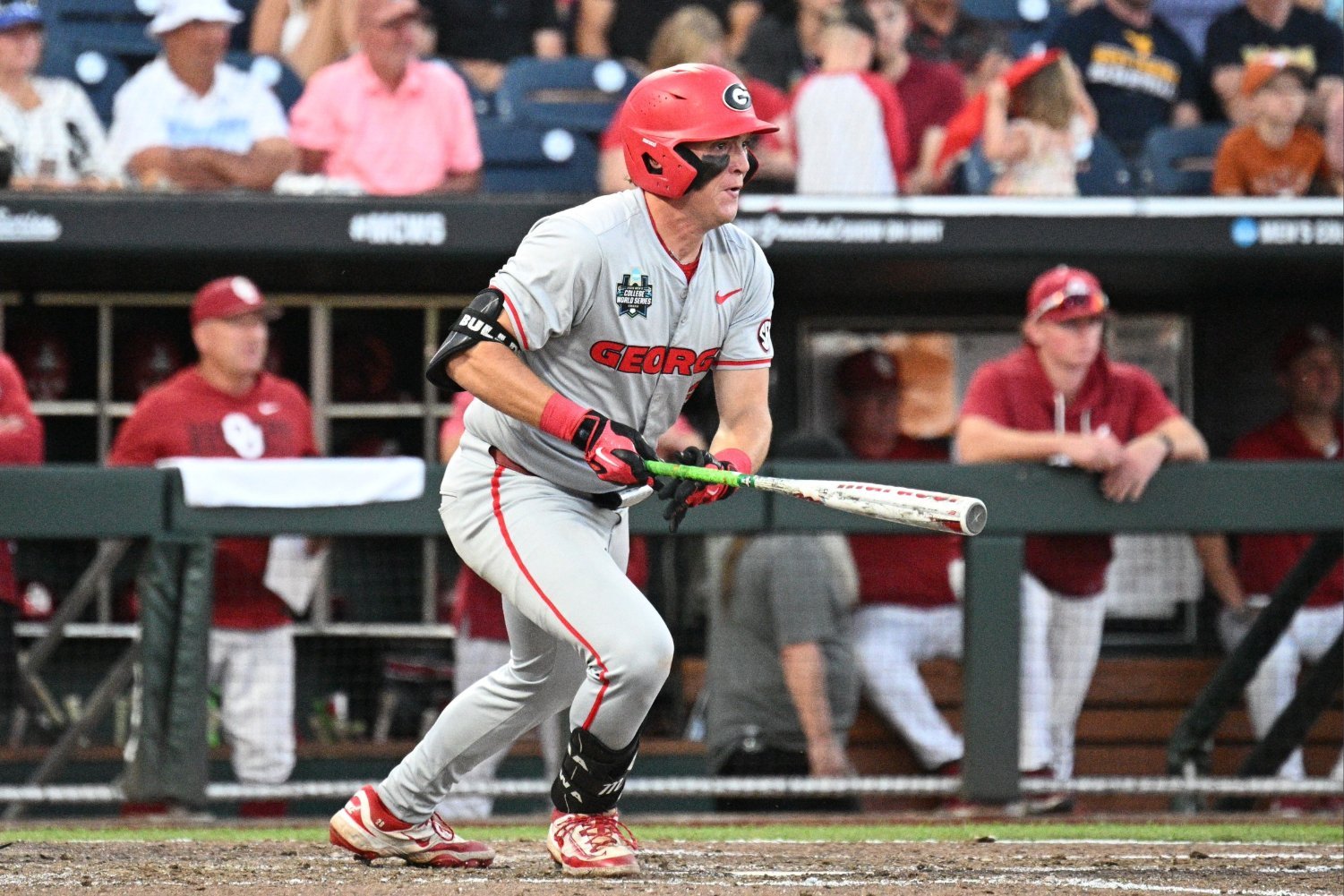 Now that the dust has settled on the 2026 MLB Draft, it’s time to debrief and take a look at value picks. The Chicago Cubs didn’t just hit early on with power bats like Myles Bailey. Chicago also swiped some players with remarkable upside later in the draft. Let’s dive into who those prospects are and ultimately what they can bring to the table in the Windy City. Isaac Morton, Minnesota The Cubs took Isaac Morton in the sixth round of this year’s draft, and he has loads of potential to help the big-league ball club in a few years. Morton spent a pair of seasons with Texas A&M before transferring to the midwest to round out his collegiate career as a Gopher. He possesses a mid-90s fastball and supplements his primary option with a slider, cutter and a changeup. This past spring, Morton logged a 4-2 record with a 3.26 earned run average over 13 appearances, all of them starts. He struck out 63 hitters and walked 26 over 60.2 innings of work. His best start of the year was against a conference rival in Illinois, as the right-handed pitcher tossed seven shutout frames while allowing just two hits, three walks and striking out six. He also notably struck out a season-best eight hitters against Penn State, with the hurler allowing just one earned run on two hits over five innings of work. The main red flag here is Morton's injury history. This is somebody who had damaged tendons in 2023, and he ultimately threw out his arm to end the 2026 spring season. This will likely sideline him for the remainder of the calendar year, but he can rise quickly if he's healthy at the onset of the 2027 campaign. Luke Alwood, Seattle University Luke Alwood has the upside to be a productive pitcher in professional baseball, but the Cubs will need to harness the right attributes. He played his most recent season at Seattle University and he boasted his best year with the team in 2026. Alwood entered the year with some walk issues, giving up 121 free passes over 120.1 innings pitched. He cut down on that rate significantly this year, fanning 48 hitters with 19 walks over 43.2 frames of work. Alwood primarily operated out of the bullpen, logging a 2-4 record with a 5.56 ERA in 19 total appearances. Chicago will have to monitor Alwood’s command, but his mid-90s fastball and wipeout slider have the true potential to cause issues for hitters. At the end of the day, the Cubs signed him for a scant $50,000 signing bonus, so he doesn’t need to be a world-beater by any means. If Alwood turns into a serviceable reliever who can eat innings, he’s already out-performed expectations. Brennan Hudson, Georgia Brennan Hudson was Chicago’s final selection from this year’s draft, as the team took him in the 20th round. Any time you see an SEC baseball player, they’ve already been exposed to some of the best prospects the sport has to offer. Hudson has that advantage on some of the field, as he smacked 22 home runs for the Georgia Bulldogs this past spring. He saw a significant spike in playing time this year, going from making just seven starts in 29 appearances to being the team’s starter in 56 of 62 contests. Hudson touted a .657 slugging percentage, also impressing with his plate discipline, as the backstop drew 42 walks to 61 punchouts. With loads of experience against the best pitchers collegiate ball has to offer, Hudson could quickly leap to the higher levels of the minors if he can maintain the gains he made with his approach this year. View the full article
 -
 Very good to see Brock Wilken back a day after being beaned (thank you, ear flap!), but we dug into the MiLB TV archives to find out why Nashville's Eric Brown, Jr. and Wilson's Rylan Mills had nights cut short. Transactions: N/A Final, Game One: Sugar Land (Astros) 4, Nashville 0, seven innings as scheduled Box Score and Game Log Final, Game Two: Nashville 5, Sugar Land (Astros) 4, eight innings (scheduled for seven) Box Score and Game Log Via the Sounds, game details, and we encourage readers to always review affiliate write-ups as part of their Link Report routine: Sounds Split Doubleheader in Sugar Land with Extra-Inning Win in Night Cap Pitching ruled throughout both games, and the detailed summary communicates that so well. The opener featured two complete games; pretty sure that's the first time all season at any level we've seen that. I do feel like we do the Sounds a bit of a service here, as unlike the Shuckers and Timber Rattlers, the team does not link to its recaps on 'X', so we do put deserving eyes on things. With that being said, click above at this time and catch up. We'll be waiting right here when you return. First of all, shoutout to Brock Wilken's ear flap Friday night, as we covered in detail in yesterday's report. He was cleared to start Game Two, played the full game at third base. LHP Colton Gordon and RHP Coleman Crow combined for only one walk over 12 innings of work. Every position player saw action somewhere within the twinbill. Here's one thing we may not have picked up on without the effort put into the game summary: "Former 1st round pick Eric Brown Jr. collected the first hit of his Triple-A career on Saturday night in game one. After taking his first two at-bats with Nashville entering the game off the bench, Brown Jr. made his first Triple-A start in game one playing second base. He broke up Ryan Weiss' no-hit bid with a two-out single in the top of the sixth inning. He also started game two and added another hit, finishing the doubleheader 2-for-5 with a walk before having to exit the game after attempting to make a diving catch in center field in the sixth inning. Edwin Díaz triples (1) on a fly ball to center fielder Eric Brown Jr leading off the inning. Defensive Substitution: Jacob Hurtubise replaces center fielder Eric Brown Jr., batting 2nd, playing center field. Because it was not a run-scoring play, there is no video highlight to link to. So, it was off to the game archive (linked here for subscribers, 01:40:10 hour/minute mark). One heck of an effort by Brown racing back towards right-center and laying out for a dive that was thankfully several feet short of the wall. Brown bounced up after the dive and chased the ball to the wall, we see him picking up the ball but not throwing it in (he may have, or could have handed it to RF Luis Matos, we don't see the throw). However, the announcer noted that Brown was coming out with "his right arm hanging down", although we also don't see that on screen. There was no delay on the exit or question of Brown staying in, he was back in the dugout within moments of the play ending. Here's a screenshot of how the dive left Brown initially in that prone position: Just a half-inning earlier, Brown was involved in another physical play, this one at the plate: Luke Adams with a double and three walks in the nightcap, OBP up to .419. As for Darrien Miller, I love how "clears the bases" is reserved for bases-loaded situations: Catch up with the latest Biloxi pre-game audio interview archives - Catcher Marco Dinges is the most recent interviewee Biloxi Pre-Game Media Notes Final: Chattanooga (Reds) 8, Biloxi 4 Box Score and Game Log Fischer & Adamczewski Homer Again in Shuckers Setback to Lookouts Those two home runs are going to get all the buzz and attention, but things were fairly flat otherwise. Biloxi managed only five hits (Dylan O'Rae tripled). The Shuckers did draw eight walks but... Team RISP: 0-for-5. Team LOB: 9. Biloxi batters also fanned 13 times with the heralded group of Made-Fischer-Dinges-Ragsdale-Boeve accounting for 12 of those. RHP Braylon Owens' 2nd AA start (4th appearance) was respectable, especially the one walk vs. seven K's. Not respectable? The Biloxi defense and the five errors committed, which led to three unearned runs. The Lookouts did not commit an error. This collection of miscues negated the Shuckers' baserunning success (4-for-4 in SB attempts). E: Owens (1, throw); Made (12, throw); O'Rae (6, throw); Fischer 2 (6, fielding, fielding). If you check out the Chattanooga video page, you'll see four run-scoring plays, with the pitches coming from Biloxi hurlers Owens, Nick Merkel and Anthony Flores. Wisconsin Pre-Game Media Notes (download link) Final: Wisconsin 6, South Bend (Cubs) 4 Box Score and Game Log Via the Timber Rattlers, game details: Rattlers Rally Late to Snap Losing Streak - Wisconsin scores five runs over final three innings to beat South Bend Whew, much needed! That game summary included four video offerings for you. Here's more: Did Daniel Dickinson check his swing here, as the umps ruled? Run scored on the walk. Here's the wild pitch that allowed Wisconsin to tie the game in the 8th. As long as you are in a viewing mood, the first three videos on this page are from the South Bend perspective. This game marked Eric Bitonti's 4th as idle (unknown reason). We may see a Sunday appearance, but often in these cases, if there is a player on the cusp of a return, the organization will push things to Tuesday. RHP Chandler Welch has been an unsung contributor with his multi-inning relief efforts, and bullpen mate Garrett Hodges locked things down sweetly in perfect two-frame fashion. We can't (and shouldn't) dismiss this team based on all the promotions to Biloxi. It's clear they are not laying down, now 3.5 games back of Beloit in the second half standings but also with a ton of games remaining against the Sky Carp (two full series, all on the road). Wilson Pre-Game Media Notes Final: Charleston (Rays) 7, Wilson 6 Box Score and Game Log Charleston Scores Twice in Ninth to Beat Wilson - Warbirds Blast Three Home Runs in Loss HR: Mills (5, 2nd inning off Haugh, 0 on, 1 out); Di Turi (3, 2nd inning off Haugh, 1 on, 1 out); Frias, A (4, 8th inning off Hartlaub, 0 on, 0 out). Only hit of the night (three K's), but enough to impress the RiverDogs announcer by the 18-year-old: RHP Jarrette Bonet tossed four innings of one-run ball as the back-end tandem, and as you read, there were two outs and two strikes (1-2 count) in the fateful 9th when this happened on a pitch above the shoulders: Oh man, that throw from Frias should have sent the game to extra innings, catcher Kevin Garcia couldn't hang on prior to a tag. Garcia had only entered moments earlier as Rylan Mills had to exit with an injury on a wild pitch. So, for the 2nd time this report and 3rd time this weekend (Wilken's HBP Friday night), it's time to pull up a game archive to see what happened. (If you're ever wondering why Link Reports can be delayed a bit, this research is the main culprit, but we know it's appreciated). Go the 03:37:30 hour/minute mark here. That's the point when a line drive single places men on 1st and 2nd for Charleston, Bonet on the mound. Oh my, on the first pitch to the next batter, Bonet yanks a pitch low and away but, in the effort to snag it (it was catchable), Mills is caught flush on his wrist as the ball then bounds back to the wall. Mills, clearly in pain, did retrieve the ball, couldn't pick it up on his first attempt, and the runners moved up. Mills would remain kneeling behind the plate during the entirety of the trainer's visit before walking to the dugout after a couple of minutes of attention. That was the darndest thing, I attempted to grab a screenshot for you, it was difficult to capture it exactly. The ball in the air you see is the trajectory it took after nailing Mills' wrist/forearm directly, Rylan apparently just really misjudged and over-stretched for the ball initially. Hoping Mills is OK, obviously. Final: DSL Brewers Blue 5, DSL Rojos (Reds) 0, seven innings as scheduled Box Score and Game Log You know the saying, "you're only as good as the next day's starting pitcher". Well, if Team Blue was hoping to reverse bad momentum after an 18-3 loss Friday, they found the right man in 17-year-old Jesus Vasquez, who spun five shutout frames, with deuces across the board (hits, walks, K's). Don't be confused by your first glance at the box score. Cincinnati threw their own Vasquez, Luis from the Dominican Republic. Jesus is from Venezuela, so no sibling rivalry here. 18-year-old 2nd year RHP Brailin Aguirrez, recently off the injured list, finished up nicely in his third appearance since returning. 17-year-old Diego Frontado, he of the $1.6 million January bonus, pulled a home run to left in the 6th to cap the scoring, his sixth round-tripper of the season. The right-handed bat played third base in this one, OPS now .955. Frontado also walked and stole his 13th base in 15 tries. Another 17-year-old, catcher Sebastian Franeites, is 2nd on the team in RBI with 27, trailing only Leanders Matos' mark of 38. Franeites drove in two here without the benefit of a base hit - groundout, sacrifice fly. Primarily a bench player this season, 17-year-old LH-hitting outfielder Jesus Mancera (.485 OBP in 66 plate appearances) doubled, singled, and stole his 5th base in six tries. Final: DSL Orioles Orange 8, DSL Brewers Gold 7 Box Score and Game Log Walkoff loss. Gold led 7-4 heading to the bottom of the 8th. Two Brewers pitchers with four-digit ERA's were on the mound as the Baltimore kids made their way back. Freddy Peralta's cousin Christopher, in his 3rd year in the system, struggled as did 2nd year RHP Jose Arias, who the Brewers thought enough of in 2025 to be given eight starts among his 11 appearances (bullpen only in 2026). Darn shame, because starting RHP Raymond Sarmiento shined once again. Such a pretty game log, those last six outings are spectacular. The 18-year-old from Venezuela (he'll turn 19 in February) is guaranteed a flight stateside for 2026. Home run #7 for infielder Osiris Ramirez, who played shortstop here. The young man only turned 17 years old in May. Ramirez also walked and was HBP. No music video today, bur Ricki Moneys walked three times and stole base #21 (25 attempts). Still 16 years old, Moises Salazar was again behind the plate for the full game, and was on base four times (single, walk, two HBP). Have to look in the mirror when you lose a high-scoring game in extras when you squander 13 free passes: Team RISP: 1-for-9. Team LOB: 11. Just the four games on Sunday, though you could really stretch out your viewing among all four affiliates given the staggered start times you'll see at the link below. Also note that Biloxi is the MiLB "Free Game of the Day", with a noon Central start for control artist Manuel Rodriguez and the power-packed lineup. Hope it's beautiful where you are, it's been gorgeous here in the Northeast! Organizational Scoreboard including starting pitcher info, game times, MiLB TV links, and box scores Current Milwaukee Brewers Organization Batting Stats and Depth Current Milwaukee Brewers Organization Pitching Stats and Depth View the full article
 -
Is Ian Happ’s New Approach Actually A Problem?
DiamondCentric posted an article in North Side Baseball
 Ian Happ is on pace to break his career-high 25 home runs. But is that coming at too high a cost? View the full article
 -
Could Royce Lewis Be the Twins' Surprise Deadline Trade?
DiamondCentric posted an article in Twins Daily
 Names like Trevor Larnach and Ryan Jeffers have dominated the Twins' trade rumors. But if Minnesota wants to reshape its roster, Royce Lewis could quietly emerge as one of the deadline's biggest surprises. View the full article
 -
 JC Vanek homered twice and drove in three, backing Shane Van Dam's seven-strikeout start as Columbia handled Kannapolis. Kendry Chourio allowed one run over six innings for Quad Cities and lost anyway. Oscar Rayo threw three hitless innings in relief for Northwest Arkansas, and Steven Zobac struck out four. Gavin Cross and Brett Squires homered for Omaha, but Easton McGee surrendered five runs in the seventh. Three affiliates came up short, and only Columbia won. Kansas City Royals Transactions Kansas City Royals traded CF Kameron Misner to Philadelphia Phillies for cash. Cross And Squires Homer, But Omaha Falls In Salt Lake Two Omaha home runs were not enough in Salt Lake, and the Storm Chasers lost 8-4. Mitch Spence gave Omaha five innings, allowing five hits and two runs, only one of them earned, with two walks and six strikeouts. He handed off with Omaha trailing by a run. The Storm Chasers scored first in the second. Matthew Lugo led off with a double to center, Squires grounded out to move him to third, and Abraham Toro lifted a sacrifice fly to right that brought Lugo home. Salt Lake answered in the bottom half and took the lead in the fourth on a run that scored after a throwing error by Luca Tresh and a fielding error by Peyton Wilson. Cross pulled Omaha even again in the sixth with his ninth home run, a drive to right-center. The seventh ended up being the deciding inning for the Storm Chasers. McGee retired the first two hitters, then allowed a double, an RBI single, a two-run home run, and a solo home run before striking out the last batter of the inning, and Salt Lake led 7-2. McGee finished with two innings, six hits, five runs, no walks, two strikeouts, and two home runs allowed. Omaha got two back in the eighth. John Rave drew a one-out walk, and Squires hit his 15th home run to right-center. Scott Barlow then allowed a leadoff home run in the bottom of the inning and finished with one inning, two hits, one run, and one strikeout. Cross went 2-for-4 with a run and an RBI. Lugo was 1-for-4 with a double and a run. Omaha finished with eight hits, two walks, 10 strikeouts, and six left on base. They went 0-for-5 with runners in scoring position. The Storm Chasers are now 47-53 for the season. Player AB R H RBI BB K Kyle Isbel 3 0 0 0 0 1 Alejo Lopez 2 0 0 0 0 0 Gavin Cross 4 1 2 1 0 1 John Rave 3 1 1 0 1 0 Matthew Lugo 4 1 1 0 0 2 Brett Squires 4 1 1 2 0 1 Abraham Toro 2 0 0 1 1 1 Jack Pineda 4 0 1 0 0 1 Luca Tresh 4 0 1 0 0 1 Peyton Wilson 4 0 1 0 0 2 Player IP H R ER BB K HR Mitch Spence 5 5 2 1 2 6 0 Easton McGee 2 6 5 5 0 2 2 Scott Barlow 1 2 1 1 0 1 1 Oscar Rayo's Hitless Relief Goes To Waste As Naturals Are Shut Out Northwest Arkansas managed six hits and three walks at home, and lost 3-0 to Springfield. Zobac, the Royals' No. 19 prospect, worked five innings and gave up six hits, two runs, both earned, with no walks, four strikeouts, and two home runs. The first was a leadoff home run to center that opened the game, and the second was a solo shot to right in the fifth. The Cardinals got their last run in the sixth. Frank Mozzicato gave up a leadoff single, another single that moved the runner to third, and then a double play grounder that scored the run while erasing two runners. Mozzicato walked two more before ending the inning, and his line read one inning, two hits, one run, and two walks. Rayo, recently optioned from Omaha, followed with three hitless innings, walking one and hitting one, with a strikeout. He also got two double-play grounders, and Springfield never moved a runner into scoring position against him. Rayo was also helped by some stellar defense by the Naturals infield. The Naturals could not finish an inning on a scoring note. In the seventh, Jorge Alfaro singled with one out and Omar Hernandez singled behind him, but Alberto Rodriguez struck out to strand them. In the ninth, Alfaro singled again, Hernandez was hit by a pitch, but Rodriguez struck out to end the game. Alfaro went 2-for-4, Hernandez was 2-for-2 with a walk and a hit by pitch, and No. 9 prospect Carson Roccaforte was 1-for-4 with a single in the eighth. Daniel Vazquez drew two of the team's three walks. Northwest Arkansas struck out 10 times, grounded into two double plays, and left eight on base. They went 0-for-5 with runners in scoring position. The loss dropped the Naturals' record to 40-53. Player AB R H RBI BB K Carson Roccaforte 4 0 1 0 0 0 Luke Pelzer 4 0 1 0 0 1 Sam Kulasingam 4 0 0 0 0 1 Spencer Nivens 4 0 0 0 0 3 Daniel Vazquez 2 0 0 0 2 0 Jorge Alfaro 4 0 2 0 0 1 Omar Hernandez 2 0 2 0 1 0 Alberto Rodriguez 4 0 0 0 0 3 Justin Johnson 3 0 0 0 0 1 Player IP H R ER BB K HR Steven Zobac 5 6 2 2 0 4 2 Frank Mozzicato 1 2 1 1 2 0 0 Oscar Rayo 3 0 0 0 1 1 0 Chourio Allows One Run, But River Bandits Strand Ten In Beloit Quad Cities drew eight walks in Beloit and did not score in a 1-0 loss. Chourio, the Royals' No. 1 prospect, gave the River Bandits six innings and allowed four hits and one run, with no walks, four strikeouts, and one hit batter. It was an impressive performance after his no-hit outing in his last start (he and Emmanuel Reyes combined for a no-hitter). The only run against him came on a leadoff home run to right in the sixth. Tommy Molsky followed with two innings, one hit, and no runs. The offense had chances and could not finish them. In the seventh, Derlin Figueroa struck out, Jose Cerice walked, Tyriq Kemp singled to third, and Trevor Werner walked to load the bases. Angel Acosta struck out and Nolan Sailors grounded out to short, and the River Bandits came away with nothing. The eighth followed the same shape. No. 8 prospect Asbel Gonzalez lined out, No. 4 prospect Blake Mitchell singled to right, Chris Brito singled to center to put runners at first and second, and Derlin Figueroa flied out. Jose Cerice walked to load the bases again, and Tyriq Kemp struck out to end the inning. Quad Cities put at least one runner on in six of the nine innings, including two on with two outs in the first, and never got one home. Mitchell went 1-for-3 with a hit by pitch, Brito was 1-for-3 with a walk, and Kemp was 1-for-4. Cerice walked three times, and Werner walked twice. Those three hits were all the River Bandits managed against Beloit pitching, and they struck out 10 times and left 10 on base. They struggled with ducks on the pond, going 0-for-6 with runners in scoring position. Quad Cities falls to under .500 with the loss. They are now 45-46. Player AB R H RBI BB K Nolan Sailors 4 0 0 0 1 1 Asbel Gonzalez 3 0 0 0 1 2 Blake Mitchell 3 0 1 0 0 0 Chris Brito 3 0 1 0 1 2 Derlin Figueroa 4 0 0 0 0 1 Jose Cerice 1 0 0 0 3 1 Tyriq Kemp 4 0 1 0 0 1 Trevor Werner 2 0 0 0 2 0 Angel Acosta 4 0 0 0 0 2 Player IP H R ER BB K HR Kendry Chourio 6 4 1 1 0 4 1 Tommy Molsky 2 1 0 0 0 0 0 Vanek's Two Home Runs Carry Columbia Past Kannapolis Vanek hit two home runs and drove in three, and Columbia beat Kannapolis 5-1 at home. Starter Van Dam took the win with 6 2/3 innings of one-run ball. He allowed four hits, walked one, struck out seven, and gave up a solo home run in the fifth. Columbia opened the scoring in the second. Jhosmmel Zue walked to lead off, and Vanek followed with his ninth home run, a two-run drive to right-center. Hyungchan Um singled, Roni Cabrera was hit by a pitch, and Angel Ramirez moved both up with a sacrifice bunt, but Ivan Sosa's fielder's choice cut down Um at third, and Cabrera was thrown out at the plate to end the inning. The fourth was the decisive one for the Fireflies. Zue struck out to start it, but then Vanek hit his 10th home run to left. Um walked, Cabrera singled to left to put runners at second and third, and Ramirez singled to left to score both. Ramirez was thrown out at second trying to stretch it, and Sosa struck out, but Columbia led 5-0. Van Dam retired the first 12 hitters he faced, and left in the seventh with two on and two outs after a strikeout. Dash Albus got the last out of that inning, Brandon Herbold worked the eighth with two strikeouts, and Yeri Perez finished the ninth without allowing a hit. Vanek went 2-for-4 with two runs. Ramirez was 1-for-2 with two RBI, Um was 1-for-2 with a walk and a run, and Cabrera was 1-for-2 with a run. Yandel Ricardo, the Royals' No. 11 prospect, walked twice. Columbia had five hits, four walks, and three left on base. They went 1-for-4 with runners in scoring position. The Fireflies improved to 50-45 with the win. They sit in fourth place in the South Division of the Carolina League. Player AB R H RBI BB K Yandel Ricardo 2 0 0 0 2 0 Josh Hammond 4 0 0 0 0 3 Sean Gamble 4 0 0 0 0 1 Jhosmmel Zue 3 1 0 0 1 3 JC Vanek 4 2 2 3 0 0 Hyungchan Um 2 1 1 0 1 0 Roni Cabrera 2 1 1 0 0 0 Angel Ramirez 2 0 1 2 0 0 Ivan Sosa 3 0 0 0 0 2 Player IP H R ER BB K HR Shane Van Dam 6 2/3 4 1 1 1 7 1 Dash Albus 1/3 0 0 0 0 1 0 Brandon Herbold 1 1 0 0 1 2 0 Yeri Perez 1 0 0 0 2 0 0 Top-20 Prospect Performance Kendry Chourio: 6 IP, 4 H, 1 R, 1 ER, 0 BB, 4 K David Shields: DNP Josh Hammond: 0-for-4, 3 K Blake Mitchell: 1-for-3 Sean Gamble: 0-for-4, 1 K Ramon Ramirez: DNP Zion Rose: DNP Asbel Gonzalez: 0-for-3, BB, 2 K Carson Roccaforte: 1-for-4 Taylor Rabe: DNP Yandel Ricardo: 0-for-2, 2 BB Justin Lamkin: DNP Drew Beam: DNP Michael Lombardi: DNP Jack Slightom: DNP Felix Arronde: DNP Angeibel Gomez: 1-for-3, R, RBI, SB Ben Kudrna: DNP Steven Zobac: 5 IP, 6 H, 2 R, 2 ER, 0 BB, 4 K Blake Wolters: DNP View the full article
 -
3 Sneaky-Good Outfielders The Brewers Should Trade For
DiamondCentric posted an article in Brewer Fanatic
 The Milwaukee Brewers are contenders yet again, but with their outfield having a rotating trend of injuries, it wouldn't hurt to acquire some depth at the deadline. In this video, we'll dive into the various reasons that trading for JJ Bleday, Mickey Moniak, or Taylor Ward would be a wise decision for the Crew. View the full article
 -
 The 2026 MLB Draft has come and gone, as the Boston Red Sox made 19 selections while Craig Breslow kept to his usual strategy of drafting pitchers and supplementing them with position players. While that manifested in a different manner from Breslow’s usual style, the organization still drafted 11 pitchers. Of the 19 picks, 17 were signed as the organization was unable to come to terms with 15th-round pick Chase Frey and 18th-round pick Ethan Offing. While names like Jake Schaffner, Owen Hull, Martin Shelar and Kaleb LaFavor have been mentioned a lot due to their talent and money tied into them, there are plenty more who have a chance to become key prospects within the organization. Today, we’re going to look at three underrated prospects that will make an immediate impact in the farm system. #3: Wills Maginnis, SS, Round 11 Maginnis is a high floor but lower ceiling prospect who should enter the system with the ability to play all over the field. His hitting followed the theme of great bat-to-ball skills that the organization targets with their position players. The infielder has a solid contact tool and good plate discipline which leads to him getting on base often, though he has below-average power that could improve over time if he adds mass to his body and gets under the ball more. To go along with his hit tool, his defense is his carrying tool, as he has the ability to play second base, shortstop and third base. Maginnis could remain at shortstop full time as well thanks to his footwork, athleticism and above-average arm. After spending two seasons at Georgia State, there’s a chance he’ll play some affiliate level baseball with Salem or possibly even Greenville before the season concludes. #2: Lucas Davenport, RHP, Round 5 Breslow likes pitchers who are tall, have a great fastball, and possess elite extension. Davenport checks off all three boxes. Standing at 6-foot-6, Davenport wields a high-90s fastball that gets on hitters quick thanks to a huge stride off the mound. This is a pitcher who will attack hitters with his fastball, cutter, slider and a changeup that’s a work in progress. Of his pitches, the slider is the best, as it sits 81 to 83 mph and has late break that generates whiffs in the zone. While being a work in progress, his changeup has shown amazing depth and could eventually become an above-average pitch. The fifth-round pick also has a deceptive delivery that keeps batters uncomfortable and off-balance. The right-hander pitched two seasons for Baylor, including his final season as a starter. He'll begin his pro career in the rotation, though he has the raw stuff to succeed in the bullpen. His addition to the system will provide the Red Sox with a talented pitcher that should flourish in Breslow’s pitching lab. #1: Jacob Webster, SS, Round 12 Webster is the only prep player on this list, but he has great potential and could end up being one of the top players from this draft class if his hit tool develops. Drafted as a shortstop, the 18-year-old is incredibly athletic and a switch-hitter. Tall and lean, he should add muscle upon joining the organization and being put on their training program. Where most of Webster’s value will come from early on is his speed and power, with the former being viewed as a future plus tool for the young infielder. The Red Sox do not have much power in the organization, and Webster could help provide some in the lower minors. Defensively. he moves well and has quick hands. Though due to the likelihood of growing even more, there’s a good chance he moves to third base , here he should remain a good defender. The infielder is a high-risk, high-reward prospect entirely because of his underdeveloped bat-to-ball skills. Should he develop as the Red Sox hope, he could turn into a 20-20 threat thanks to his speed and power profile. The Red Sox don’t have many players like that in the minors and Webster could help transform their middle infield prospect depth. View the full article
 -
 Freddy Peralta has gained a reputation as one of the most consistent starting pitchers in baseball over the years. Given the nickname “Fastball Freddy” for his reliance on his favorite pitch, Peralta has long been a capable ace and was a big get for the New York Mets this past offseason. Now, his earned run average is north of five and he’s struggling mightily. Let’s uncover why that is. Freddy Peralta's Failed Mets Tenure Peralta is a 30-year-old right-handed pitcher who came by way of a trade, as the Brewers dealt him to New York in exchange for a pair of top prospects in Brandon Sproat and Jett Williams. This came after eight seasons of high-octane play that led to a pair of All-Star selections and even a finish as a top-5 National League Cy Young candidate in 2025. This year, the Mets starter has floundered, generating a 5-9 record and a 5.01 earned run average following a loss against his former team. Why is he struggling, and what is with the sudden drop-off for someone who was so productive for so many years? Fastball Freddy's Waning Heater For starters, the former Brewers’ ace has seen his fastball slow down a tick, and although it’s subtle, every bit matters for an option Peralta utilizes 53% of the time. Furthermore, hitters have managed to log a .266 batting average against his four-seamer, a whole 57 points higher than last year’s mark. Opposing batters are also slugging .427 and generating an average exit velocity of 90.4 miles per hour against the fastball, the highest exit velocity generated against any of his pitches. Interestingly enough, Peralta is getting 6.5 feet of extension on the pitch, down from a 6.8 mark a year ago. While this doesn’t exactly qualify as him “short-arming” the baseball, this makes the ball appear to come in even slower to the plate. Swing-And-Miss Tendencies Another aspect that just isn’t clicking like it used to is his ability to make hitters miss and force them to chase out of the zone. Let’s start with the whiff rate: In 2018 (Peralta’s rookie season), he generated a whiff rate in the 62nd percentile. In his second season, with an increased spin rate on his fastball, the mark improved to the 73rd percentile. In the six years following, he lived in the top quarter of major-league arms. That is until the 2026 season, where Peralta’s fastball spin rate, overall velocity, and his whiff rate, have reached career lows relative to the rest of this league. The chase rate hasn’t been much better. While Peralta has never esteemed for his ability to coax swings on bad pitches, largely due to his heavy dosage of the fastball, he has dropped from the 49th percentile in 2025 to the 34th percentile in 2026. As a result, he’s working from behind in counts, being hit harder and overall, allowing more runs. What Comes next Peralta is 30 years old and seems to be showing signs of being on the back half of his career. How can someone who doesn’t have the strikeout stuff that he used to adapt to this new reality, especially in a league where crazy amounts of velocity and induced vertical break reign supreme? The answer is all in his location and contact tendencies. Another team at the trade deadline will see a once-great arm in need of a makeover, looking to help Peralta become a more crafty pitcher on the mound. It's just a shame that evolution won't happen in New York, as the Mets will look to retool for 2027 and beyond over the next week and change. View the full article
 -
3 Impact Players Behind The Historic Red Sox Win Streak
DiamondCentric posted an article in Talk Sox
 The Boston Red Sox have immediately inserted themselves into playoff contention, and the team may only be getting healthier. In this video, we'll dive into Willson Contreras' otherworldly power, Caleb Durbin's turnaround, and Sonny Gray's old-school style of pitching that has him as one of the best hurlers in baseball this year. View the full article
 -
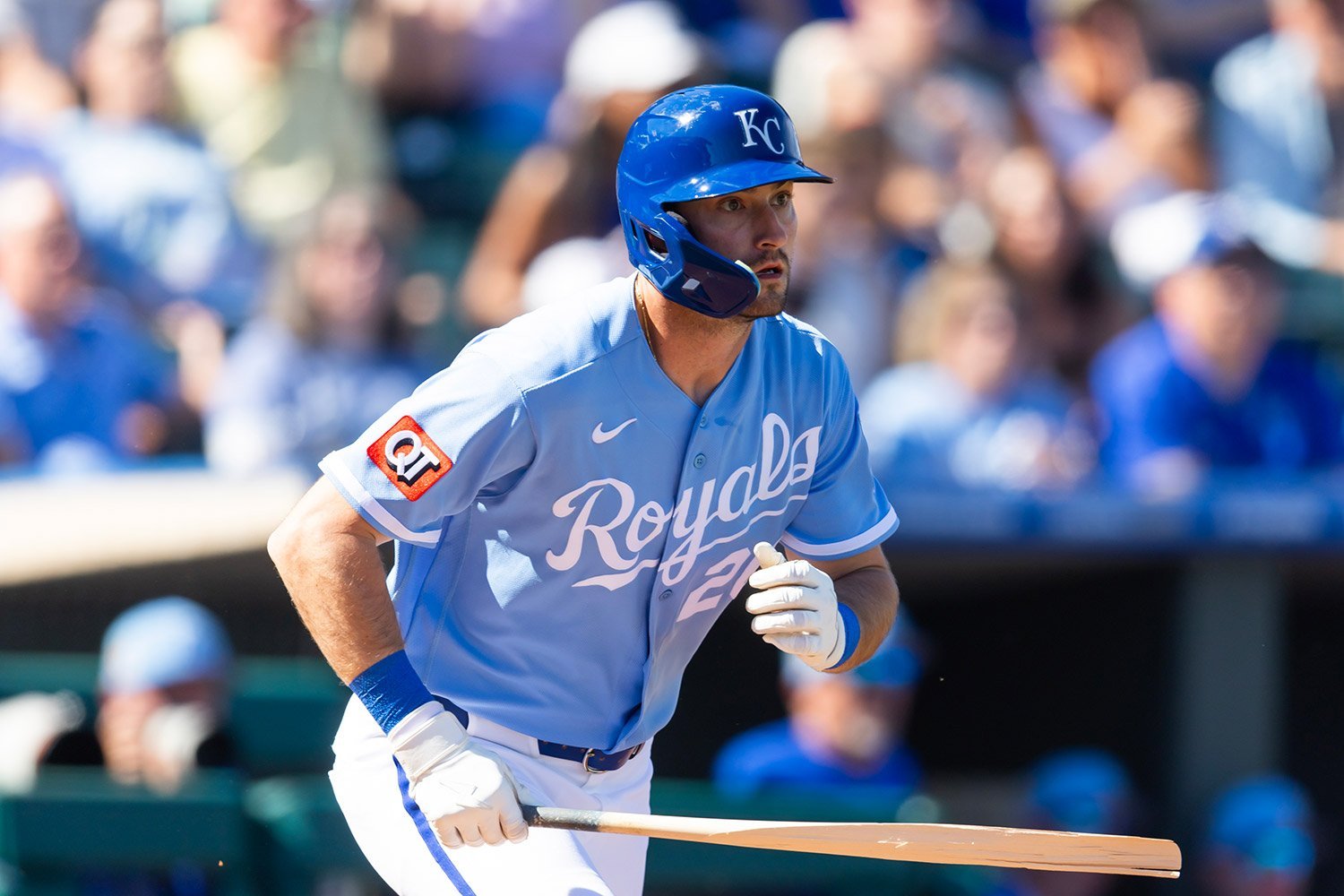 The Royals have traded OF Kameron Misner to the Philadelphia Phillies for cash considerations. Misner was acquired in November in a trade with the Tampa Bay Rays. In 18 games at the major league level this year, Misner hit for a slash line of .220/.266/.244 and struck out 17 times in 41 at-bats. He added three stolen bases in four attempts in that time frame as well. He was much better at the Triple-A level, hitting for a .941 OPS with 14 home runs, 16 doubles, and adding 14 stolen bases in 63 games played. Misner is able to play all three outfield positions and will give the Phillies more outfield depth. View the full article
