


DiamondCentric
-
Posts
2,631 -
Joined
-
Last visited
Never
Content Type
Profiles
Forums
Events
News
Tutorials & Help
Major League Baseball Videos
Guides & Resources
Store
Downloads
Gallery
Everything posted by DiamondCentric
-
 In what will be the final episode before the trade deadline, Owen Hill and Jesse Burrill discuss what if the Blue Jays aren't sellers after all? What if they hold on to some key pieces and make a push? What does this mean for 2026 and beyond? They then talk about Shane Bieber and his dreadful six-walk performance. Plus, some notes on George Springer, Vladimir Guerrero Jr.'s hamstring injury, ponder another Louis Varland trade idea, and wrap things up with some thoughts about a potential Vancouver MLB team and what it means for the Blue Jays. All that and more! Listen on Apple Podcasts: https://podcasts.apple.com/us/podcast/the-jays-centre-podcast/id1846108462 Listen on Spotify: https://open.spotify.com/show/3Bi7SzfpcqMo5xYWnbCeoL Listen on iHeartRadio: https://www.iheart.com/podcast/263-the-jays-centre-podcast-300304824/ Listen on Pocket Casts: https://pca.st/2qk9wqxd Watch on YouTube: https://www.youtube.com/@jayscentre View the full article
 -
 It's MLB Trade Deadline week! What are the Cubs cooking up? Let's make an MVP case for Pete Crow-Armstrong! Listen on Apple Podcasts: https://podcasts.apple.com/us/podcast/the-north-side-baseball-podcast/id1798599313 Listen on Spotify: https://open.spotify.com/show/75wMGhBwlrDDYPt3kaF453 Listen on iHeartRadio: https://www.iheart.com/podcast/263-the-north-side-baseball-po-268998437/ Listen on Pocket Casts: https://pca.st/eey7h6ih Watch on YouTube: https://www.youtube.com/@northsidebaseball View the full article
 -

Jackson Merrill's July Surge Is Helping Keep Padres Afloat
DiamondCentric posted an article in Padres Mission
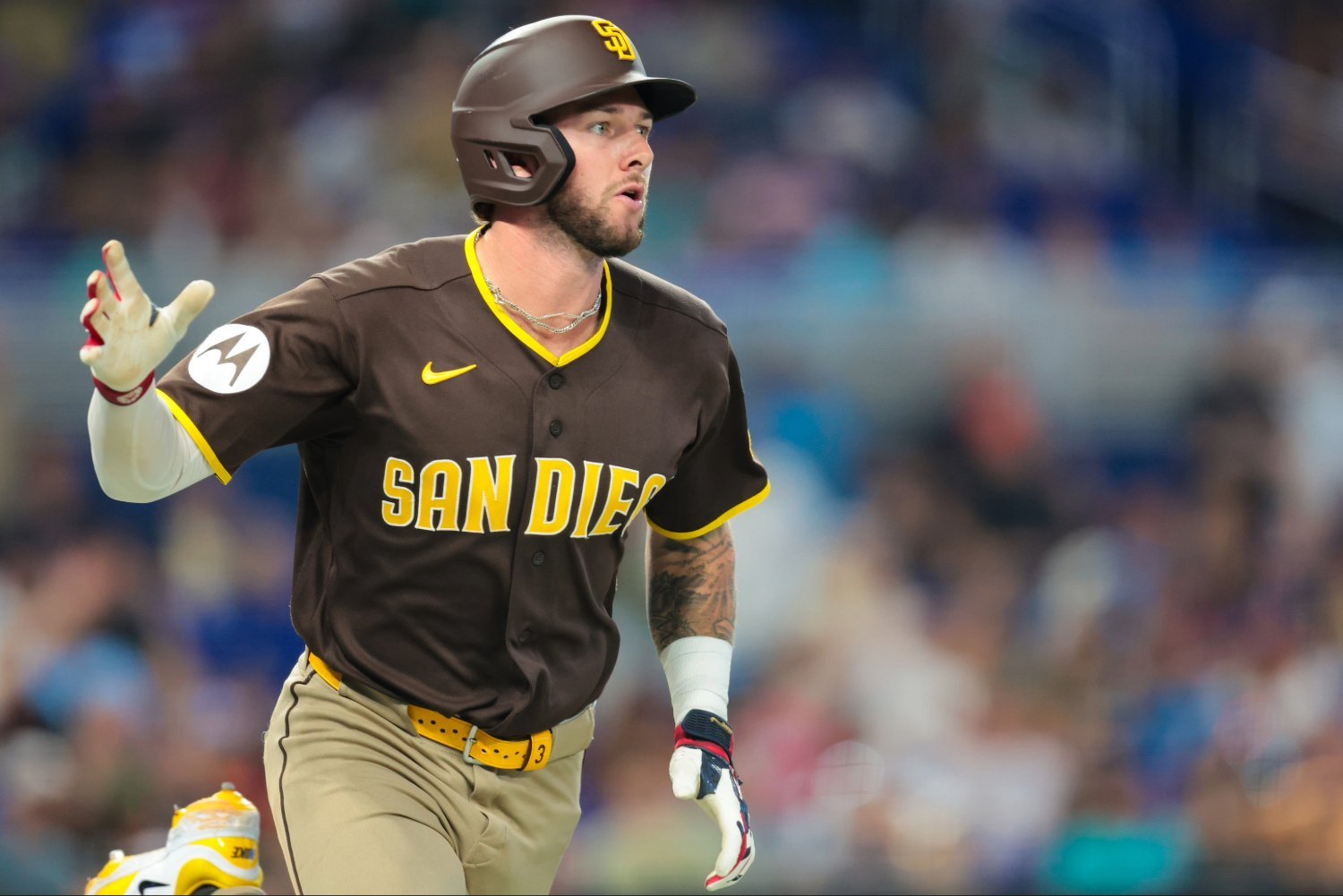 The San Diego Padres are still alive. Despite their best efforts over the last handful of weeks, their sweep of the Miami Marlins over the weekend set them back at .500 (53-53). That put them back to within two games of a National League Wild Card spot, though three teams remain ahead of them before they even get to the likes of those currently occupying the three spots in Chicago, Philadelphia, and Arizona. Nevertheless, they're still hanging around. That doesn't lend itself to any clarity regarding their approach to the trade deadline, but it does draw the attention back to the active roster. Because the Padres wouldn't be in a position to have any hope, let alone a thinner margin, at this point if it weren't for those players. Specifically, we're talking about Jackson Merrill. Merrill was a centerpiece over the weekend sweep in Florida. He had a three-hit game on Saturday before adding another two on Sunday. Few actions were more notable over the weekend than this: Down early, Merrill's solo home run in the eighth gave them a lead they wouldn't relinquish. It was the latest in what has become a very strong July for a player who had struggled mightily over the season's first three months. This is Merrill's monthly distribution from the first half of the season: March/April: 128 PA, .200/.270/.330, .130 ISO, 68 wRC+ May: 101 PA, .220/.297/.341, .121 ISO, 79 wRC+ June: 114 PA, .220/.248/.358, .138 ISO, 67 wRC+ To say that the young center fielder struggled in those first three months would be a severe understatement. Had he posted numbers of this variety in 2025, you could almost understand it given the myriad injuries he encountered. However, a fully healthy iteration of Merrill is one that was expected to bounce back. That didn't remotely come to fruition in the first half; there were a couple of modest stretches where it looked like a corner was being turned, but the production stayed minimal. Frustratingly, there didn't appear to be a clear cause for the struggle either. Some mixed up mechanics appeared to be central, but even those weren't as clear-cut as we'd like it to be. Perhaps it doesn't matter anymore. Merrill has turned a corner in July to a fairly astonishing extent. As the Padres' offense has stabilized, Merrill has been one of the drivers of the lineup this month. Through an even 90 plate appearances, he's carrying a slash of .298/.333/.571, with a gaudy .274 ISO and a 147 wRC+. His strikeout rate (23.3 percent) is his lowest in an individual month while the seven homers he's hit are only one off his cumulative total from the first three months of the season. What's important to note about this stretch is that he isn't getting lucky. His .316 batting average on balls in play isn't the kind of nonsense figure you might expect from a struggling player suddenly breaking out. Nor is it the result of any massive shift in his mechanics. There is one component worth noting here, however: Previously, we discussed that Merrill's swing had become just long and just steep enough to pose an issue for him. That was leading to questionable contact that wasn't adept at creating impact. In other words, he was simply losing on the margins. It's clear that Merrill is now finding that contact, whether he's done so by way of improved pitch recognition or a small mechanical tweak. That rate of his ideal attack angle is every bit indicative of a player who is finding the bat in the right spot upon meeting the ball. The next step in this is making it sustainable. We don't know the reason for Merrill's 2026 trends of swinging longer, swinging harder, or swinging with enough of an increase in his angle that he ended up a shade under seemingly everything. What we do know right now is that he's making everything click. In order for the Padres to stay relevant, that will have to remain the case. View the full article
 -
 Chicago’s free agent situation is becoming impossible to ignore, and Seiya Suzuki could be the piece that fixes multiple problems. View the full article
 -
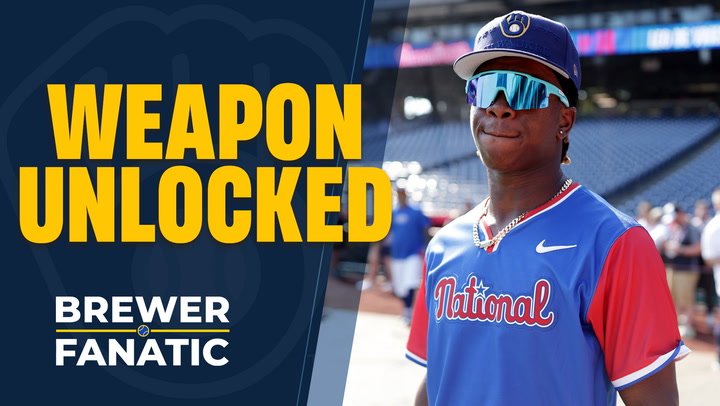 Jesus Made is the Brewers' top prospect and the best prospect in baseball. Described as a five-tool player, with each attribute being rated at a 55 or higher on MLB Pipeline's 20-to-80 scale, the one aspect that hadn't shown up a ton in the box score was Made's power. In this video, we'll explain why that's changed and how Made is on a one-way path to becoming a dangerous slugger who could impact the big-league ball club as soon as this year. View the full article
 -
Heyman: “Joe Ryan and Ryan Jeffers Aren’t Going Anywhere”
DiamondCentric posted an article in Twins Daily
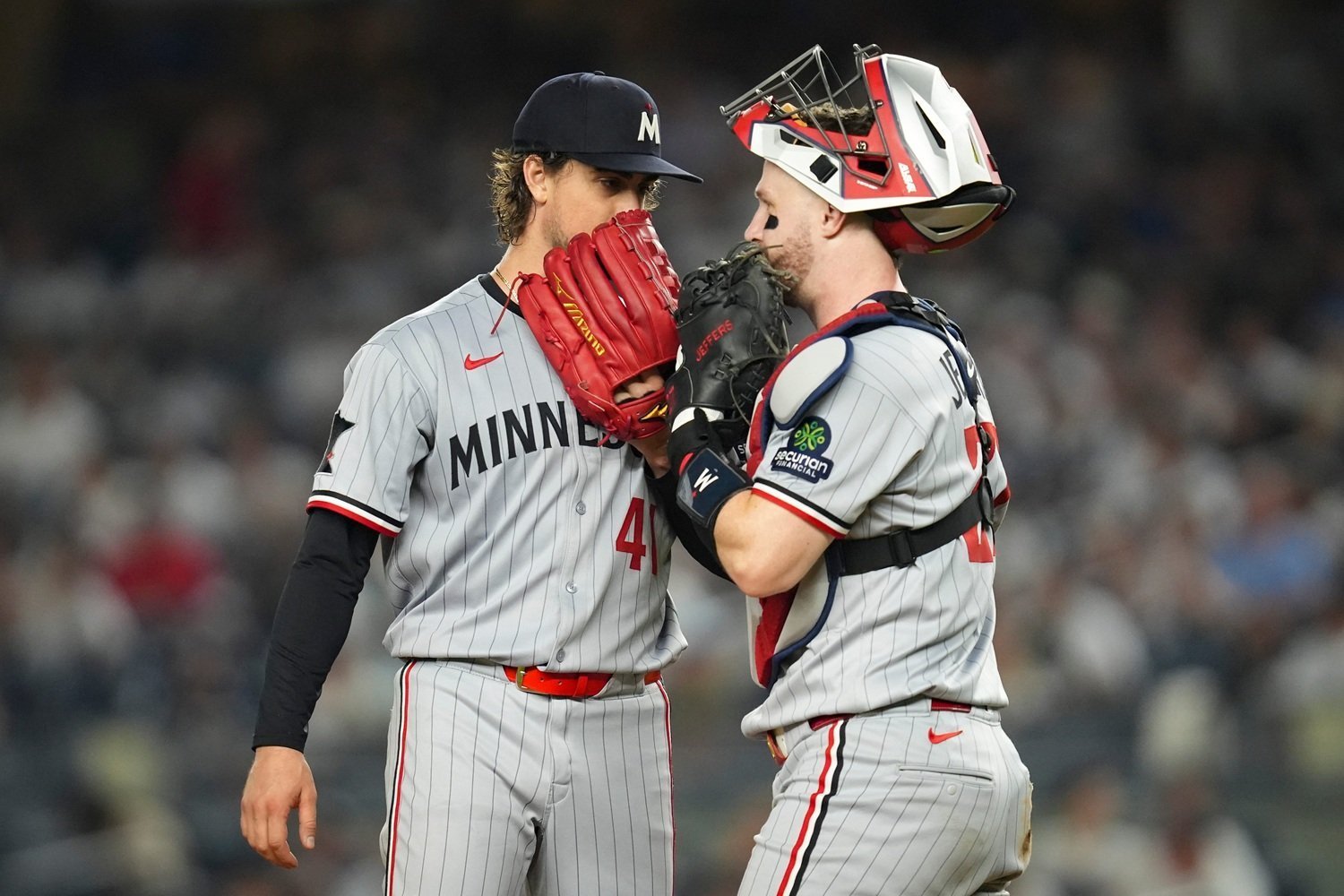 For months, the conversation surrounding the Twins centered on what they might sell at the trade deadline. Injuries, inconsistency, and an up-and-down first half fueled speculation that players like Joe Ryan and Ryan Jeffers could become some of the biggest names on the market. That narrative shifted dramatically Tuesday. Last night MLB insider Jon Heyman reported that Minnesota is "looking to improve the team after (a) walkoff win gets them to .500," Twins president of baseball operations Jeremy Zoll delivered a similar message during his pregame media session. The Twins aren't preparing to tear things down. They're looking for ways to make a postseason push. With a 54-54 record and sitting just a half-game out of the American League Wild Card race, Minnesota has officially entered buyer mode. Heyman Shuts Down Trade Speculation Trade rumors have followed the Twins all season, especially after Joe Ryan's All-Star campaign and Ryan Jeffers' strong offensive production behind the plate made both players attractive targets for contenders. Heyman's report poured cold water on those rumors. According to the longtime MLB insider, "Joe Ryan and Ryan Jeffers aren't going anywhere." That aligns with what the Twins have consistently signaled internally. Ryan remains under team control and is pitching like one of the best starters in the American League. Jeffers continues to provide rare power at catcher while helping manage the pitching staff. Moving either player would have weakened Minnesota's postseason chances. Instead, the front office appears committed to building around them. Along with Ryan and Jeffers, players such as Byron Buxton are viewed as foundational pieces the organization has no interest in moving. Bullpen Help Tops the Wish List While the Twins have one of the American League's most productive offenses, their bullpen has remained the club's biggest weakness throughout much of the season. Zoll didn't hesitate when asked where the organization intends to focus before the August 3 trade deadline. "We're going to focus on finding ways to continue to improve the bullpen," Zoll said. "That will be a clear focus. Beyond that, we're going to be open to a variety of creative paths. And you never know what might come about. We're active on the phones and in touch across the board trying to do everything we can to find ways to improve the team." The emphasis on "creative paths" is notable. Rather than targeting only traditional rental relievers, Minnesota could pursue controllable bullpen arms, multi-player deals, or even baseball trades involving players with years of club control. The front office has repeatedly shown a willingness to explore unconventional transactions if they improve both the present and future. Meaningful Games Were Always the Goal Perhaps the most revealing part of Zoll's media session wasn't about a specific trade target. It was a reminder that the organization's objectives haven't changed. "If we go back to spring training, we spent a lot of time talking about our goal was to play meaningful games in September," Zoll said. "We're very excited about how the team has played over this last stretch. Really encouraged. In turn, we're going to use this next stretch of the next week to do everything we can to find ways to improve the club and continue to execute on that goal and make it a reality." That statement reflects a front office that believes the team's recent surge is legitimate. After climbing back to .500, the Twins have positioned themselves squarely in the playoff hunt. Rather than standing pat or cashing in valuable veterans, they're looking for ways to capitalize on the opportunity. The Deadline Has Taken Shape Heyman's report eliminated much of the uncertainty surrounding Ryan and Jeffers, while Zoll confirmed the organization intends to strengthen the roster rather than subtract from it. The bullpen remains the obvious priority, but Minnesota appears prepared to explore any opportunity that makes the club better without sacrificing its core. Now the attention turns to execution. With only days remaining before the August 3 trade deadline, the Twins have made their intentions known. The challenge is turning those intentions into meaningful additions that help carry this team from an encouraging July into a postseason chase that extends well into September. View the full article
 -
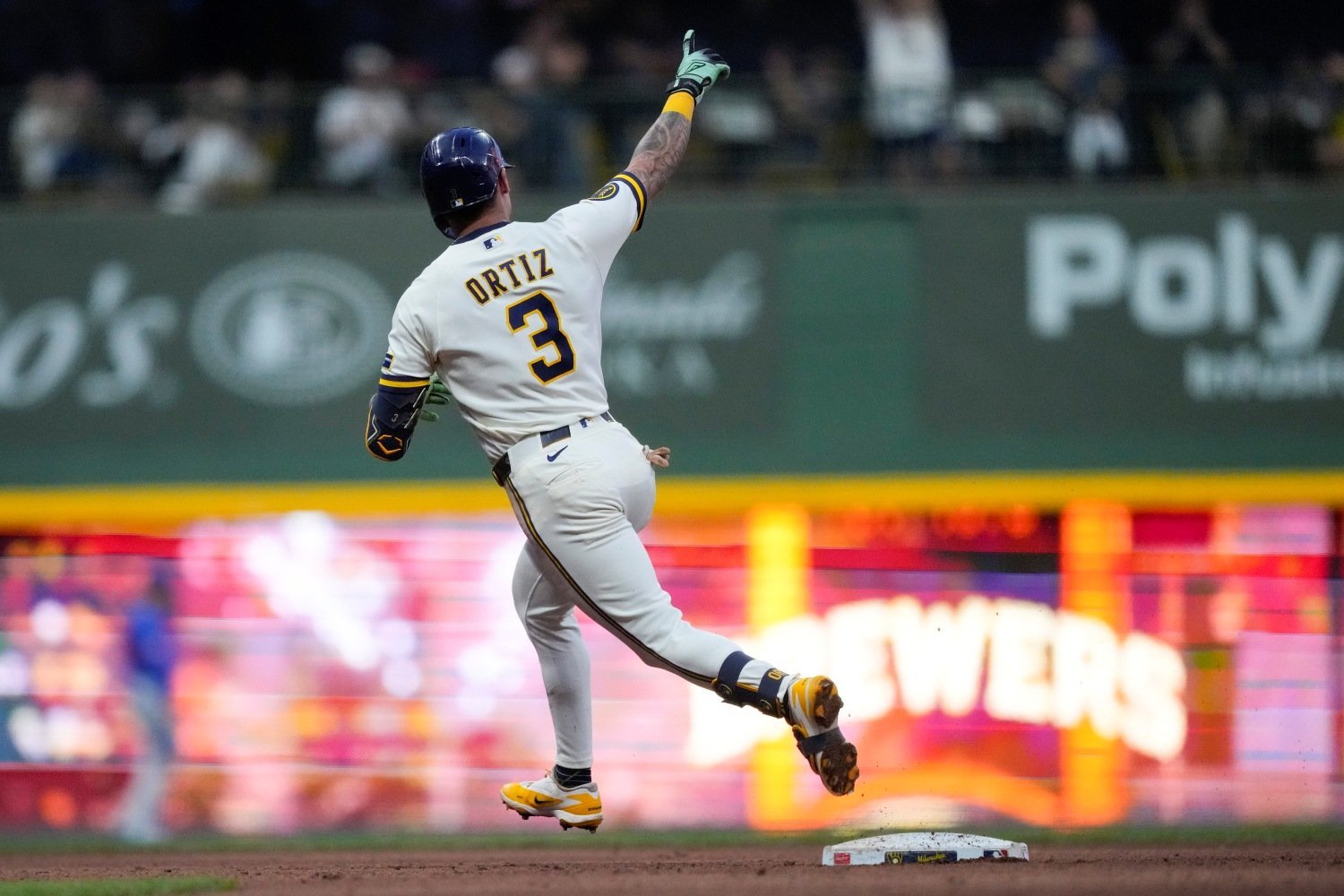 Early in the season, the left side of the infield looked like a short-term weakness for the Brewers. For now, Pat Murphy faces the good problem of finding playing time for three capable players between shortstop and third base. Barring an acquisition before next Monday’s trade deadline, Milwaukee will probably get less offense from shortstop and third base than most other positions. It’s still safest to assume none of Cooper Pratt, Joey Ortiz, or David Hamilton will be above-average hitters by season’s end. Pratt and Ortiz have been red-hot in July, though, and Hamilton’s elite range has helped him accrue 7 Defensive Runs Saved at third base despite shoddy fundamentals and a nagging elbow issue. Before the Brewers’ series against the Colorado Rockies last weekend, Murphy was asked how the club would handle playing time on the left side of the infield after Hamilton’s return from a brief stint on the injured list. “We get them all in there,” he said. “Pratt, Ortiz, Hamilton, they all play a lot. They’re all starters.” The Brewers like all three players, so it makes sense to balance their opportunities accordingly. However, since Hamilton and Ortiz are both great defenders and below-average hitters, it also makes sense to ride the hot hand for now at third base. That’s how Murphy seems inclined to play things. On Friday, Ortiz started at shortstop over Pratt to get him and Hamilton in the same lineup. On Monday night, he started at third base against right-handed starter Tyler Mahle. “If he keeps playing well, he’ll keep playing,” Murphy said on Friday. “There’s days that it doesn’t match up as [well], but he’s been great for us, and we’re not going to do anything to hurt his confidence.” “Confidence” has long been Murphy’s buzzword surrounding Ortiz’s play, but lately, it’s been repeated in a positive context. After he lost his shortstop job to Pratt, Murphy met with Ortiz and reminded him that the Brewers still valued his abilities. He cited longtime Marlins and Dodgers utility man Miguel Rojas as a shortstop who became the best version of himself after a long stretch as a spare piece. Within a few days, Ortiz responded. Since June 29, he’s hitting .316/.358/.592 (157 wRC+). In just 191 innings at third base, he has already racked up 4 DRS. “My view is that I’m on the team for a reason,” Ortiz said after falling a home run shy of hitting for the cycle last Wednesday. “Wherever they need to put me, I’m gladly ready to play anywhere they need me.” “He’s just in a good, free space,” Murphy said. “He sees the ball a little more confident with two strikes. A little more confident, period. Just swinging the bat with conviction.” Ortiz has made some subtle tweaks to his setup and stride in the box, but conviction has made the greatest difference. He’s swinging at more strikes, and he’s swinging harder. Split xwOBA Z-Swing% Bat Speed (MPH) Fast Swing% Hard Hit% Through June 28 .285 55.6% 72.3 21.6% 32.4% Since June 29 .341 60.8% 74.3 49.2% 41.3% Ortiz’s bat speed is up by 2 MPH, and his rate of “fast swings” (defined by Statcast as swings with a bat speed of at least 75 MPH) has more than doubled. That's allowing him to make more hard contact. Players can train bat speed with the goal of naturally swinging faster more often, but it's an offseason project. The in-season jump Ortiz has experienced generally does not come from training. That bat speed was already in there; he’s just unleashing it more often. During his struggles, Ortiz looked like he was playing defense on offense. He wouldn’t swing the bat until he had to with two strikes, and he wasn’t using his best, most powerful swing. Now, he’s seeing the ball well and letting it rip. “He’s way more confident, and when you’re more confident, you can get your 'A' swing off,” Murphy said. Publicly, Ortiz said that his confidence hasn’t fluctuated throughout his time in Milwaukee. That can't be fully quantified. However, the authority with which he’s swinging has typically been a solid indirect measurement of how he’s feeling at the plate. Ortiz was similarly great in May 2024, slashing .290/.366/.581 (159 wRC+). That stretch featured strikingly similar swing metrics: an average bat speed of 74.9 mph, a 49.5% fast swing rate, and a 57.4% zone swing rate. Like that month of May, Ortiz is probably amid his hottest run of the season and won’t keep hitting at this level. He’s been a bit lucky during this stretch to make up for some poor luck earlier in the year. His swing decisions have been better lately, but they still haven’t been great. But there’s been a real shift in his conviction behind his improved results. The Brewers should take advantage of it while Ortiz stays hot. “I’m just really happy for the person,” Murphy said. View the full article
 -
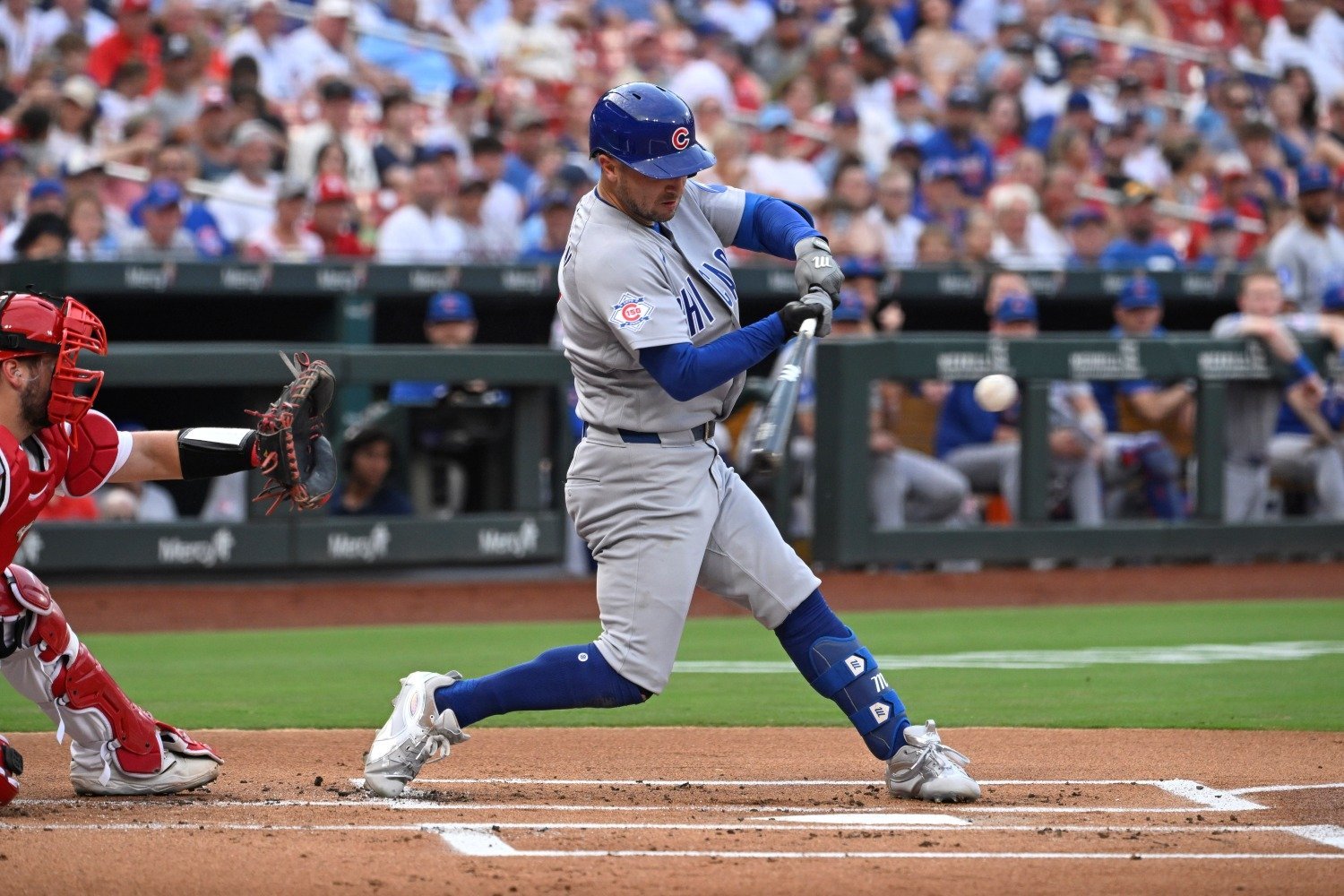 The differences aren't huge and obvious. In baseball, 'huge and obvious' is usually quickly re-rendered 'desperate and exploitable'. Alex Bregman is a better hitter now than he was a month ago, but the changes he's made have all been subtle. He's a couple inches farther off the plate, but only that much. He's slightly more closed in his stance, but only that much. The one glaring alteration isn't in anything he's doing that pitchers can force him not to do; it's in how deep he lets the ball travel. His average intercept point in the month of July is about 2.5 inches deeper than it was in the previous two months, which is something like adding a mile per hour to your fastball: helpful, and hard to counter. Bregman has hit the ball especially well since the All-Star break, but truthfully, his process has been ahead of his results all season, and he started to round into form even before the break. He used the Cubs' off day at home on July 2 as a chance to implement some changes to his stance, stride and timing in the batter's box, and ever since, he's been much more like the player the Cubs hoped they had signed to a five-year deal over the winter. Bregman's bat speed is down. That might not be permanent, but it's turned out to be persistent. As a result, he's spent much of the season hunting for the adjustments that would let him hit the way he's always hit despite a bit less explosive rotation. It took a long time to find it. Here's where he finally did. These are visuals depicting Bregman's stance, stride and average contact point on swings in May (left) and July (right): What he eventually figured out was that hitting the same way he always has isn't currently possible. There might be a lingering physical limitation tied to last year's quad strain, or this might just be Bregman's new normal, but to be a successful and well-rounded hitter at this point, he needs to so some things differently. Thus, this month, he's moved slightly away from the plate, and turned slightly inward to close his stance. That gives him more room to get on plane while the bat is behind his body, and a better chance of getting it into the hitting zone on time and square to the incoming pitch. He's been less susceptible to changes of speeds this month because of this. However, that comes at some cost. Were Bregman to try to keep hitting the ball out in front of himself by the same amount as he did in the past with this adjustment to his stance, he would be late on most fastballs and too early on most breaking stuff. Instead, as you can see by the yellow dots in the visuals above, he's letting the ball travel a bit more. It's not about starting later; it's about knowing that he has a bit more work to do to get to the ball and square it up well. Bregman has also shortened his stride, which keeps him a bit more engaged through the core and makes it easier to stay through the ball and drive it to all fields from his default hitting position. He's had several opposite-field extra-base hits this month, and that's not a coincidence; it's a product of his altered approach and setup. ZFh2enpfWGw0TUFRPT1fVkFJRlZWQlJBd2NBQ2xNR1Z3QUhDUUZRQUFCV1dnVUFBVlFOQ1FjTUJnSUVBbGRl.mp4 This is a huge deal for the Cubs. They need to pour all of their time and energy over the next five days into adding pitching before the MLB trade deadline. They couldn't afford to upgrade their lineup, even if it were obvious exactly where an extra bat would fit without cramping the style of Craig Counsell. Offensively, they need to be carried the rest of the way by the guys already on the roster, and Bregman has been arguably the most glaring underachiever in the lineup this year. If he's now turning things on—if this shift in where and how he stands and where he tries to catch the ball in the path of his swing continues to work—it transforms the team. A fully operational Bregman makes this batting order brutal for an opposing pitcher. He's still not quite that guy right now, but it's getting easier to see that guy showing up by September and October with each passing day. View the full article
 -
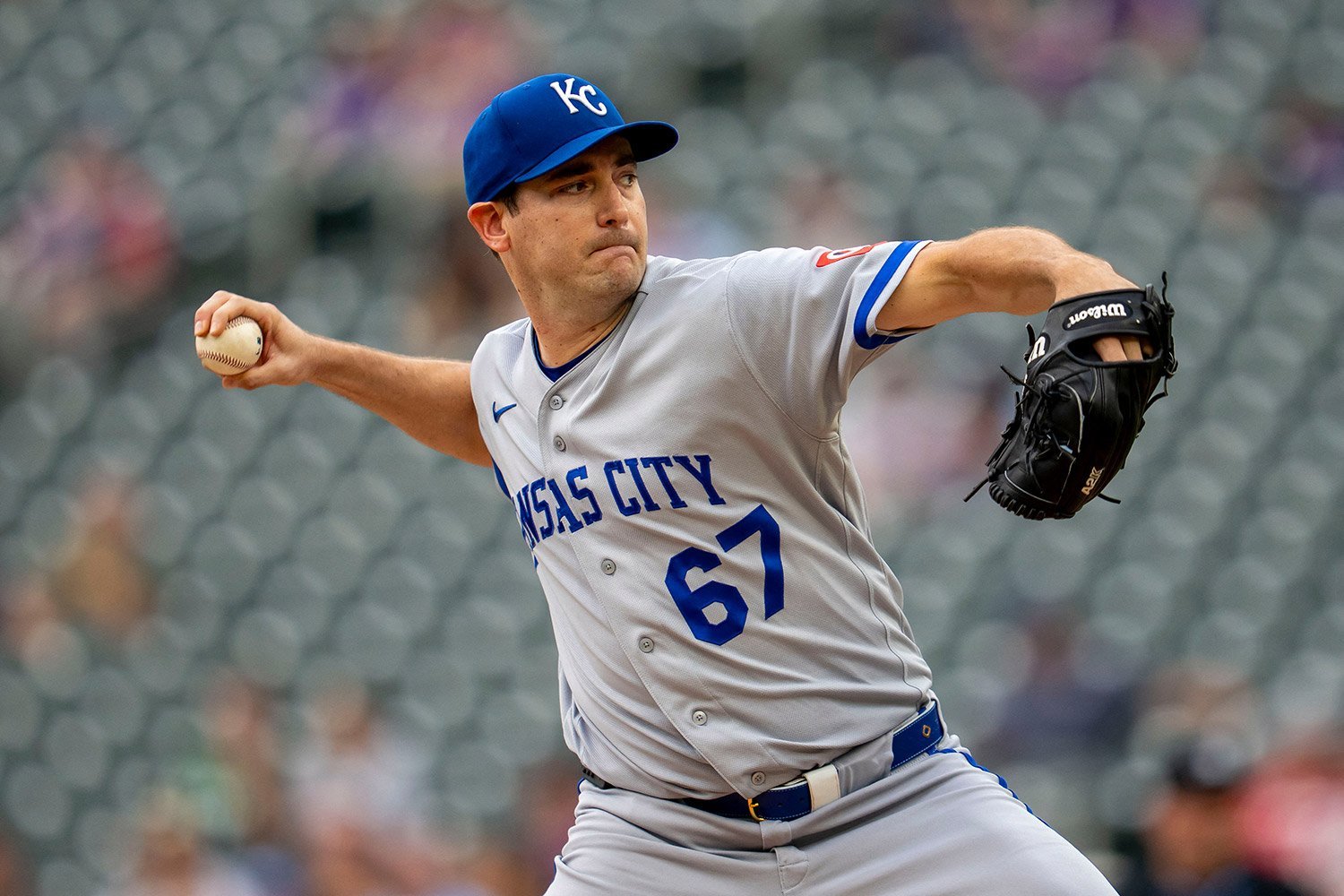 The 45-62 Kansas City Royals have been quite bad this season. Only the Athletics and the Los Angeles Angels have been worse in the American League, so considering that they were over .500 in each of the last two years, it’s certainly a disappointing reality for Kansas City and its fans. Naturally, it makes sense for Kansas City to trade some of their veterans and players close to becoming free agents in exchange for prospects or young, MLB-ready players. If the Royals play their cards right, they could set themselves up to return to contention in a year or two. One of those pending decisions is whether to trade or keep starting pitcher Seth Lugo. The answer is quite simple: the right-hander has been a fantastic Royal for two and a half seasons now, but with the long-term health of the organization in mind, a deal is in everybody’s best interests. Lugo Still Has Some Innings In The Tank Lugo, despite being 36, is still capable of uncorking those beautiful two-seamers that catch just enough of the zone to get the called strike, or the slow curveballs that drive hitters crazy. He is also still capable of helping a contender as a solid mid-rotation or backend starter, depending on where he lands. It will all depend on many factors, though. Lugo is sporting a 4.36 ERA and a 4.27 FIP in 117 2/3 innings this year. He may not have the upside of his 2024 version, when he led the team to the postseason with 206.2 innings of a 3.00 ERA, but he has a rubber arm and rarely misses starts. He won’t be the ace in a postseason-caliber staff, but with starting pitching so scarce and so few selling teams, the Royals could get something meaningful in return. Two factors complicate matters, though: one is his age. Lugo is no spring chicken, but that doesn’t mean he can’t be useful and reliable. The other, and perhaps the more complex one, is his contract. Lugo’s contract is not a long financial burden for potential acquiring squads, but he is not cheap. He makes $23 million per year in both 2026 and 2027, with a $20 million club option that becomes guaranteed with 335 innings combined in 2026 and 2027 or 190 frames in 2027. If the team doesn’t bring him back in 2028, Lugo gets a $3 million buyout. Lugo, therefore, is attached to some significant cash, which would lessen the quality of the prospects that the Royals will be getting for him, or force them to eat some money to get better players. That last option seems unlikely. The underlying metrics tell us that Lugo has benefitted from some luck this year. His Statcast profile is full of blue, and his fastball velocity is right in line with last year’s 91.5 mph. The problem is that the number was 92.2 mph in 2024 and 93.3 mph in 2023, so it’s clearly in decline. That probably explains why he put up ERAs in the 4.00s in 2025 and 2026. Another worrisome development is how quickly his strikeout rate is declining. Ever since it peaked at 33.1 percent in 2019, it has been in a steady fall: 2020: 29.4 percent 2021: 28.2 percent 2022: 25.4 percent 2023: 23.2 percent 2024: 21.7 percent 2025: 20.5 percent 2026: 18.8 percent Given the league-wide hunger for starters, the Royals could get something for Lugo. However, they have been reluctant to budge on their high asking price, and the player has a full no-trade clause, too, further complicating matters. Since Lugo virtually has full control of whether he stays or goes, it could be tricky for the Royals, a hypothetical acquiring team, and the pitcher to be on the same page. With that being said, there will be plenty of suitors for Lugo, and you can argue that the organization should be more open to dealing him. Which teams could be looking for a starter like Lugo? Potential Fits For Seth Lugo In Trade Chicago Cubs: The Cubs almost have an entire rotation of injured starters: Justin Steele, Ben Brown, Cade Horton, and Edward Cabrera. They are casting a wide net when it comes to pitching help, and Lugo could be a fit. Philadelphia Phillies: Christopher Sanchez, Jesus Luzardo, and Zack Wheeler are all magnificent, but Aaron Nola has been awful this year, and Philadelphia needs a reliable back-of-the-rotation stabilizer. Chicago White Sox: The White Sox have gotten the most out of their players this season, but if they want to hold off the Cleveland Guardians in the AL Central, they will need starting pitching help. They have been connected to Reid Detmers, but Lugo would make sense if the Royals eat some of the money owed to him. Milwaukee Brewers: Lugo, to be fair, has the look of a Brewers type of pitcher: a steady veteran with lots of pitching know-how. Perhaps Milwaukee, one of the savviest organizations in the league, could alter his mechanics or optimize his pitch mix to help him offset the declining velocity. View the full article
 -
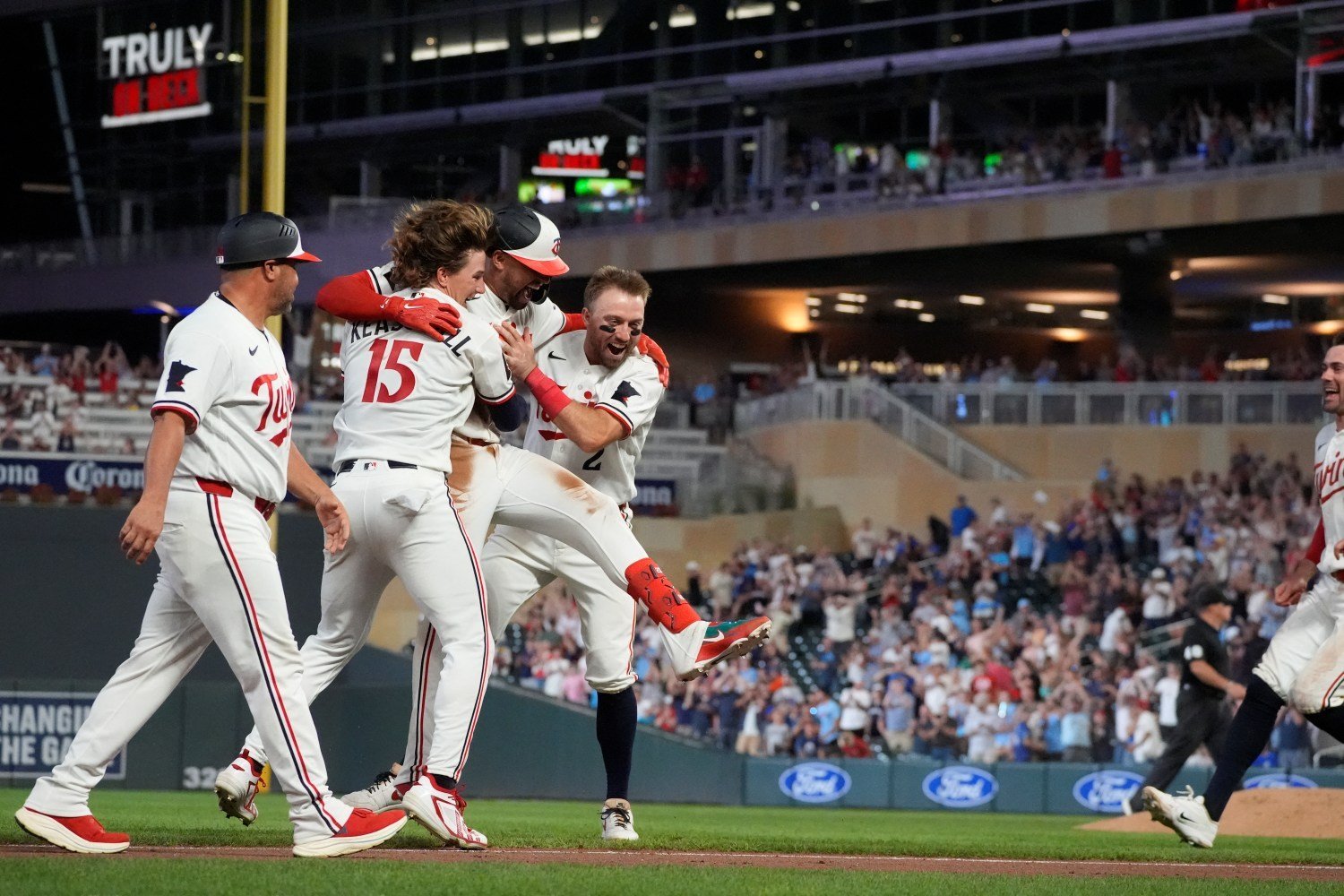 The song that gave rock-and-roll's flagship publication its name and turned Bob Dylan into a whole new caliber of superstar was not, at first, part of a grand plan. Dylan was a popular musician just back from a tour in England, but he was tired and cranky. He started putting down lyrics as a means of processing those feelings—and then a funny thing happened. "Last spring, I guess I was going to quit singing. I was very drained, and the way things were going, it was a very draggy situation," Dylan told Playboy in 1966. "But 'Like a Rolling Stone' changed it all. I mean it was something that I myself could dig. It's very tiring having other people tell you how much they dig you if you yourself don't dig you." Ballplayers talk about that a lot. They can sometimes seem brash, and even ridiculous, but as they point out, the great game of failure demands deep reservoirs of confidence. It's also the great game of daily grinding, and thus, it demands deep reservoirs of energy. You can only find positive energy, sometimes, by digging yourself. Before the 108th game of the 2026 Twins' season—the one that marks two-thirds of the campaign done and signals that it's time to shift out of marathon mode and into a sprint—GM Jeremy Zoll met with reporters in the work room at the back of the Target Field press box. He does this often, but he doesn't always do it like he did Tuesday. Zoll himself is never in dig-me mode, but it was time for the team to operate that way a bit. Twins media relations were more proactive about finding reporters and gathering them in that room. There was a Twins.tv camera in the room, and a portable backdrop had been set up behind Zoll. This wasn't just another chance to give injury updates and answer questions. This was an announcement. The thrust of it: Minnesota has officially returned to relevance. This week, Zoll said, the Twins are buyers at the MLB trade deadline. "If we go back to spring training, we spent a lot of time talking about [how] our goal was to play meaningful games in September," Zoll said. "We're really excited about how the team has played over this last stretch. We're really encouraged about that. In turn, we're going to use this next stretch, this next week, to do everything we can to find ways to improve the club and continue to execute on that goal and make it a reality." As has been a theme all year, this was Zoll doing the same things behind the scenes that predecessor Derek Falvey would have done, but going about the job very differently in public. Falvey compulsively clutched his cards to his vest. He never minded leaving the media a little bit in doubt about the depth of his dedication to a direction or about the specifics of anything. In fact, he felt that it was essential. Information, to Falvey, is precious. He never wanted to surrender any of it, to let any of it filter out of his office and become a resource for the agents and other teams with whom he needed to negotiate. Zoll, with the urging of Tom Pohlad, has taken the opposite tack. When in doubt, he communicates clearly about the team's plans. He did so by tamping down Byron Buxton trade rumors earlier this summer, and he did it in grand fashion Tuesday night. Pohlad and Zoll are trying to win over a fan base whose relationship to the team has grown chilly and distant over the last two years; they believe being direct and earnest is more important than staying guarded. Again, though, Falvey would have come to the same conclusion Zoll has. Although the national media has kept the Twins in the in-between space (or even persisted in treating them as sellers), it's been clear for a week that the team would be in position to buy. They entered play Tuesday just three games back in the AL Central and 1.5 games out of a Wild Card spot. More importantly, as Zoll acknowledged, the team has shown immense resiliency. When they lost four in a row in Chicago and Cleveland just after the All-Star break, there was some remote chance that the team would be forced to sell because of another July collapse. They bounced right back to win four of five, though, responding just in time for the third or fourth time this year, and Zoll and company never had to seriously entertain selling. "All along, we were optimistic we were going to be in this spot to be able to add," the GM said. "I know the playoff odds have ebbed and flowed along the way. But looking at the standings, it's felt really tight both between the Wild Card and the division this whole way. We remained confident there was going to be another bounce-back, given how resilient the group has been. This has been what we were focusing on and what our pro personnel group over the last couple of months has been focused on: the 'buy' version of things. It wasn't some situation where they were prepping [to] sell and we're switching. Now we're looking forward to [trying to] execute on that work." Without question, the league has swung open to the team, like an aged gate. When Zoll gave his mission statement to the press, the team was still one game under .500, at 53-54. They're not a great baseball team. They're unequivocally in the mix, though, because of the weakness of the AL Central and the muddle that is the Wild Card race. Given where the team stands with its fans after last year's fire sale at the deadline and a botched ownership transition, the circumstances demanded that they capitalize on this chance. That's what they'll try to do. In the game that followed, however, it looked for a while like the team would only realize some moral victories. Manager Derek Shelton is hardly ever seen in the clubhouse or his office, anymore, without a "Hunt the Good" t-shirt on, but it felt like one of those nights when that would require a skilled sportsman, indeed. Byron Buxton, who has remained hampered even since his return from the injured list last week, left the game in the fifth inning after experiencing more soreness in his right hip. When he departed, Minnesota led 1-0, but in the top of the sixth, the Royals stole one run, and the Twins gifted them another. With runners on the corners, Kansas City executed the double-steal perfectly. Lane Thomas took off for second. As soon as Ryan Jeffers threw through, lead runner Josh Rojas broke for the plate. Minnesota's defense wasn't crisp enough at either end to thwart the play. Then, with two outs, Salvador Perez hit a lofted wedge into right-center field. It was poorly struck, but when Buxton left the game, the Twins shifted Luke Keaschall from right field to center and installed Alan Roden in right. Keaschall was playing at his standard too-deep depth and had shaded Perez toward left-center, so he had no chance to reach the ball. Roden could have had a play with a good jump; he got a bad one. In a blink, a sterling showing from Taj Bradley had turned sour, and the Twins offense kept snatching frustration from the jaws of opportunity at the plate. The pivotal moment, as it would later turn out, came in the bottom of the seventh—but it paid no immediate dividends. Shelton pinch-hit Royce Lewis for Trevor Larnach in the bottom of the seventh, with a runner on second and two outs. Larnach had been due to face left-handed Royals reliever Daniel Lynch IV, but Shelton's move prompted Kansas City manager Matt Quatraro to go to right-handed reliever John Schreiber. Schreiber is a low-slot right-handed reliever; it was a tough matchup for Lewis. Shelton, however, had a plan. "I forced them to make a move; I wanted to see what would happen," the skipper said after the game. What happened immediately was that, in an excellent six-pitch at-bat, Lewis drew a walk against Schreiber, revealing one benefit of choosing that matchup over the Larnach-Lynch one. Next up was Roden, who had come into Buxton's place in the batting order and got to face a righty instead of Lynch. Alas, his sharp opposite-field liner was snared by the Royals' Isaac Collins, quelching the rally. That good plate appearance off the bench by Lewis was a positive takeaway, even as the team appeared to trend toward a loss. So was Bradley's 10-strikeout start. Roden's well-struck ball was an encouraging sign of his progress. The Twins bullpen added another moral victory, too. In successive innings, Kody Funderburk, Travis Adams and Jack Anderson held the Royals scoreless, so it was still 2-1 going into the bottom of the ninth. That's a good amount of 'good,' for those hunting it. One of the bittersweet liberties of being a contender again, though, is that you're free from moral victories. The night would have felt hollow and ominous—a good start wasted, a star reinjured, and worst, a game down in the standings—if nothing had changed, even to an optimist, and even after Zoll's proclamation of progress. We'll never have to molder in that particular feeling; it burned off in a sudden zap of heat as intense as a summer lightning strike. Victor Caratini cracked a leadoff single. Luke Keaschall was robbed by Collins on a diving play down the left-field line, but Brooks Lee worked a smart hitter's walk to put the winning run on base. After Ryan Kreidler swung ferociously but came up empty, it was Lewis again—Lewis, in a do-or-die moment, after two-plus years of being the very embodiment of the Twins' ups and downs, and after starting the game on the bench. On a 1-1 count, he got an Alex Lange cutter up and away and hit it squarely. "I've faced him before," Lewis said of Lange, afterward. "He hammered me with cutters. And so I was like, 'Yeah, I hope he throws that same pitch.'" The ball arced high and had good backspin, soaring toward the deepest part of the park: right-center field. It hit partway up the high wall and caromed right past Thomas, the visitors' center fielder. Just like that, the game was over. With two outs, Lee had been able to run without hesitation from first base, so once it got past Thomas, the Royals had no hope of stopping the winning run from scoring. As Lewis charged around second, sprinting toward and diving into third base, something interesting happened. The crowd (21,518, officially, as the community only slowly falls back in love with this team; there were fewer than that in the stands by the end, but they were straining to sound like more) roared and the players jumped and laughed and jubilated—and "Like a Rolling Stone" played over the Target Field sound system. The Twins' victory song, for years now, has been "Don't Stop Me Now," by Queen. They played it, for instance, when Lewis had his first career walkoff hit, on June 25. "Like a Rolling Stone" is not usually played at moments like that one, and if you listen to the lyrics at all, it doesn't especially fit that mood, either. It's a sneering song. It's self-righteous and self-satisfied, and although it's not quite angry, it's not happy, either. The edge Dylan found—the way he stepped, in writing and then collaborating on the recording of that tune, from folk-bound bard to symbol of rock and its unapologetic bluntness—is a sharp and jagged one. There's just enough bounce in the guitars and the Hammond organ that burble over Dylan's prose to give the sneer that upturn toward a smile at the corner, though, so the song landed just fine on the raucous celebrants of this now-.500 team. They hit a huge milestone Tuesday in their climb out of the very pit into which Dylan observes his subject plunging throughout the song. All of life is reference points. When you hear "Like a Rolling Stone" at a moment of triumph, it's all that jangling organ and none of the haunting metaphors, and when Dylan lets his voice swell into the chorus's "How does it feel?", it hits like the DJ screaming over a dubstep beat. How does this feel? Incredible! The Twins have survived. They're 38-31 in their last 69 games. The White Sox and Guardians are floundering; the team is now just 2 games behind Chicago for the AL Central lead and a half-game out of a playoff spot. In this contest, they survived grounding into five double plays and their best player leaving due to injury. They won without using any of their true high-leverage relievers. Lewis, who was in St. Paul two months ago, cast down very much like the antagonist Dylan's protagonist taunts throughout "Like a Rolling Stone," put together two excellent at-bats and got another chance to dig himself. Like Dylan, he feeds off those moments, when he can fall in love with his own brilliance. "I think my walkoff hit, personally, shows the intent to never give up," Lewis said after the game. "I mean, my story just keeps living on. It's so impressive. I'm proud of myself in that, just because—whether it's two ACL injuries, or other soft-tissue injuries, I just keep pushing and keep coming back." It's hard not to laugh at that genuine, unabashed self-regard. It can sound ridiculous, at times, and when Lewis said many similar-sounding things during the lowest of his lows, it felt like a lethal cocktail of delusion and solipsism. On a night like Tuesday, though, you can see it in a more forgiving light, as the shield that protects a player (and a team) from the grind and the failure of the season. Dylan, to be sure, has built his own legend and legacy on an unrepentant self-regard. The song that taught him to dig himself fueled him to keep going, and it played over the latest symbol of the Twins' own ability to keep going. "I think the thing about this group ... is just the resiliency," Shelton said. "They continue. They don't let that stuff affect them." Tuesday might be remembered a long time in Twins Territory, as a pivotal one in the history of the franchise. Under a new owner (albeit with an old name), the team vowed to do its best to build on the success they've had this year, and then they went out and sustained that success, in improbable fashion. On a night all about reaching out to Minnesota itself and trying to forge a new and robust connection, at their moment of unexpected triumph, they played—perhaps accidentally, or perhaps unthinkingly—a song that not only emphasizes that connection by emanating from Minnesota itself, but captures some of the feelings they and their fan base have had to survive over the past two-plus years. The notion of a rolling stone—the one that gathers no moss, as the saying from which Dylan borrowed his chorus and title goes—is that lacking a firm place to rest leaves one without the stability to foster growth. This Twins team is, in a sense, made up of those rolling stones. Buxton has moss all over him, but he's not going to be able to carry them to playoffs himself. That's been clear since he first tweaked his hip. He has a .514 OPS in July, and it's only .611 even if you go back to the midpoint of June. The team will have to depend, instead, on the likes of Josh Bell, Caratini, Kody Clemens, Bradley, and more—journeymen who have landed here but won't stay especially long. In the medium-term future, the organization will get back to relying heavily on a homegrown core, but the homegrown and long-tenured members of the current squad are mostly struggling or injured. Instead, it's Shelton—a rolling stone in his own right—leading a group that has forced the front office into this buying posture at the deadline. Neither Shelton's nor Zoll's work is by any means done; it never is. Sisyphus's rolling stone is just as good a metaphor for this team's plight as Dylan's is. For one night, though, the Twins got to the top of the hill in style, and a moment to take stock of what's already been accomplished isn't unearned or inappropriate. How does it feel? It feels like October, even though it's scorching-hot and the calendar still says July. It feels like this team of complete unknowns has a direction again—and like it's starting to reestablish its connection to its home. View the full article
 -
What Would a Controllable Starter Cost the Blue Jays?
DiamondCentric posted an article in Jays Centre
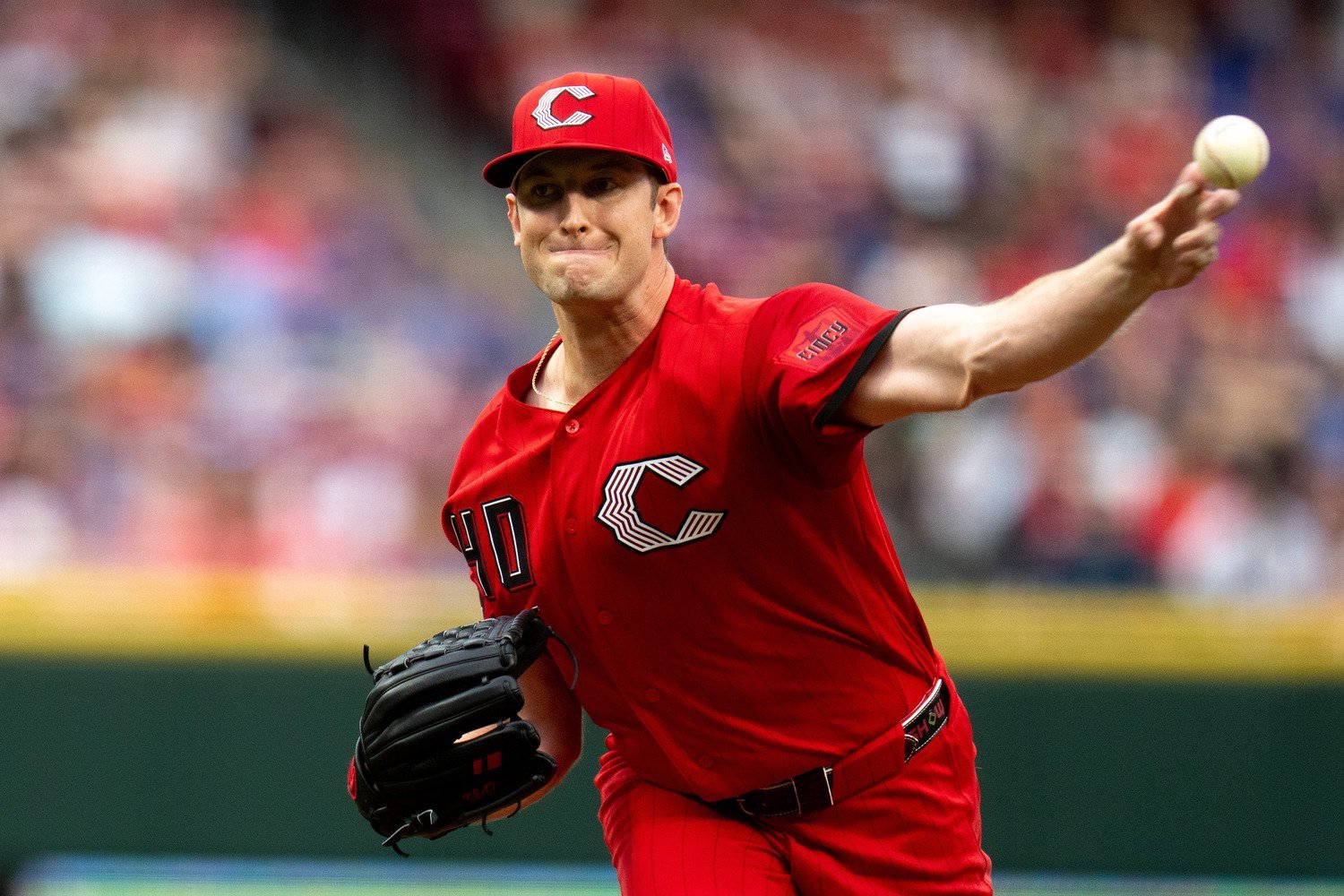 The past couple of weeks have been dominated by discourse that the Toronto Blue Jays are trending towards being sellers. At 5.5 games out of a Wild Card spot entering Tuesday, it seems at this point that selling would be a wise course of action. Over the past day, however, chatter has begun to swirl about them using the upcoming trade deadline to acquire a controllable starting pitcher, something they theoretically could do regardless of whether they commit to buying or selling. Mitch Bannon of The Athletic made a bold prediction Monday morning that such a trade would come to fruition over the next few days. MLB's Mark Feinsand said Tuesday that he too "wouldn't be surprised" if something like that went down. With Dylan Cease, Trey Yesavage, and Cody Ponce locked in, the Blue Jays' starting pitching depth chart has a good foundation for next year. Prospects such as Johnny King and Nolan Perry are trending in the right direction in the minors. Despite that, the rotation is about to enter a state of flux. Kevin Gausman and Shane Bieber are not under contract next year. Questions continue to surround the future of Max Scherzer. Controllable starting pitching is traditionally not cheap to acquire, so let's look at three possible targets and see if it's feasible for the Jays to go that route before Monday's deadline without compromising their future. Nick Lodolo, LHP Nick Lodolo, who won't hit free agency until the end of next year, is a curious case because he's currently on the IL and has been injury-prone for a chunk of his career. He's also in the midst of a down year, which would put pressure on him to bounce back in the event of a trade to a team hoping to contend in 2027 like the Blue Jays. His price tag is down from its peak as a result. In 2025, he recorded a 3.33 ERA across 28 starts. His xERA, FIP, and xFIP were all between 3.50 and 3.81. The year before, he was a 2-WAR guy through 21 starts. That would make any rotation better, hands-down. Until 2026, he's had a better-than-average strikeout rate every season of his career, and he truly broke out last year because he walked just 4.8% of the batters he faced (95th percentile). He has an interesting repertoire: four-seamer, sinker, changeup, and curveball, and he throws each pitch around 25% of the time, so it's hard for opposing hitters to sit on anything. His curveball is one of the nastiest in the game according to the Stuff+ model hosted on FanGraphs, and because he's 6-foot-6 with a 15° arm angle, he gets unique movement on everything he throws. Cincinnati, as has been the case in recent years, is starved for offense. The Blue Jays have the tools to help them out in both the short term and the long term without pillaging their system. Sean Keys's stock has soared this year, but he won't have much room to play with Kazuma Okamoto and Vladimir Guerrero Jr. on the corners through 2029. Jesús Sánchez, whose return from an ankle injury appears imminent, figures to have a little more upside if Great American Ball Park were his home stadium. With Addison Barger poised to be ready for spring training and the Jays presumably desperate to salvage whatever they can from Anthony Santander's contract, Sánchez will be expendable heading into 2027. Much of this trade proposal would hinge on the Reds' evaluation of Keys as a prospect. If they view him closer to the 40+ FV tier than FanGraphs' evaluation, this deal becomes more of a coin flip. If they're optimistic enough to consider him a 45-FV guy, it tilts in Cincinnati's favour from a projected value standpoint. Reid Detmers, LHP Unlike Lodolo, the Blue Jays, if they were to take a big swing like this, would be acquiring Reid Detmers at the peak of his powers. Counting 2026, he also has three more years of control as opposed to two, so I would expect that if the Angels saw this offer, they'd try to snag a third quality prospect or a role player who's big league ready. Even as he's transitioned back to the rotation, Detmers's peripheral numbers are simply outstanding (27.6% K rate, 7.5% BB rate, 3.28 FIP, 3.67 xFIP, 3.32 xERA). His 4.05 ERA seems bound to tumble soon, especially if he's traded to a better defensive team. He's already eclipsed 3.0 fWAR on the season. He's a fastball/slider guy from a 3/4 arm slot, and he's introduced a new changeup this year that has 10.5 mph of average velocity separation from his four-seamer. The slider (+14 run value, 110 Stuff+, 35% whiff rate, .174 opponent AVG) has been simply devastating. He's averaging just under six innings per start. Sacrificing multiple high-quality pitching prospects in a year where selling seems like the most practical option, just as the farm system has come back to life, may be tough to stomach. On the flip side, pitchers of Detmers' quality simply are not available for trade very often. Despite some serious struggles in Triple-A recently, the industry remains high on Jake Bloss. FanGraphs gave him a 50 FV grade and ranked him the third-best prospect on the team in the preseason, and Baseball America had him as a 55-grade prospect in their post-draft update (although they view him as a high-risk guy, so his adjusted FV grade is 40, hence the 45+ grade you see here). At 25 years old, Bloss figures to be less than a year away from being a big league contributor. If the Angels are skeptical after his rough stretch in Buffalo (his last two starts have been much better, for what it's worth), I'd once again expect them to ask for more than just him and Perry in an effort to cash in on Detmers while his value is high. At this moment, he has more potential to be a game-changer than Lodolo. José Soriano, RHP It's tough to say whether Detmers or his Angels teammates, José Soriano, would cost more. They both hit free agency following the 2028 season, yet Soriano is earlier in his arbitration eligibility status according to Spotrac, which means his salary projections in 2027 and 2028 come out lower. Combine that with a slightly more optimistic forecast from ZiPS, and Soriano seems to be more valuable on paper given his combination of contract status and projected value. However, I feel more conviction that the Angels could demand a king's ransom for Detmers instead, because Soriano was quite ineffective in May and June after a dominant April (he's since improved through four July starts). Even in the best of times, he battles control, with a walk rate within a few tenths of 11% each of the past two seasons. His groundball rate, while still very good, has come down to earth after being otherworldly last year. Most of his struggles in the two months preceding this one had to do with over-reliance on his four-seamer, which isn't too hard to fix in the short term, especially on a new team. FanGraphs' projections are obviously different from what the Blue Jays and Angels use internally, so it's entirely possible Soriano isn't this much more valuable than Detmers in the eyes of these two teams. Since I'm not privy to that info, I've added Yohendrick Piñango to a pitching prospect package that's similar to the base of what the Angels are likely to ask for in a Detmers deal for the purposes of balancing things out here. Takeaways Whichever one of these options is best comes down to personal preference. If you like wide arsenals and value the potential for elite command, Lodolo's your guy. If you'd rather somebody more durable with more team control and you're less of a prospect hugger, Detmers is probably the more appealing lefty. If groundballs, bowling ball sinkers, and the chance for Pete Walker to play around with an arsenal that hasn't yet been optimized is intriguing to you, then you might prefer Soriano. Regardless, it's important to understand that, especially since MLB expanded the playoff field, the price for good pitchers at the trade deadline has been quite high in recent years, leading to many trades that even the simulators that use the most up-to-date calculations of dollars per future value, dollars per WAR, and projected performance would classify as overpays. Acquiring any of these three arms would considerably detract from a Blue Jays prospect pool that hasn't been above average in years, and their lack of MLB-ready depth in the upper minors has hurt them a few times in recent years. Ross Atkins and company are no doubt aware of this, but if an opportunity presents itself to bring in another high-end starter that would allow the stars to align once again in 2027 and beyond, they will capitalize. All stats entering July 28, 2026. View the full article
 -
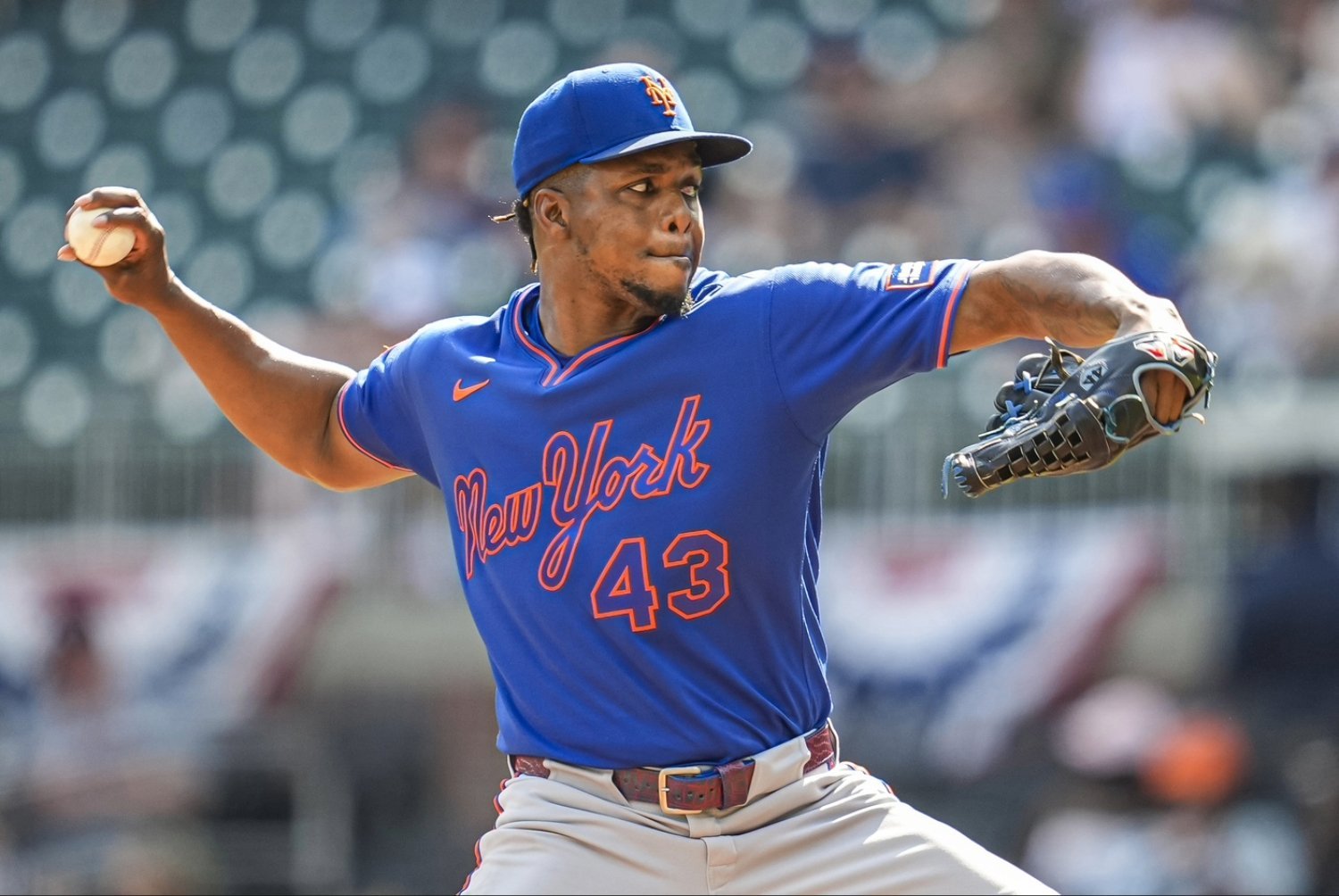 Freddy Peralta, A.J. Minter, and Brooks Raley have dominated the New York Mets' trade deadline conversation. But the reliever who may generate the strongest market is Huascar Brazobán. Several contenders have checked in on the veteran right-hander because he offers something few available relievers do. Brazobán can cover multiple innings, retire hitters from both sides of the plate, and he remains under team control beyond this season. While no advanced negotiations or specific destinations have been reported, his profile makes him one of the most valuable bullpen options available. It also helps that he's having the best season of his career thanks to some tweaks, and those adjustments have significantly increased his trade value as the Mets look to maximize their return before the Aug. 3 deadline. Mets Trade Candidates: Huascar Brazobán Few relievers who could be available at the deadline offer the type of profile Brazobán has built in 2026. Through 50⅔ innings, he owns a 2.66 ERA while holding opponents to a .169 batting average. More importantly, the underlying numbers support those results. His 2.82 xERA and 3.77 xFIP suggest this success is due to real improvement in the quality of his pitches. The biggest difference from last year is the contact hitters are making against him. After allowing more hard contact in 2025, Brazobán has taken a major step forward this season. He ranks in the 99th percentile in both hard-hit rate and barrel rate while also sitting among the league leaders in lowest average exit velocity allowed. Hitters are simply struggling to make any sort of impact against him in the box. The reasoning behind this improvement starts with his pitch mix. Brazobán has simplified his arsenal and leaned more heavily on the pitches that best fit his strengths. His sinker usage has increased from 36.7 percent in 2025 to 50.9 percent this season, while his four-seam fastball and cutter have become much smaller parts of his repertoire. The result is a more efficient approach that generates ground balls and limits damage, even when he is not missing bats. His changeup remains the ideal complement. The combination allows him to neutralize both right-handed and left-handed hitters, giving contenders another reason to view him as a valuable postseason bullpen option. The expected metrics reinforce that improvement. Brazobán ranks in the 92nd percentile in both xERA and xwOBA and in the 97th percentile in expected slugging percentage. He has also increased his ground-ball rate to 53.5 percent while allowing just 0.53 home runs per nine innings, two numbers that help explain why his performance looks sustainable. Need even more reason to believe in his results? Just take a look at his versatility. Throughout the season, Brazobán has handled traditional relief appearances, multi-inning outings, and even spot starts when needed. That flexibility gives potential buyers multiple ways to use him and expands the number of teams that could view him as a fit before the deadline. His contract status is the cherry on top, separating him from many of the other relievers expected to be available. While Minter and Raley profile as short-term rentals approaching free agency, Brazobán remains under team control for multiple seasons beyond 2026. He is not scheduled to become a free agent until after the 2029 season, giving an acquiring team value beyond the current playoff race and giving the Mets more leverage in trade discussions. The interest in Brazobán is already there. The question now is whether another club is willing to meet the Mets' asking price for a 36-year-old reliever with so much working in his favor. View the full article
 -
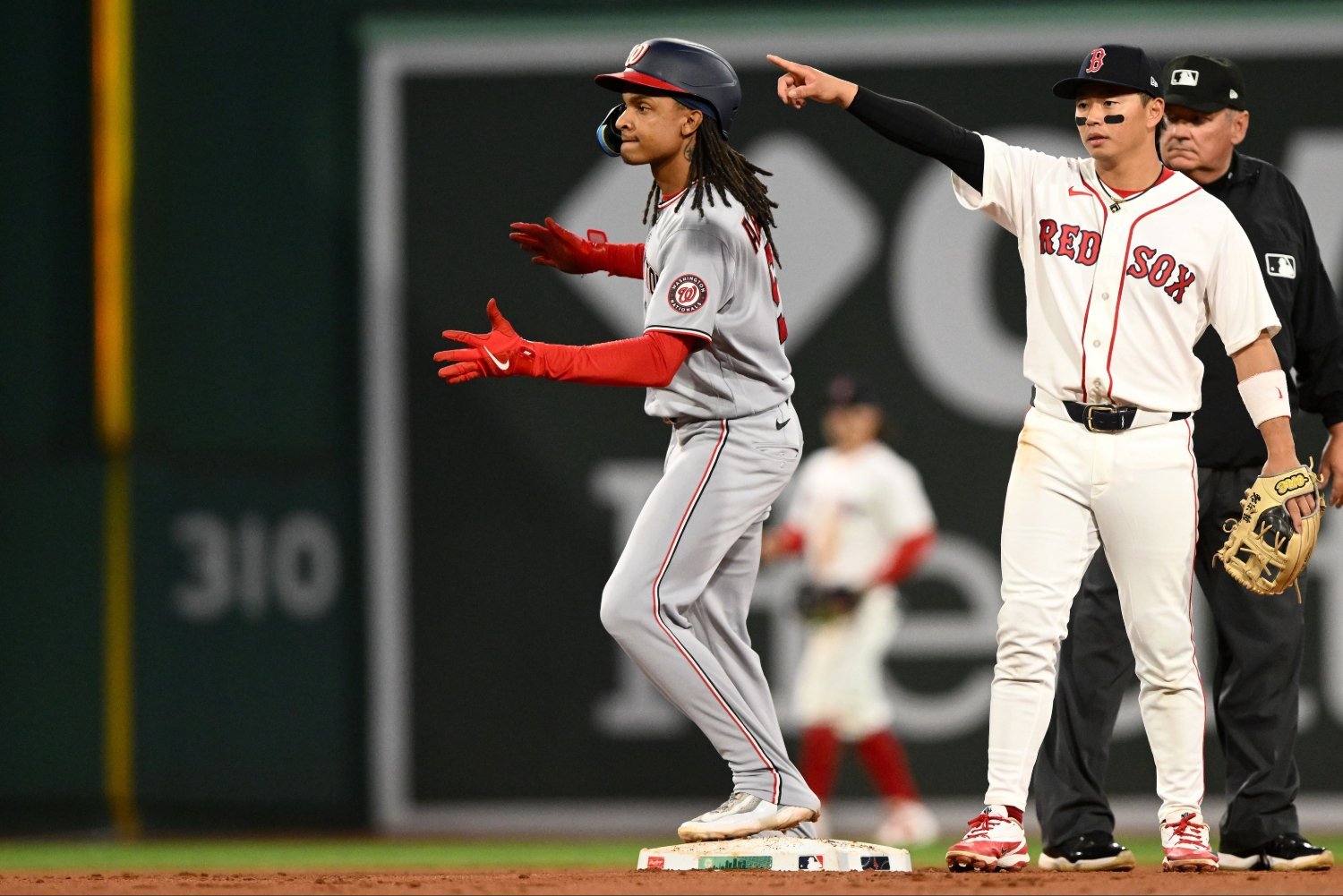 The Boston Red Sox have already made a blockbuster deal in advance of the trade deadline, acquiring Curtis Mead late on Saturday, July 25. Mead addresses the right-handed pop that the Red Sox have been looking for since the offseason, but there is still room on the roster to add even more power at the plate as the team looks to make a push for the AL East title through the end of the season. Which brings us to yet another Washington Nationals infielder: All-Star shortstop CJ Abrams. According to Section 10’s Jared Carrabis, just because the Red Sox have already acquired Mead it doesn’t mean that the team wouldn’t still pursue Abrams in a second deal with the Nationals. On the surface, this seems almost counterintuitive. Why wouldn’t the team just make one large deal for both players instead of doing two smaller transactions? That’s a question that only Craig Breslow and Paul Toboni could answer, but if there is still a path to land the type of talent that Abrams brings, then Breslow needs to do everything he can to get it done. Offensively, Abrams slots in as another left-handed hitter in a lineup that features quite a few lefties already, but his offensive firepower makes up for the redundancy. He’s slashing .295/.368/.570 with a .397 wOBA, 152 wRC+, and 3.9 fWAR. He’s slugged 27 home runs so far to go along with 19 stolen bases. There's really nothing you can do at the plate that the 25-year-old isn't doing well. Abrams isn’t an opposite-field type hitter, and for a left-handed slugger that could potentially be bad news at Fenway Park where deep right field is essentially a second center field. But this isn't a real concern with this particular player; overlay his home spray chart over Fenway, and he doesn’t lose a single home run blast to right field. He might lose one to center, but he ends up gaining four in left field, and possibly one additional one in right thanks to the Pesky Pole. Adding that kind of offense to this team would instantly catapult them into pennant contention in a weak American League. Before we drink too much of his Kool-Aid, though, there are two major roadblocks we have to acknowledge. First, he’s as close to a defensive liability as you can get. Abrams currently ranks in the first percentile in Outs Above Average with a mystifying -12. For reference, Marcelo Mayer posted a flat 0 OAA at short and Trevor Story was a -3 OAA before his injury. We’ve lambasted the latter's defensive woes fairly regularly, so inserting someone who is quadruply worse at short than Story may be a tough sell. There's nowhere else on the roster to really slot him at the moment (unless second base is open in the wake of Mead's wrist injury), and moving Abrams off short would open up a gaping hole up the middle. That, specifically, brings us to the second downside. Any deal that brings Abrams to Boston almost certainly involves top prospect, and likely future shortstop, Franklin Arias headed to Washington. With enough reps, it’s entirely likely that Mayer could take over short full time in the absence of Arias, but his offensive approach is going to need a lot of work once he’s healthy. It’s unlikely that Abrams would move positions this year, so Mayer would have the runway to get back into big-league shape, but the lockout is going to make things a bit more difficult for everyone next offseason. Both Mikey Romero and Kristian Campbell are sitting in Worcester and could be in the conversation next year, but neither is an ideal option either. For an Abrams trade to work, there has to be a plan for when he no longer can play shortstop as soon as 2027 (most scouts see his future at first base or a corner outfield spot, which are also logjammed at the moment). Abrams offers tantalizing offensive potential as a member of the Boston Red Sox. He’s young, under control through 2028, and would likely be a candidate for an extension fairly quickly after the new CBA is agreed upon to begin the 2027 season. There are major question marks surrounding his defensive abilities and the price required to get him from Washington to Boston, but this is the kind of hitter you double-dip for. View the full article
 -
Padres Promote Top Prospect Ethan Salas To Triple-A El Paso
DiamondCentric posted an article in Padres Mission
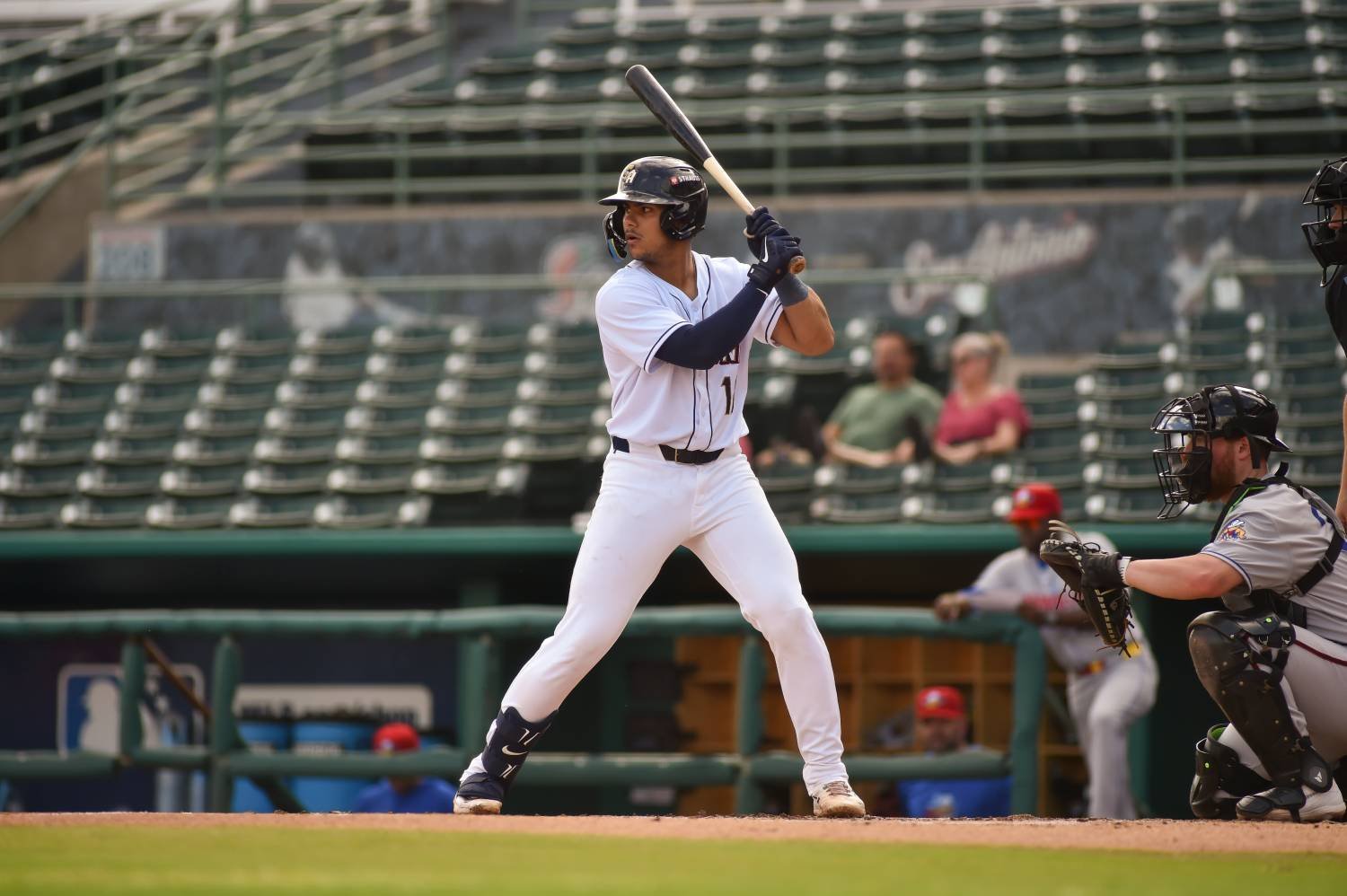 The San Diego Padres are promoting top prospect Ethan Salas to Triple-A El Paso. Salas, Padres Mission's No. 1 prospect, went 1-for-3 Tuesday in the Double-A San Antonio Missions' 5-4 loss to the Amarillo Sod Poodles, then was promoted to the Chihuahuas, according to Chase Ford of MiLB Central. The 20-year-old catcher has been having a terrific season for the Missions, posting a career-high slash line of .286/.361/.417 with seven homers, 37 RBIs and 14 stolen bases in 72 games. The timing also comes just days before the trade deadline, with Salas being a popular target for front offices across MLB. Could this be a precursor of a Salas trade for a big Padres return? Or is this just a chance for Salas to get time at Triple-A before possibly making his MLB debut late this year or to begin 2027? Salas joins Blake Hunt and Anthony Vilar as El Paso's catchers. Hunt made his MLB debut this season after nine years in the minors. Rodolfo Duran, who started the year at El Paso and is currently with the Padres as a third catcher, also made his MLB debut after 11 seasons in the minors. View the full article
 -
 Tuesday began new series for the four full-season San Diego Padres affiliates, who went 2-2. The Triple-A El Paso Chihuahuas were stomped by Albuquerque 15-9, the Double-A San Antonio Missions lost a heartbreaker to Amarillo 5-4, the High-A Fort Wayne TinCaps flexed their muscles in a 5-2 win over Great Lakes and the Low-A Lake Elsinore Storm stifled Stockton 6-1. Padres Minor-League Transactions Note: The Padres officially announced the signings of 20 draft choices and nine minor-league free agents as previously reported by Padres Mission. Check out the transactions log here: El Paso Chihuahuas placed 1B Nick Pratto on the temporarily inactive list. Fort Wayne TinCaps placed OF Kavares Tears on the 7-day injured list. San Antonio Missions sent LHP Luis Gutierrez on a rehab assignment to Fort Wayne TinCaps. San Antonio Missions sent RHP Miguel Mendez on a rehab assignment to Fort Wayne TinCaps. Chihuahuas Surrender 7 Homers In Isotopes' Romp Left-handed starter Jackson Wolf was lit up for eight runs in 1⅔ innings as the host Triple-A El Paso Chihuahuas gave up 12 runs in the first four innings in a 15-9 loss to the Albuquerque Isotopes, who hit seven homers. Dustin Harris had an inside-the-park homer as part of a three-hit, two-RBI game, Romeo Sanabria homered and Bryce Johnson had a pair of hits for the Chihuahuas. Harris, Sanabria and Mason McCoy drove in two. After allowing a pair hits but escaping the first inning unscathed, Wolf struck out the first two in the second, then gave up five hits, two walks and a hit batter, capped by a grand slam that made it 8-0. The teams traded two-spots in the bottom of the second and top of the third, then the Chihuahuas struck for five in the bottom of the third that included Harris' two-run inside-the-parker, his first homer since joining El Paso on July 8, and Sanabria's two-run shot. That was Sanabria's first Triple-A homer since his June 23 promotion from Double-A San Antonio, where he had eight. But Albuquerque kept the early onslaught going with another two runs in the fourth for a 12-7 lead. EP_0728.mp4 Player AB R H RBI BB K Bryce Johnson 5 2 2 0 0 0 Dustin Harris 5 2 3 2 0 0 Nick Solak 4 0 1 1 0 0 Marcos Castañon 3 2 1 1 1 0 Will Wagner 4 1 1 0 0 0 Mason McCoy 3 1 1 2 0 2 Romeo Sanabria 4 1 1 2 0 2 Clay Dungan 4 0 1 1 0 1 Anthony Vilar 4 0 0 0 0 1 Player IP H R ER BB K HR Jackson Wolf 1 2/3 7 8 8 2 3 2 Justin Yeager 2 7 4 4 1 4 3 Misael Tamarez 2 1/3 2 0 0 2 1 0 Logan Gillaspie 2 5 3 3 0 0 2 Michael Flynn 1 2 0 0 1 1 0 Francisco Acuna Has Ninth-Inning Go-Ahead Blast, But Missions Fall Francisco Acuna hit a go-ahead three-run homer with two outs in the top of the ninth, but right-hander Francis Pena gave up a pair of runs in the bottom of the ninth as the Double-A San Antonio Missions were walked off by the host Amarillo Sod Poodles 5-4. Druw Jones had the walk-off infield single for Amarillo. Albert Fabian also homered for the Missions, while Jake Cunningham had two of San Antonio's six hits. Missions left-handed starter Jamie Hitt, in his third Double-A appearance and second straight start, went six innings, allowing three runs on nine hits, including a homer, with a walk and two punchouts. Left-hander Igor Gill pitched a hitless seventh and right-hander Bernard Jose punched out the side in a perfect eighth before the fateful ninth. Trailing 3-1 entering the top of the ninth, Cunningham had a leadoff single and went to second on Ryan Jackson's one-out single. Acuna drilled a first-pitch slider for a no-doubter to left, his sixth homer of the year, to put the Missions up 4-3. SA_0728.mp4 Player AB R H RBI BB K Carson Tucker 3 0 0 0 1 1 Ethan Salas 3 0 1 0 1 1 Tirso Ornelas 4 0 0 0 0 1 Jake Cunningham 3 1 2 0 1 0 Braedon Karpathios 3 0 0 0 1 2 Ryan Jackson 4 1 1 0 0 1 Albert Fabian 4 1 1 1 0 1 Francisco Acuna 4 1 1 3 0 1 Kai Roberts 4 0 0 0 0 1 Player IP H R ER BB K HR Jamie Hitt 6 9 3 3 1 2 1 Igor Gil 1 0 0 0 2 1 0 Bernard Jose 1 0 0 0 0 3 0 Francis Peña 0 1/3 2 2 2 1 0 0 Homers By Alex McCoy, Kerrington Cross Fuel TinCaps Alex McCoy and Kerrington Cross each hit two-run homers and right-hander Kannon Kemp went five solid innings as the High-A Fort Wayne TinCaps won their fourth straight with a 5-2 win over the host Great Lakes Loons. Right-hander Miguel Mendez, Padres Mission's No. 3 prospect on a rehab assignment from Double-A San Antonio, made his first appearance since June 17 due a shoulder injury. Mendez pitched a perfect first inning, striking out one, throwing 10 pitches, seven for strikes. Kemp, who came off the injured list July 7, followed by going a season-high five innings, giving up a pair of runs on six hits with no walks and three strikeouts and earned his first High-A victory. Left-hander Braian Salazar went two shutout innings and right-hander Will Koger earned his first High-A save following a promotion from Low-A Lake Elsinore, where he had six. The TinCaps jumped out to a quick lead as Ryan Wideman, Padres Mission's No. 4 prospect, reached on an error by the third baseman, and McCoy, Padres Mission's No. 14 prospect, hit his first home run since June 21 and the 13th of the season. McCoy singled leading off the fourth, his team-leading 24th multihit game this year, then Cross smacked his third homer at High-A and 14th of the season, which started at Lake Elsinore. That shot had an exit velocity of 106 mph. McCoy walked to begin the sixth, Luke Cantwell singled and Carlos Rodriguez had an RBI single with two outs to make it 5-0. The Loons scored both their runs in the bottom of the sixth. FW1_0728.mp4 FW2_0728.mp4 Player AB R H RBI BB K Justin DeCriscio 4 0 0 0 0 0 Ryan Wideman 4 1 0 0 0 0 Alex McCoy 3 3 2 2 1 0 Luke Cantwell 4 0 2 0 0 1 Rosman Verdugo 4 0 0 0 0 0 Kerrington Cross 4 1 1 2 0 1 Carlos Rodriguez 4 0 1 1 0 1 Jack Costello 4 0 0 0 0 0 Kasen Wells 2 0 0 0 1 0 Player IP H R ER BB K HR Miguel Mendez 1 0 0 0 0 1 0 Kannon Kemp 5 6 2 2 0 3 1 Braian Salazar 2 2 0 0 2 3 0 Will Koger 1 0 0 0 1 1 0 Storm's Jesus Castro Dominates, Allows 1 Hit In Career-High 7 Innings Right-hander Jesus Castro turned in a dominant career-high seven-inning start, striking out seven and allowing just one hit as the Low-A Lake Elsinore Storm dropped the host Stockton Ports 6-1. Ty Harvey hit his first home run not on a rehab assignment, Jorge Quintana also homered and Qrey Lott went 3-for-4 for the Storm. But it was the 19-year-old Castro, Padres Mission's No. 16 prospect, who stole the show. Castro, who didn't walk a batter, retired the first eight batters of the game before a throwing error by third baseman Yimy Tovar gave the Ports their first baserunner. The only hit of the game came two batters later when he gave up a leadoff single in the fourth. Only one other batter reached base, that would be a leadoff hit by pitch in the seventh as Castro retired nine of the last 10. His previous longest outing for the Storm came in back-to-back outings in May, when he went 5⅔ innings. Castro did have a six-inning start last season in the Dominican Summer League. Harvey, Padres Mission's No. 7 prospect who was in his third game since coming off the 60-day injured list with a fractured left hand, had hit two homers during his rehab assignment in the Arizona Complex League, but finally went deep for the first time in full-season ball when he led off the top of the third with a 358-foot opposite field shot to right that had a 100 mph exit velocity. Quintana, Padres Mission's No. 6 prospect, capped off the night with a two-run blast in the ninth inning, his second homer in three games and fifth of th season. LE_0728.mp4 Player AB R H RBI BB K Conner Westenburg 4 0 1 0 1 0 Ty Harvey 5 1 1 1 0 1 Bradley Frye 4 2 1 0 1 0 Jorge Quintana 5 1 1 3 0 2 Yoiber Ocopio 3 1 1 0 2 1 Yimy Tovar 4 0 0 0 0 1 Truitt Madonna 3 0 1 0 1 2 George Bilecki 4 0 0 0 0 0 Qrey Lott 4 1 3 1 0 0 Player IP H R ER BB K HR Jesus A. Castro 7 1 0 0 0 7 0 Carson Swilling 1 0 0 0 1 1 0 Daichi Moriki 1 2 1 1 0 1 0 Padres Mission's Top 20 Prospect Performance Ethan Salas: 1-for-3, BB, K Kash Mayfield: DNP Miguel Mendez: 1 IP, 0 H, 0 R, 0 BB, 1 K Ryan Wideman: 0-for-4, R Kruz Schoolcraft: DNP Jorge Quintana: 1-for-5, HR, 3 RBI, 2 K Ty Harvey: 1-for-5, HR, RBI, K Kale Fountain: Injured, out for season Tucker Musgrove: DNP Coleman Borthwick: In Arizona Lamar King Jr.: DNP Braedon Karpathios: 0-for-3, BB, 2 K Jagger Haynes: DNP Alex McCoy: 2-for-3, HR, 2 RBI, BB, 3 R Truitt Madonna: 1-for-3, 2B, BB, 2 K Jesus Castro: 7 IP, 1 H, 0 R, 0 BB, 7 K Garrett Hawkins: DNP Elliot Lascelles: In Arizona Winyer Chourio: DNP Rosman Verdugo: 0-for-4 View the full article
 -
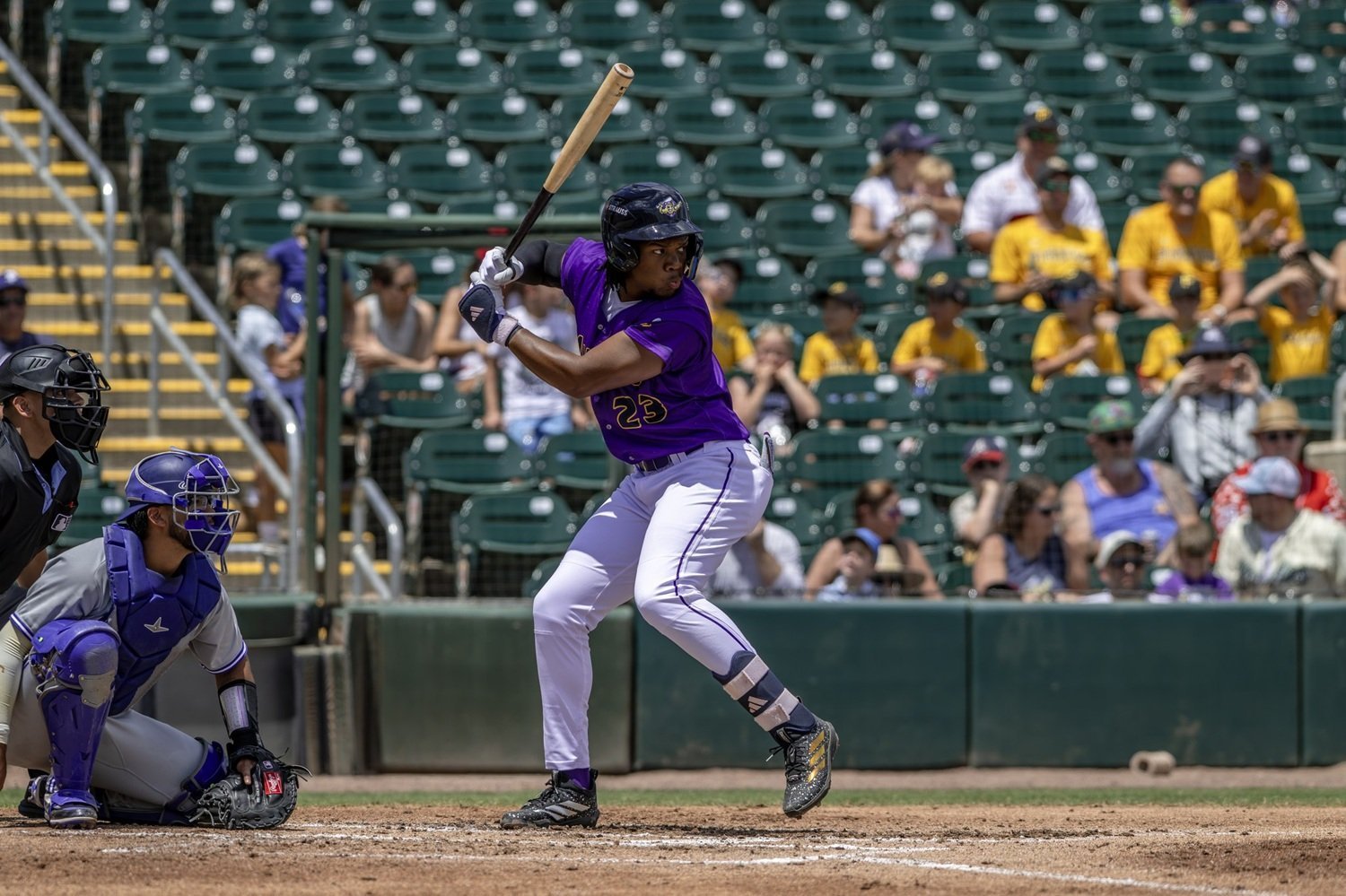 TRANSACTIONS The Minnesota Twins recalled RHP Jack Anderson from the St. Paul Saints. In perhaps the biggest news of the day, OF Emmanuel Rodriguez was activated from the 60-day injured list and was sent on a rehab assignment with the Fort Myers Mighty Mussels. RHP Mitch Mueller was promoted from the Cedar Rapids Kernels to the Wichita Wind Surge. In the Midwest League, the Kernels received RHP Reed Moring and LHP Cleiber Maldonado from Fort Myers. The Mighty Mussels were assigned RHP Hendry Chivilli from the FCL Twins. SAINTS SENTINEL St. Paul 3, Omaha 6 Box Score This one was scoreless until the top of the third inning, when the top of the Saints lineup came back around and made something happen. Walker Jenkins followed his first inning double with a walk in his second plate appearance, and this time Kyler Fedko brought him in with a double of his own and 1-0 lead. Ricky Castro toed the rubber for the visitors and finished the first three innings, the first two of which were scoreless. In the bottom of the third a walk was followed by a two-run homer to put the Storm Chasers in front 2-0. Castro allowed those two runs on three hits and a walk, striking out two. Alejandro Hidalgo got the next two innings from the bullpen, and gave up one earned run on a solo homer and struck out one. Down 3-1 in the top of the sixth Matt Wallner led off with a single and came around to score on a double from Aaron Sabato. Ben Ross added a sacrifice fly later to tie the game at three. It stayed that way until the eighth inning, as Matt Bowman (1 IP, H, BB, K) and Marco Raya each kept Omaha quiet for an inning. Back out for the eighth however, Raya ended up in some trouble. A one-out single, walk, and double put the Storm Chasers back in front, and after a pitching change a two-run single put them up by three. Raya was charged with three earned runs on two hits and a walk in his 1 1/3 innings pitched and took the loss. He struck out two. Grant Hartwig recorded the final two outs, allowing two hits and striking out one. Jenkins (2-for-3, R, 2B, 2 BB, SB) and Sabato (2-for-4, R, 2B, RBI, K) collected half of the Saints eight hits in the game. As a team they finished 1-for-8 with runners in scoring position and left 10 men on base. Kaelen Culpepper finished 0-for-5 with a strikeout. WIND SURGE WISDOM Wichita 1, Springfield 5 Box Score The Wind Surge travelled east to one of my favorite minor league parks I’ve had the chance to visit, in Hammons Field (now Route 66 Stadium) near the campus of Missouri State University in Springfield, MO. When I was travelling there often for work I would always end up requesting a hotel room on the top floor that had a balcony view of the Stadium from a block-and-a-half away for the evenings I didn’t venture inside myself. But I digress. Hits were hard to come by from both teams in this one, as they combined for just seven total on the game. Unfortunately for the Wind Surge, two of the Cardinals four were of the two-run home run variety. AS a team Wichita finished 0-for-11 with runners in scoring position, and left nine men on base. Starting pitcher Cory Lewis got hit with some bad luck, as all three runs charged against him were of the unearned variety and came in the second inning. A sequence of an error, walk, walk, GIDP, and home run made it 3-0 and Springfield never looked back. Lewis went four total innings, allowing just two hits but walking three. He struck out five and threw 71 pitches (42 for strikes). Spencer Bengard walked one and struck out two in two innings of relief. Paulshawn Pasqualotto finished the final two innings, allowing two Cardinals insurance runs on two hits and two walks, while striking out two. The bottom three of the Wichita lineup (Kyle DeBarge, Caden Kendle, and Jake Rucker) each had one hit to account for all of them as a team. DeBarge hit his 19th double, Rucker his fifth home run. Everybody in the lineup struck out at least once, with them totaling 16 on the night as a lineup. Kendle’s hit did extend his hitting streak to 14-games, so there was something positive. KERNELS NUGGETS Peoria 8, Cedar Rapids 6 (10 innings) Box Score Left-hander Cesar Lares made the start for the Kernels and was rudely greeted by the Chiefs. A first inning solo home run and second inning three-run shot put them up 4-0 early. Lares settled down a bit and was able to finish four innings without any further damage. He was charged with four earned runs on five hits and a walk, while striking out two. The Kernels finally got on the scoreboard after the Chiefs starting pitcher’s night was finished after five. Singles from Danny De Andrade, Quinn McDaniel, and Dameury Pena got their first run of the game across home plate. Henry Kusiak followed with a double to score two more. Andy Lugo tied the game at four with an RBI single. Fellow lefty Ross Dunn went the next two innings after Lares, retiring all six hitters he faced, including three via strikeout. Brian Zeldin came on to start the seventh but back-to-back walks to start the inning were followed by a two-run triple to put Peoria back up by two. Zeldin got a strikeout before Ivran Romero was summoned and retired the next two hitters to keep his team in striking distance. The lineup did so in the bottom half. Eduardo Tait delivered a one-out single, and De Andrade followed with his 10th home run of the season to tie it back up. Zeldin had a one-two-three top of the eighth and then turned it over to Yehizon Sanchez in the ninth. Both teams went scoreless in their at-bats, sending it to extra innings. Peoria took advantage, getting an RBI single to score the ghost runner, before an RBI triple made it 8-6. Sanchez got them out of that jam, but in the bottom half the Kernels went down in order. De Andrade led the way by going 3-for-5 with the home run, scored two runs, and drove in two. Jacob McCombs (2-for-5, 2B, 2 K) and Tait (2-for-5, R) also had multiple hits. MUSSEL MATTERS Palm Beach 3, Fort Myers 9 Box Score The Mighty Mussels welcome the Palm Beach Cardinals to Hammond Stadium this week, and sent right-handed pitcher Merit Jones to the mound to kick off the series on Tuesday. Jones achieved multiple Mighty Mussels single season distinctions in his excellent five innings, climbing their career innings pitched and strikeout lists. He scattered three hits and no walks in his five innings, punching out seven. His lone run allowed was unearned due to an error in the fourth inning. He threw 74 pitches, with 48 going for strikes (65%), including 14 swings and misses. In the month of July Jones made six starts totaling 24 2/3 innings. He allowed just two earned runs on 21 hits, walked 8, and struck out 30. Sounds like a “Pitcher of the Month” to me! His lineup had his back as well. Quentin Young got them on the board in the bottom of the second with his 13th home run of the season to make it 2-0. In the bottom of the fifth they tacked on five more. Young got it started with a triple. He scored on a single from Irvin Nunez. Merphy Hernandez and Ramiro Dominguez each followed with a double. Jayson Bass added the exclamation with his 13th homer, making it 7-1 Mighty Mussels. Relievers Billy Oldham (1 IP, 2 BB, K), Brent Francisco (2/3 IP, H, 2 R (1 ER)), and Mike McKenna (2 1/3 IP, H, BB, 3 K) held it down for the final four innings to give Jones his fifth win of the season. In the bottom of the eighth JP Smith II added a pair of insurance runs with his 12th home run of the season to make the final of 9-3. Young led the way with three hits in four at-bats, scoring two runs and driving in two. Dominguez (1-for-4, R, 2B, 2 RBI, 2 K), Bass (1-for-4, R, HR, 2 RBI, 2 K), and Smith II (1-for-3, 2 R, HR, 2 RBI, BB, 2 K) each drove in a pair of runs. Emmanuel Rodriguez got the start in center field and batted second in the lineup in the first game of his rehab assignment. He played the first five innings and finished 0-for-3 with a pair of strikeouts. DOMINICAN DAILY DSL Twins 6, DSL Rangers Red 7 Box Score Down 6-1 heading into the seventh inning, the Twins made a valiant comeback to tie it up, before falling by one run to the Rangers Red squad. Fernando Hernandez got the start as an opener, and struck out one in a one-two-three first inning. Juan Collado (3 2/3 IP, 3 H, 4 R (1 ER), BB, 4 K) and Agustin Campusano (3 1/3 IP, 2 H, 3 ER, 3 BB, K) then each went three-plus innings to finish it out, but each allowed multiple runs. The Twins got on the scoreboard first in the top of the third. Jendy Martinez drew a walk, stole second base, and advanced to third on a throwing error. Jhon Gonzalez then delivered an RBI single to make it 4-1. The Rangers broke through against Collado in the fifth, thanks in part to a pair of errors which meant just one of his runs in the frame were earned. The Rangers took a 6-1 lead in the sixth against Campusano. In the top of the seventh the Twins loaded the bases with one out before an error allowed two runs to score. A balk brought in a third run as the closed the deficit to two. In the top of the eighth Martinez hit his first professional home run to tie the game at six, a two-run shot. In the bottom half it was a walk and a double against Campusano that put the Rangers back in front for good. Both teams had just five hits, but also combined for 14 walks (10 from the Twins) and eight errors (3 from the Twins). In addition to his first homer, Martinez also drew three walks and scored three runs to lead the way. Luis Duarte finished 1-for-2 and drew three walks as well. TWINS DAILY MINOR LEAGUE PLAYERS OF THE DAY Pitcher of the Day – Merit Jones, Fort Myers Mighty Mussels (W, 5 IP, 3 H, 1 R (0 ER), 7 K) Hitter of the Day – Quentin Young, Fort Myers Mighty Mussels (3-for-4, 2 R, 3B, HR, 2 RBI, K) PROSPECT SUMMARY Check out the Prospect Tracker for much more on our Twins Top 20 prospects after seeing how they did today. #1 - OF Walker Jenkins (St. Paul): 2-for-3, R, 2B, 2 BB, SB (10) #3 - IF Kaelen Culpepper (St. Paul): 0-for-5, 2 K #4 - OF Emmanuel Rodriguez (Rehab w/Fort Myers): 0-for-3, 2 K #7 - C Eduardo Tait (Cedar Rapids): 2-for-5, R #11 - OF Gabriel Gonzalez (St. Paul): 0-for-4 #15 - 3B/CF Brandon Winokur (Wichita): 0-for-4, 2 K #17 - 3B/SS Quentin Young (Fort Myers): 3-for-4, 2 R, 3B (4), HR (13), 2 RBI, K WEDNESDAY’S PROBABLE STARTERS St. Paul @ Omaha (12:05 PM CDT) - RHP Trent Baker (3-3, 6.29 ERA) Wichita @ Springfield (7:05 PM CDT) - RHP Preston Johnson (0-3, 4.99 ERA) Peoria @ Cedar Rapids (12:05 PM CDT) - RHP Kolten Smith (0-2, 4.09 ERA) Palm Beach @ Fort Myers (6:05 PM CDT) - TBD Please feel free to ask questions and discuss Tuesday’s games! View the full article
 -
Twins 3, Royals 2: Royce Lewis Walks Off the Royals!
DiamondCentric posted an article in Twins Daily
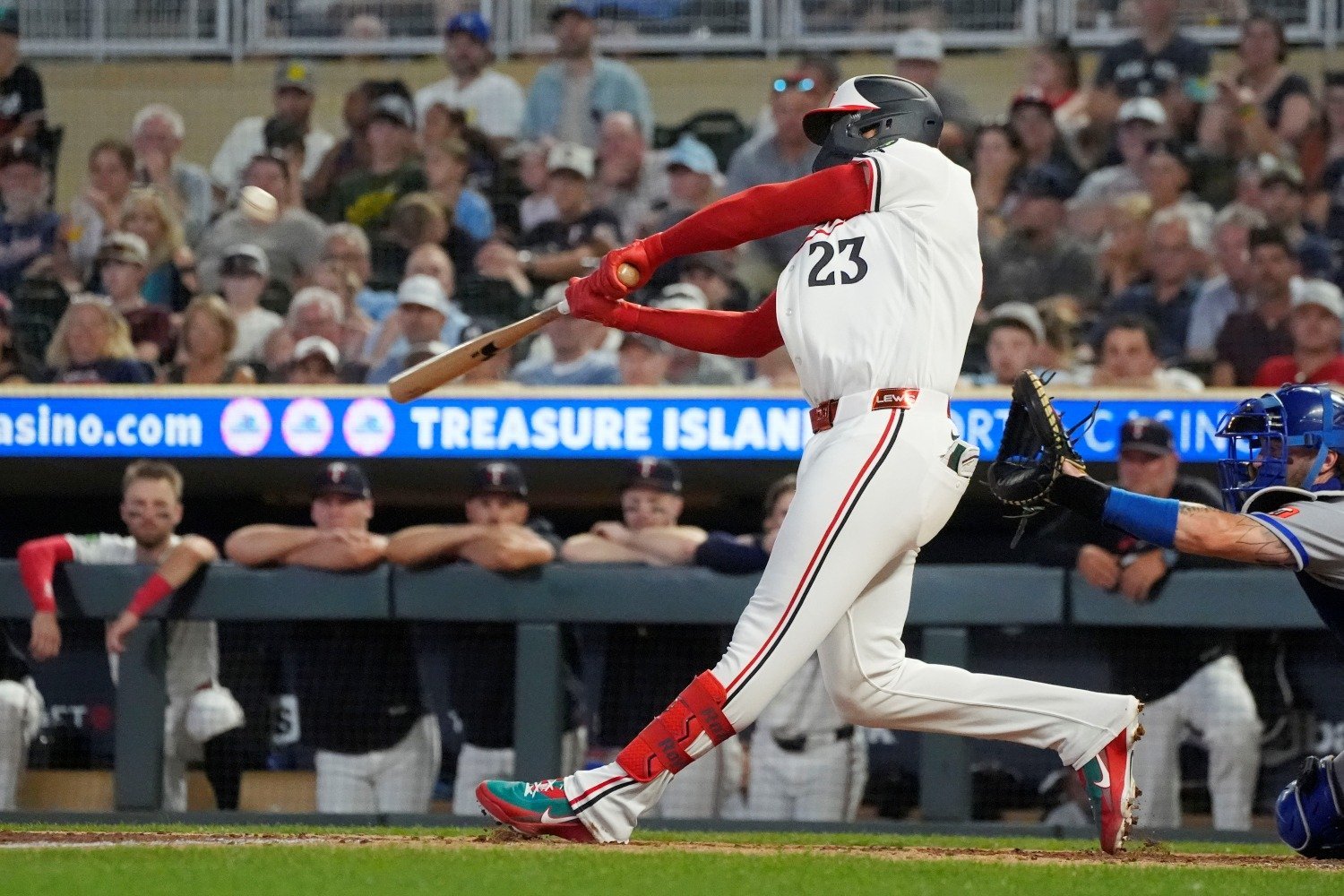 Box Score SP: Taj Bradley 6.0 IP, 3 H, 2 ER, 3 BB, 10 K (102 pitches, 68 strikes (67%)) Home Runs: N/A Top 3 WPA: Royce Lewis (0.85), Josh Bell (0.16), Brooks Lee (0.15) Win Probability Chart (via FanGraphs) Taj Bradley's first win of 2026 came at the expense of the Royals, and he was hoping that his 10th win of the season would close a circle. Bradley's counterpart on the mound was veteran righty Seth Lugo, and his last start against the Twins wasn't as clean: he surrendered five runs over five innings. The Royals came in winners of seven of 10 since the All-Star break, while the Twins were one win away from reaching that elusive .500 mark again. T-minus six days until the trade deadline, it’s time to take care of business at home. Bradley Deals, but So Does Lugo I'm not sure you can compare the approaches of these two starters, other than by saying they both were effective. Bradley stayed in the high 90s through the first five innings, with seven strikeouts and a clean slate on the scoreboard. Meanwhile, Lugo looked like a possessed Zack Greinke against the Twins lineup, inducing double play after double play while ranging between the mid-70s and the low 90s. Kody Clemens finally found some exit velocity in the bottom of the fourth, mashing a double off the wall in right. Josh Bell kept doing what Josh Bell does. His ground ball found the center field grass, plating Clemens for a 1-0 Twins lead. Byron Buxton Forced to Exit Early Again Before the ink had dried on that lead, Alan Roden was trotting out to right field and Luke Keaschall was moving to center field. Byron Buxton's hip flared up again, and the trade season ramifications all flared up, too. Buxton hasn't been able to run full speed since his return, and his ability to stay in the lineup will be key to the rest of this season. The silver lining? Would Roden get another hero moment at Target Field? Unfortunately, the Twins were going to need one. Weak Contact, butthe Royals Will Take It In the top of the sixth, Bradley came back to Earth the hard way. He walked No. 9 hitter Josh Rojas to start the inning, and then Lane Thomas check-swung a single to right to put runners on the corners with one out. The Twins knew that something was up, and they held a meeting to discuss everyone's role should the Royals attempt a double-steal. Thomas indeed headed for second, and Ryan Jeffers followed the plan by throwing to second. Unfortunately, Jeffers's throw bounced to Ryan Kreidler, and Kreidler's throw to the plate had no chance of catching Rojas. With the game tied and Thomas at second, Bradley induced Salvador Perez to hit a floater to right-center. In typical "the Twins need a win" fashion, though, the bloop fell in front of Roden to put the Royals ahead 2-1. Bradley's night ended with a whimper, and a desperate plea to his teammates to save this from being the best-pitched loss of the Twins' season. The Twins offense immediately tried to mount a rally in the bottom of the sixth, but with runners on the corners and only one out, Victor Caratini hit into the fourth Twins double play of the first six innings. "Twin killing" has never felt more real. When All Hope Seems Lost... The Twins bullpen did what they've been doing, posting goose eggs on the scoreboard to keep the flailing bats in the ballgame. Brooks Lee got a one-out double in the seventh, but no one—not even Roden—could knock him in. Jeffers worked the count full and laced a lead-off single to left to start the eighth. Austin Martin pinch-ran, but Clemens promptly grounded into the fifth Twin-killer of the night. Seriously. Caratini got his second hit of the game to lead off the ninth, and it looked like Luke Keaschall had saved the day with a hooking double to left. Isaac Collins ran and dove and stole all hope from Twins Territory, however, and Caratini had to scamper back to first. Lee worked a walk on a full count to advance the tying run into scoring position with one out, but Kreidler tried to do too much and went down swinging. Royce Lewis had entered the game to pinch-hit for Trevor Larnach in the bottom of the seventh, which meant he now had to face righty Alex Lange. The writing was on the wall for another lackluster Twins loss. Then Lewis's oppo-blast hit that wall and bounced away into a game-winning two-run double! Walk-off winner! What did you think was gonna happen? What’s Next? The Twins look to keep the good vibes rolling against the no-longer-surging Royals. The Twins hope that the healthy, playoff-ace version of Joe Ryan (6-6, 3.38 ERA) will take the mound, while Kansas City will also send dear old friend Randy Dobnak to the mound. First pitch is scheduled for 6:40 pm CDT. Postgame Interviews Coming Soon Bullpen Usage Spreadsheet FRI SAT SUN MON TUE TOT Morris 0 26 0 0 0 26 Adams 14 0 15 0 11 40 Rojas 0 56 0 0 0 56 Funderburk 12 0 17 0 27 56 Rogers 0 30 0 0 0 30 Nance 0 13 15 0 0 28 Anderson 17 0 0 0 13 30 Gomez 0 8 0 0 0 8 View the full article
 -
 MIAMI, FL - This time one year ago, it was assumed that the Miami Marlins would be trading franchise icon Sandy Alcantara at the trade deadline. Alcantara remained a Marlin through the trade deadline and offseason. One year later, he is setting franchise records. First, most strikeouts in franchise history, and on Tuesday night against the Philadelphia Phillies, he set the record for most quality starts in franchise history (111). On top of that, the Marlins are now winners of back-to-back games, getting back to .500 with a 1-0 win. "When I was a little kid, I wanted to play baseball, this was my dream," Alcantara said. "I'm here and I try to enjoy the moment and the opportunity. When I'm out there, I just want to go more than seven. That's what I always need to do, trying to give the team a chance to win the game. You guys can see every time I take the mound, it doesn't matter situation, if I am having bad day or good day, I just always compete out there." Alcantara gave the Marlins seven shutout innings, taking a no-hitter into the fifth inning. He also struck out five. For Alcantara, he now has a 3.82 ERA, 3.97 FIP, 6.87 K/9 and 2.33 BB/9 in 23 starts this season. The no-hitter for Alcantara was lost with two outs in the fifth inning when former Marlins Bryan De La Cruz knocked an infield base hit. It came down to a foot race between him and Alcantara to see who would reach the base first. De La Cruz just beat him out. Marlins manager Clayton McCullough and first baseman Kyle Stowers both sensed a different Alcantara coming into Tuesday's affair. McCullough said that he had "a real edge to him" while Stowers noted that his "breaking balls just looked like another level." "It was a little different right out of the first inning with how he came out," McCullough said. "Other than the (Alec) Bohm walk on the three-two pitch, he was in and around the zone. Every pitch felt like it was competitive where they had to make a decision and how he moved the ball around through some really good sweepers. The cutter was a good pitch tonight, and certainly his fastball." The biggest difference in 2026 is that Alcantara will very likely remain a Miami Marlin, not having to deal with the trade rumors. Marlins chairman and principal owner Bruce Sherman told Fish On First that he is not getting traded. Alcantara does have a club option for the 2027 season, but there is no indication yet if that will be accepted. On top of Alcantara's strong outing, Calvin Faucher and Pete Fairbanks, both of the team's struggling relievers, came out and handled Philadelphia six up and six down. Faucher entered the game for the eighth inning, inducing three straight groundouts. For Faucher, this is now his fourth straight appearance where he has not allowed a run. Within that span, he's faced the Houston Astros, San Diego Padres and now back-to-back outings against the Phillies. On the season, he has a 4.57 ERA, but 3.27 FIP. Fairbanks —the team's big free agent signing—has struggled this season, calling it "the most trying three-month stretch I've ever had in the game of baseball." On Tuesday, he worked a 1-2-3 top of the ninth, striking out both Bohm and Edmundo Sosa to notch his 14th save of the season. "You're betting on the the talent, the track record and we need Pete to to be good and he knows that too." McCullough said. "Great for him to go out there and just have a really clean inning and move the ball around like he did. Drop his curveball in there and utilize the fastball well." The lone run of the game came thanks to Kyle Stowers in the bottom of the first inning, hitting his 14th home run of the season off Phillies starter Aaron Nola. This marked Stowers' second home run of the homestand and is now slashing .235/.318/.450/.768 with 14 home runs, 46 RBI and a 107 wRC+. With the win, the Marlins are back at an even .500, with a 54-54 record. When it comes to the standings, they find themselves 1.5 games out of the third National League Wild Card Spot. Ryan Gusto will be the Marlins starting pitcher for the series finale at 12:10 pm EST. View the full article
 -
 The Mets' fire sale is about to begin, and a new report indicates the Mets could move catcher Francisco Alvarez. According to Francys Romero, several teams in the American League have inquired about Alvarez's availability. Romero notes that the Mets are seeking a prospect package in return. Virtually the entire AL playoff picture (Yankees, Red Sox, Rays, White Sox, Rangers, etc.) is looking for catchers. With reports from the New York Post's Jon Heyman Tuesday morning that the Mets would like to hold onto Luis Torrens, the team's other catcher, moving Alvarez could make sense and bring back a decent return, especially with how much catching is coveted all over baseball. This is a big opportunity for the Mets to capitalize on a market that teams are trying to attack. Alvarez will come with years of control, so if the Mets do move him, they should look for the best possible return and not sell short on Alvarez. View the full article
 -
 The Royals have placed RHP Beck Way on the injured list and recalled RHP Easton McGee. Way, a rookie, has pitched in 19 games with the Royals this year with a 3.86 ERA and 4.95 FIP. He has 21 strikeouts in 23 1/3 innings pitched in those 19 games. McGee will make his Royals debut, previously having pitched in the majors for the Rays, Mariners, and Brewers. Over 13 career games at the major league level, he has thrown 26 1/3 innings and has recorded 17 strikeouts with a 3.08 ERA and 3.61 FIP. McGee was acquired two weeks ago from the Milwaukee Brewers for cash considerations. Since being acquired, he has thrown six innings over three appearances at Triple-A Omaha with seven strikeouts and six runs given up, good for a 9.00 ERA. View the full article
 -
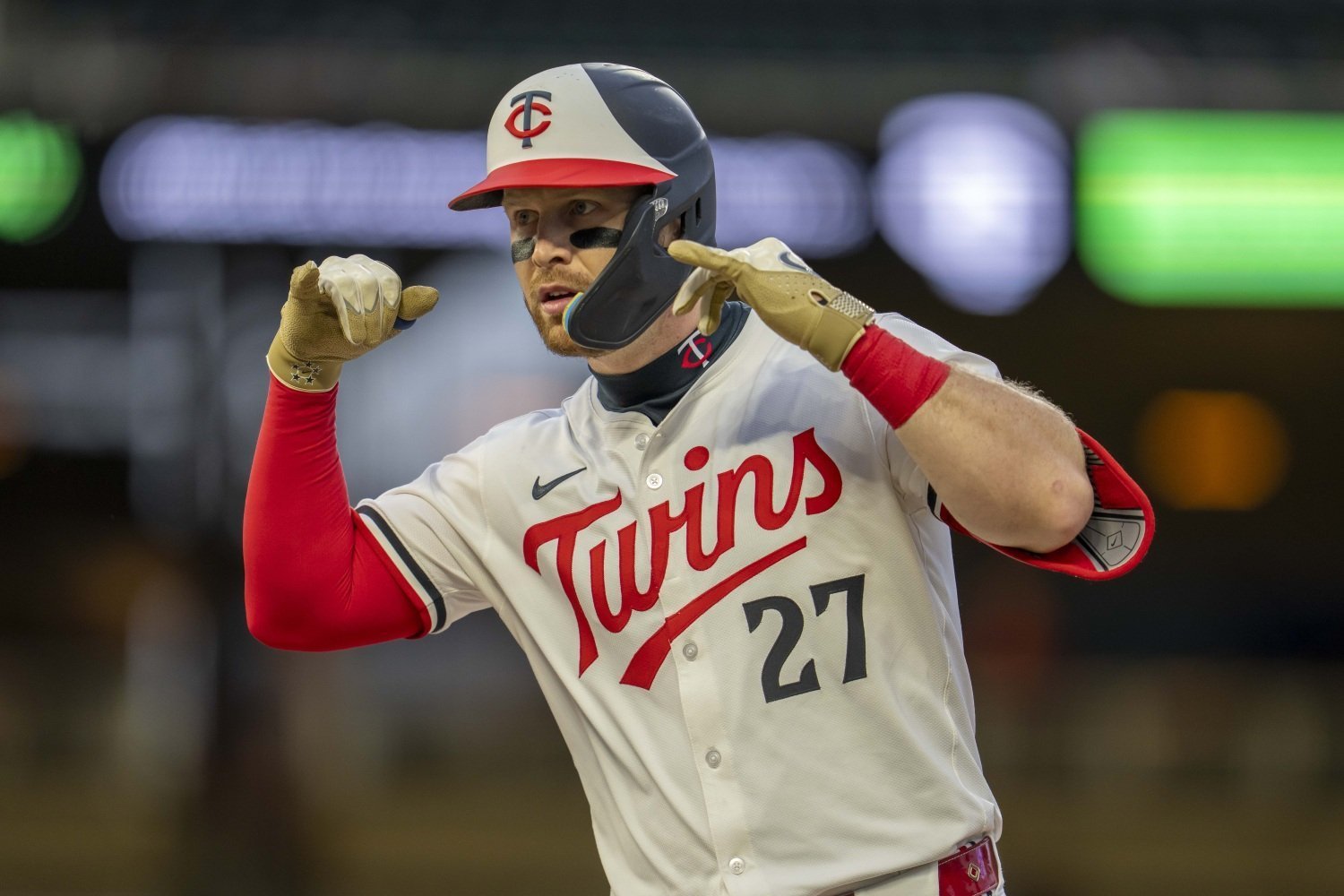 With less than a week remaining before the trade deadline, speculation surrounding Ryan Jeffers continues to intensify. Nearly every contender in need of catching help has been linked to the Twins' backstop, but one destination continues to surface above all others. According to ESPN insider Jeff Passan, the writing has been on the wall for months. Speaking about the trade market, Passan said a deal sending Jeffers to the Yankees "feels preordained." Even though Minnesota remains in the playoff race and has repeatedly emphasized its desire to compete, Passan believes Jeffers' contract situation ultimately makes him too logical a trade candidate to keep. Jeffers' Free Agency Changes the Equation Passan noted that Jeffers is "unlikely to re-sign in Minnesota" after the season, making him one of the Twins' most obvious trade chips. The 29-year-old is set to become a free agent this winter, leaving Minnesota with a difficult decision. Keep one of the best offensive catchers in baseball for a postseason push, or cash in now before he walks for nothing. The Yankees appear to be the cleanest fit. New York has spent much of the season searching for more right-handed power and offensive production behind the plate. Jeffers checks both boxes. Passan also mentioned the Red Sox and Rays as possible landing spots. Boston could be an especially interesting fit, as Jeffers' right-handed power would play well with Fenway Park's Green Monster. Tampa Bay has also been connected to catching upgrades throughout the summer. Still, the Yankees continue to feel like the favorite. Passan has connected Jeffers to New York for much of the last month. Whether that stems from inside information or simply an obvious baseball fit isn't entirely clear, but the consistency of the reporting is difficult to ignore. The Best Catcher Available? Jeffers has quietly put together the finest offensive season of his career. Entering the deadline stretch, he's slashing .283/.390/.532 with nine home runs and a .922 OPS, establishing himself as one of baseball's premier offensive catchers. His value may have increased even further after Athletics catcher Shea Langeliers suffered a meniscus tear expected to keep him out for the remainder of the season. With Langeliers no longer available, Jeffers arguably becomes one of the top catchers on the market. Diamond Centric currently ranks Jeffers as the 42nd overall trade candidate with three catchers ahead of him, including Adley Rutschman, Hunter Goodman, and Francisco Alvarez. However, they are all under team control beyond 2026, adding to what it would cost to acquire them. That scarcity could increase Minnesota's leverage in negotiations. What Could the Twins Actually Get? Being a top available catcher doesn't necessarily mean the Twins are about to receive a franchise-altering prospect package. Jeffers is strictly a rental. Any acquiring club would receive roughly two months of regular-season production plus whatever value he provides during the postseason before he reaches free agency. That's rarely enough to command an organization's elite prospects. Instead, the Twins are more likely looking at a return centered around a fringe top-100 prospect or a young major leaguer with multiple years of club control, supplemented by another lower-level prospect or organizational depth piece. That's where the Yankees become particularly intriguing. New York possesses several upper-level prospects who could help Minnesota as early as 2027, along with controllable young players already on the major league roster. If the Twins are prioritizing players who can contribute immediately rather than high-risk lottery tickets, the Yankees may offer one of the cleaner organizational fits. Whether a deal actually materializes remains to be seen. But as the deadline approaches, one of baseball's most connected insiders believes the destination has already been decided. If Passan is right, Jeffers may be putting on pinstripes before the deadline clock expires. View the full article
 -
New Red Sox Acquisition Curtis Mead Heading To Injured List
DiamondCentric posted an article in Talk Sox
 The start of Curtis Mead's career with the Boston Red Sox lasted two plate appearances. The question now is: How many more times will he swing a bat for Boston? Mead, an infielder acquired Saturday in a trade with the Washington Nationals, will be placed on the 10-day injured list Tuesday by the Red Sox with an injured left wrist. He was hit by a pitch in Monday's game against the A's. Infielder Nick Sogard will be called up from Triple-A Worcester. Due to Boston being in West Sacramento, Sogard is not expected to join the team until Wednesday. According to an unconfirmed report, Mead has a broken left wrist, which could put him out until mid-September if not the rest of the regular season. Mead was hit by a 95 mph four-seamer from A's right-hander Jack Perkins leading off the top of the fourth inning. He remained in the game until being replaced defensively to begin the bottom of the fifth inning. Initial X-rays did not show a break, according to interim manager Chad Tracy, but more testing Tuesday led the Red Sox to make the decision to sideline their new acquisition. Mead was picked up in a one-for-one trade for left-handed starter Connelly Early. Mead has a season slash line of .253/.353/.498 with 17 homers and 48 RBIs, hoping to provide a bit of extra power from the Red Sox's infield. View the full article
 -
 The start of Curtis Mead's career with the Boston Red Sox lasted two plate appearances. Now the question is: How do the Red Sox replace the infielder? Mead, acquired Saturday in a trade with the Washington Nationals, was placed on the 10-day injured list Tuesday by the Red Sox with an injured left wrist. Mead told Boston media the wrist is fractured and he will fly to Boston to meet with a hand specialist, who will determine if he needs season-ending surgery. He was hit by a pitch in Monday's game against the A's. Infielder Nick Sogard will be called up from Triple-A Worcester. Due to Boston being in West Sacramento, Sogard is not expected to join the team until Wednesday. Mead was hit by a 95 mph four-seamer from A's right-hander Jack Perkins leading off the top of the fourth inning. He remained in the game until being replaced defensively to begin the bottom of the fifth inning. Initial X-rays did not show a break, according to interim manager Chad Tracy, but more testing Tuesday led the Red Sox to make the decision to sideline their new acquisition. Mead was picked up in a one-for-one trade for left-handed starter Connelly Early. Mead has a season slash line of .253/.353/.498 with 17 homers and 48 RBIs, hoping to provide a bit of extra power from the Red Sox's infield. View the full article
 -
 Despite obvious needs, there are quite a few things working against our clarity surrounding the Chicago Cubs' trade deadline plans. For one thing, they're an organization that famously plays things close to the vest. For another, one of the few surefire sellers at the deadline happens to reside in their own division in the form of the Cincinnati Reds. While the Reds aren't completely out of the National League's Wild Card race, they're currently 4.5 games back of the third slot with five teams ahead of them (before you even get to one of the three teams currently in playoff position). There's no way they're buying in that position, and the team's current offensive picture makes it difficult to envision them making the sort of run over the next handful of days that would justify a pivot. As such, we can consider them among the teams most likely to sell alongside the likes of the New York Mets or Los Angeles Angels. This is where the Cubs come in. They need help on the mound, primarily in the form of starting pitching, but also on the relief side of things. The former will take priority over the latter, but there should be an assumption that, considering their current health woes on both fronts, additions are coming to in every phase of pitching. In the bullpen specifically, they're still rolling without the likes of winter signings Phil Maton, Hoby Milner, and Hunter Harvey, in addition to Daniel Palencia. That's left them leaning heavily on the likes of Jacob Webb, Trent Thornton, and a smattering of other journeyman types. If the Cubs and Reds were going to come together on a trade, it's difficult to see it coming to fruition for any marquee piece. The intradivision component makes that quite rare, with the Cubs likely lacking the gumption to create a larger package required to facilitate such a deal. Not that the Reds were selling any of their young hitters or starting pitchers, but even someone like Brady Singer (who has pitched much better these last two months than his full-season numbers would indicate) may be out of reach unless the Cubs overpay. Someone who would have made a logical fit, like Spencer Steer, is now likely out of the question due to injury (but even then, may have been a difficult get for Jed Hoyer and company). However, those same limitations don't always apply to middle relief pitchers. The Reds have exactly the type of reliable bullpen arms the Cubs could covet to help bridge the gap between their thin rotation and injury-plagued leverage group. Among Cincinnati's handful of potentially-available relief pitchers, Caleb Ferguson, Brock Burke, Pierce Johnson, and Emilio Pagán are all on short-term deals. Ferguson & Burke are free agents at season's end, with Johnson possessing a mutual option that effectively makes him the same. Of that quartet, Pagán is a name we can likely cross off the board given his $10 million player option and intensely concerning peripherals. Ferguson, Burke, and Johnson, meanwhile, offer a bit more appeal for the Cubs. The former two are both southpaws; Ferguson has a respectable 3.86 ERA through 21 innings of work, while Burke has been the far healthier of the two in working to a sterling 2.66 ERA across roughly 50 innings. Both have out-pitched their peripherals — Ferguson has a 3.63 xERA & 4.49 FIP, while Burke is working with a 4.30 xERA & 4.28 FIP — and each presents the kind of profile the Cubs tend to like out of their relievers. Neither features high-strikeout tendencies, but they each carry a history of heavy groundball work (Ferguson, specifically, is at a 54.0 GB% in 2026) with Ferguson's sinker-cutter-four-seam & Burke's four-seam/slider combination representing an appealing mix for a relief arm. Johnson would be a tougher sell. His ERA is up over five, with a FIP that looks very similar. He's only exceeded a 40 percent groundball rate once in the last four years, with a 14.6 homer-to-flyball rate that sits 35th among 189 relievers with at least 30 innings to their name. Ferguson & Burke offer that left-handed appeal in addition to a performance advantage over Johnson. The Cubs are rolling with Caleb Thielbar & Ryan Rolison at present as their primary southpaws in relief. While Rolison has been a revelation, Thielbar hasn't been remotely as effective as he was in 2025. Hoby Milner's return is imminent, but it's entirely possible the Cubs want to pursue an additional lefty to further solidify their relief corps ahead of October. Neither Ferguson nor Burke would shift the paradigm of this bullpen, but they would at least help to stabilize things. If Hoyer can accept the inherent surcharge that comes with working with a division rival this time of year, he'll find the relief corps reinforcements he's been looking for. View the full article
 -
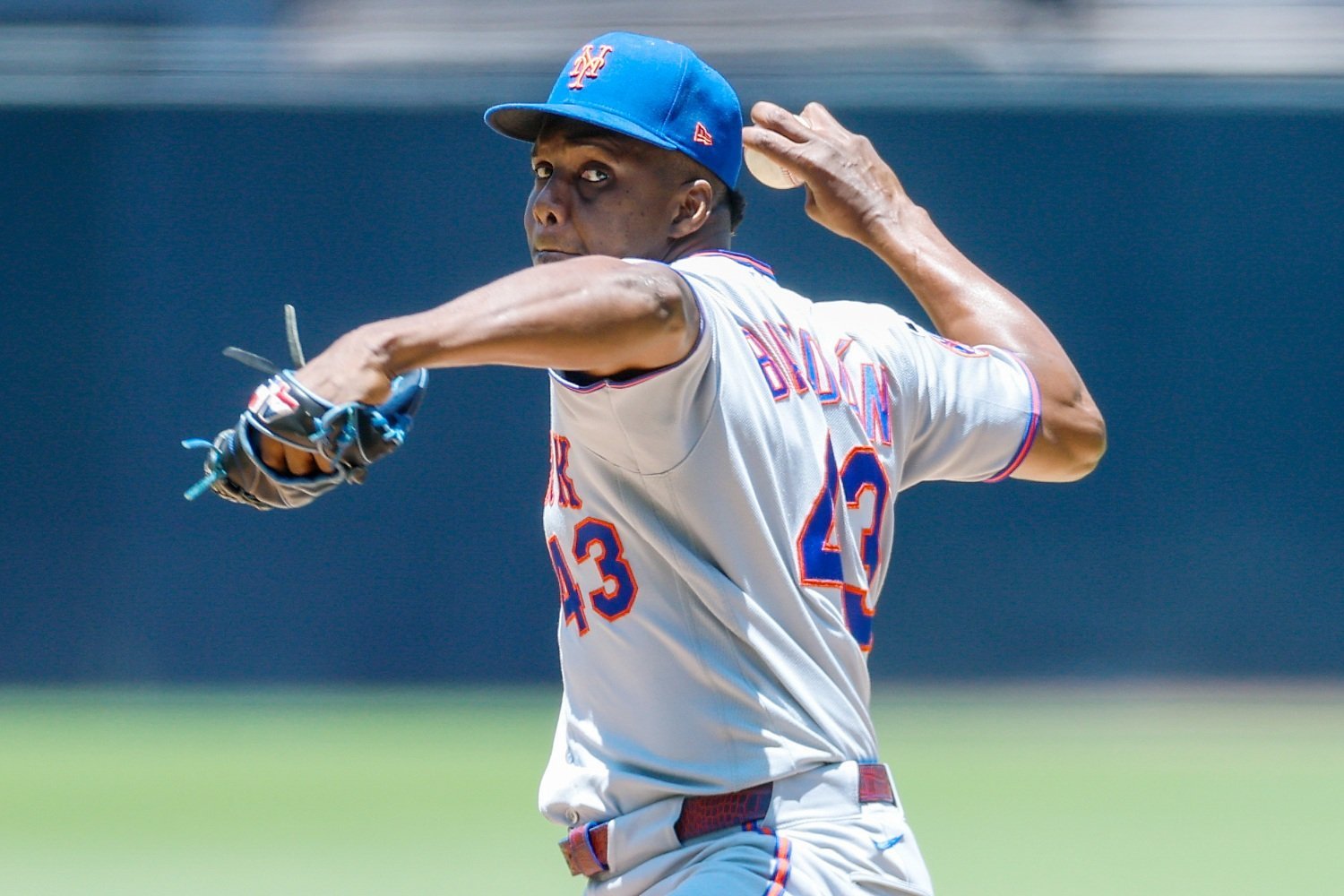 With just under a week until the trade deadline, the Minnesota Twins still don't know exactly what they'll be. They currently sit one game below .500 and will host the Kansas City Royals in a three-game series beginning Tuesday night. The Royals are bringing up the rear in the AL Central at 45-62, giving Minnesota a golden opportunity to build some momentum before the deadline. If the Twins take two of three from Kansas City, they're back to .500. A sweep would put them over the mark. A strong showing over the next several days should convince the front office to become legitimate buyers—not in the sense that they're going out and trading for Tarik Skubal, but adding pieces around the margins that can make a real impact over the final two months of the regular season. If that's the route Minnesota ends up taking, the bullpen has to be the first priority. With that in mind, here are four lesser-known, under-the-radar relievers the Twins could target before the trade deadline. Huascar Brazobán, New York Mets The Mets have been a disaster this season, but at 36 years old, Brazobán has quietly put together an impressive campaign. Across 50 2/3 innings, he's sporting a 2.66 ERA while striking out 47 hitters against 22 walks. Brazobán leans heavily on a sinker-changeup combination, which has helped him produce a ground-ball rate that ranks in the 93rd percentile across Major League Baseball. He's also been one of the league's best when it comes to limiting loud contact. His hard-hit rate, barrel rate and average exit velocity all rank in the 99th percentile, making him one of the toughest relievers in baseball to square up. That's exactly the type of profile the Twins should be targeting. They don't necessarily need an overpowering arm; they need reliable innings from someone who can consistently keep the ball on the ground and avoid damaging contact. Brazobán checks those boxes, and because of his age, he likely wouldn't cost all that much in a trade. JoJo Romero, St. Louis Cardinals The Twins currently have three left-handed relievers, in Kendry Rojas, Kody Funderburk and Taylor Rogers. But with Rojas serving as a swing man and Funderburk and Rogers impossible to count on, another southpaw could make a huge difference for them. Romero owns a 3.35 ERA across 43 innings this season. That number sat at an impressive 2.07 last year, and for the most part, his overall performance has regressed in 2026. There's been more hard contact allowed and fewer swings and misses than we've seen in previous seasons. Even so, there's plenty to like. His sinker, sweeper and changeup all feature excellent movement profiles, and one area where he's actually improved this year has been limiting walks. That's an encouraging sign for a pitcher who already has quality stuff. He's also on the final year of his contract before reaching free agency, meaning St. Louis probably won't be asking for a premium return if they decide to move him. If the Twins are simply looking to add another dependable left-handed option without paying a steep price, Romero makes plenty of sense. Brennan Bernardino, Colorado Rockies Bernardino is another intriguing possibility. He's in his age-34 season, but putting together the best year of his career. Over 42 2/3 innings, he's posted a 2.74 ERA with 33 strikeouts compared to just 14 walks. Nothing about Bernardino's arsenal immediately jumps off the page. His sinker averages around 90 mph, and his pitch shapes aren't particularly flashy. But getting outs is more important than looking impressive doing it. Bernardino is a classic pitch-to-contact reliever, and the contact he allows is exactly what teams are looking for. His barrel rate ranks in the 89th percentile, while both his hard-hit rate and average exit velocity sit in the 96th percentile. He attacks the strike zone, limits quality contact, and has managed to keep his ERA below 3.00 despite pitching half of his games at Coors Field. That's no small accomplishment. Bernardino is someone I'm liking quite a bit as a realistic trade target. Brent Suter, Los Angeles Angels Apparently, I have a type when it comes to bullpen targets. Suter is 36 years old and will turn 37 in August. Like the other names on this list, he doesn't light up radar guns, averaging around 89 MPH on his sinker, and his pitch shapes aren't eye-popping. His 4.42 ERA isn't particularly appealing, but a 3.62 FIP suggests he's been the victim of some bad luck (and some bad Angels defense) this season. He's posted outstanding walk numbers over the past three years, and while strikeouts have never been a huge part of his game, he's another pitcher who specializes in weak contact. His hard-hit rate and average exit velocity both rank in at least the 89th percentile among major-league pitchers. He also generates ground balls at a healthy clip, and thanks to an average of 7.4 feet of extension, that slow sinker plays much harder than the radar gun suggests. Suter is on a cheap, expiring contract and brings a long track record of success. He's another veteran who could slide into Minnesota's bullpen and provide meaningful innings during the stretch run. None of these names would generate the biggest headlines if the Twins acquired them, but that doesn't mean they wouldn't make a difference. If Minnesota decides they’re buying at the deadline, the bullpen absolutely has to be the first area addressed. Adding one or even two reliable veteran relievers like Brazobán, Romero, Bernardino or Suter could go a long way toward stabilizing a relief corps that's been the team's biggest question mark all season. View the full article
