


DiamondCentric
-
Posts
2,631 -
Joined
-
Last visited
Never
Content Type
Profiles
Forums
Events
News
Tutorials & Help
Major League Baseball Videos
Guides & Resources
Store
Downloads
Gallery
Everything posted by DiamondCentric
-

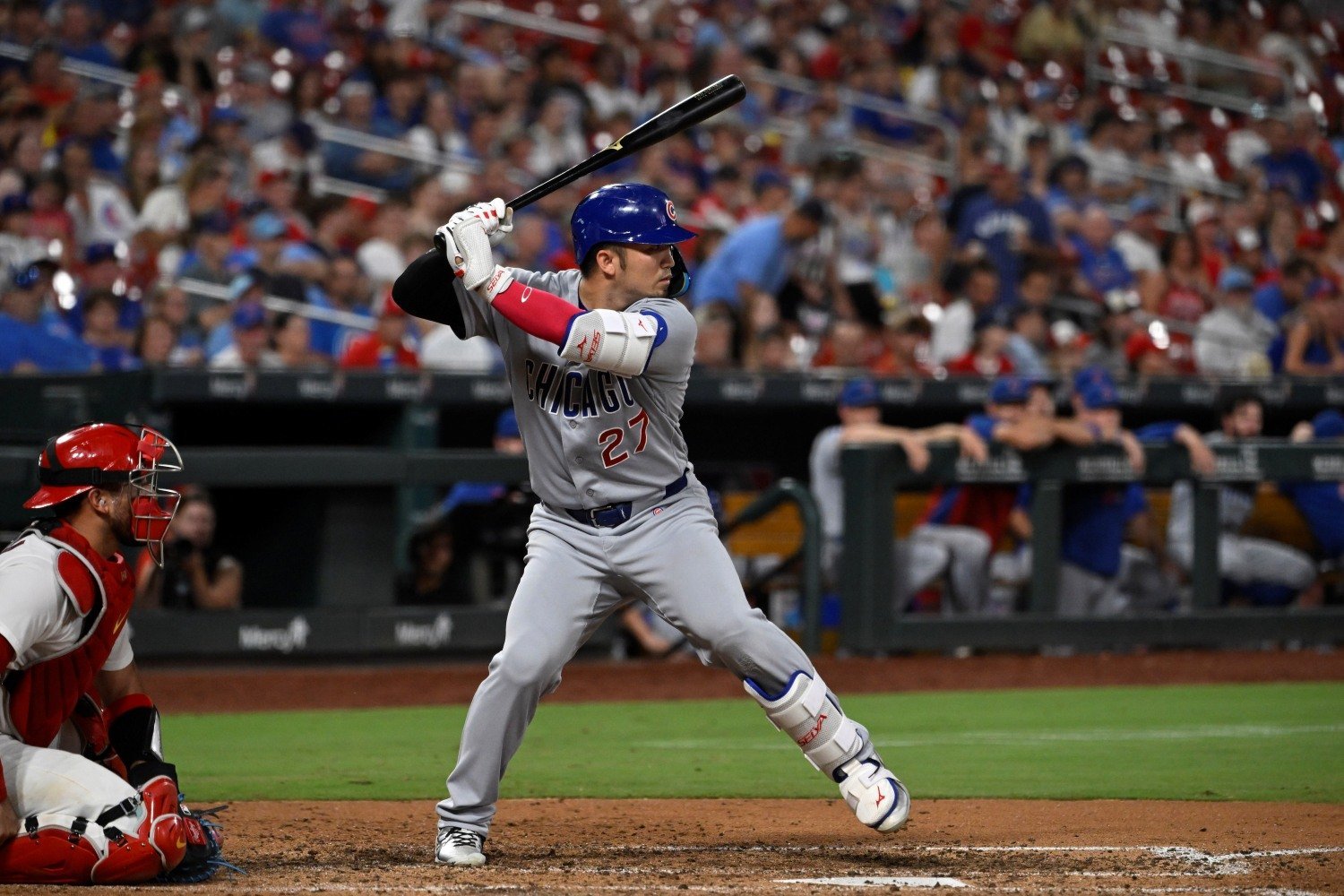 A lot of the focus around the Chicago Cubs leading up to the trade deadline has centered around their pitching staff, and rightfully so. It's hard to look at this roster and come away with any other conclusion than that adding another arm should be the front office's top priority. But there's another issue quietly looming over this team that hasn't gotten nearly as much attention. Chicago has some important players entering free agency after the 2026 season, and odds are good that the Cubs simply can't keep all of them. If that's the case, the front office has to ask itself an uncomfortable question: is it better to make one difficult move now than risk losing multiple contributors for nothing a few months from now? If so, Seiya Suzuki might be the best place to start. Suzuki is in the final season of the five-year, $85-million contract he signed with the Cubs in March 2022, and he's done just about everything the organization could have hoped for during that deal. Even after missing time early in the year, he's once again been one of Chicago's most productive hitters. Across 387 plate appearances, Suzuki is slashing .265/.354/.473 with an .827 OPS, continuing to provide the middle-of-the-order production the Cubs have relied on throughout his tenure. For a team with legitimate postseason aspirations, that's not the type of bat you willingly remove from the lineup. But trading Suzuki wouldn't be about his performance. If anything, his production is exactly why the Cubs should at least entertain the possibility. The bigger picture is what makes this interesting. Suzuki isn't the only key player headed toward free agency. Fellow outfielder Ian Happ is also set to hit the open market after the season, as are Shota Imanaga, Carson Kelly and Matthew Boyd. Add in a few other expiring contracts around the roster, and suddenly, the Cubs are staring at an offseason where they could need to replace a whole lot of outgoing talent in the compressed window for activity created by a winter lockout. Bringing everyone back isn't likely, and probably wouldn't end well. If the Cubs are forced to choose, Suzuki probably has the strongest case to stay based strictly on offensive production. He's been one of the most dangerous hitters in their lineup. At the same time, though, the roster is beginning to evolve. Matt Shaw has already made the transition to right field this season, and the Cubs have no shortage of young position players pushing for larger roles. Pete Crow-Armstrong has established himself as a legitimate superstar, and a couple youngsters (James Triantos and Pedro Ramírez) could also wind up landing in the outfield corners. The organization has spent years building toward a younger, more athletic core, and eventually, those players need somewhere to play. Moving Suzuki would clarify the Cubs' long-term outfield picture instead of kicking that decision down the road another few months. Then there's the financial side of things. The Cubs currently carry one of baseball's larger payrolls, at roughly $254 million for the purposes of the competitive balance tax. They're already projected to be about $10 million over the first threshold. To stay under the second one while adding any salary at the deadline, they could need to subtract some, too. Unlike many rental players, Suzuki isn't simply an expiring contract. He's an impact bat capable of changing a lineup, which means his value should remain extremely high despite his impending free agency. There are plenty of contenders who could use exactly that. Teams like the Rays, Guardians, and Phillies all make sense. Whether any of them ultimately emerge as serious suitors remains to be seen, but the market should exist. I'm not going to speculate on exactly what a return would look like, and if you want some insight into it, I encourage you to read this piece. But it's not difficult to imagine Suzuki bringing back the type of pitcher the Cubs have spent weeks trying to acquire. The Cubs would be addressing three different problems with one move. They'd open up their long-term outfield picture, create additional financial flexibility, and add desperately needed pitching for both this season and (potentially) beyond. That's a difficult combination to ignore. Of course, the Cubs are trying to make a deep postseason run, and Suzuki gives them a better chance of doing exactly that. If the front office believes this roster is capable of winning the National League, holding onto one of its best hitters is a perfectly reasonable decision. There's nothing wrong with pushing your chips into the middle when a championship is within reach. Suzuki also has a no-trade clause, so moving him would be complicated. It might even be impossible. But the front office also has to think beyond October. This isn't just about Suzuki. It's about recognizing that the Cubs probably aren't going to keep every major free agent they have after the season. Rather than watching multiple players walk away for nothing, they should seriously consider turning one of those expiring assets into something that helps both now and in the future. If they decide to go that route, Suzuki may be the player who makes the most sense. View the full article
 -
Luis Rengifo Is Proving to Be Exactly What Padres Needed
DiamondCentric posted an article in Padres Mission
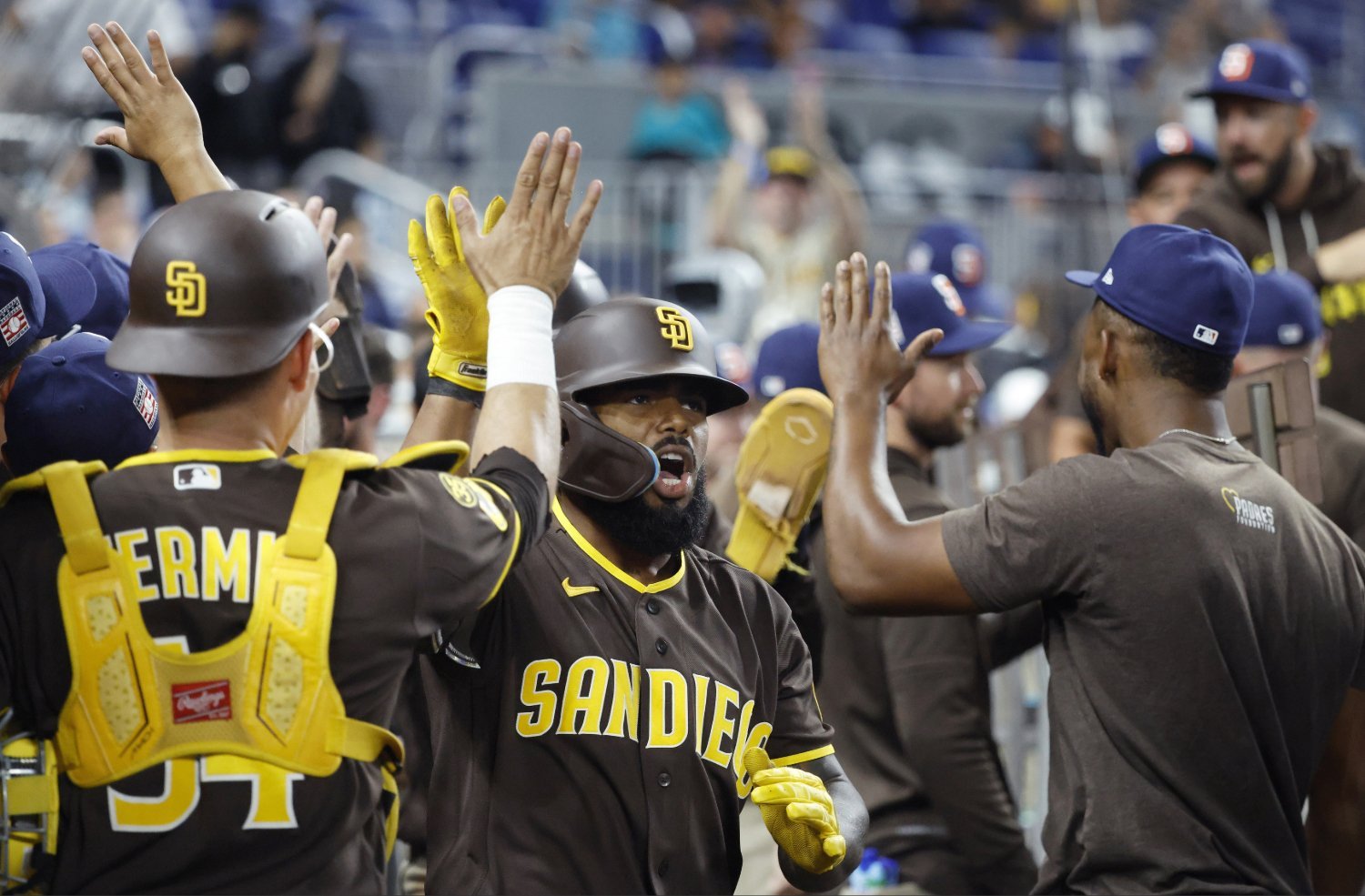 Whether they needed to be deployed due to injury or poor performance, the San Diego Padres have made heavy use of their positional depth in 2026. Of course, that's not necessarily a positive when your depth is as thin as theirs has been. And when you're cycling through said options in rapid succession, that's indicative of some questions about the personnel in place. This is a team that has, at times, sent Nick Castellanos, Will Wagner, Bryce Johnson, Samad Taylor, Sung-Mun Song, and Jase Bowen into the field in spots that weren't behind the plate. Many have been responsible for mixed (or outright bad) results, and not all of the names listed made it very long. It's forced Craig Stammen to roll with starters who were otherwise struggling through periods in which he may want to give them at least the occasional rest. Emerging from that turmoil, though, it's possible that the team finally may have the piece they need in the form of Luis Rengifo. Signed by the Milwaukee Brewers ahead of the season, Rengifo was expected to play an important role in their infield picture this season. That didn't happen. Rengifo slashed just .205/.280/.254 during his time in the National League Central. He posted a wRC+ of just 51 (second-worst, ahead of only Blake Perkins in that stretch) and was worth -0.7 fWAR. The Brewers designated him for assignment towards the end of June. Thus far, Milwaukee's loss appears to be the Padres' gain. In need of serviceable depth, especially on the infield, Rengifo has been nothing short of spectacular since his arrival. Rengifo's slash through his first 30-ish plate appearances in San Diego reads .433/.485/.667. His wRC+ sits at an absurd 221 mark. His two home runs in a Padre uniform account for the only two he's hit all year. While Rengifo is still hitting the ball on the ground a fair bit (58.3 percent), he's begun to elevate enough while mixing in opposite field contact (37.5 Oppo%) in a way that is yielding some pretty impressive results. The team's collective offense has looked much better the last few weeks, and while Rengifo's addition isn't the only reason, it's still a factor. Of course, the massive caveat within all of that is that we're still talking about a sample of 33 plate appearances. As much as we'd like to make grand statements about a player thriving after a change of scenery, that's not enough volume to speak within any realm of certainty. Nevertheless, the addition of Rengifo could remain an important one for the Padres. This is a player with a solid track record as recently as 2024, before a wrist injury ended his season prematurely. Therein, he hit .300, provided occasional power (.117 ISO), and stole 24 bases. That's the type of skill set the Friars' infield could use. If even moderately sustainable, Rengifo can hang at second base, third base, and make the occasional cameo at shortstop or in the outfield. Such a player affords more days as a designated hitter for Manny Machado and provides some flexibility with how Stammen utilizes Jake Cronenworth. As Sung-Mun Song, in particular, continues to adjust to Major League Baseball, Rengifo also has the ability to provide something of a buffer for his transition. The team doesn't have to force Song into spots that could stall his development, instead opting for more of a veteran presence off the bench. Again, the sample we're working with doesn't offer any sort of promise that Luis Rengifo's current stretch will extend into any long-term picture. But he's been a crucial piece of their offense here in July, with a skill set that helps to provide a depth component to numerous positions on the depth chart. As much as the team has struggled to make their non-guaranteed additions work throughout other areas of the roster, Rengifo looks like an early win... for now. View the full article
 -
Feinsand: Milwaukee Brewers Have Called on Mason Miller
DiamondCentric posted an article in Padres Mission
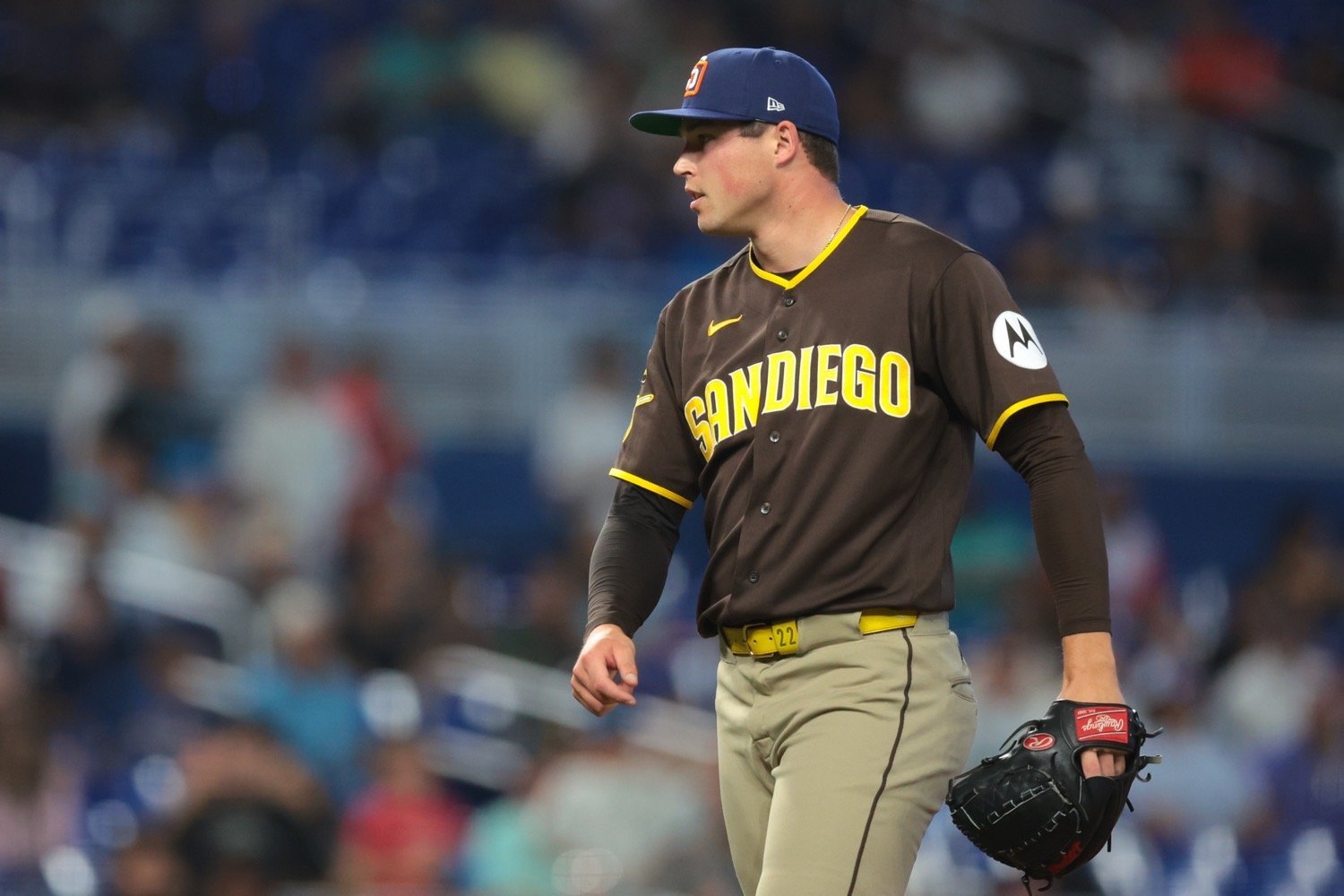 The San Diego Padres face the widest range of outcomes at the deadline, with their clearest need being controllable starting pitching for a rotation that has nothing reliable locked in beyond this season. Complicating things is a thin farm system, meaning any pitching help likely comes at the cost of trading from the big league roster rather than the minors. That reality puts their best trade chip, an elite reliever, squarely in play, since moving him could be their most realistic path to landing a controllable arm for the rotation. Mark Feinsand of MLB.com is reporting that the Milwaukee Brewers have had talks regarding San Diego Padres reliever Mason Miller. Of course, they are not the only suitor, as the New York Yankees have also been heavily tied to the elite closer. However, the Brewers may be able to offer the best prospect package for the 27-year-old's services. Let's assume Miller will be dealt. What trade partner would you like to see the Padres brass engage with to ensure the best prospect package? Join the conversation in the comments! View the full article
 -
Feinsand: Milwaukee Brewers Should Be “Aggressive” at Deadline
DiamondCentric posted an article in Brewer Fanatic
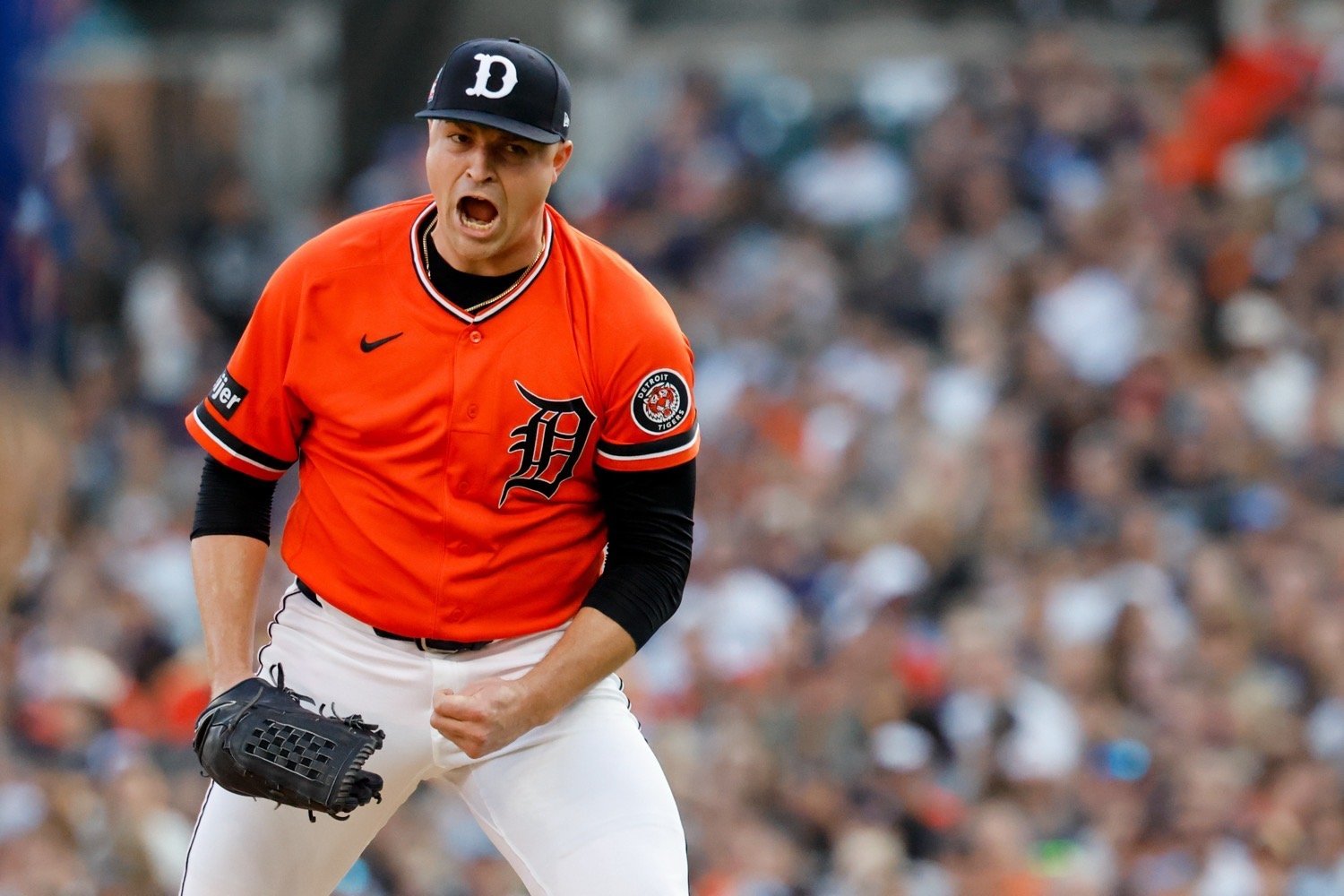 The Milwaukee Brewers, as clear favorites in the NL Central, are looking to add finishing touches rather than address any major roster hole. Their lineup lacks home run pop and struggles against left-handed pitching, so a right-handed bat with some thump would address multiple issues at once, especially if that hitter can also play on the left side of the infield. Beyond the lineup tweak, they could look to add rotation and bullpen depth to round out the roster for a postseason push. While it's not their MO, Mark Feinsand of MLB.com was quoted as saying, “Everything I have heard backs up the idea of the Brewers being aggressive.” This quote is more direct than him simply suggesting they should be aggressive and implies it's likely they will be. He goes on to mention names like Tarik Skubal and Mason Miller as guys that president of baseball operations Matt Arnold “has been working the phones and has checked in on. Skubal and Miller are at the tip top of the market and would undoubtedly fetch an incredible return of prospects, which the Brewers have plenty of. It's a tidal wave type move like adding an elite arm that would put them well within striking distance of the powerhouse Los Angeles Dodgers. Do you think the Brewers should make a big splash via trade? Join the conversation in the comments! View the full article
 -
Four Twins Teammates Will Say “I Do” on the Same Day This Offseason
DiamondCentric posted an article in Twins Daily
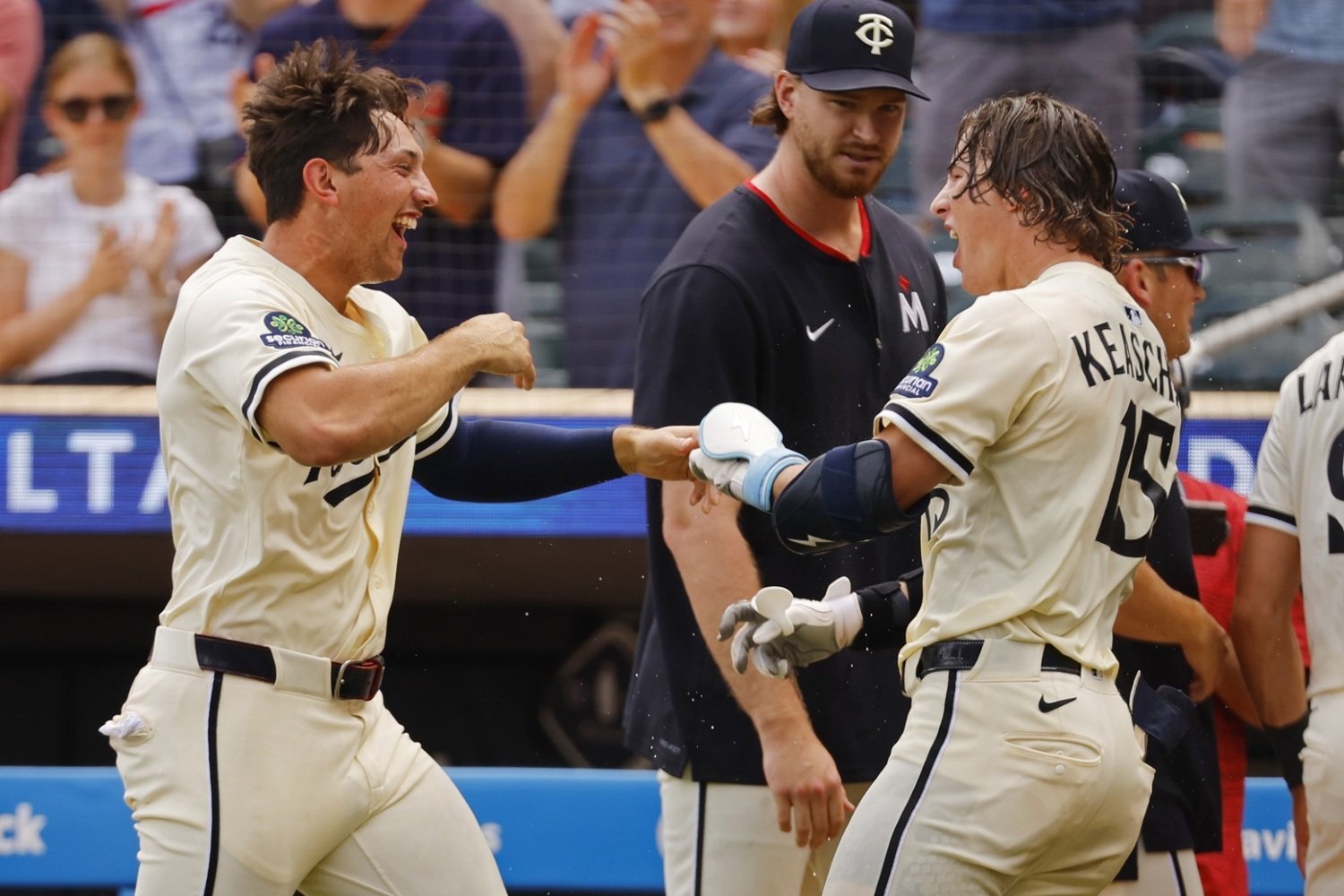 Few decisions in life are bigger than choosing who (and when) you'll marry. For four Minnesota Twins players, that milestone will arrive on the exact same day this offseason. Brooks Lee, Luke Keaschall, Ryan Kreidler and Cole Sands are all scheduled to say "I do" on Saturday, November 14, creating one of the most unusual offseason coincidences in recent baseball memory. Even more remarkable, none of them coordinated the date. The players planned their weddings independently before discovering during Spring Training that they had all landed on the same weekend. Major League Baseball highlighted the unusual coincidence in a July 22 post on X, jokingly asking, "Poor wedding planning?" The reality is much less dramatic. For baseball players, the offseason calendar leaves a relatively small window to plan major life events. Waiting until after the World Series avoids conflicts with the postseason, while pushing too deep into November starts running into the holiday season and offseason training schedules. Lee said that made mid-November the obvious choice. "You don't want to be too close to the end of October, and don't want to be too far [into November] because Thanksgiving is coming up. Seemed like everyone is going to choose that date." That explanation also made perfect sense to manager Derek Shelton, because he is a baseball lifer and his own wedding anniversary falls the following day. Shelton also won’t be attending any of the weddings, because he and his wife already have a Napa Valley trip planned. The overlapping guest lists extend beyond the clubhouse. Lee and Keaschall share the same agent, Adam Karon, creating a unique logistical challenge. Fortunately, both weddings will take place in central California, making it possible to attend portions of each celebration. "I think he's going to go to Keaschall's first and then ours," Lee said. "But they're both early in the afternoon because the sun sets so early." Kreidler's ceremony will take place in Southern California, while Sands will celebrate near his home in North Florida. Despite the scheduling conflict, none of the four players appear overly concerned. No current Twins players are expected to be in each other's wedding parties, making it easier for teammates and staff to choose whichever event best fits their travel plans. Keaschall said there was some humor in how everyone eventually realized they had picked the same date. "When you find out somebody's getting married," he said, "you ask when." Before this quartet celebrates one of the biggest days of their personal lives, Twins fans hope they'll have another reason to celebrate. If Minnesota can make a deep postseason run, the weeks leading up to November 14 could be filled with October memories instead of an early offseason. Then, after chasing a championship together, the four teammates can begin the next chapter of their lives on the very same day. View the full article
 -
Twins Trade Deadline Buying Guide: Realistic Scenarios
DiamondCentric posted an article in Twins Daily
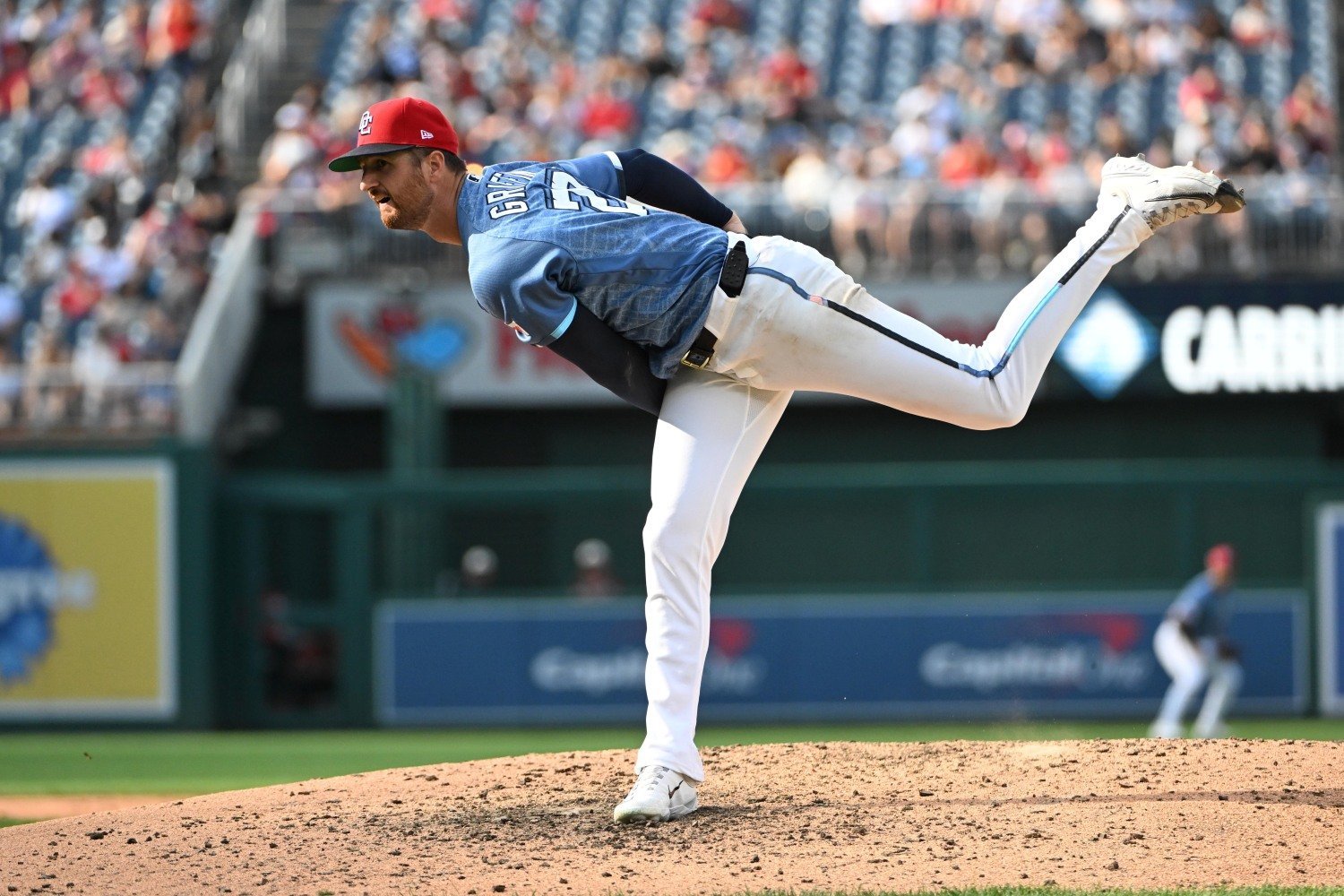 This is the second installment of a series looking at what potential trades may look like, should the Twins be buyers come August 3. The last article looked at dream scenarios, which are highly unlikely to happen for a bevy of reasons. Today’s iteration focuses on deals that are much more realistic. As I did last time, I encourage readers to focus less on the specific names and more on the ideas being conveyed by each. All proposed deals are compared to historical examples involving similar players; read more about the candidates referenced on our DiamondCentric Top Trade Candidates rankings. Trade 1: Finally, a Right-Handed Power Bat At First Twins Get: 1B Christian Walker (1.5 years of control, $20 mil AAV) and cash considerations Astros Get: C Khadim Diaw, INF Quentin Young Historical Comparison: Brewers Get: 1B Carlos Santana (expiring contract, 97 OPS+, 1.5 bWAR) Pirates Get: SS Jhonny Severino (rookie ball; toolsy mid-level prospect with power potential) There’s a non-zero chance that Christian Walker is cooked, or at the very least well on his way to being so. He got off to a torrid start, posting an OPS of .918 in March and April, with seven home runs and strong defense at first base. But since then, his OPS has dropped every month, reaching its nadir of .599 in July. He also recently exited a game against the Baltimore Orioles with right hip tightness. Yet, there’s also a non-zero chance that he would provide a significant upgrade at first base, especially on defense. Walker has provided positive value in every season he played as a regular, according to Baseball Savant’s outs above average metric, and ranks in the 77th percentile this summer. Offensively, his right-handed bat would theoretically platoon well with the likes of Kody Clemens, Victor Caratini, and Josh Bell, though it should be noted that he hasn’t crushed lefties since 2023 (.922 OPS; .756 in 2024; .698 in 2025; .760 in 2026). On the positive side, his bat speed has largely stayed stable over the last three years, dropping from an average of 75.0 MPH in 2023 and 2024 to 74.3 MPH this summer, and his 111 OPS+ is bang-on his career average. However, his chase rate (31.3%) is the highest it has been in a season in which he’s seen at least 1,000 pitches, and his slugging average (.446) has greatly outperformed his expected value (.374), suggesting a reduced pitch recognition ability and that his numbers have been inflated by luck. Carlos Santana was also well into his 30s (37, compared to Walker’s 35) when he was shipped from Pittsburgh to Milwaukee at the 2023 deadline. Like Walker, he had a relatively disappointing first half of the season (.235/.321/.412; 97 OPS+), but he turned it around with the Brewers (.249/.314/.459; 108 OPS+). He went on to sign with the Twins during the offseason and grew into a Gold Glove-caliber first baseman. As Santana was a pending free agent with middling numbers, Milwaukee only had to part with 18-year-old Jhonny Severino, who was rather raw but possessed significant power potential, not unlike Quentin Young. It’s unlikely the Twins would want to take on all of the roughly $26 million still owed to Walker over the remainder of his contract, so trading from their depth at catcher might entice Houston to eat some of his salary. Trade 2: A Fifth Starter for When the Fifth Starter Can’t Go Twins Get: LHP Foster Griffin (expiring contract, $5.5 mill AAV; 17.8% K-BB%) Nationals Get: INF Billy Amick, OF Luis Fragoza Historical Comparison: Cubs Get: RHP Mike Soroka Nationals Get: OF Christian Franklin (team top 20-30 prospect), SS Ronny Cruz (18-year-old rookie baller who turned into a top 100-150 prospect) Foster Griffin played the previous three seasons in Japan after failing to earn a consistent role with the Kansas City Royals and Toronto Blue Jays. He has been an absolute revelation for the Nationals this summer, posting a 2.76 ERA across 124 innings to date, en route to being named to the National League All-Star team. However, there is plenty of reason to be skeptical that his performance to date is legitimate. For starters, while his ERA is stellar, his xERA (3.93) and FIP paint an entirely different picture. His solid K-BB% is carried more by an elite walk rate (5.6%) than by his strikeout rate (22.6%). His cutter is a legitimately great pitch (+13 Run Value, .386 SLG, .279 wOBA) while his other six pitches are average, at best. In short, while his surface numbers propelled him to the All-Star Game, his underlying metrics suggest he’s much more of a backend starter. Even so, Griffin would provide much-needed starter depth for the Twins, who have struggled to keep their pitchers healthy at times this season. Connor Prielipp is already reaching a new career high in seasonal workload. Mike Paredes filled in admirably as the team’s spot starter and occasional fifth option, but he's now out for what could be the rest of the season. Adding Griffin would give the Twins some breathing room, should another injury beset them. Teams moving a fourth or fifth starter for a low-end prospect or two occurs multiple times at every trade deadline. For example, last year the Nationals sent former All-Star Michael Soroka to the Cubs for two low-end prospects. Soroka went on to throw only 8 ⅓ innings for Chicago, while Ronny Cruz developed into an interesting prospect in the Nationals system. Sometimes, that’s the game teams play when they trade teenagers at their rookie ball complexes. Most flame out, but some turn into good ballplayers. Trade 3: A Pulse In the Bullpen With a Chance to Stick Around Twins Get: RHP Antonio Senzatela (2027 club option, $10.1 AAV) and cash considerations Rockies Get: OF Yasser Mercedes Historical Comparison: Cubs Get: LHP Taylor Rogers (2.45 ERA, 4.17 FIP, 10.3 K-BB%) Pirates Get: OF Ivan Brethowr (low-level prospect) Antonio Senzatela is in the midst of the best season of his 10-year career, largely thanks to a move to the bullpen and a new reliance on his cutter. His cutter usage has jumped from 42 total pitches in 2025 to 233 in 2026, his second-most used pitch behind his no-good, very-bad four-seamer (it averages slightly north of 97 MPH, but it's the epitome of a “dead zone” fastball—at least in Colorado). It’s helped him produce a 3.53 ERA and 3.48 FIP, which would play very well in the Twins’ bullpen. His K-BB% is a meager 13.7%—though that is the best mark of his career—and his HR/FB ratio is a likely unsustainably low 5.5%, ranking 31st out of 175 qualified relievers. He’s a classic example of a viable big-league bullpen arm who is probably outperforming his true talent and could be had for a reasonable price at the deadline. Throw a stone, and you’ll hit a trade that compares to this one. Take the example above, in which an outperforming Taylor Rogers was swapped for a minor prospect 1.5 years from Rule 5 eligibility. These are the types of moves that teams who are looking for a cheap, high-ceiling, low-floor bullpen addition make all the time. The benefit for the Twins is that they’d have a few months to see if Senzatela would be worth picking up next year's club option. If not, it would be little skin off their back. View the full article
 -
Heyman: New York Mets "very reluctant" to trade Luis Torrens
DiamondCentric posted an article in Grand Central Mets
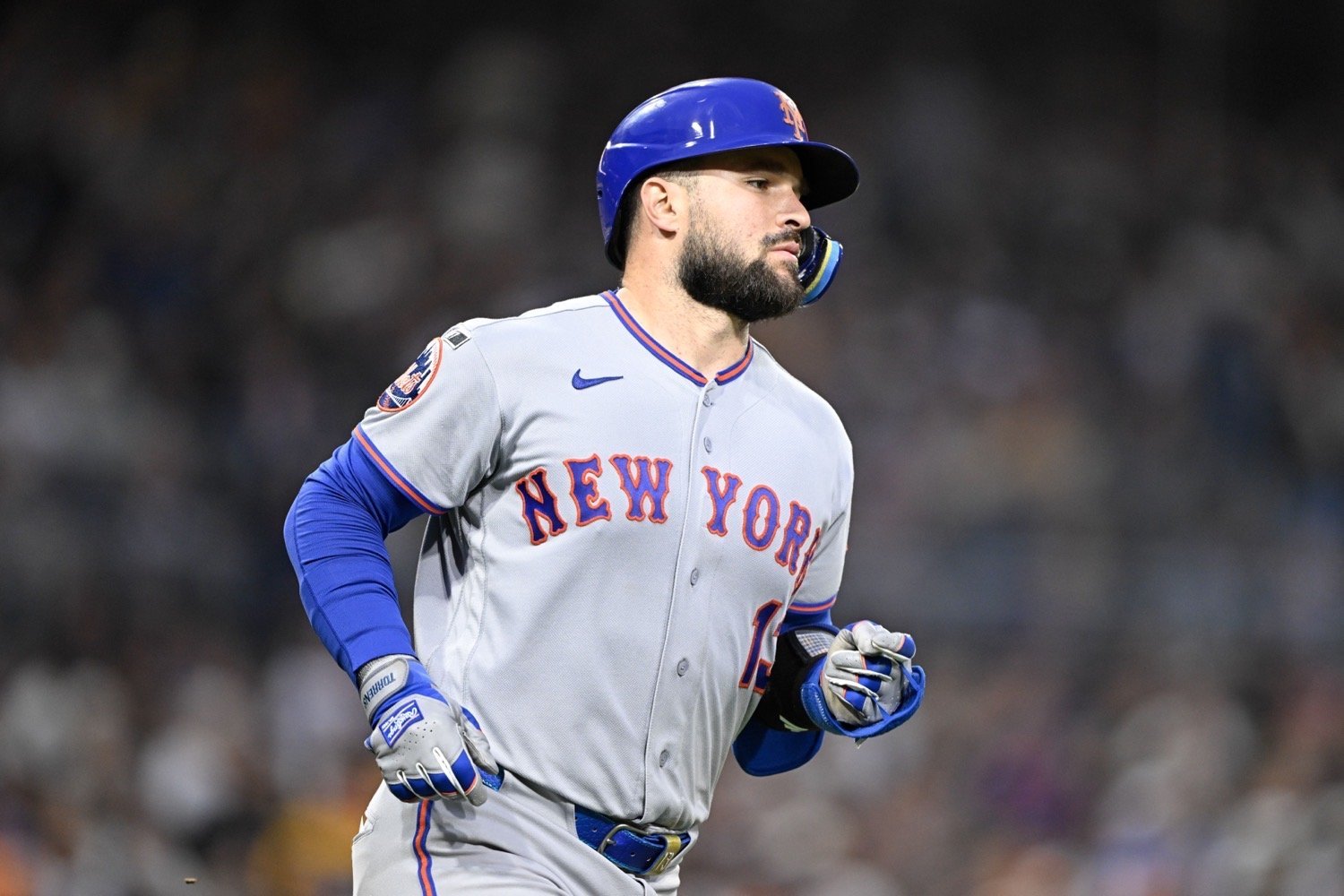 The New York Mets enter the deadline firmly in sell mode, looking to move impending free agents rather than address any real on-field need. Their pitching staff, particularly a front-of-rotation arm, headlines what they have to offer, though the return may be limited by underwhelming performance down the stretch. Beyond that rental market, the Mets don’t have much high-end young talent to dangle, since their trade chips mostly come down to underperforming veterans or prospects who’ve taken a step back. Buyers, such as the Boston Red Sox and New York Yankees, are reportedly interested in improving their catching corps, and Luis Torrens may be of interest to those teams. However, the Mets are reportedly not expected to move one of the best defensive backstops in the game. Jon Heyman of the NY Post is reporting that the New York Mets are "very reluctant" to trade the 30-year-old Torrens. While his defensive chops are well noted around the game, his production at the plate leaves something to be desired. Through 197 plate appearances, he is carrying a 74 wRC+ with just two home runs. Do you agree with the Mets for holding onto Torrens despite his poor production at the plate? Join the conversation in the comments! View the full article
 -
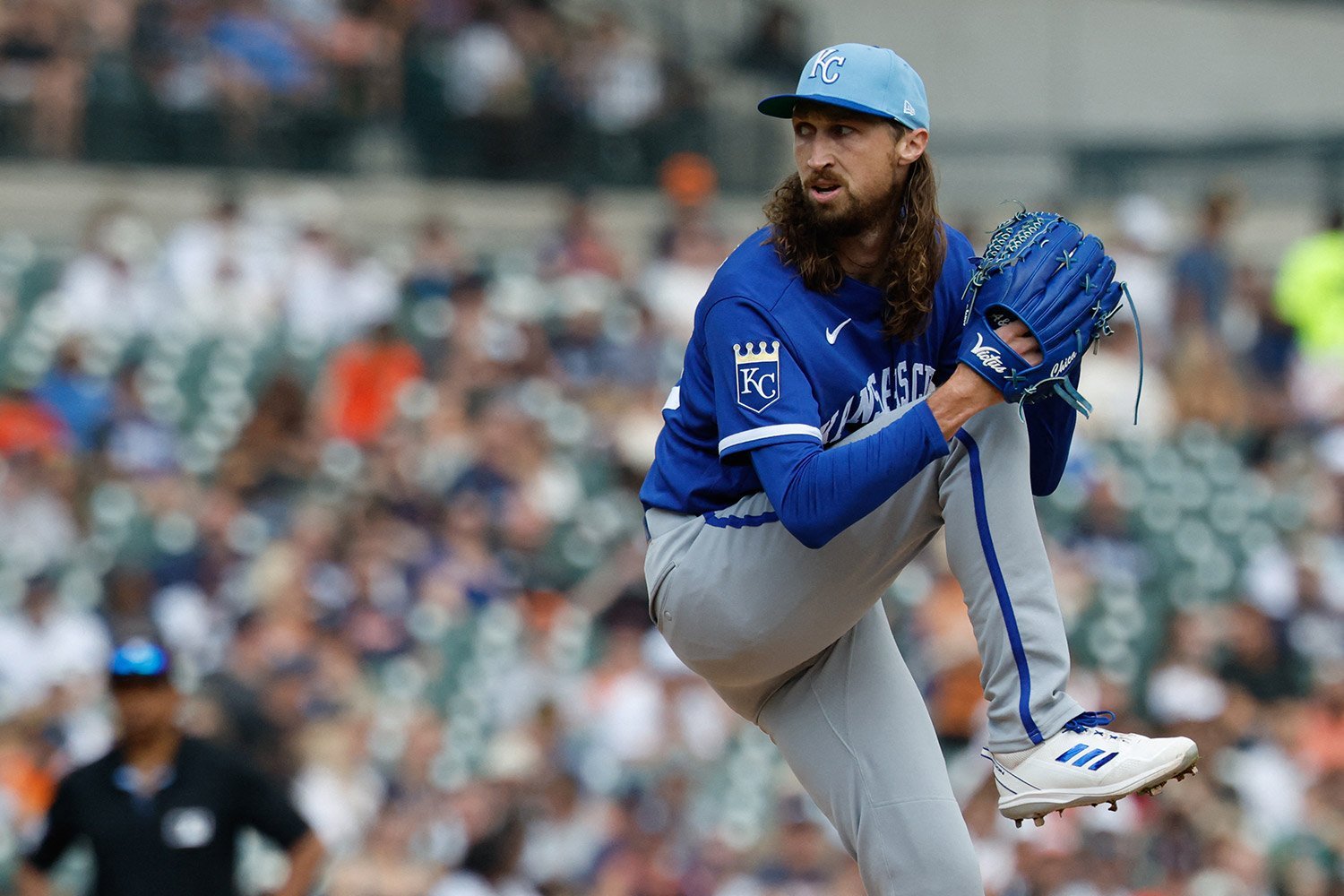 Matt Strahm has not had the best season so far, but neither has most of the Royals bullpen. Strahm reunited with the Royals in a trade with the Phillies this off-season. In 33 innings this season, Strahm has a 7.09 ERA with a 6.77 FIP and -1.0 fWAR. His expected metrics, however, trend a little bit better with a 3.83 expected ERA and a 5.73 expected FIP. His strikeout rate has drastically decreased to 18.4% compared to 27.3% in 2025. Strahm has also increased his walk, hard-hit, and barrel rates this season while losing speed in his fastball velocity. Even though his season has been one to forget, left-handed pitchers with experience in high-leverage positions are always in demand. Maybe a change of scenery can be the difference to turn his season around. Only one year removed from a sub-3 ERA season, Strahm still has the potential to provide value to a contender. With Strahm also set to become a free agent at the end of the season, he could be a cheaper potential acquisition. Why the Diamondbacks would want to trade for Strahm The Diamondbacks have the fewest innings by left-handed relievers in the majors. Arizona has called upon lefties for only 35 innings this season, 10 fewer innings than the next-fewest team, the Colorado Rockies. Bradyn Garcia is the only left-handed reliever on the active roster right now. Garcia has been decent this season with 0.8 fWAR and a 1.75 ERA, but Strahm could provide the Diamondbacks with additional flexibility in situations where left-handed pitching is needed. The Diamondbacks are also on the fringe of Wild Card contention, so if they are not yet willing to “sell the farm” to go all-in this season, Strahm could represent a low-cost, veteran option to hopefully bolster their bullpen depth. Why the Nationals would want to trade for Strahm The Nationals have struggled with their left-handed relievers in 2026. Lefties out of the bullpen have combined for -1.2 fWAR this season across 136 innings. Andrew Alvarez is the only reliever with at least 10 innings pitched in relief with a positive fWAR. Cionel Pérez, PJ Poulin, Richard Lovelady, and Mitchell Parker all have pitched at least 10 innings in Washington but have all produced at below replacement level, and none of them are currently on the active roster. The Nationals could use another lefty in the bullpen to combine with Alvarez. Strahm could be an experienced option to boost the bullpen in a new environment. The Nationals have the highest ERA and xERA from left-handed relievers in the majors at 5.02 and 5.74, respectively. Even though the results have been poor, Strahm’s xERA would at least provide an improvement for Washington's underlying metrics. The Nationals are not currently in a playoff spot but could be looking to make improvements to increase their playoff odds. They just made a statement trade by trading breakout third baseman Curtis Mead to the Red Sox for Connelly Early, which boosts their rotation. That trade was a clear statement of intent from the Nationals, and adding Strahm would add more veteran depth to their bullpen to help push the team to October. Why the Cubs would want to trade for Strahm The Cubs, much like the Nationals, have a low xERA from left-handed relievers at 4.64, the second lowest in the majors. Their combined ERAs are much better at 3.59, but that difference could hint at some late-season regression. The bulk of the innings have come from Hoby Milner, Ryan Rolison, and Caleb Thielbar, and only Rolison has a positive fWAR. Milner is currently on the IL, which would allow space for Strahm to fill in. Unlike Washington or Arizona, the Cubs are firmly in a playoff spot and are much more likely to be aggressive buyers. Strahm is unlikely to drastically improve the Cubs' championship odds, but he could be a complementary piece to round out the roster as they prepare for the playoffs. What do you think? Where would you like to see Matt Strahm land before the trade deadline on August 3? View the full article
 -
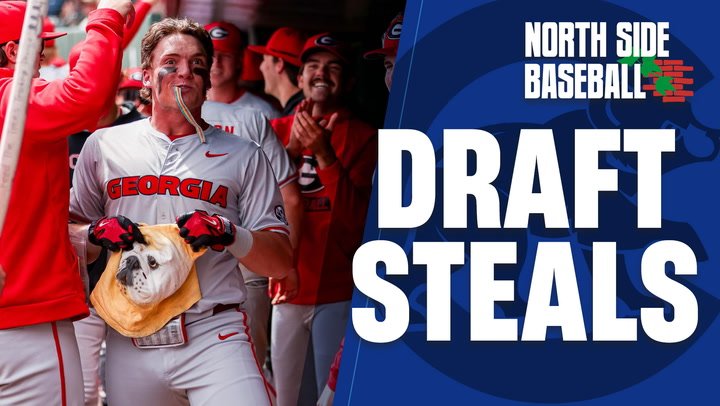 The Chicago Cubs didn't just acquire a front-end power bat in Myles Bailey. They got some serious value in the later phases of the 2026 MLB Draft. In this video, we'll dive into the potential of Isaac Morton, Luke Alwood, and Brennan Hudson and where they will fit into the team's dynamic in the future. View the full article
 -
 The Twins Off-Daily Podcast crew dives into some audience mock trade submissions and gives their thoughts. They throw out a few prime trade targets of their own and imagine what the post-trade deadline Twins team could look like as they make a push for the postseason. Listen using Apple Podcasts: https://podcasts.apple.com/us/podcast/the-twins-off-daily-podcast/id1741266056 Listen using Spotify: https://open.spotify.com/show/4tb78XlurcPTYYSsARdbD7 Listen using iHeartRadio: https://www.iheart.com/podcast/263-the-twins-off-daily-podcas-167548600/ Listen using Pocket Casts: https://pca.st/nvclbt0w Watch on YouTube: https://www.youtube.com/@twinsdaily View the full article
 -
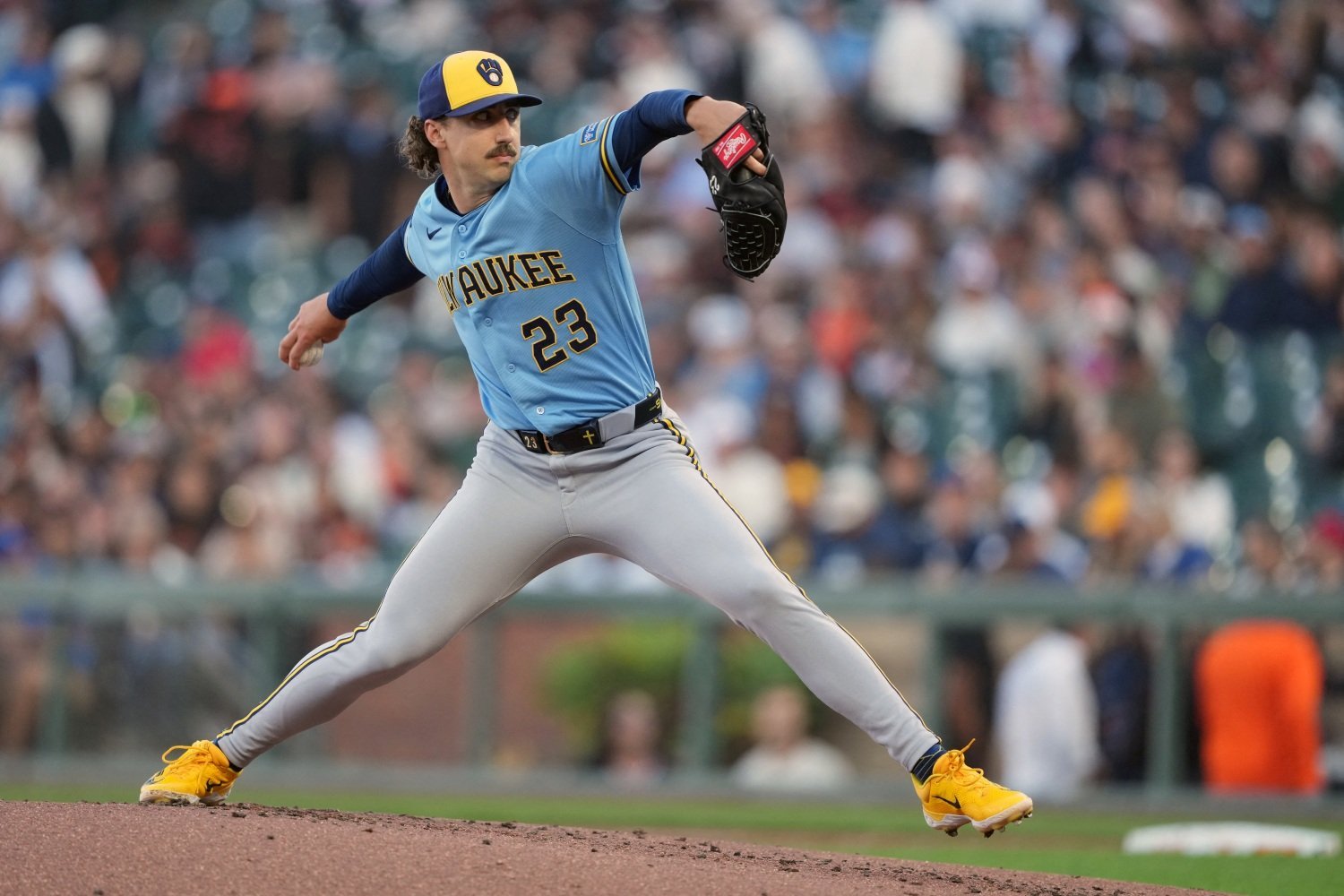 Things just keep finding a way to go wrong for Brandon Sproat. It's not always the same way, but there's always a way. Sproat made it through (technically) a quality start Monday night in San Francisco, surrendering three runs in six innings. It was just the fourth time this year that he's gotten at least 18 outs in a game, and it was one of his five or six best starts of the season. Even then, though, he only struck out five, and he walked three, and the Brewers lost 3-0. It's all becoming familiar. Sproat consistently downplays any hum of adrenaline fueling his starts, but in every outing, he comes out running hot and then sees his velocity drop significantly. On Monday night, he averaged 97.0 MPH with his four-seam fastball in the first inning, but by the fifth (94.2) and sixth (94.4), the heat was cooling off. For the year, Sproat's average heater in the first inning is 97.6 MPH, good for the 94th percentile among starters. In the fifth, it's 95.3, which dips out of the top quartile of the league. More importantly (and perhaps relatedly), Sproat too often finds himself working extremely hard early in starts, because he doesn't induce chases outside the zone much at all and doesn't miss enough bats when hitters do swing. In fact, here are the only four pitchers with at least 80th-percentile fastball velocity but an average or worse whiff rate and a chase rate in or below the 20th percentile. Despite throwing hard and having a sweeper, a curveball and a slider that all rate as above-average based on their raw characteristics, Sproat simply isn't forcing bad swing decisions or piling up whiffs. The other three guys who have this problem, by no coincidence, are all relievers. In the long run, Sproat still has a chance to help the Brewers as a starter. This season feels a bit like Corbin Burnes's 2019: a lot of teases, a lot of glimpses at huge potential, but lousy production. The team has a good chance to successfully develop him as a starter next season and beyond. For now, though, this confluence of weaknesses—the tendency to run out of steam after hot starts; an inability to get batters to expand the zone; and underperformance in terms of swing-and-miss—cries out for a change. Sproat needs to move to the bullpen down the stretch. That underscores the importance of the Brewers' quest to add a starting pitcher before next week's MLB trade deadline. They need the depth, anyway, but Sproat makes it clearer how badly they need it each time he takes the mound. Even assuming Kyle Harrison returns rapidly and without issue, the rotation could use another mid-tier arm behind him and Jacob Misiorowski. Logan Henderson, Shane Drohan and Robert Gasser are fine back-end options, and the Brewers have several relievers and Triple-A options who can give them length. Sproat should move into short relief and streamline his arsenal for the rest of this year. The front office, meanwhile, should add a starter who fits in front of the likes of Henderson and Drohan in the pecking order, making it easier to move Sproat out without worrying about a sudden lack of readiness to cover the requisite innings. View the full article
 -
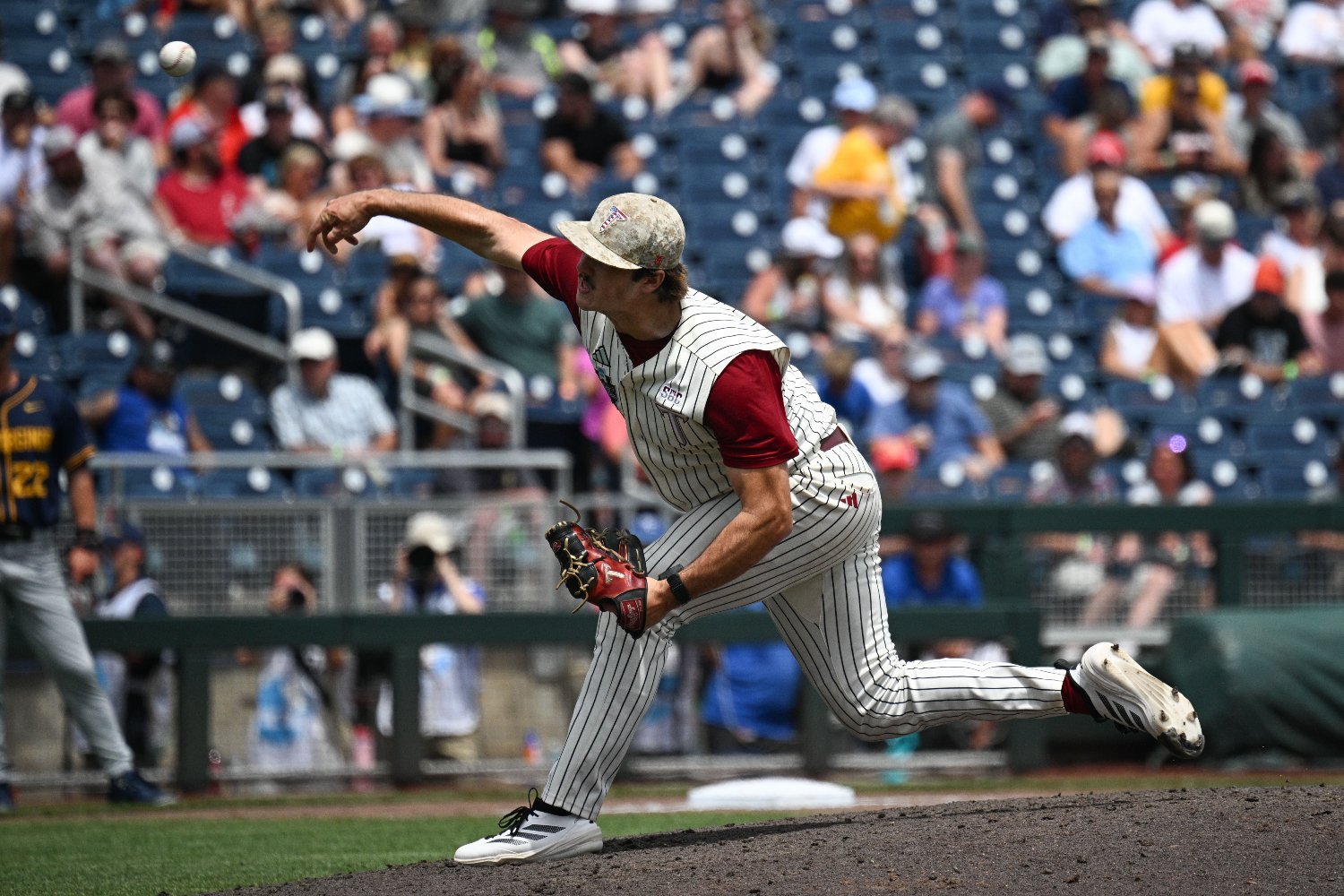
Five Sleepers to Watch From the Royals' 2026 MLB Draft Class
DiamondCentric posted an article in Royals Keep
 The MLB Draft signing deadline passed on Monday with the Royals signing 19 of their 20 Draft selections. They also signed three undrafted free agents, giving them a total of 22 players from this draft-eligible class. The only selection that was not signed was right-handed pitcher Hudson DeVaughan, a prep prospect out of Mooresville High School in Indiana. DeVaughan committed to the University of Alabama, and it seemed like the Royals weren't able to convince DeVaughan to opt out and go professional instead. In the era of NIL, it's getting tougher for teams to sign players like DeVaughan in the Draft. The Cleveland Guardians were unable to sign their second-round pick, Logan Schmidt, a left-handed pitcher who is committed to LSU. Schmidt is debating going to LSU (and making some serious NIL money) or going to JuCo and being eligible for the 2027 MLB Draft. Even though the Royals weren't able to sign all 20 draft picks, they produced an intriguing class with a nice mix of safe, college picks and prep upside. The Royals are already seeing dividends from their 2024 and 2025 Draft classes under Scouting Director Brian Bridges, as High-A and Low-A are the two best-performing clubs in the Royals organization (the Complex League team has also had a strong season). In this post, I am going to highlight five players from this Royals Draft class who could be sleepers and whom fans should pay attention to, especially if they matriculate to Low-A or Complex League ball in 2026. Dominic Battista, OF, Oswego East High School (IL), 4th Round Pick Battista isn't necessarily a sleeper, as he got an overslot deal of $800,000 in the Draft (the slot value was $651, 500). However, while much was made on the first day about first-round selection Zion Rose, I think Battista could be a high-ceiling selection who could surprise in this system. The Illinois prep product isn't an imposing athlete, but he's young (still 18), and he's got a frame that he could grow into effectively. Scouts raved about his defensive ability and his surprising batted-ball and exit velocity metrics on the showcase circuit, making him a bit of a darling of both the Royals' scouts and analytics team. Prospect Porch made note of his exit velocities at the Super 60 and also highlighted his strong arm strength in the outfield. data:image/gif;base64,R0lGODlhAQABAPABAP///wAAACH5BAEKAAAALAAAAAABAAEAAAICRAEAOw== Some scouts believe Battista could stick in center field. Even if he can't, he could be a nice outfielder to pair with Sean Gamble, who's taking the Carolina League by storm after a slow start in Columbia. data:image/gif;base64,R0lGODlhAQABAPABAP///wAAACH5BAEKAAAALAAAAAABAAEAAAICRAEAOw== With any prep prospect, there's a level of risk, especially compared to players right out of college. However, the Royals have demonstrated success developing prep bats from last year's Draft, with Gamble and Josh Hammond being prime examples. It's easy to see the Illinois prep outfielder find similar success, especially with tools that may be more mature than casual fans may think. The exit velocity numbers make me think there's 15-20+ HR upside, maybe more depending on how he fills out his frame as he ages. Battista may not see any professional at-bats for the remainder of the year, as the Royals have been slow to move prep prospect initially (Hammond and Gamble didn't debut in professional ball until 2026). However, I expect him to play in the Instructional League and maybe make a push for the Complex League or Low-A ball, depending on how Spring Training goes for him. Hunter Possehl, LHP, Florida Gulf Coast University, 8th Round Pick Possehl came from FGCU, which produced All-Star lefty Chris Sale. At 6-7, the Royals' 8th-round selection has gotten some comparisons to Sale due to his height and funky delivery. I think that's a bit optimistic, but there is some upside with Possehl that could make him a nice sleeper pick for the Royals. After a mediocre first season at FGCU in 2025 (7.32 ERA in 19.1 IP), Possehl stepped up in his second season. He posted a 3.21 ERA in 67.1 IP and improved his K/BB ratio from 1.69 in 2025 to 2.50 in 2026. He struck out fewer batters per nine innings in 2026, going from a 10.1 K/9 in 2025 to an 8.7 K/9 last year. That said, his BB/9 fell dramatically, going from a 5.9 mark in 2025 to a 3.5 mark in 2026. In addition to showing better control, Possehl has a slider that generated a near 60% whiff rate last season. data:image/gif;base64,R0lGODlhAQABAPABAP///wAAACH5BAEKAAAALAAAAAABAAEAAAICRAEAOw== I think there's some room to grow for Possehl, especially if the Royals pitching development team can clean up his delivery a little bit and help him add strength (which will help increase velocity). The arm slot is tough for opposing hitters, and the breaking stuff is polished enough to generate consistent swing-and-miss. He also seems to have strong makeup, and being a Spanish minor at FGCU shows that he is adaptable and quick to learn. data:image/gif;base64,R0lGODlhAQABAPABAP///wAAACH5BAEKAAAALAAAAAABAAEAAAICRAEAOw== At the very least, Possehl is an Evan Sisk-like reliever who can move quickly if he stays in the bullpen. However, I think the Royals will give him a shot to prove himself in the rotation, albeit in Low-A Columbia next year. Tanner Griffith, OF, St. Mary's College, 11th Round Pick The Royals had a lot of success with outfielders who aren't imposing or don't have eye-popping tools, but do nothing but perform at the college level. Last year, it was UIC's Luke Pelzer and Creighton's Nolan Sailors, who have absolutely mashed in High-A Quad Cities despite being later selections in the MLB Draft (Sailors was drafted in the 4th round; Pelzer was selected in the 17th round). Griffith may be that type of guy for the Royals from this year's draft class. An 11th-round pick out of SMC of the WCC, Griffith mashed in Moraga, hitting .342 with a 1.022 OPS in 303 plate appearances. He had five home runs, scored 61 runs, collected 45 RBI, and stole 18 bases on 19 attempts. The 21-year-old outfielder also had 45 walks to 38 strikeouts. That kind of approach and batted-ball ability will play, especially in the lower Minors. data:image/gif;base64,R0lGODlhAQABAPABAP///wAAACH5BAEKAAAALAAAAAABAAEAAAICRAEAOw== Griffith had a TCU commitment, so it's possible that he could've gone even higher in the Draft in 2027 with a move to the Big 12. In addition to a strong final season at SMC, the Gaels outfielder also did well in the WCL summer league for the Portland Pickles before the 2026 season. In 83 plate appearances, he hit .300 with an .826 OPS and had 8 stolen bases on 9 attempts. He was a key member of a team that was very successful in the WCL. data:image/gif;base64,R0lGODlhAQABAPABAP///wAAACH5BAEKAAAALAAAAAABAAEAAAICRAEAOw== It's easy to sleep on guys like Griffith, especially since he's not imposing (he's 5'9) and not coming from a Power 5 college. However, all the tools are there for Griffith to be successful and move quickly in the Royals system in 2027, much like Pelzer this year, who has moved to Double-A after a successful stint in High-A Quad Cities. Dylan Alonso, RHP, Troy University, 16th Round Pick It's easy to dismiss a pick like Alonso when one looks at his surface-level metrics. After all, he posted a 5.11 ERA, 1.38 WHIP, and 1.88 K/BB ratio in 49.1 IP with Troy last season. However, a deeper dive into his profile makes him more intriguing and a late-round sleeper who could find success next year. While the walks were high, Alonso struck out 10.9 batters per nine innings and had 60 total strikeouts. The 22-year-old also showed a penchant for pitching well in big games for a team that made the College World Series. A prime example of that was his 2.1 IP, 4 K performance against a ranked University of Alabama team back in May. data:image/gif;base64,R0lGODlhAQABAPABAP///wAAACH5BAEKAAAALAAAAAABAAEAAAICRAEAOw== Another positive aspect of Alonso's profile is that he thrived in the MLB Draft League in his short sample after finishing his career with Troy. With Williamsport, he posted a 1.13 ERA, 1.38 WHIP, an 11.3 K/9, and a 3.33 K/BB ratio in three appearances and eight innings of work. That strong performance helped him get drafted in the 16th round by the Royals. data:image/gif;base64,R0lGODlhAQABAPABAP///wAAACH5BAEKAAAALAAAAAABAAEAAAICRAEAOw== Another success story in the MLB Draft League? Former Louisiana-Lafayette pitcher L.P. Langevin, who's emerged as the best reliever in High-A Quad Cities. Alonso doesn't have the pure stuff of Langevin, but he still can pump up to 96 MPH on his fastball, has a nasty breaker, and he comes from the same background and conference as the River Bandits reliever. Don't be surprised to see Alonso turn some heads in the Royals system next year, with stints in Low-A Columbia and High-A Quad Cities possible. Ben North, SS/3B, Creighton University, Undrafted Free Agent Usually, undrafted free agents are pure dart throws (Noah Barber from Kansas being a prime example). That said, the Royals may have gotten a nice sleeper in infielder North, who comes from a pretty strong Big East program that's produced some intriguing players in the Royals organization (Sailors, Nicky Lopez, and Isaac Collins, for example). North is an older player, as he was 23 years old in his final season in Omaha. However, as a senior, he hit .319 with a .997 OPS in 265 plate appearances. The former Blue Jay also hit 11 home runs, scored 51 runs, collected 44 RBI, and stole 26 bases on 29 attempts. He also had a big walk-off home run in May against a Kansas team that made it to the Super Regionals (losing to eventual National Champion Oklahoma). data:image/gif;base64,R0lGODlhAQABAPABAP///wAAACH5BAEKAAAALAAAAAABAAEAAAICRAEAOw== He's not a tremendous athlete, but he's a gamer who got better every year at Creighton. After posting a .571 OPS in 2023, he sported an .826 OPS in 2024 and .846 OPS in 2025 before hitting his .997 mark last year. He also increased the walks, going from 19 and 28 in 2024 and 2025 to 35 in 2026 (despite having 13 fewer plate appearances in 2026 compared to 2025). Even in 2025, North showed some intriguing power in big spots, as evidenced by this home run below against Arkansas in the NCAA Tournament. data:image/gif;base64,R0lGODlhAQABAPABAP///wAAACH5BAEKAAAALAAAAAABAAEAAAICRAEAOw== While he didn't get selected, it's plausible to see North move quickly and make an impact immediately this year in the Complex League, perhaps the Carolina League if he can mash quickly in Arizona. Some undrafted guys simply go through the cracks for a variety of reasons. Brett Squires is an example of an undrafted free agent who's knocking on the door in Omaha with the Storm Chasers. Perhaps North can be the next Squires-esque success story. View the full article
 -
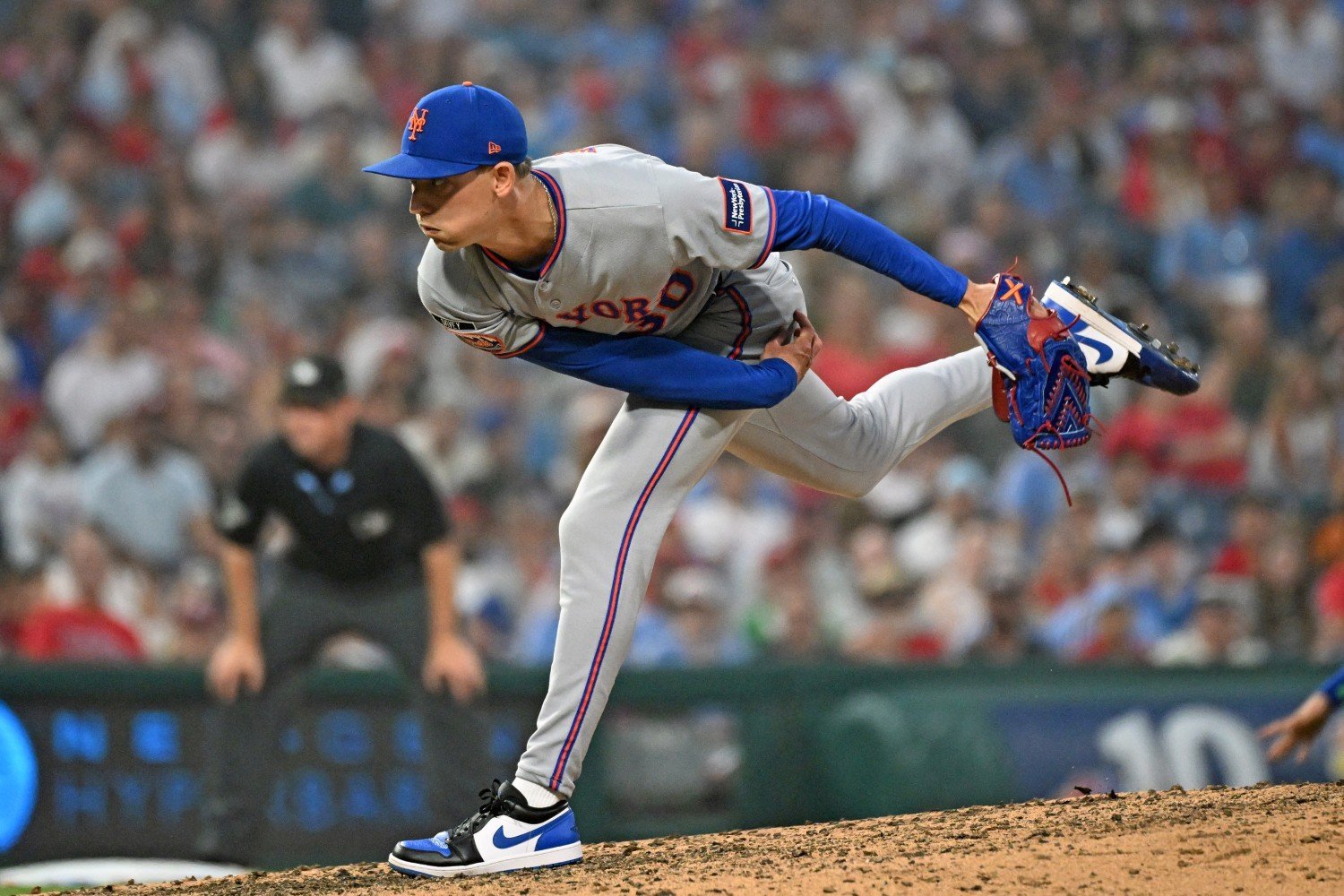 As the New York Mets continue to linger at the bottom of the NL East standings, there's no question about their trade deadline approach. They're going to sell, and one can imagine them doing so pretty aggressively. With a few notable impending free agents and a desire to reconstruct the roster in a way that doesn't yield the same level of disaster in 2027, they're a logical partner for the Chicago Cubs and their multiple needs—even after the Cubs already snapped up one Mets arm, last month. That the Cubs are in need of arms isn't the only reason that the Mets make a sensible link-up. It's also the fact that their current context makes them the rare team that could offer multiple major-league players within the framework of the same deal. That kind of opportunity can't be overlooked at this time of year, given the Cubs' multiple needs: a starter (or two) and a reliever (or two). While hypothetical trades between the two sides will focus on that side, it's also not all the Mets have to offer. Sensible additions on the positional side could also prove a fit for the Cubs' more limited needs in the field. Finding a package deal that makes sense isn't about merely putting two names together. Instead, it would be about putting positions or roles alongside each other in a way that spares the Cubs the need to make another significant trade, too. From the Mets' perspective, meanwhile, it would be a way to access a higher tier of Cubs prospect than they could get for any one of their players. It's unlikely that we'll see the Cubs go all-in. It's not in Jed Hoyer's nature to do so. An impact deal isn't out of the question, of course, but if he were to pursue this multi-player route, it's unlikely he'd be in on an upper-tier starter and an upper-tier reliever. You'd probably see him try to do one or the other, while settling for a lower caliber of player in the other role. That's another important caveat within all of this. Let's take a look at the categories of combo deal on which the Cubs and Mets could get together. Starter/Reliever Interest in a starter of any kind is going to focus on Freddy Peralta. While mired in a down year since his arrival in Queens, he's one of the higher-upside rentals on the starting pitching market and has a productive, happy history with Craig Counsell. He still presents plenty of appeal to the Cubs. Should Peralta be the name to headline a deal, you're probably looking more at the A.J. Minter, Huascar Brazobán or Brooks Raley end of the pool than someone like Luke Weaver (considering the latter's excellent season and additional year under contract) or Devin Williams. Should the Cubs go in the direction of Clay Holmes, rather than Peralta, Weaver becomes more possible. While it's not as if Holmes would be cheap (he's performed well and has another year on his contract), his cost could be enough lower than Peralta's to make it feasible to go after a solid starter (who is, notably, in the final stages of his recover from a fractured fibula) and the better of the Mets' potentially available relievers. Williams, on the other hand, feels more cost-prohibitive, considering his $15-million-a-year salary through 2028. Overall, this feels like the most likely pathway for the Cubs if they were able to pull off a multi-player trade with New York. Their needs on the mound far exceed the other phase of their roster, and the ability to solidify multiple parts of the pitching spectrum has to be appealing for Jed Hoyer and company. Starter/Position Player There isn't a wealth of position players the Mets would part with in whom the Cubs would actually have interest. They don't have a need for the likes of Francisco Lindor or Bo Bichette. Nor do they have the logistical or payroll space to accommodate either one, should the Mets actually seek a trade of either one of their biggest names. (Bichette could fit for them as a DH and backup infielder, but it's unrealistic to think the Mets would eat enough money or put a low enough price tag on him to justify that gamble.) It's also unlikely that a player they're more likely to trade, in Luis Robert Jr., would be on the Cubs' radar. A right-handed bat? Sure. A right-handed bat with a recent history of injury and uneven performance, and whose defensive value has trended sharply downward? Less likely, even with the Cubs' uncertainty on the corners of the grass beyond 2026. Robert comes with a club option for 2027, but it's not one the team would be eager to pick up. There is at least one name that could be interesting in this respect: Tyrone Taylor. His numbers don't read as especially impressive; his line is .237/.281/.481. Where that slug comes from, though, is noteworthy. Taylor is a lefty masher, with a line that ascends to .282/.303/.569 against southpaws. His wRC+ against left-handed pitching is 137, against an 82 versus the other handedness. If the Cubs are going to pursue a bat at the deadline, he fits the profile as a flexible outfielder and right-handed hitter. His acquisition cost wouldn't be difficult to package with any available starter, either. He'd be a clear upgrade over current fifth outfielder Justin Dean. Reliever/Position Player This is perhaps the most tepid of the possibilities involving the Mets; it wouldn't solve the Cubs' biggest issues within their rotation. What they can do here, however, is address a pair of needs without plumbing the depths of their own farm system. While there would be a legitimate cost for someone performing at Weaver's level, it wouldn't be the same conversation as for one of the starters. And it would only decrease from there. The Cubs can address their need for relief pitching and pick up a desired profile of a bench bat in the form of Taylor, while still leaving plenty of room for a starter addition elsewhere. It may not be the most efficient means of action among their potential routes here, but it would stabilize the roster, nonetheless. View the full article
 -
If Yankees Want Ryan Jeffers, Twins Should Target These Prospects
DiamondCentric posted an article in Twins Daily
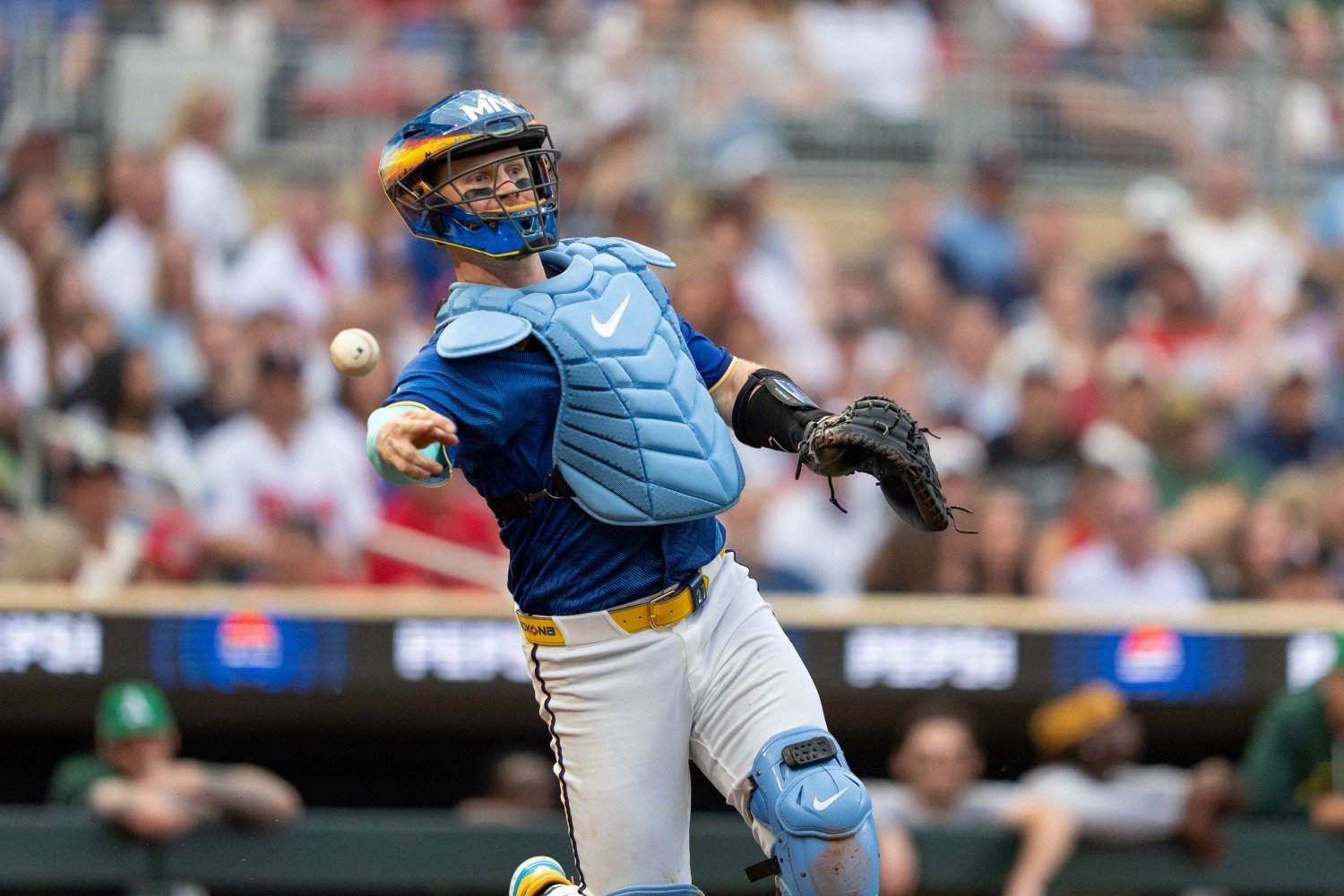 The trade market for Ryan Jeffers continues to gain momentum. According to USA Today's Bob Nightengale (so, take it with a grain of salt, but still), rival executives now believe the Minnesota Twins are likely to trade Jeffers before the deadline, with the New York Yankees viewed as the leading destination. That report makes plenty of sense, given where both organizations currently stand. The Twins have difficult decisions looming as they weigh buying versus selling, while the Yankees have one of the biggest holes of any contender behind the plate. Jeffers is enjoying the best season of his career, slashing .283/.390/.532 with nine home runs and a .922 OPS. He's been one of baseball's most productive offensive catchers, and after Shea Langeliers suffered a meniscus tear that could sideline him for the remainder of the season, Jeffers has arguably become the premier catcher available on the trade market. That doesn't necessarily mean the Twins are about to land one of baseball's elite prospects, even if they do trade him. Jeffers is scheduled to become a free agent after the season, meaning any acquiring club would only receive roughly two months of regular-season production and a potential postseason run before he reaches the open market. Rental players rarely command elite prospect packages, regardless of how productive they have been. Instead, Minnesota's return is more likely to center around a fringe top-100 prospect or a young major leaguer with several years of club control, paired with one or two spare parts. That's where the Yankees become particularly interesting. According to MLB Pipeline, New York owns the fifth-weakest farm system in baseball. While the overall depth is lacking, there are still several intriguing pitchers who could make plenty of sense for Minnesota. If the Yankees ultimately become Jeffers's landing spot, these are some of the names the Twins should target. Will Warren, RHP Will Warren may no longer qualify as a prospect, but he should be one of the very first players Minnesota asks about. The 27-year-old has already established himself in the major leagues after debuting in 2024. The results have been inconsistent, as Warren owns a 4.75 ERA across 284 major league innings, but there is still plenty of upside to work with. His fastball has consistently overpowered hitters, limiting opponents to a .225 batting average against the pitch in each of the past two seasons. The raw stuff is evident, but command inconsistencies and the long ball have prevented everything from coming together. That's been especially apparent recently, with Warren allowing five or more earned runs in three of his last six starts, including a six-run outing against the Phillies on Sunday. Warren has a 6.57 ERA over his last eight starts. He was 7-1 with a 3.22 ERA in his first 12 starts of the season. Despite the uneven results, Warren still carries significant value. He remains pre-arbitration, has four years of club control remaining after this season, and has proven to be one of baseball's most durable starters. He led the league with 33 starts last season and has already made 20 starts this year. The Yankees also have a crowded rotation with Carlos Rodón expected to return from the injured list, making Warren a player they could consider moving for immediate help behind the plate. For the Twins, Warren represents exactly the type of pitcher their player development staff has had success refining. Whether he develops into a reliable mid-rotation starter or eventually shifts into a dominant late-inning reliever, his combination of velocity, durability, and years of control would make him an excellent centerpiece in a Ryan Jeffers trade. Carlos Lagrange, RHP Carlos Lagrange is the highest-upside pitching prospects in the Yankees organization. The 23-year-old is the No. 79 prospect in baseball according to MLB Pipeline and No. 62 according to Baseball America. Standing 6-foot-7 with a fastball that routinely reaches triple digits, Lagrange possesses the elite arm talent that organizations dream on. Last season, Lagrange posted a 3.53 ERA across 120 innings between High-A and Double-A while striking out hitters at an incredible 33.4% clip. His first taste of Triple-A has come with growing pains, as he owns a 5.26 ERA through 63 innings, but the strikeout ability has remained intact with an impressive 29.5%. The Yankees certainly value Lagrange highly, but they also have plenty of starting pitching depth both in the majors and throughout the farm system. With another talented arm like Elmer Rodríguez climbing the ladder, New York could decide to move one of its top pitching prospects to address an immediate need behind the plate. If the Twins are looking for the highest-upside prospect they could realistically land for Jeffers, Lagrange may be at the top of the list. Right now, though, it would be a massive risk to accept him as a headliner. He's currently shut down with a capsular sprain in his shoulder. Down that road lies a surgery that takes roughly 18 months to return from and imperils careers. Hopefully, Lagrange will avoid that fate by resting and rehabbing the sprain before it becomes a tear, but trading for him this month is probably a non-starter. Ben Hess, RHP If Minnesota cannot pry away Will Warren or one of the Yankees' top-100 prospects, Ben Hess could be another intriguing target. The first-round pick from the 2024 draft possesses the type of power arsenal teams covet. Hess stands 6-foot-5 and 255 pounds and features a fastball that sits between 94 and 99 mph with outstanding ride. He pairs it with a plus slider that has generated plenty of swings and misses. At just 23 years old, Hess still has plenty of development ahead of him, but the raw ingredients are easy to dream on. He fits the mold of the high-upside pitching prospects the Twins have targeted in recent years, and he could become another important piece in Minnesota's growing stable of young arms. Henry Lalane, LHP Henry Lalane may be one of the more under-the-radar names in the Yankees organization, but he could also be one of the most intriguing. Once viewed as one of New York's better pitching prospects, Lalane saw his stock tumble after shoulder issues derailed his 2023 and 2024 seasons. He then missed most of 2025 while recovering from surgery. This year has been a completely different story. Lalane has regained both his health and his stuff. His fastball now sits comfortably in the mid-90s and touches 98 mph. He complements it with a low-80s changeup and a high-70s slider. All three offerings project as at least above-average major-league pitches. Standing 6-foot-7 and having just turned 21 years old, Lalane still possesses the physical tools to develop into a quality major-league starter—if he can stay healthy. The Yankees have understandably managed his workload carefully, but the results have been outstanding. After recently earning a promotion to High-A, Lalane owns a 3.01 ERA with 93 strikeouts in 71 innings. His injury history adds some risk, but the upside of a potential mid-rotation left-handed starter makes him an intriguing piece for Minnesota to pursue. The Yankees' farm system may not be as loaded as it has been in years past, but it still features several pitchers capable of helping the Twins both now and in the future. Whether the centerpiece is a controllable major-league arm like Will Warren or a high-ceiling prospect, Minnesota should have plenty of interesting options to discuss if trade talks surrounding Jeffers intensify over the coming days. If the Twins ultimately move Jeffers to New York, which Yankees prospect would you want to see included in the return? Leave a comment below and start the conversation! View the full article
 -
 While one Dominican Complex League team was clubbed by a Dodgers squad, the Brewers other island team took care of a Cubs' entry twice, once by blowout and once by walkoff. Nice! Transactions: N/A Final: DSL LAD Mega (Dodgers) 17, DSL Brewers Blue 9 Box Score and Game Log Blue tallied five in the top of the 5th to close a big early deficit to 7-5. There would be no shutdown pitching performance in response as the LA squad immediately answered with a six-spot for a 13-5 lead. The only thing that's truly impressed about RHP Jordy Brache in his rookie season (game log here) is that he won't turn 17 years old until this Sunday, and that he has a 6'4", 180-pound frame at that age. That log shows three outings in which he's worked three innings and allowed two earned runs, but even seemingly innocuous get-your-work-in outings like those will chew up one's ERA over time. Brache was the pitcher that came out for the bottom of the 5th. and he walked five of the seven men he faced, allowing a grand slam and not escaping the inning, retiring only one batter: Fly out to LF Walk Walk Walk Walk Walk Grand Slam Exit The other three Brewer hurlers did not exactly shine as your box score review will show. Six of Blue's 15 hits went for extra bases in this four-hour, eleven-minute slog and the Men in Blue also drew eight walks, so some padding of individual offensive stat pages did take place. Each Gold twinbill game was seven innings as scheduled - all 15 active roster position players saw action during the course of the day. Final, Game One: DSL Brewers Gold 11, DSL Cubs Blue 1 Box Score and Game Log Check out RHP Derlin Garcia's game log, in particular his last five outings (four starts). Five Golden batters reached base three times, while two others reached twice. Third baseman Osiris Ramirez, batting cleanup, blasted his 8th home run as the RH batter pulled one to left center, he also singled. Ramirez only turned 17 years old in May, and he became a topic of friendly discussion in our daily forum thread. Leadoff shortstop Ricki Moneys singled twice and walked, stealing his 22nd base in 26 tries. He would also contribute late to the latter game (as the designated hitter), as you'll see below. Final, Game Two: DSL Brewers Gold 3, DSL Cubs Blue 2 Box Score and Game Log Walkoff win in the nightcap! More strong pitching from a duo - first-year RHP Joan Gonzalez and 3rd year RHP 20-year-old Wandy Cabrera. Cabrera needed a solid 2026 after struggling last year, and he's performed well, rewarding the organization's faith. Rookie infielder Santiago Garcia, playing shortstop here, reached all three times up, two singles and a walk. The 17-year-old has played in 28 of the club's 39 games and has posted a .303/.442/.360 line. As much as we've spotlighted the youngsters having supremely strong DSL offensive seasons, there's another whole layer of contributors primed to build on very solid campaigns in 2027 and beyond, with Garcia a prime example. Home cooking abounds this week as all four full-season clubs come back to their ballparks to begin new weeklong series. The DSL teams are back in action as well. Organizational Scoreboard including starting pitcher info, game times, MiLB TV links, and box scores Current Milwaukee Brewers Organization Batting Stats and Depth Current Milwaukee Brewers Organization Pitching Stats and Depth View the full article
 -
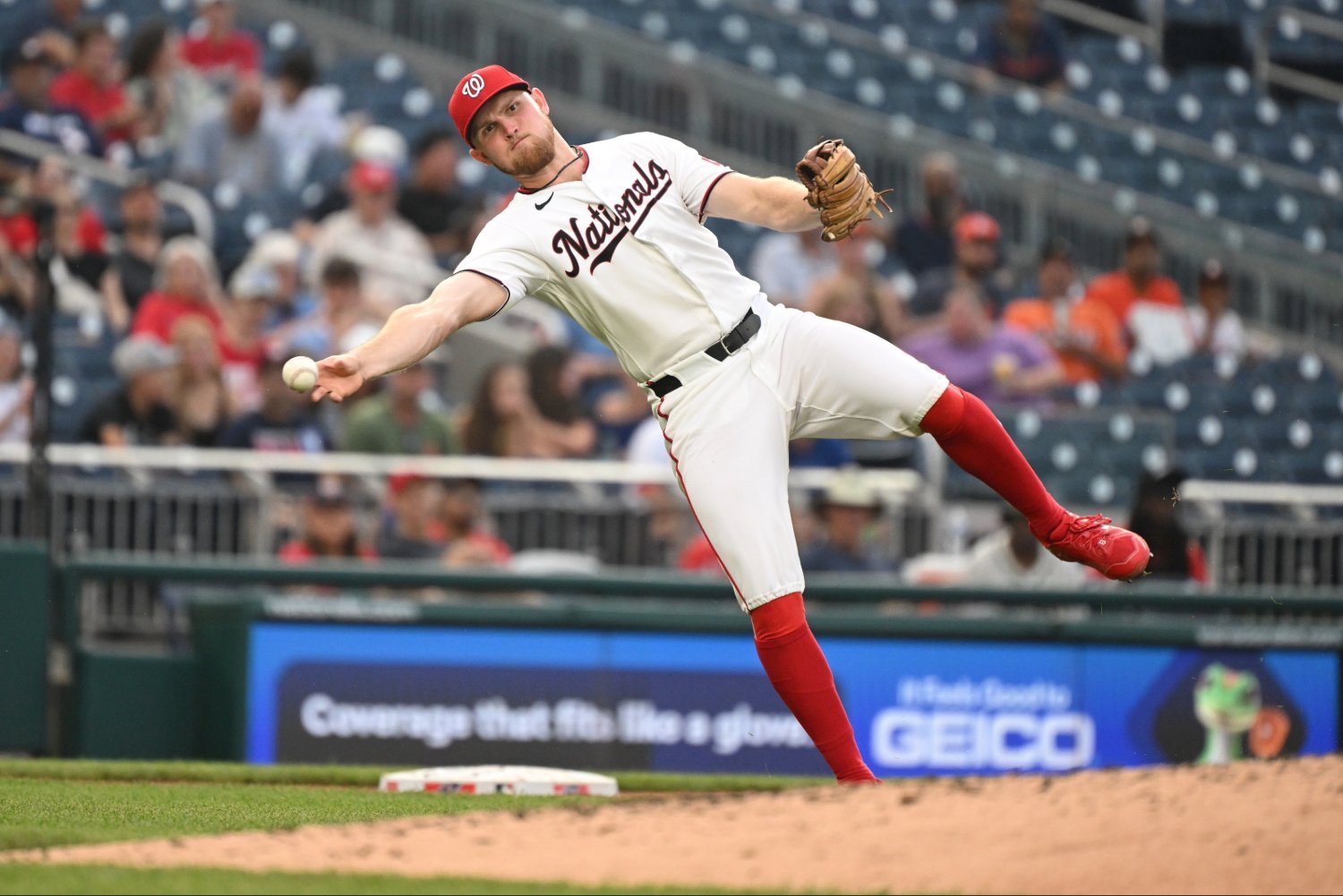 A month ago, the Boston Red Sox appeared to be approaching a difficult decision: sell or keep trying to compete. With the team outside the playoff race, names like Aroldis Chapman, Jarren Duran and Sonny Gray were emerging in trade discussions. They had players capable of attracting interest from other clubs, and Craig Breslow had to decide whether to turn those assets into pieces for the future. The situation changed after a positive stretch over the past few weeks pushed the Red Sox back into the American League Wild Card race. However, Boston’s first move before the trade deadline was not the type of move made by a traditional buyer searching for an immediate solution. The club acquired infielder Curtis Mead from the Nationals in exchange for left-hander Connelly Early, a young starter who had already shown the ability to compete at the major-league level. Both teams swapped players with several years of control, but with different needs: Washington was looking for rotation help, while Boston needed more right-handed offensive production. The trade provides the first glimpse into the Red Sox's deadline strategy: they are not fully buying or selling. They are targeting players who can help them compete now while preserving the flexibility needed for the future. The move makes sense based on the roster's needs, but it also represents the type of calculated gamble the Red Sox appear willing to make at this deadline. They gave up a young pitcher with rotation upside for a hitter who still needs to prove that his resurgence with Washington can be sustained. The bigger question is whether this middle ground — adding controllable talent without making an all-in move — is enough to raise the competitive ceiling of a team that has returned to the postseason race. Mead is under team control through 2030 and joins a lineup that needed a right-handed bat capable of creating more impact, especially against left-handed pitchers. The front office bet on a player who can help in the playoff race now while still fitting into Boston’s long-term plans. That is one of the reasons Breslow was willing to pay a significant price. Mead arrives after posting a .352 OBP, a .500 slugging percentage and a 134 wRC+ with the Nationals, a major difference from the player who raised questions during his first years in the majors. His strikeout rate dropped to 19%, and that improvement at the plate helped change the perception of his offensive potential. Simply put, the team believed that profile fit better than Early's within its current situation. An established veteran would have offered more immediate certainty, but it also would have required a higher cost for a player with fewer years of control. Mead represents a different type of investment: a player who can help in 2026 without limiting Boston’s future decisions. The Red Sox still have needs that could determine their ceiling in October. If Breslow believes this team has a legitimate chance to compete, this trade should not be viewed as the all-in move before the deadline. Instead, it should be viewed as the blueprint: adding players who improve the present without sacrificing the future. View the full article
 -
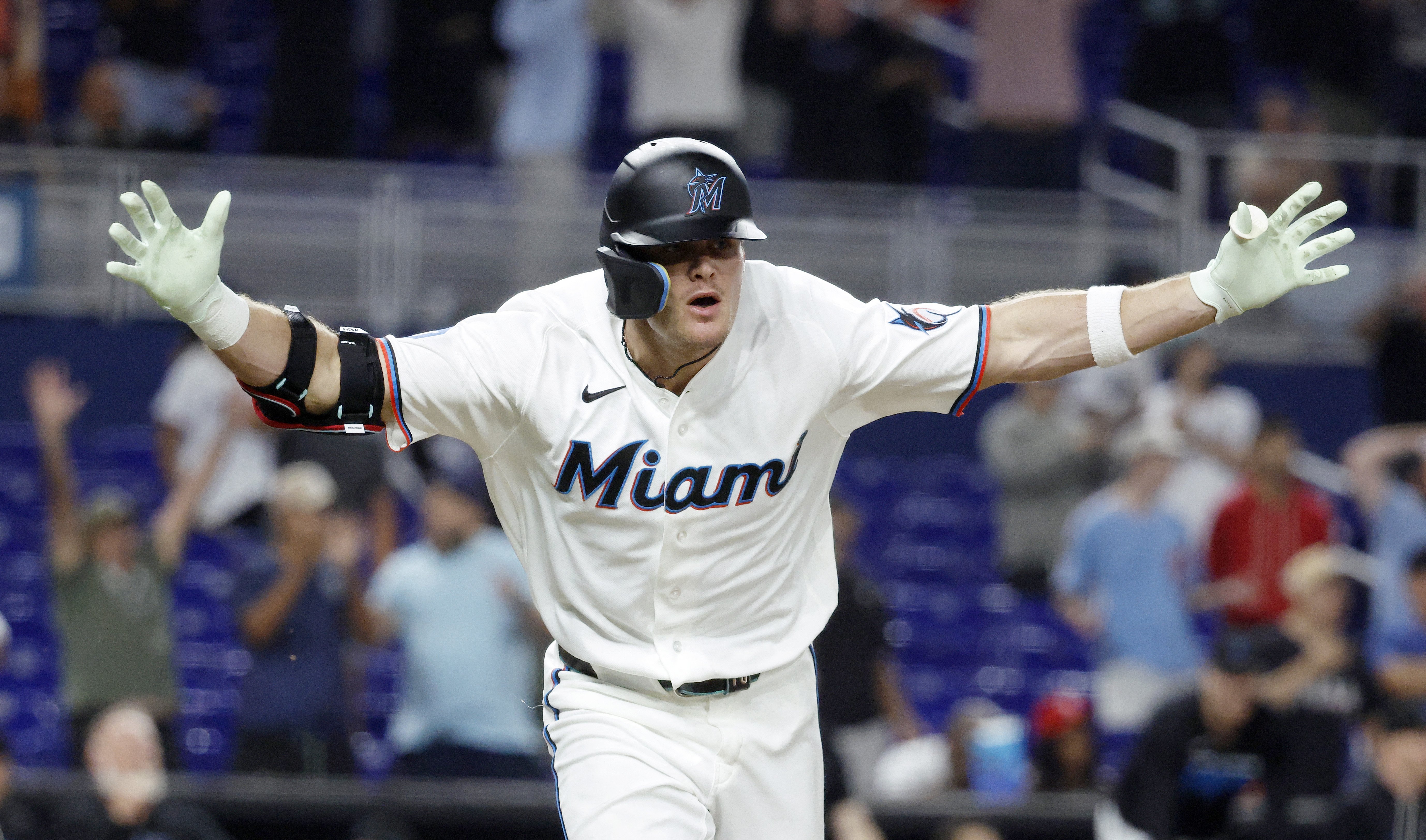 MIAMI, FL - "I think we all just want to shake hands after a game, not turnaround and walk back in there," is what Marlins manager Clayton McCullough said before the series opener against the Philadelphia Phillies. On Monday night, McCullough and his team weren't exactly able to shake hands, but for a good reason. In the bottom of the ninth inning down two runs, the Marlins were able to crawl back and walk-off the Phillies, defeating them by a final score of 8-7. It marked the Marlins first win since July 9th when they caped off a series sweep of the Seattle Mariners and it snapped a 12-game losing streak, the worst in franchise history. "It's no lie that everyone in the building's been been grinding hard now for a couple of weeks and frustrated with things," McCullough said following the game. "It feels great to get a win and I think in the fashion that we did. It'd be hard to ever question this group's toughness and willingness to compete in situations where it had been easy to were we were out in front, but have the game flip like it did and then you're facing one of the elite closers in baseball in the ninth, we put together great at-bats. It just speaks to the group of guys we have in that clubhouse that they don't ever stop playing till it's over." All odds were stacked against the Marlins going into the game. They had to face their division rivals with Zack Wheeler on the mound. To make matters worse, Bryce Harper took Marlins starter Tyler Phillips deep for a two-run shot in the top of the first inning, already putting the Marlins in a hole that they would have to climb out of. The Marlins not only tied the game right away in the bottom of the frame, but took a lead in the bottom of the second inning thanks to Griffin Conine's eighth home run of the season and RBIs from both Jakob Marsee and Otto Lopez. Momentum started shifting towards the Marlins and everything was lining up for the Fish to snap the streak on the strength of a 5-2 lead. The Marlins certainly made Wheeler work. The former All-Star was limited to just three innings, allowing five runs on six hits (two home runs) while striking out six. In the bottom of the second inning, he almost allowed a cycle between Conine's homer, a double from Marsee, and a Lopez triple. Wheeler did allow that elusive single in the next inning during a scoreless third, but was done for the night. "We took advantage of it," McCullough said. "Not as sharp maybe tonight, especially command-wise. I think we just put together again good at-bats...We've seen our guys do that this year against some really terrific starting pitchers, so good approach there. I think they were ready to go after what they were looking for. Able to lay off enough pitches out of the zone to stay in good counts. So good start." It marked the second time that the Marlins have scored that many runs off the Phillies starter. On top of that, Monday's start is tied for the shortest against the Marlins in his career. The last time he went three innings in a start against Miami was back in 2022, where he allowed seven earned runs. Fast forward to the top of the sixth inning, the Marlins decided to deploy lefty Cade Gibson, who surrendered an RBI single to Alec Bohm. With runners on, McCullough turned to Tyler Zuber, who allowed a ground rule RBI double to Realmuto and an RBI single to Justin Crawford, scoring two more runs and giving the Phillies a 6-5 lead. They added on further in the eighth with a sac fly, giving them a 7-5 lead. It was the bottom of the ninth inning and with Phillies closer Johan Duran taking the mound, it all seemed like it was over. Going into his appearance, Duran had a 1.29 ERA and 1.05 FIP along with 24 saves against only one blown save. This was also coming off the Marlins having to face San Diego Padres closer Mason Miller in the previous series, who has been better than Duran. The first half Miami Marlins were ones who had long at-bats and made opposing pitchers work. That's the team that we saw in the ninth inning. Jakob Marsee and Otto Lopez knocked in back-to-back base hits and Kyle Stowers was hit by a pitch, loading the bases for Heriberto Hernandez. After hitting his 15th home run of the season in the first inning, Hernandez struck out in three straight at-bats. But with a full count, Hernandez got to Duran's 101.5 mph fastball for a two-run RBI single, tying the game, 7-7. An Xavier Edwards bunt single loaded the bases again and Liam Hicks grounded into a force out, with Harper throwing out pinch runner Esteury Ruiz at home. That set the stage for Griffin Conine. It's been quite the eventful season for Conine, who wasn't expected to make the Opening Day roster, but made the team after late injuries in spring training to both Kyle Stowers and Esteury Ruiz. After just 11 games, Conine landed on the IL himself due to a left hamstring strain. That kept him out until June 21st. Up until Monday's series opener, Conine was slashing .256/.351/.488/.839 with five home runs and 12 RBI. Coming out of the All-Star break and throughout this losing-streak, Conine has been one of the Marlins' bright spots, having hit .240/.321/.520/.841 with two home runs and four RBI in that stretch. Conine fell behind 1-2 to the Phillies flamethrower, but on the fourth pitch of the at-bat, his swing ended the misery of all Marlins fans, walking it off and snapping the 12-game losing streak. "After the stretch we've been on, it felt like a September-type game with the playoffs looming," Conine said. "Obviously, that wasn't what it was, but I think just for what we needed right now, that was big. Hats off to everyone that came up in the ninth inning, because I think with one of the best closers in baseball on the mound, down two after not scoring since the second, that's a pretty daunting place to be. Everyone just taking care of their at-bats was really fun to watch and be a part of." In the month of July, Conine is slashing .250/.338/.533/.871 with five home runs and eight RBI. Monday's walk-off against the a Phillies was the first of his career. A combination of finally being healthy and consistent playing time are a big factor in his July success. "It's first time I've eclipsed 100 at-bats in a year, which sounds crazy to say," Conine said. "I feel like I knew it was always in there, but it was just getting a consistent opportunity and tweaking some things. Always trying to cut down on swing and miss, but I know it's going to be in there." With the win, the Marlins became the first team since the 2002 Devil Rays to snap a 12+ game losing streak after trailing by multiple runs entering the 9th inning. The Marlins do remain a game below .500, at 53-54, but are now two games out of the final National League Wild Card spot. With Sandy Alcantara on the mound, the Marlins will go for their first series win since that sweep of the Mariners back in early July. First pitch is at 6:40 pm EST. View the full article
 -
 Omaha edged Salt Lake 4-3 as Henry Williams struck out five over 5 1/3 innings and Elih Marrero doubled home two runs, with Justin Topa closing it out. Carson Roccaforte homered twice for Northwest Arkansas in a 9-3 loss. Michael Lombardi allowed one run in four innings for Columbia, which fell 4-3 in 10 innings. Trevor Werner homered for Quad Cities, but Emmanuel Reyes was charged with six runs in a 10-8 defeat at Beloit. Kansas City Royals Transactions No Roster Moves Marrero's Two-Run Double Lifts Omaha Past Salt Lake The Omaha Storm Chasers scored twice in the sixth inning and held on for a 4-3 win at Salt Lake. Elih Marrero drove in both of those runs. Jack Pineda opened the sixth with a double, his second of the season, and Brandon Drury drew a two-out walk. Marrero followed with a sharp line drive double to center field that scored Pineda and Drury for a 4-2 lead. Marrero finished 2-for-4 with two doubles, two runs batted in, and a run scored. Pineda went 2-for-3. Gavin Cross tied the game in the fifth with his 10th home run of the season, a drive to right-center field. Omaha opened the scoring in the third when Peyton Wilson reached on a fielding error, and Marrero came around to score. Henry Williams worked 5 1/3 innings and allowed four hits and three runs, two of them earned, with two walks and five strikeouts. He gave up a sacrifice fly in the third and a solo home run in the fourth, and he left in the sixth with two runners on base after an error. One of them scored on a single, cutting the lead to 4-3. Jose Cuas retired two of the three batters he faced to end the sixth. Aaron Bummer, Matt Moore, and Justin Topa then combined for three innings without allowing a run, giving up one hit and one walk while striking out four. Topa recorded his fourth save, and Williams picked up the win. Omaha finished with seven hits, three doubles, and five walks. They struck out eight times and left nine runners on base, going just 1-for-11 with runners in scoring position. The Storm Chasers improved to 48-53. Player AB R H RBI BB K Kyle Isbel, CF 3 0 0 0 1 2 Alejo Lopez, 3B 1 0 1 0 0 0 Gavin Cross, DH 5 1 1 1 0 1 Matthew Lugo, RF 5 0 1 0 0 2 Brett Squires, LF 5 0 0 0 0 2 Drew Waters, CF 2 0 0 0 2 0 Jack Pineda, SS 3 1 2 0 0 0 Brandon Drury, 1B 3 1 0 0 1 0 Elih Marrero, C 4 1 2 2 0 0 Peyton Wilson, 2B 3 0 0 0 1 1 Totals 34 4 7 3 5 8 Player IP H R ER BB K HR Henry Williams 5 1/3 4 3 2 2 5 1 Jose Cuas 0 2/3 1 0 0 0 1 0 Aaron Bummer 1 0 0 0 1 1 0 Matt Moore 1 1 0 0 0 2 0 Justin Topa 1 0 0 0 0 1 0 Totals 9 6 3 2 3 10 1 Roccaforte Homers Twice In Naturals' Loss The Royals' No. 9 prospect homered twice, but Northwest Arkansas lost 9-3 at home. Roccaforte tied the game in the third with his 20th home run of the season, a line drive to right field. He added his 21st with two outs in the ninth, and he finished 2-for-5 with two runs batted in and two runs scored. Spencer Nivens put the Naturals ahead in the fourth with his eighth home run, also to right field. Those three swings accounted for all of the Northwest Arkansas offense. Hunter Patteson gave the Naturals four innings, allowing two hits and one earned run on a solo home run, with no walks and three strikeouts. The game turned in the sixth, much to the Naturals' chagrin. Grant Gambrell hit the leadoff batter, allowed back-to-back singles, then walked in the go-ahead run. A grand slam followed, and Northwest Arkansas trailed 7-2. Anthony Simonelli entered and retired the next three batters. Gambrell was charged with six runs on five hits and a walk in one inning, including two home runs, and he took the loss. Dennis Colleran Jr. allowed two runs on two hits and a walk in the eighth. Tyson Guerrero and Zachary Cawyer each worked an inning without a run, and Roccaforte's second homer produced the game's final run. Daniel Vazquez went 2-for-4, and Nivens reached twice in four plate appearances on a home run and a walk. The Naturals managed six hits, three of them home runs. They drew five walks, struck out nine times, and left eight runners on base, going 0-for-5 with runners in scoring position. Northwest Arkansas is now 40-54 this season. Player AB R H RBI BB K Carson Roccaforte, CF 5 2 2 2 0 0 Luke Pelzer, LF 2 0 0 0 2 1 Sam Kulasingam, 3B 4 0 0 0 0 0 Spencer Nivens, RF 3 1 1 1 1 1 Daniel Vazquez, SS 4 0 2 0 0 1 Omar Hernandez, DH 3 0 0 0 1 2 Connor Scott, 1B 4 0 0 0 0 2 Canyon Brown, C 3 0 0 0 1 1 Justin Johnson, 2B 3 0 1 0 0 1 Totals 31 3 6 3 5 9 Player IP H R ER BB K HR Hunter Patteson 4 2 1 1 0 3 1 Grant Gambrell 1 5 6 6 1 0 2 Anthony Simonelli 1 0 0 0 0 0 0 Tyson Guerrero 1 1 0 0 0 1 0 Dennis Colleran Jr. 1 2 2 2 1 0 0 Zachary Cawyer 1 1 0 0 0 0 0 Totals 9 11 9 9 2 4 3 Quad Cities Builds Early Lead, Then Falls At Beloit Quad Cities scored six runs over the second and third innings, then gave all of it back in one half inning of a 10-8 loss at Beloit. The River Bandits went ahead in the second. Jose Cerice was hit by a pitch, Tyriq Kemp walked, and Diego Guzman singled to left field, with a throwing error letting both runners score and Guzman reach third base. The third inning was bigger. Erick Torres doubled, his fifth of the season, and No. 8 prospect Asbel Gonzalez moved him to third with a sacrifice bunt. Blake Mitchell, the Royals' No. 4 prospect, singled to center field to score Torres, then stole second base, his 20th steal of the season, and scored on Cerice's single. Werner followed with his seventh home run, a two-run drive to right field that made it 6-2. Beloit answered with seven runs in the bottom of the third. Reyes retired the first batter, then allowed a walk, two singles, one of which drove in a run, and another walk before leaving with the bases loaded. Mason Miller gave up a grand slam, a walk, a run-scoring double, and a balk that brought home the seventh run of the inning. Miller allowed a solo home run in the fourth and finished with four runs on five hits and three walks in 1 2/3 innings, taking the loss. Reyes was charged with six runs, five earned, on four hits and four walks in 2 1/3 innings, with three strikeouts. Quad Cities added two in the seventh on Mitchell's sacrifice fly and a balk that scored Gonzalez. Nick Conte, Kamden Edge, and Yimi Presinal combined for four innings without allowing a run. Torres reached four times, going 2-for-3 with two walks and two runs scored, and Mitchell drove in two. The River Bandits left three runners on base and went 4-for-6 with runners in scoring position. The loss dropped Quad Cities to 45-47 this season. Player AB R H RBI BB K Erick Torres, LF 3 2 2 0 2 0 Asbel Gonzalez, CF 3 1 0 0 1 1 Blake Mitchell, DH 3 1 1 2 0 2 Chris Brito, 1B 4 0 0 0 0 2 Jose Cerice, 3B 3 2 1 1 0 1 Trevor Werner, RF 4 1 1 2 0 0 Tyriq Kemp, SS 2 1 0 0 2 1 Diego Guzman, 2B 4 0 1 1 0 2 Ricson Gonzalez, C 3 0 0 0 1 1 Totals 29 8 6 6 6 10 Player IP H R ER BB K HR Emmanuel Reyes 2 1/3 4 6 5 4 3 0 Mason Miller 1 2/3 5 4 4 3 0 2 Nick Conte 1 2/3 2 0 0 0 1 0 Kamden Edge 1 1/3 0 0 0 1 1 0 Yimi Presinal 1 0 0 0 0 1 0 Totals 8 11 10 9 8 6 2 Fireflies Drop A 10-Inning Decision To Kannapolis Columbia dropped the series finale 4-3 in 10 innings at home to Kannapolis. The Fireflies tied the game and made it interesting in the third. Angel Ramirez and Ivan Sosa walked, and Henry Ramos singled to left field to bring Ramirez home. Columbia went ahead in the fourth on No. 5 prospect Sean Gamble's fifth home run of the season, a fly ball to right field. Later in the inning, JC Vanek doubled, moved to third on a fly out, and scored on a wild pitch for a 3-1 lead. Lombardi, the Royals' No. 14 prospect, started and worked four innings, allowing five hits and one earned run with no walks and two strikeouts. His two strikeouts helped him reach the 100-strikeout mark with the Fireflies this season, just the seventh pitcher in franchise history to reach that total in a season. The lead held into the eighth, when Coleman Picard hit the leadoff batter, struck out the next, and then gave up a single and a two-run double that tied the game 3-3. Picard finished with four innings, four hits, two earned runs, one walk, and three strikeouts. Randy Ramnarace pitched the 10th. The zombie runner advanced to third on a leadoff single, then scored on a single to center field. Ramnarace allowed two hits and an unearned run, and he was charged with the loss. Columbia had its own zombie runner at second base in the bottom of the 10th. Ramos was thrown out at third on No. 3 prospect Josh Hammond's fielder's choice, and Yandel Ricardo, the Royals' No. 11 prospect, grounded into a game-ending double play. Ramos finished 2-for-5 with a run batted in, and Gamble went 2-for-4 with a home run and a run batted in. The Fireflies collected eight hits and six walks, struck out five times, and left seven runners on base. They also went just 1-for-9 with runners in scoring position. Columbia is now 50-46 this season. Player AB R H RBI BB K Henry Ramos, LF 5 0 2 1 0 2 Josh Hammond, SS 4 0 1 0 1 2 Yandel Ricardo, 2B 4 0 0 0 0 0 Sean Gamble, CF 4 1 2 1 0 0 JC Vanek, 1B 3 1 1 0 1 0 Hyungchan Um, C 4 0 1 0 0 0 Connor Rasmussen, 3B 4 0 1 0 0 1 Angel Ramirez, RF 1 1 0 0 3 0 Ivan Sosa, DH 2 0 0 0 1 0 Gabriel Silva, DH 1 0 0 0 0 0 Totals 32 3 8 2 6 5 Player IP H R ER BB K HR Michael Lombardi 4 5 1 1 0 2 0 Jhon Reyes 1 1 0 0 0 1 0 Coleman Picard 4 4 2 2 1 3 0 Randy Ramnarace 1 2 1 0 0 1 0 Totals 10 12 4 3 1 7 0 Top-20 Prospect Performance Kendry Chourio: DNP David Shields: DNP Josh Hammond: 1-for-4, BB, 2 K Blake Mitchell: 1-for-3, 2 RBI, SB, 2 K Sean Gamble: 2-for-4, HR, RBI Ramon Ramirez: DNP Zion Rose: DNP Asbel Gonzalez: 0-for-3, BB, K Carson Roccaforte: 2-for-5, 2 HR, 2 RBI Taylor Rabe: DNP Yandel Ricardo: 0-for-4 Justin Lamkin: DNP Drew Beam: DNP Michael Lombardi: 4 IP, 5 H, 1 R, 1 ER, 0 BB, 2 K Jack Slightom: DNP Felix Arronde: DNP Angeibel Gomez: DNP Ben Kudrna: DNP Steven Zobac: DNP Blake Wolters: DNP View the full article
 -
Chicago Cubs Have Expressed Interest in Reid Detmers
DiamondCentric posted an article in North Side Baseball
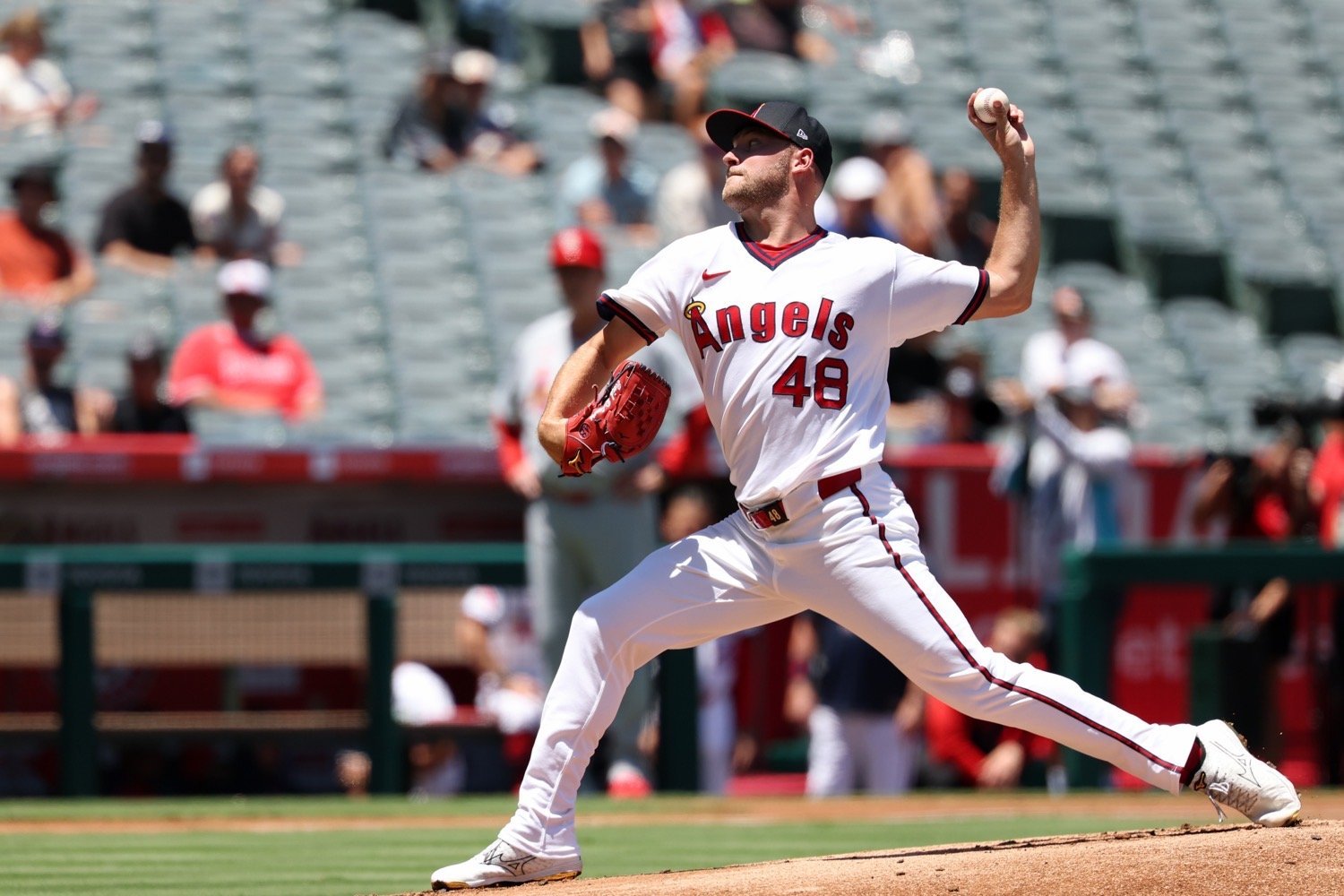 The Chicago Cubs are expected to focus their trade deadline efforts on upgrading the starting rotation, with injuries taking a significant toll on both the rotation and bullpen throughout the season. Position-player additions appear less urgent, with the club more likely to seek a complementary bench bat than an everyday lineup upgrade. If Chicago does make a deal, it’s likely to leverage the organization’s surplus of hitting prospects to address its much greater need for pitching, One name that is simmering on the hot stove is Reid Detmers, whom Russell Dorsey of Yahoo! Sports is reporting the Chicago Cubs have expressed interest in. Through 21 starts, Detmers has posted a 4.05 ERA (3.28 FIP) and a gaudy 20.5% strike-minus-walk (K-BB). The 27-year-old southpaw is controllable through the 2028 season. Do you think Detmers is the answer the Cubs are looking for in the rotation? Join the conversation in the comments! View the full article
 -
Twins Minor League Report (7/27): DSL Twins Thrashed, What's Next?
DiamondCentric posted an article in Twins Daily
 TRANSACTIONS St. Paul transferred RHP Raul Brito to the Development List. OF Kala'i Rosario assigned to Wichita from the Saints. RHP Ruddy Gomez assigned to St. Paul from Wichita. The Twins released OF Maddux Houghton (Wichita) and RHP Nick Trabacchi (Cedar Rapids). Cedar Rapids activated LHP Ross Dunn from the 60-Day Injured List. RHP Matthew Dalquist and IF Bryan Acuna activated from the Fort Myers Injured List. UT Harry Genth was placed on the 7-Day IL. SAINTS SENTINEL The Saints had a successful week, going 4-2 last week hosting Columbus. This week, St. Paul hits the road to take on the Omaha Storm Chasers. When Omaha visited St. Paul in the middle of June, the Saints and Storm Chasers split the series, but the series did include the opening 21-2 thrashing the Saints handed to the Storm Chasers. From a prospect perspective, Omaha continues not to roster much, as a bulk of the Royals talent resides in the lower levels. According to our sister site, Royals Keep, RHP Ben Kudrna is the top talent to keep an eye on as the organization's #18 prospect. Kudrna will not be taking the mound as he is still recovering from olecranon stress fracture fixation surgery. There will be plenty of old friends to visit while in Omaha, as the Storm Chasers roster includes Dan Altavilla and Justin Topa. WIND SURGE WISDOM The Wind Surge also had a very successful week as they wrapped up a 5-1 series hosting Midland. Wichita will head to Springfield this coming week to take on the Cardinals. The Cardinals roster two top-100 prospects in C/1B Rainiel Rodriguez and LHP Liam Doyle. In 52 games at Double-A, Rodriguez has hit .268/.360/.449 (.809 OPS) with nine home runs. Doyle has started 16 games this season, holds a 4.91 ERA, 27.9% K-rate, and a 13.9% walk-rate. A third prospect to pay attention to is LHP Brandon Clarke. Clarke is working his way back from injury and hasn’t pitched much this season but can top 100 mph and even up to 103 mph. KERNEL CHRONICLE A trip to Dayton did not treat the Kernels well as they went 1-5 over the last week. As they return home to Cedar Rapids, Peoria will make their way to town. Back in May, the Kernels went 2-4 against Peoria mid-May. The Peoria Chiefs, also of the Cardinals system, carry one top-20 prospect on their roster. That is SS/OF Tai Peete, who has hit .283/.352/.579 (.931). The Chiefs also roster Midwest League Player of the Week Jack Gurevitch, who after a hot week is hitting .308/.377/.552 (.929) in 54 games this season. MIGHTY MATTERS After a 4-3 week in St. Lucie, Fort Myers will return home to host Palm Beach. The Cardinals round out what will turn out to be a trifecta of Twins-Cardinals affiliate matchups this week. SS Yairo Padilla is the highest-ranked Cardinals prospect on the Palm Beach roster. The switch hitter has played 12 games at Single-A and is hitting .304/.373/.522 (.894 OPS) along with seven stolen bases. FCL TWINS Season completed. DSL TWINS Twins 0, Giants Black 10 Box Score The DSL Twins played the only game across the organization Monday, and it was a rough one. With a final score of 10-0, it is tough to find many highlights for the Twins side of the equation. The third inning was specifically a tough one. In all, four of the Giants 10 runs were scored. Arthur De La Cruz was on the mound for the first run-scoring hit, which was a double off the bat of Diego Alambarrio. De La Cruz was one of Twins pitchers hit the hardest, logging 1 ⅓ inning while allowing four hits, four runs, three earned, two walks, while striking out two. Miguel Martinez came on in relief for De La Cruz, but more runs were to be scored. This time by way of an Alexander Camacaro two-run home run. That led to Martinez almost perfectly matching De La Cruz as the hardest-hit pitcher of the day, also logging 1 1/3 innings, two hits, four runs, three earned runs, two walks, and two strikeouts. The second inning was one of the most promising offensive innings for the Twins. Luis Duarte was hit by a pitch. It was followed by a Jeferson Abreu single, and a Luis Suarez walk to load the bases with one out. Misael Rodriguez was not able to punch through against the Giants and grounded into a double play, getting Giants pitcher Randry De Leon out of the jam he had found himself in. SS Anibal Beltre had the best day offensively, going 2-for-3 and was the only hitter to collect more than one hit. Overall, seven hits by the Twins weren’t completely awful, but the team could never get them strung together to score any runs. Juan Quinones did come into the game late and shut down the Giants offense. Quinones pitched 2 1/3 innings, allowed two hits, no runs, two walks, and struck out one batter. TWINS DAILY PLAYERS OF THE DAY Anibal Beltre: 2-3, 1 K Juan Quinones: 2 ⅓ IP, 0 ER, 2 H, 2 BB, 1 K TOP 20 PROSPECT WEEK IN REVIEW #1- Walker Jenkins (Saints)- .190/.227/.238, .465 OPS, 1 2B #3- Kaelen Culpepper (Saints)- .182/.250/.273, .523 OPS, 1 2B #5- Marek Houston (Wind Surge)- .500/.571/.909, 1.481 OPS, 3 2B, 2 HR #7- Eduardo Tait (Kernels)- .250/.321/.583, .905 OPS, 1 3B, 2 HR #8- Kendry Rojas (Twins)- 6 ⅓ IP, 2 H, 2 ER, 3 BB, 7 K #9- Dasan Hill (Kernels)- 2 ⅔ IP, 3 H, 2 ER, 2 BB, 6 K #10- Hendry Mendez (Saints)- .313/.389/.500, .889 OPS, 1 HR #11- Gabriel Gonzalez (Saints)- .250/.308/.500, .808 OPS, 3 2B #14- Khadim Diaw (Wind Surge)- .316/.381/.684, 1.065 OPS, 4 2B, 1 HR #15- Brandon Winokur (Wind Surge)- .389/.455/.722, 1.177 OPS, 2 HR #17- Quentin Young (Mussels)- .185/.233/.444, .678 OPS, 1 2B, 2 HR #18- Ryan Gallagher (Saints)- 5 IP, 5 H, 3 ER, 2 BB, 5 K TUESDAY’S PROBABLE STARTERS St. Paul Saints @ Omaha- RHP Ricky Castro Wichita Wind Surge @ Springfield- RHP Cory Lewis Peoria @ Cedar Rapids Kernels- LHP Cesar Lares Palm Beach @ Fort Myers Mighty Mussels- TBD DSL Twins @ DSL Rangers Red- TBD View the full article
 -
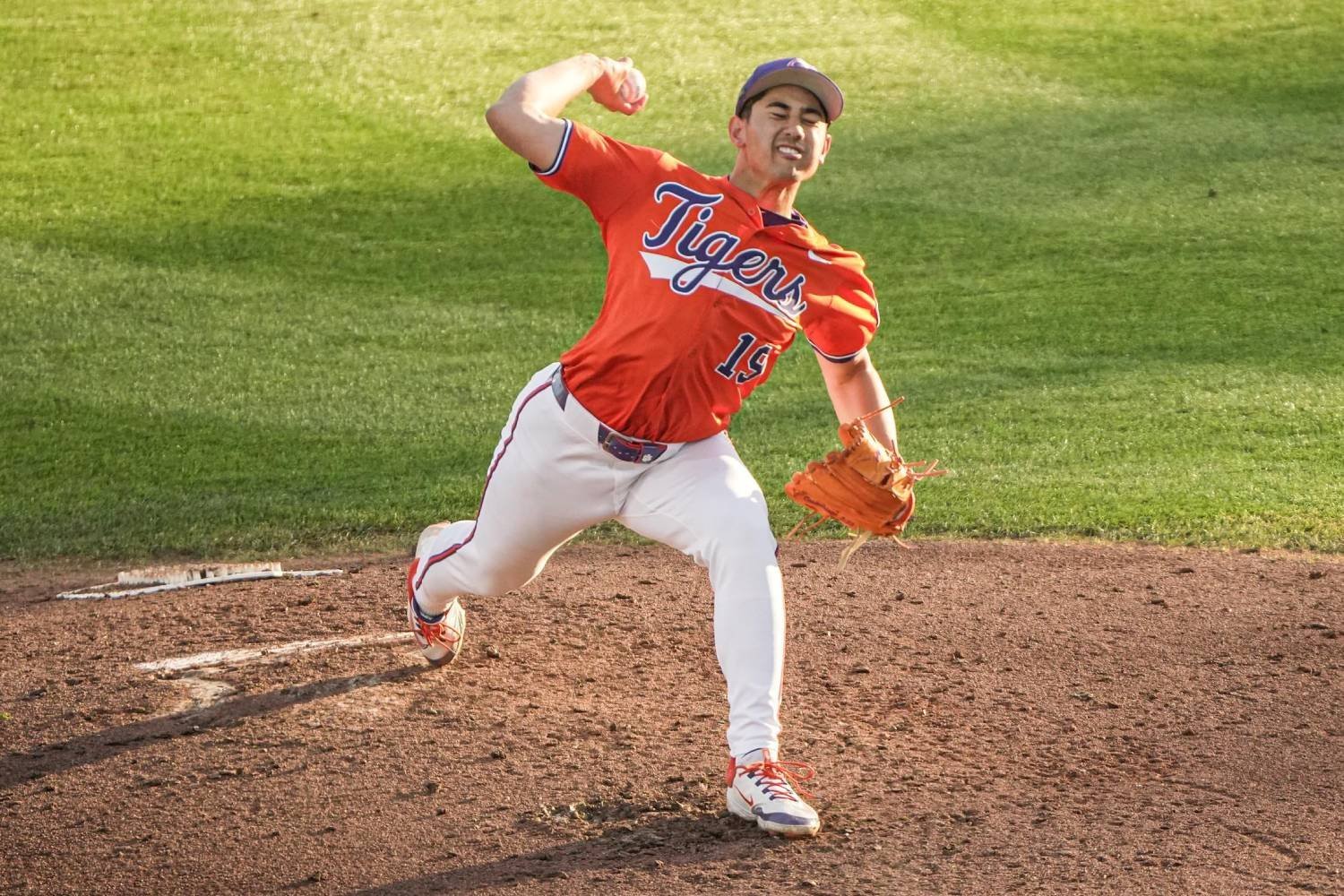 The Milwaukee Brewers don't often swing and miss with draft picks, but they did with one high-profile selection. Right-handed starter Aidan Knaak announced on Instagram on Monday that he was returning to Clemson for his senior season, a blow to the Brewers, who had selected him in the fifth round. Knaak's decision also had an effect on the Brewers' bonus pool as his slot value of $425,400 was subtracted from their available money, which was $8,042,900 to begin with. Knaak was the 117th-ranked prospect by Baseball America and 210th by MLB Pipeline when he was taken by the Brewers with the 163rd pick of the draft. Players had until Monday at 4 p.m. CT to sign. However, Knaak was not the only draft pick the Brewers did not sign. Of their 20 selections, the Crew brought 17 into the fold. The two others who did not decide to begin their pro careers now are 14th-round left-hander Daunte Bell of Milliken High School in Long Beach, Calif., and 16th-round right-hander Bradyn Havard of George County (Miss.) High School. Bell has a college commitment to Houston and Havard to Pearl River Community College. Here is a rundown of the Brewers' draft picks and their signing bonuses as reported by Baseball America: Trey Ebel, SS, $2,800,000 Sawyer Strosnider, OF, $2,100,000 Kyle Jones, OF, $675,000 Julian Garcia, RHP, $1,497,500 Aidan Knaak, RHP, did not sign Ryan Oshinskie, RHP, $222,500 Grant Hill, RHP, $200,000 Kellan Tom, 1B, $175,000 Chase Mora, RHP, $5,000 Andrew Gaines, RHP, $5,000 Gavin Perry, RHP, $150,000 Marcus Kruzan, RHP, $150,000 Carson Hart, OF, $380,000 Daunte Bell II, LHP, did not sign Keaton Maiorana, RHP, $230,800 Bradyn Havard, RHP, did not sign Chance Ruby, SS, $150,000 Brady Smith, RHP, $150,000 Sam George, LHP, $100,000 Carsten Sabathia III, 1B, $50,000 Players drafted in Rounds 11 to 20 did not count toward the Brewers' bonus pool unless they surpassed $150,000. For example, Maiorana, the 15th-round pick, signed for $230,800, but only $80,800 counted toward the bonus pool. Teams are allowed to surpass their bonus pool by 5% with a financial penalty of a 75% tax on the overage. According to Brewer Fanatic's Draft Tracker, the Brewers went $50,400 over their allotment. View the full article
 -
Luis Castillo Could Bolster An Already Strong Rotation
DiamondCentric posted an article in Twins Daily
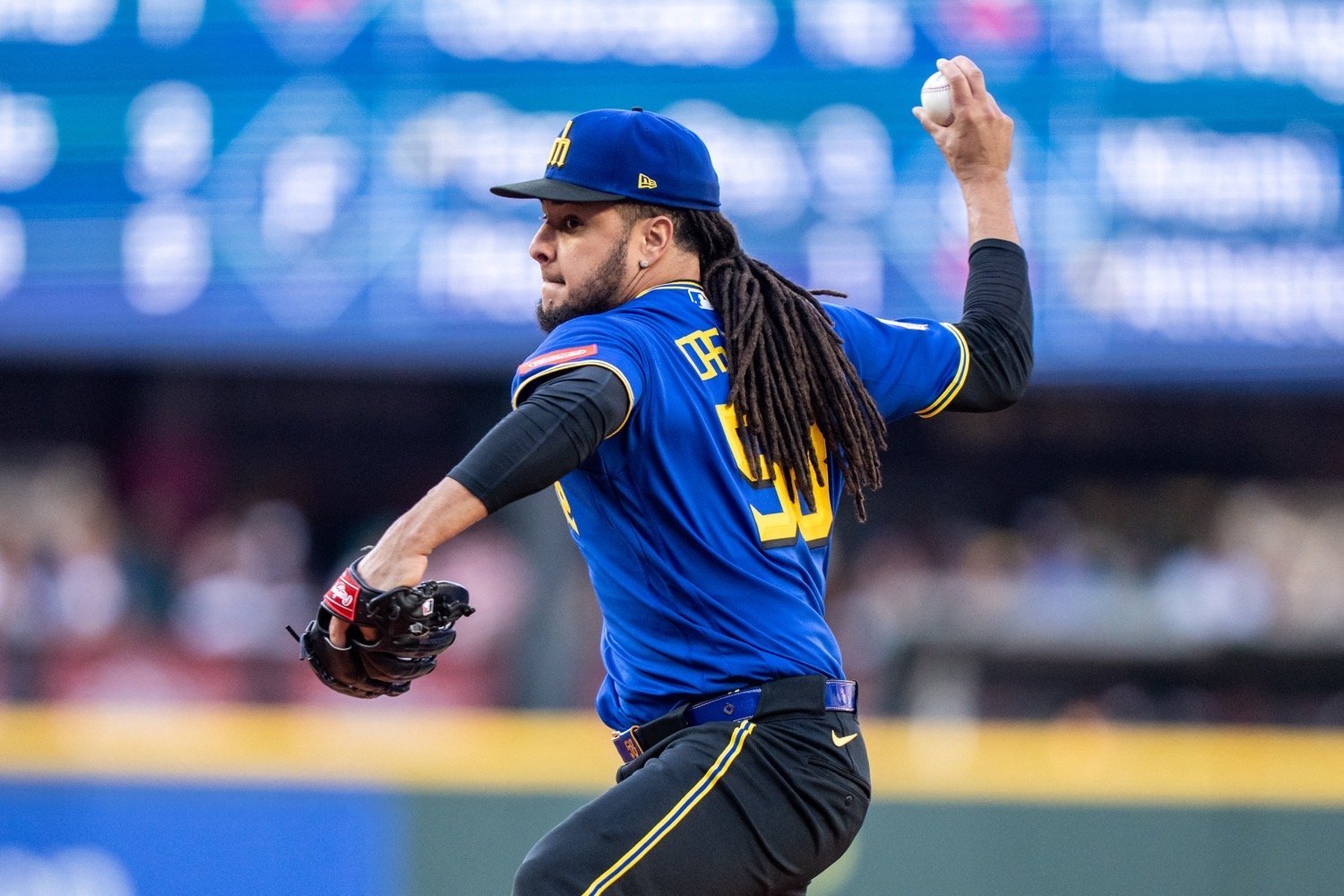 The Minnesota Twins enter the deadline in a precarious position, needing to fix a bullpen that has performed as one of the worst in the league after last year's deadline left the relief corps thin. On the other hand, their rotation is strong (especially considering injuries). Tom Pohlad's stated desire to compete complicates a straightforward sell-off, suggesting they could look to flip impending free agents for pieces that address the bullpen need while still building for years beyond this season. Or, the Twins could surprise everyone and decide to strengthen a rotation that has performed well despite a seemingly endless run of injuries. One option who's been on the market is Luis Castillo of the Seattle Mariners. Daniel Kramer of MLB.com is reporting that the Seattle Mariners are willing to eat part of Luis Castillo's contract to help facilitate a deal. Castillo, 33, has had a down year, posting a 4.85 ERA (4.37 FIP) with a 12.9% strikeout-minus-walk rate across 94 2/3 innings. This comes after seven consecutive seasons of sub-4 FIPs and five straight seasons of a K-BB north of 15%. Despite all that success, a down 2026, an impending lockout, and a $24+ million salary for the next two years make him a little less attractive on the open market. He also has a vesting option for 2028 that locks in if he reaches the 180 IP mark in 2027. It's not clear if that number gets prorated based on a lockout/shortened season. Do you think the Twins should make a move for the southpaw? Join the conversation in the comments! View the full article
 -
Could Luis Castillo Bridge the Gap for a Depleted Red Sox Rotation?
DiamondCentric posted an article in Talk Sox
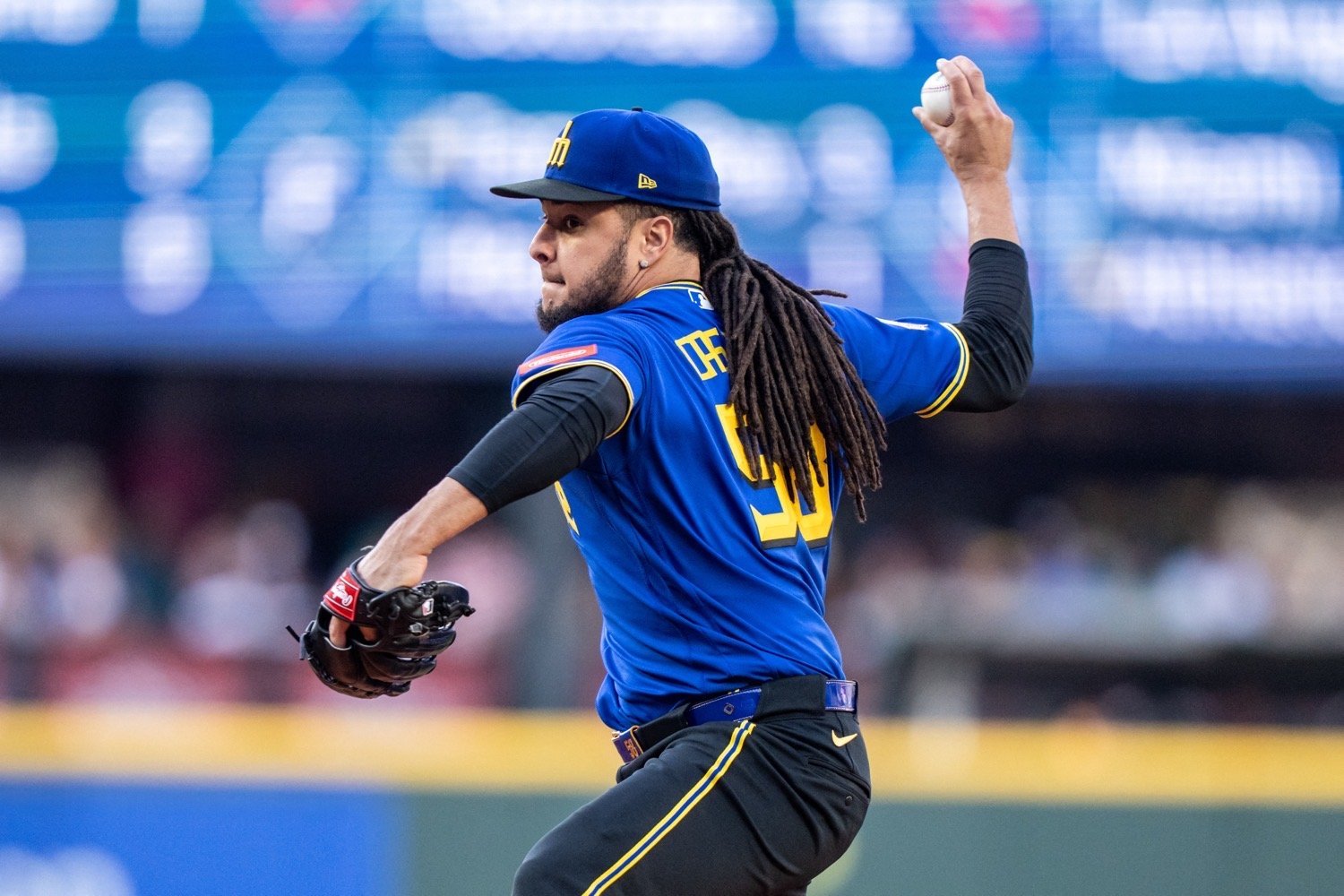 With shortstop and second base unsettled due to injuries and inconsistent performance, the Boston Red Sox are looking to shore up the middle of their infield. Staying up the middle, they could also look to add behind the plate and on the mound, particularly adding depth to a depleted rotation. One option to bridge that gap, who's been on the market, is Luis Castillo of the Seattle Mariners. Daniel Kramer of MLB.com is reporting that the Mariners are willing to eat part of Castillo's contract to help facilitate a deal. Castillo, 33, has had a down year, posting a 4.85 ERA (4.37 FIP) with a 12.9% strikeout-minus-walk rate across 94 2/3 innings. This comes after seven consecutive seasons of sub-4 FIPs and five straight seasons of a K-BB north of 15%. Despite all that success, a down 2026, an impending lockout, and a $24+ million salary for the next two years make him a little less attractive on the open market. He also has a vesting option for 2028 that locks in if he reaches the 180 IP mark in 2027. It's not clear if that number gets prorated based on a lockout/shortened season. Do you think the Red Sox should make a move for the southpaw? Join the conversation in the comments! View the full article
 -
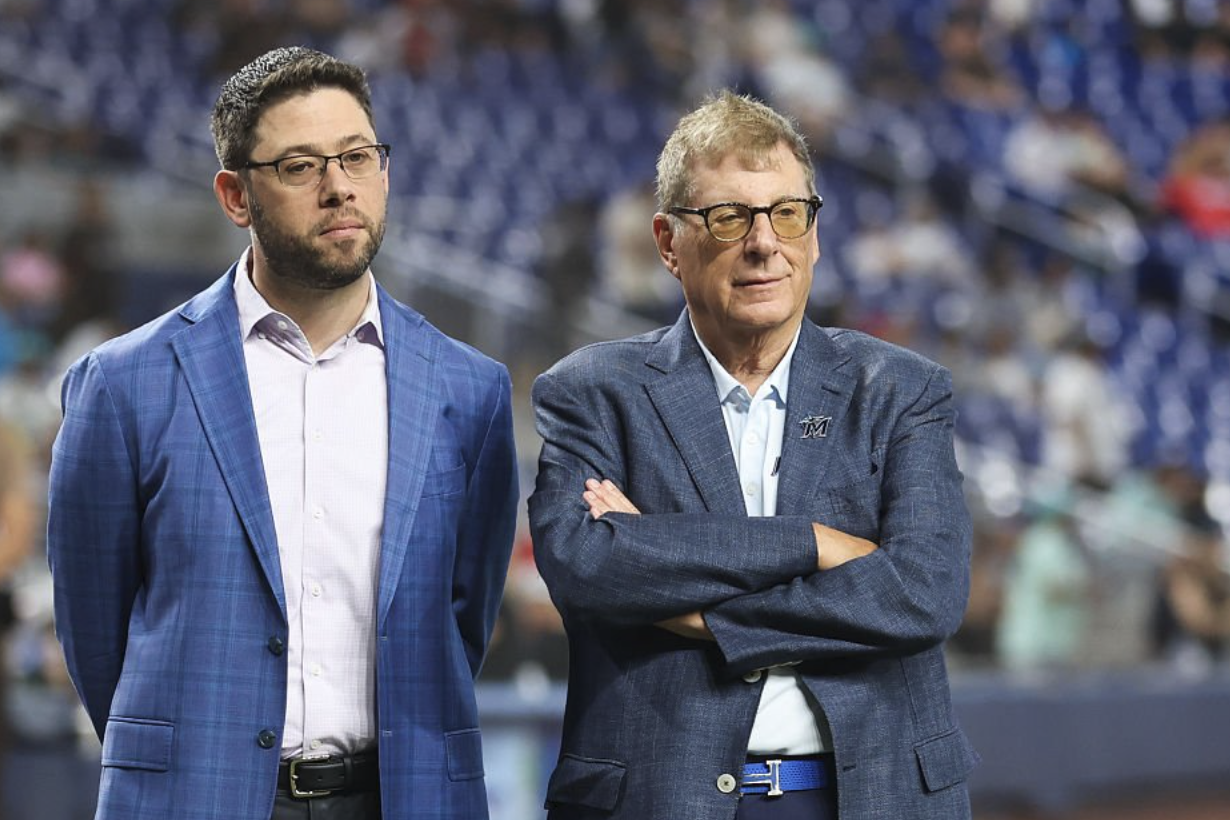 Just under one week away from the MLB trade deadline, Miami Marlins insider Craig Mish summarized the club's current approach during Monday's television pregame show: "I think there clearly is a pivot for the Marlins at this point. I don't expect them to be flat-out sellers—that I do not expect. But I also don't believe they will be buying any players for right now. Any trades that they potentially will make I believe will be for the future. "If you're asking if any players could be traded from this year's team, I still think it's to be determined. You have to look at players that are on expiring contracts at the end of this season. A lot of teams are gonna certainly call regardless of the outcome of this season on Pete Fairbanks. He has an expiring contract at the end of the season. Somebody could certainly take a shot on him at the end of the year. Whether or not he gets traded, I don't know the answer." "But as far as players on this team, we have to stop talking about Sandy Alcantara being traded! He's not going to be traded. And there are a lot of players on this team...Eury Pérez, Max Meyer, Joe Mack—these are cornerstone-type players. I believe they will be with this team through the deadline and through the future." Perhaps this is reading too much into it, but Otto Lopez—the Marlins' best player this season by any measure who's under club control through 2029—was not included among Mish's cornerstone guys. Vague rumors began circulating earlier in the day that the New York Yankees and Boston Red Sox are inquiring about Lopez's availability. Needless to say, it would be exceptionally expensive for another team to acquire the All-Star shortstop given his combination of on-field production and contract status. View the full article
 -
Twins Prospect Hot Sheet: Eduardo Tait Starting to Erase Doubt
DiamondCentric posted an article in Twins Daily
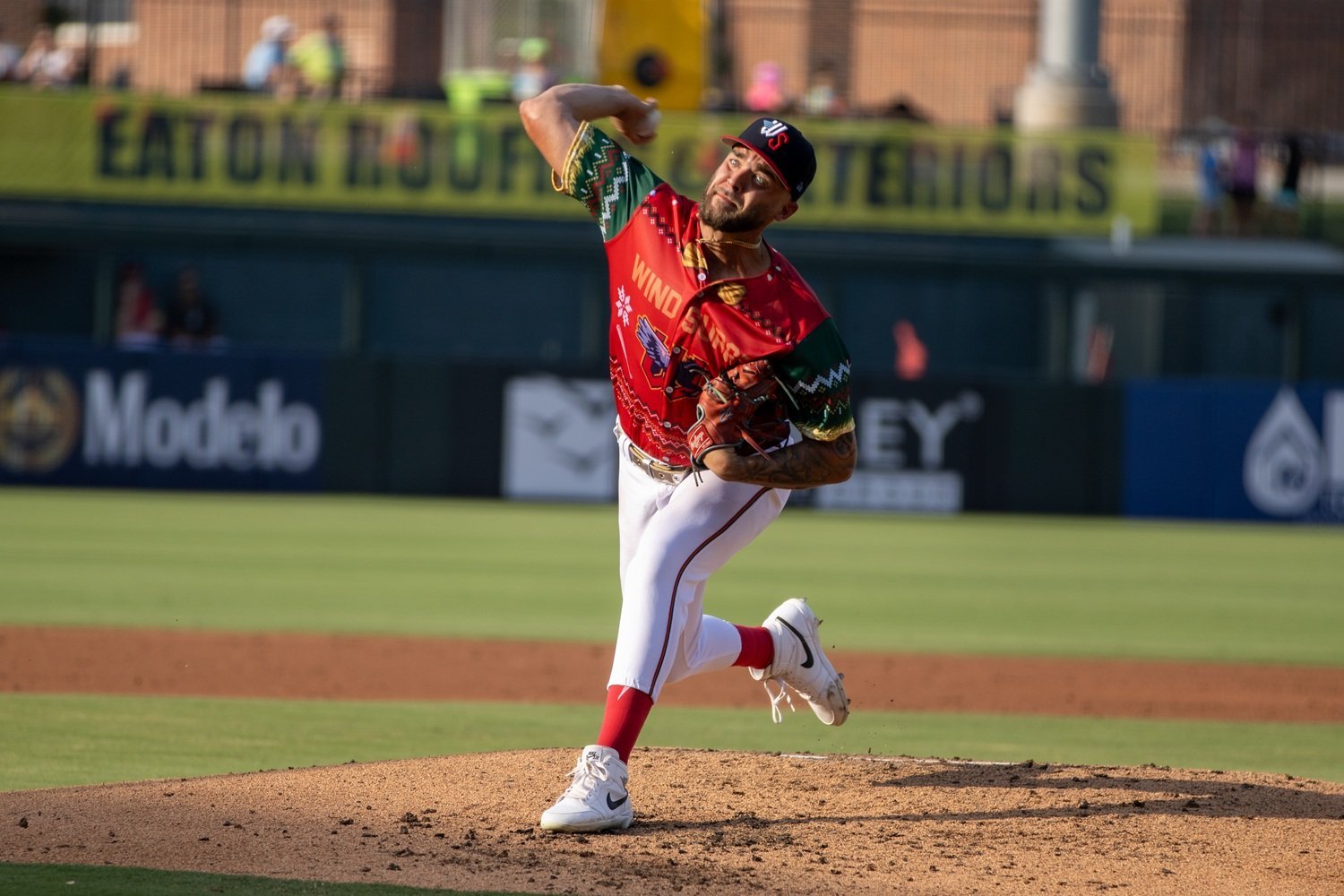 With next Monday's MLB trade deadline quickly approaching, prospect lists take on a different level of importance. Every standout performance can strengthen a player's case to remain part of Minnesota's future or make him a more attractive centerpiece in a trade for immediate help. The Twins have one of baseball's deepest farm systems, and rival clubs will undoubtedly ask about several of the organization's top prospects over the next week. That makes every game meaningful, especially for players trying to prove they belong in the club's long-term plans. One player on this week's Hot Sheet knows exactly what that spotlight feels like after arriving during last summer's deadline fire sale. C Eduardo Tait – Cedar Rapids Kernels How He Got Here: The Panama native arrived in the Twins organization as one of the headline pieces in last summer's Jhoan Duran trade with Philadelphia. Acquired alongside Mick Abel, Tait had already become one of the fastest-rising catching prospects in baseball. Signed by the Phillies for just $90,000 during the 2023 international signing period, Tait immediately outperformed expectations. He posted a .917 OPS in the Dominican Summer League before reaching full-season ball in 2024, where he hit .302 with an .842 OPS as a teenager. His ascent continued at a rapid pace. By 18, he had reached High-A, earned a Futures Game selection, and established himself among baseball's premier catching prospects. Minnesota challenged him immediately after the trade, and he helped Cedar Rapids during its playoff push before returning to the Kernels this season. Hitting the Hot Button: Maybe it was the Twins selecting two catchers in the first two rounds of the 2026 MLB Draft. Maybe it was being named one of the organization's prospects with the most to prove during the second half. Whatever the motivation, Tait responded with one of his best weeks of the season. The 19-year-old played six games, launching three home runs while driving in six runs. He posted a .600 slugging percentage and an .850 OPS during the week, showing the impact power that has long made him one of the organization's most intriguing offensive prospects. The overall season numbers still leave room for improvement with an 80 wRC+ and a .729 OPS, but weeks like this serve as reminders of why evaluators remain so bullish on his long-term upside. Catchers often develop slowly, and Tait continues to flash the offensive tools that made him such a coveted trade acquisition. RHP Cory Lewis – Wichita Wind Surge How He Got Here: Lewis has rarely lacked talent. Staying healthy has been the biggest obstacle. The Fountain Valley, California, native was selected by Minnesota in the ninth round of the 2022 MLB Draft out of UC Santa Barbara. After signing for $140,000, he quickly rewarded the Twins by climbing from Single-A to High-A during the 2023 season. Among organizational pitchers with at least 100 innings, he led the way in several categories, including ERA, batting average against, and strikeouts per nine innings. A shoulder impingement delayed his 2024 season until late May, but he finished the year pitching effectively in Double-A. The Twins promoted him to Triple-A for all of 2025, where injuries and inconsistency led to a difficult campaign. Lewis posted a 7.27 ERA while bouncing between the rotation and bullpen before another shoulder strain shut him down during spring training this year. Hitting the Hot Button: This season has always been about proving his shoulder could hold up over a full workload. Lewis took another encouraging step this week, appearing twice, including one start, and throwing eight scoreless innings. He allowed six hits, walked one batter, and struck out 10. For the season, the 25-year-old owns a 4.15 ERA with a 1.42 WHIP and a 12.5 K-BB% across 14 appearances (13 starts). He's slightly older than the average age of the Texas League competition, but that's secondary to demonstrating durability. After multiple shoulder-related setbacks over the past three seasons, simply staying on the mound while missing bats is a significant development. RHP Chris Vallimont – Wichita Wind Surge How He Got Here: Vallimont's baseball journey has taken plenty of turns before bringing him back to the Twins organization. Originally selected by the Marlins in the fifth round of the 2018 MLB Draft out of Mercyhurst University, he first joined Minnesota during the 2019 trade deadline in the deal that also brought Sergio Romo from Miami in exchange for Lewin Diaz. He reached Double-A before being claimed off waivers by Baltimore in 2022. Vallimont made his lone major league appearance with the Orioles in 2023, striking out one batter while allowing one hit in two-thirds of an inning. His career then included stops with Cleveland, the Dodgers organization, and independent baseball before Minnesota signed him again in mid-June. Now 28, he's trying to pitch his way back onto the organizational radar. Hitting the Hot Button: Saturday provided one of the highlights of the Wind Surge season. Vallimont started Wichita's combined no-hitter, tossing five hitless innings before Darren Bowen and Ruddy Gomez completed just the second no-hitter in franchise history. He struck out a season-high six hitters while continuing an impressive return to affiliated baseball. Since signing out of independent ball, Vallimont has compiled a 3.90 ERA and a 1.37 WHIP over 30 innings across eight starts. It's a small sample, but performances like Saturday's could earn him additional opportunities as Minnesota evaluates pitching depth throughout the organization. The next week could reshape the Twins organization in more ways than one. Some of these prospects may remain untouchable as Minnesota balances buying without sacrificing its future. Others could become key pieces in deadline negotiations. Tait reminded everyone why he was considered one of last year's biggest trade acquisitions. Lewis continues rebuilding confidence after years of shoulder troubles. Vallimont has turned an independent-ball opportunity into another chance with the organization. With the deadline looming, every strong performance carries a little more weight. Which performance stands out most to you? Can Cory Lewis and Chris Vallimont work their way back into the Twins' long-term plans? Leave a comment and start the discussion. View the full article
