


DiamondCentric
-
Posts
2,631 -
Joined
-
Last visited
Never
Content Type
Profiles
Forums
Events
News
Tutorials & Help
Major League Baseball Videos
Guides & Resources
Store
Downloads
Gallery
Everything posted by DiamondCentric
-

3 Solutions to Milwaukee Brewers' Biggest Trade Deadline Need
DiamondCentric posted an article in Brewer Fanatic
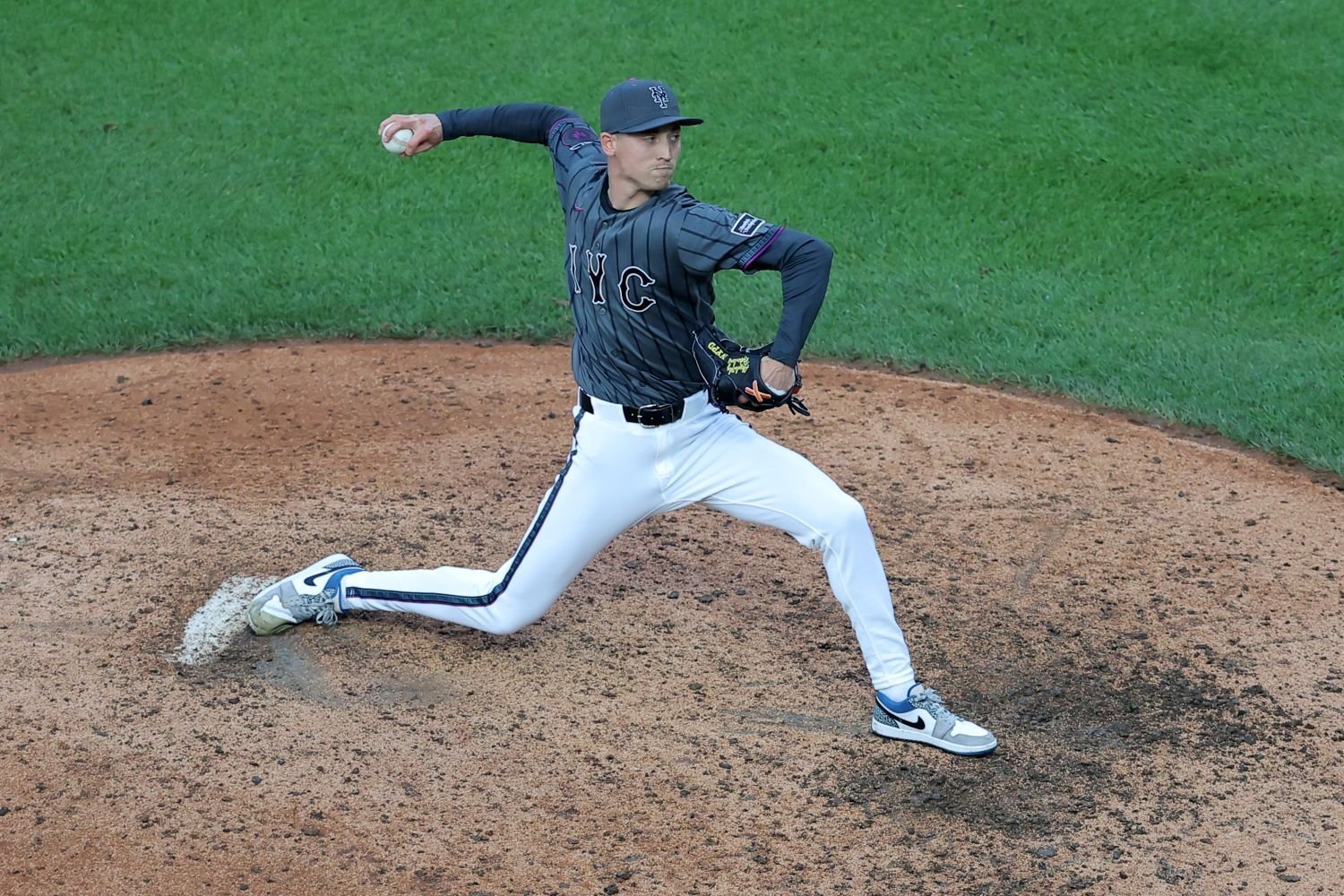 The bullpen has been a source of pride for the Milwaukee Brewers across their recent run of division dominance. Since 2018, they've had Corey Knebel, Josh Hader, Devin Williams, Jeremy Jeffress, Trevor Megill and Abner Uribe for long stretches of team control, and it's made Milwaukee one of the toughest teams in the league against which to come from behind. This season, however, things are looking shakier. Aaron Ashby is finding the strike zone less than ever. Chad Patrick has lost the feel for his cutter. Jared Koenig has lost his velocity—and his very place on the roster. Grant Anderson has held his own, but is more of a middle-relief arm than a truly dominant one. The Brewers are lacking one or two playoff-calibre arms for (perhaps) the first time since 2018, and that could hurt them in October. They're one injury to Trevor Megill or Abner Uribe away from having very little reliable quality in the bullpen; that's something they should be looking to address this month. While typically the Brewers dab around the edges at the deadline, often gambling on health (which hasn't worked out so well of late) or taking more middling arms, they should be looking for an arm they can trust in a big-game situation. They should target someone who wouldn't be out of place covering multiple roles, but who has upside akin to what Megill, Uribe, and the best version of Ashby offer. They may have to get comfortable with a slight overpay in this situation. The market is condensed; few teams view themselves as truly out of contention. As of right now, only seven teams are 6 or more games back of the Wild Card spots in each league: Cincinnati Reds San Francisco Giants Colorado Rockies New York Mets Los Angeles Angels Oakland/Sacramento/Wherever-they-are-now A's Kansas City Royals None of these teams have gotten where they are today with extremely effective pitching departments, but that doesn't mean there aren't some very interesting candidates. More options may emerge should the race for the playoffs gain more separation, with teams like the Padres, Astros, Blue Jays and Tigers all in limbo at the moment, and with some bigger pieces to covet. For now, though, let's take a look at the biggest relievers available from the seven teams realistically out of playoff contention. 1. Luke Weaver - New York Mets On all the teams definitely in trade mode, Luke Weaver is the biggest available prize. He's pitched in big playoff games for the Yankees, putting up a 1.76 ERA in 15 innings during their 2024 run to the World Series, and he's been lights-out this season. Using a high release point, Weaver averages 19" of induced vertical break on his four-seam fastball, though that's about average for his slot. The plus point is his command of the pitch, which approaches elite territory, and hitters have slugged just .242 against it this year. He complements the 95-MPH fastball with a 90-MPH cutter/slider and an 88-MPH changeup that's the prize of the bunch. Both secondaries have 30%+ whiff rates this season, with diverse movement that allows him to be essentially platoon-neutral. The 0.82 WHIP says it all. This is a 2.02 ERA that's well-earned, and Weaver is very comfortable producing in October. He is under club control next year as well, and won't come cheap, but the Brewers could do with additional bullpen reinforcement next year, too. Overall, of any pitchers on the market, this is the one who screams "closer" in October. Tough to hit, limits free passes, and swing-and-miss when he wants it: he's a reliable arm that can immediately turn the Brewers pen from "okay" to "Okayyyyyyyyyy!" 2. Antonio Senzatela - Colorado Rockies It's about time people stopped referring to Senzatela as "under-the-radar". Everyone in baseball has seen how effective the Rockies' former starter has been this year, and more so, he's doing it in a very Brewers-y way. Senzatela has added a harder cutter to his repertoire, which has removed some of the pressure on his four-seamer. As a result, his three-fastball mix has overpowered hitters, and that's all coming while pitching half of his game in Coors Field. If you want someone with a big fastball, capable of covering multiple innings while also looking comfortable closing out games, Senzatela might be the most coveted asset on the market. Using PitchProfiler's comparison graphic, we can see just how much his pitch usage has changed since last year: Having even close to average fastball stuff+ ratings is impressive, given where he's pitching, but the cutter has been more than just a swing-and-miss pitch. It's missed barrels repeatedly; the average exit velocity against it of just 84.4 mph is telling. Senzatela's contract contains a club option for next year—albeit an expensive one, at $14 million. The other interesting part of this is the Rockies front office. Not the strongest outfit in terms of analytics, what they search for in a return may be less rational or explainable. Each front office will evaluate a player differently, and this is a new group that seems to be a bit more competent than its predecessor, but the Rockies are still on any list of the handful of teams you'd most like to trade with, all else being equal. Senzatela will be traded this season. He looks primed for a big role in the postseason. Will it be with the Milwaukee Brewers? 3. Matt Strahm - Kansas City Royals For the final pick, in the absence of truly top-shelf relievers among the teams who are out of contention, why not look at someone with depleted value at present but with stronger underlying metrics and a history of performance that belies his first half this year? Former Phillies reliever Matt Strahm has a fun ERA of 7.24 with the Royals this season, but while he's lost a tick of velocity on the fastball, it's not enough to suggest this level of regression. Unlike Weaver and Senzatela, Strahm represents more of a rebound candidate than a finished product, The four-seamer/slider combo from a low left-handed arm slot would add something new to the Brewers pen. They lack a left-handed sidearmer akin to Grant Anderson. Strahm also gets real outlier movement on the fastball from his release height, and it was one of the best fastballs from a relief pitcher by run value from 2023-2025. Losing a tick of velocity shouldn't have made it regress this much; this feels salvegeable. In metric form, he's averaging 17" of induced vertical break and 13.5" of run from a 29° arm slot, which is almost unheard of. That combination creates unusually difficult angles for hitters, particularly against left-handed batters, and results in a lot of hitters getting underneath the ball and/or getting jammed. He's still managing contact well on the four-seamer and generating swing-and-miss when he wants it, and there's been no change in how often he finds the strike zone, but his slider has regressed. There may be an obvious reason why. Again, we're using Jeremy Maschino's pitcher comparison model: In 2025, Strahm was using his cutter often as a bridge pitch, and barely threw his changeup. It made his slider more difficult to pick out of the hand compared with the cutter, and both pitches did a great job of managing contact. This season, with the addition of the changeup, Strahm's fastball is playing better, but the slider has been hit hard. There is a location element to this, too. Strahm has left a lot of sliders up and over the middle of the plate compared to last season, when he dotted the outside corner to right-handers almost with impunity. Command will play as big a role as any pitch change, and I should point out that while Strahm has an ERA of 7.24, his expected ERA is below 4.00, so there has been an element of bad luck in there. Strahm would be more of a bet on past performance, but his funky release point, deceptive delivery and ability to mitigate hard contact could be invaluable in the playoffs—especially against dangerous left-handed hitters. Could he be a good buy-low option for the Brewers? What do you think of my rankings? Would you have added any other players from these seven teams that fit the criteria of a trusted October arm? let us know your thoughts in the comments below! Also, do check out our 2026 trade deadline symposium of potentially available players here! View the full article
 -
 Let’s check in on Sunday’s action down on the Boston Red Sox's farm. Triple-A Worcester Red Sox Series @ Scranton/Wilkes-Barre RailRiders (New York Yankees): 0-2 Season Record: 45-46 After a postponed game on Saturday, the WooSox fell in the second game of the series, getting walked-off by the RailRiders. Worcester’s afternoon on the mound was a combined effort featuring appearances from seven different pitchers. Osvaldo Berrios got the game started, lasting two innings before being pulled. He allowed one run on two hits, issuing one walk and striking out two. Noah Song replaced him, allowing one hit and a walk amid a shutout inning. Devin Sweet came in next, lasting one inning. Sweet was perfect as he struck out one before Tyler Samaniego entered in the fifth. Samaniego allowed one run to cross home on two hits, striking out two. Seth Martinez found a similar fate as he entered the game next. He too gave up one run on two hits across an inning-long appearance. Wyatt Olds took the bump next, matching the stat line of the two relievers before him. Olds allowed another run on two hits, striking out three before Sam McWilliams got the eighth inning. McWilliams was solid through one inning, but lost the game in the ninth. He gave up a walk-off home run as Worcester dropped the final game of the series. The WooSox had a solid day at the plate, tallying seven hits and going 3-for-8 with runners in scoring position. Nate Eaton, Mickey Gasper, and Brett Harris each recorded an RBI as the WooSox couldn’t come up with enough offense to grab the win. The WooSox took the lead early as Eaton scored on a wild pitch in the top of the first. Eaton drove in the next run for Worcester, scoring Braiden Ward on an eighth inning RBI single. Gasper, pinch-hitting for Jason Delay, drove Nick Sogard in on an RBI single of his own later in the inning. With two outs late in the eighth, Harris tied the game with his first double of the season as he drove in Eaton. It wasn’t enough, however, as Worcester fell by a slim margin. Double-A Portland Sea Dogs Series vs. Somerset Patriots (New York Yankees): 2-1 Season Record: 46-41 After an offensive explosion on Saturday, the Sea Dogs mustered just two runs on Sunday. However, it was enough for a 2-1 win behind excellent pitching. Gage Ziehl got the start in the series finale against Somerset, turning in an exceptional outing. He earned his fifth win of the season after turning in five frames of shutout ball. Ziehl struck out eight, allowing just two hits and issuing one walk. Ziehl rebounded in a strong way after a disastrous eight-run meltdown the last time he took the mound. Caleb Bolden took over for the sixth, spinning a one-hit shutout inning as he struck out one. Reidis Sena got the call for the seventh inning, matching Bolden with a one-hit appearance as he kept the shutout alive. Patrick Halligan entered to begin the eighth and allowed the only run of the day as he closed the final two innings of Sunday’s game, holding onto the win. Sunday’s offensive effort from Portland paled in comparison to Saturday’s, but the Sea Dogs were potent enough to get the win. The game was in a deadlock until the fifth inning, when Matt Frazier pulled a ball down the right field line and into the corner. Frazier sped around first and second, pulling into third with a stand-up triple as Mason White crossed home from first base. In the eighth, Jack Winnay doubled the lead. He dropped a ball into the gap in right center as Nelly Taylor strode home from third. Winnay ended up at second with an RBI double, his fifth of the year. High-A Greenville Drive Series vs. Frederick Keys (Baltimore Orioles): 1-2 Season Record: 36-51 Greenville fell in a high-scoring shootout, losing the series finale. It was a shaky day to say the least for Greenville’s staff, which allowed sixteen runs on an astounding 25 hits. Jojo Ingrassia started the game for the Drive, lasting 4⅓ innings. It was a respectable outing for Ingrassia as he allowed two runs on five hits, striking out five as he issued four walks. Matt Duffy came in next as things began to fall apart for the Drive. He allowed five runs on seven hits, striking out two before Griffin Kilander made an appearance. Kilander 1⅓ innings as he let the game get away from him. He allowed six runs on six hits, striking out four. Matt McShane entered to do some damage control and ended up turning in the most successful outing of the evening for Greenville. Across 1⅓ shutout frames, he allowed two hits and a walk. P.J. Labriola took the final inning of the night, allowing four more runs (one unearned) on five hits as Frederick completed an incredible night from the dish. In the game of baseball, it’s hard to match a ten-run outpouring from your opponent, much less a 17-run onslaught. The Drive were able to put some runs on the board, but they could do little to compete with the offensive machine that was Frederick on Sunday evening. Yophery Rodriguez had himself a four-RBI night, while Luke Heyman and Isaiah Jackson had an RBI each. Three of Rodriguez’s RBIs came in the second inning. He smacked a homer to right center, scoring Gerardo Rodriguez and Ronny Hernandez as the Drive snagged an early lead. In the third, Jackson added to the lead with an RBI double, scoring G. Rodriguez once more. In the fifth, Heyman crushed his tenth homer of the season as he brought the Drive within one. In the ninth, with any chance of winning the game gone, Y. Rodriguez scored Hernandez again as he tacked on his fourth RBI of the night. Low-A Salem RidgeYaks Series vs. Delmarva ShoreBirds (Baltimore Orioles): 2-1 Season Record: 37-51 Salem took the series rubber match behind a three-RBI day from Kleyver Salazar. Leighton Finley and Trennor O’Donnell guided Salem to victory on Sunday with a combined two-run performance. Finley earned his fifth win of the season for his five frames of work as he got the start. He allowed two runs on four hits and issued a walk. He struck out six as he fought back against the ShoreBirds offense. O’Donnell entered in the sixth, earning his first save of the season for his bulk relief appearance. Across four shutout innings, O’Donnell allowed just two hits and didn’t issue a walk. He struck out four batters as he sealed the series win for Salem. Salazar accounted for the bulk of the Yaks offense as he went 3-for-3. Ilan Fernandez and Givian Sirvania had two hits apiece as well. Salazar’s RBIs came early. In the first inning, with Skylar King and Andrews Opata on base, Salazar shot a line drive over the wall in left field. The three-run blast, his seventh of the year, gave the Yaks an early lead that they never relinquished. Three innings later, Sirvania added a run to the lead with an RBI single, scoring Justin Barry and adding the final run of the day for Salem. View the full article
 -
Royals Sign First Round Supplemental Pick Taylor Rabe
DiamondCentric posted an article in Royals Keep
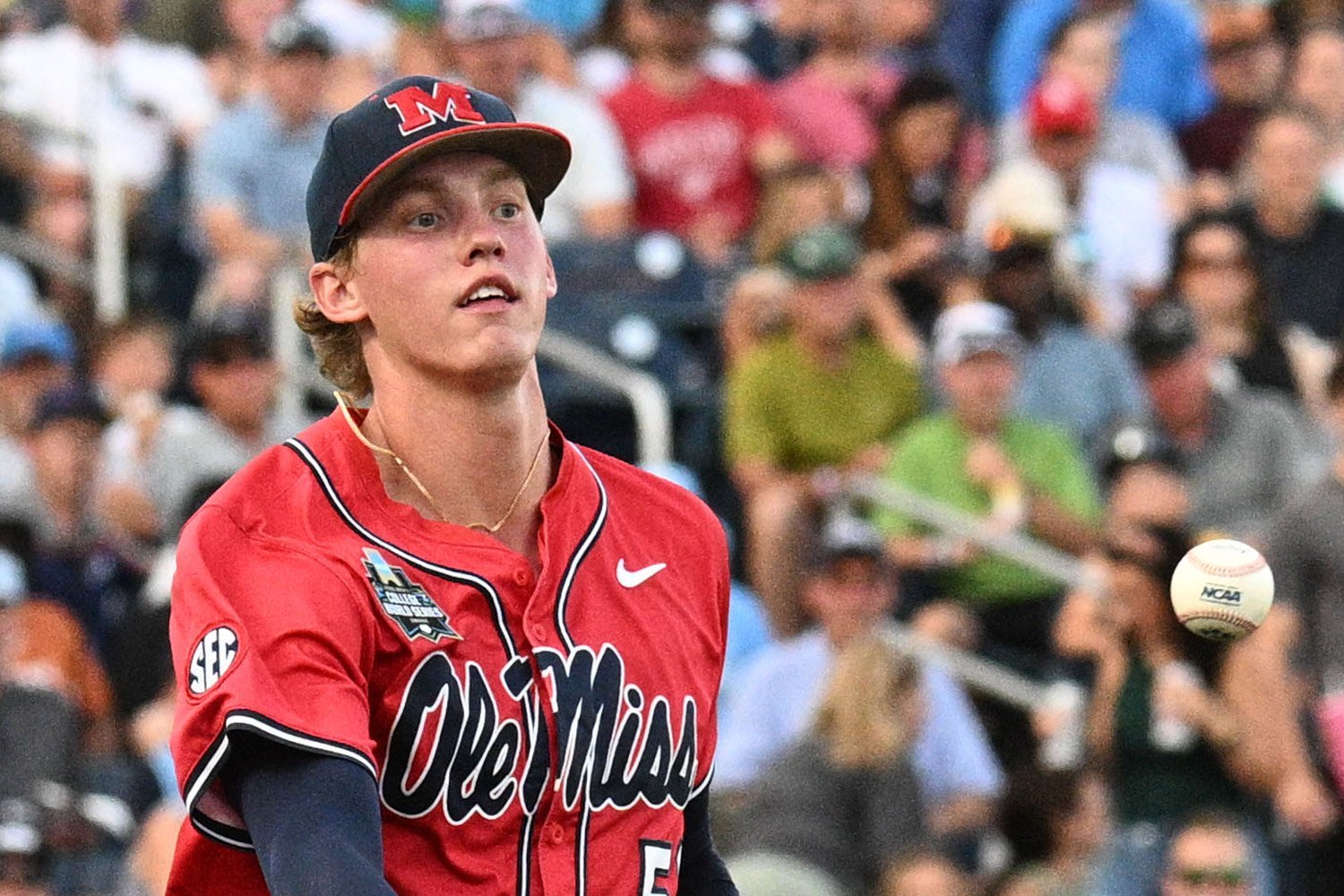 The Royals have signed Supplemental first-rounder Taylor Rabe, who was the 30th overall pick in the 2026 MLB Draft. Rabe is a right-hand pitcher from Ole Miss who has touched 100 mph with his fastball. He also throws a slider and a cutter as well. Rabe pitched for the Rebels the past two seasons, and in 17 games pitched this year, he went 5-3 with a 3.55 ERA over 76 innings pitched. In those innings, he had 105 strikeouts with 15 walks. He signed for $3,197,500, which is $7,500 above slot value for the 30th overall pick. View the full article
 -
 This sounds familiar: A young New York Mets minor-leaguer is athletic enough to play multiple positions in the middle of the diamond, is a demon on the basepaths, and is learning to slug. Now, I'm not saying that this minor-leaguer, Trey Snyder, is another A.J. Ewing, but he seems to fit the mold. It sure looked that way Sunday. Snyder had a huge all-around game in St. Lucie’s 8-6 win at Palm Beach. He drove in five runs with a single and a home run, finished a double shy of the cycle on a four-hit day, and stole a base. He handled his only chance in center field. The 20-year-old is alternating between center and second base in 2026 (he has pro experience at shortstop, too). The shuttling isn’t hurting his offense. He’s slashing .293/.353/.414 in 135 plate appearances for St. Lucie, although a .366 BABIP indicates luck might be a factor. He has two home runs, 11 extra-base hits, and 13 stolen bases in 16 attempts. He’s producing an 8.9 percent walk rate and a 23.7 percent strikeout rate. His season debut was delayed to May 20 because of an elbow injury. After a short rehab stint with the FCL Mets, he was activated off St. Lucie’s 60-day injured list on June 2. This is his third consecutive season with St. Lucie after being taken by the New York Mets in the fifth round of the 2024 MLB Draft out of Liberty (Missouri) North High School. The former two-way player is much bigger (6-1, 197 pounds) than Ewing (5-10, 160), so this is not a perfect comp. But it’s not that far off, either. Elsewhere on the farm: Syracuse suffered a bullpen meltdown and lost 7-3 to Buffalo. The Bisons broke a 3-3 tie in the ninth with four runs off Ben Simon and Guillo Zuniga. Binghamton fell to Akron 7-3. despite the best efforts of left-hander Jonathan Santucci. The No. 8-ranked prospect on GCM's list struck out 13 in 5 2/3 innings, but allowed five runs (four earned). The Rumble Ponies were outscored 30-6 while being swept in the weekend series. Brooklyn lost a doubleheader to Hudson Valley 14-2 and 5-2. The Cyclones were held to two hits in the nightcap. Four different players drove in runs for them in the twin bill. The FCL Mets were off. The Mets’ three representatives all saw action in Sunday’s Dominican Summer League All-Star Game, won by the American League 7-6. Abner Meza pitched a scoreless third inning, Cleiner Ramirez was 0-for-1 with a walk and a run scored, and Jonnhan Sanchez went 0-for-1. New York Mets Transactions New York Mets sent RHP Dedniel Núñez on a rehab assignment to Syracuse Mets. New York Mets sent SS Zack Short outright to Syracuse Mets. Nightmare Ninth Negates Arroyo’s Homer For Syracuse The Bisons' ninth started with Simon issuing back-to-back walks. A pair of RBI singles followed to make the score 5-3. Zuñiga came on for Simon after the second one. An RBI groundout increased the margin to 6-3, and a fielding error by shortstop Ronny Mauricio on the play extended the inning. The Bisons took advantage with a third RBI single. Syracuse had tied the game 3-3 in the sixth on Christian Arroyo's two-run homer. It was the second time in the game the Mets had rallied to tie. They did it the fifth, as well, with a Nick Morabito RBI single. Robert Stock, promoted from High-A Brooklyn for the next phase of his rehab from thoracic outlet syndrome surgery, started and allowed one run over four innings. He gave up three hits, walked none and struck out three. Tobias Myers gave up a pair of runs in the sixth. Dedniel Núñez pitched a scoreless seventh as his rehab from elbow surgery moved to Syracuse. Player AB R H RBI BB K Jihwan Bae 5 0 0 0 0 0 Nick Morabito 4 0 1 1 0 2 Ronny Mauricio 4 0 1 0 0 0 MJ Melendez 4 0 1 0 0 1 Christopher Morel 4 1 2 0 0 2 Christian Arroyo 4 1 1 2 0 0 Yonny Hernández 4 1 1 0 0 3 Cristian Pache 2 0 0 0 2 0 Hayden Senger 4 0 2 0 0 2 Player IP H R ER BB K HR Robert Stock 4 3 1 1 0 3 1 Tobias Myers 2 2 2 2 1 1 1 Dedniel Núñez 1 1 0 0 0 1 0 Joe Jacques 2/3 0 0 0 0 1 0 Ben Simon 2/3 2 4 4 2 1 0 Guillo Zuñiga 2/3 1 0 0 0 1 0 Santucci Strong, But Binghamton Falls To Akron Santucci recorded 13 of his 17 outs by way of strikeout, but he also allowed six hits, two of which produced three runs in the fifth. He left the game in the sixth trailing 4-0. Carlos Guzman allowed an inherited runner to score, but the defense was mostly responsible. A slow grounder up the middle got through the infield for an RBI single, and center fielder Jose Ramos bobbled the ball to allow a second run to score on the play. The Binghamton defense let Santucci down in the fourth inning with a pair of errors on a steal attempt with runners at the corners. Binghamton’s offense managed only four hits and struck out 13 times, but it showed life in the ninth. Matt Rudick drew a bases-loaded walk, Vincent Perozo hit a sacrifice fly, and Kevin Villavicencio singled home a run to make it 7-3. Player AB R H RBI BB K Chris Suero 3 1 0 0 1 2 Jose Ramos 4 0 1 0 0 2 Nick Lorusso 4 1 2 0 0 0 JT Schwartz 2 1 0 0 1 2 Matt Rudick 3 0 0 1 1 1 Vincent Perozo 3 0 0 1 0 1 Kevin Villavicencio 4 0 1 1 0 1 Jaylen Palmer 4 0 0 0 0 3 Nick Roselli 3 0 0 0 0 1 Player IP H R ER BB K HR Jonathan Santucci 5 2/3 6 5 4 2 13 0 Carlos Guzman 1 1/3 3 1 0 0 2 0 Douglas Orellana 1 0 0 0 1 2 0 Zach Peek 1 2 1 1 1 2 0 Six-Run Fourth Buries Brooklyn In Opener Hudson Valley accepted the charity of reliever Calvin Ziegler, who walked four and threw a run-scoring wild pitch while failing to record an out in the fourth. A bases-clearing triple put the exclamation point on the frame. Ziegler was on for Frank Camarillo, who started and took the loss. He allowed three runs on five hits with one walk and one strikeout over three innings. Brooklyn scored first via Daiverson Gutierrez's RBI double in the second. Hudson Valley answered with three runs in the third on three consecutive run-scoring hits. Brooklyn got one back in the bottom half on Corey Collins' RBI single. Player AB R H RBI BB K Mitch Voit 3 0 0 0 0 0 Yonatan Henriquez 3 0 0 0 0 1 John Bay 3 1 2 0 0 0 Corey Collins 3 0 1 1 0 2 Ronald Hernandez 3 1 1 0 0 1 Daiverson Gutierrez 3 0 1 1 0 1 Yohairo Cuevas 3 0 0 0 0 2 Jamari Baylor 3 0 0 0 0 1 Sam Biller 3 0 0 0 0 2 Player IP H R ER BB K HR Frank Camarillo 3 5 3 3 1 1 0 Calvin Ziegler 0 0 5 4 4 0 0 Bryce Jenkins 1 1 1 1 0 1 0 Josh Blum 1 2 2 2 2 1 0 Hunter Hodges 2/3 1 3 3 4 1 0 Tanner Witt 1 1/3 1 0 0 1 2 0 Cyclones Fail To Capitalize In Game 2 Brooklyn added seven walks to their two hits in the nightcap, but left eight on base in the seven-inning game. The Cyclones' runs scored on a Trace Willhoite bases-loaded walk in the second and Mitch Voit's RBI groundout in the fourth. Jose Chirinos started and took the loss, allowing three runs on four hits with one walk and five strikeouts over five innings. Hudson Valley added two insurance runs in the seventh off Rafi Vazquez. Player AB R H RBI BB K Mitch Voit 4 0 0 1 0 1 Yonatan Henriquez 4 0 0 0 0 0 John Bay 3 0 0 0 1 2 Ronald Hernandez 4 0 0 0 0 1 JT Benson 1 1 1 0 2 0 Daiverson Gutierrez 3 0 0 0 0 1 Jamari Baylor 1 0 0 0 2 0 Colin Houck 2 1 1 0 1 1 Trace Willhoite 2 0 0 1 1 1 Player IP H R ER BB K HR Jose Chirinos 5 4 3 3 1 5 1 Kevin Herget 1 2 0 0 0 1 0 Rafi Vazquez 1 3 2 2 0 0 0 Snyder Drives In Five As St. Lucie Holds Off Palm Beach Snyder was the Mets' offense for most of the first three innings. A two-run single in the first and a three-run homer in the third helped give St. Lucie a 6-0 advantage. Palm Beach made things interesting in the seventh with a solo home run and a grand slam that cut the gap to 8-6. Ernesto Mercedes and Miguel Mejias then combined to get the final eight outs, all via strikeout. Mejias struck out the side in the ninth for his third save. Ethan Lanthier started and struck out four over 2 1/3 scoreless innings, allowing one hit and one walk. Tyler McLoughlin earned the win with 1 2/3 scoreless innings of relief. He struck out three. Rehabbing major-leaguer Mike Tauchman went 2-for-5 with a double and two runs scored, Player AB R H RBI BB K Marco Vargas 2 1 0 0 2 2 Taylor Darden 0 0 0 0 1 0 Antonio Jimenez 5 0 2 0 0 1 Mike Tauchman 5 2 2 0 0 0 Randy Guzman 4 2 1 1 1 1 Trey Snyder 5 2 4 5 0 1 Branny De Oleo 4 1 2 2 1 1 Simon Juan 4 0 1 0 1 2 Jackson Hauge 5 0 0 0 0 1 Francisco Toledo 4 0 1 0 0 1 Julio Zayas 0 0 0 0 0 0 Player IP H R ER BB K HR Ethan Lanthier 2 1/3 1 0 0 1 4 0 Tyler McLoughlin 1 2/3 1 0 0 1 3 0 Jonathan Jimenez 1 0 0 0 0 1 0 Luis Alvarez 1 1/3 2 4 4 2 1 2 Ernesto Mercedes 1 2/3 2 2 2 1 5 1 Miguel Mejias 1 0 0 0 0 3 0 Top-20 Prospect Performance Jonah Tong: DNP Jack Wenninger: DNP Ryan Clifford: DNP Elian Pena: DNP Nick Morabito: 1-for-4, RBI, 2 K Jacob Reimer: DNP Mitch Voit: 0-for-3; 0-for-4, RBI, K Jonathan Santucci: 5 2/3 IP, 6 H, 5 R, 4 ER, 2 BB, 13 K Zach Thornton: MLB Chris Suero: 0-for-3, R, BB, 2 K Will Watson: DNP Wandy Asigen: DNP Eli Serrano III: DNP Randy Guzman: 1-for-4, 2 R, RBI, BB, K Dylan Ross: DNP Ryan Lambert: DNP Antonio Jimenez: 2-for-5, K R.J. Gordon: DNP Jonathan Pintaro: DNP Marco Vargas: 0-for-2, R, 2 BB, 2 K View the full article
 -
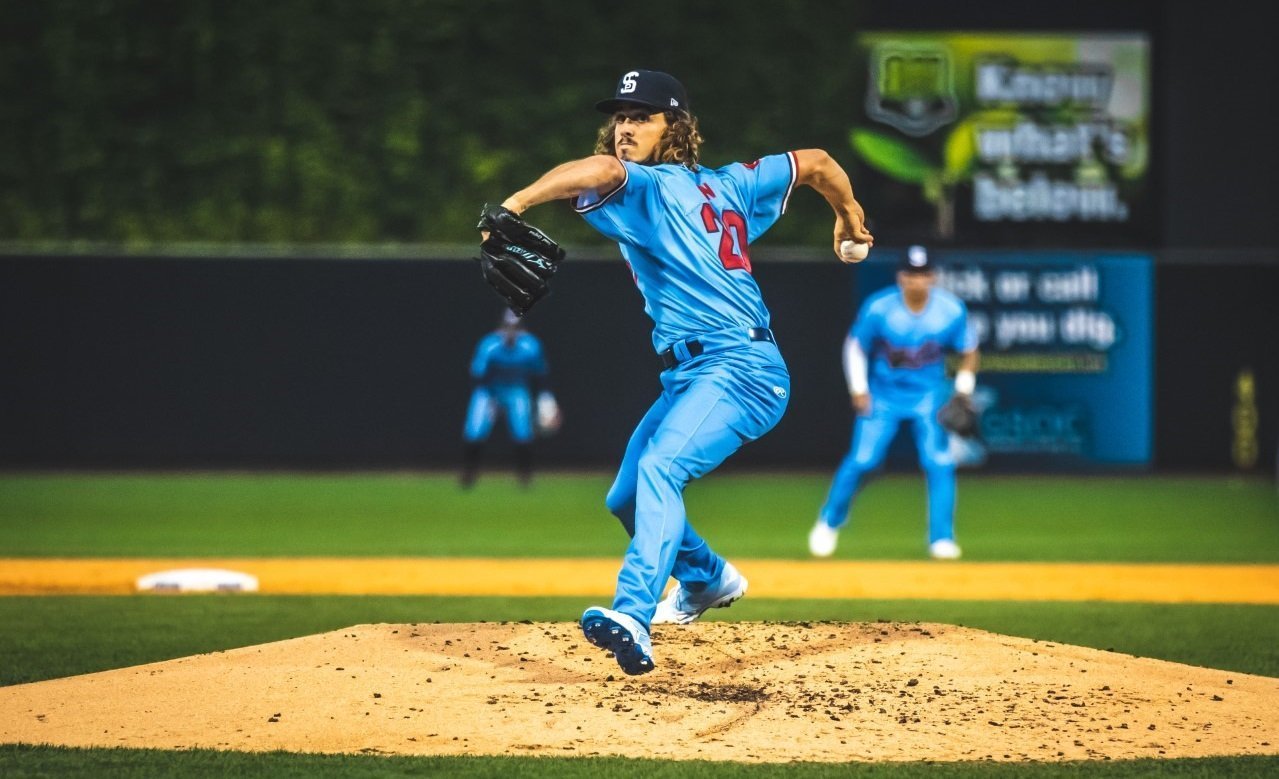 Five years ago this month, the Minnesota Twins made one of the most significant trades in franchise history. At the time, it felt like an emotional farewell. Looking back now, it serves as a reminder that the best trades aren't always judged by what a team gives up, because they're defined by the opportunity they create. The Twins did lose Nelson Cruz at the 2021 MLB trade deadline, but in the process, they unknowingly acquired the pitcher who would become the face of their rotation for the better part of the decade. That type of return is exceedingly rare. Cruz had become much more than a designated hitter during his two and a half seasons in Minnesota. He was the heartbeat of the clubhouse and the centerpiece of the 2019 "Bomba Squad," helping the Twins shatter the MLB single-season home run record while restoring excitement to Target Field. He returned for the shortened 2020 season and entered 2021 hoping to lead one more postseason run with a veteran core that still believed it could contend. Instead, everything unraveled. Minnesota stumbled through injuries, underperformance, and inconsistency, eventually finishing 73-89 and in last place in the American League Central. Once it became clear the season couldn't be salvaged, the Twins made the difficult but necessary decision to move one of the most beloved players in the franchise’s recent history. They sent Cruz and minor-league pitcher Calvin Faucher to Tampa Bay. In return came two pitching prospects: Joe Ryan and Drew Strotman. At the time, it looked like a sensible baseball trade. Five years later, it looks like a franchise-altering steal. A Trade Built on Opportunity The Rays have long been among baseball's most aggressive organizations at identifying veterans who can push a contender over the top. Cruz had been on Tampa Bay's radar for years. When the Rays finally acquired him in July 2021, they got exactly what they expected. The 41-year-old slugger hit 13 home runs with 36 RBI over 55 games, helping Tampa Bay capture another AL East title For the Rays, the trade accomplished its goal. For the Twins, however, it became something much larger. They out-Raysed the Rays, by taking a player Tampa wasn’t willing to give a chance to and helping him reach an All-Star ceiling. Tampa Bay had pitching. Minnesota had an opportunity. Ryan wasn't an unknown prospect when the trade happened. He had dominated during his first full professional season in 2019, posting a 1.96 ERA (while striking out 183 hitters in 123 2/3 innings) across three levels. Yet, despite the production, his path to the majors remained cloudy. Rather than preparing for a debut in 2021, Ryan represented Team USA in Olympic qualifying before helping the Americans win a silver medal in Tokyo. While that was an incredible personal accomplishment, it also reinforced where he stood in Tampa Bay's organizational depth chart. The Rays could afford to wait. The Twins couldn't. Minnesota was entering a transition period and needed pitching immediately. Ryan returned from Japan, made only two Triple-A starts in the Twins organization, and was promoted to the majors. Almost instantly, it looked like the Twins had found something special. In just his second career start, Ryan carried a perfect game into the seventh inning against Cleveland. Two starts later, he struck out 11 Cubs hitters at Wrigley Field. The flashes weren't accidental. They were the beginning. What’s Changed With Ryan? The pitcher the Twins acquired isn't the one they have today. One reason the trade has aged so well is Ryan's willingness to reinvent himself. When he debuted in 2021, he leaned almost exclusively on his four-seam fastball, throwing it roughly two-thirds of the time. That approach worked early, but Ryan understood that sustaining success required constant evolution. Following the 2022 season, he traveled to Driveline Baseball to develop a splitter and refine his pitch mix. Another offseason brought him back to Driveline and additional work on a sinker. More recently, his curveball has become a significantly larger part of his arsenal. Every offseason has brought another adjustment. Every season has made him better. Rather than relying solely on the fastball that carried him through the mihnors, Ryan has become one of baseball's most complete and adaptable pitchers. Modern baseball often celebrates radar-gun readings. Ryan has become one of the best examples that there is another path to dominance. His four-seam fastball typically sits between 93 and 94 mph—not overpowering by today's standards—but it's one of the most effective pitches in baseball because of how it plays. Ryan releases the ball from one of the lowest heights among starting pitchers, while still generating exceptional riding life through the top of the strike zone. Hitters see a release point unlike almost anyone else, then watch the ball seemingly rise above their barrels. The pitch consistently misses bats despite lacking elite velocity. That's why it has graded among baseball's most valuable fastballs over the last several seasons. It's a reminder that movement, deception, command, and sequencing still matter. Ryan has mastered all four. Looking Back with a New Perspective The Nelson Cruz trade will always carry mixed emotions because of what Cruz meant to the organization. He was the foremost symbol of one of the most entertaining eras in recent Twins history and left Minnesota as one of the most respected players to ever wear the uniform. But five years later, the trade has become a reminder that difficult decisions often define successful organizations. The Twins honored a veteran who deserved a chance to compete for a championship while acquiring a young pitcher whose talent had yet to be fully realized. Both organizations accomplished what they set out to do. Only one, however, found the foundation of its rotation for years to come. Five years later, the trade is remembered less as the end of the Bomba Squad and more as the beginning of the Joe Ryan era. What stands out about this trade? What were your thoughts about the trade when it happened? Leave a comment and start the discussion. View the full article
 -
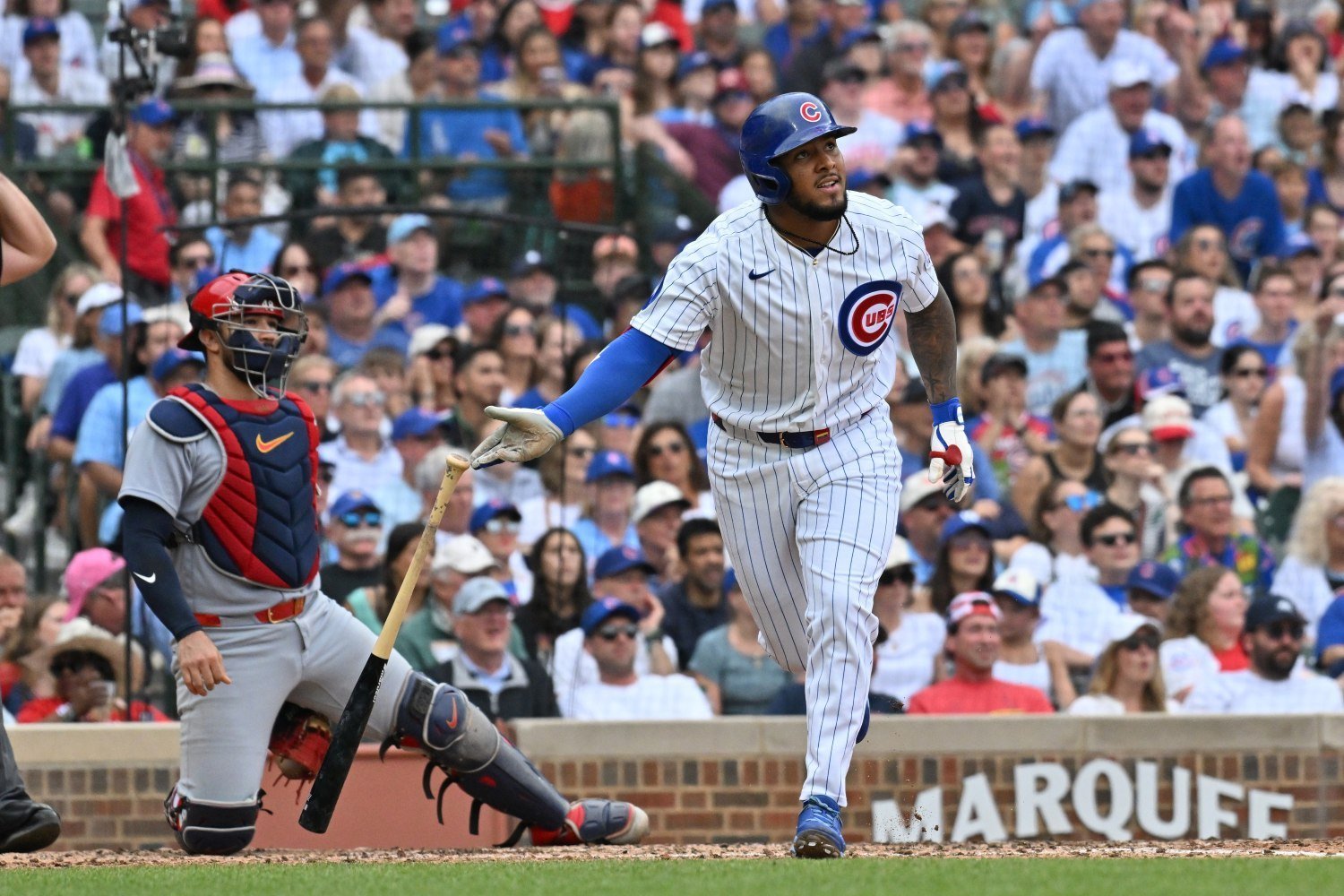 It’s hard to not be pleased with Pedro Ramírez’s first cup of coffee in the majors. The 22-year-old has made a very strong impression since he made his debut with the Cubs back in late May, quickly showing why the organization has been so high on his bat throughout his development. Through his first 71 plate appearances in the majors, Ramírez is slashing .281/.329/.438, good for a 110 wRC+. Those numbers are impressive enough on their own, especially for a player adjusting to the highest level of competition for the first time. But what makes Ramírez’s early success even more encouraging is that his production has been backed up by strong underlying numbers. No, he hasn’t continued hitting an extra-base hit every other game (like he did at Triple-A); nor should anyone have expected him to. That type of production is nearly impossible to sustain against major-league pitching, and Ramírez doesn't have that kind of power. But the quality of his at-bats and the quality of his contact have carried over, which is a much better indicator of whether his success is legitimate. Ramírez’s average exit velocity of 89.2 MPH and hard-hit rate of 42.9% are both right around league average, which is impressive considering his 5-foot-9 frame. (It's worth noting that, though officially listed at 165 pounds, he's clearly more like 180.) He isn’t a player who is going to attack pitches with raw strength and vaporize the ball, but he's shown he can consistently square up baseballs. His bat speed is a big reason why. Ramírez’s average bat speed of 72.6 MPH is above the league average, which gives him the ability to catch up to high-velocity fastballs while maintaining the plate discipline and contact skills that have always been a major part of his profile. After all, that's what Ramírez is truly known for. Throughout his professional career, Ramírez has always been an elite contact hitter with an impressive ability to avoid strikeouts. That skill has translated immediately to the majors, where his strikeout rate sits at just 14.9%, one of the better marks in baseball. His ability to make contact inside the strike zone has been even more impressive, as his zone contact rate sits at 93.3%. Ramírez gets the bat on the ball, and when he does, good things tend to happen. Given his batted-ball profile, there’s reason to believe this early success is sustainable. Ramírez has never been a player who relies on hitting towering fly balls or selling out for power. Instead, he consistently puts quality swings on pitches and uses the entire field. Through his first few months with the Cubs, 65% of the balls he has put in play have been either ground balls or line drives. That number was even higher at Triple-A, where 69% of his batted balls fell into those two categories. He doesn’t try to do too much at the plate. He doesn’t chase home runs or try to pull every pitch. He simply takes what pitchers give him and finds ways to get on base. In that regard, he is very similar to his Cubs teammate Nico Hoerner. Neither player is known for overwhelming power, but both are smart hitters who consistently put the ball in play, control the strike zone, and find holes in the defense. In today’s game, where power has become such a major focus, that type of offensive profile can sometimes be overlooked. But players who consistently create quality at-bats still have plenty of value. Ramírez, like Hoerner, also brings an element of speed that adds another layer to his offensive game. He can pressure defenses on the basepaths, take extra bases, and turn singles into scoring opportunities. That athleticism only adds to his overall offensive profile. At just 22 years old, Ramírez already looks like a hitter who is well beyond his years. The bat should keep him in the Cubs’ lineup (at least part of the time; his right-handed swing is far behind his left-handed one) for a long time. The biggest question surrounding his long-term future is where he fits defensively. Ramírez has moved around the diamond throughout his professional career, but he has spent the most time at second base and third base. However, he hasn’t exactly established himself as a standout defender at either position. More importantly, both spots appear to be occupied for the foreseeable future. Hoerner has second base locked down, while Alex Bregman gives the Cubs a long-term option at third base. Ramírez has also seen time at shortstop and left field, but Dansby Swanson is locked in for the long haul at short, which Ramírez is not quite good enough to play at the highest level, anyway; and left field would place a heavy demand on that bat. Because of that, it’s possible Ramírez eventually settles into more of a platoon DH role, while still moving around the field when needed. He started at DH on both Saturday and Sunday. The Cubs don’t need Ramírez to be a Gold Glove-caliber defender if he continues to provide the type of offensive value he has shown early in his career. His versatility gives Craig Counsell more flexibility, and his bat gives the lineup another consistent presence. Regardless of where he ultimately ends up defensively, Ramírez has flashed a lot of upside over the last two months. He’s a hitter with a well-rounded offensive skill set, impressive bat-to-ball ability, and the approach needed to succeed at the highest level. While his defensive future is a little less clear, his offensive profile is exactly the type of player teams look for. There's a lot to like here, and whether he does it via direct contributions or as a valuable trade chip, he looks poised to help the team both this season and beyond. View the full article
 -
Padres' Trade Deadline Plans Will Be Unfurled By Michael King
DiamondCentric posted an article in Padres Mission
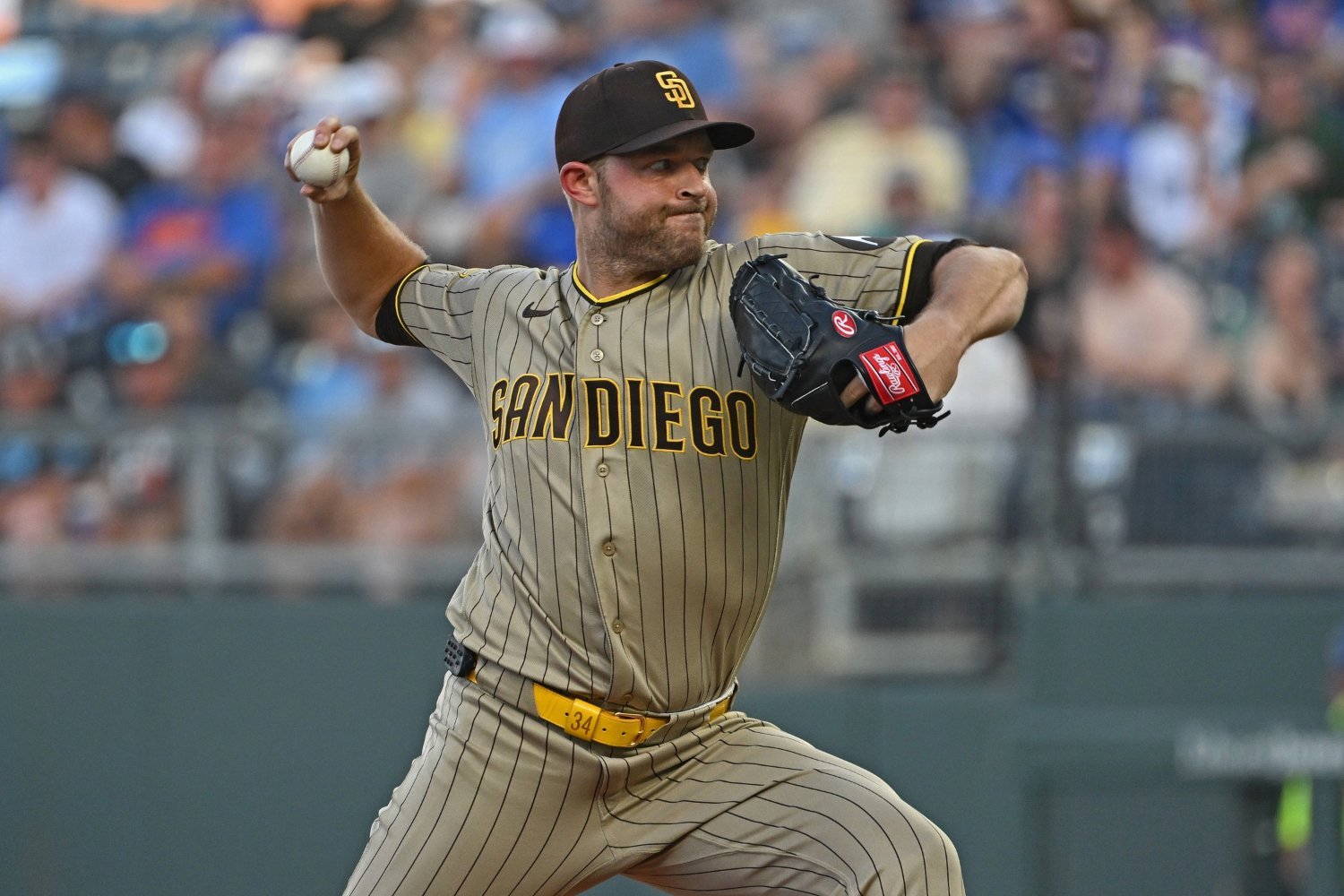 As a true .500 team entering the second half, the San Diego Padres are right on the buy/sell fence. They’re close enough to the playoffs where pushing their chips would be defensible, but so would a calculated retreat. And the player who sits atop the proverbial fence is Michael King. King has been at the forefront of the modern reliever-to-starter conversion. Between 2019 and 2023 with the Yankees, King made 19 starts against 96 relief appearances and excelled. As a spot starter and multi-inning reliever, he pitched to a 3.38 ERA and amassed 4.7 fWAR and 5.6 bWAR. For just 247.2 innings of work, those are excellent figures, and continuing as a bullpen fireman would have been an apt career choice. Why zig when the zagging is so swell? Well, the Padres had other, better ideas. King arrived in San Diego in 2024 as part of the Juan Soto trade, and instead of trotting out of the bullpen 50 times a season, the Padres decided to see if he could toe the rubber every fifth day. At the time, there was significant skepticism that King could make the transition, but he quickly and emphatically put those to bed. In 2024, King made 30 starts and earned a 2.95 ERA across 173.2 innings. It was good for 3.9 fWAR and 4.1 bWAR. That’s not quite ace-like production, but if that’s your number three starter, you’ve got yourself a great rotation. His 2025 wasn’t quite as sterling as injury limited him to 15 starts, but he still finished the season with a 3.44 ERA. And now in year three of his major league starting career, he has made 20 starts with a 3.34 ERA over 113.1 innings. King has been, without a doubt, the Padres' best starter. He leads their starting rotation in innings, ERA, fWAR (1.7), and bWAR (2.6), with the latter figure leading the entire team. If he were to seriously be available at the deadline, he’d be one of the top pitchers on the market, but he’d also be the proverbial white flag raised from the white picket fence. However, the decision to trade King isn’t as simple as quitting on this season, as he has a player option for the next two, which makes his trade candidacy a compelling thought exercise. The first place to start with a King trade is with that player option. The deal he signed with the Padres was an act of creative accounting. After so much success in San Diego, the Padres re-signed King to a three-year, $75 million deal this offseason, but it was really a one-year deal worth $17 million with an option for two years and $58 million. His average annual value of $25 million is spread evenly over the contract for luxury tax purposes, while the cash payouts escalate rapidly. The deal was structured this way to help offset their massive luxury tax figure of $258.4 million against just $230.6 million in projected cash payroll. Due to the Padres being above the $244 million competitive balance tax, they are set to pay $4.34 million in luxury tax. King, by only making $17 million in cash this season, helped offset the Padres' luxury tax payments and reduce their total cash expenditures for the 2026 season. Unfortunately, everything changes in 2027 and 2028. King’s cash payout increases to $28 million in the former year and $30 million in the latter, but that’s just the tip of the financial iceberg the Padres are steaming towards. Starting in 2027, Manny Machado’s salary bumps up to $40 million from $21 million, against the flat $31.8 million luxury tax figure for the life of his deal. While Jackson Merrill’s contract helps alleviate this spike, the Padres functionally built this roster to have a financial crunch in 2027, and King’s contract structure is a prime example. If King were to opt into his deal for 2027 and 2028, the Padres would very likely feel compelled to offload salary, so why not get ahead of disaster and move one of their most moveable contracts early? The financial motivations to trade King ahead of the deadline are massive, and while his contract structure might be a hindrance to a less cash-rich franchise like the Padres, his lower competitive balance hit, compared to his salary, might be awfully enticing for a franchise that prints money. Now, you can’t move a player as important as King just for financial reasons. He’s your best starting pitcher, and you’re still in the playoff picture. However, the return for King could help restock a depleted farm system. With Machado’s looming salary explosion and drop in production, the Padres' best hope of competing over the next half-decade is to receive an infusion of young, cost-controlled talent to offset an underwater contract. While there will undoubtedly be massive interest in King, presumably from the Cubs, his value league-wide will be incredibly interesting. As I’m sure you’ve noticed, I keep mentioning his fWAR and bWAR, with his bWAR always being superior, and there’s a reason for that. King has spent the past three seasons continuously beating his ERA estimators, which fWAR (Fangraphs) is based upon, while bWAR (Baseball Reference) uses ERA with a team defense weight. *2026 stats capture only the first half After a certain point, if a player keeps beating their ERA estimators, you have to believe they’ll keep doing so. Unfortunately, the team trading for him has to believe that as well, and front offices have never been more sophisticated in their player analysis. Landing a starter who can give you a mid-threes ERA over 180 innings is game-changing, but getting that level of bulk with an ERA at or above 4.00 is more of a backend starter. Over the past three seasons, among starters who have thrown 300 or more innings, King has the sixth-largest gap between his actual ERA and the average of his ERA estimators. This has been great for the Padres, but it will undoubtedly scare some teams off. The other confounding issue has been the erosion of his strikeout rate. In 2024, King posted a 27.7% strikeout rate, but that fell to 24.7% in 2025, and currently sits at 20.7% in 2026. Even if we view his 2024 season as a career year, the drop in strikeouts, combined with a corresponding increase in walk rate (a career high 9.7% this season), is likely to mute his market. However, based on King’s underlying contact, zone, and swing data, he’s probably underperforming his strikeout and walk rates a tad. If an enterprising team believes they can get his stuff to play better out of the zone, King should see his strikeout rate skyrocket, as it’s unusual for a player to miss bats in the zone, but not out of it. As for his walk rate, no player who is in the zone this much, throwing a league-average number of first-pitch strikes, should have a below-league-average walk rate. The question for any team trading for King is whether or not they think they can continue to get the same level of performance despite some yellow flags. With how pitching-needy teams are by the trade deadline, teams will certainly be interested in a relatively durable and stable starting pitcher under contract for the next two seasons, but is he worth moving if he can only net one back-end top-100 prospect? There are more reasons to move King than keep him, but waiving the white flag is something front offices should always do with caution. And even if the move makes long-term sense, if the Padres execute a quick turnaround or Machado, Jackson Merrill, and Xander Bogaerts start playing up to their usual standards, then King is the exact type of steadying mid-rotation force they’d need. All told, the case to keep or move King is as on the fence as the Padres’ season. But whatever they decide to do with him will tell us what they really think of this team. View the full article
 -
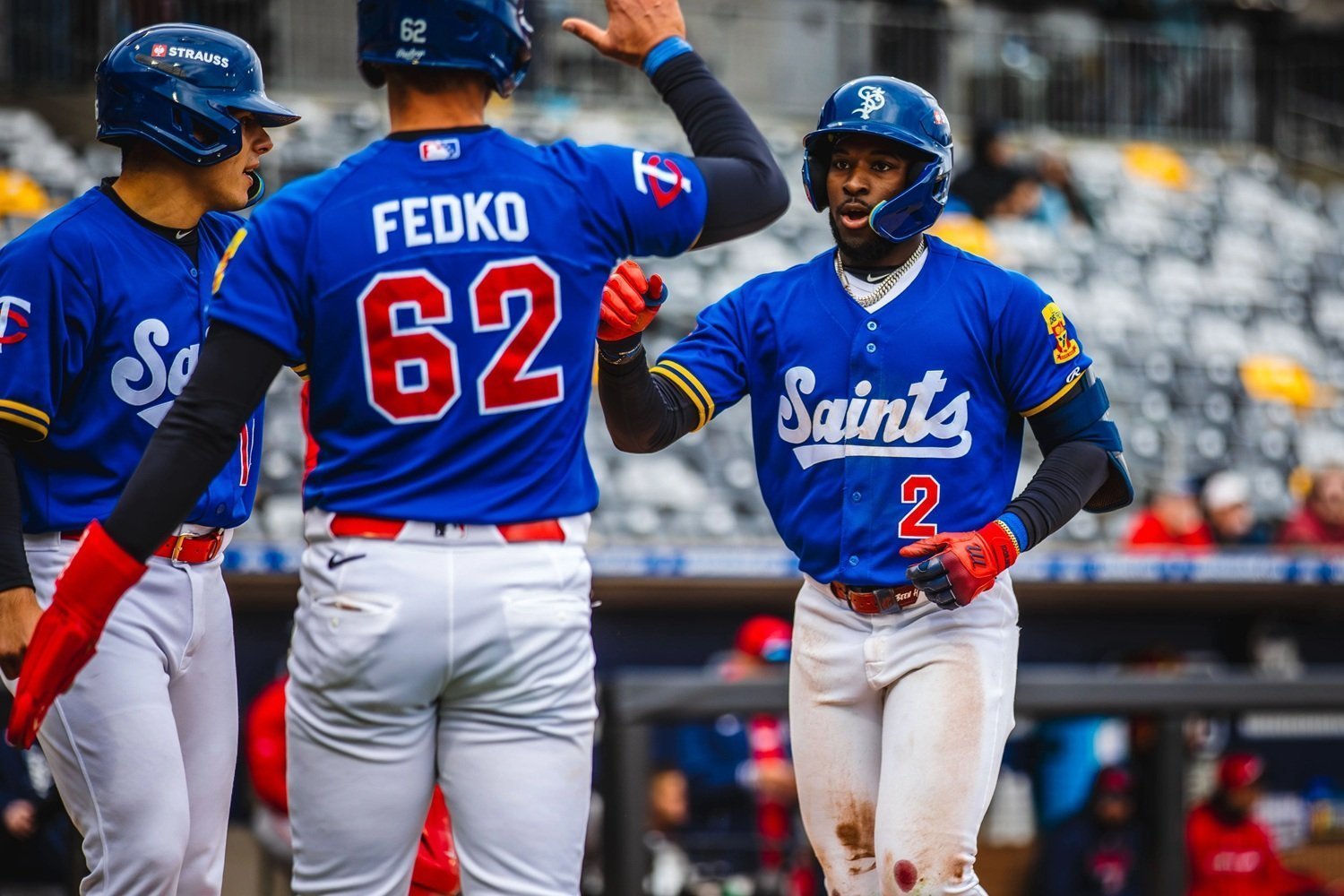 The Minnesota Twins have hovered around the final American League Wild Card spot, leaving Jeremy Zoll and the front office with a difficult decision as the MLB trade deadline approaches. A strong stretch could justify adding reinforcements for a postseason push, while a cold streak could force a more conservative approach. If the Twins do decide to buy, they'll undoubtedly lean on one of baseball's deepest farm systems to acquire immediate help. That's the advantage of last year's trade deadline selloff and another strong draft class. Minnesota has the prospect capital to make meaningful additions. However, not every prospect should be on the table. Championship organizations know the difference between using prospect depth to improve the present and sacrificing the players who are expected to define the future. Minnesota has several prospects who should be considered off-limits, regardless of who becomes available—at least to support this team, in a year when any playoff baseball would mean they exceeded expectations. OF Walker Jenkins: The Future Cornerstone 2026 Stats (43 G): .304/.401/.509, .407 wOBA, 134 wRC+ Jenkins remains the organization's premier prospect and arguably the future face of the franchise. The former fifth overall pick has done nothing to diminish expectations, despite dealing with injuries early in his professional career. When healthy, Jenkins has shown the combination of advanced plate discipline, plus bat speed, and all-around offensive ability that made him one of the most coveted prep hitters in recent draft history. The Twins have spent years searching for a homegrown superstar capable of anchoring their lineup for the next decade. Jenkins has that ceiling. There’s also a strong chance that he makes his debut in 2026 and can help the club with their playoff push. Why He’s Untouchable: Trading him for a veteran, even an established All-Star, would create a massive hole in the organization's long-term outlook. Players with legitimate franchise-player potential simply aren't moved unless the return is a young superstar with years of control, and those opportunities almost never materialize. SS Kaelen Culpepper: An Answer for the Infield 2026 Stats (63 G): .272/.376/.492, .385 wOBA, 122 wRC+ Few prospects have strengthened their long-term outlook as much as Culpepper since the team drafted him. His offensive development has continued, while he's also proved he can remain at shortstop, giving the Twins a potential impact player at one of baseball's premium positions. Why He’s Untouchable: Minnesota has used Brooks Lee, Ryan Kreidler, and Tristan Gray as stop-gap options, but Culpepper gives Minnesota a legitimate long-term shortstop plan. Even if he can’t stick at short, Culpepper's athleticism gives him the flexibility to contribute elsewhere in the infield. Premium middle infielders are difficult to acquire. The Twins already have one developing internally. SS Marek Houston: Elite Defensive Value Matters 2026 Stats (74 G): .316/.396/.455, .390 wOBA, 121 wRC+ Houston may not receive the same national attention as some of Minnesota's other top prospects, but his value inside the organization continues to grow. His elite defensive abilities at shortstop provide an incredibly high floor, while continued offensive improvements have increased confidence that he can become an everyday major-league player. Why He’s Untouchable: Organizations that consistently contend build around premium defenders up the middle. Houston fits that mold perfectly. Moving him for short-term help could leave the Twins searching for exactly this type of player a few years from now. RHP Riley Quick: The Rotation Needs More Arms 2026 Stats (14 G): 49 1/3 IP, 3.47 ERA, 3.45 xFIP, 36.1 K%, 12.7 BB%, .182 BA High-quality starting pitching remains one of baseball's most expensive commodities. That's exactly why Quick shouldn't be available. He possesses the type of power arsenal that gives him legitimate mid-rotation (or better) potential. He's moved quickly since being drafted, as he was recently promoted to Double-A. There's a legitimate chance for him to make his MLB debut in 2027. Why He’s Untouchable: With Joe Ryan approaching free agency in the coming years and starting pitching always carrying injury risk, the Twins need to continue developing internal rotation options. Pitching depth disappears quickly. Keeping Quick ensures Minnesota continues building one of the organization's greatest strengths. Other Twins Top-10 Prospects Could Be Available Being available doesn't mean the Twins should actively shop these prospects. It simply means the right opportunity could justify moving them. Here are some of the other Twins Daily Top-10 prospects who could be part of a trade deadline package. OF Emmanuel Rodriguez: Rodriguez still possesses some of the highest offensive upside in the organization, but injuries have repeatedly interrupted his development. His talent could headline a significant trade package, particularly for a club willing to bet on his long-term health. The Twins have enough outfield depth that they could survive moving him if it meant acquiring an impactful major-league player. C Eduardo Tait: Catching prospects with offensive upside carry tremendous value throughout baseball. Tait's emergence has elevated his trade stock considerably, making him one of Minnesota's most attractive trade chips. At the same time, catching prospects also carry volatility because of the lengthy developmental timeline. The Twins also used their first two picks in last week's MLB Draft on college catchers Vahn Lackey and Carson Tinney. If another club values Tait as a future star, the Twins could capitalize, while addressing an immediate need. LHP Kendry Rojas: Left-handed starting pitching is always desirable, and Rojas has continued to improve since joining the organization. He's bounced between Triple-A and the majors, so rebuilding clubs could view him as an appealing centerpiece in negotiations. Minnesota also has increasing pitching depth throughout the system. That combination makes him valuable enough to acquire significant talent while not being completely irreplaceable. OF Gabriel Gonzalez: Gonzalez has consistently shown impressive bat-to-ball skills and offensive production throughout the minors. However, the Twins now possess considerable outfield depth throughout the organization, making Gonzalez one of the more logical prospects to include in trade discussions. His value may actually exceed his long-term fit in Minnesota. LHP Dasan Hill: Hill arguably owns one of the highest ceilings among Minnesota's pitching prospects, but he also remains further away from the major leagues than several others on this list. That distance creates opportunity. Contending teams often prefer keeping prospects who can contribute sooner while using younger, high-upside players to complete blockbuster deals. Hill fits that description perfectly. His inclusion would undoubtedly be difficult, but not impossible, if the return significantly improved Minnesota's chances over the next several seasons. The Twins have reached an enviable position. A year ago, the organization replenished one of baseball's strongest farm systems through aggressive trades and another successful draft. That depth now gives the front office flexibility heading into the 2026 MLB trade deadline. If Minnesota decides to buy, the organization shouldn't hesitate to leverage prospects from the second tier of its system to improve the major league roster. That's exactly why farm systems exist. At the same time, every successful organization identifies the players who represent its future and refuses to compromise on them. For the Twins, that list starts with Jenkins, Culpepper, Houston, and Quick. They aren't just highly ranked prospects. They're the foundation of what Minnesota hopes will become its next championship-caliber core. Who would you consider untouchable in the Twins organization? Leave a comment and start the discussion. View the full article
 -
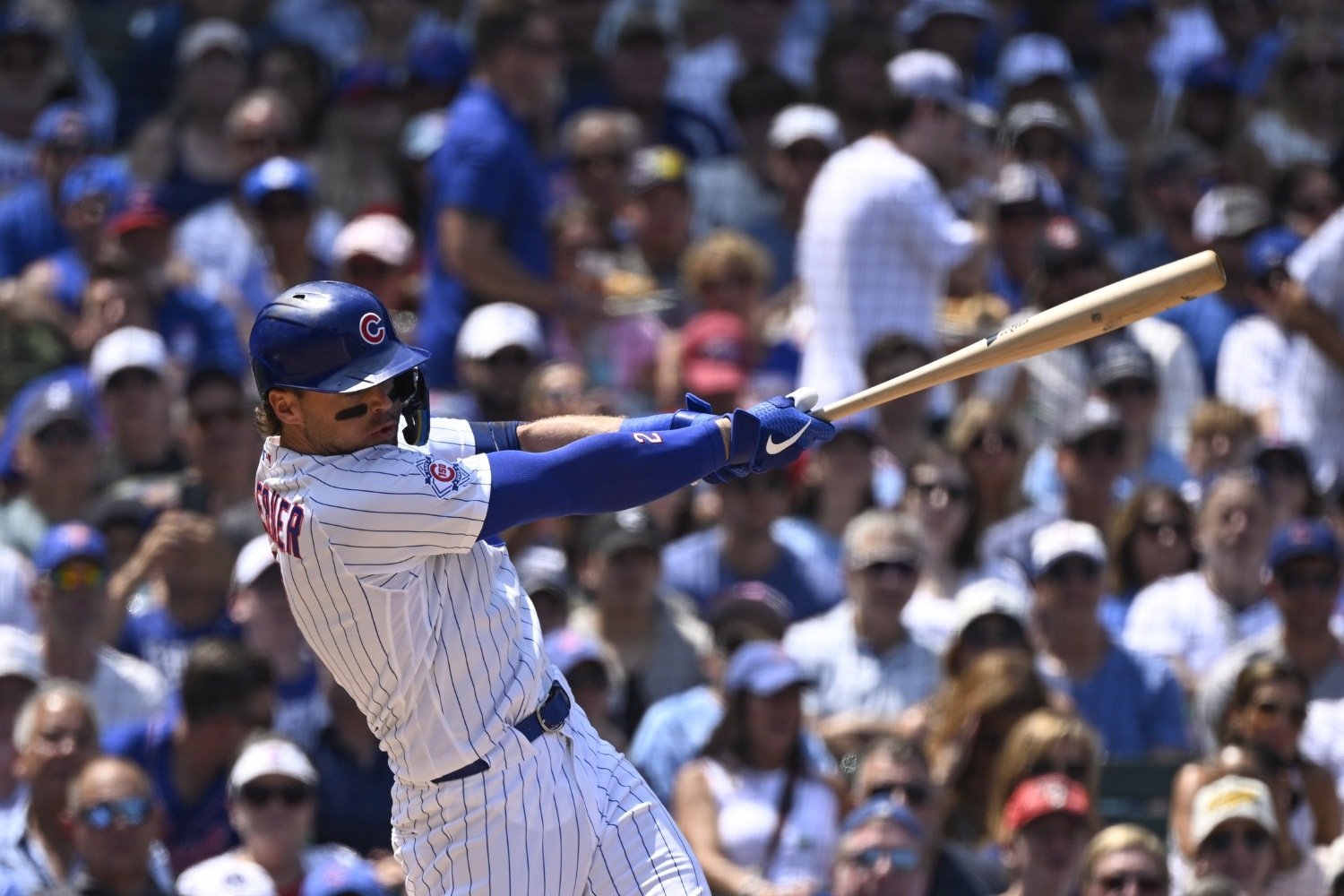 As far as hitting coach John Mallee's concerned, Nico Hoerner was never even slumping, really. He just got unlucky for a while. "Look, some years, you hit .300, and other years, you hit .250 or .260, just because of whether it’s finding gloves," Mallee said Sunday. He watched Hoerner square the ball up relentlessly from late April through the end of June but find lots and lots of gloves. From April 24 through July 1, in fact, Hoerner batted an anemic .213/.288/.272, with a .228 BABIP. In that time, he hit 14 doubles, but no home runs, and despite walking more times (24) than he's struck out (17) in 267 plate appearances, he was hurting the Cubs lineup, rather than fueling it. Yet, Mallee was unworried, and Hoerner never got the reset sitdown manager Craig Counsell gave to (in turns) Moisés Ballesteros, Ian Happ, Alex Bregman, Seiya Suzuki and Dansby Swanson. Why not? What prevented panic, about a player who had just signed a lucrative nine-figure deal and was so deeply mired in the muck for so long? "I’ve never been around a more winning player, more dedicated to the work and demanding of himself, other than maybe Mike Trout," Mallee said of Hoerner, unashamed to gush a bit about a favorite pupil. His faith in Hoerner never wavered, because he never saw a breakdown in Hoerner's trademark tenacity. Over the last three weeks, Hoerner has begun to reward the confidence of both his manager and the coaching staff—though only begun to do so. He had two hits Friday and four Saturday, but still entered Sunday's series finale against Minnesota hitting .268/.279/.317 in his last 11 contests. He's not red-hot again, or anything, but something has changed. "You can see him getting more aggressive," Mallee said. "You could see it, the frustration of it, it did affect him a little bit. Now, he’s relaxed, and when he’s getting that pitch, he’s on time, he’s on it." A more aggressive Hoerner will be more prone to strikeouts and less likely to get on via the walk, but swinging more is a sign that he's feeling better about his swing. There's some reason for that, too. Let's talk about the newest creation of the FanGraphs Lab: the squared-up explorer tool. These are the distributions of Hoerner's batted balls in each of the three segments into which we've broken down his season—the scalding start; the long downturn; and the recent rebound—based on launch angle and Squared Up percentage. Each batted ball is plotted based on the percentage of the theoretically possible exit velocity (given the speeds of both the swing and the incoming pitch) realized, and on its launch angle. Rather than show the chaos of each individual point, though, the frequency of batted balls falling into each relevant bucket are represented by those bubbles you see, and the relationship between the two variables being studied is expressed by smoothed curves. Early this season, when he was not only hitting for average at a superb clip but slugged a surprising four homers in the first four weeks, Hoerner hit a good number of balls in the 20-40° launch angle band, nearly all of which were squared up fairly well. That period is the set of bubbles and the curve in blue. Then came the slump, in yellow. Note how he not only lifted true fly balls less often, but met the ones he did hit much less cleanly. He was technically squaring the ball up more consistently, and the balls on which he was doing so tended to be in the 0-20° launch angle band where a lot of hits should be. They weren't showing up, though. "There are two ways to be unlucky, too," Mallee theorizes. "One is, you’re squaring up balls, but they’re just not going where you expect or you want them to. And the other way, sometimes, you hit it and there’s a guy standing there, waiting. And Nico had a little bit of both." In other words, by his coach's reckoning, Hoerner was getting profoundly unlucky, because none of his schtoinkers were landing—the kind of good luck to which a great contact hitter should occasionally be entitles—and all of his line drives were dying a hair short or not quite splitting the gap. We can visualize that, too, in a slightly different way. Here's the heat map showing where Hoerner hit the ball most often during his great start to the season. This looks relatively unimpressive, compared to a similar chart for a star slugger like Pete Crow-Armstrong, but this is what it looks like when Hoerner is going well. He hits a lot of hard ground balls and low line drives to left field; he hits a good number of line drives to right field. He doesn't hit the ball to center field very much. Here's the slumping Hoerner's spray heat map. People talk about hitting the ball "to the big part of the field," like the sheer vastness of center field is a guarantor of hits falling in. Not so, as Hoerner learned the hard way. He tried not to change anything, but acknowledged that it was hard—and that he needed to remain open tto change, lest he "get stubborn" and miss his chances to escape the slump. "I think the challenge is, no matter what the results, I want to help the team, and so sticking to my routine was important," Hoerner said Sunday morning, before collecting two more hits as the Cubs routed the Twins. "Trusting the coaches and trusting myself. It can be frustrating, but that’s our game; there’s a lot of randomness in this game. My approach stayed pretty similar. You want to make enough changes to get out of it, but you don’t want to change too much and lose what makes you good." Finally, recently, that diligent work and that intensity have paid off. Here's Hoerner's heat map for the last three weeks, showing that even if his process stayed mostly the same, he began to find ways to direct the ball that eluded him for a long, long time. Ironically, one of his hits Sunday—initially ruled a bases-clearing triple, though it should and could be changed to a single and a two-base error by Twins center fielder Luke Keaschall, who was playing too deep and then got handcuffed by the ball as he tried to play it on the bounce—came on a line drive to dead center. Call it corroboration of Mallee's theory that Hoerner was getting unlucky and was due for a bout of better fortune, even if there was also some deeper level of analysis to be done and some minute adjustment that needed to be made. Broadly, at least, the manager agrees with both coach and player. "Nico is one of those hitters where sometimes it’s really hard to evaluate, because the ball is just always in play," Counsell said. "You can say Nico’s struggling, but like, in Cincinnati, Nico swung the bat good, just like he did [Saturday], but no results. The ball doesn’t go over the fence that much, and he doesn’t strike out. So the fielder has an opportunity on every play to catch his ball. [Saturday] they didn’t; in Cincinnati, they did. But it’s kind of the same him. "That’s baseball. That’s part of it. But I think what happened [Saturday] was, line drives to the opposite field. That’s always a sign for everybody that he’s [right]." Counsell is right about that, though it's only half the story. Hoerner also needs the line drive to the pull field to be his best self, and he did have one of those Saturday, too. He chalked up another in the fourth inning Sunday, lacing a ball to left field for a clean single. Over the two-plus months in which he was hitting .213, it must have seemed like fielders had opportunities to make a play on everything, but when Hoerner gets going, he hits balls that are as undefendable as if they'd landed five rows deep in the bleachers—just for singles and doubles, rather than homers. Going back to the first visual in which we saw Hoerner's squared-up profile evolve throughout the season, yoyu can see that he's doing that more often right now. He's hitting a lot of balls extremely squarely, and nearly all of them are in the launch-angle range where they have a good chance to be a single and at least some chance to for extra bases. As any good hitter or hitting coach will tell you, the key to producing those perfectly struck balls lies in getting the right pitch. Doing that means not expanding one's zone overmuch, though it also means covering the zone thoroughly—and closing holes in your swing. Hoerner had two hits on high, upper-90s fastballs on Saturday, much to Mallee's delight. "Yeah, got to 98! It was great," Mallee enthused. "Any time you can take something off the scouting report, force them to change that, it always helps. And then when they have to throw that low ball, he can crush those." Hoerner doesn't like to spend much time studying what opposing pitchers are throwing him, but if he can force them to change tack while staying locked in on what he wants to do, that's a win. "It absolutely helps. I haven’t been in the game that long, but it’s always evolving, they’re always trying to find new ways to get you out," Hoerner said. "So anything you can do to disrupt that is great, but I don’t want to go up there overthinking what a given pitcher is trying to do against me. It’s more staying in my strengths and focusing on what I’m looking for." For a long time, that's not how his at-bats were actually unfolding. Now, though, Hoerner seems to be back in his groove. The hitting coach, the manager and the player all downplayed the extent to which his lackluster production was ever a source of concern. It should have been one, at least—but it probably needn't be now. The slump is over, and a new streak is very much underway. View the full article
 -
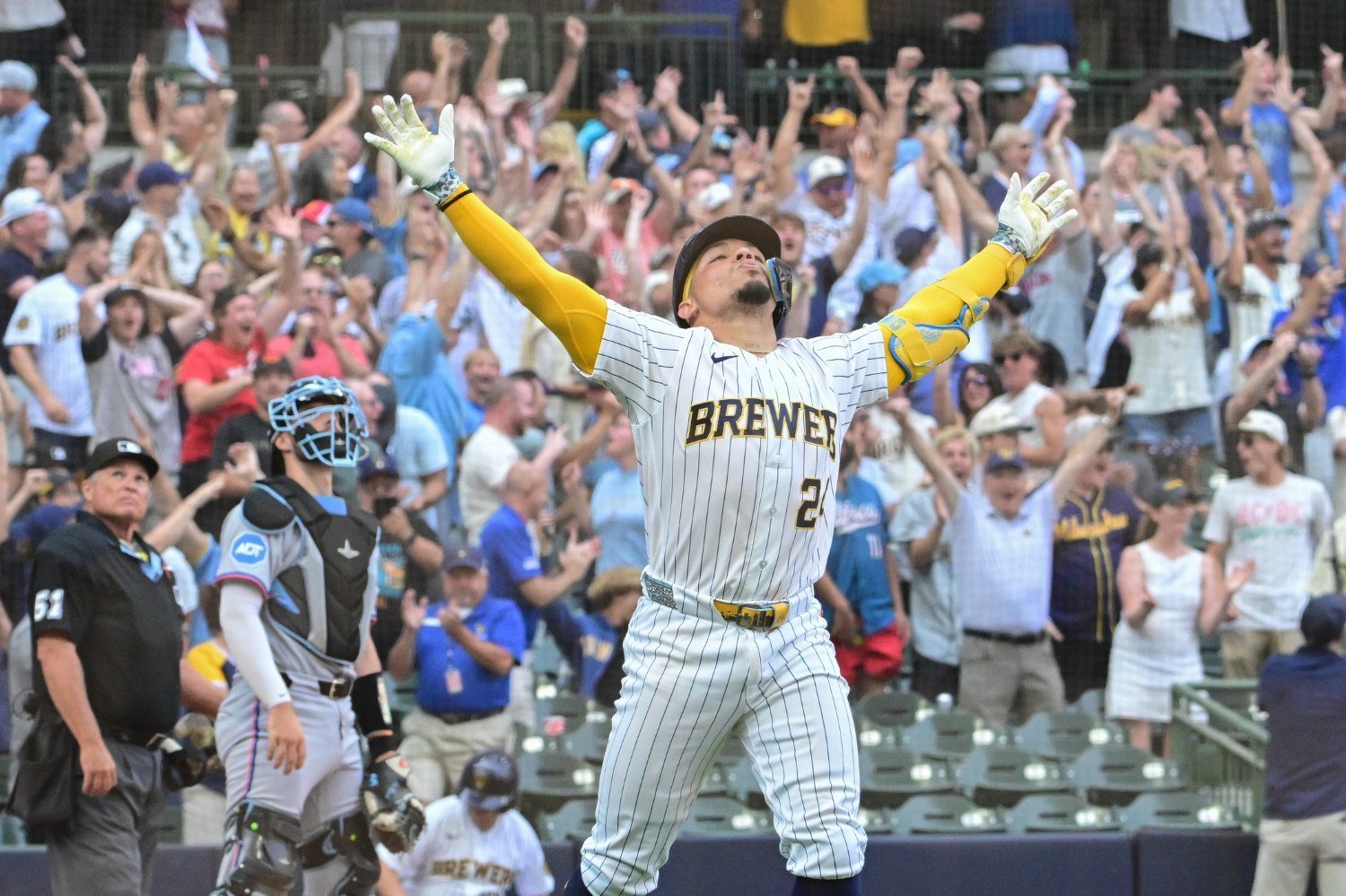 The unreserved catharsis of it was breathtaking. William Contreras didn't hurl his bat into the sky to show up the Marlins; he did it because he needed to. He plainly felt good about the high line drive he smashed to left-center field in the bottom of the ninth Sunday; he stood and admired its flight. But in the close-up replays of the event, you can see that he was also judging the ball, unsure it would go out for the game-winner, willing it to do so—and maybe even praying. Not until after it caromed off a piece of ballpark behind and above the wall did he turn and perform his feat of strength. As he threw the lumber, he spread his arms to the heavens, and that's clearly where his attention went, too. He had to pause after a moment and judge the flight of a second projectile, because when he threw the bat, for a moment, he ceased to care or perceive where it was. His gaze was fixed on something you couldn't have seen even if you were standing right next to him and craning your neck the same way—something that wasn't up there. Eventually, he had to turn his attention to what really was, so he wasn't thwacked by his own falling club. Contreras needed that homer, and so did the Brewers. That's an odd sentiment, at first reading, because Contreras just got back from his third All-Star Game, and the team is still comfortably in first place in the NL Central. Life is all about reference points and recency, though, and recently, the Brewers have run into that old frenemy, Trouble, around every corner. Trouble always lurks in Pittsburgh just before the All-Star break. Trouble always lurks in Brandon Woodruff's shoulder. Lately, Trouble has been unyielding in its invasions, and the team is feeling the drag. Of course, for Contreras and several fellow Brewers, there's also Trouble's big brother, Tragedy, with whom to deal. The earthquake(s) that struck Venezuela last month devastated the country Contreras calls home, the one he represented in the World Baseball Classic and for which he won that championship this spring. When the sad accounting is complete, the death toll will be over 10,000. The damage is catastrophic. Whatever joy there was in Contreras's bat throw, there was also a healthy measure of defiance. He was roaring his refusal to be governed by Trouble and Tragedy. That's the Brewers in a nutshell. When they seem to be cornered or compromised in a way they could surely no longer survive, that's when they thrive. Somehow, they withstand a parade of injuries and other setbacks and keep winning games, anyway. That has been such a prevailing pattern since Pat Murphy and his devotion to relentlessness took over in 2024 that it feels almost as if this team is invincible. We know that they aren't. We know that the blow of Woodruff being out for the year hurts, and that that comes on the heels of several smaller (for now) injuries that threaten to erode the greatness of this team. We know they're not guaranteed to keep finding this almost-magical success in October, because (to paraphrase Billy Beane) Murphy's **** doesn't work in the playoffs—at least, ot yet. Still, that bat-launch on Sunday might well be the one most emblematic of this team. They weather the storm, and then they become the storm. They may not defy God, but they're not afraid of him, either. Contreras isn't a slugger who goes deep 30 times a year; Sunday's was only his 10th long ball. But he made it count, and the team and its fans got to celebrate an unexpected triumph, capping a weekend of them, even as they all quietly mourned the losses they share and the ones that are personal to each. Moments like that make it a little easier to imagine another flavor of unreserved catharsis the team hopes to unleash: the feeling of finally bringing a World Series championship back to Milwaukee. View the full article
 -
Mets Must Cash In On Luke Weaver's Career-Defining Season
DiamondCentric posted an article in Grand Central Mets
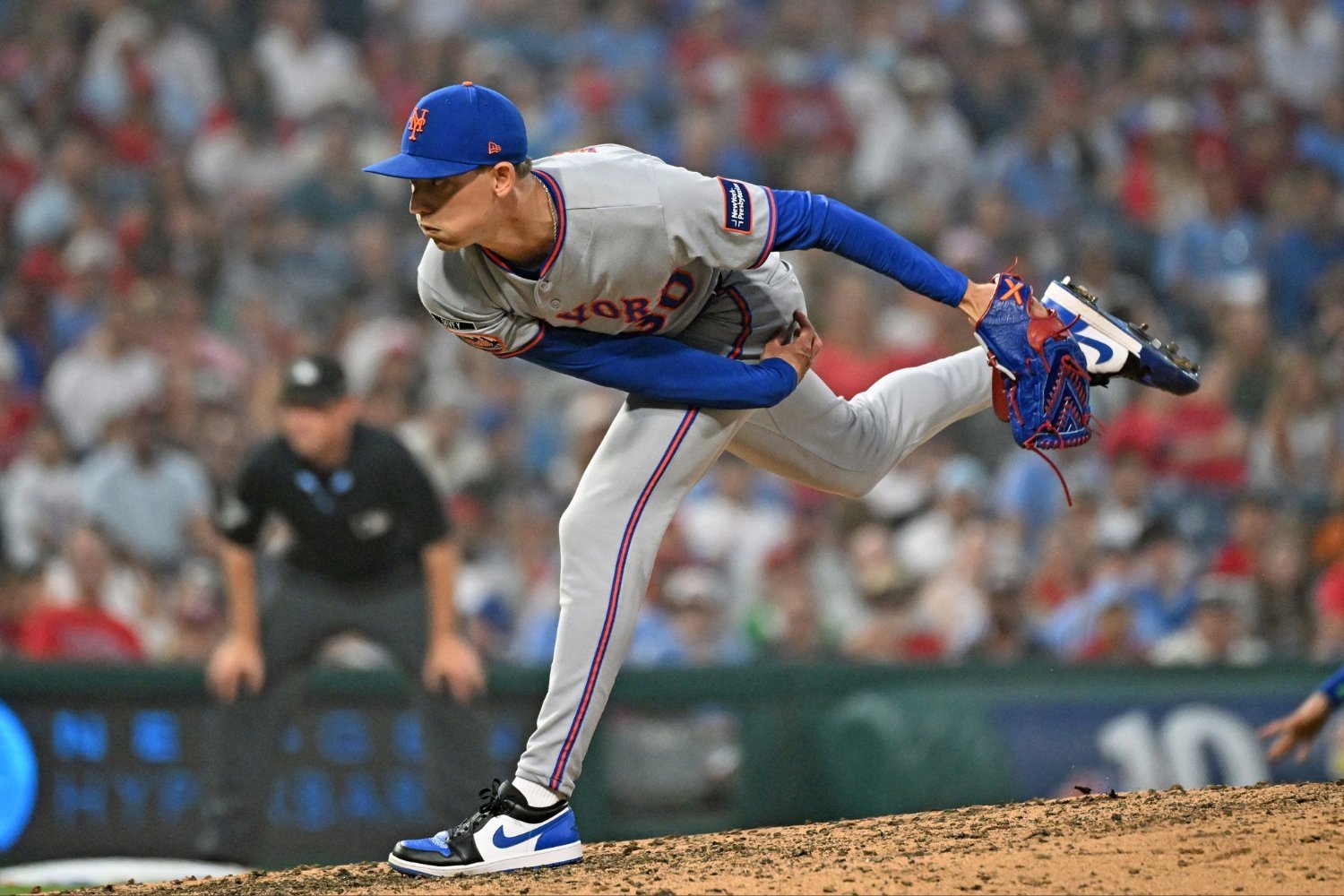 Luke Weaver’s first half was nothing short of heroic, going from being borderline unusable for the first month of the season to being the clear best arm in the New York Mets' bullpen. With the Aug. 3 deadline approaching, president of baseball operations David Stearns has to evaluate what it would take to part with such a reliable arm. Weaver signed a two-year, $22 million dollar deal this past offseason to be the primary set-up man to closer Devin Williams. While Williams has struggled mightily this season, Weaver has flourished. In 40 innings, he has only allowed nine earned runs, with eight of them coming in the month of April. Weaver’s 207 ERA+ ranks among the top in baseball. If the season ended today, Weaver would finish with career bests in ERA, ERA+, FIP, WHIP and hits per nine innings. Few relievers in baseball are pitching as well as the Mets' high-leverage fireman and opposing organizations will realize that. The thing is, this caliber of production isn't a guarantee to continue moving forward; if the Mets hold onto Weaver at this deadline and he struggles next season, fans will look back and wonder what they could have gotten for the 32-year-old right-hander. They should not make that mistake. So, with Weaver having a career year and the Mets fully committed to selling this deadline, it's time to cash in. Weaver’s extra year of control will drive up his value, and though it might be tempting to hold onto him for a run in 2027, that's just not advisable. New York should probably end up with potentially add two top-ten prospects from a contending organization in exchange for Weaver. They can't ignore that kind of on-the-fly farm system invigoration, especially knowing that they've already called up many of their top prospects this year. Relievers are just too volatile not to trade at the peak of their value; there's nothing guaranteeing that Weaver will this good next year for a hopefully better Mets team in his age-33 season. And that's ignoring the possibility that the 2027 campaign in axed due to the expected lockout. Because of that impending lockout, most teams will go for it this year and prospects will be thrown around like there's no tomorrow. David Stearns will know to take advantage of those market conditions, even if it means parting with his best offseason addition. View the full article
 -
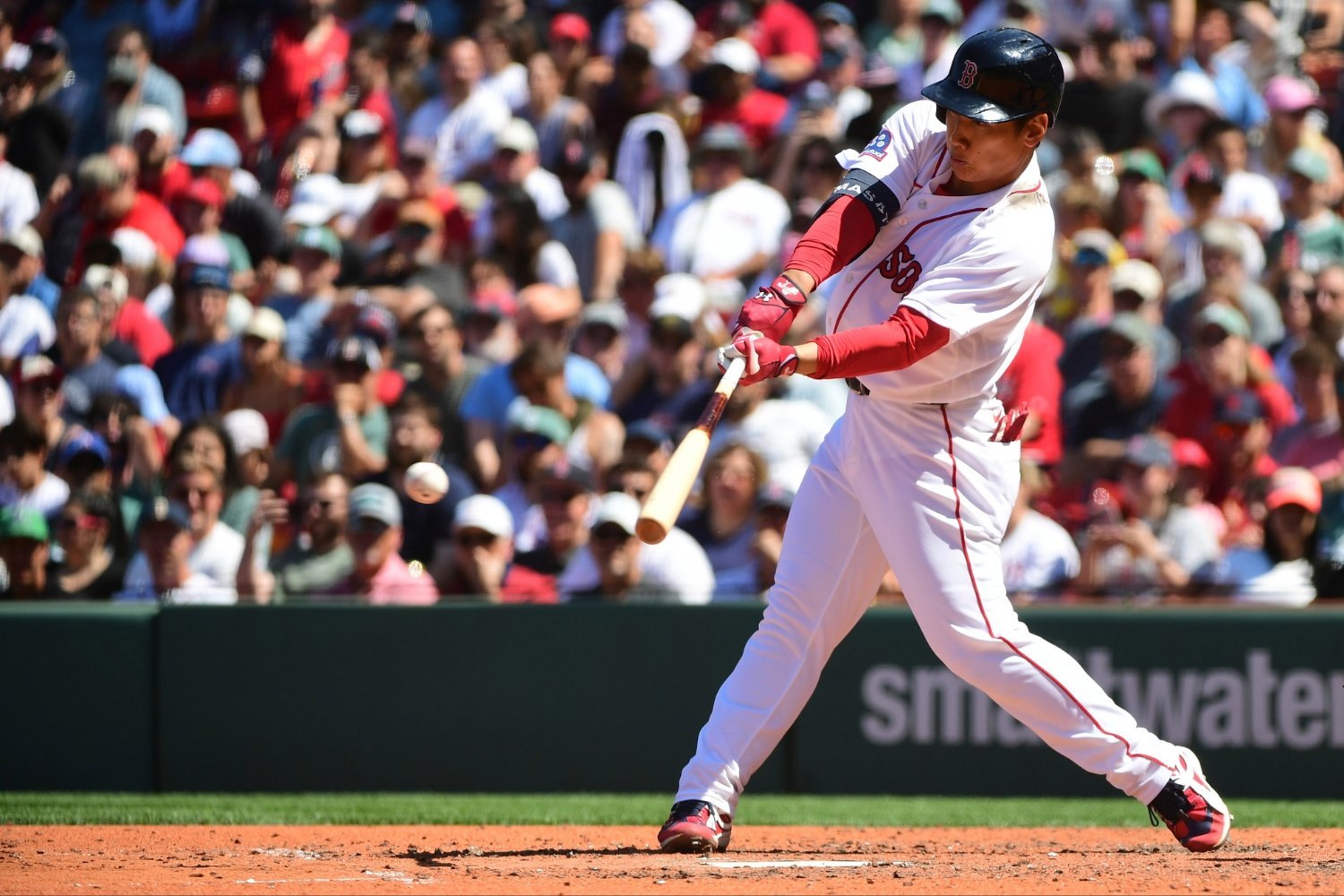 Masataka Yoshida was not struggling in the way that usually concerns a contact hitter. He was still recognizing pitches, controlling the strike zone, and making contact against offerings that many hitters cannot handle. The problem was that pitchers were no longer paying the price when they made mistakes against him. During June, Yoshida turned one of his greatest strengths into a limitation. His ability to find the baseball remained intact, but too many of those batted-ball events produced trajectories that favored the defense. Opposing pitchers did not need to beat him with velocity, deception, or a perfectly sequenced attack. They could challenge him with four-seam fastballs, accept that he would put the ball in play, and trust that the result would be a manageable out. When a hitter built around contact goes through an offensive slump, the first question is usually whether something in the process has broken: Is he swinging and missing more? Chasing more pitches? Losing bat speed? But that did not describe what was happening with Yoshida. The difference was what happened after contact. To understand what's been going on under the hood, we'll look to where all slumps start: with fastballs. That pitch has always been one of the most important tests for Yoshida because it represents the opportunity to punish the type of mistake he is built to attack. If pitchers could throw fastballs in the zone and survive, they had found a simple solution against a hitter whose game depends on taking advantage of mistakes. During June, that approach worked. Against fastballs, Yoshida hit .222 with a .370 slugging percentage. Month AVG vs Fastballs SLG vs Fastballs xSLG Exit Velocity Launch Angle June .222 .370 .329 88.4 mph 0° July .333 .778 .594 91.0 mph 14° The change in July appears in one number that explains the transformation better than any batting average: launch angle. In June, Yoshida averaged 0 degrees against fastballs. His contact was producing a trajectory that turned good swings into predictable outcomes (i.e., grounders) for the defense. For a hitter whose advantage comes from consistently finding the baseball, that was the worst possible scenario: winning the battle against the pitch but losing the outcome of the at-bat. In July, that dynamic has started to change. Yoshida’s launch angle against fastballs has increased to 14 degrees, while his average exit velocity climbed from 88.4 mph to 91.0 mph. The difference may look small on a spreadsheet, but it completely changes how pitchers must evaluate their mistakes. The most interesting part of Yoshida’s adjustment is that it did not come from searching for a new offensive identity; his whiff rate against fastballs dropped from 17.6% in June to 15.2% in July. In other words, Yoshida did not start producing more damage because he started selling out for power. And, in turn, the power has actually returned on its own: His xSLG against fastballs jumped from .329 to .594. The recent results are eye-catching. In his first 26 plate appearances of July, Yoshida posted a .385 batting average, a .731 slugging percentage and a 217 wRC+. That production is not sustainable over a full season, and his .381 BABIP suggests some of that performance will naturally decline over time. But that is not what's important; the real question is whether Yoshida regained the ability that changes how pitchers can attack him. If so, the Red Sox have regained a key weapon in their lineup for the second half, just in time for a surge that has them right back in the thick of the playoff hunt. View the full article
 -
 The Blue Jays lost two of three to the White Sox over the weekend, falling to 46-53 on the season. With 13 games to play before the August 3 trade deadline, they need to go at least 10-3 in that span to be at .500 by deadline day. That's a tall order, especially since all four teams they'll play are at or above .500 right now: the Rays, Red Sox, Nationals, and Cardinals. It's getting harder and harder to stay optimistic. Toronto Blue Jays Weekend in Review (July 17-19) Friday, July 17: CHW 12, TOR 4 Spencer Miles gets rocked, White Sox pile on against Adam Macko, Patrick Corbin, Braydon Fisher. George Springer plays left field, Brandon Valenzuela DHs. Both hit home runs. Saturday, July 18: TOR 1, CHW 0 Joe Carter statue unveiled. Shane Bieber throws six scoreless innings. Vladimir Guerrero Jr. goes 2-for-3 with a double, a walk, and the game's only run. Louis Varland gets save number 20. Sunday, July 19: CHW 3, TOR 0 Trey Yesavage strikes out a season-high nine. Still takes the loss in a quality start. Ernie Clement and Nathan Lukes each reach base twice. Rest of lineup goes 1-for-23. Toronto Blue Jays Transactions of the Weekend Lazaro Estrada recalled. (1.0 IP, 0 H, 0 R on Sunday, July 19) Brendon Little recalled. CJ Van Eyk optioned. Adam Macko optioned. Ryan Sprock (acquired for Tommy Nance) assigned to High-A Vancouver Canadians. Blue Jays sign top three draft picks Cole Carlon (No. 39), Ryan Cooney (No. 103), Will Brick (No. 131). Toronto Blue Jays Injury Updates of the Week Max Scherzer got cortisone shots in his thumb. He threw in the bullpen over the weekend. His next rehab outing is not yet scheduled. Yimi García threw a bullpen on Saturday. Jesús Sánchez faced live pitching. Addison Barger is shut down from all baseball activities. He has not given up on returning this season. John Schneider says an August return is possible, if optimistic. Anthony Santander felt more shoulder pain and received a cortisone shot. He will be shut down for a few more days. Lenyn Sosa has not played since late June after suffering a setback in his rehab. He started hitting again this week. View the full article
 -
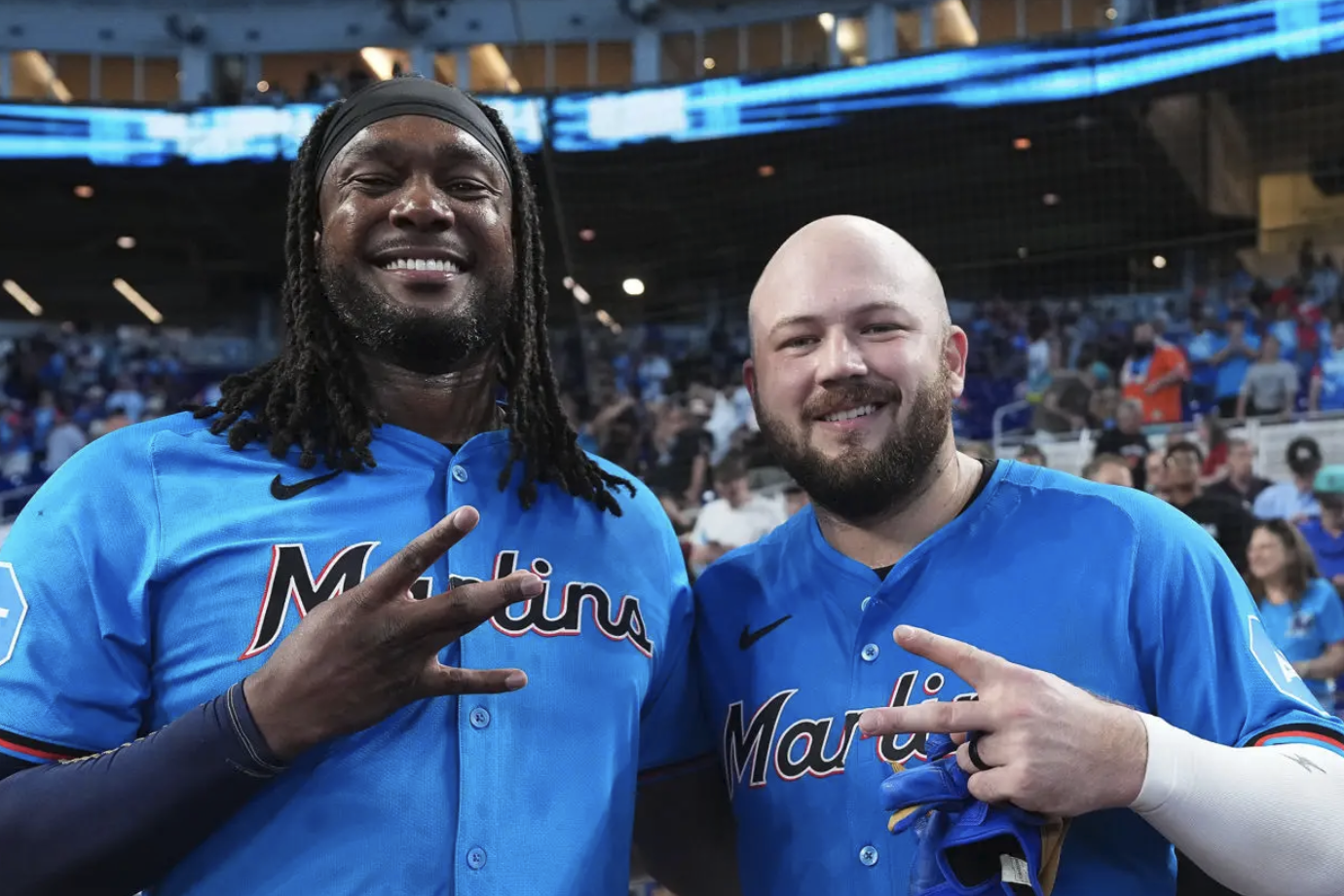 The cast is almost entirely new, but the script is eerily familiar. Through their first 100 games of the 2026 season, the Miami Marlins have a 52-48 record. They're virtually tied for the National League's third wild-card spot, but trending in a troubling direction in the midst of six consecutive losses. At this same point in 2023, their record was 53-47, their deficit in the race for NL WC #3 was one game, and their streak was eight losses in a row. The next two weeks are absolutely crucial to determining how the Marlins will behave at the MLB trade deadline. In '23, general manager Kim Ng was at the helm, securing several midseason acquisitions that propelled the Fish to October for only the third time in a full season in franchise history. This time around, president of baseball operations Peter Bendix is calling the shots. Last week on Fish Unfiltered, Marlins principal owner Bruce Sherman said he is entrusting Bendix to do whatever he believes is appropriate. Should the club snap back to consistently winning series, that will mean augmenting an already-talented roster with the right kind of complementary pieces, even if that necessitates increasing payroll or parting with minor leaguers. "I know Peter will do a very, very thorough job," Sherman said. During this calm before the storm, I think it would be the appropriate time to reflect on what Ng bought at the deadline three years ago and the price she paid to get those deals done. How much of the future was mortgaged for a short-lived postseason run? Traded Dylan Floro to Minnesota Twins for Jorge López About a week before the deadline, the Marlins and Twins consummated an unconventional swap of veteran right-handers. Floro had the much more consistent track record across multiple seasons. Although both had been performing worse than the league average in 2023 in terms of ERA, Floro boasted dramatically better underlying peripheral stats (2.75 FIP compared to López's 5.92). On the other hand, López offered a higher ceiling, having earned an All-Star selection the previous year as closer for the Baltimore Orioles. Also, his club control extended through 2024, whereas Floro was a pending free agent. The Marlins lost this trade, though neither team would come away satisfied. López made 12 awful relief appearances (9.26 ERA and 5.31 FIP) in Miami before returning to the aforementioned Orioles via waiver claim. Floro continued to suffer from remarkably poor luck—his .401 batting average on balls in play was the highest in MLB (min. 50 IP). Minnesota cut him days before the season ended. Traded Marco Vargas and Ronald Hernández to New York Mets for David Robertson Still four days in advance of the deadline, the Marlins paid a steep price for a revered high-leverage arm. Even after taking on the remainder of Robertson's $10 million salary, they sent a pair of productive teenage hitters to New York. The Marlins immediately installed Robertson as their closer. He took care of business without breaking a sweat in his July 30 team debut, but slumped badly in August, including three blown saves. The 38-year-old was lowered on the depth chart accordingly. Overall as a Marlin, Robertson posted a 5.06 ERA with a grotesque -1.67 WPA (fifth-worst among MLB pitchers during that span). The Marlins figured they were selling high on Vargas, an infielder who had been raking in rookie ball despite signing out of a Mexico in 2022 with minimal expectations. They've been proven right. Vargas is still with the Mets organization today and ranks as their No. 16 prospect, according to Baseball America, though he'll drop several spots once new draft picks are accounted for. Injuries have taken their toll on his availability and performance. He has played less than 200 minor league games in three calendar years, homering only twice. As of this writing, he's on Double-A Binghamton's IL. Strong defense at the middle infield spots gives him a chance of tasting the majors eventually, but not as anything close to an everyday player. Hernández has also stuck around with the Mets. Repeating the High-A level, the switch-hitting catcher is slashing .228/.355/.370 with seven homers and 19 stolen bases in 73 games. The 2027 campaign will be critical as he'll be trying to secure a 40-man roster spot in advance of MiLB free agency. Traded Jake Eder to Chicago White Sox for Jake Burger What a bold, fascinating move this was in the moment. Burger had been hitting for huge power (25 HR in 88 G) in the midst of his first full-length MLB season, but none of his other traditional tools even graded out as average. Eder was briefly in the conversation for top overall prospect in the Marlins system, having represented Miami at the 2021 Futures Game. However, in mid-2023, there was still obvious rust coming back from Tommy John surgery. Third base had been a black hole for the Marlins up to that point in the season. Burger turned it into a strength. He slashed .305/.355/.505 with nine home runs and a 130 wRC+ in 53 games. Even that understates his impact because of how he elevated his performance in clutch situations. Burger's follow-up campaign was inconsistent, with sub-replacement performance for most of the first half, then a terrific power surge spanning most of July and August. He led the 2024 Fish in hits (134) and homers (29), but also slid down the defensive spectrum from 3B to 1B/DH, He was dealt to the Texas Rangers during the ensuing offseason. Eder's value tanked immediately upon joining the White Sox organization (11.42 ERA in 17.1 IP at the Double-A level post-deadline). He made only one major league appearance for the Sox and has since bounced around to the Washington Nationals, Los Angeles Angels and Los Angeles Dodgers. In 13 MLB games (mainly pitching in low-leverage situations), he owns a 4.44 ERA and 4.94 FIP. The 27-year-old lefty is currently a free agent. Traded Jean Segura and Kahlil Watson to Cleveland Guardians for Josh Bell This must've been a tough pill for Bruce Sherman to swallow. The Marlins had invested $17 million in Segura and used a first-round draft pick on Watson, and now they were going to be used to acquire Bell's underwater contract? Just like Burger, Bell contributed to his new club immediately. He slashed .280/.338/.480 with 11 homers and a 118 wRC+ through season's end. The veteran first baseman did so well, he had to think carefully about whether to exercise his $16.5 million player option for the 2024 season or elect free agency. He decided to pick it up. Bell couldn't carry that momentum with him into the following year. He was durable as usual in 2024, but ineffective at the plate for the most part. A hot streak following the All-Star break allowed the Marlins to move him for cash considerations. The Guardians didn't even give Segura a chance—they released him as soon as the trade became official. His -1.2 fWAR tenure in Miami would prove to be his final chapter in the major leagues. The jury is still out on Watson. The shortstop-turned-outfielder has a prominent role on the 2026 Guardians, but he isn't offering much production as a rookie (62 wRC+ in 26 G entering Monday). Although his tools are enticing, poor plate discipline will probably prevent from sustaining even average offensive production, Traded Garrett Cooper and Sean Reynolds to San Diego Padres for Ryan Weathers Speaking of a former first-rounder who needed a change of scenery, Weathers was a nice get for the Marlins. It just took a full offseason for him to turn into a competent starter. He was limited to 13 post-deadline innings in 2023. Weathers posted a 3.74 ERA in 24 starts for the 2024-25 Marlins. Unfortunately, he spent more time on the injured list than the active roster due to fluky injuries. His value rose considerably between his arrival and when Bendix traded him to the New York Yankees this past January—three of the players who came back in that deal are current Fish On First Top 30 prospects. Cooper played 41 forgettable games for the Padres and Reynolds totaled just 38 innings out of their bullpen before taking his talents to Japan. The Marlins were quickly booted from the postseason, losing both of their NL Wild Card Series games to the Philadelphia Phillies. Ng left the front office later that month and Bendix made the unpopular but understandable decision to rebuild the organization with a more modern infrastructure, taking a temporary step back in competitiveness (they went 62-100 in 2024). With that being said, Ng's deadline activity energized the Marlins clubhouse and fanbase, and the prospects she sacrificed have not been missed. Bendix has a better farm system at his disposal than she did, a more well-rounded major league roster—as reflected by their positive run differential—and plenty of financial flexibility, according to Sherman. How will he utilize these resources? Depends on whether or not the Marlins can close out July with high-quality play that justifies a buyer's approach. View the full article
 -
 When one thinks about Florida/Miami Marlins firsts, many of those are held by catcher Charles Johnson. The first-ever draft pick of the Florida Marlins, Johnson was also the club’s first Gold Glove winner and first All-Star behind the plate. A native of Fort Piece who played his college baseball at the University of Miami, Johnson was born July 20, 1971. He celebrates his 55th birthday today. Selected with the No. 28 overall pick in the 1992 Major League Baseball Draft, Johnson had two stints with the Marlins. Johnson was a member of the team from 1994 to 1998 and then again in 2001 and 2002. He made All-Star appearances during both stints. Johnson made his big-league debut in 1994 before transitioning to the team’s primary catcher a year later. In 1995, Johnson became the Marlins’ first Gold Glove winner—an award he would receive in four straight seasons. He was also just the fourth catcher to win a Gold Glove as a rookie. Luis Castillo is the only other Marlins player to win three straight Gold Gloves. In 1996, Johnson caught Al Leiter’s no-hitter—the first in Marlins history—as Florida topped the Colorado Rockies. In fact, Johnson caught the Marlins’ first three no-hitters in club history. He was behind the plate for Kevin Brown’s no-no against the San Francisco Giants in 1997 and A.J. Burnett’s wild no-hitter against the San Diego Padres in 2001. A day after Burnett’s no-hitter, Johnson came off the bench to hit a go-ahead pinch-hit grand slam. In 1997, Johnson made his first All-Star appearance, hitting .250 with 19 home runs and 63 RBIs. The 19 bombs would be his highest total as a member of the Marlins. Johnson also posted 4.4 wins above replacement (bWAR), the highest of his Marlins tenure. That season, Johnson helped the Marlins win their first World Series. He set an MLB record for catchers by playing in 123 games without an error. Johnson led baseball by throwing out 56 would-be base stealers. Johnson drove in the first run in Marlins postseason history with a solo blast in the seventh inning of a 2-1 win over the San Francisco Giants in Game 1 of the National League Division Series. In Game 1 of the World Series, Johnson followed Moises Alou’s three-run home run with a solo shot of his own to give the Marlins a 5-1 lead in an eventual 7-4 victory over the Cleveland Indians. During the postseason, Johnson hit .264, including .357 in the World Series, with the two homers and 10 RBIs. In Game 7 of the World Series, Johnson’s clutch one-out single in the bottom of the ninth moved Alou from first to third and set up Craig Counsell’s game-tying sacrifice fly. Florida would beat Cleveland in 11 innings to win its first title, 3-2. Johnson played just 31 games for the Marlins in 1998 before being packaged in a big-time trade that sent Gary Sheffield and Bobby Bonilla to the Los Angeles Dodgers and Todd Zeile and Mike Piazza to Florida. After spending the 1999 season with the Baltimore Orioles, Johnson had his best statistical offensive season in 2000 when he hit .304 with 31 home runs and 91 RBIs—all career-highs—for the Orioles and Chicago White Sox. Johnson signed as a free agent to return to the Marlins prior to the 2001 season. In 2001, Johnson would make his second and final All-Star Game, hitting .259 with 18 home runs and 75 RBIs. After batting .217 with six home runs and 36 RBIs in 2002 for Florida, Johnson spent 2003 and 2004 with the Rockies before returning to the Sunshine State to finish his career with the Tampa Bay Devil Rays in 2005. In parts of seven total seasons with the Marlins, Johnson hit .241 with 75 home runs and 277 RBIs—both club records for a catcher. Johnson’s 8.6 defensive wins above replacement (dWAR) remains the highest in team history regardless of position. The standout and two-time All-Star turns 55 today. View the full article
 -
 Of the full season affiliates, only Biloxi (2-1) was able to win their post All Star Break three-game series, as Nashville (1-2), Wisconsin (0-3) and Wilson (0-2) came up short. Transaction: LHP DL Hall sent on rehab assignment to High-A Wisconsin Game Action: Nashville Pre-Game Media Notes Final: Nashville 4, Norfolk (Orioles) 0 Box Score Via the Sounds’ website, game details and we encourage readers to review affiliate write-ups as part of their Link Report routine: Coleman Crow Spins Quality Start to Help Nashville Blank Tides – 18th Career Quality Start for Brewers no. 23-rated Prospect Cory Hillborne’s detailed game report covers the Sounds’ bounceback win in detail, with starting RHP Coleman Crow (6 IP, 0 R, 1 H – a single, 2 BB, 6 Ks) needing just 68 pitches (44 strikes) to breeze through six innings in his best outing since April 30. Crow actually faced the minimum number of batters through 5 2/3 innings, aided by a ground ball double play in the 1st inning, OF Tyler Black’s catch at the wall in the 2nd frame and a caught stealing by C Darrien Miller in the 3rd inning. Black’s first inning RBI triple produced the only run either team could muster until the Sounds’ three-run 7th inning saw four consecutive Sounds reach base to commence that frame. The Tides botched this Miller grounder for two runs before 2B Freddy Zamora’s RBI single. Sounds’ Extras: Kudos to RHP Cameron Wagoner (1 IP, 0 R, 1 K) for his successful AAA debut and RHP Gerson Garabito (2 IP, 0 R, 1 H, 0 BB, 2 Ks) for closing things down. Each of Black (2-for-4, triple, RBI, SB), OF Jacob Hurtubise (1-for-3, walk), Miller (1-for-3, walk, RBI) and 3B Brock Wilken (0-for-2, 2 walks) reached base twice in the win. INF/OF Jett Williams hasn’t played since July 7, but he remains on the active roster so perhaps we’ll see him back in action in the coming week. Next week’s outlook: Nashville travels down to the Houston area for six games against Astros’ affiliate Sugar Land, commencing Tuesday evening. Biloxi Pre-Game Media Notes Final: Biloxi 11, Pensacola (Marlins) 1 Box Score Via the Shuckers’ website, game details: 11-Run Outburst Leads Shuckers to Series Win over Blue Wahoos – Letson records 5.0 shutout innings, every Shucker reaches base at least once in win 21-year-old starting RHP Bishop Letson (5 IP, 0 R, 2 H, 1 BB, 4 Ks) found himself in a 1st-and-3rd, nobody out situation in the top of the 1st inning but buckled down with a great escape (pop out, K swinging, fly out) and cruised from there, retiring 15 of the last 16 batters he faced. Other than the 91-degree heat, the home crowd of 1,659 was treated to a near-perfect performance from the Shuckers: 11 runs, 15 hits, 7 walks, 6-for-6 on stolen base attempts, zero errors on defense. As you might expect, there are a bevy of highlights from Biloxi’s big win, starting with SS Jesus Made’s three-run blast to open the scoring. Made went 3-for-5 with 4 RBIs and collected his 27th stolen base: OF Mark Coley II (3-for-5, 2 RBIs, 2 SBs), C David Garcia (2-for-4, walk, RBI, SB) and DH Matt Wood (1-for-4, double, walk, RBI) and OF Josiah Ragsdale (2-for-4, HR, walk, 2 RBIs, SB) each collected RBIs in their fun Sunday: Shuckers’ Extras: A 4-man bullpen covered the final 4 innings, with RHP Edwin Jimenez (1 1/3 IP, 1 R, 3 H, 1 BB, 1 HBP, 3 Ks) having a busy time. RHP Nick Merkel (2/3 IP) stranded 2 baserunners for him, while RHPs Stiven Cruz (1 IP, 0 R, 1 K) and Will Childers (1 IP, 0 R, 2 Ks) faced the minimum. OF Josh Adamczewski just keeps hitting, reaching base 3 times: 2-for-4, walk. 2B Eric Brown Jr. had a double and also turned this nifty double play: Next week’s outlook: Biloxi hits the road for 6 games, taking on Reds’ affiliate Chattanooga, with the series starting on Tuesday. Wisconsin Pre-Game Media Notes Final: Quad Cities (Royals) 11, Wisconsin 0 Box Score Via the Timber Rattlers’ website, game details: Wisconsin Falls to Quad Cities Despite the rough game, Wisconsin’s media team has still compiled video highlights of the action: Make sure to also catch the 20-minute Mehring-Timm post-game podcast, featuring comments from rehabbing LHP DL Hall and Manager Nick Stanley. DL Hall sweeper: The linked game report, YouTube highlights and podcast will have to cover readers this time, as the good guys were no-hit and this writer has to catch a flight. Next week’s outlook: Wisconsin heads down to South Bend to battle the Cubs’ affiliate for six games, with the series commencing on Tuesday. Wilson Pre-Game Media Notes Suspended in 1st inning: Wilson 6, Hickory (Rangers) 0 Box Score Via the Warbirds’ website, rain out details: Warbirds and Crawdads Suspended on Sunday After dropping the first two games of the weekend series, Wilson was ready for revenge, bringing 11 batters to the plate in the first inning before lightning suspended action with two outs and six runs across. OF Handelfry Encarnacion went 2-for-2 with a leadoff double and an RBI single in that 1st inning. 2B Juan Martinez also had a two-run single in the partial frame. Thankfully, the stats should ultimately get counted when the teams resume play during their series in late August. Next week’s outlook: Wilson remains on the road, battling Rays’ affiliate Charleston for 6 games, commencing on Tuesday. DSL All-Star Game: DSL AL Stars 7, DSL NL Stars 6 Box Score Three Brewers were amongst 74 players who participated in the contest, with SS Ricki Moneys (1-for-3, SB, run) entering in the 4th inning and coming through with a single, stolen base and run scored to extend the National League’s advantage to 4-1 by that point. The game had tightened to 4-3 by the time RHP Justin Lugo (1 IP, 1 R, 1 K) got the call to pitch the 6th inning, but a double, wild pitch and RBI groundout tied the affair. Still tied 4-4 in the top of the 8th inning, 3B Jose Rodriguez (0-for-0, walk) finally got his chance with two outs, drawing a walk but left on base. The AL grabbed three runs in the bottom of the 8th inning to nearly put the game away, including an unearned run stemming from an error by Moneys. The NL Stars battled right back with two singles, a walk and a hit-by-pitch to narrow the gap to 7-6 with runners on the corners in the top of the 9th inning, but a ground out ended their rally. We hope that you enjoy the Minor League Link Report. On Monday, the three Rookie level affiliates are in action, starting with the two Dominican Summer League squads playing their respective games at 10:00am CST. The ACL Brewers kick off the final week of their season as they host their contest at 8:00pm CST. The Milwaukee Brewers also host the Mets at 6:40pm CST. Organizational Scoreboard including starting pitcher info, game times, MiLB TV links, and box scores Current Milwaukee Brewers Organization Batting Stats and Depth Current Milwaukee Brewers Organization Pitching Stats and Depth View the full article
 -
 The four full-season affiliates for the San Diego Padres went 1-3 Sunday in the series finales. The Triple-A El Paso Chihuahuas pulled out a 4-3 win over Sugar Land, the Double-A San Antonio Missions lost a tight one to Corpus Christi 4-3, the High-A Fort Wayne TinCaps fell to Lansing 6-2 and the Low-A Lake Elsinore Storm got stomped by Ontario 11-5. Padres Minor-League Transactions San Diego Padres optioned RHP Jhony Brito to El Paso Chihuahuas. Bryce Johnson Walks It Off For Chihuahuas Bryce Johnson singled home Clay Dungan with one out in the bottom of the ninth inning as the host Triple-A El Paso Chihuahuas overcame a three-run seventh inning to walk off the Sugar Land Space Cowboys 4-3. The Chihuahuas (42-53, 7-13 second half) snapped a six-game losing streak of the abbreviated three-game series due to the All-Star break. Carlos Rodriguez homered and had two hits along with Johnson and Blake Hunt for the Chihuahuas, who built a 3-0 lead. Right-hander Michael Flynn started the bullpen game and went two scoreless innings. Flynn has not allowed a run in his last six appearances covering nine innings since yielding six in two-thirds of an inning June 25. Six pitchers would follow Flynn, allowing putting up zeroes except for right-hander Daison Acosta, who gave up three runs (one earned) in the seventh inning. After giving up a homer, Acosta committed a fielding error that led to the final two runs of that inning scoring. Right-handers Ethan Routzahn and Alek Jacob pitched scoreless eighth and ninth innings. The Chihuahuas grabbed a 2-0 lead in the bottom of the fourth. Nick Solak doubled with two outs and scored on Will Wagner's single. Wagner took second on a wild pitch and scored on Nick Pratto's single. It became 3-0 in the sixth on Rodriguez's third homer of the season. After the Hooks tied it in the seventh, Dungan singled with one out in the ninth, Hunt singled him to second and Johnson grounded a single up the middle, with Dungan scoring easily from second. EP_0719.mp4 Player AB R H RBI BB K Dustin Harris 4 0 1 0 0 0 Mason McCoy 4 0 0 0 0 2 Carlos Rodríguez 4 1 2 1 0 1 Nick Solak 4 1 1 0 0 0 Will Wagner 3 1 1 1 1 1 Nick Pratto 4 0 1 1 0 0 Clay Dungan 3 1 1 0 1 1 Blake Hunt 4 0 2 0 0 1 Bryce Johnson 4 0 2 1 0 1 Player IP H R ER BB K HR Michael Flynn 2 1 0 0 0 1 0 Ty Adcock 1 2/3 1 0 0 2 1 0 Logan Gillaspie 1 1/3 2 0 0 0 2 0 Johan Moreno 1 0 0 0 0 1 0 Daison Acosta 1 3 3 1 0 1 1 Ethan Routzahn 1 0 0 0 0 2 0 Alek Jacob 1 0 0 0 0 1 0 Ethan Salas Has Pair Of Hits In Missions' Setback Ethan Salas and Albert Fabian each went 2-for-4, but a rough start from right-hander Andrew Thurman led to the host Double-A San Antonio Missions dropping a 4-3 decision to the Corpus Christi Hooks. The Missions (41-49, 10-11 second half) took two of three in the series. Salas, Padres Mission's No. 1 prospect, had his 12th double this year and scored twice, while Fabian drove in a pair of runs. The duo had four of the Missions' seven hits. Fabian singled home Salas in the bottom of the first to tie it, but the Hooks took the lead for good with a run in the third and two in the fourth. Fabian again singled home Salas in the sixth inning to pull within 4-2, then Ryan Jackson drove in Jake Cunningham in the eighth to make it 4-3. Thurman was touched up for four runs on six hits and three walks while punching out a season-high six in three-plus innings. Right-handers Francis Pena, Garrett Hawkins (Padres Mission's No. 17 prospect) and Sadrac Franco each went two scoreless innings, each allowing just one hit. Franco struck out four. Pena did have an error after coming on with two runners on that led to both scoring for a 4-1 Hooks lead. SA_0719.mp4 Player AB R H RBI BB K Carson Tucker 3 0 0 0 1 2 Kai Roberts 0 0 0 0 0 0 Braedon Karpathios 1 0 0 0 0 1 Ethan Salas 4 2 2 0 0 0 Tirso Ornelas 4 0 0 0 0 0 Jake Cunningham 3 1 1 0 1 0 Albert Fabian 4 0 2 2 0 1 Ryan Jackson 4 0 1 1 0 1 Kai Murphy 3 0 0 0 1 3 Francisco Acuna 4 0 0 0 0 1 Wyatt Hoffman 4 0 1 0 0 0 Player IP H R ER BB K HR Andrew Thurman 3 6 4 4 3 6 0 Francis Peña 2 1 0 0 0 1 0 Garrett Hawkins 2 1 0 0 0 2 0 Sadrac Franco 2 1 0 0 1 4 0 Abraham Parra's Solid Start Upended In TinCaps' Loss Right-handed starter Abraham Parra continued his string of good outings by not allowing an earned run in five innings, while Carlos Rodriguez and Kavares Tears hit solo homers, but the High-A Fort Wayne TinCaps fell to the host Lansing Lugnuts 6-2. After the series opener was postponed due to poor air quality, the TinCaps (37-52, 10-13 second half) split the two games. The 20-year-old Parra has one earned run or fewer in six of his 16 appearances (14 starts). He allowed one run over 7⅔ innings in his last two outings. He did allow two runs Sunday, but both were unearned on a throwing error by first baseman Jack Costello in the fourth inning. Parra allowed just two hits and a walk while striking out three. Rodriguez hit his fifth homer of the season in the second inning for a 1-0 TinCaps lead, then the Lugnuts scored twice in the fourth to take the lead. Tears tied it up with his 13th of the year, matching his total from his debut season in 2025. Lansing then scored twice off left-hander Braian Salazar in his 1⅓ innings and twice in the eighth off right-hander Luis German. FW_0719.mp4 Player AB R H RBI BB K Justin DeCriscio 5 0 0 0 0 1 Ryan Wideman 3 0 0 0 1 2 Alex McCoy 4 0 1 0 0 3 Kavares Tears 4 1 2 1 0 1 Kerrington Cross 3 0 0 0 1 2 Carlos Rodriguez 4 1 1 1 0 0 Jack Costello 2 0 0 0 1 0 Luke Cantwell 2 0 1 0 2 0 Oswaldo Linares 4 0 0 0 0 0 Player IP H R ER BB K HR Abraham Parra 5 2 2 0 1 3 0 Braian Salazar 1 1/3 2 2 2 3 1 0 Will Koger 0 2/3 0 0 0 1 0 0 Luis Germán 0 1/3 1 2 2 1 0 0 Javier Chacon 0 2/3 0 0 0 0 0 0 Storm Buried By Constant Flow Of Runs By Tower Buzzers A constant stream of pressure led to the Low-A Lake Elsinore Storm being outgunned by the host Ontario Tower Buzzers 11-5. The Storm (46-44, 7-17 second half) dropped the final two games of the three-game set. Ontario scored two runs in the second, third and fourth innings, three in the fifth and two more in the seventh. The Storm were held to five hits by six Tower Buzzers pitchers. Lake Elsinore was down 6-0 when George Bilecki led off the top of the fifth with his 13th double of the season and took third on a throwing error by the right fielder. One out later, Qrey Lott doubled off the wall in left-center to make it 6-1. The Tower Buzzers put up three more in the bottom of the fifth, with the Storm breaking through with four runs in the top of the seventh. A hit by pitch, two singles and two walks made it 9-4 and a sacrifice fly capped the inning. The Storm used six pitchers, with the first five giving up at least two runs each. Right-hander Brandon Langley was the only pitcher to go unscathed, going the final 1⅔ innings scoreless. LE_0719.mp4 Player AB R H RBI BB K Bradley Frye 5 1 1 0 0 3 Jorge Quintana 3 1 1 0 2 2 Dawson Willis 2 1 0 1 2 2 Yoiber Ocopio 2 0 0 0 0 1 Colton Vincent 2 0 1 2 0 0 Dylan Grego 5 0 0 0 0 2 Jose Verdugo 3 0 0 1 0 1 George Bilecki 2 1 1 0 2 0 Conner Westenburg 4 0 0 0 0 0 Qrey Lott 3 1 1 1 0 0 Player IP H R ER BB K HR Luis Maracara 1 1/3 1 2 2 4 0 0 Landry Jurecka 1 2/3 2 2 2 2 0 1 Isaiah Lowe 1 3 2 2 1 1 1 Jeferson Villabona 1 4 3 2 1 1 0 Daichi Moriki 1 1/3 4 2 2 2 2 0 Brandon Langley 1 2/3 0 0 0 1 0 0 Padres Mission's Top 20 Prospect Performance Ethan Salas, C: 2-for-4, 2B Kash Mayfield, LHP: DNP Miguel Mendez, RHP: DNP Ryan Wideman, CF: 0-for-3, BB, 2 K Kruz Schoolcraft, LHP: DNP Jorge Quintana, SS: 1-for-3, 2 BB, 2 K Ty Harvey, C: On injured list (rehab assignment) Kale Fountain, OF: Injured, out for season Braedon Karpathios, OF: 0-for-1, K Jagger Haynes, LHP: DNP Lamar King Jr., C: DNP Tucker Musgrove, RHP: DNP Truitt Madonna, C: DNP Alex McCoy, OF: 1-for-4, 3 K Jesus Castro, RHP: DNP Rosman Verdugo, SS: DNP Garrett Hawkins, RHP: 2 IP, 1 H, 0 R, 0 ER, 0 BB, 2 K Eric Yost, RHP: DNP Michael Salina, RHP: DNP Winyer Chourio, RHP: DNP View the full article
 -
What are your Marlins vs. Astros series predictions?
DiamondCentric posted an article in Fish On First
 Once again in 2026, I will be monitoring Miami Marlins predictions from our valued SuperSubs, Fish On First staffers and livestream guests. Individual article pages like this one will be created prior to every Marlins series and featured prominently on the FOF site. Consistent participation is key if you want to win this annual contest. Submissions only take a few seconds. Scoring system A "perfect" series is worth three points: Earn one point for predicting which team will win the upcoming series Earn one point for predicting the precise number of victories for each team Earn one point for predicting the “Series MVP” who accumulated the highest win probability added (WPA) during the series as calculated by FanGraphs (could pick a player from either team) FOF staffer Jeremiah Geiger is currently atop the 2026 season leaderboard, which will be updated between every Marlins series. If you are a SuperSub, leave a comment with your Prediction Time picks on this page, or join the Marlins Discord Server and submit there. We'll feature them on the upcoming Fish On First LIVE episode and track your points throughout the season! Any picks submitted prior to the first pitch of the series opener will be counted. If you are not a SuperSub, please consider signing up here to support the FOF staff. Series preview notes Probable starting pitchers: RHP Janson Junk (MIA) vs. RHP Ronel Blanco (HOU) on Monday RHP Tyler Phillips (MIA) vs. RHP Tatsuya Imai (HOU) on Tuesday RHP Sandy Alcantara (MIA) vs. RHP Peter Lambert (HOU) on Wednesday The Marlins rank 13th in MLB with a 102 wRC+ and ninth in MLB with a 3.97 FIP. They are 4-6 in their last 10 games and have a 21-28 record on the road this season. The following Marlins players are on the injured list: Anthony Bender (15-day IL), Owen Caissie (10-day IL), Josh Ekness (60-day IL), Ronny Henriquez (60-day IL), William Kempner (15-day IL), John King (15-day IL), Adam Mazur (60-day IL), Andrew Nardi (60-day IL) and Robby Snelling (60-day IL). The Astros rank 12th in MLB with a 102 wRC+ and 28th in MLB with a 4.84 FIP. They are 3-7 in their last 10 games and have a 23-27 record at home this season. The following Astros players are on the injured list: Mike Burrows (15-day IL), Carlos Correa (60-day IL), Brice Matthews (10-day IL), Bennett Sousa (60-day IL), Brandon Walter (60-day IL) and Hayden Wesneski (60-day IL). View the full article
 -
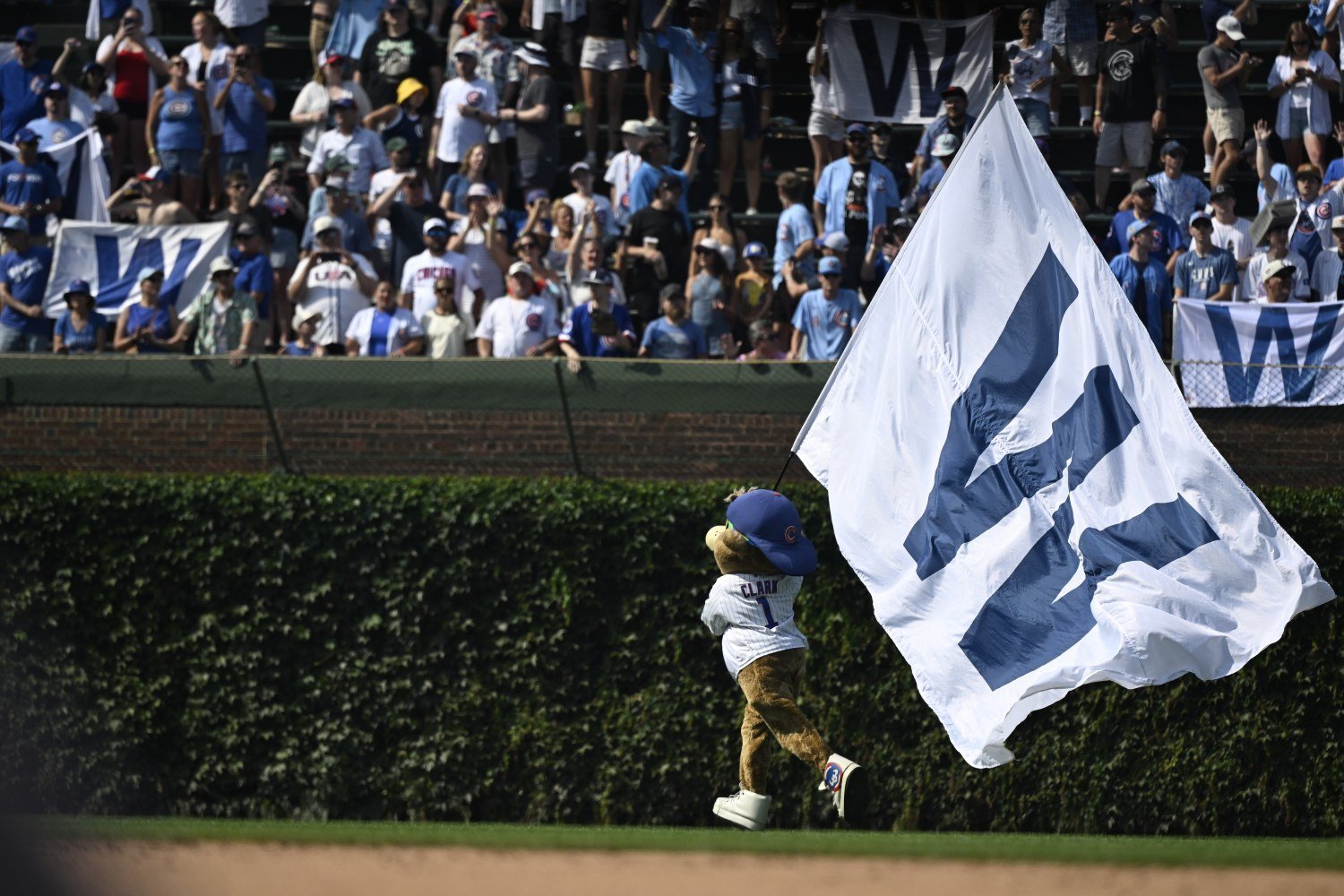 If you remember exactly what you were seeing, feeling, and smelling during life's grandest milestones, you were probably transported in time this weekend when you tuned in or showed up for Cubs baseball. Though the visiting Minnesota Twins gave the team a rude welcome home after the All-Star break on Friday night, with the 2016 World Series team reuniting throughout the weekend, the home nine rediscovered their form in a hurry. Craig Counsell's team opened their three-game set with Minnesota under hazy skies, with the reliable Colin Rea toeing the rubber. For better or worse, Rea starts are among the more consistent in this rotation. Lasting six innings and allowing four total runs, this outing was no different for the Iowa native. He deserved better than that, too. The runs came mostly in a string of second-inning accidents, including a semi-controversial error when a throw hit baserunner Luke Keaschall's sliding mitt and a deeply unfair home run by Twins catcher Ryan Jeffers that the heat, humidity and hitter-friendly wind conspired to create. His offense could not provide him with meaningful run support, squandering early opportunities at the plate. Michael Busch got the scoring started early with an RBI single in the first inning, and from there, the well ran dry with the club going an astounding 1-for-10 with RISP in a 5-2 loss. After lifting the proverbial curtain on the anticipated "Champions Gate" pavilion inside Gallagher Way, the team evened the series in Game 2 with a 6-2 victory. Left-handed pitcher Matthew Boyd delivered a quality start, working six one-run innings. Clutch swings from Miguel Amaya and Nico Hoerner's 4-for-4 day at the plate gave the good guys more than enough offense to secure the win and keep the bleacher party (featuring legends like Anthony Rizzo) going well beyond the final out. Shota Imanaga spun a seven-shutout-inning gem to help deliver a dominant 10-1 win in the rubber match of the three-game interleague series. Nico Hoerner continues to be the early second-half story. His bases-clearing, three-run triple ("triple"; it should have been ruled a single and an error) in the bottom half of the third broke the game open, as the Cubbies went up 6-0. Since play resumed, the Gold Glove second baseman is a blistering 8-for-12 at the dish. His and much of the lineup's play aided in securing the team's 56th win of the season, positioning the North Siders at 13 games above .500, though still trailing the Brewers by 6 full games in the standings. Next week, the Cubs welcome Riley Greene and the Detroit Tigers coming to town for three games before heading to Pittsburgh to square off with the Pirates. Regardless of whether or not Chicago overtakes Milwaukee (or even gets within a whisper of them), they look increasingly like a playoff team. What happens once they get that far is impossible to predict. View the full article
 -
Marlins have a closer crisis as losing streak reaches 6 games
DiamondCentric posted an article in Fish On First
 Fish On First staffers react to the latest Miami Marlins series and prepare you for what lies ahead. Sunday's show was a solo pod hosted by Ely Sussman. The following topics were covered: A new low point for Pete Fairbanks? Milwaukee Brewers prove why they're an elite team Adjustments that have unlocked Eury Pérez's recent dominance Previewing and predicting the next series against the Houston Astros You can find Fish Unfiltered and Fish On First LIVE on the Fish On First YouTube channel, Apple Podcasts, Spotify or wherever else you get your pods. Our next FOF LIVE episode will be on Thursday's off day at approximately 6:00 p.m. ET following the Marlins-Astros series finale. View the full article
 -
 The Weekly Nutshell: Last year, the Minnesota Twins came out of the All-Star break with a thud. Chris Paddack coughed up four first-inning runs en route to a 6-4 loss against a Rockies team that was 40 games below .500 — the beginning of the end. This year's second half opened on a very different note, with the Twins taking down a Cubs team that was 10 games above .500 in a crisply played 5-2 victory. Minnesota's 48th win finally got them back to the .500 mark, a milestone they've been chasing since April. They didn't stay there for long. The Twins dropped the second and third games at Wrigley, including an ugly blowout loss on Sunday, closing out the week with a 49-51 record through 100 games. Still, taking one of three against a quality Cubs team is hardly a disastrous outcome, and the Twins now head to Cleveland for a key four-game set against a Guardians team just three games ahead of them in the AL Central standings. With the trade deadline only two weeks away, every game looms large. Weekly Snapshot: Mon, 7/13 through Sun, 7/19 *** Record Last Week: 1-2 (Overall: 49-51) Run Differential Last Week: -10 (Overall: -24) Standing: 3rd Place in AL Central (4.0 GB) Latest Game Results Game 98 | Twins 5, Cubs 2: Ober Gets It Done Again, Jeffers Delivers Big Homer Jeffers: 1-4, HR, 3 RBI Game 99 | Cubs 6, Twins 2: Clemens Supplies Sole Offense as Bradley Struggles Bradley: 5 IP, 5 ER, 7 H, 3 BB, 7 K Game 100 | Cubs 10, Twins 1: Matthews Crushed by Cubs in Rubber Match Blowout Matthews: 3 IP, 10 R (8 ER), 9 H, 3 BB, 4 K NEWS & NOTES Cole Sands looks to be nearing a return from an injured list stint that has cost him nearly half the season. After having his rehab moved to the FCL during the All-Star break, he reported back to Triple-A over the weekend, throwing two scoreless innings for the Saints on Friday. Sands struck out three with one walk and one hit allowed, throwing 35 pitches as he ramps back up toward readiness. As long as he's feeling good, I'd expect Sands to be activated within the next week. Garrett Acton is fairly deep into his own rehab and on track to be activated soon, although it's not as clear he'll be added right back onto the big-league roster. Marco Raya also started a rehab assignment, less than 10 days after going on the IL with a shoulder impingement, suggesting the injury is (hopefully) not too serious. Connor Prielipp, who went on the IL shortly before the break due to a blister, pitched three scoreless innings for the Saints on Sunday. I'd expect his next appearance to come with the Twins. HIGHLIGHTS Before he went down with a fractured hamate in mid-May, Ryan Jeffers had a reasonable case for being the Twins MVP, which is saying a lot for a team that also boasts an All-Star center fielder and #1 starter. In just a handful of games since being activated, he has wasted no time reminding us all of just how impactful he can be. Jeffers notched a key two-run double in the final game before the All-Star break and then launched a three-run homer in the first game coming out. His third-inning shot off Colin Rea on Friday proved to be the difference in a three-run victory. Jeffers owns a .409 wOBA on the season, putting him in the realm of the greatest offensive seasons we've ever seen from Twins catchers. Mitch Garver had a .404 wOBA in 2019, and Joe Mauer had a .438 wOBA in his MVP 2009 season. We've been blessed to watch some truly marvelous hitting performances from catchers in Twins uniforms, and hopefully there's more of that to come with Vahn Lackey entering the pipeline. (The top draft pick has already reportedly agreed to terms.) One of the most positive developments of this season is how well Luke Keaschall has taken to the outfield. He was struggling mightily in the field at second base and seemed to be taking it to the plate with him, posting a meager .663 OPS at the position. Since shifting to the grass, he's looked much more natural defensively and his bat has come to life. Keaschall is hitting .347 as an outfielder and his prowess was on full display on Friday, when he picked up two hits and a walk while making multiple spectacular plays in center field. (He also made a very non-spectacular play in center on Sunday, reminding us that he still needs some refinement out there despite the flashes of ability.) Bailey Ober delivered a strong start to open the second half, holding Chicago to two runs over 5 ⅓ innings, and the bullpen shut things down from there with Tommy Nance, Taylor Rogers, Andrew Morris and Yoendrys Gómez teaming up to get the last 11 outs with zero runs and one hit allowed. Gómez picked up his 12th save in as many tries while Morris lowered his ERA to 3.26 with a 16th consecutive scoreless appearance. Twins relievers continued to put in good work the rest of the weekend, with Mike Paredes, Kendry Rojas, Travis Adams, Kody Funderburk and Woo-Suk Go holding the Cubs to one run in eight frames between Saturday and Sunday. The Twins bullpen has a collective 2.25 ERA here in July, ranking among the league's best after posting an MLB-worst 6.94 mark in June. And they're on the verge of getting back Sands, which could be big if he can get back to anything resembling his 2024 form. LOWLIGHTS Not such good work from the Minnesota rotation over the remainder of the weekend. Twins starters didn't give the team much of a chance to win this series after Ober's solid effort in game one. Taj Bradley hit a bump in the road on Saturday, allowing five earned runs allowed over five innings to halt his hot streak, and Zebby Matthews totally unraveled on Sunday, surrendering 10 runs (eight earned) in three innings of work. It's been a rough month of July for Matthews, who's been tagged for 16 earned runs in 13 ⅔ innings with nine walks and 12 strikeouts. Very disappointing to see after the righty seemed to be settling into a groove in June. Despite digging an early hole on Saturday, the Twins had a chance to mount a threat late. They had a rally brewing in the ninth inning before a volley of baserunning blunders blotted out their hopes for a thrilling comeback. Down 5-1, the offense produced three consecutive hits to open the final frame and then ... this happened: It was a glaring display of a blatant shortcoming on this roster: speed. The three players on base during this debacle — Josh Bell, Victor Caratini and Brooks Lee — are all extremely slow, and it showed here. For a team hoping to scrap its way into unlikely contention, these types of executional meltdowns can not really be afforded. In general, the plodding Twins are getting dusted on the bases, with opponents going 13-for-15 on steals over the past month while Minnesota's gone 8-for-16. TRENDING STORYLINE Byron Buxton was not ready to return to the roster coming out of the break, despite being eligible 10 days after landing on the injured list. That makes it official that this flare-up of his hip injury is more serious than those that sidelined him for a few days in the past. With that said, it doesn't look like Buxton is too far off from re-entering the fold. Dan Hayes of The Athletic snapped footage of the sidelined center fielder performing various on-field baseball activities ahead of Friday's game, and Bobby Nightengale of the Star Tribune indicates that Buxton is likely to rejoin the active roster in Cleveland. The Twins face important decisions with Buxton moving forward. He's their best player and their leader, pivotal to their chances of mounting a charge in the second half. But this hip thing does not seem to be going away. The team needs to be very careful in handling him and maximizing his chances of staying on the field. Maybe that contributed to the decision to keep him out of action in Chicago. When he does come back, as soon as Monday, it would probably behoove the team to incorporate some preventative measures. Fewer steal attempts is a given. Maybe more action at DH? That's easier said than done with Bell occupying the position full-time. Buxton's absence from the lineup has been noticeable for a Twins team that his totaled just six home runs in nine games since he last played. They need him to get back in the lineup and stay there. LOOKING AHEAD Big, big series in Cleveland on tap. The Twins will open with their ace, Joe Ryan, who is fresh off throwing a scoreless inning in the All-Star Game. They'll also throw Ober and Bradley in the series; it's anyone's guess who will get the nod on Tuesday, which could end up being a bullpen game. Prielipp should presumably be back to start in the second open spot on Sunday. MONDAY, JULY 20: TWINS @ GUARDIANS — RHP Joe Ryan v. RHP Tanner Bibee TUESDAY, JULY 21: TWINS @ GUARDIANS — TBD v. LHP Parker Messick WEDNESDAY, JULY 22: TWINS @ GUARDIANS — RHP Bailey Ober v. RHP Slade Cecconi THURSDAY, JULY 23: TWINS @ GUARDIANS — RHP Taj Bradley v. RHP Gavin Williams FRIDAY, JULY 24: ATHLETICS @ TWINS — RHP J.T. Ginn v. RHP Zebby Matthews SATURDAY, JULY 25: ATHLETICS @ TWINS — LHP Jacob Lopez v. RHP Joe Ryan SUNDAY, JULY 26: ATHLETICS @ TWINS — LHP Jeffrey Springs v. TBD View the full article
 -
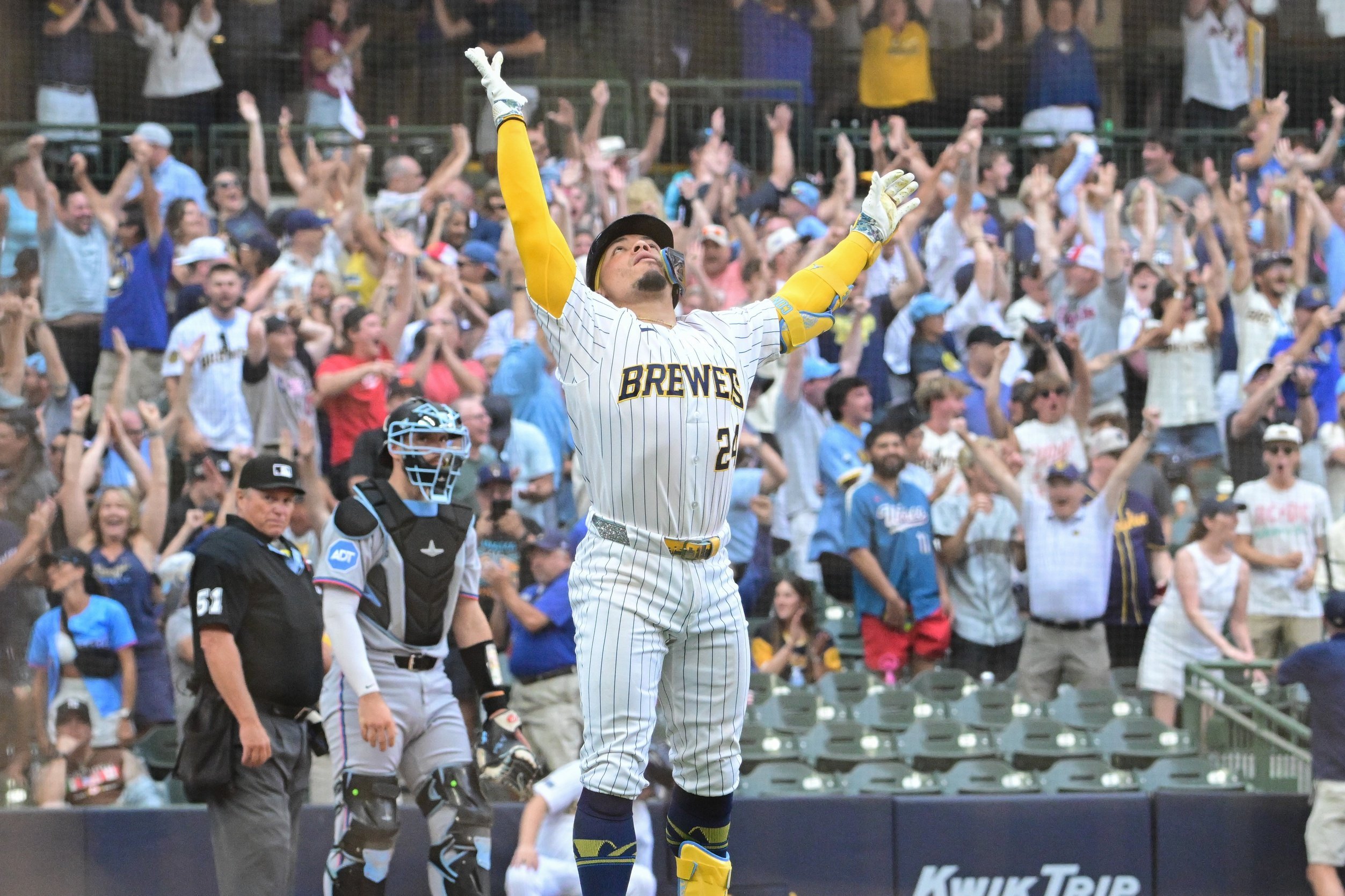 The Marlins of two weeks ago were riding a high that had eluded them for the better part of two decades. Fast-forward to July 19 and they have done a complete 180, dropping their season-worst sixth consecutive game in their 3-1 loss to the NL Central-leading Milwaukee Brewers. As has been the case amid a resurgent season for the franchise, Pete Fairbanks played the role of the heel. The embattled Marlins closer allowed a leadoff single to Jackson Chourio, then a walk to Brice Turang before catching Andrew Vaughn looking for the first out. Fairbanks went ahead in the count 0-2 against William Contreras, but couldn't put him away. He hung a cutter to Contreras on the sixth pitch of the plate appearance, resulting in a walk-off, three-run home run. "Losses hurt, but going through a season, stretches like this happen," noted Marlins manager Clayton McCullough. The Marlins were defeated only twice in walk-off fashion prior to the All-Star break. The Brewers doubled that total this weekend—Garrett Mitchell delivered the game-winner on Friday in the bottom of the 10th inning. Amid this losing streak, the Marlins have hit just .199. They bookended the Milwaukee series by scoring one run apiece in the opener and the finale. All of the offense for the Marlins on Sunday came courtesy of a third-inning solo home run off the bat of Esteury Ruiz. Outside of the perpetual rain clouds currently hanging over the club, Sunday saw continued signs of growth from Eury Pérez, who allowed just one hit over six scoreless innings. In seven starts dating back to May 22, the 23-year-old has allowed just five earned runs over his last 39 ⅓ innings pitched (1.14 ERA). The Marlins have tumbled to just four games over .500 at 52-48. They're in a virtual three-way tie with the St. Louis Cardinals (51-47) and Pittsburgh Pirates (52-48) for the NL's final wild-card spot. Looking Ahead The Marlins will travel to the Lone Star State, where they'll open up a series on Monday against the Houston Astros. Janson Junk (4-5, 4.57 ERA) will make his second start since returning from injury. Ronel Blanco (3-4, 4.10 ERA in 2025) will take the ball for the first time in 14 months following Tommy John surgery, First pitch from Daikin Park is slated for 8:10 EST/7:10 CDT. View the full article
 -
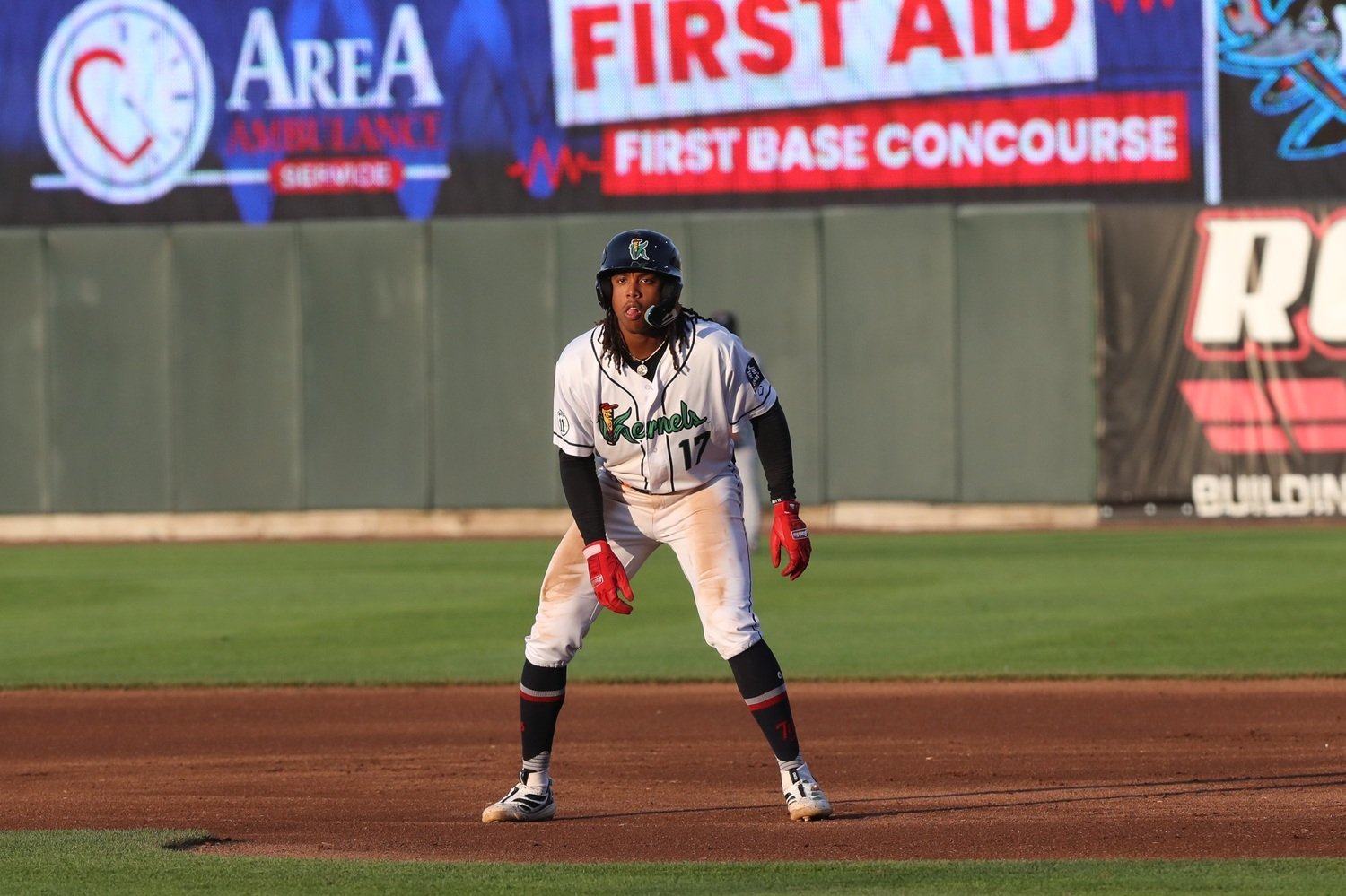 TRANSACTIONS LHP Connor Prielipp sent to AAA St. Paul on rehab LHP Ross Dunn sent to A Fort Myers on minor league rehab Saints Sentinel St. Paul 5, Louisville 1 Box Score Connor Prielipp: 3 IP, 0 H, 0 ER, 1 BB, 3 K HR: Kala’i Rosario (1), Aaron Sabato (17) Multi-hit games: Walker Jenkins (2-for-4, 2B, R, RBI), Aaron Sabato (2-for-4, HR, 2B, R, 2 RBI), Gabriel Gonzalez (2-for-4, 2B), Kala’i Rosario (2-for-3, HR, 2 R, 2 RBI) The Saints cruised to victory on Sunday. “Was I supposed to be rusty?” -Connor Prielipp, probably. The rehabbing lefty was utterly phenomenal, corkscrewing Louisville hitters into the dirt with his dastardly, cunning breaking stuff. The poor AAA batters quickly realized why the Wisconsin’s time at the level was previously curt. He ended the day with three strikeouts spread across a trio of scoreless frames. St. Paul opted for an efficient day of plating runs, selecting the third frame as the vessel for the majority of their scoring; four runners would safely touch home plate in the inning. The first, Cody Morissette, trotted, as did Kala’i Rosario after him, as the latter singed his inaugural AAA homer out to left center. Observing the power of… power, Aaron Sabato followed suit, selecting Walker Jenkins as his trailing, sauntering mate. Have you ever seen anything as beautiful as Walker Jenkins slapping a double the other way? Not since Joe Mauer have the Twins had a lefty with the ability to make the simple pleasure look like art from a master craftsman. The seventh inning knock capped St. Paul’s scoring for the day. John Klein, Eduardo Salazar, and Trent Baker each put forth two scoreless innings of relief to carry Prielipp’s excellent effort to the finish line (though Baker was struck for a solo homer to soil the shutout). The Bats employ an outfielder by the name of Héctor Rodríguez. The bastard. He’s terrorized the Saints all season—though his .902 OPS indicates that no one is safe from his wrath. The fourth-ranked player in the Reds’ system homered once in four at-bats on Sunday. Wind Surge Wisdom Wichita 12, Arkansas 7 Box Score Preston Johnson: 3 IP, 4 H, 3 ER, 2 BB, 6 K HR: Jay Thomason (2) Multi-hit games: Khadim Diaw (2-for-5, 2 R, BB), Andrew Cossetti (2-for-5, R, 3 RBI), Brandon Winokur (2-for-5, R), Garrett Spain (2-for-4, 2 R, RBI, BB), Kyle DeBarge (2-for-4, R, 2 RBI, BB), Jaime Ferrer (2-for-4, 2B, R, RBI, BB) The Wind Surge came out on top in an arms race on Sunday. Wichita had more hits than Motown. Ok, that’s not true, but the offensive display was impressive: every batter earned a knock, and seven hitters reached base multiple times. Only four extra-base hits betrays that Wichita also stole six bases without being caught once. It was a pestering unseen outside the dreams of small-ball tacticians of years past. And most of the action was in the bookends. No Mrs. Robinson, instead it was Cossetti, Amick, Spain, and Ferrer who delivered the goods in the first, though, admittedly, Paul Simon chose a more lithe surname than any of the four Wind Surge fellas. Woah, woah, woah. Two more scored in the second off a Cossetti knock, and four dormant innings begat a lone seventh-inning score made suddenly crucial as it was just a 7-6 lead before the knock (Kyle DeBarge provided the hit). Entering the ninth up 8-7, the Wind Surge reached deep down and procured one final, concluding rally. With a man on first, squeezed an awkward fly ball beyond a slightly too lethargic center fielder, whose dive for the ball portended a miss, a ball nestled in the outfield, and a mad dash around the bases. The runner scored. DeBarge claimed third. Ferrer walked and stole second, an action soon rendered unnecessary as Jay Thomason walked to the plate and sliced a three-run homer to left field. Kyle Bischoff set down the Travelers in order to end the game. The Travelers are an affiliate of the Mariners. While Wichita missed the deadly, excellent 1-2 punch of overall top-10 arms Kade Anderson and Ryan Sloan, they encountered the team’s 12-ranked prospect, pitcher Teddy McGraw. Not a country singer, nor a long-lost Tug descendent, he allowed four runs in one inning of work. Kernels Nuggets Cedar Rapids 11, Beloit 15 Box Score Michael Ross: 2 ⅓ IP, 6 H, 7 ER, 2 BB, 1 K HR: Graham Brown (5), Andy Lugo (3) Multi-hit games: Yasser Mercedes (3-for-6, 2B, R, 3 RBI), Miguel Briceno (4-for-4, 4 R, BB), Andy Lugo (2-for-4, HR, 3 R, 4 RBI, BB) A hitting melee broke out on Sunday. Nolan Santos pitched a scoreless ninth inning for the Kernels. Every other pitcher line requires parental consent to disseminate. Cedar Rapids’ 14 hits broke down as follows: three doubles, two homers, and nine singles. A bit tepid for an 11-run day? So thought this author. Going 7-for-15 with runners in scoring position helps, as does cracking a Grand Slam in the bottom of the ninth. Sky Carp hurlers are still looking for ways to get Miguel Briceno out; they never did it on Sunday. The left fielder collected four singles and walked once, digging a well-worn trench between the right-handed hitter’s batter's box and first base that he could adventure between blindfolded. Graham Brown authored Cedar Rapids’ other homer. In an unusual performance, every time Yasser Mercedes earned a hit on Sunday, it scored a run. He drove a single to center in the second, snuck a grounder into left in the fourth, then served a double down the left field corner in the sixth. No big, opulent blasts for the 21-year-old; he preferred to scrap for his RBIS. Every starter in the lineup outside of Jose Salas accrued at least one hit. The Sky Carp are a member of the Marlins organization. Fittingly—in tying with the bird team theme—they are spearheaded by the team’s sixth-ranked prospect, Starlyn Caba, who becomes a flying and normal type Pokemon if his “n” is dropped. He totaled two hits and walked once in six plate appearances. Mussel Matters Fort Myers 3, Lakeland 4 Box Score Ross Dunn: 1 IP, 2 H, 2 ER, 2 BB, 3 K HR: Ramiro Dominguez (9), Jake Rucker (1) Multi-hit games: Jake Rucker (2-for-3, HR, R, RBI, 2 BB), Harry Genth (2-for-4) The Mighty Mussels came up short on Sunday. Minor league rehabbers flocked to the game and gathered united in their attempts to heal their ailments and re-sharpen their baseball acumen. Some found better fortune than others. Jake Rucker was an offensive firehose: the infielder smacked a pair of hits—including a homer—and walked twice. He now carries a 1.667 OPS in three games with the Mighty Mussels. The pitchers? Maybe skip talking to them after Sunday’s events. The starter, Ross Dunn, fired with scattershot results, walking a pair in a two-run first; just 16 of his 31 pitches went for strikes. Julian Merryweather had the opposite problem: he located the zone just fine but surrendered a two-run homer that counted as just one earned run, as an error preceded it. So, it goes. At least he struck out two and topped out at 98 MPH. Hidden in the hefty seven-man pile of pitchers sent to the mound on Sunday was the awesome outing by Merit Jones. What a gem. He went three scoreless while piling up six strikeouts, as his non-fastballs befuddled Lakeland hitters. Ramiro Dominguez obliterated a homer to start the game. Was his or Rucker’s more aesthetically brilliant? None can definitively say. The Flying Tigers are the winged affiliate of the land-based Detroit Tigers organization. Their fifth-ranked prospect, DH Thayron Liranzo singled and walked in three plate appearances. TWINS DAILY PLAYERS OF THE DAY Twins Daily Minor League Pitcher of the Day – Merit Jones Twins Daily Minor League Hitter of the Day – Miguel Briceno ft. Aaron Sabato PROSPECT SUMMARY Here’s a look at how the Twins Daily Top 20 Twins Prospects performed: #1 – Walker Jenkins (St. Paul) - 2-4, 2B, R, RBI #4 – Eduardo Tait (Cedar Rapids) - 1-5, 2B, RBI, 3 K #5 – Marek Houston (Wichita) - 1-5, 2 R, BB, 3 K #10 – Gabriel Gonzalez (St. Paul) - 2-4, K #12 – Brandon Winokur (Wichita) - 2-5, R #13 – Khadim Diaw (Wichita) - 2-5, 2 R, BB #14 – Quentin Young (Fort Myers) - 0-3, BB, 3 K #18 – Yasser Mercedes (Cedar Rapids) - 3-6, 2B, R, 3 RBI, K #19 – Billy Amick (Wichita) - 1-5, 2B, R, 2 RBI #20 – Kyle DeBarge (Wichita) - 2-4, 3B, R, 2 RBI, BB MONDAY’S PROBABLE STARTERS FCL Twins @ FCL Pirates (11:00 AM) - TBD DSL Marlins @ DSL Twins (10:00 AM) - TBD View the full article
 -
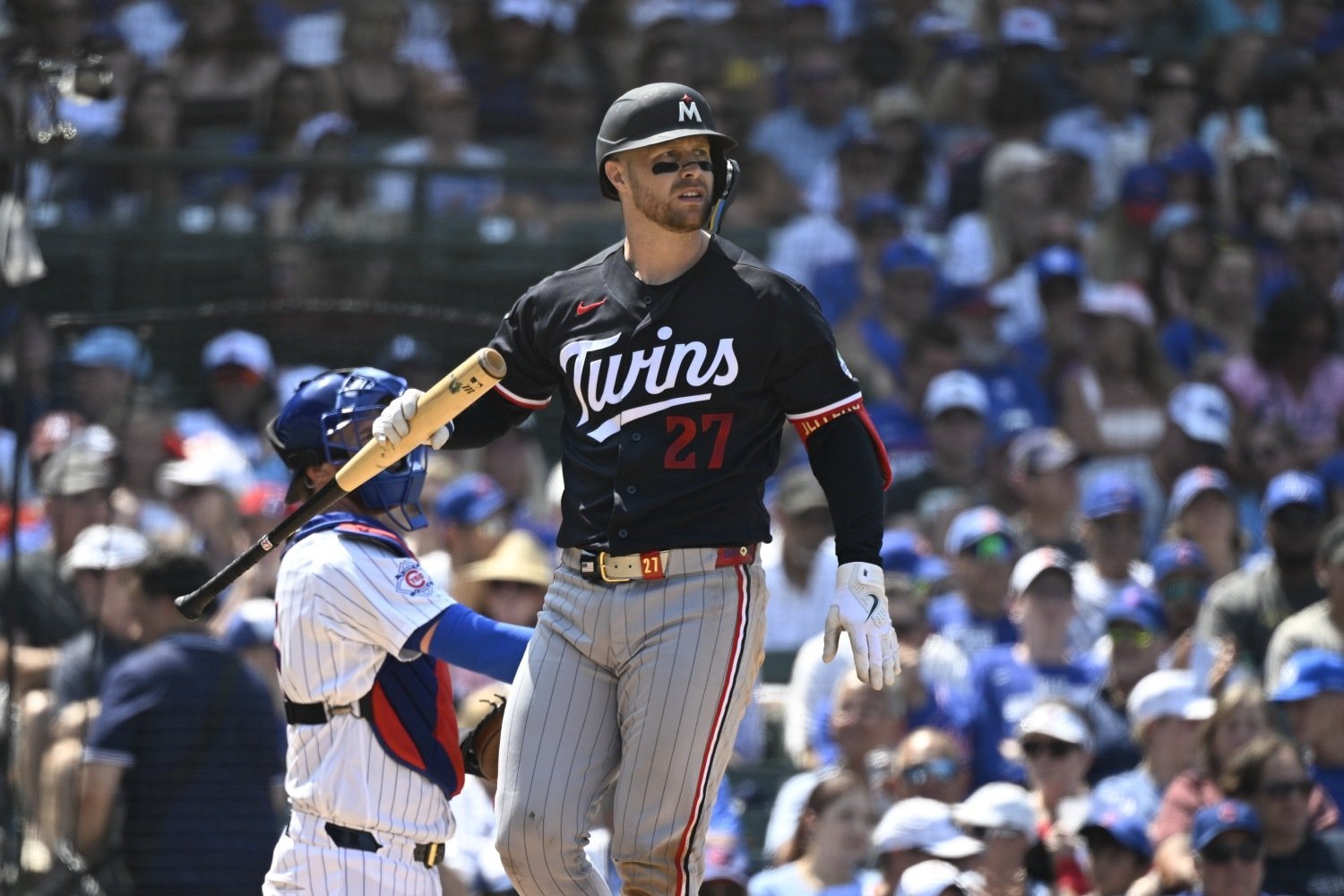 Box Score SP: Zebby Matthews - 3 IP, 9 H, 10 R, 8 ER, 3 BB, 4 K (87 pitches, 61 pitches (70.1% strikes)) Bottom 3 WPA (via FanGraphs): Zebby Matthews (-0.35), Ryan Kreidler (-0.07), Kody Clemens/Josh Bell/Austin Martin (-0.03) Win Probability Chart (via FanGraphs) Coming out of the All-Star break, the Twins and Cubs split the first two games of the series. The Twins, looking to climb back to .500, sent Zebby Matthews to the mound to face off against the Cubs in the rubber match at Wrigley Field. The Cubs countered with lefty Shota Imanaga. Imanaga threw a scoreless top of the first inning, and it looked like Matthews might be able to pitch around a one-out Seiya Suzuki double, but hanging a breaking ball to Alex Bregman typically doesn’t end well. Bregman hit a home run to give the Cubs a 2-0 lead. The Cubs were able to add to their lead in the bottom of the second on a one-out single by Carson Kelly after a Pedro Ramírez double that (a theme to watch) maybe could have been caught, extending the Cubs lead to three. Things got ugly in the bottom of the third inning, where the Cubs added four more runs. Three of them came on a Nico Hoerner triple that got past Luke Keaschall in center field. ("Triple.") The fourth run came on a single by Ramírez, which gave the Cubs a 7-0 lead and put things on ice early. The Cubs offense wasn’t done, adding more runs in the bottom of the fourth against Matthews. The first four batters reached, giving the Cubs two more runs, which led to Matthews being removed from the game without getting an out in the fourth. The Cubs were able to squeak another run across, giving them a 10-run lead at the end of four innings. Those proved to be way more than enough for Imanaga, who pitched seven scoreless innings, striking out four and giving up just seven base runners. While the first seven innings were not great for the Twins, they were able to have some success at the plate in the top of the eighth inning against reliever Phil Maton, breaking through on a Royce Lewis sacrifice fly, cutting the lead to 10-1. One other positive from the game is that the Twins bullpen threw five scoreless innings, so that is success the Twins hope will continue going forward. What’s Next? The Twins head to Cleveland to face off with the Guardians in a four-game series. In Monday’s game, the Twins will send All-Star Joe Ryan (6-5, 2.85 ERA) to the mound, while the Guardians will send Tanner Bibee (3-9, 3.90 ERA). Ryan’s most recent outing was in the All-Star Game, where he threw one scoreless inning as part of an American League shutout. Prior to the All-Star break, Ryan had two starts of seven and six innings respectively, giving up two runs over those 13 innings. BULLPEN CHART WED THUR FRI SAT SAT TOT Nance 0 0 25 0 0 25 Gómez 0 0 22 0 0 22 Morris 0 0 14 0 0 14 Rogers 0 0 2 0 0 2 Rojas 0 0 0 18 0 18 Go 0 0 0 0 23 23 Adams 0 0 0 0 45 45 Funderburk 0 0 0 0 14 14 Paredes 0 0 0 40 0 40 View the full article
 -
World Cup superstar spotted wearing Twins cap in viral video
DiamondCentric posted an article in Twins Daily
 Minnesota may have an unexpected fan ahead of Sunday's World Cup Final. Spanish superstar Lamine Yamal was recently spotted strolling through New York City wearing the Twins' light blue City Connect cap, and the video quickly went viral across social media. Naturally, Twins fans immediately began wondering if there was some hidden connection. theScore (@thescore) • Instagram reel WWW.INSTAGRAM.COM 1,615 likes, 18 comments - thescore on July 17, 2026: "Lamine Yamal stoped by a New York food truck with his girlfriend rocking a Minnesota Twins caps two days before the World Cup... As far as anyone can tell, there isn't one. Yamal has no known ties to the Twins, Minnesota, or the organization. The most likely explanation is simply that he liked the look of the cap, but it still provided some unexpected national exposure for the club. The 19-year-old phenom will lead Spain against Lionel Messi and Argentina in the World Cup Final on Sunday at 2 p.m. CT. Whether the Twins hat was just a fashion choice or the beginning of baseball's newest international fan, Twins fans seemed more than happy to claim him. View the full article
