


DiamondCentric
-
Posts
2,631 -
Joined
-
Last visited
Never
Content Type
Profiles
Forums
Events
News
Tutorials & Help
Major League Baseball Videos
Guides & Resources
Store
Downloads
Gallery
Everything posted by DiamondCentric
-
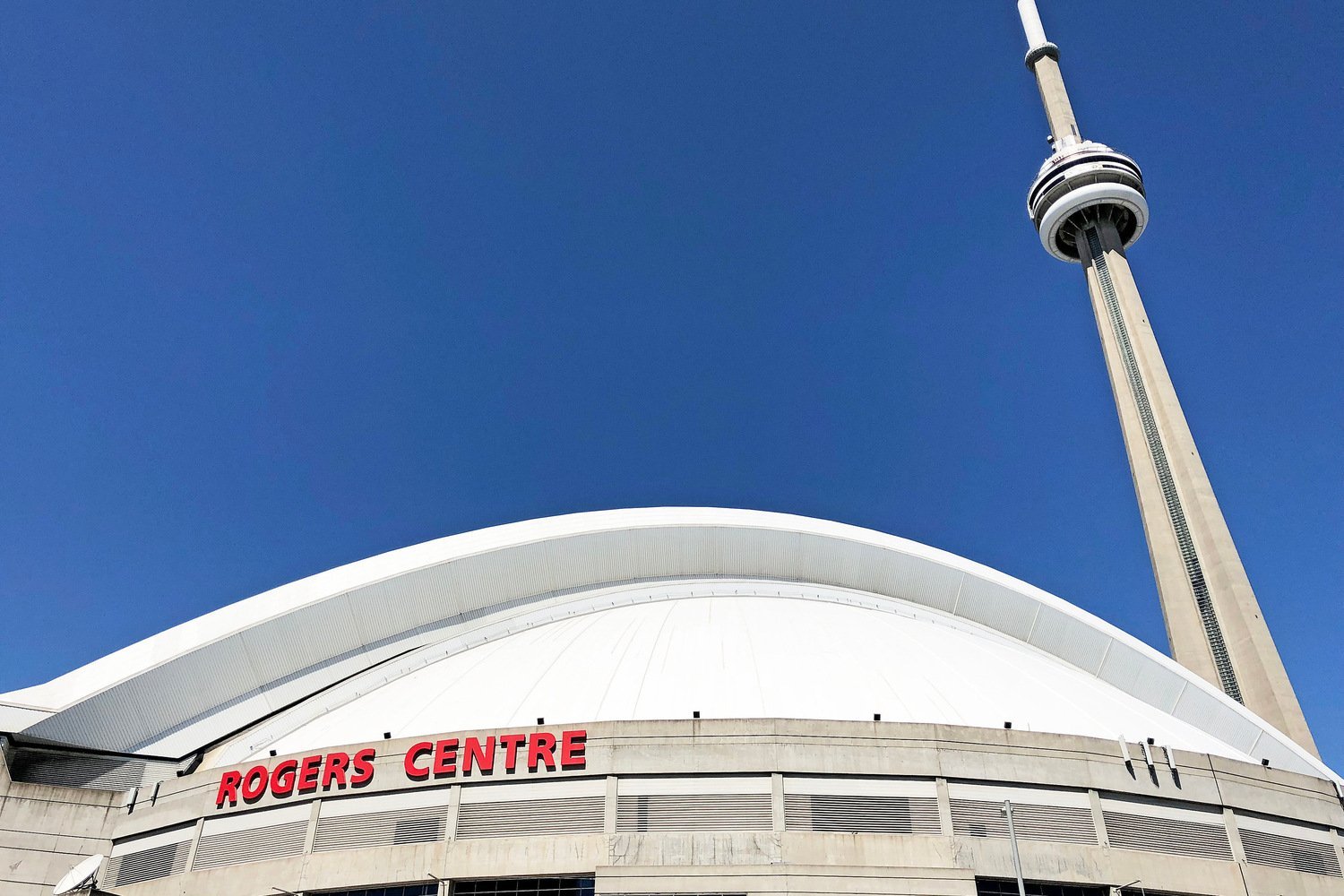 No one knows how CBA negotiations between MLB and the MLBPA will affect the 2027 season. However, we now know what the schedule will look like, presuming no prolonged work stoppage. The season will begin with one game on Wednesday, March 24. The teams for that game have not yet been announced. Opening Day for the Blue Jays will be Thursday, March 25, 2027, unless they're chosen to play the day before. They will take on the Yankees in a three-game set in the Bronx, before travelling to Baltimore for a series with the Orioles. The home opener is set for Friday, April 2, against the Mariners. The Jays will be home for Canada Day (facing the Angels) before departing on a 10-game road trip heading into the All-Star break. The Midsummer Classic is scheduled for July 13 at Wrigley Field. Finally, the Blue Jays will end their 2027 regular season at home with series against the Yankees and Rays, wrapping up on September 26. You can find their full 2027 schedule here. View the full article
 -
 Jack and Spencer react to the Lance McCullers Jr. trade and recap the Brewers' selections in this year's draft. Apple Podcasts: https://podcasts.apple.com/us/podcast/the-brewer-fanatic-podcast/id1740648724 Spotify: https://open.spotify.com/show/5CY8mWsQayqjDXqw9OT2Td iHeartRadio: https://www.iheart.com/podcast/263-the-brewer-fanatic-podcast-166534588/ Pocket Casts: https://pca.st/ommzz627 Watch On YouTube: https://www.youtube.com/@brewerfanatic View the full article
 -

1st-Round Stuff, 4th-Round Price: Why the Twins Bet On Tommy LaPour
DiamondCentric posted an article in Twins Daily
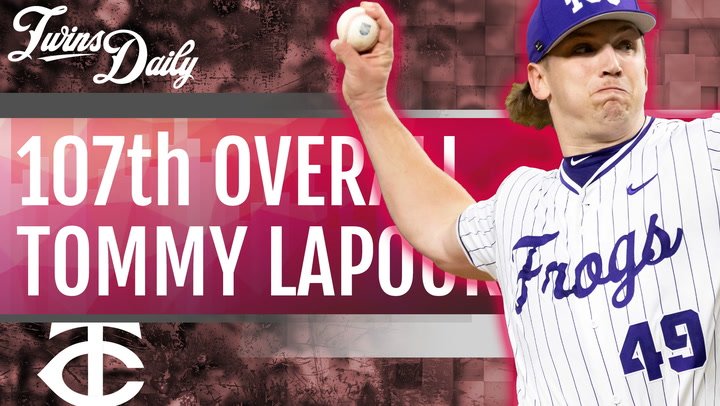 The Twins selected TCU right-hander Tommy LaPour with the No. 107 pick in the 2026 MLB Draft. In this video, we cover his fastball that sits 95-98 and touches 101, his standout 2025 season, where he posted a 3.09 ERA with 88 strikeouts as TCU's ace, the elbow soreness that limited him to 17 innings in 2026 and dropped him down draft boards, and the starter-versus-bullpen debate around his future. View the full article
 -
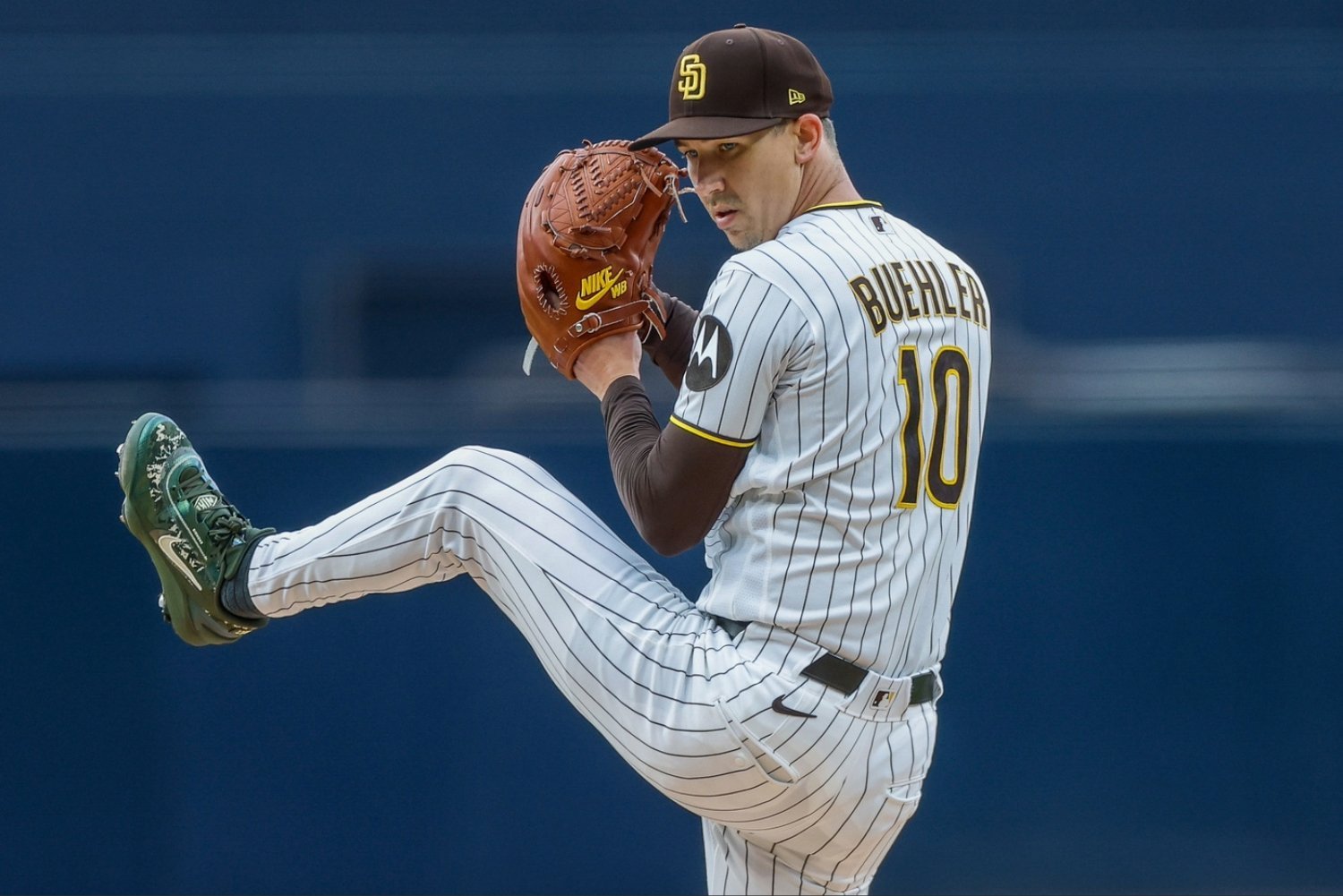 Walker Buehler is having a confounding season on the mound, and if the San Diego Padres want to salvage any chance at a playoff run down the stretch, he’s going to have to figure out how to be more consistnet. Fresh off of a brief stint where he flashed signs of his old self in 2025, the veteran right-handed pitcher has struggled mightily. Let’s break down what’s going wrong, and more importantly, if this is fixable. Walker Buehler’s Updated Padres Scouting Report Before fully diving into his struggles this year, it’s important to understand what type of pitcher Buehler is at this point in his career. The 31-year-old Vanderbilt alum was a first-round pick in 2015 by the Los Angeles Dodgers, and he holds a 62-34 career record with a 3.69 earned run average. The righty has managed to strike out 927 hitters in just about the same amount of innings, but his main issue has been staying on the field. Buehler had a stretch between 2019-2021 where he struck out 200 hitters in back-to-back full seasons (with COVID-19 shortening the 2020 campaign). After 2021, he hasn’t managed to toss 150 innings. In fact, 2019 and 2021 were the only two times the starter has accomplished that feat in his nine-season career. A Magical 2025 (But Short) Run Buehler’s injuries have made him a rather inconsistent rotation piece in the last few years, but he seemed to have turned back the clock in a couple of appearances with the Philadelphia Phillies last year. Buehler logged a 3-0 record, allowing just one earned run over 13.2 innings for a really impressive 0.66 ERA. He struck out just eight hitters while relinquishing six walks, and it was an extremely small sample size, but the signs of him being able to unlock performances reminiscent of his prime were there. Diminishing Velocity In 2026, his numbers have tumbled. Buehler is on pace to break the 150 innings mark for the first time in five years, but his 5.36 ERA and 1.44 WHIP shows that hitters aren’t having nearly the amount of trouble they once did while facing him. The diminishing velocity is the first rung to address. What was once a firm, high-90s four-seam fastball has fallen to an average of 94.0 mph, putting Buehler in the 40th percentile among all MLB pitchers (per Baseball Savant). There are ways to offset this issue, and building a more diversified pitch arsenal is a great way to start. Buehler has explored that route, featuring a mix that now includes the following seven pitches: a cutter, four-seamer, sinker, slider, knuckle curve, changeup and sweeper. He’s had to lean off of the four-seamer, as opposing hitters are collecting a .393 batting average against it. The slider has been his best tool, as he’s allowed just five hits in 42 plate appearances (.122 AVG) that have ended with the pitch. Quality Contact Control Unfortunately for the veteran hurler, the quality of contact has really spiked. Batters are managing a 42.2 percent hard-hit rate (batted balls with an exit velocity of 95 mph or greater), which puts him in the 25th percentile league-wide. The average exit velocity of 90.5 mph (15th percentile) that he's allowing falls right in line, and with below-average whiff and chase rates, he’s been hit around quite a bit in his age-31 season. Silver Lining: Contact Trajectory The silver lining for Buehler is two-fold: he has his varied arsenal, and he’s not allowing opposing hitters to launch the ball on him very often. While he’s allowing hard-hit balls, a lot of them are on the ground, as shown by his 46.3 percent ground ball rate (72nd percentile). His 4.48 expected ERA implies he’s run into his fair share of bad luck, but at this stage of his career, Buehler needs to be a finesse pitcher, keeping hitters off balance and forcing weaker contact. If he combines that with an already remarkable groundball rate, we could see Buehler return to form and serve as a pivotal part in a Padres playoff run. View the full article
 -
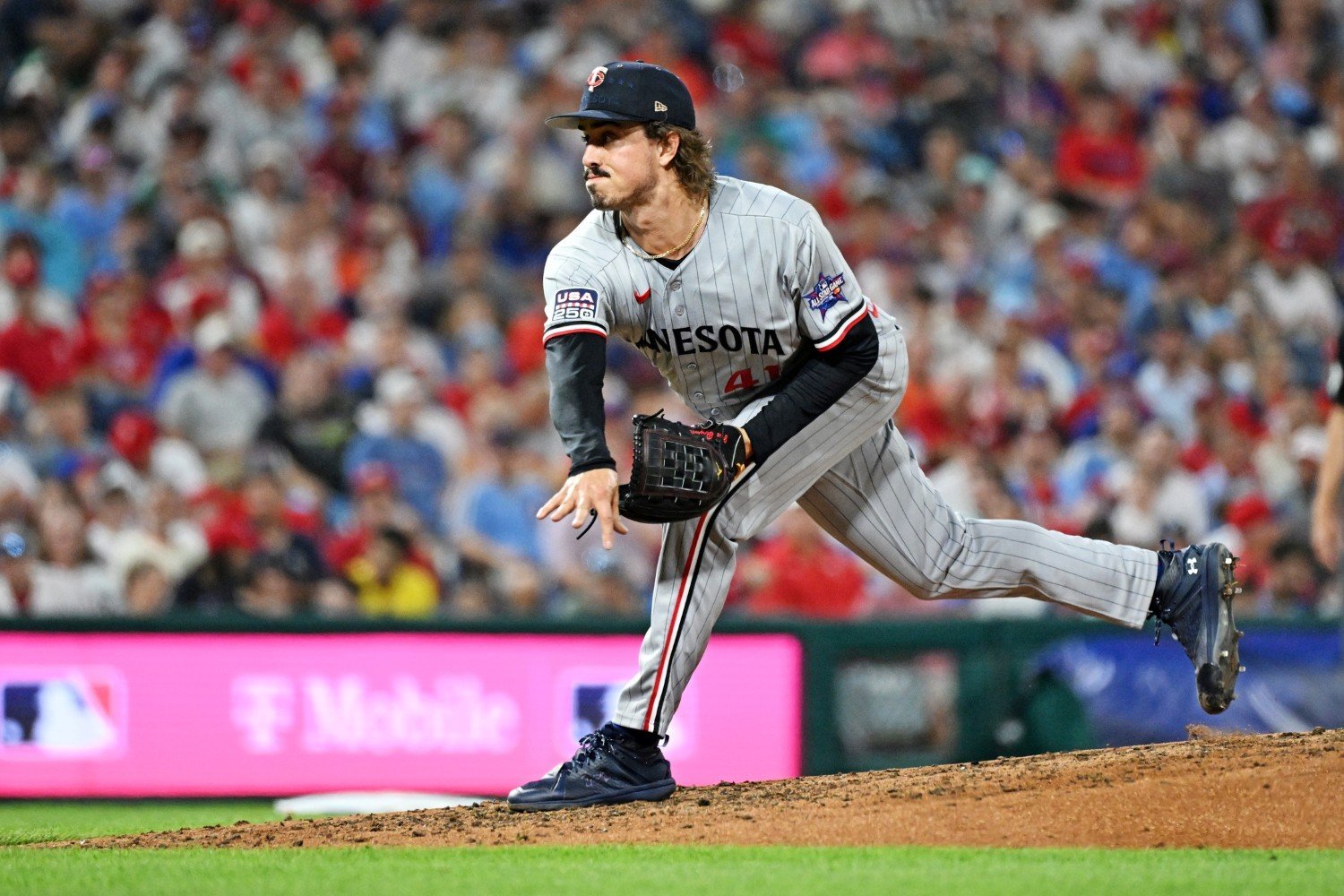 The Minnesota Twins are about to return from the All-Star break, and in my eyes, they're set to begin the most important week of their season. They avoided being muscled out of the playoff picture by midseason, but otherwise, nothing has been decided. They've run hot and cold all year, and now find themselves in the mangled middle. Despite the inconsistency, though, the Twins are still very much in the hunt. They're currently tied with Seattle for the final American League Wild Card spot, and they also sit just three games behind both the White Sox and Guardians in the AL Central. As it happens, Cleveland is the team they'll see four times early next week. Before that, however, Minnesota opens the second half with a three-game series against the Cubs at Wrigley Field. Chicago has established itself as one of the better teams in the National League, and they look well on their way to a postseason berth. In short, with the seasonal leverage index already cranked up, the Twins have seven games coming up against two playoff-caliber opponents. That stretch is going to tell us a lot about what this team is made of. More importantly, it could legitimately determine what this roster looks like for the rest of the season. The Twins are still in that awkward position where it's difficult to know exactly how they should approach the trade deadline. They're close enough to the playoff picture that buying makes sense, but they're also inconsistent enough that selling isn't out of the question. The next seven games could go a long way toward answering that question. Let's say the Twins stumble to a 2-5 showing against the Cubs and Guardians. That would leave them at 50-54. Even in the best-case scenario (assuming, among other things, both of those wins came against Cleveland), they'd still be at least three games behind the Guardians. Depending on how the rest of the Wild Card race develops, they'd probably find themselves slipping further behind there as well. At that point, the front office would have to ask itself some difficult questions. On the other hand, imagine the Twins stay hot and go 5-2 over the next week. Suddenly, they're 53-51 and right back in the thick of everything. They'd be firmly alive in the Wild Card race and could find themselves right on the heels of the division leaders, or maybe even sitting atop the AL Central. That would completely change the conversation. Winning is one thing. Winning against high-quality competition is another. If the Twins take care of business against the Cubs and Guardians, what kind of message does that send to the front office? To me, it would be a sign that this team deserves reinforcements, especially if they're able to do it without Byron Buxton in the lineup. If the Twins can beat two playoff-caliber teams while missing their best player, I'd have a hard time sitting on the sidelines at the trade deadline. At that point, I'd be looking for pitching help wherever I could find it. Whether that's another starting pitcher, bullpen help, or both, the goal should be maximizing this team's chances to win the division—or, at the very least, lock down a Wild Card spot. The opportunity is there, but the opposite is also true. If the Twins lose both series and struggle against quality competition, that may be the clearest sign yet that they simply aren't on the same level as the league's contenders. If that's the case, selling becomes a much more realistic option. Maybe you move some of your veteran pieces. Players like Kody Clemens, Josh Bell, Trevor Larnach, Ryan Jeffers, and others could all generate interest from contenders looking to add before the deadline. While none of those players would bring back franchise-altering returns on their own, collectively, they could help Minnesota add future value while opening opportunities for younger players. It's not just about where the Twins stand in the race after seven games. It's about what direction the organization chooses over the next couple of weeks. Another thing I'll be watching closely is how the Twins decide to structure their starting rotation. With seven games over the next week, there's an opportunity for two starters to throw twice. Ideally, those two would be Joe Ryan and Taj Bradley. Those are your two best starters, and if you're trying to maximize your chances of winning the biggest week of the season, it makes sense to have your best arms on the mound as often as possible. The complication, of course, is timing. Ryan and Bradley both pitched against the Angels last weekend, with Ryan throwing on Saturday and Bradley following on Sunday. Ryan also made an appearance in Tuesday night's All-Star Game, even if it was only for one inning. That could make it difficult to line everything up exactly the way you'd like. So how do the Twins approach it? In deference to some of those concerns, they elected to start Bailey Ober to open the second half. Bradley will follow him, and Zebby Matthews gets the ball Sunday. Ryan will, presumably, open the Cleveland series; Bradley is positioned to close it. The priority right now should be putting your team in the best position to win. They've done that, while also giving Ryan a bit of time to recover from the whirlwind of All-Star Week and an intense between-starts appearance in the cauldron of Philadelphia's Citizens Bank Park. No matter how the rotation shakes out, though, one thing feels certain. This next week of baseball is going to tell us a lot about who the 2026 Minnesota Twins really are. And depending on how it unfolds, it could have a major impact on what this team looks like for the rest of the season. View the full article
 -
Miami Marlins need to replace Tyler Phillips, but which one?
DiamondCentric posted an article in Fish On First
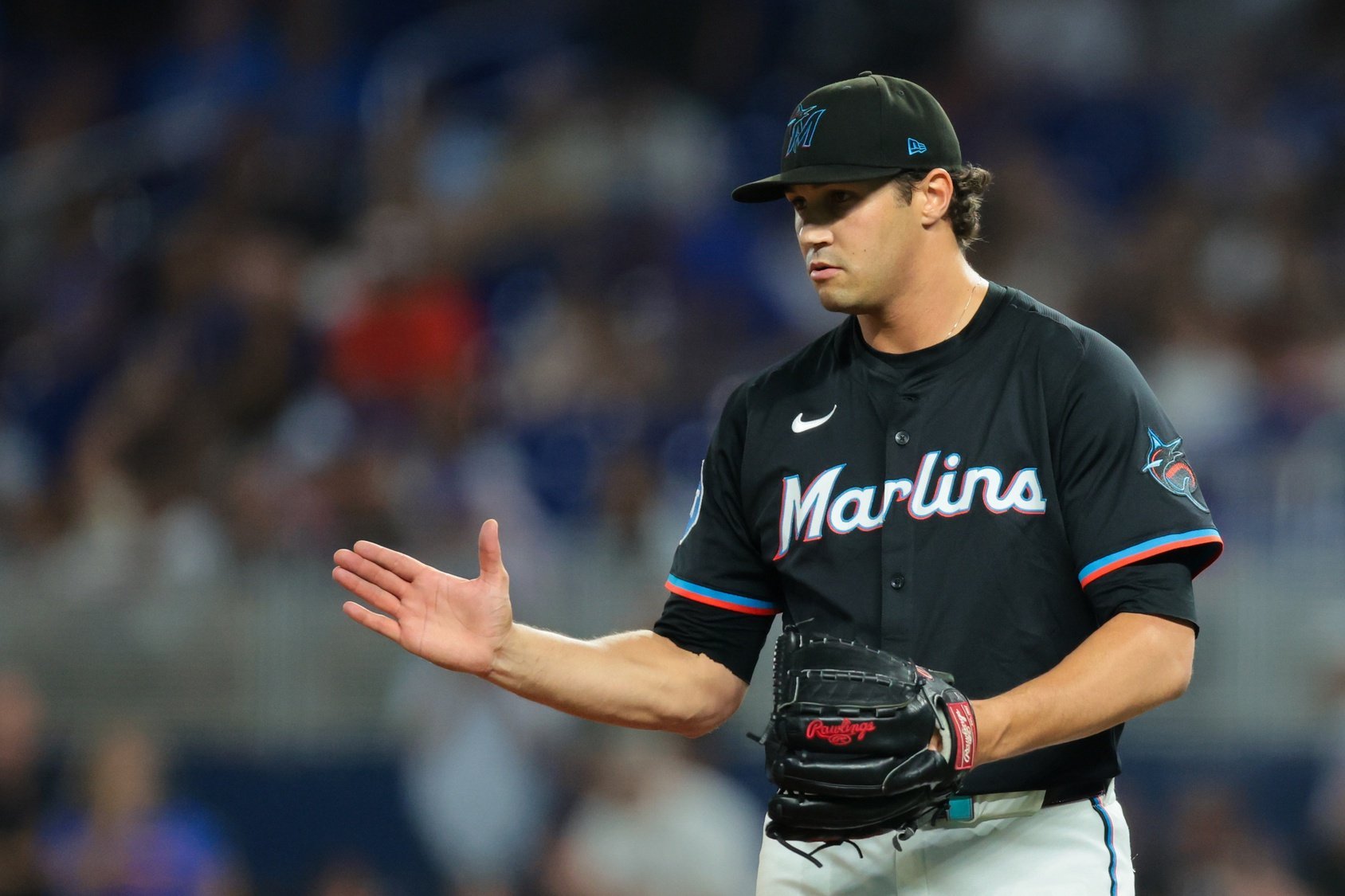 To say the Miami Marlins have extracted the most from their pitching to this point would be an understatement. Somehow, someway, despite all the injuries, Miami has made it work to this point. Having two pitchers like Sandy Alcantara and Eury Perez certainly helps. Max Meyer's All-Star breakout has been essential, as has Joe Mack emerging as the caliber of catcher that the entire pitching staff can implicitly trust to perform his job. However, it wouldn't be too hard to argue that the most indispensable part of this has been Tyler Phillips. At one point, Miami was down to two healthy starting pitchers. All season long, Phillips has been an absolute weapon, following up on his strong 2025 campaign as well as any Marlins fan could have dared hope for. His ability to actually make the transformation from bulk reliever to starter, after moonlighting as a high-leverage guy, has been a godsend for Miami. As long as his arm remains attached, it would appear that he can do whatever the front office asks him to, and do it well to boot. Yet the time has come for the Marlins front office to replace him. As soon as possible. No, this isn't about the fact that Phillips had the temerity to not be awesome last Sunday afternoon on short rest. Plenty of blame to go around in that loss. You'd be reading this same article whether he had thrown nine perfect innings or given up nine earned runs. Well, alright, maybe the tone would be a little different if he'd thrown a perfecto. Still, you'd be reading something like this. Part of the problem is that, just like Meyer and Perez, Phillips is looking at a massive innings increase from the prior season. If he makes it into the third inning of his next start, he'll have topped his total IP for the entire 2025 campaign. That's a huge workload jump, and for a team looking to compete that is already stretched very thin on pitching, load management is going to be a major issue. Fans have already seen that with Perez being pulled early from an actual bid for perfection and Meyer being both pushed back from his regular start and opting not to participate in the All-Star Game. Most of the issue here is about that thin pitching depth though. The Marlins can't afford to lose Phillips. Really, they can't afford to lose anyone, but Phillips is on the short list of real tragedies. They simply can't lose Phillips. More to the point, they can't afford to lose him again. For if you think about it, the team already did lose him once, removing one of their most effective weapons from the bullpen to press into service as a starting pitcher. Other names in the 'pen have stepped up, sure, but with Anthony Bender out and Peter Fairbanks continuing to be as consistent as the South Florida weather, help is needed. Frankly, as a contender, it would have been needed anyway. Same goes for that starting rotation. If Miami does make the playoffs, they may well only need Alcantara, Perez, and Meyer starting games. But to get there? It's going to take a full staff. Which is why, for me, Phillips is the swing piece in the middle of all this. He can do either job, and do it well. If he keeps starting though? He could be clearing his career high before September. Putting him back in a relief role, or even limiting him to a more traditional opener workload, feels more likely to result in his arm being available all year. However, that absolutely would have Miami shopping for a starting pitcher, and probably two. Either way, it boils down to the Marlins needing a Phillips replacement. That, and the team recognizing that some preventative maintenance is needed in this particular case. All season long they have found a way to plug holes as they come up. That's to their credit, but a healthy Phillips has been key to that. Miami would be wise to take some steps to help ensure their most versatile pitcher stays that way. The only question is which Phillips they are able to replace—the starter or the reliever. View the full article
 -
 The facts are the facts. The Minnesota Twins are a legitimate playoff contender. It's weird to read those words about this team. I'm uncomfortable writing them. I'm aware of the flaws. I'm aware the American League is a dumpy little college bar--everyone agrees it sucks and the bathrooms don't work, but the specials are amazing for those who can't afford anything better. (For the purposes of this metaphor, the specials are the Wild Card spots.) This might give you pause. Indeed, it's easy to lapse into Minnesota sports fatalism. It's our reflex position, our muscle memory. They're NOT EVEN .500. In 16 games, they could go 4-12, and Joe Ryan could be a Dodger. Or they could go 10-6, and the Pohlads might say "Uh, we just don't have the money, guys. Sorry about that. We just traded Josh Bell for a Toyota." They're both possible outcomes! But I'm not going to do that. Nor should you. That feeling you're feeling—that I'm feeling, too—is optimism. There is a non-zero chance that this team could make the playoffs. They might even win the division, because if the AL is a dumpy college bar, the AL Central is a dumpy college bar with a kitchen that makes you sick every time you order something that isn't tater tots. And it's in Cleveland, even though you went to school in Moorhead. It's such an unlikely place to land after last year's trade deadline slaughter and the slumbering offseason. None of this should be happening. One of their most critical players is a nepo baby journeyman! You're caught off-guard and don't really know what to do with your hands. Here's what I recommend: Hug this feeling tight to your chest, because you deserve this. You're still following this team, despite ownership not loving it nearly as much as you do. Know going into the next 2-3 weeks that they could break your heart one more time. Accept that, even in the best-case scenario, they'll probably get wiped out in a short, ugly playoff series. But they might not. Think about how wild that is, after all the nonsense you put up with. That's optimism. It doesn't last. It never does. Why not ****ing enjoy it? View the full article
 -
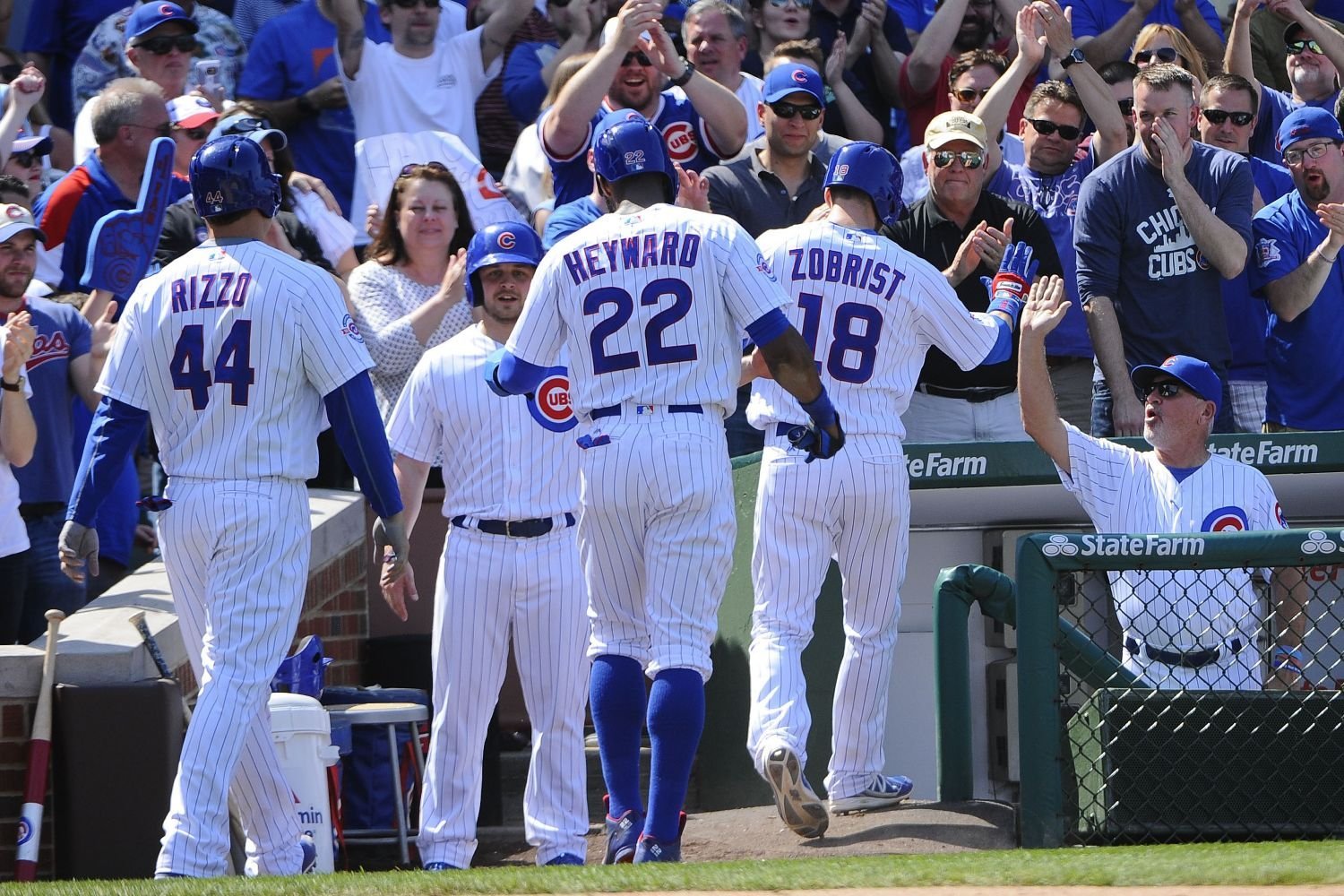 Something that has struck me, as I have listened to David Ross and Anthony Rizzo’s podcast, The Lovable Reunion (where they reminisce with those that were a part of that team), is how inevitable that 2016 Cubs group felt. I feel like I live and die with every pitch of the 2026 Cubs, because I have to. If they lose three or four in a row, that could easily be devastating to their playoff chances. The 2016 team, though, was different. With 103 wins, they finished with the best record in the National League by a full eight wins. They won the division by 17.5 games, and were never less than 6.5 games up on second place during the second half of the season. They started 25-6, for crying out loud—and they didn't follow it up with some 10-game losing skein. All of this is to say, the 2026 Cubs are probably a good baseball team, but the 2016 Cubs were an elite baseball team. How would the 2026 Cubs fare if they faced the 2016 Cubs? With the new baseball simulation tool at FanGraphs, we can figure this out! First, we have to decide on our lineups. I thought we’d simulate one game with lefties on the mound for both teams, and then another with righties on the mound. We’re going to use the Marcel projection system, since it is one of the only systems that will project back in time, which is necessary for the 2016 team. I’ve also disabled home-field advantage. These games are played at Wrigley Field, in theory, where fans are cheering for both teams. Game 1 Lineups 2026 Cubs Pete Crow-Armstrong Seiya Suzuki Alex Bregman Carson Kelly Michael Busch Ian Happ Nico Hoerner Matt Shaw Dansby Swanson Pitchers - Matthew Boyd, Ryan Rolison, Hoby Milner, Jacob Webb, Daniel Palencia 2016 Cubs Dexter Fowler Kris Bryant Anthony Rizzo Ben Zobrist Addison Russell Willson Contreras Jorge Soler Javier Báez Kyle Schwarber Pitchers - Jon Lester, Carl Edwards Jr., Héctor Rondón, Pedro Strop, Aroldis Chapman Here's how it went down. The 2016 Cubs, of course, win this matchup much more often than the 2026 Cubs. However, I was shocked to discover that they win the matchup 65.3% of the time. On any given day in MLB, it’s hard to find any team that has almost a two-in-three chance of winning. Some of this is probably accounted for by the fact that the league-average hitter in 2016 was better than the league-average hitter in 2026. That was just a better offensive environment, and that might make this slightly unfair—although the difference should be counterbalanced by the easier pitching environment, right? Indeed, the lion's share of the difference, in my opinion—and this won’t shock you—is in the pitching. Cubs hitters this year have a 109 wRC+. The 2016 Cubs had a 106 wRC+. Cubs pitchers in 2016 had an ERA- of 76. That figure is at 104 this year. ERA- is basically wRC+ for pitchers. It’s adjusted for league average and park factors, and 100 is average. Unlike wRC+ (and more like ERA), you want this number to be below 100. In other terms, Cubs pitchers were 24 percent better than league average in 2016. In 2026, they are 4 percent worse than average. The simulation bears this out. The 2016 Cubs crush to the tune of a .274/.353/.465 slash line, while the 2026 Cubs manage a line of just .233/.300/.384. This gives the 2016 Cubs 5.35 average runs scored, and the 2026 Cubs just an average of 3.92. Fun fact: when I first tried this simulation with Shota Imanaga pitching instead of Boyd, I noticed that Kris Bryant projects to hit a home run off of Imanaga in 7.3 percent of plate appearances. That didn’t seem very fair, but it also does bring back a smile, doesn't it? Bryant, especially against a pitcher prone to fly balls anyway, was that kind of lethal in his MVP-winning season. Will the 2026 squad fare any better with right-handed starters? Game 2 Lineups 2026 Cubs Crow-Armstrong Bregman Busch Suzuki Happ Michael Conforto Kelly Hoerner Swanson Pitchers - Ben Brown, Rolison, Milner, Webb, Palencia 2016 Cubs Fowler Schwarber Bryant Rizzo Zobrist Russell Contreras Jason Heyward Báez Pitchers - Kyle Hendricks, Edwards Jr., Rondón, Strop, Chapman It, uh, didn't get any better for the current Men in Blue. Having Brown on the mound instead of Boyd certainly helps the present day iteration of the Cubs. (Alas: we might even be giving the 2026 squad an unfair advantage here. Brown might be out for the year.) The 2016 group hits for a slash line of .266/.346/.443 and scores 4.99 runs per game in this one, over a third of a run less. Having Hendricks on the mound instead of Lester, though, is of no help. The 2026 Cubs hit a paltry .228/.296/.375 and score only 3.77 runs per game. It turns out, the 2016 team still wins this 64.4 percent of the time. Crow-Armstrong does what he can for the 2026 Cubs: he pops a home run in 17 percent of the games in this simulation. That pales in comparison to the middle of the 2016 lineup, though: Schwarber homers in 20 percent of the games, Bryant 21 percent, and Rizzo 19 percent. This brings me all the way back to my original point: the 2016 Cubs were inevitable. The 2026 team has been fun, at times, and frustrating at others. The 2016 team was an unstoppable force. And if these projections are any indication, they would demolish the Cubs that we see playing baseball just 10 years later. If that seems to augur ill for the current club's playoff chances, well, yeah. It does. But it also highlights the historic thunder of that drought-snapping team. View the full article
 -
2027 Milwaukee Brewers Opening Day Roster Projection, v. 2.0
DiamondCentric posted an article in Brewer Fanatic
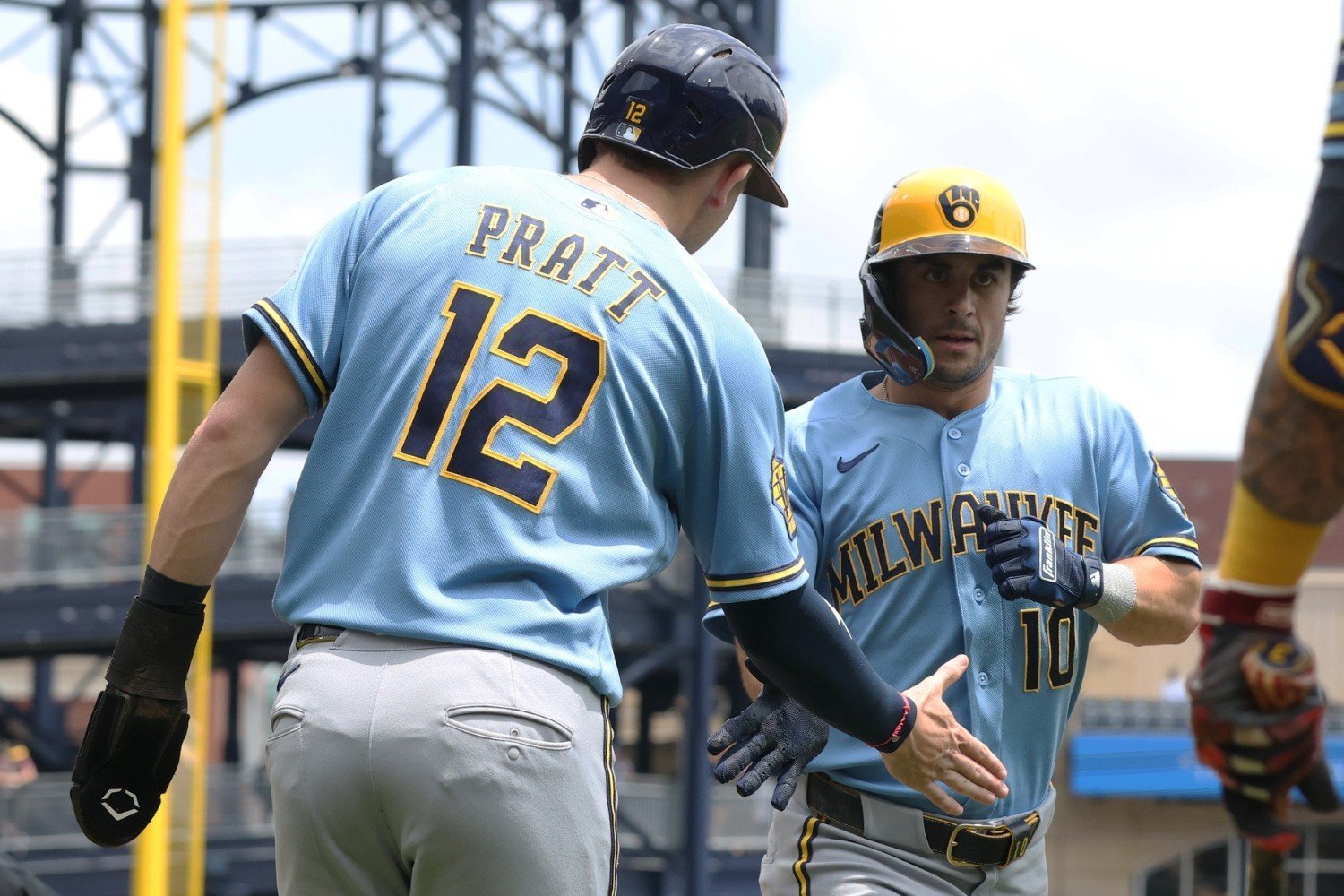 With the second half of the season kicking off, here's an updated crack at next year’s Opening Day roster. December’s aggressive projection may have gotten a little ahead of itself. Many of the prospects added to that version have performed well, but most are still in Double-A and may not be ready for the Opening Day roster. The new collective bargaining agreement (CBA) may also decrease the number of years that teams have control over players and incentivise the Brewers to delay bringing up some of their top prospects. We know there's uncertainty; that's why this is fun. Catchers (2) William Contreras Jeferson Quero William Contreras represented the Brewers in the All-Star Game and remains one of the top catchers in baseball. The Brewers kept Willy Adames all the way to free agency, and barring a major change in the way the new CBA handles compensation for teams losing top free agents, Contreras seems likely to remain in Milwaukee next season. Quero has turned things around in Triple-A after a slow start to the season, and he should be ready to share time with Contreras next season. V 2.0 changes: None Infielders (6) Andrew Vaughn (1B) Brice Turang (2B) David Hamilton (3B) Cooper Pratt (SS) Joey Ortiz (INF) Andrew Fischer (1B/3B) Brice Turang has fulfilled the breakout that he foreshadowed last August, and is the best all-around second baseman in baseball, despite MLB somehow excluding him from the All-Star team. Other than Turang, the infield is almost a complete rewrite from the December projection. The Brewers have multiple options at every position, possibly pointing to trades at this year’s deadline or over the winter The Brewers faith in Cooper Pratt was much greater than anticipated, and he looks set to hold down shortstop through this season and into next. Hamilton quickly became a Pat Murphy favorite, and his bat has been doing more damage of late. He’s still a bit of a wild card defensively, and will have to get back on the field in good shape after being shelved with a leg injury, but he has a strong toehold. Joey Ortiz remains the best defensive infielder on the team and the backup shortstop. Andrew Fischer has shown a level of power the Brewers haven’t had since Prince Fielder. This projection anticipates Fischer joining the Brewers in September, contributing in the postseason and then earning a spot on the 2027 team, replacing Jake Bauers (who will be a free agent after this season). Jesus Made will probably be ready sometime during 2027, but will he displace Pratt at shortstop or take over third base? Blake Burke or Luke Adams could also have a case to win the first base job, but unless Andrew Vaughn is traded, they will both wait in Triple-A for an opportunity. V 2.0 Changes: Vaughn, Pratt and Hamilton in; Made, Burke and Caleb Durbin out Outfield (5) Jackson Chourio (LF) Garrett Mitchell (CF) Sal Frelick (RF) Luis Lara (OF) Christian Yelich (DH) Garrett Mitchell’s breakout was not baked into the first version of this projection. His health and production have both been welcome surprises. It seemed reasonable to doubt that Mitchell would put a season like this together, since despite having accrued more than three years of service time prior to this season, he's likely to have more plate appearances this year than in the rest of his career combined. Mitchell’s defense has taken a step back this year, and his BABIP is unsustainable, but he is locked into this lineup and helping win games. Chourio was greatly missed after going down just before the season started. Since his return, he has played like an All-Star and the outfield anchor the Brewers envisioned when signing him to a record-breaking extension. Luis Lara was projected to make this roster, and his contract extension and subsequent call-up seem to lock that in. If either Mitchell or Frelick are traded between now and the start of 2027, Lara is already on the roster to fill that role. As it stands, the Brewers have outstanding outfield depth and flexibility. V 2.0 Changes: Mitchell in; Blake Perkins out Starting Pitchers (5) Jacob Misiorowski Kyle Harrison Brandon Sproat Logan Henderson Robert Gasser The Miz has been the best pitcher in baseball this year and is primed to lead the Brewers rotation for the foreseeable future. Harrison and Sproat arrived in trades this year and appear locked into rotation roles. Harrison has been excellent, while Sproat has flashed at times and (importantly) remained available. Henderson continues to be excellent when he is available to pitch and should have a spot in next season’s rotation. The fifth spot feels like a battle between Gasser, Shane Drohan and Chad Patrick. All are solid pitchers, worthy of a rotation spot. Patrick has proved he can excel from the bullpen in both high-leverage and volume roles, while Drohan’s arsenal should set him up to do the same. V 2.0 Changes: Harrison and Sproat in; Quinn Priester and Patrick out Bullpen (8) Trevor Megill Abner Uribe Aaron Ashby Chad Patrick Shane Drohan Craig Yoho DL Hall Colton Gordon The last projection assumed Trevor Megill would be traded either this past winter or in the coming one. However, with the Brewers primed to be in contention for the World Series both this season and next, keeping Megill (along with stars Contreras and Turang) could make more sense than trading him. Ashby appears tired right now, but he is an elite reliever. Patrick and Drohan would be starters for most teams. Here, they provide the Brewers with valuable innings. Yoho has dominated the minors and needs to prove he can consistently throw strikes in the majors, he’s been much better during his most recent call-up. When Hall is healthy and pitching to his ability, he will have a place in this bullpen. Here’s betting the Brewers will turn the newly acquired Gordon into a contributor. The Brewers will have a host of pitchers available in Triple-A for depth, including: Coleman Crow, Grant Anderson, Jared Koenig, Brian Fitzpatrick, Cameron Wagoner and Brett Wichrowski. Eventually, Ángel Zerpa and Priester will rejoin the team, as well. V 2.0 Changes: Patrick, Drohan, Megill and Gordon in; Koenig, Wichrowski, Crow and Myers out View the full article
 -
Could A Move to Starting Help Turn Around Lucas Erceg's Career?
DiamondCentric posted an article in Royals Keep
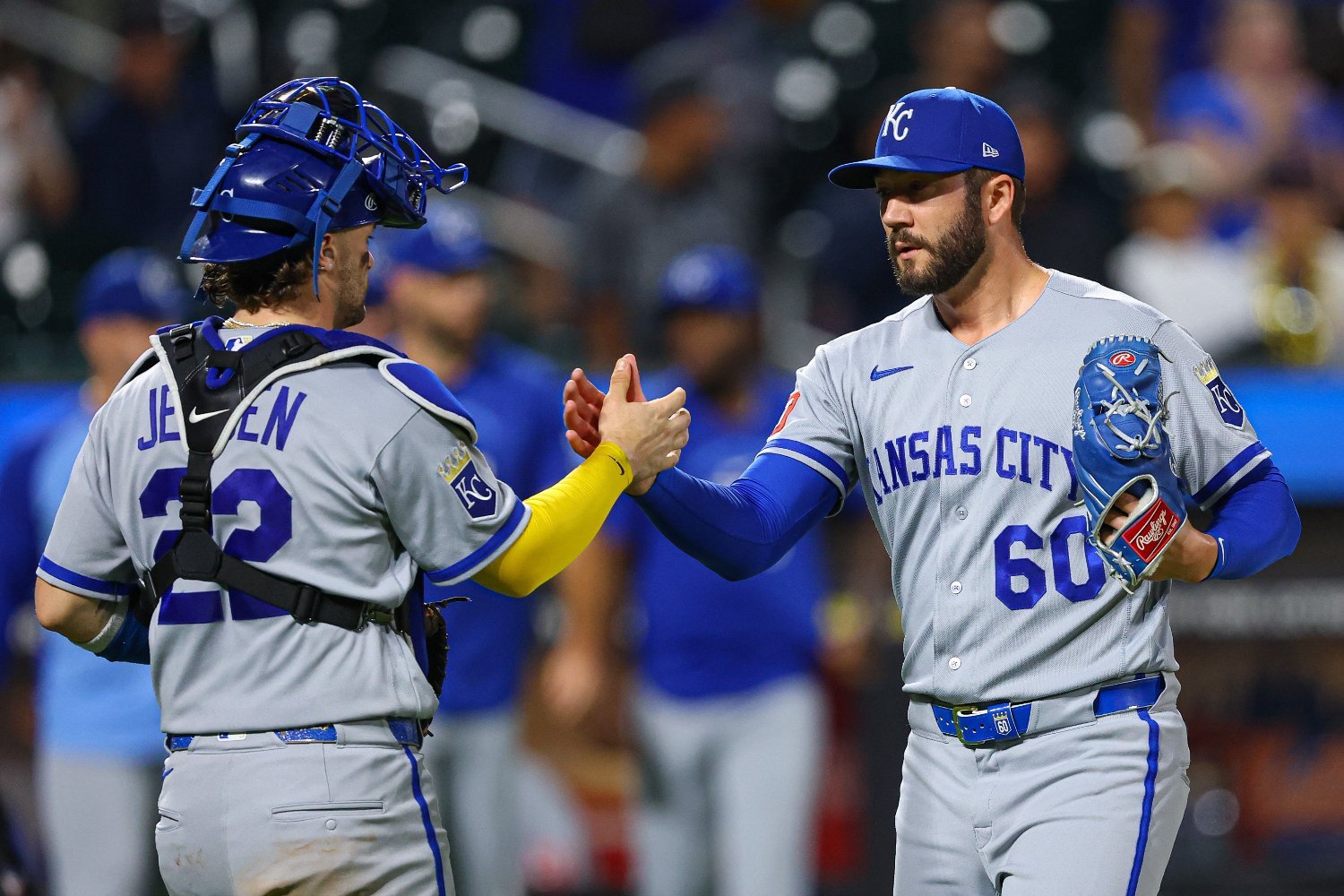 One of the more disappointing players this year has been relief pitcher Lucas Erceg. When he was acquired at the Trade Deadline from the Athletics in 2024, Erceg looked to be exactly what the Royals needed in the bullpen. In 23 IP and 25 appearances with the Royals in 2024, the former Cal product posted a 2.88 ERA, 0.84 WHIP, 1.88 FIP, and an insane 28.9% K-BB%. From August 1st until the end of the year, Erceg was arguably one of the most dominant relievers in the American League, and his Statcast percentiles that season proved it. Unfortunately, the last two years haven't been as rosy for the right-handed reliever. Erceg seemed to be bothered by a lingering minor back injury. Despite this, he still pitched 61.1 IP and posted a 2.64 ERA and 1.17 WHIP. While those numbers were impressive on the surface, the more advanced metrics weren't as kind. Erceg's FIP was 3.46, and his K-BB% was 12%, down from his overall 22.1% K-BB% with the Athletics and Royals in 2024. The biggest red flag was his decline in K% from 2024 to 2025. After producing a 28.5% K% in 2024 with the A's and Royals, he saw his K% regress to 19.4% in 2025. Furthermore, his whiff rate went from 31% in 2024 to 24.7% in 2025, and his CSW% went from 32.2% in 2024 to 27% in 2025. He also saw lackluster percentile rankings across many categories in 2025, per TJ Stats. It wasn't as if Erceg was bad in 2025. He was still one of the Royals' best relievers, even though he wasn't the primary closer (that role belonged to All-Star Carlos Estevez). That said, he wasn't as elite in 2025 as he was in that brief tenure in Kansas City in 2024, especially in their push to the postseason (and in the playoffs against Baltimore and New York as well). This year has been even worse for Erceg, as he looks like a shell of his 2024 Royals or former Athletics self. In 38 games and 37 IP, he has a 5.11 ERA, 1.62 WHIP, 4.99 FIP, and 3.6% K-BB%. His K% is 16.4%, down 2.9% from a year ago, and his 24.2% CSW is 2.8% down as well. To make matters worse, Erceg has seen a spike in home runs allowed this year. His 13.8% HR/FB% is 5.3% higher than a year ago. One would think that Erceg may be seeing a decline in his velocity or stuff. And while the TJ Stuff+ numbers have seen a regression, his fastball velocity still ranks in the upper percentiles of the league. Unfortunately, most of his other percentile ranks are near the bottom, as illustrated below. Erceg is not a lost cause based on this Statcast profile. He's still limiting barrels and exit velocity on batted balls at a decent clip, and his extension is encouraging as well. Unfortunately, when it comes to generating whiffs (26th percentile) and strikes in general (24th percentile zone rate), he's seen a massive regression, and he's been hard to utilize in high-leverage spots for the Royals, which was far from the case in 2025 and 2024. So what do the Royals do with Erceg, especially at 31 and with his first year of arbitration eligibility this offseason? Instead of just trotting him out in relief and "hoping" he figures it out, the Royals should take a risk and do something bold with Erceg's development: They should transition him to a starting role. Why This Makes Sense for Erceg Now, at 31 years of age, some Royals fans may be asking this: Isn't Erceg too old for this? Well, not really, especially when one looks at his current roster status. Erceg has 2.136 years of service time, according to Fangraphs. That allows him to be still optioned to Triple-A Omaha. Erceg has all three Minor League options remaining, so he can move down to the Minor Leagues to work on this transition, if necessary. Considering the Royals are 21 games under .500, this may be the best opportunity for Erceg to make this move. He's not really helping the bullpen right now anyway. By going down to Omaha (or the Complex League or Double-A Northwest Arkansas, if necessary), he gets to work on stretching out as a starter. In contrast, a reliever or another pitcher in the Minor Leagues (Steven Zobac, perhaps) gets a shot to prove if he can be a part of this Royals pitching staff in 2027 and beyond. Now, Erceg also could make the transition to the rotation more easily than some relievers. Unlike some pitchers, he is not a 2-pitch pitcher like some typical relievers. Erceg sports four pitches in his repertoire, with three of those four posting TJ Stuff+ marks at or above average this season, according to his TJ Stuff+ summary below. His slider (102) and changeup (107) are his best offerings, with his slider (102) being his third-best on a TJ Stuff+ end. His four-seamer doesn't rate well on a TJ Stuff+ end (96), but it has above-average velocity at 97.2 MPH. Furthermore, not only does he have above-average velocity on three of his four offerings, but he also varies his pitches, with three of his offerings (four-seamer, slider, and sinker) being thrown 25% or more (his changeup, while utilized the least, still is thrown 13.9% of the time). That's a strong base for the Royals Pitching Development team to work with. With a four-pitch mix, three decent pitches, he could transition to the rotation and focus more on sharpening the quality and usage over more innings of work. Furthermore, he could add a pitch or two, which would not only diversify his repertoire but also perhaps enhance his other offerings, especially his whiff rate, which is below average at 21.5%. What's interesting about Erceg's history is that he once had five pitches while with the Athletics. He threw a cutter in 2023, and the pitch performed decently, according to TJ Stuff+ summary data. He threw the cutter only 4.5% of the time in 2023, which is minuscule. He also struggled to throw it for strikes, as evidenced by his 21.3% zone rate. Because of those factors, hitters tended to lay off it, only chasing 13.5% of the time. And yet, when they did swing, they were often unsuccessful. His cutter had a 40% whiff rate and a .354 xwOBACON, both above-average marks. As a reliever, it makes sense that he eliminated the pitch in 2024. Relievers should have quality pitches, even if it's fewer. As a starter, however, a more diverse pitch mix is necessary. Erceg bringing back the cutter, and perhaps adding another breaking ball (a sweeper or curve), could help give him the arsenal he needs to succeed in the transition to starting. Furthermore, moving to the rotation could help him find a more even keel on the mound. Erceg is known for his intensity, and he demonstrated that on May 2nd when he accidentally cussed during a postgame interview with Joel Goldberg due to the adrenaline of closing out the game. I wonder if that high adrenaline is having a counterproductive effect on Erceg now, especially as he is struggling this year. Thus, moving to the rotation could perhaps get his composure back and help him focus more on his pitches and mix rather than those highly stressful spots later in games where everything is riding on him for an inning. Being a starter again could not just help him get his career back on track. It could also help him become a better pitcher, especially since he'll be able to work intentionally more on his mix and pitch quality. Those skills would be transferable, even if he moves back to the bullpen if the starting experiment doesn't go right. There Are Success Stories For Erceg to Follow We typically hear success stories of pitchers moving from the rotation to the bullpen to revitalize their careers. Wade Davis is the most well-known one, as he went from a mediocre starter with Tampa Bay and Kansas City to being one of the best closers in the game from 2014 to 2017. However, there have been success stories. The Rays' Griffin Jax, the Mets' Clay Holmes, and even the Royals' own Seth Lugo are examples that Erceg could emulate. Jax was moved to the rotation during the season after a brutal start as the Rays' initial closer. After posting an 8.00 ERA in 9.0 IP as a reliever, he transitioned to the rotation and posted a 2.80 ERA in 61 IP. When looking at his splits from last year and this year, not much has changed in his percentiles, though he has thrived as a starter despite a lackluster zone rate. Despite the inconsistent control, he still generates whiffs, CSW, and GB%. Those are all traits that Erceg has demonstrated in the past (including the lackluster zone rate this year). Holmes is another arm that made the transition from a beleaguered reliever with the Yankees to a dependable starting pitcher with the Mets. As a starter in 2025, he posted a 3.53 ERA and 1.9 fWAR in 165.2 IP. He was actually having a better year this year with a 2.39 ERA in 52.2 IP before going down due to a fibula injury that put him on the 60-Day IL. When looking at his Statcast comparison from 2024, his last season as a reliever, to 2025, his first season as a starter, Holmes actually saw a lot of his percentiles decline. And yet, despite regression in many categories as the load increased, Holmes still managed to be a valuable and dependable starter for the Mets a season ago. Holmes regressed heavily in generating whiffs, CSW, and strikeouts. That said, his ability to generate groundballs and limit barrels continued in Queens. As a result, he had a successful year as a middle-of-the-rotation starter. Erceg has demonstrated the same ability as Holmes to limit barrels and induce a lot of groundballs. Thus, it's feasible to see Erceg develop into a Holmes 2.0 if given the opportunity. Lastly, let's take a look at Lugo, who went from a quality reliever with the Mets in 2022 to a starter with the Padres in 2023. The former AL Cy Young finalist saw a decrease in whiffs and CSW, but an increase in zone rate, strike rate, and groundball rate in the transition. The results for Lugo in 2023? A 3.57 ERA and 2.9 fWAR with the Padres in 26 starts and 146.1 IP. That performance earned him two big paydays from the Royals. Thus, it's not out of the realm of possibility that Erceg could find success as a starter like Jax, Holmes, or Lugo. Erceg shares many of the same profile traits as those three pitchers. Furthermore, like all three of those pitchers, Erceg has nothing to lose with a move from the bullpen to the rotation. It will require some time in the farm system, perhaps for the remainder of the year, depending on how quickly he adapts. That said, there is a path for Erceg to find success in this move. Jax, Holmes, and Lugo did it. Hopefully, the Royals will help Erceg be the next reliever-to-starter success story. View the full article
 -
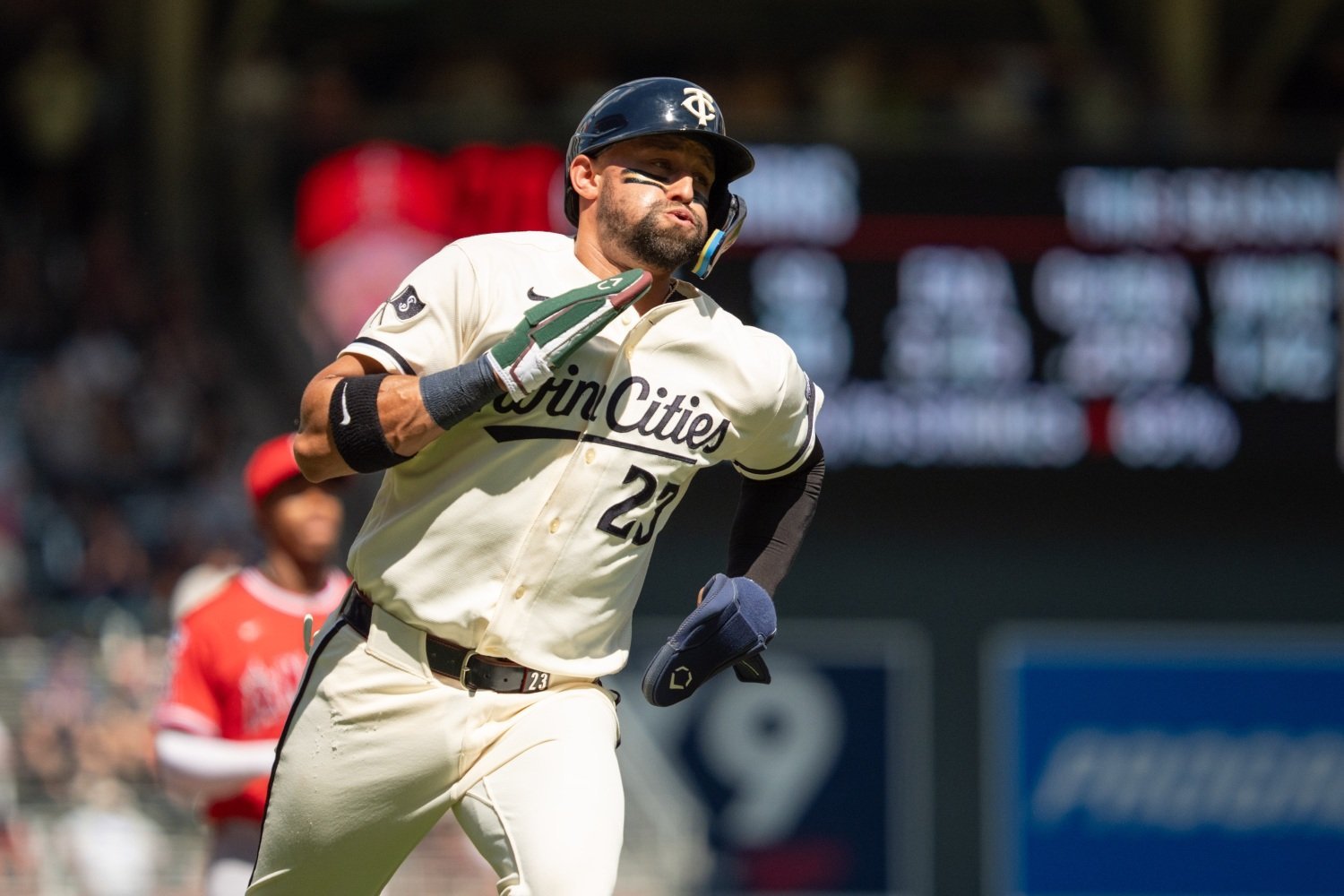 The Twins officially optioned Royce Lewis to Triple-A St. Paul on May 18. That very day, they lost Ryan Jeffers to a broken hamate bone. At that point, they were already a sub-.500 team, and the trend arrows were all pointing in the wrong direction. Many assumed, reasonably, that the team was about to collapse. It nearly did, too. After hanging tough for about a week, Minnesota lost 10 of 13 and fell all the way to 30-38, fading even in an extremely forgiving AL Wild Card race. They were on the brink. Since then, however, they've turned things around admirably. Lewis returned from the minors on June 1, and is hitting .269/.328/.500 since. Jeffers just returned for the final series before the All-Star break, and even while he was gone, hard-working fallback plan Alex Jackson kept the team afloat. They're 18-11 since hitting their nadir in mid-June. They're right back in the thick of the race, with guys they'd hoped to count on but been forced to live without (Lewis, Jeffers, Bailey Ober) back in the mix, to boot. That invites a new question: How can they keep this going? The pace at which the team has played for the last month is impressive, but they have to sustain it for a while to climb into a safe position in the jostle for playoff berths. That should be easier, in theory, because they're a stronger roster coming out of the break than they were until just before it—and certainly than they were in May and the first part of June. They've reorganized the team defensively, fixed Lewis's bat, and reinstated Jeffers and Ober from the injured list. Alas, regression will tug on their capes as they endeavor to take flight. To be as good a team as they've been of late, they have to improve their roster—or at least the deployment of their current one—to stave off the pull toward average (or worse) that will afflict several members of the team. Here are three ways the Twins can proactively swat at the gnats of regression during this summer heat wave, to keep enjoying that heat without being bitten or pestered into irrelevance. Make Royce Lewis a Platoon Bat The very first suggestion—first because I feel it has the greatest potential to help the team sustain its overachievement—comes with some friction. Lewis is an ebullient teammate, but he's not without ego, and this would come as a blow to that. It could sour some of the clubhouse sweetness that has given the team such positive energy the last several weeks. However, with Jeffers returning to the roster, it has to be a real consideration. The coincidence of Lewis being optioned and Jeffers being hurt means that we've yet to see how the lineup best works when they have the revived Lewis (but no longer as a third baseman, with Brooks Lee having taken up that post) and Jeffers each available. With Jeffers back in the fold, Victor Caratini is free to contribute at first base again—especially since the club is carrying three catchers at the moment. When a right-handed hurler starts for the opponents, the best version of this lineup doesn't contain Lewis. Even since he returned to the majors, much of his value has come from crushing left-handed pitching. Here are the key stat lines for Twins hitters against righty pitchers since June 1: Lewis: .258/.311/.464, 7.5% walk rate, 26.4% strikeout rate, .308 BABIP Caratini: .313/.420/.567, 13.6%, 12.3%, .315 Josh Bell: .293/.346/.596, 7.5%, 19.6%, .319 Kody Clemens: .288/.321/.644, 5.4%, 17.9%, .263 Jeffers will remain the regular catcher, unless the team trades him before the August 3 trade deadline—which is unlikely, according to multiple league sources. That makes sense, but it means that Caratini is likely to find some playing time elsewhere, and that has knock-on effects. Lewis can't make a strong case to play over Bell (with Caratini as the DH), Clemens (at second) or Caratini. Yes, some of the players listed here have been hitting better than they're likely to hit the rest of the way against righties, but then again, how confident are you that Lewis won't regress a bit, himself? Against righties, the everyday lineup should look like this: Trevor Larnach - LF Byron Buxton - CF Kody Clemens - 2B Ryan Jeffers - C Josh Bell - DH Victor Caratini - 1B Brooks Lee - 3B Ryan Kreidler - SS Luke Keaschall - RF If Buxton doesn't return from the injured list immediately, the team could resume the project it rapidly abandoned last month and try Lewis out at second for a while, with Clemens sliding back out to center field. Even in that case, though, playing Lewis wouldn't be the optimal deployment of their talent. Alan Roden is batting .269/.402/.471 against righties between Triple-A St. Paul and the majors this year. The sample is small, but the promise is real, and an alignment in which Roden plays center and Clemens is at second is stronger defensively than one with Lewis at second, anyway. This whole conversation highlights the fact that Lewis's hot streak since rejoining the team might only play him out of town. We don't have to tackle that notion in full right now. Suffice it to say that if Lewis is around, he should be in a roving, lefty-mashing role at least while the team is at this level of health and availability. He's their best option against southpaws. You can't say the same on the big side of the platoon. Shift Mike Paredes to the Bullpen, and End the Woo-Suk Go Experiment Because more pitching injuries seem to jump out at this team every time they turn the corner, the temptation to send Mike Paredes back to St. Paul to stay stretched out will be strong. The team will reinstate Cole Sands from the injured list soon, barring a setback in his rehab assignment, and Connor Prielipp could be close on Sands's heels. Optioning Paredes would allow him to stay available for bulk appearances and keep an extra arm in the organization; Go can't be optioned to the minors. Paredes is the better pitcher, though. If you put all the pitches each hurler throws into a shared ranking, Paredes's sweeper and changeup would be first and second, ahead of anything Go throws. If the team hopes to compete into September or even reach October, they need a further infusion of pitching depth, anyway. They shouldn't prioritize preserving shaky depth over optimizing the skills of the players they have. Making Paredes a full-time reliever would give them a genuinely useful right-handed relief boost and leave flexibility for them to piggyback starts with Ober and/or Prielipp. It's the best short-term management plan for that roster spot, once Prielipp is healthy enough to resume his role as the fifth starter. Start Ryan Kreidler at Shortstop Every Day Until Kaelen Culpepper gets healthy again and has his nagging butt issue figured out (it's a glute muscle injury, but 'butt issue' is funnier, right?), the Twins should give Ryan Kreidler all the playing time at shortstop. There's no need to keep auditioning Tristan Gray there; there's no need to so much as keep Gray on the roster. When Buxton is activated (whether that comes immediately or in a week or so), Gray should be the rsoter casualty. Keeping Alex Jackson around until the trade deadline plan is fully solidified is a must. Roden and Austin Martin have clear utility for the team, even if it's limited to specific roles and their playing time will be a bit sparse. Gray, whose approach has collapsed and whose glove at shortstop has been unimpressive, has no such defense for being farmed out. By contrast, there are concrete reasons to play Kreidler more often, including against righties. For one thing, he's not hitting lefties at all. He's actually been much better against right-handed pitchers this year. He didn't hit well at all in the final stretch before the break, but neither did Gray. Offensively and defensively, Kreidler has been the superior player for weeks, now. He's also more versatile, and thus more worthy of keeping around whenever Culpepper does get the call. In the meantime, though, Kreidler should play every day. Lee can be the backup plan, for a little while. Each of these recommendations are about roster decision points. This one will come down to the Twins having the guts to jettison Gray when they reinstate Buxton, keeping three catchers and a bunch of guys they don't particularly like at various infield spots. Keaschall is an outfielder now; so is Martin. Clemens has slid as far up the defensive spectrum as is at all possible for him. Lee and Lewis are already playing different spots from the ones at which they began the campaign, and the new roles are demotions. Across the board, this is a team with flaws. They're 48-49 for a reason. With some momentum and improving health, however, they have a chance to make the playoffs, anyway. They ought to seize it, and that means making some changes that precede and even replace traditional "buyer"-coded trades. View the full article
 -
Is Joe Mack already a top-5 defensive catcher in MLB?
DiamondCentric posted an article in Fish On First
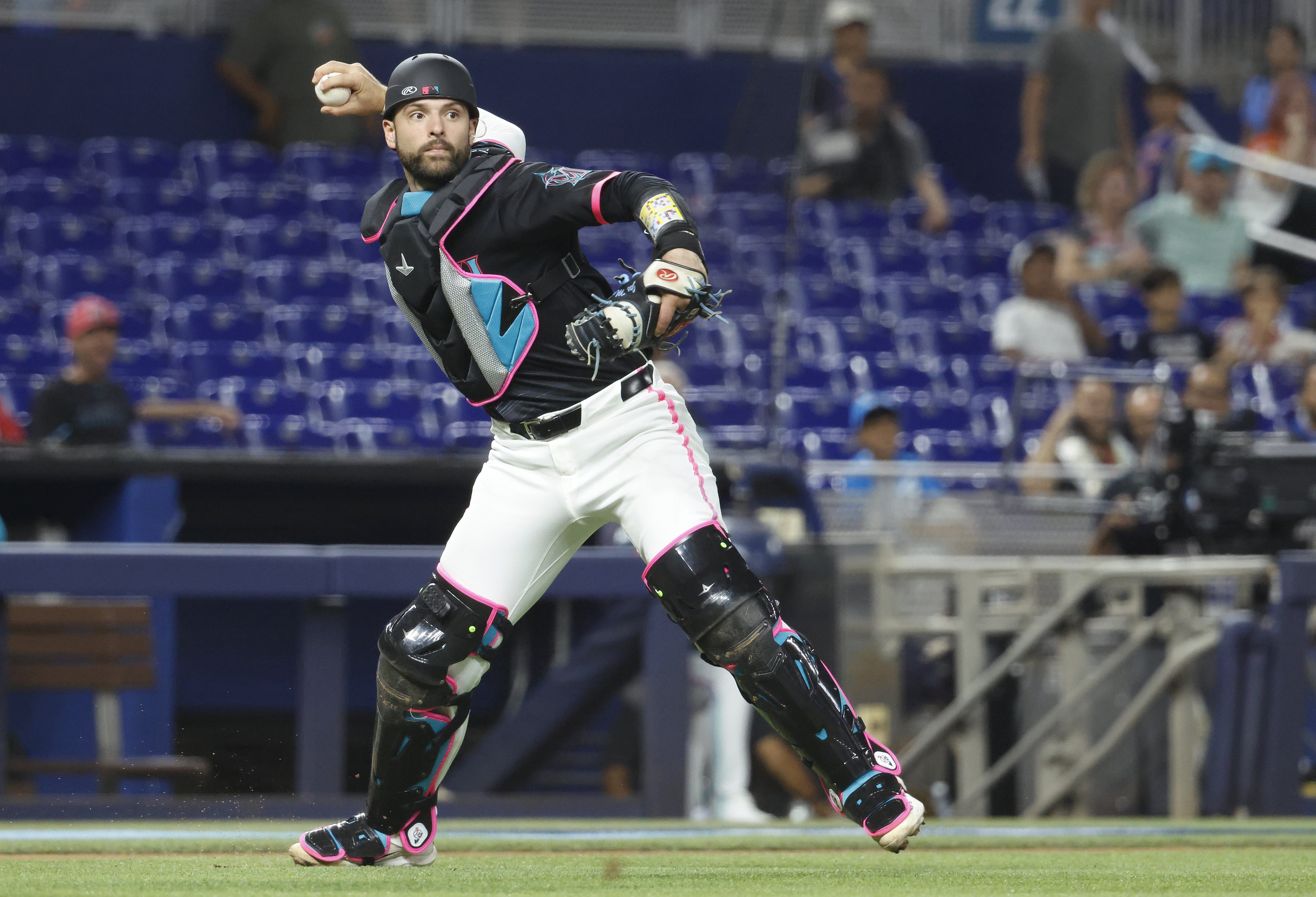 Joe Mack arrived to the big leagues with a supreme defensive reputation. During his first half-season on the Miami Marlins, he showed what the hype was all about, routinely making perfect throws to catch potential base-stealers and athletic plays with his glove. The defensive metrics back it up. Mack already has plus-6 fielding runs (including three from framing), per Baseball Savant, ranks in the 99th percentile in caught stealing above average, and averages a 1.89 second pop time. Digging deeper, Mack excels at framing runs on the top shadow of the zone. He has recorded the highest strike rate of any catcher in baseball in that zone at 52.6%. Mack is tied for the most shadow strikes in general with veteran catcher Victor Caratini. WERaVk5fWGw0TUFRPT1fQkZWWVhWRlhBRmNBREZWUkF3QUhBQWRlQUZnRkJWWUFVVlpUQTFGVUJncFdBUUpY.mp4 Mack's elite ability in this regard is routinely turning balls into called strikes. Even in a day and age with ABS challenges, many of those have been uncontested by batters and benefited Marlins pitchers. Mack enters Friday with a 36% caught stealing rate, which ranks ninth in all of baseball. Beyond his consistent accuracy, he separates himself by getting rid of the ball quickly with an average exchange time of 0.60 seconds. ZzZxWWJfWGw0TUFRPT1fQVZKWEFsRUFCQVlBRDFBREJRQUhBZ0pVQUZoUVVWZ0FWRnhRQ0FSVUJGSUFCd0Jl.mp4 Mack makes opposing runners second-guess before taking off, a complete 180 from how teams were approaching the Marlins early in the season against catchers Agustin Ramirez and Liam Hicks. This visual via Baseball Savant shows where Mack has struggled or performed well with blocking balls in the dirt. He only ranks 39th of all qualified catchers with minus-1 BAA. With that being said, he has had to deal with the fourth-most "tough blocks," which are balls with a 85% or less chance of being blocked. Perhaps Mack has been unlucky in this department. Considering the whole package, I do believe it is safe to say Mack is among MLB's five best defensive catchers. He is genuinely comparable to the likes of Patrick Bailey (Cleveland Guardians), Adley Rutschman (Baltimore Orioles) and Dillon Dingler (Detroit Tigers). It's no coincidence that the Marlins have dominated in the games Mack has started (29-17 record). With the potential to improve even more as his career progresses, he is a cornerstone for Miami to build around. View the full article
 -
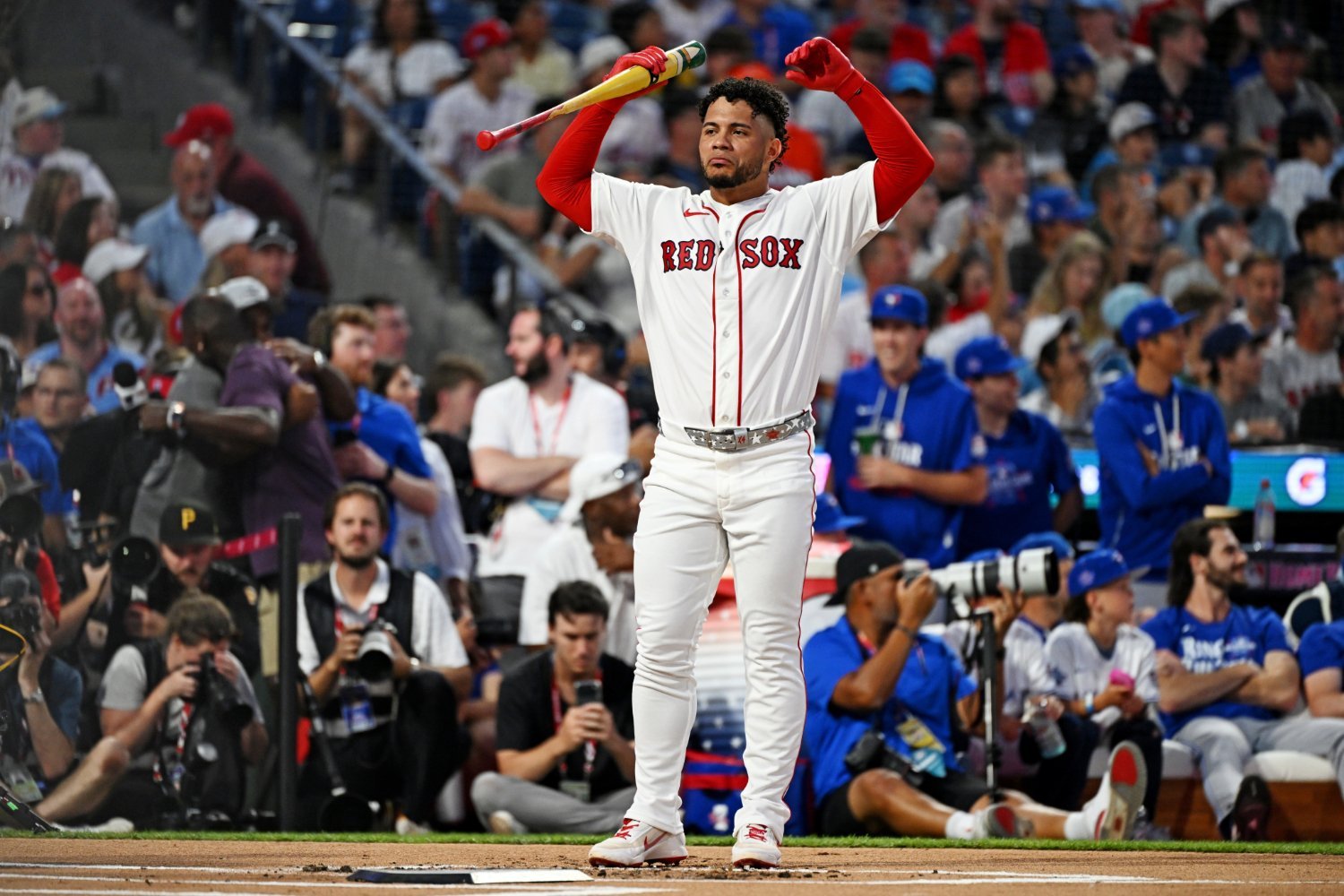 Major League Baseball’s All-Star festivities have come and gone, and while the game itself may have been a bit of a snooze-fest to those who prefer offensive slugfests to a pitching-and-defense clinic, one thing we all can agree is that the removal of the clock in the Home Run Derby was one of the smartest decisions the league has made in recent years. This coming from someone who may be in the minority of actually liking the clock when it was first implemented way back in 2015, leading to one of the most electric and entertaining derby finishes in league history when Todd Frazier knocked off Joc Pederson with a homer in the final seconds to win the title. After watching Jordan Walker’s six home runs at sudden death to quite literally walk-off with the win over hometown favorite Kyle Schwarber though, I have no doubt saying that performance triumphs the Frazier one by a mile. Clock or no clock, Red Sox fans had plenty of reasons to tune in regardless with the inclusion of Willson Contreras, the first Boston participant since 2011 when Adrian Gonzalez and reigning derby champ David Ortiz both took part in the event. Contreras did not disappoint, as not only did he start the event off with a literal bang — hitting 13 homers with three being the longest of the first round, including a 490-foot bomb that fell short to only Junior Caminero’s 491-footer in round two — but also embracing his villain role so much as to almost knock off the clear fan favorite Schwarber in the second round, falling 9-8 to the Phillies and former Red Sox superstar. With Contreras’ inclusion, there will surely be fans that are convinced his swing is now “messed up” and his production will take a dip in the second half thanks to the alleged “Home Run Derby Curse.” The question is though, is that “curse” just a myth? Or is there actually some merit behind it that fans should be wary of for a player who has been, and will continue to need to be the driving force of getting Boston to a playoff spot? Second Half Spotlights: Do Previous Participants Give Any Insights into a ‘Derby Curse?’ When looking into the question of “Does the Home Run Derby ruin swings and cause second half slumps?”, it’s important to note that the “second half” of the baseball season doesn’t even technically exist. Take this year's Red Sox schedule for example; the true halfway mark occurred on Saturday, June 27 with their 4-1 win over the Yankees, a date that put them exactly at the 81-game mark. When the Sox return from the break on Friday, July 17, there will be 68 games remaining as opposed to the 94 that already took place. Take a step back to last year, and the Red Sox first and second halves had a 98/64 game split. In 2024, it was a 96/66 split, and if you want to go all the way back to 2011 when they had their last two participants in Gonzalez and Ortiz, that season saw a little bit of a better distribution of 90 first-half games to 72 second-half ones, but that's still not a truly even 81-81 game split. That means samples are smaller in the second half, and the opportunity to total big home run and extra-base hits numbers is lower. Below is a summary of the 2025 and 2024 Home Run Derby participants along with their first and second half splits, and any noteworthy injuries, absences, and or storylines that may have occurred: 2025 Derby Participants Looking at the 2025 derby participants, a few noticeable trends emerge. For starters, while Cal Raleigh’s numbers do drop off compared to his first half ones, the 22 homers, .526 slug, .297 ISO and 140 wRC+ don’t indicate any sort of slump or curse by any means. Keep in mind at that time, Raleigh was also attempting to (and did) break the all-time single season home run records for a catcher, switch-hitter, and Mariners player, adding a more psychological factor/pressure into the equation as well. Then there are the cases of Matt Olson and Junior Caminero, who not only continued to put up consistent numbers half to half, but were actually better statistically when it came to their average, on-base, slugging, ISO, and wRC+ totals, showing no signs of any sort of HR Derby fatigue. Brent Rooker is really the only player you could make the case for when it comes to the derby affecting his second half performance with how his numbers dropped off. As for the dip in Oneil Cruz’s, Byron Buxton’s, and James Wood’s production, all three can be attributed to injuries that were suffered during the second half rather than in the derby itself, as Cruz missed 13 games due to head (11) and ankle (2) injuries, Buxton 14 to side (13) and knee (1) ailments, and Wood, who although didn’t miss any significant time, is on record for saying nagging knee and quadriceps soreness helped factor into his rough second half. 2024 Derby Participants A review of the 2024 derby participants shows a similar trend of no player really being all that affected by any sort of derby curse. Teoscar Hernandez, Bobby Witt Jr., Jose Ramirez and Pete Alonso all followed similar paths to Caminero and Olson in using the derby to springboard better performances across multiple stats rather than just home runs and RBIs. Adolis Garcia and Gunnar Henderson may have seen significant drops in their home run numbers, indicating a bit of a power outage, but again showed solid enough numbers to not raise any red flags of a definitive curse. As for Alec Bohm, he falls into the same category of 2025’s Buxton and Cruz, missing 14 games throughout August and September with a hand injury that significantly hampered his second-half production. Recent Red Sox Participants For a look that hits closer to home in terms of any sort of curse affecting the Red Sox, you of course have to start with that infamous 2011 season for the most recent example — one that may actually help those who argue the derby does mess with players’ swings and production. In the midst of everything else that went wrong that year, two key contributors to that collapse were the falloffs in home run and RBI production from David Ortiz and derby runner-up Adrian Gonzalez. The argument for any sort of curse quickly falls apart, though, when you factor in that Ortiz was dealing with fatigue, soreness, and back spasms during that second half along with the fact that both players numbers didn’t completely fall off a cliff. Ortiz still managed to slash .315/.409/.527 with a wRC+ of 150 and Gonzalez posted a 137 wRC+ with a line of .317/.404/.489. Those are elite numbers. Not to mention once again that everything that could go wrong, did go wrong with that team, leaving some to wonder if the whole team had been cursed rather than just two derby participants. In terms of Ortiz, who took part in the event four times prior, including a victory in 2010, his second half production had never really taken a dip and was actually more consistent and at times better than any other player that’s been looked at thus far (which may be an unfair comparison to make given the level of hitter Ortiz was throughout his illustrious Hall of Fame career). What’s in Store for Willson Contreras in the Second Half? By now it seems pretty clear that the answer to the question of “Does the Home Run Derby ruin a player's swing?” is a resounding "no," meaning Red Sox fans should have nothing to worry about when it comes to Willson Contreras’ production at the plate. However, that isn’t where the concerns with Contreras should lay given his history in the league. In the 10 years he spent prior to Boston, excluding the 2020 pandemic-shortened year where there was no second half to the season, Contreras has missed a total of 180 games (not factoring in regular off-days). The makeup of these games missed include: 174 due to an injury, five due to suspension, and one from an undisclosed circumstance last season with St. Louis. Looking at his splits year-to-year, Contreras has proven to be a pretty consistent player all things considered, with the only two really glaring drop-offs occurring in 2018 and 2019 with the Cubs where his wRC+ figures plummeted from 123 to 63 and 139 to 90. As great as Contreras may be, his Achilles heel comes in the age-old saying: “The best ability is availability.” When the Sox return to action on Friday, kicking off the second half with a doubleheader against the Tampa Bay Rays, Contreras will be using the first to serve the fifth and final game of his reduced suspension stemming from his benches-clearing incident with Nationals starter Cade Cavalli. Once he is officially back, the All-Star slugger will look to make good on his comments of loving Boston and wanting to finish his career here trying to build off a superb first half that saw him finish just four home runs and 19 RBIs shy of his career highs. View the full article
 -
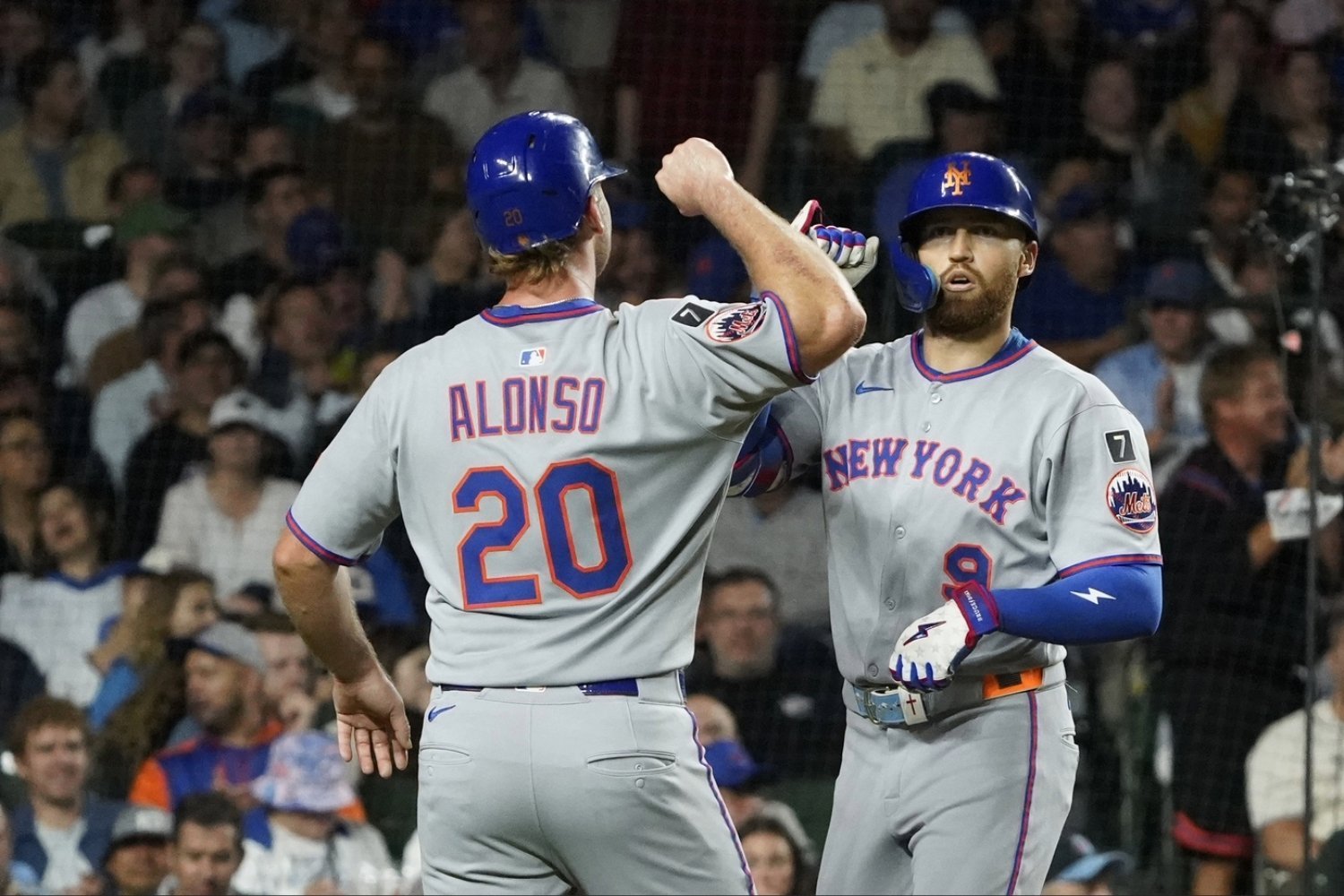 The 2025-26 MLB offseason felt like the end of an era in Queens. The New York Mets let Edwin Diaz and Pete Alonso walk in free agency, traded Jeff McNeil for salary relief, and swapped Brandon Nimmo for Marcus Semien. From a pure cost-to-production standpoint, the moves were all defensible, but with the Mets scuffling three months into the season, it’s time to see if they would have benefitted from holding on to their most-tenured core. Brandon Nimmo, Jeff McNeil, and Pete Alonso rank 15th, 17th, and 18th in Mets’ bWAR. They’re not franchise legends by any stretch (save for perhaps Alonso), but they formed a strong position player nucleus for the past seven seasons. In a different era, they would have probably finished their careers in Queens, but that doesn’t mean their contributions to the organization should go overlooked. Brandon Nimmo debuted in 2016, racking up 1,006 games, 4,365 plate appearances, and a healthy 26.0 bWAR. Those aren’t Hall of Fame figures, but they had Nimmo trending towards the Hall of Very Good, which usually gets your number retired. Despite never making an All-Star team, his career bWAR outpaces both McNeil and Alonso’s. Jeff McNeil debuted in 2018 as a 26-year-old rookie and hit the ground running. Over parts of eight seasons with the Mets, he amassed 22.9 bWAR, made two All-Star teams, and won a batting title. His .284 batting average with the Mets is the ninth-best in franchise history, despite playing exclusively in a low-batting average era. If he had played in the 90s, his career Mets’ average would have pushed John Olerud’s franchise record of .315. Jeff McNeil Batting Average Time Machine *Based on McNeil’s +117 Batting Average plus with the Mets (17% better than league average) Unsurprisingly, Olerud’s Mets career covered the 1997 through 1999 seasons, which saw the league post an average batting average of .268, well ahead of the .245 league-average batting average McNeil was up against over his Mets’ career. All of this is to say: There’s a case for McNeil as the Mets’ greatest bat-to-ball hitter in franchise history. However, similarly to Nimmo, he wasn’t Cooperstown-bound, but with the help of some postseason glory, his number might have earned Do Not Disturb status. That brings us to Pete Alonso, who debuted in 2019, won Rookie of the Year on the back of a rookie record 53 home runs, and then just kept slugging. He made five All-Star teams, hit a franchise record 264 home runs, collected MVP votes in four seasons, and amassed 23.1 bWAR. Alonso’s overall WAR figures are dinged due to his poor defense at first base and lumbering base running, but his 264 home runs were the third most in the majors over his Mets’ tenure — behind Aaron Judge and Kyle Schwarber — and his 132 wRC+ ranks 18th. Once again, Alonso is unlikely to make it to Cooperstown (if he reaches 500 home runs, that could change) but he was a lock to have his number retired if he spent his whole career in Queens. In the cold, harsh world of professional sports, what you’ve done matters far less than what is believed you will do going forward. Each of Nimmo, McNeil, and Alonso were on the wrong side of 30, and the Mets' decision to move on was likely based on this simple truth — we all get old, and sports are a young man’s game. But just for 2026, what would the Mets have looked like by keeping them around? The Jeff McNeil and Brandon Nimmo trades are invariably linked. McNeil might have been a batting average savant in his prime, but the past two seasons his average had sunk below the league average. However, he was able to muster a 111 wRC+ in 2025, which made him enticing enough to the Oakland/Sacramento/Las Vegas Athletics to take on his $10 million salary, once you factor in the Mets sending $5.75 million in cash along in the deal, for 2026 with a $2 million buyout or $15.75 million team option for 2027. Essentially, the Mets cut $12 million in costs to offload McNeil and land Yordan Rodriguez, an interesting 18-year-old arm. Sending McNeil west meant the Mets now had a gaping hole at second base, and to fill their void at the keystone, they flipped Brandon Nimmo to the Texas Rangers for Marcus Semien. While this deal wasn’t entirely motivated by money, the Mets certainly felt Carson Benge was ready for the show; it did shave off considerable long-term salary. Semien is owed $26 million in 2026 and 2027 and $20 million in 2028, while Nimmo is owed a flat $20.5 million through 2030. The gambit the Mets made was that Semien and Benge would outproduce Nimmo and McNeil, and thus far, they’ve made out maybe a tad ahead. *fWAR is FanGraphs Wins Above Replacement, bWAR is Baseball Reference, f/bWAR is the average of the two Based on fWAR, the Mets are up +0.6 WAR this season due to the shift, while Baseball Reference thinks they’ve lost -0.1. A single win above replacement is generally worth around ten runs, which means we’re talking about a six run boost or a one run loss. Obviously, those hypothetical six runs would have helped the Mets, but it’s not the difference between the cellar and even fourth place in the NL East. Hindsight being 20/20, the Mets needed to go way bigger in addressing their second base situation. Moving McNeil after a strong season appears to be a prescient decision, but acquiring Marcus Semien after a down one does not. While it would have taken prospect capital, Brendan Donovan would have been the higher upside transaction. However, there is another route not taken. The Mets could have retained McNeil and Nimmo and still promoted Benge. Now, that would have required Benge playing center field full time, which he would almost certainly be stretched at. When you factor in how well A.J. Ewing has played in his own rookie season, that probably wouldn’t have been an upgrade. The Mets' decision to trade both Nimmo and McNeil feels like rearranging deck chairs. If they have improved, it has only been marginal, and it certainly hasn’t been a roaring success. The financial savings in 2029 and 2030 should allow them to be more aggressive in free agency and trade, but money has been no object for the Mets in recent years, which is why not re-signing Pete Alonso looks so asinine in hindsight. To the shock of no one, Pete Alonso is having a very Pete Alonso season. He has a 129 wRC+, 21 home runs, and has been worth 2.3 fWAR and 2.0 bWAR. And his full season numbers undersell how well he has been playing for the past two and a half months. After a slow April, Alonso has a 147 wRC+ since the start of May. Yes, $31 million a season is a lot for a one-dimensional slugger, but power is expensive for a reason. While Alonso has had an excellent season, the real reason the Mets surely rue their decision to let him walk has been the play of their first basemen. The Mets have garnered -0.6 fWAR from their first basemen, who have combined for a wRC+ of 89. Somehow, that wRC+ only ranks 26th, while they’re second-to-last in fWAR. If they had simply retained Alonso, they would have benefitted from a 2.9 fWAR swing. To put in perspective how damaging Alonso’s loss has been, the Mets are 29th in position player fWAR at 5.8. Simply swapping their first base production with Alonso’s would increase their position player fWAR by 50%. When you add it all up, moving on from Alonso, McNeil, and Nimmo is not the reason the Mets’ season has fallen apart. Trading McNeil and Nimmo for Semien and Benge has basically been a wash, and while Alonso would have dramatically improved their first base production, they’d still be fielding a below-average offense. There’s also the financial component to consider. The Mets, by not re-signing Alonso and trading away McNeil and Nimmo, saved $34.5 million this season and then $51.5 million in 2029 and 2030. Unfortunately, the Mets completely whiffed on their offseason spending as Bo Bichette has been a massive disappointment thus far, but long term, they should be able to reinvest those savings into players in their prime years. The Mets’ decision to cut the cord on their three most-tenured players has not paid off as they had hoped. However, their exodus isn’t why they’ve spent 2026 wandering in the desert. The Mets are just having a season from hell, and they’re better positioned for the future than they would have been if they had kept those three around. At the end of the day, the guys who are here just have to play better. View the full article
 -
Trey Yesavage Is the Lou Reed of the Toronto Blue Jays
DiamondCentric posted an article in Jays Centre
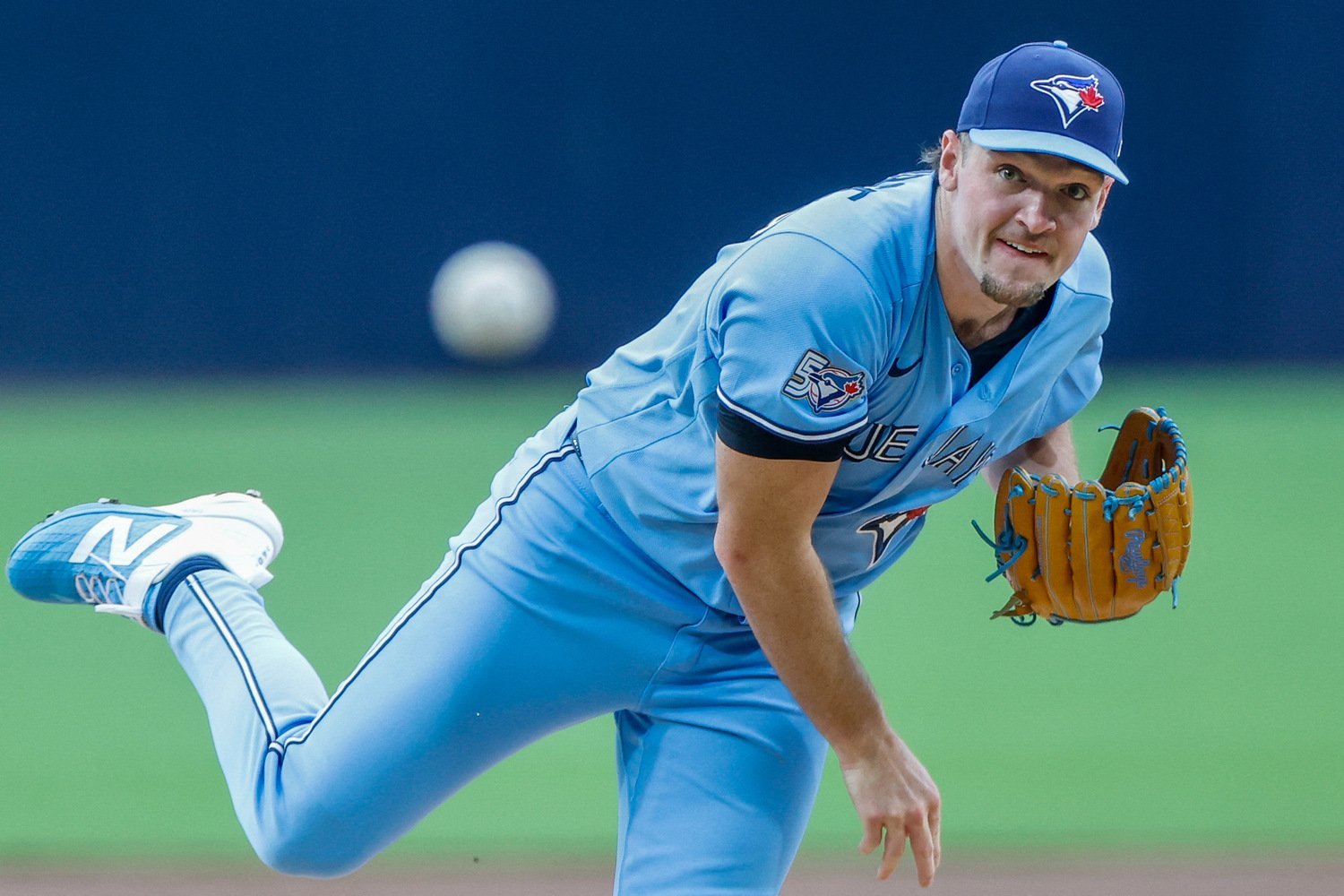 The Toronto Blue Jays selected Trey Yesavage with the 20th pick in the 2024 MLB Amateur Draft. It is unusual for a player to advance through four MiLB levels in one season, let alone make his MLB debut that same year. But Yesavage did just that. He made his professional debut in 2025 with Dunedin and continued his journey through Vancouver, New Hampshire, and Buffalo. Overall, his MiLB numbers included a 3.12 ERA and a 1.90 xERA (at High-A and Triple-A). Then, Yesavage made his MLB debut on September 15. In three regular season games, he posted a 3.21 ERA, 4.09 xERA and a 2.35 FIP. In five postseason starts, he recorded a 3.58 ERA and a 3.61 FIP. Please note that unless otherwise stated, references to 2025 include the regular season and postseason. I included the postseason to bump up Yesavage’s innings from 14 to 42. Thus far in 2026, Yesavage has performed well overall. Among starters with at least 40 innings, his 3.72 ERA ranks in the 62nd percentile. Even better, his 3.31 xERA ranks in the 77th percentile among all pitchers, and his 5.5% barrel rate, a measure of soft contact, ranks in the 81st percentile. Another example of the soft contact that Yesavage has induced this season is his .296 xwOBAcon, which is xwOBA on batted balls. Among the 239 pitchers with at least 40 innings pitched, Yesavage’s xwOBAcon ranks as the seventh-lowest, though not quite as good as Tyler Rogers’ second-best ranking (.270). On the negative side of the ledger, Yesavage’s 22.2 K% and 12.5 BB% rank at the 47th and 12th percentiles, respectively. Last season, Yesavage posted a 32.2 K%, well above the 22.3% MLB average. I will address the K% decline later in the article. Concerning 2026 BB%, Yesavage has indeed taken a walk on the wild side. However, in his 2025 outings, Yesavage posted a 10.5 BB%, higher than the 2025 MLB average of 8.4%. Yes, Yesavage’s walk rate has risen in 2026, but he also had an elevated walk rate in 2025. The good news is that, as John Schneider and Yesavage opined, the lack of control is primarily due to posture. MLB.com’s Keegan Matheson has the details. If Yesavage can correct his pitch-mechanics issues, his walk rate should decline, which could lead to better overall numbers. Concerning FIP, his 4.11 ranks in the 48th percentile among starters with at least 40 innings. Yesavage’s FIP has suffered because of the low rankings of his K% and BB%, but is aided by his 81st percentile 0.84 HR/9. An issue of interest is Yesavage’s pitch mix and how opposing batters have fared against it. Behold the first table! The key observations are as follows: Yesavage has reduced his slider usage by almost eight percentage points, offset mainly by increasing the rate of four-seam fastballs. Consider xwOBA, which eliminates the impact of defence on the results and, accordingly, is a better measure of a pitcher’s effectiveness than wOBA. All his 2026 offerings generate xwOBA numbers better than the MLB average (all pitches). Furthermore, compared to 2025, the 2026 xwOBA results of the four-seam fastball and slider are better. Although the 2026 splitter is not as effective as last season, it remains Yesavage’s best pitch. It is noteworthy that the average velocities and spin rates of Yesavage’s three pitches are not materially different this season compared to last. All Four-Seam Fastball Slider Splitter Pitches % wOBA xwOBA % wOBA xwOBA % wOBA xwOBA % wOBA xwOBA 2026 (1) 1237 100.0 0.280 0.284 45.8 0.309 0.307 24.7 0.318 0.270 29.5 0.189 0.250 2025 (2) 679 100.0 0.270 0.285 40.1 0.356 0.372 32.5 0.256 0.299 27.4 0.202 0.188 MLB (1) 0.317 0.318 (1) Through July 12. (2) Includes postseason. Source: Baseball Savant Two other issues to consider are Yesavage’s ability to find the strike zone and batter whiff rates. The table below provides more details. Concerning throwing in-zone pitches, the notable change is the splitter. In 2025, Yesavage’s in-zone rate was 43%, much higher than 2026’s 30%. In terms of whiffs, this season, the rate on his splitter is 40%. That rate is five percentage points higher than MLB's 35% average for splitters but noticeably lower than his 58% in 2025. Given the splitter’s reduced in-zone rate this season, it appears that batters are more disciplined and, therefore, chasing less (30% chase rate in 2026, less than 2025’s 39%) and swinging at more in-zone splitters (60% swing rate in 2025 and 71% in 2026). Regarding whiff rate, the significant change is the in-zone whiff rate drop this season compared to last year (50% to 18%). However, there is a bright side to the splitter story. Despite higher in-zone and out-of-zone contact rates in 2026, the corresponding xISO scores are better or largely the same this season. On in-zone batted balls, the 2026 .144 xISO is lower than 2025’s .218 (the MLB in-zone splitter average xISO is .165). Concerning out-of-zone splitters, the 2026 xISO number is like last season (.013 versus .009). Therefore, compared to 2025, the batters in 2026 are chasing Yesavage’s splitter at a lower rate and making more contact, but it is pitcher-friendly contact (lower exit velocity and launch angle). In-Zone% Whiff% Splitter All 4-Seam Slider Splitter 4-Seam Slider Splitter Swing% Contact% Whiff% In Zone O-Zone In Zone O-Zone In Zone O-Zone 2026 (1) 43% 51% 44% 30% 19% 37% 40% 71% 30% 82% 38% 18% 62% 2025 (2) 47% 49% 48% 43% 20% 40% 58% 60% 39% 50% 32% 50% 68% MLB (1) 48% 53% 44% 36% 22% 33% 35% 78% 36% 79% 49% 21% 51% (1) Through July 12. (2) Includes postseason. Source: Baseball Savant Regarding the reduced K%, the causes are as follows: In 2025, 59.6% of all his plate appearances reached two strikes, which is higher than 2026’s 53.1%. Last season, the K% on his splitter was 56.1%, considerably higher than 2026’s 30.5%. Consistent with the noted higher contact rates on the splitter, the in-zone whiff rate with two strikes is 12.1% this season, which lags the 46.2% number in 2025. With two strikes, his out-of-zone whiff rate was 64.3%, higher than this season’s 48.7%. The increased 2026 K% on four-seam fastballs (17.1% versus 2025’s 12.7%) is partially offset by the lower K% on sliders in 2026 (23.9% versus 27.6%). In summary, the primary reason for Yesavage’s K% decline in 2026 is the splitter. With two strikes, batters are making contact at a higher rate this season than they did in 2025. A final matter to address is Yesavage’s consistency. Many people on social media have opined that Yesavage has been inconsistent this season, but that observation appears to be a case of recency bias. Consider Game Score. In 10 of his 14 starts, Yesavage has posted above-average Game Scores. Yes, his last outing was bad per the Game Score rule-of-thumb chart: a 22 Game Score in less than two innings, with seven walks and four earned runs. However, in his four previous starts, one was above average (57) and three were good (60 or higher). By comparison, Dylan Cease and Cristopher Sánchez, the two starters in the 2026 MLB All-Star Game, have posted below-average Game Scores at rates like Yesavage’s 28.6% rate (4/14). Notably, Cease’s below-average Game Score rate is 29.4% (5/17) and Sánchez’s is 25.0% (5/20). Obviously, by many metrics, both Cease and Sánchez have posted better 2026 numbers than Yesavage, including overall Game Scores of 63 and 61, respectively. However, contrary to the sentiment of many, Yesavage has been relatively consistent in 2026. The Last Word Yesavage burst onto the MLB scene last September. The combination of his elevated strikeout and swing-and-miss rates, together with his postseason success, made him an important member of Toronto’s starting rotation and a fan favourite. His performance this season has been good and more consistent than some people believe. Yesavage has generated an xERA that ranks in the 77th percentile among all pitchers. However, his strikeout and whiff rates have declined from 2025’s lofty heights, primarily due to batters in 2026 chasing the splitter less and making contact at a higher rate. Of note is his higher-than-average walk rate this season and last. It is reasonable for some MLB observers to wonder if Yesavage is the real-life Ricky Vaughn. Perhaps, under the direction of pitching coach Pete Walker and the boys in the lab, a change in posture can resolve Yesavage’s lack of control just as glasses did for Vaughn! View the full article
 -
 Transactions: LHP Rob Zastryzny returned to MLB Brewers from rehab and placed on 60-day injured list OF Greg Jones elected free agency after being designated for assignment by MLB Brewers LHP Colton Gordon optioned to AAA Nashville from MLB Brewers RHP Carlos Rodriguez returned to MLB Brewers from rehab, optioned to AAA Nashville RHP Junior Fernandez released by AAA Nashville RHP Tanner Gillis transferred to AA Biloxi's 60-day injured list from 7-day injured list Recently drafted players have also begun to sign: Game Action: Final: ACL Brewers 5, ACL Athletics 3 (in 7 innings) Box Score SS CJ Hughes’ leadoff home run in the bottom of the first inning knotted the contest, followed by a single and three walks to chase the Athletics’ starting pitcher with the Zona Crew leading 2-1. Starting 18-year-old LHP Frank Cairone (1 IP, 1 R (0 ER), 1 H, 3 BB, 1 K) also struggled with control, walking in a run in the top of the first inning and exiting after a leadoff walk in the 2nd frame. RHP Josue Toledo (1 IP, 0 R, 1 K) retired three batters in order to strand that baserunner and preserve the lead. After stranding two Brewers’ baserunners in the 3rd inning, C Malachai Halterman started a chain of four consecutive hits to open the 4th inning, including OF Brailyn Antunez’s 2-run triple and 3B Moises Polanco’s RBI single for a 5-1 advantage. 19-year-old RHP Chase Bentley (5 IP, 2 R, 3 H, 2 BB, 3 Ks) put in the bulk of the work, covering five innings in relief to earn his 4th win. Antunez (1-for-3, triple, walk, 2 RBIs; .903 OPS), Hughes (2-for-4, HR, RBI; .801 OPS), Polanco (1-for-2, 2 walks, RBI, 2 SBs; .825 OPS) and Halterman (2-for-3) all had solid offensive days as the ACL Brewers (25-29) snapped a skid which saw the team drop nine of its last 10 games. Final: DSL Brewers Blue 13, DSL Tampa Bay 4 Box Score The big bats came through again for the Blue Crew, as 17-year-old 3B Leanders Matos singled home DH Diego Frontado (1-for-2, 2 HBPs, RBI) to open the scoring in the first inning, followed by OF Frandy Lafond’s two-out, two-run single to extend the advantage. But the larger story was 17-year-old center fielder Enrique Lovera (3-for-5, HR, triple, walk, 3 RBIs) smacking a two-run homer in the 2nd inning, an RBI triple in the 3rd inning and adding a single in the 4th inning to put him squarely in cycle alert territory, with the Blue squad leading 11-4 by that point. On the mound, 17-year-old RHP Steven Duran (3 2/3 IP, 4 R, 2 H, 6 BB, 1 HBP, 4 Ks) got the start, while 6’5” 17-year-old LHP Alexander Mercedes (3 IP, 0 R, 0 H, 1 BB, 4 Ks) had the top outing in relief to earn his first career win. Though Lovera fell just shy of his cycle (6th inning walk, 8th inning pop-out), Matos (2-for-4, HR, walk, 2 RBIs) continued his assault on the Dominican Summer League with his 9th homer of the season. The Blue team registered 14 hits and also drew seven walks and three hit-by-pitches to improve to 19-13 on the season. Eight players had at least one hit, as Lovera, Matos, Frontado, Lafond (3-for-5, 2 RBIs, SB), OF Jesus Mancera (2-for-4, walk, 3 RBIs) and 2B Cristian Montilla (0-for-2, 2 walks, HBP, SB) each reached base three times. In relief, RHPs Manuel Davila (1 1/3 IP, 0 R, 1 K) and Yancarlos Vasquez (1 IP, 0 R, 1 K) retired the combined seven batters that they faced. Final: DSL Brewers Gold 12, DSL Pirates Gold 10 Box Score You might think that leads of 9-0 in the 6th inning and 12-7 in the 9th inning are safe, but the Golden Men nearly proved us wrong in the dramatic late innings. Starting 18-year-old RHP Jesus Rivero (5 IP, 0 R, 0 H, 5 BB, 3 Ks) was the early story, no-hitting the opposition over five innings, though he did issue some free passes. A six-run top of the first inning had gifted Rivero a 5-0 lead before his first pitch, with 16-year-old C Moises Salazar (2-for-4, walk, 3 RBIs; .850 OPS) opening the scoring with a two-run single and 1B Jefer Lista (2-for-3, 2 walks, RBI; .919 OPS) and DH Matthew Moses (2-for-3, HR, 2 walks, 5 RBIs; .910 OPS) also contributing RBI hits. Things went a bid sideways against the Gold bullpen, as RHPs Jose Arias and Dalvin Bodre and LHP Noel Cepeda allowed a combined 10 runs (9 earned) on eight hits, nine walks and one hit-by-pitch, with Cepeda escaping the 8th inning on a fly out with the potential game-tying runners aboard and the Gold team leading 9-7. Moses’ three-run homer in the top of the 9th inning restored breathing room at 12-7, only for Cepeda to issue back-to-back walks to open the bottom half of the frame, followed by two singles, another walk and a necessary pitching change. 20-year-old RHP Wandy Cabrera (1 IP, 0 R, 1 K; 2.70 ERA) entered with the score 12-9, bases loaded and nobody out, notching a strikeout, allowing a run-scoring walk and including a line out double play to second base to earn the save as Gold lifted its record to 17-14. The top of the order of OF Angeni Fernandez (0-for-3, 2 walks, HBP, SB; .922 OPS), 3B Ricki Moneys (1-for-4, double, 2 walks, 3 SBs; .928 OPS) and 2B Osiris Ramirez (1-for-4, double, 2 walks, RBI, SB; 940 OPS) each reached base three times and were active on the basepaths. We hope that you enjoy the Minor League Link Report. On Friday, all levels are back in action after the All-Star break, with seven minor league games on tap. Wilson is on the road at Hickory, while Nashville, Biloxi and Wisconsin all host three-game series. Organizational Scoreboard including starting pitcher info, game times, MiLB TV links, and box scores Current Milwaukee Brewers Organization Batting Stats and Depth Current Milwaukee Brewers Organization Pitching Stats and Depth View the full article
 -
 TRANSACTIONS The Twins released LHP Jake Higginbotham. The 30-year-old signed with the Twins on May 18 after starting the season in the Mexican League. He spent two weeks with the Wind Surge; he moved up to St. Paul. He stayed there until the All-Star break when it was announced that he was being assigned to Wichita. Two days later, he was released. RHP Camilo Made was assigned to the DSL Twins. Infielder Bryan Acuna began a rehab assignment with the FCL Twins. RHP Justin Mitrovich was promoted from Fort Myers to Cedar Rapids. The 22-year-old was the Twins ninth-round draft pick in 2025 out of Elon University where he played with now-former Twins minor league catcher Ryan Sprock (8th round, 2025). He has made 11 starts in Fort Myers and is 1-3 with a 2.74 ERA and a 1.13 WHIP. In 42 2/3 innings, he had 53 strikeouts and 18 walks. While playing at Pennsbury High School in Pennsylvania, he was a teammate of Callan Fang, the Twins 13th-round pick in 2025 out of Harvard. Fang recently came off the injured list and is pitching with the Mussels. SAINTS SENTINEL St. Paul vs Louisville The Saints will be hosting a four-game series against the Louisville Bats, the Triple-A affiliate of the Cincinnati Reds. On Friday night, right-hander Jake Anderson will be making his debut in the Twins organization. He was claimed by the Twins after the Red Sox DFAd him. The 26-year-old pitched in three games and eight innings for the Red Sox earlier this season. With Triple-A Worcester, he pitched in 16 games (11 starts) and went 2-4 with a save, a 4.81 ERA and a 1.38 WHIP. In 58 innings, he has walked 21 and struck out 51 batters. On Saturday, the teams are scheduled to play a doubleheader. Ryan Gallagher and Ricky Castro are scheduled to start those seven-inning games. The Saints have not yet announced a starter for Sunday afternoon. A couple of former members of the Twins organization on the Bats roster. Left-handed reliever Anthony Misiewicz pitched for the Saints and Twins in 2025. Right-handed reliever Johnathan Lavallee was the Twins 16th round pick in 2021 out of Long Beach State. Between 2021 and 2023, he pitched in four games in the FCL and 43 games for the Fort Myers Mighty Mussels. He was released in mid-August 2023 and signed with the Blue Jays before spring training 2024. He split that season between High-A and Double-A. He pitched in the Fall League after that season. He pitched in Double-A in 2025. He was released in mid-August that season. The Reds signed him in mid-February and sent him to Double-A Chattanooga to start the season. On June 30, he was promoted to Louisville. He was 3-3 with seven saves and a 2.94 ERA at Double-A. He has pitched in just three games for the Bats. In 5 1/3 innings, he’s given up four runs on four hits and two walks. He had four strikeouts. He also recorded a save. In case you were wondering, 23-year-old Chase Petty was called up to the Reds just this week. The 2021 Twins top pick has been recalled May 4th, May 23rd, June 10th, and July 12th already this year. WIND SURGE WISDOM Wichita @ Arkansas Wichita will be traveling to Arkansas to take on the Travelers. It kind of makes me wonder. When the Arkansas squad is playing at home, aren’t their opponents the travelers? On Friday night, Ty Langenberg makes the start for the Wind Surge. He is returning after working in the Saints pitching staff the past six weeks or so. On Saturday night, Riley Quick will be making his Double-A debut. His Cedar Rapids numbers certainly didn’t scream “Promotion!” So, let’s see how he does. Certainly, the key is for him to throw strikes and not hurt himself with walks. Preston Johnson will start on Sunday afternoon. Interestingly, the Wind Surge will not be facing RHP Ryan Sloan or LHP Kade Anderson. An argument could probably be made for Anderson being the best pitching prospect in baseball. Both of these pitchers represented the Mariners in Sunday’s Futures Game. According to MLB Pipeline, Anderson is the #5 overall prospect in baseball while Sloan ranks #8 in the game! KERNELS CHRONICLE Cedar Rapids vs Beloit The Kernels return to action on Friday night. They are hosting the Beloit Sky Carp, the High-A affiliate of the Miami Marlins. According to our fellow DiamondCentric site, Fish on First, the top Beloit prospect is shortstop Starlyn Caba, their #7 Marlins prospect. The other Sky Carp in the Fish on First rankings include #11 prospect, OF Dillon Head. On Friday night, 2025 draft pick Kolten Smith will start for the Kernels opposite Marlins #24 prospect, LHP Nate Payne. On Saturday night, the Kernels will send Adrian Bohorquez to the mound. An intriguing prospect coming into the season, 2026 has been disappointing to this point. The Marlins will send #29 prospect, righty Aiden May. Dasan Hill is set to start on Sunday afternoon. It’s certainly been a frustrating season for the lanky lefty. Beloit has not yet announced their Sunday starter. MIGHTY MATTERS Lakeland @ Fort Myers This weekend, the Mussels will be hosting the Lakeland Tigers for three games. On Friday night, Reed Moring will start. RHP Jason Reitz and his 2.84 ERA will start. On Sunday, Merit Jones will make the start for Fort Myers. The Tigers have not yet named their starters yet for the season. However, RHP Jackson Jobe began his rehab from Tommy John surgery on July 7th with Lakeland. His second appearance came six days later with the FCL Tigers since Lakland was on the All-Star break. He worked three innings in that outing. Could his next rehab start come on Sunday in Fort Myers? The Lakeland roster does not currently have a Top 100 prospect (according to MLB Pipeline). RHP Malachi Witherspoon, 21, was the Tigers second-round pick in 2025 out of Oklahoma ranks ninth. Shortstops Jordan Yost (#7) and Franyerber Montilla (#10) are also in the Tigers Top 10. RHP Kelvis Salcedo is their 12th-ranked prospect. Another middle infielder, Jude Warwick, ranks #20. Additionally, Lakeland’s roster includes Top 30 prospects OF Nick Dumesnil (#23), LHP Caleb Lays (#24), LHP Grayson Grinsell (#26), and OF Jesus Pinto (#30). COMPLEX CHRONICLES FCL Twins 3, FCL Pirates 2 Box Score The Twins got a very good pitching performance and scored just enough to hang on for a one-run win. Cristian Hernandez started for the FCL Twins. In the first inning, he gave up a two-out solo home run to Carlos Tejera. In four innings, he gave up just one run on two hits. He walked one and had five strikeouts. Jake Covey came on and worked the final three innings. He gave up one run on one hit. He walked three and had five strikeouts. The Twins matched the Pirates with a run in the bottom of the first inning. With one out, Jake Rucker singled to left and went to second on a passed ball. With two outs, Teilon Serrano lined a single to left field to drive in the first run. The Twins took a 2-1 lead when Jhomnardo Reyes led off the bottom of the second inning with his seventh home run of the season. In the bottom of the fourth, the Twins added one more run. The inning started with walks by Serrano and Carlos Taveras. Reyes grounded into a fielder’s choice, beating the return throw to first base. Reyes stole second base, and Victor Leal walked to load the base. Serrano scored on a sacrifice fly by Joyner Perez to make it 3-1. The Pirates scored a run in Covey’s first inning (top of the fifth) to make it 3-2. And that’s how it ended. The Twins had just four hits, but they also walked six times, on their way to three runs. The rehabbing Rucker went 2-for-3. Teilon Serrano was 1-for-1 with two walks. Carlos Taveras walked twice. The lone extra base hit was Reyes’s seventh home run of the season. He also stole his 11th base. Serrano stole his 12th base. The FCL Twins have just five games remaining in the regular season. The final game is scheduled for Thursday, July 23rd. Four teams make the playoffs (3 divisional winners and a wild card). The semi-finals are on Saturday, July 25th. The FCL championship game will be Sunday, July 26th. Will the FCL Twins make the playoffs again this year? Right now, the Twins are one of five FCL teams with 30 or more wins in 2026. Unfortunately, three of those teams are in the FCL South Division. As you can see below, it would take a nearly perfect week for the Twins and an awful week for the Rays (another term might be “a miracle”), for the Twins to surpass them. So, it’s probably more realistic for FCL Twins fans to wish for the Twins to surpass the Orioles. They are currently 2 1/2 games behind heading into Friday. The two teams play twice in the final week. Remaining Schedules: FCL Twins: Friday (Home vs Red Sox), Saturday (@ Red Sox), Monday (@ Pirates), Tuesday (Home vs Orioles), Thursday (@ Orioles). FCL Orioles: Friday (Home vs Pirates), Saturday (@ Pirates), Monday (@ Rays), Tuesday (@ Twins), Wednesday (Home vs Braves), Thursday (Home vs Orioles) DSL Twins The Twins had the day off in the Dominican, and they also have no game on Saturday. On Sunday morning, the DSL All Star game will be played starting at 9:00 am central time. The Twins will be represented by infielder Daiyer Barboza. I’m not sure how the DSL All Star rosters are created, but this is the second straight year that the Twins have had just one player represent them on the American League roster. Last year, infielder Haritzon Castillo was the lone representative. There are 40 DSL All Stars on each roster. There are 15 teams in the American League. Each team theoretically should have about 2 2/3 players on the roster. Of course, I don’t believe that every team needs to be equally represented, but have the Twins not had talent? Are the All Stars in the DSL based on a vote of players or coaches? Daiyer Barboza is very deserving. In 24 games, he has hit .302/.567/.508 (1.075) with four doubles and three homers. He has 10 stolen bases. Most impressive, he has walked 36 times and struck out 13 times. Juan Holmann is also very deserving. He has also played in 24 games and hit .313/.540/.552 (1.092) with seven doubles, three homers and 17 RBI. He has 13 steals. He has 29 strikeouts, but he has also walked 30 players. Abel Sosa might be deserving. In 25 games, the outfielder has hit .333/.402/.500 (.902) with two doubles, two triples and three homers. He leads the team with 24 RBI. Admittedly, the DSL Twins do not have a deserving pitcher for an All-Star. 23 actual pitchers have pitched for the DSL Twins in 2026. Fernandez Hernandez’s WHIP is 1.24. He is the one pitcher with a WHIP under 1.55. Hernandez has thrown 5 2/3 innings. He also has a 3.18 ERA. None of the 14 pitches with more innings pitched than him have an ERA below 5.78. On Monday, teams will return to a regular schedule again. The final game of the regular season is on Tuesday, August 18th. PLAYERS OF THE DAY Hitter(s) of the Day Teilon Serrano (FCL Twins): 1-for-1, 2 BB, R, RBI, SB(12). Pitcher(s) of the Day Cristian Hernandez (FCL Twins): 4 IP, 2 H, 1 R, 1 BB, 5 K. PROSPECT SUMMARY Check out the Prospect Tracker for much more on our Twins Top 20 prospects. Keep checking back to this site over the coming days. You will soon be able to help us re-rank our Top 20 prospects. 2026 draft picks will be included! In addition, keep up with the Twins draft pick signings at our Twins 2026 Draft Board. UPCOMING PROBABLES Friday, July 17 Louisville @ St. Paul (7:07 pm CT) - RHP Jake Anderson (2-4, 4.81 ERA) Wichita @ Arkansas (7:05 pm CT) - RHP Ty Langenberg (0-4, 4.71 ERA) Beloit @ Cedar Rapids (6:35 pm CT) - RHP Kolten Smith (0-1, 5.40 ERA) Lakeland @ Ft. Myers (11:05 am CT) - RHP Reed Moring (1-0, 2.49 ERA) FCL Red Sox @ FCL Twins (11:00 am CT) - DSL Twins @ DSL Phillies (10:00 am CT) - CURRENT W-L Records Minnesota Twins: 48-49 St. Paul Saints: 50-41 Wichita Wind Surge: 29-56 Cedar Rapids Kernels: 35-49 Fort Myers Mighty Mussels: 46-38 FCL Twins: 30-24 DSL Twins: 8-23 Please feel free to ask questions about the teams, the rosters, and discuss today’s games, or anything else Twins minor-league related! View the full article
 -
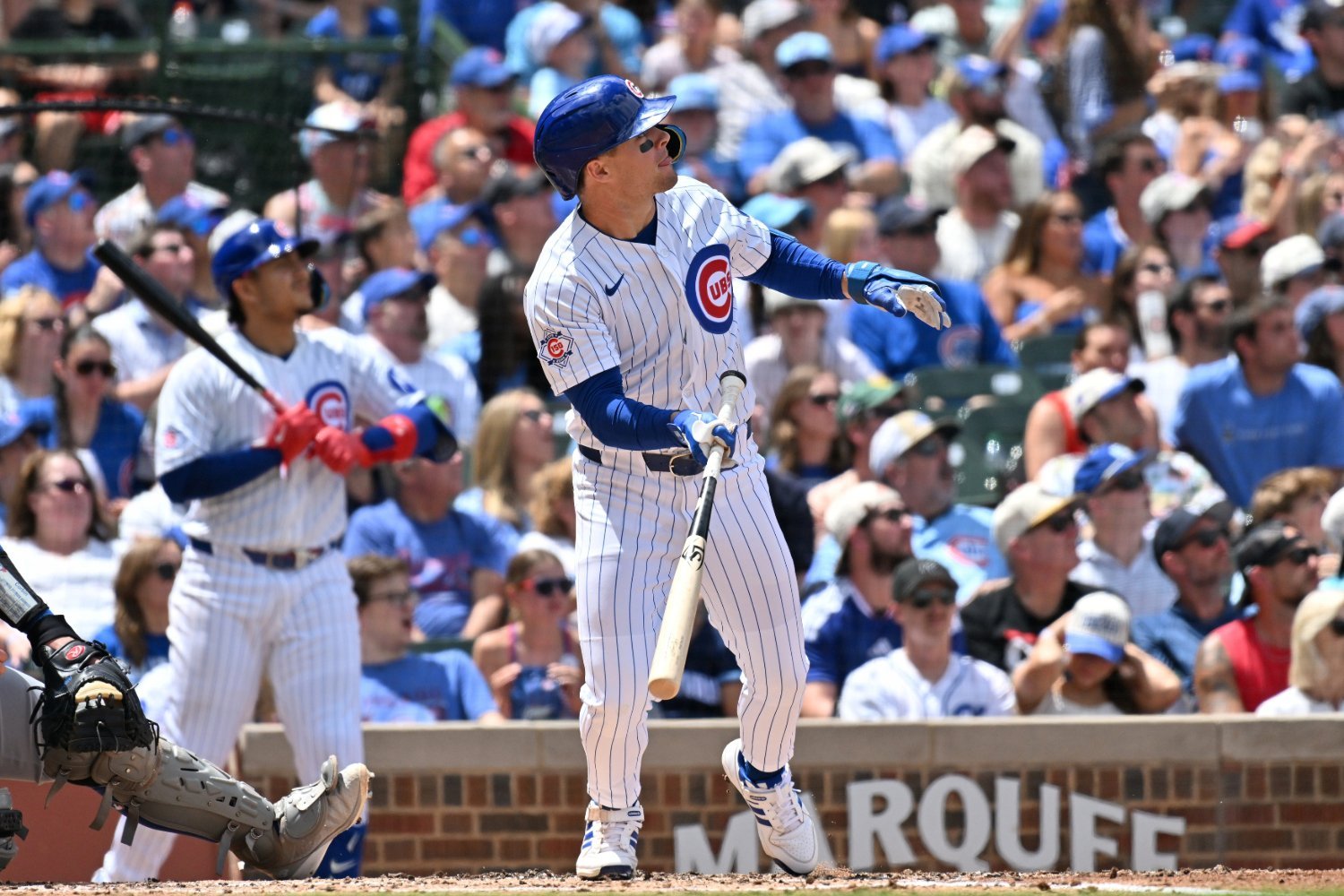 One of the most intriguing things about this year’s trade deadline is the wide variety of shapes potential deals could take. Not every move is going to be a straightforward contender adding a rental player for a playoff push. Some teams could look to make bigger-picture moves, trading talented young players who don’t necessarily fit their long-term plans in exchange for help at a more pressing position. Chicago Cubs utility man Matt Shaw is the quintessential example of that type of player. On the surface, trading Shaw seems like a ridiculous idea. He won’t even be arbitration-eligible until 2029 and could still be viewed as a key part of the Cubs’ future. However, the North Siders also have crowded infield and outfield situations and a desperate need to improve their pitching staff without weakening an already-thin farm system. Because of that, Shaw could become available in the right deal. The keyword there, though, is "right." Chicago wouldn’t be looking to move Shaw for a short-term upgrade or a rental player. If they were to make a move, it would need to bring back a controllable starting pitcher who could help anchor the rotation for years to come. For a team willing to make that type of offer, Shaw could quickly become one of the more attractive trade targets on the market. After a difficult rookie season, Shaw has taken some noticeable steps forward in 2026. He’s currently slashing .246/.322/.415, with his OPS sitting nearly 50 points higher than where it was last season. While those numbers may not jump off the page, the underlying improvements have been encouraging. Shaw’s strikeout rate has dropped, he’s making more consistent contact, and he has done a much better job of avoiding pitches outside of the strike zone. Overall, he has looked much more comfortable at the plate compared to a year ago. That improvement has been especially important considering everything else the 24-year-old has had to deal with this season. After spending most of his career in the infield, Shaw has been forced to adjust to a new position in right field. That transition, as well as two separate stints on the injured list, have made for some adversity, but the results have been much better than many expected. He currently grades out as an above-average right fielder in both range and arm value, and his athleticism has been a major reason why the transition has gone smoothly. Shaw’s 91st percentile sprint speed allows him to cover plenty of ground in the outfield, and it also makes him a legitimate threat once he reaches base. His ability to take an extra base adds another element to his overall game. Meanwhile, their pitching staff has been absolutely decimated by injuries. The Cubs currently have 12 pitchers on the injured list, enough to nearly build an entire rotation and bullpen out of unavailable arms. Adding pitching help has to be one of their biggest priorities. However, because Shaw is still under team control for several years, this wouldn’t be a move made simply to patch a short-term problem. The return would need to address a long-term weakness. That’s why a team like the Cleveland Guardians immediately stands out as a potential trade partner. Cleveland currently sits at 51-46 and remains firmly in the playoff picture, but their outfield production has been a concern. Their current right fielder, Kahlil Watson, has posted an OPS of just .562 this season. Watson is still young and has plenty of time to develop, but adding someone like Shaw would immediately give the Guardians more offensive flexibility and likely better short-term production. Additionally, Cleveland’s lineup features only one true right-handed hitter in its everyday group. Adding Shaw would give them another right-handed option and allow them to play matchups more effectively. The question, of course, is what the Cubs would want in return. A player like Tanner Bibee could be the type of arm Chicago targets. Bibee recently signed a five-year, $48 million extension with Cleveland that runs through 2030, and the structure of that deal could make him appealing to the Cubs. The contract is back-loaded, meaning Chicago would not be paying him more than $7.4 million annually until 2029. That gives them a quality starting pitcher without taking on a massive financial commitment immediately. Bibee, who is 27 years old, owns a career 3.90 ERA and profiles as a dependable middle-of-the-rotation starter, exactly the type of pitcher the Cubs need. Would Cleveland actually move him? That’s a different question. The Guardians are known for their ability to develop pitchers, and losing Bibee wouldn’t completely cripple their plans. They have consistently found ways to build a strong pitching staff, which could likely make them more willing to consider a deal involving a controllable starter. If a trade like this happened, it’s possible one side (more than likely the Cubs) would need to add a prospect or cash considerations to balance things out. But the framework of a Shaw-for-Bibee deal is at least interesting. The Cubs may ultimately decide that keeping Shaw is the better move given their long list of impending free agents. And yet, in the here and now, their need for pitching help could mean trading Matt Shaw is not nearly as unrealistic as it may sound. If the Cubs can turn an outfielder they don’t necessarily need into a controllable starting pitcher they desperately do, it’s a move worth considering. View the full article
 -
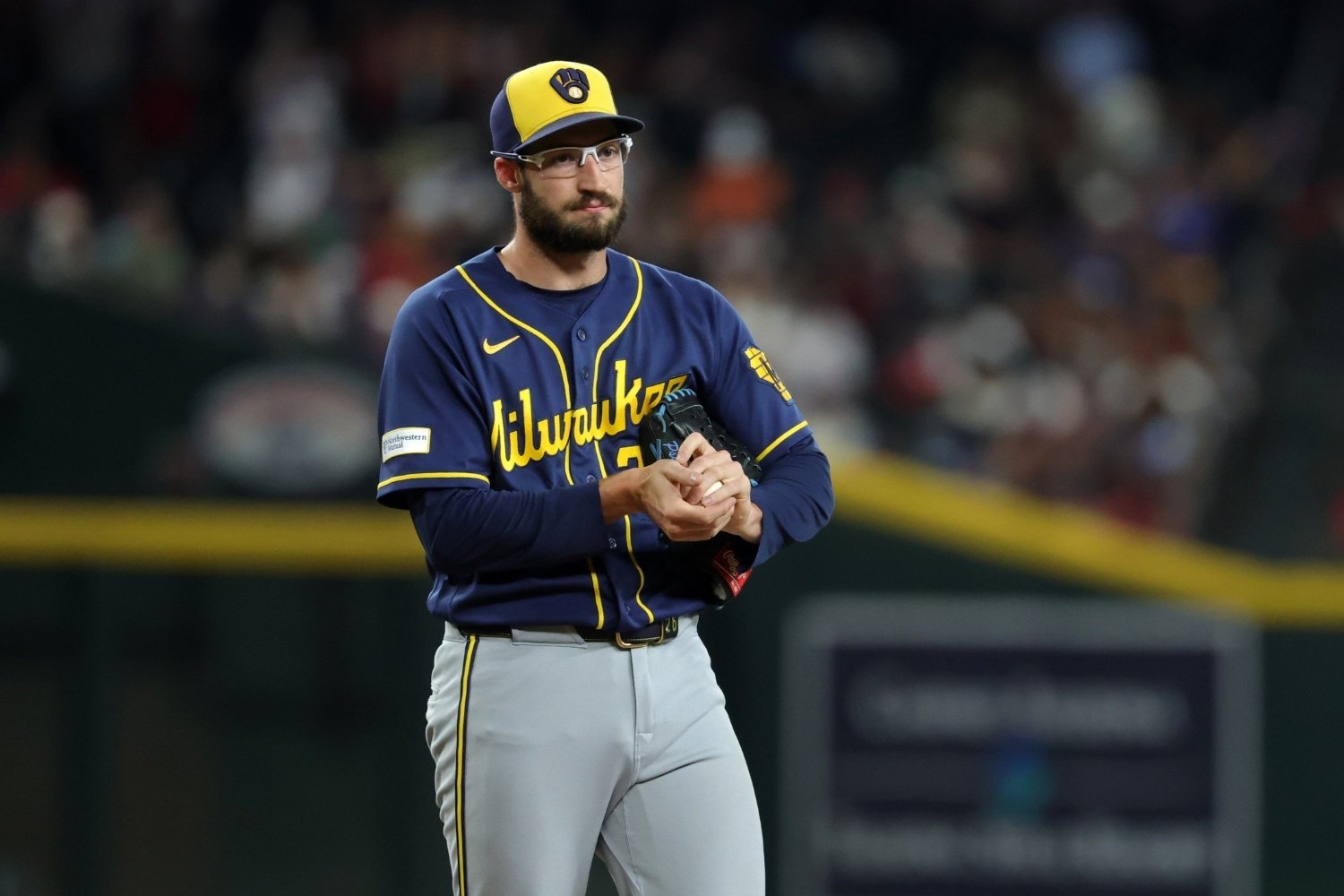 Aaron Ashby has one of the strangest arsenals in the majors, and hitters have looked as uncomfortable against him as they have against just about anyone else. He threw 66 2/3 innings last year, often in multi-inning relief, to the tune of a 2.16 ERA with some of the bendiest pitches you'll see. Ashby has no trouble moving the baseball both ways, a rare commodity. Pitchers usually have a supination or pronation bias that makes it hard for them to move the ball significantly to one side. At high velocity. It's tantalising how close to perfect his pitch mix is from a sheer stuff perspective. One of his biggest strengths is his ground-ball rate. A pitcher who can generate both strikeouts and ground balls at above-average rates has a lot of advantages in modern baseball, and that pair of skills has been a key factor in Ashby being "effectively wild". Keeping the ball on the ground, Ashby has always been capable of inducing a double play, so even if a hitter does get a free pass, he has a chance to wipe that runner out with a single pitch. That's key, because so far this season, Ashby's ground-ball rate on his primary fastball has decreased sharply. That's directly tied to his results. It's also something the Brewers seem to value, as Abner Uribe, Ashby and Ángel Zerpa all placed top 10 among relief pitchers in double plays induced in 2025. How Ashby maximized his arsenal is quite different from the traditional methods. The first big difference is his extension, which ranks among the lowest in baseball. With hurlers like Jacob Misiorowski, getting as close to the hitter as possible before releasing the baseball allows the velocity to play up, while also giving the ball less time for gravity to affect it and cause it to drop. That's a key difference here. Where someone leaning on a four-seam fastball wants to create as much "rise" as possible, a pitcher with a true sinker (not a two-seam fastball, but a genuine bowling-ball sinker) would want the ball to drop as much as possible to get below the barrel of the bat. This same principle applies to breaking pitches and off-speed pitches, trying to get them dropping at as steep a rate as possible by the time it reaches the plate. You can see in the graph below how the shorter a pitcher's stride is, the steeper their vertical approach angle is on a sinker. (Ashby is highlighted.) The correlation in the graph above isn't quite as exaggerated as I would have thought. It's distorted slightly by the amalgamation of two seamers and sinker fastballs into one pitch category. I dare say if they were separated, the line of best fit would be even steeper here, and a more direct correlation. There are some nuances within this. Ideally, you want that downward movement to be as steep as possible when it reaches the plate, but also to be breaking as late as possible, or at least at a similar time to the rest of a pitcher's arsenal. It creates extra deception, and prohibits a hitter from aligning his barrel to the pitch mid-swing. Has his Sinker Changed Shapes? Ashby's velocity allows him to manage the reduced "perceived velocity" (how fast the pitch actually looks to a hitter, due to the extension) that comes from him releasing the ball over a foot farther from home plate than the MLB average, and lets his raw movement come to the fore. With each of those pitches having a foot further to travel before reaching home plate, the movement he generates is exaggerated. Again, if we refer to the graph above, Ashby is considerably below the line of best fit; his vertical approach angle (VAA) is -0.69° steeper than an expected offering from his extension and release point. That might not sound like much, but it's significant, when the goal is to square the round ball on a round bat. Fast-forward to this year, however, and that VAA has dropped slightly, to -0.60° vs expected—not a massive change, but a notable one. If we compare Ashby's pitch shapes to last year, two small differences are perhaps combining to limit the drop Ashby is getting on his sinker: While Ashby's release height is the same distance from the ground, he's actually striding a little closer to home plate, with his extension jumping from 5.3 ft to 5.5 ft this year. Extending farther down the mound would lower the release height, but this has been offset by Ashby throwing from a slightly higher arm slot. A few degrees of difference here and there aren't usually anything to worry about, but combine the increased extension with the higher arm angle, and you have aslightly less heavy sinker. That being said, these aren't massive changes. Ashby is getting less vertical drop on his fastball this year, but it's not necessarily because his angle has changed. Instead, let's take a look at the seam-shifted wake, or non-magnus movement on the pitch (if you'd like to understand this phenomenon a little more, I covered the types of movement a baseball has this winter, here): Pitch Profiler does a fabulous job of separating spin-related movement from non-spin related movement. The shaded circles are where a pitch would be expected to move based on the release traits and characteristics, while the circle outline is where the pitch actually moved. As you can see with Aaron Ashby, both his sinker and changeup drop significantly more than expected. The sinker dropped 4.6" in 2025 more than expected while the changeup dropped 4.9" more than expected. If you want to know why Aaron Ashby has historically been so effective with his sinker, that's the primary reason right there. Good luck elevating either of those two pitches with any regularity. Fast-forward to this year, and the seam-shifted wake has reduced the drop he's getting on both of these pitches. This calculation accounts for his change in arm angle, and still suggests that Ashby has lost just shy of an inch of seam-shifted wake "drop" in 2026. Again, that may not sound like much, but it's the difference between a barrel and a ground ball. Is Fatigue Hurting Ashby? These little changes have reduced Ashby's effectiveness slightly this year. He can find ways to stop hitters from sitting on his sinker, whether that means more early-count curveballs (one of the most taken pitches in the league for a first-pitch strike) or mixing in more changeups to keep hitters off the speed of his sinker. The problem is that he's also been struggling to command his entire arsenal this year. Ashby's "edge" percentage—the share of his pitches thrown on the edges of the strike zone—has dropped from 43% to 38%, and hitters are making a lot more contact in zone. His in-zone swing-and-miss rate this season is less than 12%. On top of that, he's throwing just 43% of pitches inside the strike zone this year, compared to 50% last year. Hitters are being patient with him, working counts, and Ashby has struggled to find the zone often enough to counteract this approach. While we may think this is fatigue, actually, it's been a consistent problem in 2026, and wasn't an issue at all in 2025 with a steady 60% in-zone rate on his sinker and a 55% in-zone rate on his changeup. Looking at the year-on-year changes: Ashby isn't establishing his sinker as well in 2026, and he's keeping the changeup out of the strike zone at an alarming rate compared to his career norms, which is one of the pitches best suited to protecting his fastball. So in short, Ashby's made some small changes that are having a big impact in 2026: He's got more extension and a higher arm angle; these are both affecting his vertical drop on the sinker. He's not getting the same seam-shifted wake from his new release point, again leading to less vertical drop than he's previously been getting Most critically, Ashby has lost both control and command of his pitches. He's finding the zone less with his sinker and changeup, two pitches he relied upon to protect each other, and it's letting hitters see the sinker more and wait on it, creating less ground balls than usual. How Ashby approaches the second half of 2026 will be fascinating. Can he find the command needed to lead the bullpen through October? Or will he continue to be up and down, with flashes of brilliance interspersed with flashes of mediocrity? This one factor could go a long way toward determining the Brewers' success or failure this season. View the full article
 -
Why Another Twins Trade Deadline Selloff Doesn’t Make Sense
DiamondCentric posted an article in Twins Daily
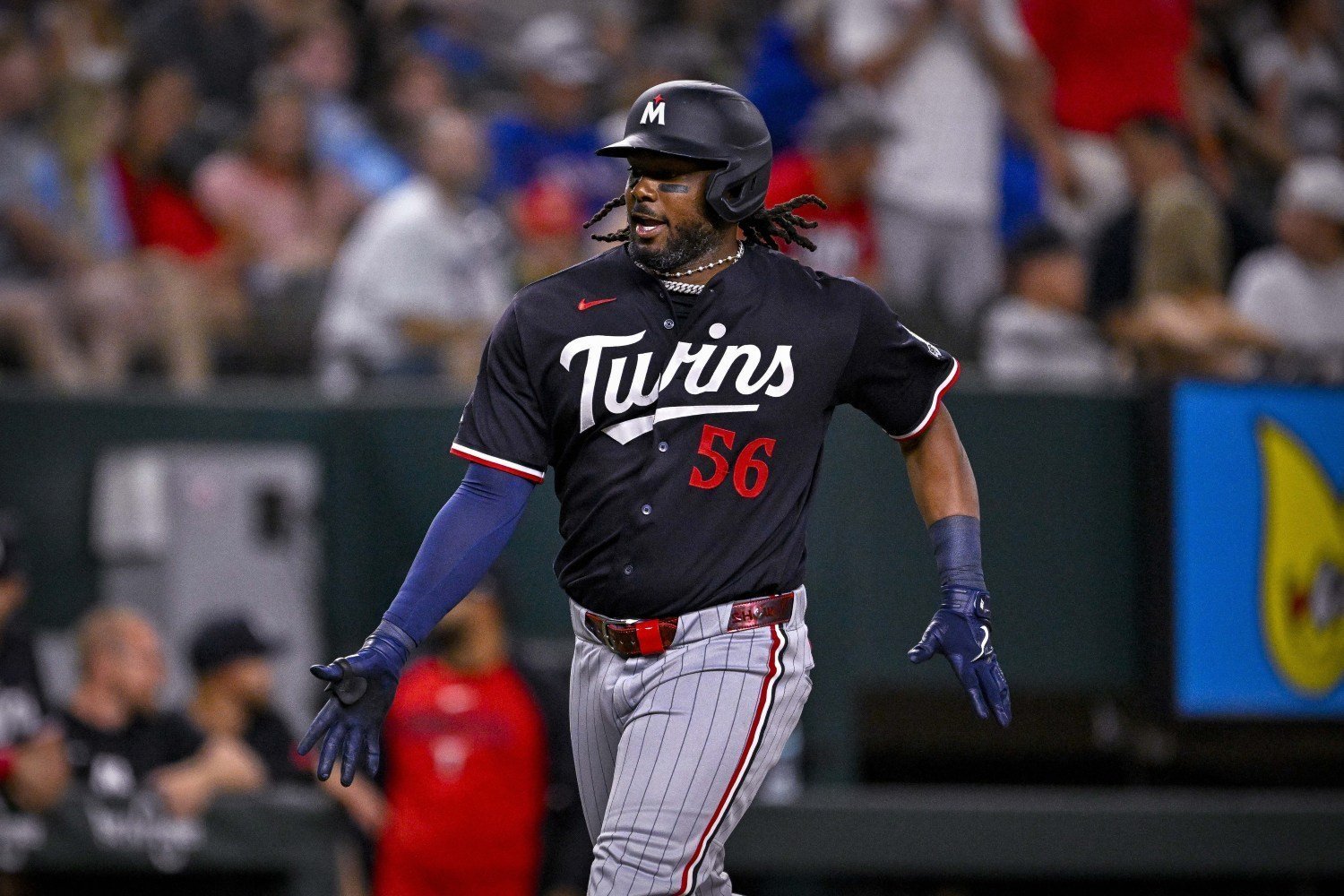 The 2026 MLB trade deadline is shaping up to be another pivotal moment for the Minnesota Twins. Sitting in the thick of the American League Wild Card race at the All-Star break, the front office faces a familiar question: buy, sell, or stand pat After last year's franchise-altering selloff, however, the equation has changed dramatically. The Twins already cashed in many of their most valuable trade assets, replenishing one of baseball's top farm systems in the process. If they decide to sell again, there simply isn't enough remaining on the major-league roster to dramatically reshape the organization. That's not to say Minnesota has nothing to trade. It just means the return is unlikely to mirror the prospect haul the club received a year ago. Joe Ryan is the Only Franchise-Altering Trade Chip If there is one player capable of bringing back a transformational return, it's Ryan. A front-line starter with another season of club control would be one of the most coveted pitchers available—if, indeed, the Twins made him available. Diamond Centric currently ranks him as the second-most valuable trade candidate, behind Detroit’s Tarik Skubal. Any Ryan trade package would have to include multiple top prospects and/or a controllable big-leaguer. The problem isn't finding interested teams. Every contender would line up for Ryan. The issue is whether trading him makes any sense. There have been no indications the Twins are interested in moving their ace, and doing so would effectively wave the white flag on a season that has exceeded expectations. Minnesota has remained in the playoff picture largely because of its clubhouse chemistry, resilient offense, and a belief that it can compete despite last year's roster turnover. Trading Ryan would send the opposite message. Even if the return looked fantastic on paper, it would tell the clubhouse that the organization is already looking toward 2027, instead of trying to capitalize on a legitimate postseason opportunity. Ryan Jeffers Could Help a Contender Jeffers is another of the more interesting trade candidates on the roster. He recently returned from a broken hamate bone and is scheduled to become a free agent after the season. Catching depth is always at a premium in July, and several contenders could use another bat behind the plate. Diamond Centric currently ranks him as the 29th-best trade candidate. The Twins also learned they could survive without him. Victor Caratini and Alex Jackson handled the workload admirably during Jeffers's absence, giving Minnesota confidence that it has enough depth to finish the season if necessary. However, there's no guarantee that duo can continue to produce at that high of a level. Still, Jeffers isn't likely to command an overwhelming return. A realistic package could include a borderline top-100 prospect, along with a lower-level lottery ticket. That's a respectable return for a pending free agent, but it doesn't dramatically elevate an already improved farm system. Considering Minnesota is unlikely to retain Jeffers this winter, moving him would be understandable from an asset-management perspective. It just wouldn't be the type of deal that changes the organization's long-term outlook. Josh Bell's Value Doesn't Match His Production Throughout his career, Bell has been one of baseball's familiar deadline rentals. After another slow April, he has quietly turned into one of Minnesota's most productive hitters and played a significant role in the Twins leading the American League in runs scored. His bat certainly has value. The problem is that his defensive limitations negate it. Diamond Centric currently ranks him as the 41st-best trade deadline candidate. Bell is essentially a designated hitter, and contenders rarely pay premium prospect prices for DH-only bats. Even if Minnesota found a willing trade partner, the return would likely consist of lower-tier prospects, rather than impact talent. Bell probably won't be back next season, making him a logical trade candidate on paper. In reality, his value to Minnesota's lineup may outweigh whatever modest return another club is willing to offer. Trevor Larnach Has More Value in Minnesota Larnach has surfaced in trade rumors before. The Twins have previously explored moving him, but either opposing clubs weren't interested, or Minnesota didn't receive an offer matching its valuation. Diamond Centric has Larnach ranked as the 48th-best trade candidate. Now, Larnach is doing exactly what the Twins hoped he would. Alongside Bell, he has helped anchor one of the American League's best offenses, giving Minnesota another top-of-the-order threat as it chases a playoff berth. Could the Twins revisit trade discussions? Certainly. Would the return justify subtracting an everyday contributor who remains under team control through next season? Probably not. Unlike Bell or Jeffers, Larnach still offers value beyond this season. Unless another organization significantly raises its offer compared to previous discussions, there's little incentive for Minnesota to move him. Even in the worst-case scenario where Larnach cools off and the team misses the postseason, they should be able to get at least a fringy prospect for him at the non-tender deadline this November. Selling Again Would Send the Wrong Message The Twins could trade Ryan, Jeffers, Bell, Larnach, or any combination of those players before the deadline. The bigger question is what those moves would accomplish. Outside of Ryan, none of those players are likely to return the type of impact prospect package that materially changes the farm system. Minnesota already completed that work during last year's deadline. What's left are complementary pieces whose value is greater to a club chasing a postseason berth than it is on the trade market. More importantly, another selloff would send a clear message to the clubhouse. After fighting their way into contention and entering the All-Star break fueled by confidence and momentum, dealing away productive veterans would suggest the front office no longer believes this team is capable of making a run. The Twins may not be aggressive buyers at this year's deadline, but they also don't have much reason to become sellers. The organization's biggest replenishment has already happened. Now, the focus should be on seeing just how far this surprising group can carry itself in October—or even on bolstering the team for that stretch run. Does it make sense for the Twins to hold on to all these players? Leave a comment and start the discussion. View the full article
 -
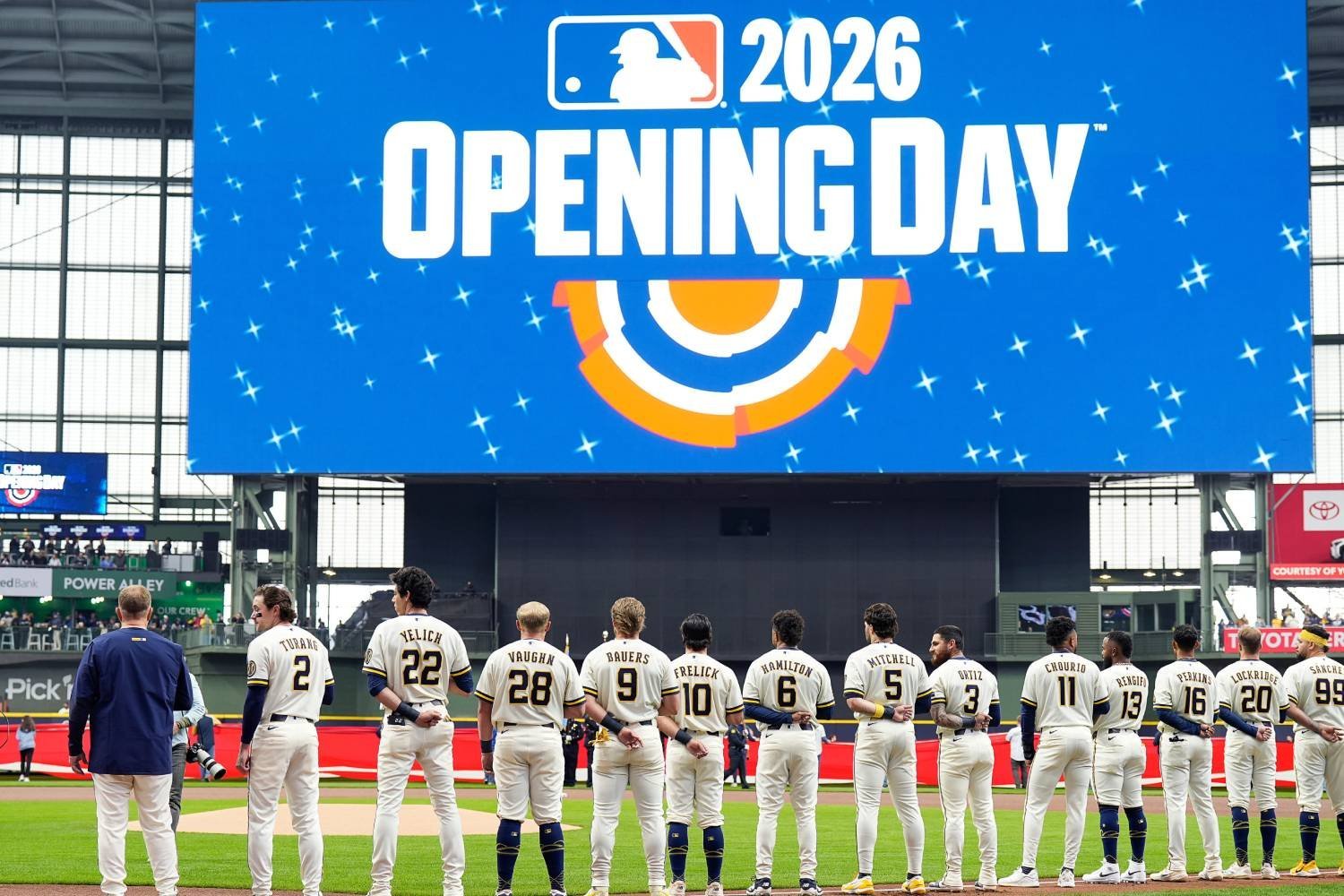 For the third year in a row, the Milwaukee Brewers will open the 2027 season with an interleague series. That is, if the season starts as scheduled. The Crew will begin 2027 at American Family Field with a six-game homestand, starting with the season-opening series against the Los Angeles Angels. MLB announced the schedules for all 30 teams Thursday. The last time the Brewers and Angels squared off on Opening Day was 1996 at Anaheim Stadium. After those three games, the Brewers will host Atlanta for three games, then embark on a six-game interleague road trip against the Chicago White Sox (April 1-4, with a day off built in) and the Toronto Blue Jays (April 5-7). On March 24, there will be a single game to begin the season as there was this year between the San Francisco Giants and New York Yankees, with all of the other season-opening series happening on March 25, the earliest traditional Opening Day in MLB history. The first Brewers series against the NL Central rival Chicago Cubs will be at Wrigley Field on April 26-28, with Chicago making its first trip to Milwaukee on May 17-20. Next year's All-Star Game is at Wrigley Field on July 13. That game will be sandwiched around the Crew's longest road trip and longest homestand. Before the break, the Brewers will be on the road for 10 games against the Cincinnati Reds, Washington Nationals and Cleveland Guardians. After the break, the Brewers will be at home for 10 in a row against the Minnesota Twins, Detroit Tigers and Miami Marlins. The Brewers will wrap up the regular season with a six-game road trip against the St. Louis Cardinals and Texas Rangers. Four of the Brewers' final five series are against AL teams, with their final set against the Cubs coming Sept. 4-6 at American Family Field. The start of the season is in doubt due to a probable lockout by owners as the collective bargaining agreement expires Dec. 1. View the full article
 -
 Whether or not the 2027 MLB season begins on time is one question, but at least we know when games are supposed to start next year. The San Diego Padres will open 2027 with seven games at Petco Park, including Opening Day against the Arizona Diamondback on March 25. There will be one MLB game on March 24, a matchup to be determined. As it was this year when the San Francisco Giants hosted the New York Yankees, Netflix will be the exclusive carrier of the March 24 game. The traditional March 25 Opening Day is the earliest non-special event opener in MLB history. After that four-game Thursday-Sunday series vs. the D'backs, the Padres will host the Colorado Rockies for three games March 29-31 before hitting the road for six games against the Pittsburgh Pirates and St. Louis Cardinals from April 2-7. The Friars have their first series against the NL West rival Los Angeles Dodgers when they return home April 9-11. Among the other notable series is the Padres heading to Las Vegas to face the A's on June 4-6. They also have a scheduled doubleheader June 23 at Petco Park against the Chicago Cubs, then having two days off before beginning a road trip against the Toronto Blue Jays. Another scheduled doubleheader is July 10 against the Colorado Rockies in Denver on the weekend before the All-Star break. The All-Star Game is July 13 at Wrigley Field in Chicago. The Padres conclude the 2027 season with a six-game road trip against the D'backs and Chicago White Sox. The start of the season is in doubt due to a probable lockout by owners as the collective bargaining agreement expires Dec. 1. View the full article
 -
Midseason reports for every Marlins Top 30 prospect
DiamondCentric posted an article in Fish On First
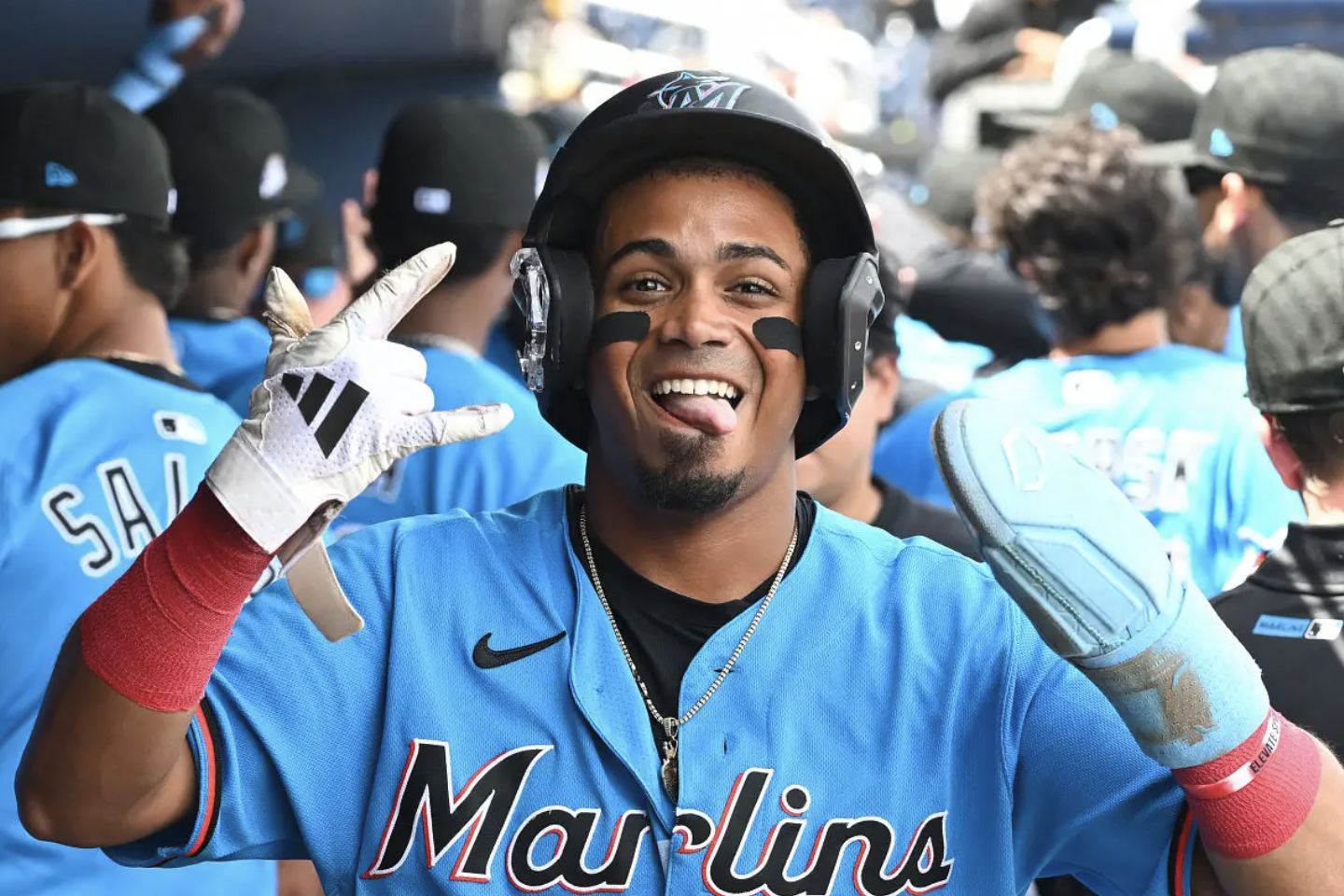 During this brief break in the 2026 minor league season, it's time to check in with each of Fish On First's ranked Miami Marlins prospects. Some of them have taken major steps forward, while others have battled injuries or faced challenges on the field while adjusting to higher levels. Every player in our Top 30 is covered below, breaking down their first-half performance, development, and outlook entering the second half of the season. 1. Thomas White Began season at Triple-A; currently at Triple-A (injured list) White entered the season with legitimate expectations of making his major league debut before the end of the year. Instead, injuries derailed what was shaping up to be another important step in his development. Over just 18 ⅔ innings, White saw a slight dip in velocity across his arsenal, allowed four doubles and three home runs, and walked nine batters before being diagnosed with a left shoulder capsular sprain. The injury is expected to sideline him for the remainder of the season. Although the first half was disappointing, White's long-term outlook remains unchanged. He has succeeded at every level of the minors throughout his career, and if he returns healthy next season, there is every reason to believe he will quickly establish himself in Jacksonville and once again put himself on the doorstep of Miami. 2. Robby Snelling Began season at Triple-A; currently in major leagues (injured list) Few prospects entered the season with more momentum than Snelling. After posting a 1.27 ERA across 63 ⅔ innings in Jacksonville last year, many expected him to make his major league debut in 2026, with some even believing he had a legitimate chance to win the Marlins' fifth starter job coming out of spring training. He returned to Jacksonville and was every bit as dominant, posting a 1.86 ERA over 29 innings while striking out nearly 40% of opposing hitters. With opponents batting just .116 against him, a promotion to Miami quickly became inevitable. His debut started about as well as anyone could have imagined, striking out James Wood on three pitches before finishing with five innings of three-run ball. Unfortunately, it would also be his only appearance. Days later, Snelling suffered a torn left UCL during a bullpen session, ending his season. The injury is a significant setback, but with an expected recovery timeline of 10-12 months, he should return early next season if everything goes according to plan. 3. Dillon Lewis Began season at Double-A; currently at Double-A (injured list) Lewis wasted little time showing why the Marlins made him a key part of the Ryan Weathers trade. After breaking out with 22 home runs and 26 stolen bases across two levels in 2025, he has continued to flash that same power-speed combination during his first season in the organization. Through 66 games with Pensacola, Lewis is hitting .240 with 17 home runs, 43 RBIs, and 14 stolen bases. The production has been impressive, though the strikeout rate remains the biggest obstacle to unlocking his full offensive potential. He is striking out in 31.5% of his plate appearances, an area that will continue to be closely monitored. His season was interrupted on June 27 by a broken hamate bone, an injury expected to keep him out six to eight weeks. Finishing the year healthy will be just as important as the numbers he posts. 4. Aiva Arquette Began season at High-A; currently at Double-A (injured list) Arquette's first full professional season has featured both rapid advancement and frustrating interruptions. After spending just 14 games in High-A Beloit, he earned a promotion to Double-A Pensacola, where he has shown flashes of why he is viewed as one of the organization's cornerstone prospects. Offensively, Arquette has hit .221 with seven home runs and 22 RBIs through his first 27 games in Pensacola. Defensively, he has looked every bit the part at shortstop, posting a .987 fielding percentage over 159 innings while displaying the smooth actions that made him such a highly regarded prospect. The biggest hurdle has simply been staying on the field. Injuries have already interrupted his development several times, and he is currently sidelined with a left thumb injury. A healthy finish to the season would go a long way toward restoring the momentum he built early in the year. 5. Cam Cannarella Began season at High-A; currently at Double-A Cannarella entered professional baseball with more questions than most first-round caliber talents after tearing the labrum in his throwing shoulder. Even while playing through the injury in 2025, he still hit .337 with 11 home runs and remained one of the premier defensive outfielders in the draft, making him one of the biggest value picks when the Marlins selected him in the Competitive Balance Round A. His first full professional season has exceeded even the organization's expectations. After dominating High-A Beloit with a .394 average over 19 games, Cannarella earned a promotion to Pensacola and has somehow been even better. Through 34 games, he is hitting .344 with nine home runs, 23 RBIs, and 23 walks compared to just 20 strikeouts. Perhaps the biggest surprise has been the power. Cannarella launched eight home runs during a 13-game stretch and recently told Isaac Azout and Alex Carver on Fish Unfiltered that his shoulder is nearly back to full strength. Combined with his elite defense, the unexpected power surge has only strengthened the belief that he could be the Marlins' long-term answer in center field. 6. Karson Milbrandt Began season at Double-A; currently at Triple-A Milbrandt entered the season with plenty of momentum after a strong finish to 2025 and an outstanding Arizona Fall League, where he struck out 23 batters in just 13 ⅓ innings. He carried that success into Spring Breakout, punching out six hitters over three dominant innings, and continued to establish himself as one of the fastest-rising arms in the organization. He opened the year in Double-A Pensacola and was nearly untouchable, posting a 1.34 ERA while striking out 70 batters in 47 innings. During one stretch, Milbrandt threw 27 consecutive scoreless innings before earning a promotion to Triple-A Jacksonville. The jump to Triple-A has presented a new challenge. While he has shown flashes of the same dominance, his command has not been as sharp as it was in Pensacola. Even so, the stuff continues to play at a high level, and if he settles in during the second half, Milbrandt has positioned himself to make his major league debut sooner rather than later. 7. Starlyn Caba Began season at High-A; currently at High-A Caba's season has been one of the tougher evaluations in the system. After spending all of last year in Jupiter, he returned to High-A Beloit looking to take another step forward, but injuries and inconsistency have prevented him from finding much rhythm. Despite spending time on the injured list twice, there have still been encouraging signs. Caba has already established career highs in doubles and home runs while posting an OPS nearly 160 points higher than last season. His plate discipline has also improved, as he has already surpassed last year's walk total and is drawing walks at the second-best rate of his professional career. The downside has been the strikeouts, which have climbed to a career high. Finding more consistency will be the biggest objective after the All-Star break because the overall offensive improvements suggest there is still plenty to be encouraged by. 8. Kevin Defrank Began season in FCL; currently in FCL (injured list) Few pitchers in the organization possess the raw upside of Defrank. Seeing a 16-year-old consistently reach triple digits is rare, and after turning heads last season, there was plenty of excitement surrounding his expected stateside debut as a 17-year-old. Unfortunately, injuries have kept that from becoming a reality. Defrank was placed on the 60-day injured list in May with a right biceps injury and is expected to miss the remainder of the season. Although the lost development time is disappointing, there is no reason to rush his timeline. At just 17 years old, Defrank remains one of the highest-upside arms in the organization, and the focus now shifts toward returning healthy for next season. 9. Kemp Alderman Began season at Triple-A; currently at Triple-A Alderman has done exactly what the Marlins hoped after his breakout 2025 campaign. Following a season in which he hit .285 with 22 home runs and 22 stolen bases across two levels, he has continued producing against Triple-A pitching. Despite missing roughly a month with an elbow injury, Alderman is hitting .297 with 13 home runs and 37 RBIs. Projected over a full 550 at-bat season, his current pace would put him around the 33-home run mark, reinforcing the middle-of-the-order power that has become his calling card. The biggest storyline surrounding Alderman may ultimately have nothing to do with his performance. With the trade deadline approaching, his name has surfaced in speculation as a potential trade chip. Whether he finishes the season in the Marlins organization or elsewhere, he has only increased his value during the first half. 10. Luis Cova Began season in FCL; currently at Low-A Cova has continued building on the breakout season he enjoyed in the Dominican Summer League, where he hit .299 with nine home runs and 35 stolen bases. He opened this year in the Florida Complex League and wasted little time proving he was ready for a new challenge, batting .288 over 19 games with two home runs, 14 stolen bases, and nearly as many walks (12) as strikeouts (14). That performance earned him a promotion to Low-A Jupiter, which has taken a toll on his effectiveness at the plate. Through his first 30 games, Cova is hitting .219 with 30 strikeouts, but the underlying approach remains encouraging. He has already drawn 24 walks while adding another 10 stolen bases, bringing his professional total to 95. The plate discipline has translated well despite the jump in competition. Now it becomes a matter of making more consistent quality contact. Given his speed, pitchers will eventually be forced to challenge him in the strike zone, creating more opportunities for Cova to impact games offensively. 11. Dillon Head Began season at High-A; currently at High-A Head's season has been a tale of two halves. After struggling through the opening month and spending time on the injured list, he has turned into one of the hottest hitters in all of Minor League Baseball. Along with Cam Cannarella, the Marlins may have two of the hottest bats in the minors. Over his last 26 games, Head is hitting .361 while recording a hit in 21 of those contests. July has been especially impressive, as he has already put together three three-hit games and one four-hit performance. Even after missing time earlier in the season, Head has stolen 30 bases, continuing to showcase the elite speed that has always made him such an intriguing prospect. The slow start is quickly becoming an afterthought. If he can sustain this level of production throughout the second half, Head will continue climbing back toward the top tier of the Marlins' prospect rankings. 12. Fenwick Trimble Began season at Double-A; currently at Double-A Trimble's first half has featured two completely different stretches. After a slow start in Pensacola, he caught fire in late April and became one of the Southern League's most productive hitters over the next two months. From April 25 through June 30, Trimble hit .312 with 11 home runs and 35 RBIs, producing the best offensive stretch of his professional career. Since the calendar flipped to July, however, he has cooled off considerably, batting .171 over his first 10 games despite leaving the yard twice. While the strikeout rate has increased and the walks have declined compared to last season, the overall power production has continued to trend in the right direction. Trimble has already established a new career high with 33 extra-base hits despite receiving fewer at-bats than he did all of last year. 13. Brendan Jones Began season at Double-A; currently at Double-A Jones has quietly put together a solid first season in the Marlins organization after arriving alongside Dillon Lewis in the offseason. Through 64 games with Pensacola, he is hitting .220 with eight home runs, six triples, 25 RBIs, and 31 stolen bases while continuing to impact games with his speed. The batting average doesn't tell the full story. Jones owns a career-low .265 BABIP despite striking the ball well at times, suggesting he has been on the wrong side of some batted-ball luck. He is also striking out at a 27% clip, an area that could use some improvement during the second half. Defensively, Jones has seen increased time in left and right field following Cannarella's emergence in center. That versatility only adds to his value as he continues adjusting to a new organization. 14. Eliazar Dishmey Began season at High-A; currently at Double-A Dishmey continues to establish himself as one of the most underrated pitchers in the Marlins system. After posting a 2.90 ERA across two levels last season, he returned to High-A Beloit and immediately earned another promotion by recording a 2.14 ERA with 48 strikeouts in 33 ⅔ innings. The move to Pensacola has come with a learning curve, but the overall results remain encouraging. Through 36 ⅔ innings, Dishmey owns a 3.93 ERA with 44 strikeouts while limiting opponents to a .164 batting average. The only noticeable difference has been the command. Dishmey has walked 18 batters since arriving in Double-A, but his ability to miss bats and suppress quality contact has remained intact. If he can sharpen the command over the final two months, another jump in his prospect stock could be on the horizon. 15. Andrew Salas Began season at Low-A; currently in FCL Salas' second full professional season has been anything but ordinary. After struggling to find consistency in Jupiter, where he hit .170 over 43 games, he was reassigned to the Florida Complex League and has completely changed the outlook of his season. In 23 FCL games, Salas is hitting .264 with seven home runs, showcasing an unexpected power surge that has become one of the biggest surprises in the organization this year. The strikeouts remain the biggest hurdle. Between both levels, Salas is striking out at a 30% clip, leaving plenty of room for improvement as he continues to mature offensively. Still, he will not turn 19 until next March, and the emergence of legitimate game power gives the Marlins plenty to be excited about heading into the second half. 16. Santiago Solarte Began season in DSL; currently in DSL Solarte has wasted little time showing why he was the Marlins' top international signing in this year's class. Through his first 29 professional games, he is hitting .281 with five home runs, 24 RBIs, and 28 stolen bases, making an immediate impact in nearly every facet of the game. The strikeouts have been higher than the Marlins would like, but when Solarte puts the ball in play, the ball jumps off his bat. His combination of power and speed has been evident throughout the first half and has only reinforced why the organization invested so heavily in him. There is still room for growth defensively, but that's to be expected from a player who won't turn 18 until November. Considering his age and tools, the Marlins couldn't have asked for a much better introduction to professional baseball. 17. Luis Arana Began season in FCL; currently at Low-A Arana continued building on his breakout 2025 campaign after hitting .297 in the Dominican Summer League while drawing 30 walks compared to just 18 strikeouts. He carried that disciplined approach into the Florida Complex League, batting .389 over 17 games with nine walks and only six strikeouts. That performance quickly earned him a promotion to Low-A Jupiter, where full-season pitching has provided a much tougher test. Through 31 games, Arana is hitting .250 while his strikeout total has climbed to 30 in 116 at-bats. Even with the adjustment period, there is little reason to overreact. Arana has already proven he can make changes at every stop of his professional career, and as he settles into Jupiter, expect the disciplined approach that carried him through the DSL and FCL to become more consistent again. 18. Christian Hernández Began season at Double-A; currently at Double-A Hernández entered the organization this offseason as part of the trade that sent Edward Cabrera to the Cubs, and after a slow start, he has steadily become one of the hottest hitters in the Marlins system. Following a difficult April in which he hit just .164, Hernández has responded by hitting .306 with eight home runs and 28 RBIs since May 2. Those eight home runs have already established a new career high, highlighting the power that has emerged during his turnaround. The strikeout rate remains elevated at 28%, but putting together three straight productive months is an encouraging sign. If he maintains that momentum into the second half, Hernandez could continue climbing the organizational rankings. 19. Brandon Compton Began season at High-A; currently at Double-A Few hitters in the organization possess the raw power that Compton brings to the plate, and he has done plenty to reinforce that reputation during the first half. After a slow start through April and May, Compton caught fire in June, hitting .318 with 10 home runs, including one in his Double-A debut. The promotion to Pensacola has done nothing to cool him off. Through his first 11 games, he is hitting .349 with six home runs and 12 RBIs, continuing to punish opposing pitching. Just as encouraging as the power has been his approach at the plate. Compton is averaging nearly 4.4 pitches per plate appearance, consistently working deep counts while forcing pitchers into mistakes. That combination of patience and power gives him one of the highest offensive ceilings in the system. 20. Brandon White Began season at Double-A; currently at Triple-A White has been one of the biggest surprises in the Marlins organization this season. After putting together a solid year in Beloit in 2025, he opened this season in Pensacola and needed just 33 innings to prove he was ready for Triple-A, posting a 3.00 ERA with 39 strikeouts before earning a promotion. The adjustment to Jacksonville has brought some ups and downs. Through 37 ⅔ innings, White owns a 5.73 ERA, though the underlying numbers paint a more encouraging picture. Across both levels, he has posted a career-best 10.95 K/9 while lowering his walk rate to a career-low 2.17 BB/9. The long ball has been his biggest issue since reaching Triple-A, but pitchers often need time to adjust after making that jump. As long as White continues attacking the strike zone the way he has throughout the season, the results should continue trending in the right direction. 21. Juan Matheus Began season at High-A; currently at Double-A Matheus has been one of the biggest risers in the Marlins system after arriving in the offseason as part of the same trade that brought Dillon Lewis and Brendan Jones to the organization. He opened the year in High-A Beloit and immediately made an impact, hitting .261 with seven home runs, 29 RBIs, and 22 walks compared to 29 strikeouts in 42 games. That performance earned him a promotion to Double-A Pensacola, where he has looked just as comfortable. Through 40 games, Matheus is hitting .288 with six home runs and 30 RBIs, proving his offensive production has translated against better competition. The walk rate has dipped since the promotion, but the power has remained while the strikeout rate has stayed nearly identical. Defensively, Matheus has added even more value by appearing at every infield position except first base, giving the Marlins another versatile option as he continues to develop. 22. Keyner Benitez Began season at Low-A; currently at Low-A (injured list) Benitez has quietly established himself as one of the most dependable pitchers in the Marlins organization. Since joining the system in 2023, he has compiled a 3.10 ERA over 188 career innings while consistently producing wherever he has been assigned. That trend continued this season in Jupiter, where he posted a 2.79 ERA across 19 ⅓ innings while holding opponents to a .106 batting average and striking out hitters at an 11.0 K/9 clip. Unfortunately, his season came to an early end after he was placed on the 60-day injured list with an arm injury. While missing the remainder of the year is a disappointing setback, Benitez has built a track record of consistent production that should keep him firmly on the organization's radar once he returns. 23. Josh Ekness Began season at Triple-A; currently in major leagues (injured list) Ekness has long been regarded as one of the best relief prospects in the Marlins system because of his ability to miss bats. After posting a 1.91 ERA with 83 strikeouts in 66 innings during 2024, he followed it up with another productive season in Double-A before earning his first extended opportunity in Triple-A. Through 16 ⅓ innings with Jacksonville this season, Ekness recorded a 4.41 ERA, but the strikeout numbers continued to stand out with 29 punchouts. His ability to generate swings and misses ultimately earned him his first major league call-up. Ekness appeared in six games for Miami before suffering a right calf strain that landed him on the 60-day injured list. Once healthy, he should continue competing for a permanent role in the Marlins' bullpen. 24. Nate Payne Began season at Low-A; currently at High-A Payne continues to look like one of the biggest steals from the 2024 MLB Draft. Selected in the 18th round, he has consistently outperformed expectations and has emerged as one of the more underrated pitching prospects in the organization. Through 74 ⅔ innings this season, Payne has struck out 102 batters, good for a 12.29 K/9. That ability to generate swings and misses has carried over throughout his professional career, as he owns an even 12.0 K/9 across 131 innings. The development has gone beyond just strikeouts. Payne has lowered his walk rate by nearly two batters per nine innings compared to last season, while a .329 BABIP suggests he has also dealt with some poor fortune on balls in play. At just 20 years old, his first half has only strengthened the case that he deserves far more attention. 25. Josh White Began season at Triple-A; currently at Triple-A White followed one of the most dominant relief seasons in recent minor league history by proving he was ready for the next challenge. After posting a 1.86 ERA with 107 strikeouts over 67 ⅔ innings in 2025, he opened this season in Triple-A Jacksonville and continued to produce. Across 41 innings, White owns a 2.20 ERA with 48 strikeouts, earning his first promotion to the major leagues. He made his debut on May 31, though his first taste of the big leagues proved challenging as he allowed five earned runs while walking four batters. Despite the rocky debut, White has consistently shown he can dominate minor league hitters. The track record speaks for itself, and it would not be surprising to see him become a valuable piece of the Marlins' bullpen before long. 26. Edgardo De Leon Began season FCL; currently at Low-A De Leon was the final piece the Marlins acquired from the Cubs during the offseason, and his first half has been defined by two very different stops. He opened the season in the Florida Complex League and was one of the league's most productive hitters. Had he accumulated enough plate appearances to qualify, he would have been among the league leaders in batting average after hitting .351 with four home runs, 20 RBIs, and 15 walks compared to just 14 strikeouts in 22 games. That performance earned him a promotion to Low-A Jupiter, where the adjustment has been much tougher. Through 23 games, De Leon is hitting .167 while striking out in more than one-third of his plate appearances. The offensive tools that stood out in the FCL are still there. The second half will be about making the adjustments necessary to translate that success against full-season pitching. 27. Luis Leon Began season FCL; currently at Low-A Leon has already shown significant growth since beginning his professional career. After hitting just .110 over 24 games in the Florida Complex League last season while striking out in 56% of his plate appearances, he returned to the level this year looking like a much different player. In 34 games, Leon hit .248 with three home runs, 17 RBIs, and 19 stolen bases before earning a promotion to Jupiter. His first taste of full-season baseball has been more challenging, as he is hitting .209 through 13 games while striking out at a 40% clip. The sample size in Jupiter remains small, so there is no reason to draw major conclusions yet. The focus for the remainder of the season will simply be cutting down the strikeouts and allowing his elite speed to impact games more consistently. 28. Emilio Barreras Began season at Low-A; currently at High-A Barreras entered professional baseball with the reputation of being one of the best contact hitters in the 2025 draft, and he has largely lived up to that billing during his first professional season. He opened the year in Jupiter and hit .317 over 37 games while drawing 25 walks compared to just 15 strikeouts, displaying the disciplined approach that made him such an attractive draft pick. That success earned him a promotion to High-A Beloit, where some regression was expected after posting a .346 BABIP at the previous level. Even with the tougher competition, Barreras has continued to put the ball in play at an impressive rate. While the walks have dipped, the strikeout rate has remained under control. If those contact skills continue to translate, Barreras has a chance to become one of the fastest-rising position players in the organization. 29. Aiden May Began season at High-A; currently at High-A May entered the season with one primary objective after undergoing an elbow procedure last year: stay healthy. Through the first half, he has accomplished exactly that while continuing to develop in High-A Beloit. Across 53 innings, May owns a 4.25 ERA. Although his strikeout numbers have declined from last season, so have the walks, as he has relied more on generating weak contact than overpowering hitters. Regardless of the statistics, simply remaining healthy has been the biggest victory. There has been no indication whether the Marlins will place him on an innings limit during the second half, but if he continues performing the way he has, a promotion to Pensacola appears well within reach. 30. Noble Meyer Began season at High-A; currently at High-A (injured list) Few first-round picks from the 2023 draft have endured a tougher start to their professional careers than Meyer. Injuries have repeatedly interrupted his development, making it difficult for him to build any momentum on the mound. That trend has unfortunately continued this season. Meyer has been limited to just three rehab appearances, totaling four innings while issuing eight walks. The lack of innings makes it nearly impossible to evaluate where his development currently stands. At 21 years old, however, there is still time for Meyer to get back on track. He has already shown the ability to reach the upper 90s with his fastball when healthy. For the remainder of the season, simply staying on the field and building momentum would represent a meaningful step forward. With the 2026 MLB Draft now complete, another wave of talent has entered the organization, adding to an already deep farm system. As the second half gets underway, promotions, continued development, and the integration of this year's draft class will provide an even clearer picture of the future in Miami. View the full article
 -
Marlins officially introduce first round pick Jacob Lombard
DiamondCentric posted an article in Fish On First
 MIAMI, FL - On Thursday, before the big-league team took a flight to Milwaukee, the Miami Marlins made the signing of 2026 first-round pick Jacob Lombard official. Francys Romero reported that Lombard and his representation agreed to a $5M signing bonus, which is $445k under slot value. data:image/gif;base64,R0lGODlhAQABAPABAP///wAAACH5BAEKAAAALAAAAAABAAEAAAICRAEAOw== "It's been a long time coming," Marlins Vice President, Amateur Forecasting & Player Evaluation Initiatives Frankie Piliere said. "We're lucky to get the opportunity to draft him. We weren't really sure until probably the night before, where it started to really look like an opportunity. It's really a culmination of a lot of work on a really awesome young player, and really excited that it came together." It was never expected that Lombard would fall out of the top 10. He was the fifth ranked prospect per both MLB Pipeline and Baseball America, so the fact that the Marlins took him at 14 was a shock to everyone. "I've participated in enough drafts to know that surprising things happen all the time," President of Baseball Operations Peter Bendix said. "That's why we were prepared to draft a player of Jacob's caliber anywhere in the draft." The Gulliver Prep product is no stranger to loanDepot park, having been coming as a fan to Marlins games and most recently, the World Baseball Classic. Lombard also played on the field, most notably at the Prep Baseball All-American Game. In his senior season, Lombard slashed slashed .477/.607/.864/1.471 with 10 home runs and 25 RBI. "Once the draft got closer, I started playing scenarios out in my head, but never really got too specific on what team since that was out of my control," Lombard said. "I was just waiting for the call and getting ready to get to go to whatever team chose me." Since his high school season came to a close, Lombard has been lifting weights and getting his body prepared for what he called a second season. "I love baseball, so I've been itching to get to play again, so I couldn't be more excited." Lombard comes from a baseball family. His brother George Lombard Jr., is the New York Yankees top prospect and his father George Lombard Sr. was a longtime Major League Baseball player and is now the bench coach for the Detroit Tigers. That and facing some of the top talent in the state of Florida has him in a good spot going into his first pro season. "I think growing up and having a family in the game prepares me," Lombard said. "I get to talk to my brother about what he sees on a daily basis in the minor leagues and of course conversations with my dad who had a 16-year career and is still around the game. I think I'm mentally in a very good spot and pretty prepared because I know what a daily schedule will look like, so there won't be too many surprises." Along with Lombard, the remainder of the Marlins draft picks will attend a draft camp down in South Florida. The Marlins have shown to be an aggressive organization when it comes to promoting players. We saw that last season with 2025 first-round pick Aiva Arquette beginning his professional career in High-A and players have been promoted quickly ever since. "We challenge our players, that's how we get better," Bendix said. "We put our players in environments that are not easy and it'll be no different with Jacob. We have all the confidence in the world about how he will handle it on the field and athletically. Even more so, we get to see the kind of person he is. He's going to respond really well to those challenges and it's going to be hard, but I think he knows that and that is how people get better." View the full article
 -
What are your Marlins vs. Brewers series predictions?
DiamondCentric posted an article in Fish On First
 Once again in 2026, I will be monitoring Miami Marlins predictions from our valued SuperSubs, Fish On First staffers and livestream guests. Individual article pages like this one will be created prior to every Marlins series and featured prominently on the FOF site. Consistent participation is key if you want to win this annual contest. Submissions only take a few seconds. Scoring system A "perfect" series is worth three points: Earn one point for predicting which team will win the upcoming series Earn one point for predicting the precise number of victories for each team Earn one point for predicting the “Series MVP” who accumulated the highest win probability added (WPA) during the series as calculated by FanGraphs (could pick a player from either team) FOF staffer Jeremiah Geiger is currently atop the 2026 season leaderboard, which will be updated between every Marlins series. If you are a SuperSub, leave a comment with your Prediction Time picks on this page, or join the Marlins Discord Server and submit there. We'll feature them on the upcoming Fish On First LIVE episode and track your points throughout the season! Any picks submitted prior to the first pitch of the series opener will be counted. If you are not a SuperSub, please consider signing up here to support the FOF staff. Series preview notes Probable starting pitchers: RHP Sandy Alcantara (MIA) vs. RHP Logan Henderson (MIL) on Friday RHP Max Meyer (MIA) vs. LHP Shane Drohan (MIL) on Saturday RHP Eury Pérez (MIA) vs. LHP Robert Gasser (MIL) on Sunday The Marlins rank 11th in MLB with a 103 wRC+ and ninth in MLB with a 3.98 FIP. They are 6-4 in their last 10 games and have a 21-25 record on the road this season. The following Marlins players are on the injured list: Anthony Bender (15-day IL), Owen Caissie (10-day IL), Josh Ekness (60-day IL), Ronny Henriquez (60-day IL), William Kempner (15-day IL), John King (15-day IL), Adam Mazur (60-day IL), Andrew Nardi (60-day IL) and Robby Snelling (60-day IL). The Brewers rank eighth in MLB with a 105 wRC+ and second in MLB with a 3.59 FIP. They are 5-5 in their last 10 games and have a 29-18 record at home this season. The following Brewers players are on the injured list: Brian Fitzpatrick (60-day IL), DL Hall (15-day IL), David Hamilton (10-day IL), Joel Kuhnel (15-day IL), Brandon Lockridge (60-day IL), Quinn Priester (60-day IL), Brandon Woodruff (60-day IL), Rob Zastryzny (15-day IL) and Angel Zerpa (60-day IL). View the full article
