


DiamondCentric
-
Posts
2,631 -
Joined
-
Last visited
Never
Content Type
Profiles
Forums
Events
News
Tutorials & Help
Major League Baseball Videos
Guides & Resources
Store
Downloads
Gallery
Everything posted by DiamondCentric
-

Marlins sign, introduce 2026 top draft pick Jacob Lombard
DiamondCentric posted an article in Fish On First
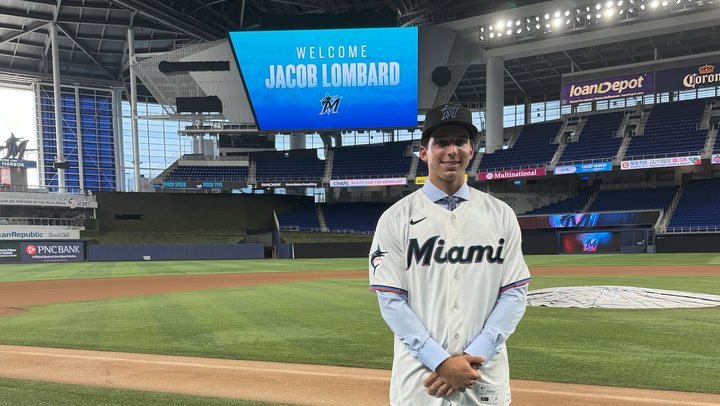 Fresh off inking his professional contract, first-round draft pick Jacob Lombard speaks with the media about his impressions of the Marlins organization, his past experience at loanDepot park and more.View the full article
 -
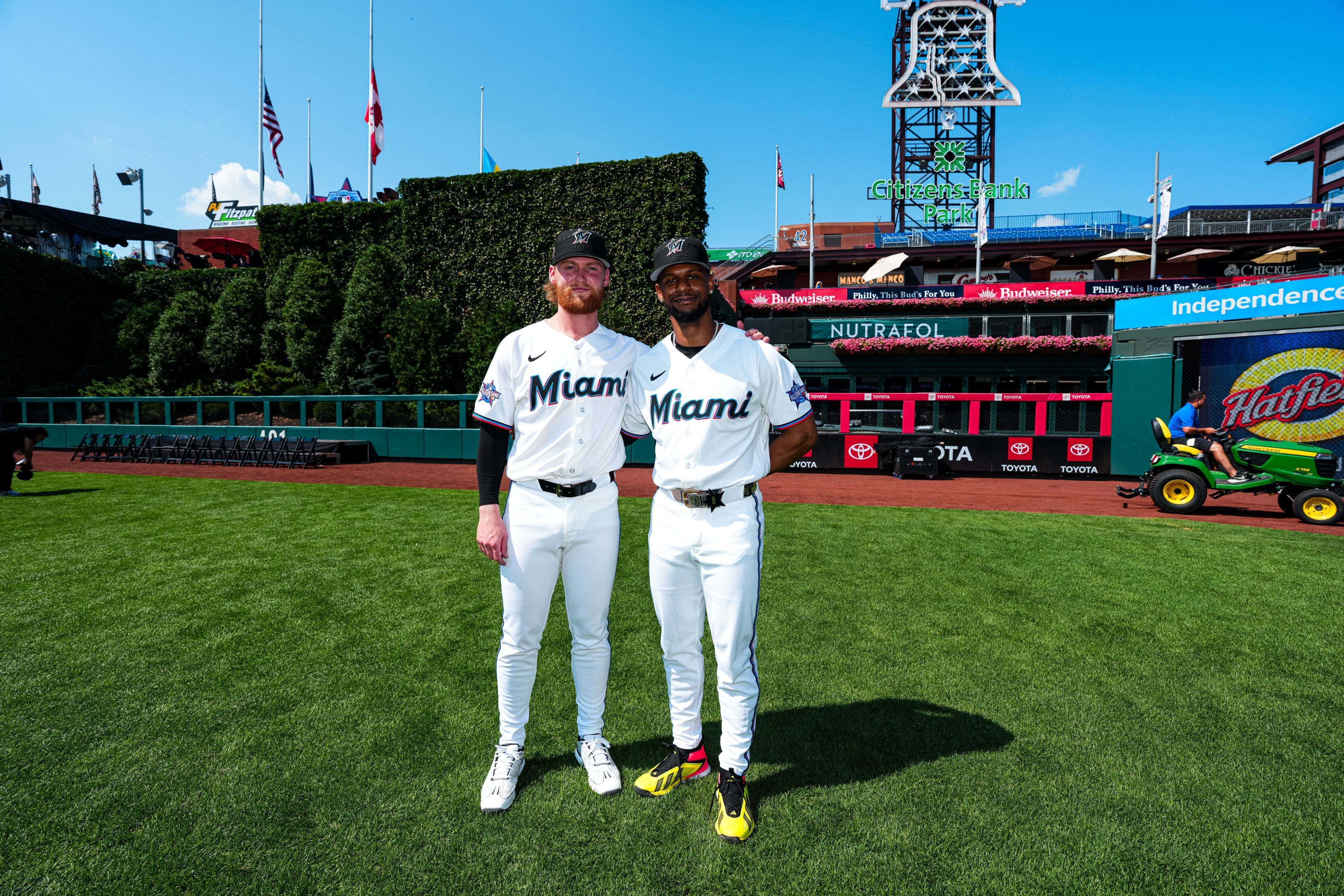 PHILADELPHIA, PA — It's always a hectic period every July from the MLB Draft through the MLB All-Star Game. Fish On First was in Philly to cover it all from a Miami Marlins perspective. Before the 2026 regular season resumes, below are the main Marlins takeaways from the festivities. Marlins get a steal with Lombard at 14 Gulliver Prep product Jacob Lombard entered the MLB Draft as the fifth-ranked draft prospect per MLB Pipeline and Baseball America. At the very least, he expected to go within the first 10 picks of the draft. Instead, Lombard was still on the board for the Marlins with the 14th overall pick and they took him. His signing was made official on Thursday morning. "It's an outcome that we really did not expect," said Marlins Vice President, Amateur Forecasting & Player Evaluation Initiatives Frankie Piliere. "Jacob Lombard is somebody that we've probably known about as one of the most, if not the most talented high school player in the class. As much upside as anybody could have expected on our team overall. Thrilled that the person we're welcoming into the organization is top notch and the player is top notch. I think we've got a room full of player development people that are so excited to work with him. It's just very rare to be able to acquire this type of talent." In his senior season, Lombard slashed .477/.607/.864/1.471 with 10 home runs and 25 RBI. He is most likely going to stick at shortstop and should be making his pro debut soon. Then in the eighth round, the Marlins made the stunning decision to select Stanford's Rintaro Sasaki. The famous Japanese slugger had already been a first-round pick in Nippon Professional Baseball and also could've gone back to Stanford with two more years of college eligibility. Reports are floating around that he'll sign with the Marlins, though that hasn't been finalized yet. In 2026, Sasaki slashed .262/.403/.549/.952 with 16 home runs, 47 RBI and a 106 wRC+. Milbrandt's short-lived Futures Game appearance Fish On First number six prospect Karson Milbrandt was the lone Marlins representative in the 2026 Futures Game. Milbrandt entered the game in the top of the sixth inning, throwing four pitches, inducing two quick fly balls. He was taken out right after that. Wen-Hui Pan entered the game for Milbrandt. "Looking around this locker room and there's a lot of guys that are really good that I'll also be facing for a while, so super cool to see and meet the guys and I'm excited," Milbrandt told Fish On First. Milbrandt started the 2026 season in Double-A Pensacola, where in nine starts, he posted a 1.34 ERA, 2.89 FIP, 13.40 K/9 and 3.29 BB/9. In six appearances (five starts) since being promoted to Triple-A Jacksonville, he's struggled a bit, with a 5.48 ERA, 4.80 FIP, 7.83 K/9 and 8.61 BB/9. "Not pitching as well as I'd like to, but lots of learning," Milbrandt said. "I feel like I am going to look back at this in a couple of years, or couple of months and going to be happy that I failed because I know how to adjust and how to attack these hitters. Lots of learning and I just need to keep on learning." Sheffield provides his thoughts on 2026 Marlins During batting practice before the All-Star Game itself, former Marlins great Gary Sheffield was in attendance. Sheffield was acquired during the inaugural 1993 season and represented Florida as an All-Star in '93 and '96. He was part of their 1997 World Series team and still holds franchise records for career on-base percentage (.426) and OPS. (.970). "I watch from time to time," Sheffield said of the 2026 Fish. "Lots of young great players over there that are turning the corner to get back to their winning ways. We set the tone when we were there and then the '98 team came in and did the same thing. Now, this is a new generation and it's their time. Once you start having success, you then start getting more confidence as a team and you'll see the difference in results." Regarding this year's Marlins All-Star rep Otto Lopez, Sheffield complimented him on his resilience. "When you can forget things that happen that don't go your way, you can process it, you gotta slow everything down and then you come back. He's probably sitting on top of the world mentally and that's the most important thing." Lopez finishes festivities on a high note Otto Lopez entered the All-Star Game as a defensive replacement in the top of the sixth inning. In the bottom of the seventh, Lopez faced Tampa Bay Rays starter Drew Rasmussen who struck him out swinging on six pitches. Lopez then bounced back in the bottom of the ninth, facing Rays closer Bryan Baker, with an opposite-field hit on the second pitch of the at-bat. "Coming off the bench, I was just trying to have a good at-bat, but struck out," Lopez told Fish On First following the game. "Something about me is that I never give up and I was hoping to have another at-bat to make up for it. I finally got a hit and I felt pretty good after that." The American League beat the NL by a final score of 4-0. The Marlins shortstop enters the second half of the season slashing .334/.368/.505/.874 with nine home runs, 45 RBI, 17 stolen bases and a 137 wRC+. Lopez leads MLB in batting average, hits and doubles. He is also tied for ninth in the NL in OPS, tied for third in triples, tied for eighth in extra-base hits and fourth in total bases. View the full article
 -
 Alex and Maddie sit down to bestow mid-season awards to the Red Sox. They discuss Willson Contreras’ Home Run Derby performance. Finally, they speculate whether the team’s somersault into the All-Star break affects the front office's mentality at the trade deadline. Listen on Apple Podcasts: https://podcasts.apple.com/us/podcast/the-talk-sox-podcast/id1783204104 Listen on Spotify: https://open.spotify.com/show/3qPrPXEngu0CxgTmlf0ynm Listen on iHeartRadio: https://www.iheart.com/podcast/263-the-talk-sox-podcast-244591331/ Listen on Pocket Casts: https://pca.st/4tmd121v Watch on YouTube: https://www.youtube.com/@talksox View the full article
 -
2026 Minnesota Twins MLB Draft Recap: 21 Thoughts on 21 Draftees
DiamondCentric posted an article in Twins Daily
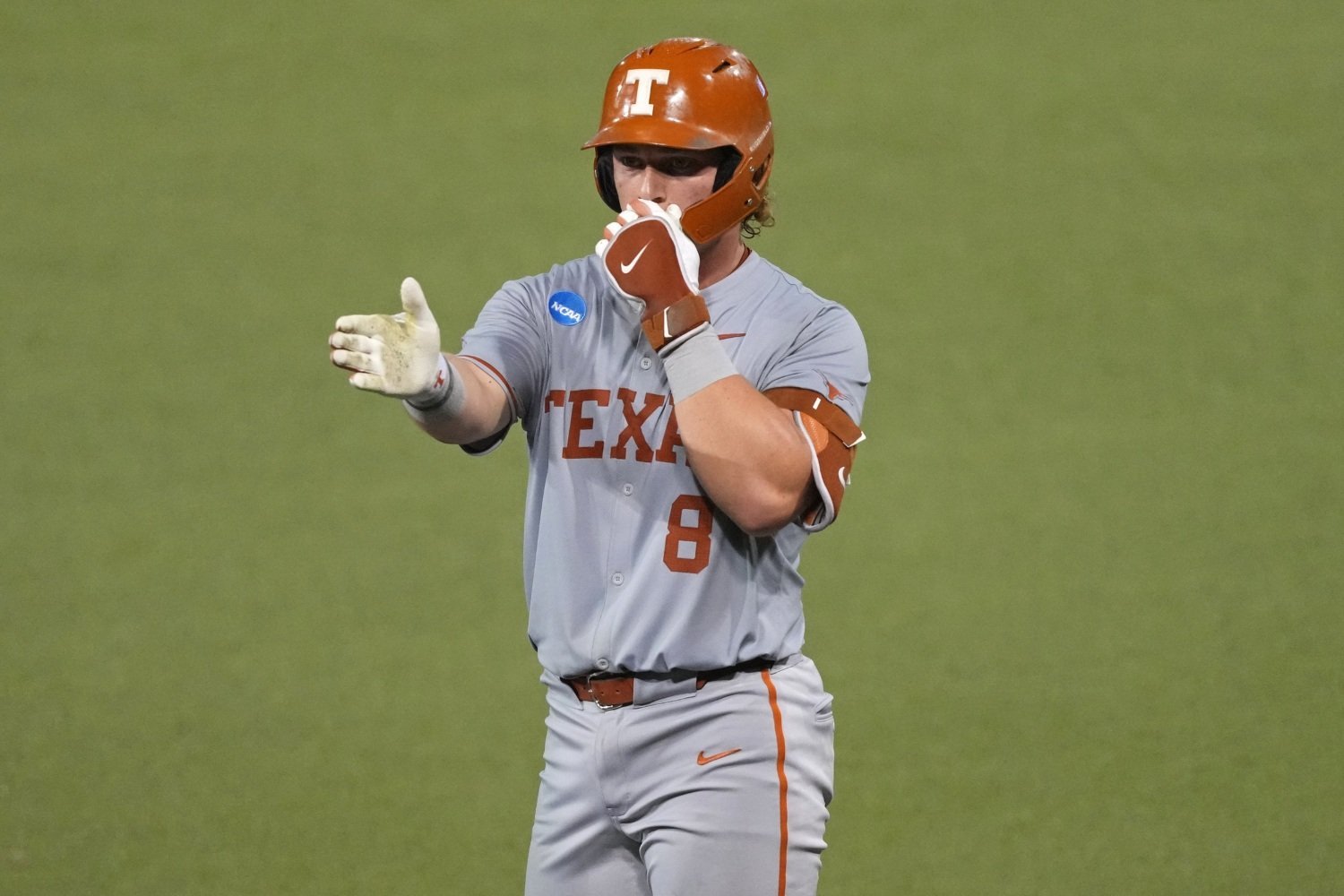 The Twins' 2026 draft is in the books. Let's recap it, with a thought for each of their 21 selections. Round 1: Pick 3, Vahn Lackey, C, Georgia Tech The Twins got their guy. Plus defensive catchers who put up a 170 wRC+ in the ACC are outlier prospects. In his draft recap, Eric Longenhagen said of Lackey’s strengths: "everything". He has a chance to solve a big problem for the Twins for at least five years. A special player. Round 2: Pick 43, Carson Tinney, C, Texas It seems like the Twins got scooped here, on Logan Reddemann and Chase Brunson. Tinney is an extremely fun prospect, though. He hit 22 bombs in the SEC while walking about 20% of the time and putting up a 154 wRC+. The catching improved, too. If he can be viable behind the plate, great, but he’s there to endanger the lives of fans in the second deck. Comp B: Pick 74, Brett Renfrow, RHP, Virginia Tech Labeling Renfrow as the ‘pitchability’ arm on day one doesn’t do justice to his stuff. It’s a ton of strikes (7.9 BB%), but the fastball sits 94-96 MPH, and the Twins will have a strong game plan for pitch design with his arsenal. He should profile as a very solid fourth or fifth starter. Round 3: Pick 79, Ethan Wachsmann, RHP, Grandview HS, CO This is elite arm talent. Wachsmann has been up to 101 MPH with a high-spin fastball. He spins his curve around 3,000 RPM and has a nascent changeup. Despite throwing a little erratically at the combine, there were plenty of strikes in high school. Said Sean Johnson of Wachsmann: "He’s the kind of pitcher you see going to Wake Forest and coming out on the other side as a first-round pick." The Twions will pay him an overslot bonus to prevent that from happening. Round 4: Pick 107, Tommy LaPour, RHP, TCU LaPour has a ton of arm talent, but he needs a little more touch and feel. The fastball is a solid shape and has been up to triple digits. He hasn’t struck out as many guys in college as his arm talent indicates he might, and he’ll need to up his strike rate (62% in 2026). LaPour dealt with a flexor strain; the Twins would not have been able to access him this late but for his injury. He has a chance to start. Round 5: Pick 139, Steele Murdock, RHP, UC San Diego Member of the 2026 MLB Draft All Names team, Murdock is one of four college arms the Twins took out of California. His fastball is up to 99 MPH with good shape. There are two distinct, quality breaking pitches, but there’s reliever risk due to erratic command. Round 6: Pick 168, Ethan Lay, RHP, Sacramento State How do you sign Ethan Wachsmann? Draft three seniors in the first 10 rounds. Lay is the first in that set, It’s a track record of performance (3.78 ERA in 88 innings) and strikes (4.3% walk rate in 2026). His curveball is his best pitch. It induced a 44% whiff rate in 2026. Round 7: Pick 197, Max Bayles, RHP, UC Santa Clara Bayles transitioned to a starting role after beginning his collegiate career as a reliever. He put up outrageously good strikeout numbers in 2026 (34.3%). It’s a good fastball shape that gets up to 95 MPH with two breaking pitches (that blur together, right now) and not enough strikes. Round 8: Pick 227, Thomas Burns, RHP, Texas The first pure reliever the Twins drafted, Burns has one of the best fastballs in the entire draft. It’s a triple-digit monster that averaged 21 inches of induced vertical break. He’s a prime candidate to reduce to 2-3 pitches and move on the fast track to the bullpen. Round 9: Pick 257, JT Raab, RHP, Georgetown Raab has an outlier fastball, too. It averaged almost 23 inches of IVB, and he throws it for strikes over 70% of the time (up to 95 MPH). The rest of his arsenal (change, slider, cutter) needs untangling, because it all looks the same on his plot. Raab will be a savings pick, as he’s a grad player. Round 10: Pick 287, Kole Klecker, RHP, Arizona State One final money-saving pick to pay for Wachsmann. Klecker pitched for ASU this year after three seasons at TCU. His fastball isn’t great, but he has two interesting, distinct breaking pitches in his slider and curveball. Both had whiff rates over 35% in 2026. Feel for spin is the carrying trait here. Round 11: Pick 317, Aidan Teel, OF, Mississippi St Teel is the younger brother of White Sox catcher Kyle Teel. He had a down 2026, but a .979 OPS as a sophomore gives you an idea of what he can do. At his best, it’s a contact-driven offensive profile with above-average supplementary tools. He profiles as a fourth outfielder. Round 12: Pick 347, Colby Turner, 2B, Michigan Colby Turner’s production at Michigan is hard to come by in this portion of the draft. He managed a 1.057 OPS with 14 home runs as a junior. There’s above-average bat-to-ball skills and above-average impact here. The bad news? An insane chase rate (roughly 37%) that will only be harder to correct against pro pitchers. Round 13: Pick 377, Isaiah Lane, SS, Hope International Is this an un-Twins-y pick? Lane played in the same high school infield as Marcelo Mayer before stints at Oklahoma and UC San Diego—then, he was kicked off the team for violating team rules. Lane managed a 154 wRC+ in 2025 with strong bat-to-ball skills and an excellent approach. He’ll be a wild card coming into the Twins system, after spending 2026 at New Hope. Round 14: Pick 407, Alec Bouchard, RHP, Wofford Bouchard is a slender college righty coming off an excellent 2026 season. He managed a 3.75 FIP, striking out 29% of hitters and walking 7.5% in 86 innings for Wofford. His fastball has been up to 94 MPH with a two-seamer, changeup and slurvy breaking ball in the mix. He’s a prime "might be good with a few more ticks on the stuff" candidate. Round 15: Pick 437, Charlie Schlovin, SS, Toledo Every player in the draft has a superpower. Schlovin’s is getting hit by pitches (65 in 112 games in his final two seasons at Toledo). He’s the grinder, org warrior-type player in this class (think Harry Genth). He managed a 152 wRC+ in a contact-driven offensive profile. Round 16: Pick 467, Connor Mattison, RHP, Kentucky A combo starter/reliever from Kentucky, Mattison throws from a much lower launch than most hurlers, generating good whiff rates from his changeup and two-seamer. An east-west movement profile with some interesting release traits. Round 17: Pick 497, Hideki Prather, C, Cal Some are saying that the Twins draft too many catchers. Prather is a barrel magnet. Like many Twins draftees, he has an excellent average exit velocity, without registering great top-end exit velocities. Prather slugged 14 home runs and managed a 123 wRC+ for Cal, despite chasing a ton. The defensive skill set is fringy, but he’s already an air-pull master. Round 18: Pick 527, Colter McAnelly, RHP, Utah McAnelly was poor in 2026, but he had a strong 2025 season as a starter at Utah (3.79 ERA, 14.5 K-BB%). He’s a bit light on velo, but it's an interesting fastball shape. McAnelly has an excellent curveball, a 3,000-RPM breaker that produced a 43% whiff rate in 2026. Round 19: Pick 557, PJ Moutzouridis, SS, Arizona State Moutzouridis is a well-rounded college player. A contact- and approach-driven D1 average bat, he’s a good defender at shortstop (and anywhere else on the infield you care to play him). Org guy. Round 20:, Pick 587, Michael Barnett, RHP, UCLA Barnett threw up to seven different pitches in college, but a lot of his shapes blend together. There’s not a ton of velocity, but he did get an outrageous amount of whiff and chase on his changeup, which is easily his best pitch. Likely lower-minors starter filler. View the full article
 -
Twins Took A Swing On Prep Power Arm Ethan Wachsmann
DiamondCentric posted an article in Twins Daily
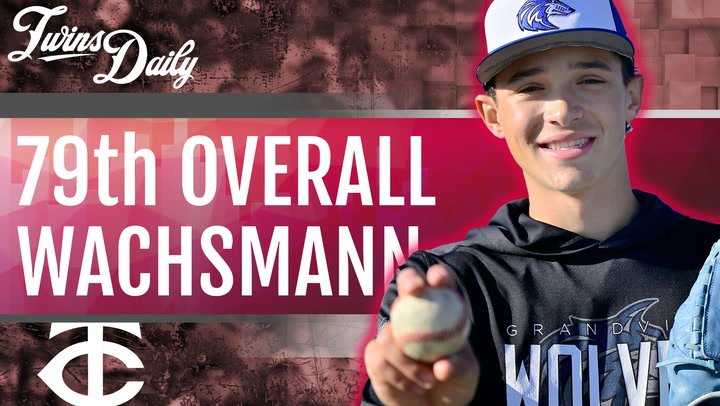 With the 79th pick in the 2026 MLB Draft, the Minnesota Twins selected right-handed pitcher Ethan Wachsmann out of Colorado. A big pitcher with a big arm, Wachsmann throws hard with developing command, and the club believes he can turn into something special. He's committed to Wake Forest and is the kind of arm who might grow into a first-rounder if he were to play college ball, making his signability the story to watch. Scouting director Sean Johnson said Wachsmann "really checks a lot of the boxes for a high school pitcher." View the full article
 -
6-foot-7 & Nasty: Cubs Grab Nebraska's Carson Jasa At 98
DiamondCentric posted an article in North Side Baseball
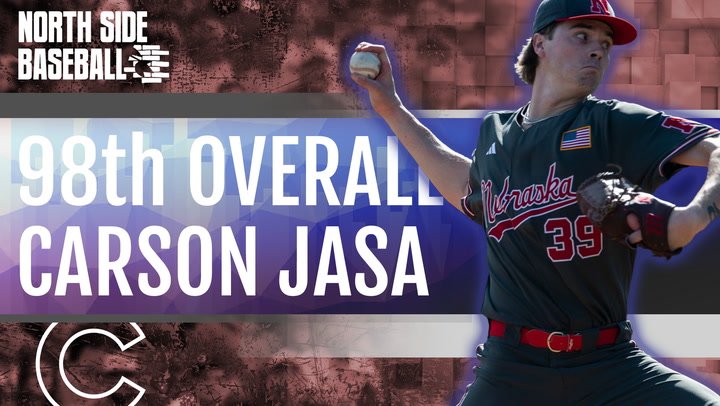 The Chicago Cubs selected 6'7" right-hander Carson Jasa out of the University of Nebraska with the 98th overall pick in the 2026 MLB Draft. A breakout star in the Big Ten, Jasa went 10-2 with a 3.59 ERA over 87.2 innings and struck out 117. He averages 96 mph and touches 98, but his best pitch is a curveball that opponents hit .054 against in 2026 (6-for-111 with 81 strikeouts). Slot value for the pick is $800,000. View the full article
 -
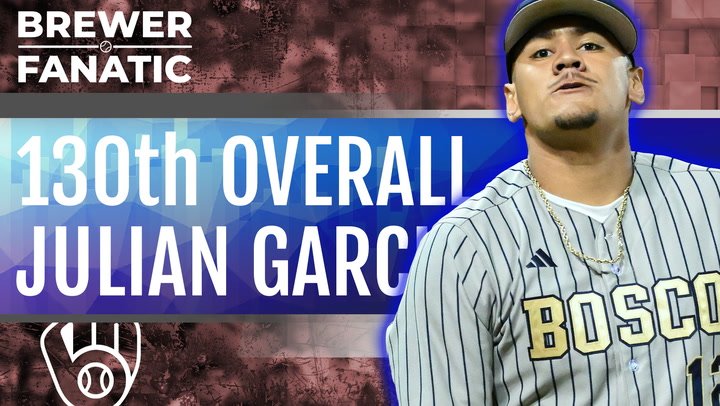 In the fourth round of the 2026 MLB Draft, the Milwaukee Brewers selected right-hander Julian Garcia of St. John Bosco High School in Bellflower, California, with the 130th overall pick. Garcia has advanced command of his fastball and curveball, plus the composure and bulldog mentality to work with it. Slot value for the selection is $585,700.View the full article
 -
 Sweet Lou and Ol Gregg are joined by Tom Froeming to talk prospects and the Twins' second-half outlook. Tom makes a NostaThomas prediction for each AL Central team while Lou and Gregg try to figure out which Old Friends could return to Twins Territory at the deadline. Thank you for following along with the All-Star Podnanza! Listen using Apple Podcasts: https://podcasts.apple.com/us/podcast/the-twins-off-daily-podcast/id1741266056 Listen using Spotify: https://open.spotify.com/show/4tb78XlurcPTYYSsARdbD7 Listen using iHeartRadio: https://www.iheart.com/podcast/263-the-twins-off-daily-podcas-167548600/ Listen using Pocket Casts: https://pca.st/nvclbt0w Watch on YouTube: https://www.youtube.com/@twinsdaily View the full article
 -
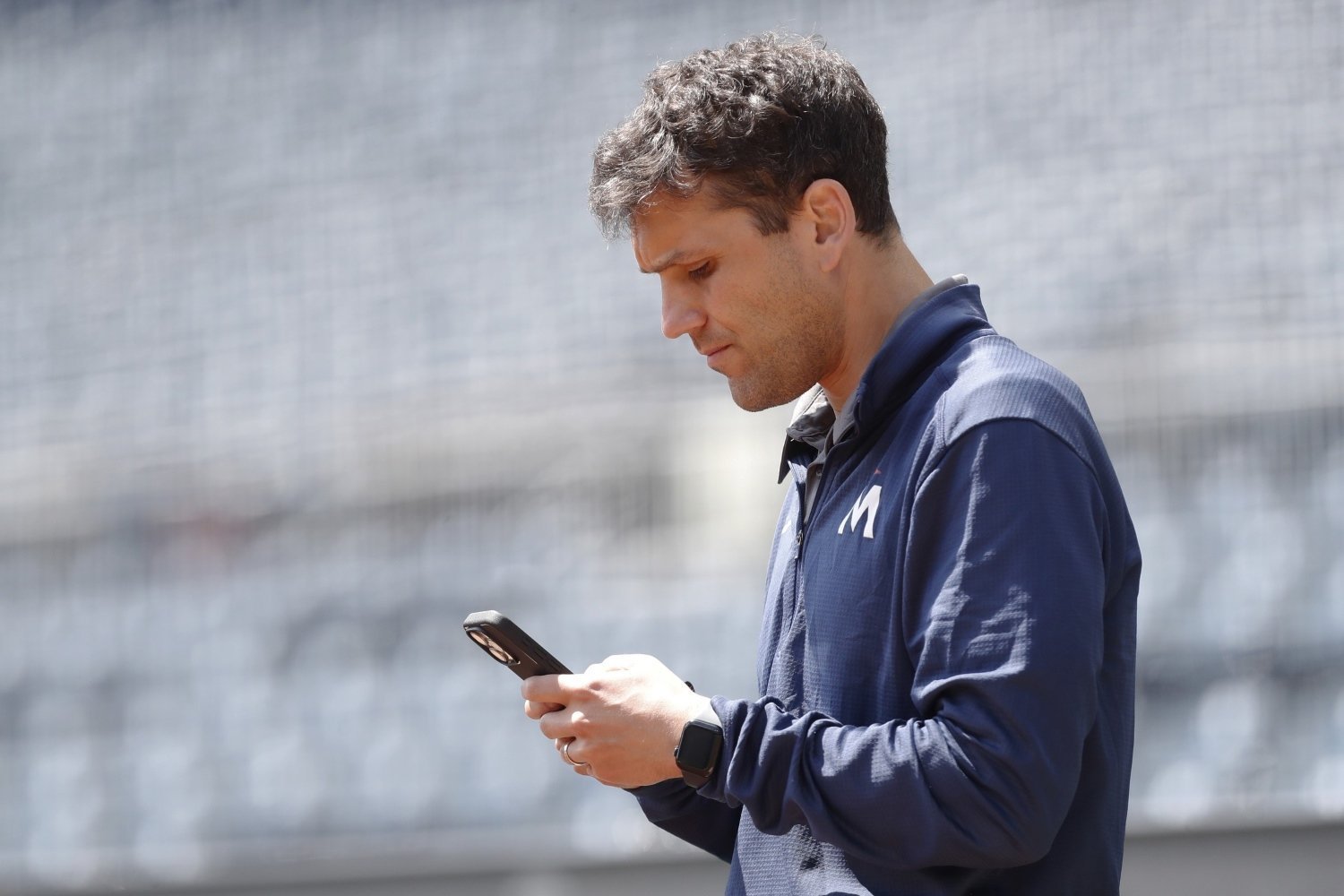 For years, the Minnesota Twins have insisted that building a roster is all about relationships. Apparently, they meant that more literally than anyone realized. With the 2026 MLB trade deadline just weeks away, sources inside the organization confirmed that general manager Jeremy Zoll and the Twins' front office have abandoned the traditional scouting process in favor of online dating apps, hoping to identify the perfect trade acquisitions through personality quizzes, compatibility algorithms, and carefully curated profile photos. The philosophy is simple. Why waste weeks calling rival general managers, when an app can tell you a reliever is "92% compatible with Target Field"? According to club officials, early returns have been "encouraging." "We're Looking Beyond Surface-Level Metrics" "We've already optimized swing decisions and pitch shapes," Zoll explained while absentmindedly swiping through profiles during a pregame media session. "The next competitive advantage is emotional compatibility. Sure, a guy might throw 99 mph, but does he enjoy cold weather? Does he appreciate Scandinavian furniture? Is he willing to answer texts within 24 hours? Those things matter." Zoll insisted the organization hasn't completely abandoned analytics. "We still look at strikeout rates," he said. "We just also care whether someone lists 'communication' as a love language." Scouting Reports Have Changed Members of Minnesota's scouting department admitted their reports have evolved considerably. Assistant general manager Daniel Adler described one potential trade target. "Elite fastball. Plus slider. Says he enjoys long walks through Costco and values honesty." A scout chimed in from behind Adler, "He answered 'Yes' to the prompt, 'Would you relocate for the right opportunity?' That's huge." Traditional scouting grades have reportedly been replaced. Instead of 20-80 scouting scales, reports now include: Emotional Availability: 65 Commitment Potential: 70 Ghosting Risk: 30 Ability to Thrive During Four Straight Games Against Cleveland: Elite Interest in Cabin Weekends: Plus One veteran evaluator admitted he wasn't sure how things got here. "I spent 30 years learning how to evaluate breaking balls," he sighed. "Yesterday, I spent four hours debating whether using too many fishing photos was a red flag." Building the Perfect Profile The Twins have also overhauled their own presentation. Rather than listing payroll flexibility or organizational depth, Minnesota's profile highlights: "Small-market team seeking controllable talent. Enjoys player development, defensive versatility, and occasional postseason appearances. Not into unnecessary drama. Looking for someone with multiple years of club control who isn't afraid of meaningful September baseball." Photos reportedly include: Byron Buxton smiling. Target Field at sunset. A pitcher hugging pitching coach Pete Maki. An untouched container of lefse. Zoll believes authenticity matters. "You can't catfish a starting pitcher," he said, seemingly forgetting Hall of Famer Jim Hunter. Players Are Receiving Match Notifications Several players expected to be available before the deadline admitted they were surprised. One National League reliever said his phone buzzed unexpectedly Tuesday morning. "I thought it was another fantasy football invite," he laughed. "Instead it said, 'The Minnesota Twins think you'd make a great late-inning option.'" He admitted he was intrigued. "They opened with, 'We noticed your spin efficiency.' That's honestly better than anything I've gotten before." An American League outfielder had mixed feelings. "They listed my expected slugging percentage before asking about my hobbies." He paused. "It felt weird... but also kind of flattering." The Ultimate Test Whether Minnesota actually lands its preferred trade targets remains to be seen. The deadline market is unpredictable, emotions run high, and sometimes, the best matches choose bigger markets with warmer weather and larger payrolls. Still, Zoll remains optimistic. "You miss 100 percent of the trades you don't swipe on." He glanced down at his phone. A notification appeared. "Congratulations! You've matched with a controllable high-leverage reliever." The room fell silent. Zoll smiled. "Now let's see if his general manager approves of the relationship." View the full article
 -
 After the Padres took two of three from the Blue Jays to head into the All-Star break, Randy Holt and Steve Drumwright take time to hand out midterm grades to all the players on the 26-man roster. There were a couple of A's handed out, but also a lot of C's, D's, and even a few F's. There is also a quick recap of last weekend's draft, where the Padres took big right-hander Coleman Borthwick in the first round. Then they took a quick look at the 10-game road trip to begin the second half that could determine whether A.J. Preller decides to buy or sell at the trade deadline. Listen on Apple Podcasts: https://podcasts.apple.com/us/podcast/padres-mission-podcast/id1896922834 Listen on Spotify: https://open.spotify.com/show/033xclmydmbLmEp0exYuYz Listen on iHeartRadio: https://www.iheart.com/podcast/1333-padres-mission-podcast-336930560 Watch on YouTube: https://www.youtube.com/@padresmission View the full article
 -
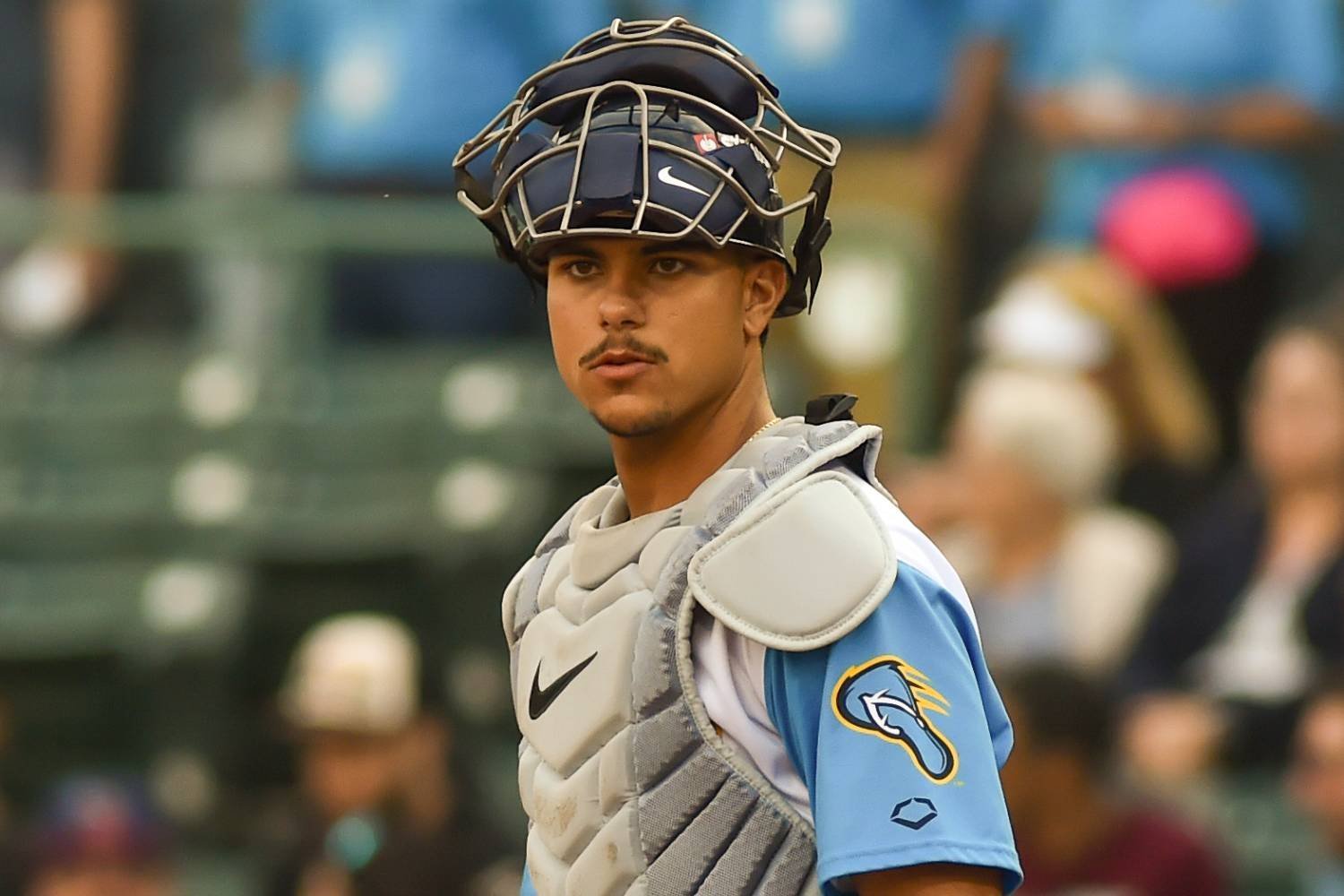 Editor's note: Padres Mission spoke with two industry experts about the state of the San Diego Padres' minor-league system, what they have done right, what they have done wrong and how they got to this state. This is the final of four articles on the subject. Part 1: Trades Have Depleted Majority of San Diego's Prospect Capital Part 2: Despite Farm Ranking, Padres Are Good At Acquiring Talent Part 3: How Industry Experts Rank San Diego's Internal Prospect Hierarchy One of the big questions the San Diego Padres face as the trade deadline approaches is this: If they do go after one of the big fish on the trade market, do they deal off the top of the deck and ship out catcher Ethan Salas? Two baseball analysts are of the opinion that president of baseball operations A.J. Preller would likely hold onto Salas, Padres Mission’s No. 1 prospect and a top-50 prospect in all of baseball. “I pretty much never say anyone's untouchable, right? Because if the Dodgers call and say, 'We'll give you Shohei Ohtani for Salas,' of course you're doing that,” said Keith Law, senior baseball writer at The Athletic who ranks prospects. “There's always a price that someone else can meet. However, I am not trading Salas unless it is for a world-changing trade.” Tarik Skubal would certainly be a world-changer. The two-time reigning AL Cy Young Award winner, who is a free agent at the end of the year, would also come at a steep price. What would that look like for the Padres? “I don't think they can go out and get a Tarik Skubal unless they're willing to trade Ethan Salas—that's just straight up not going to happen,” said Sam Dykstra, a senior reporter at MLB Pipeline. “You could put (pitchers) Miguel Mendez, Kruz Schoolcraft and Kash Mayfield into a package (without Salas) and that's still not going to be enough to get somebody like Skubal, even on a rental. Are they going to be aggressive enough with that? I don't know. I think it's telling that of all the trades they've made, Salas is the one who continues to stick around because I think they really, really like his defense behind the plate and they know that that's going to make him a possible regular at a premium position, and somebody you can dream on for a long time.” Law and Dykstra have been encouraged by what they have either seen or heard about Salas, a 20-year-old left-handed hitter, this season. Salas missed all but 10 games of 2025 with a stress reaction in his lower back. Combined with offensive struggles in a full season at High-A Fort Wayne in 2024, all of the major rankings dropped him significantly. But he is now back in the top half of top-100 lists now and began this week with a slash line of .284/.353/.422 with seven homers and 36 RBIs. He also has a career-high 14 stolen bases in addition to what made him the top player in the 2023 international free-agent class: elite defense. “Haven't seen him live (this year), so this is all second-hand, but this is much more the player we thought they had two, three years ago,” Law said. “He's stronger ... back injuries like that, they can wreck you both sides of the ball when you're a catcher. Everything is better. He's hitting the ball harder, his at-bats look better, he's receiving better. He just looks healthy again, too, and he looks 20, not 17 or 18. When I first saw him, he was still 16, and he carried himself like an older player, looked like an older player. Catching a B game with Joe Musgrove throwing and Salas had no issues doing that. ... I think the problem is everyone kind of overestimated, or just forgot, that he was so young, right? Overestimated where he was in terms of his skill level and now that's all catching up.” While there was enough hype around Salas after being the top international free agent of 2023, that only grew when he reported to the Low-A Lake Elsinore Storm as a 16-year-old and proceeded to put up a .267/.350/.487 slash line with 11 doubles, two triples, nine homers and 35 RBIs in 48 games. With the end of the season approaching, the Padres promoted Salas to High-A for nine games, then aggressively to the Double-A San Antonio Missions for another nine games. He struggled offensively at those two stops, going 12-for-70 with two doubles and six RBIs. His offensive woes continued in 2024 at Fort Wayne, where he began the year as a 17-year-old, producing a slash line of .206/.288/.311 with 27 doubles, two triples, four home runs and 53 RBIs in 113 games. Some feel that Salas was overly promoted and his offensive progress stunted as he was playing against 21- and 22-year-olds. The aggressive promotions are something you often hear with some Padres prospects. “I think it's tough to say if they've been too aggressive in the past,” Dykstra said. “Because you look back at Salas in 2024 and I think that was the classic example of a lot of people in the industry were throwing up their hands as to what exactly happened there. You can even go back a year before, when he was making Double-A in his first full season. A lot of that was to try to make a push for the playoffs in San Antonio. I don't think it was necessarily that they saw him instantly as a Double-A player, but they're like giving him a couple games there at the end of the year. And then he goes to Fort Wayne (in 2024) and really struggles all year and he made some mid-year adjustments. But I think that was a special case.” Said Law: “I think that was true with Salas and I think him getting hurt last year may have actually saved him a little bit in that it slowed him down. So now, he's at a level that's quite a bit more appropriate to his age. He's 20, Double-A, not a lot of experience there, but he is also super-talented and he's been holding his own. He was the one where I just always like, 'What are you doing?' I will say, I also did not love them changing Jackson Merrill's position and jumping him to the big leagues. If I remember correctly, [he had] little to no experience at Triple-A at that point. That's a lot and the kid handled it like he played the outfield well from Day 1, which I did not anticipate at all. I think I said quite the opposite. ... That's a case of, I would argue, them knowing their players better than I do.” A promotion to Triple-A in most organizations would seem obvious, but with the Padres’ affiliate in El Paso and a lot of hitter-friendly environments in the Pacific Coast League, it could be beneficial for Salas to remain at Double-A San Antonio and continue to thrive there with an eye on him being the Padres’ Opening Day catcher for 2027. “There are two arguments to not move him,” Law said. “One, you've moved him so fast, just give him a whole year, let him go around the league a couple times, let pitchers adjust to him and he has to adjust back. And second, talk to any player development guy who's got an affiliate in one of those PCL parks, they hate it. They hate sending guys there because hitters learn bad habits and pitchers start becoming afraid to pitch to contact, or are afraid to just throw certain pitches because between the altitude and the smaller ballparks, it just doesn't work. San Antonio, as I recall, has generally been neutral to a pitcher's park. Let him stay there, even if he's producing, rather than send him to El Paso, where I just don't think guys get a whole lot of value out of playing in that environment.” View the full article
 -
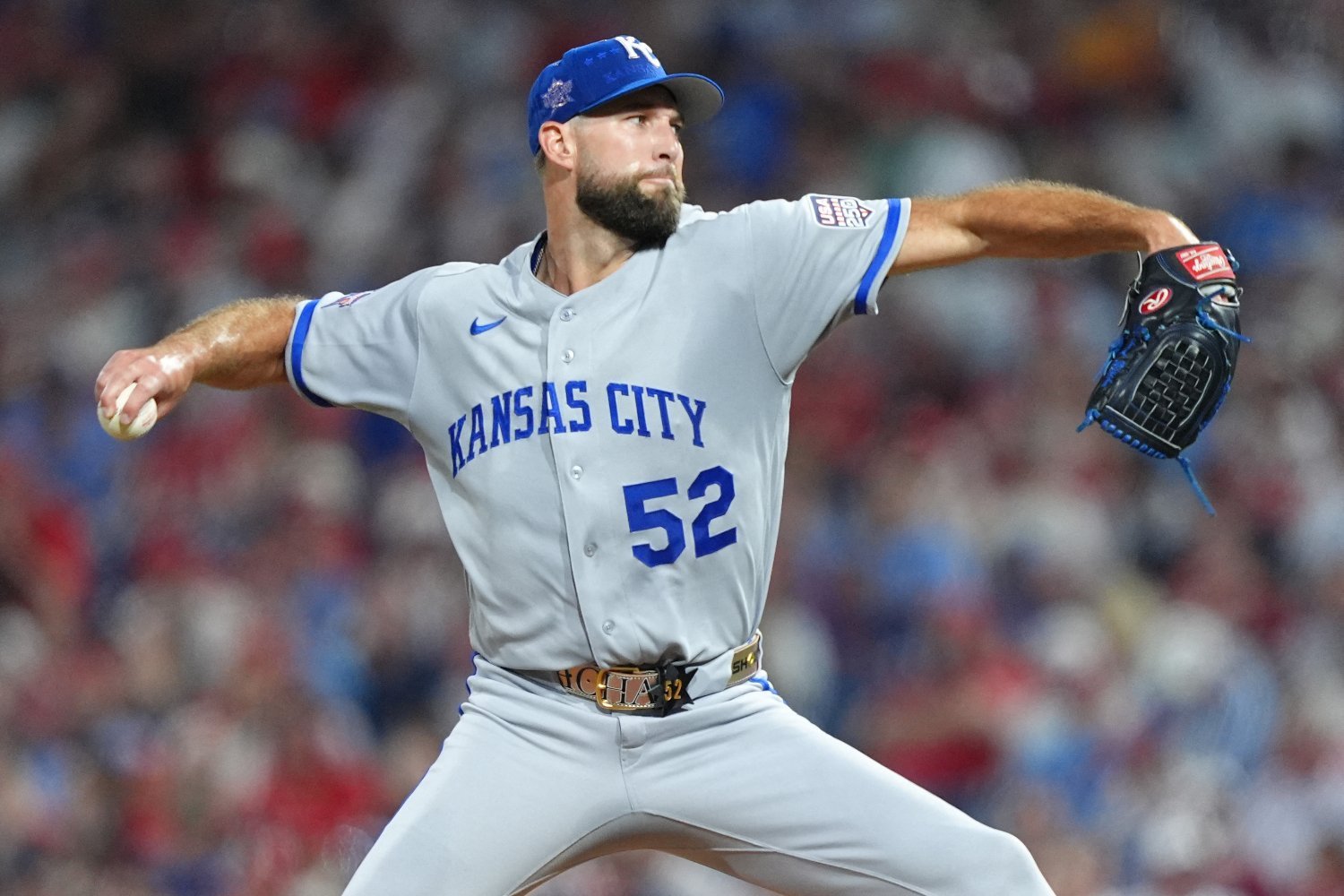 With the All-Star Game behind us, the next major event in baseball is the Trade Deadline on Monday, August 3rd. With a 38-59 record and 0.2% odds of making the postseason, the Royals need to take advantage of the trading period, hoping to acquire talent that can impact the organization at both the Major and Minor League levels. The Royals aren't necessarily "flush" with tradeable assets right now. Many of their best assets are hurt (Kyle Isbel, Kris Bubic, and Carlos Estevez), or have lost a tremendous amount of value since last season. However, that doesn't mean the Royals should or will sit on their hands over the next few weeks. In fact, it wouldn't be surprising if the Royals made some of those tough trade decisions, even if it meant losing some popular players. Thus, let's look at three possible trades for Kansas City by the August 3rd Trade Deadline and why those deals could make sense for the respective teams and the Royals. Pitcher Alex Lange to the Chicago Cubs for Infielder James Triantos The Cubs are desperate for relief help. While they rank 16th in bullpen ERA, they are anchored heavily by closer Jacob Webb. After that, it's shaky, especially with so many relievers on the IL (Daniel Palencia, Hunter Harvey, Hoby Milner) or struggling on the mound (Phil Maton and Drew Pomeranz). The North Siders need someone who can produce not just strikeouts, but swing-and-miss ability as well. Lange could be the right fit for this lackluster Cubs bullpen. Northside Baseball brought up Lange as a possibility, saying this about the 30-year-old Royals reliever: There are plenty of issues with Lange's profile. He gives up a lot of hard contact, and his control is spotty, even if it has improved since he took over the closer's job. However, Lange generates whiffs and throws heat. That's a profile that the Cubs want and can work with. (Remember Brad Keller last year?) Lange doesn't have any Minor League options, but he has two years of club control after this season. Furthermore, he's currently pretty cheap, making only $900K. Thus, the Cubs could not just get a strong reliever, but one with plenty of financial flexibility. That is valuable, even for a club as flush as the Cubs. An option the Royals could get back in return is Triantos, a 23-year-old infielder who's stuck in Triple-A. The former 2021 second-round pick is hitting well in Triple-A Iowa with a .311 average and 100 wRC+ in 355 plate appearances. He also has seven home runs and 18 stolen bases. Triantos doesn't offer much power or exit velocity on batted balls, but he doesn't whiff and doesn't strike out, two skills the Royals have really valued in hitters. Triantos is on the Cubs' 40-man roster. That said, he's currently blocked by Alex Bregman and Nico Hoerner, both of whom are on long-term deals. Thus, the 23-year-old infielder could be a fit in Kansas City, especially as a right-handed bat. At the very least, he could platoon with Michael Massey at second base for now, and perhaps get more playing time at other positions if he can hold his own at the plate. Furthermore, Triantos carries plenty of long-term value, especially with no service time on his clock just yet. Outfielder Lane Thomas to Atlanta for Pitchers Drue Hackenberg and Luis Vargas The Braves are at the top of the NL East and have been comfortably so for a while. However, the Phillies and Marlins have been closing in fast, with Philadelphia just two games behind and Miami four games behind at the All-Star Break. Thus, Atlanta needs to beef up their roster, especially on the hitting end. Michael Harris II has been great, but the rest of the outfield is a bit suspect. Mauricio Dubon and Eli White just aren't going to cut it, and while he's hurt, Mike Yastrzemski was inconsistent when he was healthy. Add that to questions regarding Ronald Acuna Jr. and his hamstring, and it makes sense that Atlanta could pursue Thomas to add some much-needed depth in the outfield. Thomas' 102 wRC+ is 20 points higher than White's and just 1 point lower than Dubon's. Furthermore, Thomas can play centerfield against lefties when Harris needs a night off. The former National and Guardian has thrived since getting everyday playing time, and his ability to not chase, launch the ball, and pull the ball in the air consistently should intrigue Atlanta. In exchange, the Royals would receive two talented but flawed pitchers currently in the Braves' farm system. The prize of the bunch would be Hackenberg, a 24-year-old former Virginia Tech pitcher. A second-round pick in the 2023 MLB Draft, Hackenberg has a 4.88 ERA, 1.42 WHIP, 4.17 FIP, and 14.4% K-BB% in five outings and 24 IP with Gwinnett. The stuff and extension haven't been great for Hackenberg, but he's generated a lot of whiffs, a lot of strikes, and a lot of weak contact, according to TJ Stats Statcast percentiles. Considering the injuries to the Royals' pitching staff, Hackenberg could come up right away and get a shot for some starts in August and September. If he does well, he could be a long-term option in the rotation, or at the very least a hybrid starter/reliever with long-term control. Vargas is still in Double-A, but he's the opposite of Hackenberg: the stuff is electric, and he generates strikes and whiffs in bunches. Unfortunately, he also walks hitters in bunches, which explains why he's still in Double-A despite being 24 years old and Rule 5 eligible. Still, the Royals need to take chances with pitchers with this profile and let them see what they can do, even if they don't have the "experience." Hackenberg and Vargas aren't high-caliber pitching prospects by any means. However, they could make an immediate impact on the Royals' pitching staff in both the short and long term, which is what a team wants to get in exchange for a rental like Thomas. Pitchers Michael Wacha and Lucas Erceg for Pitchers Tink Hence and Richard Fitts, 1B/3B Blaze Jordan, and OF Victor Scott II The Royals may not be willing to move Wacha, especially if they're hoping they can win in 2027. To be competitive again next year, they will need starting pitching at the top of the rotation, especially with Cole Ragans missing the start of next year and Seth Lugo and Noah Cameron experiencing regression in 2026. Hence, they may need to keep Wacha, simply because they don't have many dependable options for next year. That said, there have been reports that the Royals could trade Wacha if they were impressed and overwhelmed by a deal. This proposed deal could be the offer that could convince Kansas City to move forward, even if losing an All-Star like Wacha would be tough to stomach initially. In this deal, Kansas City would include reliever Lucas Erceg, who hasn't been good, but has been good in the past and has three years of club control after this year (as well as three Minor League options). However, including Erceg here would be important to maximize the Royals' return from the Cardinals. In exchange for Wacha and Erceg, the Royals would get two intriguing arms in Hence and Fitts, corner infielder Jordan, who's currently on the Major League squad in St. Louis, and outfielder Scott, a former heralded prospect who's struggled and is back in Memphis. Hence has long been a top pitching prospect who's moved slowly in the Cardinals system. He's had numerous injuries that have stunted his progression as a pitcher over the years. Hence started the year in extended Spring Training, and his numbers haven't been good in Memphis this year. In 20 IP, he has a 6.30 ERA, 1.75 WHIP, 6.49 FIP, and 3.1% K-BB%. However, the athleticism and the upside are still there, and a new change of scenery may do wonders for him, even if the Statcast percentiles in Triple-A haven't been encouraging. Some encouraging items: he's still generating whiffs (77th percentile whiff rate) and groundballs (62nd percentile GB%). I think with some more development and recovery, the stuff will come back, and he will be a much more effective pitcher in the Royals organization, even if his upside may be as a reliever at this point in his career. Speaking of injuries, Fitts is out for the remainder of the season. However, when he was healthy, he had a 1.76 ERA and 1.24 WHIP in 15.1 IP. The former Red Sox pitcher posted a 5.00 ERA over 45 IP with Boston last year, but he showed some progress in St. Louis after being reunited with former Red Sox president Chaim Bloom. Because of that connection, I imagine Bloom may be hesitant to give up Fitts. However, St. Louis will have to wait until Fitts' return in 2027, which they may not have the patience for, especially if they want to stay competitive in a tough NL Central division. Kansas City may be more willing to be patient, especially given the upside Fitts presents with his stuff and his Statcast percentiles. On the hitting side, the Royals would receive a couple of players who could make an impact on the lineup immediately. Scott has struggled at the MLB level, but he's a fast player who doesn't chase and could thrive if given more reps in center field, which likely will happen with Isbel's status questionable for the remainder of the year. The exit velocity isn't there, but maybe the Royals could utilize Scott like the Rays utilize Chandler Simpson. Lastly, Kansas City may have a tougher time utilizing Jordan, since the Royals seem set long-term with Maikel Garcia at third and Vinnie Pasquantino at first. Then again, the Royals may look to deal Vinnie this offseason, especially given his injury issues, and Garcia's status for the remainder of the year is also questionable. At the very least, Jordan could give them a much-needed bat with upside, and if he hits, they can figure out the defense later. Jordan's surface-level numbers aren't gaudy (.608 OPS in 83 PA), but he hits the ball hard, doesn't whiff, and doesn't strike out. The Royals need that profile in the lineup, and at 23 years old, there's plenty of long-term upside with Jordan. Jordan and Scott II haven't had the most stellar seasons with St. Louis in 2026. That said, maybe a move across the state down I-70 could rejuvenate their careers. As for Wacha, he gets to return to the organization that drafted him, which he would likely be more than willing to do. That would also reduce ill will between Wacha and the Royals, which could help the Royals in negotiations with potential free-agent pitchers this offseason. View the full article
 -
4 Stats That Matter for Cubs for the Rest of 2026
DiamondCentric posted an article in North Side Baseball
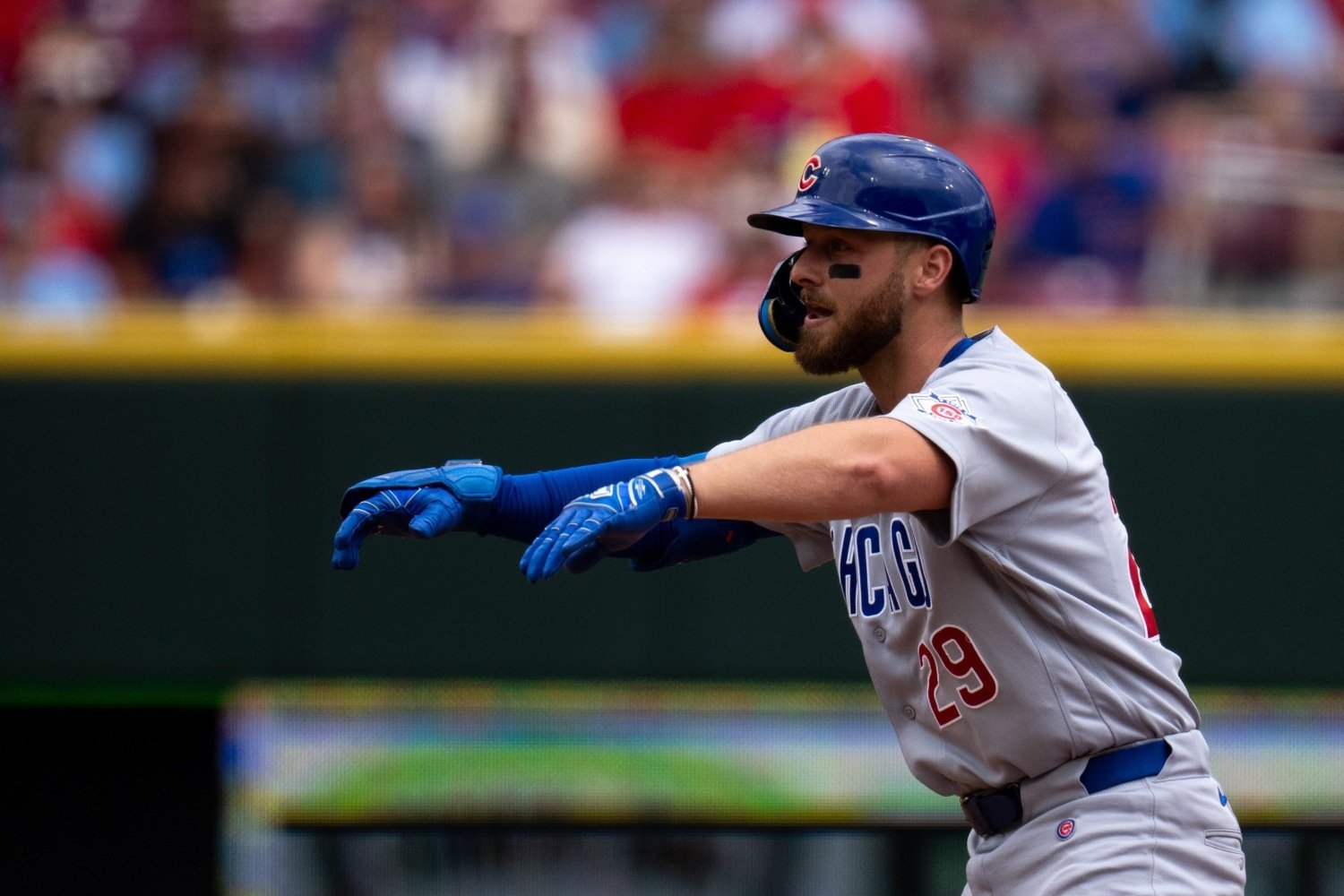 At the All-Star break, the Cubs are in a good spot in the race for the playoffs. Five games back in the division and in the first Wild Card spot, they have multiple paths and good odds to reach October. For this to sustain, though—and to overcome a disaster of a pitching situation—four hitters stand out as keys to the lineup. Here are four numbers that matter for those players, as we get back into action. 60 This is the number of games that Seiya Suzuki needs to play for the Cubs in the stretch run. This, of course, means avoiding any further injury; that’s the point. Suzuki tends to take a few weeks of ramp-up after injury—time the Cubs can ill afford this season. The lineup would struggle to sustain productivity and balance without Suzuki, especially with Matt Shaw on the shelf. Losing their best non-Pete Crow-Armstrong slugger even for 10 days, with his customary fortnight of struggle afterward, would give a month of lower production from a key bat. Suzuki needs to remain healthy for the Cubs. 25 This is the number of home runs Michael Busch needs to finish with, This year, the Cubs have only been successful during supernova performances by their bats. Nico Hoerner carried them early; Pete Crow-Armstrong and Dansby Swanson have done so lately. They'll need more of this going forward from someone. Busch hasn’t had his traditional five-homer week. In fact, he's only hit 11 all season. A home run per week needs to be his expectation, not the exception—and at some point, he needs to get hot. This isn’t to say Busch has been bad. His walks have been extremely valuable. But for the Cubs, a team that feeds on outlier performances, Busch needs to get that power back. .300 This is fairly obvious, but Nico Hoerner needs his luck to change. Yes, it is (at least partially) luck that has his batting average down in the .230s. He’s sporting the same contact metrics as always, but the BABIP has slid to .243. His previous four seasons? .300, .312, .297, .313. It’s just his batting average that has visibly slipped, especially when contrasted with how hot he was to start the season, Regression to the mean will help Hoerner contribute, and is surely what Cubs brass is banking on. There are genuine issues contributing to the struggles, too, though. We've discussed some of them recently. Even going by expected numbers, Hoerner has been struggling for a while now, going longer without a surge than he has in at least two years. He needs to turn it around coming out of the break. 22 Ian Happ has to reduce the strikeouts. Currently whiffing at a 31.5% rate is killing his batting average (.220). This is his highest whiff rate since 2018. In Happ's best seasons, his strikeout rate has averaged 22%. Aesthetically, it’s a bad look to whiff repeatedly instead of making contact, and for fans, it’s sticking in their memories. He isn’t a bad player, but if he can’t strike out less (well, even if he can, but you get my point), his time in Chicago could be running short. The Cubs are good, and these realistic outcomes would help put them firmly in the playoffs and contending for the division. What do you guys think? Who needs to step up for Chicago? View the full article
 -
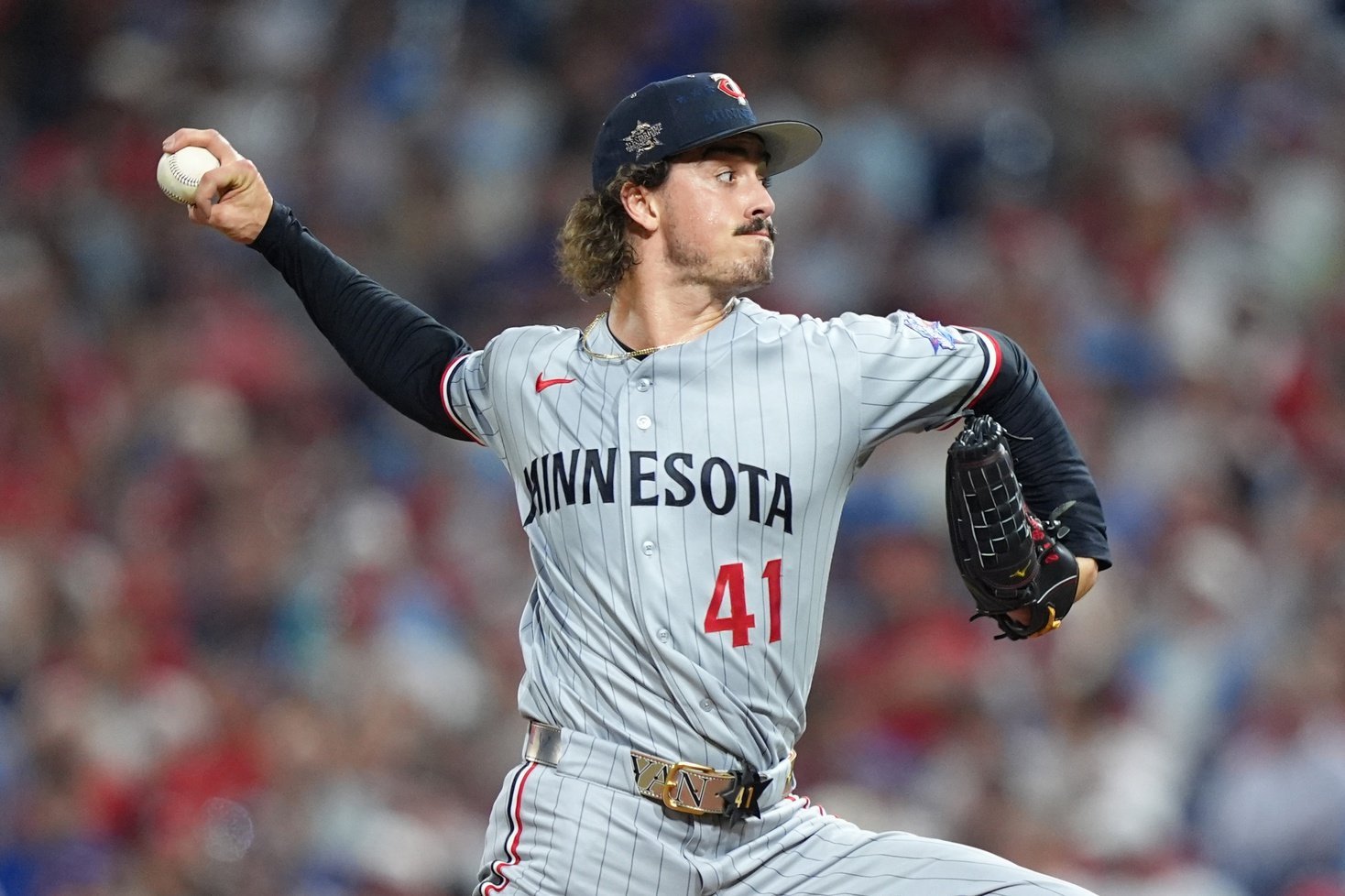 In some ways, this Twins season has gone perfectly according to expectation. They are on pace to finish just below .500, which is exactly where sites like FanGraphs projected. They are being led by the same two All-Stars from last year in Joe Ryan and Byron Buxton. The rotation's been pretty good, the bullpen's been pretty bad. None of this would have shocked me if you told me in March. But the way they've gotten here has been full of surprises: dramatic ups and downs, breakthrough offensive performances, elite production with runners in scoring position. It's a mercurial ballclub, and that makes it hard to predict what lies ahead in the final 10 weeks of the 2026 season. With that said, there are a few things coming that I do feel confident in asserting. Strap in, because I believe these five outcomes are inevitable: The offense's run-scoring productivity will slow down (unless hitters improve fundamentally). Minnesota's AL-leading run total (471) is largely a byproduct of their opportunistic nature: they are slashing .286/.368/.451 with RISP for an .820 OPS that is 80 points higher than their overall baseline. That's great, but it's not predictive. Regression is coming. Unless they can improve their overall hitting proficiency — and that's perfectly plausible if guys like Royce Lewis and Luke Keaschall can build on what they've been doing lately — the Twins are going to gravitate downward in run-scoring, possibly to a range reflecting their 20th-ranked .314 xwOBA. The Tigers will make a push. In recent years, Detroit has proven to be the streakiest of streaky teams. They were heavily favored to win the division, but got off to a stunningly bad start and have been buried near the bottom of the AL Central. History tells us they were bound to counteract their multi-month slump and they've already begun to do so, drawing back toward the pack with nine wins in their past 12 games. With the Tigers being non-factors in the first half, Cleveland and Chicago have battled for first place while hovering around .500, and the Twins are just a few games out. The idea of any of these teams being front-runners is premised on Detroit remaining dormant. I wouldn't bet on that. Whoever wins this division is going to have to make a stand against the Tigers. The Twins will do something weird at the trade deadline. Expect the unexpected. With three weeks to go, it's not clear whether the Twins will be buyers or sellers. They very well might blur the line. The front office is balancing the realities of an ongoing rebuild with the mandate to build faith among fans, and act on an undeniable opportunity in this watered-down American League. Ryan Jeffers and Josh Bell are impending free agents. Trevor Larnach is blossoming at a position of depth. Joe Ryan's trade value will never be higher. On the flip side, you've got a farm system that was freshly restocked by last year's firesale and a new draft class. I can't pretend to know what kind of shenanigans they've got in store. But I do feel confident in saying it'll be an eventful and surprising deadline. The pitching staff will be tested. Mick Abel and Anthony Banda aren't coming back. David Festa might not either. Connor Prielipp is already venturing into career-high workload territory. Bailey Ober is back from injury but throwing 87 MPH. Even Minnesota's All-Star ace Joe Ryan is looking to prove something by finishing a season without wearing down. In the bullpen, Derek Shelton has leaned hard on waiver pickup Yoendrys Gómez and rookie Andrew Morris to scrape by. Mike Paredes has delivered beyond any reasonable expectation thus far. These guys will be hard-pressed to maintain like this, and that's not a knock against them. The Twins pitching staff hasn't been great overall, allowing the seventh-most runs in baseball in the first half, but it has held together. We'll really see their resilience tested in the final months. Is help coming via trade? The Twins will play meaningful baseball in September. It doesn't take a whole lot of starry-eyed optimism to reach this conclusion. Yes, the Twins have a similar record to this time last year, but two things are different: the division and league are worse, and there's no chance they team is going to offload talent like last year, which led to playing 16 games below .500 in August and September. I do expect some of the slumbering giants in the AL to come alive down the stretch, including the Tigers as mentioned above. But Detroit has work to do, still nine games away from a winning record. The existence of three wild-card spots — last of which Minnesota is currently tied for — will make it hard to fall completely out of the running before the start of September, unless the the Twins fall off a cliff or multiple mid-range teams get extremely hot. Could happen, but not likely. What's likely is that the Twins will fulfill Tom Pohlad's preseason proclamation. "Let's judge the success of this year on wins and losses, on whether we're playing meaningful baseball in September," he said in late January. And even if that's a somewhat lukewarm definition of contention, the words that followed are what matter most: "If we're doing that, I think we're gonna be in position to grow payroll the following year, and the following year. That's what I hope we can start focusing on." I'm ready to focus on that. The Twins have begun to build something in the first half of this 2026 season and they arrived at the break playing great ball. Now the hard part begins: sustaining success, growing momentum, and turning this into something real. Can they do it? That part is anyone's guess. But at this point I wouldn't put it past them. View the full article
 -
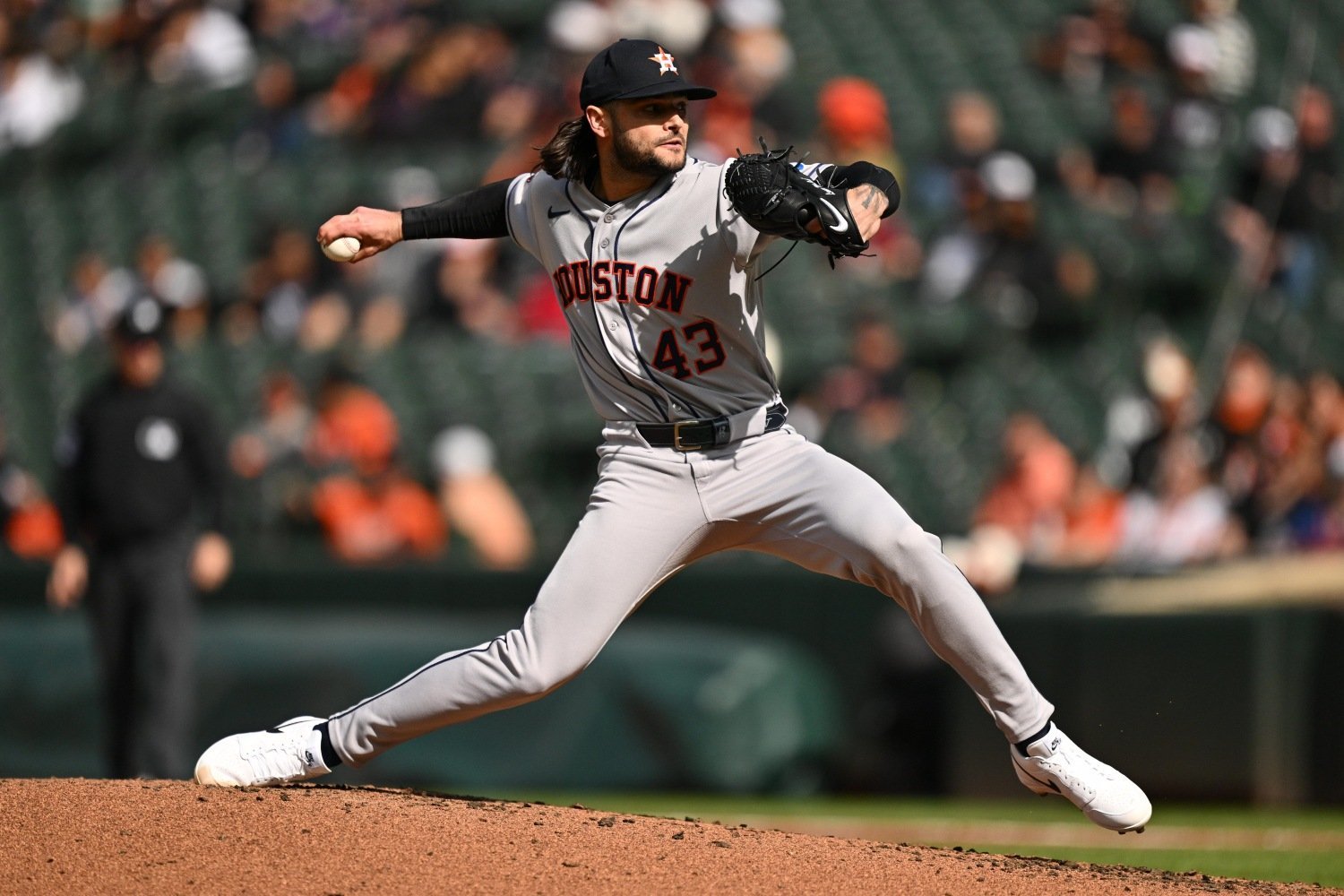 Lance McCullers Jr. probably won't become one of the Brewers’ best starters in the second half. The Astros wanted to dump most of his salary for a reason. McCullers is four years removed from performing like a viable big-league starter, and he’s currently working his way back from a shoulder injury. The Brewers have taken fliers on several injured pitchers in recent years, such as Trevor Rosenthal, Nestor Cortes, and Shelby Miller, and the returns have been next to nothing. There’s certainly room for the veteran to make an impact, though. Back-end starting pitching is a need for the Brewers, who recently lost Brandon Woodruff until at least September and just placed Kyle Harrison on the injured list with forearm tightness. The club seems to believe that the current version of McCullers, while diminished from his prime, can start games down the stretch with competitive enough results. In the late 2010s, when spinning the ball became all the rage in pitch design and usage, McCullers was among the poster children. From his debut in 2015 through 2022, he posted a 3.48 ERA, 3.35 FIP, and 3.73 SIERA while throwing high-spin breaking pitches 45.8% of the time, more than any other pitch group. His signature pitch was his knuckle curveball, which he famously threw for 24 straight pitches to close out Game 7 of the 2017 ALCS. Injuries began to strike near the end of that run. McCullers underwent Tommy John surgery after the 2018 season but remained productive after rehabbing. He then suffered a flexor strain during the 2021 postseason, and while he returned to make eight starts in 2022, he ultimately required surgery that sidelined him for the next two seasons. He hasn’t been the same since returning. In 94 ⅔ innings over the last two seasons, a sample interrupted by four more trips to the injured list, McCullers has pitched to a 6.65 ERA, 5.48 FIP, and 4.73 SIERA. Never a great control pitcher because of his big breaking ball, he's seen his walk rate balloon to 13.7% during that stretch. Hitters are seeing different stuff from this version of McCullers. His sinker used to sit around 94 MPH, but this year it’s averaged 91.3. He’s no longer a spin-first pitcher, either. After dabbling with a cutter for a few seasons, McCullers has made it one of his primary pitches for the first time this year. He’s now throwing fastballs 54% of the time, tied with his rookie campaign for the highest usage of his career. That change suggests McCullers is feeling things out without much success. That also applies to his mechanics. Overall, he seems to be searching for what kind of pitcher he should be at this stage of his career, and he hasn’t yet found a clear answer. After that original flexor injury, McCullers did not make his 2022 debut until August. He returned with a lower arm slot, a change that stuck through his two-year absence after surgery. This year, his slot was back to where it was before the injury, but it has dropped again during his rehab outings in Triple-A this month, which isn’t reflected on the chart below. McCullers has typically worked from the first-base side of the rubber, where his crossfire delivery can be most on-line to home plate, and the arm-side run of his sinker plays up best. But in one outing last July, he relocated to the middle of the rubber. After that, he switched back. With an in-season acquisition, the Brewers don’t have time to make wholesale changes, but helping McCullers establish an identity on the mound must be the starting point. Can he be a spin-heavy guy again, or is the fastball-centric approach the new way forward? Should he attack the strike zone aggressively or work the corners? How does his body move best after myriad injuries? On the arsenal front, there’s still plenty to like about his curveball, which has induced a 48.1% whiff rate and a .291 xwOBA. However, McCullers has lost his feel for locating it competitively, throwing nearly a quarter of his curveballs in what Statcast defines as the waste zone. Those are pitches so far outside the strike zone that they rarely force a hitter to swing, which makes a nasty pitch far less useful. The Brewers could try to make the curveball the centerpiece of McCullers’s arsenal again, but given their usual approach and where McCullers is right now, they’re more likely to emphasize his fastballs. Pitching coaches Chris Hook and Jim Henderson want starters to get early swings that miss barrels, which usually means sequencing sinkers, cutters, and four-seamers within the strike zone. McCullers now has that three-fastball mix, and his sinker and cutter are the only two pitches in his arsenal without a negative run value this season. Throwing the latter more often might be the key to reducing his walks while playing the east-west game to both sides of the plate. Pitch models grade his cutter as the best among his fastballs, and it has posted a +1 run value and 20% whiff rate this year. However, while McCullers has used the pitch as his leading fastball against left-handed batters, he’s thrown it more sparingly against right-handers. For comparison, Brandon Sproat, who has very similar pitch shapes from nearly the same arm slot, has used his cutter at nearly equal rates against both sides. McCullers clearly is not what he once was, but he might also have more potential for a decent second act than those numbers suggest. His 4.55 xERA, calculated by Statcast based on what usually happens on the kind of contact a pitcher allows, is passable. According to Baseball Prospectus, his 4.43 DRA is slightly better than the league average. McCullers has still generated whiffs on 27.3% of swings and posted a 44.8% ground ball rate, both of which are above average. The plan to be serviceable again will be somewhat tailored to McCullers as an individual, but expect the Brewers to turn to some familiar tricks. He’ll probably stay on the first-base side of the rubber. There might be small changes to his starting position and tempo to help get his arm on time and his torso more direct to the plate at foot strike. Attacking the zone with sinkers and cutters will probably be the playbook in most outings, with the expectation that an athletic defense will help him out on balls in play. It’s best to keep expectations measured. McCullers is a struggling rental pitcher, and he may not even be the main get of this deal for the Brewers. Left-hander Colton Gordon comes with five years of team control and might be more impactful when all is said and done. That said, few clubs are better than Milwaukee at turning struggling starters into serviceable arms for a brief stretch, including starters with underwhelming fastballs like McCullers. Perhaps he’ll follow in the footsteps of Colin Rea, Bryse Wilson, and Aaron Civale, among others. View the full article
 -
Why the 2026 Blue Jays Are Playing for More Than a Playoff Spot
DiamondCentric posted an article in Jays Centre
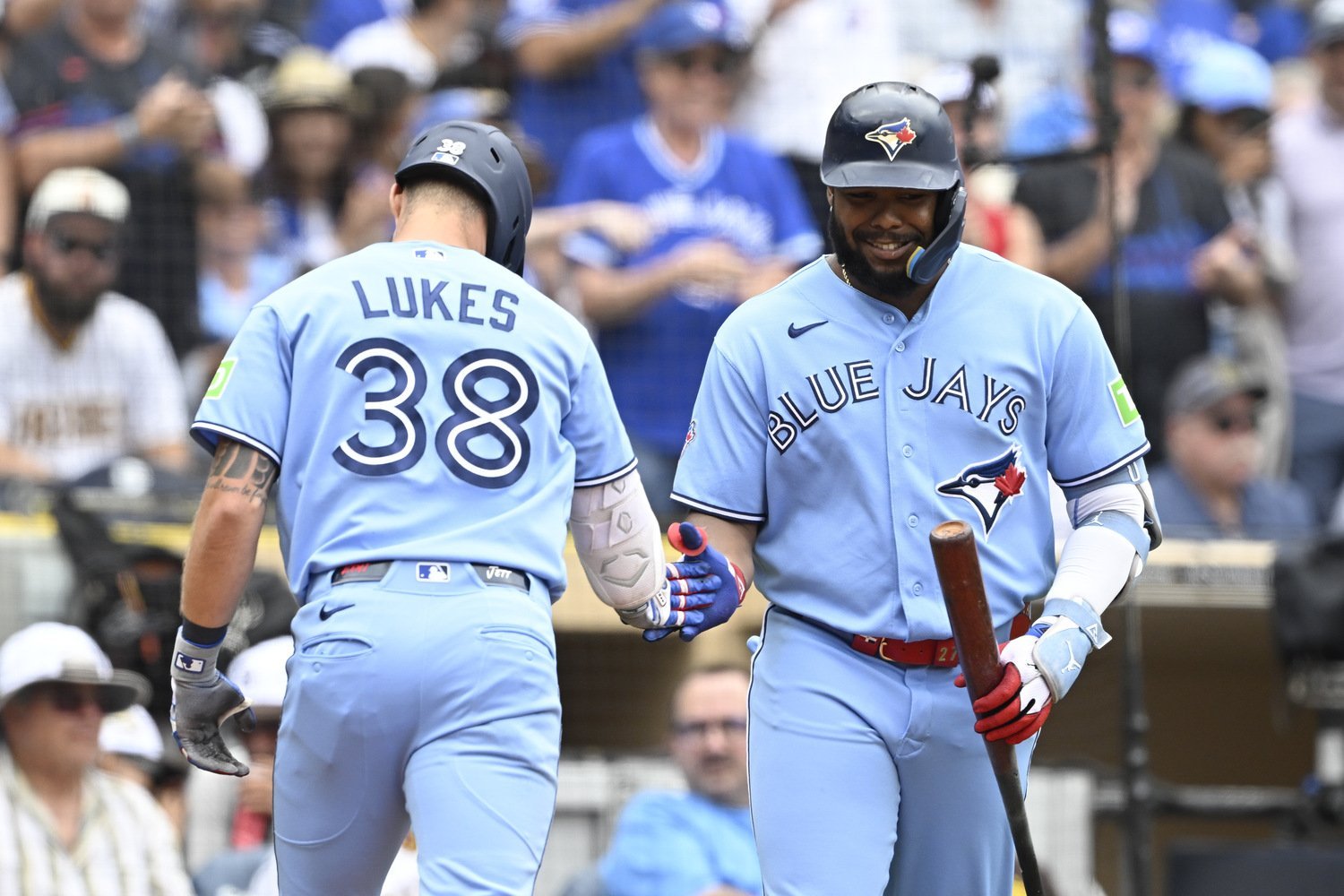 As the Jays prepare to start the second half of the season, with a record of 45-51, they sit last in the American League East and looking up at multiple teams in both the division and Wild Card race. The American League has been remarkably average in 2026. Outside of a handful of clubs, nobody has established themselves as a true powerhouse. Toronto's 2.5-game deficit in the Wild Card race is hardly overwhelming with more than two months remaining in the season. What remains unclear is whether this roster possesses enough consistency to take advantage of it. The answer to that question may determine more than whether Toronto reaches October. It may determine whether this group gets another opportunity to write a different ending before the next version of the Blue Jays takes shape. In recent memory, the Blue Jays were building around a foundation of Vladimir Guerrero Jr. and Bo Bichette. As the roster evolved, veterans such as George Springer, Kevin Gausman, and Daulton Varsho, along with others, became key supporting pieces around that foundation. The expectation was that this group would deliver sustained contention. Now, there is reason to wonder whether that window of contention is beginning to shift toward a younger group of players. This season increasingly feels like a crossroads. Maybe not for a full rebuild but substantial change. A team built to contend should not spend July searching for answers. The statistics suggest Toronto's record is not simply the result of bad luck. Through 96 games, the club has scored 392 runs while allowing 427. Their minus-35 run differential reflects a team whose underlying performance largely matches its position in the standings. The offense has struggled to generate consistent hard contact. Big innings have been rare. Run production has literally been hit or miss. As a result, the pitching staff has shouldered a heavy burden through 96 games. The Jays have been slightly better offensively in the last week or so TAD ("time after dragon"), but is it just a blip? More than any other player, Guerrero embodies what's gone wrong in the first half. Franchise players are not supposed to carry every roster flaw, but instead elevate good teams into dangerous ones. Through 387 plate appearances, he owns a .262 batting average, a .346 on-base percentage and six home runs. Baseball Savant says his expected batting average sits at .287 while his expected slugging percentage is .406, indicating his actual production could be better but not approaching superstar output. If the Jays are going to make a second-half run, it begins with Guerrero rediscovering the offensive dominance that once made him an MVP candidate. While Guerrero has left observers wanting more, Kazuma Okamoto has delivered exactly what Toronto envisioned. His 22 home runs lead the team. His barrel rate is exceptional. It is double the team average. The strikeouts can occasionally be frustrating, but they're easily forgotten when he makes contact. Without him, Toronto's offensive shortcomings would be significantly more pronounced. Unfortunately, several veteran contributors have moved in the opposite direction. Springer remains a leader in the clubhouse, but the production has not reflected his reputation. Through 293 plate appearances, he owns a .218 batting average, .303 on-base percentage and .374 slugging percentage. Varsho has experienced a similar season. His defensive value is still high, but there have been lapses. At the plate, the production has been average. Seven home runs and a .240/.308/.387 slash line doesn’t make a great case for a big contract. Varsho and Springer have helped define this current era of Blue Jays baseball. If the team chooses a different direction this winter, their underwhelming seasons would be a disappointing end to their tenures. One of the most encouraging developments this season has been the emergence of players who were never expected to play such prominent offensive roles. Ernie Clement continues to be one of the most remarkable stories on the roster, perhaps proving 2025 was no fluke. His .296 batting average leads the club's regulars while his 106 hits rank among the league's best totals. Baseball Savant's expected metrics suggest that success might not continue because of modest quality-of-contact indicators. Nathan Lukes deserves mention as well. His .288 batting average and .343 on-base percentage have provided a measure of stability in a lineup that has struggled to find consistency. Lukes is part of a busy outfield that hasn’t really stabilized. Every night, it seems there are changes. With Myles Straw, Jonatan Clase, Jesús Sánchez, Davis Schneider and Yohendrick Piñango having seen time in the outfield this season, there is no lack of options. Don’t forget that Addison Barger and Anthony Santander might make an appearance in the second half. The Jays need to identify which options, or if any, deserve everyday roles moving forward. Sánchez, for instance, has a .274 batting average, .437 slugging percentage and 10.8 percent barrel rate. Those are worthy of starting status, yet his defense is lacking, and his splits aren’t great (he hits .148 against lefties). There are signs that the next version of the Blue Jays may already be arriving. Fans have gotten to see a steady stream of position players and pitchers suit up for the team so far this season, and some have contributed, albeit in small sample sizes. As frustrating as the offense has been, the pitching staff deserves considerably more credit than it has received. The Blue Jays have accumulated 849 strikeouts in 849.2 innings. Only a handful of American League clubs have generated strikeout totals at a comparable rate. Time and again, Toronto's pitchers have kept games competitive only to receive minimal offensive support. Dylan Cease has answered the bell. He owns a 2.56 ERA and 148 strikeouts in 98.1 innings. Even if the 2026 season eventually falls short of expectations, Toronto can enter future seasons knowing it possesses an ace capable of leading a playoff rotation. Gausman has been a more nuanced case. The veteran right-hander continues to consume innings and shoulder responsibility. His 112.1 innings lead the club, but his 4.33 ERA reflects a season filled with both positive stretches and frustrating setbacks. With free agency approaching, the remainder of the season will dictate whether he returns next season. The bullpen, meanwhile, has quietly become a strength. Mason Fluharty and Braydon Fisher have absorbed demanding workloads throughout the year. Neither has been perfect, but both have given manager John Schneider valuable innings. Louis Varland has emerged as one of the biggest surprises in the American League. His 1.10 ERA and 19 saves have transformed him into a legitimate ninth-inning weapon. Tyler Rogers has supplied equally important support with a 1.65 ERA across 45 appearances. Even Jeff Hoffman deserves more credit than his ERA and four blown saves suggest. He has 63 strikeouts in 41.1 innings. What makes the next few weeks so compelling is that Toronto's future may be clearer than its present. The Blue Jays are not staring down a full rebuild. In many ways, they are standing between two eras. The first, led by familiar veterans who helped keep the club competitive. The second, built around Guerrero, Cease, Okamoto and a younger supporting cast that is already beginning to emerge. In a world of analytics, and devoid of sentimentality, it is hard to imagine Springer, Max Scherzer or Patrick Corbin returning in 2027. It is debatable whether Yimi García, Gausman, Shane Bieber and Varsho will be brought back as well. However, much of the roster will be back. The infield will be identical. The outfield will have, at least, some familiar faces. The starting pitching will have a solid foundation with Cease, Trey Yesavage and José Berríos. Alejandro Kirk remains behind the plate with Brandon Valenzuela positioned as a logical backup. The bullpen is expected to return largely unchanged. The coming weeks will help determine how aggressively the front office changes that outlook. If the Blue Jays can make a run, general manager Ross Atkins may choose to add reinforcements at the deadline. If they stumble, moving expiring assets makes sense. The focus would be on ensuring the next competitive cycle arrives as smoothly as possible. The next month will not just be about chasing a Wild Card berth. It will be about determining whether one era has another postseason run left in it before the next era begins. When the season started, many envisioned a mini-dynasty. The 2026 Blue Jays have certainly fallen short of expectations. Perhaps the most important question facing the Blue Jays isn't whether they can sneak into October. It is whether 2026 represents the end of a disappointing season or the beginning of the franchise's next competitive chapter. Springer, Gausman, Varsho, Scherzer and Bieber may be playing their final months in Toronto. Despite sitting in last place in the American League East, the Blue Jays remain within striking distance of a playoff spot. This version of the Blue Jays may not be a dynasty. It may not even be particularly good, but sometimes where there is hope, there is a way. The numbers say there’s little magic in the tank, but often magic comes when you least expect it. It might also come next season. View the full article
 -
 In the midst of his ninth season leading the Miami Marlins, Bruce Sherman makes his long awaited Fish Unfiltered debut. The franchise's chairman, principal owner & control person joins Isaac Azout and Kevin Barral to discuss his business successes and remaining goals, the Marlins' 2026 performance on the field, his trust in Peter Bendix, his admiration for Sandy Alcantara and his message to fans who aren't yet convinced that the Fish can contend with MLB's lowest payroll. You can find Fish Unfiltered and Fish On First LIVE on the Fish On First YouTube channel, Apple Podcasts, Spotify or wherever else you get your pods. Sherman is fast approaching his ninth anniversary of becoming the Marlins' control person. The team has twice qualified for the MLB postseason during that span (2020 and 2023), and coming out of the All-Star break, they hold the National League's third wild-card spot. However, the Marlins rank 27th in overall winning percentage, ahead of only the Chicago White Sox, Kansas City Royals and Colorado Rockies. Player payroll has decreased under Sherman's watch, especially when adjusting for inflation. Miami's projected payroll of $75 million this season is easily the league's lowest, per Roster Resource. Despite that, Sherman insists that the franchise is in excellent health financially. To that end, his ownership group spent $1.2 billion to acquire the Marlins in 2017, but a recent transaction involving new minority owners was reportedly based on an updated $1.55 billion valuation. Also, he attributes spending in the areas of technology and player development to the uptick in winning that the Fish have enjoyed dating back to last summer. View the full article
 -
Mikey Romero Has Found the Mentality That Will Earn Him His MLB Debut
DiamondCentric posted an article in Talk Sox
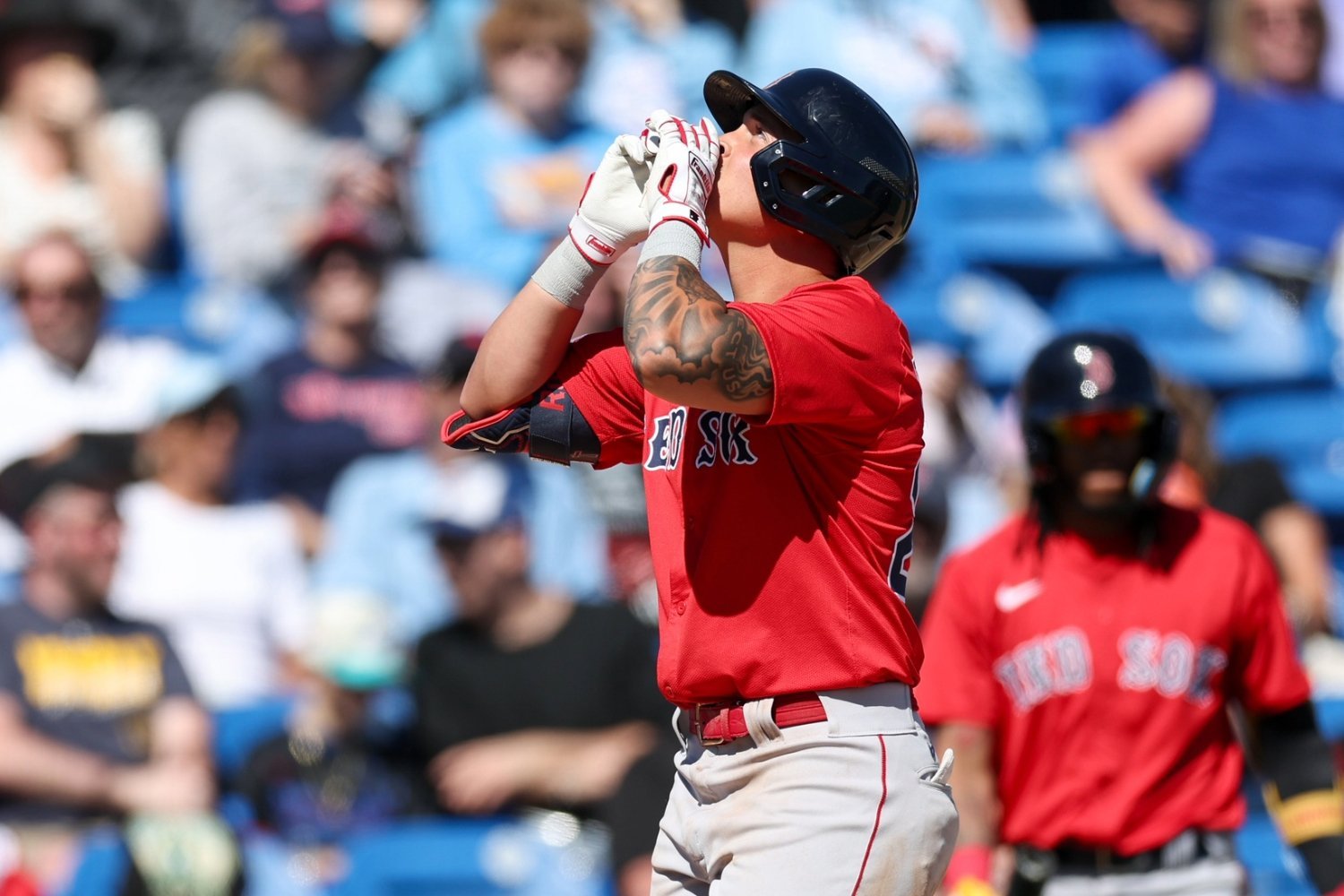 “There were a couple adjustments that we made just [with] my hands.” For Mikey Romero, the 2026 season has been a roller coaster of ups and downs, as he enters the All-Star break hitting .239/.302/.379 in 71 games. Despite that, Romero had one of the strongest months of his professional career during June, when he slashed .300/.375/.571 with five home runs and 12 RBIs, showcasing the offensive talent that the Boston Red Sox have long been betting on. That torrid run continued into July, where he would begin the month 4-for-13 before popping out a rib while attempting to do a weighted squat. Despite the team managing to pop the rib back into place, Romero would miss five games due to overall soreness and the team playing it safe. His first game back resulted in an 0-for-4 showing, but he followed it up by going 2-for-5 along with the walk-off hit in the bottom of the 10th on Sunday’s homestand finale. “Early in the year, I hit a lot of balls hard that weren’t falling. The launch angle I was hitting them at I felt like they were more like a line drive, right at people. Which is fine. But I feel like we kind of tried to get me to a spot where the balls I were hitting hard were more in the air so they would result in doubles and homers. The adjustment we made was moving my hands a little bit closer,” Romero explained when asked about his month-long success. The altered hand placement allows him to turn a bit better while swinging. He also credited a more patient approach at the plate for his success, as he walked nine times in 19 June games after walking just 15 times in his first 47 games. The infielder has stayed confident despite the early season slump. After opening the year with a 10-game hitting streak, he saw his monthly numbers plummet to a stat line of .179/.222/.310 with 20 strikeouts to four walks in 20 May games. That confidence paid off thanks to his strong June and the early results from five games in July. It's the kind of performance that could possibly put him back on track to play in the majors for Boston. “If you look at my underlying stuff, I’m one of the best hitters in minor-league baseball. But, obviously, that’s not how the game works. We want the stat lines to look and finally seeing stuff drop [for a hit], just for the mental [health=], that’s good. I hit the ball hard, but seeing it drop in and find holes, it’s been good.” Romero has been working on other aspects of his offense that may not show up in the box score, mentioning that he has worked on cutting down on his strikeouts. That really showed up in June, as he struck out just 15 times after doing so 40 times in his previous 43 games. Defensively, it’s been a season of learning. After the infielder spent spring training working with Isiah Kiner-Falefa and former manager Alex Cora to better learn second base, he’s taken those lessons to heart. And despite switching between second base and third base, Romero feels comfortable at both thanks to the vast number of innings he’s played since last season. “You’re going to get hit stuff harder at you [at third base]. For me, you’re just reacting at third base whereas at second base you have a little more time to get your feet going in the right direction. I’ve played so many innings and gotten so many balls at each position, I feel comfortable. The throw is different and that’ the biggest difference. Second base you can get into a habit of slinging the ball over and then you go to third base, and you are screwed a little because you gotta come back over the top. I’ve been focusing this year at second base is to feed from over the top and not just sling it over there.” Romero understands the ups and downs of a season; he experienced it when injured in 2023 along with coming back from that same injury in 2024. Last year, he had a great offensive season with Portland that saw some struggles upon his promotion to Worcester. If there’s anything he’s learned from over the years, it's that getting better is a process without linear development. “You can’t get too high or too low. I’ve been coming in every day and keeping the same mindset. Even if it’s frustrating, if I have an 0-for-4 and a couple barrels, it’s part of the game. And it’s not going to be the last time that happens.” View the full article
 -
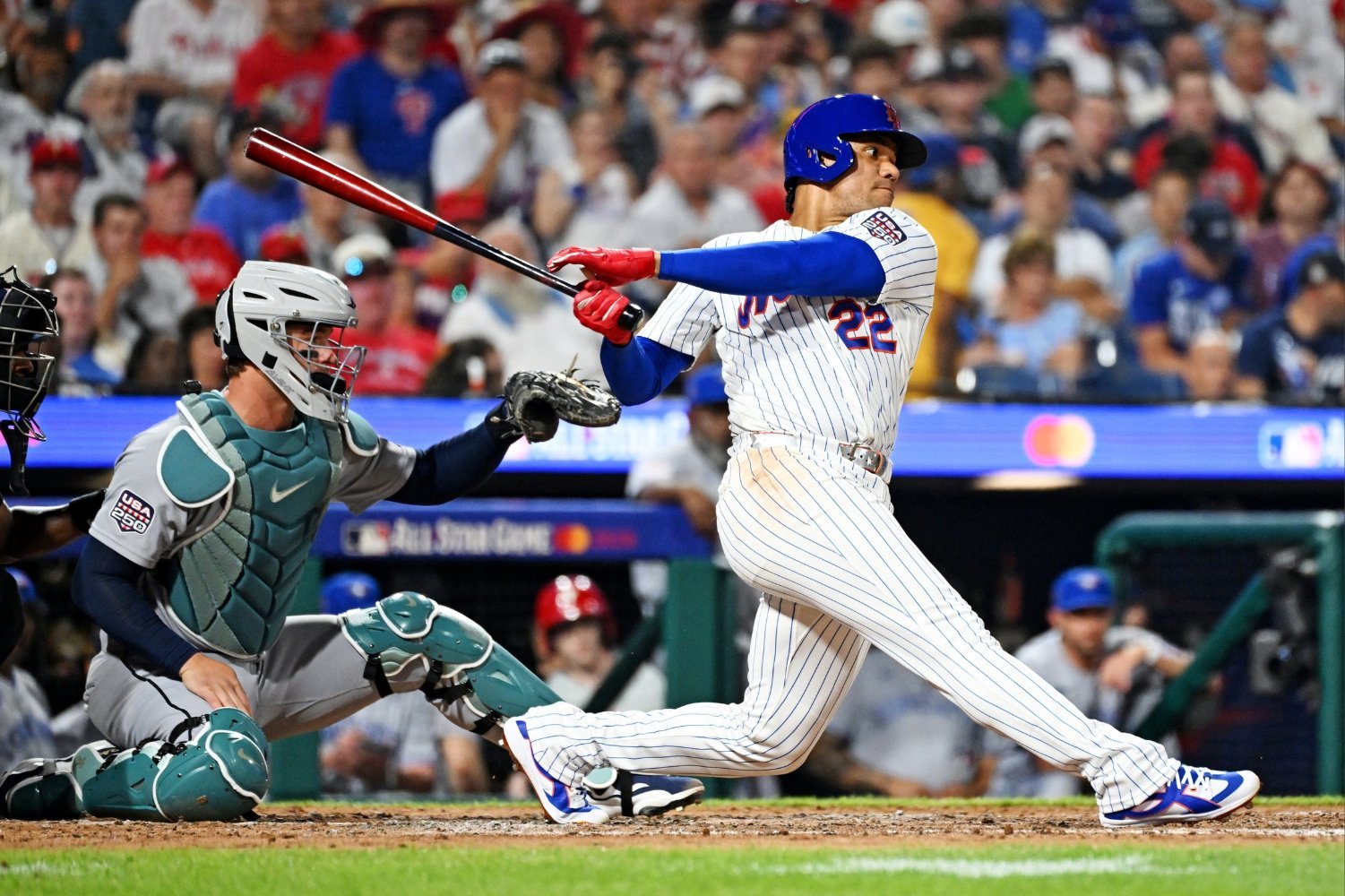 The New York Mets entered the 2026 campaign with big dreams and postseason aspirations. Fast-forward three and a half months, and it’s safe to say that the season has been a complete disaster. They entered the All-Star break with a 40-57 record, the second-worst in the National League. Obviously, the Mets expected to be at or near the top of their division at this point, not at the bottom. The Washington Nationals, one of the worst teams in the league in recent seasons, are eight games ahead of them. Eight. In the middle of all the disappointment, anger, frustration, and sadness associated with the Mets this year, All-Star outfielder Juan Soto has managed to keep his side of the bargain. He is paid to perform like one of the best hitters in MLB, and he has done just that. Even after missing a few games with a calf injury, Soto’s first half has been nothing short of amazing. He is slashing .290/.405/.562 with a 163 wRC+ that ranks fourth in the league among qualified hitters and second in the Senior Circuit behind James Wood’s 166. Juan Soto Is Still A Top-Tier Offensive Machine Here are some of Soto's National League ranks heading into the second half: Batting average: .290 (15th) On-base percentage: .405 (2nd) Slugging percentage: .562 (2nd) wOBA: .408 (2nd) xwOBA: .432 (2nd) BB%: 16.5 (2nd) K%: 12.9 (9th) fWAR: 2.9 (12th) Not too shabby, huh? It has to be heartbreaking for the Mets to have such a gifted offensive player and have nothing to show for it in the standings, but such is life in the competitive National League. New York made countless roster construction mistakes and is paying a hefty price for them, but none of what has happened to this point is Soto’s fault. Soto might not be a vocal leader. He might not be close friends with everybody in the clubhouse. But he doesn’t have to be those things. He just has to work hard, set an example for the young, up-and-coming hitters, and do his thing on the field. And that’s exactly what he does. At a time in which there are few certainties on the Mets, the organization knows that it can count on their big investment to play to the top of his abilities night in and night out. Throughout his Queens tenure thus far, Soto is slashing a jaw-dropping .272/.399/.537 with a .936 OPS, a 161 OPS+, 64 home runs, and 45 stolen bases in a year and a half. He's everything the team has paid him to be. Francisco Lindor might be struggling with the aftermath of his hamate bone surgery, and the young hitters, except A.J. Ewing and Carson Benge, might have failed to establish themselves as viable contributors. The pitching staff might be among the most inconsistent in baseball, with a 4.27 ERA that ranks 18th among 30 squads. Soto, however, is there in every game, representing a huge threat for opposing pitchers and showing the mental toughness, strength, and immense talent to produce even in adverse circumstances. Many fans are surely mad or disappointed at Steven Cohen and, mainly, David Stearns for some of their offseason decisions in the last two years. And yet, you can be sure that getting Soto was, and is, one of the best things they have done for the franchise since taking over. View the full article
 -
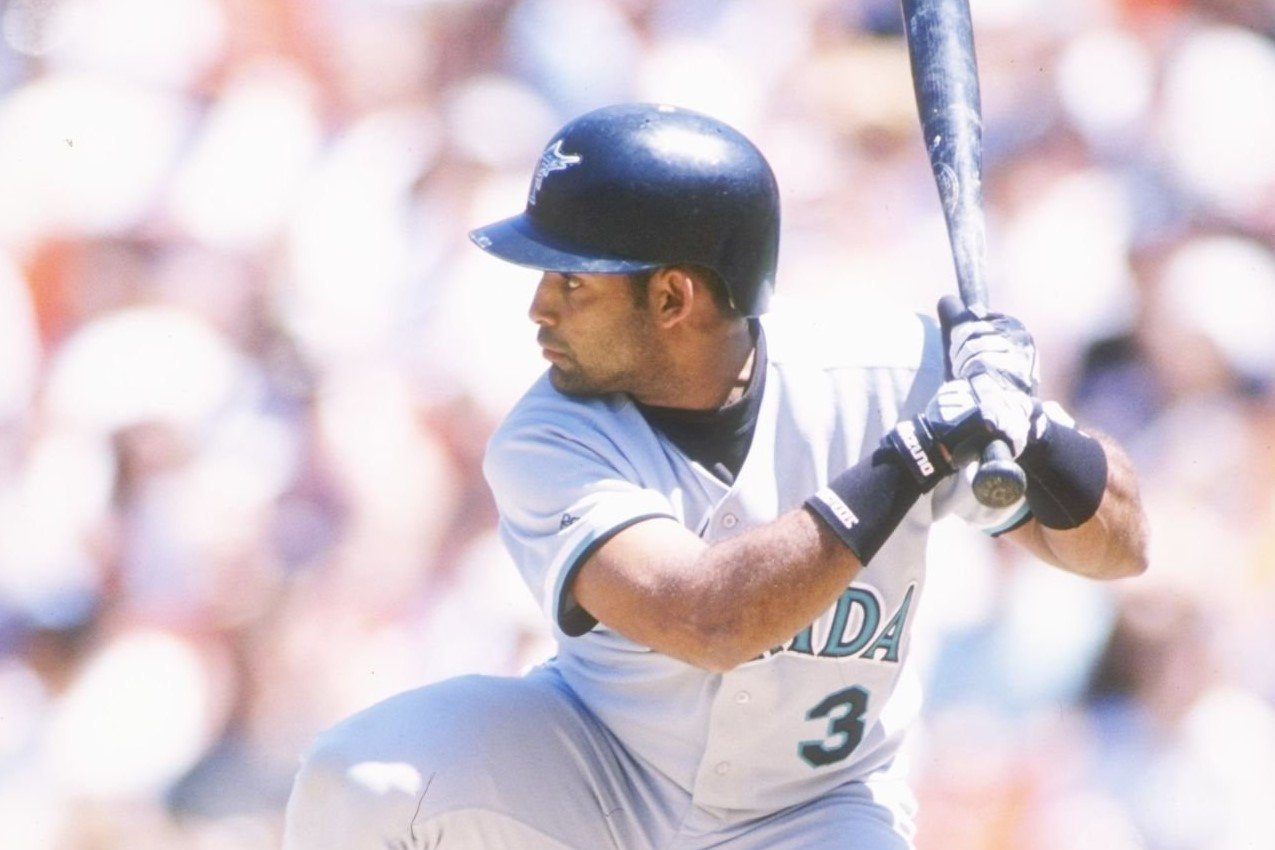 Since their inauguration in 1993, the Florida/Miami Marlins have had walk-off wins in just about every way imaginable. Heck, the Marlins even won their first playoff game and first World Series in walk-off fashion. On this day 30 years ago, the Florida Marlins picked up their first-ever win on a walk-off walk. Quilvio Veras drew the free pass to plate in the winning run in a 3-2 win over the Houston Astros. After recording the final out in the eighth inning at Joe Robbie Stadium on July 16, 1996, Todd Jones was sent out to pitch the bottom of the ninth for Houston. Jones started the inning by getting Devon White to fly out. From there on, however, Jones struggled to find the strike zone. Jones walked Greg Colbrunn on four pitches before getting Alex Arias to line out. Charles Johnson followed by drawing a six-pitch walk to put the winning run in scoring position. One pitch later, Jones hit Andre Dawson to load the bases. With Jones struggling to throw strikes, Veras, the Florida lead-off man, was the perfect hitter to come up with the bases loaded. Veras battled by fouling off pitches before taking the seventh pitch of the plate appearance low and inside for ball four, allowing Colbrunn to trot home for the winning run. The Marlins managed just four hits but never trailed in the contest. Veras plated the first run with an RBI single in the third to score Johnson. In the fifth, Johnson’s solo home run extended the lead to 2-0. Houston drew even with a pair of runs in the seventh. After a Ricky Gutiérrez RBI groundout broke up the shutout, Rick Wilkins singled home the tying run. Both starting pitchers allowed just two runs on four hits. Doug Drabek went 7 2/3 innings for the Astros. John Burkett gave the Marlins seven strong innings. Yorkis Pérez worked a scoreless ninth to earn the win. Édgar Rentería had two of the four hits for Florida; Derek Bell had two of the five knocks for the Astros. The Marlins would beat Houston again the following night to complete the three-game series sweep. The 1996 season for Florida would be the best in franchise history to that point with 80 wins. That included seven walk-off wins. The only one that didn’t require a swing came on this day three decades ago. View the full article
 -
 A Maryvale player exits due to injury, further highlighting the constraints placed on player development staffs across MiLB and the impact current roster limitations have on the state of baseball, especially at the lower levels. Transaction: Wilson DH/LF Jadyn Fielder traded to Houston for 40-man roster members RHP Lance McCullers, Jr. and LHP Colton Gordon. ACL Rangers 8, ACL Brewers 7, seven innings as scheduled Box Score & Game Log The Brewers took a 7-4 lead with a productive five-run top of the fifth. The first three batters of the inning walked followed by Brailyn Antunez knocking in two with a single. The rest of the inning was a blur for the Rangers' pitchers and catcher, as the Brewers stole four bases, Antunez scored on a wild pitch and Moises Polanco scored on an Engel Paulino hit by pitch. The Rangers manager was also ejected during the inning. It was all for naught, as the Desert Brewers gave one run back in the bottom of the fifth and two in the sixth. Antunez finished 3-4 with a double. Kenny Fenelon was 0-3 with a walk and stole his 22nd base of the season. Roderick Flores and Leonard Rijo both had RBI line drive singles to center to account for the Brewers first two runs of the game. Joan Pena pitched the last two innings giving up three earned runs while allowing three hits and walking three, but five of the six outs he recorded came via the strikeout. Catcher Jonathan Rangel was pulled from the game in the 4th as the game log noted an injury delay as successive run-scoring wild pitches were thrown by RH starter Dariel Jaquez, two of the five thrown by Jacquez in his four innings of work (5 R, 3 BB, 1 K, 1 HR). Rangel was replaced behind the dish by Malachai Halterman. A third catcher, Freider Rojas, has appeared in 17 games at catcher this season (13 starts). However, if Rangel, who also has 17 starts at first base, were to miss any time, it further depletes an extremely lean roster. The only non-catcher on the bench as this game started was middle infielder CJ Hughes. This lack of stateside roster flexibility across MiLB has been discussed to some extent in the national media this summer. Organizations are limited to 165 non-40-man roster stateside players (those on the 60-day or full-season injured list do not count, though the number of players that can be designated as long-term injured is capped at 15). Jake Mintz, Senior Baseball Writer at Yahoo, wrote an excellent piece on this topic in May, well worth your time: What a 29-2 score says about the state of low-level minor-league baseball — and why MLB fans should care The complex leagues are a vital part of the sport's talent pipeline, yet experts agree that the quality of play on has reached an all-time low The two Dominican League teams return to action Thursday morning, while the Arizona club hosts the Athletics in Maryvale. Full-season affiliates continue to enjoy time off (back in action on Friday). Organizational Scoreboard including starting pitcher info, game times, MiLB TV links, and box scores Current Milwaukee Brewers Organization Batting Stats and Depth Current Milwaukee Brewers Organization Pitching Stats and Depth View the full article
 -
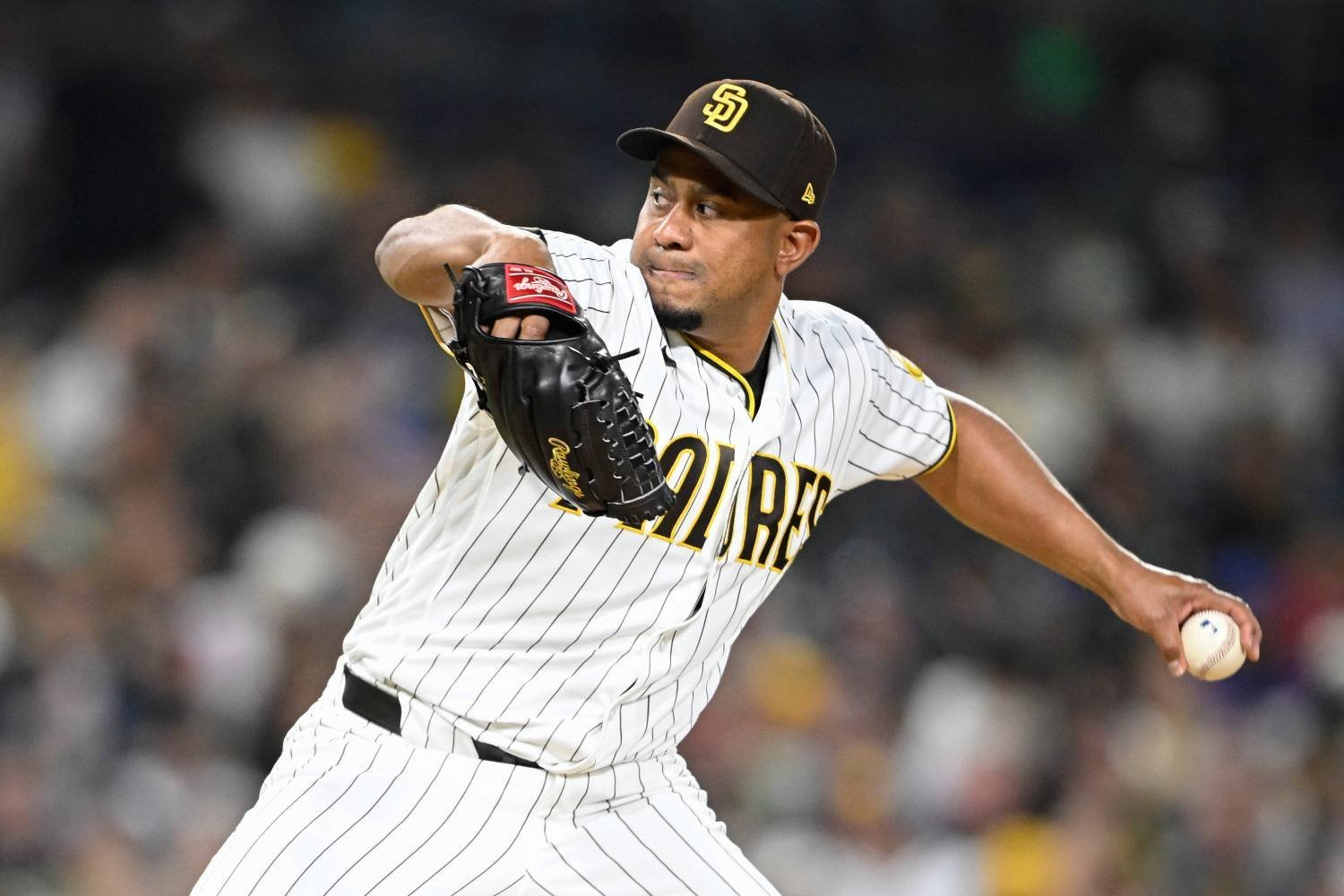 The San Diego Padres will be without a key reliever to begin their most important road trip thus far in 2026. Left-hander Wandy Peralta was put on the bereavement list Wednesday by the Padres, who called up right-hander Jhony Brito from Triple-A El Paso. Peralta can be away from the team for up to three days, although with the All-Star break lasting through Thursday, it isn't clear when Peralta must return to the team. Peralta could miss just one game or the entire series against the Kansas City Royals. Peralta has a 3.93 FIP (2.23 ERA) across 41 outings, second-most on the team, and 48⅓ innings. He has a 9.6% walk rate and 15.7% strikeout rate. Brito returned to the Padres on July 7 following an internal brace procedure and flexor tendon surgery from April 2025. He appeared in two games, pitching 4⅓ innings and allowing two runs on three hits and a walk with two strikeouts, before being sent down just Saturday. One of the hits he allowed was a homer. View the full article
 -
Twins Minor League Report (7/15): DSL and Thoughts on the System
DiamondCentric posted an article in Twins Daily
 TRANSACTIONS No moves were made on Wednesday. State of the System With just one DSL game on the agenda today, it felt wrong to leave a dearth of unused report space here, unwritten and blank, with the lone match as the only discussion point. What fun is that? So, I thought I would shoot from the hip a bit about the state of the farm system, how the minor league season has gone, and how the draft class looks to affect matters. First, this year has been a little disappointing amongst the best in the system. Not bad, just a little disappointing. Perhaps no individual outcome so far has been worse than Emmanuel Rodriguez, who continues to be plagued by injuries, and is suddenly staring down the barrel of having two option seasons burned before he can even reach the majors. That’s tough. Not just for Rodriguez’s development, but for the Twins, who could run into roster logistical issues trying to integrate him into the major league roster (assuming he stays healthy enough to even be able to play). So, thank the Lord for Marek Houston. What a season so far. He’s hit the ground running, and hitting, and fielding. He played his way to AA less than a month ago and has played essentially the same in a small sample; he remains a contact-oriented slick-fielding machine more akin to a shortstop in the aughts and throughout the 2000s before the position grew as powerful as any on the diamond (not that the 6’3” Houston doesn’t look the modern part). Between him and Kaelen Culpepper, it seems likely the Twins have a shortstop of the future currently residing in their farm system. The pitching is… in a strange place. It’s hard to say the group is weak considering Connor Prielipp and Andrew Morris graduated into major league contributors, which places them in an awkward “non-prospect youngster” tier. Still, matters aren’t ideal. Dasan Hill has struggled mightily. Charlee Soto is technically back but only has 2 2/3 innings under his belt. Riley Quick has struggled to throw strikes. Kendry Rojas has struggled to throw strikes. Adrian Bohorquez has struggled to throw strikes. Marco Raya and C.J. Culpepper are relievers. There’s no one yet like a Zebby Matthews or David Festa from years before who breaks out as a late-round college pitcher the team develops into a major league arm. Finally, I’m beyond excited for Vahn Lackey. What a dynamo. The Twins found themselves in a situation like 2023, with an opportunity to take one of the few blue-chip guys in the draft, and Lackey was their reward. He’ll add a solid injection into what is already a thoroughly talented system, and—like with Houston and Culpepper—Minnesota now likely has a long-term fixture at catcher in their organization, whether it be Lackey or Eduardo Tait. Dominican Daily DSL Twins 7, DSL Rangers Red 8 Box Score Yolcar Garcia: 3 2/3 IP, 4 H, 4 ER, 2 BB, 2 K HR: None Multi-hit games: Juan Holmann (2-for-4, 2 RBI, BB), Anibal Beltre (2-for-5, 2B, R) The DSL Twins lost on a walk-off on Wednesday. This was a DSL game through and through, with hits and walks aplenty, and unearned runs costing the Twins badly. Anibal Beltre led the charge offensively: the 17-year-old stroked a double, and singled. The lineup as a whole flourished, with every batter sans Emmanuel Merlo reaching base safely, and only the aforementioned Merlo and Jeferson Abreu failed to get a hit. Alam Soriano was perhaps the best pitcher of the day, though Arthur De La Cruz flashed quality until the ninth collapsed on him. Soriano covered 3 1/3 innings, allowing a run when Carlos Done tripled for the second time of the day and scored on a sacrifice fly. De La Cruz breezed through the eighth before an error greeted him in the ninth. Faced with trouble, De La Cruz surrendered a single, struck out two, walked two, then watched helplessly as Wisarly Rosario gave up the game-winning knock. TWINS DAILY PLAYERS OF THE DAY Twins Daily Minor League Pitcher of the Day – Alam Soriano Twins Daily Minor League Hitter of the Day – Anibal Beltre PROSPECT SUMMARY Here’s a look at how the Twins Daily Top 20 Twins Prospects performed: THURSDAY’S PROBABLE STARTERS FCL Pirates @ FCL Twins (11:00 AM) - TBD View the full article
 -
At Least Alex Bregman Has Nowhere To Go But Up
DiamondCentric posted an article in North Side Baseball
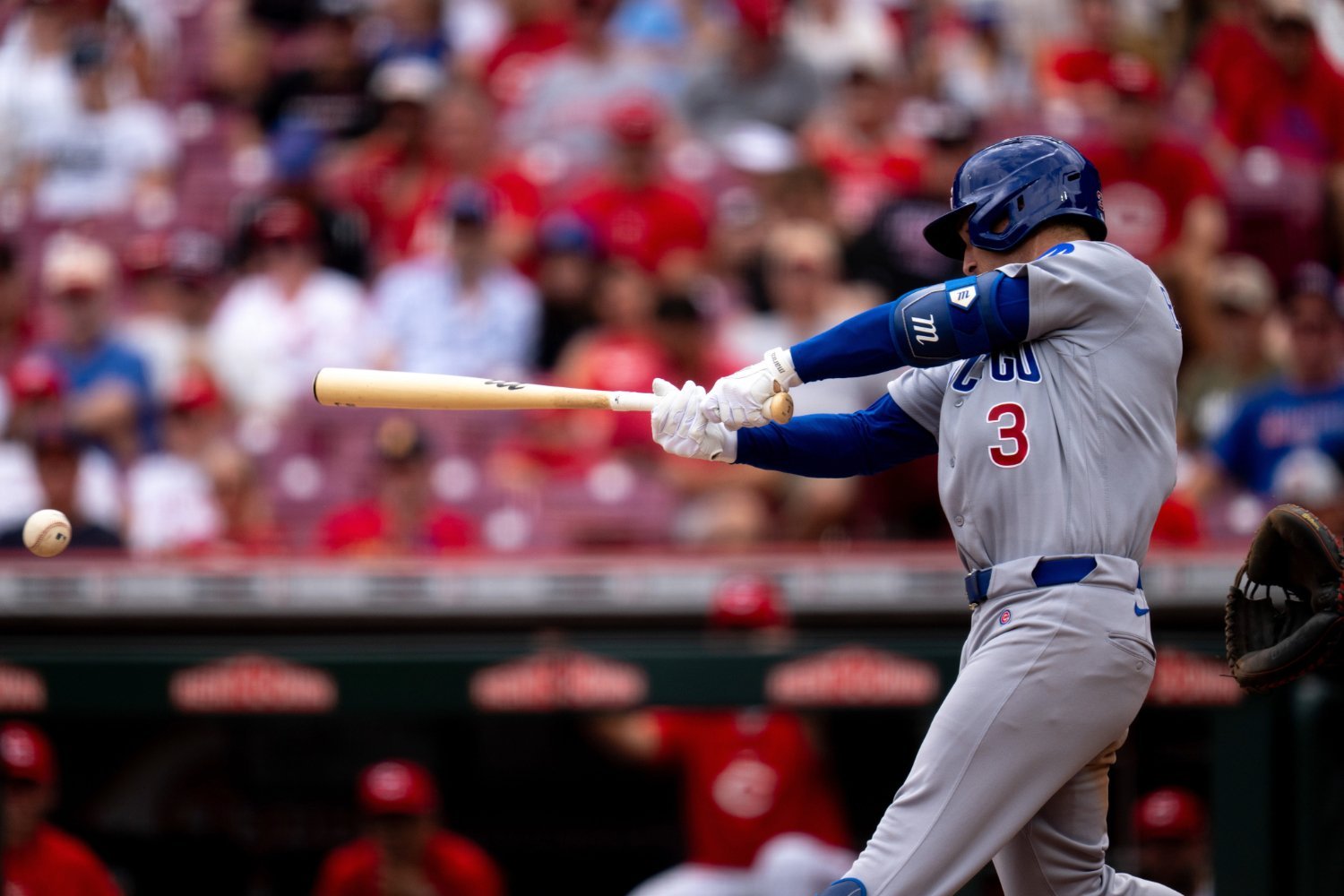 Shortly after Gold Glove shortstop Dansby Swanson had a 10-game stretch for the history books, his left-side counterpart in third baseman Alex Bregman showed signs of heating up heading into the All-Star Break. The veteran corner infielder is still on track to have a down season by his standards, but let’s dive into what metrics could imply that he’s capable of salvaging a promising first year in the Friendly Confines. Alex Bregman's First-Half Struggles and Second-Half Hopes For starters, Bregman is a 32-year-old veteran who is on his third team in as many seasons. After being a pivotal part of the Houston Astros for nine years, he spent a season with the Boston Red Sox before joining the Cubs for the first time in 2026. Heading into the second half, he has nine home runs, 41 runs batted in and is slashing .241/.336/.359 with a .696 OPS, a mark that would be the lowest of his career to date. To make matters worse, Bregman is in the first year of a five-year, $175 million contract with Chicago. It’s a deal that pays out $35 million per year on average, and he simply hasn’t provided the offensive firepower the Cubs were expecting for most of the season so far. A Rough June Bregman experienced his fair share of peaks and valleys to start the year, but he struggled mightily in the month of June. The veteran infielder slashed .200/.348/.300 with two home runs and 12 runs batted in over 90 at-bats. He got on base a decent amount, but the slugging percentage took a huge hit and has stayed in the .300s for the majority of this season. Advanced Power Numbers Bregman’s power numbers have been the most glaring issue for him so far, and it isn’t just because he’s yet to hit his 10th home run. Most of the power-hitting analytics imply that he simply isn’t a “thumper” anymore. Let’s start with his bat speed; Bregman’s stick gets through the zone at just 69.8 miles per hour, putting him in the 17th percentile among big league hitters (per Baseball Savant). Other analytics follow as expected, with Bregman generating a below-average exit velocity of 87.9 miles per hour, placing him in the 27th percentile. His barrel percentage (4.2, 17th percentile) and hard-hit percentage (35.5, 28th percentile) all lead to a common denominator: Bregman is not the 25-homer threat he once was in Houston. Mature Approach That doesn't have to be a death knell for his value, though. He is still flexing one of the most mature approaches in all of baseball. Players who can walk almost as often as they strike out will have a future in this league, and much like last year’s huge acquisition in Kyle Tucker, Bregman is doing just that. His strikeout rate of just 15.3 percent is one of the best in the game, slotting him in the 80th percentile. His walk rate, meanwhile, is well above average at 11.4 percent, putting him in the 76th percentile. This has been a trend for Bregman’s whole career, as he’s walked 676 times and struck out on 782 occasions in 5,758 plate appearances. A Subtle, Key Adjustment While the law of large numbers (i.e., sample size) will kick in, and Bregman should get closer to his career averages in the second half, he may be better suited trying to rope doubles in the gap instead of hitting for true home run power. Bregman seems to be making that adjustment, as his average launch angle has gone down in back-to-back years and is a full 1.1 degrees shallower than his 18.2 degree mark in 2024. With his average exit velocity reading the second lowest number in his career, more line drives may could suit a slugger in the back half of his career. They'd also better suit Wrigley Field's generous alleyways, which are far more hitter-friendly than the dead-pull zone in left field Bregman has targeted since his days with the Astros. View the full article
 -
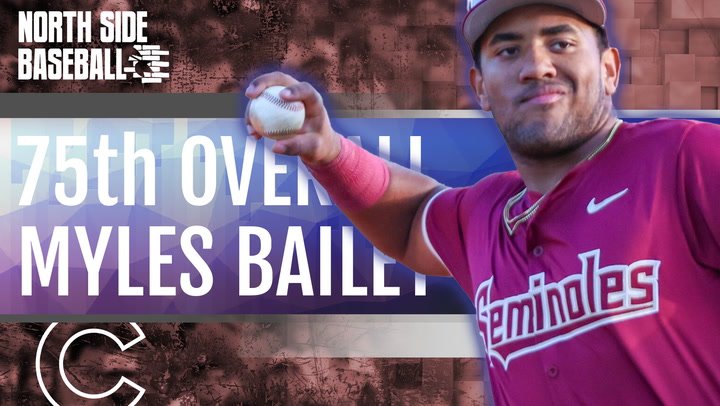 The Cubs selected Florida State first baseman Myles Bailey with the No. 75 pick in the 2026 MLB Draft. In this video, we cover his injury-shortened 2026 season, where he slugged .913 with 13 home runs in 26 games before an ankle injury ended his year, his two-year 1.222 OPS at Florida State, his reputation for some of the best raw power in the class, and how he fits Chicago's power-hungry farm system. View the full article
