


DiamondCentric
-
Posts
2,631 -
Joined
-
Last visited
Never
Content Type
Profiles
Forums
Events
News
Tutorials & Help
Major League Baseball Videos
Guides & Resources
Store
Downloads
Gallery
Everything posted by DiamondCentric
-

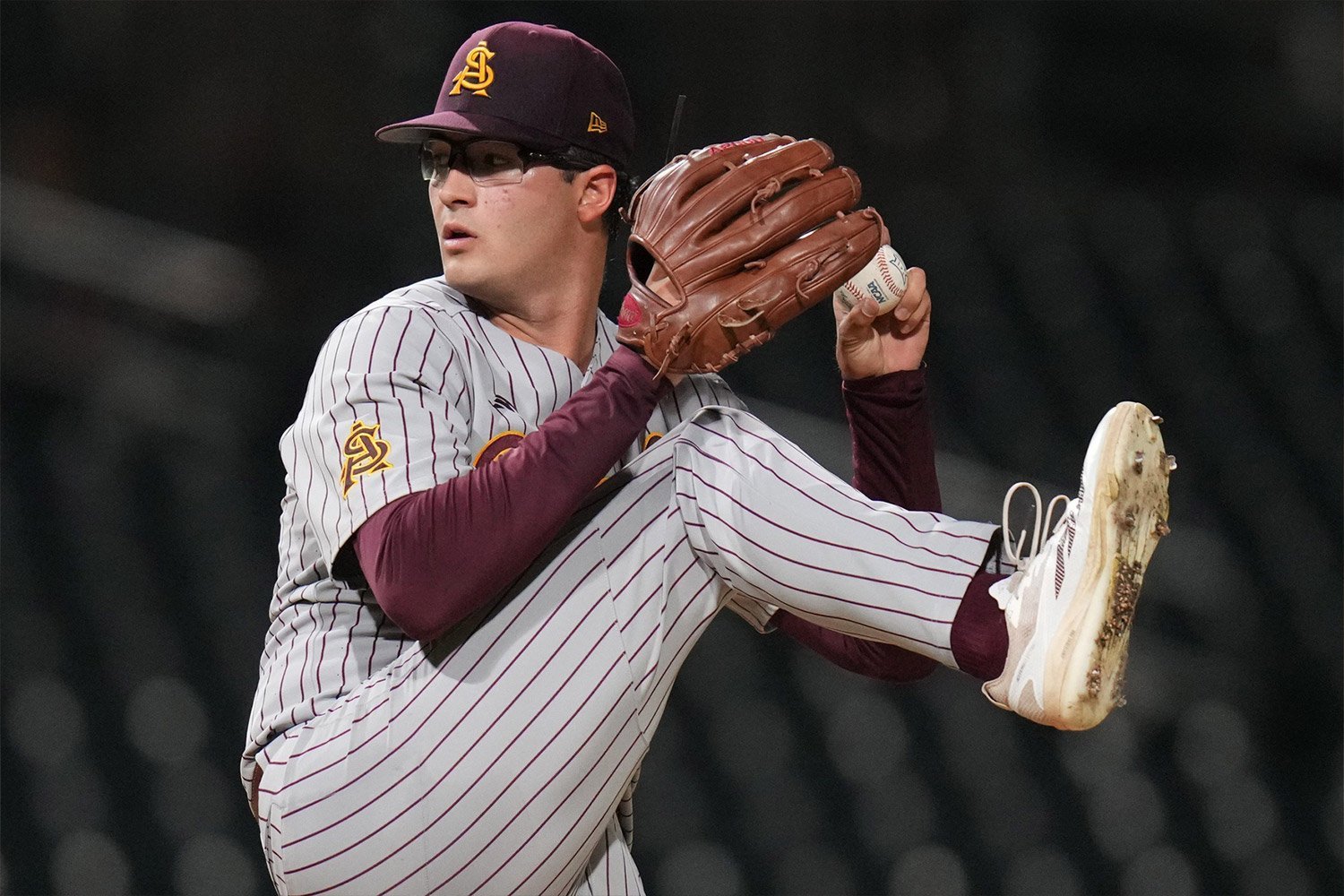 I take MLB mock draft rankings from major industry outlets like MLB Pipeline, ESPN, The Athletic (and many others) to form a consensus board, with a working hypothesis that using this approach will eliminate some of the noise and variance in MLB Draft mock rankings. This is the final mock draft board, locked in just before the 2026 MLB Draft on Saturday, July 11. Round 1: Cole Carlon, LHP, Arizona State Carlon is one of the fastest-rising college arms in 2026 in a demographic that has suffered from injuries and inconsistent performance. After contributing to the Sun Devils immediately as a freshman bullpen arm, Carlon improved his sophomore season significantly, cutting his ERA in half and flashing far more dominant stuff. It's a good-looking delivery from Carlon. While there aren't outlier release traits, he hides the ball well during his delivery and has an ideal pitcher's frame at 6'5, 220 pounds. He's moved from the bullpen to a starting role in 2026. The results have been spectacular. Carlon had a 4.30 FIP through 83.2 innings of work this season while striking out 38% of hitters. The stuff is as explosive as ever, his fastball sits 94-96 mph, but he's run it up to 100 mph. His slider is one of the best in the class, a mid-80s gyro offering that generates a ton of swing and miss. Carlon mixes in a curveball and a changeup, too. There's still some refinement needed to the strike throwing, but Carlon's walk rate has improved from 11.3% in 2025 to 8.9% in 2026. Carlon is looking like a first-round prospect with starter traits who should move quickly as a pro. Competitive Balance Round B: Kaiden McCarthy, RHP, Vermont Academy, VT Kaiden McCarthy is one of my favorite prep arms in the class. He's on the younger side (he'll be 17 on draft day) and has been seen less than many of his peers, as he's from Vermont. It's a bit of an undersized frame at 6'0, 190 pounds, but McCarthy is a dynamic mover and athlete. His fastball is already an above-average to plus pitch, hitting 99 mph, but typically sitting in the 94-96 mph range. There's a knuckle curve and slider in the mix for breakers, with an above-average changeup with good fade to round out a solidly constructed arsenal. There are plenty of strikes with McCarthy in a delivery I like for its simplicity. He's a hidden gem in this class, for me. Round 3: Jack Slightom, RHP, Lyons HS, IL Slightom is a cold-weather arm out of Illinois, currently committed to Cincinnati, who has surged up draft boards towards the end of the cycle. A projectable righty at 6'4, 200 pounds, he's made strides in the last 12 months and should flourish in a pro system after splitting time between baseball and football in high school. Slightom has some interesting release traits with a lower arm slot and above-average extension. It's a run and ride fastball that has been as high as 98 mph, but will likely sit in the 93-95 mph range, a significant step forward from his junior year. Slightom's primary breaking pitch is a sweeping slider that could use more firmness. He's also shown capacity for a changeup with tumble and fade. Curious to see the players around the Boston Red Sox picks in the draft? Click on the button below to view the entire mock draft board! View the full article
 -
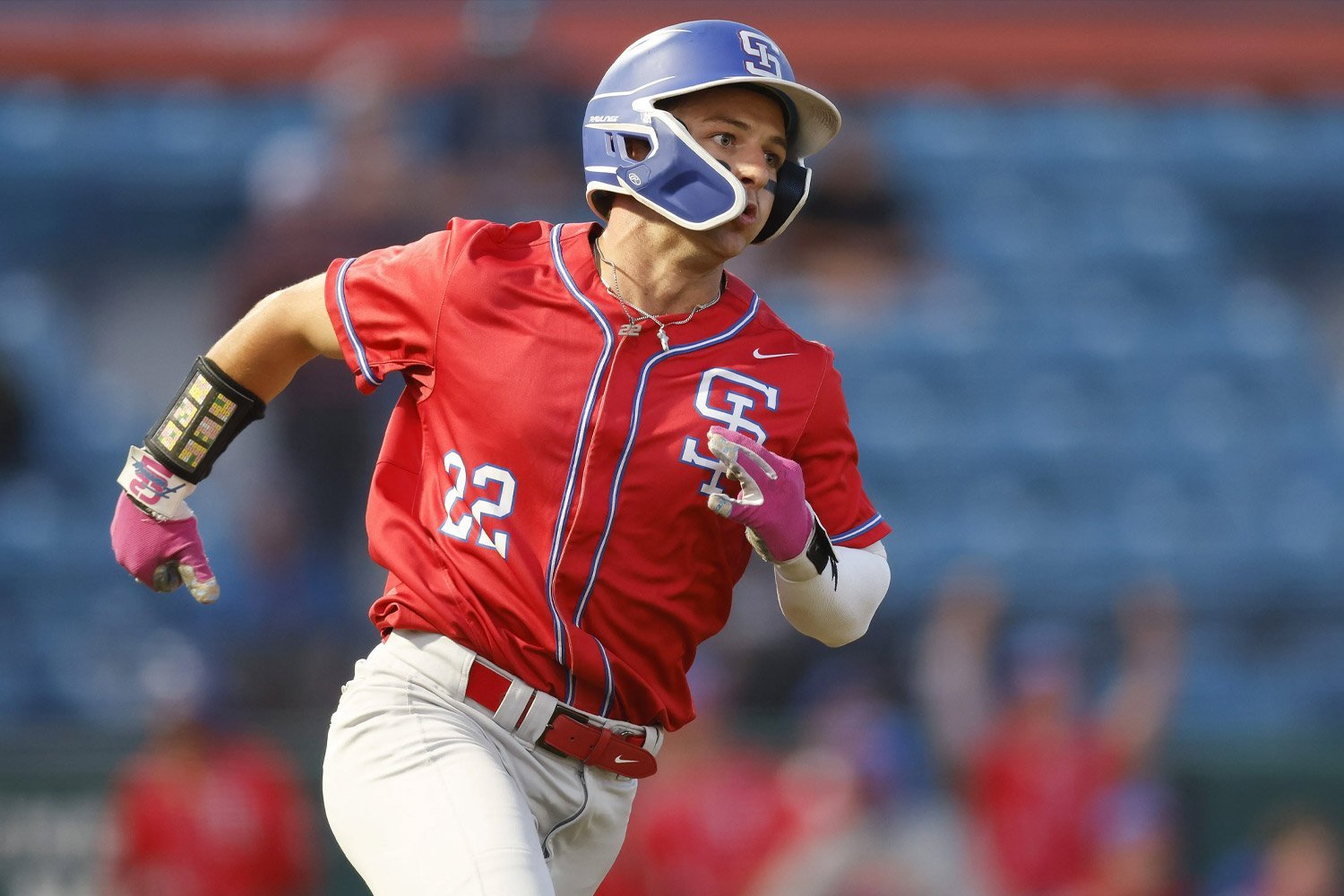 I take MLB mock draft rankings from major industry outlets like MLB Pipeline, ESPN, The Athletic (and many others) to form a consensus board, with a working hypothesis that using this approach will eliminate some of the noise and variance in MLB Draft mock rankings. This is the final mock draft board, locked in just before the 2026 MLB Draft on Saturday, July 11. Round 2: Archer Horn, SS/RHP, St. Ignatius College Prep, CA Horn is a two-way prospect out of Northern California, currently committed to Stanford. He's a talented pitcher who has been up to 95 mph with his fastball, also mixing in a good changeup and a solid curveball that has strong spin traits. Most evaluators think his future is as a hitter, however. In the box, Horn has good bat speed and barrel feel and demonstrates the ability to consistently generate loft in his left-handed swing. I think he'll eventually be a power over hit profile, but he currently has the potential to be at least solid average in both tools. Defensively, it's likely he moves off shortstop eventually, but he has a future on the first at second or third base. His commitment to Stanford and his placement on the board in the 40-60 range generate some skepticism around his signability. Round 3: Caden Ferraro, OF/1B, Texas Tech Ferraro was one of the most prolific college bats in the country for Texas Tech, managing a 143 wRC+ with a 16.7 BB% and 15.5 K%, buoyed by 19 doubles and 8 home runs. 2026 was his lone season in D1 baseball after spending two years at JUCO powerhouse Blinn. Ferraro's is a profile exclusively carried by his offensive tools, as the defense, arm, and legs are all fringy at best. It's a testament to the stick, then, that he's a top 100 consensus player. It's strong bat-to-ball skills, specifically in zone (and low in the zone), with strong swing decisions that lead to a high on-base floor. Ferraro has some of the best quality of contact in D1 baseball, consistently finding the barrel and producing excellent EV numbers throughout 2026. If Ferraro can navigate his mediocre supplementary tools to be an average corner outfielder, the offensive profile will carry him a long way. Round 4: Anthony Murphy, OF, Corona HS, CA Murphy is a prep outfielder out of perennial California powerhouse Corona HS, with a chance to have four above-average tools. He's currently committed to LSU. A strong 6'0, 195, Murphy has plus raw power and has no trouble getting into it in games, crushing 11 home runs his junior year of high school. The hit tool is a little more fringy, with an aggressive approach and some swing and miss, giving evaluators some pause. Murphy has a trio of strong supplementary tools. He's an excellent defensive outfielder, using plus speed to aid his range in center field, with at least a 55 arm. If he can hit enough, he has a chance to be an explosive, impactful player. Curious to see the players around the Toronto Blue Jays' picks in the draft? Click on the button below to view the entire mock draft board! View the full article
 -
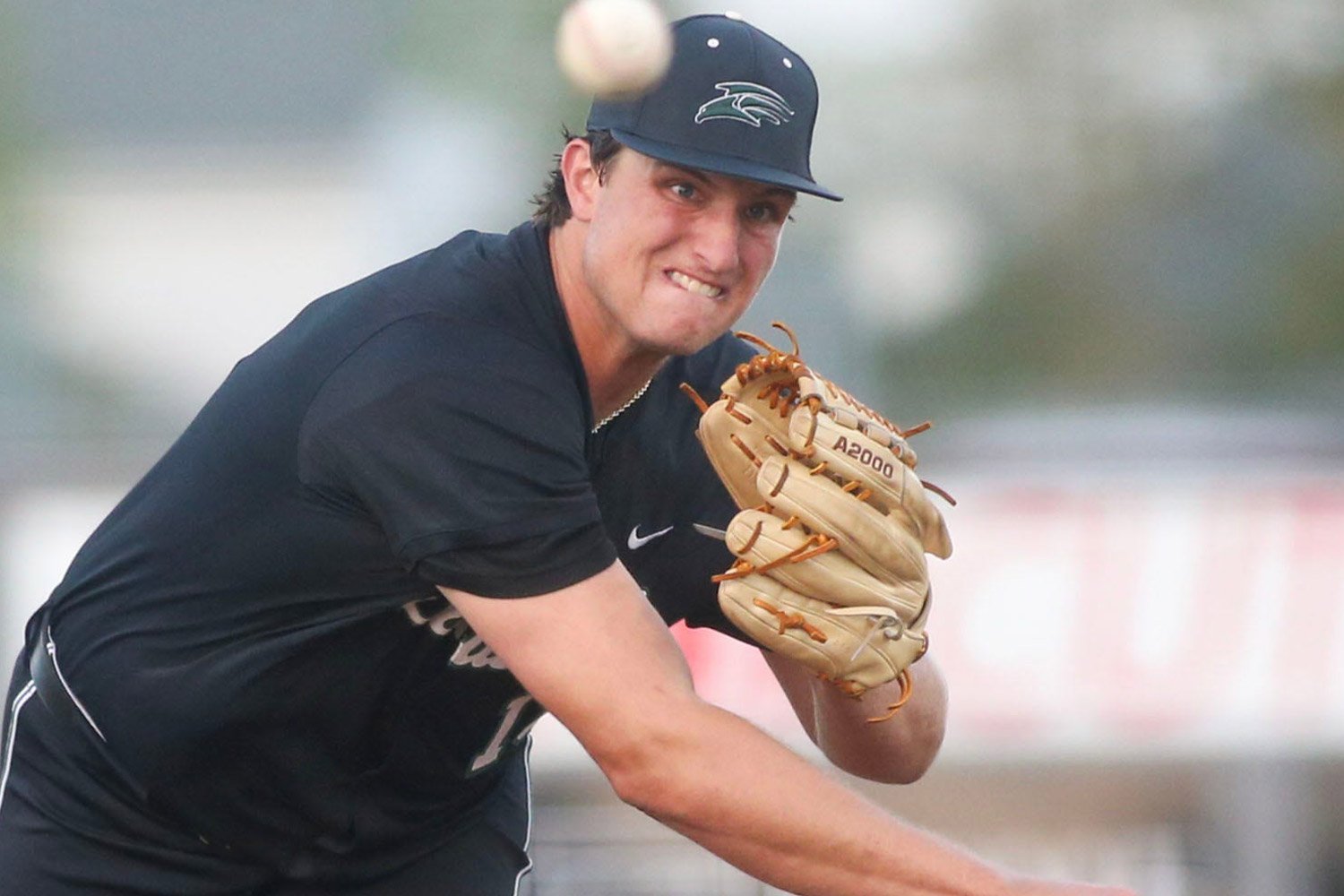 I take MLB mock draft rankings from major industry outlets like MLB Pipeline, ESPN, The Athletic (and many others) to form a consensus board, with a working hypothesis that using this approach will eliminate some of the noise and variance in MLB Draft mock rankings. This is the final mock draft board, locked in just before the 2026 MLB Draft on Saturday, July 11. Round 1: Coleman Borthwick, RHP, South Walton HS, FL Borthwick is a physical monster out of Florida, built more like an NFL linebacker than a high school baseball player. Standing at 6'6, 255 pounds, he's an exciting two-way prospect, but most believe his future is on the mound. It's a slightly crossfire delivery, which helps to create a more unusual angle for hitters as he strides down the mound. However it looks, there's a ton of quality in the stuff. Borthwick recently ran his fastball up to 100 mph for the first time. It's a pitch that will sit 94-96 mph with plenty of run. It's paired with a quality slider, a pitch that might already be plus. It sits in the mid-80s with some sharp, late tilt. Borthwick has a changeup in the bank, too, but it's been used sparingly to date. Borthwick has been a more effective strike thrower to date than you might expect from a frame his size and such an explosive arsenal. He's committed to Auburn but has T30 pick upside. Round 3: Jason DeCaro, RHP, North Carolina DeCaro was a reclass in high school, making him one of the youngest college players in this year's class at 20 years and two months when the draft kicks off in July. Listed at 6'5, 230 pounds, he improved steadily while shouldering a significant workload in three years as a starter for North Carolina. DeCaro has a track record of production and innings, but not of overpowering stuff. His fastball has been as high as 97 mph, but will sit 92-94 mph with some run. It doesn't miss a ton of bats. DeCaro can spin the ball with conviction, though. He has a harder slider that sits in the low-to-mid 80s and an upper 70s curveball, both 50s at best, to go with a solid changeup. DeCaro pitched a career high in innings in 2026 (97.1), managing a 4.56 FIP, while striking out 24% of hitters and walking 10.2%. He has starter traits if a pro organization can tweak his arsenal and optimize his breaking stuff through pitch design work. Round 4: Kollin Ritchie, OF, Oklahoma State Kollin Ritchie is a three-year college performer who was drafted as a prep player out of Oklahoma in 2023 in the 19th round by the Orioles. It's a profile headlined by damage on contact, with some sneaky supplementary tools. Ritchie hits from the left side and has improved his approach in 2026, cutting his chase rate from 26% to 21%. His offensive profile is buoyed by his ability to take walks (15.5% in 2026). There's a ton of swing and miss in his profile, and it might be an issue that dampens Ritchie's effectiveness as a pro. It's an above-average arm and above-average wheels, which have sufficed in center field in college, but are likely better suited to right field or a corner spot as a pro. Ritchie hit .326/.462/.804 with 31 home runs (46 XBH), striking out 23.1% of the time, good for a 163 wRC+ in 290 PAs in 2026. If he can make enough contact, he has a chance to be a dangerous pro hitter. Curious to see the players around the New York Mets picks in the draft? Click on the button below to view the entire mock draft board! View the full article
 -
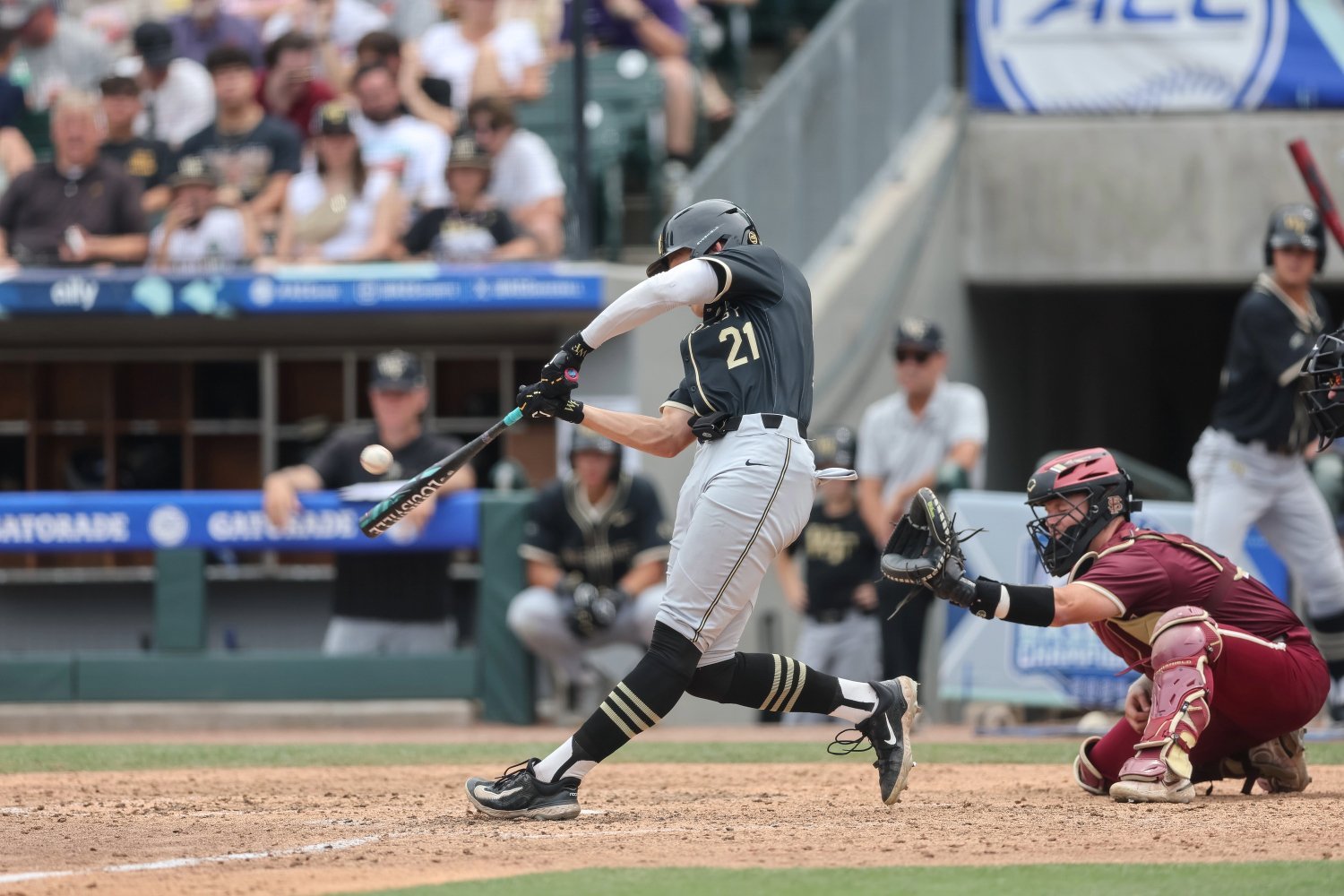 While the Boston Red Sox have focused mainly on pitching when it comes to the draft over the past few years, Jack Winnay was a bat the team targeted later in the 2025 process due to his incredible power. That's an area of the game that the Red Sox are desperately in need of, meaning Winnay could be one of the answers should he manage to properly develop other areas of his game. Jack Winnay’s Updated Red Sox Scouting Report Winnay, who grew up in Newton, Massachusetts and attended Belmont Hill High School, would go on to play college baseball for Wake Forest where by his second season he became a regular starter. During the summer after his first year, the young infielder played in the Futures Collegiate Baseball League for the Vermont Lake Monsters. Following that, Winnay showed his immense power during his final two seasons with Wake Forest where he hit 31 doubles, 35 home runs and drove in 123 runs. Entering the 2025 draft, Winnay was ranked the 384th prospect in the class thanks to a solid approach at the plate paired with good angles off the bat. Despite the power and ability to make contact, he wasn’t viewed as a top prospect due to the lack of a carrying tool, and his power was questioned due to playing in a hitter-friendly park in college. He measures 6-foot-3 and weighed 220 pounds while displaying a solid, physical frame that was already built out and lacked much growth remaining. With the organization, Winnay began his professional career with the then Salem Red Sox as he appeared in 15 games in 2025 and hit .321/.393/.434 with three doubles, one home run and 11 RBIs. The sample size showed that he was ready for the next level of minor league baseball and in 2026 he opened the season with the Greenville Drive. After an outstanding start to his season, Winnay was promoted to Double-A Portland after hitting .255/.434/.457 with five doubles, 11 home runs and 31 RBIs in 56 games split between first base and third base. Winnay’s performance in the month of May also earned him TalkSox’s Minor League Hitter of the Month after he slashed .290/.490/.623 with seven home runs and 14 RBIs to go along with 26 walks. Hit Tool Winnay has showcased an ability to make solid contact everywhere he’s played since the summer of 2023 he spent with Vermont. Starting with his hands high, Winnay goes into a leg lift followed by his swing. He has good plate coverage but likes to get extended and pull the baseball while taking advantage of his strong points as a hitter. He has solid contact skills and plus pitch recognition that allows him to have an elite understanding of the strike zone. His bat path through the zone is good and knows how to hit the baseball at the right angle. He has shown he’s comfortable hitting secondary offerings but there is some concern over how he may handle velocity in the upper levels of the minors. He is willing to work a count and take a walk over trying to force a hit. Like most sluggers, he'll also have his fair share of strikeouts. Potential above-average hit tool: 55 grade on 20-80 scale Power Tool Winnay’s best tool is his power, especially in the raw strength department. So far in 2026, he’s been able to translate that raw power into in-game power, as he’s had several loud home runs for Greenville. His power is mostly to the pull side, as 10 of his 11 home runs with Greenville were either to left field or left-center, and the one that wasn’t was to straight away center field. Thanks to his ability to hit the baseball at the ideal launch angle, he’s able to drive the ball with authority. Potential plus power tool: 60 grade on the 20-80 scale Running Value For Winnay, running is not a big part of his game. He can go first to third on the right kind of hit, but due to his below-average speed, don’t expect him to be taking the extra base or trying to steal with regularity. For his batted balls to end up as extra-base hits, he’ll either need to hit it over the fence or drive it deep into the gap. Potential below-average run tool: 40 grade on the 20-80 scale Fielding Ability While in college, Winnay played first base and the outfield, though he was predominantly a first baseman in his final season at Wake Forest after mainly playing the outfield his sophomore season. While with Vermont for summer ball, he split his time at first base and third base. So far in his young career, the Red Sox have no intention of playing him in the outfield as he’s split his time between first base and third base, with him having appeared at the latter position 55 times this year. In those 42 games, he has committed 15 errors. At first base, he’s appeared in 18 games without making an error. Potential fringe-average field tool: 45 grade on the 20-80 scale Arm Strength Winnay’s arm is viewed as average. It’s strong enough to handle third base, but it won't make or break his defensive profile. Potential average arm tool: 50 grade on the 20-80 scale Outlook with Red Sox With the lack of in-game power on the major-league roster, Winnay will be given chances to develop into a potential major-league bat. Right now, Winnay’s ceiling looks to be that of a bench bat, but that could change should his hit tool develop as predicted. Due to the lack of speed in his game and his questionable ability to currently remain at third base long-term, Winnay’s value will remain tied to his hitting. He has shown an advanced approach at the plate but as he moves through the minors, he'll need to prove he can handle the more advanced pitching, especially when it comes to velocity. 2026 Final Prediction With Winnay’s promotion to Portland coming a little sooner than imagined, there is little room to dream on another quick promotion. The 13th-round pick will remain with Portland for the remainder of the season, getting at-bats against the toughest competition Double-A has to offer. He’ll also be playing at Portland’s Delta Dental Park, which isn’t as much of a hitter’s park as Fleur Field was, which will help to show if his first half of 2026 was thanks to ballpark factors. Expect Winnay to get plenty of time split between third base and first base as the organization looks to see him settle down defensively. View the full article
 -
Tobias Myers Left Mets No Choice But To Demote Him
DiamondCentric posted an article in Grand Central Mets
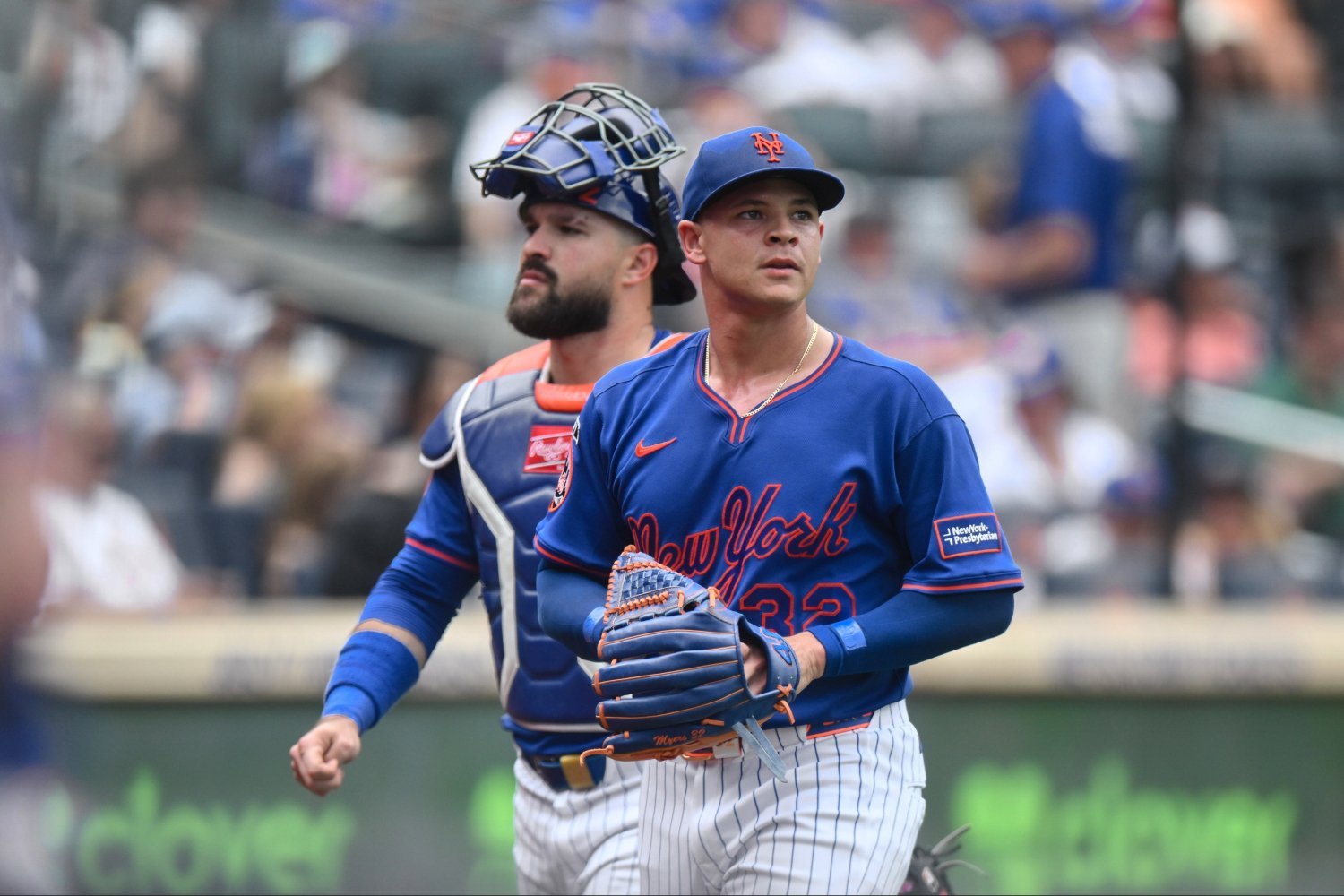 There are pitchers capable of surviving even when one of their best pitches stops working. Tobias Myers never belonged to that group. His success in Milwaukee never depended on a single dominant pitch, but on the way five different pitches forced hitters to make a different decision on every offering. When that identity began to fade, so did the pitcher the Brewers had found. Two seasons later, that pitcher appears to have vanished. With the New York Mets, Myers has a 6.14 ERA and a 59.1% strand rate. His decline shows the collapse of a pitcher who lost the identity of his repertoire. Consider the batting line against right-handers: .363/.420/.638. Myers went from a .247 wOBA against righties in 2024 to .448 in 2026. Against lefties, he remains competent: .211 average, .248 OBP. The problem is that right-handed batters represent the majority of the hitters he sees, and Myers has no answers for them. What changed? In 2024, Myers threw five pitches: four-seam fastball, cutter, slider, changeup, and curveball. The key was not simply having five options. It was the way they complemented each other. The changeup was the pitch that tied the entire repertoire together. It forced batters to respect the bottom of the zone, made the fastball play above its velocity, and delayed slider recognition. Pitch Year AVG SLG SwStr% Vert. Mov. Hor. Mov. Changeup 2024 .083 .083 17.1% 7.3 -6.9 Splitter 2026 .179 .462 15.4% 5.2 -5.2 In 2026, Myers has replaced the changeup with a splitter. Unlike the changeup, the splitter has less vertical and horizontal separation and stays in the swing plane longer. That difference reduces the deception that once sustained the repertoire. The results reflect that difference: a .179 batting average against, a .462 slugging percentage, and a 27.3% HR/FB rate. Mistakes with the splitter have been punished. Myers's slider has also changed. In 2024, it averaged 85.5 mph, generated swings and misses 12.6% of the time, and held batters to a .196 average. In 2026, his slider averages 82.1 mph. Metric 2024 2026 Change Velocity 85.5 mph 82.1 mph -3.4 mph SwStr% 12.6% 6.9% -5.7 percentage points AVG .196 .333 +.137 wOBA .212 .429 +.217 The velocity loss did not merely reduce swings and misses. It also reduced the visual overlap between the fastball and the slider. With less separation between the two, hitters have more time to recognize the spin, adjust the swing, and make a decision they previously had to resolve much earlier. Myers's xERA (4.41) is better than his ERA (6.14). Some of the inflated ERA reflects poor fortune in high-leverage situations. But that does not explain everything; the contact he's surrendering is also a massive issue. Average exit velocity against Myers rose from 89.7 mph in 2024 to 91.6 mph in 2026. His hard-hit rate climbed from 31.4% to 45.8%. What's behind that jump? As someone with a deep arsenal, Myers has always been more of a command-and-sequencing pitcher. His Location+ in 2024 was 102. His Stuff+ was 91. Now, that relationship has flipped, with a Stuff+ of 103 but a Location+ of 98. He simply can't get hitters out with regularity these days, giving up at least one run in 10 of his last 12 appearances. His demotion to the minors was a necessary step in getting him right, but the pitcher the Mets thought they acquired from the Brewers is deeply broken right now. View the full article
 -
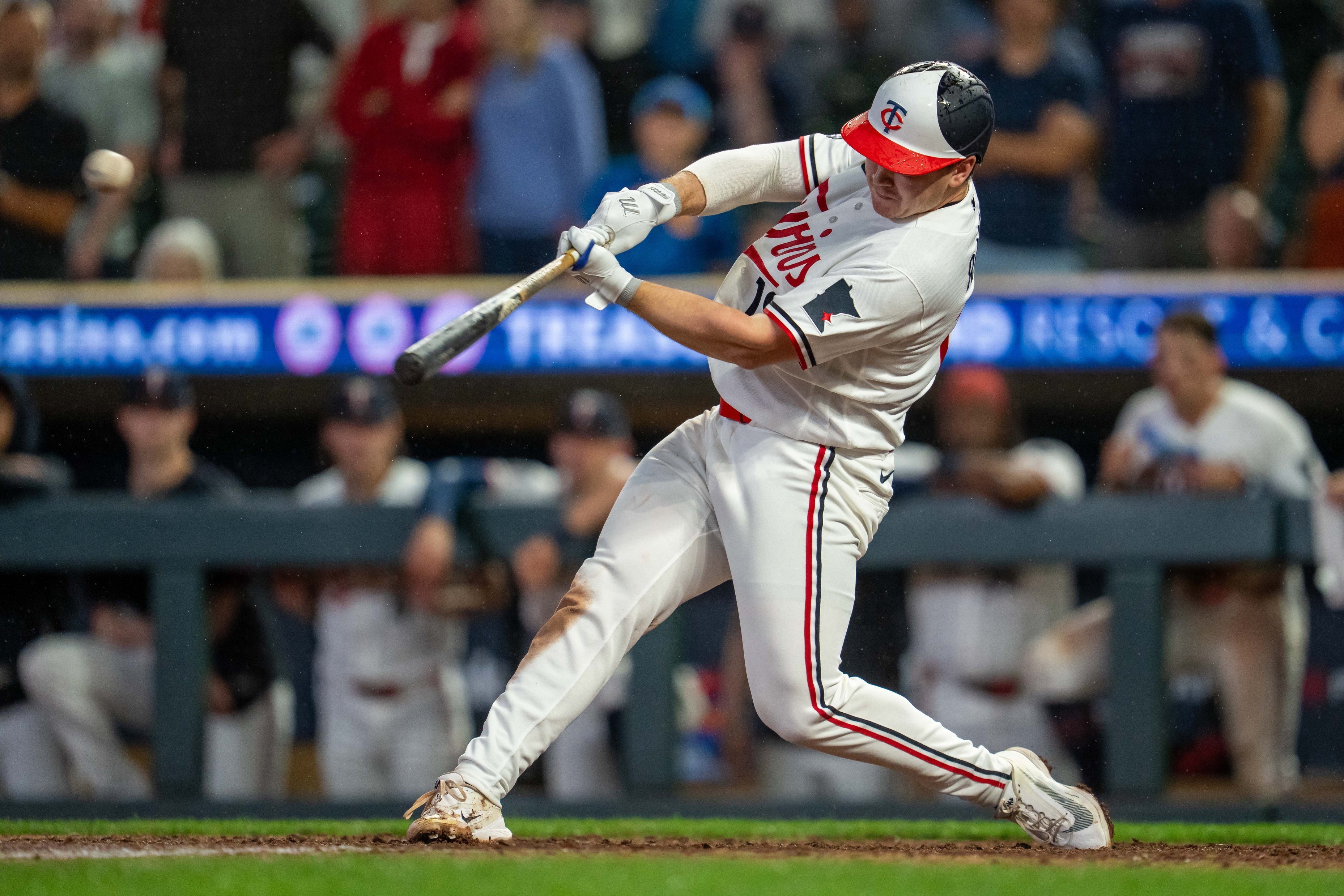 Nobody reads anymore. A recent Atlantic article found that just 16% of Americans read for pleasure. The other 84%? Apparently they're reading because life, work, or the IRS forced them to. That means if you clicked on an article breaking down Alan Roden's swing changes, you're either part of a dying breed or you accidentally tapped the wrong link. Either way, welcome. I'll make you a deal. We'll get to the video almost immediately, and then we'll spend the rest of the article figuring out why the Twins believe Roden's new setup might unlock more offense than the version we watched a year ago. copy_26C3046A-988A-4211-B257-83E955642DA7.mp4 So what did you just watch? My guess is your first thought was something along the lines of, "Alan Roden has a pretty unorthodox swing." That slow-pitch softball leg kick catches a lot of people off guard. Your second thought might be that the two swings actually look fairly similar, aside from him setting up a little lower this season. You'd be right on both counts. But let's dig a little deeper. In 2024, Roden hit a career-high 16 home runs. The left-handed hitting outfielder believed he had the tools to produce that kind of power more consistently. His goal became improving his launch angle to the pull side so he could drive more baseballs in the air and over the fence. Here's what Roden told Fangraphs' David Laurila about his stance during spring training last year: "The stance is about pre-setting the slot so that once I get to launch position I can just turn — it’s how I’m posturing, and directionally moving through the swing to match the plane of the pitch. There is a little more space behind me now, and the turn starts a little bit earlier. It’s been a process to get to this point, but I really like where I’m at right now." When Roden talks about "pre-setting the slot," he's referring to the relationship between his hands, arms, and bat throughout the swing. In simple terms, he's trying to maintain a strong triangle between his arms and hands as he delivers the barrel. Compare that to his setup at Creighton. His pre-pitch posture was noticeably looser than what we saw during his 2025 season. While Roden found success against college and minor league pitching, those results didn't immediately carry over against major league arms. In 55 games with the Blue Jays and Twins in 2025, he hit .191/.261/.294. In his 12 games just with Minnesota, he hit .158 with 13 strikeouts, no walks, and just 40 plate appearances. Rather than continue doing the same thing and hoping for different results, Roden made meaningful adjustments entering 2026. The first noticeable change is in his lower half. Just as he previously focused on pre-setting his slot, he's now pre-setting his back hip. You'll notice he's hinging much more into his rear leg compared to last year's upright setup. In 2025, his lower-half move eventually got him into this position. Now he's ready to fire the moment he gets into the box. He's also starting from a much more open stance. This season he's set up at roughly 45 degrees compared to 34 degrees a year ago, which was already well above the MLB average of 11 degrees. His hand position is another obvious adjustment. He's starting with his hands lower and farther away from his body than he did last season. In 2025, the bat would wrap behind him during the load, creating a longer path to the baseball and making it more difficult to get to velocity on the inner half. Now his hands stay much more in line with his torso, creating stretch without pulling everything offline. There are also several underlying traits that make Roden an intriguing offensive bet and someone worth giving every opportunity to figure things out. He owns one of the better strike-zone profiles you'll find. Throughout the minors, Roden actually walked more than he struck out, a rare accomplishment in today's game. Interestingly, his bat speed is merely average. It's an extremely small sample of just 14 competitive swings in the majors during 2026, but his average bat speed is actually down one mile per hour to 69.1 MPH. League average sits at 71.7 MPH. The tradeoff is that the bat is getting to the ball on a shorter path. That's one reason he's consistently able to control the strike zone. There's no guarantee these changes turn Alan Roden into an everyday major leaguer. Hitting is rarely that simple. What matters is that he's attacking the problem instead of hoping it fixes itself. Every adjustment in his setup has a purpose, from the way he loads his back hip to how he positions his hands. The next few months won't tell us whether Roden can hit. They'll tell us whether this version of Roden is the one the Twins believed they were acquiring. View the full article
 -
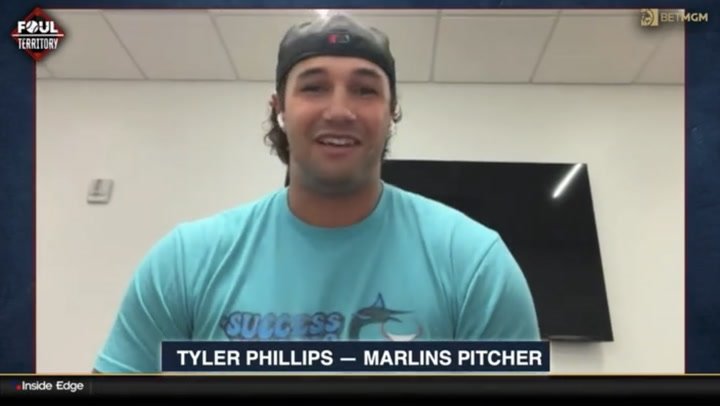 On Foul Territory, Marlins right-hander Tyler Phillips raves about Joe Mack's work ethic and explains how Mack's unbelievable throwing ability helps him execute on the mound.View the full article
 -
Twins Acquire Tommy Nance From Blue Jays To Bolster Bullpen
DiamondCentric posted an article in Twins Daily
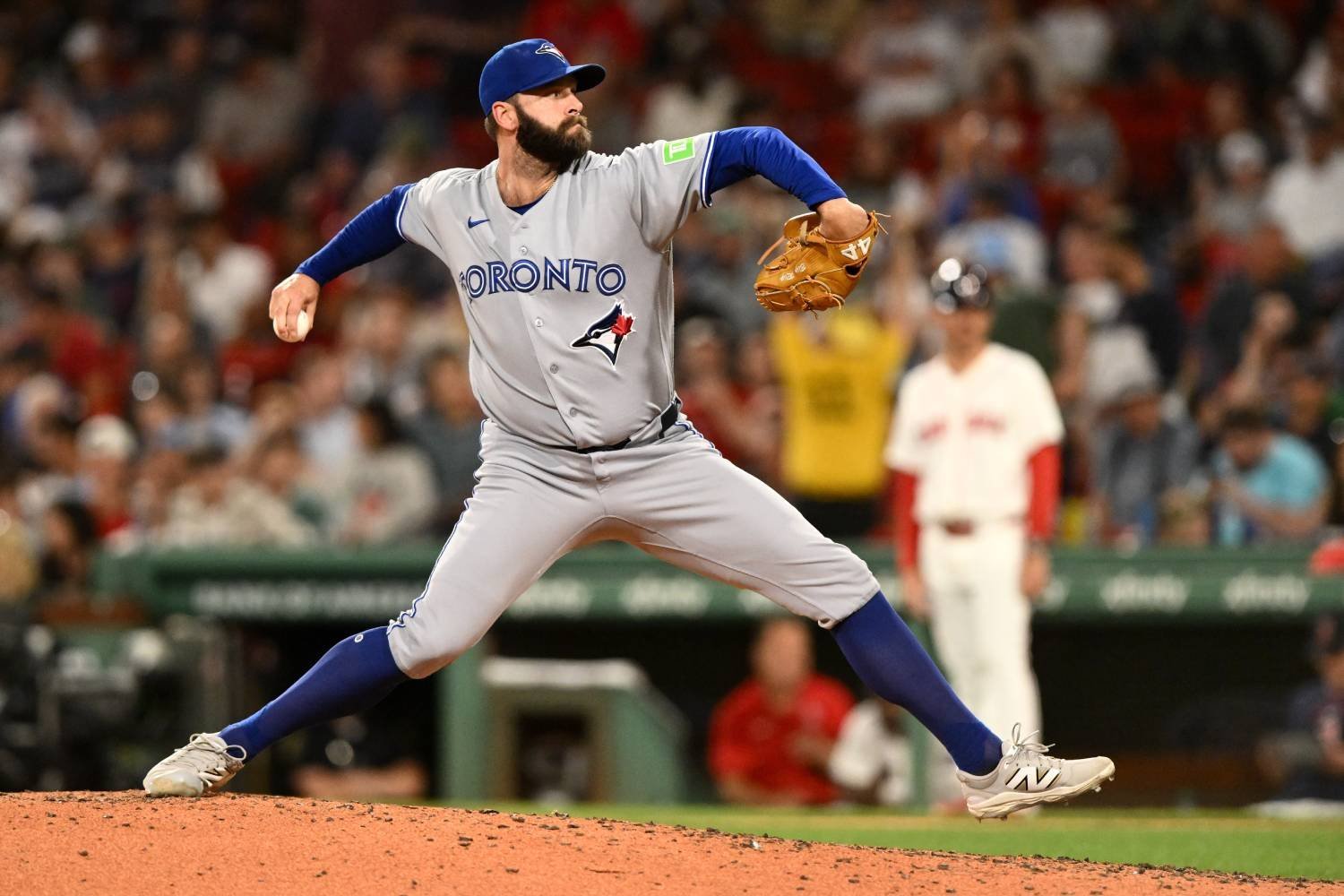 The Minnesota Twins, who had a massive sell-off at last year's trade deadline, appear to be a buyer this year. The Twins on Friday acquired right-handed reliever Tommy Nance from the Toronto Blue Jays in exchange for minor-league catcher-third baseman Ryan Sprock. Nance is a 35-year-old who has appeared in 32 games this year for the Jays, posting a 4.20 FIP (3.82 ERA) in 33 innings, walking 9.4% of batters, while striking out 24.5%. Nance made his MLB debut in 2021 and has appeared in 144 games, all but two in relief, with a 3.72 FIP (4.25 ERA). He has a 9.3% career walk rate and 25.3% strikeout rate. Nance is making $809,700 this season and is under club control for another three seasons. Sprock, 21, was an eighth-round draft choice a year ago out of Elon. He was just promoted to High-A Cedar Rapids, where he played two games, going 0-for-7. He had been at Low-A Fort Myers, where he had a .306/.436/.441 slash line with five homers and 37 RBIs in 65 games. He also had 14 stolen bases. Sprock is not on Twins Daily's Top 20 prospects list. He made 31 starts at catcher, 18 at third base and five in left field in addition to 11 as a designated hitter. View the full article
 -
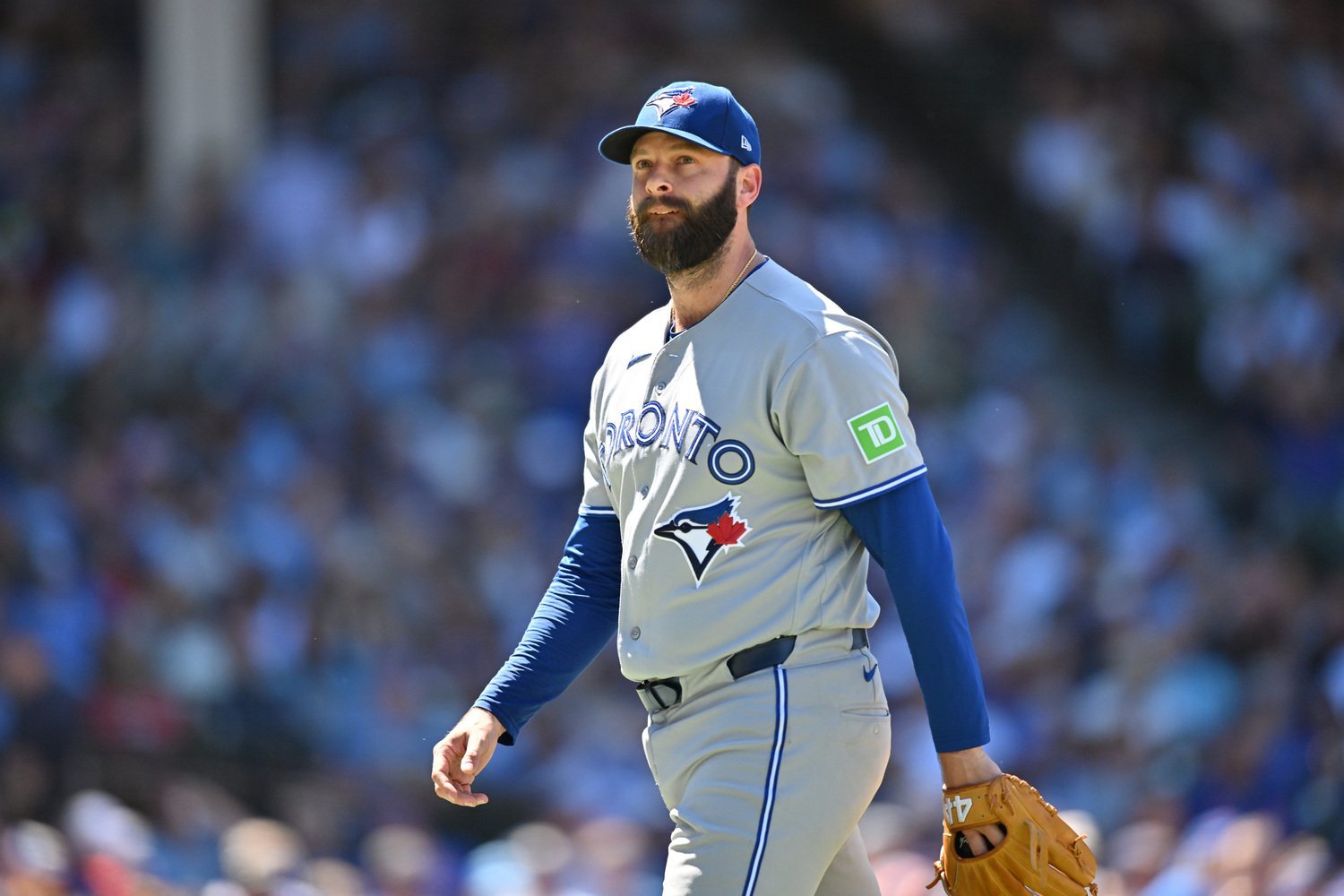 In a surprising move, the Blue Jays are trading right-handed reliever Tommy Nance to the Twins. ESPN's Alden Gonzalez was the first to report the trade. According to Sportsnet's Ben Nicholson-Smith, the Blue Jays will receive catching prospect Ryan Sprock in exchange for Nance. This news might concern Blue Jays fans with the implication that the team will be selling at the deadline. However, it's more likely that they simply got an offer that they decided was too good to pass up for a middle reliever who's out of options. If the Jays pursue bullpen upgrades later this month, there's a good chance Nance would have been out of a job anyway, and this move guarantees the Blue Jays don't lose him for nothing. View the full article
 -
Bryse Wilson Returns To Brewers, His Third Team In 3 Weeks
DiamondCentric posted an article in Brewer Fanatic
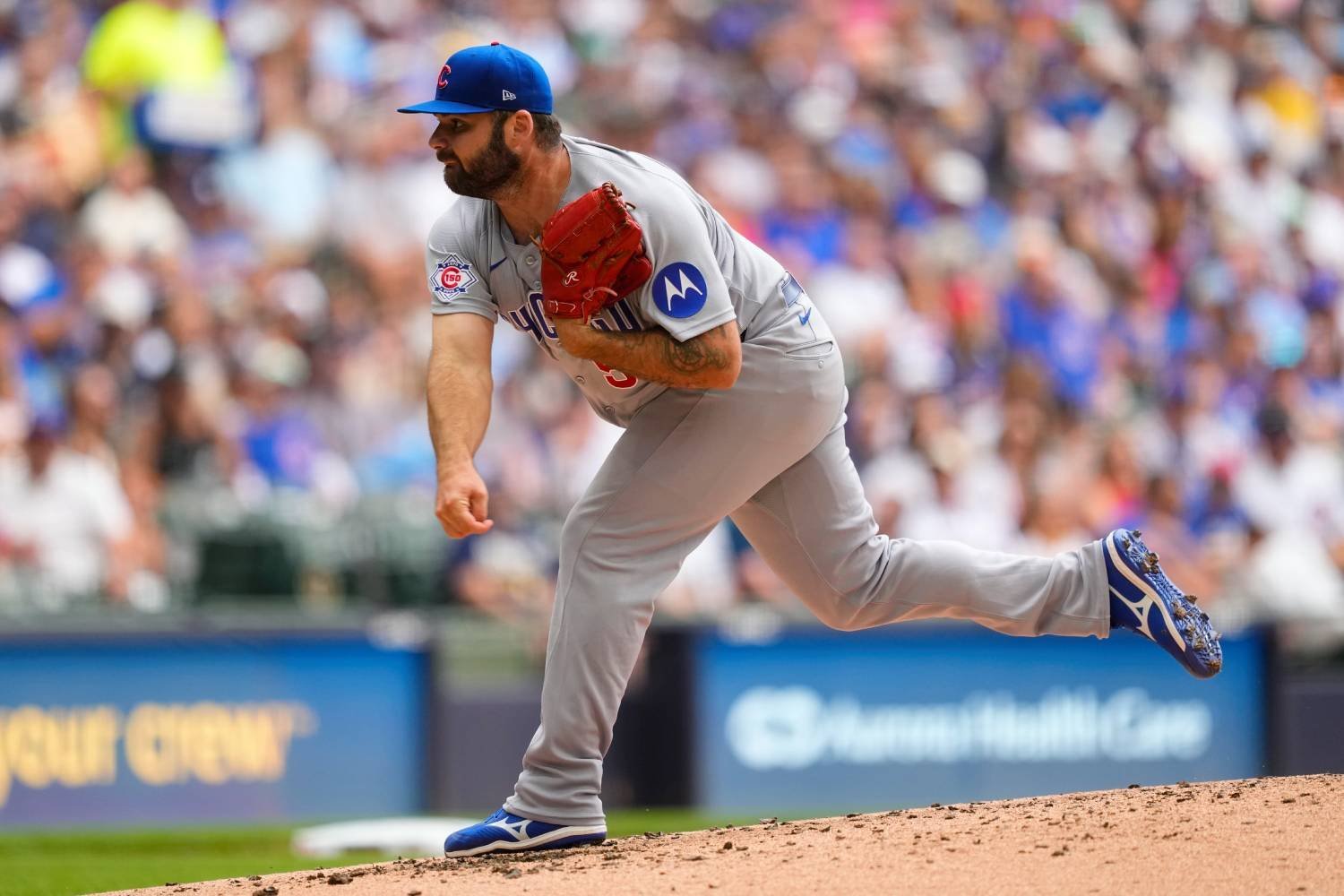 The 2026 Bryse Wilson tour is making a stop in Milwaukee. The right-handed reliever signed a major-league contract with the Milwaukee Brewers on Friday. Left-handed reliever Drew Rom was optioned to Triple-A Nashville and right-handed reliever Easton McGee was designated for assignment. Not only is Wilson back with the Brewers for a second time in his career, but Milwaukee marks his third team in the past three weeks. Wilson was designated for assignment by the Philadelphia Phillies on June 22, then claimed off waivers by the Chicago Cubs two days later. The Cubs then DFA'd Wilson on Saturday and he went unclaimed and chose to become a free agent. Now he is with the Brewers, the team he pitched for in the 2023 and 2024 seasons. As a former starter, Wilson provides length out of the bullpen. He has made just three relief appearances in the majors since being called up by the Phillies on June 18 after he triggered an upward-mobility clause in his contract. Wilson has pitched 9⅔ innings, allowing seven runs on 13 hits with two walks and eight strikeouts. No doubt he is looking to rediscover the magic he found with the Brewers, when he made 87 appearances (nine starts) over 181⅓ innings, posting a 4.68 FIP (3.42 ERA) with a 7% walk rate and 18.9% strikeout rate. Rom made five appearances with the Crew, going 5⅔ innings, walking four (14.8%) and striking out 11 (40.7%). McGee was on the verge of making the Brewers' Opening Day roster when they acquired Jake Woodford in a trade with the Tampa Bay Rays. Instead, McGee was optioned to Triple-A, where he has spent most of the season. He was called up twice and made two appearances, allowing no runs on one hit with one walk and one strikeout. View the full article
 -
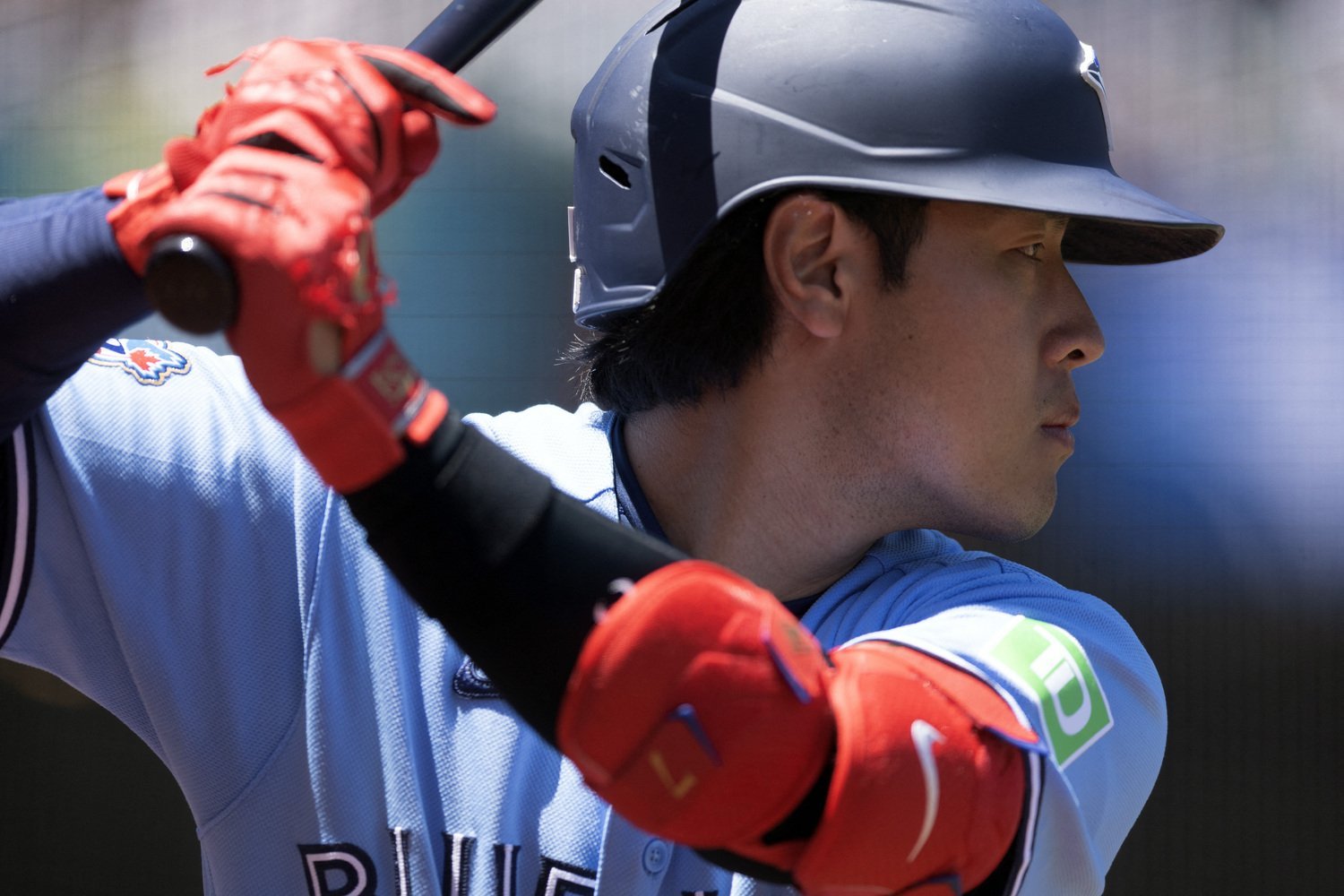 Kazuma Okamoto is not only the lone Toronto Blue Jay with at least 10 homers this season, but he’s clear of 20 home runs, and he just ripped his first career grand slam in MLB. Let’s break down the science behind his power and how sustainable his pace is in Toronto. Kazuma Okamoto's Background and Skill Set Okamoto is a 30-year-old third baseman who is on pace for nearly 40 homers in his first taste of big league action. He leads the Blue Jays in a variety of slugging-related categories, and his 21 long balls are 12 clear of any other Jays player with a couple of months to go in the season. While having a 6-foot-1, 220-pound frame certainly helps with power generation, there’s plenty more to the Japanese superstar’s power surge. Quality of Contact Unless somebody plays in a very hitter-friendly ballpark, quality of contact is a prerequisite to putting up the stat line Okamoto has through his first 90 MLB games. In his case, everything starts with bat speed. Okamoto’s 73.2 mph average bat speed is well above the league average, slotting him in the 64th percentile among big league hitters (per Baseball Savant). That bat speed has helped Okamoto in a variety of categories, but essentially any stat implying that he’s piecing up a baseball is lighting up for the 30-year-old rookie. Okamoto is thriving partially thanks to a 14.3 percent barrel percentage (87th percentile), 47.5 percent hard-hit rate (82nd percentile) and 91.3 mph average exit velocity (83rd percentile). Exit velocity dictates a ton, and combining that with a 16.6 degree average launch angle has helped the Jays’ third baseman put on a remarkable power display in his first big league season. Pitch Type Tendencies Okamoto has primarily succeeded against the four-seam fastball, logging his best batting average (.298) against any pitch that he’s seen at least 50 times. The cutter, which he’s seen 150 times, has been his kryptonite, as the Japanese corner infielder has managed just one hit over 21 plate appearances ending in a cutter, with a 46.0 percent whiff rate. Changeups and curveballs have also given him fits, as he’s hitting just .182 and .167 against each of those offspeed offerings. Fluctuating Bat-to-Ball Skills While the Jays’ thrasher has had his fair share of extra-base hits (32 through 90 games, to be exact), his plate approach has its holes, to say the very least. His 8.9 percent walk rate (48th percentile) isn’t too poor, and he isn’t chasing very often, just 26.3 percent of the time (70th percentile), yet the 30-year-old has abysmal strikeout numbers. He is punching out 30.9 percent of the time (10th percentile), primarily due to a 33.6 percent whiff rate (8th percentile). The good news is that he isn’t chasing; now it’s just about hitting in-zone offspeed pitches at a higher clip. Is Kazuma Okamoto's Success Sustainable? This is year one, but as opposing teams get more domestic film on Okamoto, the question becomes whether or not he can keep performances like this up. If his plate discipline were poor, it’d be one argument against him, but Okamoto isn’t venturing out of the zone a ton. As he sees more breaking balls in the zone, and attacks them, the hand-eye coordination and muscle memory should soon join an already mature approach at the dish. The bat speed, hard-hit rate and correct habits are all in place for him to be an everyday masher for years to come. View the full article
 -
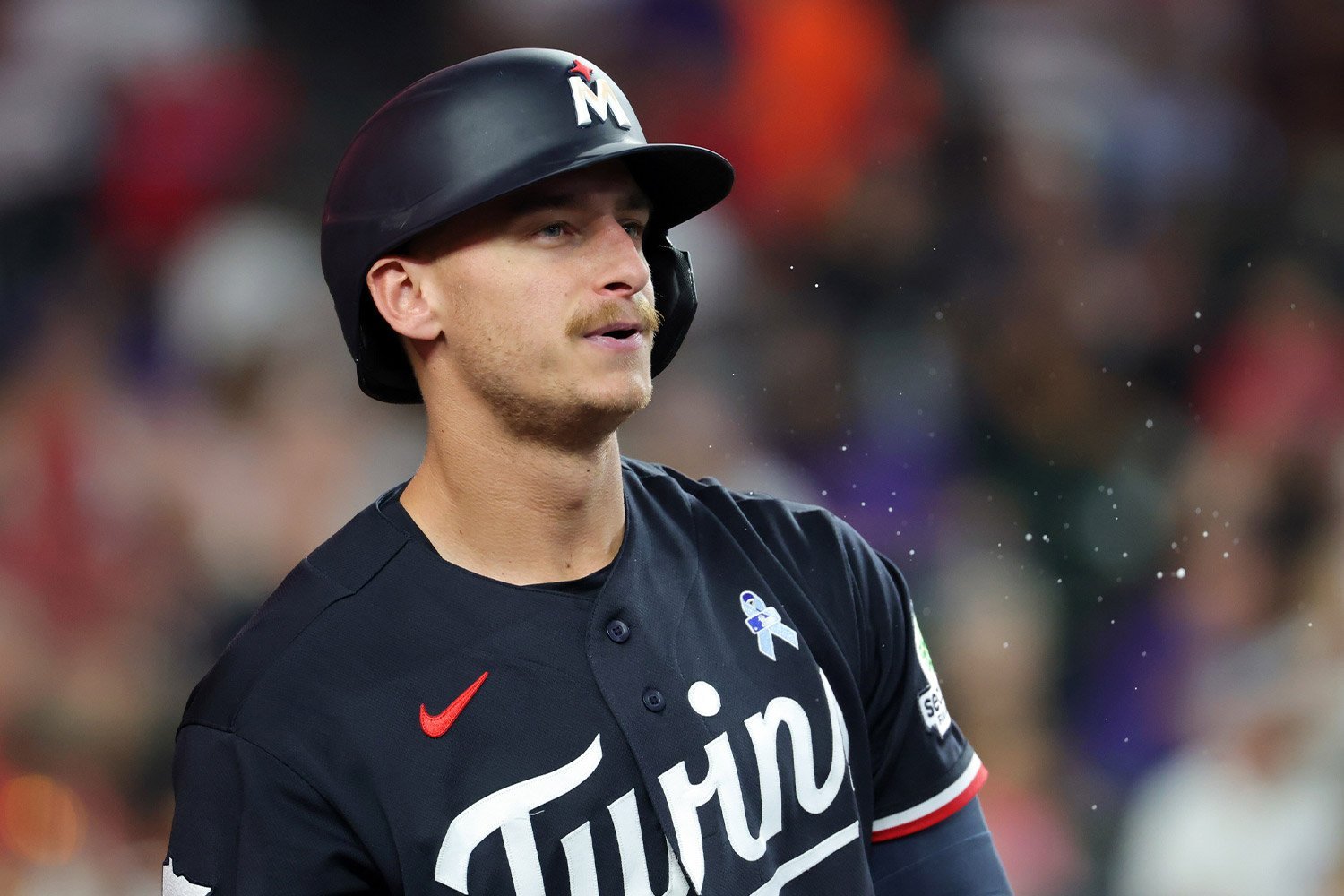 The Twins have optioned outfielder Kyler Fedko to Triple-A after Thursday's loss against Cleveland. This likely makes room for Ryan Jeffers to return from the injured list in the upcoming series against the Angels. Fedko was on the major league roster for about three weeks, where he played in 14 games, going 0-16 with eight strikeouts. His first major league hit will have to wait, as he will be back with Triple-A St. Paul this weekend. He was mostly used as a pinch runner and defensive replacement in his appearances with the Twins. View the full article
 -
 Randy Holt and Steve Drumwright look back at a terrible series against the Dodgers that ended on a good note, then at what happened in the Diamondbacks series, which started on a sour note but recovered. Then Randy and Steve discuss the state of the Padres' season and whether it is over or if there is still some hope entering this weekend's series against the Blue Jays. And if it is over, who are the likely trade candidates? In the minors, Ethan Salas and Kash Mayfield will play in the Futures Game on Sunday, while more prospects are incoming with the MLB Draft this weekend before the All-Star break hits. Listen on Apple Podcasts: https://podcasts.apple.com/us/podcast/padres-mission-podcast/id1896922834 Listen on Spotify: https://open.spotify.com/show/033xclmydmbLmEp0exYuYz Listen on iHeartRadio: https://www.iheart.com/podcast/1333-padres-mission-podcast-336930560 Watch on YouTube: https://www.youtube.com/@padresmission View the full article
 -
 Boston Red Sox Affiliate Recap Triple-A Worcester Red Sox Season Record: 44-42 A couple of big innings from Worcester gave them eight runs, as the pitching staff just held on to an 8-7 final score against the Red Wings. Worcester did all its scoring in a two-inning burst: a five-run third followed by a three-run fourth to go up 8-1. Andrew Knizner had a 1-for-4 day while delivering a clutch hit in the third inning, clearing the bases with a double and getting gunned out at third base trying to stretch a triple. Nick Sogard was the catalyst, going 2-for-3 with a double, two RBIs and a walk out of the two-hole, including a two-run ground-rule double in the fourth that extended Worcester’s lead to 7-1. Tyler McDonough added a 2-for-3, two-run afternoon at the bottom of the order. The lineup racked up nine hits, with Braiden Ward, Mickey Gasper, and Max Ferguson each tallying singles and scoring. It was a bullpen game for Worcester that got tense late. Osvaldo Berrios was solid in his three-inning start, only giving up one run. Tyler Uberstine settled things down while earning the win (1-0), spinning three innings of one-run ball with three strikeouts. The back end of the bullpen wobbled; Tyler Samaniego gave up two in the seventh, and Alec Gamboa surrendered a run in the eighth as Rochester clawed back with one in the sixth, two in the seventh, and three in the eighth to make it 8-7. But Gamboa ended the game in the ninth unscathed to preserve the one-run win. Standout Performances: Nick Sogard: 2-for-3, 2B, 2 R, 2 RBI, BB Andrew Knizner: 1-for-4, 2B, 3 RBI Double-A Portland Sea Dogs Season Record: 44-39 The Sea Dogs made a brief comeback but fell apart, getting blown out 15-8 against the Fisher Cats (Toronto Blue Jays). Portland smacked three homers and put up eight runs, but it was nowhere near enough due to the pitching staff struggling. Nate Baez had a big day, going 1-for-3 with a three-run homer. Brooks Brannon put together a 2-for-3 game, including a two-run shot as part of a 2-for-4, two-RBI, two-run game, and Franklin Arias also went deep late in the game (his 18th of the season). Johanfran Garcia stayed productive with a 2-for-4 day with an RBI. Caden Rose chipped in with an RBI double. The Sea Dogs answered New Hampshire's early 4-0 lead with a run in the second (Garcia RBI single), three in the fourth (Brannon two-run homer, Rose RBI double) and three in the fifth (Baez three-run homer) to briefly claw within striking distance 7-9; unfortunately, it all fell apart right after. The pitching is where this one got away. After being ranked the best pitcher for Talk Sox in the Red Sox farm system in June, starter Gage Ziehl took the loss and got hammered, allowing eight earned runs on seven hits over three innings, including the Fisher Cats' four-run first and part of their five-run fourth. Reidis Sena couldn't stop the bleeding either, charged with five runs (though none earned, thanks to Portland’s defense) over 2 ⅓. New Hampshire piled on six more in the eighth to blow it open, finishing with 15 runs on 16 hits. Standout Performances: Brooks Brannon: 2-for-4, HR, 2 R, 2 RBI Nate Baez: 1-for-3, HR, 2 R, 3 RBI High-A Greenville Drive Season Record: 33-48 The Drive held onto a late lead against the Grasshoppers, ending the game 5-4 The power carried Greenville, with three players going deep: Stanley Tucker's hit was the biggest, clobbering a two-run homer that gave the Drive a 4-2 lead in the seventh. Antonio Anderson and Justin Gonzales also cleared the fence in the third inning. Greenville scattered eight hits, one coming from eight different hitters with plenty of extra-base pop; Isaiah Jackson, Yoeilin Cespedes and Gerardo Rodriguez each doubled. Greenville built its runs in chunks: two in the third, two in the seventh and one in the eighth to stay a step ahead. It was a clean game on the mound for Greenville. Joe Vogatsky started the game and threw a solid 3 ⅓ innings and six strikeouts while allowing two runs. Calvin Bickerstaff earned the win with 4 ⅓ strong innings, allowing one hit with an earned run while striking out five and walking no one. Steven Brooks closed it out for his sixth save, working a 1 ⅓ inning finish. The staff combined for an astonishing 12 strikeouts and zero walks, a big reason the Drive survived despite Greensboro's late push. Standout Performances: Calvin Bickerstaff: 4 ⅓ IP, 1 H, 1 ER, 5 K Stanley Tucker: 1-for-4, HR, R, 2 RBI Low-A Salem RidgeYaks Season Record: 34-49 The RidgeYaks suffered a tough 5-10 defeat to the Columbia Fireflies. Salem struggled to bring in runs with runners in scoring position, going 1-for-12. The RidgeYaks' bats were busy, but they were not efficient; 10 hits and 11 runners were left on base. Adonys Guzman provided the pop, going 2-for-4 with a home run and an RBI single. Skylar King set the table with a hit, a walk, and two runs at leadoff. D'Angelo Ortiz and Avinson Pinto each collected two hits as well, while Ilan Fernandez collected a double. Salem made it interesting with a run in the first, two in the third, and one in the fifth, but the pitching staff fell apart. The RidgeYaks brought in a run in the eighth with an RBI groundout, but that was never going to be enough. The pitching is what unraveled. Jacob Mayers started on the mound and took the loss, getting charged with four earned runs over 3 ⅔ innings with five strikeouts. The middle innings blew it open: Brady Tygart was tagged for five runs (four earned) on five hits and four walks in just two innings. The staff issued nine walks on the night, and the two errors did not help. View the full article
 -
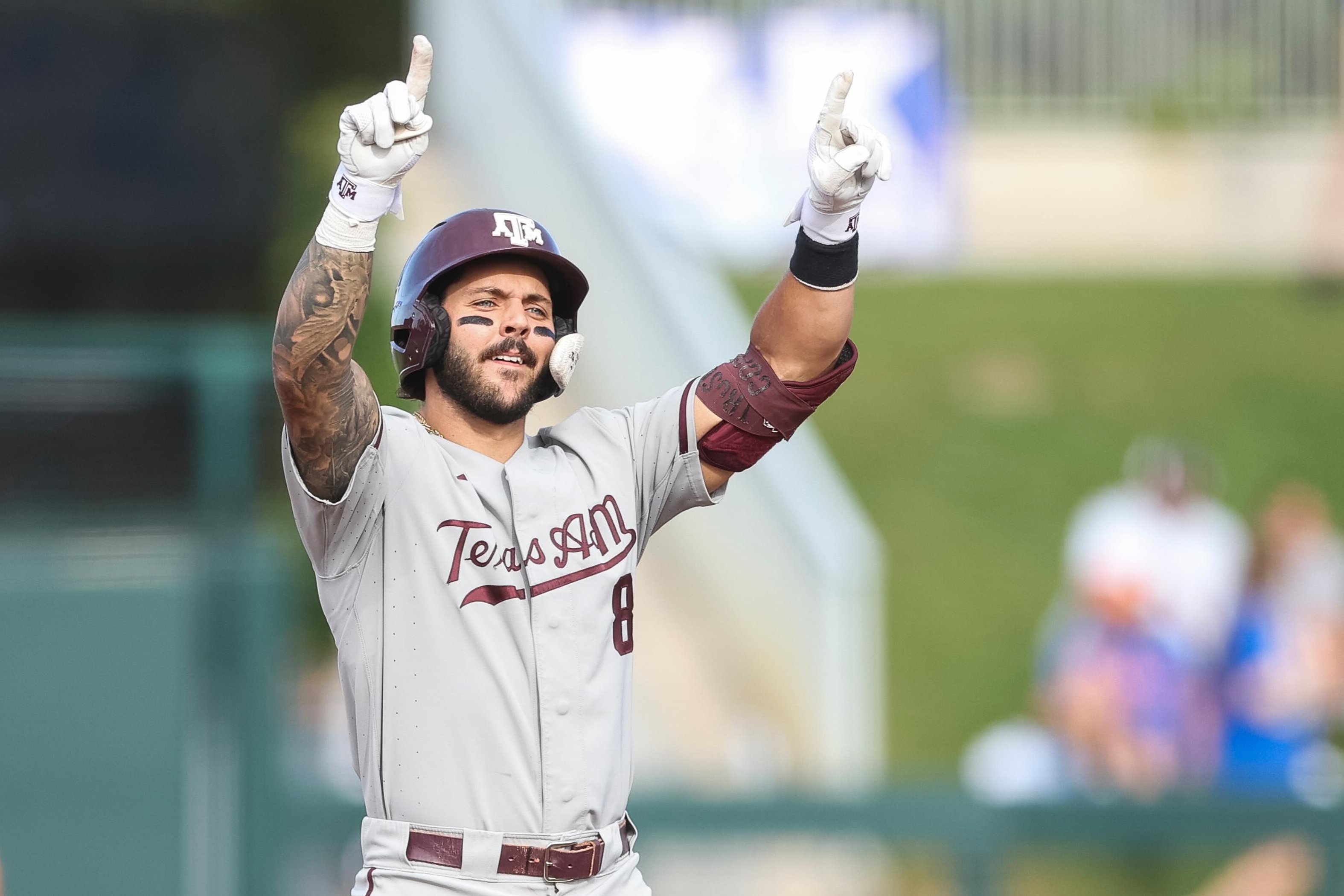 The Miami Marlins have the 14th overall pick in the first round of the 2026 MLB Draft, being held in Philadelphia on Saturday afternoon. This year, it seems like everything is on the table for the Marlins. I could see them grabbing a college bat/pitcher, but there could be some elite high school available in that range as well. It has become clearer which prospects are likely to be off the board by the time the Fish are on the clock. Let's focus on my top five realistically available options. 1. 2B Chris Hacopian Personally, I believe the Marlins are more likely than not to draft a collegiate hitter with their first pick. With that said, I think Chris Hacopian would be an excellent choice. Chris Hacopian is a 6’1”, 210-pound middle infielder who played at Texas A&M University. While he started his collegiate career at Maryland, Hacopian had a strong 2026 season in the SEC against some of the best pitchers in the country. During his collegiate career, Hacopian had a .339/.449/.604 career slash line. In the 2026 season, Hacopian slashed .319/.405/.578 with 53 hits, ten doubles, eleven home runs, 41 RBIs, 25 walks, and a .983 OPS. Hacopian is one of the best pure hitters in this draft class. He has an advanced plate approach and discipline. His in-zone contact rate was one of the best in college baseball. Hacopian has above-average power potential that he could tap into. On the downside, he’s not a shortstop at the next level. I think he’s a good defensive second baseman and could even play some third base if necessary. 2. LHP Gio Rojas My top high school prospect for the Marlins with the 14th overall pick is left-handed pitcher Gio Rojas. The Broward County native would be an excellent addition to Miami’s farm system since he already possesses two plus pitches with above-average control. Gio Rojas is a 6’4”, 195-pound left-handed pitcher who played at Marjory Stoneman Douglas High School in Parkland, Florida. Rojas comes from a high school that has produced excellent MLB players like Anthony Rizzo, Roman Anthony, Jesús Luzardo, and others. On Perfect Game, Rojas is the third-ranked prospect and the #1 left-handed pitcher in the country. He was named a Perfect Game All-American and signed to play college baseball at the University of Miami. On the mound, Rojas possesses a three-pitch mix including his fastball, slider, and changeup. His fastball sits 92-95 mph and tops out at 98 mph with outstanding RPMs. His slider moves more like a sweeper and sits in the low-80s with spin rates in the 2,600-2,800 rpm range. As for his changeup, he doesn’t throw it often, but has a solid feel for it and will mostly use it against right-handed batters. 3. OF AJ Gracia Another collegiate option for the Marlins with the 14th pick is junior outfielder AJ Gracia, a pure hitter with more power compared to Hacopian. AJ Gracia is a 6’3”, 195-pound outfielder out of the University of Virginia. Gracia spent his first two seasons at Duke before transferring to Virginia with his old head coach. He would continue to produce at a high level for the Cavaliers. In his collegiate career, Gracia has a .317/.459/.583 career slash line. During his only season at Virginia, Gracia slashed .354/.489/.632 with 75 hits, fifteen doubles, fourteen home runs, 48 RBIs, 47 walks, and a 1.121 OPS. Gracia’s offensive profile is what grabs a lot of scouts’ attention. He has a very smooth left-handed swing with plenty of power potential. His plate discipline is very advanced, and he naturally lifts the ball with backspin. He projects as a corner outfielder in pro ball. 4. 3B Ace Reese Another SEC hitter who’s high on my preference list is junior third baseman Ace Reese. The left-handed-hitting corner infielder is one of the top power bats in this draft class and could be an excellent pick for the Fish. Ace Reese is a 6’4”, 220-pound third baseman who played at Mississippi State University. Reese started his collegiate career at the University of Houston but played his final two seasons with the Bulldogs. During his collegiate career, Reese had a .327/.419/.665 career slash line. In the 2026 season, Reese slashed .336/.432/.721 with 83 hits, 23 doubles, 24 home runs, 74 RBIs, 41 walks, and a 1.152 OPS. He was a consensus unanimous All-American. At the plate, Reese has a 60-grade power tool. Reese has already filled out his frame and is a well-put-together prospect. His offensive profile is more power-over-hit. He does have a chase issue, especially against breaking pitches. Defensively, it’s unlikely he sticks at third base. Reese is more than likely to play first base or left field in pro ball. 5. 3B Bo Lowrance The final draft prospect I have on my Marlins big board is South Carolina high school infielder Bo Lowrance. The Palmetto State infielder has been one of the biggest risers in this draft class. Lowrance is a 6’5”, 200-pound corner infielder who played at ***** Church Episcopal High School in Greenville, South Carolina. Lowrance is one of the most well-rounded high school prospects in the class. On Perfect Game, Lowrance is the 25th-ranked prospect and the second-ranked third baseman in the country. He’s also the 21st-ranked draft prospect on MLB Pipeline. Lowrance is signed to play college baseball at the University of Virginia. Lowrance has the tools and potential to be a very solid prospect for the Marlins organization. He has quality bat-to-ball skills, especially against tough competition. He will add more power to his game as he fills out his large frame. He’s a good defensive third baseman with a strong arm. However, he could outgrow that position and transition to right field eventually. View the full article
 -
 Chicago Cubs Transactions No Roster Moves Bethancourt Homers Twice, Long Goes 5-For-5 As Iowa Pounds Saints 21-7 The Iowa Cubs collected 24 hits and buried the St. Paul Saints 21-7, breaking the game open with a six-run fourth inning and piling on nine more in the eighth. Trailing 2-1 in the fourth, Christian Bethancourt tied it with a solo home run. Scott Kingery followed with a solo shot of his own, Jonathon Long added an RBI single, Owen Miller drove in a run with a double, and Moisés Ballesteros capped the inning with a two-run double for a 7-2 lead. The eighth was even bigger. Brett Bateman doubled home Bethancourt, BJ Murray and Miller added run-scoring hits, Ballesteros lined a two-run single, James Triantos singled in another run, and Bethancourt finished the nine-run frame with a three-run homer to center. Long finished 5-for-5 with a home run, two doubles, a walk, five runs scored, and two RBIs. Bethancourt went 3-for-5 with two homers and five RBIs. Murray had three hits and three RBIs, Miller doubled twice, drove in three, and had some quick defensive work. Ballesteros drove in four, and Triantos went 3-for-5 with two RBIs. Starter Josh Fleming allowed two runs over four innings, walking two and striking out two. Corbin Martin earned the win, and Liam Hendriks worked a perfect inning with a strikeout. Player AB R H RBI BB K Brett Bateman 6 3 3 1 0 2 Jonathon Long 5 5 5 2 1 0 BJ Murray 5 3 3 3 1 0 Owen Miller 5 2 2 3 0 1 Moisés Ballesteros 5 2 2 4 1 1 Chas McCormick 6 1 2 0 0 2 James Triantos 5 1 3 2 1 1 Christian Bethancourt 5 3 3 5 1 0 Scott Kingery 6 1 1 1 0 2 Player IP H R ER BB K HR Josh Fleming 4 4 2 2 2 2 0 Corbin Martin 1 1 1 1 0 0 1 Aaron Bummer 1 2 2 2 0 1 0 Collin Snider 1 2 1 1 2 0 0 Liam Hendriks 1 0 0 0 0 1 0 Antoine Kelly 1 2 1 1 1 1 0 Howard Homers, But Smokies Fall 11-2 To Biloxi The Knoxville Smokies managed just four hits and struck out 15 times in an 11-2 loss to the Biloxi Shuckers. Not much to say about the bats but the gloves had a few shining moments last night. Starter Nick Dean opened with 1 1/3 scoreless innings, walking one and striking out two. Kenyi Perez followed with 2 2/3 scoreless innings of his own, striking out three while working around three walks and three hits. The game unraveled from there. Yenrri Rojas was charged with four runs over 1 2/3 innings, walking four, and took the loss. Tyler Santana allowed four more runs over two innings, and Frankie Scalzo Jr. gave up three runs in 1 1/3 innings to close it out. The Knoxville offense broke through in the sixth inning. Ariel Armas drew a walk, moved into scoring position, and came home on an Alex Ramírez single to center to make it 6-1. In the eighth, Ed Howard lined a solo home run to left center, his second of the season, for the final Knoxville run. Howard was the lone bright spot at the plate, finishing 2-for-3 with the homer. The rest of the lineup combined for two hits, with Owen Ayers, Edgar Alvarez, and Drew Bowser each striking out three times. Jefferson Rojas went 0-for-3 with a walk. Player AB R H RBI BB K Alex Ramírez 4 0 1 1 0 0 Jefferson Rojas 3 0 0 0 1 0 Owen Ayers 4 0 0 0 0 3 Carter Trice 3 0 0 0 1 2 Edgar Alvarez 4 0 0 0 0 3 Karson Simas 4 0 1 0 0 2 Drew Bowser 4 0 0 0 0 3 Ariel Armas 2 1 0 0 1 1 Ed Howard 3 1 2 1 0 1 Player IP H R ER BB K HR Nick Dean 1 1/3 0 0 0 1 2 0 Kenyi Perez 2 2/3 3 0 0 3 3 0 Yenrri Rojas 1 2/3 1 4 4 4 4 0 Tyler Santana 2 3 4 4 4 3 1 Frankie Scalzo Jr. 1 1/3 5 3 3 2 1 1 Halbach's Three Hits, Five-Run Ninth Carry South Bend Past Cedar Rapids 9-1 The South Bend Cubs broke open a close game with a five-run ninth inning and beat the Cedar Rapids Kernels 9-1 behind a strong night of pitching. Starter Kevin Valdez allowed one run over four innings, walking one and striking out three. The bullpen did not allow a run behind him. Luis Rujano earned the win with two scoreless innings and two strikeouts, Brayden Spears added two scoreless innings of his own, and Ethan Bell finished with a scoreless ninth. South Bend scored twice in the third. After Logan Poteet singled and walks to Michael Hallquist and Christian Olivo loaded the bases, Poteet scored on a wild pitch during Josiah Hartshorn's plate appearance, and Hallquist came home on a Jose Escobar sacrifice fly. In the fourth, Hallquist singled home Matt Halbach, and Hartshorn was hit by a pitch with the bases loaded to make it 4-1. The ninth put it away. Hartshorn drove in Hallquist on a fielder's choice, Halbach followed with a two-run single, and two more runs scored on wild pitches to stretch the lead to 9-1. Halbach finished 3-for-5 with two RBIs and a stolen base. Hallquist went 2-for-4 with a double, an RBI, a walk, and two runs scored, and Hartshorn drove in two runs. Defensively of note was Angel Cepeda's play in the 6th. Player AB R H RBI BB K Christian Olivo 4 1 1 0 1 1 Josiah Hartshorn 3 1 0 2 0 1 Jose Escobar 4 0 0 1 0 2 Angel Cepeda 4 1 0 0 1 0 Matt Halbach 5 2 3 2 0 0 Miguel Useche 4 1 2 0 0 2 Logan Poteet 5 1 1 0 0 3 Justin Stransky 4 0 0 0 0 1 Michael Hallquist 4 2 2 1 1 1 Player IP H R ER BB K HR Kevin Valdez 4 2 1 1 1 3 0 Luis Rujano 2 0 0 0 0 2 0 Brayden Spears 2 1 0 0 0 2 0 Ethan Bell 1 0 0 0 0 1 0 Pelicans Strand 10, Drop 6-3 Decision To Fredericksburg The Myrtle Beach Pelicans out-hit the Fredericksburg Nationals but left 10 runners on base in a 6-3 loss. Starter Emilio Ramos took the loss despite a solid outing, allowing one run over three innings with two walks and three strikeouts. Anhuar Garcia was tagged for four runs on four hits, including two home runs, over two innings, and the deficit grew to 5-0. Jordan Henriquez kept the Pelicans in it with three innings of one-run relief, striking out five, and Henry Cone struck out all three batters he faced in a perfect ninth. Myrtle Beach got on the board in the sixth. Alexey Lumpuy walked, and when Derniche Valdez lined a double to center, Lumpuy came around to score on a fielding error by the center fielder. Eli Lovich followed with an RBI double to left, cutting the deficit to 5-2. In the eighth, Valdez singled, moved up on a Lovich single, and scored on a wild pitch during Jairo Diaz's walk. Valdez finished 2-for-4 with a double and two runs scored. Lovich went 2-for-3 with a double, an RBI, a walk, and a stolen base, and Ludwing Espinoza had three hits. Ethan Conrad went 0-for-5 with two strikeouts. Player AB R H RBI BB K Alexis Hernandez 5 0 1 0 0 0 Ludwing Espinoza 5 0 3 0 0 1 Ethan Conrad 5 0 0 0 0 2 Alexey Lumpuy 4 1 1 0 1 2 Derniche Valdez 4 2 2 0 0 1 Eli Lovich 3 0 2 1 1 0 Geuri Lubo 4 0 0 0 0 3 Jairo Diaz 3 0 0 0 1 3 Derik Alcantara 4 0 1 0 0 0 Player IP H R ER BB K HR Emilio Ramos 3 3 1 1 2 3 0 Anhuar Garcia 2 4 4 4 2 3 2 Jordan Henriquez 3 4 1 1 1 5 0 Henry Cone 1 0 0 0 0 3 0 Top-20 Prospect Performance Jefferson Rojas: 0-for-3, BB Pedro Ramirez: DNP Jaxon Wiggins: DNP Josiah Hartshorn: 0-for-3, 2 RBI, K Kevin Alcantara: DNP Ethan Conrad: 0-for-5, 2 K Kane Kepley: DNP Owen Ayers: 0-for-4, 3 K Jonathon Long: 5-for-5, 2 2B, HR, 2 RBI, BB Kaleb Wing: DNP James Triantos: 3-for-5, 2B, 2 RBI, BB, K Brooks Caple: DNP Mason McGwire: DNP Ty Southisene: DNP Will Sanders: DNP Juan Cabada: DNP Eli Lovich: 2-for-3, 2B, RBI, BB, SB Ariel Armas: 0-for-2, BB, K Jostin Florentino: DNP Grant Kipp: DNP View the full article
 -
 Back in 2024, Dakota Hawkins started the first nine-inning no-hitter in Brooklyn Cyclones history. On Thursday, he was the Cyclones' starter again as the franchise made a run at no-no No. 2. Alas, he didn't become a part of history. Wilmington's Miguel Villaroel broke up the no-hitter with two outs in the ninth, lacing a triple to right-center field off Juan Arnaud. The Blue Rocks got a two-run single from Ronny Cruz two batters later to spoil Brooklyn's shutout bid. The Cyclones did manage to grab the win, 11-2. Hawkins had the Cyclones pursuing perfection before he handed the game over to the bullpen. He retired all 18 batters he faced, striking out five. One of the outs came on a nifty fielding play by the right-hander. The Ponies added an insurance run in the seventh. Chris Suero hit his second double of the game and Jose Ramos drove him in with a single. Gordon finished one out shy of a quality start. He allowed three runs and seven hits over 5 2/3 innings. He walked two and struck out five. Brian Metoyer recorded a hold with 1 1/3 scoreless innings, Justin Armbruester struck out all three batters he faced in the eighth, Saul Garcia closed out the win with a scoreless ninth. Player AB R H RBI BB K Chris Suero 5 1 2 0 0 1 Jose Ramos 3 1 1 1 1 0 Nick Lorusso 4 1 1 0 0 2 Kevin Parada 4 1 1 1 0 1 Matt Rudick 4 2 2 3 0 0 Nick Lucky 4 1 1 0 0 2 Kevin Villavicencio 4 0 1 1 0 1 Jaylen Palmer 4 0 0 0 0 3 Nick Roselli 4 0 1 1 0 1 Player IP H R ER BB K HR R.J. Gordon (W, 1-5) 5 2/3 7 3 3 2 5 0 Brian Metoyer (H, 4) 1 1/3 1 0 0 1 2 0 Justin Armbruester 1 1 0 0 0 3 0 Saul Garcia 1 1 0 0 0 1 0 Cyclones Give Hawkins Loads Of Support Brooklyn hitters made Hawkins' night a lot easier as they staked him to a 4-0 lead in the first. John Bay popped a three-run shot with one out to open the scoring. The next batter, Daiverson Gutierrez, followed with a solo shot. Gutierrez finished 3-for-3 with three RBIs. Mitch Voit had a huge night at the plate from the leadoff spot. He reached base in all five of his plate appearances with two hits, a walk and a hit by pitch, drove in three runs, and stole three bases. The No. 7 prospect on Grand Central Mets' Top-20 list is now up to 30 steals for the season. He's also sporting a .777 OPS. Player AB R H RBI BB K Mitch Voit 2 2 2 3 2 0 Yonatan Henriquez 4 1 1 0 1 2 JT Benson 5 1 1 0 0 1 John Bay 4 2 2 3 0 0 Daiverson Gutierrez 3 2 3 3 0 0 Yohairo Cuevas 4 1 1 0 0 2 Trace Willhoite 3 0 0 0 1 2 Colin Houck 4 1 0 1 0 2 Sam Biller 4 1 1 0 0 1 Player IP H R ER BB K HR Dakota Hawkins (W, 3-0) 6 0 0 0 0 5 0 Cristofer Gomez 1 0 0 0 1 0 0 Ryan Dollar 1 0 0 0 0 2 0 Juan Arnaud 1 2 2 2 2 1 0 Jimenez Has Up-And-Down Day For St. Lucie First, the good from Antonio Jimenez: He hit his third home run in four games, a two-run shot in the third that put the Mets ahead, 2-1. He's 10-for-18 (.556) during his current four-game hitting streak. Now, the bad: He committed two throwing errors at third base. His first one came on a run-scoring fielder's choice in the bottom of the third. The misplay helped Jupiter put together a four-run inning and take the lead for good. A throwing error by Peña on a potential double play in the fourth brought in two more Jupiter runs. Christian Rodriguez started and took the loss, allowing five runs and eight hits over three innings. Jackson Hauge drove in the final St. Lucie run with a single in the fourth, scoring AJ Salgado. Peña, Branny De Oleo, and Francisco Toledo each collected two hits. Player AB R H RBI BB K Antonio Jimenez 5 1 1 2 0 1 Elian Peña 4 0 2 0 0 1 Trey Snyder 4 0 0 0 0 1 Julio Zayas 3 0 0 0 1 1 AJ Salgado 3 1 0 0 1 1 Branny De Oleo 4 0 2 0 0 1 Francisco Toledo 4 0 2 0 0 1 Jackson Hauge 4 0 1 1 0 2 Jack Scanlon 4 1 1 0 0 1 Player IP H R ER BB K HR Christian Rodriguez (L, 3-3) 3 8 5 5 0 5 1 Joe Scarborough 1 2/3 3 4 3 1 1 1 Caden Wooster 1 1/3 4 4 3 2 2 1 Luis Alvarez 1 1/3 2 2 0 3 3 0 Taylor Darden 2/3 0 0 0 0 0 0 Top-20 Prospect Performance Jonah Tong: 5 IP, 4 H, 4 ER, 3 BB, 8 K Jack Wenninger: DNP Ryan Clifford: 2-for-5, 2B, HR, 3 RBI, K Elian Pena: 2-for-4, K Nick Morabito: 2-for-4, RBI, BB, K Jacob Reimer: DNP Mitch Voit: 2-for-2, HR, 3 RBI, 2 BB, 3 SB Jonathan Santucci: DNP Zach Thornton: DNP Chris Suero: 2-for-5, 2 2B, SB, K Will Watson: DNP Wandy Asigen: DNP Eli Serrano III: DNP Randy Guzman: DNP Dylan Ross: DNP Ryan Lambert: DNP Antonio Jimenez: 1-for-5, HR, 2 RBI, K R.J. Gordon: 5 2/3 IP, 7 H, 3 ER, 2 BB, 5 K Jonathan Pintaro: DNP Marco Vargas: DNP View the full article
 -
2026 MLB Draft Preview, & Woodruff Heads Back To IL
DiamondCentric posted an article in Brewer Fanatic
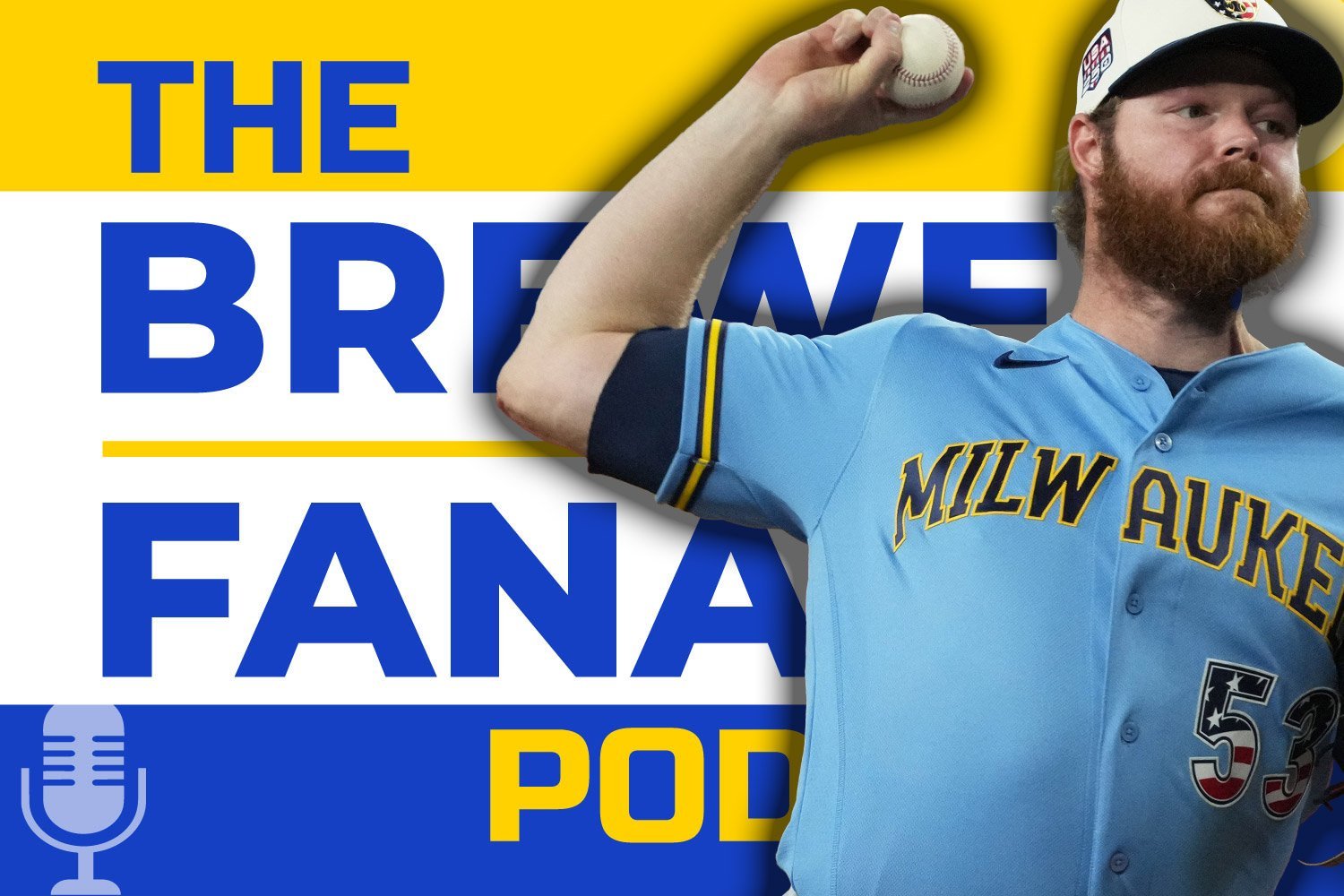 The guys are joined by Jamie Cameron of Destination: The Show to preview the 2026 MLB Draft before reacting to Brandon Woodruff's latest shoulder injury and successful stops in Arizona and St. Louis on the road trip. Apple Podcasts: https://podcasts.apple.com/us/podcast/the-brewer-fanatic-podcast/id1740648724 Spotify: https://open.spotify.com/show/5CY8mWsQayqjDXqw9OT2Td iHeartRadio: https://www.iheart.com/podcast/263-the-brewer-fanatic-podcast-166534588/ Pocket Casts: https://pca.st/ommzz627 Watch On YouTube: https://www.youtube.com/@brewerfanatic View the full article
 -
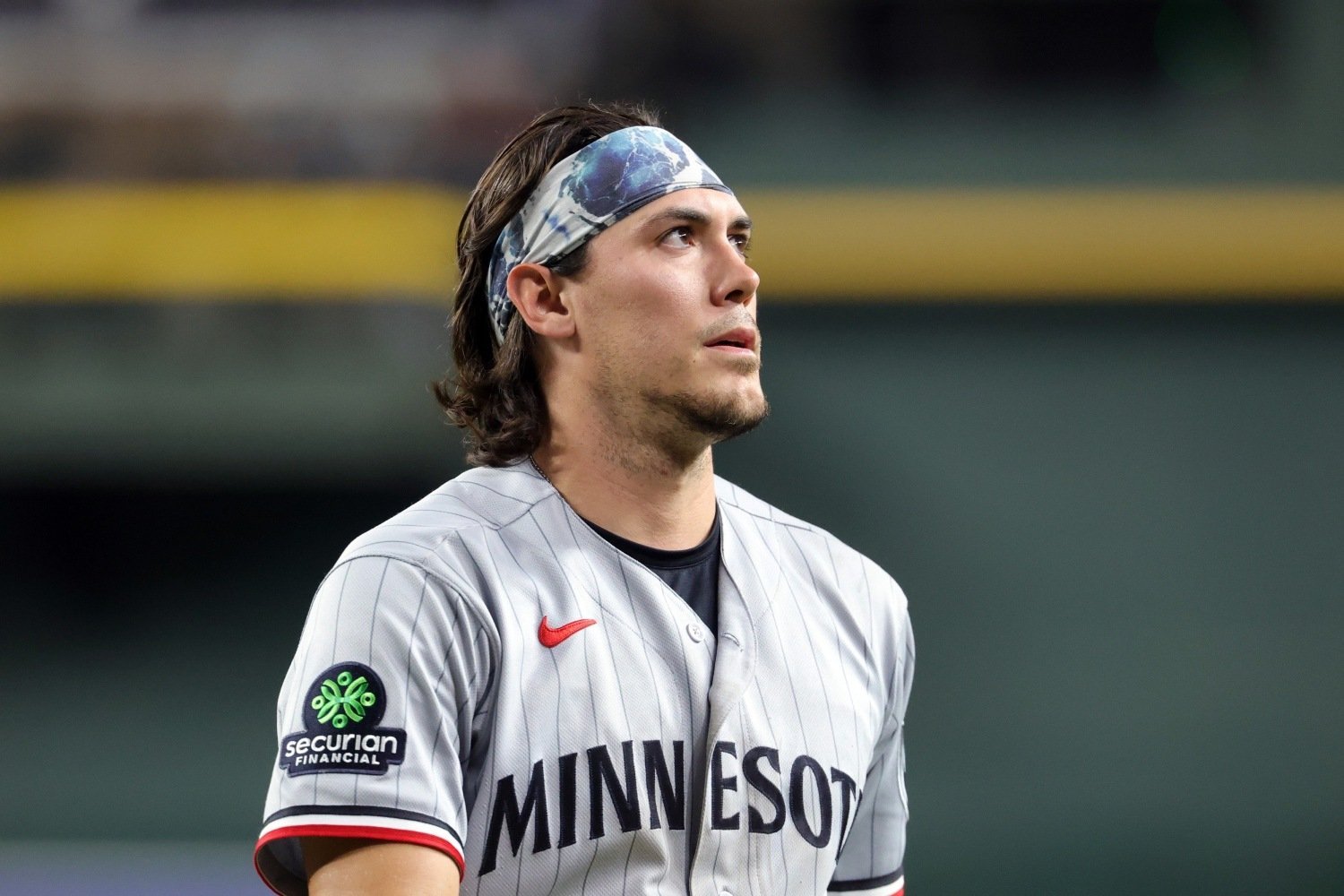 It feels like the writing is on the wall for Tristan Gray. When the Twins acquired Gray from the Red Sox this winter, the expectations weren't particularly high. He wasn't viewed as a player who was going to dramatically change the roster or suddenly become an everyday contributor. If everything broke right, the best-case scenario was probably that he'd earn an Opening Day roster spot as a depth infielder capable of filling in around the diamond. And that's exactly what happened. Not only did Gray make the Opening Day roster, but for a little while, it actually looked like the Twins may have stumbled onto a hidden gem. Through May 5 (albeit in a very small sample of just 61 plate appearances), Gray was hitting .273 with three home runs and a 112 wRC+. For a player who was expected to simply provide depth, that kind of production was more than enough to catch people's attention. It wasn't just the numbers, either. Gray delivered in several big moments early in the season, including a grand slam in the Twins' home opener that put the game on ice. He came through when the team needed him, and suddenly there was real excitement surrounding a player whom hardly anyone expected much from just a few weeks earlier. At the same time, Brooks Lee was enduring a miserable start to the season. With Lee struggling to find any consistency at the plate, there was a legitimate argument to be made that Gray had earned a larger role. In fact, for a brief stretch, there was a reasonable case that he should take over as the Twins' primary shortstop. It's funny how quickly things can change over the course of a baseball season. Since May 6, it's been almost nothing but downhill. Over that stretch, Gray is hitting just .202 with a .510 OPS. His wRC+ has plummeted from a comfortably above-average mark all the way to a dreadful 39, and the underlying numbers don't paint a much prettier picture, either. He's making very little hard contact, which makes it incredibly difficult to produce consistently even when he does put the ball in play. Unfortunately, he isn't putting the ball in play nearly enough. On the season, Gray owns a strikeout rate of 31.8%, an alarmingly high number that has made it nearly impossible for him to sustain any offensive success. He's not making enough contact, and when he does make contact, he's not doing enough damage with it. To make matters worse, he isn't offsetting those strikeouts by drawing walks, either. His on-base ability has been minimal, leaving him without another avenue to contribute offensively. Just to be blunt, there's really nothing Gray is doing particularly well at the plate right now. Unfortunately for both him and the Twins, the blemishes don't stop there. If Gray were providing elite defense, perhaps you could live with some of the offensive shortcomings. Plenty of utility infielders have carved out long major-league careers by providing defensive value despite light bats. That hasn't been the case here. Gray currently grades out at -5 runs, and he's shown very little range in the infield throughout the season. Too many balls that should be converted into outs have found their way through the infield. Despite not being an everyday player, Gray is tied for the most errors among all Twins fielders with eight. When you're struggling offensively and not providing much value defensively, it becomes incredibly difficult to justify a roster spot. At this point, nothing about Gray's profile suggests he's a major league-quality player. Luckily for him, though, baseball has a funny way of opening unexpected doors. For what feels like most of the season at this point, shortstop Kaelen Culpepper has looked like he was on the verge of receiving his first call to the major leagues. The Twins' No. 2 prospect has continued to impress at Triple-A, and many fans have been anxiously waiting for the organization to give him an opportunity. Culpepper's glute has had other plans, however. He already spent a couple of weeks on the injured list in June because of the issue, and earlier this week, he landed back on the IL after the injury flared up again. It's an unfortunate development all around. It's obviously not ideal for Culpepper, who now has to put his major-league debut on hold while he works his way back. It's not ideal for Twins fans who have been eager to see one of the organization's top prospects finally arrive in Minnesota. And, somewhat ironically, it's probably the best thing that could’ve happened to Tristan Gray. With Culpepper sidelined, the Twins probably have quite as much urgency to make a change at shortstop. Gray will likely stick around a little longer, simply because the player many expected to replace him isn't currently available. But if Gray plans to remain in the major leagues beyond Culpepper's return, things are going to have to change—and they'll have to change drastically. The Twins can only wait so long for his offense to rebound. They can only overlook so many strikeouts, so many weakly hit balls, and so many defensive mistakes before deciding they need a different option. For a brief moment earlier this season, Gray looked like one of the best stories on the roster. He exceeded expectations, delivered some memorable moments, and even forced his way into conversations about earning a larger role. But baseball seasons are long, and early-season success only buys you so much time. Eventually, you have to keep producing, and right now, Tristan Gray simply isn't. His roster spot has been given a temporary lifeline because of circumstances outside of his control, but temporary is the key word. You might be able to delay the inevitable, but you can't stop it. View the full article
 -
 While still jockeying for a spot in the postseason, the Chicago Cubs’ front office turns its attention to the amateur level this weekend for the MLB Draft. While none of the players selected this weekend are likely to impact the postseason push, the Cubs do recognize that they need to shore up the pitching in their system. Last year, the Cubs went with Wake Forest outfielder Ethan Conrad with the 17th overall pick. In 2024, they selected Florida State third baseman Cam Smith with the 14th pick, then traded him that December to the Houston Astros in the Kyle Tucker blockbuster. Right-hander Cade Horton was the last pitcher taken by the Cubs in the first round, picking him out of Oklahoma in 2022. The draft begins with the first four rounds Saturday, then finishing Sunday with Rounds 5 through 20. TV coverage begins at noon CT on NBC and Peacock, with it switching to MLB.com, MLB Network, MLB.tv and MLB+ at 1:30 p.m. Sunday’s telecast begins at 10:30 a.m. CT on MLB.com, MLB.tv and MLB+. The Cubs have the 23rd pick in the first round, with five picks total on the first day. The extra pick comes courtesy of Tucker signing with the Los Angeles Dodgers after receiving a qualifying offer, giving the Cubs the final pick of the second round at No. 75. The Cubs’ pool this year is $9,644,100. While there are slot values assigned to each pick in the first 10 rounds, teams can sign players for any amount as long as it fits into their pool. Deals are often made with certain players in order to redistribute money to another player. Teams can spend up to 5% more than their draft pool without incurring a penalty. The Cubs are one of three teams to surpass their bonus pool each of the 14 years under this system (the Los Angeles Dodgers and San Francisco Giants are the others). No team has ever spent more than 5% while this rule has been in place. Last year, 20 of 30 teams surpassed their bonus pool. Here are the slot values for each of the Cubs’’ picks: First round (23rd pick): $3,947,600 Second round (62nd): $1,487,200 Second round (comp., 75th): $1,120,900 Third round (98th): $800,000 Fourth round (126th): $609,200 Fifth round (159th): $441,300 Sixth round (188th): $344,400 Seventh round (217th): $272,000 Eighth round (247th): $224,100 Ninth round (277th): $204,100 10th round (307th): $193,300 Players drafted in the 11th through 20th rounds do not technically have a slot value, although they are soft-capped at $150,000 without counting toward the bonus pool. Any amount above $150,000 will go against the cap. That amount also applies to undrafted free agents. Teams have until July 27 at 4 p.m. CT to sign their draft picks. Who should the Cubs take with their top pick? View the full article
 -
 The Royals' system went 3-for-4 on Thursday. Carson Roccaforte homered and drove in three as Northwest Arkansas rolled, with Hunter Patteson earning the win over five innings. Blake Wolters picked up the win behind Quad Cities' 18-run outburst, powered by Blake Mitchell and Ramon Ramirez. Jose Gutierrez earned the win as Hyungchan Um drove in four runs for Columbia. Brett Squires homered, but Omaha fell at Louisville. Sam Kulasingam added a home run for Northwest Arkansas. Royals Transactions No Roster Moves Storm Chasers Rally Falls Short In 11-7 Loss At Louisville The Omaha Storm Chasers erased a four-run deficit with a five-run fourth inning, but the Louisville Bats regained the lead an inning later and pulled away for an 11-7 win on Thursday. Trailing 4-0 in the fourth, Omaha put together its biggest inning of the night. With one out, Vinnie Pasquantino singled, Matthew Lugo doubled, and Squires followed with a three-run home run, his 11th of the season, to pull the Storm Chasers within 4-3. Abraham Toro singled later in the inning, Elih Marrero doubled, and Andrew Velazquez drove both home with a two-run single, giving Omaha a 5-4 lead. The lead did not last. Louisville tied the game in the bottom of the fourth on a double, then scored three runs in the fifth on a forceout, a bases-loaded hit by pitch, and a sacrifice fly. The Bats added three more in the eighth on three consecutive run-scoring singles. Starter Ryan Ramsey struggled with his command, allowing five runs on three hits and five walks, with four strikeouts, over 3 1/3 innings. Oscar Rayo took the loss, allowing three runs in 2 2/3 innings. Squires finished 2-for-5 with three RBIs. Marrero went 2-for-5 with a double and drove in a run in the eighth, and Brandon Drury added an RBI single in the ninth. Omaha left 10 runners on base and went 5-for-15 with runners in scoring position. The Storm Chasers are now 38-51. Player AB R H RBI BB K Rudy Martin Jr. 4 0 2 0 1 1 Gavin Cross 5 0 2 0 0 0 Vinnie Pasquantino 5 1 2 0 0 2 Peyton Wilson 0 1 0 0 0 0 Matthew Lugo 3 1 1 0 2 1 Brett Squires 5 1 2 3 0 2 Abraham Toro 5 2 1 0 0 0 Brandon Drury 5 0 1 1 0 1 Elih Marrero 5 1 2 1 0 1 Andrew Velazquez 3 0 1 2 1 0 Player IP H R ER BB K HR Ryan Ramsey 3 1/3 3 5 5 5 4 0 Oscar Rayo 2 2/3 4 3 3 2 2 0 Andrew Pérez 2 5 3 3 1 4 0 Roccaforte's Three-Run Homer Powers Naturals Past Wichita, 13-6 The Northwest Arkansas Naturals jumped on the Wichita Wind Surge early and never trailed, rolling to a 13-6 win behind a five-run fourth inning on Thursday. Northwest Arkansas scored three times in the first. Roccaforte, the Royals' No. 8 prospect at Royals Keep, walked to open the game. Later, Sam Kulasingam doubled him home, Spencer Nivens singled in Kulasingam, and Daniel Vazquez, the Royals' No. 18 prospect, added an RBI single. Canyon Brown made it 4-0 with a solo home run in the second. The Naturals broke the game open in the fourth. Alberto Rodriguez doubled and scored on a double by Brown, a pitch hit Justin Johnson, and Roccaforte hit a three-run home run, his 17th of the season. Kulasingam followed two batters later with a solo homer, his seventh, to make it 9-1. Roccaforte finished 1-for-3 with three runs scored, three RBIs, two walks, and a stolen base. Kulasingam went 2-for-3 with two walks, and Brown went 3-for-5 with three runs scored and two stolen bases. Patteson earned the win, allowing two runs on five hits with three walks and three strikeouts over five innings. Frank Mozzicato allowed two runs in one inning of relief, and Augusto Mendieta threw two scoreless innings. The Naturals tacked on two in the sixth, when Brown came home on a catcher's error during a single by Jack Pineda, and Roccaforte scored on a sacrifice fly by Nivens. Jorge Alfaro tripled in a run in the ninth, and Vazquez singled him home. Northwest Arkansas left only four runners on base and went an eye-popping 8-for-10 with runners in scoring position. The Naturals improved to 34-48 after the victory, their second straight. Player AB R H RBI BB K Carson Roccaforte 3 3 1 3 2 1 Jack Pineda 5 0 1 0 0 0 Sam Kulasingam 3 3 2 2 2 0 Spencer Nivens 4 1 1 2 0 0 Jorge Alfaro 5 1 1 1 0 2 Daniel Vazquez 5 0 2 2 0 1 Alberto Rodriguez 5 1 1 0 0 3 Canyon Brown 5 3 3 2 0 0 Justin Johnson 3 1 0 0 0 1 Player IP H R ER BB K HR Hunter Patteson 5 5 2 2 3 3 1 Frank Mozzicato 1 4 2 2 1 1 1 Augusto Mendieta 2 1 0 0 1 2 0 Dennis Colleran Jr. 1 2 2 2 2 1 0 River Bandits Pile Up 18 Runs And 19 Hits In Rout Of Peoria The Quad Cities River Bandits collected 19 hits, scored in six different innings, and beat the Peoria Chiefs 18-8 on Thursday. Quad Cities led 3-2 before breaking the game open with five runs in the fourth. Jose Cerice singled, Erick Torres doubled, and Angel Acosta was hit by a pitch, which loaded the bases. Diego Guzman cleared two runners with a double, Asbel Gonzalez, the Royals' No. 9 prospect, singled in Acosta, and Guzman scored on a wild pitch during Mitchell's walk. Ramirez, the Royals' No. 6 prospect, capped the inning with an RBI groundout, making it 8-2. The River Bandits added five more in the seventh. Gonzalez tripled and scored on a single by Nolan Sailors, Ramirez hit a two-run home run, his 11th of the season, and Acosta lined a two-run single. Mitchell, the Royals' No. 4 prospect, hit a two-run homer in the eighth, his 16th of the season, and finished 2-for-4 with a double, two walks, and three runs scored. Sailors went 3-for-5 with a triple and four runs scored, Gonzalez went 3-for-6 with a triple and a stolen base, and Ramirez drove in four runs. Every River Bandits starter recorded at least one hit. Wolters, the Royals' No. 15 prospect, earned his first High-A win of the season, allowing four runs on seven hits with two walks and five strikeouts over five innings. Jordan Woods allowed four runs, three earned, over three innings, and Yimi Presinal threw a scoreless ninth. The River Bandits stranded 12 runners and went 8-for-23 with runners in scoring position. The win was the seventh in a row for Quad Cities, and they are back to .500 at 40-40. Player AB R H RBI BB K Asbel Gonzalez 6 3 3 1 0 0 Nolan Sailors 5 4 3 2 1 0 Blake Mitchell 4 3 2 2 2 1 Ramon Ramirez 5 1 1 4 1 1 Derlin Figueroa 4 2 2 2 1 2 Jose Cerice 4 2 2 1 2 1 Erick Torres 5 1 3 0 1 1 Angel Acosta 5 1 2 3 0 0 Diego Guzman 6 1 1 2 0 3 Player IP H R ER BB K HR Blake Wolters 5 7 4 4 2 5 1 Jordan Woods 3 4 4 3 2 3 1 Yimi Presinal 1 0 0 0 0 1 0 Um Drives In Four As Fireflies Top Salem, 10-5 Um drove in four runs, and Roni Cabrera hit a three-run home run as the Columbia Fireflies beat the Salem Ridge Yaks 10-5 on Thursday. Columbia trailed 3-2 in the fourth when it took the lead for good. JC Vanek was hit by a pitch, and 10th-ranked Royals prospect Yandel Ricardo walked before Cabrera hit a three-run home run, his sixth of the season, to put the Fireflies ahead 5-3. The Fireflies added four more in the fifth. Sean Gamble, the Royals' No. 5 prospect, walked, Josh Hammond, the Royals' No. 3 prospect, singled, and Ricardo drew a two-out walk to load the bases. Um followed with a single to left that scored all three runners, and Um came around to score on a throwing error during Cabrera's single, making it 9-4. Um added an RBI single in the seventh, bringing home Ricardo. Ricardo walked three times, stole a base, and scored three runs despite going hitless. Leadoff man Henry Ramos went 3-for-4 with two doubles, and Vanek hit a solo home run in the first, his eighth of the season, after Hammond's RBI groundout opened the scoring for Columbia. Gutierrez earned the win, allowing four runs, two earned, on six hits with three walks and three strikeouts over five innings. Two of those runs scored on a third-inning throwing error. Randy Ramnarace struck out three over two scoreless innings, and Yeri Pérez allowed one run over the final two innings. The Fireflies stranded four runners and went 4-for-8 with runners in scoring position. The win propelled Columbia back to .500, bringing them to 42-42 this season. Player AB R H RBI BB K Henry Ramos 4 1 3 0 1 0 Sean Gamble 2 1 0 0 2 0 Josh Hammond 4 1 1 1 0 1 JC Vanek 2 2 1 1 1 1 Yandel Ricardo 1 3 0 0 3 1 Hyungchan Um 4 1 2 4 0 2 Roni Cabrera 4 1 2 3 0 1 Jhosmmel Zue 3 0 0 0 1 1 Ivan Sosa 3 0 0 0 1 1 Player IP H R ER BB K HR Jose Gutierrez 5 6 4 2 3 3 1 Randy Ramnarace 2 3 0 0 0 3 0 Yeri Pérez 2 Pérez 2 1 0 Top-20 Prospect Performance Kendry Chourio: DNP David Shields: DNP Josh Hammond: 1-for-4, RBI, K Blake Mitchell: 2-for-4, 2B, HR, 2 RBI, 2 BB, K Sean Gamble: 0-for-2, 2 BB, SB Ramon Ramirez: 1-for-5, HR, 4 RBI, BB, K Drew Beam: DNP Carson Roccaforte: 1-for-3, HR, 3 RBI, 2 BB, K, SB Asbel Gonzalez: 3-for-6, 3B, RBI, SB Yandel Ricardo: 0-for-1, 3 BB, K, SB Michael Lombardi: DNP Ben Kudrna: DNP Justin Lamkin: DNP Felix Arronde: DNP Blake Wolters: W, five innings, 7 H, 4 ER, 2 BB, 5 K Steven Zobac: DNP Austin Charles: DNP Daniel Vázquez: 2-for-5, 2 RBI, K Kamden Edge: DNP Warren Calcano: DNP View the full article
 -
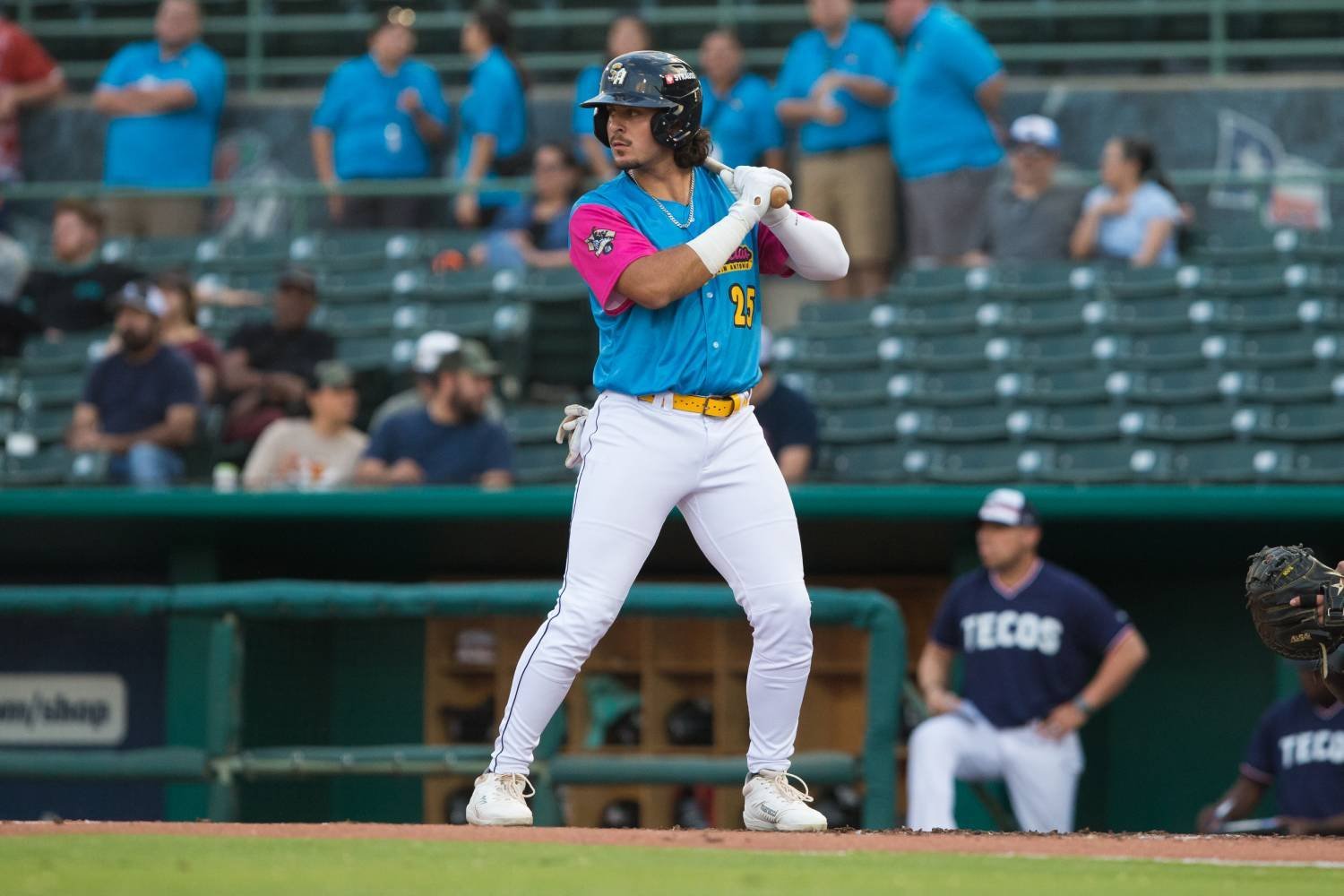 Editor's note: Padres Mission spoke with two industry experts about the state of the San Diego Padres' minor-league system, what they have done right, what they have done wrong and how they got to this state. This is the second of four articles on the subject. Part 1: Trades Have Depleted Majority of San Diego's Prospect Capital When you are at the bottom of the ladder in anything, the instant reaction is you must be bad at what you are doing. That is easy to understand when you look at MLB standings and see that the worst teams aren’t doing multiple things well that season. For the most part, those tend to be temporary issues that get resolved over time. But when it comes to the San Diego Padres being at the bottom of prospect rankings, it gets more complicated. The Padres are, in general, pretty decent at acquiring talent—via the draft, international free agency, undrafted free agents, or even released players—to fill their farm system. “I actually think they drafted really well,” said Keith Law, senior baseball writer at The Athletic who tracks prospects. “They just keep trading the guys. You could argue that's fine, right? If you draft a player and you get somebody really good in return, somebody who can help your major-league club, then in some ways, that is a successful draft. You at least created enough value to, I don't know if justify the pick [is the right phrase], but to make that pick kind of worthwhile. The point of the draft is to—I don't like speaking about players as assets, they're actual people—but you are trying to create value for your organization. That can be from keeping the player, that can be from trading the player.” Neither Law nor Sam Dykstra, a senior reporter at MLB Pipeline, would put the Padres at the bottom of the barrel for systems they have seen in their careers. It is just that Preller has mostly emptied the tank of quality talent. “I think most orgs have gotten smarter and I think the Padres are relatively a smart organization too,” Dykstra said. “They just get really aggressive with their trades. I think developmentally they're pretty good, they're probably middle of the pack in terms of ability to develop really good players, like they do get credit, I think at least three-quarters of the credit, for developing Leo De Vries into the No. 2 overall prospect in the baseball that he is right now and Ethan Salas certainly getting back on track. They always believed in him, they deserve credit for that.” Development is a key part to productive systems. Teams at the top of the rankings work with their prospects from rookie-level all the way up to Triple-A at becoming better players after amateur careers where winning was a bigger priority over improving skill sets. Part of that is not spinning off prospects a year or two after they were drafted or signed. “Typically, their development tracks have been, they get a guy in the system who's just like preternaturally talented and he flies through the system, the Jackson Merrills, the Fernando Tatises. A lot of the other guys, they just developed them a little bit, but they're still pretty famous from the draft or when they got signed internationally and they cash in on that,” Law said. “I do think for them to improve this going forward, obviously the most important thing is keep your prospects, but they're going to have to do a lot of the hard work on developing guys over four- or five-year periods. “If you draft and scout the way that the Padres do, where you're mostly taking high school guys up top, you have to be patient. (2025 first-rounder Kruz) Schoolcraft, they knew when they took him he wasn't going to be ready in two years, or at least they should have known when they took him, right? He could still be really good, but it's going to take some time and that's just generally not in their M.O. under Preller. So, I do think that that is a shift in philosophy from how they've operated for the last decade or so.” To Law’s point, the 19-year-old Schoolcraft, Padres Mission’s No. 5 prospect, has made 14 starts and pitched 49⅓ innings, with a 14.8% walk rate and 23.5% strikeout rate in his first full pro season since being taken with the 25th pick in last year’s draft out of Sunset High School in Portland, Ore. The previous year, left-handed starter Kash Mayfield was also taken with the 25th pick, this time out of Elk City (Okla.) High School and is now Padres Mission's No. 2 prospect. Of the 11 drafts under Preller, who took over the Padres in August 2014, nine of the 10 first-round selections were high school players. The lone exception was Stanford right-hander Cal Quantrill in 2016. (The Padres did not have a first-round pick in 2015.) Of those 10 first-rounders—all of whom did play in the majors, except for the last four who are still in the minors—only four made their MLB debut with the Padres: left-hander MacKenzie Gore (2017 draft), right-hander Ryan Weathers (2018), shortstop CJ Abrams (2019) and Merrill (2021). Right-hander Dylan Lesko (2022) and outfielder Dillon Head (2023) have not progressed beyond High-A after being traded. The Padres have the 21st pick in this year’s MLB Draft, which begins Saturday. “I think their strategy, in terms of the draft, is it becomes a running joke every year: Is there a big left-hander that they can go draft out of high school?” Dykstra said. “I think part of that is they are, because of their major-league success, always drafting in the back half of the first round, so you're not going to get access to the Roch Cholowskys and Vahn Lackeys of the world. Where do we see value that other teams don't and what do we think we can develop really well? I think you know they've kind of tapped into that. I know Kruz Schoolcraft has not had a great start to the year, but they always knew he was a long-term project. I think you're seeing some nice flashes from Kash Mayfield this year, in terms of him becoming maybe like a top-20 left-handed pitching prospect in baseball.” Another spot where the Padres have had success is finding some hidden gems after the draft. Braedon Karpathios went undrafted out of Lampeter (Pa.) High School in 2021 and then a year at Harford Community College, where he was a pitcher and an outfielder. The Friars signed him after the 2022 draft, kept him in the outfield, and he has risen up to Double-A San Antonio this season and is Padres Mission’s No. 9 prospect. Outfielder Alex McCoy is another example from last year’s draft. He wasn’t selected after his senior year at Hofstra, but then connected with the Padres and is having a really nice first full season in pro ball with the High-A Fort Wayne TinCaps after debuting with the Low-A Lake Elsinore Storm. McCoy is Padres Mission’s No. 14 prospect. Both came out of Maryland (Karpathios a juco and McCoy in high school), the same as Merrill when the Padres took him 27th overall in 2021 out of high school. “Their scouting group is really good ... they do a really good job at finding those small corners that may be getting overlooked by some of the other orgs or just baseball in general, and finding the talent and developing them, leaning into those guys' strengths,” Dykstra said. “You know, it's a very different story. Jackson Merrill being a prominent pick and Karpathios and McCoy being undrafted free agents, but that's how you build quality organizations, is doing it from top to bottom. I think they do a good job of scouting the country, finding the right fits for them and then developing them. It's just sometimes they're shipping them out the door pretty quickly.” International free agency is another way to build a system. The Friars struck gold with Salas in 2023 and then again with De Vries in 2024 when both were the top name each of those years, but that didn’t translate into success the next two, when they didn’t land a top-10 prospect. While rankings for the 2027 class have not come out, the Padres have already landed a commitment from 16-year-old Yoel King, a 6-foot-5, 240-pound right-hander who is already throwing 100 mph. “They're always in on the right guys in international free agency,” Law said. “I think they've been outbid a few times recently, post-Salas they haven't had a huge success there more recently. I also know that the international process, I think it's a big joke, agreeing to terms with players at age 13 or age 12. There's a whole lot more than just talent identification, whereas instead, in the draft, even if they aren't necessarily taking players I love, specifically the Padres, I can often understand it and I can see it. Like, I didn't like that guy, but they're going for upside. OK. I would not take a high school pitcher in the first round pretty much ever. But if I were going to do it, I'd probably do it a lot like the Padres do. They pick the right types of guys.” Every Padres fan knows the franchise has only been to two World Series, 1984 and 1998, losing both times in unflattering fashion. Getting back to the Fall Classic drives every front office to do whatever it can to provide the team the best chance to hoist the Commissioner’s Trophy in late October. Emptying out the farm system without any real postseason success has to sting for Preller. But the Padres have been in the thick of things in recent seasons. After finishing fourth or fifth in the NL West in Preller’s first five seasons, they have been in contention in five of the last six seasons entering 2026. While there hasn’t been a division title as the Los Angeles Dodgers have dominated that category, the Friars have made four postseason appearances since ending a 13-year drought in the shortened 2020 season. Of those four tries, there was only one trip to the NL Championship Series, in 2022 when the Friars fell to the Philadelphia Phillies in five games. They came close to another in 2024, when the Padres had a 2-1 lead in the best-of-five NL Division over the Dodgers, who won the final two games of the series and went on to win the World Series. “I think their aggression, if it had won them a title, I would never speak it over again,” Dykstra said. “They would just be like, 'Hey, flags fly forever. That works.’ It hasn't resulted in what they were always aiming for and now they're kind of having to pay the piper for those decisions.” View the full article
 -
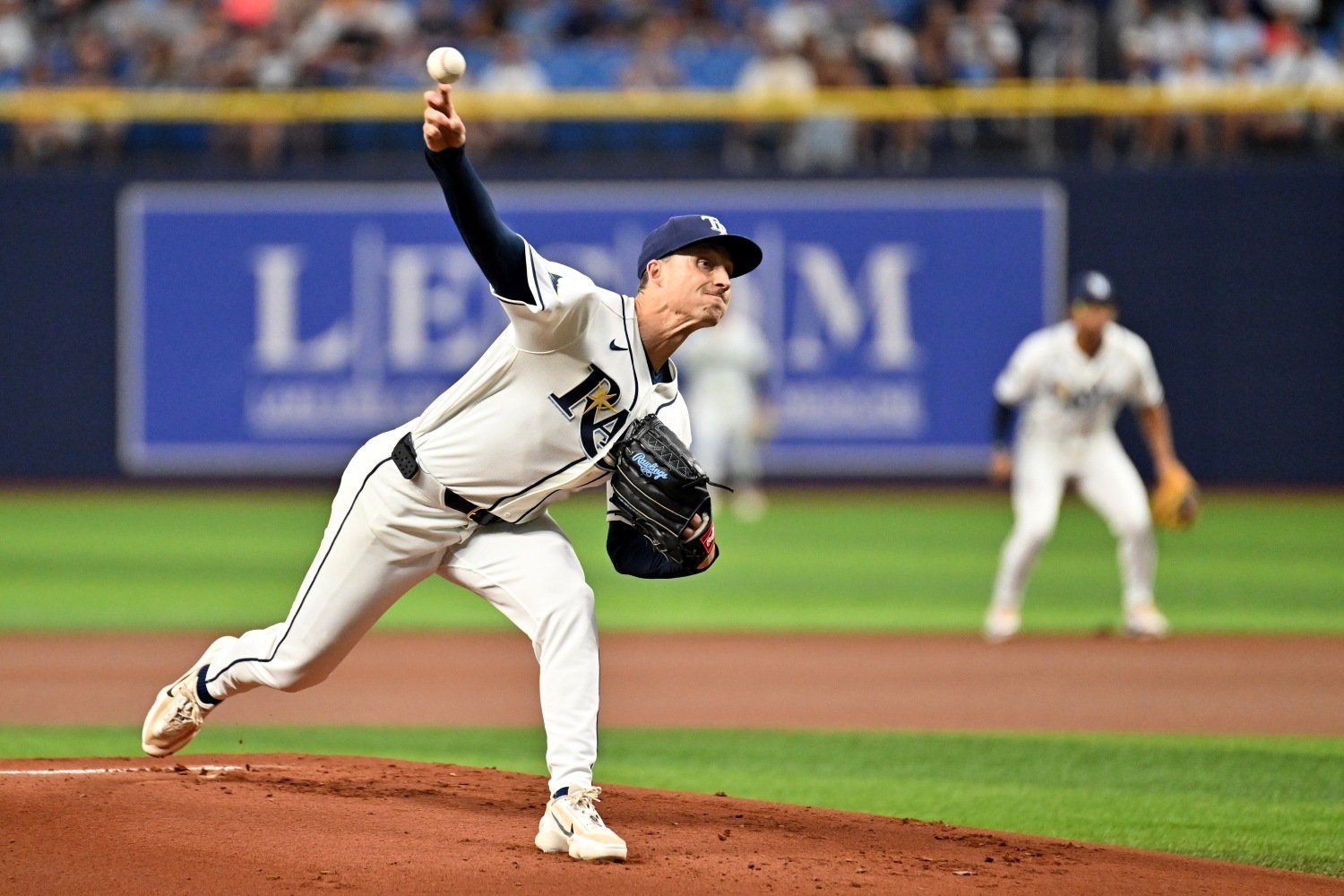 In a straight one-for-one trade made at the deadline last year, the Twins acquired Taj Bradley for Griffin Jax, who was a reliever at the time. Since then, Bradley has become one of the Twins’ better arms, while Jax has made the transition from reliever to starter. As the deadline inches closer, it's a good time to reexamine that trade and answer the question: Who would you rather have? 2026 Performance Bradley's uneven but exciting performance has been especially welcome, given the injuries in the rotation. He made six starts in his initial half-season with the Twins, pitching to a 6.61 ERA (4.73 FIP) in 31 1/3 innings, but 2026 has been a whole different experience. Currently worth 1.6 fWAR (second on the team among pitchers, behind only Joe Ryan), Bradley has made 17 starts this year, with a 3.67 ERA (3.80 FIP). He’s striking out 27.8% of batters, the second-highest mark of his career. When batters do make contact, they do damage, but you can miss enough bats to work around that shortcoming; Bradley is doing so this season. Bradley has thrown his fastball, cutter, and splitter well this year. All three boast a positive run value, according to Statcast. His curveball hasn’t been great, with a -7 run value, and opposing hitters are slugging .568 on it. Again, though, he's been able to outpitch his weaknesses so far. Jax, on the other hand, had well-documented struggles early in the year as a reliever. His FIP was way up at 7.56, despite an xFIP of 4.58, and his walk rate was up to 15.9%. He was giving up lots of home runs, and opposing hitters had a .413 wOBA against him. He lasted only nine innings as a reliever before transitioning to a starting role. Since then, though, Jax has pitched to a 2.89 ERA (3.99 FIP) in 56 innings, while striking out 26.1% of the batters he faces. His walk rate has plummeted to 6.8%, and batters have just a .297 wOBA against him.. As for his pitch mix, Jax has been effective with his three most-used pitches: sweeper, changeup, and sinker, all of which have a positive run value. His fastball has been his worst pitch by far (-5 run value); his curveball and cutter haven’t been thrown nearly as much as the other four. There were rumblings, even back to the time when he was a Twin, about Jax wanting to convert into a starting role. Now that he has done it with the Rays, the change has brought positive outcomes for both Tampa Bay and Jax himself. Here's hoping that will lead to a big payday soon. Jax is a good pitcher. The Twins (and their fans) knew this when he was traded away. Team Control Control of a player can be crucial in evaluating a would-you-rather situation like this one. Bradley is currently in the pre-arbitration phase and will be arbitration-eligible for the first time this fall. He won’t be a free agent until November 2029. As for Jax, he avoided arbitration this year by signing a one-year deal with the Rays. The 31-year-old has one more year of arbitration before becoming a free agent. Bradley being younger and having more years of control is certainly a win for the Twins, as he looks like a potential front-of-the-rotation starter. Even if Jax is one, too, he's sooner out the door. And then there's the money. Salaries Talking about the Twins always means money must be part of the conversation. Current salaries once again favor Bradley in this comparison. Bradley’s salary is $802,050 in 2026, while Jax is making $3.6 million. In the end, the Twins saved money by dealing Jax for Bradley, and while they didn't make the robust investment in restocking their bullpen for which fans might have fairly hoped, it's easy to guess that the extra few million made a difference for them somewhere along the way. Bradley and Jax have been linked ever since last year's trade deadline, and they'll continue to be compared for as long as they remain with their current clubs. Every strong outing from Bradley or dominant appearance from Jax will inevitably reignite the debate over which team came out ahead. One year later, both organizations have reasons to be satisfied, but the long-term verdict is still pending. Bradley has given the Twins a young, cost-controlled starter with years of team control remaining, while Jax has transitioned into a good starter for a win-now Rays team steaming toward a division title. For now, there may not be a definitive winner—only two teams that addressed different needs in different ways. All things considered, who would you rather have right now? Have the Twins clearly fleeced the Rays, or will Jax yet prove to be so valuable that Minnesota should have retained him, converted him to this new role, and extended him? Weigh in! View the full article
 -
Tom Pohlad Frantically Googling 'How to Buy at Trade Deadline'
DiamondCentric posted an article in Twins Daily
 In a normal season, a team bumping along just under the .500 mark at the All-Star break would not be considered a playoff contender. In fact, they'd be one bad week away from parting with pricy veterans before the August 3 trade deadline. Alas, 2026 isn't normal, and the Minnesota Twins are learning this the hard way. "When we said we expected this team to be competitive and that we'd give them the resources to do so, we sort of didn't think through what would happen if they actually were," said a front office source. "Even in the unlikely event they were around .500, we figured Detroit or Cleveland would be running away with the thing. They're pure diarrhea, as is the American League. Basically, we are screwed." Multiple sources tell Twins Daily that the team is scrambling to adjust to the undeniable reality that they're playoff contenders on both the divisional and Wild Card fronts. The expectations that come with this situation are weighing heavily on team leadership. "I saw Tom Pohlad Googling 'how to buy at trade deadline' on his laptop after we beat Cleveland on Wednesday night," said a person with knowledge of the team's decision-making process. "We're all high-fiving and cheers-ing each other, and he's there grimacing like he's trying to solve the Sunday crossword." "It appears that every option for adding a player involves paying some or even all of their salary," said the front office source. "It's a real buzzkill. Seems like the league should offer some relief if the team is trying their best while the rest of the league is stepping on every rake in the yard." On the other hand, a Pohlad family source confirmed they have no issues parting with prospects to add a player. "A prospect is someone who just costs more money later on. Such a weird baseball phenomenon. Physical assets are supposed to depreciate, like every [REDACTED] office building in our [REDACTED] portfolio has." The source was unable to confirm reports that the Twins are hoping to pay for any acquisitions with mixed-use retail and commercial real estate holdings instead of cash. "Can't comment on that, but God that would be so cool. Please buy our buildings. Please." Image license here. View the full article
 -
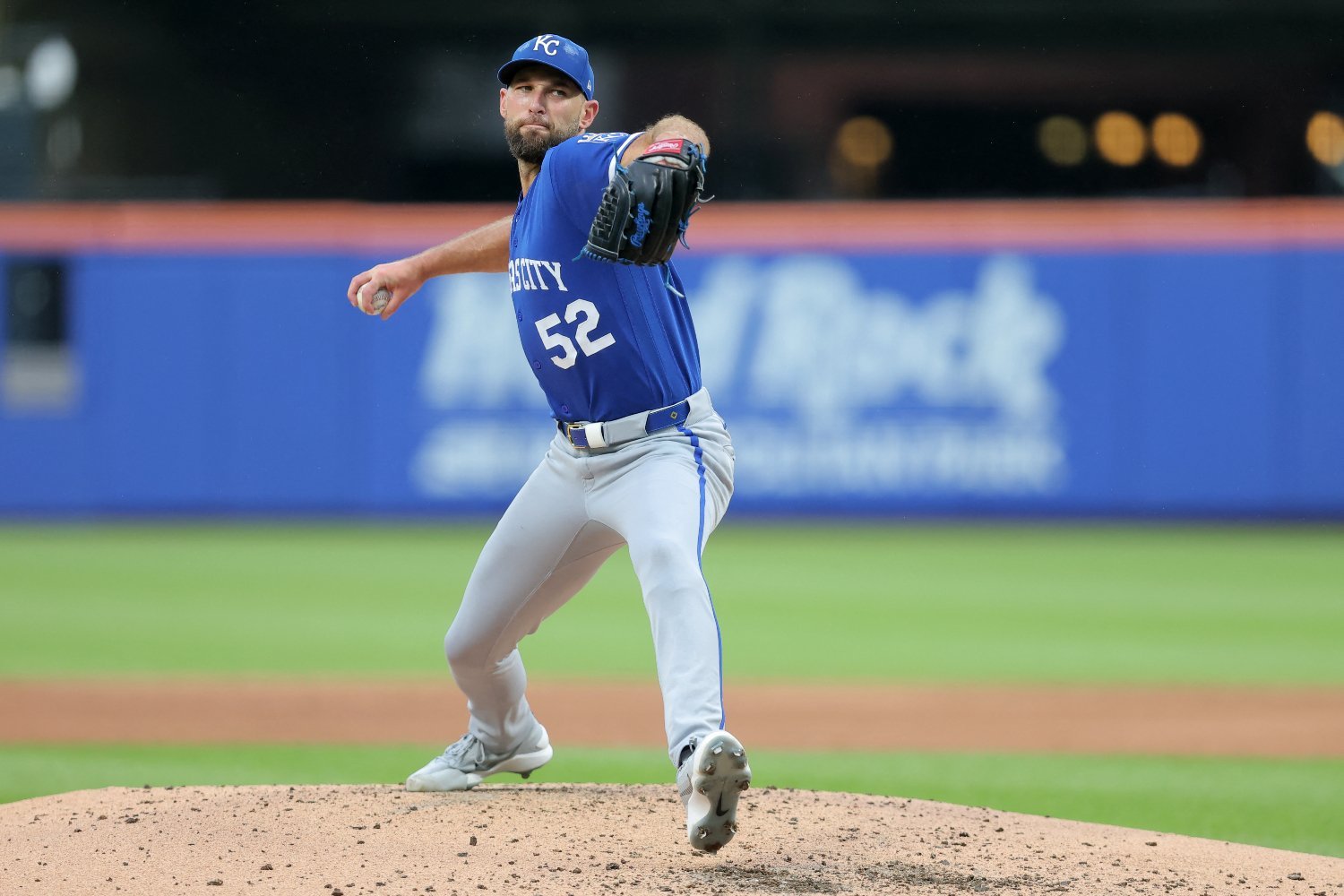 Before Thursday's rubber game against the New York Mets, Ken Rosenthal of The Athletic reported that the Royals were unlikely to trade starting pitchers Michael Wacha and Seth Lugo by the August 3rd Trade Deadline. Rosenthal reported that they would not trade either starting pitcher barring a "massive" return. With a 4.56 ERA and $21.5 million due next year, it is unlikely that Kansas City would trade Lugo at the Trade Deadline. Not only would the return be meager, but the Royals would have to eat some of Lugo's contract to make a deal enticing for an opposing ballclub. For a team with a limited payroll, that isn't exactly a recipe for success. Wacha, on the other hand, is a tougher dilemma for the Royals. While he has had two difficult outings recently, the 35-year-old starter has been Kansas City's most dependable pitcher and one of baseball's most durable. In 119.1 IP, Wacha has produced a 3.77 ERA, 1.19 WHIP, 4.05 FIP, and 12.7% K-BB%. He ranks in the top three in innings pitched this year, and his 12 quality starts rank fourth in all of baseball. Even though his stuff isn't elite, the veteran righty has been crafty enough to generate strikes and limit hard contact for the most part, as evidenced by his Statcast percentiles this season. With pitching, starting pitching especially, in demand across the league, Wacha remains the Royals' best trade chip. However, for a Royals team that is 38-56 and coming off back-to-back winning seasons in 2024 and 2025, he could be key to Kansas City's competitiveness again in 2027. The Royals need pitching stability, and they don't have it, with Cole Ragans recently undergoing elbow surgery and Kris Bubic likely not returning in 2027. Thus, do the Royals hold on to Wacha, as the report indicated, or should they make a deal, even if it may not be the "massive" one they are hoping for? The Case to Keep Wacha From 2024 to 2026, Wacha has been one of the most valuable starting pitchers in baseball, according to Fangraphs. His 9.0 fWAR ranks 16th among all starting pitchers since 2024, and his 454 IP rank 9th as well. He is also tied for 14th in quality starts with 39, tying him with Nathan Eovaldi, Chris Sale, and Luis Castillo. His 3.57 ERA also ranks 25th, putting him ahead of Dylan Cease, Gavin Williams, and Sonny Gray. The main issue is that Wacha doesn't strike out guys in bunches like those other names listed. His 19.4% K% ranks 65th of 85 qualified starting pitchers over that 2024-2026 period. His 12.9% K-BB% also ranks 55th. Thus, it's easy for fans to overlook Wacha as a quality starting pitcher, though he has finally received the recognition he deserves this year, being named to the AL All-Star Game roster. Thus, while the Royals may be tempted to trade Wacha, they need someone to hold down the top of the Royals' rotation in 2027. Wacha has done it so far with Ragans and Bubic injured, and he may be up for it again in 2027. Furthermore, he's holding this role while only making $18 million this year and $14 million next year. That latter is a steal for a No. 1-2 starting pitcher. For context, here's the list of 2027 unrestricted free-agent starting pitchers, and notice those pitchers "currently" making $14 million or less. It's not a great list. Of the list of free-agent starting pitchers who are making under $14 million, I predict that Casey Mize, Foster Griffin, and Freddy Peralta are the only ones of quality, which means they will likely exceed that $14 million AAV mark in their next contract. If the Royals deal Wacha and try to replace him with someone else on their list, they're taking a flier on someone with far less dependability (Brady Singer, Tomoyuki Sugano, or Trevor Rogers) or on an injury risk (Patrick Sandoval or Shane Bieber). The ceiling may not be all that high for Wacha. That said, the ceiling is clear and dependable, not to mention a value for a pitcher who will be making less next year than questionable arms like Shota Imanaga, Jack Flaherty, Lance McCullers Jr., and Jameson Taillon, to name a few. Furthermore, the Royals haven't been able to acquire many free-agent starting pitchers of Wacha's caliber in the past. Since the World Series run in 2015, the most high-profile pitcher the Royals acquired on a long-term deal in free agency was Ian Kennedy in 2016, who had an underwhelming run from 2016 to 2020 in Kansas City. This isn't a coincidence. Part of it is due to the Royals' history of incompetence. With only two winning seasons since their World Series title (both under Matt Quatraro, by the way), the Royals aren't exactly a franchise with a "winning" reputation. Furthermore, Kansas City can be a brutal place weather-wise in the summer, and it's one of the smallest markets in Major League Baseball (only Cincinnati and Milwaukee are smaller). Wacha was able to look past those other factors and not only sign an initial long-term deal with Kansas City but also an extension. If the Royals trade Wacha after just signing him to an extension before the 2025 season, they could risk their chances at other free-agent starting pitchers in the future. After all, why should competent free-agent starting pitchers sign in the muggy, small-market metro of Kansas City when they are just going to get traded in a couple of years anyway? Not keeping veteran arms works for Milwaukee because they have a premium pitching development program in the Minors. That said, with a dearth of MLB-ready arms in Triple-A or Double-A, the Royals don't have the luxury of emulating the Brewers' pitching strategy just yet (though they could in a year, especially if they have a good draft). Why the Royals Should Trade Wacha The main concern with Wacha is that he's 35 years old and will be 36 next year. While he has done a good job of staying healthy and effective as a Royal, there is a higher risk that regression will hit Wacha harder in 2027. That was certainly the case for Salvador Perez, and there were fewer signs of a sharp regression for Salvy in 2025. When looking at his TJ Stuff+ summary comparison from 2025 to 2026, Wacha has remained relatively stable in results, but TJ Stuff+ has shown some regression on a couple of pitches, as shown below. Wacha's overall TJ Stuff+ went from 97 in 2025 to 96 in 2026. His four-seamer improved from 94 to 96, which is good, considering it's been his most-used pitch over the past couple of years. He has also seen an improvement in his sinker, as it has gone from an 88 TJ Stuff+ to 90 TJ Stuff+. However, his curve (96 to 95), slider (102 to 101), cutter (97 to 93), and changeup (102 to 100) have all seen regression in TJ Stuff+. The results have been fine this year, with the chase rate (1.6% improvement) and whiff rate (0.6% improvement) up and the xwOBACON down (.374 in 2025 to .351 in 2025). That said, he has seen a significant decline in the zone rate, from 52.9% in 2025 to 49.8% in 2026. That's a 3.1% decline, and he didn't exactly excel in that category in his rough outing against the Mets on Thursday, as seen below in his TJ Stuff+ summary. Wacha's zone rate against the Mets was 45.2%, and his overall TJ Stuff+ was 93. Both marks were 4.6% and 3 points below his season-long marks in those categories. That's not what the Royals or fans want to see, especially before the All-Star Break. Now, one or a few bad outings won't affect Wacha's trade value. Any team knows what Wacha is and the risks he carries, both for the remainder of this season and 2027. That said, Wacha's value will be much higher now at the Trade Deadline than in the offseason, especially with the outlook for 2027 play still unclear due to a potential lockout. What Should the Royals Do? I understand the Royals' aversion to trading Wacha "just to trade him." That's not a recipe for success in any trade, and those kinds of deals are reserved for guys who will be free agents this offseason. That's a strategy the Royals should take with assets like Bubic, Lane Thomas, and John Schreiber. Wacha, though? JJ Picollo ought to be patient, especially if he believes the Royals can bounce back in 2027. While seasons like this year are deflating, the AL Central has remained wide open since 2024. In 2024, the Royals, Guardians, and Tigers competed in the division. Last year, it was the Guardians and Tigers. This year, it's the Guardians, White Sox, and maybe the Twins and Tigers. Thus, if the White Sox and Twins can quickly bounce back into contention in the AL Central, the same could be true for the Royals. To do that, with no Ragans and barring a marquee free-agent starting pitcher (i.e., Skubal), the Royals need Wacha. Still, could we see a team panic at the Deadline and overpay for Wacha? The Cubs desperately need starting pitching, and Wacha could be their No. 2 in the rotation immediately. Could that net the Royals not just a starting-pitching asset like Jordan Wicks, but also some high-ceiling guys like outfielders Kevin Alcantara and Josiah Hartshorn? Picollo can't give away Wacha. That said, he has to be aggressive enough to pounce on the right deal for Wacha, not just to compete in 2027, but long-term as well. If the Royals want to be the American League version of the Brewers, an organization they've expressed admiration for before, then they need to make an aggressive deal with Wacha, even if it may hurt initially and put Kansas City in a brief period of uncertainty. View the full article
