


DiamondCentric
-
Posts
2,631 -
Joined
-
Last visited
Never
Content Type
Profiles
Forums
Events
News
Tutorials & Help
Major League Baseball Videos
Guides & Resources
Store
Downloads
Gallery
Everything posted by DiamondCentric
-
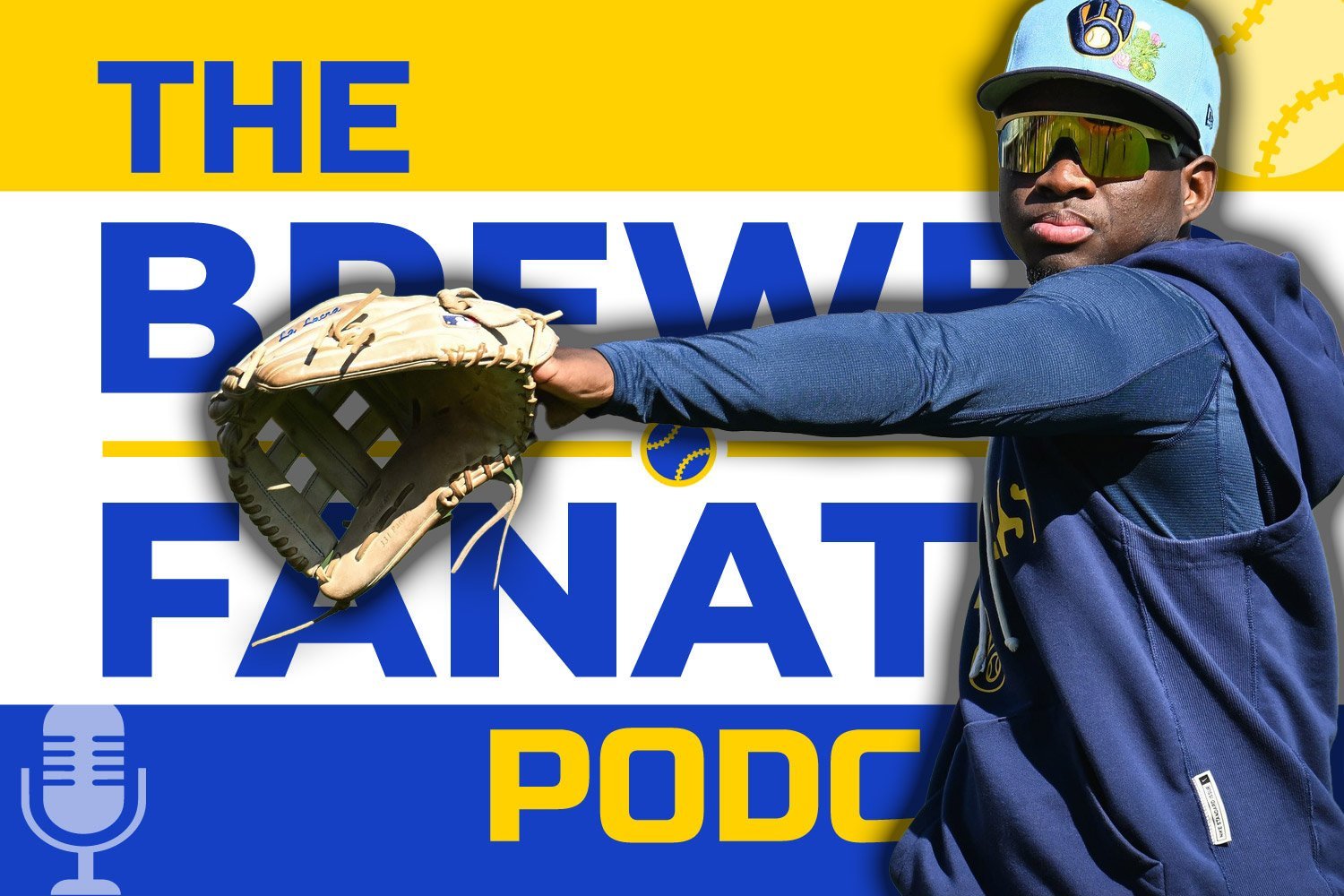 Jack and Spencer break down Luis Lara's extension, Brandon Woodruff's rehab start in the ACL, some concerning signs for Christian Yelich, and the Brewers' 4-2 week in Colorado and Las Vegas. Apple Podcasts: https://podcasts.apple.com/us/podcast/the-brewer-fanatic-podcast/id1740648724 Spotify: https://open.spotify.com/show/5CY8mWsQayqjDXqw9OT2Td iHeartRadio: https://www.iheart.com/podcast/263-the-brewer-fanatic-podcast-166534588/ Pocket Casts: https://pca.st/ommzz627 Watch On YouTube: https://www.youtube.com/@brewerfanatic View the full article
 -

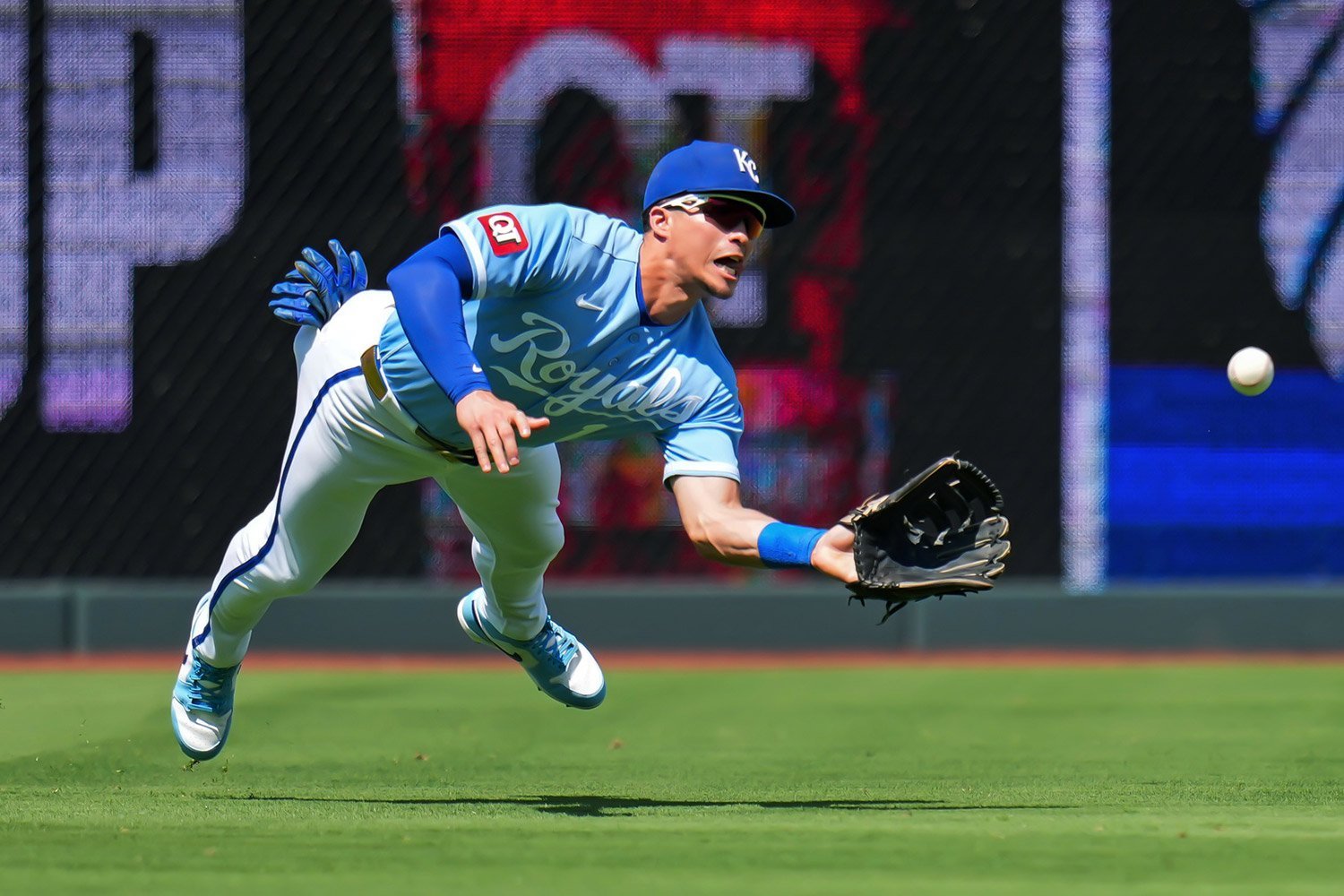 For much of the season, Isaac Collins' performance has raised a difficult question. How can a hitter who continues to control the strike zone, posts solid quality contact metrics, and owns some of the strongest plate-discipline indicators of his career produce so little offensively? The answer does not appear to be a loss of talent or physical decline. Nor does it stem from the disappearance of the skills that fueled his breakout campaign with Milwaukee in 2025. Instead, the numbers point to something more subtle. Collins is still doing many things well, but a combination of passivity in the strike zone, increased swing-and-miss issues in key situations, and a less efficient contact profile has eroded his offensive value. The disappointment is understandable. Kansas City acquired a player coming off a .263/.368/.411 season that was good for a 122 wRC+ and 2.6 WAR, a performance that established him as one of the Brewers’ most unexpected success stories. Since arriving in Kansas City, however, his production has fallen sharply, turning him into a clearly below-average offensive player. Season PA AVG OBP SLG wRC+ WAR 2025 (MIL) 441 .263 .368 .411 122 2.6 2026 (KC) 217 .212 .335 .302 84 -0.4 At first glance, that decline seems to support the idea that Collins has simply regressed after a season that exceeded his true talent level. A closer look at the underlying metrics, however, tells a more complicated story. His walk rate has actually improved from 12.9% to 13.8%. His barrel rate has climbed from 4.9% to 7.9%. Hard-hit rate has remained virtually unchanged, slipping only from 38.9% to 37.8%, while his average exit velocity has held steady. Even his expected metrics paint a far less severe picture than the one reflected in his traditional slash line. In other words, Collins does not look like a hitter who has suddenly lost the ability to impact the baseball. Several of the indicators that tend to predict future success remain relatively encouraging. The problem is that those strengths are being undermined by changes in the way he is constructing his plate appearances. During his breakout season in Milwaukee, Collins found a valuable balance. His discipline allowed him to avoid chasing pitches outside the zone, but he was also aggressive enough to attack strikes he could handle. That combination helped him work favorable counts and produce quality contact. The 2026 version looks different. His chase rate has barely changed, a strong indication that his plate discipline remains intact. The difference lies within the strike zone itself. Collins is swinging at fewer strikes than he did a year ago and, more importantly, he is allowing significantly more pitches in the heart of the zone to pass without a swing. Metric 2025 2026 Z-Swing% 64.4% 58.3% Heart Swing% 76.1% 65.8% Called Strike% 17.4% 19.6% CSW% 26.4% 28.6% Strikeout Rate 21.1% 25.8% The significance of those numbers extends well beyond a simple discussion about aggressiveness. Collins is not struggling because he is chasing more bad pitches. He is struggling because he is allowing too many good pitches to go by. Every hittable strike he takes increases the likelihood of falling behind in the count. Once the pitcher gains the advantage, the entire dynamic of the plate appearance changes. More breaking balls appear, more offspeed pitches enter the mix, and the hitter is forced into a reactive approach rather than an attacking one. That sequence helps explain another trend that repeatedly shows up in his numbers. While Collins continues to make respectable contact against fastballs, his swing-and-miss rates against breaking and offspeed pitches have become increasingly concerning. When he falls behind in the count, opposing pitchers gain more opportunities to exploit those vulnerabilities, and the rise in his strikeout rate is the natural consequence. The damage, however, does not stop there. Once the ball is put in play, Collins’ contact profile looks dramatically different from the one that fueled his success in Milwaukee. If there is a single statistic that best captures the difference between the two versions of Collins, it is probably the distribution of his batted balls. Season Line Drive% Ground Ball% Fly Ball% BABIP 2025 24.6% 41.1% 34.3% .326 2026 16.8% 32.8% 50.4% .287 A decline of nearly eight percentage points in line-drive rate represents a major red flag. For a hitter with Collins’ profile, line drives are the foundation of offensive success. His value has never been built around elite power. At his best, he generated hard contact on productive trajectories, producing hits consistently while maximizing his ability to reach base. That profile has largely disappeared. His fly-ball rate has jumped by more than sixteen percentage points compared to last season, while his line-drive rate has collapsed. The consequences have been immediate: fewer hits, fewer extra-base hits, and a substantial drop in BABIP. What makes the situation particularly interesting is that it helps reconcile two seemingly contradictory realities. On one hand, Collins continues to post respectable contact metrics. On the other hand, his production keeps declining. Both can be true at the same time. A hitter can still produce some loud contact and yet have a disappointing season if those opportunities become less frequent or if an increasing share of his batted balls turns into relatively harmless fly balls. That description fits Collins’ first few months in Kansas City remarkably well. Another factor that has deepened the decline has been his performance against left-handed pitching. Split AVG OBP SLG wRC+ vs. RHP .233 .382 .325 107 vs. LHP .169 .222 .254 30 While he remains reasonably productive against right-handers thanks to his ability to get on base, he has been one of the least effective hitters in baseball against left-handed pitching. The gap is so dramatic that it has significantly reduced his margin for error and limited his overall impact as a switch-hitter in the lineup. Even so, the most important conclusion is not that Collins has become a bad player. He continues to draw walks at an excellent rate, maintains contact-quality metrics that closely resemble last season’s numbers, and still possesses many of the skills that fueled his breakout in Milwaukee. What has changed is not the quality of those tools, but the way he is using them. In 2025, Collins forced pitchers to react to him. This season, far too often, the opposite has been true. By allowing more hittable strikes to pass, he has put himself in disadvantageous counts where breaking balls, swing-and-miss issues, and less productive contact begin to dictate the outcome of the plate appearance. That is why the solution likely does not require a complete overhaul or a dramatic mechanical adjustment. The Royals do not need a different player. They need the version of Collins that attacked hittable strikes and turned selective aggression into offensive production. Until that version returns, Kansas City will continue waiting for the hitter it believed it acquired over the winter. View the full article
 -
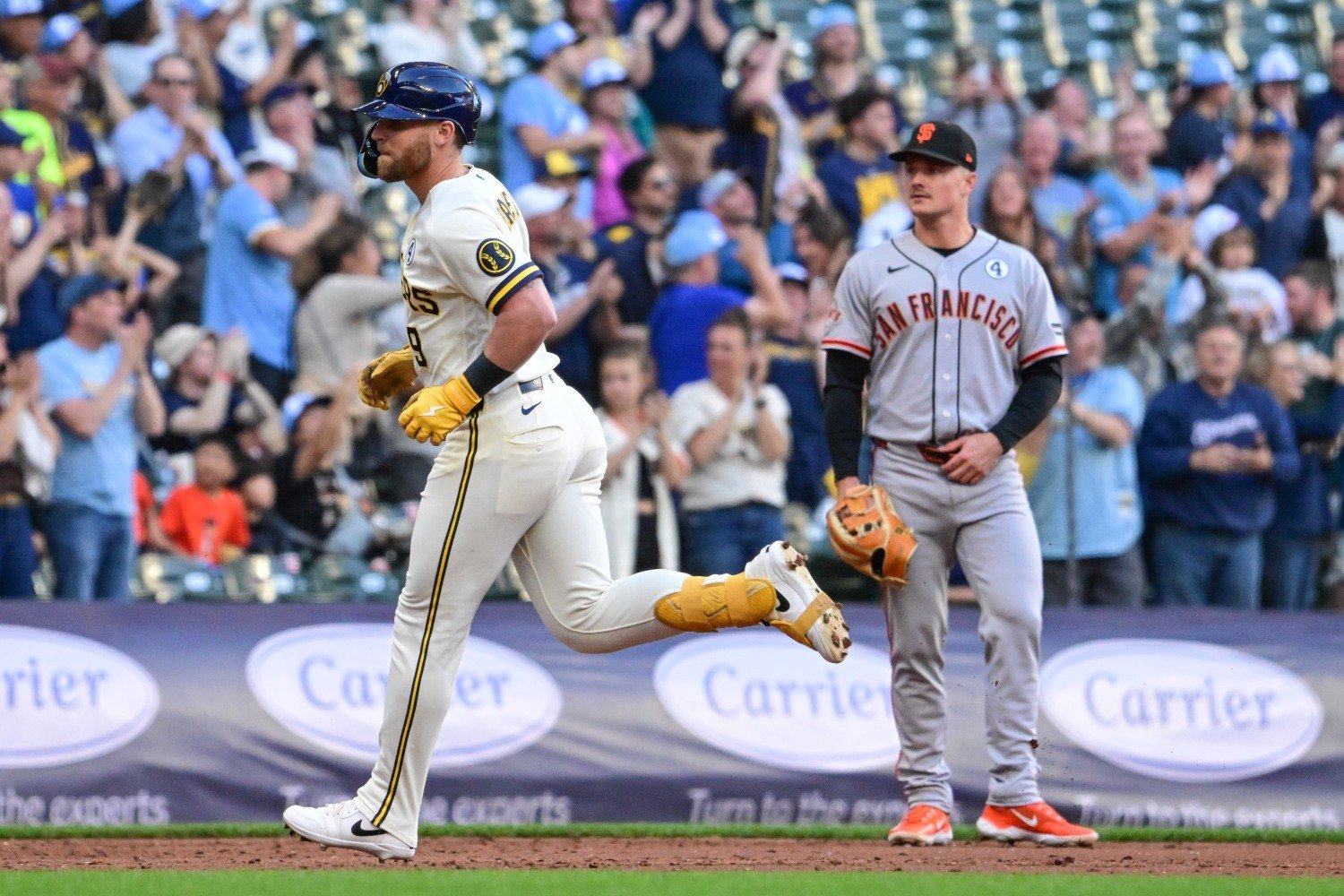 The past week brought a mix of excitement and drama: a sweep of Colorado at Coors Field, two tough losses to the Athletics in Las Vegas, and another long-term commitment to a top prospect. Milwaukee remains on a 100-win pace, with a winning percentage near .700 since May 1. Let's take a look at three of the best community thread topics on Brewer Fanatic. Brewers: Luis Lara Extended for Reported 7 years/$31 million It started as a day off for Luis Lara, then another. And another. By then, the Brewer Fanatic community recognized the pattern established by the Cooper Pratt contract extension earlier this season. On Tuesday, the news broke that Milwaukee and Lara had agreed to a seven-year, $31 million contract with three team options. Our community universally praised the move, citing the low risk and cost certainty of the deal. One poster astutely observed the approach the Brewers seem to be following. Why sign aging veterans like Alex Bregman for $35 million per season when you can secure seven seasons of your number five prospect for less? Luis Lara is conceivably set for life financially and in a position to become a free agent before either his age-28 or age-31 season, depending on whether Milwaukee exercises its team options. Lara will remain in Nashville for now, but the Brewer Fanatic community eagerly awaits his promotion to Milwaukee, presumably this summer. Brewers: Jake Bauers Appreciation thread Where would the Brewers be without Jake Bauers? This wasn't a question many fans anticipated asking after Milwaukee acquired Bauers from the Yankees in November 2023. Following a disappointing 2024 season, Bauers was arguably Milwaukee's best hitter late in 2025 and into the playoffs. He has carried that momentum into this season, producing a 146 OPS+ through June 11. One poster humorously, but accurately, noted that opponents are starting to pitch to Bauers as though he were Barry Bonds. During Saturday's win over Colorado, for instance, Bauers drew four walks and hit a home run. As of Tuesday, his 1.040 OPS since May 1 is the best in baseball. This time last year, many fans assumed Bauers would be non-tendered in the offseason. He's now on a 30-homer pace and presumably trending toward an eight-figure multiyear contract, likely with another team. Rumors: Which top prospects would you be willing to part with? If the Brewers want to trade for an impact player or two before this season's deadline, they will need to include at least one top-tier prospect. Individual posters at Brewer Fanatic collectively named seven prospects they would consider trading for the right return. The top two names mentioned as trade bait were Jett Williams and Andrew Fischer. The initial consensus is that Williams doesn't have a clear defensive position and has been generally underwhelming in Nashville this season. Still, Jett doesn't turn 23 until next season and retains most of his preseason Top 100 prospect luster. Fischer has produced prodigious power for the Timber Rattlers, but his strikeout rate raises real concerns, especially for a 22-year-old in the Midwest League. Many community members would be comfortable letting another team take on the risk with Fischer's bat and his defensive shortcomings at third base. It's another great day to be a Brewers fan at Brewer Fanatic! View the full article
 -
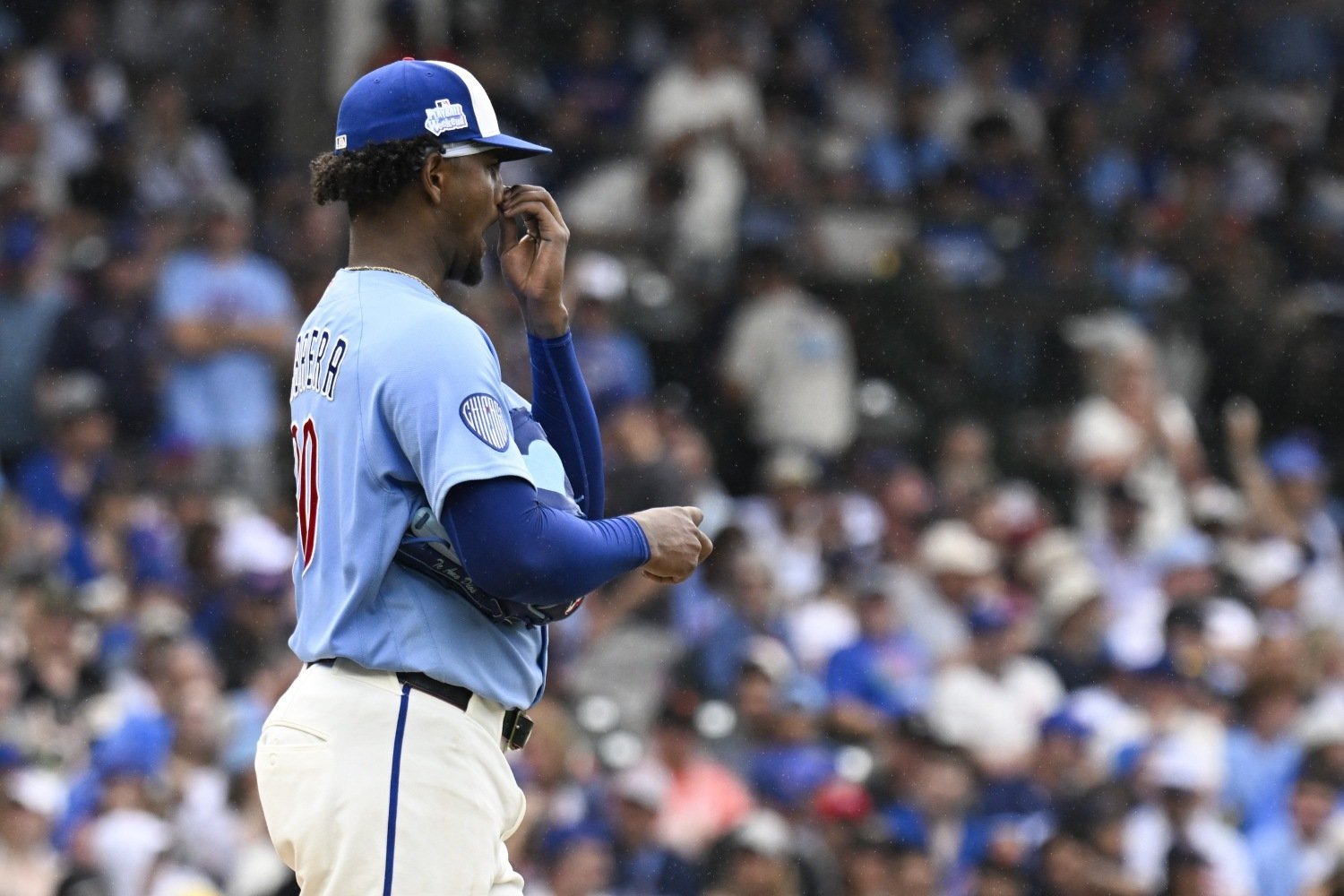 The Cubs are in some trouble. You already knew that. They escaped the ignominy of dropping below .500 when they salvaged one game on their trip to Colorado, but they're 35-34, with a +4 run differential. Just five weeks ago, they peaked at 27-12. Even if they get back to business now, that 7-22 stretch will haunt them. It's essentially torpedoed their chances of winning the NL Central. It might even be what keeps them out of the playoffs. Since the creation of the postseason in 1969, only four teams—the 1982 Atlanta club, the 2003 Twins, the 2005 Astros and the 2023 Diamondbacks—have made the playoffs in a season in which they lost at least 22 of 29. The playoffs are bigger now than they've ever been before, but still, the Cubs face some real precarity now. Much of the trouble during that awful month of play has come from an unproductive lineup, but the pitching staff has done too little to help matters. Coming into this season, the Cubs thought they were finally pushing back toward the top of the league in terms of overpowering opponents on the mound. Instead, for a variety of reasons, the power is being inflicted on them. Through 69 games, Cubs hurlers have surrendered 102 home runs, four more than any other team in baseball. They're getting shelled. Losing Cade Horton hurt, of course, but it wasn't supposed to be this way, even after he went down. Edward Cabrera has been homer-prone. So has Colin Rea. Everyone knew homers would be a problem for Jameson Taillon and Shota Imanaga, but somehow, each has been even worse than expected, at times. One culprit—not the primary one, but a worrisome one, since it's beyond the team's control—is a livelier baseball. Last season, the average drag on the ball was as high as it had been in a decade, league-wide. That kept homers under control and subtly favored teams like the Cubs, whose pitching staffs don't blow hitters away and whose offenses run more on OBP than slugging average. Early this year, it looked like we were getting more of the same. Not anymore. These are the daily average drag values for each season since 2021. I've added the red line right around the center of the graph, at the .340 drag coefficient level. Any day on which the average drag is below that is likely to be one on which you find yourself remarking to a seatmate, "Man, the ball is really carrying today." Plenty of factors other than drag, or which influence drag unpredictably—wind, temperature, humidity, elevation, the bounciness of the ball, etc.—can also influence ball flight, but to hit something a long way, you want air to slow it down as little as possible. When the drag coefficient drops below .340, in baseball, you notice the air letting the ball sail through a little smoother. We didn't have even one day last season in which the coefficient dropped that low. In 2024, there were about 40 such days. In 2022, there were fewer than 10. That season, the league hit 1.07 homers per team game. In 2021 and 2023 (which, as you can see, featured much livelier balls, on average), the average was over 1.20 homers per team game. The league has only slugged .410 or higher twice in these five-plus seasons; those years were 2021 and 2023. Not until the last day of April did we see average drag fall to .340 this year. Since May 17, though, we've seen it happen 11 more times. The ball is lively right now; it's aerodynamic. The league's isolated power (ISO) was .150 in April and .151 in May, but so far in June, it's .173. The ball is carrying, and not just because the weather is warming. This is brutal news for Cubs pitchers. A staff already struggling to keep the ball in the yard is bound to have even more trouble doing so when it's flying farther for everyone. There's no conspiracy theory here; the league almost certainly didn't try to make this change. But the Cubs are now being victimized by the long ball left and right, partially because it's harder to keep a fly ball on the right side of the fence. Matthew Boyd should help the team a bit on this front, as he returns to the starting rotation this weekend in San Francisco. For that matter, it's a good time to be going to San Francisco, anyway. That park is tough on power hitters even at the best of times. But the Cubs will need to seek a sturdier solution than hope and a few games at pitchers' havens. They need to miss more bats, and they need to find more ways to avoid barrels. These days, it's getting dangerous to let hitters hit it, even with one of the best defenses in baseball behind you. View the full article
 -
Your Dad About to Ask If Kaelen Culpepper is Related to Daunte
DiamondCentric posted an article in Twins Daily
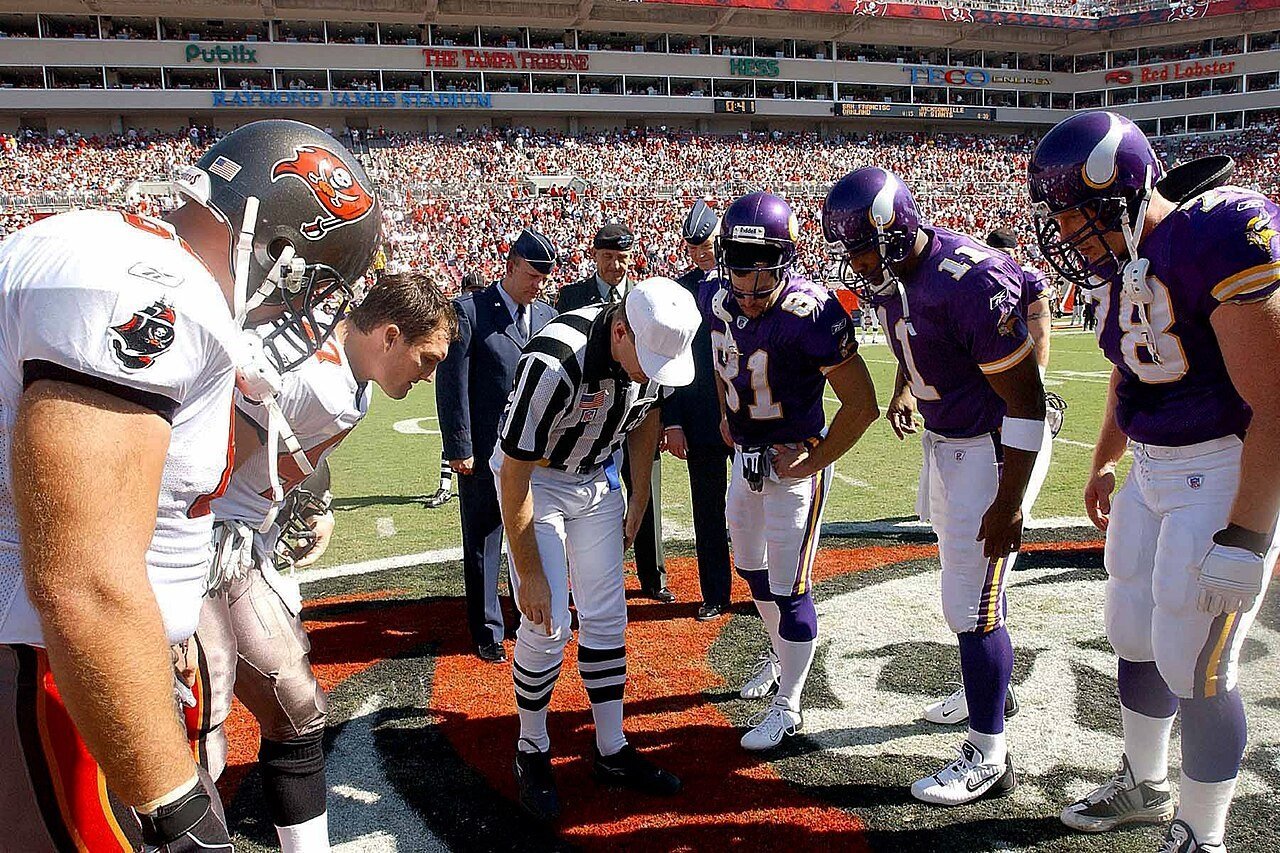 Twins fans—and even some in independent sports media—are advocating for the call-up of shortstop Kaelen Culpepper, the team's top draft pick from 2024. With Culpepper sizzling-hot for the Triple-A St. Paul Saints and Minnesota in desperate need of even replacement-level play at the position, it seems that his time is coming sooner, rather than later. And with that, your Dad is gearing up to ask you something. "Hey, is that new kid any relation to Daunte?" he plans to ask this weekend or next. The Daunte in question is former Vikings quarterback Daunte Culpepper, whose well-worn jersey your Dad still occasionally dons on football Sundays. "Remember when Daunte would just fling it up to Moss for a touchdown and get his roll on," he will ask with a faraway look in his eyes, a grin growing on his face. "Sure was somethin'. Good times. Really thought they'd get us a ring." There is no evidence that Kaelen (born and raised in Memphis) and Daunte (native of Ocala, Florida) are even distant cousins, much less close relatives. Your Dad will be undeterred by this. "I hope he doesn't have small hands like Daunte, don't want him bobbling any grounders," your Dad will observe, repeating the old canard about the quarterback's hand size leading to turnovers. You will be torn on whether to observe that Culpepper wasn't statistically more fumble-prone than other starting quarterbacks of his era or that, again, Daunte is not related to Kaelen. By the time you decide, your Dad will have already moved on to how they don't make shows like Band of Brothers anymore. In a vacuum, this would be fine, but it will come in the wake of your Dad finally identifying Orlando Arcia as a current Twin, rather than his brother, former Twin Oswaldo Arcia, during Tuesday's game versus Detroit. "One step forward, two steps back," you will mutter. It's going to be a long summer. Daunte was a two-sport star in high school and was drafted by the Yankees in 1995. You desperately hope Dad has forgotten that nugget for good. View the full article
 -
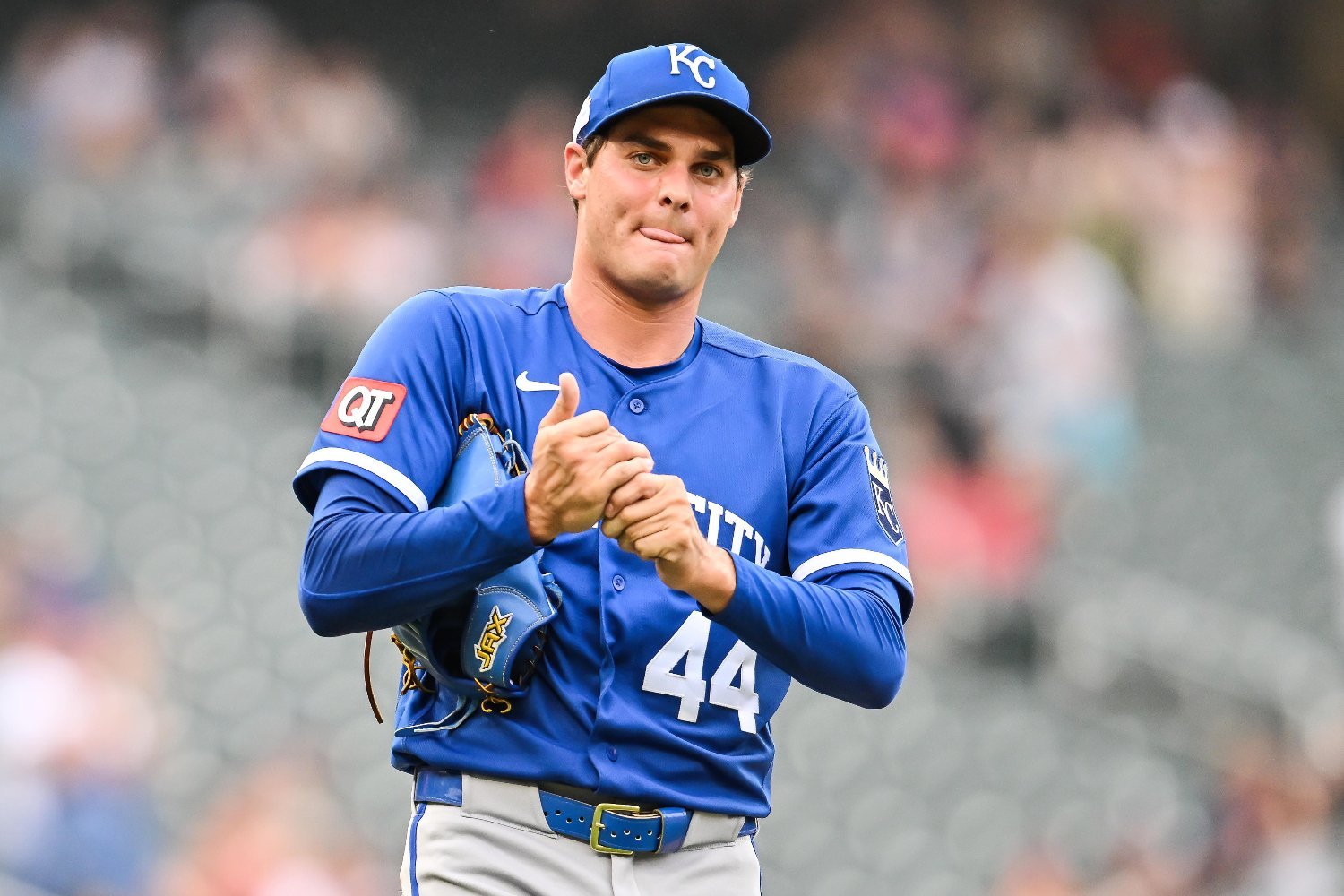 The Royals lost the series finale to the Rangers 4-2 on Thursday, a game delayed by two hours and twenty minutes due to rain concerns (though it never rained). Kansas City dropped the series two games to one after winning the series opener on Tuesday. A primary issue in this series, especially on Wednesday, was the lackluster performance of the bullpen. After Seth Lugo was hit in the head by a line drive from Brandon Nimmo in the fourth, the Royals had to rely heavily on the bullpen for the remainder of the game. Kansas City utilized seven relievers in the game, and unfortunately, the results weren't great, as they squandered multiple leads in a 6-4 extra-innings defeat. The Royals' bullpen allowed five runs on eight hits and eight walks. Alex Lange failed to keep it tied in extra innings, and Matt Strahm allowed a game-tying home run on the first pitch to Jake Burger on a hanging slider. Thus, the bullpen was pretty spent on Thursday afternoon, which put pressure not only on Royals starting pitcher Michael Wacha but also on Beck Way, the Royals' lone fresh reliever. Even though the Royals lost on Thursday, it was a solid effort from the pitching staff, especially given the circumstances of a fatigued, thin bullpen. Wacha went seven innings and allowed four runs on nine hits and one walk while striking out two. Manager Matt Quatraro also utilized Way in relief, and he held the Rangers in check in his third MLB outing. In 2.0 IP, Way allowed no runs on two hits and no walks while striking out four. While Way didn't generate a ton of whiffs or chases, he did a good job of finding the edges of the strike zone and keeping Rangers hitters off balance. He generated a 38% CSW and showcased some interesting TJ Stuff+ data, as evidenced by his summary today. While the 15.4% chase% and 25% whiff% are mediocre marks, his .329 xwOBACON and 59.4% zone rate were more stellar numbers. Furthermore, he showed off some intriguing TJ Stuff+ metrics with a 104 overall TJ Stuff+ as well as 105 and 117 TJ Stuff+ on his cutter and sweeper, respectively. He was intentional with those two pitches, utilizing them 40.6% and 28.1% of the time, respectively. Way's overall numbers aren't great, as he sports a 10.80 ERA and 2.10 WHIP in three outings and 3.1 IP. However, his lackluster numbers are particularly due to a disastrous June 7th outing against the Minnesota Twins. In 0.1 IP in that appearance, he allowed four runs on three hits, and he walked one. That boosted his ERA to 27.00 and WHIP to 3.75. The former Yankees draft pick didn't throw many pitches (15), but he was hit hard, struggled to find the zone, and didn't generate a whole lot of chases or whiffs, as evidenced by his TJ Stuff+ summary from his second MLB outing. Conversely, two of his three MLB performances have been solid. In his MLB debut on June 5th against the Twins, he allowed no runs on one hit and no walks while striking out two. It was a very different outing from his one against the Rangers. While the TJ Stuff+ was average and he struggled to find the zone, his chase, whiff, and xwOBACON were stellar, as illustrated below. Thus, it's tough to get a feel for what kind of pitcher Way is or could be for this Royals bullpen. Is he simply a mop-up man, a reliever with some strikeout upside who can only be utilized in low-leverage situations? Or does he have more upside and could pitch himself into a higher-leverage role later in the season? Let's break down what Way has done in the big leagues thus far and examine what his outlook could be with the Royals both this season and beyond. Way's Sweeper and Cutter Are Intriguing Offerings Way leaned on his cutter and sweeper on Thursday and for good reason: They sported the best pitch quality, based on TJ Stuff+. Here's a look at his TJ Stuff+ summary from his season so far, though it doesn't include his most recent outing in the pitch type data set. Even though he had thrown the sweeper only one time before Thursday, it had the best TJ Stuff+ of his four pitches with a 113 TJ Stuff+ and a 62 grade. Below is an example of his sweeper being utilized last Friday against Minnesota. It buckled Austin Martin and was initially called a strike, but it was overturned after an ABS challenge. Beck Way ST-June 5.mp4 On Thursday, Way generated a 25% whiff rate and 11% CSW on the sweeper. He struggled to find the zone with it, as evidenced by its 56% zone rate. That said, hitters only generated an average exit velocity of 62.7 MPH on the sweeper, which helped make up for the lackluster zone rate on the pitch against the Rangers. In Triple-A, the 26-year-old righty utilized the sweeper 14.5% of the time. Much like in the Majors, he had a solid TJ Stuff+ on the pitch. However, the zone rate and chase rate were questionable, while the whiff rate and xwOBACON were strong, as illustrated in the TJ Stuff+ summary from Omaha below. With the Storm Chasers, Way utilized the sweeper more effectively against righties than lefties. He threw the pitch 16.6% of the time against righties compared to 10.1% of the time against lefties. Against righties, his CSW was 31.5%, and his whiff rate was 41.2% with the sweeper. That was significantly better than his sweeper marks against lefties, which can be seen in the heatmap data from Triple-A. Thursday showed what Way could do when he utilized his sweeper more intentionally, while his June 7th outing demonstrated what happened when he didn't utilize it at all. In terms of the cutter, usage has not been an issue with the pitch. He's primarily utilized it in all three of his outings, and it's been solid TJ Stuff+ wise in both the Majors (103 TJ Stuff+) and Minors (106 TJ Stuff+). The offering has been a great whiff pitch for Way at both levels. It generated a 32.9% whiff rate in Omaha, and it currently has an 80% whiff rate in Kansas City. Granted, the latter whiff rate won't stay that high for much longer, but the pitch's characteristics and data are encouraging. Below is a look at his cutter heatmap data with the Royals this season via TJ Stats. The cutter has been equally effective in terms of CSW against both lefties and righties this year. Against lefties, his CSW is 66.7%, and his CSW against righties is 80%. However, he has a 100% whiff rate against righties while a 50% whiff rate against lefties. Way was using his cutter with maximum effectiveness in his MLB debut. He put away two Twins hitters with the pitch: lefty Josh Bell and righty Martin. Way Cutter-K.mp4 When he locates the pitch effectively, Way's cutter can be a premium pitch. It also profiles much better than his other fastball offerings. His sinker has a 94 TJ Stuff+, and his four-seamer has an 82 TJ Stuff+, both below-average marks. While they have above-average velocity (96.3 MPH on sinker and 97.1 MPH on four-seamer), the movement profile isn't great, as they are more horizontal offerings (16.3 HB on sinker and 13.2 HB on four-seamer) than vertical ones (5.3 iVB on sinker and 10.3 iVB on four-seamer). Way threw the four-seamer and sinker under 20% of the time on Thursday, which was less than the 33% usage he had on both pitches on June 7th. On June 5th, he threw the four-seamer and sinker 28.6% of the time each. Perhaps the righty is getting wise and realizing that his cutter and sweeper should be used more. What Could Hold Way Back? I don't question Way's stuff or his ability to generate strikeouts, which is a trait the bullpen lacks overall, especially among its veteran relievers (e.g., Strahm and Lucas Erceg). However, my biggest concern is Way's command and if he can generate enough consistent strikes while also avoiding the middle of the zone, especially with his four-seamer and sinker offerings. Here's a look at his zone chart from Thursday's outing against Texas. Way made a few mistakes in the middle of the zone, but he lived on the edges of the strike zone for the most part. That pinpoint command kept the Rangers off balance, and while they had two hits, only one was a really good one (Burger's hit was a groundball that would've been an easy out if it had not hit off Way's shoe). Now, here's a look at his zone chart from his June 7th outing. This was his worst outing, and it's easy to see why based on the pitch chart. He leaves a couple of cutters up in the zone, as well as a sinker. Bell, who struck out on his cutter on June 5th, launched a three-run home run on a Way cutter that he left up in the zone. NnlNWVdfWGw0TUFRPT1fQndsVVVBVUJBQU1BV1ZJSEF3QUhVbGNFQUZrQlVGUUFCZ05VQUZCVUJsZGNVZ3Rm.mp4 That lackluster command on the pitch and others will get Way into trouble. While he has a solid pitch mix, his stuff isn't good enough to generate a ton of in-zone whiffs just yet. Thus, he will need to be more intentional about living on the edges of the zone and mixing up his pitches to keep opposing hitters guessing. Just for comparison, let's look at his pitch chart from his MLB debut. Way was solid with his offerings. Even though he left a few in the zone, he kept the sinker down and the cutter up, which threw off Twins hitters. They adjusted, though, in his next outing against them. That was a tough lesson for Way to learn at the MLB level. Thankfully, it didn't cost him or the Royals a loss. Thursday's outing showed that Way can command effectively, especially after a rough one. However, how his command fares in back-to-back outings will be key to his ceiling as an MLB reliever. Command was a major issue for him last year in Omaha, as he produced subpar zone, chase, and whiff rates, which resulted in an inflated ERA (6.87) and FIP (6.89). It was especially disappointing since the TJ Stuff+ metrics on his pitches were actually encouraging. Way has done an admirable job of finding the strike zone more in 2026. After posting a 44% zone rate in 2025 in Omaha, it went up to 51.2% in 2026 with the Storm Chasers. His zone rate with the Royals is currently 39.3%, and a lot of his Statcast percentiles are suffering because of that. However, he does excel in a couple of categories, which is more than some current Royals relievers. Way has demonstrated an ability to adjust his mix and improve his command from one year to the next in Omaha. Can he do that over the course of the 2026 season in Kansas City? With the Royals 28-41, last in the AL Central, and clearly playing for "next season", Way should get plenty of opportunities in the Royals bullpen this year to show that he can make the same kind of adjustments in Kansas City. View the full article
 -
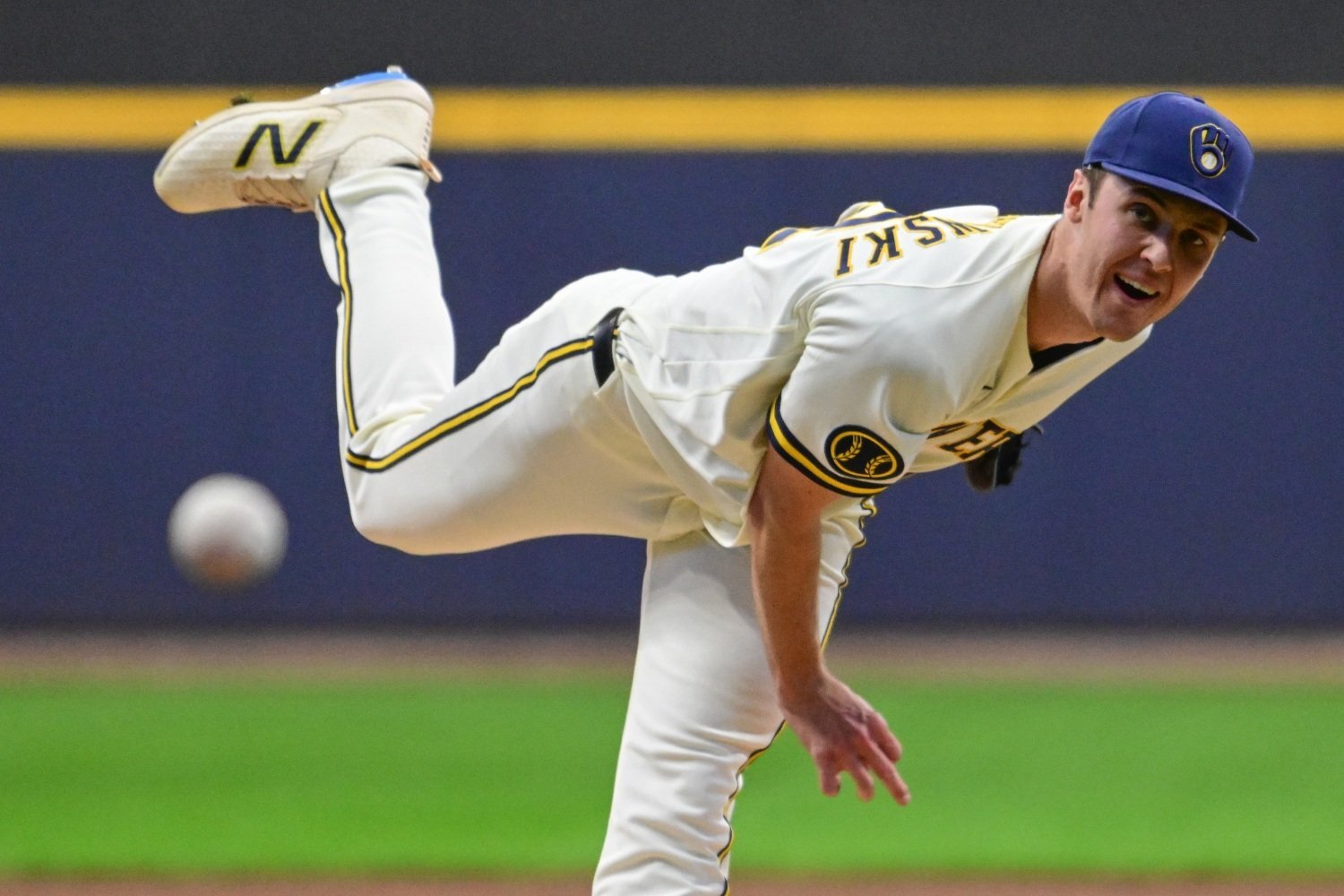 At this point, most of the baseball world knows Jacob Misiorowski has one of baseball’s best fastballs. According to Statcast, Misiorowski’s heater ranks third among qualified four-seamers in pitcher run value (+12), first in whiff rate (42.5%), and 14th in expected slugging against (.262). Those following the game closely probably also know what makes that fastball so tough to hit. In addition to averaging 100 and touching 104 MPH with it, Misiorowski’s 7.5 feet of extension down the mound adds an extra 2 MPH of perceived velocity by reducing a hitter’s reaction time, and he generates more carry on the ball from backspin than one expects to see from his low arm slot. In the 365 days since his major-league debut, Misiorowski has thrown 741 pitches with a perceived velocity of 102 MPH or higher, which is more than all but one pitcher—Aroldis Chapman, who's been pitching in the majors continuously since Misiorowski was eight years old—has in the pitch-tracking era. That abnormal combination of timing and angles often makes it nearly impossible to get on top of his fastball. Thanks to Statcast’s new swing timing metrics, we can confirm how Misiorowski’s fastball misses bats, rather than inferring it from the eye test and hitter testimonies. For the most part, that original conclusion was correct. Hitters are later on his fastball than the MLB average (the middle bell curves), and they swing underneath it more than average (the rightmost bell curves). Look more closely, though, and there are more details about how much each attribute of Misiorowski’s fastball leads to those imprecise swings. In the graphic above, the timing and vertical position of the swing are shown separately, but in reality, they’re closely related. Being late on a four-seamer typically makes a hitter more likely to swing underneath it. Every hitter’s bat path starts by traveling downward, at least slightly. If he starts his swing late on an elevated fastball, his hands and bat will probably still be traveling downward as his bat comes through the hitting zone, so he’ll swing farther underneath the ball. But against Misiorowski’s fastball, that relationship between timing and bat path isn’t perfectly proportional, particularly compared to most pitchers. Hitters are late on 35% of swings against it, which ranks 41st among qualified four-seamers, but they’re underneath it on 63% of swings, which ranks 7th. Put another way, Misiorowski’s fastball gets no more late swings than Kyle Harrison’s, but it gets swings underneath it an additional 4% of the time. That means that abnormal carry from a low slot—15.6 inches of induced vertical break from a 5.26-foot release height—might be most responsible for Misiorowski’s dominance, even if he gets more attention for lighting up the radar gun. That’s good news, because a pitcher’s excellence is more sustainable when it’s not tied strictly to velocity. Sitting in the triple digits takes Misiorowski’s fastball to another level, but it can still get bad swings underneath the ball at 97 mph. It’s not just a good pitch because he throws hard. Misioroswki’s unicorn fastball also elevates his other pitches, particularly his curveball. When a hitter takes a bad swing at a breaking ball, he’s usually early. That’s the pitcher’s goal. It’s a slower pitch than a fastball, so it’s meant to catch guys out in front when they’re on time for a heater. Then there’s Misiorowski, who doesn’t get many early swings on his curveball compared to the average pitcher. Instead, 19% of swings against it are late, the highest rate among qualified curveballs. Once again, a big reason for this is that Misiorowski throws hard. His curveball averages 87.4 MPH, the fifth-fastest qualified curveball in the game. But like his fastball, there’s much more to it than just velocity. Misiorowski’s fastball is so good that hitters must devote their full energy to squaring it up. That means eliminating his slowest pitch. If a pitch starts around the zone, they’ll see it as a fastball, and beating the fastball—getting on top of it when it’s in the zone, and laying off when it’s not—is the top priority. If a pitch starts closer to the knees, they’ll often assume it’s a curveball and let it go for a ball, trying to stay on the fastball. That’s the right approach, as most of Misiorowski’s in-zone pitches are four-seamers, cutters, and sliders. Unsurprisingly, opponents are swinging slightly more at Misiorowski’s hard stuff this year, but far less at his curveball. When Misiorowski does plant an in-zone curveball, their pitch recognition short-circuits, prompting most of those late swings. Here’s Roman Anthony taking a very late cut at a comeback curveball. anthony.mp4 Here’s Pete Crow-Armstrong making a late decision and getting tied up by a back-foot breaker. pca.mp4 In the same game, Seiya Suzuki managed to single it through the right side, but only via an 81.3-mph roller on an emergency swing. suzuki.mp4 For another non-whiff, here’s Jazz Chisholm Jr. realizing too late that he’s seeing a curveball down the middle, not an elevated two-strike fastball, and chopping it into the ground with a late, all-arms swing. jazz.mp4 Swings on in-zone curveballs are often bad news for pitchers. Across the league, they’ve allowed a .348 xwOBA and -25 pitcher run value on such swings. In many cases, the hitter ambushed a hanger. Misiorowski, meanwhile, has allowed just a .213 xwOBA on in-zone curveball swings with a +1 run value, meaning it’s actually been an effective pitch for him. It all stems from establishing his elite fastball. It was exactly one year ago that Misiorowski made his MLB debut. There were some early bumps in the road, but he matured into one of baseball’s best starting pitchers remarkably quickly. He’s gotten plenty of complimentary coverage in that time, and yet, there’s somehow still more about his performance to admire than meets the eye. View the full article
 -
 Transactions: RHP Lyon Richardson signed to minor league contract and assigned to AAA Nashville INF/OF Leonard Rijo promoted stateside from DSL Brewers Blue and AAA Nashville The 26-year-old Richardson recently elected free agency after being designated for assignment by the Reds’ organization, while 18-year-old Rijo has started his 2026 well and is likely headed to the Arizona Complex League shortly. Game Action: Nashville Pre-Game Media Notes Final: Nashville 16, Durham (Rays) 5 Box Score Via Clarksville Online, game details: Nashville Sounds Crush Durham Bulls 16-5, Remain Tied for First Place in International League As you’ve read, it was the DH Akil Baddoo (2-for-4, double, 2 walks, 4 RBIs, SB) show over the first 5 innings, during which he delivered a 2-run RBI single, stolen base, run-scoring walk, another walk and an RBI double to help build the Sounds’ lead to 8-3 by that juncture. C Jeferson Quero, 3B Ethan Murray (3-for-4, walk) and OF Luis Matos (2-for-5, walk, 4 RBIs) each added run-scoring hits in that 6-run fifth inning to put the game away early up 13-3. Eight Sounds’ batters notched at least one hit (15 in total), while the remaining player OF Luis Lara walked 3 times (the team had 12 of those, earned by 8 players). SS Jett Williams (2-for-5, 2 RBIs, SB), 2B Eddys Leonard (2-for-4, walk) and OF Greg Jones (2-for-3, double, 2 walks, 3 RBIs, SB) each had particularly productive offensive days. Video of several of those RBI hits are available on the Sounds' website. Always-solid LHP Thomas Pannone (5 IP, 3 R, 6 H, 1 BB, 7 Ks; 2.90 ERA) got the start, while each of LHP Jared Koenig, LHP Mark Manfredi and newcomer RHP Lyon Richardson tossed a scoreless inning of relief. However, there’s some concern about Koenig’s relatively low velocity, unfortunately, as noted in the Forum thread. Sounds’ Extras: Cooper Pratt’s absence from the lineup caused some ‘X’ buzz about a possible call-up to the Show, but the team cooled that with a helpful tweet. The team went 10-for-26 with runners in scoring position in an undoubtedly fun game for 6,886 home fans to take in. Victories elsewhere by Memphis (doubleheader sweep to even record with Nashville) and Rochester (0.5 games behind) leave record-chasing Manager Rick Sweet and the Sounds in a 3-horse race to capture the International League’s first half crown. Friday’s outlook: It’s a bullpen game on tap, as RHP Easton McGee (3.90 ERA, 1.33 WHIP, 9.0 K/9 in 30 AAA/MLB IP) is set to make his third consecutive short start, with Nashville seeking to clinch a series win. Biloxi Pre-Game Media Notes Final: Birmingham (White Sox) 8, Biloxi 0 Box Score Via the Shuckers’ website, game details and we encourage readers to review affiliate write-ups as part of their Link Report routine: Coley Continues Terror in Leadoff Spot, Shuckers Fall to Barons Despite the blow-out (down 8-0 after 4 innings), the Shuckers actually had plenty of opportunities: 1-for-15 with runners in scoring position, stranding 12 baserunners (vs. 3 LOB for the Barons). Two 2-out, back-breaking 3-run homers did the major damage off of RHPs Yorman Galindez (3 IP, 7 R, 4 BB, 2 Ks) and Ryan Birchard (2 IP, 1 R, 1 H, 0 BB, 3 Ks; 3 inherited runners scored) in the 3rd and 4th innings, while LHP Jesus Broca (3 IP, 0 R, 2 H, 0 BB, 1 K) clamped down in his turn. Biloxi had the leadoff man aboard in each of the first 7 innings yet still ended up with a goose-egg on the evening. Offensive leaders included OF Mark Coley II (2-for-4, walk), 1B Blake Burke (2-for-5), 3B Eduardo Garcia (1-for-3, double, walk, SB) and OF Dasan Brown (1-for-2, 2 walks, SB). Shuckers’ Extras: Huge kudos to C Matt Wood, who sat behind the dish for 5 innings, giving him a total of 27 innings caught over the past 3 days. This likely arose out of necessity after Darrien Miller exited a game early on Wednesday. If Miller is not available on Friday, expect bullpen catcher Edgardo Ordonez to make his first minor league start since September 2025. SS Jesus Made did not have his best day (0-for-5, 3 Ks; .269 AVG, .767 OPS), while his middle infield tandem partner had the evening off. Despite the defeat, Biloxi only trail Montgomery by 1.5 games in the Southern League South standings. Friday’s outlook: RHP Jaron DeBerry puts his 15-inning scoreless streak on the line, as Biloxi needs a win to inch back ahead for a 3-2 lead in this week’s series. Wisconsin Pre-Game Media Notes Rain Out: Great Lakes at Wisconsin Via the Timber Rattlers’ website, rain out details: Thursday’s Wisconsin/Great Lakes Doubleheader Rained Out Wisconsin trail South Bend by 4.5 games in the Midwest League West standings but can hopefully make up serious ground on Friday. Friday’s outlook: Wisconsin and Great Lakes will make their third attempt to play a doubleheader (4:30pm CST start time for Game One), with RHP Ethan Dorchies and LHP Wande Torres listed as the scheduled starters and the Timber Rattlers presently leading this week’s series 2-0. Via WSCO's "The Show with Tony G and Leo" (download link): Voice of the Timber Rattlers Chris Mehring (go to the 08:20 minute mark) Via WSCO's "The Show with Tony G and Leo" (download link): Timber Rattlers RHP Josh Knoth, the 2023 1st round pick who missed the 2025 season after Tommy John surgery (go to the 42:20 minute mark) Wilson Pre-Game Media Notes Final: Wilson 7, Hill City (Guardians) 3 Box Score Via the Warbirds’ website, game details: Warbirds Jump Out to Early Lead and Never Look Back The detailed game summary captures the Warbirds’ strong night on the road, as SS Brady Ebel’s 3-run homer helped the team build a 7-0 lead by the 5th inning before they allowed a few runs across late. Starting RHP Miqueas Mercedes (3 IP, 0 R, 2 H, 3 BB, 3 Ks) and relief RHP Hayden Robinson (3 2/3 IP, 2 R, 2 H, 3 BB, 6 Ks) kept the Howlers scoreless through 6 1/3 innings, while RHP Ismael Yanez (1 1/3 IP, 0 R, 0 H, 1 BB, 0 Ks) helped Robinson strand 2 of 3 inherited baserunners. Every Wilson batter reached base via hit or walk, though OF Juan Ortuno (2-for-4, walk) delivered the team’s only multi-hit game and Ebel (1-for-4, HR, walk, 3 RBIs) had their only extra-base hit. Warbirds’ Extras: The 18-year-old, left-handed hitting Ebel, who had commenced the season with a rough 2-for-37 stretch, has lifted his season OPS to .787 in 265 plate appearances. For Ortuno, this was his first appearance in the outfield since 2024 in the Dominican Summer League and first time ever patrolling center field. The team has been taking it relatively easy with Mercedes since an early May injury (lifted after 50 pitches), while the 64 pitches tossed by Robinson were his highest total since a June 2024 injury. Friday’s outlook: RHP Carlos Carra has been impressive of late (17 1/3 IP, 3 R, 20 Ks over last 3 starts) and aims to lead Wilson to a 3-1 series advantage. Final: ACL Brewers 5, ACL Mariners 2 (in 7 innings) Box Score 3B Yu-Lin Liao (2-for-2, HR, walk, 3 RBIs) and RHP Chase Bentley (4 IP, 1 R, 2 H, 0 BB, 6 Ks) led the Zona Crew to a come-from-behind victory to even their record at 15-15. Liao’s second inning homer tied the game 1-1 and 1B Roderick Flores (1-for-3, RBI) doubled to plate Liao in the 5th inning to knot things up again at 2-2. OF Brailyn Antunez (1-for-3, double, walk), OF Alexander Frias (1-for-3, 2 SBs) and Liao each collected hits in a 3-run penultimate frame which gave the Crew its first lead and helpful insurance runs. 19-year-old Bentley had entered for rehabbing starter RHP Daniel Corniel (3 IP, 1 R, 3 H, 0 BB, 2 Ks) in the 4th inning, conceding a solo homer to the first batter faced before the next 14 batters went 1-for-14 against him. It wasn’t easy however, as an error and double had him in a 2nd and 3rd, nobody out jam with the game tied 2-2-2 in the 5th inning, before he staged a great escape with back-to-back-to-back strikeouts swinging. Each team only notched 5 hits in this game, as the rest of the Brewers’ lineup (i.e. those not mentioned above) went a combined 0-for-15 with 2 walks, 8 strikeouts and 2 stolen bases. The squad is set to face the ACL Angels (17-14) at Tempe Diablo Stadium on Friday night. Final: DSL Brewers Blue 15, DSL CLE Mendoza 7 Box Score A 6-run second inning propelled the Blue Men (6-2 record) to a 6-2 advantage, while a 4-run fourth inning restored breathing room to make the game 11-5 by that point and enable the team to coast to victory. January 2026 $1.6 million signee SS Diego Frontado (2-for-3, HR, double, walk, HBP, 3 RBIs, SB; 1.039 OPS) had some of the game’s biggest hits, including a 2-run double for a 4-2 lead and a solo homer in the 6th inning, though he exited alongside C Sebastian Franeites (2-for-4, double, walk, 3 RBIs, SB; 1.270 OPS) after playing 6 innings. Eight position players collected at least one hit, as the offense totaled 13 hits, 10 walks and 2 HBPs. Also, in the 2-hit club were OF Enrique Lovera (2-for-3, triple, 3 walks, 2 RBIs), INF Cristian Montilla (2-for-4, double, walk, 2 RBIs) and OF/INF Jesus Mancera (2-for-5, triple, RBI), while 1B Angel Gonzalez and 3B Leanders Matos both homered. Starting 17-year-old RHP Steven Duran (4 IP, 5 R, 3 H, 6 BB, 3 Ks) struggled a bit, while 19-year-old RHP Lukas Gonzalez (2 IP, 0 R, 0 H, 1 BB, 3 Ks) produced the game’s top pitching line. The Blue squad hosts Red Sox Red (2-5) on Friday. Final: DSL Brewers Gold 12, DSL CLE Goryl 9 Box Score The Golden Men (3-5 record) stunned their opponents with a 9-run ninth inning to flip a 9-3 deficit into a 12-9 victory, highlighted by 3B Ricki Moneys’ grand slam, 2B Josue Rodriguez’s game-tying RBI double and OF Jefer Lista’s 2-run single to take the lead. The team did lead 3-2 before allowing 7 unanswered runs in the middle innings, but managed to escape a bases loaded, 1-out jam in the 7th frame to apparently keep the game “close” at only down 9-3. 20-year-old RHP Wandy Cabrera (1 2/3 IP, 0 R, 1 H, 1 BB, 2 Ks) earned the win, working around a double, wild pitch and walk in the 8th inning before slamming the door with a 1-2-3 bottom of the 9th. Lista (3-for-4, walk, 2 RBIs; .588 AVG), Rodriguez (3-for-5, 2 doubles, RBI; .375 AVG), SS Santiago Garcia (1-for-3, 2 walks) and OF Angeni Fernandez (2-for-4, HBP; .400 AVG) each had solid offensive days, while Fernandez also added an outfield assist. RHP Miguel Andrade (3 2/3 IP, 5 R, 8 H, 2 BB, 1 K) got the start and RHP Gustavo Garcia (3 1/3 IP, 4 R (3 ER), 2 BB, 0 Ks) handled bulk relief. The Gold team plays at Padres Gold (5-2) on Friday. We hope that you enjoy the Minor League Link Report. On Friday, eight minor league games are scheduled, with the DSL squads commencing at 10:00am CST and ACL Brewers concluding the evening with an 8:00pm CST start time. The Milwaukee Brewers also open their home series against the Phillies at 6:40pm CST. Organizational Scoreboard including starting pitcher info, game times, MiLB TV links, and box scores Current Milwaukee Brewers Organization Batting Stats and Depth Current Milwaukee Brewers Organization Pitching Stats and Depth View the full article
 -
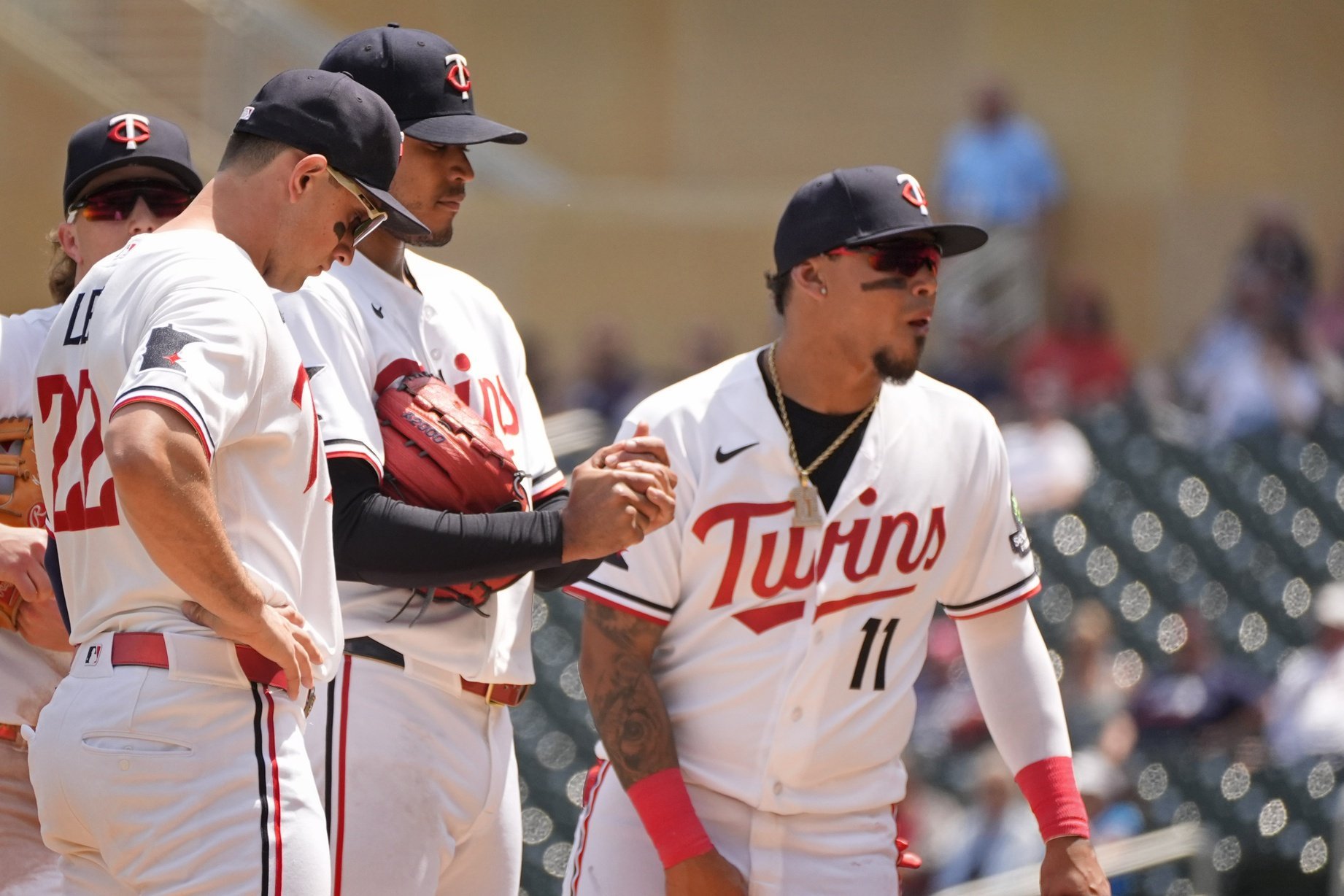 When Derek Shelton came aboard as manager, he brought with him a new mantra: "hunt the good." The idea was that, in a game often defined by failure, you've got to focus on the successes and wins where you can. Foreseeing plenty of failure as I looked ahead to this Twins season, it was a mindset I tried to adopt. I have to remind myself that this site was founded (in 2012) amidst a long stretch of constant losing for the franchise, but during those times we still found ways to enjoy following along. You search for the small positives and appreciate them — especially those with potentially significant future ramifications. As we checked in at the one-third point of the season a couple weeks ago, I found several heartening trends worth focusing on. Battling through myriad injuries and setbacks, the Twins were showing resilience. They had just pulled out of a tailspin with seven wins in their past nine games, drawing within a game of .500 and positioning themselves in the wild-card race. Since then, they've lost 11 of 15, falling back to eight games below .500 and to a 90-loss pace. Unfortunately, most of the bright spots that I called out at the time have taken a sharp turn downward turn, and in some cases the writing was one the wall even then. Let's check in on the primary contributors and factors that were keeping the Twins relevant. Fantastic starting rotation: Lately, not so much. Through May 27th, Twins starters ranked ninth in the majors in fWAR; since then they rank 27th. Bailey Ober's charmed run came to and end with a pair of clunkers preceding an IL trip for elbow inflammation. Taj Bradley's performance has tailed off dramatically, as has Connor Prielipp's. Simeon Woods Richardson got DFA'ed. Austin Martin and Trevor Larnach breakouts: Martin had a .900 OPS at the start of May. Since then he's slashing .216/.285/.288, with a .440 OPS in his past 24 games. Larnach is hitting .189 with a .610 OPS since May 27th. Ryan Jeffers on track for a career year: He had just gotten injured, and will still be out for several more weeks. When he turns he'll be just months from free agency, and a possible trade candidate. Shockingly effective bullpen: They were on a great run in late May, inching upward on the leaderboard after an expectedly rough start to the year. With Luis García and Justin Topa recently jettisoned, there was some hope that some of level of success would sustain. Nope. Since May 27th, Minnesota's bullpen ranks 26th in baseball with a 6.16 ERA and 28th in WPA. Derek Shelton resonance: I said at the time that I was lukewarm on this vibe because the Twins had plenty of hot streaks over the past couple of years under Rocco Baldelli, and they were ultimately outweighed by prolonged losing spells. So far that's been the case here too, and in fact with the way the team is trending — outscored by 45 runs during this latest 15-game stretch — you could argue that things are starting to go off the rails under his watch. So what positives remain? Frightfully few. Byron Buxton continues to absolutely crush when he's in the lineup and has been easily the biggest highlight on the team. Joe Ryan keeps turning in excellent outings to fuel his trade value. Kody Clemens has been one of the few red-hot hitters in the lineup over the past couple weeks, though it says a lot that he ranks third among Twins position players in fWAR as a journeyman role player. Slim pickings outside of a few select players, none of whom are really positioned as future building blocks. Then again, if this team has reminded us of anything, it's how many ups and downs can take place over the course of an MLB season. Any of the downward-trending guys mentioned above — Martin, Larnach, Bradley, Prielipp — could do an about-face and resume their ascent at any time. Royce Lewis is back and has taken some good swings. Moreover, help is on the way. Alan Roden is rehabbing from injury in Triple-A and could join the big-league club sometime soon. Ditto Mick Abel, whose return would do much to jolt a staggered rotation. Fellow 2026 deadline acquisition Hendry Mendez has been on a tear for the Saints and is a candidate for a second-half promotion, if the Twins can find room for him. One guy they'll have no trouble finding room for is Kaelen Culpepper, the top prospect who is excelling at Triple-A and in line for an imminent call-up. He's become the main source of optimism and excitement for demoralized Twins fans, although as I wrote earlier this week, that places a pretty heavy burden on his shoulders. If he comes up and struggles it won't be any kind of indictment on his future, but it will be another drop in the bucket of 2026 malaise. We'll see if the Twins and their key players have another burst of resilience in them. If not, we could be in for a dreary second half. Last year's team went 34-61 after this date. If this year's club were to play at the same pace the rest of the way they'd finish 64-98. Only three Twins teams have lost more games (2016, 2011, 1982). Gonna be hard to hunt much good out of that. View the full article
 -
 Fish On First staffers react to the latest Miami Marlins series and prepare you for what lies ahead. Thursday's show was hosted by Ely Sussman and featured panelist Jeremiah Geiger. You can find Fish Unfiltered and Fish On First LIVE on the Fish On First YouTube channel, Apple Podcasts, Spotify or wherever else you get your pods. Our next FOF LIVE episode will be Sunday at approximately 6:30 p.m. ET following the Marlins-Pirates series finale. View the full article
 -
Shape of the Blue Jays: Cease, Piñango, Woods Richardson
DiamondCentric posted an article in Jays Centre
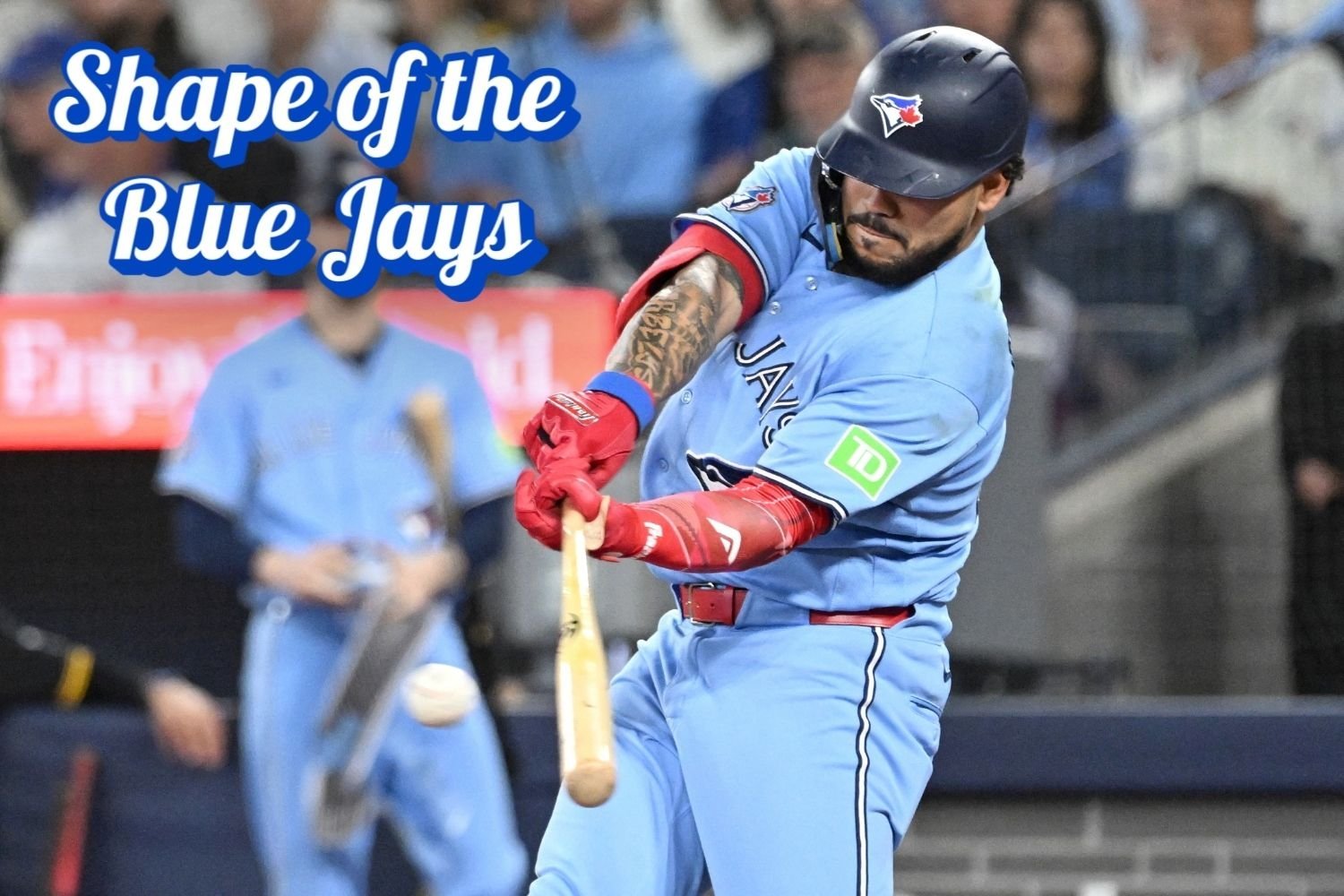 Welcome to Shape of the Blue Jays, my column where I dig into Statcast numbers to analyze recent pitch shape and swing shape trends for Toronto Blue Jays players and discuss how they have impacted their performance. Click here to read the last edition. Quick Hits: New Statcast Drop We've talked ad nauseam at this point about Vladimir Guerrero Jr.'s power outage this season. However, Statcast just released leaderboards for a series of new metrics that show bat position at intercept earlier this week. These stats include miss distance, vertical and horizontal bat position, and timing. While most of the early content that MLB has posted in relation to these leaderboards has to do with pitchers, and early analysis shows there isn't as much correlation between a hitter's bat position and timing and overall performance as you might think, this new data uncovers a side of Guerrero's story that the public hasn't had access to until now. It shows that his timing isn't a whole lot different from the past couple seasons, nor is he getting tied up or flailing at the ball more than usual. However, the vertical position of his bat has changed for the worse. He's swinging under fastballs 28% of the time, up from 22% last year. Against breaking balls in 2025, he was swinging under the ball 12% of the time, which has gone up to 19% this year. Against off-speed pitches, that number has gone from 7% to 13%. For all the flack Guerrero gets for hitting too many groundballs, he's running the highest popup rate of his career. The balls in the air just haven't been as well-hit as in years past too. The Blue Jays have already had access to this data for a while now, but now fans at large can further isolate the root cause of what has been a puzzling season for #27. Dylan Cease Toronto's marquee free agent signing returned to the mound on Tuesday after a minimal stay on the IL and was nothing short of spectacular (6 IP, 1 ER, 3 H, 11 K, 1 BB). Dylan Cease got 29 swings and misses on the evening, the most in any big-league game since Tarik Skubal notched 32 on May 9 of last year. It's just the third time anyone has done that since 2024. Eight of those whiffs came on his new changeup, which generated nine total swings. That's an 89% miss rate! Since Philadelphia went with three strong lefties in the first four slots of their lineup (Schwarber, Harper, Marsh), it was an appropriate time to lean on that pitch. It was the second-highest single-game changeup usage we've seen from Cease on the year. I maintain a somewhat subjective stat derived from MLB's play-by-play data to evaluate pitch tunneling by calculating the standard deviation of pitch position in space at 150 milliseconds after release, or roughly the point where the hitter has to decide whether to swing. The lower the standard deviation, the more similar pitches appear mid-flight. On a per-start basis, Tuesday night was the best outing of Dylan Cease's fledgling Blue Jays tenure from a tunneling standpoint. When his command is there, and he's maximizing his arsenal, there are very few pitchers in the world that can claim to be more dangerous. Yohendrick Piñango Although he recently made another error in left field, Piñango's bat has made it nearly impossible to keep him out of the lineup for now. He's slashing .321/.345/.464 in June and hit four batted balls over 100 mph in the Phillies series alone, headlined by a 112-mph lefty-lefty double off the wall against a down-and-in sinker from Cristopher Sánchez, comfortably the best healthy pitcher on the planet until Skubal comes back this weekend. His batted ball profile isn't fully optimized, but it's still one of the best on this roster. His 90th-percentile and max exit velocities are second only to Guerrero's. Per Statcast, only Jesús Sánchez makes less weak contact. The launch angle of his hard-hit balls is averaging only 5°, and his average attack angle is only 1°, but he has the most bat speed relative to his swing length on the team. Even though he chases and misses more than the average hitter, he has seen a higher percentage of pitches ahead in the count than anyone on the team besides Myles Straw (min. 100 PA), and no Blue Jay increases his bat speed more in hitter's counts than Piñango. The projection models at FanGraphs are low on Piñango the rest of the season (~85-95 wRC+), and they suspect his playing time will be wiped out once the team is healthier, but if he keeps hitting like this, that won't be the easiest decision to make. Simeon Woods Richardson I mentioned during my recent guest appearance on the Jays Centre podcast that Simeon Woods Richardson was due for a fundamental change of some sort after getting traded to Toronto, whether it be related to his release, repertoire, or something along those lines. He was getting clobbered in Minnesota, and neither his stuff nor location was where it needed to be. I was in the building for his bulk appearance on Monday night (4 IP, 0 R, 1 H, 3 K, 0 BB) and was surprised in the moment to see just how many changes were made in such a short amount of time since the deal. Woods Richardson: release, velocity, spin, and movement, 2026 (Twins left, Blue Jays right; Baseball Scouting Lab) He added about an inch and a half of carry to his fastball, which averaged 19.4" of iVB on Monday. He also killed nearly 5" of run on his splitter, something he started to do in his last few starts with the Twins to inconsistent effect. His gyro slider, which was averaging 86 mph, sat 88-89 in the first two innings of his appearance. He also slightly shifted his over-the-top release toward the first-base side of the rubber. According to the Stuff+ model hosted on FanGraphs, his fastball was an above-average pitch in this game for the first time since June of last year. He was a tad lucky on the BABIP front, but the fact that Connor Seabold was DFA'd before him indicates the Blue Jays saw enough to keep him around for the time being. I'm quite curious as to the role Pete Walker and company played in this positive development for a young pitcher who needed something to break right. All stats entering June 11, 2026. View the full article
 -
Mets Reliever Brooks Raley Is Breaking Baseball Analytics
DiamondCentric posted an article in Grand Central Mets
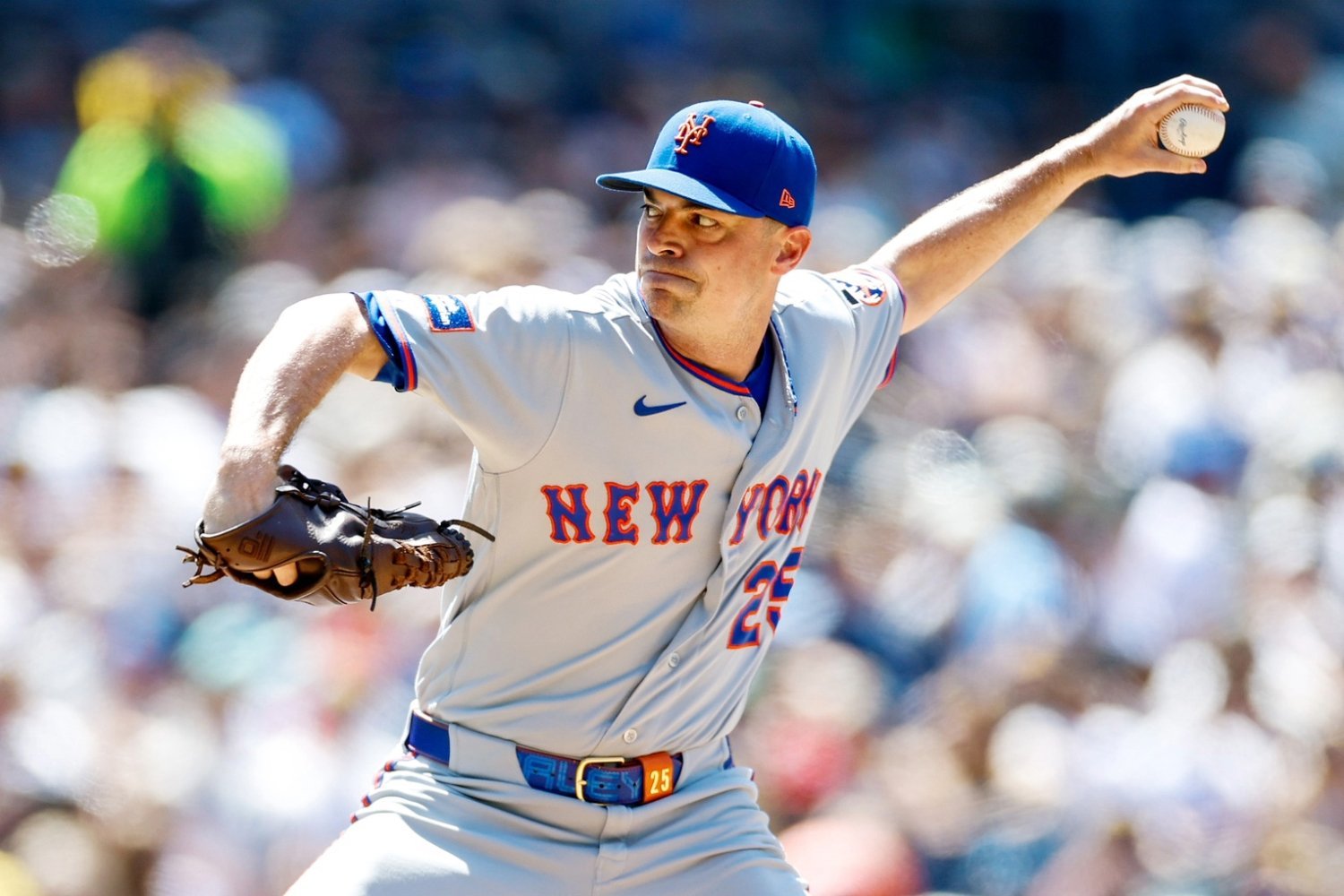 Nowadays, the young, flamethrowing pitcher archetype seems to be the talk of the town across the professional baseball landscape. Players throwing triple digits with sky-high whiff rates are the hot commodity and apparent ultimate prerequisite in dominating in today’s day and age. Brooks Raley is none of those things, and yet he's been one of the best relievers in the sport. Let’s dive into how he’s successfully climbed uphill all year for one of the best seasons of his illustrious career. Brooks Raley's Path to Dominance Raley is a 37-year-old relief pitcher for the New York Mets, and he’s defying almost every sense of logic present in today’s game. The veteran southpaw stands at 6-foot-3, 200 pounds, and he possesses north of 270 innings of experience over 284 appearances. Nearly ever single one of those appearances have been out of the bullpen, as the 2009 sixth-round pick by the Chicago Cubs has proven to be a steady, reliable relief option over his nine-year career. The Texas A&M alum has major league experience with the Cubs, Cincinnati Reds, Houston Astros, Tampa Bay Rays and now the Mets. With no All-Star selections, it can be easy for some to overlook the veteran southpaw. However, he has had to overcome some pretty significant hurdles to make a living in the majors. Velocity and Whiffs Aren't Mutually Inclusive The average fastball in 2026 glides across the plate in the mid-90s, and that value has only climbed over the years. Raley has a different way of going about his business. His fastball clocks in at an average of 89.9 miles per hour, putting him in the 4th percentile of MLB pitchers. This isn’t new for the veteran hurler, either; his average fastball has never eclipsed 91 miles per hour at any point throughout his career. Naturally, his whiff rate isn’t astronomically higher either, sitting at 26.4% (59th percentile). However, that's still an impressive, above-average figure. This is someone who can’t rely on blowing a pitch by someone, and in turn, if he makes a mistake and catches too much of the plate, it’s more likely that Raley gets punished than, say, Milwaukee Brewers hurler Jacob Misiorowski (who leads MLB in pitches over 100 miles per hour this year). Yet, even without the velocity to generate more swings and misses, Raley has struck out 27% of hitters (81st percentile). How does he do this and stay on a pace that’s given him 29 punchouts in 24.1 innings this year? Raley's Deep Arsenal It all starts with his arsenal of pitches. While the league seems to be dominated by hard throwers, finesse pitchers still exist. Having a variety of pitches is usually one of the first ways that soft-tossers can meander their way through a lineup. Sure enough, Riley utlizes four different pitches as a reliever. His sweeper, which he uses 44% of the time, bites hard glove-side with plenty of horizontal movement. Opposing hitters have struggled to time it up, as they’ve hit just .196 with a .219 expected batting average against Raley’s primary offering. The sinker and cutter share time as his secondary pitch, being utilized at 22% and 21% of the time, respectively. They both dart in very different directions; the 37-year-old’s sinker glides around 18 inches to his arm-side, while the cutter has more of a sharp, bullet-like movement to it. His changeup has almost the same path as the sinker but buzzes in at 5.7 miles per hour slower (84.2). Raley fires out of a 32-degree arm angle which is considered a lower arm slot. That allows for more side-to-side movement on his breaking pitches. Mitigating Solid Contact While Raley’s strikeout rate is well above the league average, his bread and butter is generating weak contact. The cerebral lefty is allowing just a 29.5% hard-hit rate, or proportion of baseballs leaving the bat at 95 miles per hour or greater. He doesn’t generate a ton of ground balls, but the sharper launch angle doesn’t hurt him since opposing hitters aren’t piecing up his offerings. In effect, this is a pitcher who can beat you in multiple ways. Be it by soft contact or strikeout, Raley has insulated himself from the kind of damage that tends to ruin a reliever's ERA. A rather impressive feat for someone who barely touches 90 miles per hour, no? View the full article
 -
Ranger Suárez Isn't the Pitcher the Red Sox Signed — He's Better
DiamondCentric posted an article in Talk Sox
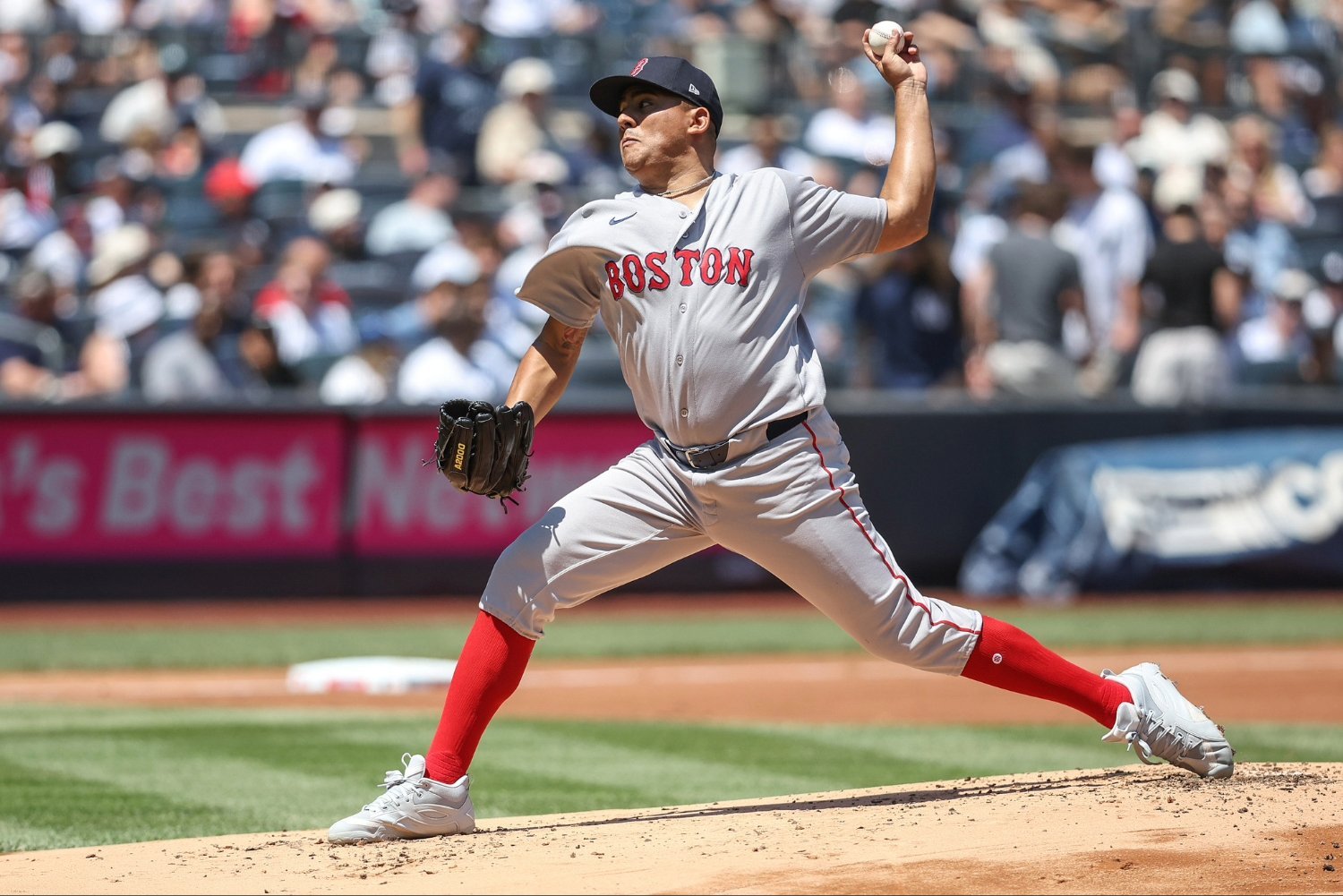 Pitchers rarely become better after losing one of the skills that made them successful. For most starters, a steady decline in ground-ball rate is the beginning of a warning sign. Fewer ground balls often lead to more damaging contact, more home runs, and eventually worse results. Yet Ranger Suarez has managed to move in the opposite direction. The defining characteristic of his pitching profile is gradually fading, but the overall package may be more effective than ever. That contradiction lies at the center of Suárez’s first season with the Boston Red Sox. When Boston signed the veteran left-hander, the expectation was straightforward: add a dependable starter capable of stabilizing the rotation. What the Red Sox have received instead is a pitcher who continues to adapt, finding new ways to dominate even as some of the traits that once defined him become less prominent. Through his first 12 starts of 2026, Suárez owns a 3.18 ERA and a 2.94 FIP. Those numbers are impressive on their own, but the path he has taken to reach them is even more fascinating. For years, his identity revolved around his ability to generate ground balls. His sinker anchored the entire approach, forcing hitters to pound the ball into the dirt while limiting damaging contact and keeping home runs under control. That foundation still exists. It simply no longer tells the whole story. Ranger Suárez Is Producing Fewer Ground Balls and Better Results Let's take a quick look at his year-over-year evolution over the past six seasons. Season GB% K/9 HR/9 ERA FIP 2021 59.2% 9.1 0.34 1.36 2.72 2022 55.4% 7.5 0.87 3.65 3.87 2023 48.5% 8.6 0.94 4.18 3.90 2024 51.9% 8.7 0.84 3.46 3.37 2025 46.8% 8.6 0.80 3.20 3.21 2026 36.0% 8.7 0.55 3.18 2.94 The contradiction immediately jumps off the page. His ground-ball rate has fallen to the lowest point of his career as a starter. Under normal circumstances, that trend would raise concerns about sustainability. Instead, his home-run rate has dropped while his ERA has remained remarkably stable, and his FIP has improved to one of the best marks of his career. Taken together, those trends point to something more meaningful than luck or favorable variance. They reveal a pitcher who has successfully evolved his approach without sacrificing effectiveness. Suárez is no longer relying exclusively on contact management. Increasingly, he is preventing quality contact from happening in the first place. A New Path to Dominance Now, let's get a bit more granular and look at the main features of his arsenal. Pitch AVG xBA wOBA xwOBA Whiff% K% Curveball .162 .146 .205 .190 45.5% 52.5% Four-Seam Fastball .188 .246 .250 .341 21.3% 21.6% Sinker .224 .277 .275 .320 17.9% 20.0% The curveball stands out immediately. Opponents are hitting just .162 against it. Its .146 expected batting average and .190 expected weighted on-base average rank among the most dominant pitch-level indicators in baseball. The pitch has long been Suárez's signature weapon, and across his career, no offering in his arsenal has suppressed offensive production more effectively, with opponents posting a wRC+ of just 55 against it. The traditional numbers are impressive enough, but the underlying swing metrics reveal why the pitch has become so effective. Because the story of Suárez's curveball extends beyond strikeouts. At its core, it is a story about deception. The Curveball That Is Reshaping His Profile With the help of some new Baseball Savant data, we can really begin to understand exactly how good this pitch is becoming. Season Whiff% Avg. Miss Distance Flawed Swing% Perfect Contact% 2023 39.0% 4.7" 14% 10% 2024 36.5% 4.1" 16% 12% 2025 25.0% 4.5" 8% 15% 2026 47.5% 4.6" 18% 5% Hitters are missing against Suárez's curveball at the highest rate of the last four seasons. At the same time, they are producing clean contact less frequently than ever before. The perfect-contact rate has fallen to just 5%, while the flawed-swing rate has climbed to its highest level in years. The combination is, to say the least, devastating. When hitters commit, they often miss entirely, and even when they do make contact, the quality of that contact is usually poor. That dynamic helps explain why Suárez continues to thrive despite generating fewer ground balls than at any other point in his career. The shift becomes even more apparent in high-leverage situations. With runners in scoring position, opponents are striking out nearly 30 percent of the time against the southpaw. Those are not the numbers of a traditional pitch-to-contact starter. They belong to a pitcher who can end threats on his own, even without overpowering velocity. Perhaps that is the most compelling takeaway from Suárez's season. The ground-ball specialist who built his reputation in Philadelphia has not disappeared. Instead, he has expanded his identity, pairing his traditional strengths with a level of swing-and-miss ability that has become increasingly important to his success. Ranger Suárez no longer relies solely on weak contact to control games. He now prevents hitters from producing clean swings in the first place, a transformation that helps explain why so many of the underlying metrics support what has been one of the most effective stretches of his career. For a Red Sox team searching for stability in its rotation, that evolution may prove even more valuable than the version of Suárez they originally believed they were acquiring. View the full article
 -
 San Diego Padres affiliates went 1-3 Thursday as the Triple-A El Paso Chihuahuas won 7-6 in 10 innings over Round Rock, the Double-A San Antonio Missions lost to Frisco 6-3, the High-A Fort Wayne TinCaps were walked off by Dayton 5-4 and the Low-A Lake Elsinore Storm fell in 10 innings to Ontario 10-8. Padres Minor-League Transactions No roster moves. Strange Double Play Completes Chihuahuas' 10th-Inning Victory Carlos Rodriguez scored on a wild pitch in the top of the 10th inning and the Triple-A El Paso Chihuahuas pulled off a rare game-ending double play at home to squeak out a 7-6 victory over the host Round Rock Express. Rodriguez extended his hitting streak to a career-high 17 games and on-base streak to 21 with a sixth-inning single. Nick Solak, Nick Schnell and Nate Mondou each had two hits, while newly signed Nick Pratto hit a solo homer in his second game with the Chihuahuas, his sixth of the season. Pratto was released by the Texas Rangers, the Express' parent team, on Tuesday and switched clubhouses for his first game Wednesday. Chihuahuas left-handed starter JP Sears gave up four runs in 5⅓ innings on nine hits and no walks with one strikeout. Rodriguez was the zombie runner to begin the top of the 10th and went to third on a wild pitch. After Solak walked, another wild pitch by Alexis Diaz brought in Rodriguez. But the real drama was in the bottom of the 10th. With one out, zombie runner Josh Smith stole third, with the hitter then walking. Jarred Kelenic pinch-ran. Kelenic was picked off first by left-hander Kyle Hart, with Pratto, the first baseman, throwing him out at second. Second baseman Nate Mondou spotted Smith trying to score and threw home to catcher Blake Hunt, who applied the game-ending tag to complete the double play. EP_0611.mp4 Player AB R H RBI BB K Pablo Reyes 3 2 1 0 1 0 Clay Dungan 5 0 1 0 0 3 Carlos Rodríguez 5 1 1 0 0 0 Nick Solak 4 2 2 1 1 1 Nick Schnell 5 1 2 0 0 1 Mason McCoy 1 0 0 0 0 0 Marcos Castañon 3 0 0 0 0 0 Nick Pratto 4 1 1 1 1 1 Blake Hunt 4 0 0 0 0 2 Nate Mondou 4 0 2 2 0 2 Player IP H R ER BB K HR JP Sears 5 1/3 9 4 4 0 1 0 Michael Flynn 2/3 0 0 0 0 2 0 Alek Jacob 2 2 1 1 0 2 1 Kyle Hart 2 2 1 1 1 2 0 Missions Throttled By 5-Run Inning From RoughRiders A five-run third inning proved to be the difference as the host Double-A San Antonio Missions lost to the Frisco RoughRiders 6-3. Ryan Jackson went 3-for-4 and Albert Fabian homered for the Missions, who scored all three of their runs in the second inning. Jackson singled with one out and scored on Francisco Acuna's double before Fabian launched his two-run blast, his fourth homer of the season. Missions right-handed starter Miguel Mendez, Padres Mission's No. 3 prospect, had a rough night, giving up five runs on six hits with a walk and a strikeout in four innings. All five runs came in the third inning. Left-hander Omar Cruz struck out eight in three innings, allowing up an unearned run in the seventh, while Andrew Moore pitched two hitless innings. SA_0611.mp4 Player AB R H RBI BB K Ethan Salas 4 0 0 0 0 0 Braedon Karpathios 3 0 1 0 1 2 Romeo Sanabria 4 0 0 0 0 2 Tirso Ornelas 4 0 0 0 0 2 Ryan Jackson 4 1 3 0 0 1 Francisco Acuna 3 1 1 1 1 0 Albert Fabian 4 1 1 2 0 2 Luis Verdugo 3 0 0 0 0 1 Kai Roberts 3 0 0 0 0 1 Player IP H R ER BB K HR Miguel Mendez 4 6 5 5 1 1 0 Omar Cruz 3 2 1 0 0 8 0 Andrew Moore 2 0 0 0 2 2 0 Walk-Off Steal Of Home Sends TinCaps To 8th Straight Loss The High-A Fort Wayne TinCaps suffered their eighth loss in a row in heartbreaking fashion as the host Dayton Dragons stole home with two outs in the bottom of the ninth for a 5-4 win. Kavares Tears and Kasen Wells each went 2-for-4, with Wells driving in a pair of runs and Tears with an RBI and a run scored. Mason McCoy singled, walked and scored twice. TinCaps right-handed starter Carson Montgomery lasted four innings, surrendering three runs on four hits with a walk and six strikeouts. Five relievers followed, allowing two runs on three hits, with five walks and six strikeouts. Two of those walks came with one out in the ninth by TinCaps closer Clay Edmondson, who had already recorded three outs in the eighth. Edmondson was relieved by right-hander C.J. Widger, who hit the first batter he faced to load the bases. Widger struck out the next batter, then the runner at third stole home for the walk-off. FW_0611.mp4 Player AB R H RBI BB K Justin DeCriscio 5 0 0 1 0 0 Carlos Rodriguez 4 0 0 0 1 2 Lamar King Jr. 3 0 0 0 0 1 Oswaldo Linares 1 0 0 0 0 1 Jake Cunningham 4 0 1 0 0 1 Alex McCoy 3 2 1 0 1 1 Rosman Verdugo 3 0 1 0 1 1 Kavares Tears 4 1 2 1 0 1 Zach Evans 0 0 0 0 0 0 Jack Costello 3 1 0 0 1 1 Kasen Wells 4 0 2 2 0 1 Player IP H R ER BB K HR Carson Montgomery 4 4 3 3 1 6 2 Braian Salazar 1 2 1 1 1 1 0 Javier Chacon 1 1/3 0 0 0 0 1 0 Tucker Musgrove 2/3 1 0 0 1 2 0 Clay Edmondson 1 1/3 0 1 1 3 1 0 C.J. Widger 1/3 0 0 0 0 1 0 Storm Stumble Late, Fall To Tower Buzzers In 10 Innings An offense that scored eight times over seven innings was held scoreless for the final three as the host Low-A Lake Elsinore Storm was upended by the Ontario Tower Buzzers 10-8 in 10 innings. The Storm walked 10 times in addition to outhitting Ontario 9-7, but four Lake Elsinore pitchers also issued 10 walks. A white-hot Luke Cantwell went 2-for-5 with a walk, an RBI and three runs scored, while Bradley Frye went 2-for-3 with a double, a pair of walks and a run scored, Ryan Wideman drove in a pair and Jorge Quintana reached base three times on two walks and a single. Every Storm hitter reached base via a walk or a hit. Storm right-handed starter Bryan Balzer went six innings, but yielded five runs on five hits and three walks while fanning four. Right-handers Carson Swilling (one strikeout), Will Koger (two strikeouts) and Sean Barnett (three strikeouts) each went 1⅓ innings. Swilling and Barnett walked a pair and Koger three. The Storm were down 5-1 after the top of the fourth inning before tying it with a four-run bottom of the fourth. A wild pitch brought in one run, Conner Westenburg doubled home another and Wideman, Padres Mission's No. 5 prospect, had a two-run double, his 19th of the season, one off the California League lead. Quintana had an RBI single in the sixth, while Cantwell had a run-scoring single in the seventh and scored on a balk for an 8-5 lead. Ontario came back with two in the eighth, one in the ninth and two in the 10th before holding the Storm scoreless in the bottom of the 10th for the win. LE_0611.mp4 Player AB R H RBI BB K Ryan Wideman 6 0 1 2 0 3 Kerrington Cross 6 0 1 0 0 2 Jose Verdugo 5 1 0 0 1 1 Luke Cantwell 5 3 2 1 1 2 Yoiber Ocopio 4 1 1 0 1 0 Bradley Frye 3 1 2 0 2 1 Jorge Quintana 3 0 1 1 2 1 George Bilecki 3 1 0 0 2 3 Conner Westenburg 3 1 1 1 1 1 Player IP H R ER BB K HR Bryan Balzer 6 5 5 5 3 4 1 Carson Swilling 1 1/3 0 2 2 2 1 0 Will Koger 1 1/3 1 1 1 3 2 0 Sean Barnett 1 1/3 1 2 1 2 3 0 Padres Mission Top 20 Prospect Performance Ethan Salas: 0-for-4 Kash Mayfield: DNP Miguel Mendez: 4 IP, 6 H, 5 R, 5 ER, BB, K Kruz Schoolcraft: DNP Ryan Wideman: 1-for-6, 2B, 2 RBI, 3 K Jorge Quintana: 1-for-3, RBI, 2 BB, K Ty Harvey: On injured list Kale Fountain: Injured, out for season Braedon Karpathios: 1-for-3, BB, 2 K, SB Lamar King Jr.: 0-for-3, K Jagger Haynes: DNP Alex McCoy: 1-for-3, 2 R, BB, K Truitt Madonna: DNP Tucker Musgrove: ⅔ IP, H, BB, 2 K Garrett Hawkins: DNP Michael Salina: DNP Eric Yost: DNP Rosman Verdugo: 1-for-3, BB, K Bryan Balzer: 6 IP, 5 H, 5 R, 5 ER, 3 BB, 4 K, HR Deivid Coronil: DNP View the full article
 -
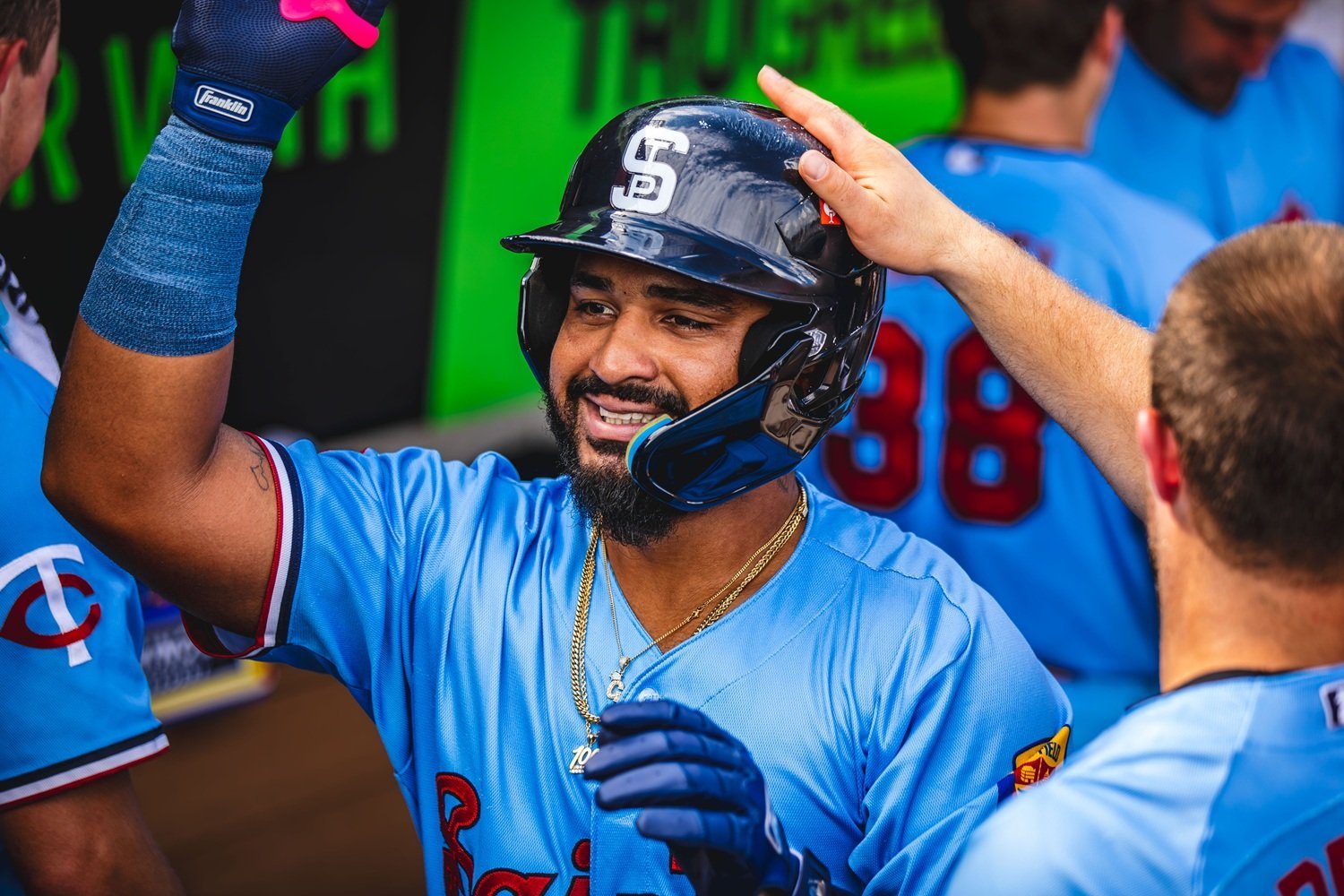 TRANSACTIONS RHP Jacob Wosinski was released by the Wind Surge. RHP Christian Becerra went on the Kernels seven-day injured list. RHP Nick McAuliffe was moved to the Mighty Mussels roster from the FCL Twins roster. SAINTS SENTINEL St. Paul 1, Toledo 0 Box Score Now this was definitely a pitcher’s duel. Through eight innings, it was a 0-0 game. So to start, let’s jump right to the ninth inning. With one out in the top of the ninth, Gabriel Gonzalez launched his 10th home run of the season. He got a hanging sweeper on 2-0 and uncoiled on it. 32 degrees at 102.3 mph, and the ball traveled 401 feet. Five Saints pitchers combined on the nine-inning shutout. Austin Voth started. He gave up three hits and four walks over 4 2/3 scoreless innings. He worked out of tough situations thanks to eight strikeouts. Drew Smith got the final out of the fifth inning. C.J. Culpepper gave up a hit and a walk and struck out one over two innings. Taylor Rashi struck out two batters in a perfect eighth inning to earn the Win in his Saints debut. Raul Brito got the ninth inning, and he struck out two batters and got a Max Clark ground out to earn the save. The Saints batters had five hits and three walks. Obviously the Gonzalez home run was the big hit in the game. Aaron Sabato added his 17th double. Kaelen Culpepper and Ben Ross each went 1-for-3 with a walk. Ross stole his fourth base. WIND SURGE WISDOM Wichita 6, Tulsa 7 Box Score I feel like there has to be an old school country song about a long night in Tulsa. Thursday night was a long night in Tulsa at least for those involved in this ball game. The game was delayed an hour and five minutes by the weather. The Wind Surge got on the scoreboard in the top of the first inning. Andrew Cossetti scored when Kala’i Rosario reached on an error. Newcomer Cody Moissette joined the Surge on Thursday and went 0-for-5 in his Twins organization debut. In the top of the second inning, the leadoff batter came up with Maddux Houghton on second base. He recorded his first hit, his first home run, his first run and his first two RBI in a Wichita uniform. Then in the top of the fourth, he came up with Miguel Briceno on second. He singled to right field to drive him in. Kala’i Rosario led off the top of the fifth inning with a walk. He stole second and went to third on a throwing error. After Jaime Ferrer was hit by a pitch, Jorel Ortega drove in Rosario with a deep fly ball to center field. Sam Armstrong made the start and went the first four innings. He gave up three runs on three hits and two walks. He had five strikeouts. Paulshawn Pasqualotto went the next two innings. He gave up two runs (1 earned) on two hits and a walk. He had three strikeouts. William Fleming issued a walk in a scoreless seventh inning. Kyle Bischoff threw a scoreless eighth inning. The game headed to the ninth inning tied at 5-5. With two outs in the top of the ninth, Rosario drilled his eighth homer of the season to give the Surge a 6-5 lead. Bischoff returned to the mound in the bottom of the ninth. He got the leadoff man out on a fly ball. The next batters reached on an error. Josue De Paula singled the lead runner to third. A walk loaded the bases. Then a walk tied the game at 6-6. Bischoff got a strikeout for the second out. Unfortunately, the second unearned run of the inning scored when Bischoff hit Griffin Lockwood-Powell to end the game. Rosario went 2-for-3 with two walks, two runs, two RBI and his eighth homer. Morissette went 2-for-5 with three RBI and his first homer. Miguel Briceno went 2-for-4. KERNELS CHRONICLE Cedar Rapids 4, Lansing 7 Box Score A four-run bottom of the eighth turned a nice, tidy game into a tough loss to the Lugnuts in Lansing. Lansing took a 1-0 lead in the bottom of the first inning. Khadim Diaw led off the top of the second inning with a double. Jay Thomason singled him to third. Thomason stole his 16th base. Diaw scored on a wild pitch to tie the game at 1-1. With one out in the top of the fourth inning, Diaw dropped his second double of the game. Thomason singled to drive him in and make it 2-1. Quinn McDaniel led off the top of the fifth inning with his second Kernels home run. Riley Quick made the start for Cedar Rapids. He gave up three runs on four hits. He walked two and had a career-high nine strikeouts in a career-high 4 2/3 innings. Adam Falinski came on and tossed 2 1/3 scoreless innings. He gave up no hits, walked three and had two strikeouts. Marek Houston led off the top of the eighth inning with a single off of the pitcher. He then stole second. With two outs, Diaw came through again. Sometimes it's not about exit velocity! His infield single gave the Kernels the 4-3 lead. Xavier Kolhosser came in for the bottom of the eighth. He gave up four runs on three hits and a walk. He had two strikeouts. Khadim Diaw went 3-for-4 with his 14th and 15th doubles. Jay Thomason went 2-for-3 and was hit by a pitch. Marek Houston went 2-for-4 with his 18th and 19th stolen bases. In the first three games of this series in Lansing, Diaw is 7-for-13 with two doubles, two home runs, four runs scored, and four RBI. MIGHTY MATTERS Game 1: Ft. Myers 5, Dunedin 10 Box Score The Mussels opponent this week is the Dunedin Blue Jays, Low-A affiliate of the Toronto Blue Jays. Check out Jays Centre for much more on the Blue Jays organization. Four players who were key in this game are among the Jays Centre Top 20 Prospects. If you’re interested in checking out our other DiamondCentric team sites, click here. And if you’re interested in writing at one or more of them, let us know. This game was actually a good baseball game, until it wasn’t, which happened very quickly. Merit Jones was scheduled to start, but Charlee Soto made his second rehab start for the Mussels. The flamethrower gave up two runs on three hits (including a homer by the also-rehabbing Hedbert Perez) in 1 2/3 innings. Jones entered the game with two outs in the second inning. He tossed 4 1/3 scoreless innings. He gave up three hits, walked none and had three strikeouts. Back to the offense, the Mussels got on the scoreboard in the bottom of the second inning when Jayson Bass muscled a ball beyond the wall in center field. Then in the bottom of the third, it was Dameury Pena who powered up and drilled a two-out solo home run to tie the game at 2-2. The Mussels grabbed the lead and put themselves in a strong position to win game one in the bottom of the sixth frame. Dameury Pena led off with a walk and went to second on a wild pitch. Alan Roden walked. Ryan Sprock singled sharply to left field, too hard maybe as Pena was only able to advance to third base. Ramiro Dominguez illustrated the soft bloops single next and drove in two runs to give the Mussels a 4-2 lead. The runners advanced to second and third on a wild pitch, and Graham Brown walked to reload the bases. Bass drove in Sprock with a sacrifice fly to left field to make it 5-2 Mussels heading to the final inning (7-inning games for doubleheaders). Just three more outs to get! Eric Hammond came on to replace Merit Jones to start the seventh inning. He gave up a leadoff single, but erased the lead runner on some PFP .He fielded a grounder and threw to second for the out. But then he walked a batter to put runners on first and second. On a 3-2 pitch, Hammond thought he had a called third strike. Unfortunately, the batter challenged and ABS showed that the pitch was 1/2-inch above the strike zone. Instead of two on with two outs, the bases were now loaded with just one out. Mussels manager Jordan Smith went to the bullpen and summoned Brent Francisco. Remember the first sentence of this game recap? I wrote “This game was actually a good baseball game, until it wasn’t, which happened very quickly.” This was pretty much that moment. Francisco walked the first batter he faced, Jake Cook, to make it a 5-3 game. Next, a bloop single by Blaine Bullard that didn’t top 80 mph dropped in for a run-scoring single and made it 5-4. Herbert Perez lined an 0-2 pitch for a single up the middle and a one-run lead became a one-run deficit. Blue Jays top prospect JoJo Parker lined out to second for the second out of the inning. Damage control? Nope. After a double steal, Juan Sanchez singled to right to drive in both runners and make it 8-5. After a Cade Doughty double put runners on second and third, Aldo Gaxiola singled to left to drive in both runners and make it 10-5. After another single, Francisco got the final out on a strikeout. But the damage was (Dun-edin, or just) done. The eight-run outburst meant the Mussels needed to score five to tie the game and send it to extra innings. They went down 1-2-3 to end the game. The Mussels scored their five runs on five hits and four walks. Bass’s home was his sixth of the season. Pena was 1-for-3 with a walk and his first homer of the season. Roden, continuing his rehab, went 0-for-1 with two walks. Game 2: Ft. Myers 1, Dunedin 0 (Game suspended with one out in the top of the fifth) Box Score Justin Mitrovich has been fantastic and was again on Thursday night. Unfortunately, it was cut short by the weather. In 4 1/3 scoreless innings, he gave up four hits, walked one and had four strikeouts. He also hit a batter. His ERA has dropped to 0.72. The Mussels offense had some chances, but were only leading 1-0. The runs scored on a Graham Brown sacrifice fly. The teams will attempt to complete this game on Friday before their regularly-scheduled game. . COMPLEX CHRONICLES FCL Twins 7, FCL Pirates 1 Box Score The Twins scored their first two runs in the top of the first inning. They added another in the third frame and then broke it open with four runs in the fifth inning. Rehabbing Caden Kendle led off the game with a double. Yovanny Duran walked. With one out, Jhomnardo Reyes doubled to drive in both runs to make it 2-0. With two outs in the top of the third, Miguel Caraballo and Reyes walked. Teilon Serrano singled to drive in the game’s third run. Caraballo led off the top of the fifth inning with a walk and stole second base. Reyes drove him in with a single. Serrano walked. Ricardo Pena reached on an error. Reyes scored on the play to make it 5-0. Darwin Almanzar drove in two runs with a single to center. Reyes led the offense. He had three of the team’s seven hits. He went 3-for-3 with a walk, his seventh double and three RBI. The Twins also walked nine times in the game. Duran and Caraballo each walked twice. Frederick Hiciano, 18, started for the Twins and tossed three scoreless innings. He gave up two hits, walked two and had four strikeouts. Jake Covey, 24, came in and was charged with an unearned run over 2 1/3 innings. He gave up no hits, but he walked four batters. He had two strikeouts. Brad Rudis, 23, got the final five outs, three of them on strikeouts. DSL Twins 2, DSL Yankees 13 Box Score The Twins grabbed the first lead of the game in the top of the third when they took a 1-0 lead when Daiyer Barboza scored on an error. However, the Yankees scored five runs in the bottom of the third and by the end of seven innings, they held a 13-1 lead. The Twins scored their other run in the top of the eighth inning when Anibal Beltre hit his first professional home run. The Twins scored their two runs on 10 hits and four walks. Daiyer Barboza was 2-for-4 with a walk. Fabian Ulloa went 2-for-5. Beltre was 2-for-4 including his home run. Luis Suarez went 1-for-2 with two walks. Fernando Hernandez, 19, made the start and struck out five batters over two scoreless innings. He gave up two hits. Alam Soriano, 19, came in and gave up nine runs (7 earned) on seven hits and three walks in 2 2/3 innings. Yolcar Garcia, 18, worked the next 2 1/3 innings. He gave up four runs (1 earned) on five hits. Aldwin Morillo, 18, came on and worked a perfect inning. PLAYERS OF THE DAY Hitter(s) of the Day Khadim Diaw (Cedar Rapids): 3-for-4, 2-2B(15), 2 R, RBI, K Jhomnardo Reyes (FCL Twins): 3-for-3, BB, 2B(7), R, 3 RBI. Pitcher(s) of the Day Merit Jones (Fort Myers): 4.1 IP, 3 H, 0 R, 0 BB, 3 K, 52 pitches, 35 strikes (67.3%) PROSPECT SUMMARY Check out the Prospect Tracker for much more on our Twins Top 20 prospects after seeing how they did today. #2 - IF Kaelen Culpepper (St. Paul) - 1-for-3, BB. (batted first, played SS) #5 - C Eduardo Tait (Cedar Rapids) - 0-for-4, K (batted second, played DH). #7 - SS Marek Houston (Cedar Rapids) - 2-for-4, R, K, 2 SB(19) (batted first, played SS) #8 - RHP Riley Quick (Cedar Rapids) - 4 2/3 IP, 4 H, 3 ER, 2 BB, 9 K, 2 Balk, HBP, 72 pitches, 45 strikes (62.5%) #10 - OF Gabriel Gonzalez (St. Paul) - 1-for-4, HR(10), R, RBI, K (batted fourth, played RF) #11 - RHP Charlee Soto (Cedar Rapids) - Rehab in Fort Myers: 1 2/3 IP, 3 H, 2 ER, 0 BB, K, 32 pitches, 18 strikes (56.3%) #14 - 3B/SS Quentin Young (Ft. Myers) - 1-for-3 (batted seventh, played DH) #15 - 3B/CF Brandon Winokur (Cedar Rapids) - 0-for-4, 2 K (batted third, played 3B) #17 - RHP C.J. Culpepper (St. Paul) - 2 IP, 1 H, 0 R, 1 BB, 1 K, 33 pitches, 17 strikes (51.5%) #19 - C/OF Khadim Diaw (Cedar Rapids) - 3-for-4, 2-2B(15), 2 R, RBI, K (batted fourth, played C) #20 - 2B/SS/CF Kyle DeBarge (Wichita) - 0-for-4, BB, 3 K, E(6) (batted fifth, played SS) UPCOMING PROBABLES Friday, June 12 St. Paul @ Toledo (6:05 pm CT) - RHP Ty Langenberg (2-2, 6.43 ERA) Wichita @ Tulsa (7:00 pm CT) - RHP Cory Lewis (0-2, 5.60 ERA), Cedar Rapids @ Lansing (6:05 pm CT) - LHP Cesar Lares (0-0, 4.50 ERA) Dunedin @ Ft. Myers (6:05 pm CT) - RHP Kolten Smith (2-4, 5.40 ERA) FCL Twins @ FCL Red Sox (11:00 am CT) - DSL Twins @ DSL Tigers (10:00 am CT) - CURRENT W-L Records Minnesota Twins: 31-39 (3rd place (of 5) in AL Central, 6.5 GB)) St. Paul Saints: 36-29 (3rd place (of 10) in IL West Division, 4.5 GB)) Wichita Wind Surge: 22-36 (5th place (of 5) in TL North Division, 17.0 GB)) Cedar Rapids Kernels: 28-31 (4th place (of 6) in MWL West Division, 9.5 GB)) Fort Myers Mighty Mussels: 33-26 (2nd place (of 6) in FSL West Division, 3.5 GB)) FCL Twins: 15-13 (3rd place (of 6) in FCL South Division, 3.5 GB)) DSL Twins: 3-5 (3rd place (of 7) in DSL East Division, 3.5 GB)) Please feel free to ask questions about the teams, the rosters, and discuss today’s games, or anything else Twins minor-league related! View the full article
 -
 The Columbia Fireflies erased an eight-run deficit, scoring nine unanswered runs behind home runs from Roni Cabrera and Ivan Sosa and four scoreless innings of relief from Denis Samudio in a 9-8 win. Spencer Nivens homered and doubled in a losing effort for Northwest Arkansas, while Aaron Sanchez tossed three scoreless innings for Omaha. Josh Hammond and Hyungchan Um each drove in multiple runs to fuel Columbia's comeback. Note: The Quad Cities River Bandits' game against Beloit was postponed due to weather. It will be made up as part of a doubleheader on Friday, June 12th. Royals Transactions Kansas City Royals placed CF Kyle Isbel on the 10-day injured list. Left plantar fasciitis. Kansas City Royals recalled CF Kameron Misner from Omaha Storm Chasers. Sanchez Sharp But Storm Chasers Fall Late The Omaha Storm Chasers could not solve Las Vegas in a 5-2 loss at Werner Park, managing just four hits across the afternoon on the eve of the College World Series, which is taking place at nearby Charles Schwab Field in downtown Omaha. Sanchez set the tone with three scoreless innings, allowing two hits and two walks while striking out three. Andrew Pérez followed and took the loss, surrendering one run on four hits over two innings with two strikeouts. Anthony Gose struggled in his two innings, giving up three runs, including a home run, on three hits and a walk while striking out three. The Omaha offense was quiet until the seventh inning, when the home side pushed across both of its runs. John Rave came around to score on a sacrifice fly off the bat of Brett Squires, and Matthew Lugo followed home on a Luca Tresh double to left. Tresh and Squires each drove in a run, and Lugo added a double of his own. Drew Waters and Abraham Toro combined for five strikeouts at the top of the order. Omaha left five runners on base and never threatened again after the seventh. They went 1-for-5 with runners in scoring position on Thursday. Player AB R H RBI BB K Josh Rojas 3 0 0 0 1 0 Abraham Toro 4 0 0 0 0 2 John Rave 4 1 1 0 0 2 Matthew Lugo 4 1 1 0 0 2 Brett Squires 3 0 1 1 0 0 Luca Tresh 3 0 1 1 1 1 Drew Waters 4 0 0 0 0 3 Gavin Cross 3 0 0 0 0 2 Connor Kaiser 2 0 0 0 1 1 Player IP H R ER BB K HR Aaron Sanchez 3 2 0 0 2 3 0 Andrew Pérez 2 4 1 1 0 2 0 Jose Cuas 1 2 1 1 1 1 0 Anthony Gose 2 3 3 3 1 3 1 Eric Cerantola 1 1 0 0 1 2 0 Nivens Homers As Naturals Drop Decision In Arkansas The Northwest Arkansas Naturals fell 6-2 to in-state rival Arkansas, the Double-A affiliate of the Seattle Mariners. The Naturals were undone by a rough start on the mound by the Royals' No. 12 prospect. Felix Arronde, who made his first start since returning from the IL, took the loss, allowing four runs on three hits over 1 2/3 innings with three walks, two strikeouts, and two home runs. Oscar Rayo followed and provided a steadying influence, throwing 3 1/3 scoreless innings with no walks and four strikeouts. Caden Monke gave up two runs on one hit and three walks in his lone inning, and Chase Jessee added two scoreless frames with three strikeouts. Nivens supplied most of the offense, going 2-for-4 with a double, a home run, and two runs batted in. His solo home run in the seventh inning cut into the deficit, and his run-scoring double in the ninth brought home Sam Kulasingam for the Naturals' final run. Kulasingam reached base twice and scored a run, while Jorge Alfaro and Omar Hernandez each collected a hit. Northwest Arkansas left four runners on base and struck out seven times as a group. They also went 0-for-1 with runners in scoring position. Player AB R H RBI BB K Jack Pineda 4 0 0 0 0 0 Colton Becker 4 0 0 0 0 0 Sam Kulasingam 3 1 1 0 1 1 Jorge Alfaro 4 0 1 0 0 3 Spencer Nivens 4 1 2 2 0 0 Daniel Vazquez 4 0 0 0 0 2 Rudy Martin Jr. 3 0 0 0 0 1 Omar Hernandez 3 0 1 0 0 0 Justin Johnson 3 0 0 0 0 0 Player IP H R ER BB K HR Felix Arronde 1 2/3 3 4 4 3 2 2 Oscar Rayo 3 1/3 2 0 0 0 4 0 Caden Monke 1 1 2 2 3 2 0 Chase Jessee 2 1 0 0 1 3 0 Fireflies Erase Eight-Run Hole In Wild Comeback The Columbia Fireflies, decked out in their special Chicharrones uniforms for the Copa de la Diversion, rallied from an 8-0 deficit to stun Delmarva 9-8. Starter Darwin Rodriguez had a night to forget, allowing eight runs on ten hits over four innings with two walks, four strikeouts, and a home run, as the Shorebirds plated five in the third and three in the fourth. The bullpen then slammed the door. Samudio earned the win with four scoreless innings, allowing no hits and two walks while striking out five, and Luis Valdez struck out three in a scoreless frame. The offense came alive in the seventh, when Columbia sent the deficit tumbling. Hammond singled home Roni Cabrera and Connor Rasmussen, Um tripled in two more runs, and Sean Gamble singled home Um on an infield single as the Fireflies pushed across six runs in the inning. Columbia completed the comeback in the eighth, when Cabrera homered, and Sosa launched a two-run home run to take the lead. Hammond finished 2-for-5 with two runs batted in, Um drove in three runs, Sosa added two, and Rasmussen reached base three times. Columbia stranded six runners and went 3-for-7 with runners in scoring position. That said, Columbia did just enough at the plate to earn their 30th win of the year and get back to .500. Player AB R H RBI BB K Yandel Ricardo 4 1 0 0 1 2 Josh Hammond 5 1 2 2 0 2 Stone Russell 4 1 0 0 0 1 Hyungchan Um 3 1 1 3 1 2 Sean Gamble 4 0 1 1 0 0 Angel Ramirez 3 0 0 0 1 2 Roni Cabrera 4 2 2 1 0 1 Connor Rasmussen 3 2 3 0 1 0 Ivan Sosa 4 1 2 2 0 1 Player IP H R ER BB K HR Darwin Rodriguez 4 10 8 8 2 4 1 Luis Valdez 1 1 0 0 0 3 0 Denis Samudio 4 0 0 0 2 5 0 Top-20 Prospect Performance Kendry Chourio: DNP David Shields: DNP Sean Gamble: 1-for-4, RBI Blake Mitchell: DNP Josh Hammond: 2-for-5, 2 RBI, 2 K Ramon Ramirez: DNP Drew Beam: DNP Asbel Gonzalez: DNP Ben Kudrna: DNP Carson Roccaforte: DNP Yandel Ricardo: 0-for-4, R, BB, 2 K Felix Arronde: 1 2/3 IP, 3 H, 4 R, 4 ER, 3 BB, 2 K, 2 HR Blake Wolters: DNP Michael Lombardi: DNP Luinder Avila: DNP Steven Zobac: DNP Frank Mozzicato: DNP Daniel Vazquez: 0-for-4, 2 K Warren Colcano: 0-for-4, 1 BB, 3 K Shane Panzini: DNP View the full article
 -
What are your Marlins vs. Pirates series predictions?
DiamondCentric posted an article in Fish On First
 Miami Marlins Once again in 2026, I will be monitoring Miami Marlins predictions from our valued SuperSubs, Fish On First staffers and livestream guests. Individual article pages like this one will be created prior to every Marlins series and featured prominently on the FOF site. Consistent participation is key if you want to win this annual contest. Submissions only take a few seconds. Scoring system A "perfect" series is worth three points: Earn one point for predicting which team will win the upcoming series Earn one point for predicting the precise number of victories for each team Earn one point for predicting the “Series MVP” who accumulated the highest win probability added (WPA) during the series as calculated by FanGraphs (could pick a player from either team) FOF SuperSub Nicholas Milton and FOF staffer Jeremiah Geiger are currently tied atop the 2026 season leaderboard, which will be updated between every Marlins series. If you are a SuperSub, leave a comment with your Prediction Time picks on this page, or join the Marlins Discord Server and submit there. We'll feature them on the upcoming Fish On First LIVE episode and track your points throughout the season! Any picks submitted prior to the first pitch of the series opener will be counted. If you are not a SuperSub, please consider signing up here to support the FOF staff. Series preview notes Probable starting pitchers: RHP Sandy Alcantara (MIA) vs. RHP Braxton Ashcraft (PIT) on Friday TBA (MIA) vs. RHP Bubba Chandler (PIT) on Saturday RHP Max Meyer (MIA) vs. RHP Paul Skenes (PIT) on Sunday The Marlins rank 18th in MLB with a 98 wRC+ and 10th in MLB with a 3.96 FIP. They are 5-5 in their last 10 games and have a 11-19 record on the road this season. The following Marlins players are on the injured list: Griffin Conine (60-day IL), Josh Ekness (15-day IL), Ronny Henriquez (60-day IL), Janson Junk (15-day IL), Adam Mazur (60-day IL), Andrew Nardi (60-day IL), Eury Pérez (15-day IL) and Robby Snelling (60-day IL). The Pirates rank eighth in MLB with a 106 wRC+ and seventh in MLB with a 3.80 FIP. They are 3-7 in their last 10 games and have a 13-17 record at home this season. The following Pirates players are on the injured list: Joey Bart (10-day IL), Oneil Cruz (10-day IL), Chris Devenski (60-day IL) and Konnor Griffin (10-day IL). View the full article
 -
 When a new teenager joins the Mets organization out The Dominican Republic — or Venezuela or Columbia, or The Bahamas or Panama or the like — we usually have very little offer. It takes a lot to gather a birthdate and a blurry photo of him from a back field. If we can find out which arm he throws with and which side of the plate he bats from, that's a bonus. And if he has a common name like Jose Hernandez, well, it's going to take a lot of detective work to get his deets. But sometimes, they come with a backstory. Transactions, 6/10/2026 GOING Signed as International Amateur Free Agent out of The Dominican Republic, Assigned to DSL Mets Blue Infielders Angel Osuna S/R DoB: 2007-07-06 High Level: Academy (2026) This brings us to Angel Osuna. Shortstop Angel was one of the top prospects from the 2025 class of amateur foreign prospects. The Yankees, as a matter of fact, thought he was the very top of the class, and that's why they signed him for the very highest bonus of $5 million. That's some cheddar for a kid who hasn't grown into his body yet. But — and you probably have some idea where this was going — Angel was more grown than his representatives were letting on. He was, in fact, three years older than they were billing him as. Nobody likes to be defrauded. The ripoff is bad, the insult is bad, and feeling really stupid that you missed all the clues along the way must really be the worst. The contract was voided, the bonus money returned, and the representatives were sanctioned and presumably will never get to represent a teenager again — and will presumably be treated as pariahs on the fields of Dominican baseball fields. But what of young Mr. Osuna. Presumably a pretty impressive player at some level at least. He was young and presumably naive, but certainly not entirely innocent of the game being played, and he got sent back on the pile and banned from signing with any organization for a year — a year critical to his development. And there he lay until two days ago, when he was inked by the Mets for $10 thousand dollars. It's something, though probably less than the money his family got taken for by his unscrupulous agents, and far less than $5 million. But it is a new start, and now his story starts again, and the Mets get to find out if he is a good player for what he is now, almost 19 years old, rather than the 18-year-old masquerading as a preternaturally gifted 15-year-old that almost took the Yankees for a ride. Transactions, 6/11/2026 COMING Sent to Binghamton on Rehab Assignment Starting Pitchers Kodai Senga L/R DoB: 1993-01-30 High Level: MLB (2026) The ongoing saga of Kodai Senga is relentless. There's an irony in this, as in so many tales, as he came into the season throwing harder than ever — up to 97 and 98 in his first start or two — far higher than the 94-ish he previously used to set up his devastating ghost fork. But seemingly, in pursuit of the higher velocity, he incurred enough impact on his body that he lost even the middling velocity that helped him be so damned effective. The ghost fork works like a change, and so it needs a decent fastball that Senga can safely put over the plate once or twice in order to set it up. In several rehab starts to date, that velocity and control hadn't been there, and he's been hit. But his first start back in Bingo was what we are looking for — six innings, one earned run on one hit (a homer), one walk, and five strikeouts, so maybe another start at Syracuse along the line and maybe we might have some version of the guy we know he can be. Your 2026 New York Mets Starting Pitchers Sean Manaea Nolan McLean Freddy Peralta David Peterson Christian Scott R/L DoB: 1992-02-01 R/R DoB: 2001-07-24 R/R DoB: 2996-06-04 L/L DoB: 1995-09-03 R/R DoB: 1999-06-15 Relief Pitchers Huascar Brazobán Daniel Duarte A.J. Minter Cionel Pérez Brooks Raley Austin Warren Luke Weaver R/R DoB: 1989-10-15 R/R DoB: 1996-12-04 L/L DoB: 1993-09-02 R/L DoB: 35176 L/L DoB: 1988-06-29 R/R DoB: 1996-02-05 R/R DoB: 1993-08-21 Relief Pitchers Catchers Infielders Devin Williams Francisco Alvarez Luís Torrens Bo Bichette Brett Baty Vidal Brujan Marcus Semien R/R DoB: 1994-09-21 R/R DoB: 2001-11-01 R/R DoB: 1996-05-02 R/R DoB: 1998-03-05 L/R DoB: 1999-11-13 S/R DoB: 1998-02-09 R/R DoB: 1990-09-17 Infielders Outfielders Mark Vientos Eric Wagaman Carson Benge A.J. Ewing MJ Melendez Juan Soto Jared Young R/R DoB: 1993-12-11 R/R DoB: 1997-08-14 L/R DoB: 2003-01-20 L/R DoB: 2004-08-10 L/R DoB: 1993-11-29 L/L DoB: 1998-10-25 L/R DoB: 1995-07-09 Also on 40-Player Roster Starting Pitchers Relief Pitchers Clay Holmes Tylor Megill Kodai Senga Zach Thornton Jonah Tong Alex Carrillo Reed Garrett R/R DoB: 1993-03-27 R/R DoB: 1995-07-28 L/R DoB: 1993-01-30 L/L DoB: 2002-01-17 R/R DoB: 2003-06-19 R/R DoB: 1997-06-06 R/R DoB: 1993-01-02 Relief Pitchers Catchers Joey Gerber Justin Hagenman Tobias Myers Dedniel Núñez Jonathan Pintaro Dylan Ross Hayden Senger R/R DoB: 1997-05-03 R/R DoB: 1996-10-07 R/R DoB: 1998-08-05 R/R DoB: 1996-06-05 R/R DoB: 1997-11-07 R/R DoB: 2000-09-01 R/R DoB: 1997-04-03 Infielders Outfielders Francisco Lindor Ronny Mauricio Jorge Polanco Nick Morabito Luis Robert, Jr. Tyrone Taylor S/R DoB: 1993-11-14 S/R DoB: 2001-04-04 S/R DoB: 1999-11-13 R/R DoB: 2003-05-07 R/R DoB: 1997-08-03 R/R DoB: 1994-01-22 Your Mets Coaching Staff Manager Bench Coach Pitching Coach Hitting Coordinator Third Base Coach First Base Coach Bullpen Coach Ass't Pitching Coach Carlos Mendoza Kai Correa Justin Willard Jeff Albert Tim Leiper Gilbert Gomez José Rosado Dan McKinney DoB: 1979-11-27 DoB: 1989-07-14 DoB: 1990-09-09 DoB: 1992-08-16 DoB: 1996-07-19 DoB: 1992-03-08 DoB: 1974-11-09 DoB: 1989-06-06 Hitting Coach Strategy Coach Catching Coach Coaching Assistant Bat'g Practice Pitcher Equipment Manager Bullpen Catchers Bullpen Catchers Troy Snitker Danny Barnes J.P. Arencibia Rafael Fernandez Kevin Mahoney Kevin Kierst Eric Langill Dave Racaniello DoB: 1988-12-05 DoB: 1989-10021 DoB: 1986-01-05 DoB: 1988-08-03 DoB: 1987-05-11 DoB: 1964-07-09 DoB: 1979-04-09 DoB: 1978-06-03 Your Mets Training Staff Director of Player Health Head Athletic Trainer Assistant Athletic Trainer Reconditioning Coordinator Reconditioning Therapist Head Performance Coach Assistant Performance Coach Performance Coordinator Soft Tissue Specialist Brian Chicklo Joseph Golia Bryan Baca Sean Bardanett Josh Bickel Dustin Clarke Tanner Miracle Jeremy Chiang Hiroto Kawamura DoB: 1972-07-17 DoB: 1978-??-?? DoB: Circa 1980 DoB: 1988-06-23 DoB: 1996-??-?? DoB: 1987-??-?? DoB: 1991-??-?? DoB: ????-??-?? DoB: 1962-07-19 View the full article
 -
Which Twins Utility Infielder Should Stick Around a While?
DiamondCentric posted an article in Twins Daily
 The Twins currently have a revolving door at shortstop, with journeyman utility players they can’t keep for much longer—if for no other reason, then because none of them fit that role well enough to lock it down. Having one such player is understandable, but the Twins are currently rostering three. One is likely to go when Kaelen Culpepper debuts, and the Twins would be wise to get rid of at least one more at a later time to better utilize the 26-man roster. Who has the best chance of sticking around? Orlando Arcia An All-Star for Atlanta in 2023, Arcia has been a true super utilityman, playing all four infield spots in his brief time with the big-league club. He posted a .932 OPS for Saint Paul before his promotion, but has posted a sub-.700 OPS in a small sample, which is in line with his production over the last two seasons. While Arcia’s defensive flexibility is helpful, it’s worth wondering what else he has to provide at this stage in his career. At 31 years of age, it’s hard to envision him holding onto a role beyond 2026 with the Twins, making him especially expendable if the team continues to fall further under .500. He has also only been trusted a handful of times to start games at shortstop, and if the Twins put him behind Tristan Gray and Ryan Kreidler on the shortstop depth chart, his utility in 2026 is worth questioning. He may be the first to go when Culpepper gets the call. Tristan Gray After winning a bench job in spring training, Gray got off to a hot start in 2026 and has been an above-replacement-level player on the season. He started eating into Royce Lewis’s playing time at third base, where he played regularly until Brooks Lee shifted over full-time. His hot start and handful of clutch hits have carried him, but his slightly below-average .697 OPS is more than acceptable production for a bench player who can fill in at shortstop. The problem is that Gray doesn’t appear to be a trustworthy option now that he’s been exposed to more playing time up the middle. As bad as Lee was defensively at short, Gray has matched him, with -5 Outs Above Average in a fraction of the time. It’s looking more and more like Gray is not a viable option at shortstop, even as an emergency fill-in. He may get more time since the Twins liked him most out of spring training from this group, but his utility will come into question when the Twins get an everyday shortstop on the roster. He's also leading the majors in a rather dubious category: no one misses by more, on average, when they whiff on a swing. Ryan Kreidler Kreidler has been a pleasant surprise offensively, posting a .761 OPS and already clubbing a career-high 3 homers this season. Brought in as a glove-first utility player, the glove has actually been the disappointment so far. Before 2026, Kreidler was an average or better defender across several infield and outfield spots, including shortstop and center field. At 28 years of age, it’s hard to imagine that Kreidler has suddenly lost a step. It’s more likely that we see things even out for him defensively as the year goes on. Kreidler’s age and subsequent team control make him the most interesting option to keep on the roster moving forward. If his glove evens out, that alone may be enough to utilize some of his five remaining seasons of team control. If his bat can keep up this pace to any degree, he becomes a valuable player in the Willi Castro vein. This long-term upside, however remote reaching it may be, should be enough for Kreidler to be the last man standing if the Twins decide to purge their current veteran super-utility group and look toward the future. The Twins can’t continue to waste 26-man roster spots the way they have been, especially if they continue to fall further out of contention. Lewis himself is sliding into this role, too, further muddying the picture. If their sights turn toward 2027 and beyond, the current super-utility infielder group should be the first place to look when it comes to swapping younger players in. Which, if any, of these three names should stick around? View the full article
 -
 Seiya Suzuki hardly ever gets a clear runway to start the season. He's dealt with oblique strains (in March 2023 and April 2024), and this spring, he suffered a knee sprain on a slide at second base during the World Baseball Classic. That delayed his 2026 debut until April 10, but it didn't slow him down much at all. He burst from the gate with a .328/.430/.567 stretch to end April, and was in the thick of the Cubs' blazing run of 20 wins in 23 games. Then: thud. He (and the Cubs' offense, as a whole) hit the cellar floor like a sack of flour. In May, Suzuki's OPS was barely over .550, some 200 points off what the team hopes to get from its bat-first right fielder. The slump was the worse of his career, and it threatened to derail the entire season—not on its own, of course, but in tandem with the similar funks into which Nico Hoerner, Dansby Swanson and other Cubs hitters plunged at the same time. For a solid month, Suzuki looked thoroughly lost, in a way that he'd never looked for more than a week or two before. That's all over now. On Thursday, Suzuki launched a cathartic grand slam in the top of the fourth inning in Denver, giving the Cubs the lead in a game in which they faced a real risk of falling below .500 for the first time since before the midpoint of April. It wasn't really a slump-buster, though, because Suzuki has been pulling out of his nosedive for over a week, now. The homer was his third of June, and he's flirting with a 1.000 OPS in that short span. He's hit in eight straight games—and that's not a coincidence. One of the great benefits of the new Statcast data providing swing timing details for batters will be slump analysis. Teams have already been using this, behind the scenes, but now, fans can see it, too. Here, for instance, is the distribution of swing timings for Suzuki against fastballs this season, split by month. In this image, you can think of orange and green as 'good Suzuki' and red as 'bad Suzuki'; we got a bit lucky in the way his slump confined itself (mostly) to one calendar page. Three things stand out about May, relative to the other two months, when it comes to the way Suzuki timed up the fastball: He mostly centered the ball on his barrel, but not perfectly; his most frequent horizontal intercept point was just off the sweet spot, toward the label. He was late more often. That's a big one. Hitters talk endlessly about the importance of being on time for the fastball, and in May, Suzuki was late on it too often—22% of the time, versus 18% of the time in April and 15% of the time so far in June. He was under the fastball more often, too. That's related to being late on it, but distinct, and Suzuki had both problems going against him last month. In June, he's much more on the ball. His most frequent horizontal intercept point on heaters has moved to the sweet spot, or a hair off toward the end of the bat. He's late much less often, but still in the later half of the on-time window. And he's squaring it up most of the time, vertically, neither hitting the top of the ball nor clipping underneath it. Ah, but Suzuki's huge homer Thursday came not on a fastball, but on a Ryan Feltner slider. Does the above really apply then? Well, look, you know a rhetorical question when you see one. Yes, it does. Here's the same set of monthly timing distributions, but for breaking balls, which Suzuki (like most Cubs hitters) has seen tons of recently. At first, these look so noisy as to be analytically void, but there's a good bit of signal in there—including in what looks like noise, itself. Note the fact that he's rarely missing the sweet spot of the barrel by just a little, this month; that's what was happening to him in May. Now, he's either squaring up the breaking ball, or whiffing on it entirely, way off the end of his bat. The latter sounds like a bad thing, but not all whiffs are failures. Sometimes, you'd rather swing and miss than mishit the ball and make an easy out. Now, move to the middle image. Suzuki has been early much less often on breaking stuff this month. That's huge, and it's where we see the value of his adjustment on the fastball. For his swing, the sweet spot, timing-wise, is to be very slightly late on the heater. When he can consistently be that way, he can also be on time for slower offerings. He couldn't stay in that happy zone in May, and got eaten alive by spin. In June, he's back in the groove. Finally, note the right-hand image. Whereas he was often swinging over breaking pitches (slightly or significantly) in May, he's now under them more often than over them, and on plane with them plenty of the time. That, too, is a result of having his swing well-timed to the fastball, in a way that can cover other pitches, too. These data really expose the fragility of great hitting. Suzuki could start getting out of rhythm again tomorrow and be back in a slump next week. Right now, though, he's on time for the heater—and, because he's willing to be slightly late on it when needed, on time for other stuff, too. He might even be just in time to save the Cubs' season. View the full article
 -
 MIAMI — The Marlins are in the midst of their best stretch of the regular season. Winners of eight of their last nine games, the Fightin' Fish were victorious again in Thursday's getaway day contest at loanDepot park, defeating the Arizona Diamondbacks, 2-0. It was Miami's second consecutive shutout and sixth overall this season. The win improved the club's record to 34-35, just one game under .500. A major reason for the Marlins' recent success has been their middle-infield duo, which has arguably been the best tandem in Major League Baseball. Second baseman Xavier Edwards and shortstop Otto Lopez have combined for 5.2 fWAR this season, comfortably the highest total among any middle-infield pairing in the majors. During Miami's three-game sweep of Arizona, Edwards and Lopez went a combined 10-for-22 with seven runs scored, six RBIs and just one strikeout. When asked whether they should be the National League's starting middle infield at this year's All-Star Game, manager Clayton McCullough didn't hesitate. "I certainly think so," he said. "It's hard to find a duo that has played this well on both sides of the ball and on the bases. I don't think there's a better double-play combination in baseball right now." Following another multi-hit performance on Thursday, Lopez has recorded at least two hits in five straight games, the longest such streak by a Marlins shortstop since José Reyes in 2012. It was also his 29th multi-hit game of the season. "Everything just feels smooth throughout my body," Lopez said. "I'm staying aggressive, and good things are happening." Lopez currently leads the National League in batting average and is on pace for 218 hits and 30 stolen bases. No shortstop in MLB history has ever reached both marks in the same season. Thursday's starter for Miami was another emerging All-Star candidate in right-hander Tyler Phillips, who admitted after the game that he wasn't feeling his best heading into the outing. "To be honest, I felt terrible today," he said with a smile. "I don't know if what I ate for breakfast never settled in my stomach or if I didn't get enough sleep, but I was able to figure it out." Phillips made just his third start of the season for Miami after previously appearing in 16 games out of the bullpen. In Thursday's matinee, he spun five scoreless innings with a season-high five strikeouts to earn his first win of the year, lowering his ERA to a minuscule 1.86. "He set the tone, and his ability to miss bats has really increased for us this year. It's a lot of fun to watch," McCullough said. "When he's getting ahead in the count, there's not much the hitters can do." McCullough allowed Phillips to face the first batter of the sixth inning before turning things over to the bullpen. Michael Petersen, Anthony Bender, Calvin Faucher and Pete Fairbanks combined for four scoreless innings to complete the shutout. The Marlins' pitching staff racked up 13 strikeouts in the victory. Fairbanks earned his eighth save of the season. Despite being struck by a barrage of pitching injuries in late May, the Marlins are thriving in the run prevention department. So far in June, they've surrendered just 2.6 runs per game. Following the series sweep, Miami will travel to Pennsylvania for a three-game series against the Pittsburgh Pirates before heading to Philadelphia for a date with the Phillies. Right-hander Sandy Alcantara is scheduled to be Friday night's starter at PNC Park. View the full article
 -
 Box Score SP: Zebby Matthews - 6 IP, 9 H, 7 R, 1 BB, 4 K (81 pitches, 51 strikes (63% strikes)) Home Runs: None Bottom 3 WPA: Zebby Matthews (-0.22), Brooks Lee (-0.06), Tristan Gray (-0.05) Win Probability Chart The Twins entered Thursday’s series finale against the Tigers in Detroit looking to secure a series victory. With a win, Minnesota would not only take the series, but also build a much-needed response within the division. Instead, it turned into a rough afternoon from the start. Zebby Matthews took the mound coming off seven strong innings in his previous outing, but the Tigers quickly seized control and never let go, rolling to an 11-0 win that sent Minnesota to another frustrating defeat. The Twins dropped to 31-39 on the season. EARLY OFFENSIVE STRUGGLES SET THE TONE Detroit starter Keider Montero needed just eight pitches to dispatch the top of the Twins’ order in the first inning, setting an early tone of dominance. Trevor Larnach popped out, Byron Buxton popped out, and Kody Clemens struck out to end a quick frame. The only real spark early came in the second inning, when Royce Lewis worked an eight-pitch at-bat and lined a two-out single. Minnesota couldn’t build on it. That pattern repeated throughout the afternoon—brief baserunners, but no sustained pressure. MATTHEWS RUNS INTO EARLY TROUBLE AGAIN The first inning immediately tested Matthews, as Kevin McGonigle ripped a leadoff double that just barely stayed in the park. A sacrifice fly from Riley Greene brought home the game’s first run, giving Detroit a 1-0 lead before Matthews had settled in. He did briefly stabilize, needing just 21 pitches through two innings, but the third and fourth proved costly. In the fourth, Dillon Dingler continued his strong series against Minnesota with a double, and Austin Martin made a highlight-reel diving catch to save additional damage. Still, the Tigers broke through when Colt Keith drove in a run, and Spencer Torkelson launched a two-run homer to left, turning a tight game into a 4-0 lead. Matthews’s efficiency couldn’t mask the damage—he continued to avoid long innings, but the ball kept leaving the yard or finding gaps. It felt like the TGwins gave him strict instructions to keep filling up the zone no matter what, since they needed length from him to reset their bullpen. He did his best, but paid for that approach. TIGERS BREAK IT OPEN WITH THE LONG BALL The fifth inning brought more of the same. Gleyber Torres jumped on a fastball and sent it over the right-field wall for a solo homer, pushing the lead to 5-0. In the sixth, Colt Keith added another blast—this time a no-doubt shot to right-center—making it 7-0 and marking Matthews’s third home run allowed of the day. It was the first dinger Keith had hit all season. Despite pitching efficiently in terms of pitch count, Matthews couldn’t escape the long ball, and Detroit steadily stretched the lead. By the time his outing ended, he had thrown six innings on just 81 pitches, but had allowed seven runs and three home runs in a difficult start. NO ANSWERS OFFENSIVELY The Twins’ offense never found traction against Montero or the Detroit bullpen. A brief seventh-inning rally saw Lewis collect his second hit of the day and Victor Caratini add a single, but Minnesota stranded runners and couldn’t break through. Earlier opportunities were few and far between, and even when they reached base, the Twins struggled to deliver anything resembling a sustained threat. LATE INNINGS TURN INTO A ROUT The game spiraled further in the late innings. After Matthews exited, the Tigers continued to pour it on. Kerry Carpenter added a walk, Riley Greene homered again in the seventh, and Dillon Dingler collected yet another hit in a dominant series. The eighth inning turned into a full-blown avalanche, with Detroit hitting multiple home runs to extend the lead to double digits against position-player pitcher Alex Jackson. The ninth inning came and went quickly, as Lewis struck out looking to end the game, sealing an 11-0 defeat. It was a series that began with opportunity and ended with a lopsided loss, as Minnesota once again struggled to compete within the division. The Twins will head into their next stretch still searching for consistency on both sides of the ball after a day where nothing clicked in Detroit. What’s Next? The Twins return home tomorrow to begin a three-game weekend series against the St. Louis Cardinals. Stopper Joe Ryan toes the rubber for Minnesota, and it’ll be right-hander Kyle Leahy for St. Louis. First pitch is set for 7:10 PM. Postgame Interviews Coming Soon! Bullpen Availability Chart View the full article
 -
 Blue Jays Affiliate Overview (June 9-10) Triple-A Buffalo Bisons Series vs Syracuse Mets (New York Mets): 1-1 Season Record: 29-36 Double-A New Hampshire Fisher Cats Series vs Hartford Yard Goats (Colorado Rockies): 1-2 Season Record: 30-27 High-A Vancouver Canadians Series vs Everett AquaSox (Seattle Mariners): 2-0 Season Record: 25-34 Single-A Dunedin Blue Jays Series vs Fort Myers Mighty Mussels (Minnesota Twins): 1-0 Season Record: 26-32 FCL Blue Jays Week Record: 0-1 Season Record: 20-8 DSL Blue Jays Blue Week Record: 0-1 Season Record: 3-4 DSL Blue Jays Red Week Record: 1-0 Season Record: 2-5 Triple-A Buffalo Bisons Season Record: 29-36 Series vs Syracuse Mets (New York Mets) June 9: Buffalo opened a new series on Tuesday, this one against the Syracuse Mets. CJ Van Eyk would be the first starting pitcher to tackle their potent lineup that features top-100 prospect Ryan Clifford. Opposing Van Eyk on the mound was a fellow elite prospect for the Mets, Jonah Tong. Andy Ibáñez got to Van Eyk first, knocking home a run on an RBI single in the opening frame of the game. In the bottom half of the inning, Davis Schneider continued his stretch of being in the middle of the action for Buffalo; he tied the game up with a sacrifice fly to center field. Tong then continued to be a little wild, walking another batter, and a run scored on a wild pitch. For Buffalo, Clase would get to Tong again in the bottom of the third. After a hit-by-pitch and a double by Sean Keys, Case singled to left, scoring both runners. The Bisons added more runs in the bottom of the fifth. Willie MacIver singled in Schneider (who had walked), then Je'Von Ward added two more from his two-RBI double. The lead was enough for Buffalo to take the win, as Van Eyk completed five innings and only allowed one run. The game was marred by rain before, during, and at its conclusion, with it being called in the top of the sixth. Buffalo won 7-2. June 10: While Buffalo's pitching held down the Mets’ bats on Tuesday, Wednesday was the exact opposite. Syracuse scored four to open up the game, getting two runs from Andy Ibáñez's single, another run from a balk, and the fourth on a groundout. Buffalo tried to claw back, getting an RBI triple from Sean Keys in the bottom of the fourth inning. A bases-loaded walk in the fifth would get three under back for the Mets, though. Josh Kasevich tried as well, getting an RBI single in the sixth. Unfortunately for Buffalo, the Mets loaded up the bases in the seventh and got a groundout to score a run and then two more runs on an RBI single. Buffalo could not cut the lead anymore, as they fell to Syracuse 8-2. Eloy Jiménez did make his return for Buffalo, collecting a single in his first game for them since April 11. Double-A New Hampshire Season Record: 30-27 Series vs Hartford Yard Goats (Colorado Rockies) June 9: Tuesday kicked off a series between the New Hampshire Fisher Cats and the Hartford Yard Goats. There wasn't much offense going for either side, and Fisher Cats starter Austin Cates was a big reason why. He threw five no-hit innings, not allowing a run, walking two batters and striking out seven. It was his third start allowing two runs or less. Jay Harry continued his great season in the third inning, this time launching his eighth home run of the year. In the fifth inning, Jorge Burgos hit a home run as well, giving New Hampshire a two-run lead. Things were quiet until the ninth, when Nick Goodwin hit a home run to center field. With the Fisher Cats up three, things fell apart. Bryant Betancourt hit a game-tying three-run home run in the bottom of the inning. In extras, New Hampshire failed to score, and then Hartford walked off on a wild pitch. The Fisher Cats lost 4-3. June 10, Game 1: In the first game of the doubleheader on Wednesday, the New Hampshire offense struggled overall. Aaron Parker crushed a first-inning two-run home run, and Nick Goodwin added a double later in the game, scoring on a bases-loaded walk. That was it for the offense. Hartford grabbed the lead for good in the sixth inning with an RBI groundout and a two-run double by Benny Montgomery. New Hampshire lost this one 4-3 again. June 10, Game 2: In the second game of the doubleheader, New Hampshire had more of their traditional offense working. In the third inning, they came out swinging with a Jay Harry RBI single, followed by a run on a throwing error, and then a blast from Victor Arias – his fourth on the season. Eddie Micheletti Jr. crushed his ninth home run of the year in the next inning to put the Fisher Cats up six. Cole Messina added a couple of RBI hits for Hartford, but it wasn't enough, with the Fisher Cats winning this one 7-5. High-A Vancouver Season Record: 25-34 Series vs Everett AquaSox (Seattle Mariners) June 9: It was once again Daniel Guerra bump day, and despite getting taken out after only three innings pitched, he once again was excellent, only allowing two hits and striking out three batters without allowing a run. British Columbia’s very own Sam Shaw gave Vancouver an early three-run lead with his first homer as a Vancouver Canadian, after dealing with a circulation issue earlier on in the season. Kendry Chirinos joined in on the fun with a homer of his own in the second inning. Jay Schueler replaced Guerra and was also good, but gave up a solo shot in the fourth for the first run of the game for the AquaSox. But the homers continued for the Canadians, with Dub Gleed hitting his eighth of the year to bring it back to a four-run lead. The 23-year-old infielder took a step back down to Single-A after arriving from the Marlins, but has raised his ISO by over .100. The Canadians had a four-run sixth inning as well, taking advantage of a bases-loaded situation with a hit-by-pitch, a walk, a single, and a sac fly. And in the seventh, Alexis Hernandez made it double-digit runs for Vancouver with another RBI single. NDFA Carson Myers struggled a bit adjusting to Vancouver after being promoted, but once again had a strong outing, earning the save with three scoreless innings and striking out six batters, as the Canadians won 10-1. June 10: The Canadians had their second straight game of good pitching and good hitting, with Danny Thompson Jr. once again taking the mound. He went 4.2 innings and struck out six batters, but struggled a little bit with his command, walking four. He allowed a run in the third on a sac fly, but the Canadians took the lead with RBI singles from both Sam Shaw and Maddox Latta. Thompson walked the first batter in the fifth, then, after a passed ball from Jacob Sharp, allowed a single to have runners on the corners with no outs. He struck out the next batter, but then subsequently gave up a hit, which tied the game up. Thompson struck out another batter before getting taken out for Gilberto Batista, who piggybacked off of someone new for a change, and was able to get out of the inning. The Canadians took the lead right back again, with a two-run double from Alexis Hernandez. Batista had his first scoreless outing since April 21, and Jonathan Todd earned the save with two scoreless innings of his own. The Canadians added on three insurance runs in the eighth, as with the bases loaded, J.R. Freethy was able to drive in a run with a single. Peyton Williams then drew an RBI walk before they scored the third run of the inning on a balk, for a dominant 7-2 win. Single-A Dunedin Season Record: 26-32 Series vs Fort Myers Mighty Mussels (Minnesota Twins) June 9: The Jays got the first run of the game with an Adam Hackenberg RBI single in the second inning. Troy Guthrie was the starter for the Jays, and after three scoreless innings, he allowed two singles in the fourth before striking out the next two batters. He just needed one more out to get out of the inning, but then he allowed a double to Merphy Hernandez, which tied the game up, then allowed another hit to Dameury Pena, which scored two more runs after Blaine Bullard made a throwing error. Old friend Alan Roden was on rehab assignment and reached on a throwing error from JoJo Parker, which allowed the fourth run of the inning to score. Luis Victorino replaced Guthrie and kept the score 4-1 until the bottom of the sixth, where he made a throwing error on a pickoff attempt, allowing a run to score on a sac fly immediately after. A passed ball allowed Hackenberg to score in the seventh inning, as the Jays slowly clawed their way back, and Eric Snow’s hot stretch continued with another RBI-single to bring it within two. Jake Cook’s speed forced an error, and then Hedbert Perez, who’s in Dunedin for a rehab assignment, knocked in a run with a double. Parker tied it up with an RBI single for a four-run inning for the Jays. The Jays' bullpen pitched well, not allowing a run as the game headed to extras, with Franly Urena pitching the bulk with 2.1 innings with four strikeouts, without allowing a hit. In the 10th inning, Raimundo De Los Santos moved Juan Sanchez to third on a bunt single, then as De Los Santos went to steal second, Juan Sanchez stole home as the Mighty Mussels threw to second, which ended up being the winning run. Josbel Garcia earned the save in the 10th inning for a close nailbiter win. June 10: Postponed FCL Blue Jays Season Record: 20-8 June 9: Seojun Moon got the start in this one for the FCL Blue Jays and was a bit up and down. His fastball sat between 90 and 93 mph, and he also threw a curveball, cutter, and changeup. He was a bit off in his command and left a fastball over the plate for a home run and a changeup for an RBI double. Overall, he was still solid, going 2.2 innings and striking out three batters. Jake Casey got the FCL Blue Jays on the board in the first inning with a 103.4 mph home run. In the bottom of the fourth, Franklin Rojas added a 105.1 mph RBI single to move the Blue Jays team closer to the Tigers. The Tigers team would add another two-run home run in the eighth inning, as the FCL Blue Jays lost this one 7-4. Angel Guzman continued his good stretch with another hard-hit single and two walks. DSL Blue Jays Blue Season Record: 3-4 June 9: Jose Andrades couldn't keep the Cubs Red (CUR) team off the scoreboard; he gave up four runs. What he did do was flash some serious strikeout stuff. He sat down eight opposing batters via the strikeout over his 3.1 innings. BJB managed to have one big inning, but it wasn't enough. In the third, they scored three runs, with Michael Mesa continuing his hot start to the season with an RBI double and Sebastian Casanova knocking in two with a single. BJB just didn't have it going outside of the third, as they fell 4-3 to CUR. DSL Blue Jays Red Season Record: 2-5 June 9: BJR was well on their way to losing another game on Wednesday. That was until the top of the seventh inning began. BJR exploded for seven runs in the inning, thanks in part due to wildness from the Rockies' pitchers. Down 1-0, they started the inning with two hit-by-pitches and a walk to load the bases up. Then, Frelian Flores knocked in two runs with a single to give BJR the lead. Elaineiker Coronado added a run from his ground out, Alex Linares put one across with his single, Aneudi Severino tripled home a run and then scored on a wild pitch, and finally Diego Arce scored the final run of the inning on his RBI double. BJR began the inning down one and left it up six. They would win 7-1 and move to 2-5 on the season. Transactions 06/10/26 Dunedin Blue Jays activated C Will Cresswell from the 7-day injured list. 06/09/26 Dunedin Blue Jays activated LHP Luis Fonseca. 06/09/26 New Hampshire Fisher Cats sent LF Hedbert Perez on a rehab assignment to Dunedin Blue Jays. 06/09/26 New Hampshire Fisher Cats sent 2B Cade Doughty on a rehab assignment to Dunedin Blue Jays. 06/09/26 LHP Luis Fonseca assigned to Dunedin Blue Jays from FCL Blue Jays. 06/09/26 LHP Ramon Suarez assigned to FCL Blue Jays from Dunedin Blue Jays. View the full article
 -
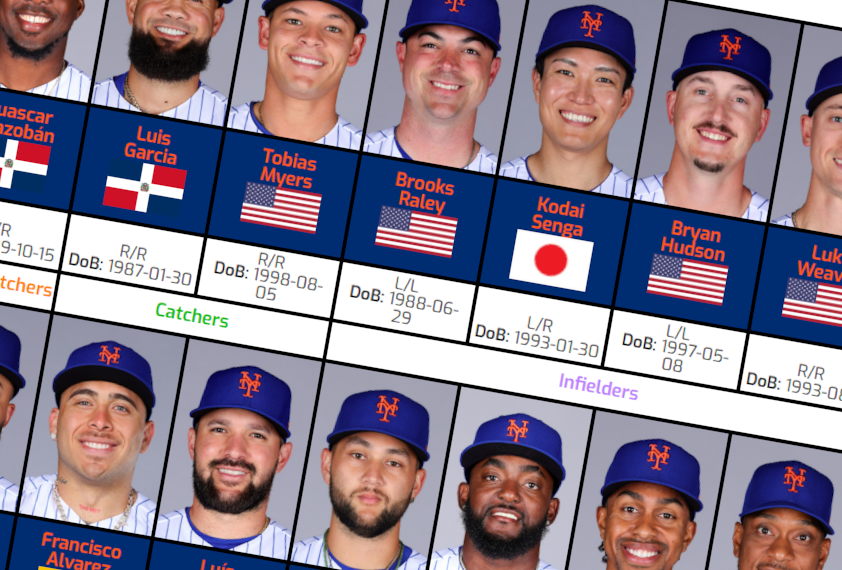 The complaint — a worthwhile one — with back-end bullpen roster churn is that these guys end up pitching for your team and sent away before you get to know them. Well, damn it, make it your business to get to know them. Transactions, 6/11/2026 GOING COMING Demoted to Syracuse Promoted from Syracuse Relief Pitchers Jonathan Pintaro Daniel Duarte R/R DoB: 1997-11-07 High Level: MLB (2026) R/R DoB: 1996-12-04 High Level: MLB (2026) Jonathan Pintaro, for instance, returned to the Mets having previously given the 2026 version of the team 3 2/3 hitless innings. As awesome as that was, he wasn't done, entering late into last night's game to throw two more hitless innings. Impressive! But when he was sent out to pitch a season-high third inning, it was clear the Mets had already had his ticket punched back to Syracuse. You don't want to blame that reality check for the streak-ending homer he then gave up to Alec Burleson, but the temptation is there. In the transaction, the Mets welcome back — and we will likely see today — Daniel Duarte. Daniel himself has similarly had a strong start as one of the circle of cameo-ing Mets shuttle relievers, having yielded no runs on one hit and no walks in 2 1/3 innings. The Mexican Daniel has lived up the name of his scriptural predecessor by making a living slinging, and by summarily dispatching Giants (with 2 2/3 scoreless innings in his career vs. San Francisco. Let's hope he's equally slingy against the Cards or Phils or whoever. Your 2026 New York Mets Starting Pitchers Sean Manaea Nolan McLean Freddy Peralta David Peterson Christian Scott R/L DoB: 1992-02-01 R/R DoB: 2001-07-24 R/R DoB: 2996-06-04 L/L DoB: 1995-09-03 R/R DoB: 1999-06-15 Relief Pitchers Huascar Brazobán Daniel Duarte A.J. Minter Cionel Pérez Brooks Raley Austin Warren Luke Weaver R/R DoB: 1989-10-15 R/R DoB: 1996-12-04 L/L DoB: 1993-09-02 R/L DoB: 35176 L/L DoB: 1988-06-29 R/R DoB: 1996-02-05 R/R DoB: 1993-08-21 Relief Pitchers Catchers Infielders Devin Williams Francisco Alvarez Luís Torrens Bo Bichette Brett Baty Vidal Brujan Marcus Semien R/R DoB: 1994-09-21 R/R DoB: 2001-11-01 R/R DoB: 1996-05-02 R/R DoB: 1998-03-05 L/R DoB: 1999-11-13 S/R DoB: 1998-02-09 R/R DoB: 1990-09-17 Infielders Outfielders Mark Vientos Eric Wagaman Carson Benge A.J. Ewing MJ Melendez Juan Soto Jared Young R/R DoB: 1993-12-11 R/R DoB: 1997-08-14 L/R DoB: 2003-01-20 L/R DoB: 2004-08-10 L/R DoB: 1993-11-29 L/L DoB: 1998-10-25 L/R DoB: 1995-07-09 Also on 40-Player Roster Starting Pitchers Relief Pitchers Clay Holmes Tylor Megill Kodai Senga Zach Thornton Jonah Tong Alex Carrillo Reed Garrett R/R DoB: 1993-03-27 R/R DoB: 1995-07-28 L/R DoB: 1993-01-30 L/L DoB: 2002-01-17 R/R DoB: 2003-06-19 R/R DoB: 1997-06-06 R/R DoB: 1993-01-02 Relief Pitchers Catchers Joey Gerber Justin Hagenman Tobias Myers Dedniel Núñez Jonathan Pintaro Dylan Ross Hayden Senger R/R DoB: 1997-05-03 R/R DoB: 1996-10-07 R/R DoB: 1998-08-05 R/R DoB: 1996-06-05 R/R DoB: 1997-11-07 R/R DoB: 2000-09-01 R/R DoB: 1997-04-03 Infielders Outfielders Francisco Lindor Ronny Mauricio Jorge Polanco Nick Morabito Luis Robert, Jr. Tyrone Taylor S/R DoB: 1993-11-14 S/R DoB: 2001-04-04 S/R DoB: 1999-11-13 R/R DoB: 2003-05-07 R/R DoB: 1997-08-03 R/R DoB: 1994-01-22 Your Mets Coaching Staff Manager Bench Coach Pitching Coach Hitting Coordinator Third Base Coach First Base Coach Bullpen Coach Ass't Pitching Coach Carlos Mendoza Kai Correa Justin Willard Jeff Albert Tim Leiper Gilbert Gomez José Rosado Dan McKinney DoB: 1979-11-27 DoB: 1989-07-14 DoB: 1990-09-09 DoB: 1992-08-16 DoB: 1996-07-19 DoB: 1992-03-08 DoB: 1974-11-09 DoB: 1989-06-06 Hitting Coach Strategy Coach Catching Coach Coaching Assistant Bat'g Practice Pitcher Equipment Manager Bullpen Catchers Bullpen Catchers Troy Snitker Danny Barnes J.P. Arencibia Rafael Fernandez Kevin Mahoney Kevin Kierst Eric Langill Dave Racaniello DoB: 1988-12-05 DoB: 1989-10021 DoB: 1986-01-05 DoB: 1988-08-03 DoB: 1987-05-11 DoB: 1964-07-09 DoB: 1979-04-09 DoB: 1978-06-03 Your Mets Training Staff Director of Player Health Head Athletic Trainer Assistant Athletic Trainer Reconditioning Coordinator Reconditioning Therapist Head Performance Coach Assistant Performance Coach Performance Coordinator Soft Tissue Specialist Brian Chicklo Joseph Golia Bryan Baca Sean Bardanett Josh Bickel Dustin Clarke Tanner Miracle Jeremy Chiang Hiroto Kawamura DoB: 1972-07-17 DoB: 1978-??-?? DoB: Circa 1980 DoB: 1988-06-23 DoB: 1996-??-?? DoB: 1987-??-?? DoB: 1991-??-?? DoB: ????-??-?? DoB: 1962-07-19 View the full article
 -
 Hitters love to boast about what they could time up, if you just told them it was coming. Henry Aaron talked about being able to hit a speeding bullet. Some people, strangely, say a hitter could hit a jet at top speed, which sounds like it would be the jet hitting them, really, or else would set off some cataclysm like the one xkcd imagined years ago—a scenario, by the way, that does sometimes feel nearly possible when you watch Jacob Misiorowski. Anyway, hitters (and baseball people in general) are eager to tell you that merely throwing hard is not enough to get the ball past big-league bats. It's true, too. Now, we have Statcast data that lays out exactly how true it is. Of the pitchers against whom batters have swung at least 100 times on four-seamers and/or sinkers this year, do you know who induces the most late swings? Far from being either Misiorowski or Mason Miller, it's (this is truly delightful) the Blue Jays' Tyler Rogers. The submariner gives hitters such an uncomfortable look (and mixes in his perversely rising slider so often) that they're late on his heat over half the time, even though he throws in the low to mid-80s. That doesn't mean that velocity doesn't matter, though. Of course not. Firstly, great velocity can often help a pitcher move off the center of the barrel horizontally, as a hitter rushes to get to the hitting zone. It can also get over a bat, because the batter has time to get to the contact point laterally, but not enough to get uphill into the pitch. This is why high fastballs are, generally, more effective than low ones. Still, the idea behind the fastball is to force hitters to be late, right? The more often you force them to be late, the more they have to cheat to catch up, at which point they become vulnerable to your other offerings. And while a batter can hit the ball hard even if they're not on time, hard contact on late swings is less damaging than hard contact on on-time (or even early) swings, too. So, let's talk about how four Brewers hurlers do an exceptional job making opposing batters late on their heaters. Misiorowski's method is obvious, and we won't spend too much time on it here. (There's more to come on him tomorrow; I promise you won't be disappointed.) His heater is faster than any in the history of baseball, especially when you factor in his elite release extension. That extension adds deception and makes it hard to time up 103 MPH. It's already hard to time up 103 MPH, of course, but Misiorowski's delivery makes it even harder. That covers him. But (again, perhaps surprisingly) Misiorowski isn't even the Brewers hurler who best makes hitters late on his heat. That honor goes, instead, to an unlikely candidate: DL Hall. The southpaw reliever has been hunting for velocity he lost to injuries for years now, but he induces late swings on 39% of his four-seamers and sinkers, good for 13th of those 259 qualifying pitchers. That's remarkable, but the reason for it is remarkably simple: Hall is a hurler with lots of pitches, who works mostly in relief. Specifically, he throws both the sinker and the four-seamer, plus a changeup with about 10 MPH of separation from his heat and three flavors of breaking ball. For a guy opponents only see once in most outings, that's a dazzling array. It makes it very hard to sit on a fastball, and because Hall has two distinct heaters, even a hitter sitting on that speed has to wait an extra millisecond or two to decide which one he's attacking. This is the power of pitch mix (and a role that limits one's exposure) in action. (It also doesn't hurt that Hall, too, has exceptionally good extension.) Next among the Brewers, though just one spot ahead of Misiorowski on the leaderboard, is another lefty: Kyle Harrison. We've already talked at length about what has made his fastball such a weapon this year, but let's briefly touch on it again. By slightly raising his arm slot to get into a position where he can better tunnel the fastball with his slurve (and perfecting the spin mirroring on those two pitches), he's made it almost impossible for a batter to recognize either offering early. They differ in speed by about 13 MPH, so if the hitter can't commit to either pitch right out of the hand, they're likely to get caught in-between, both in terms of timing and in terms of the X-Y movement of bat and ball. Harrison is getting late swings on 35% of his heaters, virtually identical to Misiorowski's rate, despite throwing about 5 MPH slower. Finally, there's Chad Patrick. That name, too, might surprise you, but he's gotten late swings on 31% of swings against his four-seamer and sinker this year, good for 47th on the list. The reason here is simple, too: Everyone has to be ready for his cutter. That's the pitch Patrick throws most often, and it's about 5 MPH slower than his two true fastballs. Thus, hitters can't let themselves get all the way to those offerings very much. They're usually sitting cutter, which means that in addition to being late when he throws the sinker or four-seamer, they're usually underneath those pitches (41% of the time, easily above the league average) and often either jammed or getting the ball off the end of the bat. In fact, in this quartet, Patrick is the best at finding his way off the center of the barre with his fastballs by tying hitters up. Much of that goes back to what I wrote about earlier this year: being willing and able to throw glove-side sinkers and arm-side cutters, as well as the more natural, opposite locations. Working east and west. Changing speeds often. Getting down the mound in an extraordinary way. Maximizing deception. There are a lot of ways to disrupt timing; that's why pitchers get hitters out most of the time. The Brewers have four aces in this aspect of the game this year, and while they're not all the guys you might first guess, these four hurlers have driven much of the team's success on the mound, by making hitters be late early and often. View the full article
