


DiamondCentric
-
Posts
2,631 -
Joined
-
Last visited
Never
Content Type
Profiles
Forums
Events
News
Tutorials & Help
Major League Baseball Videos
Guides & Resources
Store
Downloads
Gallery
Everything posted by DiamondCentric
-

Has Matt Wallner Earned Another Shot with the Twins?
DiamondCentric posted an article in Twins Daily
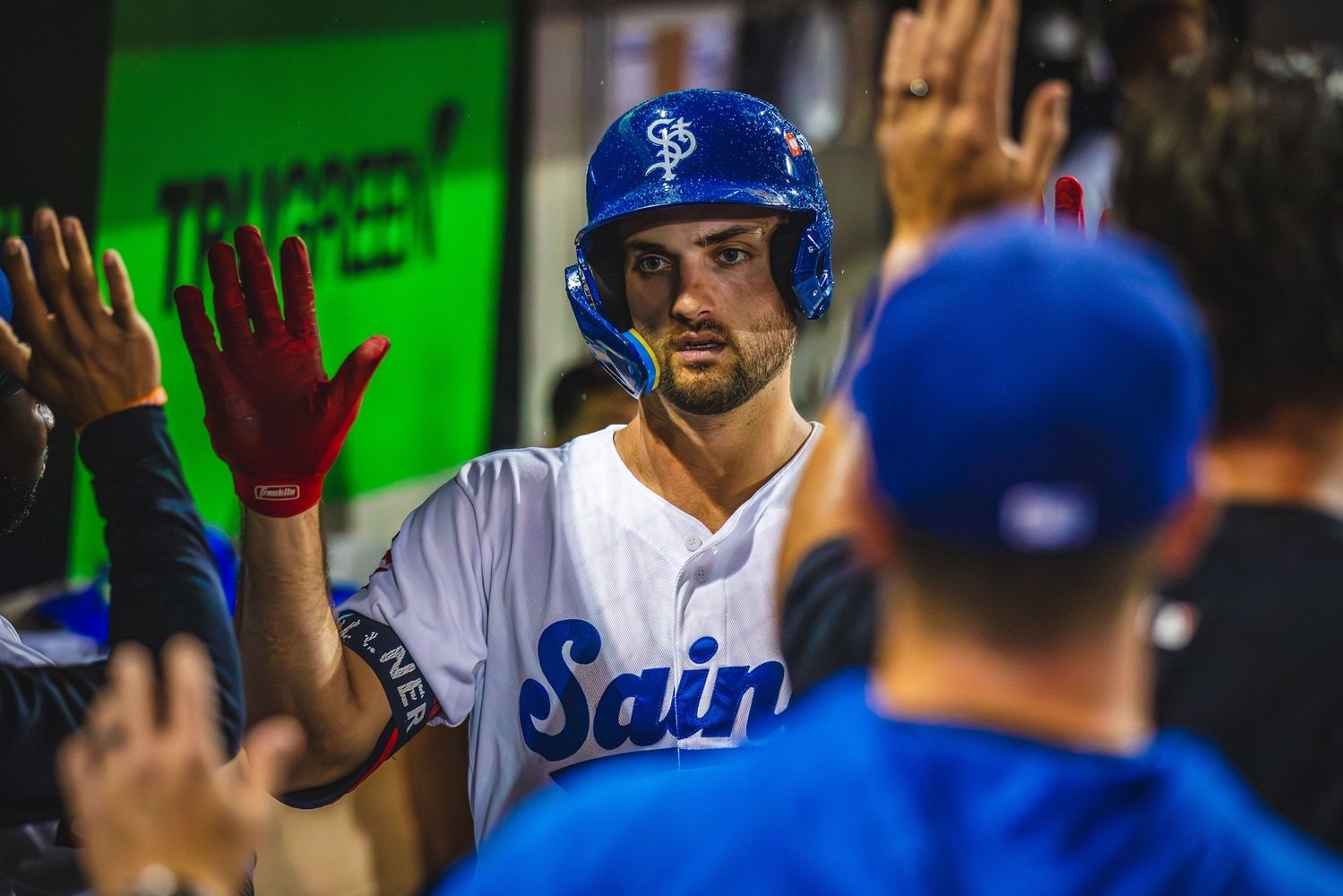 Matt Wallner had posted a slash line of .167/.259/.292 when he was sent to St. Paul last month. It was a deserved demotion and was immediately justified when he struggled to begin his time in Triple-A. More recently, he’s looked a lot more like the hitter he was expected to be, and it’s possible he finds himself back with the big-league club very soon. As recently as May 24th, Wallner was hitting .171/.250/.229. Then he had a 10-game hot streak during which he put up a .275/.383/.500 line with the Saints, and that was before crushing three homers on Thursday night. More encouraging was that he had posted a 21.3% K rate in that stretch, as the whiffs had become untenable at the big-league level. Even in the friendly confines of CHS Field, Wallner’s production has been noteworthy. Through Saturday, he's hit in each of his past seven games. In that stretch, he is 13-for-31 (.419) with a double and five home runs. The first five of those games were multi-hit games. Overall, he is hitting .275/.359/.538 (.897) with six doubles, five homers in 20 Saints games. It’s not the greatest feather in his cap that Matt Wallner has had to be sent down for a similar reset before, but it’s worth something that he’s done so in the past and returned to the big leagues able to carry over his production. Whether his adjustments can last is a real concern, but at 28 years old, there isn’t much reason for the Twins to keep him in Triple-A if he’s producing like this. Making matters easier for the Twins, the big-league roster hasn’t done much to keep Wallner stuck in St. Paul. Austin Martin’s production was cited as a driving factor in Wallner’s demotion. He’s backed up the Twins’ decision by going .149/.203/.230 since he became a full-time player on May 14. Martin may be best served as a short-side platoon player, and while Wallner’s struggles were widespread, his numbers were undoubtedly dragged down by facing lefties. The ideal scenario may be a straight platoon pairing these two players to bring out the best in each. Wallner’s defense has become a major problem this season, but there should be at-bats available in the DH spot now that Buxton is playing center field again. Josh Bell has posted a .635 OPS and has no chance of being a part of the Twins’ future. Either he turns things around and is traded, or the Twins cut bait at some point. Either way, there’s plenty of opportunity on the horizon for Wallner to get another shot. Matt Wallner has done his part by working in St. Paul and putting up encouraging numbers. The MLB roster is struggling, and other outfielders who were also in the minor leagues being injured have kept the door open for him. He’ll always be a streaky hitter, and both fans and the Twins themselves will likely look at him more questionably moving forward, but as for right now, he’s likely earning himself another opportunity. How long should Matt Wallner need to continue tearing up Triple-A before he earns another shot? Should the Twins give us one at all? Let us know below! View the full article
 -
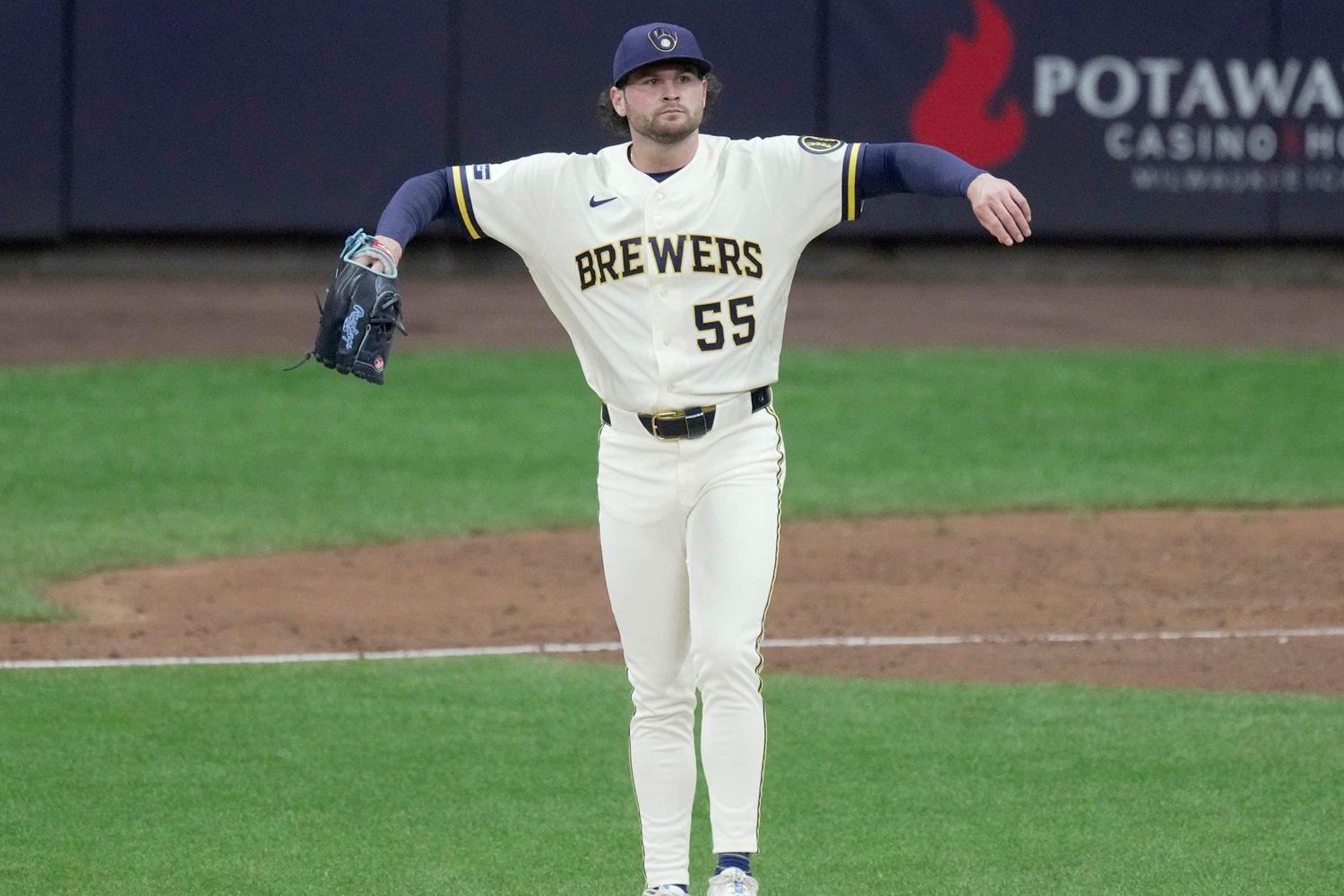 As the Brewers have weathered a slew of injuries to their starting rotation, roles have become less defined by necessity. Shane Drohan has been the poster child for that flexibility, posting a 2.87 ERA, 2.79 FIP, and 74 DRA- in outings ranging from two batters to four-plus innings. "He's been terrific for us," Pat Murphy said last week. "He's really unassuming, humble. I think he's a major-league pitcher. I think we got very, very lucky." A starting pitcher for most of his minor-league career, Drohan excelled as a multi-inning reliever last month, but did so with a starter's pitch mix. Since Logan Henderson joined Quinn Priester and Brandon Woodruff on the injured list near the end of May, Drohan is back to starting. It's unclear how long he'll hold a rotation spot – his future role may have more to do with the club's needs than his own performance – but the Brewers believe he's equipped to be a traditional starter. "No doubt," pitching coach Chris Hook said. "I have no issue with him being able to [start], and just having the wherewithal to know what pitch to throw in certain counts. I mean, he can throw any pitch in any count, and that's just the mark of a starter, being able to do that and feel comfortable." That wasn't always the case. For most of his career, scouts and prospect evaluators projected Drohan as a reliever. His control wasn't good enough in the minors. He didn't consistently reach his best velocity. He threw five pitches, but didn't always sequence them well. Once the Brewers acquired him, they quickly addressed those shortcomings. They noticed that Drohan's arsenal and mechanics limited him to pitching mostly to one side of the plate. Last season in Triple-A, he leaned predominantly on his four-seamer, cutter, and two breaking pitches. With those offerings, he played the north-south game effectively -- fastballs up, breakers down -- but all to the glove side. When he threw something to the arm side, it was rarely a competitive pitch in the strike zone. Eliminating half of the strike zone makes things much easier for big-league hitters. For Drohan's stuff to play at the game's highest level, the Brewers knew he needed to give opponents more surface area to protect. "We want to balance the plate out a little bit," Hook said. As it usually does, Milwaukee's pitching development team started by working on Drohan's mechanics. Instead of rigidly veering his body toward the glove side, they wanted him to rotate more efficiently while working through the arm side. "It was just trying to get his body moving a little bit more, so we could get free and clear to the arm side," Hook said. "I think he's getting squared up a little better, on time, and his body is just moving a little cleaner through that side of the plate." Drohan generates enough backspin on his four-seamer for it to average 12 inches of arm-side run, but for him to use that side of the plate more effectively, the Brewers wanted a pitch with even more horizontal movement. That used to be his changeup, but since Drohan underwent surgery in 2024, his reinforced shoulder now guides his hand toward the outside of the baseball. That supinated motion is the healthier, more natural release for most pitchers, but it means Drohan can no longer pronate a traditional changeup effectively. In spring training, the Brewers helped Drohan add a one-seam sinker to obtain that arm-side movement. It doesn't have a remarkable shape, averaging 9.1 inches of induced vertical break and 15.8 inches of run, but it has more horizontal movement than his four-seamer. Because it's designed to add variety to his arsenal rather than be a great pitch on its own, Drohan has used it roughly 20% of the time against both right-handed and left-handed hitters. "It's just a different look off of the four-seam," Drohan said. "It makes them have to respect something hard going – a righty, going away from them, or a lefty, coming back in to them." With the sinker in tow, Drohan is now a three-fastball pitcher, and his pitch locations are more balanced. He throws the cutter to his glove side to jam right-handed batters, the sinker to his arm side, and the four-seamer to both sides of the plate. Instead of just pitching up and down, he's pitching up, down, in, and out. "Everything was kind of glove-side, and incorporating the [sinker] in spring training, getting him comfortable with that, we start seeing him be able to do a little bit more arm-side stuff," Hook said. The mechanical work has also unlocked more velocity. Drohan's two main fastballs now regularly exceed 95 mph, and his breaking pitches are firmer and tighter. That's not just a product of pitching in shorter relief outings, either. He threw 68 pitches in his last start, and his four-seamer averaged 95.8 mph. "Even though the velo has picked up so much, I feel like my perceived effort level has gone down," Drohan said. "It just tells me I'm moving really efficiently. I'm exploding in my delivery at the right time. It's just working up the chain, throwing everything harder. It's awesome." "When we first saw him, it's like, 'Man, I got to get him a little bit freer,'" Hook said. "I mean, he was so stiff. Now you start seeing some freedom and some looseness, and being on time and through the baseball more often." Drohan's mix still isn't as complete as he and the Brewers believe it can be. He replaced his old changeup with a kick change but has struggled to find a feel for locating it. The Brewers also want to see more glove-side cut on his cutter, which often backs up and instead has a few inches of arm-side movement. It's still distinct enough from his other fastballs to keep hitters honest, but right-handers have slugged .625 against it. "I don't let it get too much into my head, because I know that I have enough run on the four-seam and the two-seam that even if it technically backs up an inch or two, it's still a perceived cut to the hitter," Drohan said. "I've been able to flash cutters that are 92-93 and really cutting, and so it's like, 'That's it.' That's a really good pitch, so obviously you want that. But it's always something you're working on." Hook believes that driving his body through the arm side will also help Drohan's cutter by forcing him to stay on the ball longer. When his body drifts toward the glove side, his arm falls behind. That leaves the ball popping out while his hand is still further behind it, before he has a chance to get toward the outside of a cutter and finish it. "He's been so glove-side-oriented that he kind of gets there, and he almost forces that pitch in there instead of allowing his body to travel," Hook said. "That's where you get these backups, because the ball just kind of spins out. And for him to stay on [the ball], and then for him to be able to get to the arm side, I know that he's going to be able to get through the cutter." The Brewers will rarely declare any pitcher a finished product. Drohan is no different, but he has come a long way in a relatively short time. He's a more balanced pitcher than he was mere months ago, and he'll need those newly acquired skills to navigate Coors Field in his third career start on Sunday. View the full article
 -
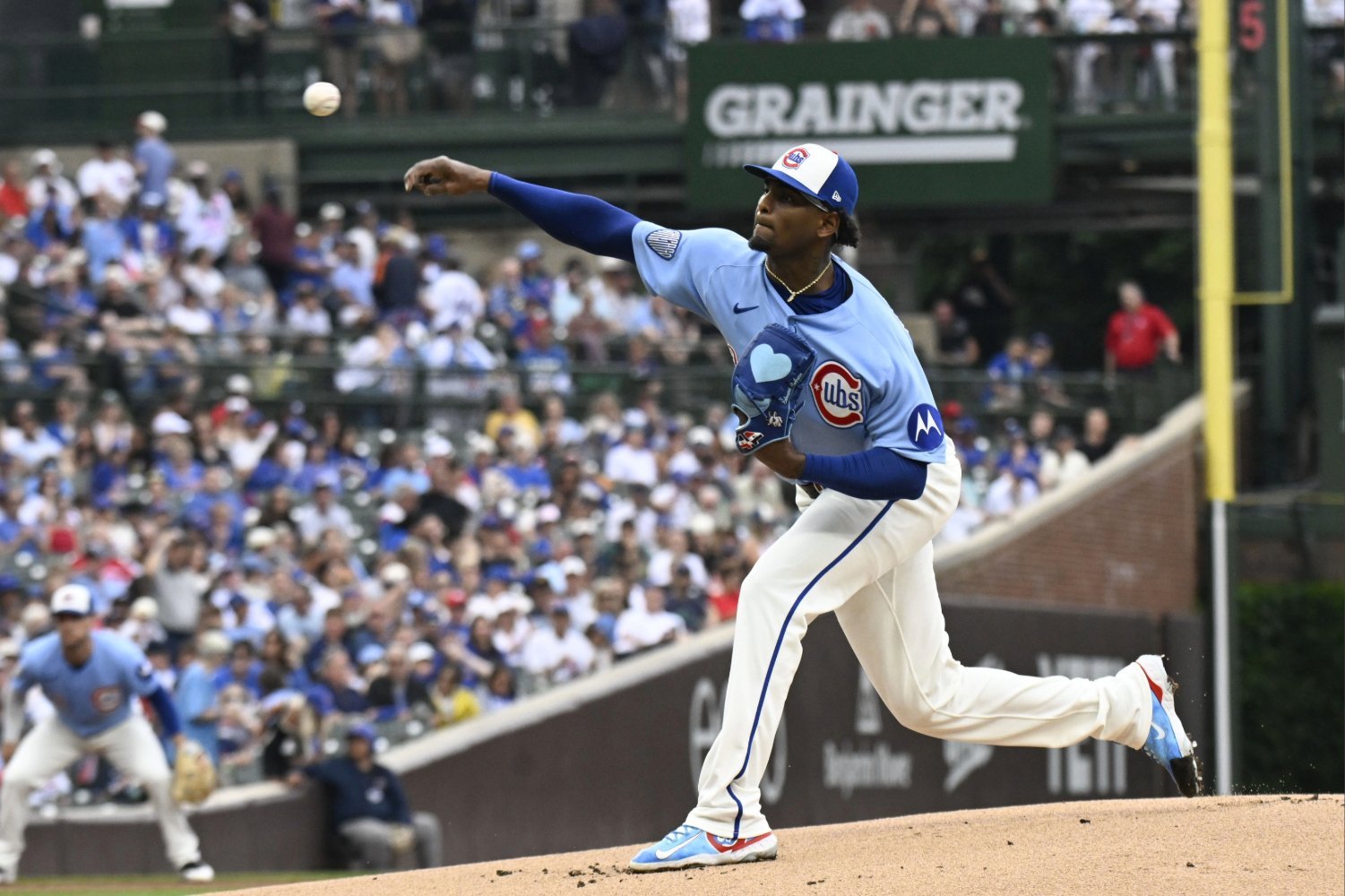 I don’t know about you, but I woke up on Friday with a new sense of vigor around the Chicago Cubs. I am not really a believer in momentum when it comes to sports. At the same time, Thursday was a massive come-from-behind win for the struggling club. Edward Cabrera was set to return on Friday to fortify a starting rotation badly in need of reinforcements. Plus, the Giants, one of the worst teams in baseball, were coming in to play three games at Wrigley Field. This was the perfect storm to right the ship. It didn’t take long for that vigor to disappear. A rain delay, coupled with the Giants immediately taking a 2-0 lead, put a small dent in my psyche. Then, a Matt Chapman grand slam in the fourth inning completely obliterated my excitement, and suddenly, I found myself watching college baseball instead. Cabrera, who was returning from a stint on the injured list with a blister, ended up with his worst line as a Cub: 3.2 innings pitched and eight earned runs given up on eight hits and three home runs. I am not going to sit here and tell you that Cabrera was actually good in this game. What I will do is give you a “the glass is one percent full” spin on the matter. The right hander’s strikeout rate on the day was 30 percent, and that is his single highest strikeout rate in any game this season. Where did those extra strikeouts come from? Well, for one, his velocity was up considerably from where it has been all season. All stats via FanGraphs: Fastball Velocity Sinker Velocity Slider Velocity Curveball Velocity Changeup Velocity Season Average (Before IL stint) 95.7 mph 95.9 mph 88.5 mph 84.5 mph 92.6 mph 6/5 vs. Giants 97.3 mph 96.9 mph 90.4 mph 86.5 mph 93.8 mph That is a full one or two ticks on every pitch that Cabrera throws. His Stuff+ ratings, which measure the physical characteristics of a pitch, increased accordingly. For this start, his Stuff+ rating of 99 was bested only by his April 28 start earlier this season. This is what makes Cabrera so tantalizing. When he is on, he is getting Matt Chapman to swing through a beautifully executed slider: cabrera.mp4 And following that up with a changeup that breaks the opposite direction from the slider: cabrera 1.mp4 So, what was Cabrera’s issue on Friday? According to FanGraphs, he threw first pitch strikes on just 35 percent of his plate appearances. That’s his lowest rate this season by over 10 percentage points. Prior to Friday’s start, hitters were slugging .493 on pitches from Cabrera in the strike zone, per Baseball Savant. Over 14 percent of those balls in play were barreled, i.e. balls that were hit with an ideal combination of exit velocity and launch angle. On Friday? Hitters slugged 1.286 on pitches in the zone and 27.3 percent of those balls in play were barreled. Cabrera simply was falling behind way too many hitters, and when he came into the zone, they were ready for it. If we’re looking for a bright side, and we all know that we desperately need it, I’d say that it’s clear Cabrera is healthy. The increased velocity says to me that he is feeling no ill effects from his blister. Still, he was acquired to be better than this. Whether it’s because he was falling behind hitters or not, he has to get better results when he pitches in the strike zone. The stuff is there. The results, like everything else for the Cubs right now, really lagged behind on Friday. View the full article
 -
 Both Biloxi and Wilson hosted their Star Wars nights, but Luke's magic was present in Jacksonville in a Skywalker-worthy blast, where Adams provided a last-gasp go-ahead two-run homer for Nashville. Transactions: Milwaukee Brewers selected the contract of LHP Drew Rom from Nashville Sounds. Nashville Sounds activated RHP Gerson Garabito from the 60-day injured list. Nashville Pre-Game Media Notes Final: Nashville 2, Jacksonville (Marlins) 1 Box Score and Game Log Via the Sounds, game details, and we encourage readers to always review affiliate write-ups as part of their Link Report routine: Adams Lifts Sounds to Win with Late Home Run - Nashville Flips Script on Jumbo Shrimp With so little activity on the basepaths, you'd think piecing together a detailed game summary might be a challenge. Kudos again to Cory Hilborne of the Sounds' staff, giving us a sense of the drama throughout this taut contest. Hope you enjoyed the read and watching the big Luke Adams bomb. Now when Cory includes this tidbit, you know that was an invitation to the wayback machine for us - keep in mind this now reads as "Wilson Warbirds", but was posted via the "Carolina Mudcats" moniker at the time, August 2023: "It was Luke Adams' second career go-ahead home run in the ninth inning with his first coming via a walk-off three-run home run to help Low-A Carolina beat Delmarva 6-3." That's also a reminder that as fans we have been blessed with excellent minor league announcers over the years. Chris Edwars is excellent for Wilson, and his predecessor Greg Young was so smooth before choosing to detour from his broadcast career. As long as we're talking broadcasters, here's another look at Adams' big swing - props to the Jumbo Shrimp play-by-play man for making the moment sound as big as it was, despite it impacting his own club negatively - Really rooting for RHP Garrett Stallings, 28, to get his first big-league opportunity. Manager Rick Sweet has rightly sung Stallings' praises often. I'm aware we made our pitch for LHP Thomas Pannone to be the next man up if needed in the big-league rotation roulette, but Stallings would be a great story. Do you remember how Stallings was acquired? Kudos to you if you remember the details of this trade. The young prospect in the deal barely touched full-season ball with his new organization and is now released. Even the one run scored by Jacksonville hardly registered on the exit velocity scale. Tyler Black and old friend Bradley Blalock were ejected prior to the game. Guessing that's the nonsense where there's a standoff after the national anthem and they won't leave the field. If that was the case, great job removing yourself from the bench options in this one, Tyler. Not a great night for the Cooper Pratt - Jett Williams watch, Pratt 0-for-4 with two GIDP's, Williams 1-for-4, again in center field. Williams looped a soft liner (86.1 MPH) to left for his base knock. Luis Lara missed a 4th straight game, and sorry, no clear answers for your questions about it. Catch up with the latest Biloxi pre-game audio interview archives - Manager Mike Guerrero's Friday night chat is among those listed Biloxi Pre-Game Media Notes Suspended in the bottom of the 6th in Biloxi: Montgomery (Rays) 0, Biloxi 0 Box Score and Game Log (Thus Far) Blake Burke is at the plate, Matthew Wood at second base after a leadoff walk (his third walk of the game, OBP .418) and a wild pitch during the Burke at-bat. Pre-game: Darrien Miller is the DH for this game, doubled and singled in two trips. His own OBP is .462, and he and Wood have formed a super-productive offensive catcher tandem. Did you know the 25-year-olds were born eight days apart? Wood is the elder statesman. Talk about burying the lead - Jaron DeBerry is still really, really good, folks, only at 74 pitches thru six scoreless. My fellow Link Reporter "Ro" will take you through the completion and the regularly scheduled game in Sunday's report (if weather allows). Wisconsin Pre-Game Media Notes (download link) Final: Cedar Rapids (Twins) 7, Wisconsin 6 Box Score and Game Log Via the Timber Rattlers, game details: Kernels End Wisconsin’s Win Streak with Late Comeback - Rattlers hit four homers in 7-6 loss You better believe all four T-Rat tater videos are within Chris Mehring's linked report. To view some of the pitches thrown by Jason Woodward and to a greater extent, Wande Torres threw to Cedar Rapids batters, here's the Kernels' 'X' feed. If Wande was hoping to get his name plastered across multiple lines in the box score, well, mission accomplished: Torres pitched to 2 batters in the 8th inning. WP: Torres. Balk: Torres. Disengagement violations: Torres. HBP: Diaw (by Woodward); Genth 2 (by Torres, by Torres); Winokur (by Torres). What was up with the 3rd pickoff attempt that led to the eventual winning run? Luis Pena, Josiah Ragsdale, Tayden Hall among those on the very full Wisconsin bench for this one. If no Rattlers are on a plane after Sunday's game (Biloxi moves on to Birmingham, Alabama this coming week), well we won't riot, but we'll raise an eyebrow or two or three. No, wait, eyebrows max at two. Easily lost in the shuffle was the job RHP Garrett Hodges did in the bottom of the 8th - two on, nobody out upon entering for Torres. Nine pitches and two at-bats later, GIDP and strikeout, on to the 9th within reach. And this was posted on Saturday before another Fischer power display: Wilson Pre-Game Media Notes Final: Wilson 4, Salem (Red Sox) 3, 10 innings Box Score and Game Log Wilson Wins on Second Consecutive Walk-off - Di Turi Plays Hero Like, seriously? Didn't we just name the Warbirds "Walk-Off Birds of Prey" just yesterday? And again, in extra innings? Don't ever leave a game early, Wilson fans. Early offense on Star Wars night - The walk-off doesn't happen without this Pedro Ibarguen down-to-the-team's-final-out RBI single to tie things. Roll the credits, George Lucas (aka Filippo Di Turi). Wilson baters drew 12 walks and were plunked once. Warbirds' opponents simply can't throw strikes, and it's bearing out in every series, as evidenced by these Carolina League walk totals. Incredible patience being displayed by the young (very young) Warbirds. Pay attention whenever the Brewers sign a pitcher (it's always a pitcher) out of Mexico. They're always advanced in the mature aspects of mound work (hello, Manuel Rodriguez, now in Biloxi at age 20) and are assigned aggressively. It doesn't always lead to future success (the odds are stacked, after all), but it's worth noting. Hello, Carlos Carra. Looking forward to Sunday's Warbirds starter. Final: ACL Brewers 5, ACL Royals 4, seven innings as scheduled Box Score and Game Log Keep feeding us walkoffs! Three in the final inning in Maryvale: With one out: Brailyn Antunez singles on a 94.7 MPH line drive to left fielder Noah Barber. Kenny Fenelon homers (5) on a 98.3 MPH fly ball to left field. Brailyn Antunez scores. Alexander Frias homers (4) on a 102.5 MPH fly ball to right field. Great day in Maryvale. Your box score review will show that even for a shortened game, everyone in the lineup contributed and the two Brewers pitchers, teenage RHP's Dariel Jaquez (working his way back from a lost-to-injury 2025 after a strong 2024 DSL season) and Diustin (don't forget the extra "I") Mayorquin, each had solid games. Final: DSL Brewers Blue 11, DSL Dodgers Mega 2, seven innings as scheduled Box Score and Game Log Team Blue rode 12 free passes (nine walks, three HBP's) along with nine hits, to victory, The three XBH's were doubles, two by first-year outfielder Enrique Lovera, who won't turn 18 until next February. Lovera was the DH here, assigned the cleanup spot. The Brewers were 6-for-6 in SB attempts, committed only one error which did not lead to an unearned run. Consider coaching staff pleased. Now here's a professional debut for you - 18-year-old Alejandro Bustamante out of Cuba with the no-hit scoreless four-inning start (four strikeouts, three walks). Here's the pitch mix report from last December. For minor league prospect diehards, the payoff comes with big-league debuts and big-league value provided. But part of the overall passion for what we do is the details in the origins and the travels all along the way. Great fun! Final: DSL Brewers Gold 12, DSL Cubs Blue 6, seven innings as scheduled Box Score and Game Log The 1-4 Gold-Plated Brewers find the perfect opponent for their first win in five contests to date. Gold scored in each of the first four frames to lead 10-2 after four. The first pro hit for RF Ruben Revost was his two-out three-run home run in the 2nd. Infielder Osiris Ramirez, DH'ing in the cleanup spot, has already homered twice in his first 15 pro AB's and added two singles as well. Second-year OF Carlos Done, a RH bat, clubbed his first home run of 2026 (6th in his career). Once again, all position players chipped in. the team was 4-for-5 is SB attempts, and 5-for-10 with RISP. More pleased coaches on site. 6'3" 17-year-old RHP Adrian Belo made his pro debut in middle relief. The Dominican native allowed two hits, two walks and two earned runs in his initial effort. Shortstop Ricki Moneys is the only DSL Gold player to appear in each of the team's five games. Moneys had a busy day, walking three times, stealing his 4th base of the season (yet to be caught), but also committed two errors (one fielding, one throwing), giving him three on the season. Five games on Sunday, with the rookie levels idle as always. One of the five games is the completion of the Biloxi suspended game, and they kick off their day later than the other affiliates, with a 3:05 Central scheduled start time. Have a great late spring Sunday, everyone! Organizational Scoreboard including starting pitcher info, game times, MiLB TV links, and box scores Current Milwaukee Brewers Organization Batting Stats and Depth Current Milwaukee Brewers Organization Pitching Stats and Depth View the full article
 -
Tyler Zuber on why first career save is so important to him
DiamondCentric posted an article in Fish On First
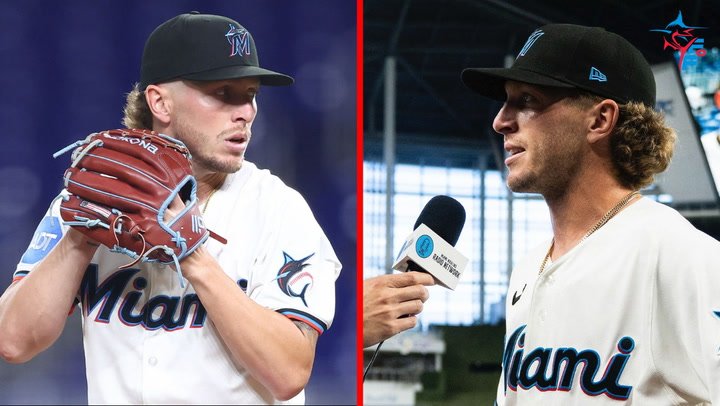 Marlins right-hander Tyler Zuber speaks with the media about finally recording his first career save on Saturday after entering in a bases-loaded jam and striking out Junior Caminero.View the full article
 -
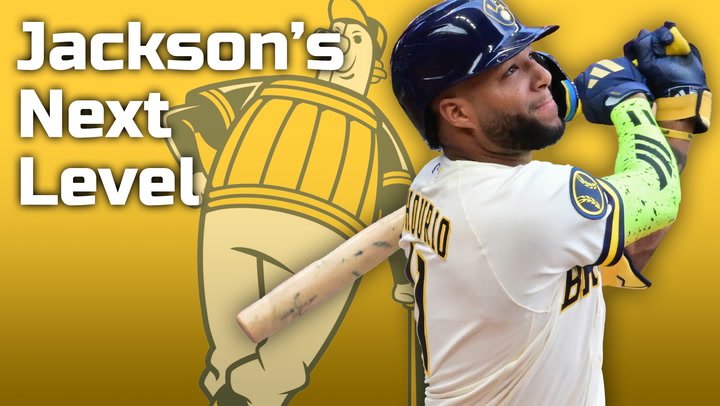 Jackson Chourio was the Milwaukee Brewers' top prospect just a couple of years ago. Now, in his third season as a big leaguer, he's unlocking a level of his game that could make him worth far more than the team-friendly contract extension he signed a pair of seasons ago. View the full article
 -
The Minnesota Twins Tinkered With Joe Ryan And He Didn't Like it
DiamondCentric posted an article in Twins Daily
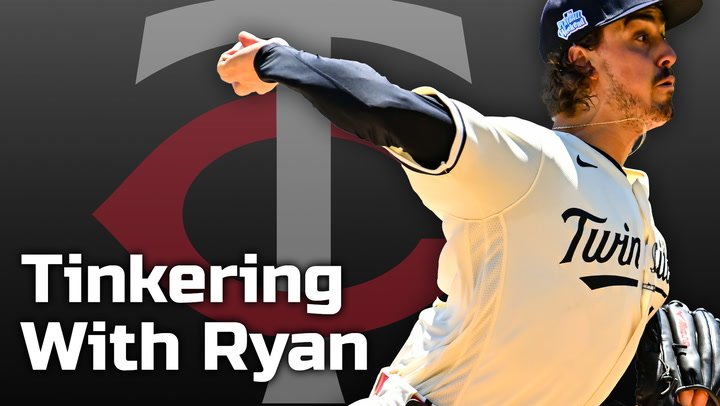 After his start against the Chicago White Sox, Minnesota Twins starting pitcher Joe Ryan seemed disgruntled with the team's game plan. Despite six solid innings, the coaching staff seemed to have him attack hitters differently, given it was his second consecutive start against the divisional rival. Was he right to be upset? View the full article
 -
Mets Minor League Report: Affiliates Sweep The Slate
DiamondCentric posted an article in Grand Central Mets
 Jonathan Santucci spun 6 2/3 strong innings to lead Binghamton past Reading, while Jack Weisenburger fired 5 1/3 scoreless to back a Syracuse shutout. Daviel Hurtado struck out five over 5 1/3 as Brooklyn rolled, and Joel Lara opened St. Lucie's win with four scoreless. Mitch Voit homered and drove in two for Brooklyn, Ryan Clifford went deep for Syracuse, and Nick Lorusso collected three hits with a homer for Binghamton. Mets Transactions No Roster Moves Syracuse Rides Early Power To Shut Out RailRiders The Syracuse Mets blanked the Scranton/Wilkes-Barre RailRiders, 5-0, behind a deep and efficient pitching effort. Jack Weisenburger, who earned the win, allowed three hits and one walk while striking out four over 5 1/3 scoreless innings. Nate Lavender opened with 1 2/3 scoreless, striking out four, and Jonathan Pintaro closed with two scoreless innings. Syracuse built its lead with the long ball. Jihwan Bae homered in the first to open the scoring. In the third, Christian Arroyo singled and came around when Ryan Clifford homered to right field for a two-run shot and a 3-0 lead. The Mets added single runs in the sixth and seventh, with Yonny Hernández scoring on a Cristian Pache double in the sixth. Pache finished with two hits and an RBI, and Clifford drove in two. Syracuse left eight runners on base. Player AB R H RBI BB K Nick Morabito 5 0 1 0 0 1 Ji Hwan Bae 3 1 1 1 1 1 Christian Arroyo 4 1 1 0 0 1 Ryan Clifford 4 1 1 2 0 2 Andy Ibáñez 4 0 1 0 0 1 Yonny Hernández 4 1 1 0 0 0 Cristian Pache 4 0 2 1 0 1 Kevin Parada 4 0 1 0 0 1 Matt Rudick 3 1 1 0 1 0 Player IP H R ER BB K HR Nate Lavender 1 2/3 3 0 0 0 4 0 Jack Weisenburger 5 1/3 3 0 0 1 4 0 Jonathan Pintaro 2 1 0 0 0 1 0 Santucci, Two Homers Carry Binghamton Past Reading The Binghamton Rumble Ponies beat the Reading Fightin Phils, 4-1, behind a strong start from Jonathan Santucci. Santucci earned the win, working 6 2/3 innings and allowing one run on three hits with two walks and five strikeouts. Saul Garcia recorded a hold with a scoreless inning, and Guillo Zuñiga closed out the save, striking out two over 1 1/3 scoreless. Binghamton scored in each of the first three innings. Chris Suero scored on an Eli Serrano III sacrifice fly in the first. Vincent Perozo homered in the second to make it 2-0. In the third, Nick Lorusso hit a two-run homer that scored Serrano and pushed the lead to 4-0. Lorusso finished with three hits and two RBI, Perozo added two hits, and Wyatt Young also collected three hits. Binghamton left 10 runners on base. Player AB R H RBI BB K Chris Suero 4 1 1 0 1 2 Eli Serrano III 3 1 1 1 1 0 Jose Ramos 4 0 0 0 0 1 Nick Lorusso 4 1 3 2 0 1 Vincent Perozo 4 1 2 1 0 1 Jaylen Palmer 4 0 0 0 0 1 Wyatt Young 4 0 3 0 0 0 TT Bowens 4 0 0 0 0 3 Kevin Villavicencio 3 0 0 0 1 1 Player IP H R ER BB K HR Jonathan Santucci 6 2/3 3 1 1 2 5 0 Saul Garcia 1 0 0 0 2 1 0 Guillo Zuñiga 1 1/3 2 0 0 0 2 0 Brooklyn Erupts For Big Innings In Rout Of Jersey Shore The Brooklyn Cyclones routed the Jersey Shore BlueClaws, 12-4, with three multi-run innings. Daviel Hurtado earned the win, allowing one run on one hit with one walk and five strikeouts over 5 1/3 innings. Tanner Witt, Cristofer Gomez, and Gregori Louis followed out of the bullpen. Brooklyn broke through in the third. Trace Willhoite doubled, and Mitch Voit walked, then Grae Kessinger doubled home both runners and Ronald Hernandez doubled in another for a 3-0 lead. It continued in the fourth. With two on, Jamari Baylor doubled home two runs, Voit followed with a two-run homer, and a bases-loaded walk to Hernandez capped a five-run frame for an 8 to 0 lead. Brooklyn added four in the eighth on run-scoring doubles by Corey Collins and Willhoite. Voit drove in two, while Kessinger, Hernandez, Collins, Willhoite, and Baylor each finished with two RBI. Brooklyn left 11 runners on base. Player AB R H RBI BB K Mitch Voit 4 2 1 2 1 0 Grae Kessinger 2 3 1 2 3 0 Ronald Hernandez 4 1 1 1 2 1 Corey Collins 5 1 1 2 1 3 Yonatan Henriquez 6 0 1 0 0 2 John Bay 4 1 1 0 1 2 Colin Houck 4 1 1 0 1 2 Trace Willhoite 4 2 2 2 0 1 Jamari Baylor 4 1 1 2 1 1 Player IP H R ER BB K HR Daviel Hurtado 5 1/3 1 1 1 1 5 0 Tanner Witt 1 2/3 1 1 1 2 1 0 Cristofer Gomez 1 1 2 2 2 1 0 Gregori Louis 1 0 0 0 1 0 0 St. Lucie Pulls Away Late To Beat Clearwater The St. Lucie Mets beat the Clearwater Threshers, 5-1, pulling away in the late innings. Joel Lara set the tone with four scoreless innings, allowing one hit while walking three and striking out four. Franyel Diaz earned the win, Christian Rodriguez recorded a hold with two scoreless innings and two strikeouts, and Luis Alvarez closed out the save with two scoreless innings and three strikeouts. St. Lucie scored first when Yohairo Cuevas doubled home Trey Snyder in the first. The decisive stretch came late. In the sixth, Antonio Jimenez singled home Elian Peña to restore the lead at 3-1. The Mets tacked on two in the eighth, with Yohairo Cuevas driving in a run and Trey Snyder scoring on a wild pitch during a strikeout. Jimenez finished with two hits and an RBI, and Snyder added two hits and two stolen bases. St. Lucie left three runners on base. Player AB R H RBI BB K Elian Peña 3 2 1 0 1 1 Trey Snyder 4 2 2 0 0 0 Antonio Jimenez 4 0 2 1 0 2 Yohairo Cuevas 3 0 1 1 1 1 Simon Juan 4 0 0 0 0 3 Chase Meggers 3 1 1 0 0 0 Branny De Oleo 3 0 1 0 0 2 Jeremy Rodriguez 3 0 0 0 0 1 Jackson Hauge 3 0 1 0 0 0 Player IP H R ER BB K HR Joel Lara 4 1 0 0 3 4 0 Franyel Diaz 1 1 1 1 2 2 0 Christian Rodriguez 2 1 0 0 0 2 0 Luis Alvarez 2 0 0 0 2 3 0 Top-20 Prospect Performance Nolan McLean: DNP Carson Benge: DNP A.J. Ewing: DNP Jonah Tong: DNP Ryan Clifford: 1-for-4, HR, 2 RBI, 2 K Jacob Reimer: DNP Jack Wenninger: DNP Elian Pena: 1-for-3, BB, R, K, SB Mitch Voit: 1-for-4, HR, 2 RBI, BB, SB Nick Morabito: 1-for-5, 2B, K Jonathan Santucci: 6 2/3 IP, 3 H, 1 R, 1 ER, 2 BB, 5 K Chris Suero: 1-for-4, 2B, BB, R, 2 K, SB Zach Thornton: DNP Wandy Asigen: DNP Will Watson: DNP Eli Serrano III: 1-for-3, RBI, BB, R Ryan Lambert: DNP Dylan Ross: DNP Antonio Jimenez: 2-for-4, RBI, 2 K, 2 SB R.J. Gordon: DNP View the full article
 -
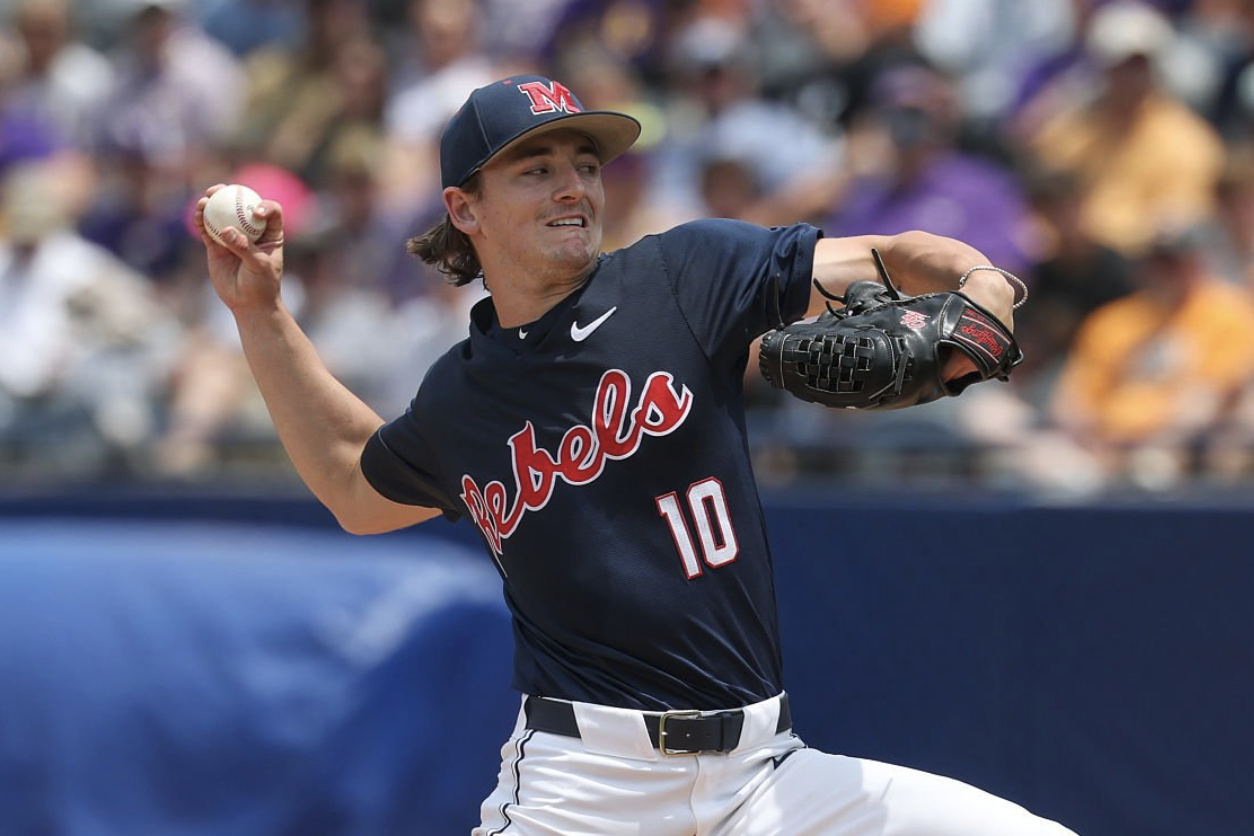 Overview: Position: RHP Height: 6’1″ Weight: 185 pounds School: Ole Miss Cade Townsend is a 6’1”, 185-pound right-handed pitcher who plays for the University of Mississippi. Townsend has risen a bunch throughout the 2026 season. Townsend is also one of the top draft-eligible sophomores in the 2026 draft class. Coming out of high school, Townsend was an elite-level prospect from Santa Margarita Catholic High School in Aliso Viejo, California. On Perfect Game, Townsend was the 100th-ranked prospect and the 28th-ranked right-handed pitcher in the Class of 2024. He was also the eleventh-ranked prospect and the second-ranked RHP out of the Golden State. Burress went undrafted and honored his commitment to Ole Miss. During his freshman season, Townsend was one of the most active arms for the Rebels but didn’t have a great season. Townsend made fifteen appearances and eight starts. He posted a 1-0 record with a 6.35 ERA, 1.41 WHIP, and an 11.4 K/99. In the 2026 season, Townsend has had a huge breakout season and is pitching like a potential first round selection. Townsend has fourteen appearances and starts. He has posted a 5-3 record with a 3.94 ERA, 1.20 WHIP, 3.1 BB/9, and a 12.4 K/9. Townsend was named Second Team All-SEC. On the mound, Townsend possesses a five-pitch arsenal including his fastball, curveball, slider, cutter, and changeup. His fastball sits 93-95 mph and has been clocked at 98 mph this spring. Both of his breaking balls are his best pitches due to its high RPMs and whiff rate. Townsend has also mixed in a low-90s cutter and a low-80s changeup that has some quality depth. While his command isn’t great, Townsend has improved his control and improved his BB/9 from 5.3 to 3.1 this season. On ESPN, Townsend is the 16th-ranked prospect and the fourth-ranked collegiate right-handed pitcher in the 2026 MLB Draft. On MLB Pipeline and Baseball America, Townsend is the 27th-ranked prospect in the 2026 draft class. Strengths Five-pitch mix Two plus breaking pitches Above-average fastball with nice carry Improved control Weaknesses Suffered a shoulder injury during the season Command still needs to be improved ERA above 5.00 versus SEC offenses Pro Comparison: Hurston Waldrep Projection: Top 20 pick Bottom Line The Marlins will have the 14th overall pick in the 2026 MLB Draft and should be able to grab one of the top prospects in this draft class. Pitching has become a major need for the Marlins all of a sudden due to their injuries. While the Marlins first round pick won’t make an immediate impact in MLB, they do need more quality depth in their farm system. Townsend is a young pitcher who knows how to pitch but could use a little more development. View the full article
 -
 It's time to check back in with another Royals mock. The MLB Draft is just five weeks away. This class is as muddled as any I've covered, though it's plenty deep in talent. You can find our mock consensus draft board here. Let's check in on some player profiles it's currently mocking to the Royals with their first few picks in July. With the #6 Overall Pick, the Royals Select: Drew Burress, OF, Georgia Tech Burress has been one of the most consistently productive college hitters since he set foot on campus at Georgia Tech. There's no arguing the track record, but there's a limited catalog of impact bats in the big leagues who stood 5'9. Burress has a ton of moving parts in his swing that can get a little convoluted and may be problematic against higher-quality pitching in professional baseball. It's good (not outstanding) bat-to-ball skills with tremendous quality of contact that have resulted in 44 home runs in his first two collegiate seasons. Burress rarely expands the zone and has walked significantly more than he struck out in his first two seasons in Atlanta. Burress has strong supplementary tools. A plus arm and above-average speed and defense give him a chance to stick in centerfield, at least in the infancy of his pro career. He'll need to be astoundingly productive in 2026 to allay fear around his size and physicality (and a poor track record with wooden bats, albeit in small samples). However, in 2026, Burress is a sure-fire first-rounder. With the #30 Overall Pick, the Royals Select: Bo Lowrance, 3B, Church Episcopal HS, SC Lowrance has been one of the sharpest risers on the prep side in the 2026 cycle. What stands out most about the Virginia commit is his size; at 6'5, 200 pounds, there's current physicality and projection remaining in the frame. Lowrance hits from the left side of the plate and has a smooth, controlled left-handed stroke, particularly for someone his size. There's a good mix of strong bat-to-ball metrics and extra base impact here, and Lowrance controls both the strike zone and his at-bats effectively. It's a third base profile as a pro. Lowrance has above-average arm strength, certainly enough to handle the corner at the next level. He's a good athlete with solid average wheels and a good glove, enough to support a well-rounded offensive profile. Lowrance is the type of prospect who could develop into a 30 home run bat in the right system. He's trending towards the top 40. With the #56 Overall Pick, the Royals Select: Will Brick, C, Christian Brothers HS, TN Brick is another reclass originally part of the 2027 draft class who is currently committed to Mississippi State. Prep catching (and catching in general) is notoriously difficult to prognosticate, but Brick has well-rounded skills and tools that give me a greater level of optimism than most prospects in this demographic. Hitting from the right side of the plate, Brick has a clean swing and put up some of the best bat speed numbers on the 2025 summer showcase circuit. While he hasn't accessed more than average in-game power yet, Brick's swing and frame have the ingredients to get there. This is supplemented by good bat-to-ball skills and a solid approach, a combination of offensive skills that may eventually get Brick to above-average hit and power tools. Defensively, he's a strong prospect. It's a massive arm, with additional skill (sub 1.9 pop times) in controlling the running game. His receiving game (and defense in general) is as praised as his leadership capabilities and other intangibles. Prep catching is not a demographic that inspires confidence, but Brick is one of the few I'd bet on to make an impact as a pro. With the #91 Overall Pick, the Royals Select: Matt Ponatoski, SS/RHP, Archbishop Moeller HS, OH Matt Ponatoski is a two-sport high school athlete currently committed to the University of Kentucky for both baseball and football, a fact that undoubtedly clouds his draft status. On the diamond, there are plenty of skills and tools that set him up as a T100 prospect in the class. Ponatoski is a left-handed hitter who sets up with a fairly significant barrel tip in his stance. He had an unbelievable summer in 2025, putting up some of the best hitting numbers in the country with the bat, demonstrating particularly good bat-to-ball skills backed up by an excellent approach in which he walked plenty and rarely expanded the zone. While he doesn't have the explosive athleticism to stick at shortstop, Ponatoski has a double-plus arm (as you might expect from an elite quarterback). He's been over 100 mph with throws from the infield, and in the mid-90s as a right-handed arm off the mound with a big curveball to boot. He's a profile who may accelerate when he focuses solely on baseball, but a split focus remains possible given his quarterbacking responsibilities. View the full article
 -
 It's time to check back in with another Red Sox mock. The MLB Draft is just five weeks away. This class is as muddled as any I've covered, though it's plenty deep in talent. You can find our mock consensus board here. Let's check in on some player profiles it's currently mocking to the Red Sox with their first few picks in July. With the 20th Overall Pick, the Red Sox Select: Ace Reese, CI, Mississippi State Reese has raked for Mississippi State since transferring from Houston ahead of his sophomore campaign. He's one of the better dual hit/power threats in the class, with any ceiling on his value being placed by an uncertain defensive home and limited supplementary tools. Reese stands 6'4, 220 pounds and has primarily played third base and first base in college. It's a solid arm, but fringe-to-average run and fielding tools. That might mean a long-term home at first base, which requires a greater level of offensive production. Offensively, Reese shines. It's good bat speed and excellent raw power. He can homer to any part of the park (21 in 2025). Reese displays good bat-to-ball skills, both in and out of the strike zone, and he takes plenty of walks. A slightly elevated strikeout rate is rooted in his propensity to chase and expand the zone. If he can reign that in, he'll be a nightmarish at-bat. Reese is near the top of D1 baseball in barrel percentage, EV90, and his ability to pull the ball in the air. His approach and defensive home remain the only questions in an excellent offensively driven profile. With the 67th Overall Pick, the Red Sox Select: Cooper Harris, RHP, Flower Mound HS, TX Harris is one of my favorite prep pitching prospects in the class. He's on the younger side, and will have just turned 18 by the time day one rolls around. It's a good frame at 6'3, 200 pounds, with plenty more room to add size and strength. It's a clean, rhythmic delivery from Harris, who throws from a higher three quarter slot that generates some steepness and angle to his arm stroke. His fastball has been as high as 96 mph, but will sit in the 93-94 mph range currently, with more in the tank. Harris has two distinct breaking balls, a two plane slider he throws in the low 80s, and a depthier curveball in the high 70s. There's also a burgeoning changeup in the mix with good fade. Harris is how you draw up a prep pitching prospect. Young and projectable, with good stuff and the ability to throw plenty of strikes. In a year where the prep pitching talent wasn't so abundant, he'd be ranked quite a bit higher. With the 96th Overall Pick, the Red Sox Select: Caden Bogenpohl, OF, Missouri State Caden Bogenpohl is one of the most physically imposing hitters in the entire class at 6'6, 240 pounds. Raw power is the calling card here. Bogenpohl has generated exit velocities north of 117 mph in 2026, figures among the very best in the class. He pulverizes fastballs and pitchers on the inner third of the plate but has a much tougher time when pitched away with secondaries or up with velocity. There are doubts about the hit tool with Boegnpohl, who's posted a whiff rate north of 27% in 2026 against primarily mid-major competition. In terms of supplementary tools, it's a solid profile. He's played plenty of center field, with good speed for his size and above average arm strength. It's a profile best suited for right field, if he can hit enough. View the full article
 -
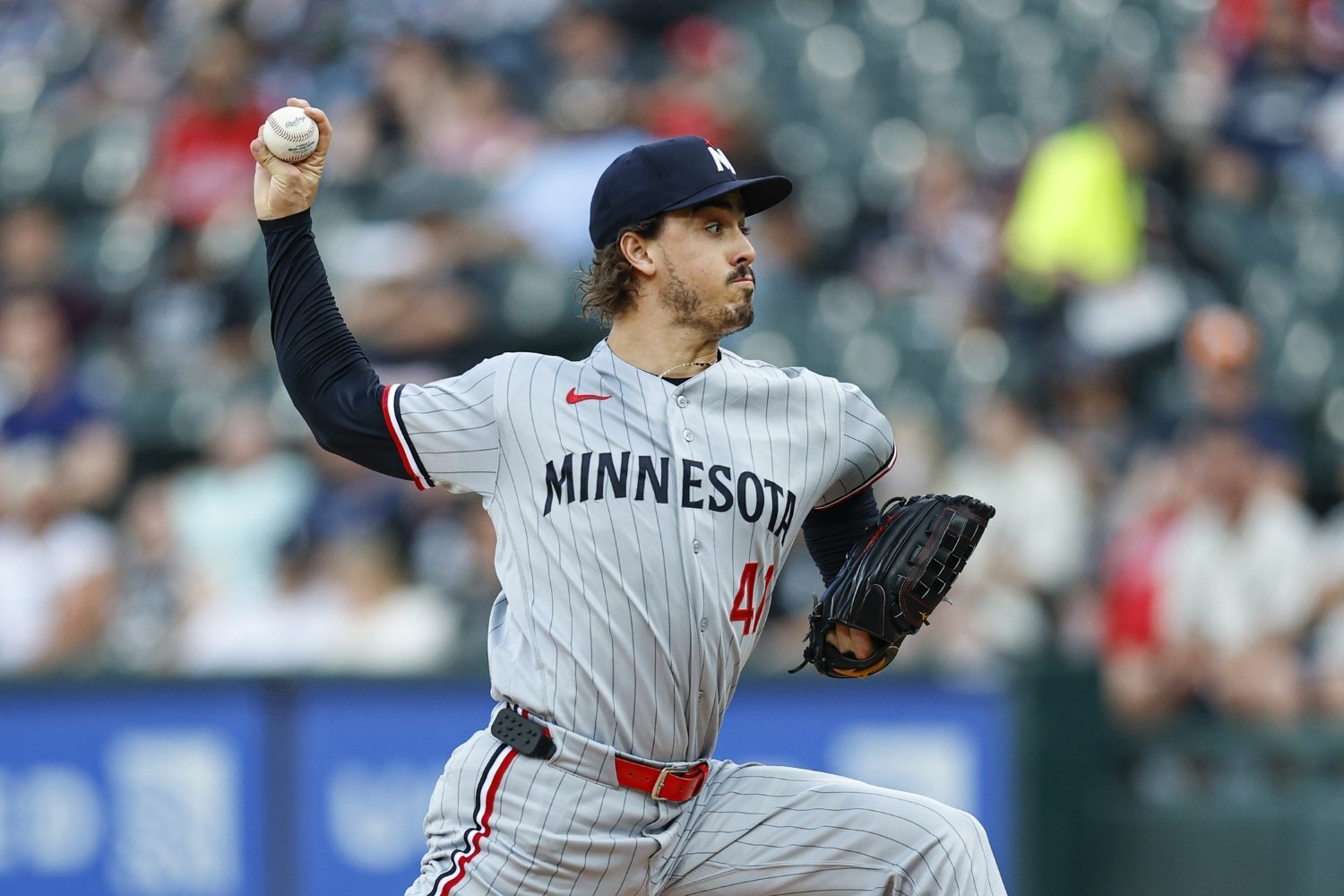 With the Detroit Tigers sitting near the bottom of the American League standings, it has become increasingly clear that Tarik Skubal will be one of the biggest names available before the August 4th MLB Trade Deadline. The two-time American League Cy Young Award winner has already become the subject of countless trade rumors. National outlets have spent weeks projecting landing spots, debating prospect packages, and speculating about which contenders will ultimately win the bidding war for one of baseball's best pitchers. Skubal's recent stint on the injured list has done little to slow the conversation. Expectations are that he will make a rehab appearance next week and return to the Tigers' rotation shortly thereafter. That should leave plenty of time for contenders to evaluate him before the deadline arrives. Trade Suitors for Skubal (and Ryan?) Recently, The Athletic identified seven potential suitors for Skubal, including the Dodgers, Rays, Cubs, Yankees, Padres, Diamondbacks, and Blue Jays. That list illustrates exactly how strong the market could be for a frontline starter. It also creates an interesting opportunity for the Minnesota Twins. While Skubal is expected to headline the pitching market, Joe Ryan may be the best starting pitcher available after him. If one club ultimately lands Skubal, there will be several disappointed contenders left searching for an ace-level arm. Those teams could quickly pivot their attention toward Minnesota and Ryan. In some ways, Ryan's market could become directly tied to Skubal's. Every team involved in the Skubal sweepstakes will likely have a prospect package prepared. Once Skubal comes off the board, those same organizations could redirect their resources toward Ryan. A bidding war that starts with Detroit could easily spill over into Minnesota. Joe Ryan's Trade Value There is even a legitimate argument that Ryan could generate a stronger return than Skubal. That statement might seem surprising given Skubal's accomplishments. He owns two Cy Young Awards and has established himself as one of the most dominant starters in baseball. However, trade value is about more than talent. Control matters. Skubal is scheduled to become a free agent after the season and will be looking for one of the largest contracts in baseball history when he hits the open market. Any acquiring team would be paying a premium for roughly two months of regular season starts and a potential postseason run. Ryan, meanwhile, remains under team control through the 2027 season via arbitration. That extra year is significant. Ryan will earn a raise through arbitration, but his salary will remain far below what an ace-level starter would command on the open market. Teams place enormous value on cost certainty, particularly with a new Collective Bargaining Agreement looming this winter. If baseball moves toward a salary cap and floor system, affordable impact players could become even more valuable. Why the Twins Would Trade Ryan The Twins have hovered around the .500 mark for much of the season and remain within striking distance of a playoff berth. However, that positioning says as much about the state of the American League as it does about Minnesota's performance. The reality is that the Twins have struggled to establish themselves as a true contender. That reality is what makes Ryan such an intriguing trade candidate. At 30 years old, Ryan is pitching some of the best baseball of his career. Through his first 13 starts (70 1/3 innings), he posted a career-best 136 ERA+ and 2.76 FIP with 79 strikeouts and only 14 walks. Those numbers follow a breakout 2025 campaign in which Ryan earned his first All-Star selection. After spending multiple seasons on the fringe of All-Star consideration, he finally received the recognition he deserved. He finished last season with a 125 ERA+ and 194 strikeouts across 171 innings while cementing himself as one of the American League's most reliable starters. For a contender seeking rotation help, Ryan checks nearly every box. He misses bats, limits walks, stays relatively healthy, and comes with an additional year of control. That combination is rare. The Twins may ultimately decide to keep Ryan and continue their pursuit of a postseason spot. There is certainly an argument for retaining one of the organization's best players. There is also an opportunity for the Twins to extend Ryan so they could get closer to the proposed MLB salary floor. But if Minnesota chooses to sell, Detroit's decision on Skubal could have a major impact on the Twins' return package. The first domino on the pitching market is likely Skubal. Once it falls, Ryan could become the most coveted starter available. And if enough teams are left empty-handed after missing out on Detroit's ace, Minnesota may discover that Ryan's market is every bit as strong as Skubal's. It becomes a supply-and-demand situation. That possibility is exactly why the Twins should be paying close attention to what happens in Detroit over the next several weeks. Can Ryan get a larger trade package than Skubal? Leave a comment and start the discussion. View the full article
 -
 It's time to check back in with another Blue Jays mock. The MLB Draft is just five weeks away. This class is as muddled as any I've covered, though it's plenty deep in talent. You can find our mock consensus board here. Let's check in on some player profiles it's currently mocking to the Jays with their first few picks in July. With the 39th Overall Pick, the Jays Select: Caden Sorrell, OF, Texas A&M Sorrell was a good prep prospect in 2023 but opted to attend Texas A&M. Fast forward three years, and he's looking increasingly like a first-round pick. Sorrell's offensive skill set is geared towards damage and loft, a potent combination. It's excellent bat speed from the left side of the plate, and Sorrell was a productive hitter in both of his first two collegiate seasons, despite being derailed by some nagging injuries. There are some weaknesses to exploit, offensively. Sorrell does have some bat-to-ball issues, which, when combined with his propensity to chase, can lead to him racking up significant strikeout totals. It hasn't impeded his production in 2026, however, as he has 17 home runs (29 extra-base hits) through his first 33 games of the season. Sorrell has a plus arm and is an above-average runner. It's likely a corner profile long term, but with those additional tools, he has a chance to be a plus right fielder. If he continues to mash in the back end of SEC play, he'll cement his status as a worthy top-30 pick. With the 103rd Overall Pick, the Jays Select: Maddox Molony, SS, Oregon Maddox Molony was in my pre-season T30 draft prospects and has picked the wrong time to have his worst collegiate season to date. A shortstop at Oregon who has strong all-around tools, Molony put up back-to-back 128 and 120 wRC+ figures in his first two collegiate seasons. Hitting from the right side of the plate, it's a profile characterized by good bat-to-ball skills and a high on-base floor, thanks to his propensity to control the strike zone well in his plate appearances. While he's always had fringy power, Molony has gotten to double-digit home runs in each of his three seasons for the Ducks. There's good actions in the field, a plus arm, and above-average speed that give Molony a chance to stick at shortstop as a pro. He hasn't hit enough in 2026 and will likely continue to slide down the board a bit prior to draft day. View the full article
 -
 San Diego Padres affiliates went 2-2 Saturday as the Triple-A El Paso Chihuahuas dumped Sugar Land 11-2, the Double-A San Antonio Missions edged Wichita 4-2, the High-A Fort Wayne TinCaps fell to Lake County 7-3 and the Low-A Lake Elsinore Storm watched an early lead evaporate in an 8-6 loss to Fresno. Padres Minor-League Transactions El Paso Chihuahuas activated RHP Jhony Brito. El Paso Chihuahuas sent RHP Daison Acosta on a rehab assignment to ACL Padres. Nate Mondou Drives In 4, Bullpen Overcomes Injury As Chihuahuas Roll Nate Mondou doubled twice and drove in four runs, while the bullpen stepped up with a huge game after an injury to right-handed starter Francisco Sanchez as the host Triple-A El Paso Chihuahuas cruised to an 11-2 victory over the Sugar Land Space Cowboys. Sanchez left after recording just two outs with an undisclosed injury. Mason McCoy, Nick Schnell and Blake Hunt each had three hits, with McCoy matching Mondou's pair of doubles. Hunt drove in two and scored twice, while Schnell scored three times and drove in a run and McCoy scored twice with an RBI. Nick Solak and Marcos Castanon each had a pair of hits. McCoy, Schnell, Hunt and Mondou were the bottom four in the order and reached base 15 out of 20 trips to the plate. Sanchez was injured when hit by a line drive off the bat of Joey Loperfido that deflected to Castanon at third base, who threw to first for the out. Right-hander Sean Boyle was the first of four relievers to come on. Boyle set the tone by striking out seven and allowing just two hits in 3⅓ shutout innings. He did walk three. Right-hander Miguel Cienfuegos followed with two perfect innings and four punchouts, with right-hander Ethan Routzahn allowing an unearned run in his one inning. Left-hander Kyle Hart covered the final two innings, giving up a run on four hits with a walk and three strikeouts. The Chihuahuas had two big innings early. They scored four in the second inning when Hunt was hit by a pitch with the bases loaded and Mondou, the No. 9 hitter, cleared the bases with his first double. In the third, McCoy had an RBI double, Schnell a run-scoring single and Reyes a two-out RBI single for a 7-0 Chihuahuas advantage. They made it 9-0 in the fifth as Hunt and Mondou had back-to-back RBI doubles. EP_0606.mp4 Player AB R H RBI BB K Pablo Reyes 4 0 1 1 1 0 Clay Dungan 4 0 0 0 1 1 Nick Solak 5 1 2 1 0 0 Marcos Castañon 5 1 2 0 0 0 Will Wagner 5 1 0 1 0 3 Mason McCoy 4 2 3 1 1 0 Nick Schnell 4 3 3 1 1 1 Blake Hunt 4 2 3 2 0 1 Nate Mondou 4 1 2 4 1 2 Totals 39 11 16 11 5 8 Player IP H R ER BB K HR Fernando Sanchez 2/3 0 0 0 0 0 0 Sean Boyle 3 1/3 2 0 0 3 7 0 Miguel Cienfuegos 2 0 0 0 0 4 0 Ethan Routzahn 1 1 1 0 0 1 0 Kyle Hart 2 4 1 1 1 3 0 Totals 9 7 2 1 4 15 0 Jagger Haynes Shines, Offense Comes Through Late As Missions Win Left-handed starter Jagger Haynes threw 5⅔ strong innings, Albert Fabian's eighth-inning sacrifice fly broke a tie and Brendan Durfee homered in the ninth to provide insurance as the Double-A San Antonio Missions pulled out a 4-2 victory over the host Wichita Wind Surge. Haynes, Padres Mission's No. 11 prospect, allowed two runs on just three hits with three walks and three strikeouts. The Wind Surge only got one more hit the rest of the way. Braedon Karpathios was on base five times with two hits and three walks, scoring once and driving in a run, while Carson Tucker had three hits and scored twice out of the leadoff spot. Those two opened the game with singles, with Tucker going to third on Karpathios' hit and scoring on Romeo Sanabria's double-play grounder. Wichita scored in the bottom of the first and it stayed 1-1 until the Missions came up in the top of the sixth. It was again Tucker and Karpathios doing the damage as Tucker doubled to center and scored on Karpathios' single. In the bottom of the sixth, Haynes gave up a leadoff double and a one-out single before notching a strikeout to his final batter of the game. Right-hander Andrew Thurman came on and gave up a tying single. Karpathios led off the eighth with a walk, went to second on Sanabria's single and to third on Tirso Ornelas' groundout for first. Fabian followed with a sacrifice fly to deep right-center that snapped the tie for a 3-2 lead. Durfee provided some cushion with his first homer of the year with two outs in the ninth. Durfee was activated off the injured list, where he had been all season, Wednesday. Right-hander Sadrac Franco pitched a scoreless eighth and Andrew Moore struck out the side in the ninth, finishing with a 100 mph fastball for his first save of the season and sixth of his career. SA_0606.mp4 Player AB R H RBI BB K Carson Tucker 5 2 3 0 0 0 Braedon Karpathios 2 1 2 1 3 0 Romeo Sanabria 5 0 1 0 0 1 Tirso Ornelas 4 0 0 0 0 1 Albert Fabian 3 0 1 1 0 0 Ryan Jackson 0 0 0 0 0 0 Luis Verdugo 3 0 1 0 0 0 Francisco Acuna 4 0 1 0 0 0 Kai Roberts 3 0 0 0 0 2 Brendan Durfee 3 1 1 1 1 1 Totals 32 4 10 3 4 5 Player IP H R ER BB K HR Jagger Haynes 5 2/3 3 2 2 3 3 0 Andrew Thurman 1 1/3 1 0 0 0 1 0 Sadrac Franco 1 0 0 0 1 2 0 Andrew Moore 1 0 0 0 0 3 0 Totals 9 4 2 2 4 9 0 Pair Of Homers Are Not Enough For TinCaps Rosman Verdugo and Zach Evans went deep, but the bullpen again couldn't keep it close as the host High-A Fort Wayne TinCaps fell to the Lake County Captains 7-3. Lake County scored three runs over the last two innings. Verdugo was the lone TinCap with multiple hits, going 2-for-4 as Fort Wayne had six hits to the Captains' 13. Four of the TinCaps' hits came from the top three hitters in the order: Justin DeCrisco, Verdugo and Lamar King Jr. The other two came from the Nos. 8 and 9 hitters, Evans and Kasen Wells. TinCaps right-handed Abraham Parra went three innings, allowing two runs on five hits and four walks with a pair of strikeouts. Right-handers Kleiber Olmedo, Isaiah Lowe and Will Varmette each went two innings, with Lowe allowing a run in the seventh and Varmette three runs in the eighth and ninth innings. Fort Wayne scored in the first as Alex McCoy had a sacrifice fly to bring in DeCriscio, then the Captains went up 3-1 with two in the second and one in the fifth. Verdugo homered leading off the bottom of the sixth, his ninth of the season before the Captains came right back with a run in the top of the seventh for a 4-2 lead. Evans hit his second homer of the season, a solo shot, with two outs in the seventh to pull the TinCaps within 4-3. Lake County created some breathing room with two runs in the eighth and another in the ninth. FW_0606.mp4 Player AB R H RBI BB K Justin DeCriscio 4 1 1 0 0 0 Rosman Verdugo 4 1 2 1 0 0 Lamar King Jr. 4 0 1 0 0 1 Alex McCoy 2 0 0 1 0 0 Jake Cunningham 4 0 0 0 0 3 Carlos Rodriguez 4 0 0 0 0 3 Jack Costello 3 0 0 0 1 2 Zach Evans 3 1 1 1 0 0 Kasen Wells 3 0 1 0 0 0 Totals 31 3 6 3 1 9 Player IP H R ER BB K HR Abraham Parra 3 5 2 2 4 2 0 Kleiber Olmedo 2 1 1 0 3 0 0 Isaiah Lowe 2 1 1 1 2 2 0 Will Varmette 2 6 3 3 2 2 1 Totals 9 13 7 6 11 6 1 Storm Blow Early 5-Run Lead, Fall To Grizzlies Yoiber Ocopio homered as the Low-A Lake Elsinore Storm jumped out to a 5-0 after three innings, but the host Fresno Grizzlies used a four-run fifth inning to surge to an 8-6 victory. Ocopio went 2-for-4 with two RBIs and two runs scored, while Bradley Frye had a hit and two walks with two RBIs and two runs scored. Right-handed starter Tyler Schmitt gave up four runs on seven hits with two walks and three strikeouts over 4⅓ innings. Right-hander Joseph Herrera followed with 1⅔ innings, giving up three runs on four hits with no walks and a strikeout. Ocopio hit a two-run homer in the first inning before the Grizzlies countered with a run in the bottom of the first. In the third inning, Frye had a two-run triple to bring in Kerrington Cross and Ocopio, then scored on Dylan Grego's sacrifice fly for a 5-1 lead. Fresno then put up a pair of runs in the fourth inning to make it 5-3 and took the lead with a four-run fifth inning and a 7-5 advantage. Qrey Lott would bring the Storm within 7-6 when a run came in as he hit into a double play in the sixth inning, but Fresno got that run back in the seventh. But that started a streak of 11 straight Storm batters retired to end the game. LE_0606.mp4 Player AB R H RBI BB K Ryan Wideman 4 0 0 0 0 2 Kerrington Cross 3 1 0 0 1 2 Jose Verdugo 3 1 1 0 1 1 Yoiber Ocopio 4 2 2 2 0 0 Bradley Frye 2 2 1 2 2 0 Dylan Grego 3 0 1 1 0 0 Yimy Tovar 3 0 0 0 1 0 Qrey Lott 4 0 0 0 0 1 Conner Westenburg 3 0 0 0 0 2 Totals 29 6 5 5 5 8 Player IP H R ER BB K HR Tyler Schmitt 4 1/3 7 4 4 2 3 0 Joseph Herrera 1 2/3 4 3 3 0 1 1 Vicarte Domingo 2 1 1 1 1 4 1 Totals 8 12 8 8 3 8 2 Top 20 Prospect Performance Ethan Salas: DNP Kash Mayfield: DNP Miguel Mendez: DNP Kruz Schoolcraft: DNP Ryan Wideman: 0-for-4, 2 K Jorge Quintana: DNP Ty Harvey: On injust list Kale Fountain: Injured, out for season Braedon Karpathios: 2-for-2, 3 BB Lamar King Jr.: 1-for-4, K Jagger Haynes: 5⅔ IP, 3 H, 2 R, 2 ER, 3 BB, 3 K Alex McCoy: 0-for-2 Truitt Madonna: DNP Tucker Musgrove: DNP Garrett Hawkins: DNP Michael Salina: DNP Eric Yost: DNP Rosman Verdugo: 2-for-4, 2B, HR Bryan Balzer: DNP Deivid Coronil: DNP View the full article
 -
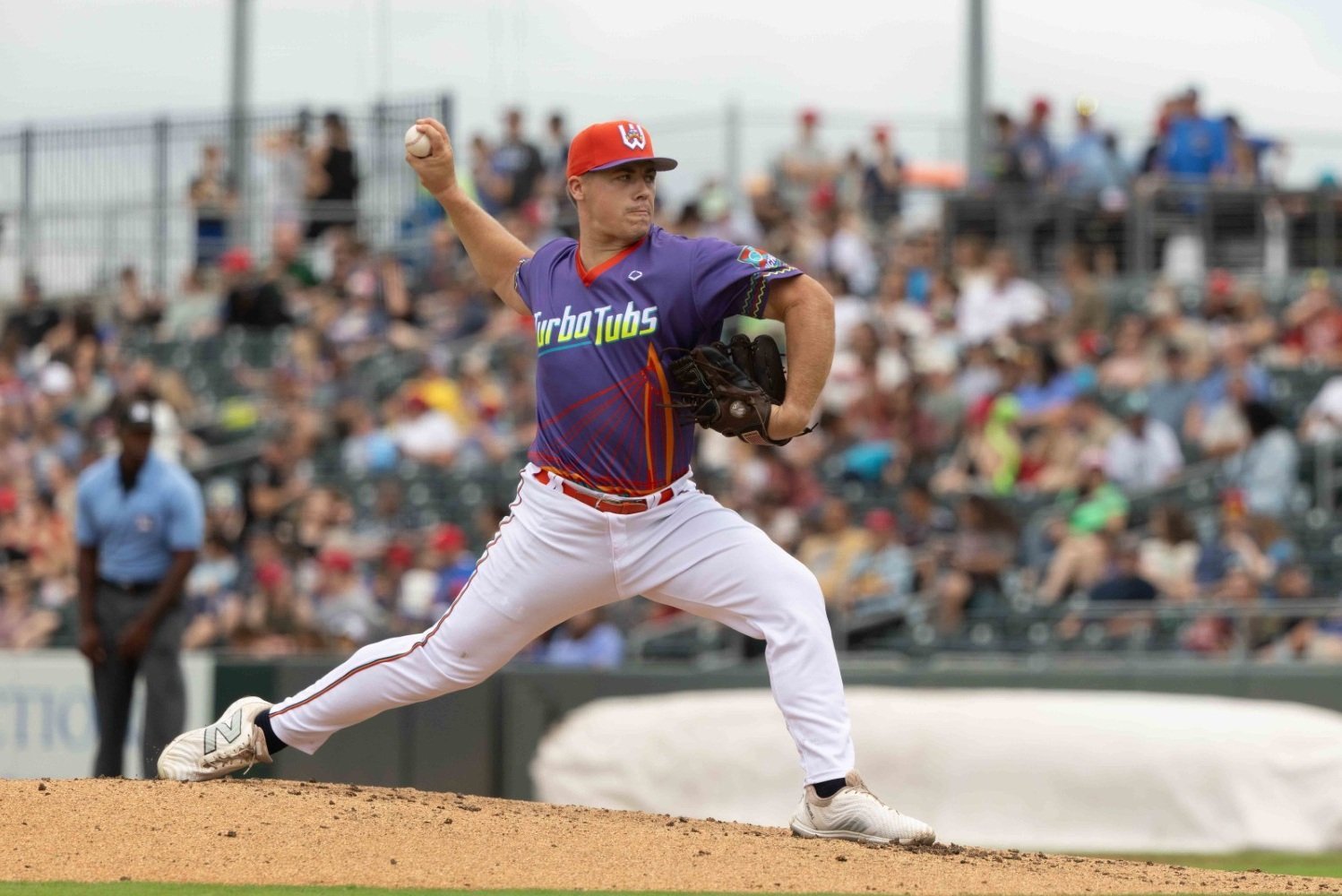 On Saturday afternoon in Wichita, the Wind Surge management announced that following the 2026 season, the team will be rebranded as the Wichita Turbo Tubs. It isn't a completely new name. The team has used the name and unique uniforms for select games over the past four or five years. Wind Surge GM Matt Hamilton said, "This is more than a name change. It's a celebration of who we are and where we're headed. The community asked for this, and we have made the bold change!" He continued, "Baseball should be fun, memorable, and uniquely tied to our community. The Turbo Tubs captures that energy in a way that fans of all ages can rally behind." The decision makes no sense to me. I get that minor league teams have been switching names to strange names that make little sense. Who are some of your favorites? I like the Rocket City Trash Pandas and the Binghamton Rumble Ponies. I bet some #OldFriends from the New Britain Rock Cats days are still working for the Hartford Yard Goats. If they hadn't moved to Wichita in 2021, the Twins Double-A affiliate would most likely be the Amarillo Sod Poodles. Personally, I don't get it. So, I'll let the Wichita media relations staff try to explain it, and what makes it so perfect for a team from Wichita. "The Turbo Tubs identity is a direct tribute to Wichita with distinct identifiers specific to the city. The wind sail and jet engines propel the porcelain bathtub onward, paying homage to the tub races once seen in the Arkansas River. The jet engine pays homage to the aerospace industry here in Wichita. The troll found along the water walk, near the Keeper of the Plains, takes charge as captain, bringing to life the fable tales heard by young and old throughout the community. The branding also includes a color palette of the one-of-a-kind sunsets uniquely present in the Midwest geographical region. The Tubs logo represents many things Wichitan’s love about this great city while incorporating the playful side of MiLB." What are your thoughts? And before we jump to the rest of today's minor league report, a reminder that the College World Series bracket is being filled. On Sunday, Troy University became the first team with 30 losses to earn a spot in Omaha. And how cool is this tradition at West Virginia who earned their first trip to Omaha. TRANSACTIONS With an afternoon game, the Twins announced early-ish on Saturday morning that James Outman has been DFAd, and Royce Lewis is back. Alan Roden began a rehab assignment with the FCL Twins on Saturday morning. Henry Kusiak was assigned to the Saints from the Mussels. Wichita moved RHP Jacob Wosinski to the Development List. The Twins signed RHP Zach Vennaro and assigned him to Wichita. The 6-6, 220 pound, 30-year-old has been working this season with pitching coach Frank Viola and the High Point Rockers. In 13 relief appearances this year, he has tossed 14 1/3 innings. He’s given up seven runs on 13 hits, but he’s got 19 strikeouts and just three walks. He has pitched for High Point since 2024. A native of Utica, New York, he first went to Monroe Community College before spending a season at the University of Mount Olive. He went undrafted in 2018, and in June of 2019, he signed with the Brewers. He spent 2021-2023 with Double-A Biloxi, though he did pitch in three games for Triple-A Nashville. After signing on Friday, Halton Hardy was assigned to the FCL Twins. SAINTS SENTINEL St. Paul 4, Indianapolis 6 Box Score They needed to work a little overtime, but the Saints ended a nice week hosting Indianapolis with an 11-inning win. They won four of five games in the series with one more to play. Aaron Rozek made the start and was again very solid. He gave up two runs (1 earned) on four hits, two walks, and a hit batter. He struck out four batters. Alejandro Hidalgo struck out two batters over two perfect innings. Drew Smith walked one and had two strikeouts over 1 1/3 scoreless innings. Raul Brito worked the next 1 2/3 innings and gave up only a solo home run. Trent Baker came in and pitched the 10th and 11th innings. He pitched a scoreless 10th inning and gave up the unearned run in the top of the 11th. With two outs in the bottom of the first, Kyler Fedko launched the seventh pitch he saw to left center, 398 feet from home plate, to tie the game at 1-1. It was his 14th homer of the season. In the second, Aaron Sabato and Tanner Schobel singled. Noah Cardenas walked to load the bases. Kaelen Culpepper was hit in the left hand by a pitch, taking on a little pain for the RBI and the 2-1 lead. Indianapolis scored their second run in the top of the third. Then things went quiet. In fact, it remained 2-2 until the ninth inning. Esmerlyn Valdez led off the top of the ninth inning with his 12th home run of the season to give the Pirates affiliate the 3-2 lead. In the bottom of the ninth inning, Aaron Sabato hit a double with one out. Ben Ross followed with a line drive to center to drive in Sabato with the tying run Cardenas was important in the 10th inning. In the top of the inning, he threw out the Manfred Man attempting to steal third base. In the bottom of the inning, his sacrifice bunt moved the Saints Manfred Man to third base. Unfortunately, they were unable to bring him in from there. In the top of the 11th, Termarr Johnson led off by singling in the go-ahead run to give them a 4-3 lead. Trent Baker came up big at the point with a strikeout and a double-play ball. In the bottom of the 11th inning, Kyler Fedko started the inning at second base. Matt Wallner led off with a double to tie the game at 4-4. Gabriel Gonzalez was asked to and successfully sacrificed himself to get Wallner to third. Aaron Sabato played hero again with a walk-off, two-run homer. Sabato went 3-for-5 with his 15th double, 11th home run and two RBI. Ben Ross was 2-for-4. Noah Cardenas walked twice, threw out one would-be base stealer and picked off two runners including one at third base. WIND SURGE WISDOM Wichita 2, San Antonio 4 Box Score This was a good game of back-and-forth, until it wasn’t. San Antonio scored a run in the top of the first inning. With one out in the bottom of the first, Kyle DeBarge’s 12th double of the season drove in Kala’i Rosario to tie the game at 1-1. Sam Armstrong, acquired from the Cubs with Ryan Gallagher in the Willi Castro trade, made the start for the Surge. He gave up one run on three hits and a walk over five innings. He had two strikeouts. Spencer Bengard came on and gave up one run on four hits and a walk over two innings. He gave up a run in the top of the sixth. In the bottom of that inning, Rosario led off with a double. With one out, Billy Amick was jammed but strong enough to drop it in just the right spot to record an infield hit and move Rosario to third. With two outs, there was a pitching change. Andrew Cossetti came to the plate and lined a single to left to drive in Rosario and tie the game at 2-2. William Fleming gave up a run in the eighth inning. The Wind Surge went scoreless. Kyle Bischoff gave up one run on two hits and a walk in the top of the ninth. The Wind Surge went scoreless in the bottom of the ninth to fall 4-2. Wichita scored their two runs on just four hits and four walks. Kala’i Rosario went 1-for-2 with his third double and two walks. He scored both of the team’s runs. DeBarge’s RBI double was his 12th of the season. He also stole his 16th base. He was 1-for-3 with a walk. The Wind Surge have lost nine of their last 10 games. They are 3-13 in their past 16 games. They have lost three straight series. The San Antonio Missions are the Double-A affiliate of the San Diego Padres. Be sure to check out one of our DiamondCentric sites, Padres Mission. Also, check out how many of these Missions players appear on the Padres Mission Top 20 Prospect Rankings. 22-year-old outfielder Braedon Karpathios went 2-for-2 with three walks. KERNELS CHRONICLE Cedar Rapids 7, Wisconsin 6 (Six. Seven.) Box Score The Timber Rattlers roster is loaded with prospects, some pitchers but the lineup has a lot of potential big leaguers. Be sure to go to our sister site, Brewer Fanatic, and check out how many of their top prospects play for Wisconsin. Lefty Cesar Lares made his first career Midwest League start. He’s missed time the last couple of seasons with elbow issues and eventually had Tommy John surgery. He did well though. He gave up two runs on four hits over four innings. The reality is he gave up two runs on just two of those hits. 2024 top pick Braylon Payne led off the game with a homer, and 2025 top pick and MWL Home Run leader Andrew Fischer (both left-handed hitters) hit his 18th home run. Lares had five strikeouts and, maybe most importantly, zero walks! Down 1-0 in the bottom of the first, Marek Houston led off with a walk. Eduardo Tait singled to left. With one out, a passed ball put runners on second and third, but then Khadim Diaw was hit by a pitch to load the bases. Jay Thomason flew out to left, deep enough to drive in Houston with the team’s first run. Quinn McDaniel followed with a single to right to drive in Tait with the tying run. Fischer’s home run tied the game at 2-2 in the top of the fourth inning. The bottom of the fourth inning started with two outs. Harry Genth was hit by a pitch. Houston singled him to second. Tait singled to right to drive in Genth. Brandon Winokur stepped to the plate and crushed a three-run shot to the deepest part of the ballpark and give the Kernels a 6-2 lead. (see below, he was joyous) Adam Falinski came in and tossed a scoreless fifth frame. However, he gave up a three-run homer to Eric Bitonti which tightened things at 6-5. In the bottom of the seventh, Winokur was hit by a pitch to lead off the inning. He moved to second base on a disengagement violation. He was still on second with two outs, but McDaniel picked up his teammates with a line drive, RBI single to right field for an insurance run. Xavier Kolhosser came on and had 1-2-3 innings in the seventh and eighth innings. He got the first out of the top of the ninth, but Luis Castillo knocked a solo home run to cut the lead to just 7-6. But Kolhosser responded by getting a pop out and a strikeout to end the game. Houston went 2-for-3 with two walks. Tait went 2-for-5. McDaniel went 2-for-4. The only other hit was Winokur’s three-run homer. Winokur and Diaw were also hit by pitches. Genth was hit twice by pitches. The Kernels have gone 8-13 in their past 21 games. MIGHTY MATTERS Ft. Myers 5, Lakeland 0 Box Score For the second time in three games, the Mussels pitching staff tossed a shutout in Lakeland. Merit Jones struck out six batters over the first four scoreless innings. He gave up three hits and walked on batter. Lefty Jake Murray tossed two shutout innings and gave up just one hit. Eric Hammond, fresh off the injured list, gave up just one hit and one walk over 2 2/3 innings. He left the game with one out remaining and two runners on base. Mike Hilker came on and got the final out, preserving the shutout. The Mussels scored what proved to be the winning run in the top of the first inning. Dameury Pena led off with his seventh double of the season. Ryan Sprock followed with a single. Pena scored on a double-play ball. With one out in the top of the fourth inning, Jayson Bass lined a single to right. Graham Brown then drilled a two-run home run to make it 3-0. The top of the sixth began with a Quentin Young walk. He stole second and went to third on a Brown single to left. With two outs, Irvin Nunez lined a two-run double off the tip of the diving center fielder’s glove. Graham Brown went 2-for-4 with his first home run in affiliated ball. He scored twice and drove in two runs. Dameury Pena went 2-for-5 with his seventh double. He also stole his 16th base. The Mussels have now won nine of their past 10 games. Before that stretch, they had lost five in a row. COMPLEX CHRONICLE FCL Twins 4, FCL Red Sox 8 Box Score The Twins scored four runs over their seven innings on Saturday morning. The Red Sox scored four runs in the second inning, and then four more runs in the fourth inning to take the win. The TWins took a 1-0 lead in the top of the first inning. Miguel Caraballo led off with a walk. The rehabbing Alan Roden followed with a walk. Following two strikeouts, the runners were successful on a double steal. Caraballo scored on a throwing error. Melvin Rodriguez got the start for the Twins, and he had a terrific start. In the first inning, he struck out the side on 13 pitches. Daiber De Los Santos led off the top of the second with a single. Darwin Almanzar took over at first base after hitting into a fielder’s choice. With two outs, Caraballo advanced Almanzar to third with a double. Showing good patience, Roden walked for a second time. With the bases loaded, Jhomnardo Reyes drove in two runs with a double. Melvin Rodriguez struck out three batters in the bottom of the second inning too. Of course, the inning started with three singles and after the first strikeout. The Red Sox scored on a double steal, a single, and a wild pitch to tie the game at 3-3. A Liosward Marin homer gave the Red Sox the 4-3 lead. Rodriguez threw a scoreless third inning with one strikeout. He began the fourth inning with two walks. Carter Holjes came into the game in relief with runners at first and third base. Holjes threw a wild pitch to make it 5-3. After a strikeout and a walk, Franklin Primera hit a three-run homer that made it 8-3. Rodriguez’s final line shows he gave up six runs on six hits. He walked three and had seven strikeouts in three innings. Holjes gave up two runs on two hits and two walks over two innings. He struck out three. Brad Rudis struck out one batter in a perfect inning. The Twins scored one more run in the top of the seventh. Two walks and a single loaded the bases, and with one out, Almanzar walked to drive in a run. The Twins scored their four runs on six hits and 12 walks. They had more chances but went 2-for-11 with runners in scoring position and left 12 on base. Pablo Castillo had two of the team’s six hits. Reyes went 1-for-4 with his two-run double. It was his fifth double of the season. Caraballo hit his sixth double and walked twice. He also stole his sixth base. Carlos Taveras and Teilon Serrano each walked twice. Alan Roden went 0-for-1 with three walks. He had a stolen base and played the whole game in right field. DSL Twins 5, FCL Angels 9 Box Score Well, I guess you can’t score 21 runs every day. Through four innings on Saturday, the Twins were kept scoreless. Sebastian Echavarria made his pro debut. He gave up one run in the first inning. He faced four batters in the top of the second inning. When he was removed from the game, he had already given up four runs. He struck out the final batter he faced, but it got by the catcher and he reached base. Manuel Meza came on in relief. He threw two wild pitches which scored the inherited runner and ended the Echavarria line. He was charged with five runs on two hits and three walks in one inning. He also hit two batters. Meza worked two innings and gave up three of his own runs on two hits and two walks. He had three wild pitches. He struck out two. Juan Quinones worked the final four innings. He gave up only an unearned run on five hits and three walks. He also had five strikeouts. The Twins got on the scoreboard in the bottom of the fifth inning. Friday’s hero, Abel Sosa, walked. He went to second on a passed ball and to third on a single by Jeferson Abreu. Sosa scored on a double play groundout. The bottom of the sixth started with walks by Jendy Martinez and Daiyer Barboza. Jhon Gonzalez reached on an infield single to load the bases. Enmanuel Merlo came to the plate and drilled his first professional home run, a grand slam that turned the game from a 9-1 blowout to a 9-5 game where you still need another grand slam to tie it up. Merlo, as you recall, was the Twins top international signing in January. A consensus Top 40 in the international class, he received a $1.5 million bonus. Gonzalez had two of the team’s five hits. Merlo had the grand slam and one of the team’s eight walks. Martinez and Barboza were both 0-for-1 with three walks in the game. PLAYERS OF THE DAY Hitter(s) of the Day Aaron Sabato (Saints): 3-for-5, 2B(15), HR(11), 3 R, 2 RBI. Marek Houston (Kernels): 2-for-3, 2 BB, 2 R Pitcher(s) of the Day Sam Armstrong (Wichita): 5 IP, 3 H, 1 ER, 1 BB, 2 K, 52 pitches, 36 strikes (69.2%) Merit Jones (Mussels): 4 IP, 3 H, 0 R, 1 BB, 6 K, 64 pitches, 41 strikes (64.1%) Juan Quinones (DSL Twins): 4 IP, 5 H, 1 R, 0 ER, 3 BB, 5 K. PROSPECT SUMMARY Check out the Prospect Tracker for much more on our Twins Top 20 prospects after seeing how they did today. #2 - IF Kaelen Culpepper (St. Paul) - 0-for-4, HBP, RBI, K. (batted first, played SS) #5 - C Eduardo Tait (Cedar Rapids) - 2-for-5, 2 R, RBI(batted second, played catcher). #7 - SS Marek Houston (Cedar Rapids) - 2-for-3, 2 BB, 2 R, E(9) (batted first, played SS) #10 - OF Gabriel Gonzalez (St. Paul) - 0-for-4, 2 K, SH (batted fifth, played LF) #13 - OF Hendry Mendez (St. Paul) - 0-for-4, IBB, 2 K (batted second, played DH) #14 - 3B/SS Quentin Young (Ft. Myers) - 0-for-3, BB, R, SB(5) (batted fifth, played SS) #15 - 3B/CF Brandon Winokur (Cedar Rapids) - 1-for-4, HBP, HR(7), 2 R, 3 RBI, 2 K (batted third, played 3B) #19 - C/OF Khadim Diaw (Cedar Rapids) - 0-for-3, HBP (batted fourth, played CF) #20 - 2B/SS/CF Kyle DeBarge (Wichita) - 1-for-3, BB, 2B(12), RBI, K, SB(16) (batted third, played SS) UPCOMING PROBABLES Sunday, June 7: (Six, Seven!!) Indianapolis @ St. Paul (3:07 pm CT) - RHP John Klein (1-1, 6.17 ERA) San Antonio @ Wichita (1:05 pm CT) - RHP Cory Lewis (0-1, 6.52 ERA), Wisconsin @ Cedar Rapids (1:05 pm CT) - LHP Garrett Horn (0-0, 1.50 ERA) Ft. Myers @ Lakeland (11:00 am CT) - RHP Ramiro Villanueva (0-1, 2.66 ERA) Monday, June 8: FCL Twins @ FCL Red Sox (11:00 am CT) - DSL Angels @ DSL Twins (10:00 am CT) - CURRENT W-L Records Minnesota Twins: 30-35 (3rd place (of 5) in AL Central, 6.5 GB)) St. Paul Saints: 33-28 (4th place (of 10) in IL West Division, 4.0 GB)) Wichita Wind Surge: 22-32 (5th place (of 5) in TL North Division, 12.5 GB)) Cedar Rapids Kernels: 28-28 (4th place (of 6) in MWL West Division, 7.5 GB)) Fort Myers Mighty Mussels: 33-23 (2nd place (of 6) in FSL West Division, 2.0 GB)) FCL Twins: 12-13 (4th place (of 6) in FCL South Division, 4.5 GB)) DSL Twins: 1-4 Please feel free to ask questions about the teams, the rosters, and discuss today’s games, or anything else Twins minor-league related! View the full article
 -
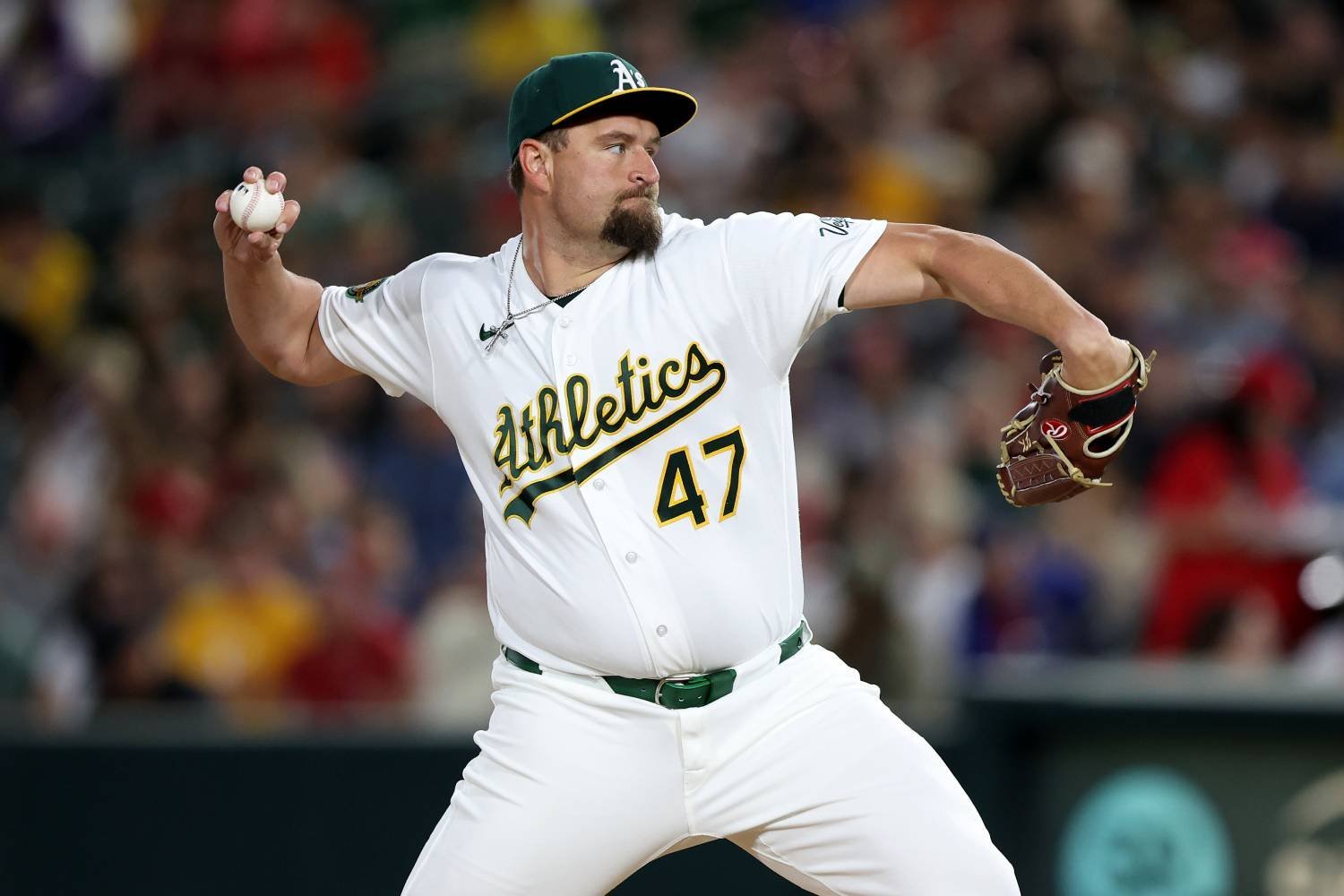 The Milwaukee Brewers picked up some bullpen depth Saturday by trading for Athletics right-hander Joel Kuhnel in exchange for cash. Kuhnel was with the Brewers twice in 2024, but did not appear in a game. To make room on the 40-man roster, right-handed starter Quinn Priester was transferred from the 15-day injured list to the 60-day IL. Priester, who has been on the IL since March 25, is currently on a rehab assignment in the Arizona Complex League. The 31-year-old Kuhnel was designated for assignment by the A's on Friday. The Brewers open a three-game series against the A's in Las Vegas on Monday. A move regarding the Brewers' 26-man roster will need to be made as Kuhnel is out of minor-league options. Kuhnel last pitched for the A's on Thursday, giving up four runs on five hits in two-thirds of an inning. For the season, Kuhnel has a 3.97 FIP (4.21 ERA) in 25 games and 25⅔ innings, with four saves and four holds. He has a terrific 5.6% walk rate but a below-average 13% strikeout rate. He had allowed seven runs in his last four outings. Kuhnel spent 2025 in the minors with the New York Yankees and Philadelphia Phillies. He was with four organizations, including the Brewers, in 2024. View the full article
 -
Dream realized: Marlins hold on as Zuber secures first save
DiamondCentric posted an article in Fish On First
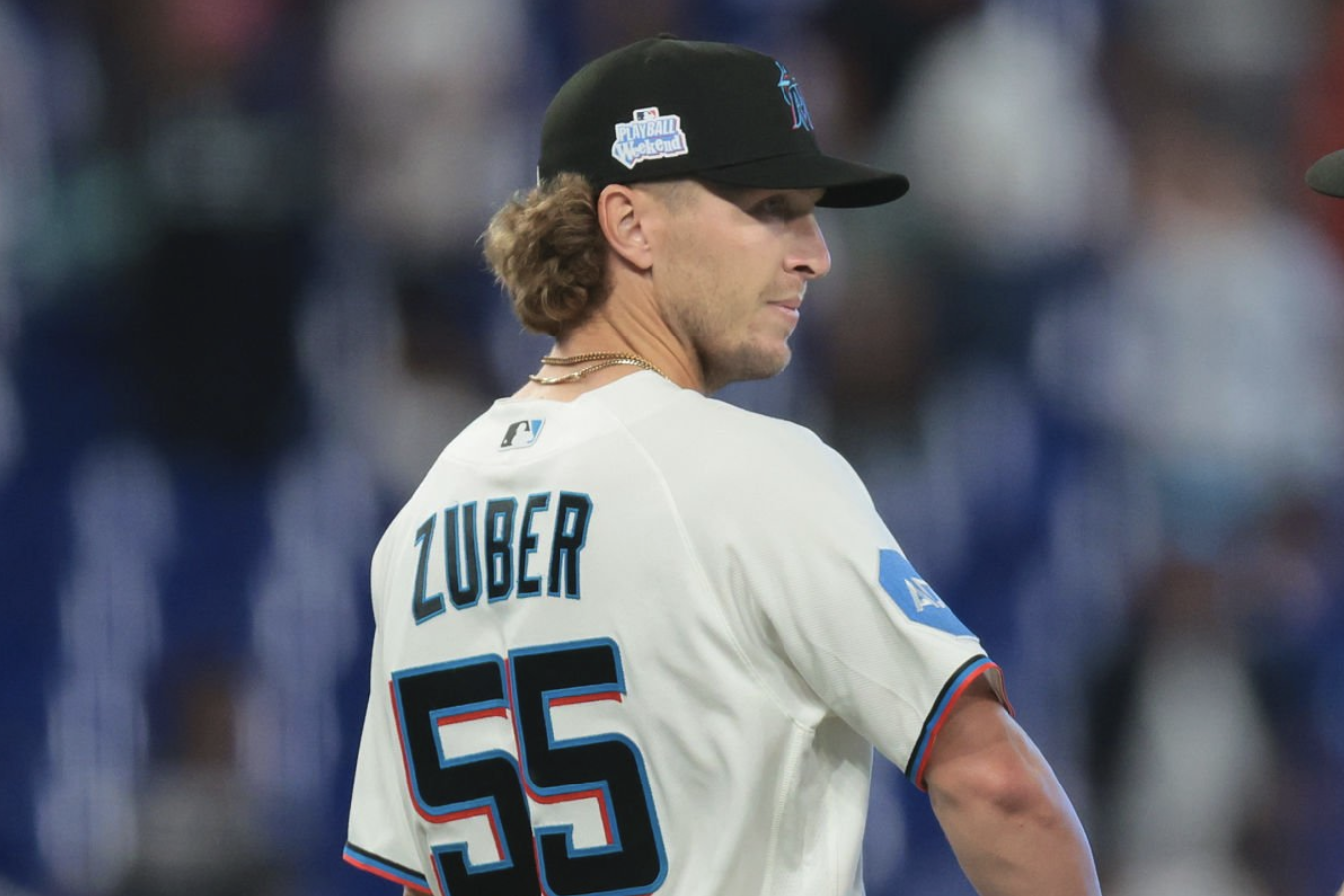 MIAMI—An announced attendance of 12,443 took to their feet, while a confident Pete Fairbanks roamed the mound in the ninth with two outs, a runner on first and a three-run lead. For all intents and purposes, Saturday afternoon's penultimate Citrus Series matchup between the Marlins and visiting Rays was just about over. Alas, the story didn't end there. A rare mix of chaos and collapse instead created destiny for a certain Marlins reliever. Prior to this week, Tyler Zuber was an unremarkable member of Triple-A Jacksonville's bullpen. He has spent parts of nine professional seasons in five different organizations, scratching and clawing for a consistent major league role and a certain moment at the top of his bucket list. With the "help" of a Pete Fairbanks meltdown and because Miami's other high-leverage arms had been deployed in earlier innings, Zuber got the opportunity he'd been craving. He was tasked with picking up his teammate opposite young phenom Junior Caminero and the bases loaded in what had devolved into a one-run ballgame. "It's the epitome of kind of what I want to be a part of as a team—just if someone doesn't get it done, it's a 'next guy up' type situation," said Zuber postgame. "I want them to have my back if I'm ever in that situation, so everyone just has each other's backs and just fights for each other." After dropping five in a row in Toronto and New York, Clayton McCullough's group has banded together just like they did a year ago, now winners in four of their last five. V0FXTHFfWGw0TUFRPT1fQVFOV1ZBWlJBQUlBQ0ZOUVZBQUhVQTRIQUFBQVZGTUFWd0VOQlFZQkFRSURDRk5l.mp4 Zuber left little doubt, as a five-pitch strikeout of Caminero ignited a yelling celebration and revival of the crowd as Miami held on for a 4-3 nail-biting win. "My whole pro career, I've closed a lot, but this is like one of those things that I wanted the most. I'm still shaking right now. I'm shaking now more than I was in my debut, so that tells me that this means a lot." “I just got ready as fast as possible, and it happened,” the 30-year-old continued. "It happened real quick. It was kind of like that one moment, I was like, 'Oh my gosh, this is it. I can see it. I can see it.'” As for the long awaited ball, it’ll have a home with Zuber’s parents. “Let them have it, put it somewhere in the house. It’ll be a good conversation starter,” he joked. If not for Zuber's heroics, super utilityman Javier Sanoja would be receiving a well-deserved spotlight. "El Chiquito" notched his fourth third-hit performance of the season, dropping down a pinpoint bunt in his first at-bat before blasting his second homer for Miami's first runs of the series. Additional RBI from Sanoja, Joe Mack (his sixth in five contests) and Liam Hicks rounded out a 10-hit day for Miami's bats. For the second time in four games, a group effort from the Marlins bullpen worked a combined no-hitter into the sixth inning. Although a flare single off the bat of former Fish Victor Mesa Jr. put the bid to rest, Rays hitters struggled to create much of anything before the aforementioned ninth. Hitless outings from Lake Bachar—who started the contest and gave Miami three innings—Anthony Bender and John King set the tone early before Calvin Faucher, Michael Petersen, Fairbanks and Zuber navigated the final frames. As noted on Marlins.TV, the Fish have won 173 consecutive games when leading by three runs or more entering the ninth inning. Sunday's rubber match features Marlins ace, Sandy Alcantara, succeeding an encouraging seven-inning evening in Washington. Alcantara goes opposite Griffin Jax at 1:40 EST. View the full article
 -
Elbow Injury Lands Brewers' Brian Fitzpatrick On Injured List
DiamondCentric posted an article in Brewer Fanatic
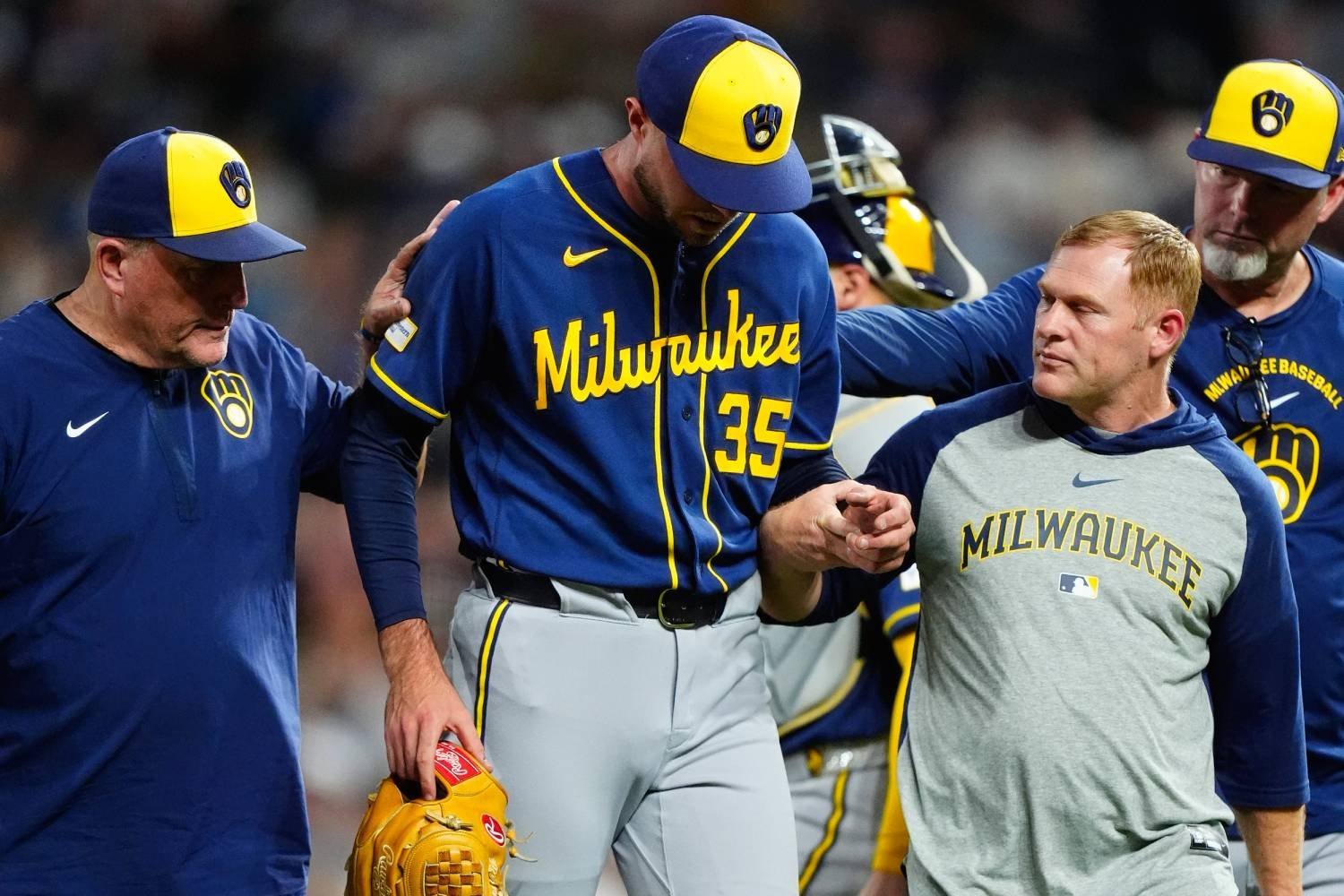 The return of Brian Fitzpatrick to the majors lasted just one day. The Milwaukee Brewers on Saturday placed the left-handed reliever on the 15-day injured list, only listing it as a left arm injury with no other detail on the official announcement. Left-handed reliever Drew Rom was called up from Triple-A Nashville to make his Brewers debut. Fitzpatrick was called up Friday when fellow left-hander DL Hall went on the IL with a pectoral strain. Fitzpatrick was injured while warming up for the seventh inning against the Colorado Rockies after he pitched a scoreless sixth. He immediately grabbed his elbow area and headed for the clubhouse. Friday was his fifth appearance for the Brewers, including his MLB debut. He has thrown 6⅔ innings, allowing two runs (one earned) on seven hits and three walks with five strikeouts. Rom last appeared in the majors with the St. Louis Cardinals in 2023, when he made eight starts and compiled an 8.02 ERA in 33⅔ innings. He signed a minor-league deal with the Brewers this offseason and has strictly been in a relief role after primarily being a starter in the Cardinals' organization. In 22 appearances over 26⅔ innings at Nashville, Rom had a 3.04 ERA with nine walks and 39 strikeouts. View the full article
 -
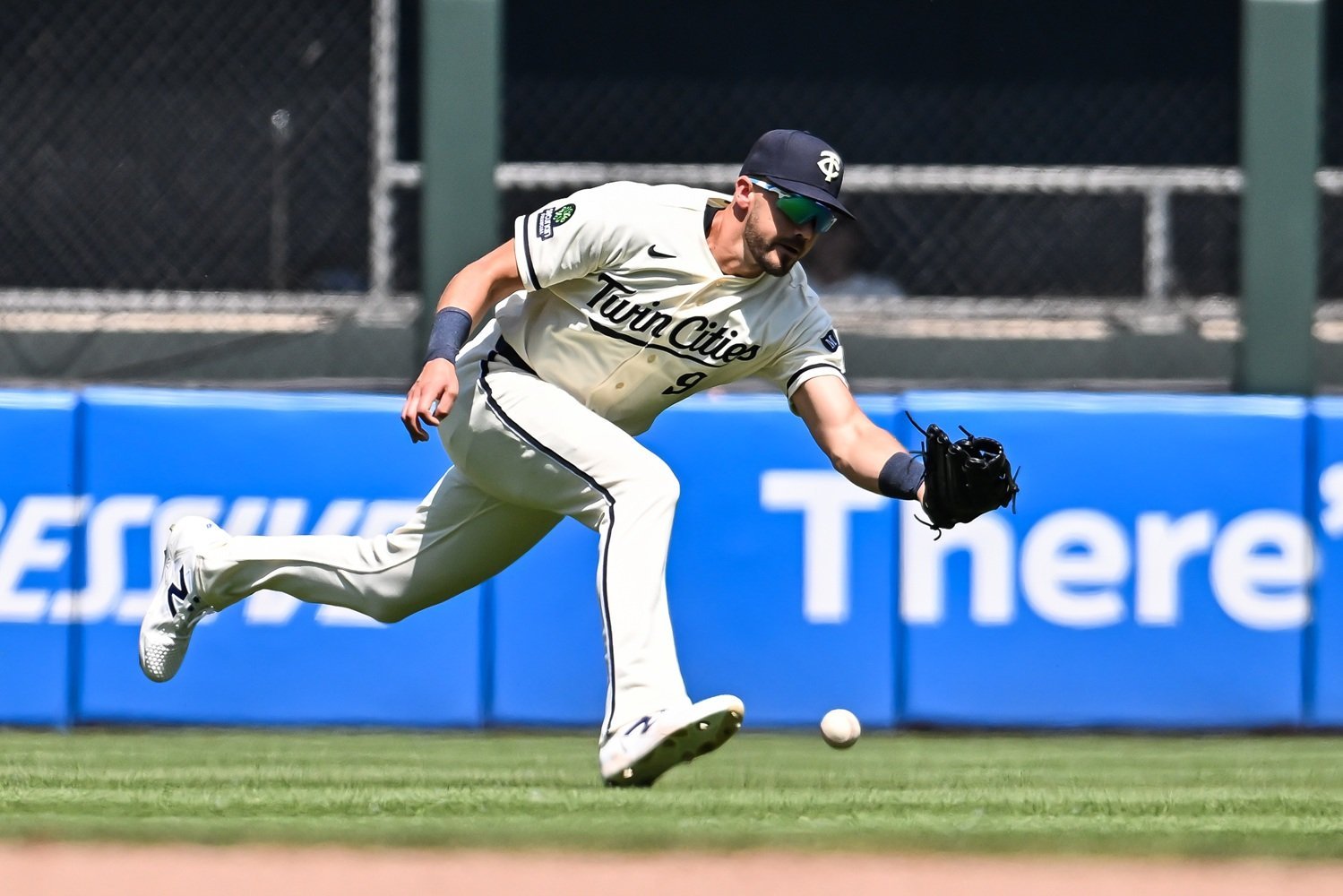 Box Score Starting Pitcher: Joe Ryan - 6 IP, 6 H, 1 R, 2 BB, 5 K (102 pitches, 66 strikes (65% strikes)) Home Runs: Orlando Arcia Bottom 3 WPA: Eric Orze (-0.63), Josh Bell (-0.24), Royce Lewis (-0.21) Win Probability Chart The Twins entered Saturday afternoon's matchup against the Royals looking to secure at least a series split before Sunday's finale. Earlier in the day, they welcomed Royce Lewis back from Triple-A St. Paul after a dominant stretch with the Saints, inserting him into the lineup for his second-ever major league start at second base. With Byron Buxton unavailable after leaving Friday night's game with a shoulder contusion, Minnesota needed someone else to step up offensively. Instead, another frustrating one-run loss slipped away in the late innings. The Twins received six strong innings from Joe Ryan and got a clutch performance from Orlando Arcia off the bench, but a costly mistake in the ninth inning helped Kansas City rally for a 3-2 victory at Target Field. The loss dropped Minnesota to another frustrating defeat in a game that was there for the taking. JOE RYAN SETTLES IN AFTER EARLY HOMER The afternoon could not have started much worse for Joe Ryan. On the third pitch of the game, Carter Jensen jumped on a two-strike curveball and launched it over the wall for his eighth home run of the season, giving Kansas City a quick 1-0 lead. Ryan's first inning was laborious, requiring 21 pitches and featuring another two-strike hit by Vinnie Pasquantino. It looked like the Royals might be in for another productive afternoon against the Twins' ace. Instead, Ryan gradually found his rhythm. After an eight-pitch second inning, he recorded the 800th strikeout of his major league career when he punched out Kyle Isbel in the third. He continued to work efficiently through the middle innings, retiring nine of ten hitters at one point and giving Minnesota exactly the kind of stabilizing outing it needed. The biggest test came in the sixth. Pasquantino opened the inning with a single, and a bloop hit by Lane Thomas later put runners on first and second with one out. After Michael Massey flew out, Ryan walked Isaac Collins to load the bases and bring the go-ahead run into scoring position. With the game hanging in the balance, Josh Rojas grounded a ball right back to the mound. Ryan calmly fielded it and flipped to first, escaping the jam and preserving the tie. Despite throwing 25 pitches in the inning, Ryan completed six innings on 102 pitches while allowing just one run. It marked the fourth time in his last six starts that he has worked six innings while allowing just one run. THE TWINS FINALLY BREAK THROUGH For much of the afternoon, Minnesota's offense had no answers for Royals starter Luinder Avila. The Twins managed just one baserunner through the first four innings and didn't record their first hit until Austin Martin lined a single into right-center field to lead off the fifth. That hit finally sparked some life. Victor Caratini followed with a double off the wall in right-center, putting runners on second and third. Royce Lewis showed some patience by working a walk to load the bases. Tristan Gray delivered the Twins' first run of the afternoon with a sacrifice fly to center field that scored Martin and tied the game at one. Unfortunately for Minnesota, that would be the only damage they could do after loading the bases, as Ryan Kreidler would ground into an inning-ending double play. The game remained deadlocked until the eighth inning, when manager Derek Shelton elected to hit Orlando Arcia for Trevor Larnach against left-hander Matt Strahm. The move paid off immediately. Arcia got a 2-2 fastball on the outer third of the plate and drove it into the left-field seats for his first home run as a Twin, breaking the 1-1 tie and giving Minnesota a 2-1 lead with just six outs remaining. After struggling to generate offense all afternoon, it appeared the Twins had finally found the decisive swing. A COSTLY NINTH-INNING MISTAKE Taylor Rogers and Yoendrys Gómez combined for two scoreless innings after Ryan exited, putting Minnesota in position to hand the ball to Eric Orze in the ninth. Things unraveled quickly. Collins opened the inning with a single, and Tyler Tolbert entered as a pinch-runner. Tolbert immediately stole second base on the first pitch of Rojas' at-bat, putting the tying run in scoring position with nobody out. Moments later came the turning point, when Rojas hit a routine ground ball back to Orze. Rather than taking the sure out at first base, Orze attempted to throw behind Tolbert at second. The play failed, leaving runners at first and second with nobody out and giving Kansas City a golden opportunity. The Royals took full advantage. Isbel successfully bunted both runners into scoring position, and Jensen followed with a sacrifice fly to right field that tied the game at two. With the go-ahead run still at second, Bobby Witt Jr. lined a ball over Arcia's head in left field. Rojas raced home ahead of Kody Clemens' relay throw, giving Kansas City a 3-2 lead. What likely should have been one out and a runner on second instead became a rally that flipped the game. The decision not to take the easy out at first base proved incredibly costly. ONE LAST CHANCE FALLS SHORT Minnesota didn't go quietly in the bottom of the ninth. Clemens led off the inning with a double off the wall in right field, immediately putting the tying run in scoring position. After Josh Bell struck out and Martin went down swinging, the Twins appeared to be running out of opportunities. Caratini kept the inning alive when he was hit by a pitch, bringing Lewis to the plate as the potential hero. The crowd buzzed as Lewis worked the count full, but Alex Lange finished the at-bat with a front-door cutter that caught the inside corner for strike three. Lewis stood frozen, and the game was over. For a Twins team that received a quality start from Ryan, got a clutch home run from Arcia, and held a lead entering the ninth inning, the loss was particularly difficult to swallow. In a game where offense was scarce and every out carried extra importance, one failed decision on a routine ground ball ultimately proved to be the difference. What’s Next? The Twins and Royals conclude their four-game set tomorrow afternoon, with another 1:10 PM first-pitch. We’ve got a battle of lefties tomorrow, as it’ll be Connor Prielipp for the Twins and Noah Cameron for Kansas City. Postgame Interviews Coming Soon! Bullpen Availability Chart View the full article
 -
Red Sox Place Jovani Moran On Injured List With Elbow Inflammation
DiamondCentric posted an article in Talk Sox
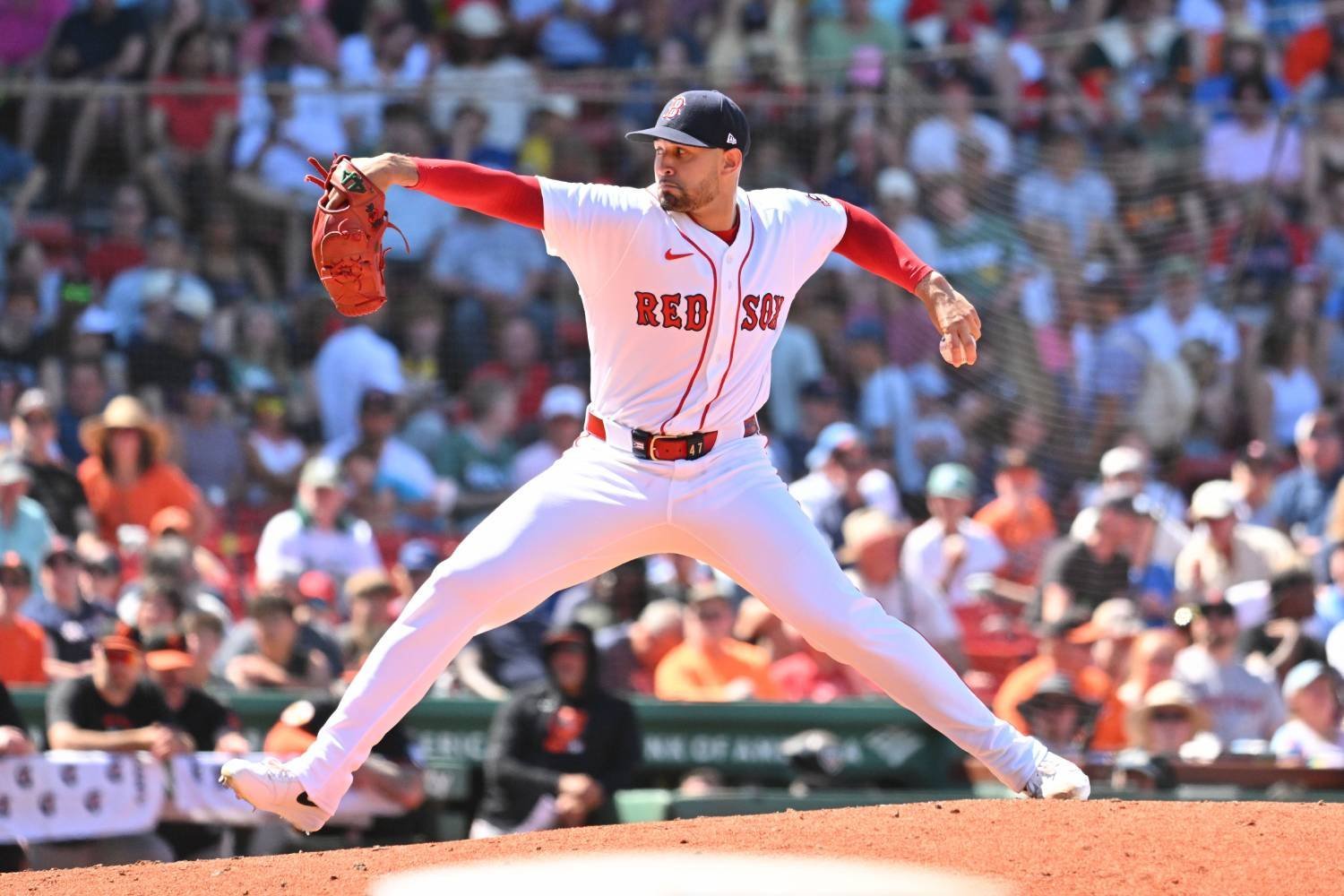 Another day, another move involving the pitching staff. The Boston Red Sox on Saturday placed left-handed reliever Jovani Moran on the 15-day injured list with inflammation in his left elbow and called up left-hander Alec Gamboa from Triple-A Worcester. The Red Sox also sent right-handed reliever Garrett Whitlock on a rehab assignment to Triple-A. Moran last pitched Thursday, when he went two shutout innings, allowing a hit and a walk while striking out three in an 8-2 loss to the Baltimore Orioles. For the season, Moran has a 4.23 FIP (3.00 ERA) in 33 innings over 21 games. He has an 11.2% walk rate and a 28.4% strikeout rate in his fifth MLB season. Gamboa was called up for the second time this season. He appeared in one game, making his MLB debut in a 10-3 win over the Detroit Tigers on May 5, pitching a perfect ninth inning, including two strikeouts. At Triple-A, he has started six of his eight appearances, posting a 3.66 ERA in 32 innings with one complete game. He has walked eight and struck out 30. View the full article
 -
 While Taj Bradley has looked like a front-line starter at times this season, some clear issues are holding him back from reaching his full potential. View the full article
 -
 Blue Jays Affiliate Overview (June 4-5) Triple-A Buffalo Bisons Series vs Worcester Red Sox (Boston Red Sox): 1-3 Season Record: 28-33 Double-A New Hampshire Fisher Cats Series vs Altoona Curve (Pittsburgh Pirates): 2-2 Season Record: 28-24 High-A Vancouver Canadians Series vs Tri-City Dust Devils (Los Angeles Angels): 2-2 Season Record: 23-32 Single-A Dunedin Blue Jays Series vs Daytona Tirtougas (Cincinnati Reds): 3-1 Season Record: 23-32 FCL Blue Jays Week Record: 2-1 Season Record: 19-6 DSL Blue Jays Blue Week Record: 1-1 Season Record: 1-2 DSL Blue Jays Red Week Record: 0-1 Season Record: 0-2 Triple-A Buffalo Bisons Season Record: 28-33 Series vs Worcester Red Sox (Boston Red Sox) June 4: The Thursday and Friday games were both looking like sure-fire wins for Buffalo. They sent a rehabbing Dylan Cease and Max Scherzer to the mound against the Worcester Red Sox. Cease got the nod for Thursday's game and locked in during the bottom of the first; he got a quick 1-2-3, only throwing seven pitches in the inning. In the second inning, he sandwiched a double between two outs before he got touched up. An RBI single by Matt Lloyd and a two-run home run by Tsung-Che Cheng gave Worcester an early 3-0 lead in the game. The bottom of the third was bad for Cease as well; he gave up a lead-off home run to Braiden Ward and an RBI single to Allan Castro a bit later in the frame. Cease worked the fourth inning fairly well and ended his outing with a strikeout of Ward. On the day, he threw four innings, gave up six runs, struck out six, allowed six hits, and walked just one. Unfortunately for Buffalo, the bats followed Cease's lead and were about as poor as they have been in a while. The Bisons only managed to scratch one run across the plate, a seventh-inning solo home run by Jonatan Clase. Buffalo fell 5-1 in a game they should have won, at least on paper. June 5: Friday night's game saw Max Scherzer take the mound against the Worcester Red Sox. He was making his second rehab start with Buffalo, but this one wasn't exactly encouraging. In the first inning, he was able to make it through the frame, only giving up a double. The second inning saw him get Worcester 1-2-3, but he threw a number of pitches that were far from competitive. It was the third inning where he got into trouble, a single and a ground-rule double preceded a two-RBI single. He would get touched up again in the fourth, this one from a Matt Lloyd solo home run. For the game, he pitched 3.2 innings, gave up five hits and three runs, but did strike out five. Meanwhile, the offense struggled yet again. Davis Schneider continues to take a ton of walks (two in this game), but he hasn't been getting any hits when he swings the bat. Schneider would score the first run of the game for Buffalo following one of his walks in the fourth. He would walk, followed by Sean Keys’ first hit for the Bisons (a single), then Riley Tirotta would hit a ball to center for a sacrifice fly. Buffalo tried to get a rally going in the top of the ninth inning, Je'Von Ward smacked his sixth home run of the season, a two-run blast to right field. It was the closest the Bisons would get, as Worcester took the game 6-3 and bested Buffalo in two games that the Bisons should have won on paper. Double-A New Hampshire Season Record: 28-24 Series vs Altoona Curve (Pittsburgh Pirates) June 4: The Thursday game between New Hampshire and Altoona was a big day for Sean Keys. In the second inning, he hit a line drive single to right field, followed by a double to right in the sixth, and then he scored New Hampshire's first run later in the inning. He would strike out in the fifth inning and then leave the game in the eighth inning, ultimately because he was promoted to Triple A. Back to the fourth inning, Altoona scored six in the frame on two three-run home runs. Cutter Coffey drove in Aaron Parker in the fourth, followed by Nick Goodwin hitting a sacrifice fly to give the Fisher Cats a 6-3 deficit. Altoona scored two more in the seventh inning, this time on the backs of two more home runs. New Hampshire lost this one 8-3. June 5: On the Friday night game between New Hampshire and Altoona, the Fisher Cats flipped the script from the previous game. New Hampshire and Altoona traded home runs in the third inning. First came Ivan Brethowr launching one for the Curve, and then Jace Bohrofen hit his 13th home run of the season for the Fisher Cats. Cutter Coffey would add a sacrifice fly in the inning as well to give New Hampshire the one-run lead. In the fifth inning, Coffey added a two-run double, as did Jorge Burgos to put the Fisher Cats up four. Eddie Micheletti Jr. tripled home the seventh run of the game later in the inning, and Adrian Pinto did the same in the seventh, with an RBI triple. New Hampshire won this one 8-3. High-A Vancouver Season Record: 23-32 Series vs Tri-City Dust Devils (Los Angeles Angels) June 4: The Canadians outhit the Dust Devils 11 to five on the night, but the end result wasn't the one they wanted. Danny Thompson Jr. had one of the best starts of his young pro career, going five innings, allowing just two walks and one hit, although that one hit was a solo homer, and striking out a career best nine hitters. The Canadians also got off to an early lead, as Dub Gleed has become a bright spot in the Canadians' offense, with his 23rd RBI of the season with a single in the first. Jacob Sharp drove in another run in the fifth with a groundout to make it 2-0. Thompson gave up the homer to Gage Harrelson in the fifth, but was in line for the win after finishing the inning. Reece Wissinger struggled after coming in the sixth inning, giving up three straight singles and then a three-run homer to lose the lead for Vancouver. Wissinger was solid for the rest of the game, but the Canadians' offense couldn’t catch up, as Edward Duran was only able to bring them within one with a single in the eighth, for a close loss 4-3. June 5: The Canadians once again outhit the Dust Devils, but this time they brought the power as well. Hayden Gilliland got it going with an RBI double in the first, and a couple of errors from Tri-City allowed two more runs to score for a three-inning first. Johnny King went a career high 5.2 innings pitched, striking out eight batters, tying his season high for the second game in a row. The offense teed off of the Dust Devils' pitching, with Tucker Toman having three hits, including a double and a homer. Brennan Orf had three hits as well, with a double and a triple, and there were four other Canadians with two hits. Every hitter in the Canadians' lineup got on base at least once. Trace Baker got his first career save, going 3.1, allowing just one hit and a walk without allowing a run for a dominating 14-2 win. Single-A Dunedin Season Record: 23-32 Series vs Daytona Tirtougas (Cincinnati Reds) June 4: Dylan Watts had his second straight excellent outing in a row, and he took his scoreless streak to 11.1 innings. He struck out a season high seven batters in the longest outing of his career, six innings. The Jays scored a run in the second off an Aldo Gaxiola single, and they scored four more in the fourth inning, as they had a lot of runners on base, with Yorman Licourt driving in a run with a single, Raimundo De Los Santos walking with the bases loaded for another, and Dariel Ramon nearly clearing the bases with a two-RBI double. The bullpen let up a few runs, Diego Dominguez gave up a two-run homer in the seventh, and Angel Obando got the save but allowed a run to score after a missed catch from Brock Tibbitts, as the Jays won 5-3. June 5: The Dunedin Blue Jays won this game in the second inning, as the offense could not get out. Jake Bloss looked incredible in another rehab start, and he sat 96.3 mph on his fastball, generating eight whiffs and striking out five batters in 4.1 scoreless innings. The Jays were able to load the bases in the second, and Dariel Ramon hit a two-run double, followed by a two-run single from Jake Cook. JoJo Parker then walked with the bases loaded to make it five runs, before another two-run single from Eric Snow. The inning was then capped off with an Aldo Gaxiola RBI single. The Jays scored another run in the fourth inning off a 107 mph homer from Parker for his fourth of the season, and the bullpen finished off the shutout. Javen Coleman returned on rehab assignment and struck out three batters, before Jack Nedrow got his first save with three innings of one-hit pitching, for a dominating 9-0 win. FCL Blue Jays Season Record: 19-6 June 4: The FCL Blue Jays blew out the FCL Yankees on Thursday, and the star of the game was Angel Guzman. He went 4-for-4, with two home runs, two doubles, and four runs scored, as well as five RBI and a walk. Hedbert Perez got the scoring going quickly in the first with a three-run home run. Later in the game, Andres Arias added an RBI double, and Kennew Blanco hit an RBI double of his own in the seventh inning. The FCL Blue Jays ended with 18 hits and 19 runs, to go with 10 walks. On the pitching side, Miguel Pantoja had another solid game. He pitched three innings and only allowed one run and one hit. The FCL Blue Jays won 19-3. June 5: In the Friday FCL game, the Blue Jays squad took on the Phillies FCL team. Jean Joseph got the Blue Jays on the board first with a long home run in the second inning. In the third, the Blue Jays scored two more, with the big hit coming from an RBI single by the hot-hitting Angel Guzman. Jalvin Arias and Guillermo Rosario hit home runs for the Phillies team to even the score at three in the fourth inning. That was when Guzman took over for the Blue Jays team, as he hit an RBI double, and then, in extra innings, he launched his third home run in two days. Gavin Smith followed suit on the next pitch for the back-to-back home runs, as the FCL Blue Jays won 8-5 in nine innings. DSL Blue Jays Blue Season Record: 2-3 June 4: Yoenis Morales and Kenyer Navarro gave up three runs and two runs, respectively, while on the mound for BJB. Isay Veras continues to be a bright spot for BJB, walking three times in this game. Michael Mesa and Samuel Orellana each walked twice, but the bats in general were kept quiet by the Pirates’ Black team. BJB only managed four hits into the game, highlighted by Eiker Lothar's two-RBI single in the top of the second and Ruben Sanchez's RBI single in the sixth. With the game tied up at five after the top of the sixth, the Pirates broke away in the bottom half of the inning and scored five to win 10-5. June 5: Friday's game down on the island was much more fun for BJB and Blue Jays fans. Michael Mesa launched a home run in the bottom of the fifth to extend the BJB lead and help give them a win. They had built a lead out in the third inning with a sacrifice fly by Juan Caricote, a double steal that included home, and two RBI singles by Samuel Orellana and Sebastian Casanova. Then Mesa added his two-run blast in the fifth, providing a couple of insurance runs. Mesa might be someone to watch out for, he is big-bodied for just 17 years old, standing 6-foot-2 and 209 pounds. David Hernandez capped off the game, throwing three scoreless innings out of the bullpen. BJB won 6-3. DSL Blue Jays Red Season Record: 1-3 June 4: Cristhian Duarte took the mound for BJR on Thursday and was spectacular. It is his second season in the DSL, and he started it off right, throwing five innings, not walking a batter, giving up three hits and one run, and striking out seven. While Duarte put the team in a good position to win, the bats struggled mightily. BJR only managed to get two singles and only walked five times (two by Elaineiker Coronado). BJR dropped a very winnable game, 1-0. June 5: After getting shut out on Thursday, BJR exploded for 10 runs on Friday. Aneudi Severino had the best game among the BJR bats; he had a triple and a home run (his first of his career). Gabriel Porras had a good game as well, going 2-for-4 with an RBI single and a run scored. Victor Espiritu pitched his second game of the early season and did much better in this one. He threw four innings, gave up three hits and one run, while striking out four with zero walks. BJR won this one big 10-3. View the full article
 -
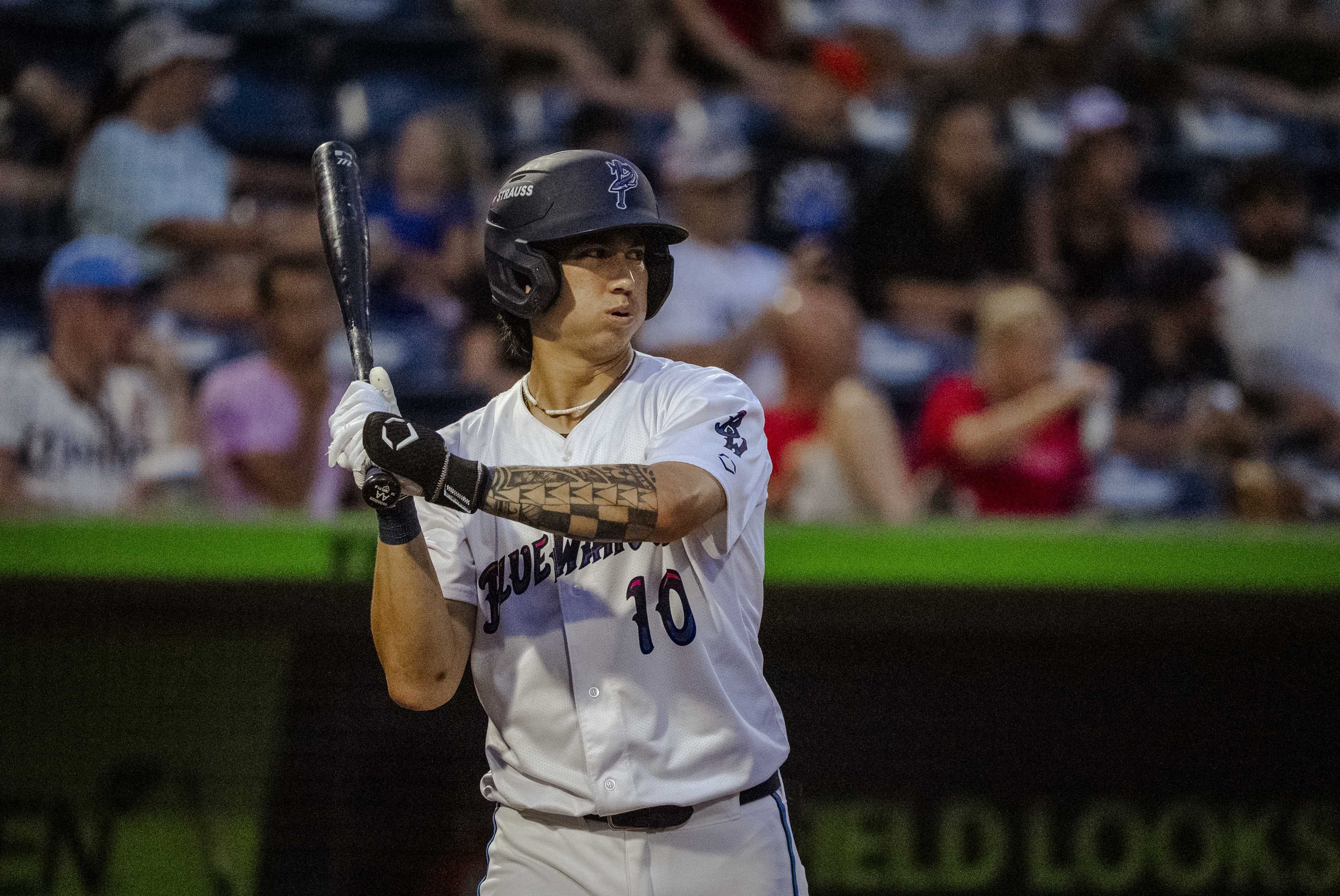 With the seventh pick in the 2025 MLB Draft, the Miami Marlins selected Oregon State shortstop Aiva Arquette. At the time, he was considered the best collegiate bat in the draft. The Marlins then took Clemson outfielder Cam Cannarella with the 43rd pick of the draft. Less than a year later, Arquette and Cannarella are now ranked No. 7 and No. 11 on the Fish On First Top 30 prospects list, respectively. Despite being hampered by injuries early on in their professional careers, they have been as good as advertised. Aiva Arquette Arquette is unlike any other prospect in the Marlins system because of the unique size he brings to the shortstop position at 6’5″, 220 pounds. He began the 2026 season on the injured list while recovering from core muscle surgery and has since split time between High-A Beloit and Double-A Pensacola. Overall, he is slashing .260/.321/.480/.801 with four home runs, 22 RBI and a 107 wRC+. He is striking out at a 22.0% rate, which is better than average for those levels. With a quick, uppercut swing, Arquette has posted a hard-hit rate of 50% so far this season, according to Ian Cundall of Baseball America. If Arquette can tap into the power a bit more, he can be a 15-20 home run hitter at the highest level. He's got the swing and above league average exit velocities to do so. Defensively, Arquette has split time between shortstop and second base. So far, so good for Arquette at shortstop. He has a nice arm, but his length may slow him down just a little bit at shortstop. The organization seems to have him playing second base more as a backup plan if he does end up flaming out at shortstop. Third base is where Arquette may be best suited with his strong arm and that could also allow him to find a quicker path to the big leagues. Cam Cannarella Cannarella, who stands at 6'0", 185 pounds, doesn't have the same power as Arquette, instead, the former Clemson outfielder is a speedster who will use the entire field to hit. Between High-A and Double-A, he is slashing .392/.442/.568/1.009 with three home runs, 22 RBI and a 160 wRC+. Although pre draft reports said that he would strikeout a lot, Cannarella is striking out 11.6% of the time between both level and has a walk rate of 10.5%. Similar to Arquette, Cannarella's stance is a relaxed, but crouched a bit lower when he begins his swing. His hands are high up and it allows him to make quick adjustments depending the pitch that is coming his way. Cannarella won't generate much power, but his combination of stance and swing will allow him to spray the ball around the entire field. Cannarella will always be hit over power, unlikely to reach 10 home runs at any level of pro ball or even the Major Leagues, but his swing decisions and high motor speed will allow him to be an extra base machine, stretching a single into a double and a double into a triple. In terms of Cannarella on the base paths, he can be swing or miss. In Clemson, he stole 24 bases during his first season, but hasn't even stolen 10 bases since. The reason for that is unkown, but the Marlins as an organization are emphasizing aggressiveness on the base paths, as many can tell from what the big league team has done. That also has trickled down to the Minor Leagues. Cannarella's speed is legit, but he needs to use it more. Defensively, Cannarella is one of the most athletic players in the Marlins farm, allowing him to play center field as good as anyone in the system. Baseball American gave him a 70 grade, which at the moment, is accurate. The biggest concern is his arm strength, which regressed following a labrum injury which required surgery. He hasn't been challenged yet to see if he will or will not be affected by the surgery, but a reason he fell in the draft was because of those concerns. Outlook on both players Arquette, who is now 22 years old, is close to big league ready, but not in 2026. If he continues to hit well in Double-A, he can potentially get a taste of Triple-A ball and then come into 2027 spring training as a non roster invitee and try to fight for a spot on the Marlins Opening Day roster, especially if he makes the move over to third base. As for Cannarella, who is also 22 years old, he is a bit more raw and can still take some more time to develop. Defense isn't the question at all, as he is a plus defender in center field. He hasn't played a lot of pro ball yet and has dealt with injuries to begin his pro career. In all likelihood, he will begin the 2027 season in Double-A Pensacola and then we will go from there. The best possible outcome is that he is called up at some point late into the 2027 season, but with so much outfield depth, it will be tough. View the full article
 -
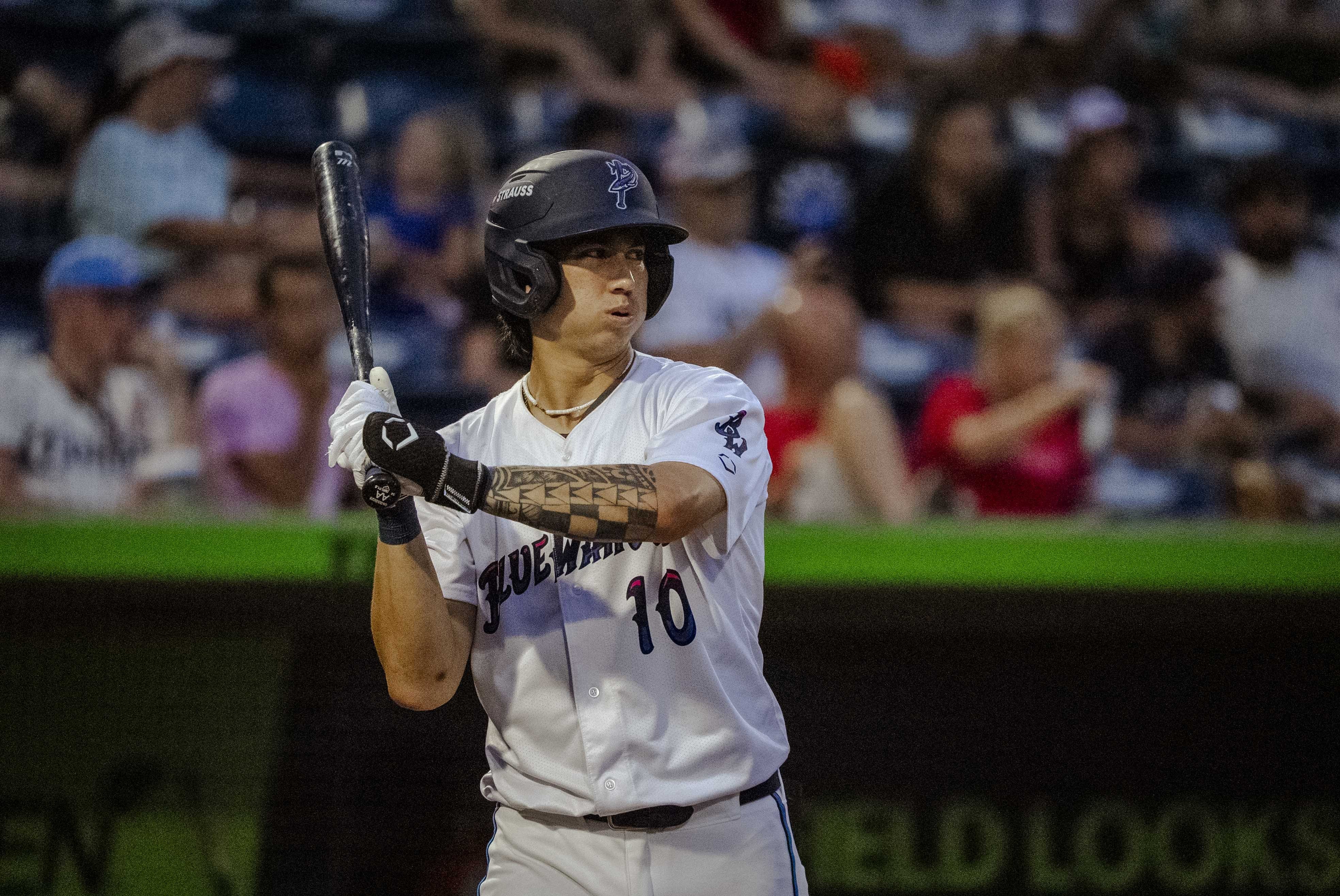 With the seventh pick in the 2025 MLB Draft, the Miami Marlins selected Oregon State shortstop Aiva Arquette. At the time, he was considered the best collegiate bat in the draft. The Marlins then took Clemson outfielder Cam Cannarella with the 43rd pick of the draft. Less than a year later, Arquette and Cannarella are now ranked No. 7 and No. 11 on the Fish On First Top 30 prospects list, respectively. Despite being hampered by injuries early on in their professional careers, they have been as good as advertised. Aiva Arquette Arquette is unlike any other prospect in the Marlins system because of the unique size he brings to the shortstop position at 6’5″, 220 pounds. He began the 2026 season on the injured list while recovering from core muscle surgery and has since split time between High-A Beloit and Double-A Pensacola. Overall, he is slashing .260/.321/.480/.801 with four home runs, 22 RBI and a 107 wRC+. He is striking out at a 22.0% rate, which is better than average for those levels. With a quick, uppercut swing, Arquette has posted a hard-hit rate of 50% so far this season, according to Ian Cundall of Baseball America. If Arquette can tap into the power a bit more, he can be a 15-20 home run hitter at the highest level. He's got the swing and above league average exit velocities to do so. Defensively, Arquette has split time between shortstop and second base. So far, so good for Arquette at shortstop. He has a nice arm, but his length may slow him down just a little bit at shortstop. The organization seems to have him playing second base more as a backup plan if he does end up flaming out at shortstop. Third base is where Arquette may be best suited with his strong arm and that could also allow him to find a quicker path to the big leagues. Cam Cannarella Cannarella, who stands at 6'0", 185 pounds, doesn't have the same power as Arquette, instead, the former Clemson outfielder is a speedster who will use the entire field to hit. Between High-A and Double-A, he is slashing .392/.442/.568/1.009 with three home runs, 22 RBI and a 160 wRC+. Although pre draft reports said that he would strikeout a lot, Cannarella is striking out 11.6% of the time between both level and has a walk rate of 10.5%. Similar to Arquette, Cannarella's stance is a relaxed, but crouched a bit lower when he begins his swing. His hands are high up and it allows him to make quick adjustments depending the pitch that is coming his way. Cannarella won't generate much power, but his combination of stance and swing will allow him to spray the ball around the entire field. Cannarella will always be hit over power, unlikely to reach 10 home runs at any level of pro ball or even the Major Leagues, but his swing decisions and high motor speed will allow him to be an extra base machine, stretching a single into a double and a double into a triple. In terms of Cannarella on the base paths, he can be swing or miss. In Clemson, he stole 24 bases during his first season, but hasn't even stolen 10 bases since. The reason for that is unkown, but the Marlins as an organization are emphasizing aggressiveness on the base paths, as many can tell from what the big league team has done. That also has trickled down to the Minor Leagues. Cannarella's speed is legit, but he needs to use it more. Defensively, Cannarella is one of the most athletic players in the Marlins farm, allowing him to play center field as good as anyone in the system. Baseball American gave him a 70 grade, which at the moment, is accurate. The biggest concern is his arm strength, which regressed following a labrum injury which required surgery. He hasn't been challenged yet to see if he will or will not be affected by the surgery, but a reason he fell in the draft was because of those concerns. Outlook on both players Arquette, who is now 22 years old, is close to big league ready, but not in 2026. If he continues to hit well in Double-A, he can potentially get a taste of Triple-A ball and then come into 2027 spring training as a non roster invitee and try to fight for a spot on the Marlins Opening Day roster, especially if he makes the move over to third base. As for Cannarella, who is also 22 years old, he is a bit more raw and can still take some more time to develop. Defense isn't the question at all, as he is a plus defender in center field. He hasn't played a lot of pro ball yet and has dealt with injuries to begin his pro career. In all likelihood, he will begin the 2027 season in Double-A Pensacola and then we will go from there. The best possible outcome is that he is called up at some point late into the 2027 season, but with so much outfield depth, it will be tough. View the full article
 -
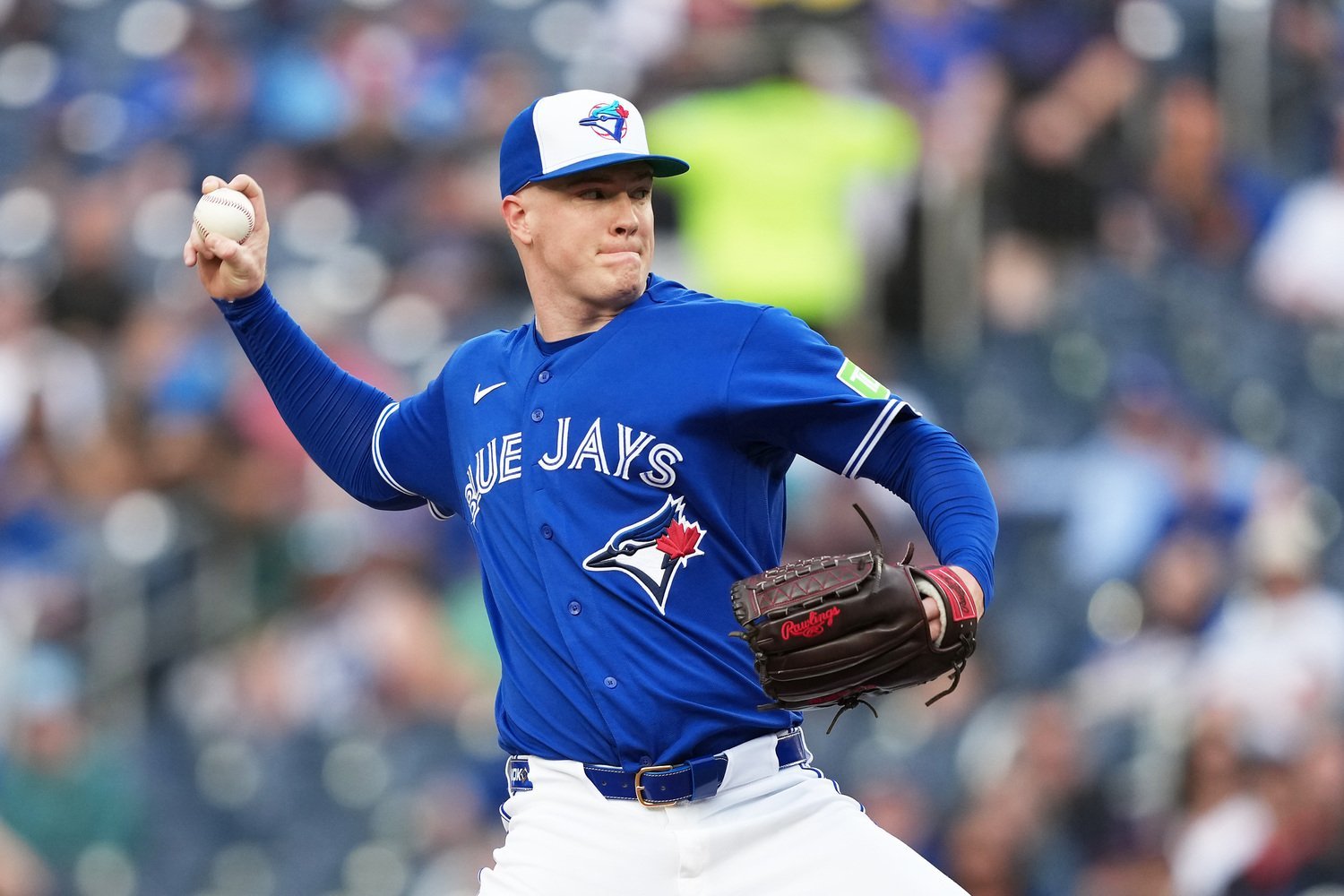 Braydon Fisher has been one of the better relievers for the Blue Jays over the last two seasons. Last year, he posted a 2.70 ERA and had a 30.7 percent strikeout rate over 50 1/3 innings. He was a reliable option late in games for manager John Schneider, with a 21.3 percent strikeout-minus-walk rate and a .178 batting average against. This season, Fisher has been just as outstanding, posting a 2.62 ERA and holding hitters to a .174 average. His strikeout rate is slightly down, but it's still an impressive 27.1 percent. A possible reason for the decline is that he isn't getting as much horizontal break on his pitches. The righty has even changed how he throws his cutter, causing it to break slightly to his arm side rather than his glove side. Avg. Horizontal Break (in inches) Pitch 2025 2026 Curveball 5.0 gloveside 2.9 gloveside Cutter 2.0 gloveside 0.8 armside Slider 2.2 gloveside 1.0 gloveside 4-Seam Fastball 4.9 armside 4.6 armside Chart data is from Baseball Savant. I'm not sure what's causing the decline in movement other than a possible change in grip or release point, but Fisher is still finding ways to get outs. He's been more successful getting groundballs this season (47.5 percent) compared to last season (36.4 percent). This vast difference is a drastic improvement, and it's because he's getting batters to hit the top of the ball at a 37.5 percent rate, which is above the MLB average (32.3 percent). There is cause for concern, though, with Fisher having already pitched in 32 games (one behind Mason Fluharty) and on pace for 81 appearances. Being overworked is a massive concern for young pitchers, but the Blue Jays want to utilize their best relief arms. We saw the issue of less experienced arms being overworked last season with Brendon Little. He was the only reliable southpaw in the bullpen for most of the season after Eric Lauer moved to the starting rotation, while lefties Fluharty and Justin Bruihl also had their struggles. Last season, Little threw in 79 big league games, 30 more than in 2024, and pitched 68 1/3 innings. His ERA rose from 2.03 in the first half of the season to 4.88 in the second half, and the strikeout rate dropped from 44.8 percent to 24.1 percent over 20 fewer innings. The decline could have been due to decreased velocity from overuse or insufficient offseason preparation for the increased workload. When you pitch in that many games, it means you are getting up in the bullpen to warm up and then pitching in the game. This usage puts significant strain on a pitcher's arm, and there have been a few instances of pitchers throwing in back-to-back games. Fisher and Fluharty are both at risk of repeating Little's late-season collapse. The risk stems from the bullpen being heavily relied on right now, with the starting rotation bitten by the injury bug. José Berríos, Shane Bieber, Dylan Cease, Bowden Francis, Cody Ponce, and Max Scherzer are all on the injured list. However, Cease and Scherzer have completed rehab starts and may be returning to Toronto soon. Bieber is also on a rehab start assignment, but he's been out all season and will need a few more starts before returning to the big leagues. Ponce, Francis, and Berríos are out for the year. Yimi García has also begun a rehab stint in Single-A Dunedin and is eyeing a return to Toronto later this month. One thing is certain: The Blue Jays need to find a way, quick, to relieve the workload on their young relievers. That may mean making a move well before the trade deadline. View the full article
