


DiamondCentric
-
Posts
2,631 -
Joined
-
Last visited
Never
Content Type
Profiles
Forums
Events
News
Tutorials & Help
Major League Baseball Videos
Guides & Resources
Store
Downloads
Gallery
Everything posted by DiamondCentric
-
 The injuries keep coming for the Brewers' pitching staff. In this week's episode, Jack and Spencer discuss what's next for the staff and more. Discussed in this episode are DL Hall, Grant Anderson, Robert Gasser, Coleman Crow, David Hamilton, Jaron DeBerry, and others. Apple Podcasts: https://podcasts.apple.com/us/podcast/the-brewer-fanatic-podcast/id1740648724 Spotify: https://open.spotify.com/show/5CY8mWsQayqjDXqw9OT2Td iHeartRadio: https://www.iheart.com/podcast/263-the-brewer-fanatic-podcast-166534588/ Pocket Casts: https://pca.st/ommzz627 Watch On YouTube: https://www.youtube.com/@brewerfanatic View the full article
 -
 Michael Wacha is one of the more well-traveled pitchers in Major League Baseball. So far in 2026, he's sporting a low-three earned run average while being on pace to eclipse 200 innings this season. In this video, we'll dive into what makes Wacha such a steady option and ultimately whether he's worthy of being an All-Star or not.View the full article
 -

Are Connor Prielipp's Recent Starts Cause For Concern?
DiamondCentric posted an article in Twins Daily
 Connor Prielipp has shown flashes of a quality starting pitcher in the majors, but his most recent starts stand out for the wrong reasons. Is this nothing more than a bump in the road, or a legitimate cause for concern? View the full article
 -
 It's time to check back in with another Cubs mock. The MLB Draft is just five weeks away. This class is as muddled as any I've covered, though it's plenty deep in talent. You can find our mock consensus board here. Let's check in on some player profiles it's currently mocking to the Cubs with their first few picks in July. At #23, the Cubs Select UCLA RHP Logan Reddemann Reddemann has surged up draft boards after not featuring prominently on pre- or early-season lists. A transfer from San Diego, the 6-foot-2 righty has turned a developmental corner for an outstanding UCLA team and is putting it all together in his draft-eligible junior season. Reddemann has a little bit of a jerky delivery to the plate. Even so, he keeps the baseball well-hidden behind his frame until release, creating some deception for hitters and making the ball difficult to track. Reddemann is an excellent strike-thrower, which (in concert with an uptick in velocity this year) has left B1G Ten hitters with little chance against his stuff. Reddemann relies on a fastball that sits 94-96 MPH, but he can grab 98 MPH. There's a sinker and a cutter too, to round out a trio of fastballs. He also has a slider, which he throws in the low 80s (although it tends to blur with his cutter), and a high-70s curveball to round out a diverse arsenal. He's striking out over 305% of hitters and walking less than 5%. That's given him a chance to be a top-20 pick. At #62, the Cubs Select Georgia Prep Righty Blake Bryant Standing 6-foot-5 and weighing 180 pounds, Bryant is a projectable prep righty, currently committed to Clemson. He's jumped up boards throughout the cycle thanks to consistently outstanding performances on the summer circuit. Bryant's velocity has ticked up in the last 12 months. His fastball is up to 96 MPH with run and ride. He pairs it with a sweeper in the low 80s; a curveball that sits in the high 70s; and a split-change that's a bit firm. The command can come and go a bit with Bryant, which is typical for a lanky prep arm. It's a strong arsenal on which to build. It's easy to envision him being a problem when he fills out a bit more and polishes his repertoire. At #75, the Cubs Select Virginia Tech RHP Brett Renfrow Renfrow was previously a two-way player who began to focus solely on pitching when he got to campus at Virginia Tech. This is a class draft 'type', a college starter where stuff and ingredients don't line up neatly with outcomes. I'd classify Renfrow as someone with a significant 'up arrow' this spring, though. It's a good frame and he's surpassed 70 innings for the third consecutive season. Renfrow has slowly ticked up his strikeout rate while reducing his walk rate, which is exactly what you want to see. In terms of stuff, the fastball is good. It sits 94 and has been up to 97, playing well at the top of the zone. There's a slider/cutter hybrid he throws in the upper 80s; a curveball with plenty of depth that sits in the low 80s; and a changeup with good horizontal action. Renfrow is a pitcher you can see making significant strides in a pro organization. There are plenty of starter traits here. He's pushed himself up from top-100 consideration to the 50-75 range. At #98, the Cubs Select Florida State 1B Myles Bailey Bailey has the best raw power in the entire class. His average EV and EV90 are top of the scale. He was torching non-conference play to the tune of 13 home runs (a .913 SLG) in his first 26 games before a serious ankle injury resulted in surgery and the end of his season. Raw power isn't Bailey's only asset. He's a good athlete and has an excellent approach. He followed up a 13.7% walk rate in 2025 with a 28.7% mark in 2026. He just doesn't expand the strike zone, with a 98th-percentile chase rate. The profile does come with serious swing-and-miss concerns, however. Bailey registered a strikeout rate over 30% in 2025 and has some of the worst whiff and in-zone whiff percentages in D1 baseball. He's likely destined to stick at first base in pro ball. He has an unusually diverse range of outcomes for a college prospect, but the power upside is huge. View the full article
 -
Joe Ryan Voted Most Likely Athlete to Know Who Geese Is
DiamondCentric posted an article in Twins Daily
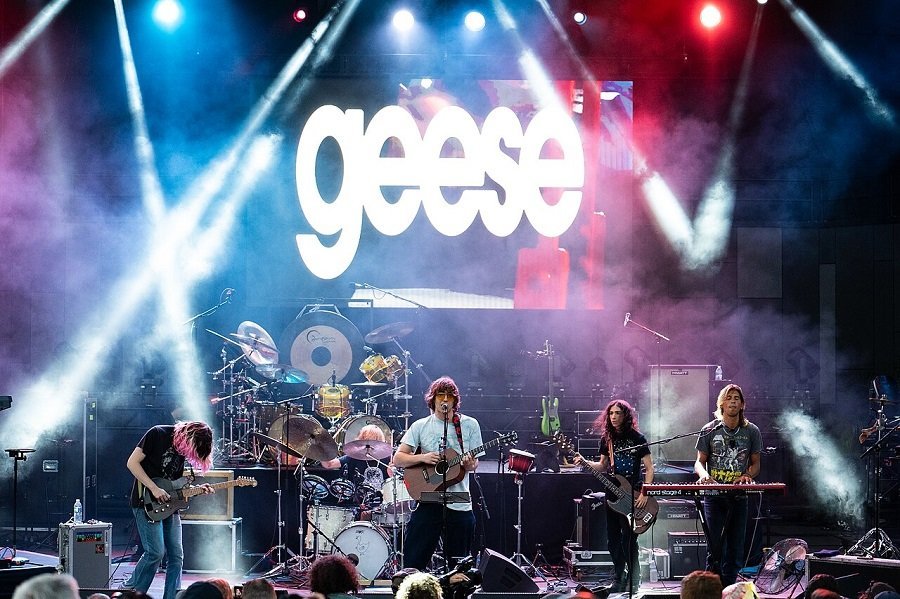 Although it's only the one-third mark of the 2026 season, it seems fair to argue that Joe Ryan is the most valuable pitcher in the Twins rotation. And while any All-Star or postseason recognition will have to wait, Ryan can hang his hat on at least one honor: He looks like he listens to Geese. The American Society of Cool Dads announced Thursday that Ryan is the inaugural recipient of their Professional Athlete Most Likely to Listen to Geese honor. "Through Ryan's choice of entrance music and general look and demeanor, we felt it was a no-brainer that he'd really be into the angular, post-punk guitars and wailing vocals of Geese," said Simon Descartes, a spokesperson for the ASCD. Geese are a four-piece rock band from New York City. Their most recent album, Getting Killed, was one of the most acclaimed records of 2025. There are at least three ongoing backlashes to their success, and two counter-backlashes as well. "You look at Joe and you see a guy who takes his recumbent bike to the farmer's market," said Descartes. "This man clearly has a favorite panel member on (NPR's) Wait, Wait...Don't Tell Me. It's frankly a little surprising that he's a professional athlete. He should host a podcast about cryptids." The honor, which comes with a commemorative plaque, a pack of American Spirit cigarettes, a sixer of non-alcoholic IPAs, a thrifted pair of Wranglers, and a Wilco t-shirt that has seen better days, will be bestowed on Sunday evening at one of those bars that's a fake speakeasy and every drink costs 19 dollars. The bartender's name is Thadwick. "We can't be 100% sure that Ryan knows who Geese is, but he uses 'Long Cool Woman' by the Hollies when he takes the mound," said Descartes, who was making his own switchel while doing this interview. "Using a Creedence Clearwater Revival song would have been too mainstream for our liking, but he used a song that sounds exactly like them but isn't them. That's commitment to a certain kind of lifestyle; one we're pleased to recognize." Ryan, who has a 4-3 record with a 3.20 ERA, is slated to pitch Saturday against the Kansas City Royals. Geese will be playing the Minnesota Yacht Club Festival on Saturday, July 18th. View the full article
 -
 Transactions: RHP Brett Wichrowski promoted to AAA Nashville from AA Biloxi RHP Blake Holub placed on AAA Nashville’s 7-day injured list Game Action: Nashville Pre-Game Media Notes Final: Nashville 8, Jacksonville (Marlins) 3 Box Score Via Clarksville Online, game details: Five Sounds Record Multi-Hit Game in 8-3 Victory With the Brewers likely needing to call up multiple arms from Nashville, 23-year old starting RHP Brett Wichrowski stepped in a big way for the organization in his AAA debut, covering 5 2/3 innings over 96 pitches (48 strikes). After Wichrowski (3 R, 3 H, 5 BB, 2 HBP, 3 Ks) worked around his own error and a walk in the 1st inning, as well as a leadoff single in the 2nd frame, the Sounds’ offense erupted with 4 consecutive hits to start their 6-run 3rd inning, highlighted by 2 hits from 2B Ethan Murray (2-for-2, 2 walks, RBI, SB) in the same frame and OF Jett Williams’ 2-run triple. After the Jumbo Shrimp clawed back to 6-3, RHP Reiss Knehr (1 1/3 IP, 0 R, 1 H, 0 BB, 2 Ks) calmed the waters in middle relief before Murray drew a 2-out, 8th inning walk to trigger another mini-run for the final margin: 1B Tyler Black RBI double, SS Cooper Pratt RBI triple. Sounds’ Extras: Each of Black, Pratt (3 RBIs) and Williams (2 RBIs) went 2-for-5 on the evening, along with C Jeferson Quero. While Knehr lowered his season ERA to 1.93, RHP Jacob Waguespack (2 IP, 0 R, 0 H, 0 BB, 4 Ks; 1.74 ERA) was perhaps even more impressive in retiring all 6 batters faced to close it out. The Brewers may call up as many as 4 pitchers on Friday, with Knehr and Waguespack firmly in the mix, although 40-man MLB rostered players like Brian Fitzpatrick, Craig Yoho, Easton McGee and Carlos Rodriguez are more likely choices. Friday’s outlook: LHP Thomas Pannone (3.03 ERA in 29 2/3 IP) is the scheduled starter, as Nashville aims to even this week’s road series. Biloxi Pre-Game Media Notes Game One Final: Biloxi 4, Montgomery (Rays) 2 (in 7 innings) Box Score Game Two Final: Montgomery 4, Biloxi 3 (in 7 innings) Box Score Via the Shuckers’ website, game details and we encourage readers to review affiliate write-ups as part of their Link Report routine: Shuckers Split Doubleheader with Biscuits The Shuckers briefly moved into first place in the Southern League South division with their tight Game One victory, before falling a half-game behind Montgomery again with the even closer night cap defeat. RHP Tanner Gillis turned in his best AA outing to date in the opening contest (6 IP, 2 R, 4 H, 0 BB, 7 Ks), supported by Biloxi’s 4-run, 4-hit first inning which included an RBI triple by 1B Blake Burke (2-for-5, triple, walk in 2 games) and RBI singles by outfielders Mike Boeve and Eric Brown Jr. (2-for-5 in doubleheader). Biloxi tallied all of their runs and 4 of their 5 hits in that 4-run first inning, apparently trying to save some offense for Game Two. RHP Ryan Birchard (1 IP, 0 R, 0 H, 2 BB, 1 K) earned his first career Save, although he did walk the potential game tying runs before getting the final out. After 13 relief outings to open his 2026 campaign, RHP Sam Garcia made his first start, giving the team 2 2/3 innings on 55 pitches (2 R (1 ER), 3 H, 2 BB, 4 Ks) in the second contest, although there was a reversal of fortune as Montgomery built a 4-0 lead before Biloxi’s comeback attempt fell just short. OF Dasan Brown (1-for-1, 2 walks, SB) and 3B Jheremy Vargas (1-for-2, walk) sparked a 2-out rally with back-to-back walks in the bottom of the 5th inning, with OF Mark Coley II and 2B Dylan O’Rae (2-for-6, double, walk, SB across 2 games) following with RBI singles to narrow the deficit to 4-3. Unfortunately, Burke’s leadoff 6th inning single went for naught and Biloxi was also unable to cash in on a 1-out walk by Dasan and single by Vargas in the final frame as Coley and O’Rae struck out to end it. Shuckers’ Extras: In relief of Garcia, RHP Nick Merkel (2 1/3 IP, 2 R, 2 H, 0 BB, 1 K) retired the first 4 batters he faced before an infield single and hit-by-pitch led to 2 runs in the 5th inning for a 4-0 deficit. LHP Jesus Broca (2 IP, 0 R, 2 H, 0 BB, 2 Ks) induced a ground ball double play to escape the 6th inning, ultimately generating 5 outs from his final 4 batters faced. Three caught stealing and an error which led to an unearned run proved costly in that 2nd game, along with a failure to score in the 1st inning despite O’Rae doubling and SS Jesus Made (2-for-5, walk in 2 games) singling to open that frame. Two tense games were one too many for the Biscuits’ manager, who was tossed after a caught stealing in the 2nd inning of Game Two, just before they took a 1-0 lead. Friday’s outlook: RHP Yorman Galindez is ready for his 2nd AA start (2/3 IP, 3 R, 2 Ks in a tough first outing), as he looks to lead Biloxi to a 3-1 series lead and back into first place in the standings. Wisconsin Pre-Game Media Notes Final: Wisconsin 8, Cedar Rapids (Twins) 5 Box Score Via the Timber Rattlers’ website, game details: Timber Rattlers Pop Kernels for Fourth Straight Win As you’ve undoubtedly read in Chris Mehring’s linked game report (and seen in its embedded highlight videos), left fielder Josh Adamczewski did it all with his 442-foot homer, 4 RBIs and diving catch to save a run. The team built a 7-2 advantage by the 5th inning, perhaps spurred on by the healthy return of SS Luis Pena, who had exited Tuesday’s game early due to illness. As you can see from his line (1-for-3, walk, RBI, 2 SBs), Pena did not hold anything back. Starting RHP Josh Knoth (3 2/3 IP, 2 R, 2 H, 1 BB, 2 Ks; 60 pitches) allowed 2 runs to the first 2 batters he faced, but sailed from there by retiring 11 of the next 12 batters he faced. Timber Rattlers’ Extras: Adamczewski’s 2-for-3, 1-BB, 1-SB effort lifted his season OPS to 1.049, nearly catching 3B Andrew Fischer (1-for-2, 3 walks, SB; 1.056 OPS) for the team lead. Fans should not expect either player to remain in Appleton for long, as promotions to Biloxi are likely forthcoming. RHP Quinton Low (1 1/3 IP, 0 R, 0 H, 1 BB, 2 Ks) was strong in relief and RHP Jack Seppings (3 2/3 IP, 3 R, 6 H, 1 BB, 2 Ks; 73 pitches) was apparently tasked with throwing as long as he could, before RHP Chandler Welch got the final out with the potential game-tying hitter at the plate (BB, line out to center field). OF Braylon Payne walked twice and stole his 11th base, but was unhappy with a called strikeout with the bases loaded and nobody out in the 9th inning, heading to the showers early via an ejection. Friday’s outlook: RHP Ethan Dorchies (7.30 ERA in 37 IP) gets the call for his 10th start of 2026, with Wisconsin seeking to clinch a road series victory with their 4th win of this week’s series. Wilson Pre-Game Media Notes Final: Salem (Red Sox) 12, Wilson 6 Box Score Via the Warbirds’ website, game details: Wilson Outpaced By Salem in 12-6 Route Wilson started well on the 2-run homer by OF Jose Anderson and 3B Luis Lameda’s 2-run single the following inning, grabbing a 4-1 early advantage. Unfortunately, starting RHP Jarette Bonet (3 IP, 7 R (6 ER), 5 H, 5 BB, 2 Ks) lost the zone while leading 4-2 with 1-on, 2 outs in the third inning, going HBP, BB, BB, first pitch grand slam to suddenly trail 7-4. The relief trio of RHPs Hayden Robinson, Ismael Yanez (in his first Low-A game after a recent promotion) and Jose Meneses combined to notch 9 strikeouts in 6 innings of work, but also conceded 5 earned runs as Wilson weren’t able to make it a competitive game. Here’s a new way to get an out: Warbirds’ Extras: C Kevin Garcia doubled and scored in the 2nd inning, but exited for a substitute after the 3rd inning, so we’ll have to monitor his status. Lameda led the offense with a 2-for-4, 2 RBI, 1 SB evening, while each of OF Handelfry Encarnacion (1-for-4, walk, SB), DH Rylan Mills (1-for-3, walk) and OF Tyler Rodriguez (1-for-3, double, walk) reached base twice. Friday’s outlook: 19-year old RHP Tyler Renz has been solid over his last 2 games (8 IP, 1 R, 8 Ks) and looks to lead Wilson to a 3-1 home series lead. Final: ACL Brewers 9, ACL Guardians 5 Box Score 1B Jonathan Rangel (2-for-3, HR, walk, 3 RBIs, SB) and 3B Cristopher Acosta (2-for-4, HR, 2 RBIs) led a late homer barrage, as the Zona Crew (12-13) stormed back from a 5-0 deficit with a 5-run 6th inning, then 2 runs in each of the 8th and 9th innings to inch closer to the .500 mark. After struggling against the Guardians’ 21-year old starter (Edelvis Perez – 5 IP, 0 R, 9 Ks), 2-out hits by 2B CJ Hughes (2-for-5) and Acosta helped extend the 5th inning against the Guardians’ bullpen before Rangel’s 3-run, game-tying blast. Still tied 5-5 with 2 outs in the top of the 8th inning, Hughes singled again and Acosta smacked his 2nd homer of 2026, a 2-run shot to give the Brewers their first lead. C Freider Rojas (1-for-3, HR, walk, 2 RBIs), who threw out 2 of 4 attempted basestealers, then added to the party with a 2-run homer in the 9th inning. While starting 19-year old RHP Luke Roupe struggled (1 2/3 IP, 3 R, 5 H, 0 BB, 1 K) and RHP Caleb Nieman had to navigate traffic (3 2/3 IP, 2 R (1 ER), 3 H, 3 BB, 2 Ks), RHP Chase Bentley dominated by retiring all 10 batters faced to earn the Win (3 1/3 IP, 0 R, 0 H, 0 BB, 4 Ks). Rehabbing SS Daniel Guilarte (0-for-4, walk) played the full game and the Crew captured the victory despite striking out 16 times. They’ll host the ACL Rangers on Friday at 1:00pm CST. Final: DSL Royals Ventura 14, DSL Brewers Gold 13 Box Score Speaking of storming back, the Golden Men trailed 9-0 in the 5th inning before rallying with 12 runs in 4 innings to cut the deficit to 13-12 in the bottom of the 8th inning, with runners on 1st and 3rd and 1 out. Unfortunately, that was as close as they would get as their valiant effort fell just short. Eight position players notched at least one hit, as the Brewers out-hit the Royals 13-10, with impressive 16-year old C Moises Salazar doing the most damage: 2-for-5, HR, 5 RBIs, walk. Salazar also threw out 2 of 4 attempted basestealers to show off his all-around game, though he committed 2 errors. Also in the 2-hit club were OF Angeni Fernandez (2-for-5), DH Josue Rodriguez (2-for-5, 2 RBIs), OF Jefer Lista (2-for-5) and 1B Kegnnalex Seijas (2-for-4, HR, walk, RBI). SS Osiris Ramirez (1-for-3, HR, walk, HBP) notched his first career homer, while 3B Ricki Moneys ($1.15 million January 2026 signee) reached base 3 times (1-for-4, 2 walks, SB). 18-year old RHP Gustavo Garcia (4 IP, 8 R (3 ER), 6 H, 1 BB, 6 Ks) made his first start of 2026 and RHP Miguel Andrade (3 1/3 IP, 4 R (3 ER), 4 H, 2 BB, 1 HBP, 3 Ks) had his organizational debut, while RHPs Christopher Peralta (2/3 IP) and Jose Arias (1 IP) got some work in. Five costly errors contributed to 8 unearned runs off of Brewers Gold pitching, including a 4-base error on a ball to right field to push the deficit to 14-12 to commence the 9th inning. The veteran Seijas (signed July 2023) led off the bottom of the 9th inning with a solo homer, but also committed 2 errors. The DSL Brewers Gold squad (0-3) will seek their revenge at Royals Ventura on Friday morning at 10:00am CST. Final: DSL Brewers Blue 6, DSL Royals Fortuna 5 (in 10 innings) Box Score Trailing 2-0 with 2 outs and nobody on in the 4th inning, the Blue squad rallied for 2 runs on hits by 2B Cristian Montilla, OF Jesus Mancera and DH Diego Frontado ($1.6 million January signee) in that frame, manufactured another run the following inning and appeared likely to cruise to victory after C Sebastian Franeites’s 2-run homer pushed the lead to 5-2 in the 7th inning. 17-year old starting RHP Steven Duran (4 IP, 2 R, 3 H, 4 BB, 1 HBP, 4 Ks) was effective after a 2-run first inning and 20-year old RHP Justin Lugo (3 IP, 0 R, 2 H, 2 BB, 3 Ks) was terrific in relief, while RHP Jean (JC) Rodriguez (1 2/3 IP, 3 R, 1 H, 5 BB, 2 Ks)) pitched a solid 8th before a wild 9th inning. The tide turned on a double and 5 walks in the bottom of the 9th inning, as the Royals tied the game 5-5, but 18-year old RHP Merwin Manrique (1 1/3 IP, 0 R, 0 H, 3 BB, 1 K) induced a lineout with the bases loaded to push the game to extra innings. SS Jose Rodriguez ($1.5 million January signee) drove home Mancera via sacrifice fly in the 10th inning to restore the lead, before Manrique loaded the bases via 2 walks with one out in the bottom of the frame. A 4-6-3 ground ball double play enabled the Blue team to escape with the win, one of three double plays they converted versus just one error for the squad. The team stole 9 bases without being caught, but went just 2-for-12 with runners in scoring position to strand 16 baserunners. Top offensive performers included Franeites (2-for-4, HR, walk, 2 RBIs, SB), Montilla (3-for-5), OF Gerlyn Payano (2-for-5, 3 SBs) and Mancera (2-for-5). Rodriguez and 3B Leanders Matos combined to draw 6 walks and steal 4 bases. Our Blue team (2-1) host DSL Tampa Bay at 10:00am CST on Friday. We hope that you enjoy the Minor League Link Report. On Friday, seven Minor League contests are scheduled, with the Rookie level squads having early starts and the full season affiliates all playing night contests. The Milwaukee Brewers also commence their series at the Rockies at 7:40pm CST. Organizational Scoreboard including starting pitcher info, game times, MiLB TV links, and box scores Current Milwaukee Brewers Organization Batting Stats and Depth Current Milwaukee Brewers Organization Pitching Stats and Depth View the full article
 -
Will Carson Roccaforte Get His Shot With the Royals This Season?
DiamondCentric posted an article in Royals Keep
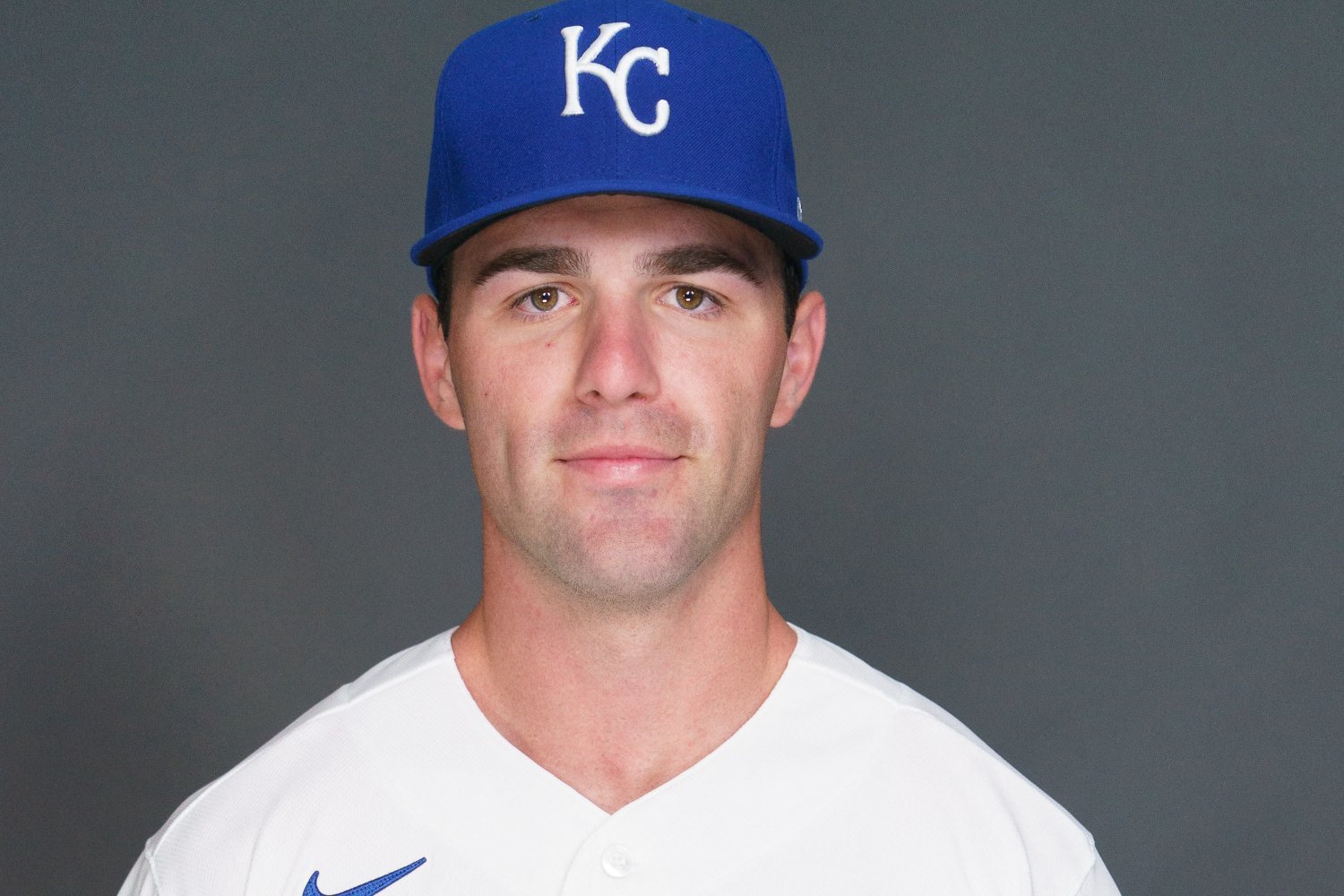 The Royals are 24-38 as of Thursday and may be in "evaluation" mode for the remainder of the 2026 season. That's not exactly what fans envisioned back in Spring Training, but with 6.5% odds to make the postseason, according to Fangraphs, they may not have much of a choice. With next year and beyond as the focus for this team, GM JJ Picollo and manager Matt Quatraro need to identify and promote players with long-term potential for the Royals. One player with that potential is outfielder Carson Roccaforte, who's currently in Double-A Northwest Arkansas. Roccaforte is the No. 10 prospect in our most updated Top 20 rankings at Royals Keep. In 53 games and 245 plate appearances with the Naturals this year, the 24-year-old outfielder is slashing .250/.340/.510 with an .850 OPS. He also has 13 home runs, 40 runs scored, 36 RBI, 10 stolen bases, and a TJ Bat+ of 126. Thus, the numbers have been solid in Double-A, and at the very least, a promotion to Triple-A Omaha should be coming soon for the outfielder prospect. However, does he merit a promotion to the Majors in August and September after the Trade Deadline? If so, what would need to happen, and what would need to improve in his game for him to be a regular at the Major League level? Roccaforte Has the Tools to Be a Successful MLB Outfielder Roccaforte was drafted 66th overall in the Competitive B Round of the 2023 MLB Draft by the University of Louisiana Lafayette. In his final season with the Ragin' Cajuns, he slashed .318/.426/.538 with a .964 OPS in 289 plate appearances. He also hit eight home runs, scored 64 runs, collected 55 RBI, and stole bases. His numbers were much better in 2022 with Lafayette, as he hit 16 home runs, stole 25 bases, and posted a 1.107 OPS in 256 plate appearances. However, Roccaforte finished 2023 strong and had really boosted his draft stock leading up to the July MLB Draft. In addition to solid offensive and defensive tools, the Lafayette product stood out because of his strong discipline at the plate. In his final season with the Ragin' Cajuns, he posted a 0.67 BB/K ratio. Even if Roccaforte didn't hit for a high average, he at the very least would be a player who could consistently post decent to strong OBP marks due to that plate discipline and ability to draw a walk. Roccaforte signed quickly after being drafted and ended up playing in 27 games with the Low-A Columbia Fireflies in 2023. In that 122 plate-appearance sample, he slashed .257/.377/.356 with a .733 OPS and 107 TJ Bat+. While he didn't hit for a high average or a lot of power (0.099 ISO), he did draw a lot of walks, as evidenced by his 15.6% BB%. As expected, the Royals promoted Roccaforte to High-A Quad Cities in 2024. Unfortunately, his first full MiLB season didn't go as planned offensively. In 122 games and 535 plate appearances, Roccaforte slashed .208/.293/.342 with a .635 OPS and 87 TJ Bat+. He struck out 26% of the time, hit 10 home runs, scored 59 runs, and collected 62 RBI. What stood out the most from Roccaforte in his first full Minor League season was the baserunning prowess (34 stolen bases) and defense. He ended up winning the Frank White Award that season, which goes to the best defensive player in the Royals' minor league system. Despite the defensive accolades, Roccaforte's prospect status declined heavily, and he was seen as a fringe Top-30 prospect going into 2025. While he maintained his defensive performance (he won the Frank White Award again in 2025), the outfielder also dramatically improved his offensive production. Roccaforte started in High-A ball but was later promoted to Northwest Arkansas. He thrived at both levels of play last season. In 127 games and 551 plate appearances at both levels combined, he slashed .258/.373/.470 with an .843 OPS. He hit 18 home runs, scored 81 runs, collected 74 RBI, and stole 43 bases. He also posted a 135 TJ Bat+ in Quad Cities and 140 TJ Bat+ in Northwest Arkansas. Safe to say, the outfielder was effective in nearly all offensive areas of his game a season ago. The only blemish on Roccaforte's profile from a year ago is his strikeout rate. While he walked 14.9% of the time, he also struck out 29.4% of the time as well. His high number of swing-and-misses is a big reason why he didn't climb higher in many top Royals prospects lists this past offseason, including ours at Royals Keep (he started the year at No. 16). This year, Roccaforte has done more of the same, repeating Northwest Arkansas. In 53 games and 245 plate appearances, he's slashing .250/.340/.510 with an .850 OPS. He has also hit 13 home runs, scored 40 runs, collected 36 RBI, stolen 10 bases, and posted a 126 TJ Bat+. The power has seen a boost, as his .260 ISO would be a career-high in a season. However, his 34.9% K% would also be a career high, and his whiff metrics aren't much better, as illustrated by his Statcast percentiles via TJ Stats. In addition to a K% in the 2nd percentile, he has a 9th-percentile whiff rate and a 13th-percentile Z-Contact%. That said, despite these issues, his O-Swing% (chase) ranks in the 63rd percentile, and his BB% ranks in the 54th percentile. Thus, while the strikeouts and whiffs aren't encouraging, his lack of chase at least makes up for those issues somewhat. Roccaforte may never be a high-average hitter at the MLB level due to these contact issues. However, if he can carry the power, plate discipline, and pull ability to Omaha and, eventually, Kansas City, he could find success despite those obvious drawbacks. His defense and baserunning tools, as well, would help the Royals be more patient with him, much like Kyle Isbel early in his MLB career. Will the Royals Deal Isbel to Clear a Spot for Roccaforte? Speaking of Isbel, the Royals center fielder has a murky future in Kansas City beyond 2026. Next year, Isbel will be 30, and he will also be entering his final season of arbitration. The former UNLV product has demonstrated excellent defense with the Royals, earning a Gold Glove finalist nomination last season. However, the offense hasn't quite been there for a regular player. This season, Isbel is slashing .254/.293/.361 with a .654 OPS in 171 plate appearances. His 73 TJ Bat+ is down not just from last year (77) but from 2024 as well (79). Furthermore, the Statcast percentiles haven't been all that great this season, especially in the exit velocity, barrel, and hard-hit categories. The good thing is that Isbel doesn't whiff a lot and makes a lot of contact. Unfortunately, those are the only Statcast categories he profiled as above average, according to TJ Stats. The Royals may be able to get a decent package for Isbel, who has value as a defensive-first fourth outfielder to many opposing teams. It's possible that Kansas City could receive a return similar to what they received from the San Diego Padres in the Freddy Fermin trade. The defensive-oriented backup catcher was traded for Ryan Bergert and Stephen Kolek at last year's Trade Deadline. Considering Kolek's early success and Bergert's upside, it's safe to say that the deal was a win for the Royals. Trading Isbel could net them a similar return and open a 40-man roster spot for Roccaforte. Roccaforte Needs to Cut Down the Whiffs to Hold Off Rave There aren't many options on the 40-man roster to replace Isbel on the active roster. The only real option who can play center field is John Rave, who made his debut in Kansas City last year and posted a 67 TJ Bat+ in 175 plate appearances. Based on that sample, it's not surprising that Rave has primarily stayed down in Omaha this season. With the Storm Chasers, Rave has been looking effective at the plate. In 243 plate appearances, the 28-year-old outfielder is slashing .269/.385/.477 with an .862 OPS and 113 TJ Bat+. He also has nine home runs, 37 runs scored, 30 RBI, and 14 stolen bases. Like Roccaforte, the former NC State product can draw a walk, but he chases more than Roccaforte and has questionable exit velocity, hard-hit metrics, and launch-angle data. Rave may be on the 40-man roster already, but Roccaforte has the higher ceiling, despite his whiff issues. Thus, if Roccaforte can stabilize those strikeout and whiff rates in Triple-A, that would go a long way for Roccaforte's chances to make the MLB roster late this summer Roccaforte didn't have a tremendous Spring Training sample in Arizona this past spring. He only had 23 plate appearances, and his slash line was .158/.304/.263 with a .567 OPS. However, while the wOBA, xwOBA, and barrel rate percentiles were low, everything else was stellar, based on his TJ Statcast percentiles summary. With a larger sample, Roccaforte's Cactus League metrics would likely have been better than what they were, especially when taking a glance at his summary above. There were a lot of promising trends in Surprise, especially in the areas of whiff% &9th percentile) and z-contact% (64th percentile). It will be interesting to see what Roccaforte can do to improve his contact tool this season and beyond. He doesn't need to be a sub-20% K% guy by any means. However, if he can keep his K% in the 25-27% range and his walk rate in the 11-13% range? Well, that could be the profile of a successful regular outfielder, especially if he's demonstrating 15-20 HR per year power. Granted, we still have to see what Roccaforte will do in a promotion to Omaha. If he struggles or stagnates in Triple-A, he may not be added to the 40-man roster this offseason, let alone during the 2026 season. However, if Roccaforte transitions this Double-A offensive success to Triple-A? Well, Royals fans may be seeing Roccaforte in center field at Kauffman Stadium in late August or early September this year. View the full article
 -
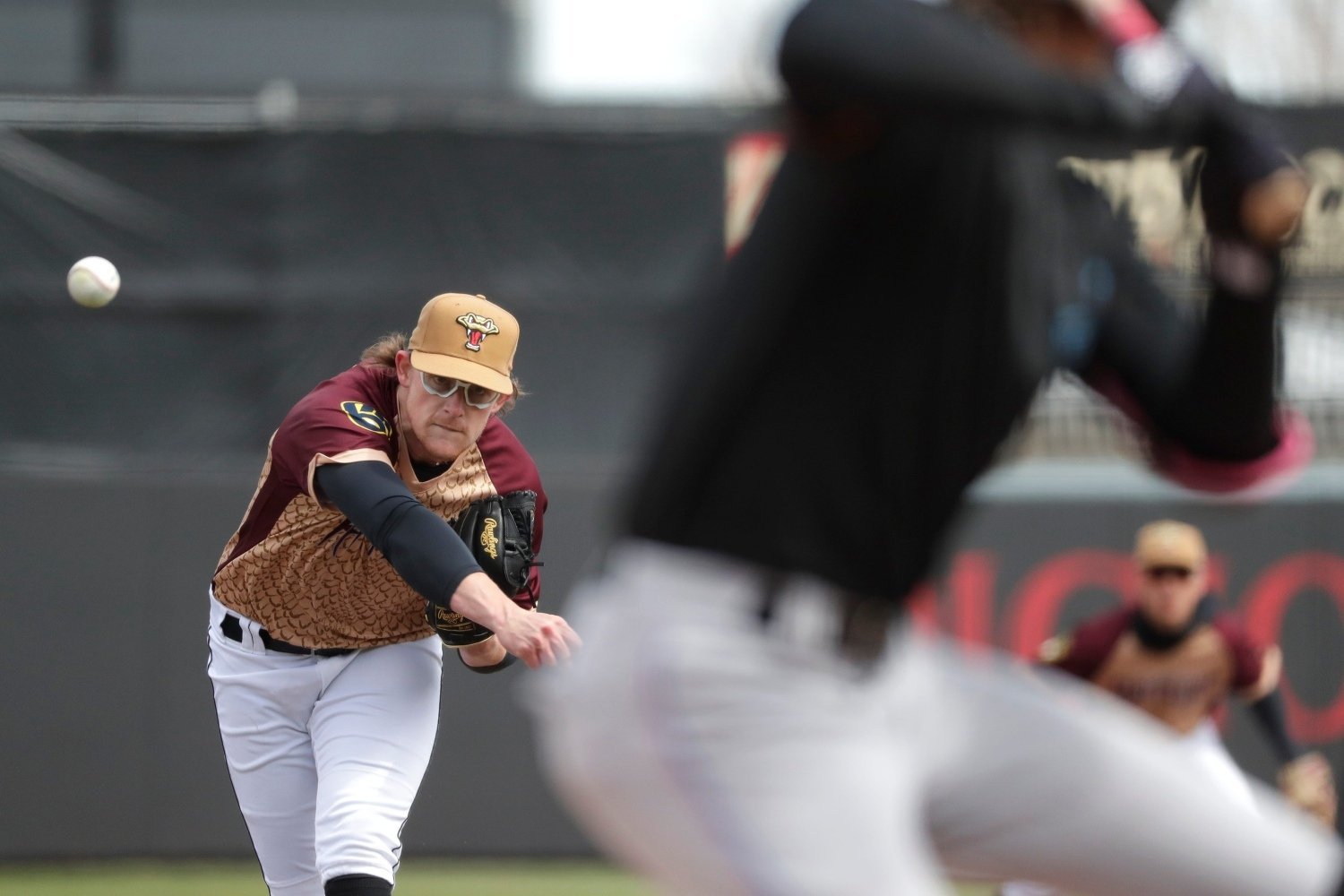 Cameron Wagoner was an 11th-round selection by the Brewers in 2022, out of Eastern Michigan. He had not actually pitched for Eastern Michigan that season, due to academic ineligibility, but still caught the attention of area scout Ginger Poulson as a talented arm. He jumped into pro ball and quickly made a name for himself. For the rest of the season, he led all 2022 draftees in wins (3), innings (19 2/3), and K/BB ratio (24/2) while posting a 1.83 ERA between the complex and Low-A. Wagoner moved to High-A for the 2023 season and had an up-and-down season. His ERA (5.67) paints an uglier picture than the 4.20 FIP. Still, he struggled to generate strikeouts (19.2%), and his velocity was mainly in the 92-94 MPH range, rather than touching 97 MPH as he had shown in his brief professional debut the year before. Wagoner finished the season strong, including a tremendous August, even winning Midwest League pitcher of the month after going 4-0 with a 1.37 ERA in five games. However, he underwent Tommy John surgery after noticing problems in his elbow as he prepared for the 2024 season. As he was rehabbing from the surgery, fluid in his elbow required another six months of rehab, and then an elbow fracture set him back even further. When Wagoner returned to the game mound on May 2, it had been 972 days since he had last taken the ball in an official game. The return was not initially met by much attention, but that changed when he touched 99 MPH in a dominant three-up, three-down inning that included three strikeouts. That moment already made for a cool story, but Wagoner appears to be aiming for something more. Including that first outing, Wagoner is currently posting an ERA of 1.46 through 12 1/3 innings, with 19 strikeouts and only three walks. (He has hit five batters, as well.) His 40.2% whiff rate puts him in the 97th percentile for Double-A pitchers. The only two runs Wagoner has allowed have come via two solo home runs. Not only has Wagoner performed well, but the velocity continues to sit at the same level as he showed in his first outing. In fact, he even touched 100 MPH in the outing in which he recorded the first save of his career. While he has dropped down to 95 MPH on a couple of fastballs, the vast majority have been in the 97+ range. It's not just the fastball that deserves attention, though. His "cutter" (more of a short slider shape) has been elite, as well. Going into his most recent outing, he had generated whiffs on 64% of swings against that pitch. An overlay of the two pitches helps illustrate how well the two offerings can play off each other. Wagoner.mp4 This isn't just a good pitch mix for a Double-A reliever. Wagoner is showing a level of stuff capable of playing in a big-league bullpen. Given that he is Rule 5-eligible this winter, the Brewers may consider moving him up to Nashville soon, and once you're in Triple-A, a big-league debut is only one call away. Can he limit the free passes enough to let his stuff play? Will the velocity hold up as he continues to throw more innings? These are questions Wagoner will need to answer if he is going to push himself to that highest level. For now, though, his return is a tremendous story, and every inning he pitches in Double-A is must-see (MiLB) TV. View the full article
 -
The Twins Can't Wait Any Longer to Bring Back Royce Lewis
DiamondCentric posted an article in Twins Daily
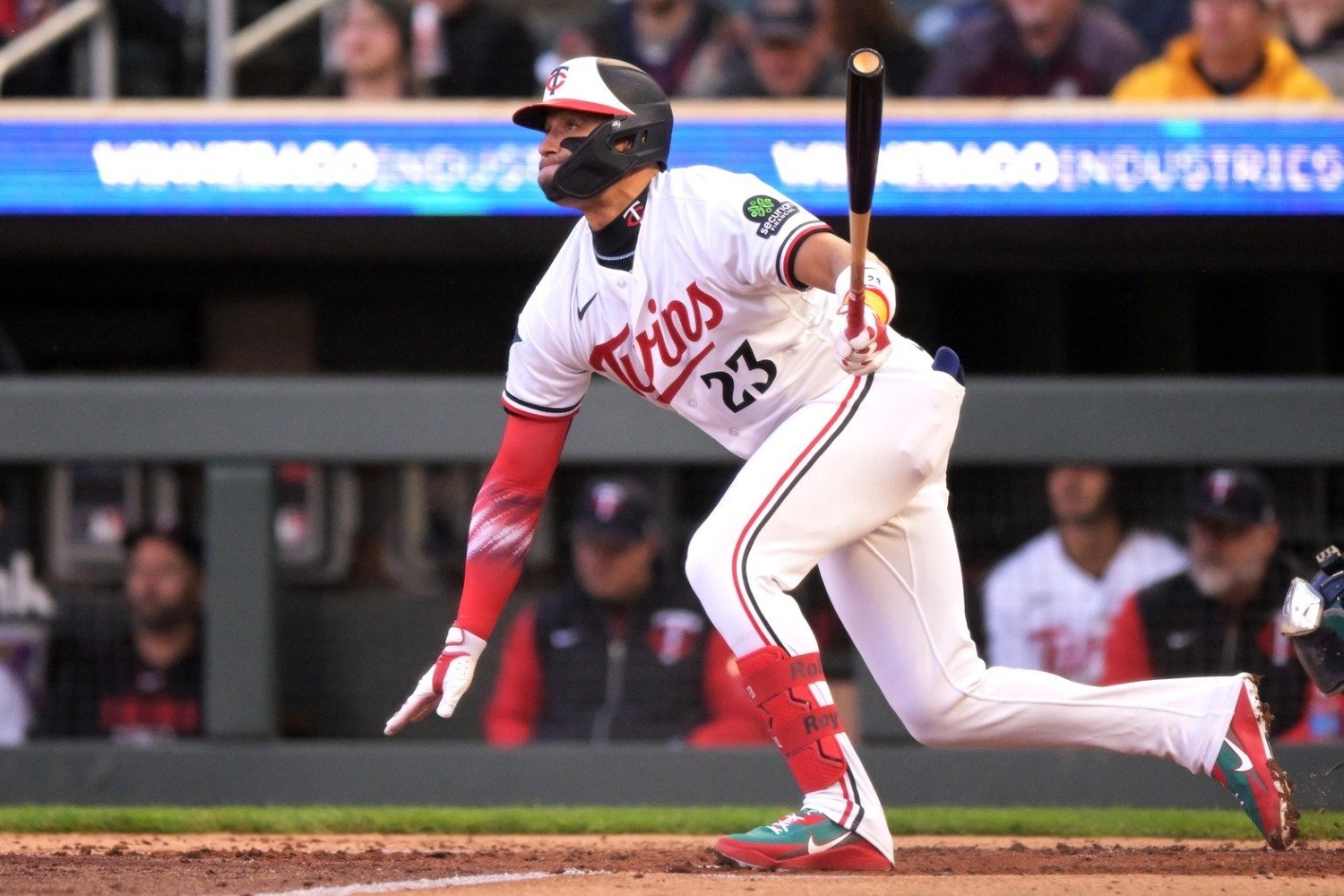 When the Minnesota Twins optioned Royce Lewis to Triple-A St. Paul on May 19, it felt like more than just a roster move. Lewis had endured a miserable start to the 2026 season, hitting his way to a .539 OPS in 31 games while striking out 37 times and drawing just 12 walks. Every at-bat seemed to bring more frustration. The former No. 1 overall pick looked completely lost at the plate, and the confidence that once made him one of baseball's most exciting young players appeared to be gone. The decision to send Lewis to Triple-A wasn't made with the expectation that he would be back in a week or two. This was supposed to be a true reset. In many ways, it felt like the Twins had reached a crossroads with Lewis. His struggles didn't begin in 2026. They stretched back into the second half of 2024 and continued through the 2025 season. By the time the Twins made the decision to send him to St. Paul, the organization seemed to be acknowledging that something significant needed to change. The goal wasn't simply to get Lewis hot for a few games. The Twins wanted him to rebuild everything. His swing needed work. His defense needed work. His confidence needed work. Most importantly, he needed time. If Lewis was going to get another opportunity in Minnesota, the Twins needed to know that the changes were real. Given how long the struggles had lasted, a quick hot streak wasn't going to be enough to convince anyone that he was ready. At least, that's what everyone thought. The only thing that could have changed that timeline would be if Lewis went to Triple-A and immediately started doing something absurd. Something that made it impossible for the Twins to ignore. Something like hitting eight home runs in 11 games. As ridiculous as that sounds, that's exactly what Lewis has done. Through his first 12 games with the St. Paul Saints, Lewis has gone 18-for-49 with eight home runs and 19 RBIs. Nearly every night has featured another home run—another reminder of why the Twins once viewed him as a franchise cornerstone. Instead of simply looking better, Lewis has looked dominant. Now the Twins may need to start asking themselves a difficult question. How much longer can they realistically keep him in Triple-A? After all, a hot streak in Triple-A is no guarantee that a player has figured things out. Twelve games is still a tiny sample size, and there is certainly value in letting Lewis continue to prove that the adjustments are real over a longer period of time. But considering how lost he looked for much of the last two seasons, it wasn't a given that he would be able to dominate any level of pitching. The fact that he has immediately gone to St. Paul and started punishing baseballs should not be dismissed. In a perfect world, the Twins would probably love to give Lewis another month in Triple-A and see if he can sustain this pace. The problem is that the Twins don't live in a perfect world. They need offense right now. Since May 15, Minnesota ranks 24th in baseball with a .669 OPS. Injuries and underperformance have left the lineup searching for answers, and Ryan Jeffers's injury has only made matters worse. On a nightly basis, the Twins are relying on players such as Ryan Kreidler, Victor Caratini, Tristan Gray, Kody Clemens, and Josh Bell to carry the offense. Keeping a player with Lewis's upside in Triple-A while he is hitting the way he is simply doesn't make sense. He wants to be back in the big leagues. He is showing signs of being the player the Twins know he can be. And most importantly, Minnesota is still very much in the middle of a season that could go either direction. If the Twins wait another two or three weeks for additional proof, they may find themselves running out of time to make a move that could impact the season. Of course, calling Lewis up raises an obvious question. Where would he play? Third base, his primary position, now belongs to Brooks Lee. Since Lewis's demotion, Lee has settled in at third and has given the Twins little reason to make another change. Fortunately, there may be a natural solution. On Thursday night, the St. Paul Saints started Lewis at first base for the first time, a move that could offer a glimpse into the Twins' plans. If Lewis can become comfortable at first base, Minnesota suddenly has a much easier path to getting his bat back into the lineup. A first-base platoon involving Lewis and Clemens would allow the Twins to maximize matchups while keeping Bell in a full-time designated hitter role. More importantly, it would create a way to add Lewis's bat without disrupting what Lee has established at third base. If he can play a bit of second, it's easy to make room for him there, too, since Luke Keaschall doesn't look like he belongs at that position defensively. The Twins sent Lewis to St. Paul looking for signs of life. They've gotten much more than that. Now it's time to give him another shot. What do you think? Should the Twins call Royce Lewis up immediately, or would you like to see him spend more time in Triple-A before getting another opportunity in Minnesota? Leave a comment below and start the conversation! View the full article
 -
 Kameron Misner powered Omaha past Columbus 6-4 with two home runs and three RBIs, while John Rave drove in two more. In Springdale, Daniel Vazquez (2-for-4) and Connor Scott keyed Northwest Arkansas' 4-3 walk-off-style win, with Brandon Johnson tossing two scoreless innings of relief. Emmanuel Reyes spun six strong frames as Quad Cities edged South Bend 4-3. At Low-A, Jose Gutierrez was dominant, allowing one run over six innings with eight strikeouts, lifting Columbia to a 3-2 victory over Fayetteville. Royals Transactions No Roster Moves Misner Goes Deep Twice As Storm Chasers Top Columbus The Omaha Storm Chasers beat the Columbus Clippers 6-4 behind a two-homer night from Misner, who finished 2-for-4 with three RBIs and two runs scored. Rave added two hits and two RBIs, Peyton Wilson collected two hits and stole two bases, and Josh Rojas doubled and scored before getting called up and producing the game-winning hit in the ninth inning for the Royals later that evening in Minnesota. Omaha broke a 1-1 tie in the fifth when Misner homered, his tenth of the year, scoring Rojas. The Storm Chasers then blew the game open in the sixth. Matthew Lugo doubled home Wilson, and Rave followed with a two-run triple that scored Connor Kaiser and Kevin Newman, pushing the lead to 5-1. Misner added an insurance solo homer in the ninth. Ryan Ramsey earned the win, allowing one run on two hits over 5 1/3 innings, walking four and striking out six. Eric Cerantola closed it out with two scoreless innings for the save. The Storm Chasers stranded seven runners and came up clutch in key spots, going 4-for-8 with runners in scoring position. Player AB R H RBI BB K Josh Rojas 3 1 1 0 0 1 Kevin Newman 1 1 0 0 1 0 John Rave 5 0 2 2 0 3 Kameron Misner 4 2 2 3 1 1 Luca Tresh 5 0 0 0 0 2 Drew Waters 4 0 1 0 0 2 Peyton Wilson 4 1 2 0 0 0 Gavin Cross 2 0 0 0 0 2 Matthew Lugo 2 0 1 1 0 1 Abraham Toro 3 0 1 0 1 0 Connor Kaiser 4 1 1 0 0 3 Player IP H R ER BB K HR Ryan Ramsey 5 1/3 2 1 1 4 6 1 Anthony Gose 1 2 1 1 1 1 0 Eli Morgan 2/3 1 2 2 2 0 0 Eric Cerantola 2 0 0 0 2 0 0 Scott's Late RBI Single Lifts Naturals Past Midland The Northwest Arkansas Naturals defeated the Midland RockHounds 4-3, scoring the go-ahead run in the eighth inning. Jorge Alfaro led the offense, going 2-for-4 with a double, a home run, an RBI, and two runs scored. Vazquez also had two hits, including a double and an RBI, while Scott drove in two runs on two hits. The Naturals built an early lead, scoring twice in the second inning when Scott singled home Jack Pineda, and adding another run in the third on a Vazquez double that scored Alfaro. After Midland tied the game at 3-3 in the sixth, Northwest Arkansas answered in the eighth when Scott singled home Vazquez for the winning run. Hunter Patteson started and allowed two runs on four hits over five innings, walking four and striking out three. Johnson earned the win with two scoreless innings of relief, striking out two. The Naturals left nine runners on base and went 3-for-10 with runners in scoring position (the RockHounds went 1-for-8 in RISP situations). Player AB R H RBI BB K Carson Roccaforte 5 0 0 0 0 4 Colton Becker 3 0 1 0 0 0 Sam Kulasingam 3 0 0 0 1 1 Jorge Alfaro 4 2 2 1 0 1 Daniel Vazquez 4 1 2 1 0 1 Jack Pineda 3 1 1 0 0 1 Rudy Martin Jr. 1 0 0 0 3 0 Connor Scott 4 0 2 2 0 1 Canyon Brown 3 0 1 0 1 0 Player IP H R ER BB K HR Hunter Patteson 5 4 2 2 4 3 1 Caden Monke 2 2 1 1 1 2 0 Brandon Johnson 2 0 0 0 0 2 0 Reyes And Late Rally Carry River Bandits Over South Bend The Quad Cities River Bandits rallied to beat the South Bend Cubs 4-3, scoring the go-ahead run in the seventh inning. Derlin Figueroa led the offense, going 2-for-4 with two doubles, an RBI, and a run scored. Trevor Werner added two hits, including a double, and drove in two runs, while Ramon Ramirez reached base three times on two walks and scored twice. The River Bandits jumped ahead in the second inning when Trevor Werner singled home Ramon Ramirez and Derlin Figueroa for a 2-0 lead. South Bend rallied to take a 3-2 lead by the fourth, aided by Quad Cities' errors. The River Bandits tied it in the sixth on a Figueroa double that scored Ramirez, then took the lead for good in the seventh when Luke Pelzer singled home Werner. Reyes turned in a strong start, allowing three runs, only one earned, on five hits over six innings, walking two and striking out five. L.P. Langevin earned the win with two scoreless innings and three strikeouts, and Kamden Edge struck out three in a scoreless inning for the save. The River Bandits stranded five runners and went 3-for-10 with runners in scoring position in their one-run victory over the Cubs, who are 34-18 and lead the West Division. Player AB R H RBI BB K Luke Pelzer 3 0 1 1 1 1 Asbel Gonzalez 4 0 0 0 0 1 Blake Mitchell 4 0 1 0 0 1 Ramon Ramirez 2 2 0 0 2 0 Derlin Figueroa 4 1 2 1 0 0 Erick Torres 3 0 0 0 0 0 Tyriq Kemp 3 0 0 0 0 1 Trevor Werner 3 1 2 2 0 1 Angel Acosta 1 0 0 0 1 0 Player IP H R ER BB K HR Emmanuel Reyes 6 5 3 1 2 5 0 L.P. Langevin 2 0 0 0 0 3 0 Kamden Edge 1 0 0 0 0 3 0 Gutierrez Dominates As Fireflies Hold Off Fayetteville The Columbia Fireflies beat the Fayetteville Woodpeckers 3-2 behind a strong pitching performance from Jose Gutierrez. Roni Cabrera led the offense with two hits and an RBI; Jhosmmel Zue drove in two runs; and Yandel Ricardo reached base three times on a hit and two walks, scored a run, and stole a base. Trailing 1-0, the Fireflies took control in the sixth inning. Zue delivered a two-run single that scored Sean Gamble and Hyungchan Um, and Roni Cabrera followed with an RBI single that brought home Ricardo, giving Columbia a 3-1 lead. Gutierrez was excellent, allowing one run on five hits over six innings, walking one and striking out eight to earn the win and record a Quality Start. Henson Leal closed it out with 1 1/3 scoreless innings and two strikeouts for the save. The Fireflies left seven runners on base and went 2-for-4 with runners in scoring position. Player AB R H RBI BB K Henry Ramos 5 0 1 0 0 2 Sean Gamble 3 1 1 0 0 0 Stone Russell 4 0 1 0 0 0 Hyungchan Um 4 1 1 0 0 0 Yandel Ricardo 2 1 1 0 2 0 Jhosmmel Zue 4 0 1 2 0 1 Roni Cabrera 4 0 2 1 0 1 JC Vanek 3 0 0 0 1 2 Ivan Sosa 4 0 1 0 0 1 Player IP H R ER BB K HR Jose Gutierrez 6 5 1 1 1 8 0 Andy Basora 1 2/3 1 1 1 3 1 0 Henson Leal 1 1/3 0 0 0 0 2 0 Top-20 Prospect Performance Kendry Chourio: DNP David Shields: DNP Sean Gamble: 1-for-3 Blake Mitchell: 1-for-4, 1 K Josh Hammond: DNP Ramon Ramirez: 0-for-2, 2 BB Drew Beam: DNP Asbel Gonzalez: 0-for-4, 1 K Ben Kudrna: DNP Carson Roccaforte: 0-for-5, 4 K Yandel Ricardo: 1-for-2, 1 SB, 2 BB Felix Arronde: DNP Blake Wolters: DNP Michael Lombardi: DNP Luinder Avila: DNP Steven Zobac: DNP Frank Mozzicato: DNP Daniel Vazquez: 2-for-4, 2B, RBI, 1 K Warren Colcano: DNP Shane Panzini: DNP View the full article
 -
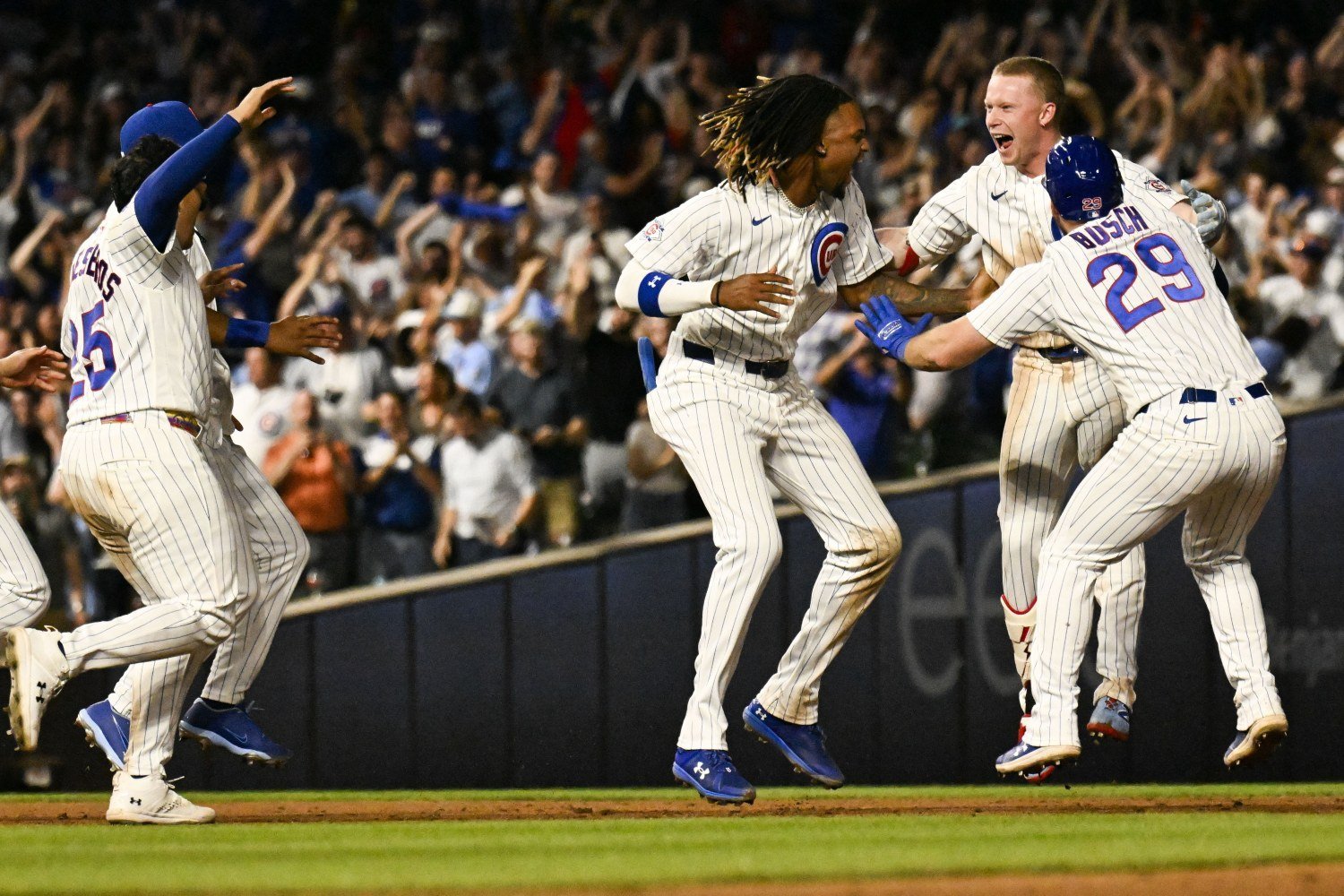 Talking about the Chicago Cubs right now is hard. You have to talk about the many ways in which they could and should have (but haven't) methodically built a roster that can compete with the Milwaukee Brewers. You have to acknowledge the real streakiness that is part of their identity, without giving in to old saws about the nature of consistency and volatility in baseball. You have to talk about the many important players slumping or declining or trying to solve major problems. But it also feels ludicrous—absurd—to talk about anything but Pete Crow-Armstrong. I grew up in Northeast Wisconsin, as a Bulls, Cubs and Packers fan. I watched the final three years of Michael Jordan's career; the halcyon decade of Sammy Sosa's time with the Cubs; and 25 years worth of Brett Favre and Aaron Rodgers in Green Bay. I know from cults of personality within sports teams, is what I'm trying to say. It's my normal. It's what I grew up with. It's been a long time, though, since I saw a baseball team as dominated by one player's talent and personality—one player's greatness and their terribleness; their scintillations and their calamities—as the current Cubs are by Crow-Armstrong. If anyone (at least, anyone who spends much time online) tells you this has been a fun ride, they're a dangerous lunatic or a liar. What's happening around the Cubs right now is a steady and inexorable rise in background toxicity, like there's an unreported leak into the water supply or a poorly contained radiation event nearby. Crow-Armstrong, who seemed so unusually authentic and self-assured at this time last year, has gone through a disastrous slump to end 2025; a winter of cement setting on his stardom; and a spring loaded with great new opportunities but lots of extra expectations, and he's handling it all terribly. He's also having an incredible season that could end with him in the thick of the MVP conversation. In the field, Crow-Armstrong burst out of the gate this spring playing center field as well as anyone has done it since Willie Mays. His anticipation, explosiveness and ability to field the ball cleanly at top speed are unmatched. His arm is a rocket, and he uses extraordinary footwork to make the most of it, most of the time. He's also had five or six of the worst, dumbest mistakes you'll see an outfielder make. The universe seems to be against him, too. He lost a Shea Langeliers fly ball in the bright, impossible sky Thursday night, leading to an inside-the-park homer on what should have been a routine flyout. He made the initial mistake of misreading the ball off the bat, but the particular hues of sunset sky in which the ball hung while he searched for it in desperation are expert concealers. No player could have found that ball, once it was lost up there. On evenings like that, you only get the initial moment to draw your bead; there's no recovery opportunity. Crow-Armstrong was, in that sense, unlucky. All year, though, there's been what's happened to Crow-Armstrong (and to his team), and how he's reacted to it. What happens can only make a baseball season hard. How you react to it—by hurling abuse at a fan in the heat of a play, or by trying to do way too much, or by needing to be corralled after trying to get a look at some heckler after a frightful mistake—can make one truly miserable. Of course, there's also another distinction: how you react, in terms of visible emotional displays, and how you react, in terms of playing the game. After losing that ball (and then standing flat-footed to watch the rest of the play, and then being ready to take issue with fans), Crow-Armstrong delivered two huge swings that turned the game around. He hit a blistered solo home run in the bottom of the same inning, at 110 MPH off the bat. He hit the walk-off single that won the game after his teammates' spirited rally in the bottom of the ninth, capping an insane night with a cathartic roar. Several times this season, Crow-Armstrong's on-field response to a bad mistake has been a display of such ferocious brilliance that it's made up for that mistake, and then some. This was something Sosa also often did—and Favre, too, for that matter. In baseball, one player can't get an outsize share of the chances and become the sole focus of a game, the way a quarterback or a basketball player can. But if you do everything with sufficient intensity, you can fill up the box score, both literally and metaphorically. Crow-Armstrong is perfecting the art of taking over a baseball game, even though he'll sometimes give away the game, too. This can be a recipe for a championship. Teams have been led to glory by players who sucked up all the media attention and all the oxygen in the room. It's just not going to be fun, or easy, or comfortable—and it might get very ugly. Any teammate or reporter can tell you, even if many fans cannot, that it was often unpleasant to be around Sosa, Jordan and Favre, for lots of reasons. The most fun teams to follow and to be a part of are the ones with diffuse leadership and a team ethos, on and off the field. Ironically, the Cubs have worked hard to cultivate that, including by bringing in a manager who believes as fervently in having 26 leaders on a 26-man roster as anyone in the game. They've eschewed the pursuit of incandescent superstars via trade or free agency, not only for budgetary reasons, but for philosophical ones. Too bad. Crow-Armstrong is such a forceful personality—there's so much charisma in his presence on the field, and so much volatility in his interactions with everyone surrounding it—that he's changing all of that, whether anyone likes it or not. Even he doesn't necessarily seem to like it, but he doesn't have the self-control to stop it. This is a team out of control, It's a player out of control. It's a situation that makes you hear a high-pitched ringing you can't place. That ringing is the song of the blade. It's the universe drawing its bow across a string pulled so taut the note is above the top of the scale, just like Crow-Armstrong's fielding ability, his newfound bat speed, and his unreserved aggressiveness. It is, in a word, danger. The 2023 Cubs won 83 games. The 2024 team won the same number. The 2025 team got to 92 wins, but still felt stuck in the middle. If you're sick of that averageness, I have great news. It's over. Despite their current record, the Cubs are destined either for greatness or destruction this year. They're at the mercy of a player whose talent can turn being badly jammed by a 99-MPH fastball into a game-winning muscle single (because he swung the bat at 87.4 MPH, so the ball got up the handle, but he was already around on it), and who can catch anything—but who can also absolutely blow it sometimes, and whose intensity has begotten angry outbursts that are no longer directed only at himself. He can pull a team of slightly declining veterans all the way to the World Series. If he explodes, though—if all this volatility slips even further beyond his control, as it has for so many players with a similar combination of potential and insecurity—everything and everyone else around the Cubs will go kaput with him. So, keep tuning in. This is HBO stuff. It's high drama with high stakes and all the nastiness you love—the stuff they won't show you on basic cable. It's scary, and not exactly in a good way. There's a real risk you're going to learn all the wrong lessons from it. Irrefutably, though, it's entertaining as hell. View the full article
 -
Craig Mish: Most fan criticism of managers is 'stupid'
DiamondCentric posted an article in Fish On First
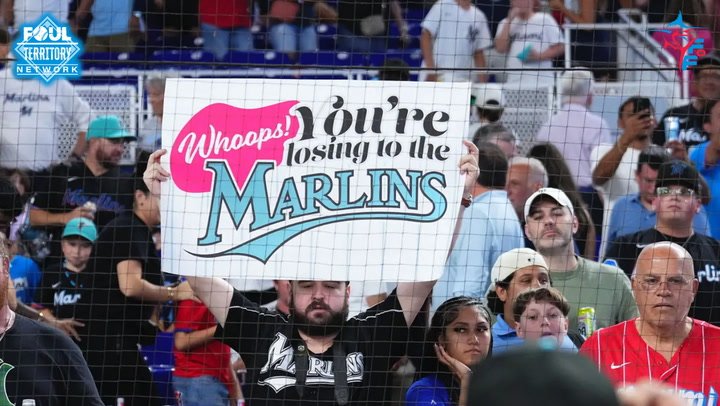 On Fish Unfiltered, Marlins insider Craig Mish pokes fun at MLB fans who believe their team's manager is to blame for every move that doesn't work out.View the full article
 -
How Nathan Lukes Conquered Vertigo To Ignite the Lineup
DiamondCentric posted an article in Jays Centre
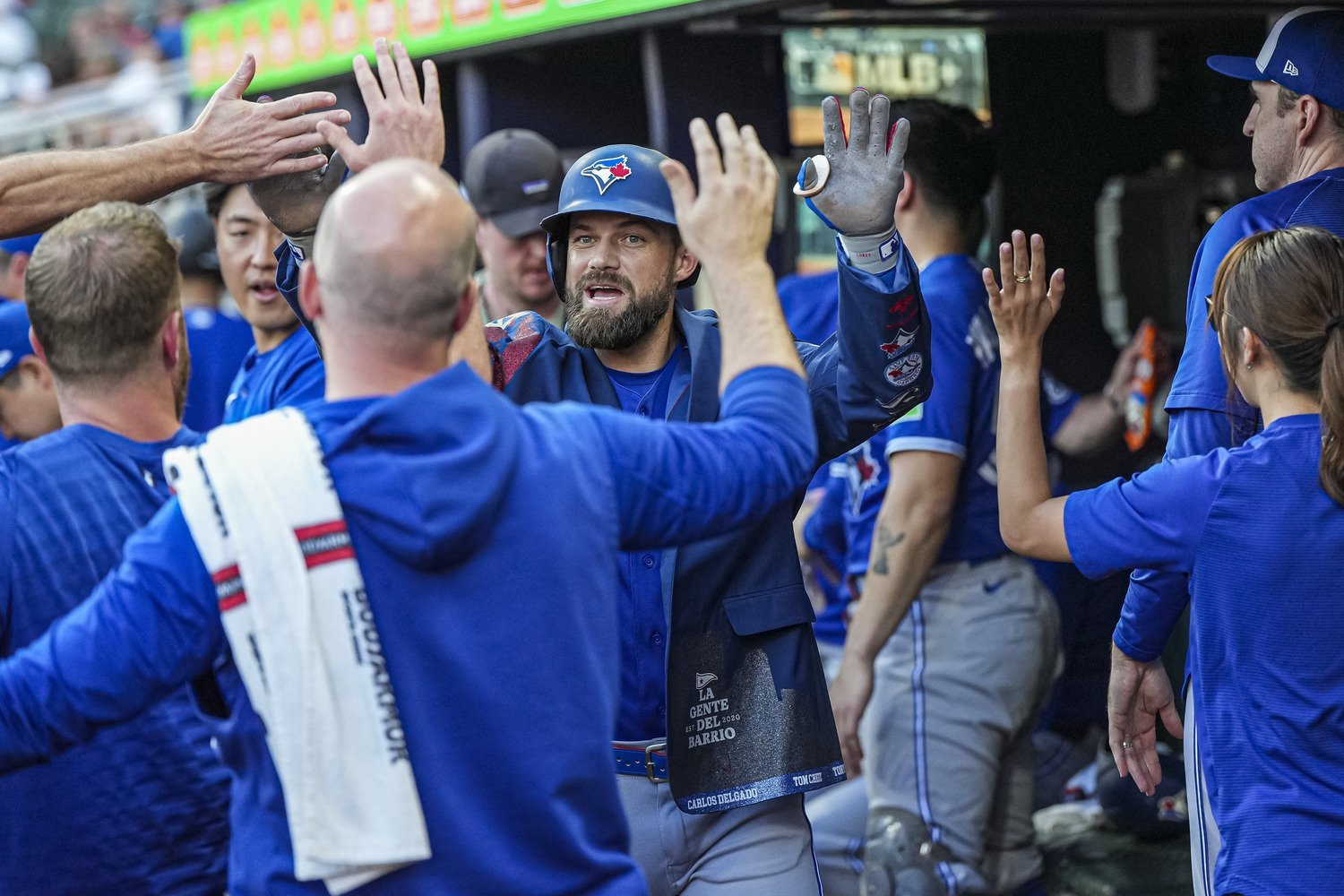 In a crowded outfield to start the 2026 season, Nathan Lukes was almost the odd man out. His hitting was nearly non-existent, and he looked a bit lost, especially against velocity on the inner half, where he was consistently late and defensive. His chase rate was 44% to start the year. A lot of that can be attributed to vertigo that plagued him in the spring, with symptoms that included dizziness, nausea, and difficulty tracking pitches. Eventually, the ailment was diagnosed and then addressed after a visit to a specialist in Arizona. The doctor prescribed a series of head movement exercises that ended up reducing or eliminating the symptoms. Through his first stretch of games in 2026, he had just two hits across 31 at-bats. His timing was off, often committing early on breaking balls while failing to catch up to fastballs up in the zone. His batting average sank to .065, and his OPS dipped under .200 through mid-April, never really threatening to climb back while he remained in the lineup. Lukes has always been a contact-oriented outfielder with some power, but without the ability to connect, his value was dropping by the day. That is, until he got the treatment in Arizona. Over a brief late-April stretch before a hamstring injury put him on the injured list, he went 11-for-21 with only one strikeout, spraying line drives and using the entire field in a way that was reminiscent of last season. That version of Lukes, the one the Blue Jays thought they had penciled in as a stable top-of-the-order option, had returned. The hamstring injury could have derailed his hot bat, but instead, the opposite seems to have occurred. Within days of his return, he was 9-for-21 with multiple extra-base hits, showing the same bat-to-ball ability that had fueled his breakout stretch before the injury. Since returning, he has pushed his overall season line to a sparkling .317 average with a .360 on-base percentage through 90 plate appearances (through June 4), carrying a league-average or better offensive profile by measures like wRC+ and OPS. A home run on Wednesday against Atlanta teased some power as well. Nathan Lukes looks like one of baseball’s best hitters right now because he is controlling the strike zone, making contact, and converting that contact into consistent offensive production. That approach is exactly what the Blue Jays roster has needed at the top of the lineup this season. Even before this season, Lukes had established himself as one of the better contact hitters in the American League. In 2025, he posted an 86.1% contact rate with a 13.7% strikeout rate. That profile has carried into 2026, where he has kept his strikeouts low while dramatically improving the quality of his swings. His whiff rate sits at just 16.6%, but the bigger change is where and how he is making contact. Lukes is having success because he has simplified his approach at the plate. He is not chasing power. His barrel rate is just 1.5 percent, one of the lowest among regular hitters. He is not trying to lift the ball. Instead, he is staying inside, using short, direct swings and allowing sequencing and pitch selection to drive his results. Against right-handed pitching, which accounts for the bulk of his plate appearances, he is hitting over .310 with an OPS pushing .750, a reflection of his ability to stay balanced and let pitches get into the hitting zone. And that might be the most important development of all. Lukes has always been a contact hitter. What has changed is how repeatable that contact has become. In 2025, his production often came in bursts. He would string together hot stretches fueled by a high batting average on balls in play, then regress when those balls stopped falling. In 2026, the contact profile looks more stable. His swing-and-miss rates have tightened. His two-strike approach, already strong, has remained a weapon. He continues to shorten up and prioritize contact when behind in the count, helping him avoid empty plate appearances and extend at-bats. Those extended at-bats are an underrated aspect of his value. Amid the lineup's latest slide, he is one of only a handful of batters who are extending counts and working up pitch counts. Lukes consistently forces pitchers to throw strikes, fouls off borderline offerings, and pushes counts deeper than expected for a hitter who does not walk much. Even though his walk rate remains low at around 3.5 percent, his approach still places pressure on pitchers. The difference is that instead of drawing walks, he converts those opportunities into singles and doubles. That dynamic is especially evident when he leads off innings. In those situations, he is hitting .333 with a near .400 on-base percentage, setting the tone for the lineup and forcing opposing starters to immediately work from the stretch. There is also a situational awareness to his approach that deserves attention. With runners on base, he is hitting over .320, and his ability to put the ball in play allows the offense to function in a more dynamic way. He is not sacrificing contact for power in run-producing situations. He is staying within himself and trusting that putting the ball in play will create opportunities, whether through hits or productive outs. All of this is happening while the Jays are still searching for a spark plug on offense. Wednesday’s game might have been a loss, but as the leadoff hitter, Lukes made an impact by getting on base and even homering later in the game. His vertigo and lower-body injuries seemed to have both hampered and then helped him find and maintain success. With those issues addressed, everything else has snapped into place. On a team that needs a spark, his contact and ball-in-play pressure might be just what is needed. Lukes has not reinvented himself this season, but instead found himself. The contact ability, the two-strike approach, the willingness to use the entire field, and the capacity to grind at-bats are exactly who he is. He looks like one of baseball’s best hitters at the moment. His consistency at the plate is the biggest thing, especially in an up-and-down season for the Jays so far. In a season defined early by disorientation, both literal and metaphorical, Lukes has provided clarity. Stats updated entering play on June 4. View the full article
 -
Boston Red Sox Minor League Pitchers of the Month: May 2026
DiamondCentric posted an article in Talk Sox
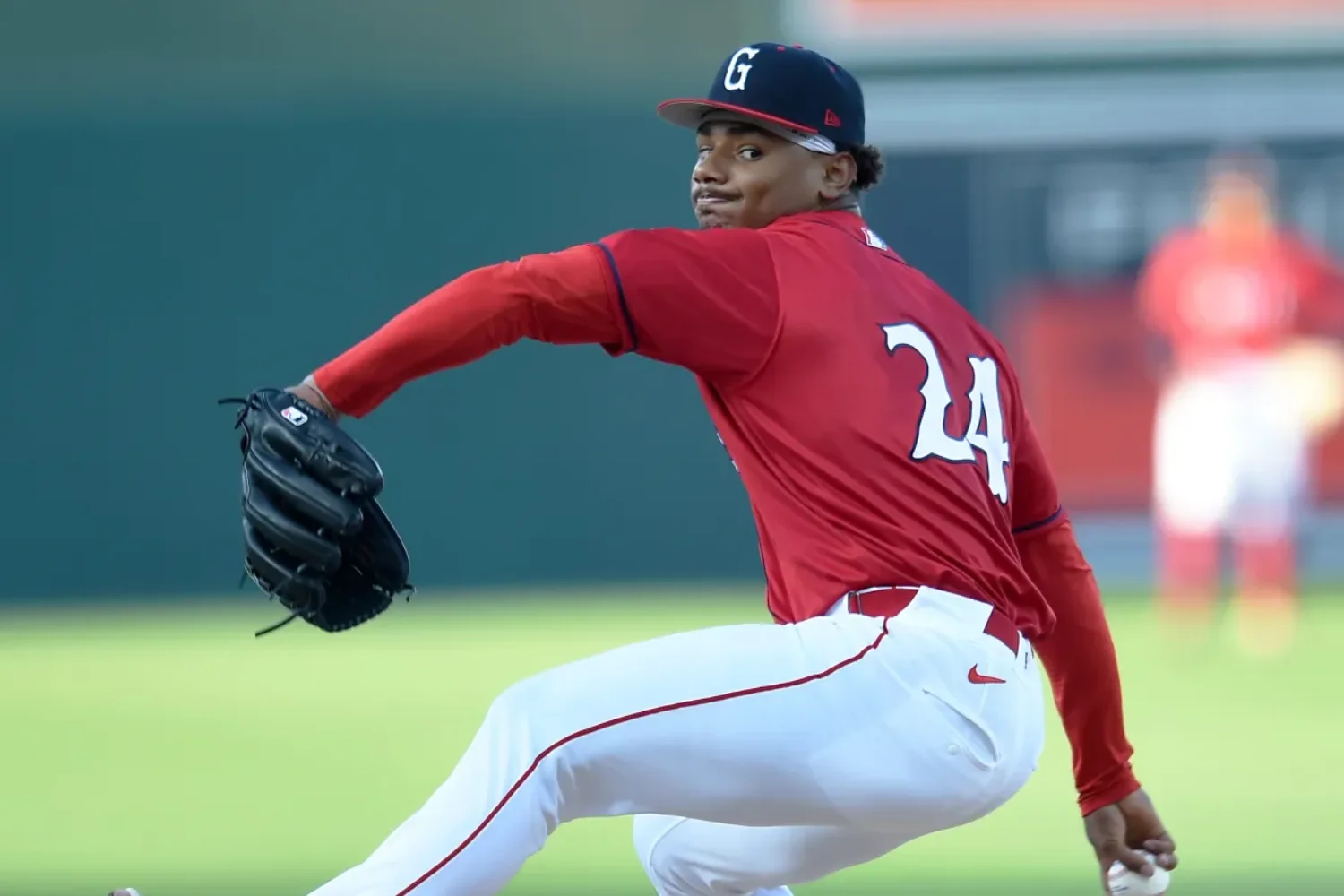 Despite their offensive shortcomings, the Boston Red Sox have developed one of the league's best pitching staffs while also seeing notable progress from several prospects in the lower levels of the organization. Below, I'll highlight a recent call-up and a pair of veteran minor leaguers who are making strong cases for promotions of their own. Pitching prospects can often climb the minor league ladder much faster than hitters. If the stuff plays and they consistently throw strikes, there are fewer adjustments required at each level. We saw that last season with Payton Tolle, who rose from High-A all the way to the major leagues, where he even dueled with Paul Skenes. I have a feeling we'll see my No. 1 player from this month's edition join the big league club by the fall. Without further ado, let's dive in. Ranking Red Sox's Best Minor-League Pitchers in May #3 Blake Wehunt (Double-A Portland) Wehunt has spent the past two seasons at Double-A Portland, struggling at times to find consistent success. Last year, he posted a 5.68 ERA for the Sea Dogs while striking out 76 batters in 63.1 innings. This May, however, Wehunt looked like a completely different pitcher. Armed with a plus fastball and sweeper, he dominated opposing hitters throughout the month. His best outing came against the Reading Fightin Phils, when he struck out 11 over five innings, tying Jake Bennett for the most strikeouts by a Red Sox minor-league pitcher in a single game this season. Wehunt finished May with a 2.08 ERA, a 40.6% strikeout rate, a minuscule 7.2% walk rate, and held opponents to a .525 OPS. His 40.6% strikeout rate ranked in the 98th percentile among Double-A pitchers during the month. Standing 6-foot-7, Wehunt fits the mold of a classic Craig Breslow pitching acquisition. While Statcast data is unavailable at his level, it's reasonable to assume his extension ranks among the best in professional baseball. He also led Portland pitchers in both innings pitched and strikeouts during the month. At 25 years old, Wehunt still has time to impact the major-league club, and a month like this is exactly the type of performance that can put a former ninth-round pick back on the organization's radar. #2 Hayden Mullins (Double-A Portland) Above are Hayden Mullins' percentile rankings for the month of May. The results are nothing short of dominant when it comes to generating swings and misses. Mullins ranked in the 100th percentile in swinging strike rate, CSW% (called strikes plus whiffs), whiff rate, and strikeout rate. He also ranked in the 99th percentile in zone contact rate allowed and opposing wOBA. Mullins recorded at least five innings in all three of his May starts, striking out seven, eight, and 10 batters, respectively. Opposing hitters managed just a .148 batting average against him during that stretch and drew only five walks total. The 26-year-old had struggled with command earlier in the season, including two April starts in which he issued five walks. Seeing that number come down in May is an encouraging sign as he continues to develop. The underlying metrics support the improvement as well, with his FIP currently sitting at 2.97. Mullins has been part of the Red Sox organization since 2022 but missed his entire first season due to injury. His best pitch is a slider that FanGraphs grades as a present 55 with future 60 potential on the 20-80 scouting scale. While his fastball generally sits between 93 and 94 mph, his extension allows the pitch to play up against opposing hitters. If Mullins can continue building on his May performance while further refining his control, he has a chance to establish himself as a legitimate prospect. It's been an encouraging start to the season for a pitcher who is beginning to generate real buzz within the system. Anthony Eyanson #1 (Double-A Portland) One trend you may have noticed is that all three pitchers featured this month are members of the Portland Sea Dogs. Eyanson earned his promotion after a dominant High-A start on May 1, when he struck out seven batters over 3.2 innings. The first-year prospect out of LSU more than earned his rapid rise through the system. Across 20.1 innings at High-A, Eyanson allowed just one run while striking out 34 hitters. He simply overwhelmed the competition, leaving the Red Sox little reason to keep him at that level. The success has continued in Double-A. Since arriving in Portland, Eyanson has posted a 2.77 ERA with a 34% strikeout rate while holding opponents to a .146 batting average. His performance has already pushed him into updated Top 50 prospect rankings from Baseball America and The Athletic, and it's easy to envision his stock continuing to rise. He has quickly become one of the most exciting pitching prospects in baseball. All four of Eyanson's pitches grade as above-average to plus offerings according to FanGraphs. His curveball, slider, and changeup each carry future 60 grades, while his fastball has reportedly touched 100.2 mph during spring training. According to SoxProspects, he generally operates in the 95-98 mph range. Eyanson's rapid ascent has generated significant excitement throughout the prospect world. Watching it unfold evokes memories of Payton Tolle's rise last season, when he went from High-A to the major leagues in a single summer. Eyanson still has hurdles to clear at both Double-A and Triple-A, but thus far he has shown little indication that either level will slow him down. View the full article
 -
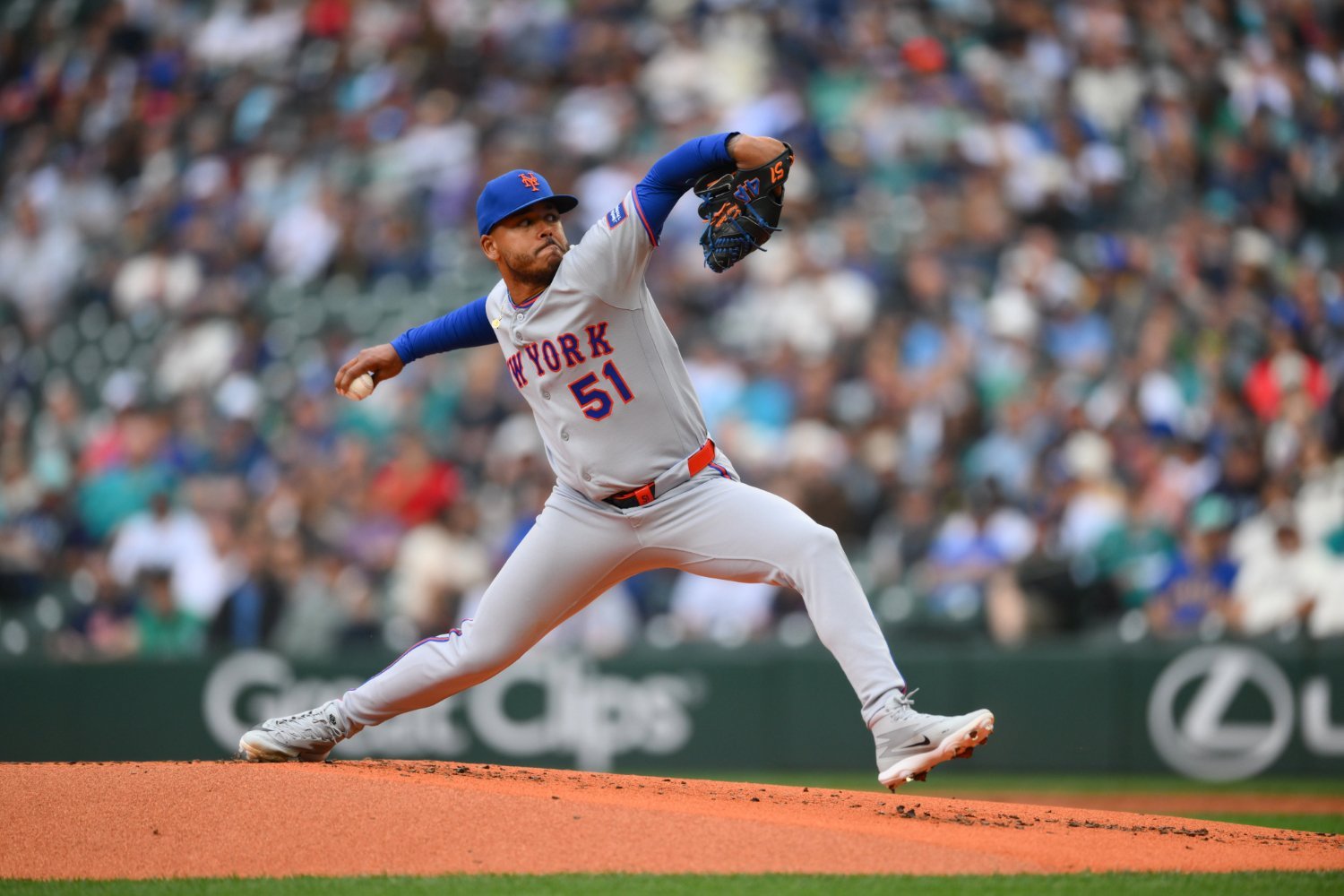 Entering the month of June, the New York Mets sat six games under .500, five games back of a wildcard spot, and 13.5 games back of the Atlanta Braves in the NL East. Barring a huge month, they may need to face the reality of being sellers at the trade deadline. So, let's project that exact scenario for the Mets, analyzing the three most likely candidates to be moved by August third at 6:00pm. Mets' Best Trade Chips if They Sell 3. Luke Weaver The Mets don't have too many pieces on expiring deals, but one thing numerous teams look for at the deadline is relief pitchers that have multiple years on their contract, and that's where Weaver comes in. After a rather rocky April, he did not give up a run in the month of May. For the 2026 season, Weaver's ERA+, according to Baseball Reference, is 137, which significantly above average. According to StatCast, Weaver's hard-hit rate against is 29.4%, which is top ten in baseball, something that teams will consider when looking for relief help. It was not too long ago that he was closing for a team that won the AL pennant in the Bronx. With the way the reliever market moves at the trade deadline, Weaver could be moved and net a decent return for the Mets. The Mets have an opportunity to net a large return for some of the parts they can move if the team continues to lose and decides to sell. View the full article
 -
 San Diego Padres affiliates went 2-2 Thursday as the Triple-A El Paso Chihuahuas fell to Sugar Land 4-1, the Double-A San Antonio Missions got five strong innings from a rehabbing Jhony Brito in a 5-1 victory, the High-A Fort Wayne TinCaps dropped a 10-4 decision to Lake County and the Low-A Lake Elsinore Storm beat the Fresno Grizzlies 10-4. Padres Transactions No roster moves. Marcos Castanon Goes Deep Off Hunter Brown In Chihuahuas' Loss Facing one of the top starters in MLB on a rehab assignment, the host Triple-A El Paso Chihuahuas did get a run off Houston Astros ace right-hander Hunter Brown, but couldn't dent the rest of the Sugar Land Space Cowboys' staff in a 4-1 loss. Out since the first week of the season with a Grade 2 right shoulder sprain, Brown threw 57 pitches in his third rehab outing, going 4⅓ innings and giving up four hits with a walk and four strikeouts. The only run came when Marcos Castanon took Brown, who finished third in last year's AL Cy Young Award voting, deep in the fifth inning, his eighth homer of the year. Castanon and Will Wagner each had two of the Chihuahuas' seven hits. Castanon, who launched his opposite-field homer to right-center, has homered in back-to-back games and three of his last five. Carlos Rodiguez's hitting streak is now at 12 games after a fourth-inning single in a 1-for-4 performance. Chihuahuas left-handed starter Marco Gonzales struck out eight over 4⅔ innings, allowing three runs on seven hits and a walk, lowering his ERA to 9.16. EP_0604.mp4 Player AB R H RBI BB K Mason McCoy 4 0 0 0 0 2 Carlos Rodriguez 4 0 1 0 0 0 Pablo Reyes 4 0 0 0 0 2 Nick Solak 4 0 1 0 0 1 Will Wagner 4 0 2 0 0 0 Marcos Castanon 4 1 2 1 0 0 Nate Mondou 3 0 0 0 1 1 Blake Hunt 3 0 0 0 0 0 Clay Dungan 3 0 1 0 0 2 Player IP H R ER BB K HR Marco Gonzales 4 2/3 7 3 3 1 8 0 Misael Tamarez 1 2 1 1 1 1 0 Kyle Hart 1 1/3 1 0 0 1 0 0 Ethan Routzahn 2 1 0 0 1 1 0 Jhony Brito Wraps Up Rehab With 5 Strong Innings For Missions Making his own rehab start, San Diego Padres right-hander Jhony Brito was again sharp over five innings, while Romeo Sanabria and Braedon Karpathios homered as the Double-A San Antonio Missions beat the Wichita Wind Surge 5-1. Brito, in his fourth outing with the Missions as he comes back from right elbow and flexor tendon surgery in April 2025, allowed just one run on three hits and no walks while fanning two in five innings. He threw 58 pitches, including 42 strikes. Brito made it through six innings on just 52 pitches in his previous start. This was likely Brito's last rehab start as his assignment began May 7 and lasts 30 days for pitchers. In six starts, Brito has a 3.33 ERA over 24⅓ innings with six walks and 17 strikeouts, including a 1.96 ERA in his four Double-A appearances. Brito does have an option left, so it is possible that he comes off the 60-day injured list and is optioned to the minors if the Padres don't put him on the major-league roster. Karpathios, Padres Mission's No. 9 prospect, drove in a pair of runs, including a solo homer in the sixth, his fourth homer of the season. Sanabria had gone deep an inning earlier, also a solo shot, for his sixth long ball and second in as many days. Karpathios and Ryan Jackson had back-to-back run-scoring singles in the fourth inning to put the Missions up 3-0. Right-handers Clark Candiotti (one inning), Josh Mallitz (two innings) and Andrew Moore (one inning) each allowed one hit, with Mallitz and Moore punching out three. SA_0604.mp4 Player AB R H RBI BB K Ethan Salas 4 0 0 0 0 0 Kai Roberts 4 0 0 0 0 1 Romeo Sanabria 4 2 2 1 0 0 Tirso Ornelas 3 2 1 0 1 1 Braedon Karpathios 3 1 2 2 1 1 Ryan Jackson 4 0 1 1 0 0 Francisco Acuna 3 0 0 0 0 2 Luis Verdugo 3 0 1 0 1 0 Kai Murphy 4 0 0 0 0 0 Player IP H R ER BB K HR Jhony Brito 5 3 1 1 0 2 1 Clark Candiotti 1 1 0 0 0 1 0 Josh Mallitz 2 1 0 0 0 3 0 Andrew Moore 1 1 0 0 1 3 0 Kavares Tears' Long Homer Comes Up Short For TinCaps Kavares Tears hit the longest home run of the season by a TinCaps player, but host High-A Fort Wayne watched the Lake County Captains take the lead with a three-run sixth and pull away for a 10-4 victory. TinCaps right-handed starter Carson Montgomery threw five solid innings, allowing three runs on two hits but walking five while striking out six. But the Captains scored three runs off Will Varmette, who didn't record an out in the sixth, while left-hander Braian Salazar gave up a pair of runs in 1⅓ innings. After a scoreless inning by right-hander Tucker Musgrove, left-hander Javier Chacon gave up two runs in 1⅔ innings on just one hit and two walks. The TinCaps issued 12 walks. Musgrove is Padres Mission's No. 14 prospect. Tears hit a 454-foot blast to left-center, a two-run shot to put the TinCaps up 3-2. Tears, who now has five homers, later tripled. FW_0604.mp4 Player AB R H RBI BB K Rosman Verdugo 3 1 0 0 2 2 Carlos Rodriguez 4 0 1 1 1 3 Lamar King Jr. 4 0 1 0 0 0 Alex McCoy 4 0 1 1 0 2 Jake Cunningham 4 0 1 0 0 1 Jack Costello 3 1 0 0 1 2 Kavares Tears 4 1 2 2 0 0 Zach Evans 4 1 1 0 0 2 Jonathan Vastine 3 0 0 0 0 2 Player IP H R ER BB K HR Carson Montgomery 5 2 3 3 5 6 0 Will Varmette 0 1 3 3 2 0 1 Braian Salazar 1 1/3 3 2 2 3 3 0 Tucker Musgrove 1 0 0 0 0 2 0 Javier Chacon 1 2/3 1 2 2 2 2 1 Jose Verdugo, George Bilecki Drive In 3 Each As Storm Prevail Jose Verdugo and George Bilecki each drove in three runs, while right-handed starter Bryan Balzer turned in a solid 5⅓ innings as the Low-A Lake Elsinore Storm cruised to a 10-4 victory over the host Fresno Grizzlies. The Storm had just six hits, including two by Bilecki, and took advantage of seven walks and five Grizzlies errors. Only three of the Storm's 10 runs were unearned. Balzer, Padres Mission's No. 19 prospect, allowed two runs on seven hits, walking a pair and striking out five. Right-hander Brandon Langley retired all five batters he faced, right-hander Sean Burnett pitched a scoreless eighth and right-hander Daichi Moriki allowed two ninth-inning runs. Bilecki had an RBI double in the second and a two-run single in a three-run fifth that put the Storm up 6-2. Verdugo drove in a run in the third on a fielder's choice and a two-run double in a four-run eighth. LE_0604.mp4 Player AB R H RBI BB K Bradley Frye 4 1 1 0 1 2 Kerrington Cross 3 2 0 0 2 1 Jose Verdugo 5 1 1 3 0 0 Yoiber Ocopio 4 2 1 0 1 1 Yimy Tovar 3 0 0 1 0 1 George Bilecki 2 0 2 3 3 0 Qrey Lott 3 1 0 0 0 3 Dylan Grego 5 1 1 0 0 0 Conner Westenburg 3 2 0 1 0 0 Player IP H R ER BB K HR Bryan Balzer 5 1/3 7 2 2 2 5 0 Brandon Langley 1 2/3 0 0 0 0 1 0 Sean Barnett 1 0 0 0 1 2 0 Daichi Moriki 1 1 2 2 2 0 0 Top 20 Prospect Performance Ethan Salas: 0-for-4 Kash Mayfield: DNP Miguel Mendez: DNP Kruz Schoolcraft: DNP Ryan Wideman: DNP Jorge Quintana: DNP Ty Harvey: On injured list Kale Fountain: Injured, out for season Braedon Karpathios: 2-for-3, HR, 1 K Lamar King Jr.: 1-for-4 Jagger Haynes: DNP Alex McCoy: 1-for-4, 2 K Truitt Madonna: DNP Tucker Musgrove: 1 IP, 0 H, 0 R, 2 K Garrett Hawkins: DNP Michael Salina: DNP Eric Yost: DNP Rosman Verdugo: 0-for-3, 2 K Bryan Balzer: 5⅓ IP, 7 H, 2 R, 2 BB, 5 K Deivid Coronil: DNP View the full article
 -
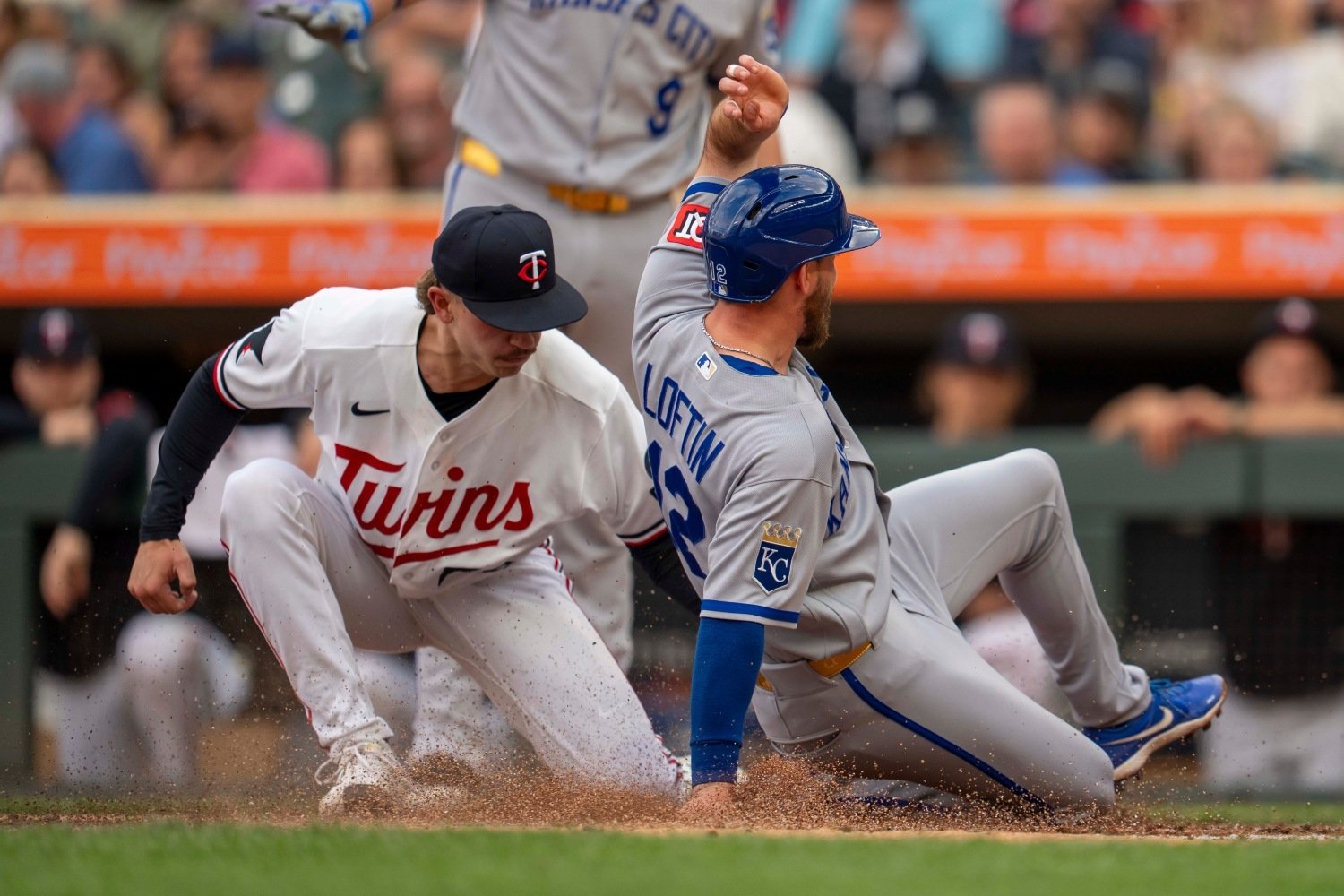 Box Score SP: Andrew Morris - 2 IP, 5 H, 2 R, 1 BB, 2 K (48 pitches, 32 strikes (67% strikes)) Home Runs: Byron Buxton, Kody Clemens (2), Victor Caratini Bottom 3 WPA: Anthony Banda (-0.39), Brooks Lee (-0.19), Justin Lawrence (-0.19) Win Probability Chart (vis Baseball Savant) The Twins opened a four-game series against the Royals on Thursday night, looking to build some momentum after taking two of three from the White Sox earlier in the week. Instead, a game filled with lead changes, defensive miscues, and missed opportunities slipped away late. Minnesota erased multiple deficits and got big offensive performances from Kody Clemens and Victor Caratini, but a disastrous ninth inning proved too much to overcome in an 8-6 loss to Kansas City at Target Field. The defeat dropped the Twins to 29-35 on the season. CLEMENS AND CARATINI KEEP THE TWINS IN THE FIGHT After Andrew Morris allowed a first-inning sacrifice fly by Salvador Perez to give the Royals a 1-0 lead, Byron Buxton immediately tied the game in the bottom half of the inning. Buxton crushed a Seth Lugo sinker 430 feet into the Twins bullpen for his 18th home run of the season, continuing what has been one of the best offensive stretches of his career. Minnesota answered again in the second after Kansas City reclaimed the lead. Victor Caratini lined a double to straightaway center field that scored Luke Keaschall and tied the game at 2-2. The offense continued to deliver throughout the middle innings. Kody Clemens gave the Twins their first lead of the night in the third, when he launched a first-pitch curveball over the scoreboard in right-center field. The 414-foot blast was his seventh home run of the season and made him the first left-handed hitter to homer off Lugo all year. After Michael Massey tied the game with a solo homer in the fourth, Minnesota answered once again. Trevor Larnach singled to open the inning and eventually scored when Ryan Kreidler ripped a triple into the left-center field gap, putting the Twins back on top 4-3. Clemens wasn't finished. Leading off the fifth inning with two outs, he turned on a down-and-in sweeper and launched his second homer of the night into the right-field seats. His eighth home run of the season extended Minnesota's lead to 5-3 and gave the Twins some much-needed breathing room. When that lead disappeared an inning later, Caratini stepped up with another huge swing. Following an hour-long rain delay, the veteran catcher turned on a 95-MPH fastball and drove it into the right-field seats for a game-tying home run that evened the score at 6-6. By the end of the sixth inning, Minnesota had already erased deficits three separate times. DEFENSIVE MISTAKES TURN THE GAME AROUND While the offense consistently responded, the Twins repeatedly undermined themselves defensively. Morris battled through a difficult opening two innings, in what was essentially a bullpen game. The rookie flashed electric velocity, touching 100.1 MPH for the second consecutive appearance, but needed 48 pitches to complete two innings and allowed two runs. Mike Paredes provided exactly what Minnesota needed after that. The right-hander retired the first six hitters he faced and cruised through three scoreless innings before running into trouble in the sixth. Even then, it appeared the Twins were in position to escape the inning relatively unscathed. Instead, everything unraveled. With two runners aboard and two outs, Anthony Banda entered to face Carter Jensen. Jensen ripped a double down the left-field line that scored two runs and tied the game. Moments later, Bobby Witt Jr. hit a routine pop-up behind second base that should have ended the inning. Neither Luke Keaschall nor Ryan Kreidler took charge of the play. The ball dropped untouched between them, allowing Jensen to score all the way from second and giving Kansas City a 6-5 lead. It was another frustrating defensive sequence for a team that entered the night coming off a three-error performance the day before. Minnesota was charged with multiple errors again Thursday, and several other miscues that didn't officially go into the scorebook proved equally costly. Those mistakes ultimately erased much of the excellent work provided by Paredes, who allowed just one earned run across 3 2/3 innings while keeping one of baseball's weakest offenses largely in check. THE ROYALS CAPITALIZE LATE After Caratini's game-tying homer in the sixth, both bullpens settled things down. Eric Orze worked around traffic in the seventh inning, while Yoendrys Gómez and Taylor Rogers combined to navigate the eighth. Minnesota had a chance to grab the lead in the bottom of the seventh after Buxton reached on an infield single, but the Twins couldn't push him home. That set the stage for the decisive ninth inning. Perez and Lane Thomas opened the frame with back-to-back singles against Rogers, forcing Minnesota to go back to the bullpen. Newly acquired Justin Lawrence entered with one out and immediately found himself in trouble. After a walk loaded the bases, Josh Rojas delivered a two-run single to center field that gave Kansas City an 8-6 advantage. Lawrence struggled to find the strike zone throughout the inning, throwing just 10 strikes among his 24 pitches, though he did eventually escape further damage by striking out both Jensen and Witt. Minnesota still had one final opportunity in the bottom of the ninth. Caratini opened the inning with a single, and Buxton later worked an eight-pitch walk to put the tying run aboard with two outs. That brought Brooks Lee to the plate. Lee has delivered in several big situations this season, but this time, he couldn't come through. The young infielder sharply grounded out to end the game, sealing another frustrating loss for a Twins team that spent most of the night battling back. In a game that featured four ties and multiple lead changes, it was ultimately defensive mistakes and a rough ninth inning that made the difference. After fighting their way back time and time again, the Twins simply couldn't complete one final comeback. What’s Next? The Twins and Royals are back at it tomorrow night for game two of the series. First pitch is set for 7:15 PM on Apple TV. Zebby Matthews will take the hill for the Twins, and it’ll be veteran right-hander Michael Wacha for Kansas City. Postgame Interviews Coming Soon! Bullpen Availability Chart SUN MON TUE WED THU TOT Paredes 60 0 0 0 50 110 Gómez 0 15 15 0 18 48 Orze 0 0 0 26 16 42 Laweryson 0 0 0 26 0 26 Banda 0 0 20 0 8 28 Adams 0 19 0 0 19 Lawrence 0 0 0 19 24 43 Rogers 0 0 0 12 11 23 Morris 0 0 18 0 48 66 View the full article
 -
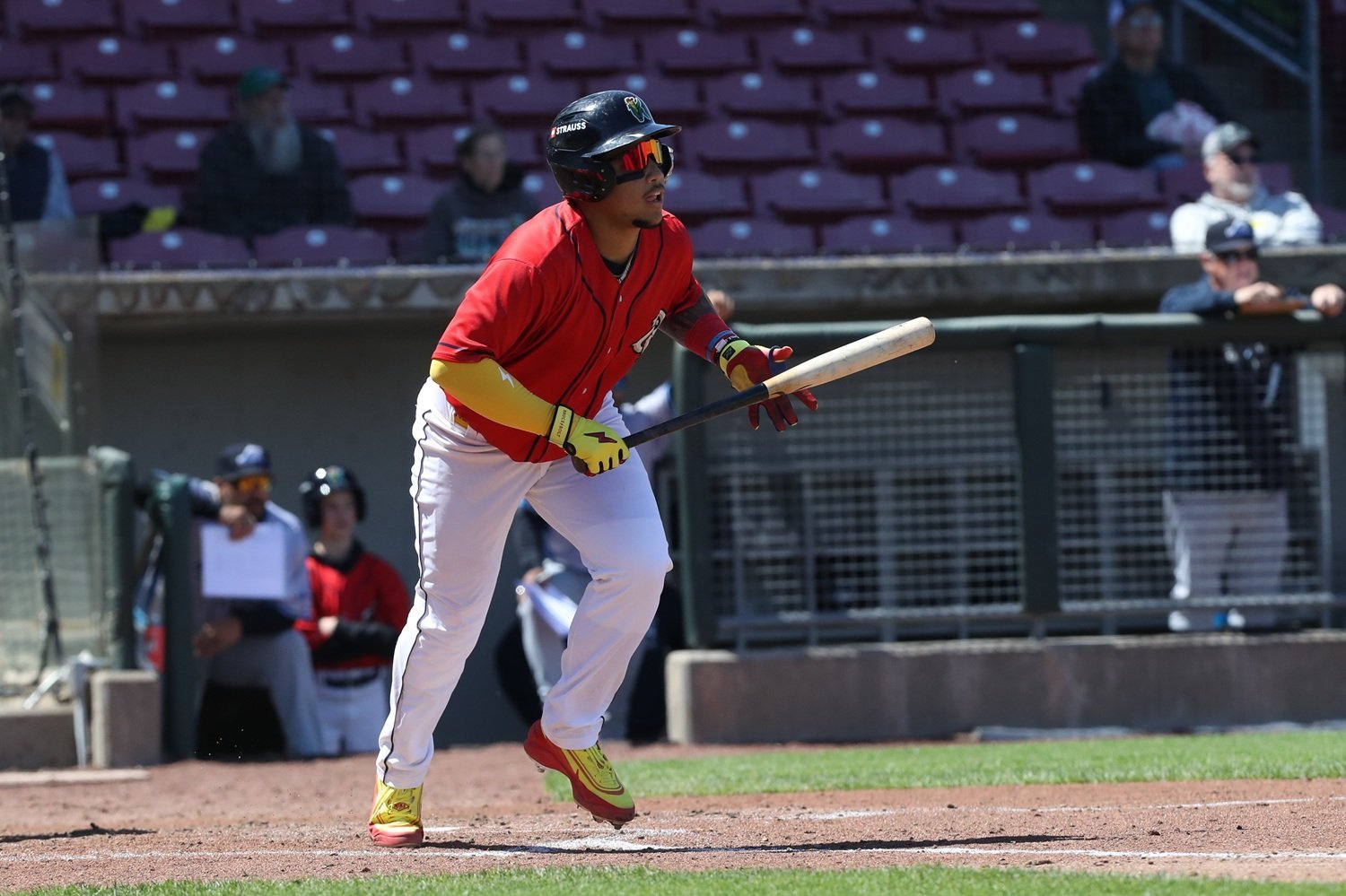 TRANSACTIONS The Minnesota Twins signed veteran Austin Voth to a minor-league contract. He was DFAd recently by the Blue Jays. He cleared waivers and elected free agency. Just days later, he signed with the Twins. The 33-year-old was assigned to the Saints and started Thursday night’s game. The Twins also signed Jake Covey, a 24-year-old non-drafted free agent. He has made two starts for the Glacier Range Riders in Kalispell, Montana, this season. In 12 innings, he gave up two runs on 11 hits. He had two walks and 14 strikeouts. After high school, he went to New Mexico State for the 2021 season, but he redshirted that year. Then he spent two seasons at Orange Coast College. He pitched the 2024 and 2025 seasons at Concordia University - Irvine. He went undrafted in the 2025 draft. This is his first opportunity with a big-league organization. SAINTS SENTINEL St. Paul 7, Indianapolis 4 Box Score When Royce Lewis was optioned to St. Paul, his bat immediately heated up. The same can’t be said for fellow optionee, Matt Wallner. When the Saints ended their game in Louisville, Wallner had an 0-for-4 and was hitting .184/.305/.265 (.570). His past five games: Saturday: 2-for-5 Sunday: 2-for-5, HR Tuesday: 2-for-4, 2B Wednesday: 2-for-4, BB, HR Thursday: 3-for-5, 3-HR. After Thursday’s game, he is now hitting .278/.361/.556 (.917), numbers you might expect. Oh yeah, there was a game played too. Austin Voth started and gave up three runs in the top of the first inning. In the bottom of the first inning, Hendry Mendez signed with one out. He advanced to third base on a Royce Lewis double. Both scored ahead of Wallner who launched his first home run of the game. The game was tied at 3-3. In the bottom of the third, Wallner led off with his second home of the day and fourth of the Saints season. With two outs, Tanner Schobel doubled to drive in Gabriel Gonzalez to make it 4-3. Voth settled in. He gave up just the three first-inning runs on five hits and went 4 2/3 innings. He had four strikeouts without a walk. Marco Raya came in and got the final out of the fifth inning. He worked a perfect sixth frame too, and two of the four outs he recorded were on strikeouts. Then there was a 36-minute rain delay. John Klein came on and gave up one run on one hit and two walks in the seventh inning. He had two strikeouts. Leading 6-4 going to the bottom of the seventh inning, the Saints held a 6-4 lead. Matt Wallner led off with his third home run of the game and fifth of the season. Trent Baker came on and struck out four batters over two perfect innings to record his second save. Wallner was 3-for-4 with the three homers, three runs scored, and five RBI. Hendry Mendez was 2-for-4 with a walk. Royce Lewis was 1-for-3 with two walks and a double. Kyler Fedko was 2-for-4. WIND SURGE WISDOM Wichita 1, San Antonio 5 Box Score Preston Johnson made his first Wichita start and gave up three runs on five hits over four innings. He walked two and struck out one batter. Nick Mikolajchak made his debut in the Twins organization. The 28-year-old gave up two runs on two hits and a walk over two innings. Both hits were home runs. Jarret Whorff had two strikeouts over two perfect innings. Kyle Bischoff worked a perfect ninth frame. The Wind Surge offense faced a rehabbing former major leaguer, Juan Brito. They scored one run in five innings against him. The run came on the first Double-A home run. The homer was one of the Surge’s six hits. Kalai’ Rosario went 1-for-3 with the team’s lone walk. Garrett Spain hit his ninth double, and Miguel Briceno hit his first Surge double. The San Antonio Missions are the Double-A affiliate of the San Diego Padres. Be sure to check out one of our DiamondCentric sites, Padres Mission. Also, check out how many of these Missions players appear on the Padres Mission Top 20 Prospect Rankings. KERNELS CHRONICLE Cedar Rapids 5, Wisconsin 8 Box Score The TimberRattlers roster is loaded with prospects, some pitchers but the lineup has a lot of potential big leaguers. Be sure to go to our sister site, Brewer Fanatic, and check out how many of their top prospects play for Wisconsin. Rattlers starting pitcher Josh Knoth was the 33rd overall pick of the 2023 draft out of high school. He made 21 starts at Low A Myrtle Beach in 2024, but he missed the full 2025 season after having Tommy John surgery. He made three rehab starts in the ACL and on Thursday night, he made his third start with Wisconsin. He went two innings in the first one. He threw three innings in the second start. On Thursday, he gave up two runs on two hits over 3 2/3 innings. And, thankfully, Luis Pena was back in their lineup on Thursday after leaving the game due to illness on Tuesday. Scary after what he went through a month ago. And, why has 2025 top pick Andrew Fischer not been promoted to Biloxi. And, personal opinion, Josh Adamczewski is one of the most underrated prospects in baseball right now. After going 2-for-3 with a walk with his ninth homer and 10th stolen base. And 2024 top pick Braylon Payne has a .900+ OPS and is still just 19. The Kernels have a pretty solid offense, but through the first three games of this series, all Rattler wins, Cedar Rapids has been outscored 32-20. But if you’re in southern Minnesota or near the Twins Cities and are looking for something to do this weekend, make the drive down to Cedar Rapids and watch a couple of solid High-A teams compete. Now to the Kernels. Wisconsin scored four runs in the top of the first inning. The Kernels responded with two runs in the bottom of the inning. Brandon Winokur led off with a walk, and then Eduardo Tait hit his eighth home run of the season to cut the deficit in half. Wisconsin added two runs in the third and another in the fifth inning. So when the Kernels came to the plate in the bottom of the sixth, they were behind 7-2. Eduardo Tait led off that inning with his second home run of the game and ninth of the season. Khadim Diaw followed with a double. He went to third on a fly out and scored on a second fly out to make it 7-4 Wisconsin. In the bottom of the seventh, the Kernels cut the lead by one more run. Danny De Andrade led off with a double and then scored on a two-out triple by Brandon Winokur. Tait had two of the team’s eight hits and three of their five RBI. Jay Thomason went 2-for-3 with a walk. He also stole his 13th and 14th bases. Diaw’s double was his 13th, and De Andrade’s was his fourth. Winokur had a walk to go with his second triple of the season. Michael Ross started and gave up six runs on four hits and four walks in four innings. He actually walked the first three batters he faced, which is never good, so his line could have actually been worse. Christian Becerra gave up one run on two hits and a walk over two innings. He had three strikeouts. Sam Rochard struck out three batters over two scoreless innings. Eston Stull gave up one run on four walks in the ninth inning. MIGHTY MATTERS Ft. Myers 11, Lakeland 0 Box Score The Mussels scored double-digit runs on Thursday, but we have to talk pitching first. Justin Mitrovich’s season started late, but since he has joined the Mussels and made his pro debut, he has been fantastic. In fact, he was the Twins Daily Minor League Pitcher of the Month for May. In his five May starts, he worked a total of 15 2/3 innings. In his first start in June, Mitrovich tossed five scoreless innings and threw 71 pitches, easily his career-high. He gave up two hits, walked two and had five strikeouts. It earned him his first professional Win as well. Mitrovich was the Twins ninth-round pick in 2025 out of Elon. Their 18th-round pick in 2025 was Matthew Dalquist. He pitched at UC-San Diego. He came on and earned his first pro save by tossing four shutout innings in relief. He began by getting the first 11 batters out. With two outs in the ninth, an error put a runner on base, but Dalquist got the next batter out to end the game. In his final May start, Dalquist tossed five shutout innings, so he’s pitching very well too. A lot went right for the Mussels at the plate. They scored their 11 runs on 15 hits and four walks. They had just three extra base hits and one stolen base. They scored three runs in the first inning, and then had a seven-run second inning. They held the 10-0 lead until the top of the ninth when they added one run. They were 9-for-16 with runners in scoring position and left eight one base. Quentin Young led the way. He went 3-for-4 with his sixth double, his second triple, two runs and three RBI. Luis Fragoza was hit by a pitch and went 2-for-4 with his fifth double and three RBI. In 12 Mussels games, the 19-year-old is hitting .318/.388/.636 (1.024) with five doubles and three triples with 14 RBI.Ramiro Dominguez went 2-for-4 with a walk. Irvin Nunez went 2-for-4 with a walk. Bryan Acuna went 2-for-5. COMPLEX CHRONICLE FCL Twins 5, FCL Braves 1 Box Score Frederick Hiciano signed with the Twins on January 15th out of the Dominican Republic. He was added to the DSL Twins roster on May 27th, but apparently, they had a change of heart or saw him pitch and realized he was ready for the FCL. He was added to the FCL Twins roster on May 30th. He made his professional debut on Thursday. He tossed two scoreless, hitless, walkless innings and had one strikeout. Six batters faced. Six batters out. Next, Callan Fang made his second rehab start. The 2025 13th round pick from Harvard tossed two innings. He gave up an unearned run on one hit. He walked none and had four strikeouts. Nick McAuliffe worked the final three innings. He gave up no runs, no hits, no walks and struck out five batters. The one hit that the FCL Braves had was an infield single by Diego Tornes. Tornes stole second base and went to third on a throwing error. He scored the unearned run on a fielding error off the bat of Yamvier Carrero. Carrero stole second and went to third on a throwing error. However, Fang got a strikeout to end that inning. The Twins got on the scoreboard with a three-spot in the top of the third. With one out, Yilber Herrera singled and went to second on a wild pitch. Yovanny Duran and Miguel Caraballo walked to load the bases. Jhomnardo Reyes drove a single to left to drive in two runs. Caraballo scored on a wild pitch. The Twins held the 3-1 lead until the top of the sixth. Carlos Taveras led off with a single. He moved to second on a wild pitch. With one out, Darwin Almanzar was hit by a pitch. Victor Leal singled to right to drive in Taveras with the fourth run. With two outs, Herrera walked. Almanzar scored when the power had a throwing error. The Twins had five runs on six hits and six walks. Yovanny Duran, Miguel Caraballo, Jhomnardo Reyes, Victor Leal, and Yilber Herrera each had a single and a walk. Caraballo was also hit by a pitch. DSL Twins 3, FCL Rockies 11 Box Score Not a great day for the DSL Twins. Through four innings, they were behind 11-0. However, they won the final three innings 3-0. (Yes, I realize that doesn’t actually mean anything.) Fernando Hernandez made his professional debut. The 19-year-old gave up one run on one hit and one walk. He had one strikeout. 19-year-old Alam Soriano made his pro debut too. He gave up seven runs on three hits and four walks. In 1 2/3 innings, he had three strikeouts. Next up was the pro debut of 17-year-old Juan Germosen. He gave up three runs on one hit and five walks in 1 1/3 innings. He had one strikeout. Each of the first three pitchers threw a wild pitch. Soriano and Germosen each hit one batter. Yolcar Garcia, an 18-year-old right-hander, came on for his professional debut. In two innings, he faced just six batters. He gave up no runs, no hits and issued no walks. He had two strikeouts. As mentioned earlier, the Twins were behind 10-0 after four innings. In the top of the fifth, Daiyer Barboza walked with one out. He moved to second on a ground out and then third on a balk. Juan Holman walked, and then Barboza scored on another balk. With two outs in the top of the seventh, the Twins were down to their final out. Barboza recorded his first pro hit, and his first pro home run, both on the same swing. Jendy Martinez followed with a walk, and Juan Holmann drove him in with a double to center. Holmann was 2-for-2 with two walks and his second double. Barboza was 1-for-1 with two walks a homer and two runs scored. The only other hit the team had was a double by catcher Luis Duarte. PLAYERS OF THE DAY Hitter(s) of the Day Matt Wallner (St. Paul): 3-for-5, 3-HR(5), 3 R, 5 RBI, K. Eduardo Tait (Cedar Rapids: 2-for-5, 2-HR(9), 2 R, 3 RBI. Quentin Young (Fort Myers): 3-for-4, 2B(6), 3B(2), 2 R, 3 RBI, K Pitcher(s) of the Day Justin Mitrovich (Fort Myers): 5 IP, 2H, 0 R, 2 BB, 5 K, 71 pitches, 43 strikes (60.6%) Matthew Dalquist (Fort Myers): 4 IP, 0 H, 0 R, 0 BB, 5 K, 48 pitches, 31 strikes (64.6%) PROSPECT SUMMARY Check out the Prospect Tracker for much more on our Twins Top 20 prospects after seeing how they did today. #2 - IF Kaelen Culpepper (St. Paul) - 1-for-3, 2 BB, CS(2). (batted first, played 3B) #5 - C Eduardo Tait (Cedar Rapids) - 2-for-5, 2-HR(9), 2 R, 3 RBI (batted second, played catcher). #10 - OF Gabriel Gonzalez (St. Paul) - 0-for-3, BB, R, K. (batted sixth, played DH) #12 - RHP Andrew Morris (Minnesota) - 2 IP, 5 H, 2 ER, 1 BB, 2 K, 48 pitches, 32 strikes (66.7%) #13 - OF Hendry Mendez (St. Paul) - 2-for-4, BB, R (batted second, played LF) #14 - 3B/SS Quentin Young (Ft. Myers) - 3-for-4, 2B(6), 3B(2), 2 R, 3 RBI, K (batted sixth, played 3B) #15 - 3B/CF Brandon Winokur (Cedar Rapids) - 1-for-3, 2 BB, 3B(2), R, RBI, K (batted first, played SS) #19 - C/OF Khadim Diaw (Cedar Rapids) - 1-for-4, 2B(13), R, K (batted third, DHd) #20 - 2B/SS/CF Kyle DeBarge (Wichita) - 1-for-4, K (batted third, played SS) UPCOMING PROBABLES Friday, June 5: Indianapolis @ St. Paul (7:07 pm CT) - RHP Ricky Castro (0-0, 4.32 ERA) vs Jose Urquidy (2-3, 4.78 ERA) San Antonio @ Wichita (6:35 pm CT) - RHP Jose Olivares (0-3, 6.55 ERA) fs RHP Miguel Mendez (1-1, 4.76 ERA), Padres #3 prospect (#2 pitching prospect) Wisconsin @ Cedar Rapids (6:35 pm CT) - RHP Riley Quick (0-1, 4.41 ERA) Ft. Myers @ Lakeland (6:30 pm CT) - RHP Reed Moring (1-0, 1.95 ERA) FCL Red Sox @ FCL Twins (11:00 am CT) - TBD DSL Marlins @ DSL Twins (10:00 am CT) - TBD CURRENT W-L Records Minnesota Twins: 29-35 (3rd place (of 5) in AL Central, 7.0 GB)) St. Paul Saints: 32-27 (4th place (of 10) in IL West Division, 5.0 GB)) Wichita Wind Surge: 22-30 (5th place (of 5) in TL North Division, 12.0 GB)) Cedar Rapids Kernels: 26-28 (4th place (of 6) in MWL West Division, 8.0 GB)) Fort Myers Mighty Mussels: 31-23 (2nd place (of 6) in FSL West Division, 3.0 GB)) FCL Twins: 11-12 (4th place (of 6) in FCL South Division, 4.5 GB)) DSL Twins: 0-3 (7th place (of 7) in DSL East Division, 2.0 GB)) Please feel free to ask questions about the teams, the rosters, and discuss today’s games, or anything else Twins minor-league related! View the full article
 -
Brayan Bello Demoted To Minors By Red Sox After Another Poor Start
DiamondCentric posted an article in Talk Sox
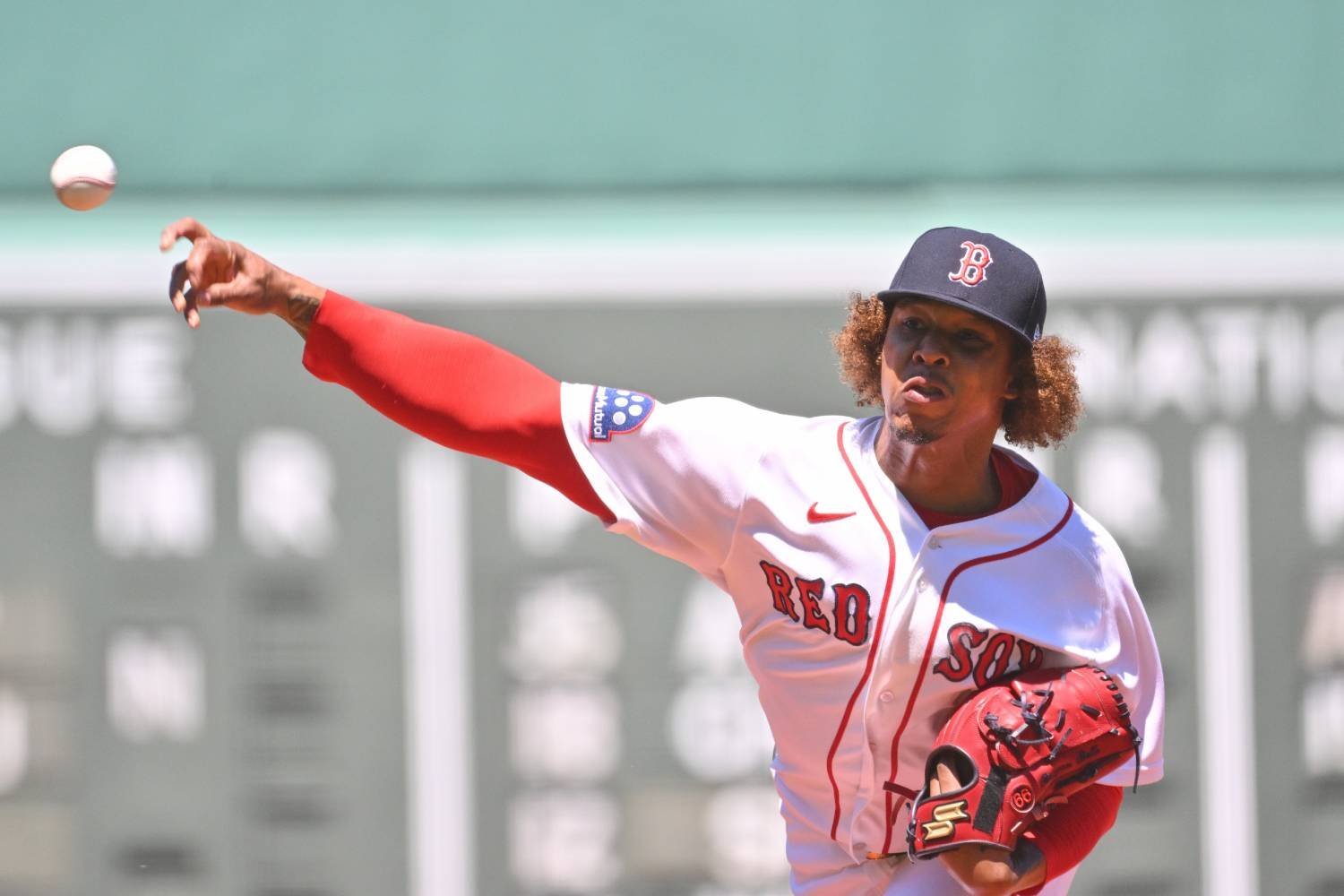 The Brayan Bello situation has taken another turn. The Boston Red Sox demoted Bello to Triple-A Worcester following yet another bad start by the right-hander Thursday, according to multiple reports. The move came after Bello allowed eight runs over five innings in an 8-2 loss to the Baltimore Orioles. Six of those runs came in the first inning. It was the second game this season in which the 27-year-old has allowed eight runs, with another start yielding seven runs and yet another six runs. That is four of his 12 appearances this year, eight of which have been starts. The Red Sox have also tried using an opener for Bello, who is in the third year of a six-year, $55 million contract. When questioned by the media about his role on the team and whether he would be better off in the bullpen or the minors, Bello took exception. Bello has a 6.34 ERA and entered Thursday's game with an 8.2% walk rate and a 15.6% strikeout rate. While the walk rate is very close to the MLB average of 8.4% and just off his career mark of 8.3%, his strikeout rate is the worst of his career, below the 15.6% for his career and the MLB average of 22.4%. Opponents are also hitting .310 vs. Bello, the worst mark since his rookie season of .315. It was already a busy day on the pitching side for the Red Sox, who promoted right-handed reliever Tommy Kahnle before the game and then traded for left-handed reliever Joe La Sorsa, who was in the Pittsburgh Pirates' organization and will be added to the roster prior to Friday's series opener against the New York Yankees. La Sorsa is an easy swap for Bello's spot on the 26-man roster, but a 40-man move will need to be made. View the full article
 -
 It was in September of 2020, the Scott Erickson and his girlfriend Rebecca Grossman (wife of a prominent LA surgeon) made the decision to grab a couple of drinks. Then they decided to race their matching Mercedes-Benz SUVs at speeds between 70 and 80 miles per hour. Those decisions contributed to the deaths of Mark (11) and Jacob (8) Iskander. The boys were out walking with their mother and a younger sibling. Reports are that the mother grabbed the younger sibling and dove out of the way of Erickson's car. Grossman was driving the car that hit and killed the two boys. In criminal court in 2024, Grossman was sentenced to 15 years to life for two counts of second-degree murder. On Wednesday, a civil court, the jurors awarded the Iskander family $176 million. Not only were they negligent, but the jury said that both Erickson and Grossman acted with malice. That could lead to a punitive damages phase of the civil trial. And in that phase, they could be awarded significantly more than the $176 million from this phase. That phase begins this week as well. View the full article
 -
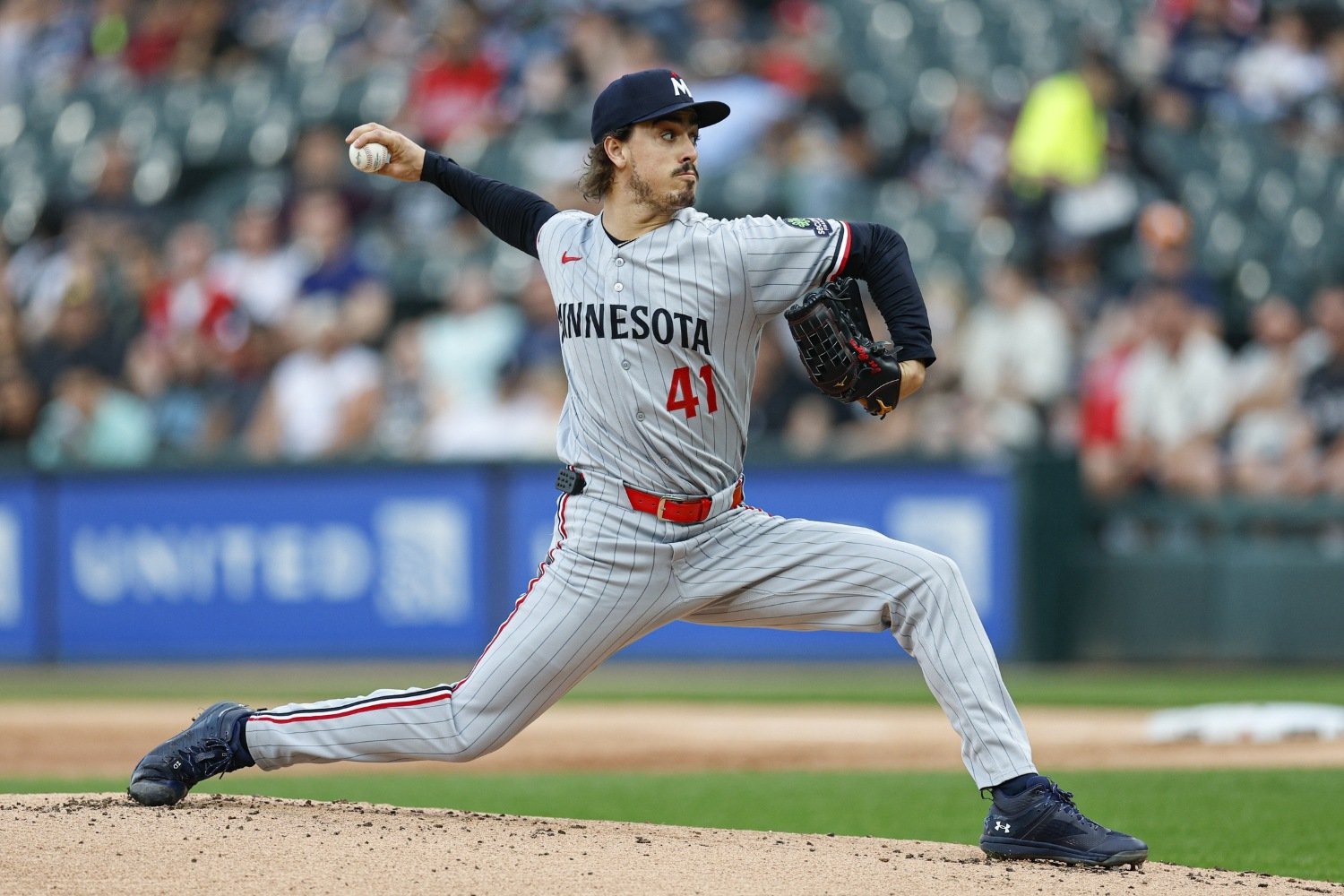 For over 50 years, Major League Baseball teams operated with a four-man starting rotation. From roughly the 1890s through the early 1970s, that model was the standard across the sport. Pitchers would take the ball every fourth day (sometimes, early in that window, every third); work deep into games; and then be ready to go again after three days of rest. For a long time, it worked. But baseball eventually changed. Once MLB expanded to the now-standard 162-game schedule in the early 1960s, teams started realizing that relying on just four starters for an entire season was increasingly difficult. Arm injuries became harder to ignore, workloads became more demanding, and organizations slowly shifted toward a five-man rotation—not just because of the extra eight games, but because the league added eight teams in the 1960s. Expansion brought a bunch of new pitchers into the majors, which meant adding more guys who weren't good enough to start (or maybe even to pitch) in the smaller leagues previously. It might sound like going to more starters in response to that diffusion of talent would be counterproductive, but with that diffusion came democratization. Because everyone was suddenly (and, as it's turned out, permanently) short on pitchers, spreading the workload more to protect the arms of your best hurlers made sense. It didn't cost you much, in a relative sense, and after all, baseball is a zero-sum game. Not coincidentally, it was also in the early and mid-1970s that the players became much more powerful and much better-paid, via the advent of the MLB Players Association and free agency. Pitchers were better protected from losing their jobs due to injuries, at least without compensation, and teams stood to lose more cash by going through pitchers' arms as fast as they used to. For all those reasons, five replaced four. That eventually became the norm across the league, and it’s the structure baseball has operated with for the last several decades. Now, though, things appear to be evolving once again. More and more teams around baseball have started experimenting with six-man starting rotations, essentially allowing their starters to pitch just once a week. And recently, the Twins have joined that growing trend. The timing made sense. The Twins’ last off day came on May 21, and they won’t have another until June 8. That meant their rotation was staring down roughly two-and-a-half weeks without any built-in additional rest. That’s a dangerous game to play with any pitching staff, especially one that has already dealt with several injury concerns throughout the year. So instead of overworking their starters, the Twins adjusted. Over the last couple weeks, Minnesota has toyed with a six-man rotation consisting of Joe Ryan, Taj Bradley, Bailey Ober, Connor Prielipp, Zebby Matthews, and Kendry Rojas or Simeon Woods Richardson. Now, Rojas and Ober are hurt and Woods Richardson is back in the Blue Jays organization, but those don't seem to be related to this cautious usage. If anything, the balky elbows of Ober and Rojas demonstrate why this measure was needed—and why, even as they now navigate having too few reliable starters even to fill out a five-man stable, they're adding sixth days here and there via bullpen games like Thursday night's. For at least a couple of these guys, that extra day of rest appears to be making a real difference. Joe Ryan threw harder in his last start and cited some work between starts as the reason that was possible. Prielipp and Bradley are working deeper into games than they've ever consistently done, at any level of baseball. More importantly, it’s also helped keep this group on the field. Rojas landing on the 15-day injured list with triceps inflammation is obviously concerning, but beyond that, the six-man setup has eased the workload on a rotation that has already battled its fair share of health issues this season. Rojas is already throwing again, and on his way back via what the team expects to be a short ramp-up. Bradley has already had an IL stint. Ryan was pulled from a start after just nine pitches last month. Mick Abel is currently injured as well, and Prielipp’s injury history is extensive, dating back to college. This is not a pitching staff overflowing with durable, 200-inning workhorses. It’s a talented group, but it’s also one that probably benefits greatly from additional rest and workload management. Which raises an interesting question: should the Twins continue using a six-man rotation for the rest of the season? I’m going to say yes, and there are a couple of reasons why. The first is simple: the current setup is producing results. The pitching staff has looked significantly better recently. Starters are getting deeper into games, the overall group appears healthier, and the extra rest seems to be maximizing the effectiveness of the rotation. Even once the schedule begins including more off days later in the summer, protecting this pitching staff should remain the organization’s top priority. Manager Derek Shelton said that very thing in reference to the team's insistence on sliding back Prielipp's starts at times, to avoid ratcheting up his workload too quickly. The Twins are going to go as far as their pitching takes them this year. That’s just the reality of the roster construction. Keeping those arms healthy matters more than anything else. But there’s another reason why this setup makes sense, too, and it has to do with the bullpen. Because while the rotation has stabilized recently, the bullpen really hasn’t. Inconsistency has plagued that unit for much of the season, and asking relievers to constantly cover four or five innings every night simply hasn’t been sustainable. Having six starters alleviates some of that pressure. Right niw, of course, that formula isn't one they can put into action. They don't even have five healthy starters. Ryan, Prielipp, Matthews and Bradley are taking their turns, and the team is just trying to get to the next off day as they await the returns of both Abel and Rojas. Once those two come back, a six-man group becomes more feasible, but as the loss of Ober (even if it's only for a few weeks, as the team hopes) reminds us, there's no guarantee that other injuries will hold off while these heal. The Twins have something a lot of organizations don’t: legitimate pitching depth. And because of that depth, they’re uniquely positioned to make this kind of setup work long-term. Not every team can realistically survive with six starters. Some organizations barely have four reliable options. But the Twins have enough young arms, enough flexibility, and enough interchangeable pieces to consistently rotate guys in and out without completely disrupting the staff. That’s an advantage. And frankly, it’s one they should probably lean into as much as possible. Modern baseball is constantly evolving when it comes to pitcher usage. Teams are searching for ways to maximize performance while minimizing injuries, and the traditional five-man rotation no longer feels quite as safe as it once did. For the Twins specifically, a six-man rotation might simply make the most sense. The results have been encouraging, the staff looks fresher, and the workload distribution feels more manageable. With so many talented but injury-prone arms on the roster, giving everyone an extra day of rest could pay massive dividends over the course of a long season. At this point, there’s very little reason to abandon it. They just have to ride out the storm, hoping that they soon have enough healthy hurlers to enact it again. View the full article
 -
What are your Marlins vs. Rays series predictions?
DiamondCentric posted an article in Fish On First
 Once again in 2026, I will be monitoring Miami Marlins predictions from our valued SuperSubs, Fish On First staffers and livestream guests. Individual article pages like this one will be created prior to every Marlins series and featured prominently on the FOF site. Consistent participation is key if you want to win this annual contest. Submissions only take a few seconds. Scoring system A "perfect" series is worth three points: Earn one point for predicting which team will win the upcoming series Earn one point for predicting the precise number of victories for each team Earn one point for predicting the “Series MVP” who accumulated the highest win probability added (WPA) during the series as calculated by FanGraphs (could pick a player from either team) FOF SuperSub Nicholas Milton is currently atop the 2026 season leaderboard, which will be updated between every Marlins series. If you are a SuperSub, leave a comment with your Prediction Time picks on this page, or join the Marlins Discord Server and submit there. We'll feature them on the upcoming Fish On First LIVE episode and track your points throughout the season! Any picks submitted prior to the first pitch of the series opener will be counted. If you are not a SuperSub, please consider signing up here to support the FOF staff. Series preview notes Probable starting pitchers: RHP Tyler Phillips (MIA) vs. RHP Drew Rasmussen (TB) on Friday TBA (MIA) vs. LHP Shane McClanahan (TB) on Saturday RHP Sandy Alcantara (MIA) vs. RHP Griffin Jax (TB) on Sunday The Marlins rank 19th in MLB with a 97 wRC+ and 14th in MLB with a 4.00 FIP. They are 5-5 in their last 10 games and have a 18-15 record at home this season. The following Marlins players are on the injured list: Griffin Conine (60-day IL), Josh Ekness (15-day IL), Ronny Henriquez (60-day IL), Janson Junk (15-day IL), Adam Mazur (60-day IL), Andrew Nardi (60-day IL), Eury Pérez (15-day IL) and Robby Snelling (60-day IL). The Rays rank 10th in MLB with a 103 wRC+ and 20th in MLB with a 4.28 FIP. They are 2-8 in their last 10 games and have a 15-14 record on the road this season. The following Rays players are on the injured list: Jonny DeLuca (10-day IL), Jake Fraley (10-day IL), Michael Grove (60-day IL), Craig Kimbrel (15-day IL), Gavin Lux (60-day IL), Ryan Pepiot (60-day IL), Manuel Rodriguez (60-day IL), Jesse Scholtens (15-day IL), Edwin Uceta (60-day IL) and Steven Wilson (60-day IL). View the full article
 -
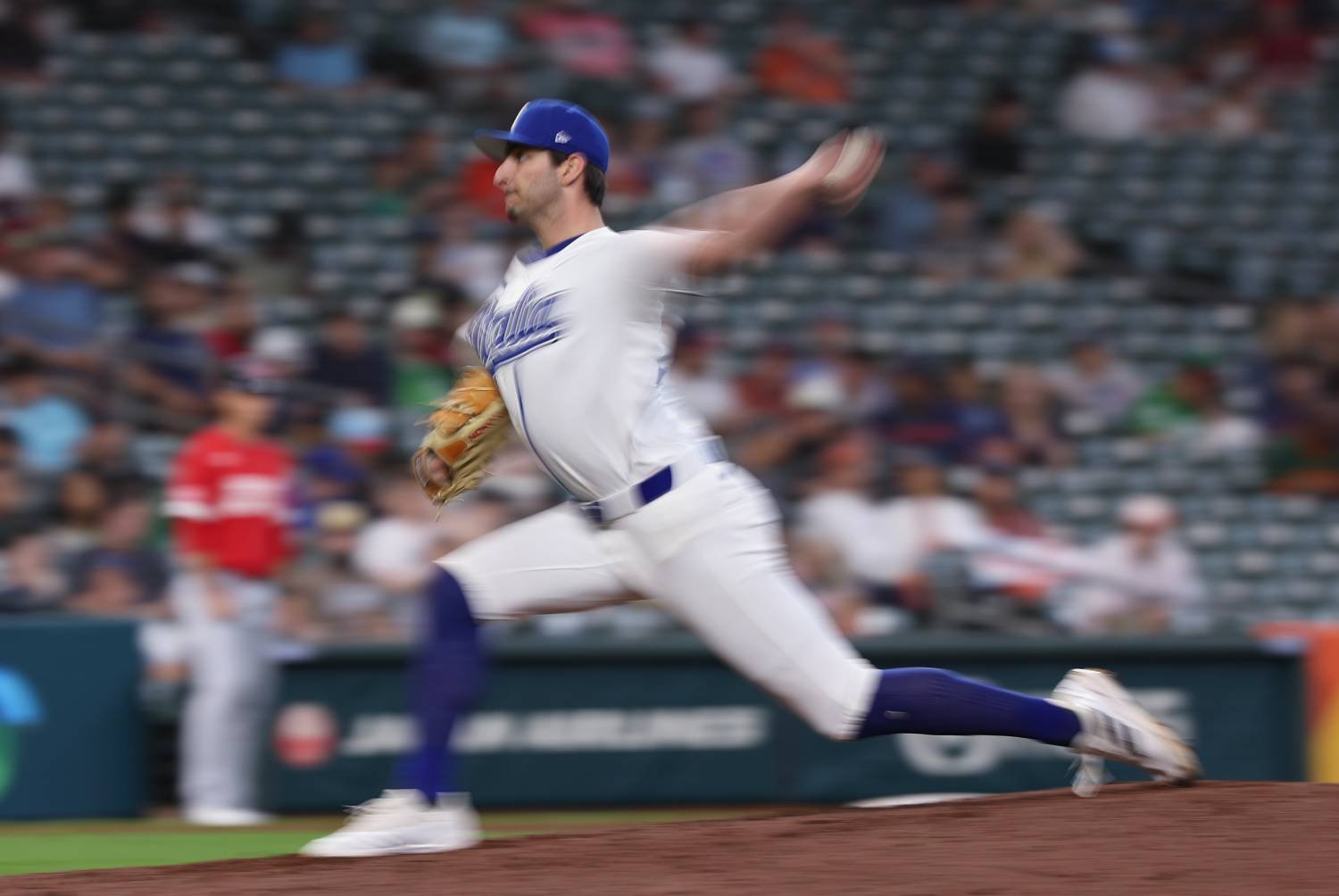 In need of some bullpen help, the Boston Red Sox have acquired left-hander Joe La Sorsa from the Pittsburgh Pirates, according to a report Thursday by Ari Alexander of WHDH-TV in Boston. According to another report, the Red Sox only had to send cash to the Pirates. La Sorsa had an upward mobility clause in his contract that he exercised, which prompted the move by the Pirates. Pittsburgh is also in need of some bullpen help, which adds another interesting aspect to this transaction. The Red Sox will have to make a move before Friday's series opener against the New York Yankees to get La Sorsa on the 26-man and 40-man rosters. The 28-year-old La Sorsa had a 3.46 ERA at Triple-A for the Pirates. In 26 innings covering 20 appearances, he allowed six walks and 22 strikeouts with a .237 opponent batting average. He also pitched for Italy in the World Baseball Classic. It is the second move involving the bullpen Thursday after promoting Tommy Kahnle from Triple-A in a similar situation. View the full article
 -
 It's time to check back in with another Brewers mock. The MLB Draft is just five weeks away. This class is as muddled as any I've covered, though it's plenty deep in talent. You can find our mock consensus board here. Let's check in on some player profiles it's currently mocking to the Brewers with their first few picks in July At #25, the Brewers Select: Cole Carlon, LHP, Arizona State Carlon is one of the fastest-rising college arms in 2026, in a demographic that has suffered from injuries and inconsistent performance. After contributing to the Sun Devils immediately as a freshman bullpen arm, Carlon improved significantly during his sophomore season, cutting his ERA in half and flashing far more dominant stuff. It's a good-looking delivery. While there aren't outlier release traits, he hides the ball well during his delivery and has an ideal pitcher's frame at 6-foot-5, 220 pounds. He's moved from the bullpen to a starting role in 2026. The results have been spectacular. Carlon has a 3.82 FIP through his first 50 innings of the season, while striking out over 39% of hitters. The stuff is as explosive as ever. His fastball sits 94-96 MPH, but he's run it up over 100 MPH in recent starts. His slider is one of the best in the class, a mid-80s gyro offering that generates a ton of swing and miss. Carlon mixes in a curveball and a changeup, too. There's still some refinement needed to the strike-throwing, but Carlon's walk rate has reduced from 11.3% in 2025 to around 9% in 2026. Carlon is looking like a first-round prospect with starter traits who should move quickly as a pro. At #66, the Brewers Select: Rocco Maniscalco, SS, Oxford HS, AL Maniscalco is a switch-hitting shortstop who has drawn Eli Willits comparisons. He attends the same Alabama high school as recent Marlins second-rounder Carter Johnson, and is currently committed to Mississippi State. Maniscalco will be one of the youngest prep players in the class. He's a reclass from 2027 and will be 17 years and 2 months old on draft day. It's a good overall offensive profile with solid bat speed and good bat-to-ball skills from both sides of the plate. Given Maniscalco's age, it's not hard to envision him adding strength and additional impact at the plate. In the field is where he truly shines. Maniscalco has a good chance to stick at shortstop long term, with smooth actions, a quick first step, an excellent internal clock and a plus arm. He's one of the better defensive prep shortstops in this class, behind Aiden Ruiz. There are both tools and skills in a strong all-around profile. At #102, the Brewers Select Cooper Sides, RHP, Orange Lutheran HS, CA Cooper Sides is a projectable prep right-handed pitcher out of California, currently committed to LSU. He has a huge frame at 6-foot-6, 225 pounds, with burgeoning stuff that has taken a step forward in velocity in the past 12 months. His fastball is already above-average, sitting 95 mph from a low three-quarter slot. There's a quality sweeping slider that goes with it, with tight break and demonstrating good spin rates. That pitch sits in the low 80s, while Sides will mix in a curveball in the upper 70s and a mid-80s changeup to round out a four-pitch mix. While the curveball and changeup need refinement, there's the makings of an exciting arsenal as he enters pro ball. Sides throws plenty of strikes, enough for above-average control. Some like him as the best prep arm in the state. It's easy to envision him being a problem after a few years of pro development. View the full article
 -
 It's time to check back in with another Brewers mock. The MLB Draft is just five weeks away. This class is as muddled as any I've covered, though it's plenty deep in talent. You can find our mock consensus board here. Let's check in on some player profiles it's currently mocking to the Brewers with their first few picks in July. At #25, the Brewers Select: Cole Carlon, LHP, Arizona State Carlon is one of the fastest-rising college arms in 2026, in a demographic that has suffered from injuries and inconsistent performance. After contributing to the Sun Devils immediately as a freshman bullpen arm, Carlon improved significantly during his sophomore season, cutting his ERA in half and flashing far more dominant stuff. It's a good-looking delivery. While there aren't outlier release traits, he hides the ball well during his delivery and has an ideal pitcher's frame at 6-foot-5, 220 pounds. He's moved from the bullpen to a starting role in 2026. The results have been spectacular. Carlon has a 3.82 FIP through his first 50 innings of the season, while striking out over 39% of hitters. The stuff is as explosive as ever. His fastball sits 94-96 MPH, but he's run it up over 100 MPH in recent starts. His slider is one of the best in the class, a mid-80s gyro offering that generates a ton of swing and miss. Carlon mixes in a curveball and a changeup, too. There's still some refinement needed to the strike-throwing, but Carlon's walk rate has reduced from 11.3% in 2025 to around 9% in 2026. Carlon is looking like a first-round prospect with starter traits who should move quickly as a pro. At #66, the Brewers Select: Rocco Maniscalco, SS, Oxford HS, AL Maniscalco is a switch-hitting shortstop who has drawn Eli Willits comparisons. He attends the same Alabama high school as recent Marlins second-rounder Carter Johnson, and is currently committed to Mississippi State. Maniscalco will be one of the youngest prep players in the class. He's a reclass from 2027 and will be 17 years and 2 months old on draft day. It's a good overall offensive profile with solid bat speed and good bat-to-ball skills from both sides of the plate. Given Maniscalco's age, it's not hard to envision him adding strength and additional impact at the plate. In the field is where he truly shines. Maniscalco has a good chance to stick at shortstop long term, with smooth actions, a quick first step, an excellent internal clock and a plus arm. He's one of the better defensive prep shortstops in this class, behind Aiden Ruiz. There are both tools and skills in a strong all-around profile. At #102, the Brewers Select Cooper Sides, RHP, Orange Lutheran HS, CA Cooper Sides is a projectable prep right-handed pitcher out of California, currently committed to LSU. He has a huge frame at 6-foot-6, 225 pounds, with burgeoning stuff that has taken a step forward in velocity in the past 12 months. His fastball is already above-average, sitting 95 mph from a low three-quarter slot. There's a quality sweeping slider that goes with it, with tight break and demonstrating good spin rates. That pitch sits in the low 80s, while Sides will mix in a curveball in the upper 70s and a mid-80s changeup to round out a four-pitch mix. While the curveball and changeup need refinement, there's the makings of an exciting arsenal as he enters pro ball. Sides throws plenty of strikes, enough for above-average control. Some like him as the best prep arm in the state. It's easy to envision him being a problem after a few years of pro development. View the full article
