


DiamondCentric
-
Posts
2,631 -
Joined
-
Last visited
Never
Content Type
Profiles
Forums
Events
News
Tutorials & Help
Major League Baseball Videos
Guides & Resources
Store
Downloads
Gallery
Everything posted by DiamondCentric
-

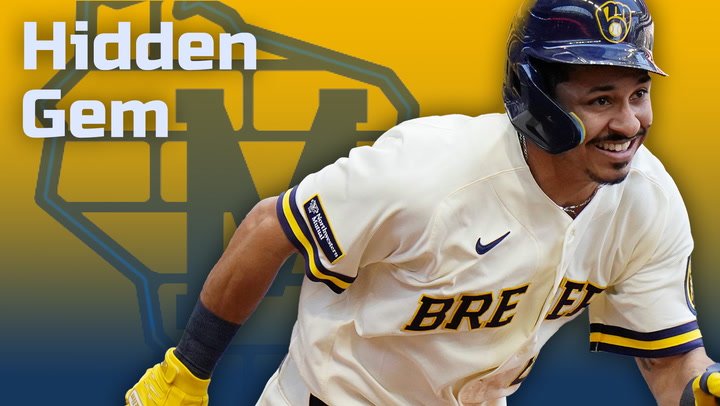 David Hamilton, who came to Milwaukee as part of the package that sent Caleb Durbin to Boston, has been tinkered with more than anyone, according to Milwaukee Brewers manager Pat Murphy. Two months into the season, we're seeing it paying off. Is it sustainable? View the full article
 -
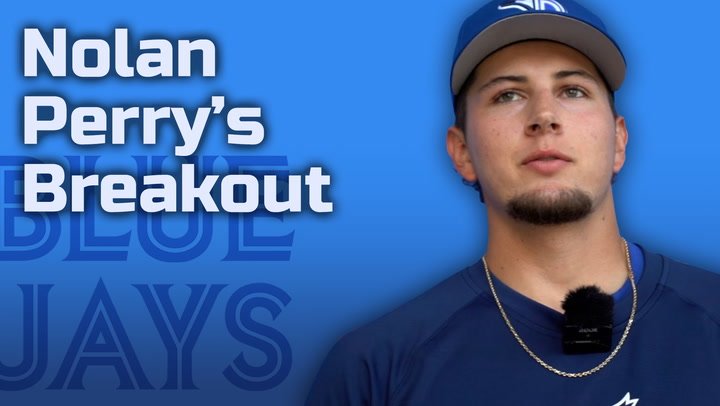 A look at what has clicked for Nolan Perry, a Blue Jays pitching prospect in High-A Vancouver, and a breakdown of his loud arsenal. View the full article
 -
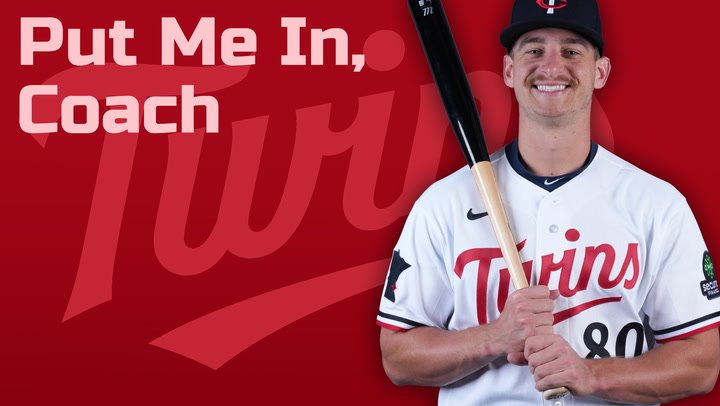 Kyler Fedko broke out massively in 2025, and he's continued that momentum so far this season. He's proving why he deserves a shot in the majors, and for multiple reasons. View the full article
 -
Should the Twins make Ryan Jeffers the Qualifying Offer?
DiamondCentric posted an article in Twins Daily
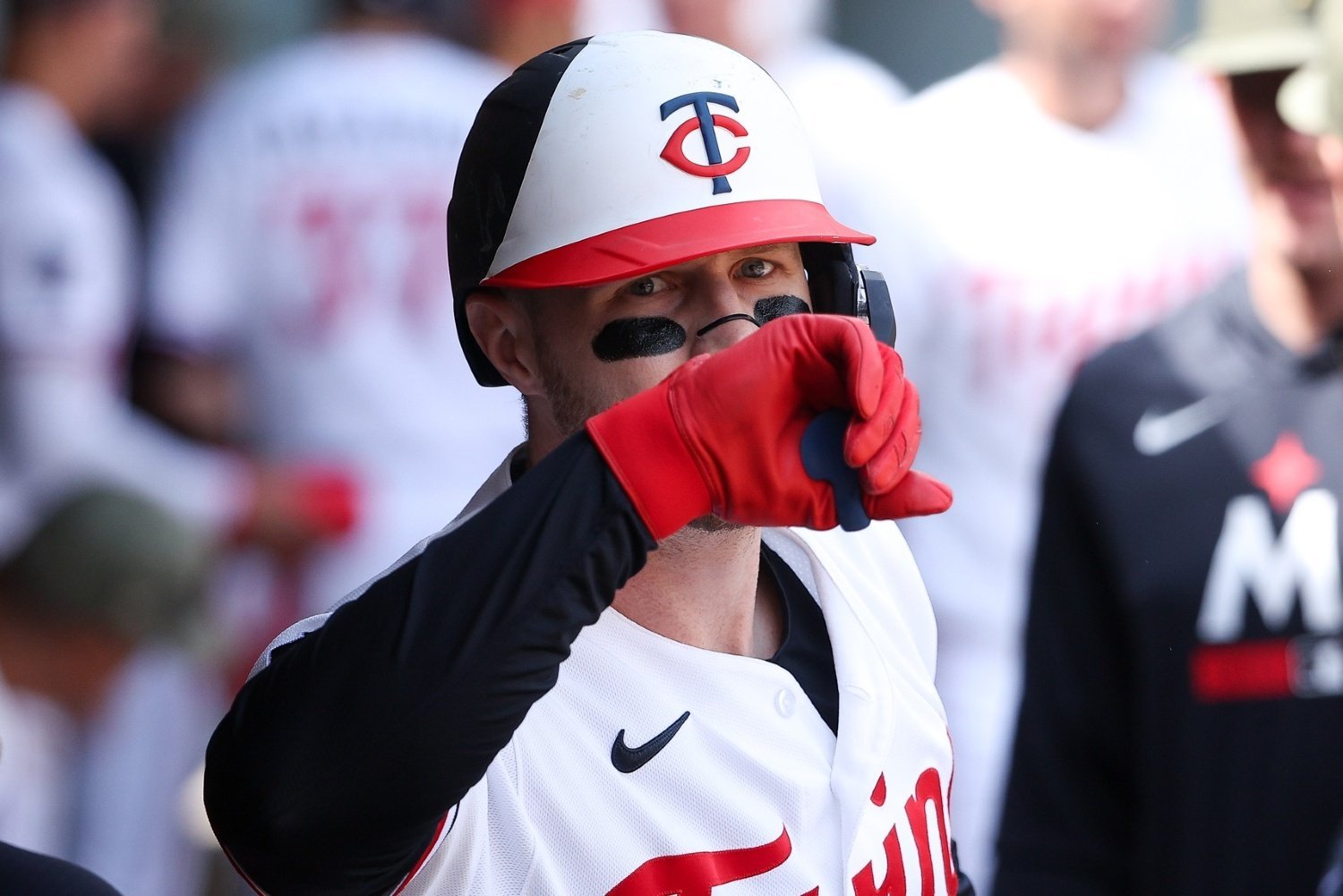 Ryan Jeffers was the best player on the Twins through the first quarter of the 2026 season. In 37 games, he slashed .295/.408/.541, with a .949 OPS about 60% above league average. That OPS is the best in the league among primary catchers with at least 140 plate appearances, and by fWAR, he ranks fifth, despite not playing since May 18. He’s also graded out as an average defender behind the plate, and he was on track to play about 120 games between catcher and DH. Simply put, he was playing like one of the premier catchers in baseball. Due to Jeffers’s broken hamate bone, he will remain out of commission for another 4-6 weeks, by most estimates. He struck an optimistic tone when he met with reporters this week, but even he noted that he can't predict how things will go, and that he was advised not to rush it. The Twins sorely miss him, as his backups Victor Caratini and Alex Jackson have combined to hit just over .200 and have not provided even average defense behind the plate. Jeffers is eligible for free agency this offseason. Let’s break down the case and context for him to receive a qualifying offer. There are a lot of moving pieces here, so buckle up. What is a qualifying offer? Per the current CBA, free agents are eligible to receive a qualifying offer from their current team once in their career. Since this is Jeffers's first time eligible for free agency, the Twins can give him the qualifying offer. The qualifying offer is a one-year contract worth the average yearly salary of the 125 highest-paid players the previous year. For the 2026 season, that was approximately $22 million, and for 2027, it will likely be slightly higher. Let’s conservatively call it $23 million. If the player accepts the offer, they will return to their team for one more year. If they reject the offer, they will be a free agent. However, other teams are disincentivized from signing the player because they will lose a draft pick (or two, depending on their payroll) the following season. The original team will receive an additional draft pick between the first and fourth rounds as compensation for losing the player, varying based on their revenue-sharing status. Of note, the ongoing CBA negotiations ahead of the 2027 season will (probably) not affect the qualifying offers at the end of the 2026 season. Even if the entire system were removed in the 2027 CBA, the 2026 qualifying offers will be grandfathered in because they occurred before the current CBA expires. Why would the Twins extend a qualifying offer to Ryan Jeffers? Well, obviously, the primary reason would be that Jeffers is a good catcher. It’s unlikely that Jeffers is truly the best offensive catcher in baseball, but he has been a good hitter over the past four seasons—about 20% better than league average—at a position where the average hitter is below league average. His defense is not outstanding, or potentially even good, but it’s average, and good enough that he’s not a disaster at the most difficult position to play. Furthermore, the alternatives are not appetizing. Caratini and Jackson are both under contract for 2027 (with Caratini owed $7 million), but neither has given much reason to have confidence they will be dependable everyday options. The Twins have a handful of high-minors catchers, such as Noah Cardenas and David Bañuelos, but none of them have starting catcher potential. Eduardo Tait is their top catching prospect, but he’s a 19-year-old at High-A. They might draft Georgia Tech catcher Vahn Lackey, but even if he’s fast-tracked to the majors, he shouldn’t be counted on to be the everyday catcher in 2027. There's also the subject of Jeffers's trade value. If the Twins are not in contention around the trade deadline, Jeffers is a player teams will be calling about. However, he's projected to return to action just weeks before the deadline, giving teams limited time to evaluate him in a trade. Whatever packages he may have netted two weeks ago have probably been reduced since his injury, which makes the prospect of keeping him around more valuable. The return may even be less valuable than the draft-pick compensation the Twins would receive (and by next year's trade deadline, he would be eligible to be traded again, should he accept the qualifying offer). Is Jeffers worth a qualifying offer? At $23 million, Jeffers would be the highest-paid catcher in the world, by a wide margin. The top-paid catchers projected for 2027 are Atlanta’s Sean Murphy and Philadelphia’s J.T. Realmuto, at $15 million each. Jeffers would make about 50% more. Put simply, even if Jeffers maintained his 2026 performance upon his return from injury, he’s not worth $23 million a year in his 30s. However, he might be worth $23 million for one year. Teams are much happier to overpay for a short contract (see Kyle Tucker’s deal with the Dodgers) than they are to cut a long deal for less money per year. There’s a cliché that goes “there’s no such thing as a bad one-year deal,” and there’s some truth to that. The Twins might be in a position in which their best option for having a starting-caliber catcher in 2027 is to overpay Jeffers in the short term. Other free-agent options would be Tyler Stephenson and Jonah Heim. The Twins extended Jake Odorizzi a qualifying offer in 2019 in a similar situation. Odorizzi didn’t command an annual contract of $18 million, but to keep the rotation stocked, they were willing to overpay to keep him for one more year. Furthermore, if Jeffers rejects the qualifying offer, the Twins could receive that compensatory draft pick, likely between the first and second rounds of the 2027 MLB Draft. Which raises another question: Would Jeffers accept the offer? (and also, why not just extend him?) It’s unclear whether Jeffers would even accept the offer, though I would probably bet yes, if I were forced to take a side. He's a Scott Boras client, but he's never been thought of as this caliber of player before this season, and he's hurt right now. Even Boras's aggressiveness has limits. However, there have not been many catchers who have hit the open market to base this discussion on. Most free-agent catchers are of the backup variety. Since the 2019-2020 offseason, there have been seven contracts signed by catchers for more than $23 million total: Yasmani Grandal (4/73M), James McCann (4/40.6M), Realmuto (5/115.5, 3/45M), Willson Contreras (5/87.5), Christian Vázquez (3/30M), Mitch Garver (2/24M). That being said, Jeffers is certainly in a position to join that group, and, like Contreras, his bat is insurance against potentially moving off the catcher position. Contreras now plays first base, but in the four seasons leading up to his $87.5 million contract with St. Louis, he had a similar 118 OPS+, albeit with more plate appearances. Jeffers could be in line for a big, multi-year payday. His estimated contract might be enough to allow him to opt out of a one-year, $23 million deal. There’s risk to signing a short deal, especially for a catcher on the wrong side of 30. Should Jeffers have a down 2027, those multi-year deals might dry up, and as a Boras client, Jeffers is likely to try to maximize his lifetime earnings rather than take the guaranteed money—hich I suppose could be twisted to support either side of this question. This bit also explains why the Twins are unlikely to offer Jeffers a long-term deal. Paying Jeffers in eight figures a year for three or more years is quite risky, especially for a team that might have its catcher of the future debuting in the next couple of seasons. And especially for a team whose low payroll has been an unending topic of conversation for three years now. Speaking of which: Would Tom Pohlad allow the Twins to pay Jeffers $23 million next season? Yeah, probably. The Twins are running a minuscule payroll right now. They’re projected to have an approximately $70-80 million payroll after arbitration in 2027, which includes the money owed to Carlos Correa. If they part with Joe Ryan, Bailey Ober, Trevor Larnach, or Royce Lewis either at the trade deadline or the beginning of the offseason, that figure will be even lower. Players like Walker Jenkins, Emmanuel Rodriguez, Kaelen Culpepper, and Gabriel Gonzalez are likely to be filling roster spots on minimum-salary contracts. There’s a case to be made that even if the Twins are returning to a $105 million payroll, they’d have room for Jeffers to be paid $16 million more than his current $6.7 million salary next year. If the Pohlad family indeed intends to increase payroll (as Tom has suggested would have been the case this year, had he taken the reins earlier) to even $130 million, they have more than enough room to bump up Jeffers’s contract for a single year. When my co-host on the Twins Off-Daily Podcast (no free ads), @Lou Hennessy, proposed this idea earlier in the season, I initially scoffed a bit. But the combination of Jeffers’s performance, team needs, and room to spend, might make this a worthwhile endeavor. View the full article
 -
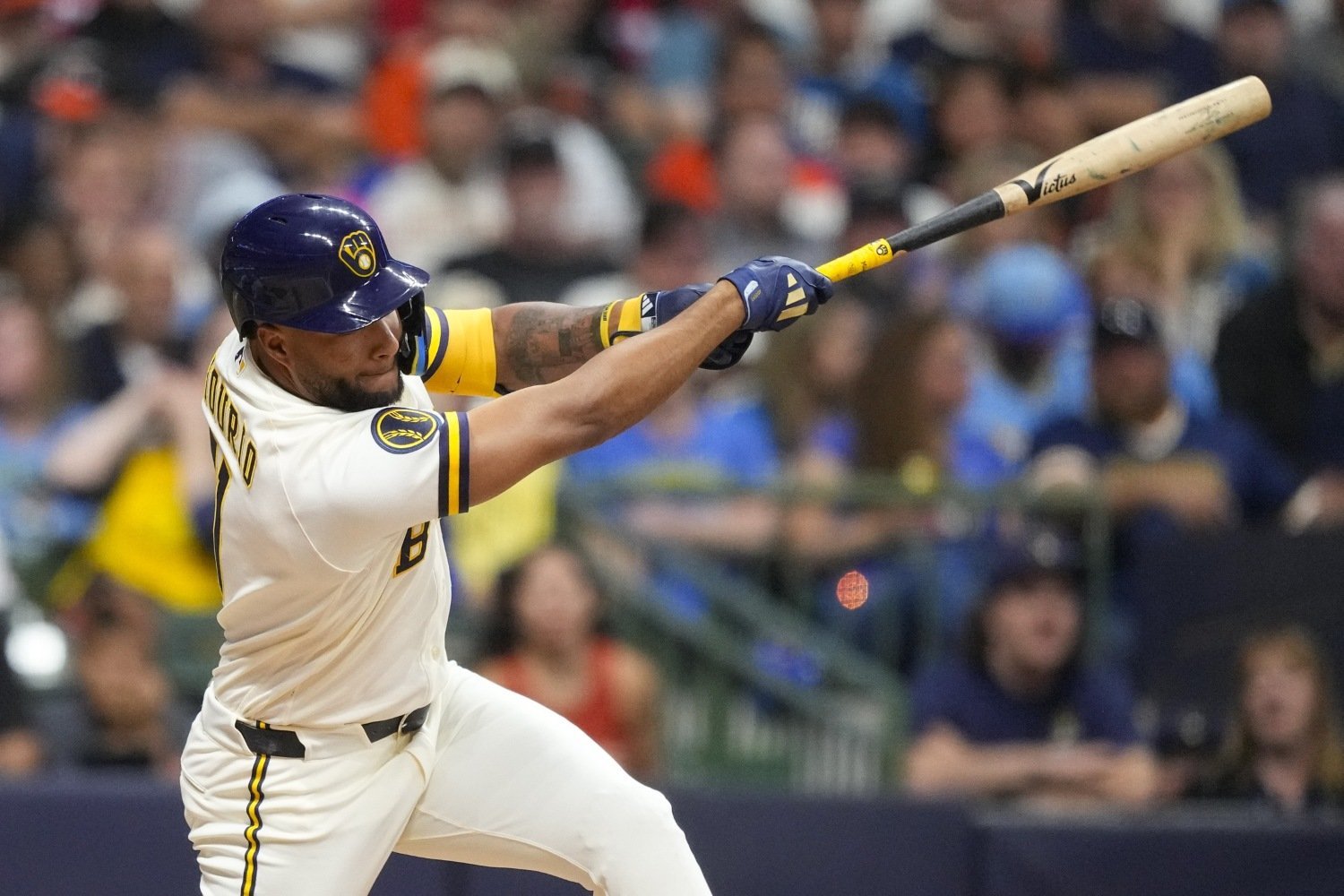 The Brewers want Jackson Chourio to chase less. He's been a more aggressive hitter than most, especially on a team that values swing decisions and has the second-lowest chase rate in baseball since his debut in 2024. In that time, Chourio's 34.6% chase rate is the 20th-highest among qualified hitters. A hitter with Chourio's quick hands and raw power should be aggressive, because he can drive pitches that many can't. He's still been a solid hitter while chasing so much and walking so little, posting a career .273/.320/.461 line (115 wRC+). However, he often takes that aggression too far with poor swing decisions, and it's prevented him from blossoming into a star. He wants to hit, and it can make him jumpy in the box. "I think it still comes down to the anxiousness to get [the at-bat] over with, the anxiousness to get to it," Pat Murphy said earlier this week. "He can get to so many pitches that I think it hurts him." In Year 3, Chourio's plate discipline has yet to improve. If anything, it has gotten worse. His chase rate jumped from 31.9% to 37% last season. This year, it's still at 36.3%. What's more, the aggression on hittable pitches has disappeared. Chourio's in-zone swing rate is just 57.4%, down from 70.5% last year. Zone swing rate minus chase rate is not always the most telling metric, but by that measure, Chourio is making even worse swing decisions than Joey Ortiz, the Brewer most notorious for offering at the wrong pitches. To get a good swing off in time, hitters must assume a pitch will be a strike and recognize when it's a ball, not assume it will be a ball and recognize a strike. As the pitch is delivered, the thought is "Yes, yes, yes, yes – no," not "No, no, no, no – yes." When Chourio tries to be selective, he seems to be starting with that "no" mindset, leaving him recognizing strikes he can punish once it's already too late to swing. "When you're trying to get your ball-strike order, you end up taking your foot off the gas," Murphy said, "instead of keeping your foot on the gas, but really seeing what you want to see and knowing how to say no at the last second." That's led to at-bats in which Chourio takes a hittable pitch for an early strike before chasing off the plate. Other times, he's being too passive with two strikes. He's making an effort to be more selective, but it's felt forced at the wrong times. "I think he's trying to think through it and trying to be really good at it," Murphy said. "When you're trying to prove yourself, you're sometimes not being yourself." The good news is that he is still producing, in part because he's crushing strikes when he does swing at them. Chourio is hitting .291/.354/.437, and his 125 wRC+ would be a career best. His 18.1% barrel rate would be among the best in baseball if he had enough plate appearances to qualify for the leaderboard. On Tuesday night, he recorded two well-struck hits by swinging at fastballs early in the count. Chourio's skill set plays best when he's being aggressive. The Brewers don't want to take that from him, but they do want him to become more discerning at the plate. Balance is key. "It's selectively aggressive. How do we get to that spot?" Murphy said. "On the way to selectively aggressive [are] some bumps in the road. I think that's what we got going on." View the full article
 -
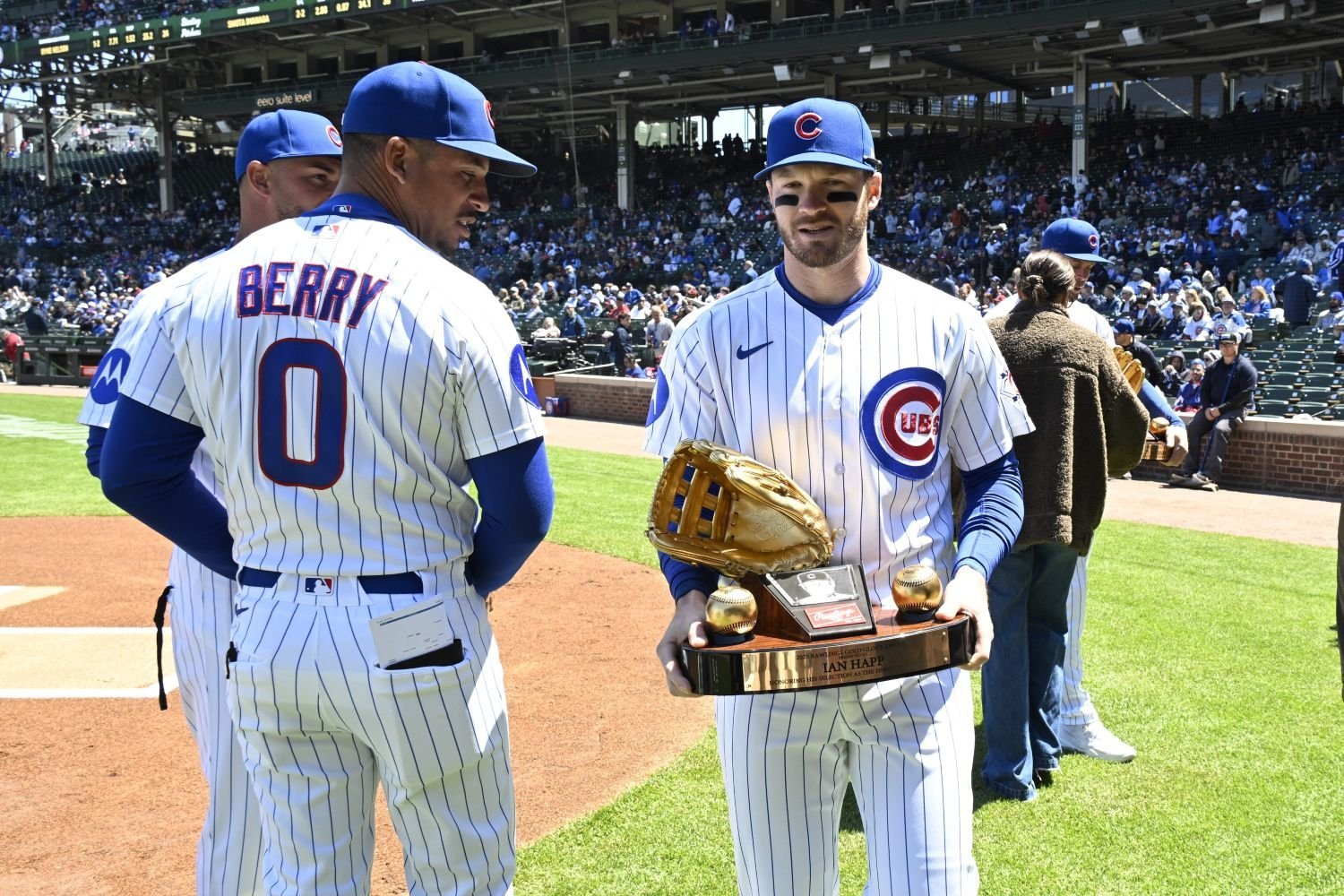 When Craig Counsell became the Cubs manager, he didn’t make immediate, significant changes to the coaching staff he inherited from David Ross. In fact, three seasons later, Dustin Kelly and Tommy Hottovy both remain in the lead skill roles they held under David Ross. However, Counsell exercised more freedom with his base coaches, to implement his defensive and baserunning strategy. The dust had barely settled on his first season when he made his first true addition to the coaching staff, going and getting Quintin Berry from his old staff in Milwaukee to be his new third-base coach. Berry’s coaching career started in Milwaukee the day he retired. A journeyman outfielder who played in just 132 big-league games but nearly 1,200 minor-league games, Berry was hired as the Brewers’ minor-league outfield and baserunning coordinator. After two years in that role, he was promoted to the major-league staff as first base coach, where he continued to work on outfield and baserunning until the Cubs hired him to do the same for them. Counsell clearly saw a need to improve the outfield and baserunning in his first year at the helm of the Cubs, and after seeing Berry’s impact in Milwaukee, he made him a priority. When Berry was named first-base coach in Milwaukee, they had just finished 29th in MLB in baserunning runs during the shortened 2020 season. Granted, they were 27th in team sprint speed, but still, that's not the kind of baseball Counsell wanted to play. It was the first year since his very first in Milwaukee that the Brewers finished under .500, and the first time in his entire tenure that his team had been below 17th in baserunning runs. In Berry’s first season on the big-league staff, they jumped to 8th in baserunning runs despite still being one of the slowest teams in the majors. We are seeing a similar impact with the Cubs this year. Of the 12 slowest teams in the major leagues, only the Cubs have positive baserunning runs, and the Cubs are in the top 8 in all of baseball. The Brewers, by comparison, are one of the fastest teams in the majors and are 13th in baserunning runs this season. They did remain a fantastic baserunning team last year, their first year without Berry on staff, but they have fallen off this year. Berry’s impact on outfield defense looks similar. In his first year on the big-league staff in Milwaukee, the Brewers outfield jumped from 14th to 5th in outs above average and were top 3 for his entire tenure, including a pair of top two outfields in his last two seasons. The Cubs, by contrast, were 20th in outfield OAA during that same time period. While they snuck inside the top 10 in Counsell’s first year, they jumped to 2nd after hiring Berry and are currently in 1st this year. While his impact on the outfield as a whole is clearly quantifiable, so is his impact on individual players, especially in the jumps they get. Statcast combines three components to calculate an outfielder's jump. Their reaction, or their first step, is how much ground they gain during the first 1.5 seconds. The burst is the next 1.5 seconds after that, or their acceleration/explosiveness. Lastly, is the route they take to the ball and how direct it is. A look at the leaderboards for each of these three components shows that reaction and burst are much more important to an outfielder's value than their route is. Pete Crow-Armstrong was solid in his first full year in the bigs, but he took the leap to cement himself as one of the best defenders in baseball under Berry. Crow-Armstrong sacrificed some route efficiency to gain more ground with his first step, and it paid off massively. Seiya Suzuki went from a below-average outfielder who served as the designated hitter more frequently than he used his outfield glove the past two seasons to a top-5 right fielder in baseball (depending on the metric you believe) under Berry, by improving his reaction and burst. Suzuki didn’t get faster—actually, he's the slowest he has ever been—but his reaction and burst have taken a large jump in his age-31 season. Although Ian Happ won 4 consecutive gold gloves from 2022-2025, Statcast defensive metrics largely disagree. He earned -7 OAA in 2023 and improved to -1 in Counsell’s first year, before putting up a 0 (average) under Berry in 2025. His jump has improved as well, but unlike Suzuki and Crow-Armstrong, he has done it by improving his routes. How valuable is Berry? He has helped Crow-Armstrong become the best outfielder in baseball. He has helped Suzuki go from a DH to a plus defender in right. He has helped turn the Cubs into the best defensive outfield in baseball. He has helped make the Cubs a top baserunning team despite a slower roster. Add to all of this that the main division rival Brewers have gotten worse at running the bases and playing outfield since Berry left, and Counsell’s first true hire looks like an incredibly impactful net positive for the Cubs. View the full article
 -
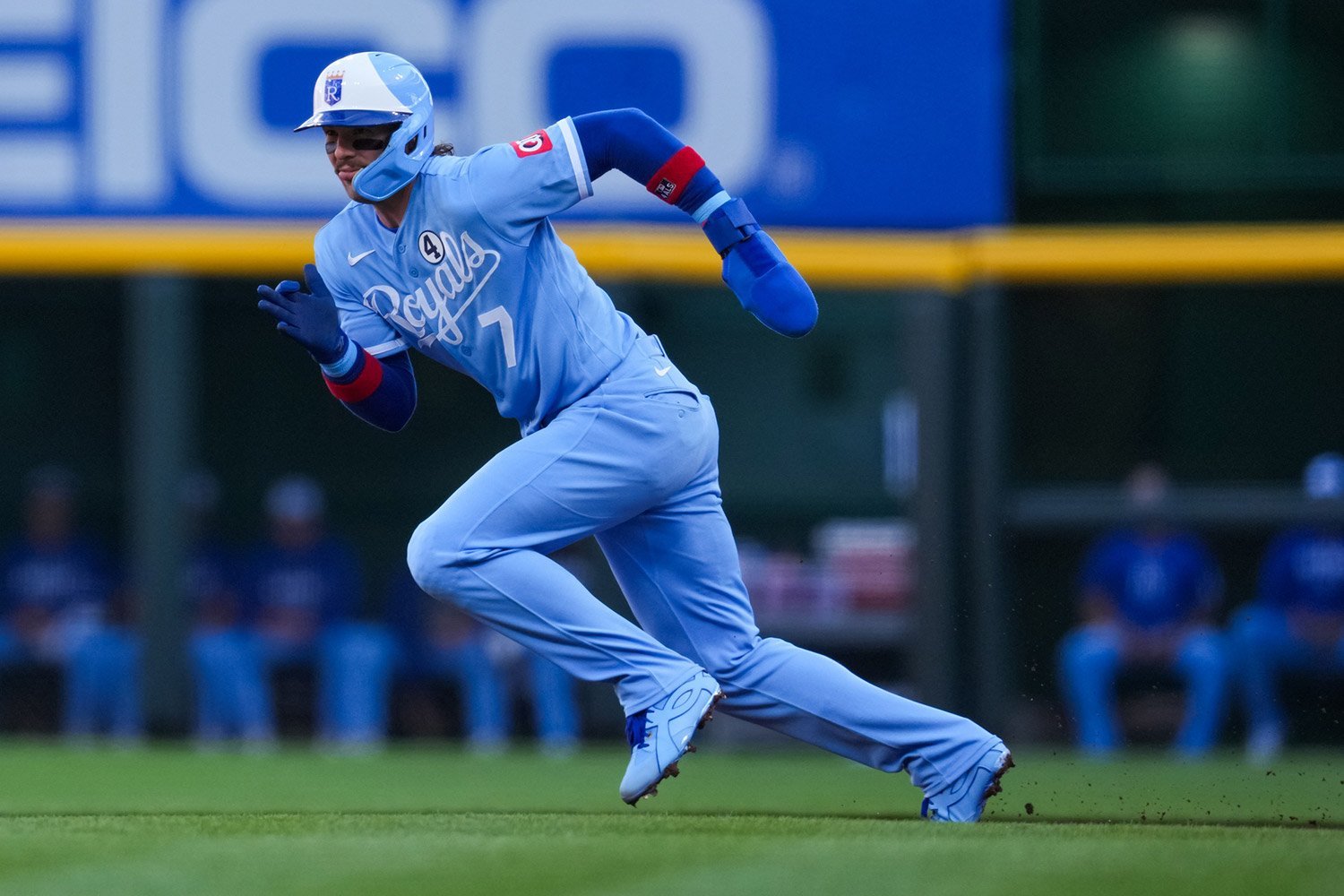 The month of May will be one many Royals fans and players are hoping to forget as the calendar turns to June. The Royals have started the year with two sub-par months, as they went a paltry 10-18 in the month of May after turning in a 10-17 record in April. Looking for a standout performance on a team that is severely underperforming pre-season expectations is never a fun thing to do. I didn’t have to look far to see who the best hitter was in the month of May, and it wasn’t particularly close, to be honest. Only one hitter had an OPS above .700 (league-average this season is .710) this past month. The Royals had four hitters who looked good in April. Carter Jensen, Bobby Witt Jr., Maikel Garcia, and Jac Caglianone. Only one of them kept the solid start going in the month of May. Bobby Witt Jr. has been the best player on the Royals in the first two months of the season. Specifically in May, he hit for a .853 OPS with seven home runs and 11 RBIs. This home run against the Tigers may have been the most fun to watch, with Witt Jr showing off his speed: Speaking of speed, he added seven stolen bases, being thrown out only one time. In 28 games played, Witt Jr. hit for a slash line of .283/.331/.522 (133 wRC+) and struck out just 23 times (19.6% of plate appearances). He walked just eight times in the month, but he did have 13 extra-base hits, six doubles, along with the aforementioned seven home runs. With the team playing at an underwhelming base this far, Witt Jr. will need some help if he and the Royals hope to climb out of the nightmarish start to the season. The Royals were 14 games under .500 to start June, but will look to climb back into contention in an AL Central that still appears pretty open for the taking. Typically, I would highlight any honorable mentions, but I’m not sure any player deserves an honorable mention if they were below league-average hitters over an entire month. Here’s to hoping the offense can find more consistency and get their superstar some help the rest of this season. View the full article
 -
Toronto Blue Jays Defensive Plays of the Month - May 2026
DiamondCentric posted an article in Jays Centre
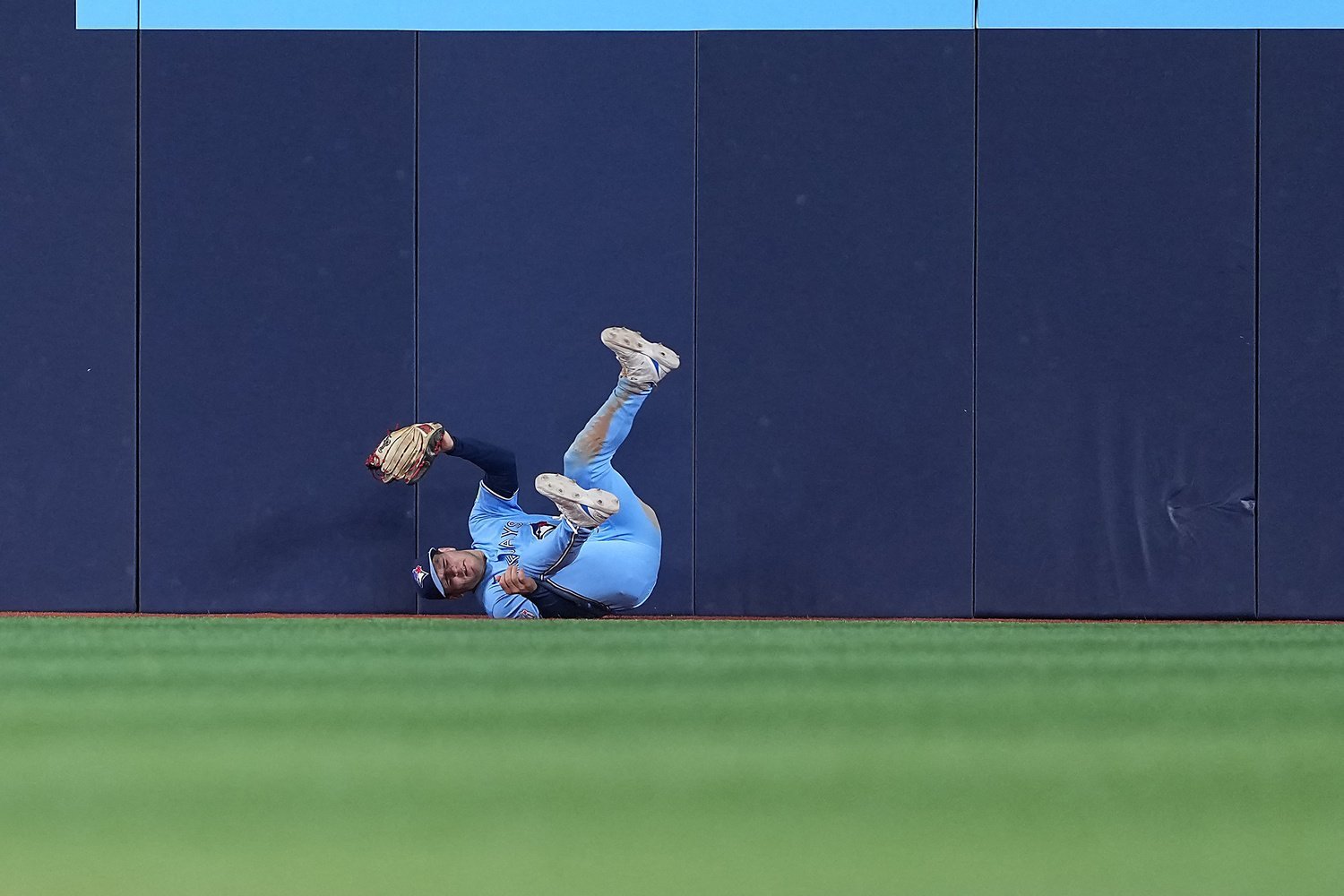 Even without Alejandro Kirk, the Blue Jays have the best defensive catchers in baseball, at least according to Statcast's metrics. For the second month in a row, Blue Jays catchers led the majors with a +7 fielding run value (FRV) in May, thanks to stellar performances from Brandon Valenzuela and Tyler Heinman. The rest of their fielders, however, were surprisingly poor, finishing the month with -8 Outs Above Average (OAA). We can all think of some moments in the field that should have gone differently. Be that as it may, the Jays still made their fair share of highlight-reel plays in May, and I'm here to celebrate the best (or at least the most enjoyable) of them. You can find my picks for March/April's defensive plays of the month here. That's the Varsho We Know and Love Last month, I wrote about this Addison Barger grab, noting it was Toronto's first five-star catch of the season. Apparently, it has since been downgraded to four stars, but the Blue Jays still have one five-star catch in 2026 thanks to Daulton Varsho. The center fielder hasn't always been the elite defender we're used to seeing this year, but he covered a ton of ground in a couple of seconds to make this diving grab. Two for the Price of One... But Was It Worth It? Addison Barger is so cool. In his first game back from the injured list, he made a run-saving double play, and he made it look as easy as throwing to first on a routine groundball. I don't even think Jorge Soler considered the fact that he could be doubled up as he tried to tag and score on this play. Unfortunately, Barger landed back on the injured list the next day with elbow inflammation in his powerful right arm. Andrés Giménez Is So Damn Smooth As accomplished a defender as he is, it's important not to forget that Andrés Giménez is still settling in at shortstop. By the test eye, he looked more comfortable at his new position in May, and the numbers back that up: He led the Blue Jays with 4 OAA in the month. I could have picked several of his highlights to feature here, but this bang-bang play against the Orioles was my favourite. Varsho Holds On What's impressive here isn't so much the catch itself, but the fact that Varsho holds on after smacking into the wall at full speed, falling over, and doing a backward somersault. They say if you look closely, you can still see the imprint of his face on the center field wall. What, Like It's Hard? I'm so impressed by the nonchalance with which Patrick Corbin made this behind-the-back grab. It almost looks like he just happened to put his glove in the perfect spot, and the ball bounced in. Either that or there was some magnet trickery going on here. Don't Run on Heiny Heineman caught nine runners stealing in May, including four in one game against the Marlins. He's now tied for third in MLB on the season with 11 caught stealing. I chose the clip above from that game against Miami (a) because Heineman caught the blistering-fast Esteury Ruiz, and (b) because of how cool Giménez looks laying down the tag. Have I mentioned I love watching Andrés Giménez? They Call Him a Catcher for a Reason Brandon Valenzuela provides most of his defensive value with excellent pitch-framing, which rarely makes the highlight reels. However, there was no way I wasn't going to include Toronto's most important defensive player in a piece about the team's defense. Valenzuela made a pair of excellent catches on tough pop-ups in May. I already wrote about one of them, so I included the other one here. At first, it looked like he lost this one in the sun, and he easily could have just given up. Instead, he located the ball and made a mad dash for the backstop and pulled off the sliding catch. Kudos to the camera crew for capturing this so well. Ladies and Gentlemen, Trey Yesavage You knew this was coming. How else could I end this piece but with one of the greatest examples of pitcher defense I've ever seen? Let's break it down. Act I: Trey Yesavage leaps for a high bouncer, but the ball clips off the top of his glove. Act II: He can't locate the ball until it hits the brim of his cap on the way down. Act III: He goes to snap it up, and once again, it pops out of his glove. Act IV: In a last-ditch effort to make the play, he uses his glove like something in between a shovel and a tennis racket to half-scoop, half-slap the ball to first base. Act V: Somehow, it works. Any Blue Jays defensive moments from May that you think I missed? Please share them in the comments below! View the full article
 -
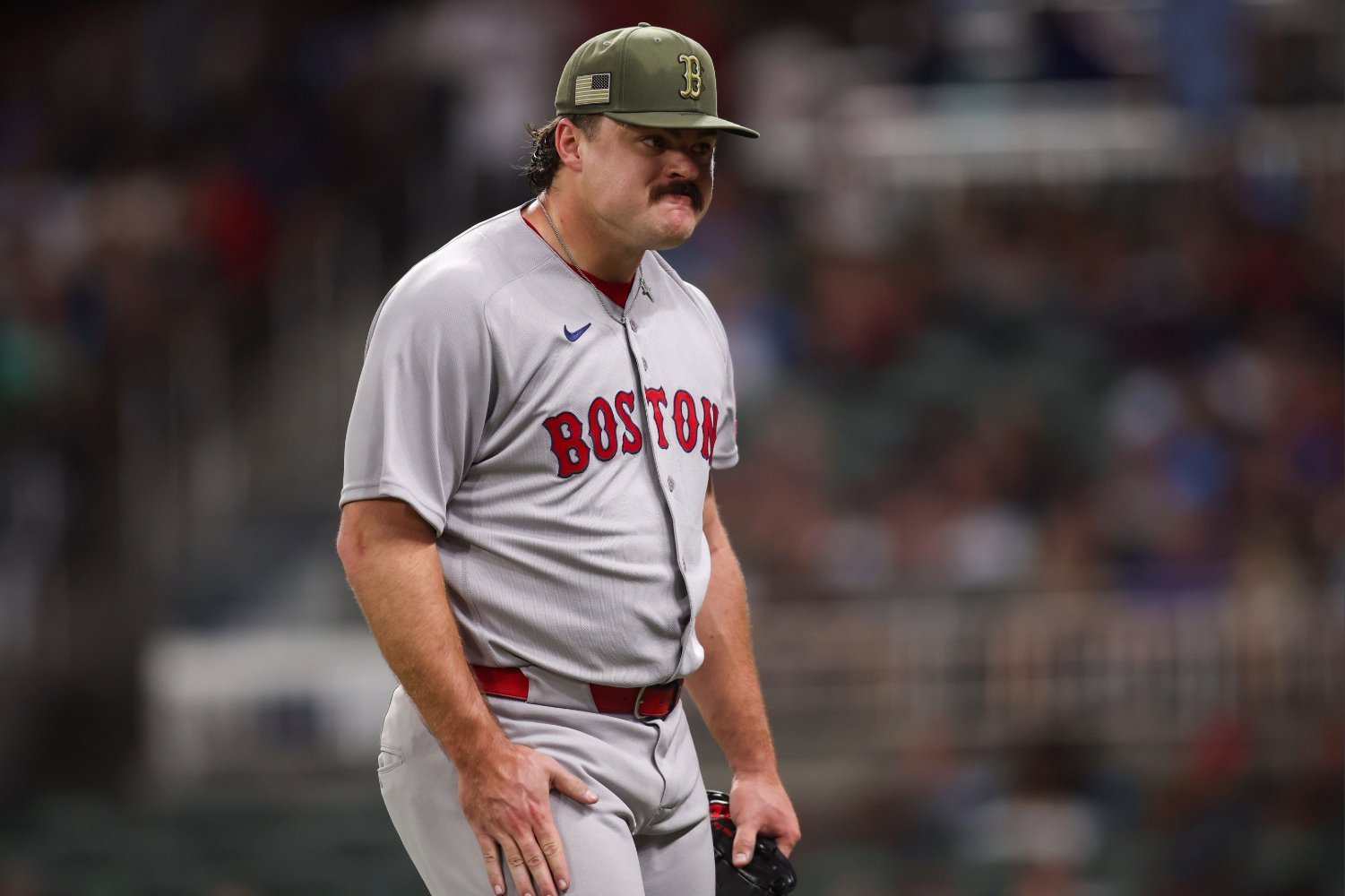 Pitching for the Boston Red Sox was a mixed bag during the month of May. There were some clear highlights, but for the most part, one of the preseason strengths for this club suffered from inconsistent performances. The pitching staff was bitten by the injury bug during the month of May as well, and that has led to there being more questions than answers outside of the names featured below. There’s room for improvement in both the starting rotation and the bullpen from most arms, but with the summer quickly approaching, we are squarely in ‘put up or shut up’ territory; the pitching staff needs to take a big step forward to help keep the team afloat just outside of the playoff picture. Ranking Red Sox's Best Pitchers in May Honorable mentions: (Bulk reliever) Brayan Bello, Connelly Early #3: Sonny Gray May Stats: 27 IP, 2.00 ERA, 2.71 FIP, 26.2 K%, 8.4 BB%, 1.11 WHIP, 0.8 fWAR Gray has been utterly dominant since he returned from the hamstring injury he suffered on Marathon Monday in April. Throughout the month, he made five starts and notched four wins. He had one rough start that can likely be attributed to the weather (he was throwing in the pouring rain for that start) but even he would say that’s just an excuse and he needed to be better in the moment. During May, he pitched to more than one strikeout per nine innings and kept his walk rate down to three per nine. He’s been incredible at limiting contact but when people have gotten on, he left them on base at the end of each inning at an 85% clip. He’s getting a ton of whiffs now and that is the game that Gray built his career off of. #2: Aroldis Chapman May Stats: 10 IP, 0.00 ERA, 1.28 FIP, 38.5 K%, 10.3 BB%, 0.80 WHIP, 0.6 fWAR Chapman occupies a space in the second-best closer in baseball conversation behind Mason Miller, so it may be surprising to see him clock in at number two on this list, but this dominance has come to be expected. Chapman has been better than advertised for the Red Sox for the past two seasons, and his ability to still get massive strikeouts while throwing 100+ mph is just an unfair advantage in the ninth inning. It’s gotten to the point where you just assume no one is scoring when Chapman comes in. While he hasn’t been infallible this season — his walk rate is up and he is allowing a bit more contact than last year — he’s been dominant. The team has kind of forced Chad Tracy’s hand in using Chapman awkwardly, because they tend to go long stretches without requiring a save situation. When he gets the end of the game, even in situations like he was in against the Guardians to end the month, he shoves. For as long as Chapman is in Boston, he’s going to be an imposing presence at the back end of the bullpen. #1: Payton Tolle May Stats: 30.2 IP, 2.35 ERA, 2.59 FIP, 26.1 K%, 5.0 BB%, 0.85 WHIP, 1.0 fWAR The rookie southpaw commands the top spot on this month’s top pitchers because he has been an absolute animal since he was called up to the big leagues. He has only posted two wins over five starts during May, but that’s not due to him being ineffective, it’s due to the defensive lapses behind him and the offense being unable to plate runs with runners in scoring position. Tolle has been striking out more than one batter per nine and walking just under two batters per nine. His fastball mix has been highly touted throughout the start of the season, and it’s proven to be effective during multiple turns through the lineup. He’s working on a curveball that, when he figures it out fully, will likely put him in the ‘ace’ discussion as he builds a résumé worthy of All-Star credentials. His performances in May have been some of the best in the league, and it’s safe to assume that Payton Tolle is going to keep climbing the ladder and step even further into the spotlight with the Red Sox. View the full article
 -
 Transactions: Milwaukee Brewers recalled LHP Robert Gasser from Nashville Sounds. Wisconsin Timber Rattlers activated RHP Jose Nova from the Development List Wisconsin Timber Rattlers placed J.D. Thompson on the 7-Day injured list. Nashville pre-game media notes Jacksonville (Marlins) 3, Nashville 2 Box Score & Game Log Nashville Drops Second Straight to Jumbo Shrimp - Adams Crushes First Triple-A Homer in 59 Days NOTE: Two videos within the summary, including the Luke Adams blast Filling in for Robert Gasser, Tyson Hardin had his first less than stellar outing in Triple-A, giving up two earned runs on four hits and only managing 3.2 innings. Overall, his ERA at the level remains a shining 1.61. Rehabbing Jared Koenig made his third appearance for Nashville, striking out one, giving up a hit and walking three batters while only retiring two. Koenig’s sinker was mostly 91/92 MPH with one pitch reading at 95 MPH. In his second game back with the Sounds, Luke Adams hit his third home run of the season, 102.3 MPH off the bat. Cooper Pratt went 0-3 with a walk and a strikeout to extend his on-base streak to 23 games. His bat might not be an improvement on Joey Ortiz’s right now, but his glove at shortstop is likely better than David Hamilton’s. Biloxi pre-game media notes Biloxi 3, Montgomery (Rays) 1 Box Score & Game Log Rodriguez Rolls in Front of 5,000+ Fans For 3-1 Shuckers Win - Shuckers Beat Biscuits to Begin June The Shuckers only mustered three hits on the night, but they made them count with home runs by Matthew Wood (7) and Blake Burke (13). Burke now leads the Southern League in home runs. The Biscuits also had three hits in the game including a home run by Brayden Taylor, the third baseman the Rays drafted out of TCU in the first round of the 2023 MLB Draft, one pick after the Brewers selected Brock Wilken from Wake Forest. Dylan O’Rae had his 8-game hit streak snapped but took a walk and has reached base in 13 straight games. Manuel Rodriguez pitched a gem, striking out five over 6.2 innings with no walks and just two hits, including the Taylor home run. Rodriguez lowered his WHIP to an impressive 1.01 in 50 innings pitched on the season. Cameron Wagoner picked up a two-inning save (video finish), striking out five batters. Wagoner hadn’t pitched in a week but has been exhibiting impressive velocity and strike out numbers this season. Basket catch the hard way early on - Tanner Gillis is scheduled to start Game One for Biloxi as part of Thursday's doubleheader. Wisconsin pre-game notes Wisconsin 10, Cedar Rapids (Twins) 4 Box Score & Game Log Adamczewski Drives in Five for Wisconsin - Rattlers rout Cedar Rapids 10-4 NOTE: Three videos within the summary (aka, "The Josh Show") One day after being ejected, Josh Adamczewski went 3-5 with a home run and double. Adamczewski totaled five RBI in all, stole a base and also recorded an outfield assist at home plate. Josiah Ragsdale, Marco Dinges and Daniel Dickenson also recorded doubles in the game. Surprisingly, Andrew Fischer did not hit another home run but did extend his hit streak to seven games with a 1-3 outing. Ragsdale also extended his hitting streak to seven. Braylon Payne was back in the lineup for the first time since May 21 and had a nice game until being replaced for a pinch hitter in the eighth inning. Payne went 1-2 with two walks, two runs, two RBI and his tenth stolen base of the season. Starter Braylon Owens struck out two and walked one over five innings of one-run ball while giving up five hits. The available non-Adamczewski highlights - Josh Knoth is scheduled to start for Wisconsin Thursday. Wilson pre-game notes Wilson 2, Salem (Red Sox) 1 Box Score & Game Log Warbirds Win Pitching Duel with Second Straight Rally - Prado Strikes Out the Side in the Ninth The Warbirds came from behind to score two runs in the eighth inning. Recording only two hits in the game, Wilson took advantage of a couple of walks, a bloop hit, an error and a fielder's choice RBI to load the bases and move runners across the plate. Salem let this game slip away. VIDEOS: The game-tying run The go-ahead, eventual winning run Brady Ebel earned the RBI to take the lead but saw his 16-game on base streak come to an end. Four Warbirds pitchers contributed solid outings in the win, allowing zero earned runs. Eric Prado earned the save recording three strikeouts in the ninth inning. Jarette Bonet will make his tenth start of the season on Thursday. There are a whopping eight games on tap on the Brewers farm Thursday, with the only daytime action in the Dominican Republic, where all their games are in the early hours (9:00 AM Central). On the big-league front, the Crew wraps up the series vs. the Giants with their own matinee. Organizational Scoreboard including starting pitcher info, game times, MiLB TV links, and box scores Current Milwaukee Brewers Organization Batting Stats and Depth Current Milwaukee Brewers Organization Pitching Stats and Depth View the full article
 -
 It was another bad night for the San Diego Padres' top four affiliates as each team lost, two in close games. The Triple-A El Paso Chihuahuas were pounded by Sugar Land 15-7, the Double-A San Antonio Missions saw a late lead disappear in a 7-6 loss to Wichita, the High-A Fort Wayne TinCaps were overwhelmed by Lake County 17-7 and the Low-A Lake Elsinore Storm gave up all six runs in the bottom of the ninth in a 6-5 walk-off loss. Padres Minor-League Transactions San Diego Padres selected the contract of IF-OF Samad Taylor from El Paso Chihuahuas. El Paso Chihuahuas activated RHP Ty Adcock from the 7-day injured list. San Antonio Missions activated C Brendan Durfee from the 7-day injured list. San Antonio Missions placed RHP Andrew Dalquist on the 7-day injured list. Big Nights From Nick Solak, Pablo Reyes Wasted By Chihuahuas Nick Solak homered as part of a 4-for-4, four-RBI night and Pablo Reyes had three hits, including a homer, and scored three times, but the host Triple-A El Paso Chihuahuas fell to the Sugar Land Space Cowboys 15-7. Solak's four hits matched his career high and was the second such game of the season. He also had four hits May 10 vs. Tacoma. Blake Hunt, who was just activated off the 60-day injured list following an oblique injury in spring training, and Marcos Castanon each homered and had two hits. Carlos Rodiguez pushed his hitting streak to 11 games with a ninth-inning RBI single. Castanon has been hot, with seven hits in the last four games. Chihuahuas right-handed starter Evan Fitterer coughed up six runs on five hits and three walks in 3⅓ innings. The Chihuahuas were up 3-1 when the Space Cowboys scored five times in the top of the fourth. Sugar Land put the game away with a six-run eighth inning. EP_0603.mp4 Player AB R H RBI BB K Mason McCoy 5 1 1 0 0 0 Carlos Rodríguez 5 0 1 1 0 0 Pablo Reyes 4 3 3 1 1 1 Nick Solak 4 1 4 4 0 0 Will Wagner 5 0 0 0 0 0 Marcos Castañon 4 1 2 1 0 0 Clay Dungan 4 0 0 0 0 2 Blake Hunt 4 1 2 1 0 1 Nick Schnell 4 1 1 0 0 1 Player IP H R ER BB K HR Evan Fitterer 3 1/3 5 6 6 3 2 0 Sean Boyle 1 2/3 3 1 1 0 2 0 Miguel Cienfuegos 1 0 0 0 1 2 0 Alek Jacob 1 1 2 2 0 2 1 Garrett Hawkins 1/3 0 3 3 3 0 0 Justin Yeager 1 2/3 4 3 3 0 0 0 Missions Make Late Push, But Come Up Short Against Wind Surge Some late offense wasn't enough for the Double-A San Antonio Missions to overcome two shaky innings as they dropped a 7-6 decision to the Wichita Wind Surge. The Wind Surge scored twice in the seventh inning to take the lead. Romeo Sanabria and Chris Sargent homered, with Sanabria finishing with two hits, three RBIs and two runs scored, while Carson Tucker had two hits and scored twice. Missions right-handed starter Victor Lizarraga was roughed up for the second start in a row. Lizarraga lasted just 2⅓ innings as he walked six and gave up five runs and two hits while striking out four. He has surrendered 11 runs (nine earned) in six innings over his last two starts. The Missions jumped out to a 3-0 lead after two innings, including Sargent's solo homer in the second inning, his second of the year. But Wichita threw a big punch with a five-run third inning to go up 5-3. It stayed that way until the seventh, when Tucker had an RBI double and Sanabria belted a two-run homer, his fifth of the season, to give the Missions a 6-5 lead. But Andrew Cossetti hit his second homer of the game, a two-run shot, in the bottom of the seventh that put the Wind Surge up for good. There was one more shot for the Missions in the ninth. Ethan Salas drew a one-out walk, but was erased on Sanabria's groundout. Francisco Acuna ran for Sanabria and Tirso Ornelas walked, but Braedon Karpathios struck out to end the game. SA_0603.mp4 Player AB R H RBI BB K Carson Tucker 5 2 2 0 0 1 Ethan Salas 3 0 0 0 2 0 Romeo Sanabria 5 2 2 3 0 1 Francisco Acuna 0 0 0 0 0 0 Tirso Ornelas 4 0 0 0 1 1 Braedon Karpathios 2 0 0 0 3 1 Ryan Jackson 3 0 0 0 0 0 Luis Verdugo 2 0 1 1 1 1 Kai Murphy 3 0 0 0 0 2 Brendan Durfee 1 0 0 0 0 1 Chris Sargent 2 1 1 1 1 0 Kai Roberts 0 1 0 0 0 0 Albert Fabian 1 0 0 0 0 0 Player IP H R ER BB K HR Victor Lizarraga 2 1/3 2 5 5 6 4 1 Sadrac Franco 1 2/3 2 0 0 1 1 0 Francis Peña 2 1 0 0 0 3 0 Harry Gustin 2 1 2 2 1 2 1 Despite 6-Run First Inning, TinCaps Get Slaughtered Kavares Tears homered during a six-run first inning, but it was all downhill from there as the host High-A Fort Wayne TinCaps gave up 17 unanswered runs in a 17-7 loss to the Lake County Captains. Kasen Wells and Lamar King Jr., Padres Mission's No. 10 prospect, each had a pair of hits for the TinCaps. Tears' first-inning blast to center was his fourth of the year. But TinCaps pitching couldn't hold the lead. Right-handed starter Maikel Miralles gave up four runs on three hits and four walks with two strikeouts in 1⅔ innings. Right-hander Isaiah Lowe gave up five runs (two earned) in two innings. FW_0603.mp4 Player AB R H RBI BB K Justin DeCriscio 3 1 0 0 2 0 Kasen Wells 4 1 2 0 1 2 Lamar King Jr. 4 1 2 1 1 1 Alex McCoy 4 0 0 0 1 3 Jake Cunningham 4 1 0 1 0 2 Jack Costello 4 1 1 1 0 1 Kavares Tears 3 1 1 3 1 0 Jonathan Vastine 4 0 1 0 0 3 Oswaldo Linares 4 1 1 0 0 0 Player IP H R ER BB K HR Maikel Miralles 1 2/3 3 4 4 4 2 0 Isaiah Lowe 2 5 5 2 1 2 2 Jeferson Villabona 1 1/3 1 0 0 1 1 0 C.J. Widger 1 2 2 2 1 2 0 Kleiber Olmedo 1 1/3 2 3 3 3 3 1 Luis Germán 1 2/3 2 3 3 1 3 1 Storm Stunned By Grizzlies' 6-Run Ninth In Walk-Off Loss The Low-A Lake Elsinore Storm were three outs away from a shutout victory on the road when the host Fresno Grizzlies put together a six-run bottom of the ninth inning for a 6-5 walk-off victory. Cameron Nelson hit a three-run walk-off homer with two outs in the bottom of the ninth, his second homer of the season. Storm right-handed starter Jesus Castro struck out five and gave up just three hits over five shutout innings, while Kerrington Cross, Qrey Lott and George Bilecki homered. Ryan Wideman and Luis Verdugo each had a pair of hits for the Storm. Cross homered leading off the fourth, then Bradley Frye had an RBI double and Lott capped the four-run rally with his fourth homer of the year. Bilecki homered in the eighth for a 5-0 lead. It was Cross' seventh homer and Bilecki's second of the season. Right-hander Carson Swilling gave up four of the six runs in the ninth on two hits and two walks, with right-hander Rordy Mejia giving up the other two runs as he walked the first hitter he faced before getting tagged for the three-run homer. LE_0603.mp4 Player AB R H RBI BB K Ryan Wideman 4 0 2 0 0 1 Kerrington Cross 4 1 1 1 0 0 Jose Verdugo 4 1 2 0 0 2 Bradley Frye 4 1 1 1 0 0 Truitt Madonna 4 0 0 0 0 2 Jorge Quintana 4 0 1 0 0 2 Qrey Lott 3 1 1 2 1 1 Conner Westenburg 0 0 0 0 0 0 Yimy Tovar 2 0 0 0 1 1 George Bilecki 3 1 1 1 0 0 Player IP H R ER BB K HR Jesus A. Castro 5 3 0 0 2 5 0 Nick Falter 3 1 0 0 0 1 0 Carson Swilling 1/3 2 4 4 2 0 0 Rordy Mejia 1/3 1 2 2 1 0 1 Top 20 Prospect Performance Ethan Salas: 0-for-3 Kash Mayfield: DNP Miguel Mendez: DNP Kruz Schoolcraft: DNP Ryan Wideman: 2-for-4, 2B, 1 K Jorge Quintana: 1-for-4, 2 K Ty Harvey: DNP Kale Fountain: DNP Braedon Karpathios: 0-for-2, 1 K Lamar King Jr.: 2-for-4, 1 K Jagger Haynes: DNP Alex McCoy: 0-for-4, 3 K Truitt Madonna: 0-for-4, 2 K Tucker Musgrove: DNP Garrett Hawkins: 1/3 IP, 0 H, 3 R, 3 ER, 3 BB, 0 K Michael Salina: DNP Eric Yost: DNP Rosman Verdugo: DNP Bryan Balzer: DNP Deivid Coronil: DNP View the full article
 -
Twins Minor League Report (6/3): Charlee Soto Returns to the Mound
DiamondCentric posted an article in Twins Daily
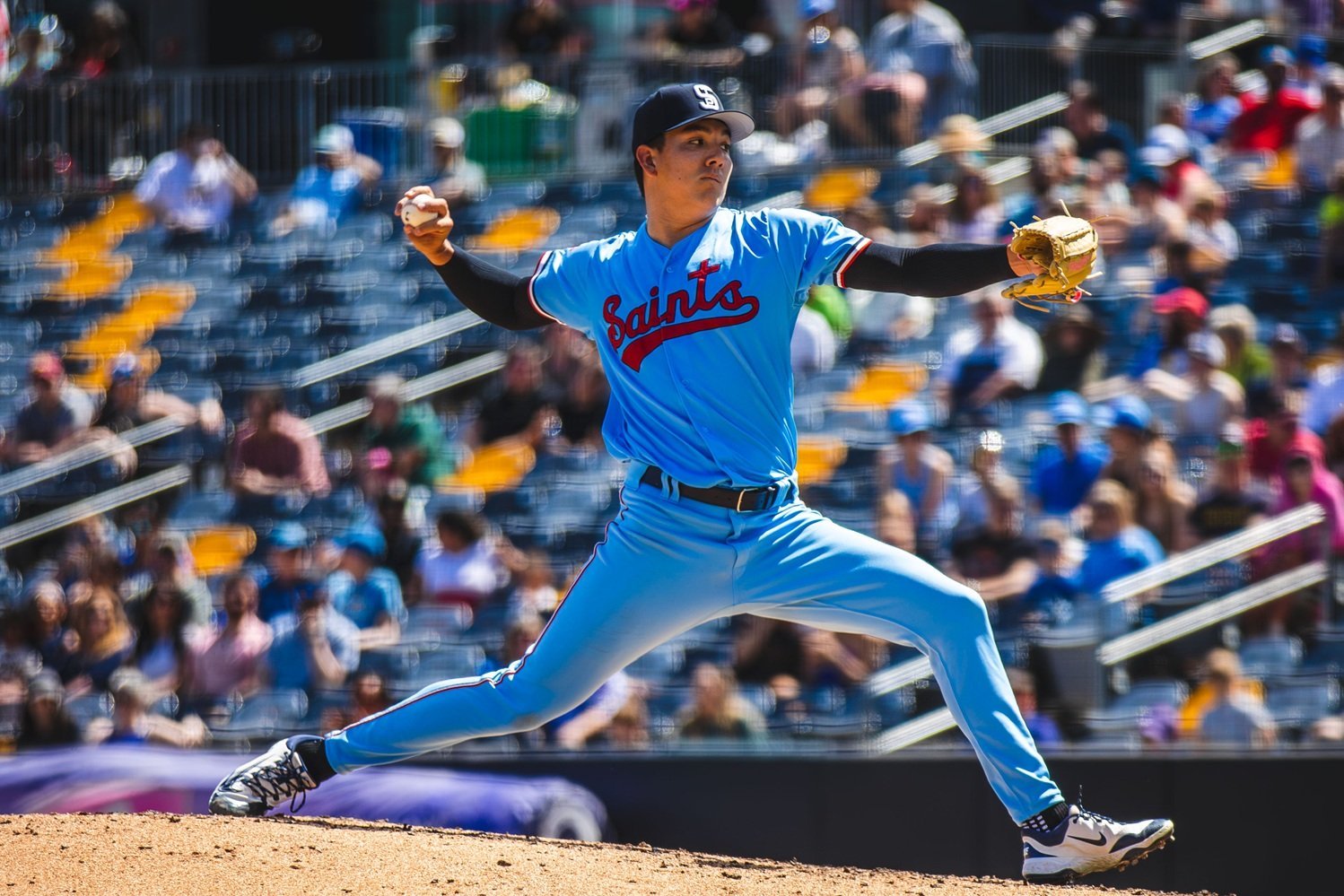 TRANSACTIONS RHP Nolan Santos activated from 7-day IL (Cedar Rapids) 3B Murphy Stehly retired (AA Wichita) RHP Charlee Soto sent to A Fort Myers on MiLB rehab RHP Hunter Gregory signed to a minor league contract Hunter Gregory? Yes, the Twins dipped into independent reserves once more. This time, they looked to the mound: former Blue Jays farmhand Hunter Gregory inked a deal to join Minnesota’s farm system. Darren Wolfson of KSTP reported he’ll join the Wichita Wing Surge. Gregory was a four-year player at Old Dominion between 2018-2021, starting the majority of his senior season to great results (a 2.95 ERA over 79 1/3 innings with more strikeouts than frames). Following that year, Toronto selected him in the 8th-round. He reached AAA in 2025, but was roughed up, and the franchise decided that a 26-year-old who walked more batters than he struck out wasn’t worth a roster spot. The York Revolution came calling, and he has been excellent for them: hitters who talk about destruction were counted (called) out, as he racked up 20 strikeouts across 13 2/3 innings. We shall see what he can do in the Twins system. Saints Sentinel St. Paul 10, Indianapolis 1 Box Score Ryan Gallagher: 5 IP, 2 H, 0 ER, 4 BB, 4 K HR: Hendry Mendez (4), Matt Wallner (2), Royce Lewis (10) Multi-hit games: Kaelen Culpepper (2-for-4, 3 R, BB), Hendry Mendez (2-for-5, HR, 2 R, 3 RBI), Royce Lewis (3-for-5, HR, 2 R, 5 RBI), Matt Wallner (2-for-4, HR, R, 2 RBI, BB) The St. Paul Royce Lewis’s stomped their opponent on Wednesday. At some point, it actually becomes difficult to capture a performance like this in writing: purple prose and exasperation isn’t a happy combination. Lewis is a supernova. He’s played 11 games with the Saints since being demoted and has eight homers. His AAA OPS in 2026 is literally nearly triple his major league mark. And Wednesday’s blast was of the ilk that made him a once-foreseen superstar many moons ago—a grand slam. What he’s doing in St. Paul is unbelievable. He wasn’t the only Saint in a hitting mood on Wednesday, as everyone in the lineup accrued a base knock. More blasts came from Hendry Mendez, who smoked a gorgeous shot to center with a slight fade, and Matt Wallner, who thundered a signature mutant flyball that refused to return to earth. Ryan Gallagher authored five shutout frames on the mound, occasionally giving in to temptation with a walk or two—or four, but who’s counting—yet never budging from his goal to stop Indianapolis from scoring. In fact, only twice did a runner even reach second base. Indianapolis’ leadoff man Termarr Johnson likely caught your eye. The fourth overall pick in 2022, Johnson earned overtures for being unusually “hitterish” at such a young age; his time in the minors has been beset by more ordinary play and a jump in strikeouts (and walks). He’s no longer a top 100 guy, but he’s Pittsburgh’s fifth-ranked prospect, and he singled and walked in five plate appearances. Wind Surge Wisdom Wichita 7, San Antonio 6 Box Score Cory Lewis: 4 IP, 3 H, 2 ER, 3 BB, 3 K HR: Andrew Cossetti 2 (4, 5), Multi-hit games: Andrew Cossetti (2-for-4, 2 HR, 2 R, 6 RBI) The Wind Surge eked out a win on Wednesday. It’s good to have a big dude who can hit the ball far. Just ask Earl Weaver. That’s what Andrew Cossetti is here for. He stepped up to the plate in his first at-bat with the bases loaded—an ultimate chance to give his team an early advantage—and walloped a mammoth 452 foot grand slam to spearhead a five-run frame before returning in the seventh to blast a two-run shot that catapulted the Wind Surge back into the lead. That’s also, by the way, how a team can score seven runs despite going 1-5 with runners in scoring position. Sometimes, home plate is scoring position. The Missions started Ethan Salas at DH on Wednesday. MLB.com’s 51st-ranked player walked twice in five plate appearances. Kernels Nuggets Cedar Rapids 4, Wisconsin 10 Box Score Dasan Hill: 2 2/3 IP, 4 H, 2 ER, 3 BB, 5 K HR: Yasser Mercedes (3) Multi-hit games: Eduardo Tait (2-for-4, 2B, BB, R), Khadim Diaw (2-for-4, R), Yasser Mercedes (3-for-4, HR, R, 3 RBI) The Kernels were out-slugged on Wednesday. All remains unruly in Dasan Hill’s 2026 season. He struggled to find the strike zone consistently, walking three as just 42 of his 70 pitches went for strikes. He surrendered four hits. The young lefty has flashed tantalizing ability at times, yet an affliction remains that causes the strike zone to often appear like a mustard seed. Hopefully he can figure things out soon. Yasser Mercedes continued to be a dual-threat menace, smacking a three-run homer while stealing his 12th base of the season. He was joined by Brandon Winokur and Jay Thomason, who also swiped a bag for the 12th time on the year. Strange happenings. It was a good, not awe-inspiring line, but Eduardo Tait reaching base thrice without a strikeout was an encouraging sight. He hit a poor .174/.245/.315 in May, so this game could be the positive augur the young catcher was undoubtedly looking for. The Timber Rattlers are an affiliate of the Milwaukee Brewers, and they are the home of their most recent first-round pick, Andrew Fischer. He manned third and reached base three times in five trips to the plate. Mussel Matters Fort Myers 5, Lakeland 11 Box Score Charlee Soto: 1 IP, 2 H, 3 ER, 1 BB, 2 K HR: JP Smith II (7) Multi-hit games: None An explosive eighth sunk the Mighty Mussels on Wednesday. Charlee Soto is back! More than a year after not pitching in a competitive game, Soto took the mound and… looked like someone who hadn’t pitched in a competitive game in more than a year. Which is fine. His stuff looked good, and he topped out at 99.9 (they don’t round in Florida). Jason Reitz entered once the Soto fanfare died down to deliver his finest outing since joining the Twins organization, whiffing three in a trio of extraordinarily efficient innings. He didn’t even reach a three-ball count. JP Smith hit the lone homer for Fort Myers—yet it was one of the inside-the-park variety. And it was hit to the pull-side. How is that possible? Well, the left-fielder decided that running the wall flailing would be better than playing the ricochet. He was wrong. And as a result, a rotund man had to run the bases with a vigor likely foreign to him. But what a sight it was! Tigers’ seventh-ranked prospect, Jordan Yost, played shortstop and reached base three times, once each via a hit, walk, and hit by pitch. TWINS DAILY PLAYERS OF THE DAY Twins Daily Minor League Pitcher of the Day – Ryan Gallagher Twins Daily Minor League Hitter of the Day – Andrew Cossetti PROSPECT SUMMARY Here’s a look at how the Twins Daily Top 20 Twins Prospects performed: #2 – Kaelen Culpepper (St. Paul) - 2-4, 3 R, BB #5 – Eduardo Tait (Cedar Rapids) - 2-4, 2B, R, BB #6 – Dasan Hill (Cedar Rapids) - 2 2/3 IP, 4 H, 2 ER, 3 BB, 5 K #7 – Marek Houston (Cedar Rapids) - 2-4, 2B, 2 R, 2 RBI, BB #10 – Gabriel Gonzalez (St. Paul) - 1-4, BB, 2 K #11 – Charlee Soto (Fort Myers) - 1 IP, 2 H, 3 ER, 1 BB, 2 K #13 – Hendry Mendez (St. Paul) - 2-5, HR, 2 R, 3 RBI #14 – Quentin Young (Fort Myers) - 0-3, RBI, 2 K #15 – Brandon Winokur (Cedar Rapids) - 0-4, R, BB, 2 K #16 – Ryan Gallagher (St. Paul) - 5 IP, 2 H, 0 ER, 4 BB, 4 K #19 – Khadim Diaw (Cedar Rapids) - 2-4, R #20 – Kyle DeBarge (Wichita) - 0-4, R, BB, K THURSDAY’S PROBABLE STARTERS Indianapolis @ St. Paul (7:07 PM) - RHP John Klein San Antonio @ Wichita (6:35 PM) - RHP Preston Johnson Wisconsin @ Cedar Rapids (6:35 PM) - RHP Michael Ross Fort Myers @ Lakeland (5:30 PM) - RHP Justin Mitrovich FCL Twins @ FCL Braves (11:00 AM) - TBD DSL Twins @ DSL Colorado (9:00 AM) - TBD View the full article
 -
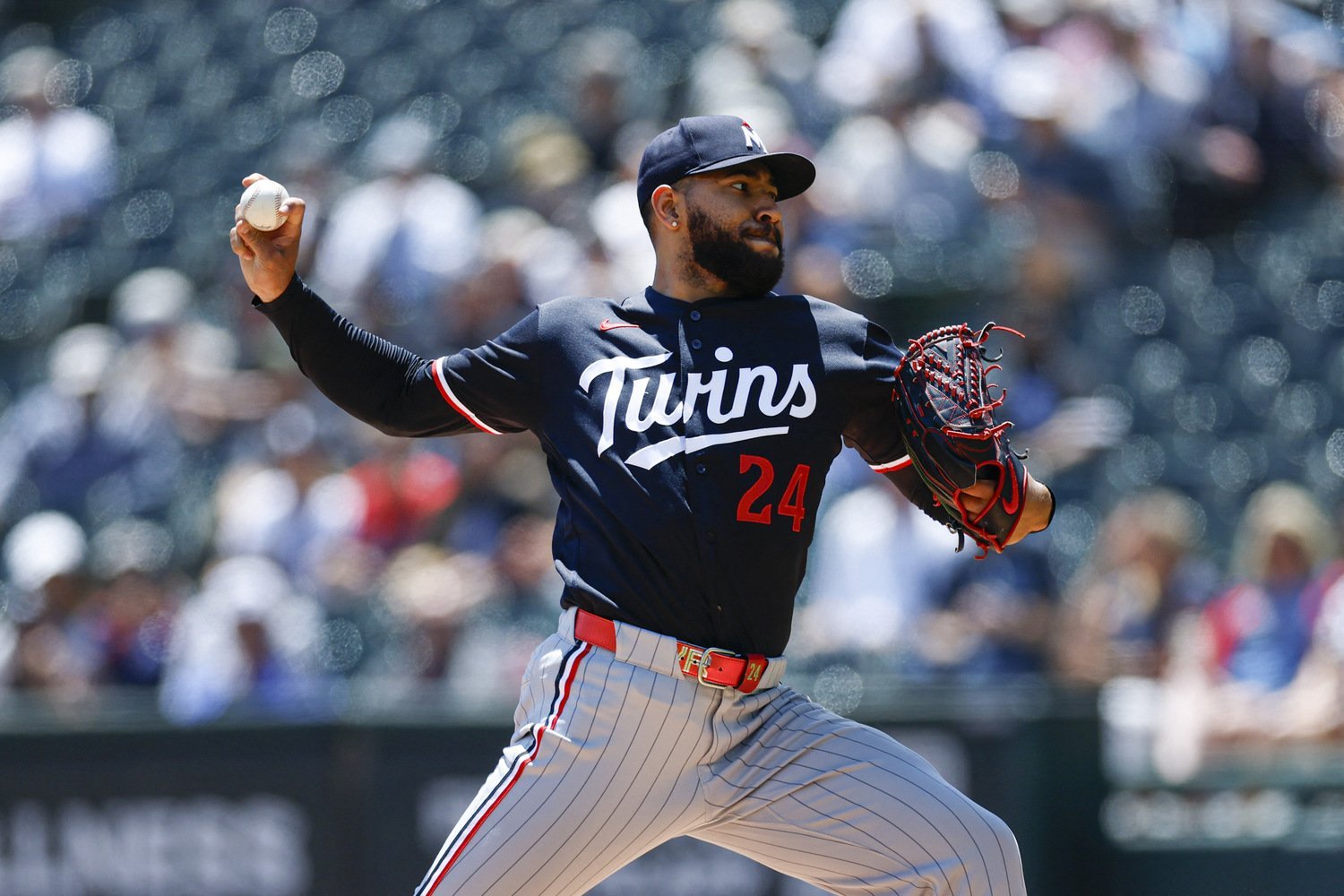 The Blue Jays have acquired pitcher Simeon Woods Richardson in a trade with the Twins, according to Mitch Bannon of The Athletic. Minnesota will send cash considerations back to Toronto. Woods Richardson, 25, was a prospect in the Blue Jays' system from 2019-21. Toronto acquired him from the Mets in the Marcus Stroman trade and later sent him to the Twins in the José Berríos deal. The righty was designated for assignment over the weekend. He pitched well for the Twins from 2024-25, putting up a 4.11 ERA over 51 games (50 starts). However, he has struggled in 2026, with a 7.74 ERA in 47.2 innings. Jays Centre's Jim Scott recently wrote about Woods Richardson as a potential target for the Blue Jays. View the full article
 -
Chicago Cubs MiLB Pitchers of the Month: May 2026
DiamondCentric posted an article in North Side Baseball
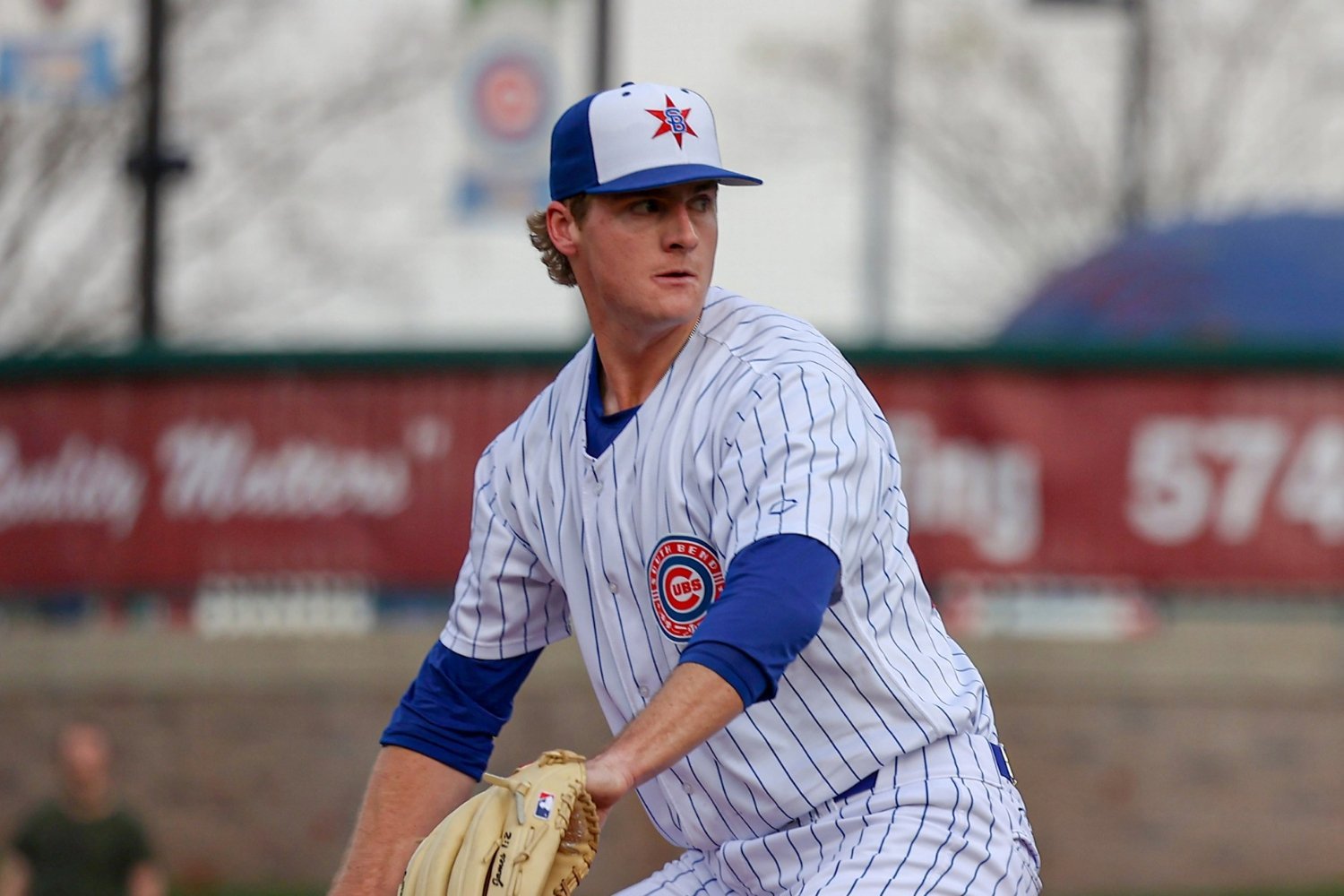 Not to sound like a broken record, but the Chicago Cubs' pitching pipeline is a bit bleak and, until the draft and/or trade deadline, is likely to remain that way. With relatively few standouts, May’s list looks a lot like April’s list, with three of the four pitchers repeating. Without further ado, here are May’s Cubs minor-league pitchers of the month. Ranking Cubs' Best Minor-League Pitchers in May Honorable Mention: Brooks Caple - RHP - Knoxville Caple repeats as an honorable mention this month after earning a promotion from South Bend to Knoxville and not missing a beat. In his five starts in South Bend, he put up a 26:6 strikeout-to-walk ratio in 21.2 innings. In his first four appearances in Double-A, he has 23 strikeouts and just four walks in 20.2 innings of work. His velocity continues to tick upwards since he was drafted, as he now tops out at 98 miles per hour. For a Cubs team starved for pitching at the higher levels, the 6’6” right-hander has forced his way into the at-large conversation. Third Place: Mason McGwire - RHP - South Bend Last month’s winner of this award, McGwire was again very good in five appearances in Myrtle Beach with 27 strikeouts against just five walks in 18 innings of work. McGwire earned a promotion to finish the month with South Bend, where he threw three scoreless innings with six strikeouts and gave up just one hit in his lone appearance. McGwire continues to put up impressive strikeout and walk numbers in his first action since 2024. While only 22, he could force the Cubs hand if he continues to put up similar numbers following his promotion to South Bend. Runner-up: Pierce Coppola - LHP - Myrtle Beach Drafted in the seventh round last year, Coppola debuted with eight innings in Myrtle Beach where he struck out 14 but also walked nine batters. To start this season, he was on the DL. Not the IL, the DL as in the Development List. It appears as though it may have worked based on the early returns. The massive 6’8” lefty made five starts in May and had a nearly 40% k rate in 20 innings while allowing a paltry .167 batting average. The former New Jersey prep standout and Florida Gator still had a walk rate of nearly 15%, far too high, but if he can continue to stay healthy and improve his command, he may make the Cubs an offer they can’t refuse. Winner: Dominick Reid - RHP - Myrtle Beach Reid was runner-up in April but he wins the column this month. Last month, I highlighted the disparity between his first nine innings and his last nine innings; in his five starts in May, Reid resembled the pitcher he was in his first two appearances of the season much more than the three starts to end April. He averaged 5.0 innings per start, a relative rarity in minor-league baseball nowadays. In those 25 innings. he racked up 27 strikeouts against just 8 walks. Reid had one subpar start where he allowed four runs on eight hits and two walks in just four innings. In his other four starts, he turned in 21 innings with 25 punchouts, allowing just two earned runs on nine hits and six walks. After 107.2 total innings in three years in college, Reid is still raw and developing, so inconsistency is to be expected. If he can continue to gain consistency with his breaking ball to go along with his quality changeup, he should continue to emerge as a legitimate prospect for the Cubs. View the full article
 -
What Should Twins Fans Expect from Sidearmer Justin Lawrence?
DiamondCentric posted an article in Twins Daily
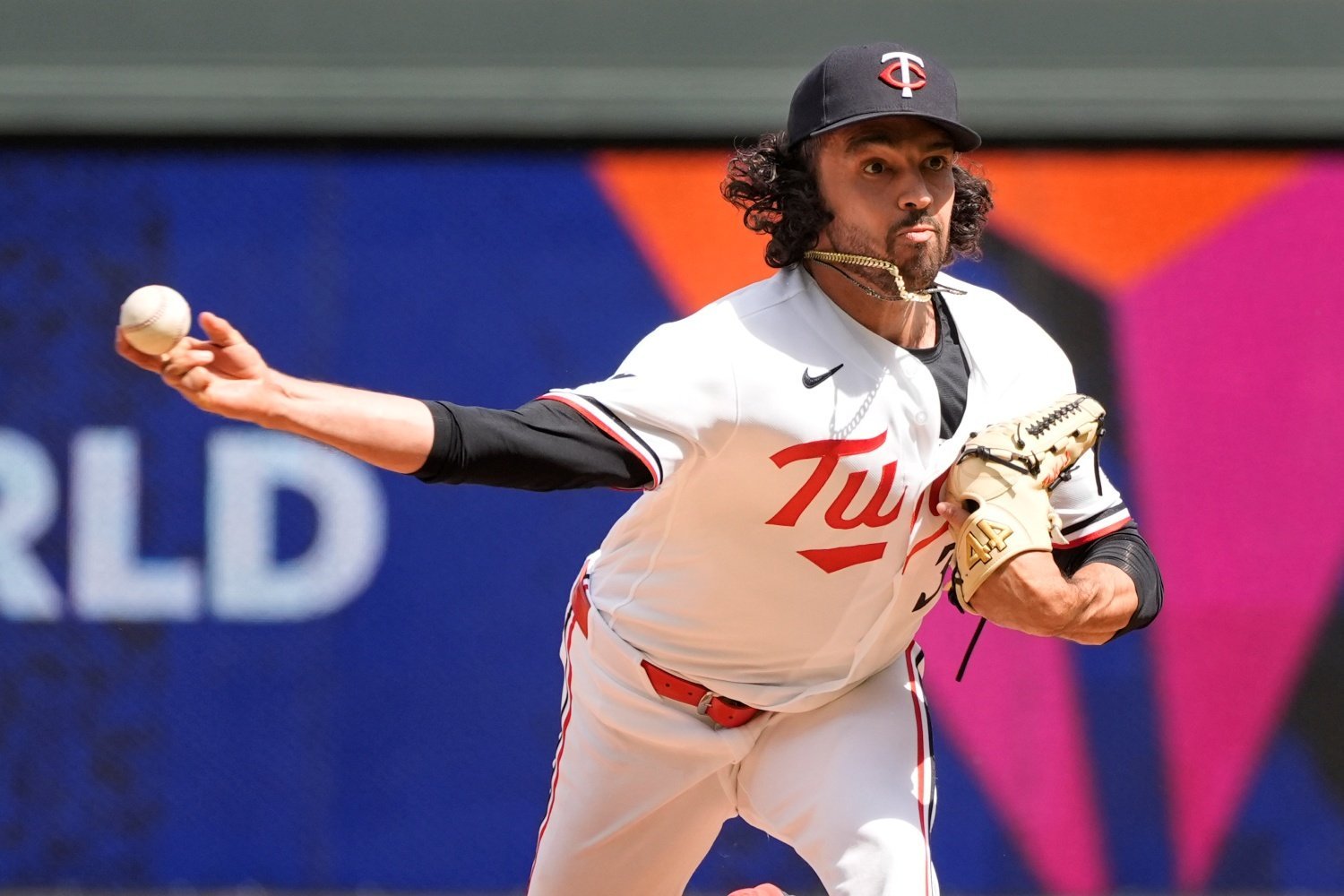 The Minnesota Twins continued searching for bullpen help on Monday night, acquiring right-handed reliever Justin Lawrence from the Pittsburgh Pirates for cash considerations. Pittsburgh designated the veteran reliever for assignment last week, giving Minnesota an opportunity to take a chance on a pitcher whose career has featured both electric highs and frustrating inconsistency. At first glance, Lawrence's numbers don't inspire much confidence. The 31-year-old owns a 5.32 ERA in 22 innings this season and has battled command issues throughout his Major League career. Yet, the Twins clearly see something worth exploring, and Lawrence believes his current performance is better than the stat line suggests. "I think I'm in a better place than what you see in the stat line, mentally, physically, health-wise," Lawrence told reporters. "I felt like I'm in a really good spot. [In] 2024, kind of struggled the entire year, but I felt like I'm in a completely different headspace. My stuff feels really good. I'm still attacking the zone. I'm always best when I'm in the zone. As long as I can stay in the strike zone, keep the sinker down, and be able to just control what I can control, most importantly, the success will come." For a Twins bullpen desperate for stability, Lawrence represents another low-cost gamble with a potentially meaningful payoff. Lawrence brings the type of arm talent Minnesota's bullpen lacks. He throws two fastballs that both average better than 95 MPH, and complements them with a sweeper capable of generating swings and misses. The raw arsenal has allowed him to survive in the big leagues despite inconsistent command. His 23.6% strikeout rate this season sits around league average, and when he's locating his pitches, hitters often struggle to square him up. Across 222 career appearances, however, Lawrence owns a 5.05 ERA. His 11.3% walk rate this season highlights the same issue that has followed him throughout his professional career. The Twins aren't acquiring a finished product. They're betting they can unlock more consistency from a pitcher whose stuff has always outperformed his results. Part of Lawrence's optimism stems from feeling healthier than he has in recent years. After missing most of the 2025 season due to elbow inflammation, he believes his mechanics are moving in the right direction again. "Yeah, I think I'm feeling better, physically,” Lawrence said. “My direction is straight to the plate, so being able to not cut myself off and get out there has been really good." Improved extension and cleaner mechanics could be especially important for a pitcher whose sinker relies on movement and deception. When Lawrence gets down the mound effectively, his fastball plays up, and his breaking ball becomes even tougher to recognize. The photos below show his “foot strike” position from 2025 and 2026. His extension is up noticeably this year, and this is why. The Four-Seamer Experiment One of the more interesting developments in Lawrence's career came when the Pirates encouraged him to throw more four-seam fastballs. Pittsburgh wanted him to incorporate the pitch shortly after acquiring him, but Lawrence wasn't fully comfortable with the adjustment initially. Over the winter, he worked to develop the offering and became more confident using it. However, the process wasn't seamless. As Lawrence worked to create separation between his four-seamer and his traditional sinker, he occasionally struggled to keep the sinker in its ideal locations. Instead of staying at the bottom of the zone, it drifted into more hittable areas. Even so, he believes the four-seamer can be a useful addition moving forward and plans to continue using it. The Twins will likely spend the next several weeks determining whether pitch-mix changes can help him unlock another level, or whether simplifying his approach could yield better results. Everything Comes Back to the Strike Zone When Lawrence discusses his career, one theme repeatedly emerges: throwing strikes. Despite possessing solid velocity and significant movement, he doesn't view command issues as an unavoidable consequence of his stuff. "Not necessarily. There are guys in the league that have amazing stuff and stuff that moves all sorts of directions, and they still throw a ton of strikes. That's always been my key, my whole career, from the minor leagues up. When I'm in the zone is when I'm at my best." That self-awareness may be part of what attracted Minnesota. The Twins don't need Lawrence to become an elite closer. They simply need him to throw enough strikes to let his natural ability work. If he can reduce the walks, the combination of velocity, movement, and swing-and-miss potential becomes much more valuable. A Bullpen Searching for Answers Minnesota's bullpen has been one of the organization's biggest disappointments this season. The Twins entered Tuesday ranked 25th in bullpen ERA and 29th in strikeout rate, ahead of only the Washington Nationals. Walks have also been a persistent problem, particularly during May. Those struggles aren't entirely surprising. Minnesota traded away several veteran relievers at last year's deadline and did little to replace that production over the offseason. The result has been a patchwork group that has struggled to miss bats and protect leads consistently. Lawrence joins recent addition Yoendrys Gómez as another attempt to inject power stuff into the relief corps. Unlike many depth acquisitions, however, Lawrence arrives without minor-league options. That creates an immediate roster challenge. Lawrence joins Taylor Rogers, Anthony Banda, and Gómez as relievers who cannot be freely shuffled between Triple-A and the Major Leagues. For a team that values roster flexibility, carrying multiple non-optionable relievers can become complicated. Still, Minnesota clearly felt the upside justified the risk. The Twins will assume approximately $800,000 remaining on Lawrence's $1.225 million salary. If he pitches well enough to stick on the roster, he'll remain under team control through the next two seasons. At this stage, Twins fans shouldn't expect Lawrence to suddenly become the bullpen's savior. What they should expect is a reliever with legitimate Major League stuff, a recent history of high-leverage success, and enough upside to make this gamble worthwhile. The command issues may never completely disappear, but Minnesota doesn't need perfection. It needs another arm capable of generating strikeouts and handling meaningful innings. For a bullpen desperately searching for answers, Lawrence represents exactly the type of low-cost, high-upside move contenders make during the middle of the season. If he can stay healthy, throw more strikes, and recapture some of the form that made him an All-Star just a few years ago, the Twins may have found much more than a simple depth addition. What stands out about Lawrence? Can he become a late-inning option for the Twins? Leave a comment and start the discussion. View the full article
 -
Simeon Woods Richardson Lived And Died By The Splitter
DiamondCentric posted an article in Twins Daily
 In a surprising move, the Minnesota Twins designated Simeon Woods Richardson for assignment. At times, he looked like a mid to back-end of rotation lock, but more recently, he looks like a guy who didn't belong. What happened? View the full article
 -
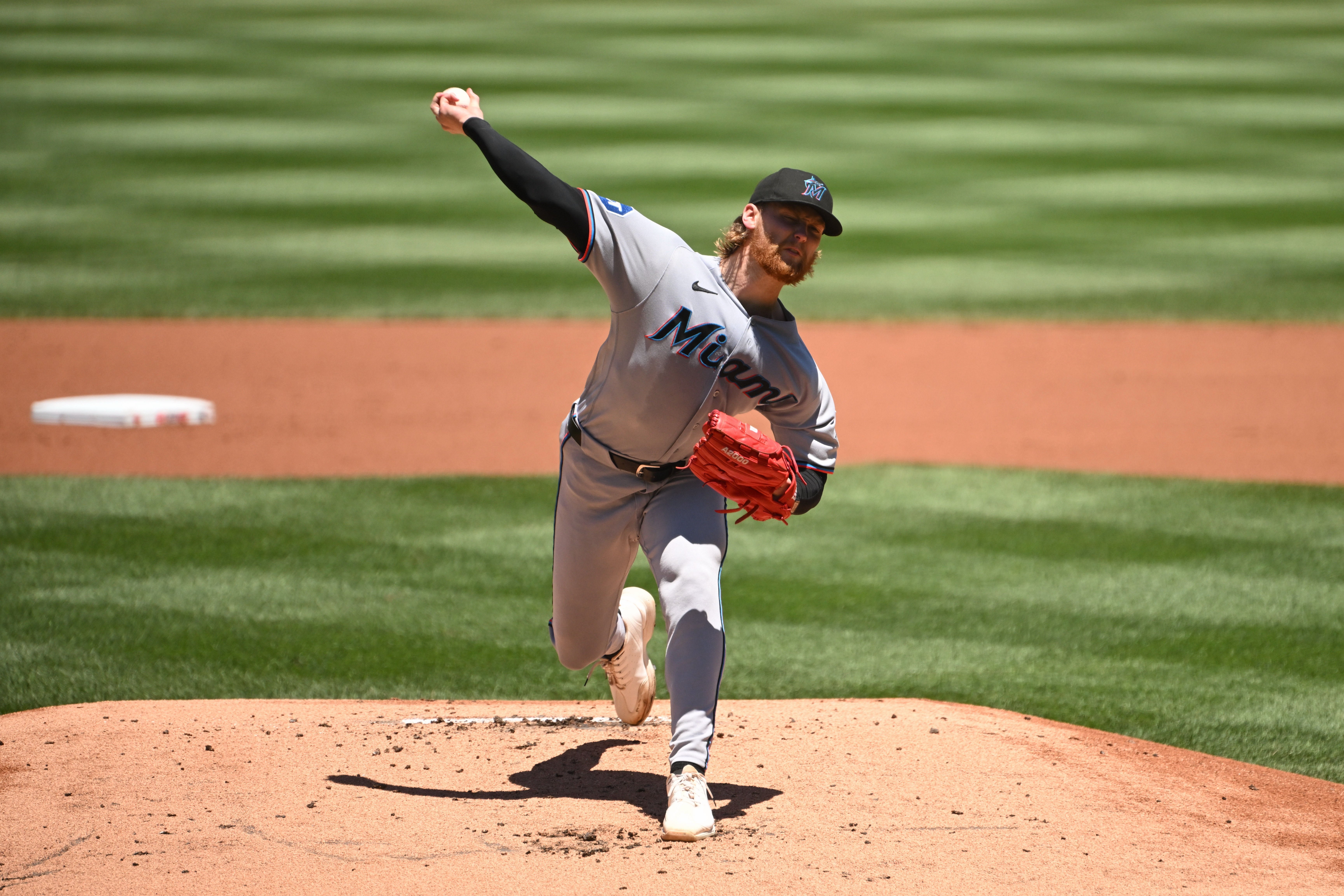 Max Meyer was brilliant on the bump in his most recent start, showcasing outstanding efficiency while shutting down the lineup opposite him. In other words, it was a day ending in "y". Meyer's seven-inning, two-hit outing on Wednesday afternoon kept an otherwise slumping Marlins offense around long enough for a late-game surge. Three runs in the final two frames were enough for the visitors to hold on for a 4-1 win, earning a much-needed series sweep in the process. Miami finishes their ten-day road trip at a respectable 4-5, a far cry from what seemed possible following last weekend in Queens. Pacing the Marlins in the matinee was their most consistent starting arm, who continues to live up to his third overall pick billing in what has been a breakout 2026 campaign. Entering Wednesday with a career 1.24 ERA in day games, the 27-year-old averaged a measly thirteen pitches an inning. That impressive enough number was actually inflated from a third inning that featured two walks and an earned run, Meyer's lone blemish. Miami's four-year veteran flashed his five-pitch mix to a tee while leaning on his signature sweeper/slider and four-seamer to keep Nationals hitters guessing. Six of Meyer's seven punchouts came courtesy of the off-speed offerings. Aside from the rugged beard, Meyer's most significant change from a season ago is the incorporation of that sweeper-a staple of Marlins' pitching development. While Meyer's slider was consistently pegged as one of the best in baseball, an over-reliance on the pitch plagued the right-hander in years past. The 2025 campaign saw Meyer throw 55% sliders and fastballs, with the changeup, sinker and sweeper in the distance. Now, with even a slight difference of spin on the sweeper, Meyer and Miami's staff have been able to couple the two beautifully. Per Baseball Savant, the advancement places Meyer's breaking pitches in the 100th percentile in terms of run value with eight. Although the All-Star fan vote was released to the masses an hour before game time, pitchers are instead placed in the hands of the manager. It'll be up to back-to-back World Series champion Dave Roberts to get Meyer and his superb 2.81 ERA to Philadelphia. Pitching and defense wouldn't win this game on its own, though. After Esteury Ruiz blasted his third long ball of the season and Miami's eighth of the series early-their most in a series since the infamous sweep of Atlanta in September of 2023-the rest of Pedro Guerrero's group went quietly until some patented small-ball set the table for Joe Mack in the eighth. While Owen Caissie and Javier Sanoja both failed to get the job done with the bases juiced and nobody out, Mack flaunted his clutch gene on the first pitch, lining a two-run, go-ahead single into right-center. The eventual sweep-clinching rope marked Mack's fourth and fifth RBI of the set, symbolizing the rookie's improved confidence at the dish. Miami's potential catcher of the future is 8 for his last 28 at-bats-including a multi-hit effort Wednesday-after adjusting to big league arms. Additional offensive standouts from Miami's ten-hit day include Xavier Edwards, who tallied a multi-hit game of his own, and Kyle Stowers. Stowers delivered welcomed insurance with an RBI triple (his first three-bagger of the year) in the top of the ninth. With their first three-city road trip of the season in the books, Miami returns home to loanDepot park this weekend for a date with the in-state Rays. Following an off day on Thursday, Clayton McCullough hands the ball to Tyler Phillips for Friday's series opener against familiar foe Drew Rasmussen. First pitch from South Florida comes your way at 7:10 pm EST. View the full article
 -
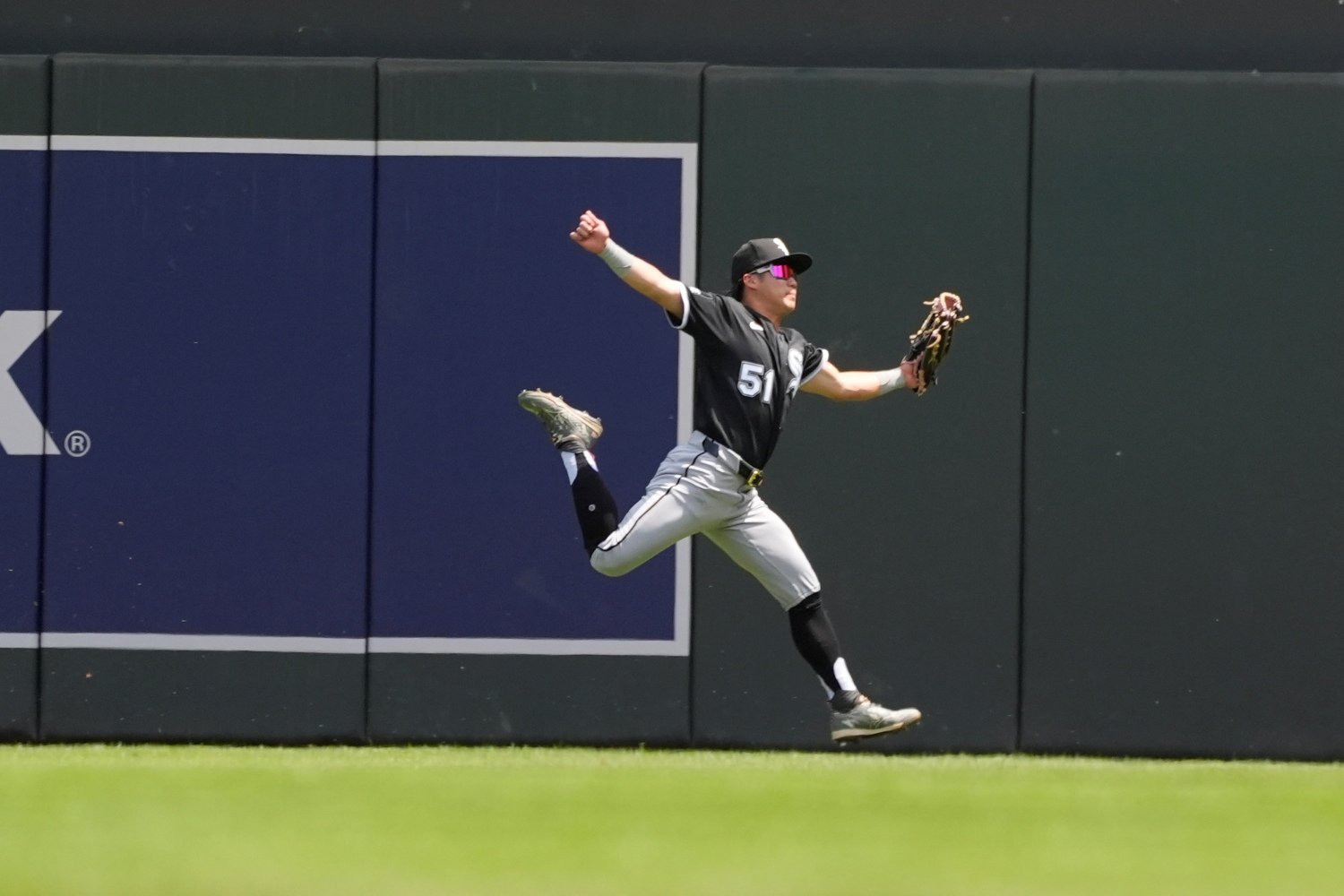 Box Score SP: Taj Bradley - 4.2 IP, 7 H, 5 ER, 5 BB, 5 K (104 pitches, 63 strikes (72% strikes) Home Runs: None Bottom 3 WPA: Taj Bradley (-0.24); Austin Martin (-0.05); Byron Buxton (-0.05) Win Probability Chart (via FanGraphs) Taj Bradley had his third appearance since returning from the injured list on Wednesday, and the first inning was an utter disaster. Bradley gave up two walks and two singles, allowing four runs and giving the White Sox a 4-0 head start in the game. Bradley struggled through five innings in an exhausting pattern: loading the bases, walking players, but with the rest of his appearance scoreless, he was pulled as he just eclipsed the 100-pitch mark. The defense behind him was no help, from a key error by Tristan Gray at shortstop to a mistimed leap at the wall by Austin Martin. Eric Orze replaced Bradley, followed by Taylor Rogers. Both pitchers gave up no runs and provided chances for the offense to close the 5-0 gap, but Cody Laweryson gave up three runs, sucking the life right out of the game as the White Sox extended their lead to 8-0. The Twins offense struggled as much as the pitching. There was no type of movement until the bottom of the sixth for the Twins. The little bit of life came from Luke Keaschall, who delivered the Twins their first hit on a two-out single, followed by another single from Gray. But a groundout to short from Orlando Arcia forced an out, ending the small two-out rally. The Twins tried to get a bite of the White Sox bullpen in the seventh, with a single from Josh Bell, but the lineup behind Bell just couldn’t get any production, leaving him stranded. Every rally was short-lived. The More Things Change, The More They Stay The Same The White Sox have exposed the Twins' new setup’s weaknesses on the field with their bats and their speed. The Twins have made a lot of adjustments, with Royce Lewis being sent down to Triple-A St. Paul, and everyone is slowly locking in. Gray committed three errors Wednesday. Plenty of other plays seemed to elude the team's gloves; they're no more rangy than they are sure-handed. A Valiant Effort The Twins did keep the game a bit more under control late than might have been the case. Though he wobbled, new arm Justin Lawrence showed the nastiness that made the team want to acquire him via trade in his late appearance. In a blowout, Derek Shelton put in better defenders (James Outman for the hampered Byron Buxton in center; Ryan Kreidler for Gray at short) and the team played respectably late. It was just too little to make the game feel remotely within reach. Lawrence struck out his first hitter, but plunked the next two. Suddenly, he had two men on base. He got out of the inning with no damage, except a few bruises on the opposition. One last valiant rally gave the Twins a chance to avoid their first shutout defeat of 2026, but they couldn't break through. No matter. There are no moral victories, they say. What’s Next? The Royals come to town for a four-game weekender beginning Thursday. The Twins will send Andrew Morris to the mound at the front end of what is essentially a bullpen game; the Royals counter with eight-figure veteran signee Seth Lugo. First pitch is scheduled for 6:40 PM CT. Postgame Interviews Coming soon. Bullpen Availability Chart View the full article
 -
New York Mets' Biggest Surprises and Disappointments In May
DiamondCentric posted an article in Grand Central Mets
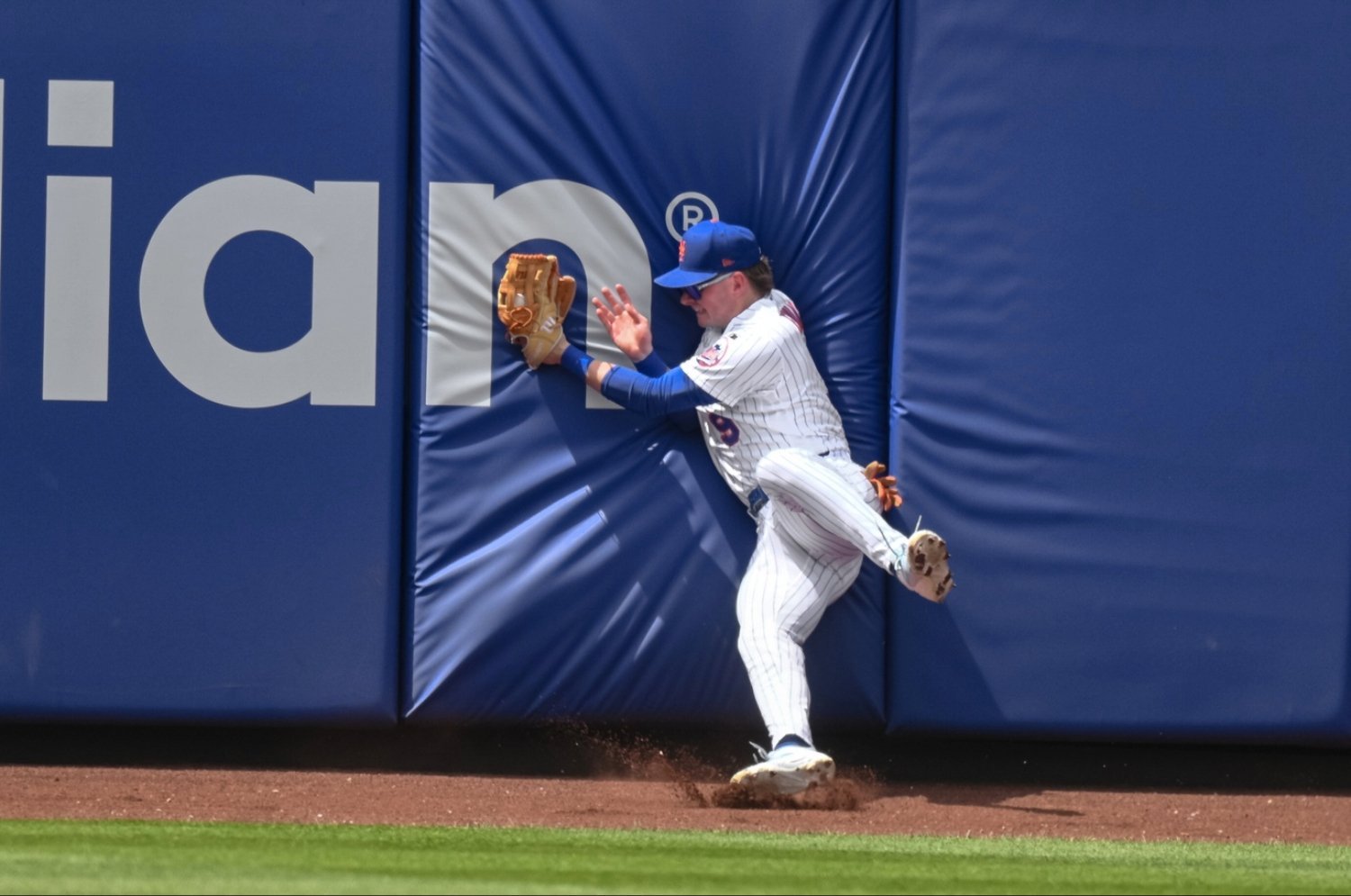 We are almost at the mid-point in the season, and the New York Mets are still trying to dig themselves out of the hole they created during their 12-game losing streak. Thus far in 2026, everything that could go wrong has gone wrong for the Mets, with star players being injured or not playing up to standards being the norm so far. Surprisingly, the Mets finished with a winning record of 16-12 in the month of May, but it was not pretty. From the high of beating the Yankees in a three-game series to the lows of being swept by the Marlins and Rockies, it was a turbulent stretch of baseball, to say the least. However, while others continued their trajectory from the beginning of the season, some have bounced back and are beginning to put together a nice 2026 campaign for themselves. Biggest Surprise: The Baby Mets At the beginning of the season, Carson Benge struggled to find his footing at the plate. Benge hit under the Mendoza line during the months of March and April and appeared well on his way to a trip back to Syracuse. Once May 1 hit, everything began to click. Since that day, Benge is slashing .306/.375/.426 for an .801 OPS. With a majority of his at-bats coming in the leadoff spot, Benge has put himself in scoring position for a scorching hot Juan Soto many times and it has worked out well so far. Likewise, A.J. Ewing has begun his rookie season in a very positive way so far. Ewing’s glove in center field is often on the receiving end of compliments from Keith Hernandez and deservingly so. On the batting side, Ewing is still finding his footing, but much faster than Benge did in the beginning of the season. Ewing hit .238 with an OPS of .650 in May, pairing that with 94th percentile sprint speed and above-average defense, Manager Carlos Mendoza will take that and continue putting him in the lineup every day. Also worth noting, Christian Scott had himself a strong month of May. In six starts, Scott produced a 2.79 ERA with a K:BB ratio of 37:11. Scott has only allowed one home run so far this season which is a positive as keeping the ball in the yard was a major issue for him in 2024. Scott ranks in the 85th percentile in strikeout rate at 28.1%, providing reason to hope that this isn't just a flukey breakout. Biggest Disappointment: Bo Bichette Simply put, the Mets are not getting their money’s worth so far with Bichette, and they could potentially get locked into one of the worst contracts in baseball if his play continues the way it is. In the month of May, Bichette slashed .207/.279/.297 with a .576 OPS. Since the beginning of the season, the Mets have only seen a few games of the Bo Bichette they went and signed to a three-year, $126 million dollar deal. While the defense has been better than fans thought, the bat has been much worse. Bichette currently sports a -11 batting run value, which is only in the second percentile among all of qualified hitters. One thing I have found fascinating about Bichette’s swing is his late load. His body motion and lead leg appear to be set later than most hitters. To the naked eye, it appears like Bichette only gets set in time to be late to the ball on most occasions. So, while his chase rate is high and whiff rate is low, most of that is due to being late to the ball and fouling pitches off. However, what Carlos Mendoza and hitting coach Jeff Albert can do to help Bichette is to let him know that the results will come. The advance stats show that right now Bichette is only one of the unluckiest hitters in baseball. Bichette’s expected batting average is .279, .060 higher than his current average. In due time, the results should come. Or, at least, the Mets have to hope they will, lest they find themselves unable to get back into the playoff picture. View the full article
 -
Brewers Call Up Robert Gasser To Start Against Giants
DiamondCentric posted an article in Brewer Fanatic
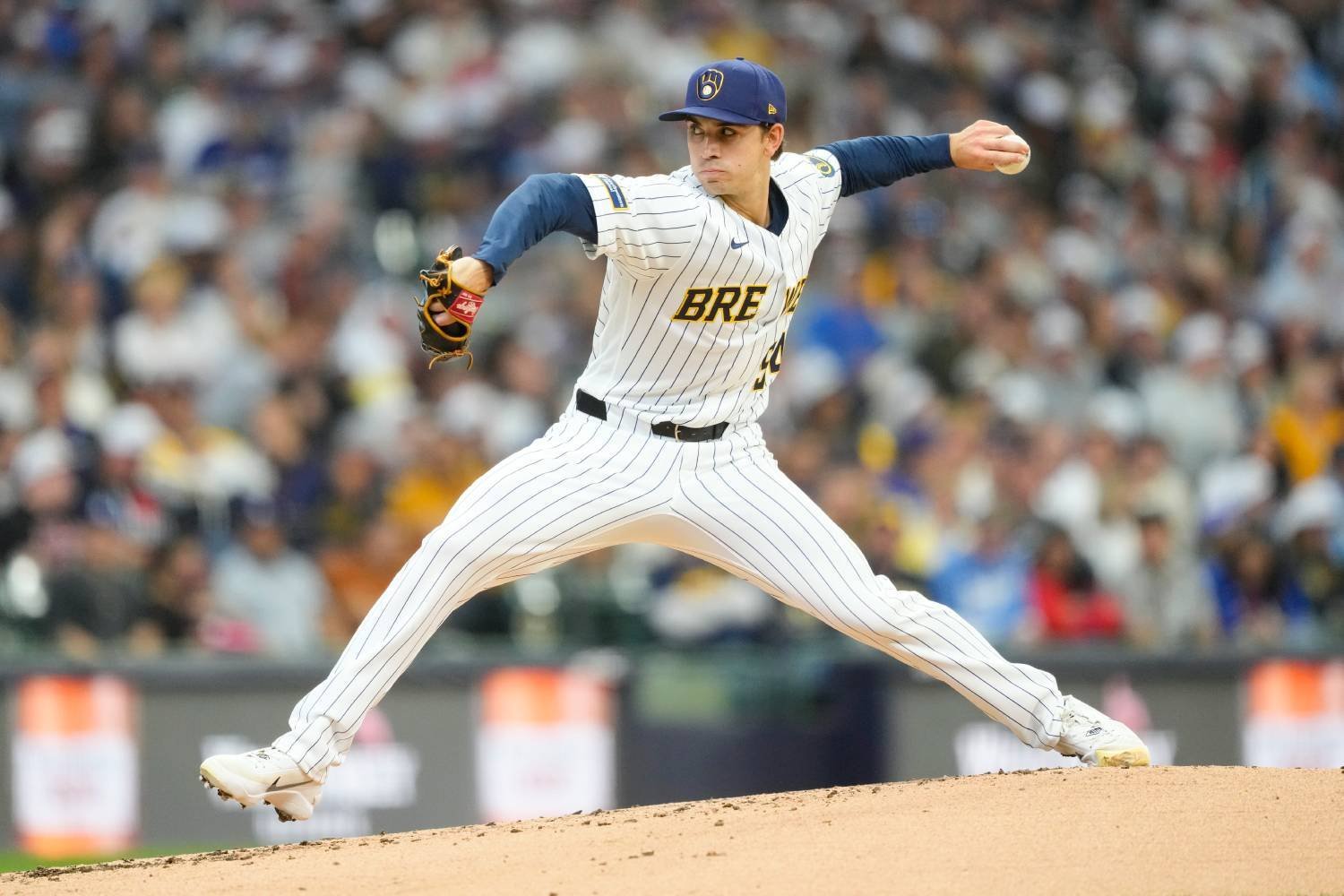 Despite a bout of wildness in his last MLB start, the Milwaukee Brewers are giving Robert Gasser another shot. The Brewers on Wednesday called up the left-hander from Triple-A Nashville to start Wednesday's game against the San Francisco Giants. To make room on the 26-man roster, the Brewers placed left-handed reliever Rob Zastryzny on the 15-day injured list with a strained left trapezius. Gasser has made two starts for the Brewers this season, the last one coming May 23 against the Los Angeles Dodgers. Gasser walked four and gave up four runs in 4⅓ innings in an 11-3 loss. He was sent down the next day. Gasser walked two in four innings of his May 17 start vs. the Minnesota Twins, a 5-4 loss. Zastryzny had just returned Sunday from the injured list, where he had been since spring training due to a strained left shoulder. While Zastryzny didn't appear in any of the three games he was on the roster for, he is now dealing with another shoulder-related injury. The Brewers also have announced that right-hander Coleman Crow will start Thursday's finale against the Giants. View the full article
 -
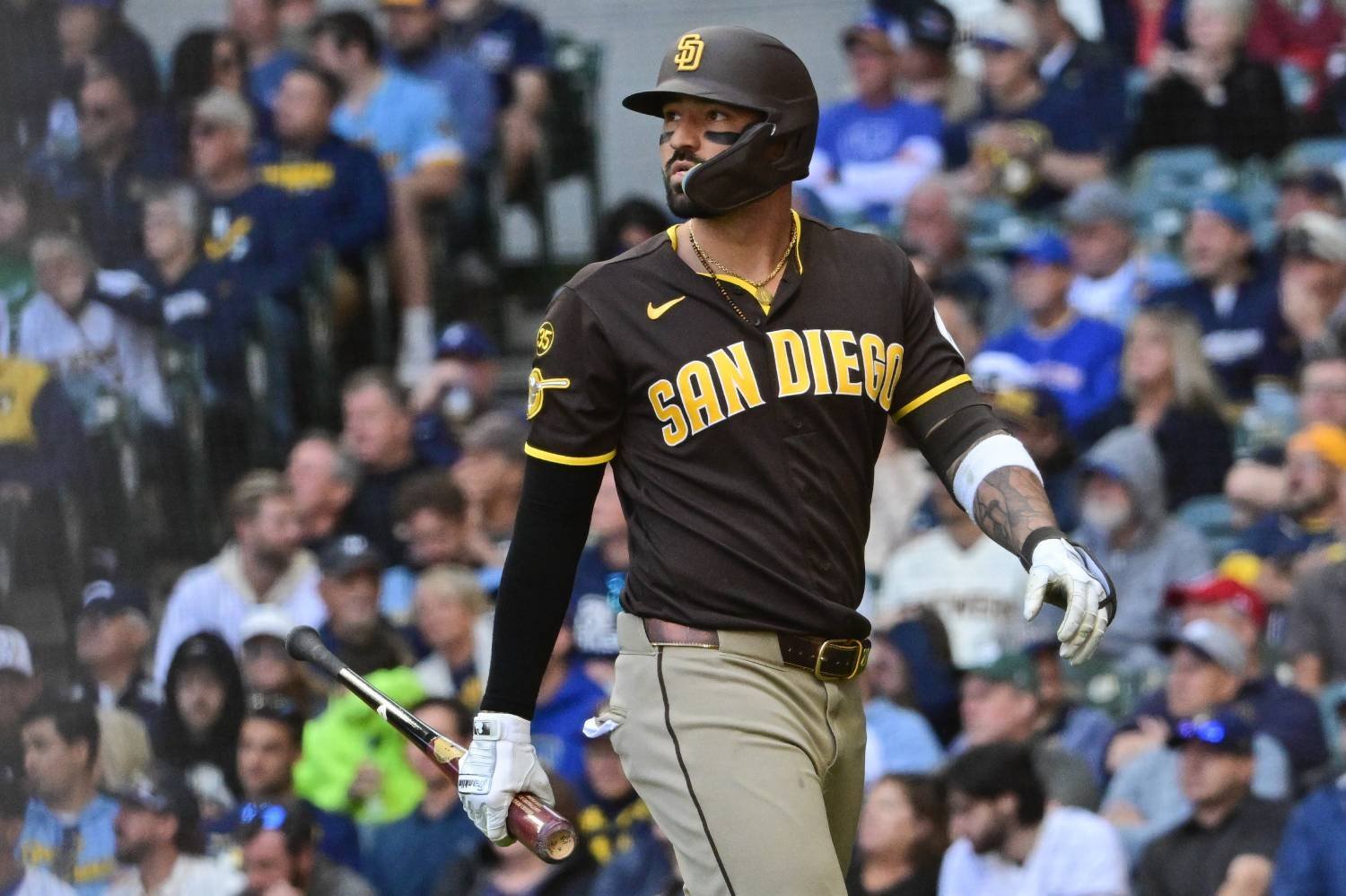 The Nick Castellanos experience has come to an end for the San Diego Padres. Castellanos, an outfielder, was designated for assignment Wednesday by the Padres. Infielder-outfielder Samad Taylor had his contract selected from Triple-A El Paso. Being DFA'd is the first step toward releasing a player. He must clear waivers before that can happen. Castellanos could also be claimed off waivers by another team or the Padres could trade him. Castellanos didn't play in Tuesday's series opener on the road against the Philadelphia Phillies, the team that released him as spring training was set to begin and was due to make $20 million this season as the final year of a five-year, $100 million contract. The 34-year-old quickly latched on with the Padres, who only had to pay him the MLB minimum salary after the Phillies dumped him. In 39 games this season, Castellanos had a slash line of .191/.221/.339 with four homers and 20 RBIs. His biggest moment with the Padres came May 20, when he hit a game-tying homer with two outs in the bottom of the ninth inning against St. Louis Cardinals star closer Riley O'Brien in what would be a 3-2 victory in 10 innings. But the entire Padres offense is struggling and Castellanos' lack of production and positional versatility along with a recent injury to left fielder Ramon Laureano prompted this move. The Padres are last in MLB in batting average at .218 and 29th in OPS at .656. Originally expected to get time at first base, a position he had never played at the MLB level, Castellanos only made two starts at the position due to the production from Gavin Sheets and Ty France. The right-handed slugger, with 254 career homers and a .781 career OPS, struggled early in the season in his new role as a part-time player. He seemed to come around a bit with more consistent playing time in May due to Jake Cronenworth's concussion, which led to right fielder Fernando Tatis Jr. shifting to second base. Castellanos made 18 starts in right field and four in left, with only seven at designated hitter, a role he seemed more suited for with the other personnel the Padres had on the roster. Taylor has appeared in 38 games in the majors with the Kansas City Royals (31 games in 2023) and Seattle Mariners (seven games the last two years). He produced a .205/.272/.260 slash line with no homers and four RBIs along with eight steals in as many chances. At Triple-A El Paso this year, Taylor had slashed .319/.406/.500 with seven homers, 25 RBIs and nine stolen bases in 10 attempts. He also had seven doubles and three triples in the hitter-friendly Pacific Coast League. View the full article
 -
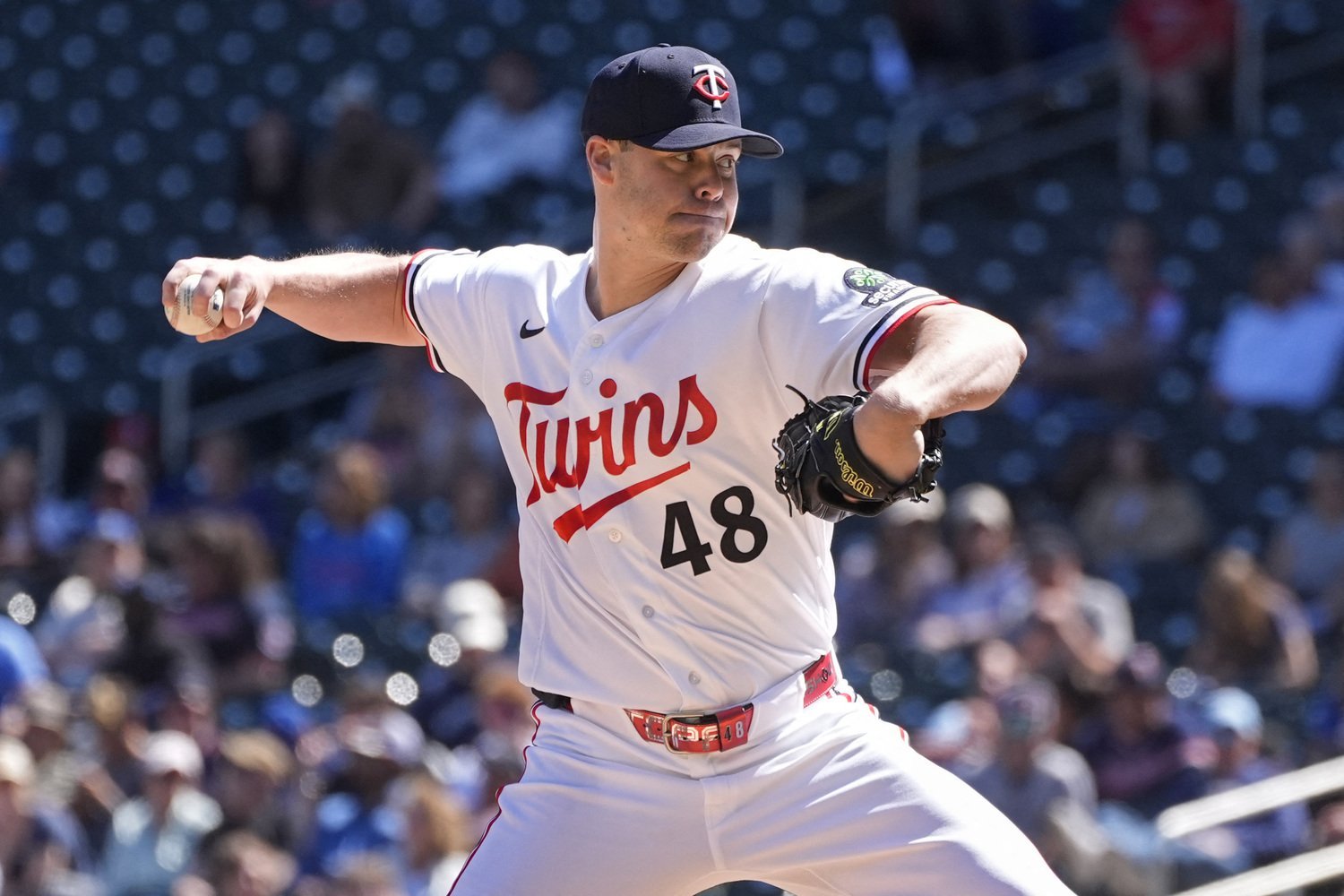 The Toronto Blue Jays have acquired more right-handed depth in the form of veteran reliever Justin Topa. Topa, 35, has seven seasons of MLB experience with the Brewers, Mariners, and Twins. He owns a 4.27 ERA in 172 career appearances, with nine saves and 32 holds. The righty struggled badly for Minnesota earlier this year (8.05 ERA, 5.97 xERA in 19 IP), prompting his release. However, he was solid for the Twins in 2025, pitching to a 3.90 ERA (4.42 xERA) in 60 frames. The Blue Jays have 10 pitchers on their major league injured list, and they're currently counting on bullpen games to fill two of the five slots in their rotation. So, it makes sense that they're stockpiling pitching depth, and it wouldn't be surprising to see Topa get a shot with Toronto in the coming weeks. View the full article
 -
Kyle Harrison Just Keeps Finding Ways to Dominate
DiamondCentric posted an article in Brewer Fanatic
 Kyle Harrison lifted his eyes and saw the crowd on its feet, applauding at American Family Field as he made his way back toward the Brewers' dugout. His 11th start of the season had ended with yet another dominant line: 5 2/3 innings, one run allowed, 12 strikeouts, and only two walks against the San Francisco Giants. Harrison reached double-digit strikeouts by the fourth inning and matched a career high with 12 punchouts, including three against Rafael Devers. In the sixth, a solo home run by Willy Adames finally snapped his scoreless streak after 23 consecutive innings, and after issuing a walk to Matt Chapman, his night was over. Even then, Harrison's ERA remained at 1.57, accompanied by a 2.83 xFIP and 1.9 fWAR. Any metric you choose to look at still feels almost unbelievable. This is a new and completely reinvented Harrison, one whose four-seam fastball has climbed into the Top 10 pitches in baseball in Run Value (9) and whose slurve may be the best pitch of its kind in the game right now. Some numbers tell a story, and others simply leave you speechless. Harrison has now made 11 starts in Milwaukee, and the baseball world can no longer look the other way. He's already put up the best ERA through one's first 10 starts of a season as a left-handed starter for the Brewers—not in the modern pitching era, not in a period defined by hitter-friendly environments and ever-increasing velocity, but across the entire history of the franchise, stretching back to 1970. The names surrounding him are not ordinary ones. Teddy Higuera appears three different times. CC Sabathia sits in second place. And yet, at the very top of the list, above all of them, stands Harrison. Rk Player Team Span Started Span Ended ERA W L GS CG SHO IP ERA SO% SO-BB HR% H R ER HR BB SO BF 1 Kyle Harrison MIL 3/30/2026 5/26/2026 1.57 6 1 10 0 0 51.2 1.57 29.6% 4.4 1.5% 39 9 9 3 14 61 206 2 CC Sabathia MIL 7/8/2008 8/24/2008 1.59 8 0 10 5 2 79 1.59 23.5% 4.9 1.3% 68 17 14 4 15 74 315 3 Teddy Higuera MIL 4/10/1990 6/13/1990 1.78 5 1 10 1 1 55.2 1.78 18.1% 2.4 0.9% 44 15 11 2 17 41 226 4 Bill Travers MIL 4/10/1976 6/3/1976 1.95 6 2 10 3 1 69.1 1.95 16.0% 1.6 0.0% 61 22 15 0 29 47 293 5 Wade Miley MIL 5/2/2018 8/24/2018 2.32 2 2 10 0 0 50.1 2.32 15.4% 1.6 1.4% 45 17 13 3 21 33 214 6 Eric Lauer MIL 4/12/2022 6/5/2022 2.38 5 1 10 0 0 56.2 2.38 27.7% 3.8 3.4% 46 20 15 8 17 65 235 7 Teddy Higuera MIL 4/4/1988 5/30/1988 2.54 4 3 10 2 0 71 2.54 20.7% 3.9 1.8% 56 22 20 5 15 58 280 8 Teddy Higuera MIL 4/7/1986 5/22/1986 2.59 5 4 10 4 0 76.1 2.59 22.3% 2.8 3.2% 62 27 22 10 25 70 314 9 Al Downing MIL 6/28/1970 8/21/1970 2.78 1 7 10 1 0 58.1 2.78 14.9% 1.1 1.6% 45 30 18 4 36 38 255 10 Chris Capuano MIL 4/4/2006 5/21/2006 2.78 5 3 10 1 1 68 2.78 21.7% 3.8 1.8% 57 24 21 5 16 60 277 The top of that leaderboard becomes a roadmap of Milwaukee's left-handed pitching history. Higuera dominated it in three separate seasons, as he made it a habit to get off to tremendous starts in the second half of the 1980s. Chris Capuano is there. Wade Miley is there. Eric Lauer is there. Less than a year ago, he was being shuffled between the rotation and the bullpen in San Francisco and Boston. Harrison posted a 4.39 ERA over parts of three seasons with those two organizations. Now, that looks like it will be the prologue in a much more exultant career story. Nine of his first 10 starts ended with one earned run allowed or fewer. Six of those outings ended with a zero in the earned-run column. The consistency of the numbers speaks to something more meaningful than a hot streak. It speaks to a pitcher who may have found something real. Sabathia, in his own 11th start as a Brewer back in 2008, went even further, throwing a complete-game one-hitter with 11 strikeouts in a performance that came agonizingly close to being a no-hitter. That outing allowed Sabathia to move ahead in cumulative ERA, but the fact that anyone is comparing Harrison to Sabathia's legendary (however brief) stint in a Brewers uniform at this point in the conversation says everything that needs to be said. Harrison's numbers reveal a clear story about where he is at his most dangerous. The best version of him is a combination of power and conviction: complete command of the strike zone, relentless attack, and a pitch mix that has limited damage to a degree he had never previously achieved. In some of his most dominant outings of the season—April 26 against Pittsburgh, when he allowed just one hit and struck out 12 across six innings, or May 20 against the Cubs, when he surrendered only two hits while striking out 11 over seven scoreless frames—the formula has remained the same: A fastball that dominates the edges of the strike zone. Very few walks. Plenty of strikeouts. The depth of his outings has grown as the season has progressed. His first three appearances were shorter, ranging from 4 1/3 to 5 2/3 innings, but beginning with his fourth start, Harrison consistently found ways to work deeper into games, regularly reaching the sixth and seventh innings. Command has been the key. He's gone away from the kick-change he added to his arsenal recently when it hasn't landed in the zone often enough for his tastes; he's been equally willing to lean away from the slurve. His fastball is good enough to force whiffs, called strikes and weak contact, so at times, he's simply pounding hitters with it, over and over. When hitters cannot square up the baseball and a pitcher refuses to hand out free bases, the result becomes almost inevitable: a shutout, or something very close to one. But this is not simply the story of a pitcher having a good season. This is a story about perseverance, redemption, and what can happen when a player finally finds the right place. Harrison was traded twice in less than a year. Every trade represents an organization saying, through its actions, that it is not entirely convinced you are "the guy." Harrison arrived in Milwaukee as another name included in a transaction package, and now he is stealing the spotlight from the rest of the league. The Brewers, winners of 19 of their previous 24 games entering that start, continue to demonstrate something that is hardly news by now: they possess a special ability to unlock pitchers, to provide them with context, confidence, and the structure necessary to flourish. Pat Murphy saw Harrison pitch against Milwaukee while he was still with San Francisco in 2024 and liked what he saw, despite the unfavorable result for the young left-hander. That says a great deal about the evaluation skills of this coaching staff. "It's nice to finally have found a home here," Harrison said after the game. It's nice for Brewers fans to have found him, too. View the full article
 -
 Chicago Cubs Minor League Report - June 3 Affiliate Overview Triple-A Iowa Cubs Series vs. Toledo Mud Hens (Detroit Tigers): Mud Hens lead, 1-0 Season Record: 24–33 Double-A Knoxville Smokies Series at Birmingham Barons (Chicago White Sox): Barons lead, 1-0 Season Record: 26–25 High-A South Bend Cubs Series at Quad Cities River Bandits (Kansas City Royals): Cubs lead, 1-0 Season Record: 31–17 Single-A Myrtle Beach Pelicans Series at Charleston RiverDogs (Tampa Bay Rays): RiverDogs lead, 1-0 Season Record: 21–29 Affiliate Highlights Triple-A: Iowa Cubs Season Record: 24–33 Series Opponent: Toledo Mud Hens (27–31) Series Standing: Trail, 1-0 June 2: The Iowa Cubs were thumped in their series opener vs. the Toledo Mud Hens, dropping June’s curtain raiser 16-1. Two runs by the Mud Hens in the first put the visitors ahead for good and they would make it a 13-0 game with three in the third and eight in the fifth. The Cubs scored their only run of the ballgame in the seventh when BJ Murray (0-for-3) drew a walk with the bases loaded. Toledo would then plate one in the eighth and two more in the ninth to cruise to the victory. Ty Blach got the start for the I-Cubs and fell to 2-4 on the season. Blach allowed 10 runs, nine earned, on 10 hits over four innings of work, giving up three home runs. Ryan Jensen turned in 1 2/3 scoreless innings in relief, allowing one hit and whiffing two. The Iowa offense was limited to six hits in the contest, with James Triantos going 3-for-4 with a double and Scott Kingery going 2-for-2. Double-A: Knoxville Smokies Season Record: 26–25 Series Opponent: Birmingham Barons (20–31) Series Standing: Trail, 1-0 June 2: The Knoxville Smokies’ late rally fell just short as they dropped their series opener to the Birmingham Barons, 7-6. The Barons jumped out to a 6-0 with two runs in the second and four in the third before the Smokies got on the board in the home half of the inning on Jefferson Rojas’ (1-for-4) RBI-single. Birmingham added a run in the fourth to make it 7-1 but three runs from Knoxville in the bottom of the fifth got them back into the game. Andy Garriola (1-for-5) drove in a pair with a single and Carter Trice (1-for-5) added another run with a single of his own. Alex Ramírez’ (2-for-4) collected a sacrifice fly in the sixth to make it 7-5. The Smokies were able to get back into the ballgame thanks to a pair of scoreless relief outings from Tyler Santana (3 IP) and Marino Santy (2 IP). The duo combined to allow six hits while striking out seven, with one walk issued. Rojas would score on a wild pitch in the ninth and Knoxville would get the tying run to second with two outs but were unable to come up with a big hit, ultimately falling 7-6. High-A: South Bend Cubs Season Record: 31–17 Series Opponent: Quad Cities River Bandits (22–27) Series Standing: Lead, 1-0 June 2: The South Bend Cubs won for the 11th time in their last 13 games with an 8-4 victory over the Quad Cities River Bandits on Tuesday. The teams traded runs in the first, with Josiah Hartshorn’s (3-for-5) third homer of the season giving the Cubs a brief lead. The River Bandits went ahead with three runs in the third but South Bend responded with four in the fourth to take the lead for good. Miguel Useche (1-for-4) tallied an RBI-double and Justin Stranksy (0-for-3) picked up an RBI on a groundout. Drew Bowser’s (2-for-4) two-run double would turn out to be the decisive hit in the ballgame, putting the Cubs ahead 5-4. Jackson Brockett, who would go on to pick up the win in relief and improve to 3-1 on the season, fired four scoreless frames, allowing just two hits and striking out two, allowing South Bend to keep and maintain their lead. The Cubs added some insurance in the ninth, with Christian Olivo (2-for-4) bringing in a run with a single and Hartshorn driving in two more with his third hit of the night. Kenyi Perez earned his second save of the season with a two-inning scoreless effort, allowing no hits and striking out six while issuing just one walk. Hartshorn recorded his second three-hit game of his brief High-A career and has now hit safely in six of his first seven games with South Bend. The Cubs’ No. 8 prospect (MLB.com) is slashing .400/.469/.800 in those seven games with three home runs and 13 RBI. Single-A: Myrtle Beach Pelicans Season Record: 21–29 Series Opponent: Charleston RiverDogs (27–25) Series Standing: Trail, 1-0 June 2: The Myrtle Beach Pelicans were walked off in extra innings by the Charleston RiverDogs, 4-3, in the series opener between the two teams on Tuesday night at Joseph P. Riley Jr. Ballpark. The RiverDogs opened the scoring in the ballgame with a run in their first trip to the plate and doubled their advantage with a run in the third, but two runs from the Pelicans in the fourth, thanks to RBI-singles from Yahil Melendez (1-for-3) and Jairo Diaz (1-for-4), tied the game at 2-2. Strong pitching efforts from Edwardo Melendez (3.2 IP, 6 H, 2 R/ER, 3 BB, 2 SO) and Daniel Avitia (3.2 IP, 1 H, 0 R/ER, 4 BB, 2 SO) would help send the contest to extras. The Pelicans went ahead in the 10th on Edward Vargas’ (1-for-4) RBI-single but Charleston would score twice in the home-half of the inning to earn the 4-3 walk-off win. View the full article
 -
 Our loyal Talk Sox readers took part in a brand-new idea courtesy of @Brock Beauchamp of doing an AMA on the TalkSox forums. For those who may not know, an AMA ("ask me anything") is a collaborative effort in which users ask a question and a writer or someone of expertise will answer. In the first take at doing this, we covered the Worcester Red Sox, due to my media credentials with the team. Now is where we answer the questions our readers have left. @mvp 78 asked: What does Mikey Romero need to do differently at the plate to get back to the success he had last year? Mikey Romero has had an interesting season. He opened the year extremely hot with many predicting he would be in Boston before July with how he was playing. Since then, he’s cooled off considerably. In his last 17 games, he’s hitting just .181/.231/.333 but has two doubles, a triple, two home runs and nine RBIs. Honestly with Romero, what’s been tough for him has just been having balls land in for hits. He’s striking out in only 21.5% of his at-bats (though his walk rate is a low 7.3%) and is putting the ball in play. And with Romero, when he makes contact, he’s making loud contact as his exit velocity this year is 93.1 mph and his hard-hit rate is sitting at 46.9%. Both Chad Tracy and Iggy Suarez aren’t concerned about the lack of hits as they both feel that he’s making good contact and not pressing too much. For a 22-year-old, he’s showing maturity with how he’s handling this slump. Really he just needs to keep putting the ball in play and the hits will start to drop eventually. Though personally I’d also like to see him not chase as much (28.6% rate) and pull the ball more to take advantage of the Worcester Wall. Maybe also be a little more patient, but that seems to be a thing for the entire organization this year. @moonslav59 asked: Does Anthony Seigler have a legit chance to be a difference maker at the big league level? Anthony Seigler is someone who has convinced me he will have an impact if another injury happens. So far in Worcester, he’s mainly played third base and designated hitter, but he has experience at second base. He’s also played catcher, but from the sound of it, the organization has no plans of putting him behind the plate unless it’s an absolute emergency. Offensively, he has impressed me since the start of May; in 18 games last month, he turned himself from a fringe 40-man roster player to someone the team could utilize as a genuine depth option. Over that span, he hit .344/.468/.531 with three doubles, three home runs and 14 RBIs. However, he has struggled against left-handed pitching this season, going just 2-for-17 against them, so I’d imagine he would be a platoon bat if Boston needed him. As for how much of a difference maker you’re looking for, he won’t strike out, he’ll get on base, and he could be a valuable bench piece against right-handed pitchers. A role that many teams need players to fill, but I wouldn’t expect him to be a starter that could ignite the offense every night. Editor's Note: Seigler is being called up on the date of publishing. @notin asked: Is Braiden Ward taking infield practice? During my time at Worcester, I have not seen Braiden Ward take infield practice. Fun guy who’s very approachable, but the only time I’ve seen him on the infield is during batting practice or baserunning drills. @urban cowboy asked: Is Kristian Campbell showing any signs of "recovery?" Kristian Campbell’s season has been a roller coaster. He opened the year on a cold streak, went on a tear for the rest of April, and then cooled off in May. The power that he displayed in 2024 hasn’t been there for him, as he’s slugging just .329 this season and only has 10 extra-base hits, but the exit velocities have been encouraging. It’s currently sitting at 90 mph (which is higher than his time in Worcester in 2024, at 88.2 mph). While the numbers are down, his metrics look much better as he’s walking nearly 16% of the time and has a hard-hit rate of 45.7%. The team is constantly stating that with Campbell right now, it’s about the process and not the results (though he got those in April, when he hit .294/.394/.365 in 23 games). It’ll be a continuous road for Campbell and right now, I think barring a major trade or injury we won’t see him in Boston until 2027. @Yaz Fan Since 67 asked: After seeing so many of our top prospects fail to deliver in the Bigs I am struggling to get excited at our players in the minors. It’s fair to not get excited with the recent track record of our top prospects. However, you need to put it into perspective that many of them were rushed to the majors. Campbell only had 19 games at Triple-A, Roman Anthony had 93 games, and Marcelo Mayer had 43 games. Even Payton Tolle and Connelly Early had little time in Worcester. However, right now, most of the top prospects aren’t in Worcester and besides Anthony Eyanson, they seem to be taking their time with moving them through the system. When it comes to prospects you can try to predict their future, but you never know what can alter the plans of a franchise. @Old Red asked: How’s Noah Song looking? I know he had 1 real bad game in April that bloated his stats. Noah Song has been a pleasant surprise. While his overall stat line may not be exciting (5.14 ERA, 18 walks and 27 strikeouts in 28 innings), he looked much better in the month of May. In his last seven appearances, Song has given the team 12 innings allowed just three earned runs while striking out 13 batters. He isn’t the pitcher that the team drafted and the projections from then are long gone. But he’s still striking out batters at a 21.6% rate and limiting them to a .214 batting average. Much like in spring training, his slider has been his go-to pitch over his fastball now, using it 45.8% of the time and batters are hitting just .233 against it. He's also clearly courted favor with Iggy Suarez, who speaks highly of Song whenever asked. Thank you to everyone who asked questions. If you want to take part next time, watch out for another announcement in the forums. View the full article
