


DiamondCentric
-
Posts
2,631 -
Joined
-
Last visited
Never
Content Type
Profiles
Forums
Events
News
Tutorials & Help
Major League Baseball Videos
Guides & Resources
Store
Downloads
Gallery
Everything posted by DiamondCentric
-

Payton Tolle's Next Step Forward Will Require Fewer Fastballs
DiamondCentric posted an article in Talk Sox
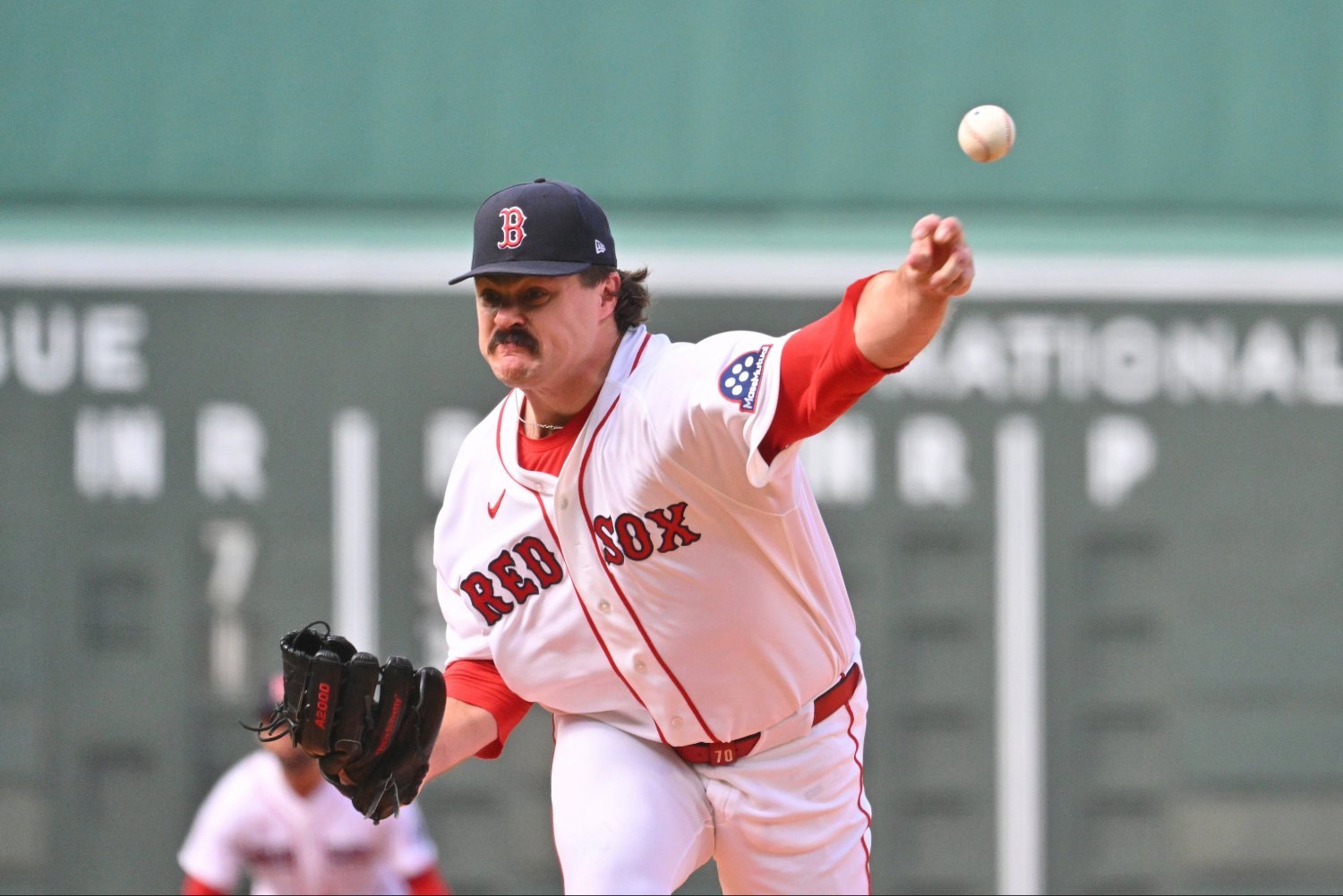 In less than one season, Payton Tolle has become a folk hero in Boston. His huge laugh, inviting personality, and transparency have aided in making him arguably the team’s fastest rising star, and he hasn’t even reached his ceiling yet. While he’s taken a significant step forward this season, there’s still room for improvement before he can officially carry the ‘ace’ title that seems to be waiting for him down the road. Let’s dive under the hood just a bit so we can paint a picture of just how great Tolle has been to begin this season. He’s currently sitting on a 2.61 ERA with a 28.6% strikeout rate, a 6.8% walk rate, 2.66 FIP, and 1.4 fWAR. We can also see that Tolle’s expected metrics paint an even better picture. His Baseball Savant page is on fire. His xERA (expected ERA) is lower than his actual ERA at 2.19, good for the 97th percentile. His xBA (expected batting average) is .183, slightly higher than his actual average against at .174, but it shows you just how dominant he has been through 41.1 innings this season. The major knock against him is his groundball rate sits at 34%, but Tolle isn’t a pitch-to-contact style of pitcher. He’s going to throw gas and, hopefully, mess with your timing with a breaking ball that has you swinging out of your shoes for strike three. We already know that Tolle features what the pitching lab is calling a ‘three-headed monster of hard’ that allows him to dominate with his fastball mix. He features a four-seam fastball, sinker, and cutter that all play incredibly well in the zone. His four-seamer brings the heat while he can nibble around the edges of the zone with his sinker and cutter. What is keeping him from the absolute dominance he’s capable of is the back end of his pitch mix. His three fastballs are lethal and work to get him through the lineup the first and second time, but he’s missing something with more bite. Last season, Tolle threw a slider that he’s scrapped this season, along with his change-up and curveball (but neither of them had much success). This season, though, his curveball has become the pitch he’s going to when he’s trying to mess with the hitter’s timing. He’s throwing it slower than he did in 2025, 82.4 mph instead of 83 mph, but he’s getting an inch and a half more glove-side break with it this season. from 5.4” to 6.9”. If we want to see how dominant a southpaw with a breaking put-away pitch can be, just look at the man that pitched opposite Tolle in his last start, old friend Chris Sale. Sale is one of the most dominant pitchers in professional baseball, even at the age of 37. While the pitch mix is drastically different. Sale features a wipeout slider that he employs against both left and right-handed hitters at a 41% clip. That slider is Sale’s main pitch, but it helps to set the stage for what Tolle’s curveball could become. If Tolle can feature it against hitters from both sides of the plate comfortably — he’s currently throwing it 11% against righties and just 5% against lefties — then it becomes his go-to strikeout pitch when he needs to keep hitters off-balance. The biggest knock with Tolle’s curveball is that when he misses with it, he typically leaves it middle-middle, so it can be hit hard. Batters are only hitting .222 against it with an xBA of .177 this year, but it’s going to take real game usage to be able to feature it as prominently as it should be. If we look at the pitch mix from his start against the Braves, we see that he threw 94 pitches but obviously wasn’t trusting anything outside of his fastballs. He threw 54 four-seamers, 26 sinkers, 11 cutters, two curveballs, and one changeup. Those four-seamers play up so well in the zone, but limit his effectiveness when he doesn't have either a breaking or off-speed pitch for them to play off of. The Braves, who Tolle threw against just a week before (it was the first time he saw the same team twice in the same season), were obviously sitting on that fastball. Against Tolle alone, the Braves hit 40 foul balls and every single one of them was on some version of the fastball. It’s a dominant pitch, but when Tolle isn’t trusting his curveball, then the offense can wear him down as they time up his best pitch(es). Payton Tolle arguably has the highest ceiling of any young pitcher not named Garrett Crochet on the Red Sox’s roster; he just has to fully develop a true put-away pitch as he tightens up his major-league arsenal. Tolle is going to be a fan favorite in Boston for a long time, and may even be in the conversation for an extension if President of Baseball Operations Craig Breslow wants to attempt to rebuild some goodwill with the fanbase. He just needs to expand his selection of offerings to keep his opponents guessing a little more frequently. View the full article
 -
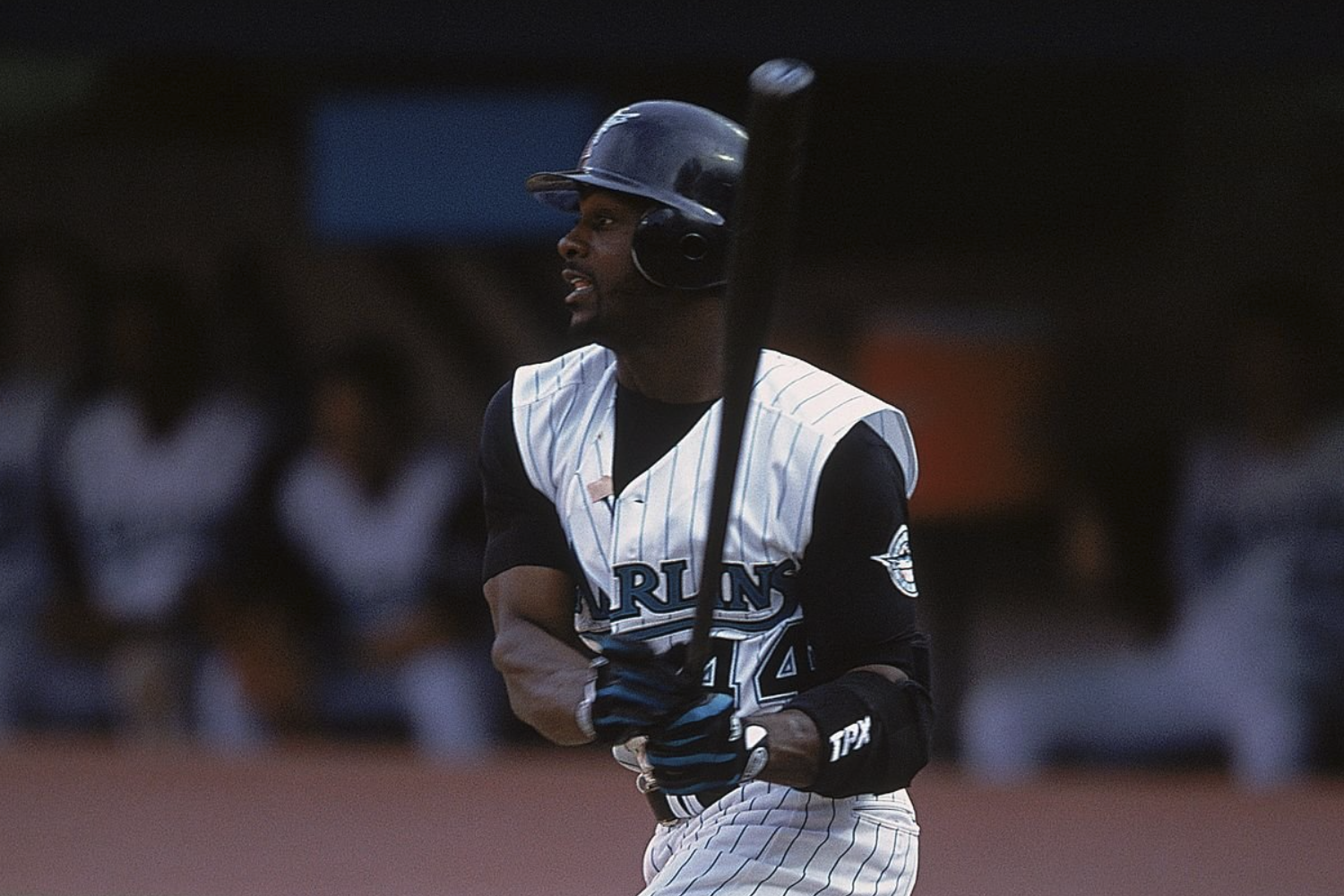 June 3, 2001 Preston Wilson hit at least 23 home runs every year. Still one of just 10 players ever to hit 100 home runs for the club, Wilson also had plenty of speed. On this day 25 years ago, Wilson delivered the Marlins to victory without having to hit the ball out of the infielder. His RBI infield single in the bottom of the ninth broke a scoreless tie and lifted Florida past the New York Mets, 1-0. The story of the day on June 3, 2001 at Pro Player Stadium was pitching. For the Mets, Kevin Appier allowed just two hits in seven shutout innings. For Florida, A.J. Burnett went 8.2 scoreless innings before Antonio Alfonseca got Todd Zeile to ground out to end a threat in the top of the ninth. After working a 1-2-3 eighth for the Mets, Turk Wendell stayed on to pitch the bottom of the ninth. Wendell was able to start the inning strong by fanning Dave Berg on a 10-pitch plate appearance. Luis Castillo followed with a double. Wendell then yielded a walk on another 10-pitch plate appearance – this time to Eric Owens. With two on and one out, the Mets went to closer John Franco, who was able to get Cliff Floyd to hit into a fielder’s choice for the second out. With the winning run at third, Wilson came to the plate. 0-for-2 with a walk and a strikeout to that point, Wilson lined one back off Franco’s glove. The ball ricocheted to shortstop but by the time Joe McEwing was able to gather and throw, Wilson had already crossed first base, giving the Fish the walk-off victory. With the win, the Marlins salvaged a split in the four-game series and handed Wendell his second loss of the set. Each team finished with just four hits. Castillo had two of those knocks for the Marlins. Wilson would add a second walk-off hit later in the season with a dramatic three-run home run to beat the Chicago Cubs. His first walk-off knock of 2001, however, left neither the yard nor the infield. It came on this day a quarter-century ago. View the full article
 -
 German Marquez allowed just one hit in his first rehab outing, but the Triple-A El Paso Chihuahuas dropped a 7-2 decision to Sugar Land. Ian Koenig allowed one unearned run in seven innings as the Double-A San Antonio Missions beat Wichita 4-1. Justin DeCriscio had a ninth-inning walk-off single as the High-A Fort Wayne TinCaps overcame a 4-0 deficit to beat Lake County 6-5. The Low-A Lake Elsinore Storm were walked off by Fresno 6-5 after giving up three runs over the final two innings. Padres Minor-League Transactions San Diego Padres selected the contract of CF Jase Bowen from El Paso Chihuahuas. San Antonio Missions sent LHP Ryan Och on a rehab assignment to Fort Wayne TinCaps. C Jake Bold assigned to ACL Padres from San Antonio Missions. SS Dawry Guerrero assigned to DSL Padres Brown from DSL Padres Gold. San Diego Padres signed free agent RHP Jesus Heredia to a minor-league contract and assigned to DSL Padres Brown. German Marquez On Point In Rehab Outing, But Chihuahuas Fall San Diego Padres right-handed starter German Marquez gave up one hit over 2⅓ scoreless innings in his first rehab start, but the host Triple-A El Paso Chihuahuas gave up a four-run fifth inning en route to a 7-2 loss to the Sugar Land Space Cowboys. In his first rehab outing since going on the 15-day injured list May 3 with right forearm nerve irritation, Marquez struck out three of the eight hitters he faced while throwing 36 pitches, including 23 strikes. He retired the first seven batters of the game before giving up a single to right, which brought his day to an end. Pablo Reyes and Mason McCoy each had two hits for the Chihuahuas, with Nick Schnell and Marcos Castanon driving in runs. Carlos Rodriguez went 1-for-5 to extend his hitting streak to 10 games. Left-hander Jackson Wolf came on for Marquez and gave up four runs, only one of which was earned, on three hits and three walks with a pair of punchouts. Left fielder Samad Taylor misplayed a fly ball in that fifth inning and the score 1-1. EP_0602.mp4 Player AB R H RBI BB K Samad Taylor 3 0 1 0 1 1 Carlos Rodríguez 5 0 1 0 0 0 Pablo Reyes 5 0 2 0 0 3 Nick Solak 5 0 1 0 0 1 Will Wagner 3 1 1 0 1 0 Mason McCoy 4 1 2 0 0 0 Nick Schnell 4 0 1 1 0 2 Marcos Castañon 4 0 1 1 0 1 Anthony Vilar 3 0 0 0 1 0 Player IP H R ER BB K HR Germán Márquez 2 1/3 1 0 0 0 3 0 Jackson Wolf 2 1/3 3 4 1 3 2 0 Logan Gillaspie 2 1/3 3 1 1 1 2 1 Michael Flynn 2 3 2 2 3 2 1 Missions' Ian Koenig Dominates, Fans 7 over 7 Innings Right-handed starter Ian Koenig allowed just one hit and struck out seven over seven innings, while Albert Fabian drove in a pair of runs as the Double-A San Antonio Missions stopped the host Wichita Wind Surge 4-1. Koenig matched a career best for innings and strikeouts. Fabian, Romeo Sanabria and Ryan Jackson each had two hits, while Jackson and Braedon Karpathios also drove in runs. But it was Koenig who was the star of the game. This was the second time in three starts that he didn't allow an earned run in seven innings. The only hit Koenig allowed was to the second batter he faced, a line single. He did allow a run in the second inning on a walk, a hit batter and a one-out grounder that was a potential double play, but the relay to first by second baseman Carson Tucker was errant, allowing the runner to score. Koenig walked two in the game. Fabian doubled home Jackson, who had singled, with one out in the top of the second for a 1-0 Missions lead. After the Wind Surge tied it in the bottom of the second, the Missions grabbed a 2-1 edge in the top of the third when Ethan Salas drew a leadoff walk, went to second on a one-out groundout and scored on Braedon Karpathios' single to left. In the fifth, Tirso Ornelas singled with one out, Karpathios walked, Jackson doubled home Ornelas and Fabian hit a sacrifice fly to put the Missions up 4-1. Koenig retired seven in a row before hitting another batter with one out in the seventh, then got a groundout and strikeout to finish his day at 101 pitches. Right-hander Johan Moreno pitched two hitless innings, striking out two to earn his second save of the season and third of his career. SA_0602.mp4 Player AB R H RBI BB K Carson Tucker 5 0 0 0 0 1 Ethan Salas 4 1 1 0 1 0 Romeo Sanabria 5 0 2 0 0 1 Tirso Ornelas 5 1 1 0 0 1 Braedon Karpathios 4 1 1 1 1 1 Ryan Jackson 4 1 2 1 0 2 Albert Fabian 3 0 2 2 0 0 Francisco Acuna 2 0 0 0 1 2 Kai Roberts 2 0 1 0 1 0 Player IP H R ER BB K HR Ian Koenig 7 1 1 0 2 7 0 Johan Moreno 2 0 0 0 0 2 0 TinCaps Rally From Early Deficit, Win On Justin DeCriscio's Walk-Off Justin DeCriscio squeezed a walk-off single past a diving first baseman and into right field with two outs in the bottom of the ninth as the host High-A Fort Wayne TinCaps came back from an early 4-0 deficit to edge the Lake County Captains 6-5. It was the TinCaps' third walk-off victory of the season. TinCaps right-handed starter Matthew Watson recovered from a four-run first inning to turn in his third straight start of five innings. He gave up four hits, including a three-run homer, while walking one and striking out a career-high seven, including the final four batters he faced. He retired 14 of the final 15 hitters, including the last 10. Jack Costello homered and drove in three, while DeCriscio and Lamar King Jr. each had two hits. After Lake County scored four in the top of the first, the TinCaps came back on Costello's two-run blast in the second, his sixth of the season, and another in the third on Alex McCoy's RBI single to pull within 4-3. In the sixth, Costello hit a sac fly and Carlos Rodriguez doubled home the go-ahead run to put the TinCaps up 5-4. But the Captains tied it in the top of the seventh, setting the stage for the ninth. Rodriguez and Zach Evans walked with one out, then, after a groundout advanced the runners to second and third, DeCriscio ripped his hard grounder toward the second base hole for the winner. Right-hander Ty Adcock allowed a run and struck out three in two innings and left-hander Ryan Och struck out two in one inning. Both are on rehab assignments from El Paso and San Antonio, respectively. Right-handed closer Clay Edmondson struck out three in the ninth inning and earned his second career victory. FW_0602.mp4 Player AB R H RBI BB K Justin DeCriscio 5 1 2 1 0 1 Rosman Verdugo 4 0 1 0 0 1 Lamar King Jr. 3 1 2 0 1 1 Alex McCoy 3 1 1 1 0 0 Jake Cunningham 4 1 1 0 0 1 Jack Costello 3 1 1 3 0 1 Carlos Rodriguez 2 1 1 1 2 0 Zach Evans 3 0 0 0 1 2 Kasen Wells 4 0 0 0 0 1 Player IP H R ER BB K HR Matthew Watson 5 4 4 4 1 7 1 Ty Adcock 2 1 1 1 0 3 1 Ryan Och 1 0 0 0 1 2 0 Clay Edmondson 1 1 0 0 0 3 0 Storm Stumble Late, Get Walked Off By Grizzlies Right-handed starter Winyer Chourio tossed five solid innings, but the bullpen broke down late as the Low-A Lake Elsinore Storm fell to the Fresno Grizzlies 6-5 on a ninth-inning walk-off. The Grizzlies scored once in the eighth and two in the ninth to win it. Jose Verdugo had two hits, while Kerrington Cross and Geoge Bilecki each drove in a pair of runs for the Storm. The Storm trailed 3-2 after the teams traded two-run innings in the fourth. Cross had a one-out RBI single in the top of the seventh to tie the game 3-3, then Bilecki a sac fly and Cross a bases-loaded walk to put the Storm up 5-3. The Grizzlies pulled within 5-4 in the eighth and won it on a one-out RBI double and a run-scoring single in the ninth. LE_0602.mp4 Player AB R H RBI BB K Ryan Wideman 3 0 0 0 2 0 Kerrington Cross 3 0 1 2 2 1 Jose Verdugo 5 1 2 0 0 1 Yoiber Ocopio 5 1 0 0 0 3 Truitt Madonna 3 1 1 0 2 0 Jorge Quintana 4 1 1 0 1 0 George Bilecki 2 0 1 2 1 1 Conner Westenburg 4 0 0 0 0 3 Alcides Hernandez 2 0 0 0 0 1 Bradley Frye 0 1 0 0 2 0 Player IP H R ER BB K HR Winyer Chourio 5 5 3 3 3 4 1 Joseph Herrera 2 1 0 0 1 2 0 Vicarte Domingo 1 1 1 1 1 1 1 Will Koger 1/3 3 2 2 0 0 0 Top 20 Prospect Performance Ethan Salas: 1-for-4, R, BB Kash Mayfield: DNP Miguel Mendez: DNP Kruz Schoolcraft: DNP Ryan Wideman: 0-for-3, 2 BB Jorge Quintana: 1-for-4, 2B, R, BB, SB Ty Harvey: On injured list Kale Fountain: Injured, out for season Braedon Karpathios: 1-for-4, R, RBI, BB, K Lamar King Jr.: 2-for-3, R, BB, K Jagger Haynes: DNP Alex McCoy: 1-for-3, R, RBI Truitt Madonna: 1-for-3, R, 2 BB Tucker Musgrove: DNP Garrett Hawkins: DNP Michael Salina: DNP Eric Yost: DNP Rosman Verdugo: 1-for-4, 2B, K Bryan Balzer: DNP Deivid Coronil: DNP View the full article
 -
 Transactions: Milwaukee Brewers sent RHP Quinn Priester on a rehab assignment to ACL Brewers. Nashville Sounds activated SS Eddys Leonard from the temporarily inactive list. Nashville Sounds transferred C Eric Martinez to the Development List. Nashville Sounds transferred LF Jacob Hurtubise to the Development List. Nashville Sounds activated 3B Luke Adams from the 7-day injured list. Wilson Warbirds placed RHP Jacob Morrison on the 7-day injured list. RHP Ismael Yanez assigned to Wilson Warbirds from ACL Brewers. LHP Noel Cepeda assigned to DSL Brewers Gold (a late May signing first mentioned here) Game Action: Nashville pre-game media notes Jacksonville (Marlins) 6, Nashville 2 Box Score As always, you are encouraged to read the official round-up from the team’s site: Serna Haunts Sounds in Opener with 3-RBI Night It was a quiet night for the Sounds in Jacksonville as Nashville managed just three singles in their defeat. Cooper Pratt opened the scoring in the first with an RBI single just two batters into the game. Pratt has now reached base in 22 consecutive games. The other run-producing play for the Sounds came on a bases loaded walk to Tyler Black. On the mound, the Nashville pitchers, who lead the International League in team ERA, did not have their best night. The trio of Easton McGee, Kaleb Bowman, and Brian Fitzpatrick all allowed two runs apiece in two innings or less of work. Those three combined to dole out seven walks in five innings. Reiss Knehr and Will Childers finished out the final three innings scoreless, which allowed for Nashville to have one last rally in the 9th inning. After a 12-pitch battle with Pratt ended with a walk to load the bases, Luis Lara came to the plate as the tying run with Nashville down to their final out. However, there would be no heroics on this night, as Lara tapped a dribbler back to the pitcher to end the game. The Sounds did not have a hit after the fourth inning of the game. One other silver lining was the return of Luke Adams to the Nashville lineup. Adams drew a walk in the 9th and of course was also HBP in the game as well. Nashville will look to get back on track Wednesday. The suddenly ascending Tyson Hardin (1-0, 0.96 ERA in 18.2 IP at AAA) was scheduled to take the mound, but the Sounds are now listed as TBD and speculation is Hardin may very well be getting his big-league call-up. Biloxi pre-game media notes Biloxi was once again rained out, the 9th postponement since the beginning of May. The game will be replayed on Thursday as part of a double header. Manuel Rodriguez was scheduled to start on Tuesday, so we will likely see him on Wednesday. Wisconsin pre-game media notes Wisconsin 14, Cedar Rapids (Twins) 11 Box Score Wisconsin Wins a Wild One in Cedar Rapids Wisconsin won a wild marathon clash with Cedar Rapids on Tuesday night, but the result was overshadowed by the loss of Luis Pena once again. In the second inning, with Wisconsin in the field, play was temporarily halted as Pena battled illness at shortstop. Pena was able to walk off the field under his own power and seemed to be speaking with the trainer. As they reached the dugout Pena was dry heaving and did not look well. We will hope it was something minor, but it is concerning because Pena had only returned to Wisconsin on May 27 after a month off after a fainting spell due to “dehydration” on April 22. (MLB.com report via Adam McCalvy with video within) To make matters worse, starting pitcher JD Thompson, a 2nd round pick last year, also left the game in the second inning. Andrick Nava had spotted something after a 3-2 pitch and called time. Thompson appeared to be slapping his leg on the mound and then exited mid at-bat. It was a long second inning, as Thompson hit the 40-pitch mark for the inning, so hopefully it was just some minor cramping. On to the positive game action… Andrew Fischer launched his 16th home run, courtesy of the Wisconsin X account: Eric Bitonti added his 7th home run: Luis Castillo, who had a .281/.387/.484 slash line in May, smashed his 6th home run of the year: Josiah Ragsdale was on base five times with three hits and two walks. Ragsdale also stole his 18th base of the season. It’s a pretty loaded box score as Wisconsin pounded out 14 hits and drew nine walks in a game that took over 3.5 hours to play. To add to the fireworks, Josh Adamczewski and manager Nick Stanley were ejected late in the game for arguing a check swing appeal on strike three. On the mound, Yerlin Rodriguez earned the win with two scoreless innings. Ayendy Bravo earned his first save at the level with two shutdown innings to finish the game. RHP Braylon Owens (1-0, 4.24) will take to the mound on Wednesday for Wisconsin. Wilson pre-game media notes Wilson 14, Salem (Red Sox) 7 Box Score Warbirds Complete Comeback, Double Up Salem Wilson won a messy affair in the opener of their series with Salem on Tuesday night. As a team, the Warbirds drew 13 walks while striking out 13 times en route to scoring 14 runs on just eight hits. The Warbirds broke the game open with an 11-run rally in the 7th inning to take an insurmountable lead. In the rally, the first eight runs came on just three hits – all singles – with Handelfry Encarnacion producing two runs on this ground ball single. Then Kevin Garcia came through with the big blast of the night, a three-run home run to right to cap the scoring for Wilson. Garcia had three runs scored on the night for Wilson. Frederi Montero was the only Warbird with a multi-hit game, and he also drew two walks. Jadyn Fielder had the other XBH for Wilson with this RBI double, courtesy of the Wilson X account: Fielder scored twice and drove in two runs on the night. On the mound, Jayden Dubanewicz continued his stellar work, this time in a relief appearance. Dubanewicz (4.1 IP 4H 2R 2ER 1BB 4K) was cruising through his first four innings of work, before he allowed back-to-back homers in the 8th and then exited the game. Joshua Quezada took over from there and worked 1.2 IP clean to close the game. Starter Enniel Cortez was victimized by two errors in the third, which led to four unearned runs in and made his line (3 IP 3H 5R 1ER 1BB 3K) look worse than he deserved. ACL Dodgers 3, ACL Brewers 2 Box Score Quinn Priester had his most encouraging start of the season in ACL play Tuesday night. Priester worked into the fourth for the first time all season and walked just two while allowing one run. Hopefully this is the first step back to being the pitcher we saw in 2025. The rehabbing Griffin Tobias chipped in two scoreless innings in relief for the Brewers. Offensively, the Brewers managed just five hits, and three of them belonged to Juan Martinez, who hit his first homer in ACL play. Alexander Frias was on base three times with a single and two walks. (DSL write-ups today via Jim Goulart) Final, DSL Padres Gold 11, DSL Brewers Blue 7, seven innings as scheduled Box Score and Game Log Of the 13 half-innings in this contest, only four were scoreless. There was no score heading to the bottom of the 2nd in this road game, and then the offenses kicked in, taking advantage of all the usual culprits in a complex league game. Those culprits being bases on balls (seven by each team), HBP's (two by each staff), wild pitches (three, all by Blue arms), and fielding misplays (six combined, two by Team Blue). All the errors led to just one run charged to the Blue pitchers as unearned, two for the Padres kids. So perhaps you look at this as a 10-5 loss instead. I think we can agree that three hours, 25 minutes to play six-and-a-half-innings reflects those totals. Three Blue pitchers made their professional debuts, all right-handers. By the way, between the two Brewer teams, only three of the 36 pitchers are left-handed, so we'll be able to save keystrokes by not typing "RHP" over and over for these games. Southpaws - Blue: 6'5" Alexander Mercedes (yet to debut) Gold: 6'0" Daniel Garcia (currently on the 7-day IL) and 5'11" Santiago Martinez, each in their 2nd year. The debuts here ranged from short and tidy (one scoreless inning for 18-year-old Mexico native Luis Aguayo), to not particularly pretty twice over: 1.2 IP, 6 ER charged to 6'4" 16-year-old Jordy Brache, a Dominican native 2.2 IP, 4 ER, 4 BB for 18-year-old Wilmer Duarte, also of the D.R. Every new season I wonder how many family members of the Dominican players are in attendance for these games. As you box score review, the top six in the order were all holdovers from Opening Day. The bottom three all made seasonal, but not professional debuts. CF Enrique Lovera has already walked five times in his first two pro games, and when he's not walking, he's striking out (four times), yet to put the ball in play. 2B Leonard Rijo had the lone Blue XBH, a triple. 17-year-old newbie C Sebastian Franeites, DH'ing here, is off to a nice two-game start, 4-for-7, 1 HBP, with the three outs being strikeouts. As always, have to love the DSL box score intricacies. You are invited to pull up the game log, select "All", and then watch these games in your mind, always an adventure. Final, DSL Tampa Bay 9, DSL Brewers Gold 8 Box Score and Game Log In the bottom of the 9th, the Team Gold scored one run to cut the gap to one run and had a runner on 3rd base with just one out. A key strikeout was next. After a HBP and stolen base moved the go-ahead run into scoring position, another strikeout ended the game. 2nd year corner infielder Matthew Moses hit a three-run HR in the 2nd for an early 3-1 lead. It was Moses' 5th pro tater. Of course, Moses' MiLB page lists him as a shortstop despite never having played the middle infield last season. Because as we all know, all international position player signings are shortstops, unless they throw with their left arm, and we wouldn't put it past teams to list those youngsters as shortstops as well :). Corner OF Carlos Done had the other XBH, a double. Done was the game-ending strikeout victim. The bottom of the 3rd inning is an odd time to be lifted for a pinch-hitter, especially in a pro debut, but just-turned 17-year-old second baseman Santiago Garcia was removed at that interval. Nothing in the game log provides a hint from earlier in the game, and it's unclear if we'll ever see "injury delay" in the DSL logs like we do at the higher levels. 17-year-old Ruben Revost's pro debut was unique, pinch-runner, successful steal. Another 17-year-old, starter Marcos Veras, was the lone debut among the four arms. Three runs in three innings is no shame, but it's a 9.00 ERA no matter how you shake the small sample. Boo to the small sample. 6'5" Paul Hoff out of Germany, began his second season on the island. What a life adventure for that young man. There was very little "cheap" in the Tampa six-run 4th. When you conduct your game log read, you'll see just that. The three complex teams enjoy Wednesday off. The Timber Rattlers play a noon matinee in Cedar Rapids, while the Sounds, Shuckers and Warbirds have evening affairs on tap. Organizational Scoreboard including starting pitcher info, game times, MiLB TV links, and box scores Current Milwaukee Brewers Organization Batting Stats and Depth Current Milwaukee Brewers Organization Pitching Stats and Depth View the full article
 -
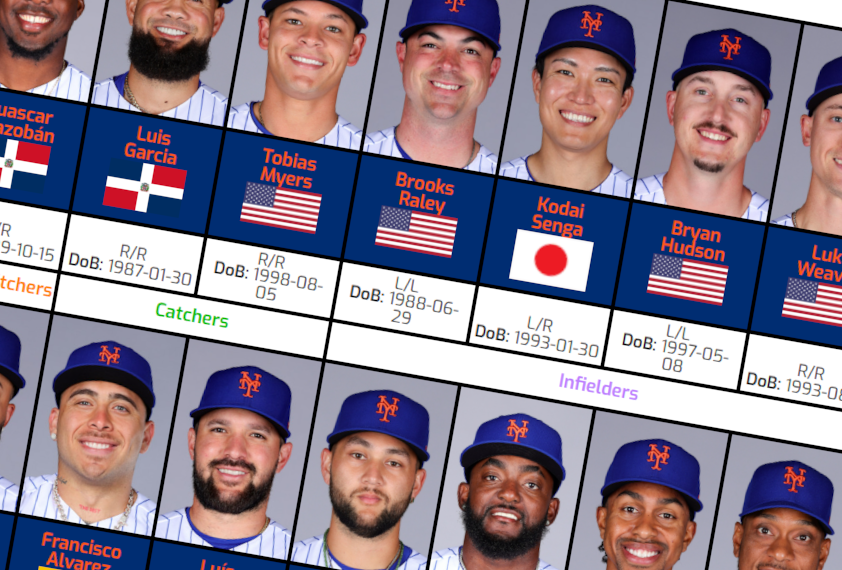 In between a handful of stray Met minor-leaguers being lovingly rehomed and sad demotion for Jonah Tong, a strange series of transactions befell Christian Arroyo. Transactions, 5/5/2026 GOING Signed away to Minor-League Contract by WAS Relief Pitchers Colby Frieda R/R DoB: 37462 High Level: Division I+ (2024) Colby Freida, who does not have naturally curly hair, had an ignominious start to his pro career. He was signed by the Mets out of college as an undrafted free agent, but released at the end of spring training, without playing any actual regular-season games for the organization. This is why the only thumbnail pic at left depicts him as a Troy University Trojan. He also played for Kentucky, and frankly, I would have stuck with that, as that Troy hat insignia looks like the Tesla logo, which itself looks like an intrauterine device. Anyhow, his starting off with a 10.50 ERA through six innings, as a 23-year-old playing against teenagers in the Florida Complex League, suggests the Mets may not have been particularly rash in letting him go, but we're glad to see him playing for pay. Transactions, 5/12/2026 GOING Signed away by Saltillo (Mexican League) Relief Pitchers Daniel Juarez L/L DoB: 36797 High Level: AAA (2025) Venezuelan-born infielder Daniel Juarez certainly seems like a natural for La Liga Mexicana de Béisbol. Unfortunately, the circuit has no team situated in Ciudad Juárez, but Daniel has done the next-best thing, settling in with a 1.42 ERA through his first 6 1/3 innings with Los Saraperos de Saltillo (who have a much cooler hat insignia than Troy U!). Having been in the Mets system since 2019, topping out at AAA in 2025, he will almost certainly get another chance in affiliated ball. Transactions, 5/16/2026 GOING Signed away by Ciudád de México (Mexican League) Relief Pitchers Kevin Gowdy R/R DoB: 35750 High Level: AAA (2025) Kevin Gowdy, with his very jocky name, is a minor-league vet still looking for his first taste of The Show at 28. He was within sniffing distance for a few years there, but was deeply ineffective — lotta walks, lotta hits — at Bingo this year, and so it's off to the Mexican capital to find himself. And there are worse ways to live. Transactions, 5/22/2026 GOING Signed away to Minor-League Contract by KCR Relief Pitchers Luke Jackson R/R DoB: 1991-08-24 High Level: MLB (2026) It's been five teams in 10 years for veteran reliever Luke Jackson, and a few more at the minor-league level. After his brief-and-abortive tenure with the Syracuse Mets, we are happy to see him take his career to a new employer, but fans of the Omaha Royals may be less happy as his struggles to remain afloat have continued apace. He's got an MLB championship ring, though, and you don't. Transactions, 6/1/2026 GOING COMING Released Sent to Syracuse on Rehab Assignment Infielders Catchers Christian Arroyo Francisco Alvarez R/R DoB: 1995-05-30 High Level: MLB (2023) R/R DoB: 2001-11-01 High Level: MLB (2026) Francisco Alvarez' capacity for rapid healing and torrid rehab assignments has now reached near-legendary status. He has already gone 2-for-3 with two doubles and an RBI in his first start in Syracuse, while catching six innings and throwing out the only Scranton/Wilkes-Barre RailRider baserunner foolish enough to run on him. If only he could turn that miracle-working ability toward keeping himself from over-swinging at the big-league level, he could grow into the MVP performer that Mets Roster Central knows he can be. At any rate, don't grow too attached to Hayden Senger. Christian Arroyo has been the most consistent hitter at Syracuse all season — hitting .300 with lots of MLB experience in a big market and all poised to be the guy that makes the Mets everybody's first call when they have an emergency at second base. And that team may very well be the Mets themselves. So why on earth would the Mets just up and release the guy? Mets Roster Central notes that Arroyo got cut loose on the first of the month, which suggests that he had an upward-mobility clause in his contract, requiring the club to release him by a certain date (June 1 is a nice, round date) if he hasn't yet been promoted. AAA guys with beaucoup big-league experience tend to get such clauses. Transactions, 6/2/2026 COMING Transferred from Binghamton to Syracuse on Rehab Assignment Re-Signed and Assigned to Syracuse Infielders Jorge Polanco Christian Arroyo S/R DoB: 1999-11-13 High Level: MLB (2026) R/R DoB: 1995-05-30 High Level: MLB (2023) And there you have it! The cat came back the very next day! After less than 24 hours of free agency, Arroyo is back with Syracuse, and we suspect he never left the club at all. Perhaps he is back with a modest salary bump, and perhaps he has a further promote-me-or-release-me clause set to trigger in another month, but back he is, hopefully continuing to hit .300 and not putting voodoo pins into a Marcus Semien doll. Jorge Polanco has gone from Binghamton to Syracuse on his personal rehab journey, and along the way, has played all of three innings in the field, and number that is not expected to grow propitiously in the coming weeks (or even months) as his struggle with Achilles tendonitis continues. Thanks to Commissioner Manfred, however, playing the field is not a requirement for being a New York Met, so he is expected to return in the near future. But as the former middle infielder was always going to be hardpressed to provide enough offense to justify his deployment at first, whether a wounded-stem version of him can provide the stick to be the Mets DH is certainly an open question. He won't likely take any particular job away, but as a switch-hitter, rather scrape appearances in different measures away from Jared Young, MJ Melendez, Eric Wagaman, Brett Baty, and Mark Vientos, but unless another injury clears a path for his activation, we can expect Waggy to be the guy who loses his roster spot. Transactions, 6/2/2026 GOING NEUTRAL COMING Demoted to Syracuse Transferred from Bullpen Promoted from Syracuse Signed as International Amateur Free Agent out of Venezuela, Assigned to DSL Orange Relief Pitcher Starting Pitchers Relief Pitchers Jonah Tong Sean Manaea Joey Gerber Wraniger Navas R/R DoB: 2003-06-19 High Level: MLB (2026) R/L DoB: 1992-02-01 High Level: MLB (2026) R/R DoB: 1997-05-03 High Level: MLB (2026) R/R DoB: 2008-01-19 High Level: Academy (2026) Mets Roster Central was actually impressed with Jonah Tong's recent outing against Seattle, and was disappointed to see him exiled back to Syracuse for further seasoning. His stuff was certainly big league with several of his offerings qualifying as out pitches, but clearly his faith was not as strong in his stuff as ours is, as he spent much of the evening nibbling around the edges, and lost too many to walks. We retain faith that he has a weaponized future. Who gets his slot in the "rotation" (such as it is, with all the opening an piggy-backing going on) is not a matter that has yet been publicly decided, but Sean Manea has certainly moved himself to the front of the conversation with his long relief work in recent weeks, so we are going to plant him there for now until we hear more. Please welcome back the cute-assed dimples of Joey Gerber. Joey has been far more successful in the majors than in the minors this month, but if you're going to have a disparity, that's the way to have it. And if Manea isn't the answer, we keep looking down that depth chart, and if we go 200 or so steps down, we meet a new Venezuelan teenager with the rocking name of Wranager Navas, A novice he may be for now, but may the Metly circle of life ever continue. See you in San Diego! Your 2026 New York Mets Starting Pitchers Sean Manaea Nolan McLean Freddy Peralta David Peterson Christian Scott R/L DoB: 1992-02-01 R/R DoB: 2001-07-24 R/R DoB: 2996-06-04 L/L DoB: 1995-09-03 R/R DoB: 1999-06-15 Relief Pitchers Huascar Brazobán Joey Gerber A.J. Minter Cionel Pérez Brooks Raley Austin Warren Luke Weaver R/R DoB: 1989-10-15 R/R DoB: 1997-05-03 L/L DoB: 1993-09-02 R/L DoB: 35176 L/L DoB: 1988-06-29 R/R DoB: 1996-02-05 R/R DoB: 1993-08-21 Relief Pitchers Catchers Infielders Devin Williams Hayden Senger Luís Torrens Bo Bichette Brett Baty Vidal Brujan Marcus Semien R/R DoB: 1994-09-21 R/R DoB: 1997-04-03 R/R DoB: 1996-05-02 R/R DoB: 1998-03-05 L/R DoB: 1999-11-13 S/R DoB: 1998-02-09 R/R DoB: 1990-09-17 Infielders Outfielders Mark Vientos Eric Wagaman Carson Benge A.J. Ewing MJ Melendez Juan Soto Jared Young R/R DoB: 1993-12-11 R/R DoB: 1997-08-14 L/R DoB: 2003-01-20 L/R DoB: 2004-08-10 L/R DoB: 1993-11-29 L/L DoB: 1998-10-25 L/R DoB: 1995-07-09 Also on 40-Player Roster Starting Pitchers Relief Pitchers #NAME? Clay Holmes Tylor Megill Kodai Senga Zach Thornton Jonah Tong Alex Carrillo Daniel Duarte R/R DoB: 1993-03-27 R/R DoB: 1995-07-28 L/R DoB: 1993-01-30 L/L DoB: 2002-01-17 R/R DoB: 2003-06-19 R/R DoB: 1997-06-06 R/R DoB: 1996-12-04 Relief Pitchers Catchers Reed Garrett Justin Hagenman Tobias Myers Dedniel Núñez Jonathan Pintaro Dylan Ross Francisco Alvarez R/R DoB: 1993-01-02 R/R DoB: 1996-10-07 R/R DoB: 1998-08-05 R/R DoB: 1996-06-05 R/R DoB: 1997-11-07 R/R DoB: 2000-09-01 R/R DoB: 2001-11-01 Infielders Outfielders Francisco Lindor Ronny Mauricio Jorge Polanco Nick Morabito Luis Robert, Jr. Tyrone Taylor S/R DoB: 1993-11-14 S/R DoB: 2001-04-04 S/R DoB: 1999-11-13 R/R DoB: 2003-05-07 R/R DoB: 1997-08-03 R/R DoB: 1994-01-22 Designated for Assignment Relief Pitchers "Anderson Severino " L/L DoB: 1994-09-17 Your Mets Coaching Staff Manager Bench Coach Pitching Coach Hitting Coordinator Third Base Coach First Base Coach Bullpen Coach Ass't Pitching Coach Carlos Mendoza Kai Correa Justin Willard Jeff Albert Tim Leiper Gilbert Gomez José Rosado Dan McKinney DoB: 1979-11-27 DoB: 1989-07-14 DoB: 1990-09-09 DoB: 1992-08-16 DoB: 1996-07-19 DoB: 1992-03-08 DoB: 1974-11-09 DoB: 1989-06-06 Hitting Coach Strategy Coach Catching Coach Coaching Assistant Bat'g Practice Pitcher Equipment Manager Bullpen Catchers Bullpen Catchers Troy Snitker Danny Barnes J.P. Arencibia Rafael Fernandez Kevin Mahoney Kevin Kierst Eric Langill Dave Racaniello DoB: 1988-12-05 DoB: 1989-10021 DoB: 1986-01-05 DoB: 1988-08-03 DoB: 1987-05-11 DoB: 1964-07-09 DoB: 1979-04-09 DoB: 1978-06-03 Your Mets Training Staff Director of Player Health Head Athletic Trainer Assistant Athletic Trainer Reconditioning Coordinator Reconditioning Therapist Head Performance Coach Assistant Performance Coach Performance Coordinator Soft Tissue Specialist Brian Chicklo Joseph Golia Bryan Baca Sean Bardanett Josh Bickel Dustin Clarke Tanner Miracle Jeremy Chiang Hiroto Kawamura DoB: 1972-07-17 DoB: 1978-??-?? DoB: Circa 1980 DoB: 1988-06-23 DoB: 1996-??-?? DoB: 1987-??-?? DoB: 1991-??-?? DoB: ????-??-?? DoB: 1962-07-19 View the full article
 -
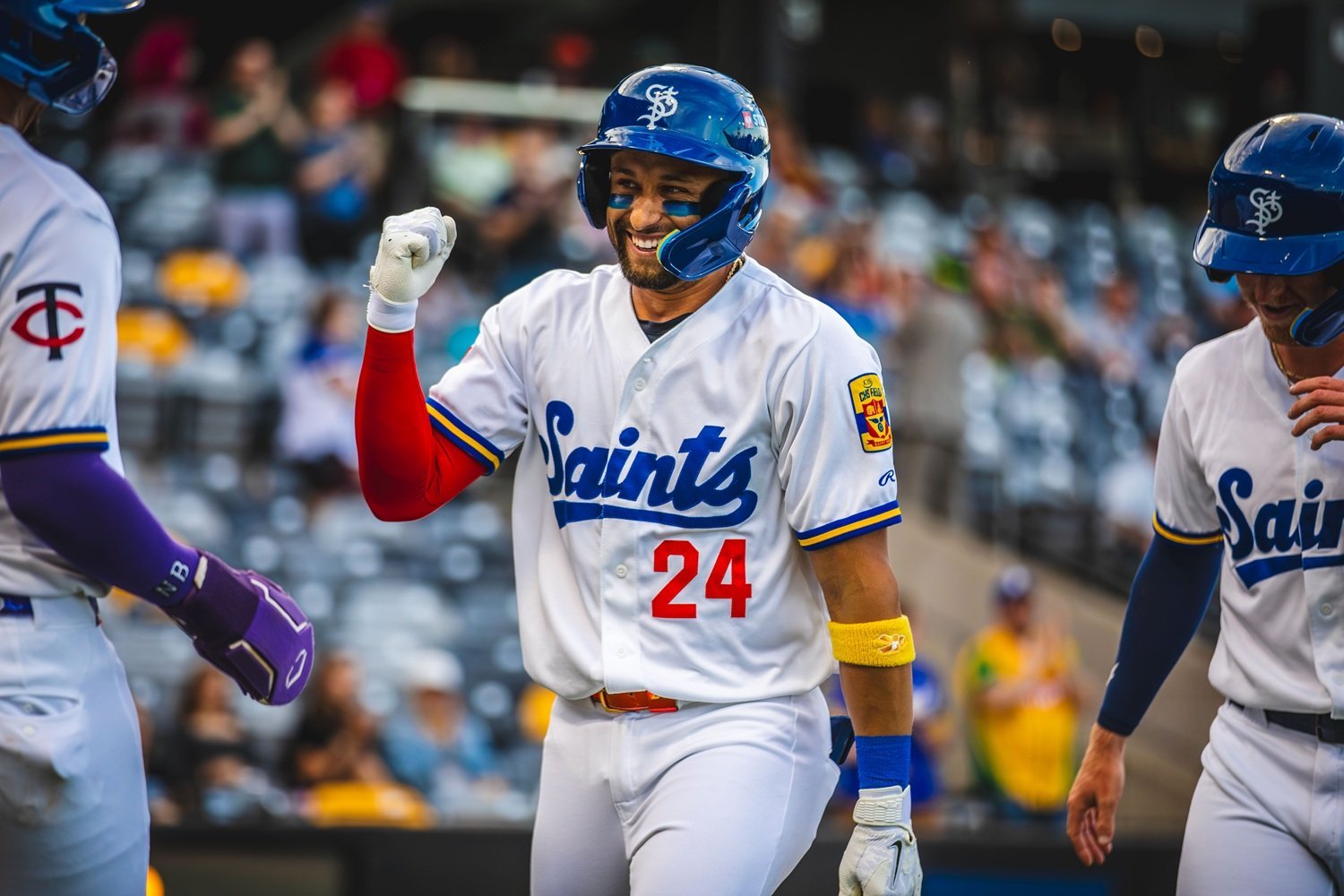 TRANSACTIONS The Minnesota Twins sent RHP Cole Sands on a rehab assignment with the St. Paul Saints and also optioned LHP Kody Funderburk. C Luis Hernandez was brought up from Cedar Rapids to fill Ricardo Olivar’s catching void. LHP Jake Higginbotham was also promoted from the Wichita Wind Surge. In Double-A, Wichita received a bunch of pitching reinforcements. They were assigned MiLB free agent RHP Nick Mikolajchak, activated RHP Kyle Bischoff from the temporary inactive list, then RHP Paulshawn Pasqualotto and RHP Yehizon Sanchez from the Cedar Rapids Kernels. In the Midwest League the Kernels received C Ian Daugherty and LHP Cesar Lares from the Fort Myers Mighty Mussels. In addition, RHP Adrian Bohorquez was sent on a rehab assignment with the FCL Twins. With the Mighty Mussels, RHP Eric Hammond was activated from the 7-day injured list and sent SS Yilber Herrera to the FCL Twins roster. In the Rookie Leagues RHP Aldwin Morillo was assigned to the DSL Twins. SAINTS SENTINEL Indianapolis 6, St. Paul 7 Box Score As has been his modus operandi on many occasions this season, Kaelen Culpepper led off the bottom of the first for the Saints with his 13th home run of the season. It is the sixth time he has led off a game with a home run so far on the season, which is ludicrous. Saints starter Aaron Rozek was solid over his four innings. He held Indianapolis to just one hit and a pair of walks, while striking out four. He threw 59 pitches, with 32 going for strikes (54%). The home team added three runs in the bottom of the third when Royce Lewis clubbed his eighth home run of the season. His three-run shot drove in Ben Ross who drew a walk, and Hendry Mendez who singled in front of him. Matt Wallner led off the bottom of the fourth with a double and later scored on a sac fly from Aaron Sabato. Another Sac fly in the fifth from Kyler Fedko made it 6-0 Saints. Lewis then hit his second home run of the game to make it 7-1 after seventh. Lewis has now played 12 games on the season with the Saints, and his home run total sits at nine. Just his slugging percentage sits at .958 in Triple-A after this one. Cole Sands made his first rehab appearance as the first reliever summoned for the fifth inning, and worked a one-two-three frame, including a strikeout. Alejandro Hidalgo went the next two innings, allowing a solo home run, two additional hits, and two walks, while striking out three. Andrew Bash came on to start the eighth inning and before it was done Indianapolis had pulled within one. Bash finished just 2/3 of an inning and was charged with five runs (four earned) on four hits and a walk, including a grand slam that made it 7-5. Raul Brito came on and induced what should have been an inning ending groundball to short, but Gabriel Gonzalez at first base wasn’t able to squeeze the glove on the throw and was charged with a missed catch error that closed the lead to one. Brito was back out for the ninth and though he put the tying run on base with a walk, was able to close it out. He walked one and struck out one in his 1 1/3 innings. Culpepper (2-for-4, 2 R, HR, RBI), Lewis (2-for-4, 2 R, 2 HR, 4 RBI), and Wallner (2-for-4, R, 2B) each had two hits. Aaron Sabato added his 14th double of the season. WIND SURGE WISDOM San Antonio 4, Wichita 1 Box Score The second hitter of the game for the Wind Surge was second baseman Kyle DeBarge, and he lined a single into left field for their first hit of the game. Unfortunately, they would not get another. After the Missions took a 1-0 lead in the top of the second inning, the Wind Surge did score a run after getting a leadoff walk from Billy Amick and a hit-by-pitch on Kala’i Rosario in the bottom half. A throwing error on a double-play ball led to their lone run. Amick drew both the walks they were able to coax out of Ian Koenig, the Missions starting pitcher who completed seven one-hit innings. Wichita starting pitcher Sam Armstrong was able to complete the first four innings. He allowed two earned runs on six hits and a pair of walks, while striking out three. William Fleming went the next two innings, giving up a pair of earned runs on a walk and two hits. He struck out one. Darren Bowen (1 IP, H, 2 K) and Yehizon Sanchez (2 IP, H, BB, 2 K) finished off the final three innings. It was Sanchez’s Double-A debut. Despite only one hit and two walks for the offense, they also had four hit batters which allowed them to go 0-for-4 with runners in scoring position, leaving five men on base. This was the sixth loss in a row for the Wind Surge. KERNELS NUGGETS Wisconsin 14, Cedar Rapids 11 Box Score The Kernels fell behind big early, stormed back with a big inning to take a lead in the middle frames, but then collapsed in the final ones to fall to the Timber Rattlers in this week's series opener. None of the Cedar Rapids pitchers came out of this one unscathed, as Wisconsin put up crooked numbers in six of their nine at-bats. Ivran Romero got the starting nod and finished three innings. He was charged with six earned runs (two in each inning) on five hits and four walks, striking out three. Nick Trabacchi got them through the fifth inning but gave up three runs (two earned) of his own on four hits in his two innings. He struck out three. The Kernels offense scored their first run in the bottom of the second thanks to the speed of Yasser Mercedes. He drew a walk to lead off the inning, stole second and third base, and then executed a double steal with Quinn McDaniel to steal home. In the bottom of the third Brandon Winokur led off with a double, and Khadim Diaw drove him in with a single. An error and RBI single from Winokur in the fourth made it 6-4 after four. Xavier Kolhosser took the mound in the sixth and despite loading the bases, got through his first inning unscathed. Then the Kernels offense came alive, batting around in the bottom of the sixth and plating seven runs to take an 11-9 lead. The first seven batters of the inning reached base, including three on errors, but the exclamation point was a grand slam from Jay Thomason that got them to 11. Kolhosser was back out for the top of the seventh and although he finished the inning, he was charged with three earned runs to immediately put the Timber Rattlers back in the lead. He allowed those runs on four hits and three walks in his two innings, while striking out four. Wisconsin added two insurance runs in the eighth against Sam Rochard, but he gave them a chance with a scoreless ninth. He allowed those two runs on one hit and two walks, while striking out three. In the bottom of the ninth walks to Diaw and McDaniel brought the tying runner to the plate, but Rayne Doncon popped out to end the game. The Kernels got multi-hit efforts from Winokur (2-for-4, 2 R, 2B, RBI, 2 BB, K), Diaw (2-for-4, R, 2B, 2 RBI, 2 BB), and Thomason (2-for-3, 2 R, GS HR, 4 RBI, 2 BB, K). McDaniel finished 1-for-3 with three walks, a run scored, and a stolen base. As a team the Kernels speedsters stole eight total bases without being thrown out. MUSSEL MATTERS Fort Myers 10, Lakeland 2 Box Score Merit Jones took the bump for the Mighty Mussels as was effective over the first five innings, working around eight total hits and two walks with eight strikeouts to limit the damage he gave up to just a pair of solo home runs. Those eight strikeouts set a career high. The offense backed him up with crooked numbers in the third and fifth innings to jump out to a lead they would not relinquish. Bryan Acuna got it started with a triple in the top of the third, scoring on a Dameury Pena single. A pair of walks then loaded the bases for Henry Kusiak, who drove in two with a double. In the fifth Enriquie Jimenez led off with a single, Ramiro Dominguez followed with a double, and after a run-scoring wild-pitch, JP Smith launched his sixth home run of the year to make it 6-2 Fort Myers. Jones picked up his second win of the year as that offense added three more in the top of the seventh. Luis Fragoza drove in the first run with a double, and a pair of wild pitches scored two more. They finished their scoring off in the top of the ninth with an RBI double from Acuna to make the final score. Relievers Jonathan Stevens (1 IP, 2 K), Eric Hammond (2 IP, 2 K), and Matt DesMarets (1 IP, K) kept the Flying Tigers hitless over the final four innings to close this one out. The offense got multi-hit efforts from Jimenez (3-for-3, 2 R, 2 BB), Fragoza (2-for-5, 2 R, 2B, RBI, 2 K), and Acuna (2-for-4, R, 2B, 3B, RBI, BB, K). Six of their 10 total hits went for extra bases. COMPLEX CHRONICLES FCL Twins 4, FCL Rays 5 Box Score Right-hander Adrian Bohorquez made the rehab start and pitched the first inning, throwing 21 total pitches (15 for strikes). He gave up a double, a single, and hit a batter with a pitch, but allowed no runs and struck out one. Per the MLB gameday tracking, he also hit 98+ MPH with his fastball multiple times, topping out at 99.4. After his rehab appearance the Rays attacked righty Cristian Hernandez to the tune of five runs (three earned) over the next three innings. He gave up five hits, including two home runs, walked three, and struck out four. Jack Walker (2 1/3 IP, H, BB, 4 K) and Brad Rudis (1 2/3 IP, 2 BB, 3 K) held the Rays scoreless over the final four innings to give the Twins lineup a chance. The good guys scored their first run in the top of the third frame thanks to a two-out double from Teilon Serrano to drive in Yovanny Duran. They closed the Rays lead to one in the top of the fifth thanks to a run scoring error, an RBI double from Carlos Taveras, and an RBI single from Ricardo Pena. While they had at least one baserunner in each of the final four innings, they were unable to push one across the plate to tie the game. Taveras led the way for the Twins with two doubles in five at bats, scored a run, and drove in one. DOMINICAN DAILY DSL Twins 2, DSL Tigers 4 (7 innings) Box Score The Tigers 2 squad jumped out to a 4-1 lead after the third inning, and that would be enough to hold up through the seven-inning contest. Emmanuel Mena pitched the first inning for the Twins and allowed a two-run homer for the early 2-0 Tigers lead. He gave up two total hits and struck out two in his lone inning. Yosangel Braffit did the bulk work, going the next three innings. He was charged with two earned runs on three hits and six walks, striking out one. After three consecutive of those six walks in the bottom of the fifth, the Twins called on Jermy Jimenez. He escaped that bases loaded and no outs jam by getting a pop-up and inducing a double play ball. He also set the Tigers down in order in the sixth to finish out the game for the Twins. Jimenez went two innings and allowed no baserunners. The Twins as a team outhit the Tigers 7-5, but while the Tigers got two home runs all the Twins hits were singles. They scored their first run in the top of the third thanks to a sac fly from Jhon Gonzalez to score Jendy Martinez, who had singled earlier, stole second base, and reached third on a wild pitch. In the top of the fourth Luis Suarez delivered an RBI single to make it 4-2, but that’s as close as they would get. Enmanuel Merlo (2-for-3, BB) and Suarez (2-for-3, RBI, K) each collected two hits. TWINS DAILY MINOR LEAGUE PLAYERS OF THE DAY Pitcher of the Day – Aaron Rozek, St. Paul Saints (4 IP, H, 2 BB, 4 K) Hitter of the Day – Royce Lewis, St. Paul Saints (2-for-4, 2 R, 2 HR, 4 RBI) PROSPECT SUMMARY Check out the Prospect Tracker for much more on our Twins Top 20 prospects after seeing how they did today. #2 - IF Kaelen Culpepper (St. Paul): 2-for-4, 2 R, HR (13), RBI, SB (13) #4 - LHP Connor Prielipp (Minnesota): W, 6 IP, 6 H, 4 ER, 2 BB, 7 K #5 - C Eduardo Tait (Cedar Rapids): 1-for-5, R, RBI, BB, K #7 - SS Marek Houston (Cedar Rapids): 1-for-4, 2 BB, 2 K #10 - OF Gabriel Gonzalez (St. Paul): 1-for-4, 2 K #12 - RHP Andrew Morris (Minnesota): 2/3 IP, H, 2 K #13 - OF Hendry Mendez (St. Paul): 1-for-3, R, BB, K #14 - 3B/SS Quentin Young (Fort Myers): 0-for-5, 2 K #15 - 3B/CF Brandon Winokur (Cedar Rapids): 2-for-4, 2 R, 2B, RBI, 2 BB, K #19 - C/OF Khadim Diaw (Cedar Rapids): 2-for-4, R, 2B, 2 RBI, 2 BB #20 - 2B/OF Kyle DeBarge (Wichita): 1-for-3 WEDNESDAY’S PROBABLE STARTERS Indianapolis @ St. Paul (1:07 PM CDT) - RHP Ryan Gallager (1-1, 7.04 ERA) San Antonio @ Wichita (6:35 PM CDT) - RHP Cory Lewis (0-1, 6.52 ERA) Wisconsin @ Cedar Rapids (12:05 PM CDT) - LHP Dasan Hill (1-4, 6.26 ERA) Fort Myers @ Lakeland (5:30 PM CDT) - RHP Charlee Soto (0-0, -.-- ERA, rehab assignment) Please feel free to ask questions and discuss Tuesday’s games! View the full article
 -
Thrice as nice: Marlins power way to series victory
DiamondCentric posted an article in Fish On First
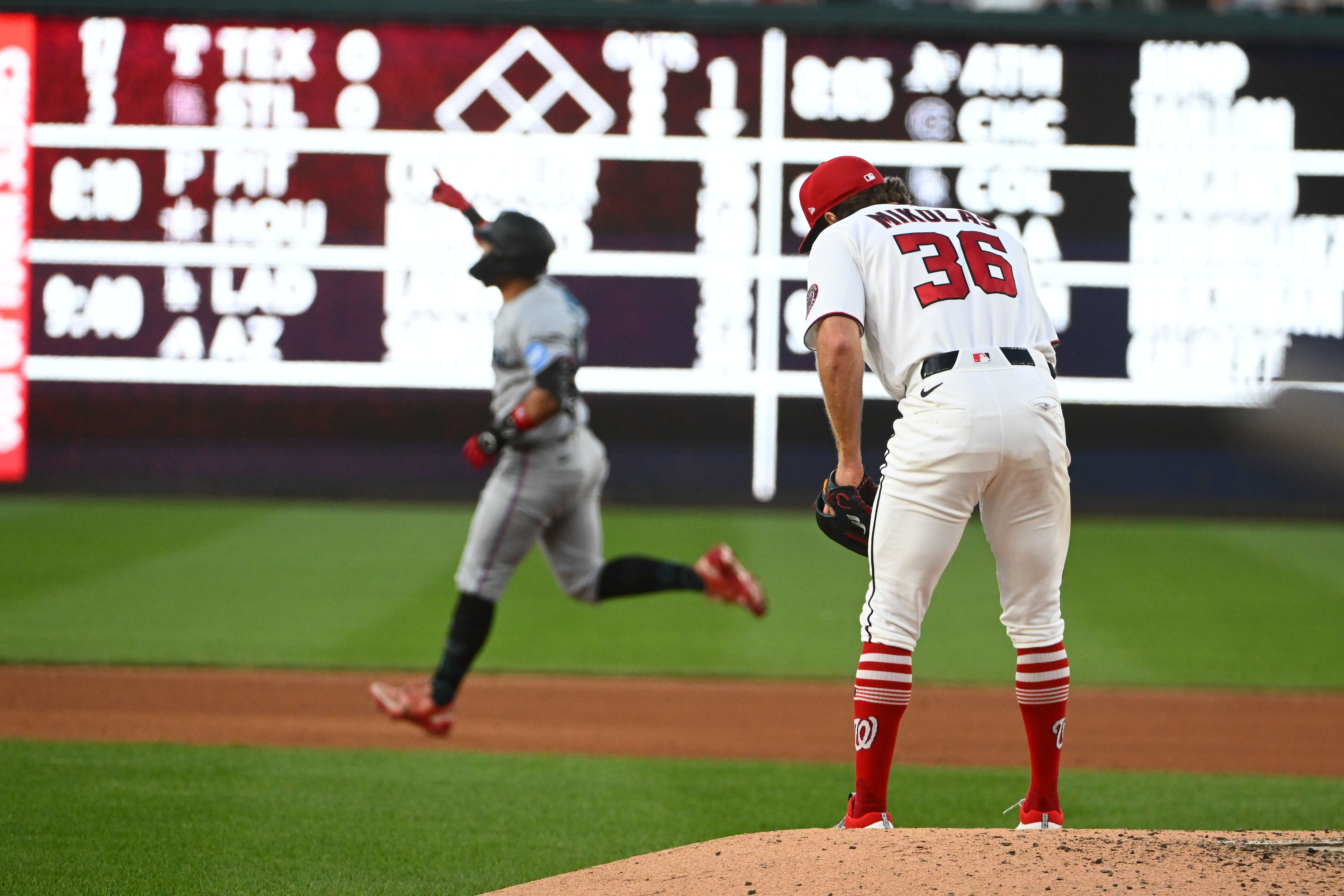 Through four innings of Tuesday's Lou Gehrig Day game between Miami and Washington, neither team could seem to muster any offense in a game started by openers, at that. Two-headed monsters from each club combined to work early no-hit bids, with what appeared to be a game-long offensive struggle on the horizon. Fortunately for the visitors, things changed quickly. Back-to-back-to-back homers from Joe Mack, Heriberto Hernandez and Otto Lopez in the fifth handed Miami a lead they would inevitably hold all night, while a late insurance blast from Hernandez supplied some cushion in the 7-3 series-clinching win. With their second consecutive victory, the Marlins improve to 4-1 over their division rival and 28-34 on the year. The fifth-inning power surge marks just the third time in franchise history the feat has been accomplished and the first since August 13, 2023, when Jorge Soler, Luis Arraez and Josh Bell tormented Houston. For the tablesetter Mack, the more meaningful achievement was his swing-marking his first homer in 23 games at the big league level. Leading off for the first time since Low-A and leading Miami's offense was Hernandez, whose two homer-day and three-homer set continue what has been a monster stretch since getting his mind right in the minor leagues. In 39 at-bats since being recalled from Triple-A Jacksonville in early May, the second-year outfielder is slashing an astounding .308/.317/.692 for an OPS over 1.000. Five of Hernandez's twelve hits have left the yard. After coming out of the gates especially slow, a run of this magnitude gives Clayton McCullough a platoon bat more than capable of flipping a game upside down at any time. In a near-180 from Sunday's 10-1 thumping, Tuesday's edition of a bullpen game was a fairly clean effort. Lake Bachar and John King worked the aforementioned hitless first four frames before passing the baton to freshly recalled Ryan Gusto. The 27-year-old's second look in the bigs this season wasn't as smooth as his first, as Gusto forfeited three runs across two innings of work. Fortunately, scoreless eighths and ninths from Michael Petersen, Anthony Bender and Calvin Faucher kept Miami from sweating any more. Aiming to remain undefeated in June and clinch their third sweep of the season, Miami sends their most consistent starting arm in Max Meyer to the hill early Wednesday afternoon opposite Andrew Alvarez. First pitch from Nationals Park is set for 1:05. View the full article
 -
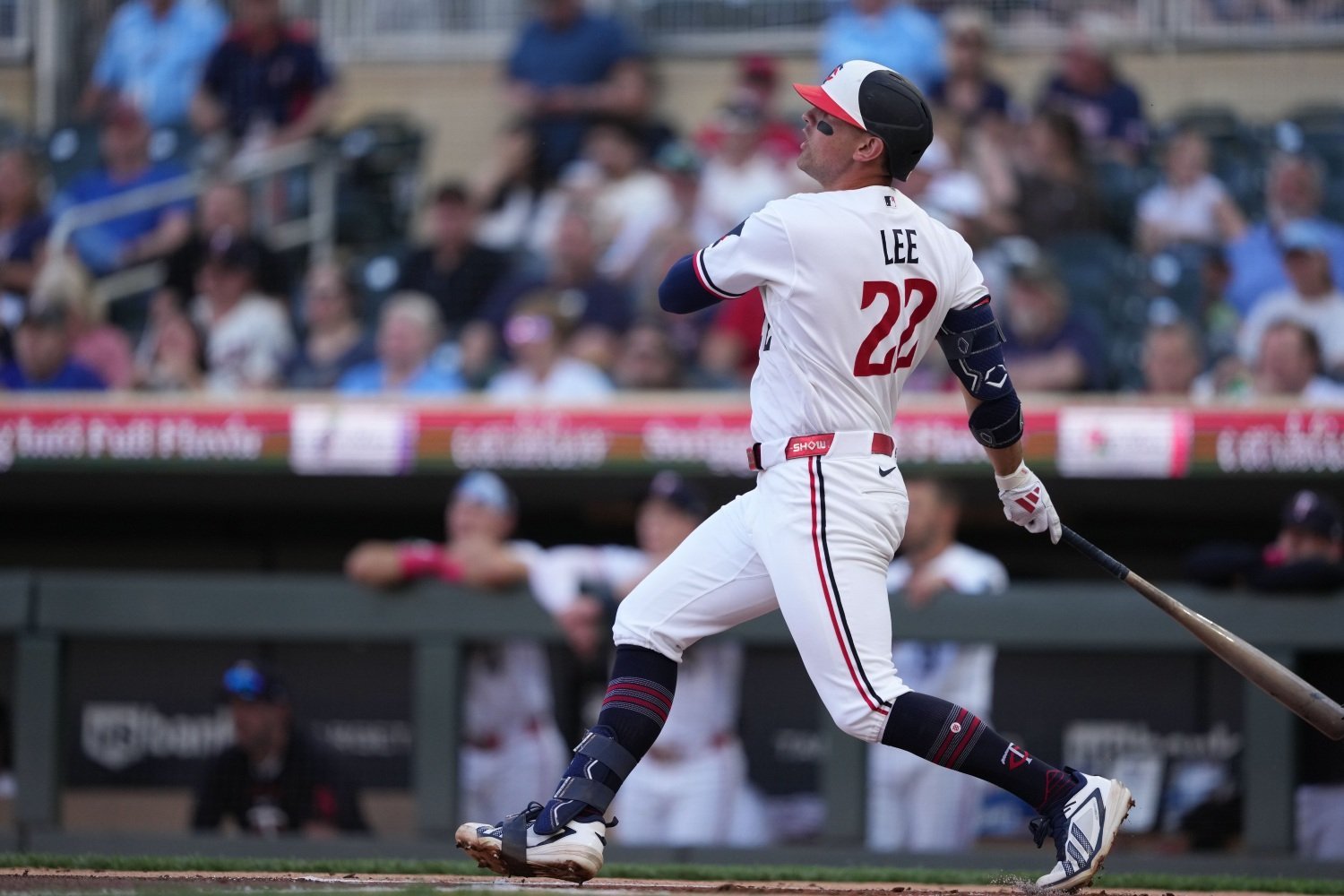 Box Score SP: Connor Prielipp 6.0 IP, 6 H, 4 ER, 2 BB, 7 K (94 pitches, 62 strikes (66%)) Home Runs: N/A Top 3 WPA: Luke Keaschall (0.23), Tristan Gray (0.23), Alex Jackson (0.14) & Yoendrys Gómez (0.14) Win Probability Chart (via FanGraphs) The Twins took advantage of the White Sox's road woes on Monday night, and they looked to keep regaining ground against their division rival on Lou Gehrig Day. Two young starters got a second crack at their foes. Chicago's rising star Davis Martin looked to pick up his second win in less than a week against the Twins, while Minnesota's young lefty Connor Prielipp looked for revenge after giving up six runs in less than five innings earlier in the week to the South-Siders. White Sox Hit the Third Running Prielipp coasted through the first two frames, but ran into some classic 2026 Twins moments in the top of the third inning. The speedster Luisangel Acuña worked a leadoff walk on a full count, and then proceeded to steal second base. Then he stole third base, and Alex Jackson's throw soared into left field, allowing Acuña to trot home for the game's first run without the batter, Jacob Gonzalez, having to do a thing. After Gonzalez struck out, Chase Meidroth and Randal Grichuk struck with a single and a double, which set up Miguel Vargas for a two-run single to put the Pale Hose out to a 3-0 advantage with some uncharacteristic Chicago small ball. Twins Run it Right Back Martin was pitching well, but the Twins batters took advantage of their recent muscle memory in the batter's box and finally broke through on the scoreboard in the bottom of the third. Tristan Gray led off with a single, and then was gifted second on a Martin balk. Jackson attempted to sacrifice bunt. Instead, Gonzalez decided to cover the ground two feet in front of the base instead of the actual base—and he chose not to try to tag Jackson, either. Runners were at the corners with nobody out, but Byron Buxton struck out looking. Luckily, Brooks Lee kept his RBIs rolling with a sac fly to make it 3-1. Prielipp took care of the Sox in short order in the top of the fourth, and kept the pressure on his opponent. Martin crumbled under that pressure, surrendering six straight hits to plate four runs. Luke Keaschall got the scoring rolling with an RBI single in the fourth, and he ultimately ended the Twins' scoring with an RBI single in the fifth. By the time the Keaschall bookend was finished, it was 6-3 Twins. Honorable RBI mentions go to Gray (2) and Jackson (1) as well, but the highlight is all Luke's. Nothing's Ever Easy at Target Field The fans began to show up mid-game, and by the time the adult beverages had impacted the tarps-off section, the atmosphere lent itself to some on-field excitement. Prielipp attempted to pitch into the seventh inning, but he got chased by two singles, and it was going to be up to the bullpen to hold the home turf. Andrew Morris got the call with runners on the corners and nobody out, and he quickly uncorked a wild bender to make that two Sox in scoring position with nobody out. Meidroth then buried a sinker toward Lee at third, and Lee couldn't quite complete an amazing play. With the lead now cut to 6-4, and still nobody out, Morris hunkered down and took down Grichuk and Vargas on strikeouts while, hitting 100 MPH for the first time. With the situation still on edge, Morris then plunked Colson Montgomery to load the bases. It was Anthony Banda's turn to save the day. Sam Antonacci stood at the plate, and four pitches later, he followed his "sword" back to the dugout, and the Twins fans could breathe again. Banda decided that the eighth inning should also be exciting, as he struck out the first two batters but then got stung by Acuña's speed and a Gonzalez walk. Yoendrys Gómez came in to put out the smoldering fire, and he immediately struck out Meidroth swinging before a flame could flicker. Manager Derek Shelton stuck with Gómez for the ninth, and Gómez repaid his skipper with a 1-2-3, stressless endgame. Time to prep the brooms at Target Field! What’s Next? The Twins look to sweep their way back into the AL Central picture on Wednesday afternoon. It will be a matchup of less familiar faces on the mound, as neither starter took part in the four-game series last week. The Twins will send out righty Taj Bradley (5-1, 3.21 ERA), who last got a no-decision after being chased early in Pittsburgh. The White Sox will send veteran righty Erick Fedde (0-5, 5.40 ERA) out to salvage the finale. First pitch is scheduled for 12:40 pm CDT. Postgame Interviews Bullpen Usage Spreadsheet FRI SAT SUN MON TUE TOT Paredes 0 0 60 0 0 60 Gómez 14 0 0 15 15 44 Banda 18 0 0 0 20 38 Orze 23 0 0 0 0 23 Adams 0 0 0 19 0 19 Morris 0 0 0 0 18 18 Laweryson 16 0 0 0 0 16 Rogers 12 0 0 0 0 12 Lawrence 0 0 0 0 0 0 View the full article
 -
Latest Signing Brings Big League Veteran Back To The Royals
DiamondCentric posted an article in Royals Keep
 Their eyes weren’t deceiving Kansas City Royals fans who happened to check in on Triple-A Omaha’s Saturday evening contest with Memphis. Mixed in with the carnage of the 13-1 demolition the Storm Chasers suffered at home was the appearance of a familiar face whose brief 2024 stint with the KC organization ended almost as soon as baseball’s winter began. It happened in the top of the fifth inning when Andrew Pérez, Omaha’s second pitcher of the night, had just given Memphis its sixth run. That’s when Dan Altavilla, fresh from his early week release from the Minnesota organization, emerged from the Storm Chasers’ bullpen and promptly struck out Ramon Mendoza to leave what could have been the Redbirds’ seventh run stranded at third base. And for good measure, Altavilla secured his place as one of the evening’s few Chaser bright spots by finishing his night’s work with a scoreless fifth inning. What now lies ahead for this veteran of eight major league seasons? Dan Altavilla Could Soon Find Himself in the Royals’ Bullpen Kansas City’s present unfortunate circumstances may force the club to add Altavilla to its struggling relief corps, an alarmingly inconsistent group beset by injuries, including the key loss of closer Carlos Estévez on Opening Day, the continuing struggles of Lucas Erceg, and a 5.22 ERA that, heading into Sunday, tied it with Houston for the majors’ worst bullpen mark. Bringing up the 33-year-old right-hander, who KC signed to a minor league contract Friday, seems almost inevitable. The bullpen as presently constituted is one of the team’s sorest spots and doesn’t show signs of imminent improvement. While he may not (and probably won’t) be the bullpen panacea the Royals need, he’ll be worth trying if manager Matt Quatraro’s relievers don’t soon right their own ship. Altavilla has had some success, most notably with Seattle, for whom he went 3-2 with a 2.61 ERA across 22 games in 2018, and in Chicago, where last season he pitched 28 times for the White Sox and finished with a career-best 2.48 ERA and a 172 ERA+. Repeating such numbers could give KC’s bullpen a badly needed boost. But Altavilla isn’t free of pitching baggage. Hard to ignore is the 14.73 ERA he posted in five games for the Royals after they signed the then-free agent during the 2023-2024 offseason — he gave up six runs on six hits and three walks in just 3.2 innings. Yes, an oblique strain forced him onto the Injured List for most of the season after the Royals called him up from Omaha in June, but those numbers are still troubling and hard to forget. Then there are ERAs that are simply too high for a reliever, like the 17-game 5.52 he put up with the 2019 Mariners, and the 5.75 mark he posted in 22 appearances split between Seattle and San Diego during the pandemic-shortened 2020 season. And he missed most of 2021, and the entire 2022 big league campaign, rehabbing from Tommy John Surgery. Altavilla quickly opted for free agency after pitching so sparingly for the Royals in 2024. Now, after being released from Minnesota’s Triple-A club, where he gave up 17 runs (16 earned) in 19.2 innings, he brings his four-pitch repertoire, which features a mid-to-high 90s four-seam fastball, back to Kansas City. Whether the Royals signed him as bullpen depth to be called up only in an emergency, or as a serious contender for a seat in their big league bullpen, remains to be seen. But don’t be surprised to see him in Kansas City before long. View the full article
 -
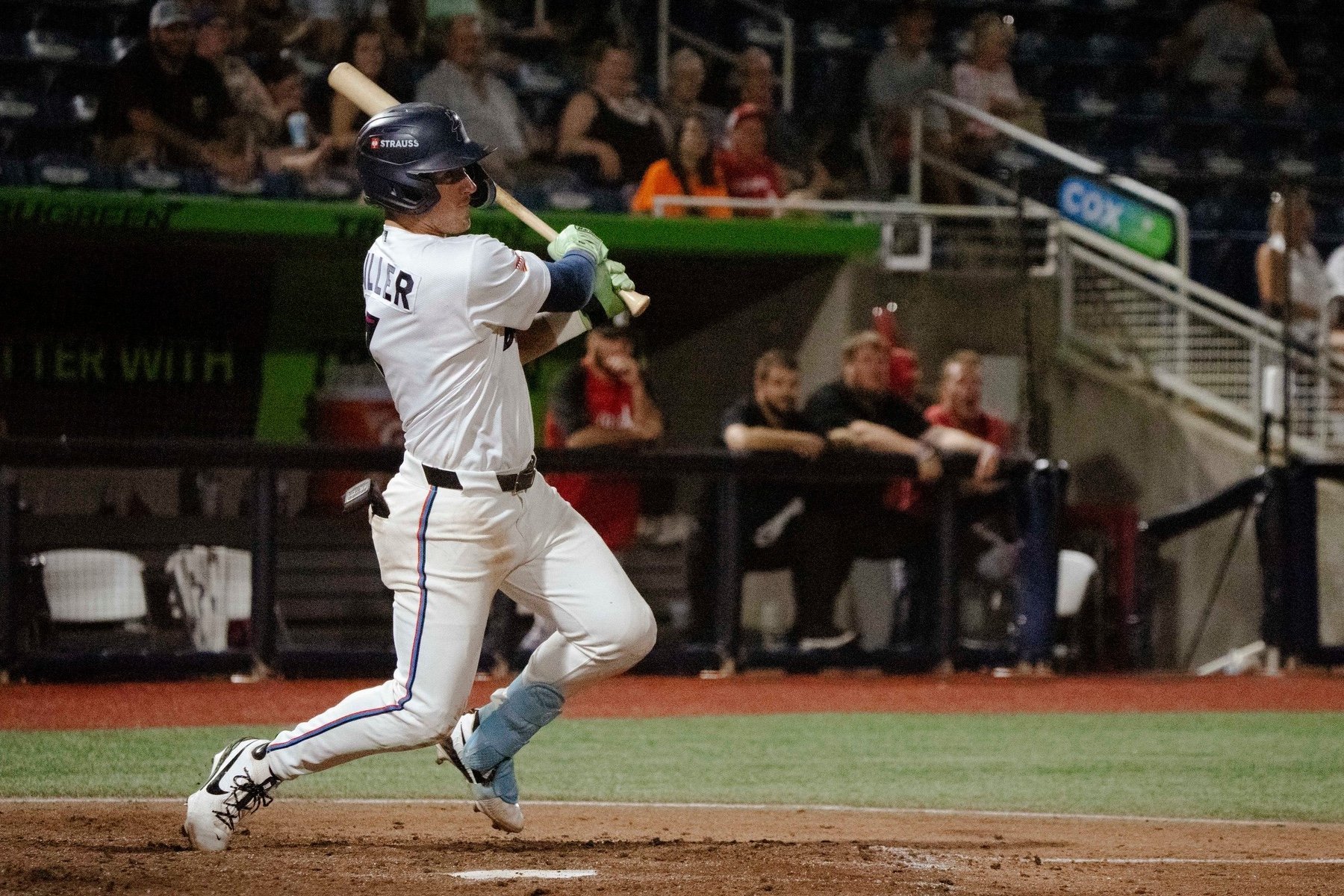 For the 2026 season, Fish On First will provide weekly reports on the Miami Marlins farm system, covering all levels. Here's the first June edition of our Fish On First Prospects Report, which includes another wave of promotions and releases, plus the start of the Dominican Summer League campaign. This report covers the games played from May 26-June 1. Triple-A Jacksonville As part of all the prospect promotions this past week, infielder Gage Miller was assigned to Triple-A. Selected in the third round of the 2024 MLB Draft out of Alabama, Miller was slashing .275/.368/.440/.807 with four home runs, 22 RBI and a 117 wRC+ in Double-A Pensacola. Through his first four games with Jacksonville, Miller is 6-for-17 with two doubles, one home run and five RBI. Miller hit his first AAA home run on Saturday in the top of the second inning off Charlotte Knights starting pitcher Jonathan Cannon. The ball left the bat at 100.7 mph. The 23-year-old has spent most of his career splitting time between second and third base. In releasing Cody Morissette on Tuesday, the Marlins are creating regular playing time for Miller to prove he can sustain this breakout season. Promoted alongside Miller was Payton Green (Fish On First's No. 28 prospect). In 33 games with Pensacola, he slashed .240/.345/.470/.815 with four home runs, 10 RBI, 10 stolen bases and a 114 wRC+. Green is 3-for-17 with an RBI and five walks through four games. Just like Miller, Green is 23 years old and has split time between third base and shortstop, with some second base sprinkled in there. He likely won't be called up this season, but he could set himself to be a non-roster invitee next spring and compete for a bench spot at the big league level. In 17 games since he was optioned down to the minor leagues, Agustin Ramirez s hitting .284/.365/.486/.851 with four home runs and 11 RBI. Defensively he hasn't been showing much improvement, though. Through his first six games with his new organization, Rece Hinds is slashing .318/.444/.500/.944 with one home run and two RBI. The Marlins acquired Hinds last week in a trade that sent reliever Zach McCambley to the Cincinnati Reds. Between both organizations, Hinds is slashing .308/.427/.607/1.034 with eight home runs, 22 RBI and a 166 wRC+. The Marlins signed right-handed pitcher Amos Willingham to a minor league deal this week and he officially was activated. Willingham comes from the Houston Astros organization where in 11 appearances, he posted a 3.38 ERA, 5.09 FIP, 6.08 K/9 and 7.43 BB/9. He was released by the Astros on May 6. Willingham made his major league debut during the 2023 season with the Washington Nationals, but has not been back since. Left-handed pitcher Christian McLeod is another new minor league free agent signing. He was recently promoted to Triple-A where in one appearance, he threw a shutout inning. In his first start with the Jumbo Shrimp, McLeod went three shutout innings, allowing just two hits and two walks while striking out one. Ryan Gusto will pitch for the Marlins against the Washington Nationals on Tuesday. Through 10 Triple-A games (seven starts), Gusto has a 3.83 ERA, 3.51 FIP, 10.48 K/9 and 3.43 BB/9. The one previous appearance Gusto made at the big league level this season came on April 8 against the Cincinnati Reds, where he threw one inning, striking one out in the process. Double-A Pensacola Highlighted by a 23-run explosion in their game at historic Rickwood Field as well as the arrival of multiple top 30 organizational prospects, the Wahoos had a standout week against Birmingham as they split the series three games a piece. Pensacola is 26-25 on the season, two games out of their division lead. Simply put with Fenwick Trimble, the guy just makes contact and gets on base. That was especially evident for the 23-year-old this past week when he went 10-for-29 with two homers and two doubles. This included a five-hit game during the aforementioned Rickwood Field contest. Not only were the five hits a personal record, it was the first such effort by a Pensacola player since 2023 when Dane Myers accomplished the feat. The performance was served as the exclamation point on an extremely solid month of May in which Trimble slashed .303/.345/.541. Trimble keeps working counts well and continues to exhibit great barrel control to cover the entire plate and then some. As the season has gotten older, he’s started to force opposing pitchers into the zone by improving his plate discipline. There’s still a bit of improving to do for Trimble when it comes to pulling the trigger on pitches within the zone, but his whiff rate continues to diminish. Additionally, Trimble has also exhibited some surprising pop, particularly to his pull side. He’s gone that way with fly balls a solid 16% of the time. The one thing still absent from Trimble’s game is walks. He’s taken free passes at just a 7.5% clip. Continuing to put his slow start behind him, Trimble is becoming a tough out and there’s still quite a bit more in the tank, especially if he can find the proper balance between patient and aggressive. He can play all three outfield spots but would be better served as a corner outfielder long term. Because of his solid contact rates, good speed and upside for at least average power, he’s an intriguing prospect trending in the right direction. A promotion to Triple-A could be in the cards for Trimble if this trajectory persists. Speaking of players who put slow starts behind them in May, enter Cristian Hernández. After slashing just .164/.247/.205 in April, the 22-year-old infielder fully adjusted to life at the Double-A level. This past month, he hit a robust .360/.417/.560 with six doubles and three homers. Hernández's latest export was an 11-for-20 effort against the Barons. Being humbled by a new league but then being able to adjust fairly quickly into the best version of yourself is no small task, but Hernández accomplished it with flying colors. His skill set is pretty enticing. At 6’2”, 200, Hernández is a good mix of hit and run. Touted highly for his bat speed, Hernández is another guy who can let the ball travel before committing to a swing. This past month, he started to show the ability to do so as well as the ability to be on time more consistently. After posting a 34% K rate in April, he shrunk that figure to 22% in May. The timeliness of his swings is also allowing him to tap into more power. Having entered the season never having topped seven home runs in a season, he’s already hit three. On the bases, Hernández continues to exhibit plus speed, graded as high as 60 on the 20-80 scale. He’s already up to 13 bags on the year. Defensively, Hernández has the raw skills to stick at shortstop but many evaluators have at times questioned his repetition. That along with the fact that Aiva Arquette has now arrived in Beloit may have Hernández moving off shortstop to second base in both the short and long term. That move may be advantageous to allow Hernández to continue to focus on offensive sustainability. Another guy on an upward offensive trajectory with plenty of time on his side, the 22-year-old’s prospect stock is rising. High-A Beloit Riding high after winning five of six last week, it was a tough end to May for the Sky Carp who dropped four of six to Lake County at home. Pitching struggled in the series, allowing 34 runs. Despite only allowing hits at a .220 clip which is second lowest in the Midwest League, Beloit pitching has struggled keeping the ball in the park. Their 55 home runs allowed are third most on the circuit. It’s been a disconnected season in terms of playing time already for Cam Cannarella due to a wrist injury he suffered in an outfield collision very early in the season. What hasn't been disconnected at any point though is his offensive production. Cannarella continued to absolutely punish High-A pitching in this series, going 11-for-27 with a triple, a home run, and eight RBI to earn our Prospect of the Week honors. Even from a split lefty stance in which he steps towards the ball, Cannarella owns pretty quiet and smooth mechanics. His bread and butter tool is extremely quick hands which allow the ball to travel before he executes a line-drive swing with a bit of natural upper cut. Cannarella has seem High-A pitching extremely well, exhibiting one of the best whiff rates in the league. The only small downside to his approach has been a zone swing percentage slightly below league average. Cannarella hasn’t walked much, but his penchant for making contact at a well above average clip more than makes up for that. Contact-oriented with the ability to spray the ball to all fields and decent speed, Connarella profiles as a top of the order for-average threat long term with the chance to build into some more power. He can also hold down center field well and shouldn’t have an issue sticking there long term. The only question is how will Cannarella fare against more advanced competition? We will start to get the answer to that question beginning this week as Fish On First has learned that the 22-year-old has been promoted to Double-A Pensacola. It will be interesting to see how reps are divided between Cannarella and the rest of Pensacola’s outfielders because all of them need and deserve starting reps. For Cannarella specifically, he would advantageously continue to see reps in center field where his skill set will be of most value. If Cannarella can continue to show plus plate discipline and get on base against Double-A stuff, he will start to play closer to his ceiling of an every day outfielder. At the very least, he has a solid fourth outfielder floor. After a rough start to the season in cold weather, Liomar Martinez finished off a solid month of May in grand fashion. Pitching into at least the fifth for a fourth time in five starts, the 20-year-old righty nearly completed a quality start, tossing 6 ⅔ frames of two run ball on just two hits and four walks. Martinez’s swing-and-miss stuff was on full display as he racked up a career-high 12 punchouts. More consistently as the season progresses, we are seeing what Martinez can do when he has control with him. He’s a high-effort tosser, but he comes by good velo which has ticked up more this season. Sitting 93 last season, Liomar is more frequently hitting 94-95 mph and has been clocked as high as 97. He shows great confidence in the four-seamer particularly in elevating it to set up his best secondary, a high-70s/low-80s curveball with good shape and horizontal drop. This past season, Martinez added a sweeper which he’s made good strides with, quickly making it a usable third pitch. As his stuff improves, so too has his whiff rates. Boasting a 31.2% CSW%, he can make the opposition look foolish. Overall, though, it all comes down to repeatability and control. If what Martinez is currently doing can sustain, he has the ceiling of a back-end rotational piece. Because of the historic volatility with control, a future in the bullpen still seems more likely. Even if that is his floor, Martinez could carve out a solid career as a high-leverage arm—he already has the stuff and profile befitting of that role. Low-A Jupiter When the Miami Marlins gave nearly half of their entire international bonus pool money to Andrew Salas, they were expecting a player well beyond his years that can move quickly through the minor league system. So far, that has not been the case, slashing .168/.268/.245/.513 with two home runs, 16 RBI and a 50 wRC+. He is also striking out 26.7% of the time. Only 18 years old, there is obviously still time for Salas to turn things around, but the early returns have not been encouraging at all. On Tuesday, he was demoted to the Florida Complex League. Abrahan Ramirez has nothing left to prove at the Low-A level. He is now slashing .254/.366/.425/.792 with five home runs, 27 RBI and a 118 wRC+. Acquired in the Jazz Chisholm Jr. trade, Ramirez has always put up good numbers and so far, that continues to be the case. Victor Ortega has emerged as the primary catcher for the Hammerheads. With multiple hits in five of his last eight games, the 22-year-old left-handed-hitter boosted his slash line to .265/.408/.422/.829. Behind the plate, he has committed only one error with no passed balls while throwing out 22% of base-stealers. FCL Marlins A perfect 4-0 week for the FCL Marlins saw the offense come alive, scoring 43 runs across four games. The week was highlighted by a 115 mph home run from one of Miami's offseason acquisitions, while the Dominican Summer League season got underway Monday with one of the organization's biggest international signings homering in his third professional at-bat. The Marlins acquired Edgardo De Leon from the Cubs this offseason for one specific reason: his raw power. It was on full display last Thursday when he turned on a 97 mph fastball and launched it over the center field wall with an exit velocity of 115 mph. Through 17 games, De Leon is hitting .267 with two home runs and 13 RBIs. More importantly, he has already drawn nine walks after drawing just 15 in 43 games last season, while striking out only 12 times. The power has never been in question, as he has flashed legitimate 70-grade raw power. If he can continue to improve his approach and keep the swing-and-miss under control, there is a lot to like in his profile. For the second consecutive week, Luis Cova finds himself in this report, and rightfully so. Although his 12-game hitting streak came to an end Monday afternoon, he has still reached base safely in every game this season. Last week, it was mentioned that the power production had yet to fully arrive despite the strong overall results. Cova answered those concerns this week, recording a two-double game and launching his second home run of the season. The combination of consistent contact, on-base ability, and emerging power has just earned him a promotion to Low-A. This week, Breyias Dean went 8-for-17 (.471) with two home runs and seven RBIs. Both home runs came in back-to-back games. Through 16 games this season, Dean is hitting .354 with a .604 slugging percentage and a 1.033 OPS. One of the biggest developments in Dean's game has been the steady decrease in his strikeout rate. Since 2023, his strikeout percentage has ticked down little by little each season. Like many hitters in the Marlins system, limiting swing-and-miss will ultimately determine how far he can go. The tools have always been there, and if the improved contact skills continue, Dean could be in for a breakout season. DSL Marlins & DSL Miami With the DSL season having just begun on Monday, there is not much to report on yet. However, one of the Marlins' biggest international signings made an excellent first impression. Signed for $1 million this winter, Ronny Muñoz entered professional baseball with some scouts questioning how his smaller 5-foot-10 frame would impact his game long term. He wasted little time making a statement. In the bottom of the sixth inning Monday afternoon, Muñoz launched his first professional home run in just his third career at-bat, giving the Marlins an early return on one of their biggest international investments of the 2026 signing period. This week's schedule Triple-A Jacksonville vs. Nashville Double-A Pensacola vs. Chattanooga High-A Beloit at Peoria Low-A Jupiter vs. Bradenton FCL Marlins vs. FCL Cardinals, FCL Mets and FCL Nationals DSL Marlins vs. DSL Tigers, DSL Mets, DSL Twins, DSL Rangers and DSL Yankees DSL Miami vs. DSL Yankees, DSL Rangers, DSL Cardinals, DSL Phillies and DSL Blue Jays View the full article
 -
 Joe Ryan has been everything the Minnesota Twins could have hoped for this season. Through his first 70 1/3 innings, the right-hander has posted a 3.20 ERA while striking out 79 hitters and establishing himself as one of the most reliable starters in the American League. He had a minor hiccup against the White Sox Monday night, but still, he's on a run of dominant outings stretching back to the end of April. The advanced metrics suggest his success is no fluke, either. Ryan's expected ERA sits below his actual ERA, while his FIP is even lower. The underlying numbers paint the picture of a pitcher who has legitimately taken another step forward in 2026. Put simply, Ryan has pitched like an ace. And that's exactly why the Twins should consider trading him. That might sound counterintuitive. But Ryan's combination of performance, affordability, and remaining control is precisely what would make him one of the most coveted players on the trade market. If the Twins decide they aren't positioned to seriously contend in the near future, there may never be a better opportunity to maximize the value of one of their most important assets. One of the biggest reasons why is Ryan's contract situation. If he were approaching free agency, the decision would be relatively straightforward. The Twins would either keep him for a playoff push or move him for whatever return they could get before losing him. But that's not the situation here. Ryan isn’t a free agent until after next season, meaning whatever team (hypothetically) acquired him would be getting him beyond this year. Acquiring a frontline starter for one postseason run is valuable. Acquiring one for multiple seasons is something entirely different. That's why teams are often willing to pay a premium for pitchers in Ryan's position. They're buying a pitcher who can slot near the top of the rotation immediately. They're buying cost-controlled production, and a player they don't have to compete for on the open market for multiple years. Those players rarely become available. And when they do, bidding wars tend to follow. A recent example (to an extent) is the Garrett Crochet trade. When the White Sox moved Crochet to Boston, they landed four prospects in return, including a pair who ranked highly on Top-100 lists. While Ryan wouldn't command quite that level of return, the comparison illustrates the type of value that frontline pitching can generate. The Twins could realistically target a package built around a Top-100 prospect and additional high-upside talent. More importantly, they would probably have multiple teams competing to make those offers. The market for starting pitching is almost always aggressive, and there are plenty of contenders who could use help. The Braves, Padres, Yankees, Diamondbacks, Cubs and Brewers are all firmly in the postseason hunt that could really use a top-of-the-rotation starter like Ryan. Other clubs (the Cardinals? the A's?) might get involved if they hang around longer than expected and their rebuild seems to be ahead of schedule. The point is that the Twins wouldn't be negotiating from a position of weakness. They would be negotiating from a position of strength. If Ryan were made available, Minnesota could afford to be selective. The front office could compare offers, identify the prospects they like the most, and ultimately choose the package that best fits the organization's long-term vision. That's a luxury many sellers don't have. Of course, none of this means trading Ryan would be easy. In fact, it would probably be one of the most difficult decisions the front office could make. Ryan is a popular name. He's developed into exactly the type of pitcher every team wants leading its rotation. Trading players like that is never fun. But front offices have to separate emotion from evaluation. The question isn't whether Ryan is good; the answer to that is obvious. The question is whether keeping Ryan gives the Twins a better chance to build a championship-caliber roster than trading him for a significant haul of young talent. That's where things become more complicated. If the Twins were clearly positioned to compete for a World Series over the next couple years, holding onto Ryan would be an easy decision. You keep great players when you're trying to win championships. But if the organization believes it's still several pieces away, then Ryan becomes something different. He becomes an opportunity to add multiple young players and improve the organization's long-term outlook. An opportunity to accelerate a retooling process without committing to a full rebuild. While Ryan is still relatively young, there's also the reality that pitcher value can change quickly. Pitchers get hurt, performance fluctuates, and circumstances change. There's no guarantee Ryan's trade value will ever be higher than it is right now. That's what makes this summer so intriguing. It's what made his elbow scare in May so paralyzing. The Twins have one of the most valuable trade assets in baseball: a pitcher performing at an ace level, multiple years of team control remaining, and a market that would almost certainly be filled with interested buyers. Whether the front office ultimately agrees is another question entirely. They may view Ryan as a foundational piece worth building around, and that's a reasonable position to take. But at the very least, the Twins should strongly consider the possibility. Because as difficult as it would be to trade a pitcher as good as Joe Ryan, the return might ultimately do more for the future of the franchise than keeping him ever could. View the full article
 -
Luis Peña Has a Huge Advantage Over Other Brewers Prospects
DiamondCentric posted an article in Brewer Fanatic
 The Milwaukee Brewers have a cornucopia of prospect talent across their infield, and Luis Peña is one of the exceptionally impressive names who could climb up to the big leagues in the next couple of years. However, this is someone with a skill in his back pocket that few others possess, and it could give him enough of an advantage to rise faster than even his fellow Brewers prospects. Background Peña is the second-ranked prospect in a loaded Brewers farm system that was named the best in baseball (via MLB Pipeline) entering the 2026 season. Peña is only 19 years old, and he won’t turn 20 until November. Milwaukee signed him in January 2024 as part of a pretty notable international class. The Brewers shelled out an $800,000 signing bonus to get the speedster out of the Dominican Republic. In his first crack at the Dominican Summer League, he gave the organization a glimpse of what he could turn into, swiping 39 bases in just 44 contests with a .393 batting average. Game-Wrecking Speed Peña’s best attribute is a 70-grade speed tool, and he’s earned that rating with some jaw-dropping numbers. Through 159 games in professional baseball, he has 92 stolen bases. He swiped 44 bags over 96 games in 2025, in a campaign that ended in High-A Wisconsin. He’s shown off more of the same to start 2026, stealing nine bases in 19 games. On the defensive end, his speed allows him to be one of the more rangy shortstop prospects in the game. He hasn’t been perfect over there, but he’s getting far more reps at the position now that Jesús Made is lighting the world on fire in Double-A Biloxi. An On-Base Machine As a result of his speed and a 55-grade hit tool, Peña has quickly gained a reputation as an on-base machine. Currently sporting a career .312 batting average and .383 on-base percentage, this is someone who plays the Brewers' brand of baseball perfectly. The also has projectable power, producing exit velocities as high as 113 miles per hour at just 185 pounds. The next step for him will be staying away from offspeed pitches that bend out of the zone. It got to a point last year where pitchers were peppering him with offspeed offerings 60 percent of the time once he got to High-A. That scouting report is public information and will keep being his kryptonite until he learns how to handle it. Stinginess Even with the offspeed struggles, Peña has still drawn his fair share of walks. We’re looking at somebody who has drawn 63 walks in just over 650 plate appearances, and he’s only struck out 97 times. The low strikeout rate and high-quality contact profile fit the mold that Pat Murphy has built at the big-league level perfectly. This is a pure hitter who’s developing a great eye at the plate as he gets more reps as a professional. Versatility is the Best Ability The could-be bad news for Peña is that the Brewers’ top four prospects each have the ability to play the shortstop position or have planted their feet somewhere close. Made is the top prospect in baseball, Jett Williams (acquired in the Freddy Peralta trade) has shortstop in his profile, and Cooper Pratt (60-grade fielding tool) is also primarily used on the left side of the infield. What makes Peña different? Much like Williams, he can play multiple positions. Versatility is a valuable trait, and this is someone who could slot in around the infield if needed. I think that makes more room for him up in Milwaukee when those conversations start to form. Peña is even viewed as a plus potential outfielder, thanks to that speed. He doesn't have the limitations of the diminutive Williams, the very tall Pratt or the likely-to-thicken Made. He's the guy who might play anywhere—and that makes it much more likely that he'll play somewhere in the majors on a regular basis, fairly soon. View the full article
 -
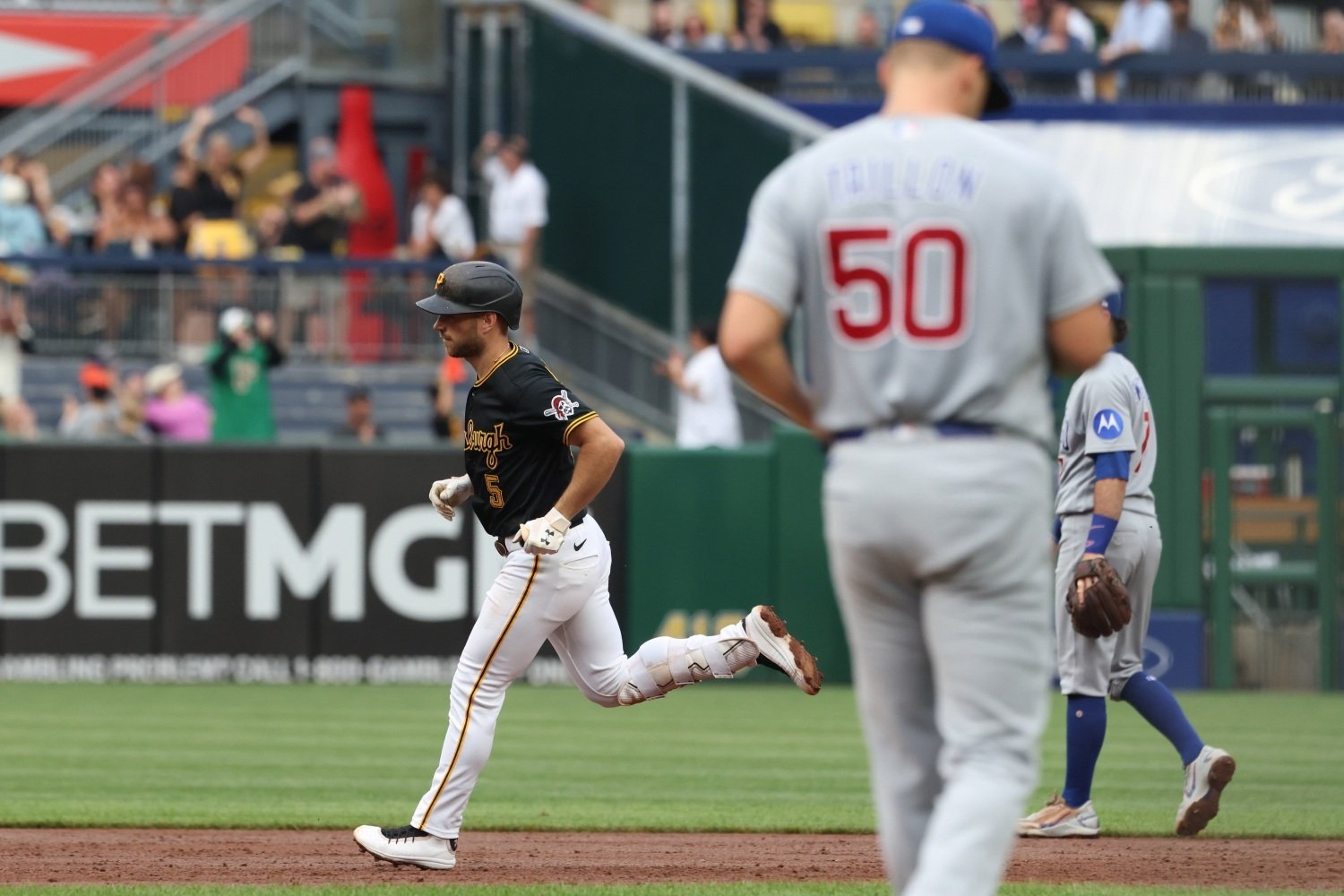 With an ERA over 5.00 and peripherals just as bad, Jameson Taillon has struggled this year. As we get deeper into the season and closer to the trade deadline, the likelihood Taillon’s season can be turned around is one of the most crucial questions the Cubs need to answer. Let’s dig into what has gone most wrong for Taillon this year. Six weeks ago, I covered the decline in fastball velocity and change in arsenal to compensate for it. Taillon’s fastball and sinker both were 0.5 MPH or more higher in May than in April, and his changeup got much better results in May than in April. Yet, it didn’t help. Taillon’s slugging percentage allowed went up significantly in May on fastballs and sinkers. His cutter regressed, and now all of his fastballs and offspeed pitches (4seam, sinker, cutter, change) are allowing a slugging percentage over .600, backed up by peripherals. His breaking stuff (curve and sweeper) has been fantastic in both months this year, but he almost never throws those pitches when he falls behind hitters in the count. Therein lies a larger problem. Last season, Taillon was absolutely incredible when he was behind in the count, holding batters to a .176 batting average and a .361 slugging. Shockingly, he actually was better than when he got ahead in the count, allowing .215 and a .381 slugging. This wasn’t anything he had ever done before and was ripe for regression to the mean—which is exactly what has happened, and then some. He has been absolutely dominant when ahead in the count this year and abysmal when he has fallen behind. Batters are hitting .132/.276 when they fall behind and .303/.645 when they get ahead. In addition to allowing those sky-high numbers when he falls behind in the count, Taillon is running the highest walk rate of his career, at nearly 8%. Taillon, who has never had a first pitch strike percentage under 61.7% and who has never thrown less than 65.7% first pitch strikes in a Cubs uniform, is throwing 56% strikes. He's finished a calendar month with below 50% of his first pitches in the zone just 3 times in a Cubs uniform. Those are August 2025 and April and May of 2026. He's falling behind in counts at a rate he has never done before. When you fall behind in counts, hitters make you pay, and they have made Taillon pay all season long. While he has decreased his fastball usage on the first pitch this season in favor of more breaking and offspeed stuff, he hasn’t been able to throw them for strikes often enough. Taillon’s breaking stuff is in the zone just 36% of the time, and his offspeed just 31% of the time on the first pitch. Even the fastball is in the zone just 51% of the time. Throwing fewer pitches in the zone could work, if you're getting batters to chase more, but batters are just not chasing fastballs or breaking balls on the first pitch from Taillon. One silver lining though: batters are chasing an absurd 54% of offspeed pitches on the first pitch. The bad news is, he throws offspeed just 6% of the time on that first pitch. That leaves us with a pretty clear picture of Taillon in 2026, and why he is getting beat up. No pitcher can survive constantly behind in the count, especially one that lacks premium stuff. Is his lack of first pitch strikes mechanical? There are a few slight differences, so it’s always possible, but nothing truly glaring, and this issue is across the board. A change in approach? I really hope not, it's never really a good idea to throw fewer strikes. A loss in confidence? Perhaps he's trying to be more fine with a loss in velocity. Is this how it ends for the veteran? Anyone’s guess is as good as mine. I think Taillon could benefit from throwing more offspeed on the first pitch, but there is clearly regression coming for the 54% chase rate on offspeed if the frequency with which he throws it increases. It won’t solve all of his problems, but stealing a few more first-pitch strikes is a must if you aren’t going to pound the zone. Getting back to throwing more first-pitch strikes has to be the number one focus for Taillon if he can be counted on to play a role for the Cubs down the stretch in 2026. If he can't get ahead in the count like he used to, the Cubs may need to look elsewhere. View the full article
 -
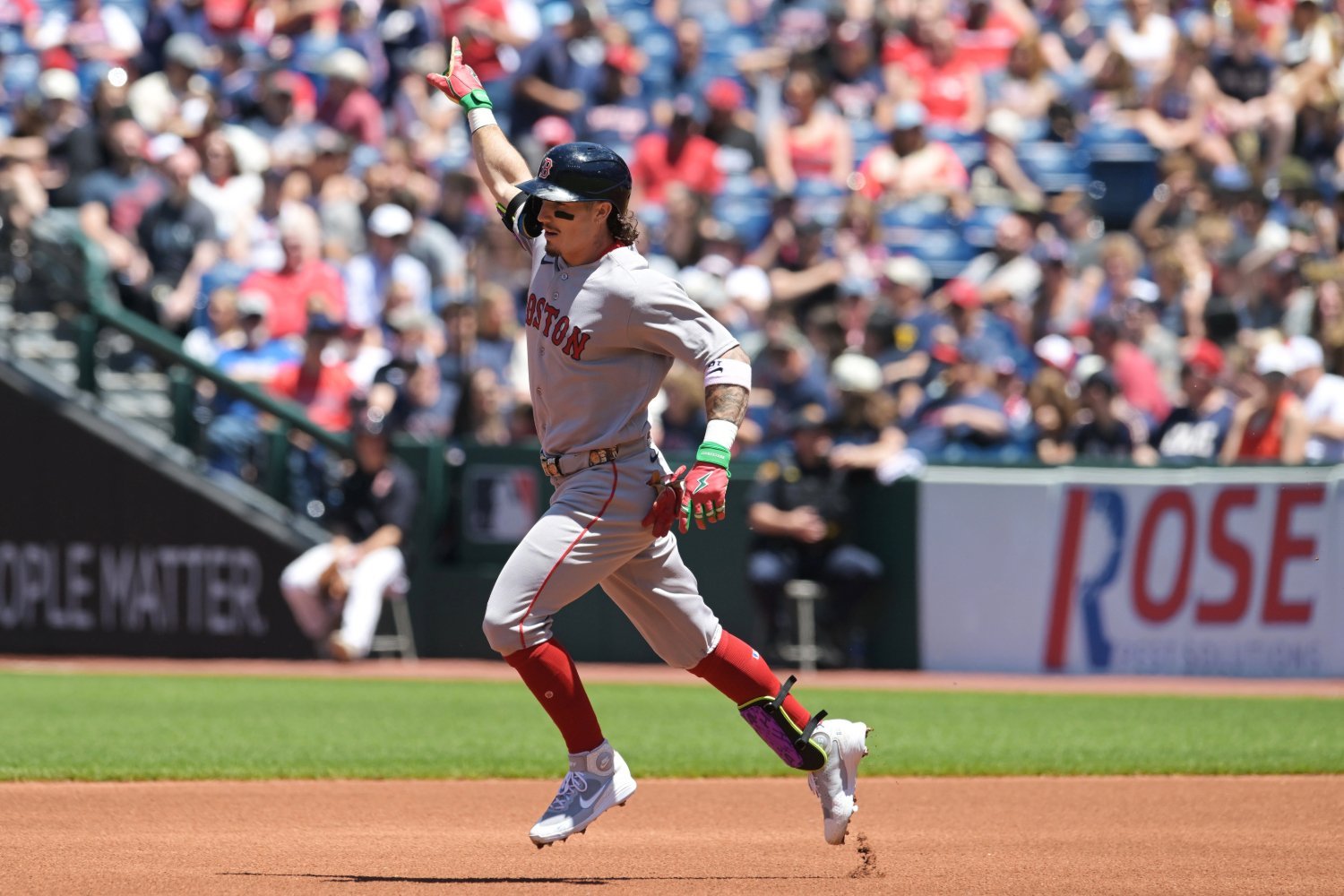 There are moments in baseball when a player stops being the person you thought he was. Not because of a dramatic announcement or a sudden transformation, but because one day you look at the numbers and realize they no longer fit the story you have been telling about him for years. For Boston Red Sox outfielder Jarren Duran, that moment arrived in April 2026. Across 108 plate appearances, Duran put together the worst opening month of any season in his major-league career. His .250 slugging percentage, .222 wOBA, 32 wRC+, and 42 OPS+ were all career lows for any month in which he accumulated at least 50 plate appearances. He also posted a career-worst 35.6% whiff rate. The contact disappeared, the plate discipline eroded, and the flashes of power that had begun to emerge over the previous few years seemed to vanish with them. In other words, he lost his identity as a hitter. Duran arrived in the major leagues as a speed project — the kind of player who steals bases, runs down balls that only elite defenders can reach, and gives you a single here and a double there, enough to impact a game without ever being mistaken for a true power threat. That's a useful asset, but not the kind of player pitchers lose sleep over because of his home-run potential. And yet that story just took an unexpected turn. In 26 games during May, Duran hit nine home runs, more than he had ever hit in any month of his career. He also put together a personal-best streak of five consecutive games with an RBI, which stood as the longest-active RBI streak in Major League Baseball at the end of the month. • 9 home runs in May • Career-high 22 RBIs in a single month • Fourth in the American League this month with an .879 OPS The numbers he produced in May belong to a completely different hitter. He batted .261 with four doubles, one triple, nine walks, and 14 runs scored. Over his last 13 games, beginning on May 16, he has hit .333 with a 1.069 OPS, nine extra-base hits, and 14 RBIs. Only one left-handed hitter in all of baseball owns a higher slugging percentage than Duran's .717 during that stretch. (Yes, it's Juan Soto at .830.) Those are MVP-caliber numbers, not the production you expect from a leadoff hitter on a sub-.500 team. What the Advanced Metrics Say About Jarren Duran's Hot Streak To understand whether this power is real or simply a mirage, you have to go to Baseball Savant. And that's where the conversation becomes more complicated... in the most interesting way possible. Duran's Barrel% sits at 12.1% in 2026, the highest mark of his career. His Barrel/PA rate has also climbed to 7.6, above the 6.3 he posted in 2025 and well above the MLB average of 4.9. In terms of quality contact, he has entered elite territory. His average exit velocity of 90.7 mph has remained relatively stable compared to previous seasons, which suggests he is not necessarily hitting the ball harder, but rather making more of the hard contact he does generate. Season Barrel% Barrel/PA EV HardHit% xwOBA 2023 5.3 3.6 90 46.3 .322 2024 9.3 6.5 91 43.9 .340 2025 9.7 6.3 92 46.8 .326 2026 12.1 7.6 91 41.1 .313 MLB avg. 7.6 4.9 89 37 .316 But there is tension within those numbers. Duran's .313 xwOBA in 2026 is lower than the .326 he posted in 2025 and nearly identical to the league average. His HardHit% has dropped from 46.8% to 41.1%. Paradoxically, he is producing more barrels while generating less hard contact overall. That only happens one way: he has become more selective about the pitches he chooses to destroy. That theory gains even more weight when we see that Duran's average bat speed has reached a career-high 75.2 mph. More importantly, this is not simply a matter of swinging harder. He is also posting the lowest swing rate of his career at 47%. This is about timing — about unleashing his best swing only when he finds a pitch he can do real damage with. The Launch-Angle Adjustment Duran's batted-ball profile in 2026 tells another fascinating story. His Pull AIR% has jumped to 17.2%, the highest mark of his career and well above the 15.2% he posted in 2025, not to mention his career average of 12.2%. At the same time, his ground-ball rate has fallen to 44.4%, also a career best. That is the signature of a hitter who has adjusted his mechanics to elevate the baseball when the situation calls for it. Pitch-tracking data confirms the trend. Against fastballs in May, Duran produced a staggering .797 slugging percentage, along with eight home runs and a .339 batting average. The difference is the launch angle. Month Pitch Type BA SLG wOBA EV Whiff% May/26 Fastball .339 .797 .508 93 31.2 Apr/26 Fastball .171 .345 .250 90 25.6 May/26 Breaking .205 .341 .257 88 35.1 May/26 Off-speed .083 .083 .116 86 34.6 The most revealing comparison is April versus May against fastballs. In April, Duran hit just .171 with a .345 slugging percentage against heaters. In May, those numbers exploded to .339 and .797. At this point, it is fair to wonder how the rest of the league kept feeding him fastballs while he spent an entire month turning them into souvenirs. The Batting-Average Problem — and Why It Shouldn't Matter So Much The obvious criticism is his .219 batting average for the season. For an everyday player, that number is low, but it hides two very different stories. In May, Duran hit .259 and saw his wRC+ climb from 32 to 137. Over his last 13 games of the month, he hit .333 with a 196 wRC+. His season average is still carrying the weight of an April in which he struggled to elevate the baseball and watched too many balls die harmlessly in gloves. What makes it difficult to dismiss all of this as simply a hot month is the consistency of the underlying profile. The rising Barrel% is not a fluke. It climbed to 9.3% in 2024, rose again to 9.7% in 2025, and now sits at 12.1% in 2026. The quality of contact has improved year after year. The home-run surge in May did not come out of nowhere—it was simply the latest stage of a trend that had been developing for quite some time. The danger with Duran was always the same: that in his pursuit of power, he would lose the traits that made him special. Luckily, that never happened. He still leads the club with 10 stolen bases, and his five outfield assists from left field are the most by any player at the position in Major League Baseball. Those five assists are yet another reminder that runners continue to underestimate both the strength of his arm and the defensive instincts that make him such a valuable player even when the bat goes quiet. He is not the same player who posted a +11 Run Value in 2024, but his current +3 remains more than respectable. The complete five-tool profile — speed, emerging power, arm strength, defense, and contact ability — usually appears once in a blue moon. Duran is not there yet. But for 26 games in May 2026, he flashed exactly that kind of ceiling. The Big Question: Is Any of This Sustainable? The honest answer is probably not at May's level. An .847 OPS over a month, paired with eight home runs from a player hitting .219 for the season, carries all the hallmarks of a peak. His .313 xwOBA suggests the underlying models do not fully believe he deserved every bit of that production. Pitchers will adjust — if they have not already — and the number of off-speed pitches he sees is almost certain to increase. What does appear sustainable, however, is the direction. A 12.1% Barrel rate is not suddenly going to collapse back to 5%. The elevated Pull AIR% does not look like a one-month anomaly, nor does the increase in average bat speed. The mechanical adjustment (lifting the baseball when he pulls it) is real, and the data reflects it. Put another way: Duran probably is not going to hit eight home runs in June. But he is not going back to being the flat-contact hitter he was in 2022 and 2023, either. For a team that has struggled to find power while spending the first two months of the season drifting nine or ten games behind the division leaders, that evolution could be exactly what the Red Sox need. View the full article
 -
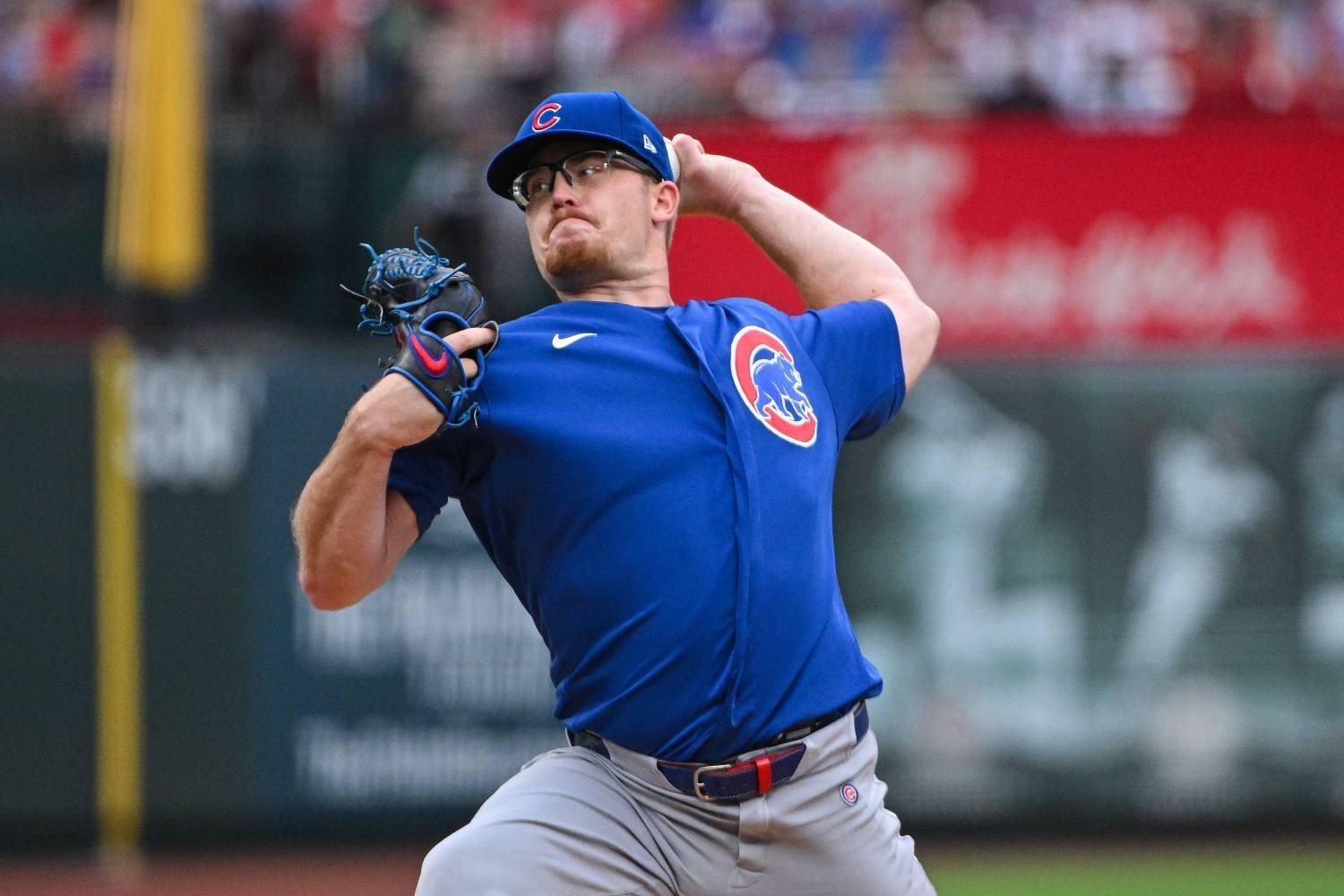 The experiment of using left-hander Jordan Wicks in the starting rotation did not go well to say the least. Thus, Wicks is headed back to the minors. The Chicago Cubs on Tuesday optioned Wicks back to Triple-A Iowa and called up right-hander Tyler Ferguson from Iowa. Wicks lasted just 6⅓ innings in his two starts since being called up, allowing 11 runs on 13 hits with one walk and six strikeouts. That resulted in a 15.63 ERA. Ferguson was acquired from the A's on May 7 after being designated for assignment. He made just one appearance for the A's this year, giving up four runs in 1⅓ innings in a 9-1 loss to the Philadelphia Phillies on May 5. At Triple-A Iowa this year, he pitched in six games covering 7⅔ innings, walking five and striking out five for a 3.52 ERA. He has appeared in 105 games with the A's over the last three seasons with a 4.47 ERA with a 12.6 walk rate and 25.4 strikeout rate. View the full article
 -
 Blue Jays Affiliate Overview (May 30-June 1) Triple-A Buffalo Bisons Series vs Lehigh Valley IronPigs (Philadelphia Phillies): 2-4 Season Record: 27-30 Double-A New Hampshire Fisher Cats Series vs Somerset Patriots (New York Yankees): 3-3 Season Record: 26-22 High-A Vancouver Canadians Series vs Eugene Emeralds (San Francisco Giants): 3-3 Season Record: 21-30 Single-A Dunedin Blue Jays Series vs Clearwater Threshers (Philadelphia Phillies): 1-5 Season Record: 20-31 FCL Blue Jays Week Record: 3-2 Season Record: 17-5 DSL Blue Jays Blue Week Record: 0-1 Season Record: 0-1 DSL Blue Jays Red Week Record: 0-1 Season Record: 0-1 Triple-A Buffalo Bisons Season Record: 27-30 Series vs Lehigh Valley IronPigs (Philadelphia Phillies) May 30: It was Grant Rogers’ turn on the mound again for the Saturday afternoon game against Lehigh Valley, and he might have had his best game of the season. Rogers was again his usual self, pitching entirely to contact. He worked into the sixth in the game, going 5.2 innings, only giving up five hits and walking none. He got a ton of soft contact from hitters in the form of groundouts and pop-ups. He did strike out two, but it was the weak balls-in-play that got him into the sixth without giving up a run. With Rogers doing his part on the mound, the bats were able to go to work and build a nice lead for Buffalo in the game. RJ Schreck got the scoring started for the Bisons in the third inning with an RBI single that scored Ryan McCarty. He would have a big game, as he added two more RBI in the fifth with another single. William Simoneit extended the lead in the sixth with a home run, his fourth of the season. The blast was a moonshot, coming off the bat at a 40° launch angle. With a four-run lead, Matt Bowman came into the game in the eighth for Buffalo, and it all evaporated. He would give up two runs before giving way to Chase Lee, who allowed two inherited runners to score and a third run, all via a three-run home run. In the bottom half of the inning, the long ball saved Buffalo, with both Josh Rivera and Je'Von Ward launching solo home runs. They took back the lead by one, and Lee would finish up the ninth without allowing anyone else to cross home, giving Buffalo the 6-5 win. May 31: On Sunday, Max Scherzer made a rehab start with Buffalo, bringing a lot of anticipation and hope with him. The big league club desperately needs pitching, and he can provide it once he is done with his rehab assignment. This start went smoothly for him; he threw three innings, didn't allow a hit, only walked two, and struck out four. His fastball ranged between 92 and 94 mph; he is working to regain the velocity from being on the shelf for so long. He would depart the game with the lead, after RJ Schreck, Willie MacIver, and Josh Kasevich all had RBI base knocks in the bottom of the third inning. In the fifth, Devereaux Harrison would give up three runs to tie the game up, but MacIver and Kasevich combined to score two in the bottom half of the inning. The runs came on MacIver's RBI single and Kasevich's sacrifice fly. Nate Garkow had trouble in the sixth and gave one run back. In the seventh, the bullpen imploded further, Conor Larkin came in with two men on and drilled the first batter he faced to load the bases up. The next batter he faced would put the game out of reach, as Liover Peguero hit a grand slam. Lehigh took Sunday's game 8-5, with Buffalo now falling to three games under .500. Double-A New Hampshire Season Record: 26-22 Series vs Somerset Patriots (New York Yankees) May 30: Saturday wasn't a good day for hitting between New Hampshire and Somerset. The Fisher Cats were stifled by Patriots pitcher Kyle Carr, who would go six innings and struck out 10. New Hampshire managed just one earned run off of him, a catcher's interference and an error led to a two-run double from Jace Bohrofen in the first. Then, an Aaron Parker home run in the fourth gave New Hampshire a three-run lead. It didn't last, though, as three RBI singles from Somerset tied the game in the bottom of the inning. A wild pitch in the seventh inning ended up allowing the winning run to score for Somerset. New Hampshire lost this one 4-3. May 31: Jay Harry got the scoring started in the third inning of the Sunday finale between New Hampshire and Somerset. He hit an RBI single to the shortstop in the third inning. Sean Keys would put the Fisher Cats up two with a home run to left field in the fourth. In the fifth, Somerset got a home run from Jace Avina to cut the lead in half, and then an RBI single in the seventh tied the game. Jace Bohrofen hit a double down the right field line in the eighth for New Hampshire to take the lead. They would hold on and win this low-scoring game, 3-2. High-A Vancouver Season Record: 21-30 Series vs Eugene Emeralds (San Francisco Giants) May 30: It was the return of the King as Johnny King bounced back from his worst start of the season with one of his best. He tied his season high strikeout total, while only walking two batters and allowing three hits without allowing a single run. The offense also got it going for King, as Jacob Sharp hit his fifth homer of the season in the first to give the Canadians a lead they wouldn’t relinquish. Manuel Beltre added onto the lead with an RBI single in the fourth inning, and Dub Gleed broke it open in the sixth inning with a three-run homer to make it 5-0 for Vancouver. Holden Wilkerson replaced King in the sixth as he usually does, and had a scare in the seventh, almost giving the lead back with a four-run inning from the Emeralds. He was able to close it out in the eighth and ninth to give himself his first save and the Canadians the series lead. May 31: The Canadians had a chance to win the series with Nolan Perry taking the mound, but he was human for the first time in a few weeks. He gave off a leadoff single, then a homer immediately after to make it 2-0 for Eugene. He pitched well heading into the fourth inning, where a bunt single and a throwing error allowed another run to score, becoming the most runs Perry has given up this season in a single game. Jack Eshleman made his first appearance for Vancouver, replacing Perry in the fifth inning and getting the first three batters he saw out. He gave up a solo shot in the sixth inning, but then successfully completed his second frame. The Canadians finally answered with an RBI groundout from Dub Gleed, allowing J.R. Freethy to score, but that was it for the Canadians, as they lost the last game of the season for a series tie. Single-A Dunedin Season Record: 20-31 Series vs Clearwater Threshers (Philadelphia Phillies) May 30: The Dunedin Blue Jays almost came back from a 4-0 deficit off the back of a three-hit night from Blaine Bullard. Jake Bloss had a shaky start on rehab assignment, giving up a two-run single in the first, and homers in the second and third innings. Bullard hit a double in the fourth and was driven in by Sam Shaw to give the D-Jays one run, and in the fifth inning delivered with a two-run single to make it three to four, and then promptly stole his 19th bag of the season. Shaw had a double of his own in the sixth inning, and Aldo Gaxiola drove him home to even it up in the seventh inning. Gaxiola moved up to second on a passed ball, then David Beckles drove him in to take the lead. Jack Nedrow, unfortunately, couldn’t keep the lead as with two outs in the sixth inning, he allowed a single, then a double to Will Vierling to make it an even game. Nedrow allowed another single to give up the lead, and it gave him his first loss of the season. May 31: Shane Bieber returned on rehab assignment in Dunedin, and he was able to take the mound and showed solid stuff despite poor results. He gave up five runs in 2.1 innings, but his velo was similar to pre-injury, and he pounded the zone. The Jays were only able to get one run on a Jake Cook RBI, and despite scoreless outings from Blake Purnell and Diego Dominguez, the offense couldn’t score anything else. Angel Obando made his Single-A debut and gave up a solo homer, which made it a 6-1 game. This was another loss to the Threshers, who won five out of the six games of this series. FCL Blue Jays Season Record: 16-4 May 30: It was a very pitcher-oriented game between the FCL Blue Jays and FCL Tigers on Saturday. The Tigers took the early lead in the bottom of the first, when Jack Penney hit a two-run homer off of Miguel Pantoja. Pascual Archila hit a home run of his own in the third inning to cut the lead in half for the Blue Jays. David Guzman tied the game an inning later with an RBI single, and Andres Arias launched his third home run of the year to take the lead in the sixth. The Blue Jays got to the final out of the game, but Nolan McCarthy crushed a three-run walk-off home run for the Tigers team, as the Blue Jays squad lost this one 5-3. June 1: Seojun Moon got the start in this one for the FCL Blue Jays against the FCL Tigers again. Moon would hold the Tigers hitless until the fourth inning and ended up finishing the frame to give him four innings pitched, only allowing the one hit, one walk, no runs, and striking out five hitters. The FCL Blue Jays took the lead in the first inning, when Sam White singled, CJ Stubbs doubled, Cade Doughty singled, and then Hedbert Perez singled. The two runs that scored would be the entire offense for both teams in the game. The FCL Jays ended with eight hits, and the Tigers squad had just three. The FCL Blue Jays won 2-0. DSL Blue Jays Blue Season Record: 0-1 June 1: Blue Jays Blue opened their season down on the island Monday. Roberto Castellanos pitched four innings, struck out four, and gave up four runs on seven hits. Castellanos is a 19-year-old pitcher who signed with the Blue Jays this past offseason during the J15 International Signing Period. Samuel Orellana had two singles, and Ruben Sanchez drew four walks. Isay Veras doubled home a run and Daniel Dominguez scored two on a single in the ninth for BJB. It wasn't enough for them to make a comeback, though, as they fell in game one of their season, 7-5. DSL Blue Jays Red Season Record: 0-1 June 1: Ayberson Ortega hit a single in the second inning to left field for the first hit of the DSL Blue Jays Red (BJR) team's season, in the opening game on Monday. He was quickly erased from the bases on a double play, though. In the third inning, a Gabriel Porras single was followed by two walks to load the bases for the BJR team. A flyout would end their threat this time. In the fifth inning, a wild pitch and a single would bring in three runs for the DSL Tigers1 team. That would be all the scoring on the day, as the BJR team ended up losing 3-0. View the full article
 -
Padres Place Ramon Laureno On Injured List With Hip Inflammation
DiamondCentric posted an article in Padres Mission
 The San Diego Padres have lost a second key bat from a struggling offense. The Padres on Tuesday placed left fielder Ramon Laureano on the 10-day injured list due to inflammation in his right hip. Outfielder Jase Bowen was called up from Triple-A El Paso and will be making his MLB debut. Bowen's call-up had been reported Monday. Right-hander Nick Pivetta (right elbow inflammation) was transferred from the 15-day injured list to the 60-day IL to create room on the 40-man roster for Bowen. Laureano's slash line has plummeted to .203/.286/.374 with seven homers and 21 RBIs after a good start to the season, where he often batted leadoff. In May, Laureano posted a slash line of .133/.244/.280 with three homers and three RBIs. Laureano did not play in the series finale Sunday against the Washington Nationals. Bowen had a cycle in the opening week of the Triple-A season and a multi-homer game as well as an inside-the-park homer. The Padres enter the first game of a series against the Philadelphia Phillies with the worst batting average in MLB at .218. View the full article
 -
 The Kansas City Royals made a move to try and improve the bullpen, calling up right-hander Beck Way from Triple-A Omaha to make his MLB debut. Right-hander Eli Morgan was sent down to Omaha. Also, outfielder Matt Lugo was claimed off waivers from the Los Angeles Angels and optioned to Triple-A and left-hander Bailey Falter cleared waivers and was outrighted to Omaha. Way was a fourth-round draft choice in 2020 out of Northwest Florida State College, a junior college. At Triple-A this year, Way had a 4.50 ERA in 19 games covering 30 innings, walking 10 and striking out 42. Morgan has a 5,51 ERA in 13 games and 16⅓ innings with eight walks and 15 strikeouts. He also has given up four homers. He appeared in Monday's 9-2 win over the Cincinnati Reds, allowing a run on two hits with three strikeouts. Lugo made his MLB debut this season with the Angels and had a .232/.243/.464 slash line with four homers and nine RBIs. Seven of his 16 hits went for extra bases. He was designated for assignment by the Angels. View the full article
 -
 Let's check in on the San Diego Padres prospects who made a mark in the last week: Jagger Haynes, LHP, Double-A San Antonio Missions Season stats: 1-2, 4.65 ERA, 10 games (all starts), 50⅓ IP, 47 H, 27 R, 26 ER, 5 HR, 21 BB, 49 K, .253 opponent average Don't read too much into the 23-year-old left-hander returning to Double-A after spending all of 2025 in San Antonio. He had a slow start to his career after being the Padres' final pick of the abbreviated 2020 draft, selected in the fifth round out of a tiny North Carolina High School. His first season back on the mound came in 2023 following Tommy John surgery. But this is a big season for Haynes, Padres Mission's No. 11 prospect who was left unprotected and went unselected in the Rule 5 draft last offseason. Back with the Missions, which provides a better atmosphere than the conditions at Triple-A El Paso and the hitter-friendly Pacific Coast League, Haynes had the best start of his season Tuesday against Corpus Christi. In going six innings, he didn't allow a run on just four hits with seven strikeouts, although he did have three walks in the 3-2 victory. It was his sixth straight start of at least five innings. Surprisingly, Haynes also started Sunday. In the minors, most teams have starters go once a week. In his start Sunday, Haynes went 4⅔ innings and allowed four runs on five hits with three walks and six strikeouts in a 6-5 loss to Corpus Christi. Walks have been a problem in previous seasons for Haynes, with 11%, 13.9% and 14% walk rates the previous three seasons, respectively. But he has trimmed that down to 9.3% this year in 45⅔ innings (although he has hit 10 batters), certainly a good sign as he seeks to be put on the 40-man roster this offseason. If not, he could walk as a six-year minor-league free agent. That also makes him a candidate to be included in a trade this year. None of his stats jump off the page, and his opponent batting average of .253 is 20-to-30 points higher than it has been in the previous seasons, although his WHIP is just under the best it has been at 1.35 (compared to 1.34 in his first year). Using his slider and changeup, he had whiff rates of 48% and 43% last year, really good marks. Another possibility for Haynes would be to convert into a multi-inning reliever, where his stuff might play up a bit. Miguel Mendez, RHP, Double-A San Antonio Missions Season stats: 1-1, 4.76 ERA, 8 games (all starts), 22⅔ IP, 23 H, 12 R, 12 ER, 11 BB, 28 K, .256 opponent average The 23-year-old right-handed starter—he turns 24 in early July—has flown under the radar this season, perhaps by design. Mendez, Padres Mission's No. 3 prospect, has made eight starts, but only one has gone beyond four innings. After a couple bumpy outings, Mendez bounced back Saturday in a tremendous staff performance during a 1-0 victory over Corpus Christi. He went three innings, punching out four and allowing two hits in four shutout innings. He walked one and hit another. It was the second time in four starts and third of the season in which Mendez didn't allow a run. His last four starts came after missing just over two weeks on the seven-day injured list with an undisclosed injury. In those four games, he pitched a combined eight innings, including getting just two outs and surrendering three runs April 19 vs. Frisco. Mendez made a quick ascent last season through the Padres' system. He started with three games at Low-A Lake Elsinore, then settled in for 12 starts at High-A Fort Wayne, then finished with six more starts with the Missions. Those half-dozen outings were a bit bumpy with an 8.06 ERA and 17 walks in 22⅓ innings, but the Padres saw enough promise in him for that aggressive movement. He dominated at Fort Wayne with a 1.32 ERA and 70 strikeouts in 61⅓ innings. He has worked on the walks this year, putting up a 10.6% walk rate, while still getting the punchouts (26.9% strikeout rate). As we get into June, unless there is a health reason, getting the innings and the pitch count up would be nice to see from one of the system's top arms. Carlos Rodriguez, OF, Triple-A El Paso Chihuahuas Season stats: .292/.364/.385, 42 games, 22 R, 8 2B, 2 3B, 1 HR, 29 RBI, 20 BB, 24 K, 2 SB, 0 CS Surprisingly, the Padres are the third franchise the 25-year-old outfielder has been with so far in his career. Originally signed by the Milwaukee Brewers, Rodriguez became a free agent after six years in that organization, then joining Atlanta before the 2025 season. Once again a free agent last offseason, Rodriguez signed with the Padres. This is his first full season at Triple-A, although he spent most of last year at this level. The opportunity with the Friars appears to be paying off. Rodriguez is coming off a week in which he went 8-for-21 with his first homer of the season and eight of his 29 RBIs. Rodriguez is more of a contact-oriented hitter as he entered this season with 22 homers over seven seasons. Speed is also part of his game, although not a huge aspect. He peaked at 20 steals (in 30 chances) last year and has only two thus far this year. His .292 batting average is the highest mark he has put up in full-season ball, just a tick above the .291 he had in 2021 at Double-A with the Brewers. Rodriguez's homer came Saturday and was a two-run shot in a 13-7 win over Albuquerque. It was his first since going deep in back-to-back games last year Aug. 19-20. He has now hit in nine straight games (13-for-34, .382), a streak kept going with Sunday's triple, his second of the year. Rodriguez doesn't profile as much more than a backup outfielder at the moment, though this current hot streak certainly doesn't hurt his case. Jamie Hitt, LHP, High-A Fort Wayne TinCaps Season stats: 1-1, 4.93, 9 games (8 starts), 38⅓ IP, 41 H, 27 R, 21 ER, 17 BB, 37 K, .265 opponent average An eighth-round draft choice last year out of Oklahoma, the left-handed starter has already seen himself promoted once this season. After making his pro debut in Low-A Lake Elsinore's season-opening series out of the bullpen, Hitt was bumped up to the TinCaps the next week and been part of the starting rotation since. His season, as you might expect during the early stages after turning pro, has been a little up-and-down, but Hitt has been pretty reliable. He showed that side of himself Sunday by going a season-high 6⅔ innings, giving up three runs on seven hits with four walks and fanning three in a 7-5 loss to South Bend. Hitt turned in his second quality start and the only two by the TinCaps' rotation (the other was May 10 vs. Beloit). He also threw 96 pitches, the most by a TinCap this year. He has two blowup outings that have pushed his ERA up to 4.93 (that was a combined 13 runs in 7⅓ innings). But he has rebounded each time, first with five shutout innings, then with two earned runs in five innings. The five shutout innings (two hits, eight strikeouts) vs. Wisconsin earned him Midwest League Pitcher of the Week honors. Hitt has also proven to be an innings-eater, going at least five innings in four straight starts and five of six. However, walks have been slightly troublesome; he has a 9.7% walk rate against a middling 21% strikeout rate. Yoiber Ocopio, C, Low-A Lake Elsinore Storm Season stats: .258/.342/.470, 22 games, 12 R, 5 2B, 0 3B, 3 HR, 13 RBI, 7 BB, 19 K, 1 SB, 0 CS After beginning the season as the Storm's No. 3 catcher when he joined the team two weeks into the season, Ocopio is earning more playing time with his production and thanks to an injury. The 21-year-old from Venezuela had a really nice week against the Inland Empire 66ers, going 8-for-15 with four RBIs in four games. That included three doubles and three runs scored for the Storm (30-21), who lead the California League's South Division by two games in the first-half race. In addition to having hits in all four of the games he played last week, he has hit in seven of his last eight, which includes a pair of homers the previous week. Ocopio has also played a little first base as well as rotating at designated hitter. But he has been very good behind the plate, having cut down seven of 21 would-be basestealers. His time behind the plate has increased with the injury to Ty Harvey, Padres Mission's No. 7 prospect who broke his left hand two weekends ago when a bat hit his catching hand. Harvey had just recently returned after spending three weeks sidelined with a quad injury. Ocopio simply adds to some really nice catching depth in the system. He spent some time with the Storm in 2025, appearing in 14 games with a .214/.320/.286 slash line. He figures to continue getting time behind the plate along with Truitt Madonna, Padres Mission's No. 13 prospect, and Alcides Hernandez. View the full article
 -
 With the Minnesota Twins bringing in bullpen help from outside the organization, left-hander Kody Funderburk lost his roster spot. The Twins on Tuesday optioned Funderburk to Triple-A St. Paul. The move came the day after the Twins acquired rigjt-hander Justin Lawrence from the Pittsburgh Pirates for cash considerations. Lawrence had been designated for assignment by the Pirates. Funderburk has been doing well in the bullpen, posting a 3.44 ERA in 21 appearances covering 18⅓ innings. However, walks have hurt Funderburk as he has issued 16 free passes, while striking out 10. Lawrence had a 5.32 ERA in 23 outings and 22 innings with 12 walks and 25 strikeouts with the Pirates. View the full article
 -
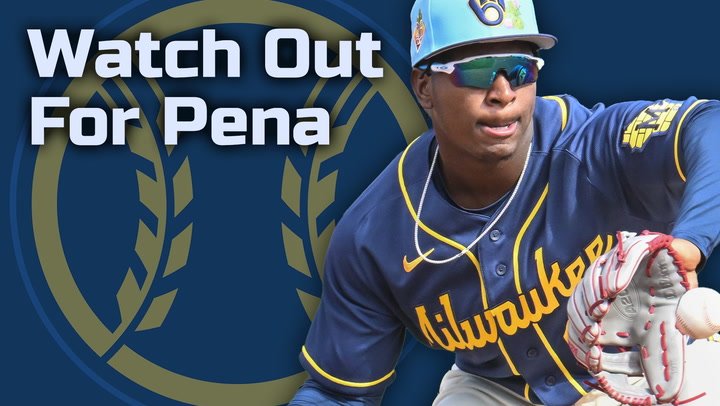 Luis Peña is the Milwaukee Brewers' second-ranked prospect and is currently getting reps with the High-A Wisconsin Timber Rattlers. The Brewers are loaded with prospect talent, but in this video, we'll discuss the attributes Peña has that could separate him from the pack and even help him reach the big leagues ahead of his projected arrival time in 2028. View the full article
 -
 Jordan Wicks was once a 2021 first-round pick. After rising up to the majors for the first time in 2023, the Cubs' southpaw has hopped back and forth between the Triple-A and big league levels. In this video, we'll dive into his struggles and why the lefty is so susceptible to hard contact. View the full article
 -
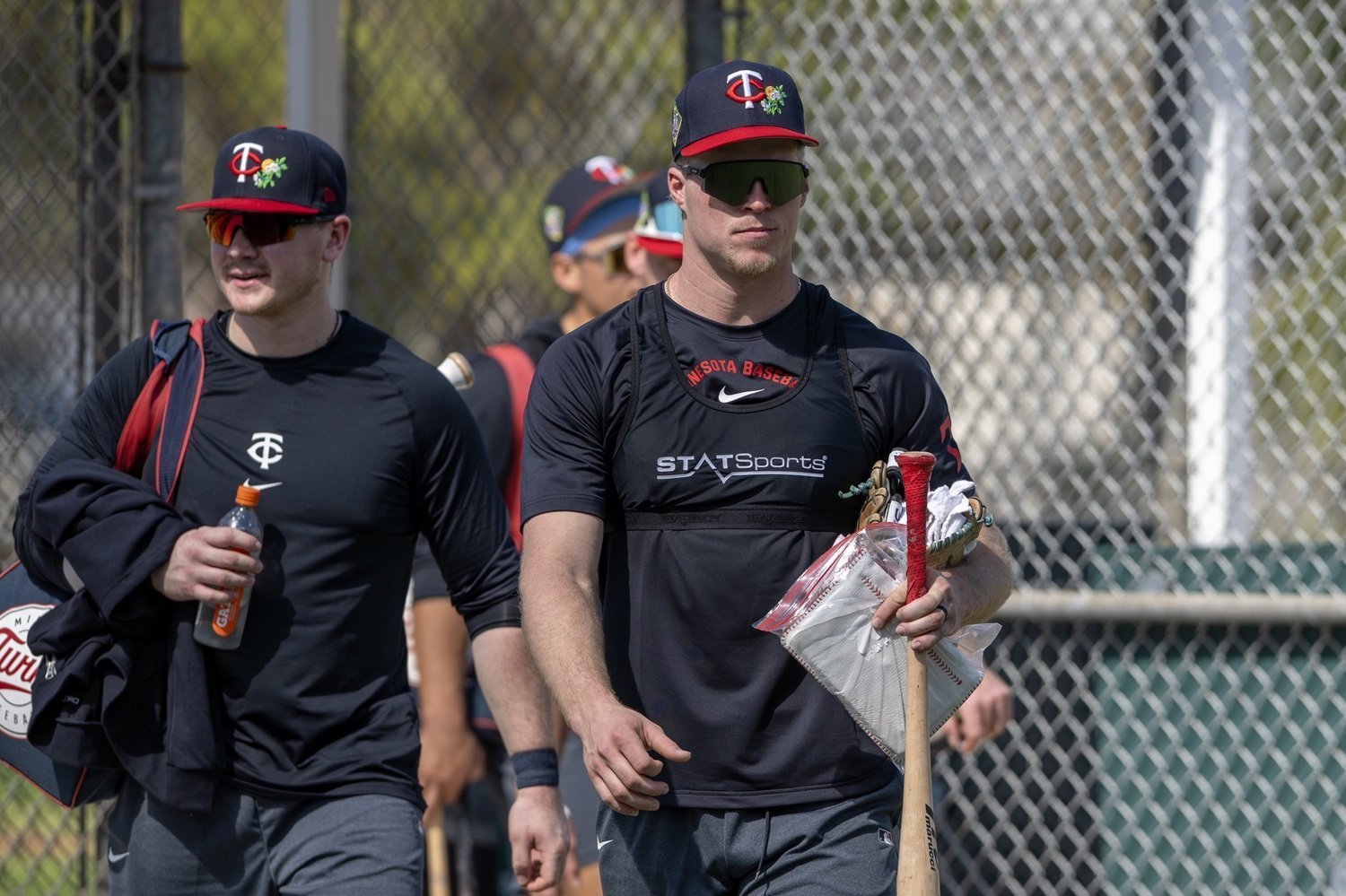 The Minnesota Twins received plenty of positive injury news on Monday as general manager Jeremy Zoll provided updates on several of the organization's top prospects before the opening game of the series against the Chicago White Sox. While the Twins continue to navigate injuries at the major league level, the organization appears closer to welcoming back several important minor league contributors. Some of the club's highest-upside prospects are progressing through their recoveries and could return to game action in the coming weeks. Walker Jenkins Nearing Return The most encouraging update involved Walker Jenkins, Twins Daily's top-ranked prospect, who continues to make strong progress after suffering a left shoulder AC joint sprain in early May. According to Zoll, Jenkins has been “progressing well” and is expected to face live pitching later this week. If everything goes according to plan, the talented outfielder could begin a rehabilitation assignment as soon as next week. Jenkins has already been hitting off pitching machines and participating in defensive work in the outfield, suggesting he is checking off important recovery milestones. A rehab assignment would represent a significant step toward returning to Triple-A St. Paul. Emmanuel Rodriguez Begins Recovery Process While Jenkins is moving toward a return, Rodriguez is just beginning his recovery journey. Rodriguez underwent surgery on May 20 to repair a torn ligament in his left thumb, an injury expected to sideline him for approximately six to eight weeks. The injury occurred when he slid head-first into first base, continuing an unfortunate history of thumb-related ailments. The timetable still gives Rodriguez a realistic chance to return during the second half of the season, but the Twins will undoubtedly take a cautious approach given his injury history. He likely would have already been called up to the Twins if he were healthy. Now, his big-league debut must wait until the season’s second half. Kendry Rojas Trending in the Right Direction One of the more encouraging updates involved rookie pitcher Kendry Rojas. After being scratched from a scheduled appearance last week and landing on the injured list with elbow inflammation, there was understandable concern about the severity of the issue. However, Zoll indicated that Rojas is already feeling "markedly better." The young left-hander could be cleared to resume throwing as soon as the middle of this week. If that happens, he may not require a lengthy buildup before returning to game action. That timeline could prove especially important given Bailey Ober's injury situation at the major league level. Rojas becomes eligible to return on June 10 and could emerge as an option to help fill innings in Minnesota's rotation. There would still be limitations. Rojas has not thrown more than 60 pitches in an outing with the Twins, meaning any starts would likely continue to resemble bullpen games rather than traditional outings. Even so, a quick recovery would be welcome news for both the player and the organization. Charlee Soto Set for Long-Awaited Return Few prospects have endured a longer road back than Soto. The right-hander has not appeared in a game for more than 13 months, but that drought is finally expected to end Wednesday when he makes a rehab appearance with Low-A Fort Myers. Soto's recovery has been marked by multiple setbacks. After making progress with his elbow issues, he developed wrist problems that further delayed his return. Recently, however, the momentum has shifted in a positive direction. He threw a one-inning live batting practice session last week, and everything reportedly went well. Now he is ready to take the next step and return to competitive action for the first time since last season. For a young pitcher whose development has been interrupted by injuries, simply getting back on the mound in a game environment represents an important milestone. Alan Roden Also Closing in on Rehab Assignment Roden appears to be on a similar timeline to Jenkins. Recovering from a right shoulder injury, Roden has resumed throwing to bases and could participate in live batting practice later this week. If those sessions go well, he, too, could begin a rehabilitation assignment sometime next week. Like Jenkins, Roden is progressing through the final stages of recovery and appears to be nearing a return to game action. The Twins are not completely healthy yet, but Monday's collection of updates offered plenty of reasons for optimism. Jenkins and Roden appear close to rehab assignments, Rojas may avoid an extended absence, Soto is finally preparing for his first game in over a year, and Rodriguez has already started the recovery process following surgery. For an organization that relies heavily on its prospect pipeline, getting these players back on the field will be critical as the season moves into the summer months and Minnesota evaluates both its future core and potential major league reinforcements. View the full article
 -
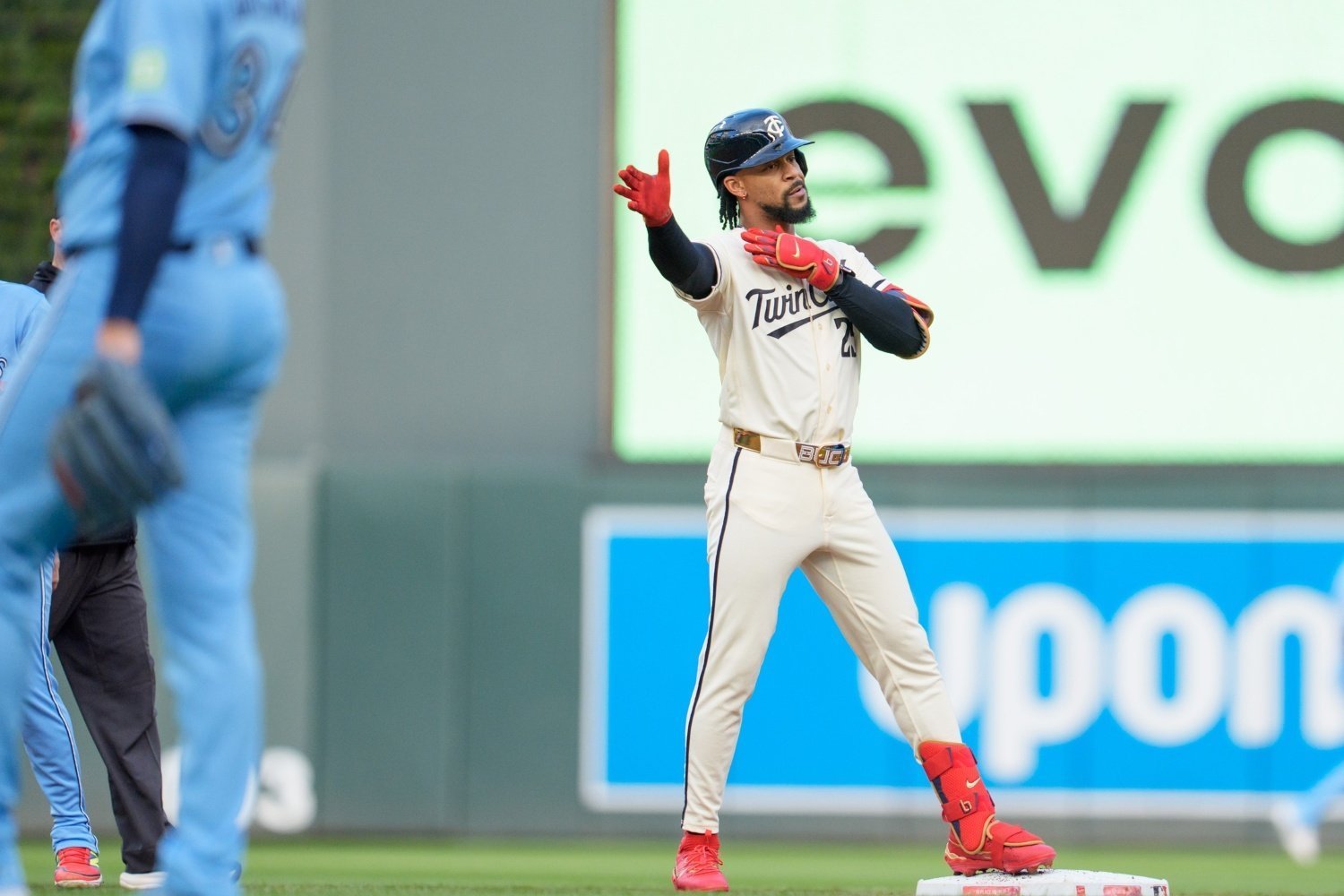 The calendar flipped to June, and the Minnesota Twins remain one of the more difficult teams in baseball to evaluate. At times, they have looked like a club capable of making a run at an American League Wild Card spot. At other times, inconsistency has left them hovering around the fringes of contention. After a sluggish start at the plate in April, several Twins hitters found their rhythm in May and helped keep the lineup afloat. The improvement has been especially important because two players expected to be major contributors this season, Royce Lewis and Matt Wallner, were unable to secure everyday roles and have since been demoted to Triple-A. With those two no longer in the lineup, Minnesota has relied heavily on a different group of contributors. These four hitters stepped up in a big way during May and earned recognition as the Twins' top offensive performers. 4. Luke Keaschall May Stats (21 G): .291/.398/.392 (.790), 1 3B, 6 2B, 11 BB, 14 K, 127 wRC+ Patience can be difficult when it comes to young players, and many fans were beginning to lose confidence in Keaschall after a rough opening month. He finished April with a .542 OPS and a concerning 21-to-8 strikeout-to-walk ratio. The underlying approach, however, suggested there was still room for growth, and May provided evidence that adjustments were beginning to take hold. Keaschall dramatically improved his plate discipline, walking 11 times and striking out only 14 times during the month. His on-base percentage jumped from .267 in April to .395 in May, allowing him to become a much more productive run generator for the lineup. The power numbers are still developing, and there is another level he can reach offensively. However, for a player trying to establish himself in the big leagues, May represented an encouraging step forward and a reminder of why the organization remains excited about his future. 3. Kody Clemens May Stats (23 G): .261/.320/.489 (.809), 3 HR, 1 3B, 8 2B, 5 BB, 19 K, 124 wRC+ Just when Clemens seems to be falling out of Minnesota's plans, he finds another way to make himself valuable. The versatile infielder entered the season fighting for playing time, but May showcased exactly why the Twins continue to keep him in the mix. One of the biggest changes was his improved contact ability. After striking out 24 times during the season's opening month, Clemens trimmed that total to only 19 strikeouts in May despite continuing to see regular opportunities. The improved approach helped push his OPS from .662 in April to .809 in May. The quality of contact also took a noticeable step forward. Clemens collected eight doubles during the month after producing only three in April, showing a greater ability to drive the ball into the gaps. Add in his continued defensive growth at first base, where he ranks near the top of the American League in defensive runs saved, and he has become a quietly important piece of Minnesota's roster. 2. Ryan Jeffers May Stats (13 G): .279/.385/.605 (.989), 3 HR, 5 2B, 8 BB, 6 K, 171 wRC+ There is a strong argument that Jeffers was Minnesota's most valuable player before a fractured left hamate bone in his wrist interrupted his season. The timing of the injury was particularly unfortunate. Jeffers is headed toward free agency after the season and appeared to be putting together the best all-around campaign of his career. Before landing on the injured list, he continued the offensive surge that had already made him one of the club's most productive hitters. After finishing second to Austin Martin in the Twins Daily Hitter of the Month voting for April, Jeffers somehow got even better in May. His 171 wRC+ represented a 16-point improvement over the previous month, and he paired power with outstanding plate discipline. The Twins have managed to survive without him for now, but his absence is still significant. If Minnesota hopes to remain in the playoff race throughout the summer, getting Jeffers healthy and productive again will be a major priority. 1. Byron Buxton May Stats (19 G): .271/.347/.647 (.994), 9 HR, 5 2B, 9 BB, 25 K, 170 wRC+ Even while battling a hip injury, Buxton delivered the most impactful offensive month of any Twin. His season started slowly after spending spring training with Team USA during the World Baseball Classic, but any concerns about rust have completely disappeared. Buxton spent May reminding everyone why he remains one of the most dynamic players in baseball when healthy. The power production was elite. His nine home runs helped fuel a .647 slugging percentage, and his overall offensive profile placed him among the American League's best hitters. Entering June, Buxton ranks third among AL hitters in slugging percentage, fifth in OPS, third in total bases, and third in home runs. Statistics only tell part of the story. There were multiple games throughout the month where Buxton felt like a one-man offense. His ability to change a game with a single swing, create pressure on the bases, and impact opponents in every phase has made him the driving force behind Minnesota's lineup. When the Twins needed someone to carry the offense, Buxton answered the call. The Twins entered May searching for offensive consistency after a frustrating opening month. While questions remain about the roster and the club's long-term outlook, the lineup took a meaningful step forward thanks to contributions from veterans and emerging young players alike. Clemens provided stability, Keaschall showed encouraging development, and Jeffers continued his breakout season before injury struck. Still, no player had a bigger impact than Buxton, whose power surge helped keep Minnesota relevant in the postseason race. As June begins, the Twins will need these hitters to keep their production up. With Lewis and Wallner trying to work their way back from Triple-A and Jeffers sidelined, the burden on the current lineup remains substantial. Fortunately for Minnesota, several key bats appear to be heating up at exactly the right time. Who is missing from the rankings? How would your ballot look? Leave a comment and start the discussion. View the full article
 -
Chicago Cubs MiLB Hitters of the Month: May 2026
DiamondCentric posted an article in North Side Baseball
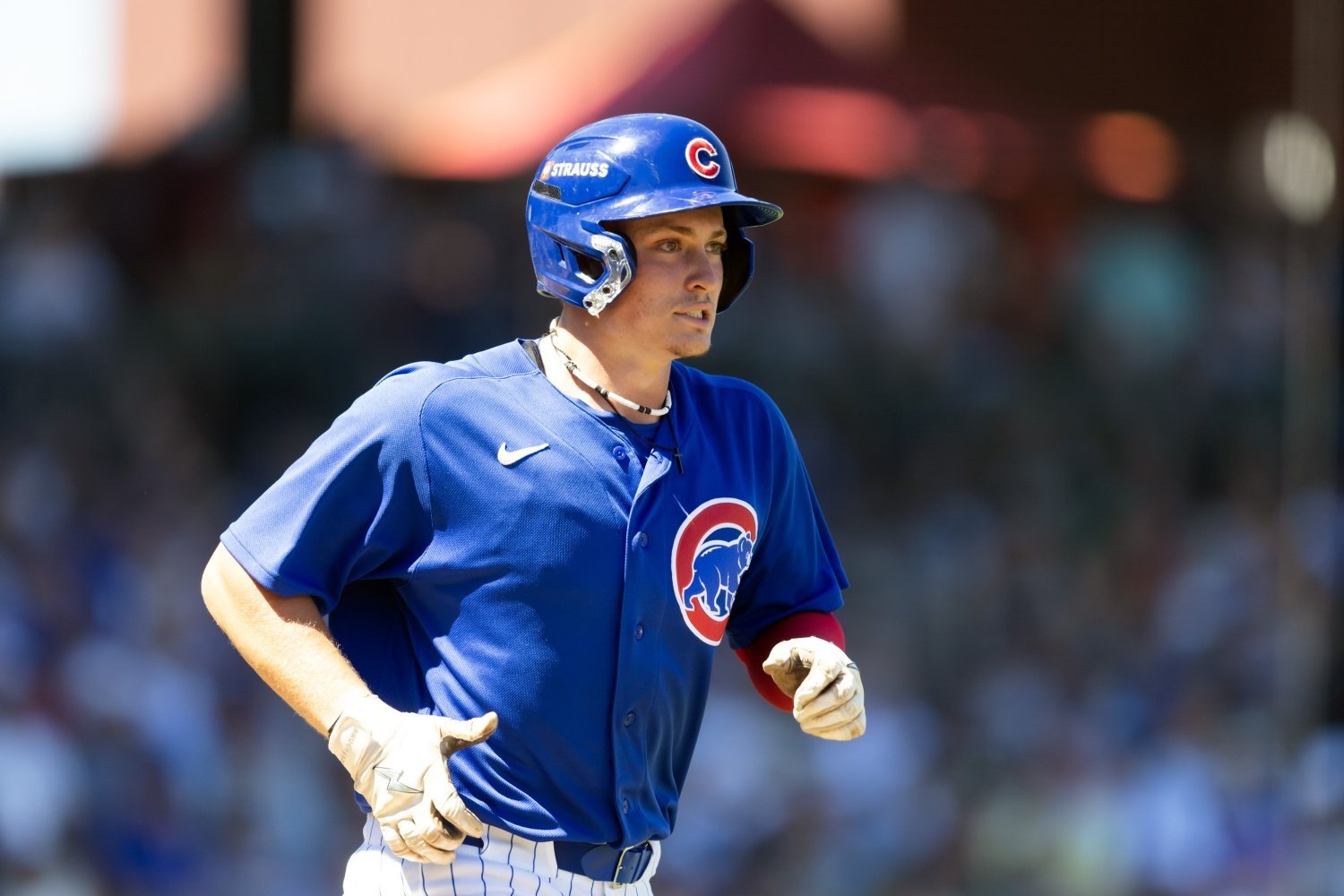 In April’s edition of MiLB hitters of the month, Pedro Ramirez took home the top honor and found himself in the big leagues by the end of May. There is almost no chance that latter feat will be repeated this month, but there were some standout performances in the Chicago Cubs' farm system by an almost entirely new list of hitters. Ranking Cubs' Best Minor-League Hitters in May Honorable Mention: Alex Ramirez - OF - Knoxville Once a $2 million signing out of the Dominican Republic by the Mets, Ramirez was released in June of 2025 after his third consecutive subpar season. Ramirez still boasts much of the raw talent that made him a top-five prospect for the Mets; plus athleticism including bat speed, running speed, and arm strength. The question has long been: Can he make enough contact to show off those tools? In April, Ramirez turned in a .243/.304/.344 slash line with a 26% strikeout rate and looked a lot like the hitter the Mets gave up on after adding him to their 40-man roster. Then, the calendar turned to May. Ramirez slashed his strikeout rate in half and hit .368/.398/.563. The 6’4” outfielder is still only 23 years old; if he can sustain that production and prove that he can curb his whiffing habits, he could end up being a valuable signing for the Cubs. Third Place: Cole Mathis - 3B - South Bend Mathis ascended to the top 10 in our top prospect rankings after homering seven times in 14 April games in Myrtle Beach, earning a promotion to South Bend. He narrowly missed this list last month, after nine-game run in South Bend that included hitting safely in six of those contests but also a 35% strikeout rate. Although he missed a week in May, he turned in a quality month worthy of this list. Mathis slashed .280/.377/.560, driving in 14 runs in 13 games. More importantly, he cut his strikeout rate to 26% while maintaining his high 18% walk rate. While he still has more work to do, that is still a big step in the right direction. If he can continue to decrease the punchout totals, the 2024 second-round pick could find himself with another promotion before too long. Runner-up: Kane Kepley - OF - South Bend Kepley did not have a great April, hitting just .220 in 18 games with a 25% strikeout rate in South Bend. Entering the year as the Cubs' eighth-ranked prospect, the 5’8” outfielder has a hit-first profile with limited power, so his April was a relatively alarming follow-up to an outstanding pro debut in 2025. In May, Kepley thankfully looked more like that 2025 version that the Cubs used their second-round pick on. Kepley hit .304/.438/.451 with 24 walks to just 15 strikeouts and added 15 stolen bases to his ledger. This is Kepley at his best—high average and on-base while providing plus defense and baserunning. Another month like this and he could very well find himself patrolling center field in Knoxville. Winner: Josiah Hartshorn - OF - South Bend The only player to show up on both 2026 editions of this list, Hartshorn got a well-earned promotion to South Bend during the last week of May. The 2025 prep outfielder did not slow down once the calendar turned, continuing to walk more than he struck out in Myrtle Beach before a very impressive six-game run in South Bend to end the month. After his promotion, Hartshorn homered twice and drove in 10 runs and walked as many times as he struck out, all while being more than three years younger than the average age in the Midwest League. Still just 19, Hartshorn is proving he was worth the over-slot bonus the Cubs doled out to keep him away from Texas A&M. View the full article
