


DiamondCentric
-
Posts
2,631 -
Joined
-
Last visited
Never
Content Type
Profiles
Forums
Events
News
Tutorials & Help
Major League Baseball Videos
Guides & Resources
Store
Downloads
Gallery
Everything posted by DiamondCentric
-

 Chicago Cubs Transactions No Roster Moves Iowa Cubs Blanked By Indianapolis Despite Assad's Strong Start Iowa was shut out 3-0 at Indianapolis, stranding 12 runners on base despite collecting seven hits and drawing six walks. The Cubs went without an RBI on the night. Javier Assad turned in the start of the night, working 4 1/3 innings while allowing four hits, one earned run, and one walk with five strikeouts on 78 pitches. Assad retired the first batter of the fifth before walking Shawn Ross and being lifted with one out and a runner aboard. Luis Peralta entered and allowed Assad's runner to score on a single, then surrendered a two-run home run that broke the game open and accounted for all of Indianapolis's offense. Peralta finished with 1 1/3 innings, two hits, two earned runs, one walk, three strikeouts, and the lone home run allowed by Iowa pitching. Tyler Ferguson followed with 1 1/3 scoreless innings, and Corbin Martin added one scoreless inning with two strikeouts. BJ Murray led the offense with a 2-for-3 effort and a walk. Owen Miller drew two walks. Justin Dean added two walks and a stolen base. James Triantos, Brett Bateman, Jonathon Long, Ben Cowles, and Eric Yang each added a base hit. Player AB R H RBI BB K Brett Bateman 4 0 1 0 0 0 James Triantos 4 0 1 0 0 0 BJ Murray 3 0 2 0 1 1 Jonathon Long 3 0 1 0 1 1 Owen Miller 2 0 0 0 2 0 Ben Cowles 4 0 1 0 0 0 Scott Kingery 4 0 0 0 0 2 Eric Yang 4 0 1 0 0 2 Justin Dean 1 0 0 0 2 0 Player IP H R ER BB K HR Javier Assad 4 1/3 4 1 1 1 5 0 Luis Peralta 1 1/3 2 2 2 1 3 1 Tyler Ferguson 1 1/3 0 0 0 1 1 0 Corbin Martin 1 0 0 0 0 2 0 Smokies Drop One-Run Decision To Chattanooga Knoxville fell 3-2 at Chattanooga, leaving 15 runners on base despite reaching base 12 times via eight hits and four walks. Connor Schultz delivered five strong innings as the starter, allowing two earned runs on five hits with no walks and eight strikeouts. He left with the game tied 2-2. The Smokies struck first in the top of the first. Alex Ramírez led off with a double, then Jefferson Rojas singled to put runners on the corners. Ramírez scored on a throwing error during the play, and Rojas advanced to second on the same miscue. Rojas stole third and later scored on another defensive lapse during Ethan Hearn's at-bat. Both Knoxville runs were unearned. Chattanooga answered with two runs of its own in the bottom half on a two-run double, tying the score at 2-2. Nick Dean took the loss after a rough sixth inning. He retired the first batter, then surrendered two singles and walked two consecutive hitters, the second of which forced in the eventual winning run. Dean finished with two innings, three hits, one earned run, two walks, and two strikeouts. Evan Taylor closed with one scoreless inning, one walk, and one strikeout. Ramírez led the offense at 3-for-5 with a double and two stolen bases. Rojas added a hit, a stolen base, and a run scored. Cameron Sisneros, Alex Madera, Carter Trice, and Ethan Hearn each picked up a hit. Player AB R H RBI BB K Alex Ramírez 5 1 3 0 0 1 Owen Ayers 3 0 0 0 1 2 Jefferson Rojas 3 1 1 0 0 1 Andy Garriola 4 0 0 0 0 3 Ethan Hearn 4 0 1 0 0 1 Carter Trice 4 0 1 0 0 1 Cameron Sisneros 3 0 1 0 1 0 Hayden Cantrelle 0 0 0 0 0 0 Ed Howard 3 0 0 0 1 0 Alex Madera 3 0 1 0 1 0 Player IP H R ER BB K HR Connor Schultz 5 5 2 2 0 8 0 Nick Dean 2 3 1 1 2 2 0 Evan Taylor 1 0 0 0 1 1 0 Halbach's Bases-Clearing Double Lifts South Bend Past Fort Wayne South Bend rallied from a 2-0 hole with four runs in the bottom of the fifth and never looked back, beating the Fort Wayne TinCaps 6-3. Starter Cole Reynolds turned in five innings, giving up four hits, two earned runs, one walk, and striking out five. The damage came on solo home runs in the second and the fifth, accounting for both runs charged to his line. The decisive frame came in the bottom of the fifth. Justin Stransky was hit by a pitch, and after a fly-out, leadoff hitter Kane Kepley, Ty Southisene, and Josiah Hartshorn drew consecutive walks, the third of which forced in Stransky to put the Cubs on the board. Matt Halbach then cleared the bases with a double to left, scoring Kepley, Southisene, and Hartshorn to push South Bend ahead 4-2. The Cubs added a run in the sixth when Miguel Useche singled and later scored on Kepley's triple to right, and Useche tacked on a solo home run in the eighth. Adam Stone followed with three innings, allowing one earned run on a solo home run with three strikeouts. Ethan Bell closed with a scoreless ninth. Kepley finished 2-for-3 with a triple, a walk, a run, an RBI, and a stolen base. Useche went 2-for-4 with the home run, two runs, and an RBI. Halbach added the three-RBI double, and Hartshorn drew two walks and scored. Player AB R H RBI BB K Kane Kepley 3 1 2 1 1 0 Ty Southisene 2 1 0 0 2 0 Josiah Hartshorn 2 1 1 1 2 1 Matt Halbach 3 0 1 3 1 1 Leonel Espinoza 3 0 0 0 0 1 Drew Bowser 1 0 0 0 0 1 Jose Escobar 4 0 0 0 0 3 Miguel Useche 4 2 2 1 0 1 Justin Stransky 3 1 0 0 0 2 Christian Olivo 4 0 0 0 0 2 Player IP H R ER BB K HR Cole Reynolds 5 4 2 2 1 5 2 Adam Stone 3 1 1 1 0 3 1 Ethan Bell 1 1 0 0 0 1 0 Pelicans Drop Tight Ninth-Inning Decision To Wilson Myrtle Beach gave up the lead late and fell 4-3 to the Wilson Warbirds, falling just short despite a Logan Poteet home run in the bottom of the ninth. Kaleb Wing started and tossed three scoreless innings, allowing three hits and two walks with four strikeouts. Edwardo Melendez followed with four innings of work, giving up two earned runs on four hits with one walk and three strikeouts, including the two runs that tied the game in the seventh on a two-run double. Jordan Henriquez surrendered the go-ahead and insurance runs across his two innings, allowing one earned run on three hits and two walks with three strikeouts. Eli Lovich opened the scoring in the bottom of the second with a solo home run to right center, and the Pelicans extended their lead in the fifth when Derniche Valdez came around to score on a fielder's choice and a Wilson throwing error, an unearned run. Wilson tied it 2-2 with the two-run double in the seventh and took the lead in the eighth on a run-scoring double off Henriquez. The Warbirds added an insurance run in the ninth when Henriquez induced a fielder's choice and a Pelicans throwing error allowed a run to come home. Poteet led off the bottom of the ninth with a solo home run to right center to make it 4-3, but Myrtle Beach could not push the tying run across. Valdez finished 2-for-4. Lovich and Poteet both went 1-for-4 with a home run and an RBI. Player AB R H RBI BB K Alexey Lumpuy 3 0 0 0 1 2 Alexis Hernandez 3 0 0 0 1 2 Michael Carico 2 0 0 0 2 1 Logan Poteet 4 1 1 1 0 1 Eli Lovich 4 1 1 1 0 1 Derniche Valdez 4 1 2 0 0 0 Yahil Melendez 3 0 0 0 0 1 Geuri Lubo 3 0 0 0 0 2 Darlyn De Leon 3 0 0 0 0 1 Player IP H R ER BB K HR Kaleb Wing 3 3 0 0 2 4 0 Edwardo Melendez 4 4 2 2 1 3 0 Jordan Henriquez 2 3 2 1 2 3 0 Top-20 Prospect Performance Jefferson Rojas: 1-for-3, R, K, SB Jaxon Wiggins: DNP Pedro Ramirez: DNP Kevin Alcantara: DNP Josiah Hartshorn: 1-for-2, R, RBI, 2 BB, K Ethan Conrad: DNP Kane Kepley: 2-for-3, 3B, R, RBI, BB, SB Jonathon Long: 1-for-3, BB, K James Triantos: 1-for-4 Cole Mathis: DNP Owen Ayers: 0-for-3, BB, 2 K Brooks Caple: DNP Juan Cabada: DNP Kaleb Wing: 3 IP, 3 H, 0 R, 2 BB, 4 K Angel Cepeda: DNP Dominick Reid: DNP Jostin Florentino: DNP Ty Southisene: 0-for-2, R, 2 BB Will Sanders: DNP Brandon Birdsell: DNP View the full article
 -
 Joe Ryan has looked every bit like an ace this season. And while pitchers like that are incredibly hard to find, the Twins may have to consider whether his value will ever be higher than it is right now. View the full article
 -
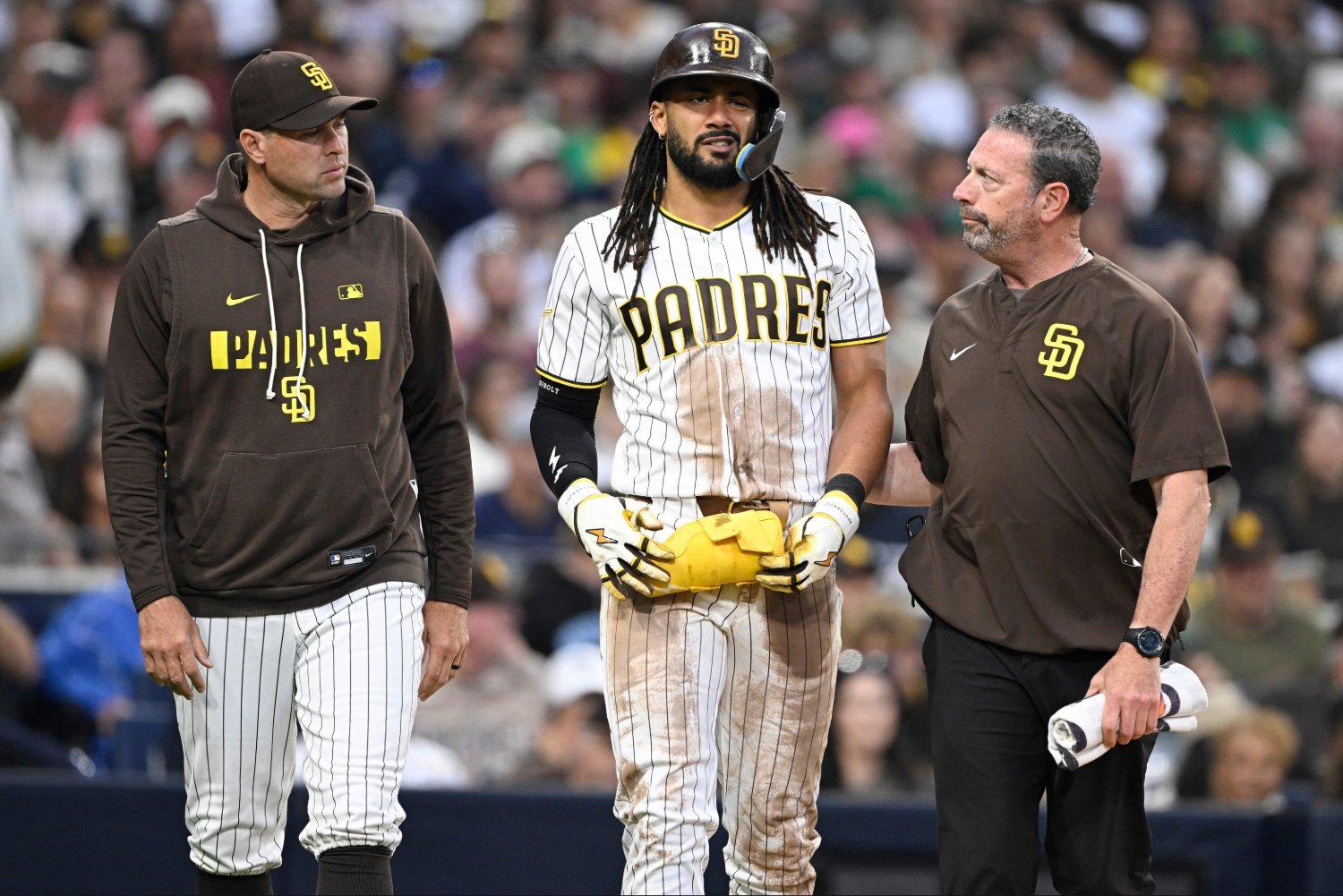 The San Diego Padres remain a fascinating case study of team success. They continue to sit within striking distance of the Los Angeles Dodgers atop the National League West and are still ahead of the field in the standings for the National League wild card. That continued success has not come remotely due to their offense, however. It's come in spite of it. The Padres remain near the bottom of the league in run production, ranking 27th in runs scored. They're last in team batting average (.218), last in team on-base percentage (.291), and 28th in their collective wRC+ (88). While they're closer to the middle of the pack in their power production (.143 ISO), they continue to be a downtrodden team in matters of scoring runs. The prolonged struggle of their three most essential hitters — Fernando Tatis Jr., Manny Machado, and Jackson Merrill — remains a problem of the highest order, with no particular end in sight. Throughout this continued struggle, there is one idea we've heard repeated. It's come from manager Craig Stammen, hitting coach Steven Souza Jr, and a handful of players: information. The hitters have all of the information they need. Each of Machado and Nick Castellanos have noted as much. The Padres have what they need, they just need to execute. The vision of what they need, however, is a fairly murky picture. Especially when you compare results and underlying trends to what Souza Jr noted ahead of the season: “What I am going to try and bring is controlling the zone, hammering mistakes, being able to make the pitcher do something different out there. Because when these guys put the ball on the barrel, it’s hit hard and goes a long way, typically.” Souza's quote is, of course, coach-speak, and you're not going to expect to see a coach divulge his plan for hitters in hopes of maintaining a competitive advantage. At the same time, when you have a team struggling as badly as the Padres are, even an outsider begins to wonder just how much there is to this whole operation beyond "hitting hard and watching it go a long way." Because the trends aren't lending themselves to much more than an abstract philosophy to this point in the season. The Padres are certainly swinging harder: After sitting near the bottom of the league in average bat speed, the team is much closer to the top of the league here in 2026. And while there's been some change in personnel, there hasn't been quite enough turnover to indicate anything other than this being due to the change in philosophy. The Padres are swinging harder by design. However, there's also an inefficiency to it. The only team making less squared-up contact in the entire league is the Los Angeles Angels. That's not particularly a team you want to be in league with on really any front. What is clear is that this increase in swing speed is coming at the expense of their ability to make contact. That relationship exists on its own, but there's also an approach factor here. Despite a collective swing rate that ranks fifth in the league (49.6 percent), the Padres rank just 19th in Contact% (75.8). They're chasing at the league's third-highest rate as well (70.6 percent) and whiffing at the fourth-highest (12.0 percent). There's an impatience manifesting here, and when you combine that with the inefficiency wrought by overly aggressive swings, you get a relatively punchless team at the plate. The mess in the approach is also reflected in the team's run value. Run value is considered in relation to four zones around the plate: heart, shadow, chase, and waste. The trends of the Padres regulars in each of these zones is also indicative of some fairly serious problems: The heart of the zone is where hitters should be doing the most damage. Yet, only Gavin Sheets & Nick Castellanos have a positive run value in the portion of the zone where run production should be simplest. If a pitcher puts something in the heart of the zone, that's your opportunity as a hitter. This is perhaps the most damning evidence of the Padre offensive plan thus far in 2026. They're also not handling the edges well, with only Miguel Andujar working that portion effectively, with only the portions outside of the zone — where value is derived from not swinging the baseball bat — proving to be a consistent source of positivity for this group. Again, we don't know what information is being exchanged between coaches and hitters and everybody in between. However, there's clearly an issue here rooted somewhere in the philosophy of the new staff. The approaches are questionable and compounding with harder swings to render the offense as ineffective as any in the sport. It's a problem with no end in sight, and the abstract quality of it all makes it especially concerning for a team trying to remain in contention. View the full article
 -
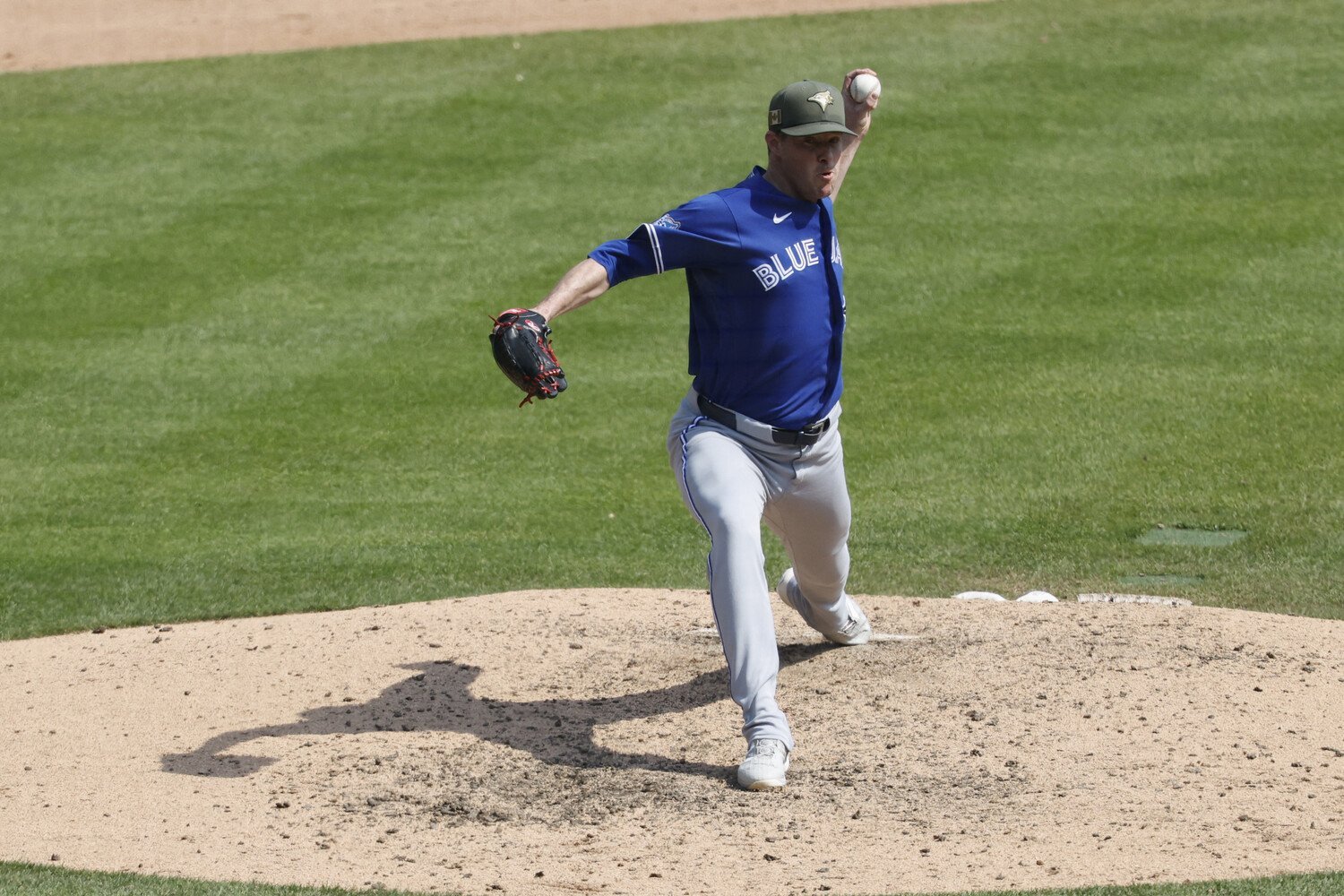 It's more bad news for yet another Toronto Blue Jays pitcher. Left-hander Joe Mantiply, who has already been on the IL for the past two weeks, needs surgery to repair the damage in his left knee. It will be an arthroscopic procedure. The good news is that the Jays expect to have Mantiply back at some point later this year, although it might be toward the end of the season. The 35-year-old pitched well for Toronto before he hit the shelf, tossing 17.2 innings with a 2.04 ERA. He struck out 16 and walked four, generating groundballs at a 48.9% rate. While Mantiply is out, the Blue Jays will continue to lean heavily on fellow left-hander Mason Fluharty. Rookie southpaw Adam Macko will also have a chance to carve out a more permanent role in Toronto's bullpen if he continues to succeed. View the full article
 -
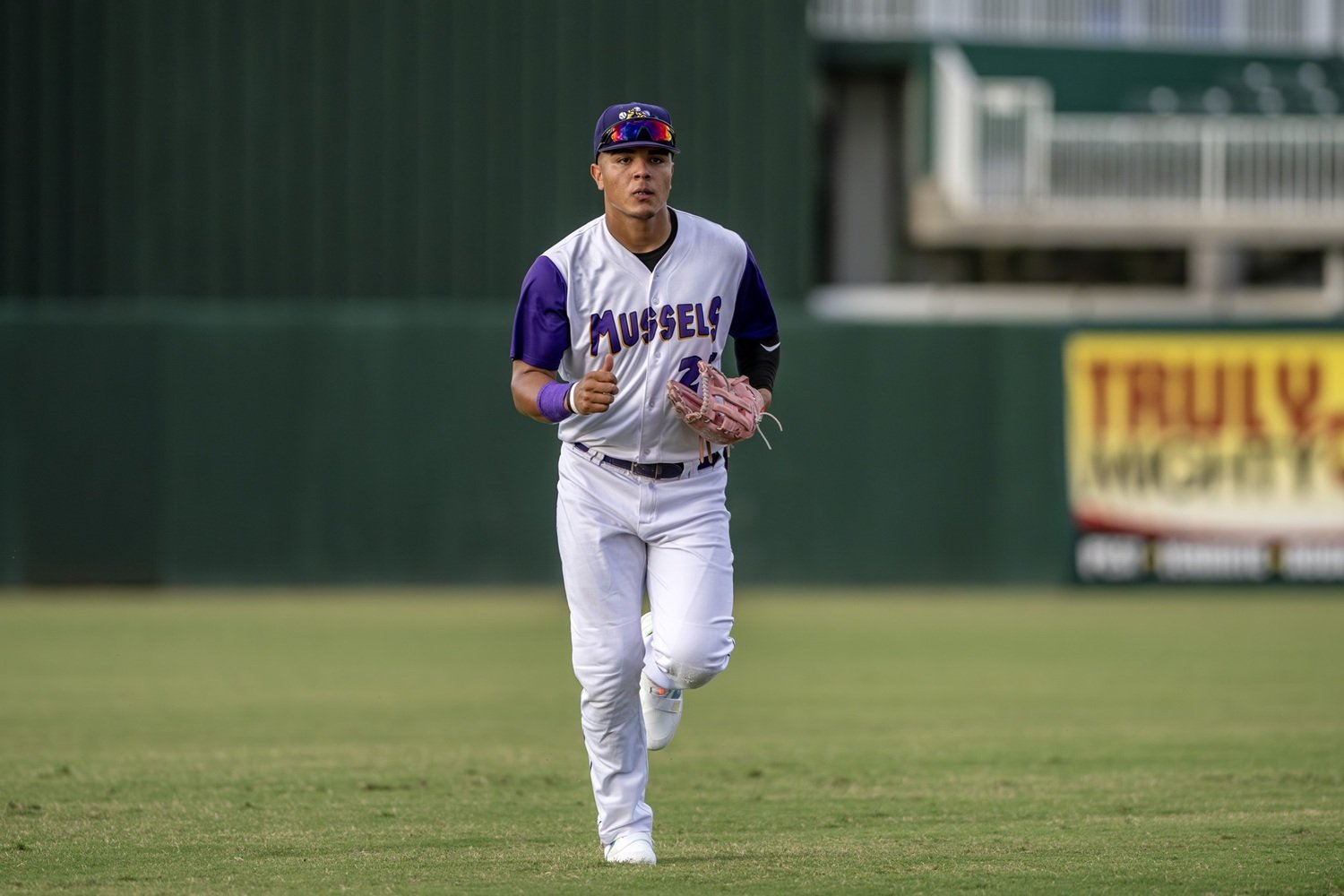 TRANSACTIONS Wichita played RHP Luis Quinones on the 7-Day Injured List with a right forearm strain. Infielder Jake Rucker came off of the Injured List for the Wind Surge. Miguelangel Boadas was placed on the 7-Day Injured List of the Kernels. Taking his roster spot is RHP Xavier Kolhosser, promoted from Fort Myers. Following the Twins Thursday afternoon loss in Chicago, the Twins Minor League Transaction page shows that RHP Travis Adams has been optioned to St. Paul. So who will be joining the Twins in Pittsburgh on Friday? SAINTS SENTINEL St. Paul 8, Louisville 1 Box Score Down in Kentucky, the Saints offense started early and scored often through the game’s first four innings. And while they didn’t add on in the game’s second half, they didn’t need to thanks to some terrific pitching. Ryan Gallagher made his sixth start with the Saints this year, and it was easily his best. He tossed five scoreless innings. He gave up four hits, walked none and had five strikeouts. In his previous two starts combined, he had given up 12 earned runs on nine hits and seven walks in seven innings. It’s clear his focus heading into this start was to throw strikes and not hurt himself with walks (Reports indicate that they haunt.). 73% of his 74 pitches were strikes. Very encouraging start for the 23-year-old. Andrew Bash came in and made up for the lack of walks. He walked four batters over two innings, but he managed to give up no runs and no hits. C.J. Culpepper pitched the final two innings. After a scoreless eighth, he gave up a solo home run in the ninth inning. He gave up four total hits, walked none and had four strikeouts. The Saints scored their eight runs on 11 hits and were helped with nine walks. Louisville also committed two errors. The Saints took an early lead in a not-at-all surprising way. Two batters in, they had a 2-0 lead. Kaelen Culpepper walked, and Royce Lewis followed with his seventh Saints home run. On a 1-0 sinker from veteran southpaw Brandon Liebrandt was hit 108.6 mph at 22 degrees and traveled 406 feet. The second inning began with singles by Kyler Fedko and Aaron Sabato. Ben Ross walked to load the bases. Catcher Noah Cardenas came to the plate and on a 2-1 fastball, he hit a four-seam fastball at 28 degrees and 103 mph. It traveled 394 feet and gave the Saints a 6-0 lead. In the third inning, Matt Wallner scored on a ground out by Ben Ross. With one out in the fourth inning, Hendry Mendez and Gabriel Gonzalez singled. Wallner was hit by a pitch. Fedko drove in Mendez with the team’s eighth and final run of the game. Along with his 109 mph first inning homer, Lewis had a walk, and in the second inning, he hit a double to left at 115.7 mph. Cardenas was also 2-for-4 with a walk and his third double. The grand slam was his second home run of the season. Fedko was also 2-for-4, and Gonzalez went 2-for-5. Ben Ross and Matt Wallner both walked twice. Wallner was also hit by a pitch. Culpepper had a single and two walks. He also stole his 12th base of the season. Sabato had a single and a walk. WIND SURGE WISDOM Wichita, Springfield Box Score Rains ruled the day in mid-Missouri and caused the postponement of Thursday’s Wind Surge-Cardinals game. The plan is to play two games on Saturday. KERNELS CHRONICLE Cedar Rapids 1, Quad Cities 12 Box Score Let’s start with the positive. Jacob McCombs hit his third home run of the season in the second inning. McCombs was 2-for-3 in the game. The key story of this game was the performance of lefty Dasan Hill. The lanky southpaw threw 43 pitches and recorded just two outs in the first inning. Just 12 of the pitches were strikes. Hill was ultimately charged with four runs on six walks and a hit batter. He also threw two wild pitches. Fortunately, Christian Becerra came in with the bases loaded and recorded the final out without any more runs scored. Hill has been dealing with a blister lately, and maybe the ball was coming out of his hand and off of his finger wrong, but if he was experiencing a new blister, he would have come out sooner. It’s shocking he was allowed to throw 43 pitches in an inning. It will certainly be interesting to see what the plan is in the near term for the immensely talented flamethrower. Becerra also pitched the second and third innings. He gave up three runs on four hits and a walk. Becerra pitched to one batter in the fourth inning before Sam Rochard came in. He worked 2 2/3 innings and allowed the inherited runner to score and one more run on two hits and a walk. Xavier Kolhosser went the next 2 1/3 innings. He gave up two runs on two hits and four walks. Five of the seven outs came on strikeouts. Position Player Pitcher Alert!! Harry Genth came in for the ninth inning. He gave up two runs on two hits and a walk. One of the runs scored on a balk. The Kernels had just four hits and four walks in the game. Marek Houston hit his 10th double. MIGHTY MATTERS Game 1: Ft. Myers 9, Jupiter 1 Box Score In the first game, the Hammerheads took the first lead, scoring a run on a sacrifice fly off the bat of Marlins prospect Andrew Salas, younger brother of Wind Surge utilityman Jose Salas. Then the Mighties scored nine straight to run away with it. Fort Myers responded to that second inning run by putting a “4” on the scoreboard in the bottom of the inning. With one out, Graham Brown made his Twins and affiliated baseball debut and recorded his first hit, an infield single. He stole second before Byron Chourio walked. Bryan Acuna drove in Brown with a single to left. The runners advanced to second and third. Murphy Hernandez grounded to second but reached on a fielder’s choice and throwing error that allowed Chourio to score. Hernandez stole second (his fourth steal is less than a week with the team). Dameury Pena doubled to drive in two runs and give them a 4-1 lead. Hernandez and Pena were back at it in the bottom of the fourth. Hernandez singled, stole second, and scored on a single by Pena to make it 5-1. In the bottom of the fifth frame, Brown walked with two outs. He stole second and scored on Luis Fragoza’s third home run. In the sixth inning, Hernandez was hit by a pitch. After a short delay to make sure he was OK, he went and stole another base. Pena walked. With one out, Ryan Sprock was hit by a pitch to load the bases. With two outs, Quentin Young walked to score Hernandez, and then Pena scored on a wild pitch to make it 9-1. Merit Jones was terrific on the mound too. The right-hander earned his first pro win. He gave up one run on one hit and two walks over five innings. He struck out six batters. He was remarkably efficient. He needed just 52 pitches to get through five innings. 35 of them were strikes. Jonathan Stevens struck out two batters in a scoreless inning. Jake Murray also worked a scoreless inning to end the game. Dameury Pena went 3-for-3 with a walk, his fourth double and three RBI. He also stole his 13th base. Fragoza came in for Byron Chourio in the third inning. He went 1-for-2 with the two-run homer. Hernandez went 1-for-2, was hit by a pitch, stole three bases and scored three runs. Graham Brown went 1-for-3 with a walk, a single, two stolen bases, two runs scored, and two strikeouts. Brown, 24, signed this week from the Washington Wild Things of the independent Frontier League. In 2025, the Twins signed both Caleb McNeely and RHP Brett Francisco. Brown is a Maryland native, spent a season at Potomac State College in West Virginia (Junior College), and then played in 177 games over three seasons at Coastal Carolina. Undrafted, he spent the 2025 season with Evansville in the Frontier League He played mostly right field for three years in college. Last season, he played mostly center field but also got time at second base and third base. Seems similar to the signing in recent weeks of Quinn McDaniel. Maybe they didn’t expect the Mighty Quinn to force a promotion to Cedar Rapids so quickly. Game 2: Ft. Myers 8, Jupiter 7 (10 innings) Box Score After starting the season on the 7-Day Injured List, fourth-round pick from 2025 Jason Reitz made one rehab appearance in the FCL. Last week, he made his first official pro start with one inning in Dunedin. On Thursday, he made his Hammond Stadium debut and was fantastic. The 6-11 right-hander tossed three scoreless, hitless innings. He walked one and had two strikeouts. Kolten Smith came on and was charged with four runs on six hits in four innings. He had three strikeouts. Mike McKenna was charged with two unearned runs over two hitless, walkless innings. Michael Hilker gave up an unearned run on one hit in the 10th inning, but he gets the win because the Mussels came back with two runs in the 10th inning. The Mussels scored first in the fourth inning when JP Smith scored on a bases-loaded wild pitch. Jupiter jumped ahead with three in the top of the fifth and another in the sixth. Down 4-1, the Mussels tied things up in the bottom of the seventh. Murphy Hernandez led off with a bunt single and stole second. Dameury Pena and Ramiro Dominguez walked to load the bases. Henry Kusiak walked to drive in Hernandez. After a pitching change, Pena scored on a Jayson Bass sacrifice fly. JP Smith followed with another sacrifice fly to tie it at 4-4 and send the game to extra innings. Both teams scored in the eighth. Hernandez singled with two outs to drive in Manfred Man Quentin Young to tie the game and send it to the ninth. Both teams scored in the ninth. Ramiro Dominguez scored on a fielder’s choice off the bat of Jayson Bass and the game went to the 10th frame. Both teams scored in the 10th inning. Young started the inning on second base again. Luis Fragoza grounded out but Young advanced to third base. He scored when the Hammerhead pitcher balked. With two outs, Hernandez singled to right. He stole second and scored on a line drive to center by Dameury Pena. Hernandez led the way. He had four of the team’s six hits in the game. He also stole four bases. Pena had the game-winning single and two walks. Ramiro Dominguez had a single and two walks. The Mussels certainly had more opportunities. Despite just six hits, the Mussels also had eight walks and stole nine bases. They went just 2-for-18 with runners in scoring position and left a total of 12 on base. COMPLEX CHRONICLE FCL Twins, FCL Orioles Box Score The game was postponed by rain. The plan is to make it up in mid-June. PLAYERS OF THE DAY Hitter of the Day Merphy Hernandez (Fort Myers): 5-for-7, HBP, 5 R, 2 RBI, 7 SB(10). Dameury Pena (Fort Myers): 4-for-7, 3 BB, 2B(4), 2 R, 4 RBI, SB(13). Pitcher of the Day Ryan Gallagher (St. Paul): 5 IP, 4 H, 0 R, 0 BB, 5 K, 74 pitches, 54 strikes (73.0%) Merit Jones (Fort Myers): 5 IP, 1 H, 1 ER, 2 BB, 6 K, 52 pitches, 35 strikes (67.3%) PROSPECT SUMMARY Check out the Prospect Tracker for much more on our Twins Top 20 prospects after seeing how they did today. Note that the links in this section will take you to the results of a search for articles that player has been tagged in on Twins Daily. #1 - OF Walker Jenkins (St. Paul) - 7 Day Injured List (left shoulder) #2 - IF Kaelen Culpepper (St. Paul) - 1-for-4, 2 BB, R, K, SB(12), CS(1) (batted first, played SS) #3 - OF Emmanuel Rodriguez (St. Paul) - 7 Day Injured List (thumb) - Had surgery. #4 - LHP Connor Prielipp (Minnesota) - Did Not Pitch. #5 - C Eduardo Tait (Cedar Rapids) - 0-for-4, K, E(5), PB(3) (batted four, catcher) #6 - LHP Dasan Hill (Cedar Rapids) - 2/3 IP, 0 H, 4 ER, 6 BB, 1 HBP, 2 WP, 43 pitches, 12 strikes (27.9%) #7 - SS Marek Houston (Cedar Rapids) - 1-for-5, 2B(10), 2 K, E(7) (batted first, played SS) #8 - RHP Riley Quick (Cedar Rapids) - Did Not Pitch. #9 - LHP Kendry Rojas (Minnesota) - Did Not Pitch. Scratched from the start. #10 - OF Gabriel Gonzalez (St. Paul) - 2-for-5, 2 K. (batted fourth, DHd) #11 - RHP Charlee Soto (Cedar Rapids) - Injured List #12 - RHP Andrew Morris (Minnesota) - 1 1/3 IP, 2 H, 1 R, 0 ER, 0 BB, 3 K, 29 pitches, 19 strikes (65.5%) #13 - OF Hendry Mendez (St. Paul) - 1-for-5, R (batted third, played LF) #14 - 3B/SS Quentin Young (Ft. Myers) - Game 1: 1-for-3, BB, RBI, K (batted fifth, played SS), Game 2: 0-for-4, BB, 2 R, SB(4), 2 K (batted sixth, DHd) #15 - 3B/CF Brandon Winokur (Cedar Rapids) - 0-for-3, BB, 2 K (batted second, played 3B) #16 - RHP Ryan Gallagher (St. Paul) - 5 IP, 4 H, 0 R, 0 BB, 5 K, 74 pitches, 54 strikes (73.0%) #17 - RHP C.J. Culpepper (St. Paul) - 2 IP, 4 H, 1 ER, 0 BB, 4 K, 38 pitches, 26 strikes (68.4%) #18 - RHP James Ellwanger (Ft. Myers) - 60 Day Injured List (right elbow sprain) #19 - C/OF Khadim Diaw (Cedar Rapids) -0-for-3, BB, K, SB(3) (batted fifth, played CF) #20 - 2B/SS/CF Kyle DeBarge (Wichita) - Rained Out. UPCOMING PROBABLES Friday, May 29: St. Paul @ Louisville (6:15 pm CT) - LHP Aaron Rozek (0-0, 1.84 ERA) vs Chase Petty (2-4, 6.32 ERA) Wichita @ Springfield (7:05 pm CT) - RHP Cory Lewis (0-1, 6.75 ERA) vs SHP Jurrangelo Cijntje (3-2, 5.18 ERA) Quad Cities @ Cedar Rapids (6:35 pm CT) - RHP Ivran Romero (2-2, 8.20 ERA) Jupiter @ Ft. Myers (6:05 pm CT) - RHP Justin Mitrovich (0-1, 0.77 ERA) FCL Twins @ FCL Orioles (11:00 am CT) - TBD CURRENT W-L Records Minnesota Twins: 27-30 St. Paul Saints: 27-26 Wichita Wind Surge: 21-25 Cedar Rapids Kernels: 24-24 Fort Myers Mighty Mussels: 26-22 FCL Twins: 10-8 DSL Twins: 0-0 (season begins Monday, June 1) Please feel free to ask questions about the teams, the rosters, and discuss today’s games, or anything else Twins minor-league related! View the full article
 -
How to Talk to Your Children About the Chicago White Sox
DiamondCentric posted an article in Twins Daily
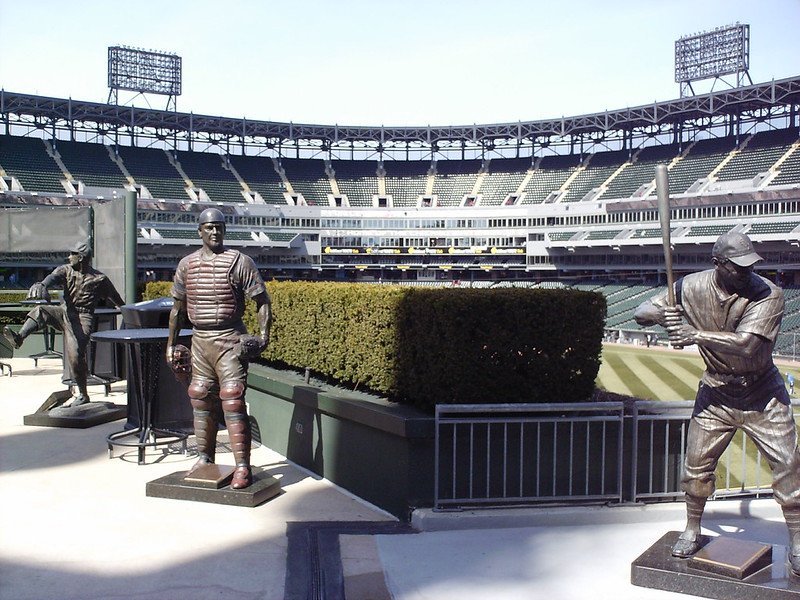 The Chicago White Sox are no longer godless. That's the only conclusion one can draw through one-third of the MLB season. And as hard as it is for adults to reckon with, imagine what your children are going through. In a fluid, volatile world, they've grown up with vanishingly few constants. One of them is that the White Sox are pure garbage with a fanbase of absentee landlords, pregnant chain smokers, and knaves. And while their core supporters of recidivist wheelchair thieves remains the same, the South Siders are...kind of fun to watch? And would be in the playoffs if the season ended today? It's enough to make anyone question the foundations of their belief systems, much less impressionable children. In such a fraught time, Twins Daily editors have crafted some responses for parents, guardians, and cool uncles to use when discussing the White Sox with impressionable youths. Q: Why aren't they bad anymore? I thought they'd always be bad. A: First, you have to understand that the American League is down this year. The Twins would also be in the playoffs if the season ended today. You've heard me complaining about them for months. That said, they're playing .500 baseball, which is amazing for them. There are decades when nothing happens and weeks where decades happen. This might be an example of that. Q: I know they're an awful franchise beloved by swindlers and men with secret second families. But I really enjoy watching Munetaka Murakami hit. Is that OK? A: It is. This isn't like when the Yankees were good and you had to pretend Derek Jeter was better than A-Rod. He's legitimately fun to watch! Think of it like watching a bad movie with a good actor in it. The script is undercooked but look, there's Cate Blanchett. She's awesome. I bet she bought a pool with this paycheck. Q: Will they continue being watchable going forward? A: It's a long season! As a Twins fan, you've seen how teams can fall off a cliff in August and September. The same could happen to the White Sox! But you need to prepare yourself for them hovering around .500 and wild card contention this summer. The tornado probably won't hit your house directly, but if the siren goes off, you should still go to the basement. You just never know. Q: If a White Sox fan approaches me, what should I do? A: That hasn't changed. Do not give them your social security number, no matter how often they ask, which will be often. Image license here. View the full article
 -
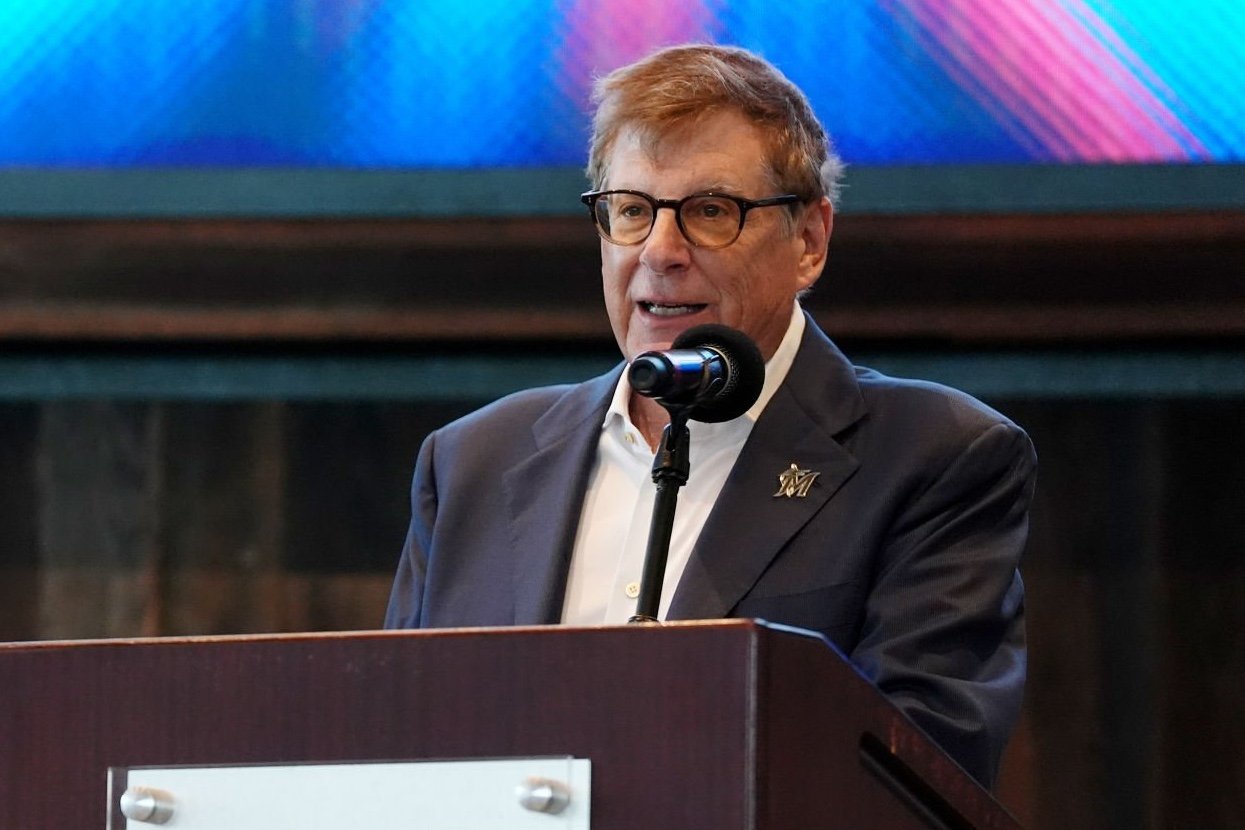 In case you missed it Miami Marlins fans, the next wave of baseball's labor wars are officially under way. Wednesday saw the MLBPA propose something that really did nothing to address owners' concerns. Thursday saw MLB propose something that the MLBPA exists to defeat at every turn. Throughout it all, and as always in these kinds of talks, fans watched people that tend to make far more money than them put something fans love in jeopardy so those people could make even more money still. Yep, these next six months are going to be a blast. Obviously, no one reading this needs me to tell you that the Marlins spending more money on payroll would be a positive for the Marlins viewing experience. It's not as if MLB just proposed a salary floor without knowing all 30 teams would be able to come up with the cash. Either Marlins owner Bruce Sherman et al. are willing to do so...or they plan on selling the team really quickly to some group that will. Not hitting the floor isn't an option, provided the penalties are similar to what they are in other leagues. So no matter what, if MLB gets their way, Marlins fans win. However, seeing as how MLB has chugged along without a salary cap to this point, it's more than fair to be skeptical about MLB getting one. The smart money remains on that not happening. Yet what does seem unavoidable is some kind of a closing of the gap between the league's rich and poor. And if that gap does close significantly, it could finally allow the Miami Marlins to flex the greatest weapon in their player acquisition arsenal. Miami itself. If you think of essentially every article you've ever read about the Florida Panthers, Miami Dolphins, and Miami Heat signing a free agent, you'll recall that you spent just as much time reading about the allure of Miami and Florida's lack of state income tax than you did about space under the cap. You never really see that talk for the Marlins though, outside of the precious few seasons they did spend aggressively, unless it is about players getting too old or playing too hurt looking for a soft landing in the sunshine. Unfortunately, the palm trees and tax free salaries don't mean much when the competition can freely outbid you to the extent the top spenders currently can. As Will Smith once said, "you gotta have cheese for that summer house piece on South Beach." Top players are content to earn more money elsewhere, and play snowbird instead. But if that gap is suddenly in the neighborhood of $70 million rather than $400 million? If the Marlins can market their geographic advantage to a similar extent that the Dolphins, Heat, and Panthers can? Proudly proclaiming to all free agents that Miami is decidedly, if nothing else, not Ohio? You'd better believe that is going to result in better players bringing their talents to Little Havana, just as they have to Miami, Miami Gardens, and Sunrise. So sure, there will almost certainly continue to be teams that spend more than the Marlins. There will be smarter front offices. If first round miscues continue to happen, that third Marlins championship will probably remain as much of a pipe dream as any of the proposals just issued by the MLBPA and MLB. The thing is though, Marlins fans don't need a guarantee of money buying a championship to benefit here. What they, and all those other fans of low payroll clubs need, is increased hope of having the chance to compete. As I've written about previously, nine of the last ten World Series winners were Top 10 in payroll. The exception was 11th. You're going to feel more confident about competing. More confident about getting more Ryan O'Hearns and less Christopher Morels. The current MLB proposal? That would be a dream come true down here, and one that isn't happening. Any salary change though that favors the league? It's going to result in that Miami part of their title mattering more than ever for the Miami Marlins, and that could end up being just enough to put them back in a title chase. View the full article
 -
How the Twins Can Get to MLB’s Proposed Salary Floor
DiamondCentric posted an article in Twins Daily
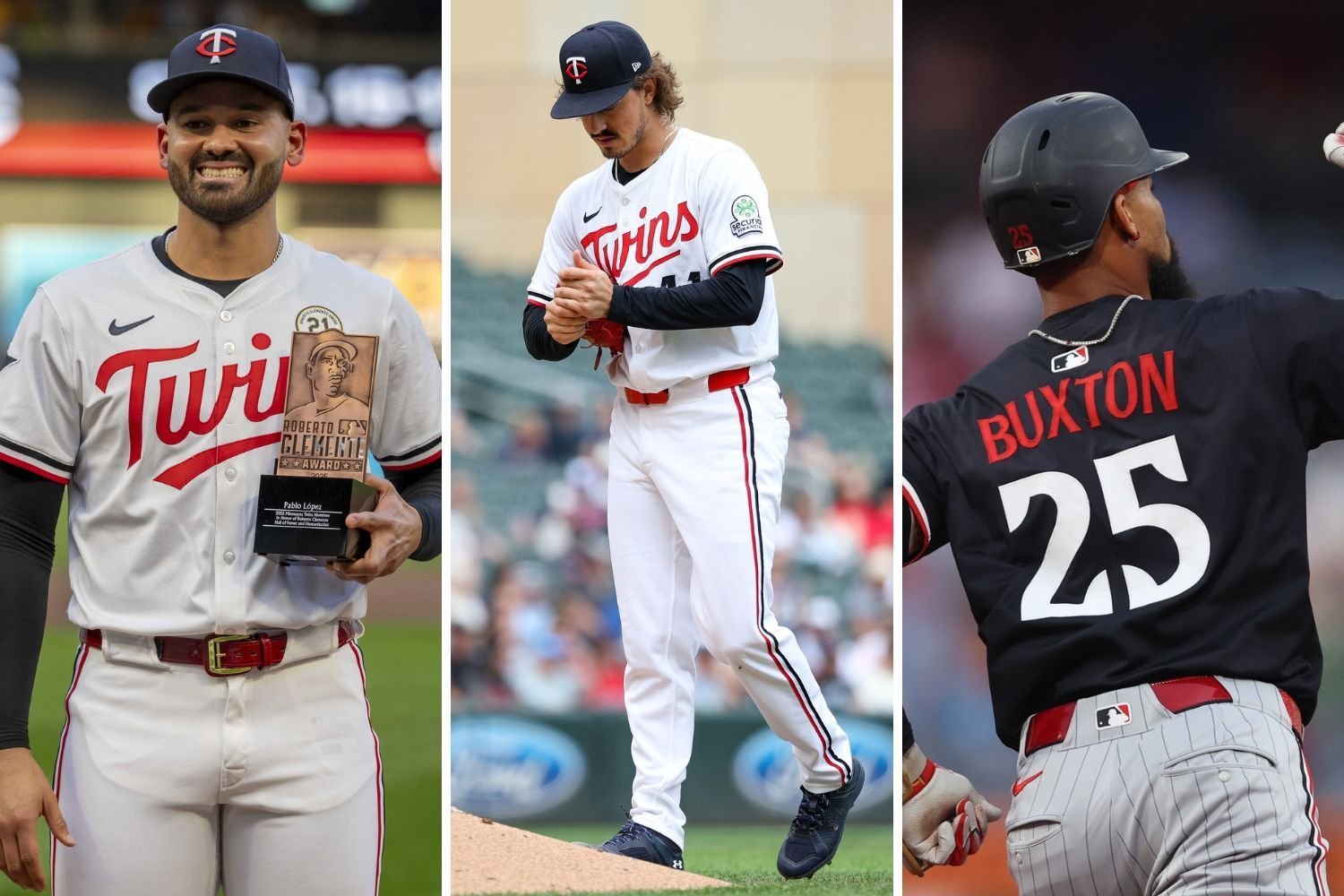 Major League Baseball and the MLB Players Association appear headed for another lengthy negotiation cycle, and the league’s latest proposal added fuel to the fire. MLB’s initial economic proposal for the next Collective Bargaining Agreement (CBA) included the framework for both a salary cap and a salary floor, a concept that has long been discussed around the sport but never implemented. Under the proposal, teams would be required to meet a minimum payroll threshold, while also staying below a maximum spending limit. The league says the structure would improve competitive balance while also encouraging clubs to invest more heavily in their major-league rosters. (They're pointedly not saying that it would allow them to define "baseball revenue" and wall off a greater portion of what they make from each other and from players, or the biggest reason for wanting a cap: cost certainty that would be worth tens of millions per year in rising franchise values.) The proposed floor for 2027 would sit at $171.2 million. Based on current Opening Day payroll projections, a dozen teams would need to increase spending to comply with the new rules. According to FanGraphs, the Twins currently have a $107 million payroll, leaving Minnesota more than $64 million short of the proposed floor. That creates an interesting question. If this proposal eventually becomes reality, how could the Twins realistically add that much payroll? The answer is that there are several ways to get there, and some of them could actually strengthen the organization’s long-term outlook. Lock Up the Current Core The easiest way for Minnesota to add payroll responsibly would be by extending players already in the clubhouse. Joe Ryan immediately stands out as one of the organization’s most logical extension candidates. He has developed into one of the American League’s steadiest starters, and front offices around baseball are always looking for controllable pitching. That reality also means Ryan could become a trade deadline target for other clubs if the Twins fall out of contention. Minnesota must decide whether it views him as part of the next competitive window or as a trade asset. Ryan Jeffers falls into a similar category. Catchers with offensive upside are difficult to replace, and while his production has fluctuated at times, Jeffers remains one of the better offensive catchers in the league when healthy. Extending him would provide some stability behind the plate, while also raising payroll organically. Then there is Pablo López, whose situation may be the most fascinating of the group. López is recovering from Tommy John surgery and has only one year of team control remaining. Normally, pitchers approaching free agency after a major surgery carry substantial risk, but that risk can also create an opportunity for a team-friendly extension. If Minnesota believes López can return to form, it may be able to negotiate a deal that adds multiple seasons at a more manageable annual value than a healthy frontline starter would command on the open market. Rather than viewing extensions strictly as financial burdens, the Twins could use them to create certainty around a roster core, while simultaneously moving closer to the salary floor. Bet on Young Pitching Before the Price Explodes Across baseball, teams have become increasingly aggressive about extending young pitchers before they fully establish themselves at the major-league level. The Twins could follow that blueprint. Taj Bradley already looks like a potential long-term rotation fixture. His power arsenal gives Minnesota something it has lacked consistently near the top of the rotation, and if he continues trending upward, his arbitration years could become expensive quickly. An extension now could save the organization money in the long run while also helping boost payroll in the short term. Connor Prielipp and Mick Abel are more complicated cases because of their injury histories, but both possess legitimate upside. Pitching is expensive on the open market, and teams willing to take calculated risks on talented young arms can sometimes create tremendous surplus value. Minnesota has historically operated carefully in this space. If a salary floor becomes reality, the Twins may need to become more proactive about buying out arbitration and free-agent years before prices escalate. Join Baseball’s Pre-Arbitration Extension Movement One of the biggest trends around baseball has been teams extending players before they even establish themselves in the major leagues. Clubs are increasingly willing to guarantee money early in exchange for long-term cost certainty and additional years of team control. The Twins have mostly stayed away from these types of contracts (sure, they signed Jorge Polanco and Max Kepler, but that was a long time ago, now), but that may need to change. Kaelen Culpepper could make a great deal of sense as a candidate, if Minnesota believes he's a long-term answer somewhere in the infield. He offers athleticism, defensive versatility, and a skill set that could age well. Walker Jenkins and Emmanuel Rodriguez possess enormous ceilings, but both players carry obvious injury risks. That uncertainty could actually create an opening for Minnesota. If the organization still believes either player can become a foundational star, a creative extension could protect the player financially while giving the Twins a chance at massive long-term value. These deals are becoming increasingly common because they allow teams to spend aggressively without necessarily diving headfirst into free agency. For a club attempting to reach a salary floor while maintaining long-term flexibility, this approach may become essential. Make Byron Buxton a Twin for Life There are certain players who define an era of Twins baseball, and Buxton unquestionably fits into that category. When healthy, Buxton remains one of the most electric players in baseball. His combination of defense, speed, and power still changes games in ways very few players can replicate. More importantly, he has become one of the faces of the franchise. If Minnesota is eventually required to spend significantly more money, keeping Buxton in a Twins uniform through the remainder of his career should become a priority. Even with the injury concerns, there is value in maintaining continuity and rewarding a player who has remained loyal to the organization throughout his career. The Twins have often struggled to keep star-level talent long term. Ensuring Buxton retires in Minnesota would send a meaningful message about the franchise's direction. Finally, Invest Real Money in the Bullpen The bullpen has too often been treated like a clearance rack project. Minnesota has consistently attempted to patch together relief groups through waiver claims, minor-league signings, and bounce-back candidates. Occasionally, that strategy works. More often, it leaves the bullpen lacking reliable late-inning options. If the Twins suddenly need to add tens of millions of dollars to payroll, the relief market provides one of the easiest opportunities to do so quickly. Elite relievers are expensive, but they also dramatically improve roster stability. Adding proven bullpen arms would not only help Minnesota reach the proposed salary floor but address one of the organization’s most persistent weaknesses. The Twins do not necessarily need to hand out reckless contracts, but they can no longer operate as though every bullpen spot should be filled through bargain hunting. Right now, MLB’s salary cap-and-floor proposal remains exactly that: a proposal. There is still a long road before any new CBA becomes a reality, and the players union has already made clear that it detests the idea of a cap. Still, the concept forces teams like the Twins into an uncomfortable but fascinating discussion. If Minnesota were suddenly required to spend another $64 million, the organization could no longer rely exclusively on short-term fixes and payroll restraint. The encouraging part for Twins fans is that there are logical ways to add that spending without abandoning the future. Extensions for core veterans, aggressive deals with young talent, long-term commitments to franchise players, and meaningful bullpen investments could all help bridge the gap. For years, fans have begged ownership to act more aggressively. A salary floor might eventually force the issue. How would the Twins spend the money needed to get to the salary floor? Leave a comment and start the discussion. View the full article
 -
 The Kansas City Royals’ starting rotation is in a bit of disarray. Cole Ragans, still billed by many as the cream of the club’s starting pitching crop, threw well in a Triple-A rehab start Saturday but remains sidelined after experiencing elbow pain the next day. Elbow discomfort has also forced Kris Bubic, who missed much of last season with a rotator cuff issue and most of 2023 after Tommy John surgery, out of action since May 15, and he isn’t expected back until June. Consistency has not been Noah Cameron’s closest ally. So it is that a depth issue faced the Royals when they opened a three-game home series against the always-tough Yankees Monday, with a 10-game road trip to Texas, Cincinnati, and Minnesota, all of whom are in the thick of at least Wild Card races, to follow. The solution, though, won’t include Frank Mozzicato, the promising prep phenom pitching prospect whose curveball and potential so captivated the Royals that they grabbed him with their first pick (and seventh overall selection) in the 2021 amateur draft. He’s far from big league-ready … and may never be. Mozzicato’s is a sad tale indeed, and one easily told through the young left-hander's disturbing numbers. Frank Mozzicato Continues to Struggle in the Royals' System That choosing Mozzicato so early in the 2021 draft triggered immediate skepticism understates the situation. After all, the Royals could have picked Kumar Rocker, Gavin Williams, Jordan Wicks, Andrew Painter, Max Muncy, or Matt McClain, all of whom were available then and have made it to the majors. And although he’d thrown four straight high school no-hitters that year, taking an 18-year-old with their first pick seemed a pretty risky move for a club with an increasingly questionable draft history. Unfortunately, Mozzicato, now 22 and ranked as KC's 17th-best prospect by Royals Keep, has done little to vindicate Kansas City’s decision. Take, for example, his 26 appearances (22 starts) at Double-A Northwest Arkansas, the highest level he’s achieved. Including last Sunday’s no-decision start against Amarillo, in which he struck out eight but gave up three runs and four hits and walked three in 4.1 innings, he’s winless in nine starts this year. Worse, though, is that he’s been battered in 2026 for 30 runs (26 earned) in 30.2 innings for a 7.63 ERA, and he’s walked 16.2% of the batters he’s faced (7.04 BB/9). He wasn’t much better for the Naturals last season, which surprised many after he started the season with a 1.24 ERA and 37 strikeouts in 36 1/3 innings across seven starts for High-A Quad Cities. But after his late May promotion to Northwest Arkansas, he went 2-5 with a 7.46 ERA and walked almost a batter per inning. And the rest of Mozzicato’s troubling pro career? At 12-32 in 95 games, he’s lost almost three times as often as he’s won. His 4.60 career ERA isn’t awful, but it’s a stat heavily influenced by his first three seasons (4.30 at Single-A in 2022, 4.65 for a 2023 campaign split between Single and High-A, 3.45 at High-A in 2024) while at the same time it masks the nine-game 7.12 he put up after his 2023 bump-up to High-A, his 5.03 last year, and, of course, the 7.52 across his 26 appearances at Northwest Arkansas. Troubling, too, are his more advanced 2026 metrics — only in whiff % (30.1, 60th percentile) and K% (25, 51st percentile) is Mozzicato above the 50th percentile, and he’s at the 14th percentile in strike % (14), and the 21st percentile in BB% (16.2) and zone % (42.6). The southpaw’s fastball is also a concern. Mozzicato simply hasn’t displayed the velocity he needs. And then there’s his control. If not improved soon, Mozzicato’s tendency to walk far too many batters (career 16.3 BB% and 6.48 BB/9) may well be enough to keep him out of the majors. What Does the Future Hold for Royals Prospect Frank Mozzicato? Mozzicato clearly isn’t headed for the majors anytime soon. His struggles in Double-A will likely strand him there for the rest of this season, and suggest Triple-A may be too much for him. He and the Royals need to find a cure for what ails his pitching. If they don’t, his days in the organization could come to an end sooner rather than later. View the full article
 -
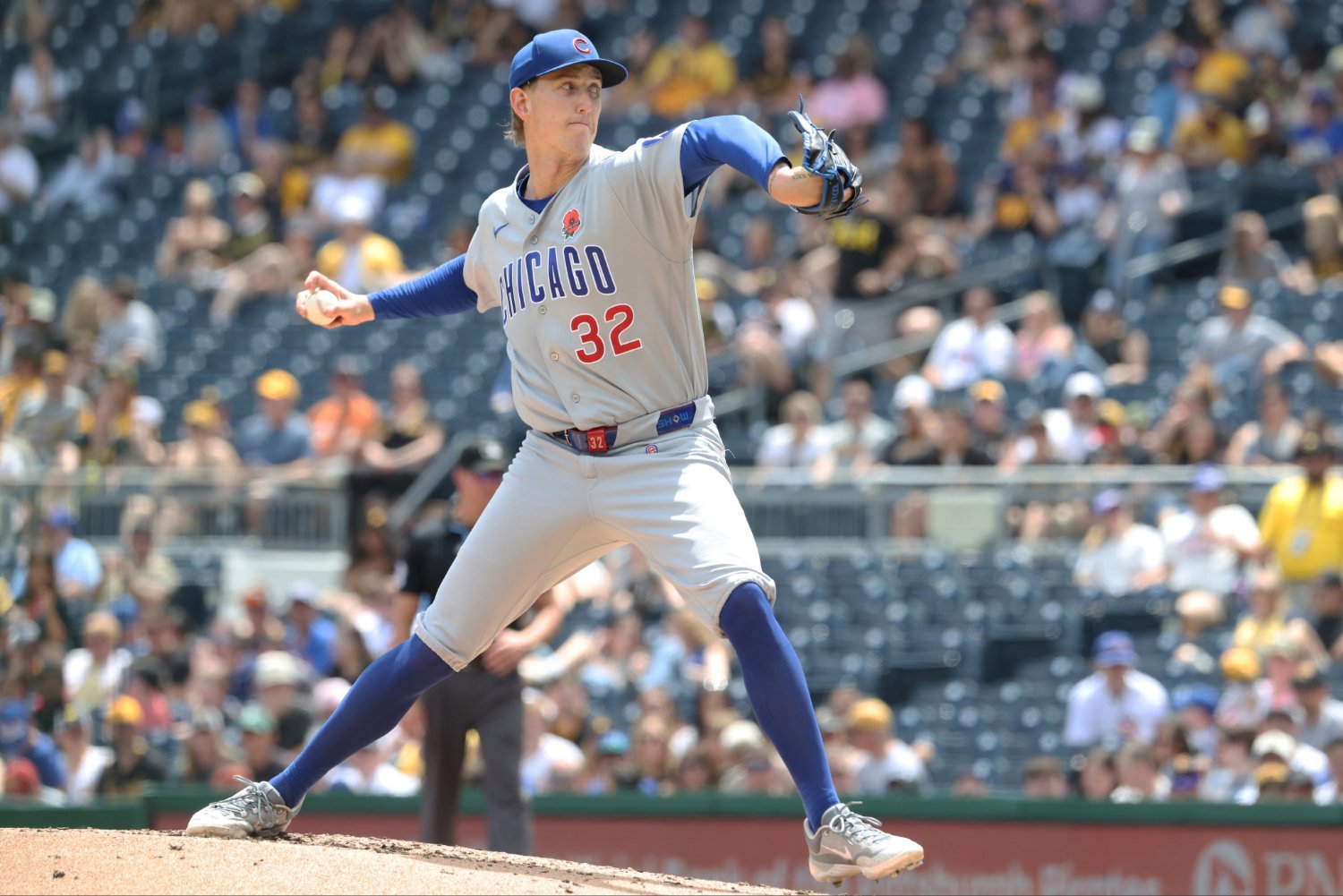 Is Ben Brown here to stay? Yes, it has only been four starts and 19 total innings since he moved to the rotation. Still, there are reasons to be very excited. There are the results: a 23/6 K/BB ratio with zero home runs allowed against some quality opponents. Holding those opponents to a .171/.247/.200 slash line is great work, but is it sustainable? In 2024, Ben Brown debuted with pretty impressive results before a stress fracture in his neck ended his season in June. When he came back in 2025, he struggled to find his footing, although his peripheral numbers looked a bit better than his results. His fastball velocity decreased and his breaking ball was dropping almost two inches less. Both were likely due to an increase in his arm angle from 42 degrees to 45 degrees. He just didn’t look like the same pitcher. This season, he looks to have fully rebounded. As Matt Trueblood wrote about Ben Brown, on his re-entry into the Cubs rotation, Brown’s arm angle has lowered. It is now back to where it was in 2024 at 42 degrees. In turn, his fastball velocity jumped back to where it was and he is getting that depth back on his breaking ball. In addition to looking healthy, Brown has improved his arsenal. Much has been written about the new sinker he has unleashed this year, both on this website and others, and it still might not be enough. There has long been a line of inquiry with the right-hander that, in some form or another, went as such: "What if Ben Brown had a third pitch?" Well, we no longer have to wonder. He's got one, and the results have been glorious. Brown’s usage of the sinker and improved arsenal has morphed him from a fly-ball pitcher to a ground-ball pitcher. He has increased his ground-ball rate from roughly 37% in 2024 to 43% in 2025 all the way to 53% this season. He went from the 22nd percentile to 90th percentile in that category in just two seasons. It isn’t just the sinker either; Brown is giving up an average launch angle of three degrees on his four seamer, down from 16 degrees last year and 18 degrees in 2024. Batters are just having a much harder time lifting the ball against Brown. Slugging happens when batters hit the ball in the air and Brown has done an impressive job of limiting that despite allowing exit velocities in the 31st percentile and a hard-hit rate in the 35th percentile. Giving up hard contact matters a lot less when it is on the ground, especially with the way the Cubs play defense. The best part about all of this is that, even if Brown falters in the rotation as he has to turn the lineup over multiple times, the Cubs already know he can dominate in a relief role. No matter what, he'll provide value to this pitching staff. But if he can stick around in the starting five and chew up lots of quality innings... well, the North Siders may be able to stay afloat after all. View the full article
 -
The Milwaukee Brewers Have Created A Pitch-Tipping Advantage
DiamondCentric posted an article in Brewer Fanatic
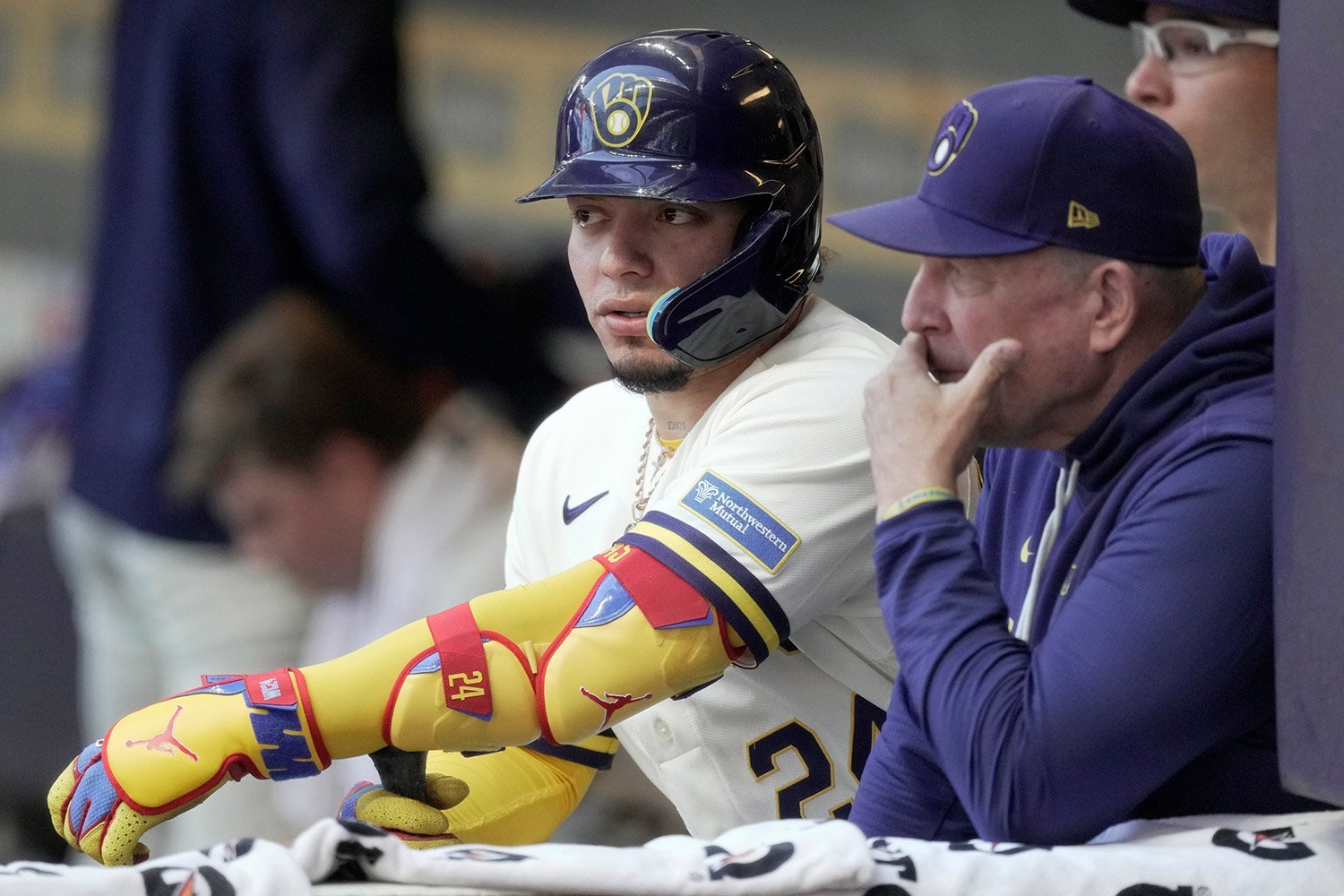 Pitch-tipping has been a big topic for the Milwaukee Brewers over the last week. Robert Gasser saw his pitches being highlighted on Saturday by Andy Pages from second base. It appeared that Pages was able to gain an idea of what pitch was coming, giving Teoscar Hernandez all the information he needed to turn on a sweeper inside and crush it over the left field wall. Afterward, Pat Murphy had this to say: There are a variety of ways to steal signs. One of the most common is having a runner at second base who can see the pitcher's hand as it enters the glove, whether they grip it differently, set up differently, or make other mechanical tweaks for different offerings. Before the PitchCom system, this runner could also pick up on signs thrown down by the catcher. It can also be exposed by the catcher getting set too early, showcasing locations, or even assuming different stances for different receiving locations. Most catchers switch between putting different knees down for different offerings at different times, and there can be hidden clues in there. William Contreras goes with his right knee down around 15% of the time, with his left knee down about 83% of the time, for example. Again, after Saturday's game, Murphy spoke to Curt Hogg of the Milwaukee Journal Sentinel: Eliminating pitch tips altogether is almost impossible, and you usually need the issue to be exposed before you realize there's a problem. The Brewers have dealt with it earlier in the year with both Brandon Woodruff and Trevor Megill, and they'll no doubt see things getting picked up throughout the rest of the season. One thing they can do, however, is maximize their own chances to pick up on tells from the pitcher/catcher, and minimize those opportunities for other teams. How The Brewers Use Pitch-Tipping To Their Advantage It should surprise absolutely no one that the Brewers are well ahead of this offensively. Since 2024, no team has faced more pitches with a runner on second base, and only the Mets and Diamondbacks have slugged more with a runner on second base (I'm using pitches as a barometer, as it gives less time for the runner on second to watch for any signs that they can relay to the dugout for future at-bats). On top of that, the Brewers far and away led the league in the difference between slugging with men on second base and their overall slugging for the year. Below is a graph showcasing weighted on-base average (WOBA) on second base against the pitches faced by a team with a man on second: The Brewers rank third in WOBA since 2024 with a man on second base, and the sheer volume of pitches they see in this situation gives them ample opportunities to assess both pitchers and catchers for any clues or tells that might be coming, and relay that subtly to the man at the plate. Once something is picked up, the rest of the team can continue to observe this throughout the rest of the game, any time they reach second base, and it has an exponential effect. Slugging is valuable here as it implies hard hit contact and often of the aerial variety, something the Brewers aren't traditionally known for. Having a jump on a pitch allows them to get the bat head out earlier, and for people like Jackson Chourio, Christian Yelich, et al, that's all they need. Overall, from 2024-2026, the Brewers ranked 14th in the league for slugging with a .398 mark in all situations, but if we narrow it down to a man on second base, they jump all the way up to fifth with a .428 mark. Contrast this with the Dodgers, who jumped from a .438 mark to a .446 slugging mark with a man on second base, and it seems the Brewers have identified something in this situation that helps them surge in power output. So, is this a runner on base thing, or is it a man on second base thing? Well, if we isolate the stats over the 2+ years of this sample to men on base, but not including a runner on second, and the Brewers regress to similar positions in comparison with the rest of the league, ranking 12th in WOBA (0.329) and 16th in slugging percentage (0.426). So to conclude, the Brewers are getting: More pitches with a man on second base than anyone else in the league A big boost to slugging percentage with men on second, both in raw numbers and compared to the rest of the league A smaller boost to slugging with men on base and no one on second, but not an outlier jump vs the rest of the league's performance It almost seems as though having a man on second is their secret sauce. It's also something their offense is geared towards, with a number of speedsters who have good plate discipline and can reach first and steal second, or stretch a long single into a double. It's one reason they can survive without the home run ball, and why stealing bases and getting that extra base is so important to their offensive identity. So how does this play out on the other side of the ball? The Key To Avoiding Pitch-Tipping: Keep Your Opposition Off Second Base Defensively, the Brewers cannot control the tells their pitchers are showing, but they can make it a focal point to keep teams off of second base. They can also attempt to identify signs of pitch tipping internally before it becomes an issue, and we might be able to pick up some signs of that in the data. It should again come as no surprise that the Brewers grade out exceptionally well here, too. They face fewer pitches than any team bar the Chicago Cubs, who they're almost neck and neck with, and lead the league in WOBA against when they find men on second base: In fact, the Brewers are almost 30 points below the average wOBA league-wide, a monumental difference. Park factors can play into this (see Colorado in the top right), but the Brewers are evidently taking steps to mitigate pitch tipping. William Contreras has become an expert at controlling the run game, with the Brewers allowing a league-leading 17 stolen bases this year and having caught 16 would-be stealers. Murphy also mentioned that at times the catcher can be the source of pitch tipping, and it should be pointed out the lengths Contreras goes to in order to avoid being predictable. He's constantly twitching and moving around behind the plate, starting his glove in incorrect spots, dragging his glove in the dirt or up high, and using his athleticism to catch and frame the ball despite all of these moving parts. Here's one example, look at where he starts vs where he catches this ball back in 2025: It should come as no surprise that, once again, it appears the Brewers are leading on the margins. Compared with the rest of the league, they've found ways to mitigate the pitches a runner on second base sees over the course of the season; they've got a catcher with the athleticism and nous to throw off anyone assessing his own positioning and techniques. They're also seeing more pitches with men on second, and they're capitalizing with higher gains in WOBA and slugging percentage than any other team in baseball during those situations. The Brewers are leading the league in managing pitch tipping. Honestly, are we really surprised? View the full article
 -
Five Hitters Sticking Out in the Arizona Complex League
DiamondCentric posted an article in Royals Keep
 The Royals are off to a brutal start at 22-34, good for fourth in the AL Central (somehow, the Detroit Tigers are 0.5 games worse). However, the Surprise Royals, who play in the Arizona Complex League, have been doing well in the rookie league. Going into Thursday, the Surprise Royals are 14-4, leading the ACL West division by four games. The Royals have been among the best teams in scoring runs and run differential. Not only have they scored 114 runs this year, but they also have a run differential of +20. The Complex games aren't available on MLB.TV, unlike the Royals' affiliated MiLB teams (Columbia, Quad Cities, Northwest Arkansas, and Omaha). However, they can be found for free on the Surprise Royals' YouTube stream, though the camera angle and production values are low. Many Royals fans may be unfamiliar with some of the prospects in the Complex League, especially since many are either recent draft picks or players coming up from the Dominican Summer League. Thus, let's take a look at five position prospects in Surprise who are sticking out and should be worth paying attention to by Royals fans, especially since they may be due for call-ups to Low-A Columbia sooner rather than later. Tyson Moran, INF Moran was a 13th-round pick out of Canada in last year's draft. He was a North Dakota State commit, but the Royals convinced him to sign with a $247,500 bonus. Moran played for the Great Lake Canadiens development team in 2025, and he posted the following numbers, according to Canadian Baseball Network. The Canadian infielder is a bit older, at 20, so he may be a bit older for the typical ACL prospect. However, he's been absolutely mashing with the Royals so far in Surprise. In 15 games and 65 plate appearances, Moran leads Surprise with three home runs. He's also slashing .296/.338/.537 with an .875 OPS. The first baseman doesn't walk a lot (6.2%), but he doesn't strike out much either, as evidenced by his 13.8% K% and 0.44 BB/K ratio. His all fields batted-ball ability and line-drive approach (28% line drive rate) make him an intriguing corner infielder who could develop into his power tool, especially as he gets older and puts on muscle. Already, he has had a penchant for the big moment. Moran's first professional home run was a walk-off two-run bomb against the ACL Mariners. He could stand to walk a bit more, as his OBP is only .338. That said, Moran's batted-ball ability and power tool should help him earn a promotion to Columbia soon. Jhonayker Ugarte, 3B/SS Ugarte was a pretty heralded international prospect, as he signed out of Venezuela in the 2024 signing period for $1.3 million. He had a stellar DSL campaign in 2024, slashing .299/.423/.395 with an .818 OPS in 183 plate appearances. He also hit a home run, scored 30 runs, collected 20 RBI, and stole 11 bases. Unfortunately, things didn't go as smoothly for him in the Complex League as an 18-year-old. In 214 plate appearances, he slashed .216/.338/.284 with a .622 OPS. He walked a lot (14.5%), and he showed some intriguing power (two home runs), but he struggled with strikeouts (30.8% K%). Thus, it made sense for the Royals to have him repeat in the Complex League in 2026. So far, the move has paid off, and he may be due for a call-up to Columbia in the near future. In 64 plate appearances, he is slashing .265/.406/.408 with an .814 OPS. His K% has plummeted to 14.1%, and his walk rate is up to 15.6%, giving him a BB/K ratio of 1.11. Even though he hasn't hit a home run yet this year, he has shown some gap-to-gap power, as illustrated by his .143 ISO. Instagram WWW.INSTAGRAM.COM Create an account or log in to Instagram - Share what you're into with the people who get you. At 6'2, 180 pounds, Ugarte is a physical infielder who is capable of playing shortstop or third base, though he probably profiles better long-term at the hot corner. He's been better at launching the ball this year, as illustrated by lowering his infield fly ball rate from 36.4% last year in the Complex League to 6.7% this season. That should bode well for an easier transition to Columbia, likely in the second half of this year. Corey Cousin, OF An 18th-round pick in the 2024 out of high school in Louisiana, Cousin signed for $347,500. The Royals moved slowly with him last year, as he didn't play at all in any official Complex League games. However, he has finally seen action in the Complex League this year, and the results have been impressive. In 61 plate appearances, Cousin is slashing .298/.443/.511 with a .953 OPS. He also has a home run, 15 runs scored, eight RBI, and five stolen bases. He is striking out a bit too much at 27.9%. However, he makes up for it with a 21.3% K% and 0.76 BB/K ratio. Cousin's power tool may be most impressive, as he is currently sporting a .213 ISO. The Royals have many "raw" athletic outfielders in Surprise, including Noah Barber, Angel Ramirez, and Lewis German. That said, Cousin may be the most polished of the bunch, both at the plate (his OPS is the best of that bunch) and defensively (he's been Surprise's primary centerfielder). I think Cousin may not make his Columbia debut until next year, but if he lowers the strikeout rate, he could find himself with the Fireflies in the second half. Darison Garcia, 2B/SS A 2024 signee, the Dominican-born infielder has gone under the radar on most Royals Top Prospects lists. That said, he was on the Spring Breakout roster in Spring Training and had a couple of hits in the showcase. Thus, he became a bit of a dark horse prospect heading into the 2026 season. This is a repeat of the Complex League for Garcia, who played 49 games there last year. He was decent, as he slashed .243/.389/.308 with a .696 OPS in 216 plate appearances. He didn't hit any home runs, but he scored 33 runs, stole 18 bases, and posted a 0.85 BB/K ratio. The metrics this year, over 62 plate appearances, have been even better. He's slashing .277/.452/.404 with an .856 OPS, and he has a home run, 15 runs scored, and 14 stolen bases. At 5'11, 165 pounds, he doesn't have an impressive stature, but much like Maikel Garcia, he has a lot more pop in his profile than expected. Garcia profiles as a much better athlete than the older Garcia, and the younger Garcia may be better as a true utility player than the Gold-Glove-winning third baseman. At 19 years of age, and with a 126 wRC+ right now in Surprise, I think the Royals will call up Garcia to Columbia once a spot in the infield becomes available. Ramcell Medina, SS One of the Royals' top signees during the 2025 international signing period, Medina has a tall (6'1) and lanky (155-pound) profile that could profile as a regular shortstop at the MLB level. He had an encouraging professional debut in the DSL last year, shortly after signing. As a result, he got on the radar of many prospect experts, including Baseball America. In 186 plate appearances in the DSL, Medina slashed .260/.398/.404 with an .802 OPS as a 17-year-old. He also hit two home runs, scored 35 runs, collected 25 RBI, and stole seven bases. The Dominican-born shortstop also showed a mature plate approach, as illustrated by his 1.19 BB/K ratio. The results so far in the Complex League have been slow for Medina, unfortunately. In 61 plate appearances, he's slashing .240/.361/.280 with a .641 OPS. The BB/K ratio is still strong at 0.62, but the power just isn't there, as evidenced by his .040 ISO. An issue is that he's just hitting way too many balls on the ground (59.5% GB%) and popping them up too frequently (37.5% IFFB%). If he can launch more fly balls as he did a year ago in the DSL (43.4% FB%), then he could start to see a positive regression in his results. Medina doesn't have the impressive numbers as the other four position players. However, his tools still play impressively, including the plate discipline. He deserves more patience, even if that means that his Columbia debut won't come until 2027 at the soonest. View the full article
 -
 Ramon Ramirez drove in three runs and scored three more in Quad Cities' 12-1 rout, while Emmanuel Reyes spun five innings of one-run ball with five strikeouts. In Columbia's nightcap win, Jhosmmel Zue homered and drove in four. Henry Williams allowed three earned runs over five innings for Omaha in a 5-4 extra-innings loss, and Drew Beam gave up four runs in 3 2/3 innings as Northwest Arkansas fell 6-1. Royals Transactions Kansas City Royals signed free agent RHP Yolber Mendez to a minor league contract. Kansas City Royals signed free agent RHP Andruw Solarte to a minor league contract. Kansas City Royals designated LHP Bailey Falter for assignment. Kansas City Royals recalled RHP Mason Black from Omaha Storm Chasers. Tresh Homer Not Enough As Storm Chasers Fall In Extras The Omaha Storm Chasers dropped a 5-4 decision to the Memphis Redbirds in ten innings. Luca Tresh led the offense, going 1-for-4 with a home run, a walk, and two runs batted in. Abraham Toro added a double and a run batted in, while Kameron Misner drove in a run on a sacrifice fly. Omaha managed just six hits and left ten runners on base. Memphis broke a scoreless tie in the third when Misner's sacrifice fly scored Connor Kaiser. The visitors answered with two home runs in the fourth, and Toro's double scored Gavin Cross to make it 2-2. Memphis pushed across two more in the fifth, but Tresh tied the game at four with a two-run homer that also scored Misner. The game stayed tied until the tenth, when the zombie runner came around to score on a sacrifice fly, handing Memphis the lead for good. Williams carried the bulk of the work, allowing five hits and four runs, three earned, over five innings with three walks and three strikeouts. Oscar Rayo followed with three scoreless innings, walking three and striking out two. Rayo was just called up to Triple-A today to replace Black in the Omaha bullpen (The Royals recalled Black from the Storm Chasers on Wednesday). Anthony Gose took the loss after allowing an unearned run in the tenth. A former MLB reliever who was once a top position-player prospect, Gose, signed during the season, is sporting a 5.14 ERA and 1.57 WHIP with 15 strikeouts in 14 IP. Player AB R H RBI BB K Josh Rojas 4 0 0 0 1 2 Peyton Wilson 5 0 1 0 0 2 Kameron Misner 4 1 1 1 0 3 Luca Tresh 4 1 1 2 1 2 Brett Squires 4 0 0 0 0 3 Drew Waters 3 0 1 0 1 1 Gavin Cross 4 1 1 0 0 2 Abraham Toro 4 0 1 1 0 0 Connor Kaiser 3 1 0 0 1 2 Player IP H R ER BB K HR Andrew Pérez 1 1 0 0 0 1 0 Henry Williams 5 5 4 3 3 3 2 Oscar Rayo 3 0 0 0 3 2 0 Anthony Gose 1 0 1 0 1 2 0 Vazquez Drives In Lone Run As Naturals Drop Road Tilt The Northwest Arkansas Naturals managed only three hits in a 6-1 loss to the Tulsa Drillers. Daniel Vazquez accounted for the lone run, going 1-for-2 with a walk and a run batted in. Colton Becker had the only other notable day at the plate, singling and scoring the team's only run. The Naturals struck out ten times and stranded five runners. Tulsa opened the scoring in the third with a pair of runs and added two more in the fourth to build a 4-0 lead. Northwest Arkansas got on the board in the sixth when Vazquez singled home Becker, but that was as close as the visitors would come. Tulsa tacked on two more in the bottom of the sixth to restore the cushion. Beam struggled with command, allowing seven hits and four earned runs over 3 2/3 innings with three walks and four strikeouts before exiting with the loss. Caden Monke provided a lift out of the bullpen, throwing 1 1/3 scoreless innings with two strikeouts, while Dennis Colleran Jr. surrendered two runs in the final inning. Player AB R H RBI BB K Carson Roccaforte 3 0 0 0 0 3 Colton Becker 3 1 1 0 0 2 Sam Kulasingam 1 0 0 0 1 0 Jorge Alfaro 3 0 1 0 0 2 Daniel Vazquez 2 0 1 1 1 0 Spencer Nivens 3 0 0 0 0 1 Omar Hernandez 2 0 0 0 1 1 Canyon Brown 3 0 0 0 0 1 Justin Johnson 3 0 0 0 0 0 Player IP H R ER BB K HR Drew Beam 3 2/3 7 4 4 3 4 0 Caden Monke 1 1/3 0 0 0 1 2 0 Dennis Colleran Jr. 1 2 2 2 1 2 1 Ramirez And Reyes Power River Bandits To Lopsided Win The Quad Cities River Bandits cruised to a 12-1 victory over the Cedar Rapids Kernels. Ramirez led the way, going 2-for-5 with two doubles, three runs batted in, and three runs scored. Asbel Gonzalez collected two hits and scored twice out of the leadoff spot, Nolan Sailors added two hits and two runs batted in, and Blake Mitchell reached base four times while scoring three runs. Quad Cities drew thirteen walks and stranded eleven runners. The River Bandits seized control immediately, scoring four times in the first inning entirely on bases-loaded walks and a wild pitch. They piled on two more in the second, capped by Ramirez's run-scoring double and a Sailors single. Ramirez struck again in the fourth with another run-scoring double, and the lead only grew from there. Reyes was sharp in his five innings of work, allowing three hits and one run with two walks and five strikeouts to earn the win. The 22-year-old righty now has a 2.91 ERA and 1.27 WHIP in nine starts and 43.1 IP this season. Cory Ronan opened with two scoreless innings and three strikeouts, and Mason Miller closed with two scoreless frames. Player AB R H RBI BB K Erick Torres 4 1 1 0 2 1 Asbel Gonzalez 6 2 2 0 0 1 Blake Mitchell 2 3 1 0 3 0 Ramon Ramirez 5 3 2 3 0 1 Nolan Sailors 5 1 2 1 1 2 Jose Cerice 3 2 1 1 2 1 Tyriq Kemp 3 0 0 1 2 0 Trevor Werner 3 0 0 0 2 0 Diego Guzman 4 0 1 1 1 1 Player IP H R ER BB K HR Cory Ronan 2 0 0 0 0 3 0 Emmanuel Reyes 5 3 1 1 2 5 1 Mason Miller 2 1 0 0 2 2 0 Van Dam Shines, But Fireflies Shut Out In Opener The Columbia Fireflies were blanked 3-0 by the Charleston RiverDogs in the first game of a doubleheader. Columbia mustered just four hits, with Sean Gamble, Josh Hammond, Yandel Ricardo, and JC Vanek each collecting a single. Ricardo's hit went for a double. The Fireflies left four runners on base and never advanced a runner across the plate. The game remained scoreless into the sixth, when Charleston pushed across all three of its runs. A run-scoring triple opened the scoring before a two-run home run made it 3-0. That proved to be enough offense for the RiverDogs. Shane Van Dam was excellent in defeat, working four scoreless innings on three hits with two walks and five strikeouts. The former NC State product and ninth-round draft pick in the 2025 MLB Draft now has a 4.70 ERA and 1.40 WHIP in nine outings (five starts) and 30.2 IP. Henson Leal took the loss after allowing three runs in 1 1/3 innings, and Dash Albus closed the door with 1 2/3 scoreless innings and two strikeouts. Player AB R H RBI BB K Henry Ramos 3 0 0 0 0 0 Sean Gamble 3 0 1 0 0 1 Josh Hammond 3 0 1 0 0 0 Hyungchan Um 3 0 0 0 0 1 Yandel Ricardo 3 0 1 0 0 1 JC Vanek 3 0 1 0 0 1 Jhosmmel Zue 3 0 0 0 0 0 Daniel Lopez 2 0 0 0 0 0 Roni Cabrera 0 0 0 0 0 0 Ivan Sosa 2 0 0 0 0 0 Player IP H R ER BB K HR Shane Van Dam 4 3 0 0 2 5 0 Henson Leal 1 1/3 3 3 3 1 2 1 Dash Albus 1 2/3 1 0 0 0 2 0 Zue's Four RBI Lift Fireflies In Nightcap Slugfest The Columbia Fireflies salvaged a split with a 9-6 win over the Charleston RiverDogs in the second game. Zue paced the attack, going 2-for-3 with a home run and four runs batted in. Ricardo, batting leadoff, homered and drove in two, Hammond added two hits and a run batted in, and Sean Gamble scored twice. Columbia pounded out eight hits. The Fireflies jumped on Charleston early. Zue's three-run home run capped a three-run first inning. The Fireflies blew the game open with five runs in the second. In that frame, Ricardo launched a two-run homer, Hammond singled home a run, and Zue delivered a two-run single to push the lead to 8-0. Zue is hitting .289 with a .681 OPS this season, while Ricardo is hitting .250 with a .752 OPS, a sign that he has overcome his slow start. Hammond continues to be one of Columbia's most consistent offensive producers. The 28th overall pick in the 2025 MLB Draft is hitting .288 with an .832 OPS this season. Charleston chipped away with two runs in the third and single runs in the fourth, sixth, and seventh, but the early cushion held up. Dutch-born pitcher Brandon Herbold opened with a scoreless inning and earned the win. Jose Gutierrez absorbed the bulk of the innings, allowing eight hits and three runs over four innings with three strikeouts, and Yeri Perez allowed an unearned run in the seventh. Player AB R H RBI BB K Yandel Ricardo 4 1 2 2 0 0 Sean Gamble 2 2 0 0 2 0 Josh Hammond 3 2 2 1 1 1 Stone Russell 2 2 1 0 1 0 Jhosmmel Zue 3 1 2 4 0 0 Roni Cabrera 2 0 0 0 1 1 Connor Rasmussen 2 1 1 0 1 0 Josi Novas 1 0 0 0 0 1 Henry Ramos 2 0 0 0 0 0 Ivan Sosa 3 0 0 0 0 2 Player IP H R ER BB K HR Brandon Herbold 1 0 0 0 3 1 0 Luis Valdez 2/3 2 2 2 3 0 0 Jose Gutierrez 4 8 3 3 1 3 0 Yeri Perez 1 1/3 1 1 0 0 1 0 Top-20 Prospect Performance Kendry Chourio: DNP David Shields: DNP Sean Gamble: G1 1-for-3, K, SB; G2 0-for-2, 2 BB Blake Mitchell: 1-for-2, 3 BB, SB Josh Hammond: G1 1-for-3; G2 2-for-3, 2B, RBI, K Ramon Ramirez: 2-for-5, 2 2B, 3 RBI, K, SB Drew Beam: 3 2/3 IP, 7 H, 4 R, 4 ER, 3 BB, 4 K Asbel Gonzalez: 2-for-6, K, SB Ben Kudrna: DNP Carson Roccaforte: 0-for-3, 3 K Yandel Ricardo: G1 1-for-3, 2B, K; G2 2-for-4, HR, 2 RBI Felix Arronde: DNP Blake Wolters: DNP Michael Lombardi: DNP Luinder Avila: DNP Steven Zobac: DNP Frank Mozzicato: DNP Daniel Vazquez: 1-for-2, RBI, BB Warren Colcano: DNP Shane Panzini: DNP View the full article
 -
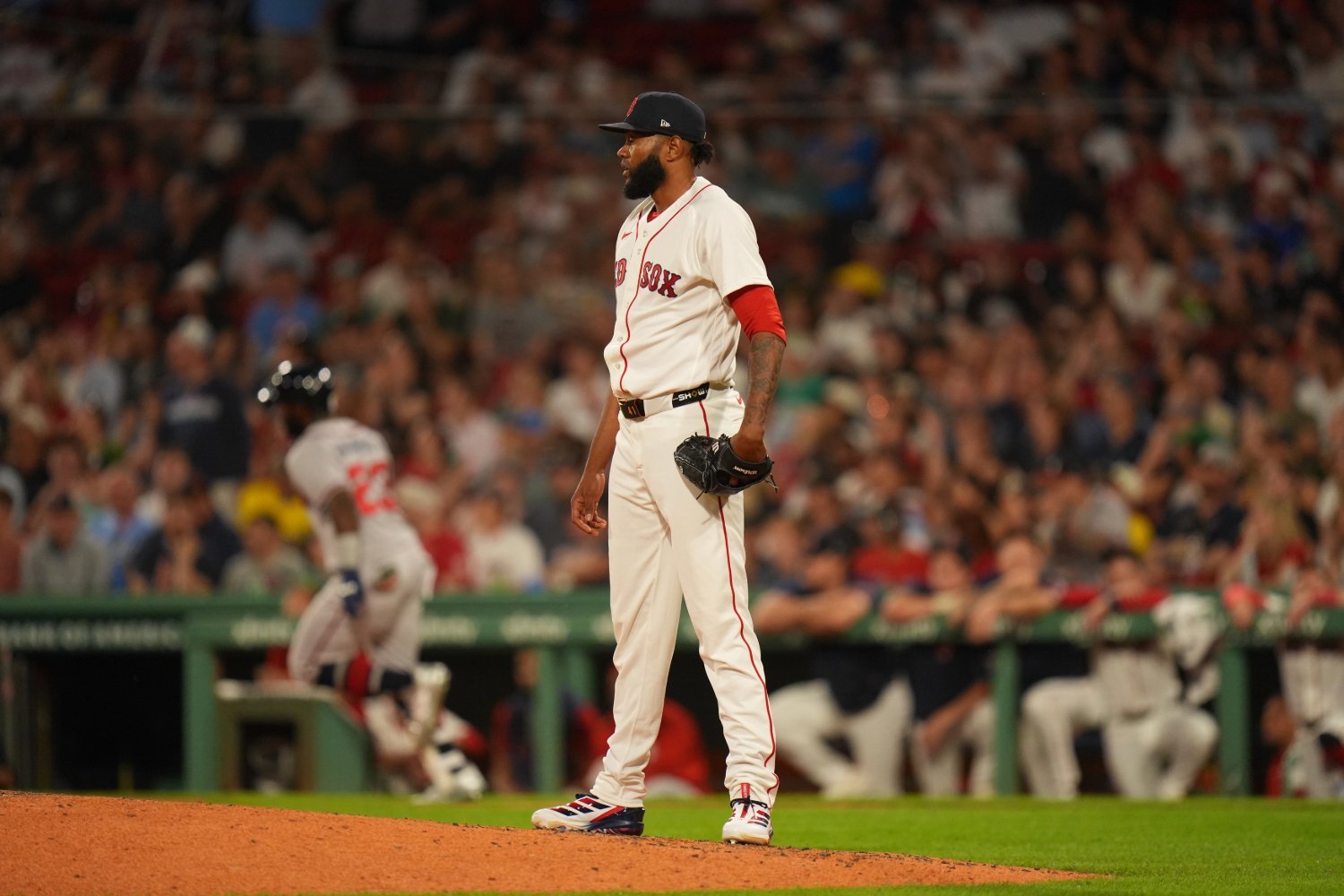 Worcester, MA – “It’s cool having his kids in here and then walking out you can hear his kid, one of his kids, saying ‘you going to the big leagues’ in Spanish. So, that was like, right out of a movie. And I was like, this is cool,” Iggy Suarez explained to media when asked about the team’s latest promotion to Boston. For Tyron Guerrero (formally Tayron due to a clerical error), making it back to the major leagues has been an arduous journey that’s seen him toil away in the minor leagues, various winter leagues, the Mexican League and in Japan for the Chiba Lotte Marines. It was never a question of how much he wanted it, as he gave it his all at every stop. All for the opportunity to pitch in the majors. And when that opportunity came, he didn’t believe it. Sitting in Suarez’s room with his two sons by his side, he finally realized his dream. “You could see it, like a ‘really?’ and in my head I was like, well have you seen the numbers you’ve put up? But really you could see, it was almost like a finally or this is awesome. It seemed like it was the first time he’s heard that [being promoted],” Suarez said. Guerrero, who didn’t begin playing baseball until he was 16 years old after falling in love with the sport thanks to the 2007 Red Sox team, last played in the majors in 2019. He was still a 28-year-old coming off 60 appearances with the Miami Marlins that year. Then, 2019 saw him appear in 52 games, but it was a struggle. Tossing 46 innings, he ended the season with an ERA of 6.26 and allowed 36 walks while striking out 43 batters. After the season, he would be designated for assignment on December 2 and was claimed off waivers by the Chicago White Sox four days later. The right-hander would bounce around, being released by the White Sox and spending 2022 in Japan. He would return stateside on a minor-league contract with the Cincinnati Reds for 2023 but would struggle and was released by mid-June. He would be forced to finish the season pitching in Mexico. This saga continued for Guerrero, spending 2024 in the Los Angeles Angels organization before heading overseas to Japan once more. Then, he got a chance with the Boston Red Sox. “He’s been great, really great,” current Red Sox manager Chad Tracy said back when he managed Guerrero in Worcester. It’s been no secret that Tracy liked Guerrero as a pitcher, constantly talking highly about him during their time together in Triple-A. “He’s been pretty lock down for us. Throwing hard, 100 miles an hour and all spring and here [Worcester] he’s in the zone. He’s thrown nothing but strikes since I placed eyes on him. He’s been awfully good.” Good was an understatement for Guerrero during his time in Worcester, as he appeared in 15 games and tossed 19 2/3 innings while allowing just two earned runs. That's good for a 0.92 ERA. Known for having a walk issue in his career, he managed to limit those to just six while striking out 22 batters. Opponents hit just .191 against him and slugged just .235. He was a leader in the bullpen and now he’s getting his chance to pitch for the team that got him into baseball to begin with. As a pitcher, Guerrero is known for his fastball-slider combination that combines a 100+ mph fastball with sink and arm-side run with a mid-80s slider that can be unhittable when thrown for strikes. When he’s on, the right-hander is capable of being a shutdown reliever who can easily rack up strikeouts. Unfortunately, the one major issue for Guerrero throughout his career has been his poor command and control. Entering the season, the reliever has walked 5.7 walks per nine innings for his career. Until he can show that the adjustments he made with Worcester are permanent, he will likely serve as a middle-innings reliever. Guerrero made his Boston Red Sox debut Friday, May 22, pitching one inning as he entered with the bases loaded and nobody out. The right-hander walked one run in but managed to not allow another runner to cross home plate. Since his promotion, the right-hander has appeared in three games, tossing 3 2/3 innings while allowing four runs and striking out seven compared to just one free pass. Guerrero worked extremely hard to get back to the major leagues, and his former manager Suarez agreed that no one deserves this opportunity more than him. “Those journeymen guys, 35 [years old] and on the older side. Playing overseas and coming here and putting up the numbers that he has and to be selected to the roster, like that’s still awesome. When he said the ‘really’ part I was like, yeah man, you’ve earned it.” View the full article
 -
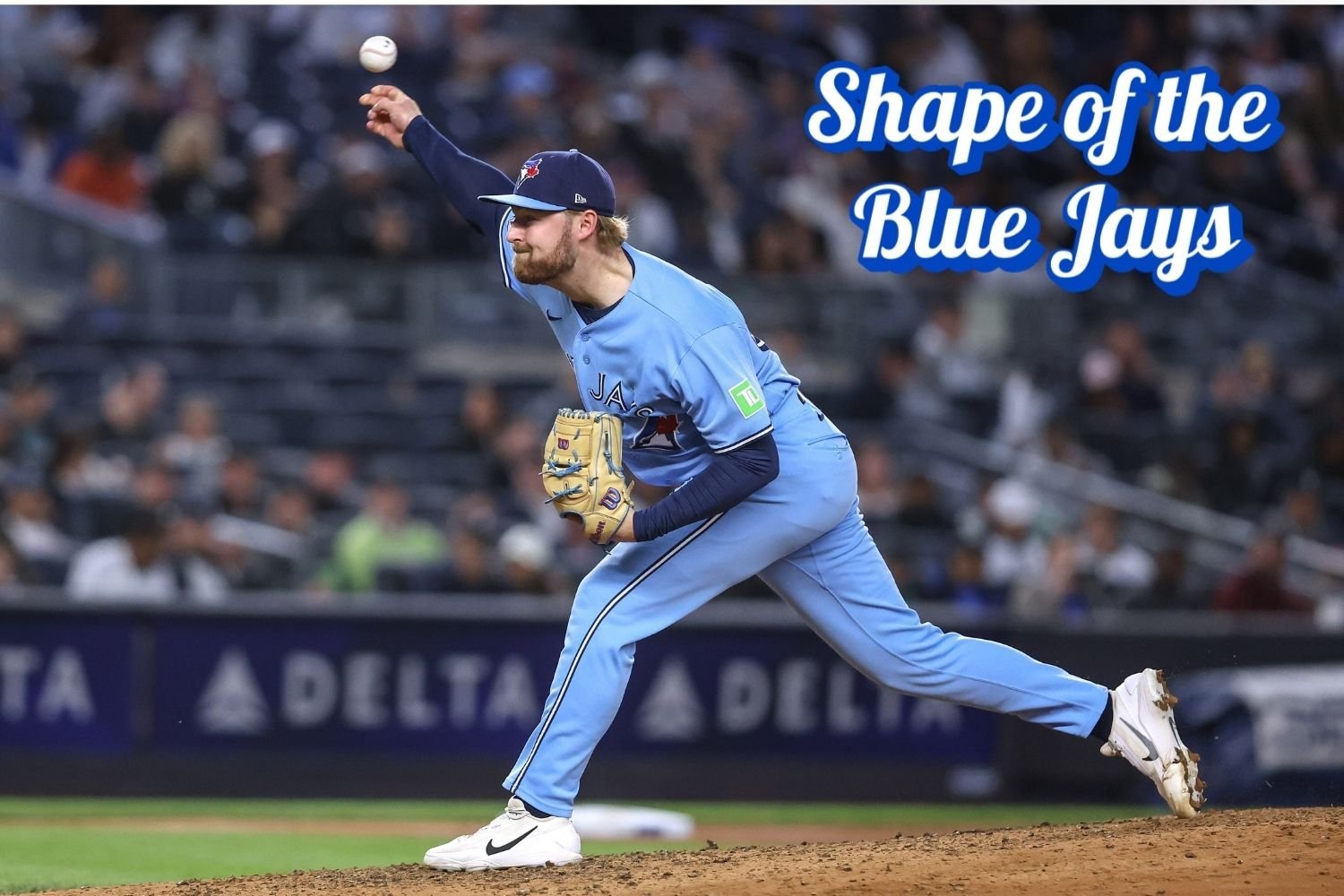 Welcome to Shape of the Blue Jays, my column where I dig into Statcast numbers to analyze recent pitch shape and swing shape trends for Toronto Blue Jays players and discuss how they have impacted their performance. Click here to read the last edition. Quick Hits: Roster Shuffle The periphery of the Jays' roster is going to look a little different this weekend in Baltimore. The team announced Wednesday afternoon they'd traded for old friend Connor Seabold, who was recently DFA'd by the Tigers. Seabold, a right-handed pitcher, was with Toronto in spring training and has spent the past two years as a single-inning reliever but is capable of starting as well. In 11 appearances spanning 15.2 innings for Detroit, he was working on a 3.45 ERA, 20.3% K rate, and 7.2% BB rate, allowing two homers before getting cut loose. With Dylan Cease hitting the IL, the Jays needed another arm who can eat multiple innings as a spot starter/bulk reliever. Seabold figures to factor into their pitching plans this weekend. Later Wednesday evening, Jeff Passan reported that the Blue Jays were going to call up Charles McAdoo from Triple-A Buffalo. The team made the move official on Thursday afternoon. McAdoo was ranked by Baseball America as Toronto's 24th-best prospect before the season but got bumped up to 19th in their first midseason revision after a strong start in Buffalo (.250/.356/.436). He had plus raw power coming into the year and stole a career-high 34 bases in 2025, but BA gave his hit tool an underwhelming 30 grade in their preseason report. While he knows how to lay off pitches out of the zone, his approach borders on being too passive. However, he struck out less than 20% of the time at Buffalo this year, and his zone contact rate was up to 89.3%. McAdoo is a natural third baseman who can play first and has started to get game reps at second base this year. Kevin Gausman Kevin Gausman threw a season-high 19.1% sliders two starts ago against the Pirates. He mentioned to Jays broadcasters in an in-game interview a couple of days later that he'd been fighting a lack of feel for his splitter, although Pittsburgh isn't a good slider-hitting team, so it was a defensible adjustment from a game-planning standpoint as well. It worked, as he pitched into the seventh and also recorded a season-high 39% swing-and-miss rate. Wednesday's start against the Marlins was different as he dialed his fastball usage up to 62.1%, good for second-highest in a single game this year, but he was fighting himself the whole time. His first batter of the game, Xavier Edwards, worked a 10-pitch double, which would become a common theme throughout the afternoon. Just five days after setting that new season-high, Gausman had a single-game low on the swing-and-miss front. Miami put a ton of balls in play, spoiled pitches, and Gausman battled his command about as much as we've seen. Despite all that, he earned a hard-fought no-decision (5 IP, 1 ER, 6 H, 5 K, 2 BB, 95 P), inducing a couple of key double plays and getting out of multiple jams. For a pitching staff as shorthanded as Toronto's right now, Gausman powering through on Wednesday and completing that fifth inning was crucial. Jesús Sánchez Jesús Sánchez's 136 wRC+ in May (entering play on May 28) is second only to Brandon Valenzuela among Blue Jay hitters. His SLG on the season is up to .456 after his big weekend against the Pirates and the grand slam he hit off former teammate Sandy Alcantara on Tuesday. I gave Sánchez a spot in this column a few weeks ago, noting he was tied for the largest year-over-year decline in the majors in bat speed at the time. Good news: He's swinging harder this month. His average bat speed is up 1.5 mph in May compared to April, and he's doing a better job of catching up to fastballs in particular. The glass-half-empty prognosis of Sánchez's performance is that his hard-hit rate is down nearly 10% from April, his chase rate is up over 40% for the month of May, and his zone contact rate is down below 80% this month too. His walk rate on the season is a minuscule 4%, and while he's hitting plenty of line drives, which appears to be intentional, his May BABIP is an inflated .408, and he's outperforming his xwOBA by about 40 points. It's nice to see the bat speed rebounding, and the extra-base hits he's been bringing lately have been much needed, but I can't foresee him sustaining a 136 wRC+ if he continues to swing this much. Spencer Miles Spencer Miles has easily been this team's feel-good story of the year so far. When the Jays took him in the Rule 5 draft, he had never pitched above A-ball or thrown more than 7.1 innings in a season since his senior year at Missouri, thanks to a checkered injury history. Considering all that, concerns about overworking him are always going to be warranted, but as a bulk reliever every fifth day, he has gone above and beyond everything that was expected of him coming in. This month, his ERA is a pristine 1.53 (1.70 FIP, 2.75 xFIP). He's slated to pitch in the Sunday finale of the four-game set against the Orioles opposite Kyle Bradish. Last week at Yankee Stadium (4.1 IP, 0 R, 2 H, 6 K, 1 BB), Miles went sinker-slider-heavy to righties and suffocated lefties with his curveball. To both sides, the curve returned a 55% swing-and-miss rate on the evening. On Tuesday against the Marlins, he threw sinkers to righties 48.3% of the time, a mark he only reached twice prior, and used the sinker and curve in perfect tandem to lefties. Ever since he started getting stretched out, he's been laying off the four-seamer and turning to the sinker as his primary fastball while his curveball and slider play off it. All four of his pitch types grade out as above-average according to PitchingBot's stuff model. He doesn't get much swing and miss but owns a 63rd-percentile K rate because his arsenal lends itself to plenty of called strikes. The curveball is his only offering that isn't running a groundball rate above 55%, and his quality contact suppression is up there with the best in baseball right now. All stats entering May 28, 2026. View the full article
 -
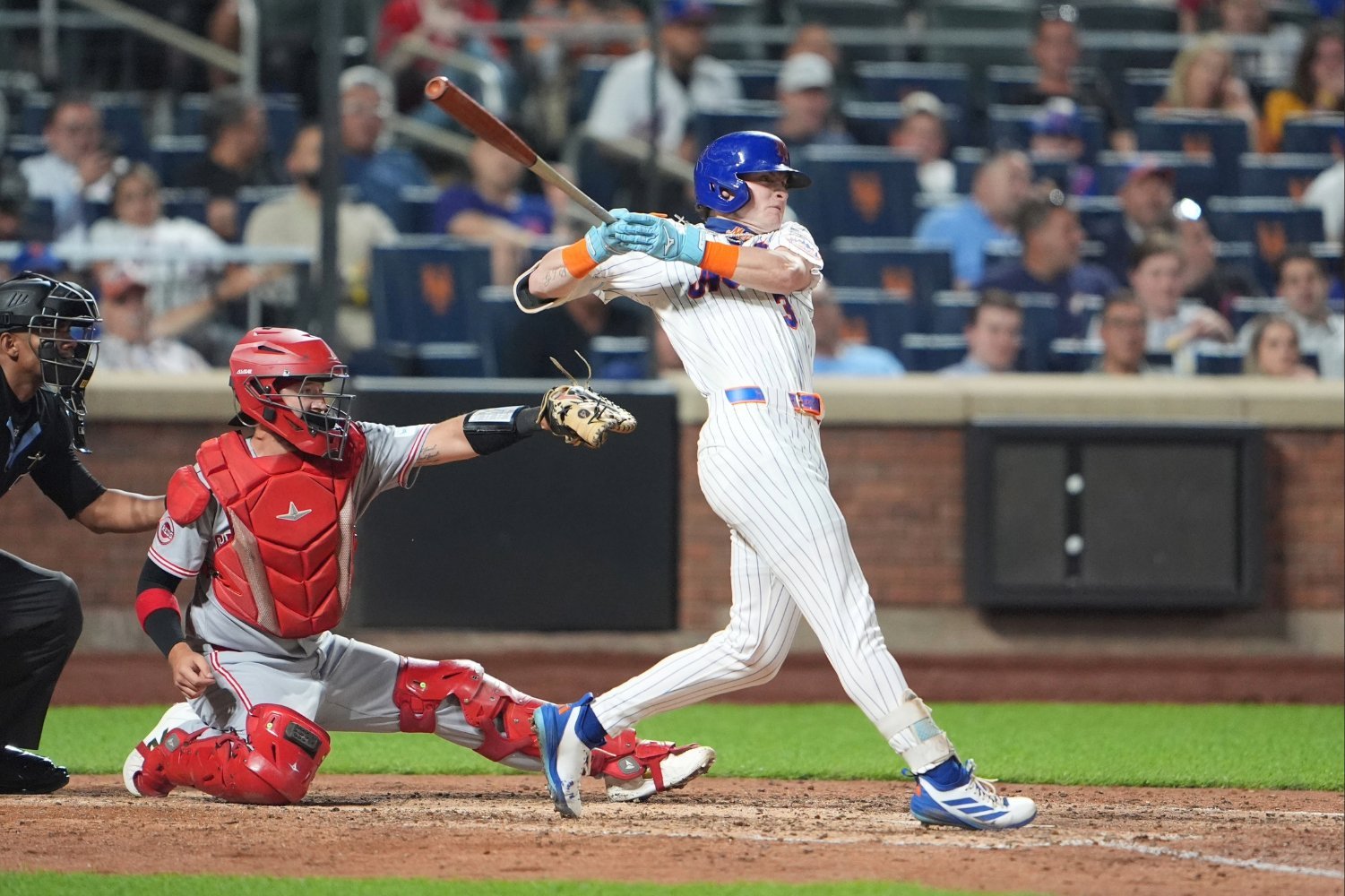 We have a decent sample size to start Carson Benge’s major league career now, and after a rough first handful of games, there is a lot to be optimistic about. Let’s dive into Benge’s strengths, what numbers are really popping out, and what he still needs to work on as he progresses through his rookie campaign. Carson Benge's Background To give a little more context on Benge, this is another example of somebody who sprinted up through the Minor League Baseball ranks. The Oklahoma State alum, who went to the same college as Nolan McLean, was the 19th pick in the 2024 MLB Draft. He cracked the big league Opening Day roster, and so far this season he’s sporting a batting average around .250, an on-base percentage just above .300, and looks to be a pretty well-rounded outfielder in the Big Apple. Hard-Hit Balls Where is Benge excelling? Quality of contact is a big area to look at early on. His average exit velocity is hovering around the 90 miles per hour mark, putting him in the top half among big-league hitters. His expected batting average of .265 implies that he’s hit into a decent amount of bad luck as well. Benge also has a knack for finding the right part of the bat, as shown by his above-average squared-up and hard-hit rates. Making Contact Benge, the former two-way standout, also has shown great plate discipline. He hasn’t ventured outside of the zone much, as his 27.0% chase percentage is well better than the league average. He hasn’t come up empty much either, as the 23-year-old right fielder whiffs just 19.8% of the time, putting him in the top 25% of all hitters. Benge has sprayed the ball pretty much all over the field, though all three of his long balls in 2026 have gone to the pull side in deep right center field. Benge’s blistering speed has come in handy to this point as well. His top 20% sprint speed helps him on the basepaths, and he has eight stolen bags on the young season to show for it. The hustle shows in the outfield as well, leading to above-average marks in right field. Arm Strength Another plus to Benge’s game, also referencing his value in right, is his legendary arm strength. This is arguably the most impressive thing about the 23-year-old, as his arm strength is rated in the top percentile of all outfielders. This is someone who can do a little bit of everything, and while I wouldn’t quite say he’s at five-tool player status yet, he’s certainly multi-faceted. Area for Improvement: Patience One aspect for the young left-handed hitter to work on would be his ability to draw walks. While he isn’t chasing a ton, this is someone walking just 7.0% of the time. That is well below the league average in the 25th percentile. Again, it’s not that he’s venturing out of the zone a whole lot. This is more or less an indicator that Benge is looking for something over the plate early, and doesn’t have much of a desire to work deep into counts. Sometimes, for a rookie, it’s best to keep the art of an at-bat simple. If it’s a matter of looking for a first-pitch fastball, so be it. One other aspect to work on is success of opposing pitchers’ secondary stuff, as Benge is hitting just .172 against off-speed offerings with a single extra-base hit in 30 batted ball events. View the full article
 -
 Who was the last catcher to be the Marlins RBI leader for a single season? Watch how Nate, Kevin, Sean and George fared.View the full article
 -
 Transactions: OF Jacob Hurtubise activated by AAA Nashville from Development List RHP JB Bukauskas placed on AAA Nashville’s 7-day injured list Signed RHP Bryce Schaum and assigned to ACL Brewers Game Action: Nashville Pre-Game Media Notes Final: Nashville 2, Gwinnett (Braves) 0 Box Score Via the Sounds’ website, game details and we encourage readers to review affiliate write-ups as part of their Link Report routine: Sounds Shutout Stripers on Thursday Night It’s not exactly clear how a pitcher can struggle in AA, then suddenly turn a corner and thrive at higher levels, but Tobias Myers did it in 2023-24 and RHP Tyson Hardin appears to be repeating the feat in 2026 (7.67 AA ERA, 0.96 AAA ERA). With six scoreless innings on Thursday, pitching on 4 days’ rest no less, the 24-year-old Hardin (6 IP, 0 R, 2 H, 1 BB, 5 Ks) has now allowed just 2 earned runs in 18 2/3 AAA innings. He retired 18 of 21 batters faced, though the 1st inning did end on a 106.7mph line out to center field with 2 runners on base. OF Luis Lara (2-for-3) doubled but was stranded in the 4th inning, then tripled home SS Cooper Pratt (1-for-3) for a 1-0 lead in the 7th inning. The late offensive surge gave the Sounds’ stout bullpen the opportunity to collect a Win (RHP Reiss Knehr – 2 IP, 0 R, 0 H, 0 BB, 3 Ks; 2.35 ERA) and a Save (RHP Craig Yoho – 1 IP, 0 R, 1 H, 0 BB, 3 Ks; 1.13 ERA). Sounds’ Extras: Nashville’s outfield collected 4 of the team’s 5 hits, including a Luis Matos (1-for-3) RBI double and Akil Baddoo reaching base twice (1-for-3, walk). This was an uber-quick contest in front of 6,421 Nashville fans, finishing 9 innings in 1 hour, 57 minutes, helped by just total 3 walks issued. Chances were few, as the team’s combined to go 1-for-7 with runners in scoring position. Friday’s outlook: LHP Robert Gasser (back in AAA after 2 MLB starts) is the scheduled starter, as Nashville seek to extend their series lead to 3 games to 1. Biloxi Pre-Game Media Notes Rain Out: Biloxi at Columbus Via the Shuckers’ website, rain out details: Shuckers, Clingstones Postponed on Thursday in Columbus Before the rains came and scuttled things, the main news was that SS Jesus Made was back in the listed starting lineup after missing Wednesday’s doubleheader defeat due to illness. Hopefully the extra time will also allow OF Damon Keith (last played on May 23rd) to return to action. Friday’s outlook: After his planned Thursday start was rained out, RHP Brett Wichrowski (6.70 ERA, 1.54 WHIP, 10.2 K/9 in 41 2/3 IP) is most likely to get the call for Friday’s game, with Biloxi needing a win to avoid a 3-0 series hole. The teams have also planned a doubleheader for Saturday. Wisconsin Pre-Game Media Notes Final: Wisconsin 13, Peoria (Cardinals) 11 Box Score Via the Timber Rattlers’ website, game details: Wisconsin Survives Slugfest with Peoria Thanks again to the terrific Wisconsin media team for the detailed game report and extensive video highlights: Make sure not to miss the Mehring-Timm 16-minute post-game podcast, featuring Manager Nick Stanley, Josh Knoth, Eric Bitonti and David Garcia. The Timber Rattlers led 2-0 and 4-2 early but found themselves facing a 7-5 deficit entering the bottom of the 7th inning. But boy did they turn it around in front of 1,984 home fans, with 7 consecutive batters reaching base (3 singles, 4 walks), including SS Luis Pena’s RBI knock which gave them an 8-7 advantage. 24 runs, 25 hits, 20 walks and 1 HBP can make for an entertaining, longer game (3 hours, 37 minutes). Thankfully, Wisconsin managed to cover the 9 innings with just 3 pitchers, versus 5 hurlers and a position player for the opposition. While starting RHP Josh Knoth (3 IP, 2 R (0 ER), 1 H, 2 BB, 1 HBP, 3 Ks) and RHP Yerlin Rodriguez (1 2/3 IP, 0 R, 2 H, 1 BB, 1 K) had respectable lines, Rodriguez did allow a 3-run triple the first batter he faced, further tarnishing RHP Travis Smith’s middle relief tally (4 1/3 IP, 9 R, 11 H, 2 BB, 4 Ks). That cut Wisconsin’s advantage to 12-11, but Rodriguez rallied with a strike out and ground out to strand the baserunner at 3rd base and escape the top of the 8th inning. He also induced the game-ending ground out with two runners on base in the final frame. Timber Rattlers’ Extras: Bitonti (3-for-4, triple, 2 doubles, walk, 2 RBIs), C David Garcia (3-for-5, HR, 3 RBIs), Pena (2-for-3, 3 walks, RBI, SB) and 3B Andrew Fischer (1-for-2, 4 walks, 2 RBIs) were the most significant offensive contributors on a busy day. 2B Daniel Dickinson also walked 4 times and OF Josiah Ragsdale singled and walked twice. Knoth’s 56 pitches (34 strikes) in his 5th outing of 2026 (including 3 rehab starts in Arizona) was a robust amount after missing the 2025 season due to injury. OF Braylon Payne hasn’t played since May 21st, though we’re hopeful he’ll feature soon as he’s not been placed on any injured list. Friday’s outlook: RHP Ethan Dorchies (7.18 ERA, 1.69 WHIP, 9.2 K/9 in 31 1/3 IP) is still looking for his 2025 form (2.74 ERA that season), though is ready to make his 9th start of 2026 as Wisconsin seeks to grab a 3-2 lead in this week’s 7-game series. Wilson Pre-Game Media Notes Final: Wilson 4, Myrtle Beach (Cubs) 3 Box Score Via the Warbirds’ website, game details: Encarnacion Wills Wilson to Comeback Win The detailed game write-up covers the come-from-behind victory very well, with OF Handelfry Encarnacion (4-for-5, double, 2 RBIs, SB) sparking the rally and Wilson scoring all their runs in the final 3 innings. The Warbirds outhit their opponents 10-to-4, but a 2-for-14 performance with runners in scoring position made life more difficult. This included failing to cash in on 2-on, nobody out opportunities in the 1st and 3rd innings. The 7th inning looked like it may be a repeat, as 3B Filippo Di Turi (1-for-3, walk) and DH Luis Lameda opened with back-to-back singles and were still on base 2 outs later, but Encarnacion delivered the big game-tying hit: Four of the team’s hits were doubles, including back-to-back two-baggers by OF Jose Anderson and 1B Frederi Montero to take the lead in the 8th inning: Massive credit to starting LHP Enderson Mercado (5 IP, 2 R (1 ER), 8 Ks) and LHP Andrew Healy (4 IP, 1 R, 3 Ks) for allowing only 4 hits, 4 walks and 1 HBP over 9 innings to give Wilson a chance for the comeback victory. Warbirds’ Extras: Seven Wilson batters collected at least one hit, including SS Brady Ebel (1-for-3, 2 walks) extending his hitting streak to 12 games. Kudos to the defense for turning two double plays, including a GIDP to escape a 2-on, 1-out situation in the bottom of the 8th inning while leading 3-2. The box score also credits a strike-em-out, throw-em-out double play in the 7th inning, though I didn’t include that in the total. Friday’s outlook: 20-year-old RHP Jarrette Bonet (4.43 ERA, 1.20 WHIP, 9.9 K/9 in 42 2/3 IP) is scheduled to make his 10th start, with Wilson aiming to extend its series lead to 3-1. Final: ACL Brewers 4, ACL Dodgers 3 (in 7 innings) Box Score RHP Caleb Nieman (4 IP, 1 R (0 ER), 1 H – single), 1 BB, 4 Ks) had a breakout performance with 4 innings of solid relief work to earn his first career Win, entering a scoreless game in the 2nd inning and exiting with a 4-1 advantage a few innings later. Despite going 1-for-10 with runners in scoring position, the Zona Crew still produced the necessary offense, with 1B Roderick Flores walking and scoring on a balk for a 1-0 lead, 2B CJ Hughes tripling and scoring on OF Engel Paulino’s RBI single for a 2-1 advantage in the 4th inning, then Flores bringing Paulino home with a sacrifice fly. OF Alexander Frias (1-for-3, walk; 1.189 OPS) continues to impress with his stateside play, smacking his 3rd homer of 2026 with a solo blast in the 5th inning for a 4-1 lead. RHP Bryan Regalado entered in the penultimate inning and put the first three batters on base (BB, HBP, RBI single) before getting 6 outs from the next 7 batters (including a GIDP) to earn his first career Save. 6’5” RHP Luke Roupe’s 2nd start of 2026 went undamaged (1 IP, 0 R, 1 H, 1 BB, 0 Ks), helped out by an inning-ending ground ball double play, one of three turned by the Brewers’ defense. The team also stole six bases, led by Paulino (1-for-3, walk, RBI, 2 SBs). Hughes (2-for-4, triple, RBI, SB) and SS Cristopher Acosta (2-for-4, SB) each collected two (2) hits. Hopefully the victory did not come at a cost, as DH/OF Brailyn Antunez exited one inning after being hit-by-pitch. We hope that you enjoy the Minor League Link Report. On Friday, five Minor League contests begin with games for Wilson and Biloxi at 6:05pm and end with the ACL Brewers at 8:00pm CST. The Milwaukee Brewers also commence their series in Houston at 7:10pm. Organizational Scoreboard including starting pitcher info, game times, MiLB TV links, and box scores Current Milwaukee Brewers Organization Batting Stats and Depth Current Milwaukee Brewers Organization Pitching Stats and Depth View the full article
 -
 Kerrington Cross belted a walk-off home run in the ninth inning to lift the Low-A Lake Elsinore Storm past the Inland Empire 66ers 5-4. Ethan Salas went 3-for-4 with two RBIs in Double-A San Antonio's loss, while Triple-A El Paso was overwhelmed early and High-A Fort Wayne belted a trio of homers and also lost. Padres Transactions No roster moves. Early Isotopes Blitz Too Much For Chihuahuas To Overcome Jase Bowen and Carlos Rodriguez each went 3-for-5, but the Triple-A El Paso Chihuahuas were overwhelmed by an early onslaught as the Albuquerque Isotopes won 12-7. The Isotopes scored in each of the first five innings, including a five-run fourth inning, and finished the game with nine walks and 11 hits. Clay Dungan and Victor Duarte homered for the Chihuahuas, with Dungan's two-run blast in the sixth inning going 458 feet, the second-longest by the Chihuahuas this year (Bowen, 462 feet). Chihuahuas right-handed starter Evan Fitterer, who entered the game unscored upon in his last nine innings, gave up five runs (four earned) in three innings on five hits and four walks with two strikeouts. Left-hander Miguel Cienfuegos followed by allowing all five runs in the fourth inning on five hits, a walk and no strikeouts. The five-run outburst was the 32nd time the Chihuahuas have allowed four or more runs in an inning this year. Bowen had his fifth triple this season, tied for second-most in the Pacific Coast League, while Rodriguez matched his season high for hits in a game. EP_0528.mp4 Player AB R H RBI BB K Samad Taylor 3 0 0 0 2 1 Carlos Rodríguez 5 1 3 1 0 0 Pablo Reyes 5 1 1 0 0 1 Jase Bowen 5 1 3 1 0 2 Will Wagner 5 0 1 1 0 1 Nick Schnell 4 0 0 1 0 0 Marcos Castañon 3 2 1 0 1 1 Clay Dungan 3 1 1 2 1 0 Victor Duarte 3 1 2 1 0 0 Player IP H R ER BB K HR Evan Fitterer (L) 3 5 5 4 4 2 0 Miguel Cienfuegos 1 5 5 5 1 0 0 Misael Tamarez 1 1 2 2 3 0 0 Justin Yeager 2 0 0 0 1 2 0 Alek Jacob 1 0 0 0 0 1 0 Ethan Salas Has 3 Hits, But Missions Fall Shots Against Hooks Ethan Salas went 3-for-4 with two RBIs, but the host Double-A San Antonio Missions dropped an 8-5 decision to the Corpus Christi Hooks. Salas, Padres Mission's No. 1 prospect, also scored a run as he raised his batting average to .315 with his fourth three-hit game of the season and ninth of his career. Francisco Acuna hit a two-run homer for the Missions, his third of the season. Missions right-handed starter Victor Lizarraga struggled with his control. In 3⅔ innings, Lizarraga gave up six runs (four earned) in five hits and four walks while striking out five. It was the third time in 10 starts he walked at least four. After the Hooks scored twice in the top of the first, the Missions tied it in the bottom of the third. Kai Murphy had a leadoff single and Salas rifled his ninth double of the season over the center fielder's head, scoring Murphy. Salas came around on Tirso Ornelas' one-out single. But the Hooks regained control with a four-run fifth inning and two more in the seventh. Acuna drilled his two-run shot in the bottom of the seventh. The Missions put together a rally in the ninth. Ryan Jackson was hit by a pitch and Luis Verdugo walked. With one out, Murphy reached on a fielder's choice, with an error on the second baseman loading the bases. Salas hit a sacrifice fly to left and pinch-hitter Albert Fabian walked to load the bases again, but Ornelas grounded out to end the game. SA_0528.mp4 Player AB R H RBI BB K Ethan Salas 4 1 3 2 0 0 Kai Roberts 4 0 0 0 0 2 Albert Fabian 0 0 0 0 1 0 Carson Tucker 0 0 0 0 0 0 Tirso Ornelas 4 0 1 1 1 1 Braedon Karpathios 3 0 0 0 1 0 Romeo Sanabria 4 0 0 0 0 1 Ryan Jackson 3 1 1 0 0 1 Luis Verdugo 2 1 0 0 2 1 Francisco Acuna 4 1 1 2 0 1 Kai Murphy 4 1 1 0 0 0 Player IP H R ER BB K HR Victor Lizarraga (L) 3 2/3 5 6 4 4 5 1 Omar Cruz 2 1 0 0 1 2 0 Johan Moreno 1/3 0 0 0 0 0 0 Francis Peña 2 2 2 2 1 3 0 Andrew Moore 1 1 0 0 0 2 0 TinCaps Launch 3 Homers, But Streaking South Bend Prevails Jake Cunningham hit his team-leading 10th homer of the season, one of three solo shots by the TinCaps, but High-A Fort Wayne suffered a 6-3 defeat at the hands of the red-hot host South Bend Cubs. The Cubs have won eight straight and 11 of their last 12. Carlos Rodriguez and Rosman Verdugo also went deep for the TinCaps. Cunningham homered in the top of the second—his third in three games in this series and fifth in nine games in South Bend this year—Rodriguez hit his fourth in the fifth inning and Verdugo added his eighth in the sixth inning. TinCaps right-handed starter Carson Montgomery opened with four scoreless innings before running into trouble in the fifth. That is when Montgomery hit the leadoff batter, walked a pair, had a wild pitch and allowed a double steal before being lifted with the bases loaded and one out. Right-handed reliever Kleiber Olmedo wasn't able to escape the jam, allowing a walk and a three-run double to the next two hitters for a 4-2 South Bend lead. After Verdugo's homer made it 4-3 in the top of the sixth, South Bend scored in the bottom half to reclaim a two-run lead. FW_0528.mp4 Player AB R H RBI BB K Justin DeCriscio 3 0 1 0 0 0 Rosman Verdugo 4 1 1 1 0 1 Lamar King Jr. 4 0 0 0 0 1 Alex McCoy 4 0 1 0 0 1 Jake Cunningham 4 1 1 1 0 2 Carlos Rodriguez 4 1 1 1 0 1 Jack Costello 2 0 0 0 1 1 Jonathan Vastine 3 0 0 0 0 2 Zach Evans 3 0 1 0 0 0 Player IP H R ER BB K HR Carson Montgomery (L) 4 1/3 2 3 3 5 4 0 Kleiber Olmedo 2/3 1 1 1 1 1 0 Javier Chacon 2 2 1 1 0 4 0 Tucker Musgrove 1 1 1 1 0 3 1 Kerrington Cross' Walk-Off Homer Caps Late Storm Comeback Kerrington Cross drilled a solo walk-off homer with two outs in the bottom of the ninth as the host Lake Elsinore Storm scored all of their runs in the final three innings for a comeback win over the Inland Empire 66ers. The Storm were down 3-0 entering the seventh, then scored once in that inning and three times in the eighth before needing Cross' dramatic blow to win it. It was the second walk-off win in three games for the Storm. Cross and Yoiber Ocopio each had two hits, with Cross scoring twice and Ocopio driving in a run and scoring once. Storm right-handed starter Bryan Balzer turned in a nice outing, matching his career and season high by going 6⅓ innings, allowing three runs (two earned) with two walks and punching out six. He did give up a pair of homers in the five hits he allowed. Right-hander Carson Swilling went 1⅔ scoreless innings, striking out three, while right-hander Will Koger pitched the ninth, allowing a run and striking out two. Inland Empire held a 3-0 lead when the Storm began its comeback in the bottom of the seventh. Ocopio had a leadoff single, went to second on a groundout and to third on a wild pitch before scoring on Dylan Grego's single to right to make it 3-1. In the eighth, Cross got things started with a leadoff single, Jose Verdugo was hit by a pitch and, after a wild pitch, Truitt Madonna walked to load the bases. Another wild pitch made it 3-2 and, one out later, Ocopio hit a sacrifice fly to tie it. George Bilecki then lined a single to the right-field corner to plate Madonna with the go-ahead run and a 4-3 Storm lead. However, the 66ers scored in the top of the ninth on a walk and a pair of singles. But Cross sent everyone home happy when he launched a 2-0 pitch for his fifth homer of the season. LE_0528.mp4 Player AB R H RBI BB K Ryan Wideman 5 0 1 0 0 1 Kerrington Cross 5 2 2 1 0 1 Jose Verdugo 3 1 1 0 0 0 Truitt Madonna 3 1 0 0 1 0 Yimy Tovar 4 0 0 0 0 1 Yoiber Ocopio 3 1 2 1 0 0 George Bilecki 3 0 1 1 1 0 Dylan Grego 3 0 1 1 1 0 Conner Westenburg 4 0 1 0 0 0 Player IP H R ER BB K HR Bryan Balzer 6 1/3 5 3 2 2 6 2 Carson Swilling 1 2/3 1 0 0 1 3 0 Will Koger (W) 1 2 1 1 1 2 0 Top 20 Prospect Performance Ethan Salas: 3-for-4, 2B, 2 RBI, SB Kash Mayfield: DNP Miguel Mendez: DNP Kruz Schoolcraft: DNP Ryan Wideman: 1-for-5, K Jorge Quintana: DNP Ty Harvey: On injured list Kale Fountain: Injured, out for season Braedon Karpathios: 0-for-3, BB Lamar King Jr.: 0-for-4, K Jagger Haynes: DNP Alex McCoy: 1-for-4, 2B, K Truitt Madonna: 0-for-3, BB Tucker Musgrove: 1 IP, 1 H, 1 R, 3 K, HR Garrett Hawkins: DNP Michael Salina: DNP Eric Yost: DNP Rosman Verdugo: 1-for-4, HR, RBI, K Bryan Balzer: 6⅓ IP, 5 H, 3 R, 2 BB, 6 K, 2 HR Deivid Coronil: DNP View the full article
 -
What are your Marlins vs. Mets series predictions?
DiamondCentric posted an article in Fish On First
 Once again in 2026, I will be monitoring Miami Marlins predictions from our valued SuperSubs, Fish On First staffers and livestream guests. Individual article pages like this one will be created prior to every Marlins series and featured prominently on the FOF site. Consistent participation is key if you want to win this annual contest. Submissions only take a few seconds. Scoring system A "perfect" series is worth three points: Earn one point for predicting which team will win the upcoming series Earn one point for predicting the precise number of victories for each team Earn one point for predicting the “Series MVP” who accumulated the highest win probability added (WPA) during the series as calculated by FanGraphs (could pick a player from either team) FOF SuperSub Nicholas Milton and FOF staffer Jeremiah Geiger are currently tied atop the 2026 season leaderboard, which will be updated between every Marlins series. If you are a SuperSub, leave a comment with your Prediction Time picks on this page, or join the Marlins Discord Server and submit there. We'll feature them on the upcoming Fish On First LIVE episode and track your points throughout the season! Any picks submitted prior to the first pitch of the series opener will be counted. If you are not a SuperSub, please consider signing up here to support the FOF staff. Series preview notes Probable starting pitchers: RHP Max Meyer (MIA) vs. RHP Freddy Peralta on Friday RHP Tyler Phillips (MIA) vs. RHP Christian Scott on Saturday RHP Janson Junk (MIA) vs. RHP Noah McLean on Sunday The Marlins rank 18th in MLB with a 97 wRC+ and 13th in MLB with a 3.92 FIP. They are 5-5 in their last 10 games and have a 8-16 record on the road this season. The following Marlins players are on the injured list: Griffin Conine (10-day IL), Ronny Henriquez (60-day IL), Leo Jiménez (7-day IL), Adam Mazur (60-day IL) and Robby Snelling (60-day IL). The Mets rank 29th in MLB with a 85 wRC+ and seventh in MLB with a 3.65 FIP. They are 3-7 in their last 10 games and have a 12-15 record at home this season. The following Mets players are on the injured list: Francisco Alvarez (10-day IL), Reed Garrett (60-day IL), Justin Hagenman (60-day IL), Clay Holmes (60-day IL), Francisco Lindor (10-day IL), Ronny Mauricio (10-day IL), Tylor Megill (60day IL), Dedniel Núñez (60-day IL), Jorge Polanco (10-day IL), Luis Robert Jr. (60-day IL), Kodai Senga (15-day IL), Tyrone Taylor (10-day IL). View the full article
 -
Running Through The Twins' Late May Minor League Promotions
DiamondCentric posted an article in Twins Daily
 Theo and Jeremy go over the names promoted up and down a level, which include Ty Langenberg, Ricardo Olivar, Cory Lewis, Jaime Ferrer, and more. View the full article
 -
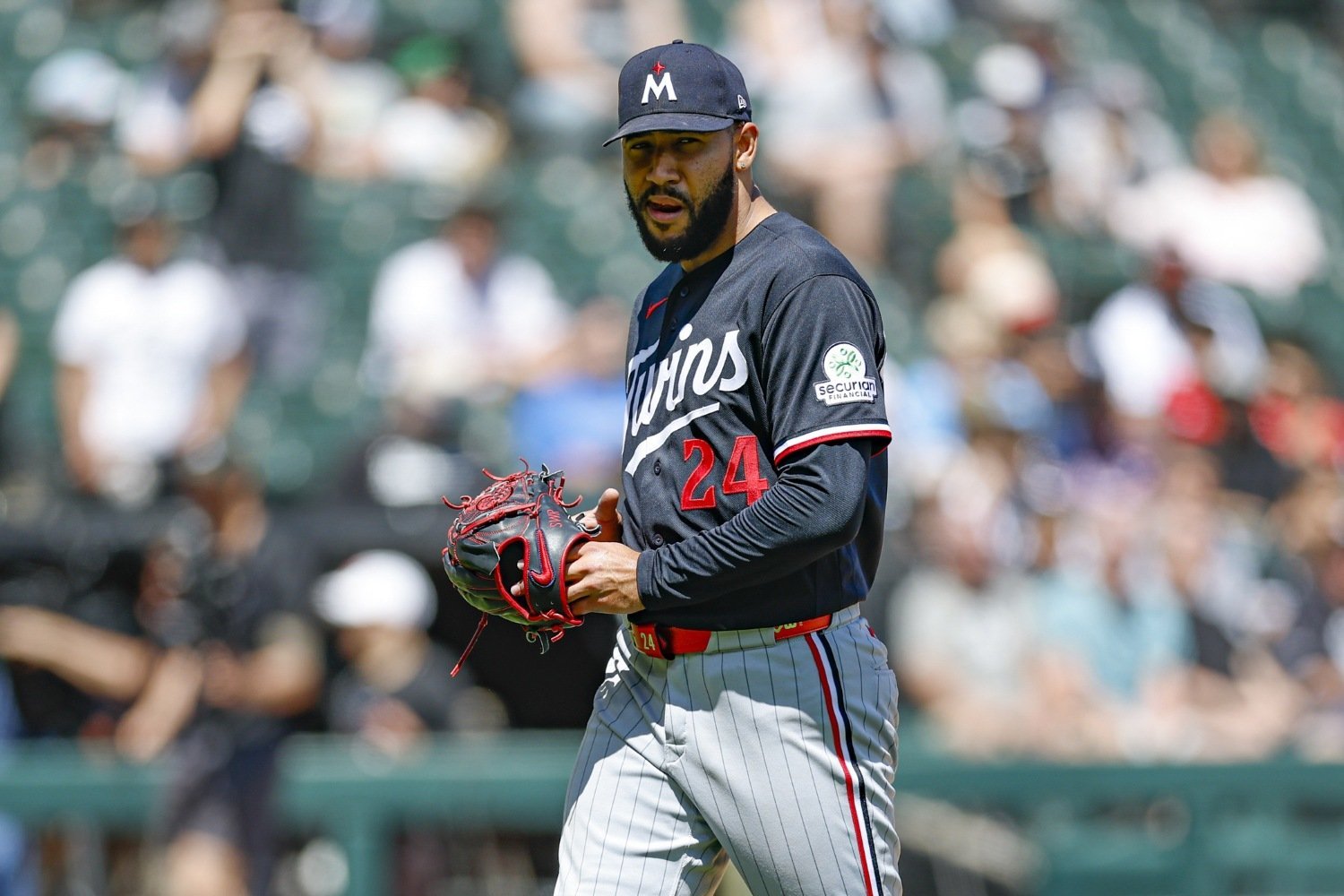 Box Score SP: Simeon Woods Richardson - 2 2/3 IP, 5 H, 5 R, 3 BB, 4 K (67 pitches, 40 strikes (60% strikes)) Home Runs: None Bottom 3 WPA: Simeon Woods Richardson (-0.28), Trevor Larnach (-0.06), Ryan Kreidler (-0.06) Win Probability Chart The Twins entered Thursday’s series finale against the White Sox desperately needing a bounce-back performance after getting blown out 15-2 the night before. Instead, another sloppy and frustrating afternoon pushed them further behind Chicago in the AL Central race. After Kendry Rojas was scratched roughly an hour before first pitch with elbow soreness, Simeon Woods Richardson was forced into an unexpected start. The Twins never found much rhythm offensively behind him, while Chicago capitalized on walks and mistakes throughout the afternoon to hand Minnesota a disappointing 6-2 loss and a three-out-of-four series defeat. The loss dropped the Twins to 27-30 on the season. WALKS AND MISTAKES PROVE COSTLY EARLY For a brief moment, it looked like Woods Richardson might settle in nicely despite the late change. The right-hander struck out Sam Antonacci and Munetaka Murakami to begin the bottom of the first. After getting ahead of Miguel Vargas 0-2, he appeared on the verge of a clean opening inning. Instead, Vargas worked a two-out walk, stole second base, and quickly came around to score when Colson Montgomery ripped a single back up the middle to give Chicago an early 1-0 lead. Minnesota’s defense helped Woods Richardson escape additional trouble in the inning, with Orlando Arcia making a sliding stop at second base to rob Chase Meidroth of a hit, but the warning signs were already there. After working around a leadoff double from Tristan Peters in the second inning, Woods Richardson completely unraveled in the third. Murakami drew a one-out walk, Montgomery singled for his second hit of the afternoon, and another walk to Meidroth loaded the bases with two outs. Peters then beat out a softly hit infield single to plate a run, before Randal Grichuk delivered the big blow. After getting a fastball at the bottom of the zone, Grichuk ripped a liner into right field that cleared the bases and stretched the White Sox lead to 5-0. All five runs charged to Woods Richardson scored after walks extended innings, once again highlighting the issue that has consistently haunted the Twins’ pitching staff throughout the season. He exited after just 2 2/3 innings. DAVIS MARTIN COMPLETELY SHUTS DOWN THE TWINS While Minnesota’s pitching staff battled command issues, White Sox starter Davis Martin looked completely locked in from the opening inning. Martin retired the first six Twins hitters he faced and needed only 23 pitches to get through the opening two frames. Even when Minnesota finally generated a little traffic in the third inning, Martin calmly worked through it. Tristan Gray recorded the Twins’ first hit of the afternoon with a single up the middle in the third. He later stole second base, and Byron Buxton followed with a walk to put two runners aboard. Martin responded by getting Brooks Lee to ground out and end the inning. That sequence ended up being one of Minnesota’s better opportunities against him all afternoon. The Twins managed just three hits through Martin’s six innings of work, while repeatedly falling behind in counts and struggling to generate consistent hard contact. He retired the side in order four separate times and finished six dominant innings on only 84 pitches. Minnesota finally scratched across its first run in the fifth inning after Arcia worked a leadoff walk and Gray doubled off the right field wall. Ryan Kreidler followed with a groundout that brought home Arcia and cut the deficit to 6-1, but the Twins were going to need a lot more than that. Even when Josh Bell snapped an 0-for-14 skid with an automatic double in the seventh inning, the Twins could only manufacture a sacrifice fly from Victor Caratini before the inning ended. The eighth inning briefly offered another opportunity after Buxton singled and Lee reached on an error, but Trevor Larnach and Kody Clemens both struck out swinging to strand the runners and effectively end any hopes of a comeback. THE TWINS NEVER RECOVER AFTER ANOTHER SLOPPY PERFORMANCE Minnesota’s pitching staff settled down after Woods Richardson’s rough third inning, but the damage had already been done. Andrew Morris struck out the side in the fourth despite allowing an unearned run after a throwing error on a pickoff attempt helped set up another Chicago score. Travis Adams bounced back from a difficult outing the night before with a clean fifth inning, while Taylor Rogers, Anthony Banda, and Yoendrys Gómez combined to keep the White Sox quiet over the final three innings. But the Twins’ offense simply never gave them much of a chance. Gray finished with two of Minnesota’s five hits, while Buxton, Bell, and Caratini accounted for the others. Outside of a few isolated moments, the lineup struggled to put together any sustained pressure against Chicago's pitching. After entering the series just a half-game behind the White Sox in the division standings, the Twins now leave Chicago having dropped three of four games to a divisional team directly ahead of them in the AL Central. And after an ugly blowout loss Wednesday night, Thursday’s frustrating finale only made an already disappointing series feel even worse. What’s Next? The Twins continue their road drop this weekend, as they travel to Pittsburgh to take on the Pirates in a three-game series starting tomorrow. Taj Bradley is lined up to start for the Twins, and right-hander Jared Jones will make his season debut for Pittsburgh. First pitch is set for 5:45 PM CT, on Apple TV+. Postgame Interviews Coming Soon! Bullpen Availability Chart SAT SUN MON TUE WED THU TOT Rojas 45 0 0 0 0 0 45 Orze 0 10 0 0 29 0 39 Gómez 0 22 0 18 0 17 40 Morris 32 0 0 8 0 29 40 Rogers 6 13 0 16 0 7 35 Woods Richardson 0 0 35 0 0 67 35 Adams 0 1 0 0 33 12 46 Banda 0 10 0 10 0 14 20 View the full article
 -
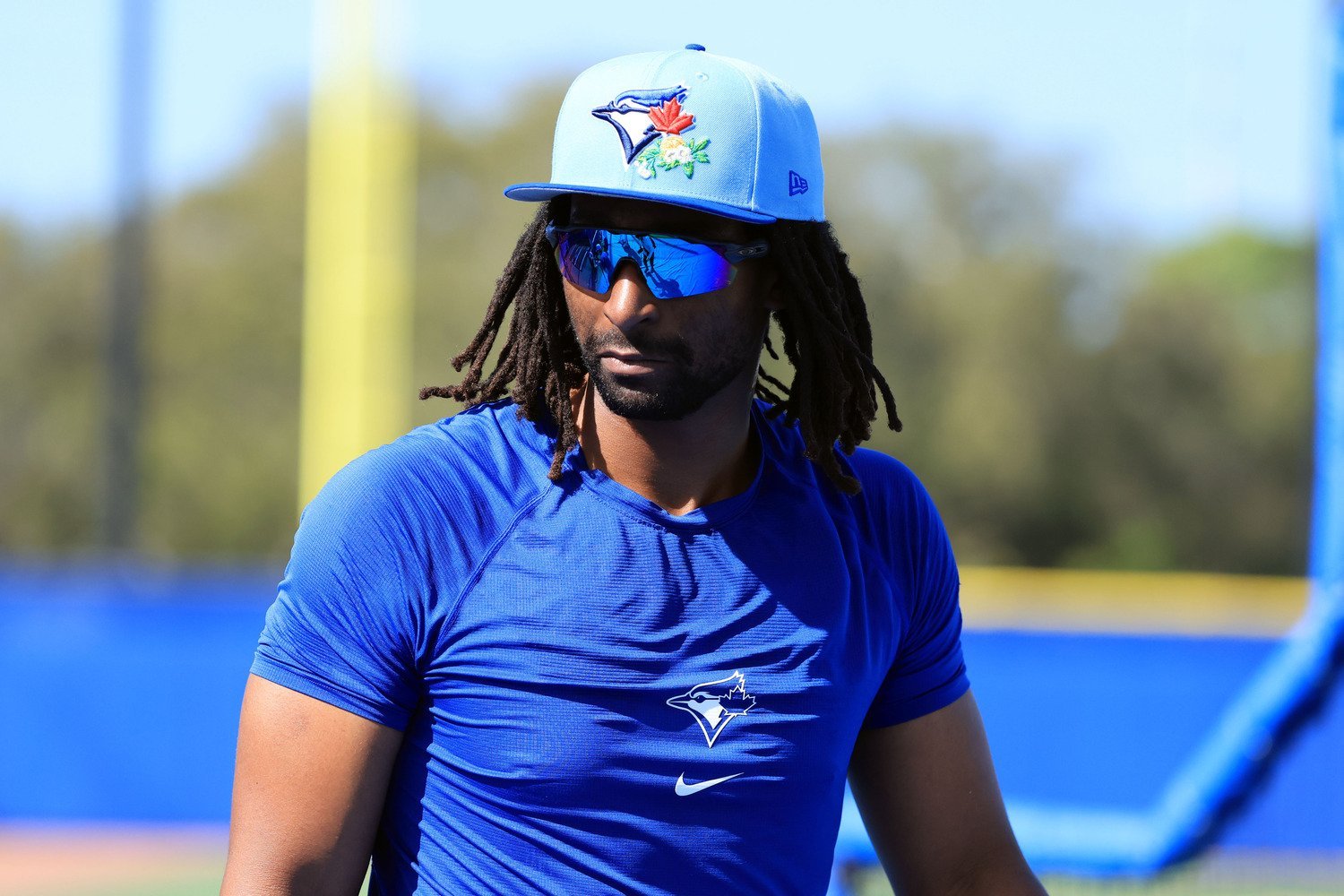 The Toronto Blue Jays have officially selected infield prospect Charles McAdoo to their active roster. He will replace fellow righty-batting infielder Lenyn Sosa, who heads to the IL with a right wrist contusion after getting hit by a pitch on Tuesday. Lazaro Estrada (shoulder impingement) has been transferred to the 60-day IL to open space on the 40-man roster; the right-hander had been on the 15-day IL since April 4. The Jays will hope McAdoo (Jays Centre's No. 14 prospect) can be a spark for their offense, which has struggled against left-handed pitching in 2026. In addition, Connor Seabold has reported to the Jays. He will be available out of the bullpen tonight, giving the Jays a much-needed fresh arm. Fellow right-hander Chase Lee has been optioned to make room on the active roster. Toronto already freed up a 40-man slot for Seabold when they traded for him yesterday. View the full article
 -
Garrett Whitlock Goes On Red Sox's Injured List With Knee Inflammation
DiamondCentric posted an article in Talk Sox
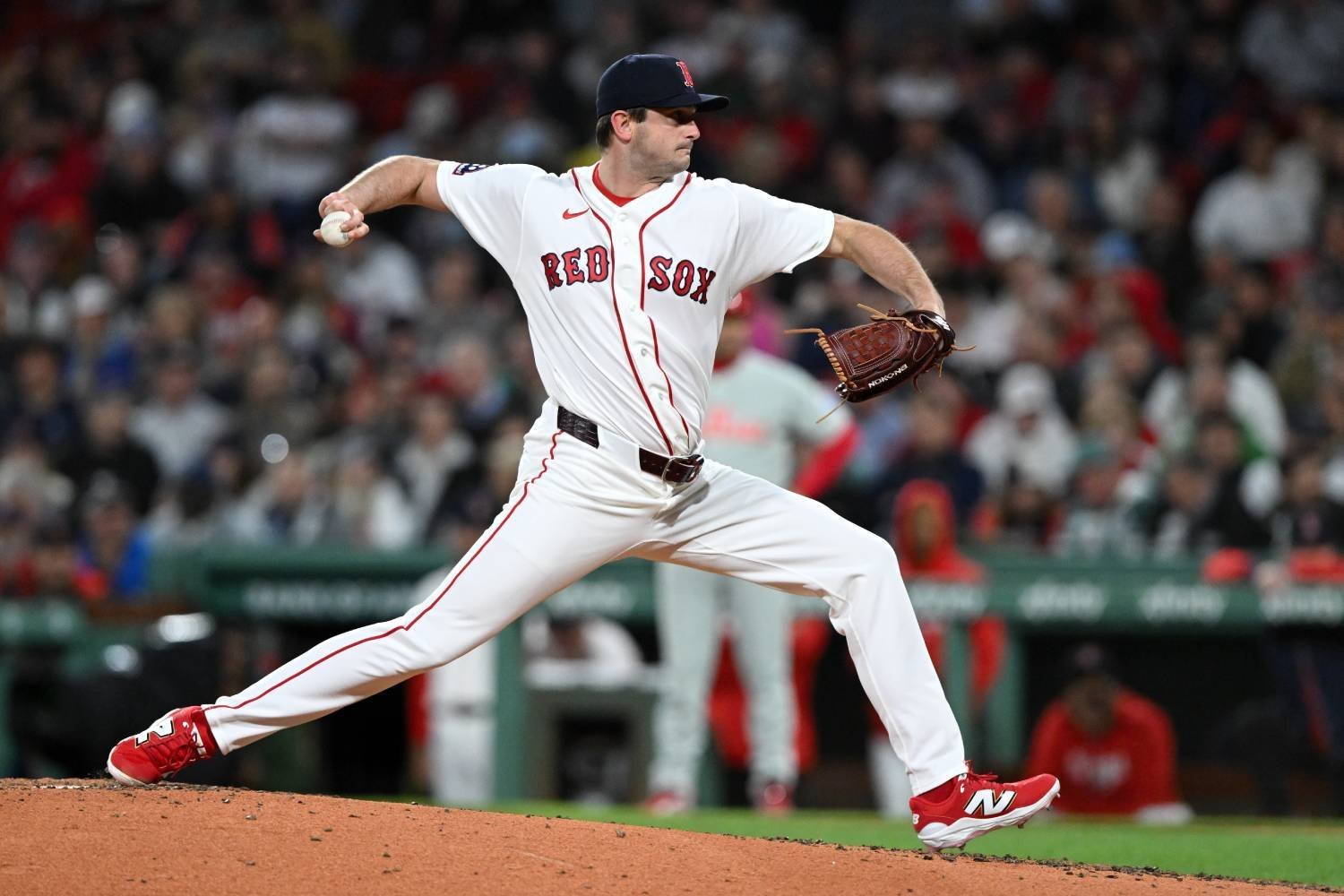 In a bad news, good news situation, the Boston Red Sox are losing one of their top relievers, right-hander Garrett Whitlock for the next two weeks. The good news is the injury doesn't appear to be as serious as it could have been. The Red Sox on Thursday placed Whitlock on the 15-day injured list with inflammation in his left knee and called up left-handed reliever Tyler Samaniego from Triple-A Worcester. Whitlock was injured on his first warmup pitch as he entered Sunday's game, a 6-5 walk-off loss to the Minnesota Twins. The conditions were not ideal, with rain making the mound muddy and slippery. Whitlock said he hyperextended the knee. However, he stayed in to pitch in the top of the sixth with two outs and runners on first and second. The usually reliable Whitlock gave up a tying double and a two-run go-ahead single before getting the final out of the inning. Whitlock has made 20 appearances over 19⅔ innings, with a 3.20 ERA, six walks and 25 strikeouts. Samaniego is in his third stint with the Red Sox this season, his first in the bigs. He has been excellent across 18 appearances, posting a 1.04 ERA in 17⅓ innings, with seven walks and 13 strikeouts. View the full article
 -
 Don't look now, but the Blue Jays have won four of their last six series. Jesus Sanchez has a revenge game against the Marlins, and Lenyn Sosa finally drew a walk! Ernie Clement found his power stroke, Dylan Cease to the IL (and to the barber), and how the Blue Jays plan to fill the void in the rotation. All that, and they look ahead to the series against the Baltimore Orioles and old friend Chris Bassitt. Listen on Apple Podcasts: https://podcasts.apple.com/us/podcast/the-jays-centre-podcast/id1846108462 Listen on Spotify: https://open.spotify.com/show/3Bi7SzfpcqMo5xYWnbCeoL Listen on iHeartRadio: https://www.iheart.com/podcast/263-the-jays-centre-podcast-300304824/ Listen on Pocket Casts: https://pca.st/2qk9wqxd Watch on YouTube: https://www.youtube.com/@jayscentre View the full article
