


DiamondCentric
-
Posts
2,631 -
Joined
-
Last visited
Never
Content Type
Profiles
Forums
Events
News
Tutorials & Help
Major League Baseball Videos
Guides & Resources
Store
Downloads
Gallery
Everything posted by DiamondCentric
-
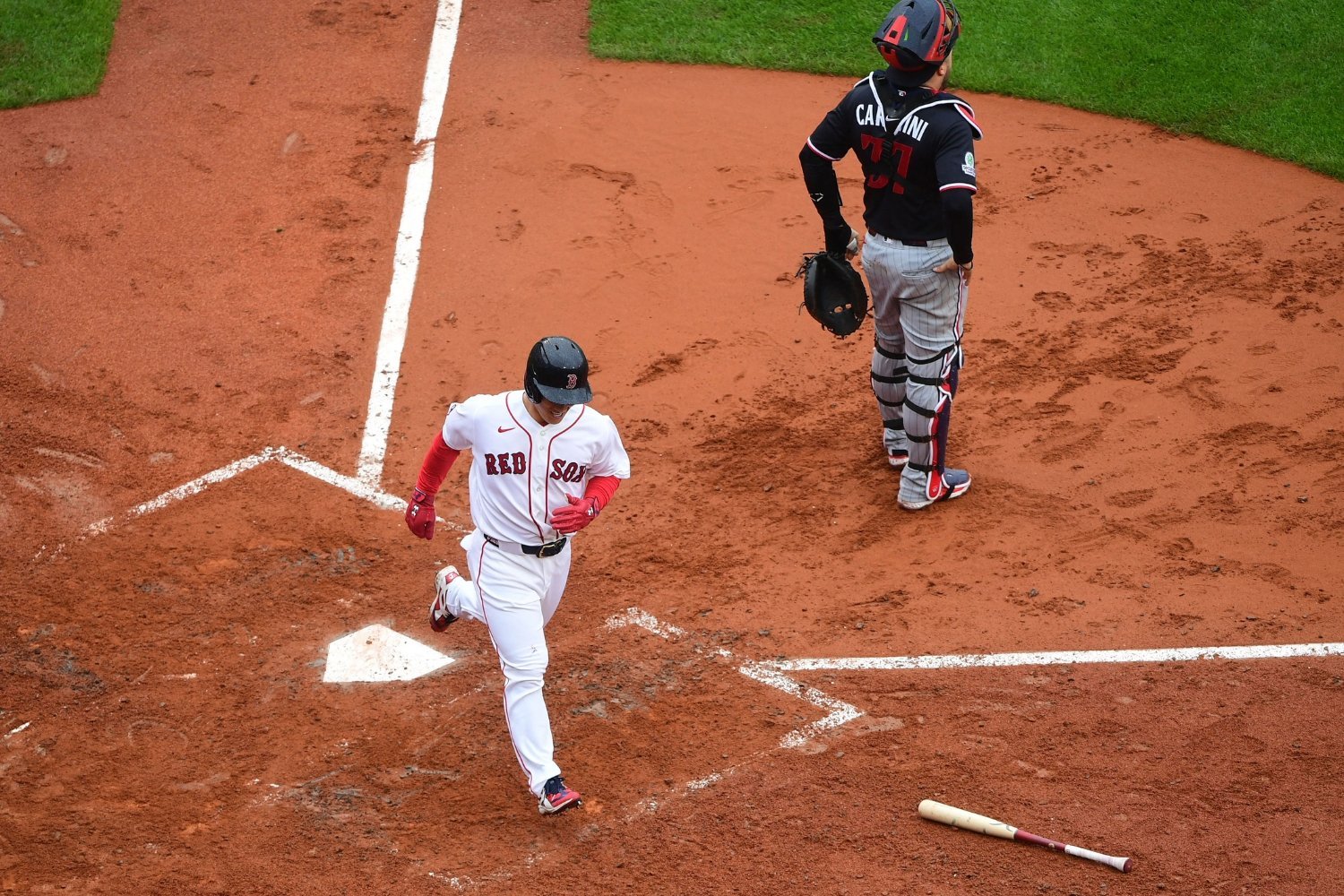 Boston Red Sox Weekly Snapshot Record Last Week: 3-3 Runs Scored Last Week: 27 Runs Surrendered Last Week: 23 Standings: 5th in AL East 13 GB First Place Transactions: 05/19/26: Red Sox sent LHP Danny Coulombe on a rehab assignment to the Worcester Red Sox. 05/22/26: Red Sox selected the contract of RHP Tyron Guerrero from the Worcester Red Sox. 05/22/26: Red Sox optioned RHP Zack Kelly to Worcester Red Sox. 05/24/26: Red Sox optioned LHP Tyler Samaniego to Worcester Red Sox. 05/25/26: Red Sox activated LHP Danny Coulombe from the 15-day injured list. Scores: Game 46 (05/18): BOS 3, KC 1 Game 47 (05/19): BOS 7, KC 1 Game 48 (05/20): BOS 4, KC 3 Game 49 (05/22): BOS 6, MIN 8 Game 50 (05/23): BOS 2, MIN 4 Game 51 (05/24): BOS 5, MIN 6 Series Breakdown/Highlights Royals Series: The Red Sox have swept two teams this year and both were penciled in to win the AL Central at one point or another. That should give any fan of this team something to grab onto to celebrate but, both the Tigers and the Royals are pretty much in the same boat as the Red Sox are in right now, so sweeping the latter in late May doesn’t feel like the giant victory that it should. Game one saw Willson Contreras stay hot and smoke a long home run into the rain soaked night in Kansas City behind a six-inning, nine strikeout performance from Sonny Gray. Justin Slaten, Garrett Whitlock, and Aroldis Chapman held down the back third of the game and put it away easily. In game two, the offense woke up thanks to a ninth-inning onslaught that was sparked by a Jarren Duran three-run home run. Ranger Suarez didn’t look his typical dominant self during the game, only going 4 ⅓ innings with three strikeouts, but he was serviceable enough to make sure the game didn’t get out of hand. Game three saw familiar face Michael Wacha toss six innings of one-run baseball, until Duran went deep against a Royals bullpen that has been struggling all season. The sweep should have marked a turnaround in the Red Sox’s season as they were about to matchup with the underperforming Twins to kick off the next homestand, but things don’t always work out how they should. Twins Series: It’s safe to say that the Red Sox can’t play cohesive baseball against the Twins. In back-to-back series against middling AL Central teams, the Sox should have back-to-back sweeps. Instead, they are heading into their series against the Braves after being swept by the Twins. In game one, the Fenway Green magic wasn’t to be found. Payton Tolle pitched six innings while giving up three earned runs and striking out nine. Like almost every other start for the young southpaw, this should have been a victory. Slaten came on in relief and promptly gave up two home runs, good for four earned runs. The offense failed to pick Slaten up after the meltdown and game one was a loss. In game two, Brayan Bello moved back to his second inning entrance behind Jovani Moran to decent success. It’s become clear that Moran likely doesn’t need to act as an opener again because he has allowed multiple earned runs each time he’s done it, but Bello seems to operate at his best when he doesn’t actually start the game. He tossed five innings with five strikeouts. The offense went mostly cold, save for RBIs from Ceddanne Rafaela and, shockingly, Isiah Kiner-Falefa. Game three arguably shouldn’t have been played, but that was a call that Major League Baseball made since the two clubs won’t see each other again this season. The weather prevented clean baseball from either club, but the Twins came out on top after a fluke-filled bottom of the ninth came up just short for the Sox. Gray had his worst start since returning from the IL, only tossing four innings with three earned runs and four strikeouts. The two bright spots from this game were that Masataka Yoshida hit his first home run of the season, and Marcelo Mayer finally started at shortstop. This team is built to play great defense behind superb pitching. Both the defense and the bullpen let this team down in each game of this series. Website Highlights Red Sox Turnaround Timeline: When Does “Still Early” Stop Applying? by Ryan Painter Sonny Gray Has Mastered the Kitchen Sink Approach to Pitching by Jack Lindsay What More Does Justin Gonzalez Need to Do to Get Promoted? by Nick John Ceddanne Rafaela is Officially a Red Sox Building Block by Alex Mayes Looking Ahead May 26: Braves (Spencer Strider) @ Red Sox (Ranger Suarez): 6:45 PM EDT May 27: Braves (Bryce Elder) @ Red Sox (Connelly Early): 6:45 PM EDT May 28: Braves (Chris Sale) @ Red Sox (TBD): 4:10 PM EDT May 29: Red Sox @ Guardians: 7:10 PM EDT May 30: Red Sox @ Guardians: 4:10 PM EDT May 31: Red Sox @ Guardians: 1:40 PM EDT View the full article
 -

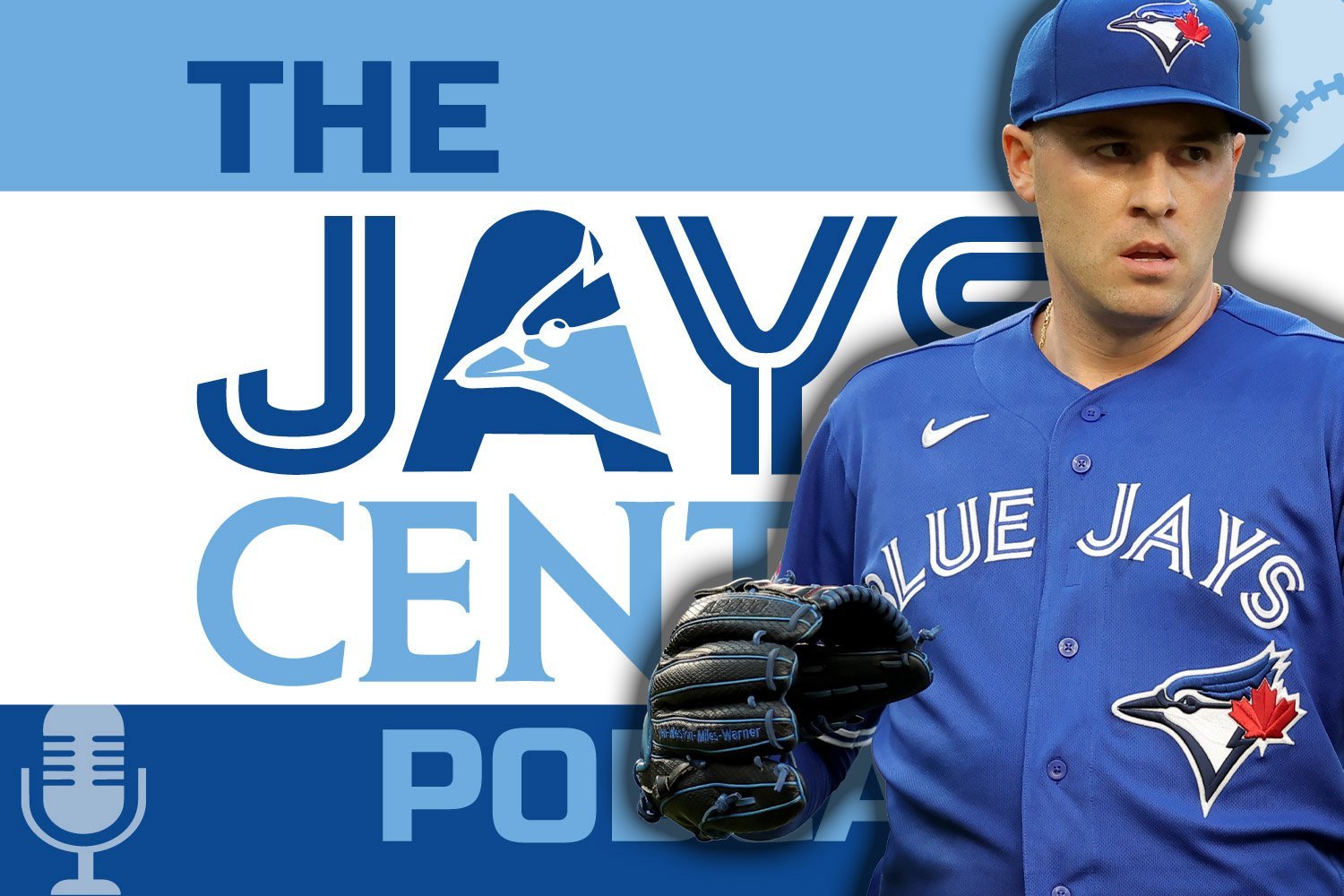 In this episode of the Jays Centre Podcast, Jesse Burrill is joined by Matthew Creally as they break down the Toronto Blue Jays’ series against the Pittsburgh Pirates, including a tense weekend filled with injury scares surrounding both Vladimir Guerrero Jr. and Dylan Cease. They dive into Patrick Corbin, somehow outduelling Paul Skenes in one of the series’ biggest surprises, while also taking a closer look at Kevin Gausman’s evolving pitch mix and what it could mean for his season moving forward. Plus, plenty more thoughts on the Blue Jays as they continue navigating a pivotal stretch of the season. Listen on Apple Podcasts: https://podcasts.apple.com/us/podcast/the-jays-centre-podcast/id1846108462 Listen on Spotify: https://open.spotify.com/show/3Bi7SzfpcqMo5xYWnbCeoL Listen on iHeartRadio: https://www.iheart.com/podcast/263-the-jays-centre-podcast-300304824/ Listen on Pocket Casts: https://pca.st/2qk9wqxd Watch on YouTube: https://www.youtube.com/@jayscentre View the full article
 -
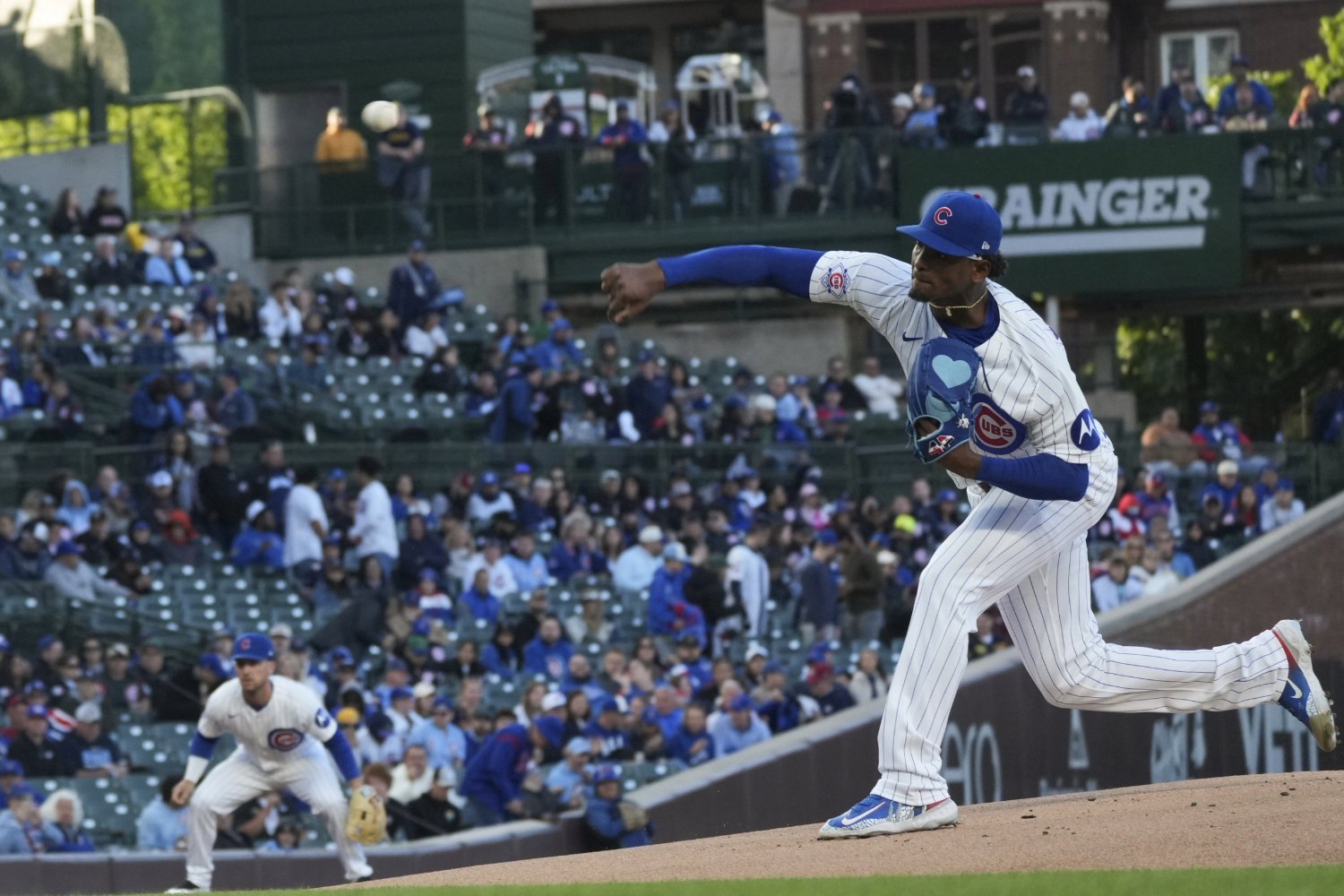 To put it mildly, the Chicago Cubs are struggling right now. A losing streak is never a good thing, and it feels so much worse when three of those losses come at the hands of the Milwaukee Brewers. The very same Brewers that have won the division in each of the past three seasons. The very same Brewers that the Cubs have been trying to chase down for most of the last eight seasons, despite the Cubs having significantly more financial resources. Let’s not kid ourselves, the Cubs made moves this past offseason with the specific intent to finally unseat Milwaukee in the National League Central. That is what makes this all so painful, as our own Matthew Trueblood wrote earlier this week: the Cubs are all in on this season. The Brewers are not. Yet they still completely outclassed the Cubs in their first meeting of the season. One of those offseason moves that the Cubs made was trading for Edward Cabrera. While he has been fine in his first 10 starts for the Cubs, he has been far from spectacular, and even pretty far from the pitcher he was just last season. The Brewers, on the other hand, traded for Kyle Harrison, who matched up against Cabrera and the Cubs on Wednesday night. As you’re likely aware, Harrison earned the win after he threw seven shutout innings, allowed only two hits and one walk, and struck out 11 Cubs. Cabrera, oppositely, was removed from the game in the fourth inning with a blister after allowing four runs (one earned) over three innings. Something about those two, specifically, going up against each other, and Harrison emphatically besting Cabrera, felt significant. There’s beating your opponent. Then there’s running up the score. Unfortunately, if you zoom out and compare the full-season stats for these two starters, Wednesday night’s result shouldn’t be all that surprising: Player Innings Pitched ERA FIP K% fWAR Edward Cabrera 54 4.00 4.44 20.7% 0.4 Kyle Harrison 45.2 1.77 2.48 32.3% 1.5 The Brewers acquired Harrison for a package centered around third-baseman Caleb Durbin. It feels like the Cubs absolutely could have offered something similar, centered around Matt Shaw. However, I am not nearly naive enough to suggest that Harrison would be this effective if he were on the Cubs. This isn’t about Harrison vs. Cabrera. It’s about the Cubs vs. the Brewers. If these two pitchers switched teams, I have no doubt that Cabrera would be better off for it, and Harrison would be worse off. That is what really hurts. This is the case of two teams identifying pitchers that they liked and that had potential that they thought they could maximize. Sahadev Sharma of The Athletic reported that the Cubs had been “enamored” with Cabrera’s potential for a while. So far, that fascination is looking a bit misplaced. There’s still plenty of time for these wrongs to be righted. Cabrera is under team control through the 2028 season. Harrison is under team control through the 2030 season. It’s plenty early in either player’s tenure with his new team. Still, Wednesday night just felt like the Brewers were running victory laps around the Cubs. Not only have they resumed their rightful place atop the National League Central, but they’re doing it partially on the back of a pitcher that they targeted and is now one of the best pitchers in baseball. The guy that the Cubs targeted and went out and got has a 5.79 ERA in May. The Cubs continue to try to catch the Brewers. The Brewers continue to prove that they are simply light years ahead of the Cubs. Is anyone even remotely surprised? View the full article
 -
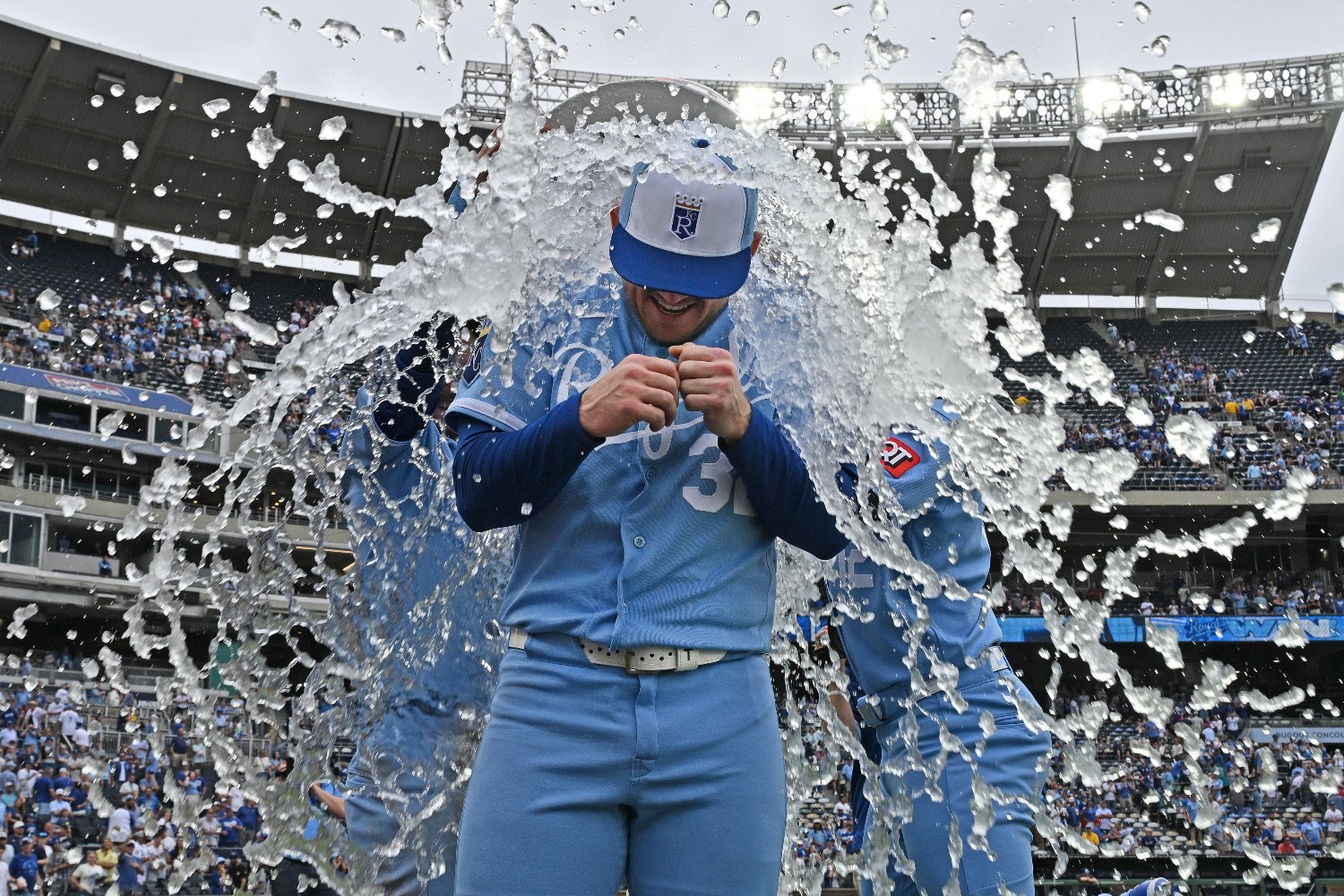 Week in a Nutshell After a 1-8 road trip in the previous week, the Royals got off to a slow start in this week's homestand. At the beginning of the week, Kansas City was swept by the Boston Red Sox, who sit in last place in the AL East (and ironically, got swept by the Minnesota Twins at Fenway Park over the weekend). It was a deflating series that seemed to fuel the frustration of Royals fans already dissatisfied with this start to the 2026 season. Thankfully, things got better in the weekend series against the Seattle Mariners. Even though the Royals lost game one of the series, they won two and got three quality starts from their starting pitchers. By winning two in a row, Kansas City has built some much-needed momentum for their final series in the homestand against the hated New York Yankees. Record this Week: 2-4 Run Differential for the Week: -4 Record for the Year: 22-31 Run Differential for the Year: -25 Standing: 4th in the AL Central Game 48: BOS 3, KC 1 Seth Lugo produced another quality start, as he went six innings and allowed two runs on five hits and two walks with five strikeouts. However, a two-run home run by Willson Contreras was just enough, as Red Sox starter Sonny Gray allowed only one run and struck out nine in six innings of work. Game 49: BOS 7, KC 1 Bailey Falter opened a bullpen game for the Royals and gave up two runs on four hits and three walks in two innings of work (he did strike out two). Luinder Avila held the Red Sox in check over three innings, as he allowed no runs, only one hit, and one walk while striking out three. Unfortunately, the Royals' offense could not muster anything, going 2-for-7 with runners in scoring position. Eli Morgan struggled in his outing, highlighted by a three-run home run allowed to Jarren Duran in the top of the 9th that effectively put the game away. Game 50: BOS 4, KC 3 Home runs by Salvador Perez and Elias Diaz gave the Royals three runs, and they held a lead going into the seventh, thanks to a quality start from Michael Wacha (6 IP, 6 H, 2 R, 1 ER, 2 BB, 8 K). However, Steve Cruz gave up a two-run home run to Duran to lose the lead, and the Royals were unable to come back, giving the Red Sox the sweep. Game 51: SEA 2, KC 0 The Royals got another quality start, this time from Noah Cameron, who went six innings and allowed no runs, four hits, and two walks while striking out eight. However, a two-run homer by Mitch Garver off Royals reliever Nick Mears proved to be the difference, as Kansas City only collected four hits and was 0-for-3 with runners in scoring position. Game 52: KC 5, SEA 0 Kansas City snapped its four-game losing streak, thanks to a gem from Stephen Kolek. He pitched a complete-game shutout, the first Royals pitcher to do so since Brad Keller in 2020 (Kolek was also the first Royals pitcher to throw a shutout in front of fans since Glenn Sparkman in 2019). The Royals collected nine hits and were 3-for-10 with runners in scoring position. Michael Massey and Bobby Witt Jr. had multi-hit performances. Game 53: KC 8, SEA 6 For the first time this season, the Royals won a rubber game in a series, beating the Mariners on Sunday to clinch the series. The Kansas City offense came through in big spots, going 4-for-11 with runners in scoring position and collecting 11 hits total in the game. Salvador Perez was the main standout, as he had three hits and three RBI in the Royals' two-run win. Lugo had another quality start (6.2 IP, 6 H, 3 ER, 2 BB, 3 K), and John Schreiber and Daniely Lynch IV held things down in the seventh and eighth. Lucas Erceg, who hadn't pitched in a week, struggled in his outing, giving up three runs on four hits in a non-save situation in the ninth. News and Notes The Royals made a couple of moves, including ones at the Major and Minor League levels. At the Major League level, Kansas City recalled Tyler Tolbert, who was optioned to Omaha earlier in the season after making the Opening Day roster. The utility player gives the Royals some speed off the bench and defensive versatility. Tolbert hit .260 with a .365 OBP in 73 plate appearances with the Storm Chasers and also had eight stolen bases on eight attempts. As a result, Diaz was designated for assignment. The 35-year-old catcher was called up to give Salvy a rest, as he was dealing with hip problems that were preventing him from playing behind the plate. However, Perez has been getting starts recently, thus making Diaz superfluous on the Royals' active roster. Diaz hit .227 with two home runs in 22 plate appearances with the Royals. In terms of Minor League moves, the Royals signed relievers Luke Jackson and Genesis Cabrera to Minor League deals. Jackson and Cabrera are both Major League veterans who were recently released by their respective clubs (the Mets and Phillies, respectively). The pair may just be Triple-A depth for now, but if the Royals' bullpen is dramatically affected by injury, Jackson and Cabrera are two relievers who can be recalled and give the pitching staff professional innings. Highlights The rotation actually had a pretty solid week, even though the Royals lost four of six games. The Royals' starting pitching staff produced five quality starts this week, with two from Lugo and Wacha, and Cameron and Kolek each having one as well. Over the past seven days, the Royals' pitching staff produced a 3.50 ERA, which ranked 13th in baseball, according to MLB.com. Lugo was the only starter who went two starts this week, and he produced a 3.65 ERA and 1.22 WHIP in 12.1 IP this week. While he didn't produce a lot of strikeouts, he was competitive and efficient in both outings, including on Sunday, as he earned the win over the Mariners. It was a classic effort from Lugo, as he didn't generate a ton of whiff or chase, and his xwOBACON was higher than one would like. However, he flooded the strike zone and kept Mariners hitters off-balance with his vast pitch arsenal. Though he had only one start this week, Kolek was the Royals' pitching MVP with the complete game shutout. The 29-year-old starter has been nails with the Royals since joining the club at the Trade Deadline last year. In four starts, he has a 2.77 ERA in 26 IP. Kolek was masterful in terms of efficiency and limiting hard contact against the Mariners on Saturday. That helped him earn the first Royals shutout in six years, even though he only generated two strikeouts and not a lot of whiffs. In terms of the bullpen, John Schreiber had the most impressive week for Kansas City. In three outings and innings of work this week, he allowed no runs, three hits, no walks, and struck out five. After struggling with his stuff earlier in the season, he's been locked in recently, generating a ton of chase and whiff over the past week, as seen below via his TJ Stuff+ summary. The only issue with Schreiber was that his zone rate was a bit inconsistent, and hitters made loud contact against him. His strikeouts remain low this year, as he only has 11 in 19.1 IP. However, his TJ Stuff+ was 100 this week, and that better stuff correlated with a 32% whiff and 41.7% K% in his three outings. Schreiber produced a hold in Sunday's outing against Seattle. The hitting had an off week, even though they were back home, where they have traditionally mashed this year. The Royals produced a .588 OPS this week, which ranked 26th in baseball. They primarily struggled with the long ball, as they had only two home runs this year, ranking 29th. Only the Colorado Rockies hit fewer this week (they had one). In terms of individual performances, Salvy stood out the most with six hits, which was the second-most of any Royals hitter this week. The Royals captain slashed .286/.375/.429 with an .804 OPS in 21 at-bats. His line this week also included a home run, four RBI, two runs scored, and two walks to only one strikeout. Another Royals hitter that had an encouraging week was Michael Massey, who's been the regular second baseman against right-handed starting pitchers with Jonathan India out for the remainder of the year. In 13 at-bats, Massey had four hits and slashed .308/.357/.385 with a .742 OPS. He also had one walk, two strikeouts, and scored a run. Lowlights The lineup had a week to forget, struggling to get on base and produce much against the Red Sox and in the first game against the Mariners. In six games, the lineup generated a .275 OBP, which ranked 26th in baseball this week. They also only drew 13 walks, which was tied for the worst mark in baseball this week. That said, the Royals were facing a Mariners starting pitching staff this weekend that has the lowest BB/9 in baseball. Hence, kudos to Kansas City for being aggressive and swinging rather than passive. Many Royals hitters had weird lines this week, and not necessarily in a good way. Garcia led the Royals in hits with seven in 26 plate appearances, good for an average of .269. He also had a key two-out, two-RBI single in the 8th that eventually was the difference in the Royals' win on Sunday. However, Garcia didn't draw a walk, only had one extra-base hit, and posted an OPS of .577 this week. He's in the midst of a difficult May, as he is hitting .250 with a .615 OPS in 100 plate appearances. His slugging is 140 points down from April, and he hasn't hit a single home run this month after hitting three in April. His launch angle sweet-spot percentage has been steadily declining since May 12th, as evidenced by his rolling sweet-spot% chart in Savant. Another key hitter who struggled this week was Witt. The Royals franchise star hit .240 with a .560 OPS in 25 plate appearances. While he hit two doubles, he also struck out six times and didn't draw a single walk. It seemed like Witt was pressing at the plate, trying too hard to create offense, and it often had a counterintuitive effect this week. The Royals also got subpar performances from the bottom of their lineup this week. That included Isaac Collins (.498 OPS) and Kyle Isbel (.331 OPS). Vinnie Pasquantino and Carter Jensen also struggled, with .508 and .576 OPS marks this week. That said, while none of the four had great weeks overall, all four had some key moments on Saturday and Sunday in the Royals' two wins against Seattle. In terms of pitching, Erceg had a brutal outing in his lone appearance this week. While he was gifted a large lead on Sunday, he nearly blew it, giving up three runs on four hits. The Mariners had the game-winning run at the plate with two outs. Thankfully, Erceg was able to get Luke Raley to ground out to end the game (though manager Dan Wilson had the gall to challenge the play, even though he was clearly out). While it was only one outing, the Royals need a focused, locked-in Erceg going forward, especially with Carlos Estevez unlikely to return in a meaningful way this season. Erceg looked rusty on Sunday after not pitching for a week. His TJ Stuff+ summary seemed to illustrate that as well, especially for his four-seamer and sinker, which had subpar TJ Stuff+ marks. Erceg's sinker had a 92 TJ Stuff+, his four-seamer had a 94 TJ Stuff+, and he had an overall TJ Stuff+ of 96. That correlated with a poor whiff% (16.7%) and xwOBACON (.421). Hopefully, if he sees action in the Yankees, his four-seamer and sinker TJ Stuff+ metrics will bounce back. Another pitcher who had a rough week was Steven Cruz, who posted a 10.80 ERA and 1.80 WHIP in two outings and 1.2 IP. The stuff isn't a question for Cruz, but the command is. That was illustrated in the two-run home run he gave up to Duran in the series finale against Boston. With his stuff, it would be nice for Cruz to see more high-leverage spots, especially with Estevez on the shelf. Despite elite TJ Stuff+ numbers, his lackluster zone, chase, and xwOBACON metrics make him a difficult option to use in key spots. Unfortunately, it looks like Cruz may be closer to another Carlos Hernandez (who failed to stick in Kansas City despite eye-popping stuff) than to another Estevez. Looking Ahead The Royals finish a nine-game homestand this week with a three-game series at Kauffman Stadium against the Yankees. Kansas City hasn't won a game against the Bronx Bombers since game two of the 2024 ALDS. They lost all six games to them last year and were swept in the Bronx in mid-April. Kansas City is hoping it can end this losing streak, even with all the bandwagon Yankees fans from Kansas, Missouri, Nebraska, and Iowa descending on Kauffman Stadium starting on Memorial Day. The Yankees won't be an easy challenge, especially since they are 31-22 and have a +67 run differential. That said, they are 4-6 in their last 10 games and easily could have been 3-7 if not for a walkoff two-run home run by Aaron Judge on Sunday afternoon against first-place Tampa Bay. In addition to facing sluggers like Judge, the Royals will face a tough trio of Yankees pitchers at the K this week. Will Warren, Cam Schlitter, and Gerrit Cole are expected to toe the rubber for the Yankees in this series. Warren and Schlitter dominated the Royals back in the Bronx, and Cole has a good history against Kansas City as well. After the Yankees series, the Royals hit the road for Arlington for a three-game series against the Texas Rangers. Like the Yankees, Texas is 4-6 in its last 10, but they sit 24-28 for the year and has lost three in a row. On a positive note, they have a +6 run differential and have some formidable bats in the lineup, such as Brandon Nimmo, Josh Jung, and Ezequiel Duran, who all have fWAR marks over one. (Corey Seager and Wyatt Langford are currently on the IL and both are unlikely to return next week.) The Rangers' rotation is solid, ranking 15th in the starter ERA, 10th in WHIP, and 2nd in K/9. As of now, MacKenzie Gore (4.78 ERA), Kumar Rocker (3.60 ERA), and Jack Leiter (4.61 ERA) are projected to pitch against the Royals next weekend, according to Roster Resource. Texas also had a formidable bullpen that ranks 3rd in reliever ERA and 7th in WHIP. Closer Jacob Latz and setup men Jakob Junis (a former Royal) and Tyler Alexander all have ERA marks under two. View the full article
 -
 All four Brewers’ full season affiliates won their series this week: Biloxi (5-0), Nashville (4-2), Wilson (4-2), Wisconsin (3-2). Transactions: RHP Carlos Rodriguez recalled by MLB Brewers from AAA Nashville LHP Robert Gasser optioned to AAA Nashville from MLB Brewers RHP Fausto Barreras placed on DSL Brewers Blue’s 60-day injured list OF Akil Baddoo reinstated from 60-day injured list and optioned to AAA Nashville (where he was already playing on a rehab assignment) Game Action: Nashville Pre-Game Media Notes Final: Durham (Rays) 2, Nashville 0 Box Score Via the Sounds’ website, game details and we encourage readers to review affiliate write-ups as part of their Link Report routine: Nashville Shutout for Second Time This Week Against Durham Nashville’s media team usually indulge us by embedding some video highlights in their game reports, but zero runs and three errors on Sunday obviously made their job difficult this time out. But of course, the Sounds have won 11 of their last 13 games, which we’re thrilled to follow and support. The Durham and Nashville staffs combined to deliver 17 innings with 0 earned runs, 0 extra-base hits, 1 walk and 18 strikeouts, finishing the game in 2 hours and 5 minutes in order to allow 7,358 Durham fans to get home a little earlier than anticipated on Sunday evening. With 16 active pitchers and 2 more rehabbing Major Leaguers on the roster, Manager Rick Sweet had the luxury of pulling LHP Thomas Pannone after 4 innings and 55 pitches (1 R (0 ER), 2 H, 0 BB, 1 HBP, 4 Ks), with RHP JB Bukauskas, Junior Fernandez and Easton McGee then handling the middle innings comfortably (combined 3 IP, 0 R, 1 H, 0 BB, 2 Ks). RHP Craig Yoho recorded 14 of his 16 pitches for strikes, though he did allow an unearned run, 2 singles and a balk. His season ERA is 1.29 as he waits for his first MLB call-up of 2026. Sounds’ Extras: SS Freddy Zamora did not have his best day (0-for-3, 2 fielding errors which led to the 2 unearned runs) OF Luis Lara once again found a way to positively impact the game: 1-for-4; outfield assist at home to end the 8th inning. OF Tyler Black’s hitting slump deepened with an 0-for-4, 3 K output, including a strikeout swinging to strand DH Luis Matos at second base in the 6th inning (the last time the Sounds had a runner in scoring position in the game). Black’s now 1-for-his-last-21, though he did make a nice catch in the left field corner: Next week’s outlook: Nashville (30-21) returns home to host Braves’ affiliate Gwinnett (28-23) for six games, commencing on Tuesday. Perhaps we’ll see a rehabbing Major Leaguer (e.g. Quinn Priester, Brandon Woodruff) start the opening game of the series. Biloxi Pre-Game Media Notes Final: Biloxi 7, Birmingham (White Sox) 5 Box Score Via the Shuckers’ website, game details: Shuckers Sweep Series For First Time Since 2023 in 7-5 Win Though they’d already captured the series win on Saturday, Biloxi players didn’t rest on their laurels, rallying from a 1-0 deficit in the 4th inning, then turning around a 4-2 scoreline with their 4-run sixth inning, highlighted by 3B Eduardo Garcia’s 3-run dinger and DH Dylan O’Rae’s 2-out RBI double. O’Rae (3-for-4, double, walk, RBI), OF Mike Boeve (2-for-4), Garcia (2-for-4, HR, 3 RBIs, SB) and 2B Jheremy Vargas (1-for-2, double, walk, 3 RBIs) produced all 8 of the team’s hits, though SS Jesus Made’s 9-game RBI streak came to an end (0-for-4, walk). 20-year-old starting RHP Manuel Rodriguez’s 5 IP, 2 ER, 5 K line largely mirrored his outing 5 days earlier (5 1/3 IP, 2 ER, 6 Ks), though he did allow a home run. That’s now 11 homers conceded in 9 games pitched for the only 20-year pitcher in the Southern League, propping up his ERA at 4.74 even with his low WHIP of 1.12. LHP Mark Manfredi Sr. entered with the game 6-4, two men on and nobody out, then proceeded to retire 6 of 7 batters faced to close it out (2 IP, 0 R, 0 H, 1 HBP, 4 Ks). He’s now struck out 35 batters in just 21 1/3 innings pitched in 2026. Shuckers’ Extras: INF/OF Eric Brown Jr. did not play in Saturday’s quasi-doubleheader, then was not originally in the lineup for this game but ended up being a last-minute replacement for OF Damon Keith, contributing nicely: 0-for-1, 3 walks, 2 runs. Middle reliever RHPs Ryan Birchard and Sam Garcia earned a Win and Hold for their efforts, despite combining on this line: 2 IP, 3 R, 3 H, 4 BB, 3 Ks. Even the opposing hitter was impressed by 1B Blake Burke’s diving grab in the 5th inning: Next week’s outlook: Biloxi (22-21) hit the road to battle Braves’ affiliate Columbus (21-23), with RHP Tanner Gillis being the most likely starting option for Tuesday’s series opener. Wisconsin Pre-Game Media Notes Rain Out: Wisconsin at Great Lakes (Dodgers) Via the Timber Rattlers’ website, rain out details: Rattlers Rained Out in Great Lakes The rain out preserved the Timber Rattlers’ impressive 3-2 road series win over the 27-16 Dodgers’ affiliate. Next week’s outlook: Wisconsin (23-18) hosts Cardinals’ affiliate Peoria (20-24) for 7 games this week, with the series starting on Tuesday and a doubleheader scheduled for Wednesday. Coming off a 6 scoreless inning outing, LHP Wande Torres is likely to make the Tuesday opening game start. Wilson Pre-Game Media Notes Game One Final: Wilson 7, Delmarva (Orioles) 6 (in 8 innings) Box Score Game Two Final: Delmarva (Orioles) 4, Wilson 3 (in 7 innings) Box Score Via the Warbirds’ website, game details: Warbirds Walk Off Wins Series in Doubleheader Split 1B Frederi Montero nearly got to be the hero twice, as he delivered the game-winning RBI single to complete a 3-run final frame family in Game 1… …then came to the plate down 4-3 with 1 out and runners on 2nd and 3rd in the bottom of the final inning of Game 2, but flew into a game-ending double play. LHP Anfernny Reyes was the top pitcher in Game One (3 1/3 IP, 0 R, 1 H, 0 BB, 4 Ks), dominating the middle innings to enable Wilson to come back from the early 4-0 deficit. The 22-year-old Reyes continues to make his case for a promotion: season ERA 2.05, WHIP, 0.91, 12.7 K/9 in 22 IP. The Warbirds grabbed that Game One victory despite going 2-for-13 with runners in scoring position, stranding 12 baserunners and having a runner thrown out at home. Drawing 10 walks paid off, as Wilson scored in the 5th and 6th innings without the benefit of a hit, then C Rylan Mills delivered the game-tying RBI double to send the game to extra innings. RHP Carlos Carra was the best pitcher in Game Two (6 IP, 2 R, 5 H, 1 BB, 8 Ks; 90 pitches), though he was actually on the hook to wear a Loss until 3B Filippo Di Turi manufactured a run (walk, 2 stolen bases, scored on sac fly) to tie the contest at 2-2 in the penultimate inning. OF Handelfry Encarnacion (2-for-3, walk, SB) and SS Brady Ebel (1-for-3, walk, RBI, SB) were the top offensive contributors in Game Two. Ebel extended his hitting streak to 9 games with his 2-out RBI single to grab a 1-0 lead in the 3rd inning, while the pair drew back-to-back walks to load the bases with nobody out in the final frame. Encarnacion also had an outfield assist to help RHP Joshua Quezada (1 IP, 2 R, 2 H, 1 BB, 1 K) escape the 7th inning. Warbirds’ Extras: With his Game One start, RHP Jacob Morrison (2 1/3 IP, 4 R, 3 H, 4 BB, 3 Ks) returned to action for the first time since exiting his May 14 start early. The 2025 third round pick tossed a season-high 58 pitches as he builds up strength following a late start to his 2026 campaign. RHP Jose Meneses (2 1/3 IP, 2 R (1 ER), 2 H, 0 BB, 5 Ks; season ERA 1.96) retired the first 4 batters he faced before allowing back-to-back singles in the first extra inning of Game One, then buckled right back down to retired the final 3 hitters he faced. 1B Tyler Rodriguez (1-for-3, 4 walks), DH Pedro Ibarguen (1-for-2, 2 walks, RBI) and OF Nick Monile (1-for-2, walk, SB) each had solid days at the plate. Manager Eddy Morgan was ejected to end the top of the 7th inning of the second game, after the team had conceded 2 runs to fall behind 4-2. Next week’s outlook: After two weeks at home, Wilson (23-22) heads down to Myrtle Beach to face the Cubs’ affiliate (18-25) for 6 games. RHPs Tyer Renz and Enniel Cortez are the most likely options to start the series opener. We hope that you enjoy the Minor League Link Report. On Monday, the Milwaukee Brewers host the Cardinals at 1:10pm. The sole Brewers’ affiliate in action is the ACL Brewers (6-10), who play at the ACL Royals (12-3) at 8:00pm CST. Organizational Scoreboard including starting pitcher info, game times, MiLB TV links, and box scores Current Milwaukee Brewers Organization Batting Stats and Depth Current Milwaukee Brewers Organization Pitching Stats and Depth View the full article
 -
An Altered Arsenal Has Led to Success for Travis Adams in 2026
DiamondCentric posted an article in Twins Daily
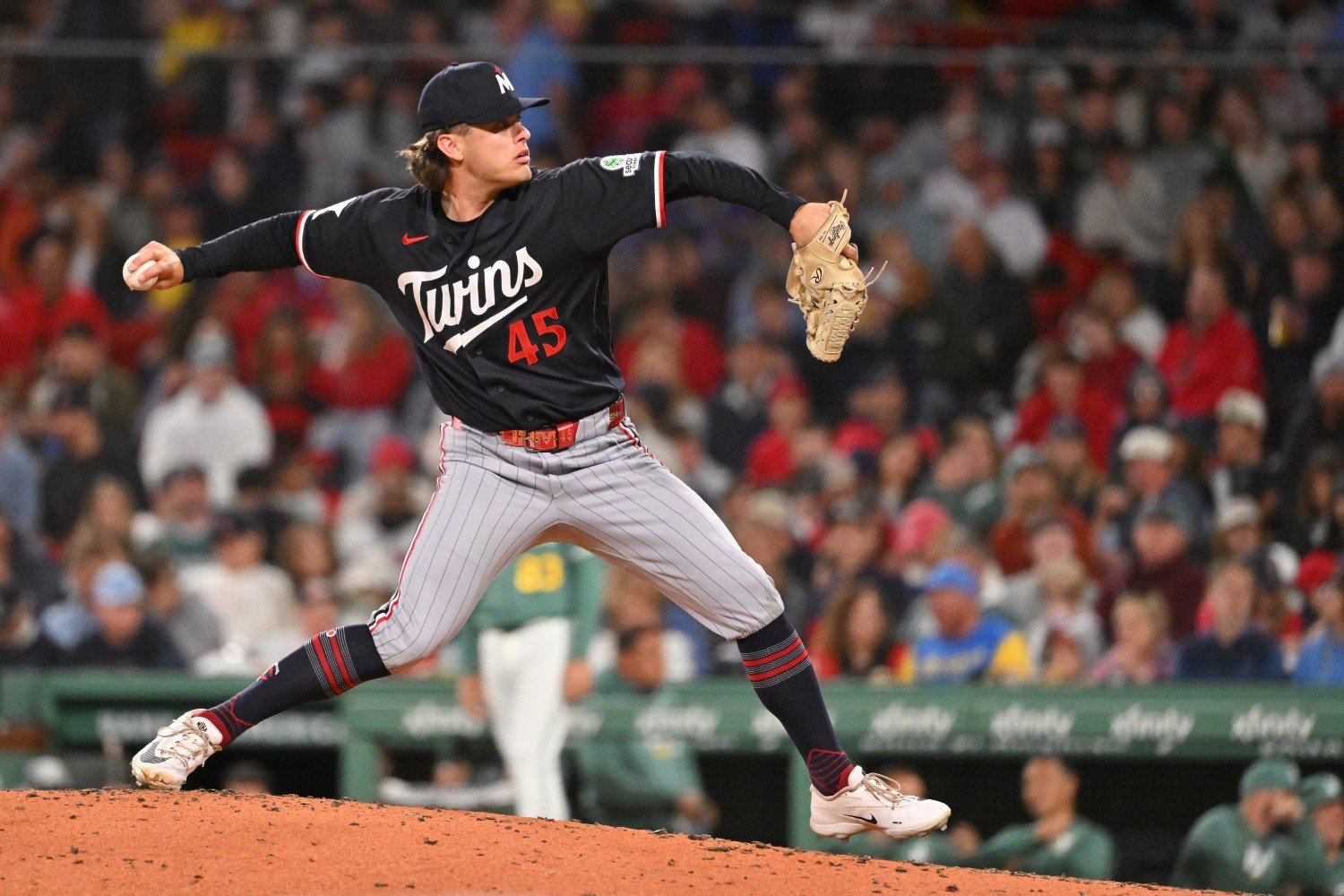 After making his major-league debut on Jul. 5, 2025, Travis Adams struggled in his first cup of coffee in the majors, generating a 7.49 ERA, a 5.39 FIP, and a 31-to-17 strikeout to walk ratio over 33 2/3 innings pitched. The then-25-year-old navigated an unpredictable role, jumping between starting games and coming in as a stretch or short reliever on an appearance-to-appearance basis. Given his late struggles, Adams failed to solidify a spot on Minnesota’s 26-man roster late last season, meaning the now-26-year-old would need to compete for a spot in the club’s eight-pitcher bullpen this spring training. Unfortunately, Adams pitched only 2 2/3 innings this spring before being sidelined with right elbow inflammation in mid-March. Luckily, the righty’s elbow sustained no structural damage, and he returned to the mound on a rehab assignment at Single-A Fort Myers in mid-April, before joining the Triple-A St. Paul Saints later that month. Upon his return to St. Paul, Adams’s surface stats were uninspiring, including a 9.00 ERA over six innings pitched. Still, his 2.69 FIP suggested the right-hander had been unlucky, and that maybe something new was happening. Due to 40-man roster constraints, Minnesota promoted the struggling Adams to the parent club on May 9 when Taj Bradley was placed on the 15-day IL with right pec muscle inflammation. The former mid-level prospect made two appearances for the Twins over a four-day stretch, earning a 7.36 ERA over 3 2/3 innings pitched. Again, however, his underlying metrics suggested he was pitching better than his counting stats. Over that exceptionally small sample, Adams netted a 2.01 FIP and 25% strikeout rate, suggesting he had again been the victim of poor luck. Still, Minnesota demoted him on May 14 to make room for starting pitcher Zebby Matthews on the 26-man roster. Interestingly, Twins decision-makers were quick to provide him another opportunity, recalling him five days later after designating veteran right-handed reliever Justin Topa for assignment. (Technically, he replaced Ryan Jeffers, who was placed on the 10-day IL, but he took Topa’s spot in the bullpen.) In two appearances since May 19, Adams has been unhittable over 13 batters faced, posting a 0.00 ERA, 1.85 ERA, and 30.8% strikeout rate. The righty has generated these results over two separate two-inning appearances, against the Houston Astros on May 19 and the Boston Red Sox on May 22. Adams particularly played an integral role in Minnesota’s 8-6 comeback win against Boston, which was arguably their most impressive win of the season. He then earned his first career save against the Red Sox on Sunday. Again, I am analyzing a very small sample. Still, it appears that Adams has made meaningful strides toward becoming an effective short reliever in a bullpen desperate for serviceable internal options. Adams’s early-season success appears to be the product of an altered arsenal, highlighted by a shift in his change and cutter usage. In 2025, the righty used his changeup only 17% of the time. He's raised his usage rate to 30% this season. The pitch has an average movement profile. However, he's using it more effectively, almost exclusively throwing it low in the zone to left-handed hitters. It's posted a .104 expected batting average against (xBA) and a .108 expected slugging average against (xSLG), showcasing its effectiveness against lefties. bGJ3TDdfWGw0TUFRPT1fVWdKUlhWTUVVZ0lBWFFjTEFBQUhWUU5VQUFBTlVGa0FWMWNHQkFzQ1Z3RURBUU5m.mp4 His cutter has also made strides, with Adams using it 22% of the time this season, up from 19% in 2025. It's a truer cutter this season than last, with more backspin and less blending with his slider. Attacking hitters high in the zone, the pitch has netted a similarly impressive .166 xBA and .185 xSLG in 2026. The cutter and change have gotten more exercise, while he's all but shelved his curveball and sinker. Adams’s fastball still needs work; it has below-average velocity and an unimpressive movement profile. Yet, it appears that Adams has refined his arsenal against both left- and right-handed hitters this season. As improbable as it would have sounded even a few weeks ago, he could remain effective and finally solidify a long-term role in Minnesota’s bullpen. View the full article
 -
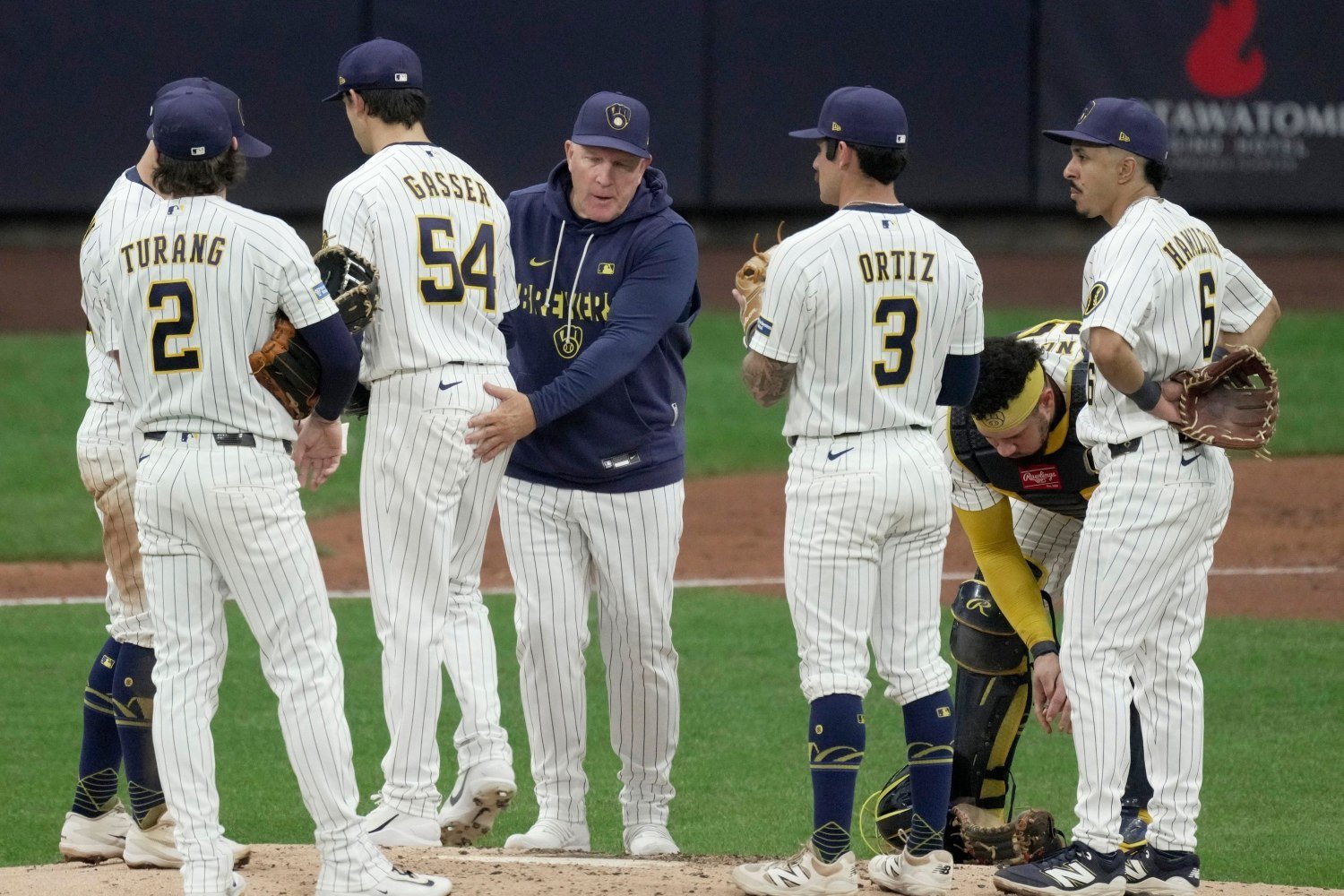 After a trio of young Brewers starting pitchers did not allow a run for three straight games, the tides turned over the weekend in a series loss to the Los Angeles Dodgers. In the last two games of the series, Milwaukee pitchers issued 17 walks and hit a batter. Robert Gasser and Brandon Sproat surrendered nine of those free passes, each failing to complete the fifth inning. Gasser lost his temporary spot in the rotation after that outing, his second start since being recalled in Minneapolis last week. That short leash wasn't surprising, given how uncompetitive he looked in both appearances. In 8 ⅓ innings, Gasser walked 14.6% of opposing hitters and made additional mistakes that don't show up in a box score. He failed to back up home plate on what became a Little League home run in Minnesota, and the Brewers believe he tipped his pitches to runners on second base on Saturday. "I'm not pleased with it," Gasser said on Saturday night of his recent big-league work. "This is a winning ball club, and I came in and [was] part of two losses. It's not ideal." It's another unfortunate development for Gasser, who will turn 27 years old in a few days without a clear role in Milwaukee. That seemed unfathomable less than two years ago, when he debuted in 2024 with five solid starts, but he has not looked like a big-league pitcher since undergoing Tommy John surgery that summer. Gasser showed in his first season that his three distinct fastballs and sweeping slider could deceive hitters from his low left-handed arm slot, but with a four-seamer and sinker that sit around 91 MPH, he must command his four best pitches and sequence them effectively. In sporadic opportunities, he hasn't done that. According to FanGraphs's Location+ (a metric that grades pitch location on a scale where 100 is average), Gasser's command has dropped from a passable 98 in 2024 to just 73 over the last two seasons. There will be more opportunities for Gasser throughout the season if he throws well in Triple-A, but for now, he's put himself behind other pitchers on the depth chart. Coleman Crow showed excellent command (113 Location+) in two spot starts. He or a rehabbing Brandon Woodruff could soon slot back into the rotation, which won't need a fifth starter until June 2 due to Thursday's off day. Shane Drohan, who has used a full starter's pitch mix as an effective long reliever, also deserves to be ahead of Gasser for big-league starts. Command also remains an issue for Sproat, who owns a 13.8% walk rate and has posted a 5.84 ERA, 5.57 FIP, and 4.38 SIERA in 10 outings. Saturday's start was the sixth outing in which he failed to complete a fifth inning as the bulk pitcher, and his sixth with at least three walks. While Sproat downplayed any specific pitch contributing to his struggles, he has struggled to establish his power sinker, throwing just 38% of them in the strike zone against the Dodgers. "He's got a lot of three-ball counts," manager Pat Murphy said. "He's behind 2-and-0 a ton." Unlike Gasser, Sproat has flashed enough upside to retain his rotation spot. His cutter, four-seamer, and breaking balls keep racking up swing and misses, and he struck out seven against a dangerous Los Angeles lineup. Most of his issues (high pitch counts, struggling to contain the big inning, and failing to maintain his velocity late into outings) are common for rookie starting pitchers. "He's had a couple of rough outings, but in no way, shape, or form would I think we're considering getting him out of there," Murphy said, adding that the Brewers aren't merely "sticking with" Sproat, but believe in his current upside. "This guy's got a chance to be a high-end starter. He's a rookie, so rookies are going to go through that." Sproat's lack of progress has become worth monitoring, but with Woodruff and Quinn Priester still on the shelf, the Brewers are a bit short on replacement starters. His stuff also warrants a few more opportunities before the club should consider a change. "He's so good when he's good that it gives you hope," Murphy said. View the full article
 -
 Brett Squires drove a home run and double for Omaha in a 5-3 win at St. Paul, supported by Ryan Ramsey's five strong innings on the mound. Spencer Nivens crushed two home runs as Northwest Arkansas split a pair with Amarillo, while Frank Mozzicato struck out eight in his start. Ramon Ramirez homered for Quad Cities in a loss. In Augusta, Yandel Ricardo drove in four runs, and Darwin Rodriguez worked five innings for Columbia. Royals Transactions No Roster Moves Storm Chasers Ride Squires And Rojas Power To 5-3 Win At St. Paul Squires powered Omaha with two extra-base hits and two runs scored, helping the Storm Chasers down the host St. Paul Saints, 5-3. The former Oklahoma product finished 2-for-4 with a double in the second inning and a solo home run, his fifth of the season, in the sixth. Gavin Cross had three hits, including a double and an RBI, and Josh Rojas led off with a solo home run, his sixth, in the third inning. John Rave added a pair of hits, including an RBI single, and Abraham Toro drove in a run. After St. Paul jumped ahead in the first, Omaha answered in the top of the second. Luca Tresh drew a one-out walk, and Squires followed with a double. Abraham Toro then singled to plate Tresh, and Gavin Cross lined a single to right to bring home Squires, putting Omaha up 2-1. Rojas extended the lead with his solo shot in the third. Ramsey worked five innings, allowing one run on four hits with three walks, six strikeouts, and one home run to pick up his third win. Anthony Gose tossed a scoreless sixth with a walk and no strikeouts. Ben Sears gave up two runs in the eighth on a two-run home run before Beck Way closed the door with 1 1/3 hitless innings and two strikeouts to earn his first save. Omaha left six runners on base. Player AB R H RBI BB K Josh Rojas (3B) 5 1 1 1 0 1 Drew Waters (RF) 4 0 0 0 1 2 John Rave (CF) 4 0 2 1 0 1 Luca Tresh (C) 3 1 1 0 1 1 Brett Squires (1B) 4 2 2 1 0 0 Abraham Toro (DH) 4 0 1 1 0 0 Gavin Cross (LF) 4 0 3 1 0 0 Connor Kaiser (SS) 4 0 0 0 0 1 Dustin Dickerson (2B) 4 1 1 0 0 2 Player IP H R ER BB K HR Ryan Ramsey 5 4 1 1 3 6 1 Anthony Gose 1 0 0 0 1 0 0 Ben Sears 1 2/3 2 2 2 0 1 1 Beck Way 1 1/3 0 0 0 0 2 0 Naturals' Bullpen Crumbles In 17-5 Loss At Amarillo Jorge Alfaro's three-hit night was not enough as the Northwest Arkansas Naturals fell to the Amarillo Sod Poodles, 17-5, in a lopsided road defeat. Alfaro, hitting cleanup, went 3-for-5 with two doubles, an RBI, and a run scored. Omar Hernandez added three hits of his own, including a double and a run scored, while Connor Scott went 2-for-4 with two RBIs. Daniel Vazquez chipped in with a double and a walk, and Justin Johnson and Sam Kulasingam each tacked on RBI singles in the ninth. The decisive frame came in the bottom of the second. Hunter Owen had given Northwest Arkansas a 1-0 lead to defend after Connor Scott's RBI single in the top of the inning, but Amarillo posted four runs against the right-hander, taking a 4-1 lead they would never relinquish. The Sod Poodles tacked on five more runs in the sixth and seven in the seventh against the Naturals' bullpen. Hunter Owen took the loss after working three innings, allowing four runs on three hits with two walks and no strikeouts. Caden Monke surrendered one run in two innings of relief. Chase Jessee allowed five runs while recording only two outs, and Andrew Morones gave up seven runs on seven hits in his one inning, including three home runs. Brandon Johnson finished with a scoreless 1 1/3 innings. Northwest Arkansas stranded eight runners and committed one error. Player AB R H RBI BB K Carson Roccaforte (CF) 5 0 1 0 0 3 Spencer Nivens (LF) 4 1 0 0 1 2 Sam Kulasingam (RF) 5 0 1 1 0 0 Jorge Alfaro (DH) 5 1 3 1 0 2 Daniel Vazquez (SS) 3 1 1 0 1 2 Connor Scott (1B) 4 0 2 2 0 1 Colton Becker (3B) 2 1 0 0 2 2 Omar Hernandez (C) 4 1 3 0 0 0 Justin Johnson (2B) 4 0 1 1 0 1 Player IP H R ER BB K HR Hunter Owen 3 3 4 4 2 0 0 Caden Monke 2 2 1 1 3 0 0 Chase Jessee 2/3 5 5 5 1 0 1 Andrew Morones 1 7 7 7 0 1 3 Brandon Johnson 1 1/3 0 0 0 0 0 0 Nivens Hits Two Homers To Lift Naturals Past Amarillo, 8-6 Spencer Nivens crushed two home runs and drove in four to lead the Northwest Arkansas Naturals past the Amarillo Sod Poodles, 8-6. Nivens went 2-for-4 with a three-run home run, his third of the season, and a two-run shot, his fourth, for four total RBIs. Vazquez and Jack Pineda each had two hits, with Pineda adding a solo home run in the second inning and a stolen base. Roccaforte led off and scored twice, and Canyon Brown and Johnson each delivered an RBI hit. The Naturals broke the game open in the top of the fifth. With Pineda on after his single, Brown lined an RBI single to center, and Johnson followed with a double. After Roccaforte reached on a fielder's choice, Nivens launched a three-run home run to left center to give Northwest Arkansas a 5-0 lead. After Amarillo answered with three in the bottom half and later tied the score at 6-6, Spencer Nivens belted his second home run, a two-run shot, in the seventh to put the Naturals ahead for good. Mozzicato took the start and worked 4 1/3 innings, giving up three runs on four hits with three walks, eight strikeouts, and a home run. Augusto Mendieta surrendered three runs in one inning of work. Oscar Rayo closed it out with 1 2/3 scoreless innings of one-hit relief, no walks, and no strikeouts to earn his second win. Northwest Arkansas left only three runners on base. Player AB R H RBI BB K Carson Roccaforte (CF) 3 2 1 0 0 1 Spencer Nivens (LF) 4 2 2 4 0 0 Sam Kulasingam (RF) 4 0 0 0 0 0 Daniel Vazquez (SS) 4 1 2 0 0 1 Connor Scott (1B) 4 0 1 1 0 2 Jack Pineda (3B) 3 2 2 1 0 0 Omar Hernandez (DH) 3 0 0 0 0 2 Canyon Brown (C) 3 0 1 1 0 0 Justin Johnson (2B) 3 1 1 0 0 0 Player IP H R ER BB K HR Frank Mozzicato 4 1/3 4 3 3 3 8 1 Augusto Mendieta 1 4 3 3 2 1 1 Oscar Rayo 1 2/3 1 0 0 0 0 0 River Bandits Fall To Beloit, 8-2, Despite Ramirez's Home Run The Quad Cities River Bandits managed just two runs at home, falling to the Beloit Sky Carp, 8-2. Catcher Ramirez supplied both runs with a two-run home run, his seventh of the season, that scored Asbel Gonzalez. Gonzalez had a productive night otherwise, going 2-for-4 from the second spot in the lineup. Tyriq Kemp drew two walks, while Nolan Sailors, Jose Cerice, and Connor Rasmussen each chipped in with a hit. The game tilted away from Quad Cities early. Beloit struck for three runs in the second inning against starter Blake Wolters and tacked on two more in the fourth inning before Ramirez's home run cut into the lead in the bottom of the same frame. The Sky Carp added a run in the fifth and two more in the sixth to push the score out of reach. Wolters took the loss after working 3 2/3 innings, allowing five runs, all earned, on three hits with four walks, four strikeouts, and one home run. Cory Ronan got the Bandits through the rest of the fourth without further damage. Mason Miller followed and surrendered three runs over 2 2/3 innings. L.P. Langevin tossed 1 1/3 scoreless innings with a walk and a strikeout, and Yimi Presinal closed with one scoreless inning of one-hit work, one strikeout, and no walks. Quad Cities stranded seven runners. Player AB R H RBI BB K Nolan Sailors (RF) 4 0 1 0 0 2 Asbel Gonzalez (CF) 4 1 2 0 0 1 Ramon Ramirez (C) 2 1 1 2 2 0 Luke Pelzer (DH) 4 0 0 0 0 3 Jose Cerice (3B) 4 0 1 0 0 0 Erick Torres (LF) 4 0 0 0 0 1 Tyriq Kemp (SS) 2 0 0 0 2 1 Trevor Werner (1B) 4 0 0 0 0 2 Diego Guzman (2B) 4 0 0 0 0 2 Player IP H R ER BB K HR Blake Wolters 3 2/3 3 5 5 4 4 1 Cory Ronan 1/3 2 0 0 0 1 0 Mason Miller 2 2/3 5 3 3 1 4 1 L.P. Langevin 1 1/3 0 0 0 1 1 0 Yimi Presinal 1 1 0 0 0 1 0 Fireflies Drop A Pitcher's Duel To Augusta, 2-1 The Columbia Fireflies came up just short in a tight battle, dropping the game 2-1 to the Augusta GreenJackets on the road. Sean Gamble led the offense with a 2-for-3 effort that included a double, and Brooks Bryan went 2-for-3 with the lone Columbia RBI. Connor Rasmussen also added a double, and Daniel Lopez collected a single along with a stolen base. The Fireflies were limited to six hits in total. Columbia broke through in the fourth inning. With one out, Gamble singled and moved into scoring position before Bryan singled him home to tie the game at 1-1. The Fireflies could not extend their lead, however, and Augusta pushed across the deciding run in the bottom of the sixth on a single that came across with the help of a Columbia error in center field. Michael Lombardi opened with four innings of work, allowing one run on four hits with one walk and five strikeouts. Henson Leal followed with two innings of relief and absorbed the loss, giving up one unearned run on three hits with no walks and two strikeouts. Columbia stranded just three runners and committed three errors on the night, leaving little margin for error in a game decided by a single play in the late innings. Player AB R H RBI BB K Henry Ramos (LF) 3 0 0 0 0 2 Sean Gamble (CF) 3 1 2 0 0 0 Brooks Bryan (C) 3 0 2 1 0 0 Stone Russell (1B) 3 0 0 0 0 1 Yandel Ricardo (SS) 3 0 0 0 0 1 Daniel Lopez (RF) 3 0 1 0 0 0 Connor Rasmussen (2B) 3 0 1 0 0 0 Josi Novas (DH) 2 0 0 0 0 0 Ivan Sosa (3B) 2 0 0 0 0 2 Player IP H R ER BB K HR Michael Lombardi 4 4 1 1 1 5 0 Henson Leal 2 3 1 0 0 2 0 Ricardo Drives In Four As Fireflies Top Augusta, 8-5 Yandel Ricardo drove in four runs, and Josh Hammond scored three times to lift the Columbia Fireflies to an 8-5 win over the Augusta GreenJackets on the road. Ricardo went 2-for-2 with a double, a home run, four RBIs, and a walk. Hammond added a triple, an RBI, three runs scored, two stolen bases, and a walk. Jhosmmel Zue chipped in with a 2-for-4 line, an RBI single, and a stolen base, and Sean Gamble reached three times via hit, walk, and stolen base. Columbia jumped ahead in the first inning. Ramos reached on an error, and Gamble singled. A Hammond ground ball forced Gamble at second, but Ramos came around to score on a throwing error. After Hyungchan Um walked, Ricardo lined a two-RBI double to put Columbia up 3-0. The Fireflies tacked on two in the fifth on Hammond's RBI triple and a Ricardo sacrifice bunt that scored Hammond. They added three more in the seventh when Ricardo launched a two-run home run, his third, and Jhosmmel Zue singled home Stone Russell. Rodriguez worked five innings to earn the win, allowing one unearned run on six hits with one walk and four strikeouts. Yeri Perez gave up two runs in one inning of relief, including a home run, with no walks and one strikeout. Randy Ramnarace was charged with two earned runs while failing to record an out, walking three, and surrendering one hit. Max Martin then recorded the final three outs with two strikeouts to earn his first save. Columbia left seven on base and committed three errors. Player AB R H RBI BB K Henry Ramos (LF) 3 1 0 0 0 1 Sean Gamble (CF) 3 1 1 0 1 0 Josh Hammond (3B) 3 3 1 1 1 0 Hyungchan Um (DH) 2 1 0 0 2 2 Yandel Ricardo (SS) 2 1 2 4 1 0 Stone Russell (2B) 2 1 1 0 1 1 JC Vanek (1B) 3 0 0 0 1 0 Jhosmmel Zue (C) 4 0 2 1 0 1 Roni Cabrera (RF) 3 0 0 0 1 2 Player IP H R ER BB K HR Darwin Rodriguez 5 6 1 0 1 4 0 Yeri Perez 1 1 2 0 0 1 1 Randy Ramnarace 0 1 2 2 3 0 0 Max Martin 1 1 0 0 0 2 0 Top-20 Prospect Performance Kendry Chourio: DNP David Shields: DNP Sean Gamble: 3-for-6, 2B, BB, SB, 2 R Blake Mitchell: DNP Josh Hammond: 1-for-3, 3B, RBI, BB, 2 SB, 3 R Ramon Ramirez: 1-for-2, HR, 2 RBI, 2 BB, R Drew Beam: DNP Asbel Gonzalez: 2-for-4, R, K Ben Kudrna: DNP Carson Roccaforte: 2-for-8, 2 R, 4 K Yandel Ricardo: 2-for-5, 2B, HR, 4 RBI, BB, R, K Felix Arronde: DNP Blake Wolters: L, 3 2/3 IP, 3 H, 5 R, 5 ER, 4 BB, 4 K, HR Michael Lombardi: 4 IP, 4 H, R, ER, BB, 5 K Luinder Avila: DNP Steven Zobac: DNP Frank Mozzicato: 4 1/3 IP, 4 H, 3 R, 3 ER, 3 BB, 8 K, HR Daniel Vazquez: 3-for-7, 2B, BB, SB, 2 R, 3 K Warren Colcano: DNP Shane Panzini: DNP View the full article
 -
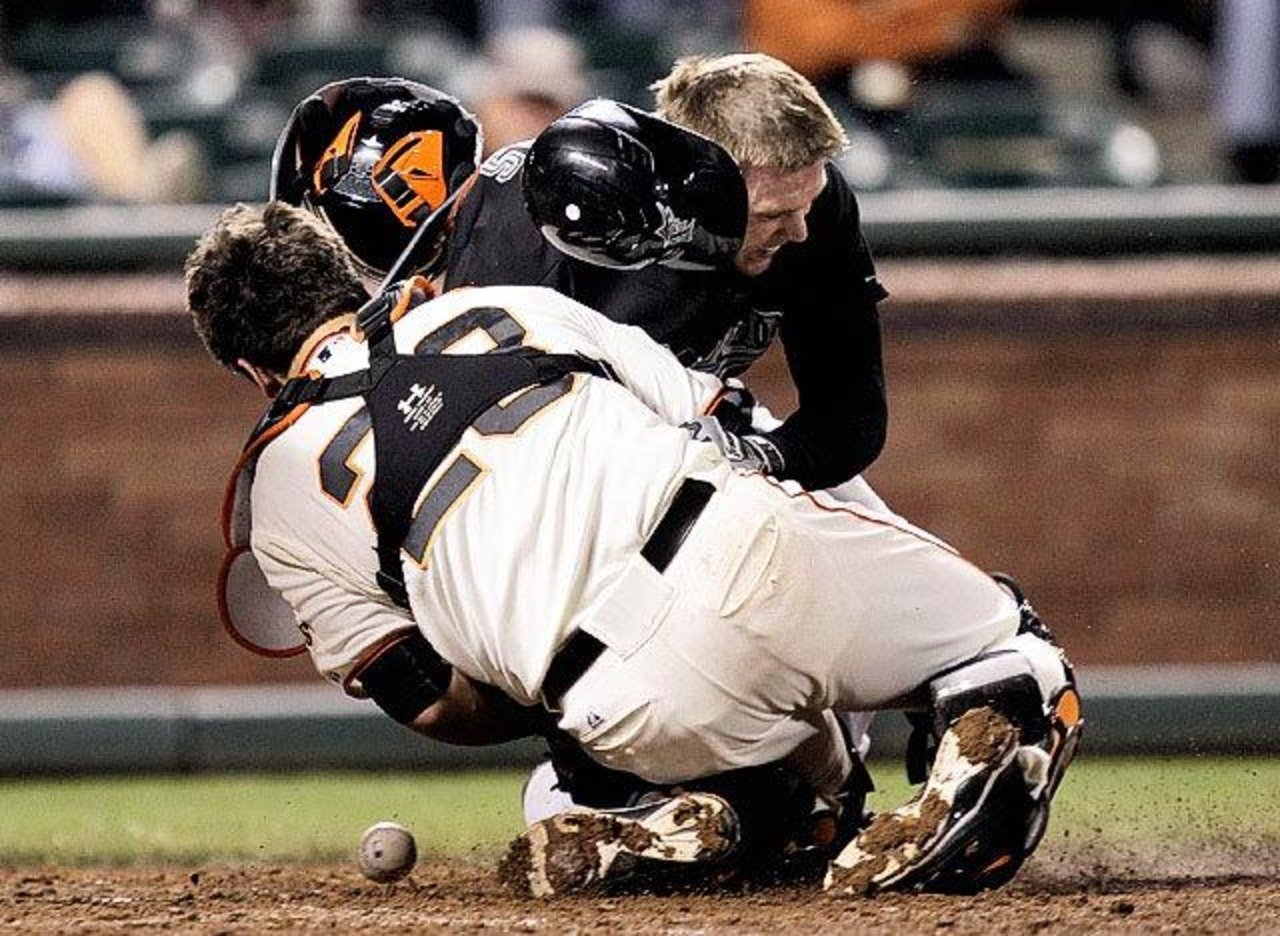 Outfielder Scott Cousins played in just 135 career games over four seasons in Major League Baseball. He’s most infamously remembered, however, for a play that took place in extra innings on this day 15 years ago. With the contest tied in the top of the 12th, Cousins bulled over San Francisco Giants catcher Buster Posey at the plate for the winning run as the Florida Marlins pulled out a 7-6 victory. In the process, Posey suffered a season-ending injury, prompting leaguewide discussion about collisions at home plate. After catcher John Buck singled off Giants reliever Guillermo Mota to lead off the top of the 12th inning at AT&T Park on May 25, 2011, Cousins entered the game as a pinch hitter. Attempting to sacrifice, Cousins bunted the first pitch he saw back to the pitcher but Mota was able to get the lead runner at second. One pitch later, Omar Infante singled to right field and Cousins raced over to third, putting runners on the corners with one out. Emilio Bonifácio followed by popping one into shallow right field. Nate Schierholtz made the catch for San Francisco and fired to the plate. Tagging up from third base, Cousins made his way home and went shoulder-first into Posey at the plate. The ball popped away, giving the Marlins the lead, but Posey was unable to get up. After a delay, the San Francisco catcher was carried off the field. Burke Badenhop worked a 1-2-3 bottom of the inning to collect the save and secure the Marlins win. While Posey’s injury sparked controversy, it could have been avoided had it not been for a dismal bottom of the ninth from the Florida bullpen. After Giancarlo Stanton (then known as Mike Stanton) extended the Marlins’ lead to 6-2 with a bases-clearing double in the top of the inning, the Giants scored four runs in the bottom half to force extras. Aubrey Huff’s two-run single off Juan Carlos Oviedo (then known as Leo Núñez) tied the game. Stanton had a big night for Florida, going 4-for-6 with four RBIs. Logan Morris was 3-for-5 with two runs scored in the win. Freddy Sanchez finished with four hits for San Francisco. As for Posey, he would make a full recovery. In 2012, Posey was named National League MVP as the Giants captured their second of three World Series titles over a five-year span. Posey would finish his career as a seven-time All-Star. His injury, however, led to rule changes that disallowed runners from deviating from a direct pathway to the plate. Catchers were also forced to provide a path to the plate for runners. While Posey could one day find himself in Cooperstown, Cousins’ big-league career was relatively short. After hitting .297 in 28 games in 2010, Cousins struggled over his final two seasons with the Marlins, batting just .140 (21-for-150) before appearing in just seven games with the Los Angeles Angels of Anaheim in 2013. While Cousins maintains that he had no intentions of injuring Posey, he did receive plenty of ire from around the league and in the media. He also reportedly received death threats. Cousins’ controversial slide against the Giants, however, did prompt meaningful rule changes throughout baseball. That slide came in a contest that lasted more than four hours on this day 15 years ago. View the full article
 -
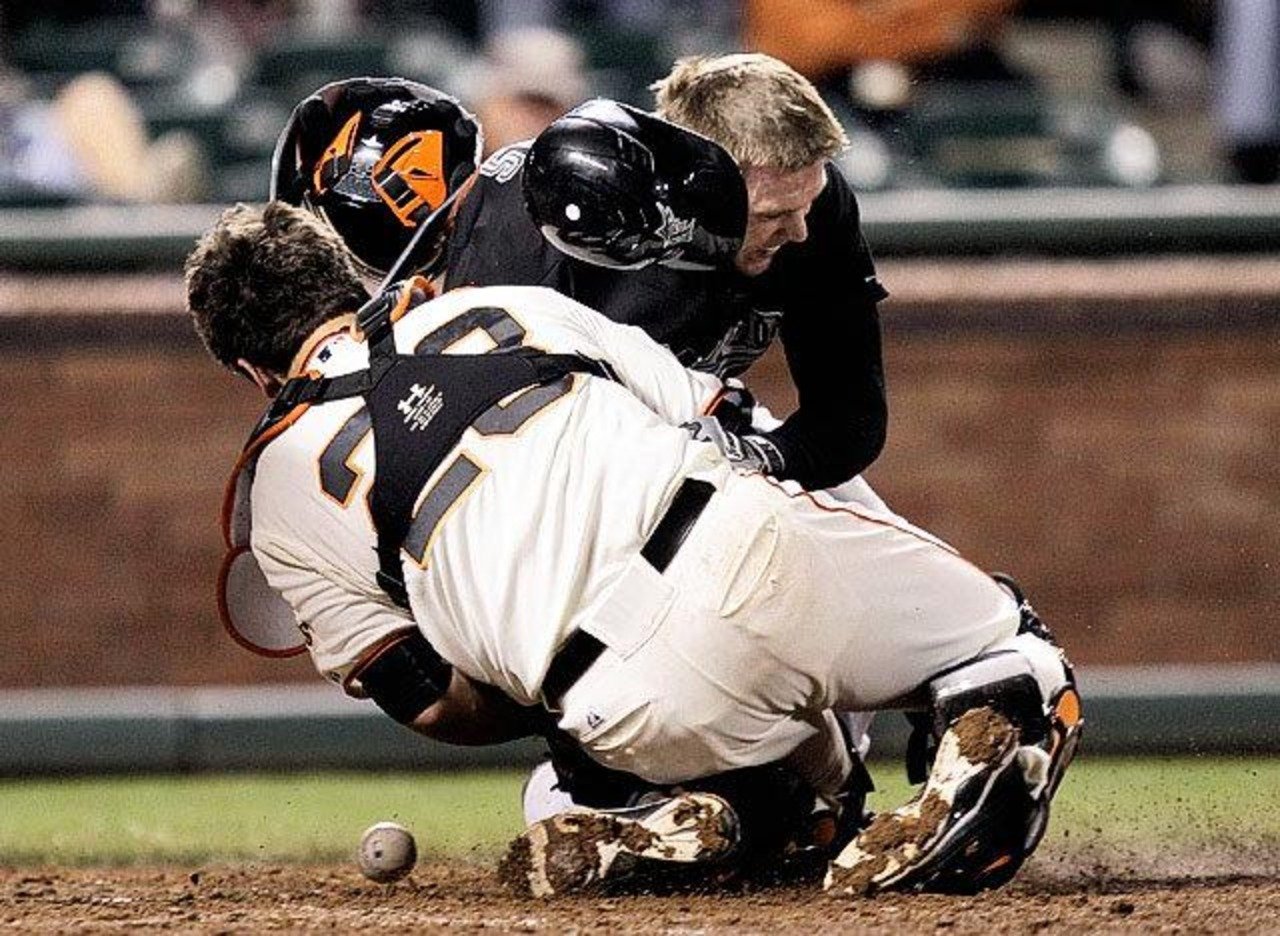 Outfielder Scott Cousins played in just 135 career games over four seasons in Major League Baseball. He’s most infamously remembered, however, for a play that took place in extra innings on this day 15 years ago. With the contest tied in the top of the 12th, Cousins bulled over San Francisco Giants catcher Buster Posey at the plate for the winning run as the Florida Marlins pulled out a 7-6 victory. In the process, Posey suffered a season-ending injury, prompting leaguewide discussion about collisions at home plate. After catcher John Buck singled off Giants reliever Guillermo Mota to lead off the top of the 12th inning at AT&T Park on May 25, 2011, Cousins entered the game as a pinch hitter. Attempting to sacrifice, Cousins bunted the first pitch he saw back to the pitcher but Mota was able to get the lead runner at second. One pitch later, Omar Infante singled to right field and Cousins raced over to third, putting runners on the corners with one out. Emilio Bonifácio followed by popping one into shallow right field. Nate Schierholtz made the catch for San Francisco and fired to the plate. Tagging up from third base, Cousins made his way home and went shoulder-first into Posey at the plate. The ball popped away, giving the Marlins the lead, but Posey was unable to get up. After a delay, the San Francisco catcher was carried off the field. Burke Badenhop worked a 1-2-3 bottom of the inning to collect the save and secure the Marlins win. While Posey’s injury sparked controversy, it could have been avoided had it not been for a dismal bottom of the ninth from the Florida bullpen. After Giancarlo Stanton (then known as Mike Stanton) extended the Marlins’ lead to 6-2 with a bases-clearing double in the top of the inning, the Giants scored four runs in the bottom half to force extras. Aubrey Huff’s two-run single off Juan Carlos Oviedo (then known as Leo Núñez) tied the game. Stanton had a big night for Florida, going 4-for-6 with four RBIs. Logan Morris was 3-for-5 with two runs scored in the win. Freddy Sanchez finished with four hits for San Francisco. As for Posey, he would make a full recovery. In 2012, Posey was named National League MVP as the Giants captured their second of three World Series titles over a five-year span. Posey would finish his career as a seven-time All-Star. His injury, however, led to rule changes that disallowed runners from deviating from a direct pathway to the plate. Catchers were also forced to provide a path to the plate for runners. While Posey could one day find himself in Cooperstown, Cousins’ big-league career was relatively short. After hitting .297 in 28 games in 2010, Cousins struggled over his final two seasons with the Marlins, batting just .140 (21-for-150) before appearing in just seven games with the Los Angeles Angels of Anaheim in 2013. While Cousins maintains that he had no intentions of injuring Posey, he did receive plenty of ire from around the league and in the media. He also reportedly received death threats. Cousins’ controversial slide against the Giants, however, did prompt meaningful rule changes throughout baseball. That slide came in a contest that lasted more than four hours on this day 15 years ago. View the full article
 -
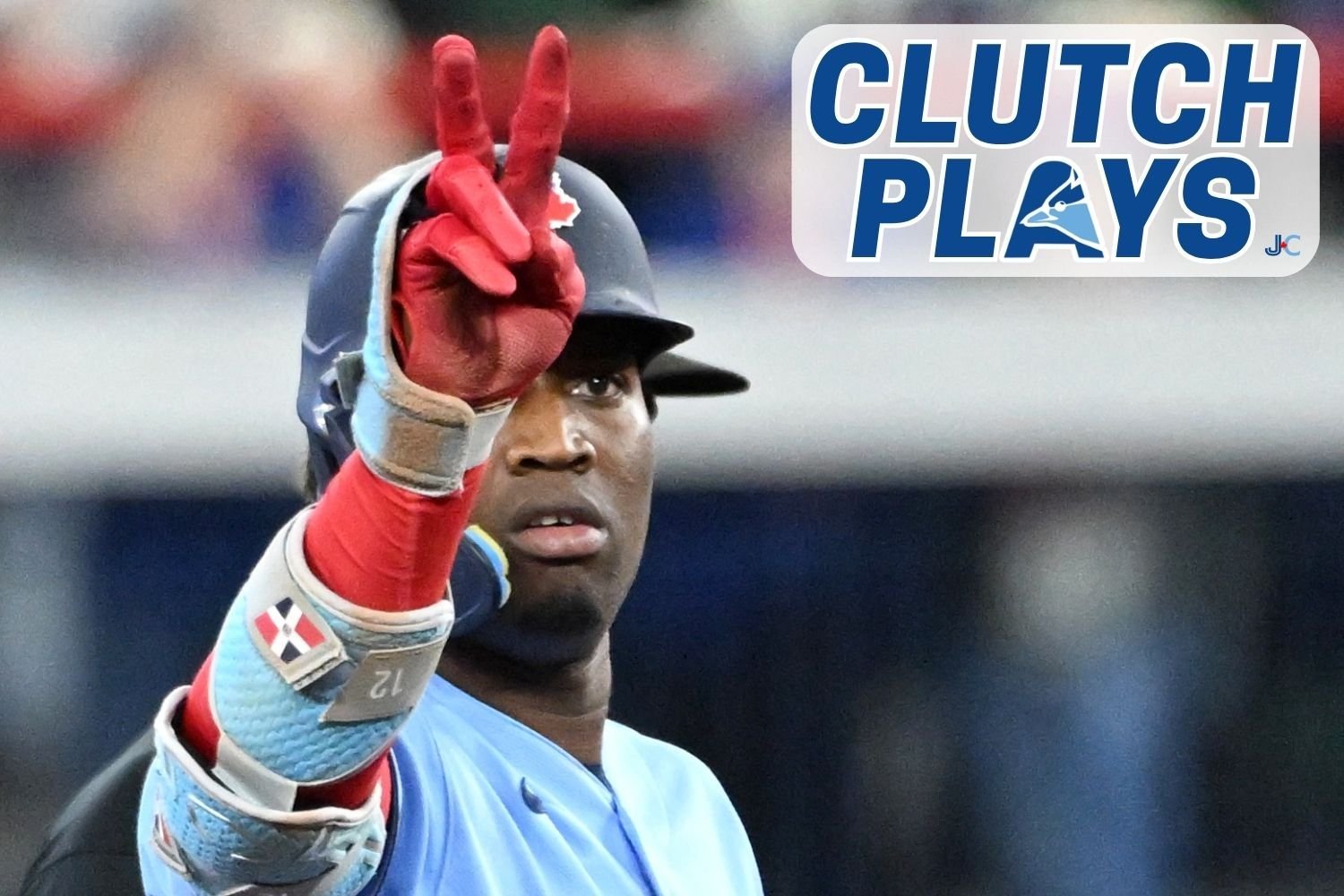 Welcome back to Blue Jays Clutch Plays, a recurring post that highlights the six most pivotal plays (three pitching, three hitting) from the past week of Blue Jays baseball, according to MLB's win probability model. Click here to read last week's edition. Just five days ago, the Blue Jays had dropped the first two games of a series at Yankee Stadium and were staring down the barrel of four consecutive games against Cam Schlittler, Carlos Rodón, Bubba Chandler, and Paul Skenes. Naturally, they won all four of those contests, marking their longest winning streak of the season. They had a chance to sweep the Pirates at home and lost the series finale on Sunday, but after salvaging their road trip and taking two out of three on the weekend, they aren't in a bad spot heading into a winnable stretch against the Marlins and Orioles. Here are the biggest moments from the week that was. Pitching 3. Tyler Rogers: Aaron Judge GIDP, Bot 8, 5/21 (+11.0% WPA) Toronto's pitchers had Aaron Judge figured out all series, as the Yankees' hulking slugger went 1-for-15 with eight strikeouts across the four games. In one of Judge's biggest opportunities to make something happen, Tyler Rogers whipped a sinker that dropped below the zone, and Judge rolled it over to the left side in a double play situation. Andrés Giménez positioned himself to field the ball perfectly, and Vladimir Guerrero Jr. made a nice scoop at first base to execute the twin killing and end the frame. 2. Kevin Gausman: Jake Mangum Groundout, Top 7, 5/22 (+11.7% WPA) Kevin Gausman's biggest out of the night happened to come on his last batter. The odds were shifting in favour of the Pirates as the contact-oriented Jake Mangum came to the plate with the tying run on second in a two-run game. Not only did Gausman keep the ball on the ground, but the fact that it was hit to first with the corner infielders drawn in meant that no runs scored on the play. Vlad Jr. stepped on first, paving the way for Mason Fluharty to come in and complete the inning. 1. Louis Varland: Amed Rosario Strikeout, Bot 9, 5/20 (+14.8% WPA) The Jays had to fight for every inch last Wednesday in New York after a lengthy rain delay gave way to an outstanding pitcher's duel between Trey Yesavage and Cam Schlittler. Things didn't come easy in the ninth, as Louis Varland allowed the tying run to get into scoring position before finding himself a strike away from making the save. With Jazz Chisholm Jr. running on the play, Varland got Amed Rosario to make a half-hearted offer at a fastball way above the zone to seal the victory. Hitting 3. Jesús Sánchez: RBI Double, Bot 6, 5/23 (+15.1% WPA) Jesús Sánchez had himself a solid week, as this was the second big double he recorded in a key spot. He had Paul Skenes's number on Saturday, going 2-for-3 against him with two doubles and a 106-mph lineout. Earlier in this at-bat, Sánchez was the benefactor of a fortuitous missed check swing call by the third base umpire, but he didn't hesitate to swing at a 3-2 changeup way below the zone from Skenes, roping it into the right field corner for the go-ahead RBI. 2. Jesús Sánchez: RBI Double, Top 9, 5/18 (+21.8% WPA) As important as it was to take the final two games of the Yankees series and earn the split, the Blue Jays were painfully close to sweeping them, losing each of the first couple games by one and stranding the tying run at third in both contests. The margins were particularly thin in Monday's back-and-forth opener, but things were looking up after Sánchez chopped one over the head of Paul Goldschmidt at first and all the way down the line to score Ernie Clement and bring the Blue Jays to within a run. 1. Ernie Clement: 3-run HR, Top 4, 5/18 (+34.6% WPA) Had Toronto hung on to their earlier lead or completed their ninth-inning comeback attempt, this would've gone down as the Ernie Clement Flu Game. Battling a bad case of strep throat, Ernie found himself in a two-strike, two-out situation with men on the corners and the Jays down by a run. He got a changeup that Ryan Weathers did a decent job locating, but he lofted it to left-center and it carried through the unseasonably hot air all the way over the fence. This was the Jays' fourth-most clutch hit, and Clement's biggest, of the season by WPA, surpassing his walk-off single back on opening weekend. View the full article
 -
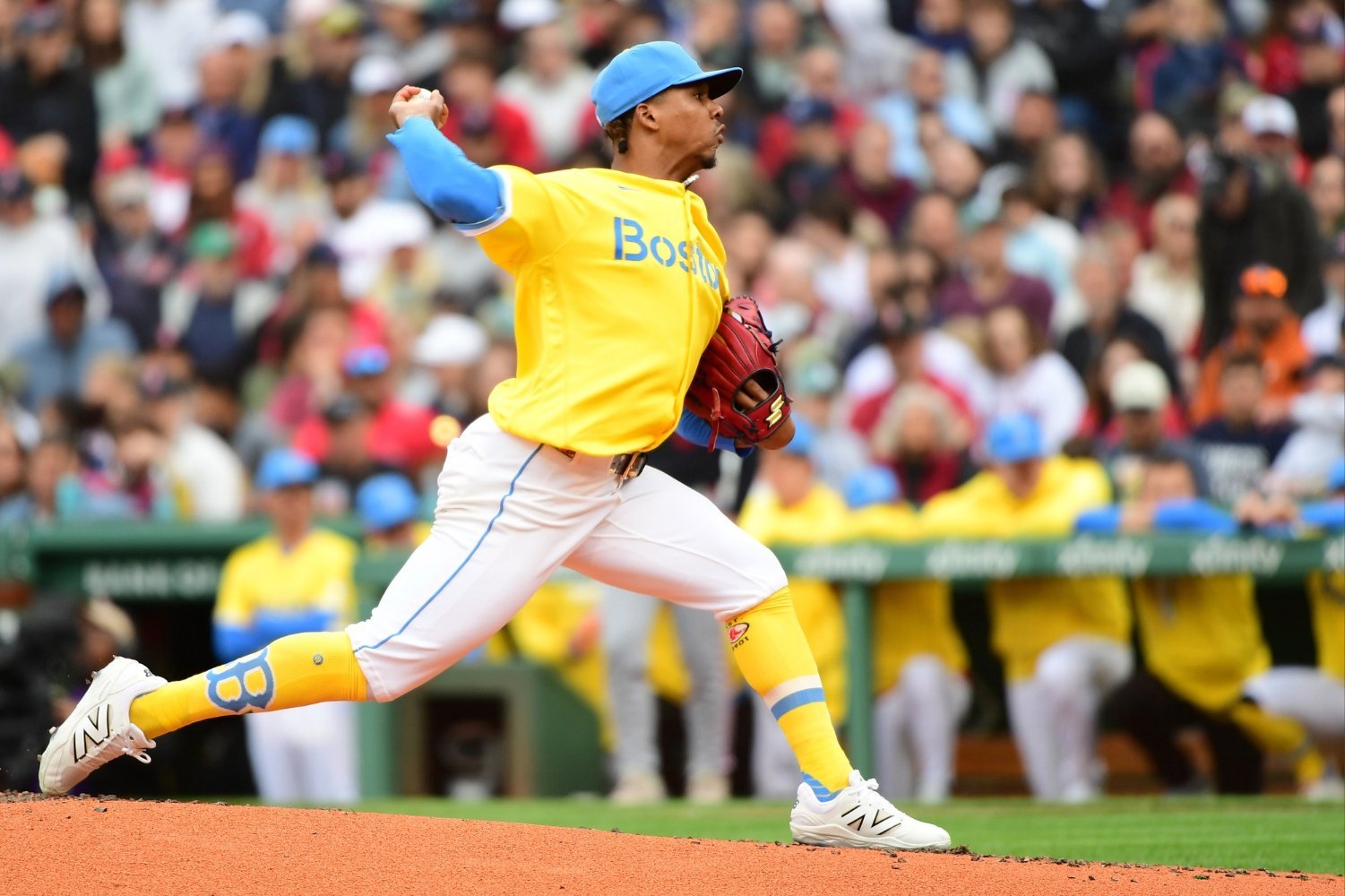 If I’ve said it once I’ve said it 100 times here on Talk Sox, I’m a Brayan Bello guy. I followed his journey through the system and into the Show with a ton of interest. I celebrated when he was named the Opening Day starter in 2024 and then felt myself get increasingly let down by every emotional outburst and meltdown that started off that season. After the July 4 series in Miami though, Bello began to change. The outbursts stopped and Bello went deeper into games, Then, in 2025, he was on fire to begin the season. He looked like a legitimate number two option to slot in behind ace Garrett Crochet for much of the season. Then as we drew towards the playoffs, he started to fall off a cliff. When his name was called to start game two of the 2025 Wild Card series, he was on the shortest leash imaginable. This season, he reported back to spring training from the World Baseball Classic where he wasn’t getting as much work as both he and the team hoped he would, and the belief was he would slot in nicely as the hybrid number three/four starter for the team this season. Things haven’t gone according to plan. As a true starter this season Bello currently holds a 9.68 ERA over 30 2/3s innings pitched with an opposing slash line of .370/.437/.440. He’s both struck out and walked 18 batters while allowing 10 home runs and 33 earned runs. When you look at his ERA each time the lineup flips over, it makes things look even more dire. The first time through, Bello has 7.11 ERA. The second time through it goes up to a 9.00 ERA. The third time it's a staggering 18.00 ERA. In short, he’s been awful. Abysmal even. I’ve already taken a dive into the mechanical and pitch mix changes that seem to have been plaguing Bello throughout the season, but at this point the answer is pretty clear: Bello no longer needs to be in the starting rotation for the Boston Red Sox. Bello has worked with an “opener”, or as a long reliever coming in after a bullpen arm started the game, three times this season, and the results have been more or less spectacular. In his first two outings, he tossed 13 ⅓ innings in this long relief role and held a 1.35 ERA with 12 strikeouts and one walk. He’s only allowed two earned runs to boot. Then, he produced another nice outing this weekend, holding the Twins to two (unearned) runs over five frames of work. Each game he’s entered as after the opener haven’t been clean for Jovani Moran, but Bello never seemed bothered. He toed the rubber with poise and pitched deep into those games. He seems to have more control over his pitches and has a confidence that doesn’t show up when he starts games. What is maybe most impressive is that his strikeout rate goes from 11.3% as a starter to 24..5% out of the bullpen and his walk rate drops from 11.3% to 4.1% in the same situation. As a reliever, Bello’s ERA each turn through the rotation is incredible. In his first two long-relief outings, through both the first and second turns, he’d posted a 1.93 ERA. Through the third turn, he’s at a flat zero. While the opener route isn’t the most conventional, this wouldn’t be the first time that the Red Sox opted to go this route to try and salvage a starter’s poor start to the season. Just a few years ago, the team did this exact same thing with RHP Nick Pivetta. Pivetta started the season in a less-than-ideal fashion and was moved, against his will at the time, to the bullpen. While he complained at the beginning of the experiment, it ended up salvaging that season in Boston and likely helped propel him into the contract he signed in the 2025 offseason with the Padres. Bello, like Pivetta, is searching for consistency as a starter and has proven that he’s effective when he’s used out of the bullpen for multiple innings. The role of a second-inning starter doesn’t make a ton of sense on paper, but it seems to be working for Brayan Bello. After two successful long-relief appearances he was given a true start against the best offense in baseball, the Braves. Things went about as poorly as you would expect. While interim manager Chad Tracy has seemingly pushed most of the right buttons for the Red Sox, that previous start showed he didn’t quite have his finger on the pulse of what was best for Bello. While Tracy won’t fully commit to going with an opener for Bello from here on out, choosing to instead say that it’s going to be matchup dependent, it’s pretty clear to everyone watching that Bello needs the stability of seeing the opposing lineup take hacks against someone else first. View the full article
 -
 The San Diego Padres' affiliates wrapped up Memorial Day weekend with mixed results. Will Wagner went deep for the Triple-A El Paso Chihuahuas, who lost to Round Rock 8-7 on a ninth-inning run. The Double-A San Antonio Missions didn't generate much offense in falling 8-1 to Frisco. Alex McCoy smashed a homer and had four RBIs as the High-A Fort Wayne TinCaps prevailed 6-3 over Dayton. Bradley Frye had a career-high four RBIs as the Low-A Lake Elsinore Storm rolled past Visalia 10-3. Padres Minor-League Transactions No roster moves Will Wagner Homers Again, But Chihuahuas Let Another One Slip Away Will Wagner homered for the second day in a row, but the host Triple-A El Paso Chihuahuas gave up another late lead in dropping an 8-7 loss to the Round Rock Express. The Chihuahuas (23-28) had three late-inning losses in dropping four of the six games in this series. Mason McCoy had three hits as the bottom four hitters in the order went 8-for-18 with four RBIs. Wagner hit in the No. 5 spot. Chihuahuas left-handed starter JP Sears was tagged for seven runs (six earned) on 10 hits with a walk and seven strikeouts over five innings. But the bullpen of right-hander Logan Gillaspie (one inning), Ethan Routzahn (1⅔ innings) and David Morgan (1⅓ innings) combined to allow just one run on three hits over the final four innings. Round Rock led 3-0 when Anthony Vilar hit a sacrifice fly to pull the Chihuahuas within 3-1. Wagner crushed his second homer in as many games and of the season, a three-run shot in the third for a 4-3 lead. Round Rock scored four times in the fifth to go back up 7-4, but El Paso got a McCoy RBI single in the fifth. Carlos Rodriguez had a run-scoring double and Marcos Castanon followed with an RBI single in the seventh to tie it. But a one-out double and single in the top of the ninth gave the Express the lead for good. EP_0524.mp4 Player AB R H RBI BB K Samad Taylor 5 0 2 0 0 0 Clay Dungan 3 0 0 0 2 1 Nick Solak 5 1 2 0 0 0 Jase Bowen 3 2 0 0 0 2 Will Wagner 3 2 1 3 2 1 Mason McCoy 5 1 3 1 0 1 Carlos Rodríguez 5 1 2 1 0 1 Marcos Castañon 5 0 2 1 0 0 Anthony Vilar 3 0 1 1 0 0 Totals 37 7 13 7 4 6 Player IP H R ER BB K HR JP Sears 5 10 7 6 1 7 1 Logan Gillaspie 1 0 0 0 1 0 0 Ethan Routzahn 1 2/3 1 0 0 3 2 0 David Morgan 1 1/3 2 1 1 0 0 0 Totals 9 13 8 7 5 9 1 Missions Settle For Series Split As Offense Silent Offense proved hard to come by for the Double-A San Antonio Missions, who managed just five hits in an 8-1 loss to the host Frisco RoughRiders. The teams split the six-game series 3-3 after the Missions (17-28) lost the last two games. No Missions player had multiple hits and their only run came on a wild pitch. That happened in the fourth inning. Trailing 3-0, Romeo Sanabria drew a one-out walk and stole second. Tirso Ornelas singled him to third and, after a popout, a wild pitch plated Sanabria. After that, the RoughRiders broke it open with a five-run sixth inning. Missions right-handed starter Miguel Mendez, Padres Mission's No. 3 prospect, lasted 2⅓ innings, giving up three runs on three hits with two walks and four strikeouts. This short outing was still the longest Mendez has gone in his last four starts. This was his third start since coming off the injured list. Player AB R H RBI BB K Carson Tucker 4 0 1 0 0 1 Ethan Salas 4 0 0 0 0 0 Romeo Sanabria 2 1 1 0 2 1 Tirso Ornelas 3 0 1 0 0 0 Jake Bold 1 0 0 0 0 0 Braedon Karpathios 3 0 1 0 1 1 Luis Verdugo 3 0 0 0 1 1 Kai Murphy 4 0 0 0 0 0 Francisco Acuna 3 0 0 0 0 2 Kai Roberts 3 0 1 0 0 0 Totals 30 1 5 0 4 6 Player IP H R ER BB K HR Miguel Mendez 2 1/3 4 3 3 2 5 0 Omar Cruz 2 2/3 1 0 0 3 3 0 Johan Moreno 2/3 4 5 5 1 0 1 Josh Mallitz 1 1/3 1 0 0 0 0 0 Andrew Moore 1 0 0 0 0 2 0 Totals 8 10 8 8 6 10 1 Alex McCoy Homers, Drives In 4 To Spark TinCaps Alex McCoy went 3-for-4 with a two-run homer and a season-high four RBIs as the host High-A Fort Wayne TinCaps pulled away from the Dayton Dragons 6-3. The teams split their six-game series as the TinCaps (22-23) recorded their 12th come-from-behind victory. Jonathan Vastine also homered for the TinCaps, while Zach Evans had two hits. TinCaps left-handed starter Jamie Hitt allowed three runs (two earned) on seven hits and two walks with three strikeouts over five innings. Right-hander Kleiber Olmedo pitched two hitless innings, although he walked three and struck out one, while right-hander Tucker Musgrove allowed two hits in a scoreless eighth with a pair of strikeouts and right-handed closer Clay Edmondson notched his minors-leading 10th save with a scoreless ninth. Edmondson has a 0.47 ERA. After Dayton scored twice in the top of the first, the TinCaps came back in the bottom half as Evans singled with one out and McCoy uncorked his team-best ninth homer, a two-out shot to center, to tie it. McCoy is Padres Mission's No. 12 prospect. Dayton went up 3-2 in the second, but Vastine unloaded his third homer of the year leading off the bottom of the fifth to make it 3-3. The TinCaps took the lead for good in the sixth. Carlos Rodriguez and McCoy had back-to-back doubles to lead off the inning to make it 4-3. Jack Costello walked as McCoy stole third, then Kavares Tears singled to right for a 5-3 TinCaps lead. McCoy made it a four-RBI day in the seventh when Justin DeCriscio doubled, Evans bunted him to third and McCoy had a two-out opposite-field single to right to put the TinCaps up 6-3. FW_0524.mp4 Player AB R H RBI BB K Justin DeCriscio 4 1 1 0 0 1 Zach Evans 3 1 2 0 0 0 Carlos Rodriguez 4 1 1 0 0 1 Alex McCoy 4 2 3 4 0 1 Jack Costello 2 0 0 0 2 1 Kavares Tears 3 0 1 1 0 1 Oswaldo Linares 4 0 0 0 0 1 Jonathan Vastine 4 1 1 1 0 2 Kasen Wells 4 0 1 0 0 0 Totals 32 6 10 6 2 8 Player IP H R ER BB K HR Jamie Hitt 5 7 3 2 2 3 0 Kleiber Olmedo 2 0 0 0 3 1 0 Tucker Musgrove 1 2 0 0 0 2 0 Clay Edmondson 1 0 0 0 1 1 0 Totals 9 9 3 2 6 7 0 Bradley Frye's 4 RBIs, Storm's 6 Steals Fuel Victory Bradley Frye drove in a career-high four runs and five pitchers combined on a five-hitter as the Low-A Lake Elsinore Storm stole six bases and cruised to a 10-3 victory over the Visalia Rawhide. The Storm (25-20) won just two of the six games in the series and is tied for first place in the California League's South Division. It was a balanced offensive attack as Frye and Jorge Quintana each had two hits, Kerrington Cross homered and five of the other six starting position players each had one hit. That includes Conner Westenburg, who had a two-run double and was the only other player to have multiple RBIs. Storm right-handed starter Carlos Medina bounced back from his worst game of the season by giving up two runs (one earned) on two hits with a pair of walks and a strikeout over 4⅔ innings. Right-handers Carson Swilling (1⅓ innings, three walks, three strikeouts), Vicarte Domingo, Daichi Moriki and Will Koger allowed a combined three hits, one run, seven walks and six strikeouts. Koger gave up the run in the ninth. Frye drew the third of three walks sandwiched around a hit batter as the Storm took a 1-0 lead in the first. Ryan Wideman, Padres Mission's No. 5 prospect who is tied for the minor-league lead with 33 steals, had his streak of 15 straight swipes broken when he was thrown out at second in the first inning. In the third, Jose Verdugo had a one-out infield single, stole second with two outs, his 13th of the season, and went to third on a throwing error. Truitt Madonna walked and stole second, his 11th of the season, then Frye drove both home with a single to left, with Frye going to third when the ball got past the left fielder. Quintana doubled home Frye, George Bilecki walked and Quintana stole third, then Westenburg doubled home those two for a 6-0 advantage. A three-run sixth featured Cross' fourth homer of the year and back-to-back RBI doubles by Madonna and Frye. Wideman doubled home a run in the seventh. LE_0524.mp4 Player AB R H RBI BB K Ryan Wideman 5 0 1 1 0 1 Kerrington Cross 3 2 1 1 1 1 Jose Verdugo 3 2 1 0 1 1 Dylan Grego 1 0 0 0 0 0 Yoiber Ocopio 4 0 0 0 0 3 Truitt Madonna 2 2 1 1 3 0 Bradley Frye 4 1 2 4 1 1 Jorge Quintana 5 1 2 1 0 2 George Bilecki 4 1 1 0 1 1 Conner Westenburg 4 1 1 2 1 2 Totals 35 10 10 10 8 12 Player IP H R ER BB K HR Carlos Medina 4 2/3 2 2 1 2 1 0 Carson Swilling 1 1/3 0 0 0 3 3 0 Vicarte Domingo 1 0 0 0 1 1 0 Daichi Moriki 1 1 0 0 2 1 0 Will Koger 1 2 1 1 1 1 0 Totals 9 5 3 2 9 7 0 Top 20 Prospect Performance Ethan Salas: 0-for-4 Kash Mayfield: DNP Miguel Mendez: 2⅓ IP, 4 H, 3 R, 2 BB, 5 K Kruz Schoolcraft: DNP Ryan Wideman: 1-for-5, 2B, K Jorge Quintana: 2-for-5, 2B, 2 K Ty Harvey: DNP Kale Fountain: DNP Braedon Karpathios: 1-for-3, K Lamar King Jr.: DNP Jagger Haynes: DNP Alex McCoy: 3-for-4, 2B, HR, K Truitt Madonna: 1-for-2, 2B Tucker Musgrove: 1 IP, 2 H, 0 R, 0 BB, 2 K Garrett Hawkins: DNP Michael Salina: DNP Eric Yost: DNP Rosman Verdugo: DNP Bryan Balzer: DNP Deivid Coronil: DNP View the full article
 -
What are your Marlins vs. Blue Jays series predictions?
DiamondCentric posted an article in Fish On First
 Once again in 2026, I will be monitoring Miami Marlins predictions from our valued SuperSubs, Fish On First staffers and livestream guests. Individual article pages like this one will be created prior to every Marlins series and featured prominently on the FOF site. Consistent participation is key if you want to win this annual contest. Submissions only take a few seconds. Scoring system A "perfect" series is worth three points: Earn one point for predicting which team will win the upcoming series Earn one point for predicting the precise number of victories for each team Earn one point for predicting the “Series MVP” who accumulated the highest win probability added (WPA) during the series as calculated by FanGraphs (could pick a player from either team) FOF SuperSub Nicholas Milton and FOF staffer Jeremiah Geiger are currently tied atop the 2026 season leaderboard, which will be updated between every Marlins series. If you are a SuperSub, leave a comment with your Prediction Time picks on this page, or join the Marlins Discord Server and submit there. We'll feature them on the upcoming Fish On First LIVE episode and track your points throughout the season! Any picks submitted prior to the first pitch of the series opener will be counted. If you are not a SuperSub, please consider signing up here to support the FOF staff. Series preview notes Probable starting pitchers: RHP Janson Junk (MIA) vs. RHP Trey Yesavage (TOR) on Monday RHP Sandy Alcantara (MIA) vs. TBD (TOR) on Tuesday RHP Eury Pérez (MIA) vs. RHP Kevin Gausman (TOR) on Wednesday The Marlins rank 19th in MLB with a 97 wRC+ and 13th in MLB with a 3.91 FIP. They are 4-6 in their last 10 games and have a 7-14 record on the road this season. The following Marlins players are on the injured list: Griffin Conine (10-day IL), Ronny Henriquez (60-day IL), Leo Jiménez (7-day IL), Adam Mazur (60-day IL) and Robby Snelling (60-day IL). The Blue Jays rank 23rd in MLB with a 93 wRC+ and fifth in MLB with a 3.54 FIP. They are 6-4 in their last 10 games and have a 15-12 record at home this season. The following Blue Jays players are on the injured list: Addison Barger (10-day IL), José Berríos (15-day IL), Shane Bieber (60-day IL), Lazaro Estrada (15-day IL), Bowden Francis (60-day IL), Yimi Garcia (60-day IL), Alejandro Kirk (10-day IL), Nathan Lukes (10-day IL), Joe Mantiply (15-day IL), Tommy Nance (15-day IL), Cody Ponce (60-day IL), Anthony Santander (60-day IL) and Max Scherzer (15-day IL). View the full article
 -
Twins Minor League Report (5/24): Royce Lewis Can't Stop Homering
DiamondCentric posted an article in Twins Daily
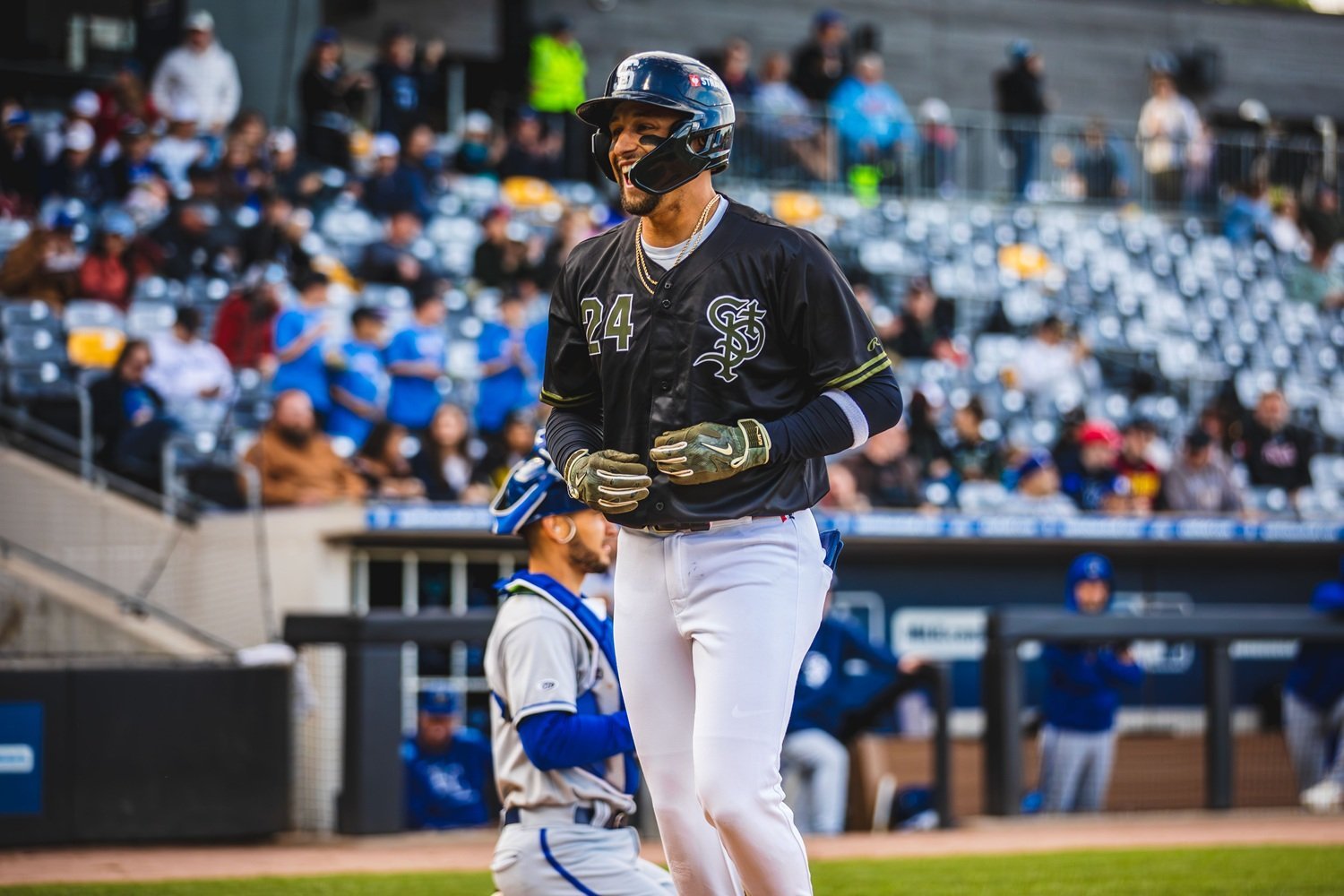 TRANSACTIONS No moves were made on Sunday. Saints Sentinel St. Paul 3, Omaha 5 Box Score Ty Langenberg: 3 2/3 IP, 6 H, 3 ER, 0 BB, 2 K HR: Royce Lewis (6), Kyler Fedko (11) Multi-hit games: Royce Lewis (2-for-3, HR, R, RBI, BB) The Saints came up short on Sunday. The day started with the sun rising in the East, so Royce Lewis homered. In six games with St. Paul in 2026, he’s collected eight hits, six of them homers, giving him the hilarious .348/.400/.1.130 slash line. Yes, that’s his slugging, not his OPS. It appears something about the demotion has improved his play. Will it be enough to earn a spot back on the major league roster? Or, in other words, what exactly does he need to prove to return to the Twins? Bashing the brains out of AAA pitchers is nice and all, but is that all he needs to do? Speaking of guys homering a lot, Kyler Fedko launched one as well. He now has an OPS of 1.165 in May, even better than what the incoming tweet says. It's unclear whether he can find a spot on the major league roster, and history says the Twins probably won't promote him, but someone somewhere should probably give him a look. Lest his play be wasted in the margins of reports like this. Ty Langenberg’s introduction to AAA baseball continued to be rocky; the hurler surrendered three runs in 3 ⅔ frames, giving him a 5.40 ERA at the level with 10 hits allowed across 6 2/3 innings. With Carter Jensen now in the big leagues, the Storm Chasers lack an imposing top prospect. Their best youngster is 26th-ranked outfielder Gavin Cross, who was once a big deal, but has struggled mightily at AAA. He collected three hits in four at-bats on Sunday. Wind Surge Wisdom Wichita 8, Tulsa 4 Box Score Cory Lewis: 3 IP, 4 H, 3 ER, 2 BB, 0 K HR: Maddux Houghton (2) Multi-hit games: None A Maddux Houghton grand slam fueled a Wind Surge win on Sunday. Despite the byline, matters started poorly. Following an ordinary-enough caught stealing of Kyle DeBarge and a swinging strikeout of Garrett Spain, in which there was one close—but correct—called strike, Jaime Ferrer attempted to take his at-bat. Suddenly, the first base coach ejected Spain, and coach Julian Gonzalez—after an impressive George Brett impression following the infamous “pine tar” decision—was tossed as well. What precisely they were upset about, this author could not parse. Tulsa soon took a 3-0 lead. But Wichita rallied. They plated a run in the third before loading the bases for Maddux Houghton, now in the game for the ejected Spain. Naturally, he launched one 434 feet, way beyond the bullpens and off the scoreboard for a dramatic grand slam. Because something nefarious cursed this game, more oddities were afoot, with two runs scoring in the fifth off a truly bizarre play. “Poncho Ruiz advances to 3rd, on a fielding error by left fielder Zyhir Hope” reads the Gameday description, and the casual observer is robbed of an experience. Indeed, Hope butchered what should have been a catch; but only one should have—and would have—scored, had the cutoff Tulsa infielder not committed the rare triple clutch on his relay attempt. The aforementioned Hope ranks as the 20th-best prospect in baseball, according to MLB.com. He singled and walked in five plate appearances. Kernels Nuggets Cedar Rapids 3, Peoria 5 Box Score Riley Quick: 2 2/3 IP, 3 H, 3 ER, 2 BB, 7 K HR: None Multi-hit games: Marek Houston (3-for-5, 2 2B, R) Brandon Winokur (2-for-3, 2 RBI) The Kernels surrendered late to lose on Sunday. It happened. Riley Quick finally bled. His numbers at Cedar Rapids entering Sunday represented a step back from the cartoonish dominance he displayed in April, perhaps not a surprise given the promotion and the high standard he set for himself. And Sunday was the nadir: he surrendered three runs in less than three innings, with a second inning three-run homer proving to be his downfall. It was due to happen eventually. Because he’s Riley Quick, though, seven of his eight outs were on strikes; the only straggler was a soft tapper back to the mound. He should be just fine. The Cedar Rapids lineup was mostly empty on Sunday: no player south of Khadim Diaw, batting fourth, earned a hit. Marek Houston shined in the leadoff spot, however, counting three hits with two of them being doubles. It’s his second straight Sunday with three hits. Brandon Winokur was workmanlike in the three-hole, singling twice and driving in two of his teams three runs on the day. Garrett Horn returned to the mound as a Kernel on Sunday, pitching three shutout innings while striking out two. The lefty was acquired for Danny Coulombe at last year’s trade deadline. The Chiefs are an affiliate of the St. Louis Cardinals. Once a talent powerhouse, the system has fallen a bit as the once eminent baseball force searched fora new identity in a changing prospect landscape; on Sunday, the best the Chiefs could offer was the franchise's 28th-ranked prospect, Jack Gurevitch. He singled and walked in four plate appearances. Mussel Matters Fort Myers 2, Dunedin 3 Box Score Kolten Smith: 4 IP, 1 H, 1 ER, 1 BB, 1 K HR: Enrique Jimenez (1) Multi-hit games: Enrique Jimenez (2-for-3, HR, 2 R, RBI, BB), Ryan Sprock (2-for-3, 2B, BB) The Mighty Mussels were too meager on Sunday. Enrique Jimenez provided the memorable spark in this one, obliterating a fastball out to right-center in the fourth for his first homer of the season. The 20-year-old Venezuelan is an intriguing prospect: though less heralded than Eduardo Tait, he, too, was a switch-hitting catcher acquired at last year’s trade deadline—and in 23 games for Fort Myers, he nearly walked as much as he struck out while slugging .551. We shall see what he can do this year. Rehabbing big leaguer Nathan Lukes played for Dunedin on Sunday. He went 0-2 as the DH. Once again, the opposing team in one of these games claimed a Top 50 prospect. This one was JoJo Parker, a shortstop the Blue Jays took in the first round of the 2025 draft. He went 0-3. TWINS DAILY PLAYERS OF THE DAY Twins Daily Minor League Pitcher of the Day – Garrett Horn Twins Daily Minor League Hitter of the Day – Royce Lewis PROSPECT SUMMARY Here’s a look at how the Twins Daily Top 20 Twins Prospects performed: #2 – Kaelen Culpepper (St. Paul) - 1-4, R, 2 K #5 – Eduardo Tait (Cedar Rapids) - 0-1, K #7 – Marek Houston (Cedar Rapids) - 3-5, 2 2B, R, K #8 – Riley Quick (Cedar Rapids) - 2 2/3 IP, 3 H, 3 ER, 2 BB, 7 K #10 – Gabriel Gonzalez (Twins) - 2-4, 2 R, RBI, BB #13 – Hendry Mendez (St. Paul) - 1-4, 2B #14 – Quentin Young (Fort Myers) - 1-3, BB, K #15 – Brandon Winokur (Cedar Rapids) - 2-3, 2 RBI, K #17 – C.J. Culpepper (St. Paul) - 2 IP, 2 H, 0 ER, 2 BB, 1 K #19 – Khadim Diaw (Cedar Rapids) - 1-3, RBI #20 – Kyle DeBarge (Wichita) - 1-3 R, 2 BB, K MONDAY’S PROBABLE STARTERS Wichita @ Springfield (4:35 PM) - TBD FCL Pirates @ FCL Twins (11:00 AM) - TBD View the full article
 -
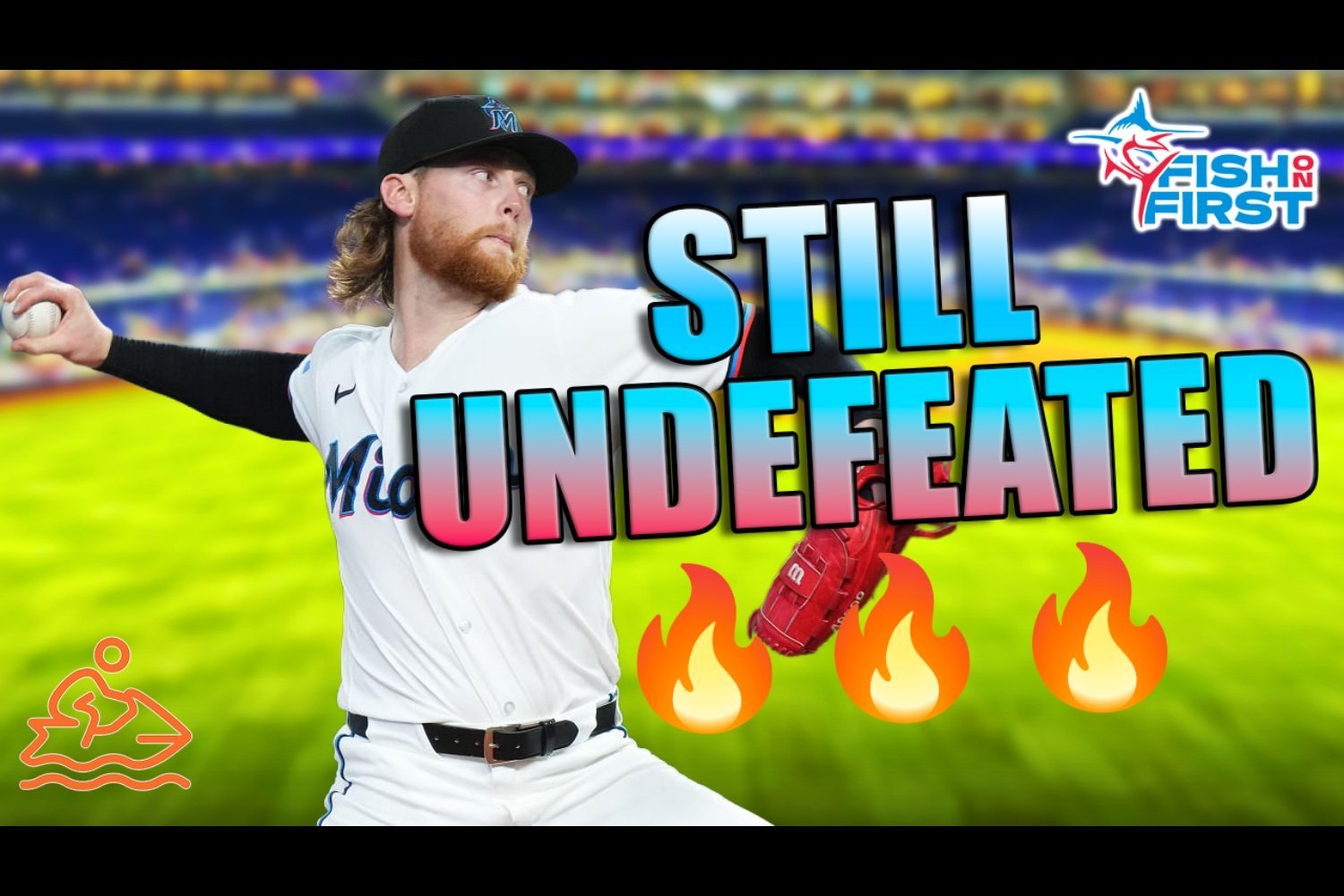 Fish On First staffers react to the latest Miami Marlins series and prepare you for what lies ahead. Sunday's show was hosted by Alex Carver and featured panelists Ely Sussman, Jeremiah Geiger, Kevin Barral and Nate Karzmer. The following topics were covered: Walk-off grand slam by Heriberto Hernández to secure a series sweep Tyler Phillips slides into open starting rotation spot Repeatedly overaggressive sends by third base coach Blake Lalli Max Meyer on an All-Star trajectory Liam Hicks' fascinating offensive profile Owen Caissie snaps out of an extended slump Previewing and predicting the next series against the Toronto Blue Jays You can find Fish Unfiltered and Fish On First LIVE on the Fish On First YouTube channel, Apple Podcasts, Spotify or wherever else you get your pods. Our next FOF LIVE episode will be Wednesday at approximately 7:00 p.m. ET following the Marlins-Blue Jays series finale. View the full article
 -
Week in Review: Demotions, Debuts and Pitching Dominance
DiamondCentric posted an article in Twins Daily
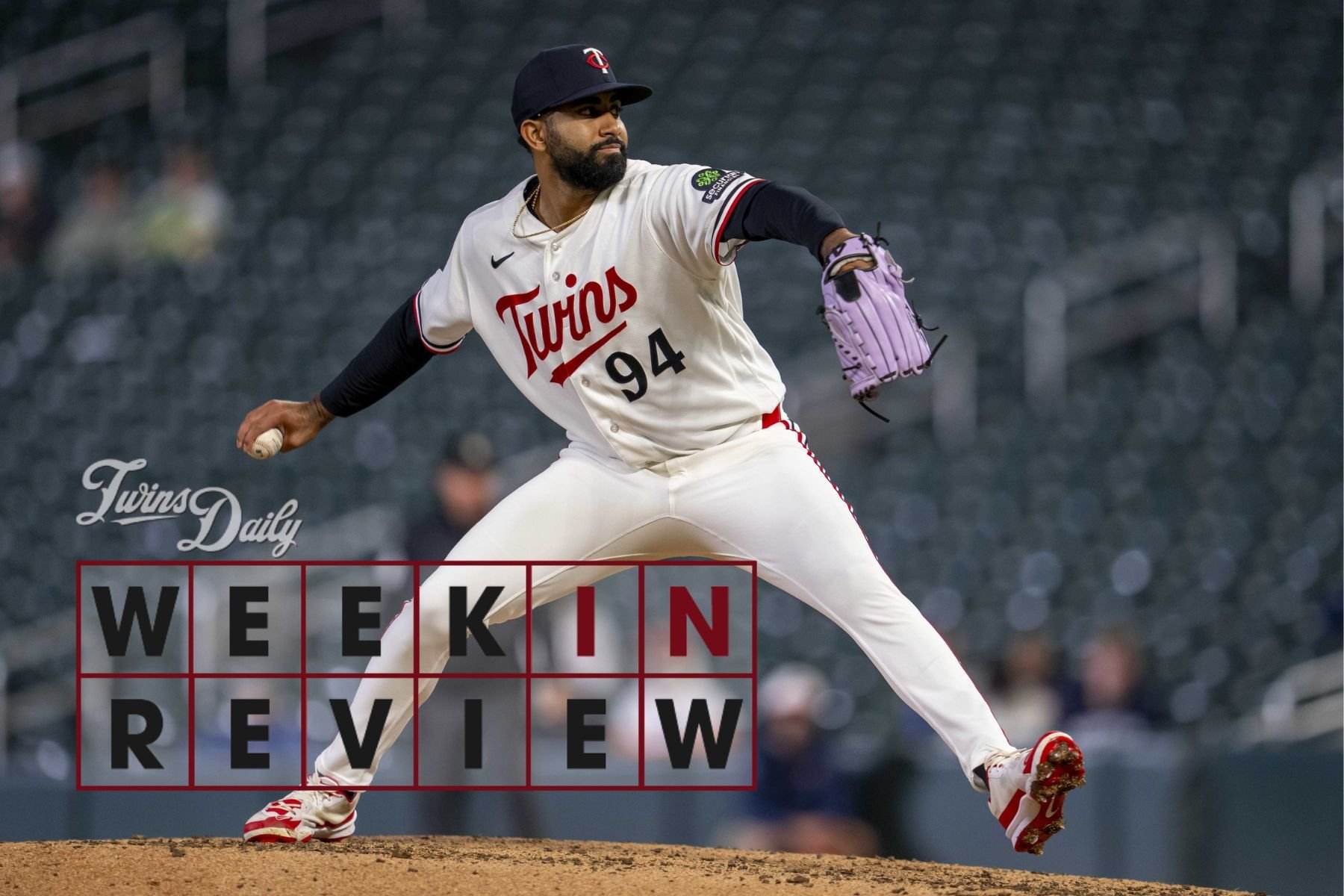 The Weekly Nutshell: The Twins have their problems, as we all know. But this past week was a good reminder that they are not alone in that boat. Matchups against the Astros and Red Sox, two of the most disappointing teams in the American League, offered some welcomed perspective. Despite their much higher payrolls and expectations, Houston and Boston have been no better than Minnesota and they were mostly outclassed by the Twins, who've now taken six of seven. The winning baseball was a much needed distraction from the flurry of bad news that opened the week: major injuries to Ryan Jeffers and Emmanuel Rodriguez, and another demotion of a core player to Triple-A. Weekly Snapshot: Mon, 5/18 through Sun, 5/24 *** Record Last Week: 5-1 (Overall: 26-27) Run Differential Last Week: +10 (Overall: +4) Standing: 3rd Place in AL Central (5.0 GB) Latest Game Results Game 48 | MIN 6, HOU 3: Rojas Impresses, Twins Hang on After Long Rain Delay Rojas: 4 IP, 0 R, 2 H, 1 BB, 3 K Game 49 | HOU 2, MIN 1: Offense Strands Nine Runners in Another One-Run Loss Matthews: 6 IP, 2 R, 5 H, 0 BB, 6 K Game 50 | MIN 4, HOU 1: Ryan Deals, Kreidler Delivers Key Homer in Series Clincher Kreidler: 1-3, HR, 3 RBI Game 51 | MIN 8, BOS 6: Twins Battle Back from Early Deficit Powered by Buxton, Martin Buxton: 2-5, HR, 3 RBI Game 52 | MIN 4, BOS 2: Bradley Brings the Heat in Return, Bullpen Backs Him Up Bradley: 5 IP, 1 R, 3 H, 2 BB, 7 K Game 53 | MIN 6, BOS 5: Martin, Lee Deliver Key Hits in Sweep-Clinching Comeback Win Twins bullpen: 3 IP, 0 R, 2 H, 0 BB, 3 K NEWS & NOTES Following the resumption of Monday's rain-disrupted game against Houston, Ryan Jeffers swung at the first offering from Astros pitcher AJ Blubaugh in an eighth-inning plate appearance and shattered his bat on a foul ball. He strolled over to grab a new stick, stepped back into the box, and took the next two pitches. Nothing seemed amiss. But something was. Once the count reached 2-1, Jeffers waved to the dugout for trainers and quickly came out of the game. He was initially diagnosed with left wrist sprain but on Tuesday were learned the news was much worse: a fractured hamate bone, requiring surgery with a recovery timeline in the two-month range. It's a crushing development for both the team and Jeffers, who's been exceptional in his final year under contract. He expressed some hope that he can come back sooner than is generally expected, but for the foreseeable future, the Twins will have to proceed without arguably their most valuable player. Alex Jackson replaces Jeffers on the roster, and as Victor Caratini's timeshare partner behind the plate. The Twins are swapping out one of the best-hitting catchers in baseball for one of the worst, but Jackson at least brings MLB experience and strong defensive chops. He'll try and play his way into the team's post-Jeffers catching plans in 2027, but his lack of option is a complicating factor. In addition to Jeffers, the Twins also lost another key component of what they hoped would be their lineup core, sending Royce Lewis down to Triple-A for a reset less than a week after taking the same action with Matt Wallner. As with Wallner, Lewis' continually spiraling performance left the front office with little choice but to make a bold change. Replaced by Orlando Arcia on the MLB roster for the time being, Lewis homered in his first at-bat back in Triple-A, and then went deep twice on Saturday. So far, so good. The tough injury news didn't stop with Jeffers. Top prospect Emmanuel Rodriguez was tabbed for surgery after a ligament tear was discovered upon further examination of his thumb. Any hope that this would be a short-term injury is dashed by this grim development. If not for getting hurt, Rodriguez probably would already be up in the majors, with both Lewis and Wallner sent down, but now we'll need to wait until the second half to see him back in action. One chapter from the Jorge Polanco trade closed last week while another one opened up. Reliever Justin Topa was designated for assignment with an 8.05 ERA on Tuesday after being used as much as any reliever in the majors during the first two months, replaced by Travis Adams. Days later, outfield prospect Gabriel Gonzalez got the call to the big leagues with Tristan Gray taking a short paternity leave. Like Anthony DeSclafani before him, Topa didn't amount to much in a Twins uniform but Gonzalez was always the player upon whom the Polanco package was likely to be judged. He started in left field and batted fifth on Friday night in his major-league debut, drawing walks in his first two plate appearances before notching his first MLB hit on a dribbler to third. He'll return to the minors within a day or two, but Gonzalez made a nice first impression and will be back before long. Ahead of Saturday's game, the Twins activated Taj Bradley and designated Luis García for assignment. García's tenure in Minnesota is one we'd all like to forget: 8.2 IP, 10 ER, 12 H, 4 BB, 2 K. A final bullpen note: Saints relievers Matt Bowman and John Brebbia exercised opt-out clauses in their contracts and became free agents. HIGHLIGHTS As usual, the offense ran through Byron Buxton. He returned from missing several games due to hip soreness, and while clearly still not 100%, Buck got right back to business at the plate. He doubled twice in his return to action against Houston on Tuesday, and crushed a two-run homer over the Green Monster on Friday to fuel Minnesota's comeback win. Still showing signs of discomfort, Buxton was eased back into action, starting at DH three times before returning to center field on Saturday and then getting the day off Sunday. Austin Martin had cooled off substantially after taking over the everyday right field job from Matt Wallner, entering the weekend series in Boston in an 0-for-14 slump. He broke out of the funk at Fenway, launching a key go-ahead two-run homer right to back up Buxton's. He then doubled in the first run on Saturday as part of a two-hit game, and delivered a game-tying double on Sunday. Trevor Larnach was batting .172 in his past 10 games before breaking through with four hits on Saturday and notched an RBI single on Sunday. He and Martin have been two of the team's best stories in the first third of the season, but had been lapsing into possible regression, so it's great to see them get back on track as surprising lineup cornerstones. Josh Bell shook out of a much deeper slump against Houston, homering twice with four RBIs in the series opener and then adding three more knocks on Tuesday. He had a sub-.400 OPS in his past 20 games heading into the week, but shows signs of at least stabilizing. Fellow free-agent signing Caratini, who's also been mired in a lengthy drought, homered in the finale against Houston, his first extra-base hit in over a month. In both cases, these are hopefully sign of things to come, especially for Caratini who will be starting regularly behind the plate in Jeffers' absence and looking to keep the catcher position afloat offensively. The pitching staff was nothing short of brilliant against the Astros and Red Sox, allowing 18 total earned runs on 40 hits (three home runs) over six games. Joe Ryan put up his third consecutive start with six innings of one-run ball, striking out a season-high nine. Zebby Matthews struck out six with no walks in holding Houston to two runs over six frames. Kendry Rojas impressed in his first major-league start, allowing two hits and a walk over four scoreless innings on Monday. Bradley was fully healthy in his return from the injured list, posting his best velocity of the season in a winning effort against Boston. Meanwhile, the bullpen was on point yet again. Twins relievers are fourth in the majors in ERA and third in FIP over the past two weeks. Only five teams have a better bullpen WPA in May. Yoendrys Gómez is looking like a legitimate addition, delivering important scoreless outings in his first three appearances, all victories, before running into a bit of trouble in sloppy, wet conditions in Sunday's finale (but still making some big pitches). His performance against Houston on Wednesday, striking out five of the seven batters he faced in two shutout innings, felt like a statement. Gómez combined with Taylor Rogers, Anthony Banda, Eric Orze, Adams, Rojas and Andrew Morris to allow two run on seven hits over 23 ⅓ innings. Morris walked in a run during an erratic save attempt on Saturday, but aside from that, the only Twins reliever to allow a run was Topa. He surrendered three while recording just two outs on Monday, and he was jettisoned soon after. Everyone remaining in the bullpen is trending in a pretty good direction. LOWLIGHTS Before they were sent to the minors, Wallner and Lewis found themselves being benched more frequently, and when they played, hitting lower in the order than ever before. I'm not saying he's necessarily close to being optioned, but it's notable that Luke Keaschall is now following a similar path. After sitting the middle game in the previous Milwaukee series, Keaschall was again out of the lineup for the middle game of the Houston series. He then went 0-for-4 in the finale, and on Friday night in Boston found himself batting eighth in the lineup, the lowest he's hit since his MLB debut more than a year ago. He did come through with a pair of hits and an RBI in Friday's game, but also committed a pretty ugly error at second — number five, tied for the team lead with the now-demoted Lewis. Keaschall didn't play on Saturday or Sunday, although it seemed to have more to do with residual soreness from an HBP on Friday than anything performance-related. That aside, the Twins have been showing clear signs of eroding confidence in their Opening Day #3 hitter. The defense is a big factor in that. Even in a very brief glimpse, Arcia's superiority with the glove has been apparent. On the offensive side, Keaschall is taking good ABs and getting on base — he's hitting .268 with a .414 OBP this month, walking as much as he's striking out — but the quality of contact has been just abysmal. Keaschall hasn't homered since April 6th and has just one extra-base hit in his past 50 plate appearances. [keaschallsc524] In terms of on-field performance, there weren't many nits to pick for the Twins in a pair of series wins that featured great pitching and productive showings from the offense. The big lowlights of the week really centered on the injury developments. Losing Jeffers is gut-punch that detracts from enthusiasm around Minnesota's current ascent toward the .500 mark. Same goes for Rodriguez, who was looking like a major X-factor as a potential rookie difference-maker this summer; now his name will be X'ed out for the foreseeable future. You enjoy the wins as they come, but it grows far more difficult to see the success sustaining through setbacks like these. Lewis joining Wallner in Triple-A is a sad reflection of where things stand with the "post-hype prospect" group, but maybe it's the beginning of a turnaround toward better days and career rejuvenations. Something needed to change and it's good to at least see the Twins take action and enact a plan with these two floundering vets, even if it feels a little demoralizing. If the Twins want to remain in the competitive mix into the second half of the season, they've got to get at least one of these guys going, not to mention Keaschall. Lewis' dominant start with the Saints bodes well, at least. TRENDING STORYLINE On Friday night, we saw Brooks Lee start at a position other than shortstop for the first time all year, sliding over to third with Ryan Kreidler taking over at short. The rest of the series featured the same alignment. Derek Shelton and the Twins are expressing a preference, and it's one that makes sense to me. Lee is best suited for third base, and that's been evident in seeing his shortcomings exposed at shortstop this year. Kreidler, conversely, is very good at the position, which is a big part of his value proposition. The Twins need to get better defensively in the infield, and this is a meaningful step in that direction. The future implications of this shift are interesting to consider. Mainly: If Lee takes to third, what does that mean for Lewis if and when he is ready to return? Is there a place for him? And if Kreidler can excel defensively while sustaining some level of production at the plate, could he stick as the starting shortstop for a while? It's all on the table right now. LOOKING AHEAD The Twins are on the early end of their longest stretch of games all season without a break. They'll play seven in the coming week, wrapping up a 10-game road trip with expeditions to Chicago and Pittsburgh. Under normal circumstances, the White Sox and Pirates would represent soft matchups, but they've actually both been playing pretty well. This should be a good test against two franchises that are in a similar place to the Twins, looking ahead but trying to stay in the fight while they're at it. MONDAY, MAY 25: TWINS @ WHITE SOX — RHP Zebby Matthews v. LHP Anthony Kay TUESDAY, MAY 26: TWINS @ WHITE SOX — RHP Joe Ryan v. RHP Sean Burke WEDNESDAY, MAY 27: TWINS @ WHITE SOX — LHP Connor Prielipp v. RHP Davis Martin THURSDAY, MAY 28: TWINS @ WHITE SOX — RHP Taj Bradley v. RHP Erick Fedde FRIDAY, MAY 29: TWINS @ PIRATES — RHP Bailey Ober v. RHP Mitch Keller SATURDAY, MAY 30: TWINS @ PIRATES — RHP Zebby Matthews v. RHP Carmen Mlodzinski SUNDAY, MAY 31: TWINS @ PIRATES — RHP Joe Ryan v. RHP Braxton Ashcraft View the full article
 -
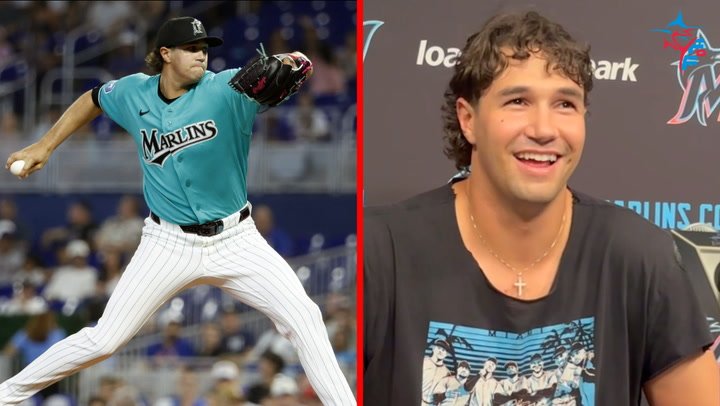 On Sunday following his first start of the 2026 season, Marlins right-hander Tyler Phillips speaks with the media about adapting to his new role. Phillips and five Marlins relievers combined for a shutout victory.View the full article
 -
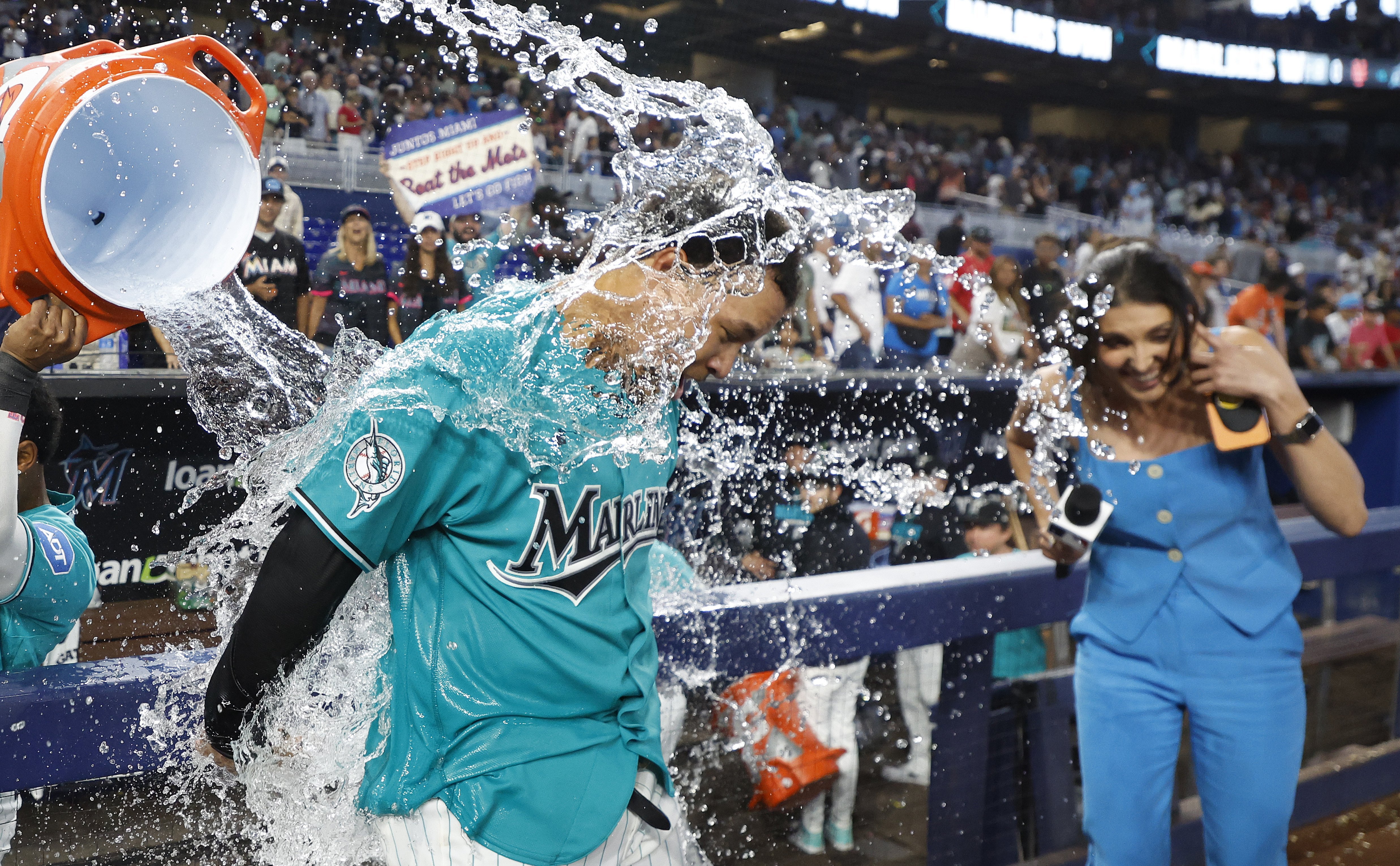 MIAMI—"Trust yourself, because you know the tools are there, the talent is there, it's just a matter of trusting what you got and what you can do." That was the heartfelt message relayed from Miami's coaching staff to the struggling Heriberto Hernández before being sent down to Triple-A Jacksonville in late April. Coming off an encouraging 2025, the second-year outfielder wasn't all the way there at the plate, requiring tune-ups both mechanically and mentally to regain what Miami and Hernandez alike knew he had. Less than a month later, it's safe to say the 26-year-old's confidence has never been higher. Hernandez delivered the moment of the season for Miami thus far in the bottom of the ninth in Sunday's series finale over the Mets, blasting a walk-off grand slam to the roar of 23,018 screaming spectators at loanDepot park in a thrilling 4-0 victory. With the win, Hernández's club secures a sweep over their division rival climbs back to 25-29. New York did not lead at any point in the series after the second inning of Friday's game one. "Really happy for Bert," said Marlins skipper Clayton McCullough postgame over a raucous clubhouse. "We saw him do a lot of fantastic things for us last year—the big homer he had in Philly off [Jhoan] Duran. He's come through in moments for us in the past, and for him just to hang in there, and come back up, he's been ready to go every time his name has been called, he hadn't got a whole lot of starts to get into a rhythm, but I think he's always ready to come off the bench and hit. I couldn't be happier for him to have that moment there." "Amazing," responded Hernández with a smile when asked of his emotions. "It feels good that the team is winning and then the way that we've been fighting out there, it feels good." Deadlocked at 0-0 in the bottom of the ninth, the slumping Christopher Morel doubled to kick off what would be the game-winning rally. A sacrifice bunt from Javier Sanoja and back-to-back walks to Liam Hicks and Xavier Edwards—the latter being intentional—set the scene for Hernández, who didn't even enter the contest until the seventh. "I wasn't trying to do much—just trying to put the ball in play," said Hernández. "I knew that if I put the ball in play, we were going to get that run." Hernández still owns an ugly .193/.287/.284 slash line in 32 total MLB games, though his wRC+ spiked from 48 to 65 in this contest. One attribute of the Dominican's game that has never wavered is his attitude. Consistently, Hernández takes pride in any way he can assist in Miami winning ballgames. With the bat returning to rookie-year form, there's no reason why he shouldn't play a part in the coming weeks. "Just trying to help the team." said Hernández when asked what's been working since his return. "I know that I'm not playing every day, but in my heart that's what I want, just being able to help the team and contribute every time I'm out there." If It Ain't Broke... For as intense and stern as Tyler Phillips looks most times, Miami's standout second-year reliever has a simple approach to breaking the ice. "Go out there and relieve in the first inning. I guess they call that starting." Phillips stuck to his routine, coming out of the bullpen before taking the mound in the first while slapping himself in his patented pre-outing ritual. It worked. Phillips was impressive yet again, getting through 3 ⅔ innings scoreless innings before turning things over to his buddies in the bullpen. "I've started my whole career. Last year was my first year relieving," said Phillips. "The mentality that (Daniel) Moskos, Clayton (Brandon) Mann, everyone's been pushing to me is just go out there, do the same thing you've been doing, treat it like you're relieving in the first inning. Coming out of the 'pen has been kind of working for me. I get my little alter ego going and you're just attacking from pitch one. So instead of coming in in the sixth inning, I just did it from the first inning." Following Phillips, a sensational group effort from Calvin Faucher, John King, Anthony Bender, Michael Petersen and Pete Fairbanks kept New York quiet and things scoreless. The staff as a whole surrendered just three hits all afternoon. Notes and Quotes - Connor Norby was removed from Sunday's game with left elbow discomfort. Norby wore a 95 mph heater from Christian Scott in the fourth and stayed in the game for a half inning before Graham Pauley entered in his place. "He's sore," said McCullough of the injury. "I hadn't really got a check, got him in a tough spot there, around the elbow area, was able to play another inning of defense, but wasn't gonna be able to swing the bat, and it was starting to stiffen up. Probably have more on that tomorrow." - This was the Marlins' first series sweep of the Mets since May 17-19, 2019. - Hernandez's walk-off grand slam was Miami's first since Kyle Stowers hit his infamous blast off Mason Miller on May 4, 2025. - Miami improves to 1-9 in games when the fourth rotation spot makes a start this season. Chris Paddack, Robby Snelling and Braxton Garrett couldn't get it done, but a sensational effort from Phillips and Co. finally lifts the hex. On Deck Now riding sudden momentum, Miami embarks on a three-city road trip beginning north of the border in Toronto against the defending American League champions. Janson Junk toes the slab for Miami in Monday night's series opener against postseason hero Trey Yesavage. First pitch from the Rogers Centre is set for 7:07. View the full article
 -
 Cubs Transactions Chicago Cubs designated 2B Nicky Lopez for assignment. Chicago Cubs recalled RF Kevin Alcántara from Iowa Cubs. Iowa's Five-Run Seventh Pushes The Cubs Past Memphis Iowa erupted for five runs in the bottom of the seventh inning to overtake Memphis and win 6-4 at Principal Park. Trailing 3-1 entering the frame, the Cubs strung together a walk by Brett Bateman and back-to-back singles from leadoff hitter Justin Dean and Jonathon Long to load the bases. BJ Murray then delivered a two-run double to left, with Bateman and Dean both scoring. Cleanup hitter Owen Miller followed with another two-run double that brought Long and Murray home, and Chas McCormick capped the rally with an RBI double that plated Miller. Paul Campbell turned in a steady starting effort, working six innings while allowing three runs on six hits, one walk, and one strikeout. He gave up a two-run home run in the fifth and an RBI double in the third. Gavin Hollowell earned the win after tossing a scoreless seventh. Collin Snider allowed a solo home run in the eighth but recorded a hold, and Christian Roa closed it out with two strikeouts in a scoreless ninth for the save. Dean led the offense with two hits, a run, an RBI, a walk, and a stolen base. Murray finished 2-for-3 with a double, two RBIs, and a walk. Miller went 2-for-4 with a double and two RBIs, and McCormick added two hits and a double in a 2-for-4 effort. Ben Cowles also doubled. James Triantos went 0-for-4. Iowa banged out 12 hits and left eight runners on base. Player AB R H RBI BB K Justin Dean, RF 4 1 2 1 1 1 Jonathon Long, 1B 4 1 1 0 1 1 BJ Murray, LF 3 1 2 2 1 0 Owen Miller, 3B 4 1 2 2 0 0 Chas McCormick, DH 4 0 2 1 0 1 Christian Bethancourt, C 4 0 1 0 0 1 James Triantos, 2B 4 0 0 0 0 1 Ben Cowles, SS 4 1 1 0 0 2 Brett Bateman, CF 3 1 1 0 1 0 Player IP H R ER BB K HR Paul Campbell 6.0 6 3 3 1 1 1 Gavin Hollowell (W, 1-0) 1.0 0 0 0 0 0 0 Collin Snider (H, 2) 1.0 1 1 1 1 2 1 Christian Roa (S, 1) 1.0 0 0 0 0 2 0 Caple's Quality Start Lifts Smokies Past Biscuits In A 2-1 Win Brooks Caple delivered a quality start to lead Knoxville to a 2-1 win over Montgomery at Smokies Stadium. Caple worked six innings, scattering five hits while allowing one earned run on a solo home run in the fourth. He did not walk a batter and struck out four to earn the win. The Smokies scored both of their runs by bringing Alex Ramírez across the plate. In the first inning, Ramírez doubled and then came home on Owen Ayers' RBI single to center. With the game tied at one in the bottom of the eighth, Ramírez singled, eventually moved into scoring position, and scored on cleanup hitter Jefferson Rojas' RBI single to right. Ramírez led the offense, going 3-for-4 with a double, two runs, and a stolen base. Ayers, Rojas, and Karson Simas each contributed a hit, with Simas also drawing a walk and stealing a base. Carter Trice, Andy Garriola, and Hayden Cantrelle each drew a walk as well. The Smokies struck out nine times as a team. Jake Knapp got the start and turned in two scoreless innings, allowing one hit, one walk, and three strikeouts. Marino Santy closed the door in the ninth with a perfect inning and a strikeout to earn the save. Knoxville committed one error and left seven runners on base. Player AB R H RBI BB K Carter Trice, LF 3 0 0 0 1 1 Alex Ramírez, RF 4 2 3 0 0 0 Owen Ayers, DH 4 0 1 1 0 1 Jefferson Rojas, 3B 4 0 1 1 0 1 Andy Garriola, CF 3 0 0 0 1 0 Edgar Alvarez, 1B 4 0 0 0 0 1 Karson Simas, SS 2 0 1 0 1 1 Ariel Armas, C 3 0 0 0 0 2 Hayden Cantrelle, 2B 2 0 0 0 1 2 Player IP H R ER BB K HR Jake Knapp 2.0 1 0 0 1 3 0 Brooks Caple (W, 1-0) 6.0 5 1 1 0 4 1 Marino Santy (S, 2) 1.0 0 0 0 0 1 0 Four-Run Second And Useche's Power Carry South Bend To 5-3 Victory South Bend struck for four runs in the top of the second inning and held on to beat West Michigan 5-3 in Comstock Park. The rally began when Cole Mathis singled and scored on Leonel Espinoza's RBI double to left. Alex Madera walked, and Miguel Useche followed with an RBI single to center to score Espinoza. After a fielder's choice and a walk to leadoff hitter Kane Kepley, Ty Southisene delivered a two-run single to right that brought Useche and Christian Olivo home. Useche later padded the lead with a solo home run in the sixth. Jostin Florentino had a rough start, working two innings while allowing two earned runs on three hits and three walks, though he struck out three. Ben Johnson earned the win by tossing three scoreless innings, allowing just one hit while striking out four. Kenten Egbert worked a scoreless sixth for a hold, and Brayden Spears finished it by working three innings, allowing one run on two hits while striking out four to earn the save. Useche led the offense, going 2-for-4 with two runs, two RBIs, and a home run. Southisene went 2-for-5 with two RBIs. Espinoza added a 1-for-4 effort with a double, a run, and an RBI. Mathis chipped in a hit and a run, and Olivo went 1-for-4 with a stolen base. Kade Snell had a tough night, going 0-for-5 with five strikeouts. The Cubs collected nine hits, struck out 15 times, and left seven runners on base. Player AB R H RBI BB K Kane Kepley, DH 4 0 0 0 1 1 Ty Southisene, SS 5 0 2 2 0 0 Kade Snell, LF 5 0 0 0 0 5 Matt Halbach, 3B 4 0 1 0 0 2 Cole Mathis, 1B 4 1 1 0 0 1 Leonel Espinoza, RF 4 1 1 1 0 1 Alex Madera, 2B 3 0 1 0 1 1 Miguel Useche, C 4 2 2 2 0 1 Christian Olivo, CF 4 1 1 0 0 0 Player IP H R ER BB K HR Jostin Florentino 2.0 3 2 2 3 3 0 Ben Johnson (W, 1-0) 3.0 1 0 0 1 4 0 Kenten Egbert (H, 1) 1.0 0 0 0 0 1 0 Brayden Spears (S, 1) 3.0 2 1 1 0 4 1 Hartshorn's Big Double Not Enough As Pelicans Fall To Cannon Ballers Myrtle Beach put together a three-run rally in the top of the fifth inning to tie the game, but Kannapolis answered with three in the bottom of the frame and held on for a 5-4 win. Trailing 2-0, leadoff hitter Alexis Hernandez and Darlyn De Leon set the rally up with hits before Alexey Lumpuy's RBI single brought De Leon home. Josiah Hartshorn then doubled to right to score Hernandez and Lumpuy, knotting the score at three. Myrtle Beach added one more in the seventh on a Hernandez triple followed by a Lumpuy walk, but the Pelicans stranded the tying run. Noah Edders started and worked two innings, striking out four while allowing one earned run on no hits and one walk. David Bracho took the loss after a rough three innings, allowing four earned runs on three hits and five walks while striking out four. Hayden Frank gave Myrtle Beach a chance to come back, tossing three scoreless innings on two hits and a walk with four strikeouts. Hernandez led the offense, going 3-for-5 with two runs and a triple. Hartshorn finished 1-for-3 with a double, two RBIs, and a walk. De Leon went 2-for-4 with a double, a triple, and a run, and Michael Carico added two hits and a double. Lumpuy walked twice, scored a run, and drove in another in a 1-for-3 effort. The Pelicans collected ten hits, but committed two errors and left seven runners on base. Player AB R H RBI BB K Alexis Hernandez, SS 5 2 3 0 0 2 Alexey Lumpuy, RF 3 1 1 1 2 1 Josiah Hartshorn, CF 3 0 1 2 1 2 Jose Escobar, 2B 4 0 0 0 0 0 Michael Carico, 1B 4 0 2 0 0 1 Derniche Valdez, 3B 4 0 0 0 0 2 Yahil Melendez, DH 4 0 1 0 0 2 Henniel Alcala, C 4 0 0 0 0 1 Darlyn De Leon, LF 4 1 2 0 0 2 Player IP H R ER BB K HR Noah Edders 2.0 0 1 1 1 4 0 David Bracho (L, 0-1) 3.0 3 4 4 5 4 0 Hayden Frank 3.0 2 0 0 1 4 0 Top-20 Prospect Performance Jefferson Rojas: 1-for-4, RBI, K Jaxon Wiggins: DNP Pedro Ramirez: DNP Kevin Alcantara: DNP Josiah Hartshorn: 1-for-3, 2B, 2 RBI, BB, 2 K Ethan Conrad: DNP Kane Kepley: 0-for-4, BB, K Jonathon Long: 1-for-4, R, BB, K James Triantos: 0-for-4, K Cole Mathis: 1-for-4, R, K Owen Ayers: 1-for-4, RBI, K Brooks Caple: 6 IP, 5 H, 1 R, 1 ER, 0 BB, 4 K, 1 HR (W) Juan Cabada: DNP Kaleb Wing: DNP Angel Cepeda: DNP Dominick Reid: DNP Jostin Florentino: 2 IP, 3 H, 2 R, 2 ER, 3 BB, 3 K Ty Southisene: 2-for-5, 2 RBI Will Sanders: DNP Brandon Birdsell: DNP View the full article
 -
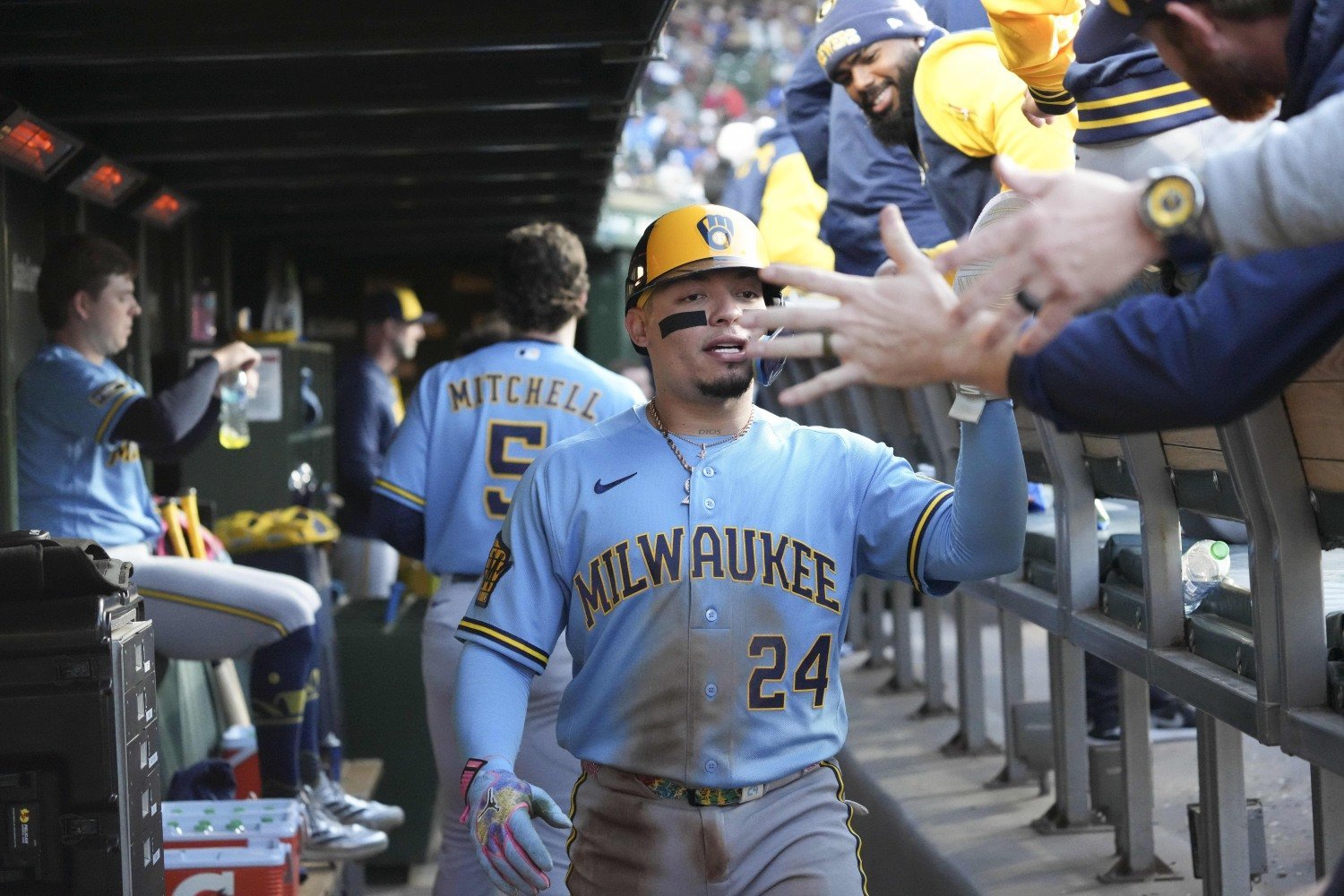 Weekly Snapshot Record Last Week: 4-2 (Overall: 30-20) Run Scored Last Week: 28 Runs Surrendered Last Week: 22 Standing: 1st in NL Central Game 45 (5/18) | MIL 9, CHC 3 Game 46 (5/19) | MIL 5, CHC 2 Game 47 (5/20) | MIL 5, CHC 0 Game 48 (5/22) | MIL 5, LAD 1 Game 49 (5/23) | LAD 11, MIL 3 Game 50 (5/24) | LAD 5, MIL 1 Game 45 | Brewers 9, Cubs 3 MIL Starter: Brandon Sporat (4.2 IP, 3 H, 3 BB, 3 ER, 5 k) Top Performers: Jake Bauers (2 H, HR, 4 RBI) Christian Yelich (2 H, 2B, HR, BB, RBI) Shane Drohan (4.1 IP, 4 H, 0 BB, 0 ER, 5 K) The Brewers strolled into Wrigley Field for their first game against the Cubs of the season, and promptly snapped the home team’s 15-game home winning streak. They did with an exclamation point, as well, as two towering home runs from Christian Yelich and Jake Bauers helped to hang eight runs on Cubs starter Shota Imanaga’s ledger, while the duo of Brandon Sporat and Shane Drohan pitched all nine innings for the Brewers. Jake Bauers’ 3-run home run (+9.1 WP%) Game 46 | Brewers 5, Cubs 2 MIL Starter: Jacob Misiorowski (6.0 IP, 3 H, 1 BB, 0 ER, 8 K) Top Performers: Brice Turang (3 H, HR, 2 RBI) Jake Bauers (2 H, RBI) Trevor Megill (1.0 IP, 0 H, 0 BB, 0 ER, 2 K) The Brewers captured the series on Tuesday behind Jacob Misiorowski, who turned in yet another scoreless start, this time twirling six innings to the tune of eight strikeouts. That was plenty for the Brewer offense, who managed to scrape across three runs against Ben Brown through the first five innings, and then had Brice Turang add some insurance with a two-run home run in the 8th. Misiorowski’s Outing Game 47 | Brewers 5, Cubs 0 MIL Starter: Kyle Harrison (7.0 IP, 2 H, BB, 0 ER, 11 K) Top Performers: William Contreras (3 H, BB) David Hamilton (3 H, 3B, RBI) DL Hall (2.0 IP, 0 H, BB, 0, ER, 2 K) Kyle Harrison one-upped the Miz’s outing by helping the Brewers complete their first sweep at Wrigley since 2021, turning in the best start of his young career by going 7 innings of scoreless baseball, striking out 11 Cubs. Meanwhile, David Hamilton had a memorable game for himself, scoring on both a wild pitch and a 3-base error from Pete Crow-Armstrong. David Hamilton’s Little League home run (+22.2 WP%) Game 48 | Brewers 5, Dodgers 1 MIL Starter: Logan Handerson (5.0 IP, 2 H, 3 BB, 0 ER, 7 K) Top Performers: William Contreras (3 H, HR, 3 RBI) Andrew Vaughn (2 H, 2B, RBI) Chad Patrick (1.1 IP, 0 H, 0 BB, 0 ER, SV) Logan Handerson continued the trend of strong starter performances, as on Friday, the Brewers faced the Dodgers for an NLCS rematch. He wound up going five strong innings, keeping the Dodgers offense off the board and striking out seven. Meanwhile, the Brewers jumped all over Justin Wrobleski early, scoring five in the first two innings to take the lead and never look back. William Contreras' 3-run homer (+16.9 WP%) Game 49 | Dodgers 11, Brewers 3 MIL Starter: Robert Gasser (4.1 IP, 4 H, 4 BB, 4 ER, 4 K) Top Performers: Jackson Chourio (2 H, 2 2B) Brice Turang (H, 2 BB, 2B, RBI) Grant Anderson (1.2 IP, 0 H, BB, 0 ER) Saturday's game quickly fell apart after the Brewers jumped out to an early lead against Dodger starter Roki Sasaki, as Robert Gasser and the bullpen struggled with command. In total, Brewers pitchers walked 11 Dodgers on the day, allowed 10 hits, and coughed up 11 runs, while the Brewers' offense went cold after the 3-run first. Brice Turang's RBI double (+9.0 WP%) Game 50 | Dodgers 5, Brewers 1 MIL Starter: Brandon Sproat (4.0 IP, 3 H, 4 BB, 3 ER, 7 K) Top Performers: Carlos Rodríguez (2.0 IP, 0 H, 2 BB, 0 ER) Yoshinobu Yamamoto was a problem the Brewers could not solve last postseason, and in the rubber match on Sunday, the same was true. Brandon Sproat, like Gasser the day before, struggled with command despite matching a career high for strikeouts. That led to the second straight day with a big Dodger inning, which they then rode to a series victory. Joey Ortiz's nifty play at shortstop (+2.6 WP%) Transactions: 05/24/26 - Recalled RHP Carlos Rodriguez from AAA Nashville. 05/24/26 - Optioned LHP Robert Gasser to AAA Nashville. 05/21/26 - Sent RHP Quinn Priester on a rehab assignment to AAA Nashville. 05/20/26 - Sent RHP Peter Strzelecki outright to AAA Nashville. Looking Ahead: Monday, 5/25 - Cardinals @ Brewers - 1:10 PM CDT Tuesday, 5/26 - Cardinals @ Brewers - 6:40 PM CDT Wednesday, 5/27 - Cardinals @ Brewers - 12:40 PM CDT Friday, 5/28 - Brewers @ Astros - 7:10 PM CDT Saturday, 5/29 - Brewers @ Astros - 3:10 PM CDT Sunday, 5/30 - Brewers @ Astros - 1:10 PM CDT View the full article
 -
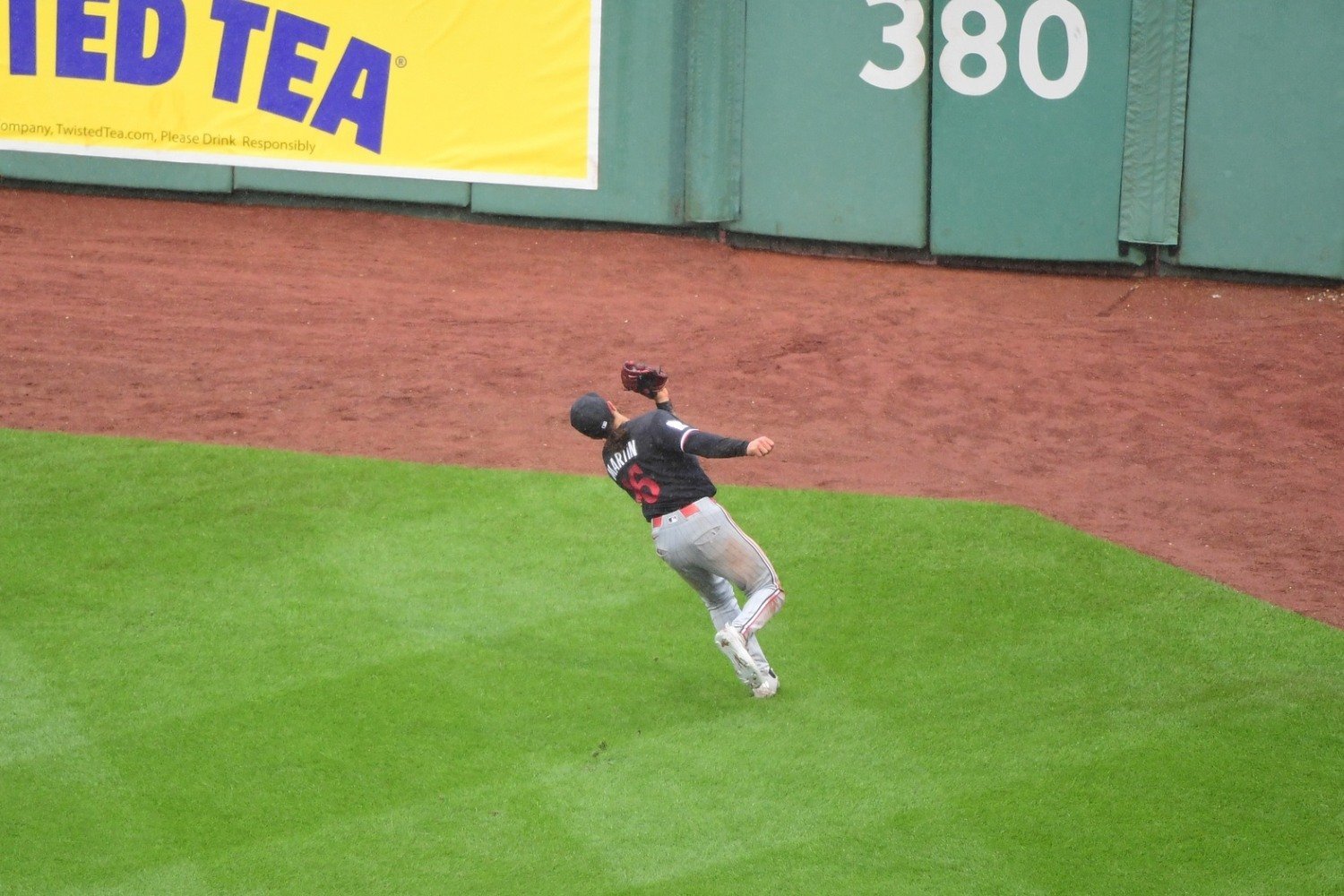 Box Score: Starting Pitcher: Bailey Ober: 5+ IP, 7 H, 4 ER, 0 BB, 3 K (82 Pitches, 59 Strikes, 71.9%) Home Runs: None Bottom 3 WPA: Brooks Lee (0.32), Travis Adams (0.21), Yoendrys Gómez (0.16) Win Probability Chart (Via BaseballSavant): Winners of five of their past six games and four of their past five series, the Twins are somehow a playoff team, were the season to end today. They have taken the first two games at Fenway Park and sought the sweep, with Bailey Ober taking the mound against working-class hero Sonny Gray. The Twins made Gray work after he retired the first two batters. Trevor Larnach worked the count to 3-2 before getting hit on the foot by a curveball. Josh Bell then walked, before Kody Clemens roped a single into right field to put the Twins on the board first. That would be the end of the damage, but Gray was forced to throw 29 pitches. Meanwhile, Ober looked better than his previous outing, in which he stayed poised but lacked command in his five innings against the Brewers last Sunday. His changeup looked sharp, and he breezed through the first inning. He breezed through the second, as well, except for Masataka Yoshida golfing out a 1-2 change 393 feet to tie the game. There was a steady drizzle during the game, and Ober's command would wobble increasingly as the game progressed. No matter, as the Twins began the third with four consecutive hits, jump-started by a Brooks Lee double. It could have really unraveled for Gray, but Victor Caratini grounded into a double play with no outs and the bases loaded. The play resulted in the Twins' third run, but took some wind out of their sails. Maybe that affected Ober, who started leaking a little arm-side in the fourth. He allowed a ringing double from Wilyer Abreu off the green monster in left, a moonshot from Willson Contreras to tie the game, and then another double off the monster from Yoshida. Ober rebounded to retire the next two hitters, but Marcelo Mayer smashed a hard ground ball down the line (just past the outstretched glove of Clemens at first), and the Red Sox took the lead. The Twins would answer in the sixth. Ryan Kreidler singled with two outs and Orlando Arcia on first, prompting Boston to go to their relief ace, Garrett Whitlock. Austin Martin then laced a hanging slider into the left field corner, scoring Arcia. Lee flipped a single the opposite way, scoring Kreidler, with Martin scoring as well when catcher Carlos Narvaez dropped the relay throw. 6-4 Twins. Anthony Banda and Eric Orze pitched effectively in getting the Twins through innings six and seven, allowing zero baserunners while throwing just 10 pitches each. Arcia delivered his third hit of the game, a double, to lead off the eighth inning. The Twins would squander the opportunity, with Martin striking out with Arcia on third and one out and Lee flying out to end the frame. Taylor Rogers was brought on for the eighth and was greeted with a perfect bunt single up the first base line from Jarren Duran. It was certainly hold-on-to-your-butts time, and even more so when Ceddanne Rafaela launched a line drive over a shallow Martin in right field. But Martin made an over-the-shoulder catch that evoked Willie Mays comparisons from the broadcast (not from me, Mays would have taken a much better route). Abreu then hit a ball off the green monster to put runners on second and third with one out. Rogers was done at that point (and good riddance), and new relief star Yoendrys Gomez was brought in to face the hot-hitting Contreras with the game on the line. He struck out Contreras on a nasty sweeper, and got Yoshida to pop out to right on the first pitch. It wouldn't be pretty in the ninth, Nick Sogard led off with a triple to the gap in right center, and catcher Narváez walked. Gomez threw a great slider to strike out Mayer, but Isiah Kiner-Falefa launched a fly ball he thought was out of the park. It hit the monster, but pinch-runner Connor Wong wasn't running hard the entire way, and the relay throw from Kreidler nabbed Wong at home for the second out. It brought to mind this play at Fenway Park from 2019. The job was not done. Gomez slipped on the mound and balked IKF to third. He then hit Duran with a pitch that, had he not hit him, would have been a wild pitch that scored the tying run. Gómez was lifted for Travis Adams, who got Rafaela to fly to Martin yet again to seal the win. Stuff I'm Tracking: -Today's lineup featured no Byron Buxton, no Luke Keaschall, no Ryan Jeffers, no Royce Lewis and no Matt Wallner. Ask a Twins fan circa March 2026 and ask how that would go. But today, it resulted in six runs on 12 hits. Some better situational hitting, and they could have scored several more. -Anthony Banda has been a little better in May after looking rough in his first month with the Twins. He has six straight scoreless appearances, his walks are down, and his strikeouts are up. His settling into being a functional seventh-inning guy would do wonders for the state of this thin but currently overperforming bullpen. -Caratini looks lost at the plate, taking strikes, swinging at balls, and only putting something in play when it's on the ground and could result in a double play (seemingly). And we have him for next year, too! What’s Next: The Twins travel to Chicago to begin a four-game set against the White Sox as Zebby Matthews (1-1, 1.38 ERA) takes on lefty Anthony Kay (3-1, 4.27 ERA). The White Sox have been better this year, led by rookie Munetaka Murakami (17 HR, .922 OPS) and second year shortstop Colson Montgomery (13 HR, .797 OPS). Their pitching has held up, led by Davis Martin who has seven wins and a 2.04 ERA. Postgame Interviews: Coming soon Bullpen Usage Chart: WED THU FRI SAT SUN TOT Gómez 36 0 13 0 22 71 Rojas 0 0 0 45 0 45 Morris 10 0 0 32 0 42 Adams 0 0 29 0 1 30 Banda 0 0 14 0 10 24 Orze 0 0 14 0 10 24 Rogers 0 0 0 6 13 19 Woods Richardson 0 0 0 0 0 0 View the full article
 -
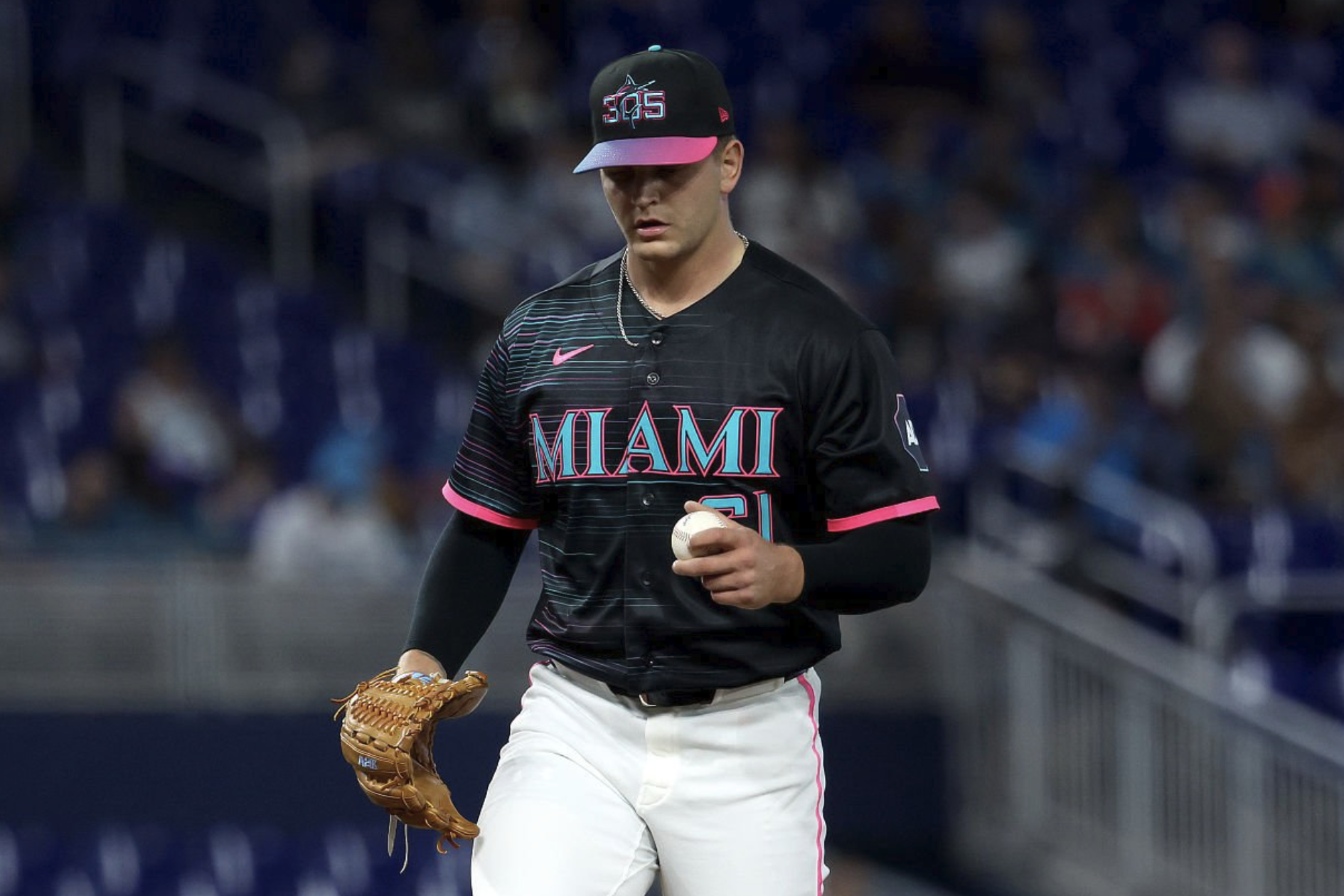 MIAMI, FL — On Sunday morning, Robby Snelling returned to loanDepot park for the first time after undergoing left elbow UCL repair with an internal brace. Snelling, Fish On First's No. 2 prospect, made his major league debut in the series opener against the Washington Nationals. He went five innings allowing three runs on five hits (one home run), four walks and two strikeouts. It was during the start that the young lefty felt a pull in his forearm. "I don’t know what it’s supposed to feel like," Snelling said. "Obviously, now I do. I threw a breaking ball. It was in the middle of the outing and felt a little different than all the other pitches. I threw another fastball, I was still 95-96, and was still locating. I wasn’t super worried about it. I thought it just came out different. I wasn’t hurting at all after that. Nothing really tightened up, and I was able to go throughout the rest of the outing the way that I did." It wasn't until Snelling threw his bullpen session in Minnesota on the following road trip that he reported discomfort. "I just couldn’t trust my arm to be able to go out on that start and try and throw 95." Snelling joins another highly ranked Marlins pitching prospect, Kevin Defrank, in being sidelined for the remainder of the season due to an arm injury. The organization's top overall prospect, Thomas White, is also on the injured list, though that is believed to be the result of a minor blister issue. Adam Mazur, who the Marlins acquired in a package with Snelling in 2024, underwent a full UCL reconstruction earlier this year. Just a few years ago, any injury like Snelling's would have been addressed with Tommy John surgery, but an innovative internal brace technique could speed up his rehab. The Marlins announced an expected absence of 10-12 months, which Snelling called the "best-case scenario." With that being said, the 22-year-old was understandably sad about baseball being "ripped away" from him mere days after reaching the big leagues. "Getting a little taste of it and realizing how special it is to be up here and how important winning is, it’s refreshing," Snelling said. "In the minor leagues, you obviously want to win, but a lot of is about development, and when you finally get up to the big leagues, development is important, but every time you step out onto the field, you just want to win with your team and the guys that you are with in the locker room, so being removed so quickly from that is really hard.” When asked who he will go to for advice about overcoming this setback, one name that he mentioned was Texas Rangers starting pitcher and former Marlin Nathan Eovaldi. "He’s been through a lot in his career, and he’s been a great soundboard for me to be able to use," Snelling said. If not for the injury, Snelling would have had an extended opportunity to establish himself in the Marlins rotation. With him out of the picture for the rest of 2026, the current starting five consists of Sandy Alcantara, Eury Pérez, Max Meyer, Janson Junk and Tyler Phillips. Newly converted to a starter after dominating out of the bullpen, Phillips held the New York Mets scoreless for 3 ⅔ innings on Sunday. View the full article
 -
Blister Lands Cubs' Edward Cabrera on Injured List
DiamondCentric posted an article in North Side Baseball
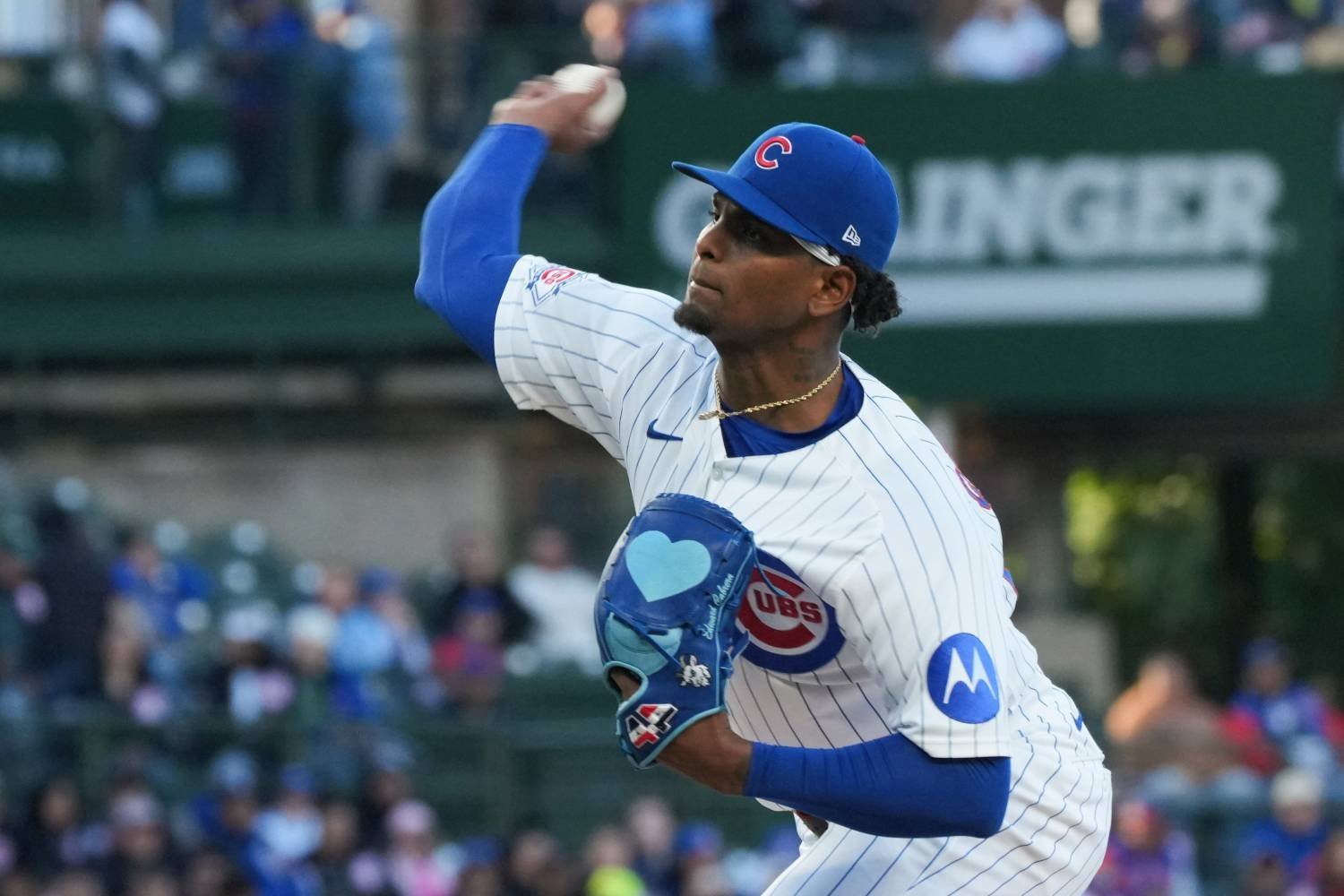 The Chicago Cubs have suffered yet another blow to their starting rotation. The Cubs on Sunday placed right-handed starter Edward Cabrera on the 15-day injured list with a blister on his right middle finger. Left-hander Jordan Wicks was called up from Triple-A Iowa. The fortunate news is this is just a blister, meaning Cabrera is likely to miss just the minimum 15 days. The move was backdated to Thursday, so Cabrera could return next Sunday. Cabrera was the Cubs' big offseason rotation addition, acquired in a trade with the Miami Marlins. The Cubs' rotation is already extremely banged up with Cade Horton out for the season, Matthew Boyd recently having minor knee surgery and Justin Steele still not back after having a setback in his return from UCL revision repair surgery. Wicks will be making his season debut with the Cubs. He has made seven appearances, all starts, at Triple-A, with a 4.44 ERA in 26⅓ innings, walking 12 and striking out 20. He appeared in eight games with the Cubs last year, all in relief, with a 6.28 ERA in 14⅓ innings, walking one and striking out 13. The Cubs will need another starter at some point this week as they have a four-game series vs. the Pittsburgh Pirates, then three against the St. Louis Cardinals, all on the road. View the full article
 -
Robert Gasser Sent Back To Triple-A By Brewers After Wild Start
DiamondCentric posted an article in Brewer Fanatic
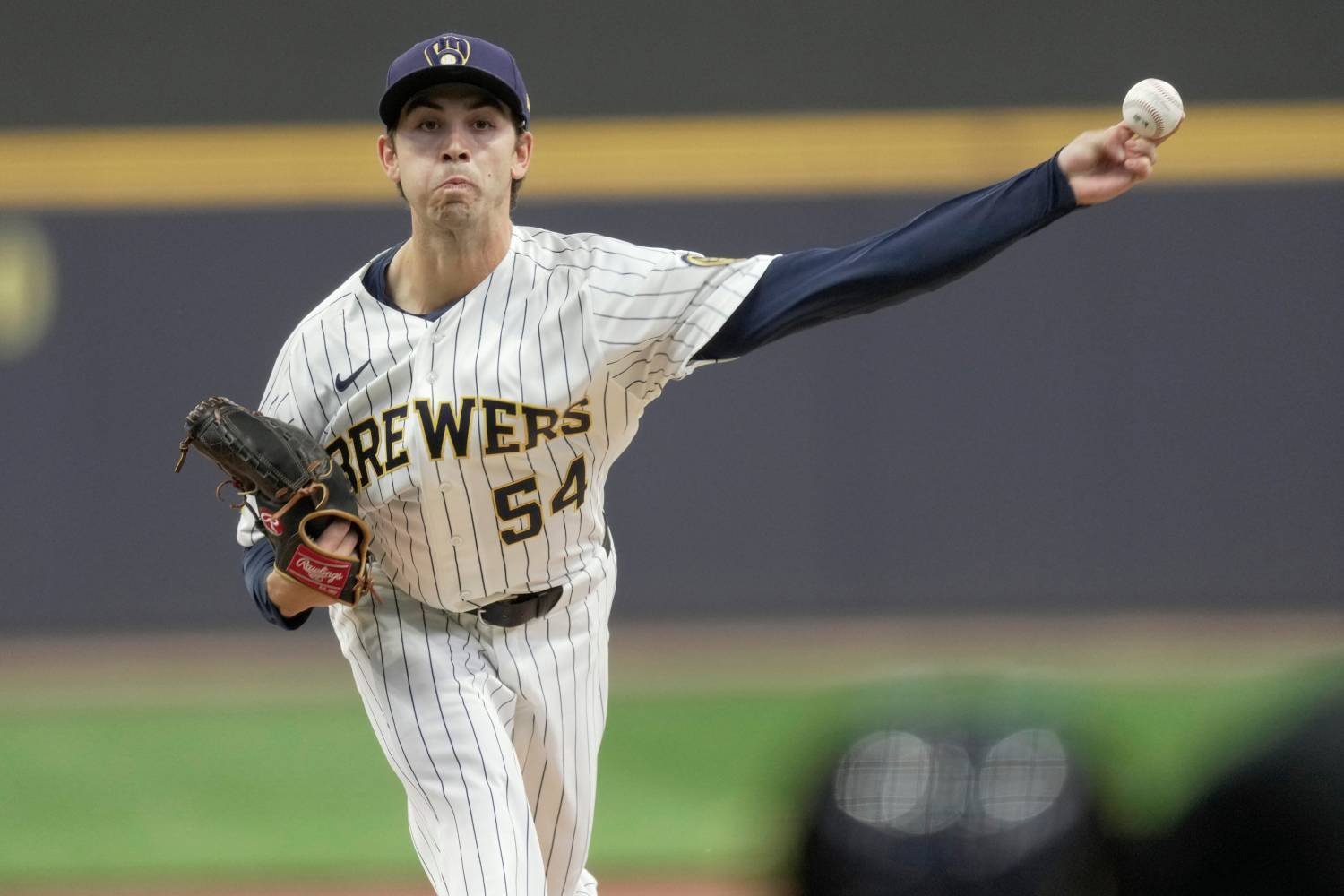 Walks will get you a ticket back to the minors. The Milwaukee Brewers on Sunday optioned left-handed starter Robert Gasser back to Triple-A Nashville and called up right-hander Carlos Rodriguez. Gasser walked four in 4⅓ innings in an 11-3 loss to the Los Angeles Dodgers on Saturday. In fact, Gasser's line was littered with fours: 4⅓ IP, 4 H, 4 R, 4 ER, 4 BB, 4 K. This was his second start since being called up May 17, when he started against the Minnesota Twins. In that game, Gasser went four innings, allowing three runs (two earned) on three hits, two walks and three hit batters while striking out three. Rodriguez is up for the second time. He made two relief appearances in April, allowing one run (a homer) in four innings on five hits with no walks and five strikeouts. With Gasser not in the rotation, the Brewers will need a starter, likely to come next weekend against the Houston Astros. Right-hander Coleman Crow is a likely choice. View the full article
