


DiamondCentric
-
Posts
2,631 -
Joined
-
Last visited
Never
Content Type
Profiles
Forums
Events
News
Tutorials & Help
Major League Baseball Videos
Guides & Resources
Store
Downloads
Gallery
Everything posted by DiamondCentric
-
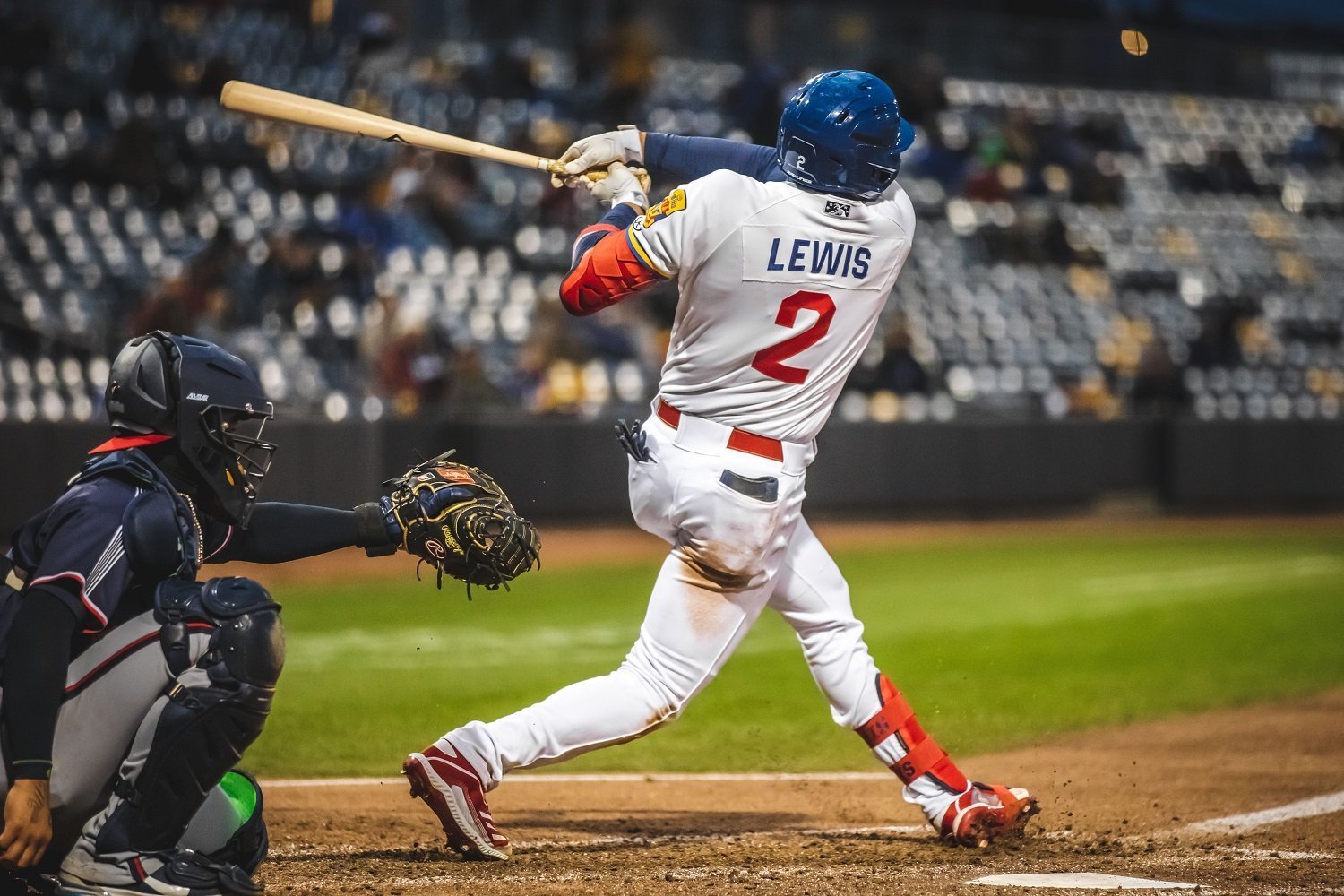 The Minnesota Twins spent a long time trying to avoid this moment. They gave Royce Lewis every opportunity to work through his struggles at the major-league level because, for years, he looked like the type of talent worth waiting on. But eventually, potential stops mattering if the production never returns. Now the former No. 1 overall pick is headed to Triple-A. The move feels shocking on the surface because Lewis has long been viewed as one of the organization’s foundational players. Yet, when you look at the bigger picture, this decision has been in the works for quite some time. Lewis’s offensive struggles have spiraled to the point where the Twins could no longer justify keeping him in the lineup every day. His batting average has cratered to .163 with a .540 OPS, and the overall at-bat quality has become increasingly concerning. Sunday may have been the clearest example yet. Lewis struck out three times in a 0-for-3 performance before eventually being lifted for a pinch-hitter. The Twins have already shown they're willing to send struggling veterans to Triple-A this season, with Matt Wallner’s demotion just a few days before Lewis. Lewis simply reached the point where his name and pedigree could no longer outweigh the results. What makes the situation more troubling is that this is no longer just a rough few weeks. For much of 2024, Lewis still looked like an emerging superstar whenever he was healthy enough to stay on the field. Around mid-August, his OPS remained north of 1.000, and injuries appeared to be the only obstacle standing in his way. Instead of building on that success, however, his performance completely collapsed over the final stretch of last year and never recovered. Since mid-August 2024, Lewis has slashed .214/.268/.339 with a 68 wRC+, while striking out 157 times compared to only 47 walks across 179 games. Those numbers are no longer small-sample noise. They represent nearly a full season of offensive dysfunction. Even the underlying metrics offer little optimism. While some poor luck has contributed to the ugly batting average, Lewis still owns an expected batting average of only .205. The quality of contact simply has not been there. More concerning than the results themselves is how Lewis has looked while producing them. At the plate, he appears caught between mechanics and reaction. His strikeout rate has climbed to a career-high 31.1%, and he is whiffing on 37.3% of his swings. Pitch recognition has become a major issue, particularly against velocity. Far too often, Lewis looks like he is guessing instead of reacting. Fastballs used to be the pitch he punished. During his first two major league seasons, Lewis demolished fastballs to the tune of a .355 average and .711 slugging percentage. That ability helped fuel the belief that he could become one of baseball’s next young stars. Since then, the numbers have completely flipped. During his electric rookie season, Lewis demolished four-seam fastballs to the tune of an .842 slugging percentage. Last season, that number cratered to .332, while his whiff rate against four-seamers climbed to 25.5%. The decline produced an -8 Run Value against fastballs and forced pitchers to attack him differently. The problem has continued into 2026. Lewis currently owns just a .291 slugging percentage against four seamers, with a 34.1% whiff rate. Perhaps even more concerning, his pull percentage has dropped from 31.4% during his rookie campaign to 24.1% this season. The explosive damage on pitches he once turned around with authority has largely vanished. That is a devastating development for any hitter, especially one whose game was built around elite bat speed and the ability to attack velocity. Part of the frustration for Minnesota is that Lewis spent the offseason attempting to fix these exact issues. One of the biggest storylines during spring training involved his work with new hitting coach Jeremy Isenhower, who came highly recommended by stars like Bobby Witt Jr. and former Twins infielder Jorge Polanco. The goal of the mechanical changes centered around Lewis’s setup before the swing even began. The hope was that a more repeatable pre-swing position would improve his timing, pitch recognition, and overall swing decisions. Instead, the changes seem to have had the opposite effect. Lewis frequently looks uncomfortable in the box, late on velocity, and indecisive against secondary pitches. That is why Triple-A matters right now. This demotion is not about punishment. It is about rebuilding a hitter who currently looks broken mechanically and mentally at the plate. The Twins need Lewis to simplify everything again. At Triple-A, the focus has to start with attacking fastballs consistently. Lewis does not need to rediscover superstar production overnight, but he must prove he can get on time against velocity again. The swing decisions also need major improvement. Too often, Lewis expands the zone early in counts and then looks frozen once pitchers get ahead. Minnesota will also likely want to see him establish a more consistent approach from game to game. Right now, every at-bat feels different. Sometimes he sells out for power. Other times, he appears purely defensive. The organization needs him to rediscover a stable offensive identity before bringing him back to the majors. That's why, as fun as his homer in his first game with the St. Paul Saints was, it's far from enough to get anyone actually dreaming of the player's return to Target Field. There is also value in allowing Lewis to play every day without the pressure of carrying a struggling big-league offense. Triple-A gives him room to fail, adjust, and rebuild confidence in a lower-stakes environment. The Twins are not giving up on Lewis. Players with his talent are not easily discarded. But they are finally acknowledging a reality that has become impossible to deny. Lewis has not looked like a productive major league hitter for a long time now. This reset was necessary. The next step is up to Lewis. What does Lewis need to focus on at Triple-A? Leave a comment and start the discussion. View the full article
 -
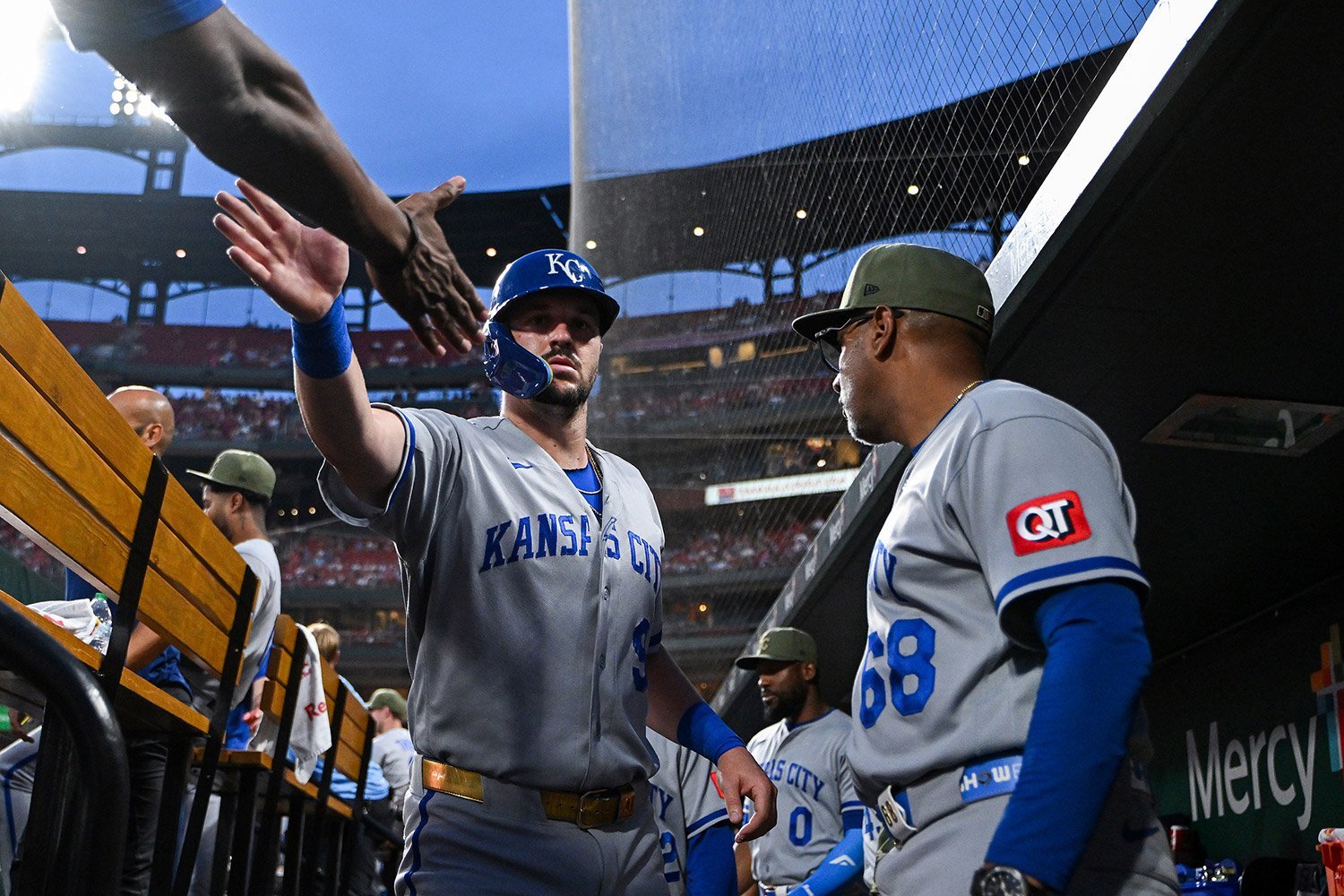 The major league schedule gave the Royals and their fans a much-needed respite from misery Thursday. Sandwiched between a Wednesday loss to Boston that gave the struggling Red Sox a Kauffman Stadium series sweep and Friday night’s Memorial Day weekend series opener with Seattle, Thursday’s built-in off day meant the Royals had no chance to extend their eight-game losing streak and dig themselves deeper into the American League Central cellar they shared with Detroit. Whether the short break leads to anything positive remains to be seen. Clear, however, is that something, or some things, must change before this season becomes an even bigger mess. But while this is a team whose serious flaws include a weak offense, shaky base running, and an unpredictable bullpen, change can’t come recklessly. Here are three moves Kansas City shouldn’t make. The Royals Must Not Send Vinnie Pasquantino Down He has three minor league options left, but demoting Pasquantino, whose two straight 30-homer, 100-RBI seasons prompted the club to present him with a new two-year contract in January, was unthinkable not that long ago. But his miserable start — he was slashing .194/.279/.326 with a 68 wRC+ and -0.4 fWAR when manager Matt Quatraro sat him against Boston Wednesday — has spawned chatter that some time at Triple-A Omaha might help. Perhaps. But proponents of such a big move must remember that Pasquantino is no stranger to slow starts. Through Wednesday, his 22 RBI ranked second on a team starved for runs, and he was tied with Jac Caglianone for the third-most homers (five) on the club. So, despite some disturbing peripherals (his hard-hit and barrel rates, and average exit velocity, are all down), the Royals, who’d scored more runs than only four other teams through Wednesday, shouldn’t risk losing Pasquantino’s production potential. Even platooning him for a while would be better. The Royals Shouldn’t Fire Matt Quatraro (yet) The notion that the Royals’ current distress warrants canning the manager is increasing among fretting fans. And an eight-game losing skid and 20-30 record fuel the fire. But it’s not time. Let’s not forget that in his second campaign at the helm, Quatraro led KC to its remarkable turnaround and playoff berth just a season after the awful club he inherited from Mike Matheny lost a franchise record-tying 106 games. Or that the Royals missed the postseason by only five games last year. Or that the front office failed once again to make the kind of significant offseason roster improvement Quatraro badly needs. No, firing the manager now probably won’t work the kind of dramatic change for which Royals fans yearn. Yes, he makes some questionable moves, his nearly unwavering commitment to platooning can be maddening, and he doesn’t display the kind of fire fans relish. But there’s still time. Wednesday’s loss to the Red Sox came with more than two-thirds of the season left to play. Key injured starter Cole Ragans should return soon. Closer Carlos Estévez will presumably be back this season, hopefully sooner rather than later. Expect Pasquantino to catch fire and Caglianone to show at least some improvement against left-handed pitchers. Simply put, the race isn’t over, and playing in a marginal division won’t hurt the Royals’ chances. And on top of all that, KC isn’t likely to eat the new three-year deal Quatraro received in January. Changes to the hitting staff are more likely … and probably more warranted. The Royals Shouldn’t Rush Anyone to the Majors Potential is scattered throughout Kansas City’s farm system. The franchise boasts such highly-touted prospects as Blake Mitchell, David Shields, Kendry Chourio, and Sean Gamble, but even the best of the bunch are far from being major league-ready. Calling any of them up risks damaging their development. The Royals must also resist the temptation to recall Triple-A players whose major league histories suggest they can’t or won’t help. Outfielder Drew Waters comes immediately to mind — he was slashing .273/.333/.545 with seven homers and 23 RBI in 33 games through Wednesday, but in 208 big league contests over parts of four seasons has an 85 wRC+, is hitting only .234, and has homered just 14 times. Fellow outfielder John Rave’s numbers (.273/.374/.481 with seven homers and 19 RBI at Omaha, but .196/.283/.307 with four homers and 14 RBI in 72 games with KC last year) are similar. With a nice .260/.359/.487 line, seven home runs, and 35 RBI, outfielder Kameron Misner is faring better than Waters and Rave, but his 79-game big league .203 average and .260 OBP suggest he requires more seasoning. He has no big league experience, but Brett Squires looks good — he was slashing .333/.355/.867 with four homers in eight games through Wednesday after his .294 average, .926 OPS, six homers, and 29 RBI in 32 games recently earned him a promotion from Double-A Northwest Arkansas. But it’s simply too early to bump him up to the majors. What Should the Royals Do? For now, try to stay the course, but with a change or two. General manager J.J. Picollo should be probing the market for another bat and a starting pitcher for depth, both of which his club could use well before the trade deadline. Shaking up the hitting staff deserves strong consideration. And Quatraro needs to be more flexible with his lineup. View the full article
 -

Brett Squires: Late-Blooming Sleeper or Four-A Player?
DiamondCentric posted an article in Royals Keep
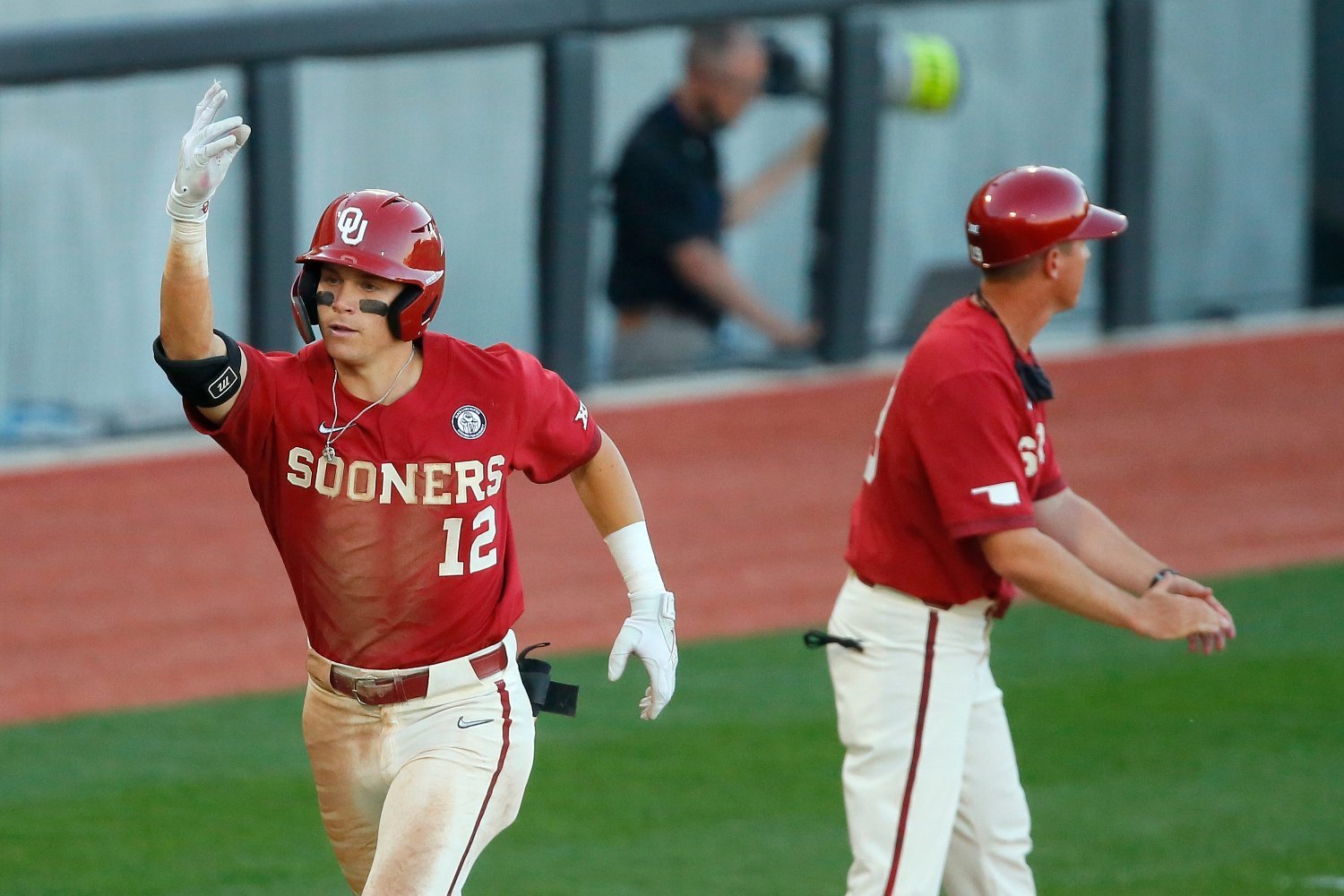 One of the more intriguing stories in the Royals' farm system is corner infielder Brett Squires. Squires initially began the season in Double-A Northwest Arkansas. However, he recently received a call-up to Triple-A Omaha, and he's continued to be on fire at the plate. With the Naturals, the former University of Oklahoma product slashed .294/.388/.538 with a .926 OPS in 139 plate appearances. He also hit six home runs, scored 22 runs, collected 29 RBI, and stole nine bases on 10 attempts. He also had a .244 ISO and sported a TJ Bat+ of 141, according to TJ Stats. Below is also a look at his Statcast percentiles from Double-A, which are a bit more limited due to a lack of publicly available pitch-tracking data. As Royals fans can see above, it wasn't a "perfect" profile by any means. Squires whiffed 35.3%, which ranked in the 19th percentile, and he had an O-Swing% of 32.3%, which ranked in the 26th percentile. Thus, he chased and whiffed more than fans would like to see. Still, despite those two traits, he had a walk rate of 12.9%, which ranked in the 61st percentile. So his aggressive approach didn't seem to affect his production in Northwest Arkansas. His performance has been even better in Triple-A Omaha. In eight games and 31 plate appearances, Squires is slashing .333/.355/.867 with 1.222 OPS. He already has four home runs, five runs scored, 11 RBI, and a TJ Bat+ of 189. Additionally, his Statcast percentiles, which are more complete in Triple-A, are pretty eye-popping, especially with more categories available due to pitching tracking in Triple-A. Squires ranks in the 99th percentile in barrel rate (22.7%), hard-hit rate (63.6%), xwOBA (.486), wOBA (.505), and TJ Bat+ (189). He also ranks in the 100th percentile in average EV (96.9) and 97th percentile in 90th% EV (108.7). Safe to say, the batted-ball quality from Squires has been impressive, and he certainly is making his case in Triple-A that he deserves a call-up to the Major Leagues at some point in 2026. And for those who needed to "see" what Squires can do, live or on video, here's an example of Squires' smooth swing doing major damage against Triple-A pitching. Then again, there are some of the same issues in Triple-A that we saw in Double-A. He has a 27.7% whiff rate, a 76.2% Z-Contact%, and he hasn't drawn a walk yet. On Thursday, he went 0-for-4 with 2 strikeouts against the St. Paul Saints. Thus, things can get problematic for him when he's not putting the ball in play. Thus, let's determine whether Squires is a sleeper who could have an impact at the Major League level or if he's just a Four-A player who is feasting on mediocre pitching and favorable hitting environments. Squires Has Always Demonstrated This Batted-Ball Ability The one reason fans should be optimistic about Squires' Major League outlook is that he has consistently shown the ability to hit the ball hard. That's a Minor League skill that often translates well to the Big Leagues. Not only has Squires demonstrated excellent exit velocity, hard-hit, and barrel ability with the Storm Chasers, but he also showcased similar skills in his stint in the Cactus League in Spring Training. In 21 plate appearances in Arizona, Squries slashed .263/.286/.842 with a 1.128 OPS. The 26-year-old also had three home runs, four runs scored, and eight RBI. While he was a non-roster invitee and didn't seem to have much of a shot to make the MLB Opening Day roster, he demonstrated skills that could blossom in the Major Leagues. That is further illustrated in his Statcast percentiles from Spring Training, courtesy of TJ Stats. Here's an example of Squires absolutely mashing a ball against the Rockies in a Spring Training game on February 28th. Thus, even though we are just seeing the Statcast data publicly for the first time in Triple-A, this isn't the first time that Squires has demonstrated an ability to hit the ball effectively. His strong Spring Training stats show that there is some legitimate power potential in his profile, though it carries some strikeout and swing-and-miss risk. Is He Too Similar to CJ Alexander? One former prospect Squires profiles similarly to is Alexander, who was also a corner infielder in the Royals system back in 2024. Alexander was acquired from Atlanta in 2022 in a trade that also netted Drew Waters and Andrew Hoffman in exchange for the 35th overall pick in the 2022 MLB Draft (which eventually became pitcher JR Ritchie). In 2024 with the Storm Chasers, Alexander slashed .303/.352/.554 with a .906 OPS in 350 plate appearances. He hit 16 home runs, scored 56 runs, and collected 54 RBI. That included some big-time bombs like this one that went 437 feet in Rochester that season. Additionally, Alexander also sported a TJ Bat+ of 131 in 82 games, and had a Statcast profile with the Storm Chasers that was similar in composition to what Squires is doing this year with Omaha. Alexander did everything that one wanted to see from a slugger in Triple-A: he hit the ball hard, launched and pulled the ball well, and even though he didn't walk, he didn't strike out a whole lot either (60th percentile K%). Unfortunately, the former Braves draft pick hit a wall when he got called up to the Majors in 2024. In eight plate appearances, he only had one hit and struck out three times. He posted a .250 OPS, and that Statcast percentiles were meager, to put it kindly. While it wasn't a big sample, it was obvious that Alexander looked overwhelmed at the MLB level. Thus, he was not only optioned back to Omaha after only eight plate appearances, but he was also eventually designated for assignment and picked up on waivers by the Athletics. As was the case with the Royals, Alexander put up big numbers with the A's, posting a 131 wRC+ in 2024 and a 96 wRC+ in 2025. He also received a promotion in 2025 with the Athletics, but much like his time in Kansas City, the sample was small (17 PA), and the results were meager, as illustrated by his .352 OPS and lackluster Statcast percentiles. Right now, Alexander is in the Astros organization playing for Triple-A Sugar Land Space Cowboys. Much like 2024 and 2025, he's mashing in Triple-A, slashing .263/.357/.506 with 10 home runs, an .863 OPS, and 115 TJ Bat+. That said, he remains in Triple-A, even though the Astros are 20-31. Perhaps Houston is the place where Alexander puts it together at the MLB level. However, he is the epitome of a Four-A player. Will Squires Follow A Similar Path to Alexander? Right now, it's easy to see the comparisons between Alexander and Squires. Alexander was a 20th-round pick while Squire went undrafted. Neither is really known for their defense or their speed on the basepaths. They also have never been highly-rated prospects in their career, as Squires has never made the Royals' Top-30 on MLB Pipeline since debuting in 2023. Lastly, they have swing-and-miss issues that could prevent them from finding MLB opportunities and success. Still, I am not sure if Squires is Alexander 2.0 just yet. Squires is still 26, and Alexander didn't debut until he was 27. Thus, age is more on Squires' side, though that gap is closing quickly for the former Sooner. If he doesn't debut this year, he'll be the same age as Alexander when he made his MLB debut in 2024. The big question with Squires is where he will fit if promoted. He primarily plays third and first base, and those positions are set with Maikel Garcia and Vinnie Pasquantino as the regular players, respectively. Thus, for Squires to debut, an injury would have to beset one of those guys, and even then, a call-up is not guaranteed for Squires. Regardless of positional fit, the Royals need hitters who can mash, especially with the club ranking 27th in baseball in runs scored. If Squires continues to mash in Omaha, he'll make some noise for a call-up sooner rather than later. If the Royals continue to sit near the basement at the end of June, Kansas City may have no choice but to call up Squires and give him a chance to prove himself in the big leagues. View the full article
 -
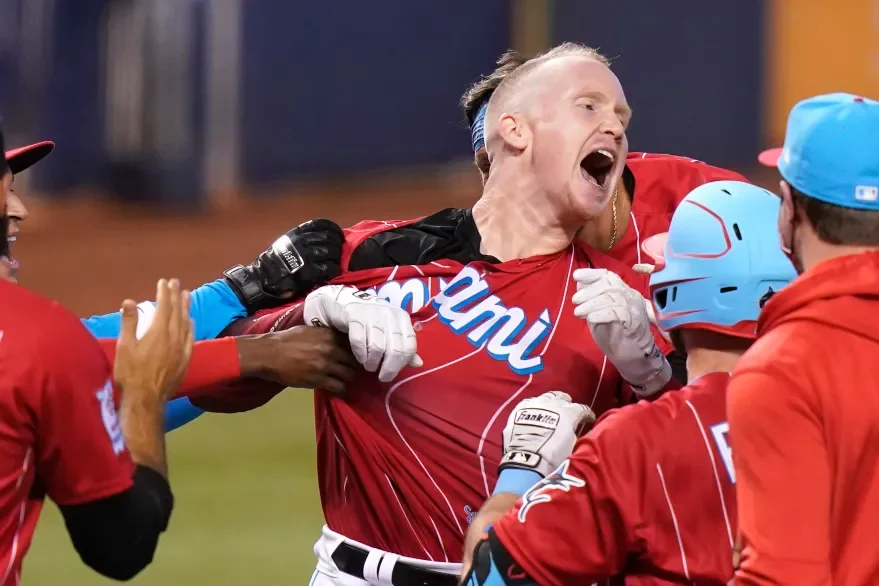 An All-Star for the club in 2022, Garrett Cooper hit 52 home runs over his five-plus seasons as a member of the Miami Marlins. His lone walk-off blast came on this day five years ago. In the middle game of a three-game series against the New York Mets, Cooper played the role of hero. Cooper worked a seven-pitch at-bat before his two-run shot lifted the Marlins to a 3-1 victory. With the score tied 1-1 on May 22, 2021 at loanDepot park, the Mets turned to right-hander Drew Smith in the bottom of the ninth to try to get the game to extra innings. For Smith, the outing couldn’t have started much better. Smith wound up throwing more pitches to Cooper than the three other hitters he faced combined. Smith opened the inning by getting Jesús Aguilar to line out before retiring Adam Duvall on a weak pop-up one pitch later. On the very next pitch, Brian Anderson singled to right field to set the stage for Cooper. After working the count full, Cooper got a fastball up and connected big-time. On a pitch right down the middle, Cooper belted a no-doubter into “AutoNation Alley” in left-center field for the walk-off blast. For six and a half innings, neither team scored. Miami’s Corey Dickerson broke the scoreless tie in the bottom of the seventh on a sacrifice fly to score Anderson. The Mets drew even a half-inning later on Dominic Smith’s RBI single. Cooper and Anderson each had three of the Marlins’ seven hits. On the mound, Pablo López allowed just four hits and a walk in seven shutout innings while striking out eight. Yimi García worked a scoreless ninth for Miami to pick up the win. During his time with the Marlins, Cooper had more than his fair share of big hits, including a few timely home runs. His only career walk-off blast, however, came on this day five years ago. View the full article
 -
What More Does Justin Gonzales Need to Do to Get Promoted?
DiamondCentric posted an article in Talk Sox
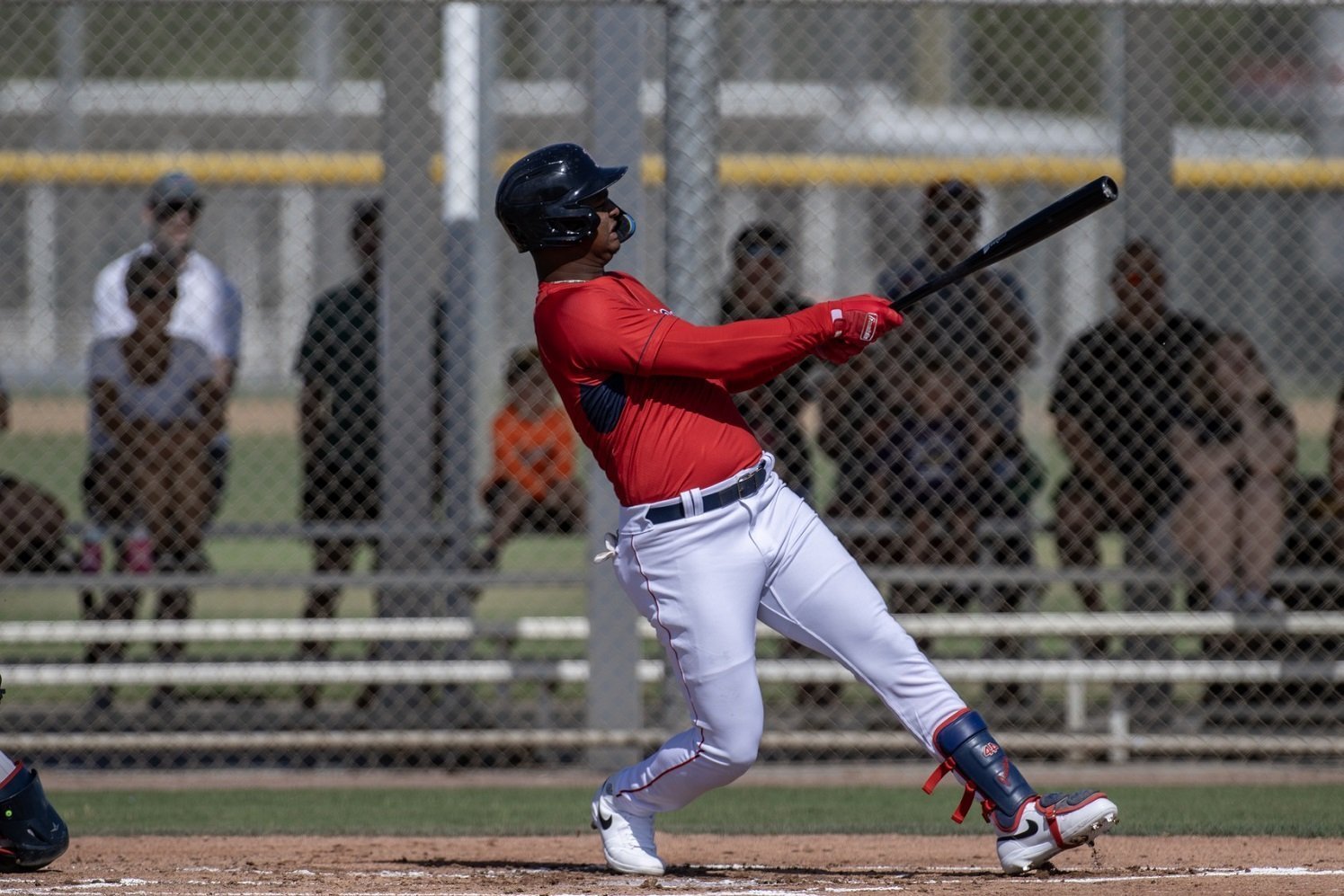 Justin Gonzales has been something special since signing with the Boston Red Sox. In his first year with the organization, he was named the 2024 Red Sox Minor League Latin Program Position Player of the year after hitting .320/.391/.517 in the Dominican Summer League. Impressed, the front office decided to bring him stateside, having him start in the Florida Complex League. That wasn’t for long, as after just one game, Gonzales was on his way to Salem. Standing at 6-foot-7, the then-18-year-old would go on to hit .298/.381/.423 with 23 doubles, two triples, four home runs and 27 RBIs before earning a late season promotion to Greenville. It's important to remember that Salem plays in the pitcher-friendly Carolina League. In fact, out of all batters with 300 or more plate appearances, Gonzales’ 131 wRC+ ranked sixth and only one player his age had a better one. Gonzales’ stock continued to rise in 2026 as he entered the season as TalkSox’s seventh ranked prospect (and is now the fifth ranked) while also making it into Baseball America’s Top 100 prospect list (he’s currently 96th) after a May update to the list. The level of play has helped cement Gonzales’ placement on many top prospect lists as he’s slashed .315/.405/.521 with eight doubles, two triples, six home runs and 25 RBIs in just 34 games with High-A Greenville. His rise was not a surprise, as he had already garnered discussion about being the next Red Sox star prospect at the start of spring training. Defensively he has been just as impressive, mostly playing the outfield, though he has seen limited time at first base. This season, Gonzales has appeared in 29 games in right field, and many teams are starting to learn not to run on one of the strongest arms in High-A. Through 260 innings in the field, Gonzales has thrown out five runners while committing just one error. His range has been average and hasn’t hurt the cause, but his arm is a legitimate run prevention tool from the outfield. His time in Salem showed he had quite impressive raw power to go along with plate discipline skills and consistent production, and his start to the 2026 season has only enforced it. As he’s shown he can handle the pitching in Greenville, fans have clamored for a promotion to Portland to see how he handles a tougher level of competition. However, there are still aspects of his game he needs to work on to fully ensure his promotion to Portland and his overall growth as a player. The first would be on the defensive side of his game. While his arm is above average and has opposing teams fearing it, he needs to improve his overall glove work. As mentioned above, his range is average, but his routes need work, especially seeing as he isn’t the most fluid outfielder. Should the outfield not work out, the team could look to move him to first base where he has limited experience. Since 2025, he’s played just one game there (coming in 2026) after playing first base 32 times in 2024. With the lack of depth at first base in the Red Sox organization, that could be a possible direction they take especially as they have a lot of outfielders, especially in the upper minors. Yet, his biggest issue stems actually from how he hits the ball. Despite having amazing exit velocities that show he crushes pitching when he makes contact, how he attacks the baseball needs to change. Coming into 2026, there was discussion surrounding how Gonzales may hit the ball too often into the ground. For the 2025 season, he had a 57.4% ground ball rate, an increase from his 2024 number of 46.9%. Though 2026 has seen his ground ball rate get closer to his 2024 number as it’s currently at 49.1%, that number is still too high for someone with his power. Realistically, you would like to see Gonzales lifting the ball in the air in well over 50% of his batted ball events. Should he learn to lift the ball consistently, it would only elevate his game by allowing him to be a true power threat in the middle of a lineup. The final thing the 19-year-old needs to work on is his discipline, especially where it pertains to pitches out of the strike zone. While he has a good understanding of the strike zone, he can be very aggressive at times leading to him chasing a pitch that would have been a ball. Thanks to an advanced approach, he’s been able to hit well despite his tendencies to be overly aggressive. So far on the season he’s struck out just 26 times in 168 plate appearances, good for a 15.5% strikeout rate. Gonzales isn’t far from a promotion to Portland, that much is certain. The organization may just be waiting until these minor issues are worked on a bit more against lower-level competition. The last thing the organization would want is to rush Gonzales and have his issues taken advantage of by more advanced pitching. It makes sense to allow Gonzales enough time to prove he’s ready, instead of rushing him and dealing with the fallout of any potential struggles. View the full article
 -
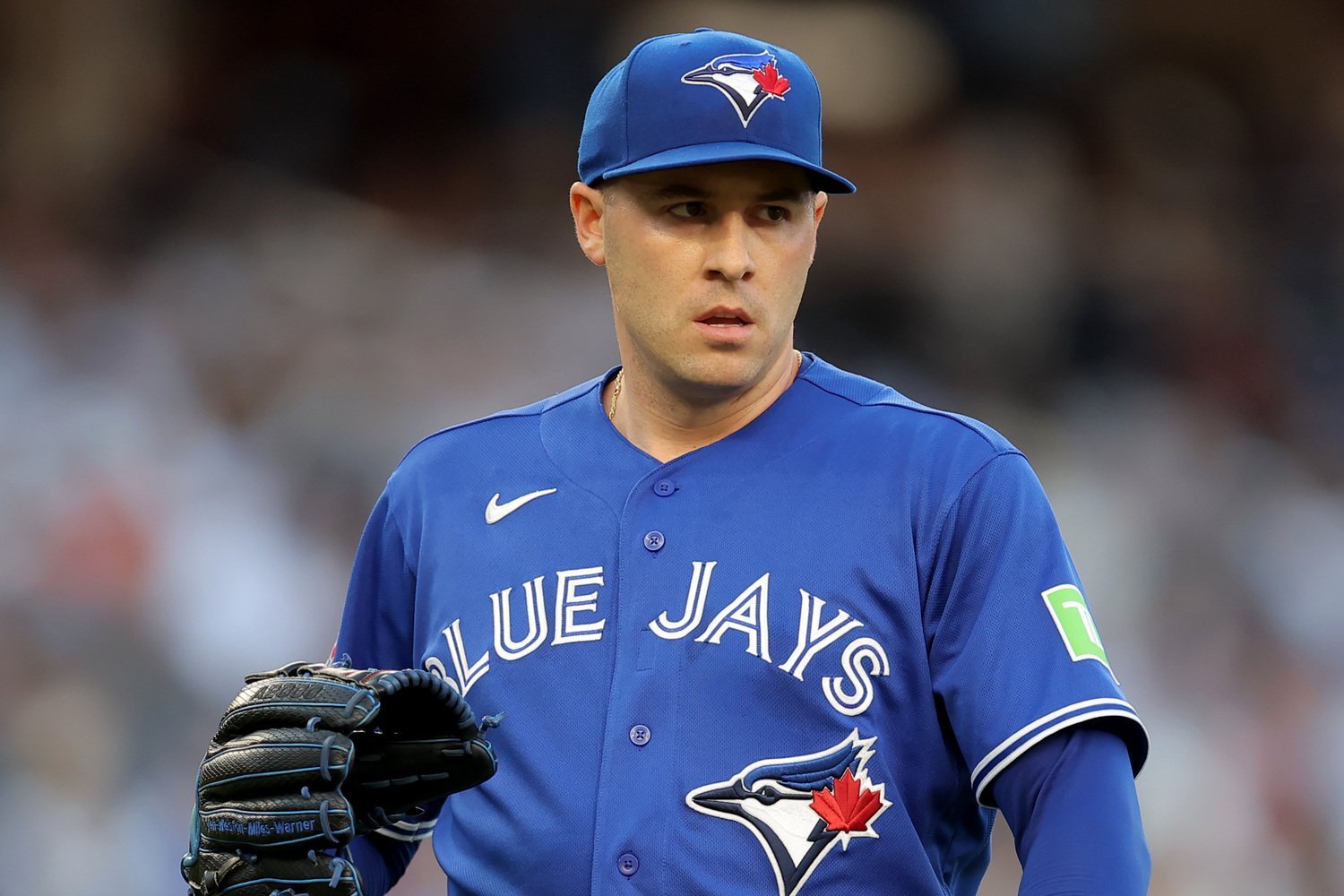 The Blue Jays needed innings, and no one had thrown more of them over the past decade than Patrick Corbin. It was a perfect fit. Indeed, with Shane Bieber, Cody Ponce, José Berríos, and Max Scherzer on the injured list, Corbin has been a key addition for the Blue Jays in 2026. His 38.1 innings pitched rank third on the team, behind only Kevin Gausman and Dylan Cease. He has given the Jays a chance to win in all eight games he's started, and he's helped to preserve a bullpen that's been called upon heavily early in the year. The southpaw owns a perfectly respectable 4.23 ERA, and the Blue Jays are 4-4 in his eight appearances. Yet, I can't help but worry that the other shoe is bound to drop. And I don't know what the Blue Jays are going to do when it does. Corbin doesn't look like a pitcher who should have a league-average ERA. His last great season was in 2019. Over the next six years, he pitched to a 5.41 ERA. He struck out his opponents at an 18.2% rate and induced grounders on 44.2% of his batted balls. That's an 18.2% K-rate and a 44.2% groundball rate. Those are the numbers that resulted in a 5.41 ERA. Keep that in mind. So far in 2026, his strikeout rate is down to a career-worst 15.0%. Similarly, his groundball rate is down to a career-low 37.1%. Those aren't the numbers of a pitcher who should be able to maintain an ERA under 5.00. Heck, I'm not sure I'd trust someone with those numbers to post an ERA under 6.00. Baseball Savant and Baseball Prospectus agree with me. Despite his 4.23 ERA, Corbin owns a 6.41 xERA and a 5.97 DRA. Indeed, he is showing all the classic warning signs of a pitcher whose numbers are too good to be true. His home run-to-fly ball ratio from 2020-25 was 15.9%. This year, it's a career-low 9.5%. Meanwhile, his left-on-base rate is currently 77.6%, compared to a 69.0% average over the previous six seasons. And though you may look at his .331 BABIP and think "that's awfully high," it isn't actually anything out of the ordinary. His BABIP from 2020-25 was .327, and considering all the groundballs he's given up this year, I'm honestly surprised his BABIP isn't higher. Soon, Corbin is going to start giving up more home runs. He's going to start allowing more baserunners, and more of those baserunners are going to come around to score. Like I said, the other shoe is bound to drop. If I were going to believe that Corbin could keep giving the Blue Jays league-average innings, I’d need evidence that his stuff was meaningfully better than it has been for the last several years. Instead, it might be worse. Corbin is a stopgap. And to his credit, he’s filled that role with aplomb. Even so, he just isn’t a pitcher that a team with serious playoff aspirations can keep running out there every five days. Maybe he can keep giving the Blue Jays innings, but they won’t be the kind of innings that can help the team win games. Unfortunately, there might not be an end in sight for the Corbin era in Toronto. Ponce is out for at least the rest of the regular season. Berríos just had Tommy John. Eric Lauer is a Dodger. Scherzer and Bieber are supposedly nearing their returns, but they both feel like huge wild cards right now. I wouldn’t count on anything from either of them until we see it. Even if Scherzer and Bieber both come back healthy, I wonder if Toronto would use a six-man rotation – Gausman, Cease, Yesavage, Bieber, Scherzer, and Corbin – at least temporarily. Yesavage could certainly benefit from a lighter workload, as could Scherzer and Bieber. A six-man setup would also allow the Blue Jays to keep Corbin in the mix, in case another injury comes up. I don't love the idea of Corbin starting more games for the Jays, but I'm even more concerned about the alternative. We don't want to end up in a situation where the team is left with no choice but to cross its fingers and hope that Spencer Miles — who has already thrown more innings this season than he has in his minor league career — can handle a proper role in the rotation. So, where does this leave us? Well, it’s still early in the season, but it’s not too early to start thinking about the trade deadline. The Jays don’t need to make a move right away, but this rotation is going to need reinforcements eventually. Patrick Corbin is doing great, but he can’t keep doing this all year. View the full article
 -
 Fish On First staffers react to the latest Miami Marlins series and prepare you for what lies ahead. Thursday's show was hosted by Jeremiah Geiger and featured panelists Kevin Barral and Isaac Azout. The following topics were covered: - Losing three of four games to the Atlanta Braves - Rece Hinds acquired from Cincinnati Reds in exchange for Zach McCambley - Robby Snelling set to undergo Tommy John - Previewing and predicting the next series against the New York Mets You can find Fish Unfiltered and Fish On First LIVE on the Fish On First YouTube channel, Apple Podcasts, Spotify or wherever else you get your pods. Our next FOF LIVE episode will be Sunday at approximately 6:30 p.m. ET following the Marlins-Mets series finale. View the full article
 -
 Strong pitching was back on display for the San Diego Padres' affiliates Thursday as Ian Koenig struck out six in seven shutout innings as Double-A San Antonio won. Carson Montgomery continues to stand out as he fanned seven over five innings in High-A Fort Wayne's triumph, while Bryan Balzer and three relievers combined on a three-hitter in Low-A Lake Elsinore's victory, which featured a pair of homers. Samad Taylor had a big day at the plate with four hits for Triple-A El Paso, which lost in extra innings. Padres Minor-League Transactions San Antonio Missions activated C Jake Bold from the Development List. Samad Taylor Notches 4 Hits, But Chihuahuas Fall In 10th A day after giving up 23 runs in a blowout loss, the host Triple-A El Paso Chihuahuas found an excruciating way to lose as the Round Rock Express scored the zombie runner during a rundown to notch a 5-4 win in 10 innings. With the zombie runner at second base to begin the top of the 10th, a single put runners on the corners. The runner at first then took off for second, but got himself into a rundown and the runner from third scored. In the bottom of the 10th, Clay Dungan was the Chihuahuas' zombie runner and went to third on a wild pitch. But he was stranded there as Marcos Castanon grounded back to the pitcher, Anthony Vilar struck out and Samad Taylor grounded out. Taylor finished the day 4-for-6 with a run scored, while Mason McCoy went 2-for-5 with two steals and scored a run. Round Rock scored two in the first and two in the fourth inning off Chihuahuas left-handed starter Jackson Wolf, who was pulled after 3⅔. He gave up six hits and two walks with four strikeouts. Right-handers Logan Gillaspie and Ethan Routzahn combined for 5⅓ scoreless innings before right-hander David Morgan took over in the 10th. The Chihuahuas scored once in the bottom of the first on a Jase Bowen groundout to make it 2-1, then another in the fifth on a Vilar double, a Taylor single, a Pablo Reyes walk to load the bases and a two-out wild pitch to pull within 4-2. They tied it in the sixth as McCoy singled, stole second, Dungan walked and Castanon had an RBI single. Taylor then had a one-out single to reload the bases and Reyes hit a tying sacrifice fly. EP_0521.mp4 Player AB R H RBI BB K Samad Taylor 6 1 4 0 0 1 Pablo Reyes 1 0 0 1 3 0 Will Wagner 4 0 0 0 1 0 Jase Bowen 5 0 1 1 0 1 Nick Solak 3 0 0 0 0 2 Carlos Rodríguez 1 0 1 0 0 0 Mason McCoy 5 1 2 0 0 1 Clay Dungan 2 1 0 0 3 1 Marcos Castañon 5 0 1 1 0 0 Anthony Vilar 5 1 1 0 0 3 Player IP H R ER BB K HR Jackson Wolf 3 2/3 6 4 4 2 4 0 Logan Gillaspie 3 1/3 2 0 0 0 4 0 Ethan Routzahn 2 1 0 0 1 1 0 David Morgan (L) 1 1 1 0 0 1 0 Ian Koenig In Control With 7 Shutout Innings For Missions Right-handed starter Ian Koenig's roller-coaster season hit a new high as he threw seven shutout innings in the Double-A San Antonio Missions' 5-1 victory over the host Frisco RoughRiders. Romeo Sanabria had two hits and an RBI, while Ethan Salas and Luis Verdugo also drove in runs for the Missions. Koenig scattered five hits and didn't walk anyone while striking out a season-high six. The seven innings matches his career high, accomplished in back-to-back outings in August for High-A Fort Wayne. Koenig retired the first eight RoughRiders before plunking a batter and giving up a single to the next hitter in the third inning before getting out of the mini-jam. The Missions scored three runs in the top of the fourth and two more in the seventh. In the fourth, Kai Roberts had a leadoff single, went to second on a groundout and third on Braedon Karpathios' single to right. Sanabria drove Roberts in with a ground single to right. After a strikeout, a passed ball scored Karpathios from third, then Verdugo singled to right to make it 3-0. There were two outs in the seventh when Francisco Acuna and Kai Murphy walked, then Salas singled in a run, Roberts walked to load the bases and Ornelas made it 5-0 when the pitcher couldn't catch a toss from the first baseman as he covered the bag. The RoughRiders scored their lone run in the eighth off right-hander Josh Mallitz (two strikeouts) and right-hander Johan Moreno pitched a perfect ninth with a strikeout. SA_0521.mp4 Player AB R H RBI BB K Ethan Salas 5 0 1 1 0 0 Kai Roberts 4 1 1 0 1 1 Tirso Ornelas 4 0 0 0 0 0 Braedon Karpathios 4 1 1 0 0 1 Romeo Sanabria 4 1 2 1 0 1 Ryan Jackson 3 0 0 0 1 2 Luis Verdugo 4 0 1 1 0 2 Francisco Acuna 2 1 0 0 2 2 Kai Murphy 2 1 0 0 1 0 Player IP H R ER BB K HR Ian Koenig (W) 7 5 0 0 0 6 0 Josh Mallitz 1 2 1 1 0 2 0 Johan Moreno 1 0 0 0 0 1 0 Carson Montgomery Fans 7, TinCaps Win On Passed Ball Right-hander Carson Montgomery struck out a career-high seven over five innings, Jake Cunningham homered and the host High-A Fort Wayne TinCaps scored the tiebreaking run on a passed ball in the seventh inning to pull out a 5-4 victory over the Dayton Dragons. Fort Wayne won despite having just four hits as it drew 11 walks. Montgomery entered the game with a 16-inning scoreless streak, but yielded his only run in the top of the first inning. He has pitched exactly five innings in each of his last four starts in his first season back from Tommy John surgery. He allowed three hits and two walks, surpassing his previous career best of six strikeouts set in his final start before surgery in 2024 with Low-A Lake Elsinore. Even with the run allowed, his ERA now stands at 1.41. While the Dragons got three runs (two earned) in the sixth inning against left-hander Igor Gil, the rest of the TinCaps' bullpen—left-hander Braian Salazar,right-hander Tucker Musgrove and right-handed closer Clay Edmondson—didn't allow a hit and struck out four over the final three innings. Edmondson earned his ninth save, which leads the minors, and is unscored upon in 13 of his 15 appearances for a 0.50 ERA. Down 1-0, Fort Wayne tied it in the second after three walks loaded the bases and Zach Evans hit into a double play that brought in the tying run. In the fifth, two walks preceded Justin DeCriscio laying down a very nice bunt that the third baseman threw into the bullpen down the right-field line, scoring one for a 2-1 TinCaps lead. Dayton plated three runs in the top of the sixth, which included a throwing error and a passed ball by TinCaps catcher Lamar King Jr., to take a 4-2 lead. Cunningham launched his seventh homer of the season to lead off the sixth inning that trimmed the TinCaps' deficit to 4-3. In the seventh, Rosman Verdugo drew a leadoff walk and was erased on a King forceout. King then stole second and Alex McCoy hit a tying double on an opposite-field flare down the right-field line. Cunningham had an infield single, moving McCoy to third, then stole second. After an out, McCoy scored the go-ahead run on a passed ball. Cunningham had two hits and drew two walks. FW_0521.mp4 Player AB R H RBI BB K Justin DeCriscio 4 0 1 0 1 2 Rosman Verdugo 2 0 0 0 2 2 Lamar King Jr. 4 1 0 0 0 1 Alex McCoy 3 2 1 1 1 0 Jake Cunningham 2 1 2 1 2 0 Jack Costello 2 0 0 0 2 1 Zach Evans 4 0 0 0 0 2 Jonathan Vastine 2 1 0 0 2 1 Kasen Wells 3 0 0 0 1 1 Player IP H R ER BB K HR Carson Montgomery 5 3 1 1 2 7 0 Igor Gil (BS) 1 3 3 2 2 2 0 Braian Salazar (W) 1 0 0 0 1 0 0 Tucker Musgrove (H) 1 0 0 0 1 2 0 Clay Edmondson (S) 1 0 0 0 1 2 0 Pair Of Homers Fuel Early Outburst, Pitchers Locked In As Storm Roll Yoiber Ocopio and Kerrington Cross hit homers to lead an early blitz by the Low-A Lake Elsinore Storm in a 9-3 win over the host Visalia Rawhide. Storm right-handed starter Bryan Balzer allowed all three Rawhide hits in five innings, giving up three runs (two earned) with two walks and six strikeouts. Right-handers Brandon Langley (two innings), Sean Barnett and Will Koger allowed just a walk over the final four innings. But by that time, the Storm offense had already done its damage, scoring twice in the first on a double steal with Bradley Frye swiping home and Truitt Madonna added an RBI single, then two more in the third on Ocopio's second homer of the season, a no-doubt two-run shot for a 4-1 lead. It was the fifth where the Storm blew this one open. Ryan Wideman had a leadoff double and scored on Jose Verdugo's one-out single. Verdugo then stole second and Ty Harvey walked with a wild pitch putting Verdugo on third. Madonna then drove in Verdugo with a single to left and Cross followed with his three-run homer, an opposite-field drive to right for his third blast of the year and a 9-1 lead. Madonna finished 3-for-5 with two RBIs and a run scored, Verdugo went 3-for-5 with an RBI and two runs scored, Qrey Lott had three hits and Harvey had a pair of hits and scored once. LE_0521.mp4 Player AB R H RBI BB K Ryan Wideman 6 1 1 0 0 2 Bradley Frye 4 1 1 0 1 2 Jose Verdugo 5 2 3 1 0 0 Ty Harvey 4 1 2 0 1 2 Truitt Madonna 5 1 3 2 0 0 Kerrington Cross 3 2 1 3 2 0 Yoiber Ocopio 4 1 1 2 1 2 Qrey Lott 4 0 3 0 0 0 Conner Westenburg 5 0 1 0 0 1 Player IP H R ER BB K HR Bryan Balzer (W) 5 3 3 2 2 6 0 Brandon Langley 2 0 0 0 0 0 0 Sean Barnett 1 0 0 0 1 1 0 Will Koger 1 0 0 0 0 2 0 Top 20 Prospect Performance Ethan Salas: 1-for-5 Kash Mayfield: DNP Miguel Mendez: DNP Kruz Schoolcraft: DNP Ryan Wideman: 1-for-6, 2B, 2 K Jorge Quintana: DNP Ty Harvey: 2-for-4, 2 K Kale Fountain: DNP Braedon Karpathios: 1-for-4, K Lamar King Jr.: 0-for-4, K Jagger Haynes: DNP Alex McCoy: 1-for-3, 2B Truitt Madonna: 3-for-5 Tucker Musgrove: 1 IP, 0 H, 0 R, 0 ER, 1 BB, 2 K Garrett Hawkins: DNP Michael Salina: DNP Eric Yost: DNP Rosman Verdugo: 0-for-2, 2 K Bryan Balzer: 5 IP, 3 H, 3 R, 2 ER, 2 BB, 6 K Deivid Coronil: DNP View the full article
 -
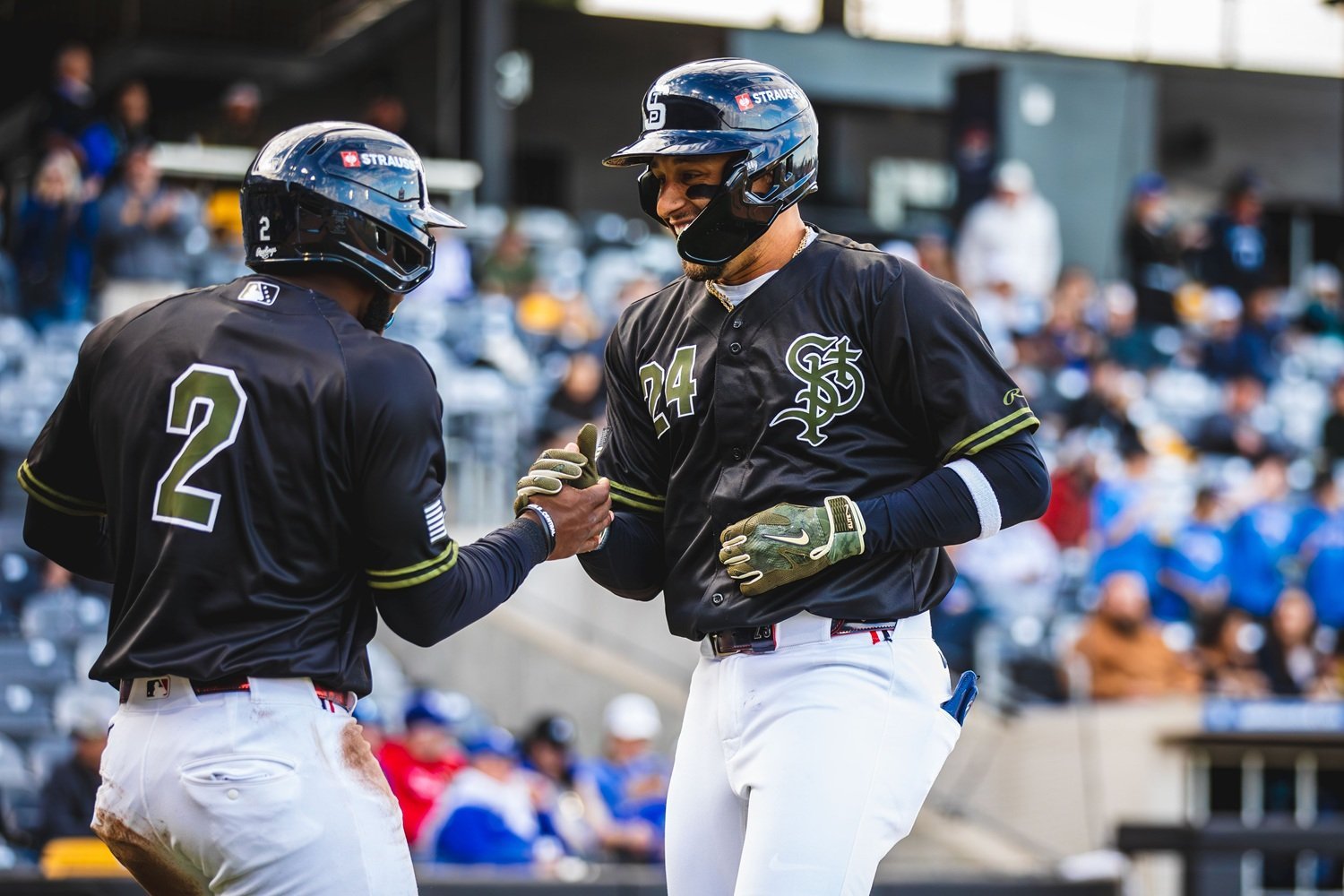 TRANSACTIONS Henry Kusiak was assigned to the Saints from Fort Myers. LHP Michael Carpenter’s rehab will continue with the Mussels. Catcher Enrique Jimenez was activated from the IL and joined the Mighty Mussels. OF Merphy Hernandez was promoted from the FCL to Fort Myers. SAINTS SENTINEL St. Paul 3, Omaha 11 Box Score Royce Lewis reported to the Saints, and he was right in the middle of the lineup right away. He also contributed offensively right away. Down 1-0 going to the bottom of the first, Kaelen Culpepper led off the first inning with an infield single. With one out, Lewis stepped to the plate and launched a ball 34 degrees and 104 mph. It went 368 feet, well beyond the fencing in left-center field to give the Saints a 2-1 lead. As you might guess based on the score, there weren’t many highlights for the Saints. Hendry Mendez led off the bottom of the sixth inning with his second homer since joining the team recently. He hit the ball 103.5 mph at 27 degrees. It landed 398 feet from home plate. The Saints had just six hits. No one had more than one. Hendry Mendez was 1-for-3 with a walk and a homer. He’s hitting .360 with an OPS of .965. John Klein started for the Saints. He gave up two runs on three hits and a walk over 3 1/3 innings. He struck out five batters. C.J. Culpepper was charged with two runs on three hits (including a homer) over 1 2/3 innings. Trent Baker gave up two runs on two hits and a walk in an inning. Kody Funderburk gave up three runs on four hits in his inning. Raul Brito gave up two runs on four hits over the final two innings. He struck out three batters. Ricardo Olivar made his Saints debut. He batted eighth and caught. He went 0-for-4 with three strikeouts. Check out one of our sister sites, Royals Keep, for more on the Kansas City Royals organization. Here are their Top 20 Royals prospects. Recent articles on current or recent Saints: Ryan Kreidler Might Be (a Lot?) More Than Just Depth for the Twins. The Twins Simply Don’t Believe in Outfield Prospect Kyler Fedko. Kyler Fedko Goes Nuclear (Again) What Must Matt Wallner Prove at Triple-A Before Returning to Minnesota? Who is Alex Jackson, and What Can He Bring to the Twins? Patience Now Could Pay Off Big for Twins and Kaelen Culpepper. How Zebby Matthews Reworked His Arsenal at Triple-A. WIND SURGE WISDOM Wichita 4, Tulsa 6 Box Score Down 6-1 going to the seventh inning, the Wind Surge attempted to come back but they fell short. Jose Olivares went the first three innings. He gave up two runs on five hits and had four strikeouts. Darren Bowen gave up two runs on three hits over two innings. William Fleming gave up two runs on four hits and a walk in his two innings. He struck out three batters. Luis Quinones gave up a hit and walked two batters but wiggled out of an inning without giving up a run. Kyle Bischoff worked a scoreless ninth frame. The Surge offense was helped by some wild Driller pitching. They had six hits and seven walks in the game. Kyle DeBarge went 3-for-5 with his sixth double and sixth home run. Caleb Roberts went 1-for-2 with two walks. Billy Amick also walked twice. Maddux Houghton added a two-run triple. Recent Twins Daily content on Wichita players: (Video) Eyes on (Eli) Jones KERNELS CHRONICLE Cedar Rapids 6, Peoria 9 Box Score Not a good day for the Kernels, but several hitters had strong showings. Jason Doktorczyk started and gave up five runs on three hits. In 3 1/3 innings, he hit two batters, walked four and had four strikeouts. Adam Falinski gave up one run on one hit on four hits over 1 2/3 innings. Brian Zeldin made his High-A debut and was charged with two runs on one hit. In 1 1/3 innings, He walked five batters and had three strikeouts. Sam Rochard gave up one run on one hit (a homer) in 1 2/3 innings. He hit one batter, walked two and had three strikeouts. The Kernels scored six runs. They had 11 hits and walked four batters. They were a solid 4-for-14 (.286) with runners in scoring position and left eight on base. Khadim Diaw went 3-for-4 with a walk and his ninth double. Quinn McDaniel made his Kernels debut and went 3-for-4. Brandon Winokur went 2-for-5. Recent Twins Daily articles on Kernels players: Who are the Twins’ Next Top 100 Prospects? Eduardo Tait’s Early Season Performance and What It Means for his Long-Term Projection. Twins Prospect Hot Sheet: Dasan Hill is En Fuego. (VIDEO) Yasser Mercedes Hot Start Leads to Promotion MIGHTY MATTERS Game 1: Ft. Myers 10, Dunedin 8 (8 innings) Box Score This was a game in which innings included runs scored in crooked numbers or zeroes. The Mussels scored two runs in the first inning on a two-run homer by JP Smith II that drove in Ramiro Dominguez who reached on his ninth double. In the top of the second, Byron Chourio doubled to drive in Ryan Sprock with the third run. One batter later, Dameury Pena singled in Chourio to make it 4-The Jays scored two in the bottom of the second. Fast-forward to the bottom of the fifth when the Jays scored four runs to take a two-run lead. Michael Carpenter started the game for Fort Myers. The southpaw gave up one run on three hits and a walk in 1 1/3 innings. Reed Moring came on and worked the next three innings. He gave up two runs on four hits and struck out for batters. Jonathan Stevens came in and gave up three runs on four hits and a walk in 1 2/3 innings. He entered with a 4-3 lead and left with the team down 6-4 going to the top of the seventh inning. Chourio led off the top of the seventh inning with a single. Dameury Pena came to the plate, but he hit into a double play to end that threat. Down to their final out, Enrique Jimenez walked. Ramiro Dominguez came up and knocked his fifth home run, a two-run blast that tied the game at 6-6. In the top of the eighth inning, JP Smith was the Manfred Man. Jayson Bass walked. After a wild pitch, Ryan Sprock singled to drive in Smith with the go-ahead run. After a pitching change, a groundout and a strikeout left runners on second and third. Chourio picked up his teammates and came through with a two-run single. Dameury Pena followed with a triple to make it 10-6. Brent Francisco, who threw a scoreless seventh, came back out for the eighth inning. He allowed the Manfred Man and one more run to score but held on for the win. Chourio went 3-for-4 with his second double and three RBI. Pena went 3-for-5 with his second triple and two runs.Smith went 2-for-3 with a walk and his fourth homer. Ramiro Dominguez went 2-for-4 with his ninth double and fifth home run. The Dunedin Blue Jays are the Low-A affiliate of the Toronto Blue Jays. Check out our sister site at Jays Centre. Here are their rankings of the Top 20 Blue Jays prospects. Dunedin’s starter in this game was Silvano Hechavarria, making a rehab start. He ranks 16th. Game 2: Ft. Myers 3, Dunedin 4 Box Score Matthew Dalquist has done a nice job as a starter for the Mussels. On Thursday night, he gave up one run on two hits over five innings. He struck out four and walked none. Dylan Questad worked the sixth inning and gave up one run on one hit. He walked two and had two strikeouts. With one out in the fifth inning, Quentin Young doubled. Murphy Hernandez followed with a single that moved Young to third. Hernandez stole second. Young scored on a sacrifice fly off the bat of Bryan Acuna to tie the game at 1-1. Hernandez scored on a single by Dameury Pena. In the top of the sixth inning, JP Smith II homered to make it 3-1. It was his second homer of the day and fifth of the season. The Mussels held a 3-2 lead going into the bottom of the seventh. Xavier Kolhosser came on and gave up two runs on three hits and recorded just one out to take the loss. Fort Myers had just six hits and two walks. Beyond Smith’s homer, Irvin Nunez hit his first double, and Acuna added his third double. Blaine Bullard was the Jays 12th round pick last year. The 19-year-old went 5-for-8 with two doubles in the doubleheader. Recent Twins Daily articles on Fort Myers players: (VIDEO) Quentin Young Turning Corner COMPLEX CHRONICLE FCL Twins 0, FCL Pirates 6 Box Score Yordi Jose started and went the first four innings. The 19-year-old gave up two runs on four hits. He hit a batter, walked three and had six strikeouts. He had three wild pitches and balked twice. Matthew DesMarets came in and gave up four runs on five hits over the final two innings. He walked none and struck out four batters. He threw two wild pitches. The Twins managed just three hits in the game and added six walks. Jhomnardo Reyes walked twice. Ricardo Paez hit his first triple of the season. PLAYERS OF THE DAY Hitter of the Day JP Smith (Fort Myers): 3-for-6, BB, 2 HR(5), 3 R, 3 RBI, 2 K (doubleheader) Pitcher of the Day Matt Dalquist (Fort Myers): 5 IP, 2 H, 1 R, 0 BB, 4 K, 61 pitches, 44 strikes (72.1%) PROSPECT SUMMARY Check out the Prospect Tracker for much more on our Twins Top 20 prospects after seeing how they did today. #1 - OF Walker Jenkins (St. Paul) - 7 Day Injured List (left shoulder) #2 - IF Kaelen Culpepper (St. Paul) - 1-for-4, R, K (batted first, played SS) #3 - OF Emmanuel Rodriguez (St. Paul) - 7 Day Injured List (thumb) - Had surgery. #4 - LHP Connor Prielipp (Minnesota) - Did Not Pitch. #5 - C Eduardo Tait (Cedar Rapids) - 0-for-4, BB, K (batted third, catcher). #6 - LHP Dasan Hill (Cedar Rapids) - Did Not Pitch. #7 - SS Marek Houston (Cedar Rapids) - 1-for-5, RBI, 2 K, SB(9) (batted first, played SS) #8 - RHP Riley Quick (Cedar Rapids) - Did Not Pitch. #9 - LHP Kendry Rojas (Minnesota) - Did Not Pitch. #10 - OF Gabriel Gonzalez (St. Paul) - Did Not Play. #11 - RHP Charlee Soto (Cedar Rapids) - Injured List #12 - RHP Andrew Morris (Minnesota) - Did Not Pitch. #13 - OF Hendry Mendez (St. Paul) - 1-for-3, BB, HR(2), R, RBI (batted second, played LF) #14 - 3B/SS Quentin Young (Ft. Myers) - 1-for-2, BB, 2B(5), R, K (batted seventh, played SS) #15 - 3B/CF Brandon Winokur (Cedar Rapids) - 2-for-5, CS(3) (batted first, played 3B) #16 - RHP Ryan Gallagher (St. Paul) - Did Not Pitch. #17 - RHP C.J. Culpepper (St. Paul) - 1.2 IP, 3 H, 2 ER, 0 BB, 2 K, 35 pitches, 22 strikes (62.9%) #18 - RHP James Ellwanger (Ft. Myers) - 60 Day Injured List (right elbow sprain) #19 - C/OF Khadim Diaw (Cedar Rapids) - 3-for-4, BB, 2B(9), 2 R (batted fifth, DH) #20 - 2B/SS/CF Kyle DeBarge (Wichita) - 3-for-5, 2B(6), HR(6), R, RBI (batted first, played SS) UPCOMING PROBABLES Friday, May 22: Omaha @ St. Paul (6:37 pm CT) - RHP Ryan Gallagher (0-1, 7.80 ERA) Tulsa @ Wichita (6:35 pm CT) - RHP Sam Armstrong (1-3, 4.40 ERA) Cedar Rapids @ Peoria (6:35 pm CT) - LHP Dasan Hill (1-3, 5.47 ERA) Ft. Myers @ Dunedin (5:30 pm CT) - TBD FCL Red Sox @ FCL Twins (11:00 am CT) - TBD CURRENT W-L Records Minnesota Twins: 23-27 St. Paul Saints: 24-23 Wichita Wind Surge: 19-22 Cedar Rapids Kernels: 23-19 Fort Myers Mighty Mussels: 24-18 FCL Twins: 7-7 DSL Twins: 0-0 (season begins Monday, June 1) Please feel free to ask questions about the teams, the rosters, and discuss today’s games, or anything else Twins minor-league related! View the full article
 -
What are your Marlins vs. Mets series predictions?
DiamondCentric posted an article in Fish On First
 Once again in 2026, I will be monitoring Miami Marlins predictions from our valued SuperSubs, Fish On First staffers and livestream guests. Individual article pages like this one will be created prior to every Marlins series and featured prominently on the FOF site. Consistent participation is key if you want to win this annual contest. Submissions only take a few seconds. Scoring system A "perfect" series is worth three points: Earn one point for predicting which team will win the upcoming series Earn one point for predicting the precise number of victories for each team Earn one point for predicting the “Series MVP” who accumulated the highest win probability added (WPA) during the series as calculated by FanGraphs (could pick a player from either team) FOF SuperSub Nicholas Milton and FOF staffer Jeremiah Geiger are currently tied atop the 2026 season leaderboard, which will be updated between every Marlins series. If you are a SuperSub, leave a comment with your Prediction Time picks on this page, or join the Marlins Discord Server and submit there. We'll feature them on the upcoming Fish On First LIVE episode and track your points throughout the season! Any picks submitted prior to the first pitch of the series opener will be counted. If you are not a SuperSub, please consider signing up here to support the FOF staff. Series preview notes Probable starting pitchers: RHP Eury Pérez (MIA) vs. RHP Freddy Peralta (NYM) on Friday RHP Max Meyer (MIA) vs. RHP Christian Scott (NYM) on Saturday TBD (MIA) vs. TBD (NYM) on Sunday The Marlins rank 19th in MLB with a 97 wRC+ and 13th in MLB with a 3.94 FIP. They are 4-6 in their last 10 games and have a 15-15 record at home this season. The following Marlins players are on the injured list: Griffin Conine (10-day IL), Ronny Henriquez (60-day IL), Leo Jiménez (7-day IL), Adam Mazur (60-day IL) and Robby Snelling (60-day IL). The Mets rank 27th in MLB with a 89 wRC+ and sixth in MLB with a 3.67 FIP. They are 7-3 in their last 10 games and have a 11-15 record on the road this season. The following Mets players are on the injured list: Francisco Alvarez (10-day IL), Reed Garrett (60-day IL), Justin Hagenman (60-day IL), Clay Holmes (60-day IL), Francisco Lindor (10-day IL), Ronny Mauricio (10-day IL), Tylor Megill (60-day IL), A.J. Minter (60-day IL), Dedniel Núñez (60-day IL), Jorge Polanco (10-day IL), Luis Robert Jr. (10-day IL), Kodai Senga (15-day IL), Jared Young (10-day IL). View the full article
 -
Mets Roster Central: The Future Will Punch You in the Face
DiamondCentric posted an article in Grand Central Mets
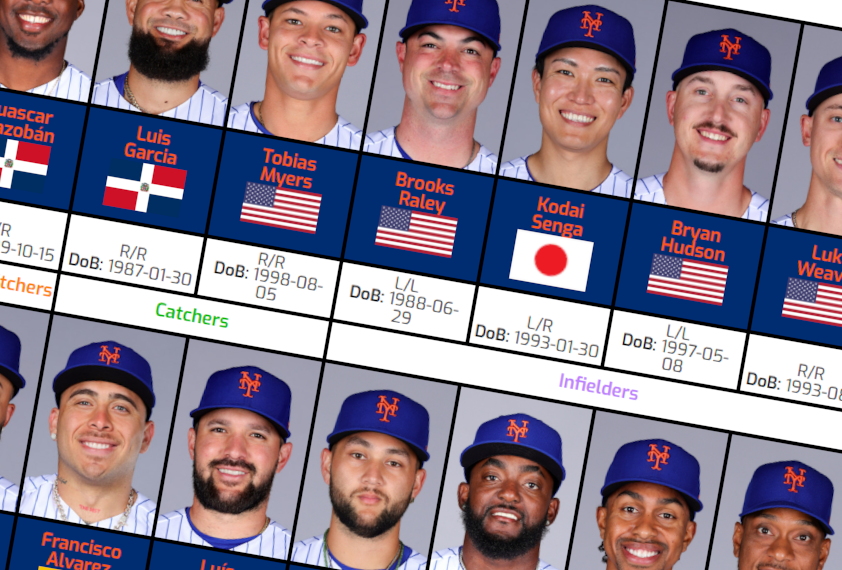 Met Roster Central apologizes for not being available for roster updates the last week or so. Our massive array of computers were in the shop, and maybe our pants were at the cleaners, but our hearts were right there in our chests, beating a Metly beat. As the roster starts getting populated with fewer journeymen and more homegrown rookies, that beat only gets louder. Transactions, 5/15/2026 COMING Signed away from Jalisco (Mexican League) to Minor-League Contract, Assigned to Binghamton Cleared Waivers, Assigned to Syracuse Sent to St. Lucie on Rehab Assignment Relief Pitchers Infielders Outfielders Max Green Andy Ibáñez Jared Young L/L DoB: 1996-05-28 High Level: AA (2021) R/R DoB: 1993-04-03 High Level: MLB (2026) L/R DoB: 1995-07-09 High Level: MLB (2026) Former Tigers prospect Max Green comes the Mets after a few years in indy ball, capped by an impressive start to his Mexican League campaign. He is not the son of Mets farm director Andy Green, but while checking that possibility out, we did learn that he is a fan of surfing, snowboarding, and fellow lefthander Jimi Hendrix. Hang ten, Dude! Jared Young got the lefthanded bat off the bench/fifth outfielder role after an injury to Mike Tauchman coming out of camp. While Young got off to an impressive start (.350 / .391 / .450 // .841 through 23 plate appearances), he was succeeded in his roster spot by MJ Melendez and MJ was the Mets best hitter while things were at their bleakest. So we may have a roster showdown between two guys, each believed to have a single option year. Andy Ibáñez didn't really have a role — he was an infielder used as an outfielder against lefties in lean times that we shall not speak of again — in his short time with the Mets. We're happy to see him stay in the organization following his DFA, as the team always needs Cubano journeymen infielders. Transactions, 5/16/2026 GOING COMING Placed on 15-Day Injured List with Fractured Right Fibula Released Promoted from Syracuse Starting Pitchers Catchers Relief Pitchers Clay Holmes Daniel Silva Joey Gerber R/R DoB: 1993-03-27 High Level: MLB (2026) S/R DoB: 2025-01-21 High Level: Rk (2025) R/R DoB: 1997-05-03 High Level: MLB (2026) Nobody wanted to see Clay Holmes hurt. He had emerged as the ace of a staff that had several qualifiers vying for that title, including big-name import/Opening Day starter Freddy Peralta and Rookie of the Year candidate Nolan McLean. Beyond that, his unlikely level of success after transitioning from relief was one of the dwindling hooks on which to hang the idea that Mets management knows what they are doing. But what is a greater test of management than how good the next soldier (and the next soldier and next) is when the first goes down? It's a game of attrition, more than ever, and if there's anything good to say about a fractured fibula incurred after absorbing a comeback liner, well, it sure beats an exploded UCL or a case of thoracic outlet syndrome or the like. Until the Mets add a replacement starter, the bullpen is expanded (as teams will always seek to do) by one, with Joey Gerber and his awesome set of dimples returning from history's longest assignment for the purpose of rehabbing from blisters. It's a mad world. We at Mets Roster Central cannot control it. We can only describe it in madness. Venezuelan catcher Daniel Silva signed back in 2021 and Mets Roster Central never got a photo of him, as even his signing photo was with several players all masking up, leaving him indistinguishable from his fellow signees. The switch-hitter put up terrific walk rates but could not climb the latter due to trouble staying healthy and, in 2025, a plummeting batting average (.188, but still with a strong OBP). He never got on the field in 2026. Transactions, 5/17/2026 GOING Released Relief Pitchers Luke Jackson R/R DoB: 1991-08-24 High Level: MLB (2026) Cool-Hand Luke Jackson (his actual nicknames are the equally obvious "Fireman" and "Skywalker") was almost impressively wild (seven walks in 4 2/3 innings) in his short stint with Syracuse. This is a problem that has come and gone over his long career. The former Braves closer (for half of 2018 anyhow) may or may not get another call from a seventh organization before the year is out, but cut loose by the Mets six weeks after signing his career does seem to be close to sunsetting. If so, and mind-numbingly gaudy championship ring won with the 2021 Braves, along with this video of Skywalker cuddling his newborn son on the field after pitching in Game Three of that year's World series, has to make for the most impossibly garish and incredibly sweet pair of career keepsakes. Transactions, 5/18/2026 GOING COMING Demoted to Syracuse Transferred from 15- to 60-Day Injured List Added to 40-Player Roster and Promoted from Syracuse Added to 40-Player Roster and Demoted to Syracuse Relief Pitchers Joey Gerber A.J. Minter Daniel Duarte Anderson Severino R/R DoB: 1997-05-03 High Level: MLB (2026) L/L DoB: 1993-09-02 High Level: MLB (2025) R/R DoB: 1996-12-04 High Level: MLB (2024) L/L DoB: 1994-09-17 High Level: MLB (2026) It isn't clear why the Mets would add Anderson Severino to the 40-Player Roster without promoting him to the big leagues, but there is clearly some reason he is part of this flurry of activity. Experience suggests to Mets Roster Central that Anderson had an opt-out if he was not added to the roster by this date, and his terrific 0.98 ERA through 18 1/3 International League innings so far suggests he is not somebody they want to let walk. (A fun Anderson Severino fact is that that 0.98 ERA through 18 1/3 innings in Syracuse is the exact same line he put up in the Mexican Pacific Winter League, leading the Mets to sign him) Nonetheless, given the choice of keeping Joey Gerber (who had not appeared since his return to the team) two days earlier and promoting Sevvy (a man without an ERA), they went a third route and added Mexican-born Daniel Duarte. Daniel is a journeyman at first glance, but he has a lot of non-affiliated big-time, high-pressure experience, appearing for his country in the Olympics, The World Baseball Classic and El Serie del Caribe. So, the Mets bide their time before the launch of The Severino Missile. They also anticipate the return of A.J. Minter in a week or two. His assignment here to the 60-Day Injured List seems to push his return date further back, but in actuality, he had already cleared 60 days and can be activated at any time. The Mets just needed the big fat roster spot that becomes available when a player is added to the 60. Transactions, 5/19/2026 GOING COMING Transferred from 15- to 60-Day Injured List Designated for Assignment Added to 40-Player Roster and Promoted from Syracuse Transferred from St. Lucie to Syracuse on Rehab Assignment Starting Pitchers Outfielders Clay Holmes Austin Slater Nick Morabito Jared Young R/R DoB: 1993-03-27 High Level: MLB (2026) R/R DoB: 33951 High Level: MLB (2026) R/R DoB: 2003-05-07 High Level: MLB (2024) L/R DoB: 1995-07-09 High Level: MLB (2026) While the Clay Holmes and Jared Young transactions to the left represent the expected progressions of two players going in two different directions, the real story is the addition of young Nick Morabito. In a year when the Mets are inducting Lee Mazzilli into The Mets Hall of Fame, what could be a more appropriate addition than another exciting athletic Italian-American prospect tearing through the minors with blazing speed and a terrific batting eye. The pride of Gonzaga College High School even got to debut before the denizens of his hometown. Sadly, the Mets screwed up the Morabito launch badly by first assigning him (yay!) and then withdrawing (booooo!) #8, a number that a populist, ill-thought-out and utterly a-historical argument says must be perpetually reserved in honor of Gary Carter. Mets Roster Central has a lot of thoughts on this (as usual, Mets by the Numbers says it better), but let's just say that there are ton of lovely ways for a team to honor the legacy of past figures, and defaulting to number retirement is cliched, uncreative, and terribly shortsighted. Welcome, though, to Nick Morabito. We are so excited to see you kid, that we've outfitted you in ... er, um ... #55. Ugh. Transactions, 5/20/2026 GOING COMING Demoted to Syracuse Added to 40-Player Roster and Promoted from Syracuse Relief Pitchers Starting Pitchers Daniel Duarte Zach Thornton R/R DoB: 1996-12-04 High Level: MLB (2026) L/L DoB: 2002-01-17 High Level: MLB (2026) It is clearly no secret that guys in the front office stay awake at night thinking of ways to get one more relief pitcher, one more relief pitcher ONE MORE relief pitcher onto the roster. It consumes them. It obsesses them. It eats at their health damages their relationships. They are at their kids' dance recitals or staring into a golden sunset, while their minds are a thousand miles away thinking about cycling players with options back and forth to AAA, using an infielder as a backup catcher, using a second-baseman in the outfield, all for that one more guy to pitch two innings of mopup as a human sacrifice in the game you aren't trying to win so you can save your pitchers for the game you aren't. It's all gross, but don't think for a minute that, as hands twisted and hearts stopped over news of Clay Holmes' fractured fibula, more than one person in the front office was at least partially excited that they got to add ONE MORE RELIEVER for several days while Holmes hit the IL but they didn't yet need his replacement. Well, those days are done, and the Mets have come to call on young Zach Thornton. Not to be confused with the Zach Thornton who came to the Mets in the Ike Davis trade, this ZT started the season in Binghamton, but climbed up to Syracuse and beyond and manage to pass and debut in Queens before the more celebrated Jonah Tong and Jack Wenninger. Somewhere this will be sold as an indictment of Tong and Wenninger, but progress comes in fits and starts, and Thornton is simply having a moment. The lefty breaking pitch specialist is only just coming into big-league velocity, but his aversion to homers and walks has been approaching a clinical level, and while that package may lead to good days and bad for the time being, he has been lauded for a bulldog mentality and can be expected to pitch deep into games even when his best stuff is lacking. CAN THE SAME BE SAID OF YOU?! Here's to seeing a lot of Zach in the future and maybe a rotation of him along with McLean, Scott, Tong, and Wenninger is a bright future not far off. Your 2026 New York Mets Starting Pitchers Nolan McLean Freddy Peralta David Peterson Christian Scott Zach Thornton R/R DoB: 2001-07-24 R/R DoB: 2996-06-04 L/L DoB: 1995-09-03 R/R DoB: 1999-06-15 L/L DoB: 2002-01-17 Relief Pitchers Huascar Brazobán Craig Kimbrel Sean Manaea Tobias Myers Brooks Raley Austin Warren Luke Weaver R/R DoB: 1989-10-15 R/R DoB: 1988-05-28 R/L DoB: 1992-02-01 R/R DoB: 1998-08-05 L/L DoB: 1988-06-29 R/R DoB: 1996-02-05 R/R DoB: 1993-08-21 Relief Pitchers Catchers Infielders Devin Williams Hayden Senger Luís Torrens Bo Bichette Brett Baty Vidal Brujan MJ Melendez R/R DoB: 1994-09-21 R/R DoB: 1997-04-03 R/R DoB: 1996-05-02 R/R DoB: 1998-03-05 L/R DoB: 1999-11-13 S/R DoB: 1998-02-09 L/R DoB: 1993-11-29 Infielders Outfielders Marcus Semien Mark Vientos Carson Benge A.J. Ewing Nick Morabito Juan Soto Tyrone Taylor R/R DoB: 1990-09-17 R/R DoB: 1993-12-11 L/R DoB: 2003-01-20 L/R DoB: 2004-08-10 R/R DoB: 2003-05-07 L/L DoB: 1998-10-25 R/R DoB: 1994-01-22 Also on 40-Player Roster Starting Pitchers Relief Pitchers Clay Holmes Tylor Megill Kodai Senga Jonah Tong Alex Carrillo Daniel Duarte Reed Garrett R/R DoB: 1993-03-27 R/R DoB: 1995-07-28 L/R DoB: 1993-01-30 R/R DoB: 2003-06-19 R/R DoB: 1997-06-06 R/R DoB: 1996-12-04 R/R DoB: 1993-01-02 Relief Pitchers Catchers Infielders Justin Hagenman A.J. Minter Dedniel Núñez Jonathan Pintaro Dylan Ross Francisco Alvarez Francisco Lindor R/R DoB: 1996-10-07 L/L DoB: 1993-09-02 R/R DoB: 1996-06-05 R/R DoB: 1997-11-07 R/R DoB: 2000-09-01 R/R DoB: 2001-11-01 S/R DoB: 1993-11-14 Infielders Outfielders Ronny Mauricio Jorge Polanco Luis Robert, Jr. Jared Young S/R DoB: 2001-04-04 S/R DoB: 1999-11-13 R/R DoB: 1997-08-03 L/R DoB: 1995-07-09 Designagted for Assignment Outfielders Austin Slater R/R DoB: 1992-12-13 View the full article
 -
 The Storm Chasers cruised behind Drew Waters' three-hit, three-run game and Mitch Spence's four steady innings, romping past St. Paul 11-3. Drew Beam delivered six strong frames for Northwest Arkansas, supported by home runs from Jorge Alfaro and Justin Johnson, in a 6-4 win. Quad Cities dropped a 13-4 blowout despite Yimi Presinal's two scoreless innings and Derlin Figueroa's three-run homer. Columbia stranded nine runners and fell 5-4 to Augusta despite a Henry Ramos triple. Royals Transactions No Roster Moves Storm Chasers Pile Up 16 Hits In 11-3 Romp At St. Paul The Omaha Storm Chasers banged out 16 hits, grabbed the lead in the fifth, and pulled away with a three-run seventh in an 11-3 win at St. Paul. Waters paced the offense from the cleanup spot with three hits, three runs scored, an RBI, and a stolen base. Leadoff man Josh Rojas reached base five times with three hits, a double, a walk, two runs, and an RBI. John Rave matched with three hits, a double, a walk, two runs, and an RBI. Luca Tresh added three hits and two RBI. Abraham Toro drove in three on a two-run double in the ninth, and a sixth-inning sacrifice fly, and Gavin Cross supplied his first home run of the season. Mitch Spence worked four innings, allowing two runs on three hits with one walk, four strikeouts, and one home run surrendered. Ben Sears picked up the win across two innings of one-run ball with one walk and four strikeouts. Jose Cuas tossed two scoreless innings, and Eric Cerantola closed with three strikeouts in the ninth. Cross opened the fifth with his solo homer to make it 3-2, and two outs later, Dustin Dickerson singled and Rojas doubled him home for a 4-2 edge. The seventh padded the lead further. Rojas scored on a wild pitch during Kameron Misner's strikeout, then Waters and Tresh delivered back-to-back RBI singles. Toro's two-run double in the top of the ninth provided the final margin. Player AB R H RBI BB K Josh Rojas (2B) 4 2 3 1 1 0 John Rave (LF) 4 2 3 1 1 0 Kameron Misner (DH) 5 0 1 1 0 3 Drew Waters (CF) 5 3 3 1 0 2 Brett Squires (1B) 4 1 0 0 1 2 Luca Tresh (C) 5 1 3 2 0 0 Gavin Cross (RF) 5 1 1 1 0 0 Abraham Toro (3B) 4 0 1 3 0 2 Dustin Dickerson (SS) 5 1 1 0 0 2 Player IP H R ER BB K HR Mitch Spence 4 3 2 2 1 4 1 Ben Sears (W) 2 1 1 1 1 4 1 Jose Cuas 2 0 0 0 1 1 0 Eric Cerantola 1 2 0 0 0 3 0 Drew Beam And A Three-Run Sixth Lift Naturals Past Sod Poodles Northwest Arkansas erased an early 2-0 deficit with home runs from Johnson and cleanup hitter Alfaro, holding on for a 6-4 win at Amarillo. Leadoff man Carson Roccaforte sparked the lineup with three hits, including a triple. Alfaro went 1-for-4 with a two-run homer and two RBI, while Justin Johnson added a two-run home run and two RBI of his own. Omar Hernandez had two hits, scored twice, and stole a base. Daniel Vazquez added a double, and Connor Scott chipped in an RBI single. Drew Beam turned in a quality start, working six innings and allowing three runs on five hits with one walk, three strikeouts, and one home run allowed. Brandon Johnson gave up a run in an inning of relief. Dennis Colleran Jr. tossed a scoreless inning, and Oscar Rayo struck out three in a scoreless ninth for the save. After falling behind on a two-run homer in the first, the Naturals scratched a run back in the third when Hernandez scored from third on a balk. The bats fully arrived in the fifth, when Justin Johnson's two-run homer scored Hernandez to put NWA ahead 3-2. Three more came in the sixth: Alfaro's two-run shot scored Spencer Nivens, then Vazquez doubled, and Scott followed with an RBI single to make it 6-2. Player AB R H RBI BB K Carson Roccaforte (CF) 4 0 3 0 0 1 Sam Kulasingam (2B) 4 0 0 0 0 0 Spencer Nivens (LF) 4 1 1 0 0 2 Jorge Alfaro (1B) 4 1 1 2 0 1 Daniel Vazquez (SS) 4 1 1 0 0 0 Connor Scott (RF) 4 0 1 1 0 1 Omar Hernandez (C) 4 2 2 0 0 1 Canyon Brown (DH) 3 0 0 0 1 2 Justin Johnson (3B) 3 1 1 2 0 0 Player IP H R ER BB K HR Drew Beam (W) 6 5 3 3 1 3 1 Brandon Johnson 1 2 1 1 0 1 0 Dennis Colleran Jr. 1 2 0 0 0 1 0 Oscar Rayo (S) 1 1 0 0 0 3 0 10-Run Sixth Sinks River Bandits In 13-4 Loss A clean Quad Cities deficit turned into a rout when the bullpen surrendered 10 runs in the top of the sixth, sending the River Bandits to a 13-4 loss to Beloit. Figueroa provided the offensive highlight with a three-run home run in the eighth, finishing 1-for-4 with three RBI and a stolen base. Angel Acosta led the way with three hits. Erick Torres added a single and two stolen bases. Cleanup hitter Ramon Ramirez singled and scored. Blake Mitchell drew a walk and scored a run, but struck out four times. The Bandits stranded six runners. Starter Aiden Jimenez worked five innings, allowing three runs on six hits with two walks, five strikeouts, and one home run, and was tagged with the loss. Ryan Ure recorded one out in the sixth while giving up five runs on a hit and three walks. Hunter Alberini followed and was charged with five more runs on four hits with two walks and two strikeouts across two-thirds of an inning. Presinal then steadied things with two scoreless, hitless innings and four strikeouts. Diego Guzman closed with a scoreless ninth. The sixth featured a steady drumbeat of damage: a single, a triple, another single, a multi-run hit, more singles, and a double turned a 3-0 game into 13-0. Quad Cities got on the board in the seventh when Acosta singled and came around to score on Asbel Gonzalez's groundout. Figueroa's three-run homer in the eighth, scoring Mitchell and Ramirez, accounted for the remaining offense. Player AB R H RBI BB K Luke Pelzer (LF) 3 0 0 0 1 2 Asbel Gonzalez (CF) 5 0 0 0 0 2 Blake Mitchell (C) 4 1 0 0 1 4 Ramon Ramirez (DH) 4 1 1 0 0 0 Derlin Figueroa (3B) 4 1 1 3 0 1 Erick Torres (RF) 4 0 1 0 0 1 Tyriq Kemp (SS) 3 0 1 0 1 1 Trevor Werner (1B) 4 0 0 0 0 2 Angel Acosta (2B) 4 1 3 0 0 1 Player IP H R ER BB K HR Aiden Jimenez (L) 5 6 3 3 2 5 1 Ryan Ure 1/3 1 5 5 3 0 0 Hunter Alberini 2/3 4 5 5 2 2 0 Yimi Presinal 2 0 0 0 0 4 0 Diego Guzman 1 0 0 0 1 0 0 Fireflies Strand Nine, Fall 5-4 At Augusta A relentless inability to cash in cost the Columbia Fireflies, who stranded nine runners in a 5-4 loss to the Augusta GreenJackets. Cleanup hitter Hyungchan Um went 3-for-4 with a walk and an RBI. Leadoff man Henry Ramos drove in two runs on a triple and a groundout, finishing 1-for-5 with a run scored. Sean Gamble singled, scored, and drove in a run. Daniel Lopez doubled, stole a base, and scored twice. Josh Hammond and Um combined for four of the team's seven hits. Denis Samudio worked four innings, allowing three runs on four hits with one walk, six strikeouts, and one home run, taking the loss. Dash Albus surrendered the decisive blow in the fifth on a two-run home run, finishing with two runs on two hits and a walk in his inning of work. Max Martin tossed two scoreless innings with a strikeout, and Henson Leal closed the eighth with a scoreless frame and two strikeouts. Columbia chased Augusta all night after falling behind 2-0 in the first. They cut it to 2-1 in the third on Ramos' RBI groundout that scored Lopez. The sixth produced one more when Um singled home Gamble to make it 5-2. The seventh accounted for the last two: Ramos tripled to drive in Lopez, then Gamble's groundout brought Ramos around to make it 5-4. From there, every threat ended without another run crossing the plate. Player AB R H RBI BB K Henry Ramos (LF) 5 1 1 2 0 2 Sean Gamble (CF) 5 1 1 1 0 1 Josh Hammond (SS) 5 0 1 0 0 1 Hyungchan Um (C) 4 0 3 1 1 1 Yandel Ricardo (2B) 3 0 0 0 0 0 Stone Russell (3B) 4 0 0 0 0 2 JC Vanek (1B) 4 0 0 0 0 1 Roni Cabrera (DH) 2 0 0 0 1 1 Daniel Lopez (RF) 3 2 1 0 0 2 Player IP H R ER BB K HR Denis Samudio (L) 4 4 3 3 1 6 1 Dash Albus 1 2 2 2 1 0 1 Max Martin 2 1 0 0 0 1 0 Henson Leal 1 1 0 0 0 2 0 Top-20 Prospect Performance Kendry Chourio: DNP David Shields: DNP Sean Gamble: 1-for-5, R, RBI, K Blake Mitchell: 0-for-4, R, BB, 4 K Josh Hammond: 1-for-5, K Ramon Ramirez: 1-for-4, R Drew Beam: 6 IP, 5 H, 3 R, 3 ER, 1 BB, 3 K, HR Asbel Gonzalez: 0-for-5, 2 K Ben Kudrna: DNP Carson Roccaforte: 3-for-4, 3B, K Yandel Ricardo: 0-for-3 Felix Arronde: DNP Blake Wolters: DNP Michael Lombardi: DNP Luinder Avila: DNP Steven Zobac: DNP Frank Mozzicato: DNP Daniel Vazquez: 1-for-4, R, 2B Warren Colcano: DNP Shane Panzini: DNP View the full article
 -
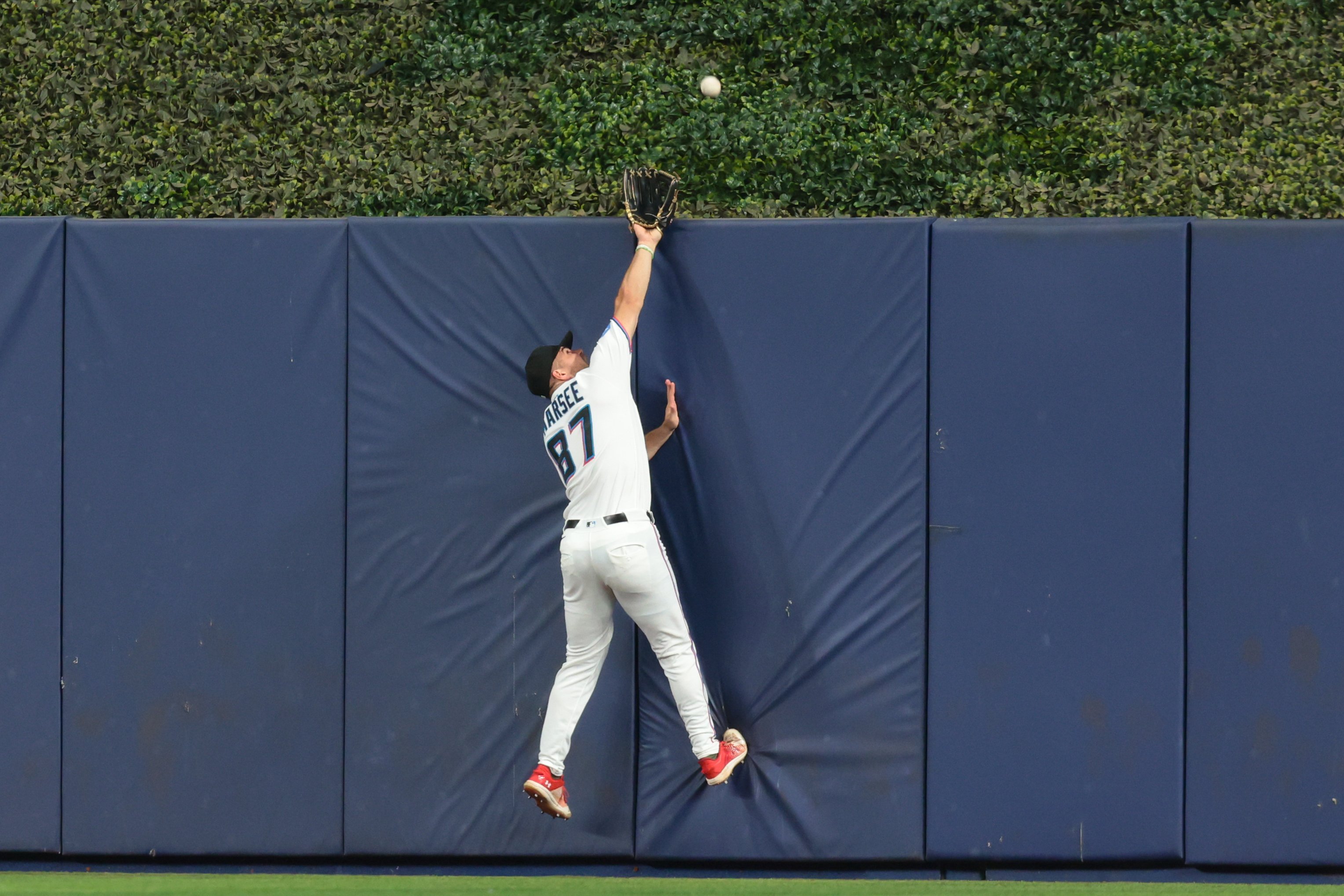 MIAMI – In what was expected to be a tightly contested pitcher’s duel on Thursday night, the Miami Marlins fell behind immediately and never recovered, dropping their third consecutive game to the Atlanta Braves. With the loss, Miami fell to a season-worst seven games under .500 and now sits alone in last place in the NL East. When asked if the team needs to start doing things differently, manager Clayton McCullough said, “No, we’re going to keep going, continue with what we’re doing and get ourselves ready for a new series. Things will turn. When? I don’t know, but we’ll hang in there and be okay.” The season is still relatively young, but it has reached the point where front offices begin evaluating their clubs to determine what changes need to be made and which direction they should take in the coming months. In Miami’s case, the current stretch is making those decisions increasingly difficult for the front office. The theme of May has been falling behind early and often. In 19 games this month, Marlins starters entered Thursday with a first-inning ERA above 11 — by far the worst mark in Major League Baseball. The next closest team owns a 6.15 ERA in the opening frame. On Thursday, that troubling trend continued, even with Sandy Alcantara on the mound. After Ronald Acuña Jr. reached on an infield single, Michael Harris II launched his 10th home run of the season to dead center field — the first of his two home runs on the night. The homer came on a 1-2 changeup. “Some teams are different,” Alcantara said. “They’re at the top of the division, winning a lot of games because they’re very aggressive and trying to score runs right away.” When asked about the frustration within the pitching staff during this rough stretch, Alcantara admitted it hasn’t been easy. “It’s hard because when I’m out there, I want us to win games consistently, but we’ve gotta stay together. We know what we’re capable of, and sometimes we can compete against anyone, but we’re just not getting the results right now.” Alcantara surrendered another solo home run in the second inning, this time to Mike Yastrzemski, before settling in during the middle innings and keeping Atlanta off the board until the sixth. That’s when Acuña Jr. delivered a two-run single that effectively sealed the game for Atlanta. Alcantara’s final line: 6 IP, 9 H, 6 ER, 0 BB, 3 SO. He threw 94 pitches, 68 for strikes. “I’m not happy about it,” the Dominican right-hander said of his performance. “I think I could have done better. I left some pitches over the middle early, and they took advantage.” The Marlins were able to keep the game relatively close thanks to a trio of solo home runs — two from Kyle Stowers and one from Owen Caissie. “We’ve gotta keep believing. We know we’ve gotta get through this as a team and keep fighting every day as we continue to move forward,” Miami’s ace said postgame. Following the series loss, Miami will welcome the New York Mets to loanDepot park for a weekend series. Right-hander Eury Pérez will look to get his season on track against Tobias Myers. First pitch is scheduled for 7:10 p.m. View the full article
 -
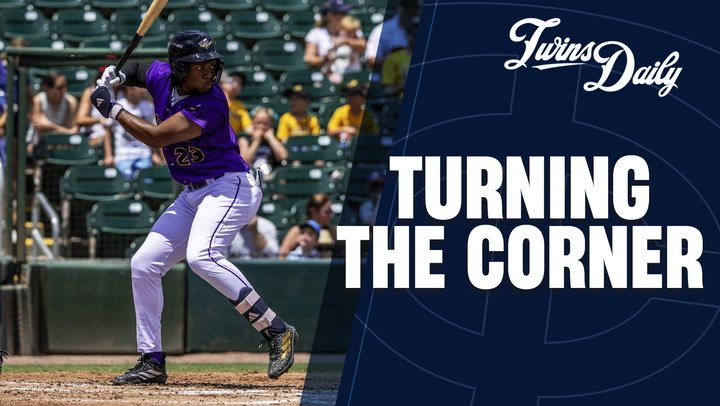 Quentin Young didn't have a great start to the year. He struck out over 48% of the time in April, and his numbers are now just starting to go down after a lackluster start to the season. What could be ahead for him in Fort Myers? View the full article
 -
William Contreras's Power Isn't Back. Where Has It Gone?
DiamondCentric posted an article in Brewer Fanatic
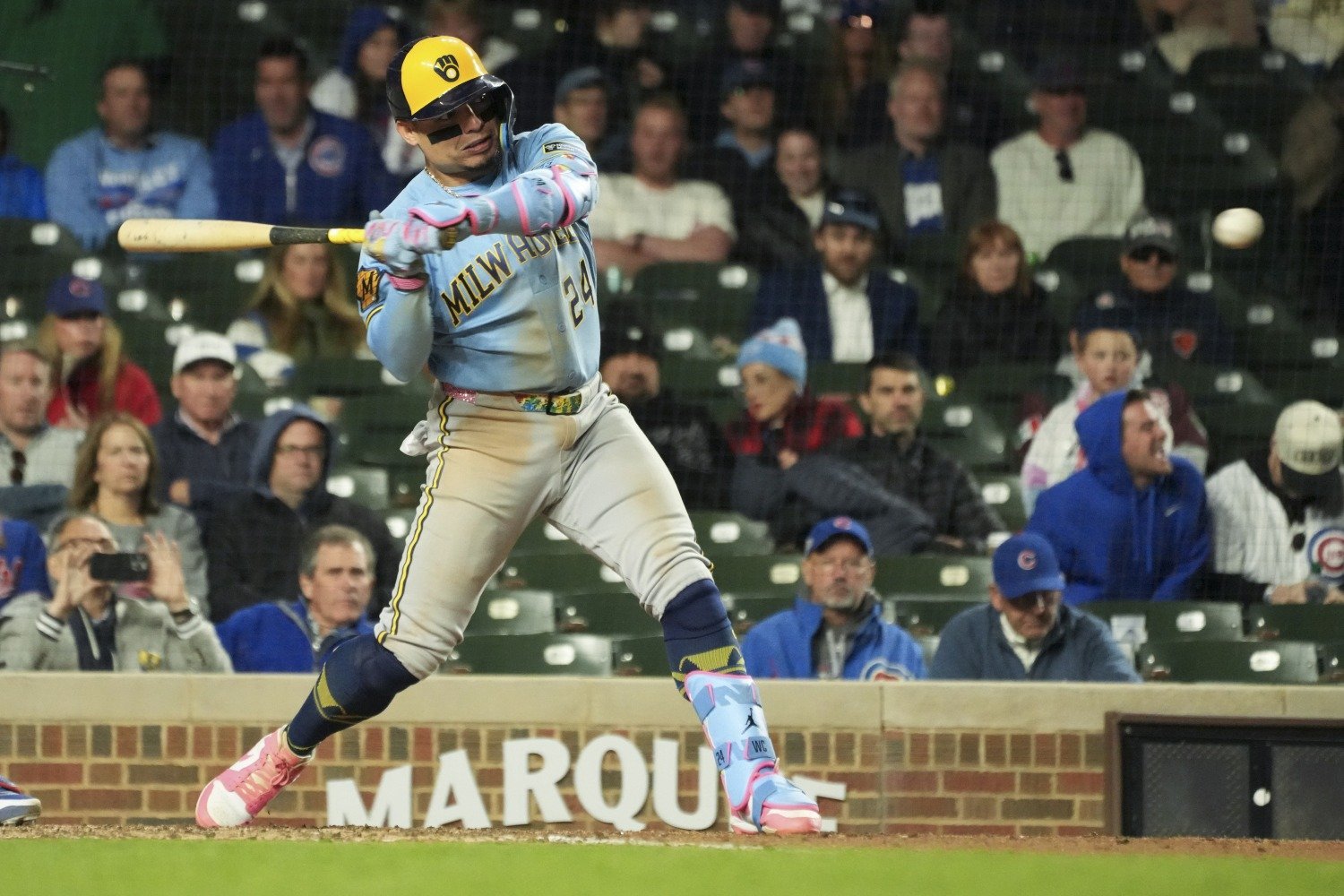 William Contreras played a portion of 2024 and all of 2025 with a fracture in his left middle finger, causing discomfort that affected his game. We know that. He underwent surgery in November to address it, because he and the Brewers felt that the injury had lingered and prevented him from being his best self for the majority of 2025. Because he had that operation, though, the hope was that this year would mark a return to the peak of Contreras's powers—literally. In his first two seasons with the Brewers, Contreras batted .285/.366/.462. In 1,290 plate appearances, he clubbed 75 doubles, 3 triples and 40 home runs. That was an elite offensive profile for a catcher, of course, but more importantly, it made Contreras a productive part of the middle of the Brewers lineup. They could win with pitching, defense and speed, because they had a very good hitter who could generate enough power to cash in the chances other players created, while playing a premium defensive spot. Last year, Contreras was gutting it out. His bat speed was down early in the season, but he rediscovered it by midsummer. Still, his swing wasn't quite the same. He used a well-structured approach to maintain his on-base skills, but the power went missing. For the year, he batted .260/.355/.399, with 28 doubles and 17 home runs in 659 trips to the plate. That's still solid work for a catcher; it's still solid work for anyone. The league averaged an OBP of .319 and a slugging average of .404, and OBP is more important than slugging, so a .355 OBP with roughly average power is hugely valuable, particularly for a player with major defensive responsibilities. Still, the hope was that the power (and perhaps the batting average, by dint of more exit velocity even on non-fly balls) would rebound in 2026, to somewhere near .450. Giving him a reset on that finger injury and then a full offseason to recover and prepare should have positioned him to do that. Instead, this year, the batting average is back—but the power isn't. Contreras is hitting .294/.366/.389 in 202 plate appearances. He has only 11 extra-base hits, and eight of those are doubles. What gives? It's not a problem of batted-ball profile, in the usual sense. He's pulling the ball more than in the past. He's lifting the ball more than he has in the past—and especially, he's hitting fewer ground balls. He's hitting it a little bit less hard, but that should be made up for by more lift and more pull. In fact, in fairness, his expected slugging this year is .430, up from .393 in 2025. But that's almost entirely because his expected batting average is up from .248 to .281; his isolated power hasn't surged along with the rise in average. Instead, Contreras's expected average is up almost entirely because he's making way, way more contact. He's swinging almost exactly as often as he did last year, but he's whiffing on just 18.3% of those swings, down from 24.2% last year and more like 28% in 2023 and 2024. Thus, his strikeout rate is down to an extraordinary 11.2%, so he's going to get more hits. That's happened, but the power hasn't come along for the ride, even though the expected stats say it should have at least halfway done so. Here's why. Since 2024, Contreras has gotten increasingly closed in his setup at the plate. His stance has angled itself more and more toward first base, closing his front shoulder to the pitcher. As we've discussed in the past, that doesn't necessarily set his direction to the baseball. He opens up toward the pitcher more with his stride than most batters. In the past, that allowed him to turn on the ball unexpectedly and generate a ton of power to left field. Here's an example, from 2024. elpZVjBfWGw0TUFRPT1fRGdVRUFGWUZBZ2NBRFZwVVVRQUFVd0pRQUZoUVV3Y0FBRklOQmxKUVZWVmRCMVlD.mp4 Crazy though it might sound, the slight closure of his stance has made that tougher, even though his stride still opens him up relatively well. That's because he's also made another change, perhaps a bit less consciously. His stride is longer than it was last year, by about two inches. That sounds tiny, but for one thing, all the margins that differentiate bad from good and good from great in hitting are tiny; and for another, the magnitude of this change's impact on Contreras's game is boosted by the change in his stance and the directionality of his swing. Here's what it looks like this season. WU9WRDlfWGw0TUFRPT1fVXdjQ0JWTUVBQVFBRGdBQ0FBQUhWUUFFQUFCUUFGa0FVVlFEQkFZTUJRVUVBQXND.mp4 With that initial set of his body to a slightly more closed angle and a slightly longer stride, Contreras ends up a bit less able to get his front hip open and maximize the torque of his torso. He also ends up having to go out a bit farther, around his frame and in front of himself. To wit, Contreras's contact point has moved a bit farther out in front of him this year—another thing we would typically expect to result in more power, not less—but he's also flatter to the ball. His swing has less tilt and is working less uphill when he catches the ball, because of the way his body moves in this new combination of stance orientation and stride length. Here are two telling moments in his swing, from each of the last three years. On the left, from top to bottom, we see what it looks like when Contreras's front foot comes down and he begins his swing, for 2024, 2025 and 2026. On the right, we see the moment when his barrel stops working down into the hitting zone and starts to work upward, through the ball. First, let's talk about his first moves. Last year, cheating a little bit to make up for diminished bat speed, he got his hands a bit farther from his body and a bit lower, with his bat a bit flatter. This season, he's basically back to the set point he used in 2024—but note the angles of his lower half. He's locked a bit more into that position than in the past. Now, look at the images on the right. The differences are a bit more pronounced. For one thing, his weight hasn't shifted forward as much as it had in the past. That gives him more adjustability, which might explain his better contact rate, but it means slightly less energy crashing forward into the ball. The longer stride doesn't let him rotate as well, because it puts him deeper in his legs. Meanwhile, his front shoulder is more closed, and his hands are working differently. He's not hitting underneath his front side. His bat is coming around more than in the last two seasons; his top hand is already getting around and in front of his frame. All of these are small changes, but they add up to a swing with a lower launch-angle sweet spot than his old one and a greater likelihood of his best contact being toward center field. It's possible Contreras is doing it all on purpose, in the name of getting on base as often as possible by putting it in play at the best possible rate. Ideally, though, he'd reorient himself just enough to get back the version of his swing that maximizes his power potential. A small tweak to his setup and stride should have him slugging at somewhere close to his old rate. It's just a matter of time before he finds the right way to make that adjustment. View the full article
 -
Ryan Kreidler Might Be (a Lot?) More Than Just Depth for the Twins
DiamondCentric posted an article in Twins Daily
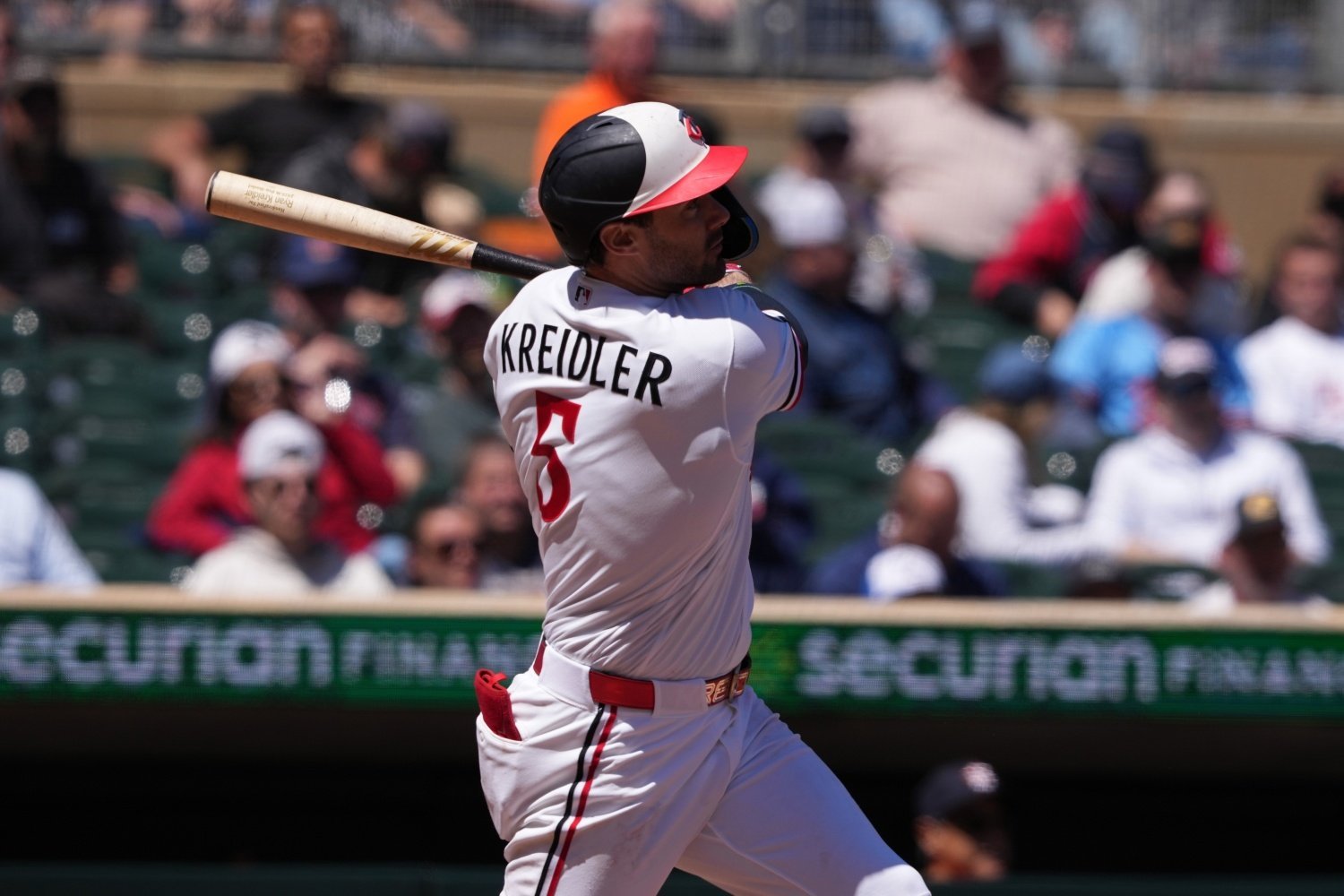 After arriving this offseason as an unheralded waiver claim from the Pittsburgh Pirates, Ryan Kreidler didn’t exactly enter 2026 with much hype surrounding his name or his game. The 28-year-old utility man came to the Minnesota Twins as organizational depth—a defense-first player capable of moving around the diamond, but someone whose bat had never developed at the major-league level. Yet, eight weeks into the season, it’s becoming fair to ask an interesting question: Does Kreidler deserve more playing time? That question probably would’ve sounded ridiculous a year ago. Entering the 2026 season, Kreidler owned a career .138 batting average in the majors. No matter how strong the defense is, no matter how much versatility a player offers, that level of offensive production is simply disqualifying for an everyday role. But so far this year, things look different. Kreidler pushed hard for an Opening Day roster spot during spring training. While he ultimately didn’t break camp with the big-league club, he continued doing exactly what teams want depth players to do: produce, stay ready, and force the organization to keep noticing him. With both Matt Wallner and Royce Lewis currently spending time at Triple-A, opportunities have opened up around the roster. While the Twins still have several highly-regarded prospects working their way toward the majors, Kreidler has quietly made a compelling case to stick around and see an even larger role in the short term. Through 113 Triple-A plate appearances this season, Kreidler has hit .266 with a .389 on-base percentage and an .889 OPS. He’s also collected 12 extra-base hits in just 26 games, showing far more impact offensively than he had earlier in his professional career. That alone would’ve been encouraging. But what’s happened during his limited major-league opportunities has been even more eye-opening. In just 32 major-league plate appearances this season, Kreidler is hitting .296 with a .406 on-base percentage and three home runs. Even more encouraging than the raw production is how he’s getting there. He’s walking more consistently and striking out less frequently than he did in the minors, which suggests this isn’t purely random batted-ball luck. It sure seems like he's a new player, too, because his swing data is vastly improved. In his limited big-league time in 2024 and 2025, he posted average bat speeds of 68.5 MPH and 71.0 MPH, respectively. This year, that number is 74.4 MPH. That difference is massive. His contact point has moved farther in front of his body. His swing is also flatter. We would expect a player with this kind of swing to be productive, which wasn't really true of the version of Kreidler we saw in the past. He's also made a critical adjustment to maximize the impact of that boost in bat speed: moving deeper in the batter's box. He's giving himself more time to operate a swing that's also much faster. It's not surprising to see that yield big results, except in that they're attached to a player whose name was recently synonymous with helplessness. Now, to be clear, nobody should expect Kreidler to continue hitting near .300 over a full season. Betting on that outcome would be extremely aggressive considering his previous offensive track record. Small samples can create misleading stat lines, especially early in the year, and even a rebuilt swing doesn't automatically mean a player will sustain their newfound success; adjustments loom ahead. But the important point isn’t whether he can maintain superstar production. It’s whether he can be productive enough offensively for the rest of his skill set to become highly valuable, and the answer to that might be a resounding 'yes'. Defensively, he’s exactly the type of player managers love having available. Throughout his professional career, he’s logged time at second base, third base, and shortstop, while also spending significant innings in center field and left field. More importantly, he hasn’t simply survived at those spots; he’s consistently been a strong defender across the board. That kind of flexibility matters over a 162-game season. Injuries happen, rest days become necessary, and matchups change daily. Having a player capable of handling multiple premium positions without sacrificing defensive quality gives a team far more roster flexibility than most fans realize. That defensive value was always the foundation of Kreidler’s game. It’s the reason he was even in the Opening Day conversation, despite his offensive struggles. Teams will always make room for players who can defend at a high level all over the field. The difference now is that he may finally be hitting enough to become more than just a late-inning defensive replacement or occasional spot starter. There’s also another element of his game that still hasn’t fully shown up yet: speed. Kreidler hasn’t had many opportunities to impact games on the bases this season, but the athleticism is absolutely there. Across his minor-league career, he’s posted a 75% success rate on stolen bases, proving he can be an effective runner when given opportunities. That matters, because players like Kreidler don’t necessarily need to be middle-of-the-order hitters to create value. If he provides strong defense across multiple positions, adds quality baserunning, and posts an OPS around .720, that’s a genuinely useful major-league player. Given where his numbers currently sit, he could afford a fairly substantial offensive regression and still remain valuable to the Twins. The Twins don’t necessarily need Kreidler to become a star. They just need him to continue being playable offensively while doing all the other things he already does well, and right now, he’s doing far more than simply surviving at the plate. Of course, there are still long-term questions. The Twins have several highly-touted prospects nearing the majors at positions Kreidler can play, and roster situations can change quickly once players return from injury or regain form. There’s no guarantee he spends the entire season, or even most of it, in the big leagues. But that doesn’t really change the current reality. At the moment, Kreidler has shown he’s capable of helping this team in multiple ways. He’s defending well, providing lineup flexibility, bringing athleticism to the roster, and producing offensively. At some point, players earn more opportunities simply by continuing to perform. Kreidler is getting very close to that point, and until we see evidence that the offensive improvements aren’t real, there’s a strong argument that the Twins need to keep his bat and his glove in the lineup most nights. View the full article
 -
 Early Thursday afternoon, the Marlins announced the acquisition of 25-year-old outfielder Rece Hinds from Cincinnati in exchange for right-hander Zach McCambley. Hinds will report to Triple-A Jacksonville and was added to the 40-man roster following the additional transaction transferring Robby Snelling (Tommy John surgery) to the 60-day IL. Hinds has one minor league option remaining. Selected with the 49th overall pick in the 2019 Draft out of IMG Academy, Hinds hit his peak as a prospect in 2020 and 2021, reaching heights as the eighth-best in the Reds system in both years as evaluated by MLB Pipeline. The industry was enamored by Hinds' stellar exit velocities, bat speed and strength, which resulted in a 60-grade for both power and his arm from the corner outfield. Those tools haven't faded yet as his exit velo got up to 115 mph with Triple-A Louisville this season. A lack of bat-to-ball ability continues to plague Hinds. His first campaign at the Triple-A level in 2024 was especially alarming, as the slugger owned the thirteenth-highest strikeout rate in all of Minor League Baseball at 37.9%. Hinds has had brief stints with the Reds in each of the past three years. The vast majority of his highlights were crammed into his first week, when Hinds homered five times and drove in 11 runs from July 8-13, 2024. Three of those long balls came at the Marlins' expense. In 51 total games and 131 plate appearances at the major league level, Hinds is slashing .172/.221/.426 with seven homers, three doubles and a grueling 6/55 BB/K ratio. The 6'3'', 215-pound, Niceville, Florida, native was designated for assignment on Sunday. Adding a right-handed bat became more of a priority for the Marlins recently. Their most promising Triple-A option, Kemp Alderman, just landed on the injured list earlier this week. Infielder Leo Jiménez suffered a concussion on Wednesday while Christopher Morel and Heriberto Hernández continue to provide sub-replacement-level production. With consistent playing time and a more analytical approach from Miami's hitting staff in Jacksonville, it's obvious that the front office believes they can shrink Hinds' swing-and-miss and tap into his trademark pop. It's a move that resembles the acquisition of Joey Wiemer a year ago, and perhaps this time around the project comes to fruition for a team desperately needing the slug that Hinds possesses. As for McCambley, the 27-year-old right-hander leaves the Marlins for the second time in a six-month span. A third-round pick in Miami's infamous all-pitcher 2020 MLB Draft class, McCambley was selected by Philadelphia this past December in the Rule 5 draft, but was returned prior to Opening Day. McCambley was impressive for the Jumbo Shrimp in 2026, utilizing his five-pitch mix effectively to the tune of a 2.36 ERA in 26 ⅔ innings pitched. However, he's walking 15.7% of opposing batters and projects to work in a relief-only role moving forward. View the full article
 -
Robby Snelling to undergo Tommy John surgery, done for 2026
DiamondCentric posted an article in Fish On First
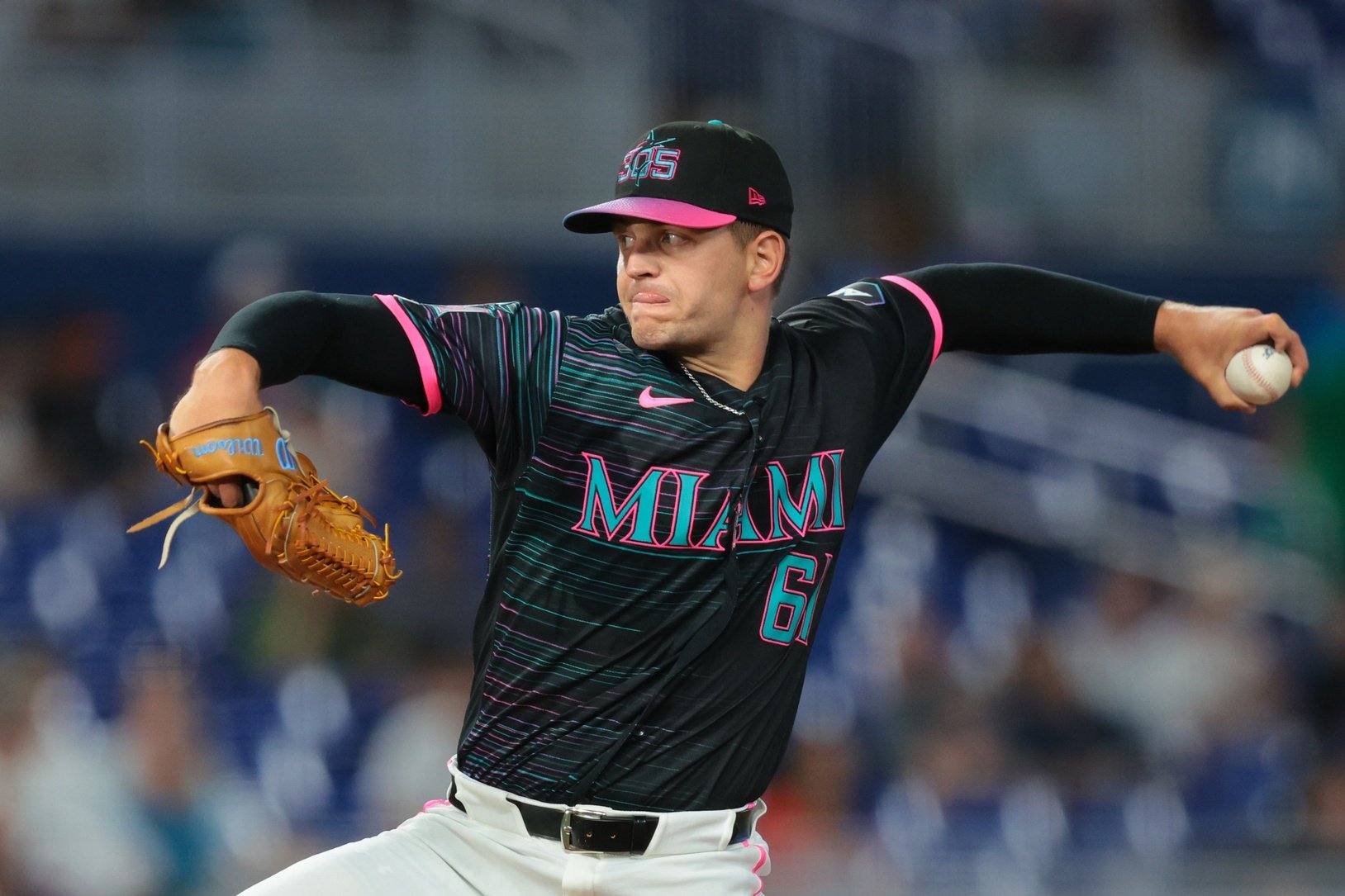 MIAMI — Prior to Thursday night’s game against Atlanta, the Miami Marlins announced that No. 2 prospect Robby Snelling will undergo Tommy John surgery, ending his rookie campaign after just one start. The procedure will be performed by Dr. Keith Meister on Friday—he has handled several prominent Marlins elbow surgeries, including those for Sandy Alcantara, Eury Pérez, Ronny Henriquez, and most recently, Adam Mazur. Snelling made his major league debut on May 8, allowing three runs on five hits against the Washington Nationals. He struck out two and walked four over five innings. Following a bullpen session a few days later, Snelling complained of elbow discomfort, prompting Miami to shut him down and place him on the 15-day injured list. Snelling was acquired at the 2024 trade deadline, along with the aforementioned Mazur, Graham Pauley, and Jay Beshears, in exchange for pitchers Tanner Scott and Bryan Hoeing. After an uneven 2024 season, the left-hander broke out in 2025, earning a promotion to Triple-A Jacksonville. Between the two levels, Snelling posted a 2.51 ERA with 166 strikeouts across 136 innings. Before getting called up to the big leagues, Snelling was dominating Triple-A once again this season, posting a minuscule 1.86 ERA. The rehab process from Tommy John takes a minimum of 12 months for pitchers to complete, though starters like Snelling need additional time on the back end to build up their pitch count. Using one of his teammates as a reference point, Eury Pérez returned to a major league mound last June, which was 14 months after his procedure. The Marlins transferred Snelling to the 60-day injured list to make room for new trade acquisition Rece Hinds. When Snelling went out, Braxton Garrett took over his Marlins rotation spot, but Garrett has since been optioned back to Jacksonville after consecutive poor outings combined (4.1 IP, 7 H, 7 ER, 8 BB and 5 K). There's been no confirmation yet regarding who will start for Miami on Sunday when that spot is due up next. View the full article
 -
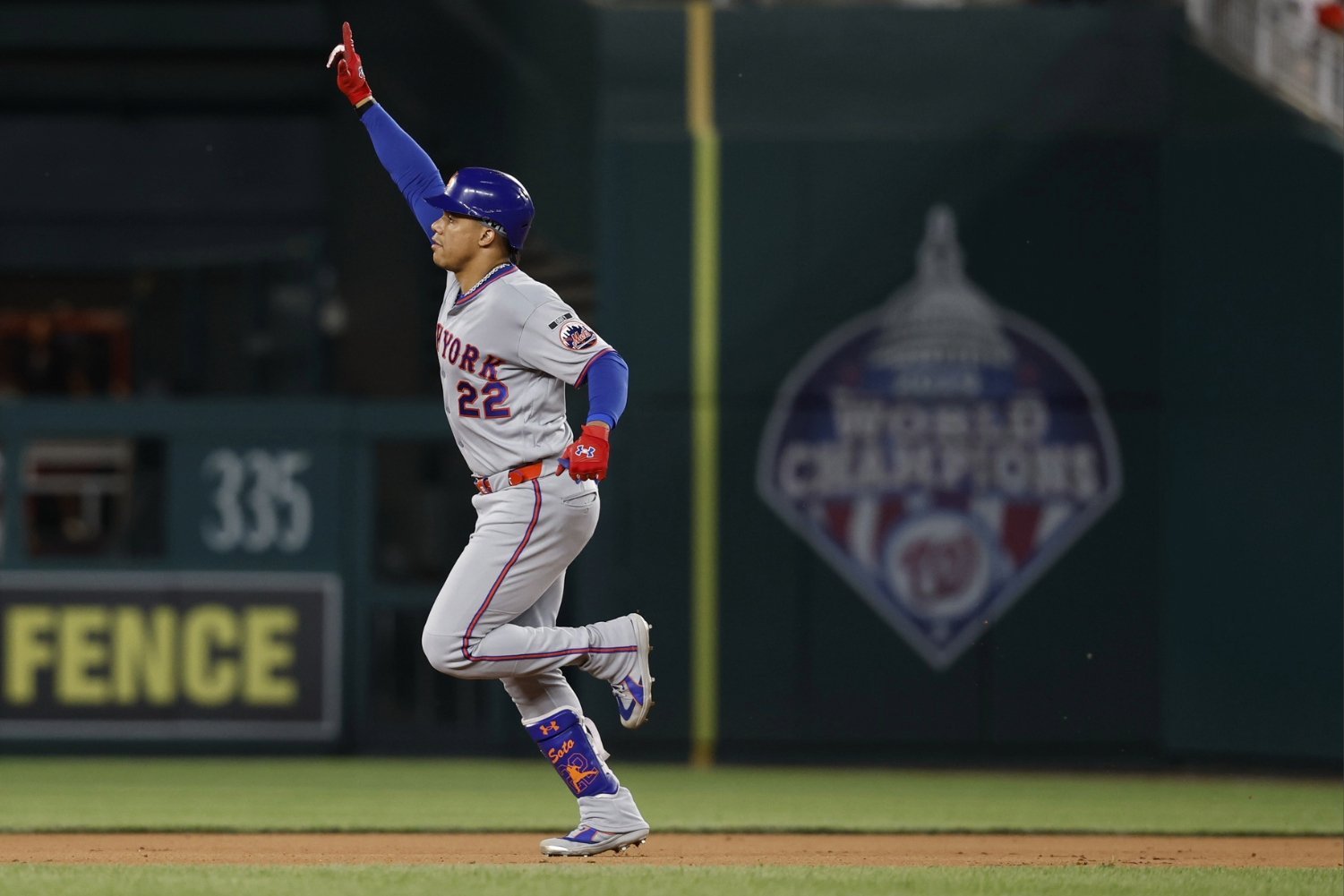 A 12-game losing streak in April put the New York Mets’ season in peril. To their credit, they've put together a solid month after stopping that skid. They're 14-12 in their last 26 games, and 6-3 over their last nine. Now, there's hope that this team will be watchable this summer — and maybe good enough to contend for a playoff spot. There’s recent precedent for such optimism, too. Two years ago, the Mets were 21-26 after 47 games — the same as they were at one point in 2026 — and, OMG, did they turn it on after that. They finished with 89 wins and rode the vibes to the NLCS. This year's Mets entered Thursday's action 13th in the National League but just 7.5 games out of a wild-card berth, with more than two-thirds of the season remaining. Still, the team has lots of problems. The roster doesn't have a Jose Iglesias-type veteran who can set the clubhouse alight. Current spark plug A.J. Ewing is a 21-year-old rookie who has yet to totally struggle at the plate. How will a slump affect his energy? The rotation is a minefield. The top bullpen arms are inconsistent. The offense (87 wRC+, 28th in the majors entering the finale of the Nationals series) can't be trusted, even though it averaged 7.6 runs per game during a recent 6-1 streak. Francisco Lindor, Francisco Alvarez and Clay Holmes are out with long-term injuries. Those issues lead to this question: How much time should the front office give this flawed team to complete a turnaround — be at .500 or better, say — before going into sell mode ahead of the Aug. 3 MLB trade deadline? Club president David Stearns has shown during his time in New York that he will be patient. Most recently, he stuck with manager Carlos Mendoza while the team was losing and the fans wanted the skipper to join the Red Sox's Alex Cora and the Phillies’ Rob Thomson on the unemployment line. Expect Stearns to give the players similar support even with half the everyday lineup — Lindor, Alvarez, Jorge Polanco and Luis Robert Jr. — on the injured list. Some of those players might be available for part of an upcoming stretch that will answer our question. The Mets are early into a difficult part of their schedule. After this week's road trip to D.C. and Miami, they're looking at this group of series through the first week in July: Home vs. the Reds and Marlins At the Mariners and Padres Home vs. the Cardinals and Braves At the Reds and Phillies Home vs. the Cubs and Phillies At the Blue Jays and Braves All of those teams are capable of making it to October. Yes, even the Marlins, the team that killed the Mets’ playoff dreams last year. Once the gauntlet ends in Atlanta on July 6, the Mets will have played 91 games, barring rainouts. That'll be a sufficient sample size for Stearns and his lieutenants. It will also be the time that prices for deadline rentals start to increase. Bottom line: If the club is around..500 and 6.5 back or.closer in the wild-card race a week before.the All-Star break, then the front office can remain patient and maybe do some buying. If the Mets are buried in the standings — say, 10 or more games behind — then the sell-off should probably get underway. View the full article
 -
Daulton Varsho Hasn't Become a Worse Hitter, Just a Different One
DiamondCentric posted an article in Jays Centre
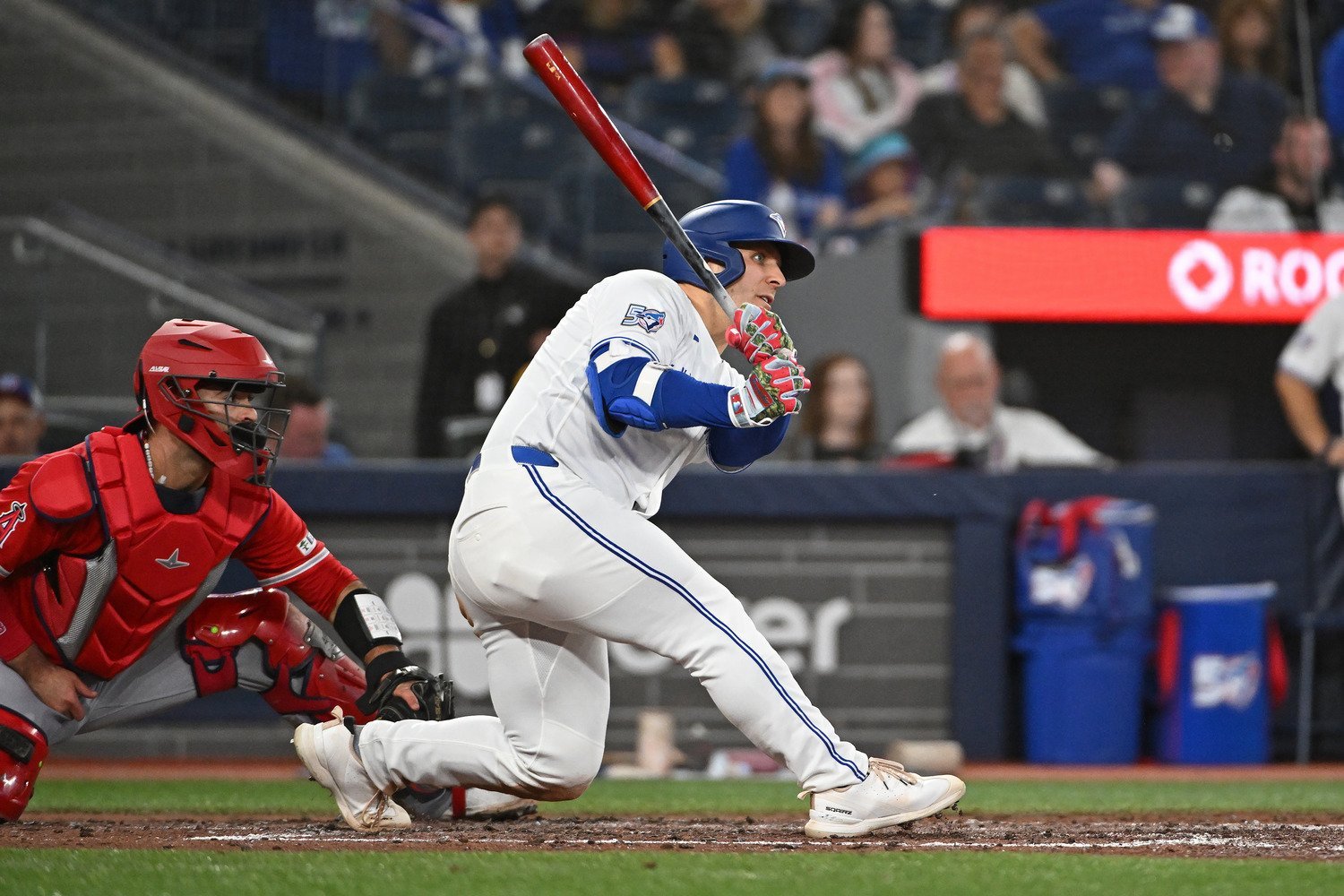 The Blue Jays have been searching for a defining moment all season. Between injuries, underperformance from key veterans, and their position in the AL East slipping quickly, the club desperately needed a spark. For now, Daulton Varsho’s walk-off grand slam last Wednesday may be just the spark the Blue Jays were looking for. It was the Blue Jays' first grand slam of the season and one of their biggest offensive swings of the year. More importantly, it came against a division rival they are actively trying to catch in the AL East. For Daulton Varsho, this has to have been a relief. Aside from a small stretch earlier in the season when he hit three home runs in four games, his power had virtually disappeared, mirroring the larger offensive issues the Blue Jays have dealt with as a team. Entering games on May 20, Varsho was on pace for 17 home runs, after hitting 20 in an injury-shortened 71-game season the year prior. A lot of the power numbers – including his SLG, ISO, and barrel rate – have all taken a sharp drop through 46 games this season. At first glance, that change may appear to be a step backward for a Blue Jays team desperate for power, but the underlying production suggests Varsho has not necessarily become a worse hitter, just a different one. Firstly, let's flash back to what made him successful in 2025. Varsho sold out for power in a noticeable way. He mashed 20 home runs in 71 games, his pull-air rate (29.5%) had him in the top 15 in baseball, and his bat speed, and most notably his fast swing rate, soared to 56.2%. Particularly, he became elite at doing damage on pitches low in the zone: The approach did come with trade-offs. Varsho posted a career-high swinging strike rate (15.4%) and a five-year low contact rate (71.7%), but the elite damage more than justified the sacrifice. He enjoyed the best offensive season of his career, mashing 20 home runs while posting a career-high .833 OPS. Varsho had a clear plan of attack at the plate, and with it came immediate success. That is what has made his 2026 season so fascinating. Many of the traits that fueled his breakout 2025 campaign have faded, forcing him to find different ways to remain productive offensively. First, pitchers adjust. If Varsho was going to consistently hammer pitches low in the zone, opposing staffs were naturally going to attack him differently, and that has clearly happened early in 2026: On top of that, some of the skills that made Varsho elite have fallen by the wayside, too. His fast swing rate has dropped significantly, as has his pull-air rate: These changes could be connected. League-wide, batters typically swing slower on pitches up in the zone, and balls that get on you quickly are less likely to be hit in the air to the pull side. But even with that, Varsho still isn’t swinging as hard, even on the pitches he does get down in the zone: In today's game, where teams can identify and attack offensive tendencies almost immediately, hitters rarely survive in the long term with just one version of themselves. The league constantly forces adjustments, and the best players in the game are usually the ones who adjust with them. Varsho appears to understand that. Rather than continuing to chase the exact offensive profile that made him successful in 2025, he has started reshaping his approach to counter the way pitchers are now attacking him. His decrease in bat speed has coincided with improved contact, and while not all of it is good, there have been some notable improvements: Stat 2025 2026 Difference K Rate 28.4% 18.4% +10.0% BB Rate 6.3% 8.6% +2.3% OBP .284 .346 +.062 Line Drive Rate 16.9% 24.8% +6.9% Varsho's plate approach has shifted dramatically. He’s gone from a high-torque, pull-side power approach to a more disciplined approach built around contact and on-base ability. It's an offensive identity the Blue Jays have increasingly embraced as a team. The change in approach isn’t necessarily a bad thing. While the Blue Jays could certainly use more power, especially after John Schneider called out his team's need for slug following Tuesday’s loss to the Yankees, Varsho has remained productive despite the change in approach. As a result, his numbers on the season look quite similar to where they were last year. His wOBA is virtually the same (.345 in ‘25 vs .346 in ‘26), his wRC+ is similar (123 vs 120), and he is currently on pace to be the Blue Jays' best position player by bWAR (4.4). In other words, the production hasn’t disappeared; it's arriving in a different form. If anything, Daulton Varsho has added another dimension to his offensive game. He has already proven he can impact the ball with elite pull-side power, and this season he has shown an ability to contribute through patience, contact quality, and on-base ability. Considering Varsho entered professional baseball as a catcher before developing into one of the sport's best defensive outfielders, his ability to reinvent himself offensively should not be underestimated. The next step for Varsho may be learning when to lean into each version of his offensive game. Can he unleash an aggressive, pull-side swing when pitchers make mistakes inside the zone, while also maintaining the more disciplined approach he has developed this season? If he can consistently blend those two identities together, the Blue Jays may unlock an even more complete hitter. Since Varsho’s grand slam last Wednesday, he’s hitting .500 with a 1.272 OPS in a small sample, offering a glimpse of what this newer version of himself can look like when everything clicks. John Schneider appeared to recognize that as well, hitting him third in the lineup against right-handed pitching over the road trip. There is still plenty of baseball left to play, but Varsho’s season may be less about rediscovering his old form and more about refining a new one. If pitchers are eventually forced to adjust again, it may signal that his offensive evolution is beginning to work and that an even more complete version of Varsho may still be emerging. Stats and graphics updated prior to games on May 20. View the full article
 -
For Better and For Worse, the Cubs Are Locked In
DiamondCentric posted an article in North Side Baseball
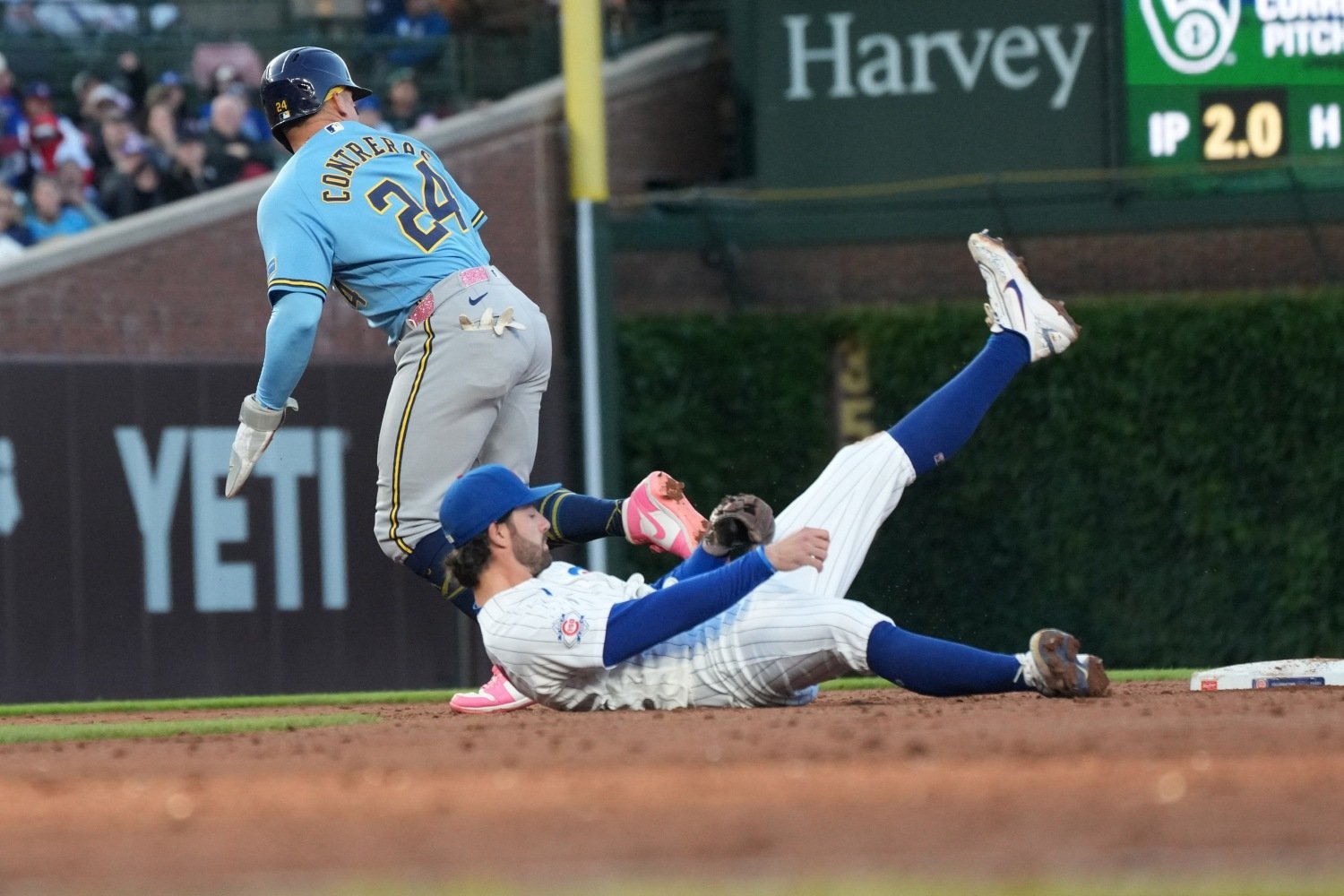 It's just three games. Right? Sure, the Brewers came into town and beat the Cubs in both convincing and ominous fashion. They used three pitchers they acquired over the winter through proactive trades and one guy they've developed into the best pitcher in the world to overmatch an ostensibly high-powered, unquestionably expensive Cubs offense. They got crucial home runs from the second baseman who has blossomed into the superstar Cubs fans have longed for Nico Hoerner to be, and from a scrapheap scoop-up who now seems to be a legitimately above-average first baseman, and from the Cubs' gleefully antagonistic long-time nemesis, Christian Yelich. Sure, Pete Crow-Armstrong made embarrassing mistakes. Alex Bregman, Ian Happ and Seiya Suzuki missed opportunities to turn the tides of two of the three losses. The Brewers clearly have Shota Imanaga's number, and Edward Cabrera left his fourth straight ineffective start with a blister. The Brewers pulled into first place, where they've spent the majority of the past half-decade. But it's just three games. Right? Increasingly, it feels like it's more than that. The Brewers keep resoundingly beating the Cubs when it really matters. They keep frustrating their former manager and proving to be more fundamentally sound and smarter, as well as immensely talented. More importantly, they're never just winning three games. They came to town having won eight of 10 and 13 of 18. They leave town looking like they're back into the groove they found last summer, with 16 wins in 21 games. The Cubs won 20 of 23 at one point this season, of course, but they haven't showed the same capacity for dominance as the Brewers have this year. Chicago has scored 4.9 runs per game and allowed 4.4. Milwaukee has scored 5.0 per game and allowed only 3.4. Were this because Milwaukee was all-in this year, it would be easier to feel ok about it. In reality, though, it's the Cubs who are closer to that end of the spectrum of timeline plans. As we've talked about at length, this team faces the losses of both corner outfielders and several starting pitchers (Jameson Taillon, Matthew Boyd, Imanaga) to free agency this winter. They can spend money to replace those guys, but not without constraints, because they owe a nine-figure sum to a group headlined by Bregman, Crow-Armstrong Hoerner and Dansby Swanson. Justin Steele and Edward Cabrera will be expensive arbitration cases. Michael Busch, Miguel Amaya, Daniel Palencia and Ben Brown will be relatively cheap ones, but they'll get at least $10 million more expensive as a group than they are this year. Bregman, Swanson, and Carson Kelly are likely in the last years of their respective primes. The farm system is not robust. The Cubs need to be good this year; they're very likely to be a bit worse next year and the year after. Meanwhile, the Brewers are a perpetual motion machine. Kyle Harrison became the most salient symbol of that this week at Wrigley Field, but he won't be the most visible one for long. Milwaukee is younger and cheaper than the Cubs, but they're also much deeper, and—this, given the disparity in their payrolls, is the big blow—their stars are better than the Cubs'. On top of all that, with a couple of other top prospects graduating, Milwaukee now has the top overall prospect in baseball, in infielder Jesus Made. They're not necessarily better this year than they were last year, but they're almost certainly going to be better next year than they are right now, and they should even be better the year after that than they are next year. No cavalry is coming for the Cubs. They don't have savior-caliber prospects on either side of the runs ledger, either long-term or short-term. They aren't going to get a front-office overhaul and a creative spark, because Jed Hoyer got an extension to remain the team's president of baseball operations for the balance of the decade. It feels silly to talk about farm systems and long-term concerns around a good team in late May most of the time, but in this case, the long-term concerns are also short-term ones. The Cubs have to win now. Can they do it? Only if they start getting better performances from the guys on the roster, because they have no mechanism by which to add much to the roster this year. That made this week's reminder that the Brewers are better than the Cubs for the eighth full season in a row especially painful. Locking in this core made some sense, but it raised the stakes of the team's efforts to improve its player development. So far, the jury is out on that. Signing Bregman and trading for Cabrera this winter made sense, but it moved forward the team's timeline for geting back to the top of the NL Central at the cost of sustainable excellence. The jury is certainly out on that, too. Signing Hoyer to that extension last summer, meanwhile, remains a head-scratcher. It came at a strange point in the calendar. It seemed to take pressure off a team that needed to embrace the very real pressure it faced. It certainly locked them into the philosophies and capacities of Hoyer, which are not on par with those of some of the top front offices with which Cubs fans hope the team will be fighting for supremacy in the years ahead. It rewarded Hoyer for a job he hadn't actually completed, and still hasn't: reasserting the Cubs' place as the team to beat in the NL Central. Hoyer tried to finish that work over the winter, but this week demonstrated how profoundly he failed. The Cubs can still win the division this year. In a season when no team feels like an unbeatable colossus, they can still dream of a pennant. At the moment, though, it's hard not to feel like the team overcommitted to a bunch of second-tier commodities: a second-tier front office, second-tier big winter moves, and a second-tier homegrown core. Eventually, even in the Second City, the second tier isn't good enough. How the team can get to the first tier from here, though, is hard to say. View the full article
 -
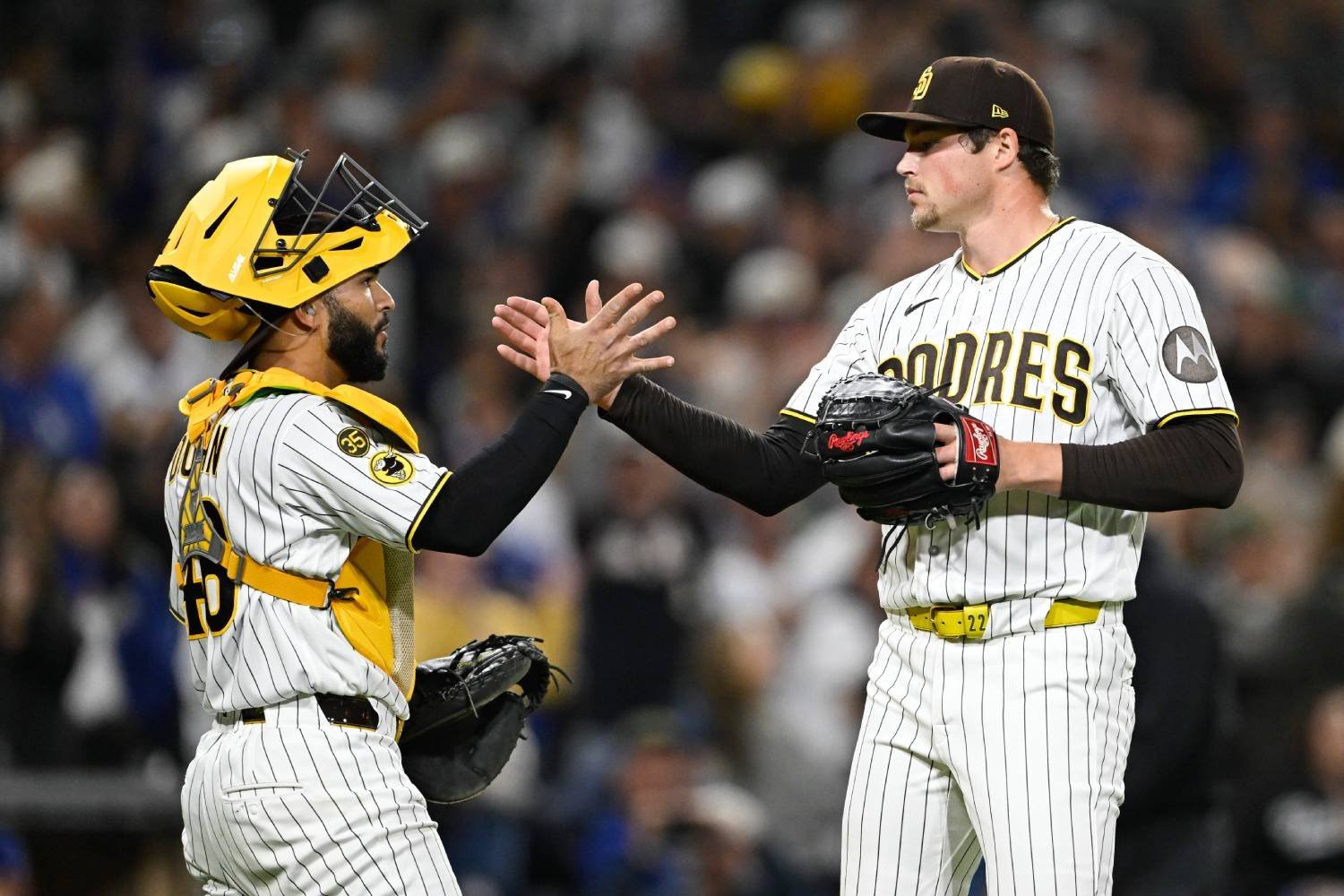 Already sporting a very deep and very versatile bullpen, the San Diego Padres could be looking to strengthen that unit even more. According to a report by Dennis Lin of The Athletic, the Friars are on the lookout to improve the best unit on the team. That could mean strengthening the back end, which already has the best closer in MLB in right-hander Mason Miller. While Miller is coming off his first blown save of the season in a 5-4 loss to the rival Los Angeles Dodgers Tuesday, the only other reliable end-of-game options are right-hander Jason Adam and left-hander Adrian Morejon. There are also some softer spots in the relief corps in right-hander Ron Marinaccio and left-hander Yuki Matsui. Lin mentioned two possible acquisitions: left-handers Aroldis Chapman of the Boston Red Sox and Josh Hader of the Houston Astros. Due to both teams struggling this year, they could be available for cheap, although the Padres' farm system is not very deep in prospects. Entering Thursday, the Padres rank seventh in MLB in innings pitched by relievers at 200⅓ as well as ERA at 3.32. Miller has already had three appearances where he was called upon to get four outs, which is more than he had last year with the A's. In fact, Miller only went more than three outs twice before the Padres acquired him in a blockbuster at the trade deadline. He went more than one inning five times after joining the Padres. Adding to this possibility is the new ownership that is set to be approved by MLB in the next month in Jose E. Feliciano and Kwanza Jones, who could be looking to give president of baseball operations A.J. Preller room to do what he needs to do before the trade deadline. View the full article
 -
 Blue Jays Affiliate Overview (May 19-May 20) Triple-A Buffalo Bisons Series vs Syracuse Mets (New York Mets): 0-2 Season Record: 23-24 Double-A New Hampshire Fisher Cats Series vs Hartford Yard Goats (Colorado Rockies): 1-1 Season Record: 23-16 High-A Vancouver Canadians Series vs Spokane Indians (Colorado Rockies): 1-1 Season Record: 17-24 Single-A Dunedin Blue Jays Series vs Fort Myers Mighty Mussels (Minnesota Twins): 0-1 Season Record: 15-25 FCL Blue Jays Week Record: 0-1 Season Record: 11-2 Triple-A Buffalo Bisons Season Record: 23-24 Series vs Syracuse Mets (New York Mets) May 19: On Tuesday, Buffalo opened a new series, this one with the Syracuse Mets. Grant Rogers was on the mound for the Bisons, and he was looking around for the do-over button from the very start. He threw a cutter that hung in the middle of the plate, and Christian Arroyo took him deep for a solo home run to lead off the bottom of the first. Unfortunately, Syracuse was just getting started in the inning. With two outs and down 1-0, Rogers surrendered two singles and then a triple to Ji Hwan Bae, bringing the lead for the Mets to 3-0. Next, Cristian Pache singled home Bae, and Ben Rortvedt smacked the second home run of the inning off of Rogers, a two-run blast. Buffalo was in a big hole early and tried to fight out of it. In the third inning, Je'Von Ward stayed hot at the plate for Buffalo, launching his third home run in his last four games, a two-run shot to right center. Ward kept the comeback going in the fifth inning, hitting a lead-off double and coming around to score on Josh Kasevich's single. The next batter, Charles McAdoo, would bring Buffalo to within one of Syracuse, with his monster two-run home run, 424 feet to center field. The Bisons wouldn't get the chance to tie the game, though. Devereaux Harrison and Michael Plassmeyer combined to give up three runs in the bottom of the seventh, putting the game out of reach. Buffalo fell 9-5 in a game in which they fought hard to come back from a big deficit early on. May 20: Wednesday's day game had the beginnings of a promising bounce-back contest. Buffalo had Chad Dallas on the mound, who has continued to get better as the season has progressed, and some of their bats have been warming up after early struggles. Dallas would not be the savior Buffalo was hoping for, though; he stumbled often in this game. Across three innings, he coughed up eight hits and five runs, only striking out two. The damage from Syracuse started in the bottom of the first inning. After Dallas allowed a single and a walk, Eric Wagaman singled home the first run of the ballgame. William Simoneit quickly tied the game back up in the top of the second, with a 393-foot solo home run. Dallas was in more trouble in the bottom half of the second inning, hitting his second batter of the game, allowing a single, and then Christian Arroyo knocked in both runners with a single of his own. In the bottom of the third, it was an RBI triple and another RBI single from Arroyo that put two more runs on the scoreboard for Syracuse. Carlos Mendoza singled home a run for Buffalo in the next half inning, and Josh Rivera added a run from a sacrifice fly, as Buffalo pulled back to within one run at 5-4. Unfortunately for Buffalo, the bullpen once again imploded, giving up five runs between the fifth and sixth innings. With Buffalo down big again, they only managed to add on an RBI single by Riley Tirotta and lost the game 10-5. Double-A New Hampshire Season Record: 23-16 Series vs Hartford Yard Goats (Colorado Rockies): May 19: Mason Olson got the start on the mound to begin the series between the New Hampshire Fisher Cats and the Hartford Yard Goats. He went five innings, only allowing four hits and one run. Bryant Betancourt drove in the first run of the game in the fourth inning for Hartford. In the sixth, Eddie Micheletti Jr. launched his seventh home run of the season to tie the game up. A throwing error would give Hartford the lead in the seventh inning, and the score would hold until the ninth. In the bottom of the ninth, Adrian Pinto added to his good game by tying things up at two with an RBI double. In the bottom of the 10th, a bases-loaded walk from Aaron Parker tied the game at three, before Jay Harry walked the game off with an RBI groundout to win the game for New Hampshire, 4-3. May 20: The Wednesday game between Hartford and New Hampshire was a wild one. Hartford took the big lead early and kept adding to the scoreboard, bringing at least one run across the plate in the second, third, fourth, and fifth innings. They scored eight runs and took the commanding lead in the game. Benny Montgomery homered, GJ Hill hit an interesting inside-the-park home run, and Bryant Betancourt homered in that span. In the bottom of the eighth inning, things flipped for New Hampshire. Jay Harry came up to the plate with the bases loaded and crushed a ball over the right field fence for a grand slam. Patrick Winkel added a home run in the inning as well, as the Fisher Cats scored eight in the frame. Quickly though, Hartford put another run on the board, this time with another Montgomery home run. New Hampshire lost this one 10-8. High-A Vancouver Season Record: 17-24 Series vs Spokane Indians (Colorado Rockies) May 19: Spokane ruined another great Johnny King start, who pitched five innings for the second time this season, striking out five batters and only allowing one run. The offense for Vancouver had a solid start as well, with Jacob Sharp hitting his third homer of the season to make it 2-0. Those two runs were the only runs scored for Vancouver, and Holden Wilkerson had his first truly bad appearance, giving up five runs in the seventh inning himself. Carson Pierce also gave up a run that same inning. That led to the loss in the first game of the series against Spokane. May 20: The awesome pitching performances for Vancouver continued with Nolan Perry taking the bump once again. This time, he struck out double-digit batters for the third time this season, and he didn’t allow a run in five innings. Perry has begun to establish himself as the next big Jays pitching prospect. The offense didn’t slack either, as Alexis Hernandez and Dub Gleed carried the way. Hernandez had two homers and three walks, while Gleed had a four-hit night with a double and a homer. The Canadians faced a scare when Carson Myers made his Vancouver debut and struggled, giving up five runs to make it a more competitive game, but Jonathan Todd stopped the bleeding with a save. Single-A Dunedin Season Record: 15-25 Series vs Fort Myers Mighty Mussels (Minnesota Twins) May 19: Postponed May 20: Nathan Lukes finally was able to play on rehab assignment, as the previous game was rained out. Despite finishing with zero at-bats, he was able to walk and hit a sac fly in two plate appearances. Aldo Gaxiola continues to hit, getting the second run of the game with a 100-mph single. This was also the professional debut for Blake Purnell, whom the Jays recently signed out of independent ball. He had a solid start, going five innings and allowing two earned runs while striking out four batters, but unfortunately, he took the loss as a Juan Sanchez error in the fifth led to an unearned run, putting the Jays behind 3-2. The bullpen let the game get out of hand as well, as Jack Eshleman allowed two runs in three innings of work despite striking out six batters, and Lluveres Severino allowed another, making it six runs for the Mighty Mussels. The Jays' offense was able to bring it within two with RBI singles from Raimundo De Los Santos and JoJo Parker, but it was too little too late. FCL Blue Jays Season Record: 11-2 May 19: Tuesday was a big day for a few of the key players on the FCL Blue Jays squad. Carson Messina was on the mound and made easy work of the FCL Phillies. He went three innings and didn't allow a hit, only surrendered one walk, and struck out four batters. On the offensive side, Tim Piasentin launched his first professional home run in the sixth inning and added a double later in the game. Also in the sixth inning, Andres Arias crushed his first home run of the season as well, also in the sixth inning. After tying the game in the ninth on a bases-loaded walk from Arias, the Blue Jays squad couldn't hold on, as they lost the game in the 10th inning; the Phillies scored three, and the Jays could only muster an RBI groundout in their half of extras. The FCL Blue Jays lost this one, 8-6. Transactions 05/20/26 SS Nick Goodwin assigned to Buffalo Bisons from New Hampshire Fisher Cats. 05/20/26 RHP Conor Larkin assigned to Buffalo Bisons from New Hampshire Fisher Cats. 05/20/26 Dunedin Blue Jays activated SS Raimundo De Los Santos from the 7-day injured list. 05/20/26 New Hampshire Fisher Cats activated OF Jace Bohrofen from the 7-day injured list. 05/20/26 New Hampshire Fisher Cats placed RHP Irv Carter on the 7-day injured list. 05/20/26 RHP Kelena Sauer assigned to New Hampshire Fisher Cats from Vancouver Canadians. 05/19/26 Toronto Blue Jays recalled RHP Chase Lee from Buffalo Bisons. 05/19/26 Toronto Blue Jays sent RF Nathan Lukes on a rehab assignment to Dunedin Blue Jays. 05/19/26 RHP Bradley Wilson assigned to Dunedin Blue Jays. 05/19/26 RHP Blake Purnell assigned to Dunedin Blue Jays. 05/19/26 RHP Edgar Gallegos assigned to FCL Blue Jays from Dunedin Blue Jays. 05/19/26 LHP Luis Fonseca assigned to FCL Blue Jays from Dunedin Blue Jays. 05/19/26 New Hampshire Fisher Cats activated RHP Caleb Freeman from the 7-day injured list. 05/19/26 Toronto Blue Jays signed free agent RHP Bradley Wilson to a minor league contract. View the full article
 -
 BLOOMINGTON, Minn.—For weeks, Major League Baseball has been dealing with a crisis no one saw coming. Not gambling. Not robot umpires. Not another pace of play debate. Pants. Specifically, umpire pants. Twice in recent weeks, MLB umpiring crews arrived at Target Field without the proper uniform pants after travel complications delayed equipment shipments. Fans laughed. Broadcasters joked. Social media had a field day wondering how a billion-dollar league could not successfully transport polyester slacks across state lines. But according to an exclusive investigation from Twins Daily, this was no accident. This was sabotage. After weeks of investigative journalism, several ignored emails, and one suspicious meeting near a Caribou Coffee inside Terminal 1, Twins Daily tracked down the MSP Airport employee responsible for the disappearances. Twins Daily granted his request for anonymity because, frankly, he still has TSA clearance and access to conveyor belts. “I regret nothing,” the employee said while wearing reflective airport gear and sipping a Cherry Coke. “People think this is about pants. It’s bigger than that. This is about accountability.” The employee claims his hatred of MLB umpires dates back to Game 2 of the 2009 ALDS. “I’ve held onto this anger for years,” he admitted. “Joe Mauer hit a double. Everybody knows it. You can only suppress rage for so long before you start rerouting luggage.” According to the employee, the operation began modestly. “At first, I would just move the bags slightly farther away from the carousel,” he explained. “Little victories. Tiny inconveniences. But then I saw the umpire equipment cases come through MSP, and I realized destiny was calling.” The employee described a sophisticated process involving baggage rerouting tags, fake maintenance delays, and what he repeatedly called “psychological warfare.” “Do you know how vulnerable an umpire feels without matching pants?” he asked. “You can survive without shin guards for a few innings. But pants? That’s civilization.” The plot thickened when Dan Hayes jokingly posted on social media that there “must be an MSP employee with a sense of humor” behind the missing pants situation. As it turns out, he accidentally uncovered the truth. “When I saw Dan tweet that, I almost retired immediately,” the employee said. “I was pacing around the baggage claim, tearing my hair out and smearing on face paint. I thought the walls were closing in.” Hayes later provided Twins Daily with a brief statement. “I was kidding,” Hayes said. “I did not think there was an actual rogue airport employee launching a one-man campaign against umpire slacks. That feels important to clarify, legally.” Fans remain deeply confused by the entire situation. “I just don’t understand why it’s only the pants,” said one Target Field attendee. “Why not the shirts? Why not the hats? Why are the pants the weak link in MLB logistics?” Another fan had a different theory. “I think somebody at Delta lost a bet,” he said. “There’s no way this naturally happens twice. My luggage can disappear for six days in Orlando, but somehow the only thing MLB loses is umpire pants?” The employee insists the answer is simple. “Because pants send a message,” he said, while dramatically pointing toward a moving walkway. “If I take the shirt, they still look official. If I take the hat, they improvise. But if I take the pants?" He paused. He was smiling, but it made me feel cold inside. "Chaos.” Unnamed MLB sources in New York confirmed the league has become increasingly alarmed. “There have been emergency meetings,” one source said. “Do you know how hard it is to find replacement umpire pants on short notice in Minnesota? We had one intern calling Kohl’s locations at midnight.” Another league source reportedly suggested MLB may begin traveling with “backup emergency pants” stored separately from the main equipment bags. The MSP employee laughed at that proposal. “They think I haven’t considered backups?” he asked. “This is the major leagues. I’m scouting tendencies. I’m watching tape. I know their travel schedules better than they do.” He also hinted that the operation may not be over. “There are other garments,” he said cryptically. “People should keep an eye out for belt-related incidents moving forward. These dorks need special shoes to work the plate! You know how easy a target that makes them?” MLB officials reportedly remain determined to catch whoever is responsible. The employee seemed unconcerned. “They’ll never stop me,” he said confidently. “Not unless Angel Hernandez starts working baggage claim.” View the full article
 -
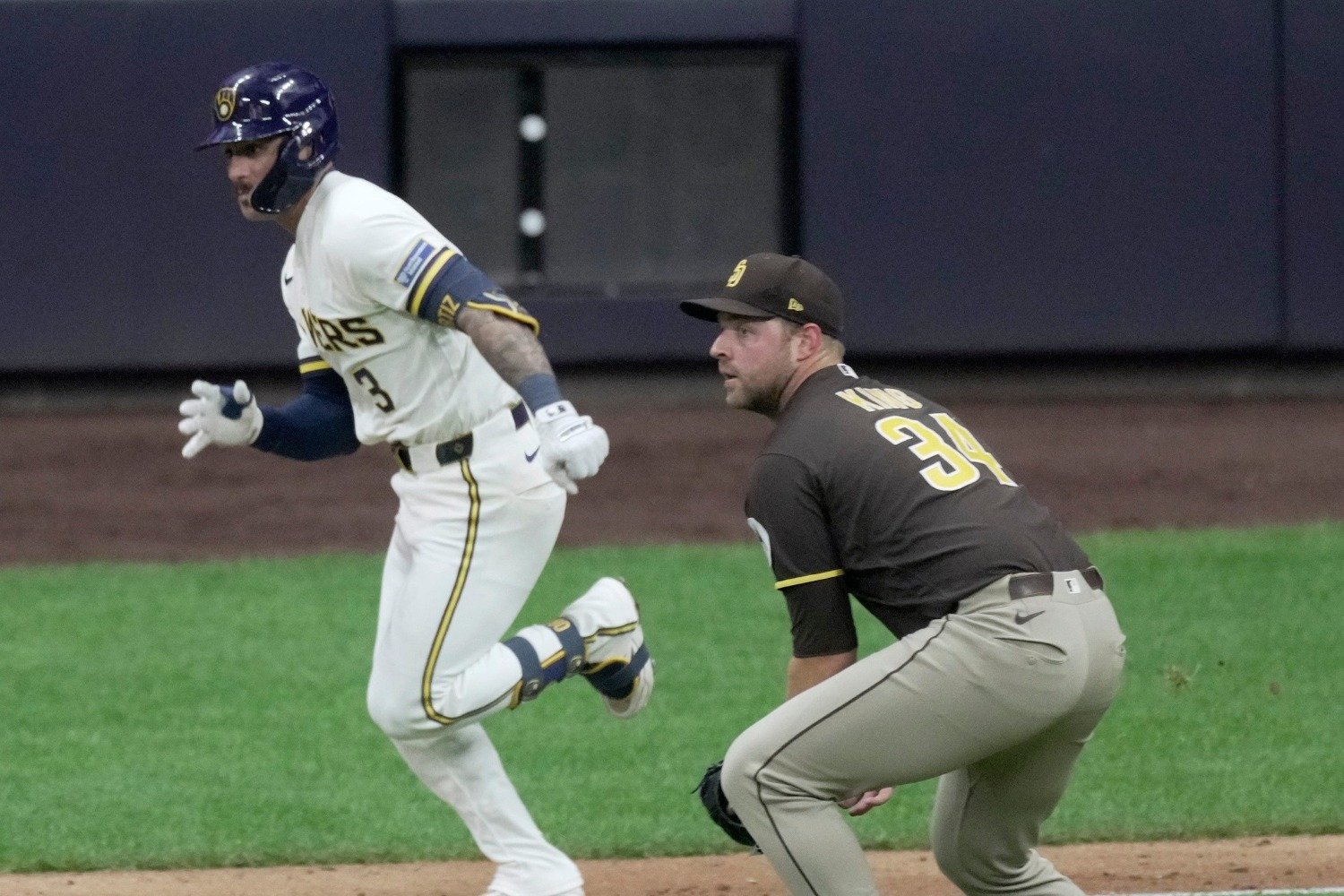 Joey Ortiz still plays defense well enough to justify meaningful innings in Milwaukee’s infield. His hands remain quick, his versatility still carries value, and there are managers who would live for years with a light bat if the glove compensates for it at a premium position. The problem for the Brewers is that Ortiz’s bat is no longer merely light. It's entering an offensive zone where virtually his entire profile depends on flared liners, bloopers, and perfectly-placed ground balls. And in modern baseball, surviving solely on that is like trying to live on pretzels. Pretzels are nice, but as a full diet, they leave much to be desired. Worst of all, perhaps, this isn't new. Ortiz's results have been volatile, but his expected stats—the numbers beneath the numbers—have been persistently brutal for the last year. Here are his actual and expected weighted on-base averages by month for his big-league career. In only one month since the middle of 2024 (last August) has Ortiz put up an expected wOBA above .292; the league average is .316. Since last summer, the Brewers have used him increasingly judiciously. Not since last June has he reached 80 plate appearances in a month, and though he's putting up slightly better numbers this month, that's in only 39 trips to the plate. Ortiz finished April with the worst xwOBA of his career at just .222, surpassing his previous collapse of .224 in August 2024. That pattern matters, because it helps explain something fundamental: Ortiz’s initial collapse did not necessarily begin as a hitter incapable of generating competitive contact. It began as a hitter whose offensive margin became so thin that any combination of mediocre contact, low BABIP, and lack of power ended up sinking his entire offensive line. And over time, that offensive pressure also transformed the quality of his swings. When we dive into the full evolution of his numbers, what emerges is not a conventional slump. There is no single broken indicator explaining the decline. What appears, instead, is the progressive deterioration of nearly every component that supported his offensive production in 2024, the only season in which he truly looked like he had built a stable offensive identity in the major leagues. That year, Ortiz was not an intimidating hitter, but he was a functionally uncomfortable one for opponents. He posted a .159 ISO, a .347 xSLG, hit 16 barrels, and maintained a relatively balanced contact profile. His production did not depend on raw power, but on generating line drives, using the gaps, and creating enough quality contact to force pitchers to respect the strike zone. Today, that aspect has almost completely disappeared. The drop in contact quality is far too consistent to ignore. His average exit velocity fell from 87.8 mph in 2024 to 84.9 in 2025. His Hard-Hit% dropped from 38.4% to 31.7%. His barrel rate fell to just 3.7%, well below league average. And perhaps the statistic that best captures the problem: only three barrels in 82 batted balls this season. That does not describe an unlucky hitter. It describes a hitter whose contact has lost its explosiveness. But there is an even more revealing number, one that probably explains better than any other why the damage disappeared from his offensive game: the collapse of his Sweet Spot%. In 2023, Ortiz placed 40% of his batted balls within the ideal launch-angle window. Even in 2024, he still maintained enough balance in his swing plane to sustain productive rallies and dangerous contact. Today, that number has fallen to just 18.3%. For a hitter with limited power, Sweet Spot% is practically a lifeline. Ortiz does not possess the physical margin to survive while producing mediocre contact. He needs to consistently find the correct angle to be a good hitter. Once that percentage collapses, the entire offensive structure begins falling apart at the same time. That's exactly what his numbers show. In 2024, Ortiz still built healthy offensive at-bats because line drives sat at the center of his profile. He hit .618 on line drives, produced 19 doubles and six triples on that type of contact, and registered an absurd 1.118 slugging percentage whenever he found that swing plane. That was his offense. He did not need to be a 30-home-run hitter, because he created rallies through frequent, clean contact. The problem is that contact has almost completely evaporated. His line-drive rate has fallen from 24% in 2023 to just 13.4% in 2026. And when a hitter with limited natural power stops producing line drives, there is usually not much left behind to sustain the rest of the offensive profile. That explains why his fly balls have turned into harmless outs. In 2024, even though he hit only .150 on fly balls, 10 of his 15 hits on fly balls went for extra bases. There was hidden damage there. Pitchers knew that if the ball carried, there was real danger. Two years later, that threat has disappeared completely. His slugging percentage on fly balls fell from .480 to .230 in 2025 and sits at just .250 this year. His HR/FB% collapsed from 15.5% to 5.9%. The balls that once found the gap or scraped the fence now simply die in the outfield. This is where the metrics become brutal, because the expected numbers do not suggest bad luck. The decline is legitimate. His xwOBA fell from .329 in 2024 to .275 in 2025 and .282 this year. His xSLG dropped from .347 to .279. His xISO cratered to .064. His wOBACON has fallen nearly one hundred points from its peak. There is not much separation between the results and the actual quality of contact. Ortiz is producing exactly the kind of offense his current swings suggest. Perhaps the most revealing detail of the entire transformation appears in the distribution of his contact. At his offensive best, Ortiz used the entire field naturally. There were line drives to the opposite field, firm contact into both gaps, and enough variety to keep defenses uncomfortable. Today, the profile looks far more limited: nearly all of his contact travels toward center field, while his opposite-field usage has dropped to just 12.2%. That does not necessarily describe a hitter who is late on swings, but it does describe one who is less dynamic and far more dependent on simply putting the ball in play. And when that version of the swing also comes with less sweet-spot contact, fewer line drives, and less authority in the air, the result becomes exactly what the numbers show: softer ground balls, harmless fly balls, and far less overall damage. Even so, Milwaukee still finds one small reason not to completely give up on him. The collapse has not come with an explosion in swing-and-miss, and when Ortiz does manage to hit line drives, the production still appears. The real challenge for the Brewers is not recovering elite contact strength, because Joey Ortiz has never been that type of hitter. What they need to recover is the swing that once produced dynamic contact and enough damage to punish mistakes in the strike zone—and make pitchers just a little more uncomfortable. View the full article
