


DiamondCentric
-
Posts
2,631 -
Joined
-
Last visited
Never
Content Type
Profiles
Forums
Events
News
Tutorials & Help
Major League Baseball Videos
Guides & Resources
Store
Downloads
Gallery
Everything posted by DiamondCentric
-
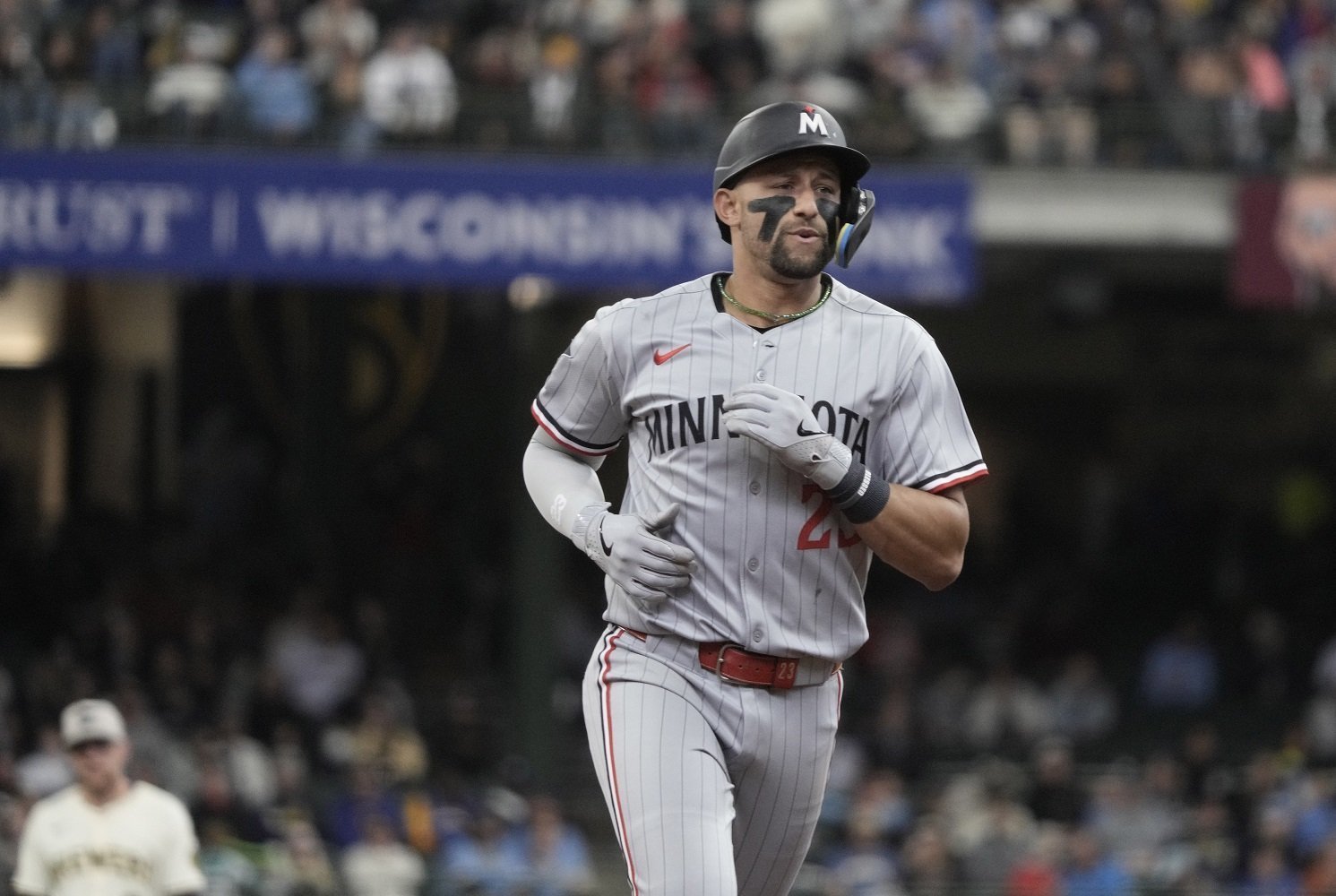 Royce Lewis needs to accept that he’s owed nothing. The Twins have no reason to keep his path back to third base open. Lewis needs to be open-minded about playing other positions. In fact, he should probably pursue that, eagerly. Back in September 2024, Lewis was asked to play second base on occasion. He played there a couple of times. It didn’t go over well. At the time, Lewis questioned why he was playing second base and admitted he was “terrified’ out there. To refresh your memory, here’s a link to Gregg Masterson’s article that provided an overview of why the Twins tried Lewis at the keystone. To be fair to Lewis, it’s unusual to have a player suddenly mix in at another position late in the season. That’s especially true on a team that’s in a playoff race. But what about now? Another thing Lewis said back in 2024 about playing second base was “it's not Spring Training—or Triple A, for that matter.” Well, that’s no longer a sticking point. Now, that's exactly what "it" is. To be clear, there’s no indication that the Twins have approached Lewis about playing other positions yet. He’s played third base in all four of his games back with the Saints. However, both the team and the player should embrace the idea of expanding his positional flexibility. This demotion alone should be a wake-up call for Lewis, but that the Twins have also shifted Brooks Lee into his old position should be extra sobering. Nor is that a temporary thing. Derek Shelton said Lee is playing third base going forward, only making occasional cameos at shortstop. It’s not as if Lee is going to completely block Lewis, as he’s struggled himself, but why not open up other potential paths for Lewis? That’s right, paths, plural. I wouldn’t stop at just second base. Get him in at first base. Heck, put him back in the outfield. Sure, his ACL might explode again at any moment out there, but what’s left to protect? Back in 2024, Lewis was viewed as a potential franchise cornerstone, so it made sense to try to keep him comfortable and attempt to shield him from injury. He doesn’t get that benefit anymore. There are a lot of moving parts in the Twins' infield at the moment, and nobody is a lock. Even Luke Keaschall has struggled to the point where he may eventually join Lewis and Matt Wallner for a St. Paul refresh of his own. The veteran trio of Tristan Gray, Ryan Kreidler and Orlando Arcia have all played well to varying degrees, but they’re all better suited to be reserves than starters. Kealen Culpepper is going to be the Twins' starting shortstop, sooner rather than later. That’s the only thing I feel confident enough to say about the infield right now. In addition to Lee already having been pushed off of shortstop, Culpepper’s arrival will move any of the Gray/Kreidler/Arcia class who are still around to play more second and third base. That’s a crowded infield picture, even before factoring in Lewis. The Twins need to keep their options open. Royce Lewis needs to keep an open mind. Otherwise, the end of this decade-old relationship between player and team might come pretty suddenly. View the full article
 -

Red Sox’s Identity Has Collapsed During Team-Wide Power Outage
DiamondCentric posted an article in Talk Sox
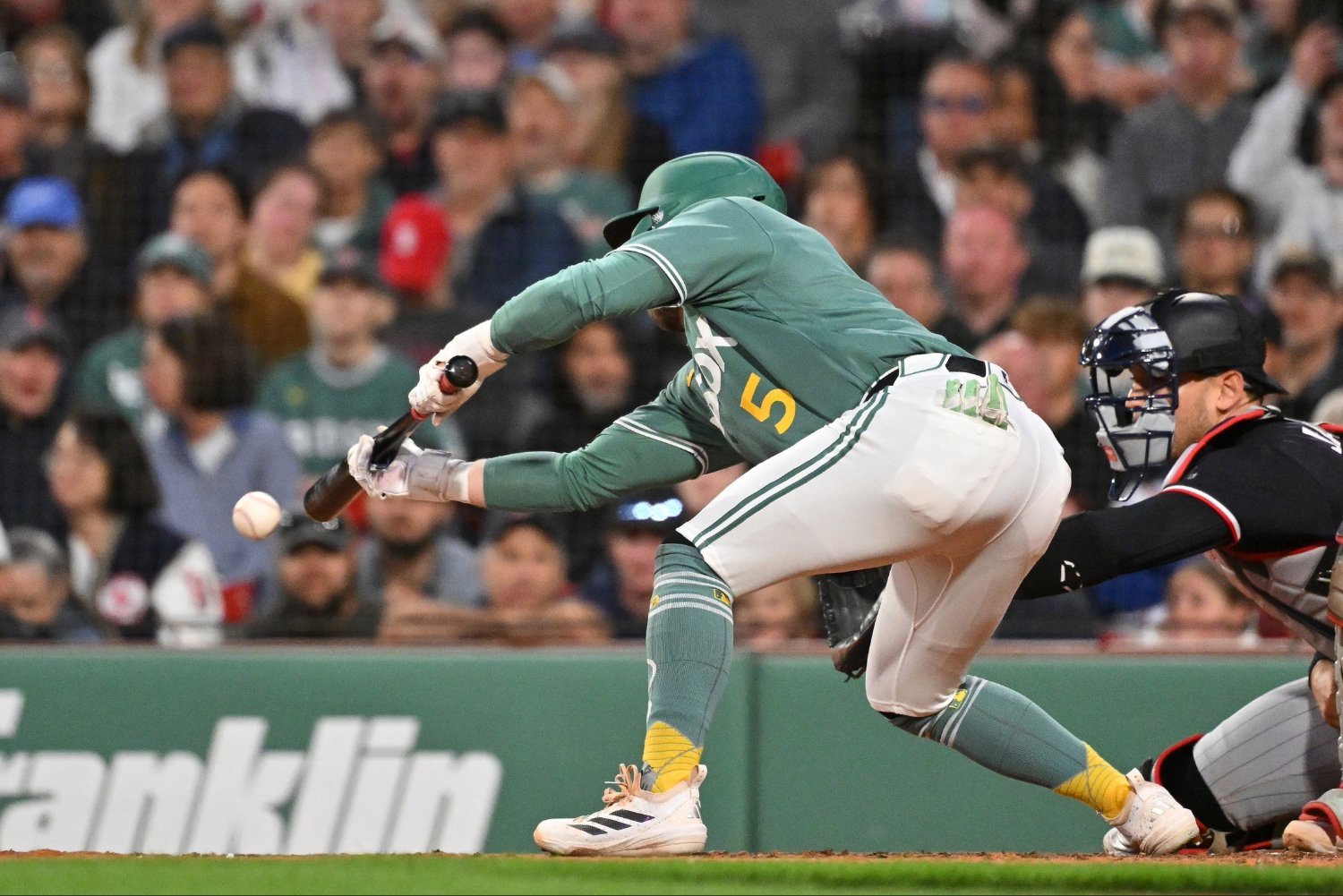 For much of the last two decades, the Boston Red Sox built offenses that punished the smallest mistake. A poorly located fastball at Fenway Park could change a game in seconds. A routine fly ball could turn into a double off the Monster. A seemingly quiet inning could suddenly explode. These 2026 Red Sox are the exact opposite. Through their first 51 games, Boston owns a 22-29 record and ranks near the bottom of MLB in nearly every important offensive category: 29th in runs per game (3.71), 29th in home runs (36), 29th in slugging percentage (.362), and 27th in OPS (.676). The strange part is not simply the statistical decline. The strange part is the type of offense Boston has become: a lineup that still collects hits, but almost never creates real damage. One of the team’s new additions, first baseman Willson Contreras, leads the lineup with 10 of the club’s 36 home runs. That represents 28% of the team’s total power production, the second-highest share in MLB behind Kyle Schwarber, who has hit 20 home runs—32% of the Philadelphia Phillies’ 62 total homers. Boston’s pitching staff has shined in many areas early this season, but the lack of offensive impact and game-changing swings has become one of the defining problems of this Red Sox club. Let’s dig deeper into some of the most pressing issues facing this lineup through the first 50 games of the season. The Worst Lineup in MLB Against Fastballs Modern baseball revolves around a simple truth: elite offenses destroy four-seam fastballs. Boston does not. The Red Sox own MLB’s worst ISO against four-seamers (.118), and that number probably summarizes their entire offensive crisis better than any other metric. Red Sox vs. Four-Seam Fastballs Metric Boston MLB Context AVG .252 Acceptable OBP .357 Good SLG .371 Very poor ISO .118 Worst in MLB HR 8 Extremely low Whiff% 21.10% Near league average Average EV 89.3 mph Barely average Barrel% 8.30% Mediocre Launch Angle 16.8° Too little loft xSLG 0.377 Nearly identical to actual SLG There lies the central contradiction of this offense: Boston is not getting overwhelmed by velocity. They are not striking out excessively. They are not constantly swinging through pitches. They just simply do not do damage. While the New York Yankees, Atlanta Braves, Los Angeles Dodgers, and San Diego Padres turn fastballs into massive slugging production, Boston converts too many heaters into relatively harmless singles. And the most concerning part is that there are not many signs of bad luck. After the departures of Rafael Devers and Alex Bregman, combined with the injuries and inconsistency of Trevor Story, Boston’s power production has collapsed. Even after leaving midway through 2025, no Red Sox hitter has surpassed the .401 OBP, .504 slugging percentage, and .905 OPS that Devers posted over his first 73 games last season. One of Boston’s new acquisitions, Caleb Durbin, is hitting .166/.244/.241/.485 with one home run and 16 RBIs through his first 162 plate appearances. His swing was never expected to generate much power. Durbin’s xSLG sits at .286, well below the current league average (.400). Jarren Duran posted a .727 OPS through his first 50 games last season. This year, he has fallen to .612 through 46 games. Wilyer Abreu has pulled the ball 7.6% less frequently compared to last season. He is striking out less and making more contact against fastballs, but his power output has diminished significantly. The expected slugging numbers for Red Sox hitters almost perfectly mirror their actual slugging percentages. That means the issue is not hard-hit balls finding gloves. The problem runs much deeper: the quality of damage simply does not exist. Boston is producing exactly the kind of contact modern pitchers want to induce: shallow fly balls, line drives without elite authority, manageable air contact, and very few truly destructive swings. Fenway Park No Longer Amplifies Power The strangest transformation of these Red Sox may be showing up in their fly balls. For years, Fenway Park functioned like an extra-base machine. Boston built lineups specifically designed to exploit that environment: pull-heavy swings, loft, and airborne power. In 2026, those fly balls no longer scare anyone. Boston’s Evolution in Air Damage Season SLG en Fly Balls OPS en Fly Balls 2019 .852 1.123 2020 .620 .836 2021 .739 .973 2022 .675 .909 2023 .690 .931 2024 .754 1.003 2025 .679 .903 2026 .546 .756 Boston is still lifting the baseball. The problem is that those fly balls are no longer turning into home runs. And that reveals one of the most fascinating offensive oddities in baseball: the Red Sox still hit reasonably well on fly balls, but they generate dramatically less damage than teams with similar—or even worse—profiles. Boston is generating the worst kind of fly ball in modern baseball: survivable fly balls. Balls hit just hard enough to fall for hits. But not violently enough to change games. That ties directly into the four-seam fastball problem. Modern four-seamers are specifically designed to induce this type of contact: shallow fly balls, routine center-field outs, and “playable” air contact. The Red Sox are falling completely into the trap. The Lineup Lost Its Slugging Transformers Once you examine the individual decline within the lineup, the problem begins to look even more structural. Through the first 50 games of 2025, Alex Bregman, Rafael Devers, and Wilyer Abreu accounted for much of the team’s airborne damage. Together, the trio had combined for 33 home runs. This season, Abreu has just six, while Devers and Bregman are no longer part of the offense. That completely changed the geometry of the lineup. Bregman was almost a perfect Fenway prototype: compact swing, natural loft, and the ability to punish fastballs toward the Monster. Devers brought pure violence against velocity. Abreu complemented the group with legitimate left-handed power. Outside of Contreras’ power production, Boston now looks filled with functional hitters—but very few finishers. Jarren Duran has only six home runs in 202 plate appearances. Ceddanne Rafaela has four in 182 plate appearances. Trevor Story owns a .303 slugging percentage. Roman Anthony has only one homer in 130 plate appearances. Masataka Yoshida has yet to homer in 106 plate appearances. This is a lineup with contact, speed, and some doubles. But very little collective intimidation. And that forces Boston to manufacture runs the hardest way possible: plate discipline and long strings of consecutive hits. In modern baseball, that is an extremely fragile formula. Elite offenses survive because one swing changes entire innings. These Red Sox need long sequences of singles and situational contact to produce what other teams generate with one well-struck fly ball. The Most Concerning Stat: They Don’t Even Punish Mistakes The best offenses destroy middle-middle pitches. Boston no longer does. Red Sox vs. Middle-Middle Pitches Temporada SLG xSLG HR Hard Hit% Barrel% 2022 .645 .671 43 53.8 18.7 2023 .574 .590 33 49.2 14.9 2024 .671 .673 40 55.1 19.8 2025 .616 .641 51 51.4 17.6 2026 .462 .550 5 41.7 6.9 That may be the most alarming signal in the entire offense. Boston still makes contact: a .308 batting average, just a 7.2% whiff rate, and only 14 strikeouts in 213 plate appearances. But the damage vanished. The barrel rate has fallen from nearly 20% in 2024 to just 6.9%. The hard-hit rate dropped more than 13 points. And the five home runs against middle-middle pitches are an absurdly low total—the worst in baseball—for a franchise historically built around punishing mistakes. MLB Comparison: Contact vs. Damage (Bottom 10 teams in slugging vs. middle-middle pitches) Equipo AVG SLG HR Hard Hit% Barrel% BOS .308 .462 5 41.7 6.9 SD .308 .626 12 55.8 18.3 MIN .319 .569 9 51.6 14.1 BAL .320 .558 10 53.1 15.9 SF .321 .591 8 54.7 16.4 Among the league’s weakest slugging teams against middle-middle pitches, Boston produces contact. The other teams produce destruction. And that completely changes how pitchers can attack them. When a lineup stops punishing fastballs and middle-middle mistakes, pitchers no longer feel pressure to escape toward sliders or changeups. They can live aggressively in the strike zone. They can attack up in the zone. They can throw early-count fastballs without fear of serious consequences. And perhaps that leads to the most uncomfortable question for Boston: is this just a slump—or a new offensive identity? Because many offensive crises usually hide signs of recovery. A high xSLG. Plenty of hard contact without results. A lineup full of hitters underperforming their expected numbers. But these Red Sox do not show many signs of an imminent rebound. Their expected metrics almost always validate the real results. The problem does not appear circumstantial. As many suspected, it looks structural. Boston still has useful players. It has speed. It has discipline. It has contact. It even has a pitching staff capable of keeping them competitive most nights. But it lost something that defined the great offenses of Fenway Park for years: the ability to create fear. And in today’s MLB, that changes everything. When opponents no longer fear the fastball in the zone, the entire game tilts toward the pitcher. Counts change. Aggression changes. The way teams attack the lineup changes. The Red Sox no longer dictate at-bats. Now they react to them. Maybe Boston finds adjustments. Perhaps Roman Anthony eventually develops the power that still appears latent. Maybe Trevor Story recaptures some of his impact. Maybe more airborne damage arrives during the summer. But through 50 plus games, the evidence points toward an uncomfortable reality: The Red Sox no longer hit like a dangerous offense. View the full article
 -
The Blue Jays' Bullpen's Success Comes at a Much-Needed Time
DiamondCentric posted an article in Jays Centre
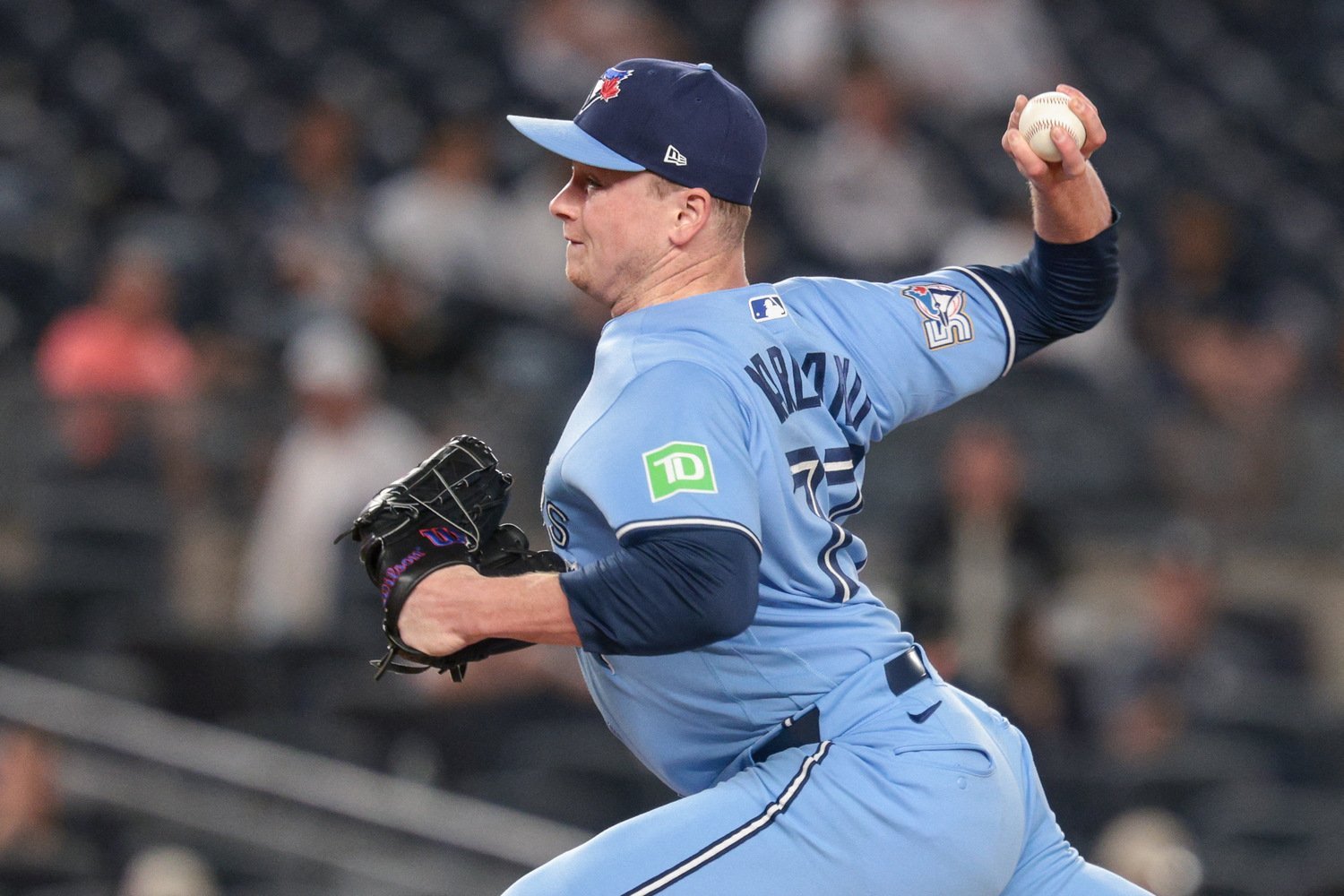 The Toronto Blue Jays have been in a Dr. Jekyll and Mr. Hyde situation this season. Half of the bullpen has been outstanding; that's the good side, a.k.a. Dr. Jekyll. The other half has been atrocious; that's the dark side, a.k.a. Mr. Hyde. Below are the relievers channeling their evil Mr. Hyde alter ego: Player Innings ERA Roster Status Brendon Little 3 2/3 24.55 Optioned to Triple A Josh Fleming 3 12.00 DFA'd and re-signed. In Triple A Jeff Hoffman 10 2/3 7.59 (through April 21) Moved to a setup role Eric Lauer 36 6.69 DFA'd and traded Yariel Rodríguez 4 1/3 10.38 Added to the 26-man roster on May 11 Chase Lee 3 1/3 8.10 Added to the 26-man roster on May 19 Mason Fluharty 18 2/3 4.82 Made the Opening Day roster Since being removed from the official closer role, Hoffman has reduced his ERA to 5.09. This success is due to pitching nine shutout outings in his last 13. Even in the four games in which he surrendered a run, it was only one. He also earned two saves last week, his first in over a month. He struck out five of the six batters he faced in those two outings. The first save came the day after Louis Varland pitched two days in a row, and the second save came the day after Varland threw two innings. So Hoffman hasn't fully gotten back in the good graces of manager John Schneider, but it's a start. Thankfully, it's not all doom and gloom. There is a good side to the bullpen: the Dr. Jekylls. Varland has been stellar all season, and since taking over the ninth inning, he has converted all five of his save opportunities. Here are the other relievers who are sporting their Dr. Jekyll alter egos: Player Innings ERA Roster Status Louis Varland 27 2/3 0.65 Took over the closer role Tyler Rogers 23 1/3 1.54 Made the Opening Day roster Braydon Fisher 29 2/3 2.73 Made the Opening Day roster Tommy Nance 21 3.86 Made the Opening Day roster. On IL since May 16 Joe Mantiply 17 2/3 2.04 Added to the 26-man roster on April 5. On IL since May 17 Spencer Miles 29 2.17 Made the Opening Day roster Austin Voth 2 2/3 3.38 DFA'd and re-signed. In Triple A Adam Macko 3 1/3 0.00 Added to the 26-man roster on May 17 Tommy Nance (May 17) and Joe Mantiply (May 19) have joined the long list of pitchers on the injury list. However, the bullpen's success has been much-needed, as the relievers have had to fill a rotation spot due to the plethora of starting pitcher injuries. José Berríos, Max Scherzer, Shane Bieber, Bowden Francis, and Cody Ponce have been on the injured list for most of the year. These were all players who could have played key roles this season. Ponce is out for the season after suffering an ACL injury in his first outing this season, and Scherzer made five starts before going on the injured list with forearm tendinitis and ankle inflammation. Berríos, Bieber, and Francis have all been out since the start of the season. Bieber started a rehab assignment on May 24. The Blue Jays will ease the righty back into form, and his return may come in late June. Berríos and Francis will both miss the entire season after undergoing Tommy John surgery. The good news is that Toronto's first two bullpen games (with Miles filling a bulk relief role) went well. The Jays held the Detroit Tigers to seven hits and one run on May 16, striking out 14. Then they limited the New York Yankees to three hits in a shutout on May 21, striking out another 14. Yet, it seems that when things are going well, something bad comes along. The latest bad news is that Dylan Cease is now on the injured list after suffering a hamstring injury on May 24. Schneider has already been playing chess with all his moving pieces, and now the Blue Jays are once again trying to figure out how to fill an empty rotation spot. The team could let Miles properly join the rotation, given his recent success. He threw eight scoreless innings between the bullpen games on May 16 and 21. Then they could turn the other available rotation spot into a bullpen game. The Blue Jays would need to find someone who can go three or four innings since Miles would be unavailable, and that's likely Rodríguez. This injury crisis has been one of the worst situations that I can remember. Let's see how the Blue Jays adjust. Stats updated prior to games on May 25. View the full article
 -
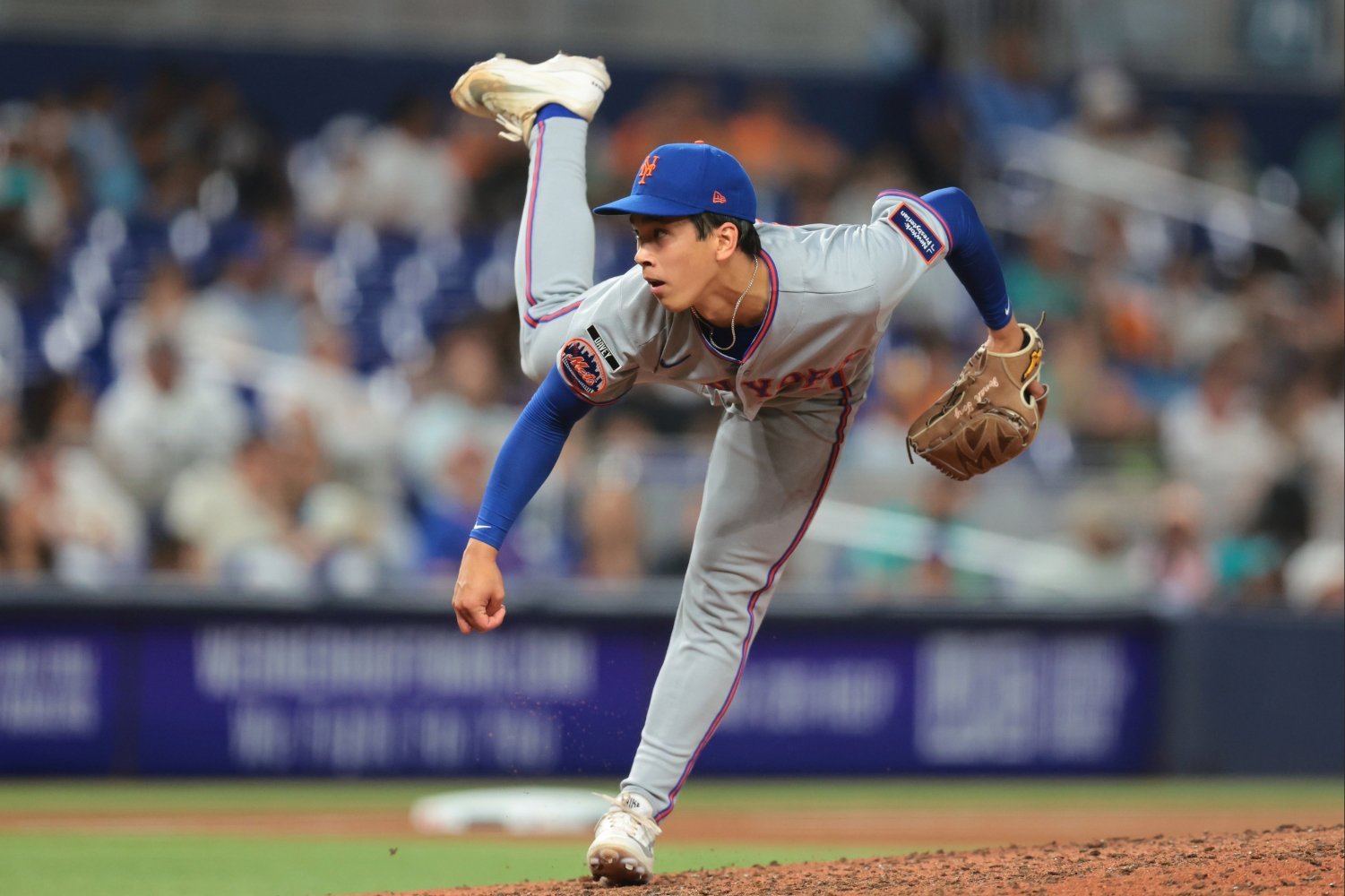 Jonah Tong is one of the league’s brightest young stars, and the New York Mets have decided to call the 22-year-old up to the big leagues for the second time in as many seasons. Let’s break down his background, arsenal, strengths and what he needs to do to remain a major league hurler this time around. Jonah Tong’s Background Jonah Tong is the second-ranked prospect in the Mets’ system, behind recently called-up contact speedster in A.J. Ewing. The hard-throwing righty is 6-foot-1, 180 pounds and was a seventh-round draft pick back in 2022. Tong proactively got himself some scouting looks by moving to the Georgia Premier Academy and MLB Draft league the year he got his name called. After a couple of years climbing the Mets’ farm system, he earned 2025 MLB Pipeline Pitching Prospect of the Year honors after pacing MiLB in earned run average and strikeouts while tossing north of 100 innings between Double-A Binghamton and Triple-A Syracuse. Tong's Arsenal What is the 22-year-old working with? He leads the way with a lively, 70-grade fastball. The primary offering has continued to collect steam, riding in the 94-97 mph range in 2025. His second-best option is a changeup that he changed to a vulcan grip, where he straddles the horseshoe part of the laces on the ball. This allows him to get more lateral movement to the arm-side and gives the ball more of a sinking motion. This is something that had a whiff rate of north of 50% in the minor leagues. He also sports a curveball and slider to round out what is a four-pitch mix for the time being. Strengths Tong’s strength is his velocity and ability to manipulate the baseball to get ahead in counts. Splitting the fastball and changeup off of each other gave hitting prospects a world of trouble, and he was able to use his above-average extension of 6.8 feet to speed things up on batters even more. This is someone who uses a combination of deception and count leverage to mow his way through the opposing team’s lineup. Overall, in a day and age where velocity and arm-side ride is key, Tong has the raw skillset to be a successful starter in the Big Apple for years to come. Weaknesses While Tong has the intangibles to be a promising arm at the biggest stage, there are still a couple of aspects to iron out. After all, this is somebody who got rung up for a 7.71 earned run average and had a .312 opposing batting average over 18.2 innings of work with the team last year. What led to the rough baptism by fire? Tong’s mechanics lend to some reason for concern towards a repeatable, consistent motion. This could lead to wavering command, above-average walks and more hard-hit balls than he can afford. The over-reliance on his heater also led to some issues. In his 2026 Mets debut, he threw that four-seamer 61% of the time. Between the fastball and the changeup, he used his top two options 86% of the time. That’s how someone becomes predictable and may start to profile as more of a reliever if the ratio doesn’t change. Outlook What does Tong’s outlook look like? I think, considering he has a 52-degree arm angle, which is really steep, the more he develops his curveball, the better. When a pitcher has a steeper, more up-and-down arm angle, it’s easier to get vertical drop on breaking pitches. Not only would using his full arsenal make Tong more predictable, but I think there’s a real chance for his curve to develop into an out pitch. In fact, I think that could serve as the key to making him a starter. View the full article
 -
 Transaction: The Brewers will post as a formal move once the 23-year-old independent league signing is assigned to an affiliate - As Schaum's B-Ref page shows, he pitched at Division III Carthage College (Kenosha, WI). Carthage Player Page The Lake County Corn Dogs, a pre-professional team, count Schaum as an alumnus and congratulated him on signing with Milwaukee Final: ACL Brewers 6, ACL Royals 1 Box Score and Game Log Three pitchers combined on a three-hitter for the A-Crew. After being a stalwart of the 2024 Carolina Mudcats staff (21 appearances, all starts), January 2022 international signing Daniel Corniel (Venezuela) made all of one three-inning relief appearance for the 2025 Timber Rattlers before landing on the full-season injured list. This was Corniel's second 2026 appearance since undergoing Tommy John surgery, each a 1-2-3 single inning effort, with the first on the 19th of this month. This was also appearance #2 for veteran RHP Gerson Garabito, signed by the Brewers as a minor league free agent with a big-league invite last Christmas. He underwent surgery for a broken bone in his foot in February. Fantastic bulk relief outing in his 4th appearance for 19-year-old RHP Ma'Kale Holden, the 20th round pick out of an Alabama high school ($410,000 bonus to forgo the University of Alabama), and Holden's game log will show that he's managed to work around 13 free passes (12 BB, 1 HBP) nicely through 17.2 IP thus far. Maryvale scored thrice in the 4th to grab the lead and effectively win the game at that point. Luis Pena is still in Arizona, and he had an infield single to begin things in the frame. After the KC infield botched a fielder's choice grounder and a Kenny Fenelon stolen base placed runners on 2nd and 3rd with no outs, things turned shaky when both Cristopher Acosta and CJ Hughes struck out. Three consecutive Brewers then drew walks to plate two runs. 19-year-old LF Engel Paulino lined a single to left (no Statcast readings for this game) to make the score 3-0. In the 5th, Pena lined a one-out triple to center field (a man among boys at this level, folks). After Fenelon's fly out failed to go deep enough to score Pena, the KC staff assisted again by bringing Pena home on a wild pitch. Another gift was received in the 6th when a passed ball set up Jonathan Rangel for an RBI line drive single. Paulino, who signed for a modest $170,000 in January 2024, capped a fine evening with his first HR of 2026 (3rd career blast) in the 9th. He now sports a .740 OPS as a pro in 108 games. Catcher Luis Corobo has started 11 games between Wilson and now-Maryvale and has been charged with eight errors. His fielding page will show that this was less of an issue in 2025. Right fielder Alexander Frias' precautionary absence (reported as a rolled ankle) continued on Monday. The Maryvale boys, now 7-10, host the rival Cubs at 8:00 PM Central Tuesday. The Cublets have struggled to a 5-12 mark thus far. If you wish, take the timeline of words above and match them up with the score tracker in the lower right best you can, as this game was "televised". And yes, we can at least tell you the Luis Pena 5th inning triple takes place at the 01:45:30 hour/minute mark (you're welcome!). The center fielder initially took a step in, but it would have been over his head regardless, it appears. The full-season affiliates all begin new series Tuesday, and look at that, no kid-friendly matinees. Guess it's getting closer to final exam season, plus not a lot of field trips scheduled the day after a holiday. Enjoy your day, everyone, thanks for stopping by. Organizational Scoreboard including starting pitcher info, game times, MiLB TV links, and box scores Current Milwaukee Brewers Organization Batting Stats and Depth Current Milwaukee Brewers Organization Pitching Stats and Depth View the full article
 -
Twins Minor League Report (5/25): Don't Give Up on Brad Rudis!
DiamondCentric posted an article in Twins Daily
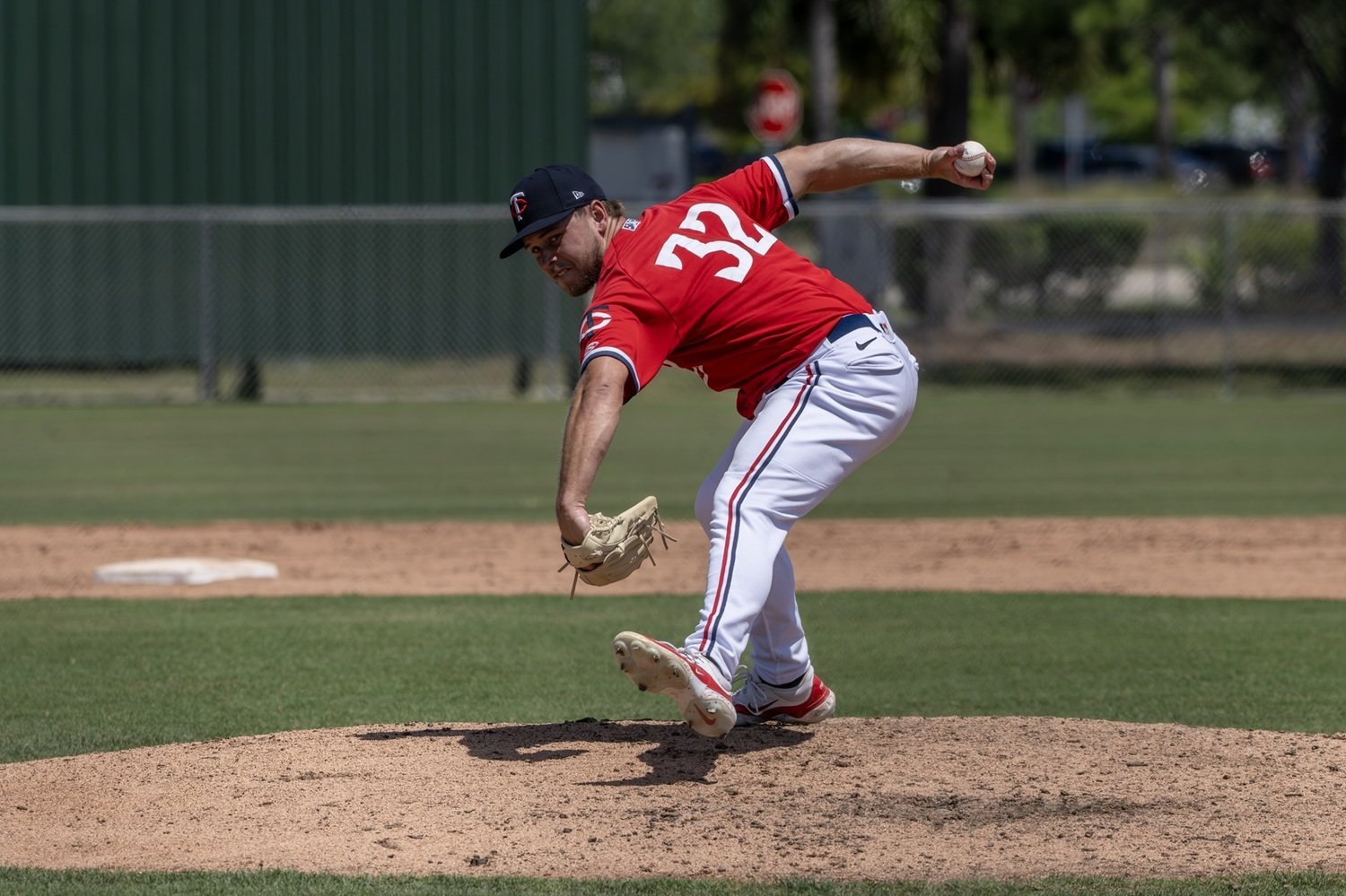 As you know, the minor league schedule for full-season affiliates contains six-game series. The games are played Tuesday through Sunday. However, when there is a holiday on a Monday, such as Memorial Day (and sometimes the Fourth of July and Labor Day), some teams choose to alter that schedule to give fans a game to go to on a holiday day off. On Monday, the Wichita Wind Surge played a game. And since the FCL Twins (almost) always play on Monday, we have two games to write about. And several transactions were announced. So, I decided to write up a minor league report for Monday. Just to give you a little information, I decided to look at each of the five affiliates and noted the 10 youngest players at each level. Obviously, rosters change fairly frequently, so this is just a moment in time, but I think it’s important to look at. Why? In part, prospect ranking can be based on Age-to-Level-of-Competition. There’s a reason that you can’t look at what a 21-year-old Walker Jenkins is producing in Triple-A St. Paul and compare his future ability to a 26-year-old Garrett Spain, who is playing really well at Double-A Wichita. Now this is where I always have to remind people that the game of baseball is far too difficult to predict than to assume that there is anything that we can assume about a player’s future. Sure, a “top prospect,” especially one who got a nice signing bonus, will get more opportunities than non-drafted free agents, signings from independent leagues, late-round draft picks and senior signs. Mitch Garver was a ninth-round pick in 2013 after four years at the University of New Mexico. He was older than the average player throughout his minor-league career until he reached Triple-A Rochester. He made his debut at the end of the 2017 season at the age of 26. Too old to be a prospect, right? OK, maybe that’s true. Garver is still in the big leagues, 10 seasons later. He’s won a Silver Slugger Award and a World Series. Would he have been better if he had been pushed more quickly up the minor leagues? There’s no way to know that answer. The fact that he wasn’t drafted after his junior season might tell part of the story. (even though he posted an OPS well over 1.000 that year) Garver has also talked often, at least earlier in this career, about how he needed to do a ton of work defensively. He put in that work. And he’s had a very nice career. He has been “worth” 8.4 bWAR. If you look at the 39 players taken in the first round of that 2013 draft, only nine players have more bWAR. Brian Dozier was the Twins eighth round pick in 2009 out of the University of Southern Mississippi. He was a four-year guy who actually missed much of his 2009 senior season injured. Like Garver, Dozier was older than league average most of his minor-league career. He made his debut early in the 2012 season, less than three years after being drafted. He was 24 when he got called up, just days before his 25th birthday. Again, that’s “too old” for a prospect according to some. He got sent down late in the season and didn’t get a September call up. He came to spring training in 2013 and was a fixture in the Twins lineup until he was traded in 2018. He played in nine major-league seasons. He played in an All-Star game. He won a Gold Glove award. He received MVP votes over three seasons. His 42 home runs in 2016 were the most in MLB history by a second baseman. In his career, he accumulated 24.3 bWAR. Of 48 first-round and supplemental first-round picks, only Mike Trout (89.7), Zack Wheeler (42.5), and Stephen Strasburg (32.3) have accumulated more. Four more players drafted in the top eight rounds have accumulated more bWAR including fellow eighth round pick Paul Goldschmidt (64.7). One more for you; Trevor Hildenberger pitched for five years at the University of California before the Twins made him their 22nd round pick in 2014, a round that no longer exists in baseball’s draft. Development isn’t linear. It wasn’t until late in his college career that he was asked to pitch as a unique sidewinder, a move that ultimately gave him an opportunity. When he was called up to debut for the Twins in 2017, he was closer to 2017. That season, he posted a 3.21 ERA and had 44 strikeouts to just six walks in 42 big-league innings. He became one of Paul Molitor’s most reliable relief options. In 2018, he pitched in 73 games. By 2019, he was missing a lot of time due to arm issues. He spent a little time with the Mets in 2021. While his time in the big leagues was shorter than the first two examples, he was a huge part of the Twins bullpen for nearly two years. Ryan Fitzgerald debuted at 31. Michael Helman was 28. Caleb Thielbar’s story alone could be a great example for Age-to-Level-of-Competition, or being drafted, or signing from independent leagues, twice. Summary: Don’t give up on Brad Rudis!! TRANSACTIONS Before Saturday afternoon’s game, the Twins activated RHP Taj Bradley. Part of the transaction included removing Luis Garcia from the 40-man roster (and 26-man roster too). He cleared waivers and on Monday selected free agency. Before Monday afternoon’s game, Tristan Gray returned to the Twins from the paternity list. Gabriel Gonzalez was optioned back to St. Paul. If you missed it, Gonzalez played in just one game. On Friday night, he started in left field and went 1-for-2 with two walks. Dan Altavilla was released by the Twins on Monday. The 33-year-old signed a minor-league contract with the Twins early in the offseason. He recorded some big outs out of the bullpen for Team Italy in the World Baseball Classic. He was showing a fastball at 96-97 and looked like he’d find his way to the Twins at some point. Instead, in 18 games and 19 2/3 innings, he posted a 7.32 ERA and a 2.03 WHIP. Opponents hit .312/.430/.506 (.937), and he walked 16 batters. Utilityman Henry Kusiak was moved from St. Paul back to Fort Myers. The Kernels placed RHP Nolan Santos on the 7-Day Injured List with a right scapula injury. RHP Hendry Chivilli returned to the FCL Twins after spending the weekend with the Mussels. RHP Matt Barr began a rehab assignment with the FCL Twins. The 20-year-old was the Twins fifth-round pick in 2025 out of SUNY-Niagara CC in New York. SAINTS SENTINEL St. Paul, Louisville The Saints travel to Louisville to take on the Reds’ Triple-A affiliate. Who are the 10 youngest players on the current Saints roster? Walker Jenkins (2/19/05) - 21 years old. Gabriel Gonzalez (1/4/04) - 22 years old. Hendry Mendez (11/7/03) Alejandro Hidalgo (5/22/03) - 23 years old. Emmanuel Rodriguez (2/28/03) Ryan Gallagher (1/19/03) Kaelen Culpepper (12/29/02) Marco Raya (8/7/02) John Klein (4/22/02) - 24 years old. Ty Langenberg (12/8/01) WIND SURGE WISDOM Wichita, Springfield Springfield took the early lead, but Wichita surged ahead in the middle innings. Through five innings, the Wind Surge held a 6-3 lead. Then the Cardinals scored eight runs over the final three innings. Wichita got on the scoreboard in the top of the third when Maddux Houghton led off the inning with his third homer of the season. Down 3-1 through three innings, the Wind Surge went back to work in the top of the fourth. With one out, Andrew Cossetti and Caleb Roberts both walked. With two outs, Murphy Stehly singled to drive in Cossetti. Then Roberts scored on a single by Houghton to tie the game at 3-3. With one out in the top of the fifth, Garrett Spain singled and stole second base, his 10th steal of the season. He scored on a Billy Amick single to left. Cossetti walked, and then after a pitch change, Roberts walked to load the bases. Amick scored on a sacrifice fly by Poncho Ruize, and then Murphy Stehly singled to drive in Cossetti and make it 6-3. Jose Olivares started and gave up three runs on four hits and four walks in 2 2/3 innings. Preston Johnson gave up two runs on three hits and a walk over 2 2/3 innings. Spencer Bengard gave up three runs on three hits and a walk in 1 2/3 innings. Jacob Wosinski gave up three runs (2 earned) on two hits and two walks in one inning. Houghton went 2-for-4 with his third homer. Kyle DeBarge went 2-for-5 with his seventh double. He also stole his 13th base. Roberts was 1-for-2 with two walks. Stehly was 2-for-4. Who are the 10 youngest players on the current Wind Surge roster? Kyle DeBarge (7/14/03) - 22 years old Miguel Briceno (7/6/03) Eli Jones (6/17/03) Jose Salas (4/26/03) - 23 years old Jose Olivares (1/18/03) Jaime Ferrer (12/27/02) Billy Amick (11/4/02) Harry Genth (9/3/02) Kala’i Rosario (7/2/02) Spencer Bengard (4/19/02) - 24 years old KERNELS CHRONICLE Cedar Rapids, Quad Cities Khadim Diaw was named to the MLB Pipeline Prospect Team of the Week. Who are the 10 youngest players on the current Kernels roster? Eduardo Tait (8/27/06) - 19 years old Dasan Hill (12/25/05) - 20 years old Charlee Soto (8/31/05) Adrian Bohorquez (3/3/05) - 21 years old Brandon Winokur (12/16/04) Yasser Mercedes (11/16/04) Michael Carpenter (7/28/04) Jacob McCombs (7/7/04) Riley Quick (4/29/04) - 22 years old Marek Houston (4/14/04) MIGHTY MATTERS Ft. Myers, Jupiter Who are the 10 youngest players on the current Mighty Mussels roster? Bruin Agbayani (3/26/07) - 19 years old Ramiro Dominguez (3/26/07) Quentin Young (3/2/07) Murphy Hernandez (12/12/06) Luis Fragoza (10/26/06) Eduardo Beltre (10/10/06) Ramiro Villanueva (5/14/06) - 20 years old Jayson Bass (4/29/06) Carlos Silva (3/1/06) Irvin Nunez (2/21/06) COMPLEX CHRONICLE FCL Twins 2, FCL Pirates 11 Box Score On Saturday, the FCL Twins scored 19 runs and had double-digit hits and walks. On Monday morning, the Twins had just two runs on two hits. Matt Barr was a very exciting draft prospect last year. Unfortunately, he started this season on the Mussels 60-Game Injured List with a fractured right elbow (ouch!). It was a successful first outing (and pro debut) for Barr. “Successful” meaning came out of it healthy. Barr walked the first batter he faced and he stole second base. Barr then recorded three groundouts to end the inning. A run scored on the second groundout. The Twins started well with two runs scored in the bottom of the first inning. Yovanny led off by reaching on an error. Miguel Caraballo and Teilon Serrano walked to load the bases. When Daniel Pena walked, Duran scored with the game-tying run. With one out, Daiber De Los Santos flew out to center field, deep enough to score Caraballo from third with the second run. Matt DesMarets came on and gave up three runs (2 earned) on two hits and a walk in two innings. He struck out two batters. Brad Rudis gave up one run on two hits, a hit batter, and a walk over his two innings. Next to the mound was Nick McAuliffe. He was charged with five runs, but just one of them were earned. He gave up five hits and had two strikeouts. Pablo Castillo gave up one run on two hits and a walk. Danny Almanzar went 1-for-2 with a walk. Joyner Perez had the other hit, his second double of the season. Who are the 10 youngest players on the current FCL Twins roster? Miguel Caraballo (8/26/08) - 17 years old Geremy Villoria (8/14/08) Santiago Castellanos (7/17/08) Santiago Leon (6/25/08) Joyner Perez (6/19/08) Carlos Taveras (5/31/08) Teilon Serrano (5/22/08) - 17 years old Haritzon Castillo (3/23/08) - 18 years old Jose Barrios (1/21/08) Yovanny Duran (11/3/07) PLAYERS OF THE DAY Hitter of the Day Maddux Houghton (Wichita): 2-for-4, HR(3), R, 2 RBI, K Pitcher of the Day Matt Barr (FCL Twins): 1 IP, 0 H, 1 ER, BB, 0 K. PROSPECT SUMMARY Check out the Prospect Tracker for much more on our Twins Top 20 prospects after seeing how they did today. #20 - 2B/SS/CF Kyle DeBarge (Wichita) - 2-for-5, 2B(7), K (batted first, played 2B). UPCOMING PROBABLES Tuesday, May 26: St. Paul @ Louisville (5:35 pm CT) - RHP John Klein (1-1, 6.10 ERA) Wichita @ Springfield (6:35 pm CT) - RHP Eli Jones (0-1, 3.65 ERA) Quad Cities @ Cedar Rapids (6:35 pm CT) - RHP Michael Ross (3-2, 5.70 ERA) Jupiter @ Ft. Myers (6:05 pm CT) - TBD FCL Twins @ FCL Orioles (11:00 am CT) - TBD CURRENT W-L Records Minnesota Twins: 26-28 St. Paul Saints: 25-25 Wichita Wind Surge: 21-24 Cedar Rapids Kernels: 23-22 Fort Myers Mighty Mussels: 24-21 FCL Twins: 9-8 DSL Twins: 0-0 (season begins Monday, June 1) Please feel free to ask questions about the teams, the rosters, and discuss today’s games, or anything else Twins minor-league related! View the full article
 -
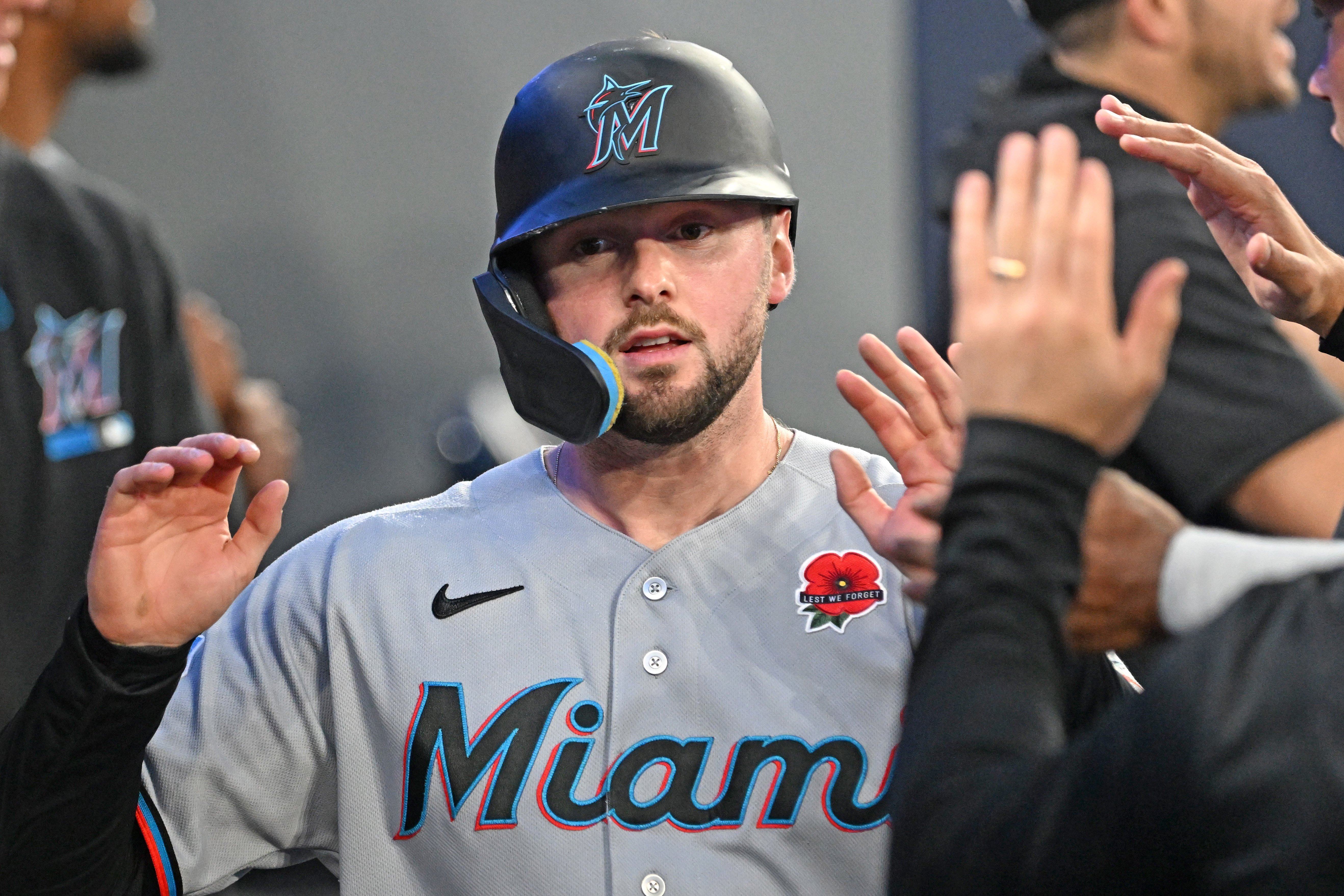 The first of three games between the Miami Marlins and the Toronto Blue Jays looked lopsided on paper in favor of the reigning American League champions, with young star right-hander Trey Yesavage taking the mound. However, fresh off a sweep of the New York Mets, Clayton McCullough's club came in with plenty of confidence. Yesavage surrendered a season-high five runs, which would be more than enough as the Marlins defeated the Blue Jays, 8-2, extending their win streak to a season-best four games. "it was tough, but big to get one early and give (Janson) Junk a run to work with," McCullough said postgame. "Then we just put together some good at-bats there...We just did some little things very well when given some opportunities to put a crooked number up." Miami's offense wasted no time getting to Yesavage. Xavier Edwards led the game off with a double, he advanced to third after Liam Hicks grounded out and Otto Lopez drove him in on a sac fly, making it 1-0 in the top of the first inning. Owen Caissie, a native of Ontario, Canada, laced an RBI double in the top of the fifth inning to drive in Javier Sanoja from second to extend the lead. Caissie capped off the night for Miami in the top of the eighth with an RBI single off lefty Adam Macko. Monday's game marked Caissie's third multi-hit game of the season and his eighth multi-RBI game. Through his previous 11 games, Caissie was slashing .296/.345/.538/.883 with two home runs and seven RBI. His season slash line is now .221/.279/.374/.653 with four home runs, 26 RBI and an 81 wRC+. "He's hung in there, and he's making some adjustments," McCullough said. "He's getting himself again. I think some better pitches to go after, and we're getting the performance to follow how much better his approach has been." The main issue for Caissie continues to be strikeouts, now at a 41.5 K%. Going into Monday, Caissie's strikeout rate was the highest in baseball (min. 140 PA). Kyle Stowers, who went hitless this past weekend against the Mets, had a multi-hit day, driving in two runs in the top of the sixth inning. It was an extremely lucky hit, as Blue Jays left fielder Yohendrick Pinango and shortstop Andres Gimenez were not able to decide who would make the catch. Stowers in the top of the eighth drove in another run on an RBI double. Javier Sanoja was the third Marlins hitter who had a multi-hit game. Since the beginning of the series against the Tampa Bay Rays (5/15), but not including Monday, he has a .983 OPS. In the top of the sixth, he hit a double off Yesavage that Piñango wasn't able to track down, allowing Stowers and Jakob Marsee to score. Junk had struggled in his last two starts against two of baseball's best offenses. He bounced back against a mediocre Blue Jays lineup that did not have Vladimir Guerrero Jr. He went five innings of one-run ball with three strikeouts, but allowed eight hits. The lone run he allowed came in the bottom of the fifth inning when Piñango drove in Lenyn Sosa on an RBI single, making it 2-1. Although the final line may indicate that Junk was good, there was certainly some luck involved. The defense behind Junk saved him a couple times. He surrendered six hard-hit balls and had an xFIP of 4.38. Junk put at least one bas runner on in four of the five innings that he pitched. "Today he was able to just reset himself and just go make the best pitch that he can," McCullough said. "Jansen is a good pitcher, and he's got a lot of moxie. Hung in there and did it when he needed to do it the most...Some of the luck has gone against him a little bit and I think today he's in those jams, but he buckled down, made pitches and got some huge outs to only give up the one run through five." With the win, the Marlins are now 26-29 on the season and will have Sandy Alcantara on the mound Tuesday night at 7:07 pm. The Blue Jays have yet to announce a starter for that game, but it does seem as if they will be going with a bullpen game. View the full article
 -
 Chicago Cubs Minor League Report - May 25 Affiliate Overview Triple-A Iowa Cubs Series vs. Memphis Redbirds (St. Louis Cardinals): Tied, 3-3 Season Record: 21–29 Double-A Knoxville Smokies Series vs. Montgomery Biscuits (Tampa Bay Rays): Biscuits win, 4-1 Season Record: 22–22 High-A South Bend Cubs Series at West Michigan Whitecaps (Detroit Tigers): Cubs win, 5-1 Season Record: 25–16 Single-A Myrtle Beach Pelicans Series at Kannapolis Cannon Ballers (Chicago White Sox): Cannon Ballers win, 6-0 Season Record: 18–25 Affiliate Highlights Triple-A: Iowa Cubs Season Record: 21–29 Series Opponent: Memphis Redbirds (30–21) Series Standing: Tied, 3-3 May 25: The Iowa Cubs won their second-straight contest to earn a series split vs. the Memphis Redbirds, winning Sunday’s contest 18-4. The 18 runs marked a season high for the Cubs. The Redbirds took a 3-0 lead after their first trip to the plate but the Iowa offense exploded for nine runs in the second. Brett Bateman’s (2-for-3) sacrifice fly started the scoring and Jonathan Long (1-for-6) tied the game two batters later with a two-run single. BJ Murray (1-for-4) gave the Cubs the lead with an RBI-single of his own and Owen Miller (3-for-5) followed with an RBI-double. Ben Cowles (3-for-4) capped the frame in style, slugging a grand slam, his third homer of the year, to make it 9-3. Chas McCormick (2-for-4) got the I-Cubs into double digits with a solo blast in the fifth. The Iowa offense put up another crooked number in the eighth, this time scoring eight runs. Justin Dean (2-for-5) and Miller tallied RBI-singles, while McCormick and Cowles notched RBI-doubles. Bateman would draw a bases-loaded walk to collect another RBI and Dean’s second hit and RBI of the inning would make it 18-3. Memphis would tack on one more in the ninth with the game well out of reach. Ryan Jensen picked up the win in relief to improve to 2-2 on the season. Jensen tossed two scoreless frames, allowing no hits and striking out one. He was one of three Cubs relievers to post scoreless outings of more than one inning. On the offensive side, all nine starters recorded at least one hit while six batters tallied multi-hit efforts. Double-A: Knoxville Smokies Season Record: 22–22 Series Opponent: Montgomery Biscuits (24–20) Series Standing: Lose, 4-1 May 25: The Knoxville Smokies dropped their series finale to the Montgomery Biscuits on Sunday, 7-3. The Biscuits would take the lead in the contest with three runs in the second and make it a 5-0 game with two more in the fourth. The Smokies would get on the board in the fifth through Arial Armas’ (1-for-3) RBI-double and would make it a 5-3 ballgame in the seventh through an RBI-single from Karson Simas (1-for-3) and an RBI-groundout from Armas. Montgomery would put the game away, however, with two runs in the eighth and would hold off Knoxville to earn the 7-3 win. Dawson Netz got the start for the Smokies and took the loss, falling to 2-1 on the season. Netz allowed three runs on three hits over 1 1/3 innings of work, striking out three to go along with one walk. Jace Beck tossed two shutout innings in relief, allowing one hit and whiffing four. Beck has not allowed an earned run in his last 13 innings of work, spanning five outings. He has amassed 20 strikeouts compared to just five walks. High-A: South Bend Cubs Season Record: 25–16 Series Opponent: West Michigan Whitecaps (14–31) Series Standing: Win, 5-1 May 25: The South Bend Cubs extended their winning streak to five games with a 5-4 victory over the West Michigan Whitecaps on Sunday. Cole Mathis (1-for-5) gave the Cubs the lead in their first trip to the plate with a two-run single. Cameron Sisneros (1-for-4) made it a 3-0 ballgame with an RBI-double in the fifth. Koen Moreno got the start for South Bend and posted four scoreless innings, allowing just one hit and striking out four to go along with one walk. The Whitecaps would score all four of their runs in the game in the seventh to take a late lead but the Cubs were able to rally with two runs in the eighth to go back in front. Christian Olivo (2-for-4) plated both of those runs with a single and Eli Jerzembeck was able to toss two shutout innings to close the game to give South Bend the win and earn his first save of the season. Single-A: Myrtle Beach Pelicans Season Record: 18–25 Series Opponent: Kannapolis Cannon Ballers (24–21) Series Standing: Lose, 6-0 May 25: The Myrtle Beach Pelicans were blanked, and swept, by the Kannapolis Cannon Ballers, falling 5-0 on Sunday at Atrium Health Ballpark. The Pelicans have now lost eight-straight games. The Cannon Ballers plated a run in both the first and second innings and would then tack on another in the fourth to make it 3-0. Kannapolis would then add two more in the sixth and coast to a 5-0 win. The Pelican offense was held to just five hits on the day, with Jairo Diaz (2-for-2) posting the only multi-hit effort. Mason McGwire started and took the loss for Myrtle Beach, falling to 2-2 on the season. McGwire allowed three runs on five hits over four innings of work, striking out seven and walking one. Edwardo Melendez tossed two shutout innings in relief, allowing one hit, whiffing four and walking two. View the full article
 -
 Boston Red Sox Minor League Snapshot Triple-A Worcester Red Sox Series vs. Rochester Red Wings (Washington Nationals): 0-5 Season Record: 23-25 Worcester’s game was postponed due to inclement weather in the area. No makeup information has yet been provided. Double-A Portland Sea Dogs Series vs. Reading Fightin Phils (Philadelphia Phillies): 5-1 Season Record: 22-22 The Sea Dogs fought back to .500 on a walk-off single from Johanfran Garcia. Gage Ziehl started the game for Portland and turned in four and ⅔ frames of so-so work. He allowed two runs to score on three hits, and allowed four baserunners via walk. He did strike out four, however, before he turned the ball over to Patrick Halligan. Halligan took the next three and ⅓ innings and was superb. He allowed one hit and two walks as he matched Ziehl’s strikeout total of four. With the game tied, Cooper Adams got the ball to start the ninth inning. After preventing Reading from scoring in the ninth he took the tenth as well. In total he allowed three hits and one run on a triple in the top of the tenth. He struck out two and was good enough to earn the win in Sunday’s contest. Three players collected multi-hit games on Sunday, including Garcia, Franklin Arias, and Ronald Rosario. It was Rosario who got the offense started in the second inning. Portland struck first on his second home run of the year, a solo blast. Tyler McDonough added to the lead in the fourth inning, scoring Rosario on a triple to right field. The offense then went quiet, allowing Reading to tie the game. Down one run with one out and a man on in the tenth inning, who stepped to the plate but Arias. After knocking two balls out of the park in Saturday's game, Arias took it upon himself to tie Sunday’s game in an important spot. He shot a ball to right field, scoring McDonough as he rounded second and reached third safely on his first triple of the year. With the game all tied up, Garcia stepped up to the plate with two men on. On the first pitch of the at-bat, he looped a soft hit into center field as Will Turner slid into home safely, winning the game for Portland. High-A Greenville Drive Series @ Frederick Keys (Baltimore Orioles): 1-3 Season Record: 16-26 The Drive’s recent struggles continued to pile up as they dropped both games of a doubleheader on Sunday afternoon. Kyson Witherspoon put together a solid appearance as he continues to try and find his rhythm in professional ball. Across four and ⅓ innings he gave up one run and two hits, allowing two walks. He punched out six as he kept the Keys largely in check. The game unravelled, however, when Witherspoon turned the ball over to Osvaldo Berrios. Berrios let up two runs on three hits during his one and ⅓ innings of work. He got the loss as he allowed Frederick to eke out the victory. Led by Adonys Guzman and Isaiah Jackson, each of whom had two hits, the Drive’s offense fell just short on Sunday as they failed to capitalize in clutch moments. They went 1-for-9 with runners in scoring position and left nine runners on base. Jackson struck first for the Drive, clobbering his sixth homer of the year as he snagged a one-run lead for Greenville. After the Keys scored three unanswered runs, Gerardo Rodriguez singled in the seventh as the Drive attempted to push the game to extras. Rodriguez drove in Guzman, but the Drive failed to make it happen as they dropped the first game of the afternoon. In the second game of the afternoon, the Drive fell by one run yet again. This time around, Alex Bouchard got the start for Greenville. He spun a solid appearance, allowing two runs on one hit and a walk. He did punch out five batters as he gave the offense room to play. However, that offensive flexibility was stifled by Brandon Neely’s relief appearance. Neely’s season has been less than ideal, he entered Sunday’s game sporting a 15.30 ERA. Through two innings, he allowed four runs (two unearned) on three hits, striking out four. It was enough to lower his ERA to 14.25, but it wasn’t enough to avoid getting the loss. In ⅓ of an inning of relief, Calvin Bickerstaff let up one more hit, but the Keys won in extras on a walk-off single. The Drive’s offense put up similar numbers in the second game of the afternoon. Yophery Rodriguez and Yoeilin Cespedes had two hits each, and Cespedes had two RBIs. He got started in the first inning, launching his ninth homer of the year in the first inning. Yophery Rodriguez reached on fielder’s choice in the sixth, scoring Cespedes and Justin Gonzales as Greenville took a one-run lead. Cespedes kept up his momentum with an RBI single in the eight, driving in Gonzales once more. Mason White tacked on another run with a single later in the inning as Cespedes rounded home. The offense failed to score in extras as the Keys scored three unanswered runs as they walked off both games of the doubleheader. Low-A Salem RidgeYaks Series @ Hill City Howlers (Cleveland Guardians): 3-3 Season Record: 10-25 Salem cruised to an easy eight-run win in the series finale, splitting the series. Cole Tolbert gave the offense plenty of leeway with his performance over four innings. He punched out four while only allowing three hits and a run. He lowered his ERA to 2.08 over three appearances thus far. Jacob Mayers earned his first win of the season for his relief performance on Sunday afternoon. Mayers allowed one run and walked four, but kept the Howlers offense in check as he struck out two, leaving his ERA at 2.45. He turned the ball over to Griffin Kilander in the eighth. Kilander closed the game strong over one and ⅔ innings, allowing just one hit and sitting down two on strikes as he shut the door and sealed the series split. The offense was also rolling on Sunday, as evidenced by the eight-run victory. Stanley Tucker and Avinson Pinto led the way with two runs apiece. Luke Heyman drove in Ilan Fernandez to put the RidgeYaks on the board in the third inning. It was a monster of an inning for Salem, as more offense ensued. Starlyn Nunez scored on a balk before Pinto doubled, driving in Skylar King. Frederik Jimenez followed this up with a line drive single that was deflected off of the second baseman, scoring Pinto. Then, Tucker smashed his third homer of the season, capping off a seven-run inning as he drove in Jimenez. Jimenez then struck again in the eighth inning, scoring Andruw Musett on a sac fly. Later in the inning, Tucker collected his third RBI of the day with a single that drove in Pinto. Nunez then brought Tucker home on a single to center field, giving Salem its tenth and final run of the day. It was reported Monday evening that Salem's Enddy Azocar and Luke Heyman had been promoted to High-A Greenville following the weekend's action. View the full article
 -
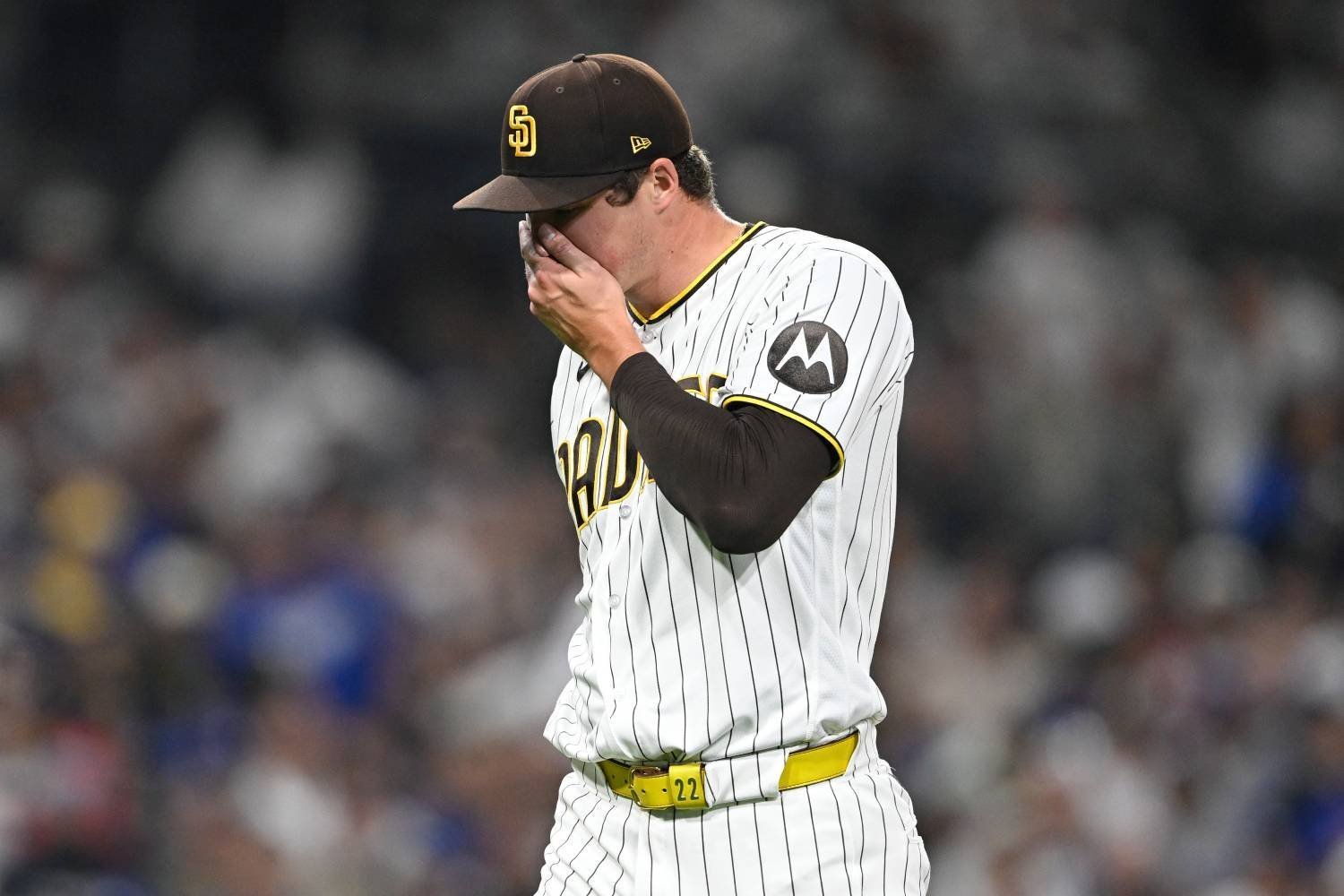 San Diego Padres Weekly Snapshot Record last week: 3-3 Runs scored last week: 16 Runs allowed last week: 17 Standings Scores Game 47 (Monday): Padres 1, Dodgers 0 Game 48 (Tuesday): Dodgers 5, Padres 4 Game 49 (Wednesday): Dodgers 4, Padres 0 Off Game 50 (Friday): Padres 7, A's 3 Game 51 (Saturday): Padres 2, A's 0 Game 52 (Sunday): A's 5, Padres 2 Week in Review and Highlights Dodgers series Game 1: Catchers often don't get enough credit for helping pitchers navigate their way through a game, but when the pitcher and the manager make a point of singling out the catcher postgame, you know he did some heavy lifting. That was the case for backup catcher Rodolfo Duran, who not only threw out two basestealers, but helped right-handed starter Michael King make his way through seven shutout innings as the Padres opened a three-game series against the rival Los Angeles Dodgers with a 1-0 triumph. The win moved the Padres half a game ahead of the Dodgers in the NL West. King said he didn't have his best stuff, but relied on Duran to help him stifle the potent Dodgers lineup to just four hits, while striking out nine and walking two. Duran's defense helped King face the minimum through 5⅔ innings. It also helped to be working with a lead. The notoriously slow-starting Padres got a first-inning bolt from the surging Miguel Anduar, who took Dodgers ace right-hander Yoshinobu Yamamoto deep with one out in the first inning. It was Andujar's fourth homer this year and that would stand up to be the game's lone run as the Friars managed just three more hits and the Dodgers finished with five. And as with any 1-0 game, there has to be some late-inning drama, only this came from an unexpected source. The normally nails Mason Miller, having one of the most dominant seasons by a reliever in MLB history, walked the first two hitters he faced in the ninth as Freddie Freeman and Kyle Tucker reached on a combined nine pitches. Miller's command eluded him on the first pitch to Will Smith, making it nine balls in 10 pitches. But thanks to Duran challenging a called ball and getting it flipped to a strike, Miller snapped back into The Reaper and his final 12 pitches of the game were strikes, which included one strikeout. That made Miller 15-for-15 in save opportunities. His 15 saves lead MLB. Game 2: After a back-and-forth game, this one came down to the ninth inning with Miller on the mound. Only this time, Miller glitched. The only good thing is that it wasn't a pitching miscue. Miller's two-base error on a pickoff attempt set up a go-ahead sacrifice fly as the Padres fell to the Dodgers 5-4 as the NL West lead flipped back to L.A. With one out, Max Muncy drew a walk, with an ABS challenge flipping a strike three call to ball four. Alex Call pinch-ran for Muncy. With an 0-1 count to Andy Pages, Miller had Call easily picked off at first, but his throw was off the mark and unable to be snared by Gold Glove first baseman Ty France and went down along the right-field wall in foul territory. Call easily made it to third base on Miller's first career error. Pages dueled Miller for nine pitches, including fouling off four of five pitches before lofting a fly ball to right field. Tatis made the catch an unleashed a bullet toward home that was cut off by second baseman Sung-Mun Song, who threw a strike home, but Call made it under Freddy Fermin's tag to score the go-ahead run. It was Miller's first blown save of the season. Before that, the two NL West rivals traded punches like the heavyweights they are. Freeman hit a two-run homer in the top of the first for a quick 2-0 Dodgers lead, then Machado countered with a two-run blast of his own, his seventh of the year, in the bottom of the first to tie it. In the third, Tatis reached on an infield single that needed a replay review to reverse an out call, then Andujar extended his hitting streak to eight games by homering for the second game in a row for a 4-2 Friars advantage. The Dodgers chipped away with runs in the fifth and sixth, including Freeman's second homer of the game and sixth of the season, to make it 4-4. Padres right-hander Griffin Canning, in his fourth start since returning from an Achilles injury, matched his season high with five innings, giving up three runs on four hits and a walk with five strikeouts. While right-hander Jeremiah Estrada gave up Freeman's second homer, right-hander Bradgley Rodriguez and left-hander Adrian Morejon kept the Dodgers quiet, handing the ball to Miller in a tie game. After the decisive sacrifice fly, manager Craig Stammen pulled Miller following 22 pitches in favor of right-hander Ron Marinaccio. It was just the second time in 22 appearances this year that Miller didn't finish a game. The other came when Miller pitched the ninth inning of a 1-1 game April 9 vs. the Colorado Rockies that the Friars won in 12 innings on Xander Bogaerts' walk-off grand slam. Game 3: Even with an offense that isn't firing on all cylinders, sometimes you just need to tip your cap to the opposing pitching. Facing Shohei Ohtani the pitcher for the first time at Petco Park since he became a Dodger at Petco Park, the Padres managed a couple threats, but couldn't put anything on the board in a 4-0 loss. The right-handed starter allowed just three hits over five shutout innings, walking a pair and striking out four while lowering his ERA to an immaculate 0.73. The Padres did put up threats vs. Ohtani in the fourth and fifth innings. After Ohtani retired the first nine Friars and facing a 2-0 deficit, Tatis led off the fourth with a walk and was swapped out when Andujar hit a grounder to get the force out at second. Gavin Sheets, last week's NL Player of the Week, singled to left for the first hit off Ohtani, but Machado popped out to third and Bogaerts flew out to center. The next inning, now down 3-0, Bryce Johnson, who replaced an injured Jackson Merrill in center field, and Nick Castellanos singled to put runners on the corners. Ramon Laureano hit a comeback to Ohtani, who looked Johnson back at third and fired to second to get Castellanos, with Laureano reaching, then stealing second. Fermin drew a full-count walk to bring up Tatis, but the superstar's struggles continued as he hit into a first-pitch 6-4-3 double play, with Ohtani showing some rare emotion as he came off the mound. There was one more scoring opportunity for the Padres, which came in the eighth. Facing right-handed reliever Kyle Hurt, Laureano had a leadoff single and Tatis hit a slow roller to third base that Max Muncy should have eaten but he lost the grip as he threw and it bounced toward where the second baseman plays and into short right, allowing Laureano to go to third. But the hot-hitting Andujar watched his eight-game hitting streak come to an end as he bounced into a double play himself to end the inning. The Dodgers' bullpen was fantastic again, extending its scoreless streak to 28 innings. Padres right-handed starter Randy Vasquez wan't as sharp as he has been recently. Ohtani drilled the first pitch of the game out to center, just out of the reach of Merrill, who jumped against the wall. That was the play in which Merrill sustained his back injury. More testing was being done to see if Merrill would miss any time. A's series Game 1: The Padres' ability to mash doesn't always manifest itself, but when it does, it usually comes in bunches. Machado, Castellanos and Laureano all went deep as the Padres took care of the A's 7-3. In fact, those were the first three hits of the game recorded by the Padres, the first time that had happened since 2022. Machado hit a game-tying two-run blast in the first inning, his eighth of the season, Castellanos launched an equalizing solo shot in the fifth inning for his fourth of the year and Laureano put the Padres on top with his solo homer in the seventh, his sixth, for 4-3 lead. The Friars put together a rally in the eighth with four straight singles, including Sheets' two-run hit and then a Bogaerts sacrifice fly to make it 7-3. Padres right-handed starter Walker Buehler wasn't great by any means, but battled his way through five innings. He walked four and allowed five hits and three runs, striking out four. Rodriguez could only get two outs in the sixth after two singles and a walk loaded the bases, but Morejon continued his excellent stretch by getting the next four outs, including three strikeouts. Adam had a scoreless eighth and Jeremiah Estrada pitched the ninth after the Padres eliminated the save opportunity with their three-run eighth. Game 2: How do you win a game when you muster a mere two hits? It helps when you draw eight walks. That was the winning combination for the Padres, who came away with a 2-0 victory over the A's. All you have to know is that A's right-handed starter J.T. Ginn, who lost a no-hitter in the ninth inning of his start Monday vs. the Los Angeles Angels and then lost the game, didn't allow a hit to the Padres on Saturday. Only this time, Ginn only got one out in the third inning before the bullpen was called. That is because Ginn issued six walks and struck out four in his 73 pitches. The Padres drew three walks in the second inning, then Tatis got hit by a pitch with one out to drive in a run. Andujar hit into a double play to end the threat. In the third inning, Castellanos drew a one-out walk that ended Ginn's day. A scuffling Merrill, back in the lineup after missing Friday's game with a back issue, then lined a double to right for the Friars' first hit, with Castellanos trucking home to make it 2-0. Padres right-handed starter Lucas Giolito was not immune to handing out free passes. In his second start with the team, Giolito walked five, but at least he lasted five innings. He also allowed four hits, including two in the opening inning. But the A's weren't able to dent Giolito thanks to three double plays behind him. France, the reigning AL Gold Glove first baseman, turned a pair of unassisted twin killings and started and finished a 3-6-3 double play. The latter of those helped Giolito escape a bases-loaded situation. The bullpen was nails again as the top four relievers, Estrada, Morejon, Adam and Miller, allowed one hit and a walk while striking out five over the final four innings. Adam had three K's and Miller, facing his old team for the first time since last year's trade, fanned a pair in earning his NL-leading 16th save in as many chances. Game 3: The Padres had a chance to finally notch their first sweep of the month, but it was not to be. Even with a ninth-inning rally, the Padres couldn't overcome a shaky start by right-hander Michael King in dropping a 5-2 decision. Coming off three strong starts, including Monday vs. the Dodgers, King lasted just 3⅔ innings on five hits and four walks with four strikeouts. It was the fourth time this year King walked a season-high four. Perhaps his poor performance was due to giving up a homer to the first batter of the game, Carlos Cortes, on an 0-2 pitch. He gave up two more in the second inning and another in the fourth after a double, two walks and a wild pitch. His third walk of the inning forced a call to the bullpen. The Padres, however, were unable to do much against A's left-hander Jacob Lopez, who followed right-handed opener Luis Medina, who got four outs. Lopez chewed up 4⅔ innings, allowing a run on six hits and a walk with three strikeouts. That sixth-inning run came as Andujar hit his 12th double, Sheets grounded out and Machado a one-out sacrifice fly. France used his bat to make a difference in this game, hitting his fifth homer, a solo shot, to pulled the Friars within 4-2. The Padres put together a threat in the ninth. Now trailing 5-2, Merrill and Laureano drew leadoff walks before France struck out. Castellanos came on to pinch-hit and faced former Friars right-hander Scott Barlow, who had just entered the game, but Castellanos struck out. Tatis had the final shot to keep the rally going, but he flew out to medium right field to end the game. Marinaccio came up huge for the bullpen, following King by pitching three scoreless innings, allowing just a hit and a walk with two strikeouts. Now the Padres continue their nine-game homestand by facing the Philadelphia Phillies for the final three games before hitting the road. Marvelous Mason Miller Some of the amazing stats for the Padres' closer: Season stats: 1-1, 0.76 ERA, 23 games, 16 saves (16 chances), 23⅔ IP, 10 H, 3 R, 2 ER, 9 BB, 47 K, .125 opponent batting average His 16 saves are second in MLB behind Cade Smith of the Cleveland Guardians (17). Of the 71 outs Miller has recorded this year, 47 have come via strikeouts (66.2%). Has not allowed an extra-base hit this year or since his second appearance in a Padres uniform Aug. 5, covering 43 appearances, the longest active stretch in MLB. Has not allowed an earned run in his last 10 innings. Random Stats Manny Machado hit his 25th career homer against the Dodgers, his most against any team and the fourth-most by any active player against L.A. Miguel Andujar had a .344/.364/.750 slash line during his recent eight-game hitting streak, including seven of his 11 hits going for extra bases. Rodolfo Duran has thrown out five base stealers in his first six MLB games. The last time the Padres won a game with two hits or less was June 23, 2017, vs. the Detroit Tigers. They were 0-19 otherwise. The Padres had their 23rd sellout in 29 games at Petco Park on Sunday. Fernando Tatis Jr.'s has not hit a homer in 219 plate appearances this season. Transactions Monday: Signed free agent OF Jhostin Fuentes to a minor-league contract. Monday: Signed free agent RHP Valentin Perez to a minor-league contract. Monday: Signed free agent Diego Alfonzo to a minor-league contract. Monday: Signed free agent RHP Aneury Sosa to a minor-league contract. Monday: Signed free agent RHP Yohn Melendez to a minor-league contract. Monday: Signed free agent LHP Jhoiner Mayora to a minor-league contract. Monday: Signed free agent RHP Jederson Paez to a minor-league contract. Website Highlights Sheets is elevating his contact and performance — Randy Holt Canning's command issues are real, though Padres shouldn't lose faith — Gottie Chavez Padres have intriguing catching depth behind Salas — Steve Drumwright Padres are somehow surviving the failures of their Big 3 — Brendan Dentino Merrill's early struggles have multiple root causes — Randy Holt Three Padres who should be first-time All-Stars — Brendan Dentino Looking Ahead Monday: Phillies (Jesus Luzardo) at Padres (Griffin Canning), 3:40 p.m. Tuesday: Phillies (Aaron Nola) at Padres (Randy Vasquez), 6:40 p.m. Wednesday: Phillies (Cristopher Sanchez) at Padres (Walker Buehler), 1:10 p.m. Thursday: Off Friday: Padres (Lucas Giolito) at Nationals (TBA), 3:45 p.m. Saturday: Padres (Michael King) at Nationals (Foster Griffin), 1:05 p.m. Sunday: Padres (Griffin Canning) at Nationals (Zach Littell), 10:35 a.m. View the full article
 -
Twins Prospect Hot Sheet: Marco Raya Finding His Bullpen Groove
DiamondCentric posted an article in Twins Daily
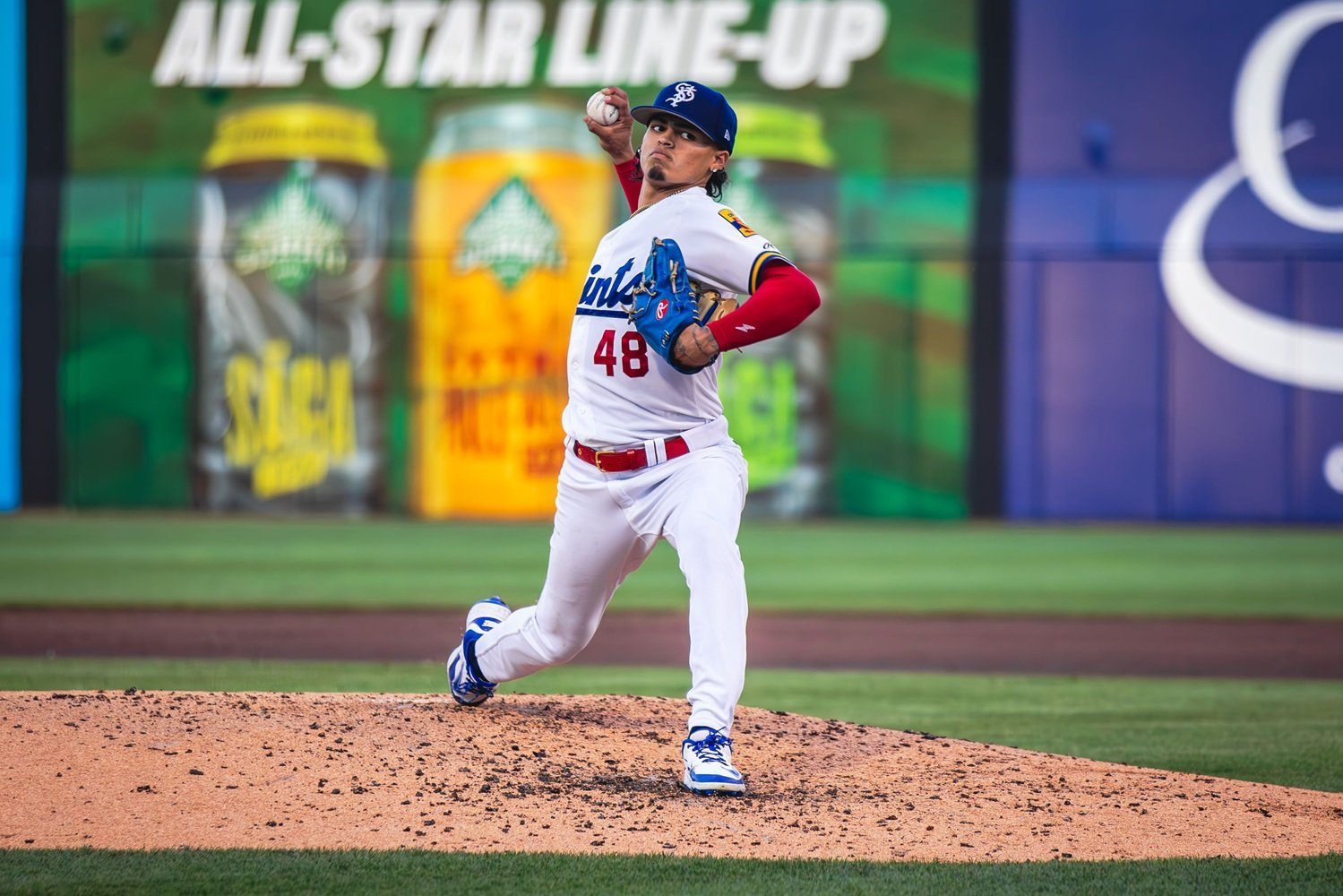 The middle of the minor-league season is when organizations separate intriguing stories from true momentum. Some players are just getting healthy. Others are adjusting to new teams or levels. A few force their way in with undeniable results. This week’s group features three players trending in the right direction for the Twins organization. From a former Giants farmhand tearing through Low-A pitching to a once-highly regarded arm finding his footing in relief, there are several interesting developments worth monitoring. OF Quinn McDaniel– Cedar Rapids Kernels How He Got Here: The San Francisco Giants selected McDaniel in the fifth round of the 2023 MLB Draft, after a productive college career at the University of Maine. He spent portions of three seasons climbing through the Giants system and eventually reached High-A ball, but consistency never fully arrived at the plate. Across 108 games last year, he finished with a .688 OPS before San Francisco moved on from him during spring training. After briefly preparing for a stint in independent baseball, McDaniel landed with the Twins organization when Minnesota signed him on May 12. The move immediately gave him a fresh opportunity, and so far, he has made the most of it. Hitting the Hot Button: Few hitters anywhere in the organization have been hotter over the last couple of weeks. McDaniel exploded out of the gate with the Fort Myers Mighty Mussels and quickly earned Florida State League Player of the Week honors during his first week in the system. Over 27 plate appearances, he posted a ridiculous .538 batting average alongside a .962 slugging percentage for a 1.480 OPS. The Twins wasted little time moving him to Cedar Rapids, and the production has continued. In his first three games with the Kernels, McDaniel collected six hits in 11 at-bats, while adding a triple. At 23 years old, he is older than much of the competition at both levels, but the early results still matter. Minnesota saw enough to aggressively challenge him, and he has responded immediately. RHP Marco Raya– St. Paul Saints How He Got Here: Raya has experienced one of the more winding developmental paths in the organization. Minnesota selected the Texas prep right-hander in the fourth round of the shortened 2020 MLB Draft, but his professional career was delayed almost immediately. The pandemic wiped out any chance of an official debut after signing, and then a shoulder injury sidelined him throughout the entire 2021 season. When Raya finally returned to the mound in 2022, flashes of his upside were easy to see even in limited workloads. His stuff continued progressing over the next two years, and he eventually climbed all the way to Triple-A in 2024 while earning a place on the Twins’ 40-man roster. The momentum stalled last season in St. Paul, as command issues created significant problems. His walk rate ballooned to a career worst 12.6%, and outings often unraveled before he could settle in. Hitting the Hot Button: Raya may finally be carving out a more stable role in the bullpen. On Friday, he fired three shutout innings during a Saints victory while allowing only one hit, with three strikeouts and no walks. The biggest development has been improved control. In four of his last six appearances, Raya has thrown at least two innings without surrendering a run. Even more encouraging, he has issued just three walks over his last 58 batters faced. The Twins have long believed the raw stuff could play at a high level. If the strike-throwing continues trending upward, a bullpen role could become a legitimate pathway back into Minnesota’s long-term plans. OF Jhomnardo Reyes– FCL Twins How He Got Here: The Twins invested in Reyes during the international signing period, handing the Dominican outfielder a $300,000 bonus. He made his professional debut last season in the Dominican Summer League as a 17-year-old and immediately showed intriguing athletic tools. Across 50 games, Reyes slashed .291/.386/.469 with 10 doubles, nine triples, and one home run, while stealing 10 bases. His combination of speed and extra-base ability stood out, although swing-and-miss concerns remained part of the profile. Reyes struck out in 28.5% of his plate appearances, while drawing walks at an 11.6% clip. Hitting the Hot Button: The transition from the Dominican Summer League to Complex League ball in Florida can be difficult for young international prospects, but Reyes has looked completely comfortable since arriving stateside. Through his first 10 FCL games, Reyes owns a .385 batting average with a .529 on-base percentage and an even 1.000 slugging percentage. He has already launched three home runs while piling up eight extra-base hits and swiping three bases. The most encouraging signs may be hidden in the plate discipline numbers. Reyes has boosted his walk rate to 20.6% while trimming his strikeout rate down to 17.6%. For a teenager with loud athletic traits, that kind of early adjustment is exactly what organizations hope to see. All three of these prospects are gaining momentum in very different ways. McDaniel is attempting to turn a career reset into a legitimate breakout. Raya appears to be settling into a role that better fits his current strengths. Reyes is showing why the Twins believed in his long-term upside when they signed him internationally. Each is, in their own way, an emblem of the player development the team will need to do well to return to the top of the AL Central and stay there—whether any turns out to be the difference-making individual within their archetype or not. What stands out about these three players? Leave a comment and start the discussion. View the full article
 -
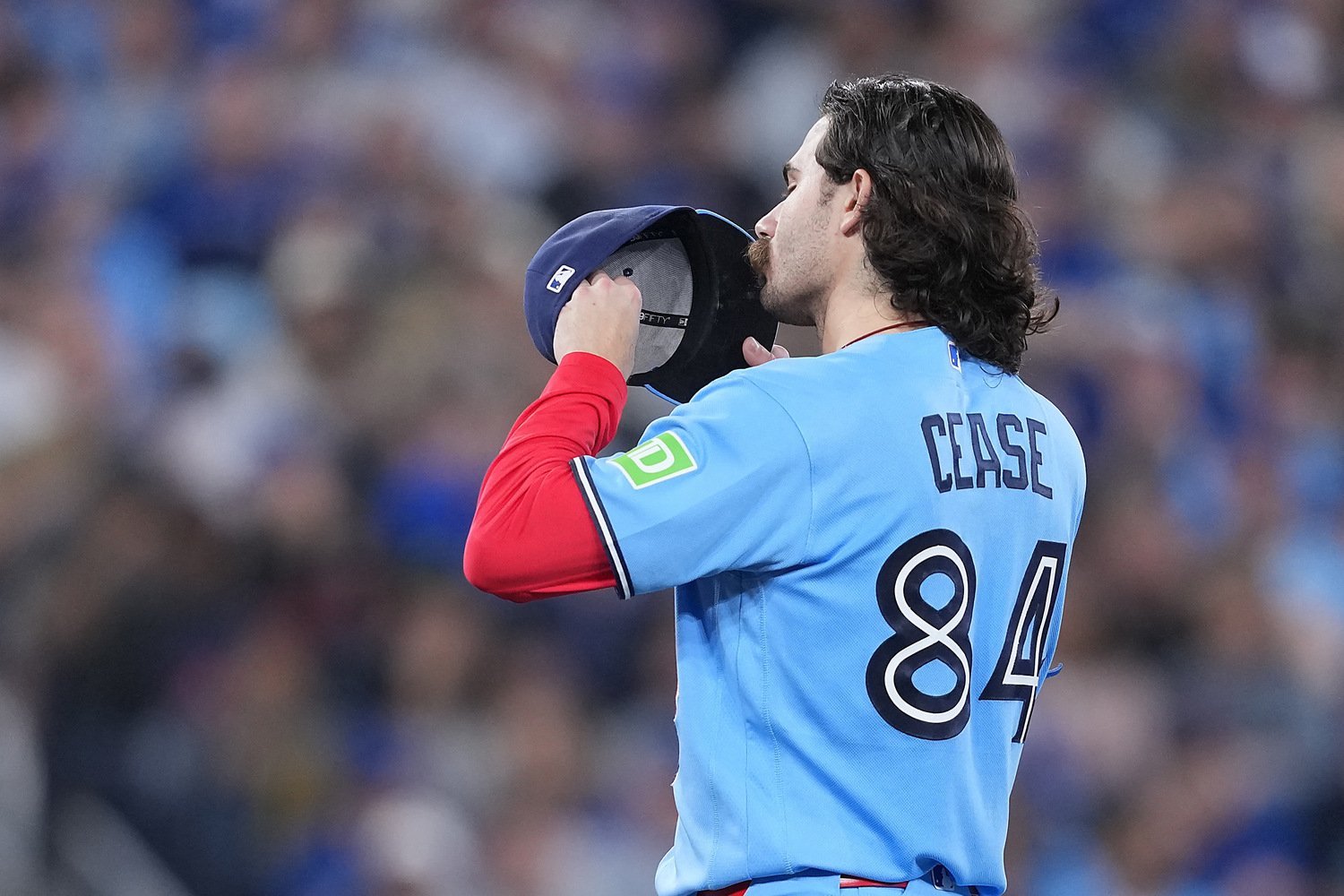 So much for day to day. Dylan Cease is heading to the injured list after straining his left hamstring in Sunday's series finale against the Pirates. There's no timeline for his return as of yet, but John Schneider is hopeful that it's a "minimal stay." The earliest Cease could return is June 9. The Blue Jays were already working a less-than-full rotation before Cease's injury. In addition to Cease, Kevin Gausman, Trey Yesavage, and Patrick Corbin, rookie Spencer Miles has been filling a bulk role in pseudo bullpen games. It isn't clear yet who the Blue Jays will call up to replace Cease right away or how they'll get through the next couple of weeks without him. As for Cease, this will likely end his streak of five straight seasons with at least 32 starts. This is the first non-COVID-related IL stint of his eight-year MLB career. View the full article
 -
White Sox 3, Twins 1: Pitchers' Duels Sound Fun Until You Lose One
DiamondCentric posted an article in Twins Daily
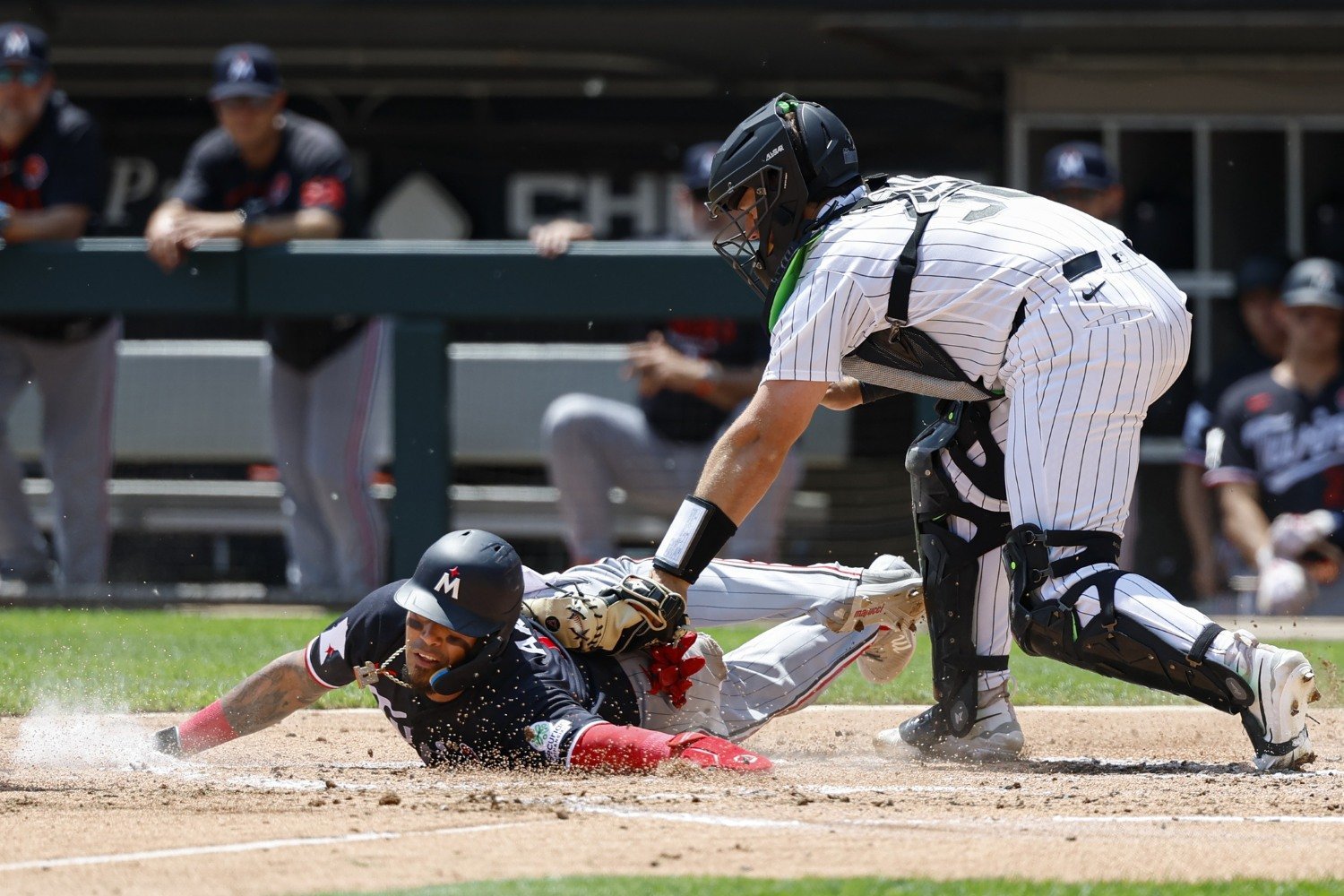 Box Score Starting Pitcher: Zebby Matthews - 6 IP, 5 H, 3 R, 3 ER, 1 BB, 6 K (88 pitches, 56 strikes (63.6% strikes)) Home Runs: Brooks Lee (6) Bottom 3 WPA (via Fangraphs): Josh Bell (-0.13), Kody Clemens (-0.12), Zebby Matthews (-0.09) Win Probability Chart (via FanGraphs) Coming off a series sweep in Boston, the Twins were looking to continue their winning ways against the South Siders in Chicago—and trying to get back to .500. The Twins got on the board quickly on a Brooks Lee solo shot off lefty Anthony Kay in the first inning. In the bottom half of the first inning, White Sox first baseman Munetaka Murakami kept the impressive start to his Stateside career going, taking Zebby Matthews deep to tie the game on his 18th home run of the season. The Twins were able to get three hits in the top of the second, but were unable to score. Making his major-league debut, Rikuu Nishida, a second baseman by trade, showed off a pretty solid throwing arm, throwing out Orlando Arcia at the plate on an Alex Jackson single. In the bottom of the second, the White Sox didn’t wait long to take a two-run lead. Drew Romo hit a two-run shot after Tristan Peters drew a four-pitch leadoff walk (those will haunt...) against Matthews. Both starting pitchers settled in, not giving up a run through the sixth inning. The bullpens took over from there. In the bottom of the sixth inning, the Twins showed off some defense, with Arcia making a barehanded play off of a deflection and Austin Martin making a diving play in right field. Simeon Woods Richardson threw two scoreless innings in relief of Matthews, and notably, his fastball sat at 94.1 MPH, touching a tick higher. Woods Richardson's success in this new role hinges on throwing a bit harder because of the transition; he's doing that. The Twins managed one hit in each of the final three innings off the White Sox bullpen, but were unable to string hits together to close the gap. Seranthony Domínguez closed the game out for the White Sox, securing his 11th save of the season. What’s Next? The Twins and White Sox will face off again on Tuesday evening, in the second game of a four-game series. The pitching matchup will feature Joe Ryan (3-3, 3.02 ERA) facing off against Sean Burke (2-3, 4.08 ERA). Ryan is coming off three straight quality starts, and will be looking to continue his solid start to his season. In his most recent start, he threw six innings and gave up one run against the Houston Astros. Bullpen Usage Chart THU FRI SAT SUN MON TOT Gómez 0 13 0 22 0 35 Rojas 0 0 45 0 0 45 Morris 0 0 32 0 0 32 Adams 0 29 0 1 0 30 Banda 0 14 0 10 0 24 Orze 0 14 0 10 0 24 Rogers 0 0 6 13 0 19 Woods Richardson 0 0 0 0 35 35 View the full article
 -
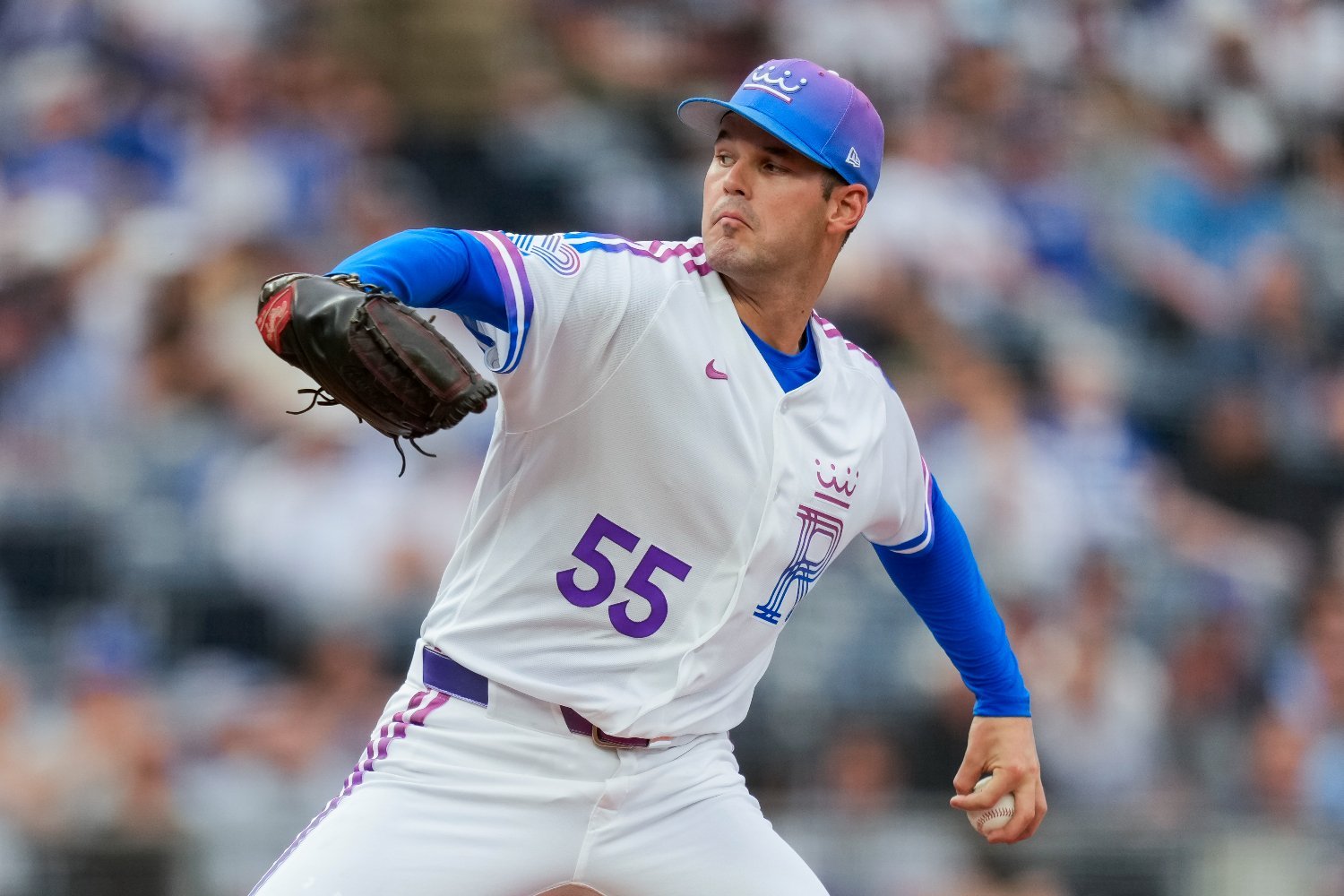 On Monday, before their series-opening game against the Yankees on Monday, manager Matt Quatraro shared some deflating news regarding pitcher Cole Ragans, who's been on the IL since May 7th due to a left elbow impingement. Anne Rogers reported that he didn't bounce back from his rehab outing in Omaha and that he would need to be shut down for 2-3 days before being re-evaluated. It seemed like this elbow issue flared up after he pitched, not during his outing in Triple-A. Joel Penfield of KC Sports Network shared video of Quatraro's comments in the dugout during the pregame presser. It's been a challenging year for Ragans, who's struggled with injuries and inconsistency for a second straight season. He has a 4.84 ERA and 1.42 WHIP in eight starts and 35.1 IP. His K rate is solid at 29.8%, but his walk rate is 15.2%, nearly double his rate from a season ago (7.8% BB%). When looking at his TJ Stuff+ summary from this year, Ragans is still generating whiffs at a solid rate (31.7%), and his TJ Stuff+ data is solid overall (104). However, he has struggled to find the strike zone and generate chase, and has allowed a lot of hard contact, as seen in the summary below. Ragans had an encouraging outing on Sunday for Omaha, as he went 4.1 IP and allowed only three hits, one run, and one walk while striking out three (he also had 10 whiffs). The TJ Stuff+ metrics also looked solid in his outing as well, especially in the TJ Stuff+, chase, and xwOBACON areas. Ragans will likely need more time on the IL as he sorts through this latest setback. The Royals are planning to have another bullpen game on Tuesday, with Bailey Falter as the opener. That said, if they need someone to start in Ragans' spot, they could opt for Mitch Spence, who's on the 40-man roster and currently pitching in Triple-A Omaha. Spence has only made one outing with the Royals this year, and it was a rough one where he allowed six runs on four hits and five walks while striking out three against the Yankees in the Bronx. That said, he's been more serviceable in Omaha, as evidenced by his 4.80 ERA, 1.17 WHIP, and 3.88 FIP in 30 IP. He has also demonstrated solid TJ Stuff+ metrics with the Storm Chasers, as shown in his summary below. Whether the Royals will opt for Spence or another bullpen game next week will depend on Ragans' status, which hopefully will become clearer by the end of this week. View the full article
 -
Blue Jays Activate Nathan Lukes, Option Davis Schneider
DiamondCentric posted an article in Jays Centre
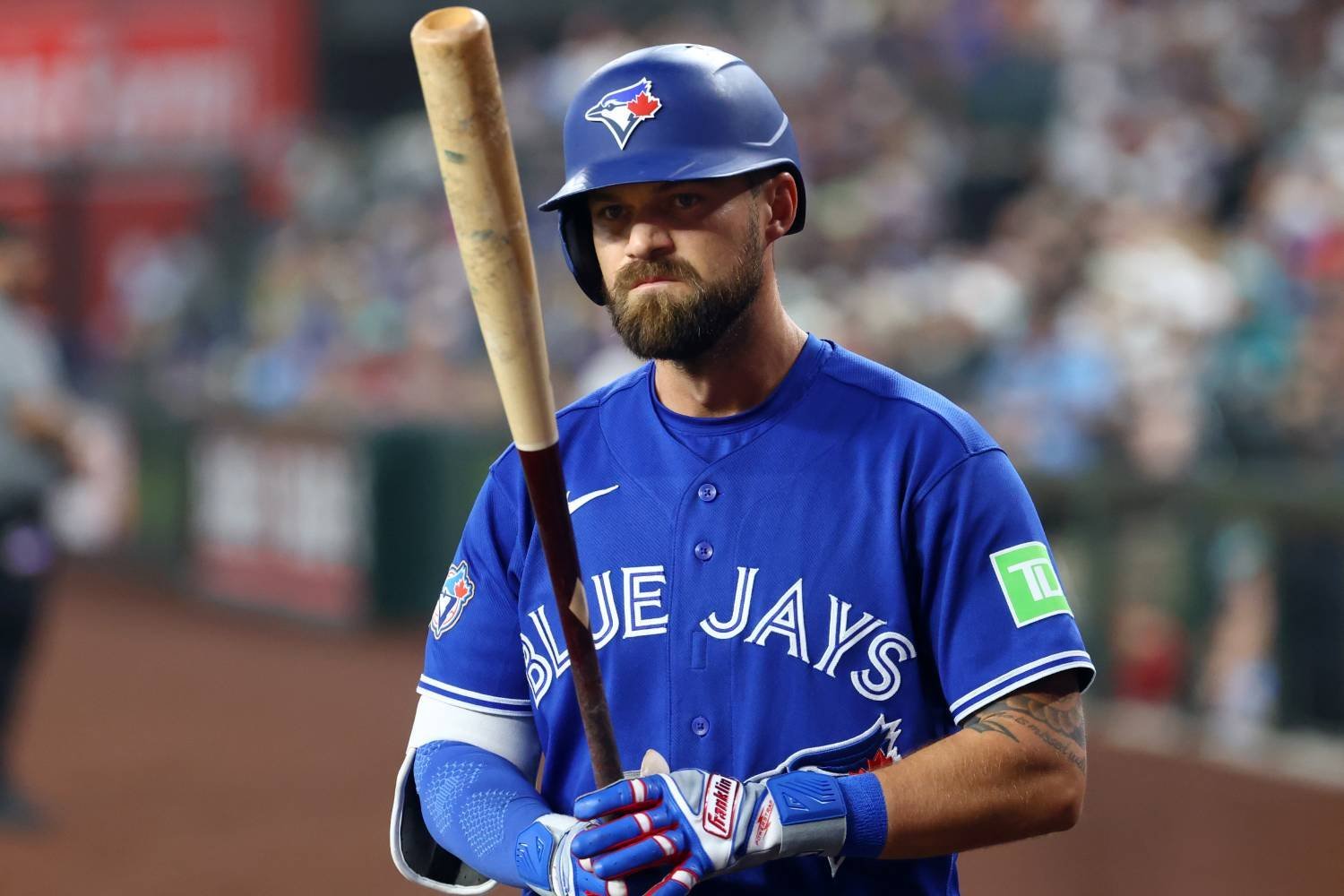 As expected, outfielder Nathan Lukes is back. Somewhat surprisingly, it cost Davis Schneider his spot in the majors. The Toronto Blue Jays on Monday activated Lukes from the 10-day injured list and optioned the struggling Schneider to Triple-A Buffalo. Lukes has been on the IL since April 25 with a strained left hamstring. Also, right-handed starter Shane Bieber is beginning a rehab assignment in the Florida Complex League. He has not pitched this season due to right elbow inflammation. Lukes was slashing .250/.286/.327 with no homers and eight RBIs in 20 games before being injured. Schneider, a fan favorite, has not been able to get going offensively this season and has a .127/.295/.211 slash line with a homer and eight RBIs in 38 games. He has drawn 17 walks. The decision to option Schneider instead of someone such as Lenyn Sosa could be as a result of superstar first baseman Vladimir Guerrero Jr. being hit on the right elbow by a pitch Sunday. View the full article
 -
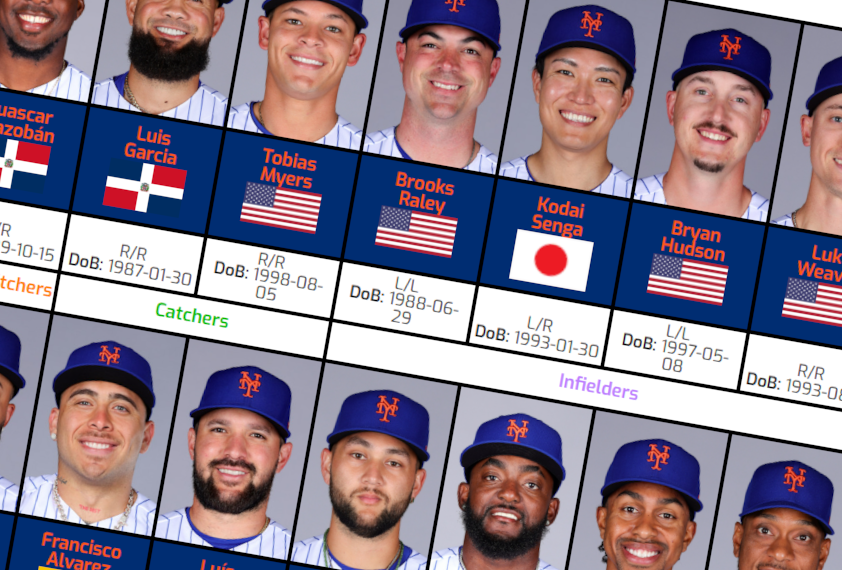 Two bad things can happen when you break up with somebody. (1) Somebody else immediately swoops in and romances them, making you wonder why you would break with somebody so desirable. (2) Nobody else immediately swoops in and romances them, making you wonder why you ever were with somebody so seemingly otherwise undesirable. Both of these are stinking thinking, of course, but such is your vulnerability when your decision has left you newly alone and vulnerable — or if you are the Mets, spiraling toward oblivion and irrelevancy. GOING Cleared Waivers and Assigned to Syracuse Outfielders Austin Slater R/R DoB: 1992-12-13 High Level: MLB (2026) Austin Slater wasn't as bad as all that as the righthanded half of a Slater/MJ Melendez platoon that had been alternating with Juan Soto between DH and left field. He hit .250 (which is sadly a defensible umber by today's standards, but it was an empty .250 (.250 / .286 / .300 // .586). That is no worse than most of the lineup has been doing, and certainly no worse than his slumping platoon mate has been showing the world, but he's the guy with the least contract security, so he is the most easily shuffled off. With Jacob Young, on the mend, MJ might not be far behind. The clock is certainly ticking. Transactions, 5/24/2026 GOING GOING Cleared Waivers and Assigned to Syracuse Refused Minor-League Assignment and Opted for Free Agency Relief Pitchers Outfielders Craig Kimbrel Austin Slater R/R DoB: 1988-05-28 High Level: MLB (2026) R/R DoB: 1992-12-13 High Level: MLB (2026) The apparent end of Craig Kimbrell's Mets career was foreshadowed by the Mets sending him out there for an extra inning to mop up a loss. He has been passed on, for the time being, by other teams who don't want to add him to their MLB roster, but there may or may not still be a market for the aging and man-bunned former star. Kimbrel has been assigned to Syracuse, but there is every reason to believe he will refuse that assignment, and like Slater, go hunting for a new home. Kimbrel's exile led to a new wave of premature speculation about his Hall of Fame chances, including a sorry case against offered in a hot take by Bob Nightengale, who just should know better. Nighty argues that John Franco had had 424 saves and 23.4 WAR (compared to Kimbrel's current 440 and 22.5) in 409 more innings, and got nary a tumble from Hall of Fame voters. Now, Mets Roster Central is not going come out for or against the enshrinement of Craig Kimbrel here, but putting aside the idea that taking less time to accomplish similar feats should be seen as a good thing, WAR is just a terrible measure of success for closers: Firstly, the formula that generates the number is proprietary, so it is an act of faith to accept WAR at face value. Secondly, what we do know about WAR is that it normalizes — it extricates the numbers players accomplish from the situations they perform in, and treats all situations as the same. This is disastrous for a situation-specific role, like and end-of-game specialist. Take, in that second situation, an NFL short-yardage specialist of a fullback. He may get 10 carries in a year, all on the one-yard line, plunging into the end zone for a touchdown each time. Extricate those 10 carries from the situation they occurred in, and this player looks like a disaster, a running back averaging one yard per carry. Worst in the league! Anyhow, the once indomitable closer has a three-pronged decision to make — retire, shop for a new opportunity, or humbly head to Syracuse to see if he can up his game. We expect (b) with Austin Slater has already taken, joining Tommy Pham and Andy Ibáñez on The Great List of Veteran Reserve Righthanded-Htting Outfielders Who Couldn't Stick on the 2026 Mets. Eric Wagaman, shuffled off before he could so much as appear, probably deserves honorary membership. Your 2026 New York Mets Starting Pitchers Nolan McLean Freddy Peralta David Peterson Christian Scott Jonah Tong R/R DoB: 2001-07-24 R/R DoB: 2996-06-04 L/L DoB: 1995-09-03 R/R DoB: 1999-06-15 R/R DoB: 2003-06-19 Relief Pitchers Huascar Brazobán Sean Manaea Tobias Myers Jonathan Pintaro Brooks Raley Austin Warren Luke Weaver R/R DoB: 1989-10-15 R/L DoB: 1992-02-01 R/R DoB: 1998-08-05 R/R DoB: 1997-11-07 L/L DoB: 1988-06-29 R/R DoB: 1996-02-05 R/R DoB: 1993-08-21 Relief Pitchers Catchers Infielders Devin Williams Hayden Senger Luís Torrens Bo Bichette Brett Baty Vidal Brujan MJ Melendez R/R DoB: 1994-09-21 R/R DoB: 1997-04-03 R/R DoB: 1996-05-02 R/R DoB: 1998-03-05 L/R DoB: 1999-11-13 S/R DoB: 1998-02-09 L/R DoB: 1993-11-29 Infielders Outfielders Marcus Semien Mark Vientos Carson Benge A.J. Ewing Nick Morabito Juan Soto Tyrone Taylor R/R DoB: 1990-09-17 R/R DoB: 1993-12-11 L/R DoB: 2003-01-20 L/R DoB: 2004-08-10 R/R DoB: 2003-05-07 L/L DoB: 1998-10-25 R/R DoB: 1994-01-22 Also on 40-Player Roster Starting Pitchers Relief Pitchers Clay Holmes Tylor Megill Kodai Senga Zach Thornton Alex Carrillo Daniel Duarte Reed Garrett R/R DoB: 1993-03-27 R/R DoB: 1995-07-28 L/R DoB: 1993-01-30 L/L DoB: 2002-01-17 R/R DoB: 1997-06-06 R/R DoB: 1996-12-04 R/R DoB: 1993-01-02 Relief Pitchers Catchers Infielders Justin Hagenman A.J. Minter Dedniel Núñez Dylan Ross Francisco Alvarez Francisco Lindor Ronny Mauricio R/R DoB: 1996-10-07 L/L DoB: 1993-09-02 R/R DoB: 1996-06-05 R/R DoB: 2000-09-01 R/R DoB: 2001-11-01 S/R DoB: 1993-11-14 S/R DoB: 2001-04-04 Infielders Outfielders Jorge Polanco Luis Robert, Jr. Jared Young S/R DoB: 1999-11-13 R/R DoB: 1997-08-03 L/R DoB: 1995-07-09 Your Mets Coaching Staff Manager Bench Coach Pitching Coach Hitting Coordinator Third Base Coach First Base Coach Bullpen Coach Ass't Pitching Coach Carlos Mendoza Kai Correa Justin Willard Jeff Albert Tim Leiper Gilbert Gomez José Rosado Dan McKinney DoB: 1979-11-27 DoB: 1989-07-14 DoB: 1990-09-09 DoB: 1992-08-16 DoB: 1996-07-19 DoB: 1992-03-08 DoB: 1974-11-09 DoB: 1989-06-06 Hitting Coach Strategy Coach Catching Coach Coaching Assistant Bat'g Practice Pitcher Equipment Manager Bullpen Catchers Bullpen Catchers Troy Snitker Danny Barnes J.P. Arencibia Rafael Fernandez Kevin Mahoney Kevin Kierst Eric Langill Dave Racaniello DoB: 1988-12-05 DoB: 1989-10021 DoB: 1986-01-05 DoB: 1988-08-03 DoB: 1987-05-11 DoB: 1964-07-09 DoB: 1979-04-09 DoB: 1978-06-03 Your Mets Training Staff Director of Player Health Head Athletic Trainer Assistant Athletic Trainer Reconditioning Coordinator Reconditioning Therapist Head Performance Coach Assistant Performance Coach Performance Coordinator Soft Tissue Specialist Brian Chicklo Joseph Golia Bryan Baca Sean Bardanett Josh Bickel Dustin Clarke Tanner Miracle Jeremy Chiang Hiroto Kawamura DoB: 1972-07-17 DoB: 1978-??-?? DoB: Circa 1980 DoB: 1988-06-23 DoB: 1996-??-?? DoB: 1987-??-?? DoB: 1991-??-?? DoB: ????-??-?? DoB: 22846 View the full article
 -
Tristan Gray Is Back As Twins Return Gabriel Gonzalez To Triple-A
DiamondCentric posted an article in Twins Daily
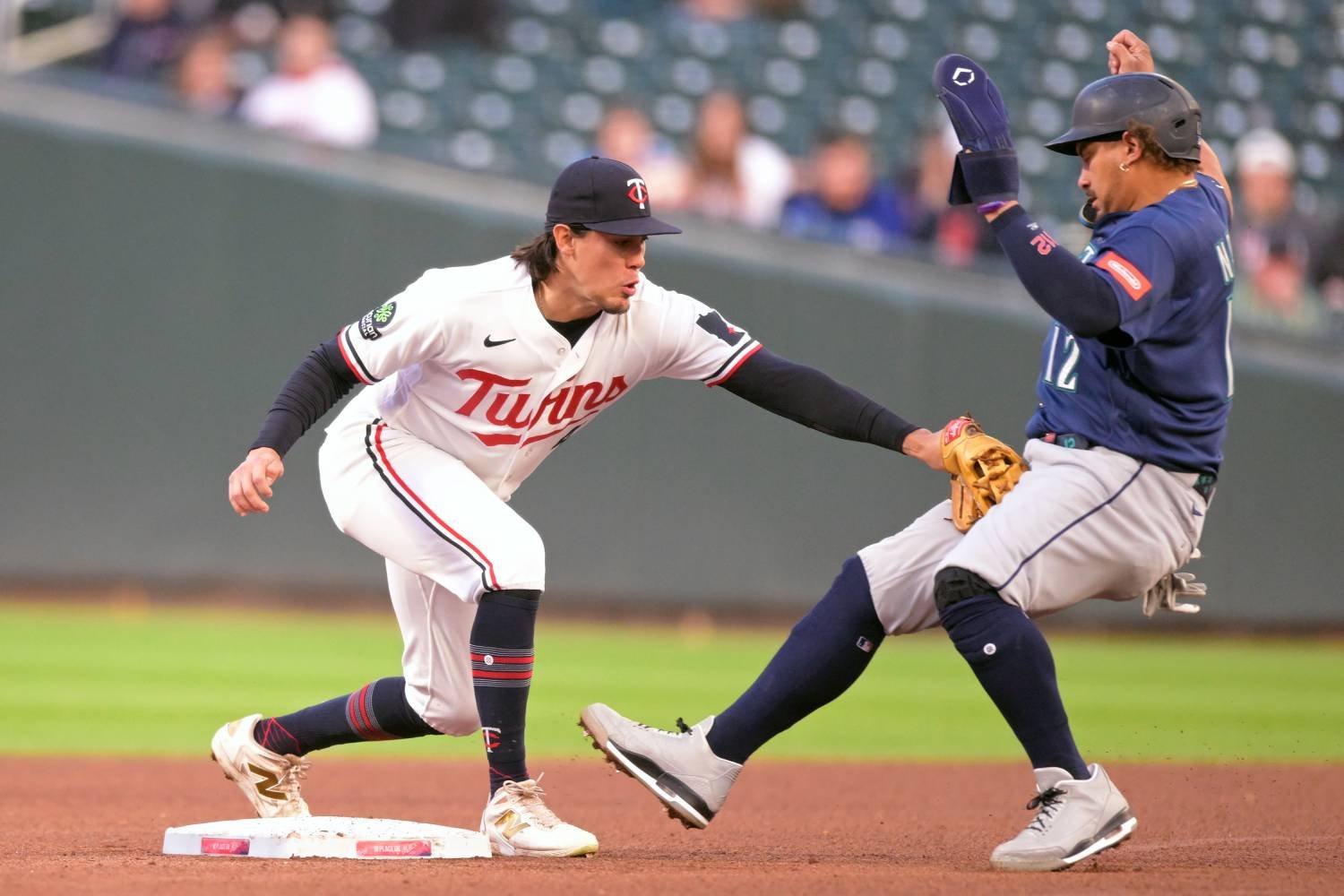 The first Gabriel Gonzalez era was, as expected, brief. But it was also memorable. The Minnesota Twins on Monday sent Gonzalez, an outfielder, back to Triple-A St. Paul and activated infielder Tristan Gray from the paternity list. Gonzalez, Twins Daily's No. 10 prospect, played in just one of the three games he was active for in his first MLB call-up. He made his debut in Friday's 8-6 win over the Boston Red Sox, hitting fifth and going 1-for-2 with two walks. That included his first MLB hit. Gonzalez will certainly get another shot during this season, but for now heads back to St. Paul, where he has a .216/.294/.392 slash line with eight homers and 21 RBIs in 44 games this year. Gray has produced a slash line of .240/.301/.373 with three homers and 14 RBIs in 26 games. View the full article
 -
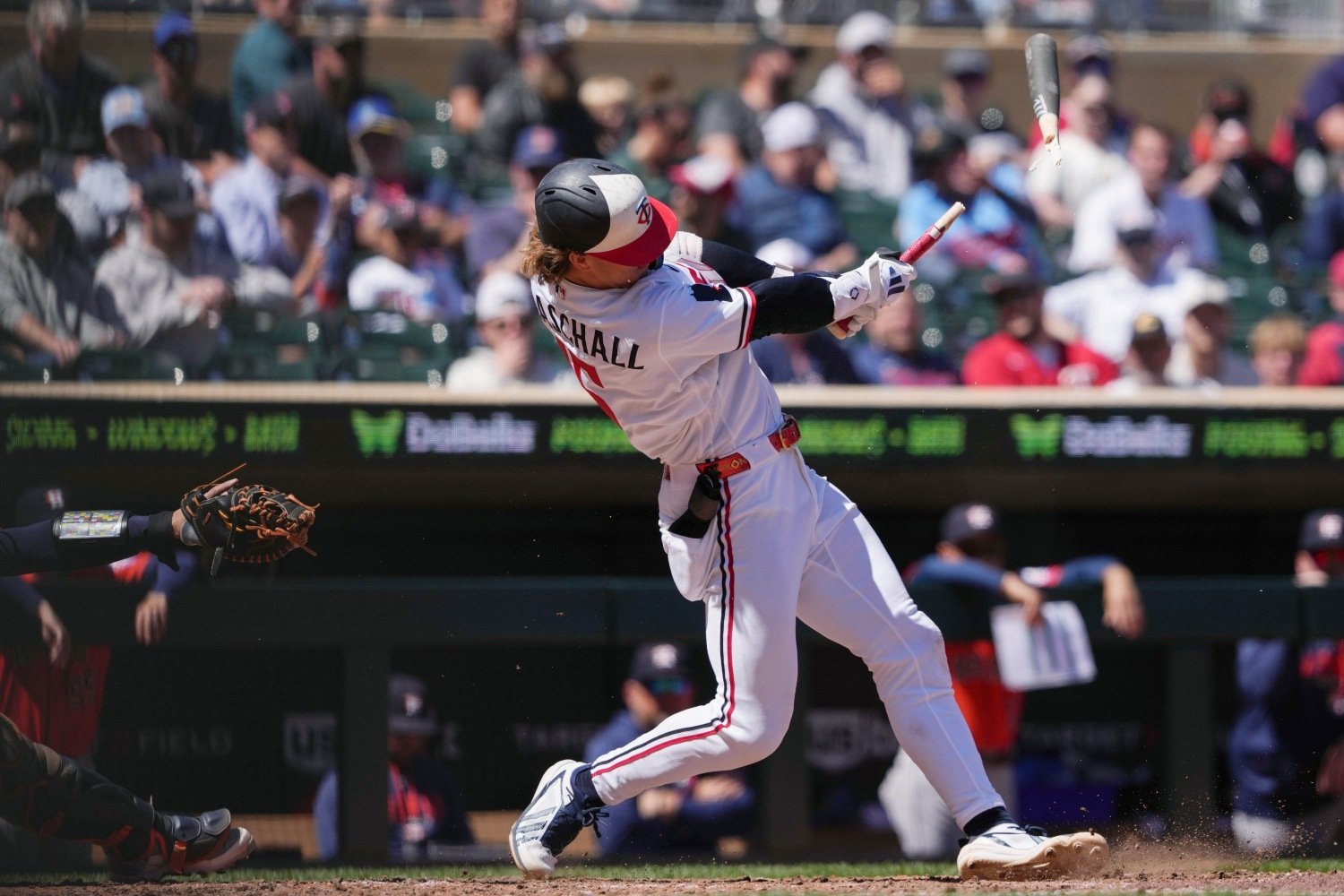 The plate appearance totals don't match up perfectly, but it's as close as you could ask it to be. Heading into Memorial Day, Luke Keaschall has played exactly 49 regular-season games in 2026, which is the same number he played in 2025. This time, he knows the daily grind of the majors better. This time, he hasn't had his progress interrupted by injuries. One would hope that he would be proving himself a robust part of the Twins' future, even if he couldn't quite replicate last year's tremendous rookie showing. Instead, the comparison of his freshman and (incomplete) sophomore efforts looks like this: 2025: 207 PA, .302/.382/.445, 4 HR, 19 BB, 29 SO 2026: 201 PA, .233/.318/.307, 1 HR, 19 BB, 32 SO He remains very good at putting the ball in play, but all the sting has been sapped from Keaschall's stick. He didn't exactly obliterate the ball last year, but his average exit velocity and his hard-hit rate are notably down this year. He overachieved in terms of hitting for both power and average last season, but even at a fundamental quality-of-contact level, he's seen a real degradation this year. Over the weekend, he was benched on consecutive days, as manager Derek Shelton elected to give him the same treatment he gave Matt Wallner and Royce Lewis during their own profound offensive struggles—right before each was shuttled off to the minors. Keaschall is younger, has hit better and is more clearly a part of the team's vision for the future than either Lewis or Wallner, so he's not likely to be optioned any time soon. As Shelton commits to making playing time a question of merit and production, though, Keaschall is already losing out. Brooks Lee, Ryan Kreidler, Orlando Arcia and Tristan Gray may not be Murderer's Row, but they all have substantially better offensive numbers than Keaschall has this year—and Keaschall is, by a wide margin, the worst defensive infielder in the group. All this is fairly shocking, because Keaschall actually came to camp this year having improved in what looked like the one area that would limit him as a hitter: bat speed. Last season, his average swing speed was just 66.9 miles per hour, according to Statcast—one of the lowest marks in the league. It's not possible to be any kind of power hitter with so little bat speed, so it looked as though Keaschall would need to use his speed and good placement of the ball even to consistently generate doubles in the majors. That he ran into four homers in a third of a season's playing time felt semi-miraculous. In theory, he's made a major upgrade this spring. His average swing speed is now 69.2 MPH. That's still well below average, but batters who find the barrel often can produce power at that level. Spencer Horwitz, Michael Busch, Will Smith, Cody Bellinger, Trent Grisham and other guys who have proved themselves capable of 20-plus homers a year live in that range. Admittedly, none of those are great comps for Keaschall, in terms of body type, handedness or bat path, but the point stands. You can have a pretty high ceiling as a hitter, once you get to 69 MPH or so. In practice, this has been nothing but bad for Keaschall—at least so far. Bat speed isn't primarily about the force you impart on the baseball because of that speed; you can generate just as hard a batted ball by squaring it up well. Bat speed matters, instead, because it lets you decide later and pull the trigger on the swing later—but so far, Keaschall has had no luck in redeeming that advantage for real value. With no noticeable or measurable change in his swing path and a significant increase in his bat speed, our default expectation should be that Keaschall would make contact farther in front of his body this year than he did in 2025. Instead, his contact point is almost identical to where it was last year. That tells us that he's making proper theoretical use of the advantage he's gained by swinging faster; he's deciding later. In practice, though, that's creating more problems than it's solving. Here's Keaschall handling a fastball down the middle the way a hitter like him should, last August. ZzY4bmxfWGw0TUFRPT1fRGdsWUFnQlZBMWNBQ2xVS1VBQUhDUVlIQUZnQlZBSUFWMXdDVXdJQkJnVlNWQWRW.mp4 This is Keaschall as we all came to know him as a rookie: direct to the ball, frighteningly accurate with the barrel, and (perhaps most importantly) consistently on time. Now, here he is against another fat heater, last month. bGJ3a0JfWGw0TUFRPT1fQlZkVlhGVURVVkFBQVZFQ1V3QUhVdzVRQUFOVFYxY0FCbEJSVWdBTlZ3VldCQUlD.mp4 The temptation, when you see a batter foul a fastball off to the opposite field, is to say they were late on it. Watch closely, though. Keaschall wasn't late here. Rather, he was a hair early, in the timing and the shape of his newly accelerated swing. Set the moments at which he made contact on each pitch side-by-side, and you can see what I mean. Keaschall's arms are actually more extended in the still on the right. He misses the barrel and clips the ball with the high/outside part of his bat because he's already rotated a hair too far. This is normal, if a bit unfortunate, for a hitter who's newly added some bat speed. It's great to swing faster, but you have to learn to stay on time, too. That's a quick glimpse at the fight not to be too early, once you get faster. Now, here's how you can end up a little too late. Here are two cutters away from Keaschall, in early counts. One from last September: b0daM1hfV0ZRVkV3dEdEUT09X0J3aFdBRkVBVkFZQUQxSUxWZ0FIQTFRREFBQlRBbFlBQlFjQ0F3b0ZCbEpWQUF0Vw==.mp4 And one from April: cU93MFFfWGw0TUFRPT1fQXdZSEFsUlFVUVlBRGdNSFZRQUhWUTlmQUZrR0FBTUFBUWNHVkZCWEFRRUJCd1JU.mp4 Keaschall hit both balls pretty squarely, but as any modern hitting coach will tell you, the difference between a squarely-hit ball pulled in the air and one up the middle on the ground is the difference between payday and pain. Keaschall got around the first of these offerings; he couldn't do so on the second. He's swinging faster this year, but you can't just swing fast; you have to swing on time. Here's the moment at which Keaschall first begins the descent phase of his leg kick—when his swing really begins, as opposed to his load—on each pitch. Last year, he was starting that part of his move before the pitch left the pitcher's hand. This year, it's more often coming just after release. The difference seems tiny, until you remember that the projectile he's trying to hit (at just the right angle, mind you) is coming in on the north side of 90 miles per hour and that the space in which he can produce the better kind of batted ball runs perhaps six inches from front to back. Again, in the long run, this should still be a good thing. Being able to decide later should yield better swing decisions, and if Keaschall decides he still needs to cheat a bit more to produce the contact he wants, he can now sacrifice some contact for power that was unreachable when his swing was one of the five or six slowest in the game. There are no guarantees about getting this evolution right, of course. Plenty of players have gotten permanently broken by trying to shore up some weakness, insufficiently cognizant of the costs of that improvement or simply unable to pay them without going talent-broke. On balance, though, it's fair to stay optimistic about Keaschall as a hitter. This adjustment period has been painful, but it's part of the process of going from good to (knock on wood) great. View the full article
 -
Blue Jays Injury Updates: Guerrero, Cease, Lukes, Scherzer, Bieber
DiamondCentric posted an article in Jays Centre
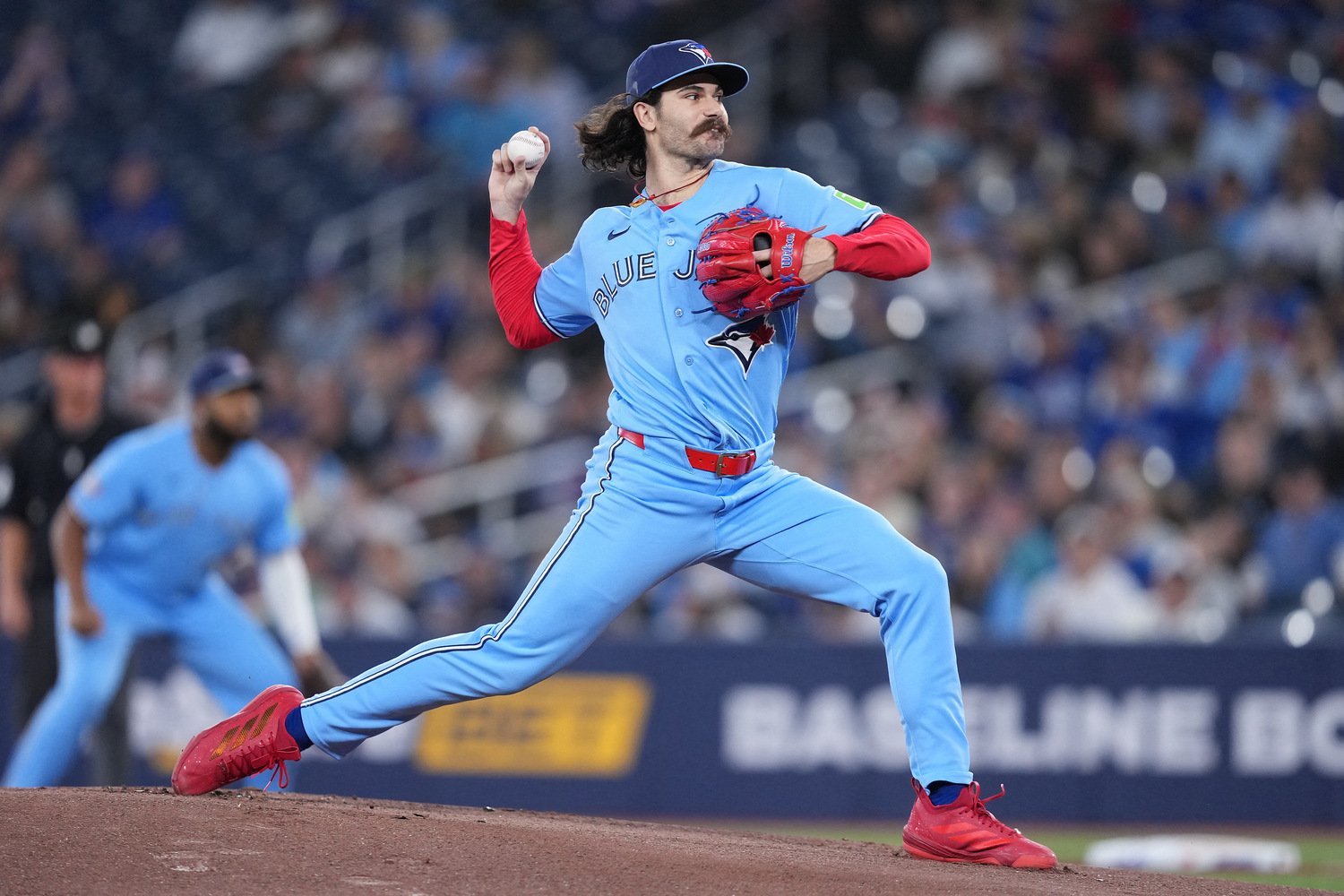 Vladimir Guerrero Jr. and Dylan Cease left Sunday's game early, while several of their teammates are working their way back from the injured list. Let's dive right in. Dylan Cease (Hamstring) Cease was dealing as usual on Sunday before discomfort in his left hamstring forced him from the game. With eight strikeouts through 4.2 innings (on 76 pitches), the MLB Ks leader was well on his way to his fourth double-digit strikeout game. With that said, he also gave up two home runs to the Pirates. He's now given up four homers in his last two starts, compared to just one in his first nine. When the discomfort first set in, John Schneider initially let Cease stay in the game. However, the righty only lasted a few more pitches before he got the hook. The abruptness with which he was pulled – in the middle of an at-bat – was concerning. Thankfully, the messaging right now is that the injury is mild, and Cease only left the game out of an abundance of caution. We'll know more later today after he goes for an MRI, but it's possible he'll be able to make his next scheduled start on Friday against the Orioles. Vladimir Guerrero Jr. (Elbow) There was no hemming and hawing before Vladdy left the game in the bottom of the fifth. The first baseman quickly went from frustrated to forlorn after a 92-mph sinker from Mitch Keller hit him in the right elbow. He walked straight to the dugout, shaking his head at John Schneider and trainer Voon Chong. “I followed him, and he just said, ‘I can’t feel my hand,'" Schneider told reporters post-game. "It was kind of like [hitting] a funny bone, but travelling at 90-plus miles an hour.” X-rays were negative, and the team is calling the injury an elbow contusion. Presuming that's really all it is, an IL stint is unlikely (thank goodness). Indeed, Schneider suggested Guerrero could even play today against the Marlins, although I think it's more likely he takes at least one day off to let the pain reside. Nathan Lukes (Hamstring) Nathan Lukes has been on the IL for a month with a left hamstring strain. He played his fourth rehab game for the Dunedin Blue Jays on Sunday, and he's expected to travel back to Toronto today, as reported by Sportsnet's Arden Zwelling on Friday. If the Jays activate the outfielder today, it will be interesting to see how they make room on the roster. Optioning the struggling Davis Schneider to Triple-A Buffalo would be the easiest way to do it, but that would leave the offense quite left-handed-heavy. Max Scherzer (Forearm, Ankle) The veteran hit the injured list at the end of April with right forearm tendinitis and left ankle inflammation. The arm injury sounds scarier, but he was pitching through forearm discomfort for a while; the ankle injury was the straw that broke the camel's back and sent him to the IL. Max Scherzer is throwing again now. He started with bullpen sessions last week, and he will progress to facing live hitters before eventually going on a rehab assignment. Barring any setbacks, it seems like a return at some point in mid-June is most likely. That's good news, but it means the Jays will still need to survive at least three or four more turns through the rotation before they have a proper fifth starter again. Shane Bieber (Elbow) We've gotten shockingly little information about Shane Bieber's health from the very beginning, so I won't get my hopes up until I actually see him on a mound. And by that I mean a major league mound, because Bieber is set to take the mound for the FCL Blue Jays this afternoon. It will be his first rehab start of the year. Although Bieber is starting his rehab assignment before Scherzer, the latter is still expected to return sooner. The plan seems to be for Bieber to ramp slowly across four or five rehab outings, which puts his estimated 2026 debut somewhere around the end of June. More Blue Jays Injury Updates Right-handed reliever Yimi García has been out all season recovering from elbow surgery. He is throwing again, and he's set to face live hitters this week. Catcher Alejandro Kirk has been out since early April with a fractured thumb. John Schneider says he could start a minor league rehab assignment by the end of this week. Outfielder Addison Barger returned from the IL for one game earlier this month before elbow inflammation sent him back to the shelf. He reportedly resumed baseball activities (everyone's favourite vague injury update) this weekend. View the full article
 -
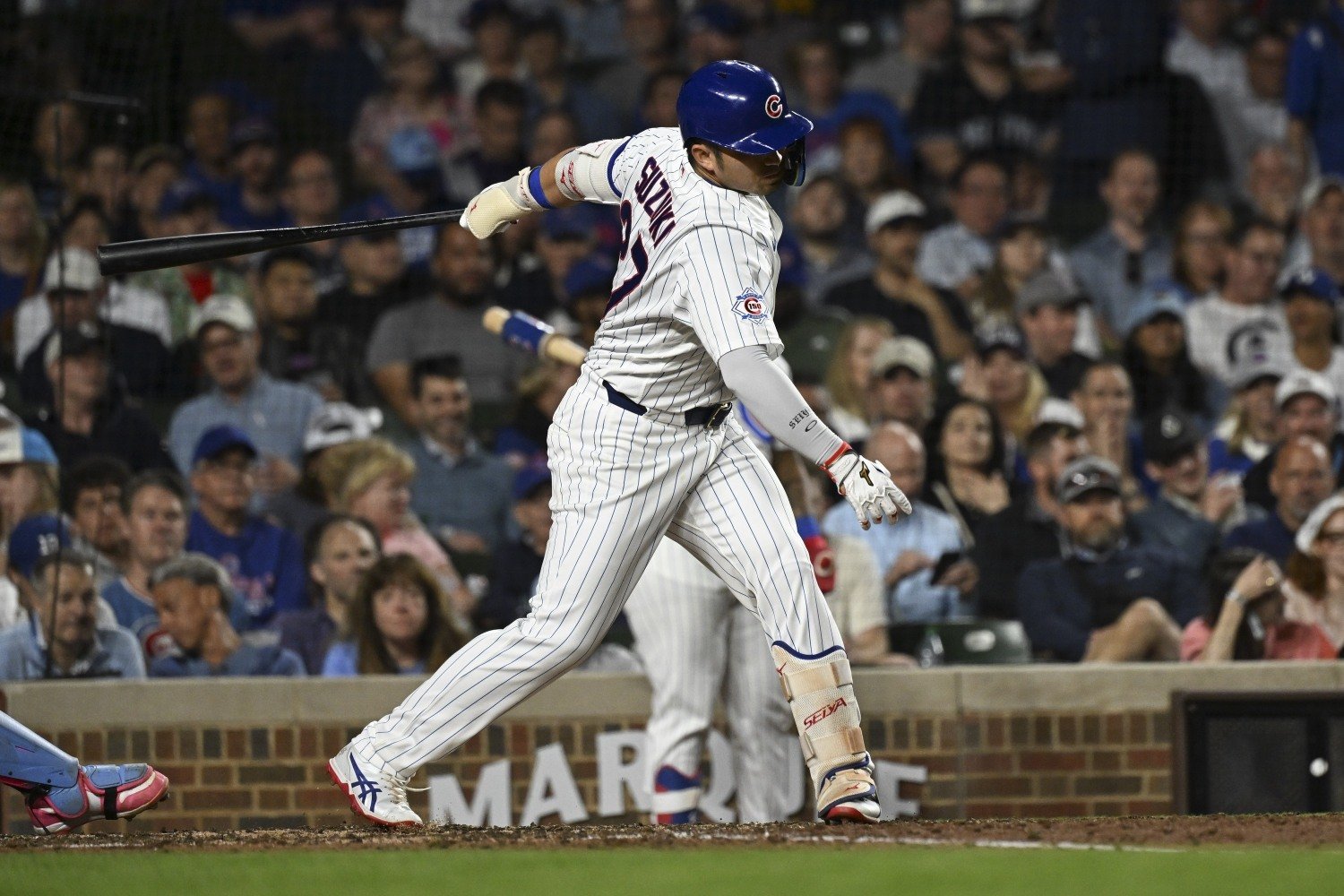 Craig Counsell sat Ian Happ down for two days this weekend, to give his struggling veteran should-be slugger a mental reset. This week, he might be wise to do the same with his other corner outfielder. Seiya Suzuki has always run in streaks and slumps, with an approach even more dependent on seeing the ball well (and even more vulnerable to stretches in which he simply can't do so) than most hitters'. He's gone through some prolonged funks before, but it's literally never been this bad. For the month of May, Suzuki is batting an anemic .179/.270/.295 in 89 plate appearances. Somehow, that understates how ugly things have gotten. Since hitting his last home run on May 8, Suzuki has gone 8-for-53, with just one extra-base hit (a double) and strikeouts in a third of his trips to the plate. He's never had a 50-plate appearance sample worse than this one, according to expected weighted on-base average (xwOBA). Normally great at controlling the strike zone, Suzuki is lost right now, chasing outside the zone and whiffing within it. Unsurprisingly, he's lost the ability to hit the ball hard. In fact, he's also never had a worse stretch of 50 batted balls in terms of average exit velocity than the one he's in right now. This comes, of course, at the worst of all possible times. The Cubs' offense is the biggest culprit in the team's hideous spiral, and with Dansby Swanson, Nico Hoerner, Pete Crow-Armstrong, Alex Bregman and Carson Kelly essentially locked into the lineup, the team badly needs its bat-first guys to deliver while many of those morse two-way options are mired in slumps at the plate. Instead, Ian Happ, Moisés Ballesteros and Suzuki are all scuffling. Only Michael Conforto and Michael Busch have kept the offense going at all. It's also dreadful timing for Suzuki himself. Free agency looms for him this fall, and because of his shaky defense and his age (he turns 32 this August), he has to rake in order to maintain a high level of appeal to teams. He's not doing it. Counsell has only allowed Conforto to see left-handed pitchers four times all year (out of 80 total plate appearances), but the Pirates will send right-handed hurlers to the mound for all four games of the Cubs' upcoming series there. As Happ (presumably) reenters the lineup, it feels both likely and advisable that Counsell will shift Conforto to right field for a day or two to spell Suzuki and give him a mental reset of his own. The Cubs have only scored 3.8 runs per game this month. They have to wake up and get hitting again, and that doesn't mean handing a full-time job to the hilariously whiff-prone Kevin Alcántara; it means getting Suzuki right. At the moment, that probably means offering him a break from the mental grind. View the full article
 -
Saints Dust Off the Royce Lewis and Matt Wallner Merch Rack
DiamondCentric posted an article in Twins Daily
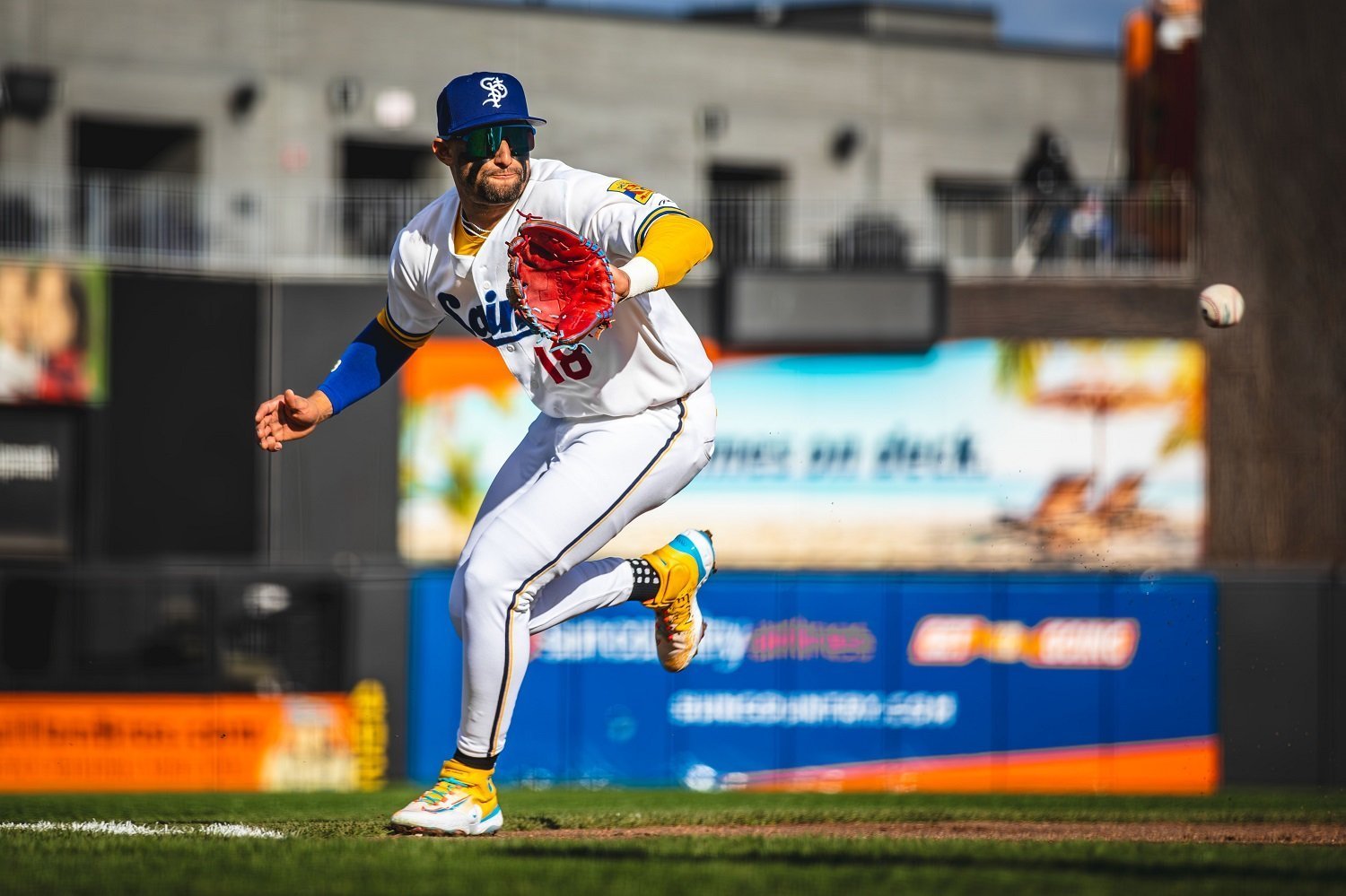 There are few certainties in baseball. The sun rises in the east. Bullpen games last four hours. And the Minnesota Twins eventually send a struggling player to St. Paul. That reality hit again last week, when the Twins demoted Royce Lewis and Matt Wallner to Triple-A. Within minutes, the St. Paul Saints organization reportedly sprinted into the depths of CHS Field storage looking for boxes labeled “ROYCE STUFF - DO NOT THROW AWAY YET.” Employees described scenes usually reserved for reality television storage locker auctions. One intern allegedly emerged from a back hallway carrying a dusty crate of Royce Lewis bobbleheads, while another was seen peeling “FINAL CLEARANCE” stickers off jerseys with the intensity of a man defusing a bomb. “We knew this day could come,” Saints team store manager Dave Gunderson said, standing on a ladder reorganizing a display table that had featured novelty pickleball paddles just 24 hours earlier. “You never fully get rid of Royce merchandise. You just move it behind the Halloween hats and broken mudflap giveaway boxes.” According to Gunderson, the team had drastically discounted Lewis merchandise years ago after assuming the former first overall pick was finally sticking in the majors for good. “We had shirts down to five dollars,” Gunderson admitted. “One guy bought three because he said they were cheaper than buying cleaning rags at Fleet Farm.” That same shirt now costs $30. “Supply and demand,” Gunderson shrugged. “Economists would understand.” Fans entering CHS Field seemed stunned by the sudden market correction. “I literally saw these in a clearance bin next to a cracked Saints tumbler,” said Saints fan Becky Larson, holding a newly repriced Royce Lewis shirsey. “Now they’re folded like cashmere sweaters behind the register.” Another fan claimed the team store workers were updating prices in real time. “I picked up a Wallner shirt and the employee slapped a new sticker on it before I got to checkout,” said Greg Halvorson of Woodbury. “It felt like trying to buy airline tickets.” The Saints reportedly began preparing for the demotions days earlier, after noticing suspicious activity from Twins front office personnel. “One scout came through asking if the batting cages still worked,” Gunderson said. “That’s usually not a great sign.” The return of Lewis and Wallner has also completely transformed the atmosphere around the ballpark. Concession workers have reportedly doubled beer inventory while the team’s social media department has already prepared at least 17 graphics using fire emojis and the phrase “HE’S BACK.” Meanwhile, local children are once again experiencing the emotional confusion of explaining why their favorite major-league player is suddenly signing autographs in Lowertown on a Tuesday afternoon. For longtime Saints fans, however, this is simply part of the experience. “We’re basically baseball’s emotional support franchise,” one season-ticket holder said. “The Twins send guys here to rediscover themselves, and we pretend it’s normal to watch a former top prospect hit against a guy named Scooter from Omaha.” Lewis arrives in St. Paul after another frustrating stretch with the Twins, wherein injuries and inconsistency continued to overshadow flashes of superstar talent. Wallner, meanwhile, heads back to Triple-A hoping to rediscover the power stroke that once made him one of the organization’s most intriguing bats. But while the Twins focus on development, the Saints are focused on survival. “We had to move fast,” Gunderson said while wheeling out a fresh rack of Lewis hoodies. “Do you know how hard it is to explain to ownership that we sold Royce Lewis shirts for less than a large popcorn?” As first pitch approached, fans continued pouring into CHS Field wearing freshly purchased gear that somehow cost six times more than it did last weekend. And somewhere deep inside the stadium storage room, one lonely employee quietly removed the final “Everything Must Go” sign from the Royce Lewis display table. For now, at least, business is booming again in St. Paul. View the full article
 -
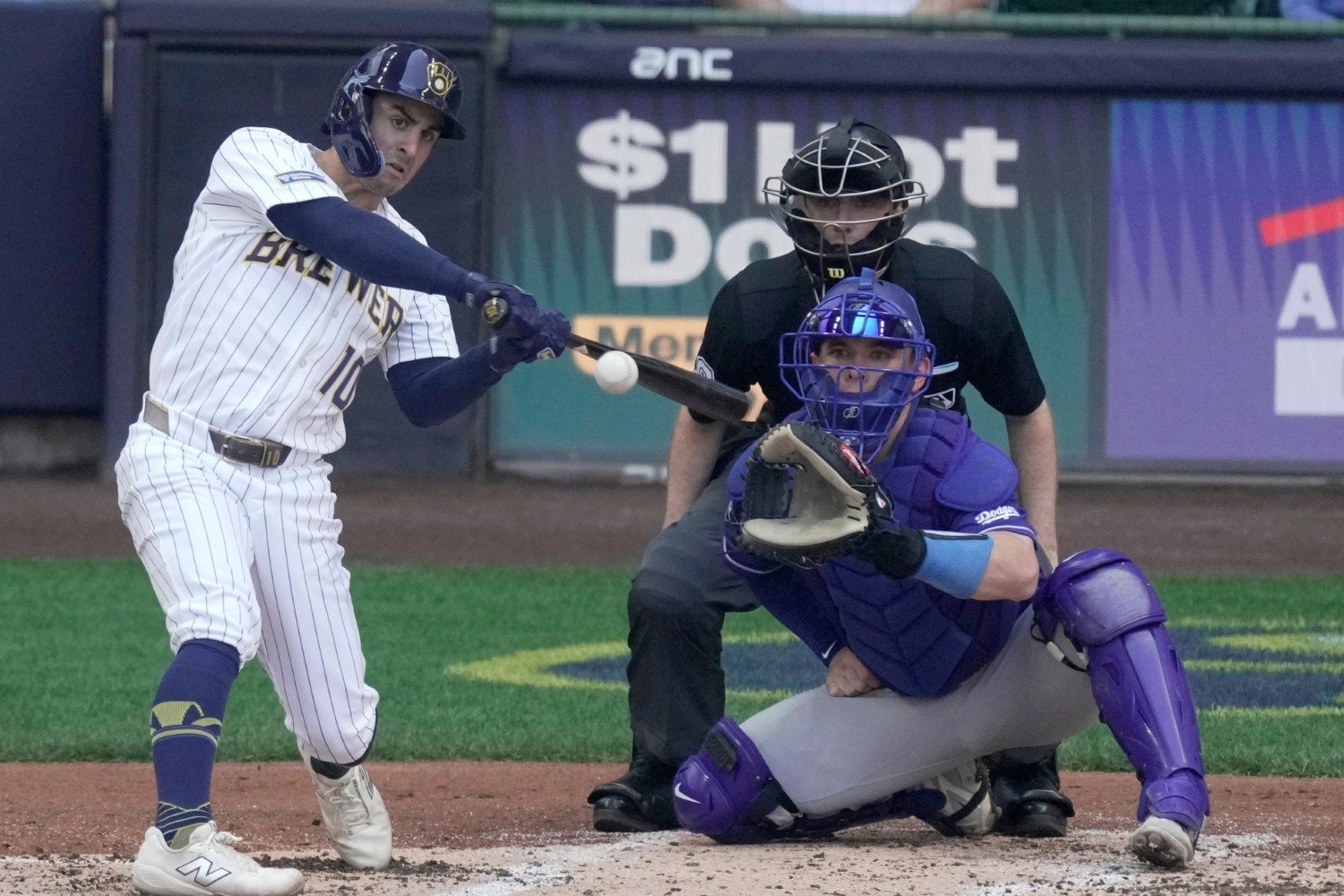 There are lots of ways to get on base, and at his best, Sal Frelick is adept at all of them. He'll take a walk—and, indeed, is walking more this year than in either of his previous two full seasons. He's not exceptional at getting hit by pitches, but nor is he afraid to do so. When he swings, he's one of the better players in the league at the sneaky art of thwacking the catcher's mitt and reaching via catcher interference (four times already this year, after four last year). He's also an excellent singles hitter. He hits the ball in quirky, unpredictable ways, often going the other way or chopping a slow bouncer that earns him an infield single. He's also reached on (non-catcher interference) errors twice this year. Frelick boasted a .351 OBP in 2025, and given the uptick in walk rate this year, one could plausibly have hoped he would bloom into the team's reliable leadoff man against right-handed pitchers. Instead, though, he's batting .217/.287/.298 in his first 185 plate appearances of the year, and there's a cogent case to be made that he shouldn't be in the lineup as often, regardless of his placement on the card. Garrett Mitchell is outplaying him. Jake Bauers's return to (limited) outfield duty threatens his playing time. What happened to the version of Frelick that seemed so dynamic and dangerous? It's not much of a mystery. Here's where all of his batted balls in the Statcast launch angle sweet spot (between 8° and 32°) landed in 2025. Here's the same chart—the same selection of batted balls—for 2026. I could do some light editing to show you the crucial difference between those two images, but it's unnecessary. You see it, right? In shallow and medium-depth right-center field, where there was a huge swamp of orange singles in 2025, there's just... nothing. Frelick simply isn't hitting the ball that made him great last year: the line drive to right-center. It's incredibly stark, how he went from hitting that surefire single at least once a week to not doing it at all. Here's a hit that never had any chance not to be one, from last March. Uk80MlhfWGw0TUFRPT1fQWxkV0FsTlJWUWNBV2xzRkFBQUhVMU5VQUFCV0JRVUFCQVFOQXdWUVVBTUFDVlFF.mp4 Here's one from September. QXdhQXZfWGw0TUFRPT1fQmxkVFhWMEVVRk1BWGxzS0JBQUhCQUJXQUZrTVVsRUFVRlVNVmxkVEF3QlVBZ3BT.mp4 All year, like clockwork, against both lefties and righties, Frelick hit clean singles over the second baseman's head. He had 50 batted balls to right or center with an exit velocity of at least 70 miles an hour and a launch angle between 8° and 17° last year. Those criteria sound incredibly specific, but he did that 50 times. Only a fisftul of players were more adept at hitting pulled line drives like that—Nico Hoerner, José Ramírez, Ernie Clement, those types. Hitting that type of batted ball consistently is one of the surest signs of a superbly organized approach at the plate. Of the 50 balls he hit that way, 42 went for hits. This season, Frelick has only nine such batted balls. He's on pace to see the number of those easy-money singles and doubles be cut roughly in half, which explains almost all his lost production this year. It's not because defenses have started aligning themselves in radical and impenetrable ways. It's not because pitchers have started working him especially differently. Rather, Frelick just isn't getting the bat head out far enough to hit the ball that way anymore. Frelick's swing is about as fast as it was in 2025, but it's a bit flatter. More problematically, he's letting the ball travel more—arguably, too much. Last season, his average contact point was 27.8 inches in front of his center of mass, according to Statcast. As you would guess, when you isolate those well-hit balls to the middle of the diamond and the pull field, that point edges forward, to 28.2 inches. This year, though, his contact point is just 24.6 inches in front of him. You can't hit the ball with authority to the pull field with any consistency at that depth in the hitting zone—at least, not with Frelick's swing. Guys who swing steeper and/or faster might be able to, but Frelick needs to get the bat head out and be slightly around the ball to generate that high-quality contact. Because he's letting the ball get deeper this year, he's not getting the barrel to that point where success awaits. He's hitting more ground balls, and he is pulling those. Much of his hard contact is coming when he gets out in front on the ball—but often, that means that he's rolled over already. Here's where his batted balls at 90+ miles per hour went last season: Here's the same image for 2026: Frelick's average exit velocity on balls in the launch angle sweet spot is down from 89.8 MPH last year to 88.9. His average launch angle on balls hit at least 90 MPH is down from 9° to 5°. Both of those numbers are indicators that correlate strongly with overall offensive value, and especially value on contact. That Frelick is hitting it less hard when he finds the right line and less high when he hits it hard speaks to the problems at hand, and the contact point tells us where the problem lies. Somehow, he has to modify his process to get back to catching the ball squarely in that pulled line-drive zone. It might mean a change to his mechanics, to restore some of the tilt his swing has lost this spring. It's more likely that the problem comes down to timing, and to being farther forward in the hitting zone when he rolls his wrists. Either way, though, the Brewers need him to rediscover that magic. The trademark length that made their lineup so daunting last year is absent right now, with the bottom third of the batting order containing three near-automatic outs. Replacing Frelick is an option, but not an appealing one. The team would strongly prefer that he get right. To do that, he has to catch the ball out front a bit more often, to once again become impossible to defend—instead of pretty darn easy. View the full article
 -
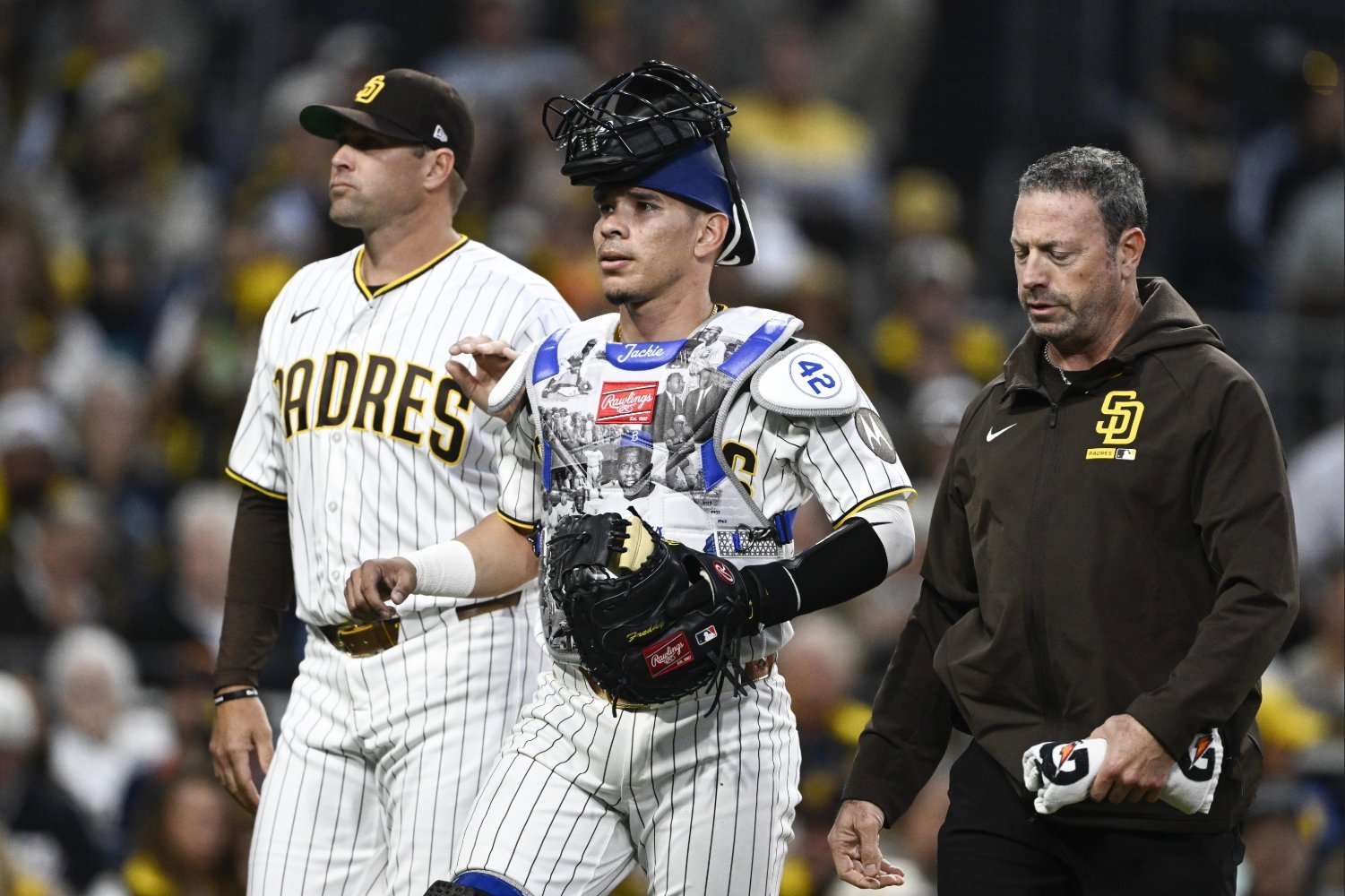 Even as we reach the end of May, the San Diego Padres are, somewhat surprisingly, continuing to prove their meddle in 2026. Despite an offense that continues to linger around the middle of the pack and a pitching staff racking up injuries but not innings, they’ve been hanging around with the Los Angeles Dodgers at or near the top of the National League West. If they could gain some stability in the rotation, they could further fortify themselves as a repeat contender in the NL. Unfortunately, that hasn’t been the case quite yet. Facing an uncertain ownership future (that has since become more certain) and some payroll peril wrought by repeated long-term position player contracts from A.J. Preller, the Padres were forced into various band-aid solutions this past winter. That approach drove their additions to the lineup – in the form of one-year or minor-league deals – but has become more glaring in the rotation where the same philosophy applied. After bringing Michael King back on what is essentially a one-year pact, the Padres added each of Germán Márquez, Walker Buehler, and Griffin Canning on either one-year or minor-league, non-guaranteed deals. That trio joined Matt Waldron and JP Sears as candidates to fill out the back end of the rotation (as well as Marco Gonzales & Triston McKenzie as rotation candidates in camp). It was a group short on ceiling but also without a clear floor given the blend of past-prime skill sets and variable performance. So, it should come as no surprise that the results thus far have been exceedingly mediocre for San Diego. The Padres rank 18th in fWAR accrued by starting pitching (3.3), with an ERA that sits 22nd (4.47) and a FIP that reads slightly better at 4.01 (15th). Most concerning, though, is the fact that their 241.2 innings from the rotation ranks just 25th. As of the middle of the month, they’d been outscored 69-35 in the first three innings of games in 2026. While the offense itself is part of the issue in that latter number, the absence of longevity from much of the starting staff looms as the larger problem moving forward. It’s hard to think of an example of this more on display than on May 14 in Milwaukee. Griffin Canning needed 43 pitches to get through the first inning against the Brewers, walking four consecutive hitters and leaving his team in a 3-0 hole before it was done. Through his first three starts, he was averaging less than four innings per outing with an ERA that sat (deceptively) over 10 and a walk rate that checked in over 16 percent. It’s still a small sample for him, but the issues aren’t limited to Canning either. Márquez has a 5.76 ERA across six starts with an even worse FIP (6.65) and a strikeout rate of only 14.8 percent against a 9.4 percent walk rate. Waldron has an 8.49 ERA and FIP over five through roughly 23 innings of work. The issues have become more glaring in the absence of Nick Pivetta and repeated setbacks for Joe Musgrove. Had the Padres had their full arsenal of safe options among the starting candidates, this would be far less of a conversation. But outside of Michael King and Randy Vásquez, there isn’t a lot of stability to be found. It remains to be seen how much Lucas Giolito will help in that regard, but it seems as if the Padres will be in need of help regardless. Ultimately, the issue lies not in what the rotation woes are doing to the team at large, but what it could mean for the bullpen. Padre relievers have already been asked to throw over 200 innings, ranking seventh in the league. That’s an intense volume at this point in the year. Bullpens become more crucial as the season wears on, and the Padres will certainly want their top arms to remain as fresh as possible if they’re to remain in contention for the stretch run. Whether or not that can happen, however, is an entire mystery. Each of Márquez (even if currently on the IL) and Waldron appear on the shakiest ground. Canning has been mostly fine, if not at the mercy of terrible command and woeful defense. However, the Padres simply cannot sustain their success with only two starters offering steady outings. Perhaps Giolito will help to quell those concerns. If not, questions about this team’s long-term viability with such a patchwork rotation will continue to persist. View the full article
 -
 Ryan Clifford homered in both games of Syracuse's doubleheader, including a solo shot for the nightcap's only run. Danis Correa earned the win, and Anderson Severino closed it out. Tanner Witt fanned four over two innings to anchor Brooklyn's combined three-hit shutout. Jose Ramos and Nick Lorusso hit back-to-back homers in the seventh to lift Binghamton past Richmond. Bryce Conley pitched five scoreless. St. Lucie scored twice in the eighth to beat Palm Beach. Mets Transactions New York Mets sent RHP Craig Kimbrel outright to Syracuse Mets. Clifford's Two-Hit Effort Comes Up Short In Syracuse Opener The Syracuse Mets dropped Game 1 of their doubleheader against the visiting Buffalo Bisons by a 6-4 score. Cleanup hitter Ryan Clifford led the offense, going 2-for-3 with a double, his ninth home run of the season, two runs scored, and one RBI. Jared Young added an RBI single in the third inning, and Kevin Parada finished 1-for-3 with a run scored. Jihwan Bae contributed a hit, while Christian Arroyo also reached on a base hit. Starter Jack Wenninger struggled with the long ball, allowing two homers across 5 1/3 innings. He gave up five hits and six runs, four of them earned, with two walks and five strikeouts. Wenninger fell to 3-2 on the year. Dylan Ross worked 2/3 of an inning of scoreless relief, and A.J. Minter struck out one in a perfect seventh. Buffalo opened the scoring with a three-run home run in the top of the third to take a 4-0 lead. Syracuse cut into the deficit in the bottom of the fourth. Clifford doubled to start the inning, Eric Wagaman drew a walk, and Bae reached on a fielder's choice that brought Clifford home. A Buffalo throwing error kept the rally going, and Cristian Pache then lifted a sacrifice fly to score Wagaman and make it a 4-3 game. Buffalo answered with two runs in the top of the sixth before Clifford's solo blast in the bottom of the inning capped the scoring. Player AB R H RBI BB K Christian Arroyo 4 0 1 0 0 0 Jared Young 4 0 1 1 0 0 Andy Ibáñez 3 0 0 0 0 0 Ryan Clifford 3 2 2 1 0 0 Eric Wagaman 2 1 0 0 1 0 Ji Hwan Bae 2 0 1 0 0 0 Cristian Pache 2 0 0 1 0 0 Jackson Cluff 3 0 0 0 0 2 Kevin Parada 3 1 1 0 0 1 Player IP H R ER BB K HR Jack Wenninger (L, 3-2) 5 1/3 5 6 4 2 5 2 Dylan Ross 2/3 1 0 0 0 0 0 A.J. Minter 1 0 0 0 0 1 0 Clifford's Solo Shot, Five-Arm Shutout Lift Syracuse In Nightcap The Syracuse Mets answered with a 1-0 win in the nightcap of their doubleheader against the Buffalo Bisons. Ryan Clifford accounted for the only run of the game with a solo home run in the bottom of the fourth, his tenth long ball of the season. Clifford finished 1-for-3 with the lone RBI and two strikeouts. Eric Wagaman doubled, and Yonny Hernández added a base hit for the only other Syracuse hits in the seven-inning game. Five Syracuse pitchers combined on a two-hit shutout. Joey Gerber set the tone with two innings of one-hit ball and one strikeout. Danis Correa picked up the win to improve to 2-0, working two scoreless innings of one-hit relief while walking one and striking out two. Ryan Lambert struck out three of the four batters he faced in his lone frame of work to earn his sixth hold. Nate Lavender added a scoreless inning with a strikeout for his first hold of the year, and Anderson Severino closed it out with a clean seventh for his fifth save. Clifford's blast accounted for the only offense either side managed all afternoon. Syracuse stranded just two runners on base, and the bullpen combined to issue three walks while striking out eight across the final five innings. Player AB R H RBI BB K Ji Hwan Bae 3 0 0 0 0 1 Christian Arroyo 3 0 0 0 0 0 Ryan Clifford 3 1 1 1 0 2 Andy Ibáñez 2 0 0 0 0 1 Eric Wagaman 2 0 1 0 0 1 Ben Rortvedt 2 0 0 0 0 0 Yonny Hernández 2 0 1 0 0 0 Jackson Cluff 2 0 0 0 0 1 Matt Rudick 2 0 0 0 0 1 Player IP H R ER BB K HR Joey Gerber 2 1 0 0 0 1 0 Danis Correa (W, 2-0) 2 1 0 0 1 2 0 Ryan Lambert (H, 6) 1 0 0 0 1 3 0 Nate Lavender (H, 1) 1 0 0 0 1 1 0 Anderson Severino (S, 5) 1 0 0 0 0 1 0 Back-To-Back Seventh-Inning Homers Power Binghamton Past Richmond The Binghamton Rumble Ponies defeated the Richmond Flying Squirrels 2-1 behind back-to-back home runs in the top of the seventh inning. Cleanup hitter Jose Ramos broke a scoreless tie with a solo shot for his seventh home run of the year, and Nick Lorusso followed immediately with his eighth long ball to push the lead to two. Ramos finished 2-for-3 with a walk, an RBI, and one strikeout. Lorusso added a 1-for-4 day with the run and two strikeouts. Marco Vargas doubled, while Eli Serrano III and Vincent Perozo each added singles. Starter Bryce Conley turned in a strong outing across five scoreless innings. He allowed four hits, walked one, and struck out five without surrendering a run. Dan Hammer earned the win to move to 1-0, working 1 2/3 innings of relief in which he allowed one earned run on a hit while striking out two. Brian Metoyer added a perfect inning with two strikeouts for the hold, and Felipe De La Cruz closed the door with 1 1/3 innings to record his first save of the season. Richmond's only run came on a groundout in the bottom of the seventh, narrowing the margin to one before the Binghamton bullpen slammed the door over the final two innings. The Rumble Ponies struck out 10 times as a team but drew two walks and finished with six hits. Player AB R H RBI BB K Marco Vargas 4 0 1 0 0 3 Chris Suero 3 0 0 0 1 2 Eli Serrano III 4 0 1 0 0 0 Jose Ramos 3 1 2 1 1 1 D'Andre Smith 4 0 0 0 0 1 Nick Lorusso 4 1 1 1 0 2 JT Schwartz 3 0 0 0 0 0 Vincent Perozo 3 0 1 0 0 1 Jaylen Palmer 3 0 0 0 0 0 Wyatt Young 0 0 0 0 0 0 Player IP H R ER BB K HR Bryce Conley 5 4 0 0 1 5 0 Dan Hammer (W, 1-0) 1 2/3 1 1 1 0 2 0 Brian Metoyer (H, 2) 1 0 0 0 1 2 0 Felipe De La Cruz (S, 1) 1 1/3 2 0 0 0 1 0 Brooklyn's Bullpen Combines For Three-Hit Shutout Of Hudson Valley The Brooklyn Cyclones blanked the Hudson Valley Renegades 4-0 in a game called early due to wet conditions. Six Brooklyn pitchers combined for a three-hit shutout. Tanner Witt set the tone with two innings of one-hit work, walking one and striking out four to earn the win and improve to 2-0. Adbert Alzolay, Bryce Jenkins, Juan Arnaud, and Hunter Hodges each tossed a scoreless inning. Gregori Louis struck out three batters in his frame of work, and the bullpen combined for 10 strikeouts on the night. JT Benson's two-RBI double in the bottom of the second inning provided the early cushion. The rally started with a Daiverson Gutierrez walk and a Yonatan Henriquez fielder's choice that left Henriquez at first. Ronald Hernandez then drew a walk, and Benson followed with a line drive to left field that brought Henriquez and Hernandez home for a 2-0 lead. Brooklyn added a run in the third when Mitch Voit, who had led off the inning with a single, came around to score on a wild pitch. Henriquez tacked on the fourth run with a sacrifice fly in the bottom of the fifth that scored John Bay, who had doubled to lead off the frame. Benson finished 1-for-2 with a walk and the two RBIs. Voit, Bay, Henriquez, Ronald Hernandez, and Colin Houck each added a hit, with Bay's coming on a double. The Cyclones drew eight walks as a team. The game was halted in the bottom of the seventh and officially called due to field conditions. Player AB R H RBI BB K Mitch Voit 3 1 1 0 1 2 John Bay 3 1 1 0 1 1 Corey Collins 3 0 0 0 1 1 Daiverson Gutierrez 2 0 0 0 1 0 Diego Mosquera 1 0 0 0 0 1 Yonatan Henriquez 3 1 1 1 0 1 Ronald Hernandez 2 1 1 0 2 0 Colin Houck 4 0 1 0 0 3 JT Benson 2 0 1 2 1 0 Sam Biller 0 0 0 0 0 0 Trace Willhoite 2 0 0 0 1 1 Player IP H R ER BB K HR Brady Miller 0 0 0 0 0 0 0 Tanner Witt (W, 2-0) 2 1 0 0 1 4 0 Adbert Alzolay (H, 2) 1 1 0 0 1 0 0 Gregori Louis (H, 1) 1 0 0 0 1 3 0 Bryce Jenkins (H, 3) 1 1 0 0 0 1 0 Juan Arnaud 1 0 0 0 1 1 0 Hunter Hodges 1 0 0 0 0 1 0 Two-Run Eighth Lifts St. Lucie Past Palm Beach The St. Lucie Mets held off the Palm Beach Cardinals 5-4 thanks to a pivotal two-run eighth inning. Yohairo Cuevas opened the frame with a double, and after a walk to Jeremy Rodriguez, Branny De Oleo singled Cuevas home. Sam Robertson's forceout later in the inning scored Rodriguez to give St. Lucie a 5-2 cushion. Antonio Jimenez had given the Mets their first run with a third-inning RBI double that scored Elian Peña. The Mets added two more in the fourth on a Kevin Villavicencio RBI single and a Simon Juan forceout, with both Rodriguez and De Oleo coming around to score after drawing walks. Peña finished 1-for-3 with a walk and a run scored. Jimenez went 1-for-4 with the double and an RBI. De Oleo, Cuevas, Villavicencio, and Robertson each added a hit, with Rodriguez crossing the plate twice on the night despite going hitless and drawing two walks. Starter Joel Lara worked 2 2/3 scoreless innings, allowing no hits while walking two and striking out three. Justin Armbruester earned the win with 1 1/3 innings of one-hit relief, improving to 1-0. Emilio Obispo struck out seven over 3 1/3 frames, though he surrendered a solo home run in the seventh that pulled Palm Beach within one at the time. Joe Scarborough gave up two runs in the ninth but recorded his second save of the season as the Mets held on. Player AB R H RBI BB K Elian Peña 3 1 1 0 1 1 Antonio Jimenez 4 0 1 1 0 1 Yohairo Cuevas 4 1 1 0 0 2 Julio Zayas 3 0 0 0 1 0 Jeremy Rodriguez 2 2 0 0 2 2 Branny De Oleo 3 1 1 1 1 1 Kevin Villavicencio 3 0 1 1 1 2 Sam Robertson 3 0 1 1 1 1 Simon Juan 4 0 0 1 0 2 Player IP H R ER BB K HR Joel Lara 2 2/3 0 0 0 2 3 0 Justin Armbruester (W, 1-0) 1 1/3 1 0 0 0 0 0 Emilio Obispo (H, 1) 3 1/3 6 2 2 0 7 1 Christian Rodriguez (H, 2) 2/3 1 0 0 0 1 0 Joe Scarborough (S, 2) 1 3 2 2 1 0 0 Top-20 Prospect Performance Carson Benge: DNP A.J. Ewing: DNP Jonah Tong: DNP Elian Pena: 1-for-3, BB, R, K Jack Wenninger: 5 1/3 IP, 5 H, 6 R, 4 ER, 2 BB, 5 K, 2 HR Ryan Clifford: 3-for-6, 2B, 2 HR, 3 R, 2 RBI, 2 K Jacob Reimer: DNP Nick Morabito: DNP Mitch Voit: 1-for-3, BB, R, 2 K Jonathan Santucci: DNP Chris Suero: 0-for-3, BB, 2 K Zach Thornton: DNP Wandy Asigen: DNP Will Watson: DNP Eli Serrano III: 1-for-4, 2B Randy Guzman: DNP Ryan Lambert: 1 IP, 0 H, 0 R, 0 ER, 1 BB, 3 K Dylan Ross: 2/3 IP, 1 H, 0 R, 0 ER, 0 BB, 0 K Antonio Jimenez: 1-for-4, 2B, RBI, K R.J. Gordon: DNP View the full article
 -
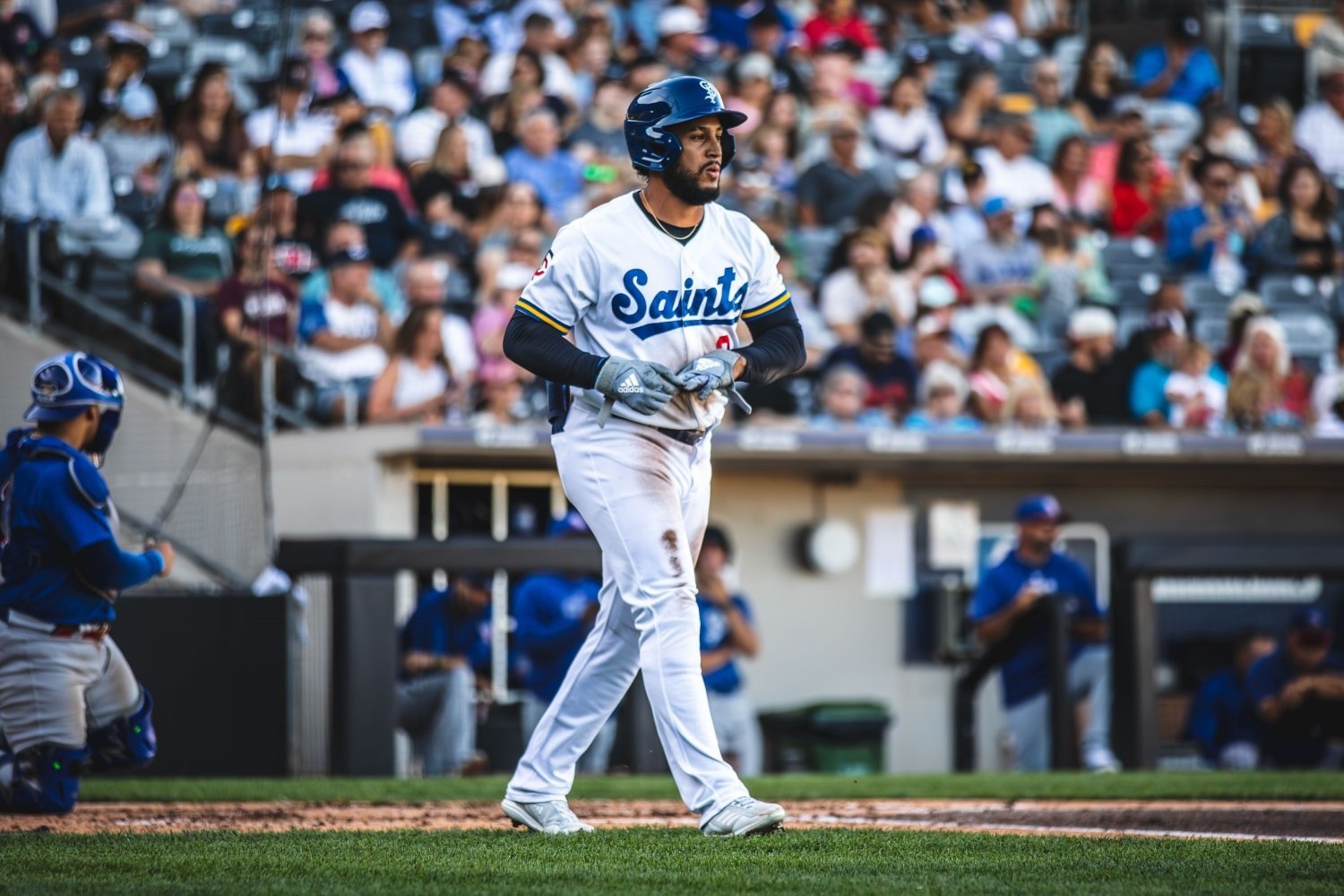 There are few prospects in baseball more difficult to evaluate right now than Emmanuel Rodriguez. When he’s on the field, the talent jumps off the screen. The bat speed is electric. The raw power is obvious. He controls the strike zone like a seasoned veteran and still flashes enough athleticism to make you dream on an impact everyday player in the middle of the lineup. The problem is Twins fans have spent more time talking about Rodriguez’s rehab timelines than his stat lines. At some point, availability becomes part of the scouting report. Panic Level: Moderate — But Trending Up If Twins fans are completely frustrated with Rodriguez’s inability to stay healthy, it’s understandable. Since signing for $2.5 million in July of 2019, Rodriguez has rarely been able to stack healthy seasons together. His career high in games played remains just 99 contests back in 2023, and the injuries have started to pile up in a concerning way. There was a knee injury in 2022. Then came the abdominal strain in 2023. Thumb problems surfaced in 2024. Last season included thumb, hip, and oblique issues. Now, 2026 brings another significant setback with a torn ulnar collateral ligament in his left thumb that required surgery. For a player whose development already included swing-and-miss concerns, the lost reps matter. A lot. Rodriguez has never really gotten the chance to settle into the rhythm of a full professional season. Just when he starts building momentum, something seems to interrupt it. That constant stop-and-start development can be brutal for young hitters trying to refine timing, pitch recognition, and overall approach. The frustrating part is the flashes are still there every single time he returns. There are challenges Rodriguez has faced trying to maintain developmental consistency because of the injuries. Yet the organization also remains encouraged by how impactful he looks whenever he is healthy enough to play consistently. Why The Ceiling Still Matters Even with all the injuries, Rodriguez remains one of the most talented position players in the organization. He reached Triple-A as a 21-year-old in 2024 despite all the missed time, which says plenty about how evaluators still view his upside. Players don’t move that aggressively through a system unless organizations believe the talent is real. And the talent absolutely is real. Rodriguez combines elite swing speed with legitimate raw power from the left side. He’s capable of driving the baseball to all fields and can completely change a game with one swing. Few hitters in the system possess his combination of patience and damage potential. His 21.7% career walk rate entering 2026 is borderline absurd. Rodriguez understands the strike zone exceptionally well and rarely expands it recklessly. That type of plate discipline is usually a strong indicator of future offensive success. The issue is what happens when he decides to swing. His career strikeout rate sits at 30.3%, and while he doesn’t chase pitches excessively, the in-zone whiff numbers remain concerning. Rodriguez misses hittable pitches more often than a future star probably should. The missed development time likely hasn’t helped, especially for a hitter who needs repetitions against upper-level pitching. Still, there’s enough here to believe adjustments are possible. He’s also athletic enough to provide value outside the batter’s box. Rodriguez runs well, handles center field competently, and owns a plus arm. Even if he eventually shifts to a corner outfield spot permanently, the overall profile still works if the bat reaches its ceiling. That’s why this situation remains so complicated. The “Injury-Prone” Conversation Has Arrived Fair or unfair, Rodriguez has entered the stage of his career where the “injury-prone” label follows him everywhere. Some players eventually shake that reputation. Others never do. The encouraging part for Twins fans is Rodriguez is still young enough to rewrite the narrative completely. We’ve seen prospects lose developmental time early in their careers before finally putting together several healthy seasons in a row. Sometimes physical maturity helps. Sometimes routines improve. Sometimes it’s simply luck evening out. But the longer the injuries continue, the harder it becomes to separate bad luck from long-term concern. That’s especially true for a player whose game already comes with risk attached because of the strikeouts. Rodriguez doesn’t necessarily need to become a perfect hitter to succeed, but he does need consistent at-bats to polish the rough edges offensively. Without those reps, projecting stardom becomes increasingly difficult. Twins fans shouldn’t give up on Rodriguez. Players with this kind of upside don’t grow on trees, and the flashes remain exciting enough to dream on a middle-of-the-order impact bat someday landing in Minnesota. The combination of patience, power, athleticism, and arm strength still makes him one of the more intriguing prospects in the organization. But the concern level is no longer hypothetical. The injuries are becoming a defining part of his profile, and until Rodriguez proves he can stay on the field for an extended stretch, the questions are going to keep growing louder. The ceiling remains extremely high. The floor, however, feels shakier than it did a year ago. That’s what makes Rodriguez one of the most fascinating (and nerve-wracking) prospects in the Twins system today. How panicked should fans be about Rodriguez’s injury history? Leave a comment and start the discussion. View the full article
