


DiamondCentric
-
Posts
2,631 -
Joined
-
Last visited
Never
Content Type
Profiles
Forums
Events
News
Tutorials & Help
Major League Baseball Videos
Guides & Resources
Store
Downloads
Gallery
Everything posted by DiamondCentric
-

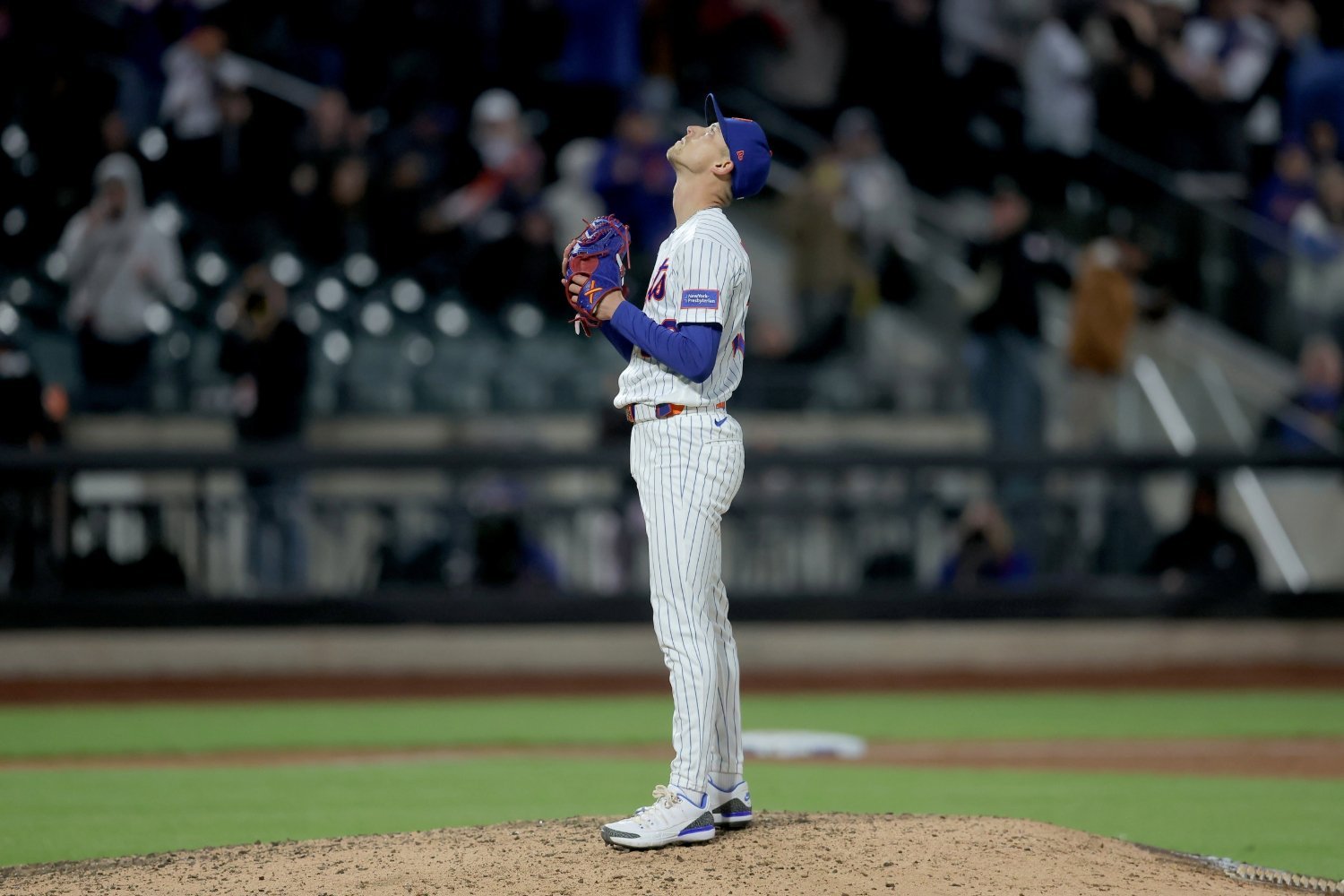 Luke Weaver, one of the New York Mets’ stellar relief pitching signings in the offseason, allowed two runs in an April 30 outing against the Washington Nationals, completing a seven-game stretch in which he allowed eight earned runs in seven frames, for a 10.29 ERA. After that, however, his improvement has been undeniable. Following that rough stretch that started on April 9 and finished at the end of the month, Weaver has been excellent and has managed to lower his season ERA to a fine 3.22 (with a 3.38 FIP) in 22.1 innings. That’s certainly an improvement over the 3.62 ERA he had last season, one that masked a rough September in which he posted a 9.64 ERA. As you can see, the lack of a reliable breaking ball might always result in some inconsistency, but the right-hander has been able to right the ship in recent weeks for the Mets and he deserves credit for it. A Perfect Stretch Since that April 30 outing, the changeup artist has been perfect in May. This month, he has an immaculate 0.00 ERA in 10.1 innings, with six hits allowed, four walks, and a whopping 15 strikeouts. His 1.63 FIP over that span suggests that it has been more skill than luck, too. We can divide Weaver’s 2026 campaign so far into three parts: a successful start in which he posted five straight scoreless appearances until April 7, the aforementioned struggles between April 9 and 30, and his most recent stretch of dominance. Again, consistency might not be his middle name, but when Weaver is healthy and has gotten into a nice rhythm, he is a solid setup man, even if his repertoire is a bit unorthodox. If he can somehow make enough strides with his cutter, he might be able to increase his ceiling. It’s much easier said than done, though. Weaver’s four-seam fastball and changeup have returned a .269 and a .228 xwOBA, respectively. The cutter, on the other hand, has a much worse .536 xwOBA. This metric tries to describe performance based on quantity and quality of contact, which suggests that this specific pitch has lacked command and has been rocked by hitters. Luke Weaver Has His Limitations The problem with Weaver is that while his changeup has some filthy movement, we have seen what hitters can do to it when they are sitting on it. So, he needs elite fastball command or for that cutter to improve if he’s going to hit his ceiling. Despite having stretches in which he looks borderline unplayable, Weaver has certainly salvaged his career with his move to the bullpen. The Mets decided to invest, and all things considered, it’s fair to say their faith has been rewarded with his performance so far. Even with the occasional meltdown, Weaver has proven he can be a solid eighth-inning guy or a high-leverage weapon for the Mets. He has certainly been on a nice run in May, and for the sake of the team, they should hope that it continues. View the full article
 -
 Ethan Salas crushed a two-run homer and Jagger Haynes spun six scoreless innings with seven strikeouts as the Double-A San Antonio Missions edged the Corpus Christi Hooks 3-2. Ryan Wideman went 3-for-5 with a homer in the Low-A Lake Elsinore Storm's 7-6 walk-off win, capped by Jorge Quintana's RBI single. Nick Solak's homer wasn't enough in the Triple-A San Antonio Missions' 5-3 loss. Jake Cunningham homered twice, but the Fort Wayne TinCaps fell 5-2. Padres Minor-League Transactions Lake Elsinore Storm placed C Ty Harvey on the 7-day injured list. C Alcides Hernandez assigned to Lake Elsinore Storm from ACL Padres. IF Yimy Tovar assigned to Lake Elsinore Storm from ACL Padres. Nick Solak Stays Hot, But Chihuahuas Bow To Isotopes Nick Solak homered for the third time in four games, but the Triple-A El Paso Chihuahuas fell to the host Albuquerque Isotopes 5-3. The Isotopes scored all of their runs in the second inning. Solak had his third straight two-hit game and fifth in eight games. He hit his homer, a two-out solo shot, in the top of the first inning for his fifth of the season. He was the only Chihuahua with more than one hit. After Solak's homer and the Isotopes' five-run outburst, the Chihuahuas continued to chip away in the fourth inning. Jase Bowen had a leadoff double and went to third on Solak's flyout to center. Will Wagner then hit a two-out single to plate Bowen. Mason McCoy walked and Nate Mondou singled to right to score Wagner and make it a 5-3 game. Chihuahuas left-handed starter Fernando Sanchez, in his third Triple-A start, gave up all five runs in five innings, allowing six hits and five runs with seven strikeouts. Right-hander Sean Boyle pitched three scoreless innings, with no walks, three hits and two strikeouts. El Paso's Marcos Castanon went 0-for-4 to snap his 10-game hitting streak. EP_0526.mp4 Player AB R H RBI BB K Samad Taylor 4 0 1 0 0 2 Jase Bowen 3 1 1 0 0 1 Nick Solak 4 1 2 1 0 0 Marcos Castañon 4 0 0 0 0 0 Will Wagner 4 1 1 1 0 0 Mason McCoy 3 0 0 0 1 1 Nate Mondou 4 0 1 1 0 3 Victor Duarte 3 0 0 0 0 0 Nick Schnell 3 0 1 0 0 0 Player IP H R ER BB K HR Fernando Sanchez (L) 5 6 5 5 5 7 1 Sean Boyle 3 3 0 0 0 2 0 Ethan Salas' HR, Jagger Haynes' 6 Shutout Innings Spark Missions Ethan Salas smashed his seventh homer of the season and left-handed starter Jagger Haynes struck out seven over six shutout innings as the host Double-A San Antonio Missions edged the Corpus Christi Hooks 3-2. The game was called after eight innings due to thunderstorms. Haynes, Padres Mission's No. 11 prospect, yielded just four hits while walking three. His seven strikeouts matched a season high accomplished two starts ago. This was his first scoreless outing of the season. Haynes also picked two runners off first. It was a 0-0 game entering the bottom of the sixth. Kai Roberts drew a leadoff walk and, one out later, Salas, Padres Mission's No. 1 prospect, crushed the first pitch he saw deep over the right-field wall for his seventh homer of the year and fourth in May. With Haynes out of the game, Corpus Christi scored in the top of the seventh off left-hander Harry Gustin. But the Missions got that run back in the bottom half when Braedon Karpathios doubled to right, went to third on Ryan Jackson's sacrifice bunt and easily scored on Albert Fabian's sac fly to center for a 3-1 lead. The Hooks took advantage of three walks by right-hander Sadrac Franco to score in the top of the eighth, but right-hander Josh Mallitz earned his first save of the season by retiring the only batter he faced. SA_0526.mp4 Player AB R H RBI BB K Carson Tucker 4 0 0 0 0 2 Ethan Salas 4 1 2 2 0 0 Romeo Sanabria 3 0 0 0 0 2 Tirso Ornelas 3 0 0 0 0 1 Braedon Karpathios 3 1 2 0 0 1 Ryan Jackson 2 0 1 0 0 1 Albert Fabian 2 0 0 1 0 0 Francisco Acuna 3 0 0 0 0 2 Kai Roberts 2 1 0 0 1 0 Player IP H R ER BB K HR Jagger Haynes (W) 6 4 0 0 3 7 0 Harry Gustin 1 1 1 1 1 0 0 Sadrac Franco 2/3 0 1 1 3 1 0 Josh Mallitz (S) 1/3 0 0 0 0 0 0 Jake Cunningham Goes Deep Twice, But TinCaps Fall To Cubs Despite a pair of home runs by Jake Cunningham, the High-A Fort Wayne TinCaps dropped a 5-2 decision to the host South Bend Cubs. Cunningham hit solo homers in the second and ninth innings, giving him nine for the season. He also hit two homers on April 19 vs. Lake County, the only two multihomer games for the TinCaps this season. Cunningham, who also walked, is tied with Alex McCoy for the team lead. Lamar King Jr., Padres Mission's No. 10 prospect, also had two of the TinCaps' seven hits, including a double, for his 10th multihit game of the season. TinCaps right-handed starter Matthew Watson went five innings and allowed four runs (three earned) on six hits with no walks and a strikeout. The bullpen of right-hander Isaiah Lowe, left-hander Igor Gil and left-hander Braian Salazar combined for the final three innings, giving up just one run on two hits with a walk and two strikeouts. South Bend scored twice in the first, another in the second and one more in each of the fifth and eighth innings. FW1_0526.mp4 FW2_0526.mp4 Player AB R H RBI BB K Justin DeCriscio 3 0 0 0 1 0 Zach Evans 4 0 1 0 0 0 Lamar King Jr. 4 0 2 0 0 1 Alex McCoy 3 0 0 0 1 0 Carlos Rodriguez 4 0 0 0 0 2 Jake Cunningham 3 2 2 2 1 1 Rosman Verdugo 4 0 1 0 0 2 Kavares Tears 4 0 1 0 0 2 Kasen Wells 4 0 0 0 0 1 Player IP H R ER BB K HR Matthew Watson (L) 5 6 4 3 0 1 0 Isaiah Lowe 1 1/3 1 0 0 0 1 0 Igor Gil 2/3 0 0 0 0 1 0 Braian Salazar 1 1 1 1 1 0 0 Yimy Tovar Helps Storm Walk Off 66ers In Season Debut Newcomer Yimy Tovar singled home the tying and scored the winner when Jorge Quintana grounded a single past the second baseman with two outs in the bottom of the ninth inning as the host Low-A Lake Elsinore Storm pulled out a 7-6 walk-off victory over the Inland Empire 66ers. Tovar, who went 2-for-5 with two RBIs, a steal and a run scored, was called up before the game from the Arizona Complex League, where he had a .345/.406/.527 slash line in 16 games with a homer, 11 RBIs and nine steals. The 20-year-old middle infielder actually played in eight games for the Storm last year with a .409/.435/.545 slash line, but was back in the ACL to begin 2026. Ryan Wideman, Padres Mission's No. 5 prospect, went 3-for-5 with a homer, two RBIs and two runs scored, while Quintana and Conner Westenburg each had two hits. Kerrington Cross scored twice without recording a hit, but he did walk once. Wideman's homer leading off the bottom of the third cut the Storm's deficit to 2-1 and he had an RBI single to tie the game as part of a three-run fourth, which included a two-run error, that made it 4-2. The 66ers scored three of their own in the fifth to go up 5-4. In the seventh, the Storm tied it on Tovar's single to center that scored Cross, who had reached on an error. But the 66ers countered once again with a run in the top of the eighth to tie it. In the bottom of the ninth, Cross again reached on an error. A two-out balk put Cross at second and Tovar lined an opposite-field single to right to score Cross and tie the game. Tovar stole second and Quintana, Padres Mission's No. 6 prospect, sent his walk-off single up the middle. Storm right-handed starter Winyer Chourio allowed two runs in four innings on three hits and four walks with five strikeouts. LE_0526.mp4 Player AB R H RBI BB K Ryan Wideman 5 2 3 2 0 0 Kerrington Cross 4 2 0 0 1 0 Bradley Frye 4 0 0 0 0 0 Truitt Madonna 5 0 1 0 0 2 Yimy Tovar 5 1 2 2 0 0 Jorge Quintana 5 0 2 1 0 3 Qrey Lott 4 0 0 0 0 1 George Bilecki 2 1 0 0 2 1 Conner Westenburg 4 1 2 0 0 1 Player IP H R ER BB K HR Winyer Chourio 4 3 2 2 4 5 0 Nick Falter 3 5 3 3 0 3 0 Rordy Mejia (W) 2 1 1 0 0 1 0 Top 20 Prospect Performance Ethan Salas: 2-for-4, HR, 2 RBI, R Kash Mayfield: DNP Miguel Mendez: DNP Kruz Schoolcraft: DNP Ryan Wideman: 3-for-5, HR, 2 RBI, 2 R Jorge Quintana: 2-for-5, 2B, RBI, 3 K Ty Harvey: Injured Kale Fountain: Injured, out for season Braedon Karpathios: 2-for-3, 2B, R, SB, K Lamar King Jr.: 2-for-4, 2B, K Jagger Haynes: 6 IP, 4 H, 0 R, 3 BB, 7 K, W Alex McCoy: 0-for-3, BB Truitt Madonna: 1-for-5, 2 K Tucker Musgrove: DNP Garrett Hawkins: DNP Michael Salina: DNP Eric Yost: DNP Rosman Verdugo: 1-for-4, 2 K Bryan Balzer: DNP Deivid Coronil: DNP View the full article
 -
 Transactions: Milwaukee Brewers recalled RHP Coleman Crow from Nashville Sounds. Nashville Sounds sent 3B Luke Adams on a rehab assignment to ACL Brewers. Nashville Sounds released CF Jordyn Adams. RHP Yorman Galindez assigned to Biloxi Shuckers from Wisconsin Timber Rattlers. RHP Tanner Perry assigned to Wisconsin Timber Rattlers from Wilson Warbirds. Wilson Warbirds placed LHP Anfernny Reyes on the 7-day injured list. RHP Hayden Robinson assigned to Wilson Warbirds from ACL Brewers. Game Action: Nashville pre-game media notes Nashville 5, Gwinnett (Braves) 4 Box Score As always, you are encouraged to read the official round-up from the team’s site: Sounds Shut Down Late-Inning Threat from Gwinnett The Sounds jumped out to an early lead in their 5-4 victory on Tuesday and then held on thanks in large part to their relief corps. Luis Matos extended his hitting streak to eight games with a two-run single to open the scoring in the first, which you can find here courtesy of Nashville’s X account: Jeferson Quero later added a sac fly to make it 3-0 before Gwinnett rallied to tie it at three in the fourth. Cooper Pratt immediately responded for Nashville with an RBI single in the bottom half of the fourth, before Brock Wilken gave the Sounds insurance with an RBI ground out in the following inning. Wilken, who was dropped to the eighth spot in the lineup on Tuesday, could be fighting for playing time when Luke Adams returns from rehab. Luis Lara added another three hits, and this catch on defense: Lara is now second in the league in hits and has been the model of consistency all season long. Since March 31, Lara has carried a batting average above .324 for all but four days of the season. The Nashville rotation is suddenly looking a bit thin with recent call-ups of Robert Gasser and Coleman Crow. It was a team effort out of the pen with Brian Fitzpatrick earning the win in relief. The rehabbing Rob Zastryzny now has 5.1 IP clean at Nashville this month, with six strikeouts, one hit, and one walk allowed. Craig Yoho earned the save, and has not allowed an earned run since April 25, a string of 11.2IP. In that stretch, Yoho has a 13:4 K:BB ratio with only five hits allowed. Nashville, now 31-21 on the season and half a game out of first in the International League, has yet to name a starter for Wednesday’s game. Biloxi pre-game media notes The Shuckers were rained out on Tuesday and will make the game up as part of a doubleheader on Wednesday. Tanner Gillis (0-1, 3.95 ERA) was slated to start Tuesday’s game while Bishop Letson (0-3, 6.66 ERA) was originally scheduled for Wednesday’s game. Wisconsin pre-game media notes Peoria (Cardinals) 5, Wisconsin 2, F/7 Box Score Peoria Beats Rattlers to Open Series Wisconsin lost their series opener to Peoria in a soggy, rain-shortened affair on Tuesday night. Despite the wind and the rain, Andrew Fischer shot a lightning bolt through the air with his league-leading 14th home run of the season, courtesy of the Wisconsin X account: Not much left to say about Fischer at this point. The power is incredible, but the whiffs and strikeouts are still a bit problematic. Will we see Fischer in Biloxi soon, or does the organization want to see him improve more on his swing and miss before awarding a promotion? Marco Dinges accounted for the other run with a moon shot of his own: Not many other superlatives for Wisconsin on this night, but you can find the rest of the “highlights” below. The well-travelled Andrick Nava had two hits. Josiah Ragsdale had a double. Starter Wande Torres (5IP 8H 4R 4ER 2B 6K) labored through another tough outing and took the loss. If you're looking for a silver lining on this cloudy night, it sounds like Luis Pena's rehab assignment is complete and we will see him back in Appleton this week. 2025 59th overall pick J.D. Thompson (0-0, 5.68 ERA) will take the mound in game two on Wednesday. Wilson pre-game media notes Wilson 4, Myrtle Beach (Cubs) 1 Box Score Renz Mows Down Myrtle Beach in Series Opener The Wilson Warbirds pulled out a 4-1 victory over Myrtle Beach on Tuesday night despite striking out a whopping 16 times as a team and being outhit 9-6. Brady Ebel was once again the sparkplug of the Wilson offense as he had two doubles and drove in two runs. The 18 year-old Ebel earned Player of the Week honors for his stellar performance last week and now a .993 OPS with 16 runs, 16 RBI and a perfect 13/13 on steals in the month of May. Find the videos of the double here and here. Leadoff man Juan Ortuno was the only Warbird who didn’t strike out in the game. Ortuno was on base four times with a pair of walks and a pair of singles. Ortuno also scored twice and swiped his 15th bag of the season. Pedro Ibarguen provided the big blast of the day with his third homer of the year which you can see here, via the Wilson X account: Ibarguen will carry an eight-game hit streak into Wednesday’s game and for the month of May, the soon-to-be 20-year-old sports a 1.078 OPS. Rylan Mills also had an RBI double and now has six RBI in just four games in the Carolina League: On the mound for Wilson, Tyler Renz had his best outing of the season. In his first scoreless outing since April 14, Renz matched a season-high in innings (five) and strikeouts (six). After 11 walks in his last 12 innings, Renz only walked two on the night, throwing 52 of 73 pitches for strikes. @Spencer Michaelis captured some of Renz’s stuff here: Enniel Cortez (3IP 3H 1R 1ER 0BB 3K) picked up where Renz left off in one of his better showings on the season. Peyton Niksch picked up his second save of the season with a scoreless final frame. Jayden Dubanewicz (0-0, 2.53 ERA) will look to keep things rolling for Wilson (22-20) when he takes the mound on Wednesday. After a rough start to their inaugural season, Wilson suddenly feels like they're rounding into form, as the Warbirds have won 9 of their last 11 games. ACL Brewers 10, ACL Cubs 6 Box Score It is beginning to feel like the next wave of Brewers hitting prospects is breaking out in the Arizona Complex League. That was on full display in Tuesday’s drubbing 10-6 of the Cubs. Kenny Fenelon, the highest paid signing at $1.3M in the 2025 international class, had a inside-the-park home run, a double and steal. Brailyn Antunez had a 109.6 MPH exit velocity home run. Alexander Frias had two more hits and now leads the team with a 1.126 OPS. Luke Adams made his first appearance since early April and hit a home run and a double. Juan Martinez replaced Adams and stole two bases and is now 10/10 on the season in steals. The Brewers as a team went 8/8 on steals in the game. Cristopher Acosta, another million dollar bonus baby from the 2025 class, knocked in two runs on the night, which doubled his RBI total for the season. On the mound, starter Joey Broughton had his best professional outing. Broughton struck out six in four innings of one-run ball. The innings and strikeouts totals were personal bests for Broughton, who now has a 1.69 ERA in 10.2 IP in ACL play. Organizational Scoreboard including starting pitcher info, game times, MiLB TV links, and box scores Current Milwaukee Brewers Organization Batting Stats and Depth Current Milwaukee Brewers Organization Pitching Stats and Depth View the full article
 -
Twins Minor League Report (5/26): Hendry Mendez Is Unstoppable!
DiamondCentric posted an article in Twins Daily
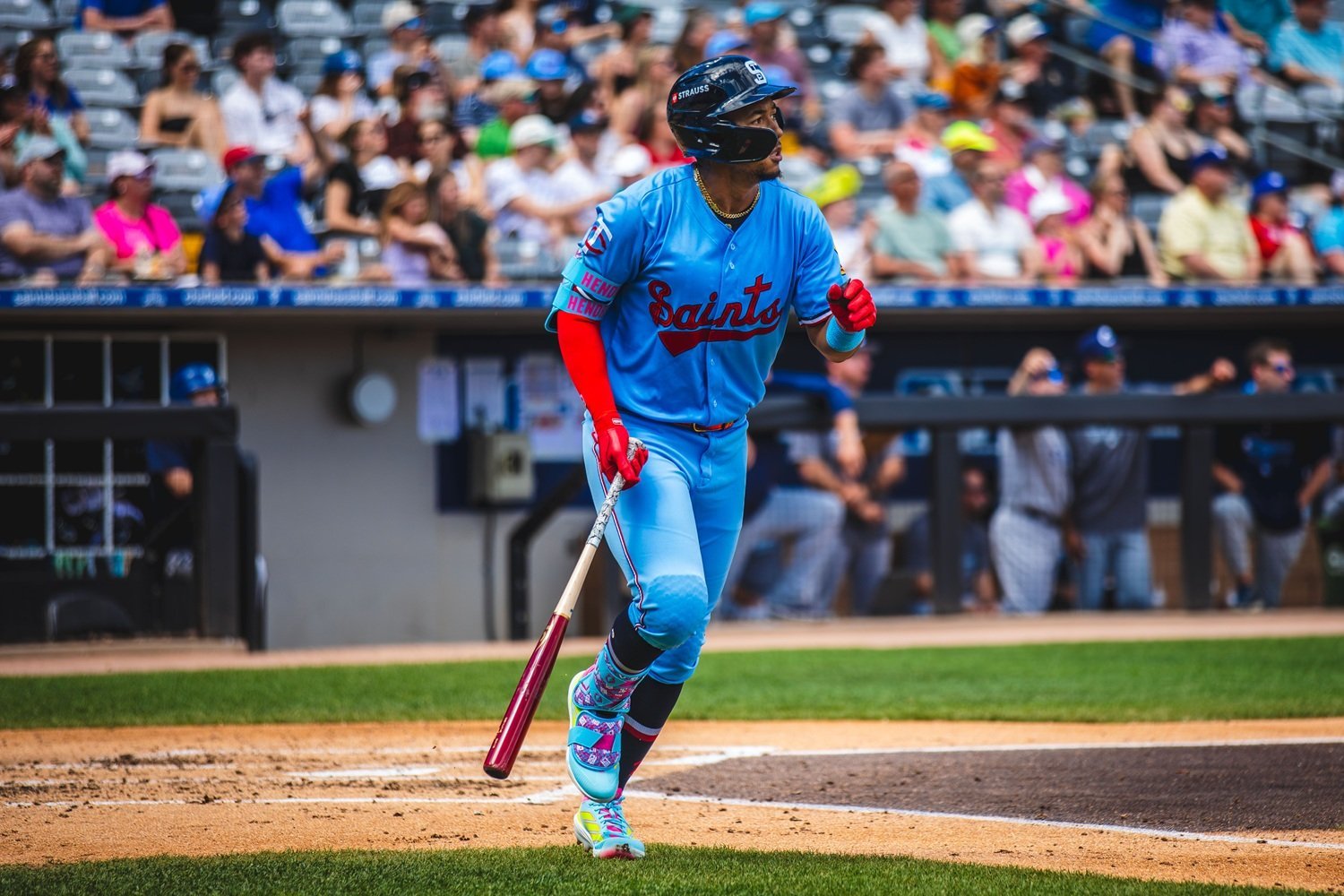 TRANSACTIONS IF Harry Genth was assigned to Cedar Rapids from Wichita. OF Kala’i Rosario was activated off Wichita’s injured list. OF Graham Brown was signed as a free agent and joined Fort Myers. He had been playing for the Washington Wild Things of the independent Frontier League. C Ian Daugherty was placed on the developmental list. SAINTS SENTINEL St. Paul 6, Louisville 4 Box Score SP: John Klein (3 IP, 2 H, 2 R, 3 BB, 5 K) HR: Kaelen Culpepper (11) Multi-hit games: Hendry Mendez (4-for-4, BB, 2 2B), Matt Wallner (2-for-5, 2 2B) The Saints lineup steadily piled up runs, tacking on a pair in the first, third and sixth innings. Hendry Mendez was a menace. He went 4-for-4 with a walk and a pair of doubles. All four of his batted balls were hard hit, registering exit velos of 104.2 mph, 103.7 mph, 100.6 mph and 95.7 mph. In 17 games with St. Paul, Mendez is hitting .400/.513/.600 (1.113 OPS). He also has more walks (18.8 BB%) than strikeouts (12.5 K%) so far is his first taste of Triple A. The Saints lineup combined to record 11 batted balls hit in excess of 100 mph. Matt Wallner led the way with both of his doubles clocked at 109.1 mph. Wallner and catcher Richardo Olivar had two RBIs each. Kaelen Culpepper led off the game by hitting a low 82 mph curveball out for his 11th home run of the season. He’s hitting .266/.392/.557 (.949 OPS) so far in May. John Klein had a rocky first inning that featured two hits, two walks, a stolen base and a run-scoring wild pitch. After surrendering two runs in that first frame, Klein retired six of the next seven batters he faced. He topped out at 95.8 mph and got 10 swinging strikes on his 60 total pitches. The only two runs the bullpen surrendered were unearned. Grant Hartwig and Cody Laweryson provided an inning each before both Marco Raya and Raul Brito went two frames. Royce Lewis was 0-for-4, was hit by a pitch and drove in a run. WIND SURGE WISDOM Springfield 8, Wichita 5 Box Score SP: Eli Jones (2 2/3 IP, 4 H, 2 R, 2 BB, 2 K HR: None Multi-hit games: Kyle DeBarge (2-for-5, 2 2B), Jaime Ferrer (2-for-4, 3B, BB) Since this game was delayed and the first pitch wasn’t thrown until after 8 p.m. CT, you just knew the final innings were destined to drag on. Seven of the game’s 13 runs were scored in the final inning and a half. The final out was recorded at 11 p.m. Wichita starter Eli Jones gave up a lot of traffic and surrendered a pair of runs before exiting with an injury in the bottom of the third inning. The Wind Surge could never climb out of that hole. Not only did Kyle DeBarge and Jaime Ferrer carry the offense, but the rest of the lineup struggled to just make contact, going 2-for-21 with 13 strikeouts. KERNELS NUGGETS Cedar Rapids 9, Quand Cities 8 Box Score SP: Michael Ross (3 1/3 IP, 12 H, 8 R, 7 ER, 1 BB, 1 K) HR: Yasser Mercedes (2) Multi-hit games: Yasser Mercedes (2-for-4, HR, BB), Eduardo Tait (2-for-4, 2B, BB), Khadim Diaw (2-for-4, 2B, BB) What a comeback! The Kernels entered the bottom of the ninth inning trailing 8-5. Brandon Winokur provided the spark, leading things off with a walk and then stealing second base. Eduardo Tait capped an eight-pitch at bat by hitting a double into the gap to plate Winokur. Back-to-back singles followed from Khadim Diaw and Yasser Mercedes that brought Tait around to score, putting Cedar Rapids within a run of tying the game. Mercedes stole second to put two runners in scoring position, but Quinn McDaniel went down swinging for the first out of the inning. Next, Jacob McCombs was intentionally walked to load the bases. Rayne Doncon managed to foul off two two-strike pitches in an eight-pitch battle that resulted in him drawing a bases-loaded walk to score the game-tying run. Jay Thomason came up with the opportunity to play the hero, and he was perfect for the role. Thomason chased a pitch away that was nearly in the opposite batter’s box but was able to get a bat on it. He swatted the pitch the other way, sending a soft liner through the drawn in infield to deliver a walk-off win. MUSSEL MATTERS Jupiter 9, Fort Myers 7 Box Score SP: Ramiro Villanueva (3 2/3 IP, 2 H, 1 R, 3 BB, 3 K) HR: Luis Fragoza (2) Multi-hit games: Dameury Pena (2-for-5) The Mussels led 7-3 heading into the seventh inning, but the Hammerheads, well, kept hammering ... ahead. Things really unraveled in the top of the ninth for Fort Myers, as some poor defense contributed to what ended up being a three-run inning. Starter Ramiro Villanueva tallied another solid start. Over 3 2/3 innings, the 20-year-old surrendered one run on two hits. He did walk three batters, though. Villanueva struck out three batters, got eight swinging strikes and topped out at 96 mph. He has a 2.66 ERA through 20 1/3 innings but his 16 walks are cause for some concern. Matthew Dalquist had been among the many pitching bright spots for Fort Myers, but he was rocked for five runs (four earned) while only recording four outs. Luis Fragoza, a 19-year-old playing in his fifth game with the Mussels, hit a two-run homer. He was in center field tonight and has played all three outfield positions in addition to first base in his handful of games with Fort Myers. Enrique Jimenez had a pesky day at the plate. He went 1-for-1 with a two-run double and three walks. One of his free passes was thanks to a successful check swing challenge, which is something that’s being tested in some of the lower levels. Unfortunately, Jimenez also exited this game early. In that messy ninth inning, there was a play at the plate that put Jimenez in a tough position to both catch the throw and apply the tag at the same time. Though he couldn’t corral the throw, he managed to get through that unscathed. He actually appeared to suffer the injury retrieving the ball. He took an awkward step and came up limping. COMPLEX CHRONICLES FCL Twins 1, FCL Orioles 0 (8 innings) Box Score SP: Cristian Hernandez (5 IP, 2 H, 0 R, 2 BB, 1 K) HR: None Multi-hit games: Miguel Caraballo (2-for-2, BB) The Baby Twins finally broke through in the top of the eighth (which is an extra inning in the FCL) when Yovanny Duran drove in Jose Barrios on a single. That’s right, Duran driving in Barrios. It’s like we’re in the year 2057 in an OOTP simulation or something. Pitching was the standout in this one, with Cristian Hernandez delivering five shutout frames of two-hit ball. Geremy Villoria, who was acquired alongside Hendry Mendez in the Harrison Bader trade, followed with a perfect inning. Villoria, 17, has now logged 5 2/3 scoreless innings to start his season. Carter Holjes held off the O’s in both the seventh and eighth innings TWINS DAILY MINOR LEAGUE PLAYERS OF THE DAY Pitcher of the Day: Cristian Hernandez, FCL Twins (5 IP, 2 H, 0 R, 2 BB, 1 K) Hitter of the Day: Hendry Mendez, St. Paul (4-for-4, BB, 2 2B) PROSPECT SUMMARY Check out the Prospect Tracker for more. 2. Kaelen Culpepper (St. Paul) 1-for-4, HR, BB, 2 R, RBI, K 5. Eduardo Tait (Cedar Rapids) 2-for-4, 2B, BB, 2 R, RBI, K and threw out one of three attempted base stealers 7. Marek Houston (Cedar Rapids) 0-for-4, BB 10. Gabriel Gonzalez (St. Paul) 1-for-4, 2B, R 12. Andrew Morris (Twins) 2/3 IP, 0 H, 0 R, 0 BB, 0 K 13. Hendry Mendez (St. Paul) 4-for-4, 2B, BB, 2 R, CS 14. Quentin Young (Fort Myers) 0-for-2, 2 BB, 2 K 15. Brandon Winokur (Cedar Rapids) 1-for-3, 2B, BB, HBP, SB, 3 R 19. Khadim Diaw (Cedar Rapids) 2-for-4, 2B, BB, R, RBI 20. Kyle DeBarge (Wichita) 2-for-5, 2 2B, R, RBI TOMORROW’S PROBABLE STARTERS St. Paul: Mike Paredes Wichita: Off Cedar Rapids: Jason Doktorczyk Fort Myers: Merit Jones CURRENT W-L RECORDS Minnesota Twins: 27-28 St. Paul Saints: 26-25 Wichita Wind Surge: 21-25 Cedar Rapids Kernels: 24-22 Fort Myers Mighty Mussels: 24-22 FCL Twins: 10-8 DSL Twins: (season begins Monday, June 1) View the full article
 -
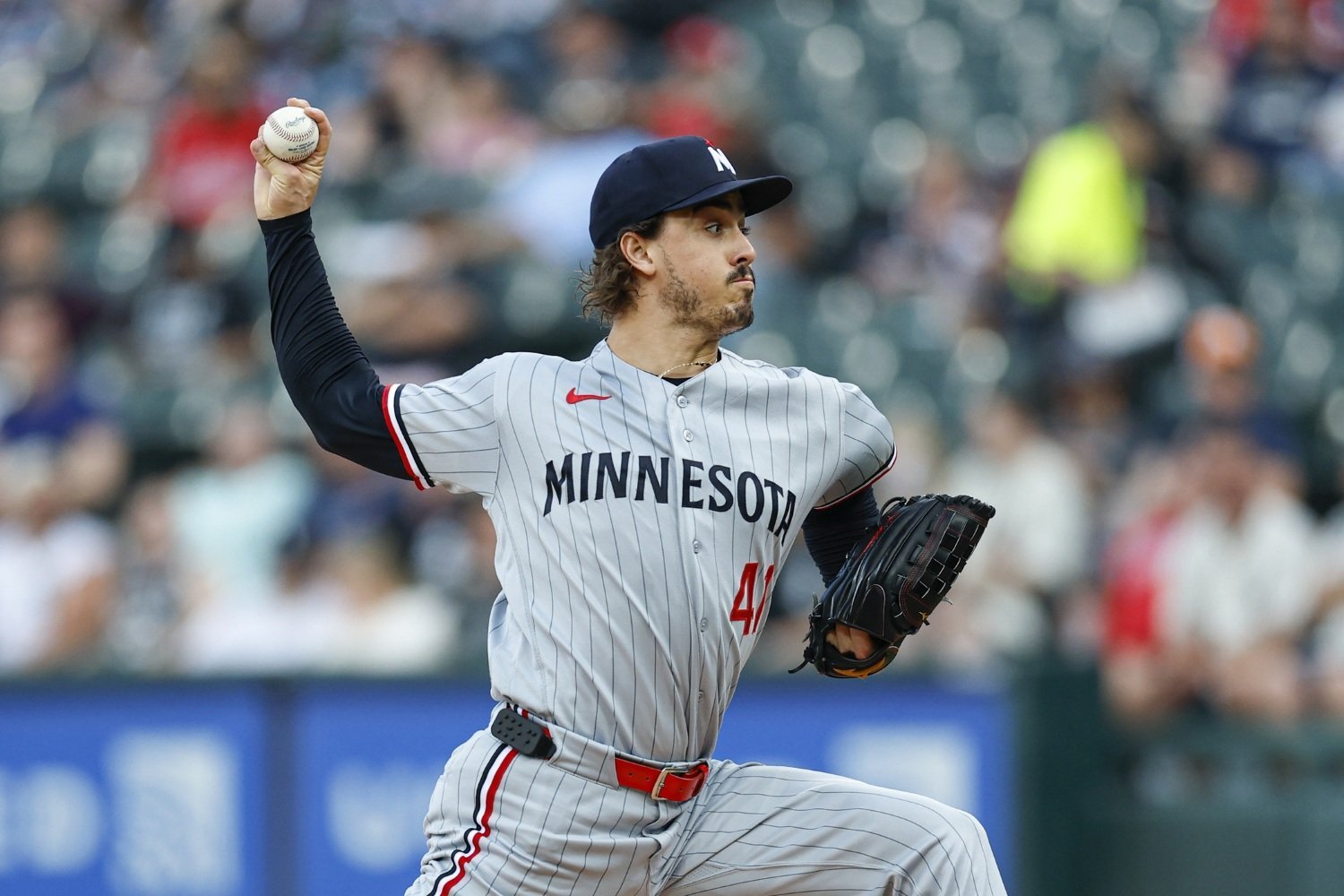 Box Score SP: Joe Ryan 7.2 IP, 5 H, 2 ER, 0 BB, 9 K (98 pitches, 77 strikes (79%)) Home Runs: N/A Top 3 WPA: Brooks Lee (0.29), Luke Keaschall (0.24), Kody Clemens & Taylor Rogers (0.14) Win Probability Chart (via FanGraphs) On Memorial Day afternoon, the Twins discovered that the White Sox are a solid baseball team. Joe Ryan got the call to face the South Side Mashers on Tuesday, in hopes of inching his squad back toward the .500 mark, while Chicago sent young righty Sean Burke out to keep the Twinkies in their third place. PItchers Dominate, but Twins Break Through The first three innings started where Monday night's game left off, with pitchers dominating the game and no hits to be found. Burke had failed to finish five full innings in each of his last three starts, so his success appeared to be fool's gold. In the top of the fourth, the Twins mined two runs on three straight hits. First, Trevor Larnach put a ball in play to right, and Rikuu Nishida couldn't come up with the diving catch in his second career start in right field. Larnach took the double on his stat sheet, and he quickly scampered home when Kody Clemens laced a slump-breaker off the right-field line for a rolling triple to put the Twins up 1-0. With Clemens at third and nobody out, Austin Martin looked to keep Burke and the White Sox on the ropes. He laced a single up the middle to make it 2-0. What happened next didn't appear to be a game-wrecker at the time, but it would loom large as the pitching duel continued. Martin attempted to steal second base with offensive wet blanket Victor Caratini at the plate. Drew Romo threw a perfect strike to second to nab Martin, and the Twins didn't taste the bases again against Burke. The Experience Dominates Early and Often Joe Ryan took this early lead and immediately faced a test in the bottom of the fourth. Colson Montgomery and Chase Meidroth hit a couple of two-out singles to put Ryan on the ropes. Ryan swept out perennial Twins pest and phonics experiment Andrew Benintendi by inducing a harmless grounder to get his squad back into the dugout. Burke found his groove again, and took care of the Twins in order in the fifth, sixth, and seventh innings. When the White Sox took on Ryan in the bottom of the seventh, they again made some noise with two outs. A single off second base by Benintendi and a questionable hit by pitch to the light-hitting Tristan Peters got Ryan ranting and raving and throwing his glove around. Caratini went to the mound, settled down his ace, and the duo struck out Romo to again keep the zeros coming. But the Murakami Experience is Inevitable Derek Shelton let Ryan take the hill in the eighth with 88 pitches already thrown, with the top of the order (and power) looming. Nishida immediately put Twins Territory on edge with a leadoff single. While he danced the night away off first, Ryan managed to come back to strike out Sam Antonacci for his ninth of the night. American League-leading home run phenom Munetaka Murakami stepped to the plate, and this time, Ryan's attempt to sweep away the threat landed far out in the right field seats for Murakami's 19th of the year. Ryan pitched at a remarkable 76% strike rate, but it was just one too many. Once the sadness settled in, Ryan managed to get one more out before Shelton brought in Anthony Banda to face the lefty Montgomery. Banda immediately gave up a blast to the wall... but not over it. With the go-ahead run now at second base, Banda faced Meidroth with everything on the line. Meidroth beat out a grounder to Luke Keaschall, but luckily, the umpires took the initiative to examine the play more closely because the Twins were all out of challenges. The call was overturned, and we headed to the ninth all square at 2-2. Who Will Enjoy How This Experience Ends? Brooks Lee got himself on first base to start the ninth by hustling out an infield hit. Josh Bell came in to replace Larnach against the lefty Sean Newcomb. That was a poor decision, as Bell grounded into a double play via the usual 5-4-1-Slide Rule review route, as Lee slid wildly past second base, wiping out the fact that Bell beat out the relay. Banda stayed in to start the ninth, and Will Venable took charge by pinch-hitting Randal Grichuk for Benintendi. Banda made that move look foolish with a strikeout. Venable came out yet again to pinch-hit Derek Hill for Peters, and Shelton countered by bringing in the roller coaster that is the Andrew Morris save experience. Morris got the final two outs on quality plays from Keaschall, and bonus baseball would decide tonight's experience. Clemens started out the 10th as the Twins' placed runner, and Martin struck out on a highly questionable check swing to leave him right there. This placed the pressure on the previously mentioned Caratini, who kept the offensive offense narrative going with a strikeout of his own. Shelton went to the Orlando Arcia experience for a pinch-hit in this crucial moment, with the White Sox's big guns waiting at the bottom of the inning. Arcia delivered with a hit, but Nishida made Ramon Borrego look foolish, as he threw out Clemens by a mile at the plate. Unlike Shelton, Venable switched out his zombie runner for a faster option in Luisangel Acuña. Taylor Rogers had no margin for error with Nishida at the plate. While his throw home might have saved the top of the inning, Nishida foul bunted himself on out of the bottom of the 10th. Antonacci bounced a ball off of Rogers' leg, but Arcia held it in the infield to put runners at the corners for Murakami. This had to be how the experience ends right? Wrong! Rogers swept away Murakami on a grounder to Bell, who tagged Antonacci somewhere near Lake Michigan for a double play! Or, if you believe the actual call, he lined out to Bell who then doubled up Antonacci. Either way, the Taylor Rogers Experience sends us to the 11th! Every Experience Needs to End The game's goofy vibe rolled right on into the top of the 11th and off of third baseman Miguel Vargas's leg for a Keaschall leadoff single. This advanced new Manfred Man Ryan Kreidler to third base, and brought up the much-maligned James Outman for a potential hero moment. Outman, predictably, struck out instead, and it was left up to Byron Buxton to break the seal that had paralyzed the Twins' side of the scoreboard since the fourth inning. On a 3-1 pitch, home plate umpire Adam Beck called strike two, but Buxton challenged—and won a walk to load the bases. The newest man of the hour was Lee. New pitcher Tyler Davis got Lee to foul off two straight fastballs. Davis then slowed things down a bit, and Lee sped them back up with a bases-clearing double!!! The Twins left Lee on the bases, and Yoendrys Gómez allowed the Sox's automatic runner to score in the bottom half of the frame to add some angst to the evening once again. But once a Grichuk grounder found its way from Kreidler's arm to Bell's glove, Twins Territory could exhale and soak in the experience in victorious style. What’s Next? The Twins look to keep the momentum rolling against Chicago in the third game of the four-game series. Twins rookie Connor Prielipp (1-2, 4.03 ERA) will make his first start on the South Side, and will face rising ace righty Davis Martin (7-1, 2.04 ERA). On paper, this looks like another big blast-or-bust kind of evening, First pitch is scheduled for 6:40 pm CDT. Postgame Interviews Bullpen Usage Spreadsheet FRI SAT SUN MON TUE TOT Gómez 13 0 22 0 18 53 Rojas 0 45 0 0 0 45 Morris 0 32 0 0 8 40 Rogers 0 6 13 0 16 35 Woods Richardson 0 0 0 35 0 35 Banda 14 0 10 0 10 34 Adams 29 0 1 0 0 30 Orze 14 0 10 0 0 24 View the full article
 -
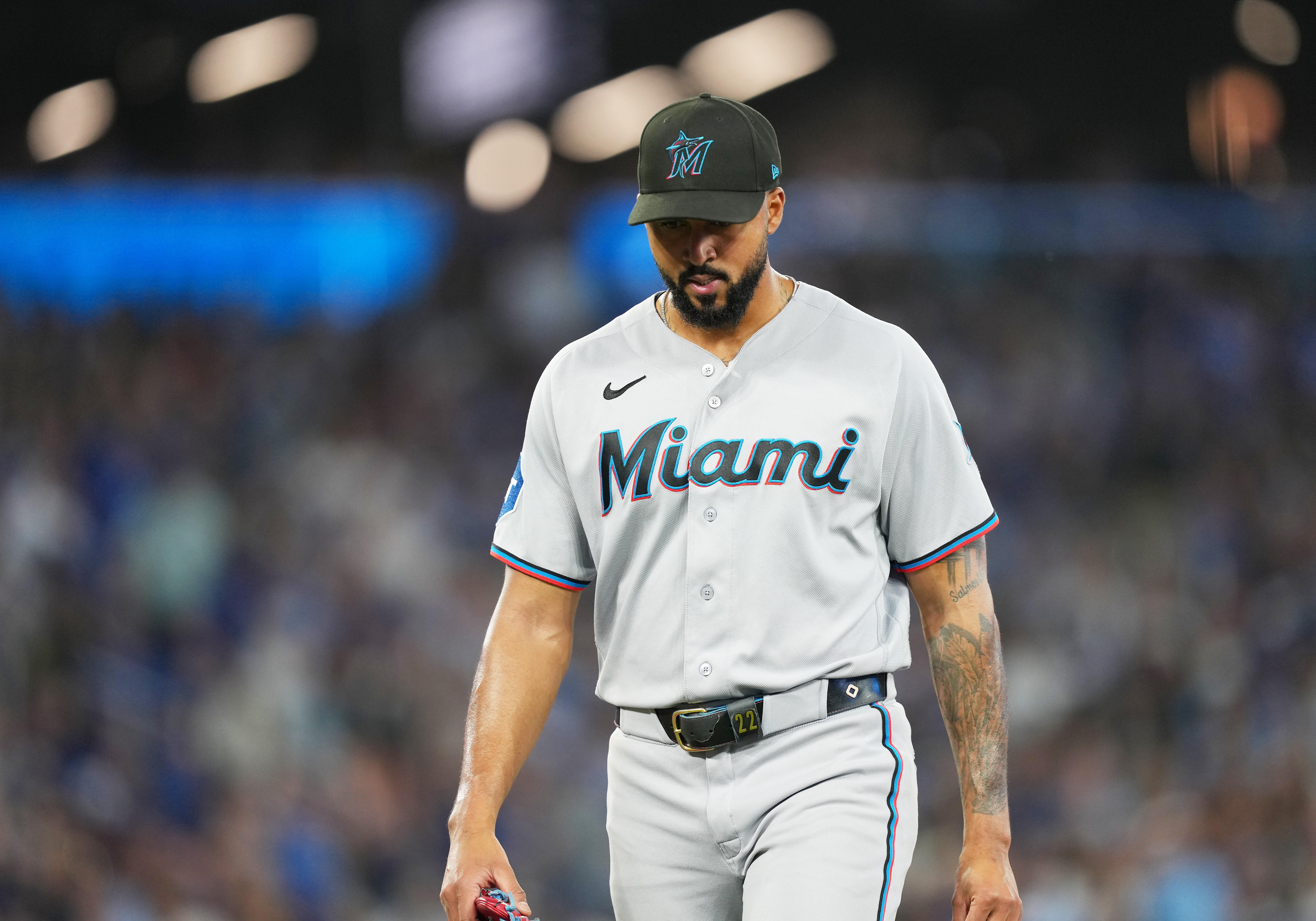 The Miami Marlins looked to make it five-straight wins, and unlike Monday night's game, odds were in Miami's favor with Sandy Alcantara on the mound and what looked to be a bullpen game for the Toronto Blue Jays. Alcantara had his worst start of the season and the offense wasn't able to get anything going as the Marlins win-streak was snapped, falling by a final score of 8-1. Alcantara had his worst start of the season, allowing eight runs on 10 hits (three home runs); he allowed one walk and struck out four. He also hit four batters. It marked the first time in franchise history that a Marlins pitcher hit four batters in a single-start. "I think every start, whether it's veteran or not, Daniel (Moskos) and company get with him and it's discussed," Manager Clayton McCullough said. "The things that went well, the things that we're going to look to improve on moving forward and try to get some of the pitches with two strikes in better spots. Just had some pitches leak today over the plate that they put good swings on them." The Blue Jays got to Alcantara right away in the bottom of the first inning, as Ernie Clement took him deep for his fifth home run of the season, taking an early 1-0 lead. In the bottom of the third, Kazuma Okamoto smacked an RBI single, extending the lead, 2-0. The homer that Alcantara surrendered to Clement was off a high sinker, 3.71 feet above the ground, making it the highest pitch he has allowed a home run on in his career. Everything would come crashing down in the bottom of the sixth, as Alcantara surrendered his second home run of the night, this time to Yohendrick Piñango, making it 3-0. A George Springer RBI single made it 4-0 and with the bases loaded, former Marlin Jesus Sanchez took his former teammate deep. Sanchez's first career grand slam was his sixth home run of the season, making it 8-1. Alcantara went on to be taken out of the game after hitting his fourth batter of the night, Okamoto, in the next at-bat. "We just couldn't find a way to finish that inning," McCullough said. "I'm sure the Otto (Lopez) play he makes often, and just wasn't able to there. We weren't able to stop the bleeding and they were able to put up a big number." Through 12 starts this season, Alcantara finds himself with a 4.66 ERA, 4.28 FIP, 6.21 K/9 and 2.51 BB/9. His start on Tuesday marked the third time this season that he allowed more than five runs and it's now back-to-back starts that the he has done so. Miami's offense didn't back up their longtime starter, only putting up one run on five hits and were one for seven with runners in scoring position. With the loss, the Marlins drop to four games below .500 but hope to take the series Wednesday afternoon with Eury Pérez on the mound. First pitch is at 1:07 pm EST. View the full article
 -
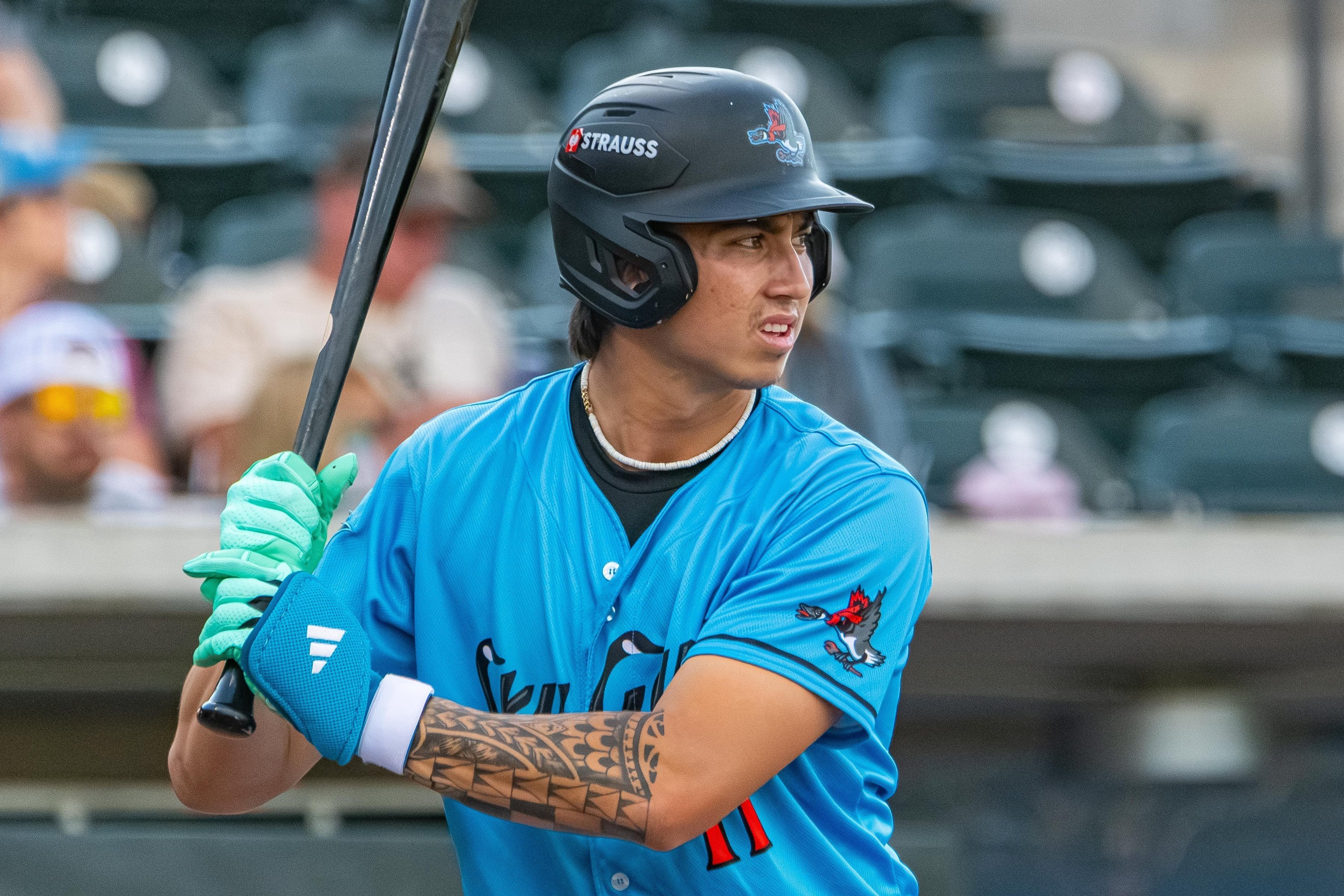 For the 2026 season, Fish On First will provide weekly reports on the Miami Marlins farm system, covering all levels. Here's the final May edition of our Fish On First Prospects Report, which includes several important injury updates near the bottom of the page. This report covers the games played from May 19-25. Triple-A Jacksonville This week, the Miami Marlins acquired outfielder Rece Hinds from the Cincinnati Reds in exchange for reliever Zach McCambley. In 24 games this season in Triple-A, Hinds is slashing .303/.422/.618/1.040 with seven home runs, 20 RBI and a 164 wRC+. In his Jacksonville debut, Hinds went 1-for-4 with a walk. His lone hit of the game came in the bottom of the ninth inning with an exit velocity of 109.5 mph. McCambley, who was a member of Miami's all-pitcher 2020 draft class, was left unprotected in the Rule 5 draft. He was selected by the Philadelphia Phillies, but after not making the team, he was sent back to the Marlins and assigned to Triple-A. In 13 appearances (two starts), McCambley posted a 2.36 ERA, 4.34 FIP, 10.80 K/9 and 5.74 BB/9. He has yet to debut for his new organization. The trade does come as a surprise given that there wasn't a clear need for an outfielder, unless the Marlins plan to make some moves with the 26-man roster. As for McCambley, it didn't seem like he was going to get an opportunity to make the Majors with Miami, so he is shipped off to a place where he may have a better chance. Jacob Berry continues to rake in Jacksonville, now slashing .309/.426/.434/.860 with two home runs, 17 RBI and a career-high 137 wRC+. Berry's walk rate was at 14.2% the last time we posted this article. It has only gone up since, now at 16.6% and striking out 13.0% of the time, both career-best marks for him. Since being optioned to Jacksonville, Agustín Ramírez is slashing .240/.339/.420/.759 with two home runs, seven RBI and a 103 wRC+. Defensively, he has made three errors, allowed nine stolen bases compared to three caught stealings. He is playing almost everyday, serving as the designated hitter when he isn't behind the plate. In limited action so far, 2021 second-round pick Cody Morissette is off to a strong start in Triple-A. He is slashing .286/.359/.429/.788 with one home run, eight RBI and a 113 wRC+. His lone home run of the season came on Saturday, a walk-off grand slam. Then on Sunday, he was the walk-off hero again with an RBI single. A fun note from this past week was that reliever Jack Ralston threw an immaculate inning. It came in Tuesday's game against the Norfolk Tide. He struck out Heston Kjerstad, Johnathan Rodríguez and Christian Encarnacion-Strand all swinging. It was the first immaculate inning of the season for the Jumbo Shrimp. On the season, Ralston now has a 1.03 ERA, 2.61 FIP, 12.99 K/9 and a 4.44 BB/9 in 26 1/3 innings pitched. Double-A Pensacola Pitching led the way for the Wahoos en route to a series victory over Columbus. Pensacola starting pitchers gave up just 11 runs over the course of the week. The offense rewarded them nicely, scoring 31 runs, pacing the way to a plus-10 run differential. Pensacola is now one game over .500 at 23-22, and they have just received some considerable reinforcements. Aiva Arquette, Eliazar Dishmey, Juan Matheus, Connor Caskenette and Holt Jones were officially promoted from High-A Beloit on Tuesday. More on Dishmey and Caskenette in the Beloit section of this report. We are running out of adjectives to describe what Karson Milbrandt is doing. Every week, the righty goes out and ups the bar again in terms of his dominance against Double-A hitters. This week, it showed up in the form of him collecting a career high 12 strikeouts over six shutout innings. He allowed just three hits and two walks. Milbrandt is now riding a streak of five straight quality starts, including 23 straight scoreless innings. He’s eight scoreless frames away from tying the Blue Wahoos’ all time franchise record for consecutive scoreless innings set in 2013 by Lee Hyde. Deservedly so, the accolades keep coming for Milbrant: he was once again named Southern League Pitcher of the Week by the league and Baseball America has labeled him the hottest pitcher in all of Minor League Baseball. Because of the veracity at which he is dominating and overwhelming Double-A hitters, questions have arisen about Milbrandt being promoted to Triple-A Jacksonville and when that will happen with the big league team struggling for starting pitching. However, remaining in Double-A is probably the safest play for Milbrandt’s continued development. Before this year, Milbrandt had only pitched two games at the Double-A level. Also, he’s not yet thrown more than 90 innings in a single season. As innings pile ip on his arm, staying where he’s comfortable will aid Milbrandt’s confidence. The alternative is going to a very bitter friendly environment in the International League where he would play against competition four-plus years his elder on average. With depthy arms for the big league team still to draw from already on the 40-man roster, the safest play for Milbrandt, who is now a top 100 prospect, would be to keep him in Double-A for most of 2026. Fenwick Trimble, the Marlins’ fourth-rounder from 2024, had a slow start to the year. He progressively picked things up, and lately, Trimble has taken the next step and strung together multiple hits in many games that he's played. That was prevalent in this series against the Clingstones as Trimble went 7-for-23. He recorded two hits in each of the final three games of the series, including his seventh home run. Trimble has put a .680 OPS April behind him by slashing .288/.337/.513 in May. Trimble has tapped more into his contact-oriented approach by way of swinging at more quality pitches. He owns 31.1% whiff (36th percentile), but his swings-and-misses have consistently become less frequent as he gets fully acclimated to Double-A pitching. Trimble has also looked the part at all three outfield spots. Reps and time: that is all Trimble will need as he attempts to approach the ceiling of a speedy, gap-hitting, contact-oriented starting outfielder. He is locked into a starting outfield spot with the Wahoos for the rest of the season. High-A Beloit It was another successful week for the Carp who hit the road again and came out with a 4-2 series victory against Quad Cities. The Beloit bats awoke for one of their better all-around offensive showings of the season so far as they scored 52 total runs and held a whopping +29 run differential. When the Sky Carp resume play on Tuesday, though, their lineup will look much different without Arquette, Matheus and Caskenette. With Otto Lopez and Liam Hicks on potential All-Star trajectories and with top prospect Owen Caissie beginning to riddle it out at the plate, it’s been quite the year for Canadians at the big league level. Connor Caskenette is making that trend matriculate to the minors because he is absolutely raking. He continued to demolish High-A pitching this past week by going 6-for-19 with a double and two homers, bringing his season total to seven. Caskenette’s 166 wRC+ not only leads the Marlins system, it’s second-highest in the Midwest League among qualified hitters. At High-A, Caskenette showed a fantastic approach, walking at a 13% clip while keeping strikeouts to a manageable 22%. He selects swings well, rarely chasing out of the strike zone and making contact at pitches within it at an 85% rate. Caskenette’s solid raw strength and great barrel control stemming from quick hands allows him to go to all fields, though he has slightly favored the pull side. Limited defensively, Caskenette has done exactly what he needs to do so far in his development to reach his ceiling of an every day starter at the next level: hit consistently and hit well. We are about to find out if that can sustain against upper minors competition. Long term, it may behoove the Marlins to teach Caskenette a position other than catcher, possibly first base or left field. The glove has severely lagged behind the offensive production, namely in the area of controlling the running game where Caskenette has caught just 18% of base-stealers this season. While still very low, that is an improvement so far over the 10% marker he posted in 2025. Additionally, as catcher-only, Caskenette would be blocked by the defensively gifted Joe Mack. Overall, a bat-first and potentially bat-only prospect, there’s a low floor here, but the ceiling is enticing. Eliazar Dishmey continues to turn in solid outings. On the heels of a quality start in which he allowed just one run on a homer, the righty tossed 5 ⅔ innings worth of shutout ball on just three hits and one walk. Narrowly missing a second straight QS, Dishmey struck out nine, his most in a start since setting a career high with 10 last August. His ERA shrunk to a minuscule 2.14, sixth-lowest in the Midwest League (min. 20 IP). Dishmey continues to shine by way of a fastball that is one of the better heaters in the Marlins’ organization. Throwing the pitch with both four seam rise and two seam sink, Dishmey is showing enhanced command as well as an enhanced ability and confidence to throw the pitch up in the zone for whiffs. He can also bury it with lower velocity, attributing to a 44% ground ball rate this season. Along with his primary breaker, a slow, looping 12-6 curve which shows great velo separation from the heat, his slider has been his separating point this season. Better feel and control over the frisbee-style third pitch with late tilt and run to his spot has been the primary reason for his stark increase in K rate (35%) and decrease in contact rate (68%). He can also still mix in a show-me changeup. There’s still some reliever risk to Dishmey due to historical command concerns, limited size, and throwing with effort, but he’s already raised his floor so far this season. Still just 21, there’s plenty of time for him to continue to develop and fully iron out his craft at the upper minors. He’s well ahead of schedule. Colby Shade had another standout week offensively for Beloit and is proving how impressive he can be when he’s consistently getting on base. Slotting into four games in the series, the 24-year-old went 9-for-17 with a triple and stole three bags, bringing him up to 10 on the season. Not only did Shade show off his plus speed, he’s also continuing to tap into more power. On Thursday, Shade hit his seventh home run which already brings him to within one of tying his career high from two seasons ago. His exports earned him our Prospect of the Week honors. Shade, a ninth-rounder from 2023, has stayed consistent through the entire month of May, slashing .362/.413/.741 with nine extra base hits, including six home runs. After being limited by injury last season and after getting challenged to Double-A out of necessity, he’s showing what he can do as he gets consistent reps at the same level. A good mix of plus-plus speed, solid patince and whiff avoidance, and now budding power with the tools to hold down any outfield spot, he is beginning to raise his floor despite being slightly behind schedule in his development. As the Marlins continue to carve out the reputation as being aggressive with how and when they challenge their prospects, we should see Shade, who has a 144 wRC+, at the upper levels in short order before he becomes Rule 5-eligible this winter. Low-A Jupiter Abrahan Ramírez was one of the three players acquired in the Jazz Chisholm Jr. trade from the New York Yankees. He is slashing .274/.394/.462/.856 with five home runs, 26 RBI and 11 stolen bases. Emilio Barreras continues to be the Hammerheads' best hitter this season, now slashing .333/.477/.455/.931 with two home runs, 21 RBI and a 165 wRC+. He was selected in the eighth round of the 2025 MLB Draft. Ramírez and Barreras are leading candidates to be promoted to High-A whenever another infield spot opens up. Andres Valor continues to rebound from his early-season slump, now hitting .213/.342/.329/.671 with three home runs, 12 RBI, 22 stolen bases and a 94 wRC+. Although he is walking more (14.4%), the strikeouts remain an issue (29.4%), which is what is holding him back from truly making strides. Carter Johnson seems to have found a nice rhythm offensively. Even during a week where he totaled only two hits, he drew five walks. Overall, Johnson is hitting .219/.361/.370/.731 with five home runs and 20 RBI, marking a dramatic improvement from last season. Despite being shutout on Saturday, Wailin Castillo went 5 ⅔ innings, allowing one run on four hits, one walk and struck out six. Through eight starts this season, Castillo has a 2.55 ERA, 4.83 ERA, 7.39 K/9 and 4.08 BB/9. Julio Mendez continues to put up strong starts in Jupiter, most recently tossing 5 ⅔ innings, allowing two runs on three hits, no walk and struck out nine, two shy of his season-high. Mendez now has a 4.26 ERA, 4.04 FIP, 13.36 K/9 and 3.69 BB/9 in seven starts. FCL Marlins Another week down in the FCL means seeing things you do not see every day. The FCL Marlins threw a combined no-hitter while walking seven and allowing three runs. The offense was quiet for most of the week, but headlining this week is a player who got off to a slow start and has now hit safely in 10 straight games. FOF #12 prospect Luis Cova started the season 2-for-16 (.125). Since then, he has gone 14-for-36 (.388) and has put together a 10-game hitting streak. In his last two games, he has three RBIs, and while the power has not arrived yet, it is very reassuring to see the Luis Cova we saw last year. Just like a majority of the FCL roster that came from the DSL this year to make their stateside debut, Victor Rodriguez made his stateside debut this year as well. In six innings, he has posted a 3.00 ERA with seven strikeouts compared to just two walks. Walks have been the main issue for Rodriguez over the last two years in the DSL, so this is a very good sign. Another guy who falls into that category is Jonathan Rosario. Coming over from the DSL this year, he has looked dominant when he is in the zone. Through nine innings, he has 13 strikeouts. However, he has also walked 11. The stuff is definitely there, as opponents are hitting just .133 against him this year, but command will dictate how well the stuff plays. Jonas Uzcategui is a repeat from last week, and rightfully so. This week, he went 2 ⅔ innings without allowing a hit while striking out four and walking two. His updated stats this season: a 1.80 ERA in 10 innings with 18 strikeouts compared to just four walks. Injuries/Rehab The following prospects were all activated from the injured list on Tuesday: Ryan Ignoffo (Pensacola), Drew Faurot (Beloit), Chase Jaworsky (Beloit), Wilson Weber (Beloit) and Jacob Jenkins-Cowart (Beloit). FOF #1 prospect Thomas White is expected to be sidelined for at least one more week. President of baseball operations Peter Bendix told SiriusXM Radio that White's issue is shoulder-related. This week's schedule Triple-A Jacksonville at Charlotte Double-A Pensacola at Birmingham High-A Beloit vs. Lake County Low-A Jupiter at Fort Myers FCL Marlins vs. FCL Nationals, FCL Cardinals, FCL Mets and FCL Astros View the full article
 -
Mets Roster Central: Taylor Falls and the Dominoes Follow
DiamondCentric posted an article in Grand Central Mets
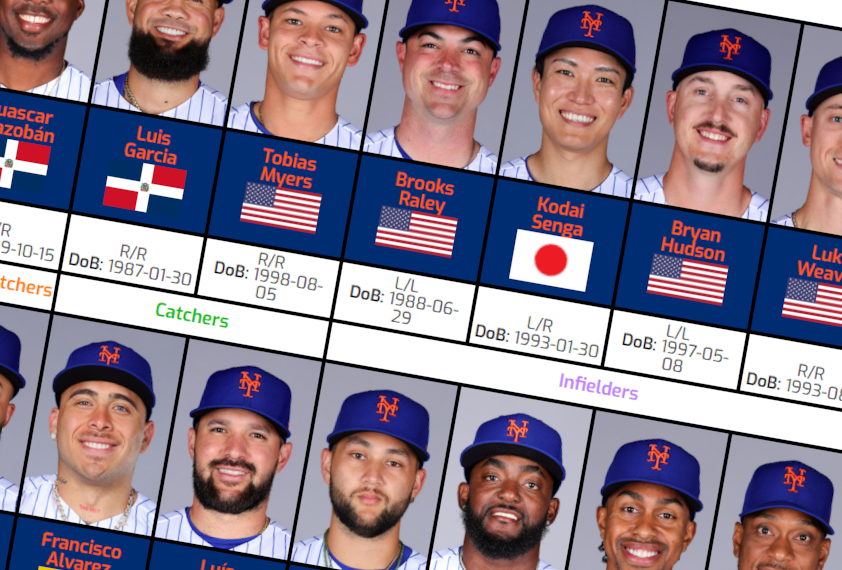 Capping a terrible series in Miami, a reserve Mets outfielder gets hurt. It shouldn't have been the worst news, but ... as this outfielder was perhaps the most recent hero the Mets have known in a season where heroes have been few, a tremendous game-tying home run against the Yankees nine days ago is suddenly seeming like ten years in the rearview mirror Transactions, 5/25/2026 GOING Refused Minor-League Assignment and Opted for Free Agency Relief Pitchers Craig Kimbrel R/R DoB: 1988-05-28 High Level: MLB (2026) Craig Kimbrel refusing a minor-league assignment should come as no surprise. The bearded, man-bunned purveyor of the crane position brought more style than substance to his Mets tenure, but he has spent the last few seasons in a race against time, trying to add something — anything — to his borderline Hall of Fame case, jumping from team to team, with little time to linger. The man can still pitch a little, but is stuff is such that you don't want to see him in a position where he has to throw a strike. Transactions, 5/26/2026 GOING NEUTRAL Signed away by TBR to Minor League Contract Demoted to Syracuse Demoted to Syracuse Placed on 10-Day Injured List with Strained Right Hip Flexor Transferred from Infield Relief Pitchers Outfielders Craig Kimbrel Jonathan Pintaro Nick Morabito Tyrone Taylor MJ Melendez R/R DoB: 1988-05-28 High Level: MLB (2026) R/R DoB: 1997-11-07 High Level: MLB (2026) R/R DoB: 2003-05-07 High Level: MLB (2026) R/R DoB: 1994-01-22 High Level: MLB (2026) L/R DoB: 1993-11-29 High Level: MLB (2026) COMING Activated from 60-Day Injured List Added to Roster and Promoted from Syracuse Relief Pitchers Infielders A.J. Minter Eric Wagaman L/L DoB: 1993-09-02 High Level: MLB (2025) R/R DoB: 1997-08-14 High Level: MLB (2026) When Tyrone Taylor pulled up short on the way to first, it was unfortunate, but losing a reserve outfielder with a .530 OPS for a few weeks shouldn't be a roster-cripping exercise. But what shouldn't be and what is are on pretty friendly terms when it comes to these 2026 Mets. Taylor's immediate replacement is, as expected, fellow reserve outfielder Jared Young, returning from a leg injury, but that transaction left the Mets with four of their five outfielders being exclusive lefthanded hitters, and the lone righthanded batter still looking for his first MLB hit. Pinch-running specialists (particularly pinch-running specialists who get thrown out on the first pitch) are simply not a luxury that teams in the offensive position of the Mets can afford to retain, but as Nick Morabito's initial Mets tenure comes to a close, let it not be overlooked that the Mets chose to open it by un-necessarily throwing the rookie into the heat of a stupid near-40-year-old number controversy, and then not having their guy's back when the **** predictably hit the fan. So Morabito is out, the more seasoned righthanded bat of Eric Wagaman is back in the fold (and hopefully shedding his phantom Met status), and the Mets are no longer operating with an infield/outfield imbalance that had caused Vientos-Semien-Baty-Bichette to play 99% of the innings in recent weeks. The long rehab of AJ Minter comes to an end, and if he gives the Mets a second lefty half as effective as Brooks Raley has been, they will be a blessed team on the bullpen side of things, but that is not the side where the pain has been, as can be seen by their rewarding Jonathan Pintaro for his 3 1/3 hitless/one walk innings with a ticket to Syracuse. Dominoes. Your 2026 New York Mets Starting Pitchers Nolan McLean Freddy Peralta David Peterson Christian Scott Jonah Tong R/R DoB: 2001-07-24 R/R DoB: 2996-06-04 L/L DoB: 1995-09-03 R/R DoB: 1999-06-15 R/R DoB: 2003-06-19 Relief Pitchers Huascar Brazobán Sean Manaea A.J. Minter Tobias Myers Brooks Raley Austin Warren Luke Weaver R/R DoB: 1989-10-15 R/L DoB: 1992-02-01 L/L DoB: 1993-09-02 R/R DoB: 1998-08-05 L/L DoB: 1988-06-29 R/R DoB: 1996-02-05 R/R DoB: 1993-08-21 Relief Pitchers Catchers Infielders Devin Williams Hayden Senger Luís Torrens Bo Bichette Brett Baty Vidal Brujan Marcus Semien R/R DoB: 1994-09-21 R/R DoB: 1997-04-03 R/R DoB: 1996-05-02 R/R DoB: 1998-03-05 L/R DoB: 1999-11-13 S/R DoB: 1998-02-09 R/R DoB: 1990-09-17 Infielders Outfielders Mark Vientos Eric Wagaman Carson Benge A.J. Ewing MJ Melendez Juan Soto Jared Young R/R DoB: 1993-12-11 R/R DoB: 1997-08-14 L/R DoB: 2003-01-20 L/R DoB: 2004-08-10 L/R DoB: 1993-11-29 L/L DoB: 1998-10-25 L/R DoB: 1995-07-09 Also on 40-Player Roster Starting Pitchers Relief Pitchers Clay Holmes Tylor Megill Kodai Senga Zach Thornton Alex Carrillo Daniel Duarte Reed Garrett R/R DoB: 1993-03-27 R/R DoB: 1995-07-28 L/R DoB: 1993-01-30 L/L DoB: 2002-01-17 R/R DoB: 1997-06-06 R/R DoB: 1996-12-04 R/R DoB: 1993-01-02 Relief Pitchers Catchers Infielders Justin Hagenman Dedniel Núñez Jonathan Pintaro Dylan Ross Francisco Alvarez Francisco Lindor Ronny Mauricio R/R DoB: 1996-10-07 R/R DoB: 1996-06-05 R/R DoB: 1997-11-07 R/R DoB: 2000-09-01 R/R DoB: 2001-11-01 S/R DoB: 1993-11-14 S/R DoB: 2001-04-04 Infielders Outfielders Jorge Polanco Luis Robert, Jr. Nick Morabito Tyrone Taylor S/R DoB: 1999-11-13 R/R DoB: 1997-08-03 R/R DoB: 2003-05-07 R/R DoB: 1994-01-22 Your Mets Coaching Staff Manager Bench Coach Pitching Coach Hitting Coordinator Third Base Coach First Base Coach Bullpen Coach Ass't Pitching Coach Carlos Mendoza Kai Correa Justin Willard Jeff Albert Tim Leiper Gilbert Gomez José Rosado Dan McKinney DoB: 1979-11-27 DoB: 1989-07-14 DoB: 1990-09-09 DoB: 1992-08-16 DoB: 1996-07-19 DoB: 1992-03-08 DoB: 1974-11-09 DoB: 1989-06-06 Hitting Coach Strategy Coach Catching Coach Coaching Assistant Bat'g Practice Pitcher Equipment Manager Bullpen Catchers Bullpen Catchers Troy Snitker Danny Barnes J.P. Arencibia Rafael Fernandez Kevin Mahoney Kevin Kierst Eric Langill Dave Racaniello DoB: 1988-12-05 DoB: 1989-10021 DoB: 1986-01-05 DoB: 1988-08-03 DoB: 1987-05-11 DoB: 1964-07-09 DoB: 1979-04-09 DoB: 1978-06-03 Your Mets Training Staff Director of Player Health Head Athletic Trainer Assistant Athletic Trainer Reconditioning Coordinator Reconditioning Therapist Head Performance Coach Assistant Performance Coach Performance Coordinator Soft Tissue Specialist Brian Chicklo Joseph Golia Bryan Baca Sean Bardanett Josh Bickel Dustin Clarke Tanner Miracle Jeremy Chiang Hiroto Kawamura DoB: 1972-07-17 DoB: 1978-??-?? DoB: Circa 1980 DoB: 1988-06-23 DoB: 1996-??-?? DoB: 1987-??-?? DoB: 1991-??-?? DoB: ????-??-?? DoB: 22846 View the full article
 -
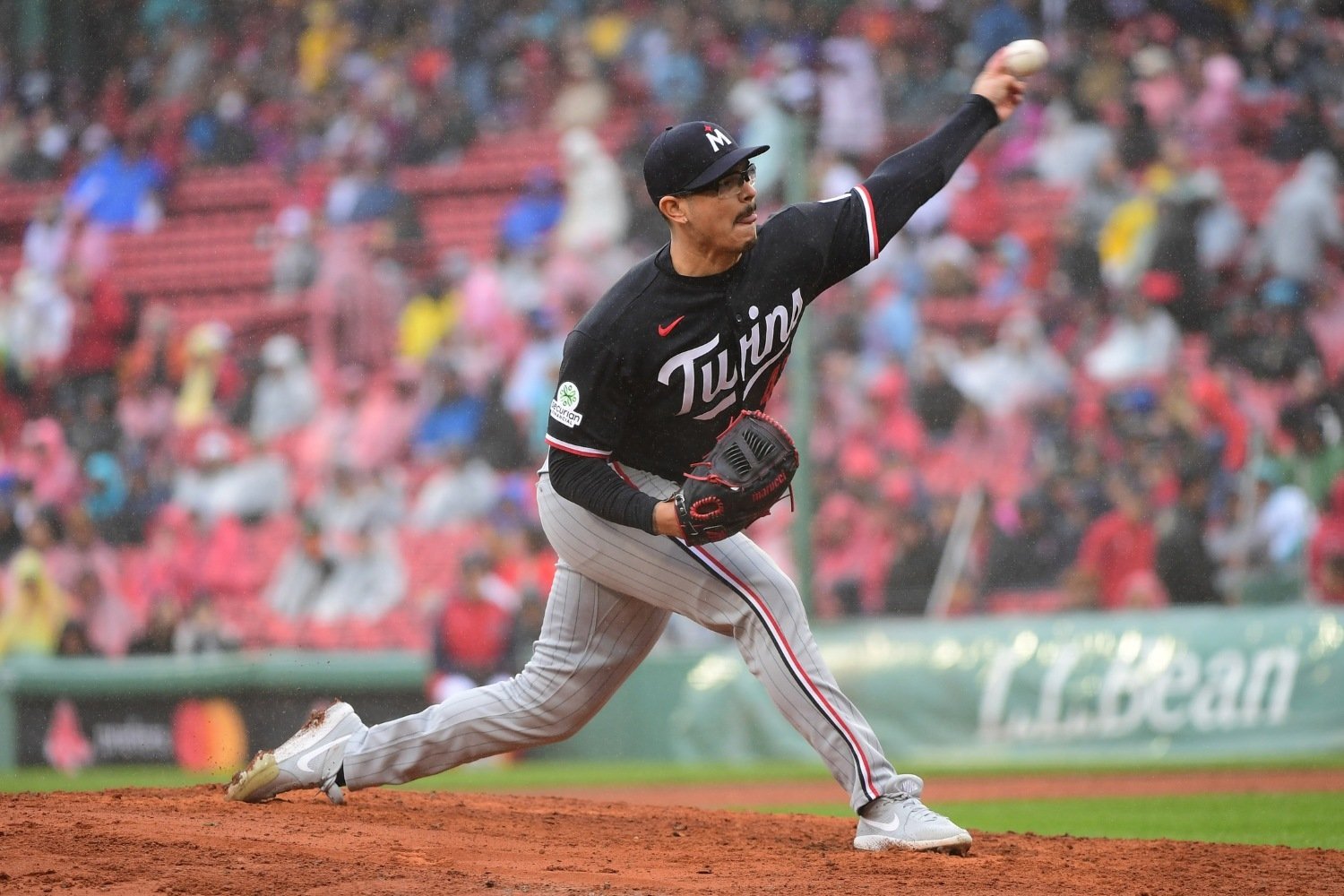 It was May 8, and Anthony Banda had a problem. He stood on the mound in Cleveland, a journeyman: the common clay of MLB relievers. Guys like him barnstorm across the league, offering their services in low-leverage situations for a relative pittance—in this case, $1.625 million and whatever future considerations the Twins gave to the Dodgers in exchange for the lefty hurler. The problem? Banda entered the game with an 8.04 ERA, and would crank it up to 8.27 following this outing. Something had to change. And so it did. Banda pitched 1 ⅓ scoreless innings two days after that appearance at Progressive Field, with a pair of strikeouts. Can you spot the adjustment Banda made between outings? dnZ3REtfV0ZRVkV3dEdEUT09X1V3UlpCVmRSWDFjQVhGVURWd0FIVndFQ0FGaFdBRmdBQTFJTkJRRUhCZ05jVXdOVQ==.mp4 bGJ3TDdfVjBZQUhRPT1fQXdSUVVsY0dBd0FBQ0ZGUlVnQUhBMVVGQUFOUUJ3SUFVRkpSVXdCWEJ3UmRCMVpW.mp4 Instead of the high-leg kick he’s used since his second season in MLB, Banda switched to a simple slide-step, and the results so far have been promising. He has since experimented with a modified, medium-sized leg kick, starting with the Astros series, but May 10 remains a sharp line between his old style and his new one, given that the new leg kick isn’t as extreme as the previous one. Banda’s main issue early in the season was a ghastly lack of control. He had already plunked six batters and uncorked four wild pitches as of May 8, pushing previously shaky command to untenable levels. Nor was it just one offering suffering: he hit three batters each with his heater and slider. After that last brutal outing, his rate of pitches in the “waste zone”—the part of the strike zone so utterly out of the way that it rarely ever results in a positive outcome for the pitcher—was 12.4%, the 4th-highest total in the league among hurlers who had thrown at least 400 pitches. Life is hard when an eighth of your pitches are uncompetitive. Since the switch, his waste rate hasn’t improved. It actually crept up a little, to 12.9%, though no pitch (save a back-foot slider to Rhys Hoskins) came close to hitting someone. Is the mechanical change a red herring? Is the sample too small? Five of those misses came on the day he made the change—perhaps a sign of growing pains—and two came in the rain-soaked Boston game on Sunday. Perhaps this is simply something that should be earmarked to return to at a later date. Not all pitches to the waste zone are created equal, though. The real difference, it appears, is part mechanical, and part managerial. Before May 10, 40% of Banda’s pitches came against lefties, but since then, 55% of his offerings have come with the platoon advantage. As a result, he’s been able to pitch more against lefties. Unsurprisingly, he's been better against them throughout his career. You can also live a bit more in the waste zone left-on-left, with the slider that makes Banda good when he's right moving well out of the zone but inducing chases. What else happened on May 10? Travis Adams re-joined the Twins bullpen, giving them more relief depth against right-handed hitters. To this author, the change in usage goes hand in hand with the adjustment Banda made: seven of the awry balls from the lefty since he cut down on his leg kick have been sliders against lefties, pitches that will almost never result in a hit by pitch. It appears he’s gripping and ripping at the same rate as before, but with better matchups, he's able to do without fear of plunking batters and with a better chance of getting a hopeless swing from an opponent. In conceiving of and writing this story, the conclusion changed a few times. Obviously, something had happened to unlock a better version of Banda, but what was it? The slide step sparked the notion, but the numbers don’t lie: Derek Shelton simply has been able to find better spots to use his lefty hurler. His cobbling of loose pieces and unrefined goods early in the season resulted in awkward fits—pushing guys into situations they don’t excel in—which likely resulted in Banda’s ugly stats. Since then, though, Banda has culled two runs off his ERA, and he now looks like a somewhat reliable arm, given the right context. As long as his save Friday isn't indicative of a future as the team's closer, Banda appears to have found his way back to a successful groove. View the full article
 -
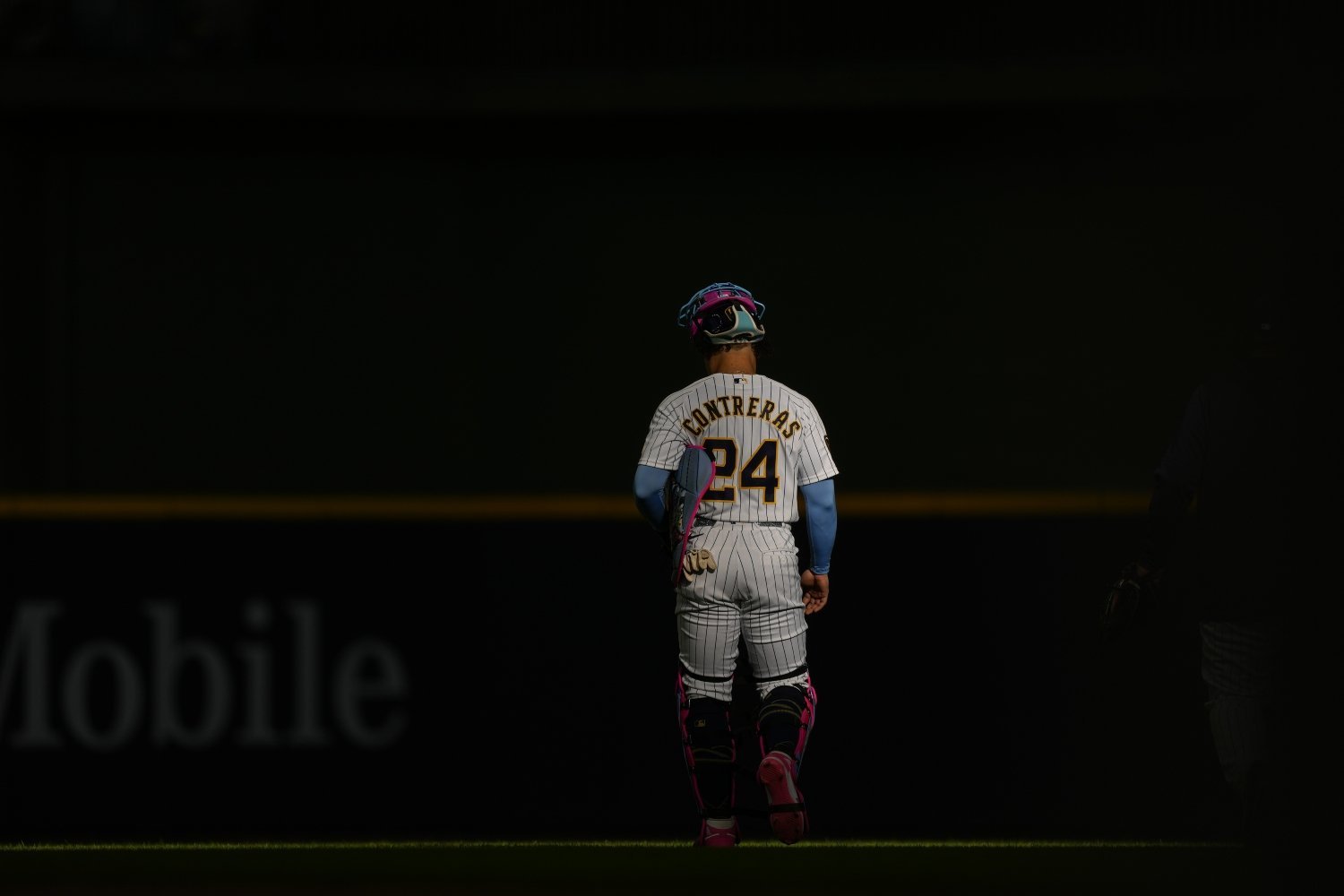 When Shohei Ohtani took off for second base Friday night, it was hard to like William Contreras's chances. Ohtani has proved to be a very efficient basestealer, and he's very fast. On the mound, rookie Logan Henderson was focused on executing a good pitch, and wasn't very quick to the plate. Given Ohtani's speed and his jump by the time Contreras caught the ball, Statcast estimated that the Brewers' catcher had just an 18% chance to gun down the reigning two-time National League MVP. Then he did it. MTZOYlZfWGw0TUFRPT1fQndJSFhRRUZYd0lBQzFFRVZ3QUhBVk5mQUZnTlZWSUFCZ05VVlFaWEJnZGNCVlJW.mp4 Contreras's throw was slightly high, but Ohtani saw the reach of Joey Ortiz's glove and pulled his own hand down to protect it from the ball, slowing him down a bit as he slid into second. Ortiz had time to snatch the throw and sweep the tag downward, and although Ohtani was initially called safe, that call would be overturned on review. This has become a common sight this season: a runner goes, and they seem to have a good jump and an easy steal before them. Contreras flips the script. For a player who's always been known as a dynamic athlete for a catcher, this aspect of his game took a long time to develop. It's in full bloom now, though. In fact, it's the best in baseball. When Contreras first came to Milwaukee, he had a strong arm, but no good ideas about how to use it. His footwork was too slow. Relatively quickly, under the guidance of the Brewers' vaunted corps of catching instructors, he improved in that regard, but two years ago, his accuracy consistently did him in. He was getting rid of the ball pretty fast, but not putting his throws where they needed to be. That, too, has now been fixed. NnlNcWRfWGw0TUFRPT1fQTFRREFRVlhBZ29BWFFNREJ3QUhBUU1EQUFBTUFGUUFDMUFGQWxVSEJRQUFVMUFG.mp4 As manager Pat Murphy loves to remind folks, this is the very model of a modern throw to second base. The way it requires Ortiz to move as he receives it almost makes the ball look off-target, but in reality, this is where every team wants their catchers throwing on steal attempts. The infielder should set up right above the bag, to give the catcher a good target, but the throw should take them to the first-base side of second. That optimizes the chances of a tag before the runner slides into the base. Contreras has gotten very good at that. In fact, though, he's simply gotten good at everything involved in the throws to nail runners from behind home. His exchange from glove to hand is much smoother than in the past; he doesn't pause or hitch to reorient the seams as he gets into a throwing position. Two years ago, I wrote about Contreras needing the pitch to come to the first-base side of the plate in order to get set well and make a strong throw; it was part of his broader accuracy issues. By last season, he had fixed that problem, and now he thrives on throws from that side of the plate. This year, the improvement has come from slightly better awareness—he always seems ready, and isn't geting caught unprepared or poorly positioned on any steal attempts—and from that quicker exchange. It helps that his hands work better than they did a year ago. Here's a side-by-side look at one play from 2025 and one from this month, right as Contreras's front foot (the left) touches the dirt for the first time as he sets to throw. Look how much more in position to fire he is this year. However, he's also doing something important with his lower half. Here are two fastballs up, on which the runner tried to steal. This is the last frame before Contreras caught each pitch. He's geting up out of his crouch well as he receives the ball, whenever he's able. He was doing that last year, too, though. In fact, though this wasn't one of those times, last year, Contreras often used what catchers call the "cheat stance," whereby he would pop up from one knee down to a standard crouch as the pitcher began his delivery, getting into throwing motion before the ball even got on its way to him. The key difference in the images above is that, this year, Contreras is turning his body better. As he comes out of his kneeling stance, he's not squaring up to the ball, which he often did last year and which forced him to turn his shoulders more as he made the transfer from glove to hand. Now, by changing the set of his hips and the angle at which he pushes upward with his legs, he's getting his chest facing toward first base earlier, setting him up for an easier transfer and throw. WERaME5fWGw0TUFRPT1fQkFVQUJsRUVBMVFBRHdGWEF3QUhWRkJRQUZrRFVWVUFCd1lCQVF0VVZBRlZWZ2RT.mp4 Officially, runners are 12-for-26 stealing bases against Contreras, according to Baseball Reference. That gives him credit for a few times caught stealing that were actually pickoffs by the pitchers and infielders, but it also gives runners credit for a couple of steals that were utterly indefensible from Contreras's perspective. When he's had any kind of chance at all, he's been phenomenal. According to Baseball Savant, he's already been worth 4 Catcher Stealing Runs this year. If he keeps up at this pace, he'll become the new record holder in that stat—though, admittedly, it's only been tracked since 2016. No catcher with at least 10 attempts against them has ever dealt with faster average runners in a season than Contreras has had to deal with so far, at 29.2 feet per second. Runners are getting better jumps against Brewers pitchers this year than at any time in Contreras's tenure with the team. None of it matters. He's become the best possible form of himself as a thrower and running-game stopper, and arguably the best catcher in the sport at that skill. For the Brewers, it's just one more developmental win involving a player whom they've systematically unlocked over almost half a decade, now. View the full article
 -
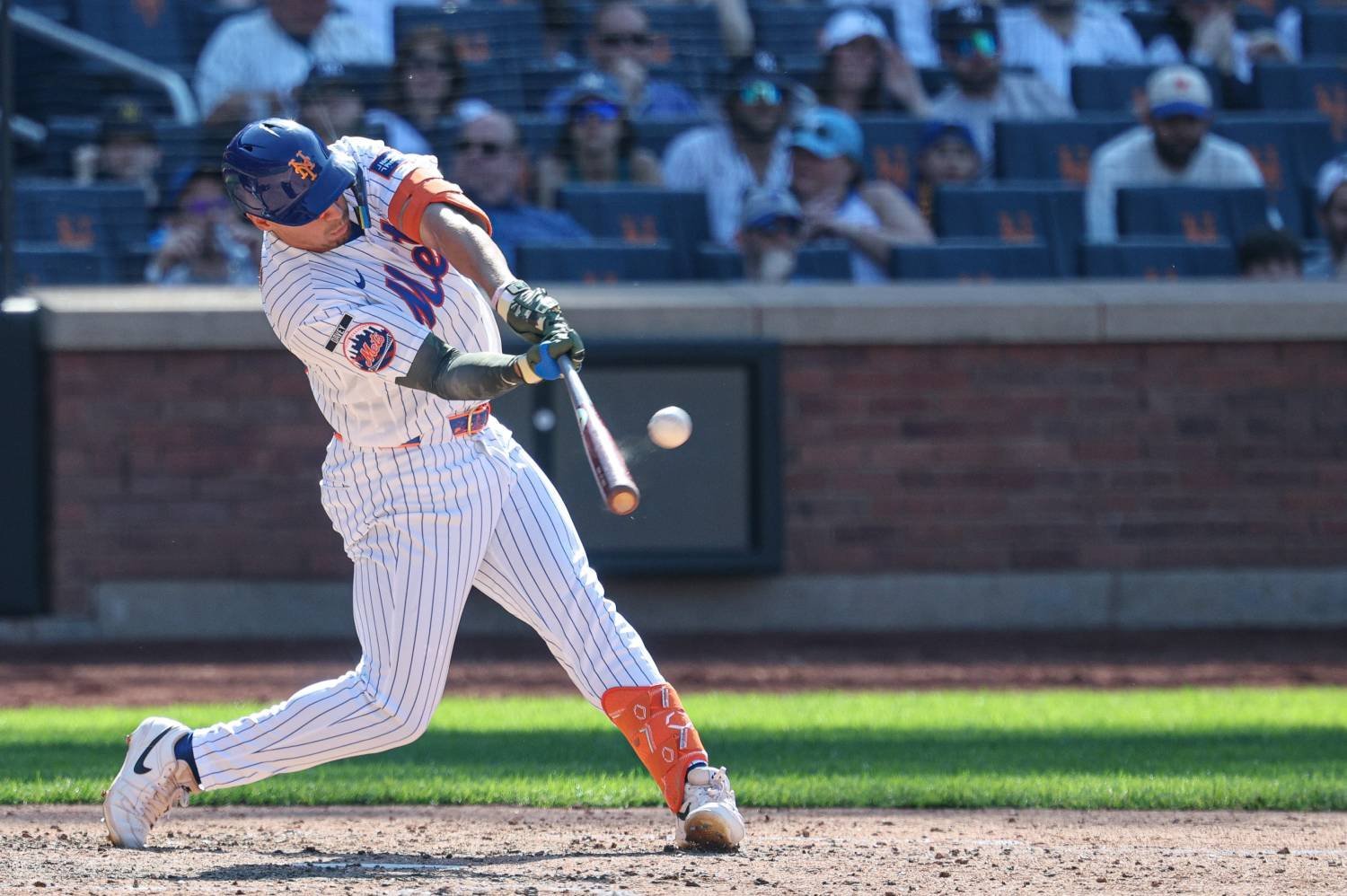 The roster churn continues for the New York Mets. Outfielder Tyrone Taylor was placed on the 10-day injured list with a strained right hip flexor. Rookie outfielder Nick Morabito and right-handed reliever Jonathan Pintaro were optioned to Triple-A Syracuse. Replacing them are first baseman-outfielder Jared Young, who was activated from the 10-day injured list following a torn left meniscus, with infielder Eric Wagaman called up from Triple-A and left-handed reliever A.J. Minter activated off the 60-day injured list after surgery on his left lat. The Mets had openings on their 40-man roster to accommodate Wagaman's addition and Minter's activation. Taylor was injured during Monday's 7-2 loss to the Cincinnati Reds during a groundout in the sixth inning. The demotion of Morabito, Grand Central Mets' No. 7 prospect, comes after he went 0-for-11 with nine strikeouts after his first MLB call-up. Pintaro made two appearances covering 3⅔ innings over the weekend. Minter has been out since April of last season with his lat injury, which eventually required surgery. He will be a big left-handed presence in the bullpen. Wagaman is up for the second time this season after being claimed off waivers from the Minnesota Twins in April. He came up April 30 and was designated for assignment the next day. But he survived waivers and went back to Syracuse, where Wagaman was slashing .372/.462/.581 in 13 games with two homers and 12 RBIs. View the full article
 -
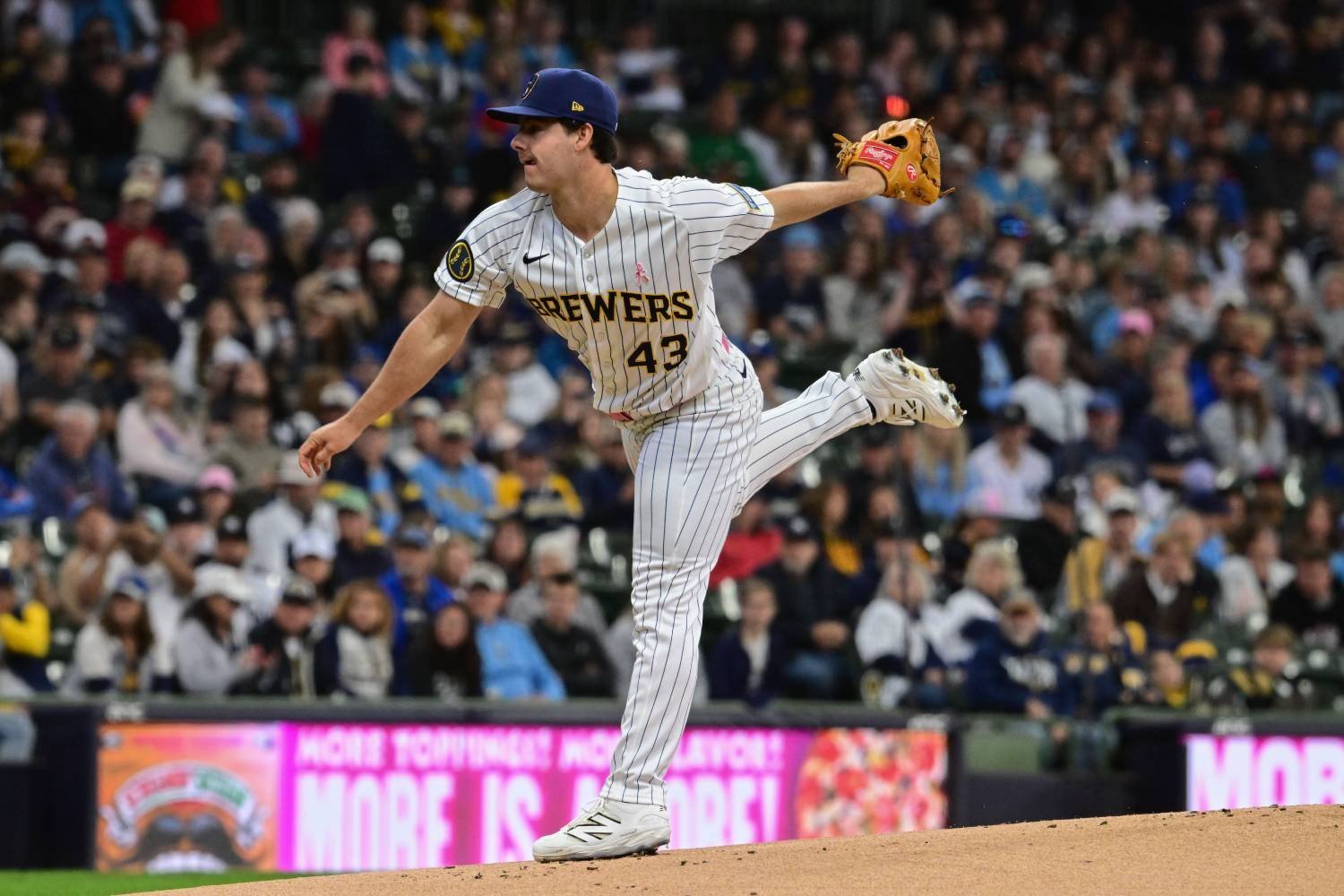 Coming off his best start of the season, it will be at least another two weeks before Logan Henderson takes the mound again. The Milwaukee Brewers on Tuesday placed Henderson, a right-handed starter, on the 15-day injured list with a strained lower back and called up right-handed starter Coleman Crow. Last week against the two-time defending World Series champion Los Angeles Dodgers, Henderson struck out seven over five shutout innings, allowing two hits and walking three. He has allowed two runs or less in all five of his starts, including just one in that start before facing the Dodgers. That was another five-inning, seven-strikeout performance. Henderson has a 6.7% walk rate and 33.3% strikeout rate in 23 innings this year. Crow is likely to start in Wednesday's series finale vs. the St. Louis Cardinals, with the Brewers as of this moment not yet announcing a starter. He has done very well in his first two MLB starts this year, allowing a total of three hits over 10⅓ innings with one walk and seven strikeouts. With Henderson on the shelf, Crow could be up for multiple starts, although veteran right-hander Brandon Woodruff is inching closer to a return to the rotation. View the full article
 -
 Blue Jays Affiliate Overview (May 23-May 25) Triple-A Buffalo Bisons Series vs Syracuse Mets (New York Mets): 2-4 Season Record: 25-26 Double-A New Hampshire Fisher Cats Series vs Hartford Yard Goats (Colorado Rockies): 1-4 Season Record: 23-19 High-A Vancouver Canadians Series vs Spokane (Colorado Rockies): 2-4 Season Record: 18-27 Single-A Dunedin Blue Jays Series vs Fort Myers Mighty Mussels (Minnesota Twins): 4-2 Season Record: 19-26 FCL Blue Jays Week Record: 3-2 Season Record: 14-3 Triple-A Buffalo Bisons Season Record: 24-25 Series vs Syracuse Mets (New York Mets) May 23: Postponed May 24, Game 1: It was another doubleheader for Buffalo on Sunday afternoon, and at least the weather cooperated for the teams to get both games in. Grant Rogers was on the mound for the first game, and he would take care of most of the innings for Buffalo. He made it through the fifth, but again pitched mostly to contact. At this point in his career, a contact pitcher is really all he ever will be. He makes it work for most starts, just like he did on Sunday. He allowed three runs, only two earned, while only giving up four hits and one walk. Syracuse got to him in the bottom of the third inning with an RBI single, then again in the bottom of the fifth on a fielder’s choice and a sacrifice fly. During this game, he threw a heavy dose of sinkers and splitters, which drives the high contact rates against him. Luckily for Buffalo, RJ Schreck was in the lineup, and he really carried the bats. Schreck got the scoring started for Buffalo in the first inning, a missile that shot off the bat at 107.2 mph and went over the right field fence for a solo home run. The blast was Schreck's sixth of the season and went 372 feet. In the third inning, it was Schreck again. This time, it was a three-run home run. With the lead at just one in the sixth inning, Schreck was yet again in the middle of the action for Buffalo. He walked and then came in to score a few batters later on Willie MacIver's sacrifice fly. Je'Von Ward then added another run with an RBI single. In the bottom half of the sixth, Ryan Clifford got ahold of a pitch from Brendan Cellucci to lead off the inning with a solo home run. It was the closest Syracuse would get, as Hayden Juenger came into the game in the ninth and recorded two strikeouts on his way to earning the save. Buffalo won 6-4. May 24, Game 2: For Buffalo, the bats decided that their performance in game one of the doubleheader was enough and stayed holstered for the entirety of the second contest. They only recorded two hits, singles from William Simoneit and Ryan McCarty. While the bats played peekaboo, the pitching was locked in. Austin Voth got the start and pitched into the fourth inning. He only surrendered one run, walked none, and gave up just three hits. Brendon Little came into the game in the fifth inning and pitched two perfect frames, six up and six down. Syracuse only had three hits in the game, scoring their lone run in the fourth inning on Ryan Clifford's 10th home run of the season. Buffalo fell 1-0. Double-A New Hampshire Season Record: 23-19 Series vs Hartford Yard Goats (Colorado Rockies) May 23: Jackson Wentworth was on the mound for the Saturday game between New Hampshire and Hartford. He pitched well this time around, going five innings, only allowing one run, giving up four hits, and striking out two. New Hampshire took the lead in the bottom of the first inning on an RBI single to center field from Sean Keys, on which Arjun Nimmala and Jace Bohrofen scored. In the top of the second, Dyan Jorge brought in a run for Hartford on a sacrifice fly. That is where the game remained until the ninth inning. Conner Capel launched a game-tying home run to right field. Then, GJ Hill smacked an RBI single to right field, which gave Hartford a one-run lead. In the bottom of the ninth, Jay Harry would knock a single to left field, but he would be stranded on base when Jackson Hornung grounded out to end the game. New Hampshire lost 3-2. May 24: Postponed High-A Vancouver Season Record: 18-27 Series vs Spokane (Colorado Rockies) May 23: With the series tied up two apiece, the Canadians had a chance to win the series with two straight wins. Danny Thompson Jr. was once again the starter for Vancouver, but he had a tough third inning, giving up a walk and three hits, which resulted in three earned runs. The Canadians offense tied it up, scoring two runs in the fourth off a Maddox Latta single and a Carter Cunningham sac fly. Then Alexis Hernandez continued his hot hitting, knocking in J.R. Freethy with a double. The game went back and forth as Jay Schueler replaced Thompson, and gave up two solo home runs in the sixth inning, but the Canadians came back with Freethy’s first homer of the year in the seventh and Hernandez's second RBI double of the night. An error from Peyton Williams turned into the third homer given up by Schueler on the night, and Reece Wissinger allowed two doubles, leading to two more runs scoring for Spokane. He then gave up another homer in the eighth inning, which was the fourth homer given up by the bullpen on the night. Down four in the ninth inning, Williams hit a double with no outs, but all Vancouver could do was drive him in with a groundout, spoiling a chance at another comeback victory. May 24: It was Johnny King day, and it seemed very likely that Vancouver could earn the series split with who was on the mound. Alexis Hernandez is a doubles machine, as he hit his third in two games to give Vancouver an early lead. Things did not go to plan in the bottom of the inning, as King raised his ERA to 2.60, not being able to get out of the first inning and giving up five runs with three walks and four hits. The Canadians slowly clawed their way back, with Hayden Gilliland recording an RBI in the second. A wild pitch made it 5-3 in the third inning, and Gilliland had a solo shot in the fourth inning to make it a one-run lead. J.R. Freethy tied it up in the fifth inning with a double, and then the Canadians took the lead when Spokane’s third baseman threw it away on a grounder to third on a throw to second. Holden Wilkerson came in after Carson Pierce replaced King, and he pitched well, going four innings with four strikeouts, but in the sixth inning, he took the loss as he gave up three hits and two runs, which ultimately became the last runs of the game as the Canadians could not get on base after that. Single-A Dunedin Season Record: 19-26 Series vs Fort Myers Mighty Mussels (Minnesota Twins) May 23: The Jays’ plundering of independent ball seems to have been paying off, as Jack Nedrow had his third straight great appearance in a row, with his second straight quality start. The offense supported his good start, as they took advantage of some shaky defense. Yorman Licourt got an RBI single in the bottom of the second, then scored in the bottom of the fourth on a dropped third strike. The Jays got their third run of the night on a passed ball, then their fourth unanswered run with an Eric Snow single. Nedrow gave up the first runs of his professional career in the seventh inning with a two-run homer, but Eduar Gonzalez came in and continued pitching well with two scoreless innings. JoJo Parker gave the Jays much-needed insurance with a two-run single in the eighth, which ended up mattering, as in the ninth, Lluveres Severino gave up what would have been the game-tying runs without Parker’s clutch hitting. May 24: Jake Bloss looked great in his first game back in Dunedin on a rehab assignment. The righty sat 95.8 mph on his fastball, topping out at 97 mph. He went four strong innings, with his only blemish being a solo shot in the fourth inning. The Jays were able to get a run in on a balk in the first inning, so the game was tied. The Jays' bullpen was solid, as Ramon Suarez kept it tied into the sixth inning. Blaine Bullard then hit a two-run homer, scoring Jake Cook and giving the Jays a two-run lead. Franly Urena gave up a run on an RBI groundout in the eighth inning, but Jack Eshleman got save number six to shut the door and give the Jays another win. FCL Blue Jays Season Record: 14-3 May 23: Miguel Pantoja was on the mound to begin the Saturday FCL game between the Blue Jays' and Tigers' squads. He again went over four innings, this time 4.1. He gave up three hits, three runs, a walk, and struck out two. The big hit for the Tigers was a home run in the fourth by Cris Rodriguez. It was another good outing from Pantoja, one of the youngest players in Rookie ball. On offense, the top of the order did the damage for the Blue Jays. Angel Guzman tripled in a run in the first inning and would score later himself on an RBI single from Franklin Rojas. Sam White would have a big day, going 3-for-3, with two singles, three RBI, a home run, and a stolen base. His home run in the bottom of the sixth scored two runs and gave the Blue Jays team the lead for good, as they went on to win 5-4. May 26: Shane Bieber started the Monday FCL game between the Blue Jays and the Yankees. He went two innings, allowing just three hits, and didn't give up a run. He would strike out three batters and not walk a batter. Seojun Moon came in next, but didn't have a good start in his first game out of the bullpen. After a double and two walks, Moon would allow a run on a wild pitch and two more on an RBI single. He would settle in and almost get through two innings overall. An error would extend the inning, and he finished his day with another walk and a hit-by-pitch. Overall, he seemed to be a bit wild on the day. The Blue Jays team took the lead in the second inning on an Andres Arias home run. In the fifth inning, Brock Tibbitts would cap off a five-run inning with a three-run home run to right field. The Blue Jays team would win again, this time 8-3. View the full article
 -
 Alex and Maddie sit down and discuss the fleeting joy of the Red Sox’s sweep of the Royals and then the immediate whiplash after the team got dunked on by the Twins. They review how the lackluster offense at Fenway isn’t instilling much hope (Willson Contreras and Ceddanne Rafaela are excluded here). They break down potential trade scenarios for a right-handed bat (the options are limited) and discuss what an Aroldis Chapman trade would look like with the Padres. Listen on Apple Podcasts: https://podcasts.apple.com/us/podcast/the-talk-sox-podcast/id1783204104 Listen on Spotify: https://open.spotify.com/show/3qPrPXEngu0CxgTmlf0ynm Listen on iHeartRadio: https://www.iheart.com/podcast/263-the-talk-sox-podcast-244591331/ Listen on Pocket Casts: https://pca.st/4tmd121v Watch on YouTube: https://www.youtube.com/@talksox View the full article
 -
Checking In on Griffin Jax’s Transition to Starting Pitcher
DiamondCentric posted an article in Twins Daily
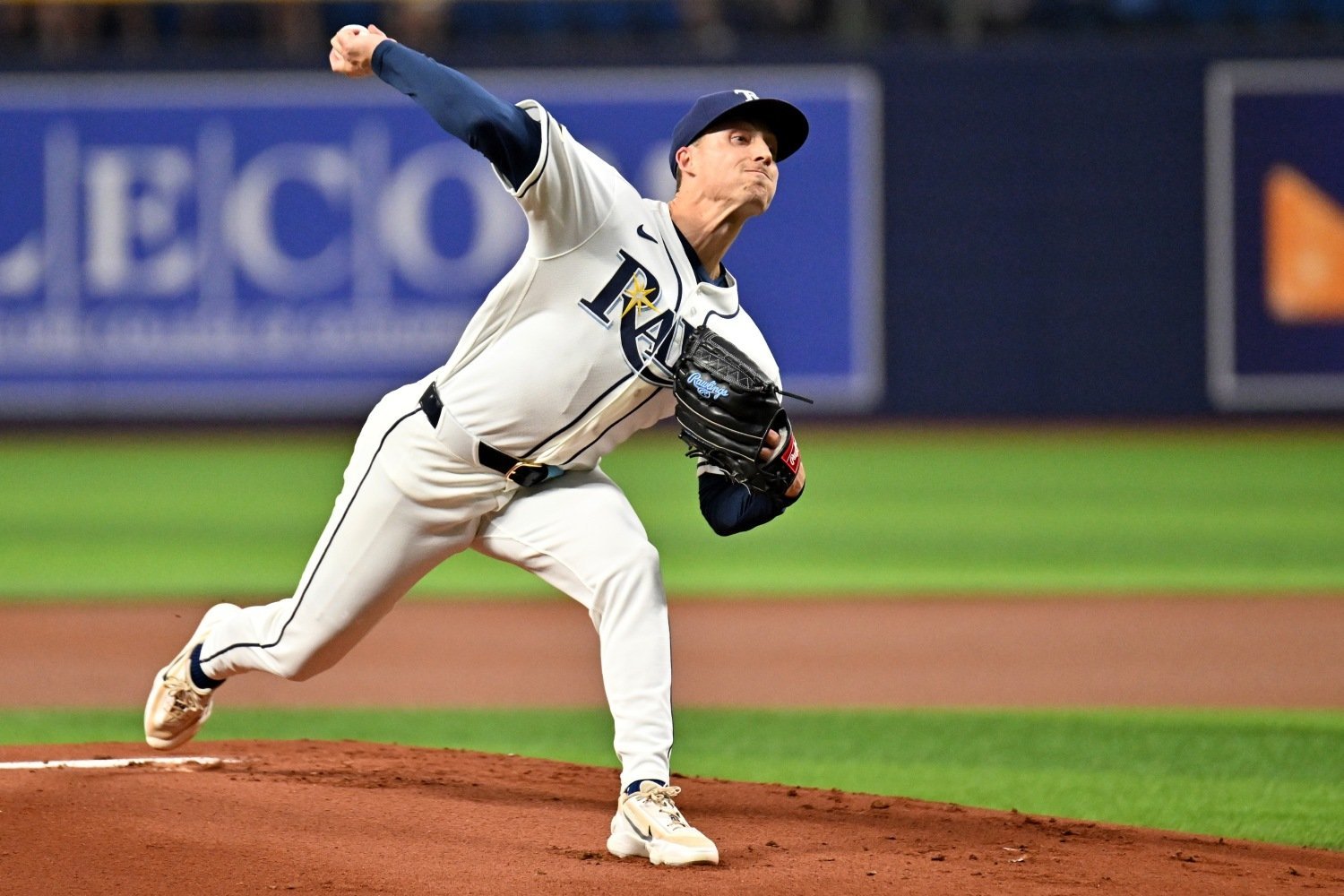 When the Minnesota Twins traded Griffin Jax to the Tampa Bay Rays in exchange for Taj Bradley, the move immediately sparked debate about upside versus certainty. At the time, the Twins appeared to be dealing from a position of strength. Jax had become one of the most reliable relievers in the American League, while Bradley looked like the type of high-upside starter Minnesota’s rotation desperately needed. Early returns made the deal appear heavily tilted in the Twins’ favor. Bradley pitched like the club’s ace before a right pectoral injury landed him on the injured list. Still, baseball trades have a funny way of evolving over time, especially when pitchers are involved. Now, the Rays are attempting something Minnesota talked about and quickly abandoned: turning Jax back into a starting pitcher. The funny part is, it might actually work. Twins fans probably remember Jax’s rookie season well enough to understand why the organization gave up on the idea initially. During the 2021 campaign, Minnesota used him in 18 games, including 14 starts. The results were ugly. Jax posted a 6.37 ERA with a 67 ERA+ and a 1.35 WHIP while allowing nearly a hit per inning. Too often, lineups punished him the second and third time through the order. At the time, he looked like a pitcher without a clear identity. His fastball command wavered, the secondary stuff lacked consistency, and he simply did not miss enough bats to survive in a rotation role. Then everything changed. Beginning in 2022, the Twins shifted Jax into the bullpen full-time, and suddenly, he became one of the best relief weapons in baseball. From 2022 through 2024, he posted a 3.06 ERA with a sparkling 2.77 FIP while striking out 241 batters across 208 2/3 innings. The transformation was dramatic. His slider became a legitimate wipeout pitch. The fastball played up significantly in shorter outings. More importantly, Jax started attacking hitters with confidence, rather than simply trying to survive. By the time the 2025 season rolled around, there was legitimate discussion about whether Minnesota should revisit the starter experiment. Unlike his rookie self, the more seasoned Jax actually looked equipped for it. His pitch mix had evolved considerably since moving to relief. He had sharpened his command, developed swing-and-miss stuff, and learned how to sequence hitters far more effectively. Frankly, he barely resembled the pitcher who struggled through 2021. The idea made sense on paper. Unfortunately for Jax, the Twins needed him too badly in the bullpen. Minnesota entered 2025 leaning heavily on him as a high-leverage weapon, and the organization ultimately decided stability in relief outweighed the risk of another rotation conversion. Then the season unraveled. The Twins collapsed under the weight of injuries, inconsistent pitching, and mounting clubhouse frustration. Jax’s final chapter with the organization included a tense interaction with former manager Rocco Baldelli on the mound at Target Field. Shortly afterward, his representation informed the club that a trade would be preferred. A few days later, he was headed to Tampa Bay. Naturally, the Rays decided to get weird with it. Rather than fully stretching Jax out during spring training and immediately placing him into the rotation, Tampa Bay spent the early portion of 2026 using him in relief appearances, while gradually increasing his workload. It is a very Rays approach to pitcher development. Recently, however, the Rays have started letting Jax work deeper into games. Across five starts, he has allowed only three earned runs over 19 innings with a 14-to-8 strikeout-to-walk ratio. His most recent outing against the Baltimore Orioles may have been his most encouraging yet. Jax tossed five innings, allowed three hits, surrendered just one earned run on a solo homer, struck out six, and walked only one batter. Equally importantly, his workload continues to climb. Over his last three starts, he has averaged just over 60 pitches per outing, suggesting Tampa Bay is slowly removing the training wheels. It's difficult not to play revisionist history with the trade. Earlier in the 2026 season, the Twins looked like clear winners. Bradley emerged as Minnesota’s top starter before his injury, while Jax remained somewhat of a question mark as a long-term rotation candidate. But that equation may no longer be so simple. If Bradley’s injury impacts his long-term durability, while Jax successfully transitions into even a mid-rotation starter, the narrative around this deal could shift dramatically. Starting pitching carries far more value than relief pitching, even elite relief pitching. The Rays know that better than almost anyone. Bradley is back, and he looked like himself in his first appearance after the stint on the shelf, but it won't feel like he's out of the woods until he gets back to throwing full starts and puts that injury scare in the rearview mirror. There's also an uncomfortable reality attached to all of this from Minnesota’s perspective. The Twins may have actually developed Jax into a starter without ever getting to enjoy the payoff themselves. His failed rookie stint likely came too early in his development. By the time he became polished enough to handle a rotation role, the Twins were too reliant on him in relief to make the switch. Tampa Bay, meanwhile, inherited the finished version of the pitcher and now gets to test the final stage of the experiment. That does not make the trade a mistake. Bradley still has front-line starter upside when healthy, and the Twins desperately needed rotation help. Still, Jax’s resurgence as a starter adds an entirely new layer to the conversation. If he keeps pitching like this, Twins fans may soon find themselves wondering what could have been—although so far, Bradley is pitching well enough in his own right to deter those intrustive thoughts. What sticks out about Jax’s transition back to a starter? How should the Twins view this trade? Leave a comment and start the discussion. View the full article
 -
Could Red Sox & Orioles Swing A Trade To Benefit Both Offenses?
DiamondCentric posted an article in Talk Sox
 We want you the viewers to engage with our What If trade scenario. Today we cover What if the Red Sox and Orioles made a trade. Will it benefit both ballclubs from an offensive standpoint?View the full article
 -
Jacob Webb Has Come Around Quickly for the Cubs
DiamondCentric posted an article in North Side Baseball
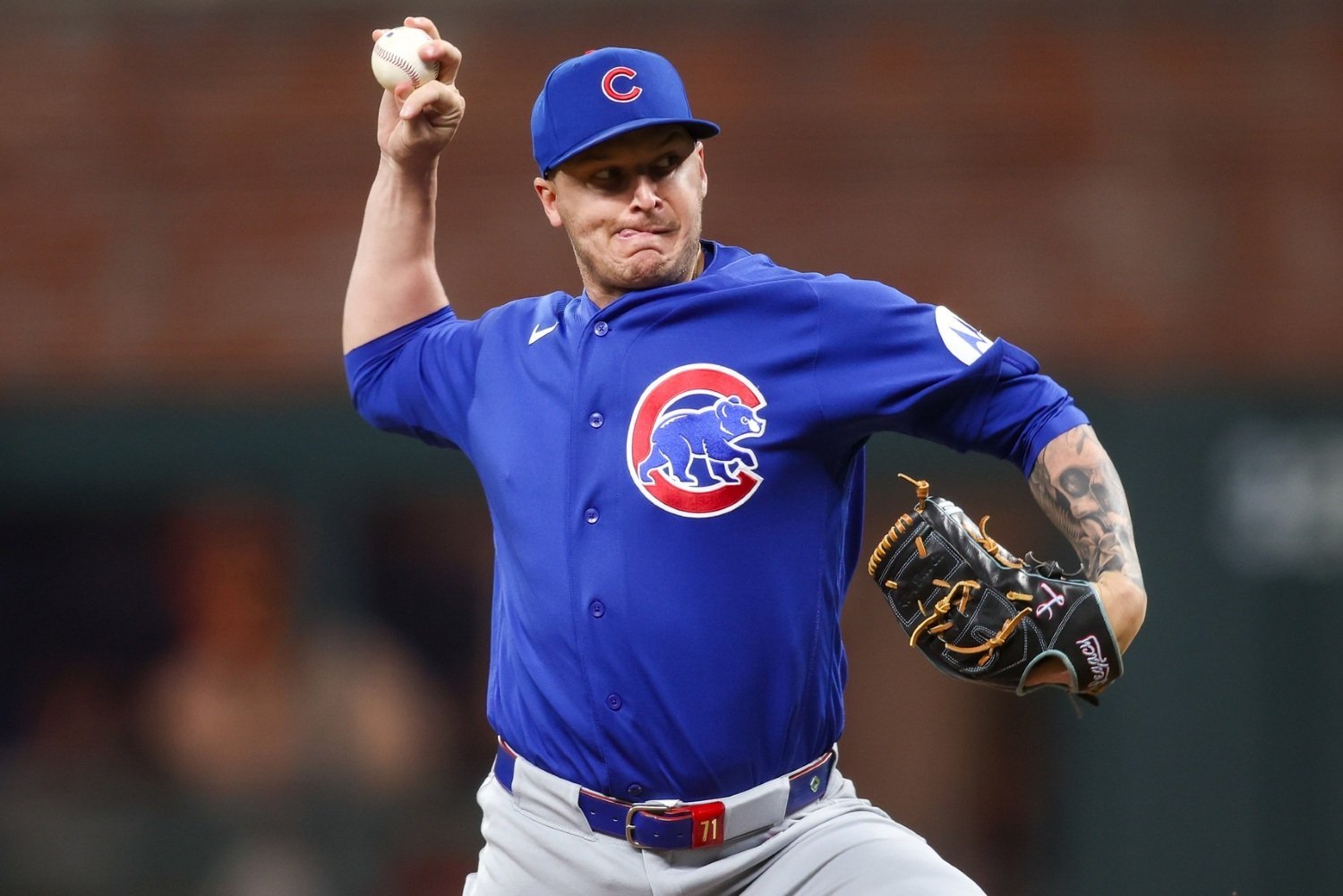 Things aren't good for the Chicago Cubs right now. They've lost nine in a row and 13 of 15, and it looks every bit as bad as it sounds. If you believe PECOTA, from Baseball Prospectus, the Cubs and Brewers are now flipping a metaphorical coin for the NL Central title. If you believe FanGraphs's Playoff Odds, then, uh, things are a lot worse than that. It felt a lot worse than that as the Brewers ran roughshod over the Cubs last week at Wrigley Field, and things have only gotten worse still. At such moments, it's difficult but important to seek some positives. Surely, somewhere, something is going right. Michael Busch is getting untracked. Ben Brown's lower arm slot and conversion to a sinker guy against righties has made him a viable starting pitcher, for as long as he can keep throwing 97 in that role. Beyond that, though, the good news goes scarce in a hurry. Here's one more tidbit that engenders some optimism: Jacob Webb has turned out to be a pretty good bullpen-saver. The erstwhile Texas righty signed an extremely under-the-radar deal this winter. The team spent more on Phil Maton, and they spent more on Hunter Harvey. They came into the season planning to lean more on Daniel Palencia, Maton, Harvey, and two lefties on whom they also spent more free-agent dollars (Caleb Thielbar and Hoby Milner) than on Webb; he was just meant to be an extra piece in a deep pen. Once Brown began the season in the bullpen, even he profiled as a more important relief arm than Webb. Almost immediately, though, things started going wrong. Harvey got hurt. Palencia got hurt. Thielbar got hurt. Three starting pitchers got hurt, forcing Brown (and Colin Rea) to move into the rotation. Maton stunk—and he got hurt. Riley Martin looked like a nice find who could fit into the picture and stop a gap—but then he got hurt. Webb's role got a lot more important than first hoped, in a hurry. That was bad news, because Webb wasn't very good. Through the end of April, Webb had a 5.06 ERA. In 13 appearances, he pitched 10 2/3 innings, striking out 12 and walking six of the 52 batters he faced. He gave up three homers. He was a middling middle reliever, and when Craig Counsell had no choice but to push him into more important innings, things went pear-shaped. That hasn't happened in a while, though. Webb has essentially become the team's relief ace, proving more durable and available than Palencia and just plain better than everyone else Counsell has had to call upon. He has a save and two holds. In 12 innings over 10 appearances, he's faced 47 batters, striking out 15 and walking two. He hasn't allowed a homer; he's only allowed one run. He's even stranded all three runners he's inherited this month. A good reliever is only as important as the leads they've given, and the Cubs haven't gotten their pen any leads lately. Webb has been sparkling, though—thanks mostly to a devastating changeup that he seems to have finally dialed in, location-wise. Most good changeups have much more depth than Webb's. His is more like a two-seam fastball than a heavy sinker, with run to the arm side but little added drop relative to his four-seamer. When a batter anticipates the change and Webb is anything less than perfect with his location, the hitter can lift it pretty effectively. However, the pitch has a healthy velocity gap from his heater, and because that fastball has some carry to it and holds its line, there's plenty of room for the change to run away and create the differential needed for lots of whiffs. After leaving the pitch up too often early, Webb now seems to be hitting his spots with it more consistently. He's also matching the pitch to the delivery of his fastball better. Hitters are having a hard time distinguishing the change from the fastball, and it's leading to both ample swings and misses and a lot of weak contact on the ground. YVlkam5fV0ZRVkV3dEdEUT09X0J3TlVVUUZSVlZRQVdRQUNVZ0FIVlE0RUFBTU5XZ1VBQ3dCV0FsRUZCUXRWQkZRRQ==.mp4 Webb has added a curveball this year, to pair with his sweeper, and he's made some small mechanical tweaks. Mostly, though, he just needed to execute better than he did in April. So far in May, he's executing exceptionally well. The Cubs still need to regain confidence in some other arms. Hopefully, Harvey can eventually return to patch things, and Maton can take care of the habitual misses that have plagued him all year. Webb can't be their second- or even third-most trusted reliever all season, if the team hopes to make the playoffs. For now, though, he's been a lifesaver. Things are so, so bad. If it weren't for Webb, they'd be even worse. View the full article
 -
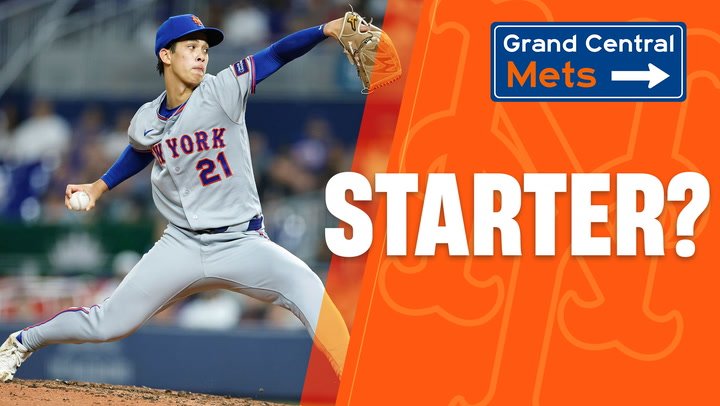 Jonah Tong is the New York Mets' no. 2 overall prospect. After struggling upon his big league call-up last year, the hard-throwing righty is getting a second chance to prove to the Big Apple that he can be a starter in this league. In this video, we'll break down what Tong needs to fine-tune to stick around this time. View the full article
 -
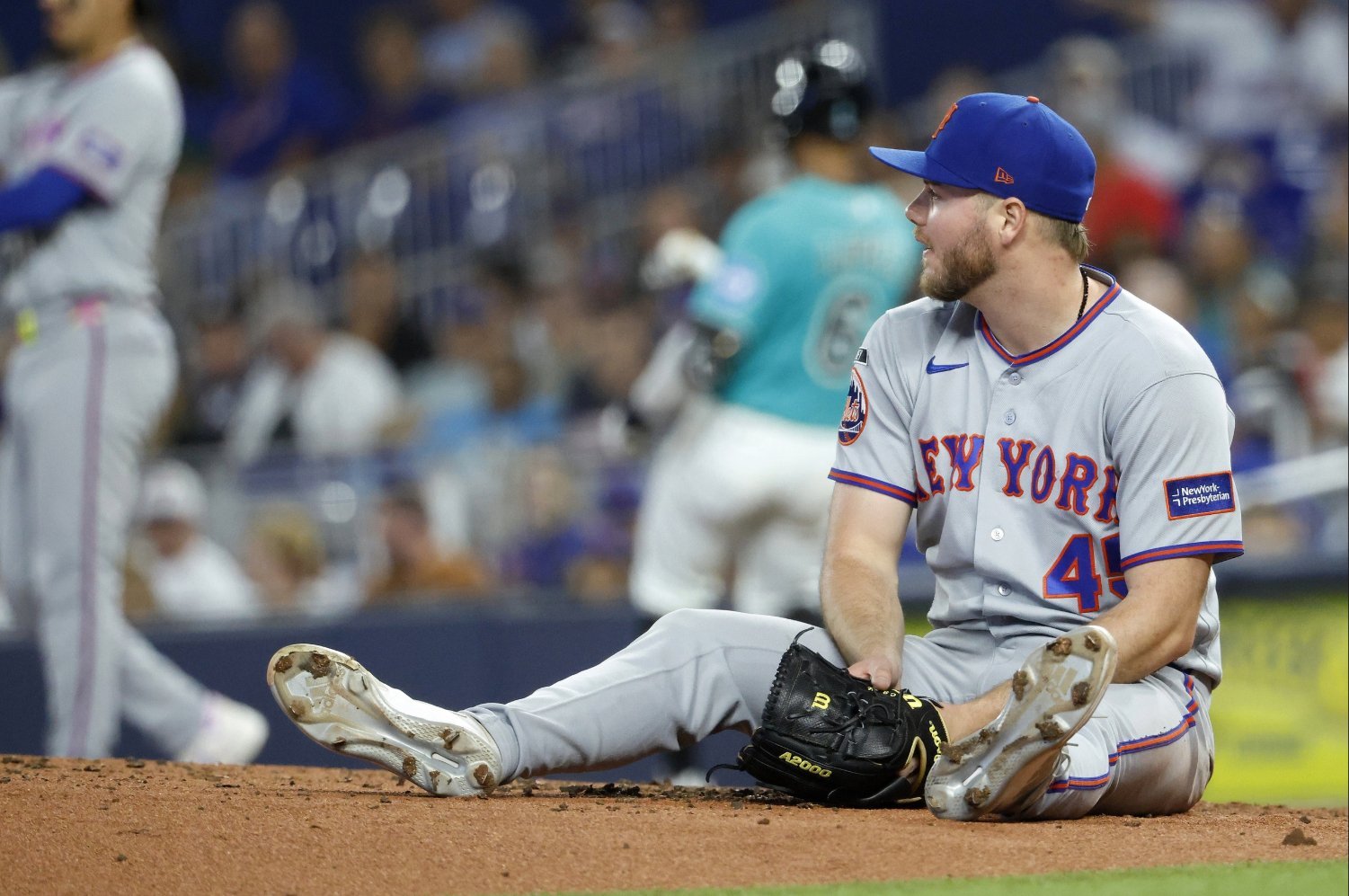 New York Mets Weekly Snapshot Record Last Week: 2-5 Runs Scored Last Week: 37 Runs Surrendered Last Week: 35 Standings: 5th in NL East (22-31) 13.5 GB of 1st Place Transactions: 5/18 New York Mets placed LHP A.J. Minter on the 60-day injured list. Left lat surgery. 5/18 New York Mets selected the contract of RHP Daniel Duarte from Syracuse Mets. 5/18 New York Mets selected the contract of LHP Anderson Severino from Syracuse Mets. 5/19 New York Mets transferred RHP Clay Holmes from the 15-day injured list to the 60-day injured list. Right fibula fracture. 5/19 New York Mets designated RF Austin Slater for assignment. 5/19 New York Mets sent 1B Jared Young on a rehab assignment to New York Mets. 5/19 New York Mets recalled CF Nick Morabito from Syracuse Mets. 5/20 New York Mets selected the contract of LHP Zach Thornton from Syracuse Mets. 5/20 New York Mets optioned RHP Daniel Duarte to Syracuse Mets. 5/22 New York Mets designated RHP Craig Kimbrel for assignment. 5/22 New York Mets sent RHP Kodai Senga on a rehab assignment to St. Lucie Mets. 5/22 New York Mets sent RF Austin Slater outright to Syracuse Mets. 5/22 New York Mets recalled RHP Jonah Tong from Syracuse Mets. 5/23 New York Mets recalled RHP Jonathan Pintaro from Syracuse Mets Scores: Game 46: NYM 16, WAS 7 (12) Game 47: NYM 6, WAS, 9 Game 48: NYM 4, WAS 8 Game 49: MYM 2, WAS 1 Game 50: NYM 1, MAI 2 Game 51: NYM 1, MAI 4 Game 52: NYM 0, MAI 4 Series Breakdown/Highlights Nationals Series: The Mets looked to carry the momentum from their 5-1 homestand to the road against their NL East rivals. In the first of four in the capital city, the Mets did something historic in a win that we don’t see that every day. For the first time since 1919, a National League team scored ten runs in extra innings, this time for the Mets in the 12th inning as the Nationals bullpen showed their true colors. The Mets won the first game of the series 16-7 over the Nationals. Game two saw the ugly side of the Mets. They took a 5-0 lead by the end of the second inning on Foster Griffin. Things were looking up for the Mets, like they were primed for getting back into the NL race. By the end of the second inning, the good feelings had died. With two outs and the bases loaded against Nolan McLean, James Woods lifted a fly ball to right-center field that Carson Benge and Tyrone Taylor failed to catch, and didn't exactly hustle after, turning into an inside the park Grand Slam. In the bottom of the third inning, it took one pitch for the Nationals to tie up the game on a Jose Tena solo home run. A walk, single, wild pitch and sac fly later the Nats had the lead that they never relinquished. The Nationals also took game three, with their offense, continuing to torment Mets pitching. CJ Abrams took rookie Zach Thornton deep for a first-inning three run home run in the first inning and the Nationals never looked back. Thornton otherwise looked solid in his MLB debut, with some minor command issues, but it was not enough with the Mets offense, outside of Juan Soto who had two home runs in the game, was not able to catch up. The Mets were able to salvage game four of the series to earn the split against the Nationals behind David Pederson having one of his best outings of the season. Both of the Mets' runs came on a Bo Bichette two-run single in the third inning. Devin Williams allowed a leadoff double, but did not allow the tying run to score in the bottom of the ninth to secure the save. Marlins Series: The Mets returned to Miami for the first time since their season ended there in 2025. In the first game of the series, Juan Soto hit a solo home run in the second at-bat of the game. That would be the only run the Mets would score as they spoiled a good effort by Tobias Myers, Sean Manaea and Jonah Tong where they gave up a combined two runs. The Mets lost another game by one-run in a low scoring affair. The second game of the series saw the Mets' anemic offense get retired batter by batter by Max Meyer, mustering just one hit against him. A ninth inning two-out double by Tyrone Taylor followed by an RBI single by Mark Vientos gave the Yankees a run in the ninth to avoid the shutout, but it wasn't enough. Freddy Peralta gave up four runs over seven innings, his longest outing as a Met, and the offense never caught up. The series finale was perhaps the most embarrassing. The Mets were able to record five hits, which is a (relative) positive. The negative is they could not score at all in this game. From baserunning mistakes that cost them chances to score, to not being able to work at-bats with RISP, the Mets' offense continued to struggle. Devin Williams came into a 0-0 game in the bottom of the ninth inning. A double, sac bunt, and two walks (one intentional) later, the Marlins had the bases loaded with one out. Heriberto Hernández put the Mets out of their misery, hitting a walk-off grand slam off Williams, who appeared to be tipping pitches, to win the game for the Marlins. The Mets lead baseball with grand slams surrendered with six on the season. Website Highlights Jonah Tong Will Be Most Important Contributor to Mets' Youth Movement Devin Williams & Luke Weaver Are Transforming Mets' Bullpen Brooks Raley Has Been the Unsung Hero of the Mets' Bullpen Looking Ahead May 25th: vs. CIN (4:10pm) (NYM 2, CIN 7) May 26th: vs. CIN (7:10pm) May 27th: vs. CIN (7:10pm) May 28th: OFF May 29th: vs. MAI (7:10pm) May 30th: vs. MAI (4:10pm) May 31st: vs. MAI (1:10pm) View the full article
 -
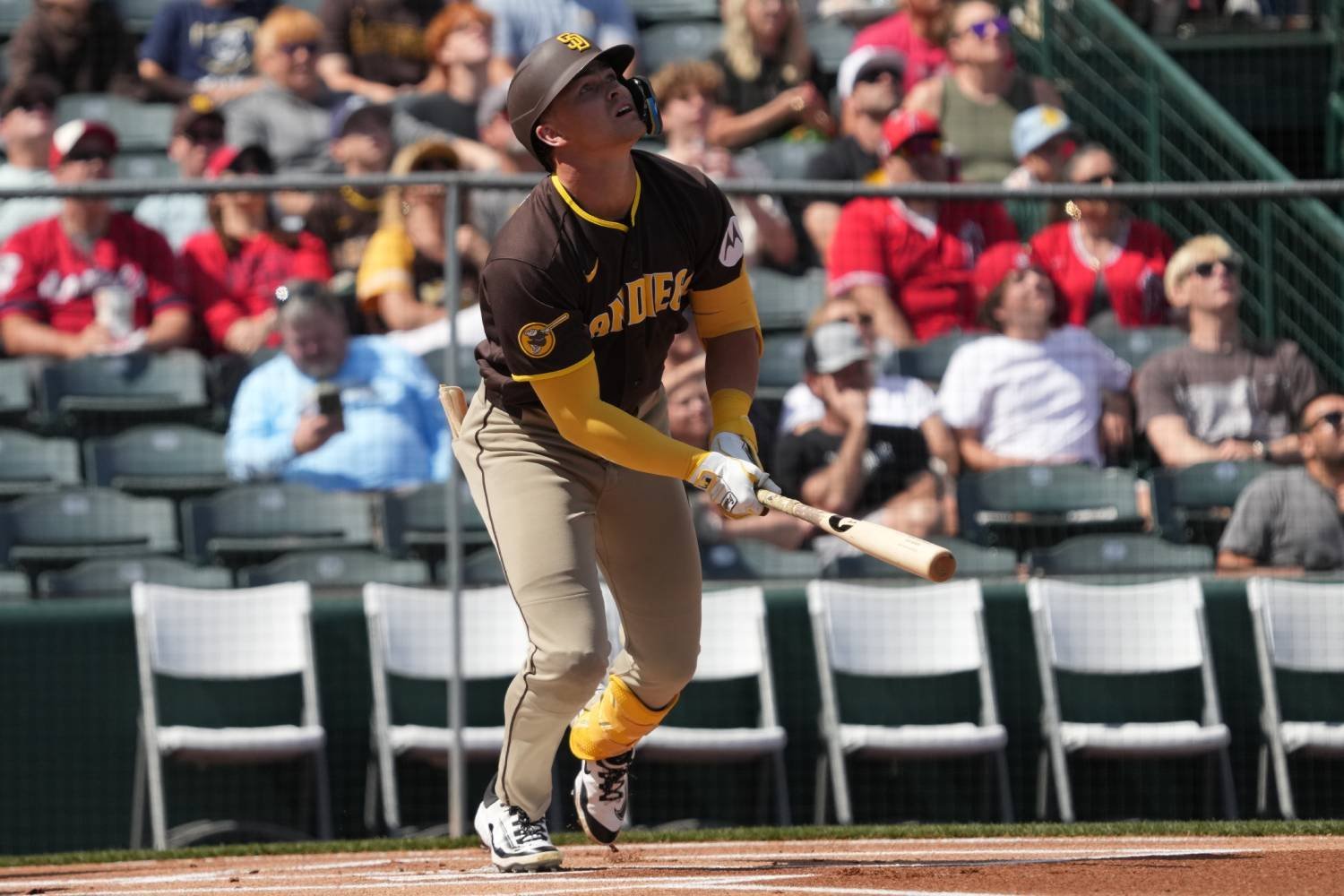 Checking in on the San Diego Padres prospects who made a mark in the last week: Jase Bowen, CF, Triple-A El Paso Chihuahuas Season stats: .288/.361/.600, 43 G, 9 2B, 4 3B, 12 HR, 33 RBI, 19 BB, 53 K, 6 SB, 4 CS You won't find the toolsy Bowen's name on many prospect lists. After all, he is 25 years old and signed this offseason with the Padres as a six-year minor-league free agent, which means he could leave his previous team on his own accord. An 11th-round draft choice by the Pittsburgh Pirates in 2019 out of Toledo Catholic Central High School in Ohio, Bowen didn't stink in the Pirates' system, but also didn't show enough to warrant more attention. Maybe it was a change of scenery, but the right-handed hitter has excelled since joining the Padres. Last week against the Round Rock Express, Bowen went 8-for-15 (.533) in the first four games before an 0-for-7 in the final two. He hit two homers, an inside-the-parker Tuesday and a traditional jack Friday, and finished the week with eight runs scored and seven RBIs. A high school football and baseball star who had a scholarship to play at Michigan State, Bowen opened a lot of eyes this spring when he slashed .296/.333/.630 in 25 Cactus League games, tying for the team lead with four homers and stealing a team-high seven bases. His athleticism in center field stood out, drawing the praise of Padres manager Craig Stammen. Bowen has been a fixture atop the Chihuahuas' lineup. He had a cycle in the first full week of the season and just missed another last week in a game he reached base five times. He has 12 homers entering this week (career high is 23), which is tied for the Pacific Coast League lead with two former MLB players (Patrick Wisdom and Jack Suwinski) and a prospect just called up (the A's Henry Bolte). His four triples are tied for third. It is that power-speed combo that makes Bowen so intriguing. He is on pace to have his best season in the minors. He has a .600 slugging percentage (.312 ISO), while his previous season best is .467 in 2023. However, he still strikes out quite a bit at 27.3% this year Whether he makes it up to the Padres this year will probably be injury-dependent, but he has made himself into an attractive older prospect who could fit nicely as a spare outfielder at the major-league level. BOWEN_0525.mp4 Alex McCoy, LF, High-A Fort Wayne TinCaps Season stats: .303/.368/.599, 41 G, 16 2B, 1 3B, 9 HR, 28 RBI, 14 BB, 41 K, 8 SB, 3 CS The imposing left fielder is continuing to show off his hitting ability and has regained his power stroke after a bit of a homer slump. Padres Mission's No. 12 prospect has hit all four of his May homers in his last 10 games, with a six-game hitting streak and hits in nine of those 10 games. That six-game hitting streak came last week against the Dayton Dragons, going 9-for-24 (.375), with four doubles, two homers, seven runs and six RBIs. Adding the last four games of last week, he is 15-for-40 (.375) with four homers. Before homering May 13, McCoy had been homerless since April 28, a stretch of 11 games. McCoy, the Midwest League Player of the Month for April, leads the league with 16 doubles and 26 extra-base hits, while pacing the TinCaps with nine homers. An undrafted free agent, McCoy's stock continues to climb. The right-handed hitter has a walk rate of 8.2% and a strikeout rate of 24% this year, which is consistent with what he put up in 2025 (8.1%, 24.3%), his first year as a pro. Earning a promotion to Double-A San Antonio would seem to be coming, but proving himself more with the TinCaps seems prudent for at least a little longer. Tapping into his power, as he has the last two weeks, could help make that decision easier. MCCOY_0525.mp4 Ian Koenig, RHP, Double-A San Antonio Missions Season stats: 2-4, 4.31 ERA, 8 games (all starts) 39⅔ IP, 40 H, 27 R, 19 ER, 8 HR, 7 BB, 30 K The 25-year-old was an undrafted free agent when he signed with the Padres out of Cabrillo College in Aptos, Calif., following the 2022 draft and has slowly climbed the organizational ladder to reach the Double-A San Antonio Missions for the first time this season. On Thursday, he turned in his best performance in 52 professional games, throwing seven shutout innings in a 5-1 win over the Frisco RoughRiders. He yielded five hits, hit a batter, didn't issue a walk and struck out a season-high six. The seven innings match his career high, which he did in back-to-back games last year while pitching for High-A Fort Wayne. Koenig ran into trouble in the third inning, after retiring the first eight batters of the game. He hit a batter and gave up his first hit, a single, but a groundout ended the brief threat. Koenig induced seven groundouts in the game. Koenig is having his best season as a pro, primarily due to a reduction in walks. In the three previous full seasons, he had a walk rate of 7.9% (2023), 7.1% (2024) and 7.7% (2025). This year, however, he has knocked that down to 4.1%. That has helped him produce a 4.31 ERA, which came after a 4.19 in 2023 at Low-A Lake Elsinore, 4.98 in 2024 when he repeated with the Storm and 5.40 last year with the TinCaps. Two issues: he has surrendered eight homers and hit five batters. He has made 44 starts and just eight relief appearances, so there is a chance he remains in the rotation as his career progresses. His strikeout numbers haven't been great last year or this year, with a 16% rate at Fort Wayne and 17.8% so far this year. Will Wagner, IF, Triple-A El Paso Chihuahuas Season stats: .266/.415/.406, 18 G, 1 2B, 1 3B, 2 HR, 7 RBI, 15 BB, 13 K, 2 SB, 0 CS No longer a prospect due to the time he spent in the majors the previous two seasons, the 27-year-old infielder still has time to shed his image as a AAAA player. To wit, the son of Hall of Famer Billy Wagner has a .292/.396/.438 slash line in 348 minor-league games, but a .256/.329/.346 in 79 MLB games. He has two homers and one stolen base with the Toronto Blue Jays and Padres, so he currently profiles as a backup infielder at the MLB level. Wagner had a late start to his 2026 due to a strained right oblique that he sustained early in spring training. He returned to action May 1 and started to heat up last week. Against Round Rock, the left-handed hitter went 8-for-19 (.421) in five games and homered Saturday and Sunday, his first two long balls of the season. That raised his season batting average from .200 to .266. Wagner was acquired by the Padres from the Blue Jays for catcher Brandon Valenzuela, who is not in the majors for Toronto, and went 2-for-17 in 15 games with San Diego. If Wagner is to raise his stock, he will need to continue to show he is a good hitter. He has a very nice 18.1% walk rate to go along with a 15.7% strikeout rate with the Chihuahuas. The clock is certainly ticking on his value, so how he does over the next couple months will be crucial. WAGNER_0525.mp4 Kai Roberts, OF, Double-A San Antonio Missions Season stats: .226/.309/.310, 35 G, 4 2B, 0 3B, 1 HR, 6 RBI, 9 BB, 33 K, 14 SB, 0 CS A seventh-round draft choice in 2024 out of Utah, the 25-year-old has struggled to get his bat going in his brief pro career. Coming off a 2025 in which he slashed .227/.355/.305 with five homers and 24 RBIs in 90 games, Roberts was down to .140/.189/.180 at the beginning of the month. But thanks to a good stretch last week, he has pulled his numbers up close to where they were last year. In five games against the Frisco RoughRiders, Roberts went 5-for-13, which included a 3-for-3 game with two walks, three runs scored and a two-run homer Tuesday. That one game alone pulled his batting average up 33 points. Roberts' poor plate performance can, in part, be chalked up to his 34.4% strikeout rate and 8.3% walk rate. While his walk rate is on par with the MLB average, his strikeout rate is very high. It was at 28% last year, when he played mostly at High-A Fort Wayne after dealing with a hamstring injury that cost him a chunk of the season. He has 14 steals this season after 35 a year ago. The Padres obviously believe enough in the talent to move him up to Double-A for this season. Some of that probably comes from his .340/.414/.470 slash line with 14 steals in his pro debut in 2024 at Low-A Lake Elsinore in 24 games. View the full article
 -
Blake Mitchell Needs This To Unlock His Full Potential
DiamondCentric posted an article in Royals Keep
 Blake Mitchell is the Kansas City Royals' top prospect, and he has a rocket of an arm as well as an above-average fielding attribute. What does he need to do in order to elevate up to Double-A? The hitting stroke has been in biggest struggle. In this video, we'll break down what part of the offensive attack Mitchell is struggling with and why he is closer to a breakthrough than most may think.View the full article
 -
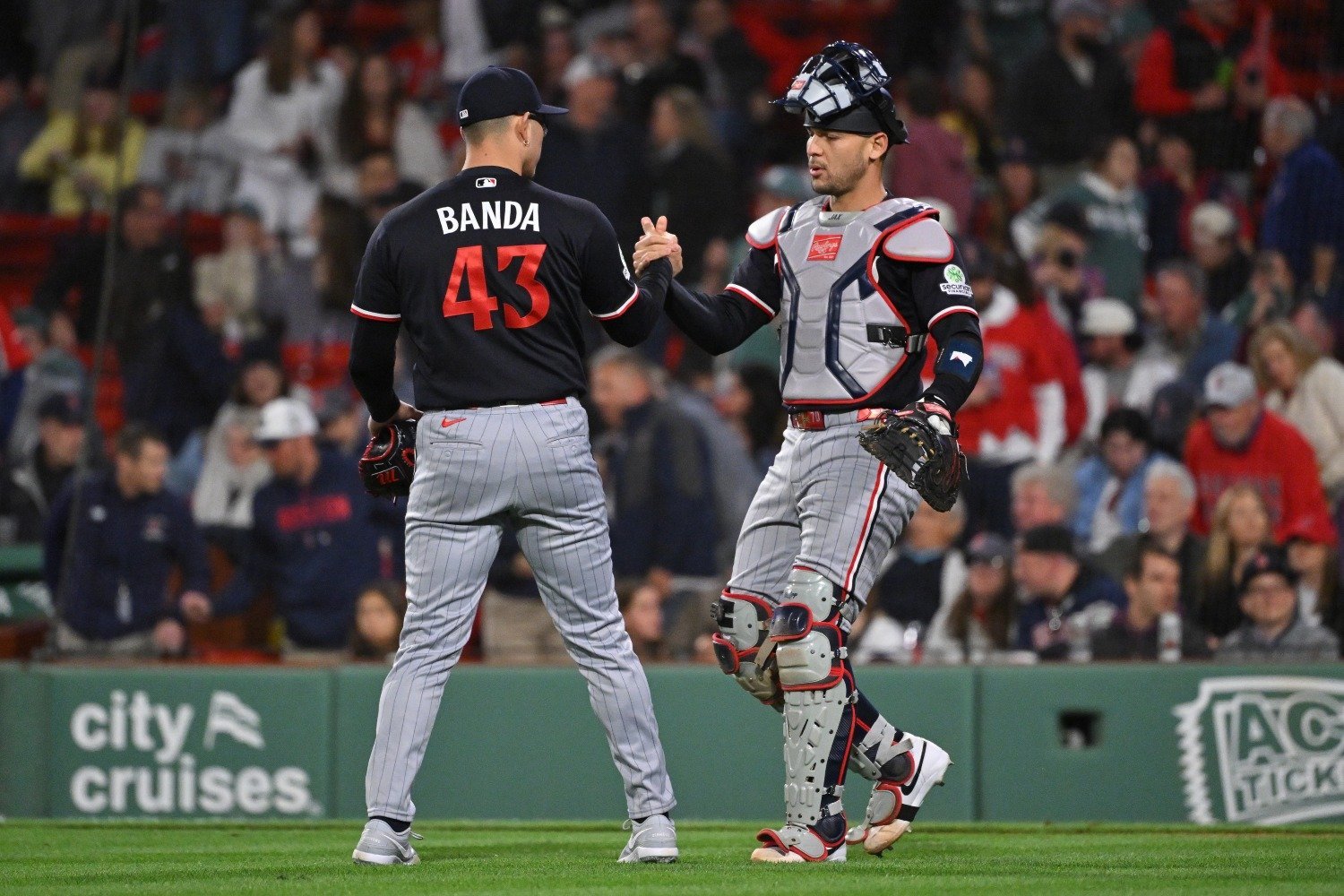 Since the beginning of the 2015 MLB regular season, the Minnesota Twins have had 23 different catchers attempt a throw to second base. Of those 23 catchers, Caleb Hamilton had the slowest average pop time, averaging 2.13 seconds over three attempts in 2022. On the flip side, Ben Rortvedt averaged the fastest pop time among Twins catchers during that stretch, averaging 1.92 seconds over eight attempts in 2021. That was until Alex Jackson made his first start behind the plate as a member of the Twins last Friday. In the bottom of the third inning of last Friday night’s contest between the Twins and the Boston Red Sox, Andruw Monasterio attempted to steal second base on Connor Prielipp. Monasterio’s steal attempt was snuffed, however, as Jackson threw him out to end the bottom half of the inning. On that play, Jackson generated the quickest pop time of any Twins catcher in the Statcast era, getting the ball from his glove to that of second baseman Luke Keaschall in 1.87 seconds. Vndaa09fWGw0TUFRPT1fQUFkUUJnZFhVUWNBWGxVRVV3QUhWQU5mQUZoV1cxWUFBbEFHVWdVSFZRWUJWQVpY.mp4 Jackson netting this record (if we can call it that; the timeframe for which we have hard data on this is still pretty short) shouldn’t come as a surprise to those who follow the sport. In 2025, Jackson tied for the sixth-fastest pop time of all catchers in baseball while with the Baltimore Orioles. The backstop made minimal appearances behind the plate from 2022 through 2024, due to his offensive shortcomings. However, he also tied for the fifth-fastest pop time (tied with Rortvedt, funny enough) of all major-league catchers in 2021. Most of that speed comes from elite sheer arm strength. Jackson’s throw to second base came in at 82.6 MPH, which is the 13th-fastest throw of all catchers this season. Unsurprisingly, the veteran backstop had the 15th-fastest throw down to second base last season, coming in at 83.4 MPH. Combining Jackson’s elite arm with his plus exchange time (he tied for the 12th-fastest exchange time in 2025), Minnesota has one of the best run-game mitigating catchers in baseball. This is not a strength of Ryan Jeffers or Victor Caratini. It's also worth paying some attention to the accuracy of the peg. Jackson's throw took Keaschall right to the sliding runner, tailing but strong and low. In the modern game, this is the ideal throw by a catcher. Teams want them to lead the tagger into the slider, allowing the fielder to get the ball onto the body of the runner as early as possible. Before replay could fix umpire errors, throws like this risked letting a runner be called safe due to a "high" tag, with more of the runner's body past the tagged part than we think of as ideal. Now, though, throwing into the space just to the first-base side of second is optimal; replay will catch whatever an ump might miss in real time. This is a skill at which Jackson excels, too. He rates in the top quintile of the league in throwing accuracy since the start of 2025, according to Statcast. Here's a sampling of infielders catching his throws, with the one Friday in prime position. Jackson’s addition to the 26-man roster came at the unfortunate expense of losing Jeffers (who was in the midst of a career year offensively) to the 10-day IL with a broken left hamate bone. Still, while Jackson won’t be able to make up for Jeffers’s absence in the batter’s box, he will add value behind the plate, likely being Minnesota’s best run-stopping catcher since Joe Mauer transitioned into a full-time first baseman in 2014. View the full article
 -
 Milwaukee Brewers starter Logan Henderson just made history, becoming the first starting pitcher since 1898 to allow two earned runs or fewer in the first 10 starts of his career. How does the righty do it? In this video, we'll break down how he overcomes a below-average fastball velocity, leverages arm-side ride, and generates one of the better strikeout rates in baseball this season. View the full article
 -
 While the Twins' bullpen has been far from consistent, Yoendrys Gómez has looked like a true high-leverage option. View the full article
 -
 The Chicago Cubs have been slumping big time, and pitching injuries keep piling up. Will they finally start to turn things back around? Listen on Apple Podcasts: https://podcasts.apple.com/us/podcast/the-north-side-baseball-podcast/id1798599313 Listen on Spotify: https://open.spotify.com/show/75wMGhBwlrDDYPt3kaF453 Listen on iHeartRadio: https://www.iheart.com/podcast/263-the-north-side-baseball-po-268998437/ Listen on Pocket Casts: https://pca.st/eey7h6ih Watch on YouTube: https://www.youtube.com/@northsidebaseball View the full article
