


DiamondCentric
-
Posts
2,631 -
Joined
-
Last visited
Never
Content Type
Profiles
Forums
Events
News
Tutorials & Help
Major League Baseball Videos
Guides & Resources
Store
Downloads
Gallery
Everything posted by DiamondCentric
-

 Linescores are underrated. You know, the top part of those box scores we scour listing the inning-by-inning tallies. Alone, linescores let our imaginations picture the flow of a contest, and depending on our rooting interest, the unmitigated highs and deflating lows. We glance at the hit and error totals on the far right and determine if those figures make sense. Linescores allow us to ever so briefly ask questions like "what?", "how?", and "really?" before we lower our eyes and dig into all the minutia within the actual box. Here's to you, Mr. Linescore. Thanks for all your daily contributions to our baseball fandom. Transaction: SS Tyler Rodriguez assigned to Wilson Warbirds from ACL Brewers. Rodriguez, now in his age 20 season, is a Dominican native who was part of the January 2023 international class. So, he's already in his 4th season. This isn't the RH-hitting utilityman's first Carolina League rodeo. Rodriguez, who has seen action at every position but the pitcher-catcher battery and has managed a .400 OBP in his career despite light batting average and slugging figures, is a bit of a manager's secret weapon. Rodriguez spent all of 2025 with the Mudcats and had to exit the September 3rd game at the season's tail end. He left after grounding out in the 2nd inning and was placed on the 60-day injured list the very next day. To open 2026, Rodriguez was placed on the seven-day IL and has appeared in three rehab games with Maryvale. He's ready for a return to action in Wilson despite an 0-for-10 mark (one BB, five K's). Thanks to the magic of what yours truly saw and then typed last September, well, you'll see: "19-year-old Tyler Rodriguez, in an attempt to reach for the first base bag on an infield grounder, went tumbling in the worst way. He was lifted onto a cart and taken off the field in what would be a miracle if it's not a devastating long-term lower body injury." Thus, in some ways, Rodriguez playing eight months later should be deemed very much a positive. Best wishes, Tyler! NOTE: Many of us picture an overflowing, even bloated roster at the rookie level. Heck, you have two Dominican Summer League teams feeding graduates each spring, plus prior year's high school draft picks yet to debut, and players repeating the level needing to show more before entering full-season ball. But to be honest, on the position player side, the current Maryvale squad is relatively lean at 14 active players (15 if you count catcher Luis Corobo, who was sent to Maryvale from Wilson after his own early exit from a game on April 24th and has yet to play since). You may wish to bookmark this sortable page for position players for the Maryvale club, this one for pitchers; the pages will give you a sense of who is getting the most action on a daily basis, and of course, their bottom-line stats. Final: ACL Reds 8, ACL Brewers 7 Box Score and Game Log Well, lo and behold, it's an actual nine-inning game, it's been over a week since we could say that. That being said, we've seen rather moderate and reasonable temperatures at first pitch during these early-season Arizona contests, while on Monday night we read: Weather: 105 degrees, Clear. Wind: 6 mph, Varies. So sure, let's now decide to play nine! Five of the seven Arizona Complex League games Monday were scheduled for nine innings, the most we've seen in a while. It's a guess that the two organizations facing off have discussions earlier in the day to determine the status of their squads, the need to have pitchers work innings (or not), etc. If this had been a seven-inning game, as our afore-mentioned friend Mr. Linescore tells us, this affair would have been much less exciting. As the game was about to begin, my Link Report co-worker Daniel provided these insights: "19-year-old RHP Ma’Kale Holden gets the start for the ACL Brewers (3-3), who play at the ACL Reds (3-2). Holden was dominant in his professional debut a week ago (5 IP, 0 R, 6 Ks). The position player pattern has the squad prioritizing 8 players (Acosta, Antunez, Fenelon, Frias, Mills, Hughes, Martinez, Rangel), 1 of whom rests per game (Martinez tonight), thus allowing 2 other players to get periodic starts (C Malachai Halterman, 2B Moises Polanco tonight)." Oh my, hasn't the guaranteed Statcast data at all complex league level games created quite the buzz. If you didn't already know, you can click on the game log "event oval" via the link above for any batted ball in play, and get info on exit velocity, launch angle and more. For a BrewerFanatic Link Reporter, it's valuable but just adds to the analysis workload to get these reports to you, with most nights featuring five games (soon to be seven with the Dominican League in a few weeks). A series of social media posts led to this summary via our own @Spencer Michaelis (by the way, consider membership options at his "Backfield Brew" Patreon): Incredible, but accurate? I was also monitoring early in this game, and it all just seemed to be too off-the-charts. I was tempted to dig into other games played by Reds and Guardians teams in that ballpark this spring, but that can be tasked to others for now. Later in the evening we learn that yes indeed, we can be skeptical, thanks to our dedicated Brewers fan in Taiwan, Terry. For that matter, was it really 105 degrees outside? C'mon, Goodyear. There's no reason to believe that these top two power prospects in Frias and Antunez didn't hit the ball hard Monday, very hard, in fact. Let's just be careful to read too much into those figures. Mr. Linescore told us each team made three errors (throw in a passed ball for the Crew). Ms. Box Score (yes, Ms., as she's more thorough) indicates that Cleveland arms did a better job at working around those miscues: Guardians - Zero unearned runs allowed Brewers - Seven unearned runs allowed The Maryvale five-run 9th inning rally was: Walk Cristopher Acosta double (he really needed that) Antunez HBP Kenny Fenelon double Frias double Ryan Mills groundout (an unusually quiet 0-for-5 evening) CJ Hughes strikeout (oh no, one out left and still one run short) Walk Walk Balk (tie game, thank you, Guardians!) Walk to reload the bases Acosta strikeout (on to the fateful bottom of the frame) The game ended unceremoniously with no outs after RHP Argenis Aparicio, who has been in a bit of a closer's role, walked the leadoff man. An error by first baseman Jonathan Rangel followed, then a wild pitch, and subsequently a game-ending single. With it being the lone game of the evening, I'll allow you to dig any deeper into Ma'Kale Holden's start, LHP Joey Broughton's second appearance of the young season, and more via your box score review. Tuesday the 3-4 A-Crew continues a road trip to Mesa (thankfully not Goodyear) to face the 2-4 Athletics' youngsters. As for the full-season clubs, Nashville, Wisconsin and Wilson all return to their home ballparks (with the Warbirds beginning a sweet two-week homestand), while Biloxi hits the road, all in evening starts. Have a fine Tuesday, everyone! Organizational Scoreboard including starting pitcher info, game times, MiLB TV links, and box scores Current Milwaukee Brewers Organization Batting Stats and Depth Current Milwaukee Brewers Organization Pitching Stats and Depth View the full article
 -
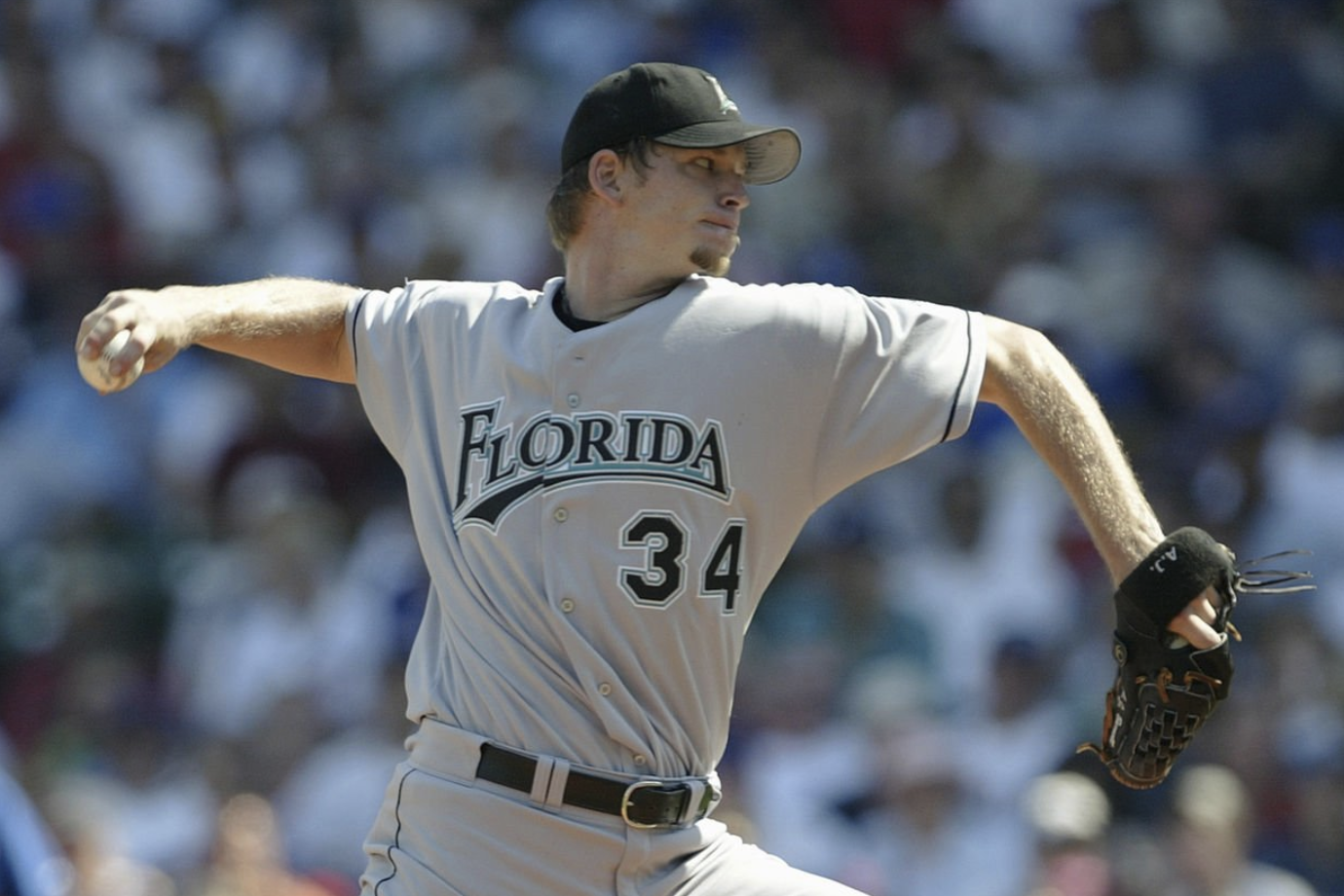 In nearly three and a half decades as a franchise, the Florida/Miami Marlins have had six different pitchers throw a no-hitter. Perhaps the most bizarre came on this day 25 years ago. For the Florida Marlins at Qualcomm Park on May 12, 2001, pitcher A.J. Burnett walked nine batters, hit another and barely threw more strikes than balls. In the end, however, he became the third pitcher in Marlins history to toss a no-no in a 3-0 win over the San Diego Padres. For the night, Burnett threw 129 pitches—65 strikes and 64 balls. After Burnett pitched around a two-out walk in the first inning, the Padres had perhaps their best scoring chance in the second. Ben Davis and Bubba Trammell drew back-to-back walks to open the frame. A flyout by Damian Jackson moved Davis to third with one out, but two pitches later, Burnett was able to get Donaldo Méndez to ground into a double play to end the threat. In the top of the third, Florida gave Burnett all the offense he would need. Charles Johnson’s two-run double scored Eric Owens and Preston Wilson to give the Marlins a 2-0 lead. In the third, San Diego threatened again. Two walks and a wild pitch put a pair of runners in scoring position with one out, but Burnett again hunkered down. Burnett struck out Ryan Klesko swinging before getting Dave Magadan to fly out to centerfield. The fourth required another Houdini act from Burnett. After a second walk to Trammell and hitting Jackson, Burnett again got out of the inning unscathed following consecutive strikeouts of Méndez and opposing pitcher Wascar Serrano. Florida added to its lead with a run in the top of the fifth. Burnett followed with consecutive 1-2-3 innings. The right-hander worked around a one-out walk in the seventh. After a pair of walks brought the tying run to the plate with one out in the eighth, Burnett inducted consecutive pop-outs from Davis and Trammell. The bottom of the ninth would be one of Burnett’s most economical innings of the evening. After getting Alex Arias to fly out, Burnett fanned pinch hitter Santiago Pérez for his seventh and final strikeout of the night. Three pitches later, Phil Nevin popped out to Florida shortstop Álex González to complete the wild no-hitter. While Burnett kept San Diego without a hit, the Marlins finished with seven. Wilson had three of those knocks. Serrano took the loss for the Padres despite allowing just one earned run in seven innings. Burnett’s no-hitter served as the first for the Marlins since Kevin Brown no-hit the San Francisco Giants in June 1997. In baseball history, only Jim Maloney of the Cincinnati Reds in 1965 had more walks in a no-hitter than Burnett’s nine. Burnett’s lone career no-no came on this day a quarter-century ago. View the full article
 -
 Fish On First staffers react to the latest Miami Marlins series and prepare you for what lies ahead. Monday's show was hosted by Alex Carver and featured panelists Ely Sussman, Kevin Barral, Jeremiah Geiger and Nate Karzmer. The following topics were covered: Marlins releasing (rather than outrighting) Chris Paddack Unusual pitch usage for Sandy Alcantara Esteury Ruiz thriving in his role What Joe Mack and Robby Snelling have shown us so far First-inning pitching struggles for the whole staff Eury Pérez underperforming his immense talent Who gets sent down to make room for Pete Fairbanks? Previewing and predicting the next series against the Minnesota Twins You can find Fish Unfiltered and Fish On First LIVE on the Fish On First YouTube channel, Apple Podcasts, Spotify or wherever else you get your pods. Our next FOF LIVE episode will be Thursday at approximately 6:00 p.m. ET the day after the Marlins-Twins series finale. View the full article
 -
 The Omaha Storm Chasers cruised to a 9-0 win behind Kameron Misner's three-hit, three-RBI night, Drew Waters' five-RBI effort that included a home run, and 3 2/3 hitless innings from starter Ethan Bosacker. Jordan Woods struck out 14 across six no-hit innings of work, but the Columbia Fireflies lost 3-2 after the bullpen surrendered a three-run homer. Quad Cities rallied from a 5-0 deficit but ultimately fell 10-5 to Cedar Rapids. Northwest Arkansas was postponed. Royals Transactions No Roster Moves Storm Chasers Cruise Past Indianapolis Behind Misner And Waters The Omaha Storm Chasers blanked the Indianapolis Indians 9-0, racking up 13 hits and nine scoreless innings of pitching. Kameron Misner went 3-for-4 with two doubles, a triple, three runs scored, three RBI, a walk, and a stolen base. Drew Waters added a 3-for-4 night with a double, a home run, five RBI, and a walk. Gavin Cross collected two hits, stole a base, and scored a run. John Rave chipped in two hits and an RBI. Starter Ethan Bosacker tossed 3 2/3 hitless innings, walking two and striking out four. Bailey Falter took over and earned the win, working 2 1/3 innings of two-hit ball without a walk and striking out five. Helcris Olivárez, Anthony Gose, and Jose Cuas combined for the final three frames without allowing a run. Omaha jumped ahead in the first when Waters singled in Misner. The lineup blew it open in the fifth: Colton Becker and Rave singled, Abraham Toro reached on a fielder's choice, Misner laced a two-run double to push the lead to 3-0, and Waters followed with an RBI double for a 4-0 cushion. The Storm Chasers tacked on two more in the sixth on bases-loaded walks by Misner and Waters, another in the seventh on a Rave single that scored Cross, and two more in the eighth on Waters' two-run home run. Omaha stranded 10 baserunners but never allowed the Indians to threaten the shutout. Player AB R H RBI BB K John Rave 5 0 2 1 0 2 Abraham Toro 4 1 0 0 1 2 Kameron Misner 4 3 3 3 1 0 Drew Waters 4 1 3 5 1 0 Josh Rojas 5 0 0 0 0 0 Gavin Cross 5 1 2 0 0 0 Dustin Dickerson 5 1 1 0 0 3 Luke Maile 3 1 1 0 2 2 Colton Becker 4 1 1 0 0 1 Player IP H R ER BB K HR Ethan Bosacker 3.2 0 0 0 2 4 0 Bailey Falter (W, 1-0) 2.1 2 0 0 0 5 0 Helcris Olivárez 1.0 0 0 0 0 1 0 Anthony Gose 1.0 0 0 0 2 2 0 Jose Cuas 1.0 0 0 0 0 0 0 Naturals Game Postponed The Northwest Arkansas Naturals' scheduled game was postponed. River Bandits' Late Rally Falls Short Against Cedar Rapids The Quad Cities River Bandits rallied to tie Cedar Rapids in the sixth inning but allowed five unanswered runs late and dropped a 10-5 decision. Ramon Ramirez powered the home offense with a three-run homer in the fifth, finishing 1-for-4 with a run scored, a walk, and a strikeout. Luke Pelzer went 2-for-4 with a double, a run scored, and two stolen bases. Leadoff hitter Nolan Sailors collected two hits, scored a run, and swiped two bases. Erick Torres added two hits, a double, a walk, and scored a run. Blake Mitchell drew a walk, scored a run, and drove in another with a sacrifice fly. Starter Aiden Jimenez was tagged for five earned runs on five hits across 3 2/3 innings, surrendering three home runs while walking two and striking out one. Kamden Edge recorded a strikeout in 1/3 of an inning. Mason Miller followed with 2 2/3 hitless, scoreless innings, walking three and striking out three. Nick Conte was charged with the loss (0-1) after allowing two earned runs across 1 1/3 innings, and Yimi Presinal surrendered three runs on one hit, two walks, and a home run in one inning. Down 5-0 after three innings, Quad Cities answered in the fifth when Ramirez's blast scored Sailors and Mitchell to make it 5-3, then Austin Charles brought Pelzer home on a sacrifice fly. Mitchell's sixth-inning sacrifice fly to score Torres tied the game at 5-5. Cedar Rapids regained the lead with two runs in the eighth and pulled away with three more in the ninth. Player AB R H RBI BB K Nolan Sailors 5 1 2 0 0 0 Blake Mitchell 3 1 0 1 1 3 Ramon Ramirez 4 1 1 3 1 1 Luke Pelzer 4 1 2 0 0 0 Jose Cerice 4 0 1 0 0 1 Austin Charles 3 0 0 1 0 1 Derlin Figueroa 2 0 0 0 2 0 Erick Torres 3 1 2 0 1 1 Tyriq Kemp 4 0 1 0 0 2 Player IP H R ER BB K HR Aiden Jimenez 3.2 5 5 5 2 1 3 Kamden Edge 0.1 0 0 0 0 1 0 Mason Miller 2.2 1 0 0 3 3 0 Nick Conte (L, 0-1) 1.1 1 2 2 2 1 1 Yimi Presinal 1.0 1 3 3 2 2 1 Jordan Woods Strikes Out 14, but Fireflies Fall To Kannapolis The Columbia Fireflies dropped a 3-2 decision to the Kannapolis Cannon Ballers despite a dominant performance from starter Jordan Woods, who struck out 14 over six no-hit innings on 76 pitches without issuing a walk. The quality start was not enough as Columbia's offense managed just six hits. Josh Hammond led the offense, going 2-for-4 with a double, a run scored, and a strikeout. Roni Cabrera added two hits and a run scored. Brooks Bryan collected a hit and an RBI on a sixth-inning double. Jhosmmel Zue went 1-for-3 with a double and an RBI. Yandel Ricardo finished 0-for-4 with two strikeouts. The bullpen could not preserve the lead. Dash Albus was charged with the loss (0-1) and a blown save after allowing three earned runs on three hits, including a home run, with three strikeouts in one inning of work. Andy Basora followed with a scoreless eighth, surrendering one hit while striking out one. Columbia broke through in the sixth when Hammond doubled and came around to score on Bryan's two-out RBI double, putting the Fireflies on top 1-0. In the seventh, Cabrera singled and scored on Zue's run-scoring double for a 2-0 cushion. Kannapolis answered in the bottom of the inning with a three-run home run off Albus, providing the difference. The Fireflies left six runners on base, and Woods' no-hit bid through six was the night's defining performance, even in defeat. Player AB R H RBI BB K Henry Ramos 3 0 0 0 1 1 Yandel Ricardo 4 0 0 0 0 2 Josh Hammond 4 1 2 0 0 1 Brooks Bryan 4 0 1 1 0 0 Sean Gamble 4 0 0 0 0 0 Stone Russell 3 0 0 0 0 1 Roni Cabrera 4 1 2 0 0 2 Daniel Lopez 4 0 0 0 0 2 Jhosmmel Zue 3 0 1 1 0 1 Player IP H R ER BB K HR Jordan Woods 6.0 0 0 0 0 14 0 Dash Albus (L, 0-1)(BS, 1) 1.0 3 3 3 0 3 1 Andy Basora 1.0 1 0 0 0 1 0 Top-20 Prospect Performance Carter Jensen: DNP Blake Mitchell: 0-for-3, R, RBI, BB, 3 K David Shields: DNP Kendry Chourio: DNP Ben Kudrna: DNP Sean Gamble: 0-for-4 Josh Hammond: 2-for-4, R, 2B, K Ramon Ramirez: 1-for-4, R, HR, 3 RBI, BB, K Drew Beam: DNP Asbel Gonzalez: DNP Yandel Ricardo: 0-for-4, 2 K Felix Arronde: DNP Luinder Avila: DNP Daniel Vázquez: DNP Steven Zobac: DNP Carson Roccaforte: DNP Blake Wolters: DNP Michael Lombardi: DNP Warren Calcaño: DNP Frank Mozzicato: DNP View the full article
 -
Mets Set To Promote Outfielder A.J. Ewing To Make MLB Debut
DiamondCentric posted an article in Grand Central Mets
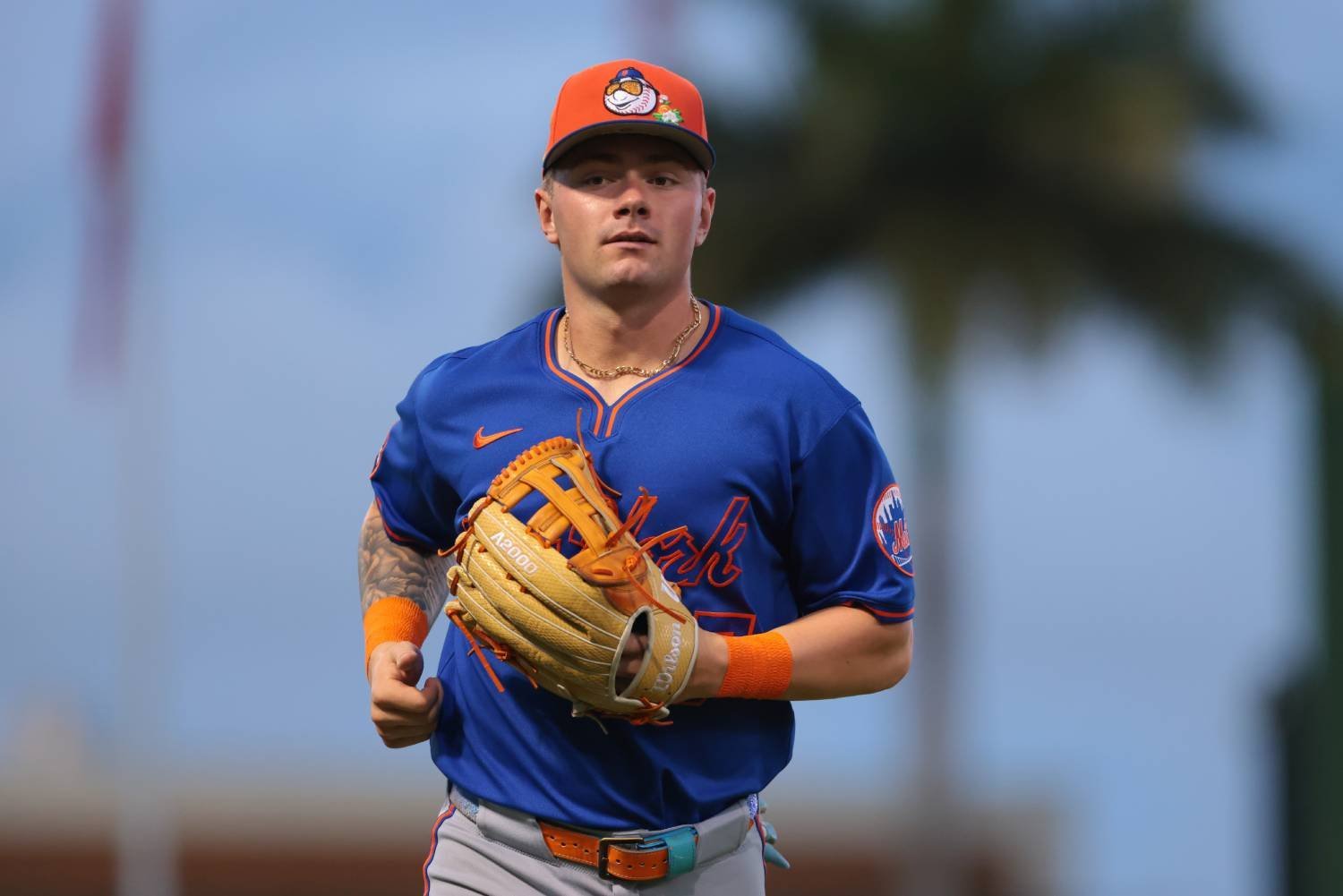 The desperation is real, which is why the New York Mets are turning to a player with a grand total of 12 games above the Double-A level. Outfielder A.J. Ewing, Grand Central Mets' No. 3 prospect, will be promoted by the Mets to make his MLB debut, according to a report Monday by Will Sammon of The Athletic. The 21-year-old Ewing has played 12 games at Triple-A Syracuse this year after starting the season at Double-A Binghamton. Even at Binghamton, Ewing had played just 48 games—28 last year and 18 this year. The Mets entered play Monday with the worst record in MLB at 15-25, already 12½ games behind first-place Atlanta in the NL East. At least one move will need to be made to get Ewing on the 40-man and 26-man rosters before Tuesday's series opener vs. the Detroit Tigers at Citi Field. One possibility is outfielder Austin Slater being designated for assignment. Still, Ewing, a fourth-round draft choice in 2023 out of Springboro (Ohio) High School, has been tearing the cover off the ball the last two years regardless of the level. In his dozen games at Syracuse, the left-handed-hitting Ewing had a slash line of .326/.392/.435 with no homers, four RBIs and five stolen bases. That came after posting a .339/.447/.514 slash line at Binghamton with two homers, 11 RBIs and 17 stolen bases. He also has shown patience at the plate, drawing 17 walks in those 18 games at Binghamton. In 2025, between the rookie-level Florida Complex League, High-A St. Lucie and Double-A, Ewing had a combined slash line of .315/.401/.429 with three homers, 55 RBIs and 70 stolen bases in 124 games. Ewing is a contact-minded hitter with superb defense in center field. He has also played left field and a little second base. View the full article
 -
What are your Marlins vs. Twins series predictions?
DiamondCentric posted an article in Fish On First
 Once again in 2026, I will be monitoring Miami Marlins predictions from our valued SuperSubs, Fish On First staffers and livestream guests. Individual article pages like this one will be created prior to every Marlins series and featured prominently on the FOF site. Consistent participation is key if you want to win this annual contest. Submissions only take a few seconds. Scoring system A "perfect" series is worth three points: Earn one point for predicting which team will win the upcoming series Earn one point for predicting the precise number of victories for each team Earn one point for predicting the “Series MVP” who accumulated the highest win probability added (WPA) during the series as calculated by FanGraphs (could pick a player from either team) FOF staffer Sean McCormack currently sits atop the 2026 season leaderboard, which will be updated between every Marlins series. If you are a SuperSub, leave a comment with your Prediction Time picks on this page, or join the Marlins Discord Server and submit there. We'll feature them on the upcoming Fish On First LIVE episode and track your points throughout the season! Any picks submitted prior to the first pitch of the series opener will be counted. If you are not a SuperSub, please consider signing up here to support the FOF staff. Series preview notes Probable starting pitchers: RHP Eury Pérez (MIA) vs. RHP Bailey Ober (MIN) on Tuesday RHP Max Meyer (MIA) vs. RHP Simeon Woods Richardson (MIN) on Wednesday LHP Robby Snelling (MIA) vs. TBD (MIN) on Thursday The Marlins rank 13th in MLB with a 100 wRC+ and 10th in MLB with a 3.82 FIP. They are 4-6 in their last 10 games and have a 5-10 record on the road this season. The following Marlins players are on the injured list: Griffin Conine (10-day IL), Pete Fairbanks (15-day IL), Ronny Henriquez (60-day IL) and Adam Mazur (60-day IL). Fairbanks is expected to be reinstated during this series. The Twins rank 15th in MLB with a 100 wRC+ and 20th in MLB with a 4.31 FIP. They are 5-5 in their last 10 games and have a 10-10 record at home this season. The following Twins players are on the injured list: Mick Abel (15-day IL), Garrett Acton (15-day IL), Taj Bradley (15-day IL), David Festa (60-day IL), Cody Laweryson (15-day IL), Pablo López (60-day IL) and Cole Sands (15-day IL). View the full article
 -
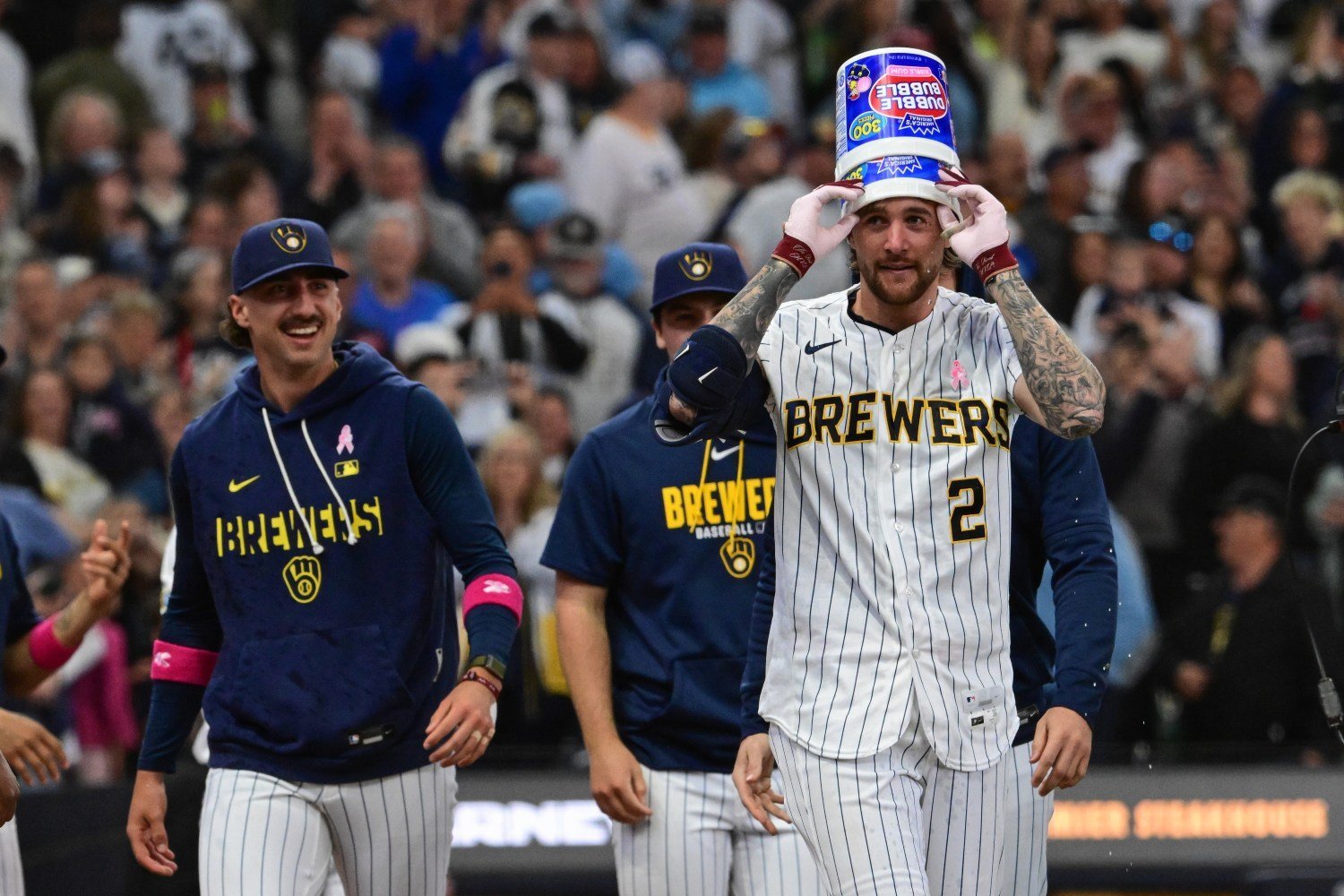 Weekly Snapshot: Record Last Week: 4-1 (Overall: 22-16) Run Scored Last Week: 23 Runs Surrendered Last Week: 14 Standing: 2nd in NL Central *** Game 34 (5/4) | Cardinals 6, Brewers 3 Game 35* (5/5) | Game Postponed, Makeup scheduled for 7/7 Game 35 (5/6) | Brewers 6, Cardinals 2 Game 36 (5/8) | Brewers 6, Yankees 0 Game 37 (5/9) | Brewers 4, Yankees 3 Game 38 (5/10) | Brewers 4, Yankees 3 *** Game 34 | Cardinals 6, Brewers 3 MIL Starter: Chad Patrick (3.1 IP, 7 H, 4 ER, 3 BB, 4 K) Top Performers: Jackson Chourio (4 H, 2 2B, BB) Brice Turang (3 H, HR, 2 RBI) DL Hall (1.2 IP, 0 H, 0 BB, 0 ER, 2 K) The Brewers were in St. Louis on Monday to face off against the red-hot Cardinals, with Chad Patrick taking the ball for the first game of the series. It was Patrick’s weakest start of the season, allowing 10 baserunners and four runs over his 3.1 innings of work. On the other side, the Redbird Kyle Leahy turned in his best start of the season, quieting the Brewer offense despite multi-hit days from Jackson Chourio and Brice Turang. Brice Turang’s 2-run home run (+0.8 WP%) Game 35 | Brewers 6, Cardinals 2 MIL Starter: Brandon Sproat (4.0 IP, 1 H, 0 ER, 3 BB, 5 K) Top Performers: Aaron Ashby (2.0 IP, 0 H, BB, 0 ER, K) Andrew Vaughn (2 H, HR, 3 RBI) Jake Bauers (2 H, BB, RBI) A rainout shortened the Brewers' trip to Missouri to just two games, and in that second game, the Brewers would get the split. That was on the back of Brandon Sproat’s strong outing, twirling four scoreless. With the bats, it was Andrew Vaughn announcing his return to the lineup, blasting a 3-run home run in the first inning en route to a 6-2 Brewer victory. Andrew Vaughn goes deep (+21.8 WP%) Game 36 | Brewers 6, Yankees 0 MIL Starter: Jacob Misiorowski (6.0 IP, 2 H, 2 BB, 0 ER, 11 K) Top Performers: Brandon Lockridge (2 H, 2 RBI) Shane Drohan (3.0 IP, H, 0 ER, 3 K, SV) Andrew Vaughn (H, 2 B, BB) The series opener against the Yankees may have appeared as a marquee pitching matchup, but the actual events on Friday were nothing but the Jacob Misiorowski show. In just his 22nd major league start, The Miz threw his first 10 pitches of the ball game all over 102 mph, and never looked back. Things fell apart for Max Fried on the other side, as a brief loss of command in the 2nd inning plated four Brewers, and with his opposing hurler pitching lights out of the other side, the Brewers would waltz away with a dominant 6-0 win. Jacob Misiorowski’s dominant outing Game 37 | Brewers 4, Yankees 3 MIL Starter: Kyle Harrison (4.0 IP, 4 H, 4 BB, 2 ER, 6 K) Top Performers: William Contreras (2 H, 2 RBI) Chad Patrick (3.0 IP, 2 H, BB, 0 ER, 5 K) Aaron Ashby (2.0 IP, H, R, BB, 3 K) It was the Yankees' turn to send out their young phenom for game 2, with Cam Schlittler outdueling Kyle Harrison, where he proved why he’s the league-wide leader in ERA, tossing six scoreless innings in his American Family Field debut. Still, Harrison and then Chad Patrick, behind him, fought through the potent Yankees offense before a solo homerun from Jake Bauers in the 7th, and a game-tying single from William Contreras knotted the game. Then, in extras, a game-tying single from Jackson Chourio and a walk-off Wild Bill sac fly gave the Brewers the series. William Contreras sends ‘em home happy (+16.3 WP%) Game 38 | Brewers 4, Yankees 3 MIL Starter: Logan Henderson (5.0 IP, 4 H, BB, 2 ER, 5 K) Top Performers: Brice Turang (2 H, HR, RBI) Blake Perkins (H, 2 RBI) Aaron Ashby (1.0 IP, 0 H, BB, 3 K) The Brewers, a historically dominant team on Mother's Day, did it again. It looked as if the Yankees had gotten to Logan Henderson early in the contest, but he settled in to get through five, while on the other side, a big 2-run single from Blake Perkins gave the Brewers the lead. New York did eventually battle back to tie the game after an RBI double from Jazz Chisholm, but that just set the table for a dramatic, 2-out walk-off home run ala Brice Turang, in the 9th. Happy Mother's Day! Brice Turang walks it off (+46.4 WP%) WERaMGFfWGw0TUFRPT1fQVZkU0JsZFFBMUVBRGxWUkJBQUhDQUlDQUZnR1VGUUFBZ01CQ1FJRVVnUlVWQXBS.mp4 Transactions: 05/09/26 - Placed LF Brandon Lockridge on the 10-day injured list with a right knee laceration and contusion. 05/09/26 - Recalled LF Blake Perkins from AAA Nashville. 05/08/26 - Sent LF Greg Jones outright to AAA Nashville. 05/04/26 - Activated CF Jackson Chourio from the 10-day injured list. 05/04/26 - Designated LF Greg Jones for assignment. 05/04/26 - Activated 1B Andrew Vaughn from the 10-day injured list. 05/04/26 - Optioned LF Blake Perkins to AAA Nashville. Notes Brandon Lockridge’s knee injury stemming from Friday's game is believed to keep him out of action for at least 4 weeks. Blake Perkins took Lockridge’s spot on the roster. While there is no tentative date for a return, Christian Yelich has been taking BP and running the bases, signalling a return could be close Looking Ahead: Tuesday, 5/12 - Padres @ Brewers - 6:40 PM CDT Wednesday, 5/13 - Padres @ Brewers - 6:40 PM CDT Thursday, 5/14 - Padres @ Brewers - 12:40 PM CDT Friday, 5/15 - Brewers @ Twins - 7:10 PM CDT Saturday, 5/16 - Brewers @ Twins - 6:10 PM CDT Sunday, 5/17 - Brewers @ Twins - 1:10 PM CDT View the full article
 -
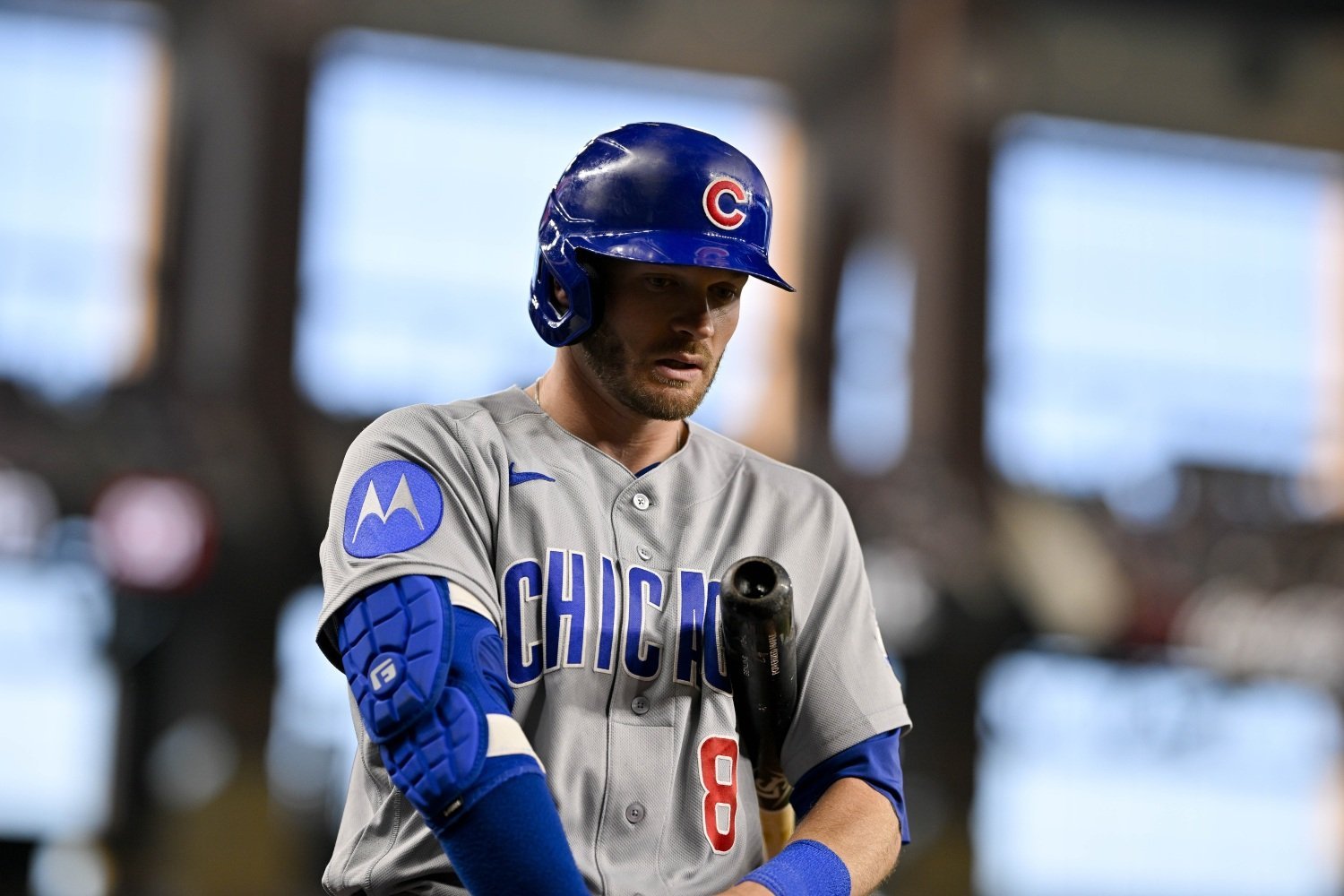 As they begin a new week, the Chicago Cubs sit at 27-14, leading the NL Central by 3.5 games. Only the team from the suburbs northwest of Atlanta has a better record. The devastating pitching injury news keeps on coming—last week, 2025 All-Star Matthew Boyd hit the injured list for the second time this season. Despite that, the Cubs are in the midst of a 15-game winning streak at home, and are 8-2 in their last 10 games. This season marks the first time since 2016 that the Cubs are at least 10 games over .500 this early in the season. That's not to say that the 2026 Cubs are on the path to a similar destiny; these are different rosters with varying strengths and weaknesses. Nonetheless, fans are feeling good about this team that finds ways to win while starring down injuries. Here we are going to go position by position, comparing how the starters have fared through the first quarter of the season. (For what it's worth, those Cubs were 29-12 at this same juncture.) Catcher 2016: Miguel Montero/David Ross 2026: Carson Kelly/ Miguel Amaya Before (and after) Willson Contreras held down the position from 2017-2022, the Cubs favored the tandem catcher approach. Montero was penciled in as the starter, but the 39-year-old Ross found himself starting over a third of the team’s games due to his chemistry with the veteran starters and Montero's brutal follow-up to what had been a very strong 2015 campaign. Although Montero hit the team’s first home run of the season, he was largely a non-factor at the plate, hitting .208 with four extra base hits through May 6. Ross was hitting a little bit better, but the two of them together had a combined FanGraphs WAR of 0.7. Ten years later, Carson Kelly’s breakout 2025 is carrying over tolerably well into 2026. Even after going 0-for-Arlington, he's hitting .283/.377/.384 on the campaign. Amaya got off to s slower start, but he's thrived in lighter duty and is now hitting .228/.371/.351. This year's group is certainly out-hitting the 2016 duo, though Ross and Montero were better behind the plate. First Base 2016: Anthony Rizzo 2026: Michael Busch Anthony Rizzo loved life in the middle of a high-octane lineup to start 2016. Through 41 games (a point that came 10 days later that year than this year), he was batting .245/.382/.536, with 11 home runs, 34 RBIs and more walks than strikeouts. This was Peak Rizzo: a Gold Glover, a Silver Slugger, a multi-time All-Star and the heartbeat of the team. Fast-forward to today, and the Cubs have their most prolific first baseman since Rizzo in Michael Busch, but he has not yet found his footing completely. The rust is shaking off nicely as the weather warms, and Busch is now batting .238/.349/.367, but Rizzo was obviously a better player that year than Busch is, at least right now. Second Base 2016: Ben Zobrist 2026: Nico Hoerner Fresh off a 2015 World Series MVP award with the Royals, Zobrist signed a four-year deal as a veteran complement to the Cubs' young offensive core. He was the primary second baseman early in the 2016 season, although he did log nearly 190 innings in the outfield, as needs arose. He hit the ground running for his new team, and the 40-game mark found him flirting with a 1.000 OPS. He wasn't a dazzling defender, but he was good enough. When the first pitch of 2026 was thrown, Nico Hoerner was entering a contract year. By the time the second game of the season started, he had agreed to a six-year extension. Through May 10, Hoerner is showing why he was deserving of this deal. His defense is exceptional, and even mired in a 3-for-22 slump, he's currently hitting .278/.351/.426, with plus baserunning, to boot. This is the first position where one can make a strong case for the 2026 Cubs to top the 2016 crew, so let's give them the nod. Third Base 2016: Kris Bryant 2026: Alex Bregman Here's a question that can sound fun or cursed, depending on your mood: When Bregman's time in Chicago is over, whose impact will have been greater? Bryant ascended from being a top draft choice to the status of the sport's top prospect. He won a Rookie of the Year Award and an MVP Award for the Cubs, and was instrumental in their winning the World Series. Thereafter, though, his career was often disrupted by injuries. Bregman is already past his peak, but is he past his prime—or is this just a standard-issue slow start from a veteran whom you can trust to get untracked any minute? Either way, Bryant then was a much better player than Bregman now, but the skills and the gravitas of the veteran at this moment give him a chance to carve a legacy just as rich as Bryant's before he's done as a Cub. Shortstop 2016: Addison Russell 2026: Dansby Swanson I am tempted to just call this for Swanson and move on, but Russell was another bright spot for the 2016 Cubs. He would end up having an All-Star season and some huge playoff moments, but he started off slowly in April. His .225/.352/.337 slash line does not jump off the page, but as a staple in the bottom of the lineup, he was not counted on to carry much of the offense. His defense was dazzling, though a bit unconventional at times. What he did off the field forever stains his place in the team's history, but he was a linchpin of (arguably) the best defense in baseball history. Swanson is off to a peculiar start to 2026. He's only batting .201, but he's shown power, and he's walking enough to keep his OBP respectable, at .313. Russell was a better defender, but on intangibles on and off the field, it's fair to say Swanson is a better contributor to wins right now than Russell was even then. Left Field 2016: Various 2026: Ian Happ When Kyle Schwarber collided with Dexter Fowler in the first week of the season, the 2016 Cubs' plans for left field were scuppered. That was the Cade Horton injury of the 2016 club. Jorge Soler started 51 games at the position, which led the team, but Bryant made 36 starts there as well, with Willson Contreras and Chris Coghlan also starting over 20 games each. Bryant was the best player who played left in 2016, but none of the players mentioned got off to as hot a start as Ian Happ is having right now. He leads the Cubs with nine homers, and is on pace to surpass his career high of 25. He's also walking at a very high rate, adjusting as well as anyone to the ABS system and the smaller zone that comes with it. The 31-year-old is entering a contract year, and is certainly performing well enough to earn a multi-year deal, but it remains to be seen if the Cubs will be the ones offering it to him. The longest-tenured Chicago athlete gives the 2026 Cubs the advantage in left over the rotation of solid players that Joe Maddon used in 2016, though to be fair, Maddon was scrambling a bit—and he got to backfill a lot of the playing time he gave to others in left by slotting Javier Báez into the lineup. Center Field 2016: Dexter Fowler 2026: Pete Crow-Armstrong Fowler had been a dynamic leadoff man for the 2015 Cubs, but looked poised to leave via free agency—until, suddenly, he showed up at Cubs camp after all. He then got off to a much better start than he'd enjoyed in his first year on the North Side; mid-May found him batting .324/.445/.547. Maddon rightly dubbed him the catalyst of the offense, and he kept their engine firing until more of the sparks caught and his teammates heated up come summer. In the present, Crow-Armstrong is the most exciting center fielder in baseball, but the jury is still out on what kind of hitter he will be. He has one of the lowest walk percentages on the team, and he's pairing it with one of the highest strikeout percentages. He still has the speed to steal bases and stretch hits into extra bases, but he hasn't put that on full display this year. After a Reds series in which he was the game-breaking force the Cubs so often benefited from last season, maybe his bat is warming up in its own right. Either way, his elite defense makes him valuable—but that 2016 version of Fowler was a more complete player. Right Field 2016: Jason Heyward 2026: Seiya Suzuki The top outfielder on the market joined the Cubs on an eight-year prior to 2016, famously taking less money than he was offered by the Nationals. The recipient of the largest free-agent contract in Cubs history struggled to hit throughout the seven seasons he played in Chicago, and was granted his release before the eighth year. If you want to believe the players, it was Heyward’s rally cry during the Game 7 rain delay that ignited the Cubs offense en route to the World Series win, but there sadly isn’t a “speeches given” section on the back of his baseball card. Heyward struggled immediately in 2016, posting a .581 OPS through early May, redeemed only by the respect of his teammates and his sparkling play in right field. Heyward will always have the defensive chops that Suzuki lacks, but Suzuki is a middle of the order hitter who has done nothing but hit since his return from the IL. In 27 games, he’s slashing .293/.403/.535 with 7 homers, anchoring the middle of a lineup that has not gotten much from Crow-Armstrong, Busch, or Bregman yet. Suzuki turned into one of the better hitters in baseball last season, after being more good than great in his first three MLB seasons. Like Happ, the 31-year-old is in a contract year, and could see another large payday if he continues to be a dependable middle-of-the-order bat. The Suzuki over Heyward choice is one of the easiest on this list. Utility 2016: Javier Báez 2026: Matt Shaw Since there was no DH in the NL 10 years ago (and Báez had to make this list somewhere), let's compare him to Shaw as a utility player. Before taking the everyday shortstop job, Báez bounced around the infield in 2016. He played over 300 innings at second and third base, nearly 200 at shortstop, and a few more innings in left field and first base. The 23-year-old had a walkoff home run on Mothers Day, although he fell into a slump thereafter and had just a .277 OBP through 41 Cubs games. He was already showing the ability to make a huge impact defensively. This isn’t a dig on Shaw, as he has seemed to turn a corner with the bat this season while handling multiple positions. After a mixed bag of results in 2025, he is hitting .271 with a .755 OPS this season. The underlying metrics suggest Shaw has made improvements to his hit tool and that should become more apparent as the season goes on, but at this point, the edge is still going to Baez. Starting Rotation 2016: Jon Lester, Jake Arrieta, John Lackey, Kyle Hendricks, Jason Hammel 2026: Shota Imanaga, Edward Cabrera, Colin Rea, Jameson Taillon, Ben Brown/Javier Assad The aspect that sets the 2016 team apart from the 2026 team is the starting pitching. Currently, the rotation has some bright spots and some not-so-bright spots. A healthy Imanaga is leading the bunch, with a 2.28 ERA over eight starts and a high strikeout rate to go with restored velocity. Imanaga always seems to start the season hot, so right now, he is the Cubs’ best starter. Trade addition Edward Cabrera has been as good as advertised, at times—but we've also seen what it looks like when his strange changeup-first arsenal isn't in sync. Colin Rea is back in the rotation due to the Cade Horton injury and has been a solid back-end contributor. Jameson Taillon and Matthew Boyd (who is now hurt again) have not been as sharp as they were last season, though. It’s really unfair to compare the current bunch to their 2016 counterparts, who were one of the most dominant single-season Cubs rotations ever. Lester and Hendricks finished second and third in the NL Cy Young Award voting, with Arrieta also getting support after winning the prize the previous year. Arrieta had already thrown a no-hitter by this time that year. The magnitude of difference here is much larger than between, say, Fowler and Crow-Armstrong or the respective catcher tandems. Closer/Bullpen 2016: Héctor Rondón 2026: Daniel Palencia Led by Rondón and fellow righty Pedro Strop, the 2016 Cubs pen got off to a hot start. Like any contender, they sought to reinforce that group as the summer wore on, but they had depth and high-velocity strikeout options in that group even in April and May. The 2026 bullpen needs reinforcements now, as all of their high-leverage arms outside of Hoby Milner and Brown have spent time on the IL. Current closer and WBC champion Daniel Palencia is a more electric arm than Rondón, but at least Rondón was healthy. There are glimpses of hope for breakout years from just enough guys, but right now, it's easy to pick this part of the 2016 pitching staff over the 2026 version, too. The Verdict C; Carson Kelly/Miguel Amaya 1B: Anthony Rizzo 2B: Nico Hoerner 3B: Kris Bryant SS: Dansby Swanson LF: Ian Happ CF: Dexter Fowler RF: Seiya Suzuki UTL: Javier Báez Rotation: 2016 Bullpen: 2016 In 11 categories, the 2016 Cubs have the advantage in six of them, making this a bit closer of a race than some might have thought. On the other hand, some of the 2016 group's advantages are much greater than those for the 2026 team. This group also doesn't have a farm system likely to yield either a Contreras-caliber midseason boost or a trade package like the one that brought the team Aroldis Chapman in 2016. These are two very different teams, and the game has changed immensely over the past decade, so this is not to say the 2026 team can’t experience the same fate. They are the hottest team in baseball right now, and are still finding ways to win despite their injuries. It will be a fun summer in Chicago, but there probably won’t ever be a Cubs team like the one we saw 10 years ago. View the full article
 -
Twins Prospect Hot Sheet: Under-the-Radar Names Making Noise
DiamondCentric posted an article in Twins Daily
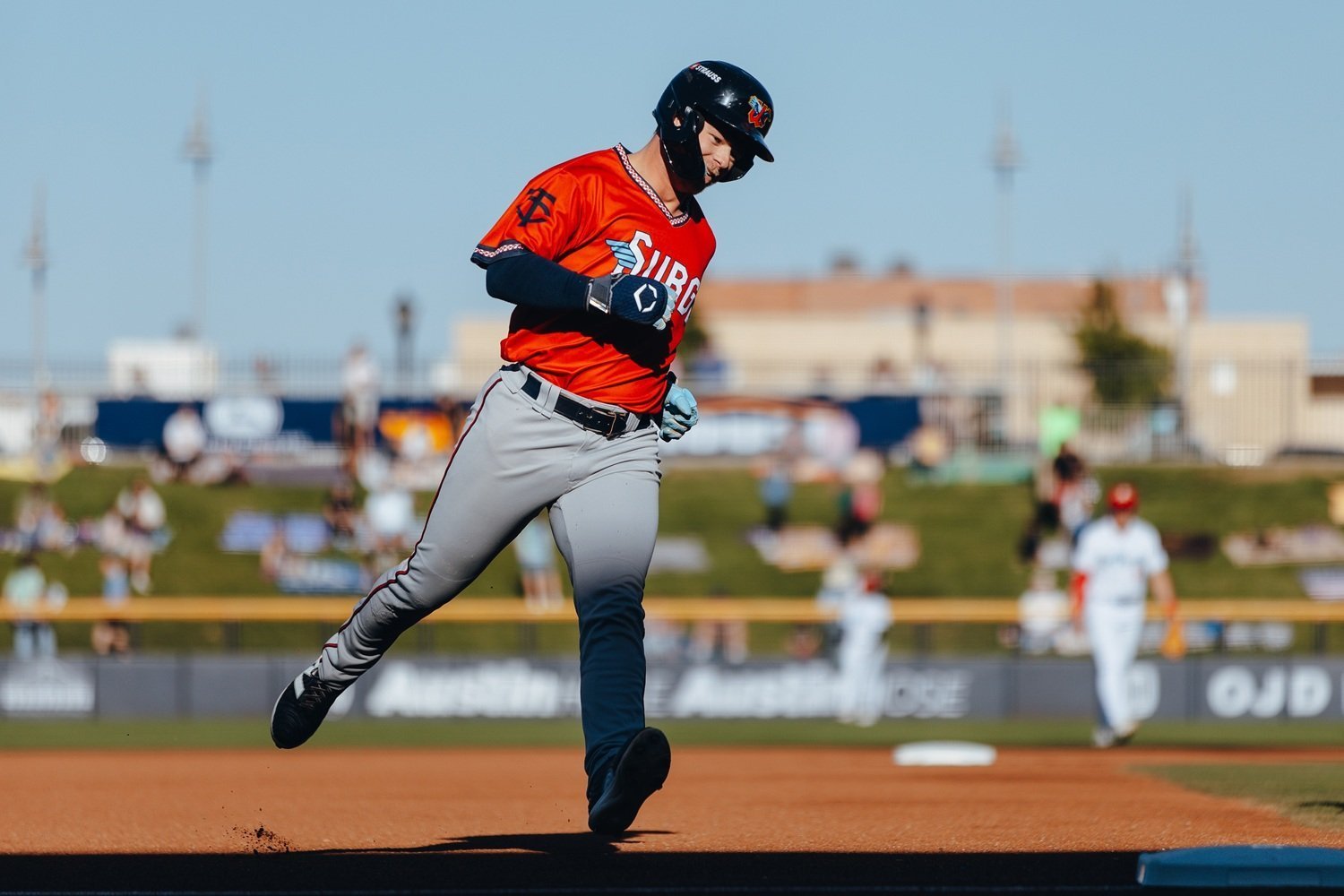 Most attention to prospects' progress is focused on the familiar names at the top of prospect rankings, but every year, there are less-discussed players who start forcing their way into conversations. Whether it is a former top pick trying to revive his trajectory, an overlooked organizational player breaking through, or a new arm flashing intriguing traits early in pro ball, these are the types of performances that can quickly change internal evaluations. This week’s hot sheet focuses on three under-the-radar names who have been putting together impressive stretches across the organization. 1B/DH Aaron Sabato, St. Paul Saints How He Got Here: The shortened 2020 draft created one of the strangest scouting environments in recent memory. Clubs were forced to rely heavily on prior evaluations after college seasons abruptly ended, and the Twins used the 27th overall selection on Sabato because of the offensive upside he showed at North Carolina. Minnesota signed him for a slot value bonus north of $2.5 million and hoped his bat would carry him quickly through the system. That has not happened consistently enough. Sabato’s profile has always depended almost entirely on power production, and the overall offensive numbers never fully matched expectations. From 2022 through 2024, he failed to post an OPS above .775 while splitting time between Double- and Triple-A. Last season, he showed minor improvements with an .809 OPS. Entering his age-26 season, the Twins sent him back to St. Paul looking for more consistency at the plate. Hitting the Hot Button: Sabato may no longer carry the prospect shine he once had, but he is producing as well as anyone in the organization right now. He recorded three multi-hit games during the week, highlighted by a four-hit, three-homer performance on Tuesday against Las Vegas. Over the last seven days, Sabato has slashed .455/.500/1.227 with five home runs and two doubles for a staggering 1.727 OPS. His last 28 days have been just as impressive, with a 1.264 OPS during that stretch. The defensive limitations still cap the ceiling, but left-handed power always earns opportunities. If Sabato continues driving the baseball like this, he could finally work himself into consideration for a major league debut sometime during the 2026 season. OF Garrett Spain, Wichita Wind Surge How He Got Here: Spain has quietly become one of the more traveled players in the upper minors. Toronto originally selected him in the 15th round of the 2021 draft, and he spent several seasons climbing through the Blue Jays system without much offensive impact. By 2024, he had reached both Double A and Triple A, though the production lagged behind with a .550 OPS across 105 games. Milwaukee selected him during the minor league phase of the 2024 Rule 5 Draft, hoping a change of scenery could unlock something offensively. While the results improved slightly with an 88 wRC+ and a .644 OPS, Spain found himself changing organizations again when the Twins grabbed him in the minor league phase of the 2025 Rule 5 Draft. Hitting the Hot Button: Spain put together one of the loudest offensive weeks in the organization. He doubled and tripled on Tuesday before exploding on Thursday with a 3-for-6 performance that included three home runs and six RBI. Across the last seven days, the 25-year-old has gone 7-for-22 with five extra base hits and a 1.264 OPS. There are still legitimate questions about age relative to level since he is older than the average Texas League player, but production matters, and Spain is finally giving the Twins something to notice. Organizational depth pieces rarely receive much attention until they force the issue. Spain is starting to do exactly that. RHP Justin Mitrovich, Fort Myers Mighty Mussels How He Got Here: The Twins selected Mitrovich in the ninth round of the 2025 MLB Draft after an accomplished collegiate career at Elon University. The New Jersey native served as a dependable weekend starter for three seasons and held down the Friday night role during both 2024 and 2025. Mitrovich logged a career high 89 1/3 innings during his final season while striking out 81 hitters across 15 starts. He wrapped up his Elon career with 243 strikeouts, which ranks fifth in school history, and earned multiple CAA Pitcher of the Week honors along the way. Minnesota viewed him as a polished college arm capable of moving quickly if the stuff translated into professional baseball. Hitting the Hot Button: Mitrovich made his professional debut on May 3 against Daytona and fired four shutout innings while allowing just three hits and striking out five. He followed that outing Saturday with three more innings and only one unearned run allowed while punching out four of the 11 hitters he faced. The most impressive number may be the swing-and-miss profile. Through his first two appearances, Mitrovich has generated 17 swinging strikes for a 16.3 percent swinging strike rate. That is an eye-opening figure for a pitcher making the jump into professional baseball. It is still an extremely small sample, but the Twins have shown a strong track record of identifying college arms who outperform their draft position. Mitrovich is off to a strong start in trying to become the next name on that list. Not every prospect story begins with national rankings and top 100 hype. Sometimes development takes longer than expected. Sometimes players need multiple organizations before things click. Sometimes, a recent draft pick immediately shows traits that stand out. Sabato, Spain, and Mitrovich all arrive at this point through very different paths, but each has given the Twins something worth monitoring closely. In a system searching for the next wave of contributors, under-the-radar names have a way of becoming important faster than anyone expects. What stands out about this trio? Will Sabato make his big-league debut in 2026? Leave a comment and start the discussion. View the full article
 -
 Chicago Cubs Minor League Report - May 10 Affiliate Overview Triple-A Iowa Cubs Series vs. Columbus Clippers (Cleveland Guardians): Tie, 3–3 Season Record: 18–20 Double-A Knoxville Smokies Series vs. Birmingham Barons (Chicago White Sox): Smokies win, 5-1 Season Record: 18–15 High-A South Bend Cubs Series vs. Lansing Lugnuts (Athletics): Cubs win, 4-2 Season Record: 16–14 Single-A Myrtle Beach Pelicans Series at Hickory Crawdads (Texas Rangers): Pelicans win, 3-1 Season Record: 16–15 Affiliate Highlights Triple-A: Iowa Cubs Season Record: 18–20 Series Opponent: Columbus Clippers (20–19) Series Standing: Tie, 3-3 May 10: The Iowa Cubs split their series with the Columbus Clippers following a 9-4 defeat on Sunday at Principal Park. The Clippers took a 3-0 lead by putting up a three-spot in the third and pushed their advantage to 5-0 with two more runs in the fifth. Casey Opitz’s (1-for-4) got the Cubs on the board with an RBI-single in the home half of the inning to break the scoring run. Columbus got that run back in the sixth and scored once in the eighth to go ahead 7-1. Pedro Ramírez (2-for-4) launched a two-run shot in the bottom of the frame, his ninth, but the Clippers answered again with two runs in the ninth to make it 9-3. Jonathan Long (1-for-4) brought home a run with a double but Iowa could not rally further, falling 9-4. Ty Blach was saddled with the loss in the start, allowing three runs, all unearned, on four hits over three innings of work, striking out two. Tyler Ferguson, making his organizational debut, worked a perfect seventh inning, firing two strikeouts. Double-A: Knoxville Smokies Season Record: 18–15 Series Opponent: Birmingham Barons (14–19) Series Standing: Win, 5-1 May 10: The Knoxville Smokies capped off their dominant series win over the Birmingham Barons with a 7-2 victory on Sunday at Covenant Health Park. The two teams traded zeroes through the first five innings of the contest, with Smokies starter Jace Beck working three of those innings. Beck allowed just three hits to go along with two strikeouts and no walks issued. The Barons found the breakthrough in the sixth with a run and kept Knoxville off the board in the home half of the frame for the shutdown inning. The Smokie offense erupted for seven runs after the stretch, with Carter Trice (1-for-4) crushing a grand slam to start the scoring. Alex Ramírez (1-for-4) and Jefferson Rojas (1-for-4) each turned in RBI-singles and Andy Garriola (1-for-3) capped the outburst with an RBI-double. Evan Taylor worked the final two innings of the ballgame, allowing no runs to go along with four strikeouts, keeping Birmingham off the board and helping Knoxville to the 7-2 win. Nick Dean picked up the win in relief to improve to 4-1 on the season, allowing two runs, one earned, on four hits over four innings of work, totalling six strikeouts. High-A: South Bend Cubs Season Record: 16–14 Series Opponent: Lansing Lugnuts (13–20) Series Standing: Win, 4-2 May 10: The South Bend Cubs fell to the Lansing Lugnuts, 8-3, on Sunday at Four Winds Field. Despite the setback, the Cubs still took the series, 4-2, for their first series win since April 14-19. The Lugnuts struck first in the contest, scoring four times in the fourth. The visitors added a run in the seventh before Ty Southisene’s (0-for-4) RBI-groundout in the eighth halted the scoring run. Lansing hit back with three runs in the ninth to make it 8-1. Drew Bowser (1-for-3) and Christian Olivo (1-for-3) drew walks with the bases loaded in the bottom half of the frame but South Bend would leave them loaded to end the game, falling 8-3. Jostin Florentino suffered the loss in the start, allowing four runs on three hits over 3 2/3 innings of work, walking two and striking out four. Single-A: Myrtle Beach Pelicans Season Record: 16–15 Series Opponent: Hickory Crawdads (17–14) Series Standing: Win, 3-1 May 10: Due to a fire in the visiting clubhouse at L.P. Frans Stadium, the Myrtle Beach Pelicans had both of their games on Saturday and Sunday canceled. View the full article
 -
Addison Barger Back On Blue Jays' Injured List; Eric Lauer DFA'd
DiamondCentric posted an article in Jays Centre
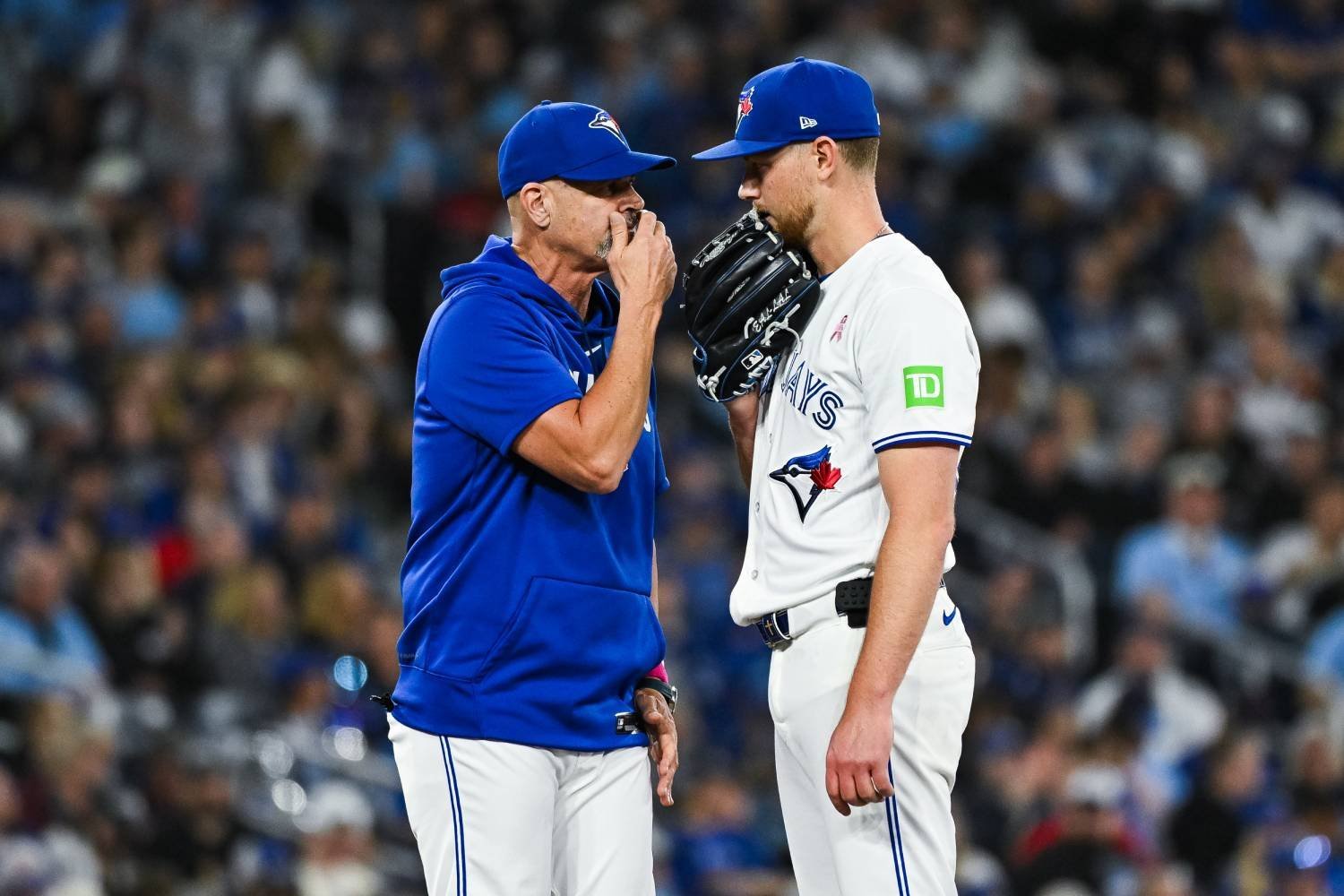 The return of Addison Barger was unfortunately short. The Toronto Blue Jays' right fielder went back on the 10-day injured list, this time with inflammation in his right elbow. Outfielder Yohendrick Pinango was called up from Triple-A Buffalo. Also, the Jays officially brought up right-handed reliever Yariel Rodriguez, a move reported Sunday, and designated left-hander Eric Lauer for assignment. The Blue Jays still have one opening on their 40-man roster. Barger, who was activated off the IL Saturday following a sprained left ankle, was scratched from Sunday's lineup vs. the Los Angeles Angels. This followed a terrific throw in Saturday's game, a 101.2 mph outfield assist that was the fastest in MLB this season. Barger went 0-for-3 with a run scored Saturday against the Angels. Pinanago had been sent down when Barger was activated. This came despite a slash line of .423/.444/.462 with four RBIs in 10 games. Lauer was the casualty for the Jays calling up Rodriguez. In eight games, including six starts, Lauer had a 6.69 ERA in 36⅓ innings. He had walked 16 and struck out 26. His struggles this season were a stark contrast to the 3.18 ERA he posted in 28 appearances, including 15 starts, in 2025, his first season with the Jays. Lauer is being paid $4.4 million this season. If no one claims him off waivers, the Jays will be responsible for his salary, minus a prorated portion of the MLB minimum should he eventually sign elsewhere. In his last appearance Sunday vs. the Angels, Lauer came on after an opener and pitched five innings, allowing six runs and three homers in five innings of a 6-1 loss. View the full article
 -
 Boston Red Sox Minor League Recap (May 10) Triple-A Worcester Red Sox Series vs Scranton/Wilkes-Barre RailRiders (New York Yankees): 3-2 Season Record: 21-16 Worcester fell short in the series finale losing 3-2 despite a solid outing from Alec Gamboa. Gamboa started the afternoon for Worcester and turned in five frames of work. He allowed four hits, one being a solo homer, the only run he let up. It was Gamboa’s first appearance since making his big league debut earlier in the week, and he put in some steady work. Jack Anderson, another pitcher who made his majors debut earlier in the season, took the next inning and ⅓ in relief. The Rule 5 draft pick couldn’t find his rhythm on Sunday however, giving up two runs on two hits and allowing three walks. To relieve Anderson, Tayron Guerrero pitched the final two and ⅔ innings, allowing a single hit and lowering his season ERA to 1.15. Despite amassing 10 hits, the WooSox went just 3-for-14 with RISP as they struggled to come up clutch. Down one run in the third inning, Mikey Romero doubled, driving in Braiden Ward to even the score. In the ninth, Ward drove in the WooSox another run with a double of his own, driving in Jason Delay. Anthony Seigler went 2/3 with a walk as he raised his batting average to a team-leading .309. He also leads the team with a .914 OPS. Despite eight of Worcester’s nine hitters getting a knock, they failed to capitalize in key moments. Double-A Portland Sea Dogs Series vs. New Hampshire Fisher Cats (Toronto Blue Jays): 1-4 Season Record: 14-18 Portland avoided the series sweep, winning 11-4 as Brooks Brannon led a red-hot offense. In Anthony Eyanson’s Double-A debut he looked just as good as he did in High-A. That is to say that he was downright excellent. Over four innings, Eyanson allowed one run, a solo homer following a seven-pitch battle of an at-bat. He gave up three hits and struck out four as he proved that he could handle the heat in Portland. Jedixson Paez pitched the next three frames and earned the win. He let up four hits and three runs, striking out two. Finally, Michael Sansone returned to Portland after three appearances in Worcester. He threw two one-hit innings and struck out four of the seven batters he faced, landing on his feet after being sent down. After a 13-run performance on Friday, the Sea Dogs kept up their momentum into Sunday as they put up 11 runs in a win. They got started early in the bottom of the first with the bases loaded, Brooks Brannon drew a walk, scoring Arias. One batter later, Miguel Bleis reached on a fielder's choice, driving in Will Turner. With men on the corners and one out, Tyler McDonough grounded out to second, allowing Nate Baez to score. In the third, Brannon drove a ball to center field for a two-run homer, extending the lead. In the sixth, Franklin Arias singled with Nelly Taylor on third, tacking on another run. Baez then stepped up with bases loaded, doubling on a sharp line drive to add two more. Who else but Brooks Brannon would step up next. The 22-year-old doubled, scoring Arias and Turner for his fourth and fifth RBIs of the game. He has 11 in his past two games. One inning later, Franklin Arias singled, driving in Nelly Taylor, bringing the Sea Dogs’ total to 10. Then, Arias crossed home on a double from Turner, tacking on Portland’s 11th and final run. Brannon and Arias combined for seven of Portland’s 11 RBIs as they continued to try and turn around their season. High-A Greenville Drive Series @ Greensboro Grasshoppers (Pittsburgh Pirates): 1-5 Season Record: 14-19 Greenville lost for the third consecutive day, this time 14-11. Luis Cohen’s season has been less than ideal, through six games he has an 11.02 ERA and a 0-4 record. This downward spiral continued on Sunday through ⅔ innings of work. Cohen was shelled, giving up five runs on two homers and six hits. Steven Brooks attempted to right the ship, but struggled to do so. He gave up another three runs on only one hit, giving up four walks. On the other hand, he struck out five but it wasn’t enough to minimize the damage. Joey Gartrell took the next three and ⅔ innings and strung together the best outing of the day for Greenville. Still, he wasn’t in his best form. He gave up two runs on four hits, including two homers. Jay Allmer took the last two, attempting to keep it within reach for the Drive. Unfortunately he could not, giving up four runs on four hits and allowing another pair of home runs. At the plate, the Drive almost made up for the shaky pitching. Facing a five run deficit in the second, Jack Winnay put the Drive on the board with a solo homer, his second of the season. They wouldn't strike again until the fifth inning, in a nine-run hole. Yophery Rodriguez launched his eighth homer of the season on a deep fly ball to right field. Later in the inning, Isaiah Jackson drove in Justin Gonzales on a sac fly. In the sixth, Rodriguez would hit another sac fly, this time to bring Mason White home with the bases loaded. With two runners in scoring position, Justin Gonzales hit a soft single to right field, scoring Ronny Hernandez. Yoeilin Cespedes would then drive in Freili Encarnacion on a bases-loaded sac fly. Down by eight in the ninth, the Drive mounted a comeback effort. Jackson hit a two-run homer with Cespedes aboard, and Jack Winnay scored on a wild pitch. Finally, Encarnacion hit a two run homer to shorten the lead to three. However, it wasn’t enough to take down the Grasshoppers as the Drive lost in spite of an excellent offensive showing. Low-A Salem RidgeYaks Series vs. Delmarva Shorebirds (Baltimore Orioles): 3-3 Season Record: 15-18 Salem scored ten runs as they prevailed in the series finale, splitting the series. Leighton Finley earned his second win of the year for his five-frame outing. He allowed two runs (one unearned) on four hits and two walks while striking out four. Finley’s been remarkable throughout the season, and hasn’t allowed more than one earned run in any appearance. Nicolas De La Cruz came in after Finley, pitching the next one and ⅓ innings. He allowed one hit and one walk but effectively stalled the Shorebirds offense. Griffin Kilander took the final two and ⅔ innings, allowing one more run on three hits. Kilander struck out five batters in his appearance. Andrews Opata kickstarted the RidgeYaks offense in the first inning, driving in Enddy Azocar and advancing to second on a throwing error. One batter later, Luke Heyman drove in Opata on a line drive single. One night after hitting a walk-off blast, Starlyn Nunez hit another homer. This time it was a two-run shot that gave Salem a three run lead. Opata then drove in his second RBI of the afternoon on a single, scoring Azocar once again. And just like in the first inning, Luke Heyman drove in Opata, this time on a two-run homer. In the fourth inning, with four men aboard and two outs, Kleyver Salazar worked a 2-1 count. Then, he absolutely demolished a high pitch deep to left field and over the wall. With a ten run lead in the eighth, Skylar King doubled to drive in Opata and tack on the RidgeYaks 13th and final run of the contest, capping off an incredible offensive showing. View the full article
 -
Twins Face Roster Decision on Veteran Relievers at Triple-A
DiamondCentric posted an article in Twins Daily
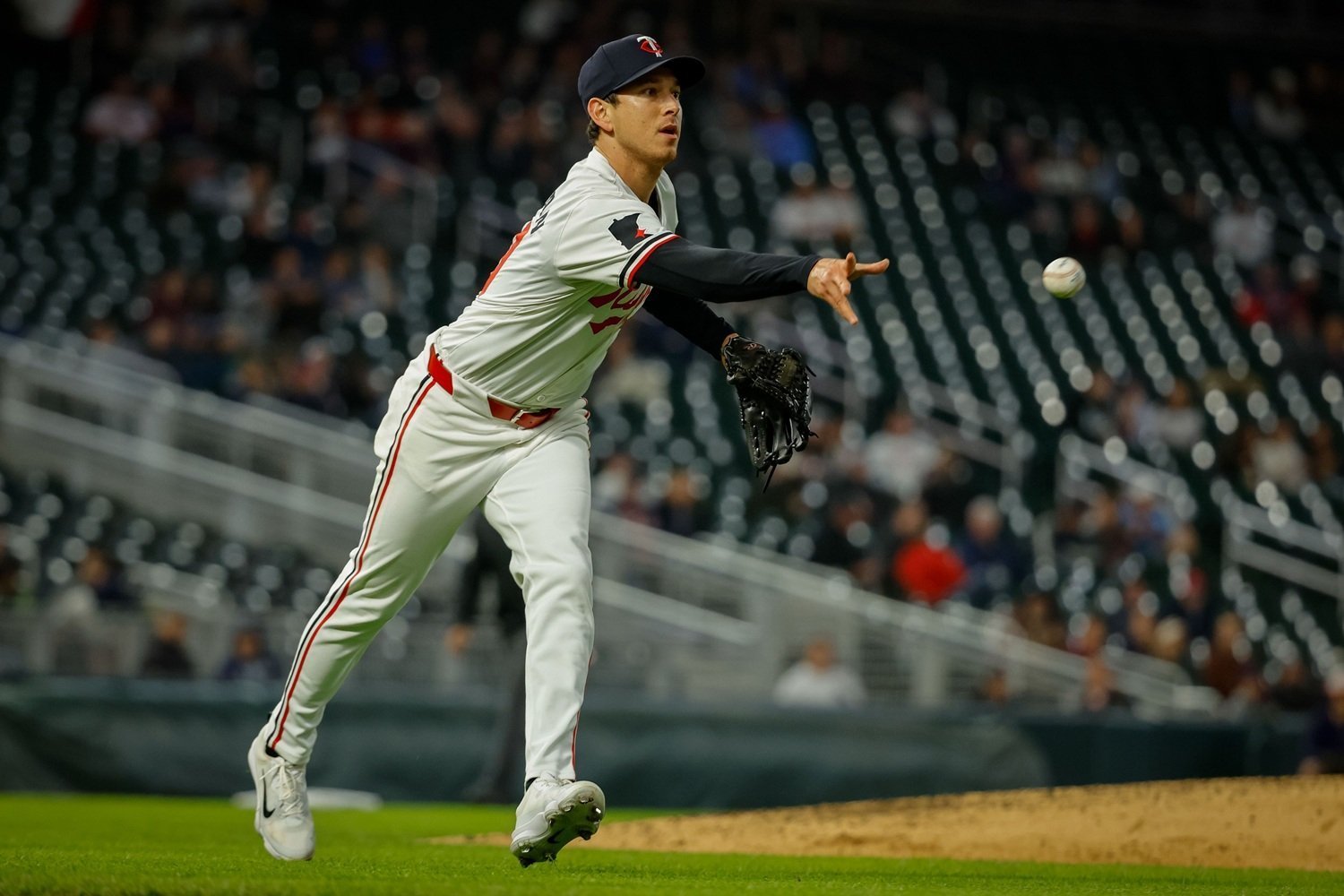 The Twins are approaching an uncomfortable point with two veteran relievers stashed at Triple-A St. Paul. According to KSTP’s Darren Wolfson, Saints relievers John Brebbia and Matt Bowman both have opt-out clauses in their contracts on Sunday, May 17. If the Twins do not add them to the major league roster, either pitcher could elect free agency. That creates an interesting decision for a bullpen that has largely stabilized after a rocky start but still lacks proven depth behind its core group. Brebbia entered the season as a relatively intriguing non-roster addition because of his extensive major league track record. The 35-year-old has appeared in parts of eight MLB seasons and, not long ago, was one of the most heavily used relievers in baseball. Back in 2022, he led the National League with 76 appearances while posting a 124 ERA+. The recent results, however, have been more uneven. Last season with the Tigers and Braves, Brebbia allowed 20 earned runs across 23 1/3 innings in 22 appearances. The Twins were betting that some underlying traits still pointed toward a useful bullpen arm. There are at least a few signs supporting that idea in St. Paul. Brebbia has made 13 appearances for the Saints and struck out 24 of the 81 batters he has faced. His 29.6% strikeout rate is his highest mark in multiple seasons, and he has issued only seven walks in 18 1/3 innings. The run prevention numbers have not been particularly attractive. Brebbia owns a 5.40 ERA after allowing 11 earned runs, but his 4.91 FIP suggests the performance may not be quite as poor as the surface stats indicate. The swing-and-miss ability is still there, even though the overall results have remained inconsistent. Bowman’s case is different because Twins fans already saw him contribute during the 2024 season. The veteran right-hander appeared in five games for Minnesota in 2024 and posted a 2.35 ERA across 7 2/3 innings. That came during a season in which he bounced between four organizations as a classic waiver-wire journeyman. Last season with Baltimore, Bowman struggled to a 6.20 ERA and 1.50 WHIP in 24 2/3 innings, but he has looked significantly sharper with St. Paul this year. In 20 1/3 innings, Bowman owns a 1.77 ERA with a 3.20 FIP while striking out 25.9% of opposing hitters. He has also limited walks with a 7.1% walk rate. Perhaps most importantly for a Twins bullpen that has leaned heavily on certain arms, Bowman has provided real flexibility. He has thrown more than one inning in nine of his 13 appearances. His recent stretch has been especially impressive. Over the last 28 days, Bowman owns a 1.46 ERA and 0.89 WHIP with 14 strikeouts in 12 1/3 innings. At some point, performance has to matter, especially for a major league bullpen that can never have enough dependable depth options. The Twins may ultimately decide roster flexibility is more valuable than protecting either veteran from free agency. That is often the reality with opt-out clauses attached to veteran minor league contracts. Still, Bowman has made a compelling case to get another opportunity. He has already shown he can survive in the majors, he is throwing multiple innings consistently, and his production at Triple-A has been difficult to ignore. If the Twins are going to lose one of these relievers anyway, Bowman feels like the pitcher worth betting on before another organization does. View the full article
 -
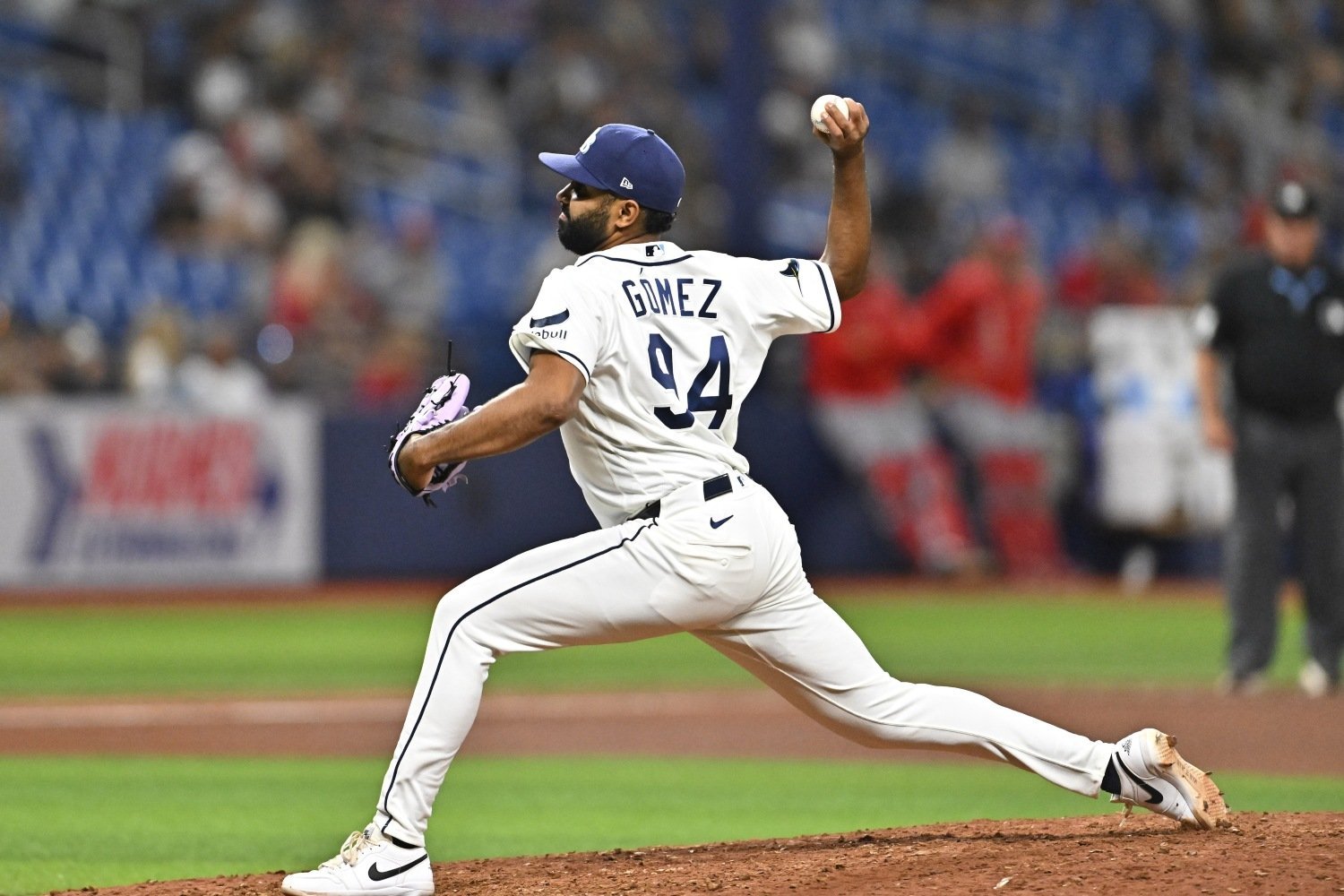 Last Wednesday, the Minnesota Twins traded for Yoendrys Gómez from the Tampa Bay Rays, for cash considerations. Bouncing between the New York Yankees, Los Angeles Dodgers, Chicago White Sox, Tampa Bay, and now Minnesota since the beginning of the 2025 season, Gómez has embodied the nomadic reliever trope, being vaguely desired by many clubs but rostered long-term by none. Despite hopping between clubs, the 26-year-old finished his 2025 campaign relatively strongly, netting a 4.84 ERA, 4.85 FIP, and 22.6% strikeout rate over 48 1/3 innings pitched for the White Sox. Chicago flipped Gómez to the Rays this offseason alongside fellow right-handed reliever Steven Wilson, for outfielder Everson Pereira and utility prospect Tanner Murray. Unfortunately, he struggled to begin his 2026 campaign with Tampa Bay, posting a 6.23 ERA, 7.28 FIP, and a less impressive 15.9% strikeout rate over 17 1/3 innings. Tampa Bay had Gómez using a five-pitch mix, which isn’t unique for a right-handed reliever. The righty primarily utilized his four-seam fastball and sweeper, both of which graded out as true plus pitches. Yet, he also often used his sinker, cutter, and changeup, all of which graded out below average. Opposing hitters generated a 142 wRC+ against his sinker this season and a 303 wRC+ against his cutter while Gómez was with Tampa Bay. To preface, hitters also excelled against Gómez’s four-seamer when he pitched for Tampa Bay, with a 186 wRC+. As noted earlier, the pitch graded out well above average (121 Stuff+ at FanGraphs), suggesting his struggles were the product of bad luck rather than a low-quality pitch, but there are things to clean up. Command will be crucial. Gómez did, however, excel at throwing his sweeper with Tampa Bay, netting an elite -100 wRC+ and 125 Stuff+ at FanGraphs with the pitch. So far, albeit in a sample so small as to be almost meaningless, Minnesota has effectively cut his sinker, cutter, and changeup from his repertoire entirely, with him using his four-seamer and sweeper in 14 of his 17 pitches thrown with the Twins. Again, I am analyzing a 17-pitch sample. Still, Gómez has excelled with a two-pitch mix for the Twins, posting a 0.00 ERA, 3.13 FIP, and plus grades on both pitches through 1 2/3 innings. Gómez also earned his first save with the club on Sunday, mowing through Daniel Schneeman, Angel Martínez, and Travis Bazzana on 10 pitches. The newly acquired relief arm has been stellar in his first three appearances for Minnesota, functioning as a breath of fresh air for what has been the fourth-worst bullpen in baseball, according to Wins Above Replacement at FanGraphs (fWAR). dnZ3REtfV0ZRVkV3dEdEUT09X1VnWllBUUlBVUZFQURGSUtWZ0FIQmdGUUFBTlJWbFVBVTFJTkJBb0JVMVVEVlZBQw==.mp4 Given that Cody Laweryson, Garrett Acton, and Cole Sands are on the 15-day IL; Kody Funderburk was surprisingly demoted to Triple-A St. Paul on Sunday; and Justin Topa, Taylor Rogers, and Anthony Banda have struggled mightily to begin their respective 2026 campaigns. Minnesota’s bullpen is arguably the most volatile in the sport. Yet, with volatility comes opportunity. Andrew Morris has capitalized on his opportunities in various roles. Eric Orze has impressed despite blowing a save against the Seattle Mariners in late April. And 39-year-old Luis García has been thrust into high-leverage situations despite joining the club on Apr. 28. Given that Minnesota targeted Gómez from Tampa Bay and that he has immediately succeeded in high-leverage situations, the 26-year-old could quickly become Minnesota’s preferred high-leverage arm. View the full article
 -
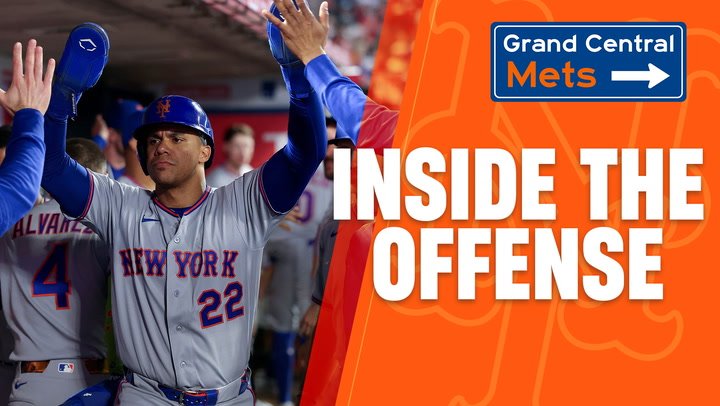 The New York Mets offense has been struggling all of the 2026 season, as they rank near the bottom of the league in most major categories. Despite high preseason expectations following the acquisitions of Jorge Polanco, Bo Bichette, and Luis Robert Jr., the team has been plagued by inconsistent run production & injuries. View the full article
 -
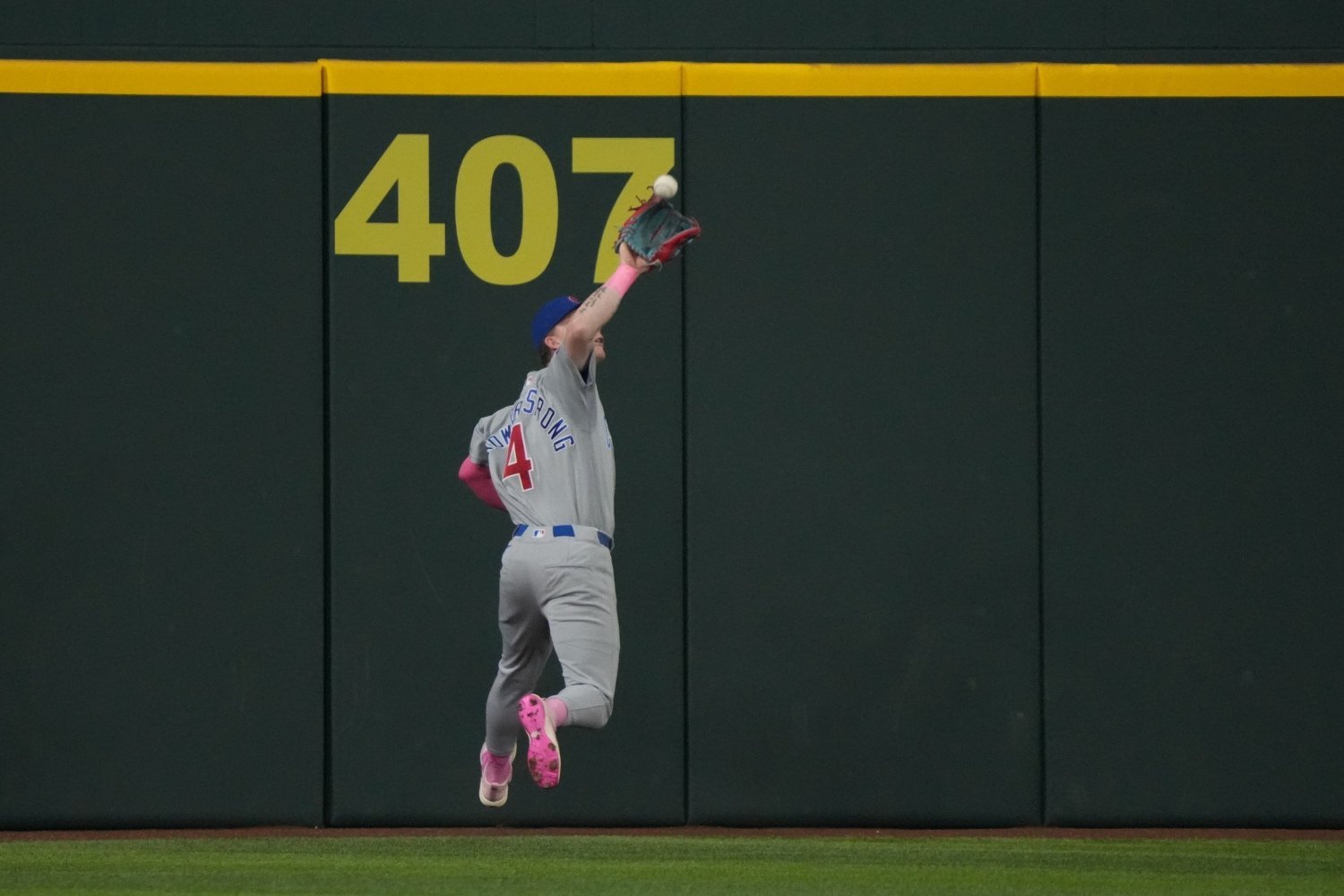 This might sound a bit joyless, at first, but lately, I find myself trying to catch Pete Crow-Armstrong lacking. It's become a pet project for me. I watch any single to center field against the Cubs several times. Each morning, I refresh Crow-Armstrong's page on Baseball Savant to see what new points have been added to the peculiar pointillist masterpiece that is Statcast's chart of balls hit toward him, with catch probability estimated based on the hang time of the ball and the distance Crow-Armstrong would have had to cover to get to the ball. I want to know: is it possible to hit a ball that any other center fielder could catch, but which Crow-Armstrong can't? It sounds a little silly, because (as we've already documented) Crow-Armstrong has made a couple of misplays this season. He misplayed a sinking liner during the first week of the season. He misplayed a ball at the wall during the Cubs' trip to Dodger Stadium. But we know those were just hiccups. As if to neatly confirm that, he's made the play on near-identical balls hit his way on other occasions this year. It's possible to be (very slightly) more reliable than Crow-Armstrong in catching routine fly balls, but it's his incredible range extension and the jumps he's using to beat every ball to its spot that make him special. I'm trying to figure out whether there is, in effect, any weak point in the phalanx he forms in the Cubs outfield. You've probably heard it said, by some broadcaster or other, that if a certain outfielder didn't make a play, it was impossible to make. Andruw Jones had that reputation. So did Willie Mays. Like the apocryphal story of an umpire telling a whiny pitcher that if he'd thrown a strike, Ted Williams would have swung at it, there are a handful of center fielders in the game's history of whom it's been said that if they didn't get there, it was an ironclad, unquestionable hit. In addition to Jones and Mays, Tris Speaker and Devon Whyte enjoyed that reputation. Broadly speaking, it was earned, in all cases. That doesn't mean it wasn't exaggerated, though. It almost certainly was. The halo effect often leads us to imagine that someone doing 97% of what's humanly possible is really touching or busting that 100% threshold. Jones, for sure, would sometimes be caught flat-footed on sinking line drives in front of him, and at other times, he'd be victimized by balls hit over his head. (He played way too shallow, even for his era.) Great defenders end up being remembered for their highlights, rather than their foibles, and anyway, the balls that separate a superb player from a nigh-supernatural one don't look like mistakes. They look like innocuous hits—balls they couldn't have done anything about. We can quantify defense much better than we used to, though. We can find those hang times and distances to cover on every ball hit toward a fielder, and Statcast can feed that into their model and tell us where the boundaries of possibility lie. Last summer, Crow-Armstrong made one catch the system thought had a 0% Catch Probability, so we already know he pushes that limit. But how consistent is he? Aren't there some balls falling in at the edges of his range that he could, theoretically, have gotten to? Don't get mad, but the answer is: yes, and no. Already, though, I think that means Crow-Armstrong is doing something extraordinary and historic. Here's a ball that caught my eye and raised my suspicions. TzA0bm9fWGw0TUFRPT1fRHdrSFZsTURWMU1BWFFSUVV3QUhCd0pYQUFNTVZWZ0FVRlJRQ0FCVUJBRlNBbFFB.mp4 Yes, that's a line drive, and yes, Crow-Armstrong was shaded toward left-center, but we've seen him run down balls at least a bit like this one. Was his jump even a half a second slow? Did he fail to accelerate all the way through the catchpoint? Was there a chance missed? Well, Statcast says no. This hit didn't register as having any catch probability assigned to Crow-Armstrong, and on a closer watch, I'm forced to admit that if there was a failure here, it was one of location: either Shota Imanaga throwing a ball there to Nolan Arenado, or Crow-Armstrong being set up where he was before the pitch. Besides, the elements were against him. Here's the first frame after the switch from the center-field camera to the one high and behind home plate on the play. I've put a square around the ball's position at that moment and a dot where it will land. This is a hard-hit ball, but it's both knocked down and pushed toward right field by the wind, in addition to slicing that direction because of its spin. Crow-Armstrong got a great jump, really, but he's 10 feet from the ball when it lands, which was the responsible way to play it, given the only read he could have gotten off the bat. He probably could have gotten much closer to catching it, but I don't think he could have caught it, and the truth of the art of outfield defense is that you occasionally have to play the angles, rather than trying to catch every single ball hit your way. For great outfielders, those plays are rare, but they do happen—especially outdoors, on windy days. Here's the other play from the first 10 days of this month that had me checking things. a0R2Tm5fWGw0TUFRPT1fVjFVRUFGd0JYMUFBWGdFQ1VRQUhVZ0FDQUZrTlVGUUFCVklBVlFzRkFGVURCd1lD.mp4 This one feels more like a limitation, right? You can see Crow-Armstrong balk just a bit off the bat. First, then, I checked whether he was caught unprepared when the pitch was thrown. Not so, though. Here's the Gameday 3D animation of Crow-Armstrong and Bleday at (essentially) the instant of contact. The center fielder timed his hop correctly; he was slightly in the air (and on his way down) as the ball passed through the hitting zone. (By the way, how cool is it that we can do this now?!) Crow-Armstrong does take a false turn, though. When Bleday makes contact, he initially turns his left shoulder back and takes a half-dropstep with his left leg. All weekend, it seemed, Bleday hit the ball hard to that very part of the park, and Crow-Armstrong might have been caught anticipating solid contact that didn't come. It takes him a split-second to get his momentum moving forward, instead. By the time the ball falls, you can certainly convince yourself that he should have been able to get there, with a better jump. He's much closer to this one than to the Arenado ball, and his jump was clearly worse. So the question becomes: was a better jump possible? Could any other outfielder have made this play better? Here's one piece of what looks, at first, like damning evidence. It's from a Marlins-White Sox game on the other side of Chicago, last season. b0daOERfWGw0TUFRPT1fVUFCU0JsWlZWd0lBWGxFTFZnQUhDUVVDQUZrQVUxY0FCRkJYQlZCVUFsVUJBd3RW.mp4 That's a heck of a catch, by Dane Myers—now of the Reds, as it happens. But Statcast didn't even rate it as overwhelmingly impressive. It gave a 95% catch probability on the ball. Yet, it didn't ding Crow-Armstrong at all for not catching the Bleday bloop. His catch probability on it was 0%, as far as the model is concerned. First, let me explain that briefly. I picked the above catch by Myers because it was the only ball since the start of 2025 that fit the same contact constraints as Bleday's (a 77-79 MPH exit velocity, a 33-35° launch angle) and was hit to center field, but which was hit as shallow or shallower than Bleday's. It's not hard to see that the wind played with both balls. Without wind (and with truer batted-ball spin), most balls hit like this travel an extra 10-20 feet, which makes them relatively easy to catch. These two are good foils for each other. They were hit relatively high, but they weren't really pop-ups, and they weren't hit hard enough to go a long way, but they were clearly over the infield. Conditions kept each from flying very far, though. Already, these are extreme plays, in terms of where the ball ended up relative to what the outfielder could reasonably have hoped to read off the bat. Two things separate the two plays in important ways. First, Tim Elko's flyout to Myers hung in the air a hair longer. Its hang time was 5.0 seconds, which is a lot of time to run under a ball. Bleday's wasn't much less, but slightly so. That left Crow-Armstrong with less time to make up for that misstep off the bat. Secondly, though, Crow-Armstrong was playing deeper than he usually does on his play. With two outs in the ninth inning of a game that wasn't especially close, and with a batter in the box who'd showed good power in the series, he was 326 feet from home plate when the pitch was thrown. Myers was only 318 feet from home when Edward Cabrera threw his pitch to Elko last year. One could pick nits with the Cubs' positioning, perhaps, but it seems like Crow-Armstrong was in a smart spot, in general. On this particular ball, it just left him with zero margin for error. The combination of these two factors means Myers had a good 15 feet on Crow-Armstrong, before accounting for Crow-Armstrong not getting a clean first step on the ball. It's not such a wonder, then, that two similar balls produced Statcast estimates at extreme ends of the catch probability spectrum. Here's the crazy takeaway: Crow-Armstrong could have caught this ball. That's true, even though Statcast absolutely would have regarded it as uncatchable, anyway. He could have drawn an earlier bead on the ball, but misreading the contact is almost a necessary part of this unusual piece of contact. Were the stakes higher, however, he probably would have dived for it—and he might have had a play. It's getting very, very hard to find balls Crow-Armstrong can't catch that are (in any realistic sense) catchable. That doesn't mean he's perfect. But as we've discussed before, he's pushing the boundaries of defensive possibilities. Hitting the ball to center field just isn't a viable option for Cubs opponents. Crow-Armstrong is, in some sense, a fulfillment of the hype attached to so many generational center fielders before him. He might force us to reconsider what the position can be. View the full article
 -
 Boston Red Sox Weekly Snapshot Record Last Week: 4-2 Runs Scored Last Week: 26 Runs Surrendered Last Week: 19 Standings: 5th in AL East 9.5 GB First Place Transactions: 05/06/26: Red Sox optioned LHP Alec Gamboa to Worcester Red Sox. 05/06/26: Red Sox activated RHP Sonny Gray from the 15-day injured listed. 05/06/26: Red Sox sent RHP Justin Slaten on a rehab assignment to Worcester Red Sox. 05/07/26: Red Sox recalled C Mickey Gasper from Worcester Red Sox. 05/07/26: Red Sox signed free agent RHP Raymond Burgos to a minor league contract. 05/07/26: Red Sox placed LF Roman Anthony on the 10-day injured list retroactive to May 5, 2026. Right wrist sprain. 05/08/26: Red Sox recalled RHP Jack Anderson from Worcester Red Sox. 05/08/26: Red Sox optioned LHP Jake Bennett to Worcester Red Sox. 05/09.26: Red Sox optioned RHP Jack Anderson to Worcester Red Sox. 05/09/26: Red Sox activated RHP Justin Slaten from the 15-day injured list. 05/09/26: Red Sox signed free agent RHP Leonel Figuera to a minor league contract. 05/09/26: Red Sox signed free agent RHP Juan Verdus to a minor league contract. Scores: Game 34 (05/04): BOS 5, DET 4 Game 35 (05/05): BOS 10, DET 3 Game 36 (05/06): BOS 4, DET 0 Game 37 (05/07): BOS 4, TB 8 Game 38 (05/08): BOS 2, TB 0 Game 39 (05/10): BOS 1, TB 4 Series Breakdown/Highlights Tigers Series: The beginning of the week saw three straight games of the best baseball the Red Sox have played all season. Granted, they lucked out by two-time Cy Young winner Tarik Skubal going on the injured list before game one, but they took advantage of a gifted situation and won a game that shouldn’t have been a one-run victory. Garrett Whitlock allowed two runs in the eighth inning to give everyone a bit of an uneasy feeling, but Payton Tolle was able to lock up his first major-league win after pitching through a torrential downpour for two innings by turning in the best start of his career. He threw seven innings of two-run baseball, neither earned, while striking out eight. Game two is where we saw the fireworks, in more ways than one. The Red Sox have always had a propensity for picking up pitcher tells and pitch grips when they are on second and Tuesday was no exception. The Red Sox tagged starter Framber Valdez for seven earned runs, four of those being home runs. Valdez gave up back-to-back moonshots to Willson Contreras and Wilyer Abreu, then promptly threw at Trevor Story. Benches cleared, Valdez was ejected, and the Red Sox kept rolling. Overshadowed by the offense was just how good Brayan Bello was coming in after an opener for game two. He tossed seven innings with seven strikeouts, one walk, and one earned run. The finale of the series saw Sonny Gray return from the injured list and pitched decently against the Tigers. The team secured their first series sweep of the season against a team that is penciled in to win their division, even if their ace wasn’t able to pitch during it. Rays Series: We had our first reschedule due to rain during the series against the Rays. The Saturday game will be made up on July 17. Game one saw rookie Jake Bennett get tagged for four runs, but the Red Sox fought to stay in the game. Unfortunately for them, Greg Weissert and Ryan Watson had other plans. They allowed four more Rays to score and the late game push to even things up came up short. In game two, the Sox kept the Fenway Green magic rolling by shutting out the Rays behind seven innings and eight strikeouts from Connelly Early. The rookie southpaw showed he was the correct option to take Johan Oviedo’s rotation spot at the end of spring training and is mostly trending up with each start. The reschedule gave Payton Tolle another day of rest but he couldn’t score runs on his own. He gave up three earned, but the eye test looked far better than what the line showed. Unfortunately, Willson Contreras was hit on the hand early in the game and was replaced by Andruw Monasterio. Scans on Willson’s hand came back negative, but manager Chad Tracy said he was very sore. They’ll reevaluate him on the Monday off day and move forward with that information. If there’s one player the Red Sox can’t afford to lose right now, it’s Contreras. Website Highlights Red Sox Minor League Recap: Anthony Eyanson’s Dominance Continues Despite Shaky Red Sox Affiliates by Ben Lofy Boston Red Sox Minor League Pitchers of the Month: April 2026 by Nick John Red Sox Report Cards: Grading Every Boston Pitcher for March/April by Ryan Salvaggio Justin Slaten is More Than Ready For His Return to Boston by Nick John Looking Ahead May 12: Phillies (Zack Wheeler) @ Red Sox (TBD): 6:45 PM EDT May 13: Phillies (Andrew Painter) @ Red Sox (Sonny Gray): 6:45 PM EDT May 14: Phillies (Jesus Luzardo) @ Red Sox (Ranger Suarez): 6:45 PM EDT May 15: Red Sox @ Braves: 7:15 PM EDT May 16: Red Sox @ Braves: 7:15 PM EDT May 17: Red Sox @ Braves: 1:35 PM EDT View the full article
 -
Mets Week in Review: A Solid Road Trip In the Books
DiamondCentric posted an article in Grand Central Mets
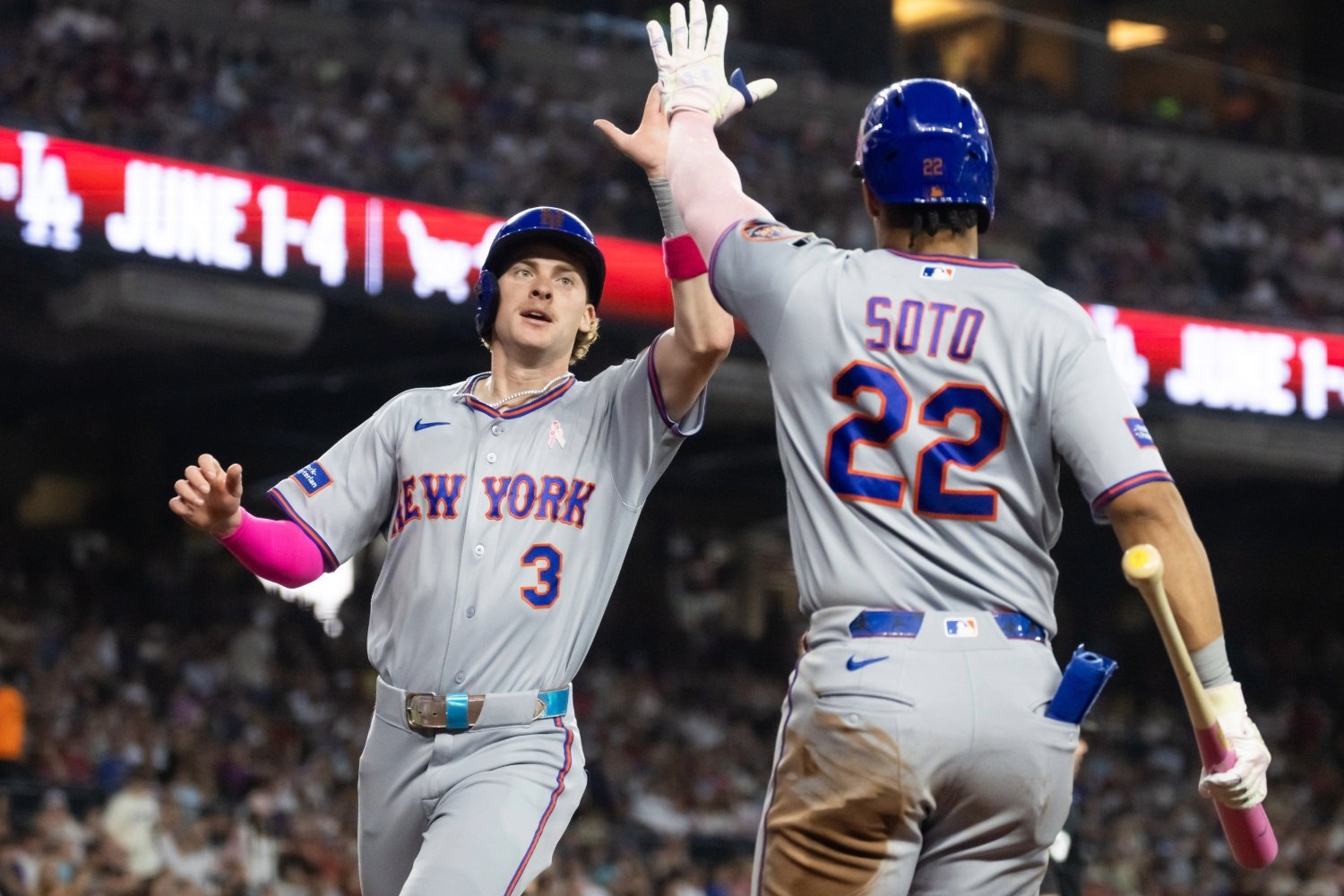 New York Mets Weekly Snapshot Record Last Week: 3-3 Runs Scored Last Week: 21 Runs Surrendered Last Week: 21 Standings: 5th in NL East (15-25) 8.0 GB of 1st Place Transactions: 5/1 New York Mets activated 2B Andy Ibáñez. 5/1 New York Mets optioned 1B Eric Wagaman to Syracuse Mets. 5/3 New York Mets designated 1B Eric Wagaman for assignment. 5/3 New York Mets placed SS Ronny Mauricio on the 10-day injured list. Left thumb fracture. 5/3 New York Mets sent RHP Carl Edwards Jr. outright to Syracuse Mets. 5/3 New York Mets selected the contract of 3B Vidal Bruján from Syracuse Mets. 5/10 New York Mets sent 1B Eric Wagaman outright to Syracuse Mets. 5/10 New York Mets activated RHP Joey Gerber from the 15-day injured list and optioned him to Syracuse Mets. Scores: Game 34 (5/4): NYM 4, COL 2 Game 35 (5/6): NYM 10, COL 5 Game 36 (5/7): NYM 2, COL 6 Game 37 (5/8): NYM 3, ARI 1 (10) Game 38 (5/9): NYM 1, ARI 2 Game 39 (5/10): NYM 1, ARI 5 Series Breakdown/Highlights Rockies Series: Coming off of a series win against the Angels, the Mets rolled into Coors Field with the vibes as high as the altitude for the first time in a long time. In game one, the Mets used the opener method to get to David Peterson, and it worked. They scored four runs in the outing, the big blow being a two-run single by Mark Vientos in the sixth inning, proving to be the difference in the game. In his four innings out of the bullpen, Peterson surrendered just two earned runs, on back-to-back-to-back two-out hits in the seventh inning. Devin Williams slammed the door in the ninth inning. In game two, the Mets bats woke up for the first and only time on this road trip. They scored 10 runs, with the biggest blow arguably not coming till the ninth inning two-run blast off the bat of Marcus Semien. Freddy Peralta went five scoreless innings as the Mets held a 8-0 lead with him on the mound. The Mets bullpen proceeded to give up five runs, and load the bases with one out in the bottom of the ninth, getting closer Devin Williams in the game for the second time this series. He was able to slam the door for a series win. In game three, the Mets jumped out to an early 2-0 lead looking for the sweep. It was not meant to be, though, as the Rockies came back and tied the game, and against Craig Kimbrel in the eighth inning, Jake McCarthy hit a grand slam, though it might have been a foul ball and the MLB replay room did not overturn the call. The Mets did not score in the ninth and dropped the series finale. Diamondbacks Series: The Mets next went to Arizona looking to cap their roadtrip off on a high note. Nolan McLean shut down the D-Backs offense over six innings giving up only one run. The Mets offense was likewise shut down by Ryne Nelson, scoring just one run against him in 6.2 innings of work. The sides took the 1-1 tie to extras where back-to-back doubles by the Mets gave them two runs and a lead. A dominant bottom of the tenth by Tobias Myers gave the Mets a series-opening win. In the second game of the series, the Mets offense mustered up just one run, coming in the second inning on a Brett Baty RBI double. The Mets did not have a baserunner after the fifth inning as Merrill Kelly shut them down completely. Clay Holmes gave up two runs over 5.2 innings, but that was too much for the Mets offense to overcome, as they lost 2-1. In the rubber match, Huascar Brazoban was the opener for Peterson. Remember in the Rockies series where that strategy worked? Not so much against the D-Backs, as rookie Ryan Waldschmidt recorded his first career double off Tobias Myers, scoring the inherited runners. The Mets got a run back in the sixth on an RBI double by Luis Torrens, their only run of the game. An RBI single and two-run triple off Peterson for the D-Backs made it 5-1 and that would be your final scpre as the Mets dropped the series, plunging back to MLB’s worst record. Website Highlights Devin Williams’ Changeup Is Not As Effective As It Once Was, Resulting in Unfamiliar Numbers Vote For Your Top Mets Prospects! Sean Manaea Might Be Salvageable, If Mets Can Live With Being Boring Looking Ahead May 11th: OFF May 12th: vs. DET (7:10pm) May 13th: vs. DET (7:10pm) May 14th: vs. DET (1:10pm) May 15th: vs. NYY (7:15pm) May 16th: vs. NYY (7:15pm) May 17th: vs. NYY (1:40pm) View the full article
 -
 Red Sox prospect Juan Valera had Tommy John surgery. This is a huge blow not only to the Red Sox organization but for Valera himself, as he isn't expected to return until late 2027 or 2028. Valera has been dominant in High-A ball this year; however, at only 19 years old, he should recover and have a solid career afterward. View the full article
 -
 Xzavion Curry struck out four in five innings, but Syracuse fell 8-5 to Rochester. Ryan Clifford homered, tripled, and singled in a 2-for-3 night. Eli Serrano III drove in two with a double as Binghamton dropped both ends of a doubleheader to Hartford 5-2 and 5-0. Brooklyn lost 5-4 on a walk-off despite Brady Miller's seven strikeouts. Elian Peña reached three times and Nicolas Carreno struck out seven in St. Lucie's 8-3 loss at Lakeland. Mets Transactions New York Mets activated RHP Joey Gerber from the 15-day injured list. New York Mets optioned RHP Joey Gerber to Syracuse Mets. New York Mets sent 1B Eric Wagaman outright to Syracuse Mets. Syracuse Drops 8-5 Decision To Rochester Despite Three Home Runs The Syracuse Mets fell 8-5 to the Rochester Red Wings, dropping the contest despite home runs from Jackson Cluff, Ryan Clifford, and Cristian Pache. Clifford led the offense with a 2-for-3 night that included a triple and a home run while drawing a walk and scoring twice. Cluff added two hits, two runs, and his own solo blast. Leadoff man A.J. Ewing collected two singles and an RBI, and Christian Arroyo drove in a run on a sacrifice fly. Xzavion Curry worked five innings as the starter, allowing two runs on five hits with four strikeouts and no walks. Both runs against him came on solo home runs that briefly gave Rochester one-run leads in the first and the fourth. The Red Wings broke open a 2-2 tie in the top of the sixth against Joey Gerber. A pair of singles and an RBI double brought home three runs to push Rochester ahead 5-2. Syracuse responded in the bottom of the sixth on Arroyo's sacrifice fly that scored Clifford. Cionel Pérez surrendered another run in the seventh on a bases-loaded walk, before Pache and Ewing combined for two runs in the bottom half. Pache's solo home run and an Ewing RBI single that scored Cluff trimmed the deficit to 6-5. Rochester pushed the lead back out in the top of the ninth against Anderson Severino, who issued a walk and surrendered two RBI singles. Dylan Ross worked a scoreless inning in his lone frame with two strikeouts. Syracuse stranded five runners and committed no errors. Player AB R H RBI BB K A.J. Ewing 5 0 2 1 0 0 Nick Morabito 3 0 0 0 1 2 Ryan Clifford 3 2 2 1 1 1 Christian Arroyo 3 0 0 1 0 2 Yonny Hernández 4 0 0 0 0 1 Cristian Pache 4 1 1 1 0 3 Hayden Senger 4 0 0 0 0 3 Jackson Cluff 4 2 2 1 0 1 Kevin Villavicencio 3 0 1 0 0 2 Ji Hwan Bae 1 0 0 0 0 0 Player IP H R ER BB K HR Xzavion Curry 5 5 2 2 0 4 2 Joey Gerber 1 3 3 3 1 0 0 Cionel Pérez 1 1 1 1 2 1 0 Dylan Ross 1 1 0 0 2 2 0 Anderson Severino 2/3 2 2 2 2 1 0 Alex Carrillo 1/3 0 0 0 0 1 0 Serrano's Two-RBI Double Not Enough In Binghamton's 5-2 Loss The Binghamton Rumble Ponies fell 5-2 to the Hartford Yard Goats in the opener of a doubleheader. Leadoff man Eli Serrano III led the offense with a 1-for-4 night that included a two-RBI double. Wyatt Young added a hit, and Jose Ramos and Kevin Parada each picked up a single. Matt Rudick and Diego Mosquera reached on walks, came around to score, and combined to give Binghamton its only runs of the night. Irving Cota took the loss after working 4 2/3 innings and allowing five runs on nine hits with no walks and four strikeouts. Hartford struck first with a two-run home run in the top of the second, and Binghamton answered in the bottom of the inning when Rudick and Mosquera walked, and Serrano doubled to center to bring both runners home. Hartford regained the lead in the top of the third. With the bases loaded, a hit by pitch forced in one run, and an RBI single brought home another to push the Yard Goats ahead 4-2. The visitors added an insurance run in the fifth on a solo home run that finished Cota's outing. Gabriel Rodriguez worked 1 1/3 scoreless innings of relief, allowing no hits while striking out two and finishing the fifth and the sixth. Jefry Yan followed with a scoreless seventh, retiring all three batters and striking out two. Binghamton stranded six runners and did not commit an error, while Hartford was charged with two throwing errors that did not lead to additional damage. Player AB R H RBI BB K Eli Serrano III 4 0 1 2 0 2 Jacob Reimer 4 0 0 0 0 3 Jose Ramos 2 0 1 0 1 0 Kevin Parada 3 0 1 0 0 1 JT Schwartz 3 0 0 0 0 0 TT Bowens 2 0 0 0 1 0 Matt Rudick 2 1 0 0 1 0 Wyatt Young 3 0 1 0 0 2 Diego Mosquera 2 1 0 0 1 1 Player IP H R ER BB K HR Irving Cota 4 2/3 9 5 5 0 4 2 Gabriel Rodriguez 1 1/3 0 0 0 0 2 0 Jefry Yan 1 0 0 0 0 2 0 Five-Run Second Sinks Binghamton 5-0 In Game Two Shutout The Binghamton Rumble Ponies were shut out 5-0 by the Hartford Yard Goats in game two of the doubleheader, surrendering all five runs in the top of the second inning. R.J. Gordon started and absorbed the loss, allowing five runs (three earned) on seven hits in 1 2/3 innings with one strikeout and a home run. A throwing error by Gordon on a sacrifice bunt extended the inning before Hartford strung together a three-run home run and two RBI singles to chase him. The Binghamton bullpen was excellent the rest of the way. Matt Turner finished the second inning and worked the third, allowing no hits across 1 1/3 innings while striking out one. Brian Metoyer struck out one in a clean fourth, Douglas Orellana followed with two hitless innings of two-strikeout work in the fifth and the sixth, and Felipe De La Cruz capped the night with a one-hit, one-strikeout seventh. The offense managed only four hits. Wyatt Young led the way with two singles, and Jose Ramos and Nick Lorusso each added a hit. Eli Serrano III drew two walks from the leadoff spot, and Chris Suero reached three times on walks without taking an at-bat. Diego Mosquera also walked. Binghamton went 0-for-9 with runners in scoring position, stranded seven runners, and committed one error. Hartford completed the doubleheader sweep. Player AB R H RBI BB K Eli Serrano III 2 0 0 0 2 1 Jacob Reimer 3 0 0 0 0 2 Chris Suero 0 0 0 0 3 0 Jose Ramos 3 0 1 0 0 1 Nick Lorusso 3 0 1 0 0 1 JT Schwartz 3 0 0 0 0 2 Wyatt Young 3 0 2 0 0 0 Onix Vega 3 0 0 0 0 0 Diego Mosquera 2 0 0 0 1 1 Player IP H R ER BB K HR R.J. Gordon 1 2/3 7 5 3 0 1 1 Matt Turner 1 1/3 0 0 0 0 1 0 Brian Metoyer 1 0 0 0 0 1 0 Douglas Orellana 2 0 0 0 0 2 0 Felipe De La Cruz 1 1 0 0 0 1 0 Walk-Off Single Sinks Brooklyn 5-4 At Bowling Green The Brooklyn Cyclones lost 5-4 to the Bowling Green Hot Rods on a walk-off single in the bottom of the ninth. Ronald Hernandez led the offense with a 2-for-4 night that featured two home runs and two RBI. Vincent Perozo added two singles, Sam Biller picked up an RBI single, and Colin Houck collected a hit. Trace Willhoite drew a walk and scored a run, and Yonatan Henriquez reached on a walk. Brady Miller turned in a strong outing as the starter, working five innings while allowing two runs on six hits with no walks and seven strikeouts. Hernandez's solo home run in the second staked Brooklyn to a 1-0 lead. The Cyclones added two more in the top of the fifth on a Biller RBI single that scored Willhoite and a Mitch Voit groundout that brought home Perozo from third. Hernandez homered again in the sixth to push the lead to 4-2. Garrett Stratton followed Miller and was charged with a blown save in the bottom of the seventh, when a two-run home run on the second batter he faced tied the contest at four. Bryce Jenkins worked 1 1/3 scoreless innings in relief, and Brooklyn could not push across a go-ahead. Joe Charles took the loss in the bottom of the ninth, walking the first batter, allowing a double, then yielding a leadoff RBI single that brought home the winning run without recording an out. Brooklyn stranded only two runners and committed one error. Player AB R H RBI BB K Mitch Voit 4 0 0 0 0 0 Yonatan Henriquez 3 0 0 0 1 2 John Bay 4 0 0 0 0 1 Ronald Hernandez 4 2 2 2 0 2 Daiverson Gutierrez 4 0 0 0 0 1 Colin Houck 4 0 1 0 0 1 Trace Willhoite 2 1 0 0 1 0 Vincent Perozo 3 1 2 0 0 0 Sam Biller 3 0 1 1 0 0 Player IP H R ER BB K HR Brady Miller 5 6 2 2 0 7 0 Garrett Stratton 1 2/3 3 2 2 1 2 1 Bryce Jenkins 1 1/3 0 0 0 0 0 0 Joe Charles 0 2 1 1 1 0 0 Six-Run Seventh Lifts Lakeland Past St. Lucie 8-3 The St. Lucie Mets fell 8-3 to the Lakeland Flying Tigers after surrendering a six-run seventh inning. Leadoff man Elian Peña went 2-for-4 with a walk, an RBI single, and a run scored. Simon Juan added a 3-for-4 night with a run, and JT Benson contributed a triple as part of a 1-for-4 evening. Chase Meggers and Randy Guzman each picked up a hit and an RBI. Nicolas Carreno worked four innings out of the bullpen, allowing one run on two hits with three walks and seven strikeouts. Daviel Hurtado opened and went two innings, allowing one run on two hits with four strikeouts and a solo home run that gave Lakeland a 1-0 lead in the second. Lakeland added another run in the fourth on an RBI single. St. Lucie battled back in the sixth on Guzman's RBI single that scored Peña, and again in the seventh when Meggers singled home Julio Zayas to tie the game at two. The bottom of the seventh proved decisive. Elwis Mijares retired the first batter, but a solo home run, two walks, and a single loaded the bases, after which a bases-loaded walk to force in a run, a two-RBI single, and another two-RBI single put six on the board. Mijares took the loss after recording just one out, charged with five earned runs. Joe Scarborough finished the frame and tossed a clean eighth. Peña drove in St. Lucie's final run in the ninth on a single that scored Simon Juan. St. Lucie left nine runners on base and committed one error. Player AB R H RBI BB K Elian Peña 4 1 2 1 1 0 JT Benson 4 0 1 0 1 1 Randy Guzman 4 0 1 0 1 3 AJ Salgado 4 0 0 0 0 3 Julio Zayas 3 1 1 0 1 2 Sam Robertson 4 0 1 0 0 1 Chase Meggers 4 0 1 1 0 0 Simon Juan 4 1 3 0 0 0 Branny De Oleo 3 0 0 0 1 2 Player IP H R ER BB K HR Daviel Hurtado 2 2 1 1 0 4 1 Nicolas Carreno 4 2 1 1 3 7 0 Elwis Mijares 1/3 2 5 5 3 1 1 Joe Scarborough 1 2/3 2 1 1 0 2 0 Top-20 Prospect Performance Nolan McLean: DNP Carson Benge: DNP A.J. Ewing: 2-for-5, 2B, RBI Jonah Tong: DNP Ryan Clifford: 2-for-3, 3B, HR, 2 R, RBI, BB, K Jacob Reimer: 0-for-7 in DH (0-for-4, 3 K and 0-for-3, 2 K) Jack Wenninger: DNP Elian Peña: 2-for-4, R, RBI, BB Mitch Voit: 0-for-4 Nick Morabito: 0-for-3, BB, 2 K Jonathan Santucci: DNP Chris Suero: 0-for-0, 3 BB Zach Thornton: DNP Wandy Asigen: DNP Will Watson: DNP Eli Serrano III: 1-for-6 in DH (1-for-4, 2B, RBI, 2 K and 0-for-2, 2 BB, K) Ryan Lambert: DNP Dylan Ross: 1 IP, 1 H, 0 R, 2 BB, 2 K Antonio Jimenez: DNP R.J. Gordon: 1 2/3 IP, 7 H, 5 R, 3 ER, 0 BB, K, HR View the full article
 -
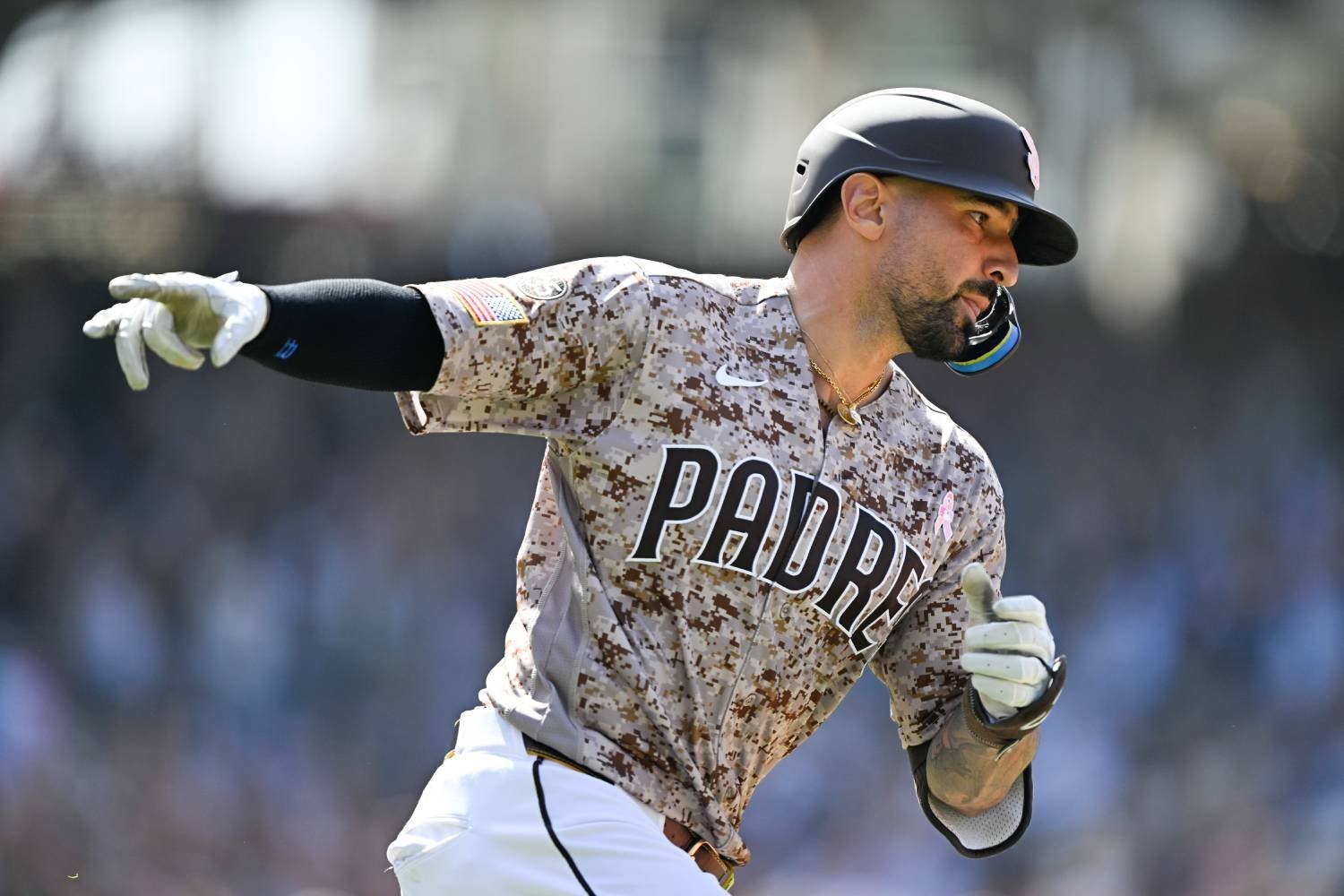 San Diego Padres Weekly Snapshot Record last week: 4-3 Runs scored last week: 25 Runs allowed last week: 21 Standings Scores Game 34 (Monday): Giants 3, Padres 2 Game 35 (Tuesday): Padres 10, Giants 5 Game 36 (Wednesday): Padres 5, Giants 1 Game 37 (Thursday): Cardinals 2, Padres 1 Game 38 (Friday): Cardinals 6, Padres 0 Game 39 (Saturday): Padres 4, Cardinals 2 Game 40 (Sunday): Padres 3, Cardinals 2 (10 innings) Week in Review and Highlights Giants series Game 1: If you have heard this before, it is because you have. For the third time in four games, the Padres' offense was stifled by a young pitcher. This time it was 25-year-old San Francisco Giants right-hander Trevor McDonald who kept the Friars' bats quiet in a 3-2 loss. Making his third career start and fifth appearance, McDonald threw the fourth quality start in the Padres' last five games, allowing one run on two hits with no walks and eight strikeouts in seven innings in his first MLB game this season. The one run he did allow? That was Jackson Merrill drilling the first pitch he saw with two outs in the first inning for a solo homer to straightaway center field, his fourth homer this year. Merrill's blast went 436 feet, tying Manny Machado (in Mexico City) for the longest by a Friar this year. Padres right-handed starter Randy Vasquez, however, gave that run and another back in the bottom of the second. It remained 2-1 until the bottom of the sixth, when the Giants got to Vasquez for another run. Old friend Luis Arraez had a leadoff double against his former teammate, went to third on a groundout and scored on a Rafael Devers sacrifice fly. Overall, it was a solid performance by Vasquez, who went 5⅔ innings, allowing those three runs on five hits with two walks and two strikeouts. The Padres' offense, which had a stretch of 15 straight hitters retired by McDonald, again had an opportunity to steal a win late. Ramon Laureano launched his fifth homer of the season leading off the ninth to pull the Friars within 3-2. But the core of the lineup, Fernando Tatis Jr., Merrill and Machado went down in order for a fifth loss in six games. Game 2: The last thing the Padres needed was to face one of the best pitchers in MLB. But that is exactly what happened. And that old adage "You can't predict ball" came to fruition. Going up against Giants right-hander Logan Webb, who finished in the top six of NL Cy Young Award voting the last three seasons, the Padres exploded for double-digit runs for just the second time this season in a 10-5 victory. The Friars matched their season highs for runs and hits (14). Whether it was because of a lineup shuffle—Tatis was moved down from second to fifth in the order, putting Miguel Andujar third and Gavin Sheets at cleanup, and Sung-Mun Song starting his first MLB game after being called up earlier in the day—or just the baseball gods doing their thing, it worked. Song had his first two MLB hits, Xander Bogaerts homered and Andujar and Merrill, hitting leadoff, each had three hits. Andujar's day included a double and a triple. The Padres were also more aggressive against Webb. While scoring five runs in the fourth inning and sending nine players to the plate, they only saw 21 pitches from Webb. Perhaps that mentality will help unlock the offense. Padres right-handed starter Walker Buehler gave up a pair of runs in each of the first two innings, putting the Giants up 4-1. That was the score when things turned around in the fourth. With one out, Sheets hit an opposite-field single to left and Tatis an opposite-field double to right. Bogaerts had an RBI groundout and Nick Castellanos a run-scoring single to make it 4-3. Luis Campusano was hit by a pitch and Song delivered his first MLB hit in his second plate appearance, a ringing double to left-center to put the Padres up 5-4. With Song on third, Merrill singled to extend the lead to 6-4. A Castellanos sac fly in the fifth and an Andujar RBI single put the Friars up 8-4. The Padres tacked on two more in the eighth as Song reached on an infield single, stole second and scored on Merrill's double. Merrill went to third on a groundout and scored on a balk. Buehler steadied himself from there, making it through 5⅓ innings, surrendering seven hits and no walks with five strikeouts. He retired 11 straight before two runners reached in the sixth. The relief corps of Jeremiah Estrada, Jason Adam and Ron Marinaccio finished things off. Song was called up due to second baseman Jake Cronenworth going on the seven-day concussion list, something that appears to go back to him getting hit in the shoulder by a pitch that deflected into his face April 18 vs. the Los Angeles Angels. He described himself as being in various states of a "hazy fogginess" since. Cronenworth has a .144/.272/.196 slash line. Game 3: The Padres continue to find creative ways to pull out victories. Using an opener for the first time this year and a couple of big at-bats to score four runs late, the Friars bounced the Giants 5-1. The clutch performers were familiar faces, just doing it in unusual circumstances. Sheets, with a knack of late-game homers, drilled a solo shot into McCovey Cove in the top of the fourth inning for a 1-0 lead. The Giants tied it when Rafael Devers took right-hander Matt Waldron deep in the bottom of the fifth. But it was the seventh where things got strange. Tatis reached on a rare fielding error by Giants third baseman Matt Chapman and Laureano walked. Castellanos hit a slow grounder to short that advanced the runners and Freddy Fermin flew out for the second out. While the Giants made a pitching change, bringing in a left-hander, Padres manager Craig Stammen debated using a pinch-hitter for Song, a left-handed hitter. Stammen took too long to make his decision to put Ty France in for Song, who was approaching the batter's box when called back. It cost France a strike on a pitch-clock violation. Nonetheless, France got the count to 3-2 when he lofted an opposite-field fly ball down the right-field line. Giants right fielder Jesus Rodriguez, in his third MLB game and first in right field after catching in the other two, had the ball deflect off his glove, going for a France's second triple of the season and scoring both runners for a 3-1 lead. In the eighth, Machado had a leadoff walk and, one out later, Bogaerts—who came off the bench to play defense in the seventh—crushed his second homer in as many days for a 5-1 advantage. Meanwhile, the pitching staff kept the Giants quiet in a slightly unconventional way. Right-handed reliever Bradgley Rodriguez got the call as an opener, the first used by the Friars this year, and he tossed a perfect first. Right-hander Matt Waldron, who has struggled in his three starts since coming up, took over and pitched five stellar innings, striking out seven and allowing just two hits. That could be a formula for future Waldron starts, however many there are. Left-hander Adrian allowed a hit in two scoreless innings and closer Mason Miller pitched a perfect ninth in a non-save situation. Cardinals series Game 1: The Padres can throw a quality start, too. And this one by Michael King was very high quality. The right-hander allowed just one hit, a homer, over six innings, but the Friars' offense was also shut down by yet another quality start by an opponent as San Diego fell to the St. Louis Cardinals 2-1. The difference came in the seventh inning when Jordan Walker's torrid start to the season continued with a leadoff double and then a one-out triple by Masyn Winn that snapped a 1-1 tie. But King was the story for the Padres. The soon-to-be 31-year-old continued his impressive beginning to 2026. King walked two and struck out six, but he was one pitch away from six innings of no-hit ball. His lone mistake was to Alec Burleson, who jumped on a first-pitch changeup and lined it just over the right-field fence with one out in the fourth inning to tie the game 1-1. The Padres had taken a 1-0 lead in the first inning when Machado walked, went to second on Tatis' single to left and scored on Bogaerts' opposite-field single to right. But that was the extent of the Friars' scoring as Cardinals left-hander Matthew Liberatore was nearly as good as King. Liberatore allowed just three hits with three walks and six strikeouts in six innings. The Padres' bullpen, while very good, hasn't been as lockdown as it was last year. Rodriguez came on for King in the seventh and gave up the two decisive hits. Tatis had two of the Friars' four hits, but the Cardinals' relievers prevented another comeback by retiring the final eight hitters. Catcher Rodolfo Duran made his MLB debut after 11 seasons in the minors, the last two with the Padres. He went 0-for-3. Campusano went on the 10-day injured list with a fractured left big toe. Game 2: In the immortal words of the legendary Harry Doyle, "One hit. That's all we got? One (bleeping) hit?" That is the way Friday went for the Friars. If it wasn't for Merrill's leadoff single in the fourth, there might be a lot more to stress about for Padres fans other than a 6-0 setback to the Cardinals. Still, this is one of those games to forget. Right-hander Michael McGreevy, one of the reasons why the rebuilding Cardinals are off to a better-than-expected start, allowed just one hit over six innings, striking out nine. He retired the first nine batters before Merrill grounded a single to right. The Cardinals retired the final 19 Padres hitters after Tatis' two-out walk in the fourth. Speaking of Tatis, his no good very bad start to the season took a strange turn in the sixth inning of a scoreless game. Two singles and a one-out walk off Padres right-handed starter Griffin Canning set the stage for Cardinals rookie JJ Wetherholt. He pulled a 1-1 changeup through the infield and into right, where Tatis charged it then watched it scoot under his glove and roll to the wall. It unloaded the bases and Wetherholt scampered around the bases for a Little League grand slam and a sudden 4-0 Friars deficit. The next three batters singled, doubled and walked to load the bases and end Canning's evening. Left-hander Yuki Matsui made his season debut after coming off the injured list Tuesday and gave up an RBI single and a sac fly, putting the Padres down 6-0. It was a tough six earned runs for Canning, who made his second start of the season and allowed seven hits and two walks with five strikeouts in 4⅓ innings. Game 3: The Padres are certainly getting the wrong end of opposing pitching performances. But at least on this day, they did enough to pull out a victory. France and Machado homered and Tatis hit a go-ahead single as the Friars came away with a 4-2 victory. Miller recorded four outs and notched his MLB-leading 12th save with a unique twist: A four-strikeout ninth inning thanks to a wild pitch on a strikeout. It wasn't a breakout performance by the offense as the Padres managed just five hits, but they made the ones they got count. Trailing 1-0 in the fifth, France hit a one-out solo homer to tie the game and plate the Padres' first run since the first inning of Thursday's series opener, a 21-inning scoreless drought. Song had a walk, Fermin a single and then a passed ball set up Tatis, who ranks in the 98th percentile in hard-hit percentage and flared a two-run single the opposite way down the right-field line. Machado tacked on an insurance run in the eighth with a solo homer, his 200th blast as a Padre and sixth of the season. Vasquez continued his sharp start to the season. The right-hander allowed just a fourth-inning run while giving up six hits and no walks while striking out six in five innings. He has struck out six or more in four of his eight starts. Vasquez has also gone at least five innings in all but one start. Estrada and Adam followed with hitless innings. But left-hander Adrian Morejon ran into trouble in the eighth. With one out, Morejon hit Wetherholt and Ivan Herrera doubled him home to make it 3-2. After a groundout, Miller came on to face the dangerous Walker, who grounded out to end the threat. Machado's homer gave some breathing space, not that Miller needs it. In the ninth, Miller gave up a leadoff walk before a strikeout, another walk and another strikeout. The next batter, Yohel Pozo, also struck out, but strike three was a wild pitch on a wicked slider, with Pozo reaching first to load the bases. But Miller struck out Wetherholt to end the game and join the club of four strikeouts in an inning. The last Padre to do that? None other than Miller's manager, Craig Stammen, who did it on Sept. 24, 2021. Game 4: One strike away from having their first losing week of the season, Castellanos kept the Padres alive with a dramatic two-out homer in the ninth to tie the game. An inning later, there were hugs and high-fives as Machado's sac fly to right-center as the Padres won 3-2 in 10 innings, their fourth walk-off this year. Before the ninth, the Padres were facing their second loss in this series in which they had just one hit. But not the Friars are tied with the Los Angeles Dodgers atop the NL West at 24-16. Castellanos fouled off three pitches from Cardinals closer Riley O'Brien, including breaking a bat and borrowing one of Tatis' bats, before drilling a 3-2 sinker on the ninth pitch of the at-bat down into the Western Metal Supply Co. building in left to tie the game 2-2. Bogaerts scored ahead of him following a leadoff walk, going to second with two outs on defensive indifference and taking third on a wild pitch. In the 10th, Laureano was the automatic runner at second base, Merrill was intentionally walked and Tatis walked on a 3-2 pitch after squaring twice to bunt, loading the bases. The Cardinals brought in an extra infielder, but it didn't matter as Machado lofted the first pitch to right-center, deep enough to bring in Laureano and salvage a frustrating week by splitting this four-game series. The Friars were in position for yet another comeback thanks to Buehler. He allowed just three hits, but one was a two-run homer by Walker in the fourth inning. Otherwise, Buehler was very good, not allowing a walk and striking out a pair. Then the bullpen picked up where he left off. Marinaccio pitched two perfect innings and Rodriguez retired all three batters he faced before Estrada and Morejon escaped the 10th unscathed. Marvelous Mason Miller Some of the amazing stats for the Padres' closer: Season stats: 18 games, 1-0, 12 saves in 12 chances, 0.96 ERA, 18⅔ innings, two runs, seven hits, five walks, 38 strikeouts, .111 opponent batting average. Was named NL Reliever of the Month for April, the third time he has won the award and second time in three months with the Padres (also September). He is one of three Friars to win the award multiple times, joining Hall of Famer Trevor Hoffman (3), Brad Hand (2) and Robert Suarez (2). His 38 strikeouts leads MLB relievers. 11 of Miller's career saves have been of the four-out variety, including two this year. Has finished 17 of the Friars' 24 victories this year. Has not allowed a run in 40 of his 42 appearances, including the postseason, since becoming a Padre (0.81 ERA). New scoreless streak is at four innings. Random Stats Jake Cronenworth extended his club record for being hit by a pitch to 67 in Monday's game vs. the Giants. Sung-Mun Song's two-run double for his first MLB hit made him the first Padre since Graham Pauley (three-run homer) on March 30, 2024, to drive in more than one run with his first hit. Song was also the fourth Friar to have at least two hits, two runs scored and two RBIs in his first career start. He is the first South Korea-born player to do that in MLB history. Miguel Andujar's triple on Tuesday was his 500th career hit. Injuries have limited his playing time since having 170 hits as a rookie in 2018. His only other season with 100 or more hits was last year, with 102 between the A's and Cincinnati Reds. Manny Machado's sacrifice bunt Wednesday was his first since he had two in 2015 with the Baltimore Orioles. Machado's 200th homer as a Padre put him in unique company. He is one of 11 players in MLB history with 200 homers, 1,000 hits and 650 RBIs with one team after playing 750 games with another franchise. Ty France's triple this week was his second of the season, the first time he has recorded multiple three-baggers in a year. He entered this season, his eighth in MLB, with four career triples. Tatis at 162 entering Saturday. Tatis and Chandler Simpson of the Tampa Bay Rays are the only ones among the 100 MLB players with more than 150 plate appearances to not have a homer. Saturday's sellout with the 18th in 23 games at Petco Park this season. The Padres rank second in MLB in attendance, behind the Los Angeles Dodgers. Transactions Tuesday: Placed 2B Jake Cronenworth on the 7-day injured list. Concussion symptoms. Tuesday: Recalled IF Sung-Mun Song from El Paso Chihuahuas. Tuesday: Activated LHP Yuki Matsui from the 15-day injured list. Tuesday: Optioned LHP Kyle Hart to El Paso Chihuahuas. Thursday: Activated IF Will Wagner from the 10-day injured list and optioned him to El Paso Chihuahuas. Thursday: Placed C Luis Campusano on the 10-day injured list with a fractured left big toe. Thursday: Selected the contract of C Rodolfo Duran from El Paso Chihuahuas. Thursday: Transferred RHP Joe Musgrove from the 15-day injured list to the 60-day injured list. Thursday: Sent RHP Jhony Brito on a rehab assignment to ACL Padres. Website Highlights Canning's perfectly adequate first start could be just what the Padres need — Randy Holt Can Tatis find a way out of his launch-angle spiral? — Randy Holt Hart's salvation lies in his reworked splitter — Randy Holt Padres are swinging harder in 2026. Does it even matter? — Randy Holt Looking Ahead Monday: Off Tuesday: Padres (Matt Waldron) at Brewers (Brandon Sproat), 4:40 p.m. Wednesday: Padres (Michael King) at Brewers (Jacob Misiorowski), 4:40 p.m. Thursday: Padres (Griffin Canning) at Brewers (Kyle Harrison), 10:40 p.m. Friday: Padres (Randy Vasquez) at Mariners, 6:40 p.m. Saturday: Padres (Walker Buehler) at Mariners, 4:15 p.m. Sunday: Padres (TBA) at Mariners, 4:20 p.m. View the full article
 -
 Owen Hill and Jesse Burrill are back to break down the Jays' series win against the Angels. They'll talk Dylan Cease and Trey Yesavage, and the 14-run explosion on Saturday, and take listener questions and comments. Listen on Apple Podcasts: https://podcasts.apple.com/us/podcast/the-jays-centre-podcast/id1846108462 Listen on Spotify: https://open.spotify.com/show/3Bi7SzfpcqMo5xYWnbCeoL Listen on iHeartRadio: https://www.iheart.com/podcast/263-the-jays-centre-podcast-300304824/ Listen on Pocket Casts: https://pca.st/2qk9wqxd Watch on YouTube: https://www.youtube.com/@jayscentre View the full article
 -
The Walks Are Real: Dasan Hill's Slow Start in Cedar Rapids
DiamondCentric posted an article in Twins Daily
 For a Twins farm system still searching for a true, no-doubt, top-of-the-rotation pitching prospect, 2026 loomed as a pivotal year for Dasan Hill . The 6-foot-5 left-hander, and Twins Daily’s #6 prospect, has flashed the kind of upside that could eventually vault him into that conversation. As a 19-year-old in Low-A Fort Myers, he posted a 2.77 ERA with 68 strikeouts in 52 IP (albeit with 33 walks) before a late-season promotion to High-A Cedar Rapids. But through his first five starts at Cedar Rapids this year, the early results have been anything but encouraging. Hill owns an 8.44 ERA across 16 innings, along with a 1.88 WHIP. He’s struck out 24 hitters, which on its own is an excellent sign, but that’s been overshadowed by 13 walks and 17 hits allowed. That combination has created constant traffic on the bases, and it’s made it difficult for him to string together clean, efficient outings. For a pitcher expected to take a step forward this season, it’s been quite the opposite so far. The Twins don't currently have a clear-cut, top-100 caliber pitching prospect in their system. Hill has shown flashes of dominance, and his frame and ability to overpower and confuse hitters give him the potential to change that. Instead, he’s spent the first few weeks trying to find his footing. The biggest issue thus far, and the one driving most of the struggles, is command. Hill’s walk rate sits at 17.1%, a number that’s simply too high to sustain success at any level. When nearly one out of every five hitters reaches via walk, everything else becomes exponentially more difficult. Pitch counts climb quickly, innings get extended, and even minor mistakes can turn into big innings. The margin for error becomes extremely small, and for Hill, it’s been almost nonexistent. Even with his ability to miss bats, that kind of inefficiency is hard to overcome. To his credit, there have been signs of life in that department recently. Over his last couple of starts, the command has looked sharper, and the results have followed. Hill has racked up 14 strikeouts to just three walks over his last eight innings, a stretch that much more closely resembles the dominance we’ve been waiting to see. It’s a small sample within a small sample, but it’s at least a step in the right direction. It hasn’t been all negative, either. Beneath the surface, there are indicators suggesting he’s been better than his ERA would imply. For one, his BABIP currently sits at a preposterously high .421. That number is hardly sustainable over multiple starts, let alone a full season, and will come down. That’s especially notable when paired with his batted-ball profile. Hill has done an excellent job generating ground balls, posting a 58% ground ball rate so far this season. That’s a significant jump from the 40.6% mark he posted last year, and typically, that kind of improvement leads to better run prevention. Ground balls are generally less damaging than fly balls, but so far, the results haven’t matched the process. That disconnect shows up when looking at his FIP, which sits at 4.11. While that’s still not dominant, it’s a far cry from an ERA north of eight. The gap suggests that while Hill hasn’t pitched well overall, his performance hasn’t been nearly as disastrous as the surface numbers indicate. Still, it would be a mistake to chalk this up primarily to bad luck. The inflated BABIP and improved ground ball rate offer some optimism, but the command issues are real, and they’re doing the bulk of the damage. Too many walks, combined with too many hitters reaching base in general, have consistently put Hill in difficult situations. Even with better luck on balls in play, that’s not a sustainable formula for success. Of course, it’s important to zoom out. We’re talking about five starts and 16 innings. That’s not nearly enough of a sample to draw firm conclusions about a pitcher’s trajectory, especially at the minor league level. Development is rarely linear, and early-season stat lines can look dramatically different a month or two down the road. But that doesn’t mean what we’re seeing should be ignored, either. For a pitcher with Hill’s upside, expectations are naturally higher. This is a season where progress matters, not just in flashes, but in consistency. The recent uptick in strikeouts and improved command is encouraging, but it needs to become the norm rather than the exception. If that happens, his outlook could change quickly. The swing-and-miss ability is clearly still there, and the jump in his ground ball rate is perhaps the strongest area of improvement from 2025. Clean up the walks, and suddenly you’re looking at a very different stat line, and a very different conversation. Until then, though, the results are what they are. And for those hoping to see Hill force an early promotion to Double-A, that timeline appears to be on hold. View the full article
 -
 The Minnesota Twins spent last summer’s trade deadline walking a fine line between cutting payroll, reshaping the roster, and trying to remain competitive in the future. Now that the 2026 season is underway, it is much easier to evaluate those deals based on their actual impact rather than on deadline-day reactions. To evaluate the overall impact, it's not enough to look at what the Twins gained; we also have to look at the roster impact had no trade been made. Some have barely registered on the current roster. Others have already altered the team's trajectory in meaningful ways. Here is a look back at the most impactful deadline moves from the perspective of the impact on the 2026 roster. Trades That Seem Unlikely to Impact the 2026 Roster A few deals simply have not mattered much in the grand scheme of the current season. Enrique Jimenez for Chris Paddack and Randy Dobnak has not produced any noticeable effect on the major league club. Paddack and Dobnak were moved largely to clear innings and payroll flexibility, while Jimenez remains far from contributing in Minnesota. Ryan Gallagher and Sam Armstrong for Willi Castro also fall into that category. Castro was a free agent at the end of the year. So far, the return has not impacted the current roster in any meaningful way either, though Gallagher was recently promoted to AAA-St. Paul. Garrett Horn for Danny Coulombe was another low-level move that has not significantly changed the outlook of the 2026 club. Coulombe provided bullpen depth, but neither side of the trade has created lasting ripple effects. 6. Hendry Mendez and Geremy Villoria for Harrison Bader This move always looked like a short-term rental for Philadelphia, and that is exactly what it became. Bader was heading toward free agency, so there was never a realistic scenario where he would still be patrolling the outfield for Minnesota this season. The interesting part of the trade now revolves around Hendry Mendez. Mendez earned a spot on the 40-man roster this winter and recently reached Triple-A. There are still several left-handed hitting corner outfielders ahead of him on the organizational depth chart, but injuries have a way of opening doors quickly. A major league debut sometime this season feels possible if Minnesota needs offensive reinforcements. 2026 Impact: Mendez has a chance to debut, so this trade still feels relatively low impact for 2026. 5. Matt Mikulski and $70 Million in Salary Relief for Carlos Correa This trade still feels surreal. The Twins moved Correa and attached it to a massive amount of salary relief, only to largely pocket the financial flexibility rather than reinvest it in the roster. Before his recent season-ending ankle injury, Correa was actually playing well and could have helped stabilize Minnesota’s lineup during the first month of the season. At the same time, the injury also reinforces why some in the organization were willing to move on from the long-term commitment. Correa’s absence likely would have become a major issue for Minnesota regardless of where he played. Mikulski has been released from the organization, leaving the biggest takeaway from this deal centered on ownership’s financial decisions rather than the actual baseball return. 2026 Impact: The Twins cleared Correa’s contract but failed to meaningfully reinvest the savings into improving the current roster. 4. Eduardo Tait and Mick Abel for Jhoan Duran This one has become complicated quickly. Tait remains years away from the major leagues, making him difficult to evaluate in the context of the current roster. Abel has spent much of the year dealing with injuries after suffering a setback in his recovery from right elbow inflammation. His recent tricep impingement and cortisone shot pushed his timeline back even further. Meanwhile, Duran looked dominant before suffering a strained left oblique. Prior to the injury, he posted a 1.35 ERA with five saves in 6 2/3 innings before recently returning to action. The frustrating part for Minnesota is obvious. A healthy Duran could be helping hold together one of the worst bullpens in baseball right now. Even if Abel eventually becomes a useful arm, the Twins desperately miss the stability Duran brought to the late innings. 2026 Impact: Minnesota badly misses Duran’s late-inning dominance, while Abel’s injury issues have delayed any return value. 3. James Outman for Brock Stewart Few moves have aged worse in the short term. Outman entered the season out of options, which essentially forced Minnesota to keep him on the active roster. Unfortunately, his production has been almost nonexistent. Through his first 28 games, Outman has produced a staggering -0.4 rWAR while occupying a roster spot that could be going to a younger or more productive player. The bigger issue is roster flexibility. Keeping Outman on the bench has prevented the Twins from cycling through alternative options that may provide more offensive upside. Stewart opened the season injured, but recently returned and made his first appearance over the last week. Even limited bullpen help would have been valuable for this roster, considering how disastrous the relief corps has looked for much of the year. 2026 Impact: Outman has negatively impacted the roster, while Stewart’s return to health could have helped stabilize Minnesota’s bullpen. 2. Kendry Rojas and Alan Roden for Louis Varland and Ty France This trade keeps looking worse by the week for Minnesota. The Twins bullpen has completely unraveled at times during the opening stretch of the season, and Varland has emerged as one of the best relievers in the American League. After stepping into Toronto’s closer role, Varland captured AL Reliever of the Month honors and has given the Blue Jays legitimacy at the back end of games. Minnesota’s roster could desperately use that exact presence right now. Roden has battled injuries at Triple-A and has not impacted the major league roster, while Rojas continues flashing electric stuff that may ultimately fit best in a bullpen role long term. The evaluation overwhelmingly centers on Varland. Right now, it is difficult to look at the Twins' bullpen struggles and not wonder how different games might feel with Varland handling the ninth inning. 2026 Impact: Varland’s breakout as Toronto’s closer has magnified how much the Twins need reliable bullpen arms right now. 1. Taj Bradley for Griffin Jax This is a clear win for Minnesota. While several other deadline moves have created frustration, the acquisition of Taj Bradley has been one of the few unquestioned bright spots on the roster. Bradley has emerged as the team’s most valuable pitcher, leading the club with a 1.7 rWAR while posting a 154 ERA+ through his first eight starts. Provided he gets past this recent pectoral injury, Bradley gives the Twins a legitimate chance to win every fifth day. Meanwhile, Jax has struggled since arriving in Tampa Bay as the Rays attempt to transition him into a starting role. The raw material remains intriguing, but the results have not been consistent. For a team searching for rotation stability after injuries and inconsistency, Bradley’s emergence has been enormous. Unlike some of the other deadline moves that created long-term questions, this trade already looks like one of the few decisions that is actively helping Minnesota compete in 2026. 2026 Impact: Bradley has emerged as Minnesota’s best starter and one of the few clear positives from the 2025 trade deadline. Trade deadlines are always judged too quickly. Some deals that looked smart in the moment now appear disastrous because of injuries, roster construction problems, or lack of reinvestment from ownership. Others that drew skepticism initially are beginning to show real value. What stands out most from the Twins’ 2025 deadline activity is how uneven the results have become. Minnesota clearly weakened parts of the bullpen and sacrificed valuable depth, and the consequences are showing up almost nightly this season. At the same time, Bradley’s emergence gives the organization at least one foundational piece to point toward as evidence that not every move was designed strictly to cut costs. Unfortunately for the Twins, one successful trade does not erase the growing list of questions surrounding the rest of the roster. Do you agree with the rankings above? Leave a comment and start the discussion. View the full article
 -
 The specter of pitching injuries has haunted the Cubs all season, but for much of it, they've kept winning, anyway. They haven't lost at Wrigley Field since April 11, and with the Reds coming to town for four games last week, it was important that the team prove that was a product of their poise and talent, rather than just the good luck of facing some cold opponents. As it turned out, the Reds were as cold as they come, but the Cubs did an admirable job of taking advantage. Surrendering three runs and setting down eight Reds batters, Edward Cabrera's quality start Monday felt pedestrian—even insufficient on a day wherein offense came at a premium. After a Pete Crow-Armstrong triple and a game-tying sacrifice fly by Nico Hoerner, though, Michael Conforto delivered the first moment that felt like a signature of a good team getting great: an opposite-field walkoff homer. The moment was reminiscent of the best moments from last October, sending shockwaves that could be felt from Rogers Park all the way to Northwest Indiana. The Cubs took the opener by a score of 5-4. The next night required the same mettle. Trailing the Reds 2-1 in the eighth inning, Michael Busch smashed a one-out bomb to deep right field to knot things up. The dramatic home run reset the contest after another business-like outing from starter Jameson Taillon, who was picked up by dazzling relief appearances from Javier Assad, Jacob Webb, and Daniel Palencia. The latter's outing came in extra innings, wherein Palencia was masterful in keeping Cincinnati locked at two. Their tenth-inning escape made way for another cinematic moment for Busch, who delivered the game-winning knock with a single up the middle, allowing zombie runner Dansby Swanson to race home in a 3-2 triumph. While walk-off wins are not the ideal way to win a ball game, they sure are exciting. And with a chance to secure an impressive series victory, the North Siders delivered their third-straight "last-chance" victory. For the second-straight evening, the game made it to extra innings. After a blowup by reliever Corbin Martin greatly diminished his squad's chances of earning a 14th consecutive victory at home, Crow-Armstrong—a player made for the big stage—crushed a game-tying two-run homer. Anyone who needed further proof of Crow-Armstrong's return to form got it with that swing. Another scoreless 10th frame from the Cubs' bullpen got the home team up to bat in the bottom half of the frame. An implosion from Reds reliever Brock Burke brought Michael Busch to the dish with the bases loaded after issuing an intentional walk to Seiya Suzuki. With two outs, the lefty took a 3-1 pitch up and in, drawing the walk-off walk and an improbable 7-6 victory. The reinvigorated Shota Imanaga toed the rubber for Chicago in the series' finale. Searching for their second consecutive sweep, the Cubs found and displayed their best qualities. Imanaga set the tone with six strong innings, setting down 10 batters. Holding onto a 1-0 lead, Craig Counsell's squad unloaded in the fourth inning with a seven-run onslaught. Michael Conforto continued his impressive stretch with a perfect 3-for-3 day at the plate, driving in two runs. The up-and-down Gavin Hollowell briefly made the home team adjust their seats in what was otherwise a laugher. Palencia replaced the 28-year-old righty, earning his second save of the 2026 campaign. Winning at a pace as torrid as the Cubs have created an expectation for success. Discovering such a variety of ways to win instills confidence in the clubhouse's ability to rise to any occasion. Injuries being what they are for this squad, Ben Brown was summoned for his first start of the season Friday night in Texas, hoping to run his club's win streak to 10. With Globe Life Field in Arlington, Texas, serving as the backdrop, Brown answered the call, as he didn't allow a hit over four innings. His colleagues picked up where he left off as a combination of Ryan Rolison, Javier Assad, and Ethan Roberts allowed just two hits and one run in a 7-1 victory for Chicago. Kicking off an eighteen-inning scoreless, the Cubs were blanked 6-0 by the Rangers in the middle contest of their three-game set. Lasting just five, seven-hit innings, Edward Cabrera had one of his worst outings as a North Sider. The squad's early-season offensive woes resurfaced in this tilt, squandering multiple run-scoring opportunities with eleven stranded runners, and a sobering 0-for-13 with RISP. Across the Chicagoland area, countless mothers celebrated joyful gatherings and warm greetings. Unfortunately, not much of that joy was generated by the Cubbies' showing in their series finale with the Rangers in the Lone Star State. Jameson Taillon took the ball for the Cubbies opposite perennial Cy Young contender Jacob deGrom of Texas. For the second time in as many days, the Cubs' offense could not solve the Rangers' pitching staff. Chicago offers its adversaries the third-least strikeouts in the league, but that statistic did not hold up in this one. deGrom set down ten Cubs batters, and reliever Jacob Latz added one more to bring the total to eleven North Siders set down on strikes in their 3-0 loss on this holiday Sunday. The results of their latter two contests versus Texas should serve as a stern reminder to the Cubs and the franchise's faithful that while now standing among the game's elite, the Cubs are far from perfect. They possess all that is necessary to make a run to the World Series, but it still takes relentless execution to attain baseball's highest heights. That theory will be put to a rigorous test as the squad continues its nine-game road trip with a visit to the Atlanta Braves, who stand with this Cubs squad at the top of Major League Baseball. After that, the squad heads back to Illinois to square off with their crosstown rival, the White Sox, for three games on the Southside. With the club playing some impressive ball, the fun is just getting started for this Cubs squad. View the full article
