


DiamondCentric
-
Posts
2,631 -
Joined
-
Last visited
Never
Content Type
Profiles
Forums
Events
News
Tutorials & Help
Major League Baseball Videos
Guides & Resources
Store
Downloads
Gallery
Everything posted by DiamondCentric
-

Twins Minor League Report (4/29): Riley Quick is Too Good
DiamondCentric posted an article in Twins Daily
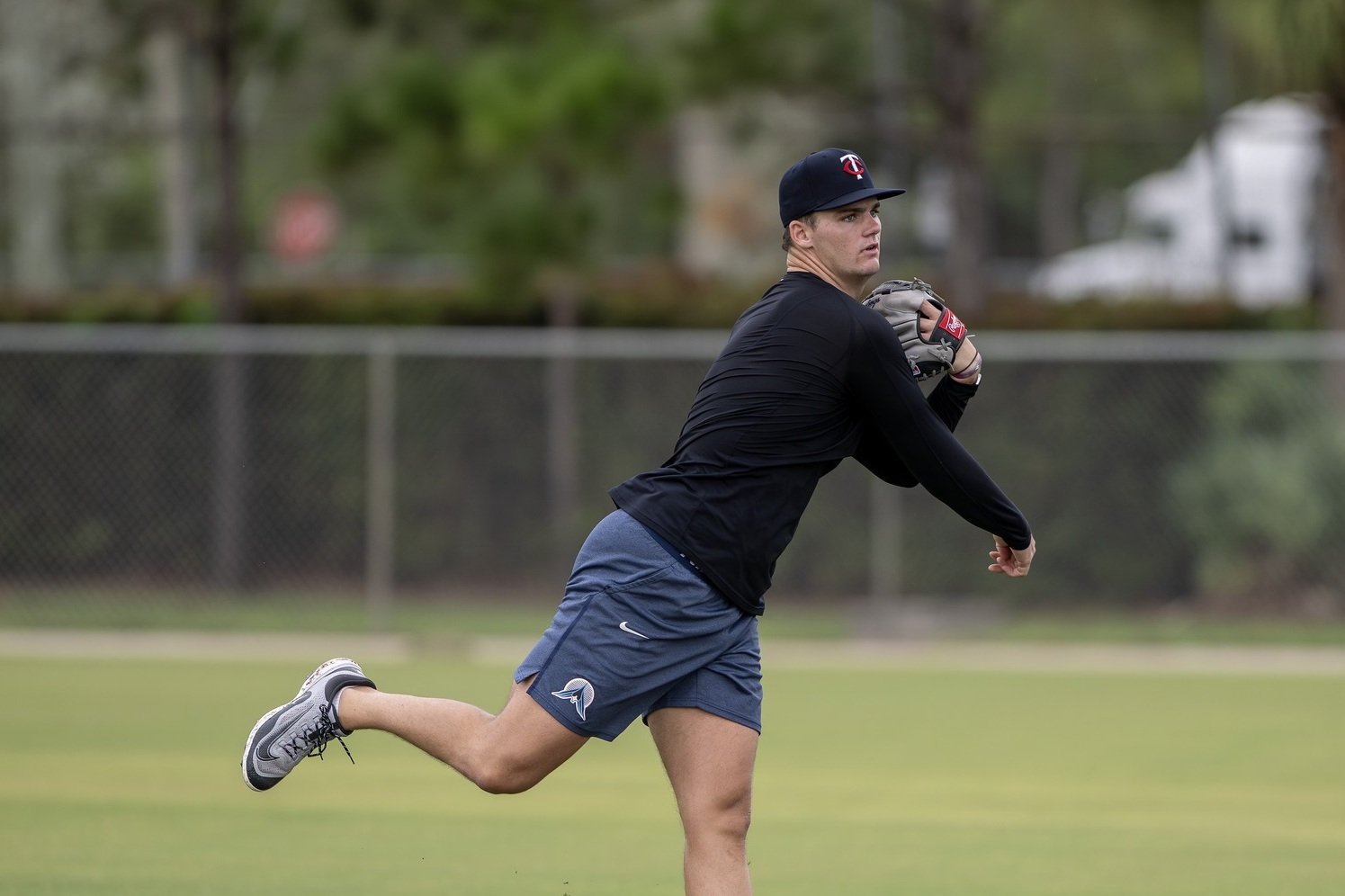 TRANSACTIONS The Twins signed utility man Henry Kusiak away from Lew Ford and the Long Island Ducks of the independent Atlantic League. In a Ducks press release, Ford said, "Henry was outstanding both at the plate and in the field during the season's first week. He has earned this opportunity, and we wish him the best of luck int he Twins organization. In the first five games of his season, Kusiak hit .474 with a 1.395 OPS. He hit two home runs including one that traveled 419 feet. He has two doubles and two stolen bases. While he has played all around the diamond, the 25-year-old was playing right field in a game earlier this week and made a diving catch in Trevor Bauer's no-hitter. Kusiak played at Missouri Southern from 2020-2024. He played 77 more games in 2024 for Windy City of the Frontier League. In 2025, he was named the Rookie Hitter of the Year in the American Association and a league All Star when he hit .309/.377/.481 (.858) with 16 doubles and 12 home runs. Saints Sentinel St. Paul 4, Iowa 11 Box Score Sam Gallagher: 3 IP, 5 H, 3 ER, 3 BB, 4 K HR: Kyler Fedko (7), Aaron Sabato (2) Multi-hit games: Ryan Kreidler (2-for-4, 2B, R) This author wrote “it was all bad” for last week’s Saints game. Well, this one was only slightly better. Ryan Armstrong found the AAA confines unfriendly and cold; he was roughed up for three runs across three frames as he battled his command. The struggles were passed to Marco Raya, who coughed up a trio of runs across two innings. Travis Adams, Dan Altavilla—both additions to the list of those victimized by Iowa hitters. Grant Hartwig was the only pitcher not to allow a run, and even he walked a pair. The Saints did lead at one point. Ryan Kreidler doubled to start the second, and Emmanuel Rodriguez singled him home. Then, Kyler Fedko stepped up to the plate and smoked his seventh home run of the season. Aaron Sabato connected on a long ball in the seventh, yet all he did was cut the deficit from eight to seven. The Cubs don’t boast an especially powerful farm system, but they did send one of their finer products to the field in Kevin Alcántara. The outfielder singled and walked in four plate appearances. Wind Surge Wisdom Wichita 5, Arkansas 1 Box Score Aaron Rozek: 4 IP, 1 H, 0 ER, 1 BB, 2 K HR: None Multi-hit games: Kyle DeBarge (2-for-4, R) An explosive sixth inning led the Wind Surge to victory on Wednesday. Ron Gardenhire would have been proud of the offensive showing. Three singles and a walk scored the first run. Two RBI groundouts brought the total to three—the latter of which existed only because of Kyle DeBarge’s madman dash home as seen below. One more walk then begat a two-run single by Jorel Ortega. That’s five runs scored with just singles, free passes, and grit. Alejandro Hidalgo might be up to something this season. In 11 ⅔ innings out of the bullpen, the righty has 23 strikeouts, an unbelievable rate even over a short sample. Four gopher balls have ballooned his ERA to 5.40, but the radical whiff increase is something to keep an eye on. The Travelers are a part of the juggernaut Mariners farm system. A constant stream of talent, Arkansas claims two Top 100 players in Lazaro Montes and Michael Arroyo. The former went 0-4 while the latter went 1-for-3 with a walk. Kernels Nuggets Cedar Rapids 4, West Michigan 3 Box Score Riley Quick: 4 IP, 1 H, 0 ER, 0 BB, 5 K HR: Jay Thomason (2) Multi-hit games: Khadim Diaw (4-for-4, 2B, R, RBI) The Kernels won on a walk-off home run on Wednesday. Do you think Riley Quick is bored? What with the immediate, outright dominance and all that. “I thought pro-ball was supposed to be difficult,” he demurs while twisting a hitter into knots with a breaker. Perhaps even the lone allowed baserunner was a gift; he was erased with a double play one batter later, anyway. The righty out of Alabama has now tossed 12 innings in the Twins system. He has relinquished two hits, walked three, and has struck out 18. Cedar Rapids plated two in the fourth on a Rayne Doncon double before adding on with a Khadim Diaw RBI knock in the sixth. It was part of an incredible day for Diaw: the catcher went 4-for-4 at the plate with a double and three singles. He alone collected half of the Kernels’ hits in the game. One of those non-Diaw knocks was also the game’s biggest: pinch-hitter Jay Thomason stepped up to the plate in the ninth with the score tied. He fell down 0-2. A foul kept him alive, and two balls pushed the count even. One more foul begat the golden swing. Thomason smacked a hanging breaking ball deep to right field, hitting the pitch just hard enough to clear the wall for a walk-off homer. Bryce Rainer is ranked as the 30th-best prospect in baseball, according to MLB Pipeline. He reached base all four times, collecting two hits while walking twice. Mussel Matters Fort Myers 6, Daytona 12 Box Score Eric Hammond: 2 ⅓ IP, 3 H, 3 ER, 2 BB, 3 K HR: None Multi-hit games: Yasser Mercedes (2-for-4, 2 RBI, BB) Fort Myers jumped out to an early lead, plating three in the second. Ian Daughtery provided the initial RBI knock, before he, too, touched home—along with Byron Chourio—after a Yasser Mercedes single. The Mighty Mussels’ Twitter account hints toward future endeavors. This was their last post until announcing the game’s end. Daytona bludgeoned Eric Hammond for four runs (three earned) in the second, then returned for another four-run frame, this time almost entirely credited to poor Adam Falinski. In fact, the first four Fort Myers hurlers of the night left the game with more earned runs than they started with. Runs in the fourth and sixth helped pretty the lipstick on this metaphorical pig, but the inevitable result remained unchanged. Byron Chourio and Bryan Acuña were on-base fiends at the end of the lineup, combining to reach base six times with five runs scored. Chourio also stole his seventh base of the season. Cincinnati’s second-round pick in 2024, infielder Tyson Lewis, is their third-ranked prospect, and he singled once in four at-bats. TWINS DAILY PLAYERS OF THE DAY Twins Daily Minor League Pitcher of the Day – Riley Quick Twins Daily Minor League Hitter of the Day – Khadim Diaw PROSPECT SUMMARY Here’s a look at how the Twins Daily Top 20 Twins Prospects performed: #1 – Walker Jenkins (St. Paul) - 1-4, K #2 – Kaelen Culpepper (St. Paul) - 0-5, 2 K #3 – Emmanuel Rodriguez (St. Paul) - 1-4, R, RBI, 3 K #4 – Eduardo Tait (Cedar Rapids) - 0-4, K #7 – Gabriel Gonzalez (St. Paul) - 0-3, BB, K #9 – Marek Houston (Cedar Rapids) - 0-4, 2 K #11 – Riley Quick (Cedar Rapids) - 4 IP, 1 H, 0 ER, 0 BB, 5 K #13 – Brandon Winokur (Cedar Rapids) - 0-4, R, 3 K #14 – Quentin Young (Fort Myers) - 0-5, 3 K #15 – Marco Raya (St. Paul) - 2 IP, 3 H, 3 ER, 1 BB, 2 K #16 – Hendry Mendez (Wichita) - 1-4, R, K #17 – Kyle DeBarge (Wichita) - 2-4, R #19 – Khadim Diaw (Cedar Rapids) - 4-4, 2B, R, RBI THURSDAY’S PROBABLE STARTERS Iowa @ St. Paul (6:37 PM) - RHP Matt Bowman vs #OldFriend LHP Charlie Barnes Arkansas @ Wichita (6:35 PM) - RHP Sam Armstrong West Michigan @ Cedar Rapids (6:05 PM) - RHP Eli Jones Fort Myers @ Daytona (5:35 PM) - RHP Matthew Dalquist View the full article
 -
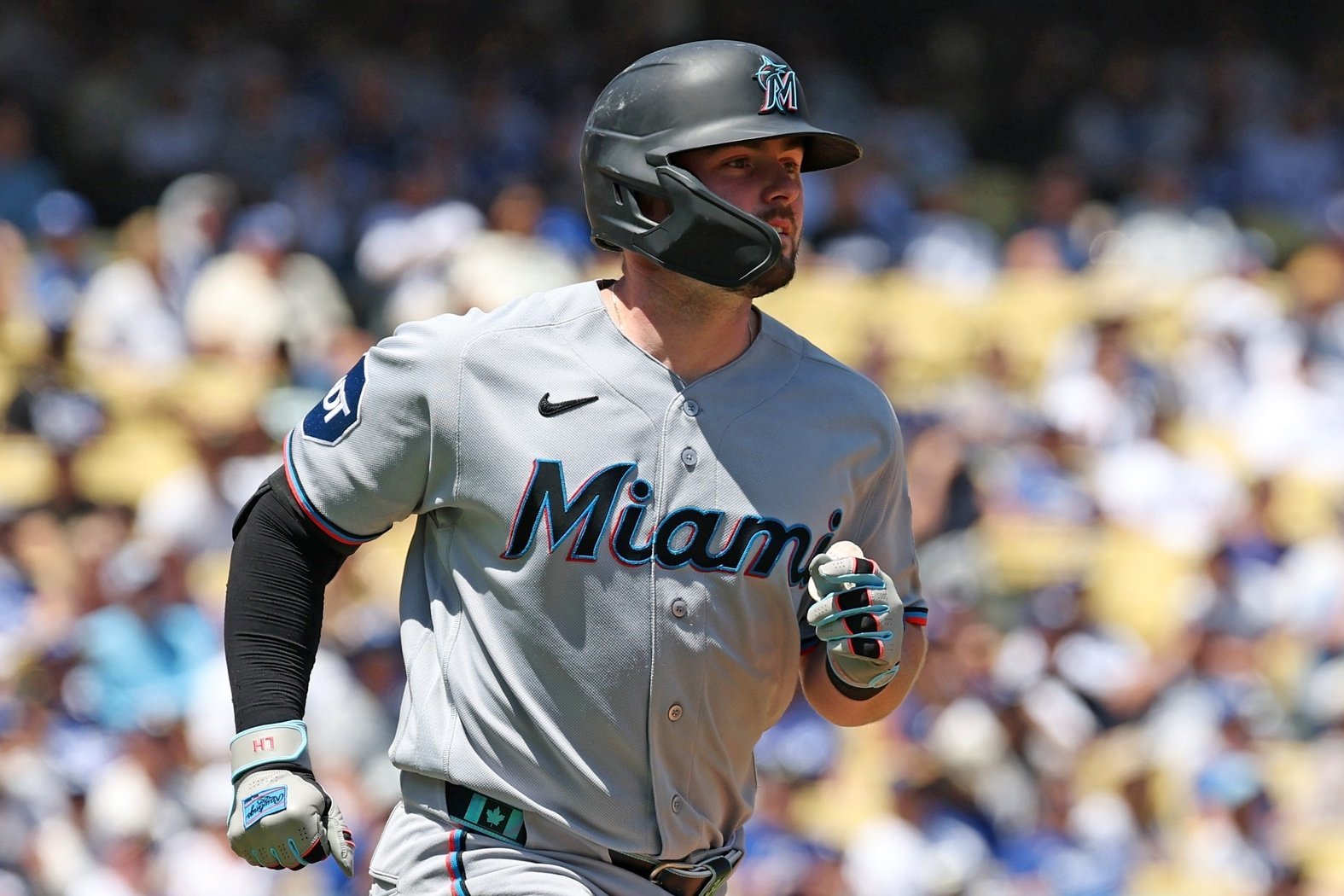 There were zero homegrown hitters in Wednesday's Miami Marlins lineup. Seven of the nine starters were acquired by the organization via trade, including six in classic rebuilding transactions, with the Marlins sending away major league veterans in the process. The cheapest pick-ups of them all? Shortstop Otto Lopez, who's been rapidly accumulating value since coming aboard as a waiver claim, and catcher Liam Hicks, a former Rule 5 draft pick. A Rule 5 pick is a glorified waiver claim, deemed undeserving of occupying a 40-man roster spot by their previous team—much less an active roster spot—and galaxies away from contending for an everyday MLB role. The process is sexier just because we have not seen these youngsters fail in the majors yet, but statistically, the vast majority of them will. The Marlins took a flier on Hicks in December 2024. In the span of a year and a half, the former Detroit Tigers farmhand has come a long way. Hicks opened the scoring in the Marlins' series-clinching victory over the Los Angeles Dodgers and also helped manufacture the run that put his club ahead for good. As a rookie in 2025, the left-handed-hitting Canadian made himself rosterable on the strength of great bat control and swing decisions; as a sophomore, he has put on physical strength and it has only enhanced his offensive profile. Hicks boasts a superb .315/.365/.576 slash line this season while seeing action in 29 of Miami's first 31 games. His solo home run off Tyler Glasnow in the second inning was his farthest batted ball to date (398 feet). As a result of it, he has surpassed his home run total from last season, when he played in 119 contests. Before this uptick in power, Hicks had already established himself as a gifted contact hitter. That was on display again versus Dodgers right-hander Will Klein in the eighth inning. He caught up to an elevated 98 mph fastball and chopped it to the right side, advancing Xavier Edwards to second base. Hicks ranks in the 99th percentile among MLB hitters with a microscopic 7.7% strikeout rate. Edwards would later score on a two-out Javier Sanoja RBI single. Hicks is on pace to produce approximately five wins above replacement in 2026. For context, multi-time All-Star second baseman Dan Uggla, who is the best Rule 5 pick in Marlins history and among the best picks made anywhere in the league so far this millennium, peaked at 4.6 fWAR and 4.4 bWAR. Even anticipating some regression from Hicks as the season unfolds, he is a massive upgrade over every other Marlins catcher of the post-J.T. Realmuto era. From 2019-2025, the Marlins received a total of 4.2 fWAR from their backstops, ranking 29th in MLB, per FanGraphs. Marlins fans continue to clamor for prospect Joe Mack, and understandably so—he has brilliant defensive skills and ample power at the plate. Even a few months ago, it was not unreasonable to view Mack as Hicks' eventual replacement, but that notion is now outdated. The best version of this team must have them frequently in the lineup together. Additional notes - Prior to Wednesday, Sandy Alcantara's career numbers at Dodger Stadium had been hideous, with a 14.46 ERA and eight homers allowed in 18 ⅔ innings pitched. He chipped away at that by limiting LA to two runs in six innings, and that actually undersells his effectiveness because one of those runs scored on an Alex Call pop-up that Otto Lopez lost in the sun. - Sanoja relishes big moments. He entered this game with an elite .891 OPS in 98 career high-leverage plate appearances, as defined by Baseball-Reference. Consider that his overall OPS in the majors is just .680. - In the absence of Pete Fairbanks (nerve irritation), Calvin Faucher has the most ninth-inning experience among active Marlins pitchers. He converted his 23rd career save on Wednesday, but issued three walks in the process (one of those being intentional). He's now up to 12 walks on the season, already halfway toward matching his total from 2025. - The Marlins overcame Faucher's wildness thanks to Edwards' unassisted double play, which involving tagging out Shohei Ohtani, then stepping on first base to retire Freddie Freeman to preserve a 3-2 lead. - In the top of the fifth, Esteury Ruiz took Glasnow deep for what was his first hit as a Marlin. Quite unexpected coming from the wiry outfielder, who had previously homered only twice in his life against MLB right-handers. - Way back on March 28, Owen Caissie went 3-for-4 in a win over the Colorado Rockies, flying out to center field for his lone out of the game. Since then, however, Caissie has made 22 more starts and registered at least one strikeout in each of them. On Wednesday, Caissie broke a tie with Jeremy Hermida (2007) and Jorge Alfaro (2019) to establish a new franchise record: most consecutive starts with a strikeout by a Marlins position player. The Marlins get approximately 49 hours to recuperate between games in advance of Friday's series opener against the Philadelphia Phillies. Their opponent, on the other hand, had their scheduled game postponed due to inclement weather, necessitating a split doubleheader on Thursday, so that'll create a nice rest advantage for the Fish in their attempt to return to the .500 mark. Probable starters for the 7:10 pm game are right-handers Zack Wheeler and Eury Pérez. View the full article
 -
Pitchers Ryan Bergert and Ben Kudrna Undergo Surgeries
DiamondCentric posted an article in Royals Keep
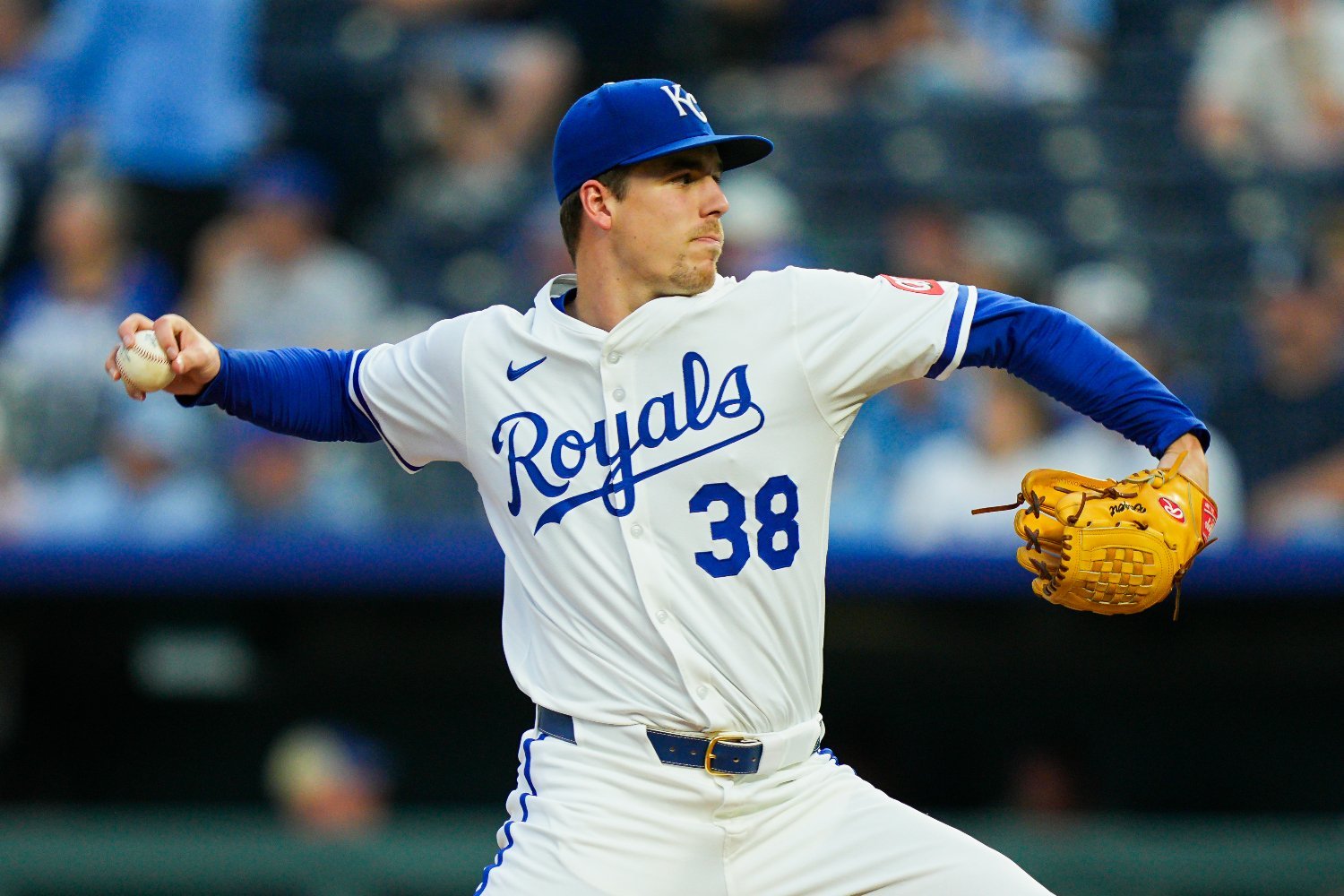 On Wednesday evening, the Royals announced via social media that pitchers Ryan Bergert and Ben Kudrna underwent successful surgeries on their arms. Bergert and Kudrna are both on the 40-man roster, though neither made the Opening Day roster. The former Padre, acquired with Stephen Kolek for Freddy Fermin at last summer's Trade Deadline, is the more accomplished of the pair. Berger pitched 76.1 IP with the Padres and Royals a season ago. In that 19-appearance sample (15 starts), he posted 3.66 ERA, 1.26 WHIP, 22.6% K%, and 11.8% K-BB%. He walked fewer batters with the Royals (9.8% BB%) than the Padres (12.1% BB%), but his ERA with the Royals (4.43) was much higher than his one with the Padres (2.78). Still, Bergert showcased a solid profile and a strong ability to flood the strike zone, especially with the Royals, as illustrated in his TJ Stats summary from 2025. Bergert's chase%, whiff%, and xwOBACON left a bit to be desired, as they all rated slightly below average. However, he was showing some progress in Spring Training and Triple-A Omaha (23.8% K% and 2.79 ERA in 9.1 IP) before going down with an injury. As for Kudrna, the 2021 second-round pick was added to the 40-man roster this past offseason, and hopes were high that the local Kansas prep product would be a dark horse to make his MLB debut this season. Kudrna posted a 4.21 ERA and 1.29 WHIP in 94 IP with the Double-A Northwest Arkansas Naturals. However, he had a 24% K%, 15.7% K-BB%, and 3.17 FIP. Omaha was a much tougher challenge for Kudrna. In four outings, three starts, and 11.1 IP, he posted a 14.29 ERA, 2.74 WHIP, 9.54 FIP, and -11.1% K-BB%. His one outing with the Storm Chasers this year wasn't much better, as he posted a 9.00 ERA, 3.00 WHIP, and 7.10 FIP. Kudrna posted a solid whiff rate in Omaha as well as limited hard contact, but his TJ Stuff+, zone rate, and chase rate metrics were all mediocre, as illustrated in his TJ Stats season summary below. The typical recovery timetable for surgeries such as Kudrna's is 3-6 months. Thus, it's possible that Kudrna could return in Late August or September if his body responds well to the recovery process. That said, at 23 years old, it's likely that the Royals will take it slow with Kudrna, which probably rules out any return to Omaha this season. Both players will likely be placed on the 60-Day IL, opening two roster spots for potential pitchers in the near future. View the full article
 -
Breaking Down Emmanuel Rodriguez's Hot Start To 2026
DiamondCentric posted an article in Twins Daily
 Emmanuel Rodriguez has been the hottest bat in the Saints' lineup over the past two weeks. What is the key to his success, and could he force his hand to be called up to the Majors in the near future? View the full article
 -
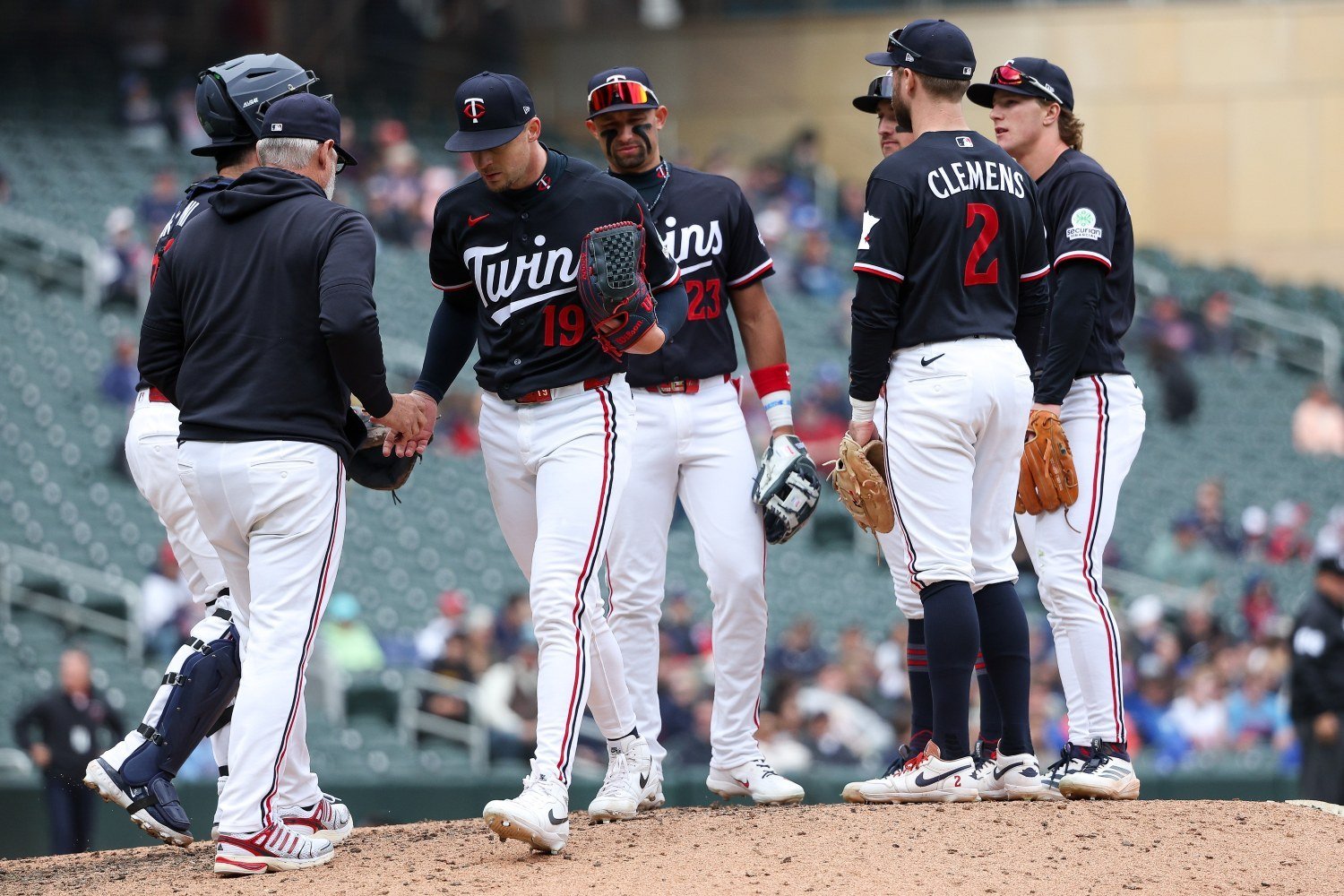 Box Score SP: Taj Badley - 7 IP, 2 H, 2 ER, 2 BB, 7 K (114 pitches, 73 strikes (64% strikes)) Home Runs: None Bottom 3 WPA: Eric Orze (-0.70), Josh Bell (-0.18), Matt Wallner (-0.13) Win Probability Chart (via FanGraphs) Taj Bradley entered Wednesday's game looking to get back to his dominant ways. Bradley surrendered four monster home runs, his first of the season, last weekend against the Rays—two each to former teammates Junior Caminero and Jonathan Aranda. But this game was different, Bradley had control, and marched through seven innings in which he allowed two runs on just four hits and two walks, while striking out seven. Derek Shelton trusted his newfound workhorse, letting him throw more pitches than any Twins pitcher had since Kenta Maeda was chasing a no-hitter during the 2020 pandemic season. Arguably, that trust tipped over from admirably old-school to inadvisable passivity in the seventh. With the Twins nursing a 2-1 lead, Bradley gave up back-to-back doubles to left-handed batters to tie the game with two outs in the inning, already having passed 100 pitches—even though lefty Anthony Banda was warming in the pen. Banda came out in the eighth to relieve Bradley and took care of business, setting the stage for the Twins to take the lead again. A Little Life The Twins offense was virtually non-existent Tuesday night, making their Monday outburst feel a bit like a mirage. Lately, they seem unable to muster the consistency of approach and production that characterized their hot streak earlier this month. They did get something going in the fourth inning, though. Ryan Jeffers singled with one out and advanced to second on a walk by Kody Clemens. Luke Keaschall blooped a single into center, and although Jeffers couldn't score after holding up to make sure the ball fell in, both he and Clemens scored when Brooks Lee followed with a flared single of his own. Jeffers (.409 OBP) and Clemens (who got on base three times Wednesday and is hitting his stride as the team starts seeing more righty hurlers) have become quietly vital to the team's offense, especially with some of the others in the group beginning to struggle. Those two runs didn't prove decisive, but briefly, it looked like their late tally could. Another Jeffers single set the wheels in motion, and James Outman (pinch-running for the catcher) stole second base. After two strikeout, Victor Caratini pinch-hit for Matt Wallner and came up huge: The Twins threatened to score some insurance runs, too, loading the bases for Byron Buxton, but the Twins' star slugger flied out to end the frame. And a Painful Death Those insurance runs, as it turned out, were much-needed, and because they didn't get them, the Twins lost. Eric Orze couldn't find the strike zone, walking Randy Arozarena to lead off the inning. He fell behind most of the hitters he saw, and though he came back to strike out one of them, he surrendered back-to-back singles and a walk to give Seattle the lead and left Taylor Rogers in a jam, to boot. Rogers minimized the damage reasonably well, but another run scored on a sacrifice fly. The Twins went down with barely a whimper in the bottom of the ninth. What’s Next? The Twins take on the Toronto Blue Jays at home for a four-game series. The Twins will send Bailey Ober to the mound (2-1, 3.94 ERA) in Thursday's series opener, facing Toronto ace Kevin Gausman (2-1, 2.57 ERA). Postgame Interviews Coming soon. Bullpen Availability Chart View the full article
 -
Brewers Put Angel Zerpa On Injured List With Forearm Tightness
DiamondCentric posted an article in Brewer Fanatic
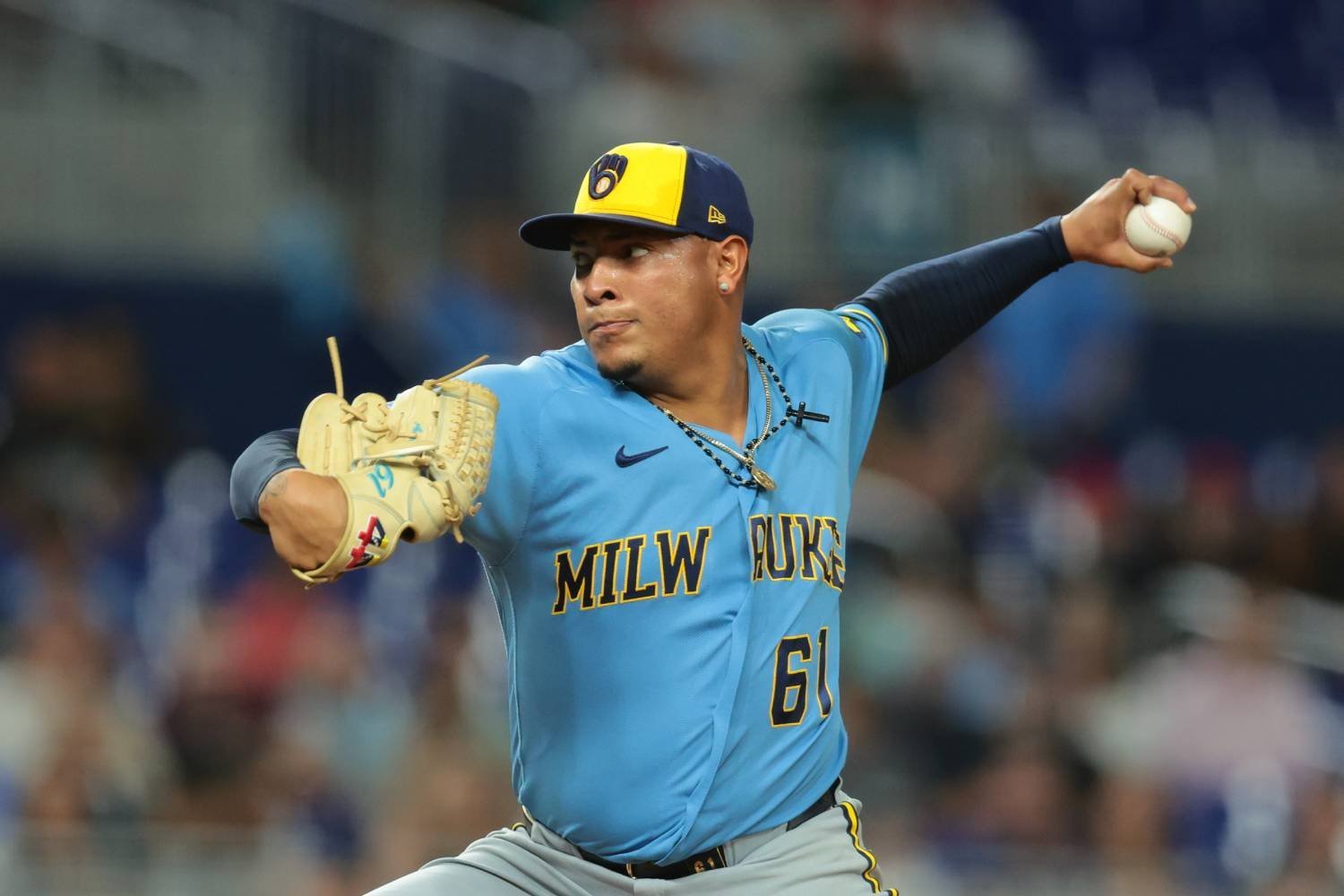 The Milwaukee Brewers are losing a key member of their bullpen. Left-handed reliever Angel Zerpa was placed on the 15-day injured list Wednesday with left forearm tightness. Left-handed reliever Brian Fitzpatrick had his contract selected from Triple-A Nashville and will be making his MLB debut. The Brewers had an open spot following outfielder Luis Matos being designated for assignment. Following a strong performance for Venezuela in the World Baseball Classic, Zerpa emerged as another late-inning weapon out of the Brewers' bullpen. He started the season with four scoreless outings, but has allowed runs in six of his last eight appearances for a 6.39 ERA in 12 games. In his most recent outing, Saturday vs. the Pittsburgh Pirates, he allowed three runs (one earned) on one hit and a walk with a strikeout in two-thirds of an inning. It was the third consecutive outing Zerpa allowed a run. Fitzpatrick was a 10th-round selection by the Brewers in the 2022 draft out of Rutgers. In 10 appearances at Nashville this year, Fitzpatrick had a 1.74 ERA with two walks and 11 strikeouts in 10⅓ innings. In his five minor-league seasons, Fitzpatrick has appeared in 81 games, including 15 starts, and posted a 3.49 ERA with 3.6 walks and 9.9 strikeouts per nine innings. The Brewers also formally sent outfielder Jackson Chourio and first baseman Andrew Vaughn to Nashville to begin their rehab assignments. Also, Matos went unclaimed on waivers and was outrighted to Nashville. View the full article
 -
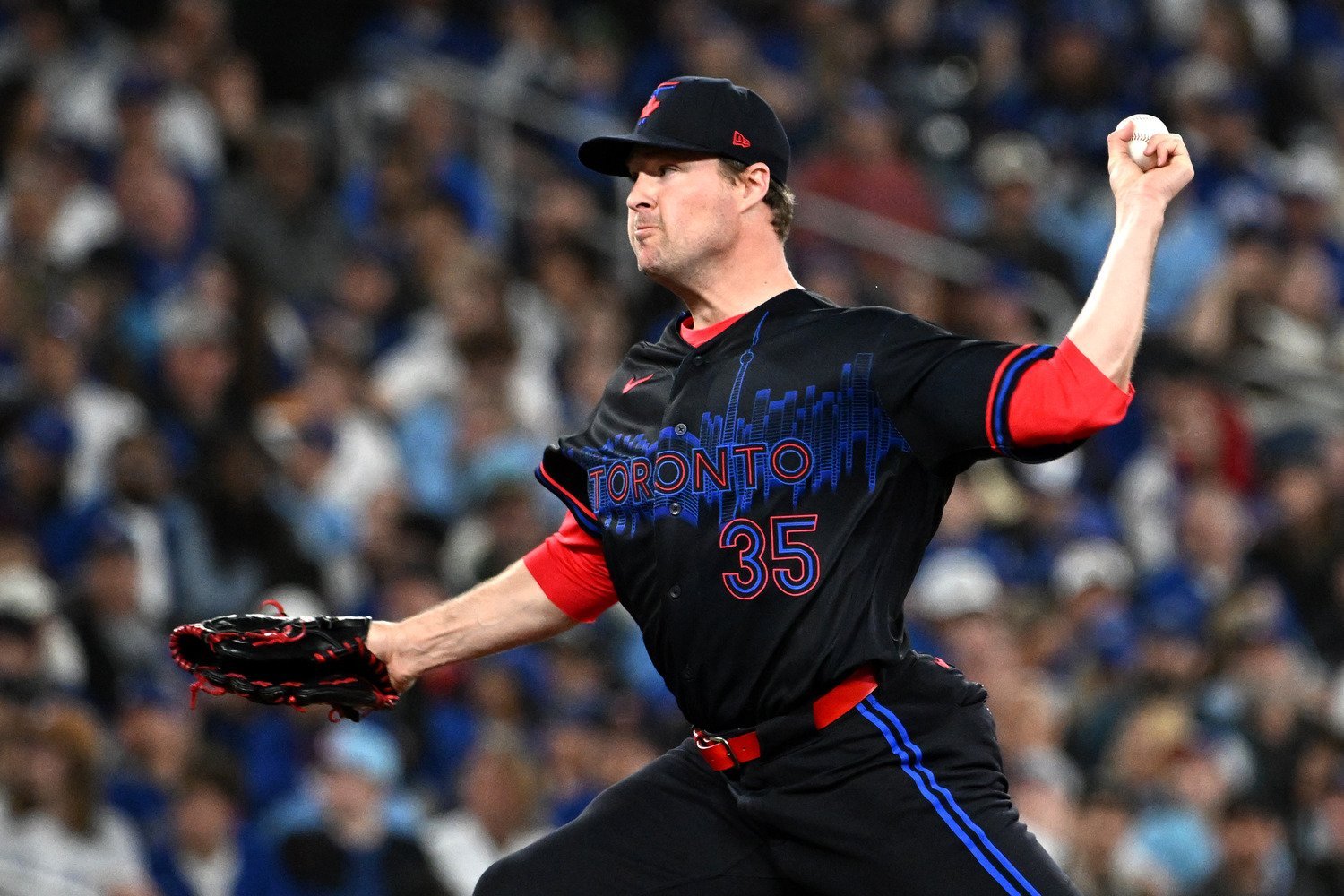 I spent a lot of time this offseason thinking about the players who were supposed to make the Toronto Blue Jays' Opening Day roster. Here at Jays Centre, we put out roster predictions. We wrote about the rotation, the bullpen, the lineup, and the bench, considering projected performance, positional logjams, and possible platoons. We wrote about guys like Eric Lauer, Davis Schneider, and Nathan Lukes until there was absolutely nothing left to say. That's what the offseason is for. Then the season started, and, well... fans plan. The baseball gods laugh. You don't need to know much about baseball to know it takes more than 26 guys to get through a season. At least one player you'd never even heard of in March will have made an impact for your favourite team before October. Right now, the Blue Jays have six five (I started this before Eloy Jiménez was DFA'd) players on their active roster who weren't around on Opening Day, not including Trey Yesavage, who returned from the injured list on Tuesday. Since we didn't spend much, if any, time thinking about these players over the winter, I thought it would be a good idea to give them all a little attention right now. Starting with the pitchers (I'll get to the hitters tomorrow), let's take a quick look at what each of them has done for Toronto in 2026. Patrick Corbin, SP 2026 Stats: 4 GS, 19.1 IP, 3.72 ERA, 16 K, 6 BB, 2 HR Signed a one-year, $1 million contract with the Blue Jays on April 3, shortly after Cody Ponce tore his ACL. Recalled from the Dunedin Blue Jays on April 7. Patrick Corbin has been everything the Blue Jays could have hoped for (and more). The 36-year-old signed with Toronto on April 3, and despite missing spring training, he was already pitching for the major league team a week later. The rubber-armed veteran has since thrown 19.1 innings over four starts, and the team is 3-1 in his outings. The Jays signed Corbin out of desperation for innings, and so far, the lefty has delivered with quality on top of quantity. He's been so steady that Eric Lauer is now the likely candidate to move to the bullpen when José Berríos returns from the IL. None of this is to say Corbin will stick in Toronto's rotation all year. We're still talking about a guy with a 5.47 ERA and a 5.65 xERA from 2021-25 (and a 5.84 xERA in 2026). Ideally, he gets bumped out for a healthy Shane Bieber before long. However, that doesn't take away from what Corbin has done for the Jays to this point, and it's nice to know that for as long as they need him, he'll be there. Joe Mantiply, RP 2026 Stats: 9 G, 10.2 IP, 3.38 ERA, 15 K, 3 BB, 1 HR Re-signed with the Blue Jays on a minor league contract on March 3. Selected to the roster when Brendon Little was optioned to Triple-A. From 2021-24, Joe Mantiply made 236 appearances for the Diamondbacks with a 3.63 ERA, a 3.49 xERA, and 3.2 fWAR. Yet, amidst a disastrous 2025, he found himself left on the scrap heap, and the Blue Jays were able to pick him up for nothing. So far in 2026, the lefty looks like his old self. Wait, scratch that. He looks better. Yes, it's early – really early – but Mantiply's stuff looks great. He has struck out one-third of the batters he's faced and induced grounders on more than half the balls his opponents have hit into play. If he keeps pitching this well, he has a good case to stick around even if another lefty (i.e., Lauer or Corbin) eventually moves to the bullpen. That's the optimistic take. As much as I want to focus on the positives, I need to point out that John Schneider has largely limited Mantiply to lower-leverage opportunities as a lefty specialist. The realist in me knows that the 35-year-old soft-tosser will remain on the roster bubble until he proves he can hold his own against opposite-handed hitters with the game on the line. The Others These four pitchers weren't on the Blue Jays' Opening Day roster, nor are they currently on the team's active roster. They did, however, spend time with the big league club at some point this year. Lazaro Estrada: 1 G, 4.0 IP, 0 H, 0 R, 3 K (15-day IL, shoulder impingement) Josh Fleming: 1 G, 3.0 IP, 6 H, 4 R, 1 K (DFA'd, re-signed to new minor league deal, assigned to Triple-A Buffalo) Chase Lee: 1 G, 1.1 IP, 1 H, 1 R, 1 K (Optioned to Triple-A Buffalo) Austin Voth: 1 G, 2.2 IP, 3 H, 1 R, 1 K (DFA'd, re-signed to new minor league deal, assigned to Triple-A Buffalo) View the full article
 -
Blue Jays Activate George Springer, DFA Eloy Jiménez
DiamondCentric posted an article in Jays Centre
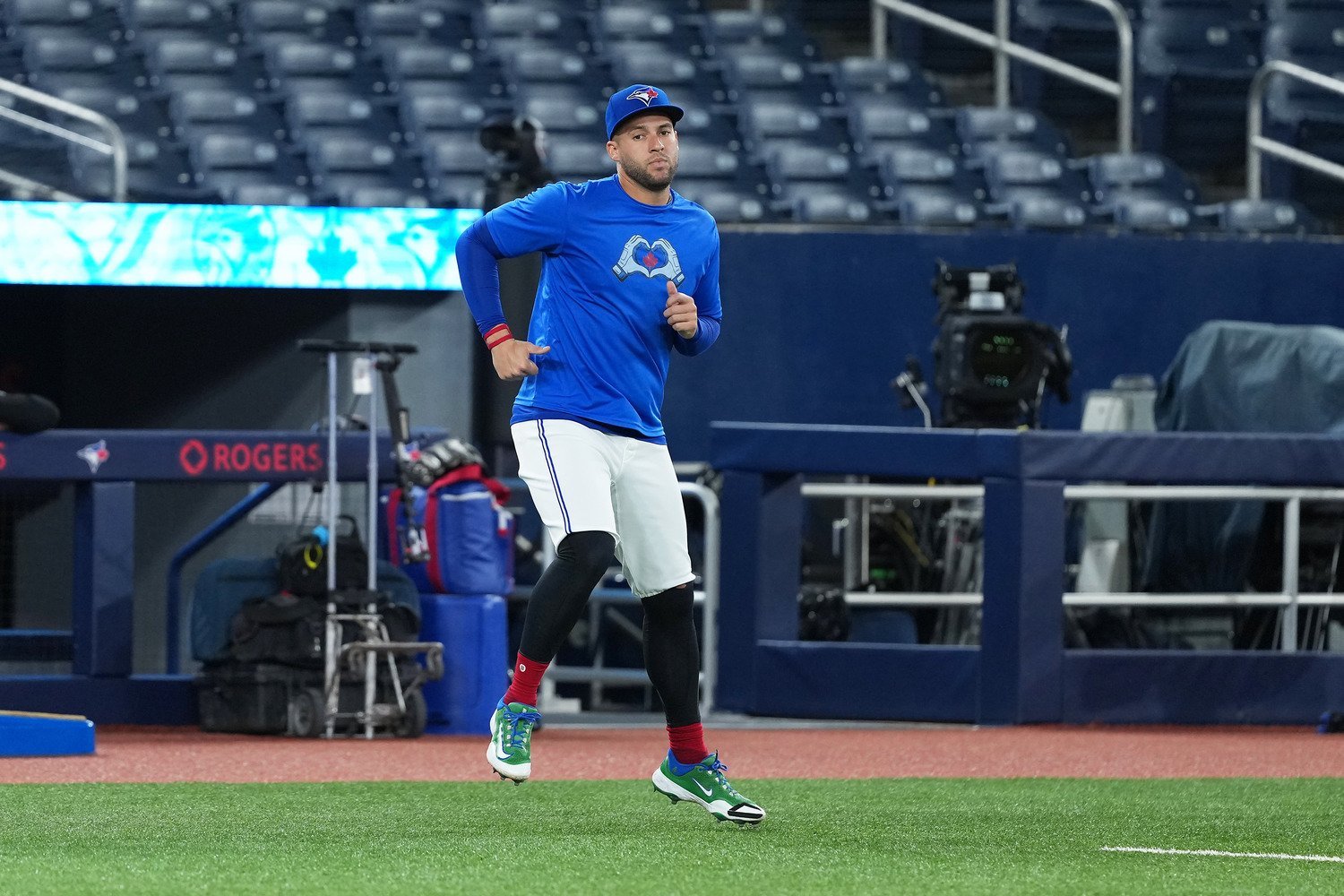 The Toronto Blue Jays are getting healthier. A day after welcoming back Trey Yesavage, the Blue Jays announced that George Springer has been activated off the 10-day injured list. While Springer will not be in the starting lineup during the Blue Jays’ series finale against the Boston Red Sox, he will be available off the bench. Springer originally fractured his left big toe on April 11 after following a pitch off his foot. The 36-year-old exited the contest and has missed the past 15 games after being placed on the IL on April 12. Through 14 games, Springer is batting .185 with two home runs and six RBIs. During his absence, the Blue Jays have gone 7-8, and have been rotating Myles Straw, Nathan Lukes, and Ernie Clement through the leadoff spot. In a corresponding move, the Blue Jays designated Eloy Jiménez for assignment. The 29-year-old appeared in 12 games with the Blue Jays, batting .290 with three RBIs and a .343 on-base percentage. With Springer set to return to the DH role, and Jiménez offering no real positional flexibility, the Blue Jays were forced to make this move. First pitch on Wednesday is set for 3:07 p.m. at the Rogers Centre. View the full article
 -
Was the Cubs' Pitching Injury Crisis Inevitable?
DiamondCentric posted an article in North Side Baseball
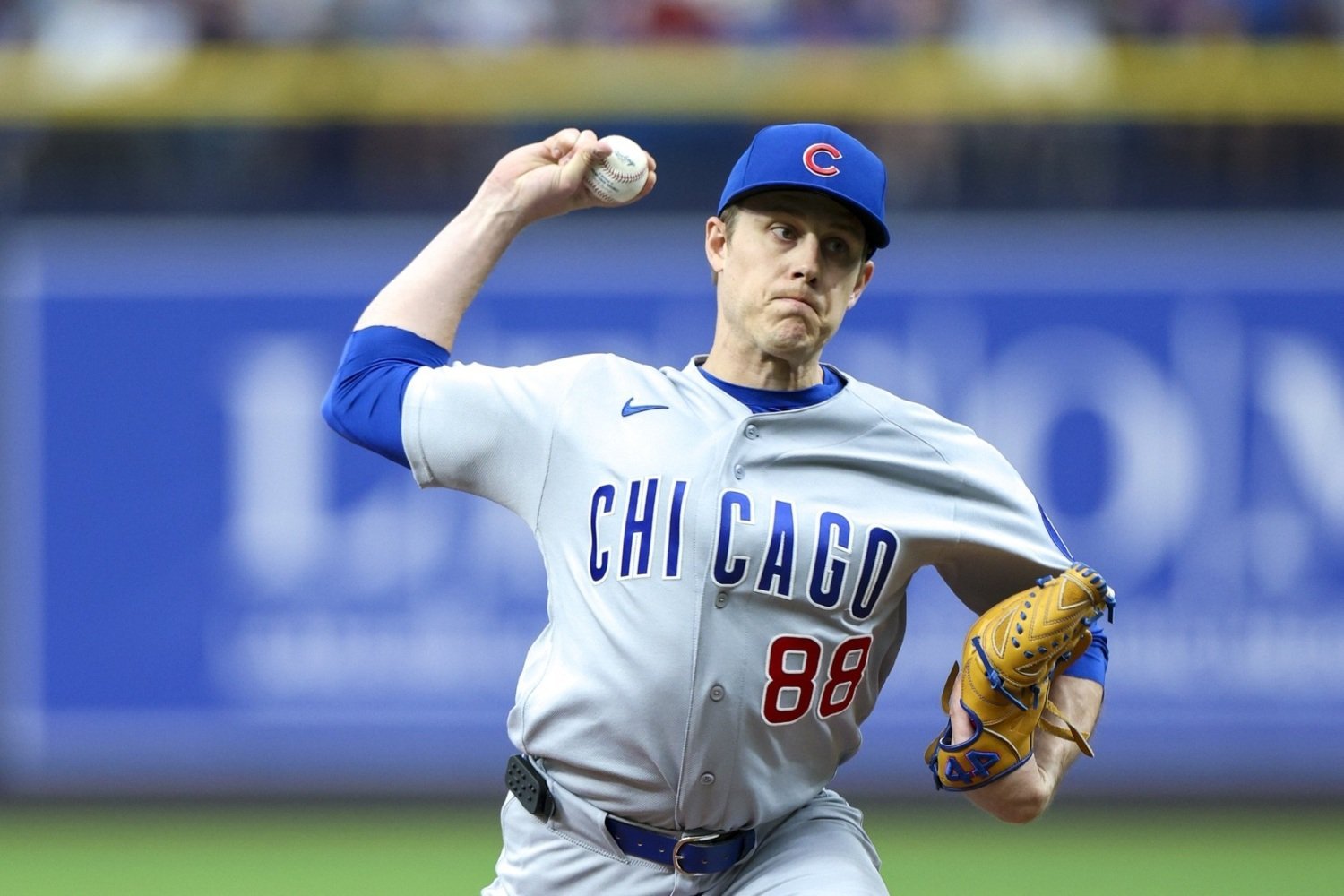 The Cubs' pitching depth has been annihilated by injuries. The bullpen has lost its projected closer and top three setup options. Cade Horton is done for the year, and Justin Steele just had a setback. The rotation in Iowa is so thin that they only have one traditional starter. This isn't luck. This is a risky plan gone awry. Let's look at the injuries one by one. You'll see the common thread: not randomness, but identifiable durability concerns. Cade Horton: Elbow; previous Tommy John surgery and shoulder issues Caleb Thielbar: Hamstring; 39 years old Hunter Harvey: Tricepts; pitched 15 innings combined the past two years Daniel Palencia: Lat strain; battled shoulder issues last year and throws a million miles an hour Ethan Roberts: Attacked by a falling vent; is not rich enough to have others do routine housework or to buy fancy no-slice vents Riley Martin: Elbow inflammation; is a pitcher Phil Maton: Knee, also older pitcher (now back on the roster) Matthew Boyd: Bicep strain; has been hurt more than healthy in career spanning over a decade (now back on the roster) Let's look at the bullpen first. Relying on two pitchers over age 35 as your high-leverage adds is always going to carry added risk. Their arms are sound, but the aches and pains and strains come fast and furious as you age. With Maton's knee and Thielbar's hamstring, this struck. Soft tissue and joint injuries become more common for older players. Added to the risk inherent in the pitchers' arms, this was always a gamble. The younger pitchers were also risky. Any contribution by Harvey was always going to be a bonus; that's why spending so much on him felt peculiar in the first place. Palencia is battling recurring shoulder issues, and even top-100 prospect Jaxon Wiggins is injured, taking away a possibility for help. Jed Hoyer tried to build a bullpen, but each player took a significant durability concern into the season. The Cubs put a huge amount of faith in Horton this year. That, too, was always a gamble. Horton came into his pro career having pitched 53 2/3 innings in college and coming off Tommy John surgery. He was then babied through a year in the minors, averaging barely four innings per start, only to injure his shoulder the next year. Horton is a prime example of the axiom that the best predictor of future injury is past injury, particularly when the injuries are all to the same pitching arm. The team babied him again in late 2025, and he still went down, again. The rest of the rotation has a similar risk. Edward Cabrera has been injured for parts of every year of his career. Boyd is 35 and has his own injury demons to counter. Colin Rea is 35, and Javier Assad had a lost season last year with an oblique issue. Shota Imanaga had a hamstring issue last year. Jameson Taillon had a calf strain and a groin strain. The Cubs didn't spend on Dylan Cease, who cost a premium because he never misses a start. Instead, they chose to spread their resources more evenly (and, of course, to spend less than the Blue Jays are spending on their roster, overall). This could work if arms are available to call up, but to this point, there are no reliable options in the minor leagues. Instead, they now have a cheaper but thinner rotation, and it's backfired. They'll have to spend either money or farm-system talent (the latter, at least, being in short supply at the moment) to reinforce this stuff before the trade deadline. This can all still work, given the Cubs' elite defense and deep offense. The Cubs should remain in contention this summer. But against good teams, both in the regular season and the playoffs, pitching reigns supreme. The Cubs, at this point, are lacking in that department, with few internal options to supplement. It's probably more a failure of the scouting and development side than anything else, but that's Hoyer's responsibility, just as his choices with regard to trades and free agency are. View the full article
 -
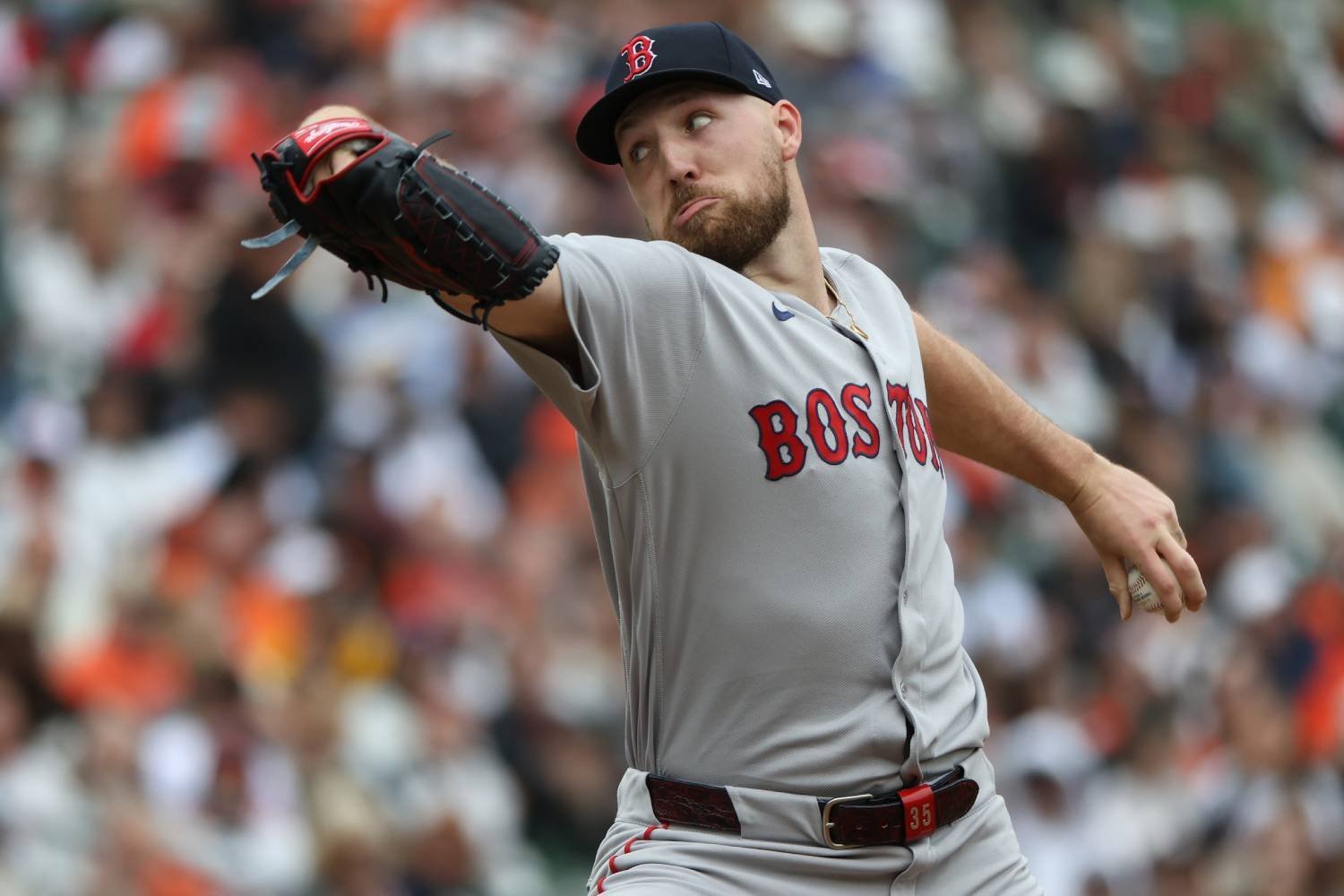 The Boston Red Sox will be without their ace for a while. Left-handed starter Garrett Crochet went on the 15-day injured list Wednesday due to inflammation in his left shoulder. Third baseman-outfielder Nate Eaton was called up from Triple-A Worcester to take Crochet's roster spot. Crochet had been slated to start Friday, with left-hander Jake Bennett a likely candidate. Crochet hadn't displayed the same form that led to his brilliant 2025 season, when he finished second in AL Cy Young Award voting and went 18-5 with a 2.89 FIP with an 5.7% walk rate and 31.3% strikeout rate, leading MLB with 255 strikeouts. In six starts this year, Crochet had a 4.33 FIP and 6.30 ERA, having allowed five runs twice and 11 in another. He has a 8% walk rate and 26.8% strikeout rate. Surprisingly, this move comes after perhaps his best start of the season. In Saturday's 17-1 victory over the Baltimore Orioles, Crochet went six shutout innings, allowing three hits and two walks while striking out seven. Eaton played in 41 games for the Red Sox last year, putting up a .296/.348/.383 slash line with one homer, four RBIs and nine stolen bases. In 27 games for Worcester this year, Eaton's slash line is .292/.373/.458 with three homers, 12 RBIs and six stolen bases. View the full article
 -
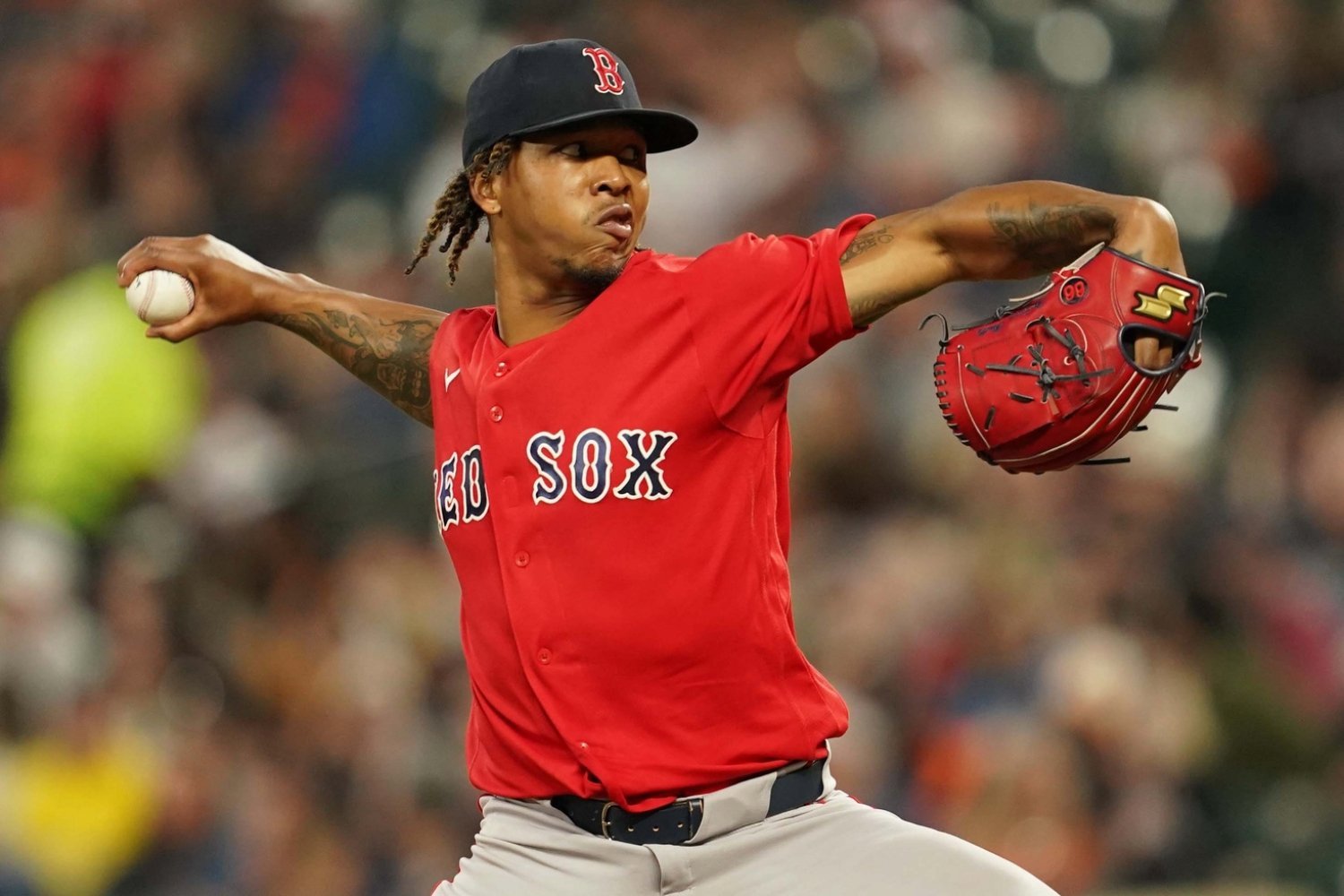 To say the beginning of the season has been an absolute disaster for Brayan Bello could almost be considered an understatement. The 26-year old righty was hoping to build off a solid 2025 while positioning himself as a crucial piece of the Boston Red Sox’s rotation behind Garrett Crochet, Sonny Gray, and Ranger Suarez. Unfortunately for him, he’s currently sitting on a 9.00 ERA after his blow-up start against the Orioles with a measly 13.0% strikeout rate to go along with an 11.3% walk percentage. His FIP has shot up to 8.27 to pair with a -0.6 fWAR. As a long time Bello Believer (trademark pending), I wanted to take a look under the hood and see if we could explain what’s going on with the young, former Opening Day starter. Maybe the most glaring thing is that Bello has all but scrapped his four-seam fastball. While it was never a pitch he favored, it’s taken a significant step back behind his other options, including a new curveball, so far in 2026. In 2025, he threw the four-seamer 15% of the time and averaged 95.1 MPH on it. Now, that percentage has dipped to 3% and it’s lost some gas at 93.7 MPH. This could be, in part, due to pitching coach Andrew Bailey’s preferred use of off-speed and breaking pitches, but the last time that happened in 2024 Bello was vocal about reintroducing the pitch back into his mix and it helped to turn his season around. From the outside looking in, it seems more like Bello no longer trusts the pitch and that has taken away a lot of his grip-it-and-rip-it style of pitching. That style though, is what his career has been built on. He’s been at his best when he just pitches. Now, he seems to be trying to nibble on the edges of the plate too much and he’s being crushed as a result. That’s not the only reason for concern, though. Bello has raised his arm angle a staggering 10 degrees, from 33 degrees in 2025 to 43 degrees this season. If you compare pictures or videos from previous seasons to now, it’s fairly noticeable. While there are merits to raising the arm slot, none of them have really panned out for Bello. It is likely what has contributed most to his massive uptick in generating whiffs, up from 20.1% last season to 31.6% now, but it’s also leaving him vulnerable to his sinker playing a lot higher in the zone than intended. We saw the results of that against the Orioles, when Adley Rutschman took a 95 mph sinker that hung out high and inside to deep right field. To be fair, Bello gave up home runs on his cutter and four-seam fastball as well, but the sinker got crushed all night because it failed to sink at all. That flat action on all of his pitches is a direct result of his raised arm angle as well. While the raised arm slot would work, or should work, for a four-seam fastball because the angle causes it to ride more, it has the opposite impact on the sinker. As we know, Bello is a sinker-heavy pitcher so such a drastic, upward change in his arm angle makes the pitch less effective. It also takes the sweeping motion away from his sweeper and forces him to rely on that new curveball as a snappier breaking ball. We can see an obvious difference if we look at his movement profiles from 2025 and 2026 side-by-side. His changeup and sinker are living in the same zone again this season, but when the velocity is down on the sinker, almost a full mile per hour from 95.3 to 94.4, then the pitches don’t play off each other nearly as well as they did last season. His four-seamer gave hitters a different look last season but now, when he does throw it, it’s cheating into the same movement profile as his sinker. Flattening out his arm angle could do wonders for him, and there’s been some tinkering from start to start recently, but we’ve yet to see it pay any true dividends. Also contributing to the issue is that Bello has lost spin rates on each of his pitches, and some have a fairly significant drop-off. His sinker is down from 2,121 RPM to 2,036 RPM, his cutter from 2,479 RPM to 2,333 RPM, the four-seamer from 2,161 RPM to 2,056 RPM, the sweeper from 2,476 RPM to 2,335 RPM, and his changeup is down from 1,842 RPM to 1,696 RPM. Yes, he’s working with a much smaller sample size so far this season, but the decrease in revolutions per minute is concerning. That spin allows the ball to break how it’s supposed to. It helps aid in the “ride” the four-seam is supposed to have and is what forces a sinker to dive as it’s reaching the plate so the hitter swings over the top of it. Now though, a lot of his pitches are living in the same RPM realm and it’s causing them to bleed into one another as they approach the plate. The sweeping action is less on his sweeper, down from 9.9” of glove-side break to 7.2” of glove-side break, and his cutter is almost running completely flat in 2026 as it has dropped from 0.9” of glove-side break to a measly 0.2”. Without the spin on each pitch, likely due to the increased arm slot, Bello goes from a groundball-inducing sinkerballer to someone who can't aggressively attack the bottom of the zone. This makes every other pitch in his arsenal far less effective as a result. I won’t go so far as to say that the Brayan Bello we got in the second half of 2024 and most of 2025 is gone, but it’s looking like that version of him is very lost right now. Might he benefit from a stint in Worcester to get his mechanics back on track> If the rotation were completely healthy, that’d be an easy enough decision. With Johan Oviedo on the 60-day IL and Sonny Gray on the 15-day IL, though, it’s a bit easier said than done. Once Gray comes back (Alex Cora gave a positive update on him before being ousted), then a much tougher conversation is likely going to happen than what happened on the mound during Bello’s start. Rookie Payton Tolle looked absolutely dominant against the Yankees in his season debut. He was electric and brought an energy to the team that they’ve needed since the season started. Perhaps he (and fellow rookie Connelly Early) can keep pitching well enough to buy Bello a little time to get his A-game back. View the full article
 -
 Riley Quick came with his fair share of question marks when the Twins drafted him last summer, but his early performance has been otherworldly. It's too early to say definitely, but the Twins may have something special here. View the full article
 -
Is Francisco Lindor The Leader The Mets Need?
DiamondCentric posted an article in Grand Central Mets
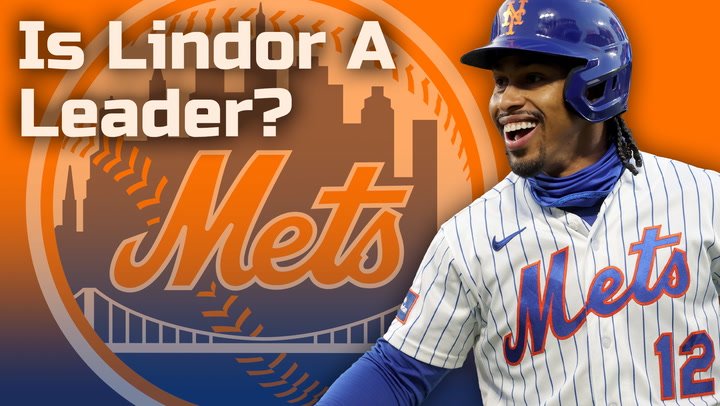 Francisco Lindor has been at the center of reported teammate conflicts during his time with the New York Mets, most notably with Jeff McNeil and Juan Soto. Lindor and his teammates have consistently downplayed them as minor disagreements fueled by the stresses of losing seasons. During the 2026 off-season, the Mets cleaned house with hopes these issues were gone and the team would excel, but so far the Mets have not met expectations, which leads to the question of whether Lindor is the leader the Mets clubhouse needs? View the full article
 -
 Asbel Gonzalez homered in a 3-for-4 night with three RBI as Quad Cities pounded Wisconsin 14-7, with Blake Mitchell adding a homer and Emmanuel Reyes earning the win over five innings. Columbia fell 7-6 in a walk-off, with Josh Hammond's two-run double building a lead the bullpen could not hold. Omaha lost 5-1 to Louisville despite Aaron Sanchez's five strong innings, with Kameron Misner's RBI double providing the lone run. Northwest Arkansas was postponed. Royals Transactions Kansas City Royals signed free agent LHP Anthony Gose to a minor league contract. Kansas City Royals recalled RHP Luinder Avila from Omaha Storm Chasers. Kansas City Royals optioned RHP Eli Morgan to Omaha Storm Chasers. Misner Double Provides Omaha's Only Run In 5-1 Loss Aaron Sanchez gave the Storm Chasers five innings on the mound, allowing five hits and two earned runs while striking out four and walking one in a 5-1 loss to Louisville. Two hits with two outs in the third inning, an RBI single and an RBI double, gave the Bats a 2-1 lead they never relinquished. Omaha had jumped on top in the bottom of the first. Tyler Tolbert led off with a single, advanced on a groundout, and scored on Kameron Misner's RBI double for a 1-0 lead. The lineup never threatened again, finishing with four hits and stranding only four runners. Out of the bullpen, Jose Cuas covered two innings and gave up only a solo home run while striking out three. Steven Cruz worked one inning and allowed three hits and two earned runs. Helcris Olivárez closed the night with a scoreless inning, two walks, and a strikeout. Misner went 1-for-4 with the run-scoring double. Drew Waters and Luca Tresh added singles, while Tolbert reached and scored from the leadoff spot. Gavin Cross drew a walk. Beyond Misner's first-inning extra-base hit, Omaha could not move another runner into scoring position. Louisville padded the lead with a sixth-inning solo home run and a two-run single in the eighth to push the margin to four. Player AB R H RBI BB K Tyler Tolbert (2B) 4 1 1 0 0 0 John Rave (CF) 4 0 0 0 0 1 Kameron Misner (DH) 4 0 1 1 0 0 Drew Waters (RF) 4 0 1 0 0 1 Luca Tresh (C) 4 0 1 0 0 2 Josh Rojas (3B) 3 0 0 0 0 0 Abraham Toro (1B) 3 0 0 0 0 0 Gavin Cross (LF) 2 0 0 0 1 1 Dustin Dickerson (SS) 3 0 0 0 0 3 Player IP H R ER BB K HR Aaron Sanchez (L) 5 5 2 2 1 4 0 Jose Cuas 2 1 1 1 1 3 1 Steven Cruz 1 3 2 2 0 0 0 Helcris Olivárez 1 0 0 0 2 1 0 Northwest Arkansas: Postponed The Naturals' game was postponed. Gonzalez Homer And Three RBI Power Bandits' 14-7 Romp At Wisconsin Asbel Gonzalez went 3-for-4 with a home run and three RBI as the Quad Cities River Bandits ran past the Wisconsin Timber Rattlers 14-7. Gonzalez delivered run-scoring singles in the fourth and fifth innings, then capped his night with a solo home run to left center in the seventh. Blake Mitchell added a two-run home run in the fifth and finished 1-for-4 with two RBI, three runs scored, and a walk. Emmanuel Reyes earned the win with five innings of work, surrendering two hits and one earned run while striking out three and walking two. Jacob Widener walked four and gave up two earned runs without finishing the sixth. L.P. Langevin steadied things with 1 2/3 innings of no-hit relief, four strikeouts, and one walk. Ryan Ure was charged with four runs without recording an out in the eighth, allowing four hits and a walk. Dash Albus closed with two scoreless innings, three strikeouts, and one walk. The Bandits broke the game open in the fifth, scoring four runs to take a 10-1 lead. Gonzalez's two-run single put it at 8-1, and Mitchell followed with a two-run home run. Luke Pelzer drove in four on an RBI groundout in the third, a two-run single in the fourth, and a ninth-inning sacrifice fly. Nolan Sailors reached four times from the leadoff spot with a triple and three walks. Derlin Figueroa added a double, two hits, two runs scored, and an RBI. Quad Cities collected 13 hits and stranded 10 runners. Player AB R H RBI BB K Nolan Sailors (RF) 3 2 1 0 3 2 Asbel Gonzalez (CF) 4 3 3 3 1 1 Blake Mitchell (DH) 4 3 1 2 1 3 Ramon Ramirez (C) 4 1 2 0 2 0 Luke Pelzer (LF) 4 1 1 4 1 1 Austin Charles (SS) 6 1 1 0 0 1 Derlin Figueroa (3B) 4 2 2 1 1 1 Jose Cerice (1B) 5 0 1 1 0 1 Tyriq Kemp (2B) 4 1 1 1 1 1 Player IP H R ER BB K HR Emmanuel Reyes (W) 5 2 1 1 2 3 0 Jacob Widener 0 1/3 0 2 2 4 1 0 L.P. Langevin 1 2/3 0 0 0 1 4 0 Ryan Ure 0 4 4 4 1 0 0 Dash Albus 2 0 0 0 1 3 0 Hammond Double Wasted As Fireflies Fall 7-6 In Walk-Off The Columbia Fireflies took a 6-3 lead into the bottom of the seventh inning, but a four-run rally over the next two frames sent Myrtle Beach to a 7-6 walk-off victory. Columbia had pushed across four runs in the top of the seventh, two on a Pelicans throwing error and two more on Josh Hammond's run-scoring double, to overturn a one-run deficit and take command. The lead did not last. In the home seventh, Jhon Reyes gave up two hits, walked three, and allowed three earned runs as the Pelicans tied the game at six on a two-run single. Brandon Herbold yielded the eventual winner an inning later on a one-out double that scored a runner from first. Jordan Woods opened with four innings of three-hit work, surrendering two earned runs on a pair of solo home runs in the second and striking out six. Randy Ramnarace allowed one earned run on a fifth-inning solo home run across two innings, walking four. Reyes was charged with three earned runs over his one inning. Herbold took the loss with one inning, two hits, two walks, two strikeouts, and one earned run. Hammond finished 1-for-4 with two RBI and a walk. Henry Ramos went 1-for-5 from the leadoff spot, scoring twice. Hyungchan Um drove in a run with a third-inning single. Daniel Lopez reached three times with a double, a walk, and a stolen base. Roni Cabrera added a double. Columbia stranded eight runners. Player AB R H RBI BB K Henry Ramos (LF) 5 2 1 0 0 1 Sean Gamble (CF) 4 1 0 0 0 2 Josh Hammond (SS) 4 0 1 2 1 1 Hyungchan Um (C) 4 0 1 1 0 3 Yandel Ricardo (2B) 5 0 0 0 0 1 JC Vanek (1B) 3 0 1 0 1 1 Stone Russell (3B) 4 0 1 0 0 1 Roni Cabrera (DH) 3 1 1 0 1 0 Daniel Lopez (RF) 3 2 2 0 1 1 Player IP H R ER BB K HR Jordan Woods 4 3 2 2 0 6 2 Randy Ramnarace 2 1 1 1 4 3 1 Jhon Reyes 1 2 3 3 3 1 0 Brandon Herbold (L) 1 2 1 1 2 2 0 Top-20 Prospect Performance Carter Jensen: DNP Blake Mitchell: 1-for-4, HR, 2 RBI, 1 BB, 3 K, 3 R David Shields: DNP Kendry Chourio: DNP Ben Kudrna: DNP Sean Gamble: 0-for-4, 2 K, 1 R Josh Hammond: 1-for-4, 2B, 2 RBI, 1 BB, 1 K Ramon Ramirez: 2-for-4, 2 BB, 1 R Drew Beam: DNP Asbel Gonzalez: 3-for-4, HR, 3 RBI, 1 BB, 1 K, 3 R Yandel Ricardo: 0-for-5, 1 K Felix Arronde: DNP Luinder Avila: DNP Daniel Vazquez: DNP Steven Zobac: DNP Carson Roccaforte: DNP Blake Wolters: DNP Michael Lombardi: DNP Warren Calcaño: DNP Frank Mozzicato: DNP View the full article
 -
Will We Ever See Brendon Little Back With the Blue Jays?
DiamondCentric posted an article in Jays Centre
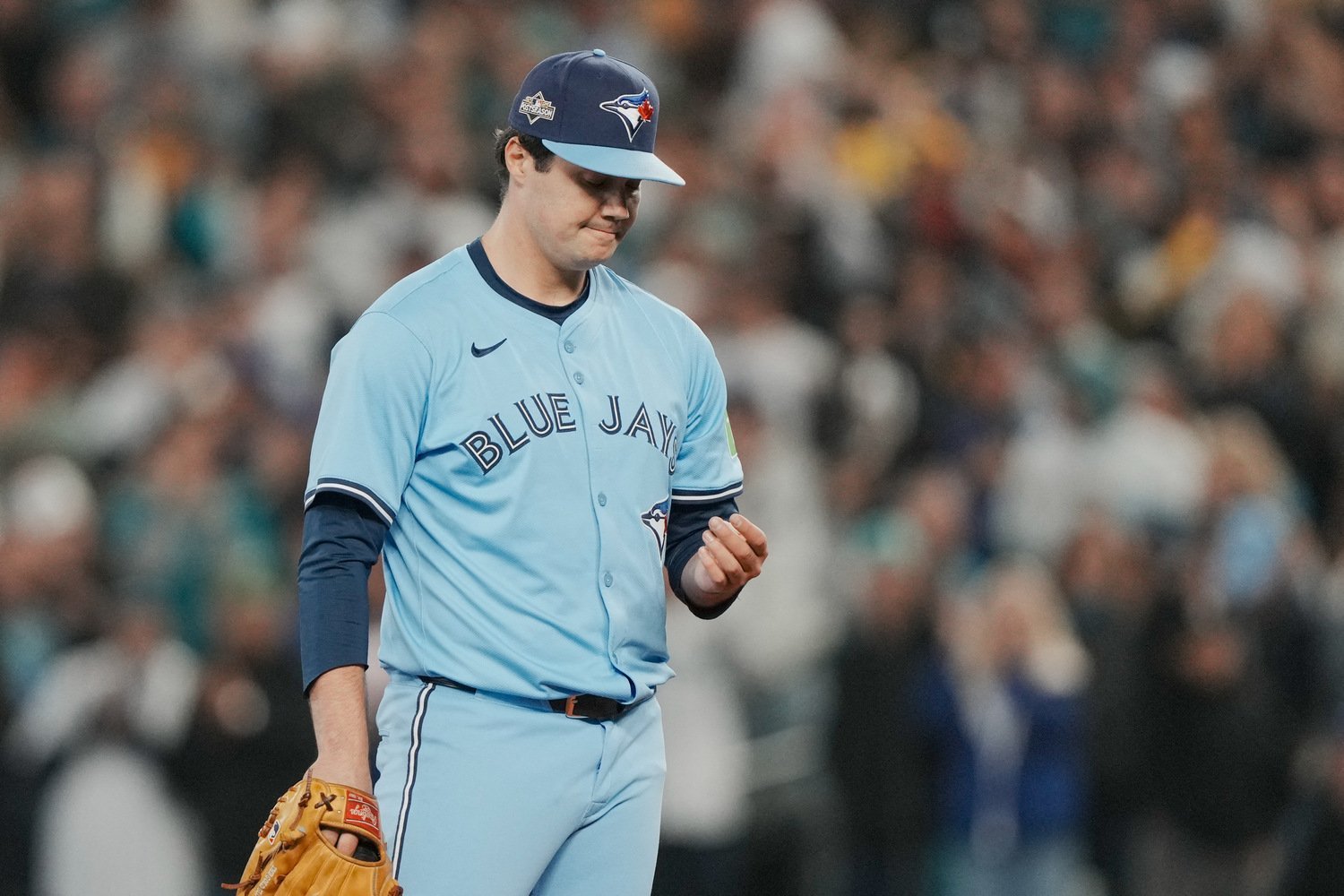 Stats in this article were updated prior to games on April 27. The question being asked by the Blue Jays as April turns to May isn’t whether Brendon Little can find the strike zone, it’s whether the organization realistically has a place for him anymore. Buffalo has done exactly what a Triple-A assignment is supposed to do for a broken reliever: It slowed the world down and stripped away the daily urgency of the major league bullpen carousel. Through eight games and 8.0 innings with the Bisons, Little has been statistically perfect where it counts most, posting a 4-0 record and a 0.00 ERA with 13 strikeouts. On paper, it is the "come and get me" performance fans expected. But the front office isn't just looking at the zeroes on the scoreboard. They’re looking at why those numbers didn't materialize with the big league squad. Little isn't a prospect anymore. At 29, the book on him is a manual on how to hit him. The Blue Jays did not option him lightly on April 5. They did it because the same problems that began in 2025 recreated themselves almost immediately in 2026. In his brief major league stint this year, the sinker didn't sink. It leaked back toward the middle of the plate. Statcast data from the Chicago series wasn’t great. His hard-hit rate was north of 50 percent, and his expected ERA over 7.00. When batters don’t bite on the knuckle curve, Little is forced to challenge with a fastball that, currently, is a magnet for barrels. Thirteen strikeouts in eight innings is dominant, sure, but the 1.25 WHIP in Buffalo tells a different story. He is still playing with fire. In Triple A, you can get away with a curveball that starts in the zone and tumbles out. Minor league hitters tend to flail. At the major league level, batters simply won’t offer at it. To understand why the Jays aren't rushing to call Little back, you just have to check fellow southpaw Joe Mantiply’s stat line so far. While Little dominates Triple-A hitters, Mantiply is providing the predictability the Jays need and crave. In 9 games at the MLB level this season, Mantiply has posted a 3.38 ERA over 10.2 innings with 15 strikeouts and a 1.22 WHIP. Mantiply’s two most recent outings, 1.2 scoreless innings against Cleveland on April 24 and another scoreless frame against Boston on April 27, are exactly the kind of stabilizing performances Little failed to provide during his difficult first week in Toronto, in which he allowed 10 earned runs in 3.2 innings. The path back for Little will get even narrower as more pitchers return from the injured list. Trey Yesavage’s return on Tuesday was initially set to push Eric Lauer back to the bullpen, until the Jays placed Max Scherzer on the IL. Lauer's rotation spot seems safe for now, but likely not forever. Lauer has been struggling a bit as a starter this season, posting a 6.75 ERA and 1.54 WHIP over five games. However, the club is banking on his 2025 success. He excelled as a reliever last season, particularly in September. His ERA over that final month was 3.00. If Lauer can be Toronto's left-handed innings eater in the 'pen, the structural need for Little will vanish. The roster math is even colder. Little has one minor league option year left. With the bullpen getting healthy and teams starting to contemplate the trade deadline, the Jays need predictability. His remaining years of team control make him an asset (he's eligible for arbitration through 2030), but it also makes him the path of least resistance when a roster spot is needed for a fresh arm. For Little to force his way back, he needs to do more than post zeroes against Triple-A hitters. He needs to prove he can finish righties without relying on a sinker they have already timed. Until the quality of contact metrics catch up to the strikeout totals, he remains a depth piece, valuable for an injury crisis, but no longer a pillar of the late-inning plan. He doesn't just need to be successful in Buffalo, he needs to be different. The internal debate regarding Little is not merely about a singular performance or a single missed location, but the makeup of the Jays’ bullpen. For a team that struggled with consistency in the early weeks of 2026, the arrival of stability is a welcome shift. Little’s performance in Buffalo is a testament to his resilience and stuff, yet it simultaneously highlights the ceiling he faces within the team's current roster setup. The team has clearly prioritized the reliability of Mantiply. His game is less about eye-popping strikeout numbers and more about pitch efficiency and tactical command. The Jays also have Mason Fluharty if they’re looking for someone to strike out the side every time they take the mound. Little is no longer a work in progress. At this stage, he is expected to be a finished product. Every pitch thrown, whether in the International League or the American League, is a data point in the ongoing assessment of his viability as a big league contributor. The Blue Jays' front office must be evaluating whether they can trust him to execute his game plan, or if they are simply hoping that he might defy the evidence of his own recent track record. There are just as many examples of pitchers who have lost their “stuff” to never find it as there are pitchers who found it again. Ultimately, the decision to keep Little in Triple A is not about his potential, but a reflection of the team’s current reality. His path back is not paved with pure statistical dominance against competition that is less equipped to punish his mistakes. Instead, it is a path that requires him to demonstrate an understanding of why his previous attempts failed and to make the necessary adjustments to prevent those same patterns from recurring. Until such time that the "eye test" matches the "stat sheet" in a way that suggests a return to his former confident self, he will continue to serve as the organization's high-ceiling depth piece. It is simply the business of baseball, where teams are constantly asking, what have you done for me lately? As May approaches, the spotlight on Little will intensify within the organization. His results and performance will need to speak for themselves. He needs to find the necessary adjustments to get back to the pitcher he was. Otherwise, his future might not be in a Jays uniform. View the full article
 -
 Syracuse pounded out 11 hits in a 10-4 rout of Lehigh Valley, with Cristian Pache and A.J. Ewing each going 3-for-4 and Christian Arroyo crushing a three-run homer in the first. Carlos Guzman earned the win with two and two-thirds scoreless innings. Binghamton was held hitless in a 6-0 shutout at New Hampshire. Brooklyn fell 6-2 at home to Frederick, with Antonio Jimenez stealing a base and Gregori Louis fanning one in a scoreless ninth. Mets Transactions New York Mets sent RHP Joey Gerber on a rehab assignment to Syracuse Mets. New York Mets placed RHP Kodai Senga on the 15-day injured list retroactive to April 27, 2026. Lumbar spine inflammation. New York Mets recalled RHP Christian Scott from Syracuse Mets. Arroyo's First-Inning Blast Powers Syracuse Past Lehigh Valley Syracuse jumped on Lehigh Valley early and never looked back, rolling to a 10-4 win behind an attack that produced 11 hits and three home runs. The Mets set the tone in the bottom of the first, when A.J. Ewing tripled to lead off, Nick Morabito reached on a hit-by-pitch, and Christian Arroyo drove a three-run homer to center field that staked Syracuse to a 3-0 lead. The IronPigs answered with a pair in the second and chipped away in the third and fourth, but Syracuse responded with single tallies in the fourth, fifth, and sixth innings to keep the lead. Starter Carlos Guzman set the tone on the mound, working two and two-thirds innings in which he allowed one hit, no runs, and one walk while striking out two to earn the win. Brandon Waddell took the longest turn but was tagged for three earned runs on five hits over three and one-third innings, surrendering a solo home run, walking one, and striking out three. Anderson Severino and Daniel Duarte finished the job with a clean inning apiece, fanning two between them. Cristian Pache stamped the night with a 3-for-4, three-run, one-RBI line that included a solo home run, while Ewing finished 3-for-4 with a double, a triple, two RBI, two runs scored, and a walk. Ryan Clifford added a solo homer and two RBI. Syracuse blew it open in the eighth on a two-run double by Ewing that scored Pache and Ben Rortvedt. Syracuse Hitting Player AB R H RBI BB K A.J. Ewing 4 2 3 2 1 0 Nick Morabito 2 1 0 0 2 0 Ryan Clifford 5 1 1 2 0 2 Christian Arroyo 4 1 2 3 0 1 Ji Hwan Bae 4 0 0 0 0 1 Vidal Bruján 4 0 1 0 0 0 Cristian Pache 4 3 3 1 0 0 Ben Rortvedt 3 1 1 0 1 0 Yonny Hernández 2 1 0 1 0 1 Syracuse Pitching Player IP H R ER BB K HR Carlos Guzman (W) 2 2/3 1 0 0 1 2 0 Joey Gerber 1 2 0 0 0 2 0 Brandon Waddell 3 1/3 5 4 3 1 3 1 Anderson Severino 1 0 0 0 0 2 0 Daniel Duarte 1 1 0 0 0 0 0 Binghamton Held Hitless In Loss At New Hampshire Binghamton's bats were silenced in a 6-0 no-hitter at New Hampshire, with the Rumble Ponies failing to record a single hit while drawing six walks and stranding 10 runners. The Fisher Cats broke a scoreless game open in the bottom of the fourth, when starter Zach Thornton surrendered five hits and a walk that produced four runs, including a two-run double that put the home club ahead for good. Binghamton's best chance to that point had come in the top of the fourth, when Eli Serrano III, Jacob Reimer, and Chris Suero drew consecutive walks to load the bases with one out, only for Jose Ramos to fly out and Kevin Parada to strike out swinging. Thornton was tagged with the loss after four and two-thirds innings, allowing seven hits, five earned runs, three walks, and one home run while striking out four. He surrendered a solo shot in the bottom of the fifth before being lifted. Gabriel Rodriguez followed with a clean one and one-third innings, walking one and striking out two. Kevin Gowdy was charged with an unearned run in the seventh on a fielding error of his own, and Ben Simon worked a clean eighth with a strikeout. Binghamton Hitting Player AB R H RBI BB K Eli Serrano III 4 0 0 0 1 1 Jacob Reimer 2 0 0 0 2 0 Chris Suero 2 0 0 0 2 2 Jose Ramos 3 0 0 0 1 0 Kevin Parada 3 0 0 0 1 2 JT Schwartz 3 0 0 0 1 2 Nick Lorusso 3 0 0 0 1 1 Matt Rudick 4 0 0 0 0 1 Wyatt Young 3 0 0 0 1 0 Binghamton Pitching Player IP H R ER BB K HR Zach Thornton (L) 4 2/3 7 5 5 3 4 1 Gabriel Rodriguez 1 1/3 0 0 0 1 2 0 Kevin Gowdy 1 1 1 0 0 2 0 Ben Simon 1 0 0 0 0 1 0 Brooklyn Falters In Fifth As Frederick Pulls Away Brooklyn jumped ahead in the bottom of the first when Mitch Voit was hit by a pitch, advanced on a Corey Collins single to right, and scored on a Ronald Hernandez sacrifice fly. Frederick answered with a run in the third before breaking the game open in the fifth, when starter Noah Hall surrendered an RBI single, walked a batter, and was lifted with runners on first and second. Reliever Garrett Stratton entered and immediately gave up a three-run home run, ballooning the deficit to 5-1 and effectively ending the Cyclones' chances. Hall finished his outing with four and two-thirds innings, seven hits, four earned runs, two walks, and four strikeouts. Stratton went one and one-third innings, walking one, fanning three, and surrendering the lone homer charged to him. Nate Lavender allowed a run on two hits while striking out three in his inning, Parker Carlson tossed a clean frame, and Gregori Louis closed it out with a scoreless ninth that included a strikeout. Brooklyn's only response after the first came in the bottom of the eighth, when Antonio Jimenez led off with a single, swiped second base on a strikeout, and scored on a Daiverson Gutierrez single up the middle. Jimenez paced the offense at 1-for-4 with a stolen base, while Collins, Gutierrez, and Colin Houck added the team's other base hits in a four-hit, 6-2 loss. Houck's double in the seventh was the only Cyclones extra-base knock of the night. Brooklyn Hitting Player AB R H RBI BB K Antonio Jimenez 4 1 1 0 0 0 Mitch Voit 3 1 0 0 0 2 Corey Collins 4 0 1 0 0 2 Daiverson Gutierrez 3 0 1 1 0 0 Ronald Hernandez 3 0 0 1 0 1 John Bay 3 0 0 0 1 2 Colin Houck 3 0 1 0 1 1 Sam Biller 4 0 0 0 0 2 Vincent Perozo 4 0 0 0 0 0 Brooklyn Pitching Player IP H R ER BB K HR Noah Hall (L) 4 2/3 7 4 4 2 4 0 Garrett Stratton 1 1/3 1 1 1 1 3 1 Nate Lavender 1 2 1 1 0 3 0 Parker Carlson 1 1 0 0 0 0 0 Gregori Louis 1 2 0 0 0 1 0 Top-20 Prospect Performance Nolan McLean: DNP Carson Benge: DNP A.J. Ewing: 3-for-4, 2B, 3B, 2 RBI, BB Jonah Tong: DNP Ryan Clifford: 1-for-5, HR, 2 RBI, 2 K Jacob Reimer: 0-for-2, 2 BB Jack Wenninger: DNP Elian Pena: DNP Mitch Voit: 0-for-3, 2 K Nick Morabito: 0-for-2, 2 BB, SB Jonathan Santucci: DNP Chris Suero: 0-for-2, 2 BB, 2 K Zach Thornton: 4 2/3 IP, 7 H, 5 ER, 3 BB, 4 K, HR Wandy Asigen: DNP Will Watson: DNP Eli Serrano III: 0-for-4, BB, K Ryan Lambert: DNP Dylan Ross: DNP Antonio Jimenez: 1-for-4, SB R.J. Gordon: DNP View the full article
 -
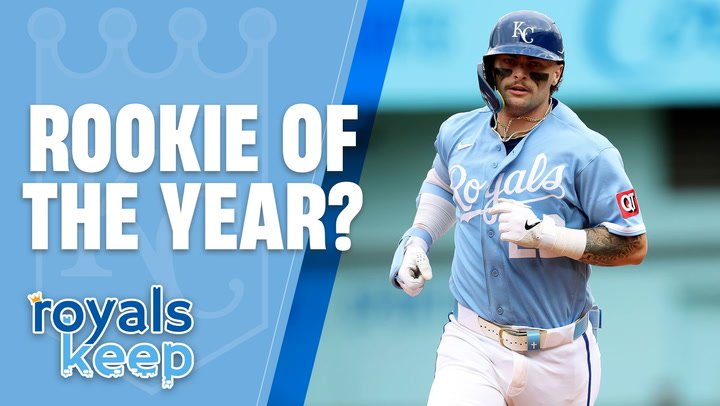 Kansas City Royals rookie Carter Jensen is among a myriad of talented rookies vying for the AL Rookie of the Year award. What has contributed to Jensen's strong start to the season? In this video, we take a peek at his exit velocity, barrel percentage, and how he is hitting against each pitch selection. View the full article
 -
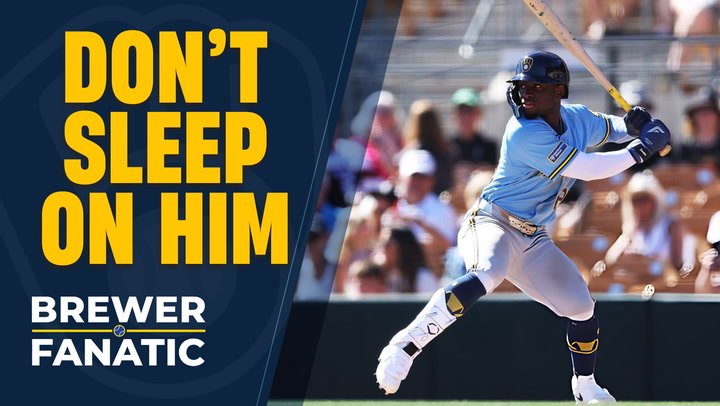 Luis Lara is the Brewers' 11th-ranked prospect per our rankings. In this video, we will go over his speed, promising power spike, and what he needs to do to take the next step in his professional baseball career. Enjoy! View the full article
 -
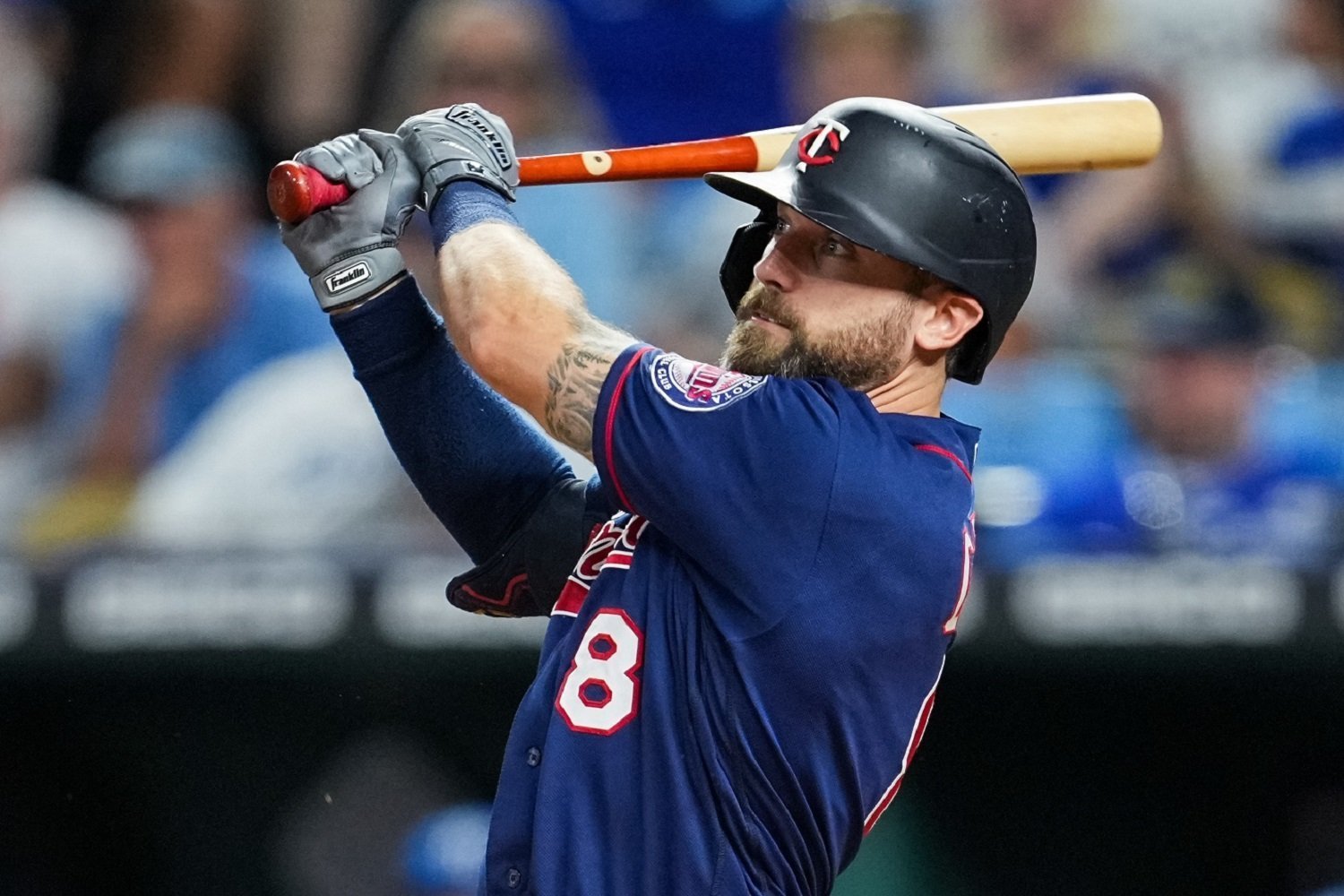 Trades involving teenage pitching prospects rarely feel significant in the moment. They exist more as footnotes than headlines, small transactions made to solve immediate roster problems. But every so often, one of those deals circles back years later and demands a second look. That is exactly what happened when the Minnesota Twins acquired Jake Cave from the New York Yankees in March 2018, for a 19-year-old pitcher named Luis Gil. At the time, it felt like a classic roster crunch move. New York had more big league-capable players than available spots on its 40-man roster, while Minnesota was searching for outfield depth. The cost was a teenage arm in the minors' lowest levels, a profile that represents one of the biggest wild cards any organization can trade. These players are years away from the majors, often volatile in both performance and health, and just as likely to disappear as they are to develop. For the Twins, that risk was worth taking. Cave: A Useful Role Player in Minnesota Cave quickly justified Minnesota’s interest by carving out a role as a capable fourth outfielder. Across parts of five seasons, he accumulated over 1,000 plate appearances and posted a .235 average with a .297 on-base percentage and a .411 slugging percentage, good for a 93 OPS+. Early in his Twins tenure, Cave looked like more than just depth. From 2018 through 2019, he produced a 112 OPS+ while showing legitimate pop, with double-digit home runs and doubles. He became a frequent fill-in when injuries sidelined Byron Buxton, offering a left-handed bat that could take advantage of right-handed pitching. That platoon advantage defined much of his value. Cave’s OPS was significantly higher against righties, which made him a natural fit in a complementary role. Defensively, he moved around all three outfield spots. While center field often pushed his range to its limits, he provided steady play in the corners. There were stretches where the production dipped, especially from 2020 through 2022, when his offensive numbers declined, and he shuttled between Triple-A and the majors. Still, the Twins received what they initially sought. Cave delivered multiple seasons of usable depth and finished his time in Minnesota with 2.1 rWAR. For a team seeking stability at the margins, the Twins’ evaluation of Cave proved accurate. He helped them win the AL Central in 2019 and 2020. Gil: The High Variance Path While Cave provided immediate value, Gil represented the long game for New York. At the time of the trade, he was a teenage arm in rookie ball who had already dealt with injuries. His profile fit the definition of volatility. Big arm, limited experience, and years away from contributing. That volatility showed up throughout his development. Gil’s career has been shaped as much by injuries as by flashes of top-end talent. He underwent Tommy John surgery in 2022, delaying his progress and forcing the Yankees to remain patient. When he returned, the upside was still there, and in 2024, it all came together. Gil emerged as one of the Yankees’ best starters that season, posting a 3.50 ERA with 171 strikeouts across 151 2/3 innings. He accumulated 2.9 rWAR and captured the American League Rookie of the Year Award, seemingly turning the trade into a clear win for New York. But the story did not end there. Injuries again interrupted his momentum, as a right lat strain limited him for much of 2025. Since then, his performance has been less consistent. A declining strikeout rate and persistent control issues have raised questions about sustainability. Even at his peak, walks have been a major concern, highlighted by an MLB-leading 77 free passes in 2024. Through 261 1/3 career innings, Gil has issued 142 walks. That lack of command has prevented him from fully stabilizing as a frontline starter. After a rough start to 2026, the Yankees demoted him to Triple-A. There is still time for him to adjust. At 27, the raw ability remains, and his past success shows what he can be when everything clicks. But the combination of injuries, declining strikeouts, and control problems suggests that his 2024 breakout may represent his peak rather than a new baseline. A Trade That Refuses to Settle Looking back, this trade resists a simple winner-or-loser label. The Twins acquired exactly what they needed at the time. Cave provided multiple seasons of competent outfield depth and helped bridge gaps during injury absences. For a team trying to stay competitive, that kind of reliability has value. The Yankees, meanwhile, captured the upside play. Gil reached heights that Cave never approached, including an award-winning season that briefly made the deal look lopsided. Yet, his inconsistency and health concerns have complicated that narrative. This is the reality of trading teenage pitching. The outcomes stretch across years, often shifting with each season. What once looked like a decisive victory can soften over time, just as a seemingly minor move can quietly deliver steady returns. In the end, the Cave for Gil trade stands as a reminder that player development is rarely linear and that even the smallest deals can leave a lasting imprint on both organizations. Who won the trade between the Twins and Yankees? Leave a comment and start the discussion. View the full article
 -
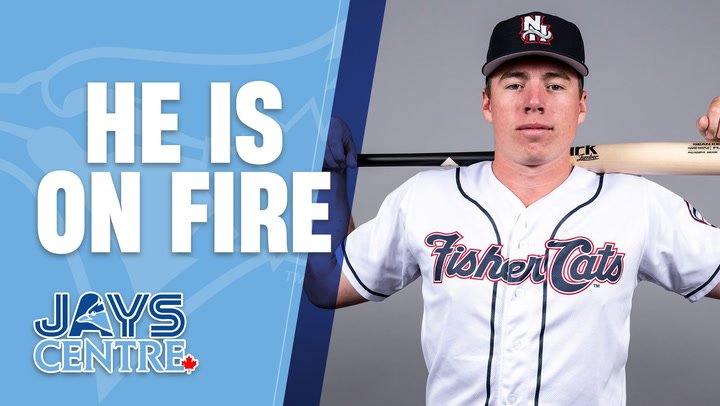 Sean Keys is the Toronto Blue Jays' no. 17 prospect, per our rankings. After breaking the High-A Vancouver Canadians' home run record with 19, Keys is outdoing himself. The 2024 fourth-round draft pick currently has 9 home runs in just 17 games, the highest tally of any Double-A prospect through the first three weeks of the season. View the full article
 -
Kaelen Culpepper, Emmanuel Rodriguez Both Have Multi-Homer Games
DiamondCentric posted an article in Twins Daily
 Twins System Recap: Both Kaelen Culpepper and Emmanuel Rodriguez slugged a pair of homers today for the Saints. Rodriguez has quite the feather in his cap now, hitting the hardest tracked ball in the minor leagues this season. Also tonight, Danny De Andrade hit a walk-off homer for the Kernels after Dasan Hill turned in an impressive start for Cedar Rapids. View the full article
 -
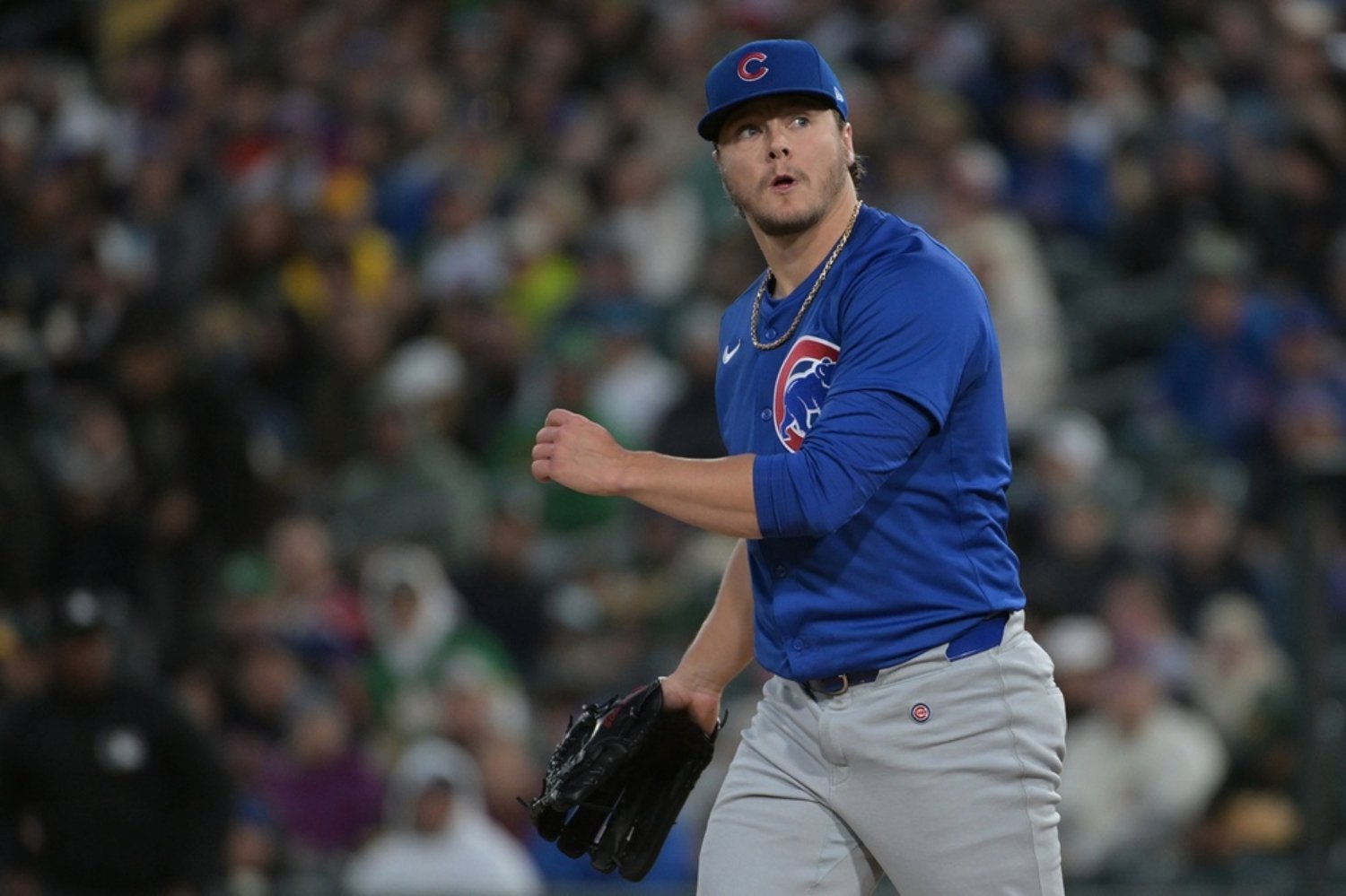 Craig Counsell had bad news for fans hoping Justin Steele could return soon and bolster the beleaguered pitching staff on 104.3 The Score. Brutal news all around. Steele, eligible to come off the 60-day injured list at the end of May, has a flexor strain in his left arm. He will be shut down for at least two weeks while the Cubs and his medical team determine the injury severity and next steps. Realistically, this takes Steele out of the rotation mix for most of this season, and at least the majority of the first half. Even a best-case scenario at this point would mean he starts a lengthy rehab assignment toward the end of June, which could maybe position him for a post-All-Star-Break season debut. View the full article
 -
Jackson Merrill Needs A Better Approach Against Fastballs
DiamondCentric posted an article in Padres Mission
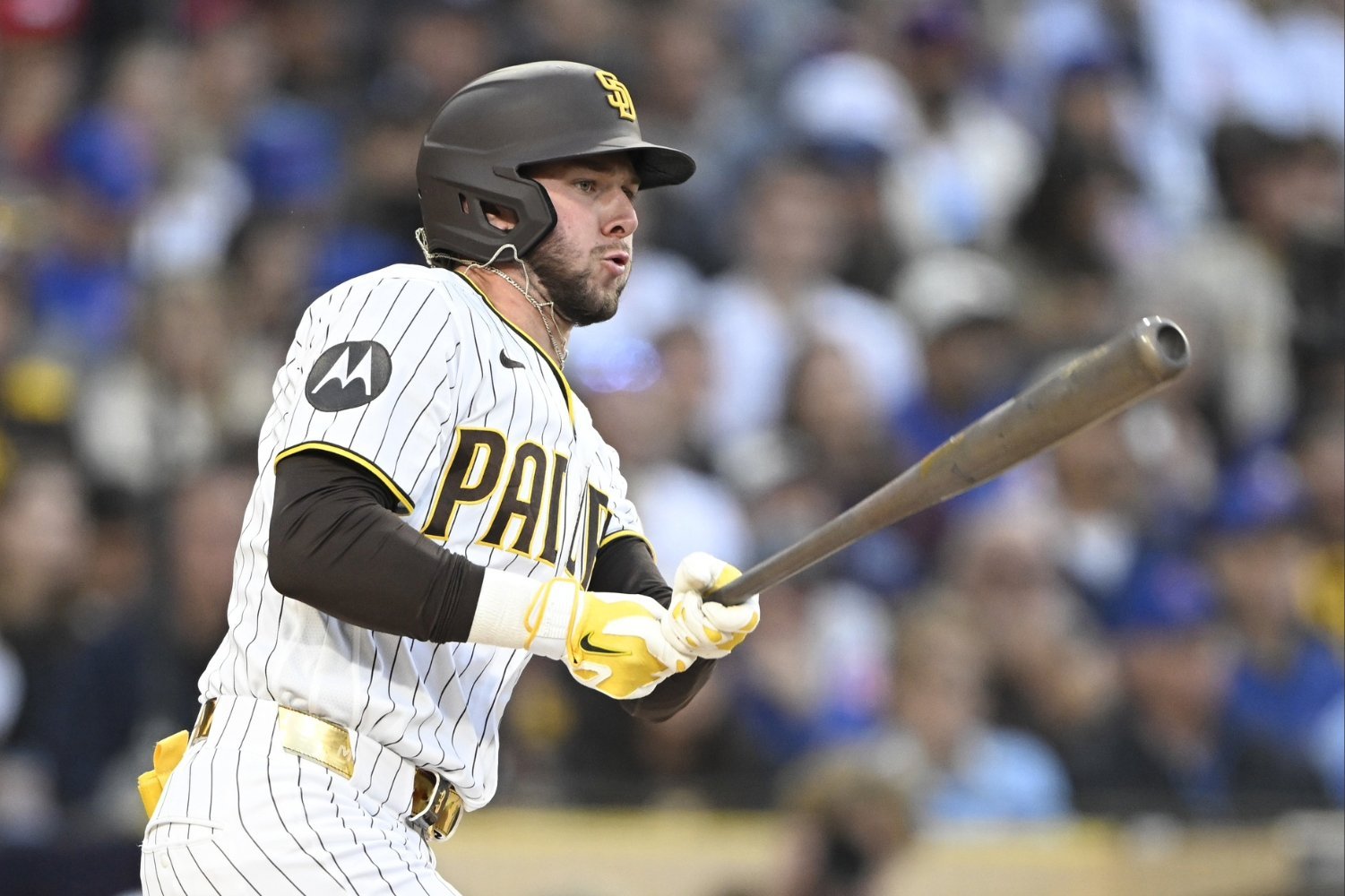 The San Diego Padres have gotten off to a hot start, owning a 19-9 record and sitting second in the National League standings. While the narrative surrounding their offseason focused on them losing key arms with Dylan Cease and Robert Suárez both leaving the team in free agency, their pitchers have actually been the catalyst for their early season success. As a unit, San Diego’s pitchers have produced the second-best 3.56 FIP in the league, anchored by closer Mason Miller, who has only allowed two runs in 14.1 innings. While the pitching staff has delivered, the Padres are still waiting for their offense to catch up. Despite their strong record, they rank below league average in both batting average (.240) and OPS (.693), due in large part to slow starts from key contributors. Fernando Tatis Jr., Manny Machado and Jackson Merrill hold three of the four largest contracts in the lineup, yet Tatis has been the most productive of the group with only a .257 batting average and no home runs. While Machado has struggled, batting .232, Merrill has experienced the steepest drop-off, posting the fourth-lowest wRC+ on the team at 79 and showing significant regression in this third season. Merrill has consistently hit in the heart of the Padres lineup, batting third or fourth, yet has produced a -4 batting run value while slashing .213/.280/.352 with a .632 OPS. However, despite the slow start, his underlying metrics suggest his raw ability remains intact. Merrill still produces a 11.3% barrel rate and 45.0% hard-hit rate that both rank well above average. The power hasn't disappeared; the difference lies in his approach. Merrill has always been aggressive at the plate. Last season, he led the team with a 45% first-pitch swing rate and that has carried over to this year at 47.4%. A slight increase, but it is notable when looking at the balls he's swinging at. While his in-zone swing rate has increased to 82.9%, the highest on the team, his chase rate also sits at 37.9%, the second-highest on the roster. While this aggression isn’t anything new, his lack of contact is. This season, Merrill ranks near the bottom of the team with a 78.3% in-zone contact rate and owns a 28.5% whiff rate, placing him in the bottom-third of all qualified MLB hitters. The significance of the drop-off becomes even clearer in the context of the pitches he's seeing. Four-seam fastballs account for 36.1% of the pitches he faces, and they'e starting to eat him up. After posting a +7 run value against four-seamers last season, he has dropped to a -3 mark, a sharp decline that points to timing issues and may explain why his aggressive approach has been so inefficient. However, Merrill isn’t completely broken. While he has struggled against four-seamers, he has fixed a big gray area in his game and that is his production against sinkers. After posting a -3 run value against sinkers last season, he has turned it into one of his strengths, improving to a +2 mark. Perhaps, then, even more than a velocity issue, this comes down to where he's being attacked. Four-seamers have more perceived rise, hence why they're so effective up the in zone; sinkers, meanwhile, are often used to target hitters low. That's a lot of high fastballs. Even with a faster swing speed this year, it'll be hard for Merrill to do damage on those pitches if his timing is off. I'll repeat: Merrill isn’t broken. In many ways, he isn’t far off from the hitter he’s been in recent seasons. The power remains, and the underlying metrics suggest a correction is possible. But a change in his approach will be needed, lest he continue to get eaten alive by fastballs. View the full article
 -
 Justin Steele suffers a setback. The Chicago Cubs' offense has been taking off, and two players, Pete Crow-Armstrong and Michael Busch, are starting to heat up after slow starts! Let's talk about it all! Listen on Apple Podcasts: https://podcasts.apple.com/us/podcast/the-north-side-baseball-podcast/id1798599313 Listen on Spotify: https://open.spotify.com/show/75wMGhBwlrDDYPt3kaF453 Listen on iHeartRadio: https://www.iheart.com/podcast/263-the-north-side-baseball-po-268998437/ Listen on Pocket Casts: https://pca.st/eey7h6ih Watch on YouTube: https://www.youtube.com/@northsidebaseball View the full article
 -
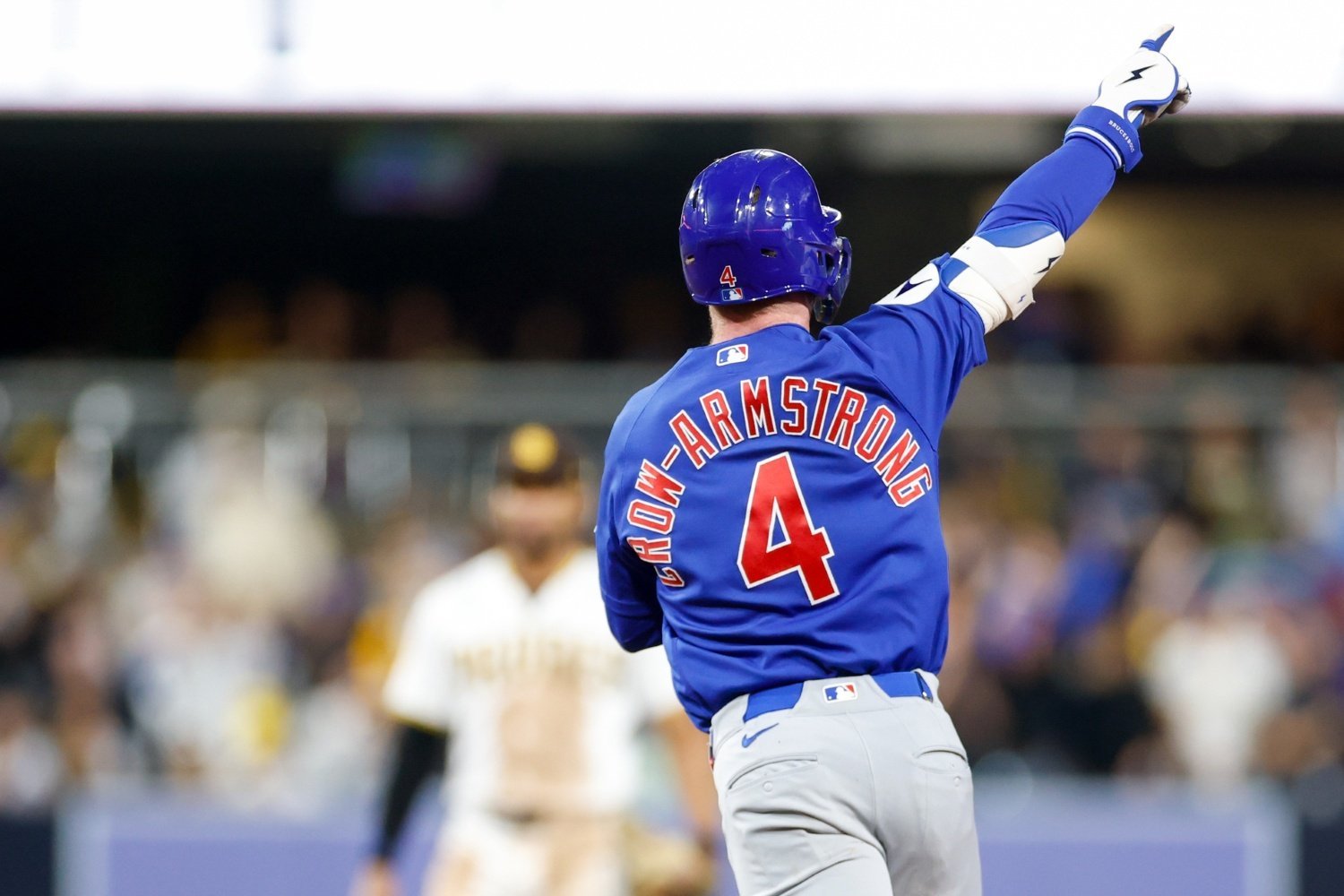 Pete Crow-Armstrong had, arguably, the two biggest at-bats of the night in the Cubs' 8-3 win over the Padres Tuesday. The impact of one was obvious: he slammed a three-run homer that broke open the game in the top of the seventh inning. The other was a subtler achievement, but a vital one in itself—for the team, in that moment; for Crow-Armstrong, individually; and for the team, again, because of just how important Crow-Armstrong is to them. Let's start at the end, for once. In the seventh inning, the Cubs were clinging to a 4-3 lead. 'Clinging' is the cliche word for such a game state, but for the current Cubs, it's no exaggeration. A one-run lead, for this team at this time, is no lead at all—especially in San Diego, where the hosts have made a habit of revealing the Cubs' frailties each time they visit over the past few years. However, with runners on the corners and two outs, Craig Counsell pinch-hit Alex Bregman (who'd had the night off, to that point) and got the payoff he needed: an opposite-field single to double the team's cushion. That also gave Crow-Armstrong a chance to do bigger damage. Wandy Peralta started Crow-Armstrong with a slider below the zone. Crow-Armstrong took it for ball one. That, alone, was noteworthy. Crow-Armstrong is, famously, the league's most swing-happy star, and sometimes its most swing-happy player of any quality. For his career, he's offered at the first pitch over half the time (51.6%); the league averages about 30%. This year, though—to his credit, though not (yet) to his consistent actual benefit—he's swinging a little bit less. On the first pitch, it's down to 48.6%. Overall, it's down from 60% to 58%, which doesn't sound like much. It's not much, in a vacuum. For Crow-Armstrong, though, maybe it could be enough. At any rate, he's making an adjustment, which is important and valuable. The strike zone is smaller. Most players are swinging less. Certainly, the guy who swings more than anyone should be following that particular trend. He is. Anyway (and it might seem like this nullifies some of the above; I think it just reminds us to place it in context), Peralta came back with a changeup below the zone, and this time, Crow-Armstrong obliged him with a chase. That drew the count level at 1-1, and it gave Peralta and Padres catcher Luis Campusano the confidence to try the left-on-left changeup again. Big mistake. The pitch wasn't nearly as well-executed as its older sibling, and Crow-Armstrong punished it. Fool a hitter once, and you can reasonably hope to fool them again with the same trick, the data says. They don't tell you that if you throw a meatball the second time, the success rate of running it back goes through the floor, while the ball tends to go over the wall. That home run was crucial for the Cubs. It took much of the pressure and worry out of the final nine outs of the game. Hoby Milner had come on in the bottom of the sixth (more on that later); he pitched a smooth seventh. Lefty Ryan Rolison closed out the Padres with two strong, scoreless innings. That's the formula for this team to win games right now: blow teams out, so whoever's available in relief that night can pitch with as little pressure as possible. When Cade Horton was lost for the season to elbow surgery in early April, Cubs fans had little with which to console themselves. Horton was one of the joys of last season's run back to the playoffs, but his fragility was always at issue. The team handled him very carefully in the second half, but he still broke and missed the tail end of the regular season, plus the team's brief appearance in the playoffs. Injuries have never been far from the center of the discussion around Horton, and in the wake of this latest major one, his career prospects are somewhat muddied. It's bad, bad news. One of the ways the team hoped to weather the loss of Horton, though, was the impending return of fellow two-time elbow surgery survivor Justin Steele. For a long period from mid-January through the time of Horton's injury, Steele appeared to be ahead of schedule and sailing toward a return to the rotation around Memorial Day. If he could be back around then, the team might just be able to swat away the injury bugs, despite all the bites they were inflicting. Several relievers hit the injured list throughout the first half of the month, making everything harder, but Steele's return would ease some of that trouble, too. Getting him back could push Colin Rea back into a relief role, lightening the burden on the rest of the pen. On Tuesday, the Cubs announced that they've shut down Steele's throwing program, just when a rehab assignment should have been coming into view on the horizon. This isn't some galloping surprise; setbacks are normal for pitchers trying to return from a second elbow reconstruction. Then again, failing to return at all is also normal for pitchers in that situation. It's impossible to know, now, when the team might get Steele back, but it would be foolish to assume he'll pitch for the major-league team any time before the Fourth of July. Meanwhile, the hits keep coming in the bullpen. The team was just beginning to feel they'd found something nice in homegrown lefty Riley Martin, when he had to return to Chicago in the early part of this road trip and was shelved by elbow inflammation. For a long while, this team will have to survive with a patchwork pen, because they won't be back to full strength for some time—if ever. Daniel Palencia's return is on the horizon, and Phil Maton is already back, but Hunter Harvey and Caleb Thielbar are not as close. Nor will it feel safe to say Palencia has dodged a bigger problem until he actually returns and strings together some healthy outings; lat injuries can be very tricky. Thus, the team needs the likes of Corbin Martin (who earned a save Friday against the Dodgers) and Rolison (who got the win in that same game over the weekend and now has six scoreless innings across three appearances) to keep delivering solid outings. We talked about the good reasons for optimism about Martin when he signed a minor-league deal late in the offseason, and about how good Rolison looked early in spring training, but still, these are little-known journeymen. As Maton gets his legs back under him (literally) and Palencia once again shoulders the load (literally) in the ninth inning, the roles of these spare pieces will become less vital, but right now, this is how Counsell has to live. That makes every insurance run count double, for the foreseeable future. It also made the sixth inning Tuesday night an exhilarating, painful sequence. The Cubs took the lead in the top half of the frame, 4-2 (more on that, again, later), and Edward Cabrera got the first two Padres batters of the bottom half with no trouble at all. It looked like Cabrera, who had only thrown 85 pitches and was past the dangerous top four in the San Diego lineup for the third time already, should be able to get them through the sixth, and maybe even start the seventh. Then, Ty France happened. France is not a great overall hitter or a good defender anywhere but first base, but he's beloved by every team he joins. Part of that is his personality, which is jocular and energetic and good for the dugout vibes. Another part, though, is the fact that he's a great clutch hitter. With two outs, the Padres needed a baserunner and a tone change, and France delivered. On a 2-2 count, he fouled off a sinker that was running way in on him. France is an expert at getting hit by pitches, and he probably should have withheld his swing and let that pitch do so, but he'd already committed—and besides, the thing came in at 98 MPH. Cabrera had been trying to end the inning with an exclamation point. Feeling (perhaps rightly) that they now had France set up for a breaking ball away, Cabrera and Carson Kelly chose to go with the big righty's slider on the second 2-2 offering. That pitch takes on some extra importance for Cabrera this season, especially against righties; more on that another time. But he missed with this one, leaving it in the middle of the zone. France scalded a single to left field, extending the inning—and the frustration of that at-bat got into Cabrera's head. He threw three straight non-competitive pitches to Gavin Sheets, the third of which hit him. He got Campusano into a 2-2 count, too, but left a changeup up and in. The Padres catcher expertly scooped a liner into left field to score France, and the inning had officially gotten away from the Cubs. It looked like the game would surely follow. Cabrera, furious with himself, went down the tunnel behind the dugout and slammed his glove after Counsel removed him from the game. Milner came on to clean up the mess, but the Cubs were into their bullpen before they'd wanted to be—and you can see, now, why that's going to be a bigger problem for this team than for most good ones, over the next few months. Now, let's complete our journey backward in time, because I still have one more promise to fulfill. We said we would talk about two Crow-Armstrong at-bats, and all of the above informs the importance of this second (well, first, in that it came before the one we talked about first; third, in that it came after two other at-bats in the game; are you having fun with this game of non-sequential storytelling?) one. If the Cubs are going to win during this stretch in which their pitching is thin, they'll have to get more from Crow-Armstrong than they got from (give or take) the start of last August through the beginning of last week. Crow-Armstrong's offensive struggles got a lot of media attention early this year—probably too much, given that most of his value will always reside in his incredible defensive work, but you can understand why he came under some scrutiny. The Cubs, after all, bet $115 million on him this spring, and he had a long stretch there in which his OPS was well under .600. Although he's hit near the bottom of the order for some time now and isn't the linchpin of the offense, Crow-Armstrong has to give them some offensive value, too, because they're going to have to win some games 8-6, in addition to the ones they win 8-3. They need to score a lot, to make up for the fact that their injury-depleted staff will inevitably give up runs in bunches at times over the coming weeks and months. That means getting something substantial from every player who has a regular job—even their defensive ace. Crow-Armstrong is actually trending the right way, and again, the concerns might have been exaggerated a bit, all along. He's digging himself out of an early hole a bit later than he did last year, but he did have to do it last year, too. He might not be a hitter who can find his swing and hit his stride on Opening Day; he might be one of those who warms with the weather. At any rate, Crow-Armstrong is already coming out of his early funk, and mere competence from him will do. When he delivers in clutch moments, the team will win, because they're built to need just one or two such unexpected contributions to win on a given day. On Tuesday, the first such contribution he made came not with the decisive homer, but in setting up the scoreboard-flipping rally the inning before. Kelly had led off the frame with a single, but Nicky Lopez (in for Dansby Swanson, who was removed with glute tightness) laid down a dreadful would-be sacrifice bunt, allowing the Padres to easily take down the lead runner, instead. That brought up Crow-Armstrong with a runner on first and one out. Padres starter Walker Buehler had abused him earlier in the game, working him into deep counts and then getting hopeless-looking chases with curveballs in the dirt for a pair of strikeouts. It looked like another bad night in the annals of Crow-Armstrong's spring, especially because he now had to face his kryptonite: any left-handed pitcher. Reliever Kyle Hart might have thought his job would be easy. He might just have failed to execute. Whatever the case, though, he didn't get the same obliging chases from Crow-Armstrong. On five pitches, he got just one swing, on a sweeper. The other four missed the zone, and Crow-Armstrong took his hase. That seems like a small moment, in which the pitcher did most of the work. In truth, though, there have been plenty of times over the last several months when pitchers' plans were clearly to keep throwing junk below the zone and let Crow-Armstrong get himself out. This time, he didn't do it, and that's becoming a bit of a pattern. He's walked and gotten a hit in three straight games, and four out of five on this tough West Coast swing. Since April 7, he's batting .257/.337/.392; that's all the Cubs really need from him. His walk in the sixth forced the Padres to go to their third pitcher of the night, David Morgan. With two outs, Nico Hoerner laced a hustle double to right-center, scoring both Lopez and Crow-Armstrong to give the Cubs the lead, 4-2. It was a huge hit by Hoerner, who has been the team's offensive hero all year, but it was made possible by a good at-bat from Crow-Armstrong. The Cubs are trying to prove they're robust enough to withstand all these pitching injuries. They've done so admirably so far. Tuesday night was a great win for them, not just because they needed to snap a sudden three-game losing skein, but because of the way they won. If this team is going to achieve its goals for the year, it needs Crow-Armstrong to string together good at-bats. Not all of them have to be as electrifying as the homer in the seventh, though. The quieter wins matter, too. View the full article
