


DiamondCentric
-
Posts
2,631 -
Joined
-
Last visited
Never
Content Type
Profiles
Forums
Events
News
Tutorials & Help
Major League Baseball Videos
Guides & Resources
Store
Downloads
Gallery
Everything posted by DiamondCentric
-

Why the Royals Are Aggressively Platooning Their Hitters
DiamondCentric posted an article in Royals Keep
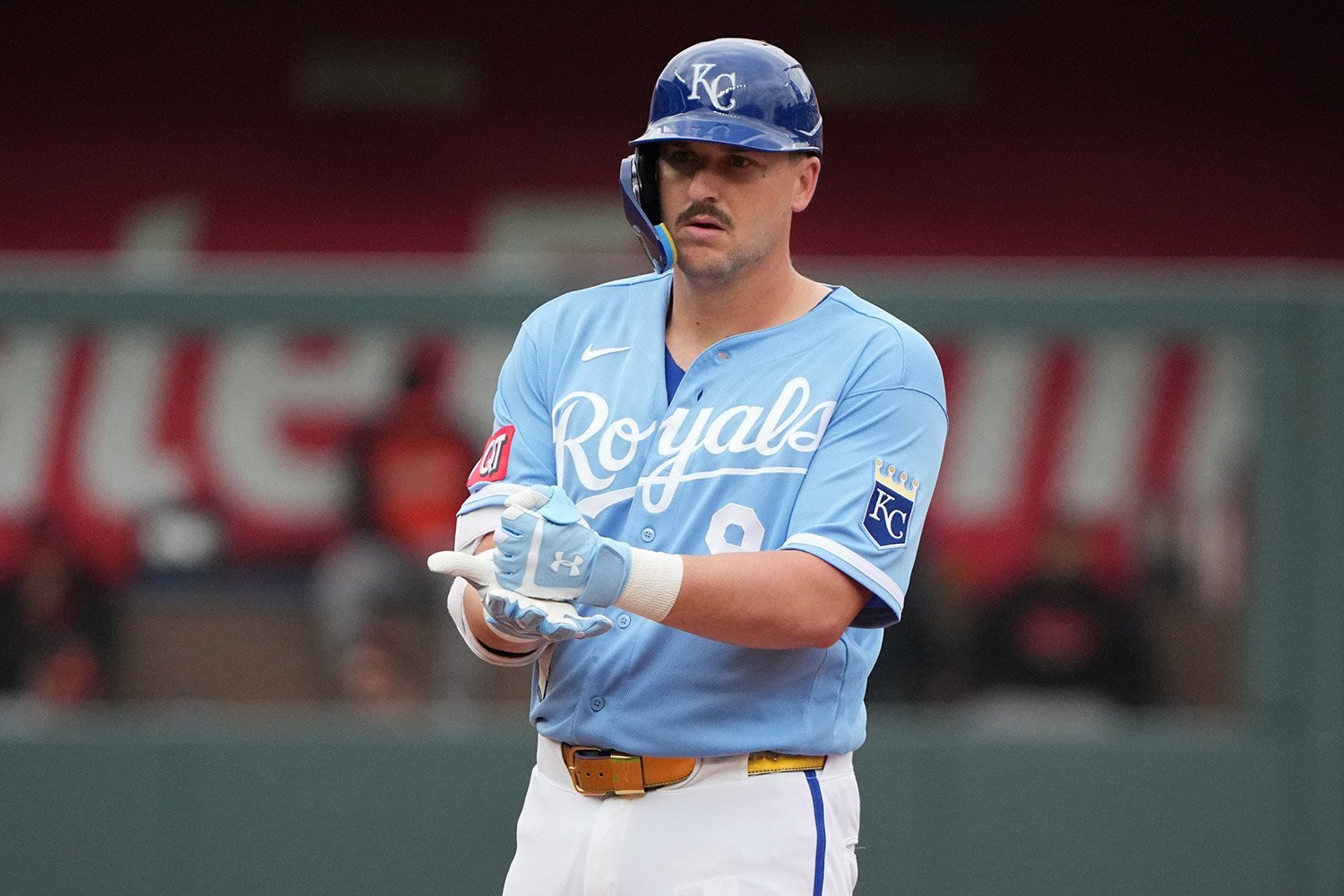 On Friday, Royals manager Matt Quatraro submitted an extreme platoon lineup that included resting regulars Vinnie Pasquantino, Jac Caglianone, and Kyle Isbel against left-hander Yusei Kikuchi. While Pasquantino is off to a slow start this season, Caglianone has been around league average, and Isbel boasts the team’s second-highest wRC+ at 125. However, all three have had significant trouble hitting against left-handed pitching. Given that the Royals held the worst record in the American League entering that game, Quatraro turned to a platoon approach in an effort to spark a turnaround. When examining their splits against lefties, all three players exhibit significant drops in wRC+. Even Carter Jensen and Michael Massey (who probably wouldn’t have started at second base if Maikel Garcia or Jonathan India were fully healthy) both see significant drops in wRC+ when facing lefties. With the exception of Pasquantino, all of these players have performed well against right-handed pitchers. Against lefties, only Jensen is producing near league average, with the median wRC+ for left-handed hitters facing left-handed pitching sitting at 85. Massey stands out in particular, posting an extremely poor -33 wRC+ against lefties despite his success against right-handers. Given this level of production, it makes sense that Quatraro would lean toward a more right-handed lineup. Unfortunately, the Royals as a team have struggled against left-handed pitching regardless of who is batting. Following Saturday’s games, the Royals ranked fifth-worst in baseball against left-handed pitching with a 69 wRC+. If you look at just right-handed hitters, their rank is 17th overall with a 95 wRC+. This lack of run production has impacted the standings, with the Royals winning only two of their eight games against left-handed starters, the Friday and Sunday matchups against the Angels this weekend. Considering the Royals had not defeated a left-handed starter prior to this weekend, Quatraro’s extreme platoon usage is understandable. However, a less aggressive version of the platoon was deployed in Sunday’s lineup against left-hander Reid Detmers with Pasquantino keeping his place at first base. Extreme platoons come with drawbacks. Some players thrive on the consistency of everyday playing time. Pasquantino, for example, appeared in 160 games last season and is not accustomed to frequent rest. Then there’s Caglianone, who is in his first full major-league season, and gaining experience against left-handed pitching will be critical to his long-term development. There is also the question of keeping your best players in the lineup. Pasquantino and Caglianone are foundational pieces of the roster, and ideally, they would be producing across a full 162-game season. Giving them rest definitely signals that struggling players are not fully guaranteed to start every day, even if they represent the foundation of the lineup. In the offseason, the Royals’ front office attempted to address this issue, particularly in the outfield. The Royals specifically targeted an everyday outfielder and someone who could platoon in right field. Isaac Collins, a switch-hitter, was brought in to be the everyday left fielder, and Starling Marte and Lane Thomas were signed to provide right-handed depth behind Isbel and Caglianone. How have those players fared so far against lefties? Of the acquired players, only Thomas is providing above-average run creation against left-handed pitching. Collins, despite being a switch hitter, has had more success in his career batting from the left-handed side of the plate. Marte, meanwhile, has done better against right-handed pitching (though only nine PAs against righties). If Marte’s performance against lefties continues to lag, the Royals might consider starting Caglianone full-time if he continues to outpace his platoon partner in wRC+. Caglianone also showed his potential against left-handed pitching with a game-tying home run against Drew Pomeranz in the ninth inning. On April 19th, the Royals called up veteran catcher Elías to help bolster the production against lefties. This move allows Salvador Perez to shift to first base and adds another right-handed bat to the lineup. Díaz has started strong, going 3-for-6 with a walk and two doubles in his first two starts against left-handed pitching. Ideally, this platoon option serves as a short-term solution while Pasquantino works through his struggles. If Díaz continues to produce, he could provide valuable roster flexibility. Nick Loftin has also been a welcome addition to the lineup after Jonathan India was placed on the injured list on April 20. In his 10 plate appearances against lefties so far this season, his 136 wRC+ is outpacing India’s 67. Going forward, how should the Royals proceed? Quatraro has certainly signaled that he will continue to platoon his lineup. As long as the left-handed hitters continue to struggle offensively, he might feel like there are few alternatives. However, he will need to balance short-term optimization with long-term development and lineup consistency. After a sweep of the Angels last weekend, the offense might finally be starting to turn a corner. Even at 11–17, the Royals sit just three games out of a Wild Card spot and 3.5 games back in the division. The season is far from over, but if this surge is temporary, the Royals may need to explore additional, potentially external, solutions to remain in the playoff picture. View the full article
 -
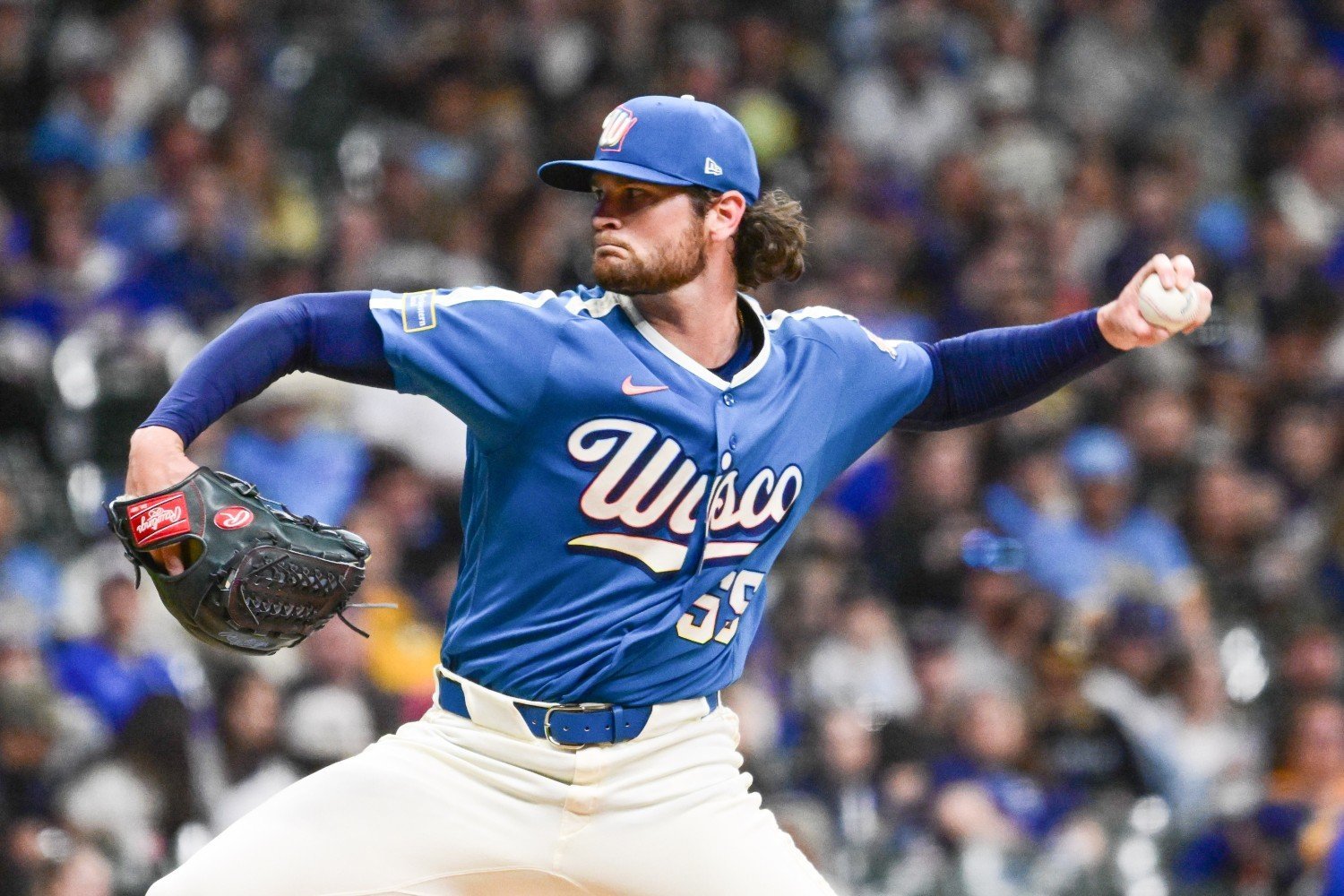 Pat Murphy has not been one to quickly trust unproven relievers. That made it notable when Shane Drohan, with two big-league appearances with mixed results to his name, warmed up for the sixth inning with the Brewers leading 3-2 on Tuesday night. Milwaukee added a few more runs to give him some breathing room, but Drohan was still tasked with protecting a three-run lead in the middle innings in his third MLB appearance. He worked a perfect inning, striking out one and generating three whiffs out of his 10 pitches. “I really like him, man,” Murphy said. “He was locked in. I don’t know how many pitches he threw in that inning, but it was 1-2-3, and it was crisp.” Drohan’s second stint with the team this month has been more successful than the first, but that doesn’t mean much in two small sample sizes. What matters is that the 27-year-old left-hander, who already learned plenty about himself throughout the past couple of seasons, has continued tinkering and polishing his game. That work has shown up in improved stuff and execution his past two times out. When Drohan debuted in Boston on April 8, he was using the full wind-up he reintroduced last season, which he felt improved the tempo and explosiveness of his delivery. drohan1.mp4 After that outing, Drohan reverted to a hybrid wind-up. In his last two outings, he’s been starting with his back leg parallel to and against the rubber, eliminating the extra movement of stepping back and repositioning his body as he begins his delivery. drohan2.mp4 “I just kind of went back to that preset back leg,” Drohan said. “It just felt like it synced everything up a lot better.” Because it’s closer to pitching fully out of the stretch with runners on, a reduced wind-up would always be best for Drohan to repeat his delivery consistently. Now that he feels it’s his best starting position, it should serve him well. The early results have been encouraging: more strikes and improved velocity, with his four-seamer averaging nearly 96 mph in that shortened outing on Tuesday. {C}%3C!%2D%2Dtd%20%7Bborder%3A%201px%20solid%20%23cccccc%3B%7Dbr%20%7Bmso-data-placement%3Asame-cell%3B%7D%2D%2D%3E--> Game Date Pitches 4FB Velo Zone% 4/8 63 93.4 46.0% 4/24 71 94.6 46.5% 4/28 10 95.9 60.0% “It just allows me to really step on the gas at the right time in my delivery,” he said. “Sometimes, it can be a little early, so I feel like that preset foot just allows me to get into the back leg and go down the mound and then really finish the throw at the right time.” With a six-pitch arsenal that includes two great breaking balls and a solid changeup, Drohan has the tools to start. That’s been his role in Triple-A, and the Brewers figure to keep him stretched out as depth for as long as possible. He could be optioned back down in the coming days for a fresher long relief arm. “We’re always trying to get as many starters as we can,” Murphy said. “I think there’s a length role there for him, for sure. He’s built up already.” However, Drohan flashed his upside as a reliever on Tuesday by letting his two best pitches – his four-seamer and slider – play at a higher speed in a shortened stint. That might be his more immediate path to impacting the big-league club in 2026. “It’s a cool, nice adrenaline rush when the phone rings and they say your name,” Drohan said of pitching in relief. “But other than that, it’s not much different. Just get guys out, whether it’s the beginning of the game or whenever they call you.” Whatever role he fills, the Brewers acquired him to contribute at times throughout the season. He hasn’t gotten the same opportunities as Kyle Harrison, whom they acquired alongside him from the Boston Red Sox a few months ago, but Drohan is showing glimpses of how effective he can be. “I think he can help us,” Murphy said. View the full article
 -
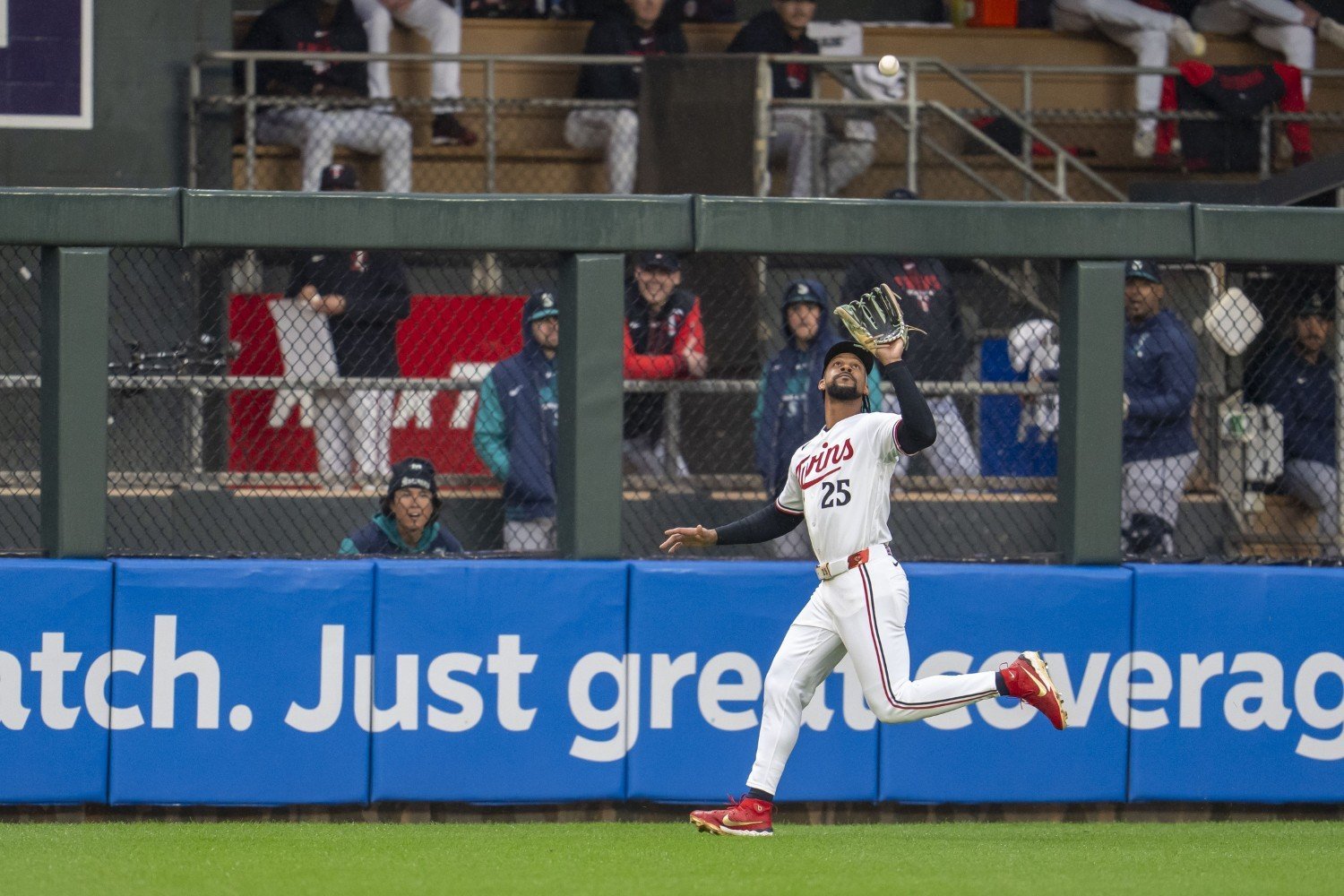 It's not always a well-received observation. When the fact that Byron Buxton's defensive metrics have gotten steadily worse over the years—indeed, that he's now roughly an average center fielder, and maybe not even that—came up on the Twins TV broadcast on Opening Day, Cory Provus, Glen Perkins and Justin Morneau practically rolled their eyes out loud. For many people who watch Buxton play every day, it's nigh unfathomable that he's no longer an elite defender. The very notion does more to dent their confidence in the endeavor of quantifying defensive performance than to diminish their faith in Buxton. I think some of that is simple allegiance, and an unwillingness to see what's really going on. Some of it, too, lies in the fact that even at his best, Buxton was not the same kind of great center fielder as (say) Pete Crow-Armstrong or Kevin Kiermaier. Those two are exemplars of a version of center field defense that relies on an extraordinarily good first step and read of the baseball. Crow-Armstrong sometimes makes near-miraculous catches, but they don't look like the ones Buxton made at his peak. They tend to look a lot like this one. NHlLcTZfWGw0TUFRPT1fVlFGV0JRVlhBd01BQUZKV1ZnQUhCUUpTQUFNQ1ZBQUFBVlVBQ0FkVUExQlJDRlFF.mp4 That line drive was only in the air for 3.5 seconds. Getting to it required anticipation, exceptionally quick acceleration, and the ability to keep moving fast all the way through the point where his arrow-straight route intercepted the ball. At his very best, Buxton sometimes made that kind of play, but his highlights have always tended to look more like this. QlhSTzlfWGw0TUFRPT1fVWdFQUFBSU5WRmNBQ1ZzTFZRQUFWd1JVQUFNRFZWUUFCMTBOQXdJSEF3Y0dVUWRW.mp4 This play is from June 30, 2019, when Buxton was 25 years old. He played, back then, like a man furious at any barrier that might dare impede him. He had the speed and the strength and the skills to make plays like this one; it seemed arbitrary and capricious to erect walls and permit hamstring strains. He played defense like a man fighting for his very way of life, because he sort of was. Buxton's ethos, back then, was that you have to be willing to run through a wall to earn your place on a big-league field. Being unable to do that is one thing; being unwilling to is another. It wasn't all that uncommon to see Buxton take on a wall at full speed. He did it a few times a year. Here's an especially bone-crunching instance, from 2017. Vk0wWHZfWGw0TUFRPT1fQkFCWFUxY0hWQVVBWEZvRlhnQUFBZ05VQUFOVFdsVUFBMU1GVVZCUkJ3c0FDQUlD.mp4 It didn't always end that happily, of course. Here's another ball Buxton chased fearlessly into a fence in 2017, but in vain. eDkxWktfWGw0TUFRPT1fVWdRQ0FWTUVVUUlBQ0FZTEJ3QUFCQUZTQUFBTlV3VUFWd1lBQmdBTkFsSldDVkVE.mp4 As we all know, collisions like that one also contributed to Buxton's major injury issues throughout those early years of his career. Yet, he kept doing it. As late as 2022, he would still tear across the ground like the Road Runner, leaving clouds of dust and throwing himself into walls when needed. dnpBRFdfWGw0TUFRPT1fVXdCWVhBY0JCRmNBV1ZGUUF3QUFBQVVGQUZsWFVBSUFCd2RUQVFOUlV3dFFWZ2NI (1).mp4 Since a nagging knee injury forced him to spend all of 2023 as a designated hitter, though, that version of Buxton has been gone. Since the start of 2024, Buxton has only caught one (1) of the 40 batted balls on which Statcast estimated the catch probability between 0% and 25%. Here's that one catch, from last May. ZU44NmJfWGw0TUFRPT1fQTFOWFZsWUZWRmNBQVZkUkJ3QUhCZ01FQUFNTldnTUFWRlFFQkFvRUIxSlZBQU5W.mp4 That's in the spirit of his old specialties, but it came with a bit less risk—and, again, it was in the air forever. It rated so well because Buxton ran nearly 120 feet to intercept it, rather than because he was extraordinarily quick in breaking for it or showed superhuman acceleration. Buxton has, in fact, never gotten especially good jumps, by Statcast's measurement. Even in 2017, at the peak of his elite athleticism and in what remained the most complete season of his career for a long time, he covered 0.4 feet less than an average center fielder in the first 1.5 seconds after contact. That's a difference so small as to be nearly meaningless, so we can call him average, but bsck then, that was the only average thing about Buxton's defensive game, so it's notable, anyway. He had the speed, explosiveness and acceleration ability to cover a foot or two more than a typical cetner fielder, even in such a short amount of time. He didn't do it, though. Instead, strategically, Buxton has always been a read-and-react fielder. Knowing that he has some of the best pure speed in the game, he prefers to wait a hair longer before embarking on his pursuit of the ball than most fielders would. He only graded out as essentially average, at his peak, because he made up for that partial beat of assessment within that teeny window. That's how quick and long his strides were. That's no longer true, though. Buxton can still get up to nearly an elite spring speed, but it takes longer than it used to. Both his knee and his hip have taken enough damage over the years that he now gets underway a bit more slowly, and turns a bit less easily. Last season, Buxton lost 1.6 feet relative to an average center fielder in that first 1.5 seconds of a ball's flight. This year, it's 1.9 feet. He's become one of the slowest center fielders in baseball off the metaphorical block. In fact, only two outfielders have lost more ground in that crucial first instant: Phillies rookie Justin Crawford, and Buxton's teammate, Twins right fielder Matt Wallner. Crucially, this doesn't mean Buxton is actually a bad center fielder. Part of his defensive decline is a conscious choice. He's been less daring, but another way to say that is, he's been less reckless. He's still presented with the occasional opportunity to plow into the wall; he still has the speed and the sense of how to adjust his body to secure a catch like that if he needs to. He just doesn't do it. bmJsMTlfWGw0TUFRPT1fQVZJRVUxd0hBRkFBREZjRVZ3QUhCMUpXQUZoVUFnTUFVQUJUQkZZRkExWmNBUVFG.mp4 That was a relatively important play in the game, back on the first weekend of the season. The Orioles already led, but catching that ball would have significantly reduced the likelihood of an extra insurance run scoring in the frame. Buston pulled up near the wall, though, choosing to position himself to play the ricochet. He's done this several times over the last two-plus seasons, and make no mistake: it's a matter of self-preservation. However, that doesn't mean it's selfish. Buxton has recognized that he's more valuable to the team on the field than on the injured list, and he's adjusting his risk management accordingly when he gets close to the wall. Here's another instance of the same calculation at work. He used to hurl himself into the wall on such plays; those days are gone. WU9rdzlfWGw0TUFRPT1fQmxBSFVnQUdWbEVBWGxFSFVBQUhBRlJmQUZnQVcxSUFCd01GQjFBRENBZFhCVkVI.mp4 Some of Buxton's lost value as a fly chaser, then, is a result of a conscious choice that helps the team in one way, even as it costs them in another. That makes it easy to forgive those non-catches. Even if you're predisposed to demand that a player leave it all on the field, we spent a solid half-decade watching Buxton actually break himself on the ground and against the fenses, and at a certain point, he's earned the right to stop doing so—especially because the team needs him on the field, and he can be on the field more often if he eschews those headlong collisions. What's left is to understand what makes Buxton good, in some ways, even at this relatively late stage of his career—and, in the same moment, to grapple with the real ways in which he's now much less than an elite defender. No one in baseball is better than Buxton at catching everything within the range he can reach. He's been above-average in getting to balls with a Catch Probability of 90% or lower in every season of his career, save 2025, in which he was exactly average. Meanwhile, he hasn't failed to come up with a ball that had a catch probability over 90% in almost exactly NINE YEARS, since getting turned around on this ball on May 4, 2017. ZHpiR0tfWGw0TUFRPT1fRGdCVFVnRU5VMU1BQVFCUUF3QUFWRkJYQUZnR0J3VUFVVndHVkZFQVZ3QlFBbEJU.mp4 However, there are balls elite defenders can get to in center that Buxton simply doesn't. Often, they look utterly innocuous. Even the seasoned eyes of ex-players in the broadcast booth don't see them as opportunities, because they (depending on the nature of their experience in the game, or on their relationship with Buxton, or some of each) forgive the slightly late breaks he gets toward the ball, and don't see that if he'd gotten a better one, he could have turned what looks like an inevitable single into a spectacular out. Here, for instance, is a standard-issue hit to center from last April. It looks like nothign could possibly have been done. M3k0b3ZfWGw0TUFRPT1fVWdSVUJ3VURVbFlBQ1ZSV1VRQUhWRmRmQUZnQldsQUFCd2NBVlFZQkNBZFFVUVZX.mp4 However, that play was essentially identical—in terms of the hang time on the ball and the distance Buxton needed to cover, and even in terms of the angle he would have had to diagnose and take—to this play by Crow-Armstrong over the weekend. WnhxWkRfV0ZRVkV3dEdEUT09X0J3TUVCUUlCVTFFQUNGWUJVZ0FIQ0FCV0FGZ0hWMU1BQlZFRkJGQUVCVmRUVmdNRg==.mp4 There are wrinkles Statcast doesn't perfectly account for, like wind and field conditions and whether the ball left the hitter's bat with funky spin or was hit much harder or softer than it looked based on the swing, and they might explain the differences between any two given plays. However, there are lots of examples like there. Here's Buxton not quite flagging down a sinking liner in the gap in Kansas City. WU9rM0RfWGw0TUFRPT1fRGxSVUFRVU5CQXNBV1FaVFhnQUhCZ0FIQUFNQ1cxSUFDZ2RSVVFaVFZRWlNVbEZR.mp4 Here's Kyle Isbel making (as nearly as you'll ever replicate such a thing) the same catch in the same stadium. Both even came off the bat of a left-handed hitter. RDFBMnlfWGw0TUFRPT1fQlZRRlZWTlhCVkFBWGxvRUJBQUhBUVZUQUFNQlZnY0FBMVVHQUZVRlV3ZFNWQWNE.mp4 The difference is the same in almost any pair of examples you can pull for study: Buxton doesn't get the elite jump off the bat that Crow-Armstrong, Isbel, and several other outfielders do. In fact, he's about as slow to break for the ball as anyone in the league. His routes are better; his body control is better; and he's more sure-handed. Those guys are all, however infinitesimally, more likely to botch a routine play or drop a ball even after they flag it down than Buxton is. It turns out, though, that what they do well is more valuable than what Buxton does well, and when their respective strengths and weaknesses are weighed, the game's top center fielders all come out ahead of Buxton. One reason, I think, why this has proved hard to accept is that it practically inverts our instinctive experience of Buxton as a defender. When we think of him in the outfield, we see in our minds the grace and the surety and the intelligence in his eyes, his gait and his glove. We see the blazing speed. We think, then, that he must be able to stretch the boundaries of a center fielder's range as well as anyone—that whatever he can't get to was ungettable. But it isn't so. As it turns out, Buxton—the guy who got famous by plastering himself on walls and flying like Super-Man to spear liners in alleys throughout the league—is an average-plus defender, but he derives all of his fielding value from his incredibly sound fundamentals. He's gone nearly a decade without missing a must-have ball, but it's been almost that long since he consistently demonstrated excellent range. He shores up his area gorgeously, but he doesn't extend it. He doesn't turn near-certain hits into outs; he just never turns near-certain outs into hits. Things might be different if this older, wiser Buxton were a bit less bruised. He might be better at flipping his hips to chase the ball laterally, especially to his right. He might be more willing to run into a wall now and then, and thus take away one or two doubles per year that he's allowed to fall since coming back to the spot in 2024. Because he's doing everything he can to keep his superb bat in the lineup and be there for his teammates more consistently, though, he lets that bit of value leak away, and because he's aging and was never great at off-the-bat reaction, anyway, he can't make up for that value as well as he might like. This revelation (some of which is new to me, too; I sat a long time with numbers and watched dozens upon dozens of clips to get a sense of how the data and reality interacted) does change some things. I've advocated moving Buxton to a corner spot, in the past. Barring the arrival of a player who shows that remarkable knack for stretching the range of the spot, I no longer feel that's necessary, or even prudent. There's much to be said for a generationally sure-handed center fielder who almost never even takes a shaky route. There's also some reason to doubt that a player who does his best work under high-arcing flies hit a long distance from him will be as good if moved to the corners, where the plays that separate good fielders from bad ones are more often sharp liners. It's a joy to watch Buxton in center field. He's no longer elite, or even close to it, but he's an extremely dignified presence in the center of the Twins outfield. At this and all times, dignity counts for something. So do all of those plays between the routine and the spectacular, where Buxton still does great work and finds his own joy in the game. View the full article
 -
 In perhaps the most shocking bit of news since his tenure in Boston began, Alex Cora has been fired as the manager of the Red Sox. While it was clear there were some divisions between him and the front office, very few expected the team to part ways with almost the entire coaching staff a mere 27 games into the season. The front office, correctly, promoted Triple-A manager Chad Tracy to interim manager of the Red Sox to help guide the young team, many of whom he has coached as recently as last season, through this brand-new chapter in their lives. What remains to be seen, though, is what happens after the final pitch of the 2026 season has been thrown. With that in mind, let’s look at three potential names who could be next in line to lead the Red Sox from the dugout. 3 Alex Cora Replacement Options for Red Sox Chad Tracy Current Role: Red Sox Interim Manager We’ll start with the most obvious one first. Tracy has already been promoted to the big-league club and in his first game in Baltimore, he showed some new wrinkles to an offense that struggled to get going throughout the start of the season. They were far more active on the basepaths, something he indicated in the post-game presser that he wants to continue, and he allowed youngest Marcelo Mayer to stay in the game against left-handed pitching. Mayer rewarded Tracy’s faith in him with an RBI single to put the team up 5-1. Tracy will likely get the rest of the season as an extended audition for the full-time manager role in 2027. If the team responds well to him, and there’s evidence that may be the case, then he should have the inside track for the position over anyone else. Make no mistake, Tracy has been viewed as the manager in waiting by some for quite some time. There will be a lot of people behind the scenes hoping he succeeds. He likely has his future in his own hands right now. No pressure or anything. David Ross Current Role: ESPN Analyst Rossy is going to be a very popular name fans think of most when they start to ponder who will replace Cora in a full-time role next season. He’s a World Series champion, fan-favorite, and semi-recent MLB manager who was only relieved of his duties because the Cubs' dream candidate became available. Ross also has a couple of different connections to President of Baseball Operations Craig Breslow. The two played for the Red Sox together and Ross was the manager of the Cubs when Breslow was brought into Chicago to head up their pitching department. He went 262-284 overall in Chicago, good for a .480 winning percentage. That won’t inspire a ton of confidence right away, but he’s likely to get an interview simply because of the good PR and his history with Breslow. Rocco Baldelli Current Role: Working in the Dodgers’ Front Office Would Baldelli consider leaving the cushy L.A. lifestyle and make the move to Beantown as the manager of the Red Sox? It’s possible. Baldelli’s tenure in Minnesota ended with a whimper — he was relieved of his duties after posting a 70-92 record in 2025 that can largely be attributed to the Twins having a fire sale at the trade deadline. He posted a 527-505 managerial record during his seven-year tenure with the Twins and for all intents and purposes, his teams apparently enjoyed playing for him. He has one 100+ win season under his belt and likely would be a solid bridge between the front office and the players. He’s seen his way through semi-rebuilds and coached teams that have won their division. While Sox fans likely will look to his last season with the Twins as a sign that he’s maybe not the right man for the job, he’s going to land a job back in the dugout sooner than later. While we likely won’t have any kind of answers until the offseason about who will lead the charge in 2027 for the Boston Red Sox, the three names above likely will garner the most interest early in the process. There has been some speculation that Dustin Pedroia could be viewed as a candidate, especially if the front office is trying to soothe troubled waters with the fans at the end of the season, but that just feels too far-fetched with the current state of the front office. There will likely be other managers who move on from their teams and vice versa as the season unfolds, so expect the potential list of candidates to grow as we march on to the dog days of summer. View the full article
 -
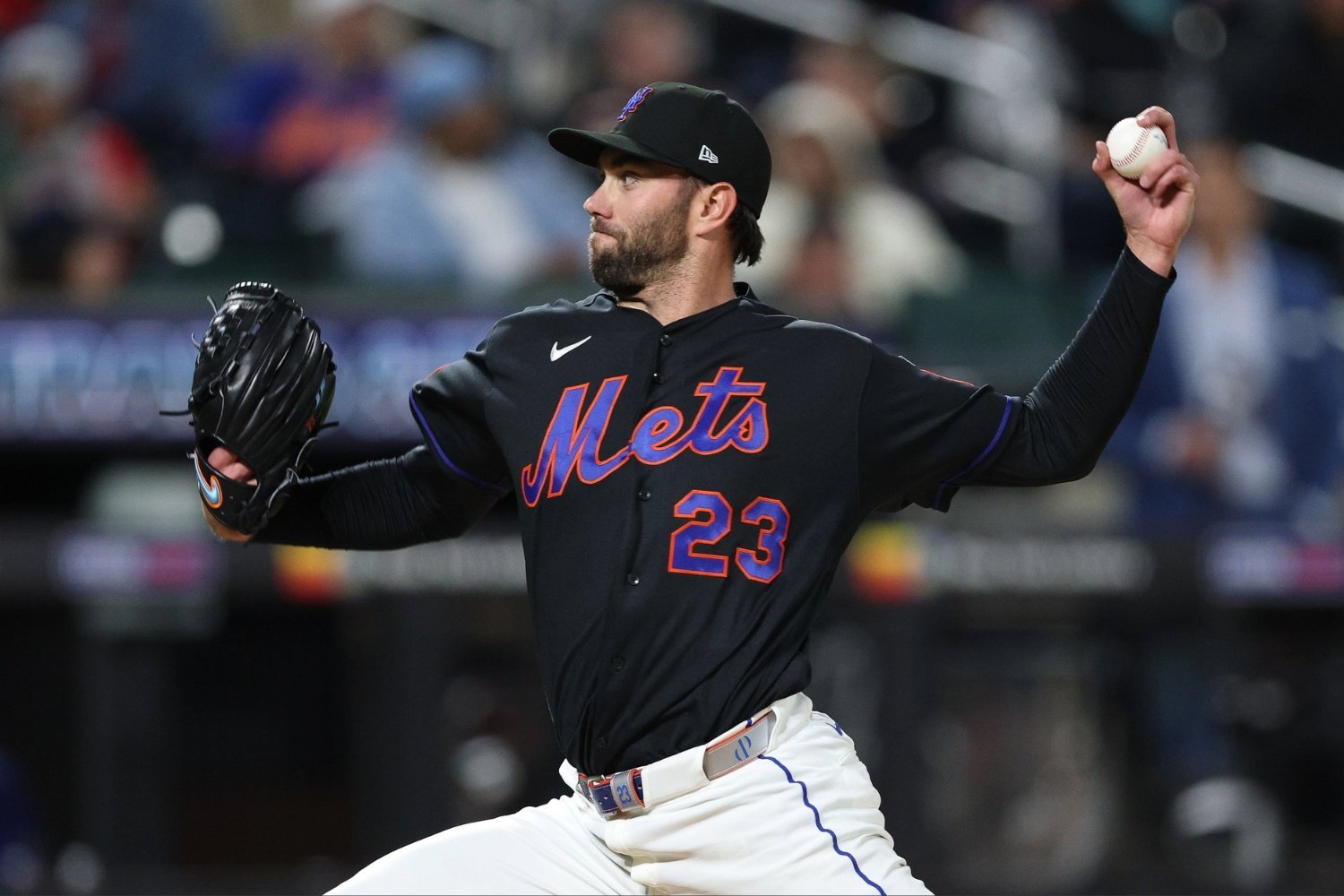 The New York Mets are turning back to David Peterson in their starting rotation, and just like their season, success hinges on razor-thin margins. When everything is clicking for Peterson, he throws enough strikes to limit walks, get ahead in the count, and generate ground balls to keep the game within reach. It isn’t an overwhelming or dominant game plan, but it will get guys out, keep the bullpen from being overtaxed, and get you a start closer to the guys you really trust. For the first four months of the 2025 season, Mets fans were treated to the best possible outcome of this profile. Over 21 starts, through August 1, Peterson posted a 2.83 ERA, with the Mets going 12-9 in his starts. Unfortunately, his final nine starts saw his ERA balloon to 8.42, during which the Mets went 3-6 and fell out of the playoff race. But here’s the thing: Peterson didn’t actually pitch all that much worse. His FIP was 3.36 over his first 21 starts, and 3.88 over his final nine. The reality is that Peterson’s effectiveness is somewhat left to chance. He doesn’t possess overwhelming stuff, and, paradoxically, he isn’t particularly adept at generating soft contact. What he does do is direct contact towards the ground, which limits damage and allows him to weather a lineup multiple times. Adding more variance into the equation is that Peterson is one of the most difficult players to project. This is anecdotal analysis, but few players have a larger divergence between their ERA estimators. For his career, he has a FIP of 3.91, an xERA of 4.65, and a SIERA of 4.14, against a career ERA of 4.16. While that makes SIERA look like the golden goose, when you look at all of this data season over season, the relationship cracks. What does this all mean? In effect, prognosticating Peterson’s future performance based on generally reliable ERA estimators isn’t quite so simple. SIERA has done a good job mirroring his career ERA, but xERA, which has the largest difference between his career ERA, has the smallest season-to-season standard deviation. This dynamic is interesting in its own right, but it makes talking about Peterson’s future performance a bit murky. However, we can talk about how Peterson, and his admittedly limited profile, can prosper. One of my personal sports analysis idioms is, “the main thing has to be the main thing.” The basic conceit is that every professional athlete has some singular core skill that is the foundation of their game. Remember Matt Harvey? His main thing was that he could throw four-seam fastballs down Main Street and prosper. When he stopped being able to do that, he was out of the league in short order. For David Peterson, the main thing is that he’ll throw his sinker and then hope for the best. The bread and butter of Peterson’s approach is that he can coax favorable launch angles. At the end of the day, it doesn’t really matter how hard you hit the ball if you hit it on the ground. For a pitcher who doesn’t rack up strikeouts, limit hard contact, or own a microscopic walk rate, it’s basically the only way you can survive in the majors. The problem that Peterson has run into this season is that his sinker has gone from a worm burner to a low-flying hazard. Last season, batters tagged Peterson’s sinker for an average exit velocity of 90.4 MPH and an average launch angle of -2 degrees. It led to a wOBA of .350, an xwOBA of .351, and a slugging percentage of .391. All told, the pitch was worth six runs of value or 0.7 runs per 100 pitches. Peterson’s sinker was by no means an elite pitch, but it was a solid enough base to get disadvantaged hitters to chase his off-speed pitches off the plate. This season, Peterson’s sinker has become an indescribable liability. Batters are hitting it for an average exit velocity of 95.7 MPH and at an average launch angle of 7 degrees. Unsurprisingly, that’s led to a wOBA of .487, an xwOBA of .517, and a slugging percentage of .594. That may not be the worst individual pitch in the majors, but it’s certainly in the running. So, what exactly caused his sinker to sink into the abyss? The first noticeable change is that Peterson is getting far less horizontal movement on the pitch. Last season, he generated 14.6 inches of arm-side movement, but that has decreased to 12.1 inches in 2026. For a sinker that averages 91.3 MPH, that loss of movement might have completely nuked the pitch's viability. On top of the loss of movement, Peterson hasn’t been locating it in nearly as advantageous locations. The first image shows Peterson’s sinker locations in 2025, while the second shows 2026. What stands out? The volume of pitches he has left in the middle-outer third of the plate has exploded, and hitters are absolutely teeing off on it, posting an .846 slugging on balls in play. It’s likely that with the sinker’s slightly diminished movement profile, it’s catching more of the plate and running away from fewer barrels than before. In many respects, it’s the worst of both worlds. So, what’s the best path forward for Peterson? I’d suggest throwing fewer sinkers for one. He has always had a junkerballer profile, but has consistently thrown his mediocre-at-best fastballs over 50% of the time. His slider has been a highly effective pitch this season and could keep hitters off his sinker a bit. However, I think the most likely outcome is that either he starts throwing his sinker more effectively by hitting better spots and/or generating more movement, or he finds himself out of the rotation again. The margins are razor-thin, and it’s sink or sinker for David Peterson. View the full article
 -
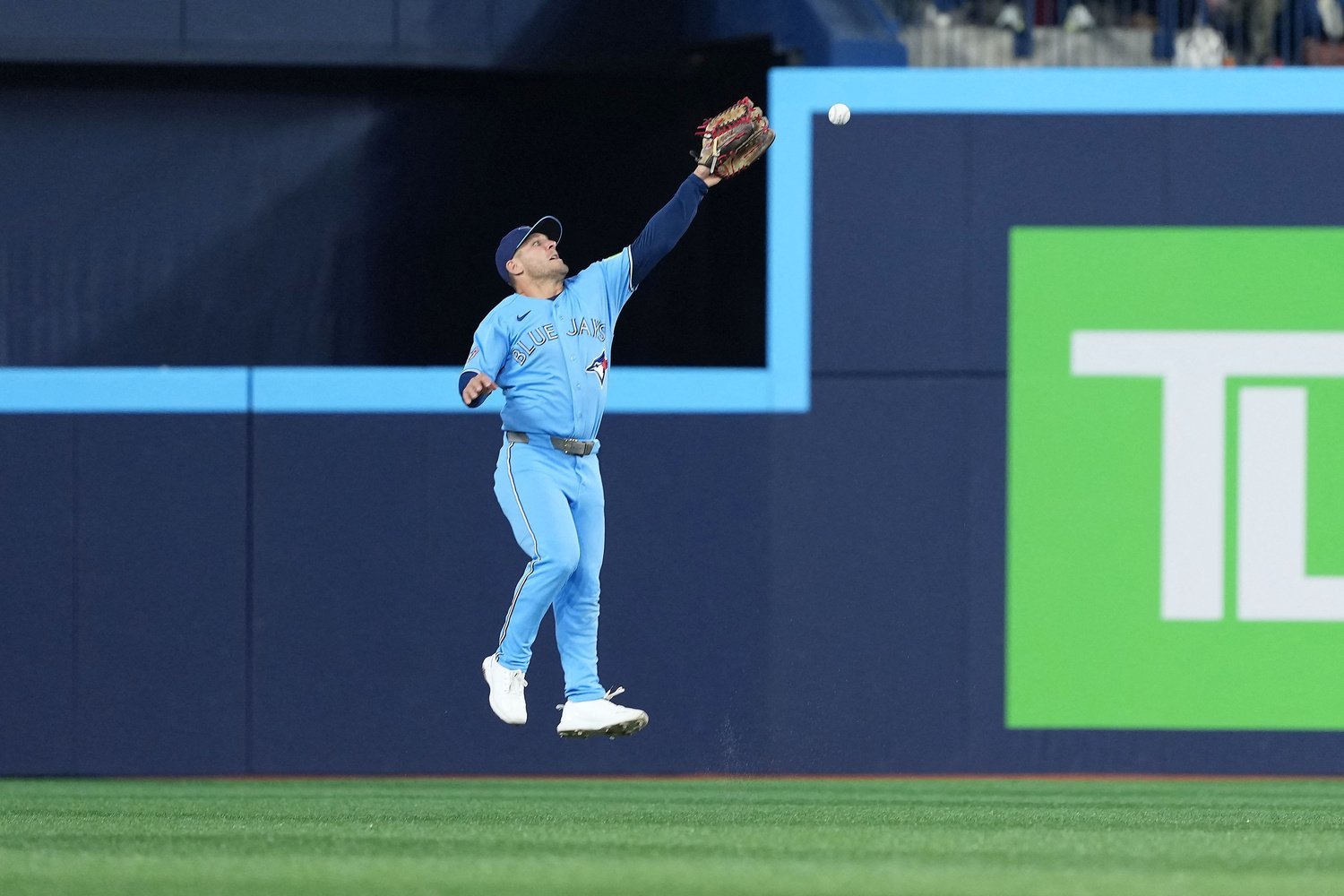 Stats in this article were updated prior to games on April 28. Daulton Varsho has been known over his career for his exceptional defense in the outfield. In 2024, he won a Gold Glove Award for center field because he led all MLB players with a +16 Fielding Run Value and +28 Defensive Runs Saved. He also finished with +15 Outs Above Average, which put him in the 99th percentile among MLB fielders. Varsho's outstanding 2024 season was cut short by a shoulder strain, which forced him to miss the last 14 games. Despite the shoulder injury, he ranked in the 88th percentile in arm value and 40th percentile in arm strength. The Blue Jays center fielder missed the first 28 games of the 2025 season, recovering from offseason rotator cuff surgery. The surgery and other injuries would force Varsho to miss a total of 91 games that season. It was the first time since 2022 that he did not play in more than 135 games, and it was obvious he wasn't himself when he was on the field. The range was still there last season. His +9 Outs Above Average ranked him in the 95th percentile. However, his arm value and strength were markedly lower following his rotator cuff surgery, ranking at the 21st and 5th percentiles, respectively. His average throw velocity dropped from 83.7 mph in 2024 to 73.7 mph in 2025. With the decline, runners weren't afraid to take an extra base when baseballs were hit in Varsho's direction. His arm velocity has improved this season (79.7 mph), but it still isn't back to 100 percent. Varsho's right arm health isn't the only issue affecting his defense. A knee injury on April 17 this season has noticeably decreased his speed. He exited the game early on April 17 and only missed the next two games, but it's not clear whether something else is contributing to the speed decline, since it began before the injury was announced. His sprint speed has slipped from 28.4 mph in 2025 to 26.7 mph, putting him in the 37th percentile. The lack of speed has worsened his range, leaving him with just +1 Outs Above Average (71st percentile) a month into the season. His reaction times have also declined, with his outfielder jump on contact at a career low. This metric measures how many feet a defender travels in the correct direction within the first three seconds after a ball is hit. Varho's feet covered versus the average this season is -2.1. It's the first time in his career that this stat has been negative. In each of the last two seasons, Varsho had a +3.2 feet vs. average rating, which further proves there's a lingering issue. He's only averaging a total of 31.7 feet covered, nearly six feet fewer than in each of the last two seasons. Despite physical setbacks from injuries, the Blue Jays center fielder is still posting respectable defensive numbers and remains a key part of the team's defense. Varsho is only 29, so he still has time to heal up and return to his former elite defensive skills. View the full article
 -
How Tyler Phillips, Marlins bounced back to defeat the Dodgers
DiamondCentric posted an article in Fish On First
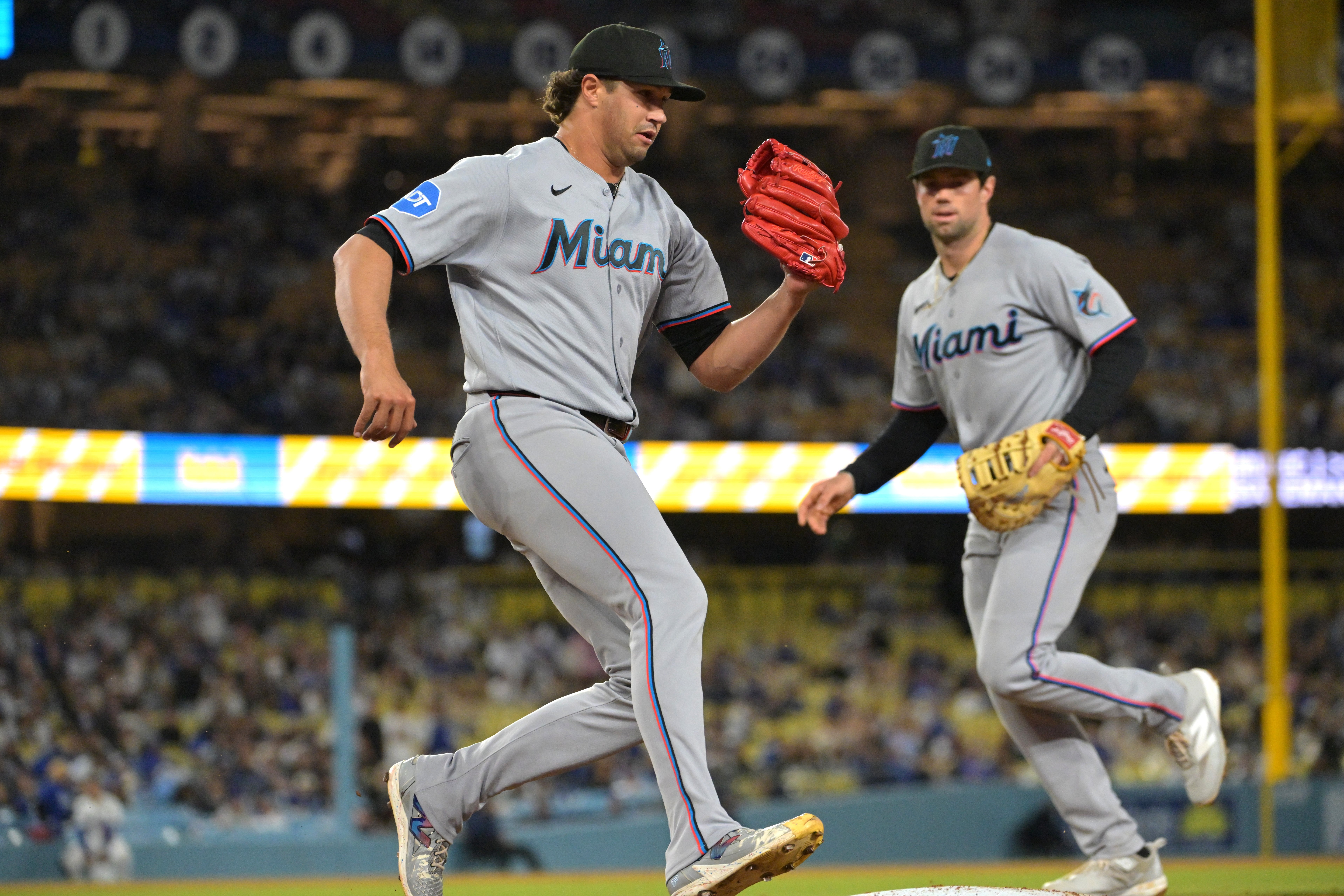 After a ninth-inning implosion on Monday night against the Los Angeles Dodgers, the Miami Marlins came back the next day and won by a final score of 2-1, primarily thanks to their pitching staff. They were without the services of Pete Fairbanks, and they will continue to be for at least 15 days. Fairbanks was placed on the injured list prior to Tuesday's game with nerve irritation. Tyler Phillips entered in relief of the struggling closer in the series opener, allowing the game-winning hit to outfielder Kyle Tucker with two outs in the bottom of the ninth inning. Phillips again entered in the ninth again on Tuesday and this time got the job done to pick up the save. "I was fired up," Phillips told the Marlins Radio Network following the game. "I was thinking about the outing from last night. If you saw me down in the bullpen, you probably would've thought that there was something wrong...just very excited to get back out there." After inducing a fly ball to Teoscar Hernández, Phillips surrendered a base hit to outfielder Andy Pages. After that, Hyeseong Kim flew out and Alex Freeland grounded out to end the game. "Tyler can go to a different place when he is on the mound," Marlins manager Clayton McCullough said. "You couldn't find a nicer person, great dad. But when the gates open, Tyler has a switch that he has found and he is going to go out there and be incredibly aggressive and is a great competitor. For me, there was no hesitation to put him in that spot and we've seen him get so many big outs over the last couple of years, so he got right back out there tonight and did a great job." While Fairbanks is out, the plan is for the Marlins to go closer by committee, which we saw plenty of in 2025. However, Phillips has gotten off to an amazing start this season and now has a 1.47 ERA with two saves in 18 ⅓ innings pitched, suggesting he should be the leading candidate to pitch the ninth in these situations. It all started with Janson Junk, who had never faced the Dodgers in his career. On Tuesday, he turned in another strong start, going six shutout innings, striking out four in the process. Through six starts this season, the Marlins' fifth starter has a 3.00 ERA (best mark in Miami's rotation), 3.46 FIP, 5.73 K/9 and 2.18 BB/9. It was Junk's fastball that made a difference on Tuesday night. Three of his four strikeouts came on that pitch and he landed it for six first pitch strikes. His fastball topped out at 96.3 mph and averaged 94.7 mph. He also generated two whiffs with that pitch. Just like his last start, Junk was extremely efficient, averaging about 12 pitches per inning. "He set the tone on the mound," McCullough said. "They came out aggressive, and he really mixed things up. Moved the ball around, executed and was able to get through six innings very efficiently. After the first, he was able to settle in and threw well." The Marlins bullpen followed Junk and for the most part, kept things at bay. As a group, they allowed one run on four hits. They did not walk anyone, but also did not strike anybody out either. The Dodgers grounded out and flew out three times each after the Marlins turned to their bullpen. Thankfully, Junk and the pitching staff had just enough run support to win it. In the top of the second inning, facing Shohei Ohtani the pitcher, Owen Caissie drove in the games first run on a sacrifice fly. Agustin Ramirez, who was hit by a pitch in his at-bat, scored the run. In the top of the fifth inning, outfielder Kyle Stowers drove in what ended up being the winning run, an RBI single that scored Christopher Morel from second base. It gave the Marlins a 2-1 lead. Morel was making his Marlins debut, hitting eighth and playing first base. He went 0-for-3 with a walk and run scored. He was activated off the injured list on Monday before the first game of the series and Heriberto Hernández was optioned to Triple-A Jacksonville. Ohtani, who only participated in this game as a pitcher, went six innings, allowing two runs (one earned) on five hits, three walks and a season-high nine strikeouts. Before the start of the game, the Marlins made a lineup change, scratching Liam Hicks, who was set to catch Junk due to an illness, moving Agustin Ramirez behind the plate and Connor Norby into the designated hitter spot in the lineup. "He's feeling better," McCullough said. "It was right as he was getting ready for the game. His stomach was bothering him wasn't going to be able to go." Tuesday's win snapped the Marlins' nine-game losing streak at Dodger Stadium, which dated back to 2023. They improve to 14-16 on the season and are in search of the series win on Wednesday with Sandy Alcantara taking the mound. For LA, it'll be Tyler Glasnow. First pitch is at 3:10 pm ET. View the full article
 -
 Mason McCoy went 4-for-4 with four RBIs, and Griffin Canning fired five innings of one-run ball, as Triple-A El Paso routed the Albuquerque 16-2. Ethan Salas crushed a three-run homer, his third in as many games, in Double-A San Antonio's 17-7 loss. Alex McCoy homered for Fort Wayne in a 6-4 defeat at South Bend. Winyer Chourio struck out eight over five innings, but Lake Elsinore's bullpen succumbed late in a 4-3, 10-inning loss to Ontario. Padres Minor-League Transactions El Paso Chihuahuas transferred C Colton Vincent to the Development List. San Diego Padres transferred RHP Jeremiah Estrada's rehab assignment to El Paso Chihuahuas. Mason McCoy Homers, Chihuahuas Erupt In Rout Of Isotopes The El Paso Chihuahuas needed only one inning to take command in Albuquerque, then kept stomping the gas in a 16-2 victory over the Isotopes. The Chihuahuas set a season high for runs. Mason McCoy finished 4-for-4 with a homer, four RBIs, three runs scored, and a walk, while Nick Solak went 3-for-5 with four runs scored, two RBIs, a double, and a stolen base. Marcos Castañon added two hits, and Samad Taylor had a bases-loaded triple. Trailing 1-0, El Paso opened the second when Solak singled and moved up on a Pablo Reyes sacrifice bunt, before McCoy launched a two-run homer, his fifth of the season and fourth in the last five road games, to flip the lead. Castañon followed with a double, and the Chihuahuas were off. The decisive blow came in a six-run fourth as El Pason scored all of its runs with two outs. Solak and Rodolfo Durán were each hit by a pitch, McCoy walked, and Carlos Rodríguez drew a one-out bases-loaded walk to plate Solak. Jase Bowen poked an RBI single, and Taylor cleared the bases with a three-run triple. El Paso piled on five more in the ninth, capped by a Solak two-run double and a Reyes RBI triple. Griffin Canning, on a rehab assignment from the San Diego Padres following last year's Achilles injury, was sharp across five innings, allowing three hits and one unearned run while striking out four and walking one to earn the win. Jeremiah Estrada, who had his first rehab outing Friday for Low-A Lake Elsinore, made his second appearance with one walk and one strikeout in his lone inning. EP_0428.mp4 Player AB R H RBI BB K Jase Bowen 5 1 1 2 0 2 Samad Taylor 4 2 1 3 2 0 Sung-Mun Song 6 1 1 1 0 2 Nick Solak 5 4 3 2 0 1 Pablo Reyes 3 2 1 1 2 1 Rodolfo Durán 4 1 0 0 1 0 Mason McCoy 4 3 4 4 1 0 Marcos Castañon 4 0 2 0 1 1 Carlos Rodríguez 3 2 0 1 2 0 Player IP H R ER BB K HR Griffin Canning 5 3 1 0 1 4 0 Garrett Hawkins 1 2 1 1 0 0 0 Jeremiah Estrada 1 0 0 0 1 1 0 Ethan Routzahn 1 0 0 0 2 1 0 Justin Yeager 1 1 0 0 1 1 0 Ethan Salas Hits HR In Third Straight Game, But Missions Fall Ethan Salas, Padres Mission's No. 1 prospect, continued his power surge by homering in his third consecutive game, but the San Antonio Missions dropped a 17-7 decision to the Tulsa Drillers. Missions pitchers surrendered seven homers. Tulsa scored in the bottom of the first, then San Antonio answered in the second. Tirso Ornelas walked, Ryan Jackson singled him to second, and Luis Verdugo singled to load the bases before a wild pitch plated Ornelas and Francisco Acuna lifted a sacrifice fly that brought Jackson home. Tulsa countered with three in the bottom of the third to retake the lead 4-2. San Antonio's biggest swing came in the fourth as it scored four times. Braedon Karpathios singled to start the frame, Acuna singled one out later to put two on, and Kai Roberts doubled home Karpathios. Salas, batting leadoff, then crushed his third home run of the year, all in the last three games he has played, a three-run shot to right-center, to push the Missions in front 6-4. The lead held until Tulsa scored once in the fifth and four in the sixth to move ahead for good at 9-6. Each team scored once in the seventh, but the Driller put the game away with a seven-run eighth inning. Salas finished 2-for-5 with a homer, three RBIs, and a stolen base, while Karpathios went 2-for-5 with a double and a run scored. The Missions left eight on base and struck out 14 times. Eric Yost, the starter, was tagged for five runs on four hits in 4⅓ innings with four walks and four strikeouts. Andrew Dalquist took the loss after allowing four runs in 1⅔ innings. SA_0428.mp4 Player AB R H RBI BB K Ethan Salas 5 1 2 3 0 2 Romeo Sanabria 4 1 0 0 1 1 Leandro Cedeño 5 0 2 0 0 2 Tirso Ornelas 2 1 0 0 3 0 Ryan Jackson 4 1 1 0 1 1 Braedon Karpathios 5 1 2 0 0 2 Luis Verdugo 4 0 2 0 0 1 Francisco Acuna 3 1 1 1 0 1 Kai Roberts 4 1 1 2 0 3 Player IP H R ER BB K HR Eric Yost 4 1/3 4 5 5 4 4 2 Andrew Dalquist 1 2/3 4 4 3 2 1 2 Josh Mallitz 1 2/3 5 7 7 3 1 2 Andrew Thurman 1/3 2 1 1 0 1 1 Alex McCoy Homers, But Fort Wayne Falls Late In South Bend The Fort Wayne TinCaps got a long ball from Alex McCoy and made a late charge, yet still dropped a 6-4 decision to South Bend. McCoy connected for his fifth homer of the year, a leadoff blast in the fourth that tied the game, 1-1. South Bend pulled back ahead with a run in the bottom of the fourth and added two more in the fifth to push the gap to 4-1. McCoy ended 2-for-4 with a home run, a double, and two RBIs. Carlos Rodriguez had an RBI triple and Kasen Wells reached three times with a hit, two walks, scored a run, and had an RBI. Fort Wayne's most productive frame came in the eighth. Trailing 4-1, Wells walked with one out and Carlos Rodriguez drilled a two-out triple to right that brought Wells home. McCoy followed with a sharp double, his Midwest League-leading ninth two-bagger, to center, scoring Rodriguez to cut the deficit to 4-3. But South Bend tacked on two in the bottom half. In the ninth, Jake Cunningham was hit by a pitch, Jack Costello walked, and Lamar King Jr. was hit by a pitch to load the bases, before Wells worked a one-out bases-loaded walk to force home Cunningham, but the rally died on a strikeout and a groundout. Starter Maikel Miralles took the loss across four innings, allowing two runs on five hits with five walks and one strikeout. FW_0428.mp4 Player AB R H RBI BB K Kasen Wells 3 1 1 1 2 1 Zach Evans 5 0 1 0 0 2 Carlos Rodriguez 5 1 1 1 0 0 Alex McCoy 4 1 2 2 0 0 Kavares Tears 4 0 0 0 0 2 Jake Cunningham 3 1 1 0 0 0 Jack Costello 2 0 1 0 2 0 Jonathan Vastine 3 0 0 0 0 1 Lamar King Jr. 0 0 0 0 0 0 Oswaldo Linares 4 0 0 0 0 1 Player IP H R ER BB K HR Maikel Miralles 4 5 2 2 5 1 0 Will Varmette 1 2 2 2 0 1 1 Matthew Watson 3 4 2 2 1 4 0 Winyer Chourio Dominates, But Lake Elsinore Falls In Extras Winyer Chourio carved up the Ontario lineup, yet the Lake Elsinore Storm came up short in a 4-3, 10-inning loss to the Tower Buzzers. Chourio worked five innings and allowed just one run on one hit, walking two and striking out eight to set the tone. After being held in check thanks in large part to rehabbing Los Angeles Dodgers left-hander Blake Snell, who struck out six and allowed one hit over three innings. The Storm finally broke through in the eighth. Trailing 2-1, pinch-hitter Luke Cantwell drew a walk, Qrey Lott entered to pinch-run, and Conner Westenburg reached on catcher's interference to put two aboard. Ryan Wideman grounded into a force out that pushed Lott to third, with Wideman then stealing second. Bradley Frye singled up the middle to plate Lott and Wideman, giving Lake Elsinore a 3-2 lead. The Storm threatened to add on after a Justin DeCriscio walk and a Victor Duarte hit by pitch, but Jorge Quintana flied out to strand the bases full. Ontario tied the game on a leadoff homer in the ninth and won it with two outs in the 10th. Joseph Herrera tossed two scoreless innings of relief with four strikeouts. Westenburg led the offense with a 2-for-3 night, a double, two stolen bases, including a steal of home, while Frye drove in two. LE_0428.mp4 Player AB R H RBI BB K Ryan Wideman 5 1 0 0 0 2 Bradley Frye 4 0 1 2 1 2 Truitt Madonna 5 0 0 0 0 5 Justin DeCriscio 4 0 1 0 1 0 Victor Duarte 3 0 0 0 0 1 Jorge Quintana 4 0 1 0 0 2 Jose Verdugo 4 0 1 0 0 1 Kerrington Cross 2 0 0 0 0 1 Luke Cantwell 0 0 0 0 1 0 Qrey Lott 0 1 0 0 0 0 Yoiber Ocopio 0 0 0 0 1 0 Conner Westenburg 3 1 2 0 0 0 Player IP H R ER BB K HR Winyer Chourio 5 1 1 1 2 8 0 Brandon Langley 1 1 1 1 2 1 0 Joseph Herrera 2 1 0 0 0 4 0 Will Koger 1 2/3 2 2 1 0 3 1 Top-20 Prospect Performance Kash Mayfield: DNP Ethan Salas: 2-for-5, HR, 3 RBI, SB, 2 K Kruz Schoolcraft: DNP Bradgley Rodriguez: DNP Humberto Cruz: DNP Miguel Mendez: DNP Ty Harvey: DNP Jorge Quintana: 1-for-4, 2 K Kale Fountain: DNP Ryan Wideman: 0-for-5, SB, 2 K Jagger Haynes: DNP Lamar King Jr.: 0-for-0, HBP Romeo Sanabria: 0-for-4, BB, K Truitt Madonna: 0-for-5, 5 K Michael Salina: DNP Garrett Hawkins: 1 IP, 2 H, 1 ER, 0 BB, 0 K Kavares Tears: 0-for-4, 2 K Deivid Coronil: DNP Francis Pena: DNP Bryan Balzer: DNP View the full article
 -
 Transactions: Milwaukee Brewers sent OF Jackson Chourio on a rehab assignment to Nashville Sounds. Milwaukee Brewers sent 1B Andrew Vaughn on a rehab assignment to Nashville Sounds. RHP Cameron Wagoner assigned to Biloxi Shuckers from ACL Brewers. Biloxi Shuckers activated RHP Nick Merkel from the 7-day injured list. Biloxi Shuckers placed RHP Patricio Aquino on the 7-day injured list retroactive to April 25, 2026 LHP J.D. Thompson assigned to Wisconsin Timber Rattlers from ACL Brewers. SS Luiyin Alastre assigned to Wisconsin Timber Rattlers from Wilson Warbirds. RHP Jacob Morrison assigned to Wilson Warbirds from ACL Brewers. Wilson Warbirds released OF Demetrio Nadal. C Luis Corobo assigned to ACL Brewers from Wilson Warbirds. C Kevin Garcia assigned to Wilson Warbirds from ACL Brewers. RHP Ayendy Bravo assigned to ACL Brewers from Wilson Warbirds. A lot of players assigned to the ACL Brewers as Complex League is set to begin on Saturday. 2025 2nd and 3rd round picks Thompson and Morrison have been given their first professional assignments. Game Action: Nashville vs Norfolk (Orioles) was postponed and will be replayed as part of a double header on Thursday. It sounds like we will see the rehabbing Jackson Chourio and Andrew Vaughn for five innings each on Wednesday as they look to get game ready this week. Biloxi Pre-game media notes Biloxi 7, Pensacola (Marlins) 2 Box Score As always, you are encouraged to read the official round-up from the team’s site: Five Unanswered Runs Aid Shuckers in Beatdown of Blue Wahoos The Shuckers beat the Blue Wahoos for the fifth time in seven games in April behind Bishop Letson’s best start of the season. Letson (5IP 3H 1R 1ER 1BB 6K) set season highs for innings and strikeouts, while issuing a season low one free pass. Letson’s performance set the tone for the Shuckers staff that struck out 14 Wahoos while walking just two. Check out one Leston’s strikeout and sword via the Biloxi X account: The teams swapped runs in the third inning, with an RBI ground out by Blake Burke opening the scoring. Burke then put the Shuckers ahead in the sixth with his eighth home run of the season: Pensacola tied the game with a home run off reliverJesus Broca (2IP 1H 1R 1ER 0BB 4K), which was the only blemish on his ledger en route to earning the win. In the eighth inning, the Shuckers broke the game open. First, Damon Keith blasted his third homer of the season: Keith, who only came to Brewers’ system via trade on March 27, has been impressive with a .348/.444/.674 line in 52 plate appearances this month. The Shuckers then added to the lead via a pair of walks, a pair of singles, and a pair of wild pitches. Jheremy Vargas, in his first action in four days, drove in a run on one of his two singles to make it 6-2. Eduardo Garcia added an RBI single in the 9th to close the scoring for the night. Dasan Brown was on base three times and Dylan O’Rae added a double and walk for the Shuckers, who improved to 12-10 on the season. Top prospect Jesus Made was 0 for 5 and now has just one hit in his last 19 at-bats. Tyson Hardin (0-1 6.19ERA) will look to follow Letson and post a strong start in game two of the series on Wednesday. Wisconsin pre-game media notes Quad Cities (Royals) 14, Wisconsin 7 Box Score Tuesday night’s series opener in Appleton was perhaps even uglier than the score suggests. The Rattlers’ run prevention unit did not work a solitary 1-2-3 inning, allowing runs in seven frames. In total, the Wisconsin pitchers issued 10 walks, 13 hits, and one HBP. The defense also committed three errors. A lot of crooked numbers in the Rattlers' pitching box score, so no need to recap them all here. Ethan Dorchies (3.1IP 6H 4R 4ER 3BB 3K) started and took his third loss of the season. The Rattlers' offense had been red hot with 26 home runs in the month of April. However, the big bats were held in check and the rest of the offense managed just six hits despite scoring seven runs. Quad Cities was able to quiet the top four batters in the order. Reigning Midwest League Player of the Week Braylon Payne was hitless in five at-bats. Marco Dinges, Josh Adamczewski and Eric Bitonti also were held hitless in 12 at-bats with a combined six strikeouts. Before the game got out of hand, Juan Baez produced an RBI double. Luis Castillo drove in two runs on the night, including this chopper down the left field line. The newly promoted Luiyin Alastre drove in his first two runs at the level on this play that was generously ruled a double. All in all you know it was a pretty tough night when the lone highlight (lowlight?) on the official Rattlers X account was a beer cup pyramid that was built during the Rattlers’ late game rally: Stop me if you heard this before, but there looks to be some inclement weather in store for the Rattlers the next couple of days. Weather permitting, Wande Torres (1-0, 5.14 ERA) will take the mound on Wednesday. The first place Rattlers will look to improve on their home record, as they are just 4-4 at Neuroscience Group Field. Wilson pre-game media notes Salem (Red Sox) 6, Wilson 0 Box Score Wilson Shutout by Salem in Series Opener A tough night in Wilson as the Warbirds were shutout 6-0 and managed just three hits (all singles) on offense. Second baseman Luis Lameda was on base twice with a single and a walk. Lameda’s .342 average and .878 OPS really stick out among the Wilson lineup that regularly features seven or eight hitters with sub .200 averages. Right hander Enderson Mercado started on the mound for Wilson and continued his tough start to the season. Mercado (4.2IP 4H 4R 4ER 3BB 4K) has allowed four or more runs in four of his five appearances this season. Peyton Niksch (2.1IP 1H 0R 0BB 1K) worked clean for his fifth consecutive appearance without an earned run allowed. Garrett Hodges struck out two in his one inning of relief. Wilson has the early first pitch on Wednesday (10AM CT) when RHP Jarette Bonet (1-1, 4.15 ERA) will toe the rubber in game two of the series. Organizational Scoreboard including starting pitcher info, game times, MiLB TV links, and box scores Current Milwaukee Brewers Organization Batting Stats and Depth Current Milwaukee Brewers Organization Pitching Stats and Depth View the full article
 -
 TRANSACTIONS In advance of their series with the Iowa Cubs, there were multiple moves in St. Paul RHP Ryan Gallagher was promoted from Wichita and will make his triple-A debut with the Saints on Wednesday. Gallagher was 1-1 with a 3.50 ERA and 20 K’s in 18 total innings in four starts with the Wind Surge. LHP Aaron Rozek was sent down to Wichita in a one-for-one swap and also started Tuesday’s game for the Wind Surge. The Minnesota Twins also selected the contract of RHP Luis Garcia from the Saints. To make room for Garcia on the 40-man roster, Zak Kent was DFAd. Wichita was also assigned RHP Paulshawn Pasqualotto from the Cedar Rapids Kernels to fill out their pitching staff. With the Kernels, RHP Nick McAuliffe was assigned to the FCL Twins and RHP Brent Francisco was sent down to Fort Myers. Taking their places was exciting RHP Riley Quick, who will make his first start in the Midwest League on Wednesday. Quick made three starts with the Mighty Mussels pitching eight total innings, allowing just one hit, no runs, walking three, and striking out 13. Not to be left out of the week’s transactions, the Fort Myers Mighty Mussels placed OF Eduardo Beltre on the 7-day injured list with a right knee contusion. RHP Matthew Becker was assigned from the FCL Twins to take Quick’s place, and SS Bruin Agbayani was activated from the injured list. SAINTS SENTINEL Iowa 5, St. Paul 9 Box Score The Saints offense wasted little time getting this one going. After a one-two-three top of the first from starting pitcher John Klein, the offense sent every batter in the lineup to the plate in the bottom half. Kaelen Culpepper led off with a 106.7 MPH home run to center field. Walker Jenkins followed with a 107.2 MPH double to center. Gabriel Gonzalez drove him in for their second run with a single into center. Ryan Kreidler followed with a single of his own before Emmanuel Rodriguez grounded out for the first out of the inning but moved both runners up. Kyler Fedko then blasted his sixth home run of the season; a 105.4 MPH shot to left center over the bullpen to make it 5-0 Saints. Orlando Arcia joined the 100+ MPH hit parade with a sharp single to left, but the next two batters went down to end the inning. In the bottom of the second Gonzalez joined the Conga line with a 104 MPH, 402-foot home run to center to make it 6-0. Klein kept the Cubs off the scoreboard for the first two innings but ran into some trouble in the top of the third. A pair of home runs around a single closed the lead to 6-3, but that’s as close as the Cubs would get. Klein went on to finish four innings and was charged with three earned runs on those three hits while striking out five. In the bottom of the fourth Culpepper hit his second home run of the game, a 103 MPH blast the other way. Not to be outdone by all of his teammates, Emmanuel Rodriguez decided to hit the second hardest ball in all of professional baseball in the bottom of the fifth. His 118.3 MPH laser to right was his fifth blast of the season. His next time up, Rodriguez ho-hummed a 110.2 MPH shot to right-center for his second of the game, making it 9-4 Saints. In relief of Klein, Andrew Bash (W, 2 IP, H, ER, BB, 2 K), Christian Roa (1 IP, K), Trent Baker (1 IP, BB, K), and Zak Kent (1 IP, H, ER, 3 K) finished off the final five innings. Culpepper (3-for-5, 2 HR, 2 RBI), Gonzalez (2-for-5, 2 R, HR, 2 RBI, 2 K), and Rodriguez (2-for-4, 2 HR, 2 RBI) had multiple hits. Fedko led the way with three RBI. Jenkins finished 1-for-3 with a double and two walks. WIND SURGE WISDOM Arkansas 4, Wichita 3 Box Score A later power surge from Wichita got them close, but the home team wasn’t able to complete a comeback on Tuesday as baserunners were hard to find all game. Taking the bump in Wichita was right-hander Jose Olivares, and he was able to complete the first three innings. He was charged with just one earned run on two hits, striking out four, but also issued three free passes. Of his 50 pitches, 31 went for strikes (62%). Ricky Castro started the fourth inning and recorded five outs, giving up a single run in each of the fourth and fifth for a 3-0 Travelers lead. He gave up four hits, walked one, and struck out one. Jaylen Nowlin went 2 1/3 innings, allowing a single run on a solo homer and striking out one. Sam Ryan went the final two innings, keeping Arkansas off the board by surrendering just one hit and striking out two. Down 3-0 in the bottom of the sixth the Wind Surge had managed just one hit so far in the game, a single from Billy Amick to lead off the fifth inning. Garrett Spain got them their second, and first run, with his sixth home run of the season to right field. In the bottom of the seventh Kala’i Rosario led off with a walk, and Amick followed with his sixth home run of the year, an opposite field shot into the bullpen in right. Rosario got on base as the tying runner in the bottom of the ninth with a single but would be left stranded to end the game. Amick finished 2-for-4 with the home run and two RBI to lead the way. As a team they finished just 1-for-3 with runners in scoring position and left only three men on base. KERNELS NUGGETS West Michigan 2, Cedar Rapids 3 Box Score Much like their friends in Kansas, the Kernels had trouble producing baserunners at home in Iowa. Would they follow suit and be unable to make anything happen by finishing the game 0-for-5 with runners in scoring position? Top pitching prospect Dasan Hill made the start and worked around a walk and a single in the first by striking out three. He retired them in order in the second including a strikeout, before escaping another jam in the third by inducing a double play ball and picking up his fifth K of the night. Finally in the fourth a pair of singles and a walk led to the first run of the game for the Visiting team and put an end to Hill’s start after four frames. He allowed one earned run on four hits and three walks but struck out seven. 42 of his 72 pitches went for strikes (58%) and he notched 10 whiffs in the outing. The Kernels took the lead in the bottom of the fifth thanks in part to an error to put a man on base, but it was Jaime Ferrer’s third home run of the season that put them up 2-1. Reliever Jason Doktorczyk gave that run back in the top of the sixth after a leadoff triple but otherwise held the Whitecaps in check for the next three innings. He allowed two hits, walked one, and struck out three. Jacob Wosinski finished off the final two innings, allowing one hit, walking one, and striking out two. With the game tied in the bottom of the ninth, Danny De Andrade had an eight-pitch battle as the leadoff man. He won. De Andrade sent that eighth pitch over the wall in left to walk it off for the Kernels. Despite just three hits and four walks in the game, both those homers were enough to overcome seven hits and five walks from the Whitecaps. The Kernels struck out just five times, while their opponents racked up 12. I guess it doesn’t matter if your batting-average-on-balls-in-play for the game is .050 compared to .350 if pitches end up over the fence for you instead of into the catcher's mitt. MUSSEL MATTERS Fort Myers 11, Daytona 10 Box Score The Mighty Mussels blew this one open in the top of the fourth inning, scoring seven runs to take a 8-1 lead at the time. Bruin Agbayani got the game’s scoring started in the top of the third with an RBI double. The Tortugas matched that in the bottom half before Fort Myers went off in the fourth. JP Smith led off with a solo homer. Quentin Young added a one-out single. After a strikeout, their next six runs were scored with two outs. Two more singles, four walks, and a two-run double from Yasser Mercedes put the Mighty Mussels out front 8-1. In the top of the fifth they stretched that lead to 10-1 thanks to a sacrifice fly from Dameury Pena and bases-loaded walk from Smith. They would end up needing all of those runs to maintain their lead. Right-hander Kolten Smith made the start and was excellent through his three innings. He gave up just one earned run on three hits and a walk, while striking out six. A leadoff single in the fourth put an end to his outing, bringing on Matthew DesMarets from the bullpen. He escaped the fourth with no damage but got bludgeoned by the Tortugas in the fifth. They scored eight runs to make 10-9 before the inning was over, including a pair of home runs. DesMarets was only charged with two earned runs (out of seven total) thanks to a pair of errors, but he also allowed five total hits and a walk. Brian Zeldin did his best to stabilize the game, going the next 2 1/3 innings. He was charged with two unearned runs on five hits but racked up six strikeouts or it could have gone the other way. Michael Hilker (1 IP, 3 BB, 2 K), and Mike McKenna (1 IP, BB, 2 K) also made it a little interesting in the eighth and ninth frames but locked it down when it mattered. The Mighty Mussels got the final run they needed in the top of the sixth when Young led off with a walk and scored on a double from Jayson Bass. Smith (2-for-4, R, HR, 3 RBI, BB, K) and Young (2-for-4, 2 R, BB, 2 K) each had multiple hits. Mercedes drove in two and drew a walk. Harry Genth drew three free passes and scored three runs from the nine-spot in the lineup. This was the Mighty Mussels sixth win in a row. TWINS DAILY MINOR LEAGUE PLAYERS OF THE DAY Pitcher of the Day – Dasan Hill, Cedar Rapids Kernels (4 IP, 4 H, ER, 3 BB, 7 K) Hitter of the Day – Kaelen Culpepper, Emmanuel Rodriguez, Gabriel Gonzalez, and Kyler Fedko; St. Paul Saints (8-for-18, 7 R, 6 HR, 9 RBI, some ridiculous average exit velocity) PROSPECT SUMMARY Check out the Prospect Tracker for much more on our Twins Top 20 prospects after seeing how they performed on Tuesday. #1 – Walker Jenkins (St. Paul): 1-for-3, R, 2B (3), 2 BB #2 – Kaelen Culpepper (St. Paul): 3-for-5, 2 R, 2 HR (5), 2 RBI WEDNESDAY’S PROBABLE STARTERS Iowa @ St. Paul (6:37 PM CDT) - RHP Ryan Gallagher (0-0, -.-- ERA, Triple-A debut) Arkansas @ Wichita (11:05AM CDT) - LHP Aaron Rozek (2-0, 3.86 ERA) West Michigan @ Cedar Rapids (12:05 PM CDT) - RHP Riley Quick (0-0, -.-- ERA, High-A debut) Fort Myers @ Daytona (5:35 PM CDT) - RHP Eric Hammond (0-0, 3.38 ERA) Please feel free to ask questions and discuss Tuesday’s games! View the full article
 -
 Box Score Starting Pitcher: Joe Ryan - 6 IP, 6 H, 2 R, 2 ER, 1 BB, 6 K (88 pitches, 62 strikes (70.5% strikes)) Home Runs: Byron Buxton (7) Lowest WPA: Cole Sands (-0.21), Tristan Gray (-0.16), Victor Caratini (-0.13) Win Probability Chart (via FanGraphs) Coming off a win in game one of the series, the Twins turned to Joe Ryan to face off with Logan Gilbert and the Mariners. Ryan was dominant early. He got into a little trouble in the third inning, giving up two hits and having runners on first and third with one out, but then struck Cal Raleigh out before getting Julio Rodríguez to ground out to end the inning. In the bottom half of the inning, the Twins got singles from Royce Lewis and Byron Buxton, but were unable to push a run across. The game remained scoreless until Byron Buxton led off the bottom of the fifth inning with his seventh home run of the season—and second of the series. Alas, the third turned out to be a better microcosm of the night than the fifth was. The Twins were only able to get one run while Logan Gilbert was in the game, but they did force him to throw more pitches than he would have liked. Gilbert lasted five innings and threw 92 pitches. That got the Twins into the Seattle bullpen, but the bullpen turned out to be up to that lengthy task. The Mariners got a couple of two-out hits in the top of the sixth, tying the game on a Josh Naylor single. They broke the tie after a leadoff double from Randy Arozarena in the top of the seventh, which chased Ryan from the game. Mariners second baseman Cole Young got the two-out single off Kody Funderburk that, as it turned out, opened the floodgates. The Twins bullpen had an unfortunate eighth inning, giving up three hits and three runs. Josh Naylor got his third hit of the night (a three-run home run off Cole Sands), giving the Mariners a four-run lead. Check out the bat flip. Meanwhole, the Twins offense was virtually lifeless against the Mariners bullpen, mustering one hit over four innings against four separate Mariners relievers. Eduard Bazardo, Gabe Speier, Matt Brash and Cooper Criswell all threw a scoreless frame, without the traffic and sense of danger Gilbert seemed to deal with all night. Added to the roster before the game, righty Luis García made his Twins debut and gave up two runs in the top half of the ninth inning, on a two-out double by Rodríguez. Garrett Acton hit the injured list just minutes before the first pitch, with a shoulder strain, so García might be needed for a while. On the other hand, the team might swap him out for another fresh arm after his underwhelming team debut. What’s Next? The Twins will look to bounce back and win game three on Wednesday afternoon against the Mariners. Taj Bradley (3-1, 2.91 ERA) will face off against George Kirby (4-2, 2.97 ERA). Bradley has been a bright spot for the Twins this year and will look to get back on track after giving up six runs against the Tampa Bay Rays in his last start. Kirby will look to continue his very good start to the year, most recently giving up two runs over six innings versus the St. Louis Cardinals. First pitch is scheduled for 12:40 PM CT. FRI SAT SUN MON TUES TOT Morris 0 0 0 40 0 40 Orze 10 9 0 0 0 19 Topa 0 0 10 0 0 10 Rogers 0 15 0 14 0 29 Banda 7 0 9 0 0 16 Funderburk 0 0 20 0 15 35 Garcia 0 0 0 0 23 23 Sands 0 0 7 0 13 20 View the full article
 -
How Bailey Ober Is Being Effective Despite Lackluster Velocity
DiamondCentric posted an article in Twins Daily
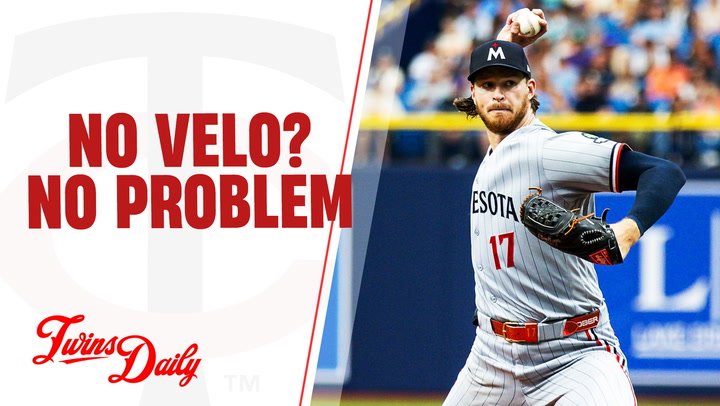 Despite another steep drop in velocity this season, Bailey Ober's numbers look significantly better than in 2025. A closer look at how the 6-foot-9 righty has been more effective with an 88-MPH fastball. View the full article
 -
 After he was placed on the 10-Day IL on April 20th due to a left shoulder subluxation, the Royals announced today on social media that Jonathan India underwent labral repair surgery and would be out for the season as a result. This likely ends a tumultuous tenure for the former Cincinnati Red, who came over last offseason from Cincinnati with outfielder Joey Wiemer in exchange for pitcher Brady Singer. In 136 games and 567 plate appearances last season, he hit .233 with an 89 wRC+ and a -0.3 fWAR. He got off to another slow start this year, though he did walk more (13.8% BB% this year to 9.5% last year) and hit for more power (.146 ISO this year to .113 ISO last year). However, in 58 plate appearances, he hit .167 with a 79 wRC+ and -0.1 fWAR. India entered his last year of arbitration this offseason, and the Royals opted to bring him back on a one-year, $8 million deal, hoping that he would bounce back with a clearer role, especially defensively (i.e., no moving around positions). Unfortunately, India didn't get much of a chance to show he was capable of returning to his Cincinnati form, as his season ended after just 17 games this season. The 29-year-old will be a free agent this offseason, and it's unlikely that Kansas City will offer him a contract. The loss of India likely means that Michael Massey and Nick Loftin will get most of the innings at second base this year. Shelley Stonebrook talked about Massey making the most of his opportunity in a post today on Royals Keep, and after India's surgery, it's likely Massey becomes the regular second baseman in Kansas City for the remainder of the season. Massey has an 87 wRC+ in 47 plate appearances, and Loftin has a 127 wRC+ in 30 plate appearances. That said, Massey is hitting .292 with 122 wRC+ in his last 26 plate appearances, and Loftin is hitting .333 with a 136 wRC+ against left-handed pitchers. The left-handed Massey and right-handed Loftin can platoon together at the keystone position, while also carrying versatility to play left field when needed. If Massey or Loftin gets hurt (both guys have a checkered injury history), the Royals could opt to replace India's spot on the roster with Josh Rojas, who's currently in Triple-A Omaha. Rojas has cooled off after a slow start, hitting .244 with an 84 wRC+ in 85 plate appearances with the Storm Chasers. While he doesn't hit the ball hard, Rojas has shown excellent plate discipline in Omaha, as illustrated by his TJ Stats Statcast summary in Triple-A. If the Royals opt not to bring up Rojas, they can utilize India's roster spot for a free-agent or trade acquisition without having to designate anyone for assignment, due to the ability to add him to the 60-Day IL. It's likely that the Royals will wait to add India to the 60-day IL in order to ensure they have the right candidate to replace him on the 40-man roster. View the full article
 -
Mets Roster Central: Generation MST3K Assembling
DiamondCentric posted an article in Grand Central Mets
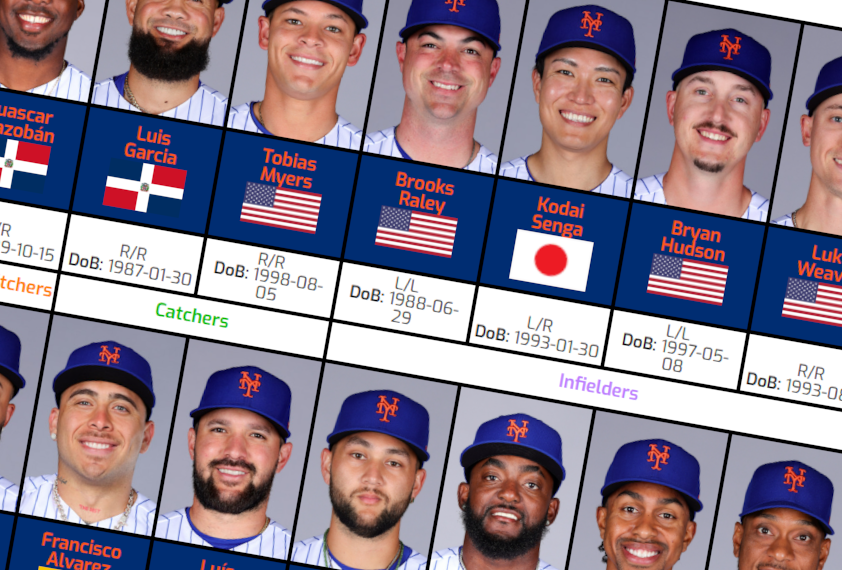 While we just saw Christian Scott last week, an unfortunate Injured List assignment should provide a little bit more of an open-ended opportunity for him to show his mettle and quality. If nothing else happens this season, establishing Scott and Jonah Tong alongside Nolan McLean in the Mets rotation would have to be counted as a win, potentially establishing a foundational stone to build on. They could, indeed, be MST3K — a term originated by my friend Greg Prince at the always-engaging Faith and Fear in Flushing to describe a future built on McLean, Brandon Sproat, and Tong. Brandon Sproat has been dealt to Milwaukee, but hope — along with promising pitchers whose name starts with S — has not Transactions, 4/28/2026 GOING COMING COMING Placed on 15-Day Injured List with Lumbar Spine Inflammation Promoted from Syracuse Transferred from St. Lucie to Syracuse on Rehab Assignment Starting Pitchers Starting Pitchers Relief Pitchers Kodai Senga Christian Scott Joey Gerber L/R DoB: 1993-01-30 High Level: MLB (2026) R/R DoB: 1999-06-15 High Level: MLB (2026) R/R DoB: 1997-05-03 High Level: MLB (2026) As noted above, two or three turns by Christian Scott gives him more of an open door than his previous appearance. Any anticipation, of course, is tempered by the reality that he missed all of 2025, and establishing himself as a big leaguer after a year in the ether at the top of the development chain is a tough ask. But hey, Roger McDowell pulled it off! Maybe he can pull a McDowell! Seeing as Senga's turn won't be coming around for a few days, one might have expected the Mets to add another reliever for a couple of games, being something close to a rule that if a big league team can add a reliever, they will, but a few days for Scott to get acclimated, —instead of having him step off a plane and onto a mound again — is something. Joey Gerber, whose head does not sit centered upon his neck in his thumbnail photo, is close to being ready. Your 2026 New York Mets Starting Pitchers Starting Pitcher Starting Pitchers Starting Pitchers Starting Pitchers Clay Holmes Nolan McLean Freddy Peralta David Peterson Christian Scott R/R DoB: 1993-03-27 R/R DoB: 2001-07-24 R/R DoB: 2996-06-04 L/L DoB: 1995-09-03 R/R DoB: 1999-06-15 Relief Pitchers Huascar Brazobán Craig Kimbrel Sean Manaea Tobias Myers Brooks Raley Austin Warren Luke Weaver R/R DoB: 1989-10-15 R/R DoB: 32291 R/L DoB: 1992-02-01 R/R DoB: 1998-08-05 L/L DoB: 1988-06-29 R/R DoB: 1996-02-05 R/R DoB: 1993-08-21 Relief Pitchers Catchers Infielders Devin Williams Francisco Alvarez Luís Torrens Brett Baty Bo Bichette Ronny Mauricio MJ Melendez R/R DoB: 1994-09-21 R/R DoB: 2001-11-01 R/R DoB: 1996-05-02 L/R DoB: 1999-11-13 R/R DoB: 1998-03-05 S/R DoB: 2001-04-04 L/R DoB: 1993-11-29 Infielders Outfielders Marcus Semien Mark Vientos Carson Benge Luis Robert, Jr. Austin Slater Juan Soto Tyrone Taylor R/R DoB: 1990-09-17 R/R DoB: 1993-12-11 L/R DoB: 2003-01-20 R/R DoB: 1997-08-03 R/R DoB: 33951 L/L DoB: 1998-10-25 R/R DoB: 34356 Also on 40-Player Roster Starting Pitchers Relief Pitchers Tylor Megill Christian Scott Jonah Tong Alex Carrillo Reed Garrett Joey Gerber Justin Hagenman R/R DoB: 1995-07-28 R/R DoB: 1999-06-15 R/R DoB: 2003-06-19 R/R DoB: 1997-06-06 R/R DoB: 1993-01-02 R/R DoB: 1997-05-03 R/R DoB: 1996-10-07 On 60-Day Injured List with torn right UCL. With Syracuse With Syracuse On 60-Day Injured List — right UCL surgery and nerve relocation surgery. With St. Lucie on Rehab Assignment On 60 Day Injured List with fractured rib. Relief Pitchers Catchers Infielders A.J. Minter Dedniel Núñez Jonathan Pintaro Dylan Ross Austin Warren Hayden Senger Francisco Lindor L/L DoB: 1993-09-02 R/R DoB: 1996-06-05 R/R DoB: 1997-11-07 R/R DoB: 2000-09-01 R/R DoB: 1996-02-05 R/R DoB: 1997-04-03 S/R DoB: 1993-11-14 With Syracuse on Rehab Assignment On 60-Day Injured List — right UCL surgery. With Syracuse With Syracuse With Syracuse With Syracuse On 10-Day Injured List with Strained Left Calf Infielders Outfielders 0 Eric Wagaman Jorge Polanco Nick Morabito Jared Young R/R DoB: 35656 S/R DoB: 1999-11-13 R/R DoB: 2003-05-07 L/R DoB: 1995-07-09 On 10-Day Injured List with right wrist contusion. With Syracuse On 10-Day Injured List with torn left meniscus. Deslgnated for Assignment Outfielders 0 Tommy Pham R/R DoB: 32210 Your Mets Coaching Staff Manager Bench Coach Pitching Coach Hitting Coordinator Third Base Coach First Base Coach Bullpen Coach Ass't Pitching Coach Carlos Mendoza Kai Correa Justin Willard Jeff Albert Tim Leiper Gilbert Gomez José Rosado Dan McKinney DoB: 1979-11-27 DoB: 1989-07-14 DoB: 1990-09-09 DoB: 1992-08-16 DoB: 1996-07-19 DoB: 1992-03-08 DoB: 1974-11-09 DoB: 1989-06-06 Hitting Coach Strategy Coach Catching Coach Coaching Assistant Bat'g Practice Pitcher Equipment Manager Bullpen Catchers Bullpen Catchers Troy Snitker Danny Barnes J.P. Arencibia Rafael Fernandez Kevin Mahoney Kevin Kierst Eric Langill Dave Racaniello DoB: 1988-12-05 DoB: 1989-10021 DoB: 1986-01-05 DoB: 1988-08-03 DoB: 1987-05-11 DoB: 1964-07-09 DoB: 1979-04-09 DoB: 1978-06-03 Your Mets Training Staff Director of Player Health Head Athletic Trainer Assistant Athletic Trainer Reconditioning Coordinator Reconditioning Therapist Head Performance Coach Assistant Performance Coach Performance Coordinator Soft Tissue Specialist Brian Chicklo Joseph Golia Bryan Baca Sean Bardanett Josh Bickel Dustin Clarke Tanner Miracle Jeremy Chiang Hiroto Kawamura DoB:1972-07-17 DoB:1978-??-?? DoB:Circa 1980 DoB:1988-06-23 DoB:1996-??-?? DoB:1987-??-?? DoB:1991-??-?? DoB:????-??-?? DoB:22846 View the full article
 -
Royals Sign Pitcher Anthony Gose to Minor League Deal
DiamondCentric posted an article in Royals Keep
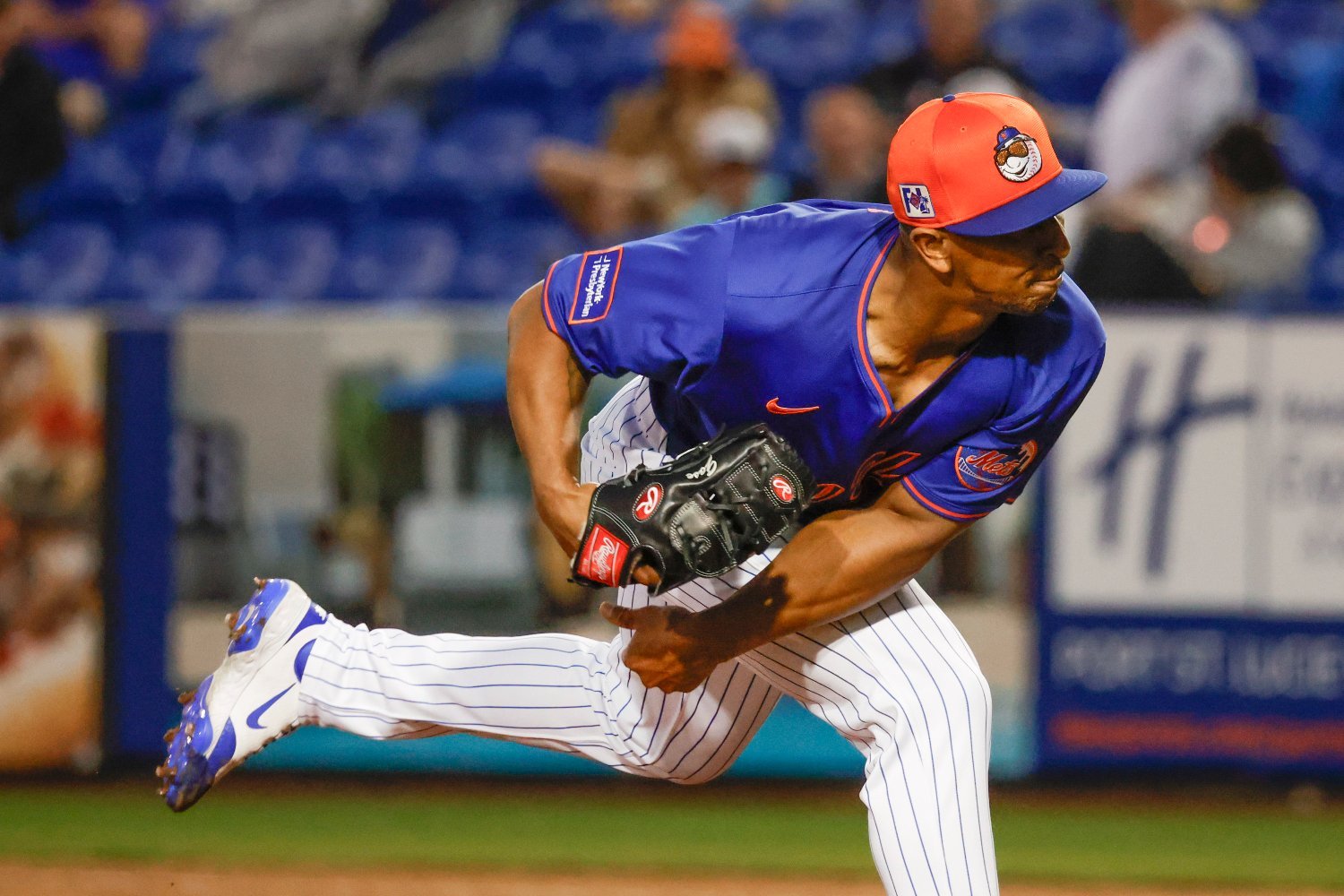 On Tuesday, the Royals signed left-handed pitcher Anthony Gose to a Minor League deal and assigned him to Triple-A Omaha. Gose was playing in the Mexican League this year with Yucatan and performed well in six appearances. In 7.2 IP, Gose allowed no runs, no walks, two hits, and struck out 15 batters. Not only was Gose's ERA 0.00, but he also posted a 0.26 WHIP with Yucatan. Thus, the Royals are hoping that Gose could be a low-risk, high-upside arm that could give them much-needed bullpen depth in Omaha. The 35-year-old was a former position-player prospect ranked as a Top-100 prospect in baseball while in the Blue Jays organization. Despite elite arm strength and speed, he struggled with hitting for contact at the Minor League level. As a result, he transitioned to pitching in 2017 and found more success. Gose made the Majors as a pitcher and posted a career 4.78 ERA and 1.34 WHIP in 31 appearances and 32 IP, all with the Guardians. He was known for his high-velocity fastball and strikeout ability, as illustrated by his career 11.5 K/9 with Cleveland. Unfortunately, the last time he played at the MLB level was in 2024, when he made only 3 appearances with the Guardians and posted a 10.38 ERA. The former Top-100 prospect primarily pitched in Triple-A in 2025 with the Mets and Diamondbacks organizations. In 37 IP, he posted a 4.62 ERA, 1.57 WHIP, and 24.3% K%. He also showed some intriguing stuff and the ability to generate whiffs in his time in Triple-A in 2025, as seen below via his TJ Stats summary. Gose isn't on the 40-man roster, so the Royals will likely keep him in Omaha for the time being. However, if any of the Royals' relievers get hurt, he could make a push for a spot on the active roster, especially if he's able to continue to throw a four-seamer in the mid to upper-90s. View the full article
 -
Garrett Acton Placed On Injured List By Twins With Shoulder Strain
DiamondCentric posted an article in Twins Daily
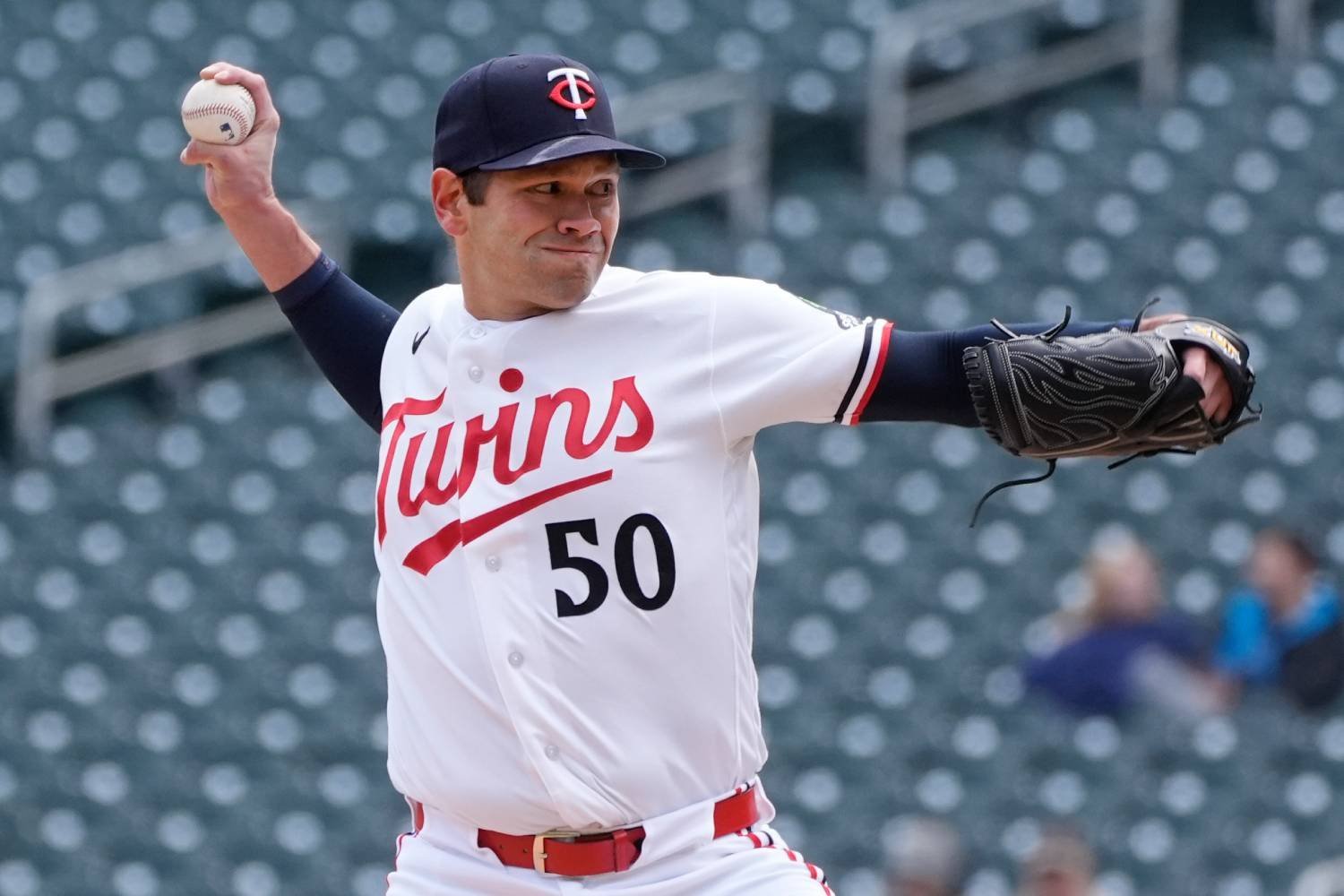 The door is open for Luis Garcia's second chance this season. The Minnesota Twins placed right-hander reliever Garrett Acton on the 15-day injured list with a strained right shoulder and promoted Garcia from Triple-A St. Paul. The 39-year-old Garcia, also a right-handed reliever, recently signed with the Twins after being released by the New York Mets. Right-handed reliever Zak Kent was designated for assignment to make room on the 40-man roster for Garcia. The Twins acquired Acton from the Miami Marlins on April 2 after he had been designated for assignment after not making the Opening Day roster. He was called up from St. Paul on April 5 and made four appearances, compiling a 2.70 ERA in 6⅔ innings, allowing four hits and three walks while striking out nine. Garcia had a 7.11 ERA in six appearances for the Mets before being DFA'd. He signed a minor-league contract with the Twins on April 21 and pitched twice for St. Paul, allowing two hits, including a homer, with no walks and a strikeout in two innings. Kent made two early-season appearances out of the Twins' bullpen, allowing five runs (two earned) on four hits with five walks and two strikeouts. If he passes through waivers, he could report back to St. Paul. View the full article
 -
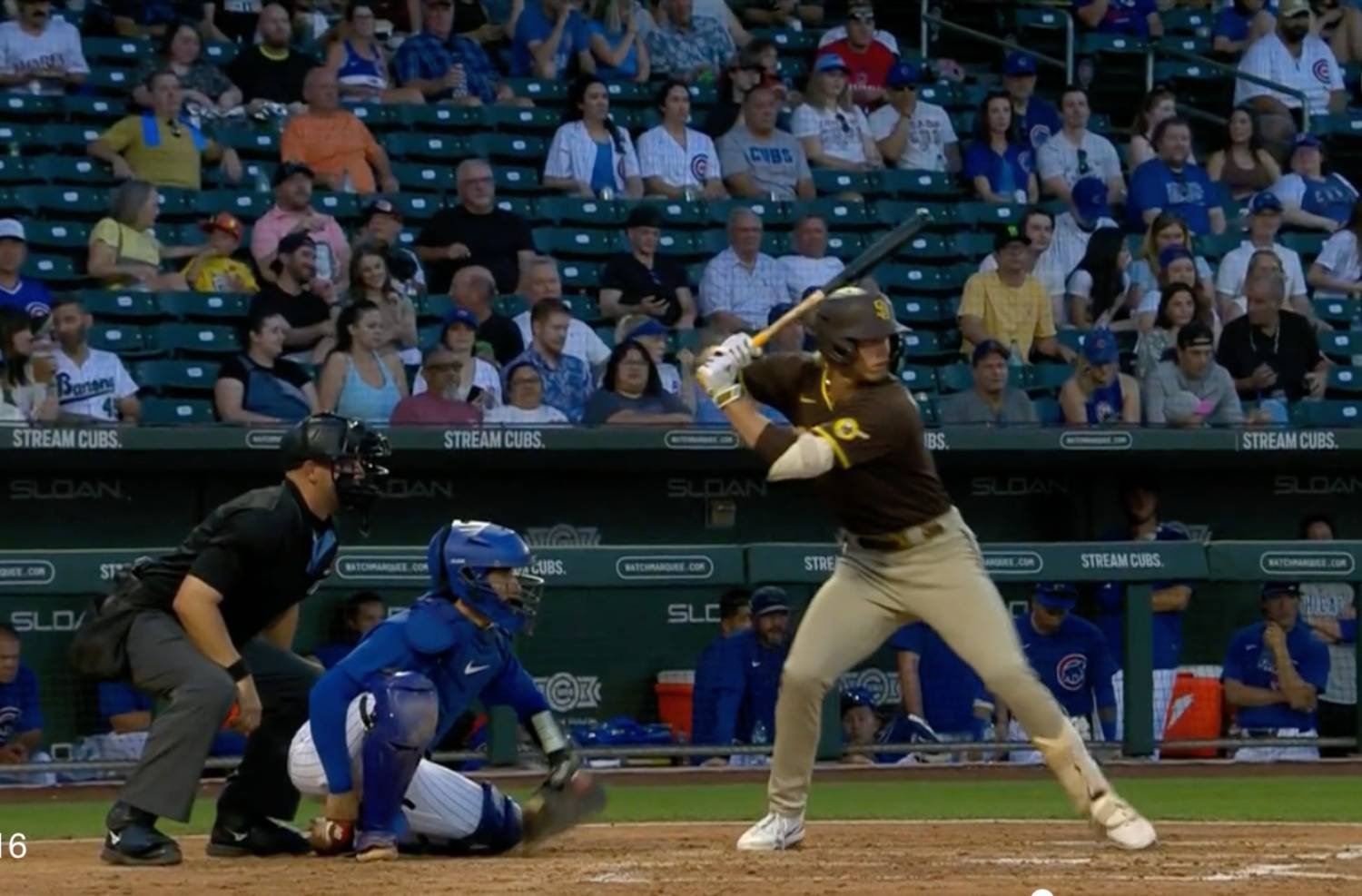 Kale Fountain's season is over less than a month after it began. Fountain, the San Diego Padres' fifth-round draft choice in 2024, was scheduled to undergo season-ending surgery Tuesday after a left shoulder subluxation, according to the San Diego Union-Tribune. The 20-year-old Fountain, Padres Mission's No. 10 prospect, was playing right field last week Tuesday for the Low-A Lake Elsinore Storm when he collided with a wall. He was placed on the injured list Monday. It is the second major surgery for Fountain. He had Tommy John surgery after the 2024 season after not appearing in any games following the draft. He was drafted as a corner infielder after setting the Nebraska high school career home run record. Fountain played in 65 games in 2025, but only 37 of those in the field as he recovered from Tommy John surgery. The 6-foot-4, 225-pounder played first base in all of those games with four appearances at third base during those 37 games. This season, he was exclusively a right fielder in the 13 games he played in. Offensively, Fountain was off to a slow start with a .182/.286/.327 slash line, hitting a pair of homers with seven RBIs and four steals in seven attempts. Last year, he had a .226/.346/.309 slash line with three homers, 34 RBIs and 21 steals in 22 attempts. View the full article
 -
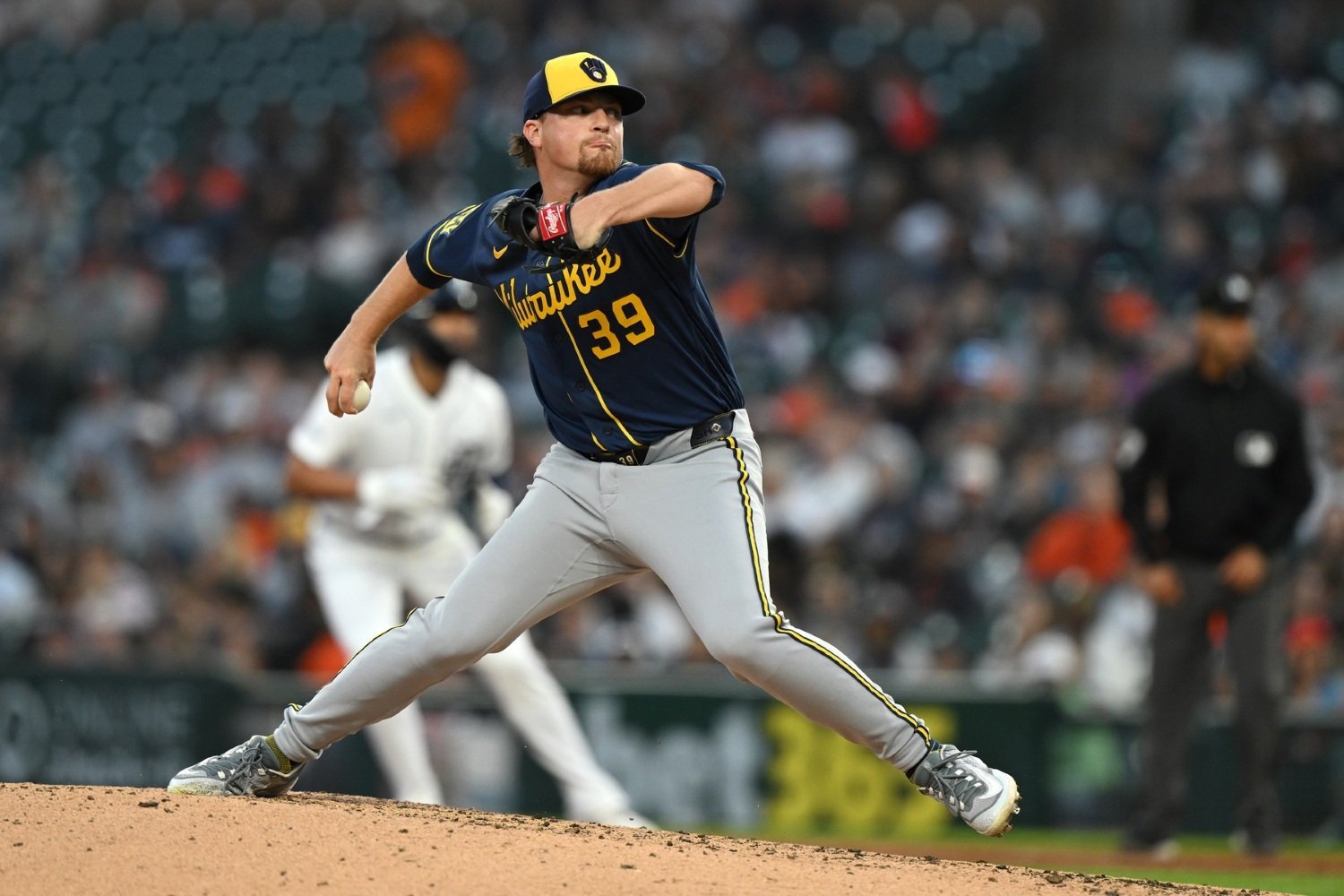 Just under two weeks ago, I wrote about Chad Patrick, who has found ways to succeed this season by throwing a glove-side sinker. That's an unusual formula, because most pitches are targeted mostly to the side of the plate toward which they move, anyway. Good pitchers find a feel for throwing their pitches to multiple quadrants, but it's hard to consistently land a backdoor curveball or to move that sinker off an opposite-handed batter's front hip and find the inner edge of the zone, without having it drift into the nitro zone. Which direction you're most likely to miss matters. Which miss direction produces a better chance of avoiding damage and/or getting a strike matters. Most of the time, those indicators nudge a pitcher toward throwing (for instance) their sinker to the arm side of the plate (inside on a same-handed batter), and their cutter or breaking ball to the glove side (toward an opposite-handed batter). Patrick's glove-side sinker was proof of his willingness to find those locations, even though it's hard to do. It also helped us understand how he seemed to be getting such harmlesss contact, and therefore putting up a great ERA despite a too-low strikeout rate. Entering his start Tuesday night against the Diamondbacks, nothing has changed. Patrick is still running a strikeout rate straight out of the 1980s, but he has a 2.35 ERA in his 23 innings of work. Entering the season, most of the optimism surrounding Patrick centered on the notion that his new slurve would help him miss more bats. The swings and misses haven't come, but neither have the runs for opposing teams. The glove-side sinker gives us some insight on that, but it feels insufficient to explain it. Can looking at the other side of the dish bridge the gap? Patrick's bread-and-butter is his cutter, and this season, the reason he's getting outs is the way he's learned to bounce from one lane to the next with it. He's lost a few of the cutters he pulled too much last year, like this one: VndNUE1fWGw0TUFRPT1fQmxBRVhGTUVBbE1BREZZRFZnQUhWd0lBQUZnRlVRY0FVMTBCQlZZTkFBRUdVMVJR.mp4 With any pitch one throws with glove-side movement, it's natural to yank it occasionally. When Patrick's target with the pitch was already set toward that first-base side of home plate, it tended to show up in bounced cutters, or ones that forced a lefty batter to take evasive action or wear a bruise on the front of their thigh. When he tried to target the third-base edge with it, the result was often even worse: he would throw an accidental meatball. QXdhMWdfWGw0TUFRPT1fQmdVRlV3QU5Vd2NBV2dRREJRQUhBZ0FGQUFNRVVsY0FCQVlHQUZGVEJBRlZVbGRY.mp4 He got away with the pitch above, to Victor Caratini, but too many of the home runs Patrick gave up as the season wore on were mistakes like that one. Scroll back up and consider that pair of movement plots, though. This year, Patrick has eliminated some of those hard-sweeping cutters in favor of ones with only relative cut, for such a hard and riding pitch. He's developed a version of the pitch he can allow to slightly move to the arm side, while still looking to the hitter like his cutter. It's opened up the arm side of the plate for him with the cutter, marking a neat and confounding pair with his glove-side sinker skills. TUFYMmRfWGw0TUFRPT1fQlFGU0FGVUhWbFFBV1ZjSFVBQUhBMU1DQUFBRVd3TUFDMVFCVkZZSEFWWlZBQU5U.mp4 When he can hit the target that well on either side of the plate, the cutter becomes an out pitch—even, as above, occasionally a strikeout pitch. However, it can also be a sneakily valuable way to get back into at-bats. Here's Patrick working from behind in the count, with a pitch Andrés Giménez was never going to swing at. QndSNnJfWGw0TUFRPT1fQWxNQVVsY0JCd29BRFZJS1h3QUhBd0VGQUZrTlZBTUFBQWNEQkFNR0IxWlRBVkJm.mp4 It's possible to consistently generate a low BABIP and take the sting out of even modern lineups. To do it, though, you have to be able to move the ball east and west and get hitters into a defensive mode. Mixing an unusual set of glove-side sinkers with arm-side cutters has been the secret sauce for Patrick. That doesn't mean he can keep it up, for sure. To feel more confident about that, you'd want to see more strikeouts. However, while his run prevention continues to outpace his peripherals, this dynamic helps us understand how. Few pitchers are willing to make such a significant change to their go-to pitch. Patrick has been unusually flexible with his. He's changed the whole spin profile of his cutter this year, turning it from a pitch that had more glove-side spin to one that often has closer to pure backspin. He gets cut using his low arm angle, seam orientation and the position of his hand at release. Look at the distribution of his pitches by type based on initial spin direction (on the left) and on observed movement (right), and you can see a change in the starting point and in the diversity of directions the cutter can veer this year. Patrick's four-seamer plays better off this version of his cutter, because they look similar a hair longer and the four-seamer can seem to explode on hitters more than its sheer speed or movement would suggest. Again, though, the main benefit is that this tweak to his cutter allows Patrick to work both sides of the plate with it. He hasn't lost the glove side; he's just unlocked the arm side. He still won't live there with that offering. When he needs to go there, though, he can do so with much more confidence this year than last. That does make a real difference. Unlike most pitchers of this era, who live by the power and the sheer traits of their pitches and stick to a small target area for each offering, he's embracing the old-school notion of using the whole zone with his hard stuff. He had better miss more bats, if he wants to keep his ERA under 3.00. For now, though, this new wrinkle makes him a more complete and balanced pitcher, and a fun one to watch. View the full article
 -
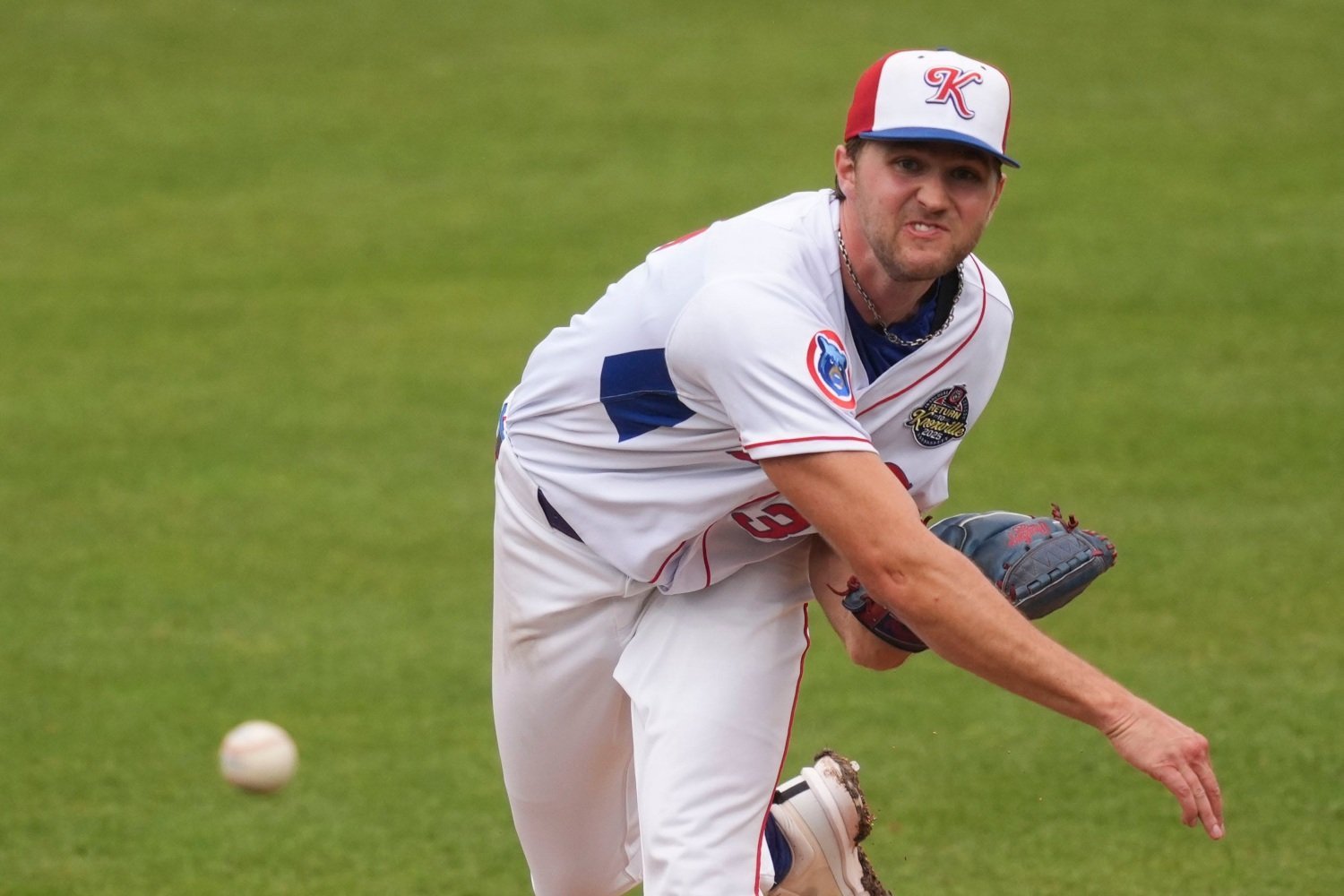 RHP Brooks Caple (South Bend Cubs) How He Got Here: A ninth-round pick in the 2024 draft, Caple worked through a full season in 2025 before moving into a larger role at South Bend. Early in 2026, he's already picked up a Pitcher of the Week honor, a sign that his progress is being noticed. Hitting the Hot Button: Caple has taken a clear step forward to open the season, posting a 2.89 ERA across 18 2/3 innings, with 24 strikeouts against just three walks. The improved control has allowed him to work cleaner innings while still missing bats. Opponents are hitting .179 against him, and he has done a strong job keeping runners off base and avoiding big innings. RHP Grant Kipp (Knoxville Smokies) How He Got Here: Kipp returned to Double-A after logging over 100 innings at the level last season, entering the year with a focus on tightening his approach. That work has already paid off, earning him multiple Pitcher of the Week honors along with a non-roster invite to big-league camp. Hitting the Hot Button: Kipp has looked more settled at the Double-A level, putting together 18 1/3 innings with a 2.45 ERA while striking out 21 and walking five. The strikeout ability has held steady, and the reduced walks reflect an improved ability to work ahead in counts and limit extended innings. Opponents are hitting just .175 against him, reflecting how well he has managed contact. LHP Jackson Brockett (Myrtle Beach Pelicans) How He Got Here: Signed to a minor-league deal in February, Brockett jumped straight into his first professional assignment with Myrtle Beach and has worked primarily in a multi-inning relief role. Hitting the Hot Button: Brockett has made an immediate impression in his first taste of pro ball, tossing 14 2/3 scoreless innings while holding hitters to a .109 average. He has struck out 15 along the way, and just as importantly, he's kept contact to a minimum while working efficiently through his outings. While the sample is still building, it's an early return worth following. Final Thoughts It is still early, but this group offers a snapshot of how the Cubs’ pitching pipeline is beginning to take shape. Caple’s early step forward, Kipp’s continued progress at Double-A, and Brockett’s fast start in his first pro action highlight the range of development across the system. If these trends hold, the Cubs could soon have multiple arms pushing into bigger conversations as the season takes shape. View the full article
 -
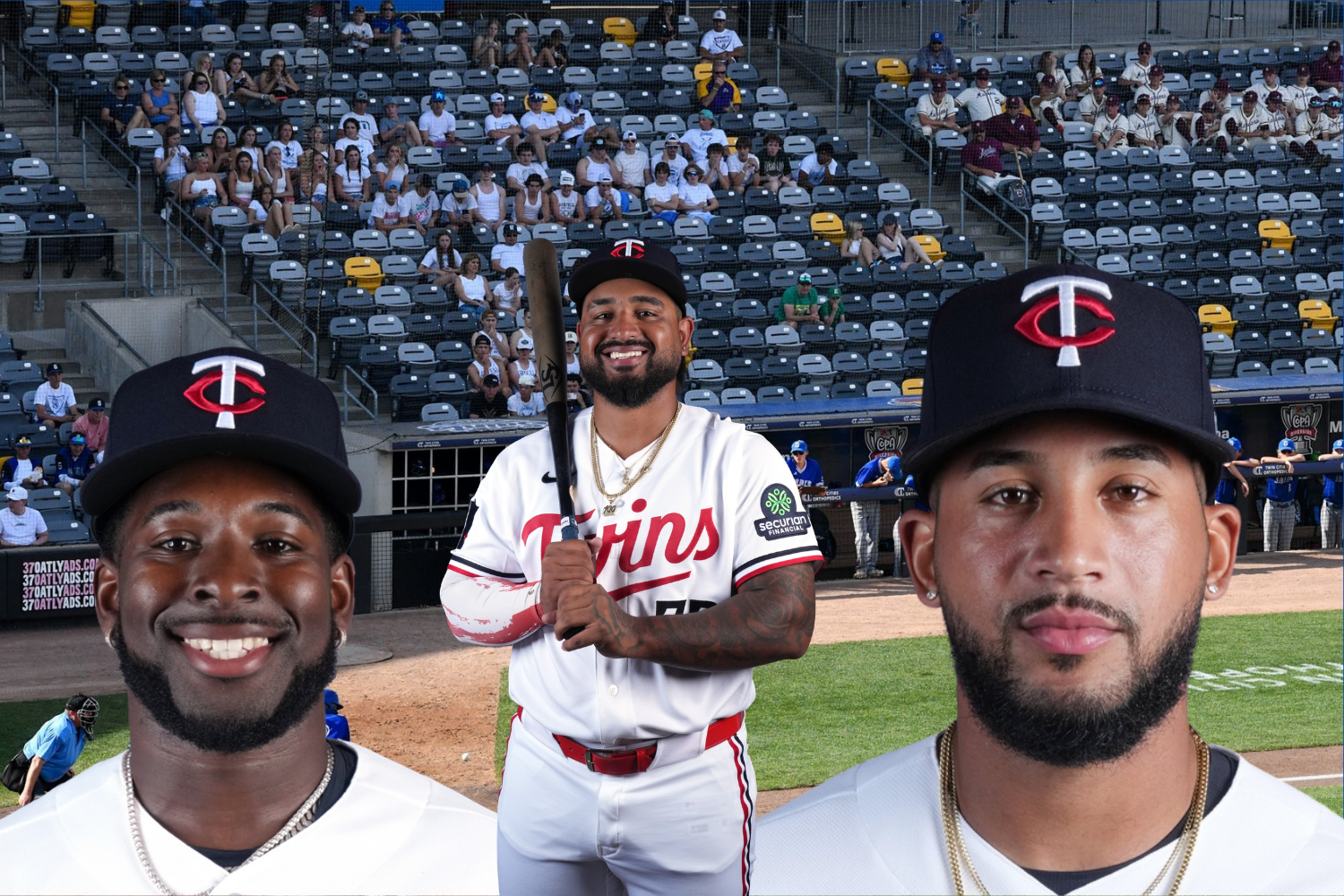 It’s starting to warm up in the Twin Cities. Slowly, but surely, it’s feeling more like spring. On Tuesday, the Saints put on an offensive showcase, decimating Iowa Cubs pitching to the tune of six home runs. Here’s some of what I noticed at CHS Field. Emmanuel Rodriguez I wrote about Rodríguez in-depth last week. If you missed that piece, here are the headlines; he’s chasing a bit more and swinging at strikes much more. That’s the kind of tradeoff you have to make if you don’t have great bat-to-ball skills, as major-league pitchers will throw too many quality strikes for a hitter to be passive. Rodríguez has also closed his stance slightly at the plate, helping with the directionality and rotation of his swing. After a quiet week last week, everything was working for Rodriguez on Tuesday. After taking a sweeper low for ball one, Rodriguez hit a 118.3 mph nuke to right field on the next pitch, a 93-mph cutter that Ethan Roberts left over the heart of the plate. That’s the hardest-hit ball in Minor League Baseball in 2026. It’s the second-hardest anywhere, behind only Oneil Cruz. Rodríguez is Cruz, with a much smaller strike zone and better defensive instincts. The process here is as good as the outcome for Rodríguez, who didn't allow Roberts back into the at-bat after getting ahead. He repeated the trick in his next trip, this time taking a Trent Thornton sinker on the outer half out of the park for his second home run of the game, raising his OPS to .945 on the season. Surely a call up is imminent. Kaelen Culpepper Kaelen Culpepper has been mired in his first Triple-A slump. He busted out of it in a big way on Tuesday. Jordan Wicks left a curveball up on the inner third, and Culpepper took into the bullpen for his fourth home run of the year. After going down 0-2 to Jace Beck in his third at-bat, Culpepper took three consecutive balls before taking a 94 mph fastball out for his second home run of the day, at 103 mph off the bat. Culpepper has cut his groundball rate significantly in 2026 (from 50% to roughly 38%), and his ability to pull the ball may lead to his power production outpacing his raw power. The one area I’d monitor with Culpepper is his chase rate, which sits around 30%. From my looks this season, he’s been more prone to chase early in counts and often does a great job of battling back in his plate appearances. That approach will be more challenging in the majors. Walker Jenkins Walker Jenkins (who turned 21 two months ago) has had a slow start for St. Paul. If you peek under the hood, though, everything looks extremely promising. He’s running an in-zone contact rate of 92% (87% overall) and chasing only 16% of the time, leading to a robust 16% walk rate. He’s hitting the ball harder, too. He’s added to both his average EV and max EV. That’s encouraging, given that the main knock on Jenkins has been a lack of in-game power. It’s likely that facet of his game won’t be fully formed for a while yet. So why the slow start? Jenkins has had much more of a ground-ball problem this year. He’s swinging about 8% less overall. My theory is that he’s a little passive, and getting into some counts that result in poor quality of contact. He’s never had a ground-ball issue, though, so this isn’t something I’d stew over. He crushed a 107-mph double off lefty starter Wicks in the first inning. I expect the production to catch up to the process pretty soon. Gabriel Gonzalez If I don’t include González, I’ll get yelled at. He had a great game, too. After a single in the first inning off Wicks, he took a slider down and in deep for a home run at a 104-mph EV in his second at-bat. González consistently crushes any breaking pitch inside that isn’t buried. Notably, González was playing first base for the Saints today. Even though he’s had a slower start offensively, he’s already up to 7 home runs on the season. González has a combination of skills I consider dangerous for a hitter. He has excellent bat-to-ball skills, both in and out of the strike zone, and he chases a ton (39%). My fear for him is, he’ll need to rein in some of his aggressiveness in the majors, or he’ll generate a ton of weak contact. In the right role, though, he can be a dangerous hitter. View the full article
 -
Two Former Royals Get New Big League Chances in National League
DiamondCentric posted an article in Royals Keep
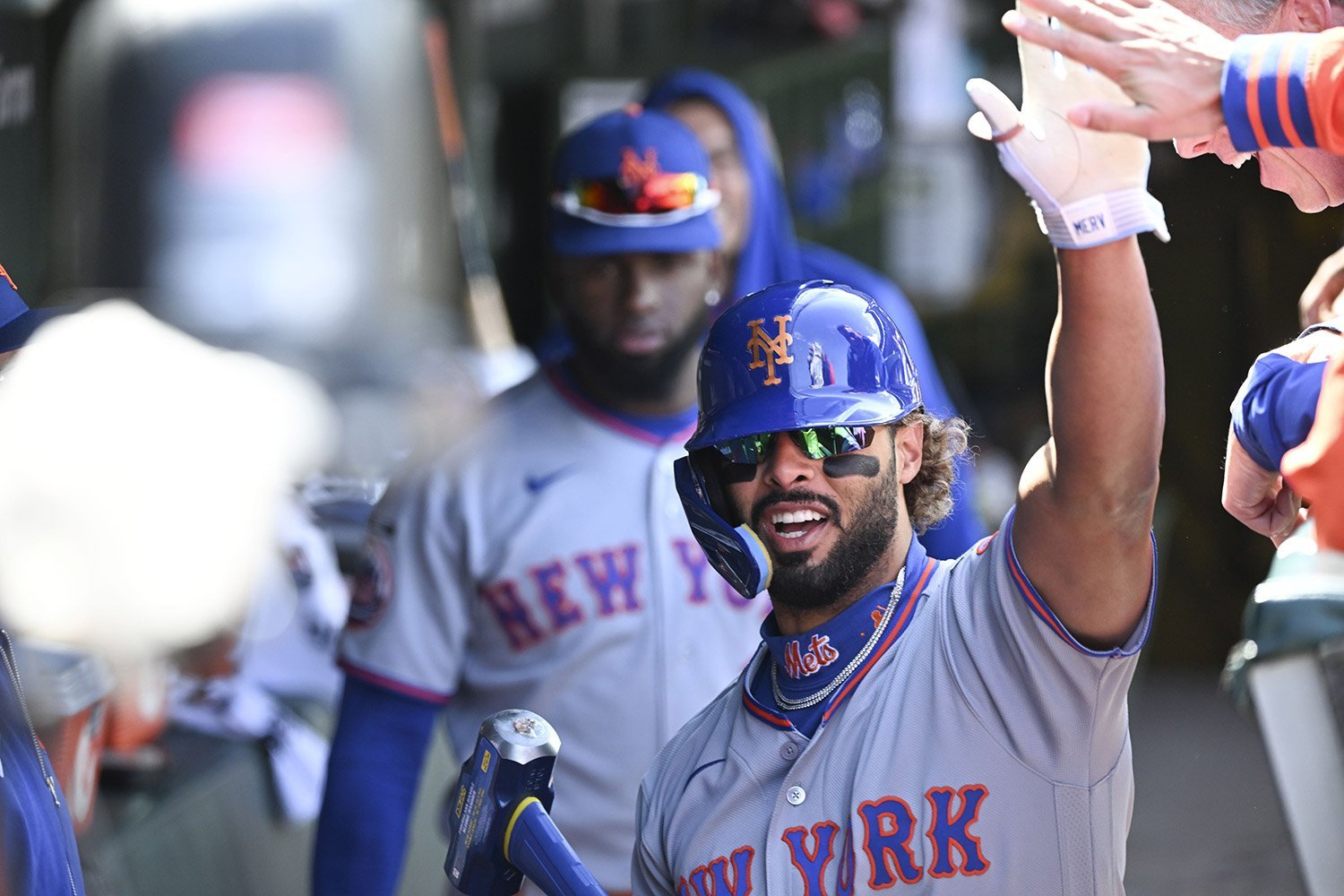 Nicky Lopez, the former Kansas City Royals utility infielder whose surprisingly excellent 2021 season made franchise history before he became a journeyman player two years later, and ex-Kansas City catcher-turned-outfielder MJ Melendez, who never reached the heights his 41-homer 2021 minor league season suggested he would, found themselves unemployed after the 2025 campaign ended. Lopez left the Cubs, his fifth organization since the Royals successfully shopped him at the 2023 trade deadline, for free agency in November, and the Royals made Melendez a free agent when they non-tendered him later that month. Today, though, both familiar former Royals are back in the big leagues, Lopez with the Cubs and Melendez with the Mets. What the future holds for either of them is, however, uncertain. New York is Former Royals Outfielder MJ Melendez’s New Home The Mets became Melendez’s second baseball home when they signed him just as spring training began. He seemed to be vindicating the club’s faith in him by going 4-for-11 with a pair of homers and five RBI in Grapefruit League play, but started the season in Triple-A, where he’d slumped to .216/.286/.431 when the Mets called him up April 15 to replace injured Jared Young. (To his credit, four of Melendez’s 11 Triple-A hits were for extra bases, including two homers). What Melendez brings to the Mets’ table is power potential. Those 41 homers he clubbed in 2021 led the minor leagues, and that he hit 18 as a Royals rookie the following season, then 16 in 2023 and 17 in 2024, proves he can swing a big bat. But it takes more than potential to stay in the majors, and Melendez didn’t deliver it — he hit only .221 and, despite making some stellar defensive plays, posted unflattering marks in the outfield (-17 OAA and -25 DRS) across the same period. He managed 20 Triple-A homers last season, but the .083/.154/.167 line he posted in 23 games with the Royals seemed to seal his fate with the franchise. He’ll have to hit much better to stick with the Mets. He struck out to end his new club’s 3-1 loss to Colorado Sunday, but is a respectable 6-for-22 (.273) with three doubles, a homer, and two RBI in 24 plate appearances since being called up. The Cubs Keep Coming Back to Former Royals Infielder Nicky Lopez The Cubs seem to find Lopez easy to let go but harder to resist — reportedly prized by skipper Craig Counsell, they’ve acquired him four times in a little more than a year, with his last stint with the organization beginning last Thursday when they picked him up from Colorado in a cash-for-player deal. Chicago brought him up the next day. Lopez startled baseball in 2021 when Adalberto Mondesi’s injuries forced him into the everyday lineup —he became the first shortstop in club history to hit .300, and finished the campaign with a career-best .300/.365/.378 line. Since then, Lopez hasn’t hit better than the .241 he posted with the White Sox in 2024; he’s hitless in two at-bats so far this year. But the Cubs don’t need him to wield a .300 bat — what he really brings to Wrigley Field is a good glove and the ability to play shortstop, second, third, and even first base if he has to. He’s also dabbled a bit in left field. How long Lopez and Melendez stay in the majors is anyone’s guess. Either could be back in the minors by the time fans read this. What’s clear, though, is their new teams value them enough to give them new big league chances. View the full article
 -
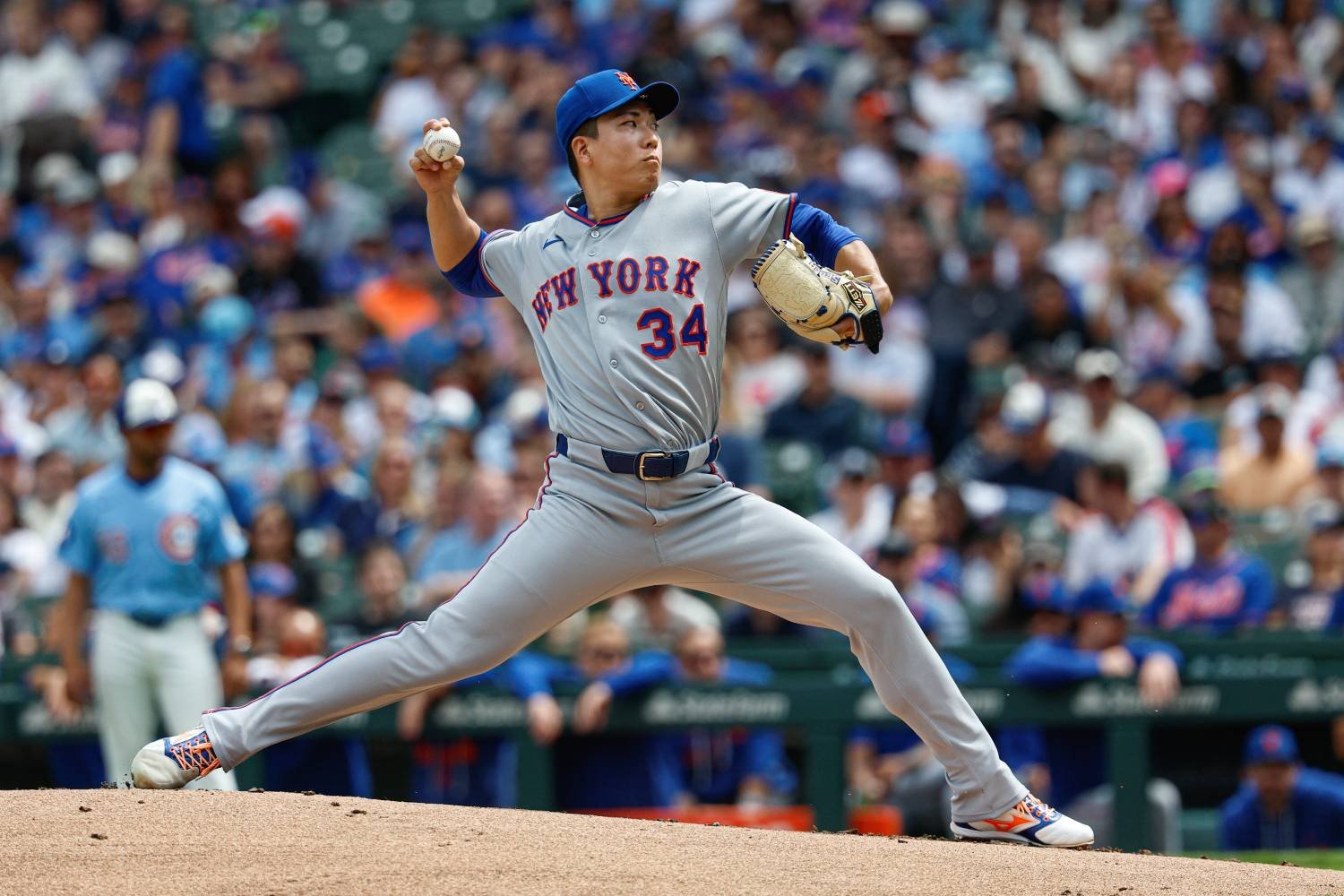 There is a temporary solution to the New York Mets' Kodai Senga problem. The right-handed starter was placed on the 15-day injured list Tuesday with inflammation in his lumbar spine. Right-hander Christian Scott was called up from Triple-A Syracuse and could be a possible rotation replacement. It is not known how long Senga will be out. Senga is coming off a 2⅔-inning start against the Colorado Rockies in Sunday's doubleheader in which the Mets were swept. He allowed three runs on three hits and three walks with one strikeout in a 3-0 loss. That was the latest chapter in a frustrating season for the Japanese right-hander. In five starts, Senga is 0-4 with a 9.00 ERA, walking 13 and striking out 23 in 20 innings. That includes a 17.28 ERA in his last three outings. Scott was called up to make a spot start April 23. He went just 1⅓ innings, allowing one run with no hits but walking five and striking out one. Scott also made nine starts for the Mets last year with a 4.56 ERA. View the full article
 -
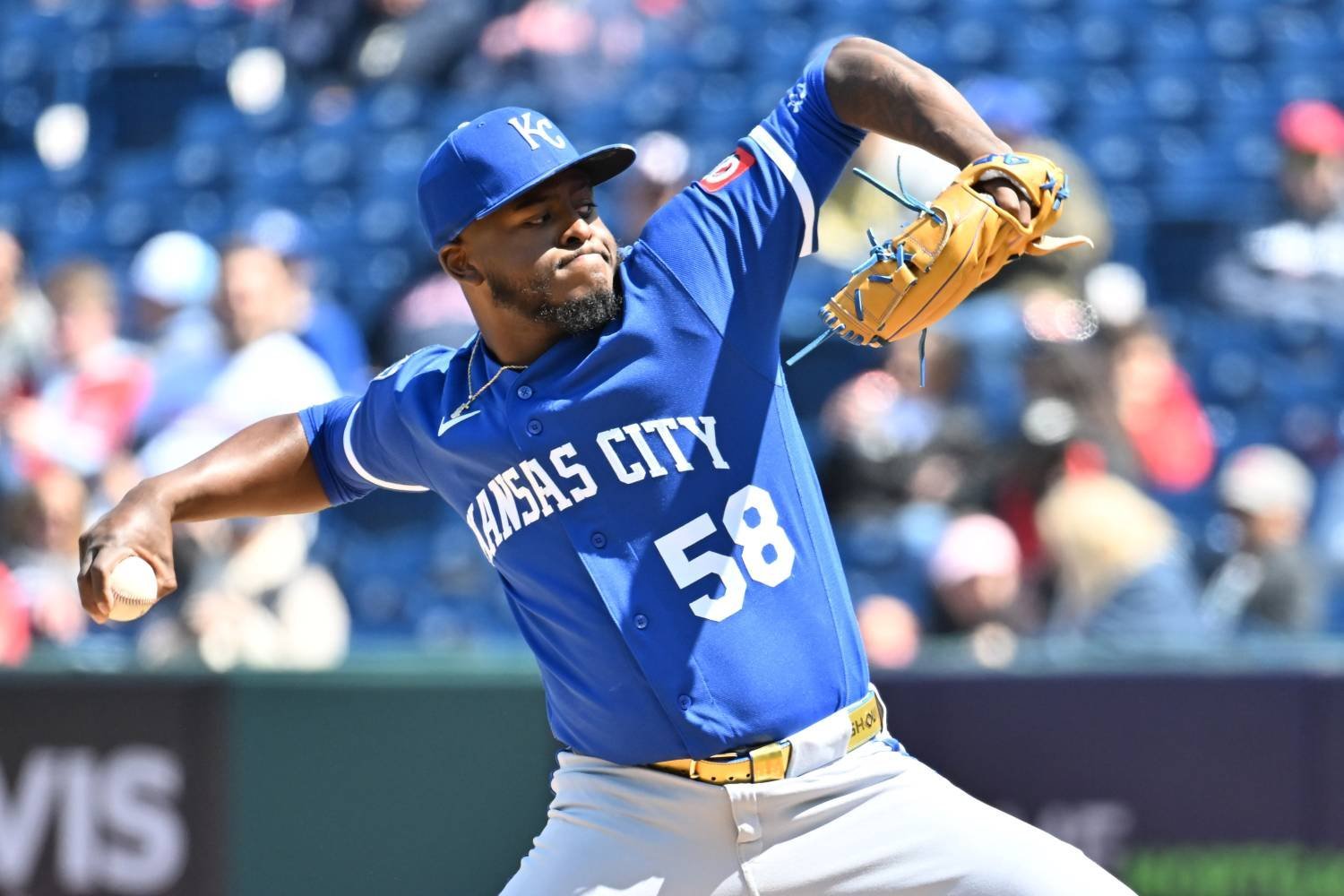 The Kansas City Royals made a minor move in the bullpen Tuesday, bringing back right-hander Luinder Avila and optioned right-hander Eli Morgan to Triple-A Omaha. Avila made two appearances, including his first MLB start, in his first stint with the Royals this season. There is not currently a rotation opening, so a bullpen slot is his likely role entering a three-game series on the road vs. the Athletics that begins Tuesday. Avila, who made 13 relief appearances for the Royals as a rookie last year, made four starts at Omaha, but went just 10⅔ innings. He allowed five runs on 11 hits and seven walks with nine strikeouts. Morgan was called up April 9 and appeared in seven games with a 2.61 ERA, walking six and striking out nine, allowing eight hits in 10⅓ innings. View the full article
 -
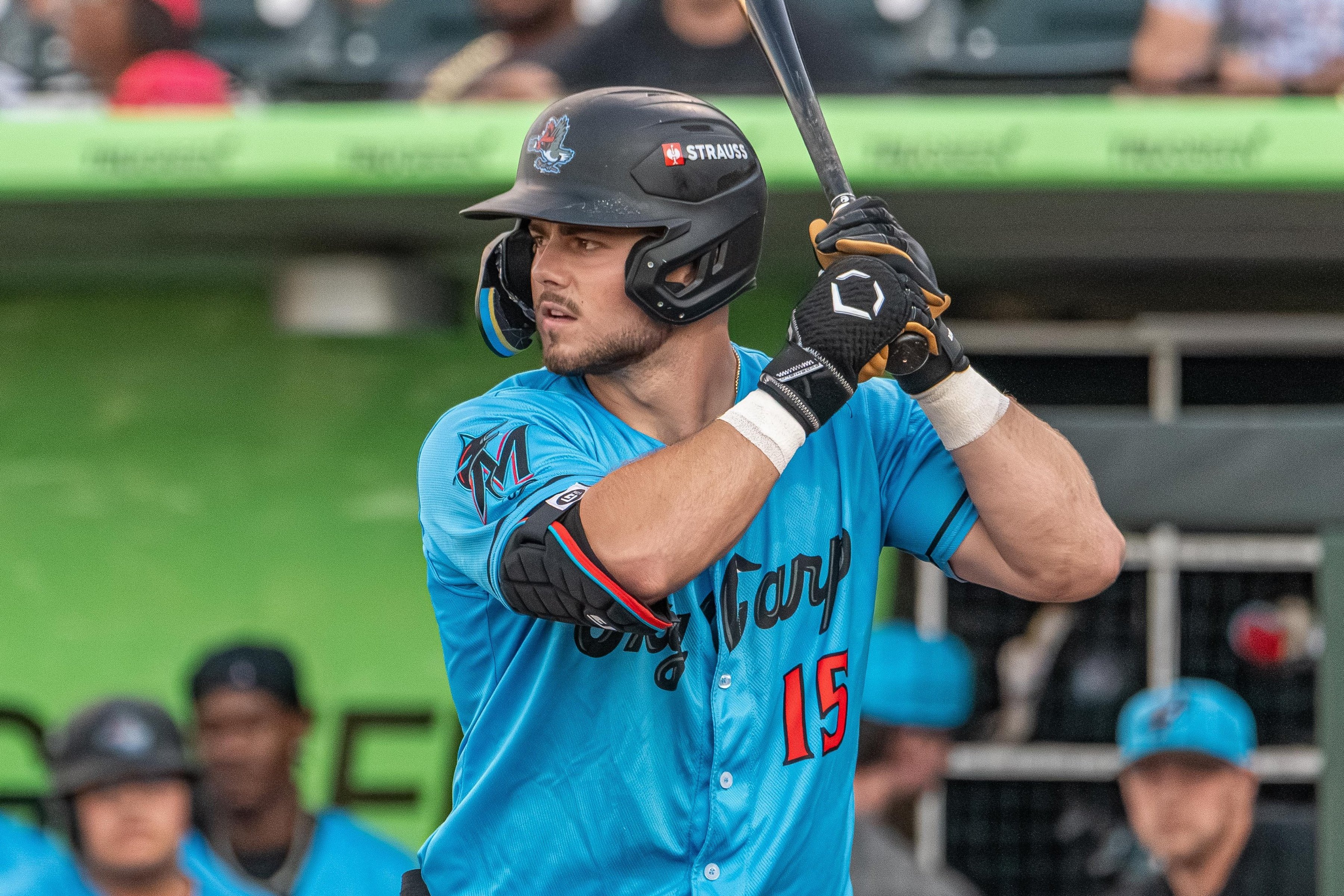 For the 2026 season, Fish On First will provide weekly reports on the Miami Marlins farm system, covering all levels. Here's the final April edition of our Fish On First Prospects Report, which as always includes several important injury updates near the bottom of the page. This report covers the games played from April 21-26. Triple-A Jacksonville Recently ranked as Fish On First's No. 8 prospect, Kemp Alderman finished the week with nine hits, capping off the week with a grand slam on Sunday, marking his fourth home run of the season. After a slow start to the season, Alderman is now slashing .253/.354/.458/.812 with four home runs and 10 RBI. The only downside for Alderman has been his 35.2% strikeout rate, which is the highest of his minor league career thus far. Jared Serna finished the week with five hits and drove in five runs. He is now slashing .243/.312/.314/.626 with one home run and seven RBI. He has also stolen five bases, which is second-most on the team. Serna was one of three players acquired in the Jazz Chisholm Jr. trade back in 2024, and after a strong start to his organizational tenure, he has struggled, particularly in the slugging department. An under-the-radar name on the pitching side has been Zach Brzykcy. The 26-year-old reliever was claimed off waivers from the Washington Nationals. No longer occupying a 40-man roster spot, he has a 0.84 ERA with 11 strikeouts in eight appearances. On Sunday, his fastball averaged 94.5 mph and he closed out a Jumbo Shrimp win with a strikeout on his curveball. Brzykcy has MLB experience in each of the past two seasons and he's setting himself up for a return soon. Another righty, Jack Ralston, impressed during spring training, and he continues to succeed with the Jumbo Shrimp. In nine games, he has a 1.46 ERA, 1.68 FIP, 15.32 K/9 and 5.11 BB/9. He possesses similar mid-90 fastball velocity, but his splitter is his biggest weapon—18 of his 21 total strikeouts have come on that pitch. Ralston has yet to make his big league debut. This past week, Josh Ekness, who is now Fish On First's No. 20 prospect, surrendered three runs in one outing, then he allowed two more on the day of this article's publication. His season ERA has ballooned to 4.38. Double-A Pensacola It was a busy week for the Wahoos, who played seven games in six days against the Biscuits, including one game that was made up from a previous rain out. Pensacola got the better of Montgomery during the week, taking foir of the contests despite losing the run differential battle by one. Despite being thin in the pitching department, After a bit of a slow start with the stick, Ryan Ignoffo found it during this series. In four games against Montgomery, he went 7-for-16 with a home run, two doubles, and two RBI. In the first game of the seven-inning doubleheader on Thursday, he came within a triple of the cycle. A 20th-rounder from 2023 who only converted to catcher after turning pro, Ignoffo spent most of the offseason and spring training honing in on his defense, particularly with blocking and framing. Those exports have shown up well for Ignoffo so far as he’s allowed just one passed ball in 110 innings. He also owns a strong arm, contributing to his 32% caught-stealing rate last year. He is off to a 25 CS% start this season. Drafted as a two-way player, Ignoffo came out of the draft with catcher being one of few positions he had never played. The Marlins challenged him with it and he continues to improve with age. Offensively, Ignoffo has a good feel for the barrel, keeping CSW%s in check year over year, including 24.6% so far on the young campaign. His ability to at least fight strikes off limits his strikeout rates and he’s got some good gap-to-gap pop which allotted him 20-plus doubles in both 2024 and 2025. Ignoffo has seen his walk rates shrink a bit as he’s matriculated to the upper minors, but overall, he’s been an above average hitter at the Double-A level; he has a 106 wRC+ on the young season. A good athlete with a sneaky-good bat, Ignoffo should take over as the primary catcher once Joe Mack is called up. On current track, he should be able to stick as an at least serviceable backstop with potential positional flexibility to fill in at the corner infield or corner outfield spots. Karson Milbrandt keeps rolling. His latest exports this week were six innings worth of one run ball on six two hits and six strikeouts. His only run came on a home run. In his first four starts, Milbrandt owns a minimal 1.96 ERA, which ranks third-best in the Southern League. His 23 strikeouts are fourth-most on the circuit. Maintaining control and command particularly deeper in starts will continue to be Milbrandt’s MO as he rounds out his development and attempts to realize a mid-rotation ceiling. Because of the command dipping later in his outings and due to his just-average size, there is some reliever risk, but with great raw stuff and improving fastball velocity, he should have no problem finding the middle ground of that equation. High-A Beloit It was a very rough week for the Sky Carp who dropped four of six games in their series against Great Lakes, only taking the first and last games. Run scoring wasn’t an issue for Beloit who plated over six runs a game and 40 total including at least nine in three of the contests, but their pitching continued to struggle. The team now owns a 6.57 ERA, third-highest in the Midwest League. They now lead the circuit in walks with 136. It was a solid series at the plate for Cam Clayton who went 3-for-12 with a home run, seven RBI, and six walks while striking out three times. A 14th-round pick from 2024, Clayton spent 2025 mostly at Low-A where he slashed .242/.356/.390 with a 48/36 K/BB. The solid on-base numbers have followed him to Beloit this year where he is currently slashing .188/.480/.344. Clayton was drafted as a shortstop, but he quickly made the move off of the position as a pro. He’s spent time as a third baseman, but just-average arm strength befits him best for first base where he has played 88 ⅓ innings. Clayton, 6’1”, 205, isn’t built for much power, but as long as he is seeing pitching as well as he historically has as he continues to rise through the minor league ranks, he provides intrigue. He’s also a crafty baserunner, having stolen nine bases already this season. If Clayton can improve contact rates, he will be a pesky bat off the bench at the next level. Another offensive catalyst this series was the 2025 second-round pick, who was hitting everything in sight. On the series, Brandon Compton went 8-for-14 with two homers and five RBI. Arguably most impressive of all is the rate at which Compton walked. In these six games, he took a whopping 11 free passes while striking out just six times. Like Clayton, the ability to see pitching extremely well will give him a decent floor, but his defensive inflexibility could limit his ceiling. What will drive Compton’s future will depend on how much he can tap into solid raw strength while not straying too far from his patient roots. If he can become a consistent power threat while continuing to walk, he has a starter’s ceiling. Keep a close eye on his power numbers as he continues to develop and climb through the levels. Upper minors pitching will be a good measuring stick for the lefty Compton. That promotion could happen later this season, especially if he continues to build on his 170 wRC+. Low-A Jupiter A 21-year-old left-handed pitcher, Julio Mendez was named our FOF Minor League Player of the Week after striking out 11 through five innings of work in his most recent start. His fastball topped out at 95.2 mph and averaged 93.1 mph. Mendez's performance has been phenomenal dating back to the 2025 All-Star break, allowing a total of nine earned runs over those 11 starts. Andrés Valor had been ice cold at the plate until this past series. The athletic outfielder slashed .250/.464/.400 with three steals, including three batted balls with an exit velocity of at least 105 mph. Maintaining that throughout the month of May could earn Valor a ticket to Beloit considering he already has a full year of Low-A experience under his belt. Injuries/Rehab Following Christopher Morel's return to the Marlins active roster, there are no longer any injured big leaguers currently on rehab assignments. It looked as though Jacksonville's Jacob Berry had suffered a significant injury when he exited Friday's game early. Fortunately, he returned to the lineup on the day of this report. Aiva Arquette (core muscle surgery) is scheduled to make his 2026 season debut during this upcoming week. For complete Marlins MiLB injury updates, bookmark this page. This week's MiLB schedule Triple-A Jacksonville at Durham Double-A Pensacola vs. Biloxi High-A Beloit at Lake County Low-A Jupiter at Dunedin View the full article
 -
Trey Yesavage Officially Back For Blue Jays, Will Start Tonight
DiamondCentric posted an article in Jays Centre
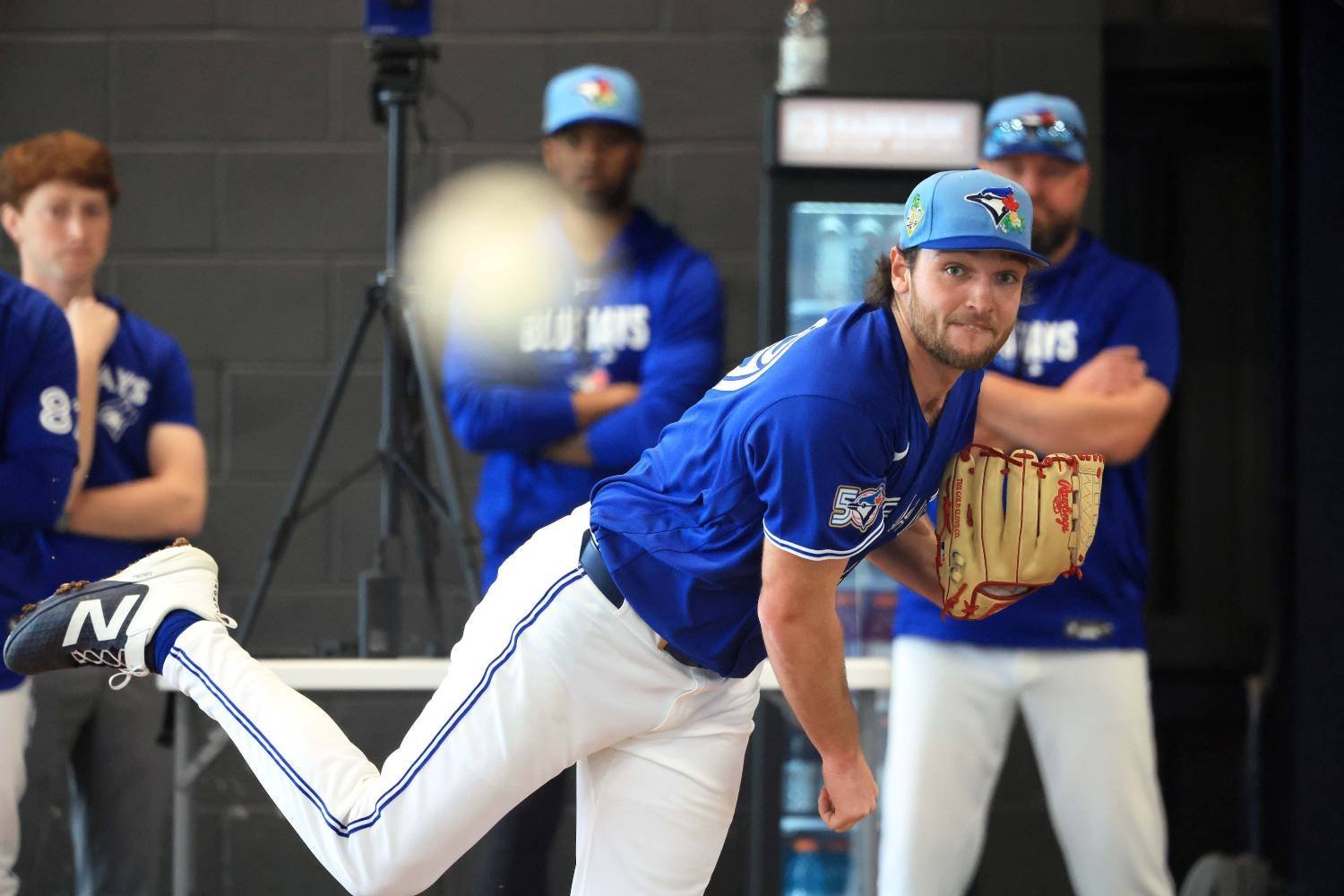 The move Toronto Blue Jays fans have been waiting for finally happened: Trey Yesavage is back. The right-hander was activated Tuesday from the 15-day injured list following a right shoulder impingement. Right-handed reliever Chase Lee was optioned to Triple-A Buffalo to make room on the 26-man roster. Yesavage will be the starting pitcher in Tuesday's game against the Boston Red Sox. Yesavage, Jays Centre's No. 1 prospect, had only made three regular-season starts for the Jays when he made a name for himself with 11 strikeouts over 5⅓ innings in his postseason debut. He ended up being instrumental in Toronto's run to the World Series, including a seven-inning, 12-strikeout performance in Game 5 of the World Series to put the Jays on the brink of a championship. Now, the 22-year-old returns with the team needing some stabilization in the rotation after right-hander Max Scherzer went on the IL Monday. Yesavage's shoulder issue popped up in spring training. Lee was called up Monday to replace Scherzer on the roster and pitched 1⅓ innings in the series opener vs. the Red Sox, a 5-0 loss. Lee allowed a solo homer as the only hit in his outing. View the full article
