


DiamondCentric
-
Posts
2,631 -
Joined
-
Last visited
Never
Content Type
Profiles
Forums
Events
News
Tutorials & Help
Major League Baseball Videos
Guides & Resources
Store
Downloads
Gallery
Everything posted by DiamondCentric
-

Gary Sánchez's Swing Decisions Are Getting Better With Age
DiamondCentric posted an article in Brewer Fanatic
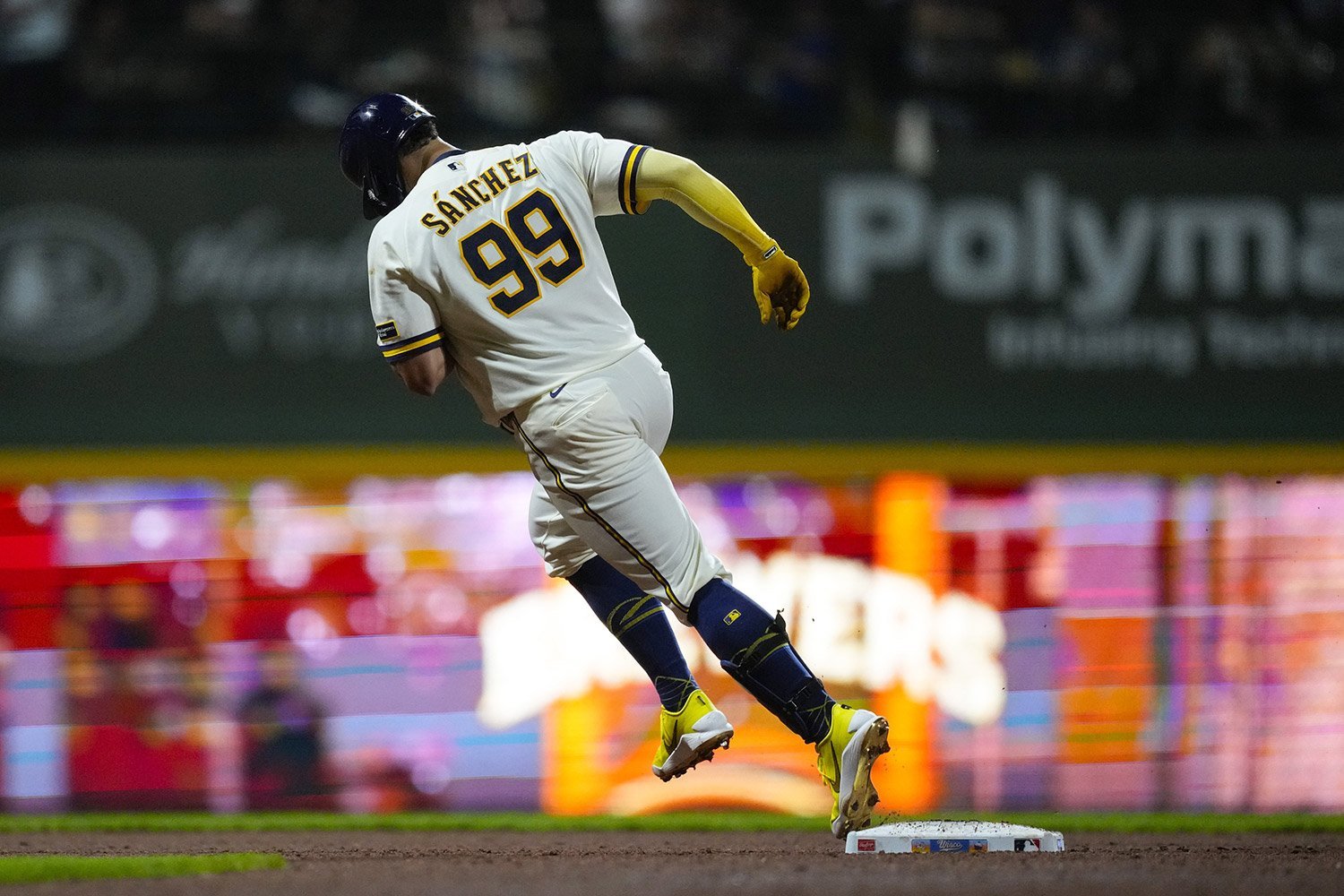 For much of his career, Gary Sánchez has lived on the edge of controlled chaos at the plate, pairing elite raw power with a tendency to chase pitches pitchers were more than happy to offer. This year, though, that balance looks noticeably different. Sánchez is swinging hard, and he’s swinging smarter, trimming his chase rate and showing a more disciplined approach that forces pitchers back into the zone. That shift matters even more for a Milwaukee Brewers lineup currently missing key bats like Christian Yelich, Jackson Chourio, and Andrew Vaughn. With less margin for error in the lineup, his improved swing decisions are helping stabilize an offense that needs production wherever it can find it. Sánchez was reunited with the Brew Crew in the middle of February, and the 33-year-old has been a much-needed bat during this early part of the season. Sánchez is hitting .236/.391/.582 with five homeruns entering Friday’s action, which is good for a batting run value of +7, in the 91st percentile of all MLB, and 25th overall. His slugging prowess at the plate is Sánchez’s calling card, but the unique surprise so far this year has been his patience. His chase percentage is in the 92nd percentile at 19.7%, while walking 20% of the time puts him in the 98th percentile for walk rate. That walk rate is currently the 8th-best in the league, with teammates Garrett Mitchell and Brice Turang joining him inside the top ten. This change in approach demonstrates extremely uncommon levels of discipline for Sánchez, even when going back all the way to his days with the Yankees. His two best seasons in the pinstripes saw him hit 33 home runs in 2017 and 34 home runs in 2019, earning an All-Star nod each year. However, in 2017, his chase percentage was in the 17th percentile, while his walk rate was in the 39th percentile. 2019 saw similar results, but with both slightly better; his chase percentage was in the 24th percentile, while his walk rate crept above league average into the 55th percentile. This may be a change he’s made in the latter half of his career, as Sánchez’s chase rate has gotten better each season since 2024, but then again, he only played 29 games last season with the Orioles and 89 the year prior in Milwaukee. Neither of those years was a great offensive year for Sánchez (94 OPS+ in 2024 and 100 OPS+ in 2025), so Milwaukee will gladly take the level he is producing at right now. Strikeouts will always be a factor in Sánchez’s game, and those too have been down. He is currently striking out 23.1% of the time, still not great, but below his 26.7% career average. Will that number tick back up? The answer is probably; Sánchez has still been whiffing around his career average. Still, it is easier to deal with a version of Gary Sánchez that strikes out while also walking as much as he currently does. His barrel percentage is something to keep an eye on as well. It is currently way higher (19.4%) than his career mark (14.3%), and even higher than his barrel percentage in both of his all-star seasons. Expect this to go down, at least slightly, but if his quality of contact remains this good, it will be close to a career year in terms of Sánchez’s advanced metrics. It will be intriguing to see if the man Yankees general manager Brian Cashman dubbed “The Kraken” is able to keep this up. Obviously, it isn’t likely, but then again, the Brewers have often worked their magic to get the best out of players, much to the dismay of Cubs fans. Regardless, Sánchez is providing good at-bats for a team that desperately needs them right now, with three of their best bats out for the foreseeable future. Once Yelich, Chourio, and Vaughn return, Sánchez will likely return to his backup catcher role, where he is still more suited in the long run. Even though his role will shift with the team’s health, fans should enjoy these current plate appearances from Sánchez. His “three true outcomes” approach may not be the most preferred, but it is entertaining to watch, and the Brewers need all the entertainment they can get from the lineups they are rolling out on a day-to-day basis. View the full article
 -
Can Pull Air Percentage Help Predict Royals Hitter Breakouts?
DiamondCentric posted an article in Royals Keep
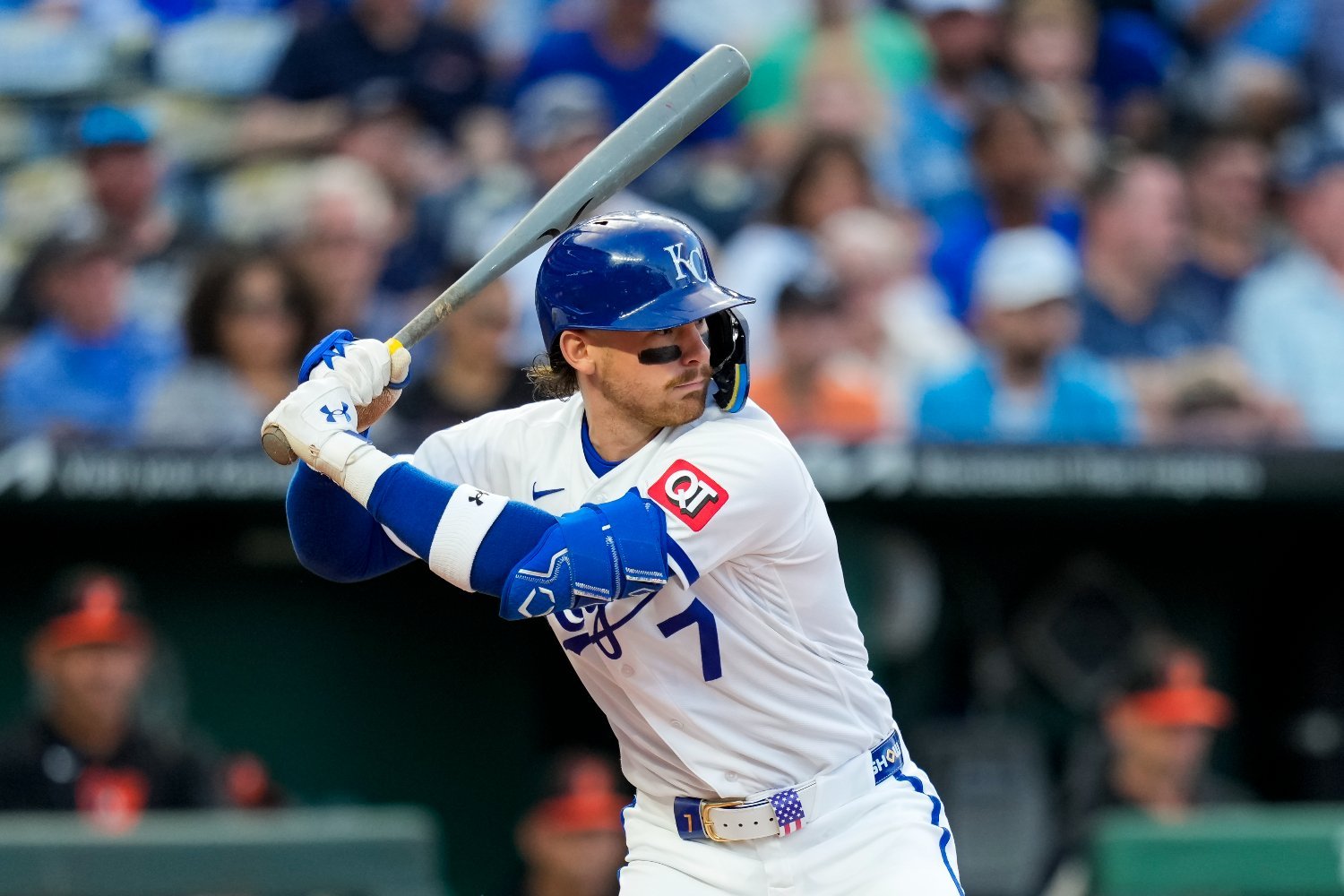 The Royals' offense has certainly been going through its fair share of struggles this season. Despite lofty expectations (some analysts claimed that Kansas City had the potential to be a Top-10 offense), they rank near the bottom of the league in most important offensive categories. As of Friday, they rank 28th in runs scored, 25th in OPS and OBP, and 21st in home runs. The Royals do have other problems than their hitting, with their bullpen being another thorn in their sides to start the season. However, for Kansas City to make any ground in the AL Central race, the offense needs to start producing soon. That being said, who are the hitters that can be depended upon for a turnaround? And which ones may have a hard time getting over their respective slow starts? A key to distinguishing promising hitters from discouraging ones may lie in their respective Pull Air% numbers. Why Pull Air% Is Important? There are two reasons why pulling the ball in the air is important: 1. Statistically, pulling the ball in the air is often tied to more positive hitting outcomes, and 2. Pulling the ball would help the Royals take advantage of their new dimensions at Kauffman Stadium. Regarding the first point, here are some reasons why pulling the ball is important, drawn from a variety of sources, including MLB.com, Baseball Savant, and MLB Data Warehouse. When hitters pull the ball, home runs, bat speed, launch angle, and ultimately, runs scored are all optimized. The Royals have actually demonstrated excellent bat speed this year, as their 72.4 MPH average ranks 5th in baseball, according to Fangraphs. Their average launch angle of 15.4 degrees ranks 6th this year, another encouraging sign. Thus, pulling the ball in the air more will give them more opportunities for positive outcomes overall. Regarding pulling the ball in the air to benefit the Royals at Kauffman Stadium, below are some of the dimension changes that occurred this offseason. These changes were done to help the ballpark be more "neutral", especially regarding home runs. Thus, with lower and closer walls, the Royals should take advantage. And yet, Kansas City continues to struggle to hit home runs, even at home. They rank 22nd in HR/FB% at 8.8%. How Are the Royals Performing This Year in Pull Air%? Ironically, the Royals are actually doing pretty well pulling the ball in the air, statistically. According to Savant, the Royals rank 9th in Pull Air% at 20.1%. Hence, the processes of this Royals offense overall are encouraging, but the results just haven't followed (especially in terms of home runs). Here is a look at the Royals' hitters individually this year, ranked by Pull Air%. It's interesting to see how they break down and rank, especially the key hitters in this lineup. Garcia improved his Pull Air% from 16.2% to 19%, which is a step in the right direction. However, the other three have seen declines in Pull Air% from 2025 to 2026. Salvy has dropped 11.5% in Pull Air% since 2025. Cags has dropped 3.8%, and Witt has dropped 1.3%. Perez's is the most alarming, since an 11.5% drop at age 36 signifies that Father Time has finally come for Salvy and his MLB career. It's disappointing, but it's somewhat expected at his age. Conversely, Cags and Bobby seeing regression at their ages and career points is a major concern, as they should be trending up, not down. For Witt and Cags to be a "bash brothers" combo in the middle of the lineup, they need to pull the ball more to take advantage of their incredible bat speed and exit velocity ability. What to Take Away From This Pull Air% Data? The issue with the Royals' hitters and their Pull Air% isn't just the rate itself. They rate pretty well in this category compared to the rest of the league. Thus, one would think that with that being the case, the Royals would be a productive offense, right? However, while the overall Pull Air% is solid, they are getting poor Pull Air% from their key hitters, especially Perez, Witt, and Caglianone. It's hard for a Royals offense to be productive when three of their most important hitters rank below-average in Pull Air%, despite skills that should suggest otherwise (high EV, hard-hit rates, and bat speeds). On a positive note, I think Vinnie could snap out of his streak at some point, because he pulls the ball effectively. That approach will become more apparent when the weather gets hotter, a trend in Pasquantino's career. According to his career splits, his best HR/FB rates came in July (10.9%) and August (21.4%). Thus, when the weather gets hotter and the ball flies more (especially at Kauffman), then Vinnie will start to see more production, especially since he pulls the ball in the air so effectively. As for Perez, Cags, and Witt, though? That's a tougher question. Perez has at least demonstrated he can pull the ball in the air effectively in his career, with his 26.6% Pull Air% last year being a prime example. Cags hasn't pulled the ball much in the Majors so far, but he was much better at doing so in the Minors. Thus, he just may need more time to adapt to Major League pitching and get his timing and pitch recognition down. As for Bobby? His Pull Air% has gone from 17.1% in 2024, which is above the league average of 16.7%, to 15.8% last year and now 14.5% this season. Thus, it's not a surprise that Witt's home run total went from 32 in 2024 to 23 in 2025. He has yet to hit a home run this year. If this Pull Air% trend continues, he'll be lucky to surpass the 20 HR mark. Witt is hitting the ball way too much to the middle of the field, which isn't a recipe for home run success, especially at Kauffman, even with the updated dimensions. Witt may be the biggest key to the Royals' offensive turnaround. For the Royals to be a playoff team, they need him to be a MVP-caliber hitter. That means a 300+ batting average, a 1.000+ OPS, and at least 30+ home runs. It's a lot to ask, but Witt has done it before, and he can do it again. That is, if he gets his Pull Air% back up to at least slightly above league-average levels. Can he do it? There's still plenty of time to make the necessary adjustments to his mechanics and recognition, but he needs to figure something out quickly. View the full article
 -
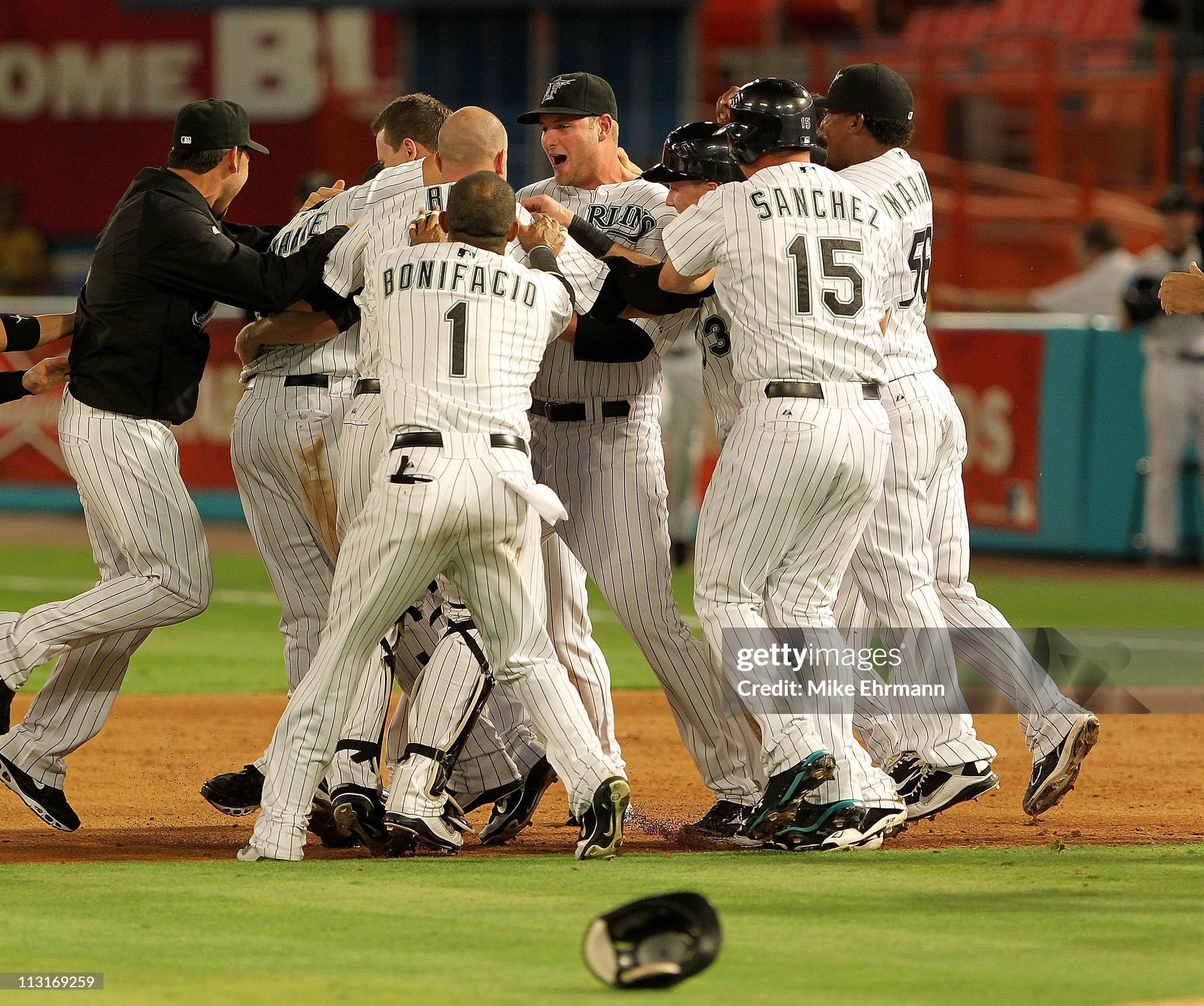 Dismal months of June and August ultimately did in the Florida Marlins in 2011, but early on that year, the Fish had the look of a contender. On this day 15 years ago, the Marlins kicked off a three-game series with the Los Angeles Dodgers in thrilling fashion. Omar Infante’s walk-off single capped a two-run ninth as the Marlins rallied for a 5-4 victory. Through six innings at Sun Life Stadium on April 25, 2011, a pair of solo home runs from Chris Coghlan had accounted for all the Florida offense as the Marlins led 2-1. After struggling against Florida starter Ricky Nolasco, the Dodgers were able to find some offense against the Florida bullpen. Los Angeles took the lead with two runs in the seventh with Jamey Caroll’s RBI single serving as the go-ahead hit. James Loney plated another run in the eighth as the Dodgers pushed the lead to 4-2. The Marlins were able to get that run back in the bottom of the inning as Gaby Sánchez came through with an RBI single. The rally, however, came to an end after Infante was thrown out at third trying to tag up on a Giancarlo (then Mike) Stanton flyout. Brian Sanches worked a 1-2-3 ninth for Florida, but in the bottom of the inning, Los Angeles’ Jonathan Broxton appeared on the verge of doing likewise. After striking out Greg Dobbs and getting John Buck to ground out, Broxton was one strike away from slamming the door. Emilio Bonifácio, however, kept Florida alive by taking a 3-2 pitch for ball four. Hanley Ramírez followed with a single to put the tying run in scoring position. From there, the wheels fell off for the Dodgers defense. As pinch hitter Scott Cousins hit a slow roller to shortstop, Carroll charged, but the ball rolled under his glove and into left field, allowing Bonifácio to score the tying run from third. After intentionally walking Coghlan to load the bases, Infante came to the plate looking to atone for his mistake on the basepaths the inning prior. Infante lined Broxton’s 1-0 pitch into left field. Outfielder Jerry Sands originally came in on the ball and was unable to recover as it sailed over his head, allowing Ramírez to score the walk-off run. Prior to the misplay, Sands was in the midst of a solid night, going 3-for-4 at the plate with an RBI. Coghlan finished 3-for-4 with three runs scored for the Marlins in the victory. Florida went on to clinch the three-game series with a 4-2 win the following night. The thrilling win in the series opener would serve as the second walk-off victory for the Marlins during the month of April and one of five for the year. It came on this day 15 years ago. View the full article
 -
Jeff Hoffman Throws Hard, So Why Isn’t His Fastball Enough?
DiamondCentric posted an article in Jays Centre
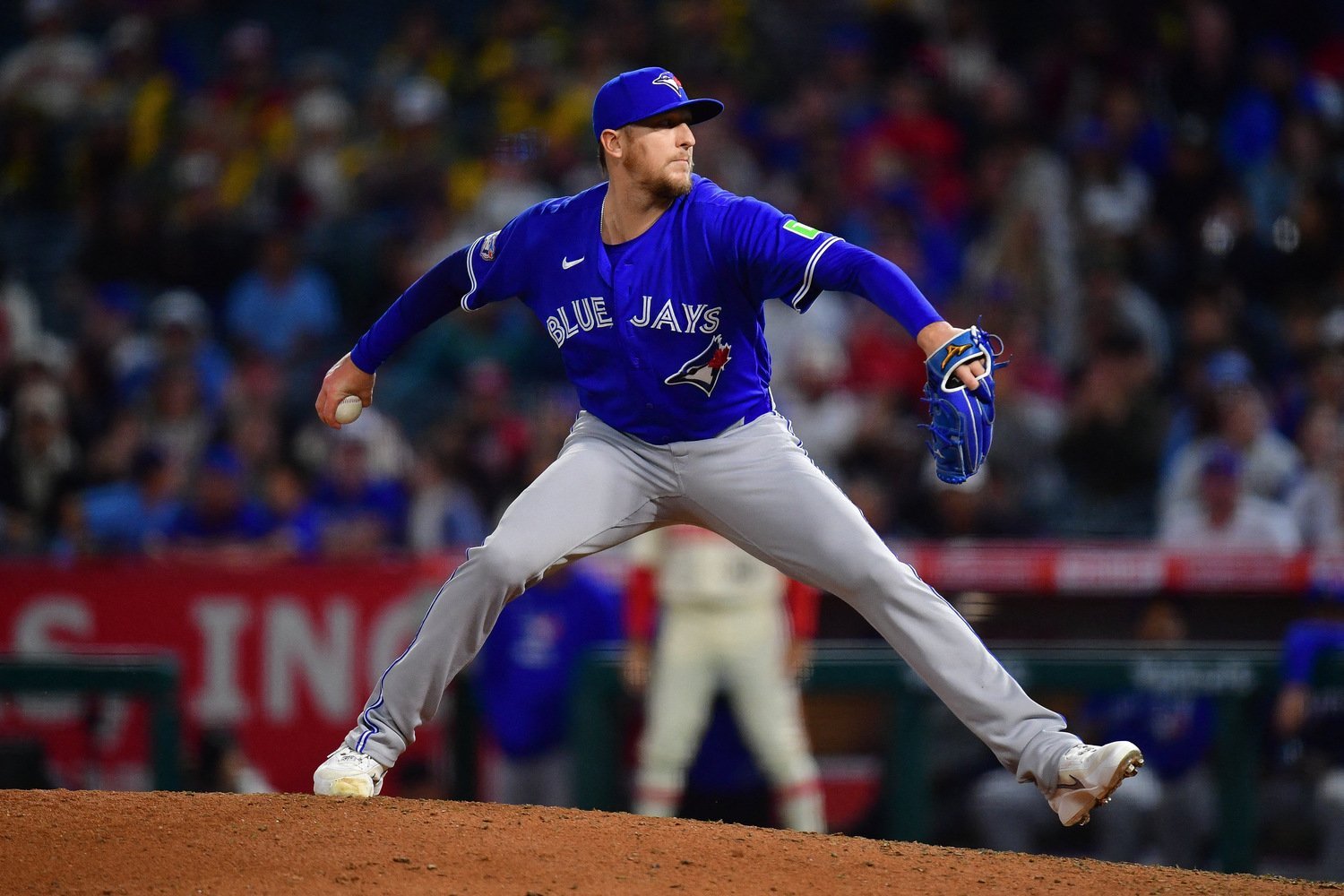 This article was written prior to games on April 24, and prior to the announcement that Jeff Hoffman is no longer Toronto's closer. There’s this annoying fiction in baseball that velocity is the end-all, be-all. If you're a pitcher who can fire it at 100 mph and you kind of know where it’s going, you’re set. You just need one decent off-speed or breaking pitch to keep guys honest, and you can dominate. For years, Jeff Hoffman has been stuck inside that narrative, even though his actual profile is a lot more complicated than the "triple-digit" fantasy suggests. Let’s be real, Hoffman doesn’t actually throw that hard. He’s above-average, but his fastball velocity sits around the 75th percentile for relievers. That puts him smack in the middle between "pretty good" and "elite." The raw ingredients are there, but calling Hoffman a guy who just tries to survive on heat and a prayer is a mistake. This year, he’s been much more calculated. He’s leading with the slider against righties and leaning on the splitter against lefties. On paper, that mix should be enough to anchor any bullpen. Instead, we’re seeing the same frustrating pattern: inconsistency, giving up damage at the worst possible times and a fastball that gets absolutely smoked when hitters find it. This isn't about effort or trusting his stuff. It’s about physics. Specifically, it’s about why throwing hard without the right movement profile is basically a death wish at this level. The real issue is that his heater doesn't behave like a modern power fastball should. Hoffman’s fastball isn’t exactly a “straight fastball,” but it is awfully close. No big-league pitch is truly straight, but there’s a massive gap between "functional movement" and what a hitter perceives as straight. When a hitter calls a pitch straight, they’re talking about a predictable plane and a spin axis that doesn’t fool the eye. Velocity without deception is just driving fast in a straight line on an empty highway. It looks cool, sure, but it doesn't actually test your skills. If you want a challenge, try off-roading. The most dangerous heaters in the league are the ones that refuse to move the way a hitter’s brain expects. Effective movement comes from high-spin, back-spinning fastballs that stay in the air longer, forcing guys to swing underneath the ball. People keep saying Hoffman has below-average ride, but that’s not technically true. The induced movement on his four-seam fastball is 0.7 inches below average (through games on April 23), basically a rounding error. His real issue is regression. He’s lost about 2.5 inches of induced break compared to the 2024 and '25 seasons. That loss of vertical movement is the reason his pitches are getting squared up by batters with swings designed to hunt that flatter plane. Most critics don’t give him credit for his fastball’s well-above-average horizontal break. Most analysts obsess over vertical movement, but Hoffman has this unique east-west shape on his fastball. It’s a different kind of deception, even if it lacks that "rising" effect. Hard fastballs without vertical deception travel way further when they’re barreled. That’s just physics. When the barrel meets the ball squarely, the energy transfer is perfect. The result is a high exit velocity and a ball headed for the flight deck. If you add vertical movement or arm-side run, that contact point shifts by a fraction of an inch. In the majors, those fractions are the difference between a warning track out and a soul-crushing home run. You can see it in his batted ball profile. Hoffman's home run-to-fly ball rate has fluctuated over the course of his career; the past two years, he's given up homers on 21% of his fly balls (per FanGraphs), almost twice the league-average rate. That number isn't a fluke. It illustrates how unforgiving his fastball is when his command is off. He’s in a weird gray zone. His 96-97 mph velocity is plenty fast, but it’s flat enough vertically that hitters can match the plane. Without the vertical break he used to have, the pitch offers zero forgiveness when it leaks over the heart of the plate. Hoffman’s velocity and spin haven't really changed much since his strong 2024, yet the run value on his heater has swung wildly. Basically, it comes down to execution and pitch shape, not just velocity. Modern hitters aren’t just guessing; they’re trained to recognize shapes. That’s why they’re always on those tablets in the dugout, and no, they aren’t playing Clash of Clans. They’re studying exactly how a pitch moves through the zone. A heater without movement is easy to time, even if it’s coming in hot. A normal human won't touch 98, but a big-leaguer isn't intimidated by it. There are no easy solutions to Hoffman’s woes. You can’t simply change a fastball. A pitcher almost never reshapes their fastball in the middle of a season, and it hardly ever works. Messing with the grip or release point creates a ripple effect that can kill command or ruin secondary pitches. A focus on secondary pitches is where Jordan Romano got into trouble when his slider started to hang. However, when hitters are guessing at what’s coming, velocity can play up even without movement. For Hoffman, the goal right now has to be optimization, not reinvention. He has to survive by living on the edges of the zone, leaning even harder on the slider and splitter, and using that weird horizontal movement to mess with timing. Every one of those strategies requires near-perfect execution. Fastballs without elite vertical ride don't give you a "get out of jail free" card when you miss your spot. That’s why Hoffman’s struggles feel so loud. They’re punctuated by home runs, not bloop singles. Jeff Hoffman isn’t broken, and his fastball isn't useless, but he and the Jays are living on a narrow ledge where dominance and disaster are separated by about an inch of movement. It’s the physics of the game playing out in real time, and it’s a reminder that throwing hard is just the start of the conversation. View the full article
 -
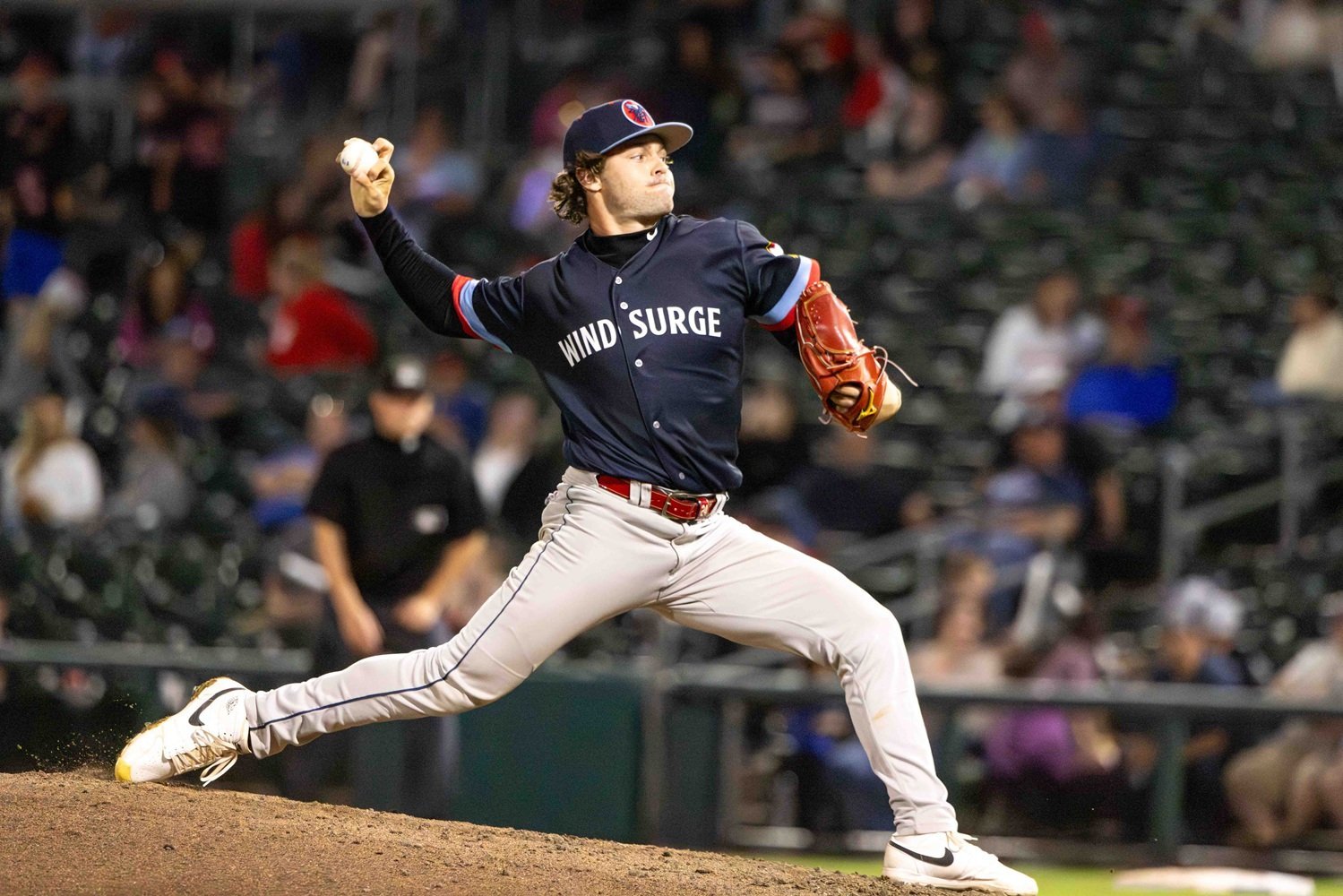 TRANSACTIONS Following the Twins loss in New York on Thursday night, the Twins announced that Kendry Rojas had been optioned to St. Paul. On Friday, the corresponding move was announced, and as expected, Kody Funderburk was activated from the paternity list. OF Alan Roden was officially placed on the Injured List with a right shoulder contusion. Ben Ross earned a promotion from Wichita to St. Paul. The 24-year-old infielder is off to a great start in 2026. In 16 games, he is hitting .424/.528/.797 (1.324) with seven doubles, five homers and 16 RBI. He is a tremendous defensive player at shortstop, and he has spent time at third base, second base, and a little in the outfield. RHP Paulshawn Pasqualotto was promoted from Cedar Rapids to Double-A Wichita. The 24-year-old was the Twins 12th round pick in 2023 out of Cal-Berkeley. He pitched in just four games for the Kernels this season and has converted all three save opportunities he’s had and given up only an unearned run over 5 1/3 scoreless innings. He had no walks and eight strikeouts. The Twins signed right-hander Jesse Bergin and assigned him to the FCL Twins. He had been the 11th round pick in 2021 out of UCLA by the Reds. then didn’t pitch in 2022 or 2023. He returned and threw 34 1/3 total innings. He spent most of the 2025 season at Double-A Pensacola. In 35 games and 43 innings out of the bullpen, he was 2-4 with five saves, a 2.51 ERA, a 0.98 WHIP, and opponents hit just .168 off of him. The Marlins released him in late March, and the Twins signed him today. He will likely head to Wichita once his arm gets ready. SAINTS SENTINEL St. Paul 3, Indianapolis 4 Box Score It was a bullpen game for the Saints on Friday night. John Brebbia started and gave up one run on two hits over the first two innings. In the top of the fifth inning, Alex Jackson tied the game at 1-1 with a leadoff homer. He already has three long balls this season. In the bottom of the sixth, Gabriel Gonzalez led off with his sixth home run. Emmanuel Rodriguez followed with a walk and stole second base. After Ryan Kreidler reached on an error, Kyler Fedko drove in Rodriguez with a single to make it 3-1 Saints. Ricky Castro came in and threw three zeroes on the board. However, after a walk started the bottom of the sixth, he gave up a home run to Tyler Callihan which tied the game at 3-3. Matt Bowman got the next five outs, two of them on strikeout. He also gave up a solo homer. Luis Garcia came in and tossed a 1-2-3 ninth. The Saints ended with just six hits and three walks in the game. Gonzalez had two hits, and Orlando Arcia went 2-for-4. Rodriguez had two walks. WIND SURGE WISDOM Wichita 5, NW Arkansas 1 Box Score Jose Olivares is one of the better starting pitcher prospects in the Twins organization. On Friday night, he made his Double-A debut for the Surge. The right-hander worked through some issues to put three zeros on the board. He tossed three scoreless innings despite two hits and four walks. He had one strikeout. Of his 52 pitches, just 23 of them were strikes (44.2%). Paulshawn Pasqualotto came on and duplicated the results with three scoreless innings. He gave up two hits and walked three batters, but he helped himself with three strikeouts. Through four innings, there was no score in the. The Wind Surge put a crooked number on the board in the top of the fifth inning. Maddux Houghton started things out with his third double of the season. After one out and a pitching change, Houghton stole third and scored when the throw was errant. Kala’i Rosario walked and went to second on a Kyle DeBarge single. Both runners advanced on a wild pitch. Rosario scored on a sacrifice fly off the bat of Billy Amick. DeBarge scored on a wild pitch to make it 3-0. Wichita added some insurance in the top of the eighth inning. Billy Amick led off the inning with a solo homer, his fourth of the season. Spencer Bengard came in for the seventh inning. He was charged with an unearned run on two hits and a walk over his two innings. Luis Quinones came on for the ninth inning and struck out the side. Jake Rucker was hit by a pitch and later scored on a passed ball for the fifth and final run. Wichita had eight hits and two walks in the game. Ricardo Olivar went 2-for-4 with his fifth double. He has reached base in six straight games. He also has five extra base hits in his past four games. Houghton hit his third and fourth doubles, and walked, in three at-bats. He also stole his sixth base. The Surge had extra base hits and took advantage of some poor defense, which is good, because they went 0-for-10 with runners in scoring position. Just one home run for the Wind Surge, but they still have hit 23 homers over the past nine games. KERNELS CHRONICLE Cedar Rapids 8, Peoria 4 Box Score A baseball team wants to score early and often. That is exactly what the Kernels did on Friday night in Peoria. They scored one run in the first inning and scored one run in each of the following six innings. The only inning in the first seven innings that they didn’t score one run was the fifth inning, when they scored two runs. It was deja vu all over again for the Kernels in the top of the first inning. Like Thursday night, Eduardo Tait homers in the first to give his team a 1-0 lead. It was his fourth homer of the month. Nolan Santos was the starting pitcher for Cedar Rapids. Unfortunately, he needed 35 pitches and only got two outs. He was charged with one run on one hit and three walks. The outs he got were both on strikeouts. That’s a lot of pitches. Sam Rochard came in and left the bases loaded and a 1-1 game. He went 2 1/3 innings and gave up one run on one hit, a solo home run. In the second inning, Caden Kendle and Jay Thomason walked. After a groundout, Kendle scored on a balk. Marek Houston led off the third inning with his third double. He went to third base on a Tait fly out and then scored on a Brandon Winokur single to center. 3-2 after three innings. Jacob Wosinski worked the middle innings. In three innings, he gave up just one run on two hits (including one homer). He had three strikeouts. Cole Peschl struck out two batters over two scoreless, hitless innings. Christian Becerra gave up one run on two hits in the ninth inning. He struck out two batters. Let’s catch up on that offense. In the fourth inning, Rayne Doncon doubled and scored on a Luis Hernandez single. In the fifth inning, Danny De Andrade led off with a single. Kendle walked again and both runners advanced on a wild pitch. De Andrade scored on a Doncon ground out. Then Kendle scored on a Miguel Briceno single. In the sixth inning, De Andrade struck out but got on base on a wild pitch. Kendle walked yet again. De Andrade scored on a Jay Thomasson double. With one out in the seventh, Briceno singled. Andy Lugo pinch ran for him and stole second base and went to third base on a throwing error. After a Hernandez walk, Houston grounded to shortstop for a force out but beat the throw to first base to get an RBI. What happened in the eighth and ninth innings? Why didn’t they score? I kid, of course, it isn’t that easy. That said, the Kernels did have a runner on base in those final two innings too. Marek Houston went 2-for-5 with his third double. It was his fourth straight multi-hit week this week against Peoria. He is now hitting .303 with an OPS of .808. Tait went 2-for-5 with his fourth homer. Winokur was 2-for-5. Briceno was 2-for-4. Hernandez, Thomason and Doncon each had one hit and one walk while Kendle had three walks in the game. MIGHTY MATTERS Ft. Myers 5, Dunedin 4 Box Score A four-run fifth innings gave the Mussels a 5-3 lead, and they were able to hang on to give them a dozen wins. Matt Dalquist started and was charged with three runs on six hits and three walks over 4 1/3 innings. He had three strikeouts. Michael Hilker kept an inherited runner from scoring a third run in the top of the fifth frame. The team’s 20th round pick last July gave up two hits and a walk over 2 2/3 scoreless innings. He struck out two batters. With two outs in the bottom of the fourth inning, the Blue Jays made a pitching change. Their starter was already at 58 pitches after 3 2/3 innings. That was a positive for the Mussels. Jayson Bass got to second on an error and scored on a single by Ian Daugherty. Byron Chourio led off the inning with his first home run of the season. Ricardo Pena followed with a walk. Yilber Herrera doubled Pena to third base. With two outs, Yasser Mercedes did it again. He knocked his fourth home run, a three-run, opposite-field homer to give the team a 5-3 lead. Mitch Mueller worked a perfect eighth inning. Brian Zeldin came on and got the first two outs easily, with a groundout and a strikeout. But then Blaine Bullard hit his fourth home run which cut the Mussel lead to 5-4. Zeldin then hit a batter. However, he got a ground out to end the game and pick up his second save of the year. Chourio went 2-for-3 with the homer. Mercedes homered in back-to-back games and four the fourth time in his last seven games. PLAYERS OF THE DAY Hitter of the Day Gabriel Gonzalez (St. Paul): 2-for-4, HR(5), R, RBI, K. Pitcher of the Day Paulshawn Pasqualotto (Wichita): 3 IP, 2 H, 0 R, 3 BB, 3 B, 44 pitches, 27 strikes (61.4%) PROSPECT SUMMARY Check out the Prospect Tracker for much more on our Twins Top 20 prospects after seeing how they did today. #1 - OF Walker Jenkins (St. Paul) - 0-for-4, K (batted second, played CF) #2 - IF Kaelen Culpepper (St. Paul) - 0-for-4 (batted first, played SS) #3 - OF Emmanuel Rodriguez (St. Paul) - 0-for-2, 2 BB, K (batted fourth, played RF) #4 - C Eduardo Tait (Cedar Rapids) - 2-for-5, HR(4), R, RBI, 2 K, E(2) (batted second, catcher) #5 - LHP Connor Prielipp (Minnesota) - Did Not Pitch #6 - LHP Dasan Hill (Cedar Rapids) - Did Not Pitch #7 - OF Gabriel Gonzalez (St. Paul) - 2-for-4, HR(5), R, RBI, K (batted third, played 1B) #8 - LHP Kendry Rojas (St. Paul) - Did Not Pitch, Optioned #9 - SS Marek Houston (Cedar Rapids) - 2-for-5, 2B(3) R, RBI, K (batted leadoff, played SS) #10 - RHP Charlee Soto (Cedar Rapids) - Injured List #11 - RHP Riley Quick (Ft. Myers) - Did Not Pitch #12 - RHP Andrew Morris (Minnesota) - Did Not Pitch. #13 - 3B/CF Brandon Winokur (Cedar Rapids) - 2-for-5, RBI, K, CS(1) (batted third, played CF) #14 - 3B/SS Quentin Young (Ft. Myers) - Did Not Pitch #15 - RHP Marco Raya (St. Paul) - Did Not Pitch. #16 - OF Hendry Mendez (Wichita) - Did Not Play. #17 - 2B/OF Kyle DeBarge (Wichita) - 1-for-5, R, K, E(5) (batted third, played SS) #18 - RHP C.J. Culpepper (Wichita) - Did Not Pitch. #19 - C/OF Khadim Diaw (Cedar Rapids) - Did Not Play. #20 - RHP James Ellwanger (Ft. Myers) - 60 IL (right elbow sprain) UPCOMING PROBABLES Saturday: St. Paul @ Indianapolis (5:35 pm CT) - RHP Mike Paredes (0-0, 0.00 ERA) Wichita @ NW Arkansas (7:05 pm CT) - RHP Sam Armstrong (1-2, 3.68 ERA) Cedar Rapids @ Peoria (6:35 pm CT) - RHP Eli Jones (1-0, 1.35 ERA) Dunedin @ Ft. Myers (6:05 CT) - RHP Jonathan Stevens (2-0, 4.82 ERA) CURRENT W-L Records Minnesota Twins: 12-14 St. Paul Saints: 9-15 Wichita Wind Surge: 11-8 Cedar Rapids Kernels: 8-11 Fort Myers Mighty Mussels: 12-7 FCL Twins: 0-0 (season begins Monday, May 4) DSL Twins: 0-0 (season begins Monday, June 1) Please feel free to ask questions about the teams, the rosters, and discuss today’s games, or anything else Twins minor-league related! View the full article
 -
A late rally lifted Low-A Lake Elsinore past Visalia 12-8, while Triple-A El Paso, Double-A San Antonio, and High-A Fort Wayne all fell. Ethan Salas crushed his first homer of the season for the Missions, Luke Cantwell drove in three for the Storm, and Nate Mondou launched a triple and a home run for the Chihuahuas. Padres Minor-League Transactions El Paso Chihuahuas activated C Colton Vincent from the Development List. San Diego Padres sent RHP Jeremiah Estrada on a rehab assignment to Lake Elsinore Storm. Chihuahuas Fall To Reno In 10 Innings El Paso built a 4-0 lead through five innings before Reno scored seven of the next eleven runs to claim a 7-6 win in 10 innings. Pablo Reyes finished 3-for-4 with two RBIs and a stolen base for the Chihuahuas, while Nate Mondou went 3-for-4 with a triple, a home run, and two runs scored. Starter Evan Fitterer set the tone with four scoreless innings, allowing two hits, walking none, and striking out four on 49 pitches. Leadoff man Clay Dungan walked, stole a base, and scored on Reyes' first-inning bunt single. Dungan plated Mondou on a fielder's choice grounder in the second, and Mondou launched a solo homer in the fourth to push the lead to 3-0. Reyes added an RBI double in the fifth. Reno scratched a sixth-inning run on a triple before erupting for five in the eighth. The frame was extended by a throwing error from Dungan and produced a sacrifice fly, an RBI single, a two-run homer, and another El Paso fielding miscue. None of the runs were earned, leaving reliever Garrett Hawkins responsible for five unearned runs in two-thirds of an inning. Nick Schnell answered with his fifth home run in the bottom of the eighth, and Mason McCoy lined a single in the ninth that scored Schnell to force extras. With the zombie runner in scoring position to start the 10th, Reno bunted him to third and went ahead on yet another El Paso throwing error. EP_0424.mp4 Player AB R H RBI BB K Clay Dungan 4 1 1 1 2 2 Jase Bowen 6 0 0 0 0 2 Carlos Rodríguez 6 0 0 0 0 2 Jose Miranda 4 1 1 0 0 1 Pablo Reyes 4 0 3 2 0 0 Nick Schnell 4 2 1 1 1 0 Marcos Castañon 4 0 1 0 0 0 Samad Taylor 1 0 0 0 0 0 Nate Mondou 4 2 3 1 0 0 Mason McCoy 1 0 1 1 0 0 Rodolfo Durán 3 0 1 0 0 0 Pitcher IP H R ER BB K HR Evan Fitterer 4 2 0 0 0 4 0 Triston McKenzie 2 1/3 2 1 1 2 3 0 Miguel Cienfuegos 2/3 0 0 0 2 0 0 Garrett Hawkins 2/3 3 5 0 1 1 1 Justin Yeager 2 1/3 0 1 0 1 0 0 Salas Homers In Missions' Comeback, But Amarillo Wins San Antonio twice rallied from deficits but came up a run short in an 8-7 loss to Amarillo. After spotting the Sod Poodles a 2-0 lead in the third, the Missions answered with two in the fourth. Leadoff man Ethan Salas, Padres Mission's No. 1 prospect, crushed his first homer of the season to right-center, and Tirso Ornelas' sacrifice fly scored Ryan Jackson to even the score. Jackson's popup single in the fifth plated Kai Roberts to give San Antonio its first lead. Amarillo tied it in the sixth, but Ornelas drove home Romeo Sanabria with a single in the bottom half to put the Missions back in front 4-3. Salas finished 2-for-3 with the home run, two walks, two RBIs, and two runs scored. Ornelas was 2-for-3 with three RBIs. Jackson collected three hits and stole a base. Starter Fernando Sanchez logged three innings, allowing two runs on three hits with three walks and four strikeouts. Andrew Thurman followed with 2⅔ innings of one-run ball before Josh Mallitz was tagged for four runs in 1⅓ frames during a four-run Amarillo seventh that featured a pair of doubles and a triple. Down 7-4 in the home half of the seventh, the Missions rallied. Salas singled to score Roberts. Sanabria grounded out to plate Salas. Ornelas followed with his third RBI of the day, lining a single that scored Jackson and tied the game at 7-7. Amarillo scored in the top of the ninth on a leadoff double and a one-out single. SA_0424.mp4 Player AB R H RBI BB K Ethan Salas 3 2 2 2 2 0 Ryan Jackson 5 2 3 1 0 0 Romeo Sanabria 3 1 0 1 1 1 Tirso Ornelas 3 0 2 3 0 0 Francisco Acuna 4 0 1 0 0 2 Braedon Karpathios 3 0 0 0 1 0 Luis Verdugo 4 0 0 0 0 0 Kai Roberts 4 2 2 0 0 2 Chris Sargent 3 0 0 0 0 2 Pitcher IP H R ER BB K HR Fernando Sanchez 3 3 2 2 3 4 0 Andrew Thurman 2 2/3 3 1 1 1 1 0 Josh Mallitz 1 1/3 5 4 4 1 1 0 Harry Gustin 2 4 1 1 0 1 0 TinCaps Done In By Wisconsin's 6-Run Eighth Wisconsin pulled away with a six-run eighth and dropped Fort Wayne 11-3. Starter Kash Mayfield, Padres Mission's No. 2 prospect, pitched four innings in defeat, charged with three runs on three hits with two walks and three strikeouts on 72 pitches. In his first three starts this season, Mayfield allowed one hit in 12 scoreless innings with 16 strikeouts. The lone damage against him was a three-run homer in the fourth that broke open a scoreless game. Cleanup hitter Alex McCoy responded immediately with his fourth home run of the season, a two-run shot to left field that scored Carlos Rodriguez and pulled Fort Wayne within 3-2. That homer also extended McCoy's hitting streak to 15 games, the longest in TinCaps history since Fernando Tatis Jr.'s 15-game run in 2017. The TinCaps could not get back to even. Wisconsin tacked on single runs in the fifth and sixth, then scored six runs in the eighth to blow it open. McCoy went 2-for-4 with a double, the home run, and three RBIs. Carlos Rodriguez chipped in two doubles and a walk. FW_0424.mp4 Player AB R H RBI BB K Kasen Wells 4 0 0 0 0 1 Rosman Verdugo 3 1 1 0 0 0 Carlos Rodriguez 3 1 2 0 1 0 Alex McCoy 4 1 2 3 0 1 Lamar King Jr. 4 0 1 0 0 2 Kavares Tears 4 0 0 0 0 1 Jake Cunningham 4 0 1 0 0 1 Dylan Grego 4 0 0 0 0 2 Oswaldo Linares 3 0 0 0 1 2 Pitcher IP H R ER BB K HR Kash Mayfield 4 3 3 3 2 3 1 Tucker Musgrove 2/3 1 1 1 2 2 0 Igor Gil 1 1/3 1 1 1 3 3 0 C.J. Widger 1 1/3 5 6 6 1 0 0 Clay Edmondson 1 2/3 1 0 0 0 0 0 Storm Rally Past Visalia Behind 5-Run Seventh Lake Elsinore overcame an 8-4 deficit, scoring eight unanswered runs, including five in the seventh, to take down Visalia 12-8. Visalia committed seven errors. Luke Cantwell finished 2-for-4 with two doubles and three RBIs. Ryan Wideman went 2-for-5 with a triple, two runs, and a stolen base. Justin DeCriscio drove in two runs and scored three times. Starter Kruz Schoolcraft was tagged for four runs, three earned, on seven hits across three innings, walking two and striking out three on 51 pitches. The lefty exited after Visalia took an 8-4 lead, with the Rawhide picking up two more runs apiece against Joseph Herrera and Brandon Langley. Lake Elsinore stayed close. Cantwell and Conner Westenburg laced RBI doubles in the fourth, and Victor Duarte's run-scoring single in the fifth cut the lead to 8-5. The Storm stormed back in the seventh. Wideman tripled to start the rally and Bradley Frye singled him home. A wild pitch later scored Frye, and Truitt Madonna scored on a throwing error during a double steal. DeCriscio drew a walk in between, and Cantwell capped the five-run inning with a two-run double that gave Lake Elsinore a 10-8 lead. The Storm tacked on two in the eighth on a DeCriscio sacrifice bunt that scored Frye and a Duarte RBI single that brought Madonna home. Jeremiah Estrada, in his first rehab appearance from the Padres, earned the win with a perfect seventh. LE_0424.mp4 Player AB R H RBI BB K Ryan Wideman 5 2 2 0 0 2 Bradley Frye 4 2 2 1 0 2 Jose Verdugo 0 0 0 0 0 0 Truitt Madonna 5 2 1 0 0 0 Justin DeCriscio 2 3 1 2 1 0 Victor Duarte 3 1 2 2 1 0 Qrey Lott 3 1 0 0 1 1 George Bilecki 1 0 0 0 0 1 Luke Cantwell 4 1 2 3 0 0 Kerrington Cross 4 0 0 0 0 1 Conner Westenburg 4 0 1 1 0 2 Pitcher IP H R ER BB K HR Kruz Schoolcraft 3 7 4 3 2 3 0 Joseph Herrera 1 2 2 1 1 0 0 Brandon Langley 2 2 2 2 1 2 0 Jeremiah Estrada 1 0 0 0 0 1 0 Carson Swilling 1 1 0 0 0 2 0 Will Koger 1 0 0 0 1 1 0 Top-20 Prospect Performance Kash Mayfield: 4 IP, 3 R, 3 ER, 2 BB, 3 K, HR (L) Ethan Salas: 2-for-3, HR, 2 BB, 2 RBI, 2 R Kruz Schoolcraft: 3 IP, 4 R, 3 ER, 2 BB, 3 K Bradgley Rodriguez: DNP Humberto Cruz: DNP Miguel Mendez: DNP Ty Harvey: DNP Jorge Quintana: DNP Kale Fountain: DNP Ryan Wideman: 2-for-5, 3B, 2 R, SB, 2 K Jagger Haynes: DNP Lamar King Jr.: 1-for-4, 2 K Romeo Sanabria: 0-for-3, BB, R, RBI, K Truitt Madonna: 1-for-5, 2 R, SB Michael Salina: DNP Garrett Hawkins: ⅔ IP, 5 R, 0 ER, 1 BB, K, HR (BS) Kavares Tears: 0-for-4, K Deivid Coronil: DNP Francis Pena: DNP Bryan Balzer: DNP View the full article
-
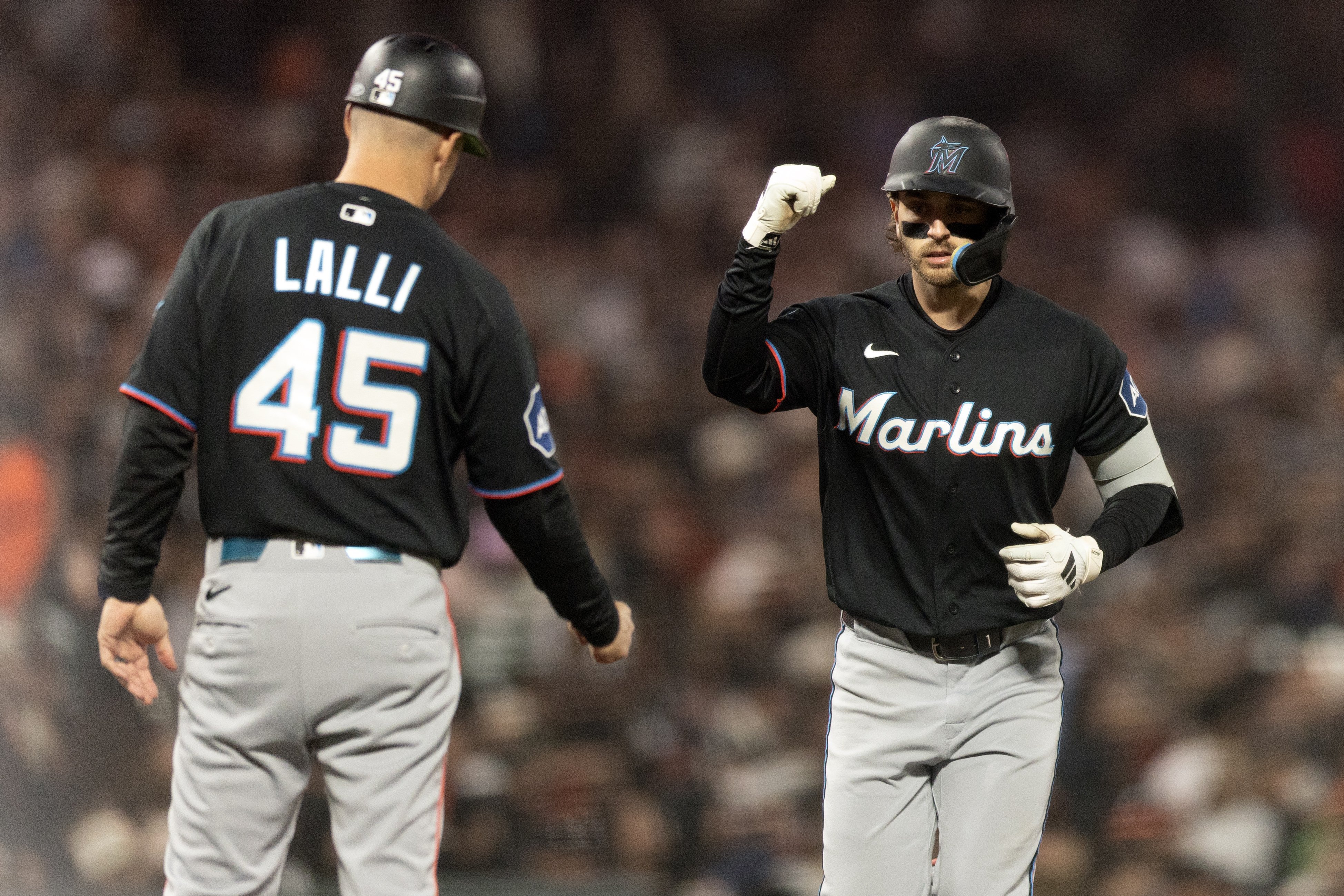 SAN FRANCISCO -- The Marlins’ bats seemed to respond nicely to the cool California air. In the opener of their first West Coast trip of the season, Miami’s offense came to life in a big way, giving its ace ample run support en route to its 13th win of the year. On Friday night, with temperatures hovering in the low 50s, the Marlins put up nine runs on 16 hits, routing the San Francisco Giants 9-4. Miami is back at .500 for the first time since April 14. “Up and down the lineup, we forced [Adrian] Houser over the plate and we were ready to go,” Marlins manager Clayton McCullough said postgame. “Our swing decisions tonight were outstanding. It was really just an offensive clinic.” The Marlins jumped on Giants starter Adrian Houser early. With two outs and a run already in, Liam Hicks launched a two-run shot into the right-field bleachers, giving Miami a 3–0 lead before Sandy Alcantara even took the mound. A couple of innings and a couple more runs later, with two men on, Connor Norby crushed a three-run homer to make it 8–0. The ball traveled 418 feet to left-center, the fourth-longest home run of his young career. Norby, who as recently as last week made a mechanical tweak to his batting stance—holding his hands farther from his chest—has already started to see results, homering twice in that span. “Started in Atlanta, just trying to get some rhythm. I’m still working through some timing, but it’s a way for me to keep my back hip less stagnant and not so tense,” Norby said. Miami racked up 11 hits through just four innings against Houser, who was chased early. His season ERA rose to 7.36. In the top of the sixth, following a three-run frame by San Francisco against Alcantara—more on that later—Otto Lopez delivered an RBI single to extend the Marlins’ lead to 9–3, which at the time felt like a crucial insurance run. “They made a little push there, and for him to come up with that knock with two outs, slow things down a bit and push the lead back to six was huge. It’s what Otto has done all season,” McCullough said. In total, the Marlins piled up 16 hits, tying a season high. Every player in the starting lineup recorded at least one hit. “We’re sneaky good,” Norby said of the offense. “When we’re playing like that—and it doesn’t always have to result in a hit—just the toughness of the at-bat, making a pitcher work and throw two or three extra pitches, it takes a toll. The competitiveness and grinding out at-bats always makes a difference throughout a series.” When asked how difficult it will be to stubbornly adjust the lineup for Saturday’s matchup against left-hander Robbie Ray, McCullough said, “We’re going to put the lineup out there that I think is best against Ray. However it goes, I’ll feel confident with the guys that are in there, and we’ll continue to do what I see as best on any given day.” Sandy Alcantara After three excellent starts to open his season (two earned runs in 24.1 innings), Sandy Alcantara had hit a bit of a blip. Following a rough outing in Detroit in which he allowed seven earned runs, he also issued six walks in a home loss to Milwaukee. On Friday night at Oracle Park, however, he was dominant across six innings—aside from one hiccup. “He was fantastic,” McCullough said. “Seventy-five strikes, filled up the zone, and was around the plate with all his pitches. They strung together some hits there in the fifth, but other than that, he was terrific.” Alcantara’s final line: 6 IP, 9 H, 3 ER, 1 BB, 4 SO. He threw a season-high 108 pitches, 75 for strikes. He scattered a few hits over his first four innings but was largely in control, inducing an inning-ending double play in the first and retiring nine straight Giants at one point. His only trouble came in the fifth, with former teammate Luis Arraez in the middle of it. Following a one-out double by Heliot Ramos—the Giants’ first extra-base hit of the night—Drew Gilbert singled to plate San Francisco’s first run. Eric Haase then added an RBI double to right and later scored on a trademark Arraez slap single to left. “I liked that I threw a lot of strikes. I’ll take this start over my last one with the six walks, but I made the adjustment and we got the win,” Alcantara said. He also noted that early run support doesn’t change his mindset. “I know for some guys it’s easy to get comfortable on the mound with a big lead, but for me it doesn’t matter. I keep fighting and attacking hitters like it’s a close game.” With the win, Miami improved to 13–13, while San Francisco fell to 11–15. Right-hander Eury Pérez is set to start Saturday afternoon as the Marlins look to clinch the series, while Robbie Ray will try to force a rubber match for the Giants. View the full article
 -
Rays 6, Twins 2: Taj Bradley Battered in Return to the Trop
DiamondCentric posted an article in Twins Daily
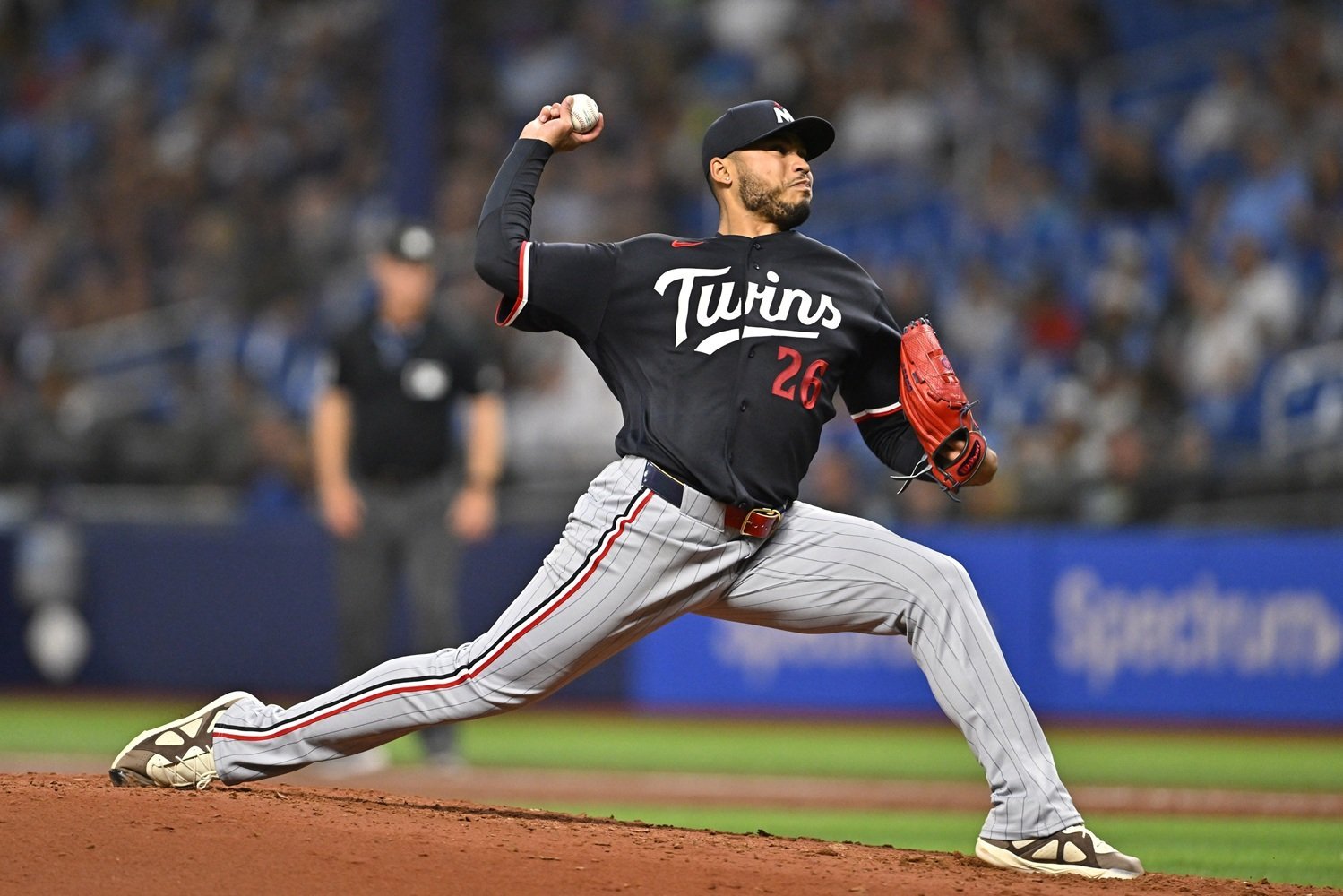 Box Score Taj Bradley: 6 1/3 IP, 7 H, 6 ER, 3 BB, 3 K Home Runs: Brooks Lee (4), Royce Lewis (3) Bottom 3 WPA: Taj Bradley (-0.180), Byron Buxton (-0.140), Victor Caratini (-0.120) Win Probability Chart (via FanGraphs) Hey, it’s Tropicana Field again. The stadium with the ambience of an aquarium-themed bowling alley. Oh how we missed ye. Hemingway himself would turn silent in the presence of such architecture. Absent the quality of their arena, the Rays offer an always-competent opponent, especially with Drew Rasmussen on the mound. Will the Twins eschew their post-Mets blues? We shall see. We start with a commentator's curse: Cory Provus—otherwise a quality voice of Minnesota ball—tempted fate and creation with an utterance; that Taj Bradley had faced the most batters in the big leagues in 2026 without allowing a homer. Junior Caminero was at bat. Bryan Woo was the second-place hurler. When the 2-1 fastball finally landed, the Seattle starter was the leader. That’s a kangaroo court fine in any society. The homer dampered what was perhaps an emotional start for Bradley, given that he took the Tampa Bay mound as an opponent for the first time in his career. Oh well. Sentimentality is for the arts. Indeed, Bradley found his former home cold and unforgiving: a Tropicana-special chopped grounder in the third scooted into left field, portending a trip around the bases, a second run for the Rays. Jonathan Aranda then homered in the fourth. Brooks Lee answered with a solo shot in the fifth, but that dastardly Aranda sent a ball flying into the right field bleachers once more—this time off a curveball. Perhaps flashing four fingers is the best way to pitch to him. Camerino too. Rush taught us that choosing not to decide is still a choice; well, opting to send a man to first for free is a method of pitching as well. Yet, it wasn’t one Bradley opted for. Instead, the dynamic bat-speed maniac manning third for Tampa Bay obliterated a ball a mere 435 feet in the seventh, a good five yards shorter than the homer he previously blasted. In about four more flyballs, Minnesota will have him kept in the yard. Royce Lewis sent one caroming off the left field foul pole in the ninth, but the rally was too little, too late: Minnesota couldn't overcome the deficit they built, falling to the Rays 6-2 to start the series. Notes: Post-Game Interview: What’s Next? The Twins and Rays will meet at Tropicana Field once more for a 3:10 battle, with Bailey Over set to start opposite Shane McClanahan. Bullpen Usage Spreadsheet SUN MON TUE WED THU FRI TOT Morris 47 0 0 0 37 0 84 Banda 0 0 18 0 9 7 34 Topa 0 0 17 17 0 0 34 Acton 29 0 0 0 0 0 29 Sands 0 0 23 0 0 0 23 Orze 0 0 0 11 0 10 21 Rogers 8 0 0 12 0 0 20 Funderburk 0 0 0 0 0 0 0 View the full article
 -
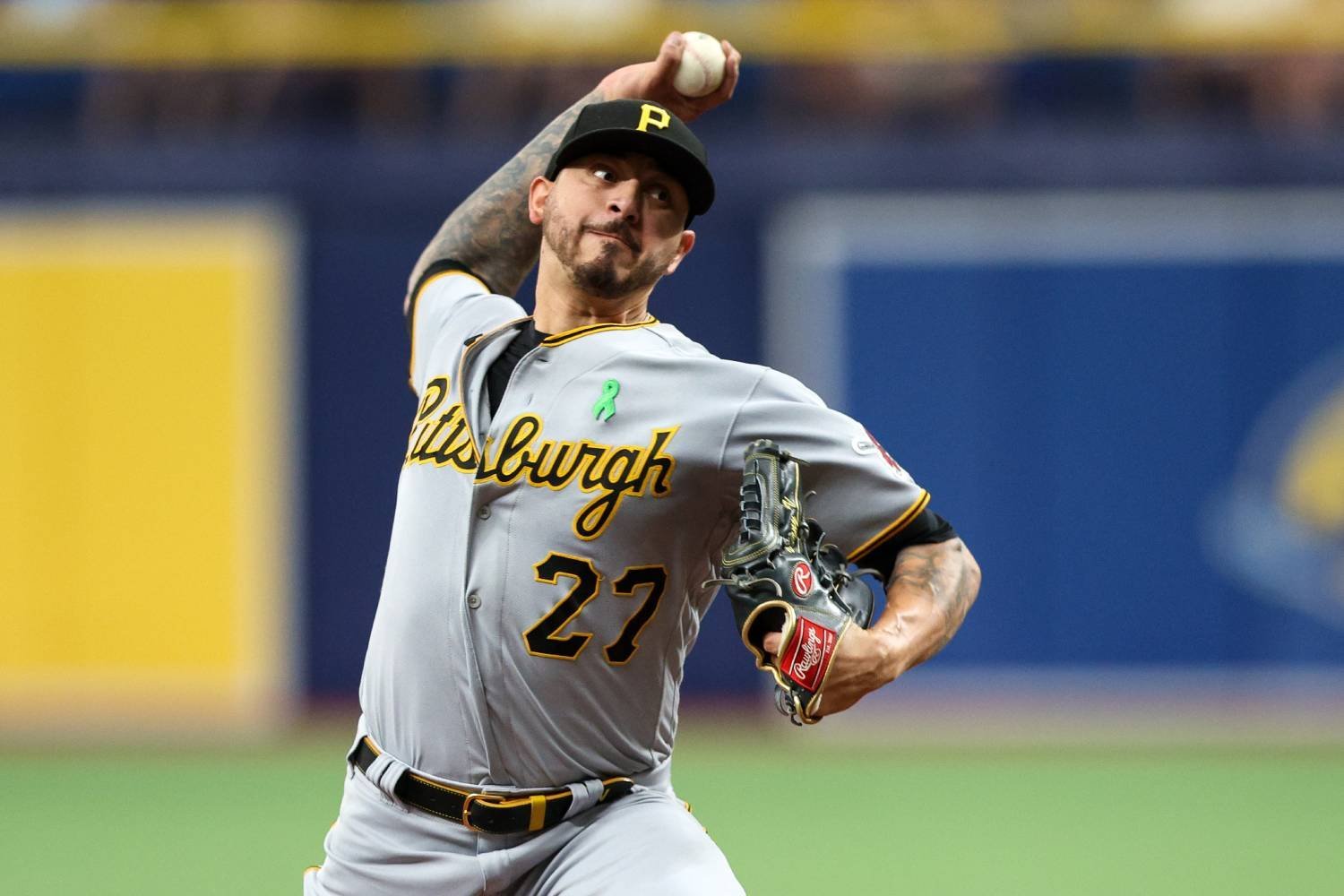 Vince Velasquez's comeback has reached the majors. Again. The Chicago Cubs called up the right-handed starter, who hasn't appeared in an MLB game since 2023, from Triple-A Iowa on Friday. He replaces left-handed reliever Caleb Thielbar, who sustained a strained left hamstring in Thursday's 8-7 walk-off win over the Philadelphia Phillies. The Cubs also called up from Triple-A infielder Nicky Lopez, acquired via trade Thursday from the Colorado Rockies. To clear a spot on the 40-man roster for Velasquez and Lopez, infielder Scott Kingery was designated for assignment and right-handed reliever Porter Hodge was transferred from the 15-day injured list to the 60-day IL. Velasquez is the latest addition to a beleaguered pitching staff. He last pitched in the majors in 2023 with the Pittsburgh Pirates, before undergoing Tommy John surgery on his 31st birthday in June of that year. He latched on with the Cleveland Guardians in 2024, signing a minor-league contract and even got a call-up last year for a couple days in May, but did not pitch. He figures to get a chance to pitch for the Cubs, who have 10 pitchers on the IL, including four who are now on the 60-day IL. Velasquez had made four appearances, all but one a start, for Iowa this season, with a 3.71 ERA, walking nine and striking out 17 in 17 innings. Lopez had a slash line of .333/.387/.519 with one homer and eight RBIs in 15 games for the Rockies' Triple-A team before being acquired for cash Thursday. Kingery made the Cubs' Opening Day roster, but appeared in just eight games, going 1-for-4. View the full article
 -
Blue Jays Trade for Willie MacIver, DFA Tyler Fitzgerald
DiamondCentric posted an article in Jays Centre
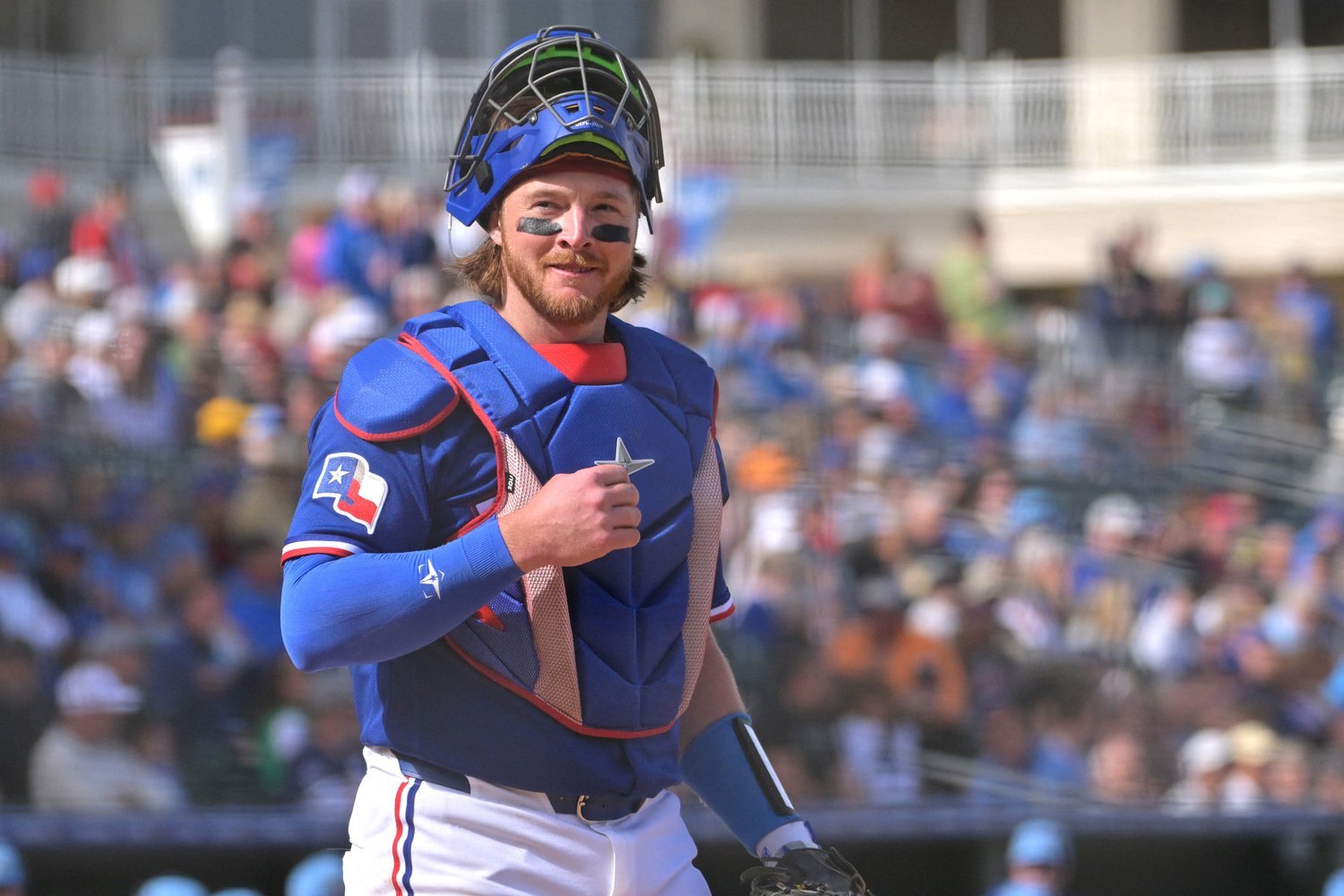 The Blue Jays acquired catcher Willie MacIver from the Rangers today in exchange for cash considerations. MacIver will report to Triple-A Buffalo; he has two minor league option years remaining. MacIver, 29, appeared in 33 games for the Athletics last season, including 31 behind the plate. He hit .186 with three home runs and a 58 wRC+. The rookie backstop earned negative grades in most defensive metrics in that small sample. With Alejandro Kirk on the injured list and Tyler Heineman having dealt with back spasms this year, it makes sense that the Blue Jays wanted to add a little more catching depth. To make room for MacIver on the 40-man roster, the Jays designated utility player Tyler Fitzgerald for assignment. They acquired Fitzgerald from the Giants earlier this month. While he spent some time on Toronto's active roster, he never made it into a game. In six games for Triple-A Buffalo, he went 3-for-20 with a double and two runs. View the full article
 -
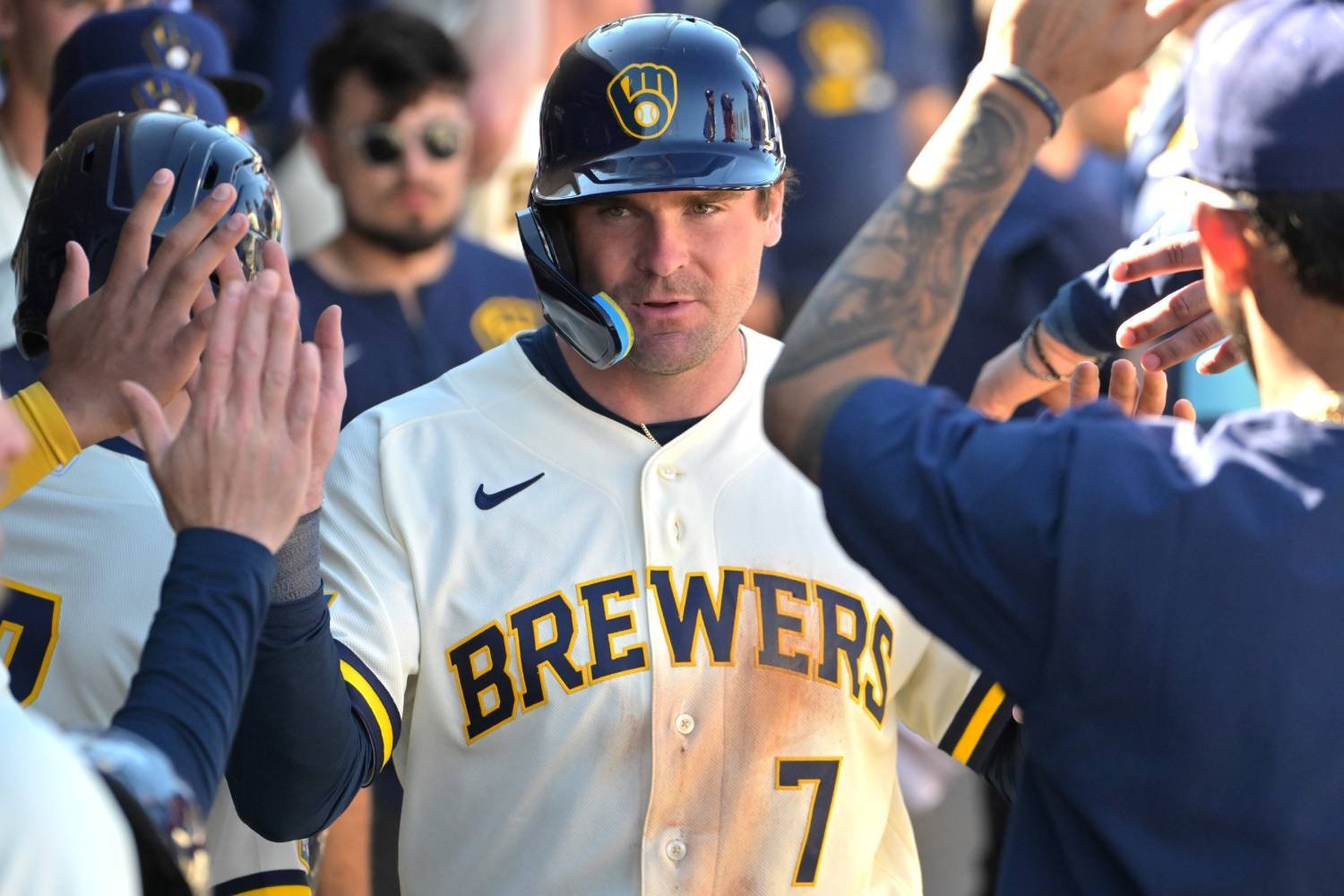 The Luis Matos experiment is over. It is now Tyler Black's opportunity. The Milwaukee Brewers called up Black, a first baseman, and left-hander Shane Drohan from Triple-A Nashville on Friday. Matos, an outfielder, was designated for assignment for the second time this season, while right-hander Carlos Rodriguez was optioned to Triple-A. The 25-year-old Black was one of the Crew's top hitters during spring training, posting a crazy .550/.522/1.000 slash line with one homer and 14 RBIs in six Cactus League games. The trouble for Black, who is known for his bat and not his glove with a .270/.399/.441 career minor-league slash line, is hitting when given the chance at the MLB level. In 23 games with the Brewers, Black has a .211/.357/.263 slash line with no homers and three RBIs over 70 plate appearances. At Nashville this season, Black has a .282/.378/.410 slash line with one homer and six RBIs. The addition of Black, a left-handed hitter like Jake Bauers, could mean that Bauers sees more time in left field with Black getting chances at first base. The Brewers have been looking for ways to get more out of their offense with three starting position players, outfielder Jackson Chourio, designated hitter Christian Yelich and first baseman Andrew Vaughn, on the injured list and this could be a way. This is Black's first call-up this season after not making the Opening Day roster due to the presence of Bauers and Vaughn at first base. Matos was a possible solution for a bit of offense when Chourio began the season on the IL. The Brewers picked Matos up in a March 30 trade after he was DFA'd by the San Francisco Giants after not making the Opening Day roster there. But in nine games with the Crew, Matos had a slash line of .200/.238/.200 with no homers or RBIs and seven strikeouts in 20 at-bats. If Matos goes unclaimed on the waiver wire, he could be assigned to Nashville or released. Drohan is back for his second stint with the Brewers after getting a spot start April 8 vs. the Boston Red Sox, his previous team. Acquired in the six-player Caleb Durbin trade, Drohan lasted just 2⅔ innings, allowing three hits and four walks with two strikeouts. Barring a rotation move, Drohan is likely to fill Rodriguez's spot as a long man out of the bullpen. Rodriguez did well in his two relief appearances since being called up last weekend. He pitched two innings in mopup duty against the Miami Marlins on Sunday and the Detroit Tigers on Wednesday, allowing one run on five hits and no walks with five strikeouts. View the full article
 -
Carl Edwards Jr. Called Up To Bolster Mets' Bullpen
DiamondCentric posted an article in Grand Central Mets
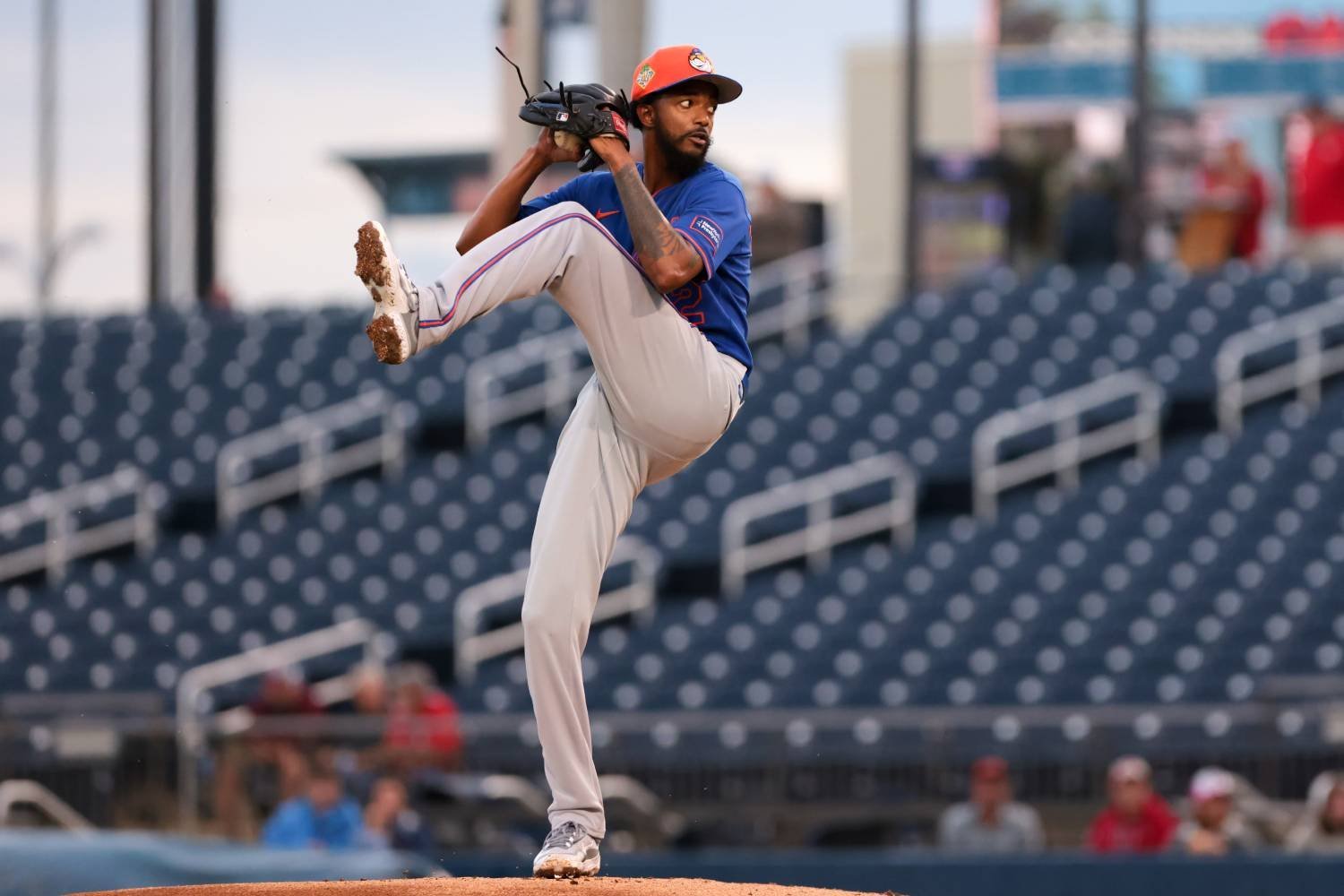 Needing a fresh arm for the bullpen, the New York Mets are calling up right-hander Carl Edwards Jr. from Triple-A Syracuse, according to multiple reports Friday. Right-hander Christian Scott, who was promoted to make a spot start Thursday in the series finale vs. the Minnesota Twins, has been sent back to Syracuse. Edwards, who signed a minor-league deal with the Mets in the offseason, will need to be added to the 40-man roster before Friday's game at Citi Field against the Colorado Rockies. Edwards has allowed 13 runs, 10 earned, in 17 innings at Syracuse this season, with 11 walks and 13 strikeouts for a 5.29 ERA. But the veteran of 11 seasons has a career 3.56 ERA. He appeared in four games last year, two each with the Los Angeles Angels and Texas Rangers, allowing three runs in six innings. Scott, who made nine starts for the Mets in 2024, returned for his 10th career start Thursday. That did not go well as he lasted just 1⅓ innings, walking five despite not allowing a hit, which led to a run. His short start forced manager Carlos Mendoza to use five relievers in a 10-8 win over the Twins. View the full article
 -
Kody Funderburk Returns To Twins' Bullpen As Kendry Rojas Demoted
DiamondCentric posted an article in Twins Daily
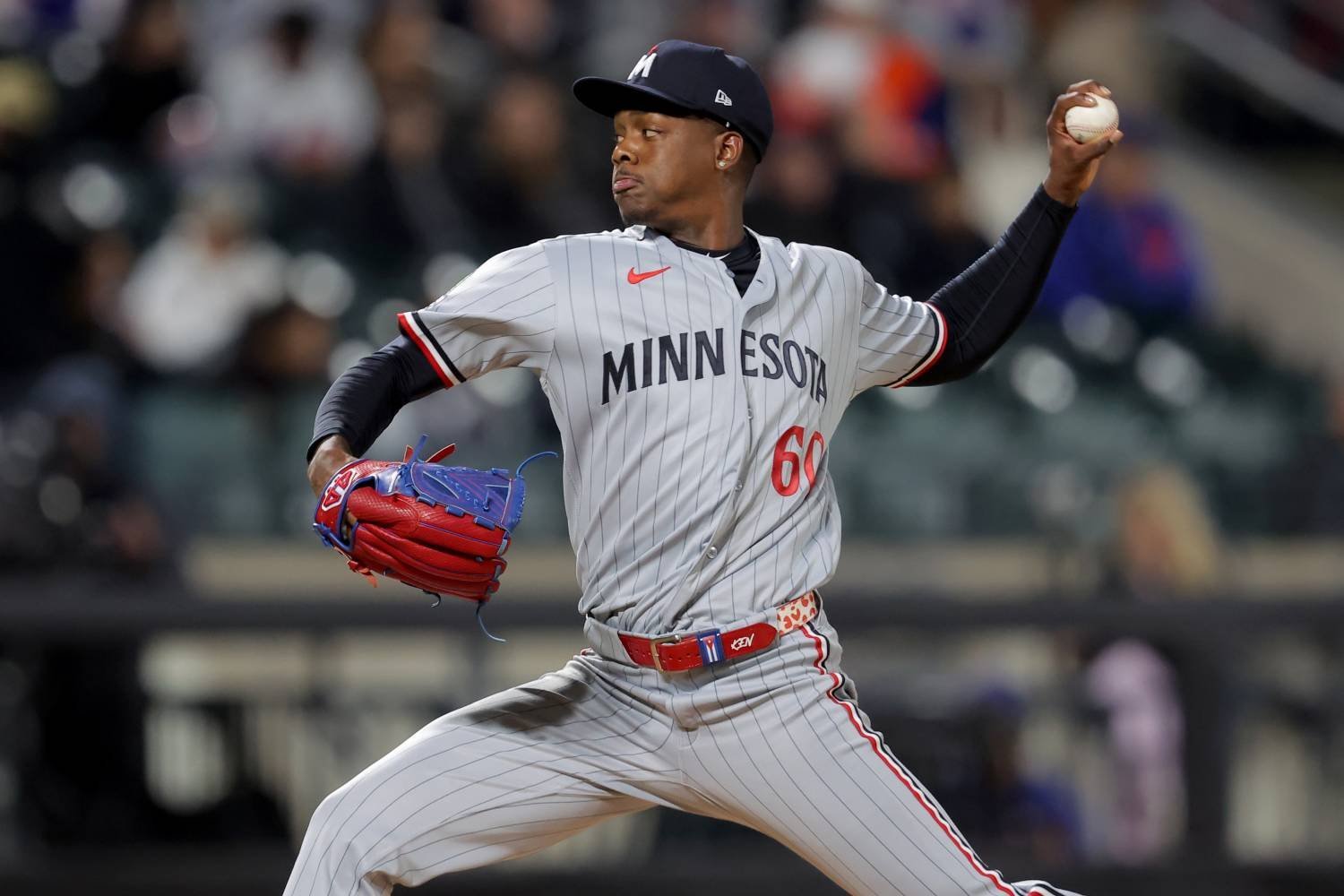 As expected, the initial Kendry Rojas era was a brief one. The 23-year-old, Twins Daily's No. 8 prospect, was returned to Triple-A St. Paul as fellow left-hander Kody Funderburk returned from paternity leave. Rojas was called up Tuesday and made his MLB debut in Wednesday's 3-2 loss to the New York Mets. He pitched two scoreless innings, allowing two hits and three walks with no strikeouts. Overall, a solid outing, especially for a debut. Rojas was part of the package the Twins got from the Toronto Blue Jays for right-handed reliever Louis Varland and first baseman Ty France. Funderburk's wife, Alicia, gave birth to the couple's first child, a daughter, Monday, a day off for the team. View the full article
 -
Friday Forum: Mick Abel, Luke Keaschall, and James Outman
DiamondCentric posted an article in Twins Daily
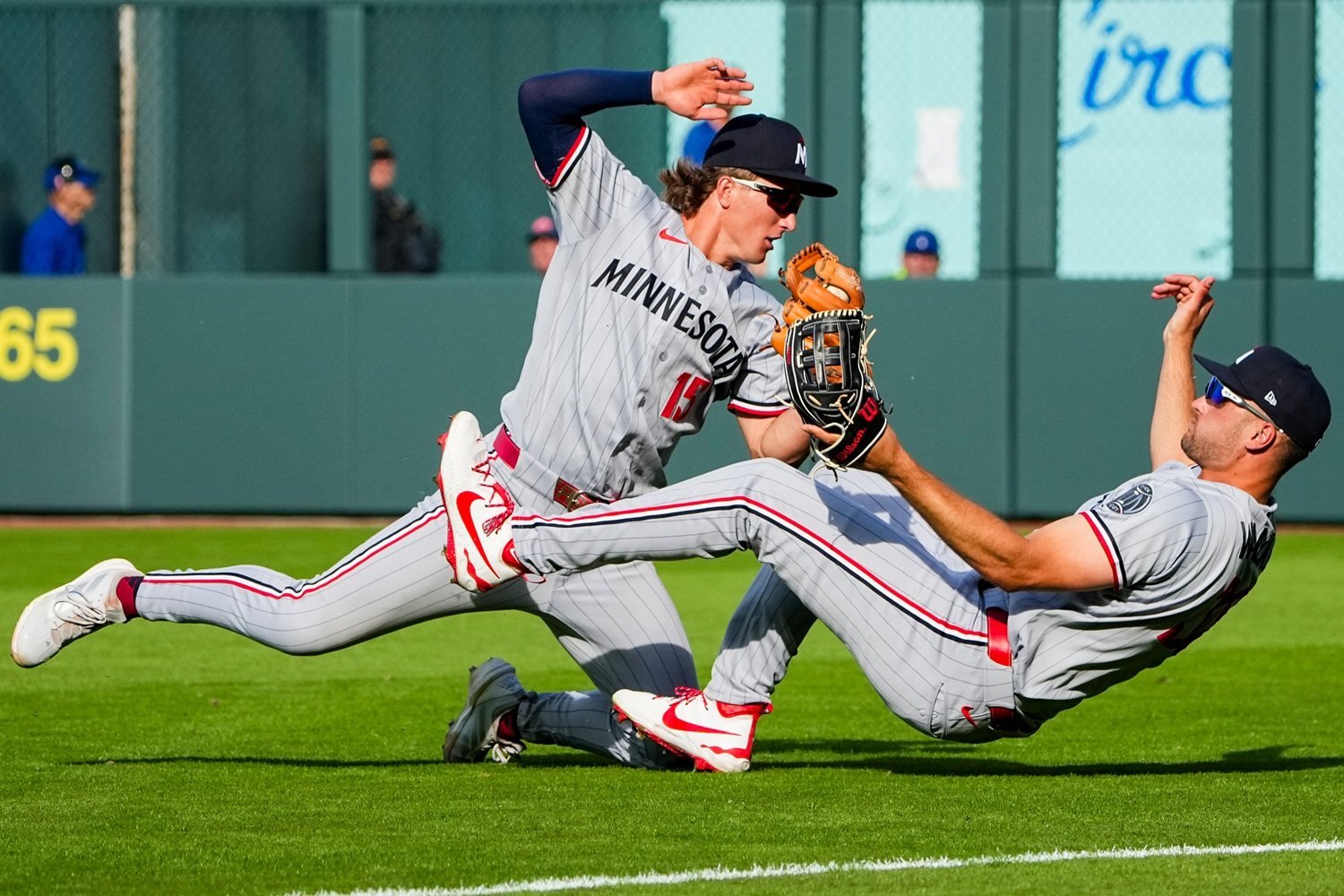 At Twins Daily, there are a lot of interesting articles on the front page, but we encourage you to dig into the other pages on this site. Check out the Blogs page to see more Twins content. You can even start your own Twins blog there. And then there are some great discussions in the Twins Daily forums as well Here are just a few of the topics from this week. Mick Abel to the IL Mick Abel looked the part of big-league starter through 20 innings pitched this season, before being sidelined with an injury. Matthew Trueblood wrote an excellent piece with tons of great info, leading to lots of good takes by the TD faithful...you should be adding yours! Luke Keaschall and Sophomore Slump Small sample size, of course, but Luke Keaschall looked the part of polished big league hitter last year--in between injuries at least. This year has been a struggle, to put it kindly. Cody Christie takes a look at the "sophomore slump." What do you think? History of MLB #3 Picks I'm not much of a prospect work, but I know many of you are. TD always does a fantastic job covering the MLB draft. Here's Jamie Cameron's stab at who might the Twins select with the third overall pick this summer. Agree? Disagree? Lots of great info and opinions here. View the full article
 -
Gleeman & The Geek: Riding the Twins' Rollercoaster (Again)
DiamondCentric posted an article in Twins Daily
 You can listen by downloading us from iTunes, Spotify, YouTube, iHeartRadio, Stitcher, GleemanAndTheGeek.com, click this link or you can listen to it or watch it below. View the full article
 -
 It feels like the long-term outlook for the Minnesota Twins outfield was already foggy heading into the season, and somehow it’s only gotten more complicated. With Byron Buxton around for a few more years, the real question is how a farm system with prospects like Walker Jenkins, Emmanuel Rodriguez, and Gabriel Gonzalez actually fits together over the long term. View the full article
 -
 Chicago Cubs Minor League Report: Cubs Transactions Colorado Rockies traded 3B Nicky Lopez to Chicago Cubs for cash. Iowa Cubs Held Scoreless In 1-0 Home Loss The Iowa Cubs fell 1-0 at home to the Louisville Bats, managing only three hits across nine innings. Ty Blach took the loss, pitching 5 1/3 innings while allowing five hits, one earned run, one walk, and one strikeout. Starter Jordan Wicks worked 2 2/3 innings, giving up five hits and a walk but keeping Louisville off the board while striking out two. Tyler Beede closed out the game with one inning of scoreless work, striking out two without allowing a hit. Louisville scored the game's only run in the top of the sixth. Blach allowed a leadoff single and followed with a walk, before Owen Miller, Pedro Ramírez, and Jonathon Long turned a 6-4-3 double play that moved the lead runner to third base. A two-out double to center field then drove in the run. Iowa's offense was quiet across the board. Cleanup hitter Dylan Carlson finished 1-for-3 with a walk, Pedro Ramírez went 1-for-3 with a walk, and Brett Bateman added a single and a walk. The team drew four walks, struck out four times, grounded into a double play, and stranded five runners on base. Iowa also committed two errors behind the pitching staff. Player AB R H RBI BB K BJ Murray 4 0 0 0 0 1 Jonathon Long 4 0 0 0 0 0 Pedro Ramírez 3 0 1 0 1 1 Dylan Carlson 3 0 1 0 1 1 Christian Bethancourt 4 0 0 0 0 0 Owen Miller 3 0 0 0 0 0 Justin Dean 2 0 0 0 1 1 Brett Bateman 2 0 1 0 1 0 Hayden Cantrelle 3 0 0 0 0 0 Player IP H R ER BB K HR Jordan Wicks 2 2/3 5 0 0 1 2 0 Ty Blach (L, 1-1) 5 1/3 5 1 1 1 1 0 Tyler Beede 1 0 0 0 0 2 0 Garriola's Two Home Runs Not Enough In Smokies' 6-4 Loss The Knoxville Smokies dropped a 6-4 home decision to the Chattanooga Lookouts despite a big afternoon from cleanup hitter Andy Garriola, who hit two home runs and drove in three of Knoxville's four runs. Grant Kipp took the loss after a five-inning start in which he allowed six hits and five earned runs, walking four and striking out seven. A three-run home run in the top of the second and a two-run triple in the third accounted for the bulk of the damage. Frankie Scalzo Jr. followed with two scoreless innings and two strikeouts. Tyler Ras allowed one run over the final two innings. Knoxville drew first blood in the bottom of the second when Garriola took a pitch out to left-center field for a solo home run. The Smokies then pieced together three runs in the bottom of the fifth. Karson Simas led off with a triple and scored on an Alex Ramírez groundout. With two outs, Owen Ayers singled to right field, and Garriola followed with a two-run homer to left that trimmed the deficit to 5-4. Garriola finished 2-for-3 with a walk, two home runs, and three RBI. Simas added a single, a triple, a run scored, and a pair of strikeouts. Ayers reached base twice with a single, a walk, and a run scored. Knoxville drew four walks, struck out 10 times, and left five runners on base. Player AB R H RBI BB K Alex Ramírez 4 0 0 1 0 2 Jordan Nwogu 4 0 0 0 0 0 Owen Ayers 3 1 1 0 1 1 Andy Garriola 3 2 2 3 1 1 Carter Trice 3 0 0 0 1 0 Edgar Alvarez 4 0 0 0 0 3 Ariel Armas 3 0 1 0 1 0 Devin Ortiz 4 0 0 0 0 1 Karson Simas 4 1 1 0 0 2 Player IP H R ER BB K HR Grant Kipp (L, 1-1) 5 6 5 5 4 7 1 Frankie Scalzo Jr. 2 2 0 0 2 2 0 Tyler Ras 2 2 1 1 3 1 0 Halbach's Three Doubles Lead South Bend To 10-4 Win The South Bend Cubs cruised to a 10-4 road win over the Dayton Dragons, collecting 11 hits and five doubles while drawing six walks. Starter Cole Reynolds worked 3 2/3 innings, allowing two hits and two earned runs on five walks with six strikeouts. Nate Williams picked up the win with 1 1/3 innings of relief, surrendering one hit, one earned run, one walk, and a home run while striking out three. JP Wheat followed with two innings in which he gave up two hits, one earned run, and five walks. Adam Stone closed out the final two scoreless innings with a hit, a strikeout, and no walks. South Bend broke through with three runs in the top of the third. Justin Stransky, Christian Olivo, and leadoff man Kane Kepley drew three consecutive walks to load the bases. Two wild pitches then plated a pair of runs during the next at-bat, and Kade Snell's sacrifice fly brought Kepley home. The Cubs blew it open with four runs in the top of the fifth. Kepley walked and Cole Mathis singled to put two on. After Snell moved the runners up on a groundout, cleanup man Matt Halbach ripped a two-run double to right field. Cameron Sisneros followed with a double that scored Halbach, Reginald Preciado singled, and Drew Bowser added an RBI single before being thrown out at second. Halbach finished 3-for-5 with three doubles, two runs, and two RBI. Sisneros went 2-for-5 with a double, two runs, and two RBI. Snell added a solo home run in the top of the ninth and drove in two. Preciado contributed two hits and a walk, and Kepley reached three times with two walks and scored twice. South Bend struck out nine times and left six runners on base. Player AB R H RBI BB K Kane Kepley 3 2 0 0 2 1 Cole Mathis 5 1 1 0 0 2 Kade Snell 3 1 1 2 1 0 Matt Halbach 5 2 3 2 0 0 Cameron Sisneros 5 2 2 2 0 2 Reginald Preciado 4 0 2 0 1 2 Drew Bowser 5 0 1 2 0 1 Justin Stransky 3 1 1 0 1 1 Christian Olivo 3 1 0 0 1 0 Player IP H R ER BB K HR Cole Reynolds 3 2/3 2 2 2 5 6 0 Nate Williams (W, 1-0) 1 1/3 1 1 1 1 3 1 JP Wheat 2 2 1 1 5 1 0 Adam Stone 2 1 0 0 0 1 0 Brockett's Long Relief Can't Salvage Pelicans' 7-1 Loss The Myrtle Beach Pelicans fell 7-1 to the Fayetteville Woodpeckers, managing only three hits and one walk across nine innings. Starter Kevin Camacho was charged with the loss after a disastrous bottom of the first. He issued four walks and allowed a hit while recording just two outs, giving up four runs, only one earned. A Pelicans error during the frame allowed two additional runners to score. David Bracho took over and worked 2 1/3 innings, giving up three hits, three earned runs, two walks, and four strikeouts while allowing a solo home run in the third. Jackson Brockett was the bright spot, tossing five scoreless innings of relief with one hit allowed, one walk, and four strikeouts. The Pelicans pushed across their only run in the top of the fifth. With one out, Derniche Valdez singled, then moved to third when Edward Vargas reached on a throwing error. Leadoff hitter Ty Southisene followed with a single to center that brought Valdez home. Valdez finished 2-for-3 with a triple and a run scored. Southisene went 1-for-4 with the team's lone RBI. Josiah Hartshorn drew the team's only walk. The Pelicans struck out 13 times and left four runners on base, and each team committed one error. Player AB R H RBI BB K Ty Southisene 4 0 1 1 0 0 Alexey Lumpuy 4 0 0 0 0 3 Josiah Hartshorn 3 0 0 0 1 2 Jose Escobar 4 0 0 0 0 1 Alexis Hernandez 4 0 0 0 0 3 Jairo Diaz 3 0 0 0 0 2 Derniche Valdez 3 1 2 0 0 1 Derik Alcantara 3 0 0 0 0 1 Edward Vargas 3 0 0 0 0 0 Player IP H R ER BB K HR Kevin Camacho (L, 0-1) 2/3 1 4 1 4 1 0 David Bracho 2 1/3 3 3 3 2 4 1 Jackson Brockett 5 1 0 0 1 4 0 Cubs Top-20 Prospect Performance Moises Ballesteros: DNP Jaxon Wiggins: DNP Jefferson Rojas: DNP Kevin Alcantara: DNP Jonathon Long: 0-for-4 Ethan Conrad: DNP Pedro Ramirez: 1-for-3, BB, K Kane Kepley: 0-for-3, 2 R, 2 BB, K Josiah Hartshorn: 0-for-3, BB, 2 K James Triantos: DNP Brandon Birdsell: DNP Cole Mathis: 1-for-5, R, 2 K Angel Cepeda: DNP Kaleb Wing: DNP Will Sanders: DNP Juan Cabada: DNP Jostin Florentino: DNP Dominick Reid: DNP Ty Southisene: 1-for-4, RBI Erian Rodriguez: DNP View the full article
 -
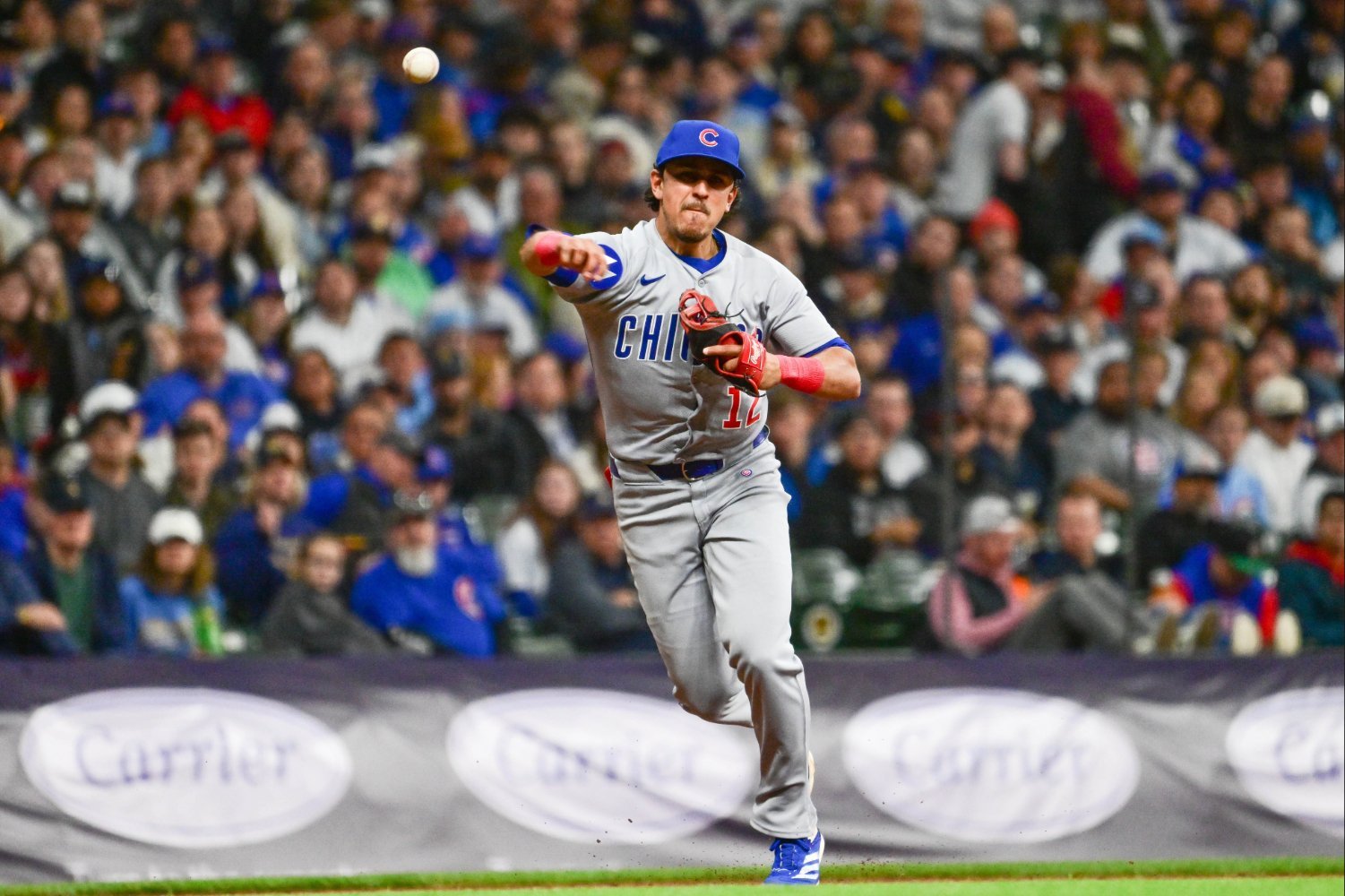 According to ESPN's Jesse Rogers, the Cubs have acquired Nicky Lopez from the Colorado organization: Lopez has played this season for the Rockies' Triple-A squad, batting .333 with a home run in 54 at=bats. Last season, Lopez did play for the Cubs, but was ineffective at the plate with just one hit in 18 at-bats. The Cubs are looking for infield depth and a late-inning defensive replacement. There hasn't been a corresponding move, so it seems as if Lopez will start his time with the Iowa Cubs, not the big-league squad. He can play across the infield. Given the ineffectiveness Scott Kingery has displayed thus far, manager Craig Counsell may opt for Lopez going forward to improve the team's defensive depth. View the full article
 -
 Boston Red Sox Affiliate Recap (April 21 - April 23) Triple-A Worcester Red Sox Season Record: 13-10 Series Opponent: Syracuse Mets (New York Mets) Series Record: 2-1 April 21: Worcester suffered a blowout loss, 12-3, to Syracuse. The WooSox bats continued to struggle with RISP as they were 3-for-11 and had 10 LOB. Nick Sogard had a 3-for-4 day at the plate, including a walk and two runs. Mickey Gasper had a multi-hit day as well, hitting two of the three WooSox runs in this game. Other than the troublesome 4th inning, Isaac Coffey pitched well, throwing 3.2 innings and striking out six. Angel Bastardo made his season debut and had some trouble finding the zone, especially with his breaking pitches. He showed off his fastball, topping out at 97.6 MPH, and showed he can miss barrels. April 22: The WooSox walked it off to defeat the Mets 7-6. Mickey Gasper gave Worcester an early lead as he brought in two runs with a double. Anthony Seigler scored one more run with an RBI groundout. The Sox lost the lead in the 6th, but Vinny Capra made it a one-run game in the 7th with an RBI single. In the 8th, Syracuse scored another run, and Seigler cut it down to a one-run deficit once again. Down one run in the 9th, Nate Eaton hit a double that tied the game, but Nick Sogard was gunned down at home as he tried to end the game. With two outs, Kristian Campbell roped a single to bring in Eaton to walk it off for the WooSox 7-6. Jake Bennett continued to look great this season, this time against his former franchise. He threw 4.2 innings, giving up one run on four hits, and struck out three to put his ERA at 0.86. Key Performances: Jake Bennett: 4.2 IP, 4 H, ER, 3 K Nick Sogard: 2-for-3, 2 R, 2 BB Kristian Campbell: 2-for-4, RBI, BB April 23: Worcester won the third game of the series against Syracuse with a 10-4 victory. The WooSox were down three runs in the 3rd inning, but walked in a run on back-to-back at-bats to make it a 3-2 game. With the score at 4-2 entering the 5th, the WooSox got a hold of the lead thanks to Matt Thaiss hitting an RBI single while Vinny Capra and Nathan Hickey hit a pair of doubles to get a 6-4 lead. Worcester never looked back as they scored two more runs from Sogard and Gasper, and Tsung-Che Cheng scored on a wild pitch in the 9th. Key Performances: Tayron Guerrero: 2.0 IP, 1 H, 0 ER, 2 K Nate Eaton: 2-for-3, 3B, R, RBI, BB Vinny Capra: 2B, 2 R, 2 RBI, 2 BB Double-A Portland Sea Dogs Season Record: 9-8 Series Opponent: Hartford Yard Goats (Colorado Rockies) Series Record: 1-2 April 21: The Portland Sea Dogs lost the first game of the series to the Hartford Yard Goats 9-7. Franklin Arias continued his outstanding streak by hitting his 4th home run in 11 games. The added weight in the offseason seems to be clearly working, hitting 8 homers in 116 games in 2025. Max Ferguson stayed hot, going 2-for-4, hitting a double, a two-run homer, and a stolen base. Tyler McDonough’s first homer of the year was a game-tying solo shot in the 6th. Erik Rivera looked impressive again as he struck out four batters in 2.1 innings to lower his ERA to 1.00. Key Performances: Erik Rivera: 2.1 IP, 1 H, 0 ER, 4 K Franklin Arias: HR, 2 RBI Max Ferguson: 2-for-4, HR, 2 R, 2 RBI, BB April 22: The Sea Dogs lost a high-scoring game against the Yard Goats 13-8. In back-to-back games, Franklin Arias homered and knocked on the door to Worcester. Portland got off to an early 3-1 lead in the 1st, back-to-back home runs coming from Arias and Tyler McDonough; meanwhile, Brooks Brannon doubled to bring in another run. The Sea Dogs' pitching got knocked around this game, but the bats showed out. Down 8-3 entering the 6th, Ronald Rosario hit an RBI single, Nelly Taylor roped an RBI double, Ahbram Liendo brought in another run with a ground out, and Arias made his 2nd hit of the day count with an RBI double to make it a one-run game. The short deficit went out of the Sea Dogs' reach as the Yard Goats scored five more runs. Key Performances: Franklin Arias: HR, 2B, 2 RBI, R Ronald Rosario: 2-for-4: 2 R, RBI April 23: Portland walked it off in extra innings 5-4, against Hartford. Franklin Arias has been on an incredible stretch, hitting his 3rd homer in three games and his 6th of the year. Ahbram Liendo tied up the game in the 4th with a sacrifice fly. Down 2-1, the Sea Dogs tied it up again due to an RBI groundout from Johanfran Garcia in the 5th inning. In the bottom of the 9th with the Yard Goats up 4-2 and a runner on 1st base, Franklin Arias hammered a two-run homer to tie it up 4-4. With the bases loaded and two outs in the 10th, Max Ferguson roped a single to center field to walk it off for the Sea Dogs. Dalton Rodgers and Cooper Adams pitched very well this game, throwing a combined nine innings and one earned run. Key Performances: Franklin Arias: HR, 2B, 2 RBI Max Ferguson: 2-for-2, R, RBI Dalton Rodgers: 5.0, 4 H, 1 ER, 6 K Cooper Adams: 4.0 IP, 3 H, 0 ER, 4 K High-A Greenville Drive Season Record: 8-10 Series Opponent: Asheville Tourists (Houston Astros) Series Record: 2-1 April 21: The Greenville Drive won their fourth game in a row and the first game of the series in an 8-4 victory against the Asheville Tourists The first run of the game was not scored until the 6th inning when Freili Encarnacion hit an RBI single to make it 1-0 Greenville. After the Drive gave up a three-run 7th inning, Yophery Rodriguez’s third hit of the game was a three-run homer to put them on top 4-3. Greenville had a big 9th inning. Henry Godbout notched his third hit of the game with a leadoff double. After Gerardo Rodriguez got on base from a throwing error, Jack Winnay followed up with an RBI single. Afterwards, Isaiah Jackson belted a three-run homer that gave Greenville an even bigger cushion in this four-run 9th inning. Key Performances: Henry Godbout: 3-for-4, 2 2B Yophery Rodriguez: 3-for-3, HR, 2B, 3 RBI Isaiah Jackson: 2-for-5, HR, 2B, 3 RBI April 22: Greenville won in extra innings with a hard-fought 11-10 victory against Asheville. Red Sox top prospects Justin Gonzales and Yoeilin Cespedes had themselves a three-hit day at the plate in this victory. While they were down 5-1, the Greenville bats started to wake up in the 6th inning when Gerardo Rodriguez earned his 2nd RBI of the day with an RBI groundout, and Isaiah Jackson brought in a run with a single to make it 5-3. Asheville scored two more runs in the 7th. Afterwards, Freili Encarnacion smacked his 3rd home run of the year to cut the deficit to three runs. The game seemed out of reach for the Drive since they were down 9-4 entering the ninth, but they had other plans. Down to their last out, Cespedes hit an RBI single to bring in Gonzales, Rodriguez singled, and Jack Winnay walked. Isaiah Jackson belted a grand slam to tie the game and keep Greenville alive. In the 10th, Gonzales’ third hit of the game was a big one, a double that brought in two runs to give the Drive a two-run lead. With a chance to walk it off or tie the game once again, Asheville brought one run across the plate but it was not enough as the Greenville Drive stunned them at home. Key Performances: Justin Gonzales: 3-for-5, 2B, R, 2 RBI, BB Yoeilin Cespedes: 3-for-5, 2 2B, 3 R, RBI Isaiah Jackson: HR, 5 RBI April 23: Greenville’s five-game winning streak came to an end as they got walked off on in extra innings, 7-6 against Asheville. The bats were not as sharp this game, but still managed to put up six runs and force the game to extras. Greenville was in a hole after giving up a grand slam in the 2nd to put them down 5-0. In the 5th, a couple of ground outs and a fielding error brought three runs across home plate to put them down only two runs. The Tourists scored another run in the 5th to put them up 6-3. Entering the 8th down three runs, Greenville showed off their magic once again. Natanael Yuten doubled to bring in a run, and Cespedes hit a sacrifice fly to cut the deficit down to one. With two outs, Gerardo Rodriguez hammered his first homer of the year to tie the game 6-6. Sadly, the bats fell asleep in extras to lose the game. Calvin Bickerstaff looked impressive as he threw four no-hit innings and struck out six to lower his ERA to 0.60. Key Performances: Calvin Bickerstaff: 4.0 IP, 0 H, 0 ER, 6 K Gerardo Rodriguez: HR, 2 R, RBI, 2 BB Single-A Salem RidgeYaks Season Record: 10-8 Series Opponent: Fredericksburg Nationals (Washington Nationals) Series Record: 2-1 April 21: The Salem RidgeYaks beat the Fredericksburg Nationals with a monster 12-2 victory. Seven of nine RidgeYaks hitters had multiple hits in this slugfest. In the 3rd inning, Skylar King brought in two runs with a single, while Andrews Opata and Kleyver Salazar hit in a couple more runs to make it a 4-0 game. Enddy Azocar roped a double to bring in a run, and Luke Heyman followed up with an RBI single in the 4th. In the 5th, D’Angelo Ortiz hit his first double of the year, scoring two runs in the process. Salem had another four-run inning in the 6th, Azocar hammered his third homer of the year, Stanley Tucker and Ortiz each walked in a run, Starlyn Nunez hit in another run that put them on top with a huge commanding 12-1 lead. 2025 6th round pick Leighton Finley had a nice day on the mound as he struck out five in five innings and only gave up one run on four hits to earn his first win and lowered his ERA to 1.98. Key Performances: Leighton Finley: 5.0 IP, 4 H, 1 ER, 5 K D’Angelo Ortiz: 2-for-3, 3 RBI, BB Enddy Azocar: 2-for-5, HR, 2 RBI, 2 R April 22: Salem lost a nail-biter to Fredericksburg in extra innings, 7-6. The RidgeYaks were down six runs entering the 3rd; however, Luke Heyman got them on the board with an RBI single to make it 6-1. A couple of bad throws from the Nationals' catcher and pitcher resulted in two more runs to cut the deficit down to three. As momentum started to shift, Kleyver Salazar belted a two-run homer to make it a one-run game in the 8th. Frederik Jimenez’s first homer of the year was a good one, tying the game up in the bottom of the ninth on the first pitch he saw. Sadly, the RidgeYaks came up just short in the 10th as they gave up a run, and the bats could not get anything going with a runner on second base and no outs. Jacob Myers pitched a solid four innings with no earned runs while Salem was building their comeback. Key Performances: Jacob Myers: 4.1 IP, 4 H, 0 ER, 3 K Luke Heyman: 2-for-3, R, RBI, 2 BB Frederik Jimenez: HR, BB, 2 R Kleyver Salazar: HR, 2 RBI, BB April 23: The RidgeYaks bats stayed hot as they won the third game of the series against the Nationals 10-4. Stanley Tucker put Salem on top early with a two-run homer in the 2nd inning. The RidgeYaks took advantage of the Nationals' bad defense, scoring one run each off a throwing error and bringing in two more runs in the 4th, 6-0 Salem. With the lead cut down to only two runs in the 7th, Skylar King gave Salem some breathing room after he belted his third homer of the year. Starlyn Nunez hit a sacrifice fly to bring in a run, and Enddy Azocar brought in two more with a double. Key Performances: Avinson Pinto: 2-for-3, 3 R, BB Stanley Tucker: HR, 2 RBI, BB View the full article
 -
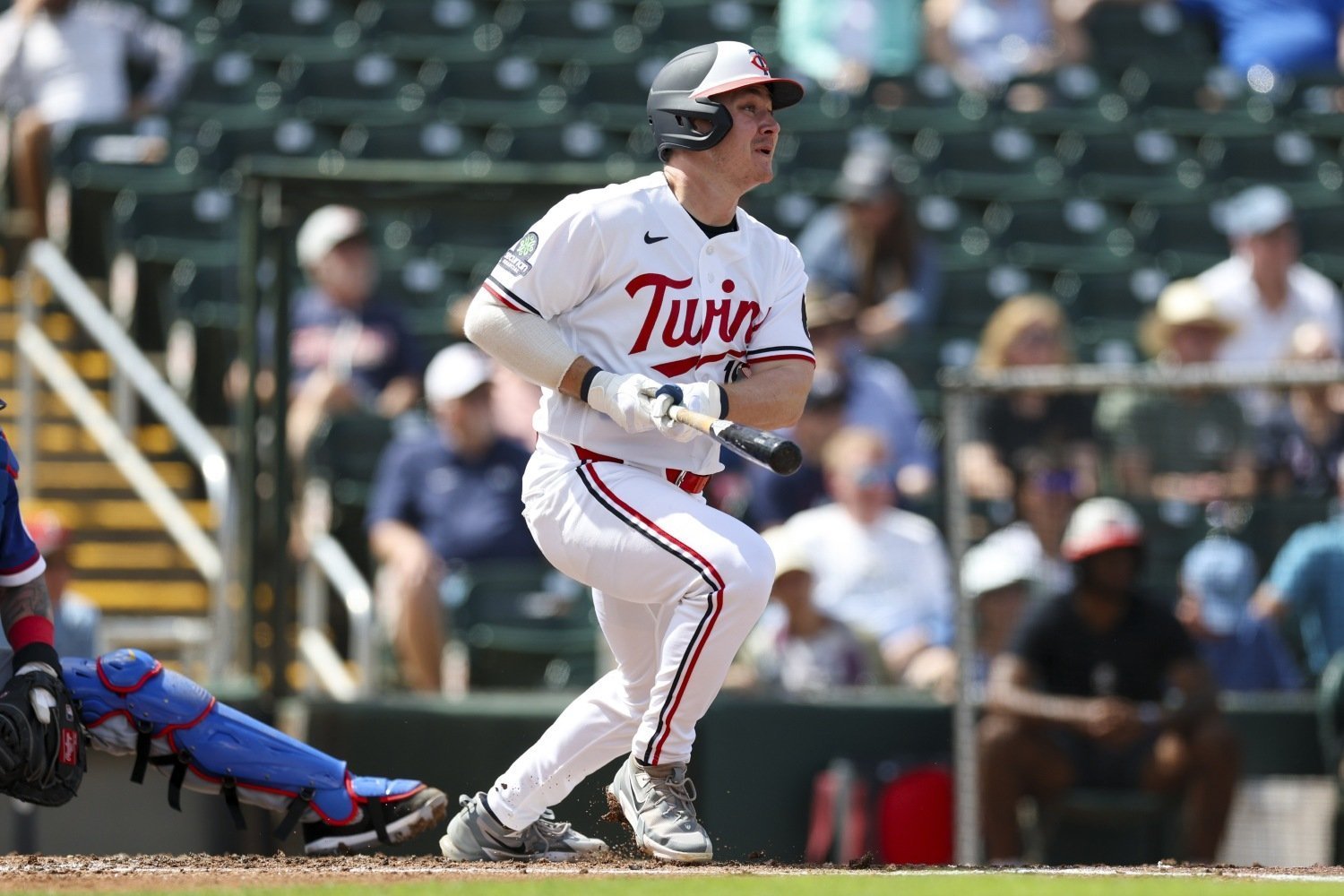 The Minnesota Twins are dealing with another hit to their outfield depth, and this one removes a player who looked ready to contribute sooner rather than later. Alan Roden, acquired from Toronto in last summer’s Louis Varland deal, is expected to miss at least a month after suffering an injury to his right shoulder. Roden opened the season at Triple-A St. Paul after being optioned at the end of Spring Training, but he remained firmly on the radar as a likely call-up if the Twins needed help in the outfield. That opportunity will now be put on hold as the organization takes a cautious approach with his recovery. “He has a tear in his labrum,” general manager Jeremy Zoll said on Thursday. “It’s viewed as nonsurgical at this time. He’ll be down from all activity for about four weeks and then go from there. In theory, he could keep DHing, but to keep the recovery more predictable, everyone has agreed to just have him shut down for the next month.” The injury is specifically tied to Roden’s throwing shoulder, which is an important distinction. According to Zoll, it has not significantly impacted his ability to swing the bat, but the team is opting for a full shutdown rather than trying to manage the injury in a limited role. That decision prioritizes long-term health over any short-term production boost at the minor league level. Before going down, Roden was putting together an impressive stretch with St Paul. Through 19 games, he posted a .275/.425/.464 slash line while showing strong plate discipline with 17 walks compared to just 14 strikeouts. That combination of on-base ability and contact skills made him an intriguing depth piece, especially for a Twins roster that has dealt with its share of outfield uncertainty. It is also worth noting that, while the word 'tear' can sound alarming, it does not necessarily indicate a severe or complete structural issue. In many cases, what is labeled as a tear can be more minor in nature, and the Twins appear confident that rest and recovery will be enough to get Roden back on track without surgery. In the meantime, his absence creates a ripple effect. With Roden out of the picture for at least the next month, the Twins may have to look elsewhere if a need arises in the big league outfield. That could open the door for top prospects Walker Jenkins and Emmanuel Rodriguez, both of whom are already at Triple A and offer left-handed bats with center field capability. For Roden, this is another frustrating interruption. He saw regular action after joining the organization last season, before a thumb injury cut his year short. Now, just as he was building momentum again, he will be forced to reset once more. The Twins will hope that this is simply a temporary pause rather than a lingering issue. If Roden can return on schedule and pick up where he left off, he should still factor into the team’s plans at some point this season. Until then, Minnesota’s outfield depth will be tested, and opportunities may shift toward the next wave of talent waiting in St. Paul. View the full article
 -
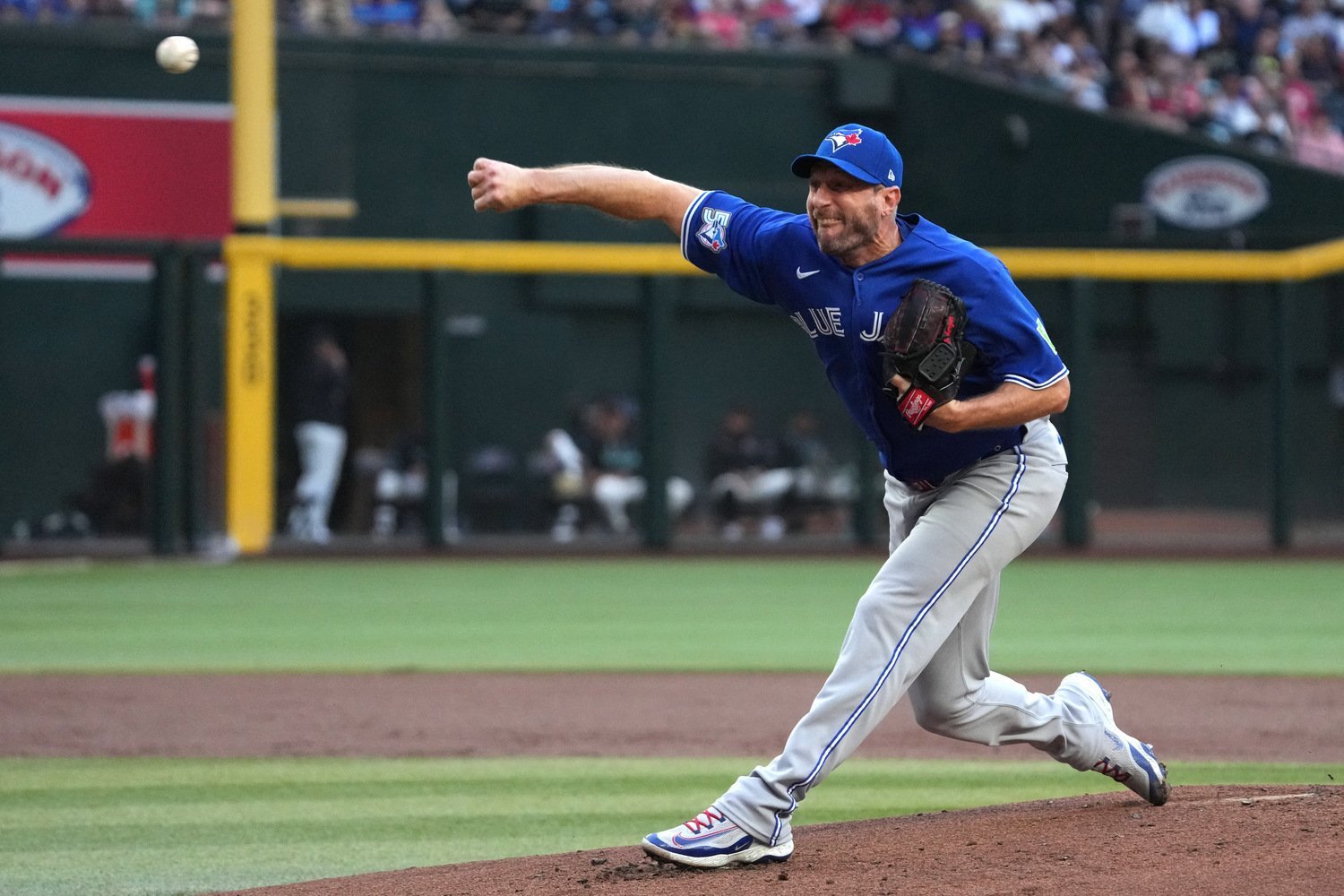 Facing the team that drafted him 20 years earlier, Max Scherzer righted the ship after back-to-back short starts. His outings against the Dodgers and the Twins were enough to make me worry an IL stint was imminent, but Scherzer cruised through six innings on 74 pitches in Arizona, holding the Diamondbacks to a pair of runs. I breathed a sigh of relief after this one, even as the Blue Jays went on to lose 6-2. One thing that stood out to me from that start was Scherzer's strikeout. Yes, that's strikeout, singular. Of the 22 batters he faced, only one went down on strikes: old friend Lourdes Gurriel Jr. It's not so often these days that you see the same number in the "K" and "QS" columns on a pitcher's game log. Well, to be perfectly honest, it's actually more common than I thought. I ran a Statcast query for quality starts (at least 6.0 IP, three or fewer earned runs) in which the pitcher struck out one batter or fewer, and I was surprised to see there have already been five this season. There were 29 such starts in 2025. That's rare – it's the same as the number of complete games in 2025 – but it's not like Scherzer's start was some wild anomaly. Still, Scherzer's low strikeout rate this season is worth talking about. Through four starts, he's struck out 10 of 68 batters for a 14.7% K-rate. Once again, that's not shockingly low in context. Nineteen pitchers (min. 15 IP) have a lower strikeout rate this season. It is, however, unusually low for Scherzer. At his peak, he was striking out one-third of his opponents. Even as he entered his forties, he kept his K-rate around league average from 2024-25 (22.8%). Mad Max has made 299 quality starts in his storied career. The only other time he made a quality start with just one strikeout was in August 2011, before anyone else on this roster was even playing in the major leagues. Meanwhile, the last time he went five starts with a K-rate under 15% was 2010. He's in danger of doing that again – for the first time in 16 years – unless he has better strikeout stuff in his fifth start of the season today. Back in 2010, Scherzer had yet to become the legend we know him as today. More to the point, the leaguewide strikeout environment was completely different. The average K-rate for a starting pitcher was 17.6%, compared to 22.3% in 2026. So, relatively speaking, this may be the most Scherzer has ever struggled for strikeouts. That's not good. Even more concerning than Scherzer's 10 measly strikeouts are his 22 whiffs on 135 swings (16.3%). Out of 137 pitchers who have induced at least as many swings, only seven have a lower whiff rate. Missing bats isn't the only way to earn strikes, but no pitcher can live on called strikes and foul balls alone. If Scherzer is going to get more strikeouts, he'll have to start by generating more whiffs. This is especially important because Scherzer relies on strikeouts more than most pitchers. He has always been more of a power pitcher than a pitch-to-contact type. His career groundball rate is 18% below league average. Over the last two years, no starting pitcher has yielded grounders at a lower rate (26.7%). Accordingly, only a handful have given up barrels more often. Some pitchers can survive with a strikeout rate in the mid-teens. (Think late-career Zack Greinke, for example.) Yet, in order to do so, they need enough other tools in their belt. I'm not confident Scherzer has those tools. Now comes the time when I bring up small sample size. I know, I'm sorry. I'm sure you're tired of reading that phrase, but honestly, I deserve credit for waiting this long to bring it up. Scherzer has thrown fewer than 20 innings this season. That's nothing. One strong start tonight, and all of a sudden, this could be a non-issue. We also know he's been dealing with forearm tendinitis, even if it doesn't seem particularly serious. In other words, his lack of strikeouts is something to monitor, but not something to keep you up at night. If anyone has earned a little patience, it's the guy who had his first double-digit strikeout game before his youngest teammate was six years old. View the full article
 -
 Daniel Vazquez's two-run walk-off single completed a 13-12 comeback for Northwest Arkansas. Austin Charles' two-run double powered Quad Cities past Lansing 4-3, with Aiden Jimenez holding the Lugnuts to one earned run over five innings. Ivan Sosa hit a two-run homer and Hiro Wyatt worked 4 1/3 scoreless innings in Columbia's 8-1 win, backed by Andy Basora's six-strikeout relief. Omaha dropped a 6-1 decision in Toledo, where Ryan Ramsey allowed four home runs. Royals Transactions No Roster Moves Misner's Solo Shot Is Omaha's Only Answer In Toledo Ryan Ramsey lasted just 3 1/3 innings in the Storm Chasers' 6-1 loss at Toledo, surrendering nine hits, six runs, five earned, on four home runs, while fanning seven and walking none. Toledo did nearly all of its damage in two innings against Ramsey. Two solo home runs and a two-run blast produced a four-run third, and another two-run homer in the fourth opened a 6-0 gap the Storm Chasers never closed. Kameron Misner provided Omaha's only run with a solo home run to right-center in the sixth inning, his sixth of the season. Drew Waters led the offense with a two-hit day, and Josh Rojas added a double. The Storm Chasers mustered seven hits and stranded 10 runners. Omaha drew four walks and collected seven hits, yet apart from Misner's solo blast, the lineup couldn't muster runs. John Rave reached twice on walks from the leadoff spot, and Elih Marrero and Waters each delivered late-inning singles, but the Storm Chasers failed to turn any of those baserunners into runs. Out of the bullpen, Ben Sears covered 1 2/3 innings and allowed a hit, a walk, and struck out one. Helcris Olivárez worked one scoreless inning with two walks. Jose Cuas handled his inning without incident. Chazz Martinez finished the night with a strikeout and one hit allowed over one inning. Player AB R H RBI BB K John Rave (CF) 3 0 1 0 2 1 Kevin Newman (2B) 5 0 1 0 0 2 Kameron Misner (LF) 4 1 1 1 0 0 Drew Waters (RF) 4 0 2 0 0 1 Josh Rojas (3B) 4 0 1 0 0 2 Luke Maile (C) 3 0 0 0 1 2 Gavin Cross (1B) 4 0 0 0 0 2 Elih Marrero (DH) 4 0 1 0 0 2 Connor Kaiser (SS) 3 0 0 0 1 1 Player IP H R ER BB K HR Ryan Ramsey (L) 3 1/3 9 6 5 0 7 4 Ben Sears 1 2/3 1 0 0 1 1 0 Helcris Olivárez 1 0 0 0 2 0 0 Jose Cuas 1 0 0 0 0 0 0 Chazz Martinez 1 1 0 0 0 1 0 Vazquez Walk-Off Caps Naturals' Wild 13-12 Comeback Daniel Vazquez lined a two-run single to right in the bottom of the 10th inning to finish off a 13-12 walk-off win for Northwest Arkansas. Trailing 12-10, Carson Roccaforte singled in the zombie runner to pull within one. Colton Becker followed with a single, Sam Kulasingam sacrificed runners to second and third, and after a strikeout, Vazquez plated Roccaforte and Becker to end it. Felix Arronde's start never settled. The right-hander recorded only two outs, surrendering three hits, four runs, four walks, and a home run before exiting in the first inning. Wichita struck first with three runs in the top of the first, including a two-run home run, before Brett Squires answered with an RBI double in the bottom half to cut the deficit to 3-1. Brett Squires led the offense with three hits in six at-bats, two doubles, a home run, and five RBI. His three-run blast capped a six-run fourth inning that flipped a 6-2 deficit into an 8-6 lead. Kulasingam finished 3-for-4 with a double and scored three times. Vazquez added three hits and three RBI. Roccaforte reached twice and scored twice. After Arronde, Chase Jessee, Hunter Owen, Augusto Mendieta, and Zachary Cawyer combined to allow eight runs, seven earned, across nine innings. Andrew Morones picked up the win. The Naturals stranded nine runners, while the offense pounded out 16 hits. Player AB R H RBI BB K Carson Roccaforte (CF) 5 2 1 1 1 2 Colton Becker (LF) 4 2 1 0 1 1 Sam Kulasingam (3B) 4 3 3 1 1 0 Brett Squires (DH) 6 2 3 5 0 1 Daniel Vazquez (SS) 6 0 3 3 0 2 Jorge Alfaro (1B) 5 0 1 0 0 2 Omar Hernandez (C) 5 1 1 0 0 1 Connor Scott (RF) 5 1 2 1 0 1 Justin Johnson (2B) 5 2 1 1 0 2 Player IP H R ER BB K HR Felix Arronde 0 2/3 3 4 4 4 0 1 Chase Jessee 2 1/3 2 1 1 1 1 1 Hunter Owen 3 4 3 3 1 4 1 Augusto Mendieta 2 1 1 1 1 3 1 Zachary Cawyer 1 2/3 2 3 2 2 1 2 Andrew Morones (W) 0 1/3 1 0 0 0 0 0 Charles Double Lifts River Bandits Past Lansing The Quad Cities River Bandits edged the visiting Lansing Lugnuts 4-3 on the strength of Austin Charles' two-run double in the bottom of the fifth. Charles lined the ball to left field to bring in Asbel Gonzalez and Blake Mitchell, turning a one-run lead into three. Aiden Jimenez covered five innings with two hits, one earned run, three strikeouts, and no walks allowed. Ryan Ure followed and hit a wall, surrendering two hits, one earned run, and two walks over 1 1/3 innings. Nick Conte closed things out over 2 2/3 innings, allowing three hits and one earned run while striking out two and earning the save. The Bandits answered Lansing's early run in the bottom of the second. Charles singled with two outs and scored when Derlin Figueroa lined a double to right. After Jose Cerice walked, Figueroa came around when Tyriq Kemp reached on a throwing error. Charles finished 2-for-4 with two RBI and a double. Figueroa added two hits, a double, and an RBI. Gonzalez reached once, stole two bases, and scored. Blake Mitchell drew three walks, stole a base, and crossed the plate. Lansing scratched across a run in the seventh and a sacrifice-fly run in the ninth, but Conte protected the one-run margin. The Bandits stranded eight runners. Player AB R H RBI BB K Nolan Sailors (RF) 4 0 0 0 0 0 Asbel Gonzalez (CF) 3 1 1 0 0 0 Blake Mitchell (C) 1 1 0 0 3 1 Ramon Ramirez (DH) 4 0 0 0 0 2 Luke Pelzer (LF) 4 0 1 0 0 1 Austin Charles (SS) 4 1 2 2 0 2 Derlin Figueroa (3B) 4 1 2 1 0 1 Jose Cerice (1B) 3 0 1 0 1 0 Tyriq Kemp (2B) 4 0 1 0 0 0 Player IP H R ER BB K HR Aiden Jimenez (W) 5 2 1 1 0 3 0 Ryan Ure 1 1/3 2 1 1 2 0 0 Nick Conte (S) 2 2/3 3 1 1 2 2 0 Sosa Homer, Deep Pitching Lead Fireflies Past Augusta Columbia plated eight runs across the middle innings, and the pitching staff held Augusta to one unearned run in an 8-1 win over the GreenJackets. Ivan Sosa opened the scoring in the bottom of the third, hitting a two-run home run to left to bring in Stone Russell ahead of him for a 2-0 lead. The offense kept piling on. Yandel Ricardo's infield single in the fourth plated Hyungchan Um. The Fireflies added two more in the sixth, with Henry Ramos singling home Jhosmmel Zue. Three more runs scored in the seventh on a Russell RBI single, a Zue run-scoring single, and a Sosa sacrifice fly. Hiro Wyatt opened with 4 1/3 innings, allowing five hits, two walks, and no runs, while striking out six. Andy Basora earned the win with 2 2/3 innings of no-run, no-walk relief and struck out six. Jhon Reyes finished the night with two innings, surrendering one unearned run on two hits and two walks while fanning two. Henry Ramos, batting leadoff, led the offense 3-for-5 with an RBI and a stolen base. Ricardo finished 2-for-5. Um went 1-for-4 with a double and scored twice. Zue singled, walked, scored, drove in a run, and stole two bases. Russell reached three times and drove in a run. Sosa's home run and sacrifice fly accounted for three RBI. Columbia stranded nine runners. Player AB R H RBI BB K Henry Ramos (LF) 5 0 3 1 0 0 Sean Gamble (CF) 5 0 0 0 0 3 Josh Hammond (3B) 3 1 1 0 2 0 Hyungchan Um (C) 4 2 1 0 1 0 Yandel Ricardo (SS) 5 1 2 0 0 0 Roni Cabrera (RF) 4 1 1 0 0 2 Stone Russell (2B) 2 1 1 1 2 0 Jhosmmel Zue (1B) 3 1 1 1 1 2 Ivan Sosa (DH) 3 1 1 3 0 2 Player IP H R ER BB K HR Hiro Wyatt 4 1/3 5 0 0 2 6 0 Andy Basora (W) 2 2/3 2 0 0 0 6 0 Jhon Reyes 2 2 1 0 2 2 0 Top-20 Prospect Performance Carter Jensen: DNP Blake Mitchell: 0-for-1, 3 BB, 1 K, 1 SB, 1 R David Shields: DNP Kendry Chourio: DNP Ben Kudrna: DNP Sean Gamble: 0-for-5, 3 K Josh Hammond: 1-for-3, 2 BB, 1 SB, 1 R Ramon Ramirez: 0-for-4, 2 K Drew Beam: DNP Asbel Gonzalez: 1-for-3, 2 SB, 1 R Yandel Ricardo: 2-for-5, 1 R Felix Arronde: 0 2/3 IP, 3 H, 4 R, 4 ER, 4 BB, 0 K, 1 HR Luinder Avila: DNP Daniel Vazquez: 3-for-6, 2B, 3 RBI, 2 K, 1 SB Steven Zobac: DNP Carson Roccaforte: 1-for-5, 1 RBI, 1 BB, 2 K, 2 R Blake Wolters: DNP Michael Lombardi: DNP Warren Calcaño: DNP Frank Mozzicato: DNP View the full article
 -
Forum Friday: Division Rivals, Judging Joey, & Prayers for Peña
DiamondCentric posted an article in Brewer Fanatic
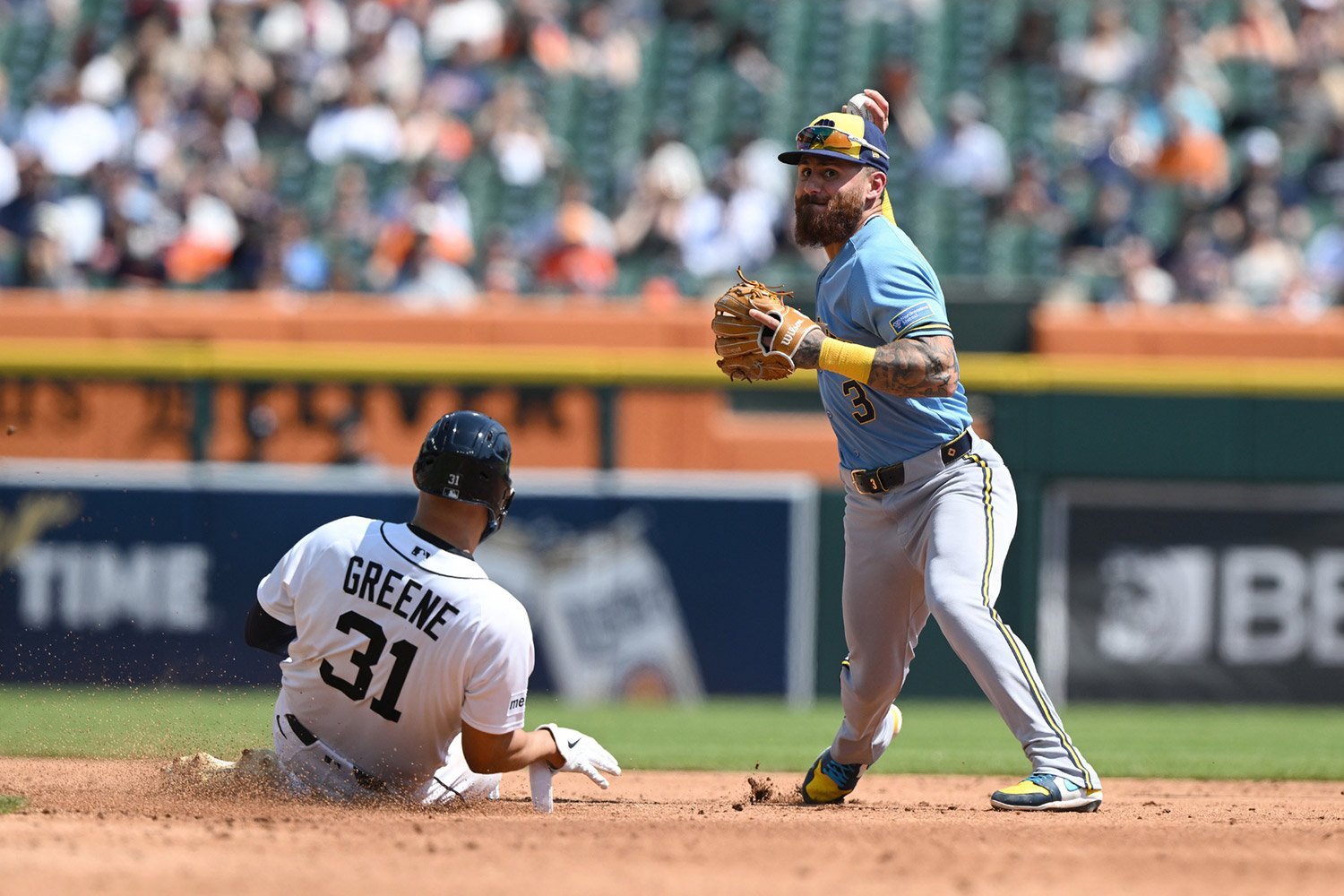 Here is a recap of three of the most popular thread topics on Brewer Fanatic's forums this week: Brewers: NL Central Discussion 2026 Our forum has been tracking the NL Central closely over the past month. It was fun watching the Cubs' offense hibernate through the first two weeks. Two weeks later, they’re the hottest team in baseball, powered by what bWAR says is the best group of position players in the game. Can the Reds’ pitching keep them on top, even with a negative run differential? How are the Cardinals simultaneously rebuilding and playing at a 94-win pace? Milwaukee finally gets its first crack at the division this weekend, starting with Pittsburgh. We know the Pirates can pitch. Will their offseason investments in offense keep them competitive over a full season? The NL Central is taking shape. Come watch and discuss it unfold. Brewers: Joey O Nothing unites a fan forum more than dissecting the merits of a team's ninth-best position player. For Milwaukee, that means Joey Ortiz. Or, should it be someone else? Luis Rengifo and Sal Frelick deserve criticism, too. Brewer Fanatic has patiently waited for Ortiz's bat to return to 2024 levels of adequacy. Day by day, it seems like Joey's bat continues to regress. Milwaukee has plenty of prospects on the horizon, too. Let us know what you think the Brewers should do at shortstop and when. Minors: UPDATED: Luis Peña OK after Night in Hospital The Wisconsin Timber Rattlers had a scary moment on Wednesday night when their # 2 prospect, Luis Peña, was hospitalized after passing out in the dugout. Our forum community was the internet’s leading source of information and updates on Peña‘s health scare during the overnight hours. We share our thoughts and prayers for a swift recovery for Peña. We sometimes treat baseball as a matter of life and death, but we come together as a community when a player’s health is truly at risk. View the full article
 -
 Spencer is joined by Curt Hogg of the Milwaukee Journal Sentinel to discuss Quinn Priester's rehab, the Brewers series with the Tigers, the panic level with the bullpen, prospects, and more. Apple Podcasts: https://podcasts.apple.com/us/podcast/the-brewer-fanatic-podcast/id1740648724 Spotify: https://open.spotify.com/show/5CY8mWsQayqjDXqw9OT2Td iHeartRadio: https://www.iheart.com/podcast/263-the-brewer-fanatic-podcast-166534588/ Pocket Casts: https://pca.st/ommzz627 Watch On YouTube: https://www.youtube.com/@brewerfanatic View the full article
 -
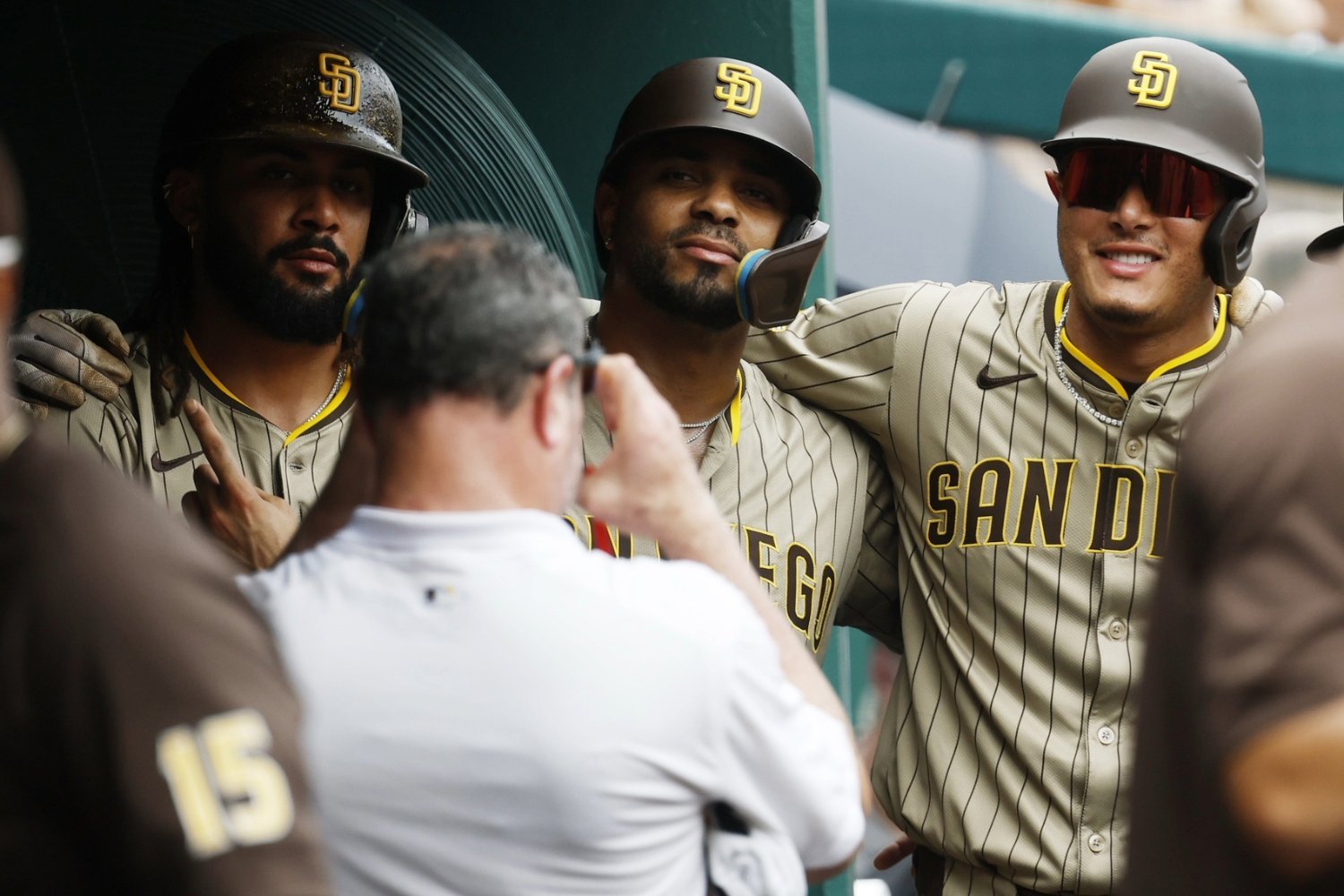 It isn’t a surprise that, as we approach the end of April, the San Diego Padres find themselves in contention in a tough National League West. As of April 23, they’re tied with the Los Angeles Dodgers atop the division and two games ahead of the third-place Arizona Diamondbacks. There was always a certain degree of upside that existed with this team, despite an offseason that was predicated around the volume of additions rather than the quality of them. What is surprising, however, is how the Padres have managed to navigate their early schedule. Because it isn’t happening on the strength of the offense, where the star power exists on the roster. It’s coming from everywhere else. The Padres rank 23rd in the league in runs scored (100). They rank 18th in the league in batting average (.229), 25th in on-base percentage (.306), and 22nd in isolated power (.134). The collective is a below-average unit by a wRC+ that sits 23rd. Among lineup regulars, only Ramón Laureano and Xander Bogaerts sit comfortably above average by that latter category (each at 116). Beyond those two, it’s a lineup that doesn’t strike out a lot, but doesn’t do a whole lot else to drum up offense. Instead, the strength of this team lies in the other two phases of the game. They’re seventh in the league in whole staff ERA (3.43), second in strikeout rate (25.2 percent), 10th in walk rate (8.9 percent), and second in hard-hit rate (35.4 percent). The relief corps has been as good as advertised (3.06 ERA) while the starting staff has been better than expected (3.76 ERA). Defensively, the team ranks sixth in Fielding Run Value (8) and 10th in Defensive Runs Saved (also 8), indicating a group that is also better than might’ve been expected. Pitching and defense will get you places over the course of a baseball season. But you also have to score some runs in support of those two performance areas. Given some of those massive offensive shortcomings, is there anything they’re actually doing well in order to get enough runs across the plate in support of their two areas of success? The unfortunate answer to that is: not really. Each of the runners-on or runners-in-scoring-position scenarios are illustrative of a team struggling to find its offensive footing. And while the team ranks ninth in steals, they’re also decidedly average (ranked 17th) in baserunning value. The little bit of extra they’re getting in the swipes game may certainly help, but it’s not as if there’s a particular split or element on the margins that’s allowing them to score runs. This is just a matter of a team scraping across just as much as they need. Luckily for them, the pitching and defense have each been more than good enough to compensate. If there’s good news for the Padres, it’s that they’re performing a bit better than the actual outcomes may indicate. Their disappointing 21st-ranked batting average on balls in play is furthered by expected statistics that show that they should be at least somewhat better. Their xBA (.251) is 22 points higher than the actual figure, with a xSLG (.411) that is 48 points higher and a xwOBA (.327) that 25 points higher. They should be better. The process indicates that. Despite the fact that they’re not overly patient – indicated by a mid-tier walk rate and below-average pitches per plate appearance (3.89) – they’re making quality contact. They’re third in the league in Hard-Hit% (45.1) and 12th in Barrel% (8.4). That all comes with quite a bit of groundball contact (44.7 percent), though, which is likely feeding into some of their trouble finding fortune on balls in play. Nevertheless, this is a team with visibly better offensive chops than we’ve seen to date. Which is encouraging, because there’s a very fine threading of a needle taking place. In recent years, we’ve seen the pitching and the offense not quite link up for this team. One would falter while the other would succeed. This year, the two are a bit more in sync and matching up their quality performances on a given night. That’s not the kind of trend that carries over a full season, however. It should also be noted that outside of the regular performers, this isn’t a team built to sustain long-term defensive success. Also considering the composition of the starting staff, one imagines that some of these areas of success are going to dry up at some point during the summer, if not sooner. Is there an increased patience necessary here as the team tries to create their own luck? Or is it a matter of hoping things even out more naturally as the season progresses? Either way, the Padres better hope that one or the other manifests and yields some sort of offensive ascent, because this isn’t a team constructed to exist on the margins, regardless of what their early success may try and tell us. View the full article
