


DiamondCentric
-
Posts
2,631 -
Joined
-
Last visited
Never
Content Type
Profiles
Forums
Events
News
Tutorials & Help
Major League Baseball Videos
Guides & Resources
Store
Downloads
Gallery
Everything posted by DiamondCentric
-

 Ronny Mauricio hit three home runs and drove in five as Syracuse pummeled Worcester 12-3, with Jonah Tong striking out nine over 5 1/3 innings and Ryan Clifford adding a grand slam. Zach Thornton tossed a quality start with six strikeouts in Binghamton's 3-2 loss. Channing Austin fanned eight in five scoreless frames before Brooklyn blew a 3-1 lead, falling 5-3. Nicolas Carreno pitched five innings over four in St. Lucie's 17-2 defeat. Mets Transactions No Roster Moves Mauricio Launches Three Homers, Clifford Slams Grand In Syracuse Rout The Syracuse Mets piled up 12 runs on 12 hits to beat the Worcester Red Sox 12-3 at Polar Park. Ronny Mauricio led the offense with three home runs, finishing 3-for-4 with five RBIs, four runs scored, and a walk. Cleanup hitter Ryan Clifford added a grand slam, going 2-for-5 with four RBIs and two runs scored. Cristian Pache had four hits in five at-bats and drove in two runs, while leadoff man Nick Morabito also homered, and Ji Hwan Bae drew two walks and scored three times. Starter Jonah Tong turned in a strong outing, going 5 1/3 innings while allowing four hits, one earned run, two walks, and striking out nine. Dan Hammer and Anderson Severino combined for 2 2/3 scoreless innings in relief, with Hammer striking out four. Ofreidy Gómez gave up two runs in the ninth. Syracuse broke the game open in the fifth and sixth innings. In the fifth, Morabito lined a solo home run with one out, Bae walked, and Mauricio followed with a two-run blast. Pache capped the four-run frame with a two-out RBI single that scored Clifford. In the sixth, Clifford hit a two-out grand slam to push the lead to 10-0. Mauricio added his third home run of the night in the eighth, a two-run shot that pushed the score to 12-1. Player AB R H RBI BB K Nick Morabito 5 2 1 1 1 2 Ji Hwan Bae 3 3 1 0 2 1 Ronny Mauricio 4 4 3 5 1 1 Ryan Clifford 5 2 2 4 0 2 Vidal Bruján 5 1 1 0 0 1 Cristian Pache 5 0 4 2 0 1 Jackson Cluff 3 0 0 0 2 1 Yonny Hernández 4 0 0 0 1 3 Onix Vega 5 0 0 0 0 1 Player IP H R ER BB K HR Jonah Tong 5 1/3 4 1 1 2 9 0 Dan Hammer 1 2/3 2 0 0 0 4 0 Anderson Severino 1 0 0 0 1 0 0 Ofreidy Gómez 1 4 2 2 0 2 0 Thornton's Quality Start Not Enough For Rumble Ponies The Binghamton Rumble Ponies dropped a 3-2 decision to the Erie SeaWolves at Mirabito Stadium despite a quality start from Zach Thornton. Thornton went six innings, allowing seven hits, two earned runs, one walk, and six strikeouts. At the plate, Marco Vargas led the offense with a 2-for-3 effort that included a double, two walks, and two stolen bases. Leadoff hitter A.J. Ewing reached three times with a hit and two walks. Eli Serrano III tripled and walked twice. Kevin Parada and Matt Rudick each drove in a run. Binghamton's offense came in the bottom of the fourth inning. After Erie scratched out a 1-0 lead in the top half on a sacrifice fly, Parada singled home Serrano, and Rudick followed with an RBI single that scored Jose Ramos, giving the Rumble Ponies a 2-1 lead. Erie tied the game in the fifth on an RBI double off Thornton, then took a 3-2 lead in the seventh when Jordan Geber surrendered an RBI single. Geber took the loss, going 1 1/3 innings with three hits and two strikeouts. Gabriel Rodriguez worked 2/3 of an inning with a walk and a strikeout, and Ben Simon added a scoreless ninth. The Rumble Ponies struck out 13 times as a team, with cleanup hitter Chris Suero fanning twice and Jacob Reimer accounting for five of the strikeouts. Player AB R H RBI BB K A.J. Ewing 3 0 1 0 2 1 Marco Vargas 3 0 2 0 2 1 Jacob Reimer 5 0 0 0 0 5 Chris Suero 5 0 0 0 0 2 Eli Serrano III 2 1 1 0 2 0 Jose Ramos 3 1 0 0 1 1 Kevin Parada 4 0 1 1 0 0 Matt Rudick 4 0 1 1 0 1 Wyatt Young 3 0 0 0 1 2 Player IP H R ER BB K HR Zach Thornton 6 7 2 2 1 6 0 Jordan Geber 1 1/3 3 0 0 0 2 0 Gabriel Rodriguez 2/3 0 0 0 1 1 0 Ben Simon 1 0 0 0 0 0 0 Cyclones Cough Up Late Lead In Walk-Off Loss The Brooklyn Cyclones squandered a 3-1 ninth-inning lead and fell 5-3 to the Hudson Valley Renegades at Heritage Financial Park. Ronald Hernandez reached base three times, going 1-for-3 with a double, a walk, a stolen base, and two runs scored. John Bay added a hit, a walk, an RBI, and two stolen bases. Leadoff hitter Mitch Voit singled, walked, scored, and swiped a bag. Starter Channing Austin was superb, going five scoreless innings while allowing three hits and one walk with eight strikeouts. Garrett Stratton worked two innings of one-run ball with four strikeouts, and Hunter Hodges pitched a scoreless eighth with a strikeout. Brooklyn opened the scoring in the second inning. Hernandez drew a walk, stole second, and came home on Bay's single. In the sixth, the Cyclones pushed across two more runs. Cleanup hitter Corey Collins walked, advanced to third, and scored on a wild pitch. Hernandez doubled later in the inning and scored on a throwing error, making it 3-0. The ninth inning was a disaster. Hoss Brewer came on with a 3-1 lead and recorded only two outs while surrendering four hits and four earned runs, including a walk-off three-run home run that capped the blown save. The Cyclones struck out eight times and left 13 runners on base. Player AB R H RBI BB K Mitch Voit 4 0 1 0 1 1 Antonio Jimenez 4 0 1 0 0 0 Daiverson Gutierrez 4 0 0 0 0 1 Corey Collins 3 1 0 0 1 0 Ronald Hernandez 3 2 1 0 1 1 John Bay 2 0 1 1 1 1 Colin Houck 4 0 0 0 0 3 Heriberto Rincon 4 0 0 0 0 1 Diego Mosquera 4 0 0 0 0 0 Player IP H R ER BB K HR Channing Austin 5 3 0 0 1 8 0 Garrett Stratton 2 1 1 1 0 4 0 Hunter Hodges 1 0 0 0 0 1 0 Hoss Brewer 2/3 4 4 4 0 0 1 Big Innings Doom St. Lucie In 17-2 Setback The St. Lucie Mets were overwhelmed by the Palm Beach Cardinals 17-2 at Clover Park. The offense was held to three hits and five runners left on base. Randy Guzman, Julio Zayas, and Sam Biller each collected one hit, with Guzman adding a walk and scoring a run. Biller also scored. JT Benson and Sam Robertson each drove in a run. Right-hander Nicolas Carreno kept St. Lucie in the game with four innings of one-run ball, allowing just one hit and one walk while striking out five and giving up one home run. Starter Omar Victorino took the loss, falling to 0-3 after lasting only 1 1/3 innings. He allowed two hits, seven runs, four walks, and struck out one. The second inning unraveled quickly. With Victorino on the mound, Palm Beach drew several walks, loaded the bases, and plated seven runs capped by a bases-clearing double, ending the frame ahead 7-0. St. Lucie answered in the third when Biller scored on a Robertson groundout, and in the fourth when Guzman was driven in by a Benson groundout. The Cardinals broke the game further open in the eighth with an eight-run inning off Jorge De Leon and Ryan Dollar. De Leon did not record an out while allowing five runs, and Dollar gave up three runs in an inning of work. Benson, who moved from left field to the mound, worked a scoreless ninth with two strikeouts. The Mets struck out 16 times as a team. Player AB R H RBI BB K Elian Peña 2 0 0 0 2 1 Chase Meggers 4 0 0 0 0 3 Randy Guzman 3 1 1 0 1 1 Julio Zayas 3 0 1 0 0 1 AJ Salgado 4 0 0 0 0 2 JT Benson 4 0 0 1 0 1 Sam Robertson 3 0 0 1 0 2 Sam Biller 2 1 1 0 0 1 Vladi Gomez 3 0 0 0 0 3 Player IP H R ER BB K HR Omar Victorino 1 1/3 2 7 7 4 1 0 Caden Wooster 1 2/3 3 1 1 1 1 0 Nicolas Carreno 4 1 1 1 1 5 1 Jorge De Leon 0 2 5 5 3 0 1 Ryan Dollar 1 2 3 3 1 1 1 JT Benson 1 0 0 0 2 2 0 View the full article
 -
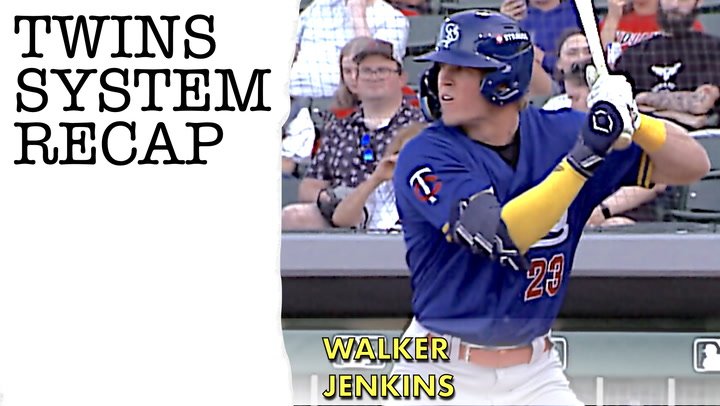 Twins System Recap: Walker Jenkins hit his first home run of the 2026 season tonight. Gabriel Gonzalez and Kyler Fedko also homered, but the Saints still lost anyway. Wichita's Ryan Gallagher was the standout pitcher this evening, as he continued a solid start to the season, and Garrett Spain filled up the box score for the Wind Surge. Here's info on those performances and much more. View the full article
 -
Episode 49: Cubs Getting Hot Despite Injuries
DiamondCentric posted an article in North Side Baseball
 Jason and Mitch discuss the latest week of Cubs baseball as they get back over .500, and look to push up the NLC standings. Listen on Apple Podcasts: https://podcasts.apple.com/us/podcast/the-north-side-baseball-podcast/id1798599313 Listen on Spotify: https://open.spotify.com/show/75wMGhBwlrDDYPt3kaF453 Listen on iHeartRadio: https://www.iheart.com/podcast/263-the-north-side-baseball-po-268998437/ Listen on Pocket Casts: https://pca.st/eey7h6ih Watch on YouTube: https://www.youtube.com/@northsidebaseball View the full article
 -
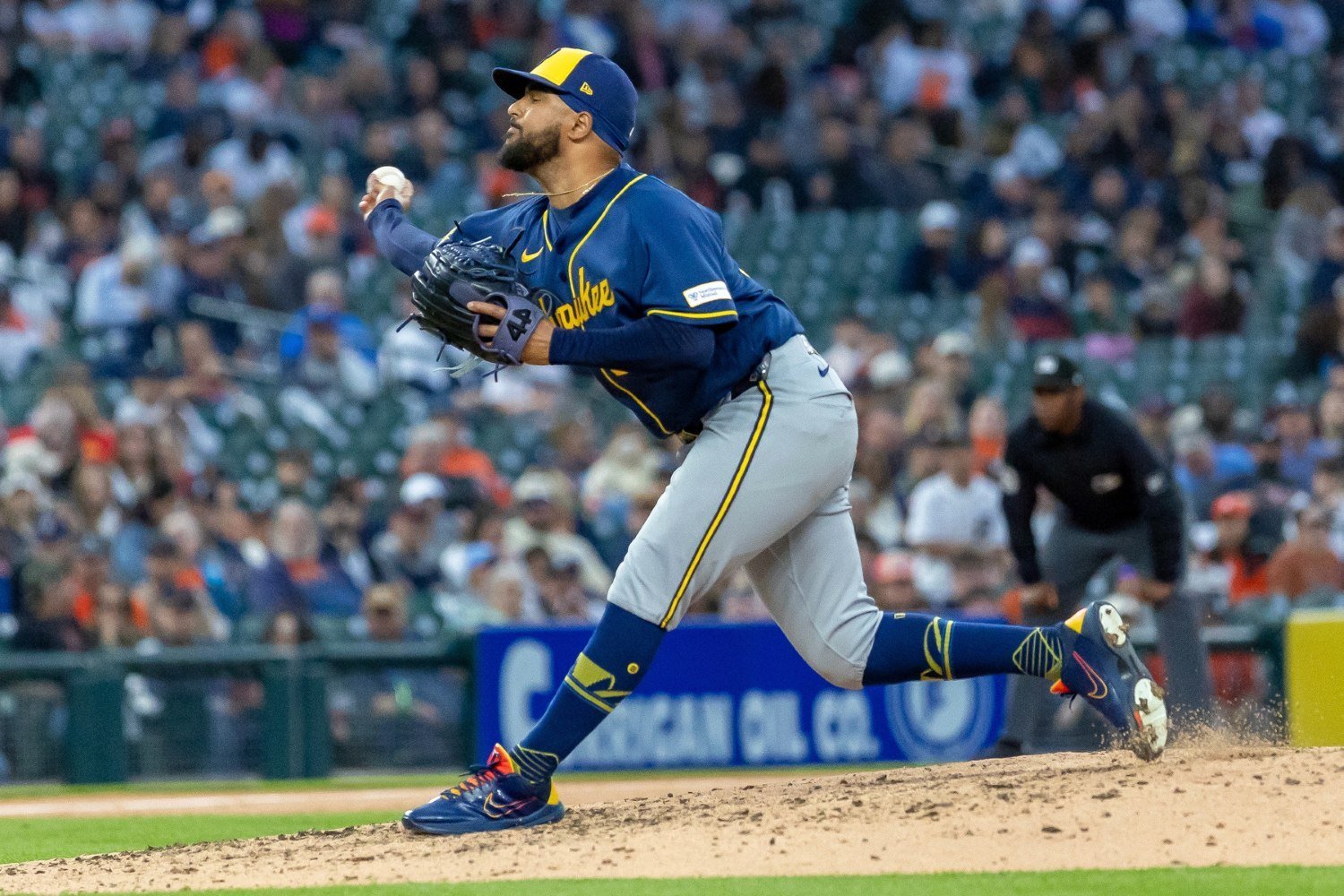 The Brewers leaned heavily on their top relievers last season, but in a bullpen that covered the fourth-most regular-season innings in baseball, Grant Anderson was one of the hardest workers. The sidewinding right-hander logged 69 2/3 innings in relief, trailing only Abner Uribe. Once again, Anderson has quietly been an unsung workhorse. His 12 appearances thus far in 2026 tie him with Aaron Ashby for the club lead. In 13 1/3 innings, he’s posted a 2.70 ERA and 2.98 FIP. Anderson’s strikeout rate has decreased from last year, but he has paired a decent 10.5% swinging strike rate with an excellent 57.6% ground ball rate. “He’s been sharp,” Pat Murphy said. “He had the hiccup there in extra innings [against the Toronto Blue Jays on April 14], and then he’s been really good ever since.” Anderson has quickly become a Swiss Army knife for Murphy in the early weeks of the season, particularly as other relievers like Trevor Megill and Ángel Zerpa have struggled. He’s appeared in every inning from the third through the 10th. He’s kept the Brewers in games when trailing, protected close leads, and even entered jams as a fireman, collecting four holds along the way. He entered a fire on Tuesday evening in Detroit, before the Brewers’ offense broke through late in a 12-4 blowout win over the Tigers. Anderson inherited a bases-loaded, no-out situation from Kyle Harrison, who lost his fastball command in the fourth inning when the lead was still just 3-0. He promptly induced a double-play grounder from Javier Báez and struck out Kerry Carpenter to escape trouble with just one run scoring. “That was awesome,” Harrison said of Anderson’s effort. Anderson then returned to throw a scoreless fifth, giving the Brewers six crucial outs of middle relief before the momentum swung their way. “It was huge today for him to come in when he did,” Murphy said. “Bases loaded, no outs, get the ground ball, get a number of ground balls in the game. That was huge.” Anderson’s 20.4% strikeout rate is a touch below the league average, but the whiffs he had last year could soon return. His stuff is arguably better in his second season in Milwaukee. By slightly raising his arm slot (for a second straight season) from 4° to 8°, Anderson has added an extra inch of induced vertical break to his four-seamer, meaning what was already his top swing-and-miss pitch a year ago now has even more carry at the top of the strike zone. Stuff models grade it as an even better pitch than it was in 2025, even without its best velocity. {C}%3C!%2D%2Dtd%20%7Bborder%3A%201px%20solid%20%23cccccc%3B%7Dbr%20%7Bmso-data-placement%3Asame-cell%3B%7D%2D%2D%3E--> Season 4FB Velocity 4FB IVB 4FB Stuff+ 4FB StuffPro 2025 93.5 12.2 114 -0.2 2026 92.8 13.2 118 -0.5 He’ll need those strikeouts moving forward, particularly because he’s always been prone to walks and occasional home runs. But for now, Anderson is once again playing a pivotal role in the Brewers’ relief corps, even if he’s neither the flashiest nor the most conventionally effective member. View the full article
 -
 Welcome to the 2026 MLB Consensus Draft Board. This is the fifth version of the board, which started in 2022 as a top thirty. Since then, it’s expanded to around 150 players on an annual basis, featuring at eight different team sites. So what is the Consensus Board? How is it made? How should it be used? The concept is loosely based on Arif Hasan’s NFL Consensus Board. It’s meant to be a tool for folks getting interested in the MLB Draft. As I was learning about the draft, I struggled to navigate wildly varied rankings and evaluations of players. The Consensus Board takes every major publicly available board and combines them into a consensus ranking, eliminating some of the noise and variance of an extremely challenging evaluation process. We’ve found this process to be useful in ranking players in appropriate ranges through around the first five rounds of the draft. On the board, you’ll find player names, handedness, listed height and weight, age, and a write-up, walking through their strengths and opportunities as a prospect. As we go through the cycle, these will be updated with tweaks, final college stats, etc. Every time a major outlet (Baseball America, ESPN, The Athletic, etc.) releases an updated list, the consensus ranking shifts. As such, the board is a lagging reflection of what the industry thinks of the class and its key players. The final Consensus Board will incorporate at least 10 other boards as inputs. New MLB Mock Draft Board Features There are a few important features to point out to help you navigate the board. There’s a search bar to help you find players of interest. If you click ‘expand’ the board will focus on the writeup you are engaged with, in addition to one immediately above it and one immediately below it. Additionally, you’ll find the logo of your team next to their draft slots to help understand where they are picking. There will be a player slotted there, based on their consensus ranking. Rather than using that ranking as an indicator of who they might actually pick, it’s more useful to use it as a proxy for what caliber of talent is available at that slot. We’ll dig in deeper to team-specific mock drafts later in the cycle. The last important note is that this year the board features ‘push’ updates. It updates automatically every hour. The board is typically updated with new write-ups five days per week, so check back regularly for updates. At #6, The Kansas City Royals Select: Cam Flukey, RHP, Coastal Carolina Flukey is a lean right-handed starter who led Coastal Carolina to a College World Series appearance in 2025, managing a 2.68 FIP in 101.2 innings pitched in the process. Flukey has a bit of a messy delivery, with a long arm stroke and some head whack from a three-quarter slot, but the results are inarguable, as he struck out 28.5% of hitters faced in 2025, while walking just 5.8%. It's a deep, diverse arsenal, too. Flukey's fastball sits at 95 mph with good ride, and he can reach back to grab 98 mph. Flukey has two different breaking pitches, a gyro-type slider and a slider, a high-70s curveball. He's been effective throwing strikes and generating whiffs with both. Finally, there's a mid-80s changeup he throws sparingly. Flukey was sidelined for 8 weeks with a stress fracture after just one start in 2026. He looks when he returns from injury will determine if he's still in the mix for SP1 in the class. View the full article
 -
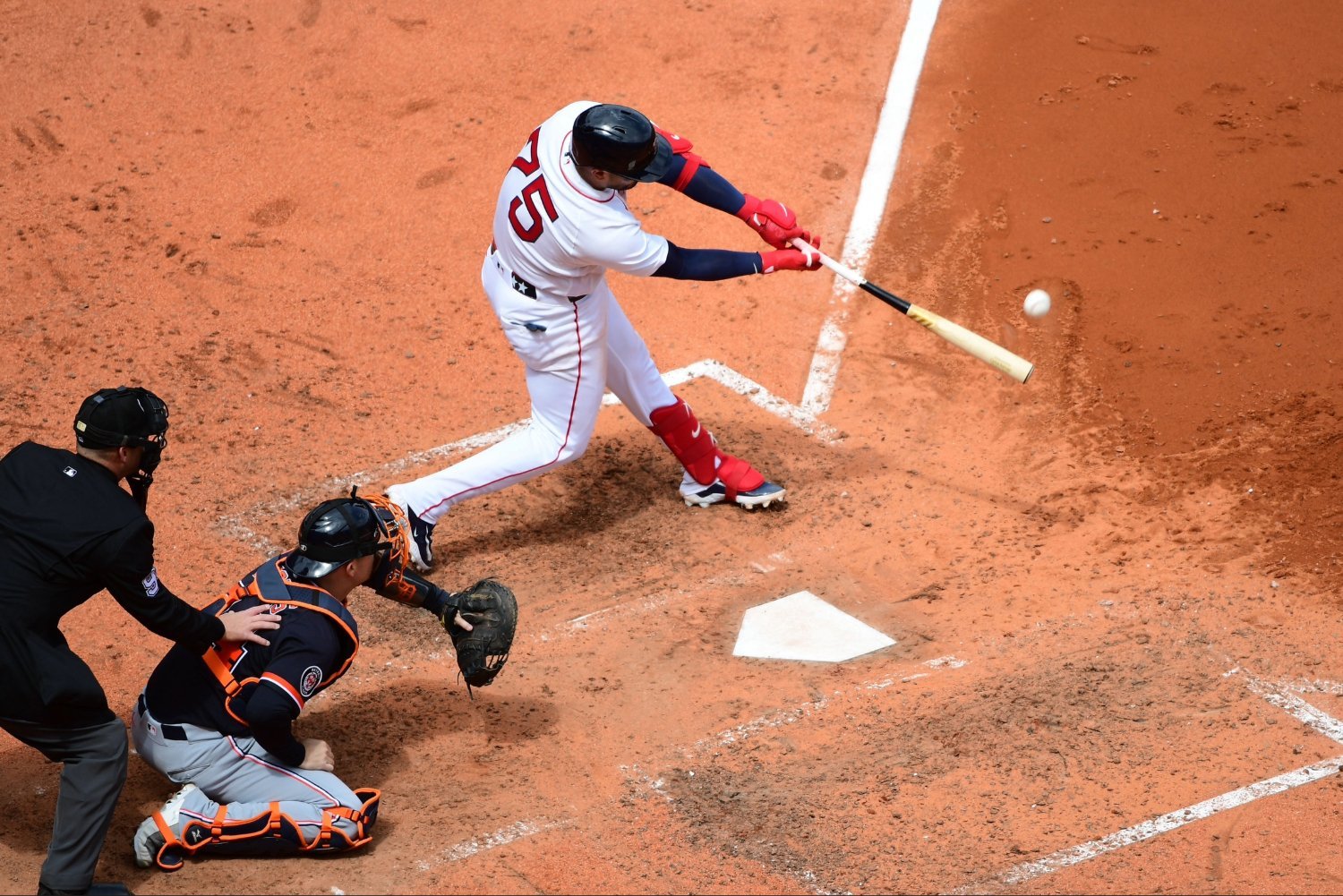 Carlos Narváez was expected to serve as a placeholder for the Boston Red Sox after catcher Connor Wong fractured his pinky finger last season. Acquired from the New York Yankees for minor-league pitcher Elmer Rodriguez-Cruz, Narváez emerged as a defensive specialist and a solid bat in the lineup. Last season, the rookie backstop hit .241/.306/.419 with a .726 OPS, eventually taking the starting role from Wong in the process. However, in his first season as the primary option, Narváez has struggled to replicate his production from his breakout year, starting 2026 by hitting .234/.265/.277, good for a .542 OPS. Due to his lack of offensive production, Narváez has produced a -0.4 bWAR and a 49 wRC+, leading to a move to the ninth spot in the lineup. While his defensive value still ranks toward the top of the league, Wong has had his own strong start to the season and puts more pressure on Narváez each day to figure out his swing. So, what going on? To put it simply: Narvaez's regression can be tied to his struggles against fastballs. Against fastballs this season, Narváez has produced -3 run value (zero is average) with a .192 wOBA, all while whiffing at one in every four he swings at. His batting average and slugging percentage against fastballs sit at just .172 each, a drop off from his expected figures of .221 and .358. With fastballs accounting for nearly 60% of the pitches he sees, Narváez needs to figure out a way to fix his approach immediately. However, the issue may not be mechanical, but rather related to timing and the contact point. This season, his average launch angle has dropped from 13.2 degrees to 6.9, indicating a downward trend in his swing path. That observation is supported by a sharp increase in his topped-ball rate, which has risen from 29.1% to 35.3%, along with a decrease in balls that he gets underneath (falling from 26.7% to 14.3%). Narváez has yet to record a single pull-side ball in the air against fastballs, further indicating he is failing to hit the ball out front. Instead, his batted-ball distribution suggests that he is consistently letting pitches travel too deep. Nevertheless, the Red Sox can take some relief in knowing Narváez’s underlying tools haven’t disappeared. While much of his offensive profile has declined, he still ranks among the league's top percentiles in average exit velocity and hard-hit rate. This data backs the claim that his raw abilities haven’t diminished, but rather they are being watered down by poor timing, leading to hard contact at unfavorable launch angles. Although his production against fastballs has been poor, he has been producing against off-speed pitching, though those results may be due to a bit of good luck rather than a better approach. As it stands, Narváez's delayed timing at the plate is limiting his ability to execute against the pitch he sees the most, even as it occasionally puts him in better positions against off-speed options. The tools are still there, but the margin for error is shrinking. If Narváez can make the necessary timing adjustments against fastballs, his production should follow. If not, pitchers will continue to exploit the gap. View the full article
 -
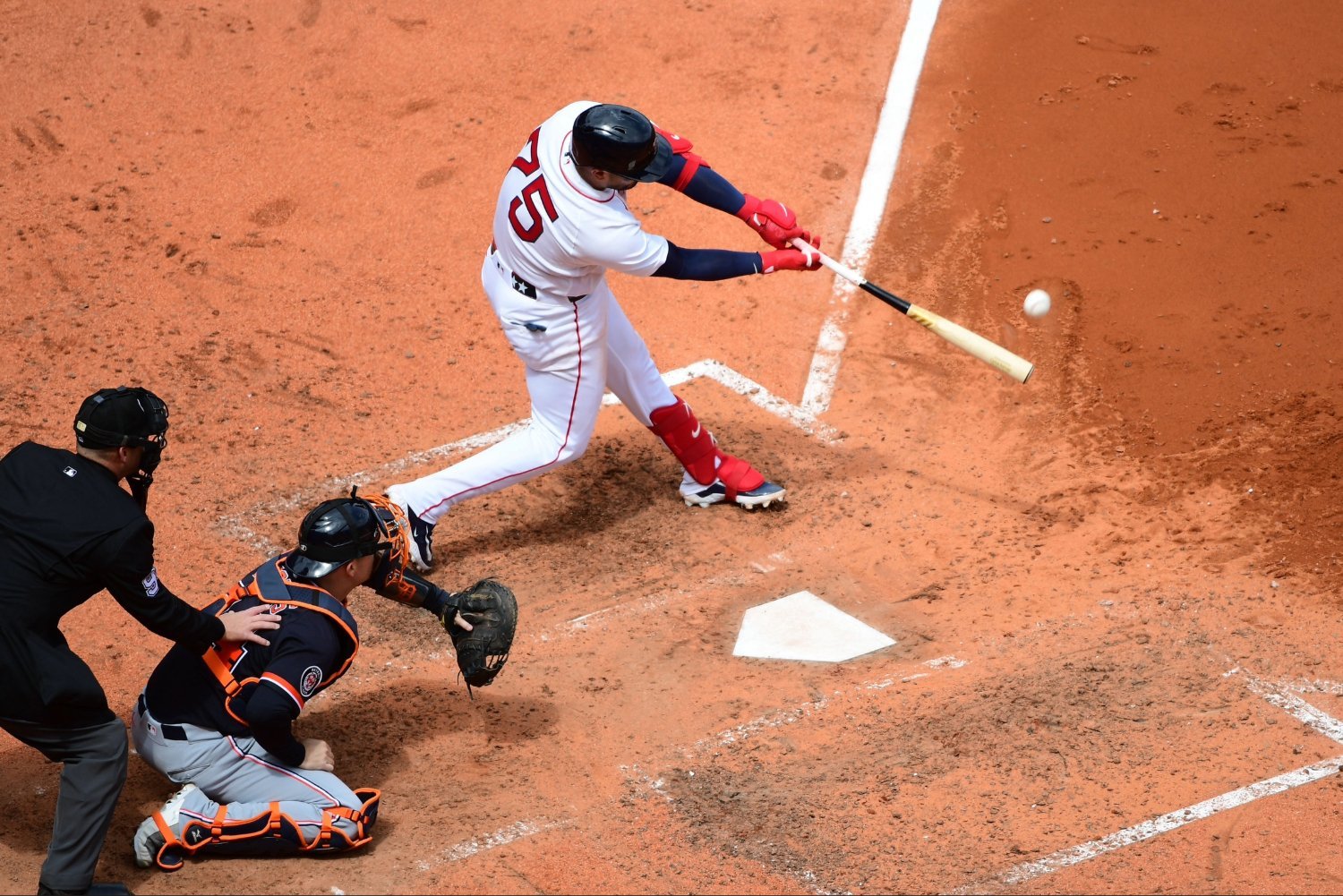 Carlos Narváez was expected to serve as a placeholder for the Boston Red Sox after catcher Connor Wong fractured his pinky finger last season. Acquired from the New York Yankees for minor-league pitcher Elmer Rodriguez-Cruz, Narváez emerged as a defensive specialist and a solid bat in the lineup. Last season, the rookie backstop hit .241/.306/.419 with a .726 OPS, eventually taking the starting role from Wong in the process. However, in his first season as the primary option, Narváez has struggled to replicate his production from his breakout year, starting 2026 by hitting .234/.265/.277, good for a .542 OPS. Due to his lack of offensive production, Narváez has produced a -0.4 bWAR and a 49 wRC+, leading to a move to the ninth spot in the lineup. While his defensive value still ranks toward the top of the league, Wong has had his own strong start to the season and puts more pressure on Narváez each day to figure out his swing. So, what going on? To put it simply: Narvaez's regression can be tied to his struggles against fastballs. Against fastballs this season, Narváez has produced -3 run value (zero is average) with a .192 wOBA, all while whiffing at one in every four he swings at. His batting average and slugging percentage against fastballs sit at just .172 each, a drop off from his expected figures of .221 and .358. With fastballs accounting for nearly 60% of the pitches he sees, Narváez needs to figure out a way to fix his approach immediately. However, the issue may not be mechanical, but rather related to timing and the contact point. This season, his average launch angle has dropped from 13.2 degrees to 6.9, indicating a downward trend in his swing path. That observation is supported by a sharp increase in his topped-ball rate, which has risen from 29.1% to 35.3%, along with a decrease in balls that he gets underneath (falling from 26.7% to 14.3%). Narváez has yet to record a single pull-side ball in the air against fastballs, further indicating he is failing to hit the ball out front. Instead, his batted-ball distribution suggests that he is consistently letting pitches travel too deep. Nevertheless, the Red Sox can take some relief in knowing Narváez’s underlying tools haven’t disappeared. While much of his offensive profile has declined, he still ranks among the league's top percentiles in average exit velocity and hard-hit rate. This data backs the claim that his raw abilities haven’t diminished, but rather they are being watered down by poor timing, leading to hard contact at unfavorable launch angles. Although his production against fastballs has been poor, he has been producing against off-speed pitching, though those results may be due to a bit of good luck rather than a better approach. As it stands, Narváez's delayed timing at the plate is limiting his ability to execute against the pitch he sees the most, even as it occasionally puts him in better positions against off-speed options. The tools are still there, but the margin for error is shrinking. If Narváez can make the necessary timing adjustments against fastballs, his production should follow. If not, pitchers will continue to exploit the gap. View the full article
 -
 Every month, Fish Unfiltered takes Miami Marlins fans "Inside the Dugout," bringing you an extended, exclusive interview with Marlins manager Clayton McCullough. During our April sitdown, McCullough speaks with Isaac Azout, AJ Ramos and Kevin Barral about his first ejection of 2026, getting Kyle Stowers back from the injured list, how he uses closer Pete Fairbanks and assesses top starters Sandy Alcantara and Eury Pérez thus far, his philosophy on baserunning, relationship with Agustín Ramírez and much more. You can find Fish Unfiltered and Fish On First LIVE on the Fish On First YouTube channel, Apple Podcasts, Spotify or wherever else you get your pods. Entering play on Wednesday, the Marlins have an 11-13 record (tied for second in the National League East) with a minus-1 run differential. The only series they've won have been at home against the rebuilding Colorado Rockies and Chicago White Sox. The Marlins offense has been mainly carried by Xavier Edwards, Otto Lopez and Liam Hicks. Of some concern, Miami leads Major League Baseball in stolen bases allowed (35) and outs made on the bases (15). Expect us to have another sitdown with McCullough shortly before Memorial Day. View the full article
 -
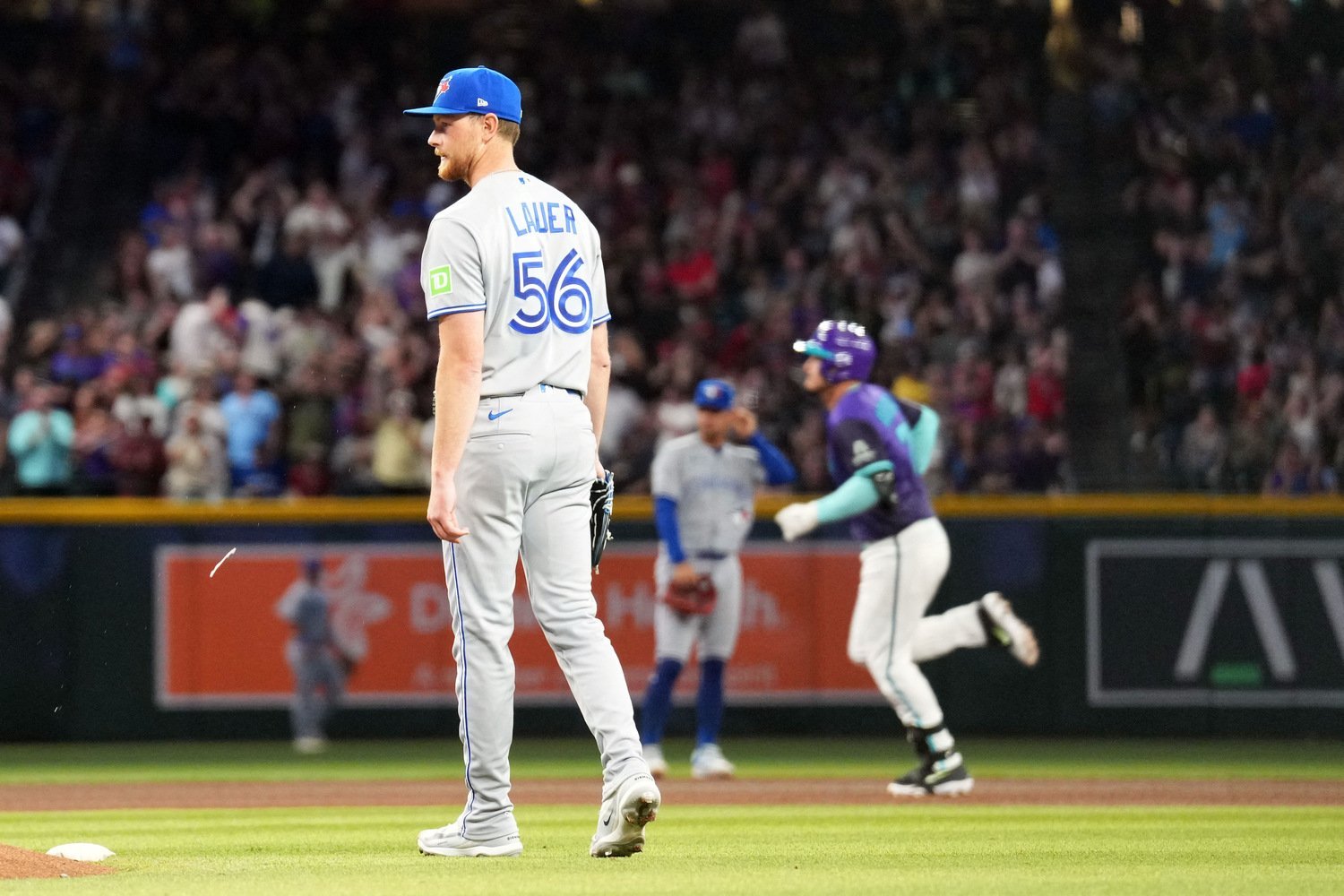 Eric Lauer wanted to prove he could start full-time in 2026. He hasn't had the results he was hoping for yet. Much like the rest of the Blue Jays, Lauer looked sharp in the season's opening series against the Athletics. Then the floor fell out from under him. Battling through the flu, he lasted just two innings against the White Sox. Six days later, perhaps still suffering the aftereffects of his illness, he gave up seven runs to the Twins. To his credit, he gave up all seven in the third inning and stuck it out into the sixth, but his final line was hardly inspiring: two home runs, five walks, and just three strikeouts in 5.1 innings. Judging by the box score, Lauer's most recent outing last week against the Diamondbacks was a return to form. In five innings, he struck out four, walked just one, and limited Arizona to three runs. Yet, he expressed frustration that he entered after an opener, telling reporters after the game: "To be real blunt, I hate it. I can't stand it." Lauer's response wasn't surprising. He has made it very clear he wants to be a regular starter. And while it's easy to understand the logic behind the opener – Lauer pitched through the sixth inning and only had to face Arizona's dangerous top three twice – it's just as easy to understand why he didn't like it. He's a competitor. He doesn't want to avoid opponents like Ketel Marte, Corbin Carroll, and Geraldo Perdomo. He wants to face them head-on. That's precisely the attitude you want in a pitcher, especially if that pitcher also understands that he ultimately has to do what's best for the team. As Lauer put it, "You work with what you got... We're trying to find ways to win." The early part of Lauer's 2026 has been characterized by ups and downs, by jerks and tugs, by ebbs and flows. He spent the winter watching his chances of an Opening Day rotation slot dwindle. First, Shane Bieber picked up his player option. Then the Jays signed Dylan Cease. And Cody Ponce. And Max Scherzer. Like Schrödinger's pitcher, Lauer came into spring training as both a starter and a reliever simultaneously. He saw himself as a starter. The Blue Jays had him stretch out as a starter. Yet, the fans, the team, and Lauer himself all knew he was more likely to end up in the bullpen. Until he didn't. That's a tough way to prepare for the season, and the past few weeks haven't exactly helped him settle into a routine. So, when I say the 2026 season hasn't started the way Lauer was hoping it would, I don't mean that as an all-out criticism. It's just as much a justification. I'm not ready to judge Lauer for his 7.13 ERA or his -0.1 fWAR. Instead, I'm happy to let each new start be a blank slate, at least for the time being. With that in mind, I'm not going to draw any serious conclusions about Lauer today. But I do want to examine the way he's deploying his arsenal this season and, in particular, one pitch. Fittingly, in a year that has already been marked by changes, that pitch is his changeup. Lauer threw 134 changeups last year, accounting for 8.0% of his total pitches. However, since he almost never throws the pitch against same-handed opponents, it's more meaningful to say he used it 10.3% of the time against righties. It was his quaternary weapon against right-handers, behind his four-seam fastball (45.2%), his cutter (20.2%), and his curveball (15.8%), and just ahead of his slider (8.3%). Four starts into 2026, he's more than doubled his changeup usage. Lauer has already thrown 58 changeups to righties this year, almost half as many as he threw in all of 2025. With a 21.9% usage rate, it's become his secondary pitch against opposite-handed hitters. When he's ahead in the count, he's throwing it almost as often as his fastball. In two-strike counts, he's thrown as many changeups as all his other secondaries combined. The reason I find this adjustment so surprising is that, well, Lauer's changeup wasn't very good in 2025. Honestly, it kind of sucked. Right-handed opponents crushed the pitch, posting a 55.6% hard-hit rate, a .430 wOBA, and .544 xwOBA. By Statcast's run value per 100 pitches (RV/100), it was one of the 10 least effective changeups in the league. Of course, sometimes good pitches see bad results. But I don't think that's what this was. According to the pitch models PitchingBot and Stuff+, Lauer's changeup was well below average in terms of both stuff and location. There just wasn't anything to love about it. That's not to say it had no role in his arsenal; it came in at a similar speed to his cutter but broke in the opposite direction, giving him a way to get righties to chase outside. The problem was that it wasn't particularly good at accomplishing that goal. The classic advice is to throw your best pitch more often, not your worst. I'm not sure what Lauer's up to. Clearly, he thinks his changeup can be better this year. He's also throwing it a little differently, in pursuit of that goal. For one thing, he's getting more arm-side movement on the pitch this year. The result is an offering that's further differentiated from the rest of his arsenal. That's what you want from a changeup: change. Lauer is also locating his changeup in the zone more often, without sacrificing chase. That means more strikes. Indeed, he's already recorded two strikeouts on his changeup this year. That may not sound like much, but consider that he didn't strike out any right-handed batters with his changeup last season. Despite those adjustments, PitchingBot and Stuff+ remain unenthused by Lauer's changeup. It's also far too early to draw any meaningful conclusions from the results. So, over Lauer's next handful of outings, I'll be paying attention to when, where, and how often he throws his changeup. I'm happy to give him and Pete Walker the benefit of the doubt for now, but if he continues to underwhelm, eventually I'll start wondering why he changed an approach that worked pretty darn well in 2025. View the full article
 -
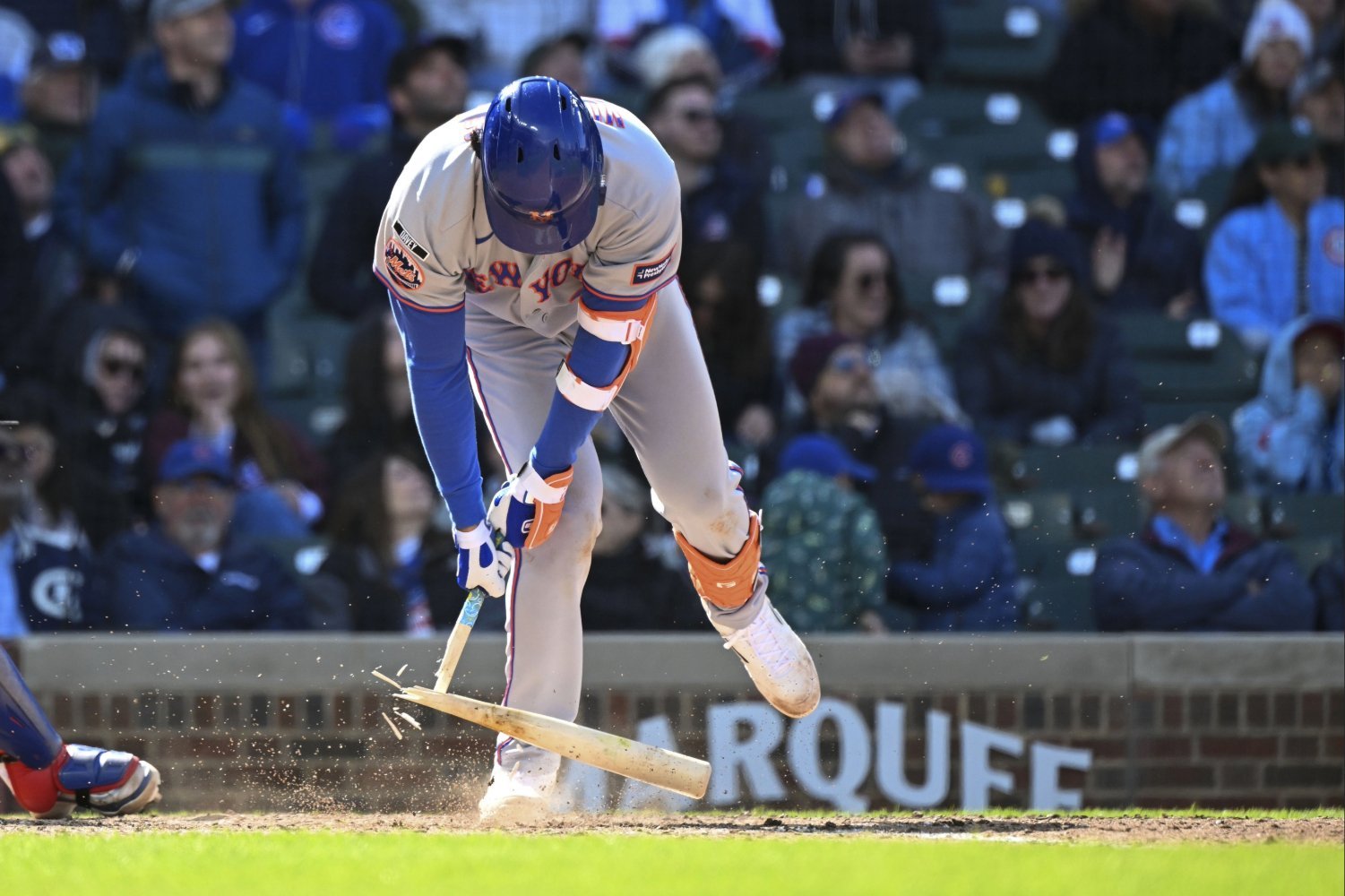 To put it mildly, the New York Mets' offense has been a dumpster fire on top of a tribal burial ground. They don’t get on base, they can’t hit for average, and when they do connect, they barely put a charge in the ball. As with any early-season slump, a lot of things have to go unexpectedly wrong all at once for a team this talented to sport a wRC+ of 80 over 22 games. First, Juan Soto went down with a calf injury, and then everyone this side of Francisco Alvarez and Luis Robert Jr. decided that letting go of the slack would be a great idea. The Mets’ bats will turn it around in some capacity. Soto is a metronome of consistency, and Francisco Lindor, Bo Bichette, Marcus Semien, and Jorge Polanco have track records I trust far more than their current production. However, that probably won’t be enough for the Mets to get where they want to go. They’ll need more, which means they need Mark Vientos to break out… again. Only 18 months ago, Vientos was viewed as a future building block for the Mets. Hot on the heels of his explosive 2024 season, where he belted 27 home runs in 111 games, good for a wRC+ of 132, Vientos and his plus-raw power were poised to solidify their spot in the middle of the Mets lineup. Unfortunately, nearly everything has gone south since. Vientos’ 2025 was as underwhelming as the entire team's season. He slumped to 17 home runs in 127 games and posted a wRC+ of 97. That’d be fine for a catcher, but not for a corner infielder who isn’t an elite third-base defender; that’s replacement level. However, the whiplash between his 2024 and 2025 was more extreme than his underlying performance. In 2024, Vientos was one of the luckier hitters in baseball. His wOBA of .356 far outstripped his xwOBA of .333, and the 32 home runs he hit between the regular season and playoffs exceeded his expected total of 25.8. Now, for a 24-year-old, it was fair to dream he could continue to improve, but instead, he mostly stayed the same and got far less favorable results. His xwOBA in 2025 was .320, but his actual wOBA came in at .303. So, while Vientos, under the hood, only shed .013 points of wOBA between seasons, in reality, his wOBA dropped by a gargantuan .053. The Mets, realistically, don’t need the 2024 version of Vientos to be real challengers, but they desperately do need something approaching the 2025 version, just with a bit more batted ball luck. Unfortunately, the 2026 version of Vientos has looked absolutely lost at the plate, but there are a few promising developments that could portend a second breakout. Normally, you don’t highlight a player with a wRC+ of 71 and an xwOBA of .271. Those are dreadful figures, and as the expected data suggests, Vientos has earned those numbers. However, just because your batted balls have been lackluster doesn’t mean the foundation of the operation is totally kaput. The basis of Vientos’ operation is power. In 2024, he struck out in 29.7% of his plate appearances and walked in 7.3%. Both of those figures were below the league average, but it didn’t matter because he slugged .516 against the league average of .399. In the seasons since, Vientos has dramatically improved his K%, but at the cost of his walk rate and power. On the surface, the answer seems pretty simple for a player who has seen his K% drop from 29.7% to 23.4% and isolated power drop from .249 to .114. But Vientos isn’t really trading contact for power, even if that’s what the results have been. The best underlying metric for power-intention is swing speed. While a bunch of factors go into how hard you hit a ball, the most fundamental one is how fast you swing the bat. According to physics, the faster you swing a bat, the faster the ball should come off it, and Vientos has never swung harder than this season. In 2024, the season Vientos slugged his way into the heart of the Mets’ order, he averaged a swing speed of 71.8 MPH, with a fast swing rate (the percentage of swings above 75 MPH) of 20.6%. He followed that up in 2025 by cutting his swing speed to 71.2 MPH with a fast swing rate of 14.8%. The result, unsurprisingly, was less power but also fewer strikeouts, as he cut his K% from 29.7% to 24.8%. Now, in the early going of 2026, his average swing speed is a career best 73.7 MPH with a fast swing rate of 28.7%. Vientos, based on his swing speed, is going up to the plate looking to slug, but his hard-hit rate (the percentage of batted balls hit 95 MPH or harder) has plummeted to a career low 41%, compared to 50.5% in 2025 and 46.6% in 2024. So, what exactly is going on here? Well, swing speed is necessary for high-end exit velocities, but it isn’t the only factor. To really put a charge in the ball, you need to square up the ball while also swinging fast, and it’s here where Vientos has fallen off. In 2024, Vientos' blast rate (a fast swing that also results in squared-up contact) was 19.3% on contact and 13% on all swings. In 2025, he saw that decline to 16.9% on contact and 11.7% on all swings, and in 2026, those figures have eroded further to 16.4% and 10.6%, respectively. While the results for Vientos in 2026 have been more or less atrocious, he may be on the cusp of turning it around. His contact and swing decision metrics are almost identical to 2024, and he’s striking out at a career-low rate, while also swinging harder than ever. The only issue has been converting all of those hard swings into well-struck balls. This could simply be a timing issue, which all hitters go through at some point during a long season, but I also think Vientos could benefit from getting his stance back to where it was in 2024. Over the past two seasons, Vientos has slowly crept closer to the plate. In 2024, he stood 29.7 inches off the plate, but in 2026, he measures in at 27 inches off the plate. Now, 2.7 inches is not much in the real world, but in the high-stakes reality of Major League Baseball hitters, it might as well be a mile. The benefit of getting closer to the plate is that it increases your plate coverage, but a drawback is that it can make impacting pitches on the inner and middle third more difficult, and if your timing is off, it can make turning on fastballs all but impossible. Based on the change in Vientos slugging percentage on fastballs between 2024 and 2026, it's clear something is off. In 2024, Vientos absolutely crushed middle-in fastballs to the tune of a .500 slugging. In 2026, that figure has halved to .250. Needless to say, that’s not a good development. Obviously, we're in small-sample-size territory, but it's pretty easy to see the through line between the decline in production and an inability to crush inside pitches. There’s a chance that Mark Vientos has completely lost it at the plate. That, in his quest to cut down on strikeouts, he muted his one carrying trait. However, I think the fact that he is swinging as hard as ever suggests he’s just a small adjustment away from getting back to his best. Whether it’s backing off the plate an inch, getting his timing down, or simply just starting to see the ball a bit better, Vientos is still swinging as hard as ever and putting the ball in play as often as ever. Those two things should be a potent combination. The Mets just need to survive long enough for the results to match the data. View the full article
 -
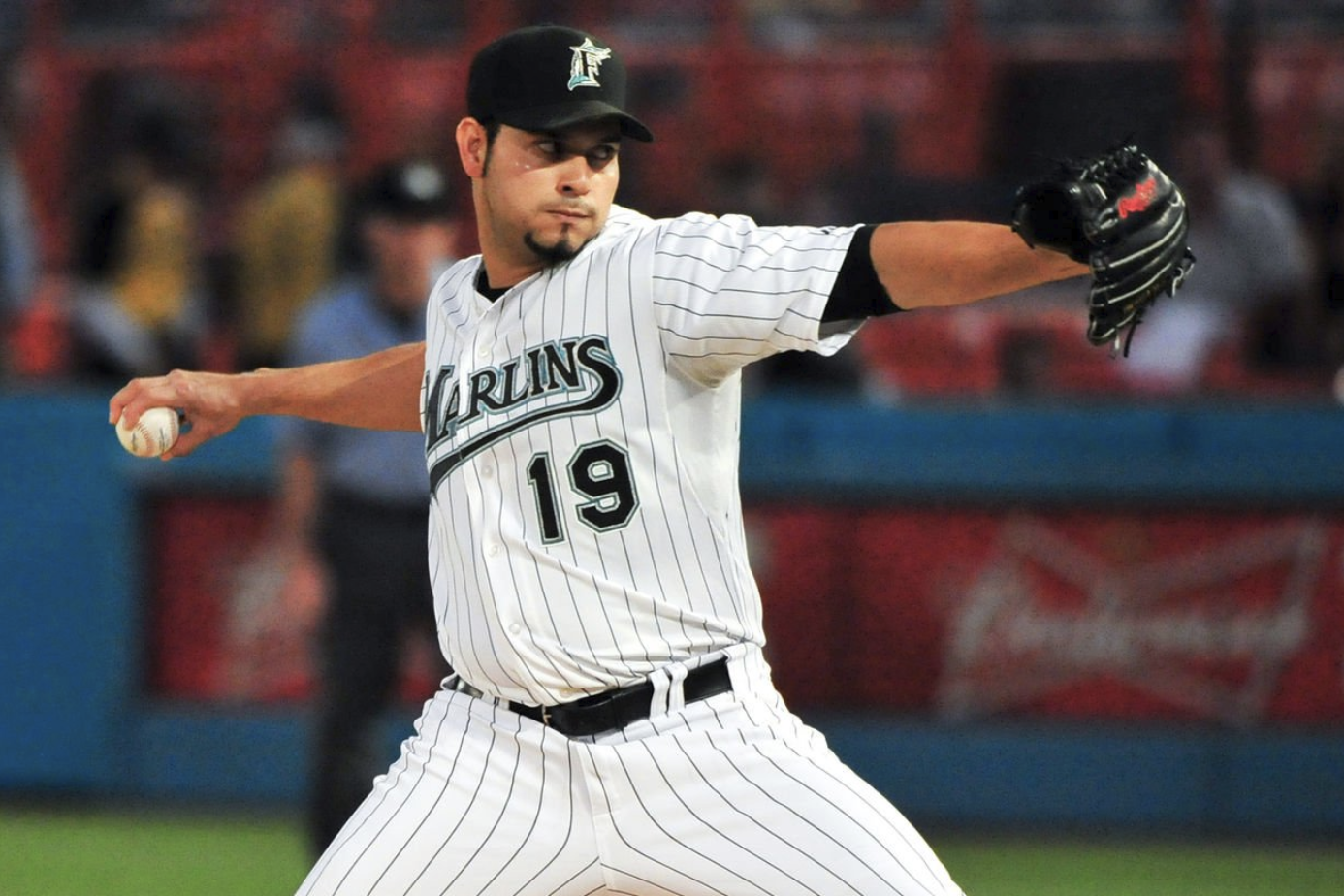 Aníbal Sánchez was the last Florida Marlins pitcher to throw a no-hitter at what was originally called Joe Robbie Stadium. Although he threw just one no-no as a member of the Fish, he was three outs away from a second on this day 15 years ago. Through eight innings, Sánchez had held Colorado without a hit at Sun Life Stadium on April 22, 2011. Despite being without a hit, the Rockies did get a first-inning run and trailed 4-1 as they came to bat in the top of the ninth. On the very first pitch of the ninth inning, Colorado’s Dexter Fowler put an end to the no-hit bid with a single through the right side. Although the no-hitter was no longer a possibility, Sánchez did face the minimum in the ninth. Fowler would be doubled off on a flyout by Jonathan Herrera before Carlos González grounded out to end the game. Sánchez finished the night with a one-hitter on 123 pitches with three walks and nine strikeouts. After the Rockies took advantage of a walk, passed ball and error to score the game’s first run, the Marlins drew even in the bottom of the first on a lead-off home run by Chris Coghlan. Florida manufactured a pair of runs an inning later to go ahead for good. Gaby Sánchez capped the scoring with a homer to lead off the third off Colorado starter Jhoulys Chacín. While Colorado managed just one hit, Coghlan, Omar Infante, Gaby Sánchez and Emilio Bonifácio each had two of the nine for Florida. As a member of the Detroit Tigers in 2013, Sánchez again lost a no-hitter in the ninth against the Minnesota Twins. After tossing a no-hitter for the Marlins against the Arizona Diamondbacks in 2006, the victory over Colorado would be Sánchez’s second of three one-hitters as a member of the club. It came on this day 15 years ago. View the full article
 -
 The Low-A Lake Elsinore Storm routed Visalia 17-7, with Ryan Wideman going 4-for-6 with two home runs and Truitt Madonna adding three doubles and a triple. Winyer Chourio fanned six over four innings for the Storm. The Triple-A El Paso Chihuahuas rallied past Reno 13-6 on a seven-run eighth. High-A Fort Wayne fell 8-2 in a rain-shortened loss to Wisconsin despite Dylan Grego's two-run homer. Double-A San Antonio was postponed by rain. Padres Minor-League Transactions El Paso Chihuahuas activated C Rodolfo Durán. El Paso Chihuahuas transferred C Colton Vincent to the Development List. Fort Wayne TinCaps placed RHP Jeferson Villabona on the 7-day injured list. RHP Carson Swilling assigned to Lake Elsinore Storm from ACL Padres. Chihuahuas Use 7-Run Eighth To Surge Past Aces The El Paso Chihuahuas rallied from a four-run deficit, using a seven-run eighth inning to beat the Reno Aces 13-6. Samad Taylor led the 16-hit parade by going 3-for-3 with a triple, a walk, and a run scored. Jose Miranda launched a two-run homer, his second blast in as many games and third of season, in the second and finished 2-for-4 with a double and two RBIs. Mason McCoy delivered the signature blow of the eighth, lacing a two-run double to put El Paso ahead for good. Trailing 6-2 after the top of the fourth, El Paso chipped away on Marcos Castañon's two-run homer, his fourth of the year, in the fourth, a Nick Solak RBI single in the fifth and an unearned run in the sixth that tied the game. In the eighth, McCoy's tiebreaking double plated Anthony Vilar and Clay Dungan, and RBI singles from Jase Bowen, Sung-Mun Song, Solak, Pablo Reyes, and Vilar put the game away. El Paso left seven runners on base. Starter Jackson Wolf lasted 2⅔ innings, allowing two earned runs on two hits, walking four, and striking out two. The bullpen combined for more than six innings of work, and Eli Villalobos picked up the victory with 1⅓ scoreless frames. EP_0421.mp4 Player AB R H RBI BB K Jase Bowen, CF 5 2 2 1 0 1 Samad Taylor, LF 3 1 3 0 1 0 Sung-Mun Song, 3B 5 1 1 1 0 1 Nick Solak, RF 5 1 2 2 0 0 Pablo Reyes, DH 4 2 2 1 1 0 Rodolfo Durán, C 2 1 0 0 0 1 Anthony Vilar, C 2 1 2 1 0 0 Jose Miranda, 1B 4 1 2 2 0 0 Clay Dungan, 2B 1 1 0 0 0 0 Marcos Castañon, 1B 5 1 1 2 0 2 Mason McCoy, SS 3 1 1 2 1 0 Player IP H R ER BB K HR Jackson Wolf 2 2/3 2 2 2 4 2 0 Omar Cruz 2/3 3 4 4 3 0 0 Miguel Cienfuegos 1 2/3 1 0 0 0 1 0 Garrett Hawkins 1 2/3 0 0 0 2 1 0 Eli Villalobos (W, 2-1) 1 1/3 1 0 0 0 0 0 Ethan Routzahn 1 1 0 0 0 0 0 Missions Postponed, Will Play Doubleheader Wednesday The San Antonio Missions-Amarillo Sod Poodles game was postponed due to rain and will be made up Wednesday as part of a doubleheader. Right-handers Victor Lizarraga and Eric Yost are expected to start for the Missions. Grego's 2-Run Homer Only Bright Spot As TinCaps Fall The Fort Wayne TinCaps managed just four hits in a rain-shortened 8-2 loss to the Wisconsin Timber Rattlers. The game was called for wet grounds with two outs in the bottom of the sixth inning. Starter Maikel Miralles took the loss, going 3⅔ innings while allowing eight runs, five earned, on eight hits. He walked three, struck out one, and surrendered two home runs. Matthew Watson followed with 2⅓ scoreless innings of relief, allowing one hit and two walks while striking out one. Dylan Grego provided the TinCaps' only offensive spark, going 2-for-2 with a double and a two-run home run, his first of the season, in the bottom of the third that trimmed the deficit to 5-2. Alex McCoy singled to extend his Midwest League-best hitting streak to 12 games, one shy of the team record as a High-A franchise. FW_0421.mp4 Player AB R H RBI BB K Kasen Wells, CF 3 0 0 0 0 1 Zach Evans, 3B 3 0 0 0 0 2 Carlos Rodriguez, C 3 0 0 0 0 0 Alex McCoy, LF 3 0 1 0 0 1 Lamar King Jr., DH 2 0 0 0 1 1 Kavares Tears, RF 3 0 1 0 0 1 Rosman Verdugo, 2B 1 0 0 0 1 1 Jack Costello, 1B 1 1 0 0 1 0 Dylan Grego, SS 2 1 2 2 0 0 Player IP H R ER BB K HR Maikel Miralles (L, 0-2) 3 2/3 8 8 5 3 1 2 Matthew Watson 2 1/3 1 0 0 2 1 0 Wideman, Madonna Power Storm To Rout Of Rawhide The Lake Elsinore Storm pounded out 17 hits, including three home runs, in a 17-7 rout of the Visalia Rawhide. The Storm scored in seven of their eight innings they batted and put up crooked numbers five times. Leadoff man Ryan Wideman went 4-for-6 with a double, two home runs, and four RBI, highlighted by an inside-the-park home run in the third and a two-run shot that capped the scoring in the eighth. Truitt Madonna also had a huge night, going 4-for-5 with three doubles, a triple, three RBIs, and three runs scored. Bradley Frye chipped in a 3-for-6 effort with a run-scoring single, three runs scored, and two stolen bases. Starter Winyer Chourio turned in the strongest pitching performance, working four innings and allowing two earned runs on three hits. He walked none and struck out six. Lake Elsinore struck first in the first on Madonna's RBI double. The third inning produced three runs on Wideman's inside-the-park homer, Madonna's RBI triple, and a Jose Verdugo sacrifice bunt that plated Madonna. Victor Duarte added a two-run homer in the fifth and the Storm broke the game open in the eighth with six runs, including a two-run Conner Westenburg single and Wideman's two-run homer. The Storm stole six bases. LE_0421.mp4 Player AB R H RBI BB K Ryan Wideman, CF 6 3 4 4 0 0 Bradley Frye, 3B 6 3 3 1 0 1 Truitt Madonna, C 5 3 4 3 0 0 Kale Fountain, RF 3 0 0 0 0 0 George Bilecki, RF 2 0 0 0 0 1 Jose Verdugo, 2B 4 1 1 2 0 2 Jorge Quintana, SS 4 2 2 1 1 0 Victor Duarte, DH 2 2 1 2 3 0 Kerrington Cross, 1B 4 1 0 0 1 2 Conner Westenburg, LF 5 2 2 2 0 0 Player IP H R ER BB K HR Winyer Chourio 4 3 2 2 0 6 0 Joseph Herrera (W, 2-0) 1 1 2 2 2 1 1 Carson Swilling (H, 1) 1 2/3 0 0 0 3 1 0 Daichi Moriki 2/3 0 2 1 3 0 0 Brandon Langley 1 2/3 0 1 0 1 1 0 Padres Top-20 Prospect Performance Kash Mayfield: DNP Ethan Salas: DNP Kruz Schoolcraft: DNP Bradgley Rodriguez: DNP Humberto Cruz: DNP Miguel Mendez: DNP Ty Harvey: DNP Jorge Quintana: 2-for-4, BB Kale Fountain: 0-for-3 Ryan Wideman: 4-for-6, 2B, 2 HR Jagger Haynes: DNP Lamar King Jr.: 0-for-2, BB, K Romeo Sanabria: DNP Truitt Madonna: 4-for-5, 3 2B, 3B Michael Salina: DNP Garrett Hawkins: 1⅔ IP, 0 H, 0 R, 2 BB, K Kavares Tears: 1-for-3, K Deivid Coronil: DNP Francis Pena: DNP Bryan Balzer: DNP View the full article
 -
 Transactions: Nashville Sounds activated RHP Junior Fernández. RHP Joe Corbett assigned to Biloxi Shuckers from Nashville Sounds. SS Jheremy Vargas assigned to Biloxi Shuckers from Nashville Sounds. C Tayden Hall assigned to Wisconsin Timber Rattlers from Biloxi Shuckers. Nashville 5, Charlotte (White Sox) 1 Box Score Nashville and Charlotte were locked in a pitcher’s duel for the first six innings on Tuesday morning, as the teams combined to play the first six innings scoreless. The Sounds continue to Bring starter Logan Henderosn along slowly, as the 24 year-old righty worked only 3.1IP scoreless before being lifted after 65 pitches (42 strikes). In the seventh inning, Luis Lara opened the scoring with his third homerun of the season. Lara bounced back after a mini slump (0/10 4K 1BB) over the weekend, reaching base three times. Lara is now one off his career-high homerun total (4 in 2024 at Wisconsin) while raising his OPS back over 1.000 on the season. Here’s the blast, courtesy of Sounds’ X account: Following Lara’s blast, the Sounds collected three straight singles before Jett Williams forced in a run on a bases loaded walk to make it 2-0. The next inning, catcher Jeferson Quero broke the game open with his second extra-base hit of the game, a three-run homerun: The Sounds used five relivers to close the game after Henderson departed. Jacob Waguespack (1.2IP 0R 0H 1BB 4K) was the only pitcher to record more than three outs. Reiss Knehr earned the win in relief with a scoreless appearance and Brian Fitzpatrick ran his scoreless innings streak to 9.1 to start the season at AAA. Nashville (12-9) now sits tied for the third-best record in the 20 team international league after three weeks of play. Biloxi Pre-game media notes Biloxi 7, Rocket City (Angels) 3 Box Score As always, you are encouraged to read the official round-up from the team’s site: 3-RBI Day for Jordyn Adams Headlines 7-3 Shuckers Victory Bolstered by a solid start from Ryan Birchard (3IP 0R 0H 5BB 5K) and a relentless attack on offense (ten hits, four for extra bases), the Shuckers cruised to series-opening victory over Rocket City on Tuesday night. Jordyn Adams got the Shuckers on the board with an RBI single in the second, then extended the lead to four when he crushed this one out to deep center, courtesy of the Bilxoi X account: After bulk man Brett Wichrowski was again victimized by a long ball (7 HRs allowed in 18.2IP) to cut the lead to two, Blake Burke roped a single to score Jesus Made to give the Shuckers some insurance. Dylan O’Rae extended the lead when he dropped a double just inside the left field foul line in the bottom of the eighth to score two more. It was O’Rae’s sixth multi-hit game of the year, and he’s now second in the Southern League with a .362 batting average. With the win, Biloxi evened its’ record at 8-8. Bishop Letson (0-3 14.29 ERA) will look to turn in his first good outing of the season on Wednesday morning (11:00AM CT start). Wisconsin pre-game media notes Wisconsin 8, Fort Wayne (Padres) 2, (F/6 innings) Box Score Wisconsin Beats Fort Wayne and the Weather The Timber Rattlers are here to do two things: have their game shortened by weather, and hit bombs. Wisconsin once again bludgeoned an opponent via the longball in their 8-2 victory on Tuesday. Homers from Braylon Payne (2 for 4, 3 runs, 2 RBI) and Eric Bitonti (2 for 3, 3 RBI) gave the Rattlers a Midwest League-best 17 homeruns on the season. Check out the two mammoth shots here, via Wisconsin’s X account: Wisconsin tallied runs in each of the first four innings, on the way to collecting nine hits and five walks in the rain-shortened affair. Wisconsin also leads the Midwest League with a .846 team OPS, with four players (Payne, Luis Pena, Marco Dinges and Josh Adamczewski) finishing the day with an OPS over 1.000 on the season. Dinges 2 RBI Single Bitonti RBI Single Wisconsin starter Travis Smith (5IP 3H 2R 2ER 2BB 6K) set a season high in innings and strikeouts to earn the win. Ethan Dorchies (0-2 9.58 ERA) will look to lead two of every position player to the ark… err lead the Rattlers (9-5) to consecutive victories on Wednesday, so long as the weather cooperates. Wilson pre-game media notes Wilson 3, Delmarva (Orioles) 2 Box Score Warbirds Hold On to Down Delmarva In Series Lidlifter Wilson put only two balls in play in the first four innings against Delmarva starter Kiefer Lord (4IP 11K), but they made the most of their batted balls when they scratched a run across in the fourth. After a walk and a single, Jadyn Fielder just beat out an inning-ending double play ball to make it Warbirds 1, Shorebirds 0. That would be the lone run of the game until Fielder would manufacture a rally on the basepaths in the top of the eighth. With runners on the corners, Fielder stole second, but the throw trickled into center, allowing Yannic Walther to score and Fielder to advance to third. Fielder would then score on 2025 #32 overall pick Brady Ebel’s single, his first multi-hit game of the season. Delmarva rallied for two in the bottom of the 8th, including a run on a double steal of second and home. (Side note: can anyone defend this play in the lower levels? I feel I have seen this work no less than 10 times already this season. Just hold onto the ball!) Delmarva put the tying run on in the ninth, but the runner was erased by Walther. After Walther saved a wild pitch with a diving grab, he got up and fired a strike to gun down the runner, who had a late break for second. Walther was 2/9 on the day in caught stealing attempts. Garrett Hodges earned the save, ending the game on a play I am not sure I ever seen before. The third (swinging) strike bounced in front of home, but Walther turned to run to the backstop. Hodges bounded off the mound and secured his own strikeout, with a comically clunky lob to first to end the game. Miqueas Mercedes (3IP 2H 0R 5BB 6K) started, but struggled with control all night, throwing 40 of 75 pitches for strikes. Thomas Conrad (3.2IP 0H 0R 4BB 4K) turned in his best professional outing to earn his first ever professional win in relief. Delmarva went just 1/15 with RISP on the night. Enderson Mercado (0-0, 6.00 ERA) is slated to take the mound on Wednesday, as Wilson (6-9) will look to draw closer to .500 on the season. Organizational Scoreboard including starting pitcher info, game times, MiLB TV links, and box scores Current Milwaukee Brewers Organization Batting Stats and Depth Current Milwaukee Brewers Organization Pitching Stats and Depth View the full article
 -
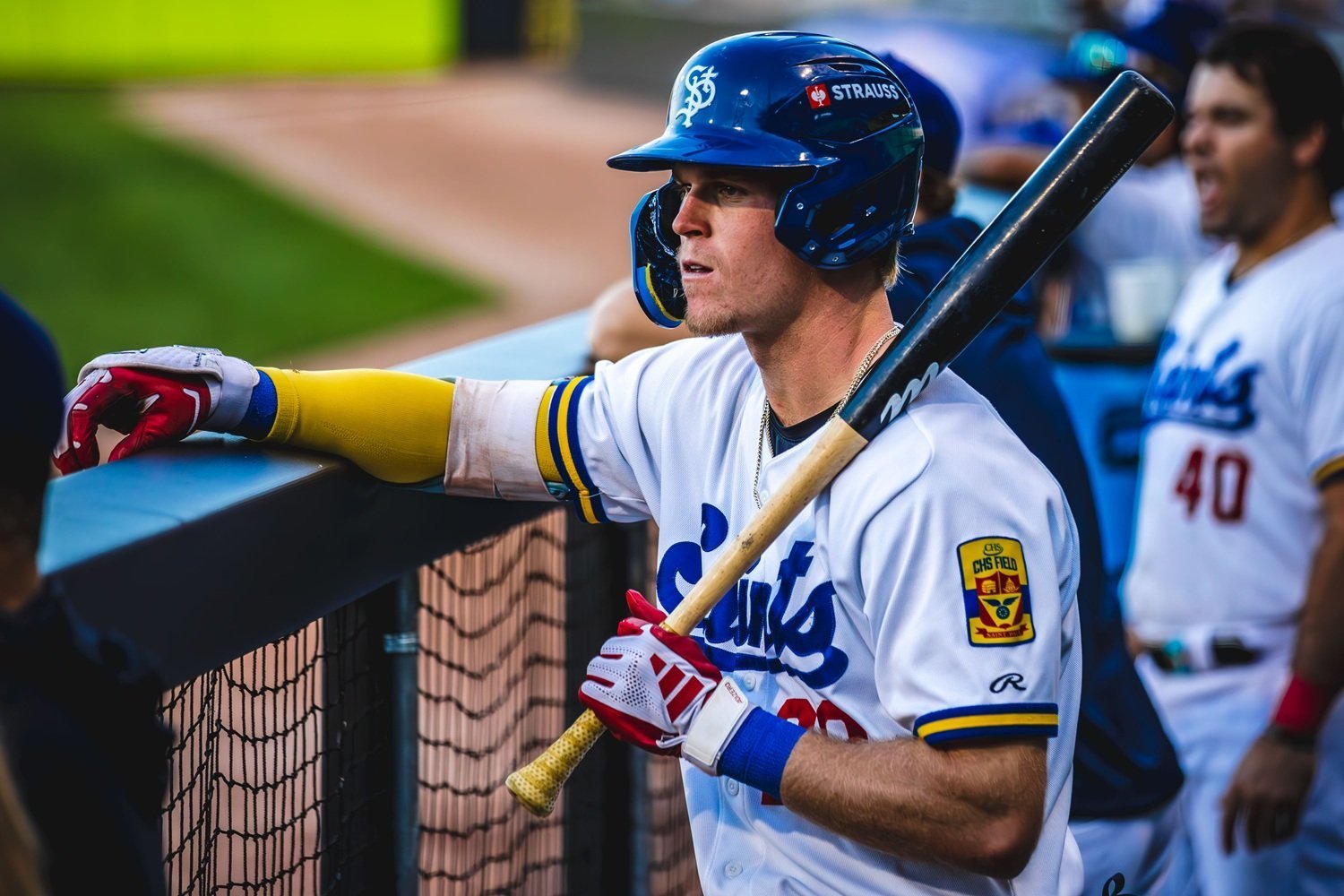 TRANSACTIONS The Minnesota Twins officially recalled LHP Kendry Rojas to the big leagues ahead of their series with the New York Mets. When he takes the mound, he will be making his MLB debut. With the St. Paul Saints so far this season he’s made two appearances, including one start, throwing six scoreless innings with 5 K’s and 2 BB’s. The Saints also were assigned RHP Mike Paredes and LHP Aaron Rozek from the Wichita Wind Surge to take the places of Rojas and LHP Connor Prielipp who was brought along to the Twins as their “taxi” player in New York. Prielipp will start for the Twins on Wednesday. In Double-A, the Wind Surge activated RHP Jose Olivares from the 7-day injured list. Yesterday the Cedar Rapids Kernels placed RHP Adrian Bohorquez on the 7-day injured list, activated OF Caden Kendle from the temporary inactive list, and were assigned SS Harry Genth from Fort Myers. SAINTS SENTINEL St. Paul 5, Indianapolis 7 Box Score With left-handers Kendry Rojas and Connor Prielipp joining the major league club, Mike Paredes joined the Saints from Wichita and made the start. He went the first 3 1/3 innings, but would end up charged with six earned runs on eight hits and a pair of walks. He struck out three, but also surrendered three home runs. The Saints got on the board in the top of the fourth thanks to the first home run of the season from Walker Jenkins. Despite the unimpressive numbers to begin the 2026 season (.649 OPS), the stat above shows Jenkins has been making plenty of loud contact as well as drawing walks (11) nearly as often as he has struck out (12). Perhaps this will be the start of a heater! In the top of the fifth Kyler Fedko and Gabriel Gonzalez joined him with two-run shots of their own to close the lead to 6-5. Relievers Raul Brito (2 2/3 IP, 4 H, R, BB, 3 K), Matt Bowman (1 IP, K), and Dan Altavilla (1 IP, 2 K) did their best to keep the Saints in striking distance for the last half of the game, but it wasn’t meant to be. In the top of the ninth Aaron Sabato mashed a double to give Jenkins a chance as the tying run, but his fly out to center field ended the game. Jenkins was the only hitter with multiple knocks, finishing 2-for-5 with the home run and a strike out. Emmanuel Rodriguez drew two walks. As a team the Saints were just 0-for-2 with runners in scoring position, and left only five men on base. WIND SURGE WISDOM Wichita 6, NW Arkansas 7 Box Score Right-hander Ryan Gallagher made the start for the Wind Surge on the road against the Naturals and kept the home team off the scoreboard for the first three innings, including three strikeouts in the first. A pair of doubles in the fourth put the first run of the game on the board for the Travelers, and they added four more in the fifth to chase Gallagher. He finished 4 1/3 innings and was charged with three earned runs on six hits and a walk, while striking out six. He threw 77 pitches, with 52 going for strikes (68%). Spencer Bengard came on in the middle of the fifth and gave up two earned runs of his own. He allowed three hits, walked one, and struck out three in his 1 2/3 innings. Wichita’s offense finally put something together in the top of the sixth thanks to a Hendry Mendez single, and Ricardo Olivar’s first home run of the season. Garrett Spain added their third run of the game in the top of the seventh with his fourth home run of the season. Jaylin Nowlin gave that run back in the bottom half after a leadoff walk, a stolen base, and a wild-pitch to score a run without a ball leaving the infield. Kyle Bischoff had the same thing happen to him in the eighth to put the Travelers up 7-3. Nowlin walked two and struck out one in his inning, Bischoff walked one and struck out two in his. Down four in the top of the ninth, the Wind Surge put together a rally. Andrew Cossetti led off with a single. The next three hitters drew walks before Kyle DeBarge added an RBI single. With the bases loaded and still nobody out, the Travelers made a pitching change to slow down that momentum. Hendry Mendez got them within one with an RBI groundout. Kala’i Rosario went down looking for the second out before Olivar drew another walk to reload the bases. Jorel Ortega put a good swing on a 1-2 pitch, sending a liner deep to right that would have put them out front, but it was tracked down in front of the warning track to end the game. The offense was led by Spain (2-for-3, 2 R, 2B, HR, RBI, 2 BB, K), DeBarge (2-for-5, RBI, 2 K), and Cossetti (2-for-4, R, 2B, K). Ben Ross wasn’t able to start a new hit streak, but did draw three walks, including one with the bases loaded. In addition to his home run Olivar also drew two walks, as did Jake Rucker from the nine-hole. Despite the comeback effort, the Wind Surge still finished with just one hit in 11 at-bats with runners in scoring position, leaving 10 men on base. KERNELS NUGGETS Cedar Rapids 2, Peoria 7 Box Score The Chiefs took a 1-0 lead after one against Kernels starter Eli Jones but he worked around some traffic in the second and third innings to keep that score intact. Cedar Rapids tied it up at one in the top of the fourth when Jacob McCombs led off the inning with his first home run of the year. Things went off the rails for Jones in the bottom of the fourth, however. Three straight singles to start the inning loaded the bases, and after a fly out, they were cleared with a grand slam to put the Chiefs comfortable in front. After a pitching change a walk and double led to the fifth run of the inning, and the Kernels were down 6-1. Jones finished 3 2/3 innings and was charged with those six earned runs on eight hits and one walk. He struck out five. Christian Becerra got the final out of the fourth, allowing one hit and one walk. Michael Ross came on to begin the bottom of the fifth and went the next three innings. He allowed one earned run on three hits and a walk, while striking out two. Jacob Wosinski struck out the side in the eighth to finish the game for Cedar Rapids. The Kernels scored their second run in the top of the seventh when Andy Lugo drew a one-out walk. Jaime Ferrer followed with a single into center field that advanced Lugo toward third. Ferrer then got caught in a game of pickle between first and second base, allowing Lugo to scamper home. Marek Houston (2-for-4) and Ferrer (2-for-3, 2B, RBI) had multiple hits. As a team the Kernels went 1-for-12 with runners in scoring position and left seven men on base. MUSSEL MATTERS Dunedin 3, Fort Myers 2 Box Score Taking the mound for the Mighty Mussels was right-hander Jonathan Stevens, the Twins 16th round pick of the 2025 draft out of Alabama. This was his first start of the season, as he had come out of the bullpen in his prior three appearances. In his three innings he was charged with two runs, but both were unearned thanks to a pair of errors from his defense in the top of the third. He allowed two hits, walked three, and struck out three. You could say he was a bit “effectively wild,” as 26 of his 52 pitches went for strikes (50%). Fort Myers made the score 2-1 in the bottom of the fourth when Yasser Mercedes singled, stole second base, and scored on a two-out double from JP Smith. Mercedes also scored their second run of the game in the sixth after he, Eduardo Beltre, and Quentin Young strung together singles. Mitch Mueller was the first reliever summoned from the bullpen to start the fourth and he retired the next seven hitters. A one-out error and a walk in the sixth put an end to his appearance, but he finished 2 1/3 scoreless innings, walking one and striking out three. Brian Zeldin finished off the sixth and pitched into the eighth, but a one-out double would come around to score and give the Blue Jays a one-run lead. He was charged with one earned run on three hits in his two innings. He struck out one. Michael Hilker finished off the final 1 2/3 innings, and allowed one hit and walked three, but was not charged with a run while striking out two. While it’s not a big hit or amazingly athletic defensive play, you still won’t see something like happen very often: In the bottom of the ninth Jayson Bass reached as the tying runner with a two-out single, but pinch runner Yilber Herrera was picked off attempting to steal second base to end the game. Mercedes (2-for-4, 2 R, K, SB) and Smith (2-for-4, 2B, RBI, K) each had two hits to lead the offense. Smith’s double was their only extra-base hit among their seven, which was more than the six from the Blue Jays, but half of theirs went for doubles. TWINS DAILY MINOR LEAGUE PLAYERS OF THE DAY Pitcher of the Day – Jacob Wosinski, Cedar Rapids Kernels (1 IP, 3 K) Hitter of the Day – Garrett Spain, Wichita Wind Surge (2-for-3, 2 R, 2B, HR, RBI, 2 BB, K) PROSPECT SUMMARY Check out the Prospect Tracker for much more on our Twins Top 20 prospects after seeing how they performed on Tuesday. #1 – Walker Jenkins (St. Paul): 2-for-5, R, HR (1), RBI, K #3 – Emmanuel Rodriguez (St. Paul): 0-for-2, 2 BB, 2 K #4 – Eduardo Tait (Cedar Rapids): 0-for-4, K #7 – Gabriel Gonzalez (St. Paul): 1-for-3, R, HR (4), 2 RBI, BB #9 – Marek Houston (Cedar Rapids): 2-for-4 #13 – Brandon Winokur (Cedar Rapids): 0-for-4 #14 – Quentin Young (Fort Myers): 1-for-4, RBI, K #16 – Hendry Mendez (Wichita): 1-for-5, R, RBI, 2 K #17 – Kyle DeBarge (Wichita): 2-for-5, RBI, 2 K #19 – Khadim Diaw (Cedar Rapids): 1-for-3, K WEDNESDAY’S PROBABLE STARTERS St. Paul @ Indianapolis (5:05 PM CDT) - RHP Andrew Bash (0-1, 4.41 ERA) Wichita @ NW Arkansas (7:05 PM CDT) - RHP Ty Langenberg (0-1, 2.16 ERA) Cedar Rapids @ Peoria (11:05 AM CDT) - LHP Dasan Hill (0-2, 12.38 ERA) Dunedin @ Fort Myers (6:05 PM CDT) - RHP Riley Quick (0-0, 0.00 ERA) Please feel free to ask questions and discuss Tuesday’s games! View the full article
 -
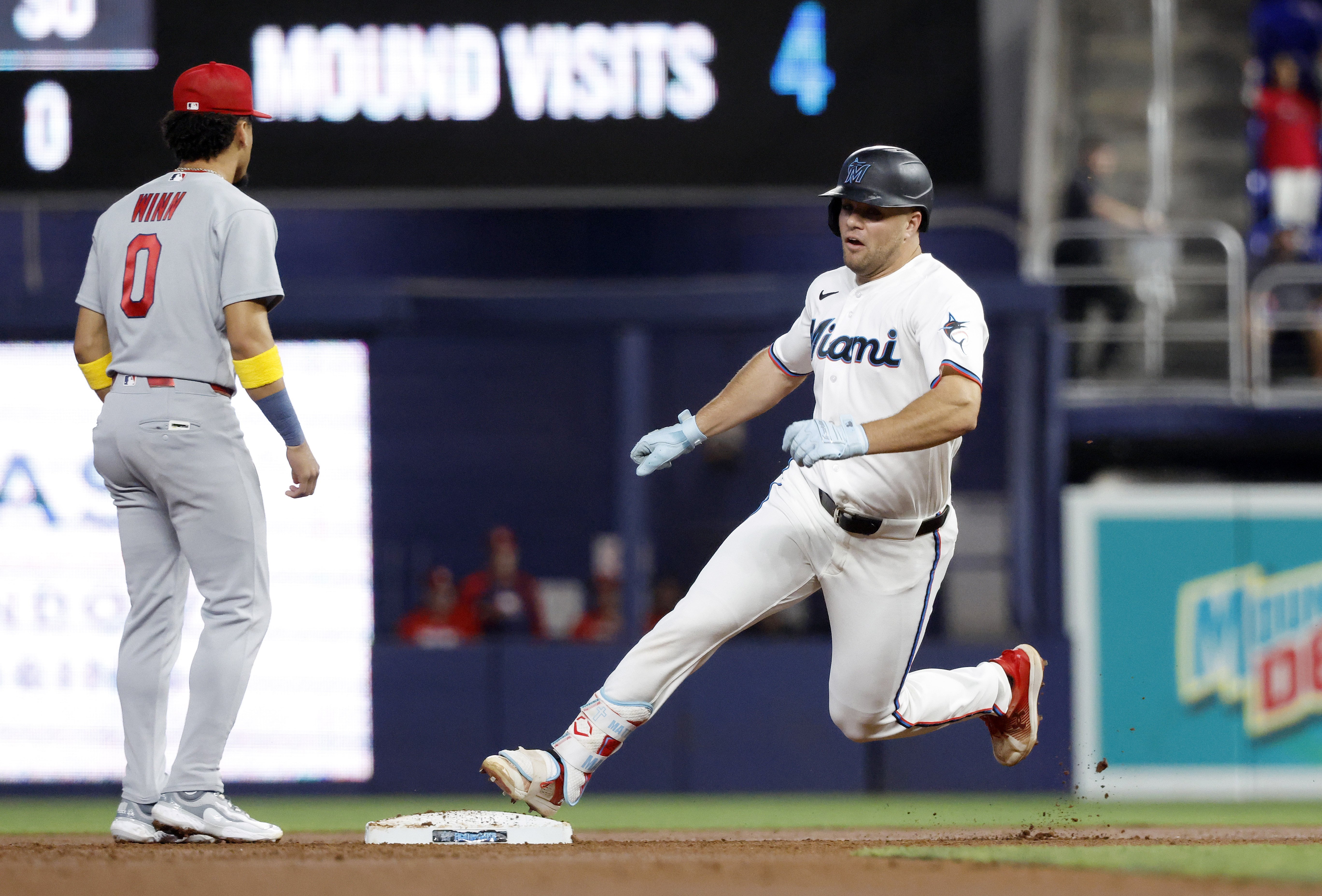 MIAMI, FL — Jakob Marsee entered Tuesday's game struggling at the plate. He came into the game slashing .149/.279/.207/.486 for the season, but has remained in the Miami Marlins everyday lineup. The team's patience with him paid off with a three-hit game despite their 5-3 loss to the St. Louis Cardinals. There had been positive signs in Marsee's underlying stats. Despite the bad production, the center fielder was walking 14.4% of the time. He ranked in the 90th percentile among MLB hitters in chase rate and 96th percentile in whiff rate. He still has had a good approach, so eventually, the hits were going to fall for him. "It's not like we were waiting on it, but we expect that," said Marlins manager Clayton McCullough. "Marsee is going to string together a good run. He's just too talented offensively. He does too many things well with how he controls the strike zone and I think it was just a matter of time. Hope he can take a night like tonight, where you get three knocks, and be able to build a little steam and move forward. Really good sign again to see him get to some heaters tonight for base hits." Marsee hit his first home run of the season in leadoff fashion. It was also an unorthodox home run trot because he had to start running the bases when the ball was originally ruled to have bounced off the right field wall and stayed in play. He was thrown out at third base by Jordan Walker...until the umpires discussed it and correctly signaled a home run. "Thought it was a home run off the bat," Marsee said. "I saw it hit the wall, but they didn't say anything, so I just kept running. Might as well get a triple, I guess." It's the first leadoff homer for a Marlin since Xavier Edwards on Aug. 13, 2025 at Cleveland. Marsee was previously 1-for-20 when leading off a game. The 110.9 mph exit velocity was a new season-high for Marsee and very close to the best mark from his rookie season (111.1 mph). Marsee had singles in both the bottom of the fifth and ninth, but he was never driven in as the Marlins were 1-for-10 with runners in scoring position (Heriberto Hernández was responsible for that only hit). "We had our chances, we did," McCullough said. "We ran a couple trail runners, ran ourselves into some outs there that you never know what may transpire after that. You're looking to try to give yourselves as many chances you can and we didn't, and we had some guys out there, but we didn't quite cash in." Paddack, who through his last three appearances posted a 2.35 ERA, struggled against the Cardinals, allowing five runs on eight hits, one walk and struck out a season-high seven. The positive from Paddack's start is that six of the seven strikeouts came on his changeup. He mentioned that it was "probably the best it's been all year." His changeup generated seven total whiffs and landed four times for a first-pitch strike. However, things went wrong right away in the top of the first inning. Alec Burleson drove in JJ Wetherholt to take an early 1-0 lead. In the top of the third, Burleson reached on a fielder's choice because Connor Norby aggressively went for the play at home and was unsuccessful, giving St. Louis a 2-1 lead. In the top of the fourth inning, Nathan Church hit his second home run of the season. It was a two-run homer that went 370 feet to right field. A Nolan Gorman base hit drove in the fifth run. "I tip my cap to that offense," Paddack said. "I feel like they put together some really good swings on some tough pitches. I was looking in between pitches with Rob (Marcello) and (Daniel Moskos) there just like, 'Man, that pitch is out of the zone,' or 'That pitch is exactly where we wanted it and they put a good swing on it,' especially Burleson and (Masyn) Winn. That was my game plan, and they were able to beat us to it." Paddack surrendered nine hard-hit balls and the Cardinals combined for a 89.4 mph average exit velocity. Through five appearances (four starts), he has a 6.37 ERA, though his 4.63 FIP, 3.52 xFIP, 9.37 K/9 and 2.25 BB/9 suggest that he has been a little bit unlucky. The Marlins fall to 11-13 on the season and now go into a rubber match with Janson Junk on the mound at 12:10 pm. View the full article
 -
Braxton Garrett throws Triple-A no-hitter, loses game
DiamondCentric posted an article in Fish On First
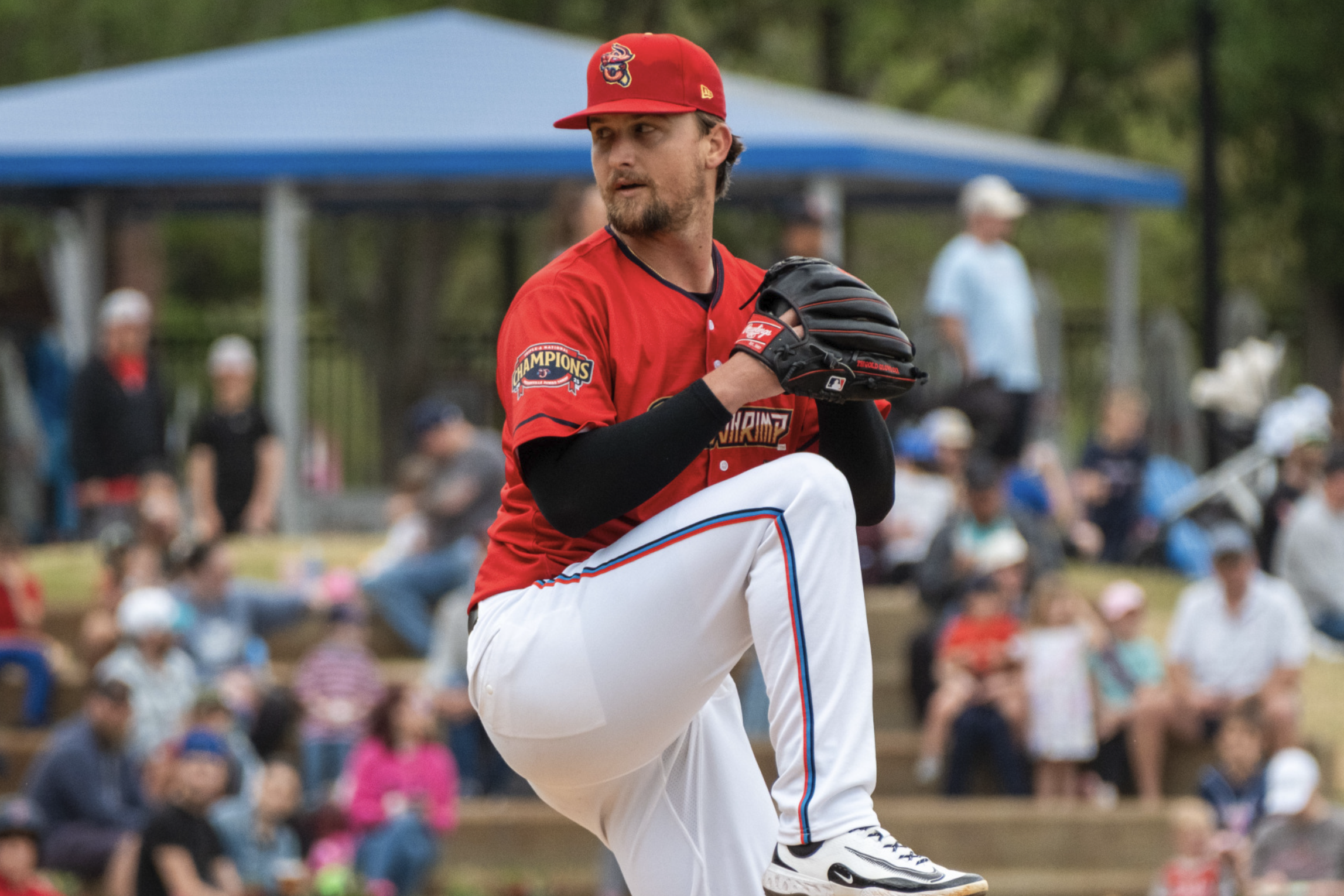 Just last weekend, my colleague Alex Carver detailed why Braxton Garrett should and would be the first man up from Triple-A Jacksonville whenever the Miami Marlins need starting rotation reinforcements. The veteran left-hander further augmented his case Tuesday night with an eight-inning no-hitter in a road start against the Gwinnett Stripers. The Jumbo Shrimp themselves mustered one measly hit and failed to score, while Gwinnett manufactured a pair of runs thanks to Garrett's messy sixth inning, which included two hit-by-pitches, a wild pitch and an errant pickoff attempt. That contributed to this ultra-rare final pitching line: 8.0 IP, 0 H, 2 R (1 ER), 3 BB, 6 K (98 pitches/65 strikes). Devin Smeltzer threw a seven-inning no-no for Jacksonville in 2023 (doubleheader games in the minor leagues are only seven innings apiece). According to the team, Garrett authored their first solo no-no of at least eight innings since Detroit Tigers farmhand Kevin Mobley in 2000. Optioned to Triple-A at the end of spring training, Garrett is making a mockery of the International League. He was arguably even better in his previous outing, and dating back to the one before that, he has tossed 15 ⅔ consecutive hitless innings. This season overall, opponents have combined for a .056 batting average. In 86 plate appearances, nobody has recorded an extra-base hit. Obviously, Garrett is the beneficiary of favorable batted ball luck—for example, he got away with allowing four hard-hit balls against Gwinnett. Still, he's earning plenty of his success versus left-handed batters in particular, with a strikeout rate of 43.3% this season when he has the platoon advantage. Meanwhile down in Miami, Chris Paddack struggled against the St. Louis Cardinals (4.2 IP, 8 H, 5 ER, 1 BB, 7 K). The Marlins have lost all four of Paddack's starts in 2026. He only participated in a victory on April 5, serving as the bulk guy that day. Nearly a month into the regular season, the free agent signing is beginning to separate himself as the weakest link of the Marlins rotation with a 6.37 ERA and 4.63 FIP, but his ability to fill up the strike zone remains alluring. Also, his guaranteed salary of $4 million ensures he'll get a relatively long leash. Paddack is projected to pitch next on Monday against the Los Angeles Dodgers and Garrett the following day against Triple-A Durham (Tampa Bay Rays affiliate). View the full article
 -
Minnesota Twins Prospect Retrospective: Connor Prielipp
DiamondCentric posted an article in Twins Daily
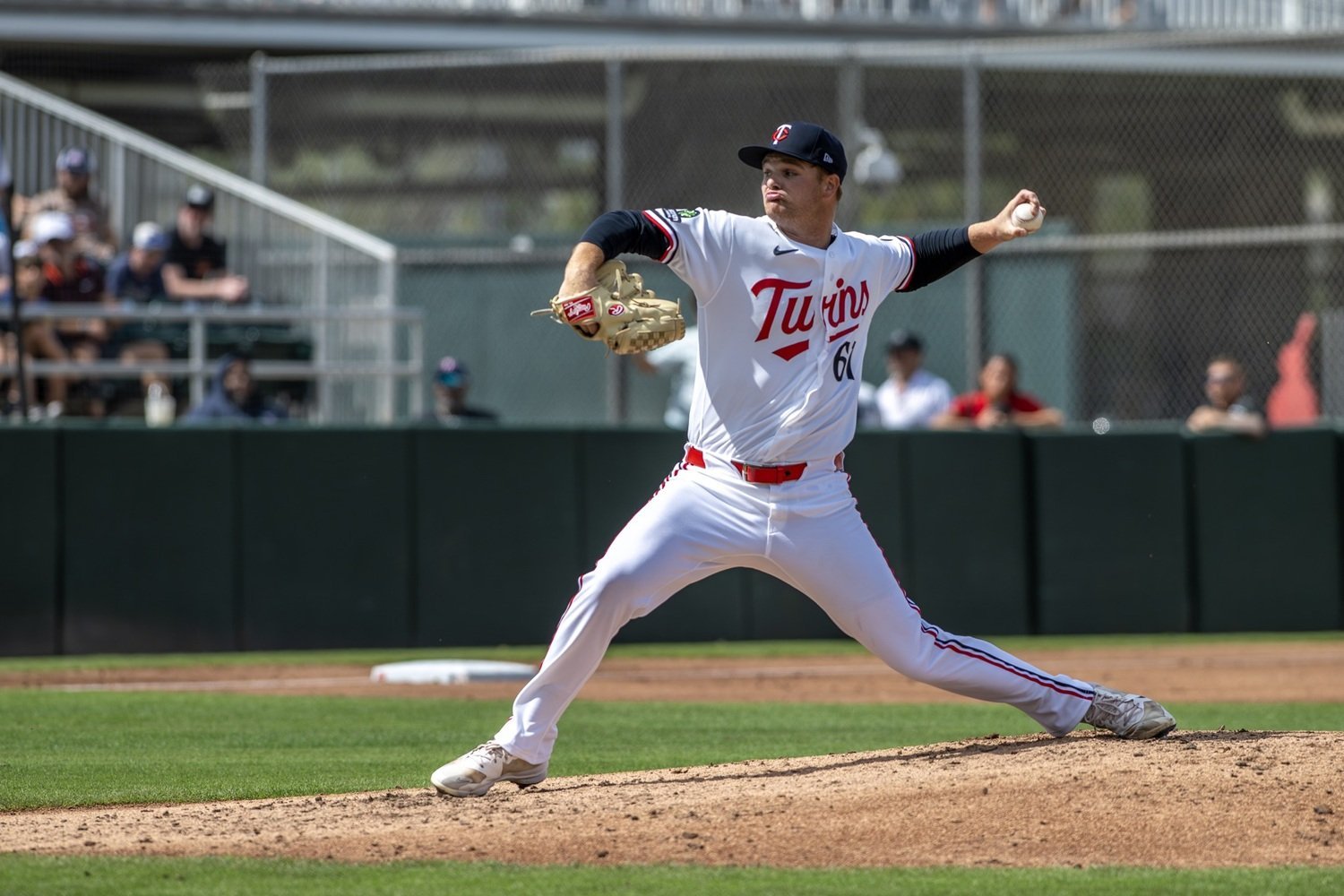 Connor Prielipp has had much of his early pitching career marred by injury questions marks. Calling into question for most of his career whether he would be durable enough to make it to the majors. In a great turn of events, the left-hander has been on a path in which both his health and performance have made him the Twins' top pitching prospect and given him a much better chance to stick as a starter. Struggle with Injuries The native of Tomah, WI, in the heart of cranberry country, took his pitching talents to the University of Alabama out of high school. While his performance in college was phenomenal in his debut, it ended prematurely with the need to go under the knife and undergo Tommy John surgery. Even though the actual gameplay at the college level was limited, Prielipp showed enough potential with his stuff and talent level to be the pick for the Twins in the second round of the 2019 MLB draft. As Prielipp started his professional career, the injury issue continued to linger, with the need for an internal brace procedure in 2023. But in 2025, he was finally healthy, and all of baseball could see what his stuff and potential looked like over a full season of work. Spending most of the season at Wichita and ending the season in St. Paul, Prielipp logged 82 2/3 innings with a 4.03 ERA and 98 strikeouts (10.7 K/9). Healthy and Hitting His Stride His 2025 performance was enough to create even more buzz around Prielipp; not only did the 25-year-old solidify himself as the Twins' top pitching prospect, but he also garnered a fair amount of national attention. Here at Twins Daily, he is ranked as the fifth prospect in the organization. ESPN had Prielipp ranked the highest amongst the national experts at 54th. Those accolades have only seemed to catapult Prielipp into this season, as he has been impressive in St. Paul. In 2026, Prielipp has appeared in four games for St. Paul and started three. Over 15 ⅔ innings, he has allowed four runs, striking out 22 and upping his strikeout per nine to 12.6 strikeouts. That performance was accentuated in his most recent start, in which Prielipp went five innings with eight strikeouts, one walk, and one earned run to collect his first win of the season. Prielipp’s 2025 success was largely predicated on his use of his slider, 4-seam fastball, and changeup. In 2026, each of those pitches is still an important part of his arsenal, but Prielipp has also employed an effective curveball to the mix, which has sat at an incredible spin rate of 3154 RPMs. Adding that to an already incredible slider-changeup combination has fueled the great numbers early from Prielipp. With health currently on his side, Prielipp is getting the chance to prove he can turn into a quality major league starter as he joins the Twins in New York. The Twins willingness to stick with the left-hander as a starter only echoes the confidence that the national prospect experts have shown in him. Almost every pitcher, as they enter the professional ranks, just wants a chance to prove they are a starter before being relegated to a bullpen role. At one point this offseason, it looked like Prielipp was going to have to be a backend bullpen arm. Due to a likely self-imposed innings limit to protect the prospect from injury, the Twins may turn him that way if he is effective in the majors. To start with, Prielipp will have a chance to prove that he has the durability to pair with the stuff to be a major league starter. A development that would be the best for both Prielipp the individual and the Twins as an organization. View the full article
 -
Twins 5, Mets 3: Minnesota Rallies Keep Miserable Mets Reeling
DiamondCentric posted an article in Twins Daily
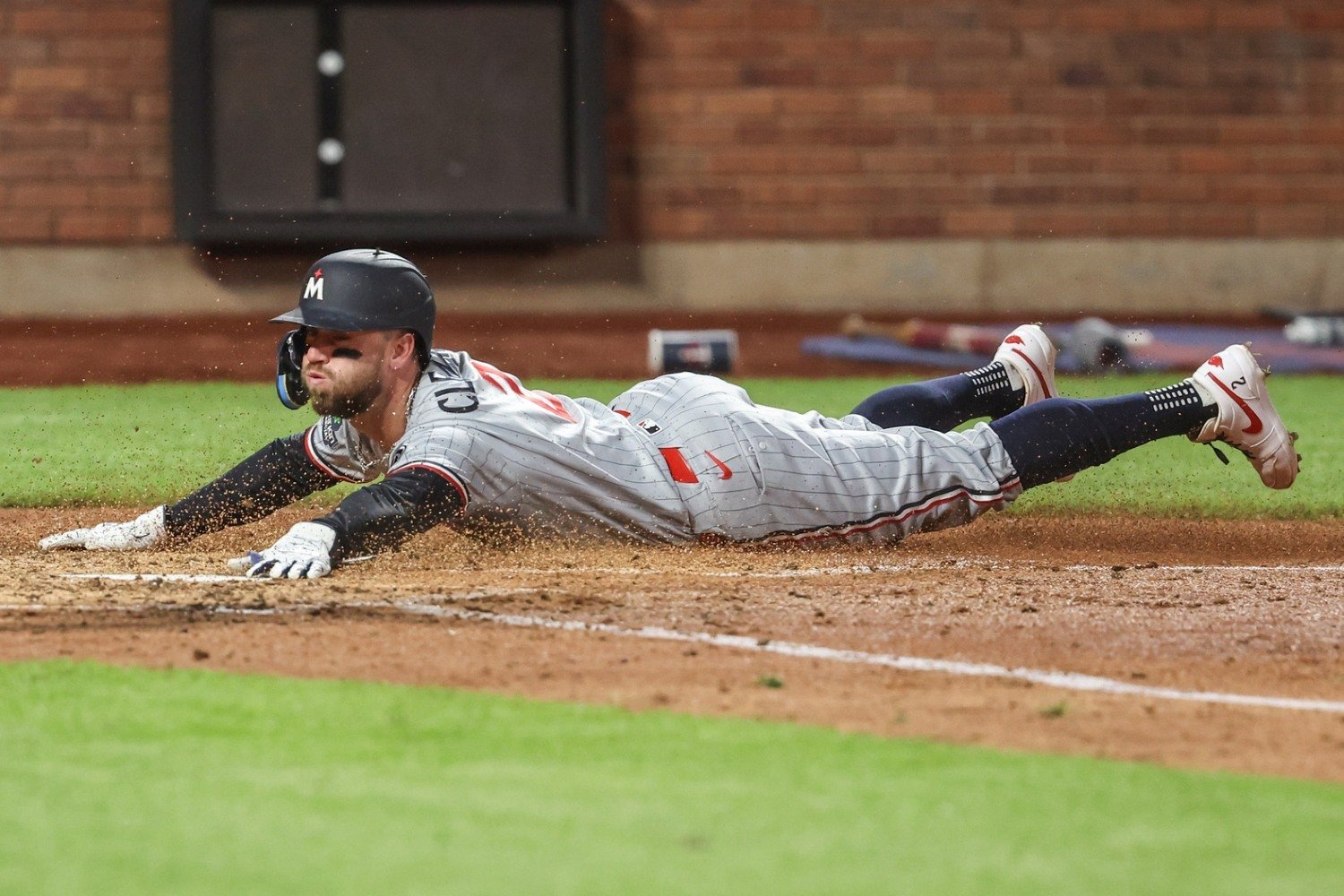 Box Score Starting Pitchers: Simeon Woods Richardson - 5.0 IP, 4 H, 3 ER, 3 BB, 2 K (95 pitches, 56 strikes (59%)) Home Runs: Byron Buxton (4) Top 3 WPA (via FanGraphs): Luke Keaschall (0.28), Kody Clemens (0.19), Cole Sands (0.19) Win Probability Chart (via BaseballSavant) The Twins needed a win as they arrived in New York, having lost four in a row and finding themselves back at the .500 mark—with another starting pitcher on the injured list, to boot. The New York Mets wish it was only a week ago that their misery started, but instead, they entered this contest searching for their first win in a fortnight. Something had to give on a chilly night at Citi Field. The Twins turned to a lineup restocked with Royce Lewis and Matt Wallner, and a starter in Simeon Woods Richardson who was looking to regain his form. The Mets countered with phenom Nolan McLean, who was making only the 13th start of his career but who sports a 2.11 career ERA. An Old Foe Strikes First After the hurlers traded goose eggs over the first two innings, it was the Mets who struck first. Woods Richardson gave up a leadoff single to his old Mets minor-league pal Mark Vientos. After inducing a ground ball that Brooks Lee couldn't turn into a double play, Woods Richardson walked Marcus Semien on a full count to bring up Twins nemesis Francisco Lindor. Lindor got ahead 3-0, fell back into a full count, and then beat a fastball to its spot. At almost 108 MPH off the bat, he caught ever stitch of the ball, which found the upper deck in right field. As Lindor jumped and danced and screamed like the Mets just won the World Series, Twins Territory realized that they just saw the end of the ballgame at 3-0. Why? His name is Nolan McLean. Perfection Brewing... McLean had already struck out seven Twins before Lindor crushed his homer, and through five innings, he had garnered eight and was over halfway through a perfect game. McLean clearly had the Twins' number, mixing all six of his pitches with pinpoint precision, ranging from his 98-MPH fastball to his 84.5-MPH sweeper. Woods Richardson settled in and kept the game within reach through his five innings, but somehow, the Twins bats were going to need to get to McLean. In the top of the sixth, Wallner led off by avoiding a low changeup, and then lacing a perfect game-breaking single to left on a center-cut sinker. It looked like that was all of the damage that the Twins would muster, but then Byron Buxton got the count into his favor at 3-1. One pitch later, it was 3-2—the score, that is. Keep the Rally Going The attack of McLean kept rolling into the top of the seventh. After Anthony Banda took out the Mets in order in the bottom of the sixth, the Twins kept on swinging. Kody Clemens had seen all of McLean's pitches by his third plate appearance, and on a 2-2 count, he found a sinker to his liking and drilled a one-out double into the right-field corner. Two pitches later, Luke Keaschall took a sweeper straight into center field to tie the game; it was an aggressive send to the plate, but Clemens made it without a play. Keaschall later stole second base, but a Wallner shot up the middle was snagged by Lindor, and we headed into the bottom of the seventh still knotted 3-3. To the Ninth We Go! Justin Topa and Cole Sands got the Twins to the top of the ninth, where much-maligned Mets closer Devin WIlliams was waiting for Josh Bell and a potential Twins rally. Williams brought the boo birds out at Citi Field by walking Bell on four pitches. James Outman got the call to stand in and to steal second for Bell, and that he did. It didn't matter, because Ryan Jeffers also walked. Clemens laid down a would-be sacrifice bunt toward first base. Luckily for Twins Territory, Vientos tried to nab Outman at third instead of taking the sure out. Outman beat the throw, and the Twins had the bases loaded with nobody out. Keaschall was next man up, and nothing says hero like a slow, high chopper over the third baseman's head! 4-3 Twins. With the boo birds now at a fever pitch, Wallner fought his way into a full count, and laid off a changeup way outside of the zone to make it 5-3. Williams gave way to righty Austin Warren, who struck out Lewis, Lee and Buxton to keep the Mets' deficit manageable—in theory. In practice, Sands finished them off with relative ease. What’s Next? With the upper hand in the series, the Twins turn next to their youth movement. Mick Abel is on the shelf with elbow inflammation, so lefty Connor Prielipp is expected to get the ball for his big-league debut. The Mets will counter with veteran righty closer-turned-starter Clay Holmes (2-2, 1.96 ERA), First pitch is scheduled for 6:10 pm CDT. Postgame Interviews Bullpen Usage Spreadsheet FRI SAT SUN MON TUE TOT Sands 20 12 0 0 23 55 Morris 0 0 47 0 0 47 Topa 11 10 0 0 17 38 Acton 0 0 29 0 0 29 Banda 0 0 0 0 18 18 Orze 0 15 0 0 0 15 Rogers 0 0 8 0 0 8 Rojas 0 0 0 0 0 0 View the full article
 -
The Twins Can't Keep Platooning Austin Martin... Can They?
DiamondCentric posted an article in Twins Daily
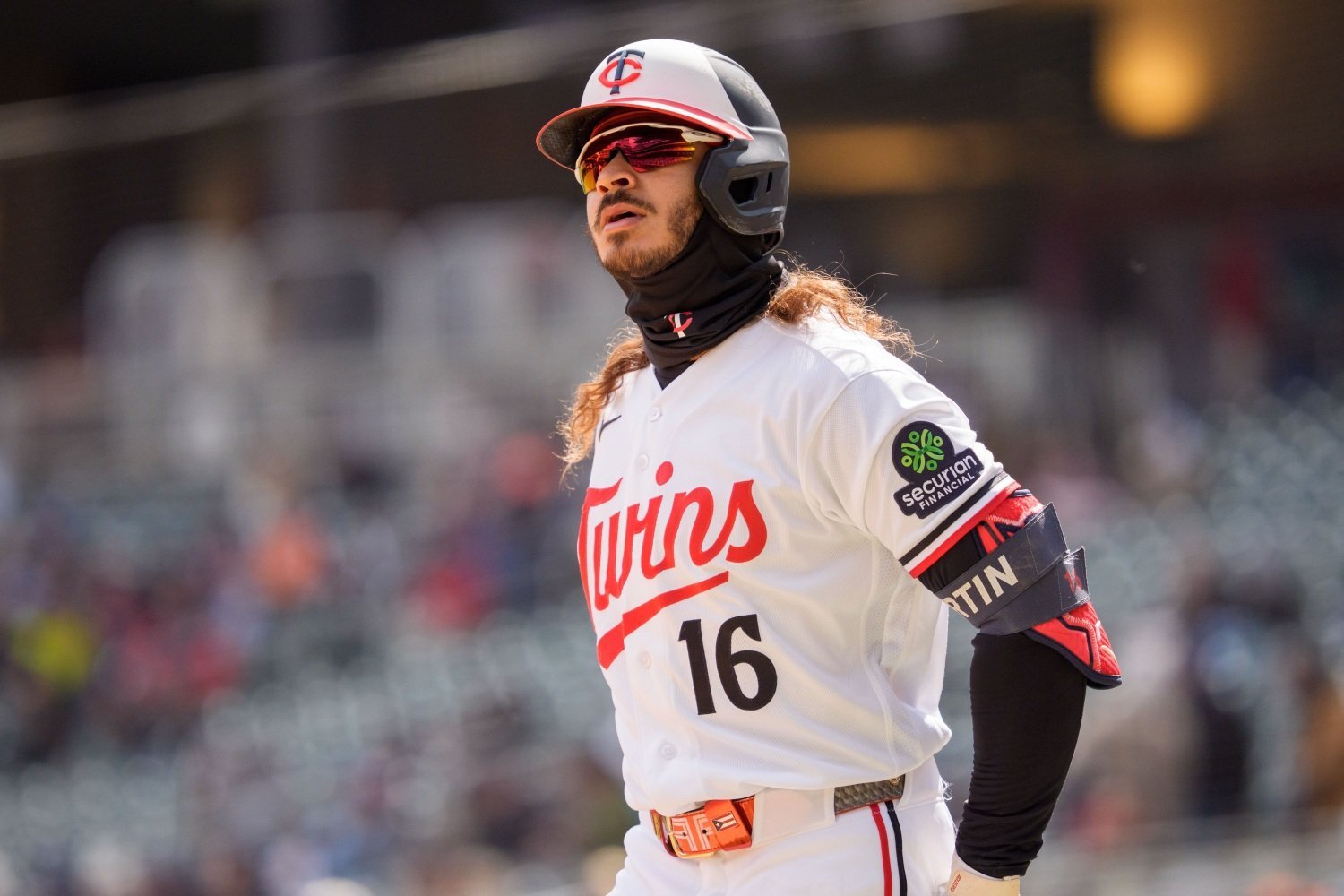 So far in 2026, Austin Martin has mostly been used as a true platoon option. He's started 14 of the team's first 22 games, but that's because the Twins have faced left-handed starters 13 times. Martin has only gotten the nod once in nine games against righties, and he's not in the lineup Tuesday against Mets righthander Nolan McLean. Even with that limited role, you could easily argue Martin has been the Twins’ best hitter. At a certain point, when the production looks like this, it’s fair to start questioning whether that platoon-focused role still fits the player. Entering Tuesday night, Martin is hitting .311 with a .484 on-base percentage, both of which lead the team. More importantly, he hasn’t just been quietly productive. He’s come through in big spots, consistently putting together quality at-bats when the lineup has needed it most. For a player who’s largely been penciled in based on matchups, he’s been far more impactful than that role would suggest. Obviously, the huge caveat must be stated. Martin has had the platoon advantage in 45 of his 62 plate appearances, pushing 73%. That's a ratio more typical of a lefty batter being shielded from southpaws than of a righty; everyday right-handed batters enjoy the platoon edge more like 28% of the time. So far, though, Martin has held his own just fine when he's encountered righties, too. Is it time to let him prove himself against them in more playing time? For his career, Martin is a .257 hitter against righties. On the surface, that number might not jump off the page. But when you zoom out and look at his full offensive profile, it becomes a lot more valuable than it initially appears. His career on-base percentage against right-handers sits at .343, driven largely by an advanced approach and a willingness to take pitches. That approach has been on full display so far this season. Martin leads the Twins with 14 walks, and it’s not the result of a lucky stretch or a handful of passive at-bats. He’s been one of the most disciplined hitters in the league to start the year. His chase rate, whiff rate, and walk rate all sit in the 95th percentile or higher among major-league hitters, and his zone contact rate is up at 94%. That, too, is driven by having the platoon advantage most of the time. It's a lot easier to make good swing decisions when you can pick up the ball sooner, which is one of the crucial advantages for a batter facing an opposite-handed pitcher. Facing more righties would put more pressure on that approach, and with breaking balls moving away from him much more often (the other key to the platoon dynamic), his contact rate would surely fall, too. Up to this point, his role has been pretty clearly defined. He’s been splitting time in left field with Trevor Larnach, with the decision largely dictated by the opposing starting pitcher. If it’s a right-hander on the mound, Larnach gets the nod. If it’s a lefty, Martin’s in the lineup. But what if that doesn’t need to be an either-or situation? There’s a case to be made that both bats should be in the lineup on a daily basis. Coming into the season, Forest Lake native Matt Wallner was expected to handle right field on an everyday basis. His power is real, and when he’s right, it adds a different dimension to the lineup. But through the early part of 2026, it’s getting increasingly difficult to argue that he’s earned that role. The swing-and-miss issues have been extreme. Wallner currently sits near the bottom of the league in both whiff rate and strikeout rate. He’s swinging through just under half of the pitches he offers at, and striking out in 42% of his plate appearances. That’s incredibly difficult to carry in a regular role. It, too, is colored by the distortion of the early season, because a whopping 38 of Wallner's 81 plate appearances have come against lefties. His track record is checkered enough, though, that the cold start still mutes any optimism about him. Defensively, Wallner has been ghastly. He's slow, he takes bad routes, and he did this. OHliS2JfWGw0TUFRPT1fVlFVSEJWRUVBQVVBV1ZFRUF3QUhVZ0VFQUZnTlZsZ0FVRmNIVWxJRFVsQUFDUXBT.mp4 Taking Wallner out of the lineup more often and putting either Larnach or Martin in right field (with the other in left) would improve the team's defense, for certain, and it might be the best way to optimize their run production, too. The Twins are in the middle of a four-game losing streak and about to start a week-long road trip. This is the kind of moment where small adjustments can make a real difference, and the lineup feels like an obvious place to start. Martin has shown that he deserves more than a platoon role. Wallner, at least for the time being, looks like someone in need of a reset. That doesn’t mean Martin is going to step in and start launching balls into the seats every night; that’s not his game. What he will do is give the Twins competitive at-bats, work counts, get on base, and play solid defense in the outfield. You can put him near the top of the order and let him set the table, somewhere in the middle, or even drop him into the nine spot and essentially create a second leadoff hitter. But regardless, he lengthens the lineup and will challenge opposing pitchers. At a certain point, roles have to adjust to production. Right now, Martin's production is making a pretty clear case. The platoon weirdness of this March and April muddies our evaluations, but to the extent that one is possible, it seems like Larnach and Martin should get more playing time, at Wallner's expense. View the full article
 -
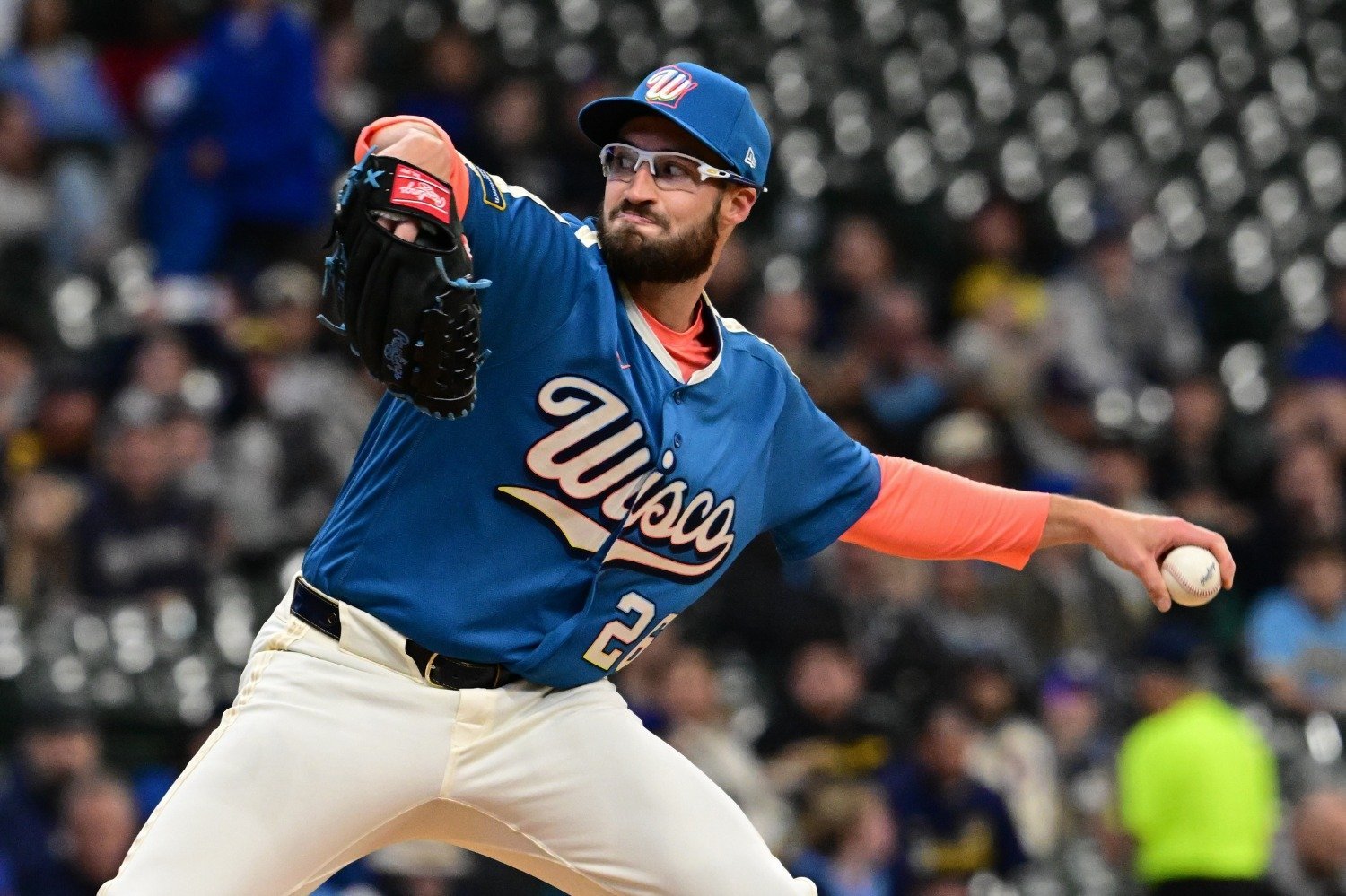 Twenty-one games into the season, key relievers Aaron Ashby, Ángel Zerpa and Abner Uribe are all on pace for 85 or more innings. As all three are hurlers the Brewers expect to rely on heavily as the year develops, their early usage raises some concerns. Ashby was the most-used reliever in baseball this time last week, while Uribe and Zerpa have each pitched 10 times already. The first month of the season traditionally sees a more varied use of the bullpen arms. In one sense, the Brewers have this, with five different pitchers already at 10 innings or more. However, while DL Hall and Grant Anderson have been innings sponges, too much work is being left to the guys the team needs to be fresh come October. Because of a few short starts and a lack of trust in Jake Woodford, the Brewers haven't been able to stay away from their 'A' relievers even on days when they tried to do so. As a perfect example, over the weekend, Woodford forced Pat Murphy to use Uribe after the Brewers gave him a five-run lead with six outs to go. Woodford managed just four outs and left a bases-loaded mess for Uribe to clean up, with the winning run at the plate. What constitutes bullpen overuse? One of the best ways to limit bullpen mismanagement is to provide a variety of capable, reliable arms who can get outs in almost any situation. With a cap of 13 pitchers on a roster (unless you have Shohei Ohtani, in which case you can have 14), the Brewers are limited to eight relievers. Using spot starters and pushing back starters in the rotation can bring this down to seven options; that's when things get especially tenuous. With a rubber arm whom you trust to go multiple innings on either side of a blowout, you can get away with this. Since Woodford has been untrustworthy and Hall has been inefficient, though, Murphy has been compelled to go with more back-to-backs from key pitchers. Putting this in perspective, Milwaukee threw 634 2/3 innings out of the pen last year, a number dropping to 600 when you exclude the innings pitched by a starter following an opener (mostly Quinn Priester). That means that the average game requires 11 outs from the bullpen; getting them out of six or even seven guys consistently quickly gets thorny. Looking at last year's collection of guys who cycled through (Tobias Myers, Connor Thomas, Bryan Hudson, Erick Fedde, Rob Zastryzny, et al), there are probably 120 innings of work picked up from relievers covering short-term injuries. For the other 480 innings, things can get dicey; if you have just six relievers splitting the load, that would be 80 innings per arm, whereas with a full trusted cohort of eight relievers, you average a far more acceptable 60 innings per reliever. Here's how Uribe's swinging strike rate trended throughout 2025; pay attention to what happened after he surpassed 65 appearances: That range—60-65 games—is the benchmark the Brewers should strive for, noting how Uribe struggled after that point. We saw similar declines with Ashby and Jared Koenig after a heavy workload. How Do The Brewers Limit Such Innings? There is one very obvious solution. The Brewers will want someone capable of going multiple innings, especially in the middle of games, who can be trusted to prevent the floodgates opening either with a big lead or a larger deficit. It would need to be someone who is stretched out, with solid stuff and command to get outs consistently. Properly conceptualized, this is the perfect place in which to give a young hurler some time and space to develop in the big leagues. The Brewers have a number of such arms, being absolutely blessed with rotation depth. Priester is on the mend and building back up with Nashville now, targeting a return around the middle of May. When he returns, Chad Patrick or Brandon Sproat could be pushed to the bullpen. In the meantime, Robert Gasser, Logan Henderson and Shane Drohan could all fill this role with aplomb. Each of them are on the 40-man roster; has appeared for the Brewers; and is stretched out enough to take on the workload. At the front of the list might be Drohan, who notably entered his last "start" behind an opener. He'd seem to be the best situated for that kind of role, based on a number of factors. Logan Henderson's unique, effective fastball and deadly changeup would be another option, coming from the right side with the type of stuff that can mow hitters down. It limits his exposure the third time through an order, but can give him space to test his slurve in the big leagues while leaning on his bread-and-butter offerings. The Brewers' plethora of young, talented arms need some big-league experience to continue their development. Brandon Woodruff and Corbin Burnes filled similar long-relief roles when they were called up and did so with aplomb, allowing them to develop and assimilate while priming them to break out the following season. More importantly, they ate innings and provided results. Murphy's circle of trust is a small, closed circle. Breaking into it isn't easy. Woodford is almost certainly not getting in there now, and the last man in the bullpen is more important than one would think. Having a viable, high-quality arm for multi-inning relief alongside Ashby might be the best solution for all involved, and each of Henderson, Drohan and Gasser could provide that. How do you assess the Brewers early bullpen usage? Can you see them using one of their younger arms to fill a need, or would they prefer to keep them stretched out in Nashville? Let us know your thoughts in the comments below! View the full article
 -
Lenyn Sosa Was a Start, But Is it Time for a Blockbuster?
DiamondCentric posted an article in Jays Centre
 The Toronto Blue Jays did a thing. They brought in Lenyn Sosa. The trade was a low-risk move aimed at injecting some flexibility and a little spark into an offense that has spent far too much of this season sputtering, searching, stalling. In a vacuum, that kind of move makes sense. The lineup just isn’t consistently doing what it did for most of last season. Until very recently, this offense looked broken. Sure, injuries have played a role. But even when George Springer, Alejandro Kirk and Addison Barger were in the lineup, each was nowhere near his 2025 numbers. Barger struggled to start the 2026 season, posting a .053 batting average and a .279 OPS in limited action prior to his injury. Kirk was batting .150 with a .577 OPS over his first 22 plate appearances, and Springer posted a .661 OPS through his first 14 games. Before Sunday's 10-run outburst against Arizona, Toronto was averaging 3.65 runs per game, ranking 25th of 30 teams in MLB. The offense still ranks among the bottom half of teams in most categories. Their .253 team batting average sits seventh, but that number is misleading because it masks the real issue: impact. The Blue Jays rank near the bottom of the league in isolated power (slugging percentage minus batting average) at .129. They have just 19 home runs and own one of the lowest average exit velocities in baseball. When your home run leaders are three players (Andrés Giménez, Kazuma Okamoto, and Daulton Varsho) tied with just three homers each, you know that power deficiency is a problem. It feels like a mountain in front of the Jays. They have lost too many close games as a result of simply not having enough firepower. Their two one-run losses against a Brewers squad that had lost five in a row heading into the series were yet another example. All things considered, the rotation has done its job. Kevin Gausman, in particular, has been exceptional. Through four starts, he owns a 2.42 ERA, a 0.85 WHIP, and 31 strikeouts against just five walks in 22.1 innings. The Jays are getting roughly six competitive innings almost every time Gausman takes the ball, which is exactly what a contending team needs. Dylan Cease has been equally dominant, while Patrick Corbin was fantastic against Milwaukee. So, the lineup's inability to score means the front office can wait and hope, or Ross Atkins and company can do something more drastic right now. What if… the Jays consider Mike Trout? Maybe this is the Angels’ year, as they sit just 1.5 games out of the top spot in the American League West, but who really believes that? The Astros and Mariners should be able to outpace the A’s and Rangers, and one would expect the standings to flip in the next month or two, but I digress. Trout seems to have found his old self. At least in a recent four‑game series against the Yankees, in which he went 6‑for‑16 with five home runs, nine RBIs, and a 1.786 OPS. Five home runs in four games in Yankee Stadium is not too shabby for anyone. By the end of that series, Trout’s season OPS had climbed back above 1.000, his average exit velocity sat near 94 mph, and his barrel rate was once again elite. The underlying indicators say this isn’t smoke. Now compare that to Toronto’s current production. The Jays rank 22nd in runs per game, 25th in average exit velocity, and have scored 88 total runs while allowing 111, producing the worst run differential in the American League East. Replace even a fraction of that sputtering offense with Trout’s bat, and the plot would definitely thicken. One elite power bat would not fix everything, but it could dramatically alter how opposing pitchers navigate innings around Vladimir Guerrero Jr. and others. It would also take some of the pressure off many in the Jays’ lineup that are starting to feel the weight increasing on their shoulders. Trout won’t come cheap, but that’s part of the fun of this pie-in-the-sky proposal. Any Trout discussion begins with pitching, because the Angels are not trading a franchise cornerstone for marginal upgrades. Trey Yesavage would almost certainly be central to any serious framework. On paper, that looks terrifying. You are trading a potential long-term, franchise star for a 34‑year‑old outfielder with injury history and a massive contract. Yesavage’s current value is enormous because, in a small sample size, he has shown he can pitch at an elite level. Trout’s value, while discounted from his peak, still dwarfs almost any bat on the trade market when healthy. Maybe you throw in Myles Straw to help with the finances and address the outfield-heavy roster. From a pure roster‑construction standpoint, Toronto is better positioned to absorb pitching loss than offensive stagnation. Losing Trey Yesavage would be a blow, but with Shane Bieber and José Berríos apparently making progress, the team has a surplus of starters on the horizon. The Jays clearly can’t survive scoring under four runs per game consistently, no matter how good their starters are. They are currently asking their pitchers to be perfect, and that is not sustainable over six months. The financial side matters, of course, but the Jays are already operating as a high‑payroll contender. Trout’s contract is heavy (his 12-year, $426.5 million contract runs through 2030), but it also brings certainty in a league where elite offensive production rarely comes without risk. Toronto’s alternative is waiting, and the numbers suggest waiting comes with diminishing returns every week this offense looks the same. Sosa is doing his job. He has taken at-bats, filled defensive holes and made the team slightly better, but marginal improvement is not enough. This offense needs a real boost. Whether that is Trout or someone else of similar consequence, the math is clear: A team scoring four runs per game isn't going to win enough, no matter how good the pitching might be. At some point, the question stops being whether a blockbuster is risky and starts being whether failing to act could waste the best pitching this team has had in years. The numbers do not lie, and they are pointing in only one direction. View the full article
 -
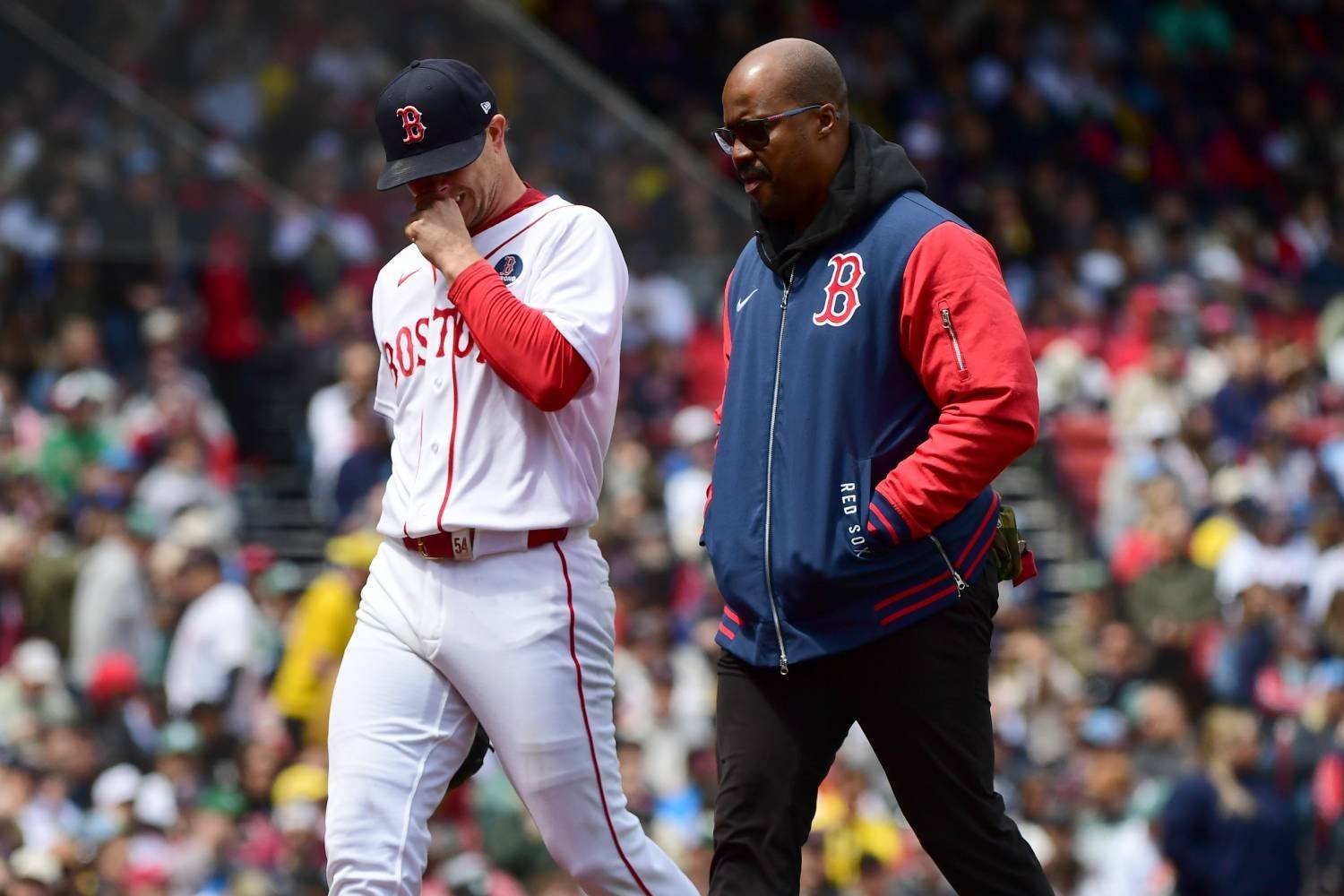 While awaiting word on the severity of the injury, the Boston Red Sox placed right-handed starter Sonny Gray on the 15-day injured list Tuesday with a strained right hamstring. Gray was injured in Monday's Patriots Day game against the Detroit Tigers, leaving in the third inning of an 8-6 victory. He was set to undergo imaging Tuesday to determine the extent of the injury. Left-handed reliever Tyler Samaniego was called up from Triple-A Worcester. This is Samaniego's second stint with the Red Sox this season. He came up April 8 and made his MLB debut that day against the Milwaukee Brewers, pitching a scoreless inning with three strikeouts and a walk. He pitched 3⅔ innings in three games, without allowing a run, walking three and striking out four. Gray, acquired in the offseason via trade from the St. Louis Cardinals as a rotation stabilizer, had a 4.30 ERA in five starts, walking five and striking out 13 in 23 innings. The Red Sox will need to find a replacement in the rotation for Gray, perhaps left-hander Payton Tolle. The Red Sox open a three-game series at Fenway Park today against the rival New York Yankees. View the full article
 -
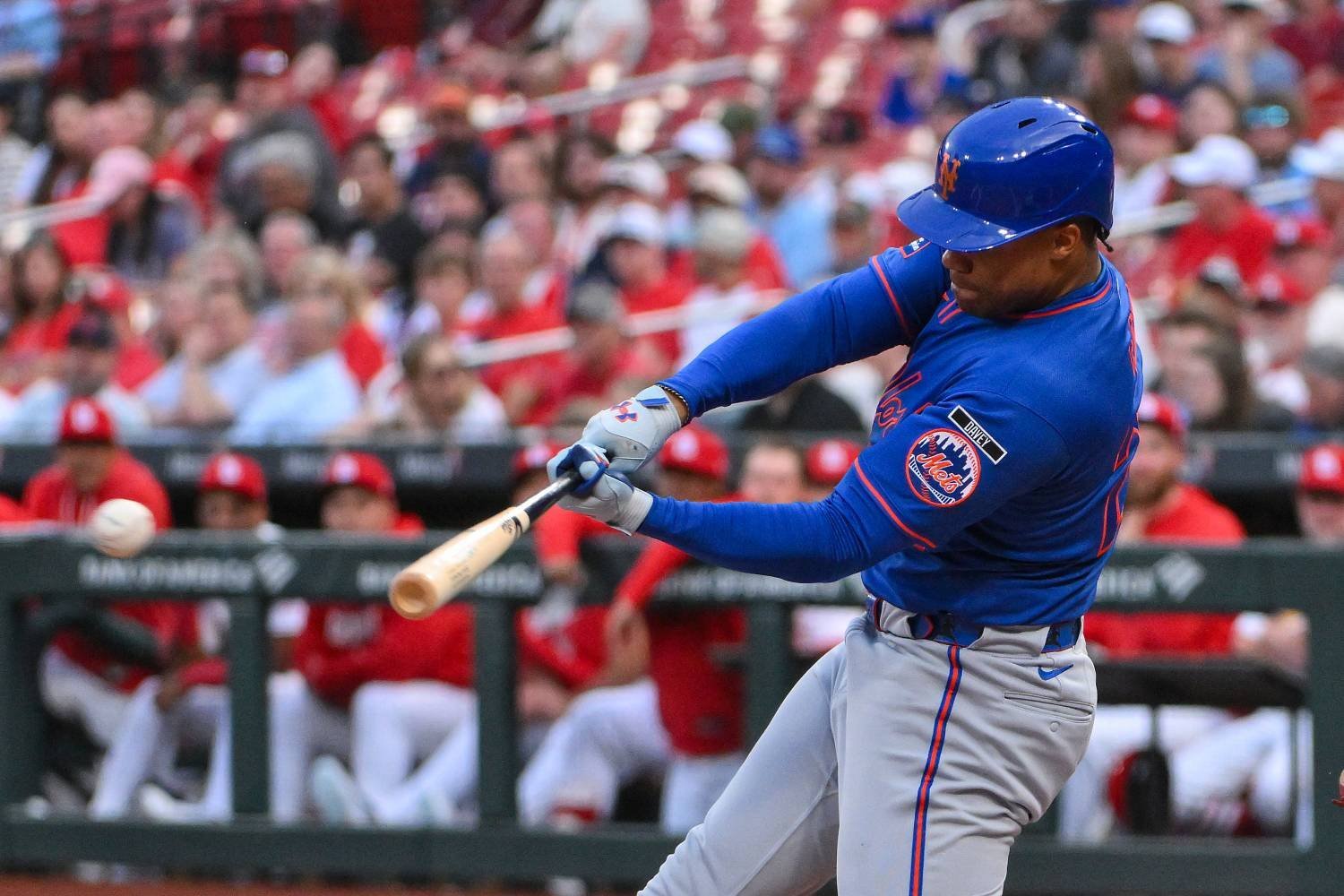 With the early-season spiraling, the New York Mets are set to have Juan Soto in the lineup Wednesday. The superstar left fielder will be activated from the 10-day injured list before Wednesday's game against the Minnesota Twins, MLB.com's Anthony reported Tuesday. Soto has been out since straining his right calf April 3 and going on the IL three days later. With the offense struggling and the Mets taking an 11-game losing streak into Tuesday's series opening vs. the Twins, Soto will be a much-needed bat in the lineup. He was slashing .355/.412/.516 with one homer and five RBIs in eight games. Soto hit safely in each of the eight games in which he appeared. The Mets will have to make a move to create room on the 26-man roster for Soto. View the full article
 -
Twins Take a Low-Risk Swing on Veteran Arm Luis García
DiamondCentric posted an article in Twins Daily
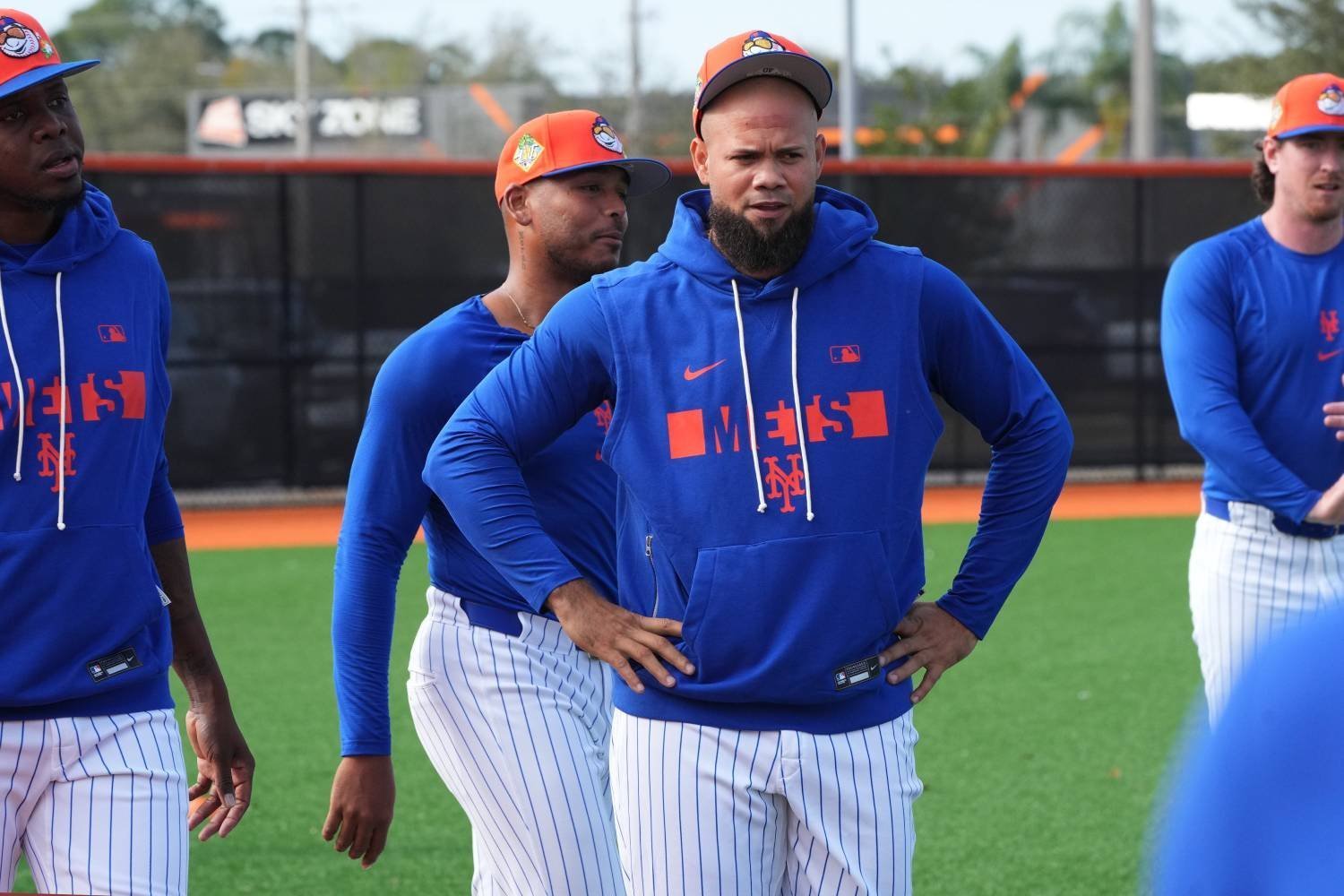 The Minnesota Twins are adding another experienced arm to the organization, agreeing to a minor league deal with veteran right-hander Luis García. The 39-year-old reliever is expected to report to Triple-A St. Paul, giving the Twins a no-risk opportunity to evaluate whether he still has something left in the tank. García opened the season with the New York Mets after signing a one-year deal worth $1.75 million over the winter. That partnership didn’t last long. After just six appearances, the Mets decided to move on, cutting ties following a brief stretch where García struggled to find consistency. In 6 1/3 innings, he allowed five earned runs on 11 hits while walking two and striking out four. It’s an ugly line on the surface, but it also represents a very small sample size. For a pitcher with García’s track record, six outings are hardly enough to draw a definitive conclusion. Still, the Mets saw enough to pivot quickly, eating the remainder of his salary rather than attempting to stash him in the minors. That decision opens the door for Minnesota. Even at 39, García isn’t far removed from being a useful bullpen piece. Just last season, he logged over 50 innings across multiple teams while posting a 3.42 ERA. He leaned on a heavy sinker that generated ground balls at an impressive clip, helping him work around less-than-elite strikeout and walk numbers. It wasn’t dominant, but it was effective, and that’s exactly the type of profile the Twins have targeted in the past when building bullpen depth. The concern now is whether that version of García still exists. Early returns this season showed a noticeable dip in velocity. His sinker, which sat in the upper 90s a year ago, has backed off by a couple of miles per hour. His secondary pitches have followed a similar trend. For a pitcher who relies on movement and weak contact, even a slight drop in stuff can make a meaningful difference. That’s where this signing becomes interesting. Minnesota doesn’t need García to be a high-leverage weapon. They don’t even need him in the majors right away. What they do need is depth, especially with the unpredictable nature of modern bullpens. By bringing him in on a minor league deal, the Twins can give him time to work in St. Paul, evaluate his stuff in a lower-stakes environment, and determine if any adjustments can help him regain effectiveness. There’s also a financial advantage built into the move. Because the Mets released him, they remain responsible for the bulk of his salary. If García works his way onto Minnesota’s roster, the Twins would only owe him the prorated league minimum. For a team always mindful of payroll flexibility, that’s about as low-risk as it gets. If it clicks, the Twins could uncover a steady veteran capable of soaking up innings and generating ground balls in the middle innings. If it doesn’t, they can move on without consequence. Moves like this rarely grab headlines, but they often matter over the course of a long season. Bullpen attrition is inevitable, and organizations that can cycle through experienced options tend to weather that storm better than most. For now, García is simply the latest name added to that mix. Whether he becomes anything more will depend on what he shows in St. Paul and whether the Twins can help him turn back the clock, even just a little. View the full article
 -
Trevor Larnach, or: When Disrupting the Routine is a Good Thing
DiamondCentric posted an article in Twins Daily
 After 22 games, the Minnesota Twins have six batters with enough plate appearances to qualify for the batting title. Catcher Ryan Jeffers and fourth outfielder Austin Martin are just off that pace, with 65 and 62 plate appearances, respectively. Just below those eight players, there's a tier of three guys who have been part-timers this season, with between 40 and 50 plate appearances despite being active all year. For Kody Clemens and Tristan Gray, that's to be expected; these are the roles they're meant to play. For Trevor Larnach, though, 47 trips to the plate in 22 healthy games reflects the strangeness of the team's early schedule. Through a series of matchup coincidences, the Twins have faced left-handed starting pitchers 13 times in their 22 games. Larnach, a lefty batter who's had little luck against southpaws during his career, has therefore started only half of the 22. He's been in there all nine times against righties, but only twice in the 13 games against lefties—and then, partially because of injuries to other players. Normally, players hate having the routine of playing every day disrupted. Only good players get the privilege of assuming they'll be in the lineup for each game, and those clinging to the fringes of the majors are happy to fill in wherever and whenever they're needed, but Larnach has long been able to plan on playing at least five times a week, at least when he's been healthy enough to do so. This pattern of (dis)use is extremely unfamiliar to him, and it's begotten a very weird version of Larnach so far in 2026—but weird in a good way. Larnach is batting .265/.468/.412. In his 47 trips to the plate, he's drawn an eye-popping 13 walks, to go with three extra-base hits and just seven strikeouts. He's still whiffing at a catastrophic rate against everything but fastballs, and by now, fans know better than to expect anything else. Against fastballs, though, he's only whiffed once, and more importantly, he's been extremely patient. His swing rate was around 41% in both 2022 and 2023. It rose to 44% or so in 2024 and 2025. So far this season, he's swung at 33.8% of the pitches he's seen. Thence come all those walks—though also lots of questions. Generally, that low a swing rate isn't viable in the big leagues. That goes double for someone who swings and misses as much as Larnach does against anything offspeed or breaking. It's a recipe for too many strikeouts, even if it does come with a fair number of walks. It's also, certainly, not what Larnach is trying to do. The Twins are a slightly more patient team than they were last year. New hitting coach Keith Beauregard has them trying to wait for the right pitch a bit more. The difference isn't huge, though, and no one is telling Larnach to swing barely a third of the time. He's just not in enough of a rhythm to swing any more often. He can't get off his 'A' swing consistently enough to justify swinging at all, given not only the plan he's taking to the plate but the years of practice and programming that have gotten him this far. It doesn't help that, after being strictly a platoon guy in 2023 and 2024 and getting only partial exposure to lefties last year, he's seen them in 11 of his 47 trips so far this season. In this small sample, though, Larnach has benefited from being forced to behave bizarrely at the plate. Swinging much, much less is working for him, not only because he's not getting himself out, but because the strike zone is smaller this year and pitchers aren't throwing as many strikes. A more patient approach might suit him, after all. This level of selectivity will probably never profit such a whiff-prone slugger, but unless and until Larnach can get his swing ranged and start producing the power he only intermittently accessed last year, waiting hurlers out is a good plan. He might have tried a bit more of this, no matter what. Because he's not playing especially regularly and is seeing some tough matchups, though, he's had to lean into it—and the results are as peculiar as this stretch of lefties on the schedule was. View the full article
