


DiamondCentric
-
Posts
2,631 -
Joined
-
Last visited
Never
Content Type
Profiles
Forums
Events
News
Tutorials & Help
Major League Baseball Videos
Guides & Resources
Store
Downloads
Gallery
Everything posted by DiamondCentric
-

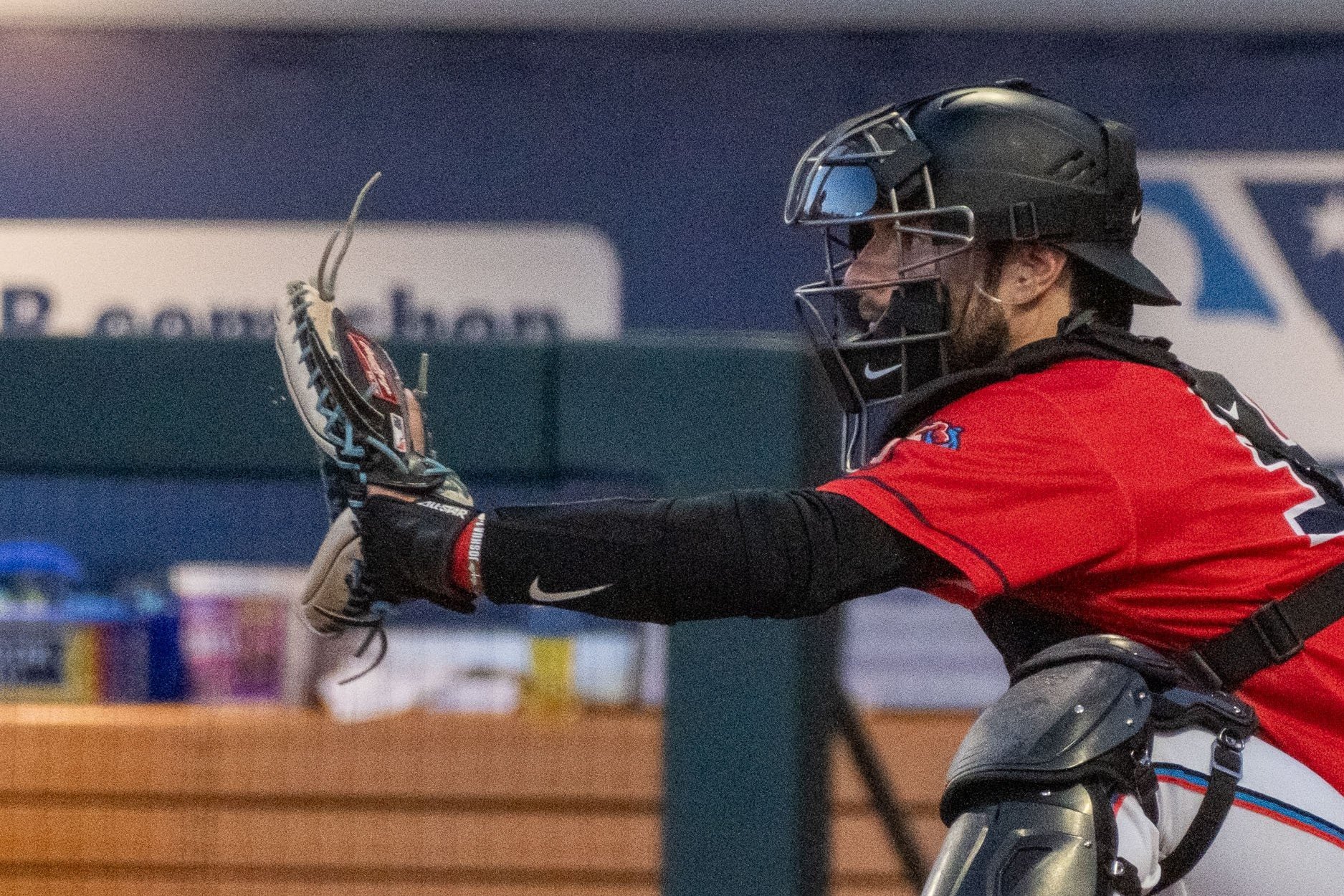 For the 2026 season, Fish On First will provide weekly reports on the Miami Marlins farm system, covering all levels. Here's the third edition of our Fish On First Prospects Report, which includes several important injury updates near the bottom of the page. This report covers the games played from April 14-19. Triple-A Jacksonville Although as a team the Jumbo Shrimp are struggling offensively, catcher Joe Mack has begun to heat up, slashing .235/.391/.451/.842 with three home runs and six RBI. He finishes the week as the Fish On First Prospect of the Week. In the series against Charlotte Knights, he hit two of his three jacks. Defensively, Mack continues to impress, throwing out seven base-stealers (30% caught stealing rate) and the Jacksonville pitching staff has a team ERA of 3.17 following Sunday's series finale. Mack has not only established himself as the best catcher in the Marlins organization, but in Minor League Baseball. He is making the case to receive the call-up soon. Fish On First Prospects (@fofprospects) • Instagram photos and videos WWW.INSTAGRAM.COM 58 likes, 1 comments - fofprospects on April 20, 2026: "Mack attack! 🔥 With a standout week at the plate, including two home runs in three games, catcher Joe Mack is our Prospect of the... On the mound, Robby Snelling continues to show why he shouldn't throw another pitch in Jacksonville. In his most recent start, he worked six shutout innings, allowing just two hits and one walk. He struck out nine and lowered his season ERA to 1.89. He is up to 31 strikeouts against just nine walk in 19 innings this season. Snelling's fastball topped out at 96.8 mph and generated six whiffs. Although it has been an inconsistent season for former top pitching prospect Dax Fulton, in his most recent start, he looked like his vintage self, striking out 10 in six shutout innings. He generated five whiffs each on both his curveball and four-seam fastball (12 total between all his pitches). He topped out at 96.6 mph and averaged 94.4 mph with his fastball. Thomas White made his Triple-A season debut. In four innings of work, he allowed two runs on two hits (one home run), no walks and eight strikeouts. His fastball topped out at 96.3 mph, averaged 95.9 mph and he generated two whiffs on the pitch. After some early concerns about his command/control, he put those to rest, at least in this start against a solid Chicago White Sox AAA lineup. Bradley Blalock has impressed with a 2.25 ERA, but also a 4.99 FIP (3.73 xFIP). He has posted a 7.65 K/9 and 2.25 BB/9 in 20 innings pitched. Opposing hitters are elevating the ball quite a bit against the former Colorado Rockies pitcher and there is some clear luck involved. Maybe within time things balance out a bit, but Blalock has shown that he is some solid depth. The one Jumbo Shrimp reliever to highlight from this past week of games is No. 27 prospect Josh Ekness, who through five appearances, has a 1.00 ERA, 1.38 FIP, 15.00 K/9 and 4.00 BB/9. In his most recent appearance, his fastball topped out at 99.1 mph and averaged 97.9 mph. His sweeper also continues to be a good pitch, which generated one whiff in his lone inning of work. Double-A Pensacola Pensacola started to fully find their offensive stride in their series against Knoxville. They won the first game of the series before dropping three straight, including a very close game on Thursday night, then exploded for 20 total runs in the final two games to split the series. They bested Knoxville in run differential, 34-32. After a sluggish 3-for-35 start, Fenwick Trimble’s bat came alive in a big way against the Smokies. In five games, he went 7-for-20 with two doubles, three walks and three strikeouts. Trimble had been struggling with whiffs, his second at the Double-A level after spending 54 games there last season, but that has begun to improve. He’s more of a gap-to-gap type bat, but he owns plus speed that has already allotted him six stolen bases. Historically, he has also been a very patient hitter, having walked at a 16% rate in 2025. If Trimble is starting to get back to those good habits, he profiles as a speedy outfielder capable of playing all three spots and being a catalytic table-setter, or at the very least, a fourth outfielder with value off the bench. A more extended look in the upper minors will tell us more. It’s hard for Dillon Lewis not to make his presence felt when he enters a game, both figuratively and literally. The 6’3”, 205 pound specimen had another impressive series against the Smokies, going 4-for-17 with three extra base hits, including two home runs. He’s currently riding a nine-game on-base streak. As with many power hitters, Lewis has been a bit susceptible to the strikeout, but the whiff rate isn’t egregious, currently sitting at 27%. What’s more is that Lewis has also shown a pretty good eye at the plate, having walked at a 12% clip. His approach entails working counts, forcing pitchers into the zone, and letting natural tools do the rest. When Lewis makes contact, the ball travels very far. Monitoring the consistency of those contact rates as he continues in the upper minors will be our M.O. as we determine how close to his very high ceiling he can get. My opinion? Bet the over. High-A Beloit After a tough start to their series against South Bend, the Sky Carp ended their series in exciting fashion, throwing a combined no-hitter, the team’s first since being affiliated with Miami and their first overall since 2017. They still lost the series four games to two, though, and head to Lake County still looking for their first series victory of the season. Pitching has struggled mightily as a whole for Beloit. Even after their no-no, the club owns a 5.81 ERA, third-highest in the Midwest League. Their 82 walks are second most on the circuit. Aiden May started the Sky Carp’s no-no on Sunday and worked six complete frames on two walks, a hit batter and five strikeouts. This outing came after he worked into the sixth in his last start and came within one out of posting a quality start. This outing, the best of his career, had to feel good for May, who missed the entire first half last season due to an elbow procedure. He also did not throw after being drafted in 2024. Behind schedule due to that missed time, May is starting to show what he is capable of when he has everything working. He isn’t going to light up scoresheets with strikeouts, but he pitches to contact well with a 93-95 mph sinker. His best pitch is a sweeper, which has divebombing action. His changeup, which is his work-in-progress pitch, also looked good in this start, flashing good fade in to same-side hitters. There’s reliever risk with May because he throws with effort and hasn't demonstrated that he can handle a substantial workload, but if he can build off his last two outings and continue to throw well, he still has the ceiling of a back-end rotational piece. One pitcher that stood out for Beloit in this series due to a plus raw stuff profile and due to starting to show better control was lefty reliever Justin Storm. He pitched a total of five scoreless innings in the series, including the final three of Sunday’s no-hitter. He put control woes in his first two outings of the season behind him and recorded five strikeouts to just one walk while allowing just one hit. At 6’7”, 232, Storm has a lot of moving parts and a large frame to control, but when he is doing so, these are the exports. His best pitch is a wipeout slider which he combines with a fastball that sits 94 and can touch 96. He experienced a velo bump last year, helping his cause en route to saving nine games in 12 chances for the Sky Carp. If Storm can stay repeatable, he has the ceiling of a high-leverage reliever. He’s also proving that he’s capable of tossing multiple innings effectively. Low-A Jupiter Carter Johnson hit his second home run of the season this weekend, improving his season slash line to .224/.361/.429/.790 with two home runs and eight RBI. The biggest concern remains his 35.1% strikeout rate that he had going into Sunday. Johnson may not amount to much, but his start to the season is encouraging given his struggles last season. Jake McCutcheon, a 10th-round pick from Missouri State in the 2025 MLB Draft, wrapped up the week with a two-homer performance and is now slashing .231/.404/.436/.840. With High-A Beloit lacking outfield depth right now due to injuries, McCutcheon could be promoted soon if this hot streak continues. On the mound, Keyner Benitez made his second start of the season against the Palm Beach Cardinals, going five innings, allowing two runs on one hit (home run) and struck out eight. His fastball topped out at 97.1 mph and averaged 94.8 mph. He generated six whiffs on his changeup and three of his eight K's came on that pitch. Walin Castillo tossed five innings of shutout baseball, allowing three hits, no walks and struck out four. Castillo's fastball topped out at 96.4 mph, averaged 94.5 mph and generated four whiffs. Castillo's performance is worth taking with a grain of salt because he had 135 ⅔ innings of Low-A experience prior to this season. Nate Payne, who the Marlins selected in the 18th round of the 2024 draft, is off to a great start. Through three appearances (two starts), Payne has a 1.50 ERA, 1.76 FIP, 18.75 K/9 and 5.25 BB/9 in 12 innings pitched. Most recently, Payne went four innings, allowing one run (unearned) on two hits, walked four and struck out a career-high 11 hitters. Payne's fastball continues to be a dominant pitch, generating 14 whiffs and accounting for 10 of his 11 strikeouts (all swinging). Injuries/Rehab Maximo Acosta (oblique strain) was reinstated from the injured list and optioned to Jacksonville on Monday after a three-game rehab assignment. Esteury Ruiz (oblique strain) will continue his own assignment for at least two more games, while Christopher Morel (yet another oblique strain) plays his first game with the Jumbo Shrimp on Tuesday. Dillon Head remains active for Beloit, but has not played since April 11. For complete Marlins MiLB injury updates, bookmark this page. This week's MiLB schedule Triple-A Jacksonville at Gwinnett Double-A Pensacola at Montgomery High-A Beloit vs. Great Lakes Low-A Jupiter vs. Daytona View the full article
 -
Royce Lewis Activated By Twins, Kendry Rojas Called Up
DiamondCentric posted an article in Twins Daily
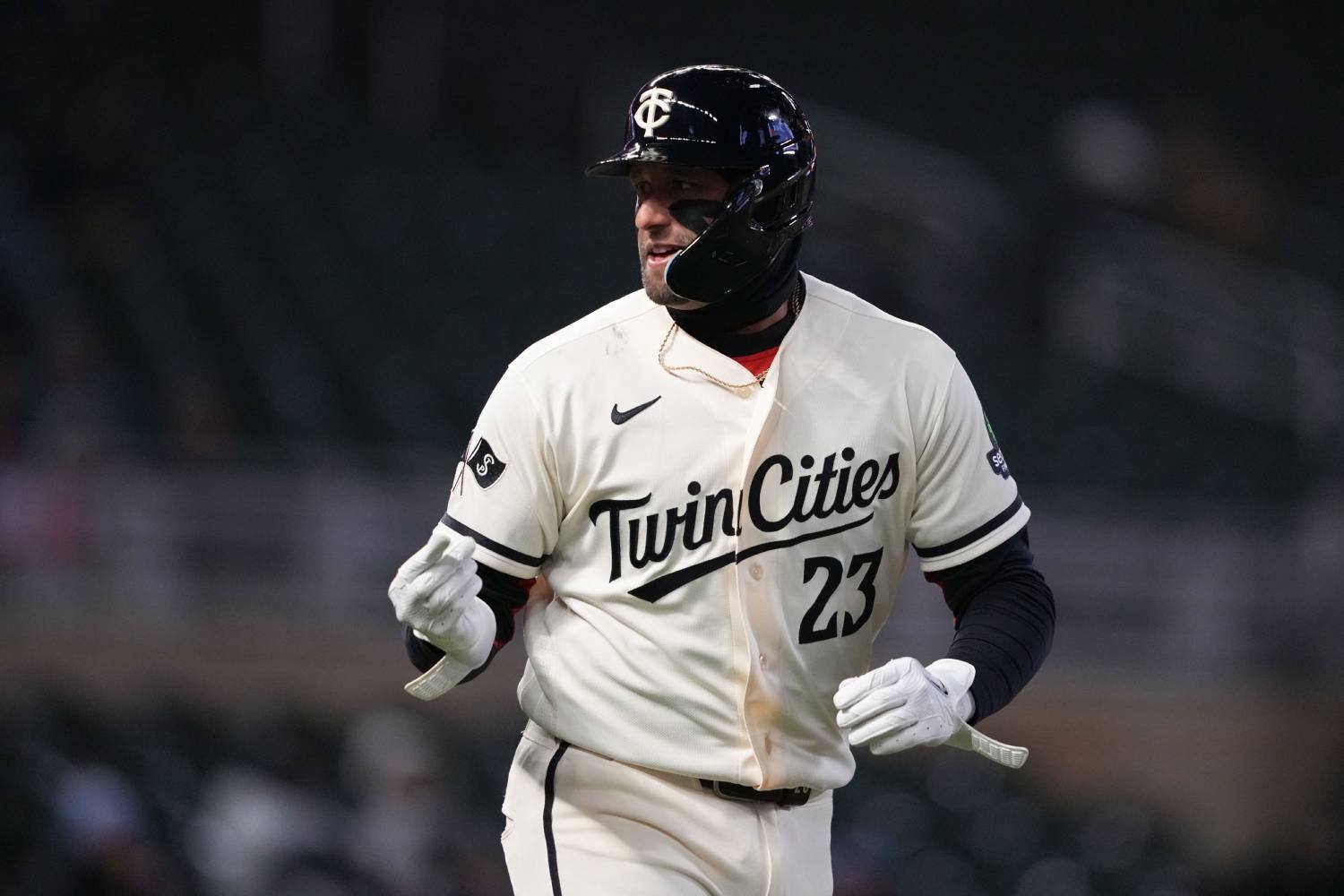 Some of the moves speculated over the last two days are now official. Third baseman Royce Lewis was activated from the 10-day injured list, left-hander Kody Funderburk was placed on the paternity list and prospect left-hander Kendry Rojas was promoted from Triple-A St. Paul on Tuesday. The moves also fill the gap from Monday's transaction of placing right-handed starter Mick Abel on the 15-day injured list with inflammation in his right elbow. Rojas, the No. 8 prospect by Twins Daily who was already on the 40-man roster, will be making his MLB debut. The Twins have 12 pitchers and 14 position players on their roster. Lewis' return from a sprained right knee after a minimal IL stint will be a boost to the Twins' offense. He hit a pair of home runs in his two-game rehab assignment with the St. Paul Saints over the weekend. That matched the total he hit in 12 MLB games this season while producing a .222/.378/.444 slash line. Rojas was part of the return from the Toronto Blue Jays in the trade last year for right-handed reliever Louis Varland and first baseman Ty France. Rojas has appeared in three games, including two starts, in the minors this season with four walks and seven strikeouts in 7⅓ innings. Funderburk is expected to rejoin the team by this weekend. View the full article
 -
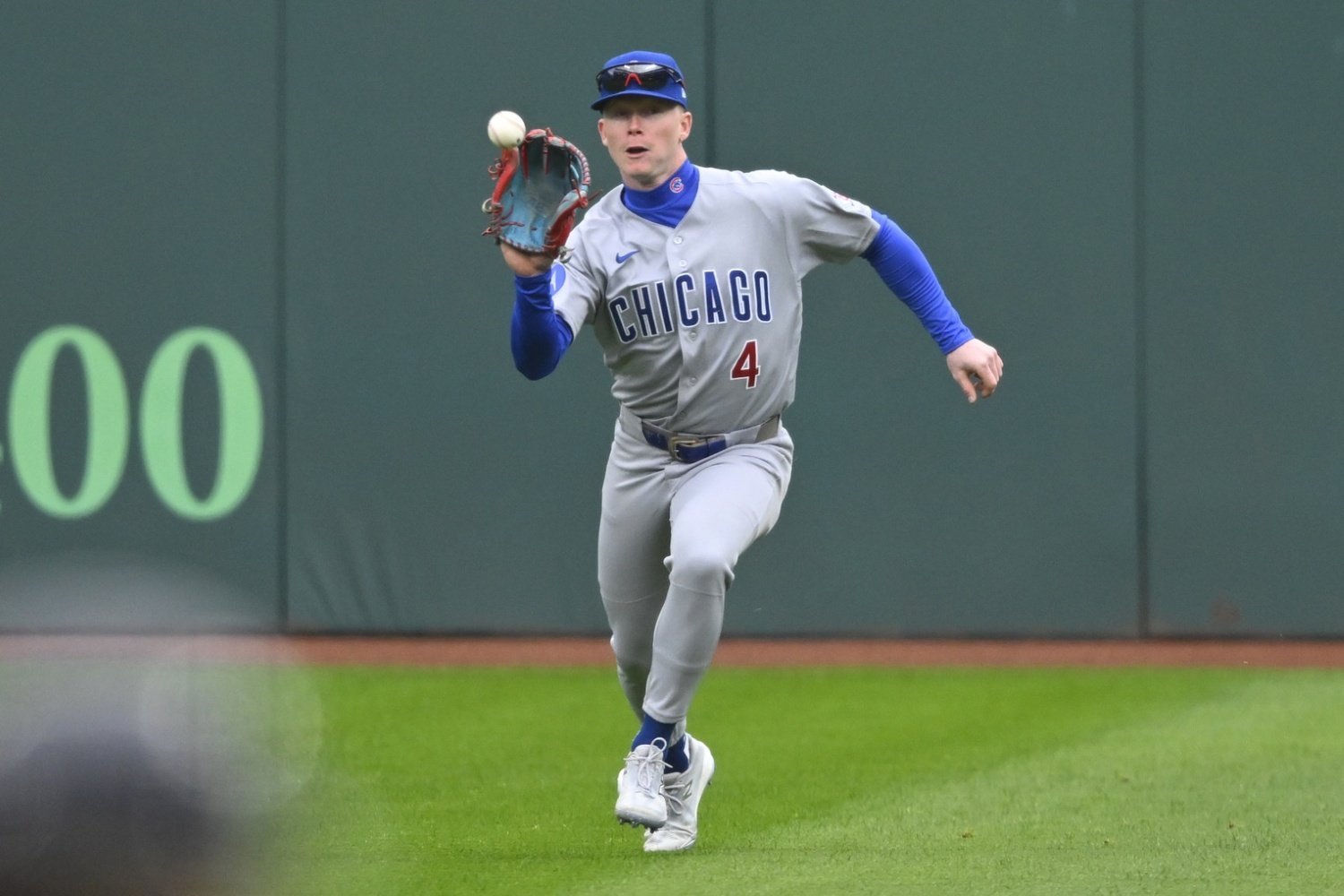 Pete Crow-Armstrong is the best defensive center fielder in baseball. As recently as last season, there was at least a modicum of debate about that—Ceddanne Rafaela of the Red Sox won the prestigious Fielding Bible Award for center field, and might even have deserved it. Now, though, Crow-Armstrong is leaving even Rafaela behind, and doing things in outfield defense that are barely even possible. On plays Statcast rates as 2 Stars or higher on its difficulty scale (i.e., plays where the chance of the ball being caught was under 90% but higher than 0%, based on the model's estimates using fielder location data and the hang time of the batted ball), Crow-Armstrong is 9-for-12 so far. That's a sensational 75% success rate, close to the 77.5% rate he put up on such plays last year. No other player was higher than 73.5% last season, so if he keeps this up, he's got a good chance to pace the league in that regard again. For one thing, though, that underrates him. Crow-Armstrong has one actual missed opportunity to make a catch this season. You probably remember it. In the Angels series in the first week of the campaign, Crow-Armstrong misplayed a sinking liner by Jeimer Candelario into a double. At worst, he should have stopped it and held Candelario to a single, but the ball was catchable. That was a mistake; even the best of us make one. Here's one of the other two balls rated as catchable (although the Catch Probability was just 5%) by Statcast. UHY2YTlfWGw0TUFRPT1fQmxCWlhRRUVCUWNBV1ZaVVVRQUhVRk5mQUFNRUJRSUFCVkVNQlFZQkNRUlFCZ1ZW.mp4 The model does try to account for the presence of the outfield wall, which is why the Catch Probability on this one was so low, but let's be real: the chance of making that catch is 0.0%, for anyone. Crow-Armstrong got a good jump and a fine read, but if he'd kept running fast enough to catch that ball, he'd have dislodged his shoulder (and perhaps an internal organ or two) in the subsequent collision with the wall. It's fine; other players are also having 5% plays counted against them when the real chance was none. But it's important to me that you know about this dynamic in defensive metrics. Here's the other play the system says he had a 5% chance to make, but missed. R0JyUVlfWGw0TUFRPT1fQkFGUlZWVUJVUVVBQ1ZvRFh3QUhWUU5YQUZrR1ZBY0FBMUlCQVZJR0FRWlFVZ29B.mp4 Once again, Crow-Armstrong slows—even stops—shy of the wall to play this ball. It looks less makeable than it might have looked if he'd been chasing down a would-be walkoff hit with two outs; maybe there's a universe in which a player never breaks stride, gets the right footing as they plant their foot in the wall (no time to flatten the angle of body to wall and glide up unassisted) and snares this ball, but it would be the catch of the century. It'd also risk a broken wrist, or ribs. The real catch probability (lower-case letters, since my model is not official) on this is 0.001%. Meanwhile, on several plays since the start of 2025, Crow-Armstrong has seemed to do the scarcely possible. He runs underneath high flies very well, but lots of fast players can do that. Byron Buxton, of the Twins, is excellent at using his speed to make up for slow breaks and at adjusting his body when needed to make a tough catch. Crow-Armstrong, though, takes away a stunning number of singles and doubles on line drives, by breaking exceptionally quickly and accelerating both faster and more relentlessly than any other outfielder in pursuit of a ball daring to seek purchase on the outfield grass. It's not the 120-foot runs on high drives that make Crow-Armstrong extraordinary; it's the plays like this one. NHlLcTZfWGw0TUFRPT1fVlFGV0JRVlhBd01BQUZKV1ZnQUhCUUpTQUFNQ1ZBQUFBVlVBQ0FkVUExQlJDRlFF (1).mp4 Statcast's Outfield Jump leaderboard tells a fascinating story about Crow-Armstrong's excellence. It grades players on the amount of ground they cover (in any direction) in the first 1.5 seconds after contact (Reaction); and in the next 1.5 seconds (Burst); and on the ground they gain or lose, relative to average fielders, via the efficiency of their routes to the ball (Route). It gives each of these in feet above average, and then gives a total—both relative to average, and raw. This season, Crow-Armstrong sits atop that Jump leaderboard. He gains 5.2 feet of ground across the three components, relative to the average outfielder, with a good (+1.8 feet) initial reaction but an otherworldly (+3.2 feet) burst in that secondary moment of pursuit. He's also more efficient in his routes than the average outfielder—and, again, here we risk underrating him. The more a player moves in that 3-second window, the more likely they are to waste at least a little bit of that movement. That's not a new idea, or even a bad thing; it's part of the conscious tradeoff outfielders make all the time. However, Crow-Armstrong doesn't lose efficiency to his remarkably quick response on fly balls. He shoots himself at the ball's landing spot like he's a missile-defense system, and he never misses. That 5.2 feet of ground covered relative to the average is impressive, but barely beats out Chandler Simpson and Jacob Young (the dots breaking the scale, off the right and lower edges of the graph above, respectively, with their incredibly fast but noisy starts after balls) to top the leaderboard. The raw number of territory Crow-Armstrong covers in that 3-second window, though, is the more astonishing one: 40.1 feet. That's not a number anyone else in the league is terribly close to. Second on the list is Simpson, who plays left field instead of center and only covers 38.6 feet. In fact, going back to the dawn of this tracking of outfielders in 2016, no one has covered 40 feet in those 3 seconds over a full season, or even done so in a partial campaign as an overzealous rookie. Crow-Armstrong is stretching the boundaries of the possible. He's a seaplane, in this way, flying just above a rising tide. In 2016, the median figure for ground covered in that window was 32.5 feet, and it stayed fairly flat through 2021 (32.6 feet). Since then, though, teams have accelerated their move toward younger, faster, better-instructed outfielders. The median ground covered in those 3 seconds over the last four seasons (and so far this year) go like this: 2022: 33.0 ft. 2023: 33.0 2024: 33.4 2025: 33.4 2026: 34.1 The sample for this year is still small, and the number is likely to come down a bit. Even so, the trend is clear. It's harder than ever to be 5 feet better at chasing after a fly ball than your peers in the big leagues, because those peers are getting better by the minute. Last summer, Isaac Collins of the Brewers became an Outfield Jump star by taking the practice of timing a hop to put oneself in the air when a pitch passed through the hitting zone from the infield dirt to his place in the outfield. A handful of players around the league now emulate Collins, making the outfield a more explosive, reactive area of the field than it was even a few years ago. To be a plus center fielder, you have to be able to cover at least 12 yards in 3 seconds, and (of course) you have to move in the right direction to flag down the ball every time. Crow-Armstrong is breaking the scale. He might not keep his average ground covered over 40 feet all season, and even if he does, someone else might come along and do it soon, too. The tide is rising. Somehow, though, even at a moment when outfield defense is getting much better, Crow-Armstrong is widening the gap between himself and the rest of the group. He catches everything; he catches some things that don't even register at remotely catchable. He's also brilliant at playing balls off the wall, charging ground-ball singles, and setting up under fly balls to get off the best possible throw. He can change a game with his defense in center field in a way no other player in the league can, because he's taken his game to a new level over the last year. It's not a matter of raw talent, though he's always had the tools he needed out there. It's about the way he's shaved all the rough edges off his game, until he stands well clear of a pack that leaves much less room for clearance than it used to. View the full article
 -
How 2026 Padres Stack Up In A Deep National League
DiamondCentric posted an article in Padres Mission
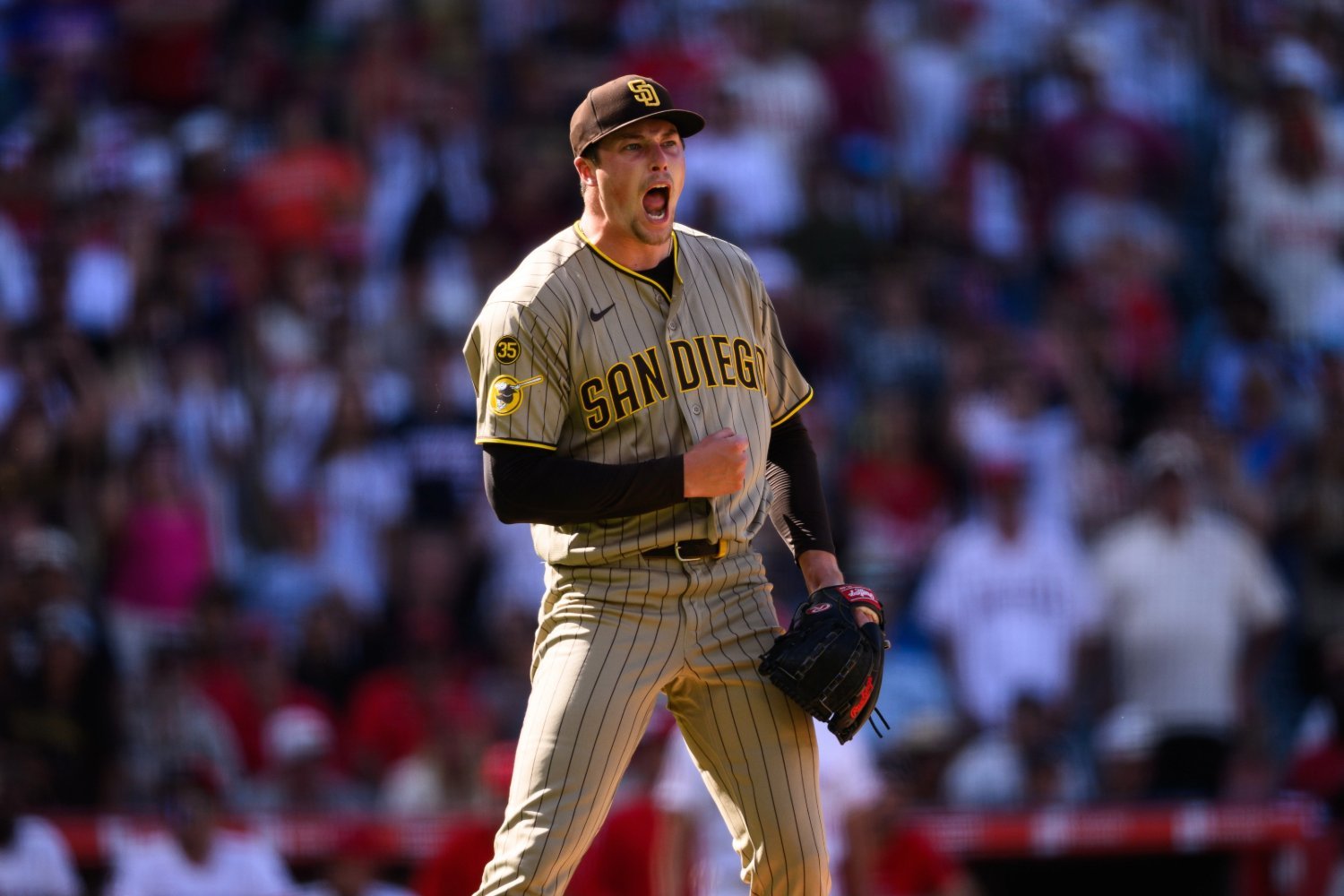 If the baseball season was compressed into the NFL’s, then it would be Week 3 in MLB. That’s plenty of time to get excited (Cincinnati Reds fans), panic (New York Mets fans), and look to next year (every AL West fan). How, then, should San Diego Padres fans feel about their team? Well, not to sound hyperbolic, but they should be lighting candles in their shrines to president of baseball operations A.J. Preller. At 15-7, the Pads possess the third-best record in baseball, behind only the surprising Atlanta Braves and the familiar Los Angeles Dodgers. In fact, the Padres sit just one game behind the Dodgers, MLB’s best team, in the National League West standings. That’s because the Padres have had little interest in losing lately. They’re 9-1 in their last ten games, and have lost just three times in April. You can thank an elite pitching staff for that. The Padres are fifth in MLB in team earned run average, and Mason Miller alone gives them arguably the best bullpen in baseball. His ERA is 0.00, which, if you round down to the nearest whole number, comes out to being pretty good. The Friars’ staff is outside the top-five in strikeouts, walks, and WHIP, but they’re tied for the fewest home runs allowed. They let runners on base, but deny the big hit. The rotation, especially, has been a revelation, given that, among Joe Musgrove, Nick Pivetta, and Yu Darvish, $52 million in starting pitching is either injured or mulling retirement. Consequently, the Padres are not only demolishing their preseason ZiPS projection of 83 wins, but they are also on pace to win 110 games, which would far exceed the franchise record of 98, set in the magical 1998 World Series year. That almost certainly won’t happen. Teams have won 110 games just six times in the modern era, and the Padres' middling offense is why five teams in the National League have a better run differential so far this season. Their current performance indicates a team that should be two losses worse. Baseball Reference gives the Pads an 85% chance at making the playoffs, which would likely come through a Wild Card spot, given the Dodgers’ NL West dominance. Wasn’t that always the realistic goal for this team? The Padres’ payroll has regressed every year since late owner Peter Seidler’s death in 2023, and Preller has had to balance expensive, high-end talent with inexpensive young players and journeymen. He’s seemed to crack that code yet again this season. The advanced statistics indicate that San Diego will come down to earth, but Preller's roster machinations have established a high floor for the team. The problem, if there is one, is that they play in the wrong league. The Dodgers are the Dodgers, the NL Central doesn’t have a losing team, and surely, the Philadelphia Phillies and Mets can’t be bad as they have been playing. (They’re a combined 2-18 in their last twenty. Oof.) The competition for the NL’s three Wild Card spots will be vicious. Just to fill out the roster, let alone to compete, the Padres need a starting pitcher or two. They also need their best, most expensive hitters—Fernando Tatis Jr., Manny Machado, et al.—to hit a little more frequently. But other teams have their own issues, no other team has lost fewer games this month, and, as the trade deadline gets closer and closer, no other team has the mad scientist that is A.J. Preller. View the full article
 -
Minnesota Twins Prospect Retrospective: Kendry Rojas
DiamondCentric posted an article in Twins Daily
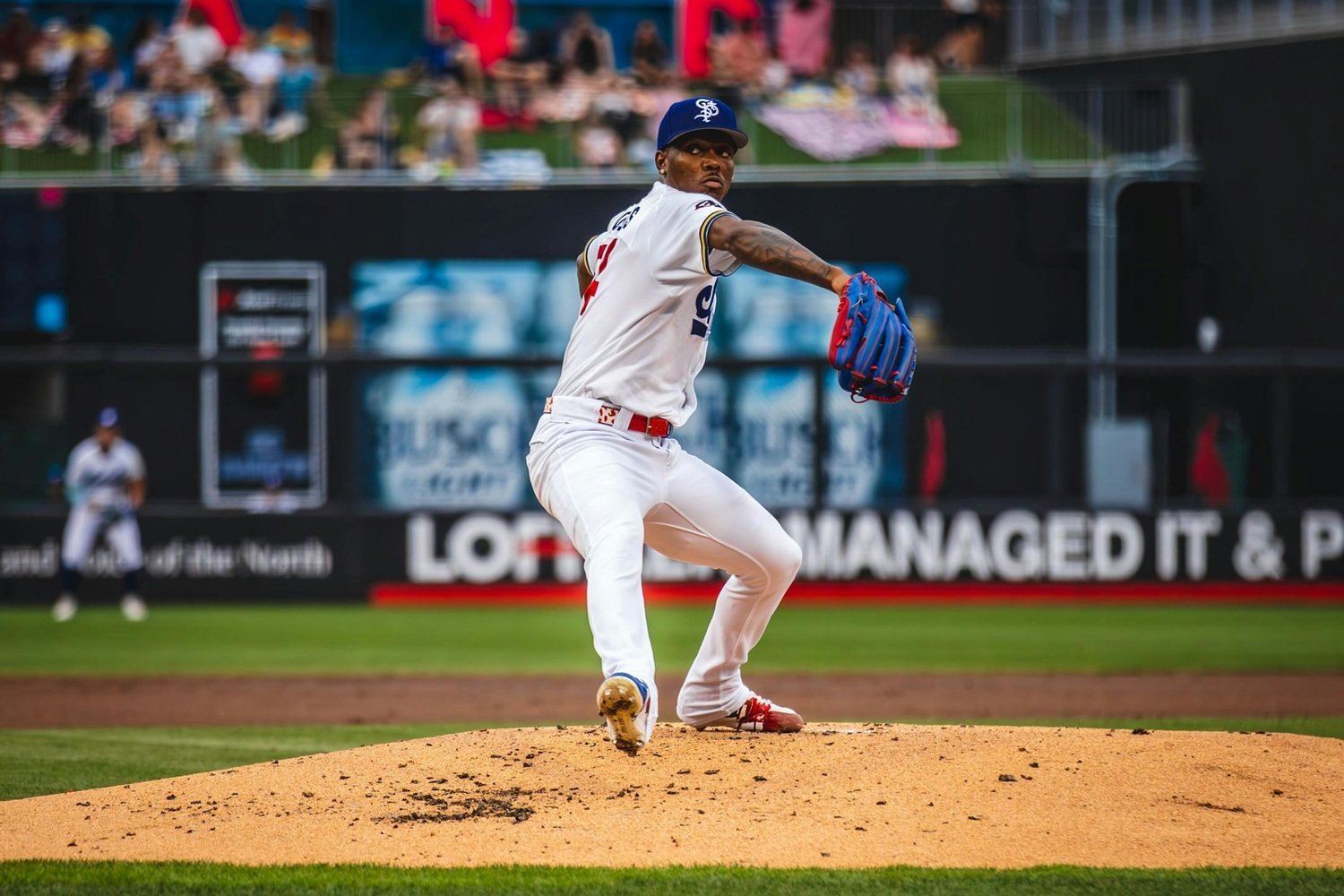 Kendry Rojas was originally signed by the Toronto Blue Jays in October 2020, for $215,000. At the time, he was viewed as a projectable arm with a lean frame, intriguing athleticism, and the foundation of a three-pitch mix that could grow into something more. His career since then has been marked by flashes of upside, interrupted development, and one very rocky introduction to his new organization. Rojas made his debut in the Florida Complex League in 2021, getting his first taste of professional competition in the United States. In 23 2/3 innings, he posted a 2.28 ERA with a 0.80 WHIP and 14.8 K/9. The results were less important than the foundation. He showed a loose arm, the ability to spin a breaking ball, and enough feel for a changeup to project as a starter. It was a developmental year in every sense, focused on acclimation and building a baseline. The Blue Jays assigned Rojas to Single-A Dunedin in 2022, where he began to face more advanced hitters. He combined for a 3.98 ERA and a 1.35 WHIP in 40 2/3 innings. He held his own, flashing bat-missing ability (10.2 K/9) while continuing to refine his command. His fastball velocity began to tick up, and his slider started to emerge as his most consistent weapon. There were still bouts of wildness (4.2 BB/9), but the overall trajectory pointed up. Rojas returned to Dunedin for much of the 2023 season, continuing to build innings and experience. He pitched a career-high 84 innings, while still being over two years younger than the average age of the competition in the Florida State League. The numbers didn't jump off the page (3.75 ERA, 8.8 K/9), but evaluators remained encouraged by the underlying traits. The strike-throwing still came and went, but the ingredients of a legitimate prospect were becoming clearer. Just as it looked like Rojas might take another step forward in 2024, injuries got in the way. A shoulder issue limited him to under 65 innings, disrupting his development and costing him valuable innings. In limited action, he posted a 2.59 ERA with a 1.12 WHIP and increased his strikeout rate to 9.9 K/9. For a pitcher who already had a relatively light workload, the missed time was significant. It created more pressure on him to make up for lost reps upon his eventual return. Rojas returned to the mound in 2025, but missed the first two months with an abdominal strain. Once healthy, he worked his way back and pitched well enough to earn a promotion to Triple-A Buffalo. Some around the league viewed the jump as aggressive, potentially a move by Toronto to boost his profile ahead of the trade deadline. Shortly after that promotion, Rojas was dealt to the Minnesota Twins (alongside Alan Roden) in exchange for Louis Varland and Ty France. The Twins were intrigued by the upside and quickly plugged him into the Triple-A St. Paul rotation. The results were rough. Rojas posted a 6.59 ERA over 27 1/3 innings, striking out 28 but walking 23. His inability to consistently find the strike zone put him behind hitters and forced him into unfavorable counts. He also pointed to difficulties adjusting to the Triple-A baseball, noting changes in feel that impacted his grip and pitch characteristics. It was a frustrating stretch, but not one that erased his long-term outlook. Now entering his age-23 season, Rojas is getting a chance to reset. He got the benefit of a full offseason to settle in with his new organization. He missed time to start the year with a minor hamstring injury, and the Twins have been slowly building him back up. He’s only pitched 7 1/3 innings in 2026, but now, it looks like his next work will come in the big leagues. Updated Scouting Report Rojas remains a high-upside arm built around a lively fastball and two legitimate secondary pitches. His fastball has taken a step forward, now sitting in the 96 MPH range and touching 98. The added velocity gives him a larger margin for error, though there are still questions about the pitch’s shape. At times, it plays flatter than ideal, which can limit its effectiveness at the top of the zone. His slider is still his best pitch. Thrown in the upper 80s, it generates a high rate of swings and misses against both right- and left-handed hitters. It has the potential to be a true out pitch. The changeup has also taken a step forward, coming in at a similar velocity band with late movement that allows it to play well off the fastball. It gives him a weapon to neutralize right-handed hitters and adds to his overall versatility. The biggest question remains command. His walk rates have been elevated throughout his career, and his struggles in Triple-A highlighted how quickly things can unravel when he falls behind in counts. There have been signs of improvement in small samples this spring, but sustaining that progress will be key. Because of his frame and command profile, there is some reliever risk. However, the combination of three quality pitches and improving velocity gives him a legitimate chance to stick in a starting role if everything comes together. What Comes Next with the Twins The Twins sent Rojas back to Triple-A St. Paul to open the 2026 season, where he continued to develop as a starter. The focus will be on refining his fastball shape, maintaining his velocity gains, and throwing more consistent strikes. However, there was a need for a lefty in the bullpen with Kody Funderburk stepping away from the team on paternity leave. There are multiple paths here. In a best-case scenario, Rojas develops into a mid-rotation starter capable of missing bats and providing value over multiple innings. If the command does not reach that level, his arsenal could still make him a valuable late-inning bullpen option where his stuff might play up. He's likely to be a reliever, but a multi-inning arm, in his first taste of the majors, and because he's had such a hard time compiling innings amid injury issues, he might be best situated there. His ascent to this point has been fascinating, but fraught with disruptions. Hopefully, his promotion will mark an end of that, rather than becoming the next in a line of them. What stands out about his minor-league journey? Leave a comment and start the discussion. View the full article
 -
 Health has been the biggest obstacle for Walker Jenkins in his pro career, but if healthy, how high is his ceiling? View the full article
 -
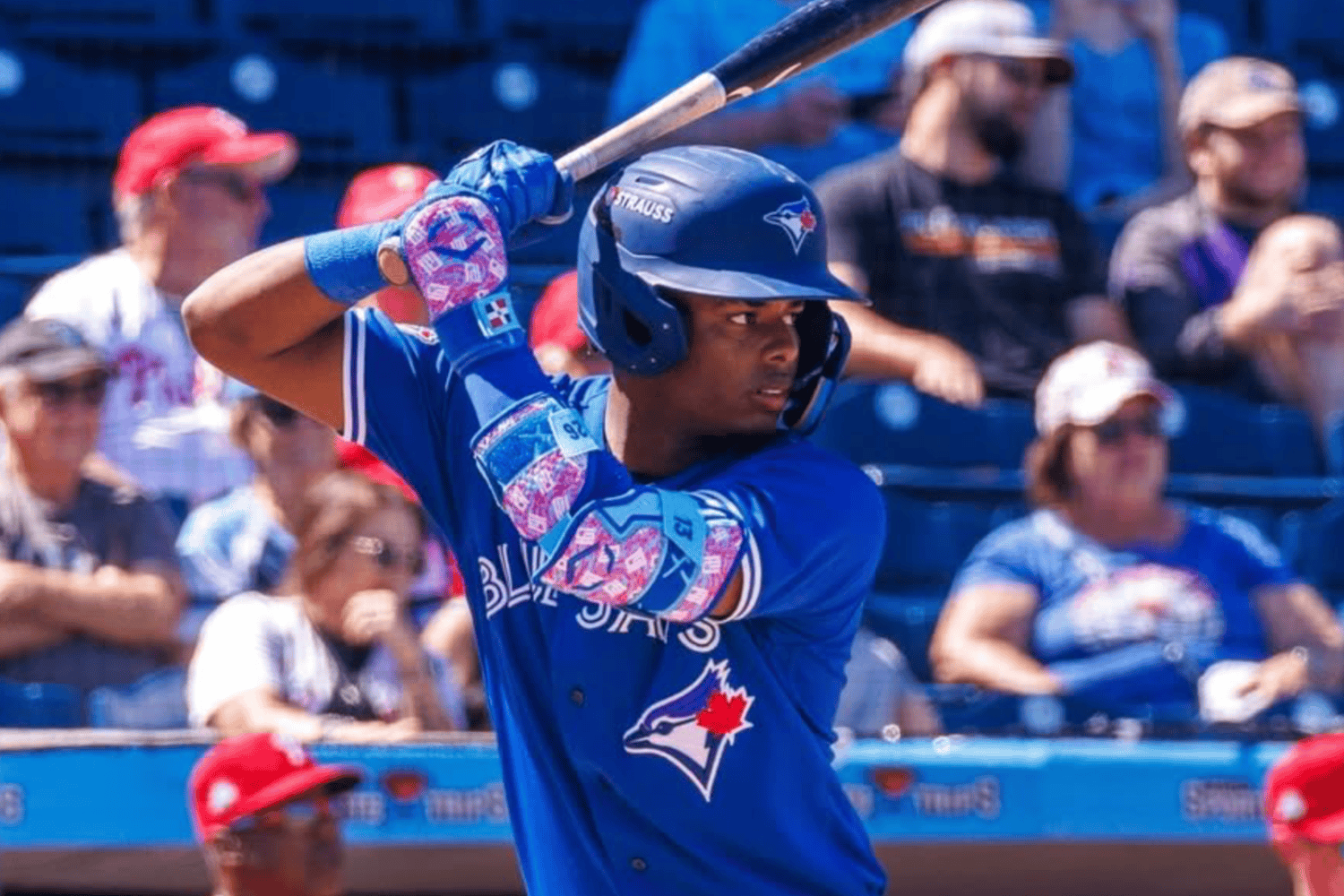 Blue Jays Affiliate Overview (April 18-April 19) Triple-A Buffalo Bisons Series vs. Rochester Red Wings (Washington Nationals): 3-3 Season Record: 10-11 Double-A New Hampshire Fisher Cats Series vs. Chesapeake Baysox (Baltimore Orioles): 4-1 Season Record: 8-5 High-A Vancouver Canadians Series vs. Spokane (Colorado Rockies): 4-2 Season Record: 6-9 Single-A Dunedin Blue Jays Series vs. Clearwater Threshers (Philadelphia Phillies): 3-3 Season Record: 8-7 Triple-A Buffalo Bisons Season Record: 10-11 Series Opponent: Rochester Red Wings (Washington Nationals) April 18: Saturday saw the bats for Buffalo come alive, and all at once it seemed. The team collected 11 hits in the game, and everyone in the lineup had at least one, except Josh Kasevich and Josh Rivera. In the top of the second inning, William Simoneit and Carlos Mendoza had RBI singles to give the Bisons the lead. In the third inning, Riley Tirotta finally got the first extra-base hit of the game for Buffalo, a big two-run home run that went 404 feet and 104.3 mph off the bat. Simoneit had himself a good game at the plate, adding an RBI double in the sixth inning. However, he wasn't done, notching another RBI double in the eighth. It capped off his 3-for-4 game, with three RBI, and brought his batting average up to .300 for the season. CJ Van Eyk worked hard on the mound to keep Buffalo in the lead. He worked around seven hits, giving up a run in the second and fifth innings. It would be the bullpen that saved the lead for Buffalo, going 4.2 innings and only surrendering one run. Hayden Juenger brought it home for Buffalo, pitching a solid ninth inning, striking out two, and earning the save. The win brought Buffalo back to .500, where they seem to continue to hover, though they cannot break the mark on the season. April 19: Sunday's finale against Rochester was a mixed bag of sorts. The teams combined for 20 hits, 28 strikeouts, and 10 runs scored. Lots of hits, lots of whiffs, and lots of fun. Carlos Mendoza led the offense for Buffalo, going 2-for-5 with two RBI and a run scored. His two RBI came on a double in the seventh and a single in the ninth. Buffalo was still in a hole after that, and Rafael Lantigua knocked in Mendoza on a double to center. It brought the score to 4-6. Unfortunately, RJ Schreck grounded out to end the game. On the pitching side, things were good and bad. The Bisons struck out 14 Rochester hitters on the day, but gave up six runs, three of which were unearned due to three errors. Josh Rivera had the worst of it in the field, committing two of the errors on back-to-back plays in the sixth, allowing the winning runs to score. Brendon Little pitched out of the bullpen again and looked relatively good, despite allowing two unearned runs to cross the plate thanks to those errors. He would strike out three and only allow one hit. Buffalo again couldn't crack the .500 mark, as they fell 6-4. Double-A New Hampshire Season Record: 8-5 Series vs. Chesapeake Baysox (Baltimore Orioles) April 18: New Hampshire started the Saturday contest with the Baysox quickly in the hole, down one run in the top of the first by way of a Brandon Butterworth solo home run. The Fisher Cats quickly answered with a run of their own, this time from hot-hitting Sean Keys, who drove in the run with a single to the shortstop. New Hampshire took the lead in the second inning, when Alex Stone drove in Jackson Hornung with an RBI single. Frederick Bencosme changed things in the fourth, as he launched a grand slam into the right field seats. The Baysox would score three more runs, one each in the seventh, eighth, and ninth innings. New Hampshire made a comeback attempt in the eighth on the back of another Keys long home run, his fifth of the year. Keys added an RBI groundout in the ninth as well, but it wasn't enough this time, with New Hampshire losing 8-9. Hitter note: Keys and Hornung had five hits combined in this one, and both rank near the top of all Double-A hitters so far this season. Keys is hitting .356 with five home runs, while Hornung is hitting .397. April 19: Postponed High-A Vancouver Season Record: 6-9 Series vs. Spokane (Colorado Rockies) April 18: After homering in his first at-bat of the season, Arjun Nimmala slowed down quite a bit, but he turned it around in this one, as he once again homered on his first at-bat of the game. Johnny King’s strikeout stuff was also on display, and despite an unearned run in the first inning that resulted in a tie game, King cruised after that. He struck out seven batters in 3.1 innings, only allowing a single hit and two walks. The Canadians scored three more runs in the second off of two RBI knocks from Manuel Beltre and Brennan Orf, and Carter Cunningham hit his sixth homer of the season in the fourth to make it 5-1. Holden Wilkerson came on in the fifth inning and pitched just as well as King, as he went four innings with six strikeouts and only allowed two baserunners. The Canadians' offense continued to pile it on, and Tucker Toman hit his second homer of the season, as the former switch-hitter has started off hot after switching to just hitting left-handed. The Canadians ran away with this one, scoring 11 runs to Spokane’s one. April 19: The Canadians were positioned to win their first series of the season, and it took a strong performance from Arjun Nimmala to get it done. Austin Cates went five strong innings to start the game, and despite allowing the first run of the game in the fifth inning on a solo shot, he earned the win. Toman and Alexis Hernandez doubled up on RBI doubles to take the lead back in the bottom half of that inning, and one of Nimmala's three hits doubled the lead. Strong relief efforts from Carson Pierce, Jay Schueler and Eminen Flores kept Spokane to only one run, and Nimmala put the cherry on top with a two-run homer in the top of the ninth to seal the series win. Single-A Dunedin Season Record: 8-7 Series vs. Clearwater Threshers (Philadelphia Phillies) April 18: JoJo Parker has arrived, as after the Threshers got ahead early, Dariel Ramon and Parker went back to back to claim the lead. Dayne Pengelly, who graduated from New Mexico with a mechanical engineering degree, took the mound and despite walking four, allowed one run a little over three innings pitched. The Threshers brought it within one off of Carson Myers, but the Jays pulled ahead off of an Aldo Gaxiola single in the sixth. Jaxson West continued his scorching start with a three hit day, and Gaxiola went deep again with a 106.9-mph, 407-foot shot to center field to make it 8-3 for the Jays. The Threshers brought in a couple of unearned runs in the eighth, but Jack Eshleman got the save in the ninth to give the Jays the win. April 19: Brandon Barriera still isn’t finding his command, and although he only allowed one run, he walked four batters in only 2.1 innings. Juan Sanchez got his first RBI for Dunedin to tie it up in the bottom of the third inning, and a David Beckles sac fly gave the Jays the lead. The game remained in the Jays’ favour, as Luis Victorino made his first appearance of the year and pitched well. However, once he was replaced by Brayden Heidel, the lead was given up in the seventh, and in the eighth the Threshers took the lead on a solo shot from Nathan Humphreys. In the bottom of the ninth, the Jays threatened after Beckles walked. He was immediately pinch ran for with Dariel Ramon, who then stole second. An Eric Snow single put runners on the corners, with no outs, and it looked like the Jays would at least tie it up. However, after Snow stole second, Gaxiola, Yorman Licourt, and Will Cresswell left them stranded as all three struck out swinging, leading to a series draw. Transactions 04/19/26 Dunedin Blue Jays placed RHP Karson Ligon on the 7-day injured list. 04/19/26 LF David Beckles assigned to Dunedin Blue Jays from FCL Blue Jays. 04/19/26 C Juan Rosas assigned to Dunedin Blue Jays from FCL Blue Jays. 04/18/26 RHP Luis Victorino assigned to Dunedin Blue Jays from DSL Blue Jays Red. 04/18/26 Dunedin Blue Jays placed C Charlie Saum on the 7-day injured list. 04/18/26 RHP Aiden Taggart assigned to Dunedin Blue Jays from FCL Blue Jays. 04/18/26 1B Peyton Williams assigned to Vancouver Canadians from Dunedin Blue Jays. View the full article
 -
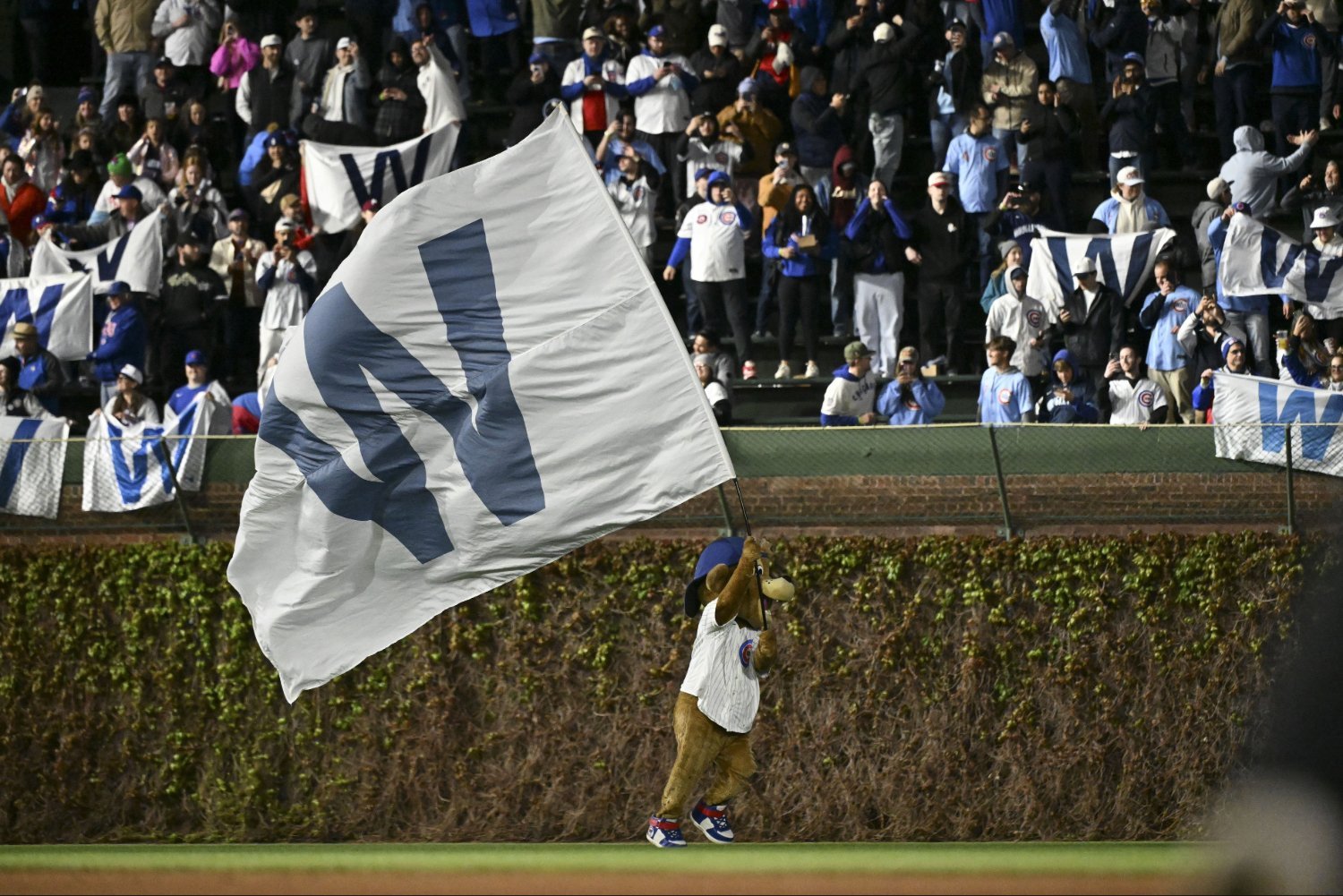 With roughly a week and change left in April, and roughly 90% of the MLB regular season left to go, it’s time to check in on how the rest of the NL Central is doing. As of 4/21, here are the current standings: Reds: 15-8 Pirates: 13-9 Cubs: 13-9 Cardinals: 13-9 Brewers: 12-9 The Cubs were middling to begin the season, but with the bats propelling them to a series win in Philadelphia, and a sweep of the spiraling Mets over the weekend, they are right back in the thick of things. The only caveat now is the state of the rest of the division, which does not have a team below .500. Even the Cardinals, who were thought to be the bottom dweller this season, have gotten off to a nice start. The technically third-place Cubs are still favorites to win the division, but this season is going to be much more of a gauntlet than originally anticipated, even after Milwaukee and St. Louis made some major subtractions from their rosters over the offseason. Here is a brief look at how the Cubs’ divisional rivals have fared so far. Cubs' NL Central Opponent Check-In Cincinnati Reds The Reds, who made the playoffs last season, are leading the division despite a -3 run differential. Coming off a sweep of the formerly red-hot Minnesota Twins, the team still sits dead last in baseball in wRC+ and batting average. The pitching staff as a whole has a 4.54 xERA, which ranks 24th in the league. Their top two starting pitchers, Hunter Greene and Nick Lodolo, have not thrown a pitch yet, and both have ambiguous injury outlooks at this point. Both should be in the rotation at some point this season, but it is unclear when that will be. Still, the Reds are winning games, although they have not played a team with a current record over .500 besides the Pirates. What’s working: The Reds have exactly two things going right for them on offense: Elly De La Cruz and Sal Stewart. De La Cruz has already reached 1.0 WAR on the young season, with an .859 OPS, six home runs, and five stolen bases. Stewart is doing even better, with a team-leading .978 OPS, seven home runs, and 19 RBI. The 22-year-old is looking like an early frontrunner for the NL ROY award up to this point in the season. After a few seasons with a revolving door at first base, the Reds look like they have another star at the position, their first since Joey Votto retired. Christian Encarnacion-Strand was traded to Baltimore last week, leaving Stewart with little to no competition for playing time, especially with new/old friend Eugenio Suarez taking over the primary DH role. De La Cruz is one of the most exciting young players in the game, but he needed a dependable bat in the lineup to take some weight off his shoulders, and now it looks like he has that. On the pitching side, they’ve gotten quality work out of former first-round pick Rhett Lowder as well as Chase Burns. In the bullpen, Brock Burke, Conor Phillips, Graham Ashcraft and Sam Moll all have ERAs under 3.00, with Tony Santillan yet to give up a run in his 10 innings pitched. Their number 10 organizational prospect Jose Franco has made his debut in the bullpen, and No. 7 prospect Chase Petty is waiting in the wings. If this group can hold things together on the mound until Lodolo and Greene return, the Reds will suddenly have a deep pitching staff going into the second half of the season. What’s not working: The Reds’ offense and pitching rank toward the bottom of MLB in many statistics, and this is because any player I have not mentioned by name yet is off to a rough start. Here is a list of all the players on the Reds with at least 30 plate appearances that are hitting under .200: Tyler Stephenson, Matt McClain, KeBryan Hayes (hitting .058), T.J. Friedl, Noelvi Marte and Will Benson. Another mind blowing offensive stat for this team so far is that outside of the aforementioned Stewart, De La Cruz, Suarez, and Stephenson (due to fielding), not a single player has a positive WAR. The Reds have hitters who have been exciting before in McClain, Spencer Steer and Nathaniel Lowe, but there is definitely something in the water at Great American Ballpark that is causing such an offensive funk for most of the roster. Granted, there is no way this lineup should be this bad the rest of the season, since it is almost identical to the lineup that got them to the post season a year ago. Pitchers Andrew Abbott and Brady Singer are due for some positive regression at some point as well, since both have proven they are better than an ERA over five. The scary thing here for Cubs fans is that this Reds club has had serious problems on both sides of the ball, and is still 15-8. Once they get going, they might be viewed as the biggest threat to the Cubs in the division. Pittsburgh Pirates: We’ve seen this happen in recent memory, but how real is it this time? The Buccos finished April of 2023 with a 13-9 record before the wheels fell off. This team does have a different vibe to it, however. They have the best pitcher in the world in Paul Skenes. 20-year-old phenom Konnor Griffin has made his debut right after signing an extension. Oneil Cruz finally looks like a key offensive piece, and newly acquired Brandon Lowe is mashing with seven home runs. Last season, Pirates starters finished sixth in ERA, and this season, they are currently second at 2.81. Pitching will be a strength as long as Skenes is healthy, but the question once again will be the perennially suspect offense. What’s working: As previously mentioned, the Pirates have one of the highest-upside, young starting staffs in the game. Interestingly enough, Skenes’ 3.27 ERA is the highest of their five starters. 2025 top prospect Bubba Chandler is the only other starter sporting an ERA above 3.00, as Mitch Keller and Braxton Ashcraft are below 3.00. Cameron Mlodzinski, who has quietly been one of the more consistent arms around since 2023, has a dazzling 1.77 ERA through four starts. Jared Jones threw a live bullpen last week and should be joining the rotation sometime in June. The bullpen quartet of Dennis Santana, Yohan Ramirez, Isaac Mattson, and Gregory Soto have been the bright spots in a bullpen that is more good than great to this point. Hunter Barco, who has pitched briefly in the majors this season before being optioned, is one of their higher ranked prospects and should be up again soon. If the offense, which ranks top 10 in runs scored, batting average, home runs, wRC+, and most other categories, is able to stay consistent enough through 162 games, this team could easily win the division. Outside of Cruz and Lowe, free-agent addition Ryan O’Hearn is hitting .329 with a .960 OPS. With Andrew McCutchen in Texas after his somewhat controversial exit, Bryan Reynolds, having been with the team since 2019, is the veteran leader and is enjoying a nice .809 OPS after his substandard 2025. They’re also getting solid contributions from role players Jake Mangum, Spencer Horwitz, and the Nicks: Gonzales and Yorke. Konnor Griffin is not off to the hottest start at the plate, but he has five hits in his last four games, and could be turning a corner. New veteran DH Marcell Ozuna is also seeing the ball better with a pair of homers in the last week, after starting the season ice cold. What’s not working: This is a hard question for this team, because nearly everything seems to be working. Yes, Griffin hasn’t been great through his first few weeks, but the rest of the lineup is getting the job done. They do need a catcher, as 2021 number one overall pick Henry Davis is looking more and more like a bust. Last season, Davis was usurped by another former top prospect Joey Bart, but now they are hitting both under .200. Their No. 9 prospect Rafael Flores made his debut last season, and could fit into the equation this season, but he is hitting .208 with Triple-A Indianapolis. In fact, none of their top prospects in Triple-A are hitting at all, as Jhostynxon Garcia and Termarr Johnson have averages under .160. The Buccos better hope their group at the MLB level can continue to hit, because there doesn’t seem to be a lot of hope in the upper minors right now. There were questions defensively after Cruz had a terrible opening weekend in center field, and O’Hearn was signed to be a makeshift outfielder, but they have been okay, if not better than anticipated. Overall, the vibes are as good as they’ve been in over a decade at PNC Park, so let’s check back later to see how they’re holding up. St. Louis Cardinals The Cardinals were never supposed to be a main character for the 2026 season. They sold veterans Sonny Gray, Nolan Arenado, and Willson Contreras and were set on rebuilding, as their only “significant” addition was RHP Dustin May. Yet, here they are, tied with the Cubs, albeit with a -10 run differential. Cubs fans know the Redbirds have always found a way to remain competitive, and while this is the weakest roster in the division on paper, that could change quickly if some of the early results prove to be no fluke. What’s working: Former top prospect Jordan Walker leads the NL in home runs with eight and all of baseball in WAR with 1.8. He is hitting .305 with a 1.013 OPS and is finally looking like the offensive force he was projected to be. Still only 24 years old, this looks like the breakout Cardinals fans have been waiting for, and if he ends up being the new offensive face of the team for the next half decade, St. Louis will yet again hold one of the best hitters in baseball. Alec Burleson has seemingly found his home at first base after bouncing around from the infield to outfield over his first few seasons. He is hitting .280 with an .820 OPS with more walks than strikeouts. Former seventh overall pick J.J. Wetherholt made his debut on Opening Day and has a .750 OPS, which is third on the team. The pitching has been a bigger question mark, but they have a few young arms off to hot starts, who are auditioning for their role on the present and future Cardinals staffs. Although he is not striking hitters out, righty Michael McGreevy leads the team with a 2.49 ERA in four starts. Andre Pallante and Matthew Liberatore have been solid contributors as well, and should improve as the season progresses. The real treasure here on the Cards’ pitching staff is closer Riley O’Brien. The 31-year-old righty is building off a breakout 2025, where he pitched to a 2.06 ERA in 48 innings. He hasn’t given up a run this season in 12 1/3 innings and has a K/9 over ten. JoJo Romero has also been serviceable in the back end of the bullpen, with a 2.25 ERA. Likewise, 2021 fifth-round draft pick Gordon Graceffo has an ERA under 1.00 in his 10 2/3 innings pitched. Breakout rookie Matt Svanson was their best reliever last season, but has struggled so far in 2026. If he can reign in the walks (7.6/9), he would go a long way toward improving on their 25th-ranked bullpen xERA. In terms of reinforcements on the prospect lists, slugging outfielder Joshua Baez and pitchers Jurrangelo Cijntje and Quinn Mathews should see regular playing time before the season ends. Outfielder Lars Nootbaar should be back by late May or early June, which will certainly improve the offense as well. What’s not working: The underlying stats for the offense (sixth in WAR, 13th in wRC+, 15th in batting average) show that the Redbirds could produce at least league-average offense throughout the whole year, but the pitching is a different story. They have the worst team K/9 in the game at 6.38, and they’re also in the bottom third in the league in BB/9. Free-agent addition Dustin May has given up 15 earned runs in 19 1/3 innings but has an FIP under four, signaling some positive regression could be looming. Kyle Leahy, on the other hand, has an FIP close to six, and does not at all resemble the guy who was one of their most important starters last season. They’ve also gotten lucky, being 5-0 in extra innings, and 5-0 in one run games. O’Brien deserves credit where it's due, but he is not exactly a proven big league arm. The Cards will need a quick turnaround from veteran Ryne Stanek in order to continue winning close contests. Milwaukee Brewers: The defending NL Central champs started the season hot; they swept the White Sox to open the season and followed that up with series victories against the Rays and Royals. Then, they hit a skid on a road trip to the East, where they lost the second and third games of their series in Boston, and were swept by the Nationals. They had a nice rebound last week, winning both series against the spiraling AL champion Blue Jays and the scrappy, but still meh, Marlins. The offense that carried them last season has been middle of the pack in nearly any category you can name, and the pitching is very average as well. The Brewers started slower last year, and came roaring back, much to the dismay of Cubs fans everywhere. With reigning Manager of the Year Pat Murphy at the controls, and young ace Jacob Misiorowski leading the starting staff, there are still many reasons to bet on the Crew again. What’s working: Misiorowski is leading baseball with 42 strikeouts, which is helping fans forget that former ace Freddy Peralta is on the Mets. Brandon Woodruff is having a nice start to the year as well, in what he is surely hoping is going to be his first fully healthy season in a few years. The veteran pitching on the qualifying offer has a 3.42 ERA in his four starts. Speaking of ERA, Chad Patrick’s is under 1.00 in 19 innings pitched. Kyle Harrison, a former top-100 prospect, seems comfortable in his third organization in under a year. The bullpen hasn’t been nearly as effective, but DL Hall, Aaron Ashby and Grant Anderson have kept the group afloat. Offensively, William Contreras and Bryce Turang are each hitting over .300, with Turang’s .437 OBP leading the NL. Garrett Mitchell has an OPS exceeding .800, and Gary Sanchez is tied with Jake Bauers for the team lead in home runs with five. Jackson Chourio is expected back sometime in May, which will be a much-needed boost to this lineup. What’s not working: The Brewers have a few key contributors not working right now. Christian Yelich just hit the IL and is expected to miss about a month. Andrew Vaughn has been out since Opening Day, and pitchers Quinn Priester, Craig Yoho, and Jared Koenig are all out as well. Injuries are a part of the game, and the Brewers are good at finding replacements, but they need Chourio, Yelich, and Vaughn in the lineup as much as possible because they have some guys who are not hitting. Joey Ortiz is hitting below the Mendoza line, along with Sal Frelick, but with Ortiz, it's looking more and more evident that his ceiling is that of a weak hitter. The Luis Rengifo third baseman strategy is flat out not working, as he is currently worth -0.3 WAR while hitting .167. Too bad their other newly acquired infielder, David Hamilton, is also hitting sub-.200, while top prospects Jett Williams and extension recipient Cooper Pratt are struggling in Triple, so it looks like Rengifo is the answer for the foreseeable future. They’re in need of their bullpen reinforcements too, as prospect Brandon Sproat has given up 13 earned runs and already been moved out of the rotation. The biggest issue in their pen is closer Trevor Megill, who has been brutal to start the season. He has an ERA over 10.00 while giving up eight earned runs, while last season, he gave up 13 earned runs in total. With an offense that is not nearly as potent as it was a season ago, the Brewers can’t afford to be coughing up leads late in games. View the full article
 -
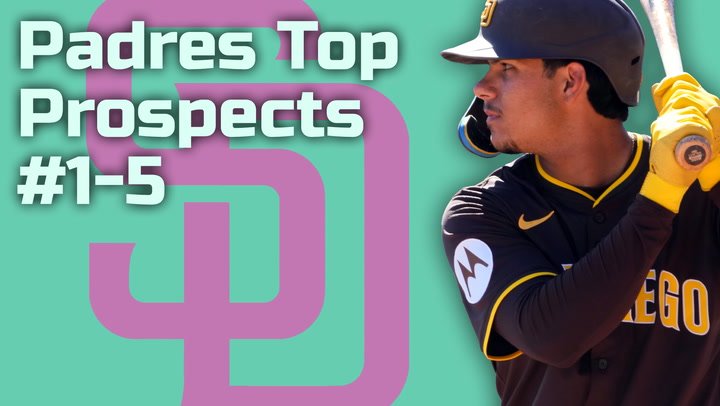 In this video, we break down quick riser Miguel Mendez, recent big league call-up Bradgley Rodriguez, Kruz Schoolcraft, Kash Mayfield, and blue-chip international signee Ethan Salas. View the full article
 -
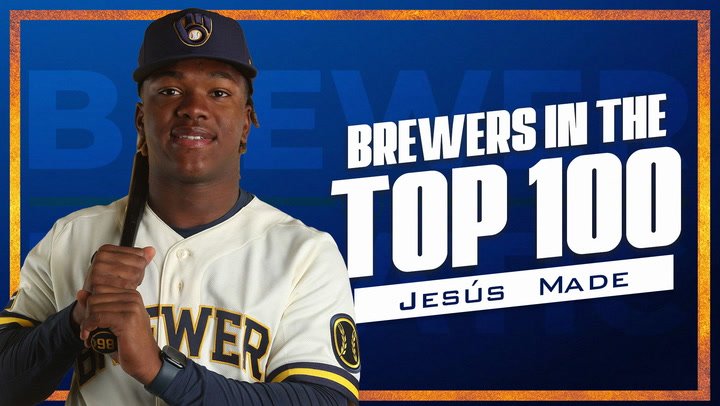 A rare talent, Jesus Made continues to look the part of a potentially franchise-altering player. What makes him so special, and what are his areas of improvement to get to his exorbitant ceiling? View the full article
 -
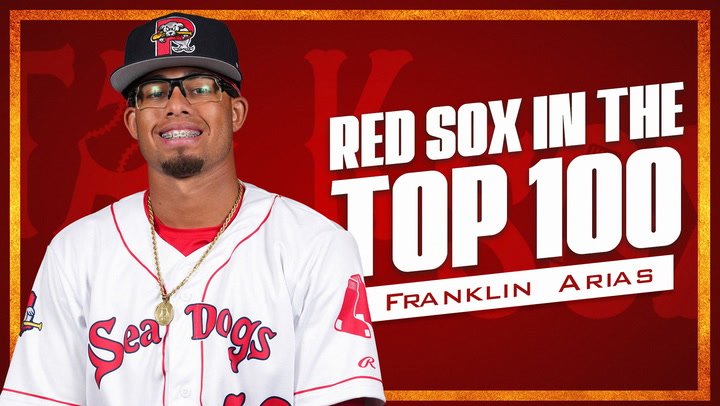 Ahead of his years offensively, Franklin Arias is one of the best contact hitters in the Minor Leagues, but can he stick at shortstop? View the full article
 -
 Alex and Maddie sit down and talk through the potential causes for Garrett Crochet’s lackluster start and why a phantom IL stint may make sense but couldn't happen right now. They dive into the bullpen woes while giving Jovani Moran his much-deserved flowers and speculate just where Tommy Kahnle has been. They preview the upcoming Yankees series by worrying about the team's offensive woes. Finally, they talk through the most recent Jarren Duran outburst and ponder how much longer he may be playing in Boston. Listen on Apple Podcasts: https://podcasts.apple.com/us/podcast/the-talk-sox-podcast/id1783204104 Listen on Spotify: https://open.spotify.com/show/3qPrPXEngu0CxgTmlf0ynm Listen on iHeartRadio: https://www.iheart.com/podcast/263-the-talk-sox-podcast-244591331/ Listen on Pocket Casts: https://pca.st/4tmd121v Watch on YouTube: https://www.youtube.com/@talksox View the full article
 -
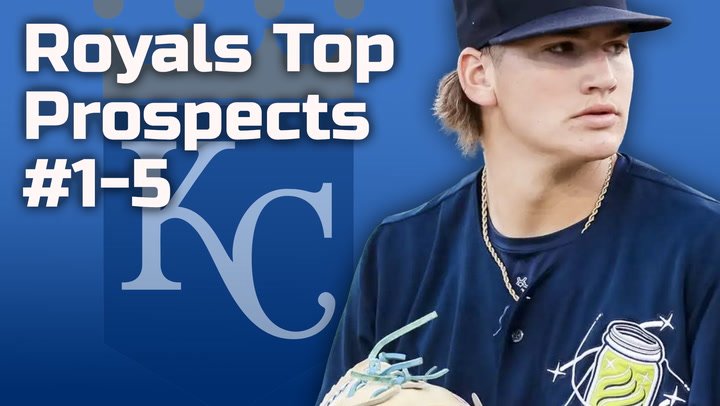 In this video, we do a deep dive of Ben Kudrna, significant riser Kendry Chourio, 2025 teenage phenom David Shields, Blake Mitchell, and potential AL rookie of the year candidate Carter Jensen. View the full article
 -
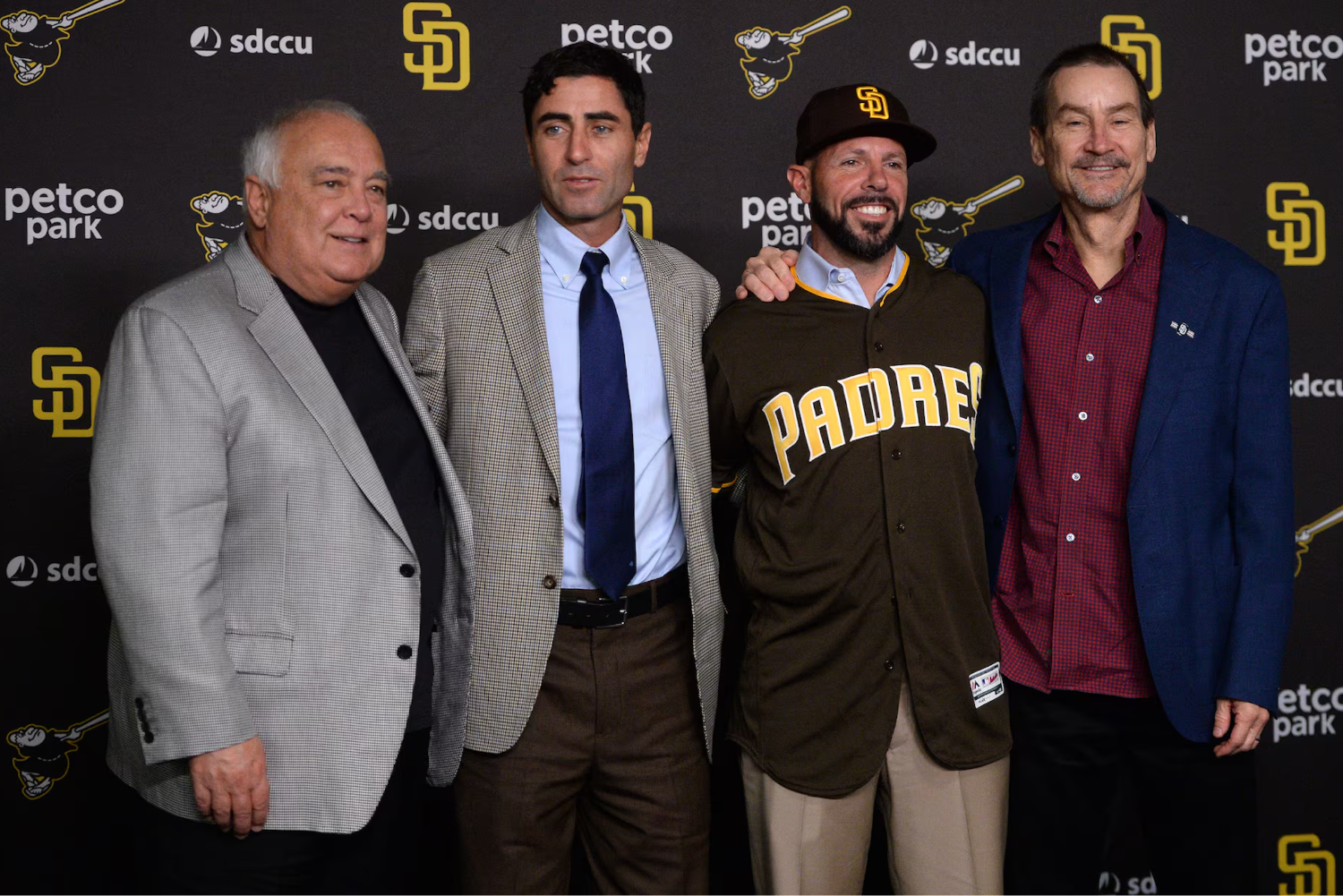 When Peter Seidler and Ron Fowler purchased the San Diego Padres in the middle of the 2012 season, the Padres were in a rough spot. The team had not made the playoffs since 2006 and was mired in their fourth losing season in five years. Outside of a 90-win campaign in 2010 that saw the Padres miss out on the NL Wild Card by one game, San Diego had not had much success. The team had won 71 games in 2011 and would finish with 76 wins in 2012. San Diego was mostly irrelevant in a division dominated by the Giants and Dodgers. In the first seven years of Seidler and Fowler’s ownership, not much changed for the Friars. San Diego’s streak of losing seasons reached nine. The Padres lost at least 90 games four years in a row between 2016 and 2019, and finished either fourth or fifth in the NL West every season between 2015 and 2019. That’s not to say the team was not trying. AJ Preller was hired as the team's general manager in 2014, and he immediately began his tenure by making high-profile trades and free agency additions. He brought in All-Star caliber players like Justin Upton, James Shields, and Matt Kemp. When that failed to produce a winning team, he pivoted, selling Shields to acquire a young prospect, the son of former major league infielder Fernando Tatis. In 2018, the Padres signed another former All-Star and World Series champion, Eric Hosmer, to an 8-year, $144 million contract. But the biggest move, the one that sent a message to the league, was the 2019 signing of third baseman Manny Machado to a 10-year, $300 million deal. That signing, combined with the promotion of Fernando Tatis Jr. in 2019, was the beginning of a new era for the Padres. Peter Seidler Takes Control of Padres & Pushes Them To Greatness Over the first seven years of his co-ownership, Peter Seidler did not have complete control. That changed in 2020, when Seidler purchased a significant share of Ron Fowler’s stake in the Padres and took over as the team’s chairman, as he became the largest stakeholder in the organization. That was the same year the Padres finally achieved a winning record and returned to the postseason for the first time since 2006. That 2020 campaign began a run of success that San Diego was not used to. Even after missing the playoffs in 2021, the team was improving, and under Seidler’s leadership, the team decided to make another major investment into winning by investing into their pitching staff. The Padres added a pair of ace starting pitchers in Joe Musgrove and Yu Darvish, and would eventually extend both. It was a sign that Seidler and Preller were willing to spend the money that it would take to make San Diego a contender again in the NL West. In 2022, the fruits of their labor paid off. The Padres found themselves neck-and-neck with the Dodgers in the NL West, despite missing Tatis due to a suspension. That led Seidler to green light perhaps the biggest trade in Padres history at the 2022 trade deadline, when San Diego sent a package of four prospects, including James Wood, Robert Hassell, MacKenzie Gore, and CJ Abrams, to the Nationals, in exchange for 23-year-old superstar Juan Soto. With Soto on board, the Padres would make their deepest postseason run since losing the 1998 World Series. San Diego reached the NLCS for the third time in franchise history, and although they would go on to lose 4-games-to-1 against the Phillies, it was another year of improvement for San Diego. Seidler continued to green light more spending in 2023, as the Padres extended Manny Machado through 2033 and signed shortstop Xander Bogaerts to an 11-year, $280 million contract. With Soto, Tatis, Machado, and Bogaerts hitting atop the lineup, and Cy Young winner Blake Snell anchoring the rotation, the team’s 82-80 record felt like a massive letdown. Considering the team had a +104 run differential, it was also a massive outlier. Their expected win-loss record, with a +104 differential, would have been 92-70, which would have comfortably sent the Padres to the playoffs. When Peter Seidler died on November 14, 2023, his stated goal of seeing the Padres win a World Series unfortunately hadn't come to fruition. But surely, Seidler would be proud of the way his brother John has handled the team since his death. Under John Seidler’s leadership, the Padres have won 90 games in back-to-back seasons for the first time in franchise history, and reached the postseason in back-to-back seasons for the second time. These past seasons (2022-2025) are the best four-year stretch in Padres’ history, with a combined record of 354-294. San Diego ranks seventh in the MLB over the past four years, and fifth in total team fWAR. Even after trading Soto to the Yankees, the Padres managed to improve. The Seidler family’s tenure of Padres ownership was marked by big spending, big swings on the trade market, and an unprecedented run of success over the past four years. With José E. Feliciano now set to take over, it will be interesting to see if those trends continue, or if the organization will plan to scale back its spending and rebuild its farm system. View the full article
 -
Umpire Hunter Wendelstedt Misses 22 Calls in Twins vs. Reds Game
DiamondCentric posted an article in Twins Daily
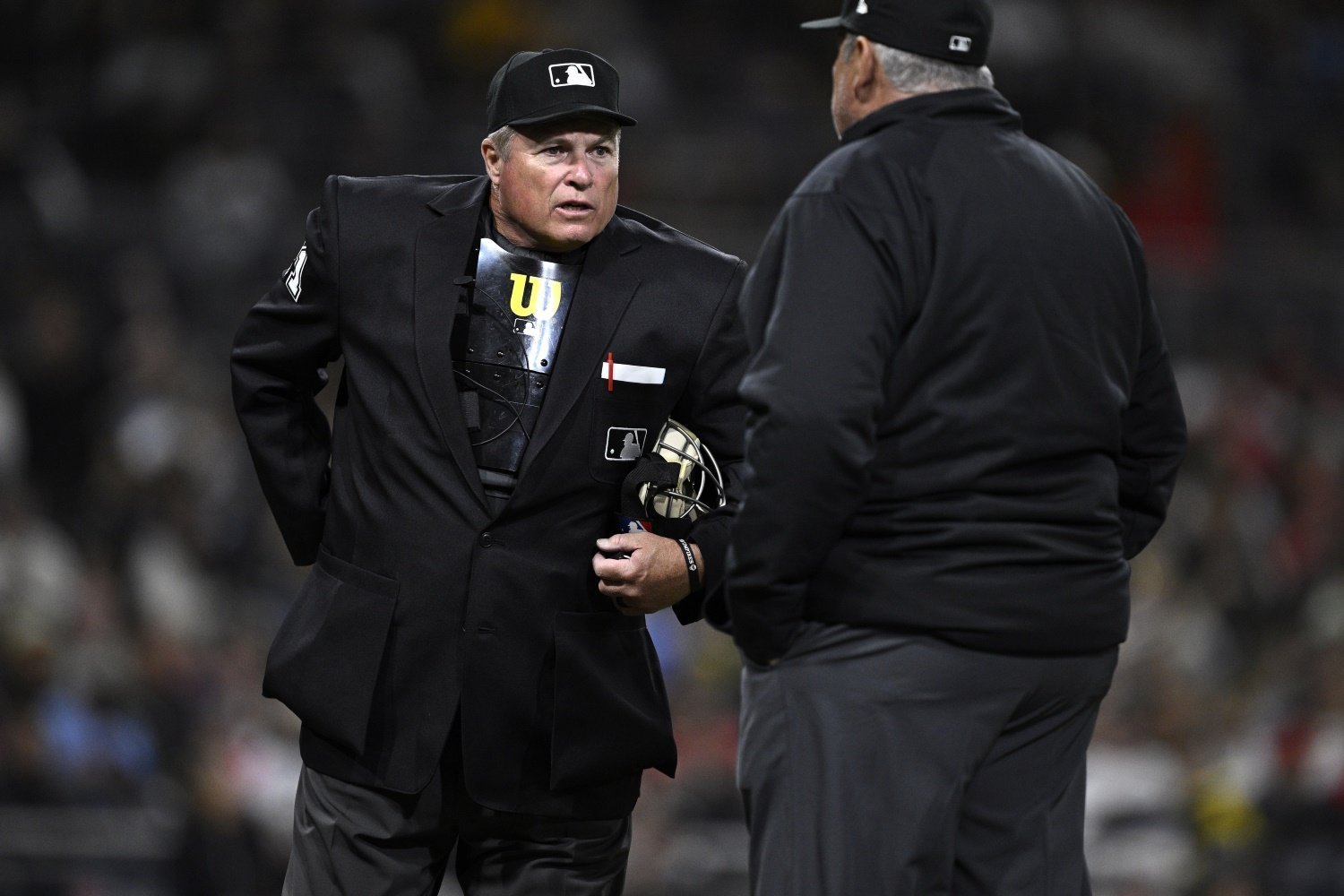 There are nights when the conversation after a game centers on a big swing or a dominant pitching performance. Then there are nights like this one, where the spotlight shifts squarely behind the plate. On Sunday, home plate umpire Hunter Wendelstedt had a difficult outing in the matchup between the Cincinnati Reds and Minnesota Twins, missing 22 ball and strike calls over the course of the game. Notably, sixteen of those calls went against Cincinnati, including four blown strikeouts, ultimately creating a +2.78 run value in favor of Minnesota. Despite that imbalance, the Reds walked away with a 7-4 win in 10 innings, overcoming both the Twins and a strike zone that never quite settled in. Missed calls occur in every game, but this game's total and several key mistakes significantly affected the outcome and further highlight debates on umpire reliability. It was also the seventh game this season in which an umpire has missed 20 or more ball-and-strike calls, continuing a trend that has kept the automated ball-strike system in the conversation around the league. The Calls That Mattered Most While the total number is eye-opening, a few specific moments carried the most weight in terms of run expectancy. In the top of the fourth inning, with one out and a runner on first, Bailey Ober appeared to lose a full count battle against Spencer Steer. A pitch ruled a strike should have been ball four, ending the at-bat and putting another runner aboard. Instead, the Reds lost that opportunity. An inning later, Ober benefited again. Facing Matt McLain with two outs and a runner on second in a 1-2 count, a pitch off the plate was called strike three to end the inning. That erased a chance for Cincinnati to extend the frame and potentially push across a run. Minnesota was not entirely immune. In the bottom of the seventh, Connor Phillips appeared to punch out Trevor Larnach on a full count with two outs and nobody on. Instead, the pitch was called a ball, resulting in a walk that prolonged the inning. Still, the overall trend was clear. The majority of impactful misses leaned in Minnesota’s direction. To Cincinnati’s credit, the game did not spiral. Even with the inconsistencies, the Reds continued to grind through at-bats and leaned on timely hitting to keep things close. They also successfully used a challenge in extras, a fitting end on a night where the strike zone had been under scrutiny from the first inning on. For Minnesota, this is a frustrating kind of loss. The numbers suggest they were on the favorable side of the missed calls, yet they still could not convert that advantage into a win. Games like this highlight a larger issue. Even when external factors tilt in a team’s favor, execution still determines the outcome. The Twins had opportunities, some aided by the strike zone, but could not deliver the knockout blow. Umpiring will always be part of the game’s human element, but nights like this add fuel to the ongoing debate about consistency and potential technological solutions. When 22 calls are missed, and the imbalance is this pronounced, it becomes impossible to ignore. View the full article
 -
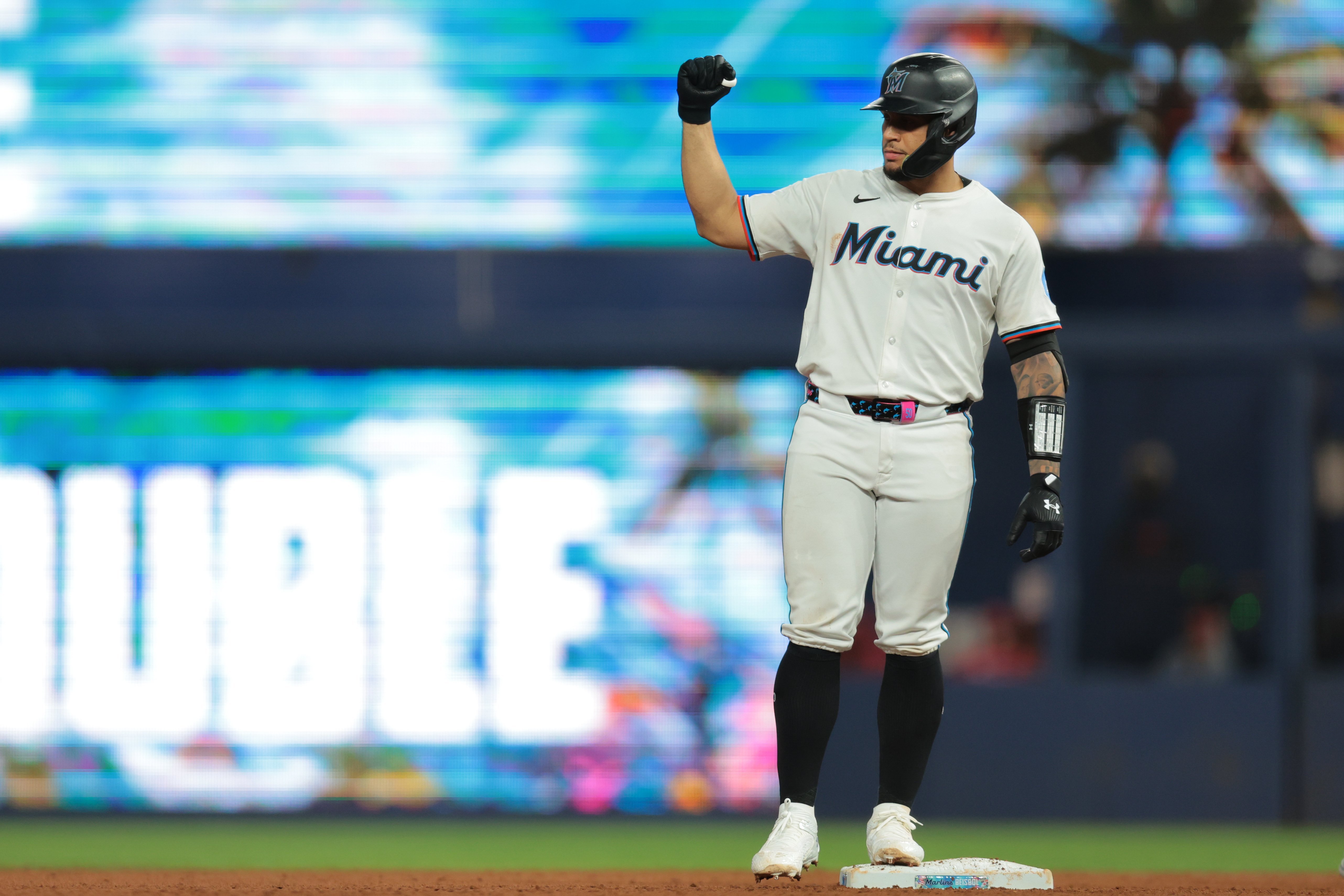 On April 21, 2025, Agustín Ramírez began his major league career with high expectations. He was arguably the top position player prospect in the Miami Marlins organization, with an impactful bat that could be plugged into the middle of the order, plus the ability to play catcher on a part-time basis. Tuesday marks one full year of the "Gus Bus" experience. It has been a mixed bag. For starters, Ramírez has been durable. With few exceptions, the Marlins have started him as their designated hitter on days when he isn't catching, using him in 158 total games. That easily leads the team over the past calendar year (Otto Lopez ranks second with 145 games). Ramírez also has the most plate appearances (676) and runs scored (83) since debuting, trailing only All-Star Kyle Stowers in home runs (23). However, the overall quality of his hitting has been below average. Ramírez's career slash line of .230/.288/.408/.696 with a 90 wRC+ (100 represents league average). The results are pretty much the same regardless of whether he's facing left-handed or right-handed pitching. Ramírez offers an exciting combination of raw power and contact ability. He has one of MLB's fastest bat speeds and a career strikeout rate of 19.8%. His career hard-hit rate is 45.3%, similar to the likes of Marcell Ozuna and Teoscar Hernández. Even with a full year body of work, it's fair to say that Ramírez has been the victim of bad luck. Hitters with his batted ball quality usually perform well on balls in play, but his career BABIP is only .255, which is 36 points below the league average during that span. He should see some improvement moving forward, especially if he reduces his ground balls. Ramírez has been worse than replacement level according to both Baseball-Reference (-0.6 bWAR) and FanGraphs (-0.1 fWAR), and that is mainly because of his defense. Used exclusively as a catcher, Ramírez has totaled minus-16 defensive runs saved and minus-14 fielding run value. He leads MLB catchers with 13 errors and 22 passed balls since the start of 2025. There have been 100 stolen bases with him behind the plate compared to only 10 runners caught stealing, as his pop time is inconsistent and he frequently mishandles the ball when transferring it from his glove. While some of these weaknesses are physical, Ramírez told Fish On First earlier this month that "the mental side has been the biggest thing for me" regarding the transition from the minors to the majors. Marlins manager Clayton McCullough insists that there have been "real strides" made by the 24-year-old since his rookie season. "I think all the work he put in this offseason has continued to put, it's showing." Ramírez has also added a bit of value with his usage of the new ABS challenge system, overturning 14 balls into called strikes on 21 challenges (a 66.7% success rate). Unfortunately, big mistakes overshadow his small improvements. On this homestand alone, Ramírez effectively lost the Marlins a game on Friday when he was unable to make a catch in the 10th inning, and his poor blocking allowed the St. Louis Cardinals to manufacture runs on two separate occasions during's Monday game (which Miami won). With terrific catching prospect Joe Mack on track to reach the majors this summer, Ramírez is certain to see a more limited workload defensively. The question will be whether his bat heats up enough to still keep him in the lineup on a daily basis. View the full article
 -
How The Twins Can Actually Fix Their Bullpen Problem
DiamondCentric posted an article in Twins Daily
 The issues in the Twins' bullpen go deeper than just a few rough outings. Here’s what’s actually going wrong, and some possible changes that could fix it.View the full article
 -
Minor League Report: Royals Affiliates Staying Competitive
DiamondCentric posted an article in Royals Keep
 Minor League Week in Nutshell Things were pretty rough at the Major League level for the Royals this past week, as they went winless in Detroit and the Bronx. However, things were a bit more positive with the affiliates in the Royals' farm system. Omaha went 4-2 against Indianapolis, improving their record to over .500 for the season, a big turnaround from a year ago. Northwest Arkansas had a rougher week, going 1-5 against Corpus Christi. The losing week brought their record to one game under .500. In the lower levels, Quad Cities had a 4-2 week in Cedar Rapids, despite a game getting rained out on Wednesday. They split a doubleheader on Thursday and then pulled out the series finale on Sunday. As for the Fireflies in Columbia, they split with Charleston, going 3-3 last week on the road. They led in the series finale on Sunday but were unable to close out the victory or the series. They still have a record above .500. Here are the records of the four Royals Minor League affiliates, as of April 20th. Omaha: 11-9 Northwest Arkansas: 7-8 Quad Cities: 6-6 Columbia: 8-7 Omaha Highlights I'm beginning to sound like a broken record, but Kameron Misner continues to show the Royals organization that he may deserve a shot in Kansas City at some point, especially considering the Royals' offensive woes to begin the season. This week, in 19 at-bats, he hit .368 with a 1.192 OPS. That included two home runs, seven RBI, a double, three walks, and six strikeouts. Misner is not only showing power in Triple-A, but a sound approach at the plate as well. This season with the Storm Chasers, he is posting a 15.8% BB% and 0.71 BB/K ratio. While it's Triple-A, that's the kind of approach that's needed in this Royals lineup. On the pitching end, Chazz Martinez had a solid week, allowing no runs on two hits and three walks while striking out six in three innings of work. For the season, Martinez is posting a 41.7% K% and 20.8% K-BB% in six innings of work. While the TJ Stuff+ metrics aren't great (98 overall), he's done an excellent job limiting hard contact while generating solid whiff and chase rates, as seen below. The four-seamer is an interesting pitch with crazy horizontal break (18.3 HB), and it generates a decent amount of chase (26.9%) and whiff (31.8%) as well as weak contact (.241 xwOBACON). As a result, the four-seamer has a 102 TJ Stuff+ and a 57 grade. Unfortunately, his other offerings don't rate as well stuff-wise, with his sweeper having a 30 grade and changeup sporting a 47 grade. Still, Martinez could be an Evan Sisk type who simply can generate chase and whiff effectively due to his arm angles, even if he may not have the most overpowering stuff profile. Northwest Arkansas Highlights While some of the Nautrals' top hitters cooled off this week (Carson Roccaforte had a .733 OPS, and Sam Kulasingam had a .550 OPS), Brett Squires continued to be locked in. In 24 at-bats, the Oklahoma product hit .417 with a 1.083 OPS. That included a home run and seven RBI as well as four walks to five strikeouts. In 67 plate appearances this year, Squires is hitting .333 with a 1.047 OPS. He also has four home runs, 18 RBI, and four stolen bases. Without a doubt, Squires has been the Naturals' most consistent offensive performer to begin the 2026 season. The pitching end was more of a mixed bag for the Naturals, with many starters posting ERA marks in the double digits this week. However, one arm that continues to impress is lefty reliever Oscar Rayo. In two appearances and 4.2 IP this week, he allowed only one hit, zero runs, no walks, and struck out six batters. Not only did Rayo have a 0.00 ERA, but also a 0.21 WHIP. For the season, Rayo is posting a 1.35 ERA and 0.45 WHIP in 13.1 IP. He hasn't allowed a single walk and has a 27.7% K%. When looking at his percentiles this year, there is a lot to like from the Nicaraguan lefty. With a 31.3% whiff rate and 34.3% CSW with the Naturals this year, Rayo could be a reliever who could sneakily move through the Royals system and make a case for a roster spot this offseason. Quad Cities River Bandits One prospect who needed to make some gains this year was Austin Charles. Charles has been known for his lanky frame and raw athleticism. However, he struggled in his first exposure to High-A ball as a 21-year-old last season. In 59 games and 232 plate appearances, Charles hit .200 with a .469 OPS. He didn't hit for much power, as evidenced by his 0.093 ISO. Furthermore, he struck out a lot, as illustrated by his 25.9% K%. As a result, his prospect stock dropped a lot this offseason, as he barely made many Top 30 lists and was omitted on some, due to his poor performance in Quad Cities in 2025. This year, it's been a different story for Charles in his second go-around in Quad Cities. Over the past week, he hit .563 with a 1.463 OPS. He had a home run, six RBI, three stolen bases, and three walks to three strikeouts. For the year, he's hitting .353 with a 1.035 OPS in 43 plate appearances. He also has a home run, eight RBI, and five stolen bases. The most impressive stat? He has seven walks to six strikeouts. The plate approach is really coming around for Charles to begin 2026. In terms of pitching, Justin Lamkin continues to impress, even with a rotation that includes the Royals' top pitching prospect, David Shields. In two starts and 7.2 IP, Lamkin posted a 2.35 ERA, 1.17 WHIP, and struck out 12 batters. In three starts this year, he has a 1.54 ERA, 0.94 WHIP, 2.93 FIP, 39.1% K%, and 26.1% K-BB%. While the former Texas A&M product doesn't have elite velocity, he is deceptive in his delivery, which helps his stuff play up against hitters. We could be looking at a Kris Bubic or Noah Cameron 2.0 in Lamkin. Columbia Fireflies Highlights Roni Cabrera was an intriguing name when he came over from Texas with Cole Ragans in the Aroldis Chapman trade in 2023. While Ragans has gotten all the spotlight, Cabrera has gone under the radar, though the 20-year-old hasn't quite accomplished a whole lot yet in affiliated ball before this year. This past week was a memorable one for the 20-year-old Fireflies outfielder. In 17 at-bats, he hit .353 with a 1.028 OPS. Cabrera also had a double, two triples, five RBI, a stolen base, and two walks to three strikeouts. In 48 plate appearances this season, he is hitting .270 with an .889 OPS with a homer, 12 RBI, four stolen bases, eight walks, and 11 strikeouts. The former Rangers signing can be a little erratic, especially on the basepaths (he's been caught three times). However, he's the kind of dynamic player that could provide a spark at the MLB level. On the pitching side for Columbia, Michael Lombardi only made one appearance, but it was a sensational one. In four innings of work, the former Tulane product struck out 11 while allowing three walks, three hits, and no runs. A two-way player in college, it seems like Kansas City is having Lombardi focus on pitching, which explains why he's only pitched 10.1 innings this year. It's about development, not results, this year for Lombardi. However, the results have been pretty impressive so far. In three appearances, Lombardi has a 2.61 ERA, 1.26 WHIP, 1.94 FIP, 46.5% K%, and 34.9% K-BB%. He's also sported impressive whiff and CSW rates, as illustrated below via his TJ Stats summary. The stuff is absolutely electric, and it isn't out of the question to believe that Lombardi could end up as the third-best pitcher in the Royals system and a Top-10 prospect by the end of the 2026 season. View the full article
 -
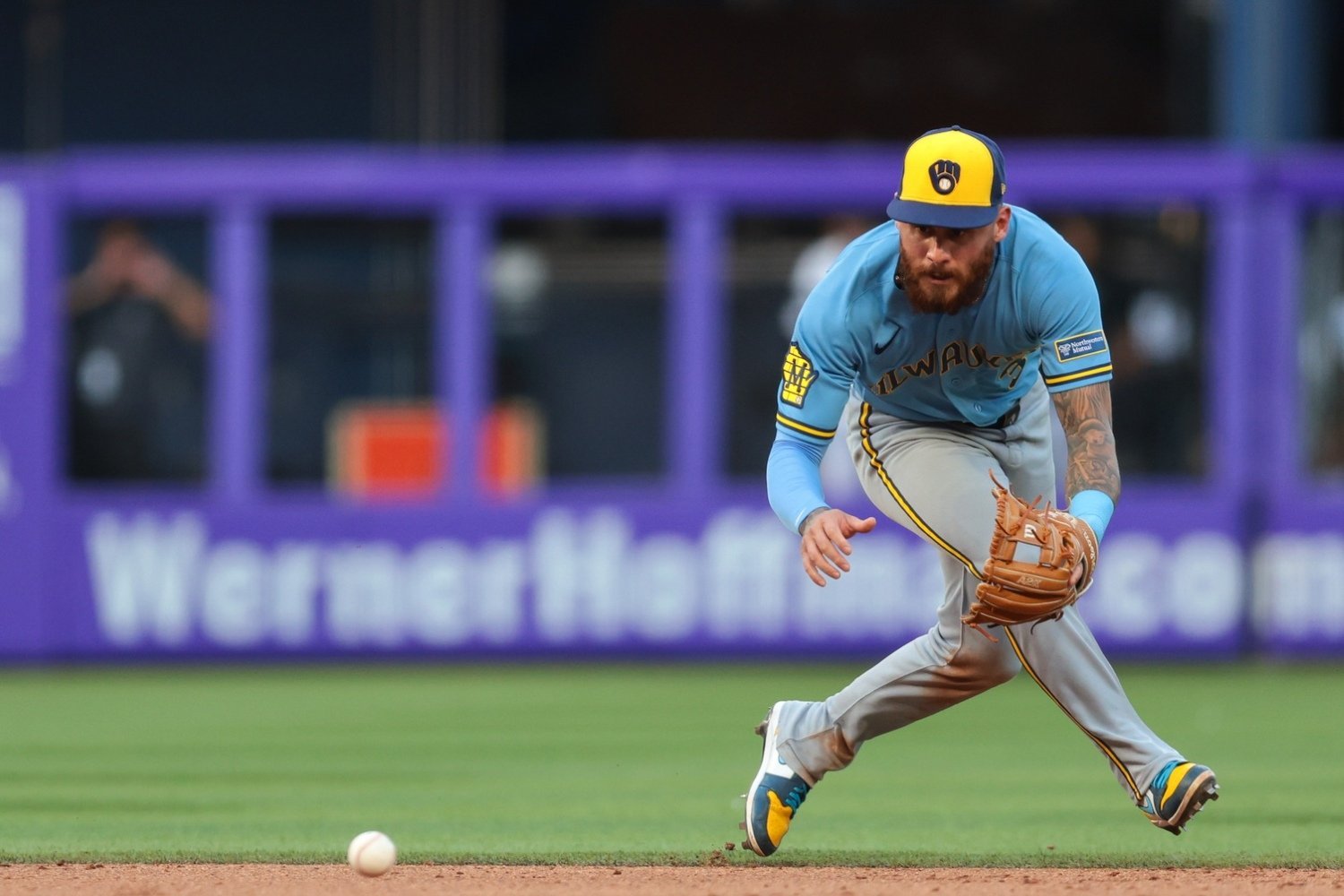 Admittedly, Joey Ortiz hasn't gotten a perfect set of chances in the majors. He was blocked when he was first ready for the big leagues, during his final season with the Orioles organization. He was displaced for a year after being traded to the Brewers, when he slid to third base to play alongside Willy Adames. He's hit at the bottom of the batting order most of the time over the last year-plus, where you often get one fewer plate appearance than players at the top of the card; see the starting pitcher one fewer time; and hit with fewer runners on base in front of you. He's battled a few nagging injuries. Since the start of last August, during which time teammate Brice Turang has over 350 plate appearances across all competitions, Ortiz has just 165. Unfortunately, it's impossible to justify giving him more than that. In fact, he probably ought to have fewer. Ortiz is batting .200/.255/.227 since Aug. 1, 2025, including regular-season, playoff and World Baseball Classic games. He hit one home run during Cactus League play this spring, but that's the only one he's hit since the second game after last year's All-Star break, at any level. Ortiz is, fundamentally, broken. Hitters go through phases during which their timing is badly off, or when the ball doesn't carry for them or during which line drives always seem to find gloves. This is something different, and worse. Ortiz is simply overmatched, in a way no other hitter in the league is. To understand how true this is, you first need to know the following: Ortiz has a relatively flat swing. His swing path tilt has slightly increased in each year of his career, from 27° in 2024 to 29° this season, but the league averages between 32° and 33°. The flatter your swing is, the more important it is for you to catch the ball out in front of your body. Steeper swings can hit the ball sharply even deep in the hitting zone, but a flat one can only produce a ball with a good chance to be a hit (or any chance to be an extra-base hit) if the batter's intercept point—the place where the bat and the ball meet, or would have met, in the case of a whiff—is at least 27 inches in front of a hitter's center of mass. The league's average intercept point is closer to 31 inches in front of the body, and again, a flat swing usually does better in that range or slightly farther in front. Some steep swings can work with a contact point in the mid-20s, but the lower your tilt, the farther out front you must catch the ball to be productive. Ortiz has always let the ball travel pretty deep. Often accused of being passive at the plate, he's trying to be selective and to see the ball well before making a swing decision—but therefore, he lives life on the edge of being late to the hitting zone. He runs one of the lowest attack angles in the league, even when going well, which means that he barely gets through the process of slashing his bat down into the hitting zone before meeting the pitch; he's not working upward with the barrel nearly as much as most hitters are. Since the start of the second half last year, though, this has all gone to an extreme at which having success as a big-league batter is no longer possible. Ortiz's average intercept point, relative to his center of mass, has receded month by month: April 2025: 29.4 in. May 2025: 31.2 June 2025: 28.7 July 2025: 29.6 August 2025: 28.8 September 2025: 26.5 April 2026: 23.7 The ball is, as they say, in Ortiz's kitchen. He's no waterbug, but no one is strong enough to hit the ball hard—especially to the areas of the field where that can pay off best—when catching it that deep. Looking at the intercept point relative to his stance (and relative to the same visual for last year) illustrates the problem tidily: He's tried opening his stride, as the ball gets on top of him, to square his barrel to the pitch earlier in his swing and fight it off. As the numbers tell you, it's not working. Few hitters in the league have an average intercept point deeper than the front edge of home plate, where Ortiz was even last year. No one else in the league has one 9 inches past the front edge, as Ortiz has so far this season. The second-deepest intercept point in the league belongs to the Rays' Chandler Simpson, the slap-hitting super-speedster. Simpson's sheer speed allows him to survive with an intercept point 6.8 inches past the front edge of the plate, but hitting for power is out of the question for him. Right now, it's out of the question for Ortiz, too, even though the Brewers shortstop has about three scouting grades of bat speed on the Tampa outfielder. Simpson offers a good següe to the obvious alternative to Ortiz at shortstop, though, and therein lies (arguably) a dilemma. David Hamilton isn't hitting much better than Ortiz this season—just .178/.339/.178—but the fundamentals of his profile are much stronger. He needs to make some significant adjustments, and he doesn't have Ortiz's bat speed, either, but he can drive the ball a bit and has made much better swing decisions than Ortiz has. His own intercept point is dangerously close to being too deep, but he has a much steeper swing than Ortiz's, and if he wants to create more space to catch the ball out front, he has a simple means of doing so: get deeper in the batter's box. As ugly as the batting average is (and despite the lack of an extra-base hit by either player), there's no question that Hamilton is a better hitter than Ortiz, right now. The question, instead, is whether the Brewers will ever feel comfortable eschewing Ortiz's defensive brilliance in favor of the upside Hamilton provides in the batter's box. That question is complicated, and its answer might simply be 'no'. Pat Murphy and the Brewers coaching staff trust Ortiz at shortstop to a unique degree. They like everything about the way he plays the position, including the ways he's improved since coming to the club. He's sure-handed and smart, in addition to having a quick first step and plus range. He makes all the plays a team can ask a shortstop to make, and he never seems to make a glaring mistake. Hamilton is more spectacular, but less consistent. He has better range than Ortiz, and perhaps a stronger arm. He's creative, and his ceiling at the position might be higher. However, there are occasions on which he speeds up too much in the effort to make a play, leading to bobbles or outright drops of playable grounders. Rushing that way can also lead to bad throws, which are compound errors: they nearly always give a runner an extra base. With the game on the line, the Brewers absolutely (and rightly) trust Ortiz more than they trust Hamilton at short, even though the latter is a better athlete and can make a wider array of plays. So far this year, the magnitude of Ortiz's brokenness at bat has led to Hamilton getting six of the 21 starts at shortstop, but for that raio to flip—for the lefty-batting Hamilton to take on the majority of the playing time at the position—one of a few things will have to change. More stability from third baseman Luis Rengifo would nudge things in that direction; it would mean the team needs Hamilton at third base less. More of Hamilton's offensive skills translating to results would create more momentum for a change, too. Most of all, though, the team needs to see Hamilton make the routine play routinely, even in non-routine moments. If his steadiness with the glove catches up to Ortiz's, he'll become the starting shortstop immediately (if briefly; Cooper Pratt, Jesus Made and more are on the way). For now, though, Ortiz remains a part of the team's daily plans, despite his utter inability to muster any offense. Hamilton needs things to break his way, but he also has a chance to make his own breaks, by slowing down ever so slightly in the field. View the full article
 -
It's Time To Reconsider Expectations About The 2026 Royals
DiamondCentric posted an article in Royals Keep
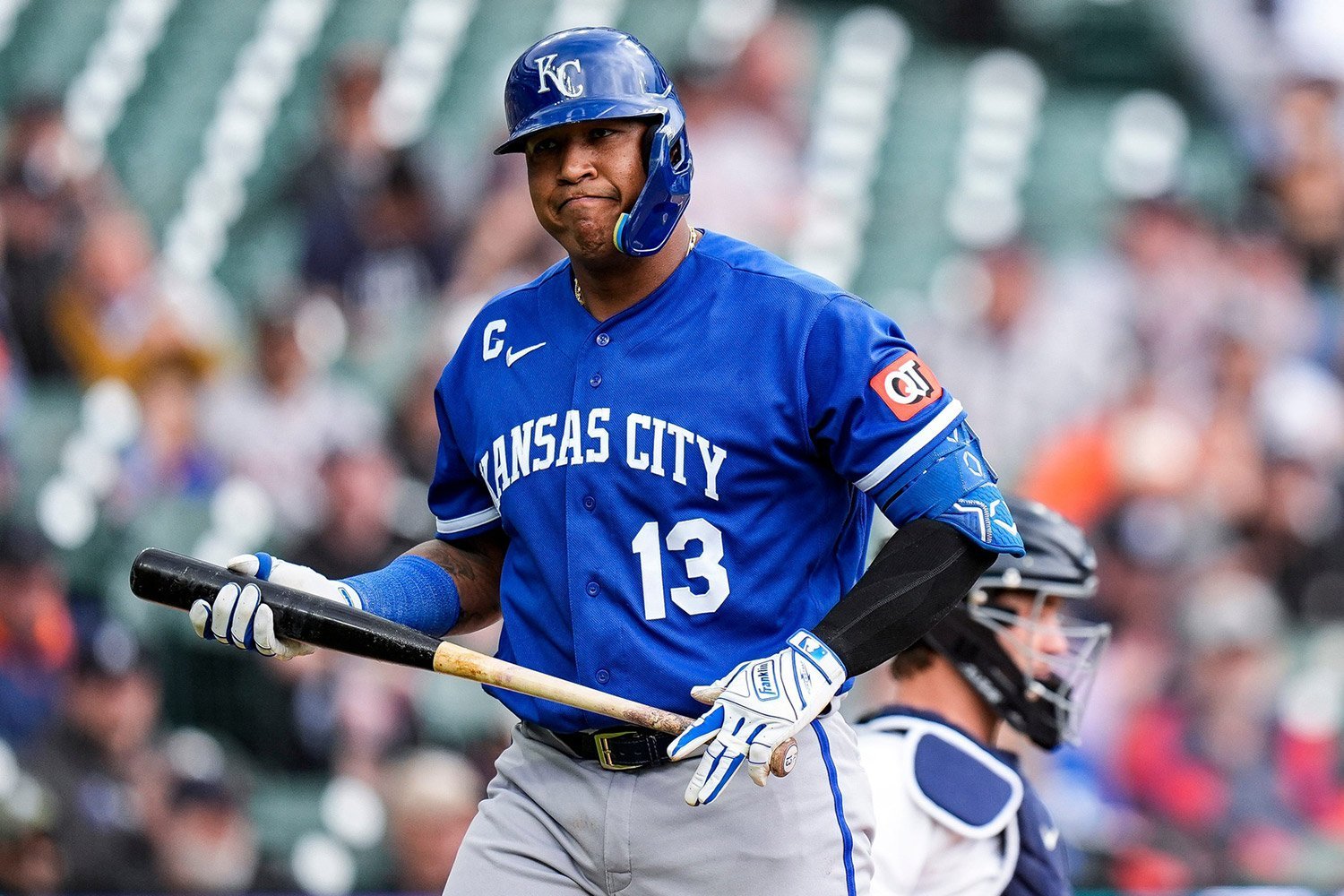 The early-season hole they’ve dug for themselves got deeper for the Royals on Sunday. After New York weather delayed the day's first pitch for nearly three hours, the Royals quietly bowed 7-0 to the Yankees in a dispiriting, lackluster effort that completed a winless six-game road trip, extended their losing streak to seven, and left them in sole possession of last place in the American League Central. Even the lowly White Sox have been better than this club, which is now tied with the Mets for the worst record in the majors. This is not the strong contender for postseason play so many expected it to be. Sunday’s loss sank the Royals eight games below .500, a depth they hadn’t reached since 2023 when they lost 106 times. Little has gone right for the 2026 club, and its problems run deeper than the outfield bats, which have become the usual culprits for extended dry spells. What, then, lies ahead? A lot, especially with 140 games left before the regular season ends and the playoffs begin. Even so, and some reasons for hope notwithstanding, KC’s miserable 7-15 start suggests it may be time for even the most optimistic fans to recalibrate their expectations. The Royals Are Not the Team Fans Want Them to Be Kansas City was allegedly an improved team when spring training began. But expectations may have been too high, and prognosticators too kind. After all, the front office failed for the second straight winter to land the big new bat it’s so sorely needed, settling instead for Isaac Collins and Lane Thomas. Collins’ first full big league season performance with Milwaukee last year — he homered nine times, drove in 54 RBI, and posted a .368 OBP and .263 average in 130 games — made him attractive, and Thomas’ 28-homer, 86-RBI 2023 effort with Washington gave Kansas City hope. But Collins and Thomas haven’t given the offense enough … or anything close to it. Together they’re 17-for-91 (.186) with a homer and five RBI. The Royals also didn’t fix second base. Instead of cutting disappointing Jonathan India loose, they re-signed him for $8 million only to see him fail to deliver at the plate; his .167/.310/.313 line through Sunday speaks volumes. Michael Massey also isn’t hitting (.174/.208/.261), and he’s been spending some time in left field as manager Matt Quatraro continues to hunt for someone to stake a strong claim to that position. And what big bats the Royals do have are floundering. Vinnie Pasquantino’s .157/.234/.265 line is terrible, and he didn’t hit his first homer until Thursday. Salvador Perez has three homers, good for second on the club behind Carter Jensen’s five, but going 0-for-4 Sunday dropped his average to .152, and whispered speculation about possible age-related decline has grown louder. Although he boasts a .362 OBP, Bobby Witt Jr. hasn’t been himself — he still hasn’t homered and is batting a certainly serviceable, but un-Witt-like .280. Maikel Garcia’s fast start has cooled (he’s 2 for his last 20), and he finished Sunday hitting .256, which may not bode well for him continuing in the leadoff spot to which Quatraro restored him to begin the season. As a team, and at the close of Sunday’s loss, the Royals were averaging 3.2 runs per game. They ranked last in the majors in runs scored (71), 28th in SLG (.362) and OPS (.356), and 27th in average (.218) and OBP (.310). The Royals’ Rotation Has Struggled Recently That Kansas City’s problems now run deeper than its offense has become painfully apparent. Even starting pitching, by far the club’s greatest strength, is starting to find the going rough. Noah Cameron gifted the Yankees three home runs in one inning Saturday, Detroit tagged Kris Bubic Friday for five charged runs in 4.2 innings Friday, and the Yanks battered Cole Ragans for seven runs in 4.1 frames Sunday. Fortunately, though, the starters’ body of early work has been decent — collectively, Seth Lugo, Michael Wacha, Cameron, Ragans, and Bubic had the majors' 10th best ERA (3.66) and 11th best OAA (.219) when Sunday’s game ended. The Royals’ Bullpen is a Mess The bullpen’s ineptitude rivals that of the offense. KC relievers have blown four saves, their horrific 6.18 ERA is the big leagues’ worst, and they’ve been tagged with an unacceptable seven of Kansas City’s 15 losses. Yes, star Carlos Estevéz’s injury hurts, but the fact that he’s pitched only once means the bullpen must bear much of the blame for the club’s poor start and continuing struggles. Is it Time to Rethink the 2026 Royals? Yes. No big league team is or can be perfect, but Kansas City’s imperfections are glaring. Perhaps general manager J.J. Picollo found the offseason price of a new big bat too high and settled for less than he wanted and his club needed. Perhaps Perez is running out of gas. Maybe some of the club’s talent is overrated, and was from the start. Improvement is needed. And sooner, not later; the club can’t wait for the midsummer trade deadline. But the history of this typically conservative franchise suggests no new, truly impactful major league hitter will arrive this season, and hoping the rotation and bullpen pick up the slack all season is too much to ask. Although it’s still early, this club is in trouble. View the full article
 -
Minnesota Twins Prospect Hot Sheet: 3 Top Pitching Prospects Shine
DiamondCentric posted an article in Twins Daily
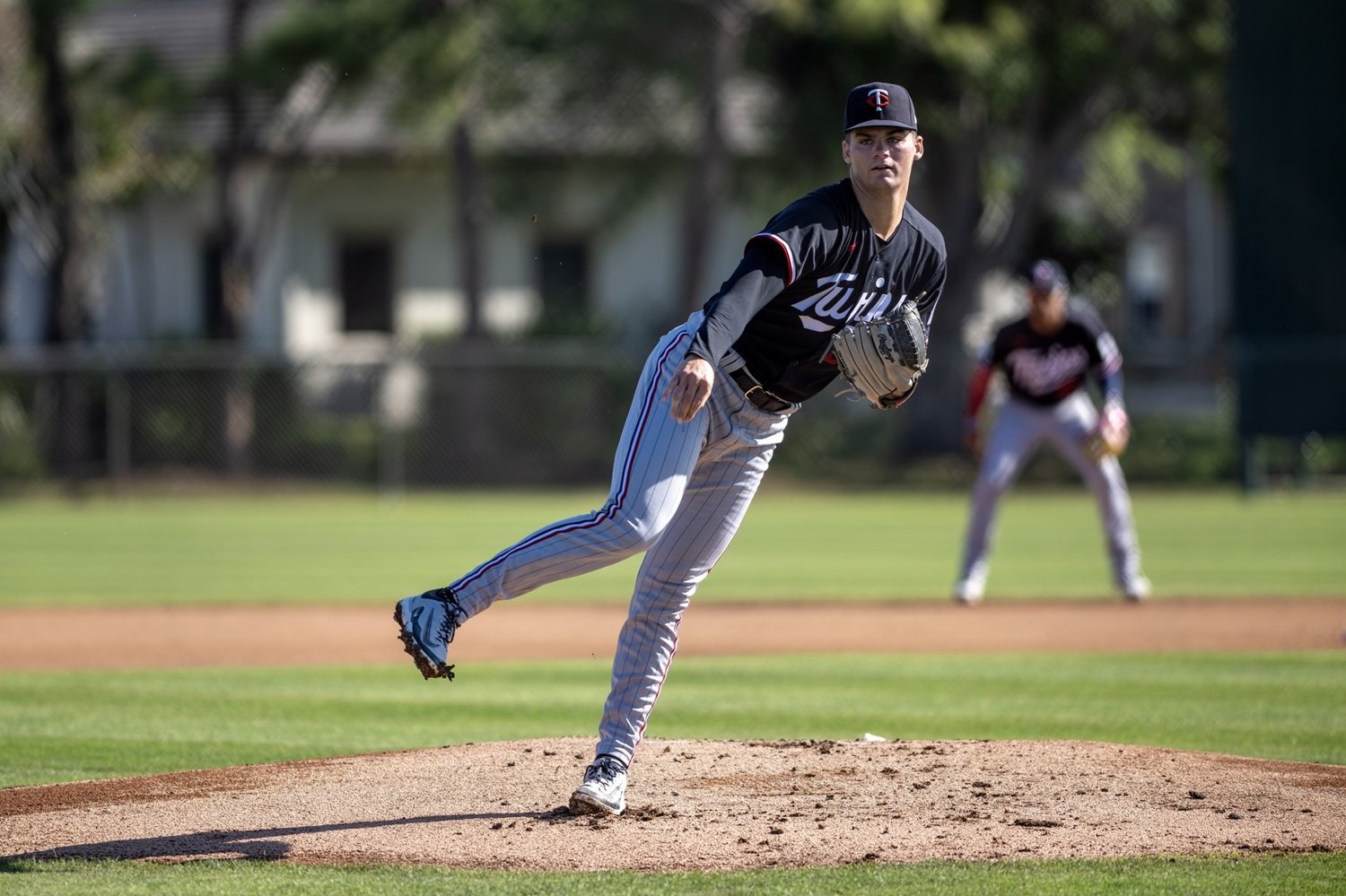 The early weeks of the minor-league season are often about shaking off rust and adjusting to new levels, but a trio of Twins arms are already in midseason form. From Triple-A St. Paul to Low-A Fort Myers, Minnesota’s pitching pipeline is flashing both upside and results. This week’s hot sheet highlights three standout performances that underscore just how deep this system has become on the mound. LHP Connor Prielipp (St. Paul Saints) How He Got Here: Prielipp entered the season as the Twins' top pitching prospect, and he has done everything possible to build off a tremendous 2025 campaign. Finally healthy after years of elbow issues and multiple surgeries dating back to his college days, Prielipp captured Twins Minor League Pitcher of the Year honors and climbed to Triple-A by season’s end. Minnesota handled him with care, limiting him to 82 2/3 innings, but that total still exceeded his combined workload from 2020 through 2024. Hitting the Hot Button: Prielipp wasted no time setting the tone in his start last week. He retired the first five hitters he faced before allowing a two-out single in the second inning. That minor blemish did little to slow him down as he quickly induced a ground ball to end the frame. The third inning was where everything clicked. Prielipp struck out the side on just 12 pitches, overpowering hitters with efficiency and command. His only real mistake came in the fourth inning, when he surrendered a leadoff home run, briefly trimming the Saints' lead. Outside of that swing, he was dominant. Prielipp worked five innings, allowing just one run on four hits while walking one and striking out a career-high eight. It looked every bit like a pitcher knocking on the door of the big leagues—and the door is open to him, as he joins the parent club on their road trip this week on the taxi squad. LHP Kendry Rojas (St. Paul Saints) How He Got Here: Rojas arrived in the organization as part of the deal that sent Louis Varland to the Toronto Blue Jays. At the time, Twins officials viewed him as an underrated arm with the potential to crack top-100 prospect lists. That optimism took a hit after a rough introduction to Triple-A, where he allowed 25 runs in 27 1/3 innings. Injuries have also played a role, limiting him to just 280 innings across five professional seasons since he signed out of Cuba. Hitting the Hot Button: Rojas followed Prielipp in the start mentioned above, as he continues to build back up after opening the year on the injured list. His fastball showed life immediately, punching out the first batter he faced. He scattered a couple of singles across the sixth and seventh innings, but otherwise kept hitters off balance. The only moment of trouble came in the eighth, when he allowed a single and a walk with two outs, but he responded by striking out the next hitter to escape the jam. Rojas finished with 3 1/3 scoreless innings, allowing three hits and one walk while striking out two. More importantly, he looked healthy and in control, which is exactly what the Twins need from him at this stage. He was in a perfect position to take over the roster spot (briefly) vacated by Kody Funderburk going on the paternity list, and will probably get at least a look in the bullpen during the team's series against the Mets. RHP Riley Quick (Fort Myers Mighty Mussels) How He Got Here: Quick’s path to pro ball has been about patience and recovery. After returning from Tommy John surgery at the University of Alabama, he posted a 3.92 ERA with 70 strikeouts in 62 innings. The Twins selected him with the 36th overall pick in the 2025 draft and signed him for $2.69 million. Rather than rushing him, Minnesota opted to hold him back until 2026 to carefully manage his workload. Hitting the Hot Button: Quick is already rewarding that patience. In his second professional start, he tossed three hitless innings while striking out five hitters on just 48 pitches. Through his first two outings, Quick has yet to allow a hit across five innings, while racking up 10 strikeouts. The raw stuff that made him a first-round pick is showing up immediately, and the early results suggest he could move quickly if he continues to throw strikes and maintain his health. He won't be in the lower levels of the minors for long. This week’s hot sheet is a reminder that Minnesota’s pitching pipeline is more than just potential. Prielipp and Rojas could make their big-league debuts this week, and Quick is flashing the upside that made him a high draft pick. If this is what the early season looks like, the Twins may soon face a different kind of challenge: figuring out how to fit all of this pitching talent into their long-term plans. What stood out about these prospects over the last week? What other prospects are you keeping an eye on? Leave a comment and start the discussion. View the full article
 -
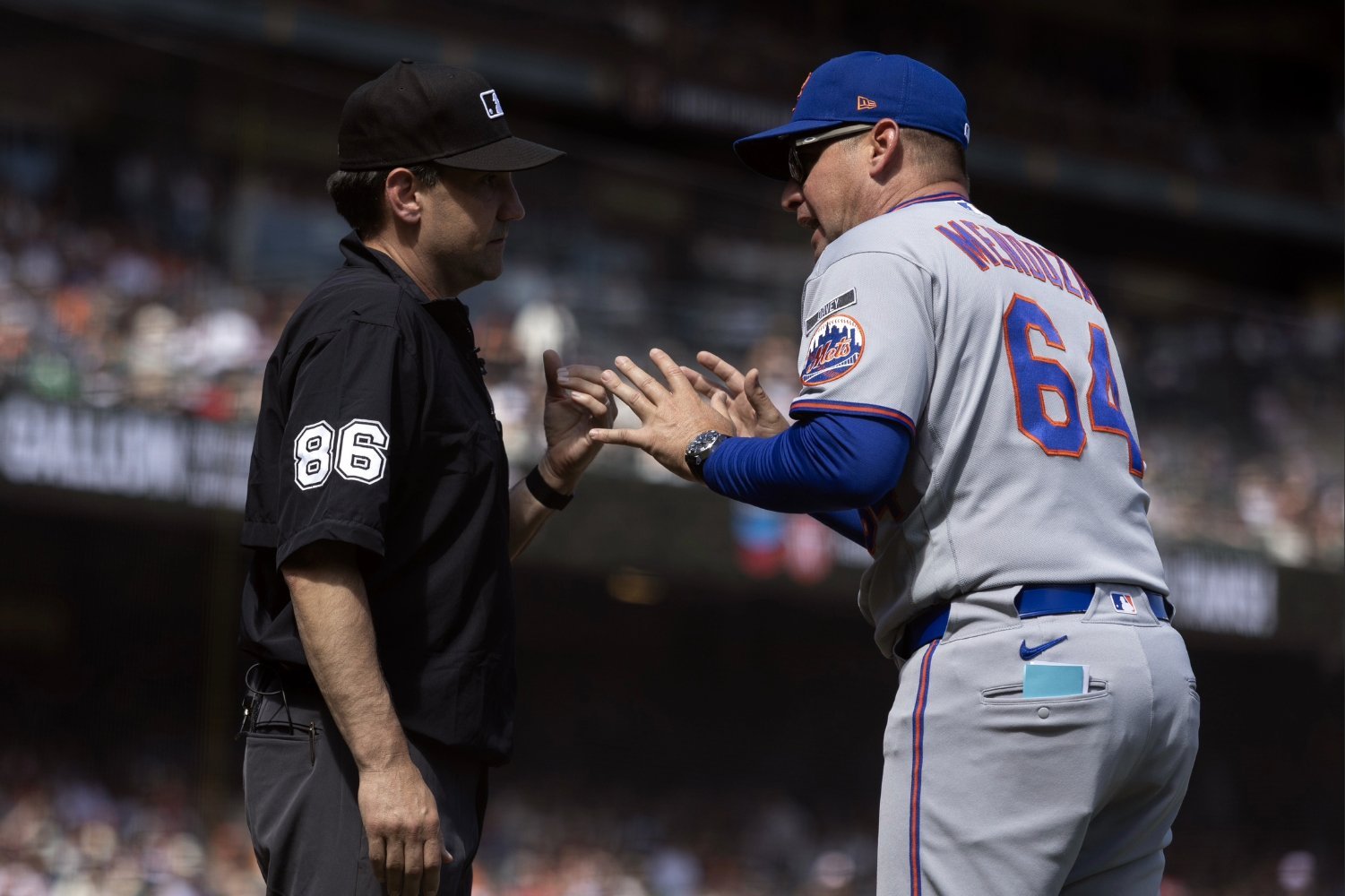 The New York Mets are 7-15 as of the week of April 20, good for a .318 winning percentage. That’s the worst record in the league, tied with the Kansas City Royals. To think that they were 7-4 on April 7 and have lost 11 games in a row is particularly painful for fans. New York is already eight games out of first place in the NL East, and we haven’t even played one month of baseball. It’s truly baffling how difficult it has been for this team to win ball games in the last couple of weeks. The Mets have been in a total free fall since then. There’s no other way around it: this has been a brutal stretch, one that could potentially prove costly in late September. You can’t win a division or secure a postseason spot in March and April, but you can certainly lose them. Losing Juan Soto Hurt, But The Mets' Offensive Issues Don’t End There What exactly has happened? Well, many things, as you probably can expect. Since April 8, the day on which the 11-game losing streak started, they have had the worst offense in the league with a horrific 51 wRC+. In contrast, the best unit, the Atlanta Braves, is sporting a 138 mark. It’s hard to consistently win games when the entire offense is so incompetent. This is where the loss of Juan Soto to a calf injury hurts a lot. People were prematurely celebrating the fact that the Mets were 4-0 since the superstar’s injury, but now that the sample is bigger, they are 4-11, and the losses keep coming. Carson Benge is sporting a 31 wRC+ throughout the full season to this point, the same as Brett Baty. Two newcomers, Bo Bichette and Jorge Polanco, both have a 54 mark. Marcus Semien is at 76, and Mark Vientos came crashing back down to earth after a hot start and is now at 71. Only four players with regular or semi-regular playing time have been above-average offensively, and two of them are injured: Francisco Alvarez (152 wRC+), Luis Robert Jr. (118), Soto (160), and Jared Young (137), who recently suffered a meniscus tear. Yes, the Mets have faced some particularly difficult pitchers, but that shouldn’t be an excuse. Since April 8, they rank 28th out of 30 teams with seven home runs, but that’s not even the most concerning part. They are next-to-last in walk percentage with a ghastly 4.7-percent mark. You may win some games without hitting home runs, but you at least have to get people on base failing that. The (not so) Amazins are doing neither right now. Mets' Pitching Has Been Subpar If you thought the pitching outlook over the course of the streak would be better, think again. Since that fateful April 8, the Mets have the second-highest ERA in the league at 5.70. Only the Houston Astros have a worse mark. Nolan McLean and Clay Holmes have been rock-solid as starters, but the rest of the rotation has fallen short of expectations. The Mets’ main problem has been Kodai Senga and his 8.83 ERA for the season. Basically, Senga was excellent in his first two starts and horrible in the last two, so it might be just a blip. It’s worth noting that his average fastball and sinker velocity has been fluctuating a bit, and that might have something to do with his recent struggles. Since the Mets’ skid started, their bullpen boasts a 6.05 ERA, the fourth-worst in the major leagues. Devin Williams and Luke Weaver, the new faces and anchors of the unit, have been inconsistent in recent outings. The Mets have been fairly average in defensive stats across the board during their stunning collapse, but other factors have come into play, such as bad managerial decisions, baserunning gaffes, and mounting pressure. Is There Hope For The Mets? Soto is expected to return during the upcoming homestand, which is excellent news. The Mets, however, need to get their offense going beyond their superstar. Some of these struggling hitters could be on the verge of enjoying better outcomes, such as Bichette (.245 wOBA vs. .313 xwOBA) and Francisco Lindor (.279 vs. .323), but others, such as Benge, Vientos, and Baty, might need a serious overhaul in their mechanics and/or plate approach. Likewise, the Mets’ pitching minds and available talent suggest things should be better moving forward, but the Senga situation should be closely monitored with so many viable rotation options waiting in the wings in Triple-A. This is a team with enough talent to overcome most of its recent issues, and there’s also a strong farm system that could offer short-term solutions and ammunition for potential trades. Some roster construction decisions, however, are starting to be questioned, such as the infield corners and the lack of better and more reliable outfield depth. The Mets aren’t as bad as their 7-15 record indicates. But when you lose 11 straight games at any point, there are going to be serious doubts about your ability to contend for the World Series title as currently constructed. View the full article
 -
Has Red Sox's Rule 5 Draft Luck Run Out with Ryan Watson?
DiamondCentric posted an article in Talk Sox
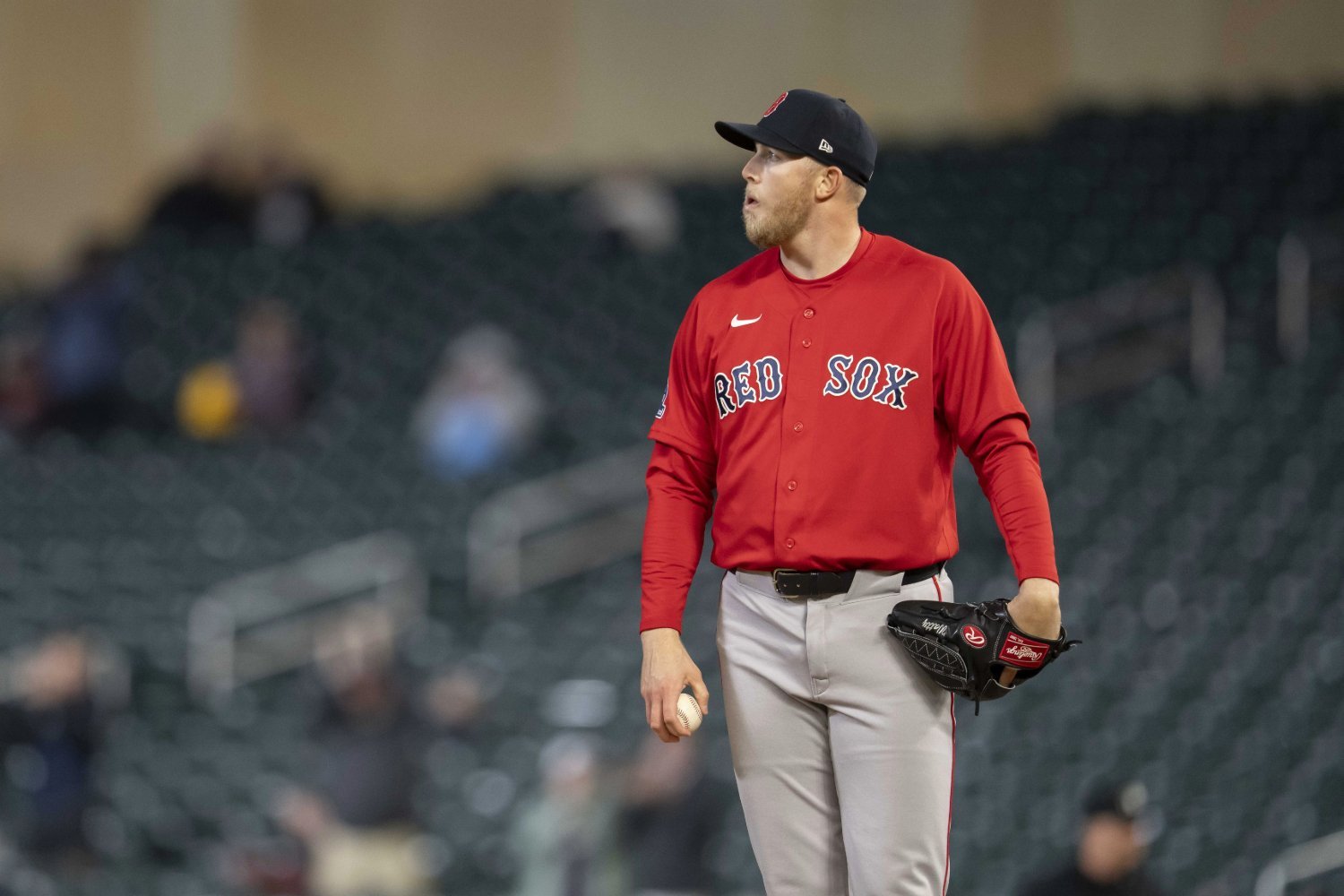 Not much was known about 28-year old Ryan Watson when he was acquired by the Boston Red Sox back in December in a complicate process in which he was selected and then promptly traded by the Athletics in the Rule 5 Draft. Then again, the same could be said about Garrett Whitlock after he was taken from the Yankees' minor league system in 2021, and Justin Slaten when he was acquired from the Mets via trade in 2024. It was the continued success of those two however, that gave fans some hope that the Red Sox could once again strike gold via the Rule 5 Draft, something most teams don’t usually hit on once let alone potentially three times. On paper, Watson profiled as an arm that checked a lot of boxes the Red Sox have gravitated towards in their recent reliever acquisitions. Pitching for Sacramento, the Triple-A affiliate of the San Francisco Giants, the 6-5 righty with great extension and a five-pitch mix owned a 4.26 ERA and 3.73 FIP across 50.2 innings while amassing 11.37 K/9 (28.1 K%) and 2.84 BB/9 (7.0 BB%) ratios. Those who follow FanGraphs will know that while those walk numbers put him into the average (2.9 BB/9, 7.7 BB%) to above-average (2.5 BB/9, 6.5 BB%) tier, his strikeout numbers graded out as excellent. It was those numbers one would think that made Watson a standout target for Breslow and ones he’d hoped Watson would carry over in his opportunity with Boston. Now ten appearances into his big-league career, and the owner of a 8.10 ERA and 7.38 FIP, it would appear the only thing Watson has carried over (outside of continuing to throw the kitchen sink at hitters), is his borderline elite ability to get downhill. His 7.2 feet of extension is good for the 95th percentile across MLB. After that, not much else has gone right; he’s not attacking hitters nearly enough to consistently be successful, and when he is, they’re lighting him up. Watson finds himself in just the second percentile in K% (10.5%) and 27th percentile in BB% (12.3%), both far cries from what made him such an appealing option to the Red Sox in the first place. Add in a league-average 25.3 Whiff% (48th percentile), a lack of chase on really any of the pitches in his repertoire (23.1%, 11th percentile), and the fact that he’s getting barreled up at a pretty frequent pace (16.3 Barrel%, 7th percentile) and 44.2% HardHit% (31st percentile), and you have a pitcher who is flirting with danger pretty much every time he steps out on the mound. Those choosing to come to Watson’s defense may argue that it is far too early to write him off after just 13.1 innings in the majors. Instead, time must be given to him like it was expected to be given to Whitlock and Slaten, who, similarly to Watson, were looked at as multi-inning arms out of the bullpen in their rookie campaigns. That argument falls apart rather quickly though when you look back and realize just how soon both were able to shed that label and become legitimate weapons and important pieces to Boston’s bullpens during those seasons. The 2021 campaign saw Whitlock dominate right out of the gate on route to becoming one of the most trusted relievers the Red Sox have had to this date. In his first ten outings, he accumulated a 1.77 ERA and 2.97 FIP over 20.1 innings pitched with a strong 9.30 K/9 (27 K%) and 1.33 BB/9 (4 BB%). If there was a spot where Whitlock struggled similarly to Watson, it was in his HardHit%, which came in at 46%, though the former was far better at keeping away from danger, holding opponents to a measly .227 average against. Fans will remember Slaten’s 2024 debut as the spot where he was tasked with coming into the 10th inning of a 3-3 game on Opening Day in Seattle and being asked to get out of a first-and-third, zero-outs jam with Mariners star Julio Rodriguez at the plate. As we all know that matchup went to Rodriguez, who walked off Slaten and the Sox, ruining the start to his big-league career. Following that, he absolutely dominated in his next 10 outings, pitching to a tune of an 1.40 ERA and 2.07 FIP in 17.1 innings with a 7.27 K/9 (23 K%) and similarly to Whitlock, outstanding 1.04 BB/9 (3 BB%). Contrary to what Watson has done so far, Slaten was also able to stay away from opponents' barrels, with a HardHit% of just 37% and opponents average of .140. While it is a totally fair case to make for giving rookies time to adjust to the top level, Watson, who is older and therefore should arguably be more polished, has not done a whole lot to instill any confidence in continuing to send him out there. Especially when he hasn’t been able to do the main thing that garnered him praise from Alex Cora in spring training when he was fighting for a roster spot: pound the strike zone. What may also be damning for Watson — outside of another rough outing yesterday where he entered the ninth with a five-run lead and ended up giving way to Aroldis Chapman to secure what became an 8-6 Boston victory — is the fact that the organization has not been shy at bringing up reinforcements so far this season. We’ve already seen the debuts of Tyler Uberstine, Tyler Samaniego, and Jack Anderson. With the likes of Payton Tolle (three starts, 3.00 ERA, 15.0 IP), Jake Bennett (four starts, 0.55 ERA, 16.1 IP), Seth Martinez (six appearances, 2.51 ERA, 14.1 IP), Devin Sweet (seven appearances, 3.86 ERA, 11.2 IP) and Tayron Guerrero (seven appearances, 1.42 ERA, 6.1 IP) all off to strong starts in Worcester, it’s beginning to feel like Watson may need to go on his Whitlock/Slaten-type run sooner rather than later if he wants to continue Boston’s trend of Rule 5 Draft Pick supremacy. Otherwise, he may wind up with a one-way ticket back to Sacramento. View the full article
 -
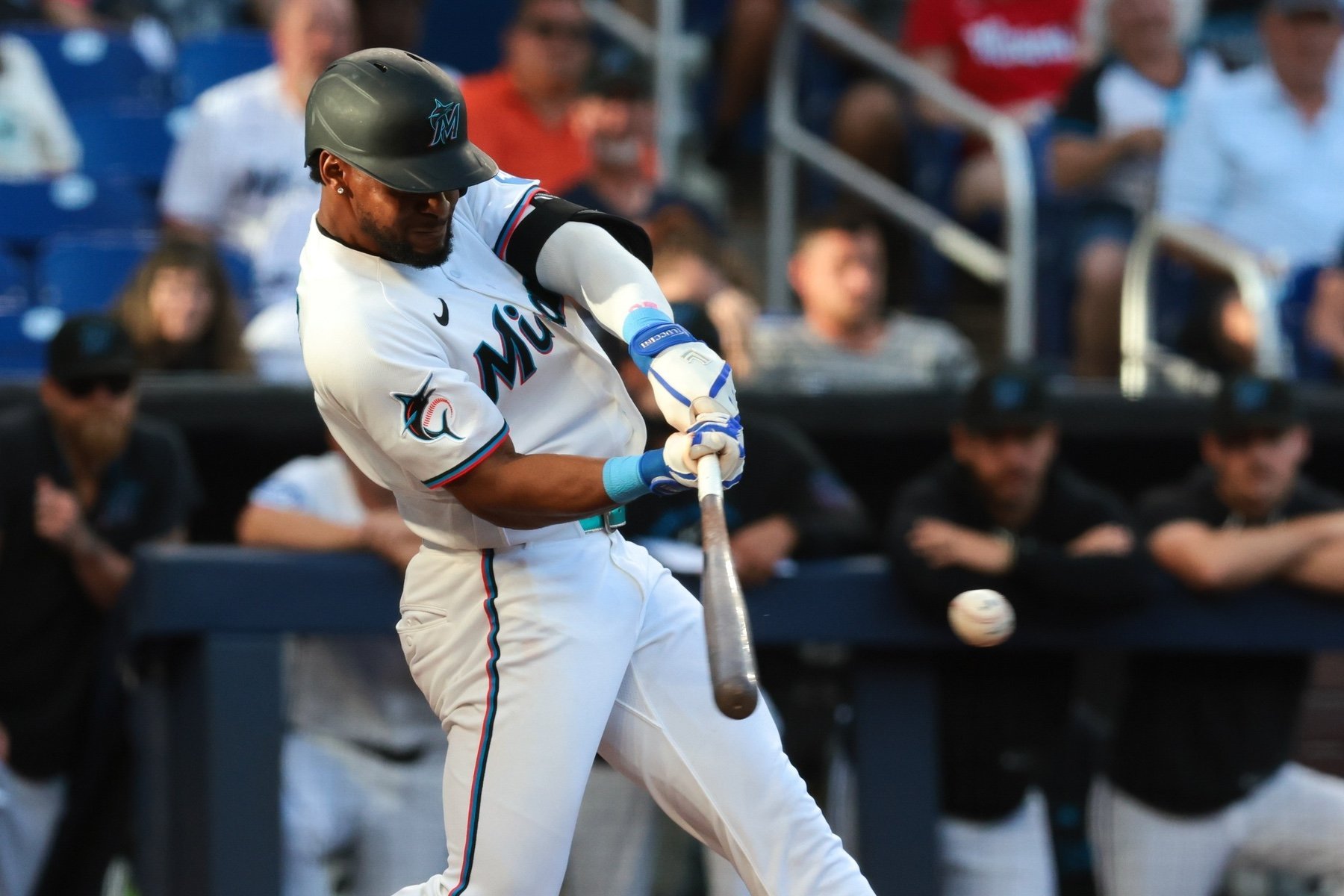 MIAMI, Fla. — Otto Lopez quickly impressed people in his first season with the Miami Marlins in 2024. The former waiver claim ended his rookie campaign with a .270 batting average, 20 stolen bases, and elite defense at second base. Offensively, Lopez's main assets were his contact ability and speed. The Dominican native boosted his home run total the following year, from six to 15. Lopez made even more contact and lowered his ground ball rate, yet his overall slugging percentage actually went down. Early in his age-27 season, it's all seemingly coming together. Lopez has found a home in the heart of the Marlins lineup—and near the top of some prestigious leaderboards. Now playing shortstop, Lopez is quantifiably hitting the ball harder than he ever has. Entering Tuesday, his hard-hit rate of 53.6% puts him above the 90th percentile of MLB hitters. Contrast that with the previous two seasons, when he ranked below average. The only qualified shortstop who edges him out in that category is Gunnar Henderson of the Baltimore Orioles (53.8%). His barrel rate—defined by Baseball Savant as the percentage of balls put into play with a perfect combination of exit velocity and launch angle—is also a career-high of 13.0%. This has culminated in a team-best 10 extra-base hits, the latest being a go-ahead RBI double in Monday's Marlins win. From a physical standpoint, Lopez credits hitting coaches Pedro Guerrero and Chris Hess with helping him engage his lower body more than his upper. He’s also been toying with “The Stack” this year, which is a bat-like tool with added weights that help improve swings, specifically by increasing bat speed. Lopez’s average bat speed is slightly higher than it was last year (72.1 miles per hour compared to 71.7 in 2025). Marlins manager Clayton McCullough says Lopez’s newfound power production is not just a byproduct of how he’s swinging, but what he’s swinging at. His pitch selection is allowing him to capitalize on the pitches he can inflict the most damage on, as opposed to just putting a ball in play. “There's less empty at-bats,” McCullough said. “There's less early-count chase. There's been less early-count soft contact. I think he just looks very hitterish right now.” Perhaps most impressive has been Lopez’s ability to add power without sacrificing his contact ability. His 16.3% strikeout rate and 19.5% whiff rate are both roughly on par with his typical career marks. “I think he has just given himself more of a chance to do this with consistency and regularity because the (pitches) that he's firing at give him the best chance to do that,” McCullough said. Getting balls up, out, over the plate, getting them elevated, or pitches that he can drive.” misisx.mp4 If Lopez were to maintain his .554 slugging percentage throughout 2026, it would be the 11th-highest single-season mark in Marlins history. The only shortstop who has ever topped that for this franchise was Hanley Ramírez in 2007 (.562 SLG), on his way to placing 10th in National League MVP voting. “He's a physically strong guy,” McCullough said of the 5’10”, 185-pound shortstop. “Maybe it doesn't appear that way. It's a really compact body. He's strong. He's got strong hands. There's speed in his bat. So I think it's not, to me, that completely shocking, that we're seeing some of this.” View the full article
 -
The Blue Jays’ Run Differential Is a Warning They Can’t Ignore
DiamondCentric posted an article in Jays Centre
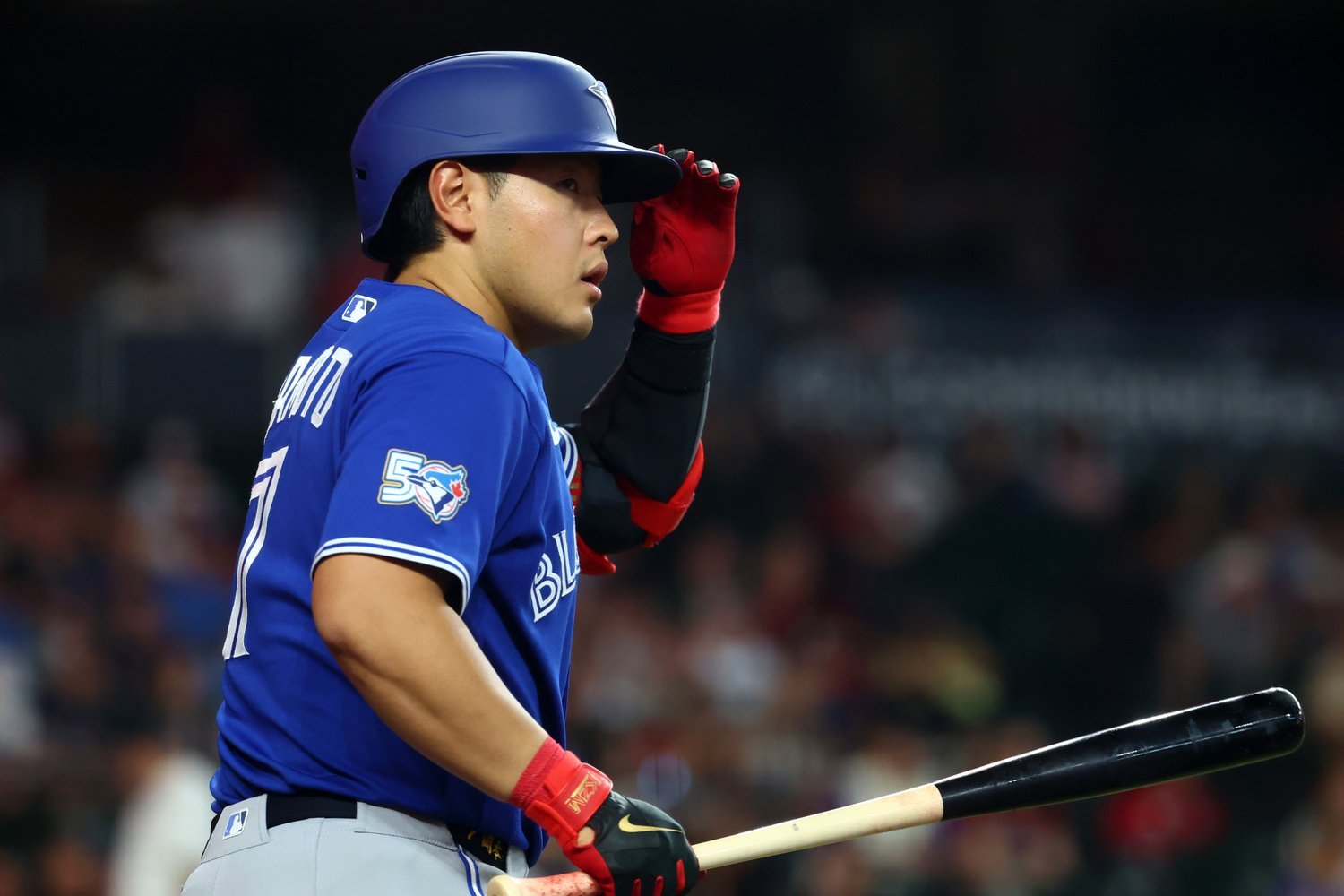 This piece was written prior to the Blue Jays game on Monday, April 20. The thing about run differential is that it paints a pretty clear picture of whether a team is good or not. You can hide a shaky bullpen for a week. You can ride a hot bat for a series. You can even be convinced that a few one-run losses are just bad luck and that the baseball gods will eventually even the score. But run differential provides a general overview of where a team sits. And right now, that truth isn't pretty for the Toronto Blue Jays. Entering their game on Monday, the Jays sit at -26, which places them 27th in Major League Baseball. Only the White Sox (-31), Royals (-32) and Phillies (-42) are worse. That is not the company the Jays expected to keep this season. Not after the front office spent the winter talking about stability and internal growth. Not after the rotation was reinforced and the lineup was supposed to take a step forward. Yet here we are with the Jays sitting at the bottom of the AL East in run differential. The AL East has always been a division that punishes weakness. It is the most unforgiving environment in baseball and rarely allows a team to fake its way into contention. Even in seasons when the standings look tight, the underlying performance usually reveals who is built for the long haul. That is why run differential matters so much. It is not just a measure of how many runs you score versus how many you allow. It is a measure of how competitive you are against the best. And the Jays have not been competitive enough. The Yankees sit near the top of the league with a +28. They are the only team in the division with a positive mark. The Orioles are one decisive win away from breaking even. The Rays are winning games despite a negative run differential (-11), while the Red Sox (-13) have a similar overall record to the Jays. The Jays have already lost games in just about every way possible over the first few weeks of the season. There have been games in which the offense disappeared for innings at a time. There have been games where the starters weren't great. There have been games where the rotation looked strong but received no support. And then there were the games against teams like the White Sox, who swept the Jays despite having one of the worst run differentials in the league themselves. That sweep showed that the Jays are not imposing their will on weaker opponents. Manager John Schneider and hitting coach Dave Popkins have acknowledged that Jays hitters are not “hunting” right now. Instead, they are reacting. Falling behind in counts and/or not extending at-bats to shift the advantage. The strange thing is that the Jays are not alone in their run differential challenges this season. Across the league, run differential is painting a picture that does not always match the standings. In the National League Central, all five teams sit within two games of one another in the standings. Yet, the first-place Reds have a -3 run differential, and the Cardinals, tied for second, have a -10 run differential. The Cubs, Pirates, and Brewers all have positive run differentials in the double digits. It is a division in which the numbers and the results are not aligned. It is a division that feels like it is waiting for someone to take control. Then there are the Braves, who are crushing everyone with a +62 differential. Atlanta is the only team in baseball that looks like it is playing a different sport. The Braves score in bunches. They pitch with authority. The Alex Anthopoulos team is a model of what a contender looks like. They are the reminder that run differential is not just a statistic. It is a statement. Elsewhere in the National League East, the Marlins sit at +1. They are all but the definition of average. They are not dominating anyone, but they are not being dominated either. They are floating in the middle of the pack, waiting for someone to define their season for them. So what does all of this mean for the Jays? It means that they are not just struggling. We all know their injury situation, but the run differential tale suggests deeper issues. Teams with strong differentials tend to make the playoffs. Teams with weak differentials tend to fade. There are exceptions, but they are rare. The Jays are not just losing games. They are losing them by margins that suggest they might not be competitive enough to survive the grind of the season. The Jays have been here before. They have had seasons where the talent looked good on paper, but the results never matched. They have had seasons where the offense looked dangerous but never delivered in big moments. They have had seasons where the pitching looked strong, but the bullpen could not hold leads. This season feels like a combination of all of those frustrations. It feels like a team that is stuck between what it wants to be and what it actually is. The Jays are not a bad team, they are a flawed one. They are a team that has enough talent to compete but not enough consistency to dominate. They are a team that can beat anyone on a good day but can lose to anyone on a bad day. The question is whether the Jays will listen. The front office has always believed in this roster. They have always believed that the core is strong enough to win. The numbers are telling a different story. Clearly, the team is in need of more offense. They need more bullpen stability, and, above all else, they need to find some urgency. The rest of the AL East isn’t waiting to see what happens with the Jays. The Jays cannot afford to remain in the division’s basement. They need to start winning games by margins that reflect their talent. That means more games like Sunday's win against the Diamondbacks. All the pieces, including the injured ones, are there. They have the rotation. They have the core hitters. They have the experience. Consistency comes through discipline. Quick innings in the field and extended innings at the plate. You won’t score eight runs in the first inning every game, but you can force the opponent’s pitcher to throw 20 or 30 pitches in each of the first two or three innings. Analyzing run differential at this point in the season is more of a warning than a destiny. The Jays are simply not where they need to be. There is still lots of time to turn things around. Soon, if not right away, they need to start treating every game like it matters. The warm glow of last season’s success has nearly disappeared. In 2025, the Jays finished the season with a run differential of +77. Yankees were +164, the Red Sox +110, the Rays +31 and the Orioles -111. The Guardians won the AL Central division with a run differential of -6, while the Dodgers’ +142 was eclipsed by the Brewers, who wrapped up 2025 at +172. What does that all tell us? Balanced teams tend to win. Shocking? No, but when teams can turn a negative into a positive, good things can happen. The question for the Jays is whether they will. View the full article
