


DiamondCentric
-
Posts
2,631 -
Joined
-
Last visited
Never
Content Type
Profiles
Forums
Events
News
Tutorials & Help
Major League Baseball Videos
Guides & Resources
Store
Downloads
Gallery
Everything posted by DiamondCentric
-

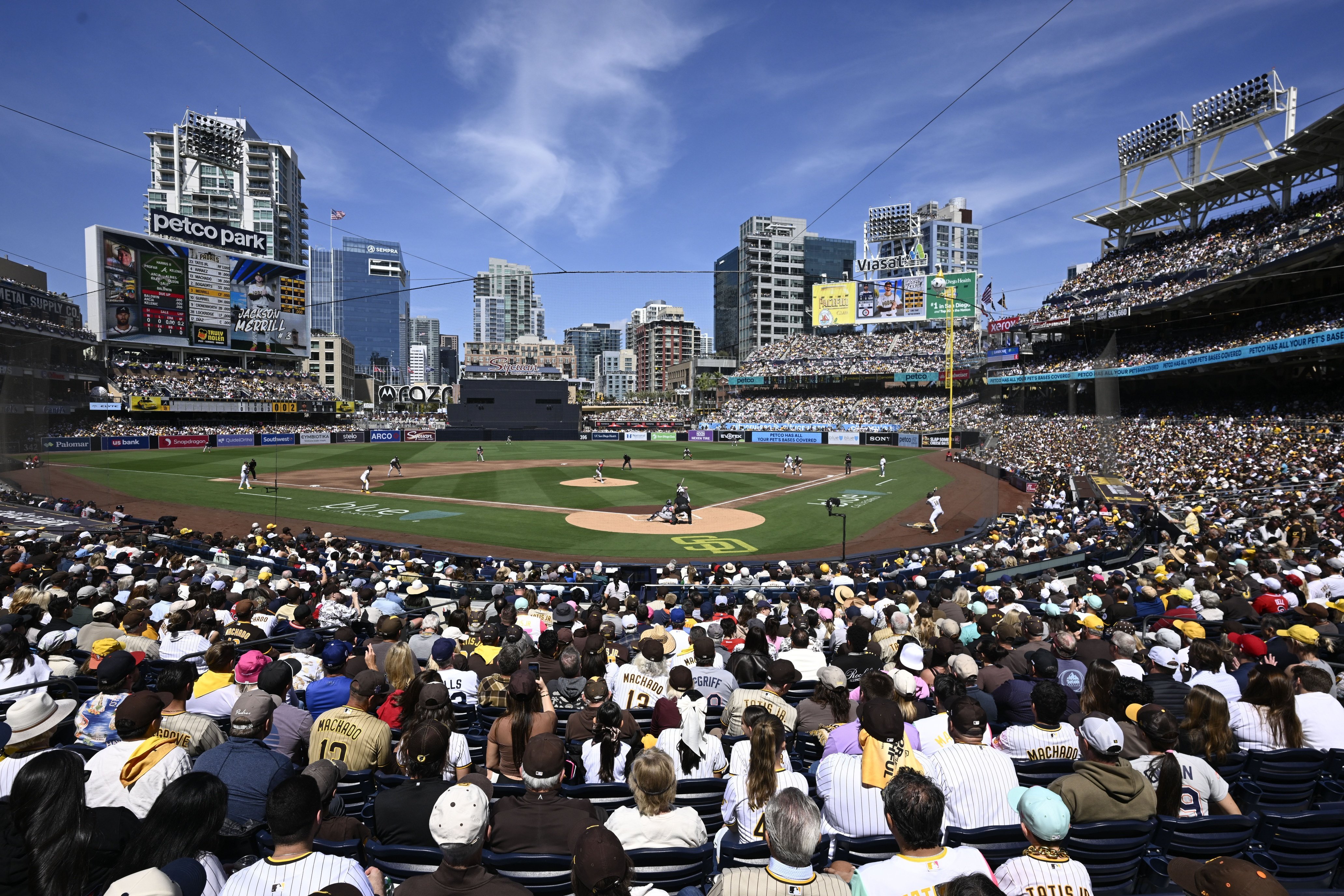 The sale of the San Diego Padres just reset the ceiling for Major League Baseball franchise valuations, and it should send a very clear message back to the Pohlad family. According to Jared Diamond of the Wall Street Journal, the Padres were sold to private-equity billionaire José E. Feliciano and his wife Kwanza Jones for a record $3.9 billion. That number doesn’t just stand out on its own. It becomes even more eye-opening when placed next to what the Pohlad family was seeking when they explored selling the Minnesota Twins. Back in October of 2024, the Pohlads made it known they were open to selling the franchise. Reports from The Athletic at the time indicated they were looking for at least $1.7 billion, a number that already exceeded Forbes’ valuation of the team at $1.46 billion. Offers reportedly reached around $1.5 billion, but those weren’t entertained. Part of the justification for holding firm was tied to roughly $425 million in debt attached to the franchise. Fast forward to now, and the gap between what the Twins were hoping to get and what the Padres actually received is massive. San Diego sold for more than double Minnesota’s reported asking price. Even more notably, the Padres entered the sale with a Forbes valuation of $3.1 billion, meaning they sold for roughly $800 million above that estimate. The Twins, on the other hand, struggled to draw offers that even matched their valuation. At first glance, market size might seem like an easy explanation, but it doesn’t hold up under scrutiny. Minneapolis-St. Paul ranks as the 16th-largest media market in the United States, while San Diego comes in at 18th. The Padres generating significantly more value than the Twins, despite being in a slightly smaller market, challenges the idea that market size alone dictates franchise worth. This gap becomes even more interesting when looking back less than a decade. In 2017, Forbes valued the Padres at $1.13 billion, ranking 21st in MLB. Right behind them were the Twins at $1.03 billion. At that point, the two franchises were essentially peers in terms of valuation and on-field results, both coming off seasons with more than 90 losses. From there, the paths diverged in a major way. The Padres chose aggression. Their payroll rankings since 2017 tell the story: 28th, then climbing to 25th, 24th, 10th, 6th, 5th, 3rd, dipping briefly, and now back up near the top of the league in 2026. This is a team that consistently spent beyond what traditional market logic would suggest. In multiple seasons, their payroll pushed well past 60 or 70 percent of team revenue. There were likely years where profitability took a back seat entirely. The Twins, on the other hand, have followed a much flatter trajectory. In 2017, their payroll ranked 21st in baseball, actually ahead of the Padres at the time. But since then, the Twins have never exceeded 16th in payroll ranking, and in 2026 they sit 22nd in the league, below even that 2017 starting point. While one organization accelerated its investment, the other largely maintained or even pulled back relative to the rest of the sport. That divergence in spending philosophy shows up everywhere. Former Padres owner John Seidler approached the franchise with a long-term vision. Rather than managing the team purely as a year-to-year business, he treated it as an investment in relevance, fan engagement, and contention. The Padres committed massive contracts to players like Manny Machado, traded for stars like Juan Soto, and made a point to stay in the national conversation. That strategy paid off. Not necessarily in annual profit margins, but in franchise value. The Padres transformed from a $1.13 billion team in 2017 into a $3.9 billion sale in 2026, completing the largest transaction in MLB history. The Twins took a different route. While their valuation did rise over time, it didn’t come close to keeping pace. From $1.03 billion in 2017 to struggling to surpass $1.5 billion in actual offers during their sale process, the growth has been comparatively modest. Over the last few seasons in particular, the Twins have operated with a more conservative approach, limiting payroll expansion and largely avoiding major splash moves that generate widespread attention. There are other contributing factors, of course. San Diego offers an attractive lifestyle and has a concentrated base of wealth. The Padres also benefit from being the only “Big 4” professional sports team in the city, allowing them to capture a larger share of local attention. But those elements alone don’t explain a multi-billion dollar gap. Fan engagement is another key piece. The Padres drew nearly 3.5 million fans in 2025, setting a franchise attendance record. The Twins, meanwhile, dropped to around 1.77 million, their lowest full-season mark since the Metrodome era. One franchise created urgency and excitement. The other failed to maintain it. The Padres provide a clear example of what can happen when an organization prioritizes investment in the on-field product, even at the expense of short-term returns. Their rise in valuation wasn’t accidental. It was built through sustained spending, star power, and a commitment to relevance. For the Twins, this moment serves as a comparison point that’s difficult to ignore. The idea that small or mid-sized markets can’t support aggressive spending looks less convincing when a team like San Diego not only spends, but turns that spending into long-term franchise growth. There’s a lesson here about how value is created in modern baseball. It’s not just about controlling costs or maximizing yearly profit. It’s about building a product that people care about, one that draws fans, commands attention, and ultimately becomes more valuable when it hits the open market. The Padres leaned into that approach and were rewarded in a historic way. The Twins now face a choice in how they want to be viewed moving forward. What do you think? Should the Twins take a more aggressive approach to spending and team-building, or is there another path to closing that valuation gap? View the full article
 -
Can Moises Ballesteros Win NL Rookie Of The Year?
DiamondCentric posted an article in North Side Baseball
 Former Cubs top prospect Moises Ballesteros is red-hot out of the gates to start the 2026 season. What is contributing to this prolific stretch, and can Ballesteros take home NL Rookie of the Year honors in a crowded field that includes JJ Wetherholt, Konnor Griffin, and more? We break it all down in this video. Enjoy! View the full article
 -
Red Sox Prospect Franklin Arias Is Putting Up Video Game Numbers
DiamondCentric posted an article in Talk Sox
 The Red Sox no. 2 prospect, Franklin Arias, is hitting over .500 with the Portland Sea Dogs, the Double-A affiliate of the Boston Red Sox. In this video, we take a walk through his journey as a professional baseball player, break down how he's managed such a strong start, and estimate when he could make his debut in front of Fenway faithful. View the full article
 -
 Transactions: RHP Carlos Rodriguez recalled by MLB Brewers from AAA Nashville RHP Coleman Crow optioned to AAA Nashville from MLB Brewers RHP Reiss Knehr assigned to Nashville Sounds from ACL Brewers The Knehr move was a paper transaction activating him after he had recently signed as a minor league free agent. Notes on Knehr were posted within our transaction thread Saturday. We received news of an early Sunday AM move: OF Damon Keith activated from AA Biloxi’s 7-day injured list I, for one, am super-pleasantly surprised, detailed here. Nashville Pre-Game Media Notes Final: Nashville 2, Worcester (Red Sox) 1 Box Score and Game Log Via the Sounds, game details, and we encourage readers to always review affiliate write-ups as part of their Link Report routine: Strong Pitching Keeps Sounds' Win Streak Rolling Considering it was such a low scoring affair, the linked write-up justly takes you through the contest on a half-inning by half-inning basis. The game featured 25 strikeouts, so the theme was established via the bobblehead giveaway. Nice touch on the photo with the matching skylines. We had been waiting for this shot, and as per Williams' history, it was pulled: Voice of the Sounds Jeff Hem is so good at his craft, as this call exemplifies. Pay attention, MLB clubs! In case you were wondering how to pronounce the name of the new guy mentioned in the Transaction section above: More video: Zamora-to-Pratt-to-Wilken to aid McGee's cause Murray sacrifice fly It will be fascinating to see how Boston's Kristian Campbell contract extension (take a peek) ages in comparison to Cooper Pratt's. Cautionary tale so far. It's only been five games split between second and third base, but old friend Anthony Seigler is off to a slow start at the plate after his brief season-opening injury list stint. Jett Williams got a partial rest day as the designated hitter here. Ramon Rodriguez got the nod behind the plate after sitting out Friday's two games, and fellow backstops Jeferson Quero and Andrick Nava comprised two-thirds of Manager Rick Sweet's bench, along with true backup everything Jheremy Vargas. Of course, look for both Quero and Rodriguez to shuttle into the DH spot often. Rest assured RH relievers Blake Holub and Will Childers have the attention of Matt Arnold and team. It's a long season, and regardless of 40-man roster constraints, future needs may dictate opportunities for either or both of that duo. Biloxi Pre-Game Media Notes Final: Biloxi 10, Columbus (Braves) 1 Box Score and Game Log Catch up with the latest Biloxi pre-game audio interview archives - Added Saturday were Manager Mike Guerrero (from Friday) and 1B/OF Tayden Hall Via the Shuckers, game details: Shuckers All-Around Effort Ends Three-Game Slide in Columbus - Shuckers Score 10, Pitching Staff Surrenders Two Hits in 10-1 Victory One would imagine there are a lot of positives out of this one, and that game summary review you just read must have raised your eyebrows a few times, as in, my things are going well for certain players, aren't they (despite a middling - by definition - 7-7 record for the team). In order to hear the Shuckers' call on the O'Rae home run, as well as to view Eduardo Garcia's blast, enjoy this trifecta post from the team. More video? Sure! Burke's RBI line drive single Garcia yanks an RBI double Superman dive for Nicasia Darrien Miller RBI single down the line Wild pitch scores the final Biloxi run Ending the game in 6-4-3 fashion Through three starts and 15 innings, RHP Jaron DeBerry has a WHIP of just 1.13 despite issuing 14 free passes (11 walks, three HBP's - mix in two wild pitches and two balks). It's been an adventure for the 2024 3rd rounder, yet he's only allowed six hits, two of those doubles. The bullpen trio of Edwin Jimenez - Patricio Aquino - Sam Garcia performed just as any manager would hope with a big lead. Eduardo Garcia is a super-interesting dude. Somehow still just 23 years old (24 on July 10th), he was eligible for minor league free agency before he and his agent were convinced to return for 2026. In 34 games vs. Dominican Winter League competition an average of nearly seven years older than himself, he posted a .324/.395/.581(!) line. Upon completing rehab from a hand injury suffered in the D.R., Garcia has posted even stronger number in the still small seven-game sample. With defensive chops at SS/3B/CF/LF, even with a seemingly painful roster crunch looming this offseason, if Garcia maintains anything near this pace, he'd be a prime candidate for a 40-man roster spot to retain his rights again. Wisconsin Pre-Game Media Notes (download link) Final: Wisconsin 8, Peoria (Cardinals) 7 Box Score and Game Log Via the Timber Rattlers, game details: Wisconsin Rallies for Win in Ninth Inning - Adamczewski homers twice, drives in five runs, & scores winning run to cap a two-run ninth inning OK, so first of all, T-Rat coverage overall is supremely impressive, in particular for home contests. Even more so than in past years, the club is incorporating the social media posts into the game summaries (hey, that's a "Link Report" tradition!), and it goes without saying that you should take in both of the full media sites below, especially given the very entertaining nature of this game. The full YouTube package allows me to avoid linking to individual plays, and the Postgame Podcast is always a fine listen, this one concise at 17 minutes. All those "Frosty K" mentions in the highlight package were never so literal, check out the outfits of those hardy fans! Andrew Fischer lifted his OBP to .385 by reaching in all five trips (double, two singles, two walks). One of Josh Adamczewski's 65 defensive innings in 2026 came at second base, otherwise all have been in left field. It was a wise move by the organization to recognize that the combination of infield depth in the system and Adamczewski's offensive potential would support a move to left field, which at this time certainly seems permanent. The young man turns 21 on May 10th. You could take the Jaron DeBerry narrative from above and apply it to Bryce Meccage. The 20-year-old right-hander has only allowed five hits (one double) in 10.1 innings over three starts. There's been 12 walks and two wild pitches thus far, though his curve ball certainly looked lethal in the highlight package. Wilson Pre-Game Media Notes Final: Hill City (Guardians) 3, Wilson 1 Box Score and Game Log Howlers Shutdown Warbirds Offense in Victory - Warbirds Strand 11 In Loss Well, here's your lone Wilson "highlight", and it's in quotes because it was unearned. It's not the first time this season the Warbirds' lone tally was of that variety. Here's an exercise for you this morning, it'll only take a few moments, promise. Here's the link for team batting statistics for the Carolina League, for the moment the category highlighted you'll see is bases on balls, where Wilson leads the league and it's not that close, with 95 through 14 games, nearly seven per game. OK, now, click on every single other category in the sortable database. The Warbirds are either last or next-to-last and hide the children's eyes before you click on that SLG column. Hide the children in your family's eyes from that, yikes. Nearly 2,800 on hand for this game, and the locals may start to notice a pattern before too long. RF Handelfry Encarnacion walked thrice and was plunked, raising his OBP to .293. The team's power bat, CF Jose Anderson, finished 0-for-5 with four K's, collecting Golden Sombrero #2. Six of Anderson's ten base hits have gone for extra bases, and he's driven in 15 in just 52 at-bats. However, Anderson is striking out in exactly half of his plate appearances in the early going. That number was 28.5% in 2025, so there's hope for recovery in that regard. Warbirds pitchers are middle-of-the-pack in issuing walks thus far, but walked seven here, and RHP Carlos Carra's three free passes led directly to his two runs allowed. One year ago on this date, the Carolina Mudcats were 11-2, having outscored opponents 101-58. Ah, those were heady times, with the fruits being realized in Wisconsin now. Early afternoon action across the board Sunday, with a collection of four strong arms on tap as the scoreboard link below will show. Have a great Sunday, all! Organizational Scoreboard including starting pitcher info, game times, MiLB TV links, and box scores Current Milwaukee Brewers Organization Batting Stats and Depth Current Milwaukee Brewers Organization Pitching Stats and Depth View the full article
 -
Keep An Eye On Jose Olivares, Cedar Rapids Right-Hander
DiamondCentric posted an article in Twins Daily
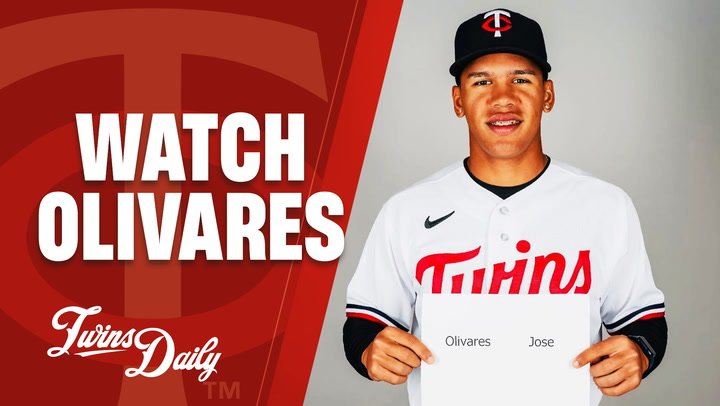 There are some under-the-radar arms at Double-A Wichta, and Jamie shares why Jose Olivares is one of those to follow along in 2026. View the full article
 -
 The Mets' farm went 4-1 on Saturday. Syracuse swept a doubleheader against Scranton/Wilkes-Barre, 9-4 and 7-4, with home runs from Ronny Mauricio, Ryan Clifford, Vidal Bruján, and Onix Vega powering game one, while Brandon Waddell earned the win in game two. Brooklyn topped Greensboro 8-3 behind Irving Cota's four scoreless innings of relief. St. Lucie beat Daytona 12-8. Binghamton's Brendan Girton allowed one run in four innings, but Akron walked off for a 5-4 win. Mets Transactions New York Mets placed 2B Jorge Polanco on the 10-day injured list retroactive to April 15, 2026. Right wrist contusion. New York Mets recalled C Hayden Senger from Syracuse Mets. Four Homers Carry Syracuse To 9-4 Win In Doubleheader Opener The Syracuse Mets took game one of a doubleheader 9-4 against the Scranton/Wilkes-Barre RailRiders with a four-home run effort in the seven-inning contest. Carl Edwards Jr. earned the win after five innings, allowing three runs on three hits, walking three, and striking out two. Mike Baumann followed with one inning of work, giving up one run on one hit with a walk and two strikeouts. Alex Carrillo closed the door with a scoreless inning featuring two strikeouts. Ryan Clifford drove in three runs on two hits, including a home run from the cleanup spot, scoring twice. Ronny Mauricio homered and drove in one run while scoring once. Vidal Bruján homered and added two RBIs, scoring once. Onix Vega contributed a two-RBI home run while Jackson Cluff, Yonny Hernández, Ji Hwan Bae, and Cristian Pache each added one hit. Nick Morabito drew two walks and scored a run from the leadoff spot. The Mets finished with nine hits, four walks, four strikeouts, and left seven runners on base. Player AB R H RBI BB K Nick Morabito 2 1 0 0 2 0 Ji Hwan Bae 3 1 1 0 1 1 Ronny Mauricio 4 1 1 1 0 1 Ryan Clifford 3 2 2 3 1 0 Vidal Bruján 3 1 1 2 0 1 Cristian Pache 4 0 1 0 0 1 Jackson Cluff 4 1 1 0 0 0 Yonny Hernández 2 1 1 0 0 0 Onix Vega 3 1 1 2 0 0 Player IP H R ER BB K HR Carl Edwards Jr. 5 3 3 3 3 2 1 Mike Baumann 1 1 1 1 1 2 0 Alex Carrillo 1 0 0 0 0 2 0 Syracuse Completes Sweep With 7-4 Win In Nightcap The Syracuse Mets finished off a doubleheader sweep with a 7-4 win over the Scranton/Wilkes-Barre RailRiders in the seven-inning nightcap. Bryce Conley started and gave Syracuse four innings, allowing one run on two hits with one walk, one strikeout, and one home run. Brandon Waddell earned the win with three innings of work, giving up three runs on four hits, walking none, striking out two, and allowing two home runs. Ryan Clifford led the offense with a home run, two RBIs, and a run scored on two hits from the cleanup spot. Ronny Mauricio drove in three runs on a hit while scoring once, while Jihwan Bae went 2-for-3 with two runs scored. Cristian Pache collected two hits and a run scored. Nick Morabito added a hit and scored twice from the leadoff spot. Yonny Hernández, Vincent Perozo, and Trace Willhoite contributed as well, with Willhoite driving in a run. Syracuse scored one run in the second, two runs in the third, one in the fourth, and three in the fifth. The Mets finished with 10 hits, no walks, and three runners left on base. Player AB R H RBI BB K Nick Morabito 4 2 1 0 0 0 Ji Hwan Bae 3 2 2 0 0 1 Ronny Mauricio 3 1 1 3 0 1 Ryan Clifford 3 1 2 2 0 0 Vidal Bruján 2 0 0 1 0 0 Cristian Pache 3 1 2 0 0 1 Yonny Hernández 3 0 1 0 0 0 Trace Willhoite 2 0 0 1 0 0 Vincent Perozo 3 0 1 0 0 2 Player IP H R ER BB K HR Bryce Conley 4 2 1 1 1 1 1 Brandon Waddell 3 4 3 3 0 2 2 Brendan Girton Solid In Binghamton's 5-4 Walk-Off Loss The Binghamton Rumble Ponies fell 5-4 to the Akron RubberDucks in a walk-off loss with one out in the bottom of the ninth inning. Brendan Girton started and delivered four innings, allowing one run on three hits, walking three, striking out five, and giving up one home run. Jefry Yan worked 1 1/3 innings and allowed one run with four walks and three strikeouts. Douglas Orellana followed with 1 1/3 innings, allowing one run on no hits with three walks and a strikeout. Jordan Geber added 1 1/3 innings, allowing one hit and a walk without giving up a run. Ben Simon took the loss and blew the save after just one-third of an inning, allowing two runs on two hits. Eli Serrano III led the offense with a single, a walk, and two RBIs from the cleanup spot. Matt Rudick went 1-for-4 with two RBIs, while A.J. Ewing collected two hits and a run scored from the leadoff spot. Nick Lorusso added a hit and a run scored. Marco Vargas drew two walks and scored once. Binghamton struck out 10 times and left 10 runners on base. Player AB R H RBI BB K A.J. Ewing 5 1 2 0 0 2 Marco Vargas 3 1 0 0 2 1 Chris Suero 4 0 1 0 1 0 Eli Serrano III 3 0 1 2 1 2 Jose Ramos 4 0 0 0 1 1 D'Andre Smith 3 1 0 0 1 1 Nick Lorusso 4 1 1 0 0 1 Matt Rudick 4 0 1 2 0 1 Wyatt Young 3 0 1 0 1 1 Player IP H R ER BB K HR Brendan Girton 4 3 1 1 3 5 1 Jefry Yan 1 1/3 0 1 1 4 3 0 Douglas Orellana 1 1/3 0 1 1 3 1 0 Jordan Geber 1 1/3 1 0 0 1 0 0 Ben Simon 1/3 2 2 1 0 0 0 Irving Cota's Four Scoreless Lift Cyclones Past Greensboro The Brooklyn Cyclones topped the Greensboro Grasshoppers 8-3 at home behind a 13-hit offensive output. Joel Díaz started and gave three innings, allowing three runs on five hits with four walks and three strikeouts. Irving Cota followed with four scoreless innings of relief to earn the win, giving up two hits, one walk, and three strikeouts. Gregori Louis pitched a scoreless inning with three strikeouts, and Cristofer Gomez finished with a scoreless inning featuring two walks and a strikeout. Ronald Hernandez led the offense from the two-hole with two hits, two walks, three RBIs, and a run scored. Colin Houck collected three hits and drove in two runs, while Daiverson Gutierrez added two hits and a run scored. John Bay drove in a run while scoring twice with a single. Yohairo Cuevas added a single, a walk, one RBI, and a run scored. Heriberto Rincon collected two hits and scored once from the nine-hole. Mitch Voit added a hit and scored once from the leadoff spot. Corey Collins singled, drew two walks, and scored a run. Diego Mosquera added an RBI. Brooklyn finished with 13 hits, six walks, struck out nine times, and left 13 runners on base. Player AB R H RBI BB K Mitch Voit 5 1 1 0 0 0 Ronald Hernandez 3 1 2 3 2 1 Daiverson Gutierrez 5 1 2 0 0 2 Corey Collins 3 1 1 0 2 0 John Bay 4 2 1 1 0 1 Colin Houck 4 0 3 2 1 1 Yohairo Cuevas 4 1 1 1 1 3 Diego Mosquera 4 0 0 1 0 0 Heriberto Rincon 5 1 2 0 0 1 Player IP H R ER BB K HR Joel Díaz 3 5 3 3 4 3 0 Irving Cota 4 2 0 0 1 3 0 Gregori Louis 1 0 0 0 0 3 0 Cristofer Gomez 1 0 0 0 2 1 0 St. Lucie Pounds Out 13 Hits In 12-8 Win At Daytona The St. Lucie Mets defeated the Daytona Tortugas 12-8 on the road behind 13 hits and a four-run ninth inning. Cam Tilly started and went three innings, allowing seven runs, four earned, on four hits with two walks, four strikeouts, and two home runs. Luke Jackson pitched a scoreless inning with three strikeouts and a walk. Ryan Dollar gave up one run on no hits with two walks and two strikeouts in one inning. Joe Scarborough added two scoreless innings with three strikeouts and a walk. Miguel Mejias earned the win with a scoreless inning. Tyler McLoughlin closed with a scoreless inning. Chase Meggers led the offense with three hits, a walk, one RBI, and two runs scored from the six-hole. Elian Peña went 2-for-5 with a walk, two RBIs, and a run scored from the leadoff spot. Francisco Toledo added two hits, two runs scored, and one RBI. Simon Juan drove in two runs on two hits. Vladi Gomez singled, walked, drove in one run, and scored twice. AJ Salgado singled, walked, and scored twice. Sam Biller and Sam Robertson each added one hit. Randy Guzman drew two walks and scored twice. St. Lucie struck out 11 times and left eight runners on base. Player AB R H RBI BB K Elian Peña 5 1 2 2 1 1 Sam Robertson 6 0 1 0 0 2 Randy Guzman 3 2 0 0 2 1 AJ Salgado 4 2 1 0 1 2 Simon Juan 5 0 2 2 0 3 Chase Meggers 4 2 3 1 1 1 Sam Biller 5 1 1 0 0 0 Francisco Toledo 4 2 2 1 1 0 Vladi Gomez 3 2 1 1 1 1 Player IP H R ER BB K HR Cam Tilly 3 4 7 4 2 4 2 Luke Jackson 1 1 0 0 1 3 0 Ryan Dollar 1 0 1 1 2 2 0 Joe Scarborough 2 2 0 0 1 3 0 Miguel Mejias 1 1 0 0 0 1 0 Tyler McLoughlin 1 0 0 0 2 1 0 View the full article
 -
 Twins System Recap: In a rough day across the system, C.J. Culpepper and Hendry Mendez of Wichita salvaged the day. Culpepper struck out seven batters over 4 2/3 innings, and Mendez swatted his third homer of the week. Also today, Royce Lewis homered in his first rehab game with the Saints, and Emmanuel Rodriguez set a new St. Paul record for exit velocity. View the full article
 -
New York Mets 2026 Top Prospects Rankings: Nos. 11-15
DiamondCentric posted an article in Grand Central Mets
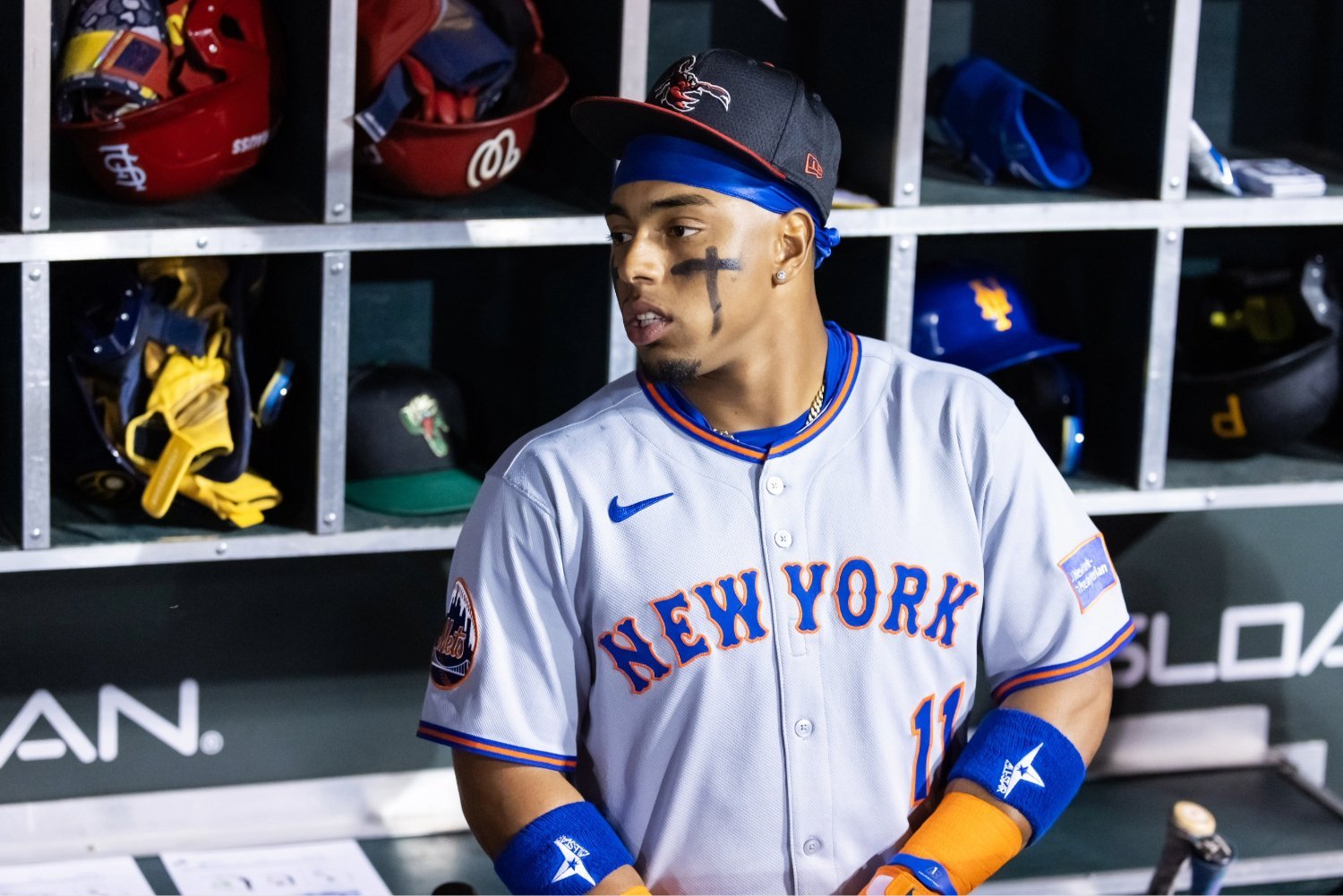 The New York Mets are seeing results from owner Steve Cohen's commitment to improving the farm system. Homegrown players such as Nolan McLean and Carson Benge have already made it to Flushing, and the next wave of prospects is not far behind. Grand Central Mets is profiling that up-and-coming group in this series. You can find Part 1 (Nos. 16-20) here. Here's a look at the second set of prospects in our 2026 Top 20 ranking --- the players ranked 11th through 15th. Four of these prospects are teammates to begin 2026. The fifth player hasn't yet begun his pro career, but he may have the highest ceiling of this group. 15. Will Watson, RHP (Binghamton Rumble Ponies) Year Age AgeDif Tm Lg Lev Aff W L W-L% ERA RA9 G GS GF CG SHO SV IP H R ER HR BB IBB SO HBP BK WP BF WHIP H9 HR9 BB9 SO9 SO/W 2026 23 -2.0 BNG EAS AA NYM 0 1 .000 5.14 6.43 2 2 0 0 0 0 7.0 7 5 4 1 4 0 7 1 0 1 1.571 9.0 1.3 5.1 9.0 1.75 Watson, 23, was a two-way player in junior college but switched to full-time pitching after transferring to USC in 2024. The move paid off, as the Mets took him in the seventh round of the 2024 MLB Draft and then promoted him to Double-A late last year. He got a look in major-league spring training before going back to Binghamton for the start of the 2026 season. Watson throws a four-seamer, two-seamer, cutter, changeup and slider. Per MLB.com, his pitch speeds last year ranged from the mid-90s with his fastballs to the mid-80s with the slider. The horizontal movement on his changeup gives Watson reverse-splits potential. Left-handers compiled a .561 OPS and hit three home runs against him last season, while righties put up a .623 OPS with five homers. His ground-ball rate jumped after the promotion to Double-A -- 57.1 percent at Binghamton compared to 44.8 percent at High-A Brooklyn. Control was an issue, however, with an 11.6 percent overall walk rate. Watson issued four free passes in his first seven innings of 2026. 14. Wandy Asigen, SS (DSL Mets) The 16-year-old Asigen caused a stir during this year's January international signing period when he backed out of an agreement with the Yankees at the last minute to sign with the Mets for $3.9 million. Subway Series rivalry aside, Asigen's decision was significant because of his prospect status; he's ranked No. 2 overall in the January class by MLB Pipeline. Asigen's ranking is based on high-end tools. He has both 60-grade power and 60-grade speed according to MLB.com's scouting report. He has drawn raves for his bat speed (exit velocities in the 110s), his ability to lift the ball, and his ability to barrel up pitches. One concern is how he'll handle fastballs up and away, but that's a skill he can develop over time. He already has decent size, listed at 6-0 and 180 pounds. Asigen is not coming into the pro game as a raw prospect, either. He is already a seasoned international player, including representing the Dominican Republic in the 2024 WBSC U-15 World Cup. He'll debut in the Dominican Summer League, but he has the tools to move through the organization quickly. 13. Zach Thornton, LHP (Binghamton Rumble Ponies) Year Age AgeDif Tm Lg Lev Aff W L W-L% ERA RA9 G GS GF CG SHO SV IP H R ER HR BB IBB SO HBP BK WP BF WHIP H9 HR9 BB9 SO9 SO/W 2026 24 -1.0 BNG EAS AA NYM 0 0 .000 1.69 1.69 1 1 0 0 0 0 5.1 2 1 1 0 1 0 4 0 0 0 19 0.563 3.4 0.0 1.7 6.8 4.00 Thornton, 24, took a big step forward last year before suffering a season-ending oblique injury in June. He posted a 1.98 ERA, 28.5 percent strikeout rate, 4.0 percent walk rate and 1.8 percent home run rate in 14 starts and 72 2/3 innings between High-A Brooklyn and Double-A Binghamton. He made a good impression in spring training this year, allowing one run over 6 2/3 innings. The 2023 fifth-round draft pick out of Grand Canyon University in Phoenix relies on his ability to pitch. He complements a deceptive low-to-mid-90s fastball with a plus two-plane slider in the mid-80s and a cutter in the upper 80s. He also throws a changeup and a slow curveball. He attacks hitters in the strike zone, as evidenced by the walk rate. Thornton is back in Binghamton's rotation to begin 2026. Being left-handed with funk will give him an advantage as he works toward a promotion. 12. Chris Suero, C/OF/1B (Binghamton Rumble Ponies) Year Age AgeDif Tm Lg Lev Aff G PA AB R H 2B 3B HR RBI SB CS BB SO BA OBP SLG OPS TB GDP HBP SH SF IBB 2026 22 -1.9 BNG EAS AA NYM 6 29 21 8 6 0 1 3 10 3 1 6 11 .286 .448 .810 1.258 17 0 1 0 1 0 The New York-born Suero, 22, signed with the Mets as an international free agent out of the Dominican Republic in 2022. Four seasons later, he's a power-speed prospect who can play multiple positions. He had a breakthrough at High-A Brooklyn and Double-A Binghamton last year with 16 home runs and 35 stolen bases in 115 games. He caught in 73 games, played first base in 16 and played left field in 21. The Mets assigned him to the Arizona Fall League after the end of the minor-league season, and his numbers in 15 games there were excellent as well: a .283/.353/.567 slash line, five home runs and eight steals in as many attempts. He reached a maximum exit velocity of 112.5 mph. Suero is squat at 5-11 and 205 pounds, but he moves well enough behind the plate. According to MLB.com, his pop time to second base last season was 1.8 to 1.9 seconds. The raw throwing numbers were not exciting; Suero threw out 23.2 percent of base stealers (23-for-99). He'll get to work on that part of the game as he catches a prospect-laden staff at Binghamton. 11. Jonathan Santucci, LHP (Binghamton Rumble Ponies) Year Age AgeDif Tm Lg Lev Aff W L W-L% ERA RA9 G GS GF CG SHO SV IP H R ER HR BB IBB SO HBP BK WP BF WHIP H9 HR9 BB9 SO9 SO/W 2026 23 -2.0 BNG EAS AA NYM 0 0 .000 6.75 6.75 1 1 0 0 0 0 4.0 3 3 3 1 4 0 8 0 0 0 17 1.750 6.8 2.3 9.0 18.0 2.00 Santucci, 23, was a two-way player for most of his college career, but he was strictly a pitcher when the Mets selected him in the second round of the 2024 draft out of Duke. He made his pro debut last year, and by mid-July he was at Double-A. He was terrific for the Rumble Ponies, too, with a 2.52 ERA and 32.0 percent strikeout rate in 50 innings. He allowed just two home runs. Santucci relies on a low-to-mid-90s fastball that has good ride up in the zone and a high-80s slider that has excellent late bite. He comes at hitters from a high arm angle, which enhances the differences in eye level. His changeup and curveball are still in development, and he still needs to throw more strikes (8.5 percent walk rate). Left-handed batters fared better against him than did right-handers last year, but the overall numbers were still low: a .647 OPS for lefties, a .618 OPS for righties. Durability was an issue at Duke -- Santucci was sidelined by elbow surgery and a rib injury. He got through 2025 healthy, and he's taking a regular turn at Double-A to begin 2026. Continued health and another string of good starts should earn him a move up one or two levels. View the full article
 -
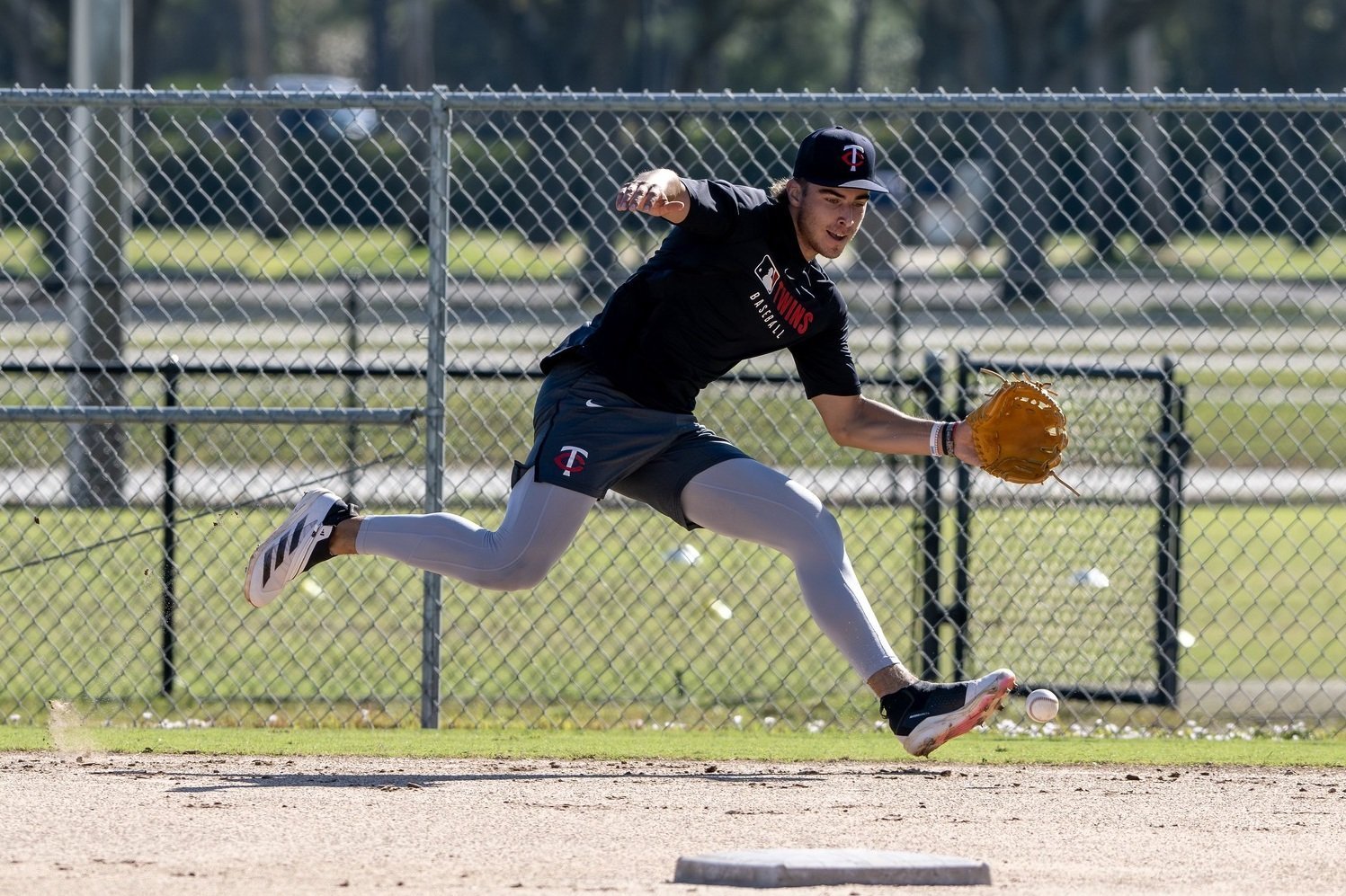 There are certain prospects who force their way into the conversation before the industry is quite ready to include them. Marek Houston might already be one of those players. When the Twins selected Houston in the first round, the selling point was obvious. He was the best defensive shortstop in his class and arguably one of the safest bets in the entire draft. What has changed since then is not the glove. That has only become more convincing in pro ball. What has changed is the discussion around how real the bat might be, and that is where top-100 status starts to come into play. If the defensive grades are even close to accurate, it becomes difficult to ignore the broader profile. Houston looks like a legitimate plus defender at shortstop with the instincts, range, and internal clock that separate good fielders from elite ones. Watching him handle the position in his first taste of pro ball only reinforced that belief. There are not many minor-league shortstops who move the way he does, and it would not be surprising to see him competing for Gold Gloves at the highest level someday. That type of defensive foundation gives him a remarkably high floor. It also means he does not need to be a star offensively to provide significant value. But the reason he is creeping toward top-100 conversations is that there are signs he might be more than just a good glove. The offensive profile is where opinions start to split. Skeptics see a contact-oriented hitter without much impact, someone who might top out as a bottom-of-the-lineup bat. That concern is not unfounded. His professional debut showed flashes of that reality. He dominated Low-A pitching with a .370 average over a dozen games, then hit a wall after a promotion, batting just .152 in High-A. Even within those struggles, there were encouraging signs. His approach remained steady. He controlled the zone, made consistent swing decisions, and did not look overwhelmed. Those traits tend to translate. What lagged behind was the impact. The exit velocity data did not jump off the page, and the lack of power production will remain the biggest question hanging over his profile. Still, there is a case to be made that the offensive arrow is pointing up. Houston’s track record at Wake Forest suggests real growth. He went from a light-hitting freshman to a middle-of-the-order force as a junior, posting a 1.055 OPS with 15 home runs while matching his walk and strikeout totals. That kind of year-over-year improvement is not accidental. It speaks to adjustments, work ethic, and the ability to translate coaching into results. The Twins are now trying to build on that foundation. Houston has already begun refining his swing path to create better contact quality without sacrificing the approach that makes him unique. There is also an expectation that added strength could unlock more consistent damage. His max exit velocities and physical projection leave just enough room for optimism. In his first nine games of 2026, he went 11-for-38 (.289 BA) with four total extra-base hits, including two home runs. His walk rate increased by 2% with an .883 OPS and a 137 wRC+. Houston is also doing most of his damage against older pitchers, where he had a .937 OPS. That is where the top-100 case starts to form. An elite defensive shortstop who controls the strike zone and has shown the ability to make offensive adjustments is a valuable player. If Houston proves he can be even an average hitter with modest power, the overall profile becomes incredibly appealing. That combination often lands comfortably inside top-100 lists, especially given how quickly a player like that can move. Right now, he feels like a player on the edge of that group rather than firmly inside it. To take the next step, the checklist is fairly clear. He needs to show that the High-A struggles to end last season were more about adjustment than limitation. That means producing more consistent contact quality, driving the ball with authority, and proving that the power gains from his final college season can carry over into pro ball. He does not need to hit 25 home runs, but he does need to make enough noise to keep pitchers honest. If that happens, the conversation changes quickly. Houston already looks like a big league shortstop defensively. That part is not in question. What will determine whether he is simply a useful player or a cornerstone-type prospect is what he becomes in the batter’s box. Given his track record of improvement and the ease with which he plays the game, betting against him making those adjustments feels risky. By the end of this season, it would not be surprising if the rest of the industry starts to catch up to what is already becoming clear. Marek Houston is closer to the top 100 than many might think, and he has a real chance to make that jump sooner rather than later. Is Houston on his way to being a top-100 prospect? Leave a comment and start the discussion. View the full article
 -
Toronto Blue Jays 2026 Top Prospect Rankings: No. 2 JoJo Parker
DiamondCentric posted an article in Jays Centre
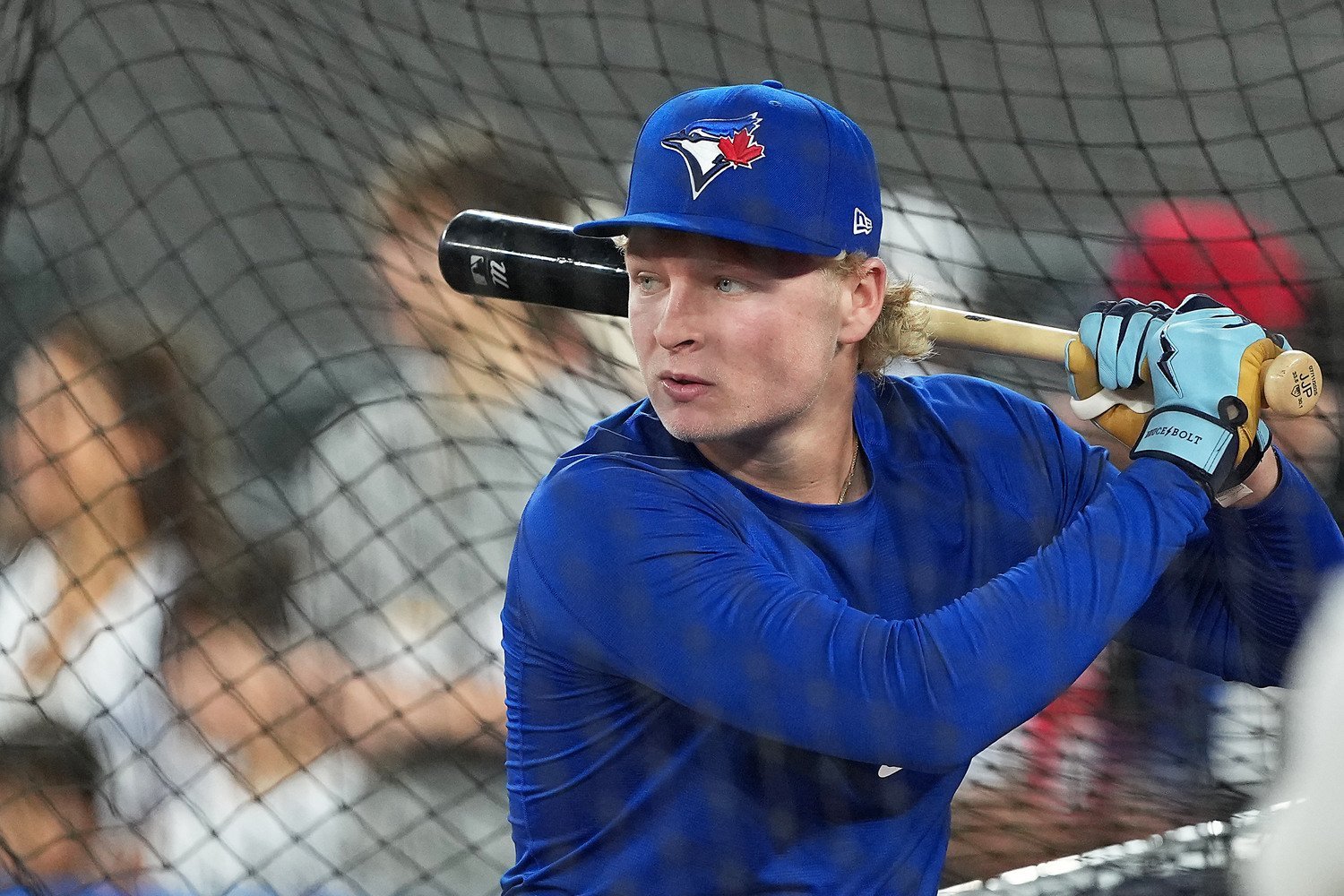 Jays Centre is counting down the top 20 prospects in the Toronto Blue Jays organization. View the full article
 -
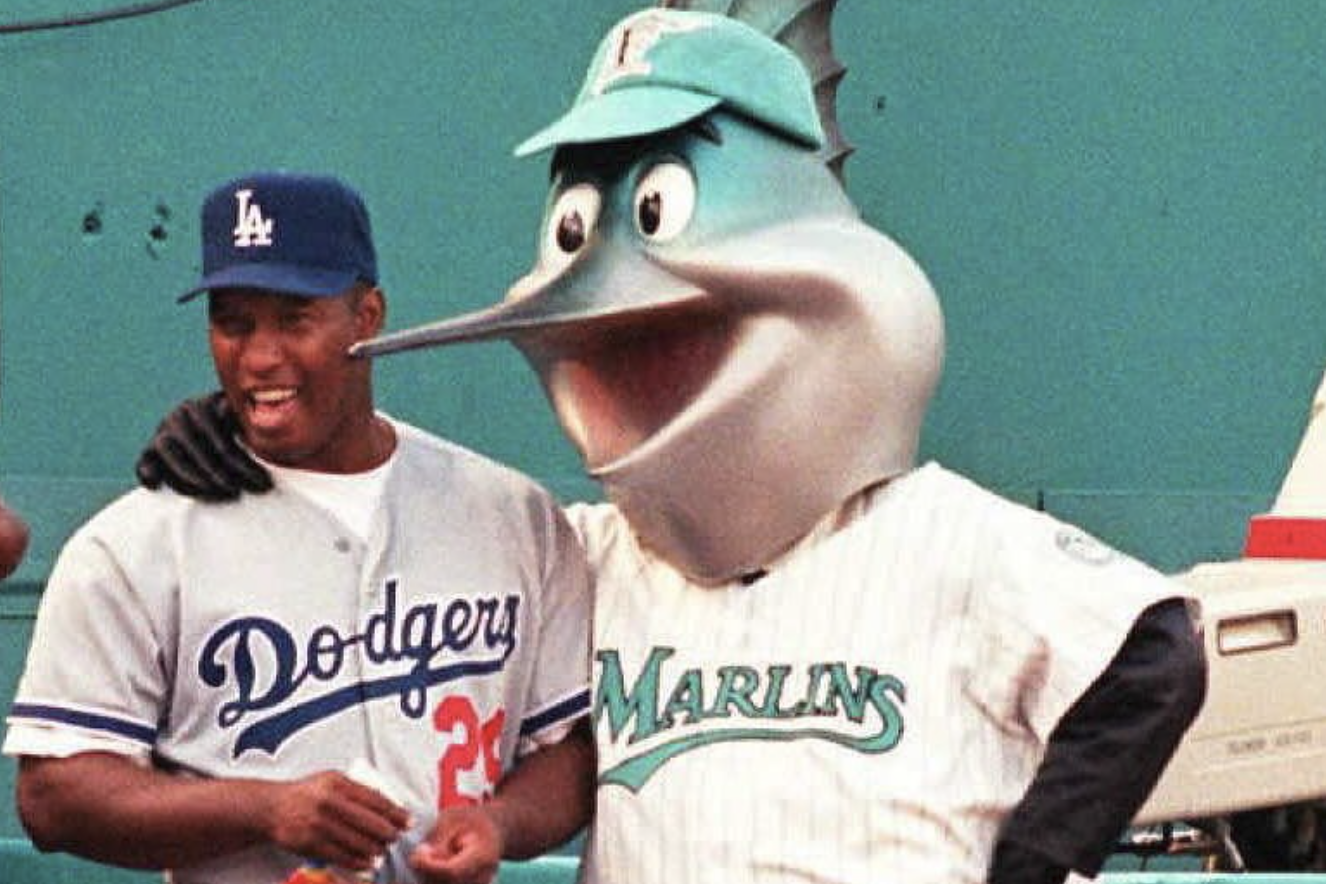 It was during the 1996 season that the Florida Marlins hit the 80-win mark for the first time. The season, however, didn't start off great. Florida went just 4-11 over its first 15 games, but after avoiding the three-game sweep at the hand of the Atlanta Braves, the Marlins started to turn things around with a three-game sweep of the Los Angeles Dodgers. That series started on this day 30 years ago. Scoreless through seven and a half innings at Joe Robbie Stadium on April 19, 1996, the Marlin bats finally woke up. Florida scored five times with two outs in the eighth to top the Dodgers, 5-0. For seven innings, Los Angeles' Ismael Valdez and Florida's Pat Rapp had traded zeroes. After Jay Powell worked around a two-out walk for Florida in the top of the eighth, the Marlins finally got a crack at the Dodgers' bullpen. Against Darren Hall, Joe Orsulak started the eighth with a single, but the right-hander responded by retiring a couple of big bats. After Gary Sheffield popped out, Hall fanned Jeff Conine. The third out, however, proved to be elusive. Terry Pendleton followed with a single to right field, but a misplay by Dodgers outfielder Raúl Mondesí allowed the ball to roll all the way to the wall and for pinch runner Jesús Tavárez to score. That's all Florida would need, but not all it would get. Greg Colbrunn followed with an RBI double to extend the lead to 2-0. After Charles Johnson walked, Kurt Abbott belted Hall's 1-0 pitch over the left-field wall for a three-run home run to turn what had been a scoreless game into a romp. Hall was able to get Powell, the opposing reliever, to fly out but the damage was done. Robb Nen retired the top of the Dodgers' lineup in order to seal the win as the Marlins' staff hurled a three-hit shutout. Pendleton, Colbrunn and Abbott each finished with two of the 10 Florida hits. The Marlins went on to complete the three-game sweep and closed April by winning seven of 12. The 5-0 victory over the Dodgers was one of three shutouts from the month. It came on this day three decades ago. View the full article
 -
Padres Minor League Report: Affiliates go 0-for-3 With Some Rain
DiamondCentric posted an article in Padres Mission
 Triple-A El Paso's game was postponed Saturday. Andrew Moore tossed two scoreless innings for Double-A San Antonio with three strikeouts, while Leandro Cedeño doubled home two runs in an 8-2 loss to the Midland RockHounds. Rosman Verdugo homered and drove in two runs for High-A Fort Wayne, and Alex McCoy added two doubles in a 16-9 defeat. Nick Falter struck out four over two scoreless innings for Low-A Lake Elsinore, which dropped a 10-1 decision to Stockton. Padres Minor-League Transactions RHP Andrew Thurman assigned to San Antonio Missions from El Paso Chihuahuas. San Antonio Missions placed RHP Ian Koenig on the 7-day injured list. Lake Elsinore Storm placed RHP Landry Jurecka on the 7-day injured list. Chihuahuas' Game Suspended By Rain The El Paso Chihuahuas-Round Rock RockHounds game was suspended after two innings due to rain. The game was tied 1-1. The game will resume Sunday in the top of the third inning, with the regularly scheduled game to follow. Cedeño's 2-Run Double Provides Lone Offense In Missions' Loss Despite each team getting eight hits, the San Antonio Missions lost to the Midland RockHounds 8-2. The Missions' offense also drew three walks, but stranded seven runners. Midland opened the scoring with two runs in the first, added two more in the third, and pushed it to 6-0 with two home runs in the fourth. Luis Gutierrez started and worked three innings, taking the loss after surrendering four runs on four hits and two walks while striking out two. Johan Moreno gave up two runs on three hits across two innings, both via the long ball. Andrew Moore offered a bright spot with two scoreless innings, allowing one hit and walking two while striking out three. Sadrac Franco closed with one inning, allowing two runs on two walks. San Antonio's lone scoring came in the eighth, when Leandro Cedeño doubled to right field to plate Carson Tucker and Ryan Jackson. Cedeño finished 2-for-4. Jackson also had two hits and scored a run. Ethan Salas singled and stole a base, while Francisco Acuna reached base three times with a hit and two walks. SA_0418.mp4 Player AB R H RBI BB K Ethan Salas (C) 4 0 1 0 0 2 Ryan Jackson (2B) 4 1 2 0 0 1 Romeo Sanabria (1B) 4 0 1 0 0 1 Leandro Cedeño (DH) 4 0 2 2 0 2 Tirso Ornelas (RF) 4 0 0 0 0 0 Francisco Acuna (SS) 2 0 1 0 2 0 Braedon Karpathios (CF) 4 0 0 0 0 1 Albert Fabian (LF) 3 0 0 0 1 1 Carson Tucker (3B) 4 1 1 0 0 1 Player IP H R ER BB K HR Johan Moreno 2 3 2 2 0 0 2 Luis Gutierrez (L) 3 4 4 4 2 2 0 Andrew Moore 2 1 0 0 2 3 0 Sadrac Franco 1 0 2 2 2 0 0 TinCaps' 8-Run Third Inning Squandered In Loss To Captains The Fort Wayne TinCaps put up an eight-run third inning, their biggest of the season, but the Lake County Captains pulled away for a 16-9 win. Fort Wayne finished with 11 hits, three walks, and one home run. Bernard Jose worked 2⅔ innings of relief and was charged with five runs on two hits and two walks. He struck out two while allowing two home runs. Starter Jamie Hitt went 2⅓ innings, allowing six runs. After Fort Wayne's big third inning made it 8-4, Lake County tied it in the bottom of the inning, then took command with three in the fifth, two in the sixth and three more in the seventh. Rosman Verdugo went 2-for-4 with a two-run homer, three runs scored, and a walk. Alex McCoy extended his Midwest League-leading hitting streak to 10 games by adding two doubles, two RBIs, a stolen base, and a run scored. Lamar King Jr. doubled and drove in a run, and Jack Costello also doubled with an RBI. Jake Cunningham collected two hits. FW_0418.mp4 Player AB R H RBI BB K Kasen Wells (CF) 5 1 1 1 0 1 Rosman Verdugo (2B) 4 3 2 2 1 1 Carlos Rodriguez (C) 5 1 1 0 0 1 Alex McCoy (DH) 5 1 2 2 0 2 Lamar King Jr. (1B) 5 0 1 1 0 1 Kavares Tears (RF) 4 1 0 0 1 2 Jake Cunningham (LF) 4 0 2 0 0 1 Jack Costello (3B) 3 1 1 1 1 0 Dylan Grego (SS) 4 1 1 1 0 3 Player IP H R ER BB K HR Luis Germán 0 2/3 3 2 2 2 2 0 Bernard Jose 2 2/3 2 5 5 2 2 2 Igor Gil 1 1 0 0 0 1 0 Clark Candiotti (L) 1 1/3 5 3 3 3 3 0 Jamie Hitt 2 1/3 5 6 6 2 2 0 Storm Can't Overcomg 6-Run Fourth Inning, Drop Decision To Ports The Lake Elsinore Storm managed just five hits in a 10-1 loss to the Stockton Ports. The Storm drew four walks but stranded eight runners. Stockton broke a 1-1 tie with a six-run fourth inning. Starter Tyler Schmitt took the loss after working three innings, allowing seven runs on six hits and two walks while striking out two and giving up two home runs. Nick Falter tossed two scoreless innings, striking out four, allowing three hits, and walking one. Lake Elsinore tied the game 1-1 in the top of the fourth when Yoiber Ocopio doubled to score Jorge Quintana. The Ports answered with six runs in the bottom of the fourth and added three more in the sixth. Ocopio and Quintana each finished with a hit and a double, while George Bilecki reached three times with a hit and two walks. Bradley Frye singled, walked, and stole a base. LE_0418.mp4 Player AB R H RBI BB K Ryan Wideman (DH) 3 0 0 0 0 0 Bradley Frye (3B) 3 0 1 0 1 0 Jose Verdugo (2B) 3 0 0 0 1 1 Truitt Madonna (1B) 4 0 0 0 0 0 Justin DeCriscio (LF) 4 0 1 0 0 1 Jorge Quintana (SS) 4 1 1 0 0 0 George Bilecki (RF) 2 0 1 0 2 0 Yoiber Ocopio (C) 4 0 1 1 0 0 Conner Westenburg (CF) 4 0 0 0 0 3 Player IP H R ER BB K HR Nick Falter 2 3 0 0 1 4 0 Joseph Herrera 2 2 3 3 2 2 0 Tyler Schmitt (L) 3 6 7 7 2 2 2 Luke Cantwell 1 1 0 0 0 0 0 Padres Top-20 Prospect Performance Kash Mayfield: DNP Ethan Salas: 1-for-4, 2 K, SB Kruz Schoolcraft: DNP Bradgley Rodriguez: DNP Humberto Cruz: DNP Miguel Mendez: DNP Ty Harvey: DNP Jorge Quintana: 1-for-4, 2B, R Kale Fountain: DNP Ryan Wideman: 0-for-3 Jagger Haynes: DNP Lamar King Jr.: 1-for-5, 2B, RBI, K Romeo Sanabria: 1-for-4, K Truitt Madonna: 0-for-4 Michael Salina: DNP Garrett Hawkins: DNP Kavares Tears: 0-for-4, R, BB, 2 K Deivid Coronil: DNP Francis Pena: DNP Bryan Balzer: DNP View the full article
 -
Twins Minor League Report (4/18): CJ Culpepper Continues
DiamondCentric posted an article in Twins Daily
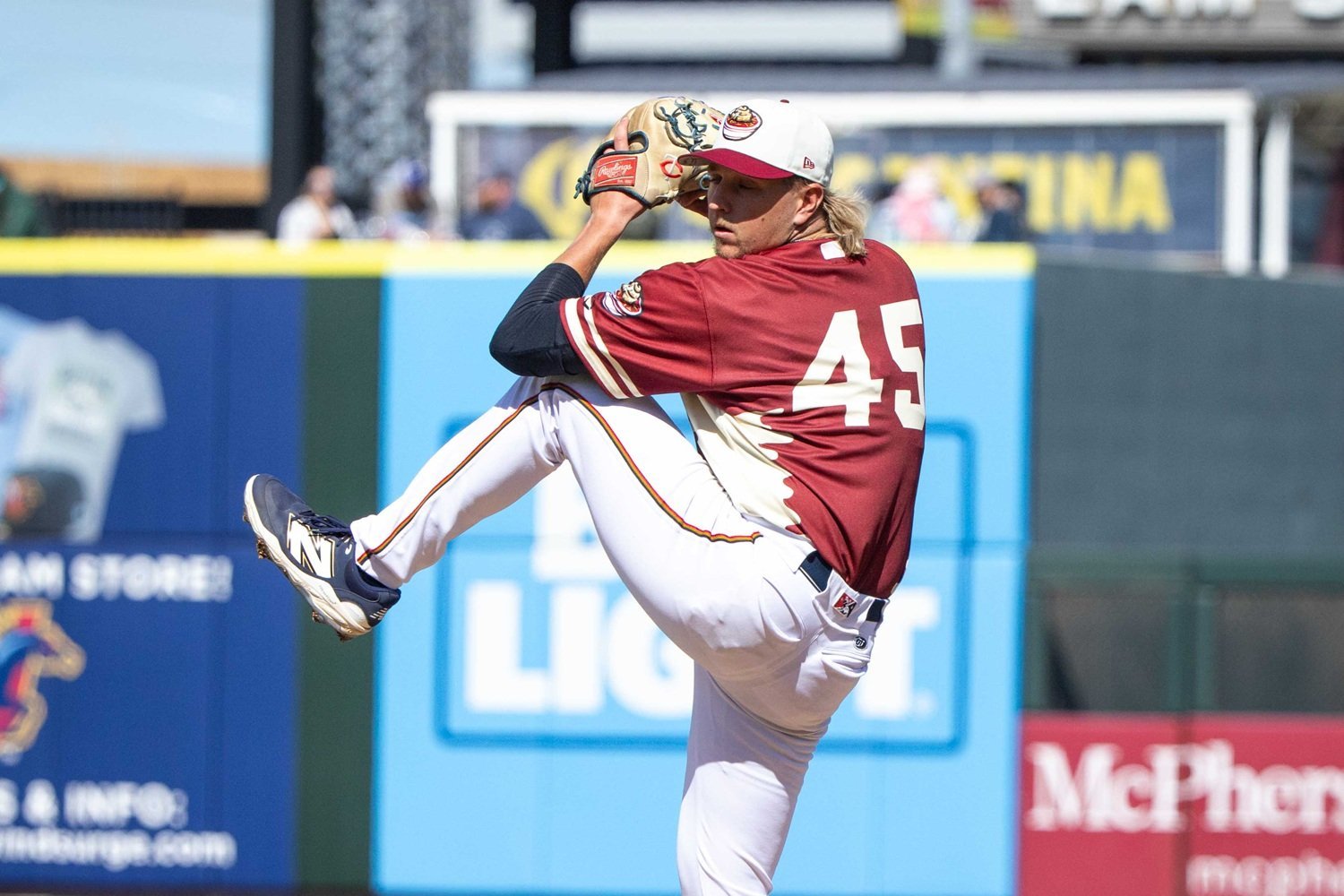 TRANSACTIONS Utility man Jorel Ortega was activated from the Injured List. RHPs Matt Dalquist and Matt DesMarets joined the Fort Myers roster from the FCL Twins roster. The 23-year-old Dalquist went to UC-San Diego. He signed shortly following the 2025 draft (July 24, 2025) but didn’t make an appearance. DesMarets went to Concordia in California for two years. Then he went to UC-La Verne for the last two years. He went to pitch for Mankato in the Northwoods League last summer. On July 23, 2025, he signed as a non-drafted free agent with the Twins. SAINTS SENTINEL St. Paul 6, Lehigh Valley 10 Box Score The Saints hit five home runs on Saturday afternoon at CHS Field. The IronPigs had just one. The Saints had just two hits that weren’t home runs. The IronPigs had 15 non-homer hits. So of course, the Saints lost a game in which they homered five times for the first time in their history. Andrew Bash started and gave up two runs on six hits and two walks over 2 1/3 innings. He had four strikeouts. Raul Brito came on and gave up three runs on four hits and two walks in his 2 1/3 innings. Marco Raya came on to get the final out of the fifth inning and then pitched the sixth inning as well. He gave up one run on two hits and struck out three batters. Altavilla struck out four batters over two innings of work. He gave up one run on one hit and a walk. This performance dropped his season ERA to 9.31. Drew Smith gave up three runs (2 earned) on three hits and a walk in the ninth inning. Down 2-0 after just a half-inning, Royce Lewis got the Saints scoring started. He followed a Walker Jenkins walk with a home run into the bullpen. In the fourth inning, Tanner Schobel hit his first home run of the season. He crushed it over the batter's eye beyond center field. It gave the Saints a 3-2 lead. In the fifth inning, Emmanuel Rodriguez hit his fourth home run, a long blast hit 117.1 mph. That is the highest exit velocity by a Saints hitter in franchise history. In the sixth inning, Orlando Arcia lined his third home run of the season. Jump ahead to the ninth inning, and Aaron Sabato hit his first home run of the season. He posted an exit velocity of 111.6 mph. Schobel went 2-for-3 with a walk and the team’s lone single of the day. David Banuelos replaced Lewis at the DH position. He hit a double, the team’s lone double of the day. Lewis was 1-for-4 in the game. WIND SURGE WISDOM Wichita 6, Springfield 3 Box Score On Saturday night, it was the Wind Surge that took the early lead. They were also able to hang on. In the bottom of the second inning, Hendry Mendez hit his third home run of the season to make it 1-0. With one out in the bottom of the third, Kyle DeBarge walked and stole second. Ben Ross was hit by a pitch. Kala’i Rosario singled to drive in DeBarge. Rosario stole second, and Mendez followed with a two-run single. Billy Amick doubled to drive in Mendez and give the Surge a 5-0 lead. C.J. Culpepper was very good again. He had seven strikeouts over 4 2/3 scoreless innings. He gave up three hits and a walk. He reached 75 pitches and dropped his season ERA to 1.62 ERA. Aaron Rozek came on to get the final out of the fifth inning. He also threw a scoreless sixth inning. He gave up two runs in the top of the seventh inning but was able to limit any further damage with a double play. Rozek was credited with the Win, his 16th career win with the Wind Surge tying him with Pierson Ohl for the all-time Wind Surge lead. In the bottom of the inning, Ben Ross reached on an error. With two outs, Amick drove in Ross to make it a 6-2 game. Spencer Bengard gave up a solo homer in the eighth inning, and Sam Ryan struck out two batters in a scoreless ninth inning to earn his first save. Mendez went 2-for-4 with his third homer and three RBI. Amick was 2-for-4 with his third double and two RBI. They say that all good things must end someday and add something about Autumn leaves needing to fall. Ben Ross’s hitting strike came to an end on Saturday. However, his on-base streak is now 14 games. Ross was hit by a pitch in the third inning. He walked in the sixth inning, and then he stole his eighth base of the season. He also reached on an error in the eighth inning. KERNELS CHRONICLE Cedar Rapids 8, Quad Cities 14 Box Score This game was quite the pitcher’s duel through, well, two innings. Quad Cities scored five runs in the third and four runs in the fourth. When the Kernels came to the plate for the bottom of the sixth, they were already down 10-0. The Kernels bats showed some life that inning. Well, actually, they did a good job at not swinging. Jaime Ferrer and Marek Houston walked. Then Eduardo Tait was hit by a pitch to load the bases. Khadim Diaw walked to put the Kernels on the scoreboard. Brandon Winokur drilled a double to right field to drive in two more runs. Jacob McCombs was hit by a pitch to re-load the bases. A fourth run scored when Andy Lugo grounded into a force out. When the Kernels came to the plate in the bottom of the seventh, they were down 13-4. Ferrer walked, and Luis Hernandez walked. With two outs, Diaw drove in Ferrer with a single. Miguel Briceno pinch hit and walked to load the bases. McCombs doubled to clear the bases and cut the deficit to 13-8. They re-loaded the bases but didn’t have that one more big hit left. Jason Doktorczyk started and gave up five runs on four hits and three walks in three innings. Nick Trabacchi came on and was charged with four runs on six hits (including two home runs) in 1 2/3 innings. Jacob Wosinski had four strikeouts in 1 1/3 innings. He gave up one run on one hit and a walk. Brent Francisco worked the final three innings. He gave up four runs on five hits (including two home runs) and a walk. The Kernels scored their eight runs on four hits and nine walks. Diaw was 1-for-3 with two walks and two RBI. Jaime Ferrer walked three times. McCombs was 2-for-4 with his fourth double and three RBI. The outfielder was the Twins seventh round pick in 2025 out of UC-Irvine. He is currently hitting .324/.425/.618 (1.043) with four doubles, three triples, and 10 RBI. MIGHTY MATTERS Ft. Myers 2, Lakeland 9 Box Score Matthew Dalquist started for the Mussels on Saturday. He gave up four runs on nine hits in 4 2/3 innings. He had four strikeouts and walked none. He threw an impressive 72.4% of his pitches were strikes. Adam Falinski came on and got the final out of the fifth inning. He gave up two unearned runs on three hits and a walk over the next two innings. Travis Adams had a strikeout in his 1-2-3 rehab inning. Mike McKenna pitched the ninth inning and was charged with three unearned runs on one hit and two walks. He struck out three batters. Down 6-0 going to the bottom of the sixth, Dameury Pena led off with a single to center. Yasser Mercedes followed with his second home run since returning earlier in the week. That’s as close as the Mussels got. Pena was 2-for-4 and is hitting .421. Jayson Bass went 2-for-3 with a walk and his third double. He also stole his second base. Ryan Sprock went 2-for-3. PLAYERS OF THE DAY Hitter of the Day Hendry Mendez (Wichita): 2-for-4, HR(3), 2 R, 3 RBI, K. Pitcher of the Day C.J. Culpepper (Wichita): 4 2/3 IP, 3 H, 0 R, BB, 7 K, 75 pitches, 46 strikes (61.3%) PROSPECT SUMMARY Check out the Prospect Tracker for much more on our Twins Top 20 prospects after seeing how they did today. #1 - OF Walker Jenkins (St. Paul) - 0-for-4, BB, R, K (batted first, played CF) #2 - IF Kaelen Culpepper (St. Paul) - Did Not Play #3 - OF Emmanuel Rodriguez (St. Paul) - 1-for-4, BB, HR(4), R, RBI, 3K (batted third, played RF) #4 - C Eduardo Tait (Cedar Rapids) - 0-for-2, HBP, 2 K (batted second, catcher) #5 - LHP Connor Prielipp (St. Paul) - Did Not Pitch #6 - LHP Dasan Hill (Cedar Rapids) - Did Not Pitch #7 - OF Gabriel Gonzalez (St. Paul) - Did No Play #8 - LHP Kendry Rojas (St. Paul) - Did Not Pitch #9 - SS Marek Houston (Cedar Rapids) - 0-for-4, BB, R, 2 K (batted leadoff, played SS) #10 - RHP Charlee Soto (Cedar Rapids) - Injured List #11 - RHP Riley Quick (Ft. Myers) - Did Not Pitch #12 - RHP Andrew Morris (Minnesota) - Did Not Pitch #13 - 3B/CF Brandon Winokur (Cedar Rapids) - 1-for-3, 2B(3), 2 RBI, K (batted 4th, played CF). #14 - 3B/SS Quentin Young (Ft. Myers) - 0-for-4, 3 K, E(8) (batted fourth, SS) #15 - RHP Marco Raya (St. Paul) - Did Not Pitch #16 - OF Hendry Mendez (Wichita) - 2-for-4, HR(3), 2 R, 3 RBI, K (batted fourth, played LF) #17 - 2B/OF Kyle DeBarge (Wichita) - 0-for-3, BB, R, 2 K, SB(6) (batted first, played SS) #18 - RHP C.J. Culpepper (Wichita) - 4 2/3 IP, 3 H, 0 R, 1 BB, 7 K, 75 pitches, 46 strikes (61.3%) #19 - C/OF Khadim Diaw (Cedar Rapids) - 1-for-3, 2 BB, 2 R, 2 RBI, K (batted third, DHd). #20 - RHP James Ellwanger (Ft. Myers) - Did Not Pitch UPCOMING PROBABLES Sunday: Lehigh Valley @ St. Paul (2:07 pm CT) - RHP John Klein (0-1, 7.88 ERA) Springfield @ Wichita (1:05 pm CT) - RHP Sam Armstrong (0-2, 7.11 ERA) Quad Cities @ Cedar Rapids (1:05 pm CT) - RHP Nolan Santos (0-0, 8.6 ERA) Lakeland @ Ft. Myers (5:05 CT) - RHP Kolten Smith (1-0, 0.00 ERA) CURRENT W-L Records Minnesota Twins: 11-10 St. Paul Saints: 8-11 Wichita Wind Surge:8-6 Cedar Rapids Kernels: 7-7 Fort Myers Mighty Mussels: 8-6 FCL Twins: 0-0 (season begins Monday, May 4) DSL Twins: 0-0 (season begins Monday, June 1) Please feel free to ask questions about the teams, the rosters, and discuss today’s games, or anything else Twins minor-league related! View the full article
 -
Twins Minor League Report (4/18): CJ Culpepper Continues His Climb
DiamondCentric posted an article in Twins Daily
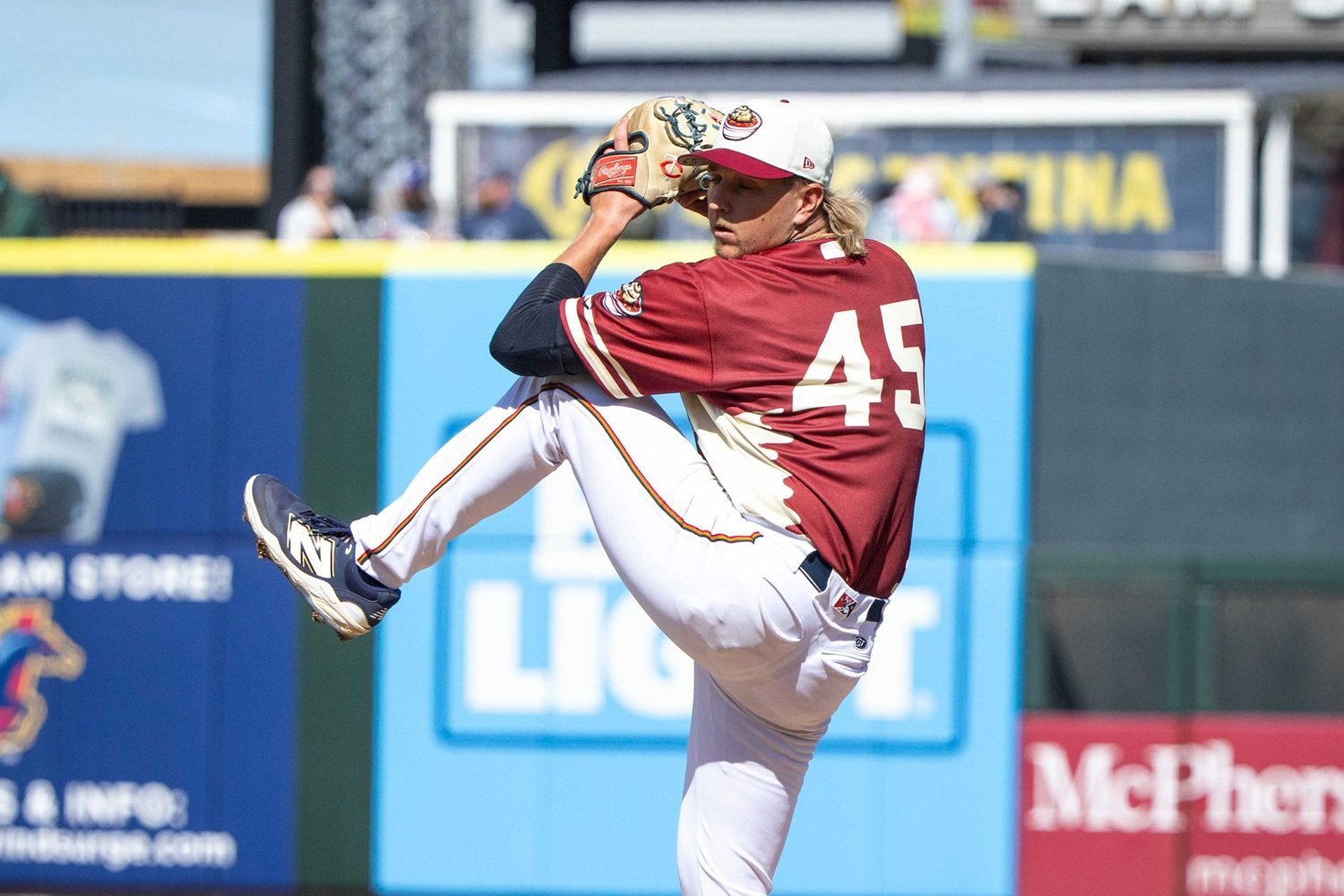 TRANSACTIONS Utility man Jorel Ortega was activated from the Injured List. RHPs Matt Dalquist and Matt DesMarets joined the Fort Myers roster from the FCL Twins roster. The 23-year-old Dalquist went to UC-San Diego. He signed shortly following the 2025 draft (July 24, 2025) but didn’t make an appearance. DesMarets went to Concordia in California for two years. Then he went to UC-La Verne for the last two years. He went to pitch for Mankato in the Northwoods League last summer. On July 23, 2025, he signed as a non-drafted free agent with the Twins. SAINTS SENTINEL St. Paul 6, Lehigh Valley 10 Box Score The Saints hit five home runs on Saturday afternoon at CHS Field. The IronPigs had just one. The Saints had just two hits that weren’t home runs. The IronPigs had 15 non-homer hits. So of course, the Saints lost a game in which they homered five times for the first time in their history. Andrew Bash started and gave up two runs on six hits and two walks over 2 1/3 innings. He had four strikeouts. Raul Brito came on and gave up three runs on four hits and two walks in his 2 1/3 innings. Marco Raya came on to get the final out of the fifth inning and then pitched the sixth inning as well. He gave up one run on two hits and struck out three batters. Altavilla struck out four batters over two innings of work. He gave up one run on one hit and a walk. This performance dropped his season ERA to 9.31. Drew Smith gave up three runs (2 earned) on three hits and a walk in the ninth inning. Down 2-0 after just a half-inning, Royce Lewis got the Saints scoring started. He followed a Walker Jenkins walk with a home run into the bullpen. In the fourth inning, Tanner Schobel hit his first home run of the season. He crushed it over the batter's eye beyond center field. It gave the Saints a 3-2 lead. In the fifth inning, Emmanuel Rodriguez hit his fourth home run, a long blast hit 117.1 mph. That is the highest exit velocity by a Saints hitter in franchise history. In the sixth inning, Orlando Arcia lined his third home run of the season. Jump ahead to the ninth inning, and Aaron Sabato hit his first home run of the season. He posted an exit velocity of 111.6 mph. Schobel went 2-for-3 with a walk and the team’s lone single of the day. David Banuelos replaced Lewis at the DH position. He hit a double, the team’s lone double of the day. Lewis was 1-for-4 in the game. WIND SURGE WISDOM Wichita 6, Springfield 3 Box Score On Saturday night, it was the Wind Surge that took the early lead. They were also able to hang on. In the bottom of the second inning, Hendry Mendez hit his third home run of the season to make it 1-0. With one out in the bottom of the third, Kyle DeBarge walked and stole second. Ben Ross was hit by a pitch. Kala’i Rosario singled to drive in DeBarge. Rosario stole second, and Mendez followed with a two-run single. Billy Amick doubled to drive in Mendez and give the Surge a 5-0 lead. C.J. Culpepper was very good again. He had seven strikeouts over 4 2/3 scoreless innings. He gave up three hits and a walk. He reached 75 pitches and dropped his season ERA to 1.62 ERA. Aaron Rozek came on to get the final out of the fifth inning. He also threw a scoreless sixth inning. He gave up two runs in the top of the seventh inning but was able to limit any further damage with a double play. Rozek was credited with the Win, his 16th career win with the Wind Surge tying him with Pierson Ohl for the all-time Wind Surge lead. In the bottom of the inning, Ben Ross reached on an error. With two outs, Amick drove in Ross to make it a 6-2 game. Spencer Bengard gave up a solo homer in the eighth inning, and Sam Ryan struck out two batters in a scoreless ninth inning to earn his first save. Mendez went 2-for-4 with his third homer and three RBI. Amick was 2-for-4 with his third double and two RBI. They say that all good things must end someday and add something about Autumn leaves needing to fall. Ben Ross’s hitting strike came to an end on Saturday. However, his on-base streak is now 14 games. Ross was hit by a pitch in the third inning. He walked in the sixth inning, and then he stole his eighth base of the season. He also reached on an error in the eighth inning. KERNELS CHRONICLE Cedar Rapids 8, Quad Cities 14 Box Score This game was quite the pitcher’s duel through, well, two innings. Quad Cities scored five runs in the third and four runs in the fourth. When the Kernels came to the plate for the bottom of the sixth, they were already down 10-0. The Kernels bats showed some life that inning. Well, actually, they did a good job at not swinging. Jaime Ferrer and Marek Houston walked. Then Eduardo Tait was hit by a pitch to load the bases. Khadim Diaw walked to put the Kernels on the scoreboard. Brandon Winokur drilled a double to right field to drive in two more runs. Jacob McCombs was hit by a pitch to re-load the bases. A fourth run scored when Andy Lugo grounded into a force out. When the Kernels came to the plate in the bottom of the seventh, they were down 13-4. Ferrer walked, and Luis Hernandez walked. With two outs, Diaw drove in Ferrer with a single. Miguel Briceno pinch hit and walked to load the bases. McCombs doubled to clear the bases and cut the deficit to 13-8. They re-loaded the bases but didn’t have that one more big hit left. Jason Doktorczyk started and gave up five runs on four hits and three walks in three innings. Nick Trabacchi came on and was charged with four runs on six hits (including two home runs) in 1 2/3 innings. Jacob Wosinski had four strikeouts in 1 1/3 innings. He gave up one run on one hit and a walk. Brent Francisco worked the final three innings. He gave up four runs on five hits (including two home runs) and a walk. The Kernels scored their eight runs on four hits and nine walks. Diaw was 1-for-3 with two walks and two RBI. Jaime Ferrer walked three times. McCombs was 2-for-4 with his fourth double and three RBI. The outfielder was the Twins seventh round pick in 2025 out of UC-Irvine. He is currently hitting .324/.425/.618 (1.043) with four doubles, three triples, and 10 RBI. MIGHTY MATTERS Ft. Myers 2, Lakeland 9 Box Score Matthew Dalquist started for the Mussels on Saturday. He gave up four runs on nine hits in 4 2/3 innings. He had four strikeouts and walked none. He threw an impressive 72.4% of his pitches were strikes. Adam Falinski came on and got the final out of the fifth inning. He gave up two unearned runs on three hits and a walk over the next two innings. Travis Adams had a strikeout in his 1-2-3 rehab inning. Mike McKenna pitched the ninth inning and was charged with three unearned runs on one hit and two walks. He struck out three batters. Down 6-0 going to the bottom of the sixth, Dameury Pena led off with a single to center. Yasser Mercedes followed with his second home run since returning earlier in the week. That’s as close as the Mussels got. Pena was 2-for-4 and is hitting .421. Jayson Bass went 2-for-3 with a walk and his third double. He also stole his second base. Ryan Sprock went 2-for-3. PLAYERS OF THE DAY Hitter of the Day Hendry Mendez (Wichita): 2-for-4, HR(3), 2 R, 3 RBI, K. Pitcher of the Day C.J. Culpepper (Wichita): 4 2/3 IP, 3 H, 0 R, BB, 7 K, 75 pitches, 46 strikes (61.3%) PROSPECT SUMMARY Check out the Prospect Tracker for much more on our Twins Top 20 prospects after seeing how they did today. #1 - OF Walker Jenkins (St. Paul) - 0-for-4, BB, R, K (batted first, played CF) #2 - IF Kaelen Culpepper (St. Paul) - Did Not Play #3 - OF Emmanuel Rodriguez (St. Paul) - 1-for-4, BB, HR(4), R, RBI, 3K (batted third, played RF) #4 - C Eduardo Tait (Cedar Rapids) - 0-for-2, HBP, 2 K (batted second, catcher) #5 - LHP Connor Prielipp (St. Paul) - Did Not Pitch #6 - LHP Dasan Hill (Cedar Rapids) - Did Not Pitch #7 - OF Gabriel Gonzalez (St. Paul) - Did No Play #8 - LHP Kendry Rojas (St. Paul) - Did Not Pitch #9 - SS Marek Houston (Cedar Rapids) - 0-for-4, BB, R, 2 K (batted leadoff, played SS) #10 - RHP Charlee Soto (Cedar Rapids) - Injured List #11 - RHP Riley Quick (Ft. Myers) - Did Not Pitch #12 - RHP Andrew Morris (Minnesota) - Did Not Pitch #13 - 3B/CF Brandon Winokur (Cedar Rapids) - 1-for-3, 2B(3), 2 RBI, K (batted 4th, played CF). #14 - 3B/SS Quentin Young (Ft. Myers) - 0-for-4, 3 K, E(8) (batted fourth, SS) #15 - RHP Marco Raya (St. Paul) - Did Not Pitch #16 - OF Hendry Mendez (Wichita) - 2-for-4, HR(3), 2 R, 3 RBI, K (batted fourth, played LF) #17 - 2B/OF Kyle DeBarge (Wichita) - 0-for-3, BB, R, 2 K, SB(6) (batted first, played SS) #18 - RHP C.J. Culpepper (Wichita) - 4 2/3 IP, 3 H, 0 R, 1 BB, 7 K, 75 pitches, 46 strikes (61.3%) #19 - C/OF Khadim Diaw (Cedar Rapids) - 1-for-3, 2 BB, 2 R, 2 RBI, K (batted third, DHd). #20 - RHP James Ellwanger (Ft. Myers) - Did Not Pitch UPCOMING PROBABLES Sunday: Lehigh Valley @ St. Paul (2:07 pm CT) - RHP John Klein (0-1, 7.88 ERA) Springfield @ Wichita (1:05 pm CT) - RHP Sam Armstrong (0-2, 7.11 ERA) Quad Cities @ Cedar Rapids (1:05 pm CT) - RHP Nolan Santos (0-0, 8.6 ERA) Lakeland @ Ft. Myers (5:05 CT) - RHP Kolten Smith (1-0, 0.00 ERA) CURRENT W-L Records Minnesota Twins: 11-10 St. Paul Saints: 8-11 Wichita Wind Surge:8-6 Cedar Rapids Kernels: 7-7 Fort Myers Mighty Mussels: 8-6 FCL Twins: 0-0 (season begins Monday, May 4) DSL Twins: 0-0 (season begins Monday, June 1) Please feel free to ask questions about the teams, the rosters, and discuss today’s games, or anything else Twins minor-league related! View the full article
 -
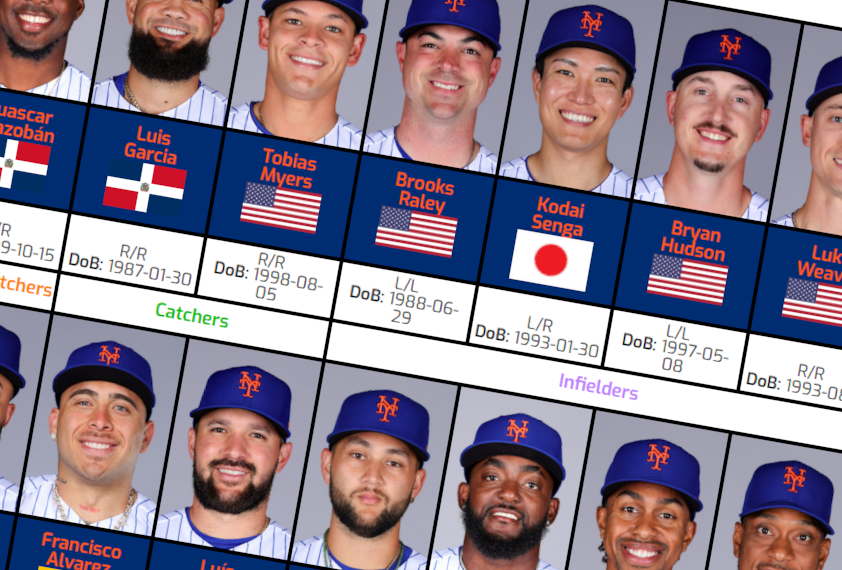 As the Mets' losing streak approached (and has now reached) 10 games, displaying an offensive downturn with no answers, Mets Roster Central regrets to report that the transactions the Mets are making do not even suggest management is pretending to offer a way forward. Transactions, 4/18/2026 GOING COMING Placed on 10-Day Injured List with Right Wrist Contusion Promoted from Syracuse Infielders Catchers Jorge Polanco Hayden Senger S/R DoB: 1999-11-13 High Level: MLB (2026) R/R DoB: 1997-04-03 High Level: MLB (2025) While Jorge Polanco has surprised few by being a suboptimal solution at first (and, more frequently, DH), his right wrist contusion (hadn't we been made to understand he had a calf strain or the like?) leading to an IL assignment can hardly be framed as good news. But hey, finding opportunity in crisis is what GMs and PoBOs are supposed to do. Maybe they press the right button, and maybe they call up the right replacement from the hundreds of aspiring ballplayers in the Mets system, and maybe they take a small step in the right direction. It's been known to happen. Hey, look at MJ Melendez. But in a great surprise to Mets Roster Central, the Mets decided to call up third-string catcher Hayden Senger. Hayden has of course shown himself to be a capable receiver, but one who hits like ... well, like a third-string catcher (.415 career OPS). And when a team scraping the bottom of the league-wide barrel in most every offensive category needs to replace a starting firstbaseman/DH type, chooses such a character, you can't be blamed if you ask, "Are we actually trying to win?" There is a logic to the move. At least, Gary Cohen bent over backwards trying to lay out some logic to it in the booth today, noting that the Cubs have a bullpen loaded the eyeballs with lefties, and so the presence of Senger would allow the team to more safely deploy Luis Torrens as a righthanded pinch-hitter, and more safely deploy Francisco Alvarez (who Gary described as "red hot," but can more accurately be observed as not as Arctic-ly cold as some others in the Mets lineup. The obvious retort to this is, if you want better options for a righthanded pinch-hitter, and righthanded DH, add a righthanded pinch-hitter/DH to roster and let the catchers do what they do from where they do it. Gary might well have said, "Calling up Hayden Senger gives the Mets a great chance to rob Peter in order to pay off that nasty debt to Paul." I mean, who are we kidding here, right? What Gary didn't mention — at least, not while Mets Roster Central was listening — is that Senger, despite his unseemly track record as an MLB batter, is leading 11-9 Syracuse in almost every offensive category, sporting a .257 / .316 / .714 // 1.030 slash line boosted up by five homeruns, more than anybody with the big club. You cannot be blamed for being dubious that he is the answer, but if you insist that the Mets shouldn't be messing with the catchers and instead call up the best offensive option ... the answer is still Senger. So maybe they keep him around for one more day as this lefty-heavy bullpen looms, and then call Ronny Mauricio back, but the message is the same — the Mets are going to have to find a way to bop, as the answer isn't coming in the form of a callup any time soon. Your Mets Coaching Staff Manager Bench Coach Pitching Coach Hitting Coordinator Third Base Coach First Base Coach Bullpen Coach Ass't Pitching Coach Carlos Mendoza Kai Correa Justin Willard Jeff Albert Tim Leiper Gilbert Gomez José Rosado Dan McKinney DoB: 1979-11-27 DoB: 1989-07-14 DoB: 1990-09-09 DoB: 1992-08-16 DoB: 1996-07-19 DoB: 1992-03-08 DoB: 1974-11-09 DoB: 1989-06-06 Hitting Coach Strategy Coach Catching Coach Coaching Assistant Bat'g Practice Pitcher Equipment Manager Bullpen Catchers Bullpen Catchers Troy Snitker Danny Barnes J.P. Arencibia Rafael Fernandez Kevin Mahoney Kevin Kierst Eric Langill Dave Racaniello DoB: 1988-12-05 DoB: 1989-10021 DoB: 1986-01-05 DoB: 1988-08-03 DoB: 1987-05-11 DoB: 1964-07-09 DoB: 1979-04-09 DoB: 1978-06-03 Your Mets Training Staff Director of Player Health Head Athletic Trainer Assistant Athletic Trainer Reconditioning Coordinator Reconditioning Therapist Head Performance Coach Assistant Performance Coach Performance Coordinator Brian Chicklo Joseph Golia Bryan Baca Sean Bardanett Josh Bickel Dustin Clarke Tanner Miracle Jeremy Chiang DoB: 1972-07-17 DoB: 1978-??-?? DoB: Circa 1980 DoB: 1988-06-23 DoB: 1996-??-?? DoB: 1987-??-?? DoB: 1991-??-?? DoB: ????-??-?? Your 2026 New York Mets Starting Pitchers Clay Holmes Nolan McLean Freddy Peralta David Peterson Kodai Senga R/R DoB: 1993-03-27 R/R DoB: 2001-07-24 R/R DoB: 2996-06-04 L/L DoB: 1995-09-03 L/R DoB: 1993-01-30 Relief Pitchers Huascar Brazobán Craig Kimbrel Sean Manaea Tobias Myers Brooks Raley Austin Warren Luke Weaver R/R DoB: 1989-10-15 R/R DoB: 32291 R/L DoB: 1992-02-01 R/R DoB: 1998-08-05 L/L DoB: 1988-06-29 R/R DoB: 1996-02-05 R/R DoB: 1993-08-21 Relief Pitchers Catchers Infielders Devin Williams Francisco Alvarez Hayden Senger Luís Torrens Bo Bichette Francisco Lindor Jorge Polanco R/R DoB: 1994-09-21 R/R DoB: 2001-11-01 R/R DoB: 1997-04-03 R/R DoB: 1996-05-02 R/R DoB: 1998-03-05 S/R DoB: 1993-11-14 S/R DoB: 1999-11-13 Infielders Infielders Marcus Semien Mark Vientos Carson Benge MJ Melendez Tommy Pham Luis Robert, Jr. Tyrone Taylor R/R DoB: 1990-09-17 R/R DoB: 1993-12-11 L/R DoB: 2003-01-20 L/R DoB: 1993-11-29 R/R DoB: 32210 R/R DoB: 1997-08-03 R/R DoB: 34356 Also on 40-Player Roster Starting Pitchers Relief Pitchers Tylor Megill Christian Scott Jonah Tong Alex Carrillo Reed Garrett Joey Gerber Justin Hagenman R/R DoB: 1995-07-28 R/R DoB: 1999-06-15 R/R DoB: 2003-06-19 R/R DoB: 1997-06-06 R/R DoB: 1993-01-02 R/R DoB: 1997-05-03 R/R DoB: 1996-10-07 On 60-Day Injured List with torn right UCL. With Syracuse With Syracuse With Syracuse On 60-Day Injured List — right UCL surgery and nerve relocation surgery. On 15-Day Injured List with blistered right finger. On 60 Day Injured List with fractured rib. Relief Pitchers Relief Pitchers Outfielders A.J. Minter Dedniel Núñez Jonathan Pintaro Dylan Ross Ronny Mauricio Jorge Polanco Nick Morabito L/L DoB: 1993-09-02 R/R DoB: 1996-06-05 R/R DoB: 1997-11-07 R/R DoB: 2000-09-01 S/R DoB: 2001-04-04 S/R DoB: 1999-11-13 R/R DoB: 2003-05-07 With St. Lucie on Rehab Assignment On 60-Day Injured List — right UCL surgery. With Syracuse With Syracuse, on Seven-Day IL With Syracuse On 10-Day Injured List with right wrist contusion. With Syracuse Outfielders Juan Soto Jared Young L/L DoB: 1998-10-25 L/R DoB: 1995-07-09 On 15-Day Injured List with strained right calf On 10-Day Injured List with torn left meniscus. View the full article
 -
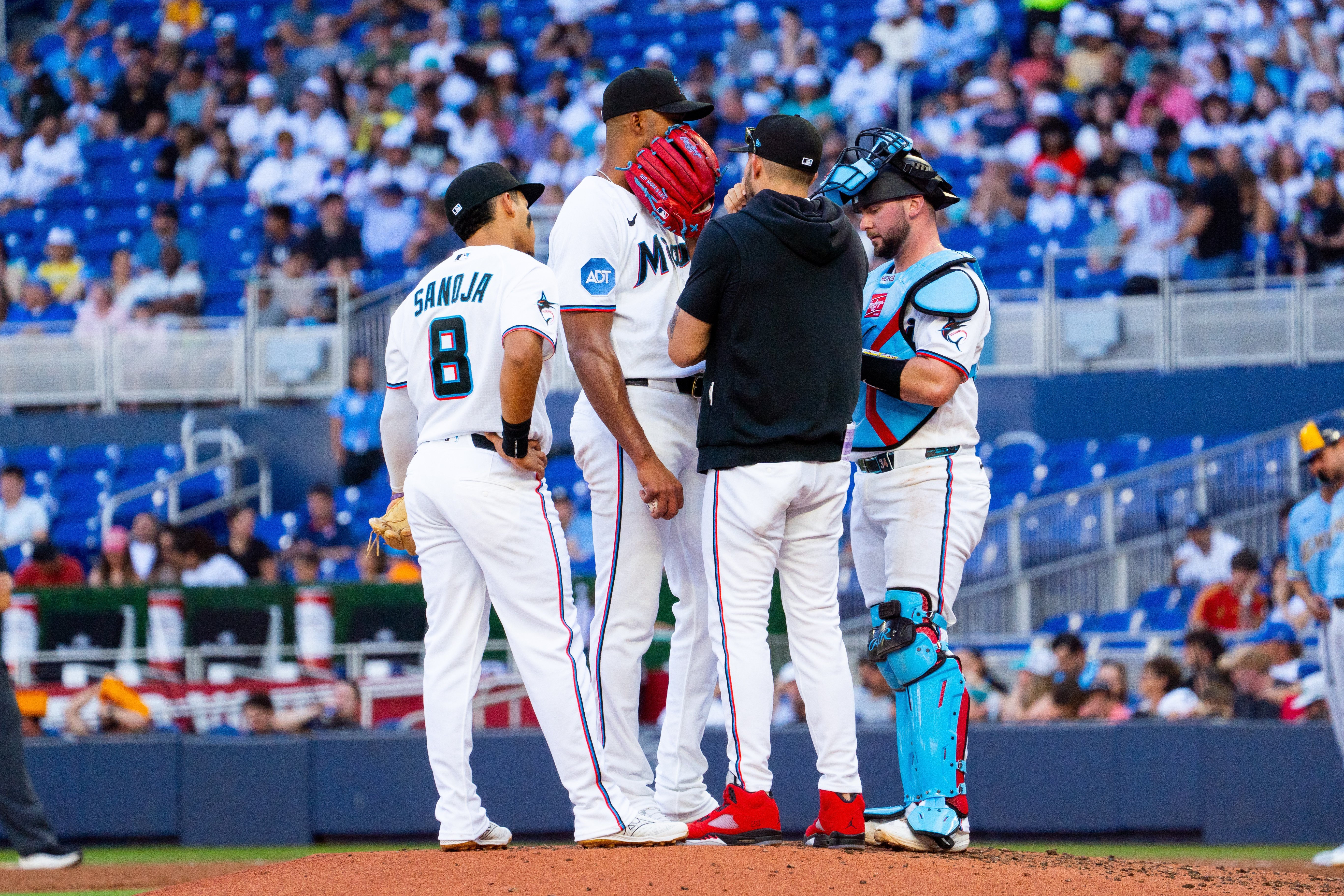 MIAMI, FL — Sandy Alcantara thought Saturday was going to be a bounce-back start after a tough go in Detroit. He took the mound at loanDepot park having thrown "the best bullpen ever" prior to the game, but that did not translate to the game itself. Alcantara's command was completely off and the Marlins fell to the Milwaukee Brewers by a final score of 5-2. It's the club's third straight series loss. In five innings of work, Alcantara walked six, matching a career-high. Of the 24 batters he faced, he only landed 13 first-pitch strikes. His efficiency was not displayed, as he allowed multiple baserunners in every inning with the exception of the top of the first. "Just uncharacteristically struggling with the strike zone today," said Marlins manager Clayton McCullough. "He really battled and grinded." After a nine-pitch top of the first, Alcantara struggled in the second inning, throwing 24 pitches. In the top of the third inning, Alcantara walked the bases loaded, but was bailed out by Gary Sanchez's inning-ending double play. He threw 20 pitches in the third. Brewers left fielder Brandon Lockridge knocked in an RBI single in the top of the fourth inning, tying the game, 1-1. In the ensuing inning, second baseman Brice Turang hit his fourth home run of the season, extending Milwaukee's lead, 3-1. Alcantara served Turang a cutter that landed middle-middle, and the second baseman took it 402 feet to right-center field. Alcantara's best pitch, his changeup, just was not there, but as the Marlins ace described it, "I wasn't controlling anything today." His changeup generated four whiffs, did not land for a first pitch strike and hitters had an average exit velo of 98.4 mph. Miami's bullpen has also continued to struggle, with Anthony Bender coming into the game for Alcantara, he surrendered two runs on one hit and was not able to get out of the inning, only getting two outs. Bender now has an 8.22 ERA in 7 ⅔ innings pitched. "He's such an important part of our bullpen and our team," McCullough said. "We've seen that on so many occasions, and right now, he's struggling to find the strike zone with the type of consistency that he needs to be successful, which is no secret. He knows that he's better than that right now. He's overthrown a little bit, and maybe trying to do a little bit too much." Connor Norby continues to ride the hot bat, now with a hit in nine of this last ten games. In the bottom of the second inning, Norby put the Marlins on the board with his seventh RBI of the season. That was the only damage they were able to do against Brandon Woodruff in his seven strong innings of work. The Marlins made things interesting in the bottom of the ninth. Three straight singles loaded the bases for Heriberto Hernández, who grounded into a force out that scored Jakob Marsee. Javier Sanoja grounded out to end the game. Miami finished the game going 2-for-7 with runners in scoring position. The Marlins dropped to 9-12 on the season and will look to avoid the sweep on Sunday. In a piece of positive news, Kyle Stowers will be reinstated from the 10-day injured list prior to the series finale. View the full article
 -
 Blue Jays Affiliate Overview (April 16-April 17) Triple-A Buffalo Bisons Series vs Rochester Red Wings (Washington Nationals): 2-2 Season Record: 9-10 Double-A New Hampshire Fisher Cats Series vs. Chesapeake Baysox (Baltimore Orioles): 4-0 Season Record: 8-4 High-A Vancouver Canadians Series vs. Spokane (Colorado Rockies): 2-2 Season Record: 4-9 Single-A Dunedin Blue Jays Series vs. Clearwater Threshers (Philadelphia Phillies): 2-2 Season Record: 7-6 Triple-A Buffalo Bisons Season Record: 9-10 Series Opponent: Rochester Red Wings (Washington Nationals) April 16: Postponed April 17, Game 1: On Friday, Charles McAdoo had himself one of the best all-around performances for a Buffalo player in 2026. During game one of the doubleheader with Rochester, he went wild, crushing a three-run home run in the top of the seventh innings to break it open for Buffalo. Before he brought home the win with the big blasts, he had two other hits, singles in the second inning and the sixth inning. He also added a stolen base after his single in the second. Rafael Lantigua gave the Bisons the early lead in the second inning, hitting a three-run home run himself. Out on the mound for Buffalo was one of their steady stars so far this season, Chad Dallas. He went three innings, giving up only one run, on three hits, while striking out six. Yariel Rodriguez came into the game in the seventh and put a stamp on the Buffalo win by striking out two and earning the save. The Bisons won 6-2 and brought their season record back to .500 at 9-9. April 17, Game 2: In game two of the doubleheader, it was yet again Charles McAdoo who was the standout player for Buffalo. In the top of the first inning, McAdoo followed a walk and a single with another big three-run home run. In the bottom half of the inning, Rochester answered with a crooked number of their own. They would score five runs off of Bisons starter Grant Rogers, highlighted by back-to-back home runs from Andrés Chaparro and Yohandy Morales. Unfortunately for Buffalo, their bats disappeared entirely, only getting one more hit in the seven-inning game. Rogers, Brendon Little, and Brendan Cellucci kept Rochester from adding any more runs after the first inning. Without any runs themselves, though, they fell 5-3 and dropped back below .500 to a 9-10 record. Double-A New Hampshire Season Record: 8-4 Series vs. Chesapeake Baysox (Baltimore Orioles) April 16: Thursday, Gage Stanifer was on the mound for the New Hampshire Fisher Cats, and he again pitched much better than his opening game at Double A this year. He went four innings, gave up just one hit, walked 3, struck out six, and was charged with two runs. Both runs scored after he left the game and reached via walks in the fifth inning during a thunderstorm they played through. With the New Hampshire offense, it wasn't much of a problem though. The Fisher Cats put up six runs in the fourth inning and the eighth inning. They had 15 hits (seven extra base hits), and the big one was a Jace Bohrofen home run in the eighth inning. Jackson Hornung, Alex Stone, and Jay Harry all had three hits apiece for New Hampshire, as they won big again, 12-6. April 17: The Friday night game against the Baysox had a similar feel to it as the Thursday one, but this time, things came out a bit differently. Richard Gallardo got the start for New Hampshire, went four innings and only surrendered two hits and two walks, but the Baysox scored five runs in the second inning. Aaron Parker started the scoring in the first inning for New Hampshire with an RBI single. In the bottom of the second down four runs, the Fisher Cats added three to cut the lead to one. Eddie Micheletti Jr. had an RBI single, a run scored on a passed ball, and Parker drove in a run with his second RBI single. Jackson Hornung continued his hot hitting with an RBI single in the sixth, and Aron Estrada gave the lead back to the Baysox in the seventh with an RBI double. In the eighth, a groundout to the pitcher would score the tying run for the Fisher Cats, ultimately sending the game to extra innings. In the bottom of the tenth, an intentional walk of Sean Keys and a bunt single loaded the bases. A wild pitch by Daniel Lloyd let Nick Goodwin scramble home for the winning run and walk-off win for New Hampshire, 7-6. High-A Vancouver Season Record: 4-9 Series vs. Spokane (Colorado Rockies) April 16: On a day with a lot of strong pitching performances in the system, Daniel Guerra stepped up and provided one of his own. The 22-year-old righty struck out 11 hitters in five innings, without giving up a single hit and only walking two. Maddox Latta had his second homer in as many games to give the Canadians the early lead, and a throwing error in the fourth allowed Vancouver to grab two more runs. Trace Baker replaced Guerra in the sixth and struggled, giving up the lead immediately, allowing five runs, with four of them being earned, and was only able to get two outs. Eminen Flores kept it close by keeping it scoreless until the ninth inning, where Carter Cunningham continued to dominate with a clutch two-run homer to send it to extras. In the tenth inning, Tucker Toman was the batter with the sacks packed and hit his first homer of the season for a grand slam. Jonathan Todd gave up a two-run homer in the bottom of the tenth, but Vancouver was able to escape with the win. April 17: The Canadians took it to extra innings again this game, but instead of offensive performances driving the way, the pitching was incredible. Danny Thompson Jr. continues his scoreless campaign to start the season, with four innings of one-hit baseball, striking out eight batters. Aaron Munson has been streaky to start the season, but he was good this outing, striking out six more batters himself across three innings. Kelena Sauer made it the third pitcher in a row to go scoreless to end regulation, and he also struck out three hitters himself. The Canadians' offense sputtered, though, as they only mustered up five hits and three walks, leaving ten men on base. The Canadians couldn’t capitalize on the ghost runner in the top of the tenth, and Juanmi Vasquez gave up a walk-off base hit with two outs to lose the game for the Canadians. Single-A Dunedin Season Record: 7-6 Series vs. Clearwater Threshers (Philadelphia Phillies) April 16: José Berríos finally returned to the mound after getting put on the injured list in spring training due to a fractured elbow. The velo was up to where it was pre-injury, as he was sitting 95 mph on his fastballs. Berrios looked like he was working on stuff on his return, as he gave up five runs. The D-Jays were powered by shortstop Eric Snow, who knocked in the first two runs for Dunedin with a double, and Dariel Ramon scored Snow on an RBI single. The duo did it again in the fourth inning, as Snow’s aggressive baserunning led to a throwing error after he stole third, and Ramon hit his first career homer to take the lead back. Nolan Perry’s return from Tommy John hit its peak, as he struck out 12 batters in just five innings, only allowing a single hit. Unfortunately, Hawkeye was down during his outing, so we missed out on his pitch data, but the big righty was commanding his breaking balls and generated a ton of whiffs. Juan Sanchez made his debut and got his first pro hit. Austin Smith ended up blowing the lead in the ninth, leading to another extra-inning game for the D-Jays, and with the bases loaded, they once again walked it off, this time on a hit-by-pitch. April 17: The game started off horribly, as Karson Ligon was taken out of the game after feeling something on a warm-up pitch. Franly Urena was forced to start and pitched admirably in spite of the circumstances, striking out five batters, but giving up two runs. Peyton Williams had his first homer of the season in the second, and Aldo Gaxiola followed that up with an RBI double, and was then knocked in by Dariel Ramon’s first double of the season. Reece Wissinger pitched three and a third scoreless innings to keep the lead for the Jays, but the Threshers got to Diego Dominguez, and the offense couldn’t fight back, leading to a 5-3 loss. View the full article
 -
Frank Cairone Cleared To Report To Brewers' Facility In Arizona
DiamondCentric posted an article in Brewer Fanatic
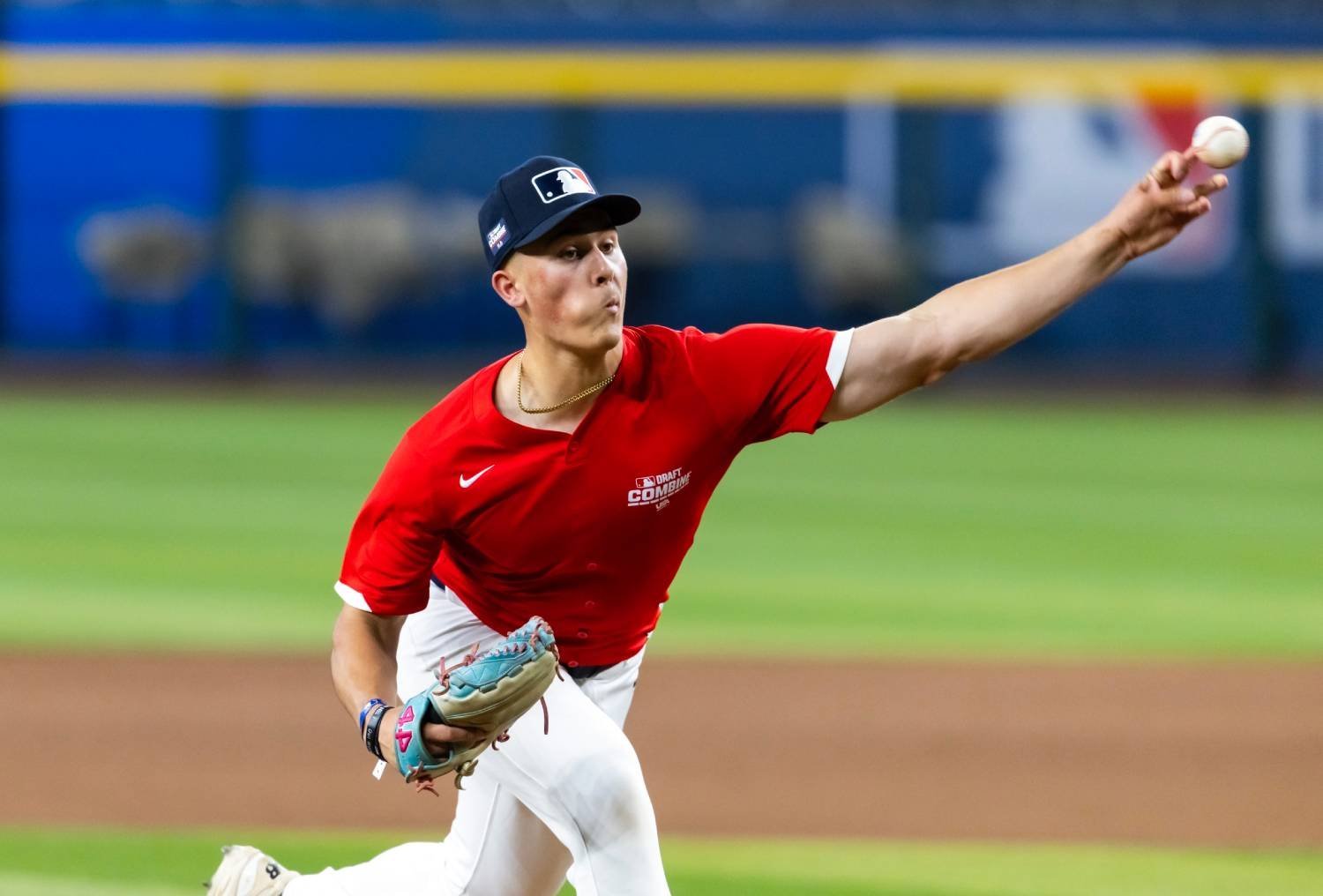 Milwaukee Brewers prospect Frank Cairone's comeback from a serious vehicle collision in early January took another monumental step. According to an Instagram post, the 18-year-old left-hander taken in the second round last year by the Brewers has been cleared medically to rejoin the organization. The post said Cairone was reporting to the Brewers' complex in Phoenix this weekend. Cairone, who has yet to make his professional debut, has been working out at the Baseball Performance Center near his hometown in New Jersey. The 6-foot-2, 195-pound left-hander will continue to get back into baseball shape under the watchful eye of the Brewers' medical staff. During spring training, Brewers players showed their support for Cairone by wearing T-shirts bearing his initials. Cairone was the 68th player taken in last year's draft and signed with the Crew for a $1.1 million bonus instead of accepting a scholarship to Coastal Carolina. View the full article
 -
Reds 5, Twins 4: Twins Lose Another Winnable Game Against the Reds
DiamondCentric posted an article in Twins Daily
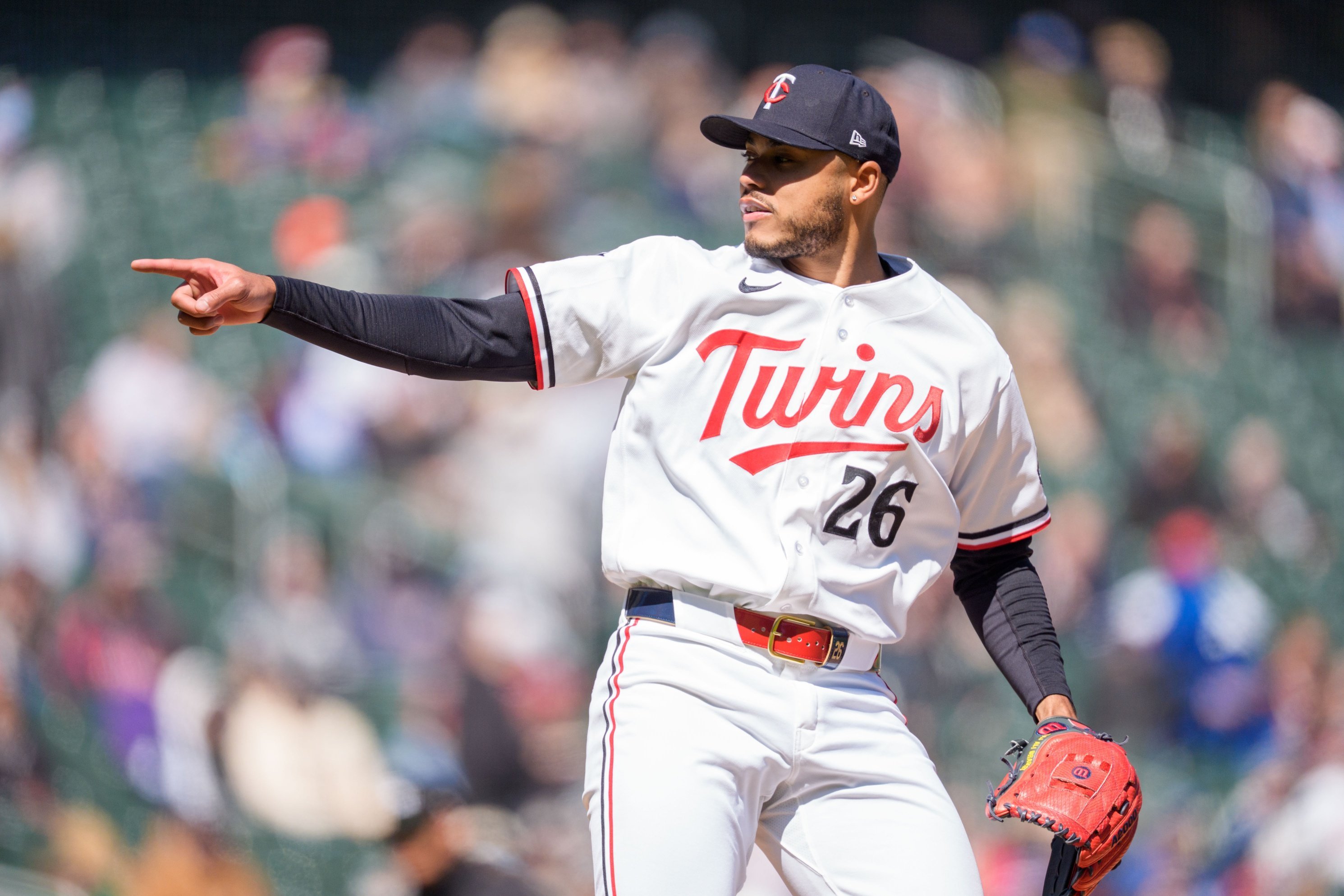 Box Score SP: Taj Bradley 6.0 IP, 5 H, 2 ER, 2 BB, 5 K (99 pitches, 62 strikes (63%)) Home Runs: N/A Bottom 3 WPA (via FanGraphs): Cole Sands (-0.30), Eric Orze (-0.14), Byron Buxton (-0.10) Win Probability Chart (via BaseballSavant) The Twins dropped the series opener against Cincinnati Friday night because of missed opportunities at the plate. As they looked to face yet another left-handed starter in Andrew Abbott on yet another chilly Saturday, manager Derek Shelton looked to regain some heat in the lineup by shifting around both positions and batting order. Josh Bell moved up into the three-hole and Luke Keaschall dropped down to fifth. Ryan Kreidler got his first Twins start in center field, while Trevor Larnach got left and Austin Martin got right. Would the manager's moves provide the necessary spark to right the ship after a brief two-game losing skid? Or would the fact that Taj Bradley was on the mound mean that one run would be enough to get the Twins back into the win column? Starting Strategically Strong In the top of the first inning, the first Reds swing of course found its way into center field, but Kreidler looked like a natural in making the grab. The lineup changes also played early dividends, as Bell followed a Martin walk with a strategic push swing for a single through an empty right-side of the diamond. With runners at first and second, Ryan Jeffers saved his at-bat by fouling off a fastball at the very last second. On the next pitch, Jeffers timed the Abbott fastball perfectly and tripled his way into a 2-0 Twins lead. A Challenging Third The Twins' lead got cut in half in the top of the second inning when Bradley walked lead-off man Sal Stewart, and a Nathaniel Lowe double with one out put both men in scoring position. Taj escaped with only allowing a sacrifice fly to Tyler Stephenson, and the Twins built the lead back to 3-1 in the bottom of the third inning after three consecutive challenges went their way. First, Martin reached first base on an overturned call after an Elly De La Cruz bobble. Then Martin was ruled safe trying to reach second base on a Bell groundout, and even though the video seemed to show that he was out, the Reds challenge was unsuccessful in overturning the call on the field. Then, with two outs, the demoted Keaschall snuck a single into right field to plate Martin. Keaschall got picked off trying to steal second, but the Twins challenged and Luke was ruled safe. All in all, the longest one-run inning of my life came to a mericful end. More Defensive Issues Bite the Infield In the top of the fourth, Bradley got Eugenio Suarez to hit a grounder to the hole in short. Brooks Lee had two options: 1) Allow the ball to go through for a one out single. 2) Try to slide and snag the ball for no apparent reason. Lee chose option two, and booted the ball into no-man's land in short left field, allowing Suarez to reach second base on a gift double. Therefore, a Lowe inning-ending groundball double-play turned into a advance the runner to third groundout. On an 0-2 count, Stephenson struck again and plated a Suarez who should have never been there with a single. 3-2 Twins. RISP for the Win? After establishing the first Sam Caulder jinx of the season by flailing with runners in scoring position on Friday night, the Twins knew that winning a close game was going to require re-discovering their scoring ways in the middle innings. Through the first four frames on Saturday, the Twins left FIVE men on in scoring position as they nursed a one run lead. After a Bell single and a Larnach walk in the bottom of the fifth, Lee came up with a chance at redemption and he finally delivered with a single that plated Bell and pushed the lead back up to 4-2. Unfortunately, the RISP success stopped there, as Tristan Gray struck out with the bases loaded to push the "left behind" total to SEVEN after five innings. Bradley Continues to Deal, Bullpen Loses a Winning Hand With his pitch count climbing towards the magic 100 mark in the top of the sixth inning, Bradley saved his best for last. Taj struck out the last three men he faced with a mixture of 96 mph heat and buckling curve balls. Though the bullpen got brought into play a bit sooner than last time, Bradley kept the Reds mostly quiet throughout his start and gave the constant and steady performance that Twins fans have grown to appreciate this season. Justin Topa was first man out of the pen in the top of the seventh, and after surrendering a leadoff single to Rece Hinds, he settled down and got the next two Reds. Kody Funderburk entered the game to face lefty Will Benson, and Terry Francona countered by pinch-hitting righty Dane Myers. Funderburk got ahead and then plunked Myers which brought up De La Cruz again. This this, the Twins weren't so lucky and Elly finally stung the Twins with a run-scoring single to tighten the game at 4-3, but still advantage Twins. After Shelton got tossed for arguing in general during the De La Cruz bat, the pitching decisions were up to bench coach Mark Hallberg, and he went with Eric Orze in the top of the eighth, Two batters later, the Reds had runners at the corners with nobody out. Orze notched a strike out, but then allowed a sac fly to Hines to tie the game and to rob Bradley of another win. No Defense for This Loss Cole Sands took the top of the ninth, and another ground ball found its way past Lee and into left field, this time under his backhand attempt. While ruled a single by Spencer Steer, it was a makeable play for an average shortstop. After a sacrifice bunt, Myers blooped a heart-breaker over Keaschall's head to score Steer and to give the Reds their first lead of the day at 5-4. Could the Twins bats overcome their lack of clutch throughout the day, and deliver their first walk-off win of the season? Nope. Not even close, as the Reds slammed the door shut 1-2-3 to take the series in a second consecutive one-run victory. What’s Next? The Twins look to salvage the series finale at home against the visiting Reds on Sunday afternoon. Twins send "crafty" righty Bailey Ober (2-0, 5.49 ERA) to the mound in search of more steady progress on his 2026 campaign. The Reds will send the former Royal RHP Brady Singer (1-1, 5.60 ERA) who is starting his second year of service in the Reds organization but has a 9.15 ERA at Target Field over his career. First pitch is scheduled for 1:10pm CDT. Postgame Interviews Coming Soon Bullpen Usage Spreadsheet TUE WED THUR FRI SAT TOT Topa 0 13 0 11 10 36 Orze 0 12 0 0 15 35 Sands 15 0 0 20 12 35 Banda 0 24 0 0 0 24 Funderburk 0 14 0 8 10 22 Rogers 22 0 0 0 0 22 Morris 0 0 0 0 0 0 Acton 0 0 0 0 0 0 View the full article
 -
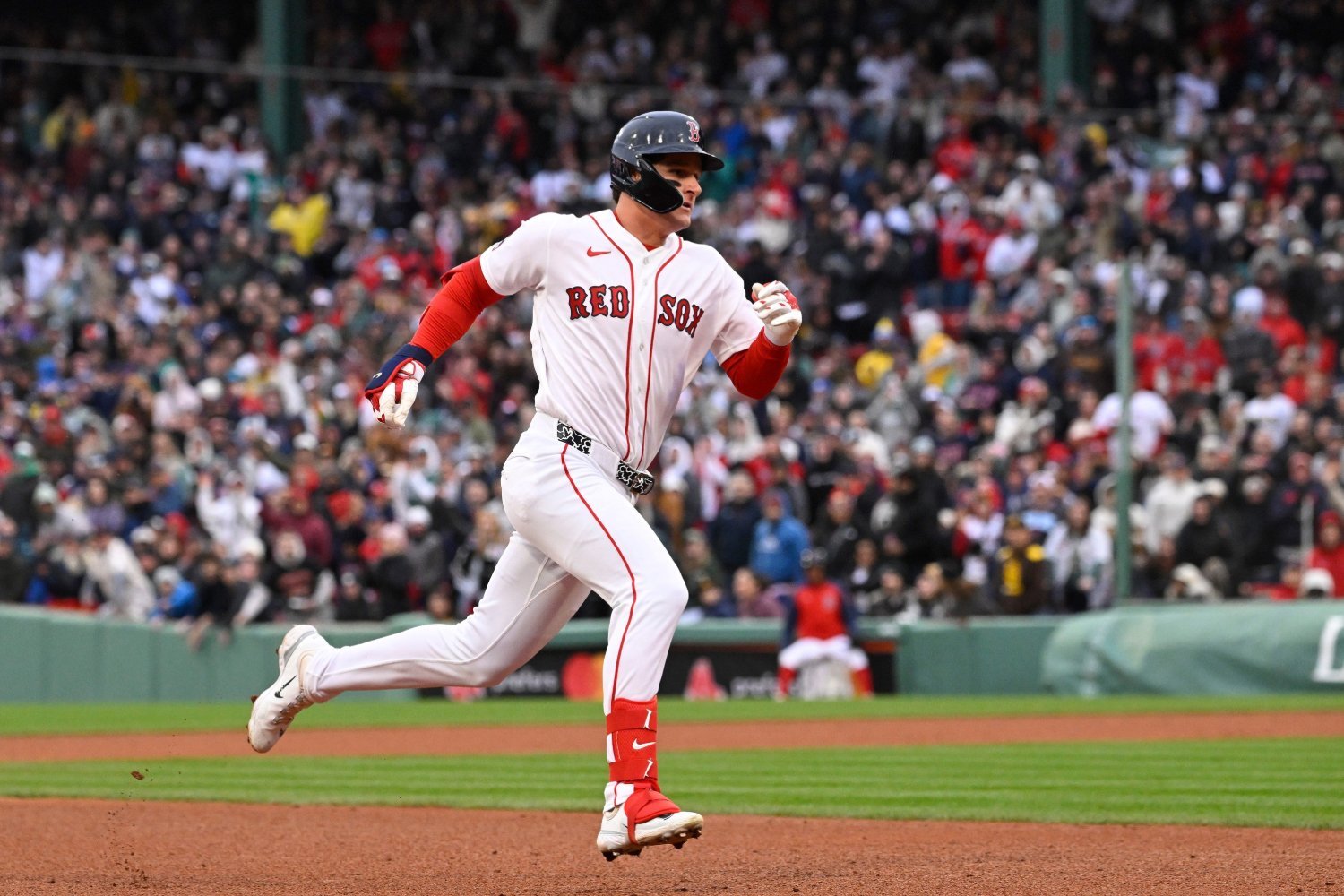 Although he seems to be finally turning the corner at the plate, Roman Anthony has not gotten off to a start that both he and fans were hoping for. It’s a bit understandable as the Boston media circus and the organization have all placed an immense amount of pressure on the young slugger’s shoulders. After the team failed to bring back Alex Bregman, Anthony was thrust into the spotlight as the guy to carry the load offensively. He’s able to do that, but he’s only 21 and is currently in his first full season in the big leagues. Anthony’s start to the season mirrored the entire club’s: slow. From the beginning of the season until the end of the Cardinals series, he was slashing .200/.290/.309 with a .272 wOBA, 65 wRC+, and a -0.1 fWAR. In the most recent Twins series though, Anthony broke out. He went 5-for-10 with two doubles, two strikeouts, and three walks. As he was ascending through the minors, we heard a ton about his impressive eye and command of the strike zone. If we add that series back into his totals, we see the uptick. He’s now slashing .232/.338/.348 with a .313 wOBA, 94 wRC+, and 0.2 fWAR. What a difference a few games can make. Through the first month of the season, his steady plate discipline and eye to disappear. He was swinging through a lot of pitches that he had no business swinging at, and the numbers reflect that. He’s currently ranked in the 23rd percentile in whiff rate (30.4%), and his strikeout rate puts him in the 27th percentile at 26.3%. That’s less than ideal, but the Twins series looked different. He seemed more poised and confident in his swing choices. He wasn’t chasing as much and when he made contact, it was solid. And, in truth, that mirrors his contributions across the entire campaign thus far. The expected stats pass the eye test. An average exit velocity of 92.8 mph is nothing to sneeze at, and far more indicative of the solid work he's been doing in the batter's box to this point. He obviously has to correct his sudden penchant for whiffing; in particular, he's getting beat badly by off-speed stuff. His overall swing-and-miss rate on those offerings is 55.6%, which isn't sustainable at this level. There's no doubt that he has the talent to correct this flaw, but the league will adjust to even the slightest weakness that a player has. Anthony will have to adjust back, either by way of an altered plate approach or changing up his attack angle on his swing. Throughout his time in the minors, his offensive profile was built on the fact that his pitch recognition was top tier and he only swung at pitches he knew he could make contact on. We saw that last season once he was called up as well—he had an impressive eye at the plate. Right now, he's pressing to make things happen instead of being selective and looking for pitches he knows he can do damage on. Again, his at-bats in the Twins series looked far more like the at-bats he’s been known for since he entered the organization. There’s little reason to be worried about Anthony, even if he’s started the season slowly. He’s a young and has the ceiling for a perennial All-Star. His slow start has been less than ideal, but not everyone ramps up at the same rate in pro baseball. Sure, he demolished his time in the World Baseball Classic, but keeping that same energy through the start of a 162-game season is incredibly difficult to do. The underlying data is worth buying into, if only because the Red Sox need him to lead this offense in order to reach the heights they were built for. View the full article
 -
Marlins to reinstate Kyle Stowers from injured list Sunday
DiamondCentric posted an article in Fish On First
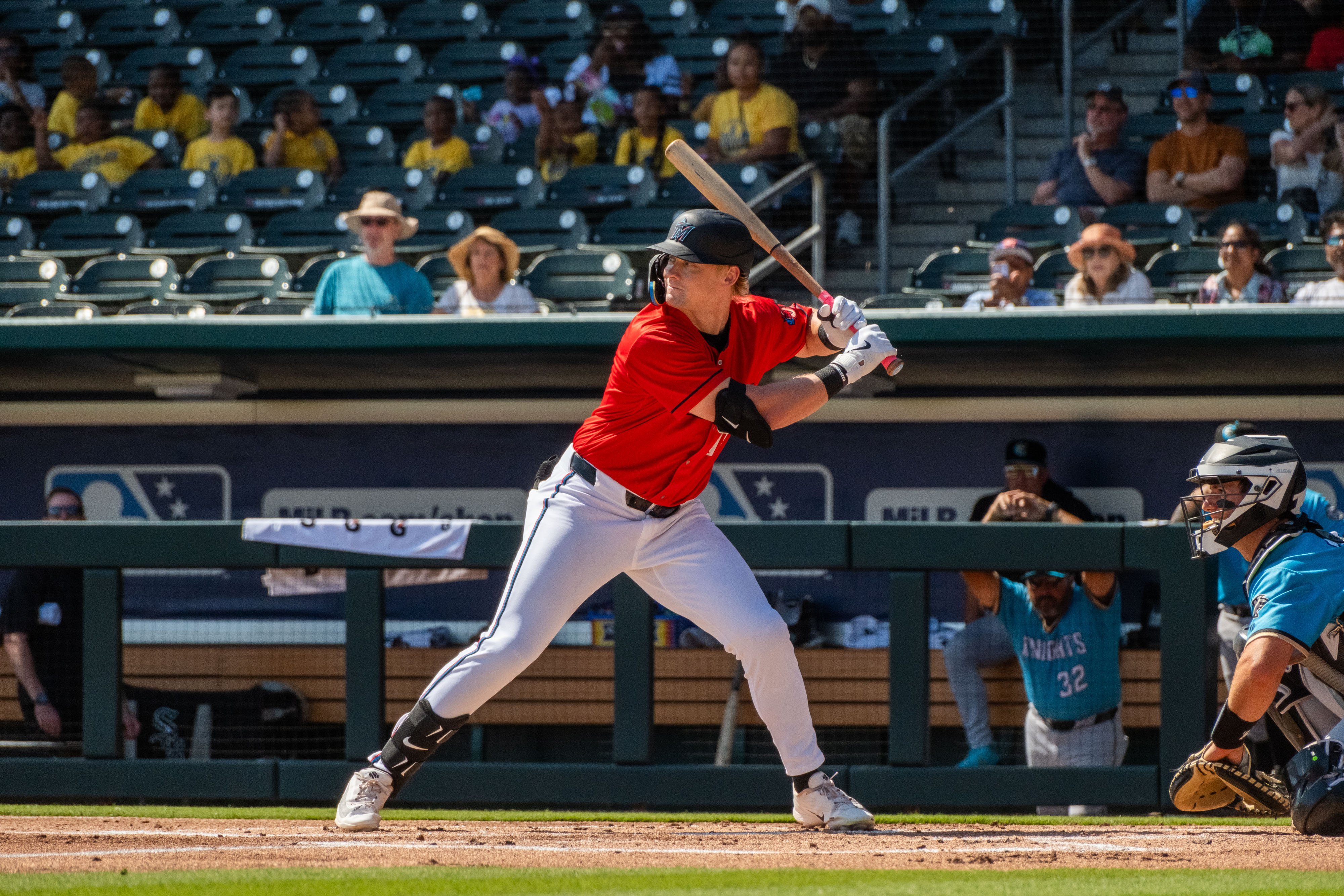 MIAMI, FL — On Saturday, before the Miami Marlins and the Milwaukee Brewers played the second of their three-game series, manager Clayton McCullough announced that Kyle Stowers (Grade 1 right hamstring strain) will be reinstated from the injured list on Sunday. The corresponding roster move has not been shared yet. Stowers, who only played in six spring training games, required a longer than usual rehab assignment, playing in five games with Triple-A Jacksonville, going 3-for-17. In his final rehab game, Stowers made his first professional start at first base, playing the entire game at the position. "Everything from the rehab checked out," McCullough said. "He continued to check the necessary boxes. Certainly, there was a physical component with how he felt, how the hamstring was. He got back-to-back nine inning games and he came out of that feeling like he's in a really good spot physically. I think mentally now he feels like, okay, 'I'm over this,' so Kyle is here today, and we'll have Kyle ready to go tomorrow." Last season, Stowers was the Marlins All-Star representative and slashed .288/.368/.544/.912 with 25 home runs, 73 RBI and a 149 wRC+. He finished the season on the injured list, suffering a left oblique strain. The last time Stowers played in a major league game was on August 15, 2025, against the Boston Red Sox. "He's certainly a huge part offensively of what we can do," McCullough said. "It helps really lengthen out the lineup. The type of season that he had last year, the power, on base that he displayed...Getting Kyle will really be a nice, a nice boost. Kyle is a really steady teammate. A lot of guys lean on him. He's not usually too up or down. I think he handles things in stride very well. A lot of that probably is due to his path of getting here, and he's been knocked down a lot, but he keeps getting up. Kyle brings a lot on both fronts, on the field and behind the scenes." Expect Stowers to be in the everyday lineup—it's just a matter of how his playing time will be split between the corner outfield spots and first base. The Marlins are big on versatility and will be using it with as many players as they can. The Marlins enter Saturday with an 9-11 record, having lost six of their last seven games. Brandon Woodruff and Sandy Alcantara are the starting pitchers for the 4:10 pm contest. View the full article
 -
 Cubs Affiliate Overview (April 14–16) Triple-A Iowa Cubs Series at Columbus Clippers (Cleveland Guardians): Cubs lead 2–1 Season Record: 10–7 Double-A Knoxville Smokies Series at Pensacola Blue Wahoos (Miami Marlins): Smokies lead 2–1 Season Record: 7–5 High-A South Bend Cubs Series vs. Beloit Sky Carp (Miami Marlins): Lead 3–0 Season Record: 7–2 Single-A Myrtle Beach Pelicans Series vs. Kannapolis Cannon Ballers (Chicago White Sox): Pelicans lead 2–1 Season Record: 7–5 Triple-A: Iowa Cubs Season Record: 10–7 Series Opponent: Columbus Clippers (9–9) Series Standing: Lead 2–1 April 14: The Iowa Cubs opened their series at the Columbus Clippers with an 8-1 victory. Connor Noland earned his first win of the season, tossing 5.0 innings on one-run ball, allowing just five hits to go along with six strikeouts and no walks. The Clippers jumped out to a 1-0 lead after the opening frame but the Cubs would take the lead for good in the second when James Triantos scored on a wild pitch. The I-Cubs would break the game open with five runs in the fifth, thanks to a two-run single from Pedro Ramírez and a two-run smash from Kevin Alcántara. The duo each went 2-for-5 in the contest with Alcántara’s home run marking his seventh of the campaign. The Iowa bullpen would turn in four scoreless frames as the staff as a whole would go on to register 10 strikeouts. April 15: The Cubs suffered a 9-4 defeat to the Clippers in the second game of the series. Iowa would jump out to a 3-0 lead in the second after a Justin Dean (1-for-5) double with two outs and would extend the lead to 4-0 with a run in the fourth but Columbus would score the next nine runs in the ballgame to earn the victory. Paul Campbell, making his organization debut in the start, allowed two runs over 4.0 innings of work, whiffing four batters and issuing no walks. April 16: The Cubs re-took the series lead with an 11-10 victory in extra innings over the Clippers. Iowa took a 5-0 lead after two, with Pedro Ramírez (4-for-6) driving in three of those runs, two of which coming on his fifth long ball of the year in the second. After Columbus got three runs back in their half of the second, Iowa plated two more in the third to make it 7-3. The Clippers would rally to cut the lead to 8-7 in the eighth and would send the game to extras with a run in the ninth. Ben Cowles (2-for-4) gave the I-Cubs the lead in the 10th with a sacrifice fly and Brett Bateman (2-for-5) and Ramírez each had RBI-singles to give Iowa an 11-8 edge. Columbus scored twice in the 10th but Iowa would hold on for the win. Double-A: Knoxville Smokies Season Record: 7–5 Series Opponent: Pensacola Blue Wahoos (3–8) Series Standing: Lead 2–1 April 14: The Knoxville Smokies opened their series at the Pensacola Blue Wahoos with a 5-1 defeat. The Smokies were held to just four hits in the ballgame, two of which came off the bat of Jordan Nwogu (2-for-3). Nwogu drove in Knoxville’s only run with his RBI-single in the third. Tyler Schlaffer took the loss on the mound in the start, allowing four runs on two hits over 2.0 innings of work, striking out two and walking three. Luis Rujano worked 2 2/3 scoreless frames out of the bullpen, picking up one strikeout. April 15: The Smokies bounced back on Wednesday with an 8-0 shutout victory over the Blue Wahoos. Four Knoxville pitchers combined to blank Pensacola, with Jace Beck claiming the victory in relief after spinning 2 2/3 innings, allowing just one hit and striking out six. The Smokies scored four times in the second, thanks to Ethan Hearn’s (2-for-4) two-run double and Alex Ramirez’ two-run single. Miguel Useche (1-for-1) launched his first homer of the year in the ninth as a pinch hitter. April 16: Knoxville claimed their first lead of the series with a 10-9 comeback victory over Pensacola. The Smokies took a 2-0 lead in the second through a solo shot from Edgar Alvarez (1-for-2) and an RBI-double from Andy Garriola (2-for-3) but the Blue Wahoos responded with three runs in the bottom half of the frame to take the lead. The hosts would add five more runs in the fifth to push their lead to 8-2. Knoxville would bring the contest level with six runs in the eighth, scoring two runs on wild pitches to begin the rally before drawing a bases-loaded walk to plate its third run of the inning. Alex Ramírez (1-for-4) would earn an RBI with a sacrifice fly followed by an RBI-single from Jordan Nwogu (1-for-6). Karson Simas (1-for-5) gave the Smokies the lead with an RBI-groundout. After the dramatic rally, the Blue Wahoos would score in eighth to re-claim their advantage but Knoxville rallied again with two in the ninth, with Ramirez driving in the go-ahead and tying runs with a base hit. Vince Reilly picked up his first save of the season with a scoreless ninth to give the Smokies the win. High-A: South Bend Cubs Season Record: 7–2 Series Opponent: Beloit Sky Carp (4–7) Series Standing: Lead 3–0 April 14: The South Bend Cubs earned their fourth-straight victory with a 5-1 victory over the Beloit Sky Carp in the series opener. Owen Ayers (2-for-4) slugged a two-run shot in the first, his third of the year, that would give the Cubs the lead for good in the ballgame. Brooks Caple improved to 2-0 on the season thanks to 5 2/3 innings of one-run ball, firing nine strikeouts while dealing no walks. After Beloit cut the lead to one in the sixth, South Bend added two more runs in the bottom half of the frame to restore its cushion. The Cubs added one more run in the seventh and cruised to a 5-1 win. The South Bend pitching staff limited Beloit to just two hits in the contest, racking up 13 punchouts. April 15: The Cubs pushed their winning streak to five games with a 9-5 win over the Sky Carp on Wednesday. Beloit would take a 3-0 before South Bend stepped to the plate but the hosts hit back with two runs in the inning, thanks to an RBI-triple from Leonel Espinoza (1-for-4) and a Kade Snell (1-for-4) RBI-groundout. The Cubs would take a 4-3 lead after runs in the second and third but the visitors grabbed the lead right back after scoring twice in the top of the fourth. South Bend would take the lead for good after plating two runs in the home half of the fourth on Snell’s two-run single. Snell would pick up his fourth RBI of the night on a sacrifice fly in the sixth and Ayers would go deep again in the eighth to make it 9-5 Cubs. Ethan Bell picked up the win in relief, blanking the Sky Carp over 1 2/3 frames, while Ethan Flanagan earned a save by tossing four shutout innings to close the game, whiffing seven batters. April 16: South Bend continued its torrid start to the season with a 7-5 triumph over Beloit to claim at least a series split and push its winning streak to six games. The Cubs used a four-run outburst in the third to take control of the game, with Reginald Preciado (1-for-4) and Justin Stransky (1-for-4) each picking up run-scoring hits in the inning.After the Sky Carp clawed one back in the fourth, Iowa hit back with two more runs thanks to Owen Ayer’s (2-for-5) two-run blast. Nazier Mulé took no decision in the start, allowing one run on four hits over 3 1/3 innings of work, striking out four. Brayden Spears picked up the win in relief to improve to 1-0 on the season and Kenyi Perez worked two scoreless frames to close out the contest and earn his first save of the season. Single-A: Myrtle Beach Pelicans Season Record: 7–5 Series Opponent: Kannapolis Cannon Ballers (3–9) Series Standing: Lead 2–1 April 14: The Myrtle Beach Pelicans opened their series against the Kannapolis Cannon Ballers with a 4-0 shutout victory to snap a four-game losing skid. Hayden Frank worked four scoreless frames in his start, striking out three. Mason McGwire earned the win in relief after twirling three shutout innings, whiffing five batters. Cole Mathis (1-for-4) slugged a three-run shot in the third, his fourth of the season and Alexey Lumpuy picked up an RBI with a sacrifice fly in the seventh. April 15: The Pelicans took a 2-0 series advantage with a 5-4 walk-off victory in 10 innings over the Cannon Ballers. Myrtle Beach took a 2-0 lead its first time to the plate thanks to a two-run blast with Cole Mathis (4-for-5) his fifth of the season. After Kannapolis evened the ballgame with two in the third, the Pelicans grabbed those runs right back with two more runs, thanks to another two-run shot from Mathis. The Cannon Ballers would score a run in each the fourth and eighth innings, tying the game at 4-4. The Pelicans would keep Kannapolis off the board in the 10th and Jose Escobar’s (3-for-4) RBI-single in the home half of the frame delivered the win. April 16: Myrtle Beach had its brief two-game winning streak snapped with a 9-4 defeat to Kannapolis. The Pelicans were held to just four hits and were led at the plate offensively by Josiah Hartshorn, who went 1-for-4 with a double and two RBI. Noah Edders took the defeat in his start, allowing one run over three innings of work, striking out five while issuing just one walk. View the full article
 -
Brewers Return Coleman Crow To Triple-A After Spot Start
DiamondCentric posted an article in Brewer Fanatic
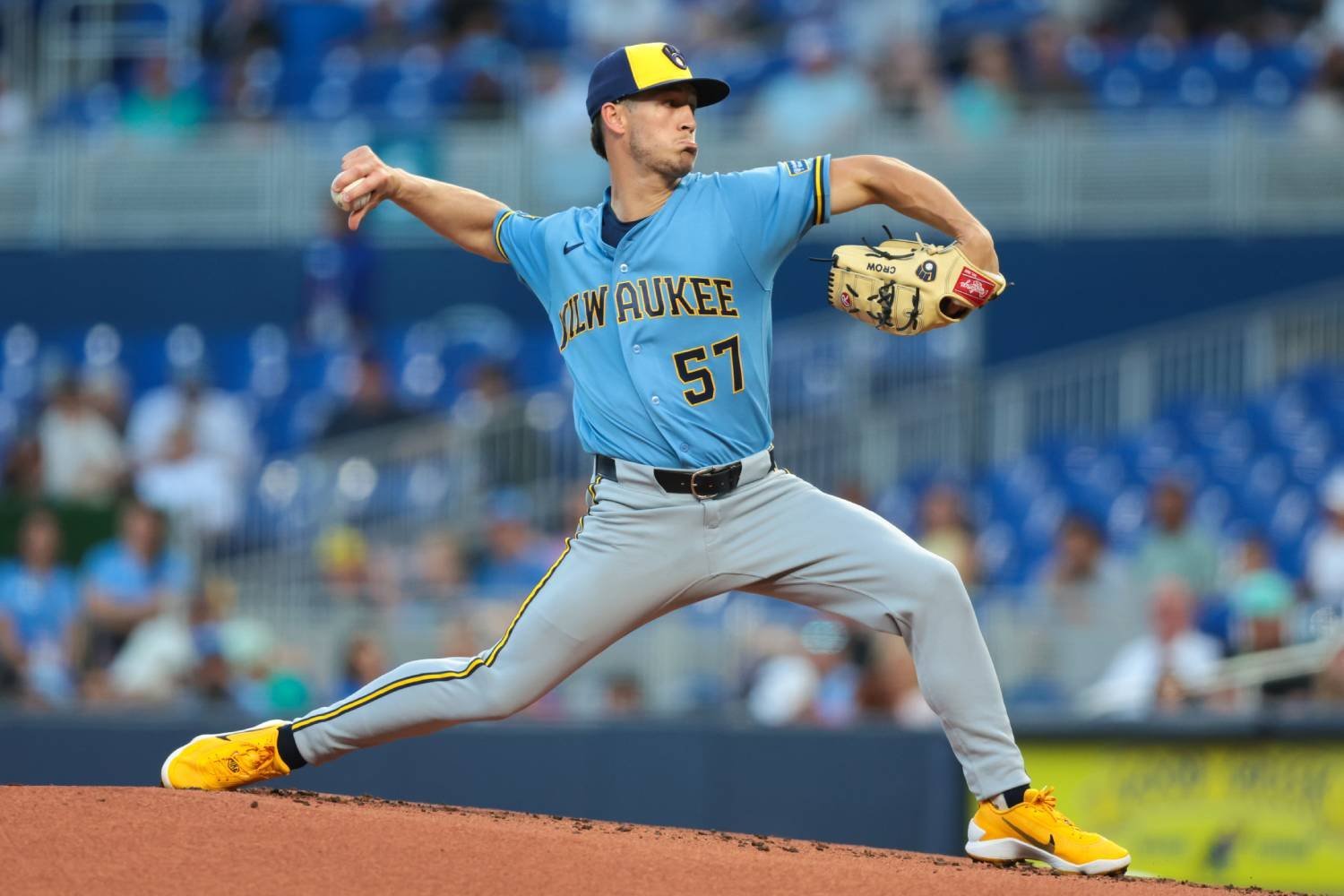 Coleman Crow will have to wait to follow up his impressive MLB debut. The Milwaukee Brewers sent Crow back to Triple-A Nashville on Saturday and promoted right-hander Carlos Rodriguez from Triple-A. Crow looked very poised and unleashed his dazzling curveball during his debut Friday against the Miami Marlins, going 5⅓ innings, allowing two runs on four hits and a walk with four strikeouts. The Brewers won 7-5 in 10 innings. He was called up to make a spot start with left-hander Kyle Harrison needing a few extra days after a slight injury to his left wrist in Sunday's start. Harrison is scheduled to have a bullpen session Saturday and return to the rotation in the next series against the Detroit Tigers. Rodriguez, a starter, will add length out of the Brewers' bullpen. He has made seven appearances, including three starts, over the last two seasons with the Crew, posting a 6.95 ERA. In three starts at Nashville this year, Rodriguez has an 8.71 ERA, allowing 10 runs on 16 hits and 10 walks with 12 strikeouts. View the full article
 -
Corbin Martin Called Up To Fortify Cubs' Bullpen
DiamondCentric posted an article in North Side Baseball
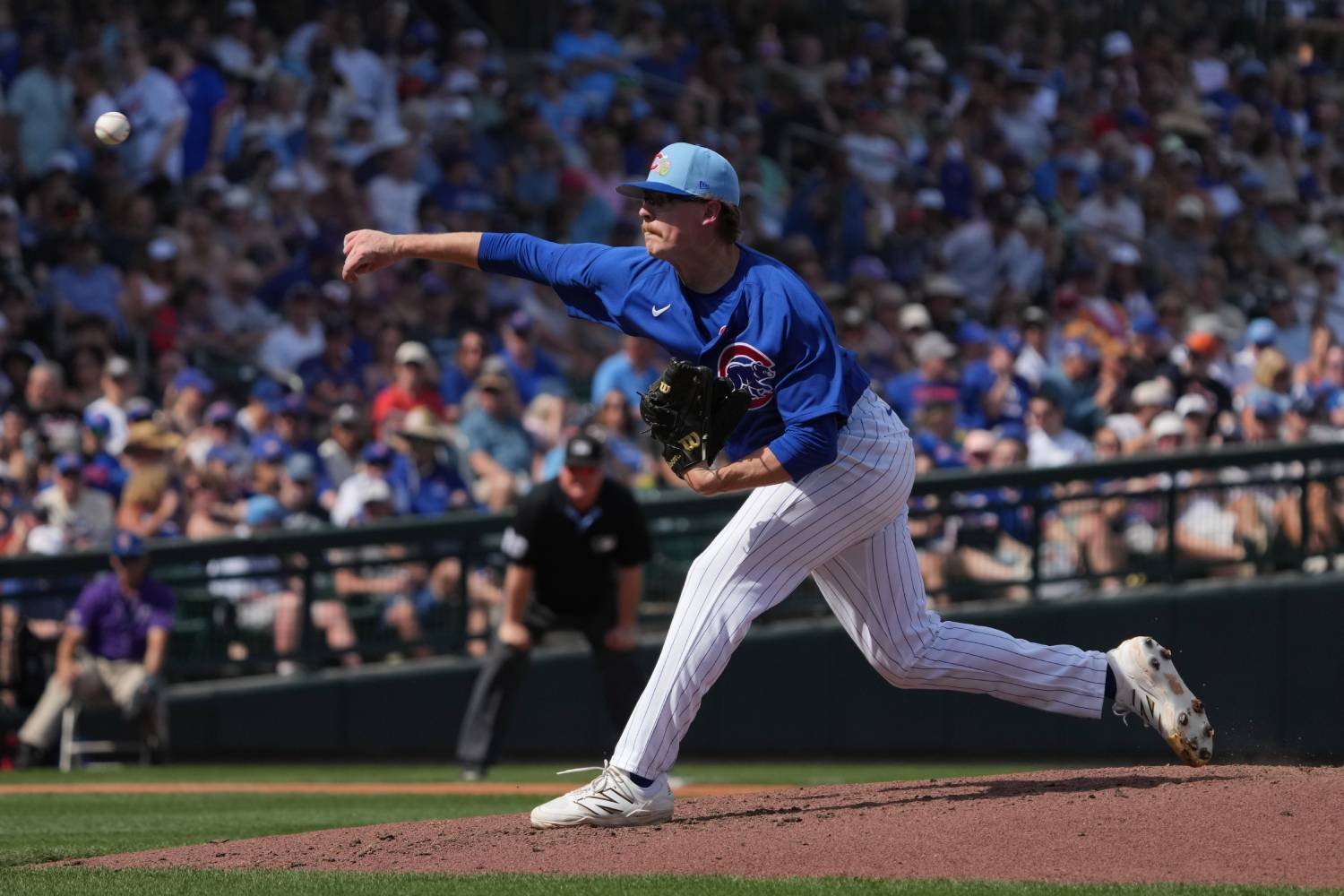 Veteran right-hander Corbin Martin had his contract selected from Triple-A Iowa and will be in the Chicago Cubs' bullpen for Saturday's game against the New York Mets. Martin was called up after closer Daniel Palencia went on the 15-day injured list just before Friday's game with a strained left oblique. To make room on the 40-man roster, right-handed starter Cade Horton was transferred from the 15-day IL to the 60-day IL. Horton underwent Tommy John surgery Thursday and will be out the remainder of the season. The 30-year-old Martin had appeared in just two games for Iowa this year, allowing one run on one hit with two walks and three strikeouts in two innings. The Cubs will be the fourth MLB team for Martin, who made his MLB debut in 2019 with the Houston Astros. He also pitched in 2021-22 with the Arizona Diamondbacks and in 2025 with the Baltimore Orioles. He has appeared in 34 games, including 10 starts, across those four stops with a 6.95 FIP (5.79 ERA) with a 12.8% walk rate and 20.7 strikeout rate. View the full article
 -
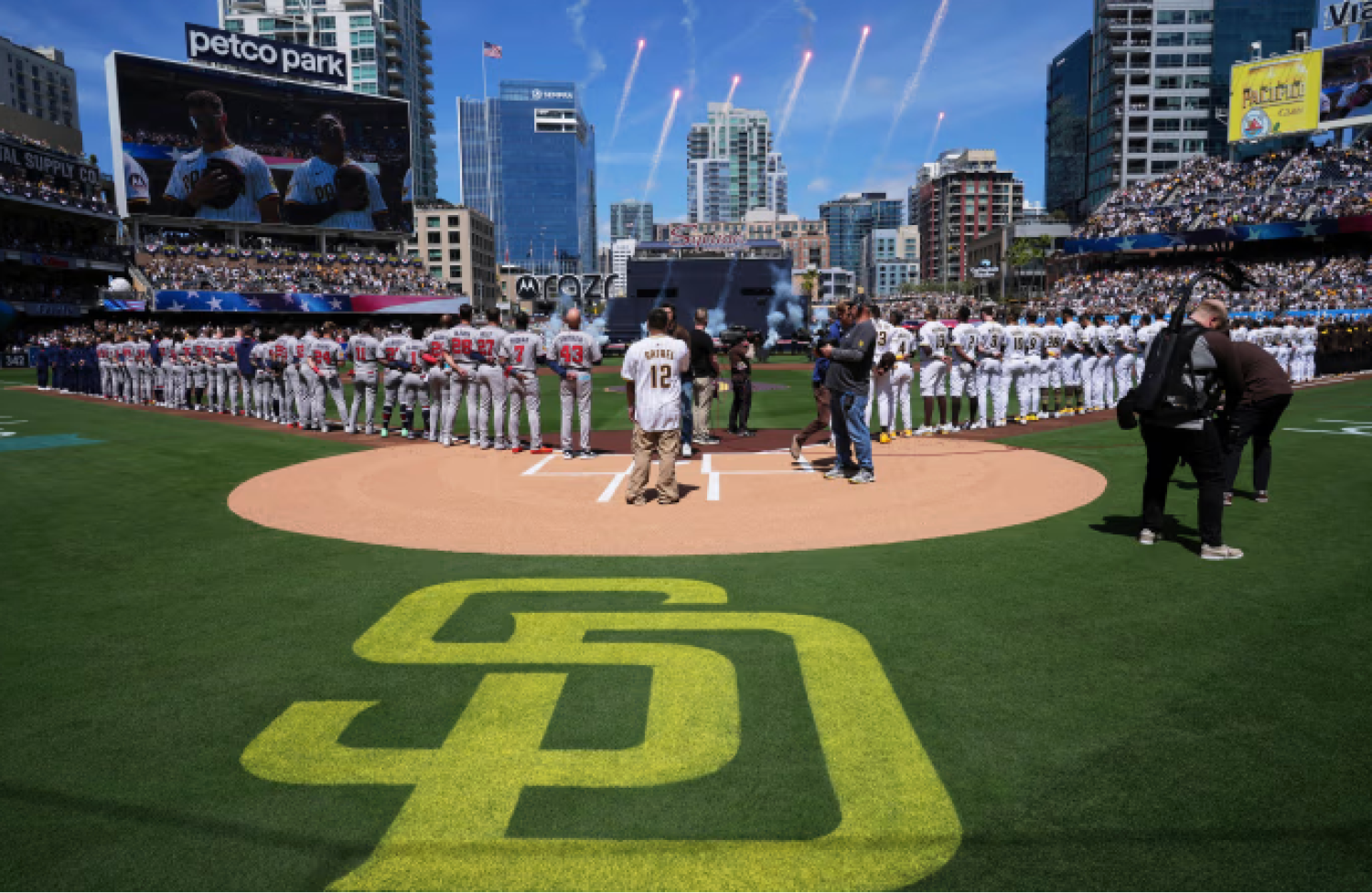 José E. Feliciano, the San Diego Padres’ next owner, isn’t an AI-generated billionaire. He only sounds like one. “As I recently discussed at Bloomberg Invest, this inflection point will generate significant investment opportunities for disciplined investors…” read a recent LinkedIn post. “The power grid is the backbone of the modern economy, and it’s about to undergo its most significant transformation yet,” declared another. “I studied at Princeton U to be a power engineer [sic] so this is a full circle moment for me!” Indeed, Feliciano’s LinkedIn profile, which is as exquisitely maintained and expertly pruned as a French garden, goes back that far. Princeton, ‘94. Stanford Business School, ‘99. “Did he cut his teeth as a financial analyst at a big investment firm?” you wonder. Of course: Goldman Sachs, 1994-97. “Then where did he make partner?” That would be at Tennenbaum Capital Partners, 2001-05. “Mere employees don’t make billions, though. How did he earn his fortune?” He co-founded Clearlake Capital Group, 2006. The Santa Monica-based Clearlake Capital is now a $90 billion, private equity behemoth. For their part, Feliciano and his wife Kwanza Jones are now worth an estimated $4 billion. But don’t worry. He found time through the years for five volunteer positions and to serve on the board at some 33 organizations. “Chairman, San Diego Padres” will soon be the next entry on his LinkedIn, after the reported $3.9 billion purchase from the Seidler family is approved by MLB owners. The organization on José’s résumé that would interest Padres fans the most is England’s Chelsea Football Club. In 2022, a consortium led by Clearlake Capital purchased the legendary club for an astounding $5.24 billion. The good: That amount didn’t stop Feliciano as “Co-Controlling Owner” from shoveling cash into Chelsea’s furnace. According to the BBC, the club under Clearlake’s leadership has spent no less than $2 billion on player acquisitions. The bad: That spending has resulted in the club winning only the 2024-25 Conference League and the 2025 Club World Cup, which, to elite European clubs, are two trophies that barely matter. And the ugly: Feliciano sounded like an unedited ChatGPT response when asked at a conference “Was this harder than you anticipated, owning a football club?” Within the six minutes of private equity gobbledygook—and sandwiched between complaints about scrutiny from sports media—Feliciano said something that should make Padres fans’ ears perk up: “The best way to make our club more valuable is to win.” Now, Chelsea operates in a uniquely challenging business environment in that the club competes for players in an international market, one that doesn’t offer the same economizing advantages of the U.S. market, and the efficiencies in a fluid game like soccer are... well, you get the idea. That point is Feliciano knows how to turn a profit. One does not become a multi-billionaire and a sports power broker without ruthlessly wringing out every cent from every Excel spreadsheet. But he also seems to respect the spiritual connection between club and supporter (or, perhaps, product and customer). “Earning the trust and confidence of our supporters—Please know that everyone at the club is relentlessly focused on delivering that,” Feliciano wrote last summer on LinkedIn about his Chelsea Lions. As of this writing, the Felicianos have yet to release a statement about their buying the Padres, but it’s doubtless that José is relishing the opportunity to buy into Major League Baseball’s legal monopoly. In the Premier League, Chelsea is subject to relegation, and the club must compete (i.e. spend) and constantly improve in all aspects of their operation to maintain their place in the world’s most watched football league. They also have to compete for fans in their own city. London has seven teams in the Premier League this season. None of that is a concern in the States. The Padres own the San Diego market in perpetuity, and no matter how bad the Padres are, they will remain in the world's most watched baseball league. Chelsea is bigger. The Padres are safer. To be sure, the Felicianos are bringing more to San Diego than mere business acumen. They are major philanthropists. The Kwanza Jones & José E. Feliciano Initiative has committed $250 million to various charitable efforts, and they contributed the largest gift by Black and Latino donors in Princeton University history. And both are only in their 50s. Padres fans are getting young, dynamic owners that could change not just the team but also the region for decades to come. The Padres, long a small-market minnow, will soon be, above all, a major private equity asset. Is that a good thing? It remains to seen—no one posts about their flaws or failures on LinkedIn. View the full article
