


DiamondCentric
-
Posts
2,631 -
Joined
-
Last visited
Never
Content Type
Profiles
Forums
Events
News
Tutorials & Help
Major League Baseball Videos
Guides & Resources
Store
Downloads
Gallery
Everything posted by DiamondCentric
-
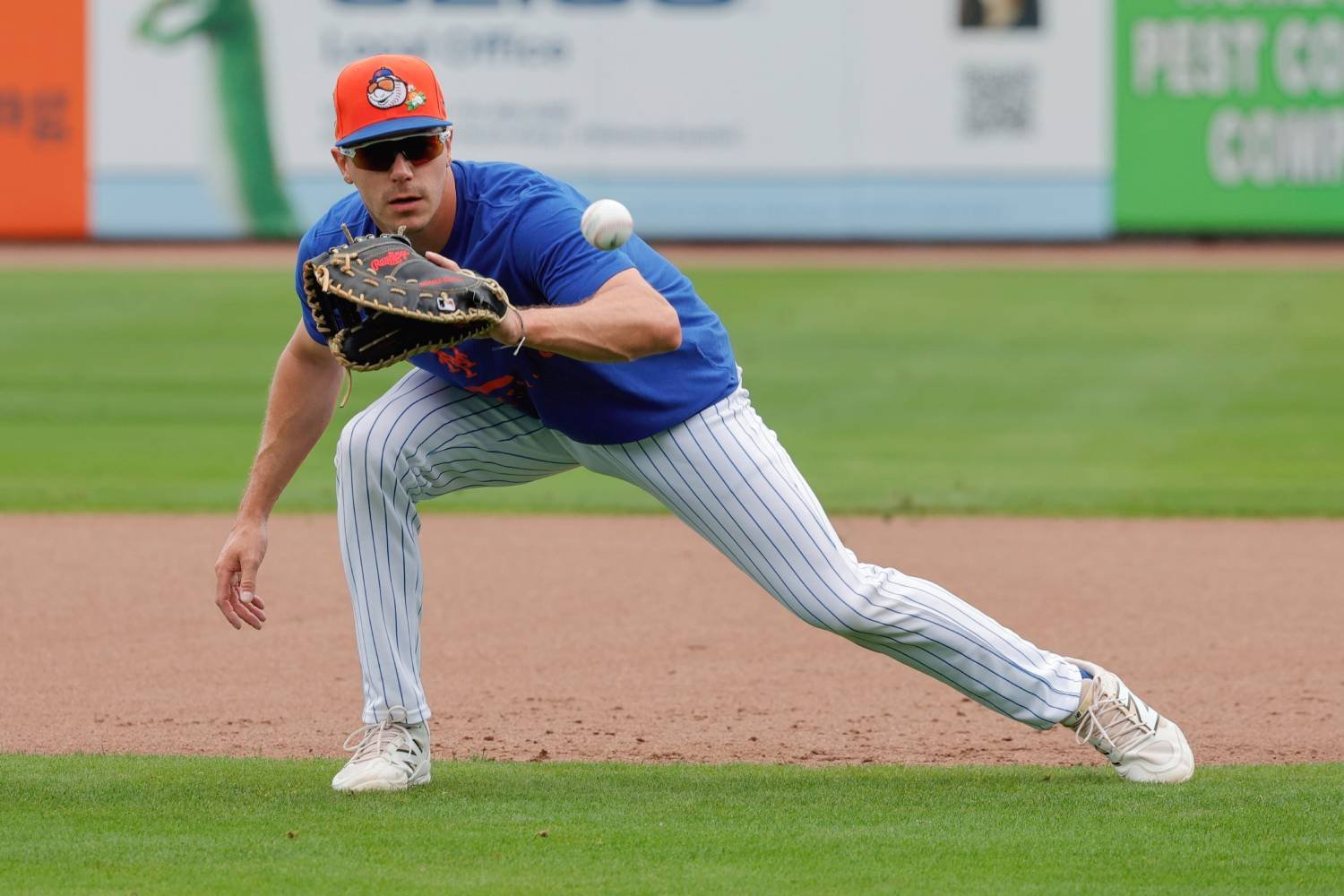 One of the few bright spots to an otherwise dismal start to the New York Mets' season has been doused. Left fielder-first baseman Jared Young was placed on the 10-day injured list Wednesday with a torn meniscus in his left knee. Outfielder MJ Melendez was called up from Triple-A Syracuse to take Young's place on the roster. At 7-11 entering Wednesday's series finale vs. the Los Angeles Dodgers and an offense that has been scuffling, Young stood out in the early part of the season. After making the Opening Day roster, the 30-year-old switch-hitter had produced a .350/.391/.450 slash line with no homers and two RBIs while appearing in 11 games, mainly against left-handed pitching. Young last appeared in Sunday's 1-0 loss to the A's, which is when he reported experiencing soreness in his left knee. He underwent imaging, which revealed the tear. Melendez will be making his Mets debut after playing the last four years for the Kansas City Royals, then signing a split deal with New York in the offseason. At Syracuse, Melendez had a slash line of .216/.286/.431 with two homers and three RBIs in 14 games. View the full article
 -

Cubs' Porter Hodge To Have Season-Ending Elbow Surgery
DiamondCentric posted an article in North Side Baseball
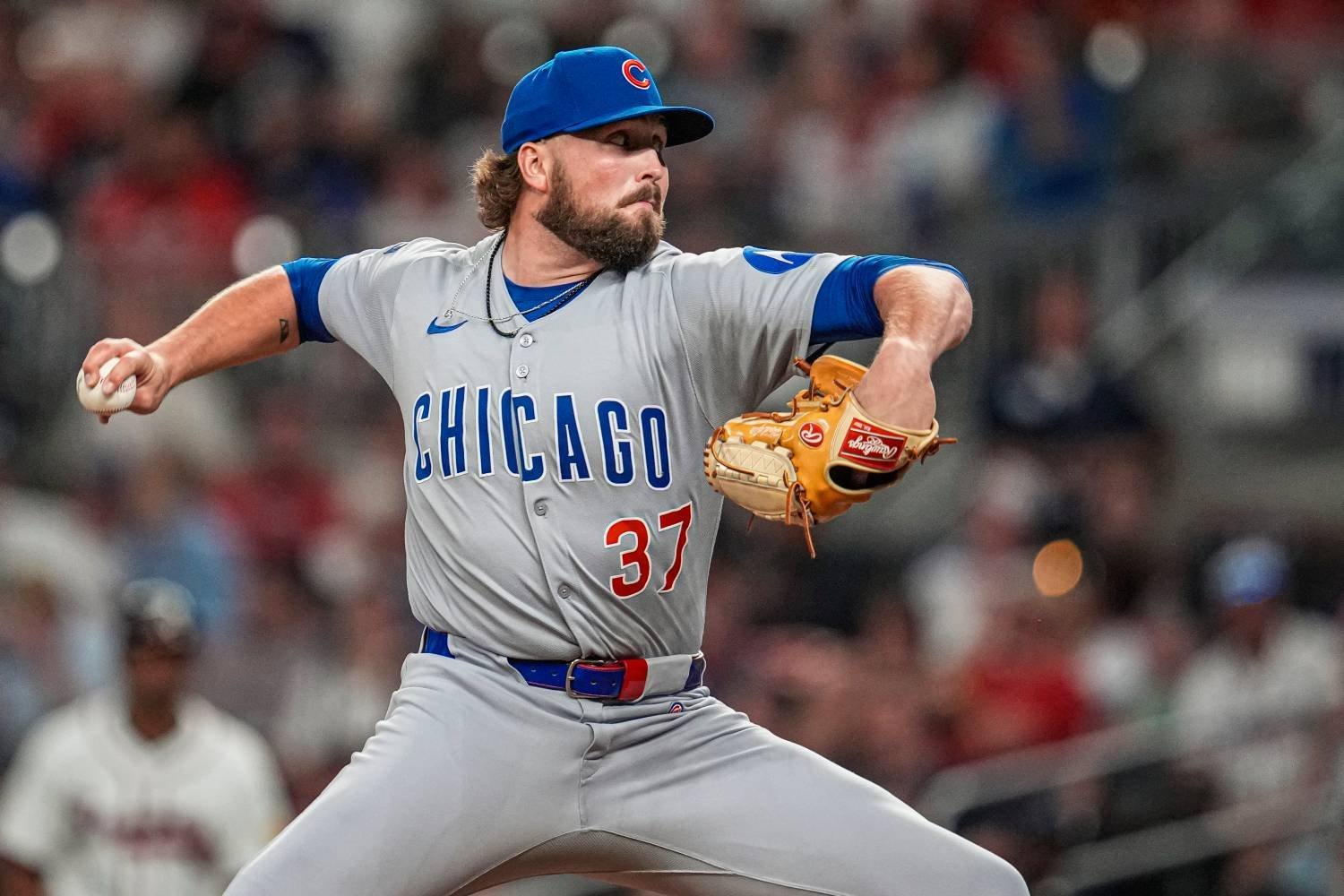 The Porter Hodge situation took a dramatic turn Wednesday. The right-handed reliever, who has appeared in 75 games over the past two seasons, will have surgery on the ulnar collateral ligament in his throwing elbow next week, manager Craig Counsell said before Wednesday's game against the Philadelphia Phillies. That would put most if not all of next season in jeopardy for Hodge. Counsell said Hodge, who began throwing again April 4 after being shut down early in spring training, recently had a setback that led to the decision to have the procedure, which will take place Monday. Right-handed starter Cade Horton is slated to have his UCL reconstruction surgery Thursday. The 25-year-old Hodge made his MLB debut in 2024 and had a fantastic year. In 39 appearances, Hodge compiled a 1.88 ERA and converted nine of 12 save opportunities. His 2025 was almost the opposite of his rookie year as Hodge's ERA blew up to 6.27 in 36 games, including two saves in five chances. View the full article
 -
Red Sox Farm System Overview: 3 Stars and 3 Busts Through Mid-April
DiamondCentric posted an article in Talk Sox
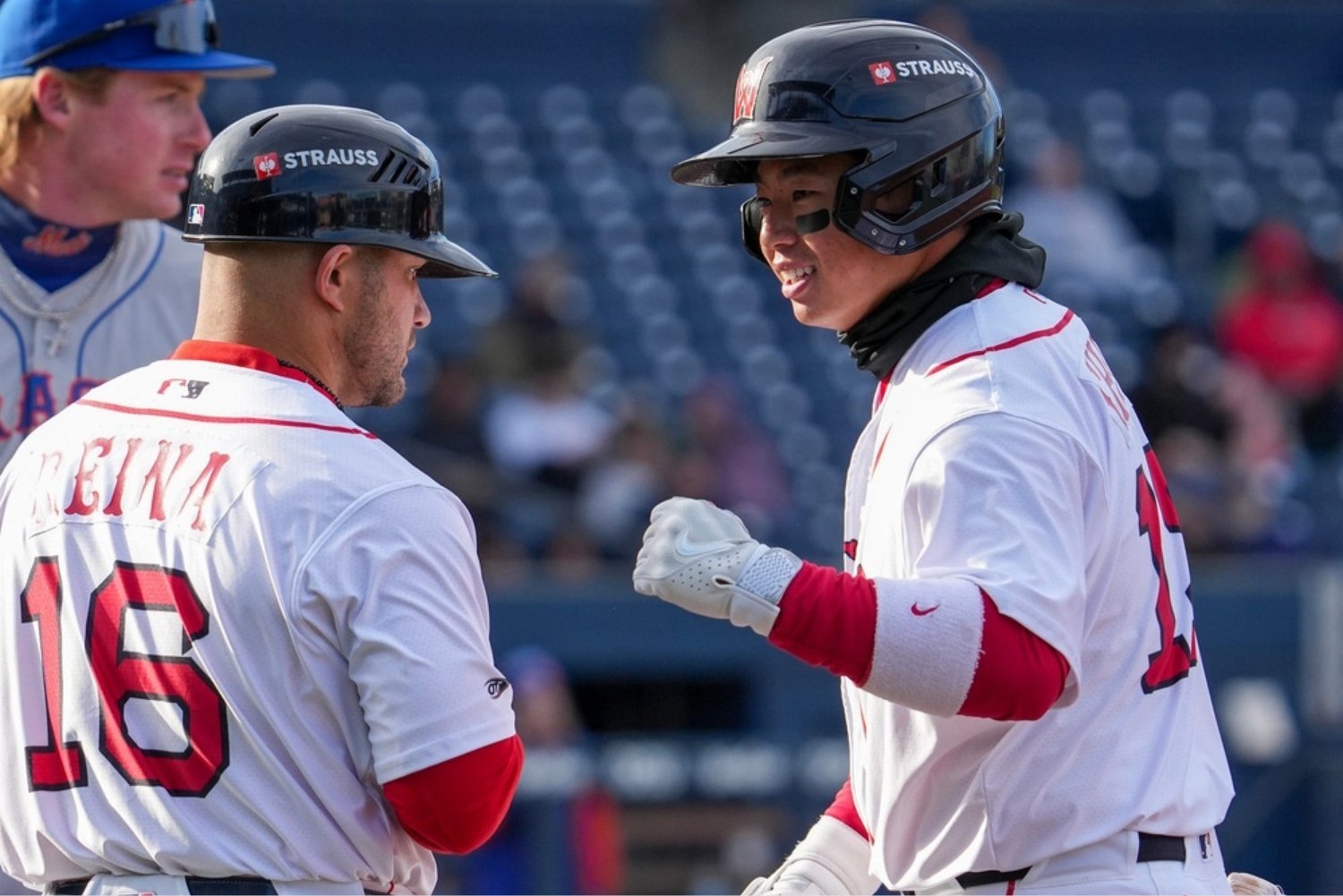 Each of the Boston Red Sox's affiliates have officially played at least a full series now, with Portland having played the least number of games at eight as of the beginning of this week. While Boston has been playing inconsistently, the four minor-league affiliates have allowed fans a chance to enjoy winning baseball while providing a window into the future. With that said, we’re going to look into three of the best players across the organization since the start of the minor-league season, and three players who have been playing less than optimally. Red Sox's Farm System Standouts Anthony Eyanson, Pitcher (7 1/3 innings, 3 hits, 1 run, 13 strikeouts) To say Eyanson is one of the best prospects in the system two weeks into his professional career may not be an understatement. Drafted in the third round of the 2025 draft, the young right-hander is shaping up to be a steal for the Red Sox. Besides his great stat line from his first two starts, Eyanson is also coming off of a perfect outing. In his latest appearance, the pitcher threw 4 1/3 innings without allowing a runner to reach base while striking out seven batters. While it’s only a matter of time before he surrenders his first walk, Eyanson is currently sitting on a phenomenal strikeout rate of 52% rate without any free passes under his belt. Likewise, batters are only making contact on 53.1% of his pitches while whiffing on roughly 22% of his pitches. If a batter does manage to make contact, they’ve mostly been hitting them into the ground, as seven of the 12 balls put into play have turned into ground balls. The lone fly ball surrendered by Eyanson did turn into a home run, however. While Eyanson is being slowly built up as a pitcher, he’s showing just how dominant he truly can be while holding opposing batters to a .120 batting average. If he continues to pitch like this, it’s only a matter of time until he’s promoted to Portland. Franklin Arias, Shortstop (.588/.636/.706, 2 doubles, 5 RBIs) Arias truly broke onto the scene as a top prospect last season when he hit a combined .278/.335/.388 between Salem, Greenville and Portland. This season, he’s started off even hotter through his first six games. Despite being just 20 years old, the shortstop is not being intimidated by the more advanced pitching in Double-A. Arias is flexing a well-rounded plate approach, walking at a 9.1% rate that matches his strikeout rate. He's a dangerous weapon for any offense looking to put pressure on the defense. When he's putting the ball in play, he’s begun the year hitting it less on the ground. With a ground ball rate of 31.3%, that’s equal to the number of baseballs he’s hitting as fly balls. It’s his line drive percentage that has improved to 37.5%. The change in approach and launch angle could help Arias hit for extra bases despite his lack of over-the-fence power. Though one thing to be weary of is his pull-heavy approach early on. Arias is currently pulling balls to the left side of the field at a career-high 62.5% rate. Whether this is a change in approach or just how opposing teams are pitching him is currently unknown but should be watched as the season continues. Tsung-Che Cheng, Infielder (.316/.447/.711, 2 doubles, 2 triples, 3 home runs, 6 RBIs) Cheng has surprised many this season with his play on both sides of the ball. Defensively, he’s always been a solid defender between second base, shortstop and third base and that has continued with Worcester as he’s split time at the former two. In 11 games between the two positions, he’s committed just one error. It’s his offense that has been a surprise, however. The infielder wowed everyone at Polar Park on April 10 when he hit for the first cycle in WooSox history. Based on how he hit last year (.207/.305/.267), no one could have predicted this hot start to the season. Though, one thing that has helped him out is his high walk percentage. So far on the young season, he’s walking nearly 18% of the time while striking out in just under 21% of his at-bats. His numbers have stayed roughly in line with his career for ground ball to fly balls with the young infielder putting the ball on the ground 42.9% of the time, a small drop from his 52.9% rate in 2025. He’s also used the entire field as he’s pulled the ball 32.1% of the time while going the other way on 39.3% of his batted balls. This is the kind of profile that will succeed in the big leagues, so more of the same from Cheng would go a long way toward helping his prospect stock. Red Sox's Farm System Disappointments Jorge Juan, Pitcher (1 2/3 innings, 1 hit, 5 runs, 5 walks, 1 strikeout) Juan is an interesting player who joined Portland after the 2025 season began. He made 22 appearances and wasn’t too bad (4.78 ERA in 32 innings), but he also wasn’t too impressive. Coming into 2026 he hoped to break out, but that hasn't been the case just yet. Making two appearances, Juan struggled in his first outing as he failed to get a single out. Instead, he allowed five earned runs without allowing a hit. He also walked three batters and hit another two. It was a very ugly debut to a season for the pitcher. Fortunately, his second appearance went better, as he tossed 1 2/3 scoreless innings. Unfortunately, that’s been it for the right-handed reliever as he was placed on the injured list. His timetable for a return is currently unknown and by the time he comes back, there may not be room for him depending on how the roster in Greenville looks. Antonio Anderson, Infielder (.067/.211/.067, 2 RBIs) In what is a big year for Anderson, the former third-round pick has struggled to get going. In five games, he’s gone 1-for-15 and been leapfrogged on the team’s depth chart. After starting the two of the first three games of the season, Anderson did not play again until April 9. Anderson is currently striking out at the same rate he walks at, a 15.8% rate. He’s shown an ability to understand the strike zone but has struggled to get base hits on the balls he puts into play (.077 BABIP). That may just be a sign of horrendous luck, but he needs to get going if he wants to continue getting playing time. The good news is he’s been hitting the ball on a line drive more often, representing 30.8% of his batted balls compared to 23.3% in 2025. Unfortunately, it’s led to little success for Anderson. Defensively, it hasn’t gone much better as the infielder has played one game at third base and committed two errors. He’s had better success at first base, but playing time there may be hard to come by with Freili Encarnacion also on the roster. Frederik Jimenez, Utility (.000/.294/.000, 2 RBIs) Jimenez has had a rough start to the season. The only player in the Red Sox organization who’s played that’s yet to get a hit, Jimenez is currently 0-for-11 with eight strikeouts. The young utility player is in his age-21 season and hasn’t appeared to improve much from an offensively challenged 2025 season. Despite a 47.1% strikeout rate, Jimenez is also walking at nearly a 30% rate, though it does little to counteract his lack of hits. Of his batted balls, none have been on the ground, with 66.7% of them being fly balls. The remaining 33.3% were line drives. He’s also had a hard time pulling ball, only doing so 25% of the time while only making contact with the baseball on 48.5% of his swings. Defensively, he’s appeared at first base in all four games he played in. He’s been fine on that side of the ball, making 23 outs and turning three double plays while only committing one error, but his bat needs to get going lest he get quickly lost in the shuffle. View the full article
 -
Twins Fan Crosses Line as Jarren Duran Responds During Boston Loss
DiamondCentric posted an article in Twins Daily
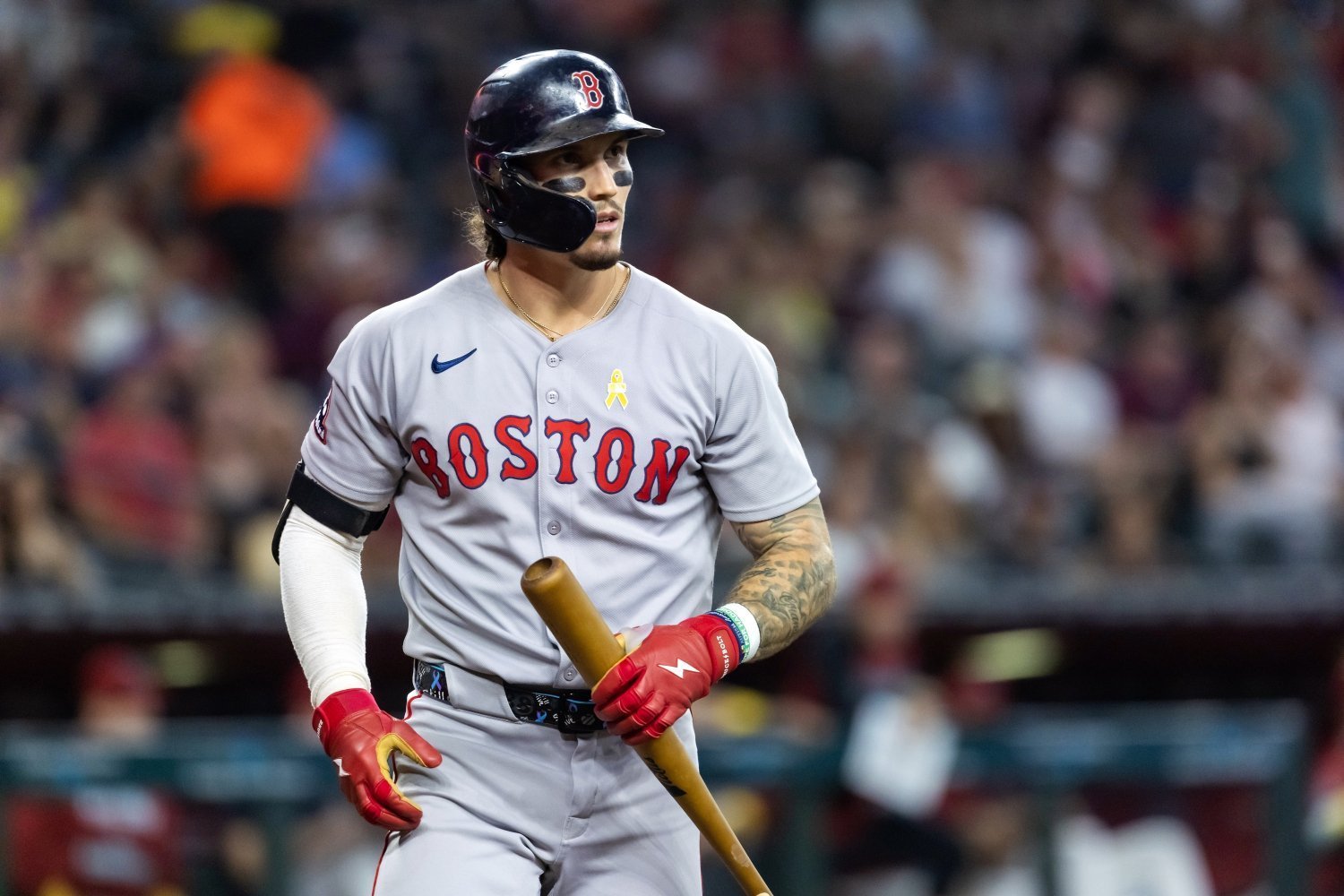 There was plenty for the Minnesota Twins to celebrate on Tuesday night at Target Field after a 6-0 win over the Boston Red Sox. Still, by the time the clubhouse doors opened and the postgame conversations began, the focus had shifted away from the box score. The moment everyone wanted to talk about happened in the fifth inning, and it had nothing to do with a pitch or a swing. As Boston’s Jarren Duran returned to the dugout following a groundout, he directed an obscene gesture toward a fan seated near the Twins’ dugout. The interaction quickly became the center of attention, especially after Duran explained what led to his reaction. "Somebody just told me to kill myself," Duran said. "I'm used to it at this point, you know? I mean, s--- happens. I mean, I'm going to flip somebody off if they say something to me, but it is what it is. I shouldn't react like that, but that kind of stuff is still kind of triggering." It is a jarring quote, and it reframes the moment immediately. What may have looked like a simple loss of composure becomes something far more complicated when placed in that context. Duran has been open about his mental health journey, including severe depression and a past suicide attempt that he discussed publicly in a Netflix series released last year. That transparency has helped humanize a player often seen only through the lens of performance, but it has also opened the door to a darker side of fan interaction. "Honestly, it's my fault for talking about my mental health because I kind of brought in the haters. So I've just got to get used to it," Duran said. "I was just trying to hold it in and not really bring that up to the team. I mean, we're trying to win a game. I shouldn't even bring that up to anybody. ... It just happens." There is a lot to unpack in those words. The idea that speaking openly about mental health invites abuse is a troubling reflection of how conversations like these are still handled in public spaces. At the same time, Duran acknowledges that his reaction crossed a line, even if the comment that sparked it went far beyond anything acceptable. Boston manager Alex Cora said he did not see the incident unfold and had not yet reviewed the video afterward, leaving the situation to be addressed more fully at a later time. This is not the first time Duran has found himself in the spotlight for an interaction with a fan. In 2024, he served a two game suspension after directing an anti gay slur during a separate incident. That history adds another layer to how moments like this are perceived, both inside the game and across social media, where reactions were predictably split. Some defended Duran’s response, arguing that players should not be expected to absorb deeply personal and harmful comments without reacting. Others pointed to the need for professionalism, regardless of circumstance, especially given his prior discipline. Both perspectives exist because this is not a simple issue. What should be simple is the baseline expectation for fan behavior. There is a difference between heckling and crossing a line into something personal and dangerous. Players are public figures, but they are not immune to the impact of words that go well beyond the boundaries of the game. But baseball does not exist in a vacuum. Moments like this serve as reminders that what happens in the stands can carry just as much weight as what happens between the lines. View the full article
 -
Red Sox 9, Twins 5: Defensive Lapses Cost Twins Chance to Sweep Sox
DiamondCentric posted an article in Twins Daily
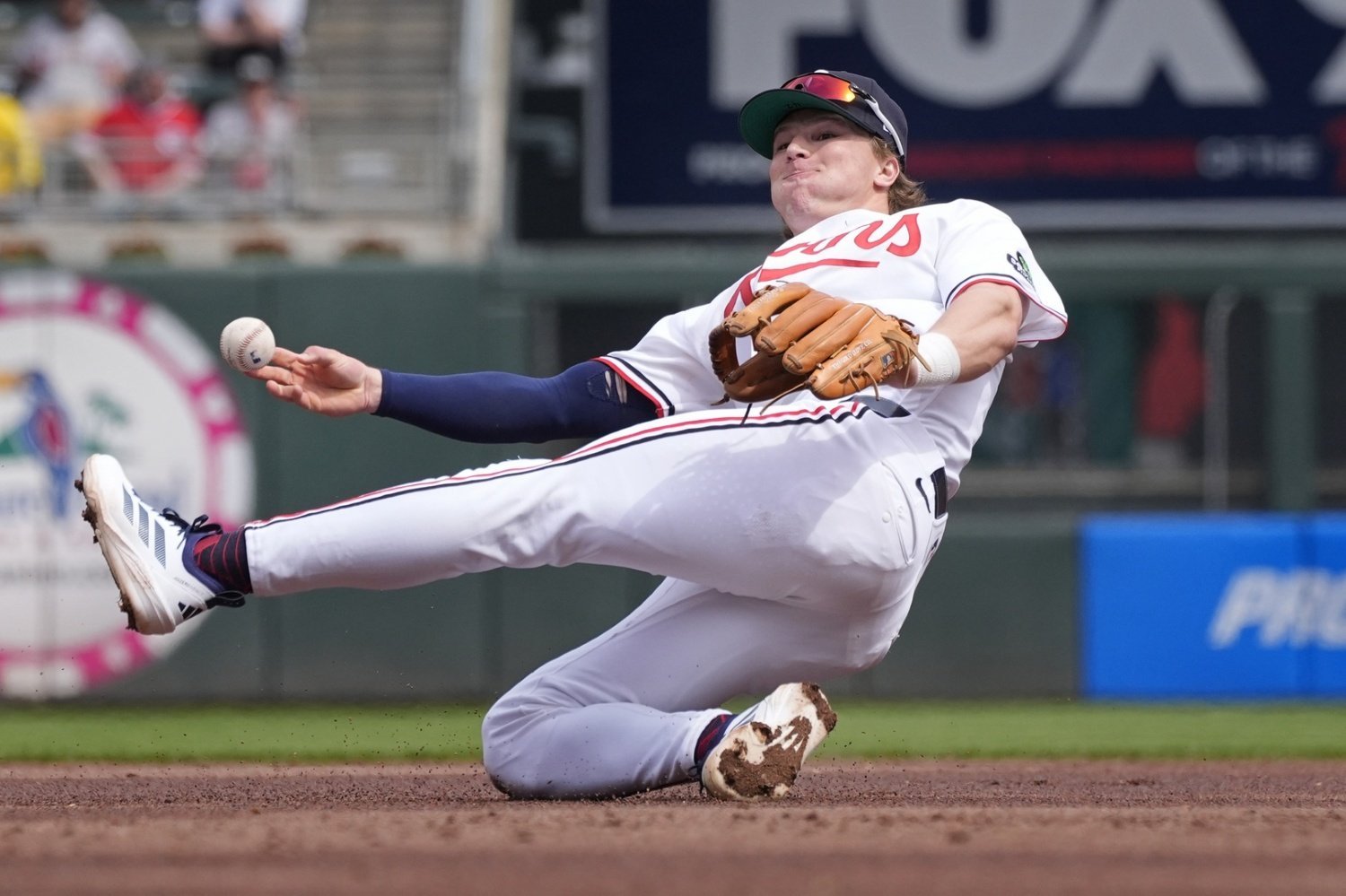 Box Score Starting Pitchers: Simeon Woods-Richardson - 5 IP, 10 H, 6 ER, 3 BB, 3 K (92 pitches, 57 strikes (62% strikes)) Home Runs: Austin Martin (1), Ryan Kreidler (1) Bottom 3 WPA: Simeon Woods Richardson (-0.39); Byron Buxton (-0.05); Matt Wallner (-0.04) Win Probability Chart (via FanGraphs) It Looked Promising The Twins rolled into this game having already secured the series—making it three in a row—but every game counts as a team builds towards the later part of the spring. Extending their home winning streak to seven games would have been a wonderful way to celebrate Jackie Robinson Day. Instead, dead lumber and lousy leather derailed them in the early innings, putting them in a hole they couldn't escape. The Twins faced 24-year-old lefty Connelly Early, fresh off a late 2025 call-up and still very much in his rookie era. The hot-hitting home lineup welcomed him with a solo home run from Austin Martin, who dropped the barrel on a pitch down and in and pulled it out of the park. Connelly settled in after that, though, and kept the Twins to two hits and one run for the next five innings, before handing things off to the beleaguered Boston bullpen. New Bomba Squad? While today wasn't a great example of multiple home runs, it doesn't take away from the fact that the Twins lineup has shown a lot of consistency in their hitting. It hasn’t mattered who teams send out to the mound. In fact, lefties have posed the team no problems, despite preseason expectations to the contrary. Too early to say it? Maybe. But also… it’s starting to feel a little Bomba-ish. The Twins pull the ball in the air as much as almost anyone in baseball. They're unlikely to make history this time, but if they can keep slugging the way they did even on a down day Wednesday, everyone will have a more fun summer than was forecasted. It's Not Over Until It's Over... or Something Like That. Even in a game where the guys looked down and out, in the ninth inning, Derek Shelton's competitive bunch put up a fight. In the last of 15 straight games between off days, they could have mailed in what shaped up to be a blowout loss, but they didn't. The Twins started chipping away when Tristan Gray sparked momentum with a single, followed by Matt Wallner drawing a walk to put some real traffic on the basepaths. Brooks Lee delivered, too, ripping an RBI single to bring a run home and keep the inning alive. Ryan Kreidler stepped in, then, and made things interesting, right at the death. He hit his second home run of the week, another no-doubter. Suddenly, what felt like a comfortable 9-1 Boston lead had been cut in half, forcing a mound visit and a pitching change as the Red Sox tried to stop the surge. Minnesota didn’t just score—they made Boston sweat. Alas, the comeback fell far short. Simeon Woods-Richardson entered the game hoping to bounce back after a rough outing against the Blue Jays, wherein he was reportedly pitching through illness. If that’s the case, it offers some context—because otherwise, the performance raised concerns for the young starter. He looked sharp through the first two innings, but things unraveled quickly in the third. Three misplays by Luke Keaschall spread acorss two plays helped Boston score twice to flip the score. Trevor Story then delivered a three-run homer to blow the game open, extending the lead to 5-1. Woods-Richardson battled through the fourth inning. Despite walking two more and having poor defensive support again, he managed to escape without further damage. In the fifth, he wasn't so lucky, and the Red Sox extended their advantage to 7-1. The Sox were on Woods Richardson all day, but he got such lousy support from his infielders that it's hard to hang the loss on him. The bullpen gave up two more runs, neutering the eventual would-be rally before it could begin. Jackie Robinson Day Celebrated Today is a very special day across MLB: Jackie Robinson Day. It comes at a moment when the league feels like it has renewed momentum toward inclusion and diversity in the player ranks. Across the league, the percentage of Black players on Opening Day active and inactive lists increased from 6.0% in 2024 to 6.2% in 2025 to 6.8% in 2026. This marks the first time in at least two decades that MLB has had back-to-back years of increases in that percentage. The 0.6% increase from last year is the highest since a 0.7% increase from 2017 to 2018. Woods Richardson and Taj Bradley are proud to be members of the fraternity of Black starting pitchers. Byron Buxton and Josh Bell have two of the four corner lockers in the Twins clubhouse, offering leadership and mentorship to teammates of all races. This is arguably the most important holiday on the baseball calendar; the Twins have much to celebrate, despite the loss. What’s Next? After an off day, the Twins will welcome the Reds to town for the weekend. On Friday, the team sends ace Joe Ryan to the mound (2-1, 3.80 ERA), to face Brandon Williamson (1-1, 5.28 ERA). Postgame Interviews Coming soon. Bullpen Availability Chart View the full article
 -
The Mets Have Put Together Baseball's Best Catching Tandem
DiamondCentric posted an article in Grand Central Mets
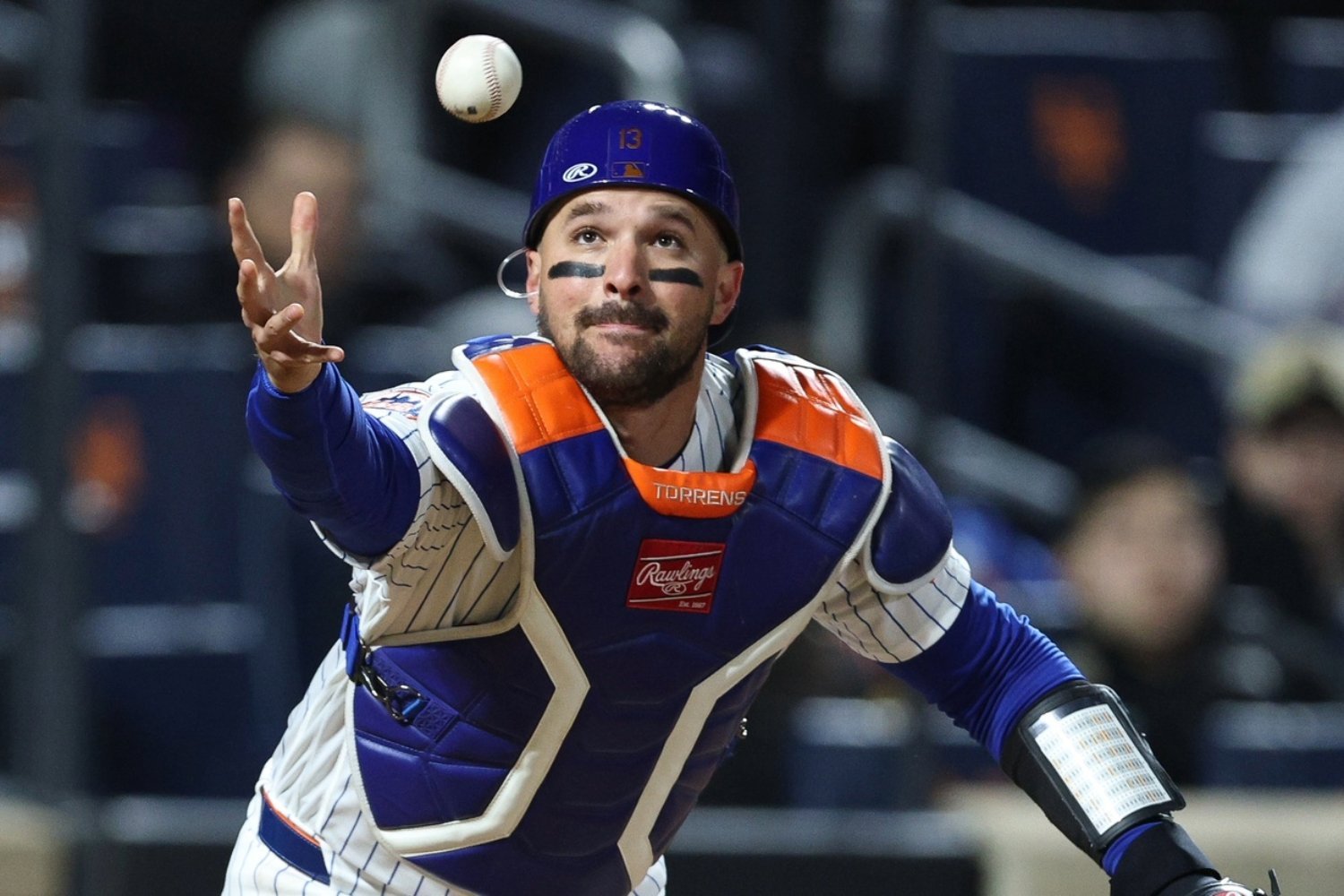 Things aren’t going particularly well for the New York Mets right now. Before taking the field against the Dodgers in their three-games series finale, they have lost seven straight games and are in last place in the NL East with a 7-11 record. You can say a lot of things about the Mets' struggles thus far, but their catching tandem has been a no-doubt-about-it net positive in 2026. Starter Francisco Alvarez is among the hottest hitters in the league, and backup Luis Torrens offers the kind of defensive reliability that managers relish. Francisco Alvarez Is Breaking Out Let’s start with the one who is behind the plate most of the days, Alvarez. He leads the Mets with four home runs, and his 179 wRC+ ranked eighth among National League hitters with at least 50 plate appearances before Tuesday’s games. That’s not too shabby, seeing as it’s also the best mark in baseball among full-time catchers. Alvarez’s offensive potential has always been enormous. He hit 25 home runs as a rookie in 2023, posted a 101 wRC+ a year later, and finished 2025 with a 124 wRC+ even after nursing a hamate bone injury, broken fingers, and other ailments. He entered 2026 fully healthy and ready to take off, and that’s what he’s doing. Alvarez is basically walking a bit more than ever before while cutting his strikeout rate from 26.4 percent last year to 18.2 percent in 2026. That major improvement, plus his amazing contact metrics, have allowed him to increase his batting average to a solid .283. The backstop is also hitting the ball with authority, so it’s not just empty contact. His 50 percent hard-hit rate ranks in the 79th percentile, and his 23.5 percent barrel rate is absolutely elite, in the 97th percentile. His expected slugging percentage is a jaw-dropping .722, significantly better than his .605 actual mark. So, if you think he has been magnificent, well, he has actually been a bit unlucky, too. Alvarez has managed to grow at the plate every year and against every pitch, as his xwOBA chart indicates that he is one of the most dangerous hitters in the National League: Luis Torrens Has Been An Asset Behind The Plate Torrens is not much of a hitter, with a career 80 wRC+ and a 63 mark this year, in 19 trips to the plate. He justifies his spot on the roster with excellent skills behind the plate, though. Besides being a solid game-caller, Torrens is above-average to excellent in virtually every facet of his craft: blocking, throwing, and framing. In fact, he racked up 10 FRV (Fielding Run Value, a Statcast metric that considers contributions in all those departments) last year, good enough to rank fifth among MLB catchers with at least 600 innings. This year, Torrens already has +2 Defensive Runs Saved (DRS) and +1 FRV. He is a net positive in the ever-important framing department, and pitchers completely trust him. Torrens’ lack of offense caps his ceiling to a very solid backup, but the Mets are extremely happy with his work. He is the perfect complement to Alvarez. The Whole Package: Alvarez Can Be An Above-Average Defensive Catcher While Torrens’ limited bat prevents him from being an All-Star catcher, it’s fair to say that Alvarez can be a solid defensive backstop. In fact, he has been one in the past, but we would have to go to 2023 to find some of his best work. That season, a 21-year-old Alvarez ranked in the 95th percentile in Fielding Run Value, with 11. He was also in the 97th percentile in framing, so yes: if injuries don’t get in the way, we are talking about a potential two-way contributor at one of baseball’s most important positions. Alvarez regressed to a -5 DRS and -6 FRV last year, but it was also a rough campaign for him health-wise. He is still only 24, though, so a return to his 2023 form or at least close to it is not entirely out of the question. In any case, the Mets have plenty of things to worry about right now, but their catchers definitely aren’t one of them. View the full article
 -
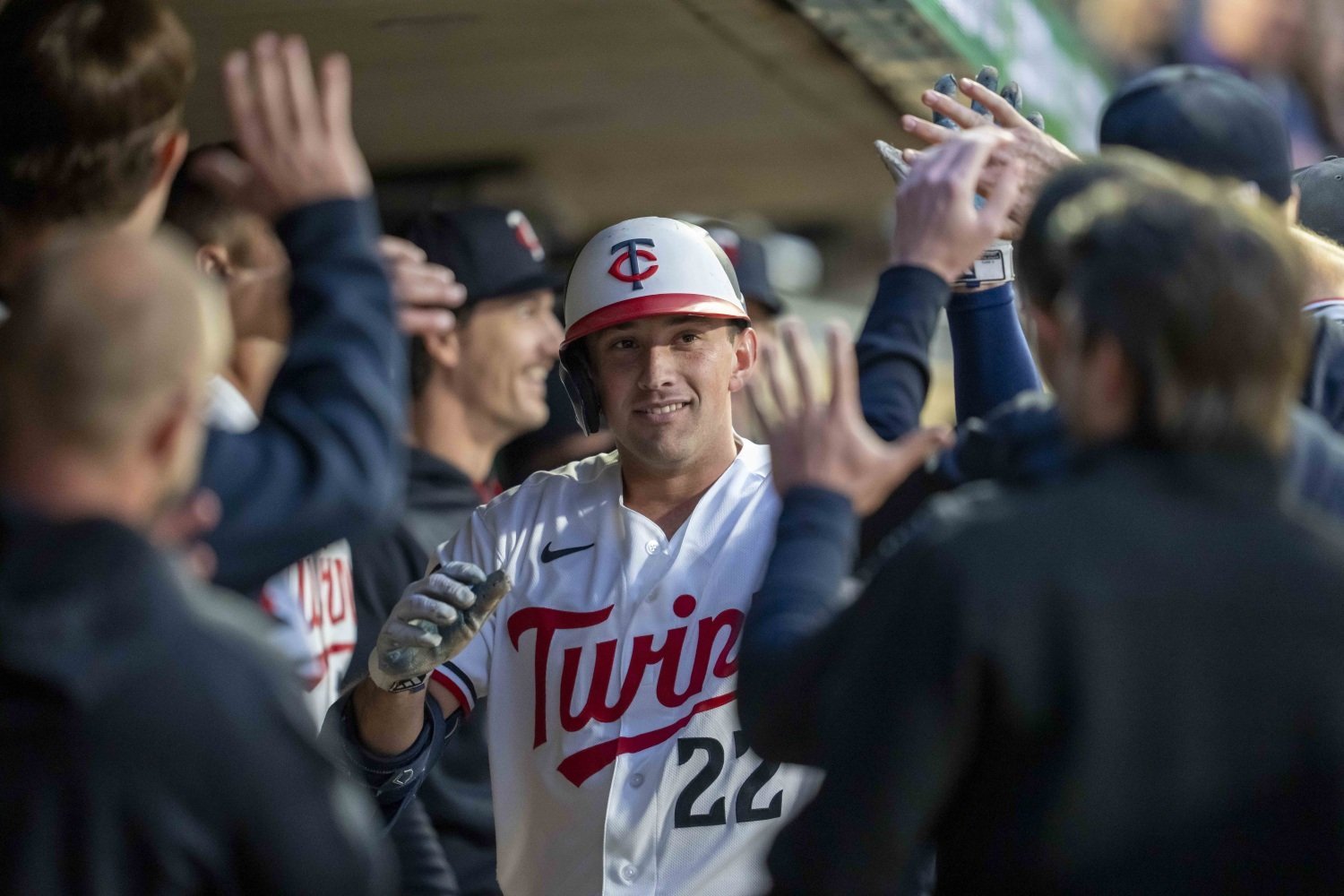 In a boxing match, you don't spend your time waiting and hoping for the chance to land one haymaker. If the other person in the ring were ready to go down and never get back up on the strength of one solid blow, they wouldn't be in the ring with you. Pugilism feels outdated in the 21st century, but there's a reason it was once called the "sweet science": the challenge within it is intricate. You do want to wait and build toward something, but it's the opening to deliver six or seven telling blows, not one. That's how the Twins are turning in a devastating offensive effort so far this year, and especially during the sizzling nine-game heater on which they enter the final game of their series against the Boston Red Sox. They're patient, but they're also opportunistic—and that doesn't just mean hitting mistake pitches out of the park. "Well, I don't know if I expected, you know, multiple seven-run innings or whatever they've been," said manager Derek Shelton on Tuesday. "I think the thing that has been the most impressive is how we've done it. It hasn't been just a homer, a hit, a hit, a hit. There's walks mixed in, I mean, hit by pitches, you cannot control, but the cadence to how we're doing it and to be able to sustain innings, I think has been what's the most impressive thing." Shelton is right. When the Twins scored three runs against former Twin Sonny Gray Tuesday night in the fourth inning, the tallies came on four straight hits to start the frame. One of those was a homer, but it was just the opening volley. They hammered away at Gray while he was reeling, with three more hits. In the first inning Monday night, they scored four times on Garrett Crochet without a home run, and they already had three runs on the board against him in the second before crushing two long homers to put the game away. This is not to decry home runs, which remain a focal point of every modern offense, including the Twins'. As Shelton noted, though, it will have to be more than that, if the team wants to sustain the success they've enjoyed over the last fortnight. "We have to manufacture runs," Shelton said. "Home runs are sexy, but they don’t sustain." He went on to say that his focus within each inning is to get a runner to third base with less than two outs, however that has to be done. He believes the team can apply much more pressure to the pitcher and open holes in the defense by consistently creating those situations within innings. Vital to that endeavor is a shared focus, and lots of communication—both in the dugout, and around the batting cage. Shelton believes new lead hitting coach Keith Beauregard has prepared his charges brilliantly, and that they're able to feed off one another because they've learned to speak the same hitting language and pass information quickly. "The greatest indication is, watch our dugout for two innings [Monday]," Shelton said. "Just the enthusiasm, the excitement, the conversation. I think the thing that is imparted is, you see young players now, Keaschall, Lee, coming back, having conversations with guys on deck, guys in the hole. This is what the pitch does. That comes when you have veteran hitters and they have the ability to communicate. And we were fortunate that we were able to add some guys to our group that really have a good way about them." He's talking—everyone around the Twins is talking—about Josh Bell and Victor Caratini. Luke Keaschall and Brooks Lee are polished, smart, self-possessed hitters, and Byron Buxton and Ryan Jeffers have been leading by example for years, but Bell and Caratini have been welcome additions to a mix of hitters who had underachieved over the past two seasons. When information flows freely through the lineup, so does confidence; so does conviction; and so does production. Some of this is technical, rather than merely a vibe. The Twins have five of the biggest bat speed decliners in the sport so far this season, according to Statcast: Caratini, Bell, Buxton, Trevor Larnach and Matt Wallner. In reality, though, those guys are capable of swinging as hard as ever. As Jeffers began doing more frequently last year, they're merely modulating their swings more—not cutting them down, but changing how they start them and how they visualize finishing them. Under Beauregard's tutelage, these guys are anticipating and preparing with a greater sense of surety, which has them starting earlier and knowing what they're looking for in the box. If they get it, they're already on their way to it, and they don't have to rush their barrel, thus losing accuracy with it. If the pitch isn't what they expected, they have the faith in their preparation and in one another to either take it or whiff on it, rather than making an emergency adjustment that leads to weak contact. Bell was a perfect addition, because he was already doing that before he arrived. "They really haven't asked me to do anything different," Bell said of his approach and his mechanics. "We just talk about what we're looking for and being ready when we get it, and I have no problems with that because the results have been great." For other Twins, the adjustment has been bigger, but the rewards they're now starting to reap make it all feel worthwhile. Kody Clemens gave back the swing speed gains he made in 2025, which allowed him to hit 19 home runs in his first extended playing time in the majors. Unlike Bell, he has ugly numbers so far this year, but he's reached base five times (including hitting a home run) in his last 13 trips to the plate, as he's gotten more used to the marriage between preparation and execution under Beauregard and company. "it’s hard. It’s hard for hitting coaches," Shelton said of his staff's fight to stay on message and keep the hitters onside when the season began with more frustrating days. "And that’s the frustration of hitting coaches. Because players want immediate results. They want immediate success. So the commitment, the conversations, the communication when you’re in the cage is vital. And that’s where that trust is built. And that trust is not built easy." Clemens, at least, had the spring to implement the alterations Beauregard, Rayden Sierra and Trevor Amicone prescribed for his timing. Buxton had no such luck. "For the most part, my swing feels good [now," Buxton said, after breaking out in a massive way Tuesday night after slowly warming for the previous week. "Still a few things to figure out here and there—three weeks, eight at-bats will set you back a little bit." He's referring to his time with Team USA in the World Baseball Classic, where he only played sparingly. That also denied him time with Beauregard, Sierra and Amicone, and he admitted to trying to "rush my swing back" in the first days of the season. Now, Buxton is very much in the middle of the Twins' offensive outburst. He not only hit two long homers Tuesday night, but scored the team's first run in the style Shelton seems to prefer. He was on second when Keaschall hit a flared liner to center in the first inning. He initially froze, but saw that Red Sox center fielder Jarren Duran got a late break on the ball and turned on the jets. He scored, albeit on a close play after a highly aggressive send. Shelton called the decision to try it "elite," and both the manager and his star chuckled after the game about a shared moment in the dugout later. Buxton asked Shelton whether he thought he should have stayed at third on the play. Shelton said he trusted Buxton, and that he was the one on the field, reading it in the moment. That's the level of trust between the skipper and his offensive leaders, and the level of ownership and energy the lineup is taking, in turn. It won't always be this rosy, but for now, the Twins are rolling, thanks to a corps of hitters playing to their potential under a shaken-up coaching staff and a nice balance of new and old veteran leadership. They have patience, but once the opening comes, they want to land five knockout punches, not just one. View the full article
 -
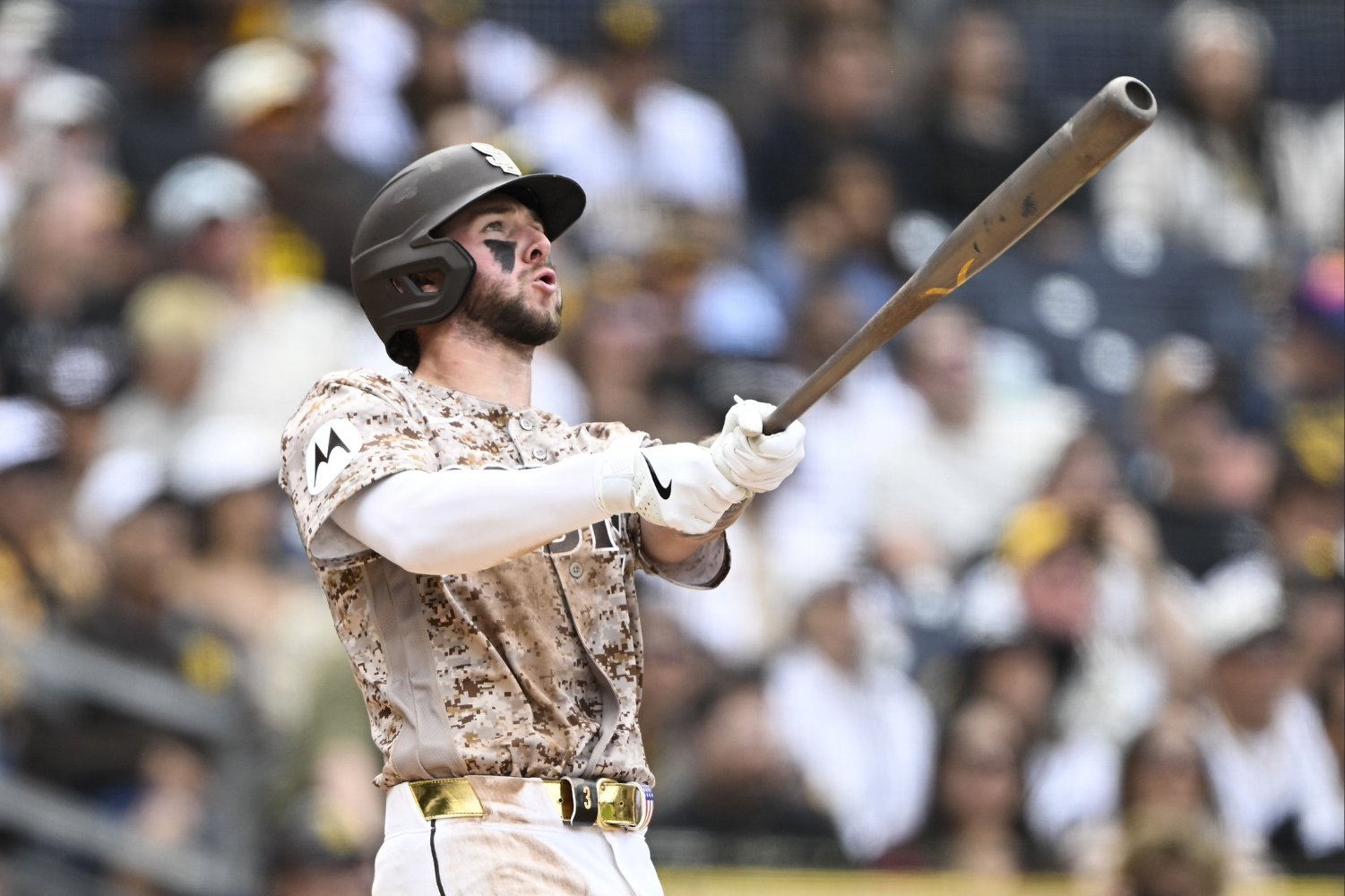 The San Diego Padres are on something of a roll. After starting the season 1-4, they’ve won 10 of their past 12 and own the second-best record in the National League. Usually, when a team is racking up wins with such ferocity, there is a bit of good fortune at play, but the Padres have gotten off to a 11-6 start despite possessing the least lucky bats in the league. Based on Statcast’s expected statistics, the Padres, as a team, should have a wOBA of .346. That’s the third-best figure in the league, which suggests that this is one of the league’s elite offenses. Well, here’s the thing: Baseball isn’t played in a simulation, and the Padres' actual wOBA is .314, which ranks 17th, and is sandwiched between the Guardians and Angels. While a guardian angel is usually nice company to keep, that’s not the case when it comes to hitting a baseball. So, what the heck is going on here? When Statcast debuted in 2015, the tired excuse of explaining away everything with BABIP finally eased. Make no mistake, hitting them where they ain’t is still a great idea, but exit velocities and launch angles made analyzing hitting as granular as it had ever been. We suddenly knew, with increased precision, the likelihood that any batted ball would be a hit, if it would clear the fence, who was getting hosed by bad luck, and who was really struggling at the plate. However, expected stats are just probabilities based on launch angle and exit velocity. In the real world, you can’t hit 50% of a double; you either get to second and get 100% of it, or you don’t and get 0%. Now, stacking a bunch of probabilities based on real events usually gets you very good results, and it’s why expected stats have steadily grown to almost become the actual stats, which is weird, because one is imaginary, and the other is very, very real, which brings us back to the Padres. The Padres are underperforming their Statcast data by a massive margin. To put human faces to their agony, Francisco Lindor produced a wOBA of .350 last season (right around the Padres' current mark), while Miguel Vargas managed a wOBA of .314. Ask yourself this: would you rather have Lindor come up nine times in a row or Vargas? The simple explanation for this divergence between the expected and the actual is that the Padres are getting unlucky, and their statistics will slowly converge with their expected statistics. While I agree directionally with that notion, it also misses a crucial component. Expected stats are based on all batted balls hit throughout the year, but Petco Park loves to suppress offense, and especially so in April. The Padres have played 11 out of 17 games at Petco, with their other six coming at Fenway and PNC Park. Petco is one of the toughest places to hit, PNC is also a bottom-third hitters' park, and while Fenway is a hitters' park, it is in a very unique way. Fenway suppresses triples and home runs tremendously, but it is the best park in the league to hit doubles. Depending on how you hit the ball, it is feast or famine. Using Baseball Savant’s three-year rolling park factor as our baseline, Petco has a park factor of 97, PNC 99, and Fenway 105. Just on that alone, you’d expect the Padres to underperform their expected stats a tad, but according to research by Kiri Oler of Fangraphs, each of Petco, PNC, and Fenway are 4% less hitter-friendly in April than their overall figure. And on top of that, the time of day can make a dramatic difference in how a park plays. For instance, Petco has a park factor of 99 during the day, nearly league average, but falls to 96 at night, while PNC has a park factor of 97 during the day and 101 at night. Considering the Padres have played seven of their 16 games at Petco at night in April, it shouldn’t be a surprise to see their batted ball results lagging behind their exit velocities and launch angles. With this cocktail of information, we can do back-of-the-envelope math to see what type of park factor the Padres have opened the season with. Using the time of day park factors and inputting the -4% April park factor tax, the Padres, on average, have played in a ballpark with a 94.56 park factor. That’d be the worst park outside of T-Mobile in Seattle (91), which is in a tier of its own. Does this mean the Padres haven’t gotten a little unlucky with their batted balls? Almost certainly not, but the combination of bad luck and a rough-hitting environment is the reason they’re underperforming their expected stats more than any other team. As the weather warms up, so should the Padres’ bats, but in the meantime, maybe try scheduling a few more day games in April. View the full article
 -
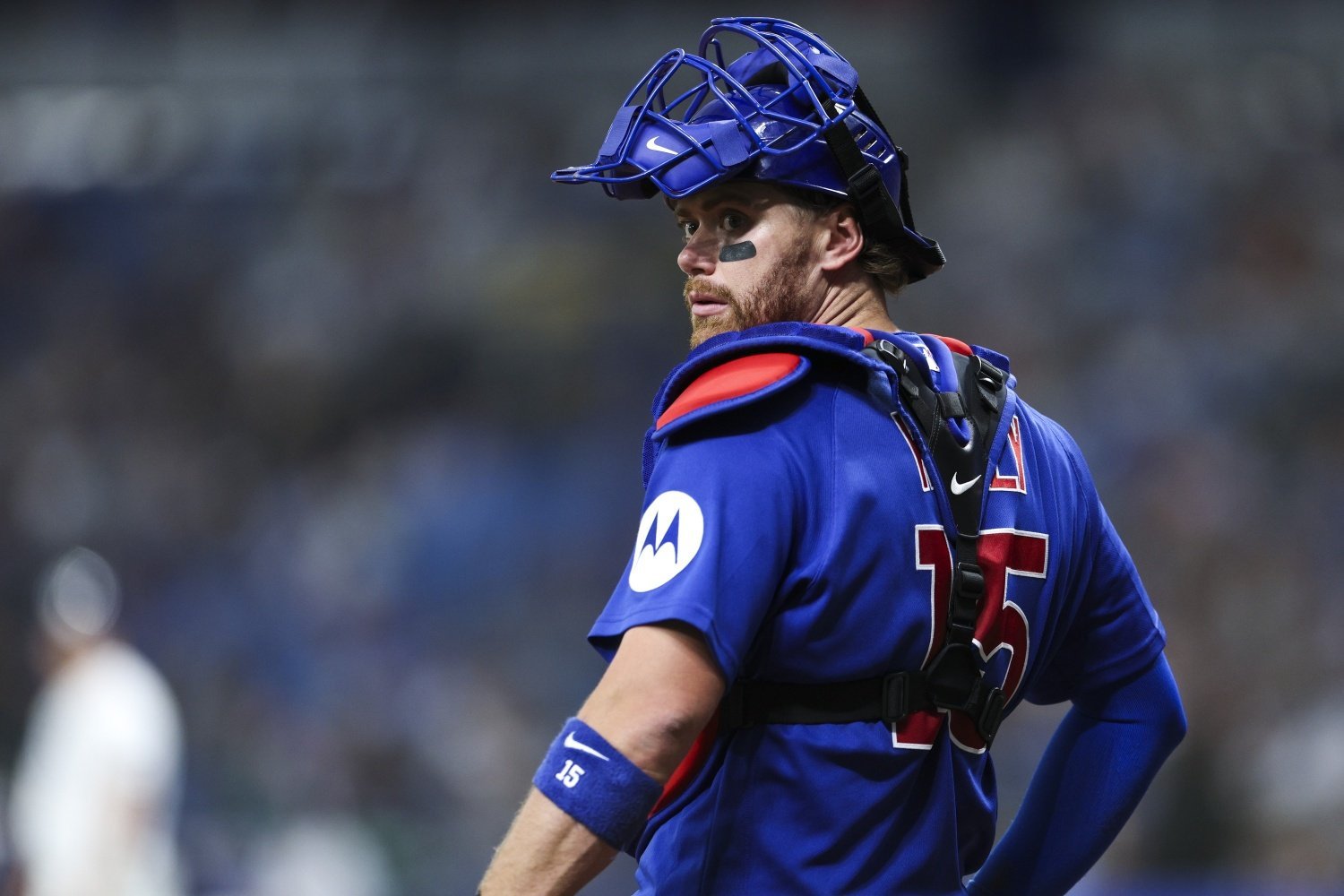 In the last decade—and especially on this side of the COVID-19 disruption—we've seen MLB teams move from the traditional starter-backup catching arrangement to one much closer to an even timeshare. The Cubs signed Carons Kelly in late 2024 to accommodate their move toward that very model. With Miguel Amaya establishing himself as (they hoped) the catcher of the present and future, Chicago looked to Kelly to provide stability and keep Amaya's workload relatively low, given his long history of injury trouble. To whatever extent the goal was to keep Amaya healthy, the plan failed. The younger backstop went down with an oblique strain in May, then came back and immediately suffered an ankle sprain in August. Amaya is still dealing with the effects of those injuries, and his track record says he might never be able to carry even an 80-game burden at catcher. Fortunately, though, the Cubs got more than they could reasonably have hoped for from Kelly. A stance and stride adjustment last spring helped Kelly get off to a blazing start at the plate. He struggled after Amaya went down, as his own workload suddenly spiked, but he remained a solid defensive backstop and manager of the game plan on the field. He wasn't a zero in the lineup, either; he just lost the thunder that he showed early in the campaign. Maybe that will happen again this season. The Cubs will be similarly out of good complementary options if Amaya gets hurt again, so the risk that Kelly ends up overloaded remains real. So far, though, he's batting a stellar .333/.455/.467, in 55 plate appearances. Over the last two seasons, he was not only superficially usable at catcher, but genuinely above-average at the plate, according to Baseball Prospectus's DRC+. He ran a 106 in his 2024 season, divided between the Detroit Tigers and Texas. In 2025, that figure held firm, at 104. This season, that figure is up to 118. He's been a weapon in a lineup that has needed him, as some of the players on whom the team expected to rely more heavily have gotten off to slow starts. Shortening his stride unlocked some power for Kelly, but the bulk of his changes came in 2024, before the Cubs got ahold of him. He got more aggressive in the strike zone, without chasing more, and he made more contact on those in-zone swings, to boot. He's held onto those improvements in his first year-plus with the Cubs, taking his offensive game to a new level. Kelly has always had a good eye at the plate. His 10.1% walk rate since the start of 2024 is the same as the one he posted from 2021-23. His strikeout rate has come down, though, from 21.4% to 18.1%, even as he's hit the ball harder. Now that we have bat-tracking data, it's fairly easy to see just how well Kelly's hand-eye coordination serves him. It's not just about making contact; he's squared the ball up on over 28% of his swings since the start of 2024. (The definition of squaring a ball up, for these purposes, is getting at least 80% of the possible exit velocity out of a given swing, based on the velocity of the incoming pitch and the speed of the swing.) This year, although the sample is far too small to assume it will hold, that number is over 38%. The league averages just under 26%. Kelly's bat speed is nothing special, but because he consistently hits it solidly, he doesn't need that lightning-fast rotation. As he's come to understand that about himself, he's gotten better at making good swing decisions and putting the ball in play. He's also been a star behind the plate. Last season, he excelled at blocking pitches in the dirt and preventing runners from advancing on them. He doesn't have an especially strong arm, but as is true of his lack of plus bat speed, he makes up for deficient talent with a surfeit of skill; he's one of the most accurate throwers in the game. He's a slightly below-average pitch framer, but this season, he's found a way to overcome that—and then some. Kelly has challenged nine called balls behind the plate this year, and gotten seven calls overturned. Statcast's model gives him 13 expected challenges, meaning there were some called balls (because he's not a great framer, especially along the lateral edges and at the top of the zone) he could plausibly have also challenged. However, the same model only suggests he should have won 7 of those challenges, so he's merely saved four expected confirmations (and four lost challenges for the Cubs) by being judicious. When hitters have challenged calls against Kelly, meanwhile, they've paid a dear price. Opposing batters are just 3-for-12 when challenging called strikes with Kelly catching this season. In one knot at the very bottom of the zone, he's induced five bad challenges by hitters. The Pirates wasted their challenges as a team on Sunday by challenging two near-identical pitches on which Kelly caught the ball somewhat snatchily, but which turned out to be legitimate strikes. Here's one of them, right away in the first inning: NnlNNzNfWGw0TUFRPT1fVWxCUVZWUlJVRkVBRGdjS1VRQUhDQVJXQUZoUVV3TUFCQVlNQXdSUUFBWUhCQW9B.mp4 And here's the other, in the seventh, just before the Cubs got some momentum and came back to win the game. NnlNNzNfVjBZQUhRPT1fVkFCVEJnRUVYd0VBWEZJQ0FnQUhDUUJTQUFCV1dsa0FWd2NIVVFzQUJGRlhVVkJm.mp4 It might look inelegant, but this style of framing works, and this year, it's become even more valuable than it was in the past. When Kelly catches a ball like that and the umpire makes the right call, there's still one party left who might be fooled: the poor hitter. After what they felt was an especially good take, watching the ball almost into the mitt, many hitters feel overconfident about their own zone judgment, especially when a catcher moves their mitt in an obvious way. Coaxing batters into bad challenges that cost their team the right to appeal decisions later in games is one new way catchers can create value under the ABS system, and lo, Kelly is doing it. He'll be most productive if the team continues to use Amaya as close to half the time as possible. Even if that does continue, he won't have an OPS near 1.000 all season. Kelly has made real and tangible improvements, though, and he's one of those players whose makeup and a key adjustment or two allows them to enjoy a later prime than others. You'll never hear him talked about as an All-Star, let alone an MVP candidate, because constraints on volume make him more effective. Like the 6th Man of the Year in the NBA or the Relief Pitcher Award coming to the BBWAA awards suite this season, though, an award for players who provide value by giving a team length, strength and depth while also playing at a near-elite level during their limited time on the field might ought to exist. If it did, Kelly would be a candidate for it. He's been that good since joining the Cubs, and he has a chance to be even better in 2026 than he was in 2025. View the full article
 -
Toronto Blue Jays 2026 Top Prospect Rankings: No. 3 Ricky Tiedemann
DiamondCentric posted an article in Jays Centre
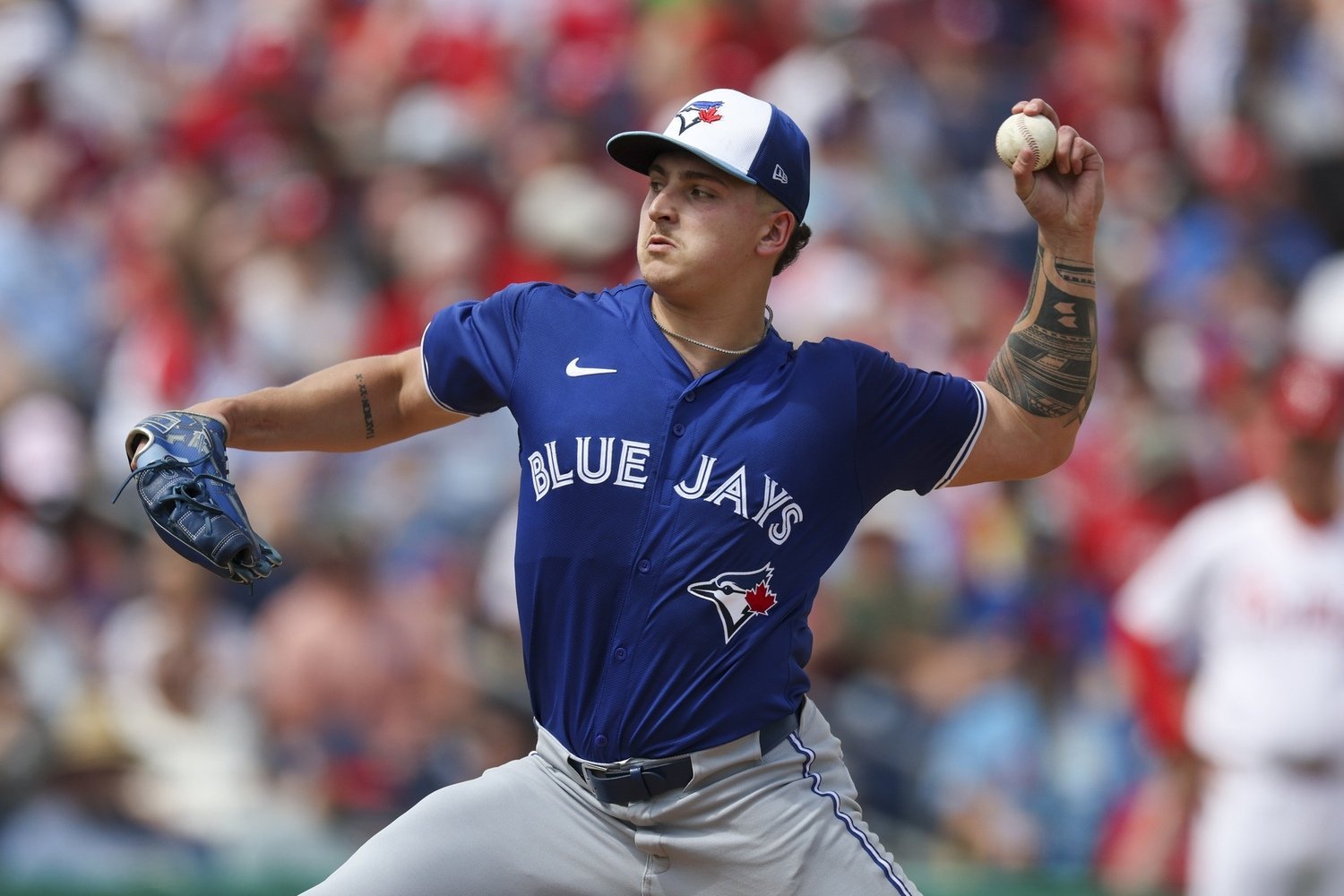 Jays Centre is counting down the top 20 prospects in the Toronto Blue Jays organization. Check out prior entries in the series here: No. 20 to 16 No. 15 to 11 No. 10 No. 9 No. 8 No. 7 No. 6 No. 5 No. 4 No. 3: LHP Ricky Tiedemann It has been a long time since we have seen Ricky Tiedemann pitch in a game. The once top prospect for the Toronto Blue Jays has had setback after setback with an arm injury, as he last pitched on June 10, 2024. Although the talent is undeniable, the question regarding his health remains ever the issue. Tiedemann was added to the 40-man roster prior to the Rule 5 draft in order to protect him from getting selected by other teams, but that has now started the clock for him, and the Jays need to see real production out of him before he runs out of option years, The easiest way for Tiedemann to do that is to show that he’s healthy and that his stuff remains as nasty as it was pre-elbow surgery. Unfortunately for Tiedemann, every time that it has felt like he would have a chance to show his skills, he has instead faced a setback. He was unable to pitch in the Arizona Fall League, and despite a full offseason of rest, he had another setback before spring training, forcing him to miss that as well. Before the injury, Tiedemann showed two plus pitches. His fastball sat in the mid-90s and touched 98 mph, with solid ride and a lot of run. He also threw a sweeper with nasty break as his main secondary pitch, but recent reports say that he’s now throwing a different type of slider that will have more velo and have less break in order to reduce injury risk. His changeup was his best pitch out of JuCo, but it took a step back compared to his other pitches as he progressed. Tiedemann is still a physical specimen, standing 6-foot-4 and weighing over 250 lbs, and his whippy arm action creates a ton of deception out of his lower slot. He showed decent command in 2022 and 2023, but as injury concerns popped up, so did walk issues. A lack of reps will most likely cause him to struggle even more with command when he comes back, as he’ll need to regain a feel for his delivery. Tiedemann started the 2026 season on the 7-day injured list, and given his injury history, the Jays are rightfully starting him slowly. He’ll be used mostly in a bulk relief role; his potential as a strong mid-rotation pitcher is tantalizing, but the lack of a clean bill of health and all the time he's missed mean his injury risk is high. If the Jays want to prioritize winning now, they might use him as a reliever in the final stretch instead of focusing primarily on his development. If Tiedemann can stay healthy, however, he may finally showcase the potential that he flashed when he last pitched nearly two years ago. View the full article
 -
 The Brewers have received a lot of national attention for their farm system, with top prospects Jesus Made, Luis Pena, Jett Williams, Cooper Pratt, Brandon Sproat and Andrew Fischer all ranking in the top 100 prospects, according to MLB.com. In addition to all the wealth the Brewers have at the top, their No. 12 prospect, Luis Lara, is having an extremely hot start to his season at Triple-A Nashville. Is it sustainable, and when could we see Lara in Milwaukee? Lara was signed by the Brewers for $1.1 million in 2022, and the native Venezuelan entered this year after spending the entirety of last season at Double-A Biloxi. In that pitcher-friendly environment, he hit .257/.369/.343, with 32 doubles, 3 triples, and 2 home runs in 612 plate appearances. Notably, Lara struck out only 99 times, while walking 86 times. His speed is also a factor: he stole 44 bases in 2025. He played in 136 games, 126 of them coming in center field, with the other 10 coming as the designated hitter. A switch-hitter, Lara has had fairly balanced splits in his brief pro career. Lacking power from both sides, he put up similar overall numbers at High-A Wisconsin in 2024, regardless of the handedness matchup. Last season, though, that changed. He hit .260/.382/.343 in 482 plate appearances as a lefty, while hitting .248/.323/.342 in 130 plate appearances as a righty. He generally shows better plate discipline from the left side, but pulls and lifts the ball more often when swinging right-handed. Unfortunately, he's always shown so little power on both sides of the plate that the more optimal contact profile from the right side didn't yield much value for him. He was much better, last season, as the more patient version of himself, batting lefty. This couldn’t have gotten off to a better start for the 21-year-old, though. Through his first 13 games with the Sounds, Lara hit .367/.456/.551 in 57 plate appearances. He's already matched his homer total from last year (2). He has 8 walks and 8 stolen bases, and has only struck out six times. His 90th-percentile exit velocity is 102.6 MPH, and while that's still a low number, it hints at a bit more pop than he's shown in the past. He's doing all of this at a young age, given that he's playing in the highest level of the minor leagues. How much thunder he can find in the stick will determine how far Lara goes in the majors. Just 5-foot-7, he doesn’t have the prototypical build of a power hitter—or any big-league hitter, for that matter. Brewers right fielder and sparkplug Sal Frelick is famously small, but he's two inches taller and 23 pounds heavier than Lara. Any player performing well in Triple-A at such a young age is close to the major leagues. Lara feels relatively far away, because the Brewers have so much outfield depth already on their 40-man roster, but with Jackson Chourio and Christian Yelich hurt, the door is open a crack. Lara has been an elite defender throighout his climb through the minors. He won a Minor League Gold Glove Award last year in the outfield. That, too, will be subject to testing and observation once he reaches the big leagues, where size can matter more even in the field, but if he keeps playing the way he has so far and playing time opens in center field this summer, Lara could arrive in the majors ahead of schedule. He's doing everything he can to position himself for that opportunity, at the very least. View the full article
 -
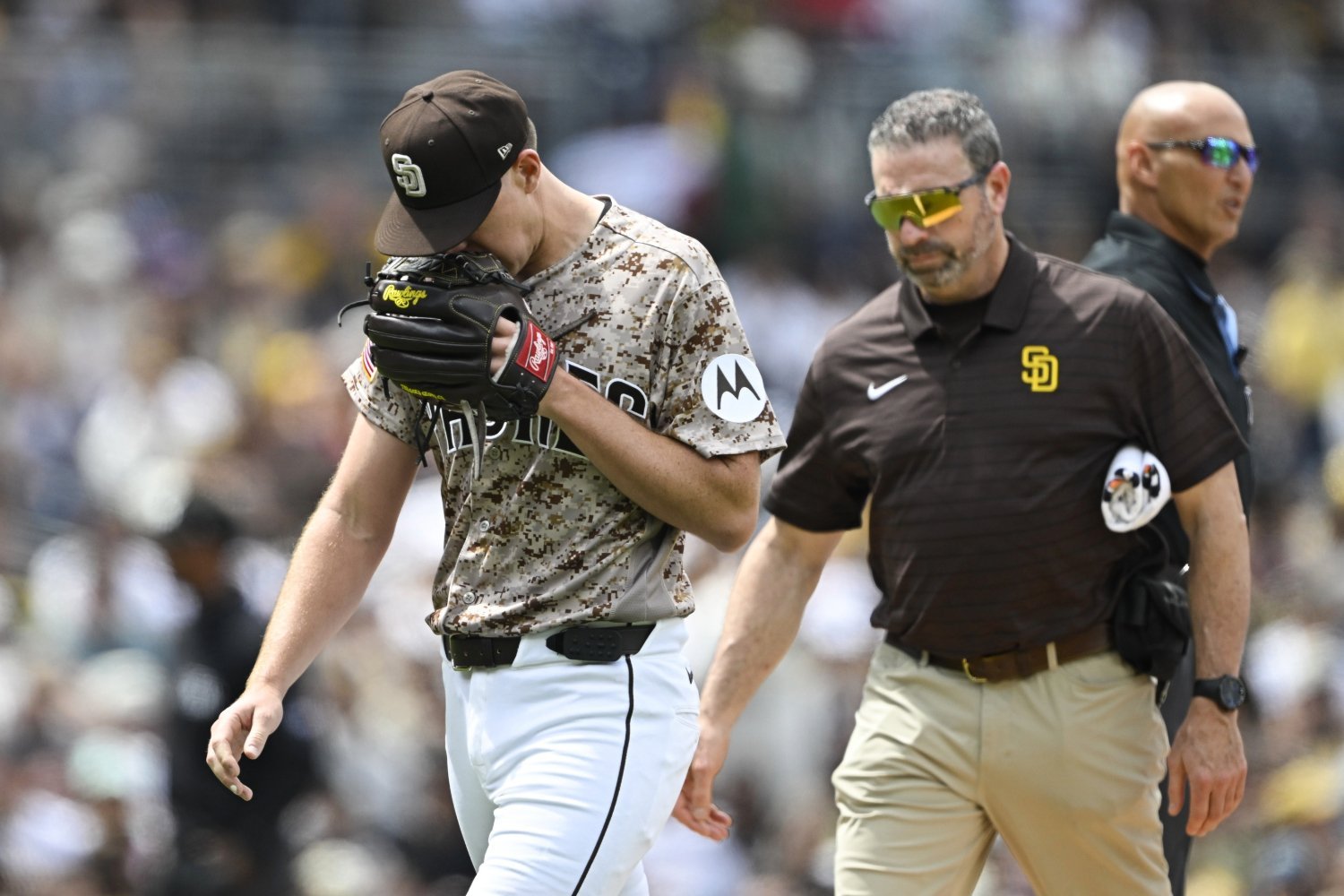 For all of the concerns that we might have had around the starting pitching for the San Diego Padres, the rotation has actually been quite solid in the early going. Their collective 1.3 fWAR ranks 12th among all starting staffs while also sitting in the top 12 in ERA (3.82) and strikeout rate (24.2 percent). It's been imperfect, but it was always going to be. A potential long-term injury to Nick Pivetta, however, reignites concerns over the shape of this staff in 2026. This year's Opening Day starter, Pivetta was an anchor for the rotation in a career year in 2025 (3.7 fWAR). After a shaky outing on Opening Day against Detroit (three innings, six earned runs), Pivetta was flawless for five against San Francisco and held Pittsburgh to two runs in five more frames in his third start. His fourth start on Sunday against Colorado was shaping up to be another solid outing before "elbow stiffness" ended his day early. Details are murky and Pivetta dealt with arm fatigue in spring training, but any sort of elbow injury for a starting pitcher begets concerns for the long-term. In the event that Pivetta remains out, the team has Michael King, Randy Vásquez, Walker Buehler, and Germán Márquez already on the active roster. King has been steady and Vásquez has been excellent, while each of the latter two have been a bit of a mixed bag thus far. An injury would surely lock at least one of them in for a continued rollercoaster, if not both. Bigger picture, the Padres do have Joe Musgrove and Griffin Canning on the mend. However, the timeline between the two has the potential to vary quite a bit. Musgrove has been slow to ramp back up in his recovery from Tommy John surgery and has endured multiple setbacks in attempting his return. Canning, meanwhile, has made his first rehab start off an Achilles tear and looked decent. His impending return feels like more of a sure thing at this stage than Musgrove's. There's a third injured starter with the potential to fill a role in the form of Matt Waldron. He's made a trio of rehab starts in his return from an infection with a 0.00 ERA across 12 innings. And we shouldn't forget about JP Sears, who is in the minors via an option and not an injury. He's made three starts and has struggled with his command, though. Assuming that gets settled as we progress into April, he's another possibility. If the Padres are able to weather the storm without Pivetta for a time, any one of Waldron or Canning or Sears would slide in fairly easily from an on-paper standpoint. Reality, though, is a different beast. Like Buehler and Márquez, the results from each of Waldron, Canning, or Sears have the ability to vary wildly. Waldron was on shaky ground before suffering his setback and Sears was optioned for a reason, while the other three among that quintet have their own checked histories with both injury and performance. The good news, at least, is that there's volume. It's a lot of abstract value given the variables unique to each arm, but they won't have to pull from the relief corps to cover innings like other teams might be forced to. It's important to consider, though, that Pivetta's time in San Diego has come with a certain sense of reliability. Even amid such volume, the spectrum of outcomes for the two currently in the rotation and the two with imminent returns is massive. Would the Padres find money in the budget to bring in someone like Lucas Giolito? Or Tyler Anderson? There are a handful of others available, but money may be a sticking point no matter what. Those already in the organization may be what the organization has to work with to cover the innings lost by Pivetta, regardless of time. Of course, all of this discussion and concern assumes some type of long-term absence in the first place. We still don't know the shape of the injury and, as such, the length of time for which he'll be out. Perhaps it pops as a scare and Pivetta misses a day or a start, with just an individual outing or so in need of coverage. Should it manifest as something more serious, though, there's a volume of depth here that the Padres spent the latter part of the offseason building. They probably hoped they wouldn't have to use it this early (and for this starter), however. UPDATE: Nick Pivetta has been placed on the 15-day IL with an elbow inflammation designation. View the full article
 -
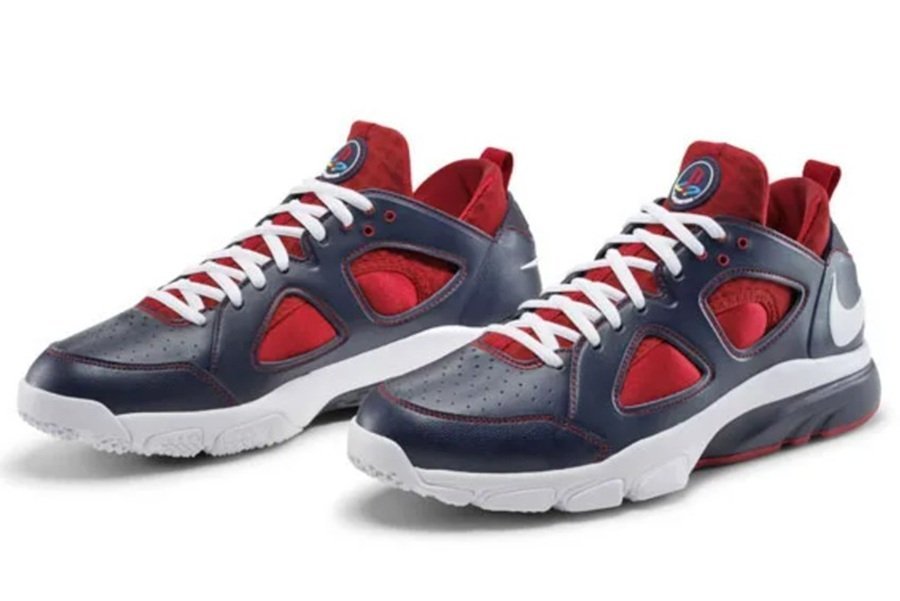 Sneaker heads have been spoiled in recent years, with vintage shoes and throwback styles making waves. Some people invest significant money in a hobby tied directly to what they wear every day. Collections grow, deadstock pairs become prized possessions, and nostalgia often drives the market, as much as style. For Minnesota Twins fans, there aren't many shoes tied directly to the organization. The crossovers between baseball and sneaker culture have always been relatively sparse compared to basketball or streetwear. However, there is one unique pair that many fans have likely forgotten about. I still lace them up from time to time, even as they have started to yellow with age after more than 15 years. Back in April 2011, Joe Mauer teamed up with Nike and PlayStation for a collaboration that feels even more ahead of its time in hindsight. The Nike Zoom Huarache TR Low PlayStation Joe Mauer edition was launched as part of the promotional push for MLB 11: The Show, for which Mauer served as the cover athlete. This was not just a quick branding exercise, either. Mauer had already become synonymous with the franchise, and landing back-to-back covers for the PlayStation exclusive baseball series cemented his place as one of the faces of the sport at the time. To celebrate that achievement, Nike and Sony PlayStation delivered a limited release that blended baseball, gaming, and sneaker culture into one package. The design itself leaned heavily into that identity. The trainers featured an obsidian leather upper paired with a varsity red inner sleeve and a crisp white outsole, mirroring the Minnesota Twins' color palette. PlayStation branding appeared on the tongue, tying the shoe directly to the gaming world, while the finer details rewarded those who looked closer. There was baseball stitching around the toe box, a subtle but effective nod to the sport Mauer dominated. Inside, the insoles showcased artwork from the video game, giving the pair a collectible feel beyond just the exterior design. One of the more personal touches came in the form of Mauer’s ‘7M’ logo, stitched onto the inner tongue of the right shoe. It was a reminder that this was not just a themed release, but something tied directly to the player himself. Nike and PlayStation made sure the shoes were front-and-center from Day 1. A launch event was held at the Mall of America, where Mauer made an appearance to promote both the game and the sneakers. For Twins fans in the area, it was a rare chance to see their hometown star connected to a product that extended beyond the field. Availability was limited from the start. The shoes dropped at select retailers, including Nike Mall of America, Eastbay, and a handful of locations across Minnesota and Chicagoland. They were positioned as premium trainers and often viewed as Player Exclusive releases, which only added to their long-term appeal. That scarcity is a big reason why they have become something of a hidden gem. Online retailers are selling them for $300+, if they're new in the box. While they may not carry the mainstream recognition of signature basketball shoes, they represent a unique intersection of baseball culture and sneaker collecting. For Twins fans, they are even more specific. They capture a moment when Mauer was not just an MVP-level player, but a national figure tied to one of the most popular sports video game franchises. Looking back now, it's easy to forget just how cool this collaboration was. In an era where athlete branding has become more common across different industries, this felt like an early glimpse of what could be possible. A hometown catcher, a global apparel giant, and a gaming powerhouse came together to create something that still feels distinct more than a decade later. If you happen to have a pair tucked away in a closet, it might be worth pulling them out. Even with some yellowing and wear, they tell a story that goes beyond style. They are a snapshot of Minnesota Twins history, sneaker culture, and a time when Joe Mauer was everywhere. Did you know these shoes existed? Leave a comment and start the discussion. View the full article
 -
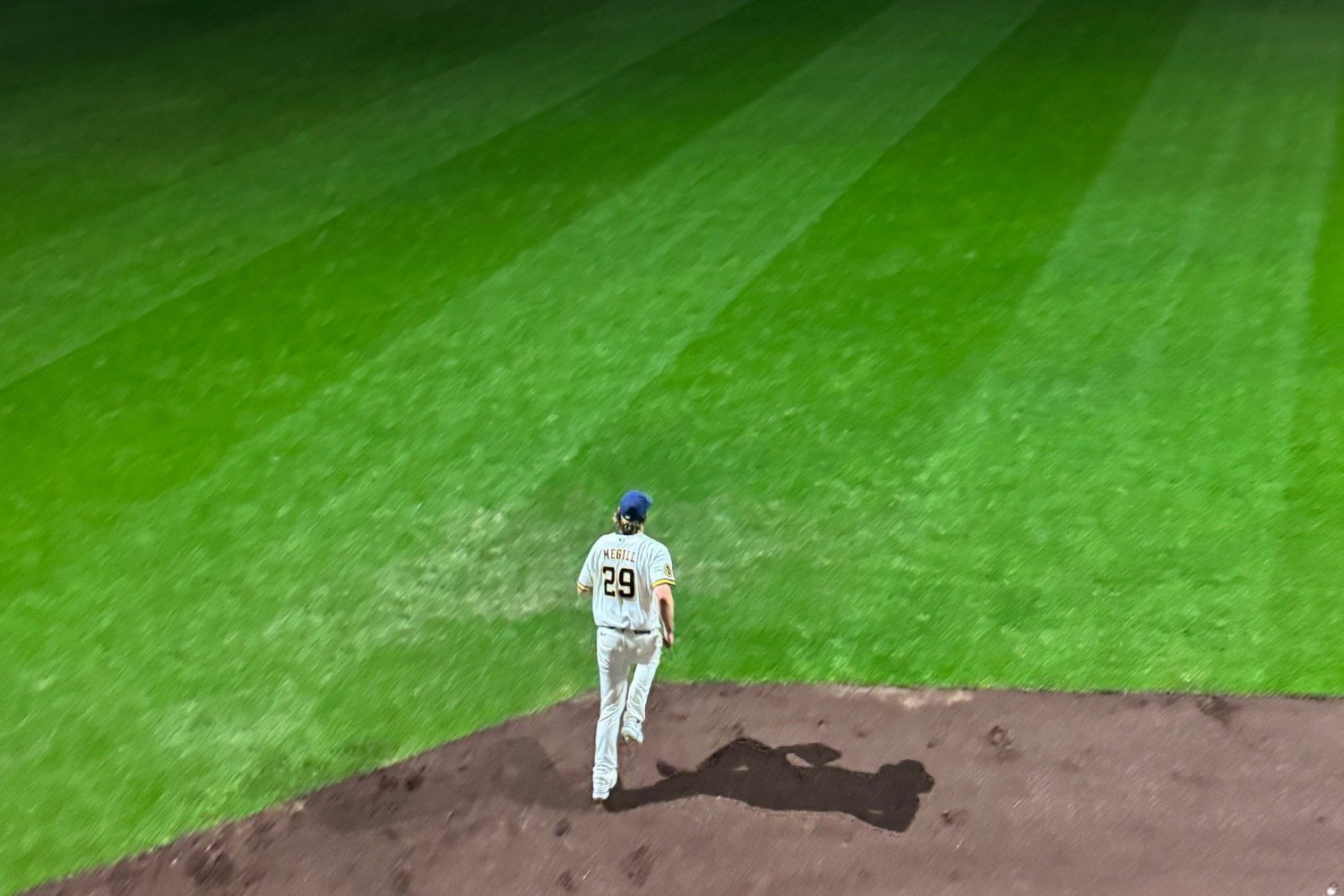 Trevor Megill’s struggles continued on Tuesday night. Tasked with protecting a one-run lead against the Toronto Blue Jays, Megill allowed the first three hitters to reach, ultimately allowing three runs in his inning of work as the Brewers eventually fell in extra innings for their sixth straight loss. In six appearances, he now has two losses and a blown save, while allowing eight runs in five innings. “I’m definitely way better than that,” Megill said. “Pitches can be a lot better. Pitch execution could be a lot better. A lot of things can be better.” Megill’s fastball is the primary culprit. So far this year, it’s averaging 97.4 mph. That’s about where it sat last April before averaging nearly triple digits over the summer, but he’s noticeably failed to reach that high-end velocity since suffering a flexor strain late in the year. “Everybody can hit velo up here,” Megill said. “Throwing 97, 98 is kind of the same velos [for him] from last season at this time. Just not executing and not getting it done right now.” That velocity matters, though. Because he throws a straight four-seamer that does not enter the zone from a deceptive angle, Megill needs that outlier heat to get whiffs or swings underneath the ball. At 97, it’s very hittable. Opponents tagged it for a .459 xwOBA at that speed last April, and they’ve managed a .418 xwOBA and 66.7% hard-hit rate against it so far this year. The only difference was that more of that loud contact was hit at defenders last year, so Megill was able to skate by for a month with an actual wOBA of .371 against his fastball. This year, the results are matching the loud contact. “The fastball didn’t have the same properties to it, for sure,” Pat Murphy said. Murphy affirmed his belief in Megill’s ability after the game, even expressing frustration with fans who booed him during his blown save. However, he also acknowledged that the Brewers must decide whether to keep him in the ninth inning. “We’ll see,” he said. “I don’t know for sure. I like to talk to other people about it. Obviously, you can’t have a guy go out there six times and three times not do the job. I mean, the way he’s throwing the ball now, he doesn’t deserve it, but he can earn it back.” Other pitchers at the back end of the bullpen have also struggled, though, and Murphy noted that the Brewers would have to feel better about a different option to make a closer change. “What are we going to do?” he said. “Who’s throwing the ball good back there that deserves it more? So we’ll figure that out. We won’t make those decisions after a heart-wrenching loss like this.” At this moment, it’s a short list. Should the Brewers make a change, matchups on a given night could determine roles. Right now, these are the leading candidates for saves. Abner Uribe As Megill’s setup man, Uribe would be the most obvious choice to slide into the ninth inning. He’s done it before. Uribe closed last September when Megill was injured and remained in that role into the postseason after he returned. However, Uribe has dealt with his own loss of velocity and movement after shouldering a heavy workload last year. As a result, his whiff and ground ball rates have plummeted in a small sample. He did look more like himself on Sunday, averaging 98.7 mph with his sinker and inducing three whiffs. “He pounded the zone today, and he had his velocity there,” Murphy said. Ángel Zerpa Murphy has shown plenty of trust in Zerpa early, pitching him eight times so far this season, particularly against pockets of left-handed hitters. He also recorded a save in Boston when Megill and Uribe were unavailable. However, as a left-hander, most of Zerpa’s ninth-inning opportunities would likely come based on matchups. A groundball pitcher, his low strikeout rate would make him an unusual fit as a full-time closer, but he could unlock more swing-and-miss by sequencing his slider and four-seamer differently off his power sinker. Grant Anderson Anderson would be a dark-horse choice to close. Unlike Megill, Uribe, and Zerpa, his velocity is below average for a late-inning reliever. He’s also been more prone to walks than one might prefer for a true high-leverage pitcher. However, Anderson’s arsenal makes him a well-rounded reliever, which could serve him well as a closer. His sinker gets ground balls against right-handed hitters, his sweeper induces weak contact, and his upshoot four-seamer produces an elite whiff rate at the top of the zone. Those three pitches have made him rather platoon-neutral since joining the Brewers, and depending on the situation, he can choose between pitching for strikeouts or ground balls, instead of being locked into one or the other. It might be an understatement to say that the best-case scenario for the Brewers involves Megill regaining his form. That possibility feels cruelly remote right now, but it also feels non-negotiable. With Jared Koenig gone from the bullpen picture and the offense diminished, it's simple, even though it's not easy: the Brewers need their erstwhile flamethrower to rediscover his best heat. View the full article
 -
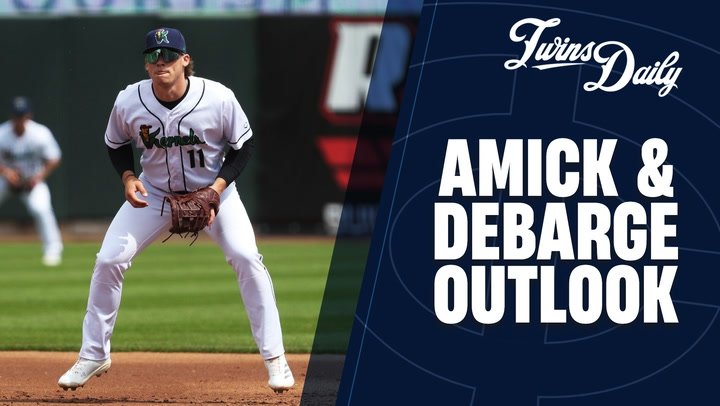 After a stellar season of speed for Kyle DeBarge and a not-so-great season from Billy Aimick, both have found their way to Double-A Wichita to begin the year. Jamie and Jeremy go over each player's expectations for 2026 and how they can both bolster their prospect status, spending most of the season in Wichita. View the full article
 -
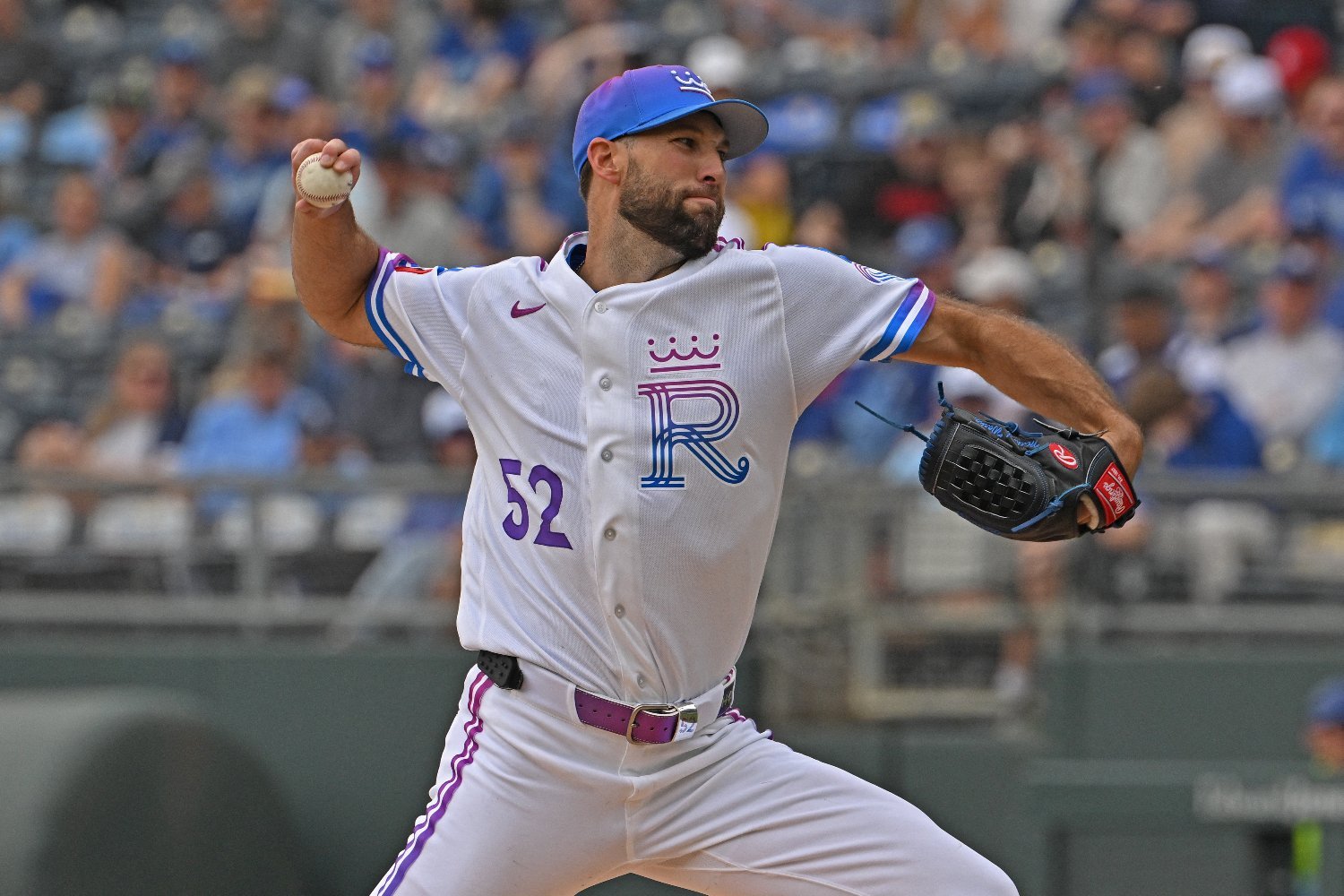 The Royals' starting pitching has been a strength of the team this season, despite their 7-9 record (entering Tuesday's game against Detroit). According to Fangraphs, the Kansas City rotation ranks 4th in ERA, 7th in WHIP, and 11th in fWAR. That stellar starting pitching is a big reason the Royals have been able to somewhat overcome their mediocre offense (and "mediocre" is putting it nicely). Here's how the Royals' starting pitchers have broken down this year individually, as of April 14th. Seth Lugo and Kris Bubic have gotten off to excellent starts this year, as evidenced by their 1.53 and 2.50 ERA marks, respectively. However, Michael Wacha has clearly been Kansas City's best starting pitcher through his first three starts of the 2026 season. In 21 IP, which leads all Royals starters, Wacha has a 0.43 ERA, a 7.3 K/9, and 3.05 FIP. He has also produced excellent marks in many of his Statcast categories this season, including wOBA, whiff%, CSW%, and O-Swing%. A full breakdown of his Statcast percentile rankings so far this season is below, via TJ Stats. Wacha's wOBA ranks in the 94th percentile, his BB% ranks in the 71st percentile, his whiff% ranks in the 82nd percentile, his CSW% ranks in the 96th percentile, and his O-Swing% ranks in the 86th percentile. Wacha is producing these solid metrics despite ranking in the 35th percentile in fastball velocity and 11th percentile in TJ Stuff+. That shows the stellar command the veteran has demonstrated, a good sign for the Royals' pitching staff this season. However, how has Wacha been successful so far through three starts? What have been the key pitches for him this season, and what could his outlook be for the remainder of 2026? Let's break down those important questions regarding Wacha below. Wacha Leading With His Four-Seamer (And Finishing With Change) Wacha is not known as a high-strikeout pitcher due to his mediocre stuff profile. Overall, he's sporting a 96 in TJ Stuff+, and he has only one offering over 100 in TJ Stuff+ this year (his slider). However, that hasn't stopped him from producing strong chase and whiff rates this season, as illustrated below via his TJ Stuff summary. Wacha is producing a chase rate of 34.3% and a whiff rate of 29.5%, which are both well above-average marks. Furthermore, he has allowed a .341 xwOBACON, which is slightly above average. He is doing this despite the 96 overall TJ Stuff+ and 49.3% zone rate, which is barely below average. His most impressive offering this year is not the changeup, which has the highest grade in his six-pitch arsenal (54). Rather, it's been the four-seamer, which has the second-best grade with a 49 mark. The former St. Louis Cardinal is throwing his four-seamer 32.6% of the time this year, his most utilized offering. It averages just 92.9 MPH, but it sports a decent iVB of 18.6 and a spin of 2,174 RPM. He's generating a 30.8% chase, a 31% whiff, and .355 xwOBACON with the four-seamer, and it's interesting to see how he gets to those rates, based on his four-seamer heatmap data this season via TJ Stats. Against righties, Wacha has been efficient in locating the pitch up and away from right-handed hitters. This has helped him produce not just a 36.4% whiff rate but also a 40% chase (O-Swing%) and a .219 xwOBACON. He doesn't generate a ton of called strikes with the four-seamer against righties, but his CSW is still solid at 29.2%. Against lefties, he's been more in the middle of the strike zone. As a result, his xwOBCON is higher (.404), and his whiff (29%) and O-Swing (25%) rates are lower. Still, it's been an effective weapon against hitters from both sides of the plate. Here's an example of Wacha getting a nice rise on the four-seamer and hitting that up-and-away spot against Atlanta's Austin Riley, producing a foul tip strike. M3lNR0RfV0ZRVkV3dEdEUT09X1Z3WlZWRllEWGdRQUFGQUFBZ0FIQ1ZKUUFBQUhXMUFBQkFjRFZWY0hCZ0JXQmdwZg==.mp4 While the four-seamer has been his main weapon against righties, his changeup has been a nice complementary pitch with the four-seamer against lefties. Here's a look at Wacha's changeup heatmap, and notice the much higher usage against lefties, as well as better results. Wacha throws his changeup 33.9% of the time against lefties, compared to just 6.2% against righties. His changeup is more up and away against lefties, a contrast to the low and inside location against righties. Still, the results have been better against lefties, as he is producing a 32.8% CSW, a 31% whiff, and 32.4% O-Swing% with the changeup. Here's an example of Wacha utilizing that changeup up and away to Munetaka Murakami of the White Sox, who whiffs badly, as he is expecting a four-seamer on an 0-2 count in that spot. OHliWnlfWGw0TUFRPT1fQmxBRFVBQlFVZ0lBWEZNQVV3QUhWUVlDQUZsWEJWY0FCbFpUVWdvRUFWQlVVVmRW.mp4 Wacha has always led with his four-seamer and changeup. However, in 2023 and 2024, he led with the changeup and followed it up with the four-seamer. The past two years, he's been more fastball-focused with the changeup as his secondary option to put batters away. That is clear in his pitch usage trend over his career, as shown in Baseball Savant's chart. While some may be flummoxed by Wacha being so confident with a four-seamer that averages under 93 MPH, it seems to be working for the crafty righty so far this season. Can Wacha Keep Up These Solid Results? I don't think Wacha is going to finish the season with an ERA under one. That's impossible, even for the best pitchers in the game. However, it's not out of the question to think that he can at least maintain his 3.04 FIP or 3.46 xERA over the course of the 2026 season. It will be interesting to see how his results fare over the season, especially when comparing his TJ Stuff+ data from this year to 2025. The results are very different, as shown below. However, the TJ Stuff+ marks for his pitches this season mirror closely what he produced a season ago. Last year, Wacha produced a 97 TJ Stuff+ overall, one point better than his mark this season. His changeup is three points worse this season, but his four-seamer is three points better, as well. Thus, it makes sense why his four-seamer has been more effective than his changeup in 2026. A key to his success in 2026 will be his ability to maintain that four-seamer command. Yes, he's generating slightly better iVB and spin on the four-seamer this season. That said, the biggest difference for Wacha and his four-seamer is the location, especially against righties. Below is his 2025 four-seam heatmap. The four-seamer had a good CSW against righties with a 29% mark. However, the whiff rate was much lower at 22.3%, and his O-Swing% was also paltry at 19.8%. Furthermore, his four-seamer got hit hard by righties, as illustrated by the .558 xwOBACON. That's 339 points worse than his mark this season. Then again, he threw 255 four-seamers last year compared to 24 this year, so it's not exactly a fair comparison. Wacha has the stuff to produce another 3.30 to 3.60 ERA season, which would be more than serviceable for a pitcher expected to be the No. 3 starter in the rotation. His stuff profile and contact allowed illustrate that he can produce a season similar to what he's done from 2022 to 2025, when his ERA ranged from 3.22 to 3.86. However, if the command can be maintained, and he can keep generating the whiff and chase on the four-seamer? Well, if that happens, it wouldn't be surprising to see Wacha push for a spot in the All-Star Game in Philadelphia. View the full article
 -
 A crisis continues to brew in the Milwaukee bullpen. The offense continues to produce, but is stretched thin now that three of its four or five most accomplished hitters are on the injured list. It's not easy to win games for the Brewers right now. In fact, it hasn't been this hard in quite some time. Pat Murphy's previous two Brewers teams never lost more than four games in a row. Tuesday night's heartbreaking double-collapse loss to the Blue Jays made six straight 'L's. When you're in a funk like that—when the bullpen seems exhausted and there are creeping questions about the depth pieces in the rotation and the injury bug won't stop biting—a great team turns to its playmakers. That term is more often used in football and basketball, but baseball has playmakers, too. Over the last few seasons, the Brewers have seen the differences those players can make. Sometimes, it's an incredible feat of sheer athleticism, but often, too, it's a coalescence of skill and great baseball IQ—being aware of space and situation and making the play another player or team might not even think of. This is the team that twice killed the would-be tying run at the plate to end games because of perfectly executed throws and tags. This is the team that seemed to seal up holes and make impossible plays. This is the team that turned a 405-foot fly ball into a ground-ball double play. That team is broken right now, and no play made that clearer than the final one of the top of the ninth inning Tuesday night. Here it is. Already, of course, the Blue Jays had scored one run in the eighth inning and two in the ninth, against Abner Uribe and Trevor Megill. Already, they led 5-4, after the Brewers seemed to have a relatively comfortable lead for most of the contest. It was a moment of frustration and resignation for many fans in attendance, and unfortunately, that same dark cloud fell over the players, too. You saw the clip, so you already understand the problem, but let's break it down for better diagnosis. Ernie Clement hit a sharp two-out single to left field. Kazuma Okamoto had been on second base when the play began, and he took off for third base, where he got the wave. That was a fine play on Toronto's part, given that they already had the lead. There were two outs in the inning; another success at the plate was unlikely. To make sending the runner a sensible decision there, you only have to think there's about a 25% chance that he's safe. Here's the problem—or, from the Brewers' perspective, the golden opportunity: Okamoto is slow. His average sprint speed so far this year, according to Statcast, is a woeful 25.4 feet per second. Maybe he's really a bit faster than that, and will show as much as the weather warms up, but so far, Okamoto has shown markedly below-average speed in his first season in the United States. That's what he showed on this play, too. Here's a frame just after Brandon Lockridge gets to the ball in left field. He's already secured it, and Okamoto isn't even at third base yet. A late stop sign would have posed an unnecessary risk, though. Why do something that might lead to a hamstring pull, at this point in the play? Okamoto continued home, and Lockridge cut loose a strong throw—albeit one a bit toward first base, as has been his wont. Initially, William Contreras does track the ball from a position where he can try to retire Okamoto once the throw comes home, but pretty quickly, he starts moving out into the dirt in front of home plate: Contreras might have been having a flashback to Sunday, when Lockridge threw a ball with similar verve (though from farther away) and missed well up the first-base line, allowing a trailing Nationals runner to take third base and losing any chance of an out on a medium-depth sacrifice fly. NXk5VjBfWGw0TUFRPT1fQjFOVEFGWUNCd2NBQ2xNRlZnQUhBd0JmQUZnRFZWZ0FWd1lIQWxZSEFGZFZCVkJX.mp4 Unlike the play Sunday, though, this one could have resulted in an easy out at the plate. Lockridge's throw was better; Contreras had a better angle on the throw and the incoming runner; and, again, Okamoto is very slow. Alas, Contreras had been out there right along with the Brewers pitchers who had stumbled through the final two frames of this game. He was frustrated, and he hasn't been through a week quite like this one in at least three years. In that moment, he was a little bit feral; he got outside himself and lost the command of the situation that usually makes him and his team so great. He turned his back on the runner—literally and figuratively—to field the throw, and turned his eyes toward second base, where Clement was trying to advance. Look at all this real estate, though. Contreras chose the wrong way to receive the throw for the best chance of tagging Okamoto out, but even if he'd done nothing differently up through the moment captured above, he could easily have wheeled and slapped down a tag in time. If that runner is Byron Buxton or Pete Crow-Armstrong, it's a tougher and riskier task, but Okamoto wasn't moving all that fast as he got close to the plate, either. Contreras had an ocean of time, but not the awareness of it that makes all our time work for us. He snared the ball, took a step to load up, transferred the ball to his throwing hand and let it fly to second—all before Okamoto touched home plate. Megill (and/or first baseman Jake Bauers) should have been yelling to Contreras to make the tag, instead of throwing toward Clement. Maybe they were, but it doesn't sound like it. He could have had better help. A catcher is meant to make this kind of decision themselves, though, and it's not a 50/50 call that gets answered as if without a preconception on every such play. The run coming home has clear precedence. Just as the Jays sending Okamoto home only required about a 1-in-4 chance to be the right call, Contreras should have tried to tag the runner even if he felt he had only a 1-in-4 chance to get him. In truth, he should have felt at least like he had the better side of a coin flip, even before the ball got to him. It wasn't even going to be a terribly close play. Contreras's poor read or mental lapse gave the Blue Jays a run. In the bottom of the inning, the Brewers rallied for the two tallies they needed to tie the game and force extras, against Toronto closer Jeff Hoffman. It was a terrific comeback, but who knows? The visitors might have managed that frame differently, with just a one-run edge. It might be that the extra run in the top half wasn't as decisive as it now appears. It didn't need to score, though. When things are going against you, in baseball, it's often beyond your control. The game is hard; the other guys have big houses, too. For two years, the Brewers have maintained primacy in the NL Central by being the team who doesn't let bad get worse. They don't let runs score or losses pile up when, through the blessings of the game, they do gain momentary control and can prevent it. That was the most unsettling thing about Tuesday night's loss. With a chance to get some momentum going for the bottom half of the inning and keep the defiicit manageable, Contreras made a boneheaded play. It was very un-Brewerslike. We're going on a week and a half of that, now. View the full article
 -
 Wilyer Abreu has sprinted out of the gates to start his 2026 MLB season. The Boston Red Sox outfielder dazzled in the WBC, and now he's hitting over .350 with three early home runs on the season. What part of his game is sustainable, and which numbers are most susceptible to coming back down to earth? We break it all down here. Enjoy! View the full article
 -
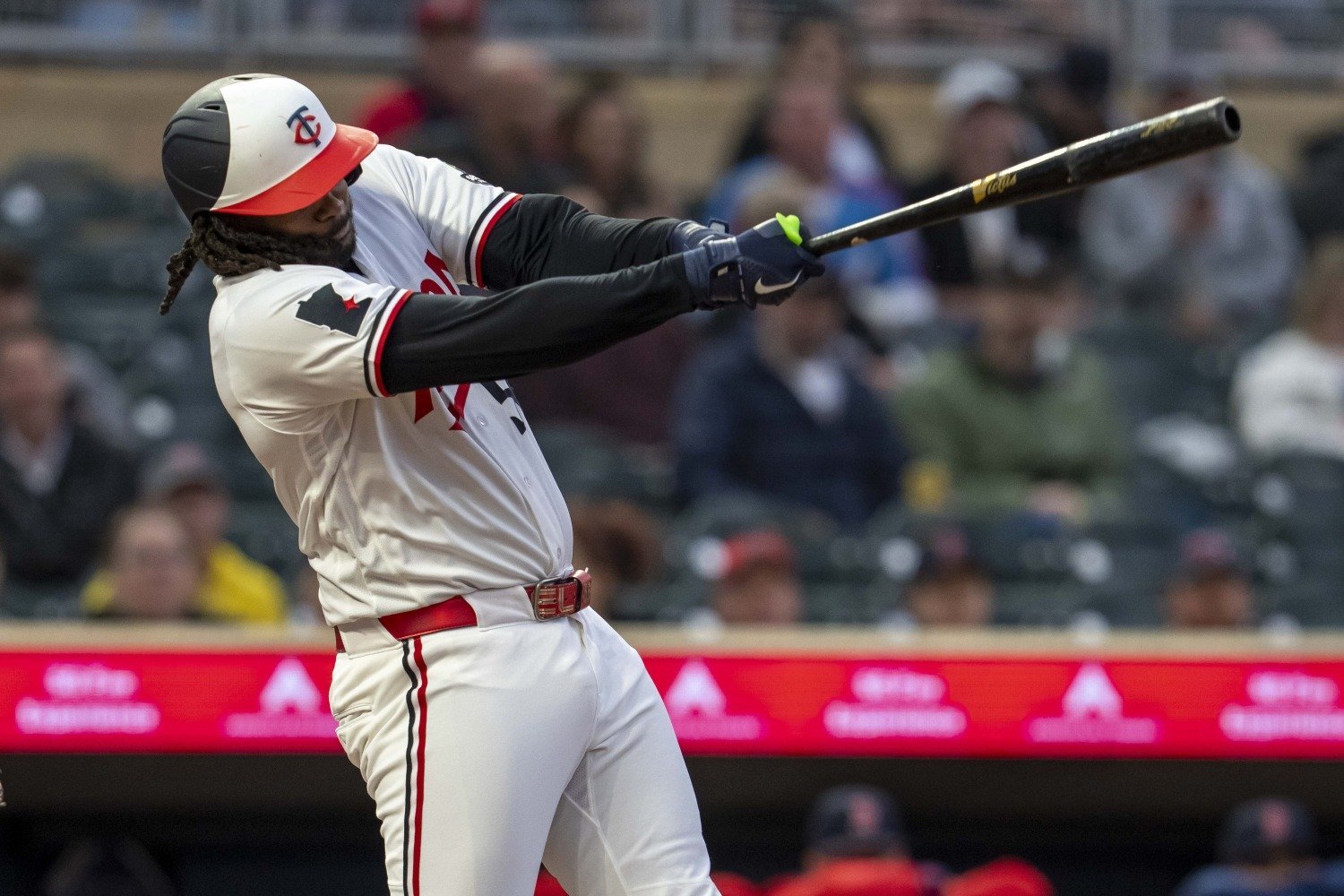 After another surprising beatdown of one of the league’s potential Cy Young candidates, fans cannot ignore what is becoming a fact: The Minnesota Twins are hitting left-handed pitchers well. While the 2025 Twins carried a .602 OPS against lefties in April, this year's team entered Tuesday at .734, good for sixth in the league. Their victims include Tarik Skubal, Framber Valdez, and Garrett Crochet. It's a good thing, too, because the Twins have seen over 45% of their pitches this season from southpaws, more than half again the league-average mark of 28%. Most expected the team to flounder during this left-leaning to start the season. Instead, they've ignited a fire. For any close follower of the Minnesota Twins—or at least anyone who has listened to years of critics (rightly) screaming out for a right-handed corner outfield bat to balance a platoon-designed lineup—this sudden flip feels like a shock to the system. It's even more jarring to see it happen despite Byron Buxton struggling (until this week), when he was viewed as perhaps the only reliable lefty-masher on the team entering this season. There are a few ways to break down the sudden shift in energy that now has the Twins in first place in the American League. But there are small red lights, too, blinking out a warning that this might not be sustainable. Swing Early or Don’t Swing at All The Twins have employed a variety of game plans this year, but one fascinating juxtaposition stands out when you look at the data. The Twins are both extremely aggressive and very patient. As we’ve seen a number of times, players have no interest in waiting for the "perfect" pitch. They’ve swung at the first pitch against lefties 32% of the time (10th in the league), resulting in a .343/.378/.686 slash line. Overall, though, they rank 28th in swing rate. Their walk rate is 11.9% facing lefties, which ranks 7th in the league. When you look closely, the Twins are simply playing the odds. This bifurcated approach has become increasingly popular among smart teams over the last decade: get in the box ready to hit, but if you do get deeper in a count, become more patient there. You might just work your way on base. Here's how the Twins compare to the rest of the league in terms of swing rate by count against lefties. Count Twins Rest of League % Difference 0-0 32.2% 29.7% 2.5% 0-1 42.6% 47.8% -5.2% 0-2 51.3% 48.6% 2.7% 1-0 47.1% 41.2% 5.9% 1-1 55.3% 53.8% 1.5% 1-2 48.6% 58.3% -9.6% 2-0 45.7% 33.3% 12.4% 2-1 48.1% 57.0% -8.9% 2-2 51.2% 60.4% -9.2% 3-0 0.0% 4.3% -4.3% 3-1 31.0% 46.5% -15.5% 3-2 59.7% 65.8% -6.1% In a pregame media scrum, Derek Shelton explained that “the biggest thing is just not chasing. It’s just making sure we stay in our hitting zones.” While the Twins have been certainly low in the chase rate department—swinging at just 16% of pitches outside the zone (4th lowest in the league)—they are also swinging notably less at pitches in the zone, close to a league average of 57%. This means they’re setting up for good counts and good pitches. Finding Just Enough Grass Without generating an especially high hard-hit rate or relying too heavily on the home run (in March and April, after all, the ball doesn't fly very well), the Twins have been one of the best teams in the league at dropping singles and doubles into the outfield. They lift the ball, but despite the fact that it's cold, they're finding space in which it can land. The trick is pulling the ball, where the Twins rank 2nd in Air Pulls. Sometimes, it's not about hitting it 110 MPH. In fact, hitting softer flares can create an unsexy sweet spot, where you're likely to get it over the infielders but drop it in front of the outfield. As long as you offer enough of a threat to stop the outfielders from coming in an extra 15 feet against you, there's a lot of room out there. TDY1dmJfWGw0TUFRPT1fVlFKUUJ3ZFdWZ1VBWFFjRkFBQUhWVlJSQUZrQUJsZ0FCVkFOVmdzRlZWZFJDUVZW.mp4 On the Hunt for Speed Because they're overrepresented in the population of pitchers (relative to their prevalence in the population as a whole), left-handed pitchers don't throw as hard as righties do. They usually beat you by forcing you to play their funky angles and fall for their offspeed tricks. The Twins refuse to be fooled. So far this spring, Minnesota hitters have pointedly found ways to attack high-speed pitches coming from southpaws, rather than off-speed stuff. They have a hard-hit rate of 47.5% on fastballs, fifth in the league, and a 22.8% hard-hit rate on off-speed pitches—25th in the league. The trick here seems to be what Baseball Savant calls the Ideal Attack Angle (IAA) rate. A well-timed swing should catch the ball as the barrel works uphill at somewhere between 5° and 20°, relative to an imaginary horizontal line parallel to the ground. Ted Williams taught this: the pitch is coming down, so you have to swing up. Once again, the Twins' difference is notable: 3rd in the league in IAA% when it comes to fastballs; 25th in the league when it comes to other stuff. For example, check out this Matt Wallner single off Skubal. The reigning Cy Young Award winner leaves it down and in the center of the zone. Wallner, known for crushing the ball, does something different. His swing comes in low, looking to simply match and line up with the pitch. The Big Moose lands a single 210 feet and scores a run. NEW.mp4 Once again, the Twins are taking advantage of cold weather. Skubal's velocity is down a tick, and he's only gotten a 14% whiff rate on his fastball—down from 24% in those previous full seasons. That might be just enough to let hitters like Wallner focus on location, rather than timing. Warming Signs As I’ve outlined here, the Twins' lefty strategy seems to be partially working because of cold weather. As summer approaches, those pulled balls might end up safely in an outfielder’s glove. Pitchers' heaters might warm with the weather. Players might find themselves forced to fight off pitches, rather than confidently waiting for good ones. More likely still is that we'll find that some of these results are just a matter of several players playing slightly above their real talent level, in a way that won't last. All the wins count, though. For now, the team is thriving. In the game of the season, an inning has already been played, and surprising lefty-mashing has given the Twins a snug but real lead. What comes next matters, but so does what's already happened. View the full article
 -
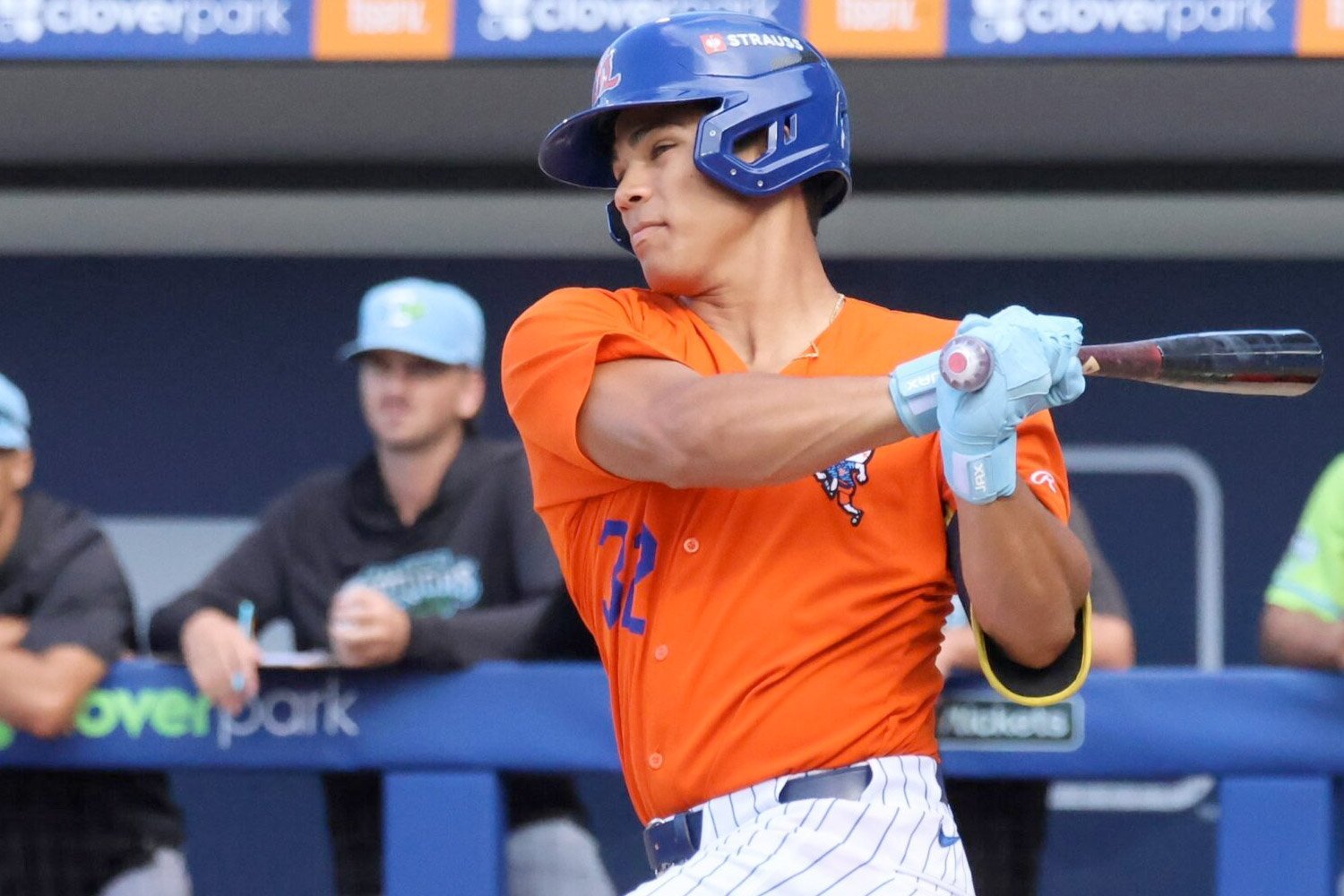 Hayden Senger launched two home runs and drove in four as Syracuse beat Scranton/Wilkes-Barre 8-6, with Anderson Severino striking out four over two scoreless innings for the save. Mitch Voit hit a go-ahead three-run homer in the eighth as Brooklyn held off Greensboro 9-8. Jose Chirinos threw five shutout innings with five strikeouts as St. Lucie blanked Daytona 2-0. Nick Lorusso's three-run homer brought Binghamton within a run, but the Rumble Ponies fell 8-7 at Akron. Mets Transactions New York Mets placed RHP Joey Gerber on the 15-day injured list. Right finger blister. New York Mets released RHP Luis García. New York Mets recalled RHP Austin Warren from Syracuse Mets. Senger Smashes Two Home Runs As Syracuse Holds Off Scranton/Wilkes-Barre, 8-6 Hayden Senger hit two home runs and drove in four runs as the Syracuse Mets beat the Scranton/Wilkes-Barre RailRiders 8-6 on Tuesday. MJ Melendez led off the first inning with a triple, and Nick Morabito brought him home with a sacrifice fly for the game's first run. Ryan Clifford doubled later in the inning but was stranded. In the second, Vidal Bruján singled and Senger followed with a two-run homer to make it 3-1. MJ Melendez then hit a solo homer to push the lead to 4-1. In the fourth, Cristian Pache walked and Senger launched his second two-run blast of the night, extending the lead to 6-1. Jose Rojas added a two-run homer in the sixth after Christian Arroyo doubled, giving Syracuse an 8-6 cushion that lasted the rest of the game. Jonah Tong started and pitched 4 2/3 innings, allowing six runs on five hits with three walks and 10 strikeouts. He carried a 6-1 lead into the fifth before Scranton/Wilkes-Barre erupted for five runs to tie the game. Dan Hammer got one out before Brandon Waddell entered and tossed two scoreless innings to earn the win, allowing three hits while striking out two. Anderson Severino locked down the final two innings for his second save, striking out four with one walk and allowing no hits. Syracuse Mets Batting AB R H 2B 3B HR RBI BB SO SB MJ Melendez LF 4 2 2 0 1 1 1 0 0 0 Nick Morabito CF 3 0 0 0 0 0 1 0 1 0 Ronny Mauricio SS 3 0 0 0 0 0 0 1 0 0 Ryan Clifford 1B 3 0 1 1 0 0 0 1 1 0 Christian Arroyo 3B 4 1 1 1 0 0 0 0 0 0 Jose Rojas DH 4 1 1 0 0 1 2 0 0 0 Vidal Bruján 2B 4 1 1 0 0 0 0 0 0 0 Cristian Pache RF 2 1 0 0 0 0 0 2 1 0 Hayden Senger C 4 2 2 0 0 2 4 0 2 0 Totals 31 8 8 2 1 4 8 4 5 0 Syracuse Mets Pitching IP H R ER BB SO HR NP Decision Jonah Tong 4.2 5 6 6 3 10 2 86 Dan Hammer 0.1 1 0 0 0 0 0 10 Brandon Waddell 2.0 3 0 0 0 2 0 37 W (1-0) Anderson Severino 2.0 0 0 0 1 4 0 34 S (2) Totals 9.0 9 6 6 4 16 2 167 Lorusso's Three-Run Blast Highlights Binghamton Rally, But Rumble Ponies Fall 8-7 At Akron The Binghamton Rumble Ponies attempted to rally from a 7-1 deficit but fell one run short in an 8-7 loss to the Akron RubberDucks. Binghamton struck in the third inning when A.J. Ewing doubled and scored on a Jacob Reimer RBI double. Akron answered with three runs in the fourth and four more in the sixth to take a 7-1 lead. The Rumble Ponies began their comeback in the seventh. Kevin Parada walked, Nick Lorusso was hit by a pitch, and Ewing delivered an RBI single to make it 7-2. Marco Vargas followed with an RBI single to cut it to 7-3, and Ewing scored on a groundout to bring it to 7-4. Akron added a run in the bottom of the seventh to make it 8-4. In the eighth, Eli Serrano III reached on an error, Jose Ramos walked, and Lorusso launched a three-run homer, his first of the season, to make it 8-7. Binghamton could not push across the tying run in the ninth. Jonathan Santucci started and threw four innings, allowing three runs, two earned, on two hits with two walks and five strikeouts. Douglas Orellana allowed four runs in 2/3 of an inning. Gabriel Rodriguez struck out three in a scoreless inning. A.J. Ewing led the offense, going 3-for-5 with a double, two runs scored, an RBI, and a stolen base. Binghamton Rumble Ponies Batting AB R H 2B 3B HR RBI BB SO SB A.J. Ewing 2B 5 2 3 1 0 0 1 0 0 1 Marco Vargas SS 5 0 2 0 0 0 1 0 0 1 Jacob Reimer 3B 5 0 1 1 0 0 1 0 1 0 Chris Suero C 2 0 0 0 0 0 0 3 1 0 Eli Serrano III LF 5 1 1 1 0 0 0 0 1 0 Jose Ramos RF 3 1 1 0 0 0 0 1 1 1 D'Andre Smith CF 4 0 1 0 1 0 0 0 2 0 Kevin Parada DH 3 1 0 0 0 0 0 1 1 0 Nick Lorusso 1B 3 2 1 0 0 1 3 0 0 0 Totals 35 7 10 3 1 1 6 5 7 3 Binghamton Rumble Ponies Pitching IP H R ER BB SO HR NP Decision Jonathan Santucci 4.0 2 3 2 2 5 0 75 L (0-1) Douglas Orellana 0.2 3 4 3 1 2 0 27 Gabriel Rodriguez 1.0 0 0 0 2 3 0 26 Brian Metoyer 1.0 0 0 0 0 1 0 10 Matt Turner 1.1 2 1 1 1 1 1 21 Totals 8.0 7 8 6 6 12 1 159 Voit's Go-Ahead Three-Run Homer In The Eighth Lifts Brooklyn Past Greensboro, 9-8 Mitch Voit hit a go-ahead three-run home run in the bottom of the eighth inning to give the Brooklyn Cyclones a 9-8 win over the Greensboro Grasshoppers. Brooklyn jumped ahead early in the first when Mitch Voit walked, Daiverson Gutierrez singled, and John Bay ripped a two-run triple. Colin Houck walked, Yohairo Cuevas walked, and Trace Willhoite drove in another run with a double for a 4-1 lead. Gutierrez hit a solo homer in the third to extend the lead to 5-2. Greensboro tied the game at 5-5 in the fourth. Willhoite added another RBI double in the sixth to put Brooklyn back up 6-5. Greensboro took an 8-6 lead with two runs in the top of the eighth before Cuevas tripled, Willhoite walked, and Voit launched his first homer of the season to give Brooklyn the 9-8 lead. Garrett Stratton closed the door in the ninth for the save. Voit finished 2-for-4 with three RBI and two runs scored. Gutierrez went 4-for-5 with a double, a home run, one RBI, and two runs scored. Jonathan Jimenez started and went 3 2/3 innings, allowing five runs on six hits with three walks and five strikeouts. Bryce Jenkins threw two scoreless innings with three strikeouts and a walk. Parker Carlson pitched 1 1/3 scoreless innings with two strikeouts. Brett Banks earned the win, and Stratton earned the save with a scoreless ninth, striking out two with a walk. Brooklyn Cyclones Batting AB R H 2B 3B HR RBI BB SO SB Mitch Voit 2B 4 2 2 0 0 1 3 1 0 0 Antonio Jimenez SS 5 0 0 0 0 0 0 0 1 0 Daiverson Gutierrez C 5 2 4 1 0 1 1 0 0 0 Corey Collins DH 5 0 0 0 0 0 0 0 1 0 John Bay LF 3 1 1 0 1 0 2 1 0 0 Colin Houck 3B 3 2 1 0 0 0 0 1 1 1 Yohairo Cuevas RF 1 1 1 0 1 0 0 3 0 0 Trace Willhoite 1B 3 1 2 2 0 0 2 1 0 0 Diego Mosquera CF 4 0 0 0 0 0 0 0 2 0 Totals 33 9 11 3 2 2 8 7 5 1 Brooklyn Cyclones Pitching IP H R ER BB SO HR NP Decision Jonathan Jimenez 3.2 6 5 5 3 5 1 70 Parker Carlson 1.1 2 0 0 0 2 0 23 Bryce Jenkins 2.0 1 0 0 1 3 0 33 Brett Banks 1.0 2 3 0 1 1 0 24 W (1-0) Garrett Stratton 1.0 0 0 0 1 2 0 16 S (1) Totals 9.0 11 8 5 6 13 1 166 Chirinos Spins Five Shutout Innings As St. Lucie Blanks Daytona, 2-0 Jose Chirinos threw five scoreless innings, and St. Lucie's pitching staff combined for a four-hit shutout in a 2-0 win over the Daytona Tortugas. Chirinos allowed three hits, walked none, and struck out five on 65 pitches to earn the win. He was efficient throughout, never letting Daytona mount a serious threat. Christian Rodriguez followed with three innings of relief, allowing one hit with two walks and three strikeouts to earn the hold. Ryan Dollar closed out the ninth for his first save, allowing no hits with one walk. AJ Salgado provided the game's first run with a solo home run in the second inning, his second of the season. St. Lucie threatened to add more in the second and third innings but left runners on base. The Mets finally added an insurance run in the seventh when Sam Robertson walked, stole second, and scored on an Elian Peña single to center field. Peña went 2-for-5 with an RBI and a stolen base to lead the offense. St. Lucie collected just five hits in the game but made them count, pairing the timely hitting with dominant pitching. The pitching staff struck out eight batters and walked three across nine shutout innings. St. Lucie Mets Batting AB R H 2B 3B HR RBI BB SO SB Elian Peña SS 5 0 2 0 0 0 1 0 2 1 Eddinson Paulino 3B 2 0 0 0 0 0 0 0 0 0 Branny De Oleo 3B 2 0 0 0 0 0 0 1 2 0 Randy Guzman 1B 5 0 0 0 0 0 0 0 3 0 Julio Zayas DH 4 0 1 0 0 0 0 0 2 0 AJ Salgado RF 3 1 1 0 0 1 1 1 0 0 Simon Juan CF 3 0 0 0 0 0 0 1 1 1 JT Benson LF 4 0 1 0 0 0 0 0 1 0 Chase Meggers C 4 0 0 0 0 0 0 0 1 0 Sam Robertson 2B 2 1 0 0 0 0 0 2 1 1 Totals 34 2 5 0 0 1 2 5 13 3 St. Lucie Mets Pitching IP H R ER BB SO HR NP Decision Jose Chirinos 5.0 3 0 0 0 5 0 65 W (1-0) Christian Rodriguez 3.0 1 0 0 2 3 0 38 H (1) Ryan Dollar 1.0 0 0 0 1 0 0 9 S (1) Totals 9.0 4 0 0 3 8 0 112 View the full article
 -
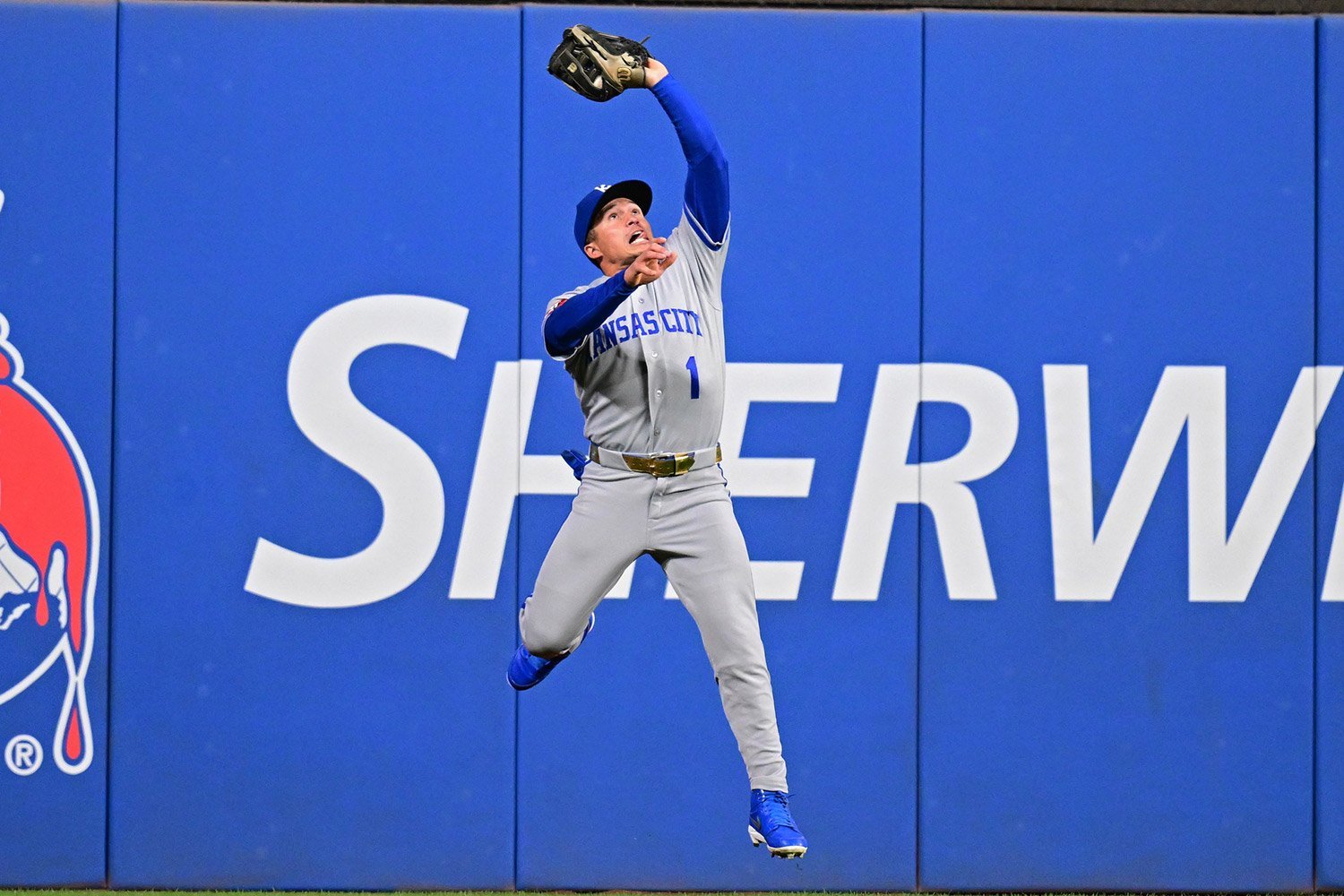 Isaac Collins was removed from a game after attempting to make a diving catch into the stands in left field against the Tigers. He didn't get up right away, but walked back into the dugout with a noticeable limp. Collins hasn't had a great start to the season after being acquired in an offseason trade with the Milwaukee Brewers. Collins has hit .214/.327/.310 for an OPS+ of 85. The injury is listed as a knee injury, and the Royals will update his status on Wednesday. View the full article
 -
 Jagger Haynes struck out five over five innings in San Antonio's 7-2 loss at Midland. Clay Dungan homered and drove in two as El Paso fell to Round Rock 6-4. Kavares Tears belted a two-run home run in the seventh for Fort Wayne, which dropped a 13-4 decision to Lake County. Winyer Chourio spun three scoreless innings with five strikeouts in Lake Elsinore's 5-4 11-inning defeat at Stockton. Padres Transactions San Diego Padres recalled RHP Alek Jacob from El Paso Chihuahuas. San Antonio Missions activated OF Albert Fabian. San Antonio Missions transferred RHP Manuel Castro to the Development List. 1B Leandro Cedeño assigned to San Antonio Missions from ACL Padres. TWP Tucker Musgrove assigned to Fort Wayne TinCaps from ACL Padres. Lake Elsinore Storm placed C Ty Harvey on the 7-day injured list retroactive to April 13, 2026. C Yoiber Ocopio assigned to Lake Elsinore Storm from ACL Padres. Bowen, Dungan Homer, But El Paso Falls To Round Rock 6-4 The El Paso Chihuhuas built a 4-1 lead through three innings before Round Rock came back to win 6-4 on Tuesday. Clay Dungan was El Paso's offensive standout, going 3-for-4 with a two-run home run in the second inning to push the lead to 3-1. Jase Bowen had opened the scoring with a solo home run on the first pitch of the game for his team-leading fourth homer, and Nate Mondou added a sacrifice fly in the third to make it 4-1. Round Rock answered in the fifth, tying the game at 4-4. The Chihuahuas' bullpen was tested throughout, with no single pitcher working more than two innings. Evan Fitterer started and worked two innings, allowing one earned run on three hits, two walks, and two strikeouts. Justin Yeager was charged with the loss after allowing two runs in the eighth inning on a two-run double, putting the Express ahead 6-4. El Paso left 12 runners on base and struck out 13 times. Left-hander Yuki Matsui made another rehab appearance, allowing one hit and one walk with one strikeout. El Paso Chihuahuas Batting Name AB R H 2B 3B HR RBI BB K SB Jase Bowen 5 1 1 0 0 1 1 0 2 0 Carlos Rodríguez 3 1 1 0 0 0 0 1 1 0 Sung-Mun Song 3 0 0 0 0 0 0 1 0 0 Marcos Castañon 4 0 1 0 0 0 0 0 3 0 Nate Mondou 3 0 0 0 0 0 1 0 2 0 Nick Solak 4 1 1 0 0 0 0 0 1 0 Rodolfo Durán 3 0 0 0 0 0 0 1 1 0 Clay Dungan 4 1 3 0 0 1 2 0 0 0 Mason McCoy 4 0 0 0 0 0 0 0 3 0 Totals 33 4 7 0 0 2 4 3 13 0 El Paso Chihuahuas Pitching Name IP H R ER BB K Pitches Note Yuki Matsui 1 1 0 0 1 1 16 Justin Yeager 1 2 2 1 0 2 25 L, 1-2 Omar Cruz 1 1 1 1 1 2 30 Ethan Routzahn 1 1/3 2 0 0 0 1 30 BS, 1 Misael Tamarez 1 2/3 1 2 2 3 2 41 H, 2 Evan Fitterer 2 3 1 1 2 2 46 Haynes Has Solid Start, But Missions' Bullepn Falters In 7-2 Loss San Antonio fell to Midland 7-2 in a game shortened to seven innings thanks to a 2½-hour rain delay, with Romeo Sanabria providing a first-inning spark that was ultimately undone by a five-run sixth. Sanabria hit a two-run home run in the first inning, scoring Ethan Salas, to give San Antonio a 2-0 lead. Jagger Haynes kept that lead intact for five innings, allowing three hits, two earned runs, one walk, and striking out five. Haynes held Midland to one run in the first inning and one more in the third before exiting after five. The sixth inning proved decisive as Midland scored five runs on four hits and three walks. Salas went 2-for-4 and scored a run. Albert Fabian went 2-for-3. Sanabria also drew a walk to go along with his first home run of the season, but San Antonio managed just six hits overall and left 13 runners on base. San Antonio Missions Batting Name AB R H 2B 3B HR RBI BB K SB Ethan Salas 4 1 2 0 0 0 0 0 1 0 Ryan Jackson 4 0 0 0 0 0 0 0 2 0 Romeo Sanabria 2 1 1 0 0 1 2 1 1 0 Tirso Ornelas 3 0 0 0 0 0 0 0 0 0 Leandro Cedeño 2 0 1 0 0 0 0 1 0 0 Kai Murphy 0 0 0 0 0 0 0 0 0 0 Braedon Karpathios 3 0 0 0 0 0 0 0 1 0 Luis Verdugo 3 0 0 0 0 0 0 0 1 0 Albert Fabian 3 0 2 0 0 0 0 0 0 0 Francisco Acuna 2 0 0 0 0 0 0 0 1 0 Totals 26 2 6 0 0 1 2 2 7 0 San Antonio Missions Pitching Name IP H R ER BB K Pitches Note Jagger Haynes 5 3 2 2 1 5 80 Michael Flynn 0 4 5 5 2 0 18 L, 0-1 Andrew Moore 1 0 0 0 1 0 12 Tears' Home Run Headlines Fort Wayne's 13-4 Loss Fort Wayne rallied for four runs in the seventh inning, but could not overcome a nine-run deficit as Lake County beat the TinCaps 13-4. Maikel Miralles allowed five earned runs on five hits in four innings, walking two and striking out three. He was charged with the loss. The TinCaps' only significant offensive action came in the seventh. Kavares Tears hit a two-run home run to trim the lead to 9-2, and Fort Wayne added two more in the inning. Lamar King Jr. scored on a Rosman Verdugo groundout, and Kasen Wells singled in Jack Costello to round out the four-run frame. Tears finished 1-for-3 with a walk and two RBI. Wells went 3-for-4 with an RBI, and Alex McCoy had two hits in three at-bats and scored a run. Fort Wayne's pitching staff issued 11 walks. Lake County scored four runs in the third, three in the fifth and four more in the seventh. Fort Wayne TinCaps Batting Name AB R H 2B 3B HR RBI BB K SB Zach Evans 5 0 0 0 0 0 0 0 2 0 Dylan Grego 5 0 0 0 0 0 0 0 2 0 Carlos Rodriguez 4 0 0 0 0 0 0 0 2 0 Alex McCoy 3 1 2 0 0 0 0 1 1 0 Kavares Tears 3 1 1 0 0 1 2 1 0 0 Lamar King Jr. 4 1 1 0 0 0 0 0 0 0 Jack Costello 4 1 1 0 0 0 0 0 1 0 Rosman Verdugo 4 0 0 0 0 0 1 0 1 0 Kasen Wells 4 0 3 0 0 0 1 0 0 0 Totals 36 4 8 0 0 1 4 2 9 0 Fort Wayne TinCaps Pitching Name IP H R ER BB K Pitches Note Vicarte Domingo 0 2/3 2 4 4 3 0 30 Will Varmette 0 2/3 1 0 0 2 2 29 Maikel Miralles 4 5 5 5 2 3 62 L, 0-1 Bernard Jose 1 2/3 4 4 4 4 2 44 Clark Candiotti 1 1 0 0 0 1 20 Storm Rally, But Come Up Short In 11 Innings 5-4 Lake Elsinore overcame a three-run deficit to tie the game in the eighth inning and took the lead in the 10th, but Stockton scored on a wild pitch in the 11th to hand the Storm a 5-4 loss in extra innings. Starter Winyer Chourio was the standout on the mound, working three scoreless innings with five strikeouts and walking four. Daichi Moriki took the loss in the 11th when a wild pitch allowed the zombie runner, now on third base, to score and give Stockton the walk-off win. The eighth-inning comeback was led by Kale Fountain, who singled to score Conner Westenburg, and Truitt Madonna, who singled to score Fountain and brought the Storm within one. Bradley Frye also scored in the inning to complete the 3-3 tie. In the 10th inning, Fountain served as the zombie runner on second base, and Madonna drove him home with a sacrifice fly to put Lake Elsinore ahead 4-3. Westenburg went 2-for-3 with a run scored, three stolen bases, and a walk. Madonna drove in two runs in one at-bat, and Fountain scored twice. Lake Elsinore Storm Batting Name AB R H 2B 3B HR RBI BB K SB Ryan Wideman 5 0 0 0 0 0 0 0 2 0 Kale Fountain 5 2 1 0 0 0 1 0 2 0 Bradley Frye 3 1 1 0 0 0 0 1 0 0 Victor Duarte 3 0 1 0 0 0 0 0 0 0 Truitt Madonna 1 0 1 0 0 0 2 0 0 1 Jorge Quintana 5 0 0 0 0 0 0 0 2 0 Justin DeCriscio 4 0 1 0 0 0 0 1 1 0 George Bilecki 4 0 0 0 0 0 0 1 1 0 Kerrington Cross 2 0 0 0 0 0 0 1 2 0 Luke Cantwell 1 0 0 0 0 0 0 0 0 0 Conner Westenburg 3 1 2 0 0 0 0 1 0 3 Totals 36 4 7 0 0 0 3 5 10 4 Lake Elsinore Storm Pitching Name IP H R ER BB K Pitches Note Brandon Langley 2 2 2 2 0 3 33 Rordy Mejia 1 1/3 2 1 1 2 0 35 Winyer Chourio 3 1 0 0 4 5 66 Ethan Long 2 1 1 0 0 2 30 Will Koger 1 2/3 1 0 0 1 4 27 Daichi Moriki 0 1/3 0 1 0 1 0 11 L, 0-1 Padres Top-20 Prospect Performance Kash Mayfield: DNP Ethan Salas: 2-for-4, R Kruz Schoolcraft: DNP Bradgley Rodriguez: DNP Humberto Cruz: DNP Miguel Mendez: DNP Ty Harvey: DNP Jorge Quintana: 0-for-5, 2 K Kale Fountain: 1-for-5, 2 R, RBI, 2 K Ryan Wideman: 0-for-5, 2 K Jagger Haynes: 5 IP, 3 H, 2 ER, BB, 5 K Lamar King Jr.: 1-for-4, R Romeo Sanabria: 1-for-2, HR, 2 RBI, BB, K Truitt Madonna: 1-for-1, 2 RBI, SB Michael Salina: DNP Garrett Hawkins: DNP Kavares Tears: 1-for-3, HR, 2 RBI, BB Deivid Coronil: DNP Francis Pena: DNP Bryan Balzer: DNP View the full article
 -
 Twins System Recap: Hendry Mendez and Eduardo Tait both had multi-homer games on Tuesday. Mendez hit a grand slam, a three-run blast, and even added a triple. Both of them were acquired from the Phillies at the trade deadline. As was Mick Abel, who twirled a gem for the Twins tonight. On the pitching side, Reed Moring delivered yet another scoreless appearance. He's up to 13 shutout innings now. Info on those performances and much more in tonight's recap. View the full article
 -
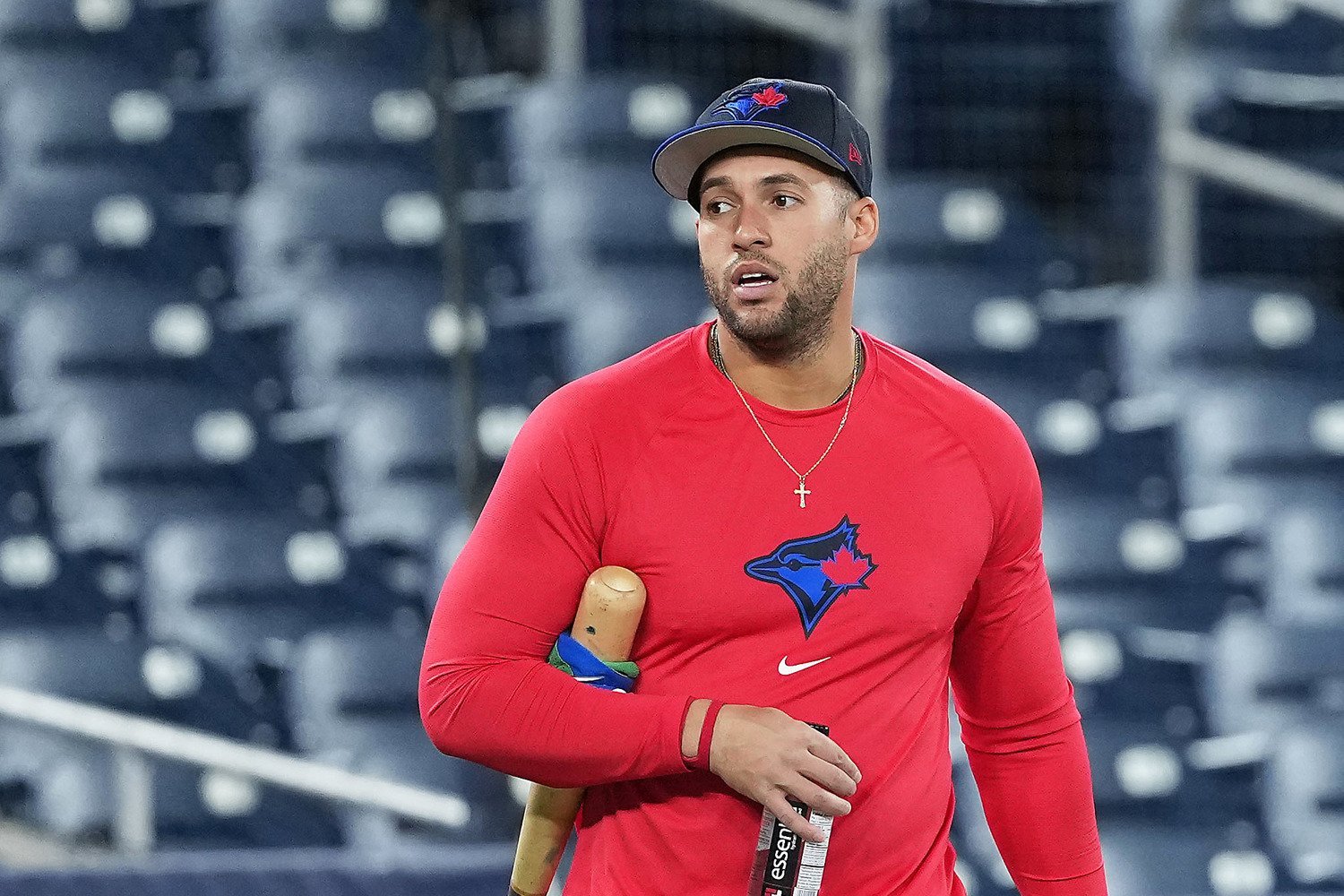 “It feels like we just keep getting punched in the mouth.” It wasn’t the first time Eric Lauer spoke about taking a punch to the mouth. But this time, instead of joking about a fat lip courtesy of Max Scherzer, he was talking about something far more damaging: the injury bug that has battered the Blue Jays early in the 2026 season. “It’s one of those things where we want it to just stop at some point. But we’ve just got to keep going through it, hoping the next guy steps up. Keep grinding.” Lauer has a point, and you can tell that the injury bug has gotten to the Blue Jays. Just this week, George Springer fouled a ball on his left toe, causing a fracture. After getting X-rays done, the Blue Jays decided to put him on the 10-day IL, joining several of his teammates that are currently hurt, only 15 games into the young season (as of April 14). Springer joins a list of offensive players on the sidelines that includes Addison Barger, who is on the 10-day IL with a sprained ankle, Alejandro Kirk who is out with a fractured thumb, and, dating back to the spring, the Blue Jays can factor in Anthony Santander, who had shoulder surgery in February and will likely not be back until September, if he returns at all. On paper, the Blue Jays are missing four of their projected top six hitters, and although they have depth on the roster, it's a situation no team wants. On the pitching side, things aren’t much better. Shane Bieber, Bowden Francis, José Berríos, and Trey Yesavage were all expected to be key pieces in the starting rotation. Yimi García was set to be a flamethrower out of the bullpen, but none of them left spring training healthy. Cody Ponce, who was expected to be a key part of the rotation after signing a three-year, $30 million contract this winter, lasted only 2.1 innings before he tore his ACL and is expected to miss most, if not all, of the 2026 season. There’s no way to sugarcoat it; the injuries have been brutal, and they're a big reason why the Blue Jays are below .500 early in the season. But just how bad have things been? The Blue Jays actually don’t have the highest number of players on the injured list (the Diamondbacks lead the way with 13), but in terms of the expected value of their hurt players, no team in baseball has been hit harder than the Toronto Blue Jays. Graphic per the Baseball Prospectus Injured List Ledger Coming into the season, Baseball Prospectus projected the Blue Jays to win about 88 games and produce approximately 41.4 WARP (wins above replacement player). Through just 15 games, the Blue Jays have already lost a meaningful chunk of their projected production to injuries. If that pace holds (nearly 1.0 WARP lost every 15 games), it would equate to about 10 fewer wins than expected coming into the season, which would be the difference between making the playoffs and missing them entirely. Yesavage is reportedly nearing his return, while Springer isn't expected to be out for long. Still, Bieber, Ponce, Santander, García, and Berríos are set to miss significant time, and it's almost certain more players will get hurt between now and the end of the season. It hasn’t been all injuries; the Blue Jays haven't necessarily played their best on the field, either. But PECOTA now projects Toronto to end up with just 83.5 wins overall, a pretty sizeable drop this early on in the season. That's still the fifth-highest win projection in the American League. The concern is whether it keeps dropping. Every season, one team gets decimated by injuries. In 2025, it was the Houston Astros, who lost 12.44 WARP and narrowly missed the playoffs on the final day of the season. In 2024, the Atlanta Braves lost even more value (13.11 WARP), and they still made it in. The Blue Jays now find themselves in this exact situation, and there is no single blueprint for how a season like this plays out: Year Team WARP Lost Playoff Result 2025 Houston Astros 12.44 Missed Playoffs 2024 Atlanta Braves 13.11 Made Playoffs 2023 New York Yankees 13.42 Missed Playoffs 2022 Minnesota Twins 9.601 Missed Playoffs 2021 New York Mets 14.43 Missed Playoffs 2020 Houston Astros 6.305 Made Playoffs* 2019 New York Yankees 17.98 Made Playoffs 2018 Cleveland Guardians 8.752 Made Playoffs There’s no clear cutoff; teams in the past have both survived and collapsed under similar injury loads. The good news? Injury-plagued teams can still make the postseason. The 2018 Guardians, 2019 Yankees, and 2024 Braves all managed to do it. But they had something the 2026 Blue Jays don’t: they were coming off 100+ win seasons. Their baseline was so high that even a significant drop still left them in contention. The Blue Jays don’t have as much luxury. Injuries alone don't determine a team's fate, but they do expose it. Teams with strong foundations and a high floor can survive them, but teams without those assets don’t have the same margin for error. The key for this team is just to try to do whatever they can to stay afloat until reinforcements arrive. Being three games below .500 with a -25 run differential, one of the worst in baseball early on, is what it is. But no one in the American League is running away from the pack. One good week, and the Blue Jays can be right back on top again. The Blue Jays are doing everything they can to make that happen. Just this past week, the team signed Patrick Corbin to reinforce the starting rotation. They’ve also made trades with the Giants and White Sox for Tyler Fitzgerald and Lenyn Sosa, respectively They’ve recalled Brandon Valenzuela, who has shown flashes of promise so far, and called up Eloy Jiménez, who had a two-hit game in his season debut. If the Blue Jays can get some impact from elsewhere on the roster and start putting some wins together, it may be the difference between this team fighting for a spot in October and being on the outside looking in. Whether they can do it won't just depend on getting healthy; it'll depend on whether or not the Blue Jays were good enough to weather this in the first place. For Eric Lauer and the rest of the Blue Jays, it's their turn to do the punching. They will keep grinding, they will keep going until the next man steps up, and if that does happen, then they get to do the sweetest punch of all, and that's punching their ticket into the postseason. View the full article
 -
How Willson Contreras’ Selective Approach Is Driving Early Success
DiamondCentric posted an article in Talk Sox
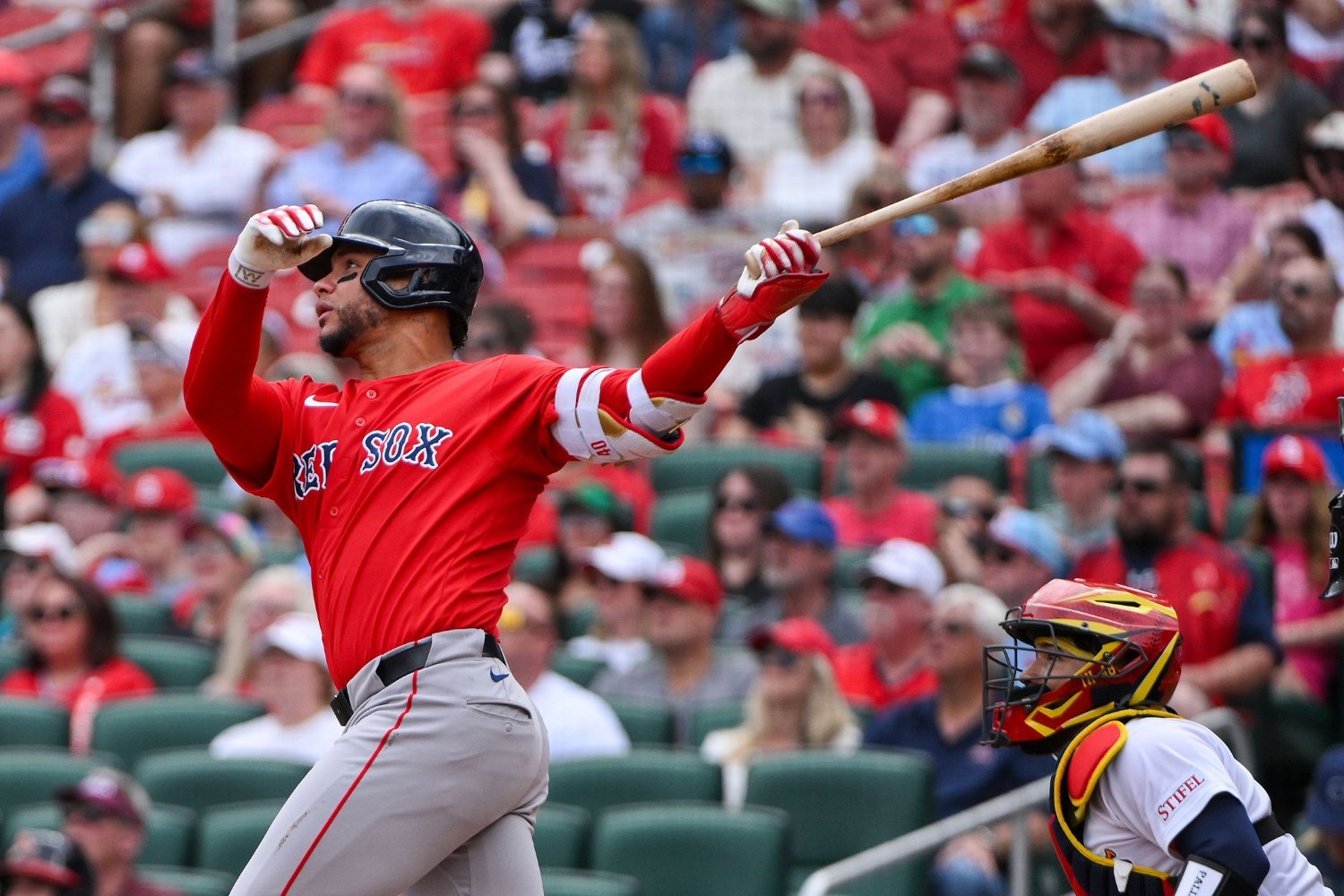 Amid a slow start for the Boston Red Sox, veteran first baseman Wilson Contreras has emerged as an unlikely hero while the majority of the lineup struggles at the plate. In a recent series win against his former team, the St. Louis Cardinals, Contreras continued his strong start, going 4-for-5 with a home run and three RBIs. In his 11th season, he is batting .304/.443/.500 with a .943 OPS. Touted as an underrated pickup after Boston acquired him in a trade from the Cardinals, Contreras has lived up to the hype, ranking second on the team with a 171 wRC+ while playing stellar defense. “There’s a reason we got him. We needed another right-handed bat, and we got more than that. We got a guy that is playing great defense at first base, he controls the strike zone, he’s becoming a leader in the clubhouse. It’s fun to have him around,” Red Sox manager Alex Cora said about Contreras' contributions thus far. Soon to be 34 years old and coming off a few down years with the Cardinals, Contreras' renaissance at the plate seems to be driven by his improved plate discipline. Known throughout his career for producing high hard-hit rates, the veteran slugger has actually taken a dip in that regard this season. His hard-hit rate sits at only 42.1%, down from his career-high 48.9% from last year. However, this shouldn’t be perceived as a slight on him, but an example of his change of philosophy at the plate. Although his overall contact quality isn't at peak levels, his slugging percentage and xSLG have spiked up to .500 and .517, compared to last season's .447 and .488. A lot of that jump can be tracked to his newfound affinity for left field (and the Green Monster); Contreras is pulling the ball at a career-high 54.1% rate, while his contact to center field has dropped to a career-low 24.3% and his opposite-field rate sits at 21.6%, the second lowest of his career. This marks a major contrast to last season, where his spray chart featured a much more balanced split, 39.4%/37.1%/23.5%. Notably, the last time he had as big a gap in his spray chart was in 2022, when his split was 44.4%/31.7%/23.8%. Coincidentally, that was also the last time he made an All-Star team. Contreras’ selectivity at the plate has extended to every aspect of his game. This season, his swing percentage is at a career low, 41.1%, and he's being very patient, swinging at a near-career-low 25.5% pitches outside of the strike zone. Ultimately, what’s helping his decision-making is that he is also finding himself in very advantageous early counts. This season, his first strike percentage is at 44.8%, an almost 15% drop from his previous career low of 58.7% in 2019. These early count advantages, combined with his laying off "pitcher's pitches" outside the zone, are forcing a few more predictable options around the plate, which he has been capitalizing on. While the sample size is small, Contreras' adjustments are exactly what the Red Sox have needed from their biggest offensive acquisition. Hopefully, his patience will start to carry over to the rest of the team. View the full article
