


DiamondCentric
-
Posts
2,631 -
Joined
-
Last visited
Never
Content Type
Profiles
Forums
Events
News
Tutorials & Help
Major League Baseball Videos
Guides & Resources
Store
Downloads
Gallery
Everything posted by DiamondCentric
-
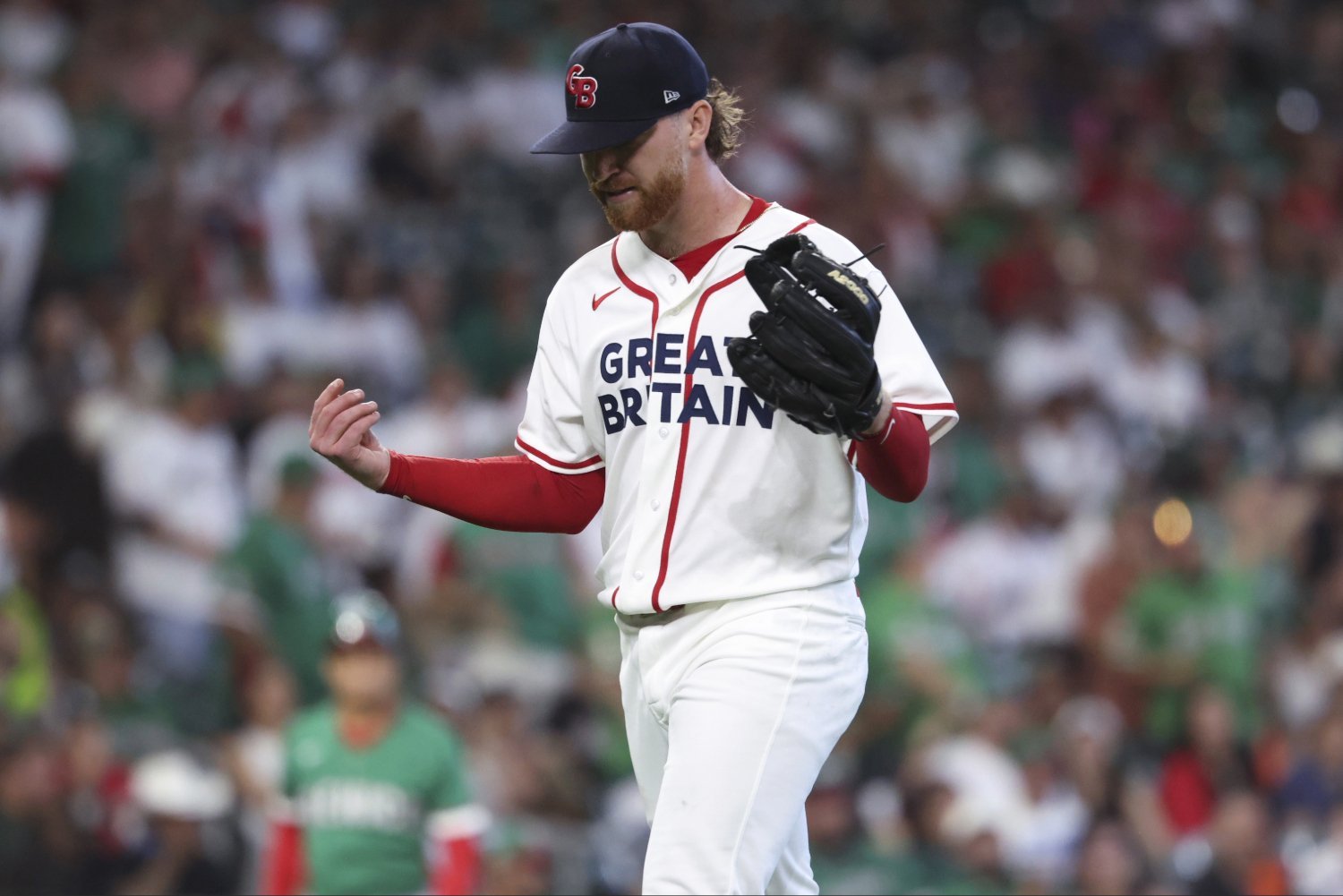 In need of bullpen assistance after Monday night’s loss to the Minnesota Twins, the Boston Red Sox have selected the contract of right-handed pitcher Jack Anderson from Triple-A Worcester, per Ari Alexander of 7News Boston. Anderson, who was a selection in the minor league portion of the Rule 5 draft back in 2024, spent most of 2025 with the Portland Sea Dogs before making three late season starts for Worcester. 2026 has been an up-and-down year so far for the 26-year-old after pitching for Great Britain during the World Baseball Classic. Since the minor-league season began, he’s made two starts for Worcester tossing 9 2/3 innings. In that span, he’s allowed four runs on eight hits (one home run) and three walks. He also struck out nine. There has yet to be a corresponding roster move; both the active roster and the 40-man roster are currently full and will require reconfiguring to make room for Anderson. View the full article
 -

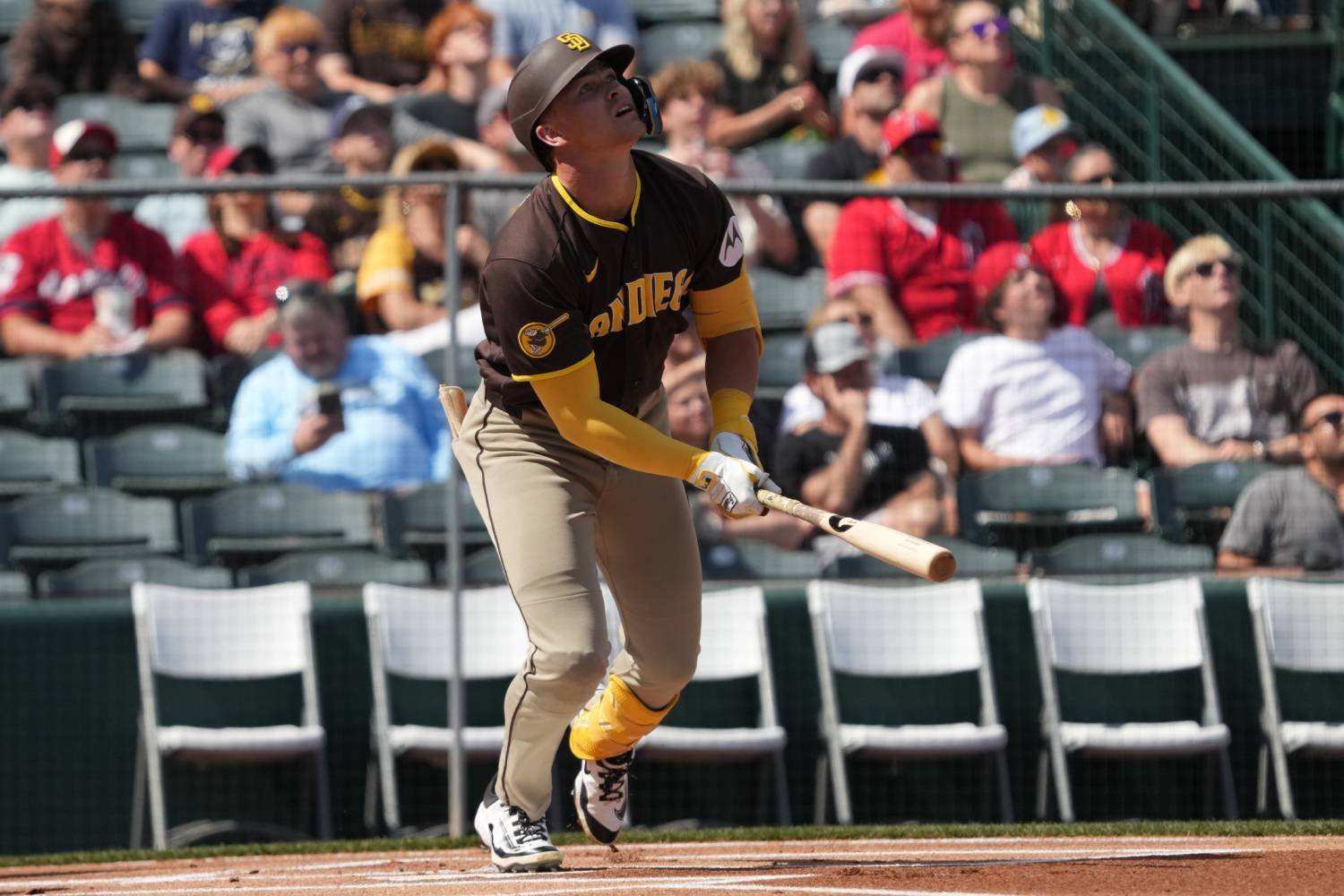 We're roughly two-and-a-half weeks into the Triple-A season, with the other three levels—Double-A, High-A, Low-A—having just more than a week of games under their belt. Already, there are some standouts among San Diego Padres' minor-league players worth highlighting... as well as some things to be concerned about. Every two weeks, we will check in with the Padres' farm system to recap some notable performances, good and bad. We will also keep tabs on the Friars who are on the injured list and making their way back on a rehab assignment. San Diego Padres Rehab Report IF Sung Mun Song (right oblique tightness) In 14 games, Song has a .280/.357/.320 slash line with two doubles, nine RBIs and six runs scored. He's drawn six walks and struck out 16 times in 44 at-bats. He also has five multi-hit games, including going 2-for-5 on April 12. RHP Griffin Canning (Achilles) Canning has made two starts at El Paso, most recently Friday, going 5⅔ innings, allowing two runs on six hits with five walks and eight strikeouts. He 62 pitches last Friday as he builds back up his pitch count. LHP Yuki Matsui (strained left groin) Matsui made his third appearance for El Paso on Saturday. After two scoreless one-inning appearances, he allowed his first run on two hits vs. Albuquerque. He's allowed a combined four hits with no walks and three strikeouts. RHP Matt Waldron (hemorrhoid surgery) Waldron has been sensational at El Paso with three scoreless starts over 12 innings. He's allowed seven hits and one walk while striking out 12. He went five innings and 58 pitches Thursday in his most recent start. Padres' Farm System Standouts CF Jase Bowen (Triple-A El Paso) Bowen has been flashing his diverse talents with a slash line of .264/.316/.585 to start the season. That includes the seventh cycle in Chihuahuas history on April 3 vs. Tacoma, going 4-for-5 with four RBIs and four runs scored. He capped it with an eighth-inning triple. Bowen entered Sunday tied for the Pacific Coast League lead in triples (2), tied for third in extra-base hits (9), fourth in slugging percentage (.638) and tied for sixth in total bases (30). He had his fourth multi-hit game Saturday. Kash Mayfield (High-A Fort Wayne) Padres Mission's No. 2 prospect has been unhittable in two starts this season. His four no-hit innings Friday followed three no-hit frames in his season debut April 3. He has walked a combined five in those outings, while striking out four each time. The 2024 first-round draft choice spent all of 2025 at Low-A Lake Elsinore and led the organization with 13.05 strikeouts per nine innings (minimum 50 innings). CF Ryan Wideman (Low-A Lake Elsinore) The No. 9 prospect on Padres Mission is showing some promising signs after a 26-game stint at Lake Elsinore last year. Last year's third-round draft choice has a .278/.366/.444 slash line with one homer and seven RBIs in nine games. He has nice power-speed potential, with one home run already and four stolen bases. Plus, he's already drawn four walks, while striking out eight times. A year ago, he walked 12 times and struck out 32 times in those 26 games. Padres' Farm System Disappointments LHP Marco Gonzales (Triple-A El Paso) Gonzalez's rough spring has continued into his first three starts of the season. In 13⅔ innings, he's allowed a whopping 25 hits and 17 runs (12 earned) with one walk and nine strikeouts. The hits and runs are the worst marks in the PCL. In his most recent outing Wednesday vs. Albuquerque, he allowed 13 hits and 10 runs (five earned) in 3⅔ innings. Didn't pitch at all in 2025 as he came back from left flexor tendon surgery in September 2024. RHP Victor Lizarraga (Double-A San Antonio) The San Diego-born starter continues to have issues with walks, issuing five while also surrendering three hits and recording just one out Thursday vs. Corpus Christi; he was tagged for seven runs, all earned. He also gave up six free passes in five innings in his first start April 2 at Tulsa. Last year, Lizarraga had 60 walks in 101⅓ innings, mostly at Double-A, with two games at Triple-A. IF Rosman Verdugo (High-A Fort Wayne) Verdugo is off to a 3-for-25 start (.120), including 11 strikeouts. He began the season hitless in 13 at-bats before delivering a walk-off single Thursday in a 2-1 win over Lansing. He reached base for the first time via hit by pitch two plate appearances before his game-winner. He notably followed that by walking in his first plate appearance Friday and getting his second hit in the fourth inning. Verdugo got his third single in four games Sunday, so perhaps he's busting out of his slump. View the full article
 -
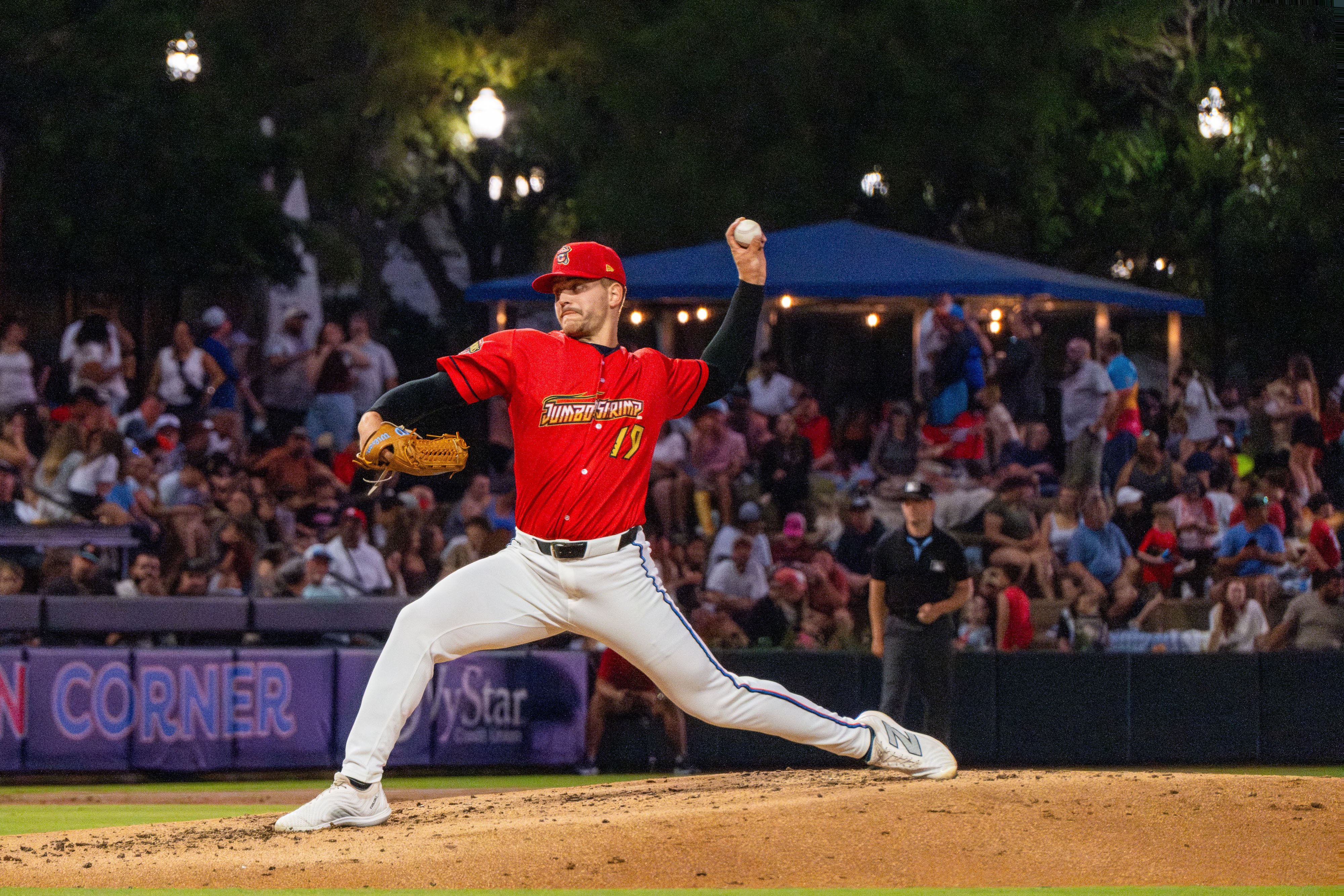 For the 2026 season, Fish On First will provide weekly reports on the Miami Marlins farm system, covering all levels. Here's the second edition of our Fish On First Prospect Report, which includes several important injury updates near the bottom of the page. This report covers the games played from April 7-12. Triple-A Jacksonville The big story this past week was left-handed pitcher Robby Snelling (Fish On First No. 2 prospect), who struck out 12 over five innings of work in his last start against the Norfolk Tides. For his performance, he was named Fish On First Prospect Minor League Player of the Week. Snelling's best weapon that night was his fastball, which generated half of his strikeouts. The pitch topped out at 96.4 mph and averaged 94.0 mph. He landed his four-seam all three times for first-pitch strikes. The only concern is that the velocity of the pitch went down as the game progressed, averaging as low as 92.8 mph in the fourth inning. Four of Snelling's strikeouts came on his curveball and the other two on his changeup. His changeup generated six whiffs, more than any other pitch that night. Although many years removed from being a prospect, Braxton Garrett dazzled in his last start, going six shutout innings, not allowing a hit and striking out six. Garrett was named the International League Pitcher of the Week for April 6-12. Through his first three starts this season, he has a 0.59 ERA, 2.75 FIP, 9.98 K/9 and 2.93 BB/9 through 15 ⅓ innings pitched. Fastball velocity continues to not be very impressive, topping out at 92.8 mph and averaging 90.7 mph. His secondary offerings have been great. All three whiffs on his slider came on strikeout pitches and was helped out by a high percentage of ground balls. Through his first three starts this season, he has a 64.5% ground ball rate, which is the highest of his career at any level. The high ground ball rate has allowed him to be efficient, averaging 11 pitches per inning in his last start. Garrett isn't blowing anyone away, but he has been efficient, getting ground balls and mixing his pitches well. A call-up back to the big leagues shouldn't be far off. On the offensive side, Jacob Berry has gotten off to a strong start, slashing .300/.370/.425/.795 with one home run, seven RBI and a 121 wRC+. After being known for slow starts, this is certainly a change of pace for the 24-year-old. Early results have shown him striking out only 17.4% of the time, which is less than his 2025 campaign (18.6 K%). For a second straight season, he is walking 10.9% of the time. The downside continues to be his defense, committing five errors at third base. There is still no home defensively for Berry and that may hold him back from reaching the majors until there is a clear spot for him. He has played a little bit of right field and first base, but is below league average at those positions. Double-A Pensacola The Wahoos took to the road for the first time, trekking to Biloxi to take on the Shuckers. Overall, pitching struggled in the series paving the way for a Biloxi series win. The Wahoos had a minus-22 run differential. Dillon Lewis, Fish on First’s fifth-ranked prospect, started to showcase his extremely loud tools in this series. He hit his first home run as a member of the Marlins organization on Wednesday and added three more hits over the course of the week, ending the series at 4-for-20. The 22-year-old also stole two bases. Lewis is an optimal mix of size, strength and speed. He also showcases the ability not to get too overzealous and try to force power at the plate, keeping his actions fluid. For a hitter of his caliber, he has a fairly quiet approach and comes by extra bases easily due to both his ability to drive the ball and his foot speed which is well above average for an athlete of his stature. Long story short, this is a ball player in every sense of the word. As long as he continues to improve pitch recognition and keep his K rate within reason at the upper levels of the minors, there’s a very high ceiling for this player and potential to reach it in pretty short order. Ian Lewis Jr., one of few Bahamians still in the Marlins organization (no relation to Dillon), made some noise over the weekend, particularly on Friday when he stole four bases. His primary offensive strength, Lewis accomplished the feat without the benefit of a hit. The marker set a Blue Wahoos single-game franchise record. One of the longer tenured minor leaguers in the system, Lewis is pending minor league free agent participating at the Double-A level for the first time. While strikeouts have never been a huge problem for him, he also hasn’t earned an ordinate amount of walks. With the bat, he makes contact but does not drive the ball well and has struggled to keep it off the ground. Last season, he posted a 55% ground ball rate. Lewis doesn’t have to and likely will never hit for power, but he will need to at least start improving his bat speed and exit velocities if he is going to have a significant MLB impact. At the very least, Lewis is a plus defender and plus-plus pinch-runner off the bench. High-A Beloit It took another doubleheader, but the Sky Carp were able to get all of their games of a six game series in this week after being limited to just two games to open their season. Home at ABC Supply Stadium for the first time this year, they split the slate with Cedar Rapids. After dropping their Opening Day game, Beloit plated a whopping 35 runs the rest of the week, including 15 in the final game of the series. Juan Matheus, who was part of the trade return for Ryan Weathers this offseason, hit three home runs in 2025. In the final game of this series, he hit two long balls, part of a 3-for-6, 10-total-base game. Along with the two homers marking his first career multi-homer game, his five RBI were also a career-high. The performance was the cherry on top of a great series for Matheus in which he went 8-for-23 with five extra base hits. You wouldn’t know it by looking at the 5’11”, 155-pounder, but Matheus hits the ball hard at a consistent rate. He’s also put the ball in the air at a staunch pace, limiting his ground ball rate to around 40% yearly since joining the full-season ranks. Matheus is also a patient hitter who had limited strikeouts and held down solid walk rates including 12% at the highest level of pro ball he’s played at in 2025. One thing limiting Matheus’ ceiling is the fact that his batted ball profile is very pull heavy: he favored the pull side over 50% of the time last season, including 61% at High-A. With likely reaching his raw power ceiling, that pull-heavy propensity will be exploited at the next level. He will need to develop at least some ability to go the other way to reach a starter’s ceiling. That said, Matheus, who is a good fielder capable of playing multiple positions and who has good speed, has a solid floor as a future bench player. It’s nice to see him hitting consistently early in his Marlins tenure. Through eight games, he has a 179 wRC+. It’s been quite a year already for Canadians in the Marlins organization. Catcher Connor Caskenette is no exception. The native of Duncan, British Columbia, owns one of the hottest starts to the season system wide, having gone 7 for his first 15 with two home runs and six RBI. He’s also recognizing High-A pitching very well, having walked eight times and struck out three times. Finally, he’s showing surprisingly good wheels especially for a backstop, having already stolen four bases. The Marlins’ 12th-rounder in 2024, Caskenette is repeating High-A after being limited to 62 games between Beloit and Pensacola last season. Caskenette came out of the draft being scouted as a high-value pick for Miami, capable of plus average exit velocities and a high power production ceiling. The walks he’s put up against High-A stuff are also of little surprise to evaluators who lauded his low whiff rates and recognition of both velocity and offspeed pitches. Caskenette is definitely a bat-over-glove prospect, having committed 10 errors and allowed a whopping 130 steals on 144 attempts last season. It is highly likely he will move off the backstop position, possibly to first base or a corner outfield spot. The bat should carry him to a decent floor though especially if he continues to find fences and limit Ks. Liomar Martinez struggled with control in his first outing of the season but he wiped the slate and rebounded nicely against the Kernels. Much more in and around the zone, the 6’2”, 165-pound righty worked five innings on three hits and two earned runs. He struck out nine and, most refreshing of all, did not walk a batter. Liomar averaged 95 mph with his fastball and reached as high as 98. He particularly impressed with his changeup that showed nice arm-side fade and sole vertical drop. The first two starts of Liomar’s season sum him up pretty well: everything hinges on control consistency. A lanky arm who throws with high effort through a delivery that consists of a lot of moving parts, there’s reliever risk here, but good raw stuff gives him a solid floor. With control consistency via quieter mechanics, Martinez has the ceiling of a back-end starter. The upper minors will be a crucial test for him. That step could be taken late this year or to start next year. Low-A Jupiter Both Luis Ramirez and Samuel Carpio are off to strong starts this season, yet to allow an earned run through their first three appearances. Ramirez, who the Marlins signed back in 2022, has recorded six strikeouts and zero walks through four inning of work. Carpio, who was signed just a year later, has three strikeouts in three innings pitched. Walin Castillo, who is repeating Low-A, has posted a 1.29 ERA, 4.41 FIP, 9.00 K/9 and 6.43 BB/9 through seven innings pitched this season. Offensively, Carter Johnson is slashing .192/.382/.346/.729 with one home run, three RBI and a 130 wRC+. Although you'll see a low batting average, he is getting on base by walking 20.6% of the time. Abrahan Ramirez, who was acquired in the Jazz Chisholm Jr. trade in 2024, is repeating Low-A. Through the first eight games of the season, Ramirez is slashing .364/.462/.409/.871 with three RBI and a 166 wRC+. At 21 years old, he's still got plenty of time to develop, and as the season progresses, you should see a promotion to High-A. Injuries/rehab Fish On First has learned that right-hander Grant Shepardson will be undergoing Tommy John surgery in the near future. Shepardson, 20, was last seen pitching in last month's Spring Breakout game. He would've been assigned to Jupiter if healthy entering the regular season. Instead, he isn't expected to return to game action until mid-2027. Outfielder Cam Cannarella is the latest early-round pick from the 2025 draft class to be sidelined. He fractured his left wrist during Saturday's Sky Cap game. Kyle Stowers (Grade 1 right hamstring strain) participated in two rehab games with Jacksonville last week, going 1-for-6 with three strikeouts. His lone hit had an exit velo of 108.2 mph. As of this writing, Stowers is playing in his third rehab game and serving as the designated hitter. In two rehab starts with Jupiter, Thomas White (oblique strain) tossed a combined six innings, allowing two runs (one home run) on three hits, 10 strikeouts and six walks. Control/command continues to be an issue for White, but sources tell FOF that he's been cleared to rejoin the Jumbo Shrimp. He will make his first AAA start of the season on Thursday. This week's MiLB schedule Triple-A Jacksonville vs. Charlotte Double-A Pensacola vs. Knoxville High-A Beloit at South Bend Low-A Jupiter at Palm Beach View the full article
 -
Walker Jenkins’s Early-Season Offensive Growth in 2026
DiamondCentric posted an article in Twins Daily
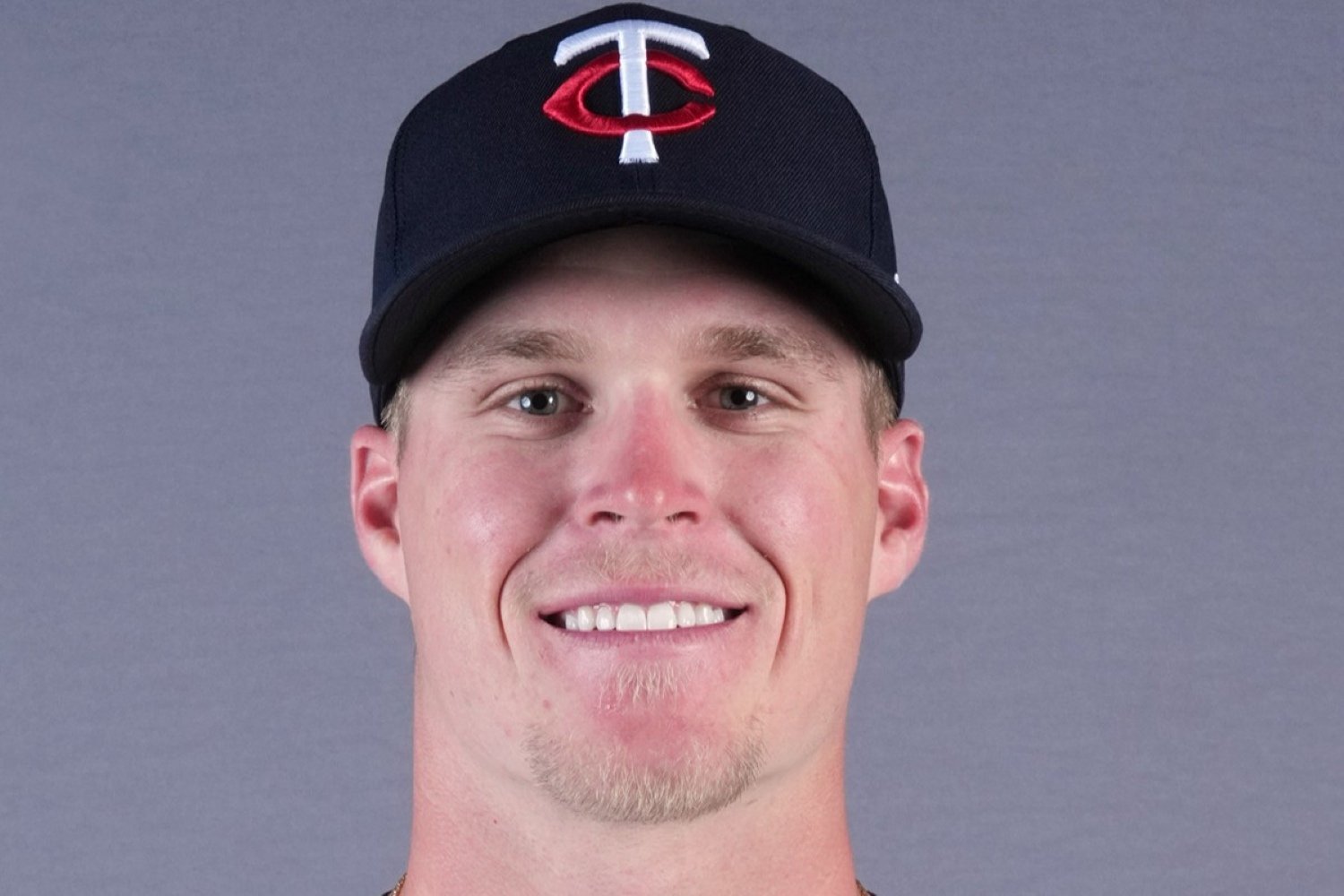 Over the first couple of weeks of the St. Paul Saints’ season, top Twins prospect Walker Jenkins has given a glimpse of both the positives and the areas that still need to come along. On the surface, his numbers might not immediately jump out. He’s hitting just .242, and there’s only one extra-base hit to his name so far. But once you dig a little deeper, there’s quite a bit more going on—and much about which to be hopeful. The most encouraging development has been his approach at the plate. Jenkins currently owns an on-base percentage north of .400, which stands out immediately when paired with that .242 batting average. That disparity is fueled by his ability to consistently reach base via the free pass. Through 42 plate appearances, Jenkins has drawn eight walks, compared to just six strikeouts. That comes out to a 19% walk rate and a 14.3% strikeout rate, both of which are extremely strong marks. For context, he walked just nine times across 102 plate appearances in St. Paul last season. Not only is the discipline there, but it’s taken a very noticeable step forward. Jenkins's swing rate is down to 39.5%, after sitting above 50% in Triple-A last year. He’s being more selective, laying off pitches out of the zone (his chase rate is a sensationally low 17.2%), and consistently working himself into favorable counts. For a hitter his age, that kind of approach is a really strong sign. And when he does decide to swing, he’s connecting. Jenkins currently holds a 90.2% contact rate on pitches in the strike zone. The percentage of pitches on which he swings and misses is lower than it's been since his time with Low-A Fort Myers as a teenager. There are also signs of progress when it comes to the quality of contact. Jenkins’s average exit velocity is up over 91 MPH, with a 90th percentile EV of 109.6. His raw power has never been in question, but more consistent hard contact is an important next step in his development. That said, the power production hasn’t shown up in games just yet. He has just one double so far, and his isolated power (ISO) sits at .030. That’s obviously well below where you’d expect it to be, even with the improved underlying metrics. It's just not possible to stack extra-base hits without elevating the ball more than he is right now. Jenkins is currently sporting a 56% ground-ball rate, which is a notable jump from the 41% mark he posted last year. He'll have to refine his approach to allow that hard contact and that control of the zone to persist as he starts lifting the ball. It’s worth emphasizing just how small a sample this is. A mere 42 plate appearances aren’t enough to draw any firm conclusions, and things like ground-ball rate can fluctuate pretty widely across 30 balls in play. If that number starts to come down even a little bit, the power output should follow. Jenkins dealt with a hamstring strain during spring training, but that appears to be fully behind him. [Ed. note: It would be a HUGE problem if his hamstring were only partly behind him; we believe it is both literally and figuratively behind him for the time being.] He’s already stolen three bases on three attempts, which is a strong indicator that he’s moving well and trusting his body again. That added element on the bases is another part of his overall profile that can impact the game even when the bat is still coming around. Combined with his on-base ability, it gives him multiple ways to contribute offensively. The early returns don’t need to be loud (in terms of raw outcomes) for there to be clear progress in the underlying profile. What stands out most is Jenkins controlling the strike zone at a high level, limiting the swing-and-miss, and showing more consistent impact when he does make contact. Those are the kinds of traits that tend to translate over a full season far more reliably than any short-term, surface-level results. The next step is fairly straightforward: elevating the ball more consistently. If he continues to pair this level of contact quality with a more optimal launch angle, the extra-base production should begin to follow naturally. For now, though, this is an encouraging start to the season for the Twins’ top prospect. The underlying indicators point to a player who is refining his offensive game in real time, even if the box score power hasn’t fully caught up yet. It will likely still be a little while before Jenkins makes his way to the major leagues, but if this early-season foundation holds, he remains firmly on track for a midseason arrival. With his all-around offensive profile, he has the potential to settle in at the top of the Twins’ lineup as soon as this summer. View the full article
 -
Are the Blue Jays Overworking Their Bullpen Too Early in 2026?
DiamondCentric posted an article in Jays Centre
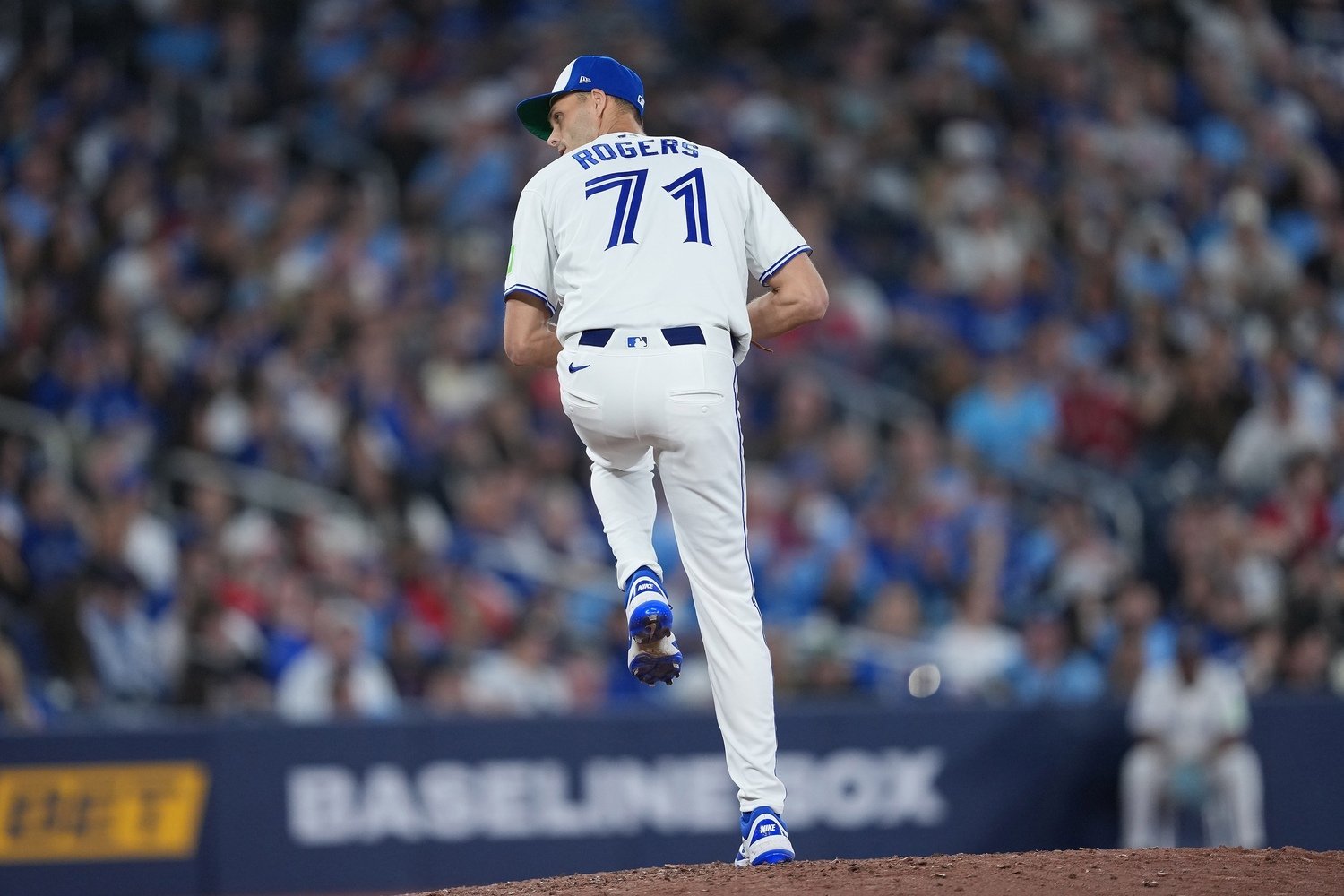 What keeps jumping out when you watch this year’s edition of the Jays, night after night, is not just the injuries or the uneven offense or even the tough luck. It is the pace and intensity at which John Schneider is running his bullpen, an approach that resembles postseason baseball far more than a 162‑game marathon that is barely three weeks old. Through the first 15 games of the season, the Blue Jays bullpen has been asked to cover six or more innings five separate times. Five times in 15 games. Granted, one of those times was to cover for Cody Ponce’s injury-shortened start, but that usage is not a blip or a one-off occurrence; it is one-third of the schedule to this point. League-wide, managers will accept the occasional bullpen-heavy night in April, but not with this kind of frequency. Even in the modern MLB environment where starters rarely push deep, the league average starter still logs just over five innings per outing, with bullpens handling roughly 44 to 45 percent of total innings across a full season. What Schneider is doing right now pushes that percentage into October territory. Fifteen games in, Toronto has already used 18 different pitchers (excluding Tyler Heineman). It is a level of early‑season churn matched only during the shortened 2020 season and a brief stretch in 2005. In a normal year, with normal health, the team wouldn’t get to that number until late May or June. Sure, injuries have been a headline. Ponce, Shane Bieber, Trey Yesavage and José Berríos hitting the shelf has forced Schneider’s hand. But injuries alone don’t explain usage patterns this aggressive. Managers still make choices about leverage, rest and sequencing, and the Jays’ coaching staff has consistently chosen urgency over restraint. You can see it not just in how often the bullpen is used, but how it is used. High-leverage relievers are being deployed early and often. The rubber arms are already being ridden hard. Tyler Rogers, who Schneider openly calls a manager’s dream, is being leaned on in exactly the way contenders lean on trusted relievers in September. Rogers made 81 appearances last season, and Schneider joked in spring that he might make more this year. That is funny in March. It is less funny when the season has just started and the comment already rings true. In October, everything is leverage-driven. You empty the tank because there is no tomorrow to protect. The game is a puzzle in which the manager has a good idea of what pieces fit where. Fatigue is less of an option because elimination is the alternative. April baseball is supposed to be the opposite. It is about survival, length and accepting short-term messiness to preserve long-term health. What Schneider is doing blurs that line. Ironically, this past weekend’s starts by Eric Lauer and Max Scherzer that fans are pointing to as examples of patience might actually underline the same philosophical problem. Take Lauer’s outing against Minnesota. He gave up seven runs in a single inning and was clearly fighting command and traffic. Schneider left him in to wear it, stretching him to 5.1 innings in a game that was already getting away. On the surface, that looks like restraint. Let the starter take his lumps, save the bullpen. But look at the broader context. That choice came after a series of games in which the bullpen had already been worked aggressively. Lauer was not left in because April is about protecting arms. He was left in because the bullpen was already taxed. Those are not the same thing, and the difference matters. The same thing showed up in Scherzer’s start against the Twins. After exiting early against the Dodgers with forearm tendinitis, he returned and allowed eight runs in just over two innings. Schneider gave him a chance to escape, perhaps hoping the veteran could stabilize and absorb more outs. Instead, the game unraveled further. Scherzer wore the loss, but again, this decision was made inside a framework where bullpen conservation felt reactive rather than planned. Six bullpen arms were used in an 8-2 loss that never felt close. Granted, there was an off-day the next day, but six? As discussed in another article, the appearance of position players on the mound highlights a growing concern about the healthy arms in the pen. Heineman has already logged three innings as a catcher pitching. When position players are being used before the calendar hits mid-April, it suggests a staff that is already being protected from itself. If this were a team scuffling at the bottom of the standings, the argument might be different. A manager might feel pressure to steal games any way possible. But the Blue Jays are not buried. Their playoff odds have dropped from the start of the season, but this is a roster built to endure the long season, not sprint through it. That is why the urgency feels misplaced. Schneider is managing as if every series carries October weight. Every late-inning move feels sharpened for the moment instead of smoothed for the future. That approach can win you games in April, but it can also have an unintended negative impact in August. Bullpen fatigue rarely announces itself early. It shows up months later as lost velocity, reduced command and soft tissue injuries that never feel accidental but also never feel traceable to a single moment. It shows up when arms that were automatic in June start missing spots in September. It shows up when October arrives and the bullpen that carried you there suddenly looks human. Schneider just signed a contract extension. His players trust him, and his track record says he understands how to win. Winning managers sometimes see threats everywhere, and when you see threats everywhere, you play defense constantly. The modern game has already shortened starts, inflated bullpen importance and compressed margins. That makes restraint more valuable, not less. When everyone is managing on the edge, the teams that last are the ones that choose when not to. You can’t win the World Series in April, but you can make it harder to win one later. The way the bullpen is being handled right now suggests a team already braced for October collisions, even though the season has barely cleared its first turn. That approach may steal wins, but it risks something far harder to replace, which is margin. There is still time. The length of the season hides early mistakes. Last season is a great example of that. Everyone is focusing on the mounting pressure on the lineup to break out in a consistent manner, but at the same time, Schneider and his coaching staff are feeling the pressure too. As a result, the Blue Jays bullpen is being asked to perform at playoff intensity in a season that has barely begun. In a year in which Toronto’s championship window is real, patience might end up being the most important attribute of all: patience from the fan base during this slow start, and patience from the coaching staff before they pick up the bullpen phone. View the full article
 -
So Far, Tom Pohlad Feels Like a Change for the Better
DiamondCentric posted an article in Twins Daily
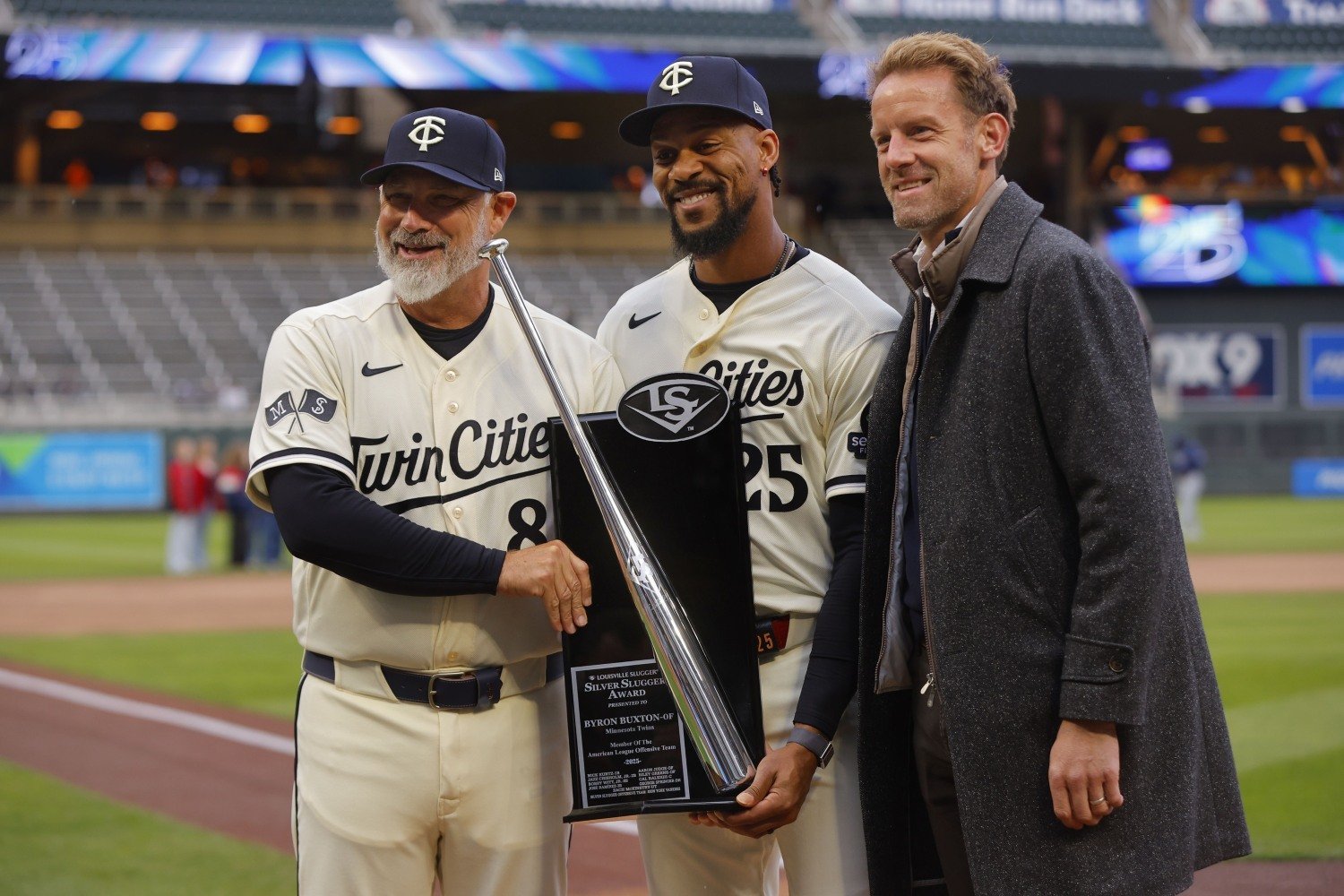 When the offseason began, most people expected continuity in the Minnesota Twins' ownership structure. Instead, the winter delivered a surprising shakeup. After the Pohlad family sold minority shares of the franchise, leadership within the organization shifted in ways many did not expect. For years, Joe Pohlad was the public-facing leader of the club. However, as the offseason unfolded, Tom Pohlad stepped forward to guide the organization. The transition became even more notable later in the winter, when longtime president of baseball operations Derek Falvey stepped away from the Twins. With that departure, Tom Pohlad took on an even more prominent role and assumed responsibility for the business side of operations heading into the 2026 season. The sudden shift caught many fans off guard. Ownership changes rarely happen in such a visible way during an otherwise quiet winter—and this one came just a few months after the fan base was crestfallen to learn that there wouldn't be a more official transfer of power. Since taking over, however, Pohlad has implemented several noticeable changes. Some have been widely welcomed, while others still leave observers wondering about the long-term impact. Since Tom took over, there have been some obvious changes that can be viewed in multiple ways. Let’s dive in. Around the Team More Regularly Pohlad has been vocal about his intention to stay close to the team. That promise has already been visible. He spent significant time at spring training with his entire family during the club’s stay in Florida. The visibility has continued into the regular season. Players have seen him greeting them outside the locker room after big wins. He spoke to the club during the celebration marking Byron Buxton reaching 10 years in the big leagues. He also made the short trip to St. Paul for the Triple-A home opener to support the organization’s top minor-league club. In short, Pohlad is more visible around the organization than any member of the ownership group has been in recent memory. That level of involvement can be encouraging, especially for fans who often wonder how closely ownership is involved in the day-to-day operations of the team. At the same time, some will naturally wonder where the line lies between supportive presence and over-involvement. Rating: Somewhere in between. The jury is still out. Speaking to the Press More Often An extension of being around the team more frequently is that Pohlad has also become more available to the media. Reporters now have the opportunity to ask him questions when situations arise during the season. Under previous leadership, media availability from ownership was rare. It usually happened before the season began, after the season ended, or during major organizational announcements. Regular conversations with ownership during the middle of the 162-game grind were almost nonexistent. No one expects ownership to address the press daily, and that should become unnecessary over time. However, the willingness to speak when something noteworthy occurs provides needed clarity for fans and transparency for the organization. Rating: Positive. Increased communication is generally a good thing. Cheap Beer and Other Happy Hour Specials Beyond Pohlad’s personal visibility, the Twins have clearly made an effort to reconnect with fans. Attendance and fan sentiment have taken a hit over the past couple of seasons, and the club appears determined to change that narrative. One initiative has been the introduction of $2 beers before first pitch on Friday and Saturday home games. The idea is to create a happy hour atmosphere leading up to the start of the game. On certain nights, the team has also offered discounted snacks and hot dogs. Ballpark prices have steadily climbed across the league, especially for families attending games together. Creating opportunities for fans to save money while enjoying the ballpark experience is an easy way to build goodwill. Rating: Positive. Lower-cost options benefit both the fans and the atmosphere. Drop in Ballpark Pass Price Another fan-friendly move came with the adjustment to the team’s Ballpark Pass. This season, the Twins lowered the early purchase price to $229 for the entire year, if fans bought the pass early in the offseason. The pass grants entry to every home game, including Opening Day, though it does not guarantee an assigned seat. If a fan attends every home game, that works out to less than $3 per game. There is also a monthly option at $59 for fans who prefer flexibility rather than committing to the full season. Last year, the pass carried a price tag of $324. The reduced cost makes the product far more accessible, especially for younger fans or people who simply enjoy stopping by the ballpark for a few innings. Rating: Positive. This is a creative way to fill the stadium. Opening Day Fiasco The home opener at Target Field did not go according to plan. An hour-long power outage delayed fans from entering the ballpark, leaving thousands standing outside waiting for the gates to reopen. Opening Day always draws one of the largest crowds of the season, so the situation created plenty of frustration. The organization responded quickly once the issue was resolved. The Twins extended the pregame happy-hour prices through the end of the second inning to ensure that fans who had been waiting in line could still take advantage of the deals. While the outage itself was not ideal, the response softened the blow. Rating: Positive. The team made a quick adjustment to improve a difficult situation. Redoing Opening Day The Twins took things one step further in the days following the outage. As an additional gesture, the team offered fans who purchased Opening Day tickets a free ticket to the April 17 game against the Cincinnati Reds. That game will feature another round of happy-hour specials, a live band during the pregame celebration, and fireworks after the final out. The organization could have easily blamed the outage on factors outside its control and moved on. Instead, the team chose to turn the moment into another opportunity to reconnect with its fan base. Rating: Positive. It shows a willingness to go the extra mile for fans. Not every development will be universally praised, and some observers will continue to watch closely to see how involved ownership becomes moving forward. Still, the early moves suggest a real effort to increase transparency and rebuild goodwill with fans. For an organization entering a new chapter, that may be exactly the type of start the Twins need. What are your thoughts about the changes made under Tom Pohlad? Leave a comment and start the discussion. View the full article
 -
 Chicago Cubs Affiliate Overview (April 10th - April 12th) Triple-A Iowa Cubs Season Record: 8-6 Series Opponent: Omaha Storm Chasers Series Standing: 2-3 Double-A Knoxville Smokies Season Record: 5-4 Series Opponent: Rocket City Trash Pandas Series Standing: 4-2 High-A South Bend Cubs Season Record: 4-2 Series Opponent: Peoria Chiefs Series Standing: 4-2 Single-A Myrtle Beach Pelicans Season Record: 5-4 Series Opponent: Columbia Fireflies Series Standing: 2-4 Triple-A Iowa Cubs Season Record: 8-6 Series Opponent: Omaha Storm Chasers Series Standing: 2-3 April 10 (Game 1): Iowa opened with early execution as Justin Dean singled, stole second, and scored on a BJ Murray RBI single. Kevin Alcántara added a double, but the offense stalled. Omaha broke through with a four-run third inning, stringing together extra-base hits and singles to take control. Iowa’s pitching could not recover from the surge, and the offense was held scoreless the rest of the way in a 6-1 loss. April 10 (Game 2): Iowa fell behind early as Omaha capitalized on walks and timely hits to build a 3-0 lead. Christian Bethancourt’s two-run home run in the fifth ignited the offense, and Iowa tied the game in the sixth behind doubles from Jonathon Long and Pedro Ramírez. The bullpen held through extra innings, but Omaha broke through in the ninth with a two-run single, handing Iowa a 6-4 loss. April 11: Iowa responded with a 7-3 win, rallying after an early deficit. James Triantos drove in a run, and Justin Dean added a two-run single before Ben Cowles delivered a two-run double in a decisive sixth inning. Jonathon Long extended the lead with a run-scoring double. Iowa’s pitching stabilized after early pressure and limited Omaha to three runs, closing out the game effectively. April 12: Game canceled. Double-A Knoxville Smokies Season Record: 5-4 Series Opponent: Rocket City Trash Pandas Series Standing: 4-2 April 10: Knoxville fell behind early as Rocket City scored across the first four innings. The Smokies responded in the fifth with Carter Trice’s double, RBI singles from Alex Madera and Jefferson Rojas, and a two-run double from Alex Ramírez. Knoxville trimmed the deficit to one, but Rocket City added three runs in the eighth. A bases-loaded chance in the ninth produced only one run in a 9-6 loss. April 11: Both teams were scoreless through five innings before Knoxville broke through in the sixth. Rocket City responded in the eighth, but Devin Ortiz homered to cut the deficit. In the ninth, Karson Simas tied the game with an RBI hit, and Ortiz delivered a sacrifice fly to complete the comeback. Knoxville’s pitching held early and limited late damage in a 4-3 win. April 12: Knoxville took a 1-0 lead on Devin Ortiz’s home run but fell behind in the eighth. The Smokies tied the game in the ninth on a Haydn McGeary double after a bases-loaded walk cut the deficit. In the 10th, Rocket City used the extra-inning runner to score three runs on a bunt, single, and double. Knoxville added a run but fell 7-4. High-A South Bend Cubs Season Record: 4-2 Series Opponent: Peoria Chiefs Series Standing: 4-2 April 10: South Bend took control early as Reginald Preciado drove in two runs with a double. Kade Snell and Owen Ayers added middle-inning production, and Angel Cepeda extended the lead with a three-run double. Peoria mounted a late rally, loading the bases in the ninth, but South Bend’s pitching held to secure an 8-6 win. April 11: Trailing early, South Bend erupted for seven runs in the seventh inning. Cameron Sisneros opened the rally with a home run, and Leonel Espinoza followed with a three-run shot. Drew Bowser added a two-run single, and Matt Halbach homered late. South Bend’s pitching limited Peoria after the early innings in a 9-3 win. April 12: South Bend led early before Peoria scored four runs in the fifth. In the ninth, Leonel Espinoza doubled and Owen Ayers delivered a two-run home run to reclaim the lead. The bullpen closed the final inning, preserving a 5-4 win and completing the series sweep of the weekend games. Single-A Myrtle Beach Pelicans Season Record: 5-4 Series Opponent: Columbia Fireflies Series Standing: 2-4 April 10: Myrtle Beach struck first as Ty Southisene set the table with aggressive baserunning and Alexey Lumpuy drove in two runs with a single. Columbia answered quickly and added runs in the middle innings. Despite multiple stolen bases and baserunners, Myrtle Beach could not capitalize further and was held scoreless after the third in a 6-2 loss. April 11: The Pelicans traded runs early and reclaimed the lead in the seventh after Ludwing Espinoza tripled and scored. Jairo Diaz extended the lead with a three-run home run in the eighth, but Columbia responded with a late rally, tying and taking the lead on a double and sacrifice fly. Myrtle Beach was retired in order in the ninth in a 10-8 loss April 12: Columbia built an early lead with a first-inning grand slam and added runs in the fourth. Myrtle Beach responded with a solo home run from Cole Mathis but struggled to generate sustained offense. Late runs from Eli Lovich and Derik Alcantara narrowed the gap, but the early deficit proved decisive in an 8-3 loss. Cubs Transactions Chicago Cubs placed RHP Hunter Harvey on the 15-day injured list, retroactive to April 9, 2026, with right triceps inflammation. Chicago Cubs selected the contract of LHP Charlie Barnes from Iowa Cubs. View the full article
 -
 Boston Red Sox Affiliate Overview (April 10 - April 12) Triple-A Worcester Red Sox Series vs. Columbus Clippers (Cleveland Guardians): 4-2 Season Record: 10-4 Double-A Portland Sea Dogs Series vs. New Hampshire Fisher Cats (Toronto Blue Jays): 3-3 Season Record: 4-4 High-A Greenville Drive Series at Hub City Spartanburgers (Texas Rangers): 3-3 Season Record: 3-6 Low-A Salem RidgeYaks Series vs. Wilson Warbirds (Milwaukee Brewers): 5-1 Season Record: 7-2 Triple-A Worcester Red Sox Season Record: 10-4 Series Opponent: Columbus Clippers (Cleveland Guardians) Series Standing: 4-2 April 10: Tsung-Che Cheng hit for the first cycle in WooSox history, leading them to a 8-5 victory. Jake Bennett earned the win in his third start of the season, continuing his excellent start to his 2026 campaign. He went five and ⅓ innings and limited the Clippers to just one run while striking out four. The lone run is only the second he’s allowed through three starts and 13 innings, bringing his ERA to 0.68. Bennett, acquired in a deal that sent Luis Perales to the Washington Nationals, is the Red Sox 7th top prospect and could make his big league debut later this season. In relief, the WooSox bullpen was shaky to say the least. Kyle Keller went one and ⅔, allowing one run on one hit. Noah Song took the bump next, but allowed two more runs (one unearned). Song has had a rough start to his season, allowing six runs in 5 and ⅔ innings, a worrying sign for the 28-year-old. New veteran signee Tommy Kahnle converted his save opportunity, sealing the win for Worcester through one and ⅓ innings of work, allowing a run but preventing the comeback. The story of the game came from the plate, where Tsu-Che Cheng hit for the first cycle in Worcester history. In the bottom of the second, he crushed his second triple to deep center field, speeding around the bases as Petey Halpin failed to make the catch. Then, two innings later in the bottom of the fourth, Cheng hit another ball to center. This time it was a line drive double that drove in a run, making the score 4-0. In the sixth, Cheng worked a long at bat and on the seventh pitch, launched his third homer of the year to left field. In the eighth with one man aboard, Cheng laid down a bunt to complete the cycle. He advanced to third on a throwing error and drove in a run, his second RBI of the day. He accounted for half of the WooSox hits. Other than Cheng, the WooSox were solid. Kristian Campbell went 1-2 with three walks, smoking a double and driving in one run. Vinny Capra also recorded one RBI, driving in Cheng after his second inning triple. April 11: Worcester fell in shutout fashion 7-0 in Kutter Crawford’s first rehab start back from injury. Crawford made his first start since Sept. 2024 after missing the entirety of the 2025 season due to Tommy John surgery. He turned in three innings of shaky work on 60 pitches, 43 of which landed in the strike zone. He gave up five runs, six hits, and three homers and got the loss. On the bright side, he struck out five and allowed only one walk. The WooSox bullpen rebounded from a rough Friday. Wyatt Olds gave up one hit and struck out five in two innings and Jacob Webb gave up one run in two innings. Tayron Guerrero had a lockdown eighth inning, striking out two of the three batters he faced. Catcher Nathan Hickey got the opportunity to close out the game, and gave up one run, one hit, and one walk across one inning. Worcester was stagnant at the plate, a sharp contrast from their success on Friday. They got blanked in the runs column, and only got on base six times. Anthony Seigler picked up a double in his second game of the season, while Nate Eaton and Braiden Ward picked up the only other hits for the WooSox. Matt Thaiss, Nick Sogard, and Mikey Romero each picked up a walk, but that was all she wrote for the WooSox, who simply couldn’t get any offense going. April 12: The WooSox cruised to a 8-2 win behind a solid outing from Payton Tolle. Tolle continued to build his case for a call up on Sunday. He struck out six across five innings, and only allowed three hits and a walk. He got his second win of the season in his third start as he continues to rebound from a poor season debut. Seth Martinez made his fifth appearance, pitching two innings in relief, allowing one run on a solo home-run. Devin Sweet gave up one more run in his one-inning appearance, and Tommy Kahnle closed out the game allowing one hit in one inning. The WooSox got their offense going early on a two-run blast from Allan Castro in the second inning, his second of the season. Then just an inning later, Castro hit another one, this time a grand slam. He teed off, hitting a bomb to right field and giving Worcester a 6-0 advantage with all of their runs coming via Castro’s homers. In the fourth, Nick Sogard added on with a sac-fly to drive in Vinny Capra. Then, Nathan Hickey added the WooSox final run of the evening with another sac-fly to drive in Tsung-Che Cheng. The WooSox rolled to a win as they continue to be one of the hottest teams in Triple-A Double-A Portland Sea Dogs Season Record: 4-4 Series Opponent: New Hampshire Fisher Cats (Toronto Blue Jays) Series Standing: 3-3 April 10: The Sea Dogs fought back to .500 after a solid all-around win. It was a combined effort on the bump for Portland. Dalton Rogers started the game, allowing two unearned runs on two hits over three and ⅔ innings. He was solid in his first start of the season, striking out two but surrendering three walks. Cade Feeney came in in relief, pitching two and ⅓ scoreless innings and earning the win. He allowed two hits and gave up two walks, but limited the damage. Erik Rivera started the seventh and finished the game strong. He allowed just two hits and a walk while striking out three. He earns his second save of the year and keeps his ERA at 0.00 through five innings over two games. The Sea Dogs offense was fueled by another outstanding performance from Franklin Arias. The shortstop went 3-4 with an RBI and a run. The 20-year-old has 10 hits through 17 at-bats, posting an astonishing .538 batting average and a 1.303 OPS. Arias is building on his case to be the Red Sox next budding superstar. Besides Arias, the Sea Dogs offense has struggled through the early stages of the season. Five players have a batting average below .200, and only two players aside from Arias have an OPS over .800. Despite the lackluster start, Portland had a decent day on Friday. Eight players recorded a hit, and three recorded an RBI. It’s the first step towards success as the Sea Dogs settle into the season. April 11: The Sea Dogs won their second straight behind solid pitching. John Holobetz took the mound to start the afternoon for Portland. He built on a strong start to the season, striking out nine of the 17 batters he faced over three innings. He surrendered three hits and two walks, allowing a lone run in another solid start. Jorge Juan came in next, allowing only one hit in one and ⅔ innings pitched and earning himself the win. He bounced back strong from his April 7 outing, where he got shelled for five runs without recording an out. Caleb Bolden earned the hold for two and ⅓ innings of work in which he gave up only two hits and struck out two. Patrick Halligan came in to close out the victory and he succeeded. He pitched a solid inning, allowing one baserunner via a walk, and securing the save, and win for the Sea Dogs. It was a quiet day at the plate for Portland, who only scored twice. Franklin Arias accounted for half of the team's hits, adding another strong game to his outstanding season so far. He went three for four with a run scored, increasing his batting average to a stunning mark of .588, the only Sea Dog with an average above .250. Marvin Alcantara drove in Portland’s first run on a ground-rule double that scored Caden Rose, and Nate Baez followed that up with a sac-fly to drive in Arias. That was the only offense for the Sea Dogs as they prevailed by a thin 2-run margin. April 12: Portland gave up 13 unanswered runs, losing 15-9 in a beatdown. Hayden Mullins got the start for Portland and turned in four innings of decent work. He struck out seven, but allowed two runs (one unearned) on four hits and two walks. It was a marked improvement from his first start of the season, but nothing to write home about. Joe Vogatsky got the ball in relief, and was downright shelled. In just an inning and ⅓, he allowed eight earned runs on one walk and six hits. He gave up two home-runs and got the loss in a second consecutive appearance that just didn’t go his way. Max Carlson gave up another three runs in two and ⅔ innings as the Sea Dogs struggled. Second baseman Drew Ehrhard got the chance to end the beatdown, but allowed the Fisher Cats to tack on another two runs. It was a rough day all around for the Sea Dogs pitching staff, who never gave the offense a real chance to win. Despite the lopsided box score, the offense was solid. Ronald Rosario went three for five with one RBI and two runs, and Erhard went two for five with five RBIs. After his pitching stint, Ehrhard went to the plate in the bottom of the ninth and clobbered his second homer of the season, adding three runs for Portland. In the fifth inning, Nelly Taylor stole home as Ehrhard and Will Turner advanced to second and third. It gave the Sea Dogs a 5-2 lead, but not for long. The offense went quite from the fifth inning to the ninth, as Portland gave up a jaw-dropping 13 unanswered runs. Clear inconsistencies continue to plague the Sea Dogs as they will look to get back above .500 against Altoona on Tuesday. High-A Greenville Drive Season Record: 3-6 Series Opponent: Hub City Spartanburgers (Texas Rangers) Series Standing: 3-3 April 10: The Drive fell narrowly 3-2 in a game that didn’t feature much offense. Kyson Witherspoon made his second professional start on Friday and showed flashes of brilliance. Over four innings he struck out six and didn’t relinquish a walk, but gave up three hits and two runs (one unearned). It was a marked improvement from his start a week ago, but a far cry from his ceiling. In relief, Ben Hansen pitched an outstanding three innings, allowing just one baserunner via a walk, and striking out four. It was a stark contrast from his season debut just a week prior in which he gave up six runs in just one and ⅓ innings. P.J. Labriola got the ball to close out the game, but struggled. Over one and ⅔ innings he walked three and gave up a walk-off single, giving himself the loss. The Drive struggled to produce at the plate. In a combined 31 plate appearances, Greenville got on base just four times by way of a walk and three hits. The seventh inning was the most productive for the Drive, they scored two runs on a hit by pitch and a bases loaded ground out. The offensive struggles continue to pile up for the Drive in the early season. Only two batters are hitting over .200 as they fall to 2-5. April 11: The Drive won their third game of the season behind dominant pitching. Anthony Eyanson started the second game of his professional career on Saturday, and didn’t disappoint. He followed up a solid start last week with an even better one this week. He threw four and ⅓ perfect innings, not allowing a single baserunner. Of the 13 batters he faced, he struck out over half of them, amassing seven K’s on the day. He lowered his ERA to 1.23 as he continues to be outstanding in his first professional season. Behind him was Jay Allmer, who walked two and gave up one run on a line drive to left field through two innings. Finally, Calvin Bickerstaff earned the win and closed out the game with two and ⅔ innings of no-hit ball while striking out three. The Drive were also better at the plate. The scoring didn’t start until the seventh inning, when Antonio Anderson hit a sac-fly that drove in Nazzan Zanetello. Then, in the eighth inning, two runs scored on an Adonys Guzman single. Zanetello followed that up with a hit of his own, hitting his first double of the season to tack on two more runs. Finally, Zanetello scored again on a wild pitch to give Greenville their sixth run of the day. April 12: Greenville returned to the loss column, falling 6-5 in a battle. Marcus Philips started the game for the Drive, but was shaky at best. He threw three innings, giving up three runs (one unearned) on three hits and a walk. It’s been a difficult start to the season for Philips, who’s given up five total runs in three and ⅔ innings across two games. Austin Ehrlicher wasn’t much better. He went two innings, giving up another three runs (two unearned) on two hits. He was given the loss for his performance. Joey Gartrell was solid for the Drive. He went two innings, and only allowed two baserunners via walks, and struck out two. Despite his strong showing, he was given the blown save as he was unable to contain the Spartanburgers. Steven Brooks closed out the game for Greenville, giving up two hits in one inning, allowing a walk and striking out two. It was a rough outing overall for the Drive. Justin Gonzales played his first game since April 9, going one for three with an RBI single in the third. Yophery Rodriguez and Adonys Guzman had two hits apiece, and Guzman totaled three RBIs. He hit a bases-clearing double in the sixth to give the Drive the lead, however it was quickly relinquished. The Drive’s only other run came on a Henry Godbout groundout with the bases loaded that drove in Rodriguez. As a team, they recorded just four strikeouts, but failed to capitalize with bases loaded on multiple occasions. Low-A Salem RidgeYaks Season Record: 7-2 Series Opponent: Wilson Warbirds (Milwaukee Brewers) Series Standing: 5-1 April 10: The RidgeYaks eked out a victory 5-4 amid a strong start to the season. Madinson Frias got the nod on Friday, his second start of the season. Frias rebounded hard after a disastrous outing last week in which he gave up a staggering six runs in just one and ⅓ innings pitched. In three and ⅓ innings on Friday he struck out four and gave up two runs. However, he allowed five walks as he struggled with his command. Luckily for the RidgeYaks, Ethan Walker was the epitome of dominant. In four and ⅓ innings in relief he gave up just one hit and two walks, and struck out an eye-popping nine batters, earning the win. He lowered his ERA to 1.29 as he continued his strong start. Adam Bates came in with a save opportunity, and did just that. Despite giving up two runs on two hits over one and ⅓ innings, he finished the game strong and got the win for Salem. The RidgeYaks were steady at the plate. They drew six walks and amassed eight hits, driving in five runs en route to the win. Kleyver Salazar continues to stand out, bumping his batting average to .353 over the first part of the season and driving in a run on his third double of the year. Additionally, D’Angelo Ortiz is living up to his name. The 21-year-old crossed the plate once and picked up a single. Skylar King hit Salem’s lone home run of the night, mashing a solo shot in the fifth to take a 3-2 lead. April 11: Salem fell 6-3 as they had a hard time generating offense in their second loss of the season. Jose Bello, the last remaining piece of the Rafael Devers trade, made his first start of the season on Saturday. The 20-year-old allowed one runner via a walk in two innings, but was otherwise solid. Christian Fouch came in relief to start the third inning, and it was all downhill from there. Foutch walked five batters, allowing three runs but not a single hit. He only lasted two and ⅓ innings before getting the loss and being replaced by Harry Blum. Blum’s outing was similarly disastrous, he only lasted two innings and gave up three runs on three hits and one home-run. Gilbel Galvan lasted the longest for the RidgeYaks, turning in two and ⅔ innings of solid work. He struck out five, walked three, and allowed just one hit in the best outing of the day for Salem. The bats were just okay for the RidgeYaks, as they scored just three times on seven hits. The offense didn’t wake up until the seventh inning, and by then it was almost too late. Kleyver Salazar hit his first home run of the season, a solo shot to left field. One inning later, Avinson Pinto scored on an Ilan Fernandez sac-fly. In the ninth, Pinot grounded out to shortstop, and Ty Hodge scored. That was all she wrote for the RidgeYaks as they struggled to wake up their bats, striking out twelve times en route to a 6-3 loss. April 12: The RidgeYaks were absolutely dominant on Sunday, pouring on 16 runs and cruising to victory. Devin Futrell was lights out in his season debut last week, and nothing changed on Sunday. The Vanderbilt alum was nearly perfect through five innings, allowing one baserunner on a walk. His ERA stays at 0.00 as he continues to impress, earning the win on Sunday. Nicolas De La Cruz tacked on one hitless inning in his second appearance of the season. Griffin Kilander took the bump next, but faltered, going an inning and ⅔ and allowing three runs, three hits, and walking three. Wuilliams Rodriquez steadied the ship, going a perfect one and ⅓ innings and sealing the win for the RidgeYaks. The real story of the day came from the plate for Salem. All nine hitters reached base safely, and all but one crossed the plate at least once. Andrews Opata continued his strong start, going three for five with two runs and two RBIs. Enddy Azocar also recorded three hits, as well as two walks, reaching base safely in all five plate appearances. He crossed home four times, and drove in one RBI. Luke Heyman also recorded three runs, and drove in three RBIs, hitting his first homer of the season, and driving in two on a single. It was a team effort from the RidgeYaks, who only struck out a combined three times and recorded 14 total hits. View the full article
 -
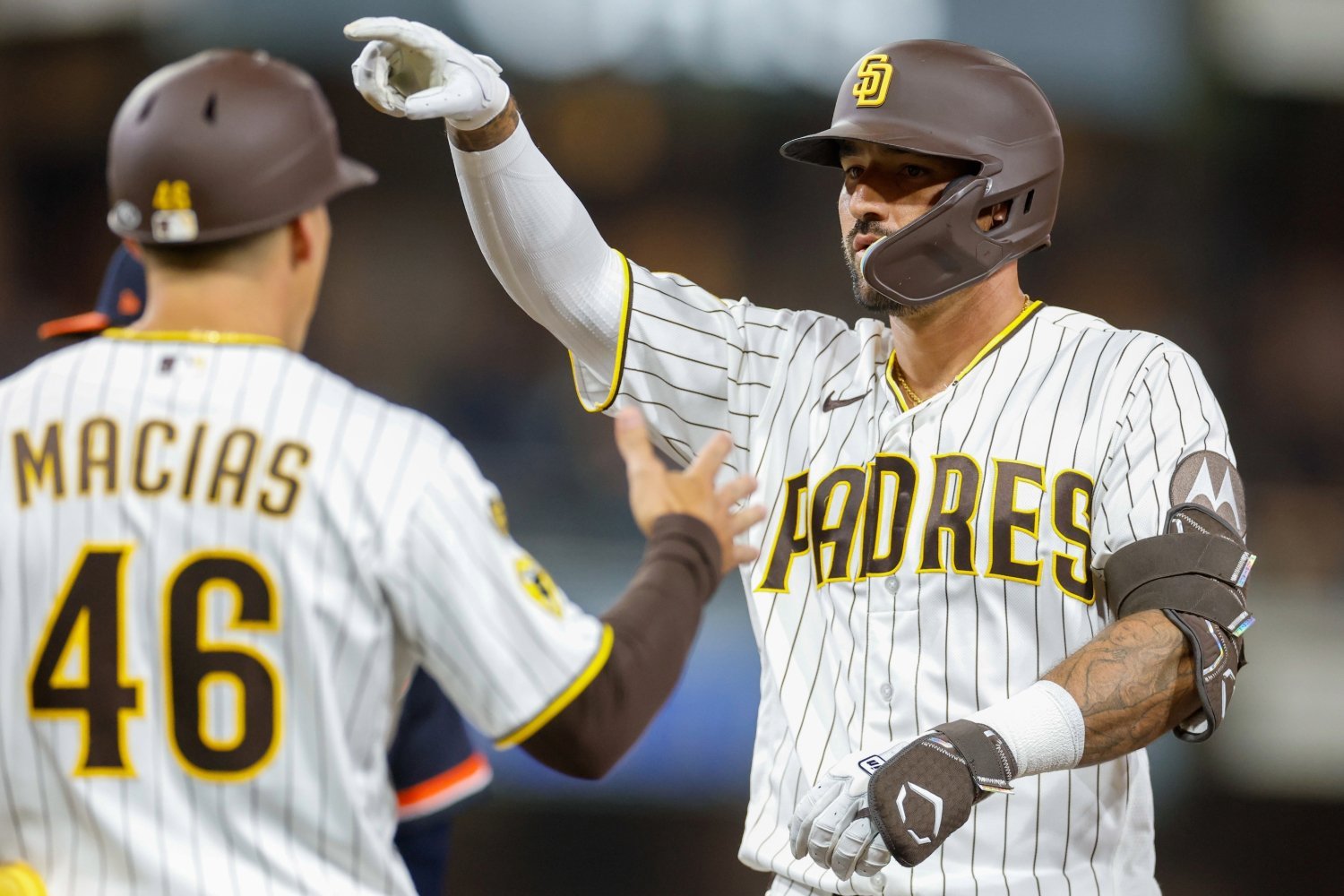 The San Diego Padres spent their weekend completing a four-game sweep of the Colorado Rockies, extending what has become a nice rebound from a sluggish start to the year. Unfortunately for Nick Castellanos, he was pinned down a bit from contributing to the repeated offensive outbursts from the collective. Not only from some general misfortune, but more specifically from Rockies outfielder Jordan Beck. Down early against Colorado on Saturday night, Castellanos put a ball into the air toward the right field seats. As it traveled and looked destined for his first home in a Padres uniform, Beck had other ideas: Not that it was a tank of a potential home run, mind you. Castellanos' exit velocity was 98.3 and the contact carried a .290 expected batting average. It would've been a homer in just one out of 30 major-league parks (Houston). The robbery component might've been overblown. But between that and each of the 91.6 MPH groundout with a .350 xBA and a 97.9 MPH line out with a .740 xBA that he also experienced over the weekend, there's a more general string of bad luck that he's running up against so far. Many of Castellanos' underlying metrics look quite good: The xBA alone is indicative of a player that should be seeing far better results than he has to this point. Castellanos has made good contact (as indicated by his Hard-Hit%) while avoiding groundball contact to an excessive 28.0 percent clip. Yet, this is a player who will carry a line of just .200/.263/.286 and a 54 wRC+ into the new week of games. Despite the hard luck associated with that kind of batting line, there are some positives to takeaway. Castellanos' strikeout rate (17.6 percent) and walk rate (8.8 percent) would each represent the best marks of his career. That hard contact rate is also significantly higher than it was last season by roughly 14 percent. These are all objectively good things that should likely be leading to better results than the ones Castellanos has received so far. If the discipline reigned itself in just a bit, he could take greater control over said outcomes. That's the one negative component we've seen out of Castellanos to this point in the young season. Even with a swing rate that is down a couple of percentage points and a chase rate that has remained within one percent of where it was last year, Castellanos has made less contact than last season by about three percent thus far. There isn't anything discernibly different in the types of pitches at which he's swinging, but merely his ability to make contact in and around the zone. Perhaps there's a susceptibility to swinging at less favorable pitches that has emerged given a small spike in his called strike rate (by about two percent), but we're still working within too small a sample to identify real trends there. The takeaway here is that Nick Castellanos has actually been varying shades of fine in 2026. The numbers say he should be quite a bit better, though, and if he's able to drive up the contact rate and create additional batted ball opportunities, his case looks to be one of those that is the natural ebb and flow of fortune in April of a new season. View the full article
 -
It's Early, But the Brewers' 'A' Bullpen Already Looks Depleted
DiamondCentric posted an article in Brewer Fanatic
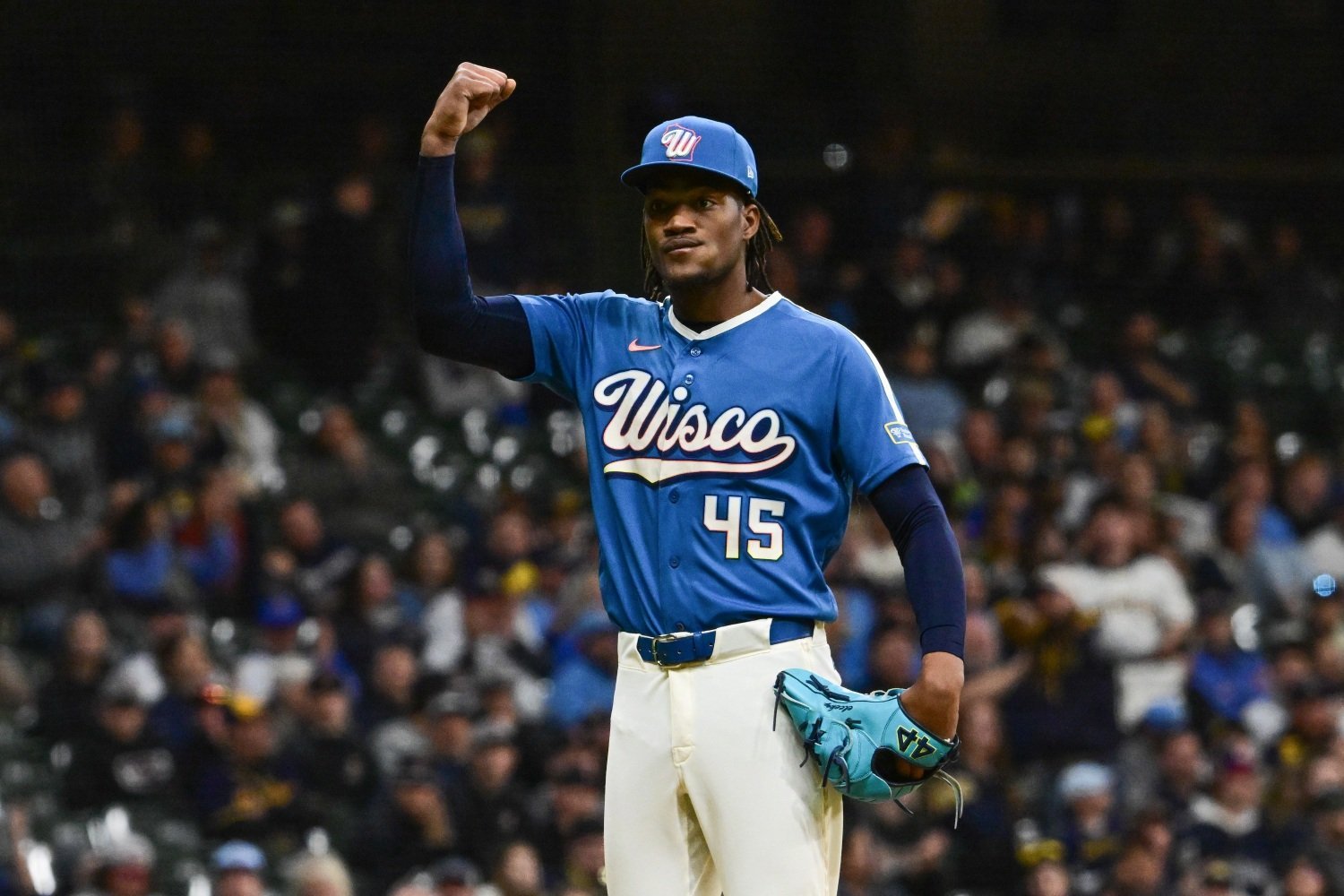 Working long plate appearances, taking extra bases, and playing tight defense have all been attributes of Pat Murphy's successful Brewers teams, but so has relying on the back end of their bullpen. In both 2024 and 2025, Milwaukee relievers logged the fourth-most innings of any bullpen in baseball. In that span, their 18.1 RA9-WAR ranks second to only the Cleveland Guardians' bullpen, at 18.2. Because WAR is not precise enough for a tenth of a win to be a reliable difference, it's reasonable to say Murphy's bullpens have been the most valuable in the sport. It's been a different story to start this season. Through 15 games, Brewers relievers have had results near the middle of the pack, ranking 17th with a 96 ERA- (an ERA 4% lower than the league average, after accounting for the ballparks where they've pitched). The group is coming off an especially tough week, too. Since last Saturday's doubleheader in Kansas City, Milwaukee relievers have allowed the third-most runs in baseball. That's far too small a sample to push the panic button. Trevor Megill, Abner Uribe, and Ángel Zerpa having a combined 7.27 ERA on April 14 is nothing to worry about, on its own. There have been warning signs in their stuff, though. All three have lost velocity on their upper-90s fastballs, lowering the quality of those pitches. Megill and Uribe, in particular, have both lost at least 1.5 mph from last season. The Stuff+ model at FanGraphs, which graded Megill's heater among the best in baseball and Uribe's as above-average, now sees both as underwhelming pitches. {C}%3C!%2D%2Dtd%20%7Bborder%3A%201px%20solid%20%23cccccc%3B%7Dbr%20%7Bmso-data-placement%3Asame-cell%3B%7D%2D%2D%3E--> Pitcher Season Primary FB Velo Primary FB Stuff+ Breaking Stuff+ Overall Stuff+ Trevor Megill 2025 99.2 116 141 125 Trevor Megill 2026 97.4 97 114 103 Abner Uribe 2025 98.7 102 120 115 Abner Uribe 2026 97.3 96 130 106 Angel Zerpa 2025 96.6 128 110 112 Angel Zerpa 2026 95.7 107 116 106 Stuff-wise, Zerpa is the least concerning. His sinker still has excellent depth and is getting ground balls, and he now has a tighter slider that tunnels better off that pitch. Better days could be ahead for him. Sitting around 97 mph isn't unprecedented for Megill, either. He averaged 97.8 mph last April before averaging nearly 100 until a flexor strain sidelined him down the stretch. Upon returning from that injury, though, Megill sat 97.5 in his regular-season return and 98.5 in the postseason. Since those elbow problems cropped up, his triple-digit velocity hasn't been there. Even at 97, Megill's heater is still much firmer than the league average for right-handed pitchers. However, he needs plus velocity to keep that fastball from finding barrels. Megill backspins his fastball from a high slot, so it averages 19.0 inches of induced vertical break and just 4.4 inches of arm-side movement. That's a very straight fastball, so Megill's goal is for hitters to swing late or underneath it. Without touching triple digits, it becomes easier for hitters to time up that fastball and get on top of it, instead of getting underneath well-struck fly balls that fall near the warning track for flyouts. That already became apparent in Megill's second outing of the season against the Tampa Bay Rays, when Nick Fortes drove a high fastball into the right-center gap for what was ultimately a game-winning double. SzRCVmVfWGw0TUFRPT1fRGxRRVhWeFdVbGNBRGxjSFVBQUhBMU5lQUFNQUFGa0FVMXdIVkZJRVVsQUhVUWRS.mp4 At 99-plus, a swing against that fastball is almost certainly a whiff or a flyout popped high into the air. At 96.4 mph, Fortes didn't perfectly barrel it, but he got on top of it enough to hit a high line drive with a 20-degree launch angle that split the gap. If his best fastball doesn't return, Megill faces a tougher path to being an effective late-inning reliever. He may have to lean more on his breaking ball, which he's continued to spin progressively more like a slider each year. So far this year, it's down to just -3.2 inches of induced vertical break, but has the same velocity as last year. Uribe may be the reliever to watch most closely, given his diminished stuff and the circumstances leading up to it. Unlike Megill and Zerpa, his breaking ball has also lost velocity. Whereas Megill has a history of taking time to warm up, Uribe is throwing slower than he ever has in his big-league career—something that started in the postseason last year. "If you remember last year at the end, it wasn't coming out great right at the end in the last two series [in the playoffs]," Murphy said after Uribe surrendered a lead on Sunday against the Washington Nationals. "In the last series, we pitched him at least twice [in the NLCS], maybe three, but it wasn't coming out the same. It got better, and he shows flashes, but it isn't as good." Uribe has still limited hard contact so far, but his whiff rate has cratered from 32.0% last year to 12.5% this season. That's not quite uncharted territory for him in a six-game sample, but when paired with the velocity decrease, it looks more suspicious. "Yeah, I'm sure it is," Murphy said when asked if that lower velocity is leading to fewer whiffs. "Again, you just look at that one number. You've also got to look at the movement and the patterns of it all." Uribe's stuff is moving less, too. His sinker has lost an inch of sink, going from 6.2 inches of induced vertical break last season to 7.3 this year (a lower single-digit number means more depth on pitches like sinkers, sliders, and changeups). It last had that shape in 2024 from a slightly higher arm slot. Opponents slugged .436 against it that year, and that was with Uribe averaging nearly 99 mph. The loss of velocity and movement follows a career-high workload last season. Uribe appeared in 75 regular-season games, tied for the sixth-most among relievers. Of the relievers with at least that many appearances, only Uribe averaged at least one inning per outing. He then pitched six more innings across five postseason appearances. He already looked fatigued by that point, and his stuff has not bounced back since. Uribe hasn't been Murphy's only sudden bullpen workhorse. Jared Koenig (career-high 72 appearances last year before losing velocity this spring and spraining his UCL), Bryan Hudson (60 2/3 innings through August in 2024 before losing velocity), Nick Mears (pitched in 46 of 95 team games between April and July 2025), and Aaron Ashby (50 innings in regular-season team games from July onward last year, a pace of 100 innings per season) all went prolonged stretches with extraordinary workloads during his first two seasons as manager. It's all part of the aggressive "win tonight" approach inspired by Murphy's days as a college head coach. Baseball at that level is chaotic. The season is shorter, and runs score in bunches due to the lower quality of pitching and defense. Having experienced that environment for more than 20 years, whenever Murphy sniffs a win, he puts the pedal down to secure it. That includes leaning on his best relievers. Murphy hasn't just used them to protect tight leads, but also with four- or five-run leads, and sometimes to keep the Brewers in close games when they're trailing. Using those pitchers in those situations isn't always necessary, though. Multi-run comebacks are not actually that common, meaning lower-leverage relievers can usually eat innings that are not save situations without meaningfully altering the outcome of the game. Pitching Jake Woodford in a five-run game, for example, is unlikely to change which team wins, and it keeps the high-leverage guys fresh to be at their best for protecting close leads. To his credit, Murphy never puts relievers at risk of injury with any single appearance. The Brewers' pitching coaches and high-performance team help him determine who is and isn't available every night based on pitch counts, number of appearances that week, and biomechanical data. Still, he's been reluctant to trust pitchers who are less proven or with whom he's less familiar. He'll use his best arms on days they're cleared to pitch, but in situations where they don't have to pitch. "We've been pretty good about limiting pitch counts and limiting days in a row, days per week, altering the early work, altering different things," Murphy said. "We have to be mindful of it. But, I mean, what are the options? Just say, 'Okay, here, kid in Triple-A. Come on up, close tonight.' It's probably not going to lead to a lot of success." As such, while he wants to mitigate health concerns, he often remains as aggressive as those guidelines allow. "How do you protect yourself from it without hurting your team?" he said earlier last weekend about preventing injuries to relievers. "Because you can't afford to just throw other guys in there. So how do you do that?" It's unfair to definitively blame Murphy's aggressive management for the Brewers' current bullpen troubles. At times, it has even facilitated comeback wins. However, from an outside perspective, diminished stuff from overuse—and, as a result, losses like the one they endured on Sunday—always looked like a potential future consequence. At the very least, the club should look back to determine how pitchers like Uribe, Koenig, and Megill ended up in their current states. It's an especially relevant question amid Ashby's current workload. Murphy said before Opening Day that he intended to pitch him at a similar rate to that 100-inning pace from the second half of last year. He's made good on those plans so far, throwing the left-hander a league-leading nine times in 14 games for 12 2/3 innings. That has put Ashby on pace to throw 92 2/3 innings over a full season. Some of those innings have been avoidable. On April 4 in Kansas City, Murphy used Ashby in the sixth and seventh innings with a five-run lead in the first game of that doubleheader. Woodford, acquired by the Brewers as a low-leverage long reliever, had not pitched in five days and ultimately went eight days between appearances. While game situations may force a manager to use some relievers more often than others in a given week, that lack of workload balance is striking. By all accounts, Ashby's body has handled his innings well so far. One of the reasons Murphy feels comfortable using him so often is that he wants to pitch as frequently as possible. The Brewers should monitor him closely, though, with an eye on how that usage might impact his effectiveness in the future. Milwaukee has enough talented arms to have a strong bullpen again this season. Regardless of how they got here, though, the reality is that Murphy's preferred relievers do not look like themselves. As the dust settles in the coming weeks, roles could look much different than they did on Opening Day. Along the way, the Brewers must also ensure that what has happened to Uribe and others is less likely to happen to Ashby and whoever else climbs Murphy's trust tree. Maybe that means setting stricter guidelines for when a reliever is available. If that's not the problem, it could mean a different change. Either way, if these velocity drops are not just a blip on the radar, they must lead to action. View the full article
 -
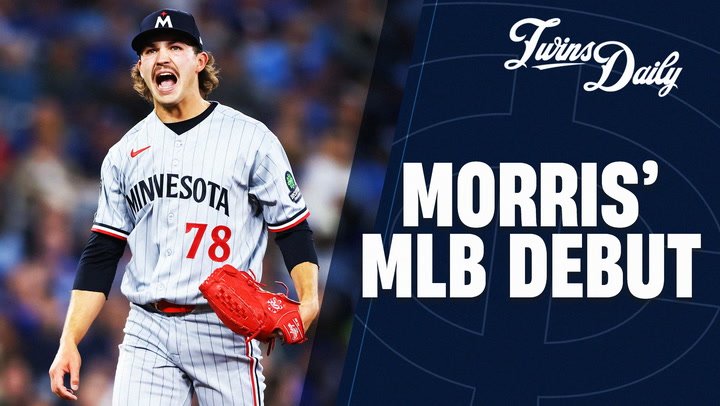 Andrew Morris’s MLB debut might not look dominant in the box score, but the underlying numbers tell a much different story. From upper-90s velocity to advanced command and a deep arsenal, there was a lot more to like than what meets the eye. View the full article
 -
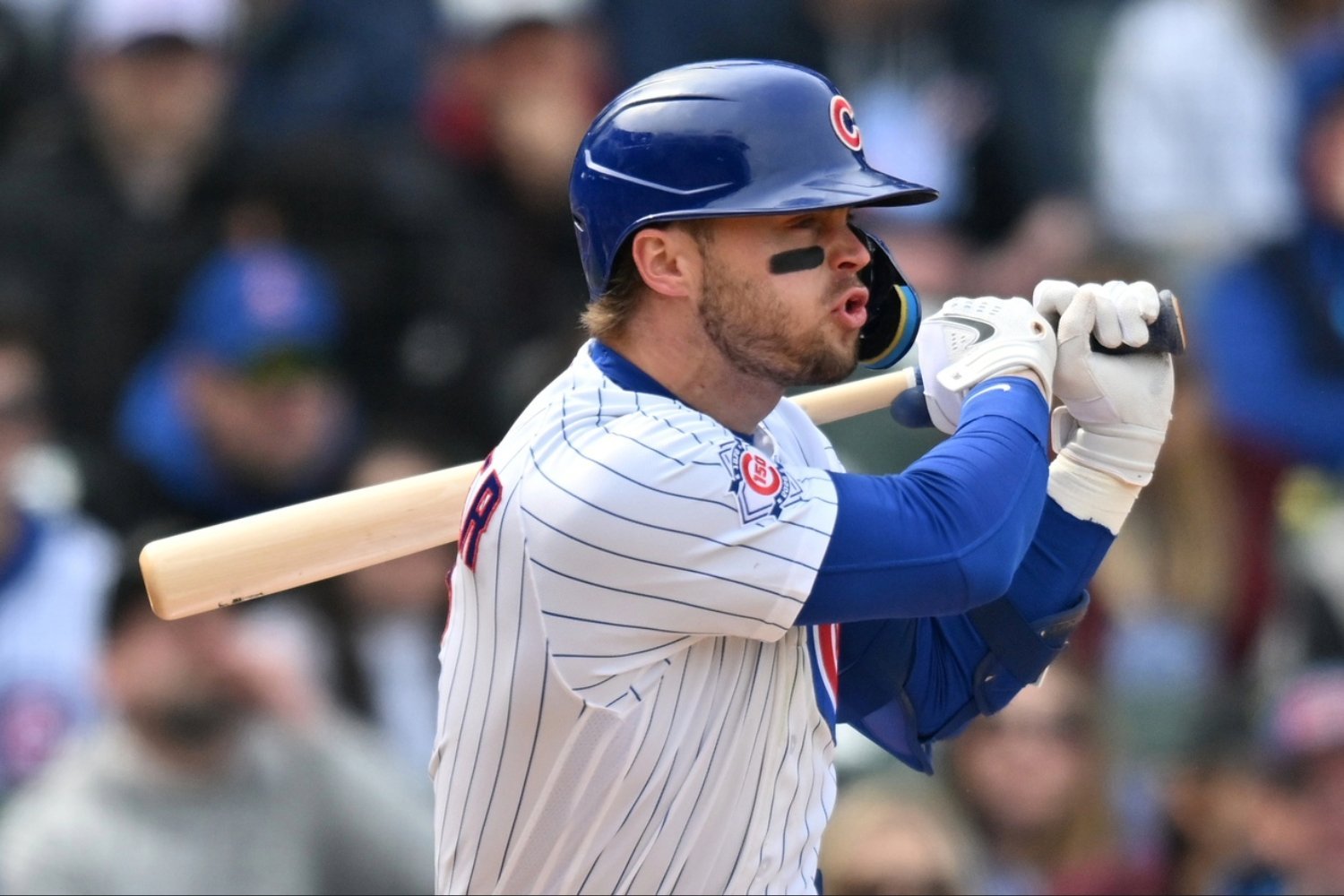 Anybody who's watched Chicago Cubs second baseman Nico Hoerner play baseball for even a fragment of time knows that he is as close to a complete player as one may find in the sport. "Perfectly solid" is how his blend of contact, defense, and baserunning might be described. You don't necessarily see screaming for him to be talking about in the same breath as the league's very elite, but he's spending time in their company in various parts of the leaderboard all the same. He did it in 2025, when he ranked 20th in the league in FanGraphs' Wins Above Replacement metric (4.8). He also had one of the eight-best batting averages (.297), a top-three strikeout rate (7.6 percent), and one of the dozen-best Outs Above Average figures (15) regardless of position. That's the kind of output that earns you a six-year contract extension, as Hoerner did just after Opening Day this season. And while the energy wrought by a sizable new place on the payroll helps to capture national attention in a certain way on its own, Hoerner's early performance might propel him up the list of players deemed "elite" in 2026. While we're still operating within a small sample, fWAR pegs Hoerner as one of the seven-most valuable position players in baseball up to this point. His 1.1 fWAR (as of the series opener against the Phillies) ranks third in the National League, trailing only Andy Pages and Jordan Walker. Much of his .308/.422/.481 line also checks in among the league's best, with an OAA figure that ranks eighth among all position players at present. It isn't so much that Hoerner's standing among the very best rings as surprising. He was in the top 20 in fWAR last year, so it stands to reason that even modest improvement combined with regression from others in that portion of the board could help him to ascend. What's a little more jarring in this case is what Hoerner is on pace to do and where that could land him among the game's position players by season's end. That idea can help to inform us as to what is driving Hoerner to look even more impressive as a baseball player thus far in 2026. If he continued at his current pace, Hoerner would be in line for a .912 OPS finish. His wRC+ would check in at 160, with a dozen home runs and 58 steals. His fWAR would read a gaudy 11.5. Considering the relatively modest output he's posted on the offensive side — where he's been more of that solid rather than elite beyond his contact skills — most of this is unsustainable. However, such an astonishing fWAR pace at this point in the season speaks to where Hoerner has been thriving to this point in the year. FanGraphs' WAR metric is determined by the following: WAR = (Batting Runs + Base Running Runs + Fielding Runs + Positional Adjustment + League Adjustment +Replacement Runs) / (Runs Per Win) The formula itself is not complicated. But each of those "runs" metrics and various adjustments offer a certain degree of nuance. Especially when you look at the area of this in which we're most interested: Batting Runs. Therein, wOBA is the predominant factor with park adjustments and league averages coming into play. In short, wOBA represents some individuals' preferred comprehensive offensive metric, essentially due to the fact that it offers weight to various types of hits and means of reaching base. This, dear reader, is where we begin to find what is driving Hoerner's impressive performance this year. Hoerner's wOBA sits at .409 entering Philadelphia. His previous career best under that category was last year's .324 mark. That's a sizable gap. There are two elements driving his increased wOBA thus far; the first is his increased walk rate. Hoerner is drawing free passes 13.0 percent of the time, which would obliterate his previous career-high of 10.0 back in 2021. Further, he's on pace for 69 doubles and 12 homers. While the latter would represent a narrow edge over the 10 home runs he hit in 2022, that volume of doubles would nearly double the 35 he hit in 2024. Walks and doubles (i.e., gap-to-gap power), in addition to everything else he was already doing well, are propelling Nico Hoerner into the ranks of the game's very elite. It remains to be seen how much of this is sustainable. It's not that Hoerner's eye is better; it's that he's become less inclined to swing at a high rate until he finds a more favorable pitch. Could he slip into old tendencies and increase aggression as the season wears on? Sure. That might cost him a little bit in either regard (though, as Matt Trueblood examined, there's a slight mechanical change at play that's boosting his improved slugging output). Ultimately, though, we're looking at a player who was complete and set within his skill set undergoing further evolution to take his game to the next level. As frustrating as elements of this offense have been in the early going, Nico Hoerner's continued ascent represents a fascinating development to monitor as the season progresses. View the full article
 -
 Minor League Week in Nutshell All the Royals' affiliates were finally in action, though weather issues did cancel some games. Columbia, which is loaded with many of Kansas City's top prospects, had a solid week, going 4-2 this week. Northwest Arkansas also continued its winning ways, going 4-2 this past week after going 2-1 in its Opening Weekend of play. After a long layoff, Quad Cities finally played ball for the first time in 2026. They played at home in Davenport, Iowa, at Modern Woodsman Park and finished 2-4 for the week. One has to wonder if the long layoff affected their play in their first six contests of the season. Lastly, Omaha had a winning record, going 3-2 against the Iowa Cubs, though one game was rained out. In terms of individual performances, some of the top prospects in the Royals system had solid weeks, especially on the hitting side. It's still early, but there's a lot to feel good about with the Royals' farm system, especially if these position player prospects continue to develop at their respective levels. Here are the records of the three Royals affiliates that have played games thus far, as of April 13th. Omaha: 7-7 Northwest Arkansas: 6-3 Quad Cities: 2-4 Columbia: 5-4 Omaha Highlights John Rave didn't make the Opening Day roster, but he's had an excellent start in Omaha. Over the past seven days, Rave hit .474 with a 1.447 OPS. He hit two home runs, collected 9 RBI, stole two bases, and had three walks to only four strikeouts. For his strong performance at the plate, the outfielder was named International League Player of the Week. For the year, Rave is hitting .319 with a .996 OPS in 47 at-bats. He has two home runs, two RBI, six stolen bases (on six attempts), and has 12 walks to 11 strikeouts. Now, I'm not sure if Rave is more than a Four-A player, as he only posted a 65 wRC+ in 175 plate appearances last year. That said, if he continues to produce like this, he could earn himself a call-up to Kansas City, especially if the offense continues to flounder (especially with runners in scoring position). Another Storm Chasers hitter who had a strong week against the Iowa Cubs was Kameron Misner, who was acquired from Tampa Bay this offseason. In 18 at-bats, Misner hit .333 with a 1.288 OPS. His performance against the Cubs this week included two home runs, 10 RBI, four walks, and only two strikeouts. Misner is proving he can generate power and plate discipline, though he will need to cut down on strikeouts at the next level. Last year, in 217 plate appearances with the Rays, the former Mizzou product struck out 31.8% of the time and hit .213 with a 75 wRC+. There's some power potential with Misner, but the swing-and-misses limited his ceiling last year. His strong plate discipline and ability to launch the ball in Omaha this year are encouraging signs that he may be figuring it out. The bullpen continues to be an area of strength for Storm Chasers. Last week, it was Eric Cerantola. This week, it's Beck Way, who didn't allow a run and only had a 0.71 WHIP in two appearances and 5.2 IP this week. He also had six strikeouts and only one walk, a positive sign for him, given his past walk issues, especially in Triple-A. Way is the last remaining prospect from the 2022 Andrew Benintendi trade with the New York Yankees. T.J. Sikkema and Chandler Champlain are both no longer with the Royals organization. It still seems like a long shot that Way will make the Major League squad, and he could do a better job this year of generating chase and whiffs. However, his stuff and zone metrics have been really solid this season, as evidenced by his TJ Stuff+ summary from this season. Royals fans shouldn't sleep on Way as a potential middle-innings or sleeper late-inning reliever at the Major League level, especially if he's able to generate more chase and whiff as he pitches more innings in Triple-A. Northwest Arkansas Highlights Carson Roccaforte got off to a slow start, but he was absolutely scorching this week at the plate. In 22 at-bats, the former Louisiana-Lafayette outfielder hit .364 this week with a 1.500 OPS. He also launched three home runs, had three doubles, a triple, collected five RBI, and six walks while striking out eight times. The only blemish for Roccaforte this week was that he was caught stealing twice. Other than that, Roccaforte showed that he could be an impact player for the Royals as soon as 2027. For his strong performance, Roccaforte was named the Texas League Position Player of the Week. Another position player who was arguably as effective as Roccaforte this week was Sam Kulasingam. In 21 at-bats, the Air Force grad hit .381 with a 1.224 OPS and a home run and five RBI. Kulasingam had five doubles, four walks, eight strikeouts, and stole a base. The utility player has been known for his defense, baserunning, and intangibles as a prospect. However, it was nice to see him put up some solid numbers this week, especially in terms of power. On April 8th, the switch-hitter launched his first home run of the year from the right side of the plate. On the pitching end, reliever Oscar Rayo had a solid week and may be a sleeper arm in this Royals organization. The Nicaraguan lefty, who pitched for Nicaragua in the WBC, made two appearances and pitched 6.2 innings this week. In that sample, he posted a 2.70 ERA and 0.60 WHIP with two runs on four hits and zero walks. He also had six strikeouts. While his stuff needs to play up a bit more, some scouts have remarked that Rayo resembles former lefty reliever Angel Zerpa. According to TJ Stats, Rayo has succeeded by flooding the strike zone and generating strikes. His CSW% is 34.3% this year, and he hasn't issued a single walk either. As a result, he's producing a 2.08 ERA for the season in Northwest Arkansas. Rayo did give up two home runs this week, both coming in one outing against Amarillo. However, if he can avoid the longball, Rayo could be a reliever who could make his way to Omaha at some point and could be considered for a roster spot in 2027. Quad Cities River Bandits It wasn't a great week for the River Bandits' bats, which explains why they went 2-4 this week. That said, some of the Royals' top prospects are playing in Quad Cities and showed flashes of promise despite the losing record in their first full week of play. In 19 plate appearances, Blake Mitchell, our No. 2 prospect at Royals Keep, is hitting .211 with 11 strikeouts. However, he has a .375 OBP, .901 OPS, and hit home runs in back-to-back games. Thus, the plate patience and power haven't skipped a beat from this fall and spring. Another hitter that went yard this week for Quad Cities was fellow catching prospect Ramon Ramirez, our No. 8 prospect at Royals Keep. He hit his first home run of the year in the same game that Mitchell hit his second and also had a walkoff single in an April 12th win against Wisconsin. In 19 at-bats, Ramirez is hitting .264 with a .774 OPS. He also has a double and three RBI, as well as a walk and five strikeouts. Like many River Bandits hitters, Ramirez started slow, but it seems like he's beginning to heat up at the plate. In terms of pitching, Justin Lamkin stood out the most on the starting end this week. In his first outing of the year, the former Texas A&M product went four innings and allowed no runs and no hits while walking two and striking out six. Of his six strikeouts, five came against the first six hitters he faced in the game. A competitive round pick in the 2025 MLB Draft, Lamkin posted a 3.42 ERA, 1.10 WHIP, and 22.6% K-BB% in 84.1 IP with the Aggies last season. While he doesn't have the prospect shine of David Shields, who started on Opening Day for the River Bandits, the 21-year-old lefty has the potential to develop into a middle-of-the-rotation starter at the Major League level. In terms of relievers, Kamden Edge stood out with two solid performances this week. In 2.1 IP, Edge struck out five and allowed no runs, no hits, and only one walk (he did have one hit batter). A 20th-round 2025 MLB Draft pick by the Royals out of Northwestern Oklahoma JC is an enticing arm with high-upside stuff and strikeout ability. Last year in Low-A Columbia, he posted a 1.88 ERA and 28.3% K% in 14.1 IP. Walks were an issue (18.3% BB%), but he has the stuff to be a Major League setup man or closer. Edge doesn't have the prettiest pitching motion, but he can get outs in multiple ways, and he could move quickly in the Royals system, similar to Dennis Colleran a year ago. Columbia Fireflies Highlights The Fireflies bats were in full force this week, ranking third as a team this week in the Carolina League in home runs and OPS. When it came to top hitters from this group this past week, three particularly stood out: catcher Brooks Bryan, shortstop Josh Hammond, and infielder Yandel Ricardo. An 8th-round pick out of Troy University, Bryan absolutely mashed this week. In 16 plate appearances, he hit .375 with a 1.399 OPS. He also had two doubles, two home runs, six RBI, a stolen base, five walks, and only four strikeouts. The 21-year-old catcher was a consistent producer for the Trojans in college, and it looks like he's on his way to do the same for the Fireflies in 2026. After a slow opening weekend, Hammond got on fire in his first full week of play. Hammond led the Fireflies in plate appearances this week with 21, and he hit .286 with a 1.090 OPS. The 28th-overall pick in the 2025 MLB Draft, he collected three doubles, 1 triple, a home run, and three RBI. He also showed good discipline at the plate with five walks to eight strikeouts. On April 10th, Hammond had four hits and was a single shy of the cycle (though I wonder if one of his doubles could've been shortened to a single to allow him to get it). Hammond definitely had one of the most impressive offensive performances this week from an infield prospect, as he ranks No. 7 in our top prospects list. However, Ricardo wasn't that far off. In 20 at-bats, the Cuban-born infielder hit .300 with an .867 OPS. He had six hits, which included one double, one triple, four RBI, and three stolen bases. Ricardo was known for his plate discipline as a prospect in the DSL and Arizona Complex League, and he showed that patented discipline with four walks to four strikeouts this week. It would be nice to see him be more efficient on the basepaths (he was caught twice), but overall, Ricardo made a solid impression this week for the Fireflies, especially with his ability to spray the ball all over the field. After an okay, but not great, 2026 debut, Kendry Chourio bounced back in full force in his second start of the year. In 4.2 IP, Chourio allowed no runs, no hits, no walks, and struck out six batters. It was an impressive performance from the 19-year-old righty and showed the kind of ace potential he possesses, which is exciting for Royals fans. Chourio has excelled so far this year at limiting walks while maximizing strikeouts. His CSW, though, could be better, and that could be due to him still developing the movement on his current pitch mix, especially his four-seamer. Here's a look at some of his rates and numbers via TJ Stats. While he has impressive K%, BB%, and GB% marks, his whiff% (34th percentile), CSW% (28th percentile) and SwStr% (52nd percentile) could use some improvement. However, there's no need to panic, as Chourio could see these rates improve as he gains more experience and develops his pitch quality with the Columbia pitching coaches. View the full article
 -
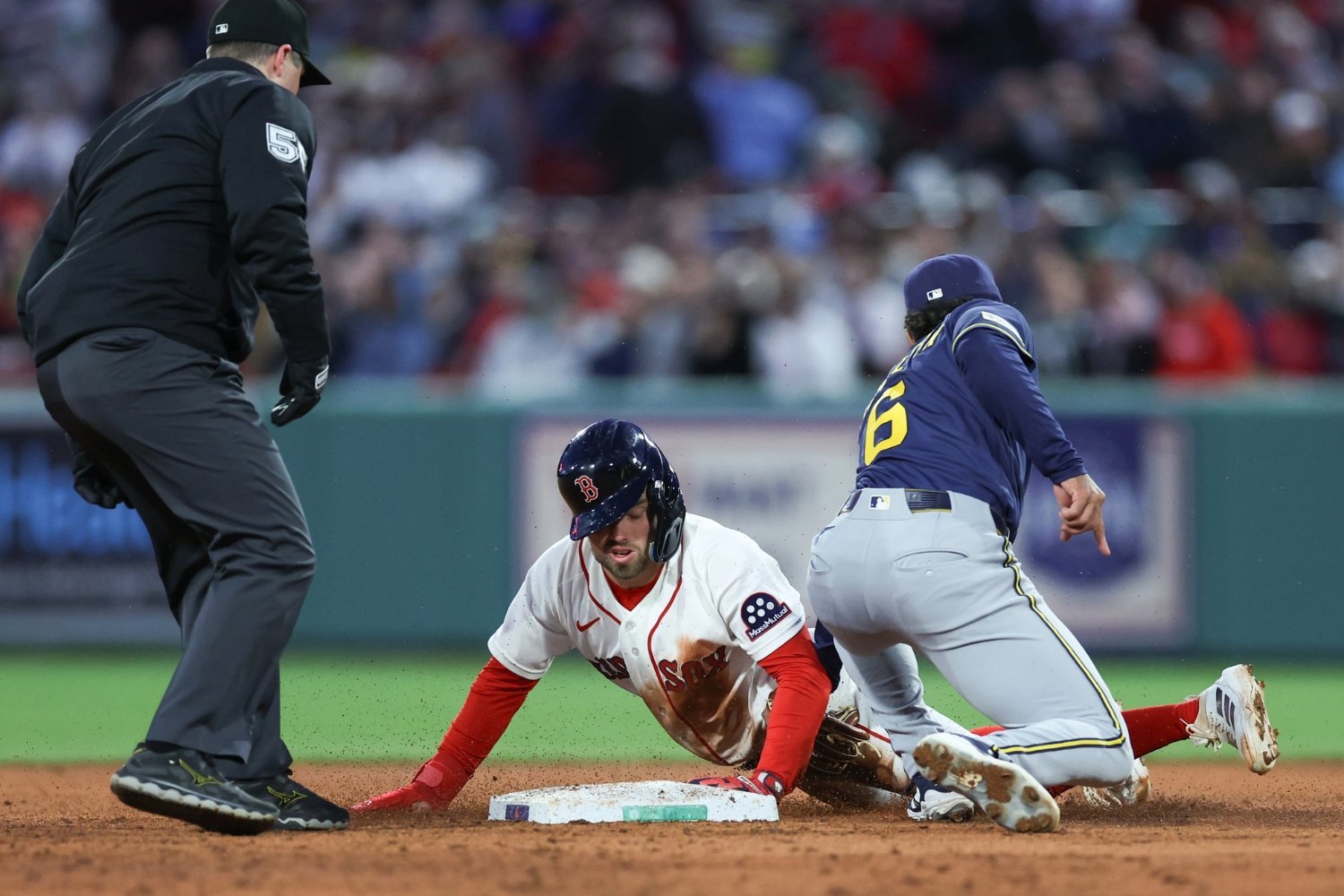 By the time the Boston Red Sox traded with the Milwaukee Brewers for infielder Caleb Durbin, the lineup already looked set in stone. Of course, at the time, there was belief Romy Gonzalez, who had a career-best .305 average with a 123 wRC+ last year, would be a part of that. It turned out, the utility infielder needed shoulder surgery, thus creating a hole on the roster the public wasn't quite aware of. After a strong spring training, there was hype surrounding the 26-year-old third baseman. He slashed .354/.446/.500, drove in nine runs, and stole three bases in 18 games. Though his batted ball data last year hinted that he was a possible regression candidate, there was hope he'd at least fit Fenway Park well enough to combat it. Through 14 regular-season games (leading up to the series opener agains the Twins), Durbin's been anything but a fit. He's slashing .106/.208/.128 with a wRC+ of one (1) across his first 53 Red Sox plate appearances. The bright spot is, relative to his batting average, he's finding himself on base a fairly decent amount; he's drawn four walks and been hit by two pitches. But the fact remains, he's opened his Red Sox career in a 5-for-47 skid. Durbin had some helium surrounding him going back to his torrid pace in the 2024 Arizona Fall League, then a member of the New York Yankees organization. That helium resulted in him being dealt as a headlining piece for All-Star reliever Devin Williams. A year later, he's part of a six-player trade that sends former top prospect Kyle Harrison, fellow left-hander Shane Drohan, as well as much-maligned infielder David Hamilton back to Milwaukee. Two offseasons in a row, Durbin found himself changing organizations. That can't be a comfortable position to be in, but it was a position he seemed to face head-on with the Brewers. Last year, he finished third in National League Rookie of the Year voting, posting 2.6 fWAR with the third-most hits among the freshman class. His knack for getting his nose dirty made him an endearing player in Milwaukee, whose style of play helps them play well above expectations over 162 games, despite not necessarily carrying over into October. His 24 hit by pitches finished second in baseball, one ahead of now-teammate Willson Contreras. Coupled with him being short in stature, it was hard to not at least understand why some Red Sox fans drew comparisons to Dustin Pedroia, who hit .299 for his career from 2006 through 2019 -- all with Boston. But aside from his play style and frame, that's it for similarities between the two. Unless you want to count the influence of now Brewers manager Pat Murphy. There's just no way Durbin's .106 average and .336 OPS hold up as he gets more comfortable in Boston (and he already started breaking out of that slump against Minnesota). That said, what would a turnaround for him actually look like? Caleb Durbin Doing More of the Same Should Lead to Better Results One of my personal criticisms of the response to this trade was the notion that because Durbin finished third in Rookie of the Year voting, he had some incredibly high ceiling. Last year, he slashed .256/.334/.387 with a 105 wRC+ in 136 games. That's far from bad, but it's not super impactful. Ultimately, it's better to have a fringe/average bat than a bad one in your lineup, especially when that someone is merely a fine defender at his primary position. However, a lot went right for him to emerge as a 105 wRC+ guy in 2025. For starters, his batted ball profile mirrors that of guys like Tommy Edman and Miguel Rojas. Neither player is bad, but they're not hitters you expect to contribute at a high-end level. According to Statcast's Affinity metric, used to compare hitters based on their batted ball data, says the most comparable bat to Durbin in 2025 was Los Angeles Angels first baseman Nolan Schanuel. To put that into perspective, Schanuel slashed .264/.353/.389 with a 109 wRC+ last year. Again, not bad, but hardly someone Red Sox fans dubbed a trade target this winter when there was a glaring need at first base. Durbin's 2025 Baseball Savant Page* Durbin's batted ball data suggested a proficiency for making contact, but not a whole lot of damaging contact. He hit 11 home runs, the most he's ever hit in a professional season, but he's not a guy whose swing generates a lot of power, even with a 20.4% Pull Air rate in 2025. So far, he's pulling it in the air at just a 13.9% clip in 2026, so perhaps an easy fix is generating more pull, but is it really that simple? How Are Pitchers Attacking Him? Pretty much exactly the same way they attacked him last year. I scoured Baseball Savant for a while trying to find a different game plan from the opposition. There isn't one. Last year, Durbin saw fastballs on the inner third of the plate on 9.4% of pitches. This year, 9.4% as well. Last year, Durbin saw fastballs on the outer third 9.7% of his pitches; this year, 9.4. Last year, he saw offspeed pitches 9.1% of the time; this year, up to 10.5. He's seeing fastballs at a slightly elevated rate in general, 62.3% versus 57.3% last year, but he's just not finding green. He's only whiffing against fastballs 7.8% of his swings against them. His exit velocity against them is up from 84.4 mph to 86.2 mph on average. The marked difference is his launch angle is down from 14 degrees to just eight in 2026. His contact is firmer, but the line drives are more topspin than anything. His swing path is one degree to the pull side, down from four degrees last year. His ideal attack angle is negligible, but this is a game oftentimes of millimeters. He's basically in a perfect storm of mishitting the baseball. The Good News is... It's all fixable with a change in his swing mechanics. As mentioned, there's no marked difference in how the opposition is attacking him, save for slightly more fastballs that, early on, is too soon to tell if it'll stick all year. If he can get lean back into what worked for him last year, generating more pulled contact in the air (even without a ton of power), there's still a pathway for him to be productive, especially in Fenway. Additionally, because the season has started so poorly for him, getting back to even what he was in 2025 will require a white-hot stretch in all likelihood. Right now, he's lukewarm. Despite already falling out of favor within the fan base -- which is a bit ridiculous -- he's slowly started getting it going of late. After starting the season 0-for-18 with a walk, good for a -92 wRC+ across 19 plate appearances, he's 5-for-his-last-29 with three walks, two hit by pitches, and five runs batted in. Include the first game agains the Twins, and he's 7-for-34. While saying people should be grateful for his .172 batting average over that span is a bit silly, that .294 on-base is actually fifth on the team since April 3; minimum 10 plate appearances. This is not a sexy player. When he's rolling, it'll be very old school-oriented with an array of line drive singles and doubles. Expecting him to be more than the player he is was unfair from jump street. He's not Rafael Devers; he's not even Alex Bregman. He's Caleb Durbin. View the full article
 -
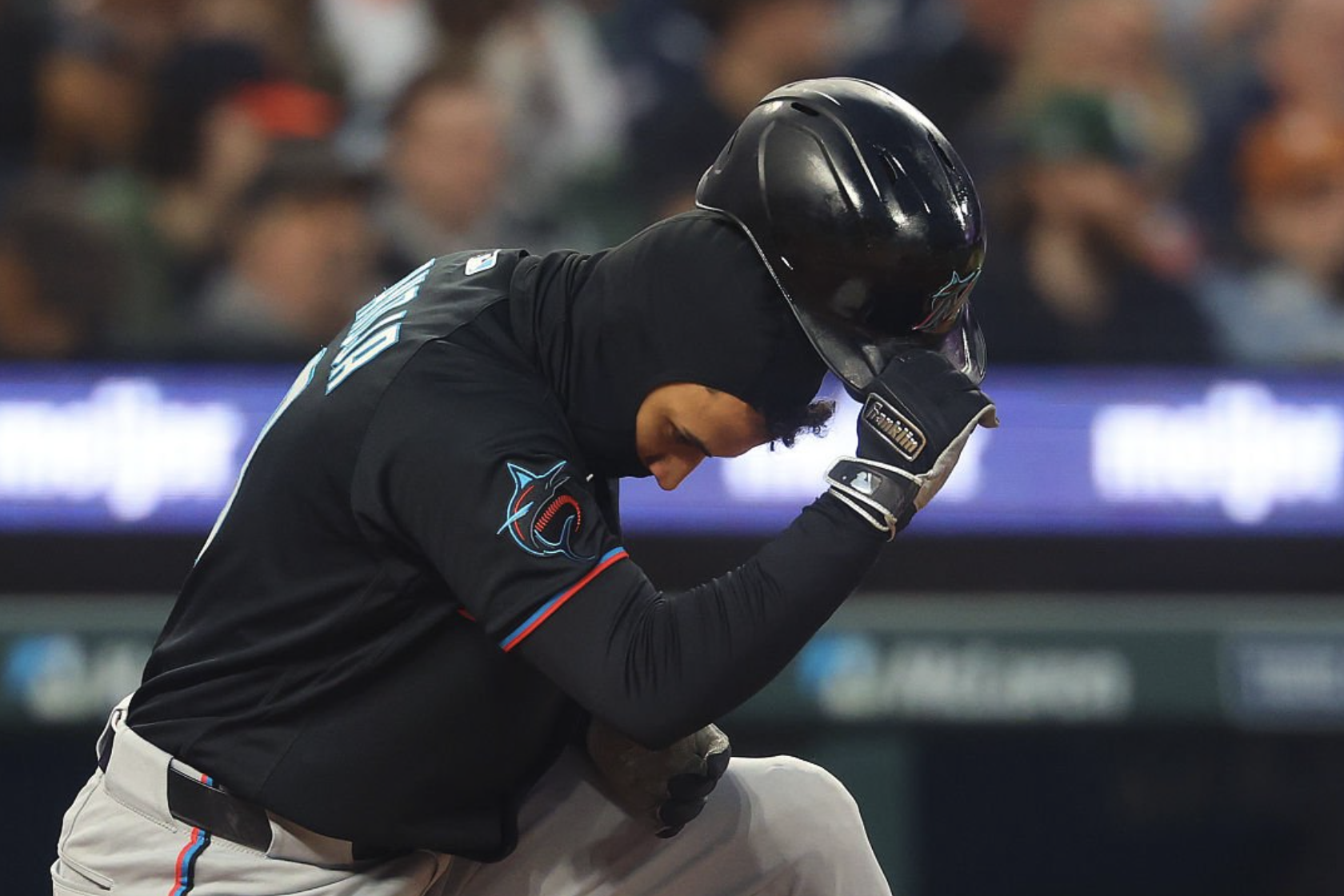 The Miami Marlins have played solid ball early in the 2026 season, as reflected in their 9-8 record and positive run differential. But it hasn't consistently felt that way. During each of their first two visits to northern cities, the quality of their play has eroded in all facets, from hitting and pitching to baserunning and fielding to simple decision-making. Coincidence, or is there something to be said for Floridians being adversely affected when they encounter a climate dramatically different from their own? How have the Marlins performed historically when playing in cold conditions? Here's what I found. For starters, we have to establish what qualifies as "cold weather" for the Marlins. The baseline temperature at loanDepot park with the roof closed is 72 degrees Fahrenheit. Stathead allows users to search for games based on their first-pitch temperature, so I ran a query of all games in franchise history that were at least 15 degrees colder than the LDP standard (57°F or lower). That produced a sample of 185 games, including at least one from every Marlins season with the exception of 2020, when COVID delayed Opening Day until the summer. When playing ball at <57°F, the Fish have an all-time record of 78-107 (.422 winning percentage). They've gone 1-3 in the cold so far in 2026, playing two such games apiece against the New York Yankees and Detroit Tigers. Using first-pitch temperature is not perfect. What about when it's slightly above 57° as a night game gets underway, but the majority of the game (including its highest-leverage moments) take place under "cold" conditions? Stathead found an additional 44 Marlins night games between 58°-60°—their record was 19-25 (a comparable .431 W-L%). For context, the Marlins have an all-time .461 W-L% overall, which is a 75-win pace over a typical 162-game season. When it's cold (based on my original parameters), they perform at a 68-win pace. Is that statistically significant? I don't think so. The gap would be smaller if we counted cold postseason games. The Marlins are 6-2 in those, with one of those victories being the 2003 World Series clincher. But the biggest variable to adjust for is location. Every cold game in Marlins history has been a road game. The franchise's road winning percentage (.421 W-L%) is practically identical to its cold winning percentage. The Marlins could potentially be battling cold conditions again on their next road trip, which begins with three games at San Francisco's Oracle Park (April 24-26). The following trip includes a visit to Target Field in Minneapolis (May 12-14). View the full article
 -
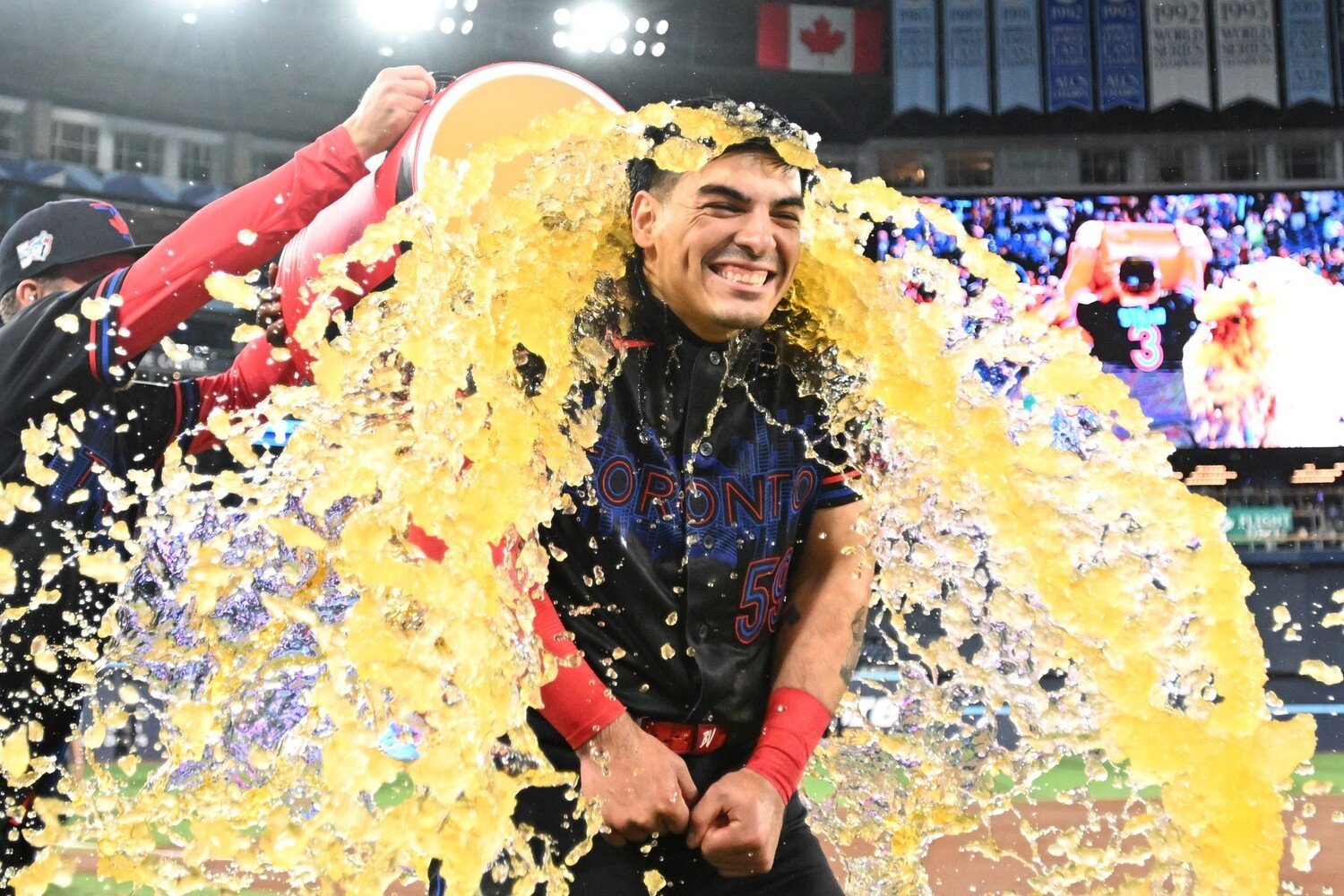 Entering this past weekend, Brandon Valenzuela had played exactly one full MLB game in his career. The Blue Jays acquired the catcher ahead of the trade deadline last summer. They selected his contract last fall to prevent him from leaving in minor league free agency. When Alejandro Kirk fractured his thumb earlier this month, Valenzuela got his first call to the show. The 25-year-old started once against the White Sox and once against the Dodgers, although he didn't finish the L.A. game; Tyler Heineman pinch-hit for Valenzuela (and went down on strikes as the final out of a 4-1 Blue Jays loss). Valenzuela also came in to catch the final innings of the other two games against the Dodgers after Heineman was removed for a pinch-hitter in one and a pinch-runner in the other. Before the Twins series, that was the extent of Valenzuela's big league experience. One base hit and four strikeouts in eight plate appearances. Twenty defensive innings behind the dish. A couple of bad throws and a couple of wild pitches past him. Then, Valenzuela stepped up. With Heineman suffering from back spasms, John Schneider asked Valenzuela to start all three games over the weekend. The schedule gave him less than 20 hours to rest between each. He caught 11 different pitchers over 27 innings, and he may deserve more credit than the overall results suggest. Although the Blue Jays lost two of three, giving up 19 runs on 21 hits and six home runs, it was only the starters who struggled. That was Patrick Corbin, who was making his first start after missing spring training and pitching only one ramp-up game in the minors; Eric Lauer, who was getting over a bad illness; and Max Scherzer, who is pitching through forearm tendinitis. Meanwhile, the relievers combined for a remarkable 15.1 innings of scoreless baseball, giving up just five hits and striking out 20. I'm much more inclined to give Valenzuela credit for helping the bullpen than I am to blame him for the starters' struggles. Valenzuela also recorded his first career caught stealing and his first infield assists, while showing off great framing skills (53.1% called strike rate on takes in the shadow zone), elite pop times (avg. 1.88 seconds), and an ability to work well with the ABS challenge system. Brandon Valenzuela catches Austin Martin stealing second base (pop time 1.86 seconds). Then there was what he did when he was standing at the plate instead of crouching behind it. The Blue Jays aren't asking Valenzuela for much at the plate. As a defense-first catching prospect thrust into a major league role, he only needs to be slightly better than a black hole in the nine hole. The jury is still out on whether or not he can do that long-term, but he certainly succeeded on Friday. He had his first multi-hit game, scored his first runs, and earned his first RBIs. That included crushing his very first big league homer (and, just as importantly, receiving his first Gatorade-esque sports drink drenching to celebrate). At 111.4 mph off the bat, it was Toronto's hardest-hit home run of the season. Valenzuela went hitless in the next two games of the series, though he drew his first big league walk on Sunday. His discipline has always been solid in the minors, but it took him 17 plate appearances in the majors to take a base on balls. Hopefully, that walk was another sign that he's getting a little more comfortable against this new level of competition. We talk a lot about small sample sizes here at Jays Centre, especially at this time of year. One weekend of baseball is, of course, a small sample. Yet, for Valenzuela, this weekend series against the Twins was so much more than just the 27 innings he caught and the 11 times he came to the plate. It was his first real taste of what it means to be an everyday MLB catcher, and it was a signal that the Blue Jays trust him to take on that role, at least temporarily. It was a big weekend for a player who's taking on more responsibility than he or his team expected he would. The pressure was on, and Brandon Valenzuela stepped up. View the full article
 -
Marlins offense explodes in series-opening win over Braves
DiamondCentric posted an article in Fish On First
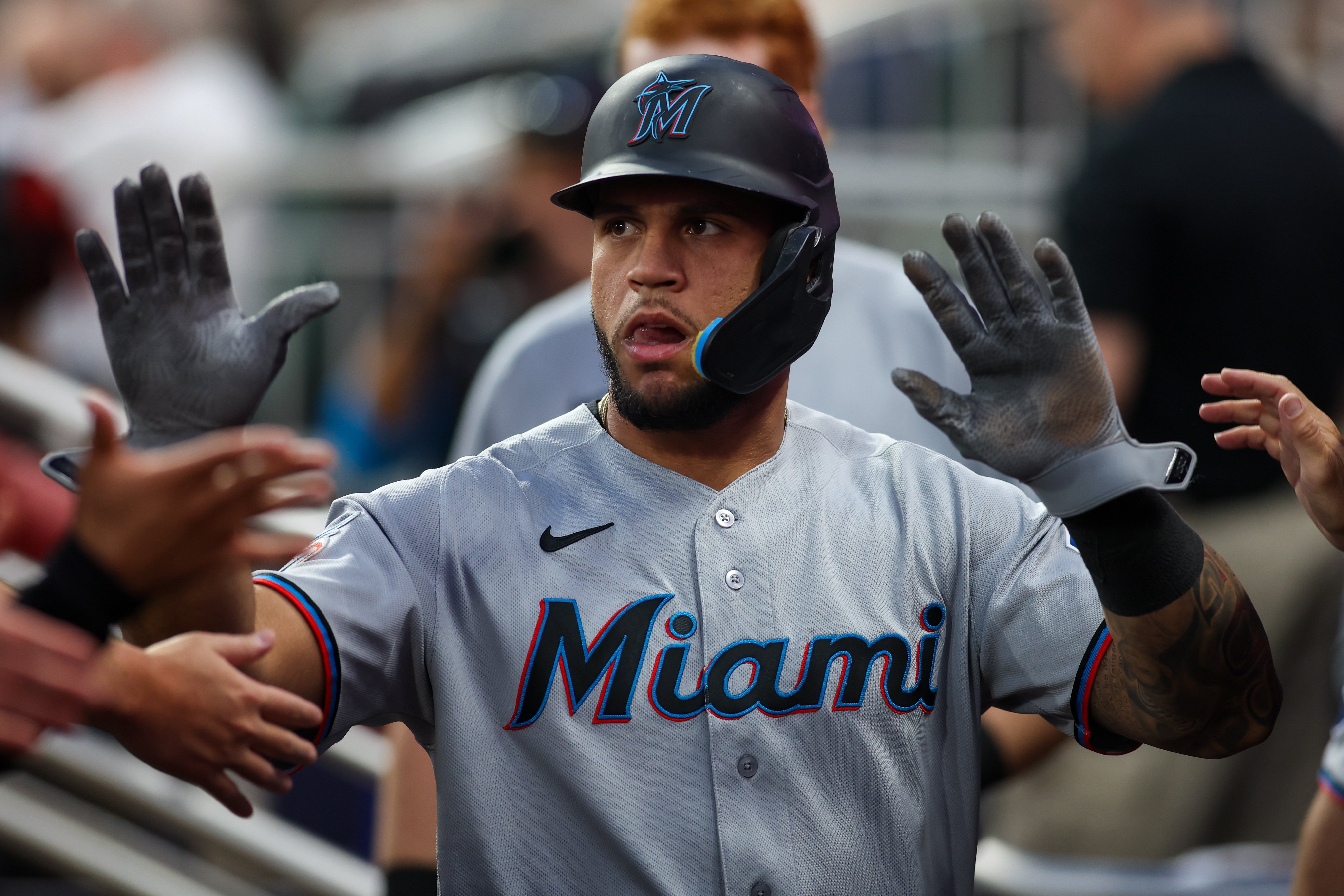 After a series in Detroit where the Miami Marlins were swept and scored only three runs on 14 hits, they immediately bounced back to begin their first series against a National League East opponent. The Marlins scored 10 runs against the mighty Atlanta Braves in Monday's win, thanks to a season-high 16 hits. "One through nine, really a terrific effort," said Marlins manager Clayton McCullough after the game. "We moved the ball around the field. There were a lot of hits the other way. Early on, we took what we were given and stayed through the middle." It all started in the top of the fourth inning, when Liam Hicks knocked in his 14th RBI of the season on a sac fly. Otto Lopez drove in a second run on an RBI single. Connor Norby capped off the inning with an RBI single, extending it to a 3-0 lead. Tied at three in the top of the fifth inning, Agustín Ramírez unloaded for his first home run of the season, a three-run shot, retaking the lead, 6-3. The ball left the bat at 105.2 mph and went 418 feet to left field. In the following inning, Norby hit his second home run of the season on the first pitch of his at-bat against Braves reliever Rolddy Muñoz. He took Muñoz 380 feet deep to left field to make it 7-4. Ramírez and Hicks then knocked in back-to-back RBI singles. Hicks also drove in the 10th Marlins run in the top of the eighth. All nine guys in the Marlins lineup connected for base hits, with five of them having multi-hit days. Ramírez and Hicks combined to go 6-for-8 with seven RBI. This marked the first time since September 17, 2023 that Miami has scored 10 runs against the Braves. Eury Pérez, who's coming off an up-and-down start against the Cincinnati Reds at home, saw similar results after the first inning of work on Monday. Pérez tossed four innings, allowing four runs (three earned) on seven hits. He walked two and struck out two. Both of Pérez's strikeouts came in the bottom of the first inning, getting Ronald Acuña Jr. swinging with his sweeper and overpowering Matt Olson with a fastball to finish the inning. Pérez's fastball topped out at 100.3 mph and generated four whiffs. He located the fastball well early in counts, landing it for first-pitch strikes eight times on 10 attempts. However, Pérez failed to record a strikeout from that point forward. His secondary offerings just weren't all that impressive (seven total whiffs). The Braves began sitting on his fastball, which he used 51% of the time, and crushing it. In the bottom of the fourth inning, the Braves tacked on three runs. Back-to-back RBI singles for Austin Riley and Mike Yastrzemski made it a 3-2 game. A Dominic Smith sac fly tied it up. Pérez finished the game averaging 19 pitches per inning. In that bottom of the fourth, he threw 30 pitches, which prevented him from going deeper into this start. "He really came strong out of the gates, looked fantastic, but just lost a little feel in the latter part of his outing," McCullough said. Still only 22 years old (turning 23 on Wednesday), Pérez has already shown a great fastball and a deep enough arsenal to be a complete starter. Clearly, though, there is a lot of room for improvement. He needs to mix his pitches better, and even on the mental side, he seems frustrated when things don't go well and that bleeds into his performance. Through four appearances this season, Pérez has a 5.40 ERA and the highest FIP on the entire Marlins pitching staff at 5.69, which shouldn't be the case given his talent. Thankfully for Pérez, the Marlins bullpen had his back, allowing two hits through the remainder of the game. As a group, they struck out eight Bravos. Lake Bachar setting a season-high for himself with four of those. With the win, the Marlins improve to 9-8 on the season. They will try to do the same again on Tuesday and take their first series against Atlanta since September 15-17, 2023. Max Meyer, who is coming off a fine start against the Reds, will take the mound for Miami. View the full article
 -
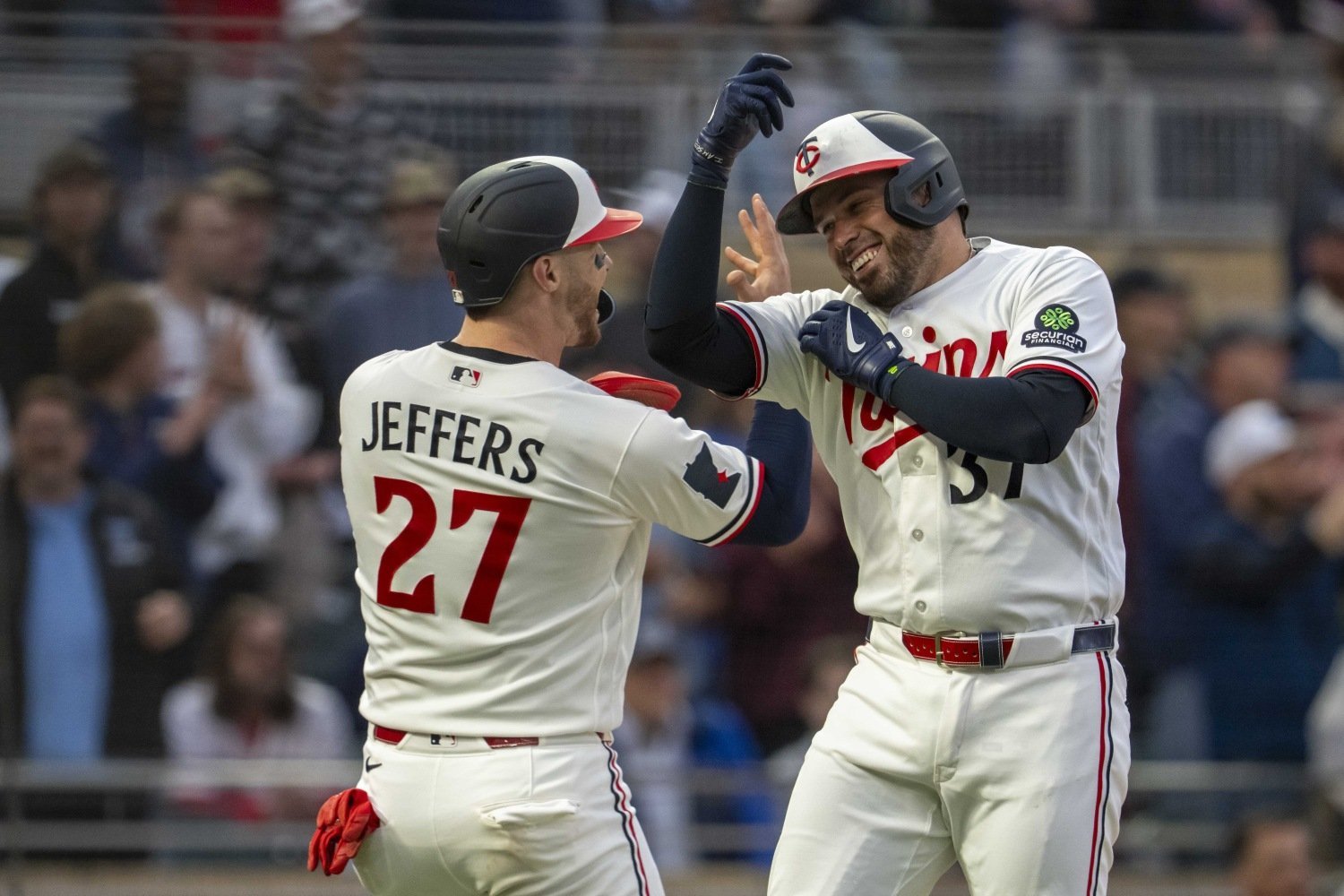 Box Score Starting Pitcher: Bailey Ober 6 IP, 7 H, 4 ER, 7 SO, 1 BB (95 pitches, 68 strikes) Home Runs: Jeffers (2), Buxton (1), Kreidler (1), Caratini (1) Top 3 WPA: Brooks Lee 0.11, Ryan Jeffers 0.10, Bailey Ober 0.09 Win Probability Chart (via FanGraphs): The Twins came into Monday night with a distinction few guessed they would hold at any point this season: They were the hottest team in baseball. After entering the season with low expectations, Minnesota returned home from a weekender in Toronto having won six of their last seven games. That stretch included a four-game sweep of the heavily favored Detroit Tigers and a series win on the road against the reigning American League champions. The competition wasn’t letting up, though, with one of the game’s premier left-handed pitchers waiting on the mound. Garrett Crochet entered the game as the reigning American League Cy Young runner-up, fresh off a strong outing against Milwaukee. On paper, it looked like a tough matchup for a Twins lineup that many questioned heading into the season, particularly against left-handed pitching. Through the first couple weeks, though, Minnesota has proved capable against top arms like Tarik Skubal and Framber Valdez. They did it again on Monday night, and then some. The Twins jumped on Crochet immediately in the first inning. Austin Martin and Luke Keaschall opened the game with back-to-back doubles, setting the tone. A couple of Red Sox miscues made things worse for them, and by the time it was over, the Twins had pushed four runs across the plate. They didn’t slow down in the second. Ryan Jeffers lined a bases-loaded RBI single. Josh Bell followed with a two-run double, and then the power surge arrived. Victor Caratini left the yard, and Ryan Kreidler delivered the loudest swing of the night—a 438-foot blast into the second deck. It was just the third home run of Kreidler’s career, in nearly 400 plate appearances, and it blew the game wide-open: 11-0, before some fans had even settled in. Crochet had no answers. The Twins tagged him for nine hits and 10 earned runs without a single strikeout in just an inning and two-thirds. It was one of the most impressive offensive showings against an elite pitcher in recent memory. The offense kept rolling even after Crochet exited. In the fifth inning, Byron Buxton launched his first home run of the season, becoming Target Field's home run leader in the process. Then Ryan Jeffers added another, giving him a three-hit, three-RBI night that pushed his early season OPS to .952. All that run support made for a relatively low-stress night for Bailey Ober. The right-hander has faced his share of questions early this season, particularly with a dip in velocity, but Monday offered some encouraging signs. Ober worked six innings, allowing four runs on seven hits while striking out seven. He generated 13 whiffs and saw his fastball tick up to 89.4 mph, a noticeable jump from his season average. It wasn’t dominant, but it was progress. The biggest damage against Ober came on a two-run home run from Jarren Duran in the third inning, but with the offense providing such a cushion, it never felt like the game was slipping. Eric Orze ran into some trouble in the seventh, allowing a pair of runs, but the outcome was never truly in doubt. Garrett Acton handled the final two innings, helping the Twins preserve the bullpen and close out a 13-6 win. The victory pushes Minnesota to 9-7 on the season and marks their seventh win in their last eight games. For a team that entered the year with modest expectations, the early stretch has been eye-opening. What's Next The Twins will look to keep it going Tuesday evening, as they aim for their third straight series win. Mick Abel is set to take the mound against an old friend, Sonny Gray, with first pitch scheduled for 6:40 PM CT. Postgame Interview Bullpen Usage Report THU FRI SAT SUN MON TOT Morris 0 0 0 67 0 67 Banda 0 36 0 0 0 36 Funderburk 0 0 17 0 0 17 Acton 35 0 0 0 33 35 Topa 0 12 0 12 0 24 Sands 0 0 22 0 0 22 Rogers 0 30 0 0 0 30 Orze 14 0 0 0 23 14 View the full article
 -
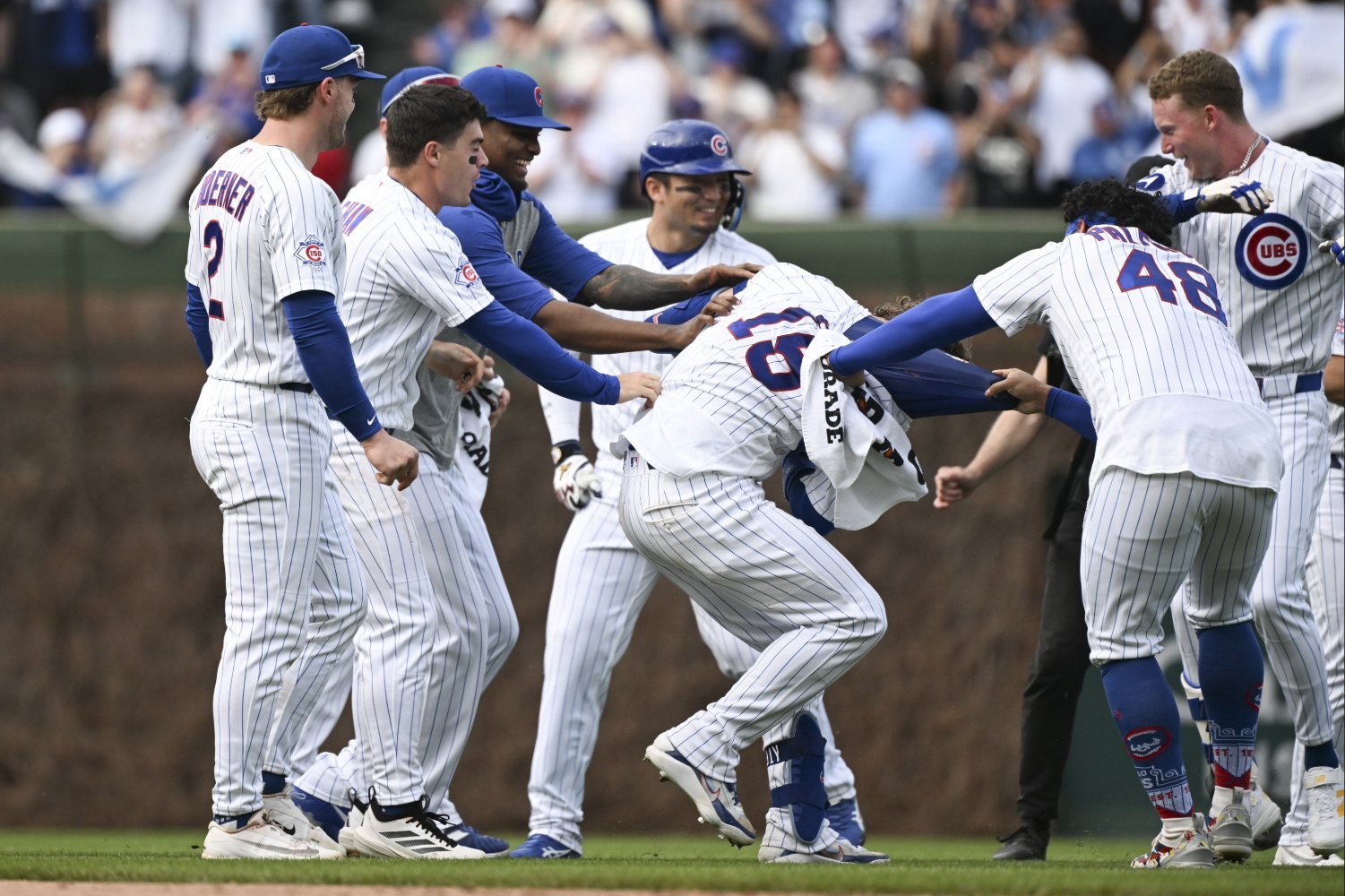 However hard it is to keep a good team down, it's even harder for said good team to find itself in a groove. With eight current big leaguers on the Chicago Cubs' roster currently on the IL, Lady Luck has been less than kind to Craig Counsell's ball club in the early going. With Cade Horton out for the season and the return dates of both Matthew Boyd and Justin Steele unknown, the depth of Jed Hoyer's club is being tested in ways no one expected. Adversity finds its way into most MLB clubhouses, but after already having encountered more than their fair share, how the North Siders respond now will say much about where their season goes from here. Said North Siders started their week in St. Petersburg, Florida, playing the role of visitors at Tropicana Field, which hosted its first game since 2024, when the ballpark sustained severe damage in Hurricane Milton. As has often been the case, Cubbies starter Jameson Taillon struggled early, surrendering four runs across the second and third innings. The Cubs collected four runs on four hits, unable to generate any real traffic on the bases. They dropped the series opener to the Rays 6-4. Chicago has yet to produce much in the way of what ought to be the right formula for offensive production in this first full month of the season. Be that as it may, the bats hummed, rattled, and shook themselves awake in the second of three contests versus Tampa Bay. The squad swung the bats with the level of ease and confidence it would need to climb the ranks of its division. The offensive outburst was anchored by Alex Bregman and Pete Crow-Armstrong, who connected on his first home run of the 2026 campaign. Despite Crow-Armstrong's frustrations at the plate, he's provided tangible evidence that he might return to his 2025 form sometime in the near future. Building on their success from the previous outing, the North Siders took the series against the Rays in a convincing yet cathartic fashion. Filling in as a starter for Counsell's depleted rotation, Colin Rea hurled a valiant five innings, keeping the Rays honest by recovering from two walks given up. Quietly ascending as a leader on this ball club, Nico Hoerner delivered clutch knocks for his squad, including his first big fly of the young season. Dating back to last year, few starting pitchers in the majors needed a "get right" game more than the squad's enigmatic lefty Shota Imanaga. And boy did he get it. Over the course of several starts, Imanaga had started to garner a reputation for giving up home runs early in contests, putting his squad behind the proverbial "hole" before they're able to get off the ground. Adjustments in his release from the mound seem to have shored up his mechanical issues. Imanaga dazzled, going six no-hit innings opposite the Pittsburgh Pirates. Alas, his pitch count was too great for him to continue his pursuit of history in this contest, giving way to reliever Caleb Thielbar. In circumstances such as this one, thinking about what's unfolding, let alone speaking of it, can disrupt the order established by the baseball gods. Almost on cue, Thielbar labored, allowing the Bucs leadoff runner aboard before surrendering a homer to Jason Reynolds. In one swing of the bat, Imanaga's Herculean effort on the mound was reduced to a footnote as his squad's offense once again could not come through in the clutch in a 2-0 loss. The 150-year-old baseball team known as the Chicago Cubs is celebrating the tenth anniversary of its iconic 2016 World Series championship squad. The exhilarated milestone is being commemorated in a myriad of ways, including the return of key players like Ben Zobrist. The vibes around Wrigley were as electric as the energy emanating from the Aon Center, with one of its most cherished heroes returning to the city that made him a legend. Sadly, while the fans safely secured their Zobrist bobbleheads, the Cubs were unable to rally back from an early 3-0 deficit. A desperate, ninth-inning rally knotted things up versus the Pirates, giving the folks at 1060 West Addison free baseball. Squandering multiple opportunities to complete the dramatic comeback, a throwing error on a slow roller back to the mound afforded the Pirates the chance to plate what would become the game and series-winning run. The North Siders fell 4-3 in eleven innings. For so many of us, in multiple arenas in life, getting out of our own way is the hardest thing to do. This truism rang true for starter Jameson Taillon, who bookended one uninspiring start earlier in the week with another. The veteran hurler saddled his squad with an early 5-0 mountain to climb. Though he went on to settle in and fan 10 Pittsburgh batters, Taillon's performance deflated the spirits of a home crowd clad in their finest summer attire. All signs in this game pointed to a would-be sweep, the first at Wrigley Field since 2019. This admirable club, which is full of potential, had other plans, however. Entering the eighth inning as a pinch hitter, Michael Busch stepped up to the plate, toting around a woeful 0-30 stretch to start the season. The clouds lifted when he put a bloop single into center field, knotting the game up on the strength of some superb base running. Daniel Palencia blanked the Buccos in the ninth, setting the stage for Carson Kelly's walk-off knock to the center field warning track. Though the victory merely salvaged one game of the three-game set, the heroics of the comeback for the Cubbies symbolized a shift in tenor for a team that was visibly disturbed and pushing too hard to manifest its expected results. Having lifted the clouds from what could have been a sobering sweep at home, the Cubs now look to establish some momentum as they travel to Citizens Bank Field to do battle with the Phillies for three games. Consistency will be the key for this lineup as it seeks the rhythm necessary to play sustainable, winning baseball. With spirits lifted from the energizing victory over a division foe, this next series in Philadelphia affords this Cubs squad the chance to get its record above the .500 mark for the first time in 2026. Before the season, that would not have sounded like much, but with the club laboring out of the gate, it would be a sign of good things to come. View the full article
 -
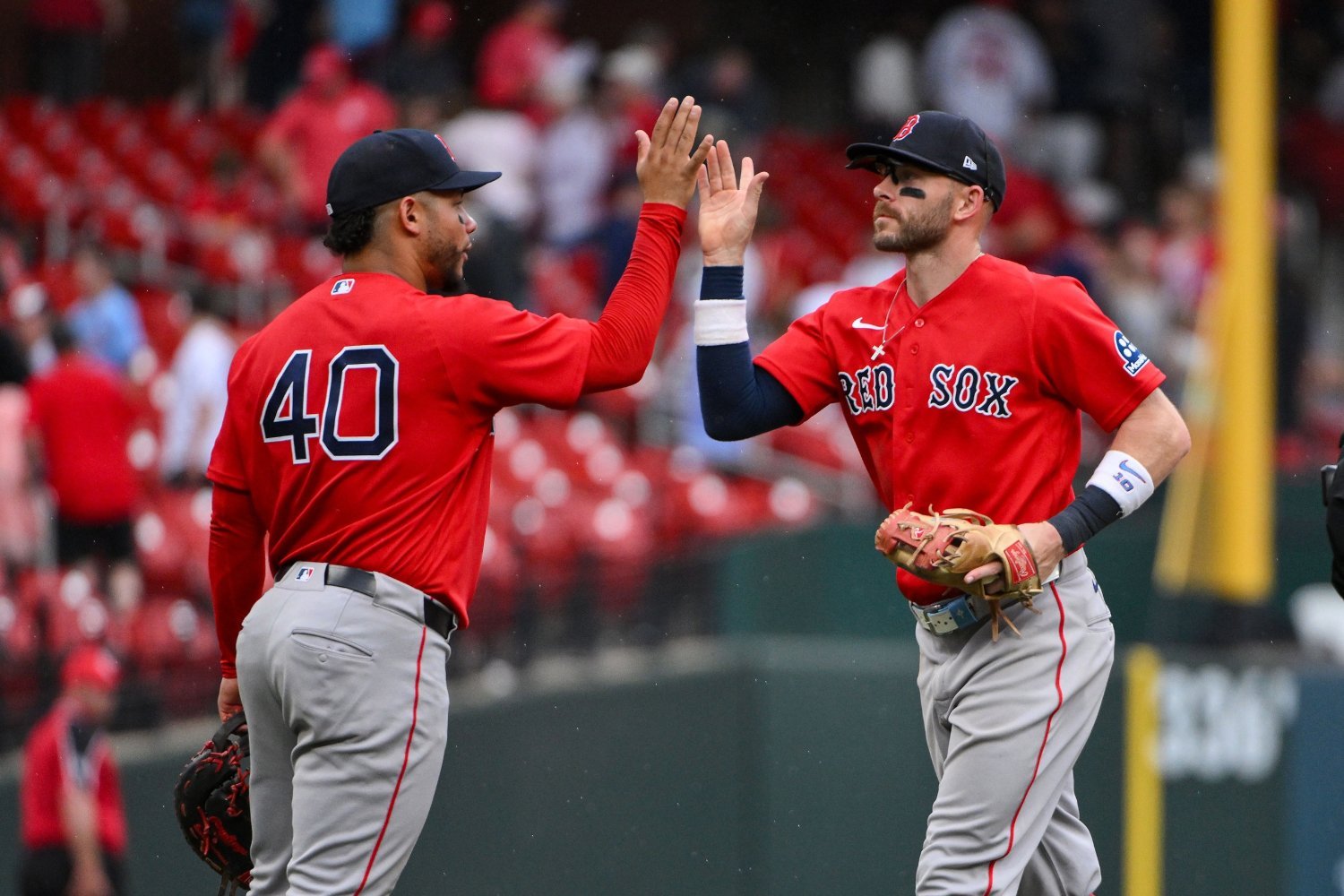 Red Sox Weekly Snapshot Record Last Week: 4-2 Runs Scored Last Week: 23 Runs Surrendered Last Week: 17 Standings: 5th in AL East 2 GB of 1st Place Transactions: 4/06/26: Red Sox activated RHP Garrett Whitlock from the paternity list. 4/06/26: Red Sox optioned RHP Tyler Uberstine to Worcester Red Sox. 4/07/26: Red Sox signed free agent RHP Markel Vargas to a minor league contract. 4/07/26: Red Sox signed free agent C Dylan Mara to a minor league contract. 4/08/26: Red Sox place RHP Justin Slaten on 15-day inured list (retroactive to April 5) with a right oblique strain. 4/08/26: Red Sox recalled LHP Tyler Samaniego from Worcester Red Sox. 4/08/26: Red Sox sent LHP Patric Sandoval on a rehab assignment to Worcester Red Sox. 4/09/26: Red Sox sent 2B Anthony Seigler on a rehab assignment to Worcester Red Sox. 4/10/26: Red Sox optioned 2B Anthony Seigler to Worcester Red Sox. 4/10/26: Red Sox activated 2B Anthony Seigler from the 10-day injured list. Scores: Game 10 (4/06): BOS 6, MIL 8 Game 11 (4/07): BOS 3, MIL 2 Game 12 (4/08): BOS 5, MIL 0 Game 13 (4/10): BOS 2, STL 3 Game 14 (4/11): BOS 7, STL 1 Game 15 (4/12): BOS 9, STL 3 Series Breakdown/Highlights Milwaukee Series: This was likely a series that many counted the Red Sox out of before the first pitch of the game. After game one, it seemed like we were in for more of the same. There were the Willson Contreras fireworks, the promise to “take one of them out” if the Brewers hit him again, and a collapse in the late innings after both teams battled back and forth for the majority of the contest. Game two saw what could be one of the best pitching duels of the season, Garrett Crochet against Jacob Misiorowski. They went hitter for hitter throughout the first six innings until the Red Sox broke through against the Miz and plated three runs, thanks to some timely walks. Crochet wasn’t perfect, surrendering two runs of his own in 6 ⅓ innings, but his seven strikeouts helped to right the ship against the Brewers. In game three, the Red Sox welcomed old friend Shane Drohan to the big leagues by tagging him for three earned runs in 2 ⅔ innings. Sonny Gray tossed a second gem in a row, going 6 ⅓ innings allowing three hits with two walks and two strikeouts. Cardinals Series: The Red Sox looked to unleash their offensive firepower against former teammate Dustin May in the weekend opener. Instead, May turned in his best start of the season. He held the Red Sox to one earned run over 6 innings pitched with no walks and four strikeouts. Rookie Connelly Early struggled to find his control once again, surrendering one earned run over 4 ⅓ innings allowing five hits, two walks, and five strikeouts. After him, the Red Sox used four relievers out of an already taxed bullpen. Zack Kelly allowed two earned runs in ⅔ inning work while Tyler Samaniego, Greg Weissert, and Jovani Moran all worked clean innings, or part of innings, through the end of the game. On Saturday, the Red Sox erupted for seven runs, the first time they scored at least seven on the season. LHP Ranger Suarez tossed six scoreless innings, working six strikeouts and two walks. It was by far the sharpest he’s been since joining the Sox. Ceddanne Rafaela gave everyone a scare by taking a pitch off his hand, but stayed in the game. The team plated five runs in the top of the ninth. In the series finale, the Red Sox kept the same energy from the night before. They plated nine runs on the day, while Contreras notched a homer in the final game against his former team. Trevor Story had a bang up day, going four-for-five with two RBIs. Arguably most importantly. though, Brayan Bello looked mostly sharp logging 6 ⅔ innings while allowing six hits, two earned, two walks, and two strikeouts. Website Highlights Mikey Romero has Pushed Through Endless Adversity to Arrive on Boston’s Doorstep by Nick John Marcelo Mayer has Altered his Swing Path, and the Red Sox Should Benefit Soon by Jack Lindsay Connelly Early’s Strong Start Isn’t a Mirage, but There are Reasons for Concern by Alex Mayes Looking Ahead April 13: Red Sox (Garrett Crochet) @ Twins (Bailey Ober): 7:40 PM EDT April 14: Red Sox (Sonny Gray) @ Twins (Mick Abel): 7:40 PM EDT April 15: Red Sox (Connelly Early) @ Twins (Simeon Woods Richardson): 1:40 PM EDT April 17: Tigers @ Red Sox: 7:15 PM EDT April 18: Tigers @ Red Sox: 4:10 PM EDT April 19: Tigers @ Red Sox: 1:35 PM EDT View the full article
 -
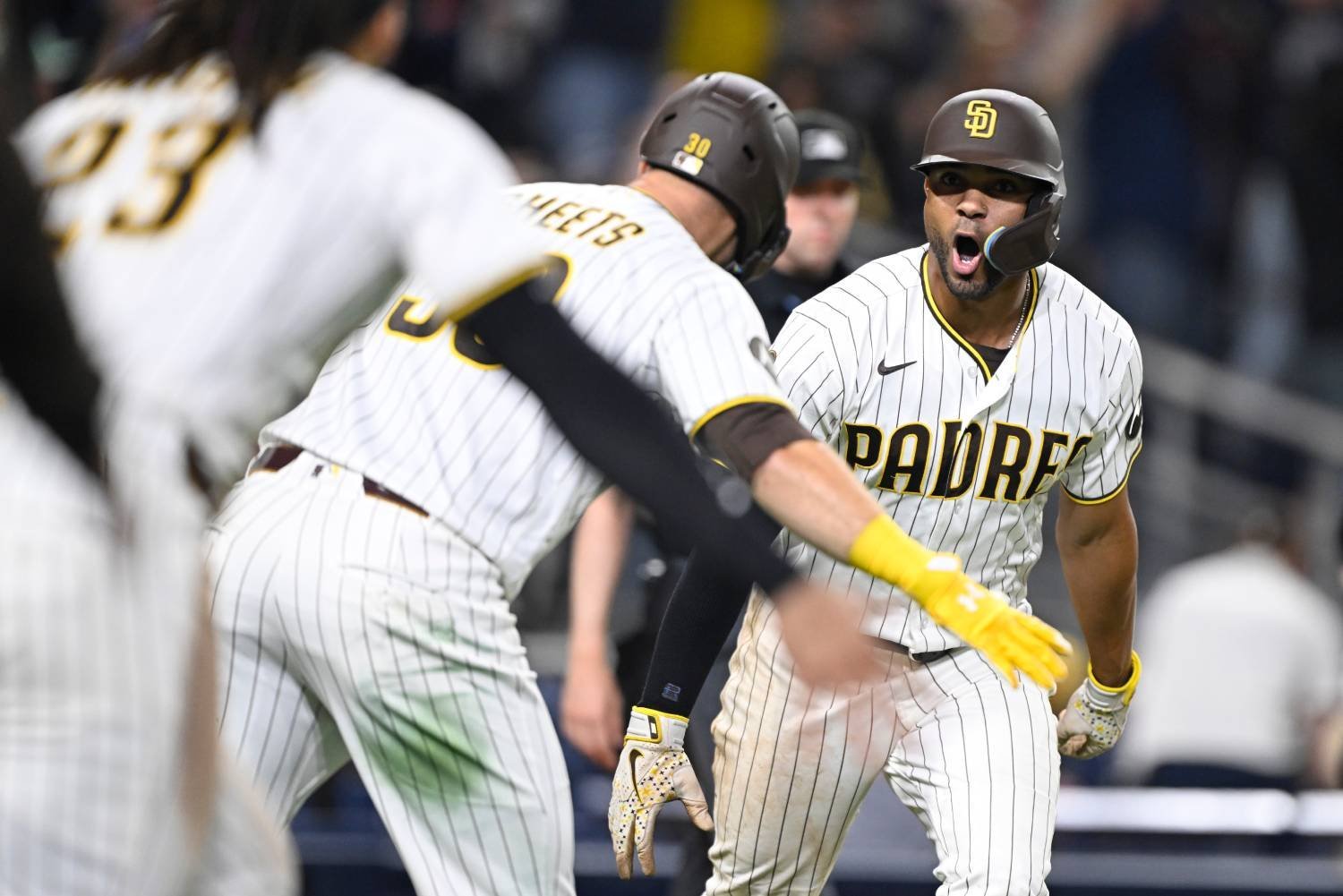 Padres' Weekly Snapshot Record last week: 6-1 Runs scored last week: 42 Runs allowed last week: 21 Standings Random Stats The Padres have won 11 of their last 13 meetings with the Pirates, with both losses being taken by Nick Pivetta. Via Kevin Acee of the San Diego Union-Tribune, the Padres' slow start with the bats could be attributed to the quality of pitching they faced in the first 12 games. Per MLB Data Warehouse, had faced the nastiest pitching of any team in MLB based on Stuff+. The Rockies entered the series ranked last in staff nastiness. The Friars have captured the opener in each of their last two series after dropping the first game of their first three series of the season. Xander Bogaerts hit the 10th walk-off grand slam in Padres history and the first since Manny Machado on Aug. 19, 2020. The last time the Padres had back-to-back walk-off homers was June 11-12, 2024, against the Oakland A's. The second one came off Mason Miller, courtesy of Jackson Merrill. Fernando Tatis Jr.'s three-hit game Saturday was the 200th multi-hit game of his career. Transactions Friday: Placed RHP Jeremiah Estrada on the 15-day injured list with right elbow tendinitis. Friday: Activated RHP Jason Adam (left quad) from the 15-day injured list. Website Highlights Miller's unholy evolution mirrors that of Diaz — N.B. Lindberg Tatis is crushing baseballs, but his timing is way off — Randy Holt Can Campusano (finally) break the Padres' catching curse? — Brendan Dentino Padres history: Rushing prospects up the minor-league ranks and what it means for Schoolcraft — Joe Naiman The numbers behind Craig Stammen's tinkering with the Padres' lineup — Steve Drumwright Will the real Nick Pivetta please stand up? — Andy Johnson Looking Ahead Monday: Off Tuesday: Mariners (Bryan Woo) at Padres (Michael King), 6:40 p.m. Wednesday: Mariners (Emerson Hancock) at Padres (Randy Vasquez), 6:40 p.m. Thursday: Mariners (Luis Castillo) at Padres (Walker Buehler), 5:40 p.m. Friday: Padres (German Marquez) at Angels, 6:38 p.m. Saturday: Padres (TBA) at Angels, 6:38 p.m. Sunday: Padres (Michael King) at Angels, 1:07 p.m. View the full article
 -
 Cubs' starting first baseman Michael Busch is hitting well below .200 to start the 2026 season. While he had an exciting RBI knock in the Cubs' come-from-behind win to cap off a series with the Pirates, will Busch break out of this dry spell? We dove into his advanced analytics to find out how possible that is. Enjoy! View the full article
 -
Mets Week In Review: Back to Last Place in the NL East
DiamondCentric posted an article in Grand Central Mets
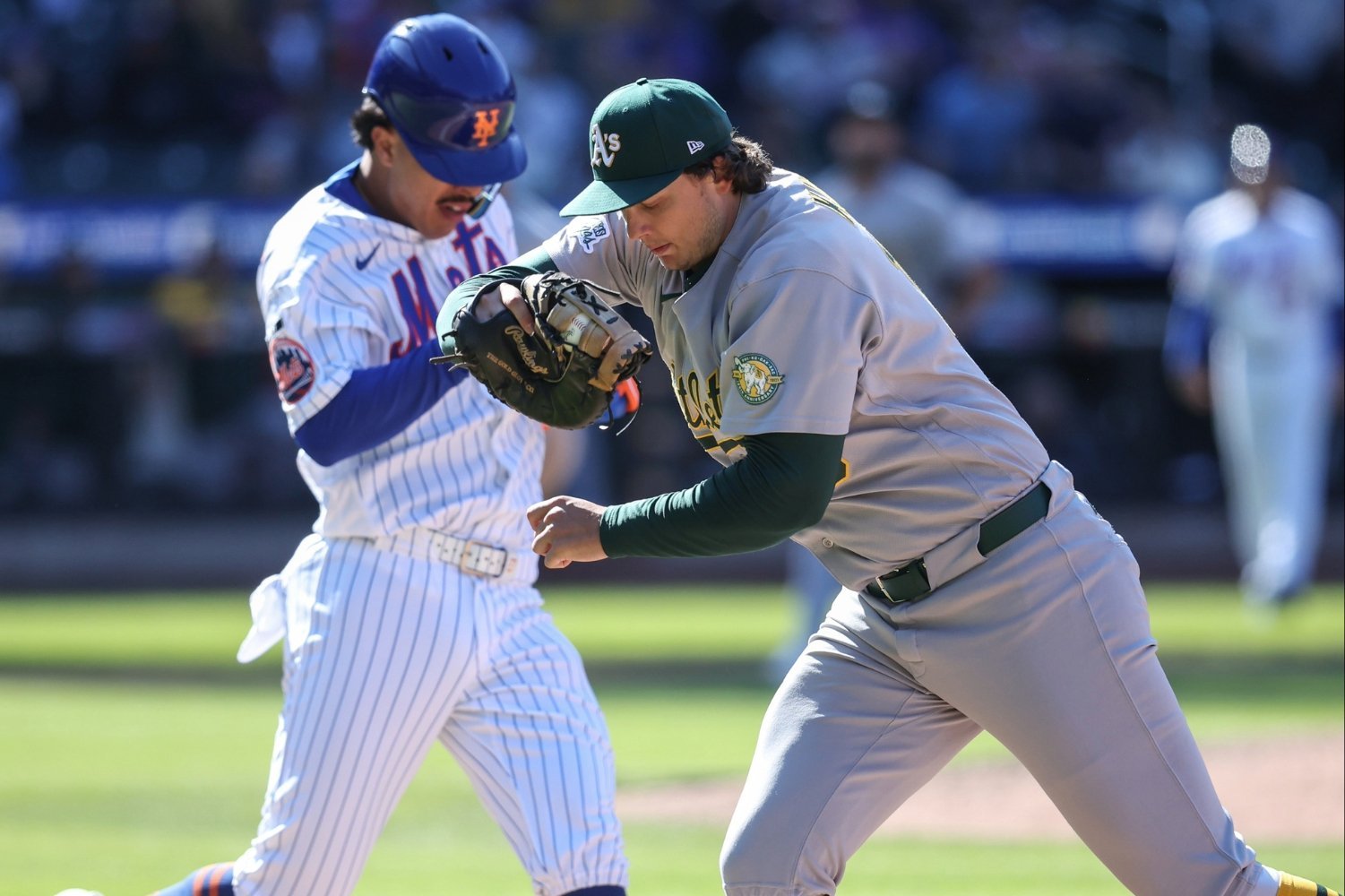 New York Mets Weekly Overview Record Last Week: 1-5 Runs Scored Last Week: 12 Runs Surrendered Last Week: 33 Standings: 5th in NL East 2.5 GB of 1st Place Transactions: 4/6 New York Mets placed RF Juan Soto on the 10-day injured list retroactive to April 4, 2026. Right calf strain. 4/6 New York Mets recalled 3B Ronny Mauricio from Syracuse Mets. 4/9 New York Mets sent LHP A.J. Minter on a rehab assignment to St. Lucie Mets. 4/11 New York Mets designated LHP Richard Lovelady for assignment. 4/11 New York Mets selected the contract of RHP Craig Kimbrel from St. Lucie Mets. 4/12 New York Mets designated RHP Luis García for assignment. 4/12 New York Mets recalled RHP Joey Gerber from Syracuse Mets Scores: Game 10 (4/07): NYM 4, ARI 3 Game 11 (4/08): NYM 2, ARI 7 Game 12 (4/09): NYM 1, ARI 7 Game 13 (4/10): NYM 0, ATH 4 Game 14 (4/11): NYM 6, ATH 11 Game 15 (4/12): NYM 0, ATH 1 TL;DR Breakdown/Highlights Diamondbacks Series: The Mets offense struggled in their three-game series against the D-backs. In game one, they took Arizona to extra innings, and thanks to Ronny Mauricio walk-off RBI single, they got their lone win of the series, 4-3. In game two, the offensive struggles showed. David Peterson struggled for the second straight outing, giving up five runs in five innings. The Mets lineup scored just two runs late in the game to avoid the shutout. In the rubber match, the Mets took an early 1-0 lead on a Luis Robert Jr. home run into the atmosphere. The Mets rode that 1-0 lead into the sixth inning with Nolan McLean dealing. He was pulled from the game with two on and one out in favor of Luke Weaver. Weaver surrendered four runs and the lead. The Mets bullpen allowed seven runs in the 7-1 loss on Thursday. Athletics Series: After losing the last two to the Diamondbacks, the Athletics came to town for a three-game series at Citi Field. Clay Holmes got the start in the first game of the series and gave up just one run in 5.1 innings. Holmes was pulled with an apparent injury, but is scheduled to make his next start against the Dodgers, according to the Mets game notes Sunday. That one run was all the Athletics needed as they shut the Mets out on six hits. The A’s added some insurance runs in the ninth inning against Tobias Myers and Richard Lovelady. Saturday was no better for the Mets, as Kodai Senga struggled in his outing, giving up seven runs in 2.1 innings of work, including two home runs in the third inning alone. The Mets would fight to come back, including Bo Bichette hitting his first home run as a Met, before Weaver allowed four runs in the top of the eighth inning. Sunday was the most embarrassing game of the series. With Freddy Peralta on the mound for the Mets they needed a win. Peralta held up his end of the bargain, giving up one run over 6.0 innings of work. Yet the Mets' offense was unable to score for the second time in three games of the series, and they lost 1-0. Website Highlights Tobias Myers Is Walking Nobody While Throwing Fewer Strikes. How? (By Brandon Glick) Mets Should Have An Action Plan To Help Alleviate Carson Benge's Slow MLB Start (By Andres Chavez) There's No Replacing Juan Soto, But The Mets Will Do Their Best ((By Andres Chavez) Looking Ahead April 13th (at LAD, 10:10pm EST): LHP David Peterson (0-2, 6.14) vs. LHP Justin Wrobleski (1-0, 4.00) April 14th (at LAD, 10:10pm EST): RHP Nolan McLean (1-1, 2.70) vs. RHP Yoshinobu Yamamoto (2-1, 2.50) April 15th (at LAD, 10:10pm EST): RHP Clay Holmes (2-1, 1.50) vs. RHP Shohei Ohtani (1-0, 0.00) April 16th: OFF April 17th (at CHC): 2:20pm EST April 18th (at CHC): 2:20pm EST April 19th (at CHC): 2:20pm EST View the full article
 -
These Brewers Prospects Are Breaking Out In April
DiamondCentric posted an article in Brewer Fanatic
 Luis Lara, Blake Burke and Jesus Made are all having a remarkable start to their 2026 MiLB seasons. Lara has been known for flashing his glove, but the bat is coming around. Burke is on an absurd home run pace through the first week and a half of play. Made just continues to drop jaws, with his two-triple performance last week being the latest superb example. Here is a breakdown of these three up-and-coming Brewers. Enjoy!View the full article
 -
 With a lot of the Twins' top prospects in Triple-A, many good players are being overlooked at Double-A Wichita to begin 2026. Jamie and Jermey go over the names to know with the Wind Surge to start 2026. View the full article
