


DiamondCentric
-
Posts
2,631 -
Joined
-
Last visited
Never
Content Type
Profiles
Forums
Events
MLB News, Rumors & Analysis
DiamondCentric Tutorials & Help
Major League Baseball Videos
MLB Fan Guides & Resources
Store
Downloads
Gallery
Everything posted by DiamondCentric
-

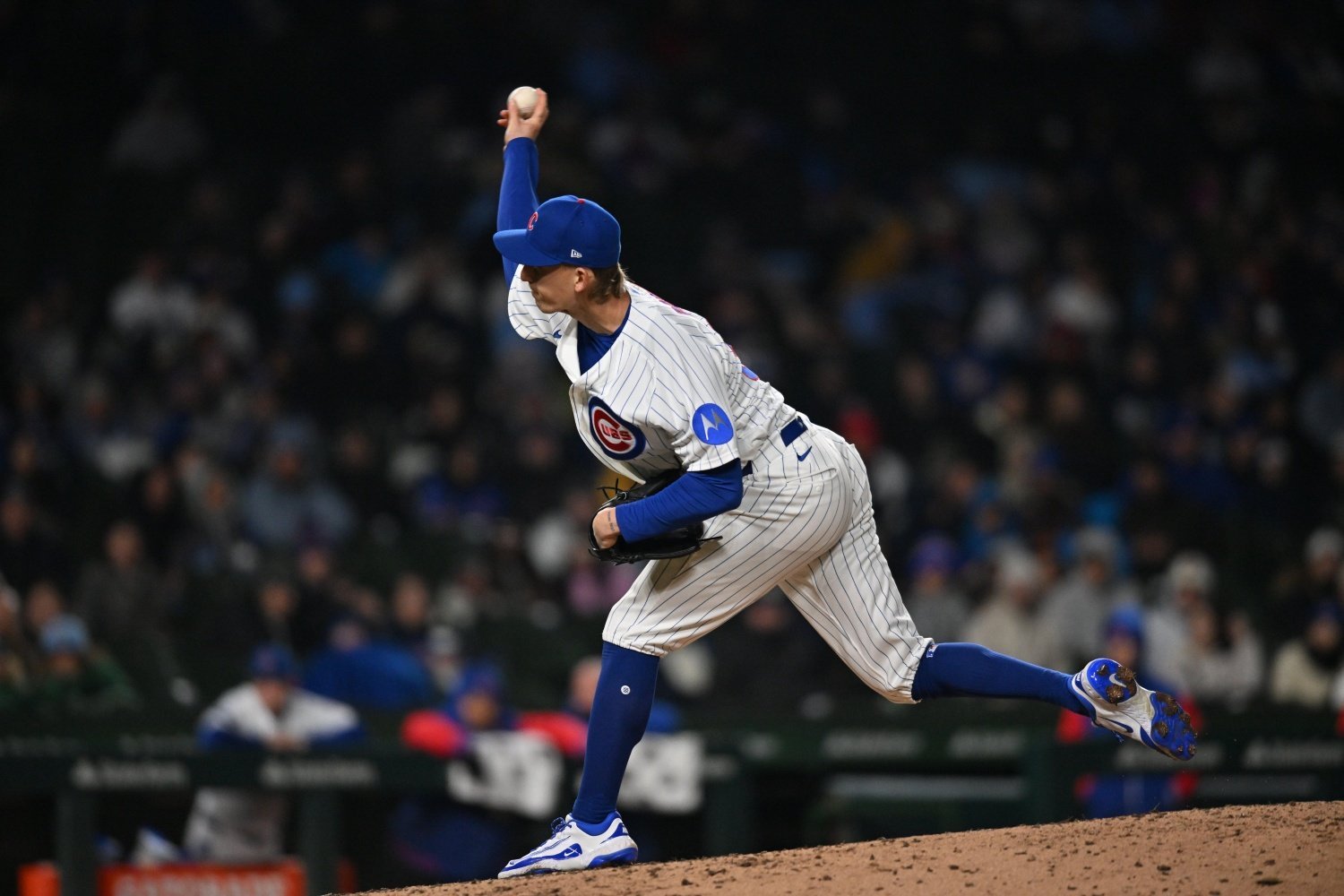 Last night, the Cubs lost 2-0. It was a bit of a frustrating game: he weather was frigid, the bats were as cold as the temperatures, and the team was seemingly just an inch or two short on a few spectacular defensive plays that could have kept the score knotted up. Despite all of that, there was one standout; Ben Brown. If we're just looking at the final stat line for Brown, it's pretty excellent. He went 3 1/3 innings, struck out five, walked one, and surrendered a solitary hit. On the surface, that's a good outing, but I think it hides a lot of the really good things that came out of it. In fact, what we may be seeing are the sprouts of a new, improved Ben Brown who could stick in the rotation. One of the things the right-handed pitcher worked on in the spring was ensuring that his fastball sat in the upper third of the zone more frequently than in the past. Our very own @Matthew Trueblood explored Brown and this location earlier this offseason when looking at his spring training data, and last night seemed to be a continuation of that. Below is a map of all of Brown's offerings last night. The red dots indicate fastballs. The vast majority of these pitches are located in the upper third, which is exactly where you'd like to see them. Better yet, there's a distinct lack of uncompetitive pitches; command and control were on display for the fireballer Tuesday. The result of getting his fastball in the upper third is that it creates space on the bottom half for his sinker (in on the hands of righties) and for his curveball to create chases and whiffs. The sinker is especially important, as it forces the hitter to cover the whole zone. Brown doesn't really want to throw fastballs in the lower half. With swing planes the way they are today and the movement he gets from his arm slot, those can be sent a long way. Nor does he want to throw low-and-in-curves. Without the sinker, the area we see filled above with the yellow/orange dots would be effectively empty, and it's an especially useful place to go against right-handed hitters. We can see how all three pitches play off each other in a nice sequence against Jo Adell in the 8th inning. Adell has some swing-and-miss tendencies, but also some big power. His xSLG last year was in the 97th percentile. Even on cold nights, he's capable of muscling out a pitch. The more options you have, the less likely Adell is to find the bleachers and extend the two-run lead to something less surmountable. To start Adell off, Brown painted a sinker on the lower, inside corner for a strike. This is a great pitch to begin an at-bat. Either Adell swings at it, which almost assuredly results in a ground ball, or you get ahead 0-1—as Brown did, tilting the balance of the at-bat in the pitcher's favor. This is how Brown is filling up a new portion of the zone against those like-handed-hitters. Next, the hard-throwing-righty went with an uncompetitive changeup, and then fastball-fastball. Both of his heaters resulted in swings. The first earned a whiff (below), and the second was right at the very top of the zone. That caused Adell to have to cover the entirety of the plate: low and in, middle-high, and the very top of the zone. That first-pitch sinker wasn't in Brown's repertoire last year, meaning he'd either have been on his third fastball by the 1-2 foul, or maybe he'd have started Adell with a curveball that he doesn't really throw for strikes. Either way, the new pitch gave Brown options, and options are always good. Now sitting in a very favorable count, Brown could finally throw the curve. Ideally, he'd have gotten him a little more on the outer portion of the lower half, but small quibbles aside, it was a good pitch. It was also the fourth type of pitch Brown had thrown in the sequence. It created a harder decision point for the hitter, and Brown got the pitch on the black. Adell grounded out harmlessly to Alex Bregman. That sinker adds just an extra point of reference for a hitter, and it's going to make Brown incredibly difficult to deal with against right-handed hitters. While these are all great offerings, what encouraged me most was a pitch that Brown threw in the next at-bat, this time by Angels left-handed-hitting outfielder Josh Lowe. So far in his young career, the Cubs' reliever has struggled against southpaws, surrendering a .342 wOBA (up from his .295 against RHH). It makes sense, too, because he doesn't have a pitch that's designed to attack lefties. His sinker can't be the solution here, either. Sinkers are much better against the same-handed hitter, and while he may show it every so often, it's not the pitch that's going to solve this problem. Within this at-bat, however, Brown flashed a pitch I want to see more of; a hard-thrown changeup that registered 90 mph on a very cold night. This wasn't a perfect pitch, mind you. It's certainly too high in the zone. Ideally, you'd like to see it thrown more like the one below, from Cade Horton. But it's a start. The velocity is reminiscent of Edward Cabrera's changeup, which sat well into the 90s on Monday night. As you can see, there's some solid arm-side movement on it; the pitch broke 13 inches to the right. What I liked the most about it is that he did have the confidence to throw it, and I want more of it. I want him to bury it more, sure, but I want to see him feel confident in that offering to throw it more than once or twice in a three-inning appearance. If Brown can bury that changeup a bit more, he's going to get weak ground balls against off-handed hitters, just like Cade Horton did with Daylen Lile above. "Baseballs have a tendency not to fly over the fence when they hit the ground," a friend of mine said last night when discussing the game, and it's such a good and simple line that I have to steal it here. Couple a changeup that Brown can more consistently get to the outside corner against hitters like Lowe with the new sinker to a righty like Adell? You're cooking with gas, now. Strangely enough, the pitcher I envision the best version of Brown to be is probably very similar to the best version of José Soriano, the pitcher the Cubs had the pleasure to face last night. Soriano mixes his high-octane fastballs with a knuckle-curve (that he throws 85 mph+) and a splitter he uses to keep lefties at bay. Soriano used his splitter nine times against off-handed hitters last night, and ideally, Brown could use his changeup in a similar manner. Even as-is, the guy we saw take the mound last night is a weapon. Don't let me sound like I'm trying to diminish what he accomplished. The new sinker is helping against hitters like Adell, and will make Brown better than when we last saw him in 2025. Instead, what I see is the path forward. If he doesn't ever find the changeup, Brown is a good pitcher, but there's the potential for a very good pitcher if he can just find that pitch a little. And I can't help but dream on it. What did you make of Ben Brown's appearance last night? Did anything stand out to you? Let us know in the comments below! View the full article
-
 There was a time when major-league teams treated prospects like unopened Christmas presents. You didn't lock in the value before you knew what was inside. Now, clubs are increasingly trying to shake the box, guess the contents, and sign the receipt before the wrapping paper even comes off. Pre-debut extensions have become one of baseball’s more fascinating gambles. Teams are buying out uncertainty in exchange for long-term cost control, while players are cashing in before facing the volatility of development. It's a risk on both sides, but one that is increasingly comfortable, as front offices try to get ahead of the market. The New Wave of Early Bets The Seattle Mariners recently pushed that trend to a new level by locking up top prospect Colt Emerson to an eight-year extension worth a guaranteed $95 million, with a club option for 2034. The signing comes with a full no-trade clause and includes another $35 million in escalators. There’s reportedly an $8-million signing bonus, with salaries ranging from $9 million to $18 million from 2028-33. That is the largest guarantee ever handed to a player who has yet to appear in a major-league game, surpassing Jackson Chourio’s deal by $13 million. Emerson, just 20 years old, has only nine games of Triple-A experience, which somehow makes the deal feel even more aggressive. If Emerson becomes a star, this deal looks like a bargain by year three. If not, it becomes a very expensive lesson in optimism. Not to be outdone, the Milwaukee Brewers are reportedly finalizing an eight-year deal worth just over $50 million with prospect Cooper Pratt, including two club options worth about $15 million per year. However, the value of those options can increase via escalators. Pratt is 21 and has barely dipped a toe into Triple-A, making this extension feel even more like a projection than a reaction. Unlike Emerson, Pratt is not coming off a season that screams superstardom. His offensive production was modest, but the underlying traits are what sold Milwaukee. Strong plate discipline, speed on the bases, and defensive reliability at shortstop give the Brewers a foundation to dream on. This is less about what Pratt has done and more about what they believe he will become. It's worth noting that the Brewers have been here before with Chourio, whose pre-debut deal looked bold at the time and now looks like a masterstroke. The difference is that Chourio had already reached Triple-A and looked big league-ready. Pratt is still more idea than finished product. In fact, unlike Chourio, Scott Kingery, and several other players who signed pre-debut deals over the last two decades, neither Emerson nor Pratt will be promoted to the majors in the wake of these deals. They're still prospects; they've just become very wealthy ones. The Boras Factor That brings us to Scott Boras, baseball’s most recognizable agent and the human embodiment of “we will take this to free agency and like it.” Boras has built his reputation on maximizing value at the open market, often steering clients away from early extensions in favor of bidding wars. While his agency has softened its stance slightly over the years, the track record remains clear. Pre-arbitration extensions for Boras clients are exceedingly rare. In fact, the deal signed by Carlos González back in 2011 remains the only notable example of a Boras client signing that early. That context makes the Pratt negotiations particularly interesting. If finalized, it represents a shift, or at least an exception, in how Boras is willing to operate. Perhaps it reflects the game's changing economics. Perhaps it reflects the Brewers being extremely convincing. Or perhaps it simply reflects that every rule has a price. Could the Twins Try This With Walker Jenkins? Let's turn, then, to Walker Jenkins and the Minnesota Twins. Jenkins is not just another prospect in the system. He's the kind of talent that invites bold decisions. A consensus elite prospect with the type of hit tool and overall profile that draws lofty comparisons, he is exactly the archetype teams consider for these early extensions. If Minnesota believes in Jenkins the way Milwaukee appears to believe in Pratt, there is a path to a similar deal. Lock in cost certainty. Buy out arbitration years. Maybe even sneak in a free agent season or two. From a roster construction standpoint, it's appealing. From a risk standpoint, it's enormous. The complication, of course, is Boras. Jenkins is represented by the same agent who has historically preferred to let value mature on the open market. Convincing Boras to agree to a pre-debut extension would require a deal that not only protects Jenkins, but also meaningfully rewards him for signing early. In other words, it would not come cheap, and it would not come easy. Pratt got $1.35 million as an overslot sixth-round draft pick in 2023. Jenkins went fifth overall the same year, and got almost $7.2 million. That puts the two in very different situations, in terms of the leverage the team can exercise. The Twins will have a much harder time convincing anyone Jenkins belongs in their farm system than the Brewers have had keeping Pratt's ascent smooth but steady, given that team's far superior depth. Boras could and would hold the Twins' feet to the fire in a way he couldn't have done with the Brewers. Pre-debut extensions are no longer outliers. They're becoming strategic tools for teams willing to bet on their evaluations. The Mariners and Brewers have each placed sizable wagers on young talent, hoping to secure future stars at today’s prices. For the Twins, Jenkins represents a similar opportunity, wrapped in the added complexity of Boras. The question is not just whether Minnesota believes in Jenkins. It is whether they believe enough to challenge one of the sport’s most established negotiating philosophies. Should the Twins attempt a deal with Jenkins? Leave a comment and start the discussion. View the full article
-
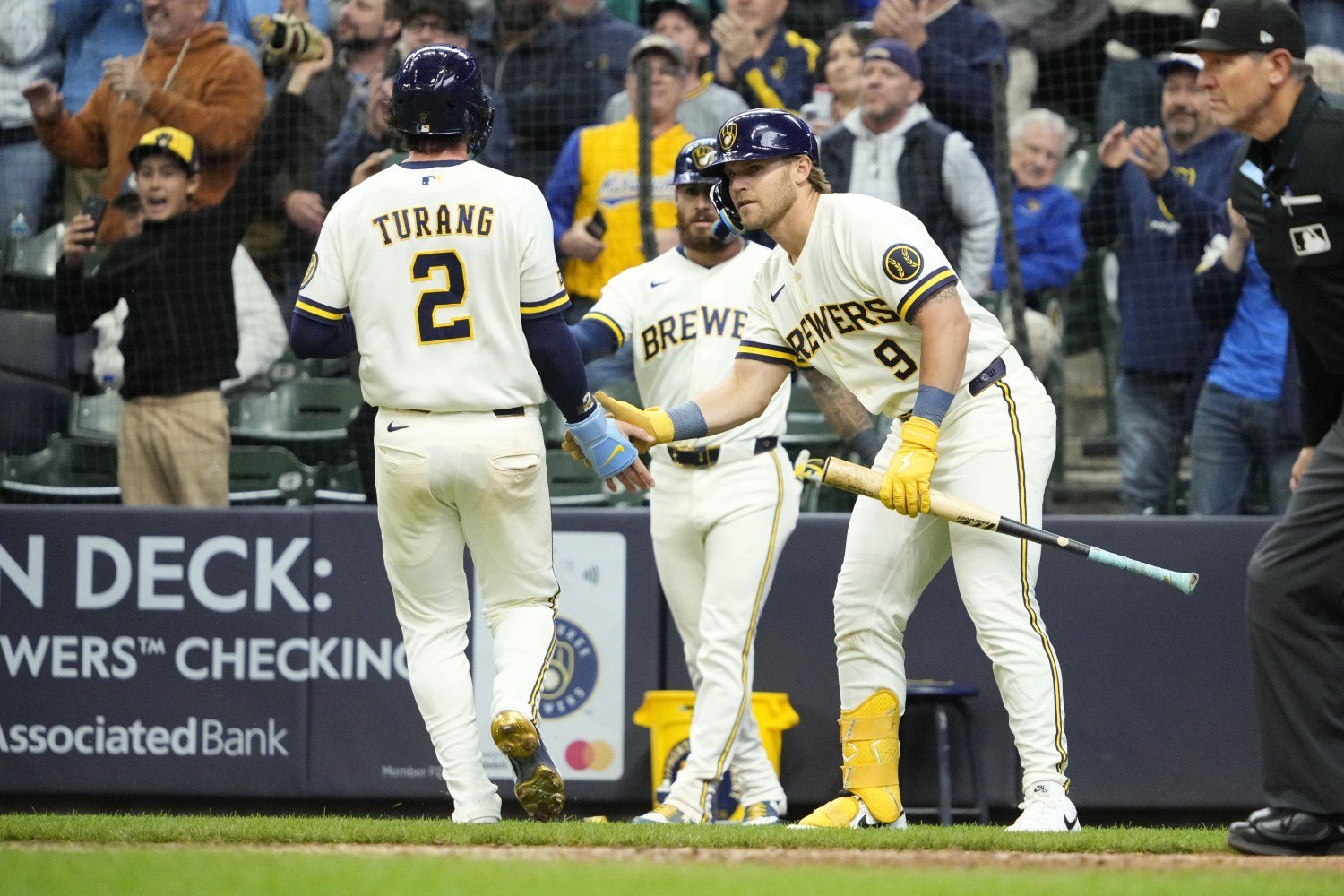 This year’s version of the Milwaukee Brewers has done the exact opposite of last season’s squad, starting off 5-1 instead of a dreadful 0-4. Of course, everything turned out quite well in 2025, with the Brewers boasting the best record in baseball with the most wins in their franchise’s history at 97-65. Who knows what the rest of 2026 brings? Undeniably, though, it feels so much better to match the optimism of Opening Day with the results on the field. Milwaukee has jumped out to a great start, in part, because they've had the best or second-best six-game open to a season in Brewers’ history in five categories. Everything can change in an instant, but it’s worth appreciating the early production. Strikeouts Pitching The Brewers’ pitching staff has 76 strikeouts through the first five games, easily the most in club history. They have at least 11 punchouts in five games, and eight in the other. Ironically, the 2019 squad is second with 65 strikeouts. As noted in a previous article, Milwaukee’s strategy of relying on a largely inexperienced starting rotation this season mirrors that 2019 team's. Interestingly, this year’s staff is split almost down the middle by role: Relievers have 37 and starters have 39, with Misiorowski's 18 in two starts pacing the rotation. The 2019 squad saw its starters take on a larger share, with 39 punchouts against the pen's 26 to the same point. Either way, if the Brewers can continue this early trend, run prevention will reign in Milwaukee Fewest Errors Speaking of run prevention, it’s helpful when your defense commits zero errors in the first six games, as well. Though errors are not the standard to measure all defense by, turning the routine outs into actual outs goes a long way in keeping teams off the board. Only the 2000 Brewers started a season’s first five contests without an error in franchise history, and unlike this club, they committed their first flub in game No. 6. The Brewers are built around defense, and it helps that fewer balls are in play thanks to the barrage of strikeouts. Entering play on Wednesday, the combined record of the five errorless teams in the league was 17-8. Stolen Bases You probably heard this a few times on the broadcast, but the 2026 Brewers own the most stolen bases over the first six games in club history, with 15. The 2024 team, which held the previous mark with 13, finished that season second in baseball in swipes and second in single-season franchise history with 217 steals. Among the 15 stolen bases to start this season, seven players have already taken a bag, with five of them stealing two or more. David Hamilton leads the team with four, and the Brewers have only been thrown out one time in their 16 attempts. Offensive Walks Milwaukee has drawn 31 walks in its first five contests, tied for the best start in Brewers’ history, set by the 1982 American League Champions. The 2026 lineup has at least two free passes in every game and five or more walks in four of the contests. As of Wednesday morning, they were second in walk rate in MLB, at 14.5%. Much has been made of the Brewers’ “woodpecker” mentality and their discipline in refusing to chase pitches outside the zone. The high number of walks in recent years (they finished fourth and third in walks the past two seasons, respectively) is one of the key results that Milwaukee’s offense utilizes to pressure the opponent and score at a high clip. Run Differential This is often a statistic people look at to determine the quality of a team, though small samples should always be kept in mind. Regardless, the Brewers’ +28 run differential after six games is the second-best in team history—though well behind the 1978 club that sat at +33. That team finished the season with the best run differential in MLB. Milwaukee currently has the best run differential in baseball, thanks to the only loss being by one run. They have also scored at least six runs in five of the games. A 14-2 blowout on Opening Day certainly helps. But, let’s not forget, last season the Brewers had the best run differential in MLB, as well, en route to the best record in baseball, so not much has changed in the very early going. Does this hot start and top-of-the-franchise statistical beginning mean a lot going forward? Maybe not. But it’s a lot better than talking about how ugly a season looks five games after another long winter. View the full article
-
 The Minnesota Twins and Target Field are expanding their already impressive food and drink line up in 2026. You'll find something for everyone, whether it's the new Double Barrel Burger from Red Cow, Hot Cheeto Dusted Elote, gluten free and vegan food options, deep fried waffle on a stick, or an all new refreshing lineup of alcoholic and nonalcoholic drinks!View the full article
-
The Science of Mr. Padre: The Impossible Standard of Tony Gwynn
DiamondCentric posted an article in Padres Mission
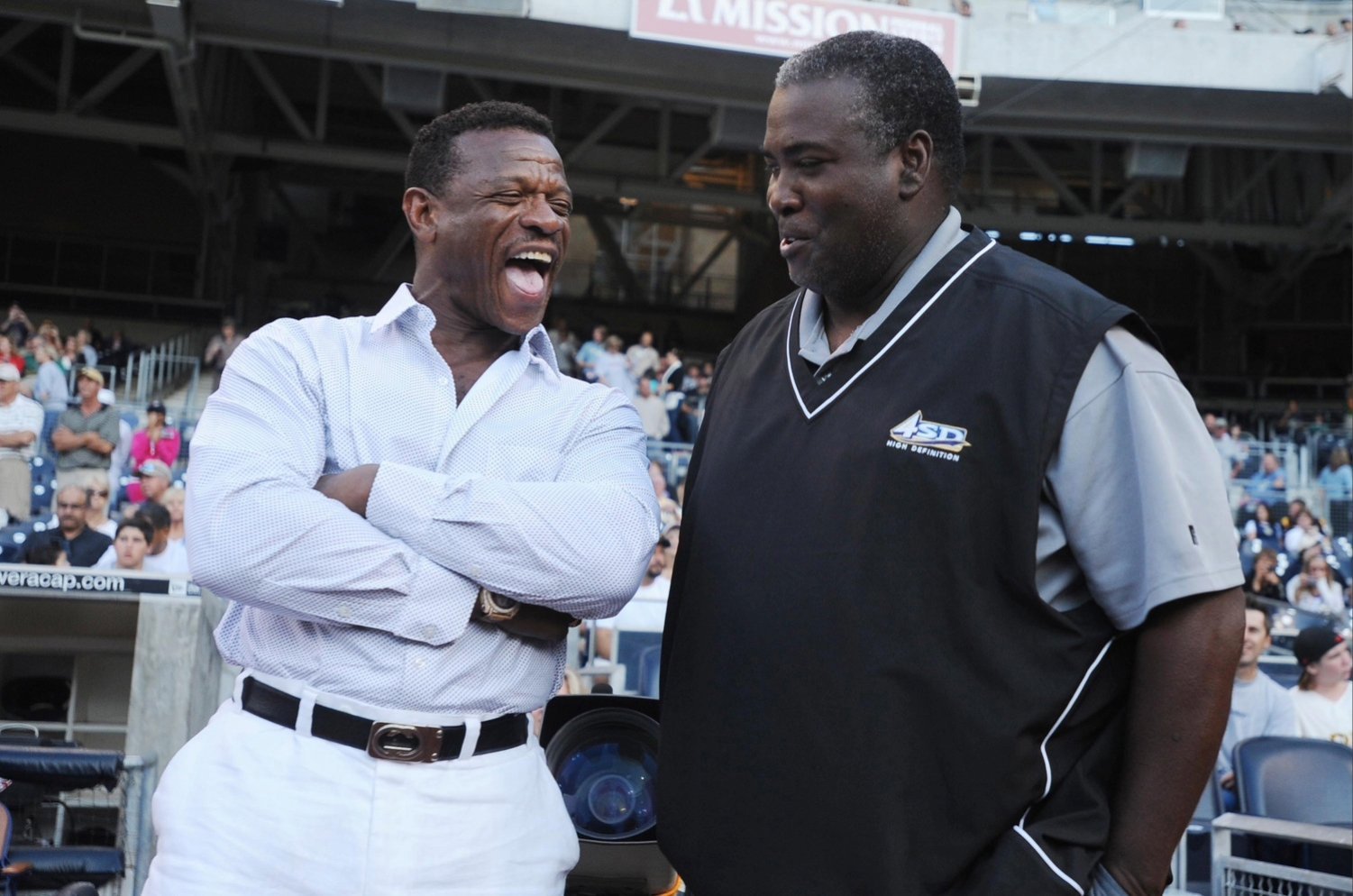 In the modern era of baseball, the "Three True Outcomes"—home runs, walks, and strikeouts—have turned the game into a series of mountain peaks and deep valleys. We’ve grown accustomed to seeing superstars fan the breeze 200 times a year in exchange for 40 long balls. But to understand Tony Gwynn is to step into a different dimension of physics entirely. Tony Gwynn didn’t just play baseball; he solved it. Over a 20-year career spent entirely with the San Diego Padres, he treated the batter’s box like a laboratory. While his peers were swinging for the fences, "Mr. Padre" was busy mastering the "5.5 hole"—the space between third base and shortstop—with the precision of a diamond cutter. The 0.04% Anomaly The most staggering metric of Gwynn’s career isn't his 3,141 hits or even his eight batting titles. It is his refusal to fail. In 20 seasons, Gwynn struck out only 434 times. To put that in perspective, consider that he stepped to the plate 10,232 times. That means Gwynn struck out a mere 0.04% of the time over the course of 2,440 games. In today’s game, a leading slugger might reach that 434-strikeout mark in just two and a half seasons. Gwynn stretched it across two decades. He famously went 20 consecutive years without ever striking out more than 40 times in a single season. In 1995, he struck out only 15 times in 535 plate appearances. For Gwynn, a strikeout wasn’t just an out; it was a statistical clerical error he spent hours of film study trying to prevent. "Captain Video" and the Craft of Hitting Long before every MLB dugout was equipped with iPads and high-speed motion sensors, Gwynn was a pioneer of video analysis. He earned the clubhouse nickname of "Captain Video" because he traveled with a portable VCR and stacks of VHS tapes, obsessively breaking down his swing and the tendencies of opposing pitchers. This wasn't vanity; it was a quest for an elite level of consistency. Gwynn believed that if he could keep his mechanics identical regardless of the pitcher, the results would be inevitable. This scientific approach made him a nightmare for the greatest arms of his generation. Greg Maddux, arguably the most cerebral pitcher in history, once lamented that no matter how much you changed speeds, you couldn't fool Gwynn. "Except for that [expletive] Tony Gwynn”, Maddux famously said. The stats back him up: in 107 plate appearances against Maddux, Gwynn hit .415 and never struck out once. The Mathematical Safety Net Perhaps the most "broken" statistic in the Gwynn canon is the sheer distance between him and mediocrity. Most players battle their entire careers just to keep their average at a respectable mark, avoiding the Mendoza Line of under .200, while pushing to get as close as possible to the .300 mark. Gwynn’s career average of .338 was so inflated by his consistency that he possessed a mathematical safety net unlike any other. If Tony Gwynn had decided to keep playing ball his last few seasons, but suddenly lost his ability to hit entirely—going 0-for-his-next-1,183 at-bats—he still would have finished his career with a lifetime average above .300. He effectively built a two-season-long cushion of pure excellence. Beyond the Box Score While the numbers suggest a cold, calculating machine, the nuance of Gwynn’s career was found in his joy. He was a 15-time All-Star who played with a smile that felt as permanent as his batting stance. He turned down bigger contracts in larger markets to stay in San Diego, a rarity that cemented him as a civic icon. He was also an exceptional dual-sport athlete, still holding the San Diego State University record for career assists in basketball. That "point guard vision"—the ability to see the entire floor and find the open man—translated perfectly to the diamond. He didn't see a defense; he saw lanes. The Legacy of the Lost .400 We will always wonder about the season of 1994. When the player's strike halted the season, Gwynn was hitting .394. He was arguably the only player in the last 80 years with the hand-eye coordination and the mental discipline to actually catch Ted Williams and hit .400 over a full season. In the end, Gwynn didn't need the .400 mark to prove his point. His career stands as a testament to the sometimes forgotten art of contact—a reminder that in a game of inches, no one ever owned those inches quite like Mr. Padre sporting his #19 jersey. View the full article
-
Red Sox's Roster Manipulation Puts Spotlight Squarely on the Reserves
DiamondCentric posted an article in Talk Sox
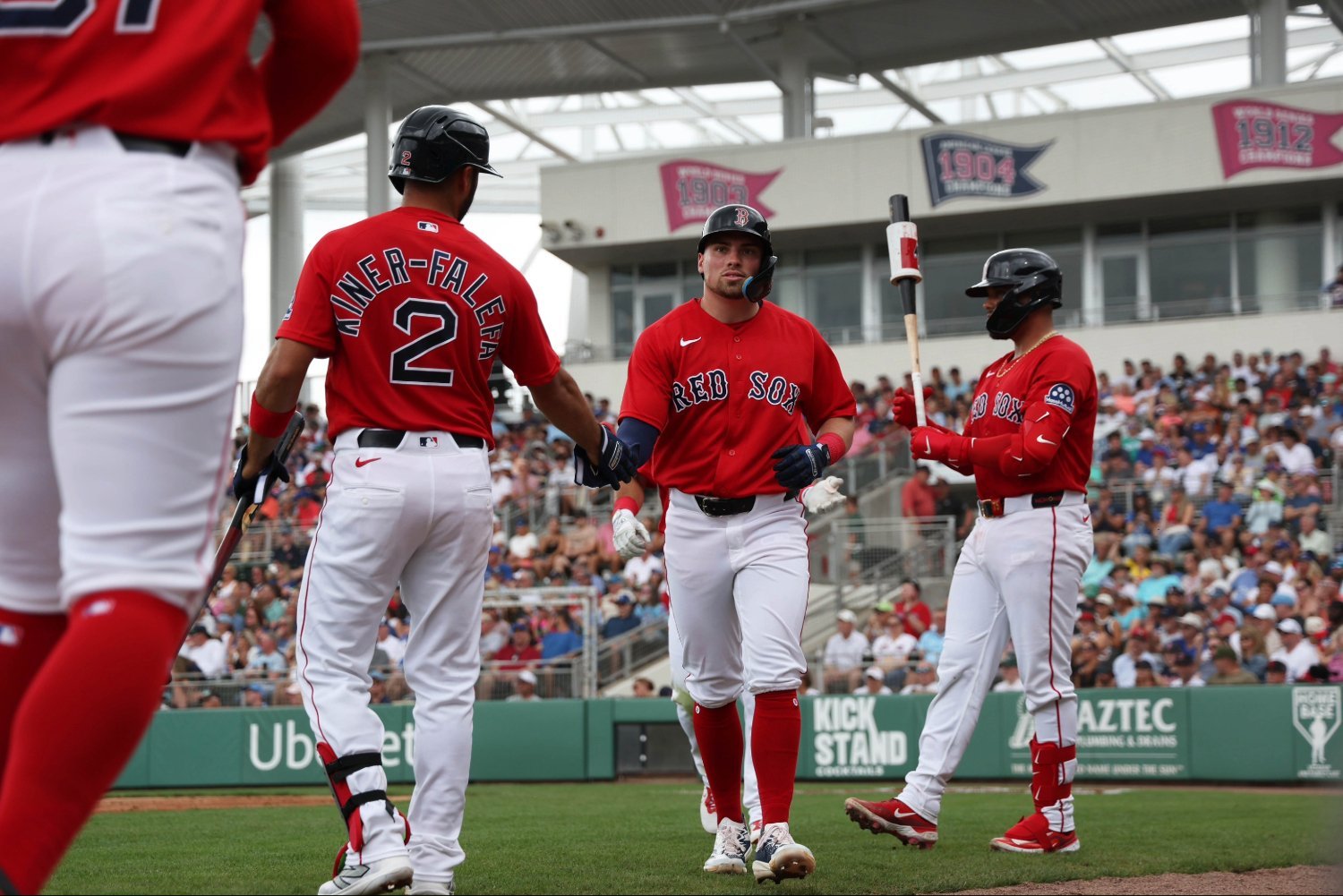 Opening Day roster decisions are easy to forget once the games begin. Most of the attention shifts to the stars, the top of the lineup, and the front of the rotation. But the edge of a roster can reveal something more important — it can show how a team plans to survive the games that do not go cleanly. That is what stood out in the Boston Red Sox’s opening series in Cincinnati. Boston left town 1-2 (and have since sunk to 1-4), so this is not about declaring the roster validated after one weekend. It is about something more useful than that. The first series started to show what the Red Sox believe they need to be. This looks like a team trying to win on flexibility as much as talent. It wants options. It wants coverage. It wants the ability to manage matchups and protect itself when games drift off script. That is what made the final roster decisions worth watching in the first place. Marcelo Mayer was the most prominent of those calls, and his first series captured the balance Boston seems to want. Alex Cora spent the spring making it clear Mayer had to earn a spot. He did. On Opening Day. he rewarded that trust immediately, coming off the bench to double and score. That was the upside of the bet. Boston trusted the talent and got an instant return. By the end of the series, the other side of the equation showed up. On Sunday, the Red Sox still managed the position situationally, turning to Andruw Monasterio for a pinch-hit spot and keeping him in defensively at second base. The move gave Boston a right-handed option in the moment with Monasterio and a clean defensive fit afterward. That is what makes Mayer important to this conversation. Boston was willing to reward performance but it was not willing to surrender flexibility to do it. The Red Sox did not treat second base like a symbolic prospect promotion. They treated it like a position they intended to manage to win. The same idea carried into the bench. Monasterio did not need a huge series to show why Boston wanted him. He only needed to show why the spot existed. His role was not to fill a bench seat. It was to give Cora another useful piece at the edge of the roster, one that could help him manage matchups and keep the infield covered without losing flexibility elsewhere. That is the kind of player who can look unimportant until the exact moment he is needed. The same was true on the pitching side, where Ryan Watson’s debut may have said as much about the Red Sox's priorities as any of the late-camp decisions. Watson making the team was easy to frame as a Rule 5 roster obligation. Saturday showed why that was too simple. After the starter exited early and the game stretched deep, Watson gave Boston 2 1/3 scoreless innings in his major-league debut. The three walks showed the usual nerves and rough edges, but the outing still made the point. The Red Sox wanted another arm who could absorb meaningful innings when a game stopped behaving the way it was supposed to. That is not a glamorous roster function, but it is a real one. Connelly Early fit that same logic. The back of the staff was never just about naming a fifth starter. As reported by MassLive’s Chris Cotillo, Boston’s end-of-camp pitching decisions were shaped in part by the need for extra length while Brayan Bello and Ranger Suárez continued building up after World Baseball Classic duty. That made the decision less about spring hierarchy and more about practical coverage. Early backed that up Sunday. He gave the Red Sox 5 1/3 innings and left Boston in position to win before the bullpen let the game turn later. While that does not settle anything long term, it does underline the short-term point. And that is why this series mattered, even in a losing set. The Red Sox’s late roster bets did not define the weekend but they helped explain the shape of the team. Mayer showed Boston is willing to trust talent without giving up control of the matchup game. Monasterio showed the bench was built for specific utility. Watson showed why innings coverage mattered. Early showed why practical depth at the back of the staff was worth prioritizing. None of these decisions are permanent. A week from now the picture could shift. A month from now some of these names may be gone. But the opening series already revealed something real: the Red Sox built the edges of this roster not for decoration, but for the messy, unpredictable stretches that decide games. If that flexible identity holds, those final roster spots will not just matter. They could become difference-makers. View the full article
-
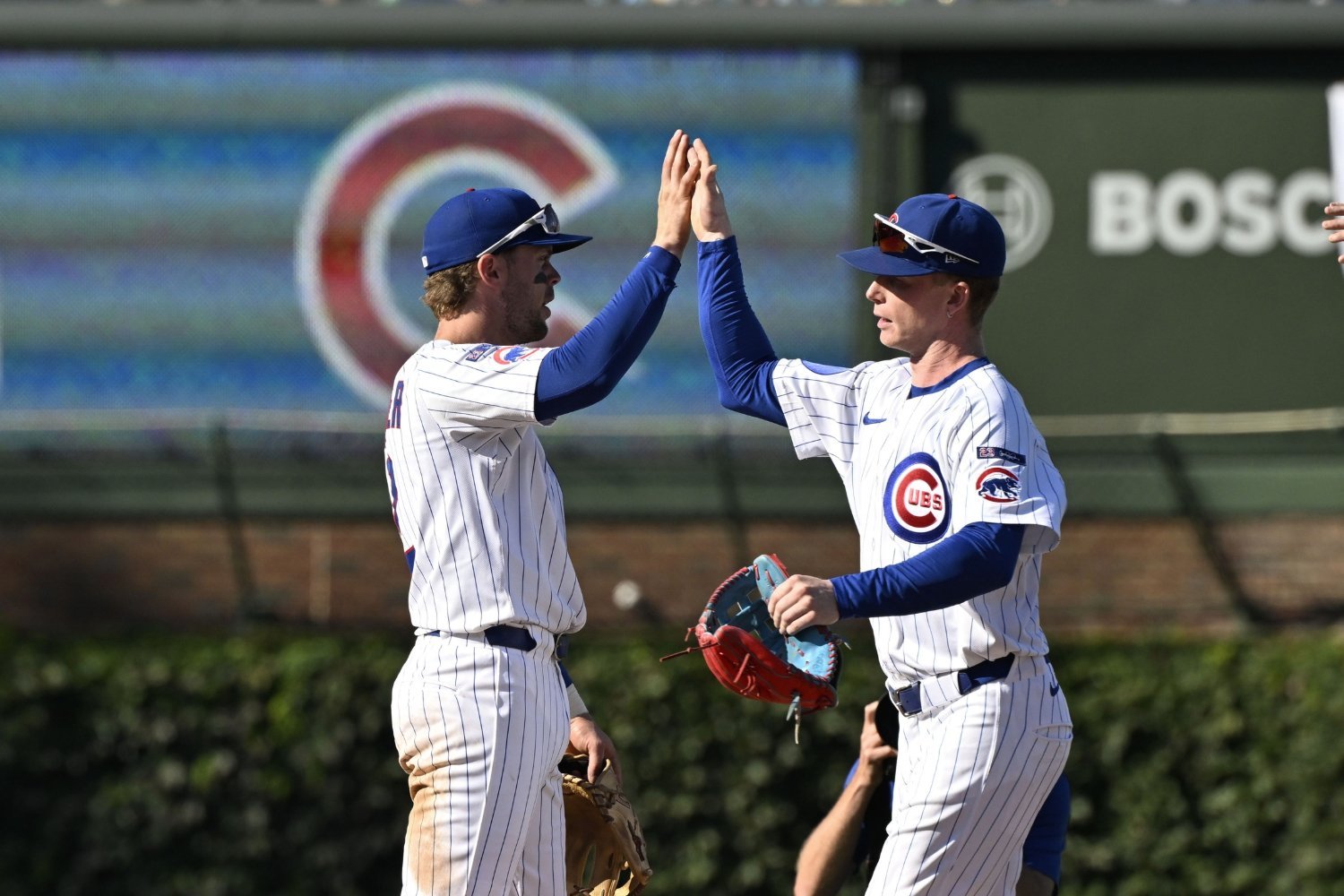 With a bit of an uneven start to the 2026 season, there's been some attention building around the Chicago Cubs' lineup and Craig Counsell's construction of it. It's doubtless that his choices thus far, some of which have drawn ire from subsections of the fanbase, have been predominantly informed by the absence of Seiya Suzuki. Regardless of those particulars and how things could shift upon Suzuki's return, it's clear that there's one portion of this iteration of the team's lineup that is working exactly the way it's supposed to. As of this writing, each lineup penned by Counsell has featured Pete Crow-Armstrong batting fourth and Nico Hoerner directly behind him in the fifth spot. The returns for each player have been solid within a small sample so far; Crow-Armstrong is reaching base at a .333 clip with an improved walk rate, while Hoerner has a pair of doubles to his credit and an even split between his walk and strikeout rates. We're working with minuscule samples, and neither player really profiles for the spot in which they're currently hitting. Crow-Armstrong doesn't have the typical makeup of a clean-up hitter even following a 30-homer campaign in 2025, and Hoerner's contact-centric skill set isn't one you'd typically find batting in the five spot. However. it's the way one plays off of the other that is a really tantalizing thought for the starting nine moving forward. As much variability as still exists within Crow-Armstrong's offensive skill set, there's at least one thing of which one can be assured: reliability on the basepaths. Crow-Armstrong is armed with elite sprint speed but also a level of instinct between 90-foot sections of the infield dirt. His 29.5 feet-per-second was both above league average and in the 96th percentile in 2025, while his baserunning acumen scored high marks as well. FanGraphs' baserunning metric, BsR, checked in at 6.7 for Crow-Armstrong last year. That comprehensive metric measures on-base skills through a blend of steals, double play avoidance, and advancement on the bases (all weighted and measured against expectancy in a variety of contexts). A 6.7 figure doesn't quite classify as "excellent" in the eyes of the metric, though it falls between that and "great." The same can be said of Statcast's Runner Runs, wherein baserunning performance is measured primarily within taking extra bases. Here is where Crow-Armstrong falls in that respect: In terms of the broad metric, Crow-Armstrong's four Runner Runs pegged him ninth in the league among qualifiers in 2025. What's unique about his case is that the attempted advances against the estimated attempt, the latter of which measures what the average runner might attempt in that same situation. In the advance attempt rate, Crow-Armstrong ranks 20th. The estimated attempt rank, however, ranks 190th. That leaves his attempt rate above average as the 12th-highest among that group. There's plenty of nuance within all of these baserunning metrics, but the simplified version is Runner Runs measures the ability to take extra bases. Crow-Armstrong is aggressive on the bases but has the skill set to make him successful in doing so. That'll play anywhere in the lineup. Having Hoerner directly behind him, however, is a way for the Cubs to unlock the best version of that aggression. In Hoerner, the Cubs have a bat that lived in the 99th percentile in both whiff and strikeout rate last year. His contact rate, at 89.8 percent, ranked fourth in the league among qualifiers. Within all of that contact, only Luis Arráez hit more singles than Hoerner's 138. Even better is that with runners on, Hoerner's .328 average ranked fifth. Not a ton of that action came with Crow-Armstrong on base in front of him, though. He spent much of 2025 hitting fourth or seventh while Hoerner was operating in the sixth or seventh spot. Having the two back-to-back has the potential to unlock a certain level of run production that has to be enticing for Counsell. If Crow-Armstrong can reach first base (or second. given that he ranked 11th in the league in doubles last year), then you're looking at any number of first-and-third situations at various stages of a game by virtue of Hoerner hitting behind him. If he's on second, then you're creating more immediate run-scoring opportunities. There's also an aesthetic appeal to all of this. Watching Pete Crow-Armstrong run the bases is one of the great joys in this game, and there's something special about Nico Hoerner's old-school contact profile. The two working in conjunction with one another is as much of a feast for the eyes as it is a boon to run-scoring opportunities. Either way, the value of having one of the game's elite contact hitters behind one of its top baserunners cannot be overstated. The two were more akin to ships passing in the night last year, but have the opportunity to be something paramount to the offensive output of the Cubs in 2026. View the full article
-
 In episode 113 of Destination: The Show, Jeremy and Jamie caught up with Twins left-handed pitching prospect Dasan Hill as he prepares to start Opening Night for the Cedar Rapids Kernels. The guys talk with Dasan about his journey through amateur baseball, his draft experience, and his onboarding with the Twins. They move on to discuss his first full pro season in 2025, his goals for 2026, and his reflections on starting the Spring Breakout game and touching 100 mph for the first time. 0:55 Dasan Hill 1:16 Earliest baseball memories 3:44 Process of getting recruited and drafted 6:15 Stuff taking a step forward as a senior of high school 7:55 Getting drafted by the Twins 9:33 What did you know about Minnesota? 11:00 The onboarding process after getting drafted You can support the show by downloading it from wherever you get your podcasts, including iTunes and Spotify. If you enjoy the content, consider leaving us a five-star rating and review in addition to sharing or retweeting DTS-related content. You can follow us on Twitter @DTS_POD1, @Jeremynygaard, @J_D_Cameron, and @TheodoreTollef1. We’re now on Bluesky @destinationtheshow.bsky.social. You can also find full episodes and clips of our shows on our YouTube page @DestinationTheShow. View the full article
-
7 Bold 2026 Predictions About Brewer Fanatic's Top 20 Prospects
DiamondCentric posted an article in Brewer Fanatic
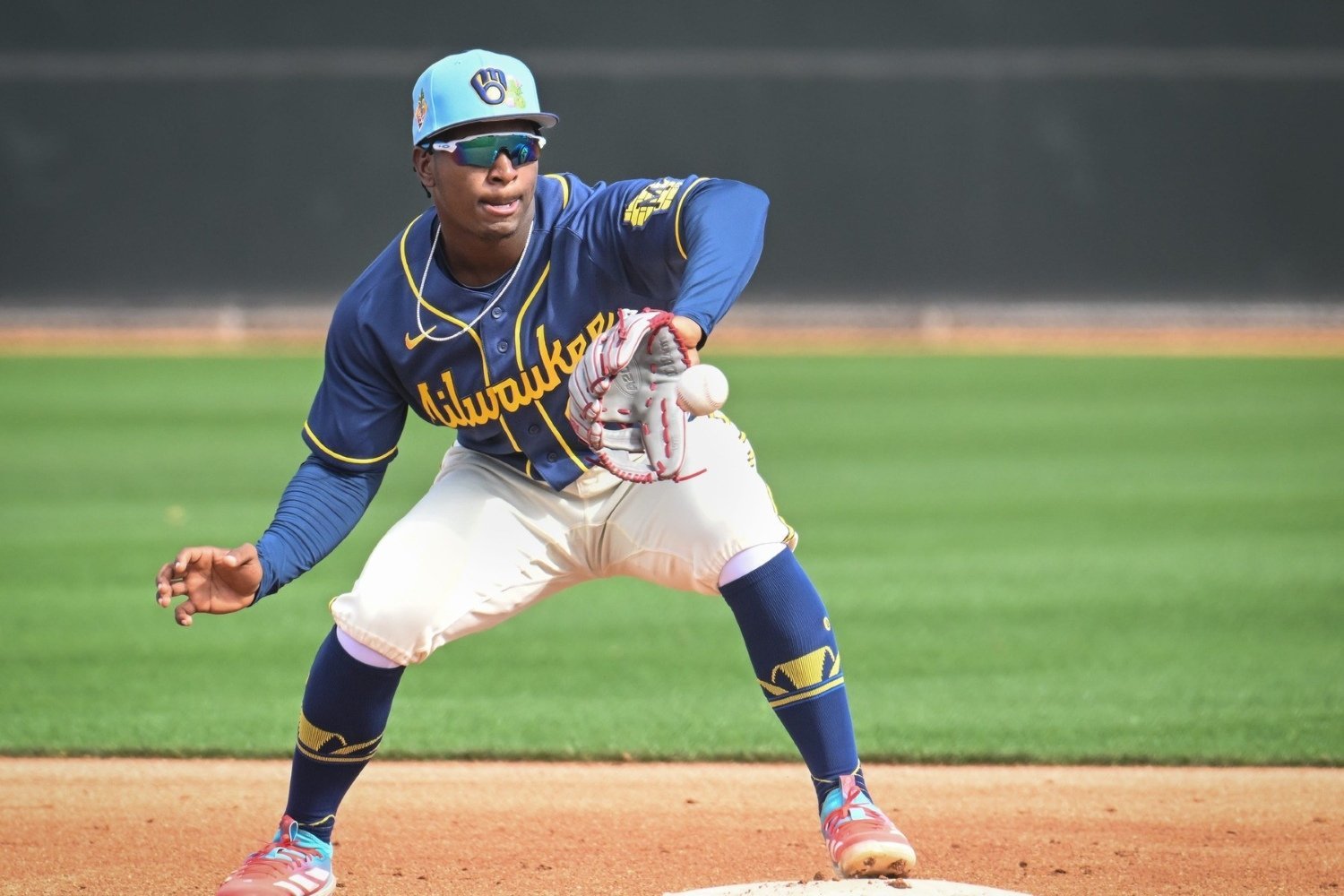 With baseball season just underway, hope abounds for the fans of all 30 Major League Baseball franchises. We don’t really know much else, beyond the fact that 29 of those fanbases will be somewhere between bitter and heartbroken by the end of the World Series, but there is more to professional baseball than the major-league squad. There’s the farm system. Milwaukee, of course, has the best farm system in MLB. But what will happen? There’s a lot of good chaos in the system, which makes it tough to predict what will happen in 2026. That said, here are seven predictions. 1. Cooper Pratt Will Not Be The Only Top 20 Prospect To Sign A Long-Term Deal Brewers fans were stunned to hear about Pratt’s eight-year, $50.75-million contract, which could become a 10-year, $81-million deal if two team options are exercised. Pratt was the fourth-ranked prospect in the Brewer Fanatic Top 20 and MLB.com Pipeline’s Top 30 for the Brewers, and many expected top prospect Jesus Made to be the one the team signed. However, the fact that Pratt signed an extension doesn’t rule out the Brewers also working something out with Made. If anything, this move may make it more likely that Made will agree to a deal, although his would be closer to the deal Jackson Chourio got before the 2024 season. The organization may also want to lock down Luis Pena, with his elite exit velocities. With all of the uncertainty about 2027, the Brewers may want to put themselves in a position where they can shed payroll and stock the system in the event of a lengthy labor dispute. Meanwhile, Made and Peña could have interest in what's becoming a league-wide trend: Mariners shortstop Colt Emerson joined Pratt in signing pre-debut deals a day after news of Pratt's signing leaked. 2. Brock Wilken Will Make His MLB Debut—with a Different Franchise It might seem unheard of for the Brewers to trade a first-round pick who has a plus power tool, given their desire for pop, but they’ve done it before—in 2008, for instance. Power-hitting prospect Matt LaPorta was the key piece Milwaukee sent to the Cleveland Indians to bring in CC Sabathia. Why might Wilken meet the same fate? LaPorta was limited to left field and first base, which were well and truly locked down by Ryan Braun and Prince Fielder, respectively, and at the time, the National League did not have the designated hitter. In 2026, Wilken is in a similar position. On the Brewer Fanatic Top 20, he's behind Andrew Fischer and Luke Adams at third base. That’s before factoring in the likelihood that Made, Jett Williams, or Peña could end up at the hot corner. If the Brewers need a game-changer for the stretch run, Wilken would be a good choice to center a package on. 3. At Least Seven Members of the Top 20 Will Appear in Milwaukee The players on the Brewer Fanatic Top 20 aren’t just high-ceiling prospects in the lower levels of the minors. Brewers fans should expect to see a number of these prospects show up at Uecker Field for at least a cup of coffee, if not more. Brandon Sproat and Jeferson Quero are already on the 26-man roster, while Craig Yoho and Logan Henderson made some appearances in 2025 for the Brewers. Williams will fit in somewhere, sometime, if his season goes to plan. Pratt just signed a massive contract, while Luis Lara is already tearing up Triple-A with the Nashville Sounds. Others could also make the leap, including Wilken, Made, and Adams, two of whom are with the Sounds, while Made will begin the 2026 season with Double-A Biloxi. 4. Melvin Hernandez Will Finally Get His Top 20 Spot Logan Henderson and Jacob Misiorowski have been widely recognized as potential aces, with both hitting the MLB Top 100. However, in 2025, both of them were beaten out for the Brewer Fanatic 2025 Minor League Starting Pitcher of the Year award by Melvin Hernandez. Hernandez hasn’t seemed like much, but in 2025, he made his full-season debut at the age of 18 with the Carolina Mudcats and dominated all season, posting a 2.00 ERA, a 4.41 strikeout-to-walk ratio, and allowing just three home runs in 121 2/3 innings pitched. Hernandez could find himself at Double-A Biloxi if he keeps pitching as he did in 2025. If that happens, he may get the recognition as a top prospect that has eluded him to date. 5. Tyler Black Will Stick with Milwaukee At first glance, Black would appear to be blocked, given the presence of Andrew Vaughn and Jake Bauers in Milwaukee and the team’s decision to use Gary Sánchez to replace Vaughn as the right half of a platoon as Vaughn recovers from a hamate injury. Black, though, isn’t one to be easily denied. His offensive skill set has always been one of the best in the organization, with outstanding OBP skills and baserunning. Black recently seemed to level up his power in spring training, and the Brewers haven’t yet been able to count on health from Garrett Mitchell. While Bauers has made strides, he is a free agent after 2026, and Milwaukee may decide to flip him and go with the cost-controlled former top-100 prospect. 6. At Least Three Top 20 Prospects Will Force the Brewers to Trade Current MLB Players It isn’t just prospects who could end up being traded by Aug. 3, when the deadline comes. In some cases, a major-league club will move a veteran player to make way for a prospect. At least three Brewers currently on the 26-man roster may not finish the season in Milwaukee. Joey Ortiz, who’s had an inconsistent bat during his tenure with the Crew, could be displaced by one of Pratt, Williams, or Made by the end of 2026. The team could also flip one of their lower-leverage relievers to make way for Yoho, who could team up with Trevor Megill and Abner Uribe to make late innings unwatchable for the fans of Brewers opponents. Williams or Luis Lara could also usher Mitchell out of Milwaukee, though at the moment, the team's outfield depth seems more likely to result in someone being DFAed than in Mitchell being traded. 7. At Least One Player Nobody Expects Will Be on the Top 20 List By the End of 2026 Brewers fans should expect some significant churn in the Top 20. Some of these players will graduatem by virtue of ending their rookie status with 130 at-bats or 50 innings pitched in the bigs. Others could be dealt. But the real story will be talent acquired over the course of the 2026 season. The amateur draft will be one such source, with some players hitting the Top 20 as soon as they sign contracts. Others will get on the list by virtue of their production. Some will be previously unheralded prospects who get their day in the sun. With a system as deep as Milwaukee’s, there are likely to be a few surprises. Hernandez isn't the only prospect who's excelled under the radar of many fans, while Jadyn Fielder flashed real offensive potential as he enters his first year of full-season professional baseball. The Brewers have some exciting young international prospects, as well. What do you think might happen in the Brewers' farm system for 2026? Let us know in the comments below! View the full article
-
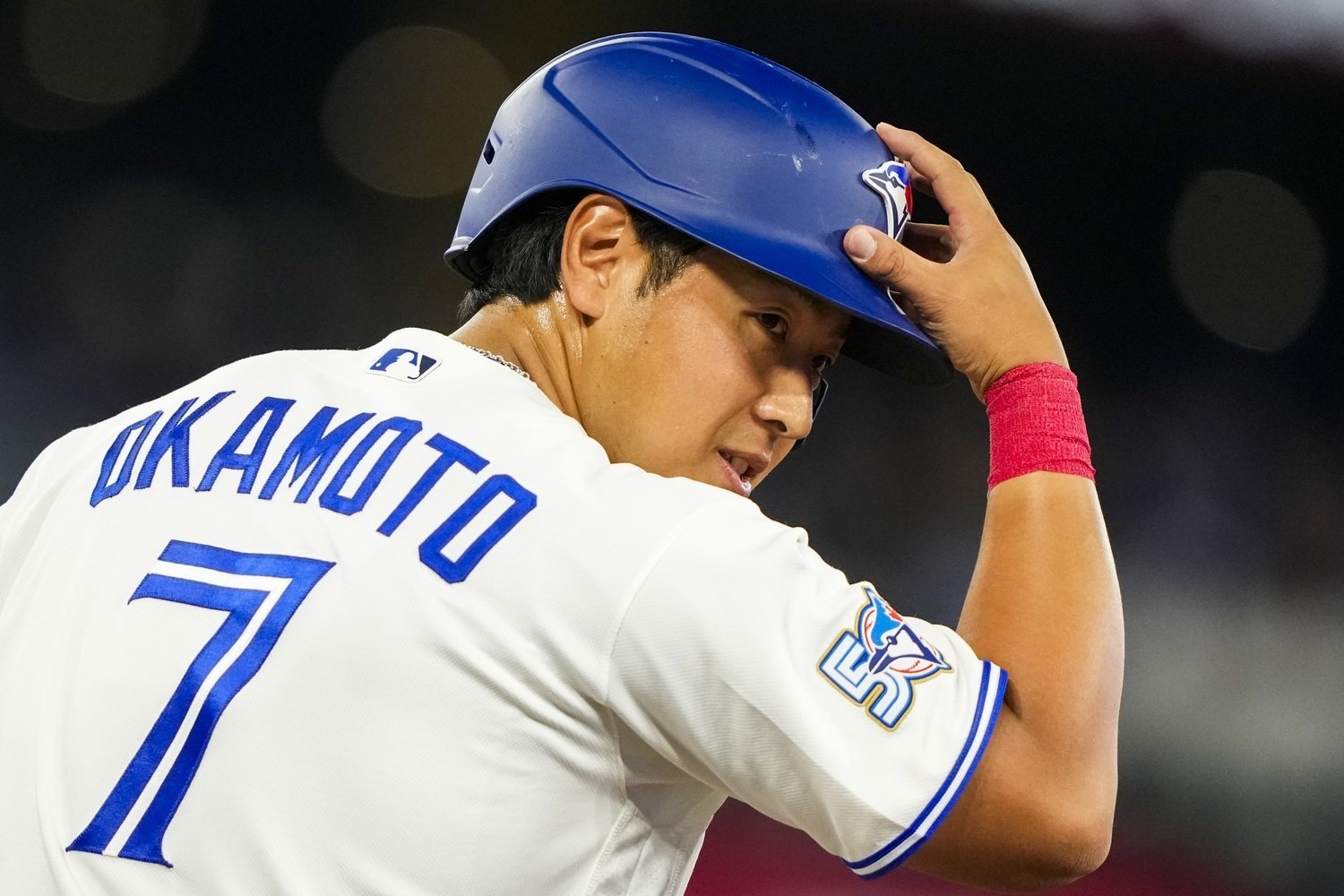 Editor's Note: Bryan originally wrote this article the day before the news broke that Trey Yesavage would start the 2026 season on the injured list. I wasn't sure what to do with it at first, but given the encouraging news about Yesavage’s ramp-up (he'll throw a three-inning simulated game on Friday) and Kazuma Okamoto's red-hot start to the season (2 HR, .300 BA, .991 OPS), I decided to run the story today. The last time the Toronto Blue Jays won the AL Rookie of the Year Award was in 2002, when Halle Berry won an Oscar for Best Actress for her role in Monster’s Ball, the New England Patriots won their first Super Bowl, and the “Rally Monkey” became famous, leading the then Anaheim Angels to a World Series title. In that season, the Toronto Blue Jays finished 78-84 under manager Buck Martinez, but Eric Hinske took home the AL's top rookie prize. The third baseman hit 24 home runs, scored 99 times, knocked in 84 runs, and stole 13 bases. It’s hard to believe that Hinske was the last Blue Jay to win the Rookie of the Year Award, but the team hasn’t had many standout rookie performances since then. The only one that was worthy of serious consideration for the award was Marcus Stroman’s 2014 season, in which he had a record of 11-6, a 3.65 ERA, and struck out 111 batters. Yet, 2014 was a competitive year, and Stroman didn't even receive a single down-ballot vote. Only six Blue Jays have received ROY votes in the last 23 seasons, and none have finished higher than fourth. The wait may be over this year, as the Blue Jays have not one but two of the frontrunners for the award: Trey Yesavage and Kazuma Okamoto. Prior to the news of Yesavage's IL stint and Kevin McGonigle's promotion, many sources had Yesavage and Okamoto as the two favourites. At the end of last season, Yesavage started three games, in which he posted a 3.21 ERA and had a 16:7 strikeout-to-walk ratio. In the postseason, he came up clutch in several big games. In Game 2 of the ALCS, he helped the Blue Jays take a 2-0 series lead. The rookie threw 5 1/3 innings against the New York Yankees, striking out 11 batters. In Game 6 of the ALDS, Yesavage helped the Blue Jays even the series 3-3 after throwing 5 2/3 strong innings while striking out seven Seattle Mariners batters. In Game 5 of the World Series, he threw seven innings and struck out 12 Los Angeles Dodgers hitters. He got the win to give the Jays a 3-2 series lead, though we all know how that ended. This success is why the righty was the frontrunner for the Rookie of the Year Award as recently as two weeks ago. If he continues to ramp up on schedule, he has plenty of time to get back in the race. Yesavage’s teammate Okamoto also has a strong case to claim the award. He will be playing his first season in America and in MLB. In Nippon Professional Baseball in Japan, Okamoto hit at least 25 home runs in seven straight seasons before an elbow injury broke that streak in 2025. Though, he was on a good pace to extend the streak with 15 homers halfway through the season. Okamoto has begun his MLB career with a five-game hitting streak, two home runs, and four runs scored, including the game-winning run on Opening Day. His defense at third base has looked sharp, albeit in a tiny sample. Thanks to Yesavage and Okamoto, Toronto's chances of winning the Rookie of the Year Award look better than they have in a long time. That said, the Jays' rookies have stiff competition. In addition to McGonigle (Detroit Tigers), other top contenders include Carter Jensen (Kansas City Royals), Chase DeLauter (Cleveland Guardians), Samuel Basallo (Baltimore Orioles), and Okamoto's fellow NPB All-Stars Munetaka Murakami (Chicago White Sox) and Tatsuya Imai (Houston Astros). Perhaps neither Okamoto nor Yesavage is the favourite on his own, but together, they might give Toronto better odds than any other AL team. So, while the competition is fierce, the Blue Jays are still in a great position to win the AL Rookie of the Year Award for the first time since 2002. View the full article
-
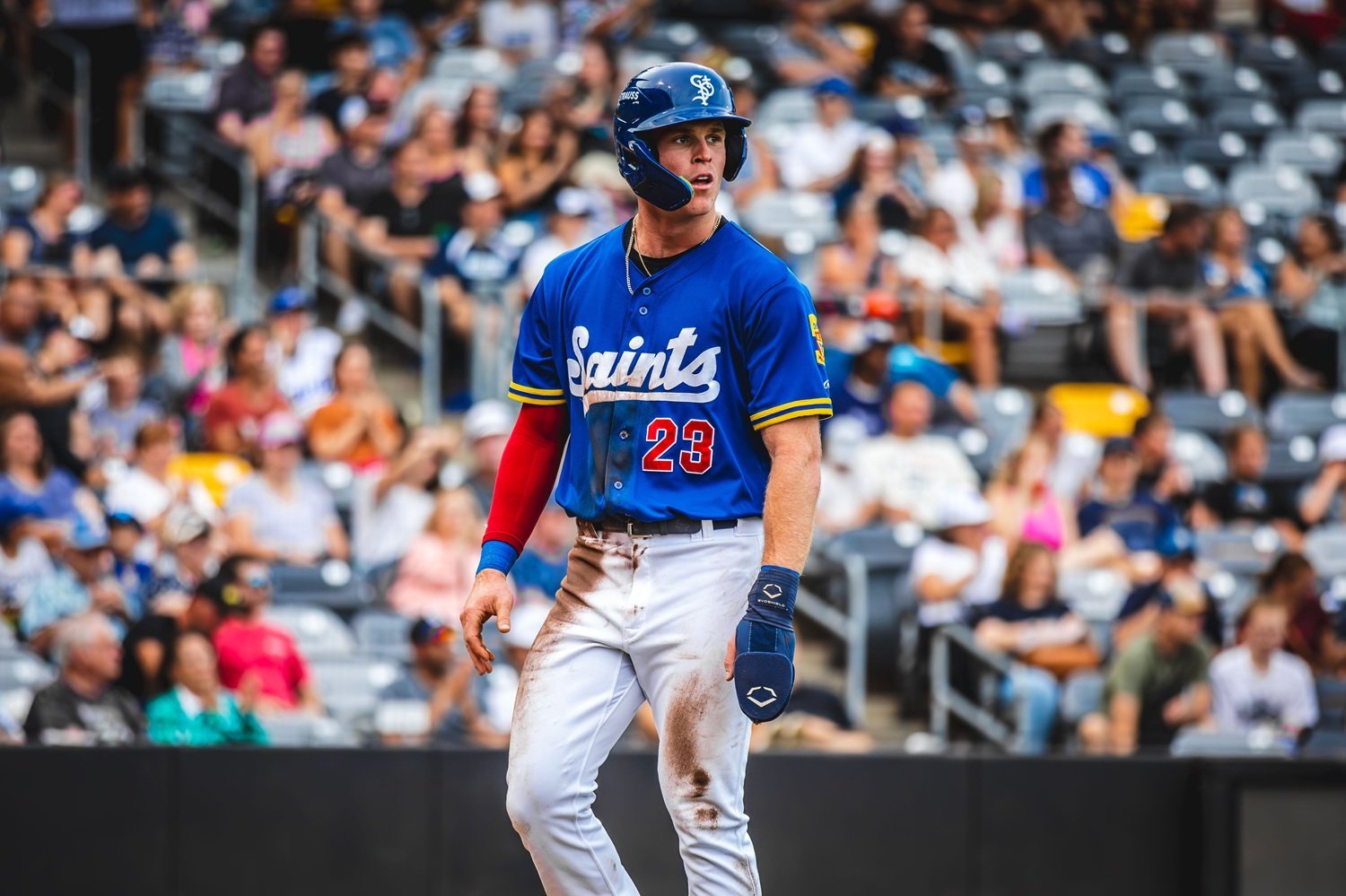 There are prospect comps, and then there is whatever is happening in Dave Kramer's living room. Kramer, a lifelong Twins fan and self-proclaimed “early adopter of takes,” has officially begun replacing every Joe Mauer reference in his vocabulary with Walker Jenkins. Not because Jenkins has debuted. Not because he has played a game at Target Field. But because Kramer is confident that he has seen enough. “Look, I’m just saving time,” Kramer said, while carefully crossing out “Mauer” on an old Twins jersey with a Sharpie. “We all know how this ends. I’d rather get ahead of the discourse.” To be fair, Jenkins has earned the hype. He entered pro ball as one of the most highly regarded national prospects the Twins have had since Mauer was the consensus top prospect in baseball during the early 2000s. The hit tool is real. The approach is advanced. The pedigree checks out. Naturally, that means it is time to begin tearing him down. “Sure, he can hit for a high average,” Kramer said. “But does he have any power? I mean, I watched one video where he hit a ball to the opposite field gap instead of 450 feet to dead center. That’s concerning.” Kramer then pulled up a spreadsheet labeled “Jenkins Red Flags” that included categories such as “Too Polished, Too Soon” and “Suspiciously Likeable.” The comparisons to Mauer have not stopped at the surface level. Kramer has also fast-tracked himself into the injury speculation phase, a stage most players do not reach until at least their arbitration years. “He’s going to be injured all the time,” Kramer said confidently. “Mauer had bilateral leg weakness. What’s Jenkins going to have? Upper body enthusiasm fatigue? Chronic prospect-hype syndrome? The Twins will come up with something.” Medical professionals have not yet weighed in on those conditions. Beyond health concerns, Kramer has already begun outlining Jenkins’s long-term legacy, including the inevitable debates that will follow. “We’re going to spend a decade arguing about whether he’s too passive at the plate,” Kramer said. “Then another decade arguing that he should have been more passive. It’s the full experience.” He also expressed concern about Jenkins’s leadership style, despite the fact that Jenkins is still working his way through the minor leagues. “Is he too quiet? Not quiet enough? Does he say the right things after losses that haven’t happened yet?” Kramer asked. “These are the questions that matter.” Twins fans have seen this cycle before. A generational hitting prospect arrives. Expectations skyrocket. The player performs at an elite level. And somehow, the conversation drifts toward what they are not doing. Kramer, however, insists he is not being negative. If anything, he believes he's honoring tradition. “This is how we talk about great hitters here,” he said. “If you’re not nitpicking them before they even debut, are they really elite?” At press time, Kramer was reportedly workshopping his next take, debating whether Jenkins’s future batting titles will come with enough exit velocity to truly count. "Unethical trophies," he could be heard mumbling to himself, as his son nodded helpfully. View the full article
-
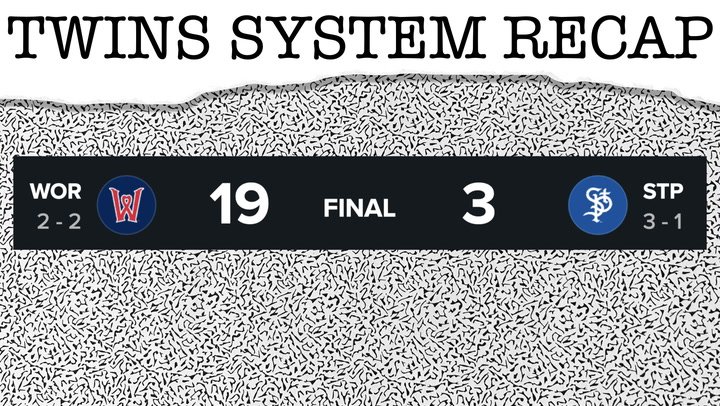 Twins System Recap: The St. Paul Saints gave up 19 runs and walked 20 batters. Tonight. In one game. Tanner Schobel pitched two innings. He's not a pitcher. That was the worst baseball game I've ever seen.View the full article
-
 Alex and Maddie sit down and discuss why the Red Sox have gotten off to such a sluggish start to the season. They start with the exciting win from Opening Day, carried by Garrett Crochet. Then break down both the offensive and defensive struggles of Roman Anthony and Willson Contreras. Finally, they give Wilyer Abreu his much-deserved flowers and end the episode discussing what Carlos Narvaez needs to do to make the new ABS challenge system work in his favor. Listen on Apple Podcasts: https://podcasts.apple.com/us/podcast/the-talk-sox-podcast/id1783204104 Listen on Spotify: https://open.spotify.com/show/3qPrPXEngu0CxgTmlf0ynm Listen on iHeartRadio: https://www.iheart.com/podcast/263-the-talk-sox-podcast-244591331/ Listen on Pocket Casts: https://pca.st/4tmd121v Watch on YouTube: https://www.youtube.com/@talksox View the full article
-
 While this was highly enjoyable for me, I can't leave you completely bereft of content, so please enjoy a throwback to perhaps the greatest April Fool's day prank of all time: View the full article
-
Walker Buehler's 2026 Padres Debut Looked Concerningly Like 2025
DiamondCentric posted an article in Padres Mission
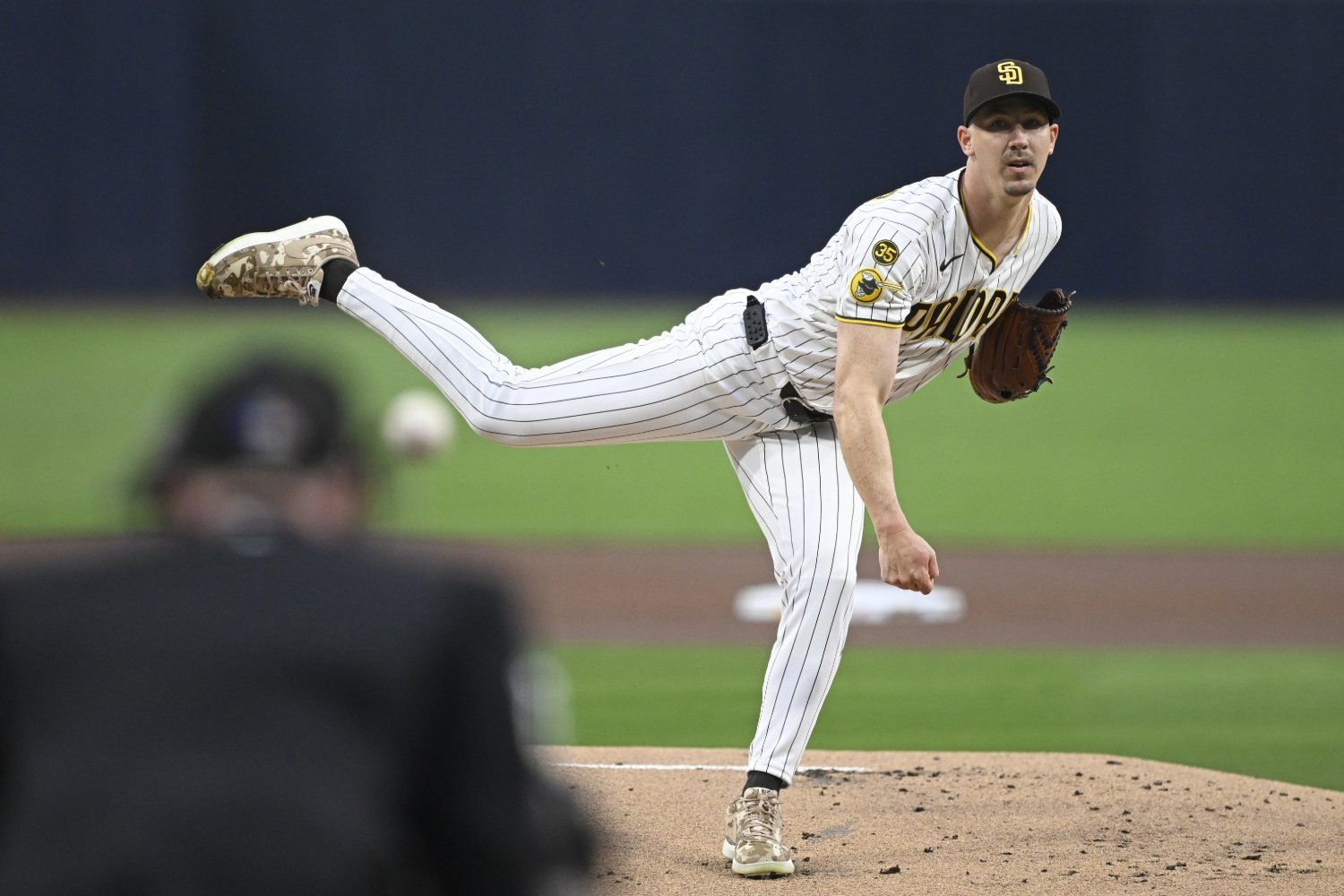 Walker Buehler was an unmitigated disaster with the Boston Red Sox in 2025. He signed with them after a strong postseason run the year prior with the Los Angeles Dodgers, but he never rediscovered the form that made him a perennial All-Star and Cy Young candidate earlier in his career. Here's what I had to say about the right-hander when he was released by the Red Sox last August: "Buehler isn't the same pitcher who hurled the final out of the 2024 World Series, and he certainly isn't the same pitcher who finished top-10 in NL Cy Young voting in 2019 and 2021. In 112 1/3 frames this year, he's surrendered a 5.45 ERA that actually looks manageable compared to his 5.88 FIP. He's allowing more than a hit per inning and his walk rate has spiked to 10.8%, hence his grotesque 1.56 WHIP. Add it all up, and he's been a negative contributor for the Red Sox this season, no matter who you ask (-0.7 fWAR, -0.9 bWAR)." He then salvaged his season (and possibly his career) in a late-season cameo with the Philadelphia Phillies, allowing just one run across 13 2/3 innings. The stuff wasn't much better, nor were his peripherals, but the raw results impressed the San Diego Padres enough to give him a minor-league deal with an invite to camp. Spring training didn't go terribly well, either -- Buehler recorded a 6.60 ERA and 6.39 FIP while allowing 21 hits in 15 innings -- but a setback in Joe Musgrove's timeline and a general lack of pitching depth earned him a spot in the Friars' rotation by default. Thus, he made his Padres debut in the fourth game of the 2026 regular season against a winless San Francisco Giants team. And, as anyone who watched him pitch last year could have predicted, Buehler stumbled. There were some highlights in the start. About 70% of the contact he generated was on the ground, which would downright elite if it held up over a full season. Buehler also wasn't shy about leaning into his diverse arsenal, flashing all seven of his pitches at various points in the outing. The echoes of a once-great starter reverberated throughout the outing. But the worst parts of Buehler reared their ugly heads far more often. Batters not only made loud contact, but they made a lot of it; they only whiffed on about one-fourth of his offerings while chasing outside the zone at the same rate. As you'd expect, then, the veteran right-hander only managed to secure three strikeouts in four innings pitched, surrendering three runs on five hits and two walks along the way. His locations were generally okay, but they were hardly consistent. His heat maps look like a pitcher who didn't have a firm plan of attack heading into the start. *Courtesy of Baseball Savant Likewise, when he did miss, batters made him pay. Buehler no longer has the raw stuff to get away with mistakes, which is how Harrison Bader hunted down his knuckle curve and hit it 408 feet (107.3 mph). It's just one start's worth of data, so don't read too much into any of the noise just yet. Buehler can still turn things around, particularly if he leans into an arsenal clearly designed to generate groundballs rather than whiffs. But this was not the proof of concept he or the Padres needed to see. With Joe Musgrove set to return at some point in the near future and Griffin Canning soon to follow, Buehler's lease in this rotation will not be long, especially if Germán Márquez can out-pitch him in the early going. Beggars can hardly ever be choosers, but the version of Buehler we just saw isn't capable of handling a starter's workload for a playoff contender. View the full article
-
 What’d we make of Edward Cabrera’s first start? How about the Nico Hoerner extension? What should the expectations be for Jameson Taillon tonight and moving forward? Listen on Apple Podcasts: https://podcasts.apple.com/us/podcast/the-north-side-baseball-podcast/id1798599313 Listen on Spotify: https://open.spotify.com/show/75wMGhBwlrDDYPt3kaF453 Listen on iHeartRadio: https://www.iheart.com/podcast/263-the-north-side-baseball-po-268998437/ Listen on Pocket Casts: https://pca.st/eey7h6ih Watch on YouTube: https://www.youtube.com/@northsidebaseball View the full article
-
What Are Some Early Takeaways From the Royals' Offense?
DiamondCentric posted an article in Royals Keep
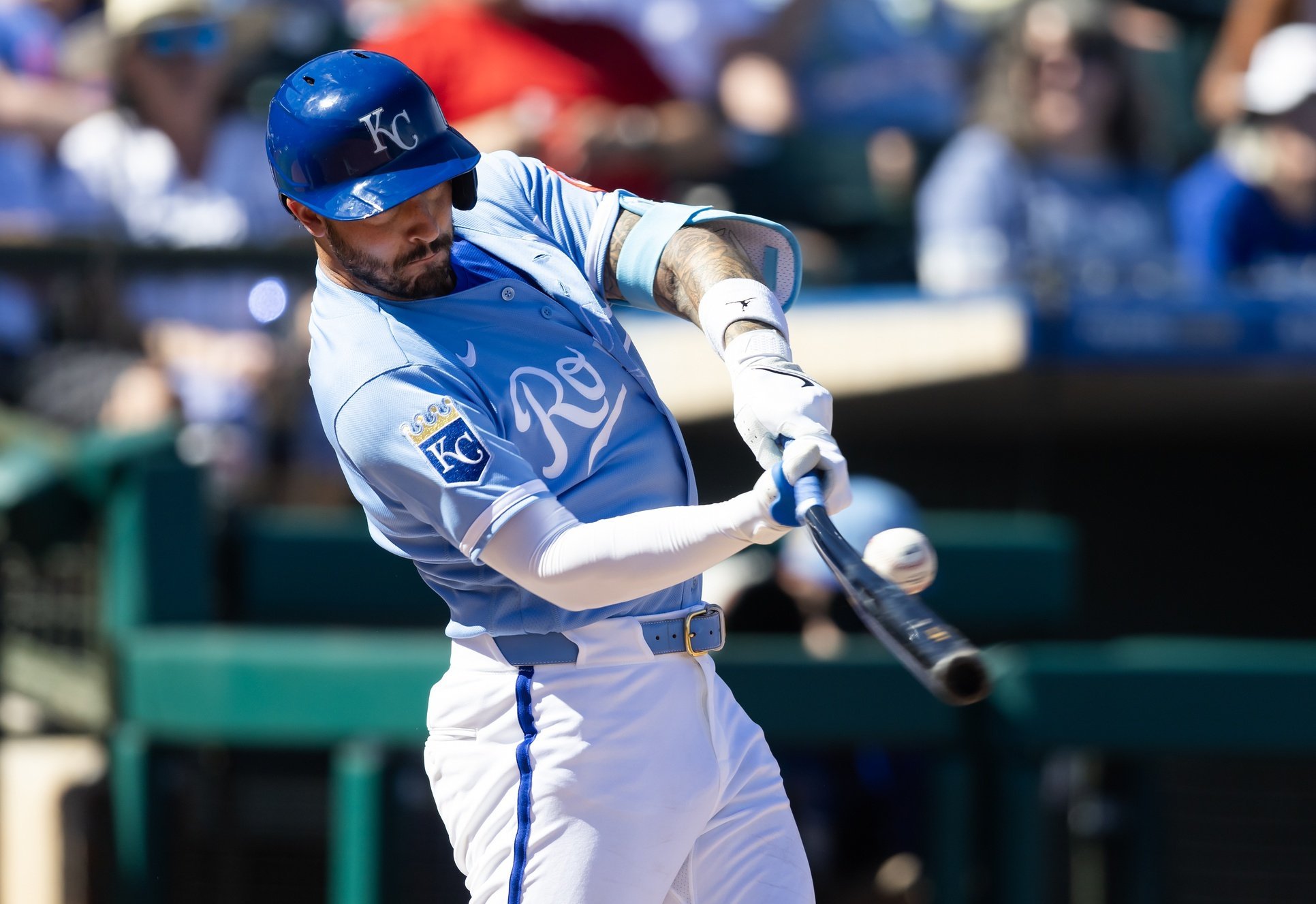 One of the big priorities for Kansas City Royals President of Baseball Operations JJ Picollo was to improve the lineup in 2026. While the team hit better after the All-Star Break, their struggles out of the gate ultimately cost them a postseason berth in 2025, despite making the ALDS in 2024. Last year, the Royals ranked 26th in runs scored and home runs, and 22nd in OBP and wRC+, according to Fangraphs. They also had the 12th-highest O-Swing% and the highest pop-up percentage in baseball. Thus, a priority for the Royals this year was to focus on improving pitch recognition and swing decisions so they would chase and pop up less in 2026. In addition to hiring new assistant hitting coaches Connor Dawson and Marcus Thames, the Royals also acquired outfielders Isaac Collins, Lane Thomas, and Starling Marte to help give the Royals veteran at-bats that they were sorely missing last year, especially from the outfield position. Last season, the Royals outfielders had the highest pop-up percentage and the lowest wRC+ among Major League outfielders, according to Fangraphs. Despite the changes, it's been a similar story through four games this season. While it's an extremely small sample, the numbers have been concerning nonetheless. The Royals are tied for 28th in runs scored, 27th in wRC+, and 26th in batting average. Even though they are 2-2, they have a -5 run differential, despite only allowing 14 runs, which is tied for the fewest in the American League Central. How much should Royals fans worry about this offense, especially with how slow they got out of the gate in 2025? I will talk about three metrics from this Kansas City offense so far and what those numbers could say about their outlook in the near future. 27.3% O-Swing% Last year, the Royals had the 12th-highest O-Swing% in baseball at 32%. That put them ahead of teams like the Athletics (31.9%), the Tigers (31.3%), and the White Sox (31.3%). Kansas City wanted to lower this in 2026 in order to not just draw more walks (7.2% BB%, 29th in baseball), but improve their OBP as well (.309, 22nd in baseball). So far, the early results have been good for chasing out of the zone. The Royals, through five games, have a 27.3% O-Swing%, which is the second-lowest O-Swing% in baseball, according to Fangraphs. It is also a 4.7% improvement from a year ago, which is major progress. The Royals' walk rate is also up slightly at 8.0%, which is 0.8% higher than their BB% last season. The OBP is lower at .261, but their low BABIP could be the cause. Their .220 BABIP is the second-lowest in baseball. When it comes to how Royals individually have done, this is how they rank in plate discipline data, as organized by O-Swing%. The Royals have two hitters (Maikel Garcia and Collins) with O-Swing% under 20%, and seven hitters in total with O-Swing% under 30%. In terms of contact rate, they have eight hitters with rates over 80%. The only real hitter that's an established player with a higher-than-wanted chase rate is Bobby Witt Jr. Through five games, he has a 37.1% O-Swing%. Last year, he had a 34.5% O-Swing%, so it seems like Witt is a little overeager to start the season. Despite his high chase rate, he still has an 81.8% contact rate, which shows his strong ability to put the bat on the ball, despite the questionable plate decisions thus far. One hitter who has made positive gains is Vinnie Pasquantino, who has a 20% chase rate. Last year, he had a 32.9% chase rate, so he has seen a 12.9% improvement in O-Swing%. As a result, his contact rate is 87.5%, which is 4.1% higher than last year. That kind of progress is important for Pasquantino, especially with him hitting in the No. 3 hole in the Royals' lineup. 31.6% Hard-Hit Rate In 2025, Kansas City hitters produced a 40.7% hard-hit rate. That ranked 14th in baseball, just behind the Detroit Tigers (40.8%), but ahead of playoff teams like the Cubs (40%) and the Brewers (39.2%). Thus, it was expected that with a decline in chasing, the Royals' offense could see major gains in 2026, especially considering their ability to hit the ball hard last year. Unfortunately, while the chase rate has improved in 2026, the hard-hit rate has trended in the opposite direction. Through five games, the Royals have a 31.6% hard-hit rate, the lowest mark in baseball. The Royals aren't as bad in other Statcast categories. They rank 24th in average exit velocity (87.9 MPH) and barrel rate (6.3%), and 26th in xwOBA (.288). It's not good, but they are not as brutal as Kansas City's hard-hit ranking. It's hard to get optimistic about an offense when they are sitting at the bottom of a very important Statcast category. Individually, this is how Royals hitters have fared this season in those four Statcast categories I discussed above. Jensen leads the Royals in hard-hit rate and average exit velocity with 57.1% and 94.7 MPH marks, respectively. He hasn't launched the ball well, which explains why his xwOBA is only .229. That said, the fact that he's hitting the ball as hard as he is shows that he has the batted-ball skills to succeed at the Major League level this season and beyond. Witt has been a hitter who has a great hard-hit rate (38.5%), but it hasn't translated into results just yet (.270 wOBA). However, his .388 xwOBA leads the team and is 118 points higher than his actual wOBA. Thus, he could be due for a hot streak soon, especially as he gets more comfortable in the box during this homestand against Minnesota and Milwaukee. Two hitters that have struggled in hard-hit rate but should improve are Pasquantino and Jac Caglianone. Pasquantino has an 18.2% hard-hit rate while Caglianone has a 16.7% rate. Those rank 9th and 10th among Royals hitters this season, respectively. The good thing is that Vinnie and Cags have improved greatly in swing decisions so far this year, so their lackluster hard-hit rate may be due to them temporarily trading better plate discipline for power. That makes sense at this time of the year, especially for hitters like Vinnie and Cags who need to get settled in. It would not be surprising to see them see ticks up in their hard-hit rate and barrels soon, especially since they have zero barrels between the two of them through four games. Safe to say that won't stay zero for long. 13% IFFB% (Pop-Up Rate) The Royals had major pop-up issues in 2025, as illustrated by their 11.9% IFFB%, which led the league. Typically, pop-ups occur when a hitter is pressing or trying too hard at the plate with their swing. It seemed like that was the case last year, and the Royals are trying to curb that pressing this year by being more intentional about communicating their team philosophy throughout, as evidenced by Anne Rogers' Opening Day tweet revealing some important Royals locker room signage. The Royals are hoping that a more consistent and focused approach can not just lead to more walks and fewer chases, but also to fewer pop-ups, which are killers because they turn so easily into outs. Kansas City doesn't lead the league in IFFB%, ranking 7th this year, according to Fangraphs. That said, their 13% IFFB% is 1.1% higher than last year, which isn't exactly a positive trend in this crucial category. In terms of Royals leaders in IFFB%, below are the Top-4, with not only their IFFB% this year but also their mark a season ago in parentheses. Nick Loftin, 100% (12.5% in 2025) Witt, 28.6% (10.6% in 2025) Perez, 25% (8.8% in 2025) Jonathan India, 20% (15.4% in 2025) Loftin and India are the usual suspects. They both had double-digit IFFB% and ranked 5th and 7th in IFFB%, respectively, among Royals hitters with 100 or more plate appearances last season. India is the more concerning of the pair, especially since his 15.4% IFFB% last year was a career high, and he produced the worst offensive season of his career (89 wRC+). In addition to a high IFFB% in 2026, India's hard-hit rate is low at 28.6%, and his K% is high at 27.3%, nearly 9 percentage points higher than his K% in 2025. Looking at his Statcast percentiles via TJ Stats, he shows his trademark plate discipline, as illustrated by stellar whiff and O-Swing% numbers. However, his exit velocity, barrel, LA Sweet-Spot%, and hard-hit rate percentiles have been paltry. For India to be a valuable offensive player, he needs to cut down on pop-ups and increase barrels. In order to do that, he needs to be better in terms of increasing that LA Sweet-Spot%. His radial chart on batted balls in play shows that he's getting way too under baseball, much to his and the Royals' detriment. India is only the surface level of this IFFB% problem. Bobby needs to be better, as his IFFB% is 18% higher than his mark in 2025. The same is true with Salvy, whose 25% mark is 16.2% higher than his IFFB% last season. It's not good when two of the Royals' top-four hitters are in the 25+ percentage mark in IFFB%. Regression should positively favor Witt and Salvy as they get more at-bats. They have a proven track record of correcting this issue. As for India, I am not so sure. That said, he has plenty of time to show that these early IFFB% issues are also a flash in the pan and will be corrected soon. View the full article
-
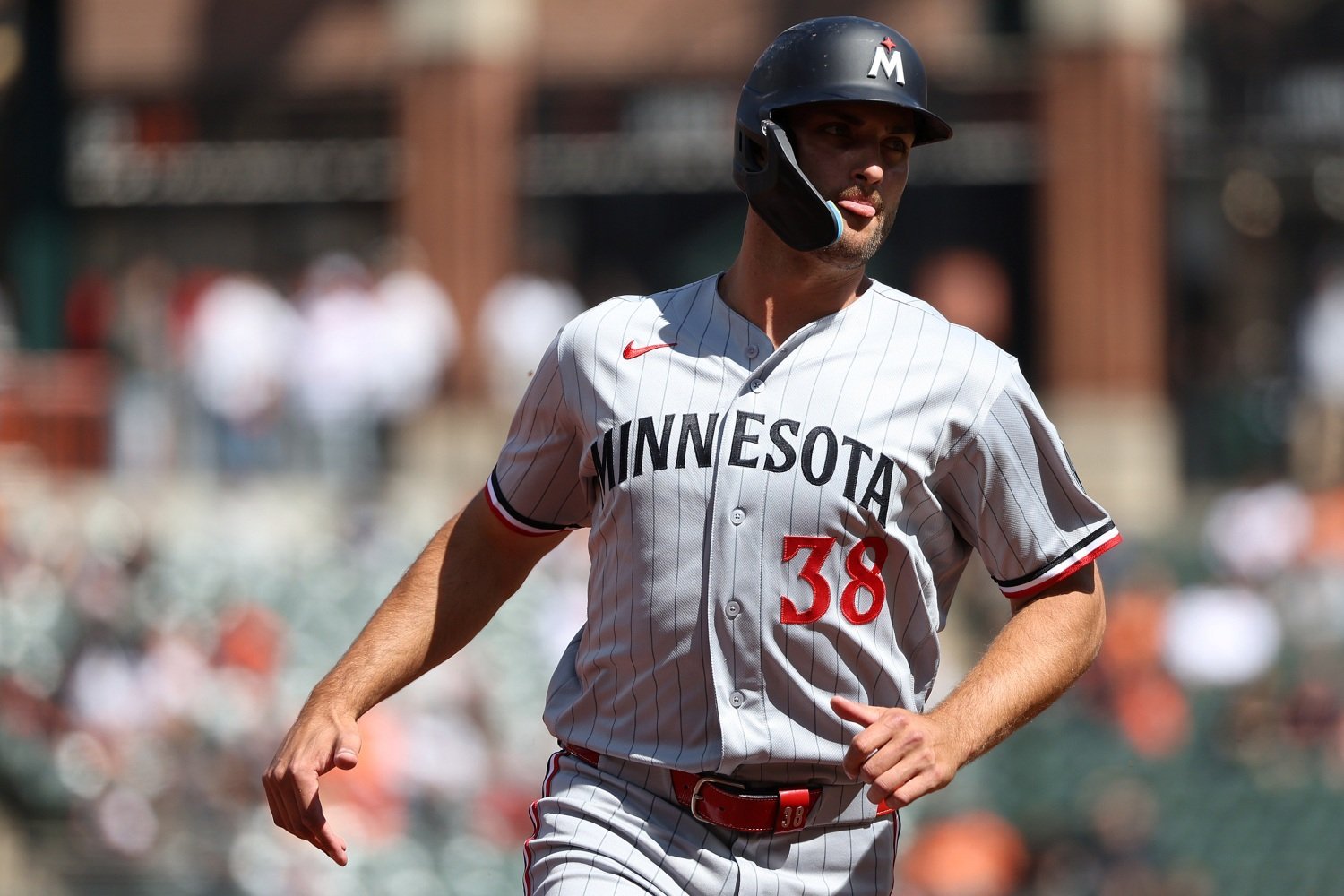 In the Twins' fourth game of the 2026 season, Matt Wallner connected for his first home run. It was just his second hit of the year, as he's striking out around 30% of the time and hitting into some tough luck. He's struggled with some adjustments to the ABS challenge system, though he's also walked at a high rate in the extremely limited early sample. Results mean little in snatches of a few games here and there, though, so let's talk about process. Wallner has altered two key things that became problematic for him in a poor 2025 season, and now, he's a bit better insulated against some of his glaring weaknesses than he was in the past. Firstly, as was covered pretty well this spring, Wallner's stance and stride have changed. He's noticeably less open in the batter's box, and his feet also start farther apart. That makes his stride a bit shorter to get to (more or less) the same position at contact, which produces a slightly less linear, lunging address of the ball. A shorter stride means greater balance and the ability to see the ball a bit better a bit longer, which should result in better swing decisions and a higher contact rate. Wallner swung at 26% of pitches outside the zone during spring training, which is only very slightly lower than the chase rates he posted in 2024 and 2025 (around 29%), but he's swung at barely over 14% of out-of-zone pitches in the first few games of the regular season. His strikeout rate remains high, but that's inevitable for Wallner; he swings for the fences and works deep counts. More importantly, but less certainly, Wallner seems to be letting the ball travel more this spring. His contact point is deeper (around 33 inches in front of his frame, down from 36-37 inches in the past). A deeper contact point typically leads to better contact rates but less pull power. We don't have enough data to call this signal instead of noise yet, but to whatever extent he's seeing the ball a bit deeper, that, too, makes Wallner more dangerous. Let's compare two key moments in the swing for the two pitches this year on which Wallner has put his improved process on display, with the same moments in swings against simiiar offerings last year. First, here's a comparison of his first hit of the year (a line-drive single off Orioles starter Shane Baz and his 98-MPH fastball) with a fastball from Yankees righty Luis Gil last season, on which he hit a routine flyout. The top two images show the moment when the pitcher released the ball. The bottom two show the moment when Wallner's front foot engaged with the ground, allowing him to fully execute his swing. As the animations above suggested, Wallner's tweaked stance and stride put him in better hitting positions. Last year, the former hard-throwing pitcher looked too much like he still was one, bringing his front leg all the way up past his front elbow. This year, that leg kick is slightly but vitally modulated, engaging his core and giving him a timing mechanism but not throwing off his balance. As he lands, you can see his weight is more evenly distributed this year, whereas the longer stride in 2025 left him lurching. Here's the same set of images for a sweeper on which he popped up lazily last summer in Toronto, and the one on which he tagged Kris Bubic for his first homer on Monday. The themes are the same, but you can spot one more variable. Against lefties, Wallner is better able to stay back this year, which lets him start his hands a bit earlier without overcommitting. Last season, he was starting in plenty of time against a pitch that wasn't even especially fast, but still had to rush the barrel, and he was late and flat through the hitting zone on a fat pitch. This year, he was dangerous throughout the swing and unloaded on a Bubic mistake. These changes to his lower-half mechanics relate to an important one in his actual bat path. Last summer, I noted that Wallner had flattened his swing, to the detriment of his contact quality and his overall game. A fkat swing requires that contact point way out in front of you, which can also lead to more whiffs. It was a strange and ill-fitting adjustment for a tall, patient pwoer hitter. This season, in limited looks, he appears to have reverted to a better plan. Here are his key swing characteristics for pitches in the medium bracket in terms of vertical location, according to Statcast. (I've focused on these to eliminate the distortionary influences of swing distribution by location early in the season, and because Wallner only has a meaningful number of swings in that middle tier.) Season Bat Speed Swing Tilt Contact Point (in.) 2024 77.6 31° 33.4 2025 76.8 27° 35 2026 76.4 30° 31 Without losing any meaningful amount of bat speed, Wallner has recovered his tilt and is letting the ball travel more when it's in the best segment of the zone for hitting. That's a strong indicator. He still has some key vulnerabilities that will be hard to cover: he doesn't handle velocity or the ball up in the zone well. However, his changes in setup, stride and bat path this spring give him a chance for the kind of rebound the Twins desperately need from him. A version of Wallner who bats, say, .240/.350/.520 is much closer at hand than it was last year, which is also an encouraging signal about the team's new hitting coaches. It's still unlikely that Wallner gets to that level, but after he batted .202/.311/.464 last season, the ability to even dream on such a major improvement is a testament to Wallner's openness to vital changes and the coaching staff's deftness. View the full article
-
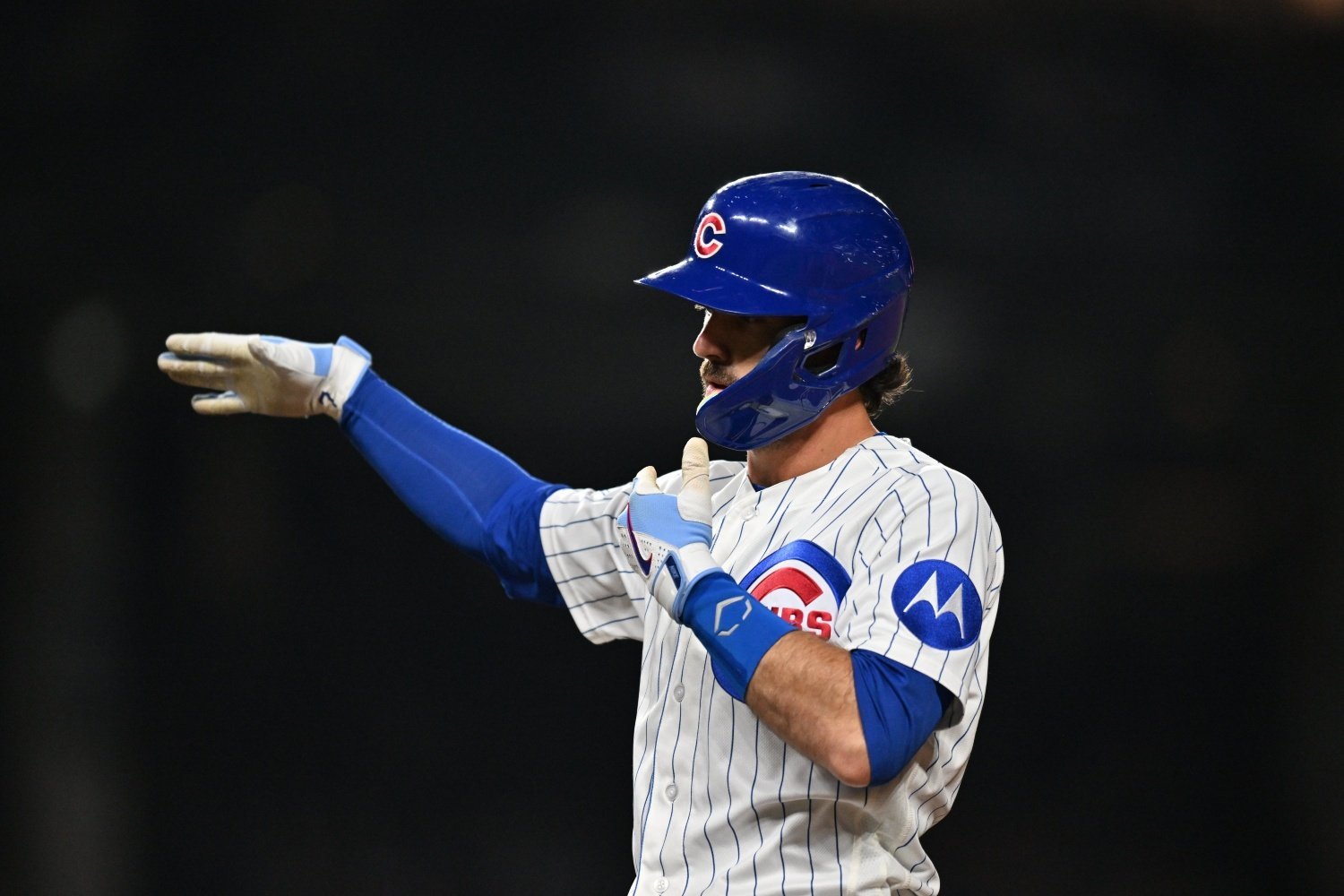 Dansby Swanson went 0-for-4 Tuesday night. The box score says he was 0-for-3 with a walk, but we're not counting at-bats here. Four times, Swanson unequivocally should have challenged called strikes against him. Four times, he accepted the call, instead, hurting his team in the name of either avoiding the risk of losing a challenge or demonstrating a resiliency that proved less valuable than flipping a strike to a ball. Swanson did reach on an error in the bottom of the second inning, the only time he came up in a relatively unimportant situation all night. Obviously, he got pretty lucky to reach base that time, when Jeimer Candelario made a bad throw on a routine ground ball to third base. He'd already made his set of possible outcomes worse, though, by not challenging a pitch that was clearly off the outside corner in a 2-0 count. To be fair, that was a spot where you'd need to be quite sure in order to lodge a well-founded challenge. According to Oyster Analytics's Challenge Dashboard, the break-even confidence rate in issuing a challenge so early in the game with some cushion in the count and no one on base is over 75%. Swanson should have been roughly that sure, but technically speaking, the location of the pitch called a strike against him didn't give him a great chance to be, and José Soriano was pretty nasty in the early going. Let's forgive him this one. In the bottom of the fourth, Swanson came to bat in a much more pivotal spot. The game remained scoreless, thanks to cold air, a stiff in-blowing wind, and Soriano's electric stuff. Ian Happ was on second base, though, so although there were two outs, Swanson had a chance to break the tie with a single. In a 2-2 count, he took a pitch right on the lower outside edge, which was called a strike to end the inning. In fairness to Soriano, it was stellar execution. As you can see, Oyster Analytics rates this as another near-coin flip for Swanson, but in a very different way. Whereas he would have needed to be 75% confident to be justified in challenging in the second inning, this time, the break-even line was south of 30%. Based on the location, Swanson could hardly have been more sure than that, but in this case, he should have issued the challenge, anyway. (In reading the evaluation panel at the right in these images from Oyster, you have to remember that the would-be challenger's confidence will vary somewhat from what they can estimate.) Given the margin of error in confidence for Swanson and the tenor of the game to that point—the latter of which the model doesn't address, so we're not adjusting for Soriano being on his game or runs being at a premium—it was a good challenge opportunity. Swanson was up again in the seventh inning with a runner on, though it was Hoerner at first base and there was only one out. Much had changed, by then. The Cubs had fallen behind 2-0, and they'd lost one of their two challenges, so the break-even rates were much affected. On 1-1, though, he took a pitch well above the zone, which was called a strike. As any Cubs fan old enough to remember the nuggets of wisdom supplied by Steve Stone knows, 1-1 is a pivotal count. Swanson fell behind 1-2, when he should have been ahead 2-1. He had to be a bit better than a coin flip to challenge, but he should have been quite sure of this one. The top and bottom of the zone probably still feel a bit less certain than the lateral edges, even for batters themselves, but Swanson had a chance to gain count leverage at a moment when he represented the tying run. He let that chance go by, and ultimately struck out. In the bottom of the ninth, Swanson came up once more, as the Cubs' last chance. They had only three strikes left to their name, so although Swanson batted with the bases empty and the team needed a baserunner to get any semblance of a rally started, he should have had a hair trigger on called strikes around the edges. Instead, on 1-0, he let one of his team's three remaining strikes be stolen from him. This time, the Oyster model gives him no quarter whatsoever. This was the most glaring of a series of examples of his passivity Tuesday night. He was lucky that a wild Jordan Romano walked him, anyway, giving the team at least an extra breath of a chance. Even if a couple of these were borderline calls, according to the math, the broader narrative matters. Swanson needs to be more proactive about ABS challenges. He had chances to give his team better scoring opportunities Tuesday night, and he missed them. It wasn't the difference between winning and losing; it's no more of a problem than some of his teammates' poor swings. The biggest individual mistake in losing them the game was Pete Crow-Armstrong failing to catch or corral Candelario's double in the top of the sixth; that's a bigger-magnitude play than almost any ABS challenge will be. These cases are more along the lines of a poor swing decision or bad location on a key pitch. Still, they can be decisive, and it's hard to refute the fact that Swanson cost his team expected offensive value in Tuesday's loss. Swanso didn't help himself all night. He didn't force Angels pitchers into the zone against him; he chased several pitches below the zone. He could have done a bit more to force their hand when he did lay off pitches at the edges, though. Though its novelty exceeds its sheer impact, ABS is a new place where teams can either accrue value or leak it. So far, the Cubs aren't using the system well. Only the Royals have challenged a lower percentage of called strikes against them than have Cubs batters. That needs to change, as Swanson's experience Tuesday illustrated. View the full article
-
5 More Calls C.B. Bucknor Should (and Might) Try Next
DiamondCentric posted an article in Brewer Fanatic
 During the key sixth-inning rally in which the Brewers essentially put away Tuesday night's win over the Rays, Jake Bauers hit a wicked line drive to the hole between first and second. Second baseman Ben Williamson dove to his left and knocked the ball down, but his quick recovery was for naught; he threw late and wide. Bauers, hustling down the line, stepped on first base as he ran through it, as batter-runners are obligated to do if they want to be safe. What first-base umpire C.B. Bucknor dared to ask is: What if he hadn't? Wouldn't that have been wild? To test the hypothesis, Bucknor ruled that that very thing had happened—that Bauers had either missed the bag, skipped willfully over it, or so callously disrespected it in the particular way in which he stomped on the pillow that it didn't count. The play had fallen into some confusion after the ball bounced toward home plate and was returned to first baseman Jonathan Aranda, who tagged Bauers. Bucknor called the Brewers first baseman out for not having touched the base yet, which, again, Bauers had done. But an artist does not wait for the beautifully impossible to happen; they get out their canvas and render the impossible vivid and present. Bucknor's easel is the box score, and his brush is the pump of his fist. He installed his work of creative fiction into the game, and we all got to watch the fractal hilarity unfold into its endless angles and dimensions from there. An unfortunate bastion of conservative censorship stepped in to scuttle the festival before it could really begin. The Brewers challenged Bucknor's call, which was rapidly overturned by the replay center at MLB's central office in New York. The reviewers failed Bucknor's transgressive test of imagination, apparently mistaking his commedia dell'arte for one thing we all knew it couldn't be: a mistaken and literal interpretation of the action itself. Maybe you just had to be there. No matter. Art does not change the world by peeling the tentacled unicorn from the canvas and flinging it into the sky; it changes it by forcing us to consider that possibility for a time. Bucknor challenged us all to imagine a wilder, more interesting, less boringly well-ordered world. Why ought he stop now? What has ever been achieved when an artist reached a new frontier and left their audience in awe, only to retreat? Here, for his consideration and yours, are several more ways he can still elevate the craft of umpiring into something more mind-expanding. 1. Batter's Balk There is a great, unexplored margin awaiting the umpire who pounces on our shared uncertainty about the balk rule. Pitchers are not allowed to intentionally deceive baserunners as they prepare to work with the bases occupied. They must come set and avoid a flinch as they prepare to kick and fire. Lefties must not stride toward home plate but throw to first. Often, though, even players and coaches struggle to define the nuances of the balk rule and end up in futile arguments with umpires, either demanding a balk in vain or decrying one they can't understand. That's not fun or compelling, though; it's just arguing. An artist might first glance at the rule known as the catcher's balk, whereby a catcher can be punished for touching the ball with their mask or helmet and the runner is awarded a base—but their eye would be drawn, then, on into the negative space where a mere mortal's eye fails to see anything at all. What about the batter? You ever seen one of these guys? What a twitchy bunch of weirdos. They're shifting their weight, they're waggling their bat, they're tapping their foot. And the pitcher's just standing still. Why not call the batter for a balk—maybe assessing a strike, or calling the runner out, or maybe even calling the batter out but advancing the runner, just as with other balks? Bucknor, surely, will soon try it. 2. Infield Big Fly One peculiar rule protects the offense from manipulation by the infield on pop-ups with multiple runners on base. Rather than permit a team to turn an easy, unearned double play by letting such a ball fall and forcing runners at the next bases, the infield fly rule bids an umpire to call the play dead while the ball is still in the air. Runners can advance at their own risk, but even if the ball hits the ground, they're not obligated to sally forth. With the bases empty and/or with two outs, though, batters get no relief whatsoever on pop-ups. Bucknor could reinterpret the rule to be aimed purely at augmenting offense, and after all, how far off would he be? We could soon find out. Next time a batter hits a fly ball on the infield, look for Bucknor to rule the ball a home run, before it comes down. 3. Catch or Trap? There has always been a delightful bit of drama in watching an outfielder streak after a sinking line drive, sliding or diving to pluck the ball out of the low-lying scrap of sky left between horsehide and grass. Did he catch it, or trap it? Did it almost imperceptibly hop on the turf, or was the last finger of the player's glove beneath it at that final instant? Sometimes, even dozens of looks will leave you unsure. The game waits breathless for those rulings, especially if there were runners on base when the ball was struck and the fielder's heroics were attempted. Routine fly balls don't offer an obvious answer to those thrills, so we need the Bucknors of the world to supply it. What if a fielder caught the ball with both feet beneath them, shoulder-high and sure—but it was ruled a trap and the ball was made live? Bucknor can see the whimsy and the upside, even if you can't, yet. 4. Fair or Foul Long white lines separate the 90° wedge that is fair territory from the surrounds of foul ground on a baseball diamond. Historically—albeit with some notable, even pivotal exceptions—umpires simply call balls hit between those lines fair and those outside them foul. This is unimaginative and restrictive. The great Harry Chapin once wrote a song about a boy who saw all the colors of the rainbow in the morning sun and the flowers all around him, but whose joyous creativity was crushed by an overzealous schoolmarm who compelled him to render his flowers in red, his leaves in green, and the sun in yellow. The ballad's message is clear: break, you, the chains of imaginative bondage that society has placed on you. Be not shackled by the black-white binaries and the straight lines of a world doomed to a depressive death. Breathe those colors; feel the sun in purple-yellow and let the sweet blue heat that runs through its rays touch the back of your throat as you sing out your freedom. Just so, Bucknor ought to invite us out from our corners and into the round. This doesn't require an abandonment of the concept of fair and foul. Bucknor doesn't have to either physically or mentally carve out a special area of foul territory in center field, or make the press box fair. He can simply do as he did Tuesday night. The next time a ball is hit up the middle, he should call it foul. Because what if it had been? As much as what we all saw tells us it was fair, such a call would challenge us to eschew overconfidence and to accept that we are not so different, one from another. A ball was hit up the middle. In what important way was that ball different from one hit toward the first-base dugout? You have an opinion about that, but it was handed down to you by your version of a glowering nun. Let Bucknor's art show you how those batted balls are the same, really. 5. Tagging the Soul We all love a good tag. A fielder who gets into position, reads an incoming throw, anticipates the movement of a runner attempting an evasive slide and nabs them for a crucial out is doing that thing which makes sport greatest, at least in traditional lore: demonstrating grace and genius under pressure. But what are they doing, really? They wear a woven contraption of leather to entrap another. They enact non-hostile but real violence by thwacking and thwapping their handnet onto the uniform of some poor fellow soldier, separated from them in livery but perhaps no different from them in real sympathies and sensibilities. We call this a tag. We call this an out. We only know this way of things. Bucknor has the third eye that renders his first two moot. That's the eye that saw contact between Bauers's sole and the bag on Tuesday, but none between his soul and the bag. He could further invite us to share his gift by giving us more examples of when an apparent connection is illusory. Sure, a glove touched a runner's jersey before the runner grabbed a base, but whose spirit connected with its object more? Did the fielder make the tag with enough love in their heart, enough serious understanding of their impact on the man between their legs, and enough deep-seated desire for victory to merit the out? Should such a thing be decided by a simplistic measurement of space and time, or can we be more fearless—more profound? Is a world in which the runner slid in safely so different from this one? Is that runner safe, after all, even if he was a bit late in putting his own glove to the relevant rubber? The world melts and reshapes itself in glorious new ways for those who can see that (perhaps) he was. We must all learn to see what's before us, lest we be struck by cars or bitten by snakes before we really wake up to the universe, at some age between 14 and 30. However, we must all learn to see what is not before us, too—what is real, but simply confined to the past or the future for the moment; what is not real, but could be; what will never be real, but is more important than what is. You saw Jake Bauers step on first base, like every unhurried runner in baseball history has done. What you saw was real, but it didn't matter very much. One brave person challenged you to see around and behind and beneath that reality, and to understand its full nature—as well as the vast and heart-stopping red-white sear of the reality beyond it. He might offer you another chance, soon. Will you take it? View the full article
-
 The Boston Red Sox acquired Johan Oviedo during the offseason with the hopes that he could be a prominent option in the starting rotation. There's always been a bit of a question mark surrounding Oviedo due to his prior health issues, but the ceiling is sky high, at least if he can throw more strikes. Pitching coach Andrew Bailey worked with Oviedo throughout spring training to get him to focus less on trying to paint corners are more on just filling up the strike zone because, as Bailey put it, when Oviedo threw strikes, hitters struggle to make contact. At the beginning of camp, it seemed like something clicked, but as the spring continued, a dip in velocity and a rise in solid contact began to rear their heads simultaneously. Oviedo’s last spring training performance was enough of a red flag that Alex Cora opted to have rookie Connelly Early join the rotation and shift Oviedo into a long reliever role to begin the season. In his last spring training outing, Oviedo threw 84 pitches, only 48 of which went for strikes, giving up six hits, one home run, six earned runs, three strike outs, two walks, and one hit by pitch over 3 1/3 innings. He spoke to reporters after the game and admitted that he was testing out a new cutter during the outing, but adding a new pitch so late into the spring is a questionable decision for any pitcher, especially one who knows he’s actively competing for a spot in the Opening Day rotation. Things have gone pretty poorly to start the season for the Red Sox, especially considering the high we were all riding after Opening Day. During the first game against the Astros though, Oviedo was tasked with coming into a difficult situation when he entered the game in the fifth inning; he entered a losing game and proceeded to give up four additional runs over 3 2/3 innings. What continued from spring though, was that his velocity was significantly down. Every pitch, except his curveball, was down close to two and a half miles per hour from his average. After that outing, Oviedo again spoke to the media and seemed to have just as many questions as the rest of us. He said he’s surprised that his velocity is down and that everything is coming out slower than when he returned from Tommy John surgery. He speculated that it may be a mechanical issue, but at this point, he doesn’t have a real answer as to why he is struggling so bad. Whatever the issue is, having him fill up the strike zone with pitches coming in far slower than expectation is a recipe for disaster. If we look at his heat map from that Houston game, we can see that he’s not missing the zone much. His bright red spots are mostly strikes, but they are strikes that lived in the heart of the plate. Against someone like Yordan Alvarez, that’s not going to cut it. While there was speculation that Rule 5 acquisition Ryan Watson likely had the shortest leash among the relief corps, it seems more likely that Oviedo should be the one looking over his shoulder as Tommy Kahnle ramps up to get work in with Worcester and then, eventually, the Red Sox. If we look past Kahnle, both Kutter Crawford and Patrick Sandoval are pitching multiple innings in simulated games at Fort Myers, working four innings each. They are closer to returning than not. and both deserve looks in the bullpen (if not the rotation) once they are ready. Oviedo has one minor-league option remaining; once any of the above three pitchers are ready to make their season debut, he’s likely heading to Worcester where he can work on recapturing his best stuff without nearly as much pressure. One bad outing does not make a slump, nor does it mean Oviedo has lost any of the potential that made him such a tantalizing trade candidate. However, the early returns leave a lot to be desired. Andrew Bailey has done well with most of the pitchers the Red Sox have brought in during his tenure, but not every project receives an A. There's still plenty of time in the season for the former Pirate to get his mind (and arm) right, but the Red Sox shouldn't be afraid to keep the leash short with so many alternatives knocking at the door. View the full article
-
Toronto Blue Jays 2026 Top Prospects, No. 6: Gage Stanifer
DiamondCentric posted an article in Jays Centre
 Jays Centre is counting down the top 20 prospects in the Toronto Blue Jays organization. Check out prior entries in the series here: No. 20 to 16 No. 15 to 11 No. 10 No. 9 No. 8 No. 7 No. 6: Gage Stanifer (Dunedin, Vancouver, New Hampshire) ERA FIP xFIP IP G GS K% BB% K-BB% HR/9 SwStr% Whiff% WHIP BABIP LOB% LD% GB% FB% IFFB% HR/FB 2.86 2.70 3.11 110 16 27 35.5% 12.8% 22.7% 0.33 15.8% 36.9% 1.17 .296 74.6% 22.7% 44.9% 32.4% 16.4% 5.5% Another breakout prospect for the Jays in 2025, Gage Stanifer went from an unknown 19th-rounder to a borderline top-100 prospect. Prior to the 2025 season, Stanifer struggled in the Florida Complex League and Single A, pitching to an ERA over 6.00 across his first two professional seasons. Despite decent stuff, he walked a lot of batters. In 2025, Stanifer set a career high in innings pitched, with 110, and went from Single-A Dunedin up to Double-A New Hampshire, mainly piggybacking off of Trey Yesavage. He’s expected to start the 2026 season back at Double A. One of the big things that stood out for Stanifer from his previous seasons, compared to 2025, was that he was able to make significant gains in velocity after a very productive offseason. Stanifer went from sitting 92 mph on his four-seam fastball to 95 mph. The shape of his fastball was also still very solid, with 17.8 inches of vertical break and 12.6 inches of run, and because it was such an effective offering for him, and because he could consistently throw it for strikes, Stanifer threw it over two-thirds of the time in Dunedin. His main secondary, thrown more against righties than lefties, is a slider that gets more depth than normal, which gives it a sort of “deathball” shape (-5.1 inches of vertical break). It was extremely effective as a whiff generator, but Stanifer could sometimes lose the zone with it, too often leading to middling chase rates. His third pitch is a split-changeup that’s still a work in progress. The shape is intriguing, with 15 inches of vertical separation from his fastball and nearly 14 inches of fade, but he’s still developing a feel for it. He only throws it to lefties, making him nearly a two-pitch pitcher against each handedness of hitter. Stanifer’s arsenal and stuff propelled him to the top of the minor league leaderboards, as out of all qualified minor league pitchers, he led the pack with an absurd 35.5% K-rate, above the Cardinals’ Braden Davis and the Yankees’ Carlos Lagrange. The stuff did tick down in spring training a bit — Stanifer’s velo was not where it was in the 2025 season — leading to some poor results, but he assuaged the velo drop off with an electric Spring Breakout performance against the Phillies, striking out four batters in three scoreless innings while only giving up a single walk. The Phillies’ announcers sang his praises throughout, and his velo ticked back up; he sat 95.6 mph and touched 97.4 mph with his four-seamer. Stanifer does have some concerns going forward, however. Although he has reined in the walks, he still walks over 10% of the batters he faces, which is fringy for a starting pitcher. Scouts also have concerns about the repeatability of the delivery. Those concerns could take his outlook from a solid fourth starter to more of a back-end bullpen piece. Stanifer may also want to add a pitch or more to his arsenal to better fit the role of a starter. Although his three-pitch mix has shown effectiveness already, he may need more weapons going forward. A bridge pitch like a cutter could provide that for him. Stanifer will start the season in Double-A New Hampshire and will be challenged against upper-level hitters again. The Jays currently have a crowded rotation, but there’s the slightest chance that Stanifer could make his MLB debut this season as a reliever if he progresses well and the Jays need some extra firepower in the ‘pen. View the full article
-
 Whatever expectations you had for the Miami Marlins entering the 2026 season should not shift in any way based on a five-game sample against soft competition. However, those expectations may have been influenced by incomplete information if you didn't account for the switch that this team flipped during the middle of the previous year. Across nearly 900 innings, the Fish have excelled. For the sake of round numbers, let's look at the last 100 games. Dating back to June 14, 2025, the Marlins have a 57-43 record—that is tied for sixth-best in Major League Baseball, according to Stathead. The team they're tied with? The World Series-champion Los Angeles Dodgers. Every team with a superior record qualified for the 2025 postseason. Rk Team Span Started Span Ended ▼ WL% G W L 1 MIL 2025-06-10 2026-03-31 .660 100 66 34 2 TOR 2025-06-11 2026-03-31 .610 100 61 39 3 PHI 2025-06-11 2026-03-31 .600 100 60 40 4 SEA 2025-06-14 2026-03-31 .590 100 59 41 5 BOS 2025-06-09 2026-03-31 .580 100 58 42 6 MIA 2025-06-14 2026-03-31 .570 100 57 43 7 LAD 2025-06-10 2026-03-31 .570 100 57 43 This is the winningest 100-game stretch for the Marlins since the very end of 2022 (final eight games) and 2023 pre-All-Star break (92 games), when they went 58-42. Why this might be legit Consistency has been key for the resurgent Marlins. They've played in 32 series over this span, getting swept only once (9/1/25-9/3/25 against the Washington Nationals). Their record is comfortably above .500 both at home and on the road—they actually established an all-time franchise record for consecutive road wins at the beginning of these 100 games. What's been causing problems for the opposition? The Marlins offense constantly applies pressure. Their 19.5% strikeout rate over the last 100 games is fifth-lowest in MLB and they've stolen 91 bases, which is the fifth-highest total. The Marlins have won despite never being able to utilize a full-strength lineup. For the first 40 games, dynamic center fielder Jakob Marsee was still in the minor leagues. For the last 45 games, All-Star Kyle Stowers has been sidelined due to various injuries. During their brief overlap in availability, Griffin Conine and Connor Norby were both out. Knock on wood, all of those bats should be taking the field together later this month as Stowers (hamstring strain) gradually increases baseball activities. To the disdain of baseball traditionalists, Miami's coaching staff began calling every pitch from the dugout on September 19. The early returns have been awesome, with 21 different pitchers combining for a 3.21 ERA (eighth in MLB). Why this might be a mirage Tuesday's game was uncharacteristically comfortable for the Marlins. They won at a .566 clip over their previous 99 games despite an overall run differential of zero. That's the underlying performance of a .500 team. View the full article
-
 Transactions: Milwaukee Brewers optioned C Jeferson Quero to Nashville Sounds Milwaukee Brewers sent RF Steward Berroa on a rehab assignment to Nashville Sounds. Milwaukee Brewers sent LHP Rob Zastryzny on a rehab assignment to Nashville Sounds. The Brewers’ other minor league affiliates announced their Opening Day rosters, which you can find here: Biloxi Shuckers (AA) Wisconsin Timer Rattlers (High A) Wilson Warbirds (Low A) Game Action: Nashville Pre-Game Media Notes Nashville 7, Charlotte (White Sox) 3 Box Score Via the Sounds’ website, game details, and we encourage readers to review affiliate write-ups as part of their Link Report routine: Sounds win second straight with 7-3 victory over Charlotte Charlotte and Nashville started with some early offense from both teams in the first inning in the Sounds' home opener, the first of 24 matchups between these International League foes. Under-the-radar offseason acquisition Shane Drohan had a bumpy start in his Brewers' organization debut. After a walk, steal, and double, Drohan and the Sounds found themselves in a 1-0 hole just two batters into the game. Drohan also issued a walk and hit-by-pitch in the first frame but was able to escape a bases loaded jam by striking out Waukesha native Jarred Kelenic to end the threat. In the bottom of the first, Knights’ starter Jonathan Cannon (81 ERA+ in 228 MLB innings with the White Sox) took the hill to take on a Sounds' lineup that was missing Cooper Pratt as the organization and player finish negotiating his “shocking” extension. With Pratt out, Jett Williams was playing short and leading off. Williams led off the game with a strike out, part of a tough night that saw him go 0 for 5 with three strikeouts and some shaky defense. Steward Berroa, in his season debut, followed Williams with a single, before Tyler Black launched his first homer of the season to quickly give the Sounds the lead: It will be interesting to see if Black can justify a call-up at any point this season, after Andrew Vaughn’s injury and the recent acquisitions of Luis Matos and Damon Keith have cleared and then muddied the path forward for Black. After the Sounds took the lead on Black’s bomb, Drohan was aided by a double play in the second inning, as Williams snagged a ground ball, stepped on second in one motion, but then misfired in the dirt to first baseman Luke Adams. However. Adams was able to secure the out with a scoop to bail Williams out. In the third, Drohan walked two and hit another batter, but was once again able to strike out Kelenic with the bases loaded to escape the inning unscathed. Drohan would pitch into the fourth inning with a final line of 3.1 IP 3 H 2 ER 4 BB 6 K and 2 HBP. In 2025, Drohan only extended himself to 4+ innings six times in his 15 appearances, so it’s worth monitoring whether the Brewers will attempt to stretch Drohan out or use him as a reliever as the season goes on. In the bottom of the third, the Sounds manufactured two runs on some small ball. After singles by Black and Luis Lara, Brock Wilken collected his first AAA RBI with a single. With runners on the corners, Wilken then broke for second in a double steal that saw Lara score on an error by the Charlotte shortstop William Bergolla Jr. In the top of the fourth. The Knights turned the tables on the Sounds' suspect defense. Wilken bobbled what could have been an inning-ending double play on a 105 MPH ground ball, which gave the Knights a run. The Knights then pulled off their own double steal of home to close it to 4-3. Logan Henderson made his season debut in the Sounds’ defensive half of the fifth inning. Henderson looked dominant in his three scoreless innings of work, allowing just a hit and a walk, while striking out five. Henderson threw 28 of 45 pitches for strikes and got 13 whiffs. The Sounds broke the game open in the fifth with a two-run triple off the bat of Greg Jones to make it 6-3. Luke Adams would follow Jones with Adams’ first AAA RBI - a sac fly to close the scoring at 7-3 in the Sounds’ home opener. Sounds Extras If the 28-year-old Jones never makes it back to The Show, his career 1/7 with a HR, SB and .821 OPS is the kind of cup of coffee that gets you written into Field of Dreams. Infielder Eddys Leonard was rung up on an automatic strike for a pitch clock violation in his first at-bat. Former Brewer Oliver Dunn struck out in each of his first three ABs, before singling in his final two at-bats Former Brewer Tyson Miller pitched a scoreless ninth for Charlotte Carlos Rodriguez will take the mound for the Sounds on Wednesday, completing our first cycle through the deep rotation at AAA Nashville. Organizational Scoreboard including starting pitcher info, game times, MiLB TV links, and box scores Current Milwaukee Brewers Organization Batting Stats and Depth Current Milwaukee Brewers Organization Pitching Stats and Depth View the full article
-
15-year Marliniversary: Buck blasts grand slam in Fish debut
DiamondCentric posted an article in Fish On First
 An All-Star for the Toronto Blue Jays in 2010, catcher John Buck signed with the Florida Marlins prior to the start of the 2011 season. On this day 15 years ago, Buck made his presence felt in his Marlins debut. The Marlins and New York Mets were scoreless through three and a half innings on opening day at Sun Life Stadium on April 1, 2011. That changed with one swing of the bat from Buck as the Marlins went on to collect a 6-2 victory. The Marlins had gone in order in the second and third innings against New York starter Mike Pelfrey, but after Hanley Ramírez flew out to open the bottom of the fourth, walks to Giancarlo Stanton and Logan Morris bookended a Gaby Sánchez double. That set the stage for Buck. Buck worked an eight-pitch at-bat in the second before flying out. In the fourth, Buck again saw eight Pelfrey pitches. This time, however, he was able to get the good part of the bat onto the ball, depositing a grand slam into the right-center field seats. Buck’s blast broke a scoreless tie and put the Marlins ahead for good. After Sánchez extended the lead with an RBI single in the fifth, the Mets finally got to Florida starter Josh Johnson, who took a no-hitter into the seventh, with a pair of runs. New York brought the tying run to the plate, but reliever Mike Dunn was able to fan Scott Hairston to end the threat. A solo blast from Morrison to lead off the bottom of the eight capped the scoring. Juan Carlos Oviedo, then known as Leo Nuñez, retired the Mets in order to seal the victory. Johnson picked up the win, allowing two runs on just three hits in 6 ⅔ innings. Buck and Sánchez each had two of Florida’s 10 hits. Buck never equaled his 2010 totals when he hit .281 with 20 home runs and 66 RBIs but was serviceable in his two seasons with the Marlins. Buck hit just .227 in 2011, but his 16 home runs and 57 RBIs were the most for a Florida catcher in four years. He began his stay in South Florida with a bang on this day 15 years ago. View the full article
