


DiamondCentric
-
Posts
2,631 -
Joined
-
Last visited
Never
Content Type
Profiles
Forums
Events
News
Tutorials & Help
Major League Baseball Videos
Guides & Resources
Store
Downloads
Gallery
Everything posted by DiamondCentric
-
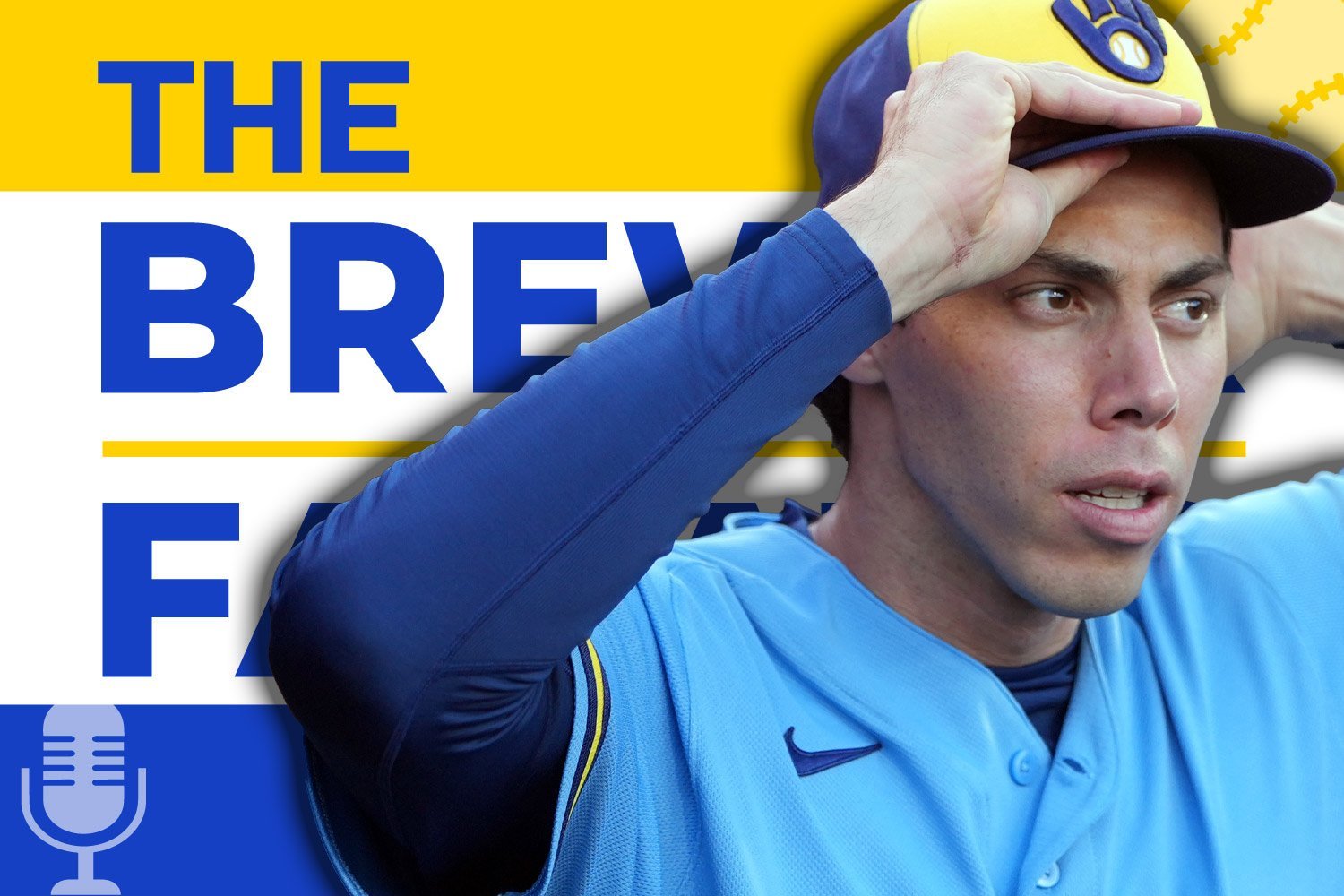 Spencer returns to the show as he and Jack assess the level of concern after a three-game sweep in San Diego. Apple Podcasts: https://podcasts.apple.com/us/podcast/the-brewer-fanatic-podcast/id1740648724 Spotify: https://open.spotify.com/show/5CY8mWsQayqjDXqw9OT2Td iHeartRadio: https://www.iheart.com/podcast/263-the-brewer-fanatic-podcast-166534588/ Pocket Casts: https://pca.st/ommzz627 Watch On YouTube: https://www.youtube.com/@brewerfanatic View the full article
 -

 Jacob Reimer caught the hitting bug that has been going around at Binghamton. On Thursday, it was his turn to make an opponent sick. Reimer launched a three-run home run in the seventh inning to break open the Rumble Ponies' 10th consecutive victory, a 6-2 triumph over Portland. It was his first long ball since returning from a rehab assignment at High-A Brooklyn on Aug. 4. But even without much slug (two extra-base hits), he has been productive at the plate. He has driven in runs in six of seven games, and the homer gave him 10 RBIs in that stretch. He's up to .300 (9-for-30) after a third consecutive two-hit night. The surge is a welcome development for the 22-year-old corner infielder, who appeared to be on the fast track after his 61-game stretch at Binghamton last year (.853 OPS, nine home runs). He stumbled through the first 2 1/2 months this year before going on the injured list in mid-June with a groin tweak. He's up to a .729 OPS and seven homers in 57 games for the Rumble Ponies. His contribution Thursday was also important because he's fighting a few newcomers for at-bats on a suddenly stacked infield. Top prospect Jefferson Rojas and slugging Billy Amick were acquired around the trade deadline. Corey Collins came up from Brooklyn last month. All have been making an impact with the Ponies. Elsewhere in the organization: Syracuse's game at Jacksonville was suspended in the top of the fifth inning because of rain, with the Mets trailing 3-2. Zack Short was on third base with one out and Vidal Brujan was at the plate with a 2-0 count when play was halted. The game will be completed Friday, beginning at 5:05 p.m. The clubs' regularly scheduled game will follow. Brooklyn scored three runs in the seventh inning and two more in the eighth to beat Jersey Shore 6-1. Daiverson Gutierrez broke a 1-1 tie with an RBI double in the seventh. The bullpen gave up one hit over five scoreless innings. St. Lucie scored all its runs in the final three innings as it defeated Jupiter 7-2. Ethan Lanthier struck out nine over 3 2/3 innings and Elian Pena homered for the third time in the series. DSL Mets Orange shut out DSL Giants Black 3-0. Maxgregori Harvey and Olmedo Barria combined on a one-hitter with 11 strikeouts. DSL Mets Blue lost a 16-10 slugfest to the DSL White Sox. Adrian La Rosa had three hits and three RBIs. New York Mets Transactions No Roster Moves Morabito Stars, Santucci Stumbles Before Syracuse Game Suspended Nick Morabito drove in both Mets runs before the rains hit. He led off the game with a home run, and he brought home another run with a groundout in the third. Mets starter Jonathan Santucci failed to get out of the first inning. He was hooked after throwing 36 pitches (19 strikes). He was charged with two runs (one earned) on one hit and three walks. Reimer Caps Binghamton's Comeback The Rumble Ponies overcame an early deficit with a pair of three-run innings. They took the lead with three in the fifth and then added on with Reimer's homer. Corey Collins started the fifth-inning rally by drawing a walk. D'Andre Smith doubled to move him to third. Kevin Parada lined a single to right to score Collins. A throwing error on the play allowed Smith to score and move Parada up to second. Mitch Voit reached on a fielding error that moved Parada to third. Marco Vargas bunted into a fielder's choice, switching places with Voit. Vargas then stole second, and Parada scored on an error by Portland's catcher. Dakota Hawkins and Zach Conley piggybacked the start. Each went three innings, Hawkins was touched up for two runs on four hits, while Conley allowed two hits and no walks over three scoreless frames. He was the pitcher of record when Binghamton took the lead. Player AB R H RBI BB K Mitch Voit 5 0 0 0 0 3 Marco Vargas 5 0 0 0 0 2 Jefferson Rojas 4 1 0 0 0 2 Jacob Reimer 4 1 2 3 0 0 Chris Suero 2 0 0 0 2 1 Billy Amick 4 0 0 0 0 3 Corey Collins 2 1 0 0 2 1 JT Benson 0 0 0 0 0 0 D'Andre Smith 4 1 2 0 0 1 Kevin Parada 3 2 2 1 1 1 Totals 33 6 6 4 5 14 Player IP H R ER BB K HR Dakota Hawkins 3 4 2 2 1 2 2 Bryce Conley 3 2 0 0 0 3 0 Bryce Jenkins 1 0 0 0 2 1 0 Saul Garcia 1 1 0 0 0 1 0 Garrett Stratton 1 0 0 0 0 1 0 Totals 9 7 2 2 3 8 2 Brooklyn Takes Its Time In Beating Jersey Shore The Cyclones finally got to work in the seventh. Antonio Jimenez tripled to right with one out and scored on Gutierrez's double to left. Gutierrez moved to third on a fly out by Eddinson Paulino, Chase Meggers walked, and then Trey Snyder singled to center to bring in Gutierrez for a 3-1 lead. Ronald Hernandez was hit by a pitch to load the bases. Henriquez then walked to force in Meggers. Meggers and Snyder extended Brooklyn's lead with RBI singles in the eighth. Joel Diaz started and went the first four innings. He allowed Jersey Shore's run and four hits. Hunter Hodges, Parker Carlson and Gregori Louis followed and limited the Blue Claws to one hit over the final five innings. Player AB R H RBI BB K Trey Snyder 5 0 3 2 0 1 Ronald Hernandez 3 0 1 0 1 1 Yonatan Henriquez 4 1 1 1 1 1 Jamari Baylor 3 0 0 0 1 1 Colin Houck 3 1 0 0 1 2 Antonio Jimenez 3 2 2 1 1 1 Daiverson Gutierrez 4 1 1 1 0 0 Eddinson Paulino 3 0 0 0 1 0 Chase Meggers 3 1 1 1 1 1 Totals 31 6 9 6 7 8 Player IP H R ER BB K HR Joel Díaz 4 4 1 1 1 1 0 Hunter Hodges 2 1 0 0 1 3 0 Parker Carlson 2 0 0 0 2 4 0 Gregori Louis 1 0 0 0 0 1 0 Totals 9 5 1 1 4 9 0 Peña In Middle Of St. Lucie Comeback Peña started the winning rally in the eighth with a one-out double. He scored on a double by the next batter, John Smith III. He capped the scoring in the ninth with his eighth home run of the year, a two-run shot. Kooper Schulte had put the Mets up 5-2 one batter earlier with a two-run single. Peña reached base three times in all with two hits and a walk. The Mets tied the game in the seventh with an RBI double by Bohan Adderley and a run-scoring groundout by Vladi Gomez. Lanthier allowed just a solo home run in his dominant outing. Christian Rodriguez piggybacked off him and wound up earning the win as he allowed a run and four hits over 3 2/3 innings. Miguel Mejias got the final five outs for his fifth save of the year. He struck out three. Player AB R H RBI BB K Elian Peña 4 2 2 2 1 2 John Smith III 5 0 2 1 0 1 Eli Serrano III 4 0 0 0 1 2 Ryan Tayman 2 1 0 0 3 0 Yovanny Rodriguez 4 1 1 0 0 1 Bohan Adderley 3 1 1 1 1 0 Vladi Gomez 4 1 1 1 0 1 Reed Stallman 4 0 0 0 0 2 Kooper Schulte 3 1 1 2 1 1 Totals 33 7 8 7 7 10 Player IP H R ER BB K HR Ethan Lanthier 3 2/3 1 1 1 2 9 1 Christian Rodriguez 3 2/3 4 1 1 3 3 0 Miguel Mejias 1 2/3 0 0 0 0 3 0 Totals 9 5 2 2 5 15 1 Top-20 Prospect Performance Jonah Tong: DNP Jack Wenninger: DNP Ryan Clifford: DNP Elian Peña: 2-for-4, 2B, HR, BB, 2 K Nick Morabito: DNP Jacob Reimer: 2-for-4, HR Mitch Voit: 0-for-5, 3 K Jonathan Santucci: DNP Zac Thornton: DNP Chris Suero: 0-for-2, 2 BB, K Will Watson: DNP Wandy Asigen: DNP Eli Serrano III: 0-for-4, BB, 2 K Randy Guzman: DNP Dylan Ross: DNP Ryan Lambert: DNP Antonio Jimenez: 2-for-3, 3B, BB, K R.J. Gordon: DNP Jonathan Pintaro: DNP Marco Vargas: 0-for-5, 2 K View the full article
 -
Josh Donaldson Says Minnesota Fans “Don’t Even Care” About Baseball
DiamondCentric posted an article in Twins Daily
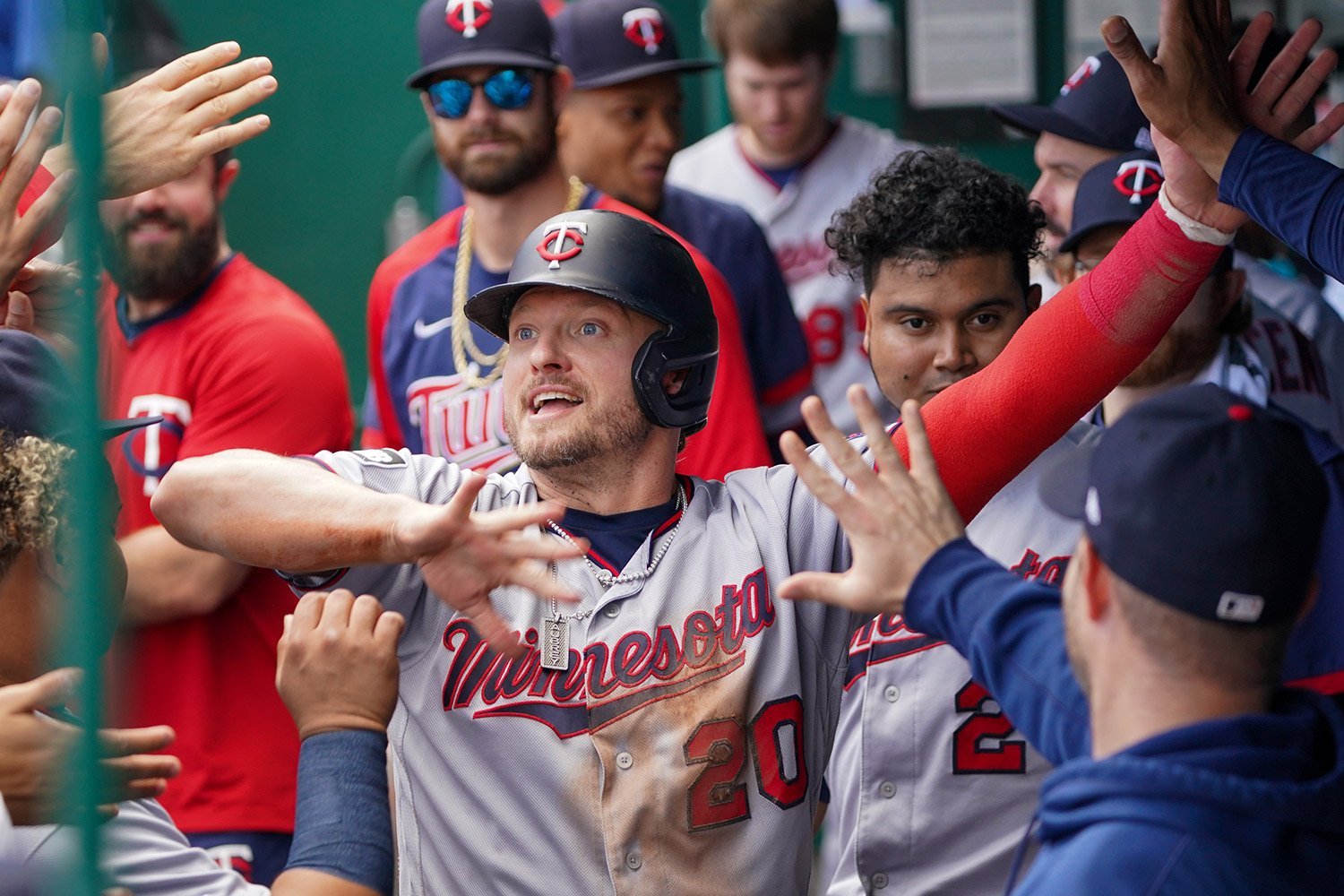 Josh Donaldson has never been shy about sharing his opinion, and the former Minnesota Twins third baseman is making waves with some rather unflattering comments about his former team and the state of Minnesota. On a recent episode of his Get It Done League podcast, Donaldson was discussing Jeff Hoffman being traded to the Twins at the deadline and his thoughts on Minnesota as a destination. Donaldson did not exactly give his former home a ringing endorsement. "He's going to get to go to Minnesota, where it's 'Minnesota Nice'... people in Minnesota... I don't think they even care about baseball that much... Playing there for two years, I thought it was mediocre at best," Donaldson said. Parker Hageman of Twins Daily shared a clip of Donaldson's comments on X, and it quickly generated plenty of engagement from Twins fans, many of whom remember Donaldson's own two-year run in Minnesota quite well. Donaldson signed with the Twins as a free agent ahead of the 2020 season and spent two seasons with the club. While he was productive when on the field, posting a .829 OPS, many fans had a sour taste in their mouths over Donaldson's time in Minnesota. Injuries limited him to just 163 games over those two years, and he missed the Twins' 2020 postseason run because of injury. Donaldson's tenure in Minnesota was also defined by his personality. He became a polarizing figure among Twins fans, with his attitude, controversial comments and perceived lack of leadership rubbing plenty of people the wrong way. After spending the 2022 and 2023 seasons in New York and Milwaukee, Donaldson retired following the 2023 season. He now hosts Get It Done League alongside former teammate and All-Star Russell Martin and veteran broadcaster Arash Madani. Now, his comments about Minnesota have given Twins fans another reason to revisit the Donaldson era. What do you make of Josh Donaldson's comments? And what is your overall opinion of Donaldson's time with the Twins? Let us know in the comments. View the full article
 -
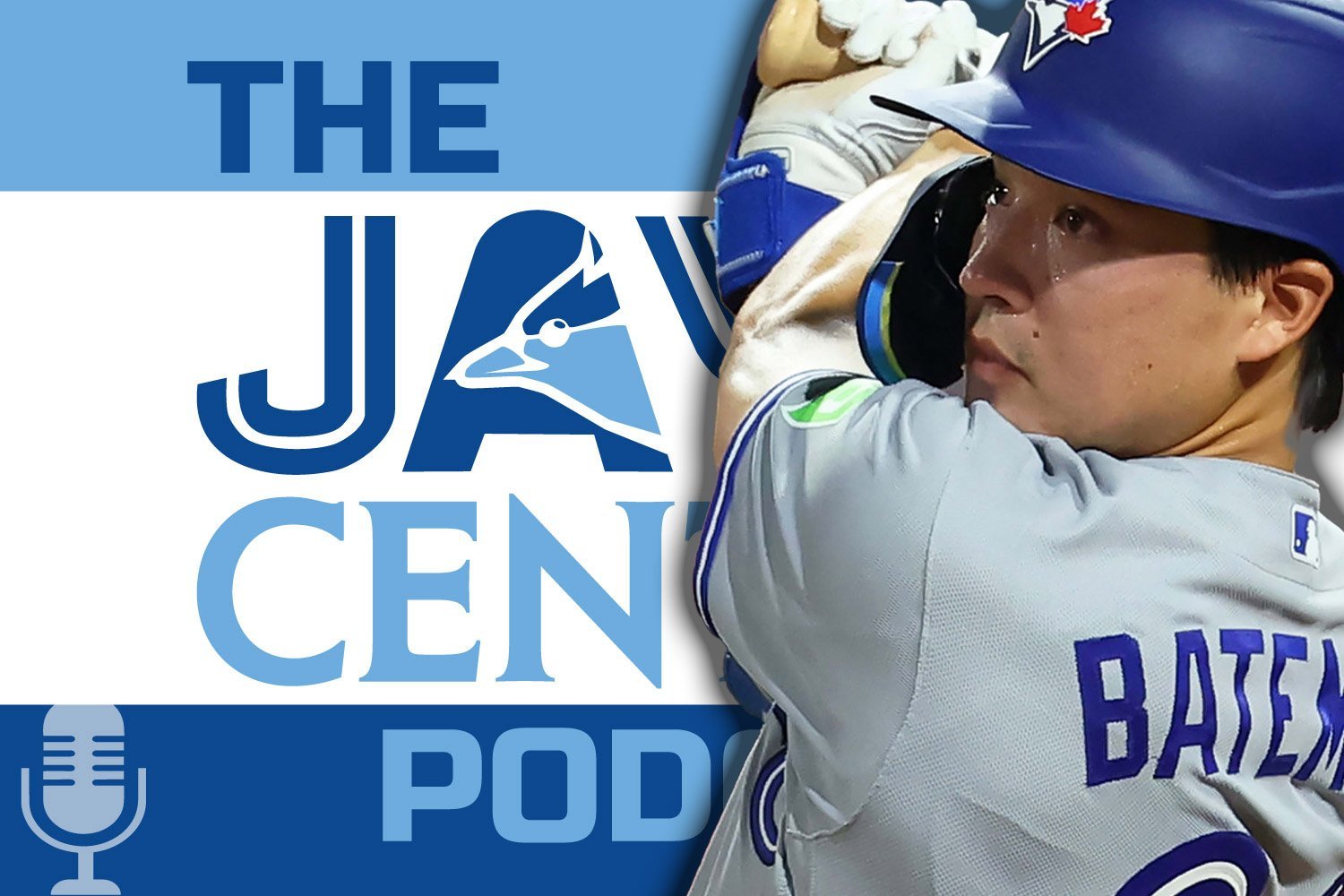 Owen and Jesse have a busy four-game series against the Boston Red Sox to break down, but they start by debating what has changed for the Blue Jays over this recent stretch of five straight series wins. They break down the series game-by-game, focusing on the viral "fourth out rule" that broke our brains in game one, Charles McAdoo's contributions, Brett Bateman's explosion onto the scene, and José Soriano's strong but slightly disappointing second start as a Blue Jay. All that and so much more on an extremely excited episode of the Jays Centre Podcast. Listen on Apple Podcasts: https://podcasts.apple.com/us/podcast/the-jays-centre-podcast/id1846108462 Listen on Spotify: https://open.spotify.com/show/3Bi7SzfpcqMo5xYWnbCeoL Listen on iHeartRadio: https://www.iheart.com/podcast/263-the-jays-centre-podcast-300304824/ Listen on Pocket Casts: https://pca.st/2qk9wqxd Watch on YouTube: https://www.youtube.com/@jayscentre View the full article
 -
Brooks Lee's Batted-Ball Data Says His Breakout is Fake. Is It?
DiamondCentric posted an article in Twins Daily
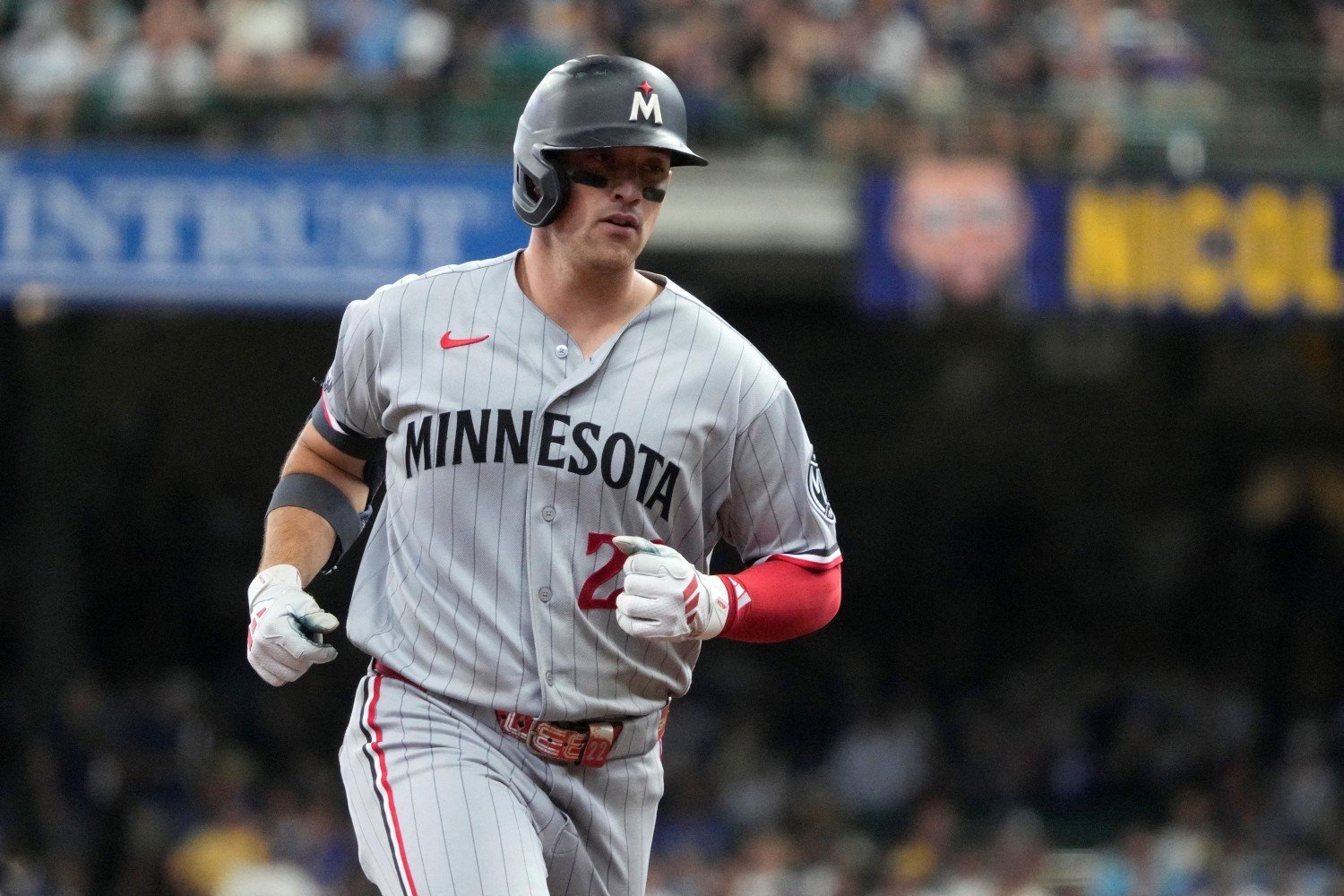 Brooks Lee’s first few seasons in the major leagues haven’t exactly been what we all hoped for. Across his first 305 big-league games, Lee slashed just .238/.289/.383. For a player whose bat was supposed to be his calling card coming out of the draft, that isn’t the kind of production the Twins were looking for—and he's already slid to third base, where his glove looks good but not great. There have been flashes, but nothing consistent enough to suggest that Lee was becoming the hitter Minnesota had hoped for. However, something does appear to be changing in 2026. Through 466 plate appearances, Lee is hitting .247 with a .303 on-base percentage. Those numbers certainly aren’t eye-popping, but they represent a noticeable step forward from what we’ve seen during his first two seasons. The biggest area of growth has been his power production. Lee’s slugging percentage is .054 higher than it was a year ago, and he has already established new career highs in doubles, triples and home runs. Pair that with the highest walk rate of his career, and on the surface, it looks like Lee might finally be breaking out. But is he actually doing so? While Lee’s surface-level numbers are comfortably the best of his young career, the underlying data suggest that the improvement hasn’t necessarily come from him making better contact. In fact, compared to 2025, his quality of contact has regressed. Lee’s average exit velocity has dipped from 88.6 mph to 87.7 mph, while his hard-hit rate has fallen considerably, from 38.5% to 31.7%. His barrel rate (as a share of his batted balls) has also dropped by more than two percentage points. That’s not exactly what you want to see from a hitter whose offensive production is supposedly taking a step forward. His expected batting average sits at just .224, while his expected slugging percentage is a whopping .095 lower than his actual mark. While Lee’s production on the surface has been as good as ever, he's making less impressive contact. The obvious question, then, is which indicator we should trust. Is Lee breaking out, or just shuffling sideways? I’m going to say the surface-level numbers carry more weight, for now. Maybe that’s just me trying to be optimistic about a former top prospect who hasn’t quite lived up to expectations yet, but there are legitimate reasons to believe Lee’s improvement is more than just a statistical mirage. For starters, his calling card has always been his hit tool, and that part of his game has taken a step forward this season. Lee’s whiff rate and strikeout rate are both lower than they were a year ago. He’s putting the ball in play more often, and naturally, good things tend to happen when a hitter consistently gives himself a chance to produce. No, he isn’t hitting the ball quite as hard as he was a year ago. Yes, his hard-hit and barrel rates have gone backward. But if he’s putting the ball in play more frequently and giving himself more opportunities to find gaps, reach base and take advantage of defensive mistakes, hitting it hard becomes less vital. There’s also been a pretty clear change in Lee’s overall approach at the plate. He’s pulling the ball more often this season, while also hitting the ball in the air at a higher rate. Those two changes tend to go hand in hand with increased extra-base production, even when the hitter isn’t consistently producing barrels. Lee has been more aggressive on pitches in the strike zone, too. That would suggest his improvement isn’t simply coming from getting lucky on balls in play. There’s intention behind some of the changes he has made at the plate. Even if the resulting contact isn’t always particularly loud, that approach gives him a better chance to turn his natural bat-to-ball ability into actual offensive production. None of this means Lee is suddenly going to become a superstar. He probably isn’t going to be the type of hitter who puts up 30 home runs in a season. He’s probably never going to rank among the hardest hitters in baseball, either. But that’s alright. He doesn’t need to become that player to have a successful major-league career. He just needs to become the player the Twins thought they were drafting: a smart, fundamentally sound hitter who consistently puts the ball in play and can do enough damage to make pitchers pay. At 25 years old, there should still be plenty of room for that player to emerge. The numbers underneath Lee’s 2026 breakout are certainly worth monitoring, and if the quality of his contact doesn’t eventually catch up, there’s reason to believe his current production could regress. But for the first time in his young career, there are also signs that Lee is figuring out how to make his skill set work at the major-league level. View the full article
 -
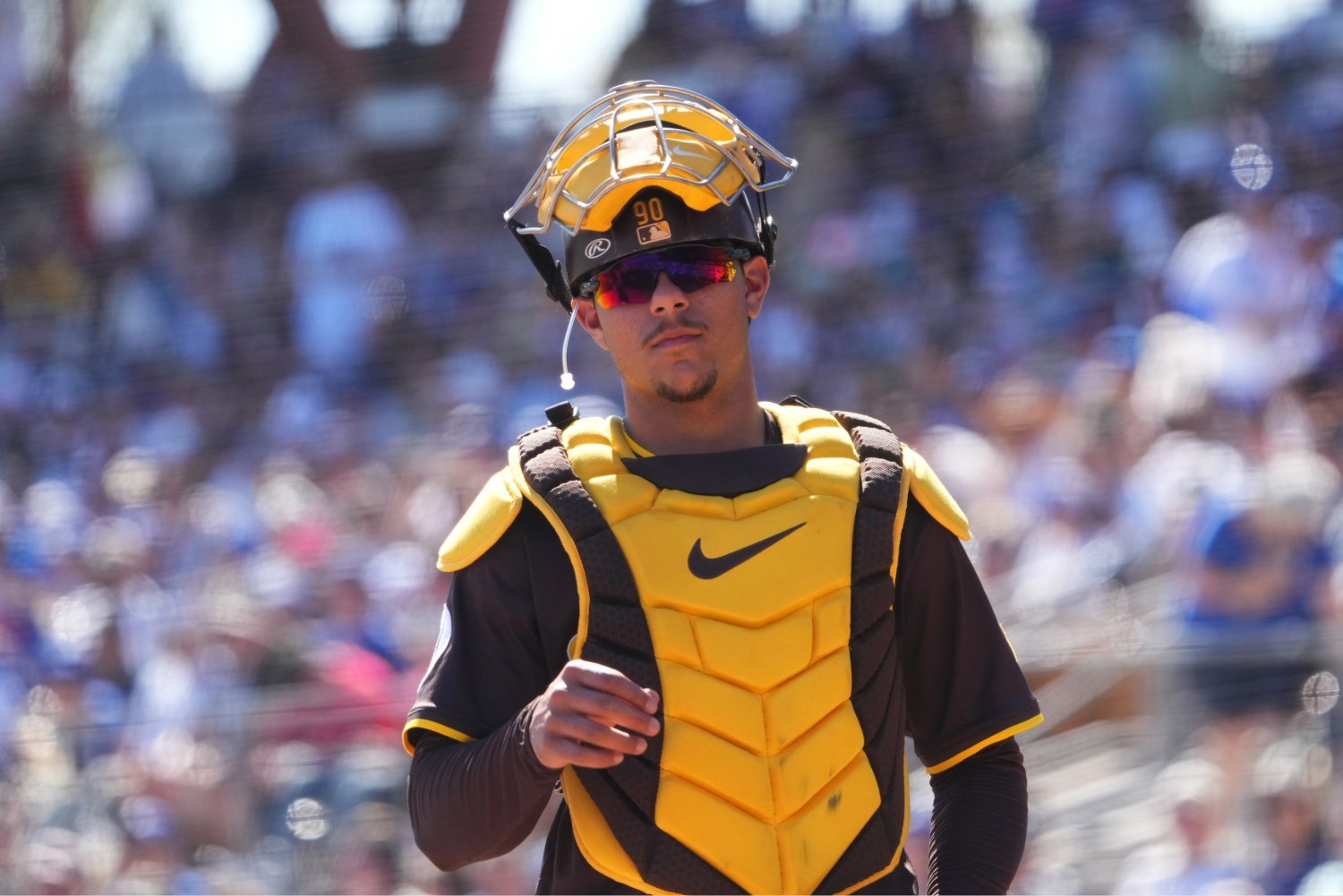 That catching prospect Ethan Salas escaped the trade deadline still a member of the San Diego Padres organization served as a mild surprise. Once it became evident that the team would be buyers, there wasn't really an existent threshold between a pathway to improving the current roster and A.J. Preller's penchant for dealing away prospects in pursuit of a win-now mentality. Fortunately for the Padres, Salas never really appeared to be in danger of moving as the Padres worked in tiers other than the very top of the market in order to improve their rotation. Which means now the conversation around Salas can transition to his future in San Diego. Of course, the immediate question in such a conversation becomes just how quickly that future can come to fruition. Salas is still only 20 years old (and has been for just a couple of months), but carries the weight of the entire farm system on his back. He rose through the minor-league ranks rapidly between 2023 and 2025, with injuries slowing him down from what could have been a Triple-A appearance as a 19-year-old last season. Nevertheless, he progressed to El Paso at the end of July of this year and now stands on the precipice of a major-league appearance. The sample with the Chihuahuas remains minuscule (11 games, 52 plate appearances), but after earning his promotion, Salas has done nothing but rake since his promotion. It's not even just that the numbers have been good (Salas has slashed .326/.404/.605 with a .279 ISO, good for a 133 wRC+); it's that the underlying trends look incredible. Salas is showing an advanced approach even as a youngster in Triple-A. He's swinging a lot, but he's not chasing. That's allowed him to maintain a high rate of contact (much of which has been quality) and a 14.0 percent walk rate that holds up well against a strong 16.3 percent strikeout rate. Considering the lack of questions about his defensive acumen (again, even given the age), it's only natural to wonder if a call-up upon roster expansion could be imminent. Such a question might be absurd for a contending team in the midst of a playoff chase. But starting catcher Freddy Fermin has struggled mightily (.197/.275/.320, 69 wRC+) at the plate, and Luis Campusano, while improved defensively, profiles more as a backup with the ability to DH than as someone you're going to entrench in the starting gig over long stretches of time. The former issue has been at least temporarily solved. Fermin hit .292 in July and is well over .300 through our small sample in August. He's also hitting the ball hard at his highest rate (37.5 percent) since April. So, there's some steady improvement with the bat there, in addition to the fact that his Fielding Run Value ranks sixth among qualifying catchers. That's not exactly a trend you want to remove from regular work, and the Padres aren't going to be inclined to have Salas sit on the bench behind him when everyday reps will surely benefit him more in the long run. However, it's not as if Fermin is a surefire option for the long haul. While he's excellent with the glove in his hand, his bat has been more of the streaky variety, especially since his arrival in San Diego last season. It's entirely possible that the team could give Salas a cup of coffee upon the expansion of rosters in September just to get him some exposure to the top level. More realistically, though, we're looking at him as legitimately part of the catching mix come next spring. That alone is a really exciting possibility. Franchise catchers are a rarity in the game, and Salas has spent a healthy 2026 looking, once again, like he has the chops to become just that. The stall in his development because of last year's health issues appears to be behind him and, regardless of what the timeline could look like, it doesn't seem like it'll be too much longer before an opportunity presents itself. View the full article
 -
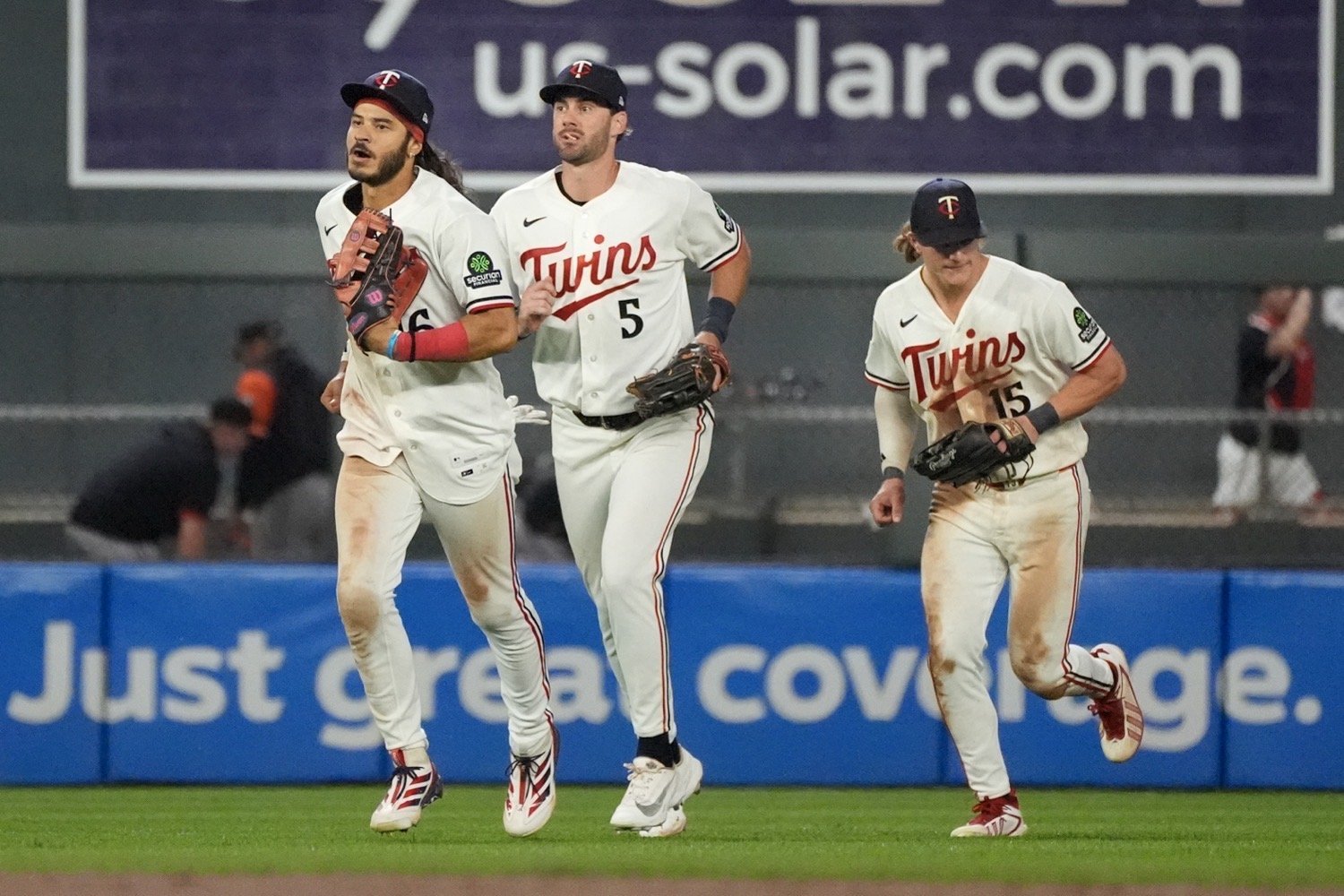 The Minnesota Twins have built their roster around a simple idea: availability is the best ability. It is a philosophy that traces back to the Derek Falvey-Thad Lavine front office, and for years it worked. Guys like Marwin Gonzalez, and later Willi Castro, and now Kody Clemens thrived by playing multiple positions and giving the team flexibility. However, watching this 2026 club, I think we have found the exception to that rule. An overabundance of versatility is not making this team better. It is holding it back and blocking the prospects who should be helping to move it forward. In the outfield, Walker Jenkins and Emmanuel Rodriguez (to a lesser extent and for different reasons) are knocking on the door. In fact, I think Jenkins should already be up in the big leagues. Instead, he is stuck behind a group of outfielders who all do a little bit of everything but nothing exceptionally well. A group of serviceable veterans is blocking both players in an outfield that is below average defensively, and (aside from Buxton) average offensively. However, that is just one part of the larger core issue with this roster. The Twins have too many players who can capably fill in at multiple spots, and while it looks like a strength on paper, it has been less than ideal on the field. Look at what has happened at the infield corners this season. Brooks Lee opened the year at shortstop while Royce Lewis manned third base. That pairing did not work for either player, so the Twins shuffled them around the infield. Lewis slid over to the right side of the infield, and Lee moved to third. That shuffle then forced Luke Keaschall to the outfield, a position group that was already crowded before he ever got there. One move created a chain reaction, and none of the resulting fits looked ideal. First base has been its own carousel. Josh Bell and Victor Caratini have gotten time there, and so have a few other options who can technically play the position without excelling at it. Shortstop, meanwhile, was a rotating door between Tristan Gray and other fill-ins before the promotion of Kaelen Culpepper (who also may not be a shortstop long-term). Frankly, neither of those stopgap options gave fans much to be excited about. Then there is the outfield beyond Jenkins and Rodriguez. Of course, Byron Buxton is the primary center fielder when healthy, and Trevor Larnach is in the middle of a career year, so those two spots are locked down. But after Matt Wallner was sent down to Triple-A, the Twins turned to a rotating mix of players who could serviceably cover the outfield grass without anyone truly claiming the job. It has been useful in a pinch, sure. But useful is not the same as good, and the difference shows up in the numbers. By defensive runs saved, the Twins currently rank third worst in all of baseball at -25 runs, trailing only the Athletics and Mariners. That is not a coincidence. When you build a roster full of players who are passable at several positions instead of excellent at one, the defense suffers, as does the pitching. I understand the appeal of building a roster this way. It is genuinely helpful to have players who can slide around the diamond when injuries hit or when a young player like Wallner needs more seasoning in the minors. That kind of flexibility has bailed the Twins out more than once this season. But there is a cost to it, and right now the Twins are paying that cost on defense, in the win column, and in playing time for prospects who have earned a real shot. The Twins do not need more players who can capably fill in everywhere. They need players who are genuinely excellent somewhere, even if that means committing to a defined role and letting the versatile depth pieces support from the bench instead of starting every night. Until that changes, expect the shuffling, the defensive miscues, and the frustration from fans watching top prospects wait behind a roster of jacks of all trades. Do you think the Twins’ defensive struggles trace back to too much roster shuffling and a lack of true standouts at each position? Let me know what you think in the comments! View the full article
 -
 Dean Kremer struggled to a 6.50 ERA before the trade deadline, but he's been dominant through two starts with Minnesota. Here's what's behind the turnaround. View the full article
 -
The Cubs Can Still Catch the Brewers — Here's the Path
DiamondCentric posted an article in North Side Baseball
 Don't write off a division title quite yet; there's a path for the Chicago Cubs to catch the Milwaukee Brewers. Sitting only 4 games back this race is not even close to being over. Cubs still have to face the Brewers 7 more times and with the Brewers traveling to Los Angeles to face the Dodgers. The Cubs could close the gap as soon as this weekendView the full article
 -
Twins and Phillies Set to Play Vampire Baseball Game Saturday Night
DiamondCentric posted an article in Twins Daily
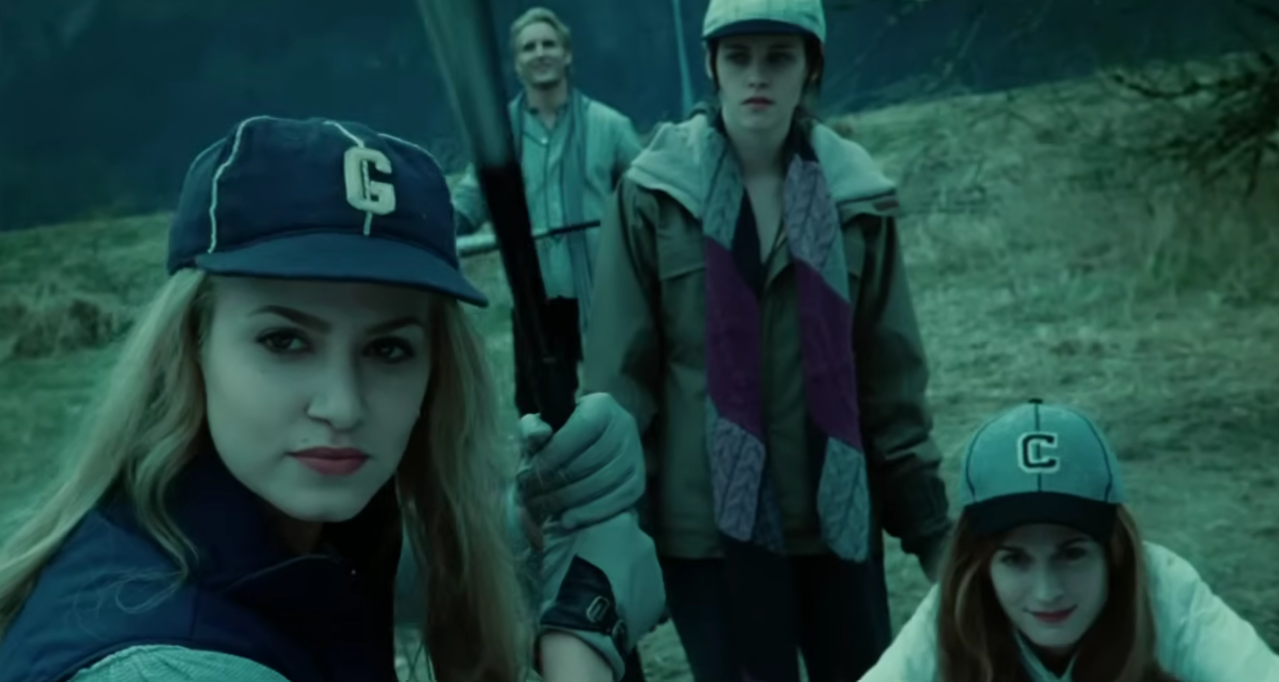 Hoping to build on both the goodwill generated by and fan response to this year’s Field of Dreams game, MLB announced that Saturday’s Twins/Phillies game would be played in Forks, Washington, home of the vampire baseball scene in the 2008 film Twilight. “Field of Dreams is a generational touchstone for so many baseball fans,” said MLB commissioner Rob Manfred. “And the same can be said for the story of Bella and her immortal vampire lover Edward in Twilight. The fact that a game of baseball is foundational to her acceptance into Edward’s family of fellow sparkly vampires makes this an ideal sequel to our game in Dyersville.” The game was originally slated to be played at Target Field. Anyone with tickets to the game will have them honored if they make the trek to the remote Washington town. “We understand it’s a bit of a haul from the Twin Cities to Forks,” said a source in the Commissioner’s office. “And there obviously aren’t any direct flights. What we’re hoping is that people will hop in the minivan for a fun weekend road trip with the family to share the beauty of baseball. I don’t really drive. Gas is still cheap, right?” When told that it’s actually quite expensive at this time and that there might be some age gap discourse given that Bella is 18 while Edward is 108, the source pointed out the window and said there was a beautiful baby bird. No such bird was observed, and when this reporter turned back around, the source was gone. Team sources say the Twins and Phillies will be wearing old-timey uniforms like the vampires do in the Twilight scene. The players will be allowed to add as much sparkly glitter to their skin as they are comfortable with. While many MLB greats replicate the Field of Dreams scene where legends enter the diamond from the adjacent corn field, It’s not known how they would be utilized in a Twilight-themed game. At least one Hall of Famer is skeptical. “Vampires are pretty scary,” said Twins great Joe Mauer. “And if they’re sparkly? No way, Jose. Real rough stuff.” View the full article
 -
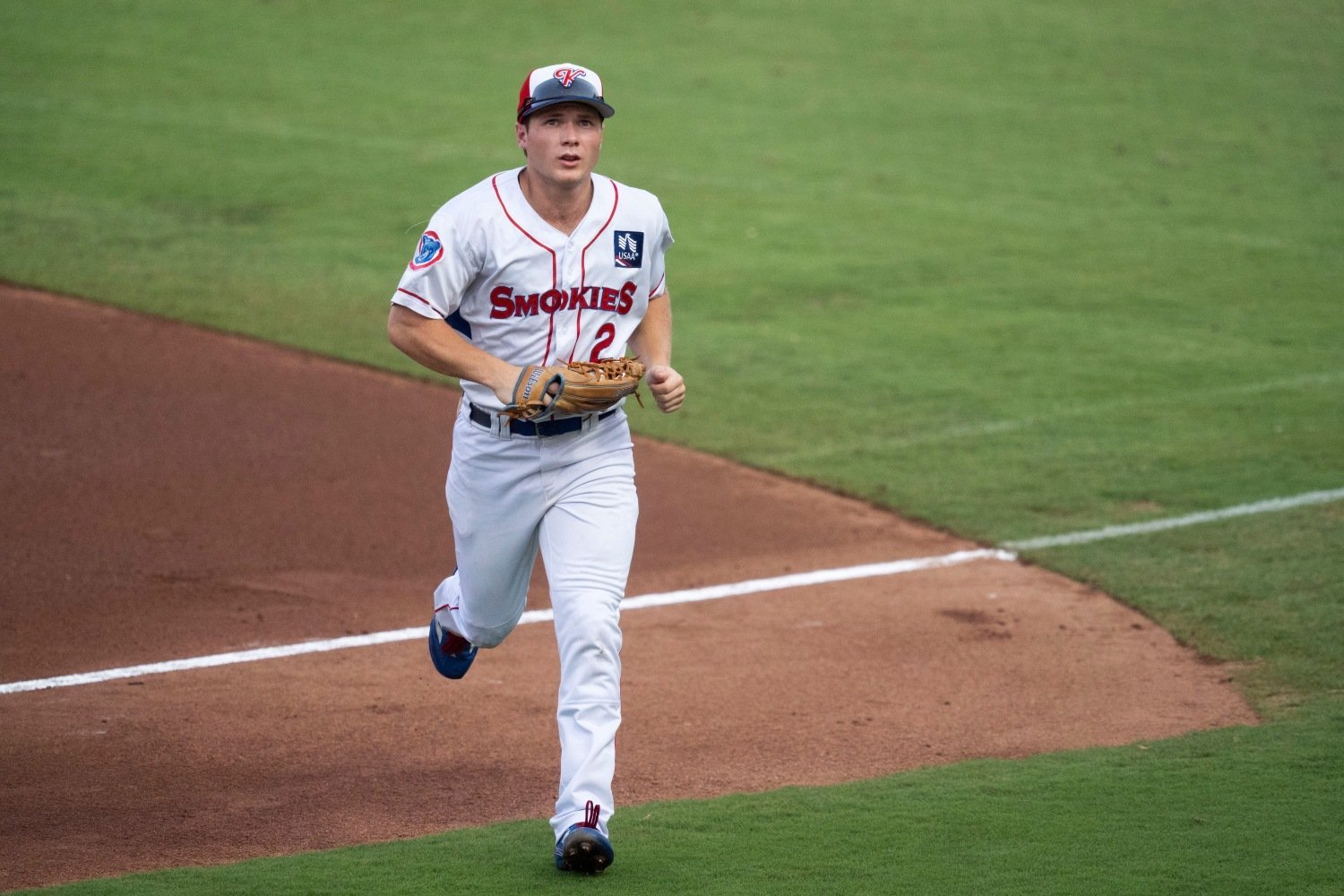 Cubs outfield prospect Kane Kepley has one of the more intriguing profiles that you’ll come across in the minor leagues. Chicago used their second-round pick in the 2025 MLB Draft on Kepley out of the University of North Carolina, and he's quickly established himself as one of the more interesting young players in the organization. He currently ranks as North Side Baseball’s No. 5 prospect, and while he might not have 30-homer upside, there’s a lot more to his offensive profile than raw power. In fact, what Kepley lacks in that department, he makes up for in just about every other area. Across 98 games between High-A South Bend and Double-A Knoxville, Kepley is hitting just .253. That number obviously isn’t going to jump off the page, especially for a prospect who ranks inside the Cubs’ top five. But look a little deeper, and the picture becomes considerably more interesting. Kepley’s on-base percentage sits at .436, while his OPS is at .853. Those numbers are being driven largely by one of the most impressive traits in his game: his plate discipline. His walk rate currently sits at an outstanding 21.3%. He’s averaging more than a walk per game. It often feels like opposing pitchers don’t even want to give him anything to hit; they're too frustrated to bear down on the hard task of getting him out. He’s swinging at just 34.4% of the pitches he sees, so he’s taking nearly two-thirds of everything thrown his way. For context, most hitters are swinging at nearly half of the pitches they see. Kepley doesn’t chase very often, and that level of selectivity is extremely encouraging for a young hitter—particularly one who’s still adjusting to professional pitching. He isn’t getting himself out by expanding the zone, and when he does reach base, he has the skill set to make opposing teams pay for it. That brings us to another huge part of what makes Kepley so interesting: his speed. After stealing 45 bases in his final season with the Tar Heels, it was fair to wonder how much of that athleticism would translate once he started facing professional competition. The answer has been pretty emphatic. Kepley has already logged 53 stolen bases on 58 attempts this season. If you walk him, you better be prepared for him to take second. And if he reaches on a single, there’s a good chance he’s already thinking about how he can turn it into something more. That speed is a massive part of his overall profile. Obviously, being a center fielder makes that speed even more valuable. Kepley has the range to run down balls in the gaps, and his instincts and reaction time allow him to get to plenty of balls that other outfielders simply wouldn’t. He can cover a ton of ground, and while he likely won’t be needed in center field long-term (with Pete Crow-Armstrong already there), his defensive ability will still be extremely valuable. In fact, the two could eventually form one of the best defensive outfield tandems in baseball. Kepley’s speed doesn’t only show up defensively, or when he’s running the bases. He’s also a legitimate threat to take the extra base when he puts the ball in play. He has already recorded seven triples this season, along with 34 total extra-base hits. He might not be a traditional power threat, but he can absolutely drive the ball into the gaps and turn his speed into extra bases. And, interestingly enough, his power has improved since joining the Cubs. Kepley hit just 13 home runs over the course of his three-year college career. He's already hit eight this season, and that’s after making the transition from a metal bat to a wood bat. Obviously, that uptick in power is over a fairly small sample, and it would be premature to suddenly project significant home run power onto his profile. But it’s certainly an encouraging development, especially when you consider that the rest of his offensive game is already built around getting on base and creating pressure once he does. He might not have the highest ceiling among the Cubs’ top prospects. There are players in the organization with considerably more raw power, louder tools and a clearer path toward becoming middle-of-the-order hitters. But prospects aren’t only about the ceiling outcome. Sometimes, the players with the highest floors can become incredibly valuable major leaguers, and Kepley feels like one of those players. He has great speed, he’s a terrific defender, and he has plate discipline that’s clearly well beyond his years. He can steal bases, take extra bases, and drive the ball into the gaps, and he has even shown signs that his power could be developing into more than initially expected. There are still things he’ll need to prove, particularly as he continues climbing through the upper levels of the minor leagues. His batting average shows that there is still plenty of room for improvement as a hitter, and his long-term power ceiling remains a question. But there are enough established strengths in his game to make him one of the more fascinating prospects in the Cubs’ system. Kepley might not be the prospect with the highest upside. He might, however, be one of the prospects with the highest floor. And if he continues to show this kind of discipline, speed and defensive ability while refining the rest of his offensive game, it’s entirely possible that we see him in the majors at some point in 2027. View the full article
 -
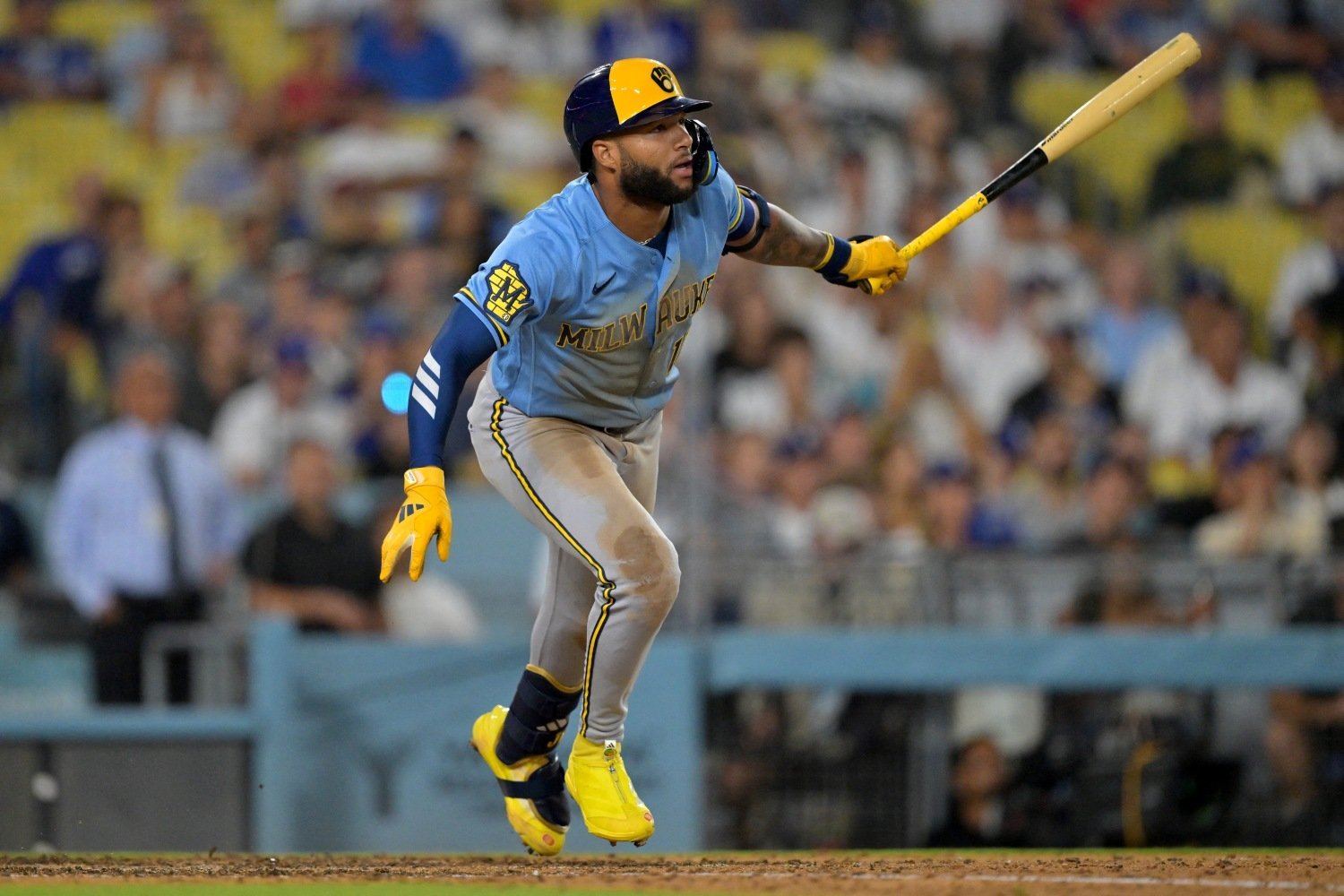 Where did that damn magic go? The Brewers—these Pat Murphy Brewers, who are some extension of the Craig Counsell version that emerged almost a decade ago but are a different thing, too; who are transcending what that team was and maybe what baseball teams themselves are—are supposed to have a durable magic that makes them unique. They hit with runners in scoring position. They string together gritty at-bats and line drives and bloopers. They drive you insane as they drive you, slowly, into the dirt. They beat you with timely hitting that no other team can produce as consistently. But suddenly, they couldn't produce it, either. The sweep in San Diego laid that bare. The Crew had 28 at-bats with runners in scoring position over three games, and collected just three hits. That's not even the half of it, though. It's been weeks of this: living life as a normal team. It sucks. It's hard. And it's been eroding their cushion in the NL Central. This team that has frequently felt like an exception to baseball's rigid rules of regression and sequencing and old-fashioned luck has been mortal, lately. Too many damn fastballs. It's the perpetual lament of Jack Stern and the bane of so many Brewers' fans existence. This team throws too many damn fastballs. They do it for good reasons. They're not bucking the prevailing trends of an ever-smarter league out of unbridled hubris. Still, it's a strategy that comes with costs, and sometimes, those costs are maddening. Sometimes, those costs feel avoidable and massive and far greater than the benefits. In the bottom of the sixth inning Thursday night, Antonio Senzatela and William Contreras decided to throw too many damn fastballs. Senzatela's cutter is about 5 MPH slower than his true heaters, a sinker and a four-seamer, and it works a bit like a slider. Throwing his cutter to Max Muncy wasn't such a terrible idea. But Contreras felt the pull back to the fastballs he loves to call, and he obeyed that pull too readily. When the cutter didn't go quite where Senzatela wanted it to, he tried to help his pitcher power his way out of trouble. A sixth straight hard pitch was plenty for Muncy. He got on time and launched a scoreboard-flipping three-run home run. It was too many damn fastballs, is all. A bad loss—a very, very bad loss. Another one. That's what this game was sure to be. After three losses in San Diego, this was going to be a fourth in a row. This team has kept winning, even while rendered mortal by their sudden lack of runners-in-scoring-position magic and even while throwing too many damn fastballs, but now, they're not winning. And those pesky Cubs won't stop coming. They lost Thursday in Washington, but they've been winning too much lately; they're closing the gap. This wouldn't just be any other bad loss. It would be one more lost opportunity for a much-needed turnaround win. Contreras was right back in the center of the frame. He's looking like the goat, even on a team that hasn't lost anything important and doesn't have to cast blame anywhere at the moment. The Dodgers' first run scored when Contreras tried to sweep a tag down on an incoming runner faster than the play required, and left the ball behind. Their other three scored when he wouldn't stop calling fastballs. And when he came up to lead off the ninth inning against Edwin Díaz, he did everything wrong. Of the three competitive pitches Díaz threw him, he swung at the one outside the zone and stared at the two that caught it. One up, one down. And then: magic. It all came rushing back, and, funny thing: it happened because Díaz threw too many damn fastballs. First, Joey Ortiz got one on the inner third and hit a line-drive single. It was just a spark, but you can't have fires without those. Next came David Hamilton, whom Díaz had right where he wanted him after he got a swing on a slider slicing in toward Hamilton's legs to get ahead 1-2. He tried another slider, but it was a bit less tempting, and Hamilton laid off. On the ensuing 2-2 offering, he went back to the fastball, and made another mistake. Another line drive; another single. A bit of real heat, now. Jackson Chourio has begun to show that locked-in understanding of the strike zone that was missing before. If he can hold onto that skill, he's headed for superstardom, after all. He didn't come up with a game-breaking long hit against Díaz, but he put together a great, gritty at-bat. Poor Díaz. He made mistakes to Ortiz and to Hamilton, but you're supposed to be able to get away with those against those guys. He executed superbly against Contreras, and other than missing the outside edge with a fastball on the fourth pitch, he executed everything against Chourio. Still, reaching out to protect the plate with two strikes, Chourio flipped a bloop single into right field, spoiling an out pitch of a slider. This is how the Brewers drive you crazy. Suddenly, the Brewers just needed one more hit to tie to the game. They just needed one more player to take a perfectly good pitch and ruin it. Garrett Mitchell did just that. Díaz hit the inside edge with a first-pitch fastball, but Mitchell knew that that would beget a biting slider headed down and in off the same plane on the next pitch. He got it, and he hit another line drive. Simple, but magical. It was time to get greedy. How back was the magic? Could the Crew actually take the lead? Dave Roberts tried to stop the bleeding by going to Alex Vesia and putting Jake Bauers in a left-on-left matchup. Maybe if Vesia had stuck to his own fastball, that would have worked. Unfortunately for the Dodgers, after getting ahead with two fastballs up and away, he got worried that Bauers would adjust and cover that pitch. He tried to get him out with a slider down. In fairness to Vesia, Bauers didn't hit a line drive. He didn't even dunk a blooper into the outfield. He hit the ball pretty much straight into the ground, but lo, it snuck through. Magic, made of line drives and bloopers. A few too many fastballs, but from the opponents this time. And after Trevor Megill slammed the door shut, Thursday night turned out to be a good win—a very, very good win. Another one. Every time you think what has made the Brewers unique is starting to falter, they flip the switch back on. Every time you think they might let up too much and get caught by the onrushing Cubs, they snatch an unexpected victory away in their last at-bat. Their resiliency might be their real magic, and unlike sequencing or batted-ball luck, it might be something they can sustain for a few more years. View the full article
 -
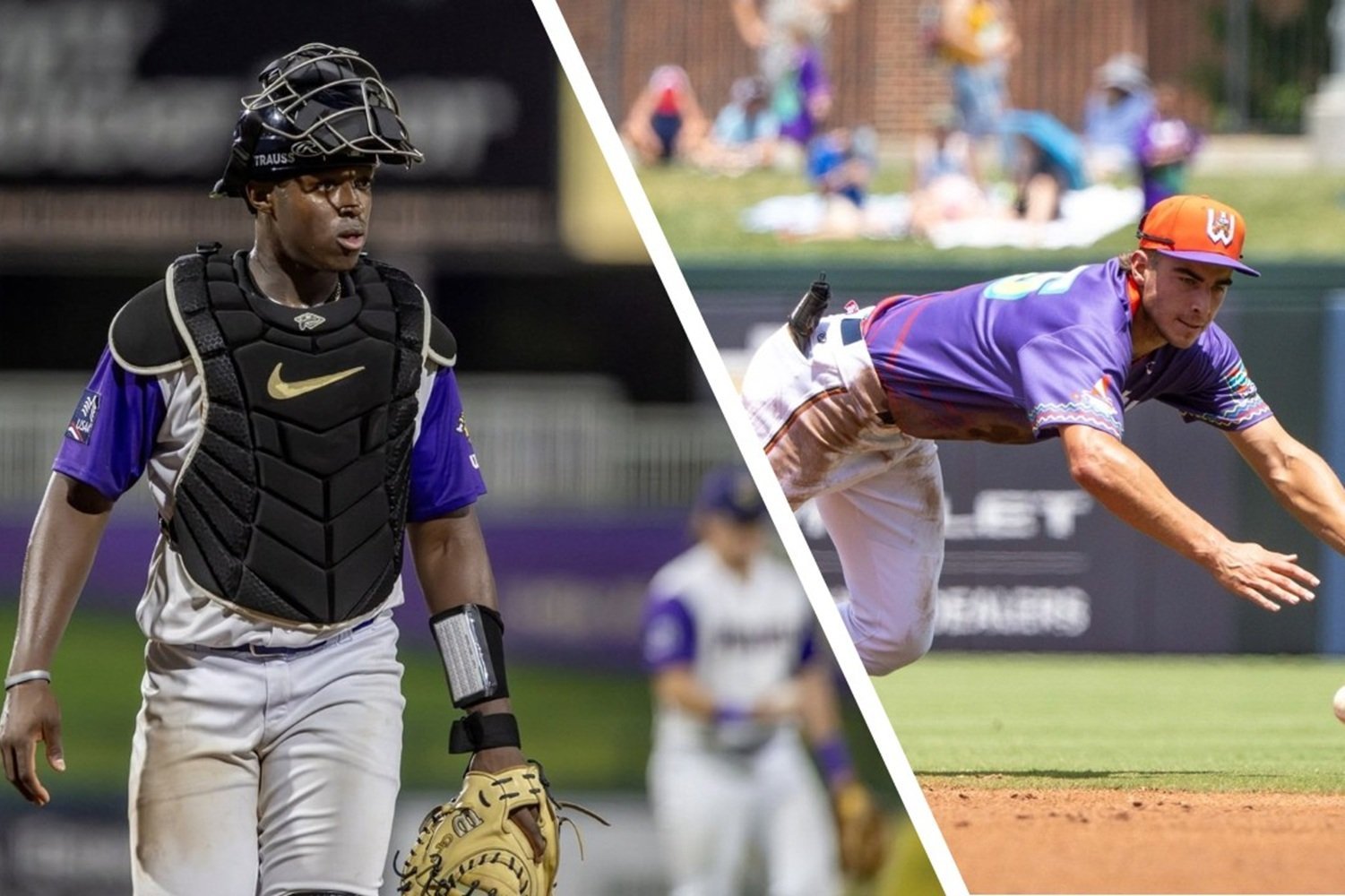 The Minnesota Twins have already seen a handful of their top prospects make their big-league debuts during the 2026 season. Kaelen Culpepper and Gabriel Gonzalez have officially cracked the majors, and Culpepper even looks likely to lose rookie eligibility and prospect status this season, as Connor Prielipp and Andrew Morris have already done. That leaves the organization with a new question to answer: Who will be the next top prospect to make the jump to the majors? There is an obvious answer sitting in Triple-A. Walker Jenkins has been one of the hottest hitters in the Twins organization since returning from his shoulder injury, and his production at St. Paul has made it increasingly difficult to justify keeping him in the minors. But Jenkins isn't the only prospect whose timeline is becoming clearer. Minnesota has several young players moving through the system at different speeds. Some could arrive before the end of 2026, while others aren't likely to see Target Field for several more years. Here is an updated look at the projected MLB ETAs for Twins Daily’s top 10 prospects. OF Walker Jenkins — St. Paul Saints ETA: August 2026 At this point, there doesn't seem to be much left for Jenkins to prove in the minor leagues. The former first-round pick has been tearing the cover off the ball at Triple-A, with a .512 slugging average since June 23. His performance has put him on the doorstep of the major leagues. The Twins could use another impact bat. Jenkins's arrival would give Minnesota another potential middle-of-the-order presence and provide a glimpse at one of the most important pieces of the organization's future. Arguably, though, he would be an even bigger upgrade for the team on defense, where he profiles as a plus defensive outfielder. On a nightly basis, the team is feeling the pain of Luke Keaschall's struggles to field any position. Jenkins's debut isn't just possible. It feels imminent. C Vahn Lackey — Fort Myers Mighty Mussels ETA: May 2028 Lackey represents a much longer-term investment. Some fans may want to see the Twins move their newest top prospect through the system quickly, but there are several reasons to take a more patient approach. Catchers generally take longer to develop than many other position players because of the demands of the position, both physically—the grind of a professional season is unlike anything one can experience in college, especially at catcher—and off the field, where the ability to work with pitchers and to clearly understand the organization's methods of preparing for opposing offenses are vital. There is also the possibility of a lockout next offseason, which could shorten the big-league season and not allow the necessary runway for player call-ups. Lackey has plenty of time. If Minnesota takes the conservative approach, his path could include multiple seasons of development—including at least one full season in the minors—before he is ready to take over behind the plate in the majors. SS Marek Houston — Wichita Wind Surge ETA: July 2027 Houston has answered plenty of questions during his first full professional season. The shortstop has been excellent defensively, while also showing that he can more than hold his own offensively (124 wRC+). That combination has made him one of the most intriguing prospects in the organization and one possible answer to Minnesota's long-term shortstop problem. Houston doesn't need to be rushed, but he's passed some crucial tests already. If he continues progressing at his current pace, a 2027 debut is becoming a realistic possibility. Culpepper is getting an opportunity now, but the Twins could move Culpepper to second or third base to accommodate Houston by this time next year. RHP Riley Quick — Wichita Wind Surge ETA: September 2027 Quick is currently Minnesota's top pitching prospect, but that doesn't mean the Twins need to accelerate his timeline. The organization can afford to let him finish the 2026 season at Double-A and begin next year at the same level. If he continues to perform, a move to Triple-A around the middle of the 2027 season would make sense. From there, Quick could become a September call-up. That timeline would allow him to build up innings and experience without putting unnecessary pressure on a young pitcher to immediately become a major-league starter. On the other hand, as we've seen, the organization likes to avoid wasting bullets in the minors. If Quick stays healthy and continues to thrive, a fast-track debut akin to those of Zebby Matthews or Connor Prielipp could be in play. OF Emmanuel Rodriguez — St. Paul Saints ETA: September 2026 Rodriguez is perhaps the most complicated player on this list. His talent has never really been the question. His health has been the biggest obstacle, and that has prevented him from making his major-league debut despite spending parts of three seasons at Triple-A. However, because he's played just enough in each of five professional seasons to qualify those campaigns as complete, Rodriguez will be out of minor-league options heading into next season. The Twins need to determine whether he can be an everyday player in 2027, and that means he needs an opportunity to establish himself at the major-league level—or, failing that, to be showcased as trade bait. A September debut would give Minnesota a chance to evaluate Rodriguez before making decisions about next year's roster. There's still plenty of upside here. It could be the possibility of promoting Rodriguez instead that has led the team to take it slow with Jenkins. OF Hendry Mendez — St. Paul Saints ETA: June 2027 Mendez has been one of the organization's biggest risers this season, with a 114 wRC+ in the upper minors. He has moved all the way to Triple-A and has put himself firmly into the conversation for a future major-league role. The problem is that Minnesota has plenty of left-handed corner outfielders competing for similar opportunities, including Jenkins, Rodriguez, and Alan Roden. That organizational depth could make Mendez an interesting trade candidate this winter. If he remains with the Twins, a 2027 debut is realistic. But the front office could also view Mendez as a valuable trade chip, as it attempts to address other areas of need on the roster. C Eduardo Tait — Cedar Rapids Kernels ETA: August 2028 Tait is still one of the youngest players in the organization, so there's no reason for Minnesota to rush his development. He will probably spend 2027 at Double-A, with an opportunity to reach Triple-A at some point. Even if he spends all of 2028 at Triple-A, he could still reach the majors in his early 20s. That's a perfectly reasonable development path for a 19-year-old catcher. The Twins can afford to be patient with Tait. His ETA may be further away than some of the other prospects on this list, but that doesn't diminish his long-term importance to the organization. RHP Charlee Soto — Cedar Rapids Kernels ETA: September 2029 Soto has the longest projected timeline among Minnesota's top prospects, and there are good reasons for that. Injuries have limited him throughout his professional career. He's thrown just 15 2/3 innings over the last two seasons, making it difficult to establish a normal development progression. He's also only 20 years old. There's no reason for the Twins to push Soto through the system simply because he's a highly regarded prospect. A healthy 2027 season at High-A, followed by Double-A in 2028 and Triple-A in 2029, would give him plenty of time to rebuild his workload and continue developing. If everything goes according to plan, Soto could make his major-league debut during the 2029 season. As with Quick, he could also debut much sooner—but unlike Quick, right now, there seems to be a great deal of development left to do, in addition to building innings and avoiding injury. The Twins' prospect timeline is about to get very interesting. Jenkins is the clear next man up, and it would be surprising if he isn't wearing a Minnesota uniform before the end of August. Rodriguez could follow later this season, giving the organization another important evaluation before the offseason. The next wave isn't far behind. If the team gets their scouting and development right, this season should be the start of a lengthy window of competitiveness. Do you agree with the ETAs listed above? Whose would you change? Leave a comment and start the discussion. View the full article
 -
Griffin Conine’s power puts him in special company
DiamondCentric posted an article in Fish On First
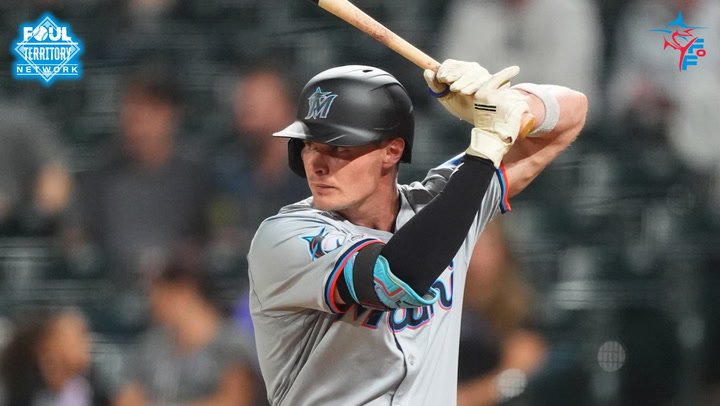 Fish On First LIVE discusses how Griffin Conine stacks up to some of the very best hitters in baseball in terms of both his recent production and under-the-hood data.View the full article
 -
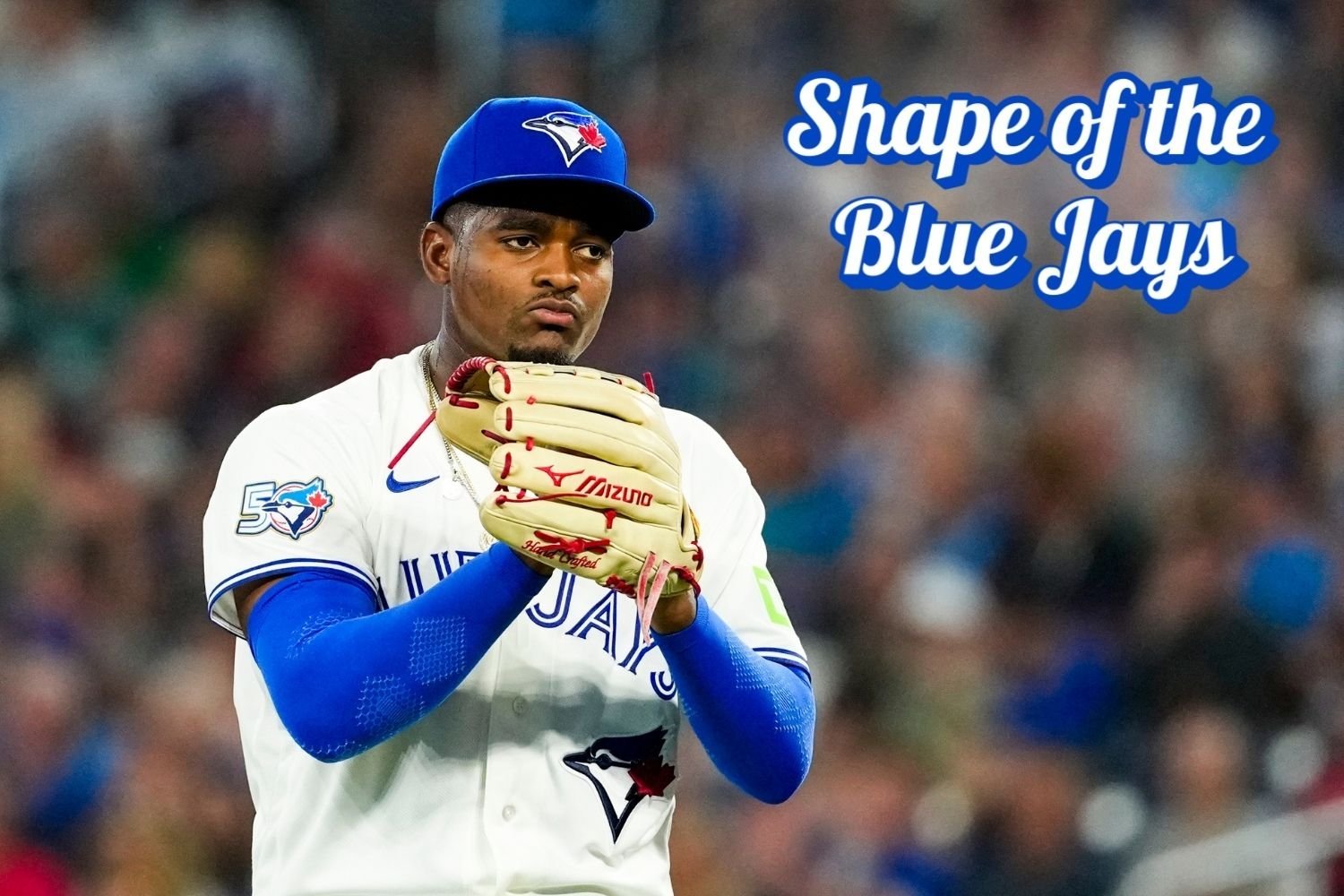 Welcome to Shape of the Blue Jays, my column where I dig into Statcast numbers to analyze recent pitch shape and swing shape trends for Toronto Blue Jays players and discuss how they have impacted their performance. Click here to read the last edition. All stats entering August 14, 2026. Quick Hits: Where'd the Barrels Go? Entering Thursday, the Blue Jays were 10-4 in their last 14 games and had climbed to within 1.5 games of the final Wild Card spot. Given this, I'd start this week's column on a more positive note in an ideal world, but this nugget was too good not to mention: They finished their 7-0 loss in the finale against the Red Sox with an expected batting average of .157. That is their fourth-lowest single-game xBA of the Statcast era, in games where they struck out five or fewer times. Yes, they were up against Payton Tolle, a very good pitcher. In fact, Tolle was coming off a 14-strikeout performance against the Athletics, and he failed to record one until the seventh inning against the Jays. It sounds like an accomplishment, but they only had three hard-hit balls all afternoon, and all of them were on the ground. This game perfectly encapsulated the fact that being a low-strikeout offense means nothing if you can't hit for power. The 2026 Jays have shown us this time and again. It was encouraging to see the team come out of the trade deadline with a new sense of energy and reinsert themselves into the conversation in the still-muddy American League. Ultimately, though, their recent stretch is probably unsustainable if they don't start putting balls over the fence more consistently. José Soriano The changes we saw from José Soriano in his first start with his new team were pretty much what was expected throughout the industry. Shoutout to Jays Centre's own Mike LeSage for sharing this video in our writers' Slack channel that summarizes them well. (Pitching development content with sarcastic undertones is on Instagram Reels now? My hope for the future has been restored.) On Wednesday against Boston, Soriano (6 IP, 1 ER, 4 H, 4 K, 2 BB) pulled a different lever by throwing his sinker a season-high 45.6% of the time. While he largely avoided throwing four-seamers to lefties for a second consecutive start, he reintroduced the pitch to righties (33% usage). 37 of the 46 pitches he threw to righties were either sinkers or four-seamers. During his second trip through the order, he suddenly fed Boston's lefties a ton of splitters to great effect (60% chase). Beyond the creativity with his arsenal, I appreciated Soriano's willingness to throw his sinker at the top of the zone to lefties. He didn't do this with the Angels, but he dropped eight sinkers above the vertical center of the zone and got four called strikes, one foul, and one groundout, missing just once. Of course, he continued to pound the bottom rail too. If this is a pitch that's going to play at both ends of the zone to opposite-handed hitters, his former team is going to look foolish for not experimenting with more different strategies with him. José Soriano Sinker Locations vs LHH, 8/12 (Statcast) Brett Bateman Brett Bateman has quickly endeared himself to the fanbase after his first six games as a major leaguer. His .259/.310/.333 slash line is nothing to write home about, but he's 3-for-6 in high-leverage at-bats. Small sample, but many inexperienced players will get humbled in big moments, and Bateman has passed that test so far. The 24-year-old center fielder has a short, compact left-handed swing. It's rather unique in its high-tilt yet oppo-oriented, let-it-travel profile. I have a personal tool that displays similarity scores for any hitter based on their bat speed, swing length, tilt, attack angle & direction, and intercept point. Bateman's closest mechanical left-handed comps so far are Jonathan Aranda, Brice Turang, and Nathan Lukes. Aranda is an example of a hitter who has figured out how to lift a ton of balls with this type of swing, while Turang and Lukes are more groundball/line drive guys, similar to Bateman's smaller-sample batted ball distribution. The latter two are, of course, some of the better bat-to-ball hitters in the game, a skill Bateman is also known for. Given his speed, it wouldn't be the worst thing in the world if Bateman continues to hit the ball on the ground half the time. Perhaps Aranda could be a useful model if he were to work on adding power. Brett Bateman Swing Mechanics Comps, 2026 Player Bat Speed Swing Length Swing Tilt Attack Angle Attack Direction Contact Pt Y Brett Bateman 68.0 mph 6.90 ft 36° 6° 9° 24.5" Jonathan Aranda 70.0 mph 7.09 ft 34.9° 7.6° 5.6° 26.1" Brice Turang 69.9 mph 6.76 ft 35.9° 8.1° 9.9° 30.8" Nathan Lukes 67.0 mph 6.39 ft 31° 6.7° 7.8° 26.8" Max Scherzer Since turning 42, Max Scherzer has authored his best stretch of the season, posting a 2.20 ERA with 13 strikeouts and three walks in three August starts (16.1 IP). One of those 13 strikeouts put him inside the top 10 all-time leaderboard, and on Thursday, he surpassed the 3,500 innings mark. It continues to be extremely cool that Scherzer chose to be a Blue Jay at this later stage of his career. The biggest factor at play in his resurgence is better stuff. In his outing against the Phillies last Saturday, his fastball averaged 94.2 mph, a season-high. While it returned to 92-93 on Thursday, his secondaries were quite strong, particularly his curveball (44% whiff, 50% chase, 3/3 first-pitch strikes). He's been getting more drop on it in recent weeks: After it averaged around -5 to -6 inches of induced vertical break for most of his season, it's down to -7/-8 territory so far in August, averaging -8" for a second consecutive start on Thursday. His changeup (43% whiff on Thursday) averaged 16" of run after running more than usual in his prior two starts as well. John Schneider put it beautifully when he said sustainability is no longer a consideration for his bullpen at this point in the season. The length Scherzer has given them as of late, then, could not have come at a better time. Max Scherzer Swings and Misses (Curveball & Changeup only), 8/13 (Statcast) View the full article
 -
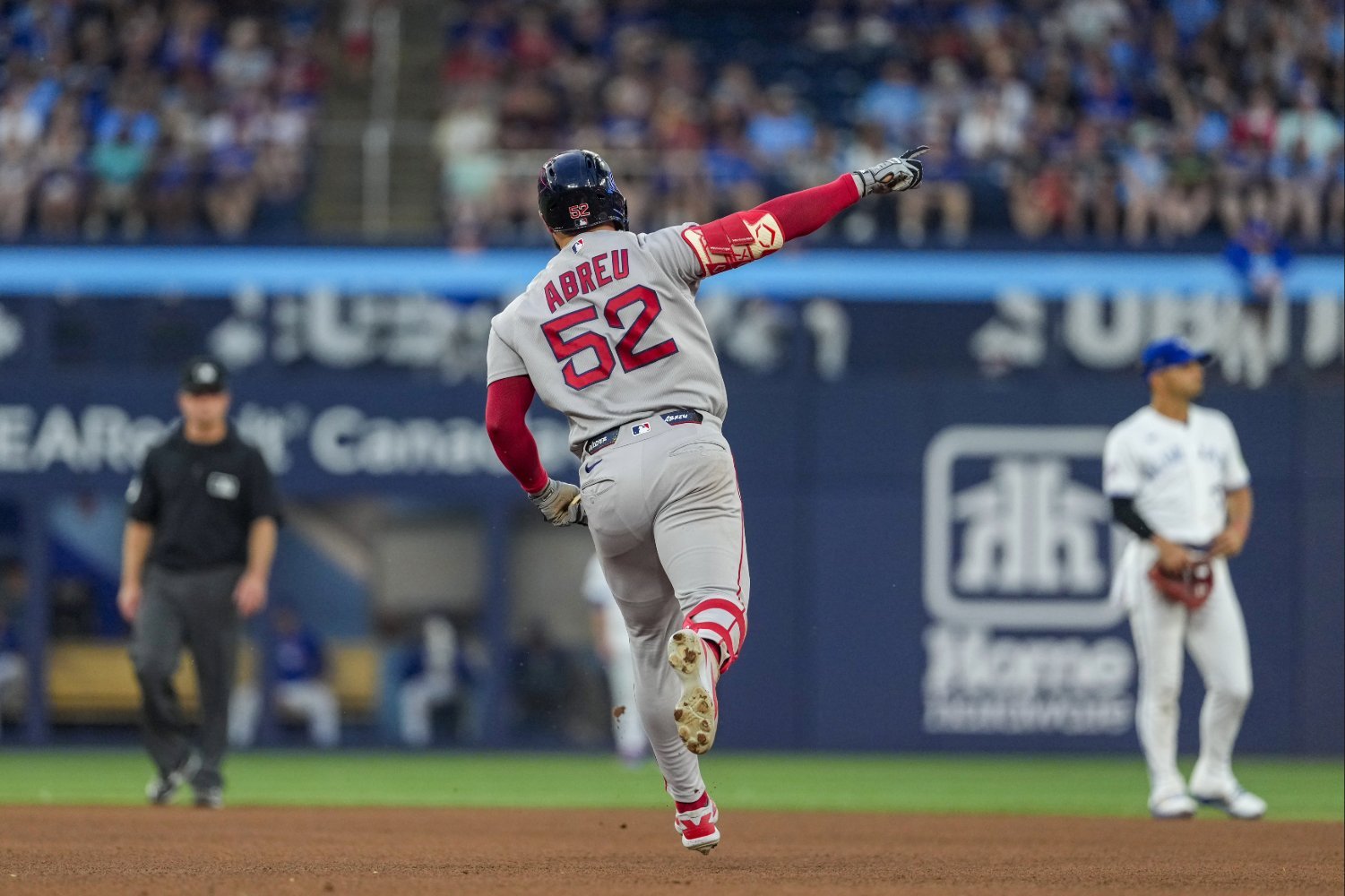 I’ve carried water for Wilyer Abreu since he was brought to Boston in the trade that sent Christian Vazquez to the Astros in 2022. He has provided Gold-Glove-caliber defense since he was called up to the big-league club, but he’s been a bit hit or miss at the plate for much of his career. Thankfully, 2026 has revealed a new-and-improved version of Abreu. While his numbers have taken a bit of a tumble against right-handed pitching, he’s been an absolute monster against lefties this season. He’s been one of the most productive bats in the lineup all season, but so far in August, he’s been the standout offensive player. He’s currently slashing .324/.432/.824 this month with a 1.255 OPS and team-leading 221 wRC+, despite the fact that he's getting slammed with bad luck (.231 BABIP). To go along with those astronomical numbers, he’s slugged five home runs, driven in 11 runs, walked eight times, and only struck out five times. This begs the question; has Abreu made some substantive changes at the plate, or has the adjustments he made earlier finally fully clicked together? If we go back to June and July, we’re quite obviously working with a much larger sample than just the month of August, but we see just how much Abreu had cooled off as the summer began to heat up. For those two months he slashed just .206/.287/.439 with a .729 OPS, .221 BABIP, .311 wOBA, and a 94 wRC+. He hit 10 home runs, drove in 29 runs, walked 21 times, and struck out 52 times. After riding a heatwave through the start of the season, he suddenly was put in the freezer for two months. Now, though, he seems to have thawed out and become an even better offensive version of himself than he had been. If he keeps up this torrid streak, he’s going to be in the running for AL Player of the Month and could claim the top spot for our top hitters of the month as well. I went back to the beginning of June through the end of July to analyze his batting stance and swing path and compared it to what he’s doing in August. Spoiler alert: the swing path is exactly the same, down to the bat speed. The only slight changes we see come in his stance. Throughout the months of June and July, Abreu’s stance was as follows: 30.3” depth in the box, 26.7” distance off the plate, 34.1” distance between his feet, and a 26° open stance angle. In August though, we see some slight differences: 31.3” depth in the box, 26.4” distance off the plate, 33.4” distance between his feet, and a 27° open stance angle. The numbers are slightly negligible, but they may be the key to his unlocked consistency this month. It’s been well documented that Abreu has shortened his swing against left-handed pitchers this season and that has contributed to his success in a big way. His swing length is at 7.2 feet this season and that, combined with his newfound placement in the box and stance, has given him maximum time to react at the plate. He’s pretty much as far back in the box as you can legally be now, which lets the ball travel farther and gives him a longer time to watch the ball travel. He’s come in just a hair to the plate so he’s able to whip the bat through the zone quicker without as much extension in his arms. The distance between his feet is almost an inch closer than it has been the last two months, which lets him rotate his hips quicker and that helps against the high velocity pitching that is prevalent in the majors today. Finally, his stance is a degree more open, which theoretically gives him a slightly better vantage point to the pitcher's release. That likely also helps explain why he’s walked far more than he’s struck out this month too. In short, Wilyer Abreu is finally becoming the offensive player we all hoped he would be since his career with the big-league club started in 2023. He’s made massive offensive changes going into the 2026 season that seem to have finally fully clicked against both left and right-handed pitching, making him not just a regular in the lineup, but a true star. View the full article
 -
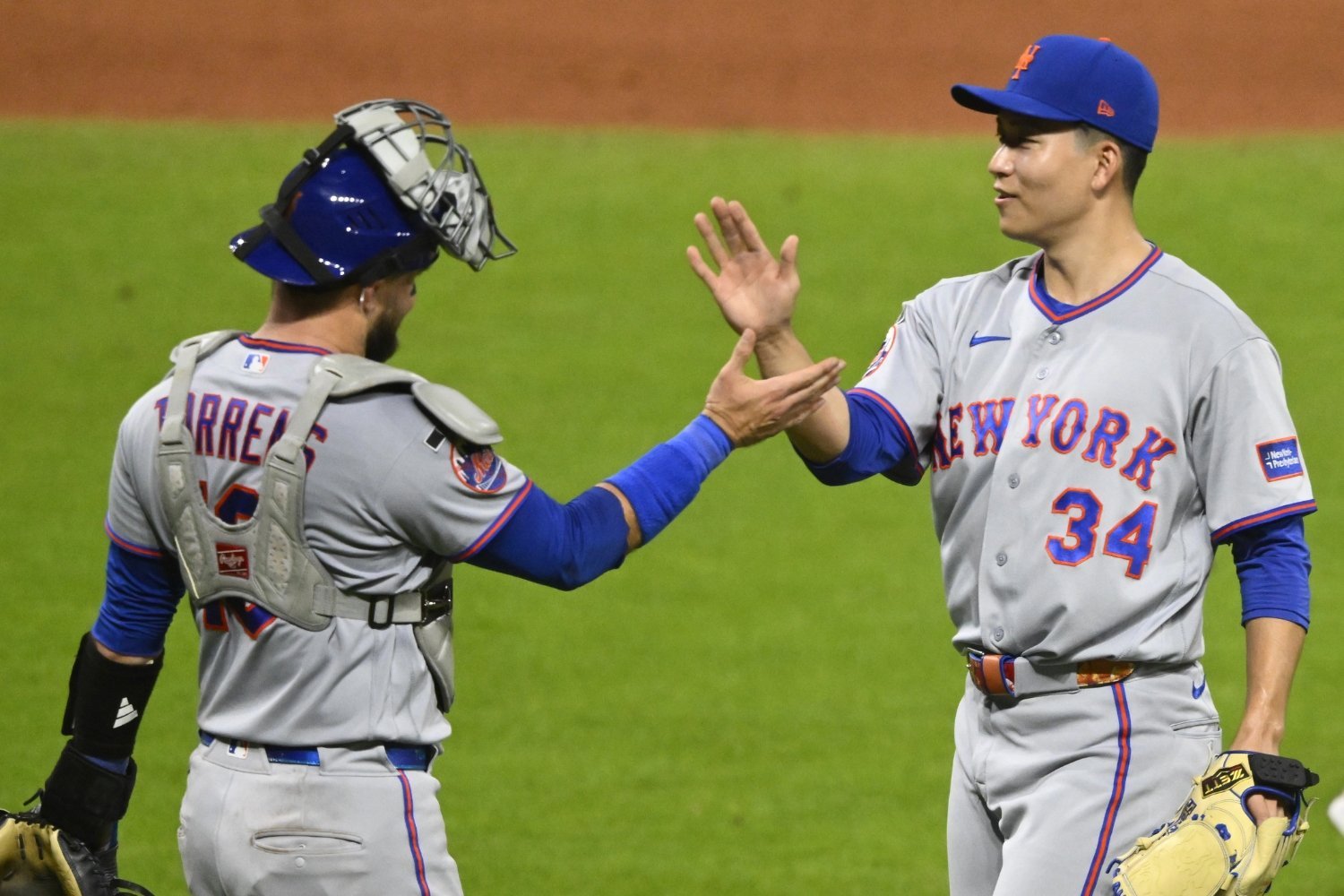 In late June, the New York Mets moved struggling pitcher Kodai Senga to the bullpen. Since then, the only game he started was when the team decided to scratch the soon-to-be-traded Freddy Peralta, so he’s officially a relief pitcher now. To be fair, the experiment hasn’t gone terribly well from a results standpoint in the strictest sense, as he has a 5.40 ERA in 20 innings with a 23:12 K:BB ratio and a 4.53 FIP. However, most of those frames came as part of outings in which he was asked to give the club more than three outs. Of the nine games he pitched in since he became a full-time reliever (including that unexpected start), Senga has pitched exactly one inning in four of them. Here are his stats in those appearances: no hits, no runs, two walks, five strikeouts. There’s a reason behind this dominance: Senga can throw much harder in one-inning spurts, without pacing himself over four, five, or six frames. His four-seamer is sitting in the 96-99 mph range in his new role, and the velocity of his secondary offerings is also up. Now that he seems keen to get most of the save opportunities while Devin Williams is on the injured list, we will see the Mets deploy Senga more frequently in this manner. Besides the obvious increase in velocity, it allows him to focus on the ‘ghost fork’ as the main secondary offering almost exclusively. The formula worked to near-perfection on Monday, when he notched his first MLB save. That day, he threw 18 pitches: 11 four-seamers, four forkballs, two sweepers, and a cutter. The heater touched 99.9 mph, and even though it just earned him one called strike and no whiffs, it helped him get a weak 85.5-mph fly out. He got two strikeouts with his signature ‘ghost fork’, a pitch that clocked 2.9 mph faster than his yearly average in the outing. As Mets fans probably know by now, everything will come down to command with Senga. Even his most dominant version, the one that earned him second place in the NL Rookie of the Year Award voting in 2023, walked 4.17 batters per nine innings. This year, the number is up to 6.42. That’s just not going to cut it. It would certainly help if Senga got more called strikes or whiffs on the four-seamer. The forkball is an excellent put-away pitch, but we would love to see the primary offering, which is the fastball, become more consistent. The velocity is there, particularly in his new role as a reliever, but this probably isn’t sustainable if it can’t generate more strikes. For now, it will at least keep hitters hones. There are always pitfalls in the transition from starting to relief—not to mention the inherent loss of value once a pitcher stops consuming huge gobs of innings at once—but Senga has the raw stuff to succeed in his new role. With the Mets already planning for 2027 and beyond, it'll be useful to keep experimenting with him in these high-leverage, one-inning situations. View the full article
 -
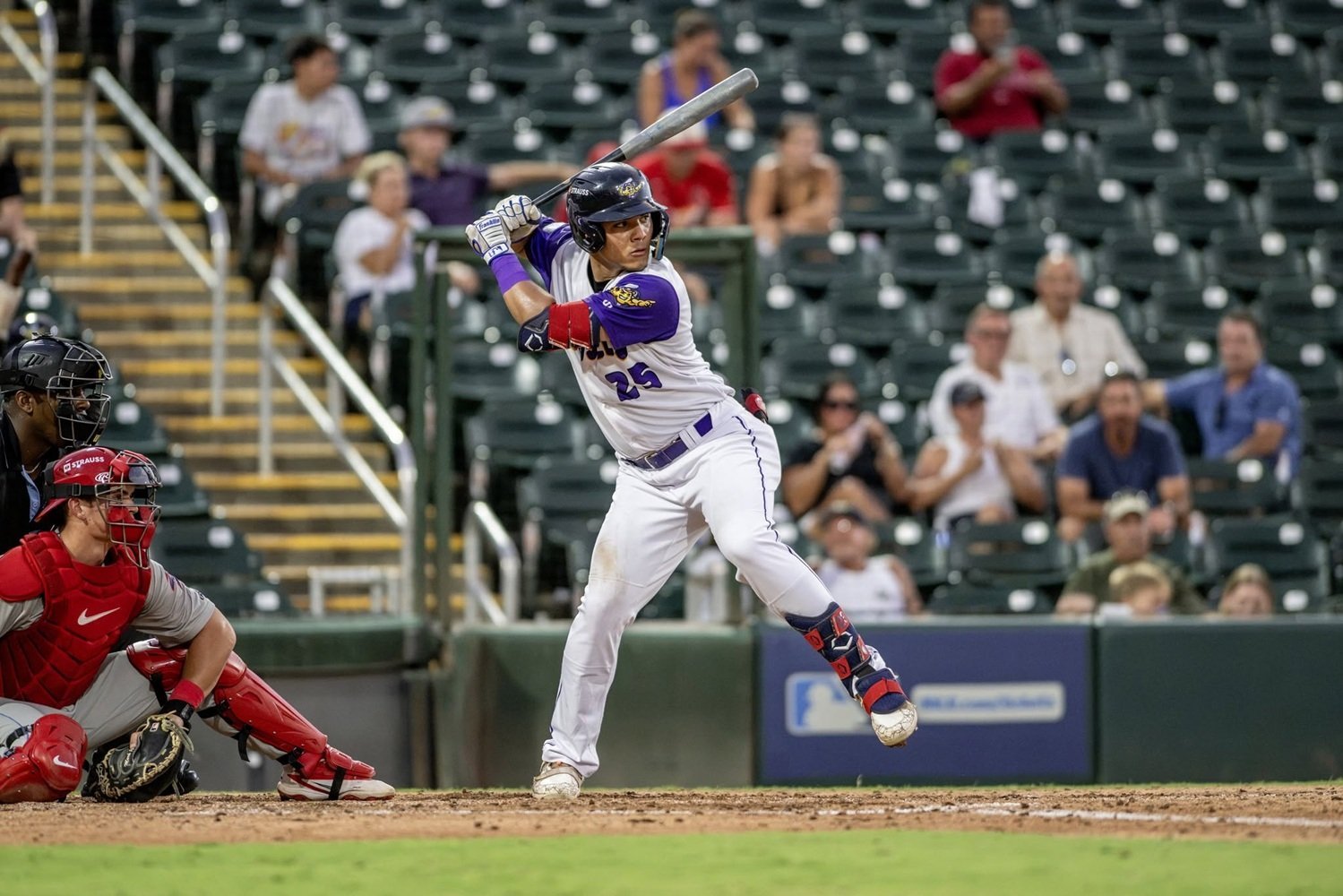 TRANSACTIONS The Twins activated Byron Buxton as their 27th man for the Field of Dreams Game in Dyersville, Iowa. After the game, it was announced that catcher Alex Jackson was DFAd. Hopefully he will clear waivers and remain in the organization. The Saints released RHP Eduardo Salazar, and RHP Alejandro Hidalgo was placed on the Development List. The Twins signed RHP German Marquez to a minor-league deal. The 31-year-old former All Star had been released by the San Diego Padres last week. When he debuted with the Rockies in 2016, he was one of the youngest players in the big leagues. Pitching in Colorado makes it difficult to know just how good he was. From 2017-2022, he was worth 15.8 bWAR. Since then, he has fought injuries and the struggles of returning from a major injury. Over the past four seasons, he has been worth a total of -1.3 bWAR. Between 2023-2024, he pitched in just five total games. He was 3-16 with a 6.70 ERA in 126 1/3 innings in Colorado. He signed a deal with the Padres this spring and went 4-2 with a 5.26 ERA in 13 games (53 innings). Side Note: This is the type of signing that the Twins should consider over the next three weeks. While there can’t be any more trades of players on 40-man rosters, teams can make trades of minor leaguers for minor leaguers. They can also sign players to minor league deals. Is Marquez good? Not really. Can he eat innings in St. Paul and in Minnesota if needed? Sure. And if he turns out good? By having him in the organization before September 1st, he can be eligible for the playoffs. If he’s really bad? He costs them pretty much nothing. If he’s somewhere in the middle, he can opt out. SAINTS SENTINEL St. Paul 3, Iowa 10 Box Score I would guess that a lot of Twins fans, especially those who follow prospects, were hoping that Walker Jenkins would have just stayed in Dyersville, Iowa. So, on Thursday night, when Walker Jenkins led off a game in Iowa with an opposite field home run, maybe a few people thought that he had received The Call. He hadn’t. He was with the Saints in Des Moines. Unfortunately, the Iowa Cubs scored six runs in the bottom of the first inning and ran away with this one. Down 10-1 in the eight, Hendry Mendez lined a homer over the wall in right field to cut the deficit to a touchdown with an extra point. The Saints were unable to get any closer. Ricky Castro started and was charged with six runs on five hits and a walk. He gave up three home runs and only got two outs in the first inning. C.J. Culpepper came in to get out of the first inning. He gave up one run in 2 1/3 innings. He had five strikeouts. Matt Bowman gave up two solo home runs over two innings of work. Garrett Acton gave up a run on three walks in the sixth. Marco Raya and Julian Merryweather each had 1-2-3 innings. Jenkins led the Saints offense. He went 3-for-5 with his seventh home run. Cody Morissette went 2-for-4. Mendez went 1-for-3 with a walk and his seventh homer. Gabriel Gonzalez walked twice. WIND SURGE WISDOM Wichita 5, Corpus Christi 1 Box Score The Caden Kendle train continues to role. On Thursday night, he got the scoring started with a two-out, first-inning home run. In the second inning, Kyle DeBarge and Graham Brown walked. With two outs, Marek Houston drove in DeBarge with a single. Brandon Winokur walked to load the bases. That brought Kendle to the plate, and he came through again with a two-run single to give his team a 4-0 lead. Riley Quick made the start, and it was easily his best start since joining the Wind Surge. He gave up one run on four hits in four innings. He walked two and had four strikeouts. Chris Vallimont came on and struck out six batters over four scoreless, hitless innings. He walked two batters. Hunter Gregory struck out one batter in a perfect ninth. Garrett Spain homered for the third time in his last two games in the seventh inning to give the team a 5-1 lead. That gives the minor-league Rule 5 pick 21 homers this season. Kendle went 2-for-4 with his sixth Surge homer and three RBI. In 26 Double-A games, the former fifth-round pick is hitting .400/.469/.674 (1.143) with eight doubles and six home runs. Houston went 2-for-5 and stole his 23rd base. Andrew Cossetti walked three times. Graham Brown walked twice. Kernels Nuggets Cedar Rapids 4, Wisconsin 0 Box Score More high-quality pitching for the Kernels and specifically another tremendous outing for Adrian Bohorquez. The young right-hander tossed five shutout innings. He gave up one hit, walked two, and he had four strikeouts. Michael Ross came on and got a four-inning save. He gave up two hits, walked none and had three strikeouts. The Kernels didn’t score until the fifth inning. Quinn McDaniel led off the inning with his seventh Kernels double. With two outs, Byron Chourio switched places with him, recording his first Kernels double. Chourio scored on a Jacob McCombs single to center to make it 2-0. Jump to the eighth inning. With one out, Yasser Mercedes doubled. With two outs, JP Smith walked and stole second. Danny De Andrade walked to load the bases. McDaniel came up and drove a single past a diving second baseman. Mercedes and Smith scored to make it a 4-0 game. The Kernels scored their four runs on seven hits and four walks. McDaniels was 2-for-4 with his seventh double and sixth stolen base. McCombs was 2-for-4 with his 16th stolen base. Smith went 1-for-2 with two walks and his second steal. Yasser Mercedes went 1-for-3 with his 18th double and 33rd stolen base. MIGHTY MATTERS Fort Myers 10, Clearwater 4 Box Score After two scoreless innings, the Mussels scored in each of the next six innings. This was a solid all-around game for the Mussels, power, speed and some pitching in key moments. Matt Barr started and gave up three runs on eight hits over 4 1/3 innings. He struck out three batters. Lefty Matthew Becker came in and struck out four batters over 1 2/3 scoreless innings. He gave up two hits and walked a batter. Jake Covey came on and gave up a hit, hit a batter, and recorded a strikeout. Hendry Chivilli came in for the ninth inning. He gave up one run on two hits and a hit batter. The Mussels scoring started with two outs and nobody on in the bottom of the third inning. Colby Turner and Carson Tinney hit singles. Luis Fragoza came up and drilled his 12th home run of the season to give the team a 3-2 lead. With two outs in the fourth, Merphy Hernandez walked, stole second and scored when the throw went into the outfield. Yes, he is that fast. The Mussels loaded the bases in the fifth inning with nobody out. With two outs, Isaiah Lane picked up his teammates with a line-drive single to center to drive in two runs and give the team a 6-3 lead. In the sixth inning, it was all Merphy Hernandez again. With one out, he hit his third home run. The team doubled the Mussel in the seventh inning. Luis Fragoza hit his second home run of the game, and two batters later, Quentin Young hit a homer to make it 9-3. The Mussels added one more run in the eighth inning. Hernandez doubled and went to third on a passed ball. He scored the 10th run on a groundout. Fragoza went 2-for-2 with two walks, his 12th and 13th home runs, three runs scored and four RBI. He is now hitting .314/.377/.588 (.965) with 17 doubles, 13 homers and 50 RBI in 56 Mussels games. Hernandez went 2-for-3 with a walk, his fifth double, his third home run. He also stole his 35th base in 47 games for Fort Myers. Both players started their seasons with 10 games with the FCL Twins. Quentin Young went 2-for-4 with his 15th home run. Carson Tinney went 1-for-3 with two walks. Colby Turner and Isaiah Lane each had a single and a walk. COMPLEX CHRONICLES DSL Twins 9, DSL Rockies 13 Box Score If only the game would have ended after the top of the 7th… The DSL Twins had worked their way to a 7-2 lead. Unfortunately, the Phillies scored six in the seventh and fifth in the eighth. Yolcar Garcia started for the Twins. He gave up two runs on three hits and a walk in three innings. He had one strikeout. Alam Soriano came on and tossed three scoreless innings. He gave up one hit, walked one and struck out three batters. Jeremy Jimenez came in to start the seventh. He recorded just one out and was charged with six runs (4 earned) on two hits, two walks, and a hit batter. Failin Placencio came on with the bases loaded and allowed all three runners to score. And, he gave up two of his own runs on one hit andfour walks. He recorded three outs. Wisarly Reinoso came in with two runners on in the eighth inning and allowed both inherited runners to score. Before getting two outs, he gave up another three runs on four hits and a walk. The Twins did a nice job of putting up crooked numbers. They scored two runs in the third inning, both on wild pitches. The top of the fourth inning began with a walk, a hit batter, and a walk, but even despite a double play the Twins were able to score two more runs, both on RBI singles. Jhon Gonzalez hit his first home run as a professional leading off the top of the fifth. That gave the team a 5-2 lead. Then in the top of the seventh, Gonzalez led off with his 11th double. After a walk and a wild pitch, he scored on a sacrifice fly. They added one more to make it 7-2. Daiyer Barboza led off wand went 2-for-4 with two walks and three RBI. Gonzalez was 2-for-4 with a walk, his first homer and his 11th double. Misael Rodriguez went 2-for-3, and he stole his 10th base. Jefferson Abreu was 1-for-2 with two walks. Jendy Martinez stole his 20th base of the year. PLAYERS OF THE DAY Hitter(s) of the Day Luis Fragoza (Fort Myers): 2-for-2, 2 BB, 2-HR(13), 3 R, 4 RBI Walker Jenkins (St. Paul): 3-for-5, HR(7), R, RBI, K Merphy Hernandez (Fort Myers): 2-for-3, BB, 2B(5), HR(3), 3 R, RBI, K, SB(35) Pitcher(s) of the Day Adrian Bohorquez (Cedar Rapids): 5 IP, 1 H, 0 R, 2 BB, 4 K, 63 pitches, 38 strikes (60.3%) Riley Quick (Wichita): 4 IP, 4 H, 1 ER, 2 BB, HBP, 4 K, 68 pitches, 41 strikes (60.3%) Chris Vallimont (Wichita): 4 IP, 0 H, 0 R, 2 BB, 6 K, 64 pitches, 41 strikes (64.0%) Michael Ross (Cedar Rapids): 4 IP, 2 H, 0 R, 0 BB, 3 K, 40 pitches, 28 strikes (70.0%) PROSPECT SUMMARY Check out the Prospect Tracker for much more on our Twins Top 20 prospects. See how they did today. #1 - OF Walker Jenkins (St. Paul) - 3-for-5, HR(7), R, RBI, K (batted first, played CF) #3 - IF Kaelen Culpepper (Minnesota) -1-for-4, 2 K (batted ninth, played SS) #4 - SS Marek Houston (Wichita) - 2-for-5, R, RBI, K, SB(23) (batted first, played SS) #5 - RHP Riley Quick (Wichita) - 4 IP, 4 H, 1 ER, 2 BB, 1 HBP, 4 K, 68 pitches, 41 strikes (60.3%) #7 - OF Hendry Mendez (St. Paul) - 1-for-3, BB, HR(7), R, 2 RBI, K. (Batted fifth, played LF) #8 - C Eduardo Tait (Cedar Rapids) - 0-for-4 (batted third, played catcher) #9 - 1B/OF Gabriel Gonzalez (St. Paul) - 0-for-2, 2 BB (batted sixth, played 1B) #11 - C Carson Tinney (Fort Myers) - 1-for-3, 2 BB, 2 R, K (batted third, DH) #12 - 3B/CF Brandon Winokur (Wichita) - 0-for-4, BB, 2 K, (batted second, played 3B) #18 - 3B/SS Quentin Young (Ft. Myers) - 2-for-4, HR(15), R, RBI, K (batted sixth, played SS), #19 - OF Yasser Mercedes (Cedar Rapids) - 1-for-3, BB, 2B(18), R, SB(33), K (batted second, played CF) UPCOMING PROBABLES Friday, August 14 St. Paul @ Iowa (7:08 pm CT) - RHP Trent Baker (3-3, 5.40 ERA) Corpus Christi @ Wichita (6:35 pm CT) - TBD Wisconsin @ Cedar Rapids (6:35 pm CT) - RHP Justin Mitrovich (2-0, 2.41 ERA) Clearwater @ Ft. Myers (6:05 pm CT) - RHP Cristian Hernandez (0-0, 0.00 ERA) FCL Twins - Season Complete. DSL Phillies @ DSL Twins (10:00 am CT) - No Game CURRENT W-L Records Minnesota Twins: 60-63 St. Paul Saints: 66-50 Wichita Wind Surge: 44-65 Cedar Rapids Kernels: 44-65 Fort Myers Mighty Mussels: 61-48 FCL Twins: 33-26 DSL Twins: 17-32 Please feel free to ask questions about the teams, the rosters, and discuss today’s games, or anything else Twins minor-league related! View the full article
 -
 Brailyn Antunez and Brady Ebel lead Warbirds to a blowout win. Transactions: Milwaukee Brewers sent RHP Lyon Richardson outright to Nashville Sounds (Richardson chose to reject the minor league assignment and elected free agency). Nashville Sounds place 3B Luke Adams on the 7-day injured list. Biloxi Shuckers activated SS Dylan O’Rae from the 7-day injured list. Not official as of this morning, but soon enough: Game Action: Nashville pre-game media notes (unavailable) Indianapolis (Pirates) 3, Nashville 2 Box Score & Game Log Via the Sounds, game details, and we encourage readers to always review affiliate write-ups as part of their Link Report routine: Nashville Falls in Extras on Thursday Night Indianapolis jumped on starter Thomas Pannone, scoring two runs in the first inning and then not scoring again until the 10th. Garrett Stallings pitched three clean innings striking out five with no walks and just one hit. Joel Kuhnel and Carlos Rodriguez also kept clean slates in relief, while Blake Holub only allowed the automatic runner to score in extras. The Sounds had ten hits in the game, but only one extra-base knock, a double by catcher Darrien Miller. Miller and shortstop Eduardo Garcia each had two hits, as did Brock Wilken who knocked in both Sounds runs with a bases loaded single in the 7th inning. Nashville batters struggled in the early innings as shown here (Blake Burke did single and walk in this game though is shown being retired twice in that clip). Burke needed one more inch on his 6'3" frame to prevent the go-ahead run from scoring. As the game summary noted, bases loaded, no outs in the bottom of the 10th, then this to end the game - Biloxi pre-game media notes Pensacola (Marlins) 11, Biloxi 10 Box Score & Game Log Fischer Records MiLB-Leading 36th Home Run, Shuckers Fall to Blue Wahoos - Teams combine for 12 runs, 5 home runs between ninth inning, extras Starter Braylon Owens struck out the first two batters of the game and then was removed with an injury. It’s quite possible Biloxi would have won this game and avoided the extra inning had Owens been able to keep cooking. To open that 10th inning, Manager Mike Guerrero was forced to insert utilityman Jheremy Vargas on the mound, and four runs crossed the plate. Four Shuckers hit a home run Thursday night, adding to the team’s lead in MiLB second half home runs (78) and leaving the 2026 team just ten home runs shy of the Shuckers all-time record of 154. Andrew Fischer hit his 36th home run of the year, he’s now tied with Gorman Thomas (1977) for the third most home runs in a minor league season in Brewers history and he needs just one more to tie Joey Meyer (1985) for second. He still has a ways to go to catch Gorman Thomas’s 51 in 1974. Our Brewerfan historian-of-note @Michael Trzinski will have to explain to us how Gorman Thomas was still in the minor leagues in 1977 after hitting 51 home runs in 1974! We all got a kick out this observation: by Jaymes of the MKE Tailgate podcast: Mark Coley II was 2-4 with a home run and two stolen bases. Damon Keith followed yesterday’s home run with a 3-3 day including another home run and a stolen base. Keith has big raw power and could be heating up after missing over two months. Catcher Matthew Wood led off for Biloxi adding three hits and three runs scored. Jesus Made was 1-5 and had two errors, one fielding and one for interference. Wisconsin pre-game media notes Cedar Rapids (Twins) 4, Wisconsin 0 Box Score & Game Log Kernels Shut Down Wisconsin - Rattlers held to three hits in 4-0 loss Wisconsin hitters mustered only three hits and five total baserunners against the Kernels, one of them a single from 2026 second rounder Sawyer Strosnider. Starter Josh Knoth kept a clean sheet through four but ran into trouble in the fifth giving up two earned runs. Knoth pitched 5.2 solid innings striking out three, while allowing four hits and two walks. As Chris Mehring noted in the linked summary, Jackson's cousin drove in the game's first run - Wilson pre-game media notes Wilson 12, Columbia (Royals) 3 Box Score & Game Log Wilson Scores 11 Straight in Blowout Win - Bonet Earns Seventh Win Brailyn Antunez continues to mash for the Warbirds going 2-3 with his sixth home run in his first 14 games at the level. Antunez now has a video game line of .392/.516/.824 in Low-A. Brady Ebel had a double, single and a walk, extending his on-base streak to 31 games and scoring three times. Joey Broughton earned a four-inning save, striking out three and allowing just two hits to finish out the game. Wilson added nine additional walks to the Minor League leading total. While no videos were posted on 'X', MiLB made these available: Brailyn Antunez RBI single in the 1st Handelfry Encarnacion RBI double in the 3rd Pedro Ibarguen two-run single, also in the 3rd 3rd round draft pick Kyle Jones sacrifice fly in the 5th Video within spotlighting Brady Ebel's electric night (rightly so vs. the Fireflies) DSL Brewers Gold 2, DSL Astros Orange 1 Box Score & Game Log In his first game action for the Brewers Gold squad, Luis Aguayo put together an impressive start and earned his first win of the season. Aguayo pitched five innings allowing only two hits and striking out five with no walks or runs surrendered. Aguayo now has a 2.36 ERA and 1.05 WHIP on the season. Big bats Leanders Matos and Ricki Moneys were held hitless and the entire Gold squad mustered only four hits in the game. Gold took advantage of the few hits they got, stacking two of them into a sloppy second inning by the Astros and scoring both runs on wild pitches. DSL Brewers Blue 9, DSL Dodgers Mega 6 Box Score & Game Log Brewers Blue took the lead in the bottom of the fifth inning with second baseman Christian Montilla delivering the big hit, a two-run double. Montilla finished 1-3, with an additional RBI from a sac-fly in the fourth inning. Diego Frontado was hit by a pitch and reached on an error, scoring both times. Full slate of six games on the farm Friday before you settle in for Brewers-Dodgers Game Two. Organizational Scoreboard including starting pitcher info, game times, MiLB TV links, and box scores Current Milwaukee Brewers Organization Batting Stats and Depth Current Milwaukee Brewers Organization Pitching Stats and Depth View the full article
 -
 The San Diego Padres' four full-season affiliates went 2-1 with another game washed away. The Triple-A El Paso Chihuahuas pulled out an 11-8 win over Salt Lake, the Double-A San Antonio Missions upended Frisco 8-6, the High-A Fort Wayne TinCaps had their game against Quad Cities canceled and the Low-A Lake Elsinore Storm got pounded by Inland Empire 8-1. San Diego Padres Transactions El Paso Chihuahuas released LHP Miguel Cienfuegos. Nick Pratto Clears Bases In Seventh To Propel Chihuahuas' Win Nick Pratto's bases-loaded double snapped a seventh-inning tie, while Carlos Rodriguez homered and drove in three runs and Ethan Salas went 2-for-3 with two RBIs as the host Triple-A El Paso Chihuahuas rallied for an 11-8 victory over the Salt Lake Bees. The Chihuahuas jumped out to a 7-0 lead after four innings, then watched the Bees tie it up 8-8 after the top of the seventh. Pratto had two hits and scored three times, Dustin Harris had two hits, including a double, and two RBIs and Mason McCoy two hits and a run. The 20-year-old Salas, Padres Mission's No. 1 prospect, also walked to reach base three times. Salas has reached base in all 12 of his Triple-A games. Both of his hits had exit velocities of more than 100 mph, with a two-run single grounded to right-center was clocked at 104.4 mph and a seventh-inning liner to left at 101.4 mph. Bryce Johnson was on base twice and scored twice. Chihuahuas right-handed starter Sean Boyle allowed a run over five innings on four hits and three walks with three strikeouts. But right-hander Johan Moreno was tagged for four runs without recording an out in the sixth on three hits and two walks. Right-hander Ethan Routzahn gave up two runs in 1⅓ innings, while right-hander JP France allowed one in two-thirds of an inning. Right-handers Alek Jacob and David Morgan each pitched a scoreless inning. Morgan, who earned his third save with the Chihuahuas, was making his first appearance since being activated off the Padres' 15-day injured list and optioned to El Paso. After the Bees pulled within 7-5 with a four-run sixth, Gage Workman singled home Pratto to put the Chihuahuas up 8-5. The Bees stayed hot by scoring three more in the top of the seventh to tie it, but the Chihuahuas regained the lead in the bottom of the inning. Clay Dungan, Salas and Will Wagner (bunt) singled to open the inning and load the bases. Following a strikeout and a pitching change, Pratto pulled one into the right-center gap that cleared the bases and snapped the tie. The game featured four Chihuahuas getting ejected after the bottom of the second inning after having three in 115 games this year. Marcos Castanon, manager Pete Zamora, bench coach Morgan Burkhart and hitting coach Ben Rosenthal were tossed following Castanon being called out at first on his grounder to third base. EP_0813.mp4 Player AB R H RBI BB K Dustin Harris 5 1 2 2 0 1 Gage Workman 4 1 1 1 1 2 Carlos Rodríguez 5 1 1 3 0 2 Marcos Castañon 2 0 0 0 0 0 Clay Dungan 3 1 1 0 0 1 Ethan Salas 3 1 2 2 1 0 Will Wagner 4 1 1 0 0 1 Mason McCoy 4 1 2 0 0 1 Nick Pratto 3 2 2 3 1 0 Bryce Johnson 3 2 1 0 1 0 Player IP H R ER BB K HR Sean Boyle 5 4 1 1 3 3 0 Johan Moreno 0 3 4 4 2 0 0 Ethan Routzahn 1 1/3 2 2 2 1 0 0 J.P. France 0 2/3 2 1 1 1 1 0 Alek Jacob 1 0 0 0 1 1 0 David Morgan 1 0 0 0 0 1 0 Three-Homer Second Inning Sends Missions To Victory Ryan Jackson, Jack Costello and Carson Tucker each hit two-run homers in a six-run second inning that propelled the Double-A San Antonio Missions to an 8-6 victory over the host Frisco RoughRiders. Braedon Karpathios, Padres Mission's No. 9 prospect, went 2-for-3 with two walks and a run scored, while Anthony Vilar went 2-for-2 with two walks and two runs scored for the Missions. The RoughRiders jumped out to a 4-0 lead in the bottom of the first, but the Missions responded with the three-homer top of the second. Jackson followed Karpathios' leadoff single with his third homer of the season, a shot to left-center. Albert Fabian was then hit by a pitch and Costello hit his first Double-A homer and 13th of the season to nearly the same place. After a strikeout, a Vilar walk and a pitching change, Tucker belted his second homer of the year to straightaway left for a 6-4 lead. Frisco added a run in the sixth, then the Missions got that one back in the top of the ninth on a Tucker walk, groundout, balk and run-scoring wild pitch. The RoughRiders got a solo homer in the bottom of the ninth, but couldn't mount more of a threat. Missions right-handed starter Eric Yost, Padres Mission's No. 16 prospect, went 5⅓ innings, giving up five runs on seven hits and a walk with eight strikeouts. Left-hander Igor Gil went 1⅓ scoreless with a hit, two walks and a strikeout, while right-hander Josh Mallitz covered the final 2⅓ innings, allowing that solo homer as part of his two hits given up while striking out four as he earned his sixth save of the year. SA1_0813.mp4 SA2A_0813.mp4 SA3A_0813.mp4 Player AB R H RBI BB K Carson Tucker 4 2 1 2 1 2 Tirso Ornelas 4 0 0 0 1 0 Romeo Sanabria 5 0 0 0 0 1 Braedon Karpathios 3 1 2 0 2 1 Ryan Jackson 4 1 1 2 1 2 Albert Fabian 3 1 0 0 0 1 Kai Roberts 0 0 0 0 0 0 Jack Costello 4 1 1 2 0 0 Wyatt Hoffman 4 0 0 0 0 2 Anthony Vilar 2 2 2 0 2 0 Player IP H R ER BB K HR Eric Yost 5 1/3 7 5 5 1 8 1 Igor Gil 1 1/3 1 0 0 2 1 0 Josh Mallitz 2 1/3 2 1 1 0 4 1 Unplayable Grounds Cancels TinCaps-River Bandits Game Weather again wreaked havoc on the High-A Fort Wayne TinCaps, who had their game against the host Quad Cities River Bandits canceled due to unplayable conditions. Following a power outage due to a major storm that hit Davenport, Iowa, Tuesday's game was postponed and will be made up as part of a doubleheader Saturday. But Thursday's game will not be made up as there are only three more weeks left in the season and TinCaps are already making up a suspended game from a couple weeks ago as part of a doubleheader Tuesday against Great Lakes. Storm Stifled By 66ers Jorge Quintana and Chris McHugh each had a pair of hits, but the Low-A Lake Elsinore Storm gave up two big innings in an 8-1 loss to the host Inland Empire 66ers. Storm right-handed starter Lan-Hong Su gave up three runs over 2⅔ innings on three hits and a walk with four strikeouts. He gave up homers on two of the three hits. Right-hander Zack Qin allowed two runs in 3⅔ innings on three hits and two walks while striking out six. Left-hander Joseph Herrera went the final 1⅔ innings and surrendered three runs on three hits and three walks with a pair of strikeouts. Quintana, Padres Mission's No. 7 prospect, scored the lone Storm run. That came in the fourth inning when he had a one-out double and came home when Yimy Tovar followed with a double to make it 3-1. McHugh, the 11th-round draft choice who homered in his pro debut Tuesday, added to the sizzling start to his career with his two hits. He is 7-for-12 (.583) in three games. LE_0813.mp4 Player AB R H RBI BB K Joe Tiroly 4 0 0 0 0 3 Chris McHugh 4 0 2 0 0 1 Ty Harvey 4 0 1 0 0 2 Dawson Willis 4 0 0 0 0 2 Jorge Quintana 4 1 2 0 0 2 Yimy Tovar 3 0 1 1 1 1 Jesmaylin Arias 4 0 0 0 0 2 Qrey Lott 3 0 0 0 1 0 Augie Lopez 4 0 1 0 0 0 Player IP H R ER BB K HR Lan-Hong Su 2 2/3 3 3 3 1 4 2 Zack Qin 3 2/3 3 2 2 2 6 0 Joseph Herrera 1 2/3 3 3 3 3 2 0 Padres Mission's Top 20 Prospects Performance Ethan Salas: 2-for-3, 2 RBI, BB, R, CS Ryan Wideman: DNP Coleman Borthwick: In Arizona Kruz Schoolcraft: DNP Ty Harvey: 1-for-4, 2 K Kale Fountain: Injured, out for season Jorge Quintana: 2-for-4, 2 2B, R, 2 K Alex McCoy: DNP Braedon Karpathios: 2-for-3, 2 BB, R, K Lamar King Jr.: DNP Elliot Lascelles: In Arizona Tucker Musgrove: DNP Jagger Haynes: DNP Jake Cunningham: DNP Truitt Madonna: DNP Eric Yost: 5⅓ IP, 7 H, 5 R, 5 ER, BB, 8 K, W Winyer Chourio: DNP Jesus Castro: DNP Michael Salina: DNP Rosman Verdugo: DNP View the full article
 -
What are your Marlins vs. Reds series predictions?
DiamondCentric posted an article in Fish On First
 Once again in 2026, I will be monitoring Miami Marlins predictions from our valued SuperSubs, Fish On First staffers and livestream guests. Individual article pages like this one will be created prior to every Marlins series and featured prominently on the FOF site. Consistent participation is key if you want to win this annual contest. Submissions only take a few seconds. Scoring system A "perfect" series is worth three points: Earn one point for predicting which team will win the upcoming series Earn one point for predicting the precise number of victories for each team Earn one point for predicting the “Series MVP” who accumulated the highest win probability added (WPA) during the series as calculated by FanGraphs (could pick a player from either team) FOF staffer Jeremiah Geiger and SuperSub David Fernandez are currently tied atop the 2026 season leaderboard, which will be updated between every Marlins series. If you are a SuperSub, leave a comment with your Prediction Time picks on this page, or join the Marlins Discord Server and submit there. We'll feature them on the upcoming Fish On First LIVE episode and track your points throughout the season! Any picks submitted prior to the first pitch of the series opener will be counted. If you are not a SuperSub, please consider signing up here to support the FOF staff. Series preview notes Probable starting pitchers: RHP Sandy Alcantara (MIA) vs. RHP Chase Burns (CIN) on Friday RHP Ryan Gusto (MIA) vs. RHP Brady Singer (CIN) on Saturday RHP Eury Pérez (MIA) vs. LHP Nick Lodolo (CIN) on Sunday The Marlins rank 15th in MLB with a 101 wRC+ and eighth in MLB with a 3.95 FIP. They are 5-5 in their last 10 games and have a 24-35 record on the road this season. The following Marlins players are on the injured list: Anthony Bender (15-day IL), Ronny Henriquez (60-day IL), William Kempner (15-day IL), Adam Mazur (60-day IL), Andrew Nardi (60-day IL), Robby Snelling (60-day IL) and Kyle Stowers (10-day IL). The Reds rank 30th in MLB with a 88 wRC+ and 26th in MLB with a 4.69 FIP. They are 3-7 in their last 10 games and have a 29-31 record at home this season. The following Reds players are on the injured list: Graham Ashcraft (60-day IL), Blake Dunn (60-day IL), Hunter Greene (60-day IL), Tony Santillan (15-day IL), Spencer Steer (10-day IL) and Brandon Williamson (60-day IL). View the full article
 -
Royals Sign Pitcher Tony Gonsolin to Major League Deal
DiamondCentric posted an article in Royals Keep
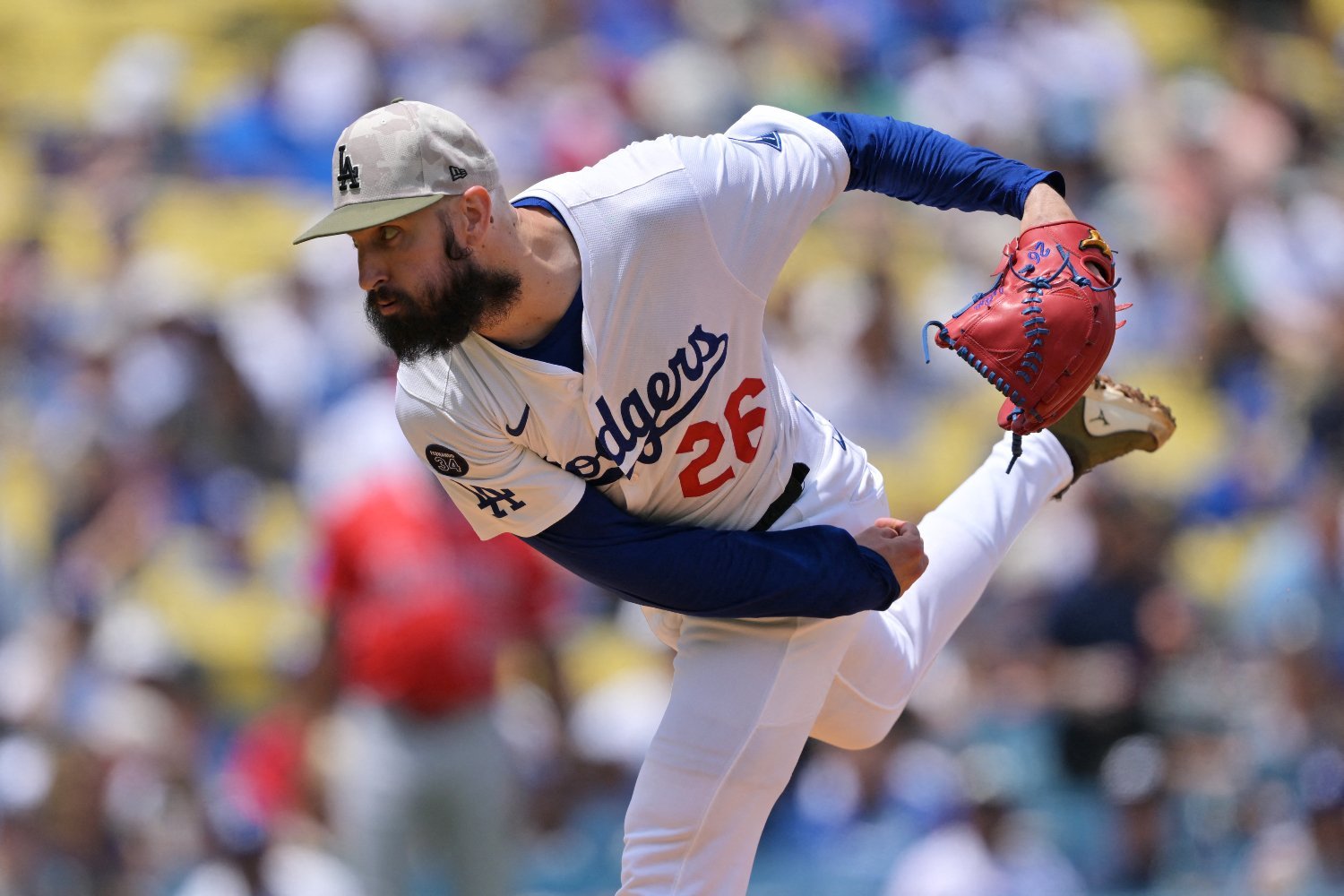 On Thursday afternoon during the Royals' off day, Kansas City announced that they had signed free-agent pitcher Tony Gonsolin to a one-year deal for the remainder of 2026 with a club option for 2027. To make room on the 40-man roster for Gonsolin, the Royals designated reliever Eli Morgan for assignment. Gonsolin was an All-Star with the Los Angeles Dodgers in 2022 when he posted a 16-1 record, 2.14 ERA, 3.28 FIP, and 2.7 fWAR in 130.1 IP. However, the 32-year-old righty has struggled with injury the past few seasons, limiting him to just 139 innings of work since 2023. Gonsolin missed all of 2024 while recovering from Tommy John surgery in August of 2023, and he pitched only 36 innings in 2025, his season cut short by shoulder surgery. As a result, the Dodgers released him this past offseason, and he opted for free agency instead of an outright assignment to Triple-A. Due to his injury issues, no team picked him up this offseason or during the season. The Royals need pitching, especially after Luinder Avila and Stephen Kolek were the latest Royals pitchers to undergo Tommy John surgery. Avila and Kolek will be out all of 2027, and Cole Ragans, who underwent elbow surgery, won't return until the middle of 2027, at the earliest. Thus, Gonsolin gives the Royals some cheap upside, albeit with some significant injury risk. In 2025, Gonsolin struggled in seven outings, posting a 5.00 ERA and 6.02 FIP. That said, he did post a 24.2% K%, a 12.7% K-BB%, and sported an intriguing TJ Stuff+ summary profile, though his four-seamer rated as below average on a TJ Stuff+ end. If the Royals can help Gonsolin get his four-seamer back to at least "average" post-surgery, then Kansas City may be getting an underrated starting pitcher in Gonsolin who can generate plenty of "swing and miss". In 2025, he posted a 30.3% K%, with strong whiff rates on his four-seamer (23.5%), slider (35.6%), and splitter (38%). It's unlikely that Gonsolin will see any action this year, either at the Major or Minor League level. However, if Gonsolin shows progress in his development and rehab process, then the Royals will not just exercise Gonsolin's club option, but also give him a shot to earn a spot in the Royals' 2027 rotation, which is thin after Michael Wacha, Seth Lugo, and Noah Cameron. If healthy, Gonsolin will likely be battling for a rotation spot with Daniel Lynch IV (who just transitioned back to the rotation) and possibly John Means, who's also recovering from surgery last season. To make room, the Royals designated Morgan for assignment. Morgan struggled with Kansas City, posting a 5.12 ERA, 6.49 FIP, and -0.3 fWAR in 19.1 IP. Morgan signed a Minor League deal in Spring Training and impressed, but he failed to find success with the Royals. It's unlikely that Morgan will remain in the Kansas City organization after this latest move. View the full article
 -
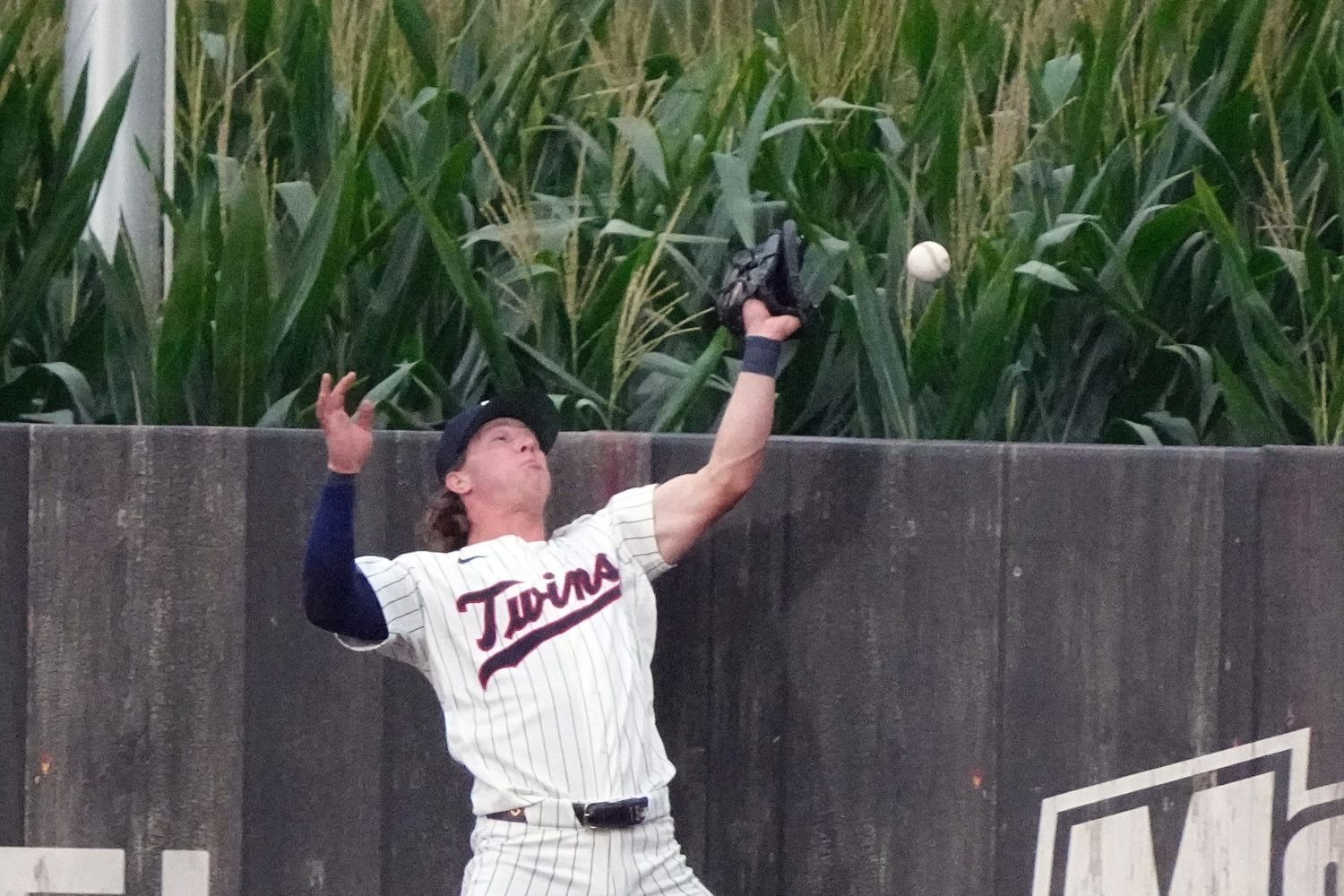 Box Score SP: Taj Bradley - 4 IP, 7 H, 5 R, 4 BB, 3 K (89 pitches, 48 strikes (54% strikes)) Home Runs: Luke Keaschall Bottom 3 WPA: Taj Bradley (-0.30), Royce Lewis (-0.14), Brooks Lee (-0.07) Win Probability Chart The Twins entered Thursday night's Field of Dreams Game against the Phillies looking to carry some momentum over from their series win against the Orioles. After battling back from an early deficit multiple times during Wednesday's victory, Minnesota once again found itself playing from behind almost immediately. Unfortunately, this time, the response never came. Taj Bradley struggled to find his command from the beginning, allowing Philadelphia to build a 2-0 lead in the first inning before the Phillies extended it to 5-1 in the fourth. Luke Keaschall's seventh homer of the season briefly gave Minnesota some life, but the Twins couldn't generate enough offense against Aaron Nola and Philadelphia's bullpen. The Phillies eventually pulled away on a two-run homer from Brandon Marsh in the seventh, handing Minnesota a 7-1 loss in the return of one of the sport's niftier jewel events. Bradley got off to about as difficult a start as possible. Kyle Schwarber opened the game with a solo homer, launching a 2-0 fastball into the corn for his league-leading 36th home run of the season. After Trea Turner popped out, Bryce Harper walked and Luis Arraez singled to put runners on the corners. Bryson Stott followed with an RBI single, giving Philadelphia a 2-0 lead. The right-hander then walked Marsh to load the bases, but he managed to escape without allowing any additional damage. Unfortunately, it took him 32 pitches to do so, with only 16 going for strikes. He was a bit wobbly in the second, too, though he didn't allow any more runs. Bradley did settle down in the third, working a 1-2-3 inning on just 10 pitches. But the fourth inning brought the command problems right back. He walked Marsh to begin the frame, threw a fastball over Ryan Jeffers's head and to the backstop, and eventually surrendered another homer to Schwarber. The second homer was a high fly and a wall-scraper. It was nearly caught (and probably should have been) by Luke Keaschall, but the ball kicked off his glove and over the wall. That made it a 4-1 game. Turner doubled on what should have been a single toward the right-field line, with Keaschall being beaten a bit once again. Harper singled him home to extend Philadelphia's advantage, with a grounder that just eluded the dive of second baseman Kody Clemens. By the time Bradley finally escaped the inning, his pitch count had reached 89. The 30-pitch fourth inning ended his night, leaving Minnesota's bullpen to handle the final five. It was a frustrating outing for Bradley, and left the Twins offense in need of a crooked number they would never quite generate. Minnesota did have opportunities to make this a game, but Nola consistently found a way to shut down the biggest threats. The Twins got runners on base in the first inning, as Trevor Larnach singled and Jeffers reached on a swinging bunt. But Josh Bell struck out and Royce Lewis lined a ball directly at Turner to end the inning. It was the kind of ball that shows how good his process has been lately; he's hitting it on a line to the pull field consistently. This time, it just didn't generate a happy result. Keaschall provided Minnesota's biggest offensive moment in the second. He jumped on a fastball on the inside corner and sent it beyond the left-field wall, cutting Philadelphia's lead in half with his seventh homer of the season. That gave the Twins some life, but they couldn't build on it. The biggest missed opportunity came in the fifth inning. With two outs, Byron Buxton doubled down the third-base line (poor defense from the Phillies, this time; they've had their lineup rearranged as much as the Twins have, and Bryson Stott's inexperience at the hot corner showed). Jeffers and Bell drew back-to-back walks. Suddenly, the bases were loaded, with Lewis coming to the plate as the potential game-changing hitter. Instead, Lewis swung through a Nola curveball for the pitcher's ninth strikeout of the night. Nola was particularly effective with that pitch throughout the game. All six of his strikeouts through the fourth inning came on his knuckle-curve, and he kept Minnesota's lineup off balance for most of the night. The Twins did manage to collect eight hits and put runners on base throughout the game, but they couldn't string enough of those opportunities together to mount a comeback. Even in a game where very little went right offensively, Keaschall once again stood out. The sophomore accounted for three of Minnesota's better moments at the plate, starting with his solo homer in the second inning. In the sixth inning, he lined a double into left field for his second extra-base hit of the night. It was also his third time reaching base, giving him one of the better individual performances in an otherwise quiet night for Minnesota's offense. His defensive misadventures have been costly, but even great teams sometimes have to put up with a bad fielder somewhere to let their bat play. Since the beginning of May, Keaschall has been flirting with a .400 on-base percentage. After Bradley's departure, the Twins' bullpen did a solid job of keeping Philadelphia within striking distance for a while. Travis Adams entered in the fifth and worked around a pair of singles before retiring Schwarber to end the inning. He then delivered a clean sixth, retiring Turner, Harper and Arraez in order. But the Phillies finally broke through against Adams in the seventh, when Marsh connected on that putaway homer. The pitch was a two-strike changeup that caught too much of the plate. The homer ended Adams' night, with Taylor Rogers entering to finish the inning. From there, the Phillies' bullpen took care of business. Jonathan Bowlan, Orion Kerkering and Jhoan Duran combined to shut down the Twins over the final three innings, allowing just one hit. Minnesota did get a ninth-inning single from Kaelen Culpepper, but the game ended fittingly for the Twins. Culpepper attempted to steal second on the first pitch of Larnach's at-bat, but Duran snagged the ball and doubled him off first base for the final out. What’s Next? The Twins are off tomorrow as they return to Minnesota, where they’ll resume their three-game series with the Phillies on Saturday. Connor Prielipp is in line to throw for Minnesota; he’ll face fellow left-hander Jesús Luzardo. First pitch is set for 6:10 PM. Postgame Interviews Coming soon! Bullpen Availability Chart View the full article
 -
Twins Add Veteran Starter Germán Márquez On Minor League Deal
DiamondCentric posted an article in Twins Daily
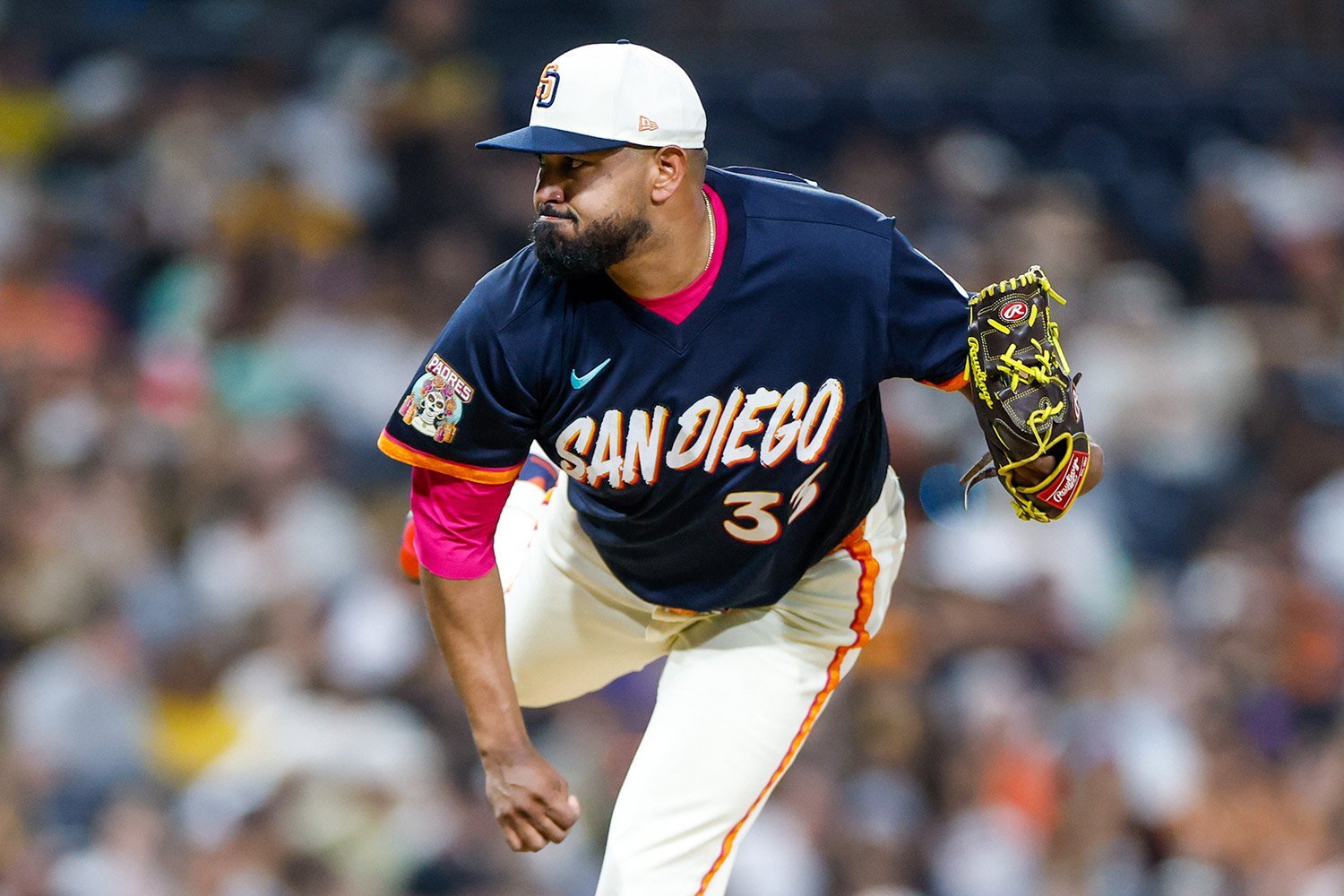 The Minnesota Twins have added some veteran pitching depth, signing right-hander Germán Márquez to a minor league deal, according to Dan Hayes of The Athletic. Márquez will report to Triple-A St. Paul. Márquez was designated for assignment by the San Diego Padres on August 5 to make room for Robbie Ray, whom San Diego acquired at the trade deadline. The 31-year-old Márquez has spent 11 seasons in the Major Leagues, with the first 10 coming with the Colorado Rockies. He earned an All-Star selection in 2021 and has made 210 career starts. Despite carrying a 4.70 ERA for his career, Márquez has posted a 103 ERA+, which is above league average and speaks to just how difficult it is to pitch half of your games at Coors Field. Márquez primarily works with a mid-90s fastball and a knuckle curve that has generated a 27% whiff rate. However, the underlying numbers haven't been particularly encouraging in recent seasons, which helps explain why the Padres ultimately moved on. He doesn't miss many bats, averaging six strikeouts per nine innings over the past two seasons, and he's also been prone to giving up hard contact. Over the past two seasons, Márquez has allowed 37 home runs in 179 innings. There's certainly a chance Márquez doesn't have much left in the tank. That's also why the Twins were able to sign him to a minor league deal rather than making a significant commitment. There's a good chance he never makes an appearance for the big league club. Still, Márquez provides the Twins with something valuable at this point in the season: veteran starting pitching depth. He's been through just about everything a pitcher can experience over an 11-year Major League career, and if the Twins suddenly need someone to make a spot start because of an injury or another roster need, Márquez has plenty of experience doing exactly that. It's a low-risk move for the Twins, but one that could potentially pay off if they find something in Márquez that the Padres couldn't. What do you think of the Twins signing Germán Márquez to a minor league deal? Leave a comment below and start the conversation! View the full article
 -
 Fish On First staffers react to the latest Miami Marlins series and prepare you for what lies ahead. Thursday's show was hosted by Ely Sussman and featured panelists Nate Karzmer and Sean Millerick. The following topics were covered: Eury Pérez continues excellent stretch, outduels Paul Skenes Griffin Conine establishing himself as premier power hitter Revolving door at first base for the near future Injury updates on Anthony Bender, Max Meyer and William Kempner Esteury Ruiz has been a clear upgrade in the Dane Myers role Previewing and predicting the next series against the Cincinnati Reds You can find Fish Unfiltered and Fish On First LIVE on the Fish On First YouTube channel, Apple Podcasts, Spotify or wherever else you get your pods. Our next FOF LIVE episode will be on Pirates at approximately 6:30 p.m. ET following the Marlins-Reds series finale. View the full article
