


DiamondCentric
-
Posts
2,631 -
Joined
-
Last visited
Never
Content Type
Profiles
Forums
Events
News
Tutorials & Help
Major League Baseball Videos
Guides & Resources
Store
Downloads
Gallery
Everything posted by DiamondCentric
-

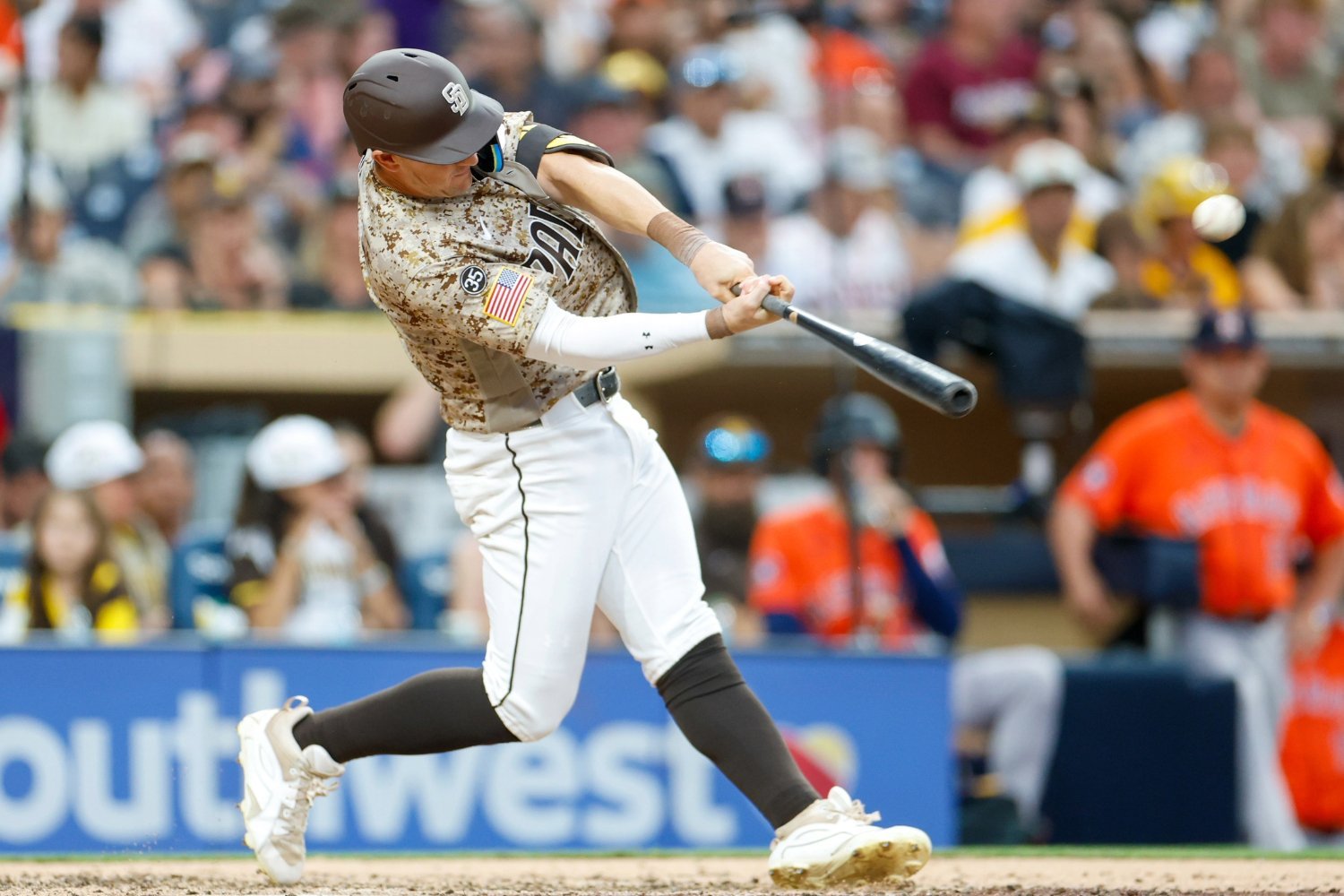 All of the talk around the San Diego Padres at the trade deadline related to starting pitching, and rightfully so considering the staff's patchwork nature. They were able to address that effectively with the additions of Robbie Ray & Casey Mize, but such an effort also neglected a secondary need in the form of a supplemental bat. It's gone with less notice as the year has worn on and several hitters have rounded into form, but the Padres have long featured a similar approach in their positional depth as they have from a starting pitching standpoint. They attempted to fill out their bench with volume (via minor-league deals and one-year contracts) above all. In some cases that's worked (Luis Rengifo) and in others it very much hasn't (Nick Castellanos). One spot in particular where the need for depth has manifested has been in left field. An injury to Ramón Laureano left something of a vacancy there, with Craig Stammen rotating a cast of characters that has included eight different players throughout 2026. Most recently, that's been a heavy dose of Gavin Sheets on the outfield grass, which isn't necessarily what you want with a team that has focused on improving defensively this season. Enter Austin Hays. He was a castoff of the Chicago White Sox after his one-year deal was marred by injury and the ascent of a number of youngsters (and the addition of Randal Grichuk) in an upstart season, which led to his designation for assignment earlier this month. He was subsequently released after logging just a dozen games of work, a shade over 45 plate appearances, and a bunch of strikeouts. The Padres were happy to add him quickly given their present need for some supplementary help in the outfield. And then, it took just one swing for Hays to announce himself in San Diego: It's not so much that we should expect Hays to do that with regularity (though he did homer 15 times for Cincinnati just last season). It's what he brings to the Padres in a specific area of need. Against left-handed pitching, the Padres have been one of the worst offensive teams in the league. They've slashed only .240/.307/.365 with a bottom-of-the-league .125 ISO and 88 wRC+ as a collective. While that does take into account the full season and we've seen the offense improve over the last month and change, the addition of a hitter who can handle lefties was considered a secondary need that they were unable to address directly at the trade deadline. Hays, however, can be just that. For his career, Hays has slashed .283/.340/.481 against southpaws, with a 125 wRC+ that far exceeds his mark of 96 against right-handed pitchers. His .198 career ISO against them is more than 30 points higher than his work against righties. Toss in the fact that Hays has generally lingered around the average threshold defensively (if not just a shade below it) in left field, and the Padres were able to reign in precisely the kind of player that they likely needed ahead of the deadline. Only without the additional prospect cost. Let's not pretend that the Padres just picked up an offensive savior. That responsibility lies in bats like Fernando Tatis Jr., Jackson Merrill, and Manny Machado. For his part, though, Hays adds a dynamic that fortifies this lineup against lefties in a way they previously lacked. There's tremendous value in that, and, ideally, Sunday's home run is the first of a few we see from him down the stretch as they continue their pursuit of a National League Wild Card spot. View the full article
 -
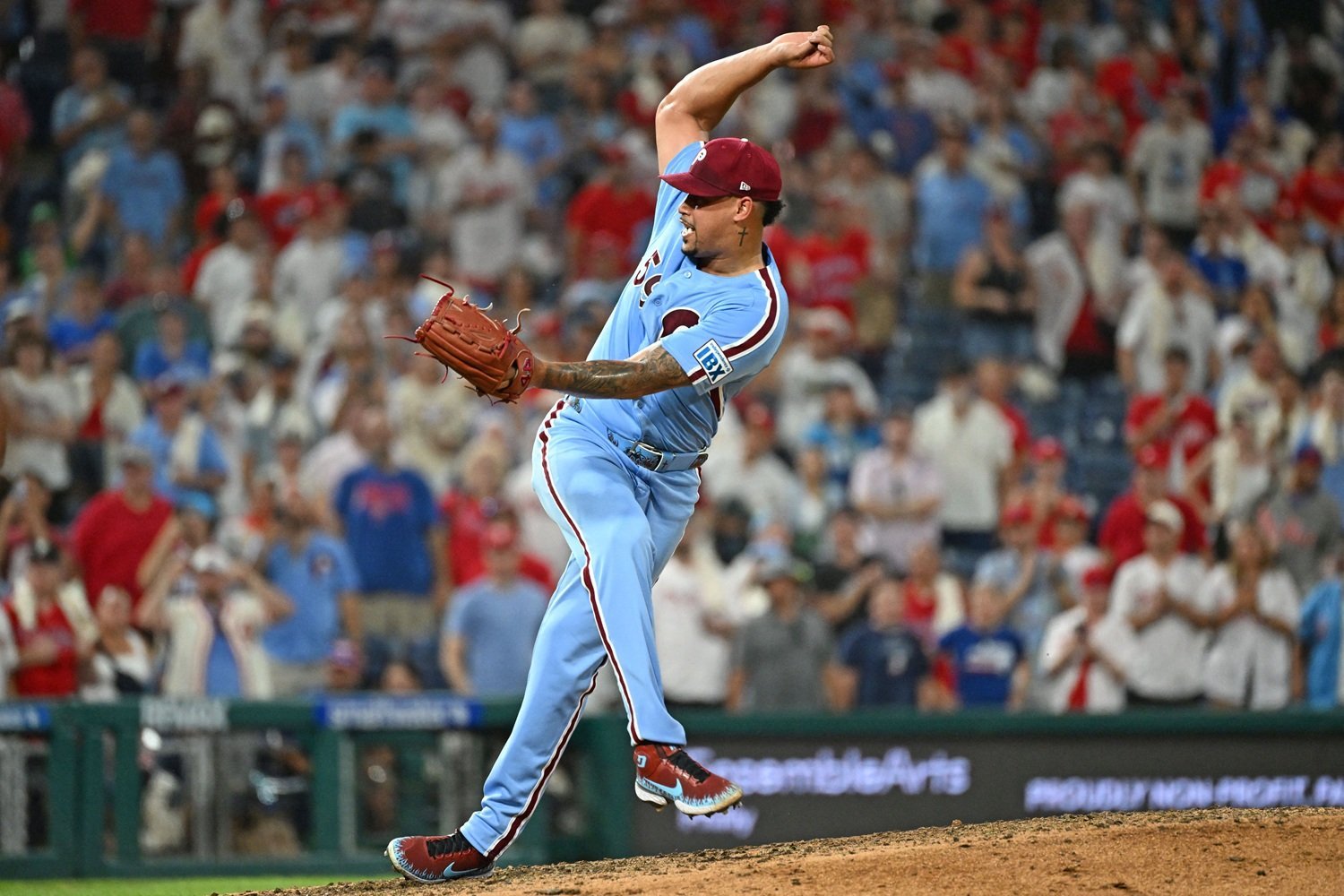 One year ago, the Minnesota Twins reshaped the organization with one of the biggest trade deadline selloffs in franchise history, making nine separate deals before the deadline passed. Immediately afterward, I graded each trade based on the information available at the time. A year later, we have a much better picture. Some of the prospects the Twins acquired have taken significant steps forward, while others have struggled or battled injuries. Meanwhile, several of the veterans the Twins traded away have continued to build their value elsewhere. With the 2026 trade deadline now behind us (and with Jhoan Duran coming home to Target Field later this week), it's time to revisit all nine trades and see which ones have aged the best and which ones look worse than they did a year ago. 1. (Last Year's Rank: 7) Griffin Jax to the Rays Return: RHP Taj Bradley 2025 Grade: C- 2026 Grade: A- I wasn't a big fan of the Griffin Jax trade at last year's trade deadline for a few reasons. The biggest was that the Twins didn't need to make the trade. Jax still had 2.5 years of team control remaining, and it felt like a rushed move when they could have let the market develop over the winter. At the time, Taj Bradley also didn't feel like an exciting return after posting a 4.70 ERA across 354 career innings with Tampa Bay. This trade has completely flipped. Bradley has emerged as one of the Twins' most valuable starters, posting a 3.69 ERA while leading the club in innings pitched. He's still in his pre-arbitration years, giving Minnesota a young, affordable starter for years to come. Griffin Jax has reinvented himself as a starter with the Rays, but landing a controllable rotation piece with upside has made this look like one of the Twins' best moves. 2. (Last Year's Rank: 1) Harrison Bader to the Phillies Return: OF Hendry Mendez, RHP Geremy Villoria 2025 Grade: A- 2026 Grade: A- Last year, I graded the Harrison Bader trade as the best move the Twins made at the deadline, and it still ranks near the top. Bader was playing on an expiring contract and had little long-term value to a selling club. Minnesota turned him into an intriguing left-handed hitting outfield prospect in Hendry Mendez, who owned an .808 OPS at Double-A at the time of the trade. Since joining the organization, Mendez posted a .912 OPS with Wichita before earning a promotion to Triple-A, where he has continued producing with an .844 OPS. He looks like someone who will factor into the Twins' big league plans in the near future, making this an excellent return for a pending free agent. The Twins also got 17-year-old Geremy Villoria as a lottery ticket; we won't learn whether it was a winner for several more years. 3. (Last Year's Rank: 4) Chris Paddack and Randy Dobnak to the Tigers Return: C Enrique Jimenez 2025 Grade: B- 2026 Grade: B+ Chris Paddack was struggling on an expiring contract when the Twins dealt him, so the fact that Minnesota was able to receive a legitimate prospect at all was impressive. Jimenez rewarded that gamble almost immediately, posting a .983 OPS in A-ball after joining the organization. This season he earned a promotion to High-A as a 20-year-old before suffering a significant left hamstring strain in late July that is expected to end his season. The injury is unfortunate, but the upside remains intriguing, and this trade looks better today than it did a year ago. 4. (Last Year's Rank: 3) Carlos Correa to the Astros Return: RHP Matt Mikulski and roughly $70 million in salary relief 2025 Grade: B 2026 Grade: B This was always more about financial flexibility than prospect value. Matt Mikulski has since been released, eliminating any player value from the return. However, shedding the remainder of Correa's contract gave the Twins significantly more payroll flexibility, something that showed up at this year's trade deadline when they were willing to absorb more than $8 million in salary. Correa is also out for the remainder of the 2026 season with an injury, making it difficult to argue the Twins should regret moving on. Still, because this was primarily a salary dump, it's difficult to rank it much higher. 5. (Last Year's Rank: 5) Willi Castro to the Cubs Return: RHP Ryan Gallagher, RHP Sam Armstrong 2025 Grade: C+ 2026 Grade: C While Castro was an impending free agent, he was enjoying another productive season when Minnesota moved him. Ryan Gallagher had generated some excitement after posting a 3.43 ERA in the Cubs' system and earning a promotion to Double-A before the trade. Since arriving in the Twins organization, however, Gallagher has struggled. He posted a 6.69 ERA after the trade last season and owns a 5.50 ERA in 91 innings this year. However, the strikeout numbers and raw stuff remain intriguing, and he has had a successful run of good starts lately, making him look like he could still become a piece for the Twins rotation of the future. 6. (Last Year's Rank: 2) Jhoan Duran to the Phillies Return: C Eduardo Tait, RHP Mick Abel 2025 Grade: B+ 2026 Grade: C- Much like Griffin Jax, the Twins weren't under any pressure to trade Jhoan Duran. He still had multiple years of club control remaining. At the time, receiving two Top 100 prospects looked like a strong return. Unfortunately, both players have lost momentum. Tait has yet to truly break out at High-A, though he has shown signs of life recently. Abel flashed his upside during three major league starts this season before injuries derailed his year. He has since undergone elbow surgery and likely won't pitch again this season. Meanwhile, Duran has continued establishing himself as one of baseball's elite relievers. Looking back, it's difficult not to wonder what this Twins bullpen would look like with him still anchoring the ninth inning. There's still time for Tait to realize his prospect potential, and if Abel can stay healthy, he could be a #2 or #3 pitcher for the Twins, but early returns aren't looking great for the biggest swing the Twins made at the trade deadline last season. 7. (Last Year's Rank: 6) Danny Coulombe to the Rangers Return: LHP Garrett Horn 2025 Grade: C 2026 Grade: C- Trading a left-handed specialist on an expiring contract was never expected to produce a significant return. Unfortunately, Garrett Horn hasn't done much to change that perception. Shoulder issues have limited him to just 16 innings this season, and at 23 years old, he doesn't appear to be a significant part of the organization's long-term plans. It's hard to see this trade moving much higher as time goes on. 8. (Last Year's Rank: 8) Brock Stewart to the Dodgers Return: OF James Outman 2025 Grade: D+ 2026 Grade: D This trade didn't make much sense when it happened, and it didn't exactly age great. The Twins already had an abundance of left-handed hitting outfielders, yet they acquired James Outman, another left-handed outfielder whose major league production had fallen off dramatically after his rookie season. That concern proved valid. Across two seasons with Minnesota, Outman posted just a .526 OPS in 174 plate appearances. The coaching staff never seemed comfortable using him in center field, and his defense in the corners wasn't impactful enough to justify his bat. He has since been designated for assignment and is no longer with the organization. The only thing keeping this trade from ranking last is Brock Stewart's health. Stewart was already dealing with complicated medical concerns when the Twins traded him, and he has thrown only 17 innings over the past calendar year while spending much of that time on the injured list. It seems likely those medical questions significantly limited the Twins' leverage and made Outman about as much as they could realistically receive. 9. (Last Year's Rank: 9) Louis Varland and Ty France to the Blue Jays Return: LHP Kendry Rojas , OF Alan Roden 2025 Grade: D+ 2026 Grade: D This was already my lowest-ranked trade immediately after the deadline, and it looks even worse a year later. Since joining Toronto, Louis Varland has developed into one of the best relievers in baseball. He earned his first All-Star selection this season while posting a 1.09 ERA across 57 innings, while striking out 11.5 batters per nine innings. Even more importantly, he's still making the league minimum and remains under team control through the 2030 season. On the Twins' side, Kendry Rojas remains an intriguing arm, though he increasingly looks more like a future reliever than a starter. Alan Roden has struggled throughout his time in the organization and has done little to change the outlook of the trade. What makes this deal even more painful is how perfectly Varland would fit on the current roster. Minnesota's bullpen has been one of the club's biggest weaknesses this season, and Varland has somehow become an even better reliever than anyone could have realistically projected a year ago. Watching him dominate elsewhere while the Twins have searched for reliable late-inning options, needing to dip into the prospect pool to acquire those options at this year's trade deadline, makes this trade look even more lopsided than it did last summer. Overall, the 2025 trade deadline class hasn't aged particularly well, although it's still early in the development process for many of these prospects. Player development is rarely linear, and several of these young players still have plenty of time to change the narrative. Still, one year later, it's fair to say some of the Twins' biggest bets have lost value, while only a handful have clearly moved in the right direction. Given how monumental that deadline was in shaping the franchise's direction, these trades will continue to be worth revisiting for years to come. Do you agree with these updated rankings and grades? Which trade would you take back if you could only redo one? Leave a comment below and start the conversation! View the full article
 -
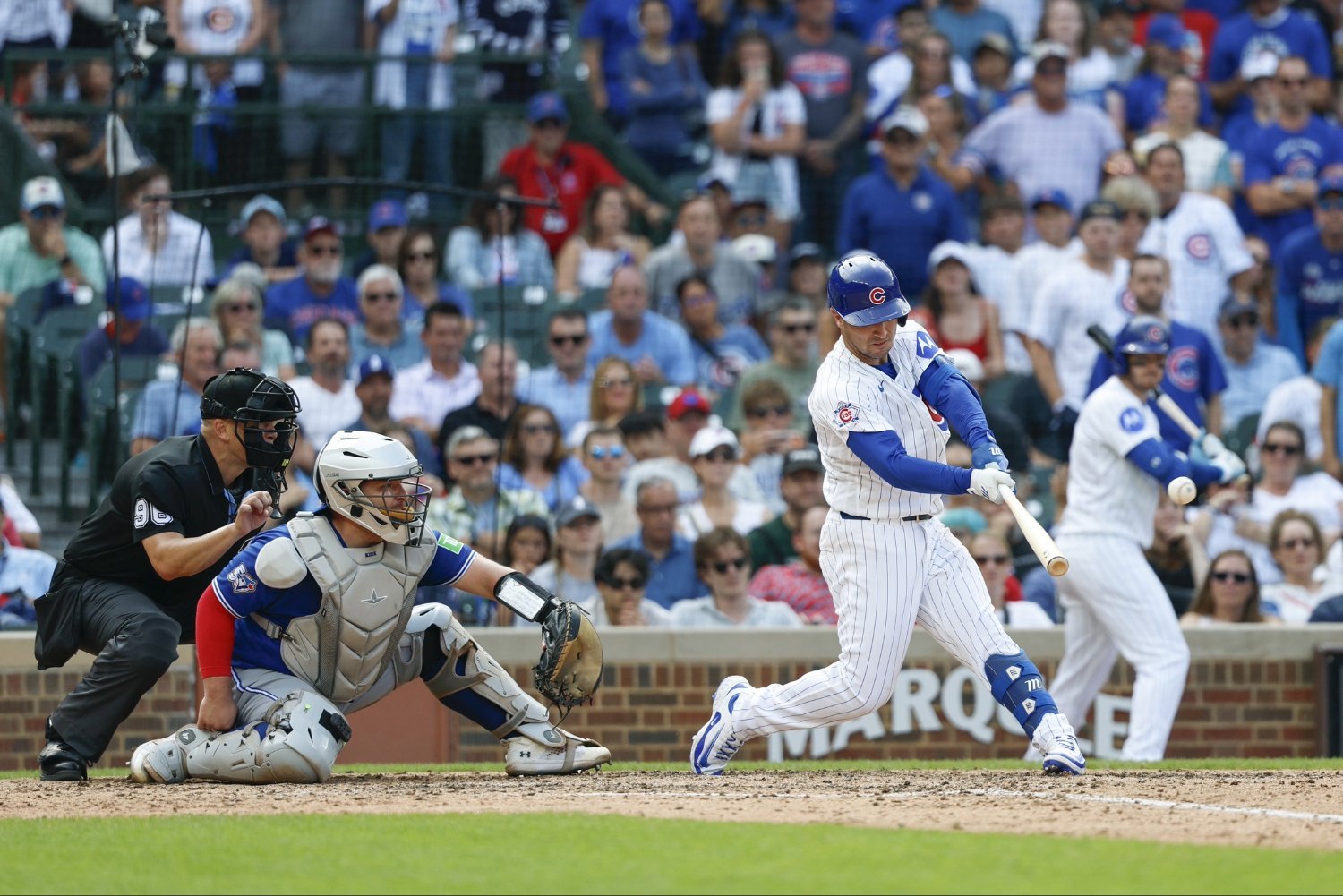 The Chicago Cubs knew exactly what they were getting when they signed Alex Bregman to a five-year, $175 million contract this winter: a proven veteran, an excellent defender, a consistent offensive contributor and, perhaps most importantly, someone who has already experienced the pressure of playing meaningful October baseball. Unfortunately for the Cubs, Bregman’s North Side career did not get off to the strongest of starts. Through the first half of the season, the third baseman was slashing just .241/.336/.359, which added up to a .696 OPS. With a 97 wRC+, he was actually a below-average hitter for the first three-and-a-half months of the year. For a player making $35 million, that obviously wasn't what the Cubs were hoping to see. Luckily, things appear to be trending in the right direction at exactly the right time. Across 86 plate appearances since the All-Star Break, Bregman has looked much more like the player Cubs fans expected to see when he signed his massive contract. He’s slashing .283/.347/.467, good for an .814 OPS and a 126 wRC+. That’s a pretty significant difference from what Bregman was doing earlier in the year. And perhaps even more encouragingly, there are some clear signs that his approach is changing. Bregman has been really leaning into his pull-side power lately; his pull-rate is above 50% in the second half thus far, including a huge 54.8% mark in August. This has always been his key to success, and it's a good sign that he's rediscovering it now. Despite the team's overall success throughout the year (even as Bregman has struggled), it's clear that the Cubs will need him at the peak of his power if they want to win in the playoffs. As the Cubs get closer to October baseball, Bregman has something that is incredibly difficult to find: an abundance of postseason experience. They have a firm hold of the top National League Wild Card spot and might even be able to make a run at the NL Central title. And after bolstering their pitching staff at the trade deadline with additions such as Kevin Gausman and Ryan Zeferjahn, it’s pretty clear what this team is trying to accomplish. The Cubs want to make a deep postseason run. Bregman knows a thing or two about doing exactly that. The veteran won two World Series championships during his time with the Houston Astros, and he wasn’t simply along for the ride. He was a crucial part of why Houston was able to bring home those championships. During the Astros’ 2017 championship run, Bregman recorded seven extra-base hits across 18 postseason games as a 23-year-old. Then, during Houston’s 2022 run, he posted an impressive .948 OPS throughout the playoffs. That experience matters. That was part of the appeal for Chicago when it signed him. Cubs president of baseball operations Jed Hoyer made that clear when discussing the decision to bring Bregman to Chicago during the introductory press conference: “He plays good defense. He makes great contact. He has power. He makes good decisions. On top of that, I think he provides a level of leadership to a team that's ready to win. I think that's really important. He wants to make other guys better. He wants to lead. And I think that there's not a lot of guys like that in the game that want that responsibility.” The Cubs have a roster capable of making a deep postseason run. Their offense has the talent, their pitching staff has been strengthened, and they’ve put themselves in a strong position to secure a playoff spot. What they didn’t necessarily have last year was a player with Bregman’s combination of postseason experience and proven leadership (and no, that's not a shot at Kyle Tucker). Now they do, and Bregman appears to be heating up at exactly the right time. His first half was disappointing, especially considering the expectations that came with his contract. But if this recent stretch is an indication of what’s to come, Chicago could be getting the version of Bregman they expected when they handed him $175 million. View the full article
 -
Minnesota's New Bullpen Hierarchy: Where All the New Pieces Fit
DiamondCentric posted an article in Twins Daily
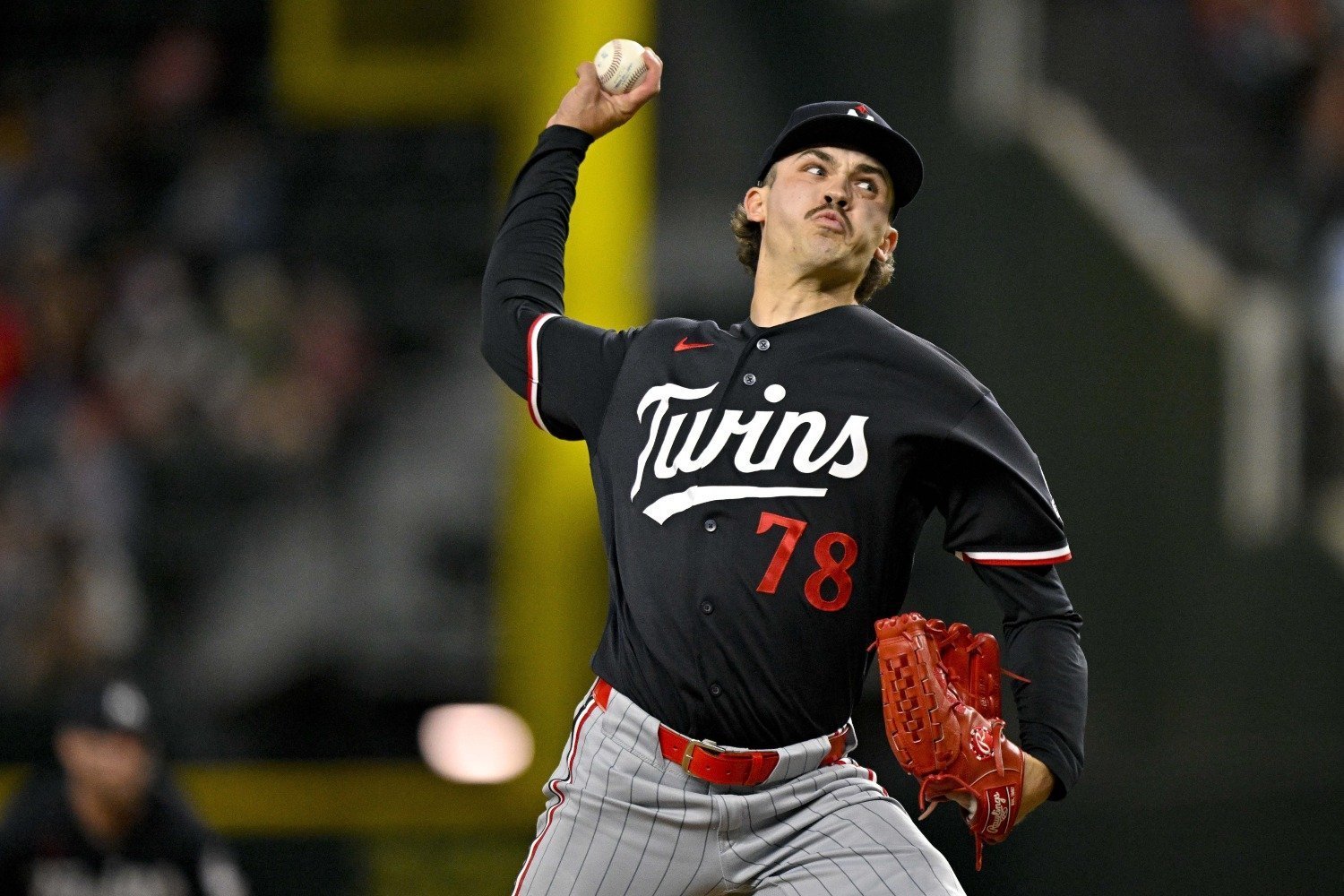 A few weeks ago, the Twins' bullpen looked like one of the biggest obstacles standing between them and a postseason berth. The front office recognized that reality and addressed it aggressively, adding three veteran relievers to reshape a unit that had carried too much uncertainty throughout the first half. The result is a bullpen that barely resembles the group Minnesota broke camp with in March. Jeff Hoffman, A.J. Minter, and Tommy Nance have joined a relief corps that already featured breakout closer Yoendrys Gómez and emerging right-hander Andrew Morris. Instead of searching for answers every night, manager Derek Shelton now has multiple ways to navigate the game's biggest moments. If Minnesota is going to stay in the playoff race over the final two months, this bullpen has to become one of the club's biggest strengths. Closer: Yoendrys Gómez Gómez earned the right to keep the ninth inning. After arriving in Minnesota, the Twins made subtle mechanical adjustments that unlocked another level for the right-hander. He rewarded them with a 1.93 ERA while stabilizing a bullpen that desperately needed someone capable of finishing games. His 21.0% strikeout rate and 11.4% walk rate aren't overwhelming, but he consistently made the biggest pitches when the Twins needed them. There are still reasons to wonder how sustainable his production will be. Gómez owns a 4.50 FIP, a 5.24 expected ERA, and opponents have produced a 43.5% hard-hit rate against him. Those numbers suggest he's benefited from some favorable outcomes. That doesn't mean Minnesota should make a change. Closers are often as much about confidence as pure stuff, and Gómez has earned that confidence. If regression comes, the Twins now have another elite option waiting in the wings. Until then, Gómez should continue handling the ninth. Back-Up Closer: Andrew Morris Ironically, the deadline additions may have created an even better role for Morris. Instead of asking him to handle traditional setup duties every night, the Twins can now use him as a versatile weapon capable of entering whenever the game begins to tilt. If a starter exits early, Morris can finish an inning. If the biggest rally comes in the sixth, he can erase it before handing the game to Hoffman or Gomez. That flexibility should only increase his value. Long term, Morris still looks like a potential closer. For now, though, this role allows him to impact games without the pressure of owning one specific inning. It could become the perfect bridge toward eventually handling the ninth himself. Left-Handed Fireman: A.J. Minter Minnesota spent much of the first half searching for a dependable left-handed reliever capable of neutralizing the opposition's biggest bats. Minter checks every box. He arrived from the Mets with a 2.35 ERA over 23 innings, although his 4.01 FIP suggests some regression could follow. Even so, his track record speaks for itself. Left-handed hitters own just a .614 OPS against him during his career, and he has struck out 30.3% of the lefties he's faced. That makes him an ideal fireman. Rather than saving him for a predetermined inning, Minter can be deployed whenever an opponent's toughest left-handed hitters threaten to swing the game. Whether that's escaping a seventh-inning jam or protecting a one-run lead in the eighth, Minter gives Minnesota a matchup weapon it simply didn't possess earlier this season. Right-Handed Fireman: Jeff Hoffman The trade deadline gave Minnesota exactly what every contender wants: another pitcher capable of getting the game's biggest outs. Hoffman's ERA with Toronto over the last two seasons sits north of 4.00, but the underlying metrics paint a completely different picture. His 3.33 expected ERA and .211 expected batting average suggest he has pitched much better than the traditional numbers indicate. Even more impressive is how dominant his arsenal remains. His Chase Rate, Whiff Rate, and strikeout rate all rank among the top two percent of pitchers in baseball. Few relievers miss bats at his level. Keeping Gómez in the closer's role could actually maximize Hoffman's value. Instead of waiting for save situations, Shelton can deploy Hoffman whenever the heart of the opposing lineup is due up. Whether that's the seventh, eighth, or ninth inning becomes irrelevant if he's facing the most dangerous hitters. In Friday's victory, Hoffman faced the heart of the order in the seventh leaving the final two innings for Morris and Gomez. That's often how playoff bullpens operate. Middle-Inning Options: Tommy Nance, Travis Adams, Kody Funderburk, Taylor Rogers Nance technically qualifies as one of Minnesota's deadline additions, even though his acquisition came before the deadline frenzy began. He's not in the same class as Hoffman or Minter, but he doesn't have to be. His job is providing quality innings and protecting the late-inning trio from overuse. That's something the Twins lacked for much of the season. The supporting cast has also started trending in the right direction. Adams, Funderburk, and Rogers all found another gear during July after inconsistent first halves. Their improvements coincided with the bullpen's turnaround. Since July 1, Minnesota ranks 10th in Major League Baseball in bullpen ERA and ninth in Win Probability Added, evidence that the entire relief corps has begun pitching at a much higher level. Reinforcements: Zebby Matthews, Connor Prielipp, Kendry Rojas The bullpen may not be finished evolving. Matthews, Prielipp, and Rojas all remain part of Minnesota's starting pitching depth, but September often changes priorities. As innings become more valuable and workloads begin to mount, converting one or more of those arms into relief roles could make plenty of sense. We've seen contenders follow that blueprint before. Power stuff often plays even better in one- or two-inning bursts, and all three pitchers have the type of arsenal that could immediately translate to high-leverage relief work. If the Twins reach October, don't be surprised if at least one member of this group becomes another important bullpen piece. A Bullpen Built for the Stretch Run Minnesota didn't just add talent at the trade deadline—it added structure. Gomez remains the closer. Hoffman and Minter give Shelton two legitimate firemen capable of putting out rallies before they become game-changing. Morris can float wherever he's needed most, while Nance and the rest of the middle relief group provide the depth that was missing for much of the first half. No bullpen is ever finished. Injuries happen, workloads pile up, and September always introduces new wrinkles. But compared to the group that left Fort Myers in March, this version is deeper, more experienced, and significantly better equipped for meaningful baseball. If the Twins are still playing in October, this bullpen makeover will be one of the biggest reasons why. What stands out about the new bullpen hierarchy? Leave a comment and start the discussion. View the full article
 -
Why Blake Burke’s Elite Power Could Outweigh His Swing Decisions
DiamondCentric posted an article in Brewer Fanatic
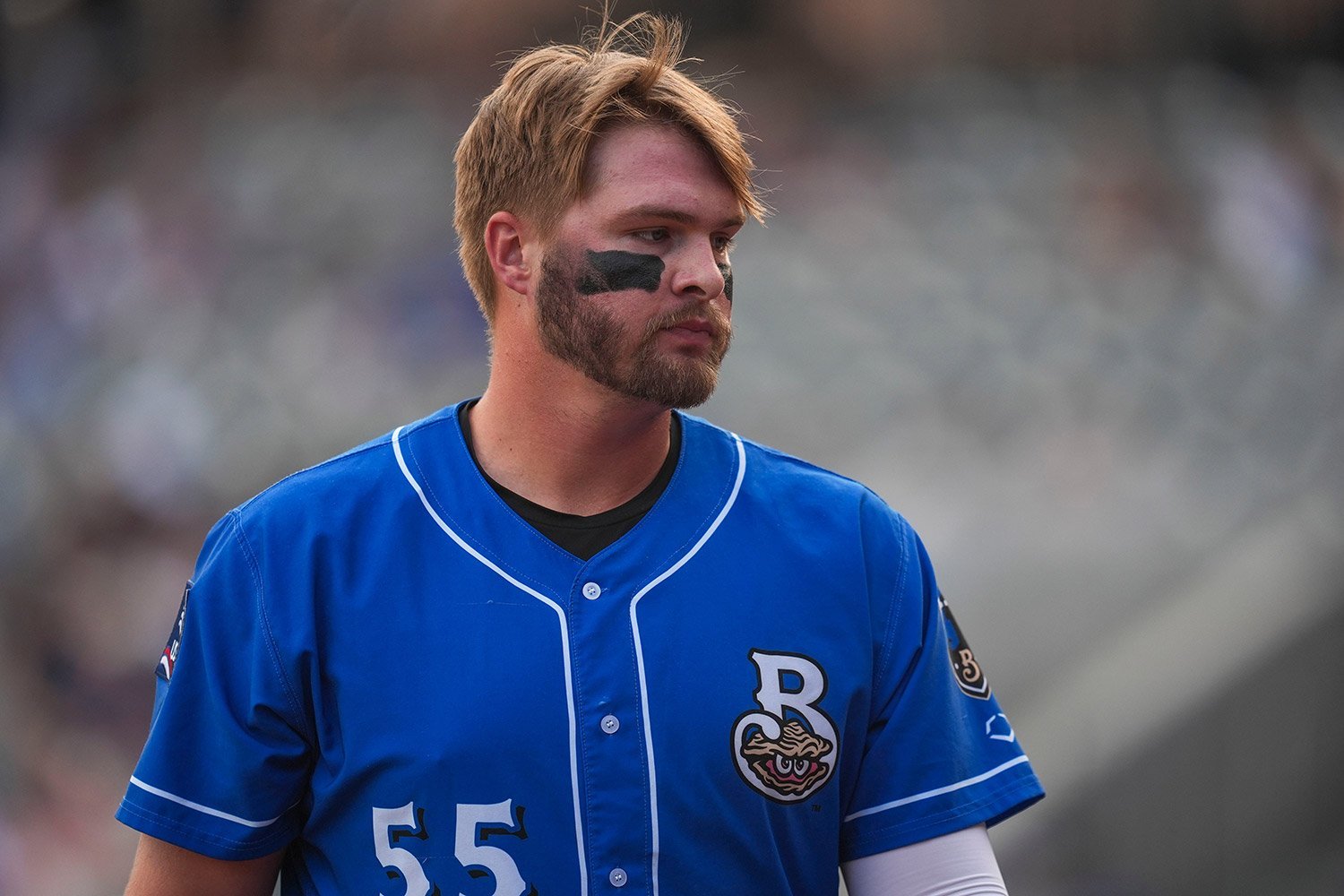 Blake Burke has more raw power than anyone else in the Brewers' minor league system. That's saying something considering the organization also has Andrew Fischer, Jesús Made, and Eric Bitonti. Burke has crushed his way to a 30 home run season in Biloxi (and 28 stolen bases ?!?) in just 96 games, and his promotion to Triple A is well earned after one of the most dominant months in Southern League history. Brewers player development shared a home run compilation along with Burke's statistics in July, which saw him fall just short of slugging 1.000 (yes, slugging) in the month: The exit velocities tell a story. Ranging from 106 mph to 116 mph, Blake Burke hit the ball hard, often, and was hitting it in the air. Burke is an aggressive swinger, but his contact rate overall is north of 70% this season, which is passable. His in-zone contact rate is around 78%, again a strong enough number to play well at the major league level if he can sustain it. The only concerns with Burke's profile to date are something the Brewers have been tight on, and that's his swing decisions. Burke has chased roughly 35% of pitches outside the strike zone this season, putting him in the bottom 10% of hitters in Double A by chase rate. The problem isn't necessarily that he'll miss every pitch he chases. It's that chasing removes him from counts where he can do the most damage, potentially turning elite raw power into merely above-average game power. Will there be a point where chasing too often limits the power he can produce? Well, if we look at the major league level, there are a bunch of names that have been chasing more than Burke, and some of those names may surprise you. This isn't a one-to-one comparison. Burke is seeing Double-A pitching, while these hitters are doing it against major league arms. But the comparison is still useful because it shows that a high chase rate doesn't automatically make an aggressive hitter unplayable. There are currently 30 hitters that chase more than Burke in the major leagues, and while the chart below that showcases expected Weighted On Base Average (xWOBA) should increase the more a hitter chases, there are some exceptions to this: There are a number of successful hitters who chase above 35% of the time, and some of them are the more exciting players in baseball. If we isolate it to just those who chase above 35% of the time and have an xWOBA over .340, we have Julio Rodriguez, Luis Garcia Jr, Michael Harris II, Alec Burleson, Jac Caglianone, CJ Abrams and Jordan Walker. Yes, they chase, but they offset it by maximizing their aggression inside the strike zone and leveraging that for power. Jac Caglianone is an interesting comparison for Burke. Sitting near or at the top of the league for hard-hit rates, barrel rates, average exit velocities and bat speed, his quality of contact metrics are superb. His chase rate, however, limits him from maximizing that contact into being a true superstar; however, he's doing exactly what he needs to do to maximize his profile. Slugging pitches over the heart of the plate. Caglianone has an expected slugging mark of .718 on pitches over the heart of the plate, ranking 17th in all of baseball (interestingly, Jackson Chourio is 15th). That damage has led him to hit .264/.317/.480 while playing the majority of his games in the pitcher-friendly Kauffman Stadium. So while he chases and strikes out, Caglianone is a prime example of why chase rate isn't necessarily the problem. Ineffective aggression is. Blake Burke's power is not in question. Regardless of the level, if pitchers are attacking him inside the strike zone, he has the kind of raw power Milwaukee hasn't seen from a first-base prospect since Prince Fielder that can damage those baseballs. If he can further develop his swing decisions, the Brewers may have one of the best first basemen in the league. If he can't, there's still a path to being a serviceable, powerful first baseman who steals more bases than Josh Naylor (it's wizardry, honestly). Burke's promotion has come at an interesting time. While there isn't a clear path currently to the major leagues for Burke with Jake Bauers taking the role of an everyday, left-handed first baseman, Bauers is hitting free agency after this year. This move is going to give Burke enough playing time in Nashville to potentially propel himself into that first base conversation for 2027, but it also gives the Brewers coverage. There are three potential, if unlikely, routes to seeing Blake Burke in Milwaukee this season. Jake Bauers is playing with a broken toe at the moment, and while he's playing through it using pain management and performing well, the toe is an interesting injury. It absorbs a lot of the ground force that hitters use to create torque from their legs, and it's not inconceivable the Brewers would want to give Bauers some time off down the stretch. It also provides some DH cover should Christian Yelich get injured, which hasn't been uncommon in past seasons. Finally, the rosters expand in September, allowing one extra hitter and one extra pitcher to join the team. The Brewers aren't in need of another position player without versatility, but Burke has a month of games to show he can be a force in a bench bat role. While this is likely a move for next season, it does give the Brewers some options in terms of injury cover, or even expanded roster cover in September, if Burke hits the ground running. It's worth continuing to monitor the chase rates with publicly available statcast data, but even if they stay steady, that doesn't mean Burke won't be successful at the highest level. View the full article
 -
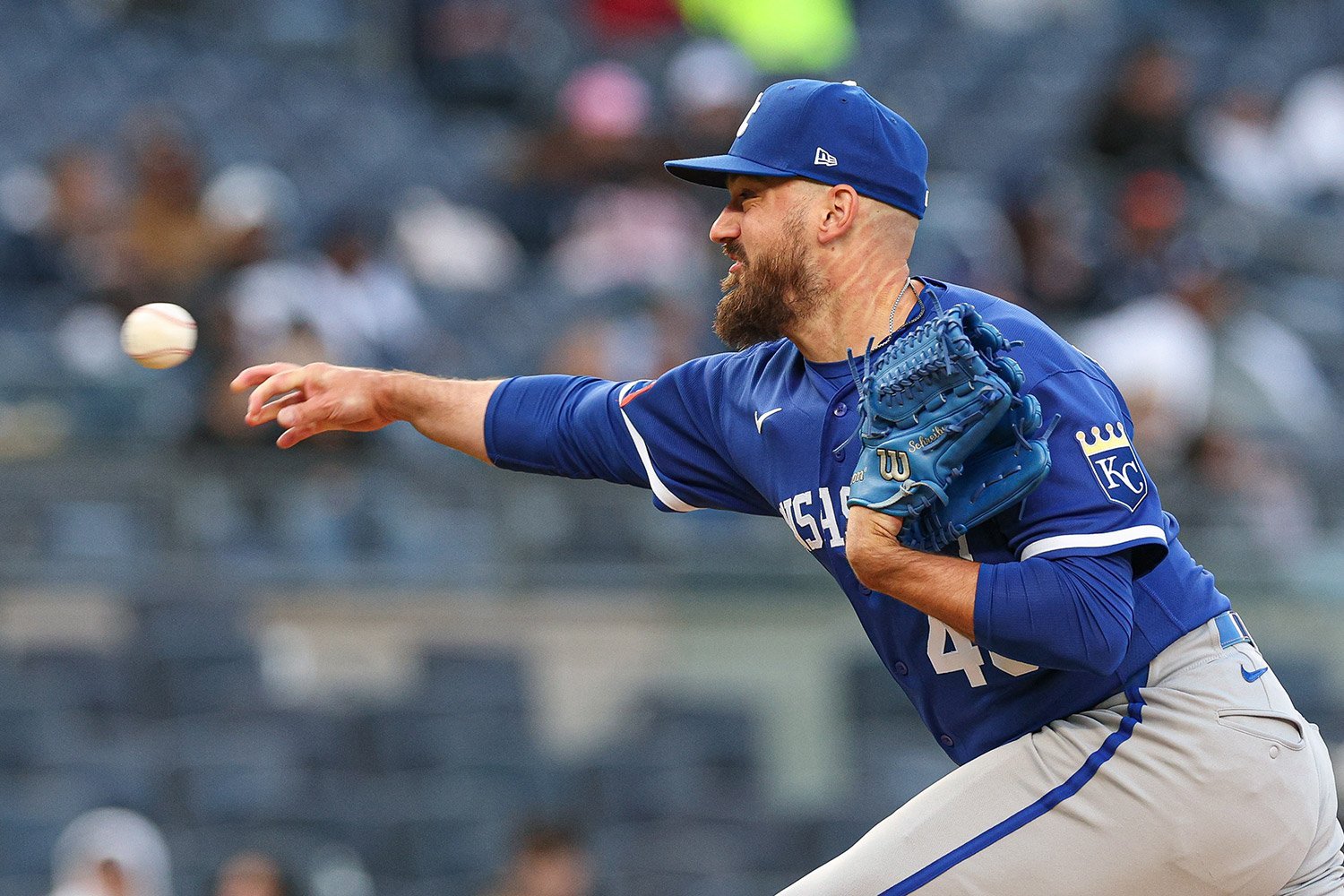 Two strikes should put the hitter on the defensive, but against the Kansas City bullpen, the exact opposite happens. The issue isn't getting ahead; it's finding the pitch to finish the plate appearance. A drop in secondary pitch effectiveness has completely eliminated the uncertainty in the batter's box. Without a breaking or offspeed offering that threatens the zone, hitters get comfortable, extend at-bats, and drive the ball hard—wiping out late-inning leads in the process. The numbers don't lie about the collapse: the Royals bullpen sits at the bottom of Major League Baseball with a disastrous -3.5 WAR and the lowest xERA (4.93) in the American League. They surrender 1.49 home runs per nine innings—the highest rate in MLB—while opponents punish them with a 40.4% hard-hit rate. This isn't a temporary slump limited to a couple of arms; it's a structural flaw in how the unit attempts to close out games. A year ago, a breaking pitch below the zone forced hitters to make split-second decisions. Today, they lay off with ease because they know the next pitch will have to come over the plate. Lucas Erceg's case illustrates it perfectly. Armed with a fastball that averages 97.2 mph, Erceg should freeze hitters when he's ahead in the count. Instead, his changeup has turned into a non-threat, yielding an astronomical 1.000 slugging percentage without generating a single strikeout. That means that, in that situation, the hitter can forget about emergency contact and most of the time look to do maximum damage against the changeup. That ineffective changeup disrupted his entire sequence. With one fewer variable to worry about, opposing batters no longer need to cover the bottom edge and can gear up early for the heater. The result is a damning .387 wOBA on Erceg's two-strike fastball. The velocity is still there. The deception is gone. John Schreiber, the most trusted and heavily used arm in the corps, reflects the very same issue. On paper, his 3.64 ERA (which drops to a microscopic 1.11 at home) masks the underlying damage. But when Schreiber gets ahead in the count and goes for his put-away pitch outside the zone, he loses command of the edges. The result has been so alarming that hitters have raised their meatball swing percentage to 83%, the highest mark of any season in his career with at least 700 pitches. Matt Strahm tells a similar tale. His slider lost its bite on the corners, allowing hitters to spit on it and sit dead-red on a fastball he is forced to throw for strikes—a pitch they are crushing to a .526 slugging percentage. Nick Mears represents the most extreme case. Every single home run he has surrendered would have left all 30 ballparks. Alex Lange and Eli Morgan exhibit the same trend, albeit on a smaller scale. Home runs aren't the problem. They are the visible consequence of everything that happened before. To save the final third of the game, Kansas City has had to turn to arms capable of dictating the pace of the matchup again through the quality of their secondary offerings. Enter Daniel Lynch IV and Steven Cruz, two relievers who regained control of plate appearances in different ways. While others try to impose themselves with the fastball, Lynch forces hitters to account for more than one possibility. Riding a sinker that holds opponents to a .140 average and a slider generating a 44.1% whiff rate, Lynch doesn't need dazzling velocity to survive because he keeps hitters off balance. In his game plan, that uncertainty has been worth more this year than a couple of extra miles per hour. Cruz, for his part, regained control by adding a cutter that forced opponents to account for two different speeds. Holding opponents to a .149 average with that pitch, his 98.6 mph fastball is making an impact again: hitters have to think twice before starting their swing. That is the flaw exposing this bullpen. Surrendering 1.53 home runs per nine innings alongside a 40.6% hard-hit rate is the consequence of running out of put-away pitches. The moment a hitter realizes the secondary pitch is no longer a threat, the at-bat no longer belongs to the pitcher. View the full article
 -
Mets' Carson Benge Is Blossoming Into An All-Around Star
DiamondCentric posted an article in Grand Central Mets
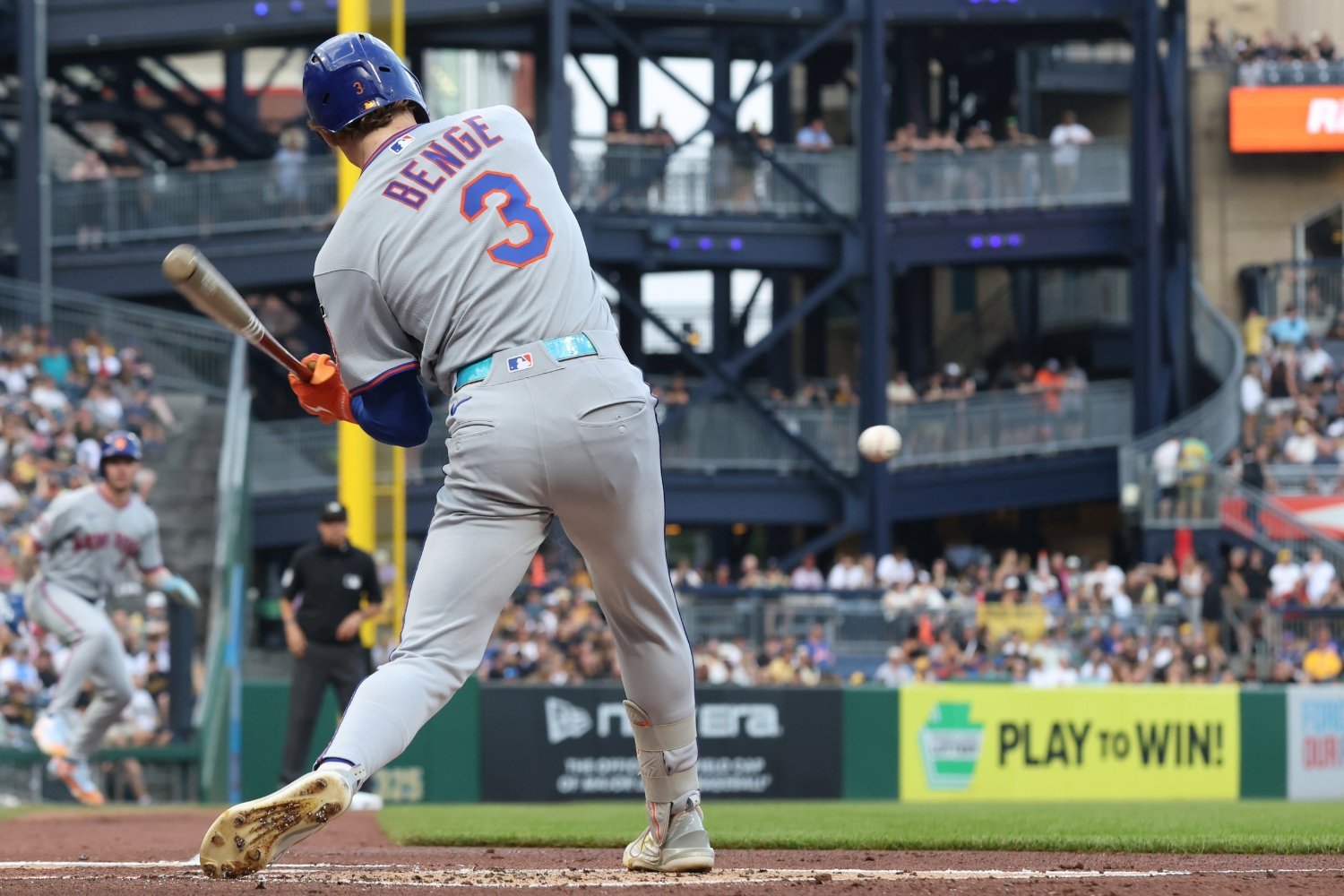 The New York Mets’ season has been a mess on all levels, but there are certainly some positives to take away from the disappointing 2026 campaign. One of them is, without a doubt, Carson Benge’s continued growth as a player. A few months ago, on April 9, we were all discussing Benge’s rough start. His batting average started with a zero, and his slugging percentage was below .200. No, that’s not a typo. It was tough to watch at times. Fast-forward to mid-August, and the guy has completely turned his season around. He has become an outfield cornerstone, a highly productive young player with a 109 wRC+, a healthy .272/.332/.412 line, 13 home runs, 18 stolen bases, and 60 runs scored in a highly dysfunctional offensive environment. The Game Has Slowed Down For Carson Benge The game has finally slowed down for Benge, and that has been the case for a while. Take, for example, his performance between June 1 and August 7: .279/.335/.455, nine home runs, eight stolen bases, six doubles, three triples, and a 120 wRC+ in 242 plate appearances. The situation improves even more if we focus on his offensive play since the start of July: 296/.358/.472, four home runs, six stolen bases, five doubles, and a 132 wRC+ in 120 plate appearances. What we see over these two separate samples is continued evolution in nearly all hitting departments: bat-to-ball skills, power, and on-base ability. Benge only played 32 games in Double-A and 24 in Triple-A last year. That’s the extent of his upper-minors experience. It was logical to assume that there would be an adjustment period over his first few weeks of exposure to MLB pitching. The Mets remained patient, and that patience is now paying off. Benge Is A True All-Around Star Benge is, quietly, one of the most complete young players in MLB. Not only is he among the leaders in xwOBA, ranking in the 71st percentile, but he also ranks in the 92nd percentile in Baserunning Run Value. Benge’s range in the outfield isn’t the best, but he more than makes up for it with a strong and accurate arm, one of the best in baseball. In fact. he rank in the 98th percentile in Arm Strength and is in the 96th percentile in Arm Value (3). He is also very fast, ranking in the 82nd percentile in sprint speed. As you can see, Benge has turned into quite a solid ballplayer. He does almost everything well on a baseball field, and the best news is that he’s only 23. The Mets and their fans have every reason to believe he can hit another gear in his development. We are already witnessing it, and the sky is the limit for him. There aren’t really many reasons for the Mets and their fans to be excited about the 2026 campaign, but Benge is definitely one of them. He represents the future of the organization, one in which he could potentially compete for some of the most prestigious individual awards. Juan Soto and Francisco Lindor provide the floor, but the 2027 Mets could go as far as Benge wills them. View the full article
 -
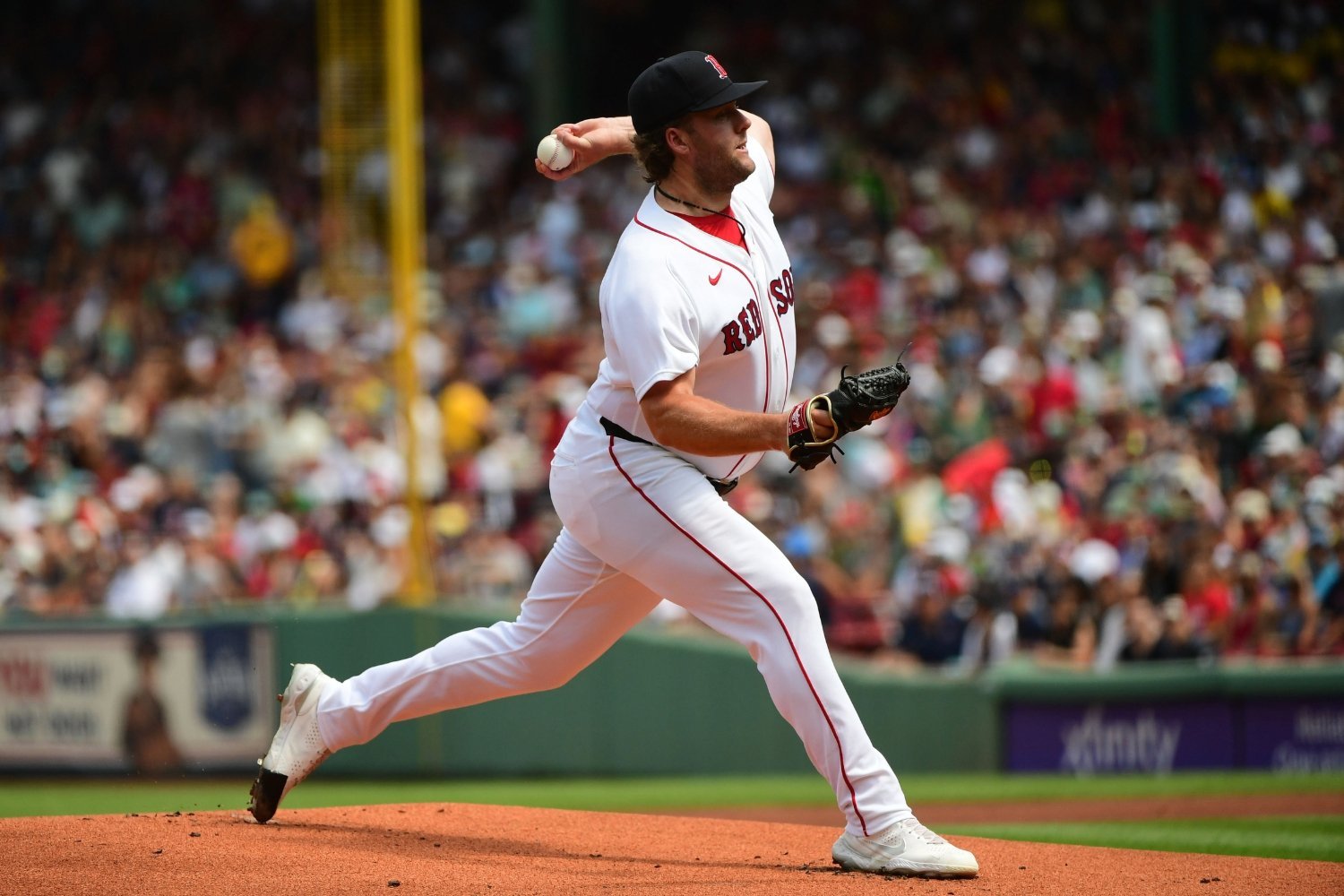 There is something strange about Erik Miller's numbers. Right-handed hitters have trouble making contact against him. When they do, the ball leaves the bat at just 83.1 mph on average. Miller also generates a 35.6% whiff rate against them. And yet, one out of every five right-handed hitters he faces ends up reaching first base on a walk. How can a reliever have enough stuff to dominate a plate appearance while giving the hitter so many chances not to face him? I think that's the reason the Boston Red Sox bet on him at the trade deadline. Miller still has the tools that made him attractive in San Francisco. His sinker averages 96.9 mph and carries enough movement to attack a hitter's hands. Against left-handed hitters, the results are even more striking: a 34.8% strikeout rate, a 34.3% whiff rate and an average exit velocity of just 80.5 mph. When they do put the ball in play, 60.5% of that contact becomes a groundball. He just needs to find the same groove against righties. Earlier in his career, Miller relied much more heavily on his four-seam fastball (49.7% usage in 2024). In 2026, San Francisco transformed his arsenal: The four-seamer fell to a 9.0% usage rate, while the sinker climbed to 45.0% and the slider to 40.7%. The change makes sense. The sinker allows Miller to attack with velocity and downward movement, while the 86-mph slider gives him another look capable of generating swings and misses. In fact, it has produced an impressive 53.3% whiff rate. Left-handed hitters are obviously the ones directly punished by this pitch mix. A hard fastball that moves in and a sweeping breaker that runs away is a tough combination to deal with, and makes guessing at the plate the only real path toward success. Against a right-handed hitter, that equation changes. The slider no longer moves away from the hitter. It moves toward the plate, while the sinker retains its downward movement and runs toward the hitter's side. Miller still has two pitches capable of producing the result he wants. The key is getting the hitter to choose between them. That is where the problem emerges. Miller is getting the ball into the strike zone too infrequently against right-handed hitters. His Zone% falls to 36.9%. That allows the hitter to change the objective of the at-bat: Instead of deciding which pitch to attack, he can wait for Miller to find the strike he considers perfect enough to swing at. The numbers suggest the problem isn't that right-handed hitters have figured out how to hit his pitches. Miller still generates whiffs and keeps exit velocity down when they make contact. The problem is that he isn't always forcing them to make a decision. And that can change an entire plate appearance. A pitcher with a 96.9-mph sinker and a 115 Stuff+ can live with some contact in the zone if that contact looks like the kind Miller is already producing. A weak groundball can be a way of winning the at-bat. The problem comes when the search for the perfect pitch turns an advantage in stuff into an inability to throw strikes. That is where the Red Sox can make a difference. Andrew Bailey doesn't have to rebuild Miller's arsenal. But he does have to get the left-hander comfortable trusting what is already there. If the sinker can produce weak contact in the zone, the strike doesn't have to be perfect to be useful. And that could change the at-bat from the first pitch. That also helps explain why Miller's profile makes sense in Boston. His sinker has already produced a 53.3% groundball rate, and a reliever who can keep the ball on the ground can have a useful weapon at Fenway Park. But that advantage only exists if Miller allows his pitches to do their work in the strike zone. That is what makes this gamble so interesting. The tools are already there; the question is whether the Red Sox can turn them into a more complete weapon against hitters from both sides of the plate. If they do, the payoff will be huge, perhaps altering the outlook of the bullpen both now and in the future. View the full article
 -
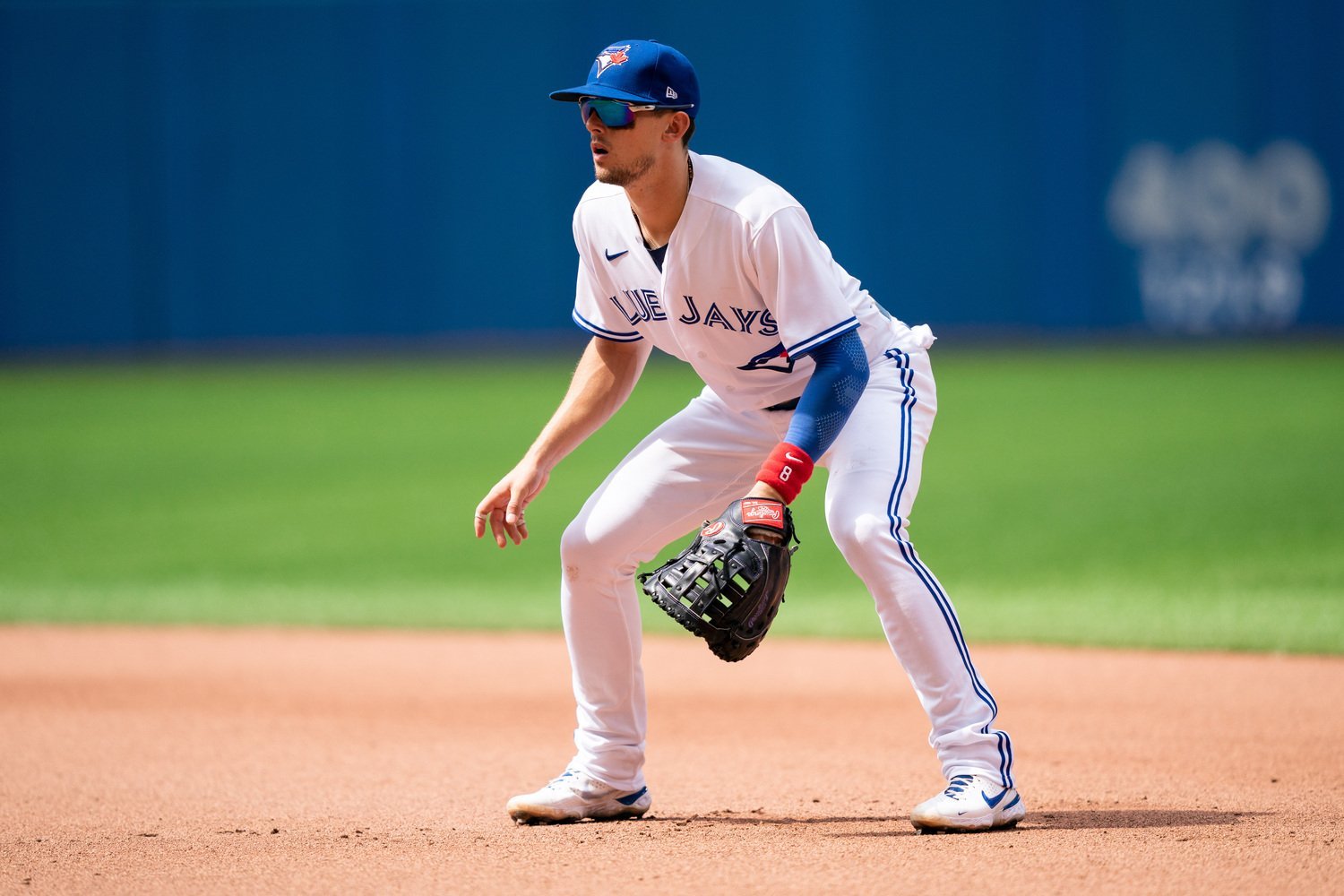 On May 30, 2026, the Blue Jays played a game we’d all prefer to forget. Giving up five runs to the Orioles in the ninth inning and getting walked off at Camden Yards has a real ‘on to the next one’ feel to it. I’m content to forget the majority of that game too, but there is one play that I can’t get out of my mind. In the bottom of the fourth inning with Trey Yesavage having loaded the bases and the Jays clinging to a 2-1 lead, Jeremiah Jackson hit a chopper up the third base line. Kazuma Okamoto charged the ball, subtly adjusted his stride and got his right foot to the bag before the ball arrived. The momentum of his charge carried him forward, but he kept his foot on the bag, secured the ball and recorded the force out at third. Okamoto continued another stride towards home, adjusted his body and made a cross-diamond throw to Vladimir Guerrero Jr. at first to get Jackson by a stride and a half and turn the 5-3 double play. The play at third was so smooth and fluid that it wasn’t immediately clear that Big Oak had garnered the out at his base. The replay was clear and definitive. My initial reaction when seeing that play was that I had just witnessed one of the greatest double plays of all time. I’ve since softened that stance, but I still can’t stop thinking about the play. Impressiveness of defensive plays can be subjective. We’ve talked about the defensive wizardry of guys like Daulton Varsho and Ernie Clement around here a few times. They often make the hardest plays look routine, and while their surehandedness is definitely appreciated by the pitching staff, it doesn’t always make the highlight reels or bring the fans out of their seats. This Okamoto play didn’t move our managing editor, Leo Morgenstern, the same way, and it was left off of his list of the best defensive plays in May. Addison Barger’s 9-2 double play was pretty sweet in its own right (injury aside). Similarly, when you picture a double play, the first instinct is almost never the 5-3. I took a sample of DiamondCentric writers, and none had the 5-3 as their first thought. In fact, only Ryan Salvaggio from Talk Sox included a third baseman at all, opting for the around-the-horn 5-4-3. Up to July 23, there were 433 double plays league-wide that started with the third basemen. That’s just under 20% of the league’s total double plays. Of those 433 double plays starting at third, only 54 went 5-3 (2.5% of league DPs). I’m going to eliminate the DPs that start with a lineout to third and end with catching a runner off their base. Those are fun, and Okamoto has a great one of those from earlier this season too, but they feel spiritually different from getting to your bag and firing a cross-field throw. That play from Okamoto was made in May, and I’m still thinking about it as we near the end of July. That’s gotta count for something. With this being the Jays' 50th season and so much of the talk of the team being centered around that, I’ve gotten into the habit of viewing Toronto’s accomplishments through that lens as well. Where does this Okamoto play stand in the history of 5-3 double plays by Toronto? The two 5-3 plays by Okamoto that I’ve already referenced are the only two the Jays have turned this season, so by default, Oak has the best one of 2026 (so far). In the history of the franchise, the Jays have turned 151 total, and I am entering into this exercise with the assumption that none are going to top May 30, 2026. Kelly Gruber (1990) and Matt Chapman (2023) are the only Toronto players to win a Gold Glove at the hot corner. They might be the top candidates to look at. Scott Rolen won eight Gold Gloves before arriving in Toronto and made just over 200 starts at third base with the Jays. By virtue of all his appearances, no one had more opportunities than Gruber; his 846 games at third are the franchise high. Rance Mulliniks is the sole third baseman with over 1,000 total appearances for the franchise, though *only* 731 were at third base. If you’re looking for a dark horse, he might be the one. I’m going to make a confession here. I was born before the Jays had their first winning season, but I have been spoiled by modern conveniences. I severely underestimated the difficulty I would have in tracking down specific plays from the early days of this franchise. I can tell you with a fair degree of certainty that the first 5-3 double play in Jays history was turned in the bottom of the second inning in the Jays' 11th game. It was a line drive double play caught by Dave McKay and completed by Doug Ault, but I can’t find a video of it. The recap in the next day’s Toronto Star makes no mention of it, instead choosing to focus on the complete game, four-hit win by Dave Lemanczyk. Fair enough. That’s not even the type of 5-3 DP I’m looking for. The first 5-3 groundball double play happened on June 18 of the inaugural season in the franchise’s 60th game. This time Roy Howell was at the hot corner, and Ron Fairly was across the diamond. I can’t tell you much more than that because again, I can’t find any video or mention of it in a recap. I’m going to have to alter the scope of this project and will unfortunately be shortchanging Okamoto in the process. The exercise now becomes ‘finding the best 5-3 double play of the replay era’. A disappointment to be sure. Another historic 5-3 DP thankfully does have some video available. This is the first one to end a game. On July 29, 1988, with Gruber at third, Fred McGriff at first and Duane Ward on the mound, the 42,000+ fans at Exhibition Stadium witnessed history that most probably never realized. As for the play itself, it’s a nice pick from Gruber and an absolute cannon across the diamond to McGriff, but it lacks the grace of Okamoto’s play. In a game on June 7, 1995, the Jays would make 5-3 history again. This game would mark the first time Toronto would turn two 5-3 double plays in the same game. One of them is documented here and shows Ed Sprague fielding and throwing to John Olerud at first. They would turn another one the very next inning, but SportsCentre did not deem that one worthy of a highlight, so we are forced to assume it was less impressive. There is only one other game where the Jays recorded two 5-3 groundball double plays: April 6, 2021, with Cavan Biggio on the hot corner and Vladimir Guerrero Jr. at first. The first one was pretty smooth. A nice charging grab, a toe-tap on the base and a quick throw across to catch Nick Solak at first. The second one was… an affront to modern baseball. Or at least made to look ridiculous with the hindsight of the defensive shift rules and how we notate baseball plays. While this was ‘technically’ a 5-3 DP, Biggio was lined up in the hole between first and second base with Jonah Heim hitting directly into the shift. This shouldn’t count, and for those 5-3 purists out there (it might only be me at this point), we can’t claim this regardless of what the official record states. I also can’t state it with absolute certainty, but it appears that Guerrero is the only Blue Jay to feature on both sides of a 5-3 double play, having turned one himself from the other side of the diamond. That play isn’t the last time we’ll be talking about Biggio here, though. Over six seasons in Toronto, Biggio made 453 defensive appearances. Eighty of those were at third base. Thanks to Immaculate Grid, I know Biggio made appearances at every position except catcher and pitcher, but when I remember him I think of him as a second baseman and occasional outfielder. That doesn’t mean he was incapable of greatness at third, just that it was less likely. In five out of Biggio’s six seasons in Toronto, he posted a negative score for fielding run value, almost entirely due to his lack of range (his +5 FRV in 2022 may require a separate deep dive). The beautiful thing about highlight reel plays is that they can exist in a vacuum. Every pitch, every ball in play has the potential for greatness. That’s a big reason why we buy tickets and watch the games. Even when the team is playing poorly and the results aren’t there, greatness can happen on the next pitch… September 11, 2023, top of the fifth inning, Texas at Toronto. You might remember that I mentioned Matt Chapman won the Gold Glove at third base in 2023. He was one of the favourites to occupy this space. On this day, however, Chapman found himself on the 10-day IL with a finger sprain – the only IL stint of his time in Toronto. During Chapman’s recovery, Biggio made nine appearances at third. None of those nine appearances included a full game at the position. Biggio was either brought in as a pinch-hitter, moved elsewhere on the field or removed from the game to be pinch-hit for every time – true to his utility form. In that fifth inning, though, Biggio found himself at third. Chris Bassitt started the inning off with a walk and a single to the bottom of the Rangers' order. That brought former Jay Marcus Semien to the plate with runners on the corners and none out. In a 1-2 count, Bassitt jammed Semien with a sinker inside. Semien turned on it and hit a chopper up the third base line right towards the waiting Biggio. Now-Blue Jay Josh Smith, who was on third, was caught too far from the base and attempted a dive back to safety, but Biggio was too quick. Having collected the ball, Biggio was already charging towards Smith. The bases weren’t loaded, so there was no force play, but Biggio’s path led him to step on third just for good measure. Smith attempted a shimmy away from the out, but Biggio put the leather to Smith for the tag and got the throw across the diamond to Vladdy to retire Semien and give the Jays a +13% swing in win probability. With apologies to Okamoto, I’ve got to put him in second place. Against the odds, Cavan Biggio turned the best 5-3 double play I’ve ever seen a Blue Jay make. In the moment, Buck Martinez called it “one of the most heads-up plays you’ll ever see.” In his postgame remarks, John Schneider called it “a great play from Cav” and touted his ability to make plays like that. I’m taking it a step further and calling it the greatest play (of that type) in Blue Jays history. View the full article
 -
 Things are looking good for Milwaukee's DSL Gold entry, as just one week remains in the Dominican Summer League regular season before a period of round robin pool play kicks off the postseason schedule. Transactions: Wilson Warbirds released RHP Bryce Schaum. The BrewersFarm "X" / Instagram account lets us know Schaum's backstory and wishes him well via this post. Well, apparently what you see below is allowed. These moves took place after Monday's games. The Brewers aren't the only organization to take action such as this, as Monday's MiLB transaction page will show, but they were aggressive here. The five players sent to the strong Gold team are all having top-level seasons. The four players swapped to Blue are primarily reserve players who have struggled in 2026. Will it be a bit awkward should a trophy be hoisted after the league championship game Wednesday August 26th? Perhaps, but hey, go Gold! Blue is no pushover with a 27-22 record as the league standings page shows, but they are on the outside looking in on the postseason. MiLB Player Pages are linked below so you may compare production. SS Leanders Matos assigned to DSL Brewers Gold from DSL Brewers Blue. RHP Justin Lugo assigned to DSL Brewers Gold from DSL Brewers Blue. RHP Luis Aguayo assigned to DSL Brewers Gold from DSL Brewers Blue. OF Frandy Lafond assigned to DSL Brewers Gold from DSL Brewers Blue. RHP Ruben Saldana assigned to DSL Brewers Gold from DSL Brewers Blue. SS Romano Donato assigned to DSL Brewers Blue from DSL Brewers Gold. OF Manny De Los Santos assigned to DSL Brewers Blue from DSL Brewers Gold. RHP Carlos Canales assigned to DSL Brewers Blue from DSL Brewers Gold. RHP Deivy Gonzalez assigned to DSL Brewers Blue from DSL Brewers Gold. Final: DSL Brewers Gold 2, DSL CLE Goryl 1, seven innings as scheduled Box Score and Game Log Each team managed just four hits. One of the Guardians players doubled to lead off the game and scored on a sacrifice fly later in the inning. RH starter Derlin Garcia did well to strand two baserunners by retiring the next two men with a runner on, and that would be all Garcia and RH reliever Wandy Cabrera would surrender. The pair did issue a combined five free passes (four walks, one HBP), but Cleveland batters were 1-for-10 with RISP. Regular Link Report readers will recognize those two names as having been among the most prominent and successful for either island Crew team in 2026. Garcia's in his 2nd season, Cabrera his third. Player Development, baby. The Golden boys tied it in the 2nd on a RF Carlos Done RBI single, driving in LF Manny De Los Santos, who had walked with one out and stole second base, one of his two steals on the day (23 swipes in 25 attempts). Catcher Moises Salazar (we are still contractually obligated to note that he is still 16 years old for three more days), led off the bottom of the 6th with his 4th home run, as the switch-hitter was batting left and yanked it to right field. Salazar again batted in a prime position and seems to be coaxing quite a bit of success from this staff as the primary catcher. Loving this player. The Brewers survived two caught stealing's in their six attempts and two errors by second baseman Santiago Garcia (12 errors in 35 games spread across the infield), so this indeed was a "fortunate" win. Two youngsters, both of whom have seen limited playing time, are third-year C/1B/DH Kegnnalex Seijas and second-year outfielder Francis Sosa. Each last appeared Monday July 27th. Final: DSL Pirates Black 9, DSL Brewers Blue 3, seven innings as scheduled Box Score and Game Log The good on 18-year-old starter RHP Carlos Galindo - zero earned runs in five innings of work. The bad on 18-year-old starter RHP Carlos Galindo - five unearned runs in those five innings of work. Galindo committed an error in three consecutive innings, each contributing to runs scored. This particular play won't qualify as quality. The teams combined for seven errors overall in the shortened contest. RHP Jordy Brache, who only turned 17 years old last week, has made 11 appearances (four starts), but has yet to allow less than two runs in any outing. Hopefully we'll look back and remember his rookie season 3.28 WHIP with a laugh when he makes his big-league debut. RF Frandy Lafond continued his recent strong play with a double and two stolen bases, giving him 20 on the season (22 attempts). Second-year outfielder Nicolas Barrios, 18 years old, has been idle since leaving after three innings of play on Tuesday July 28th. The Blue boys get a rare Tuesday off to lick their Monday wounds. Wisconsin continues its playoff push with a second consecutive week on the road as they visit a Cedar Rapids (Twins) team that has struggled to a 10-32 record in the second half. The other three full-season teams return home after their own road trips last week. Organizational Scoreboard including starting pitcher info, game times, MiLB TV links, and box scores Current Milwaukee Brewers Organization Batting Stats and Depth Current Milwaukee Brewers Organization Pitching Stats and Depth View the full article
 -
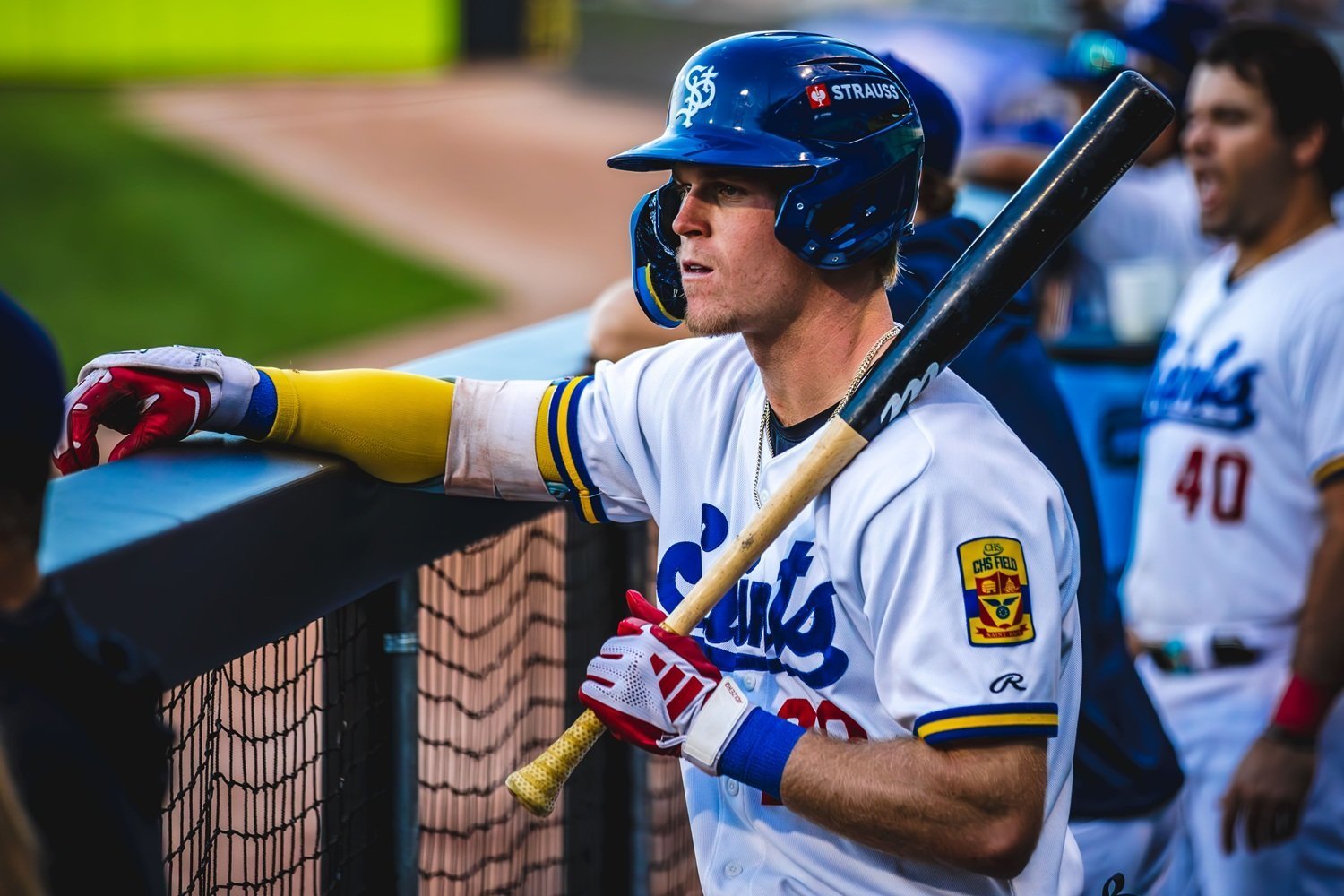 Transactions St. Paul Saints activated CF Emmanuel Rodriguez from the 60-day injured list. ST. PAUL SAINTS SENTINEL The Saints were so close to a series sweep at CHS Field against the Louisville Bats. They took the first five games of the week, before dropping Sunday’s series finale. They did so despite the roster taking a hit, with Twins Daily’s number three prospect Kaelen Culpepper being promoted to the majors. Walker Jenkins provided the biggest highlight of the week with a two-homer game on Thursday, building on his own strong case to follow Culpepper onto the Twins roster. They Saints will now head south as they take on the Iowa Cubs this week, where the St. Paul offense will be tested. North Side Baseball’s top pitching prospect (and number three overall prospect), Jaxon Wiggins, has struggled in Iowa. He’s sporting a 9.82 ERA across 22 innings, having allowed more than a hit AND walk per inning on average. The stuff is still there though, as he’s racked up 28 punchouts, and the Saints will have to worry about more than just him. A trio of major leaguers in Edward Cabrera, Braxton Garrett and Daniel Palencia are currently rehabbing in Iowa, and all will present challenges to St. Paul’s bats. Offensively, the Cubs are led by right fielder Kevin Alcantara. Alcantara, who has bounced between Triple-A and the majors, is slashing .270/.364/.548 (.912 OPS), and has logged 31 extra-base hits across 63 games. Third baseman BJ Murray is also swinging a hot bat, slashing .296/.407/.489 (.896 OPS), and 40 extra-base hits. WICHITA WIND SURGE WISDOM It was a strong week for the Wind Surge, taking four out of six against NW Arkansas. They’ll now travel to Texas this week to take on the Corpus Christi Hooks. The Hooks are home to the Houston Astros’ number three prospect (according to MLB Pipeline), catcher Jason Schiavone, who’s slashing .246/.384/.384 (.768 OPS), along with 16 extra-base hits and 15 stolen bases. The Hooks’ pitching staff is led by right-hander Brett Gillis, who has posted a 3.57 ERA and a 1.15 WHIP across 16 starts, as well as a 20.1% strikeout rate and an 8.2% walk rate. CEDAR RAPIDS KERNELS CHRONICLE The Kernels are coming off a series split in South Bend against the Cubs. They’ll now turn their attention to hosting the Wisconsin Timber Rattlers this week. The Timber Rattlers’ offense is headlined by a pair of Brewer Fanatic’s top five prospects, including their number two – shortstop Luis Pena. Across 46 games, he’s slashing .315/.402/.455 (.857 OPS), along with 15 extra-base hits and 25 stolen bases. He’s joined by outfielder Braylon Payne, who has already posted a 20-20 season, along with a .960 OPS. Their pitching staff is led by Brewer Fanatic’s number 14 prospect, Josh Knoth. Knoth currently owns a 4.85 ERA across 52 innings for the Timber Rattlers, along with a 26% strikeout rate. FORT MYERS MIGHTY MUSSELS MATTERS Fort Myers continued the trend of strong performances, taking four of six in Bradenton, Florida against the Marauders. While neither of the Twins’ top two draft picks (catchers Vahn Lackey and Carson Tinney) had particularly strong weeks at the plate, it was a successful week for the team. They’ll now take on the Clearwater Threshers this week, as they return to Fort Myers. The Threshers are home to a pair of top 10 Phillies’ prospects (according to MLB Pipeline), one of whom being their number six prospect: Alirio Ferrebus. Ferrebus is slashing .324/.375/.520 (.895 OPS). On the pitching side, the Mighty Mussels will get to see Philadelphia’s number seven prospect: left-hander Cade Obermueller. Across 35 2/3 innings, Obermueller owns a 2.78 ERA, along with an outrageous 35.3% strikeout rate. DSL TWINS Twins 4, Tigers 3 Box Score The Twins fell behind 2-0 early Monday, but rallied twice to come away with a 4-3 victory over the DSL Tigers 2. The win moves the Twins to 16-31 on the season. The Twins got on the board in the third inning when Fabian Ulloa doubled and later scored on a sacrifice fly from Jendy Martinez after Daiyer Barboza singled. An inning later, Enmanuel Merlo singled and stole second before Jeferson Abreu launched his fourth home run of the season with two outs, putting Minnesota ahead 3-2. Detroit tied the game in the sixth, but the Twins immediately regained the lead in the bottom half. Jhon Gonzalez opened the inning with a double, and after an Abel Sosa single, Merlo grounded out to bring Gonzalez home. Gonzalez and Barboza each finished 2-for-3, while Merlo went 1-for-3 with an RBI, a run, and a stolen base. Abreu added two RBI of his own. Wisarly Reinoso earned his first win of the season after recording the final out of the sixth, and Arthur De La Cruz struck out two in a scoreless seventh to earn the save. The Twins finished with eight hits while holding Detroit to five. They’lll take on DSL Miami tomorrow. TWINS DAILY PLAYERS OF THE DAY Jeferson Abreu: 1-2, 1 H, 1 R, 2 RBI, 1 HR Arthur De La Cruz: 1 IP, 0 ER, 0 H, 1 BB, 2 K TOP 20 PROSPECT WEEK IN REVIEW #1 - Walker Jenkins (Saints) - .304/.304/.696, 1.000 OPS, 2 HR #2 - Vahn Lackey (Mussels) - .154/.353/.308, 2 2B #3 - Kaelen Culpepper (Saints) - 462/.500/.769, 2 2B, 1 3B #4 - Emmanuel Rodriguez (Rehab) - .375/.565/.438, 6 BB, 2 K #5 - Marek Houston (Wind Surge) - .143/.280/.191, 10 K, 4 BB #6 - Riley Quick (Wind Surge) - 4 IP, 2 ER, 2 K, 2 BB #7 - Eduardo Tait (Kernels) - .177/.222/.235, 1 2B, 1 RBI #8 - Kendry Rojas (Saints) - 3 IP, 0 R, 0 H, 0 BB, 5 K #10 - Hendry Mendez (Saints) - .200/.333/.333, 2 2B, 2 RBI #11 - Gabriel Gonzalez (Saints) - .467/.467/.733, 2B, HR, 2 RBI #13 - Carson Tinney (Mussels) - .083/.353/.083, 5 BB, 4 K #14 - Khadim Diaw (Wind Surge) - .389/.542/.667, 2 2B, HR, 2 RBI #15 - Brandon Winokur (Wind Surge) - .238/.261/.286, 8 K, 0 BB #17 - Quentin Young (Mussels) - .357/.333/.786, 2B, 3B, HR, 5 RBI #18 - Ryan Gallagher (Saints) - 6 IP, 1 R, 3 H, 1 BB, 9 K TUESDAY’S PROBABLE STARTERS St. Paul Saints @ Iowa – LHP Kendry Rojas Corpus Christi @ Wichita Wind Surge – TBD Wisconsin @ Cedar Rapids Kernels – LHP Michael Carpenter Clearwater @ Fort Myers Mighty Mussels – TBD DSL Twins @ DSL Miami – TBD View the full article
 -
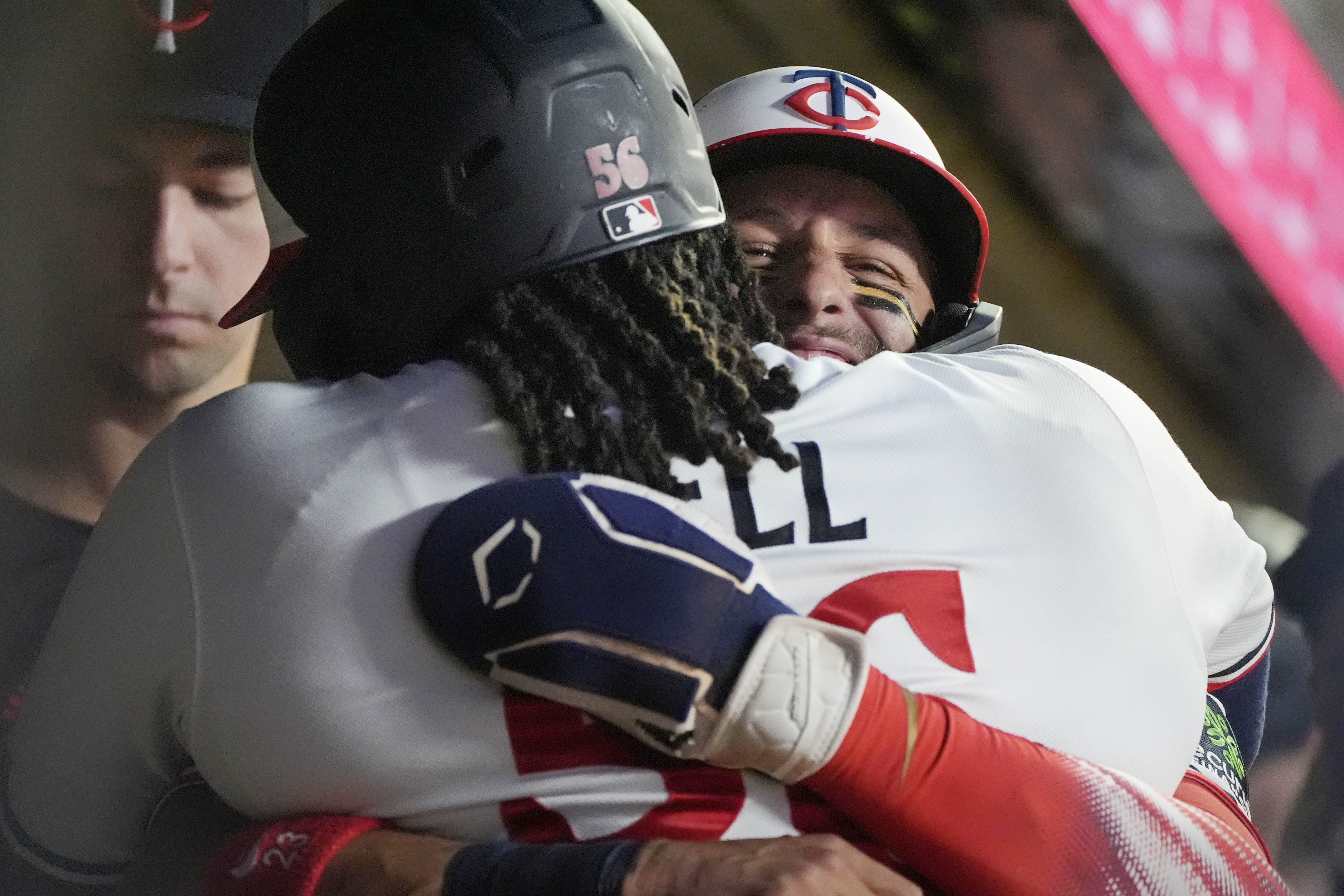 Box Score SP: Dean Kremer 7 IP, 1 H, 1 ER, 7 K, 1 BB HR: Martin (3), Bell (16) Top 3 WPA: Kremer 0.34, Martin 0.22, Lee 0.16 Win Probability Chart (via FanGraphs): The Minnesota Twins needed a jolt after losing six of their last eight games, including a series loss to the Milwaukee Brewers over the weekend. They got one Monday night from an unlikely source, as Austin Martin provided an early spark and Dean Kremer delivered arguably the best start of his career against his former team. Martin gave the Twins an early lead in the third inning when he launched a solo home run to left-center field. It was Martin's third home run of the season and his first since May 22nd, providing a much-needed big hit from a player who has struggled mightily since his hot start with the Twins this spring. The home run gave the Twins a 1-0 lead, but Kremer quickly became the biggest story of the night. Facing the Baltimore Orioles for the first time since being acquired by the Twins at the trade deadline, Kremer looked like a pitcher who had something to prove against his former club. He had virtually everything working, generating 14 swings and misses while allowing just one hit, an infield single. He walked one batter and struck out seven while working seven innings. Perhaps just as importantly, Kremer gave the Twins length at a time when their bullpen desperately needed it. Minnesota has leaned heavily on its relievers during a stretch filled with close, one-run games, so getting seven innings from Kremer was a major development. The only run Kremer allowed came in an unusual sequence in the fourth inning. He struck out the batter, but the Orioles were able to turn it into a strike-em-out, throw-em-out double play that allowed Gunnar Henderson to score from third on the throw down to second, tying the game at 1-1. Outside of that "play", Kremer was essentially untouchable. The Twins quickly gave him the lead back in the bottom of the fourth. Rookie Kaelen Culpepper came through with a sacrifice fly to score Luke Keaschall, putting Minnesota back in front 2-1. For the next few innings, the game remained within striking distance for Baltimore. Then the Twins offense finally broke things open in the seventh. Minnesota put together a five-run inning that started with an RBI single from Ryan Jeffers. Josh Bell followed with the biggest swing of the night, launching a towering three-run home run that left his bat at 106 MPH. It was Bell's 16th home run of the season (third in the past week) and gave the Twins a commanding 7-1 advantage. The Twins added two more runs in the eighth inning. Jeffers came through again with an RBI double before Royce Lewis followed with an RBI single, pushing Minnesota's lead to 9-1. The offensive outburst was exactly what the Twins needed after struggling to consistently put runs on the board during their recent skid. The nine runs were the most Minnesota had scored since July 26th, and the Twins collected 14 hits while recording five extra-base hits, including two home runs. Baltimore did manage to get a couple of runs off Travis Adams in the eighth inning and Taylor Rogers in the ninth, but by that point, the Twins had already put the game out of reach, and the Twins came away with a 9-5 victory. The win gives the Twins a needed victory to open the series and improves their position in the American League Wild Card race. Minnesota now sits just one game out of the final Wild Card spot with plenty of baseball still to be played. More importantly, the Twins finally got the kind of complete performance they have been searching for. Martin provided an early spark, the offense eventually broke through in a big way, and Kremer delivered seven dominant innings against his former club. After dropping six of their previous eight games, the Twins will have an opportunity to build some momentum when they return to the field Tuesday night. What's Next The Twins will look to take the series against the Orioles on Tuesday at 6:40 p.m. Bailey Ober will take the mound for Minnesota, facing Orioles right-hander Brandon Young. Postgame Interviews Bullpen Usage Chart THU FRI SAT SUN MON TOT Funderburk 20 0 21 15 0 56 Hoffman 0 25 15 0 0 40 Morris 13 13 0 14 0 40 Gomez 18 12 0 9 0 39 Adams 0 0 15 0 21 36 Nance 0 24 0 11 0 35 Rogers 0 0 0 0 30 30 Minter 0 3 0 16 0 19 View the full article
 -
 All four Royals affiliates lost. Dennis Colleran Jr. struck out all six batters he faced for Northwest Arkansas, Nolan Hoffman, Connor Thomas, and Ethan Bosacker combined for four hitless innings in Omaha, and Michael Braswell III worked 2 1/3 scoreless innings for Columbia. Brett Squires, Justin Johnson, Erick Torres, and Derlin Figueroa homered. Quad Cities lost a five-run lead, falling 9-8, and Josh Hammond doubled for Columbia. Kansas City Royals Transactions Kansas City Royals signed free agent RHP Craig Kimbrel. Kansas City Royals activated RHP Craig Kimbrel. Kansas City Royals optioned RHP Easton McGee to Omaha Storm Chasers. Brett Squires Provides The Only Run As Omaha Falls In Toledo Squires hit a home run, his 19th of the season, in the first inning, and it was the only run the Storm Chasers scored in a 3-1 loss at Toledo. Toledo answered with two runs in the second inning and one more in the third for a 3-1 lead that held up. Omaha did not score again over the final eight innings. The Storm Chasers finished with three hits, one walk, and six strikeouts, and left three runners on base. Jacob Berry had two of the three hits, both doubles, and was the only Omaha batter with more than one hit. Squires went 1-for-3 with the home run, a walk, and a strikeout. Matthew Lugo struck out three times, and six Omaha batters did not record a hit. Ryan Ramsey started and took the loss. He allowed three runs on six hits over four innings, walked three, and struck out five. Every Toledo hit and every Toledo run came against him. Former Phillies reliever Hoffman allowed no hits in an inning, walking one and striking out two. Thomas allowed no hits in an inning and walked two. Bosacker allowed no hits over two innings, walked none, and struck out one. The three relievers combined for four hitless, scoreless innings. Omaha committed one error, a fielding error by Jack Pineda that did not lead to a run, and turned a double play from Brandon Drury to Peyton Wilson to Abraham Toro. Jacob Berry also started a throw that cut down a Toledo runner at second base. The Storm Chasers went 0-for-3 with runners in scoring position and left three runners on base. Omaha is now 55-58. Player AB R H RBI BB K Drew Waters 4 0 0 0 0 0 Abraham Toro 4 0 0 0 0 0 Brett Squires 3 1 1 1 1 1 Matthew Lugo 4 0 0 0 0 3 Jack Pineda 3 0 0 0 0 1 Brandon Drury 3 0 0 0 0 0 Jacob Berry 3 0 2 0 0 0 Elih Marrero 3 0 0 0 0 1 Peyton Wilson 3 0 0 0 0 0 Totals 30 1 3 1 1 6 Player IP H R ER BB K HR Ryan Ramsey 4 6 3 3 3 5 0 Nolan Hoffman 1 0 0 0 1 2 0 Connor Thomas 1 0 0 0 2 0 0 Ethan Bosacker 2 0 0 0 0 1 0 Totals 8 6 3 3 6 8 0 Johnson's Three-Run Homer Accounts For All Of Northwest Arkansas' Offense Johnson hit a three-run home run, his sixth of the season, and it produced every Northwest Arkansas run in a 6-3 loss to Wichita. The Naturals trailed 2-0 when Johnson connected in the fifth inning, scoring Connor Scott, who had walked, and Canyon Brown, who had been hit by a pitch. Those three runs put Northwest Arkansas ahead 3-2. Wichita scored four runs in the eighth inning to take a 6-3 lead, and the Naturals did not answer. Northwest Arkansas finished with four hits, four walks, one hit batter, and six strikeouts, and left four runners on base. Johnson went 2-for-3 with the home run and three runs batted in. Luke Pelzer, batting leadoff, and Omar Hernandez had the other two hits. The Naturals were retired in order in the sixth, seventh, and eighth innings. Sam Kulasingam, Connor Scott, and Canyon Brown each stole a base. Hunter Owen started and allowed one run on two hits over three innings. He walked four and struck out six. Brandon Johnson allowed no hits in an inning and struck out two. Dennis Colleran Jr. struck out all six batters he faced over two innings, allowing one run on a solo home run. Caden Monke allowed no hits in an inning and struck out one. Zachary Cawyer took the loss, allowing four runs on four hits, including two home runs, in 2/3 of an inning with a walk. Augusto Mendieta allowed one hit over 1 1/3 innings and struck out two. Naturals pitching struck out 17, walked five, and allowed three home runs. Northwest Arkansas committed no errors, and Carson Roccaforte, the Royals' No. 9 prospect, threw out a runner at home plate. Northwest Arkansas went 1-for-5 with runners in scoring position and stranded five runners. They fell to 44-62 for the season with the loss. Player AB R H RBI BB K Luke Pelzer 4 0 1 0 0 1 Sam Kulasingam 2 0 0 0 2 0 Carson Roccaforte 3 0 0 0 1 1 Spencer Nivens 3 0 0 0 0 1 Omar Hernandez 4 0 1 0 0 1 Colton Becker 4 0 0 0 0 0 Connor Scott 3 1 0 0 1 1 Canyon Brown 2 1 0 0 0 1 Justin Johnson 3 1 2 3 0 0 Totals 28 3 4 3 4 6 Player IP H R ER BB K HR Hunter Owen 3 2 1 1 4 6 0 Brandon Johnson 1 0 0 0 0 2 0 Dennis Colleran Jr. 2 1 1 1 0 6 1 Caden Monke 1 0 0 0 0 1 0 Zachary Cawyer 2/3 4 4 4 1 0 2 Augusto Mendieta 1 1/3 1 0 0 0 2 0 Totals 9 8 6 6 5 17 3 Quad Cities Loses A Five-Run Lead In Peoria Quad Cities led 7-2 through four innings and lost 9-8 to Peoria. The River Bandits scored once in the second inning on a Hyungchan Um single, twice in the third on a Chris Brito single, and four times in the fourth. Stone Russell doubled home Angel Acosta in the fourth, and Torres followed with a three-run home run, his second of the season, that scored Um and Russell. Peoria answered with three runs in the fourth to cut the lead to 7-5. Figueroa hit a solo home run, his 23rd, in the seventh for an 8-5 lead, but Peoria scored once in the seventh and three times in the eighth to finish the comeback. Quad Cities collected 11 hits, drew five walks, had two batters hit by a pitch, struck out eight times, and left 10 runners on base. Brito, batting cleanup, Angel Acosta, and Um each had two hits. Torres, batting leadoff, went 1-for-5 with three runs batted in. No. 4 prospect Blake Mitchell drew two walks and stole a base, and No. 7 prospect Zion Rose singled, walked, and stole a base. Jordan Woods started and allowed two runs on six hits over three innings. He walked two and struck out two. Rob Hensey allowed three runs on five hits over three innings without a walk. Nick Conte recorded two outs and allowed a run on a walk with one strikeout. Aiden Jimenez took the loss, allowing three runs on four hits over 1 1/3 innings with a walk and three strikeouts. River Bandits pitching allowed 15 hits, walked four, and gave up no home runs. Quad Cities committed one error, a throwing error by Um that put a runner in scoring position ahead of Peoria's three-run eighth. Quad Cities went 5-for-11 with runners in scoring position and stranded 10 runners. The loss dropped the River Bandits to 53-51 for the season. Player AB R H RBI BB K Erick Torres 5 1 1 3 0 1 Zion Rose 4 1 1 0 1 1 Blake Mitchell 3 1 0 0 2 1 Chris Brito 5 0 2 2 0 2 Pedro Roque 0 0 0 0 0 0 Derlin Figueroa 4 2 1 1 1 2 Ben North 3 0 0 0 1 0 Angel Acosta 4 1 2 0 0 0 Tyriq Kemp 1 0 1 0 0 0 Hyungchan Um 4 1 2 1 0 1 Stone Russell 3 1 1 1 0 0 Totals 36 8 11 8 5 8 Player IP H R ER BB K HR Jordan Woods 3 6 2 2 2 2 0 Rob Hensey 3 5 3 3 0 0 0 Nick Conte 2/3 0 1 1 1 1 0 Aiden Jimenez 1 1/3 4 3 3 1 3 0 Totals 8 15 9 9 4 6 0 Columbia Manages Five Hits In A Loss To Myrtle Beach Columbia scored in the first inning and did not score again in a 10-1 loss to Myrtle Beach. Henry Ramos, batting leadoff, reached on an error to open the game, moved up when No. 11 prospect Yandel Ricardo was hit by a pitch, and scored on a groundout by No. 6 prospect Sean Gamble, batting cleanup. Myrtle Beach scored twice in the second inning to take the lead, added four runs in the fourth, three in the eighth, and one in the ninth. The Fireflies finished with five hits, one walk, and 12 strikeouts, and left seven runners on base. Josh Hammond went 2-for-4 with a double, Columbia's only extra-base hit. Jhosmmel Zue, JC Vanek, and Roni Cabrera had the other three hits. Zue struck out three times, and JC Vanek, Ivan Sosa, and Daniel Lopez struck out twice apiece. Columbia was retired in order in the sixth and eighth innings. Darwin Rodriguez started and took the loss. He allowed six runs on six hits over 3 2/3 innings, walked four, and struck out five. Braswell III turned in the best line of the day for Columbia, allowing two hits over 2 1/3 innings without a run or a walk while striking out three. Andy Basora allowed three runs on six hits over two innings, including a three-run home run, and struck out two. Randy Ramnarace allowed one run on one hit in an inning and walked three. Fireflies pitching allowed 15 hits and walked seven while striking out 10. Columbia committed no errors, and Cabrera threw out a runner trying to reach second base. Columbia went hitless with runners in scoring position, going 0-for-6 on Sunday. They also stranded seven runners. The loss dropped the Fireflies' record to 55-51. Player AB R H RBI BB K Henry Ramos 4 1 0 0 0 1 Josh Hammond 4 0 2 0 0 0 Yandel Ricardo 3 0 0 0 0 0 Sean Gamble 4 0 0 1 0 1 Jhosmmel Zue 4 0 1 0 0 3 JC Vanek 4 0 1 0 0 2 Roni Cabrera 4 0 1 0 0 1 Connor Rasmussen 0 0 0 0 0 0 Ivan Sosa 3 0 0 0 1 2 Daniel Lopez 3 0 0 0 0 2 Totals 33 1 5 1 1 12 Player IP H R ER BB K HR Darwin Rodriguez 3 2/3 6 6 6 4 5 0 Michael Braswell III 2 1/3 2 0 0 0 3 0 Andy Basora 2 6 3 3 0 2 1 Randy Ramnarace 1 1 1 1 3 0 0 Totals 9 15 10 10 7 10 1 Top-20 Prospect Performance Kendry Chourio: DNP David Shields: DNP Josh Hammond: 2-for-4, 2B Blake Mitchell: 0-for-3, R, 2 BB, K, SB Sean Gamble: 0-for-4, RBI, K Ramon Ramirez: DNP Zion Rose: 1-for-4, R, BB, K, SB Asbel Gonzalez: DNP Carson Roccaforte: 0-for-3, BB, K Taylor Rabe: DNP Yandel Ricardo: 0-for-3, HBP Justin Lamkin: DNP Drew Beam: DNP Michael Lombardi: DNP Jack Slightom: DNP Felix Arronde: DNP Angeibel Gomez: DNP Ben Kudrna: DNP Steven Zobac: DNP Blake Wolters: DNP View the full article
 -
Byron Buxton Could Be Activated in the “Next Few Days”
DiamondCentric posted an article in Twins Daily
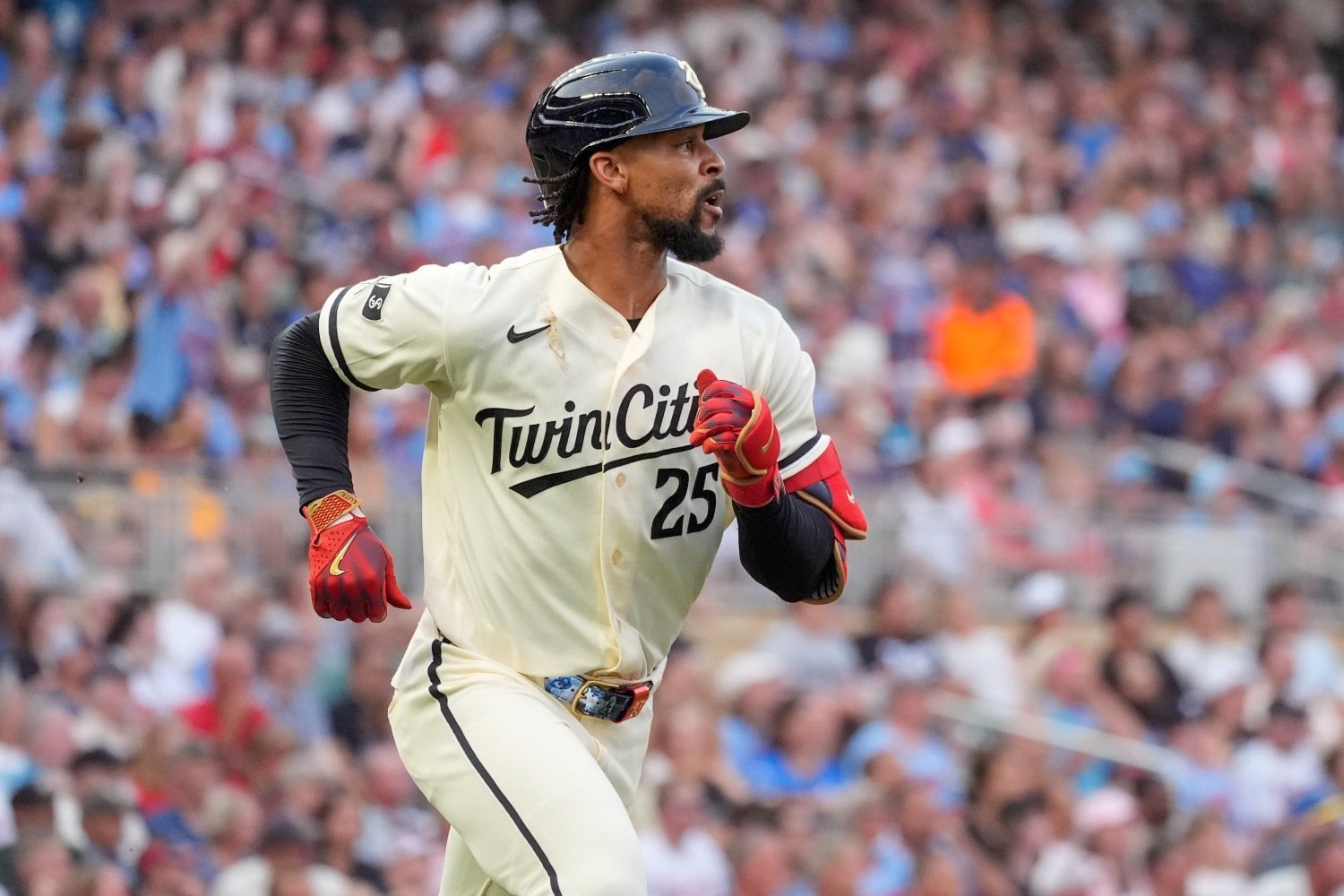 Byron Buxton is getting closer to a return, and the Minnesota Twins could have their star back in the lineup before the end of the week. Buxton made meaningful progress Monday as he works his way back from a right hip impingement. Before the Twins faced the Orioles, he took batting practice on the field for the first time since landing on the injured list. He also ran the bases, giving the team another opportunity to see how his hip responds to baseball activities. The next checkpoint comes Tuesday. If Buxton arrives at the ballpark feeling good after Monday's workload, there may not be much left for him to accomplish before returning to the active roster. The Twins do not currently expect him to need a Minor League rehab assignment. "The plan is to see how he comes in tomorrow,” said general manager Jeremy Zoll. “We're just trying to get a sense of how he's recovering from all of the activities, and then hopeful for activation within the next few days." Running Is the Biggest Test Buxton wasn't pushing himself to full speed during Monday's running work, but he did make his way around all three bases. The goal was less about testing his top-end speed and more about seeing how the hip responded to the various movements required during a game. That includes something as simple as slowing down or coming to a stop. Buxton said he has been paying particular attention to those movements because they were among the actions that caused problems when the hip issue first surfaced in May. Being able to run without discomfort will be one of the biggest indicators that he's ready to return. He took time off around the All-Star break to rest the injury, but it didn't work.The Twins placed Buxton on the injured list again after the issue resurfaced. This time, he received an injection in the joint and stepped away from all baseball activities for more than a week. That extended shutdown was designed to give the injury a chance to settle down rather than having Buxton immediately try to play through it again. Both the player and organization are hoping the additional recovery time will allow him to return at full strength for the remainder of the season. Twins Need His Bat Minnesota's offense has had difficulty putting together consistent production during the second half of the season. The Twins have needed more length throughout the lineup, and there are few additions that could provide a bigger boost than getting Buxton back. The timing of his potential return is still somewhat up in the air. The Twins are scheduled to participate in the Field of Dreams game Thursday, which would make for a memorable setting for Buxton's return. However, bringing him back for that game could mean pushing the timeline more than necessary. If he responds well to Tuesday's workout and continues progressing without any setbacks, a return sometime this weekend appears to be a more realistic possibility. For now, the Twins are simply waiting to see how Buxton's body responds. Monday represented a significant step forward. Tuesday could determine just how many steps remain. View the full article
 -
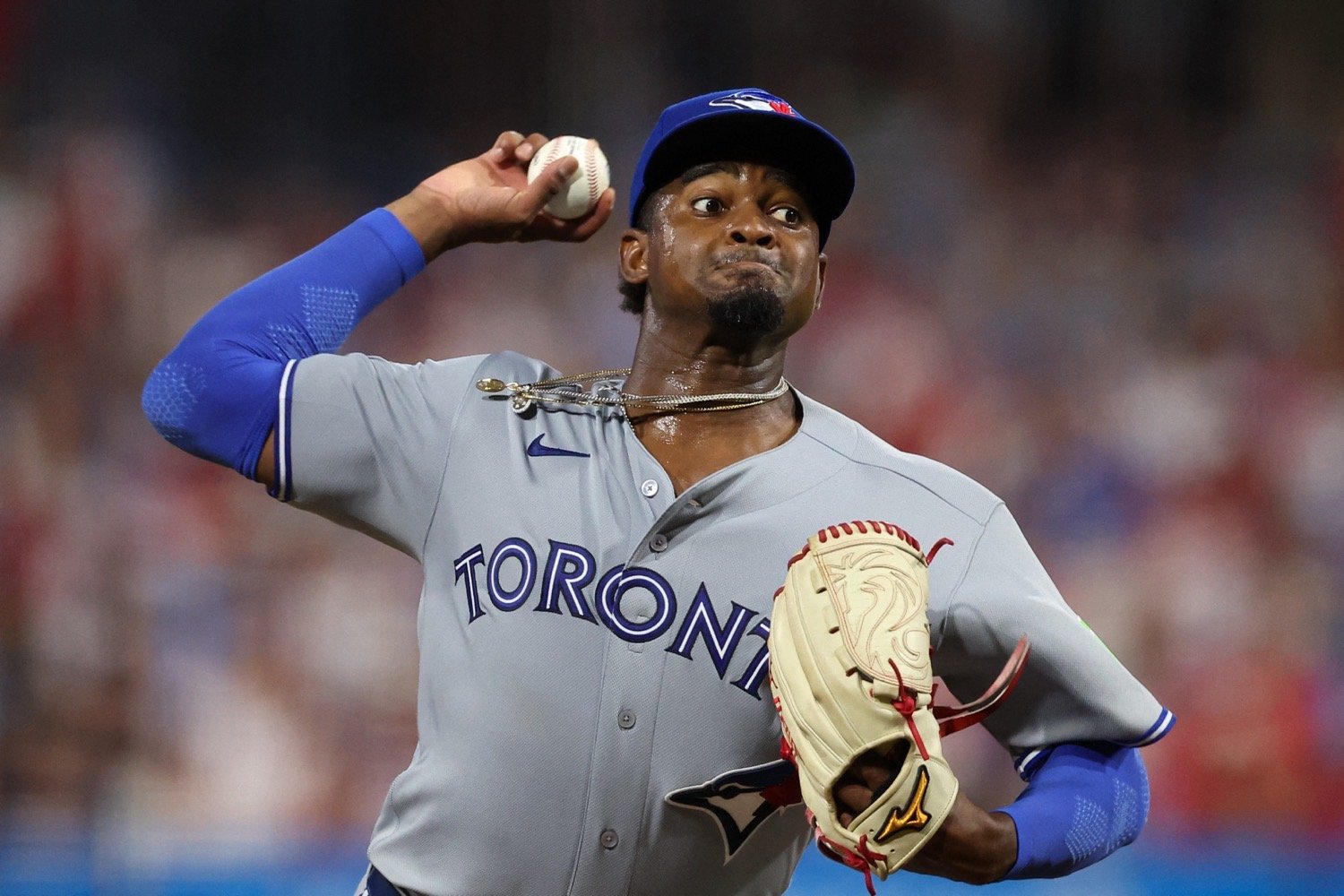 Before the trade deadline struck midnight, rumors were swirling that the Toronto Blue Jays were open to trading the newly acquired Jose Soriano. It was news that surprised many, considering they had acquired him on August 3rd for top prospect Arjun Nimmala. Now, a week after the deadline passed, we're getting more details on what those talks entailed. Dan Hayes and Mitch Bannon of The Athletic are reporting that the Chicago Cubs "pursued" Toronto Blue Jays starting pitcher Jose Soriano. It's not clear who the Cubs' would have included in the swap, but it's fair to assume the headliner would have been a top organizational prospect. Soriano, 27, was one of the top starting arms on the market over the trade deadline. This was despite a high walk rate and a FIP about half a run higher than his 3.24 ERA. He was particularly attractive as a starter who is controllable through 2028. Do you think the Cubs should have met the asking price for Soriano? Join the conversation in the comments! View the full article
 -
 Before the trade deadline struck midnight, rumors were swirling that the Toronto Blue Jays were open to trading the newly acquired Jose Soriano. It was news that surprised many, considering they had acquired him on August 3rd for top prospect Arjun Nimmala. Now, a week after the deadline passed, we're getting more details on what those talks entailed. Dan Hayes and Mitch Bannon of The Athletic are reporting that the Minnesota Twins "pursued" Toronto Blue Jays starting pitcher Jose Soriano. They go on to say it was a "package built around the organization’s No. 3 prospect, infielder Kaelen Culpepper, and other pieces." The deal obviously couldn't get over the finish line, and so the two sides agreed on a trade involving reliever Jeff Hoffman. Culpepper has since made his major league debut with the Twins. Soriano, 27, was one of the top starting arms on the market over the trade deadline. This was despite a high walk rate and a FIP about half a run higher than his 3.24 ERA. He was particularly attractive as a starter who is controllable through 2028. Do you think the Blue Jays' asking price was too high? Join the conversation in the comments! View the full article
 -
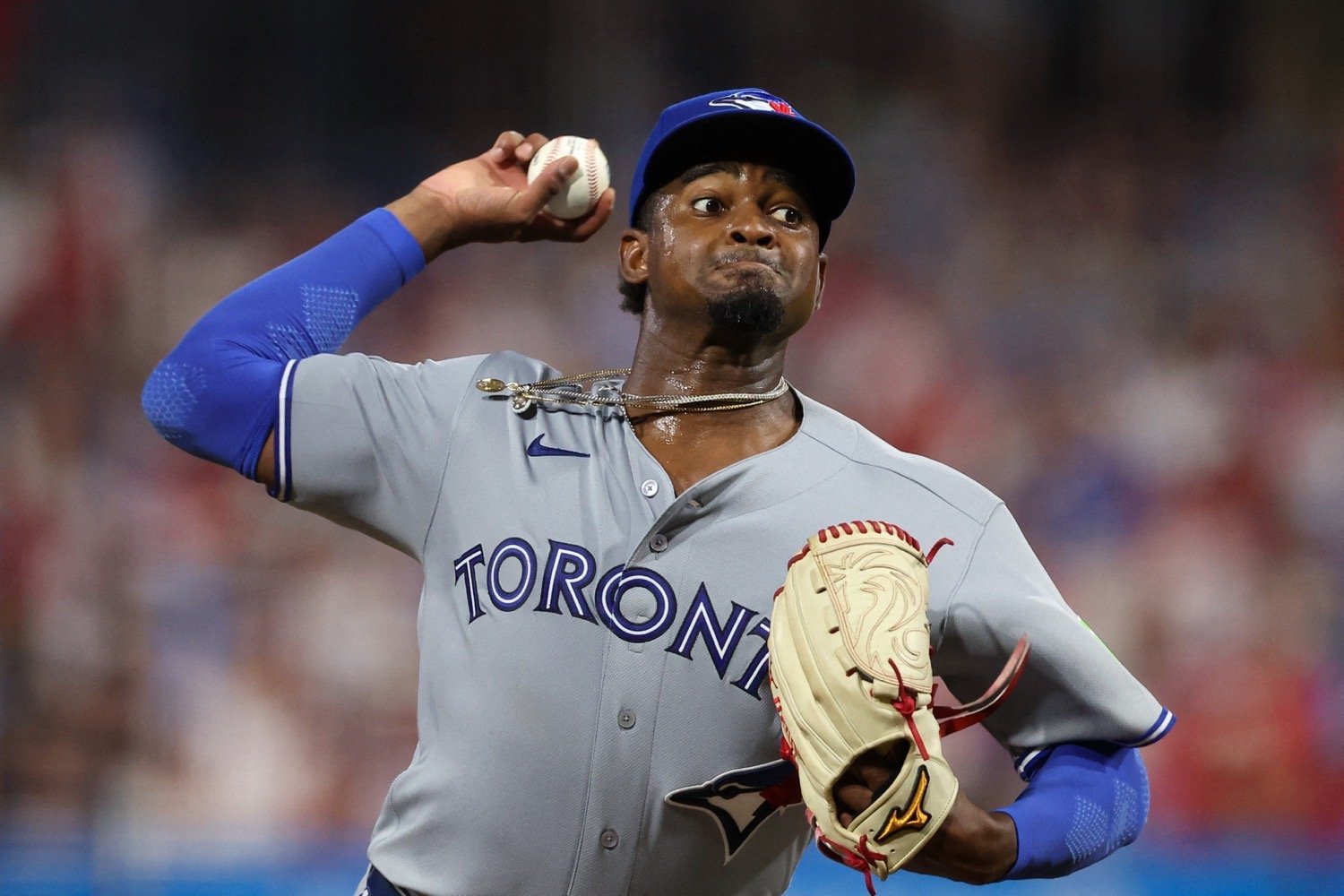 Before the trade deadline struck midnight, rumors were swirling that the Toronto Blue Jays were open to trading the newly acquired Jose Soriano. It was news that surprised many, considering they had acquired him on August 3rd for top prospect Arjun Nimala. Now, a week after the deadline passed, we're getting more details on what those talks entailed. Dan Hayes and Mitch Bannon of The Athletic are reporting that the Minnesota Twins "pursued" Toronto Blue Jays starting pitcher Jose Soriano. They go on to say it was a "package built around the organization’s No. 3 prospect, infielder Kaelen Culpepper, and other pieces." The deal obviously couldn't get over the finish line, and so the two sides agreed on a trade involving reliever Jeff Hoffman. Of course, Culpepper has since made his major league debut. Soriano, 27, was one of the top starting arms on the market over the trade deadline. This was despite a high walk rate and a FIP about half a run higher than his 3.24 ERA. He was particularly attractive as a starter who is controllable through 2028. Do you think the Twins should have met the asking price for Soriano? Join the conversation in the comments! View the full article
 -
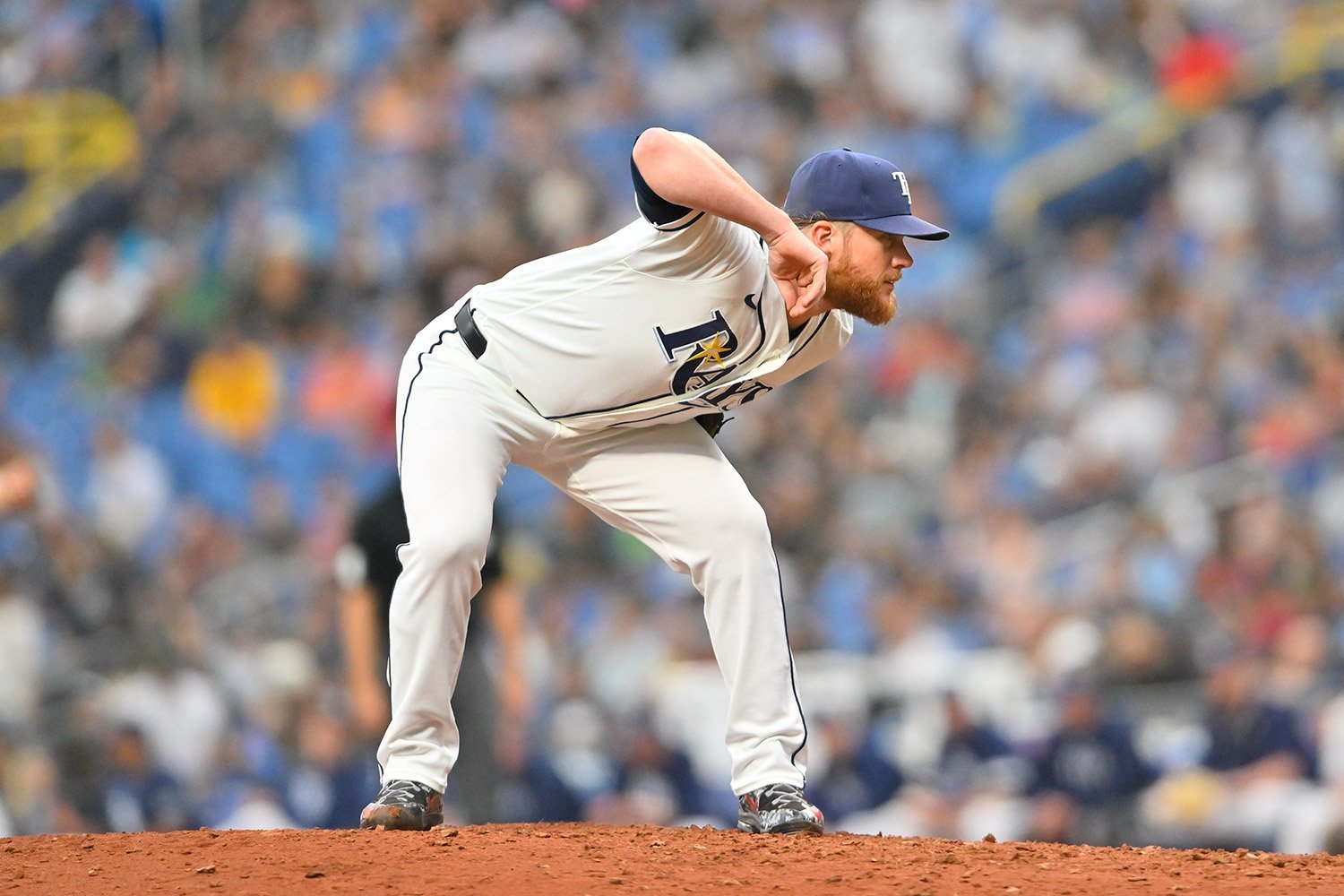 The Royals activated Craig Kimbrel after officially signing him earlier in the day. In a stint with each of the Tampa Bay Rays and New York Mets, Kimbrel has appeared in 33 games, throwing 33 2/3 innings with 32 strikeouts and 16 walks. He has a .4.81 ERA with a 4.33 FIP. Kimbrel has recorded 440 saves throughout his 17-year major league career, with most of that time (six years) spent with the Atlanta Braves. To make room for Kimbrel on the active roster, the Royals optioned RHP Easton McGee to Triple-A Omaha. McGee has struggled in limited action in the major leagues this year, with an 8.59 ERA with a slightly better 6.36 FIP over 7 1/3 innings over six appearances, four being with the Royals and the previous two being with the Milwaukee Brewers. McGee will provide additional depth, and you could see him recalled and riding the shuttle back to Kansas City before the season is over. View the full article
 -
Twins Prospect Hot Sheet: Walker Jenkins’ Imminent MLB Debut
DiamondCentric posted an article in Twins Daily
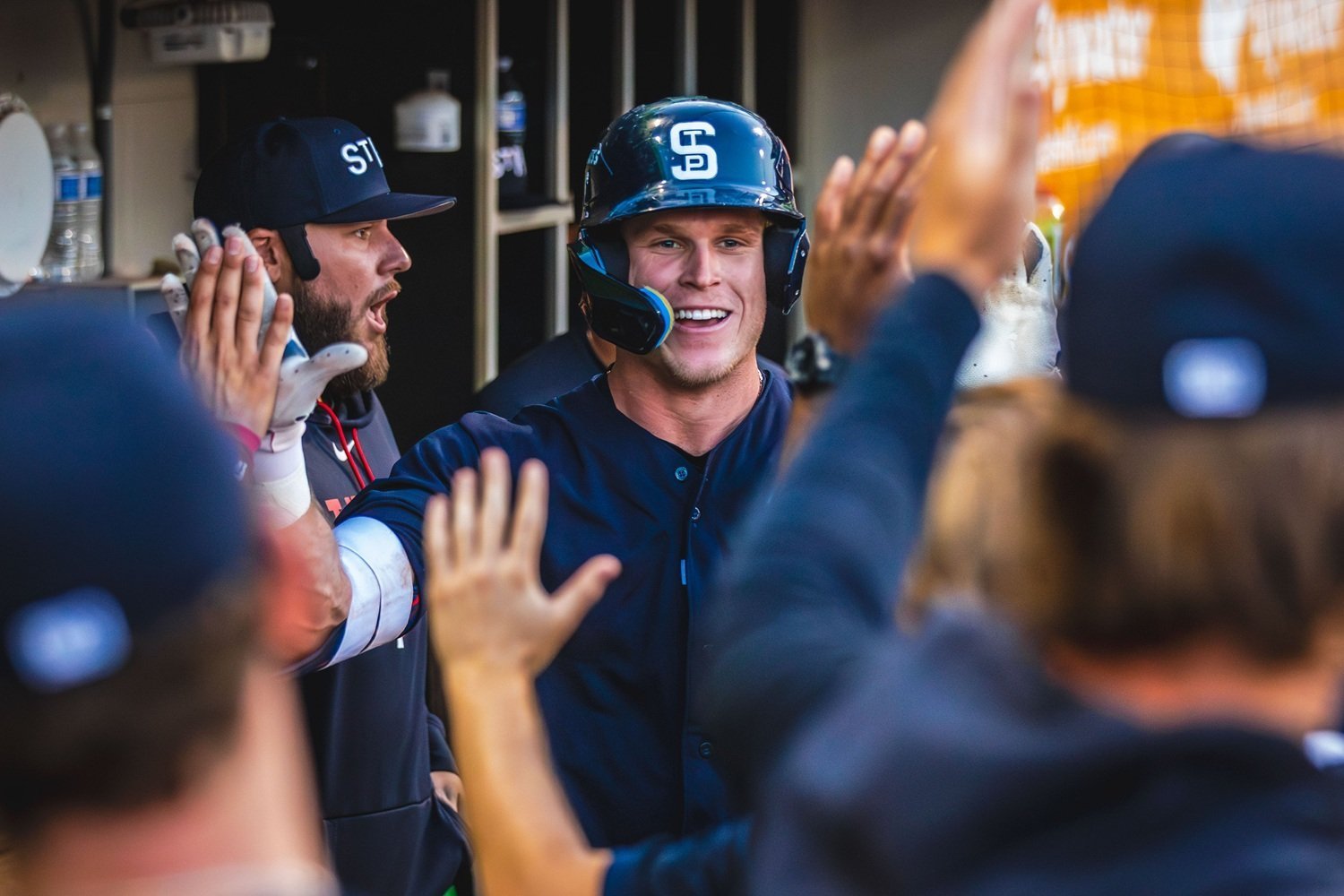 The minor league season is entering its final few weeks, and the clock is ticking for the Minnesota Twins. With September approaching, the organization will soon have to determine which prospects have done enough to earn a promotion or potentially contribute at the big-league level. The timing is especially important with questions remaining on the Twins' roster. A strong finish won't guarantee a call-up, but it can certainly change the conversation as Minnesota looks toward the final weeks of the season and beyond. Here's a look at three Twins prospects who are hitting the hot button at the right time. RHP Ryan Gallagher – St. Paul Saints How He Got Here: Gallagher had originally put himself on the prospect map at Santa Barbara, where he earned Big West Conference Freshman of the Year honors in 2022. His sophomore season never happened, however, as Tommy John surgery forced him to miss the entire campaign. Gallagher returned stronger than ever. He posted a 2.22 ERA while leading all Division I pitchers with a remarkable 0.84 WHIP. That performance was enough for the Cubs to select him in the sixth round of the 2024 MLB Draft. He earned a promotion from High-A to Double-A during his first full professional season before the Cubs included him in the deal that sent Willi Castro to Chicago. Gallagher finished the 2025 season with Double-A Wichita and continued working his way through the Twins' system in 2026. Hitting the Hot Button: Gallagher delivered one of his best starts of the season Wednesday against Louisville. He allowed just one run on three hits over six innings, walking one batter while striking out a season-high nine. It was the type of outing that shows why the Twins remain intrigued by his potential. The transition to Triple-A hasn't been easy. After earning a promotion at the end of April, Gallagher posted a 7.44 ERA while allowing opponents to produce a .944 OPS across his first 13 appearances at the level. Those numbers weren't exactly screaming for another promotion. Lately, though, things have started to click. Over his last four starts, Gallagher owns a 2.49 ERA while holding opponents to a .578 OPS. The strikeout-heavy performance against Louisville is another encouraging sign that the right-hander is beginning to find his footing against more advanced hitters. There is still work to do, but Gallagher's recent stretch is exactly what the Twins want to see from a young pitcher adjusting to Triple-A. OF Walker Jenkins – St. Paul Saints How He Got Here: There aren't many prospects in the Twins organization who have generated as much excitement (or frustration over missed time) as Jenkins. Minnesota selected the North Carolina high school product fifth overall in the 2023 MLB Draft. He is currently Twins Daily’s No. 1 prospect and a consensus top-20 prospect overall in baseball. When Jenkins has been on the field, he's largely looked the part. During his age-21 season, he reached Triple-A and owns a career .863 OPS in the minor leagues. The biggest obstacle has been keeping him on the field. Even with those interruptions, Jenkins still produced at the upper levels of the organization. Last season, he posted a 135 wRC+, ranking third among Twins minor leaguers with at least 350 plate appearances. Hitting the Hot Button: Now Jenkins is healthy, and he's starting to look like the prospect Twins fans have been waiting to see. Jenkins played in six games for St. Paul last week, going 10-for-28 (.357) with a double, a triple, two home runs, and two RBI. He also recorded his first professional two-homer game Thursday against Louisville. That performance came during an impressive stretch since his return from injury on June 23. Over 32 games during that span, Jenkins is hitting .297/.357/.516 with 17 extra-base hits. That's a .873 OPS while facing the most advanced pitching he's encountered in the minor leagues. The power is showing up. The extra-base hits are piling up. Most importantly, Jenkins is getting consistent playing time. He should be in a Twins uniform in the coming weeks. RHP Merit Jones – Fort Myers Mighty Mussels/Cedar Rapids Kernels How He Got Here: Jones took a considerably different route to the Twins organization. Minnesota selected the right-hander in the 14th round of the 2025 MLB Draft out of the University of Utah. His collegiate numbers weren't particularly eye-popping, as he finished his three seasons with a 6.73 ERA and 1.72 WHIP. But there were signs of something more. Jones played in the MLB Draft League during the summer he was drafted and posted a 2.14 ERA with a 0.81 WHIP over 21 innings. Minnesota sent Jones to Fort Myers to begin the 2026 season. He has since turned that opportunity into one of the more impressive pitching performances in the organization's lower levels. Hitting the Hot Button: Jones was named the Florida State League Pitcher of the Month for July. He posted a ridiculous 0.73 ERA with 30 strikeouts over 24 2/3 innings. Across six appearances, including three starts, Jones went 3-0 while allowing just two earned runs. He led the league in innings pitched, ERA, and wins. He also ranked second in strikeouts and strikeouts per nine innings, posting a 10.95 K/9. And the scoreless streak was even more impressive. Jones didn't allow an earned run during his final four appearances of the month, covering 18 innings. During that stretch, he went 16 consecutive innings without allowing any run, earned or unearned. Jones continued the run into August. Including his August 2 outing, he went 19 innings between earned runs allowed, the fourth-longest streak in modern franchise history. For a 14th-round pick who entered the season with plenty to prove, that's quite a way to introduce yourself. The Twins will have to make some decisions soon. The minor league season is winding down, and there are only so many games remaining for prospects to continue building their cases. Gallagher is showing that he can handle the challenges of Triple-A after a difficult introduction to the level. Jones has been one of the most dominant pitchers in the lower levels of the organization. Then there's Jenkins. He might be the most important prospect in the entire organization, and his recent performance suggests that his next challenge should come at Target Field rather than CHS Field. Jenkins has already demonstrated that he can hit. Now he's demonstrating that he can stay on the field and produce consistently. The Twins may not need to wait much longer. When will Walker Jenkins make his big-league debut? Leave a comment and start the discussion. View the full article
 -
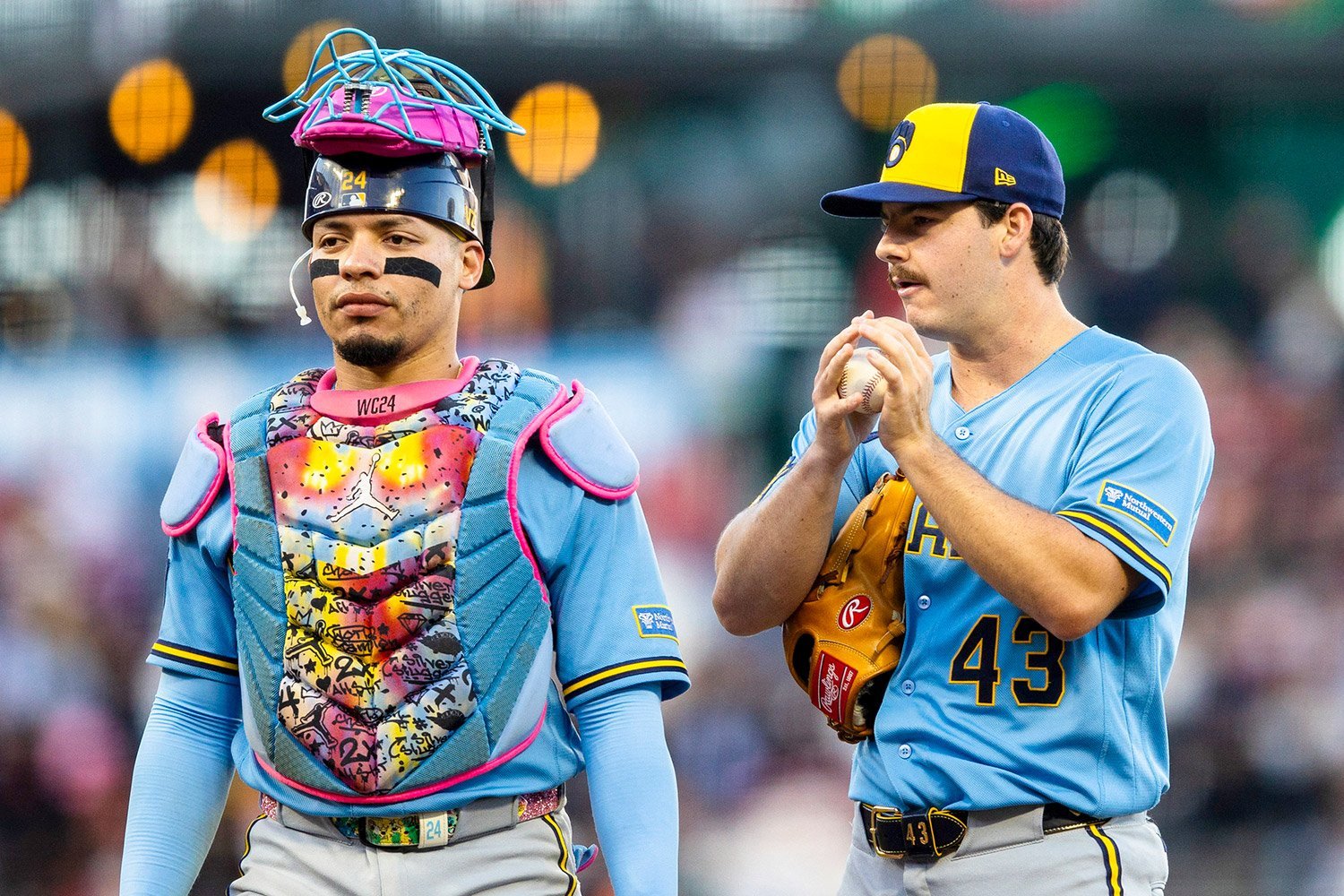 After his name appeared in rumors last month, Logan Henderson remained a Brewer after last Monday's trade deadline. Given that the club reportedly made Henderson off-limits in trade talks for Tarik Skubal, it seems that's the outcome both player and team preferred. "I saw my name thrown in there," Henderson told reporters after his last start on Tuesday, the night after the deadline. "I actually saw [Matt] Arnold earlier today, and I said thank you for not dishing me away." To this point, Henderson's big-league opportunities have not been as consistent as he and the Brewers prefer. At this time one year ago, elbow inflammation ultimately ended his season prematurely. Earlier this year, he missed six weeks with a low back strain. As a result, Henderson has made just 15 career major-league starts. Including last year's postseason, that's four months of big-league games in which Henderson has been with the Brewers but unable to pitch. He's still found ways to benefit from that time. "When I've been on the shelf, I'm watching the game all the time," Henderson said over the weekend. "I'm always still thinking about baseball, still seeing how I can improve in a lot of different areas. I live and breathe the game, and I'm always thinking about it and seeing how I can get better." One might expect that missing time due to injury could impact a 24-year-old rookie's ability to settle in at the game's highest level. It's had no noticeable effect on Henderson, who has looked at home on a big-league mound whenever he's been available. In those 15 starts, he's pitched to a 2.39 ERA, 3.06 FIP, and 91 DRA- with an excellent 32.6% strikeout rate. "I don't know that I have a great answer for that," Henderson said of his ability to pick up where he left off after being sidelined. "I feel like when I get back in a 'compete' mode and when I'm in-game, it's like I get in that zone and it's kind of hard to explain." In his five starts last year, Henderson proved that his stuff could get big-league hitters out, but the jury remained out on whether he could succeed sustainably as a starting pitcher. His ride-run four-seamer and fading changeup from a low slot created a lethal two-pitch combination, but he lacked feel for a third pitch with consistent glove-side movement. In his debut season, 89% of Henderson's pitches were a fastball or changeup, raising questions about his effectiveness multiple times through a lineup. Henderson is quelling those concerns this year. He's reduced that combined usage of fastballs and changeups to 78%, mainly by making his cutter a bona fide secondary pitch to right-handed hitters. Last season, Henderson did not throw a single cutter to a righty, but for much of this year, it's become his go-to secondary in those matchups. "Honestly, it's kind of just a comfortability thing," Henderson said. "Being able to have a full offseason with it, spring, then time in Nashville, I felt really good about it. If I'm a two-pitch pitcher to a righty, you can flip a coin and you know what's coming. So I think it's a really good buffer, and I think it's a good pitch. I think William [Contreras] likes it a lot too because he calls it a lot. So I think a lot of it was just him pressing cutter behind the plate, me being convicted in it, and just kind of running with it." Metrically, Henderson's cutter still grades as his worst pitch. A decent chunk of them still back up with slight arm-side run, rather than true cut. Stuff is only part of the equation, though. Last year, Henderson also threw a short gyro slider as a potential fourth pitch. Over the offseason, he traded it for a sweeping breaking ball. Both have graded as nastier pitches than the cutter, but Henderson has struggled to find a consistent feel for them. The cutter has been a more repeatable in-zone pitch, making it a more sensible third offering. "It's how does this blend with my arsenal, and then how does it feel coming out of my hand? How does it feel throwing it?" Henderson said. "Last year, I had the gyro, and I loved it, and I thought it was a good pitch, but I didn't execute it great. It didn't feel good on my elbow, so I'm not throwing that one anymore. And then the cutter, I think, is just necessary. You look at my arsenal, and I'm not throwing the slider a ton, so I need something turning left." Furthermore, despite its unimpressive characteristics, the cutter has excelled at missing barrels. According to Statcast, Henderson's cutter has posted a +1 run value while holding opponents to a .279 xwOBA, 33.3% hard-hit rate, and 20.5% whiff rate. The raw movement numbers are probably underselling it. Henderson's cutter may not actually cut much, but he's been told the movement is late enough to miss the sweet spot of the bat. Additionally, because he throws from a low slot and gets so much run on his fastball and changeup, the cutter might have extra perceived cut by comparison. "Ty Duvall, one of our bullpen catchers who catches me every day, has given me that feedback before," Henderson said. "On paper, it might not look like it cuts a whole lot, but it's hard enough and late enough to where it's just the perfect amount of cut to be able to get guys off the four-seamer and miss the barrel with that last amount of cut." The next item on Henderson's checklist as a developing starter is length. He has completed six innings in just three of his 15 starts. It's not a matter of efficiency, but of durability. The Brewers have routinely pulled him after five innings with a pitch count at or below 85 pitches, citing pitch-tracking and biomechanical data showing that his stuff declines around that threshold. "Those things are all great goals to have, but you got to be able to maintain your stuff beyond that," Pat Murphy said in late July after Henderson expressed that he wanted to start working deeper into starts. The Brewers have since let him work into the sixth inning in two straight outings. They could give him more leash on Monday night, as running a six-man rotation during a stretch of 17 straight games without a day off has left them short-handed in a seven-man bullpen. However, Murphy also made clear that Henderson throwing his best stuff for five innings is better than pacing himself for seven. "I don't want him thinking about getting deeper in games and conserving pitches," Murphy said. "You've got to fight to get outs, man." Henderson is finally getting an extended opportunity to show that fight, and he's becoming a key cog in the middle of Milwaukee's rotation. "It has been good to get a little runway here to make a good stretch of starts," Henderson said. "Just trying to keep doing that moving forward." View the full article
 -
 Chicago Cubs Minor League Report Affiliate Overview Triple-A Iowa Cubs Series at Indianapolis Indians (Pittsburgh Pirates): Indians win, 4-2 Season Record: 45–66-1 Double-A Knoxville Smokies Series at Chattanooga Lookouts (Cincinnati Reds): Smokies win, 4-2 Season Record: 58–50 High-A South Bend Cubs Series vs. Cedar Rapids Kernels (Minnesota Twins): Tied, 3-3 Season Record: 63–41 Single-A Myrtle Beach Pelicans Series at Columbia Fireflies (Kansas City Royals): Fireflies win, 4-2 Season Record: 42–64 Triple-A: Iowa Cubs Season Record: 45–66-1 Series Opponent: Indianapolis Indians (56-58-1) Series Standing: Lose, 4-2 Aug. 9: The Iowa Cubs were blanked in their series finale at the Indianapolis Indians, 2-0, on Sunday at Victory Field. Runs in the second and fourth were enough for the Indians as the Cubs were limited to just one hit in the ballgame, a single off the bat of Ben Cowles (1-for-2). Kevin Alcántara (0-for-3) saw his franchise-record 42-game on-base streak come to end in the contest. Josh Fleming got the start on the mound for Iowa and suffered the loss, falling to 4-6 on the season. Fleming allowed one run on four hits over three innings of work and struck out two batters without a walk issued. Shelby Miller made his first appearance of the season, on a rehab assignment, and allowed one run on two hits in one inning in relief and picked up two strikeouts. Hoby Milner made his fourth rehab outing with the I-Cubs and spun two shutout innings in relief, allowing just one hit and whiffing one batter. Double-A: Knoxville Smokies Season Record: 58–50 Series Opponent: Chattanooga Lookouts (51–57) Series Standing: Win, 4-2 Aug. 9: The Knoxville Smokies were walked off by the Chattanooga Lookouts, 6-5, on Sunday at Erlanger Park. Miguel Useche (0-for-3) gave the Smokies a 1-0 lead in the first with a sacrifice fly and Carter Trice’s (1-for-3) solo homer in the fourth doubled their lead. The Lookouts scored a run in the fifth before Knoxville put up a three-spot in the seventh to make it 5-1, thanks to RBI-singles from Karson Simas (2-for-4), Kane Kepley (1-for-3) and Andy Garriola (1-for-4) in three-consecutive at-bats. The Smokies were unable to turn in a shutdown inning following the stretch as Chattanooga answered with a three-spot of their own to make it 5-4. In the ninth, the Lookouts would score twice with one out in the frame to hand Knoxville the loss. Kevin Valdez got the start on the mound for the Smokies and took no decision. Valdez tossed his first-career quality start at the Double-A level, allowing one run, unearned, on three hits over six innings of work, striking out six batters while walking just one. High-A: South Bend Cubs Season Record: 63–41 Series Opponent: Cedar Rapids Kernels (41–65) Series Standing: Tied, 3-3 Aug. 9: The South Bend Cubs earned a series split with the Cedar Rapids Kernels thanks to a dominant 13-1 victory on Sunday at Four Winds Field. The game was called with one out in the bottom of the eighth due to inclement weather. The Kernels plated a run in their first trip to the plate but the Cubs answered with two of their own to take the lead for good, with both runs scoring on an error on a stolen base attempt. RBI-hits from Michael Hallquist (1-for-3), Geuri Lubo (1-for-2) and Brennan Hudson (1-for-3) in the third made it 6-1 and South Bend continued to pour it on with four more runs in the fourth to make it 10-1. Josiah Hartshorn (2-for-4) crushed a two-run shot, his 13th of the season, Logan Poteet (2-for-5) singled in a pair of runs and Lubo picked up his third RBI of the ballgame with a sacrifice fly. Matt Halbach (1-for-4) singled in a run in the fifth and Poteet capped the scoring in the contest with an RBI-single in the eighth, with a second run scoring on the play due to an error. Ethan Flanagan got the start on the mound for the Cubs and took no decision. Flanagan allowed one run on three hits over four innings of work to go along with three walks and five strikeouts. Adam Stone picked up the win in relief thanks to a perfect fifth inning to improve to 6-2 on the season. Cole Reynolds followed out of the bullpen with three shutout innings to earn his second save of the year. Offensively, all nine South Bend starters recorded a hit on the day, with three batters tallying multi-hit efforts. Single-A: Myrtle Beach Pelicans Season Record: 42–64 Series Opponent: Columbia Fireflies (55–51) Series Standing: Lose, 4-2 Aug. 9: The Myrtle Beach Pelicans salvaged a win in their series finale at the Columbia Fireflies, coming away with a 10-1 victory on Sunday at Segra Park. The Fireflies took a 1-0 lead in their first trip to the plate but Pelicans responded with two runs in the second to take the lead for good in the ballgame. Derik Alcantara (3-for-5) tripled in a run and Fernando Cruz (4-for-5) brought him home with a double. Myrtle Beach broke the game open with four runs in the fourth, starting with a bases-loaded walk drawn by Jose Silva (0-for-3), which was followed by a bases-clearing double from Ethan Conrad (3-for-6). Pelicans starter Anhuar Garcia shut down the Columbia offense with four strong innings, allowing one run, unearned, on two hits to go along with seven strikeouts and one walk. David Bracho followed in relief and would eventually pick up the win to improve to 3-4 on the season. Bracho spun three shutout frames, giving up just two hits while whiffing two batters. Myrtle Beach tacked on three more runs in the eighth thanks to a three-run blast from Conrad, his fourth homer of the year. Jan Luis Reyes (0-for-5) made it 10-1 in the ninth on an RBI-groundout. Conrad, the Cubs’ No. 5 prospect (North Side Baseball) went 10-for-25 in the series, slashing .400/.444/.720 to go along with five runs scored, two doubles, two home runs, 10 RBI and two walks. View the full article
 -
 It was another busy Sunday for the Boston Red Sox's farm system. Let's recap all the action. Triple-A Worcester Red Sox Series vs. Lehigh Valley IronPigs (Philadelphia Phillies): 4-2 Season Record: 60-49 The WooSox squandered a five-run lead late as they dropped the series finale. Blake Wehunt got the nod to kick off Sunday’s contest and turned in a respectable appearance. Across 3⅓ innings, Wehunt allowed one run on two hits and issued one walk. He struck out another before turning the ball over to Osvaldo Berrios in the fourth inning. Berrios was just as successful as Wehunt, allowing one run across 2⅔ innings. Berrios sat down four on strikes. John Brebbia, who recently signed a minor league contract with Boston, made his first appearance in a Worcester uniform. Brebbia got his WooSox tenure off to a strong start, throwing a perfect seventh inning as he struck out one. The game slipped away as Wyatt Olds took the bump in the ninth inning. After throwing a scoreless eighth, Olds allowed five runs (three unearned) on three hits in the ninth as Lehigh Valley took a late lead. Angel Bastardo entered to clean up the mess and allowed one hit, but it was too little too late. The WooSox momentum carried over to Sunday afternoon as a solid offensive performance was spoiled by the bullpen. In the third inning, Vinny Capra tied the ballgame at one run apiece on a soft bunt single, advancing to second on a throwing error as Kristian Campbell scored. One inning later, Nate Eaton put the WooSox on top with a line drive single to center field, scoring Mikey Romero. In the fifth, Romero tacked on another with a bases-loaded single that scored Campbell. With the bases still loaded, Mickey Gasper drove in Capra and Braiden Ward with a single. Worcester wasn’t done as Eaton stepped to the plate. He drove Romero home again as Worcester jumped on a five-run lead. Despite batting an impressive 5-for-11 with runners in scoring position, the WooSox couldn’t respond to Lehigh Valley’s five-run ninth inning as they fell by a thin margin. Double-A Portland Sea Dogs Series @ New Hampshire Fisher Cats (Toronto Blue Jays): 3-3 Season Record: 57-50 Led by Mason White’s four RBIs, Portland avenged its brutal loss on Saturday with a hard-fought effort on Sunday. Jedixson Paez started the afternoon for Portland, turning in three innings of solid work. Across three frames, Paez let up two runs on four hits as he struck out four batters. Caleb Bolden got the ball in the fourth inning and earned the win for his two-inning effort. Bolden allowed three runs (one unearned) on two hits. He issued two walks and struck out two more before turning the ball over to Joe Vogatsky. Vogatsky allowed one run and issued one walk, but left New Hampshire hitless as he struck out three in two innings. Max Carlson took the final two frames of Sunday’s ballgame, allowing two hits and striking out one as he sealed the win and secured the series split. The Sea Dogs went 3-for-6 with RISP as multi-hit games from White and Ronald Rosario helped pave the way for Portland’s win. White gave the Sea Dogs a one-run lead early as he clubbed his second homer of the year to right center in the second inning. After New Hampshire tied the game, Ahbram Liendo put the Sea Dogs back on top with an RBI single in the third, scoring Max Ferguson. Will Turner drove in Liendo and Miguel Bleis with his 13th homer of the season as Portland got out to a four-run lead. In the fourth, Ferguson added one more run, grounding out to first as White scored. In the fifth, White put the game firmly out of reach with his second homer of the game. The towering blast to right field scored Rosario and Brooks Brannon as White tacked on three more runs. High-A Greenville Drive Series vs. Hudson Valley Renegades (New York Yankees): 2-4 Season Record: 47-58 The Drive fell in extra innings amidst a high-scoring showdown, losing 15-12. Matt Duffy started the afternoon for Greenville, but was pulled after just ⅔ of an inning. In his short appearance, Duffy allowed three runs on two hits and walked three as the Renegades jumped out to an early lead. Griffin Kilander provided some stability from the bullpen in an early relief appearance. Across 3⅓ innings, Kilander allowed two hits as he shut out Hudson Valley, striking out three. Luis Cohen made an appearance next, allowing one run on four hits and two Ks across one and ⅔ innings. Calvin Bickerstaff got the call following Cohen, and saw moderate success. He allowed three runs (two unearned) on two hits, issued one walk, and struck out two as he kept the Drive in the game. Trennor O’Donnell made a bulk appearance next, but the game began to slip away towards the end of his outing. Across four innings, O’Donnell allowed eight runs (three unearned) on six hits. He issued two walks and struck out a pair, but Hudson Valley was too much for the righty as he let the game get away. Catcher Hudson White took the final out of the game in uneventful fashion as Greenville lost in a marathon game. Luke Heyman and Ronny Hernandez recorded three RBIs apiece as Greenville was able to stay in the game late. Hernandez got the Drive on the board in the second inning, cutting a three-run deficit to two with a fly ball single to left field. Heyman and Carlos Gutierrez scored on the hit. Hernandez then tied the game two innings later as he drove Gutierrez home on another single. With the bases loaded in the fifth, Gutierrez, who was recently acquired alongside Erik Miller, drew a walk that scored Gerardo Rodriguez. In the sixth, Owen Hull drove in Antonio Anderson on a sharp single to right field before Heyman scored Justin Gonzales and Jake Schaffner on a double to left. Down by two runs in the ninth, Gonzales brought the Drive within one after he scored Stanley Tucker on a single to center. Facing an 0-2 count with two outs and the bases loaded, Hull tapped a ball to second base that should have ended the game. Instead, however, the throw pulled the first baseman off the bag as Anderson scored, tying the game and forcing extras. After Hudson Valley put up two in the eleventh, Anderson responded with a two-run shot, tying the game at 11 runs each as Tucker crossed home. Facing a four-run deficit in the 12th inning, Heyman scored Rodriguez as the Drive inched closer, but it was all Greenville could muster as they lost late. Low-A Salem RidgeYaks Series vs. Fayetteville Woodpeckers (Houston Astros): 4-1 Season Record: 47-59 Salem’s Sunday afternoon matchup was postponed due to inclement weather. A make-up date hasn’t yet been provided. View the full article
 -
Alex Bregman Is Heating Up at the Perfect Time
DiamondCentric posted an article in North Side Baseball
 Alex Bregman’s bat is heating up, but his value to the Cubs goes far beyond his numbers. As October approaches, his championship experience could become Chicago’s biggest advantage. View the full article
 -
Jeff Hoffman's Elite Metrics Don't Tell the Whole Story
DiamondCentric posted an article in Twins Daily
 The Twins are hoping Jeff Hoffman can help lock down the back end of their bullpen. His elite strikeout numbers suggest he can, but his recent track record shows there's plenty of risk attached to that bet. View the full article
 -
Kaelen Culpepper Is The Key To Even More Defensive Flexibility
DiamondCentric posted an article in Twins Daily
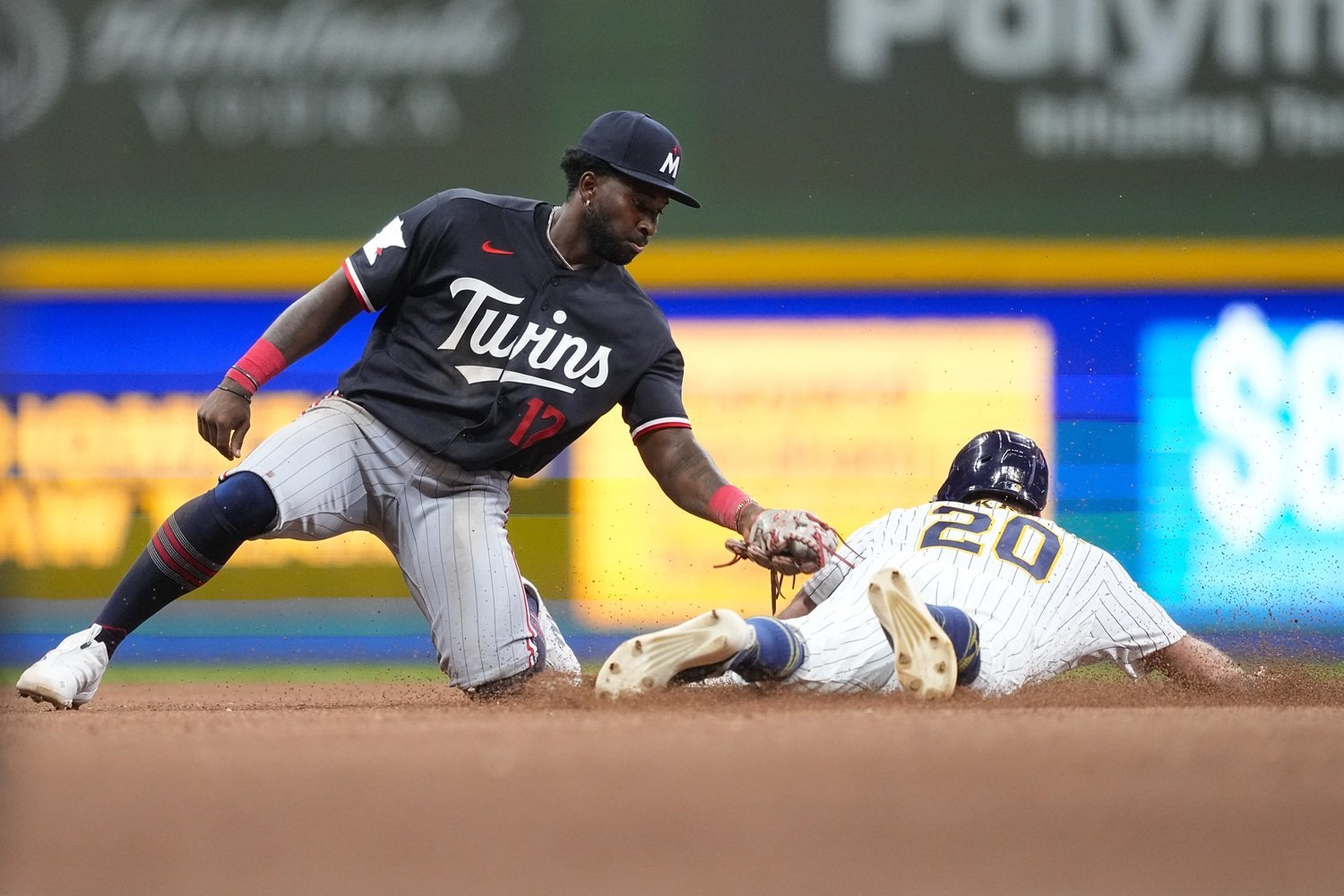 Friday morning marked the start of an exciting new chapter in Twins Territory. The Twins finally called up their No. 3 prospect, shortstop Kaelen Culpepper, giving one of the organization’s most impressive young players a chance to make his long-awaited MLB debut. Culpepper wasted very little time making an impression. Through his first two games, Culpepper is 1-for-5 with a home run, a walk, a strikeout and two hit-by-pitches. The homer came in his second career MLB at-bat, offering an early glimpse of the power that helped make him one of the system's most highly regarded prospects. But Culpepper's arrival could be important for reasons that extend well beyond his own production. The Twins have assembled a roster loaded with defensive versatility. What they've lacked is the stability at shortstop that allows Derek Shelton to fully take advantage of it. If Culpepper can provide that, suddenly a lot of pieces become much easier to move around. Across 343 plate appearances with Triple-A St. Paul this season, Culpepper slashed .271/.367/.478, good for an .845 OPS. He brings a compelling combination of power and speed along with the ability to play around the infield. But the Twins don't need him to become another utility piece. They need him to establish himself as their everyday shortstop within a position-player mix that already boasts versatility in abundance. Royce Lewis has played first and second regularly, and could still be used at third. Brooks Lee is a switch-hitter capable of handling multiple infield positions. Kody Clemens has spent time at first base, second base and all three outfield spots. Ryan Kreidler can play across the infield and handle center field. Luke Keaschall can move between second base and the outfield. Austin Martin offers another multi-position option. Culpepper gives Shelton the potential to anchor that entire puzzle with a natural shortstop. The immediate infield alignment is fairly straightforward. Lewis should continue playing every day, Lee can remain at third, Clemens has earned regular opportunities and Culpepper can take over at short. Lewis, in particular, has made himself impossible to sit based on matchups, posting a .900 OPS since the All-Star break with relatively even production against righties and lefties. The real benefit comes from what Shelton can do around that core. Kreidler no longer needs to be treated primarily as the Twins' solution at shortstop. Instead, Shelton can deploy him where his versatility and defense are most useful, including center field while Byron Buxton is sidelined. Clemens can bounce between the infield and outfield depending on matchups. Keaschall can move from the outfield back to second base when needed. Lewis can shift around the infield. Martin can enter the mix against left-handed pitching. That creates an array of possibilities for a roster that has often struggled to find the right combination. Against a right-hander, Shelton could lean more heavily on Trevor Larnach, Keaschall and Alan Roden in the outfield. Against a lefty, Kreidler or Martin could enter the picture, with Keaschall shifting positions if necessary. Late in games, Shelton can improve his defense without being boxed in by positional limitations. When someone needs a day off, there's a good chance another regular can slide over rather than forcing a bench player into the lineup. Culpepper himself doesn't create all of that versatility, but rather, helps unlock what was already there. That's what makes his promotion especially intriguing. The Twins didn't call Culpepper up to be another player shuffled around the diamond. They called him up because they believe he can be an everyday contributor at one of baseball's most demanding positions. If he proves capable of holding down shortstop, Shelton can be much more creative with everyone else. For a team searching for every possible edge down the stretch, that's no small benefit. Culpepper's bat could provide a needed spark, and his glove could stabilize an important position. But his biggest contribution might be giving Shelton the freedom to turn one of this roster's defining traits — its defensive versatility — into an actual strategic advantage. View the full article
